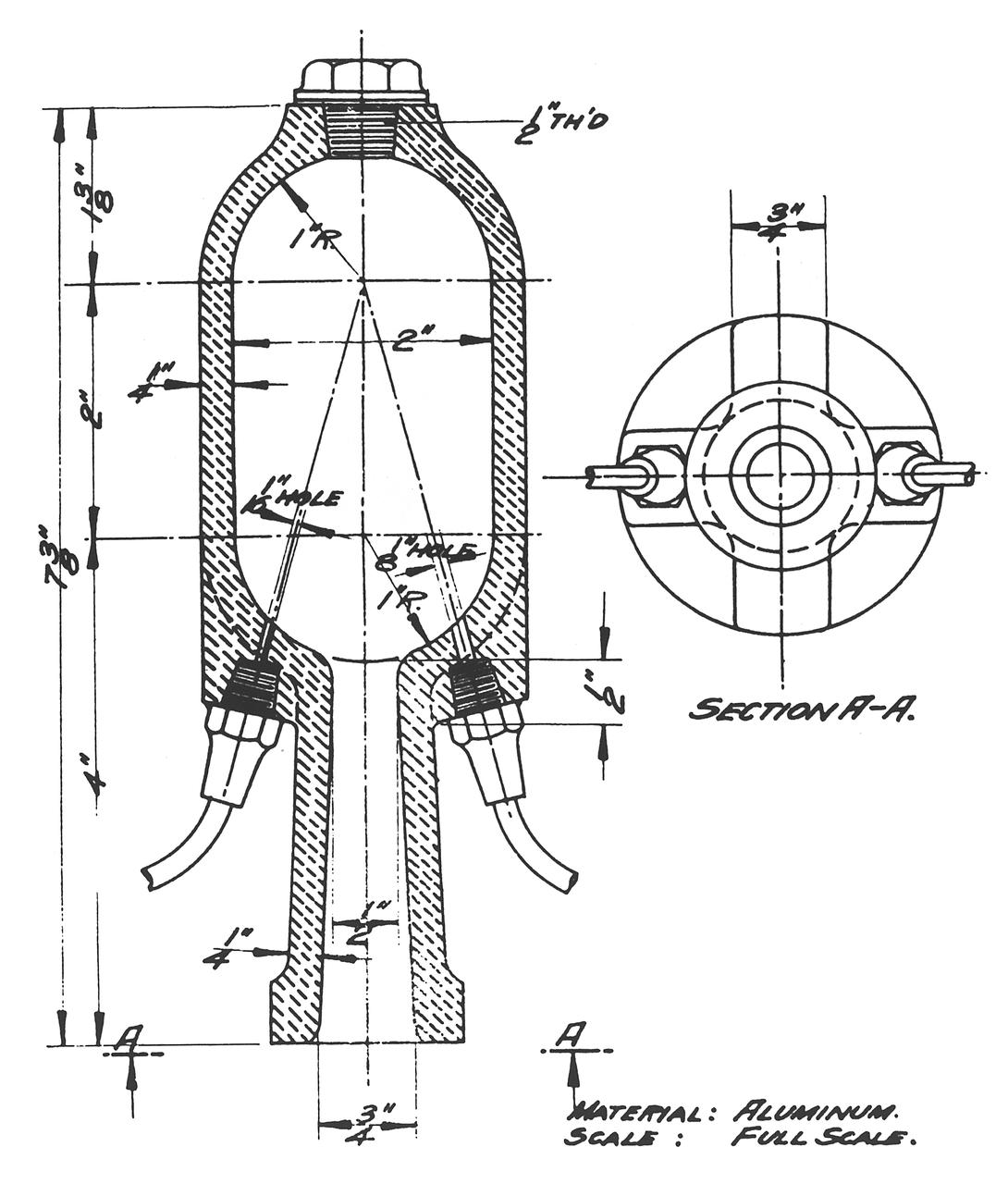
In addition to Dr. Robert Goddard's pioneering work, American experimentation in rocketry prior to World War II grew, primarily in technical societies. This is an early rocket motor designed and developed by the American Rocket Society in 1932.
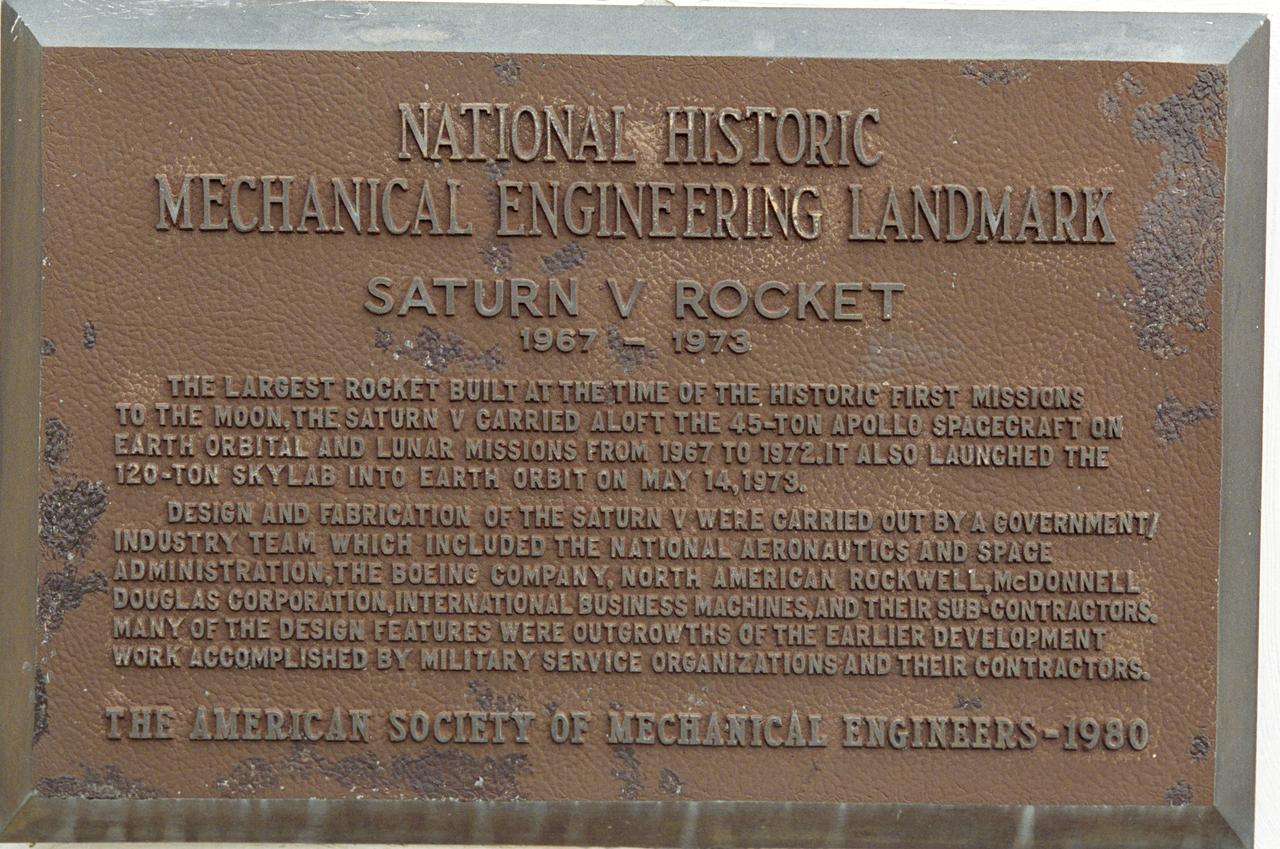
This plaque, located on the grounds of Marshall Space Flight Center in Huntsville, Alabama,commemorates the designation of the Saturn V Rocket as a National Historic Mechanical Engineering Landmark by the American Society of Mechanical Engineers in 1980.
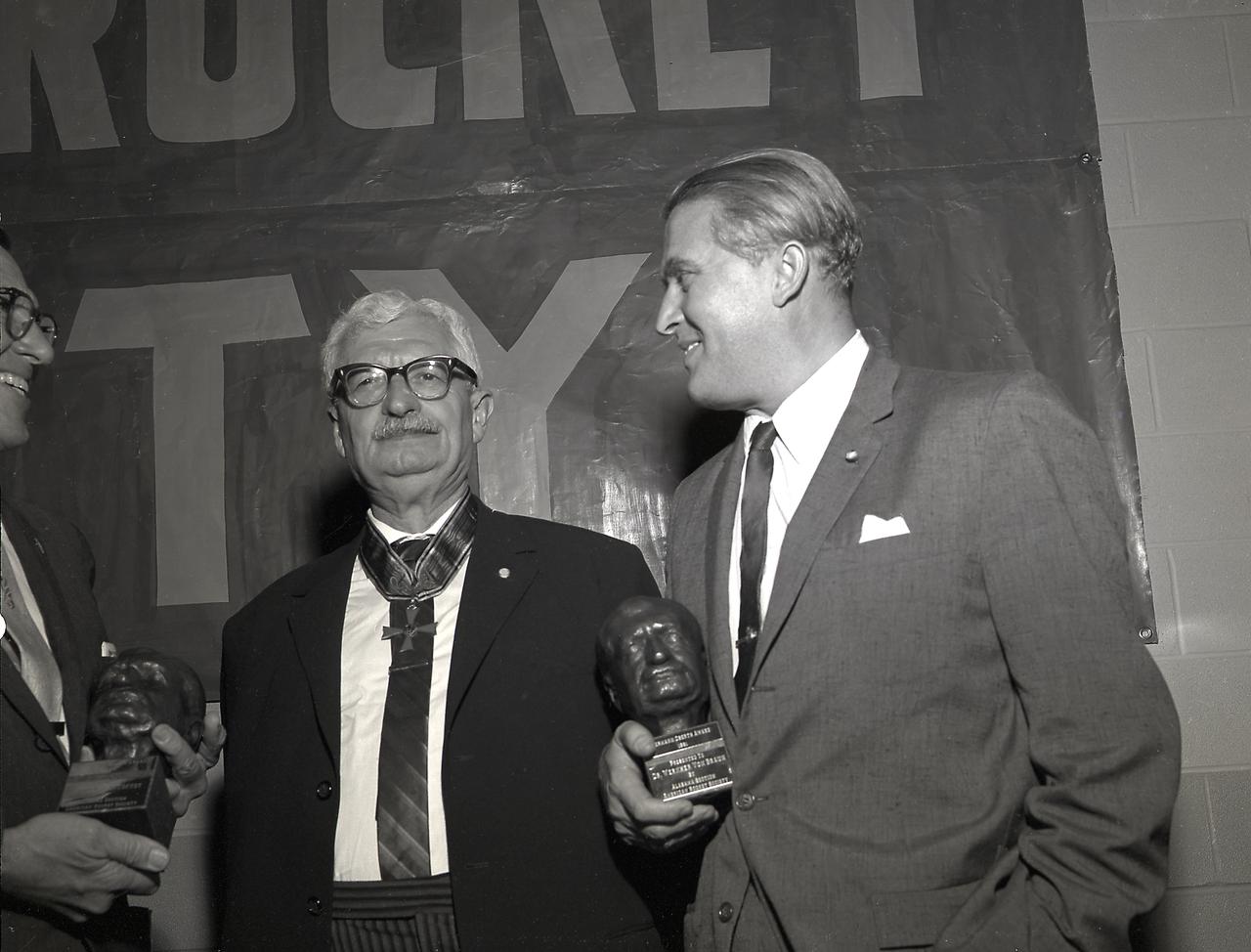
Dr. Wernher von Braun holds the coveted Hermarn Oberth award presented to him by Professor Oberth during the banquet hosted by the Alabama Section of the American Rocket Society (ARS), on October 19, 1961. The Oberth award was given for outstanding technical contributions to the field of astronautics or for the promotion and advancement of astronautical sciences.
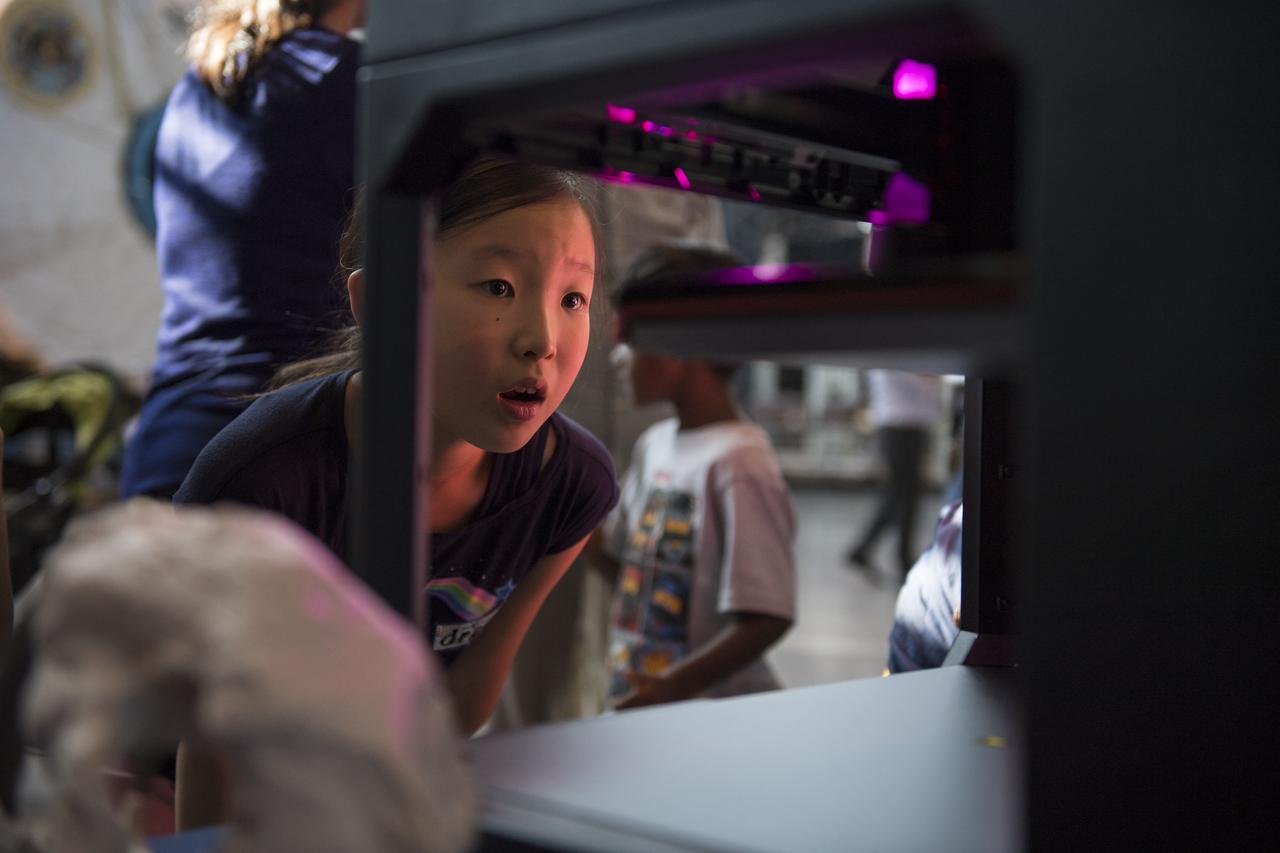
A visitor watches as a rocket is printed by a Makerbot 3D printer at a pop-up makerspace held by Future Engineers, with support from NASA and The American Society of Mechanical Engineers (ASME), at the Steven F. Udvar-Hazy Center, Thursday, September 21, 2017 in Chantilly, Virginia. Participants created digital 3D models using Autodesk Tinkercad and watched objects being printed with Makerbot 3D printers. Photo Credit: (NASA/Aubrey Gemignani)
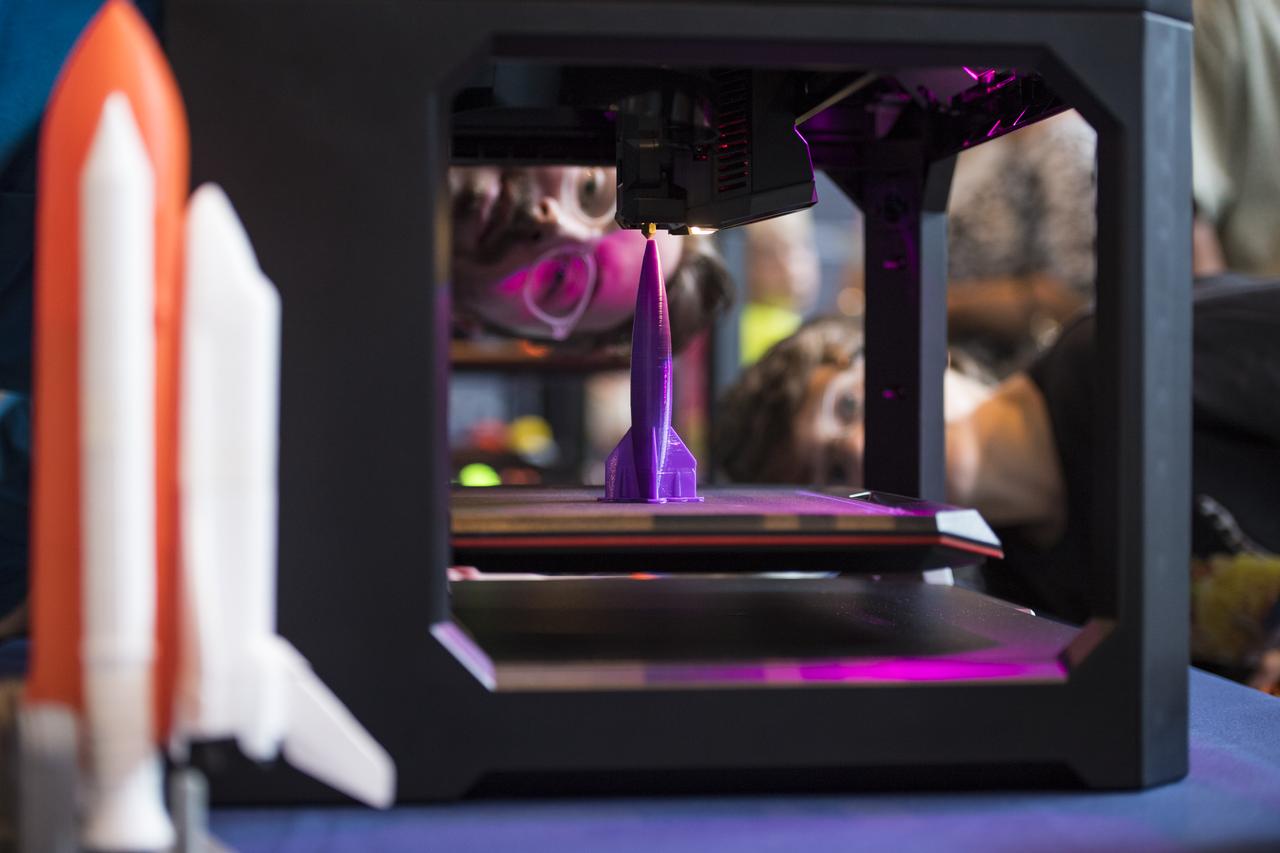
Visitors watch as a rocket is printed by a Makerbot 3D printer at a pop-up makerspace held by Future Engineers, with support from NASA and The American Society of Mechanical Engineers (ASME), at the Steven F. Udvar-Hazy Center, Thursday, September 21, 2017 in Chantilly, Virginia. Participants created digital 3D models using Autodesk Tinkercad and watched objects being printed with Makerbot 3D printers. Photo Credit: (NASA/Aubrey Gemignani)

CAPE CANAVERAL, Fla. -- NASA managers at NASA's Kennedy Space Center in Florida show off the Florida Project of the Year trophies that the crawlerway system evaluation team received from the American Society of Civil Engineers (ASCE). From left are Michael Benik, director of Center Operations; Pepper Phillips, manager of the 21st Century Ground Systems Program Office; and Russell Romanella, associate director for Engineering and Technical Operations. The Cape Canaveral branch of the ASCE nominated the team for its project, the Crawlerway Evaluation to Support a Heavy-Lift Program. The crawlerway is a 130-foot-wide, specialty-built roadway between Kennedy's Vehicle Assembly Building (VAB), where rockets and spacecraft are prepared for flight, and Launch Pad 39A and 39B. The team's more than two-year evaluation confirmed the crawlerway system would be able to support the weight of moving the agency's future heavy-lift rockets and potential commercial vehicles from the VAB to the launch pads. The award honors the team's outstanding engineering efforts in research, design, construction and management, recognizing the complexity of multi-agency coordination and cost-effective engineering advances. For more information on the American Society of Civil Engineers, visit: http://www.asce.org. Photo credit: NASA/Kim Shiflett
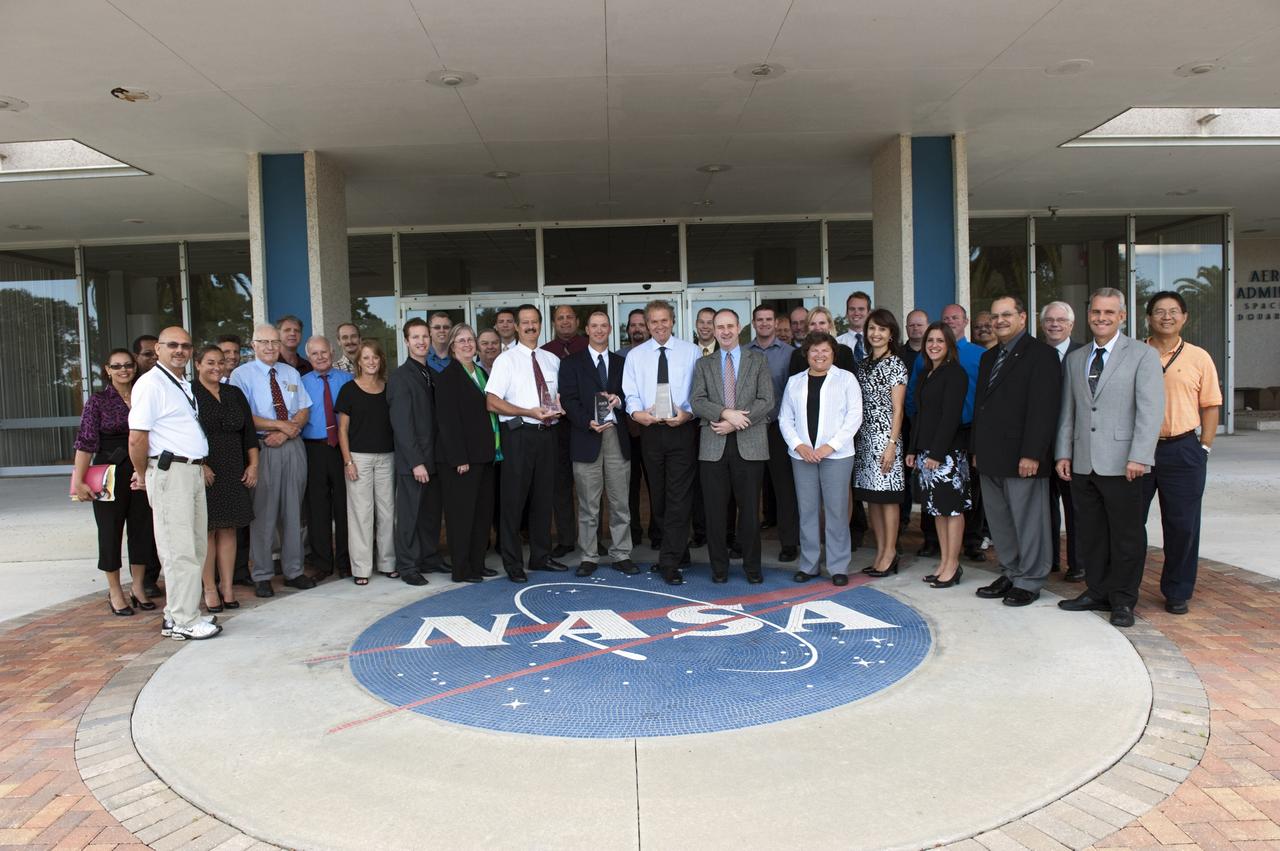
CAPE CANAVERAL, Fla. -- Members of the crawlerway system evaluation team pose for a group portrait in front of the Headquarters Building at NASA's Kennedy Space Center in Florida. The team received the Florida Project of the Year award from the American Society of Civil Engineers (ASCE). The Cape Canaveral branch of the ASCE nominated the team for its project, the Crawlerway Evaluation to Support a Heavy-Lift Program. The crawlerway is a 130-foot-wide, specialty-built roadway between Kennedy's Vehicle Assembly Building (VAB), where rockets and spacecraft are prepared for flight, and Launch Pad 39A and 39B. The team's more than two-year evaluation confirmed the crawlerway system would be able to support the weight of moving the agency's future heavy-lift rockets and potential commercial vehicles from the VAB to the launch pads. The award honors the team's outstanding engineering efforts in research, design, construction and management, recognizing the complexity of multi-agency coordination and cost-effective engineering advances. For more information on the American Society of Civil Engineers, visit: http://www.asce.org. Photo credit: NASA/Kim Shiflett
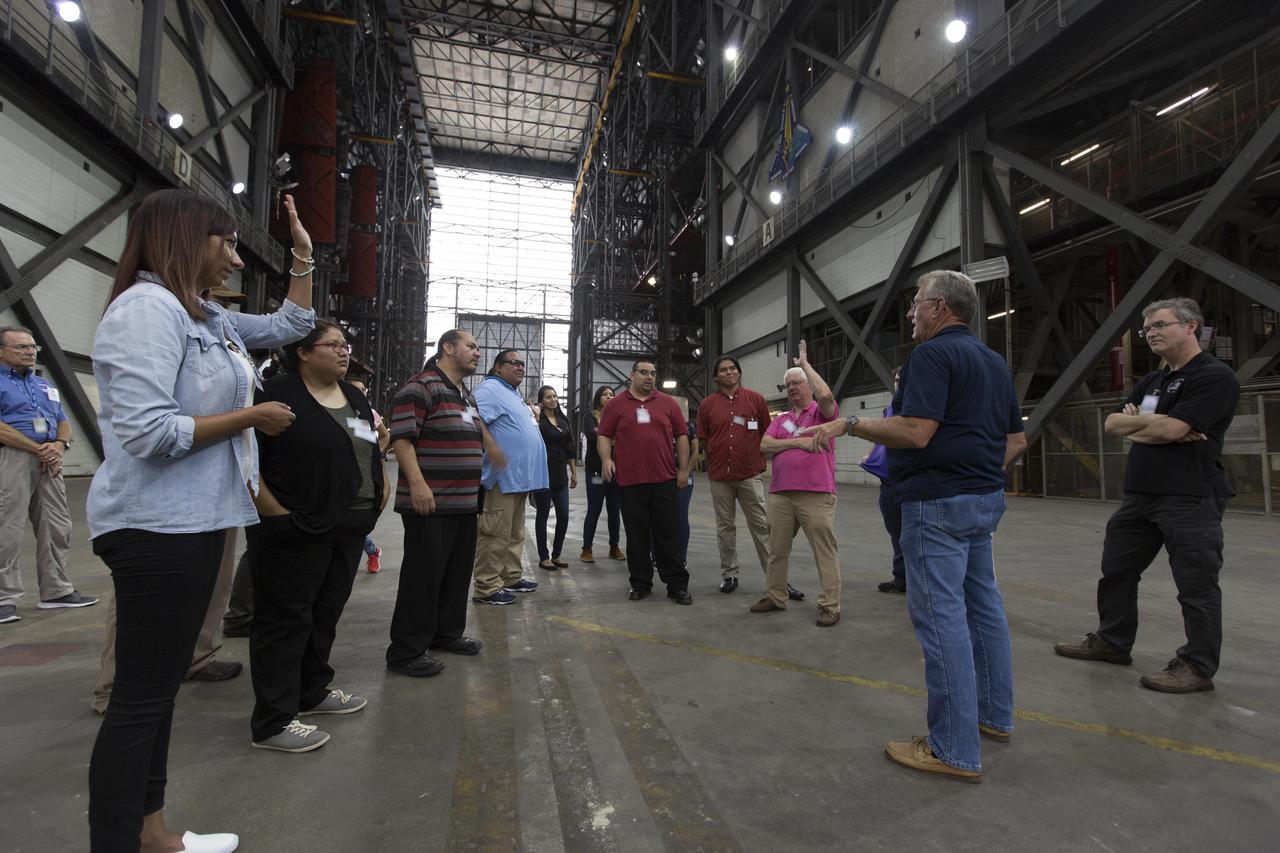
A group of 19 college students recently visited NASA's Kennedy Space Center as winners of the First Nations Launch competition in Wisconsin. They were part of teams that successfully flew high-powered rockets, earning them an opportunity to visit the Florida spaceport. During their visit, they toured the Vehicle Assembly Building, Launch Control Center and the Kennedy visitor complex. The competition is supported by NASA and the Wisconsin Space Grant Consortium. It provides an opportunity for students attending tribal colleges or universities, or who are members of a campus American Indian Science and Engineering Society, or AISES, chapter to design, build and launch a rocket at a competition in Kansasville, Wisconsin.
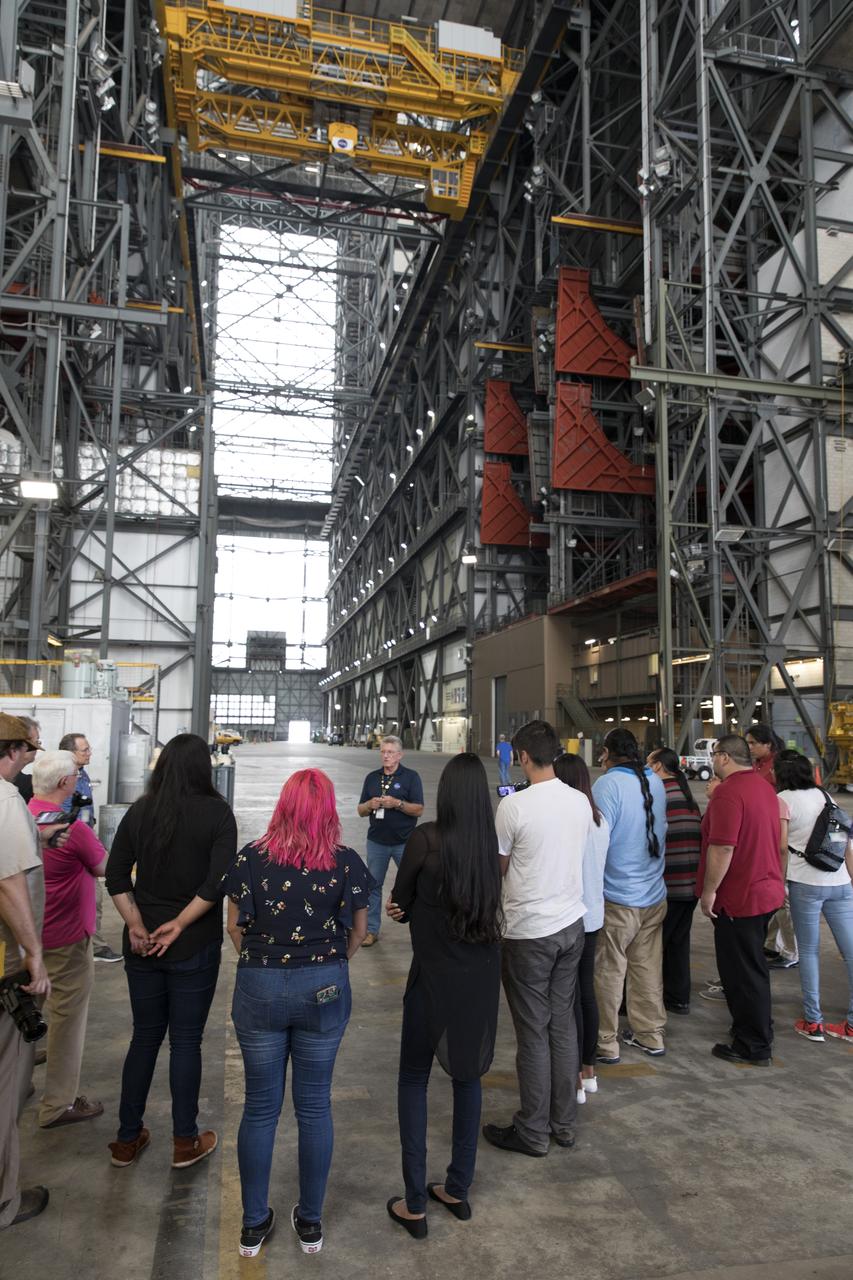
A group of 19 college students recently visited NASA's Kennedy Space Center as winners of the First Nations Launch competition in Wisconsin. They were part of teams that successfully flew high-powered rockets, earning them an opportunity to visit the Florida spaceport. During their visit, they toured the Vehicle Assembly Building, Launch Control Center and the Kennedy visitor complex. The competition is supported by NASA and the Wisconsin Space Grant Consortium. It provides an opportunity for students attending tribal colleges or universities, or who are members of a campus American Indian Science and Engineering Society, or AISES, chapter to design, build and launch a rocket at a competition in Kansasville, Wisconsin.
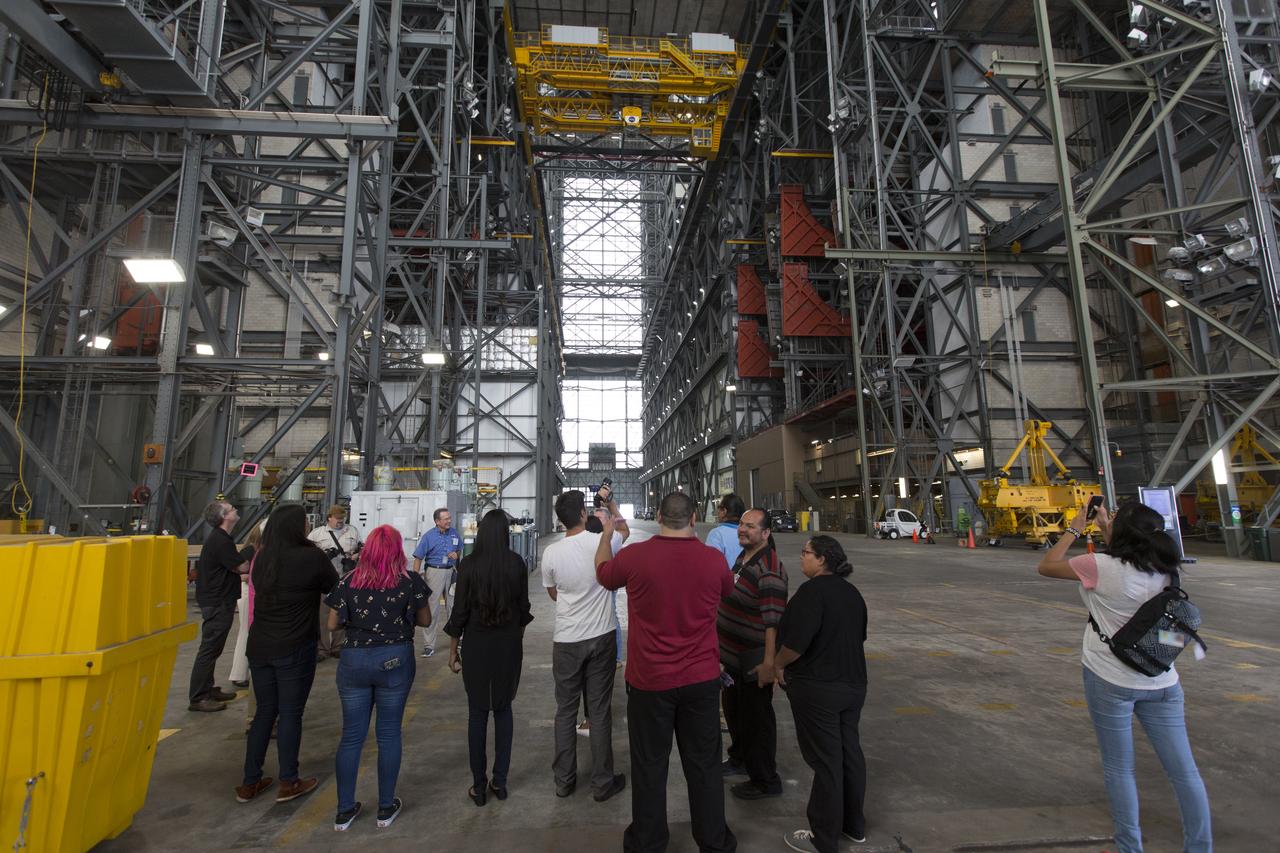
A group of 19 college students recently visited NASA's Kennedy Space Center as winners of the First Nations Launch competition in Wisconsin. They were part of teams that successfully flew high-powered rockets, earning them an opportunity to visit the Florida spaceport. During their visit, they toured the Vehicle Assembly Building, Launch Control Center and the Kennedy visitor complex. The competition is supported by NASA and the Wisconsin Space Grant Consortium. It provides an opportunity for students attending tribal colleges or universities, or who are members of a campus American Indian Science and Engineering Society, or AISES, chapter to design, build and launch a rocket at a competition in Kansasville, Wisconsin.
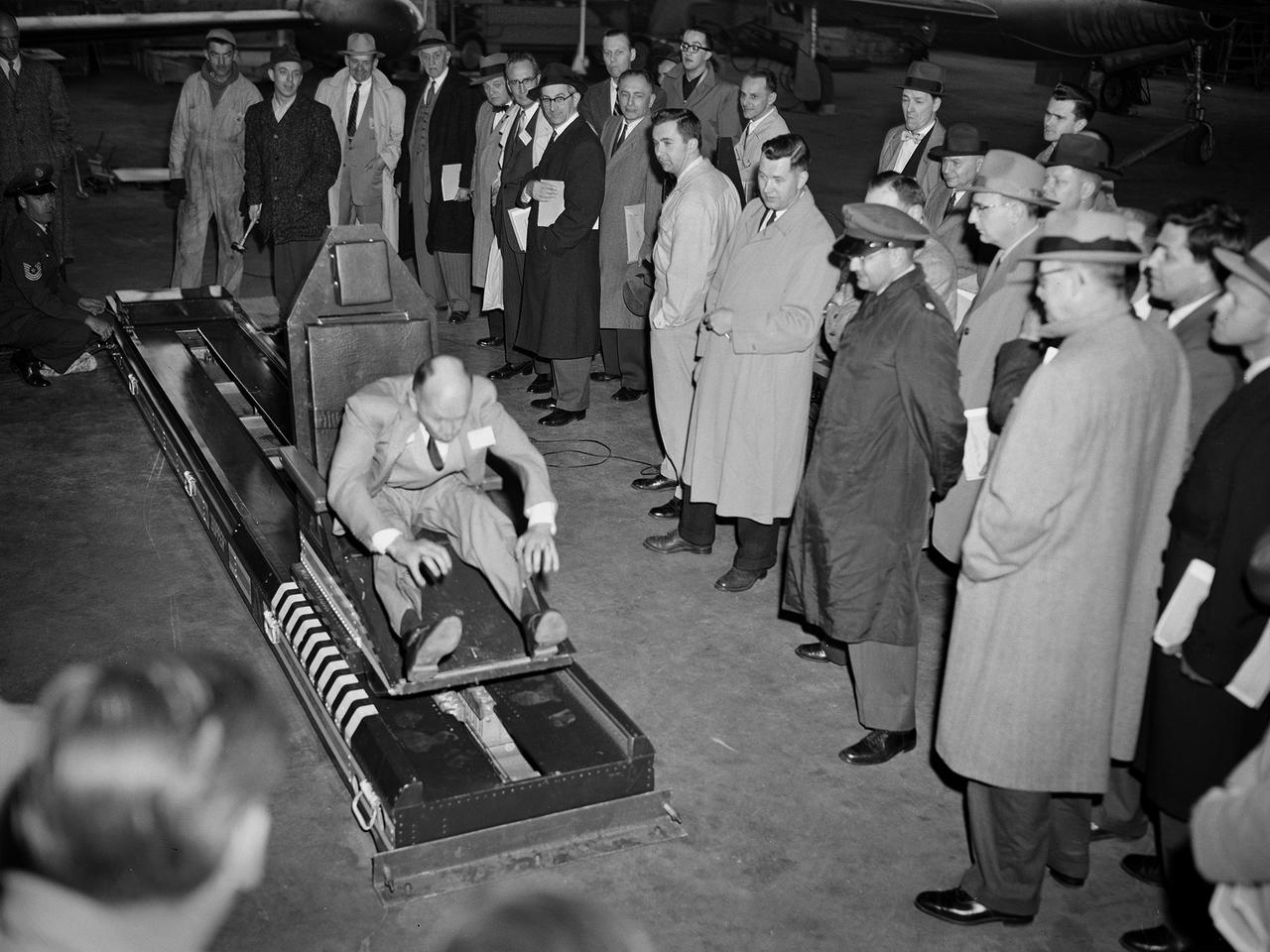
Howard Hasbrook volunteers for a demonstration of a scaled-down version of Lieutenant Colonel John Stapp’s rocket sled set up in the hangar at the National Advisory Committee for Aeronautics (NACA) Lewis Flight Propulsion Laboratory. In 1945 Stapp, an Air Force medical doctor, volunteered to participate in a deceleration program to study the human body’s tolerance to aircraft crash forces. A 1500-pound sled powered by rockets was installed in 1947 on a section of railroad track in the California desert. Stapp participated in 29 experiments over the next seven years and broke land and deceleration records. These tests studied the effects of acceleration, G-force, deceleration, and wind blast on humans. Stapp suffered broken bones and retinal hemorrhages, but suffered no permanent damage. NACA Lewis was conducting a series of crash impact studies in the mid-1950s using dummies in actual aircraft. Irving Pinkel, the director of the program, and Stapp became friends through their mutual interest in this field. In April 1956 Stapp visited the Cleveland lab to give a talk to the local section of the American Rocket Society that discussed issues relating to the escape of pilots from the cockpit of supersonic jet aircraft. That same week, NACA Lewis’ Pinkel, Gerard Pesman, Merritt Preston, and Dugald Black received the annual Laura Taber Barbour Air Safety Award for their work on the Crash Fire Program. Black and Preston are visible in the crowd in this photograph.
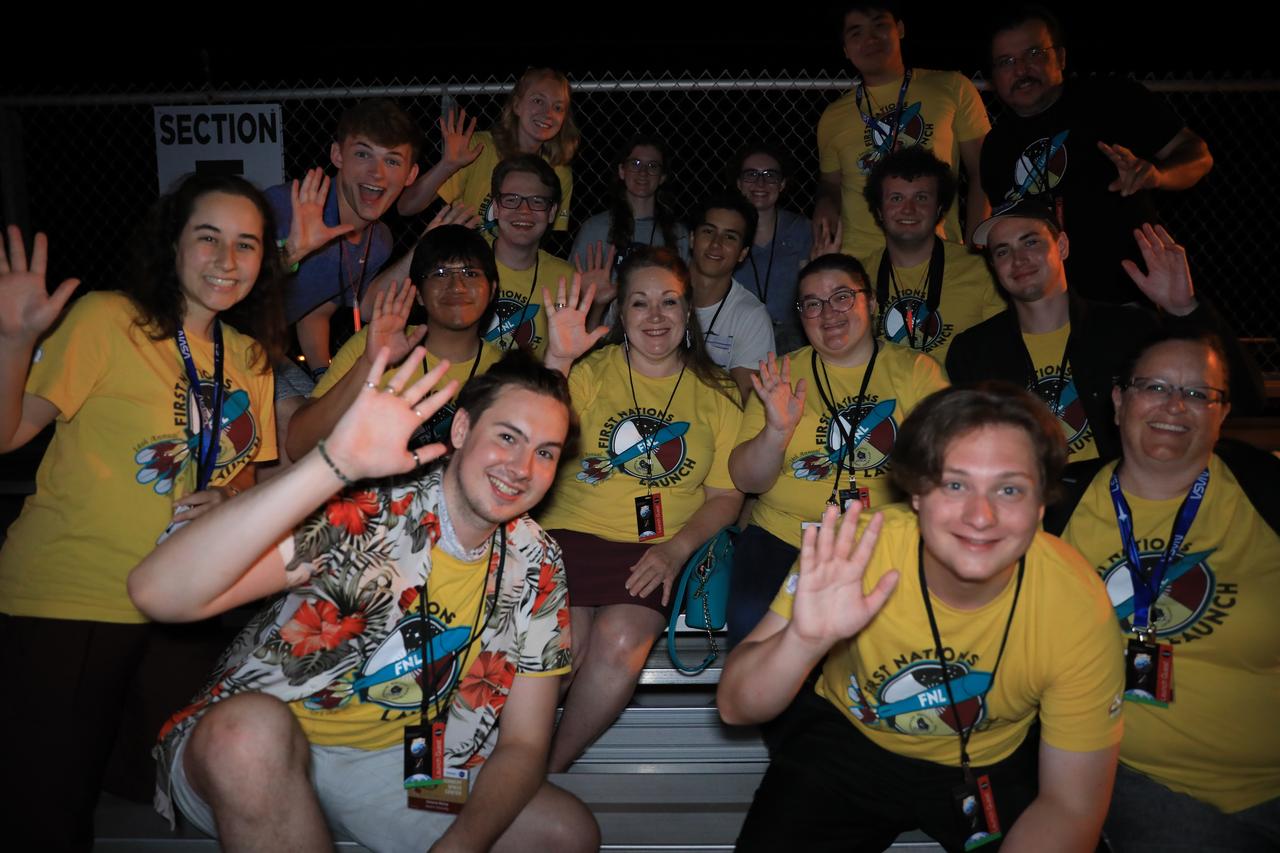
Participants from the 14th First Nations Launch High-Power Rocket Competition watch NASA’s SpaceX Crew-7 launch from the Banana Creek viewing site at the agency’s Kennedy Space Center in Florida on Saturday, Aug. 26, 2023. A SpaceX Falcon 9 rocket carrying NASA astronaut Jasmin Moghbeli, ESA (European Space Agency) astronaut Andreas Mogensen, JAXA (Japan Aerospace Exploration Agency) astronaut Satoshi Furukawa, and Roscosmos cosmonaut Konstantin Borisov launched to the International Space Station at 3:27 a.m. EDT from Kennedy’s Launch Complex 39A. Students and advisors from University of Washington, University of Colorado-Boulder, and an international team from Queens University – this year’s First Nations Launch grand prize teams – traveled to Kennedy for a VIP tour, culminating in viewing the Crew-7 launch. Another highlight included a guided tour of historic Hangar AE, led by James Wood (Osage Nation and Loyal Shawnee), chief engineer of NASA’s Launch Services Program, technical advisor for the Crew-7 launch, and First Nations mentor and judge. One of NASA’s Artemis Student Challenges, the First Nations Launch competition comprises students from tribal colleges and universities, Native American-Serving Nontribal Institutions, and collegiate chapters of the American Indian Science and Engineering Society who design, build, and launch a high-powered rocket from a launch site in Kansasville, Wisconsin. The competition is facilitated by NASA’s Wisconsin Space Grant Consortium and managed by the agency’s Office of STEM Engagement at Kennedy.
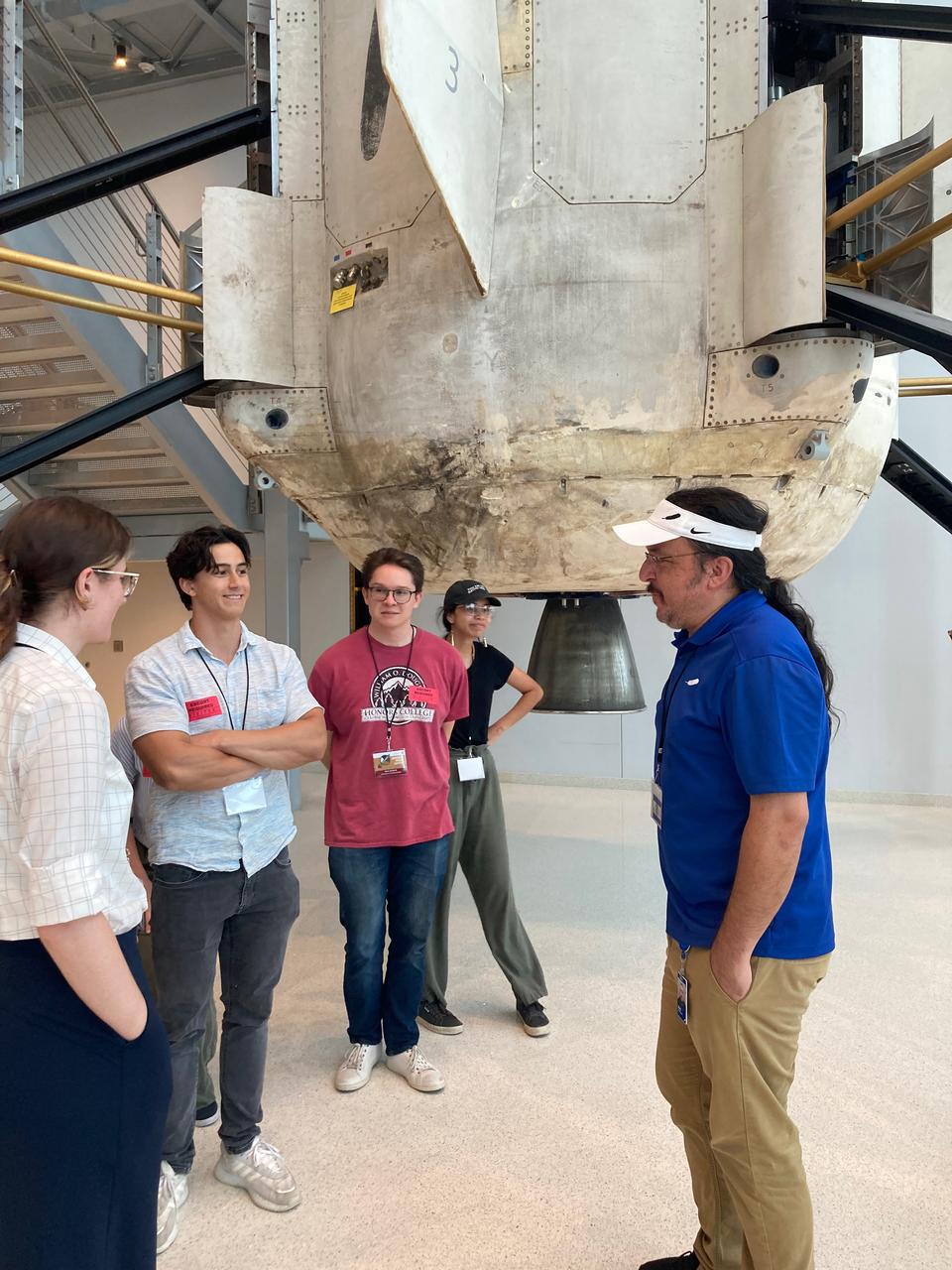
Participants from the 14th First Nations Launch High-Power Rocket Competition watch NASA’s SpaceX Crew-7 launch from the Banana Creek viewing site at the agency’s Kennedy Space Center in Florida on Saturday, Aug. 26, 2023. A SpaceX Falcon 9 rocket carrying NASA astronaut Jasmin Moghbeli, ESA (European Space Agency) astronaut Andreas Mogensen, JAXA (Japan Aerospace Exploration Agency) astronaut Satoshi Furukawa, and Roscosmos cosmonaut Konstantin Borisov launched to the International Space Station at 3:27 a.m. EDT from Kennedy’s Launch Complex 39A. Students and advisors from University of Washington, University of Colorado-Boulder, and an international team from Queens University – this year’s First Nations Launch grand prize teams – traveled to Kennedy for a VIP tour, culminating in viewing the Crew-7 launch. Another highlight included a guided tour of historic Hangar AE, led by James Wood (Osage Nation and Loyal Shawnee), chief engineer of NASA’s Launch Services Program, technical advisor for the Crew-7 launch, and First Nations mentor and judge. One of NASA’s Artemis Student Challenges, the First Nations Launch competition comprises students from tribal colleges and universities, Native American-Serving Nontribal Institutions, and collegiate chapters of the American Indian Science and Engineering Society who design, build, and launch a high-powered rocket from a launch site in Kansasville, Wisconsin. The competition is facilitated by NASA’s Wisconsin Space Grant Consortium and managed by the agency’s Office of STEM Engagement at Kennedy.
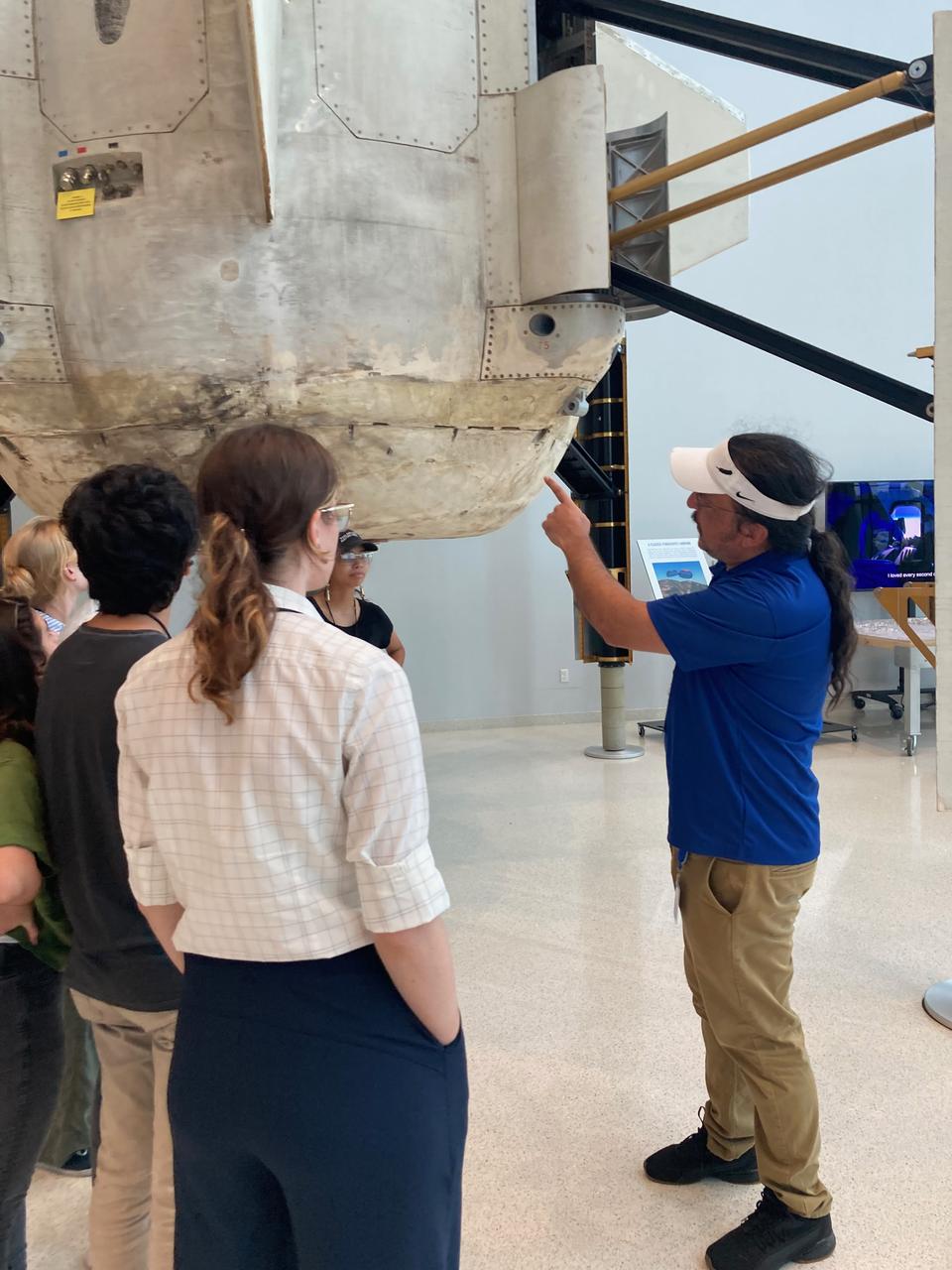
Participants from the 14th First Nations Launch High-Power Rocket Competition watch NASA’s SpaceX Crew-7 launch from the Banana Creek viewing site at the agency’s Kennedy Space Center in Florida on Saturday, Aug. 26, 2023. A SpaceX Falcon 9 rocket carrying NASA astronaut Jasmin Moghbeli, ESA (European Space Agency) astronaut Andreas Mogensen, JAXA (Japan Aerospace Exploration Agency) astronaut Satoshi Furukawa, and Roscosmos cosmonaut Konstantin Borisov launched to the International Space Station at 3:27 a.m. EDT from Kennedy’s Launch Complex 39A. Students and advisors from University of Washington, University of Colorado-Boulder, and an international team from Queens University – this year’s First Nations Launch grand prize teams – traveled to Kennedy for a VIP tour, culminating in viewing the Crew-7 launch. Another highlight included a guided tour of historic Hangar AE, led by James Wood (Osage Nation and Loyal Shawnee), chief engineer of NASA’s Launch Services Program, technical advisor for the Crew-7 launch, and First Nations mentor and judge. One of NASA’s Artemis Student Challenges, the First Nations Launch competition comprises students from tribal colleges and universities, Native American-Serving Nontribal Institutions, and collegiate chapters of the American Indian Science and Engineering Society who design, build, and launch a high-powered rocket from a launch site in Kansasville, Wisconsin. The competition is facilitated by NASA’s Wisconsin Space Grant Consortium and managed by the agency’s Office of STEM Engagement at Kennedy.
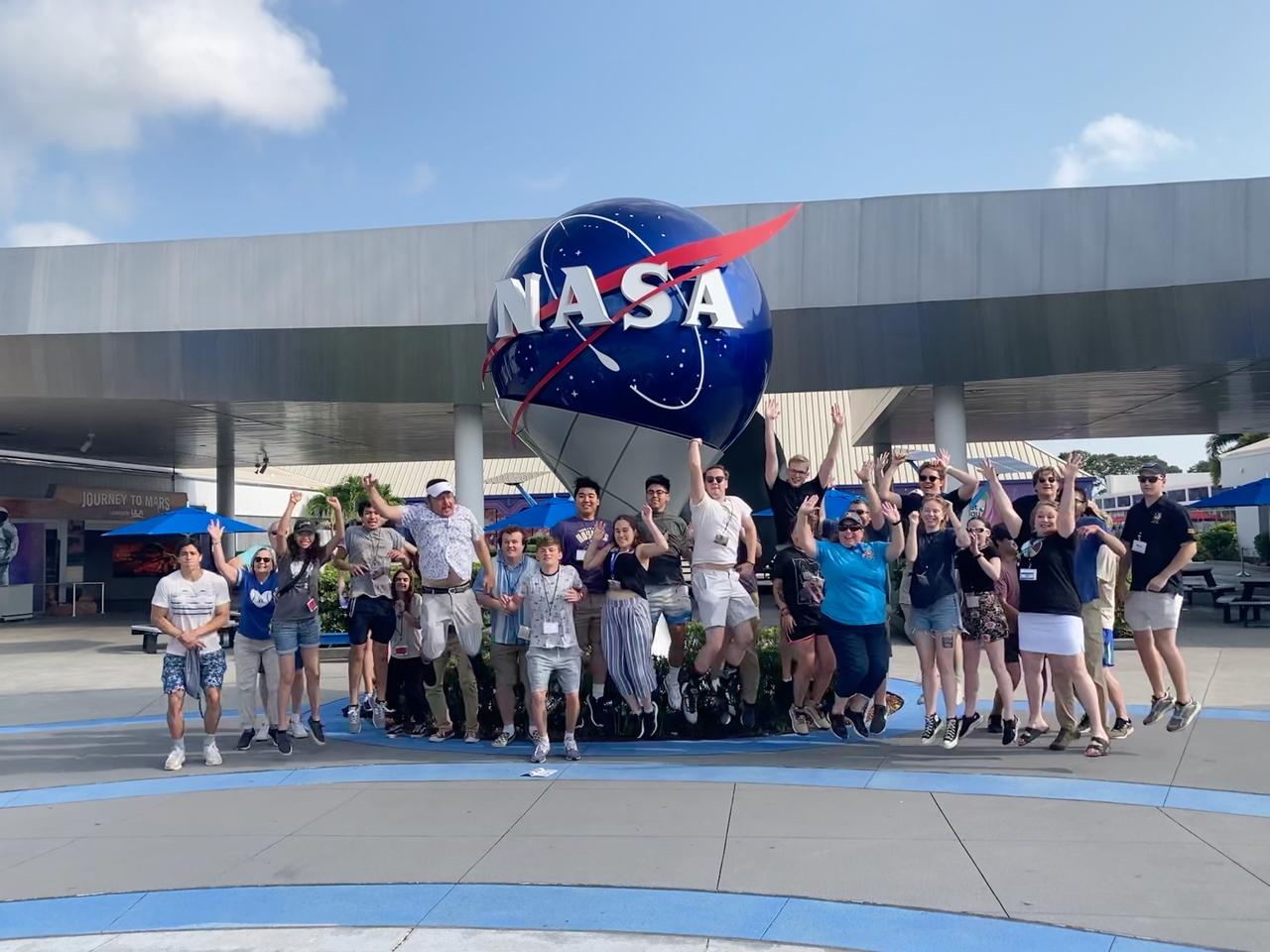
Participants from the 14th First Nations Launch High-Power Rocket Competition watch NASA’s SpaceX Crew-7 launch from the Banana Creek viewing site at the agency’s Kennedy Space Center in Florida on Saturday, Aug. 26, 2023. A SpaceX Falcon 9 rocket carrying NASA astronaut Jasmin Moghbeli, ESA (European Space Agency) astronaut Andreas Mogensen, JAXA (Japan Aerospace Exploration Agency) astronaut Satoshi Furukawa, and Roscosmos cosmonaut Konstantin Borisov launched to the International Space Station at 3:27 a.m. EDT from Kennedy’s Launch Complex 39A. Students and advisors from University of Washington, University of Colorado-Boulder, and an international team from Queens University – this year’s First Nations Launch grand prize teams – traveled to Kennedy for a VIP tour, culminating in viewing the Crew-7 launch. Another highlight included a guided tour of historic Hangar AE, led by James Wood (Osage Nation and Loyal Shawnee), chief engineer of NASA’s Launch Services Program, technical advisor for the Crew-7 launch, and First Nations mentor and judge. One of NASA’s Artemis Student Challenges, the First Nations Launch competition comprises students from tribal colleges and universities, Native American-Serving Nontribal Institutions, and collegiate chapters of the American Indian Science and Engineering Society who design, build, and launch a high-powered rocket from a launch site in Kansasville, Wisconsin. The competition is facilitated by NASA’s Wisconsin Space Grant Consortium and managed by the agency’s Office of STEM Engagement at Kennedy.
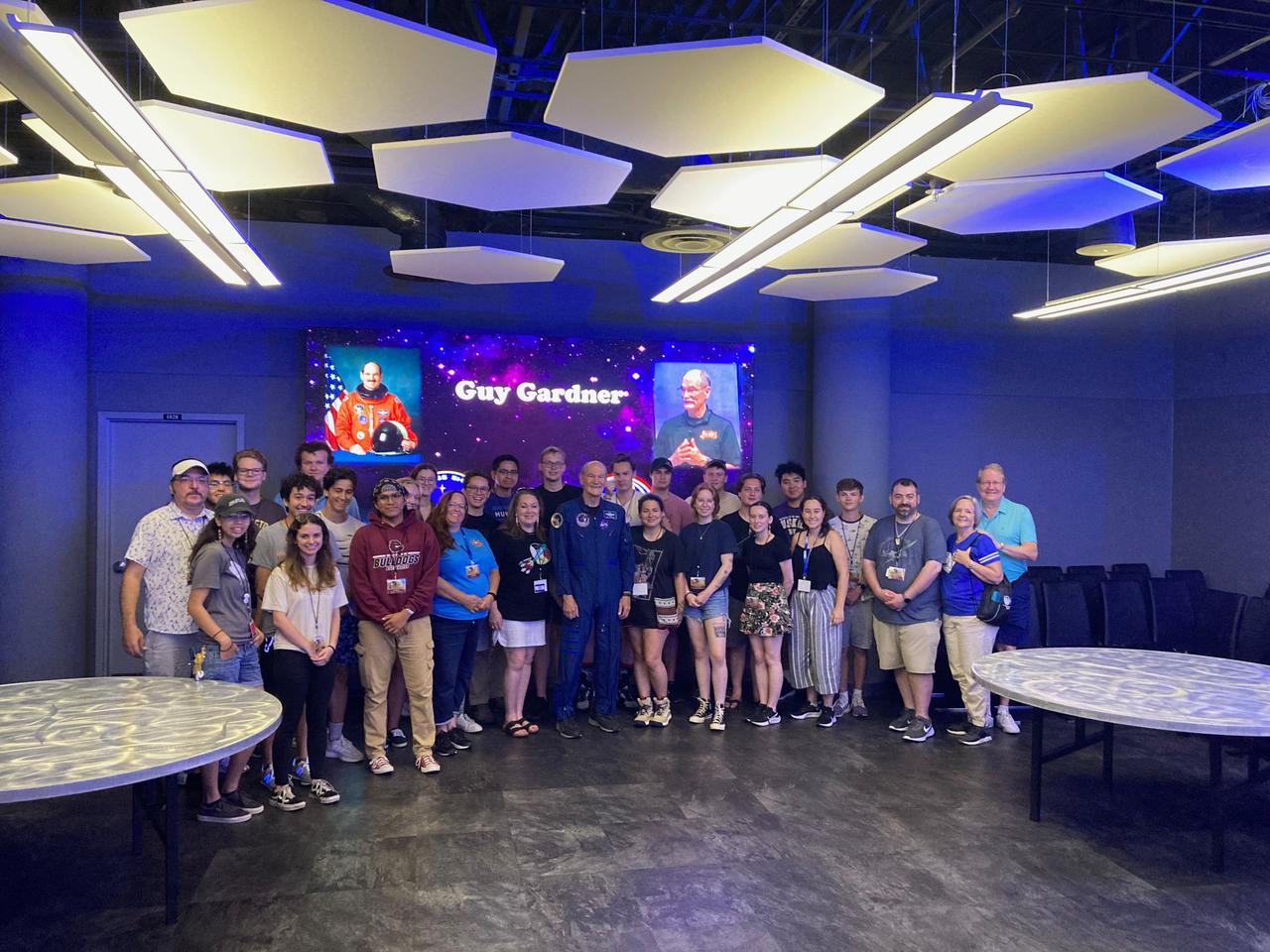
Participants from the 14th First Nations Launch High-Power Rocket Competition watch NASA’s SpaceX Crew-7 launch from the Banana Creek viewing site at the agency’s Kennedy Space Center in Florida on Saturday, Aug. 26, 2023. A SpaceX Falcon 9 rocket carrying NASA astronaut Jasmin Moghbeli, ESA (European Space Agency) astronaut Andreas Mogensen, JAXA (Japan Aerospace Exploration Agency) astronaut Satoshi Furukawa, and Roscosmos cosmonaut Konstantin Borisov launched to the International Space Station at 3:27 a.m. EDT from Kennedy’s Launch Complex 39A. Students and advisors from University of Washington, University of Colorado-Boulder, and an international team from Queens University – this year’s First Nations Launch grand prize teams – traveled to Kennedy for a VIP tour, culminating in viewing the Crew-7 launch. Another highlight included a guided tour of historic Hangar AE, led by James Wood (Osage Nation and Loyal Shawnee), chief engineer of NASA’s Launch Services Program, technical advisor for the Crew-7 launch, and First Nations mentor and judge. One of NASA’s Artemis Student Challenges, the First Nations Launch competition comprises students from tribal colleges and universities, Native American-Serving Nontribal Institutions, and collegiate chapters of the American Indian Science and Engineering Society who design, build, and launch a high-powered rocket from a launch site in Kansasville, Wisconsin. The competition is facilitated by NASA’s Wisconsin Space Grant Consortium and managed by the agency’s Office of STEM Engagement at Kennedy.