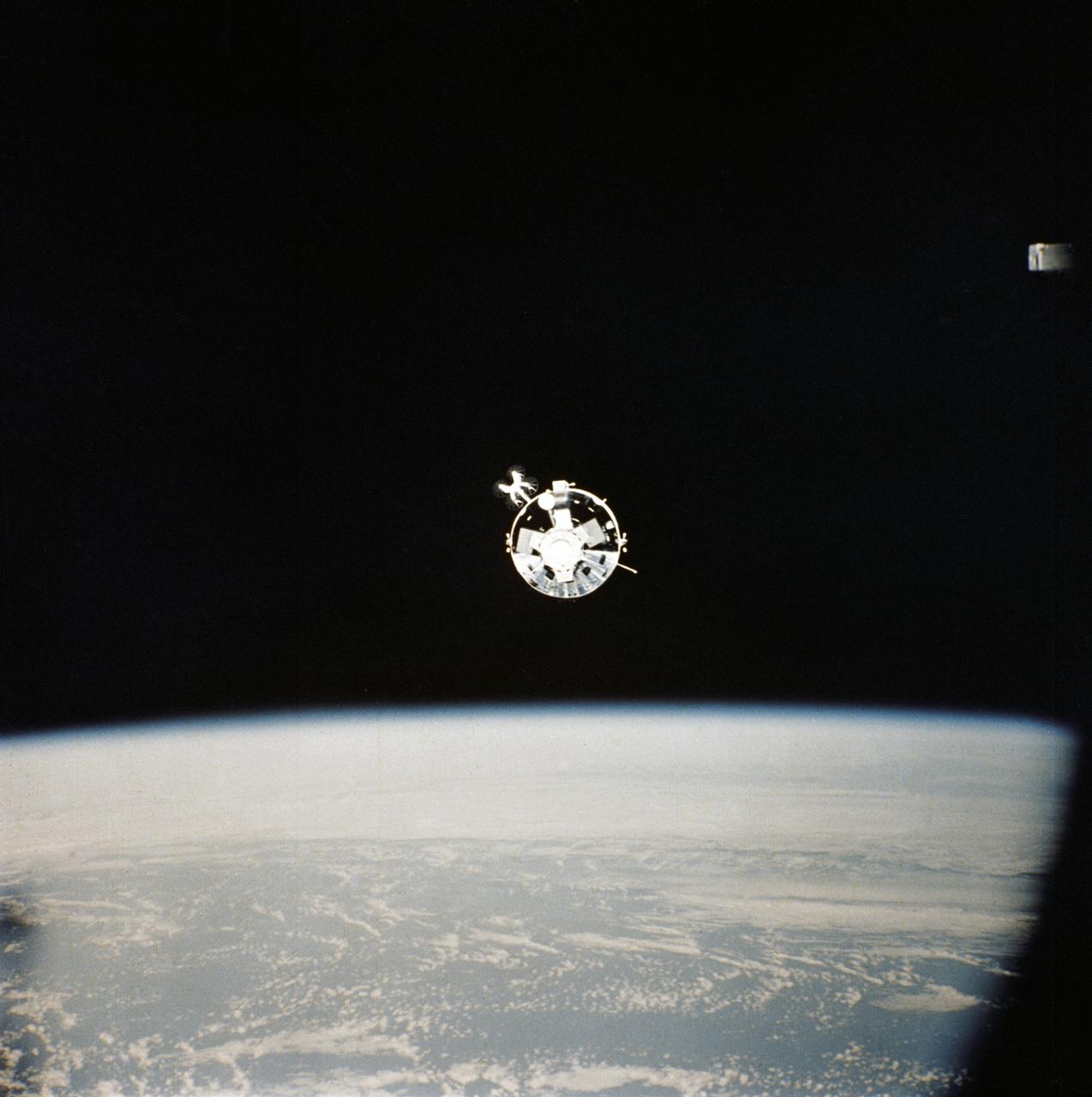
AST-32-2675 (17-19 July 1975) --- The American Apollo spacecraft as seen in Earth orbit from the Soviet Soyuz spacecraft during the joint U.S.-USSR Apollo-Soyuz Test Project mission. The Command/Service Module and Docking Module are contrasted against a black-sky background. This is a "head on" view of the Apollo. The horizon of Earth is below. This picture was furnished by the USSR in an exchange of photography taken during the ASTP flight. The American and Soviet spacecraft were joined together in space for approximately 47 hours on July 17-18-19, 1975. Note the docking mechanism on the Docking Module. PHOTO COURTESY: USSR ACADEMY OF SCIENCES
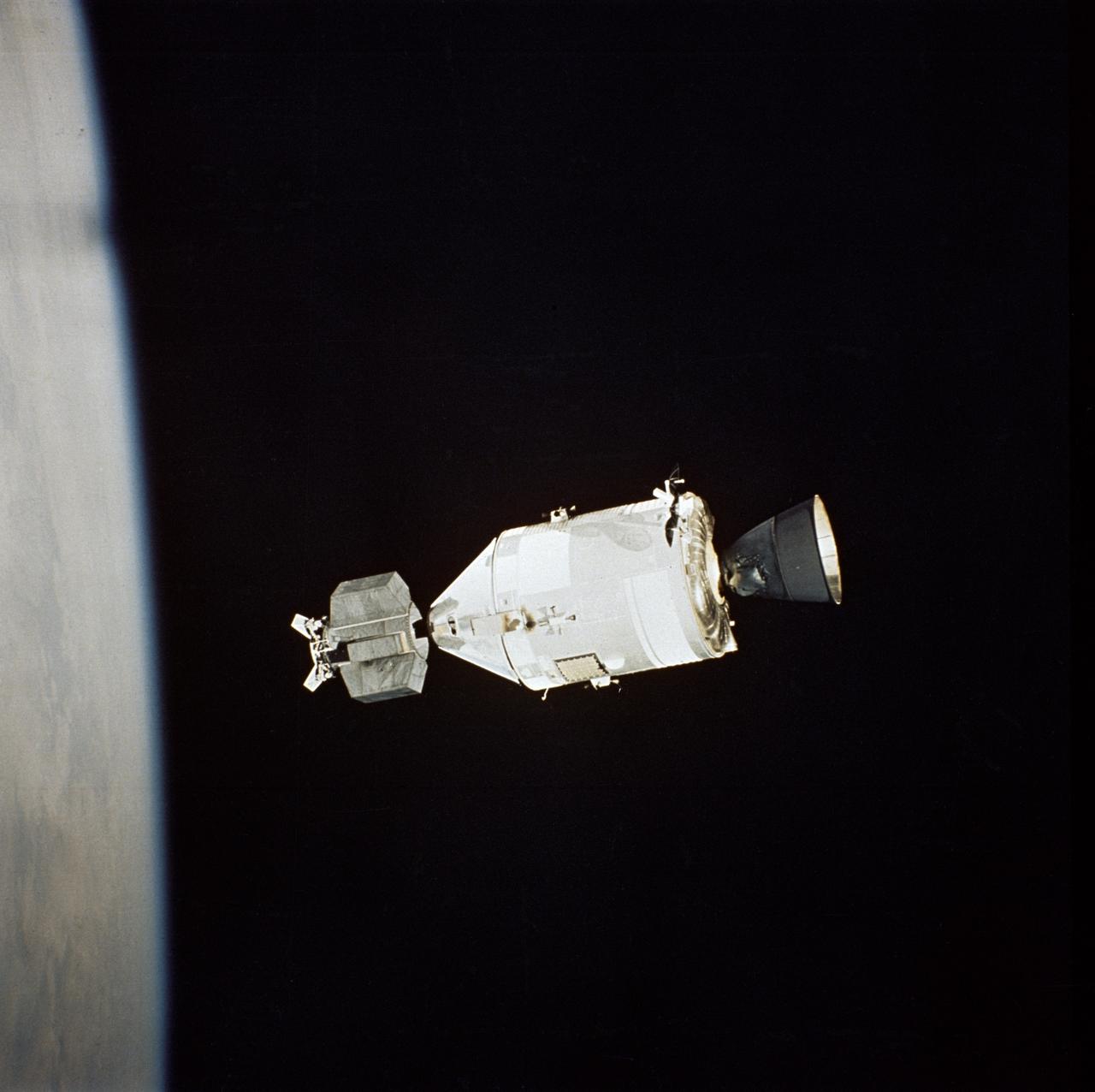
AST-32-2695 (17-19 July 1975) --- The American Apollo spacecraft as seen in Earth orbit from the Soviet Soyuz spacecraft during the joint U.S.-USSR Apollo-Soyuz Test Project mission. The Command/Service Module and Docking Module are contrasted against a black-sky background. The horizon of Earth is below. This picture was furnished by the USSR in an exchange of photography taken during the ASTP flight. The bell-shaped engine nozzle of the service propulsion system protrudes from the rear of the Service Module. Note the docking mechanism on the Docking Module. The American and Soviet spacecraft were joined together in space for approximately 47 hours on July 17-18-19, 1975. PHOTO COURTESY: USSR ACADEMY OF SCIENCES
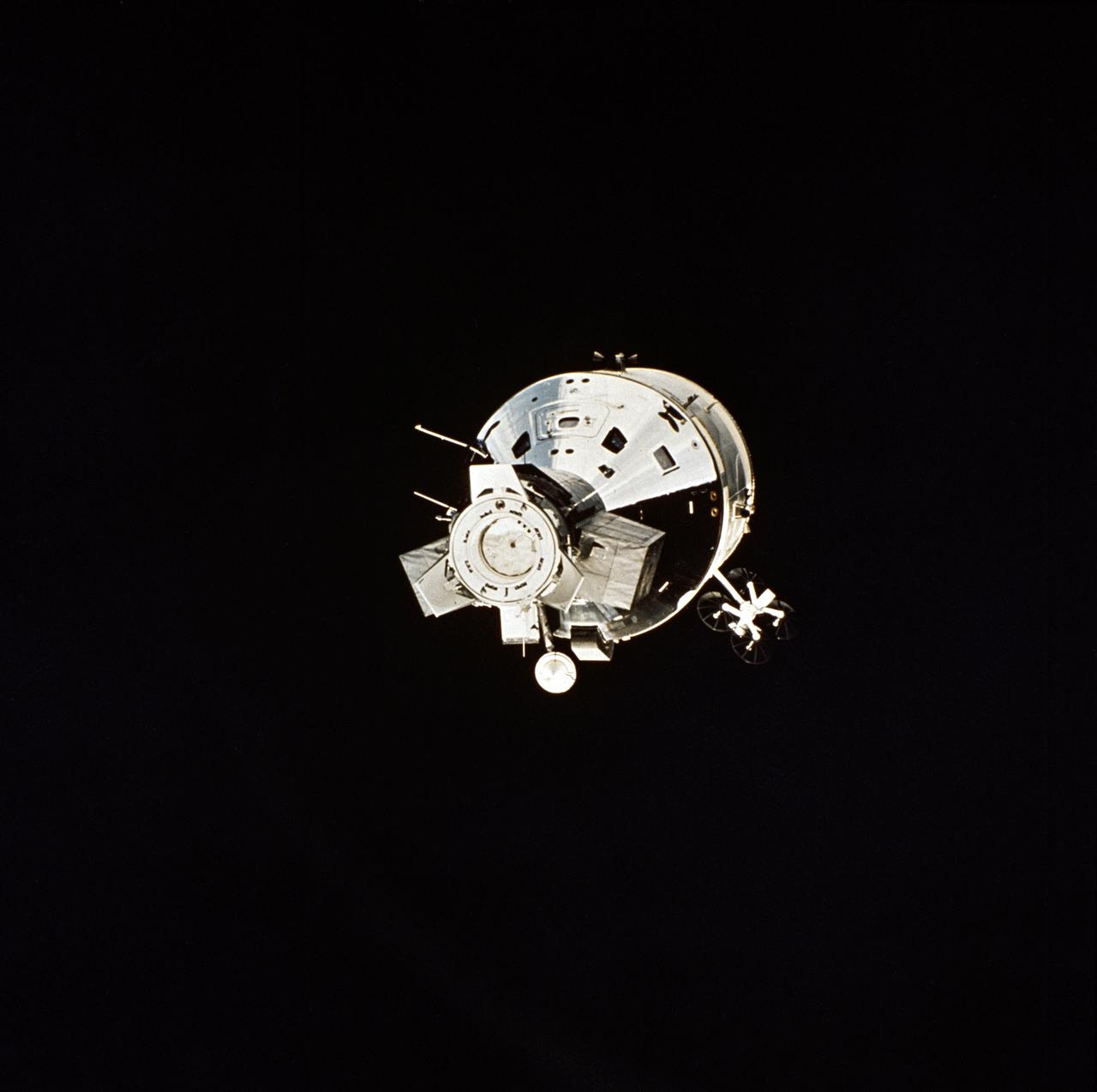
AST-32-2691 (17-19 July 1975) --- The American Apollo spacecraft as seen in Earth orbit from the Soviet Soyuz spacecraft during the joint U.S.-USSR Apollo-Soyuz Test Project mission. The Command/Service Module and Docking Module are contrasted against a black-sky background. This is a near "head on" view of the Apollo. This picture was furnished by the USSR in an exchange of photography taken during the ASTP flight. Note the docking mechanism and docking target on the Docking Module. The four dish-like reflectors of the unified S-band high-gain antenna protrude from the side of the Service Module. The American and Soviet spacecraft were joined together in space for approximately 47 hours on July 17-18-19, 1975. PHOTO COURTESY: USSR ACADEMY OF SCIENCES
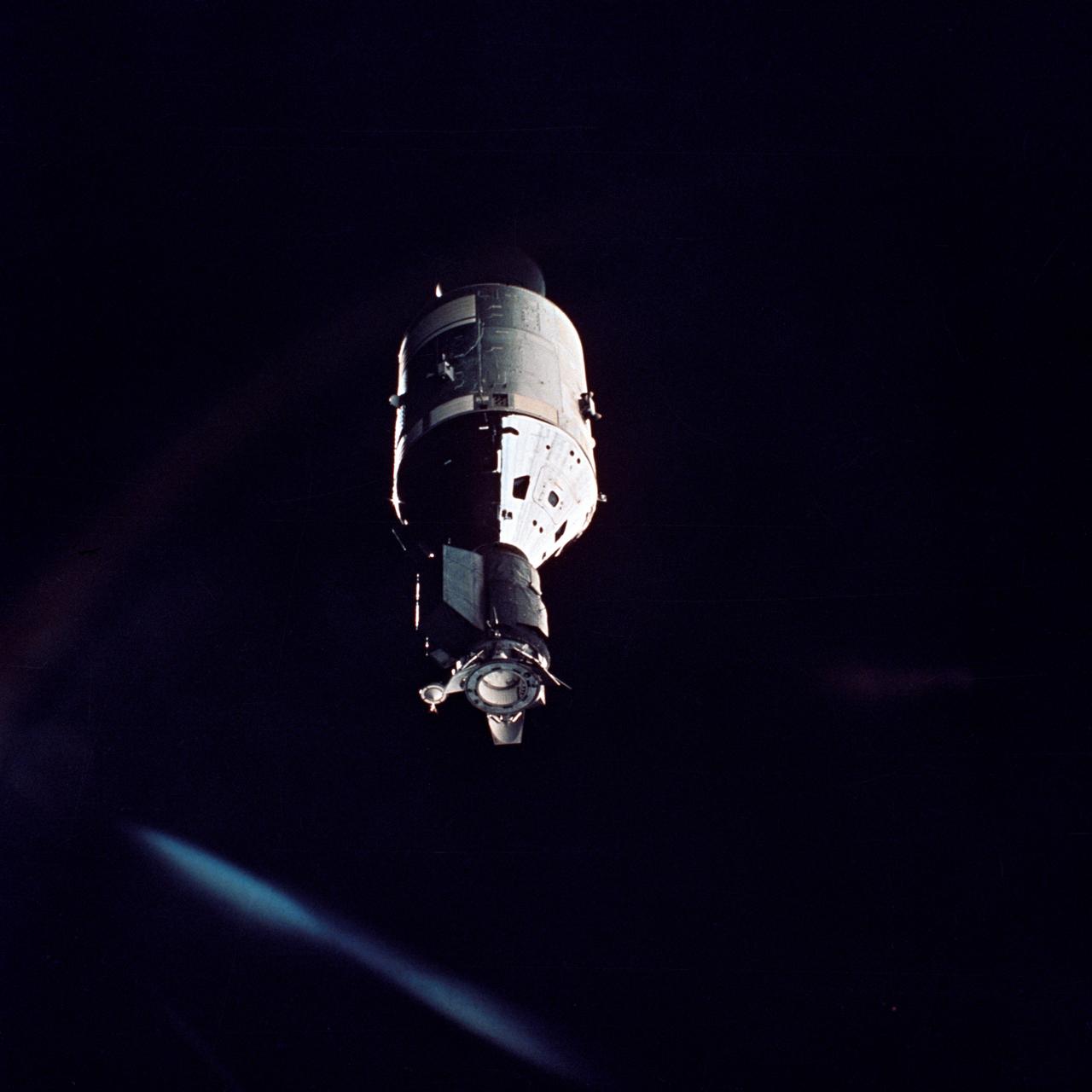
AST-32-2686 (17-19 July 1975) --- The American Apollo spacecraft as seen in Earth orbit from the Soviet Soyuz 19 spacecraft during the joint U.S.-USSR Apollo Soyuz Test Project (ASTP) mission. The Command and Service Module (CSM) and Docking Module (DM) are contrasted against a black-sky background. Light reflected in the camera streaks the image. Note the docking mechanism and docking target on the DM. On the left the bell-shaped engine nozzle of the service propulsion system protrudes from the rear of the Service Module (SM). The American and Soviet spacecraft were joined together in space for approximately 47 hours on July 17, 18, 19, 1975. This picture was furnished by the USSR in an exchange of photography taken during the ASTP flight. The Apollo crew consisted of astronauts Thomas P. Stafford, commander; Donald K. "Deke" Slayton, docking module pilot; and Vance D. Brand, command module pilot. The Soyuz 19 crew consisted of cosmonauts Aleksei A. Leonov, command pilot; and Valeri N. Kubasov, flight engineer.
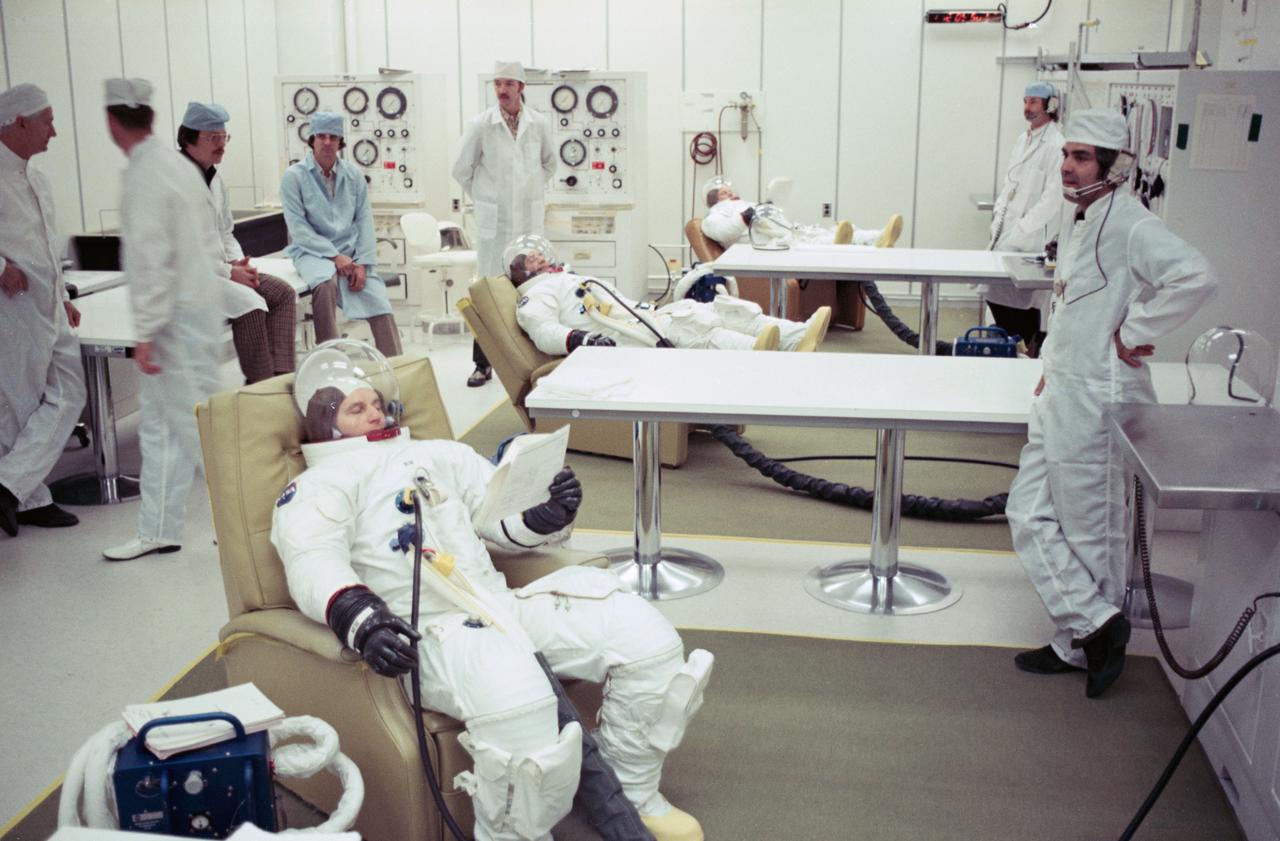
S75-21063 (January 1975) --- The three members of the American ASTP backup crew are suited up for the testing of the Apollo spacecraft at the Kennedy Space Center. They are (from foreground) astronauts Alan L. Bean, commander; Ronald E. Evans, command module pilot; and Jack R. Lousma, docking module pilot. Later, they entered the Apollo Command Module in an altitude chamber for tests of spacecraft systems. The testing was in preparation for the joint U.S.?USSR Apollo-Soyuz Test Project docking mission in Earth orbit scheduled for July 1975.
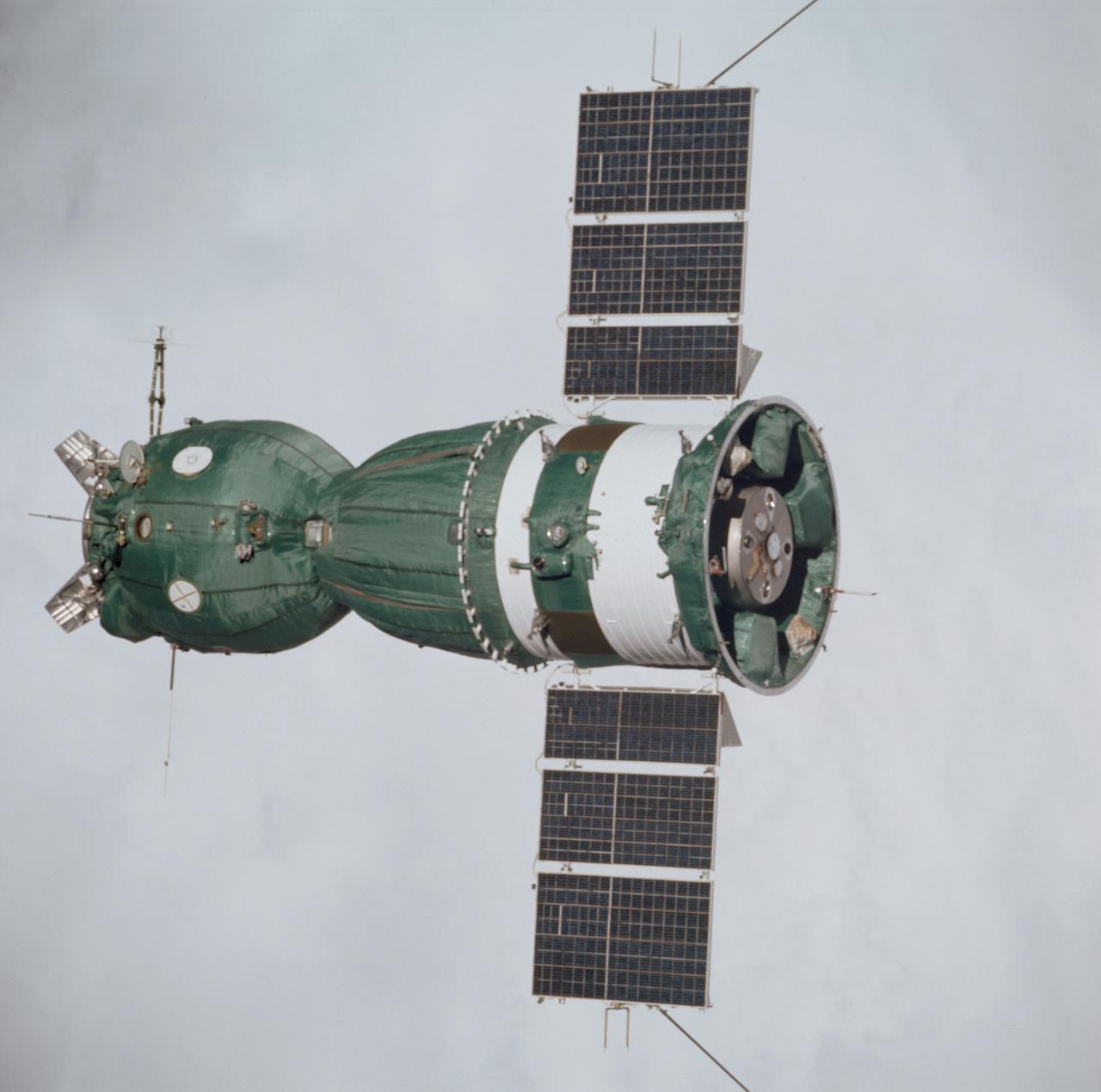
AST-01-056 (18 July 1975) --- An excellent view of the Soviet Soyuz spacecraft in Earth orbit, photographed from the American Apollo spacecraft during the joint U.S.-USSR Apollo-Soyuz Test Project (ASTP) docking mission in Earth orbit. The Soyuz is contrasted against a white-cloud background in this overhead view. The three major components of the Soyuz are the spherical-shaped Orbital Module, the bell-shaped Descent Vehicle and the cylindrical-shaped instrument Assembly Module from which two solar panels protrude. The docking system on the Orbital Module was specially designed to interface with the docking system on the Apollo's Docking Module. The ASTP astronauts and cosmonauts visited each other's spacecraft while the Soyuz and Apollo were docked in Earth orbit for two days. The Apollo crew consisted of astronauts Stafford, commander; Donald K. "Deke" Slayton, docking module pilot; and Vance D. Brand, command module pilot. The Soyuz 19 crew consisted of cosmonauts Leonov, command pilot; and Valeri N. Kubasov, flight engineer.

NASA Terra spacecraft captured this image of the Ouachita Mountains in southeast Oklahoma. The Ouachitas are fold mountains, formed about 300 million years ago when the South American Plate drifted northward, colliding with the North American Plate.
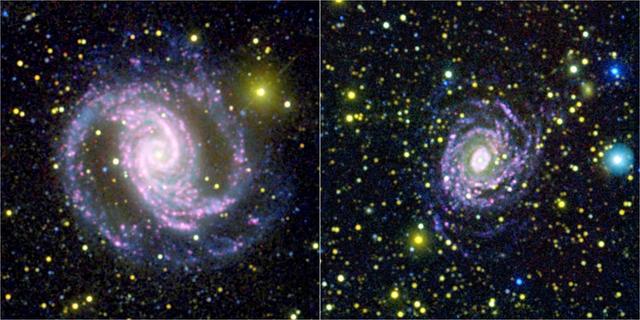
These two photographs were made by combining data from NASA Galaxy Evolution Explorer spacecraft and the Cerro Tololo Inter-American Observatory in Chile to learn that not all galaxies make stars of different sizes in the same quantities.
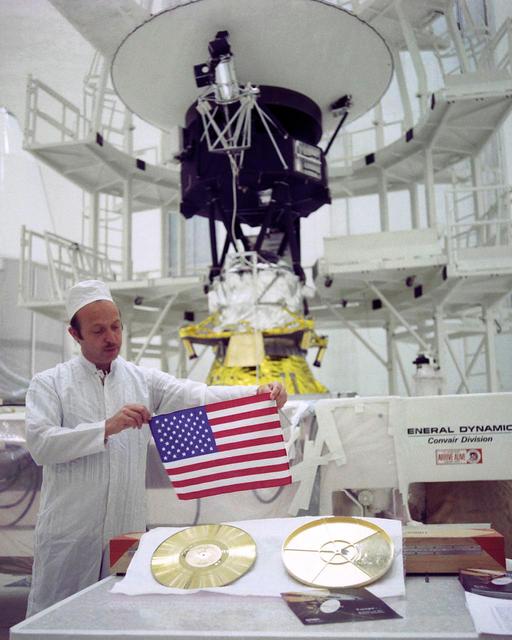
As NASA two Voyager spacecraft travel out into deep space, they carry a small American flag and a Golden Record packed with pictures and sounds -- mementos of our home planet.
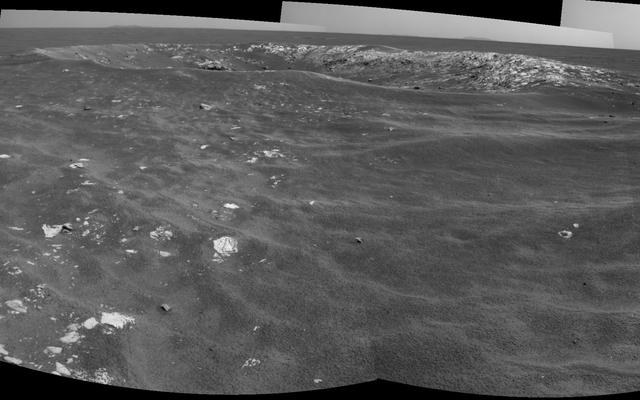
NASA Mars Exploration Rover Opportunity recorded this view of a crater informally named Freedom 7 shortly before the 50th anniversary of the first American in space: astronaut Alan Shepard flight in the Freedom 7 spacecraft.

This image from NASA Terra spacecraft shows where a magnitude 7.2 earthquake struck in Mexico Baja, California at shallow depth along the principal plate boundary between the North American and Pacific plates on April 4, 2010.
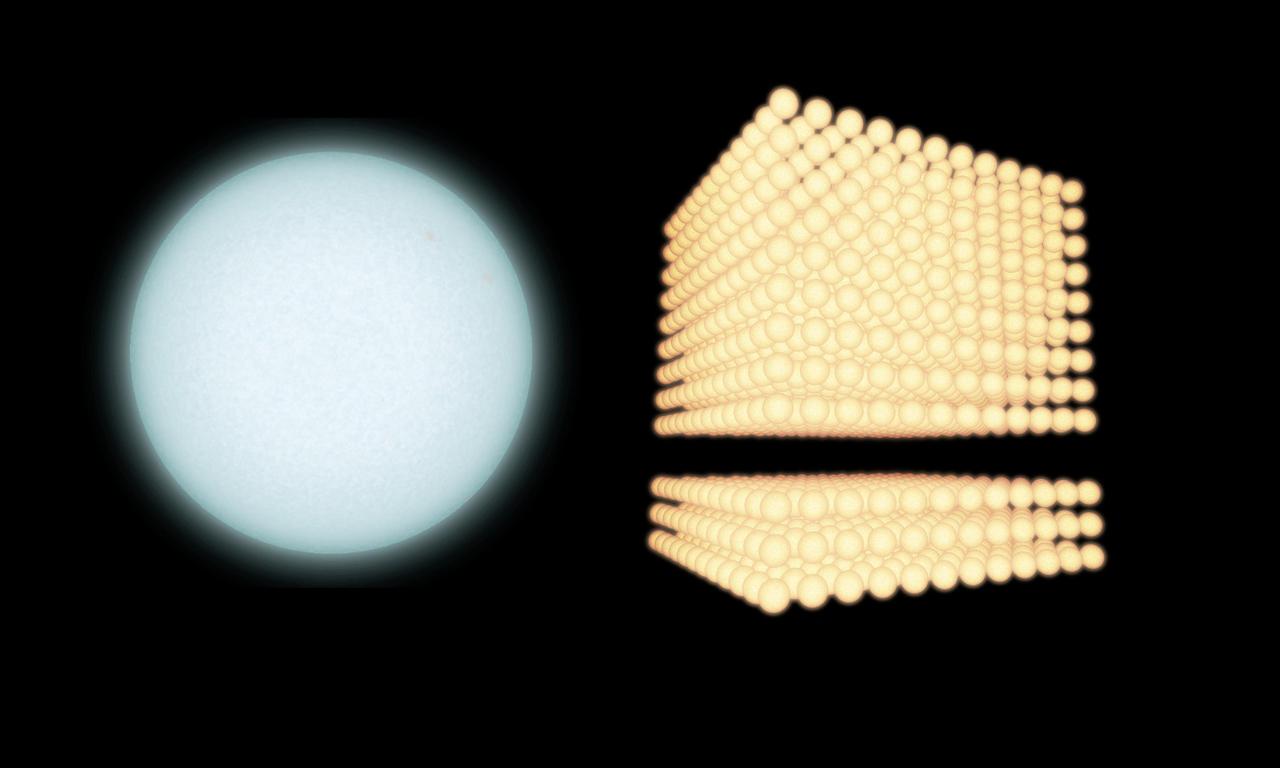
NASA Galaxy Evolution Explorer spacecraft and Cerro Tololo Inter-American Observatory combined data making this diagram illustratrating the extent to which astronomers have been underestimating the proportion of small to big stars in certain galaxies.
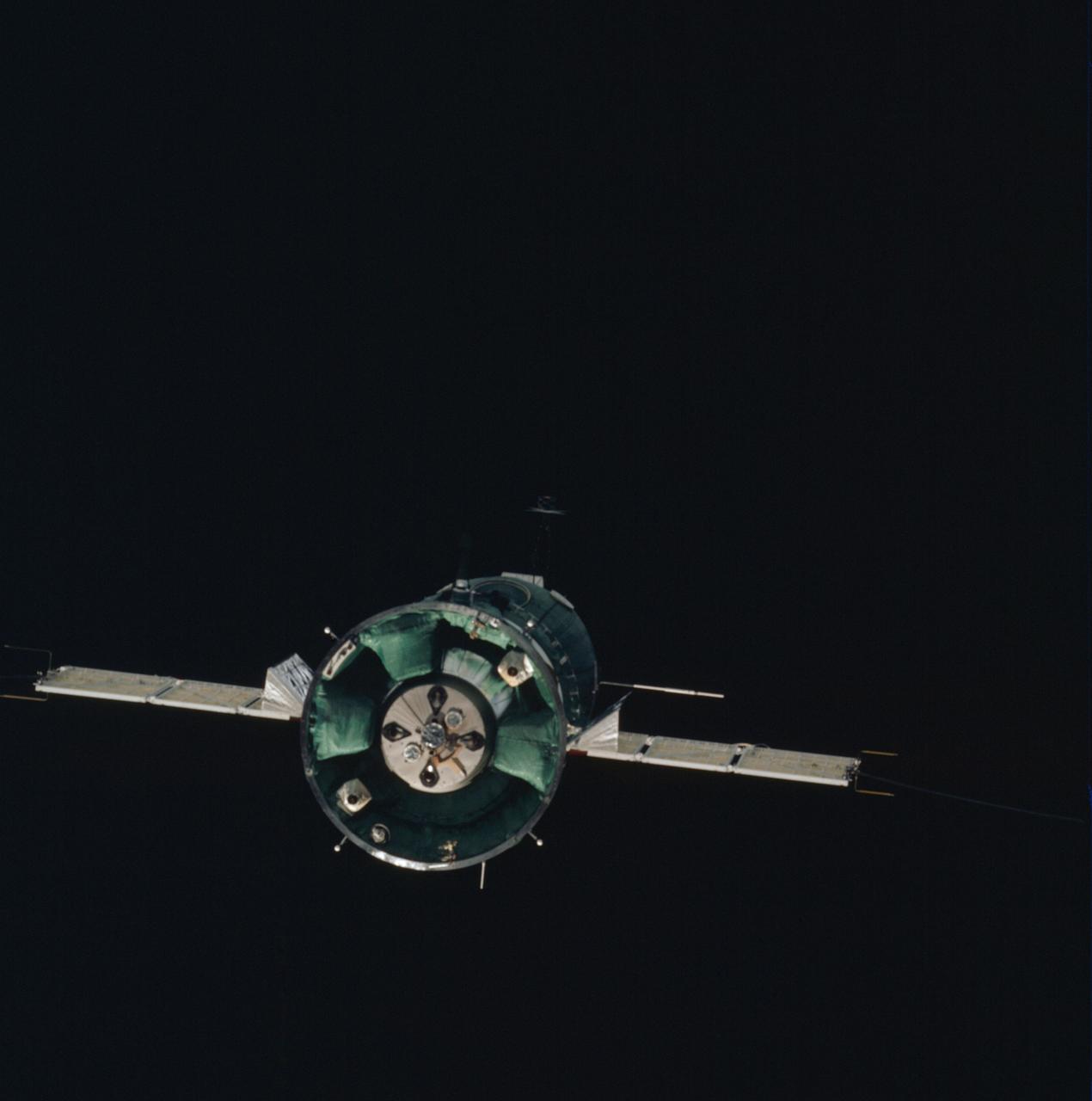
AST-01-053 (17-19 July 1975) --- The Soviet Soyuz spacecraft is contrasted against a black-sky background in this photograph taken in Earth orbit. This view is looking toward the aft end of the Soyuz. Two solar panels protrude out from the spacecraft's Instrument Assembly Module. The ASTP astronauts and cosmonauts visited each other's spacecraft while the Soyuz and Apollo were docked in Earth orbit for two days.
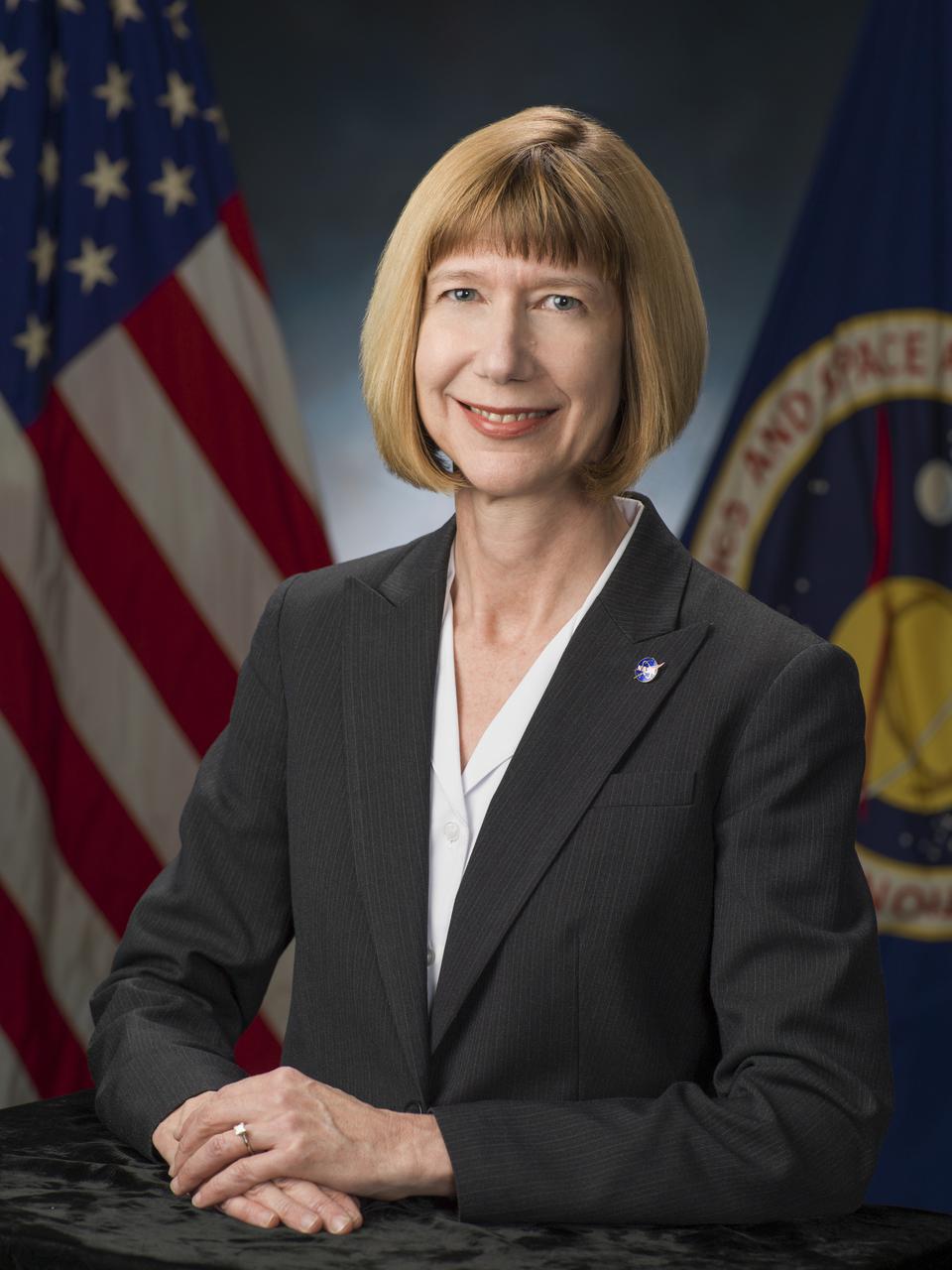
JOHNSON SPACE CENTER, Houston, Texas -- JSC2013-E-013609 -- Official portrait of Kathy Lueders, deputy manager of NASA's Commercial Crew Program at the agency's Johnson Space Center in Houston. To learn more about Lueders, go to http:__go.nasa.gov_107SaBn. Photo credit: NASA
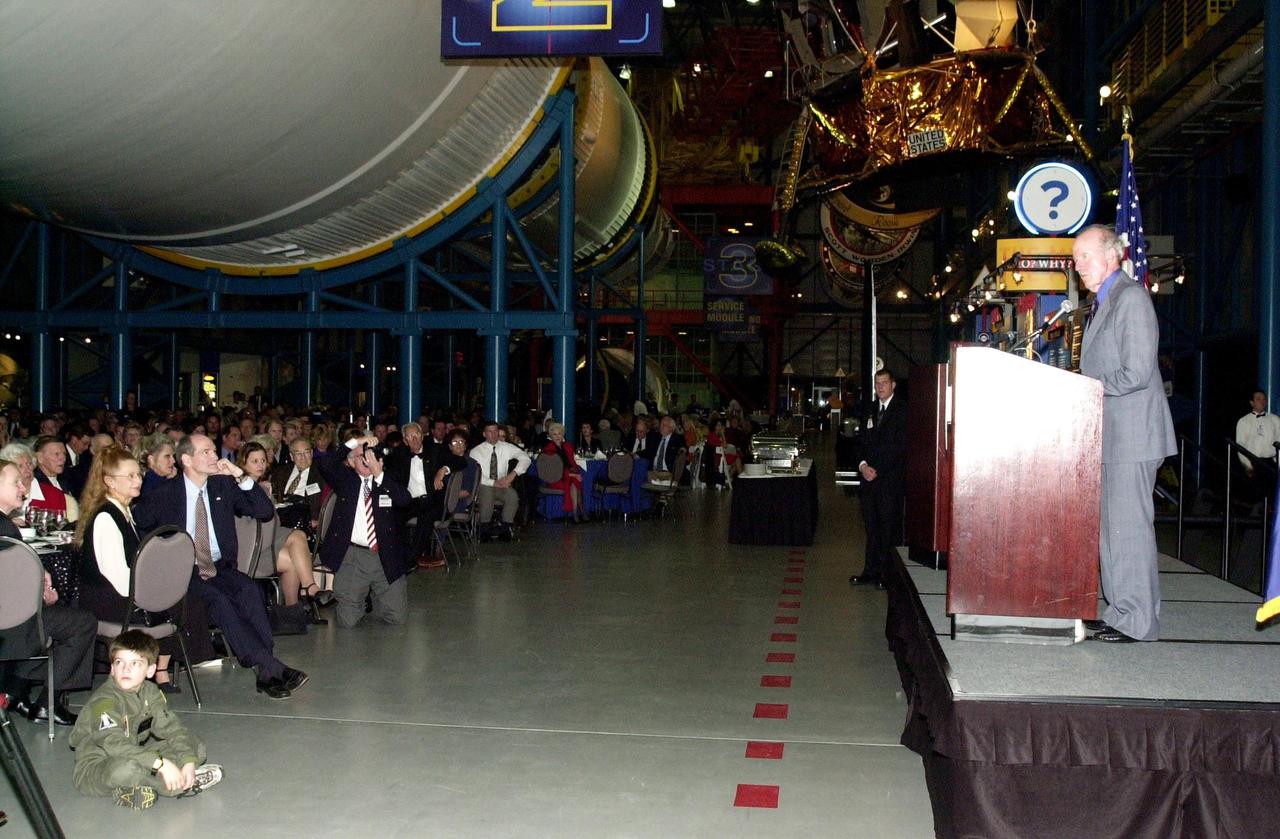
KENNEDY SPACE CENTER, FLA. - Former astronaut Gordon Cooper shares his experiences with the audience in KSC's Apollo/Saturn V Center during the celebration of the 40th anniversary of American spaceflight. Cooper, flying in the Faith 7 spacecraft, was the fourth American in space. The spacecraft was launched May 15, 1963
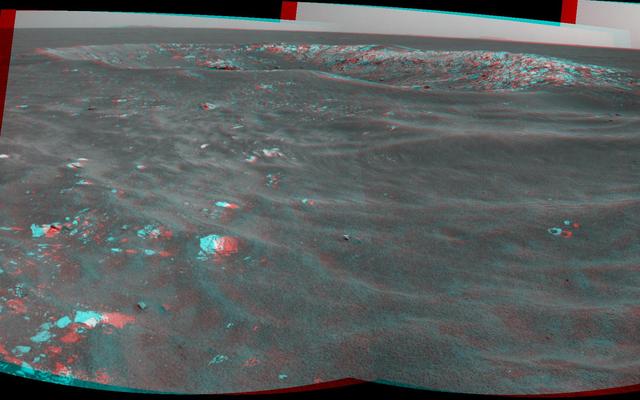
NASA Mars Exploration Rover Opportunity took this stereo view of a crater informally named Freedom 7 shortly before the 50th anniversary of the first American in space: astronaut Alan Shepard flight in the Freedom 7 spacecraft. You need 3D glasses.
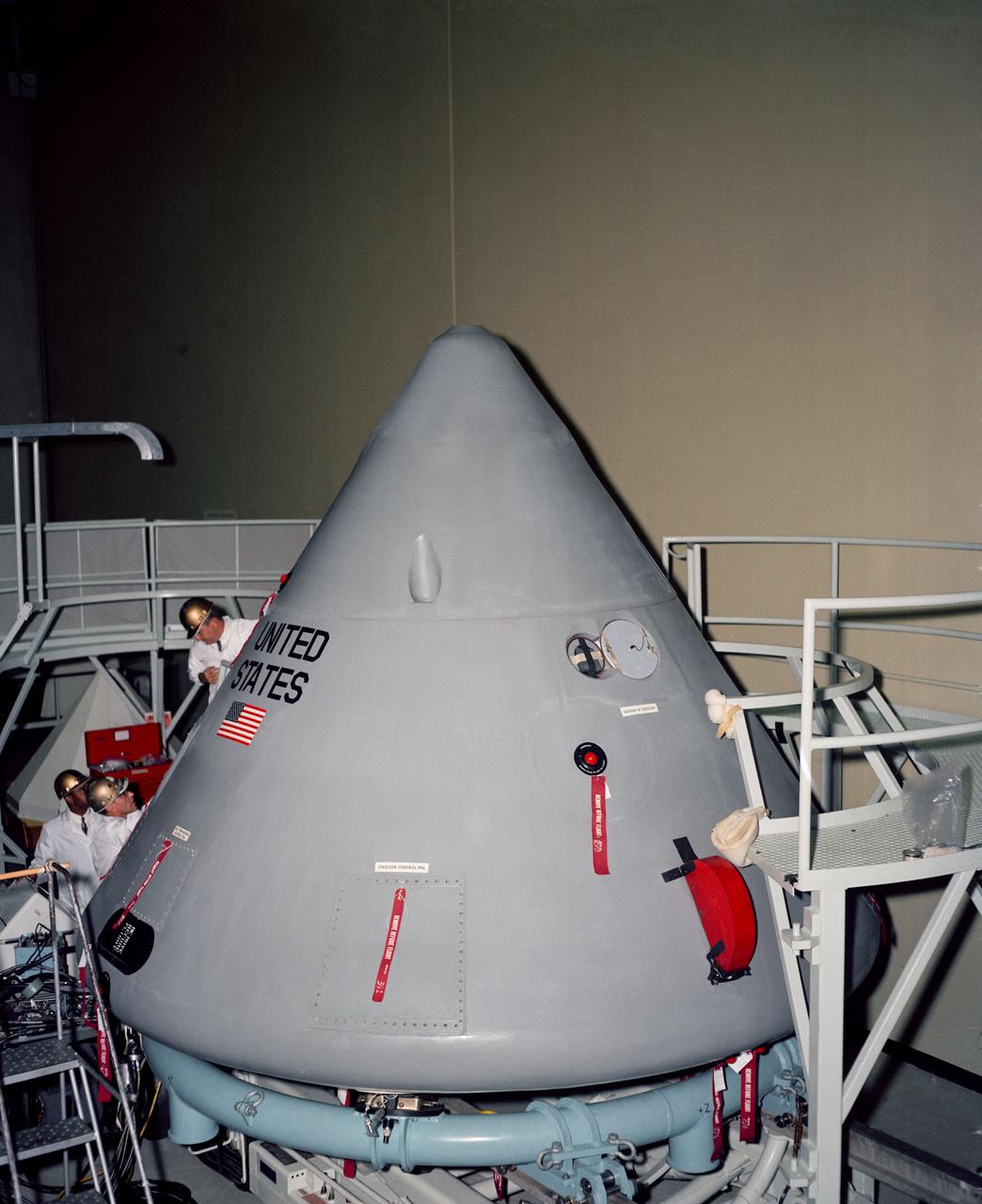
S66-53655 (1966) --- High angle view of Apollo Spacecraft 012 Command Module looking toward +Z axis during pre-shipping operations in south air lock of Systems Integration and Checkout Facility.
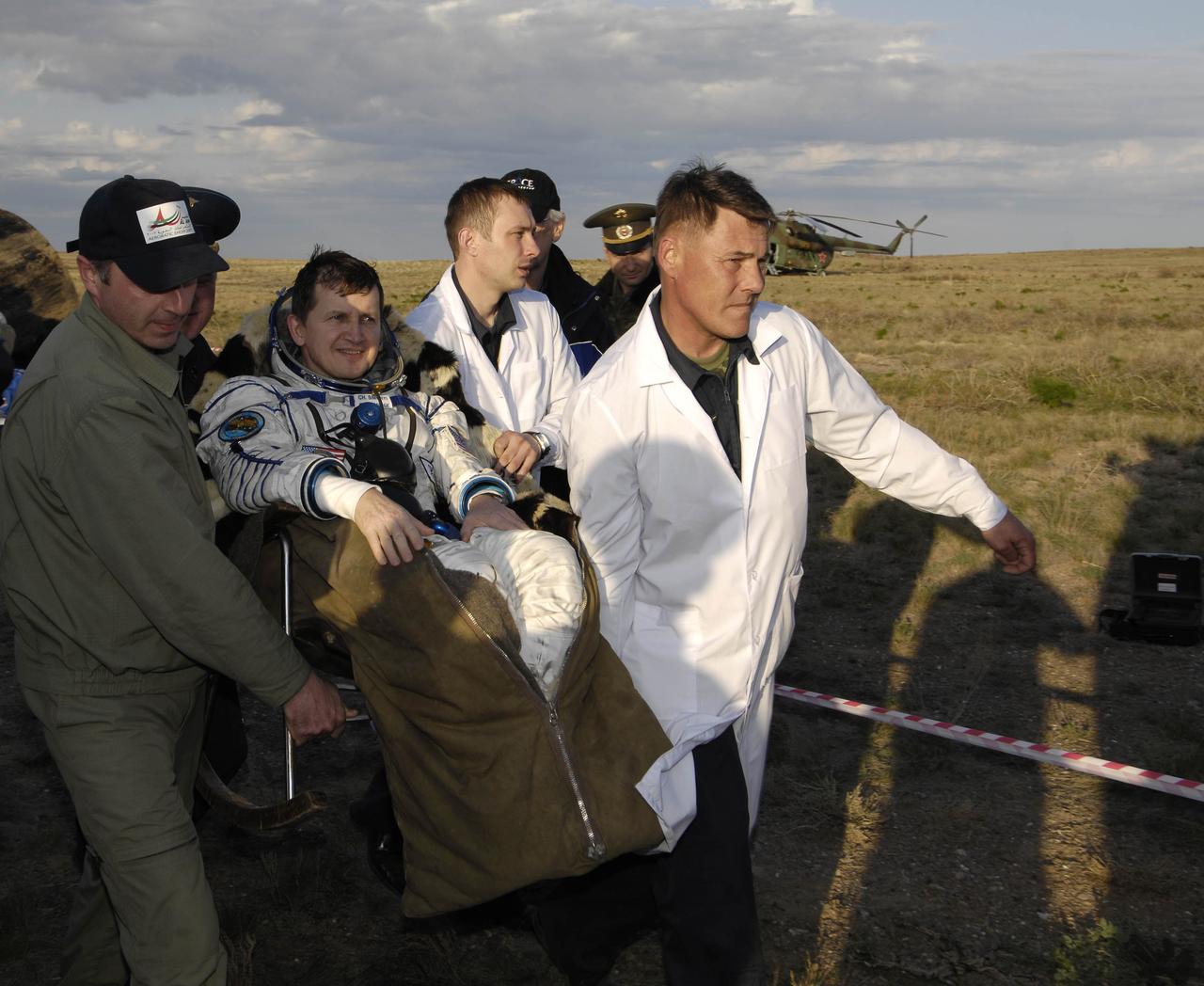
American spaceflight participant Charles Simonyi is taken in his chair to the medical tent near the Soyuz TMA-9 spacecraft where the recovery officials conduct post-landing medical checks, Friday, April 21, 2007 in Kazakhstan. Expedition 14 Commander Michael Lopez-Alegria, Flight Engineer Mikhail Tyurin and American spaceflight participant Charles Simonyi landed in their Soyuz TMA-9 spacecraft southwest of Karaganda, Kazakhstan at approximately 6:30 p.m. local time. Photo Credit: (NASA/Bill Ingalls)
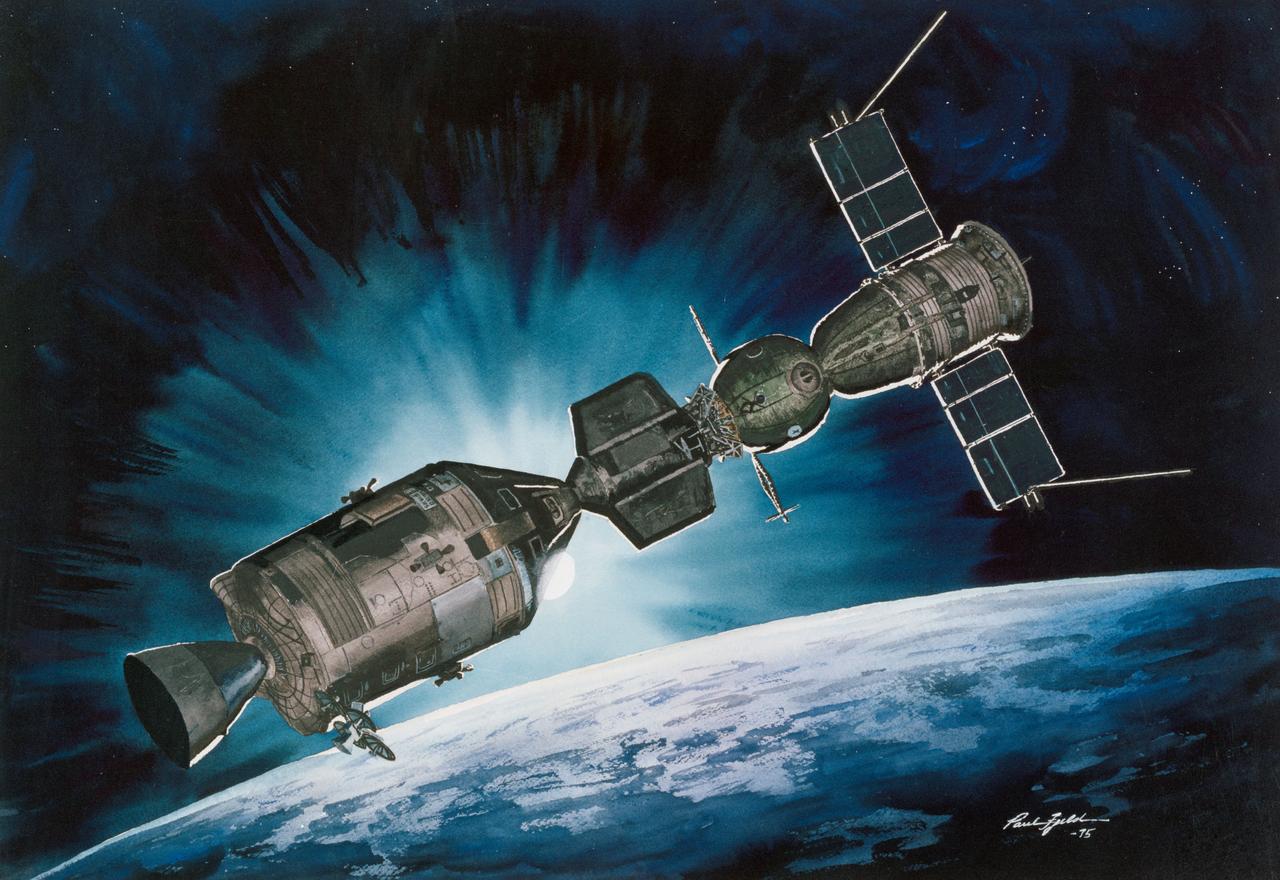
S75-28511 (July 1975) --- An artist?s concept depicting the American and Soviet spacecraft docked in Earth orbit during the July 1975 Apollo-Soyuz Test Project mission. The Apollo Command/Service Module is on the left, the Docking Module is in the center, and the Soyuz spacecraft is on the right. The first docking of spacecraft from two different nations was scheduled for July 17, 1975. The American and Soviet ASTP crewmen planned to visit each other?s spacecraft while Apollo and Soyuz are docked for a maximum period of two days. The docking system on the Docking Module and the docking system on the Soyuz Orbital Module are designed to interface with each other. The painting is by artist Paul Fjeld.
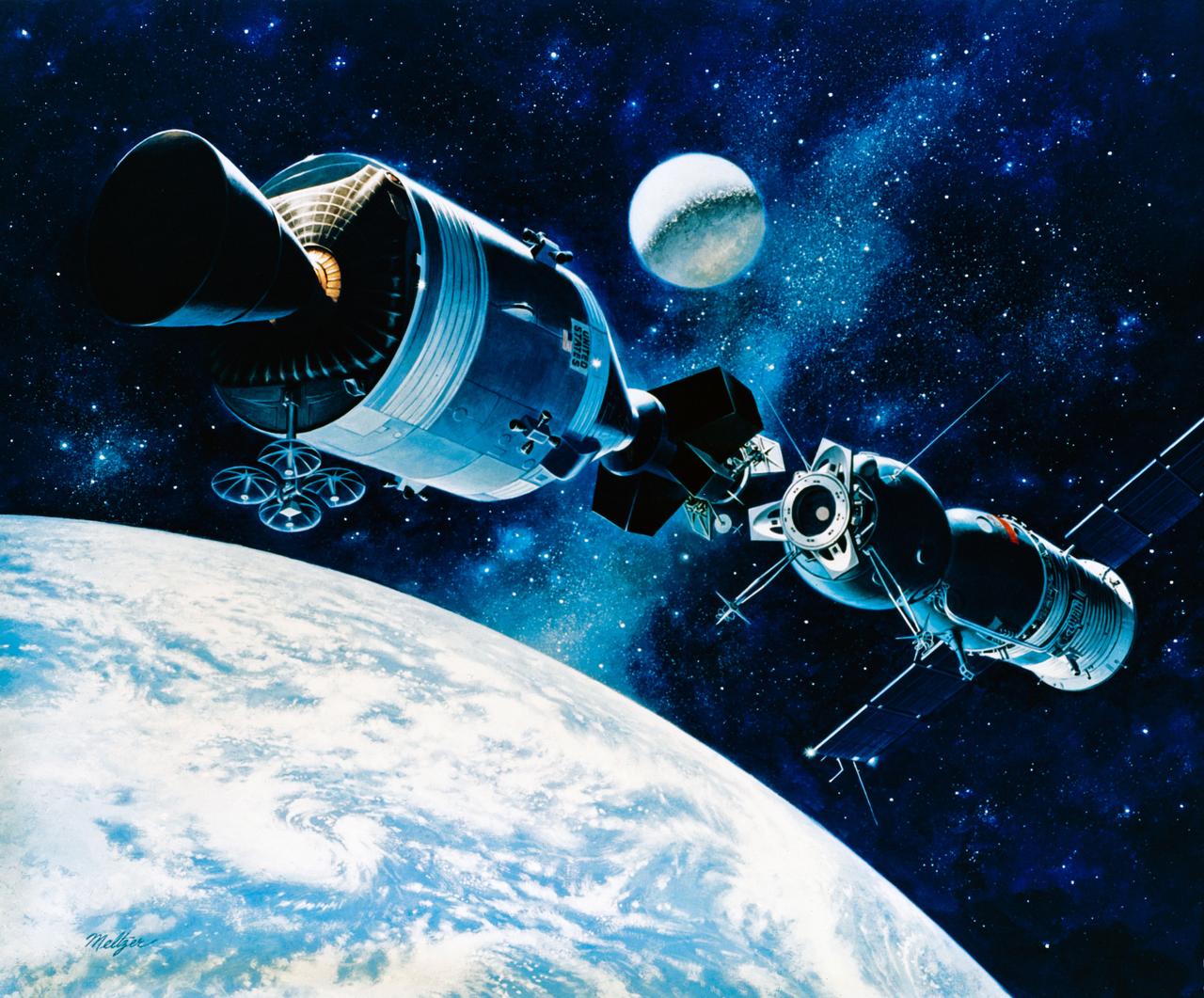
S75-27285 (April 1975) --- An artist's concept depicting an American Apollo spacecraft rendezvousing with a Soviet Soyuz spacecraft in Earth orbit. The two spacecraft are in a near-docked configuration. During the joint U.S.-USSR Apollo-Soyuz Test Project (ASTP) mission, which is scheduled for July 1975, the American and Soviet crews will visit each other's spacecraft while the Soyuz and Apollo are docked for a maximum period of two days. The mission is designed to test equipment and techniques that will establish international crew rescue capability in space, as well as permit future cooperative scientific missions. This artwork is by Davis Meltzer.
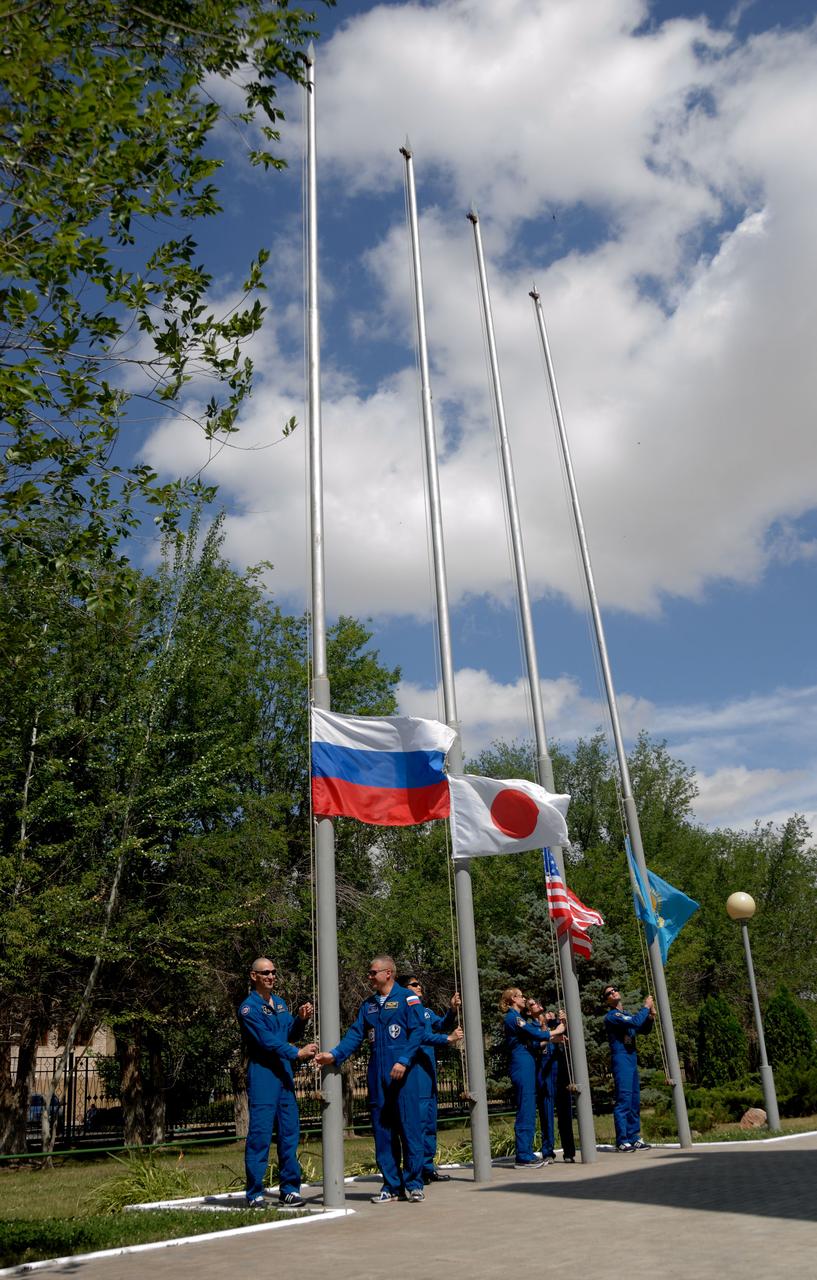
Outside their Cosmonaut Hotel crew quarters in Baikonur, Kazakhstan, the Expedition 48-49 prime and backup crewmembers conduct the traditional raising of the Russian, Japanese, American and Kazakh flags June 26. Prime crewmembers Kate Rubins of NASA, Anatoly Ivanishin of Roscosmos and Takuya Onishi of the Japan Aerospace Exploration Agency will launch on July 7, Baikonur time, on the Soyuz MS-01 spacecraft for a planned four-month mission on the International Space Station. NASA/Alexander Vysotsky
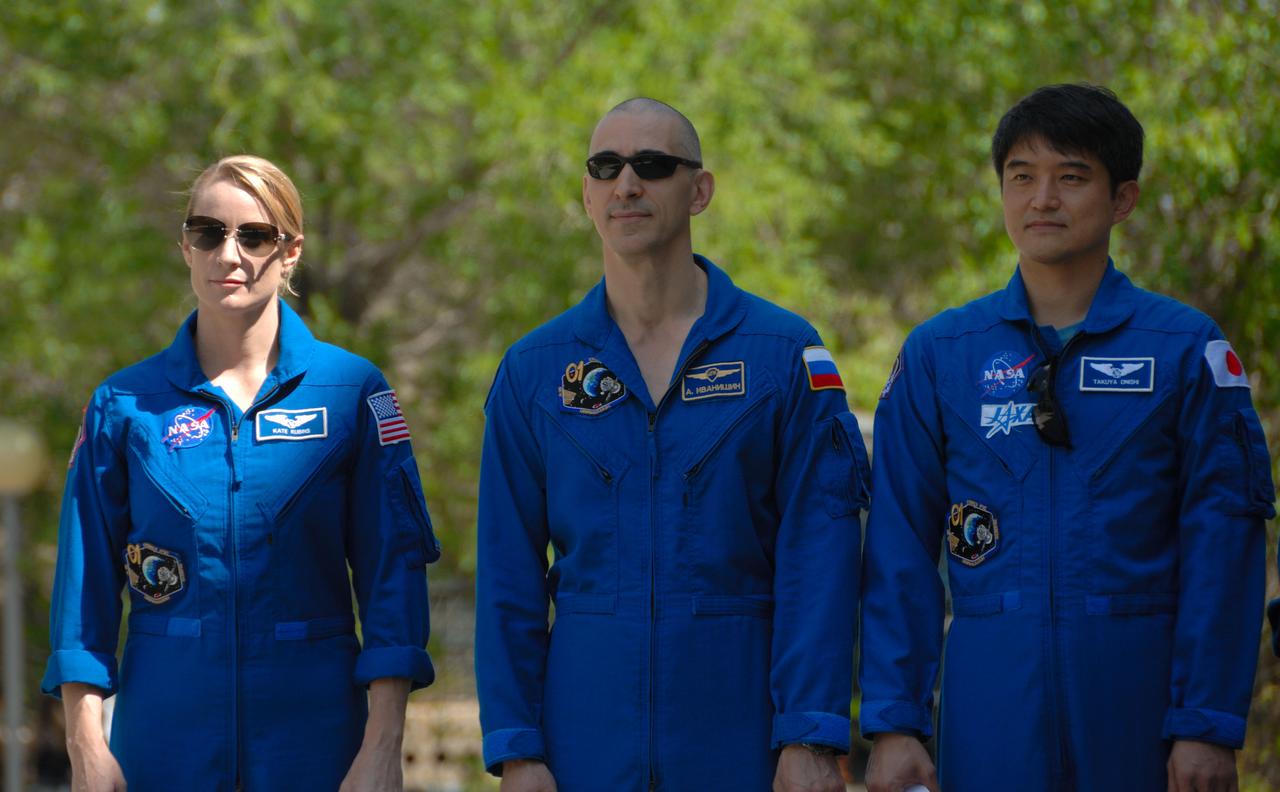
Outside their Cosmonaut Hotel crew quarters in Baikonur, Kazakhstan, Expedition 48-49 crewmembers Kate Rubins of NASA (left), Anatoly Ivanishin of Roscosmos (center) and Takuya Onishi of the Japan Aerospace Exploration Agency (right) listen to remarks June 26 during the traditional raising of the American, Russian, Japanese and Kazakh flags. The trio will launch on July 7, Baikonur time, on the Soyuz MS-01 spacecraft for a planned four-month mission on the International Space Station. NASA/Alexander Vysotsky
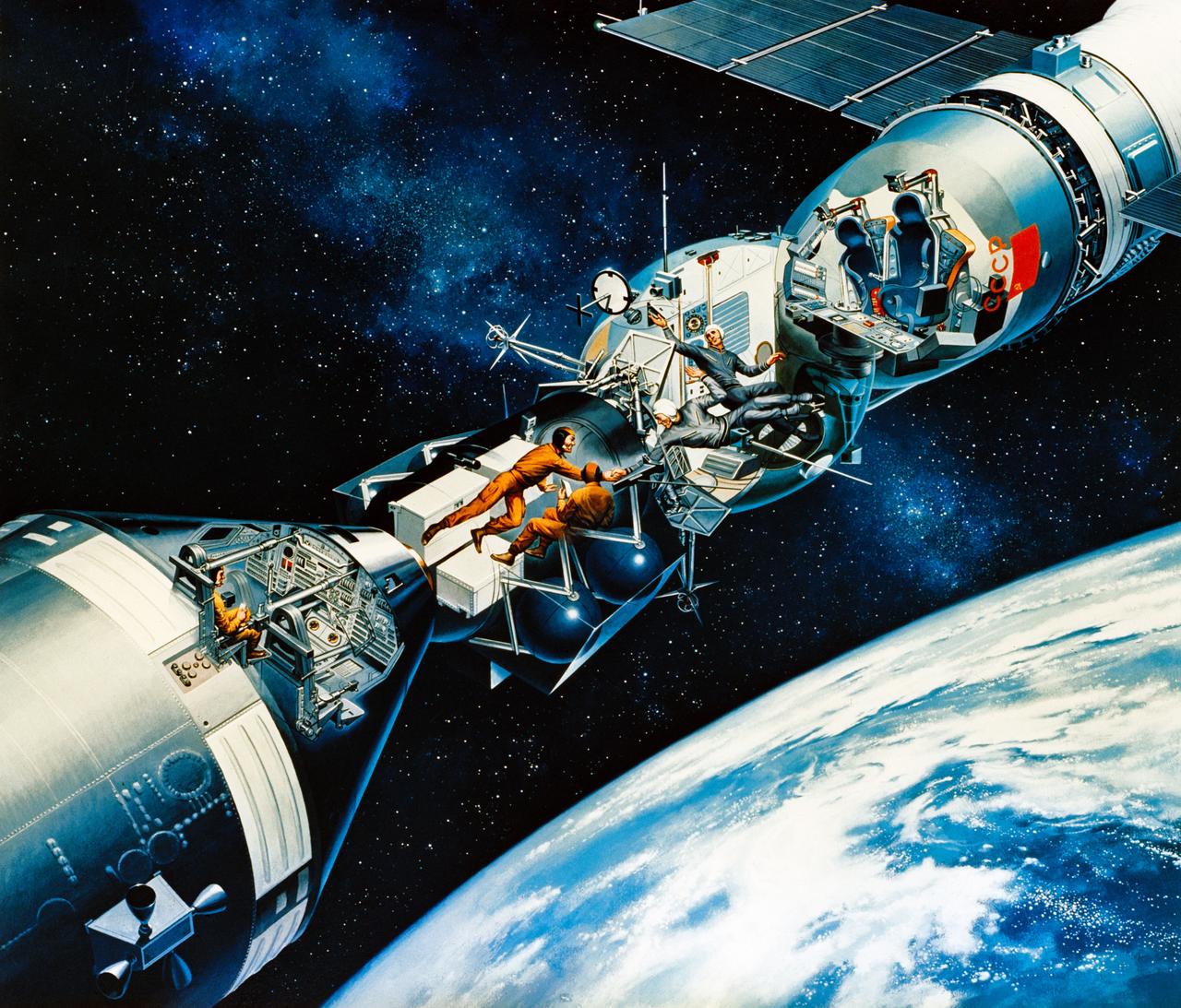
S75-27290 (April 1975) --- An artist?s concept illustrating a cutaway view of the docked Apollo and Soyuz spacecraft in Earth orbit. This scene depicts the moment the two international crews meet in space for the first time. Two of the three American crewmen are in the Docking Module. The two Soviet crewmen are in the Soyuz spacecraft?s Orbital Module. The two crew commanders are shaking hands through the hatchway. The third American crewman is in the Apollo Command Module. During the joint U.S.-USSR Apollo-Soyuz Test Project mission, which is scheduled for July 1975, the American and Soviet crews will visit one another?s spacecraft while the Soyuz and Apollo are docked for a maximum period of two days. The mission is designed to test equipment and techniques that will establish international crew rescue capability in space, as well as permit future cooperative scientific missions. The artwork is by Davis Meltzer.
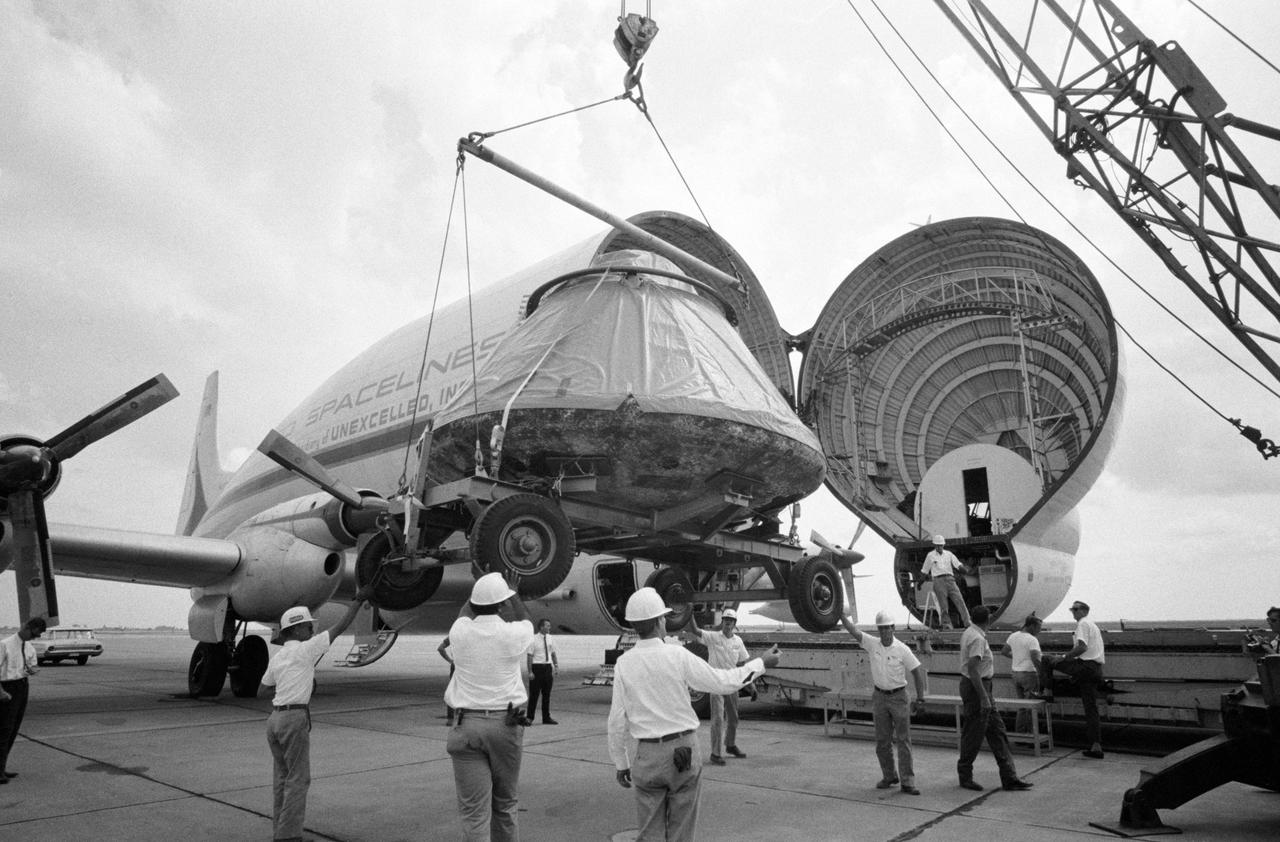
S69-41985 (14 Aug. 1969) --- The Apollo 11 spacecraft Command Module (CM) is loaded aboard a Super Guppy Aircraft at Ellington Air Force Base for shipment to the North American Rockwell Corporation at Downey, California. The CM was just released from its postflight quarantine at the Manned Spacecraft Center (MSC). The Apollo 11 spacecraft was flown by astronauts Neil A. Armstrong, commander; Michael Collins, command module pilot; and Edwin E. Aldrin Jr., lunar module pilot, during their lunar landing mission. Note damage to aft heat shield caused by extreme heat of Earth reentry. North American Rockwell is the prime contractor for the Apollo Command and Service Modules (CSM).
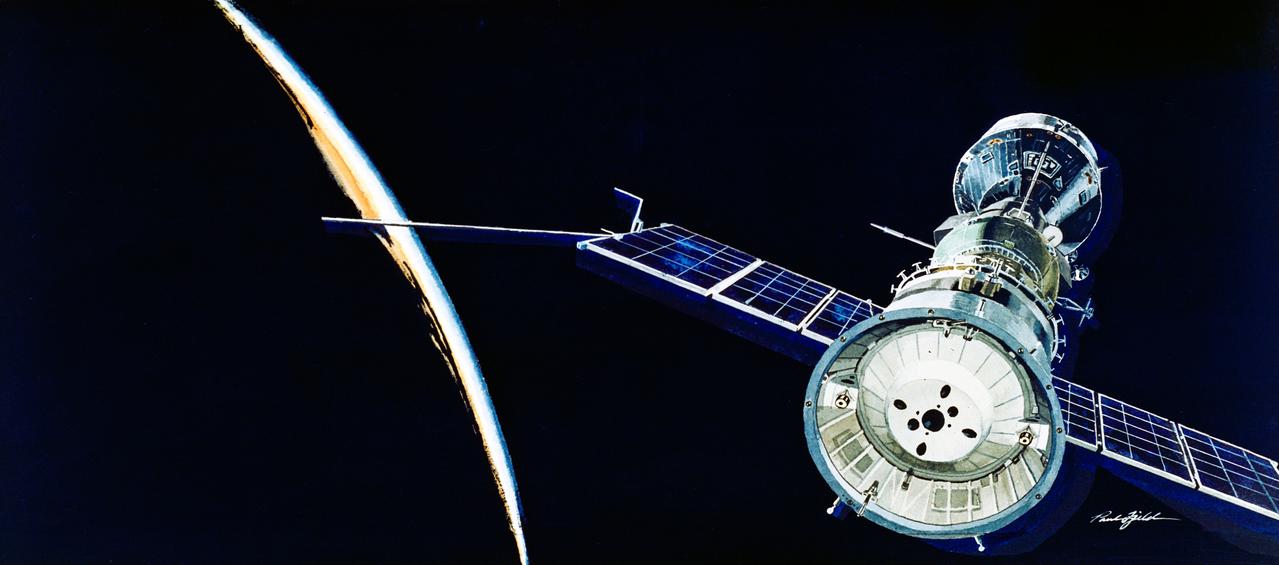
S75-27287 (May 1975) --- An artist?s concept depicting an American Apollo spacecraft docked with a Soviet Soyuz spacecraft in Earth orbit. This view is looking toward the aft end of Soyuz, with the Apollo in the background. Two solar panels protrude out from the instrument assembly module of the Soyuz. The glow on Earth?s horizon is seen on the left. During the joint U.S.-USSR Apollo-Soyuz Test Project mission, scheduled for July 1975, the American and Soviet crews will visit one another?s spacecraft while the Soyuz and Apollo are docked for a maximum period of two days. This artwork is by Paul Fjeld.
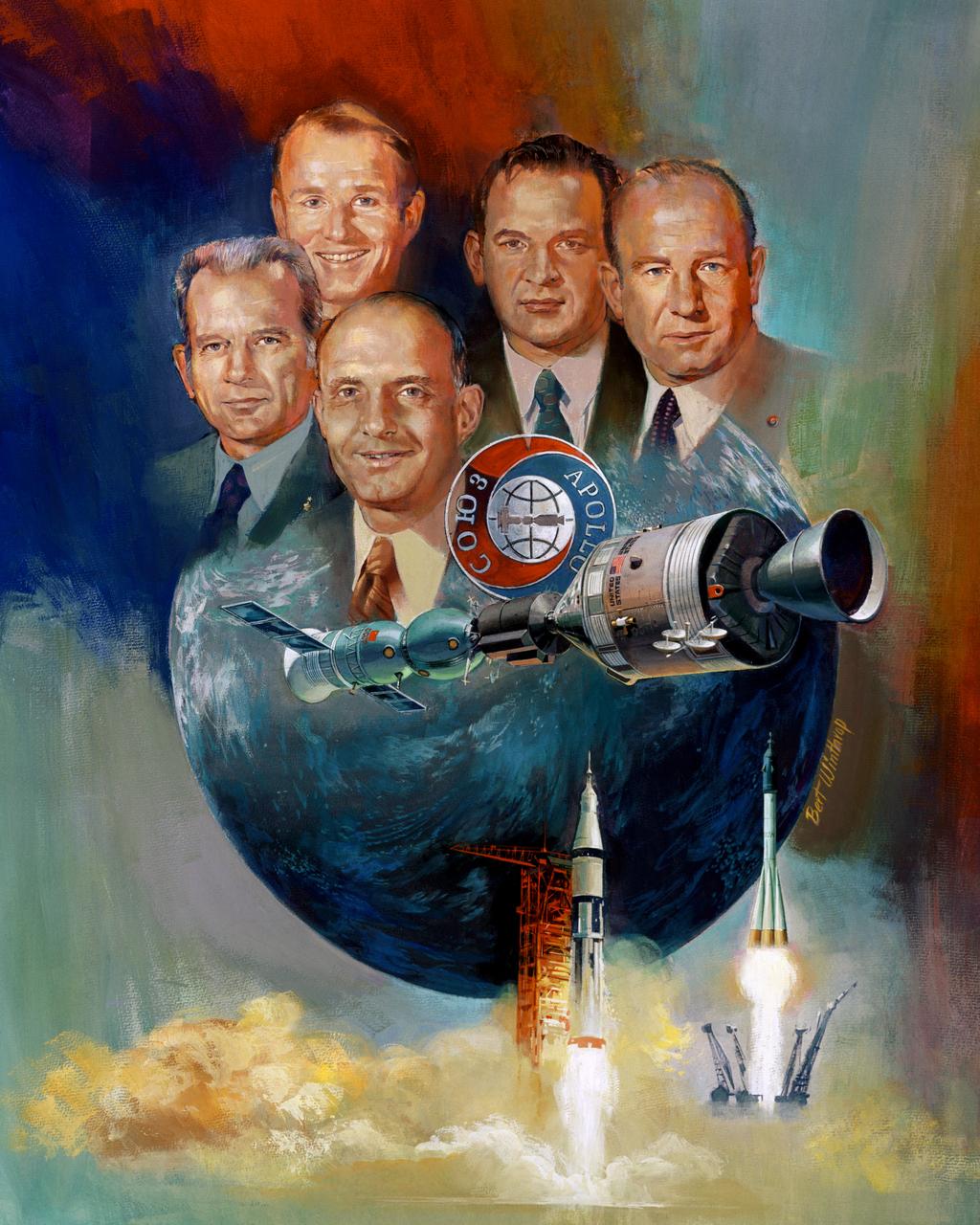
S75-25941 (April 1975) --- An Apollo-Soyuz Test Project (ASTP) symbolic painting by artist Bert Winthrop of Rockwell International Space Division, Downey, California. The artwork is composed of the ASTP mission insignia, the docked Apollo-Soyuz spacecraft, and portraits of the five ASTP prime crewmen, all superimposed against Earth's sphere in the center of the picture. The launches of both the American ASTP space vehicle (on left) and the Soviet ASTP space vehicle are depicted in the lower right corner. The five crewmen are, clockwise from the ASTP emblem, astronaut Thomas P. Stafford, commander of the American crew; astronaut Donald K. Slayton, docking module pilot of the American crew; astronaut Vance D. Brand, command module pilot of the American crew; cosmonaut Valeriy N. Kubasov, engineer on the Soviet crew; and cosmonaut Aleksey A. Leonov, commander of the Soviet crew. The joint U.S.-USSR ASTP docking mission in Earth orbit is scheduled for July 1975.
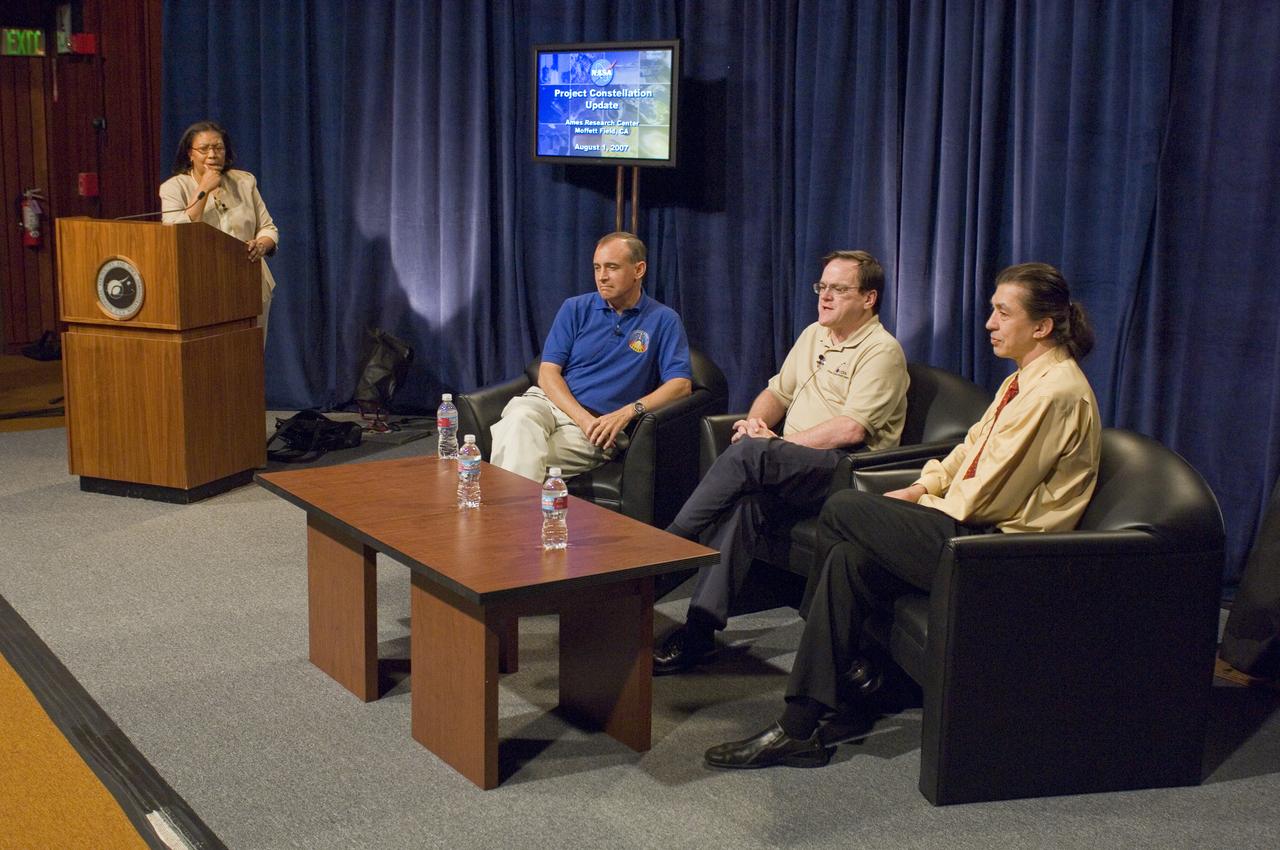
NASA Officials gather at Ames Research Center to discuss Spaceship development progress. Constellation is developing the Orion spacecraft and Ares rockets to support an American return to the moon by 2020.
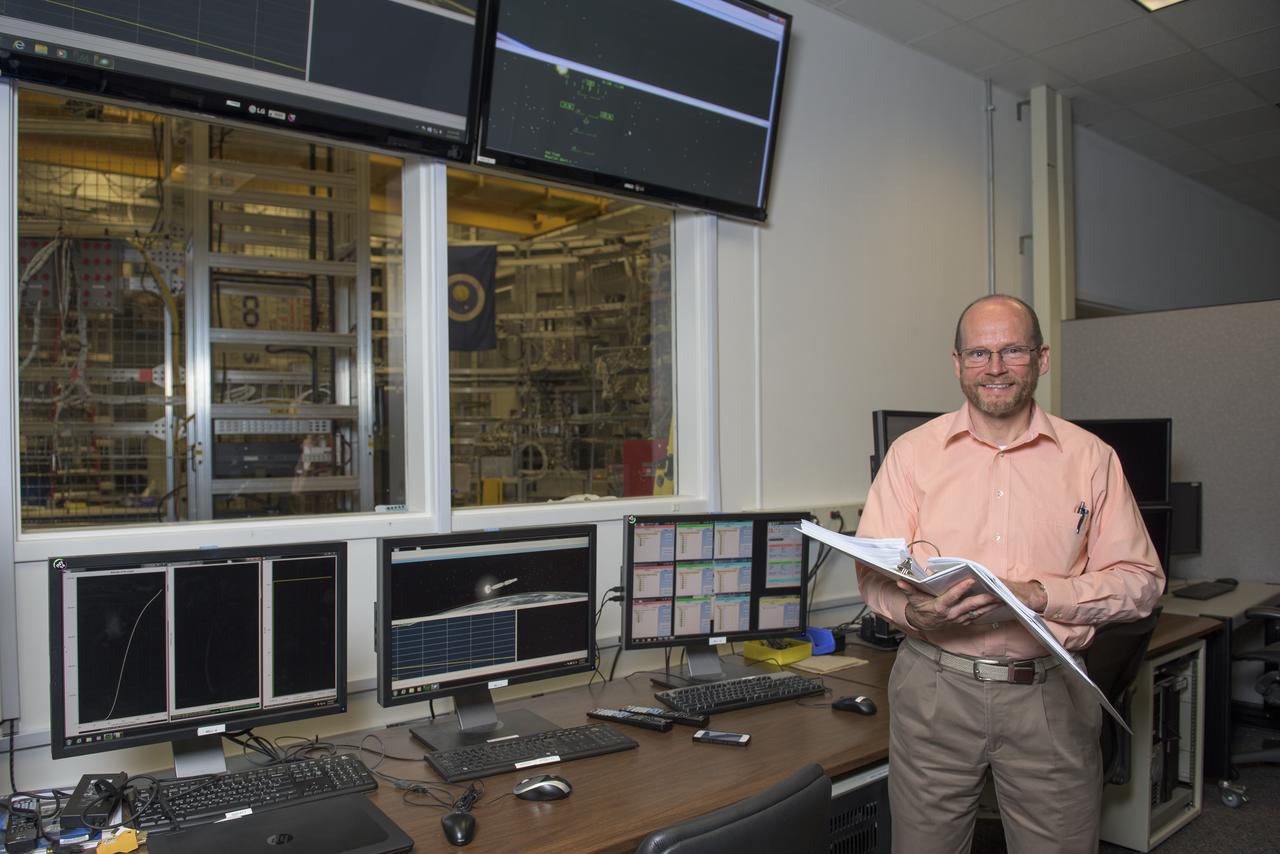
John Hanson, Alternate Lead Systems Engineer in the Spacecraft and Vehicle Systems department of the Engineering Directorate at MSFC has been honored by the American Institute of Aeronautics and Astronautics (AIAA) with the 2016 De Florez Award for flight simulation
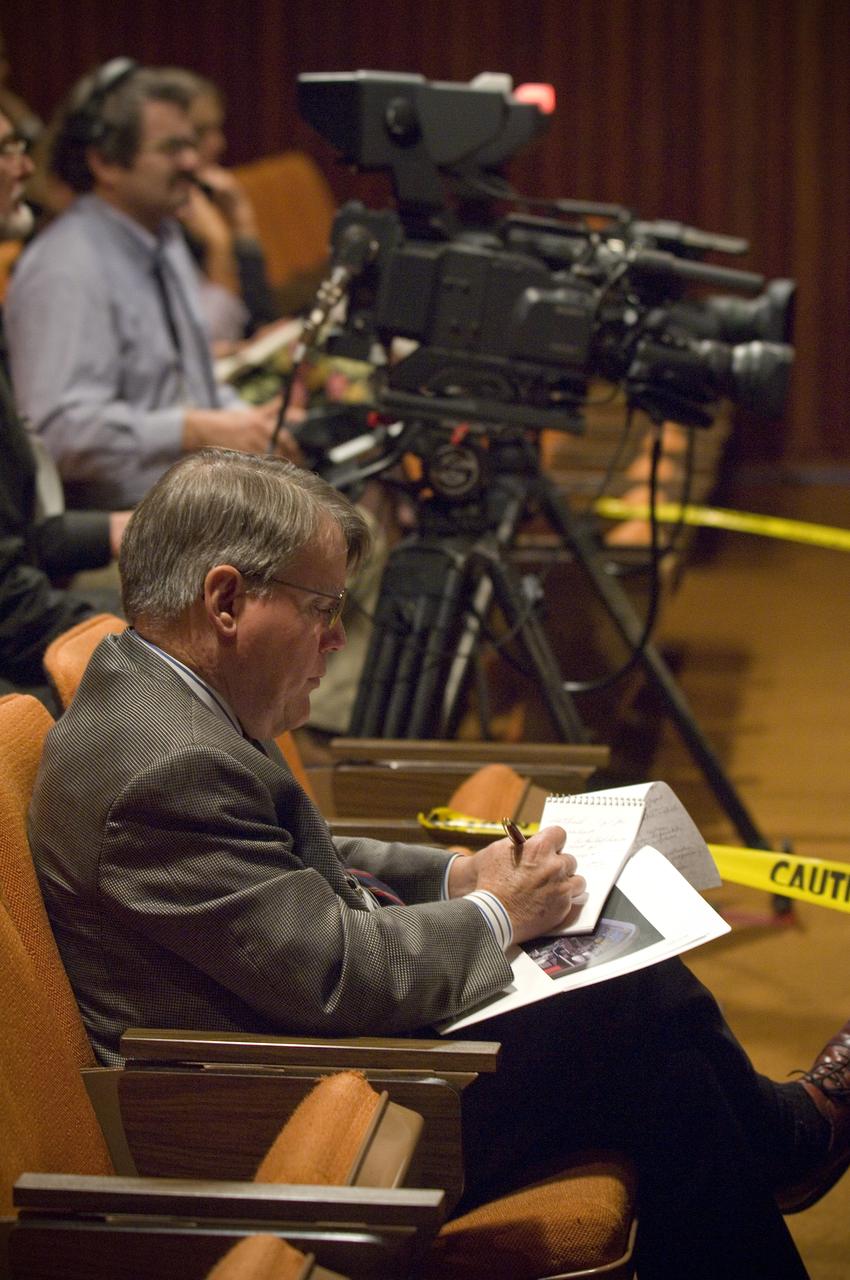
NASA Officials gather at Ames Research Center to discuss Spaceship development progress. Constellation is developing the Orion spacecraft and Ares rockets to support an American return to the moon by 2020.

iss071e257004 (July 2, 2024) --- The American flag is pictured inside the window of the Boeing Starliner spacecraft that carried NASA astronauts Butch Wilmore and Suni Williams to the International Space Station on NASA's Boeing Crew Flight Test.
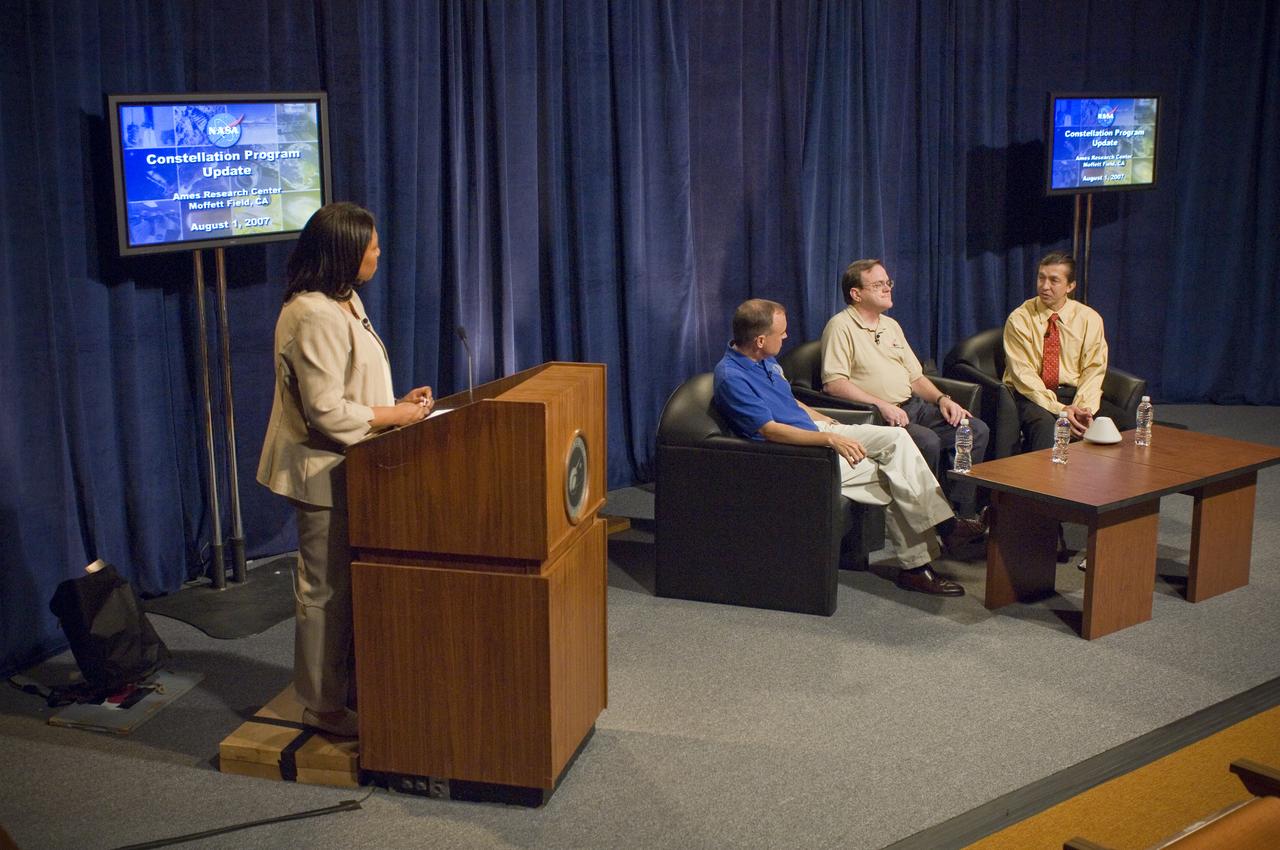
NASA Officials gather at Ames Research Center to discuss Spaceship development progress. Constellation is developing the Orion spacecraft and Ares rockets to support an American return to the moon by 2020.
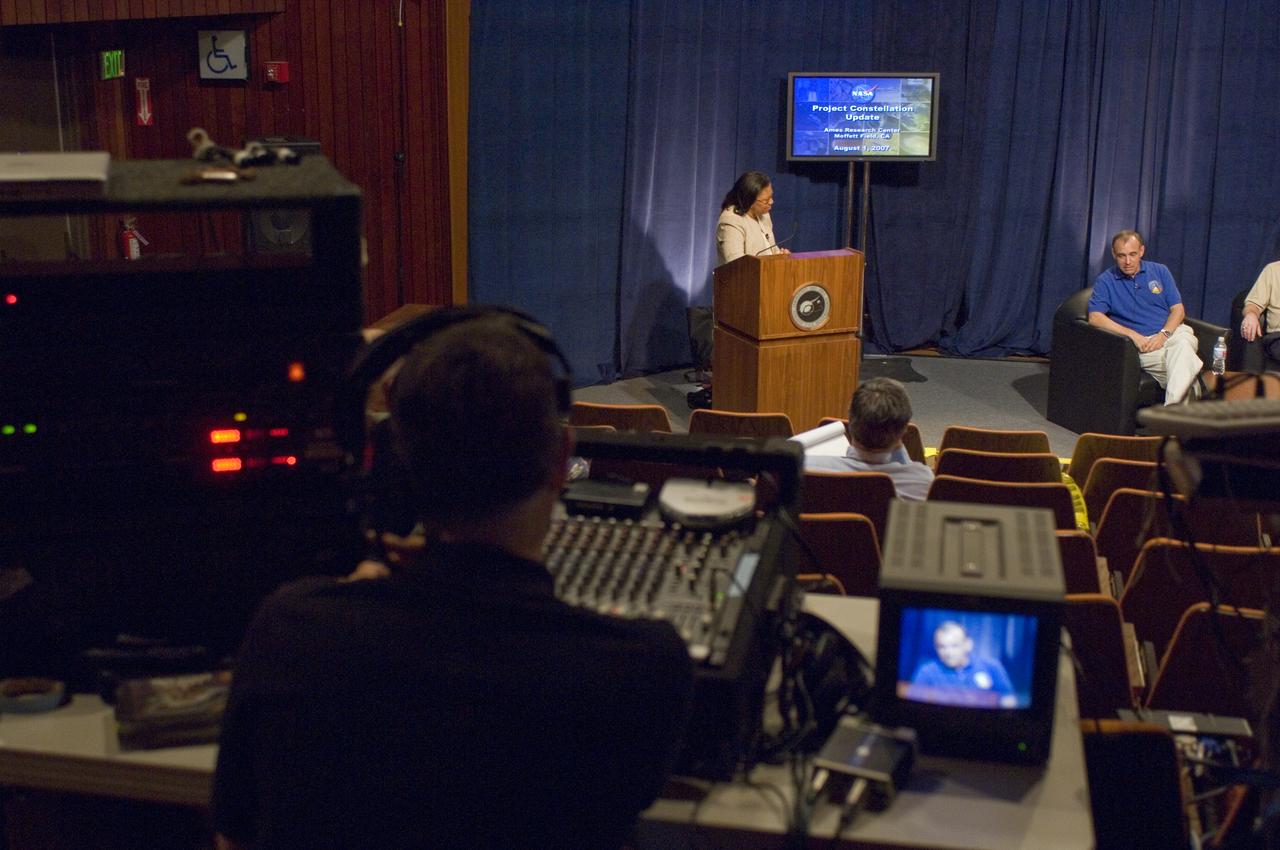
NASA Officials gather at Ames Research Center to discuss Spaceship development progress. Constellation is developing the Orion spacecraft and Ares rockets to support an American return to the moon by 2020.
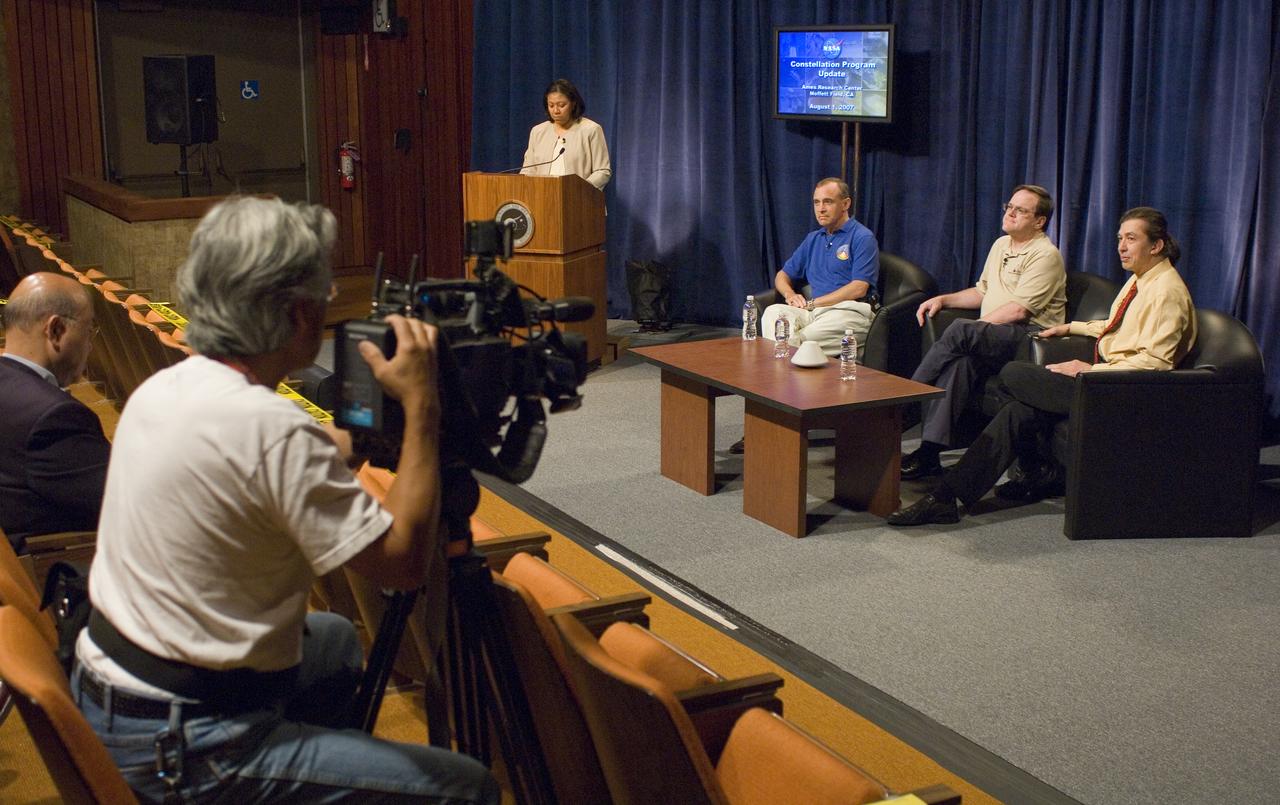
NASA Officials gather at Ames Research Center to discuss Spaceship development progress. Constellation is developing the Orion spacecraft and Ares rockets to support an American return to the moon by 2020.
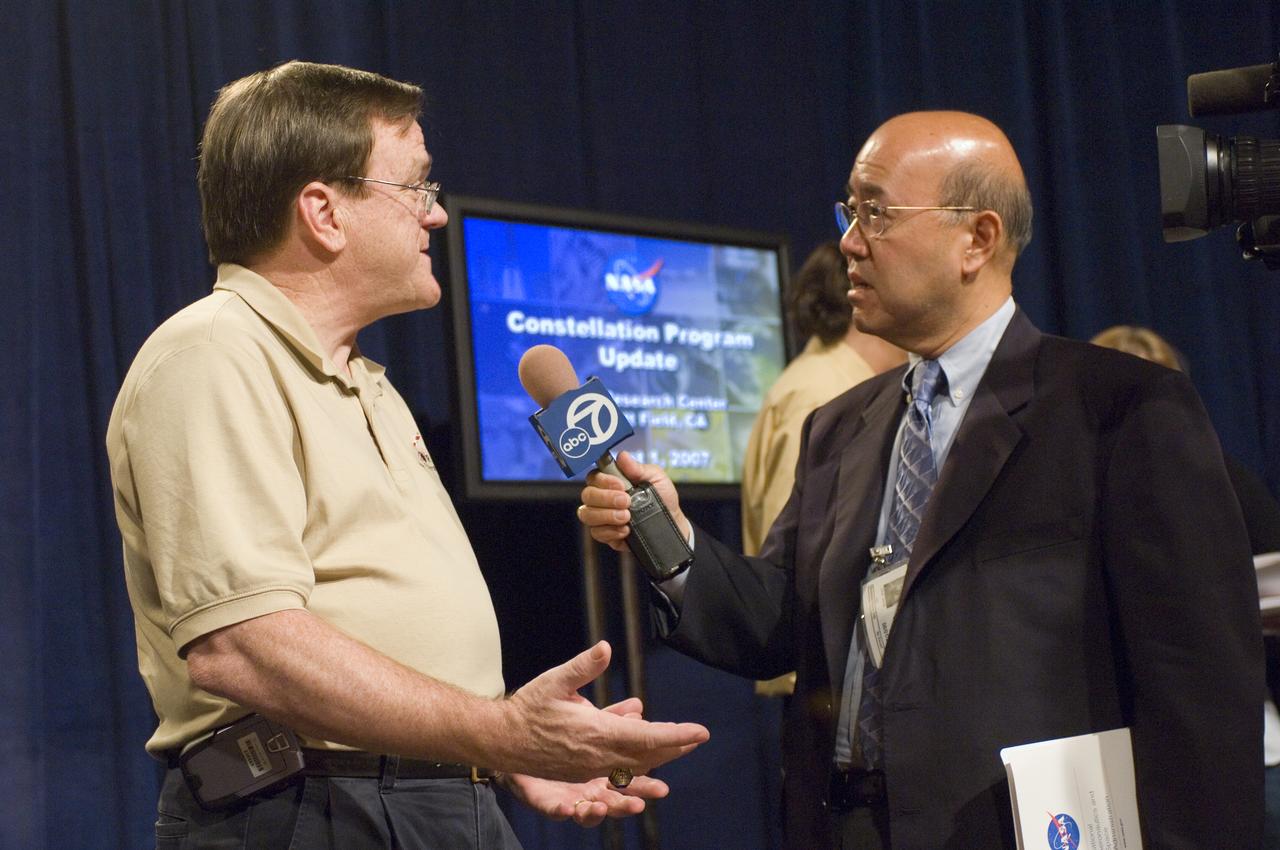
NASA Officials gather at Ames Research Center to discuss Spaceship development progress. Constellation is developing the Orion spacecraft and Ares rockets to support an American return to the moon by 2020. Speaker; Skip Hatfield, JSC Orion Project Manager
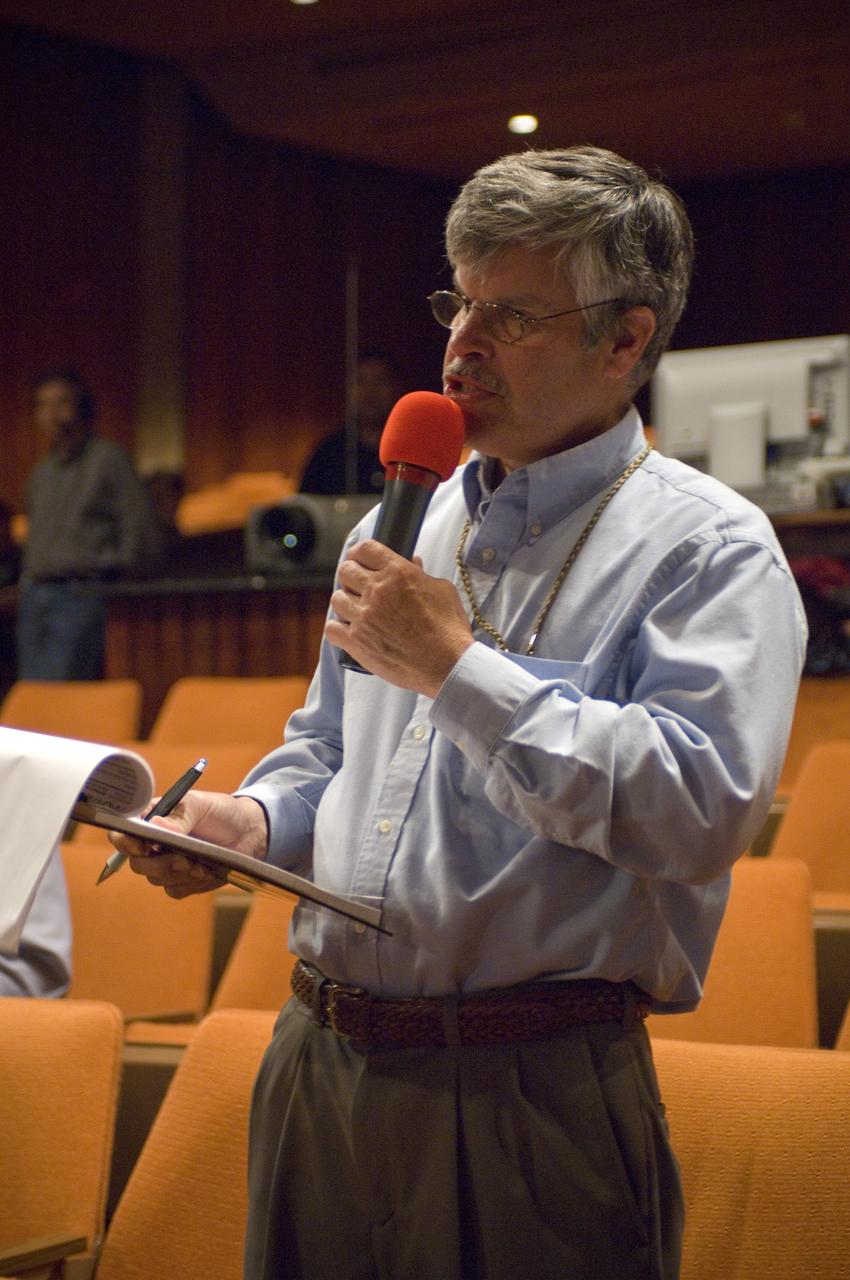
NASA Officials gather at Ames Research Center to discuss Spaceship development progress. Constellation is developing the Orion spacecraft and Ares rockets to support an American return to the moon by 2020. (with Mike Mewhinney, Ames PAO (news chief) Officer)

NASA Officials gather at Ames Research Center to discuss Spaceship development progress. Constellation is developing the Orion spacecraft and Ares rockets to support an American return to the moon by 2020.
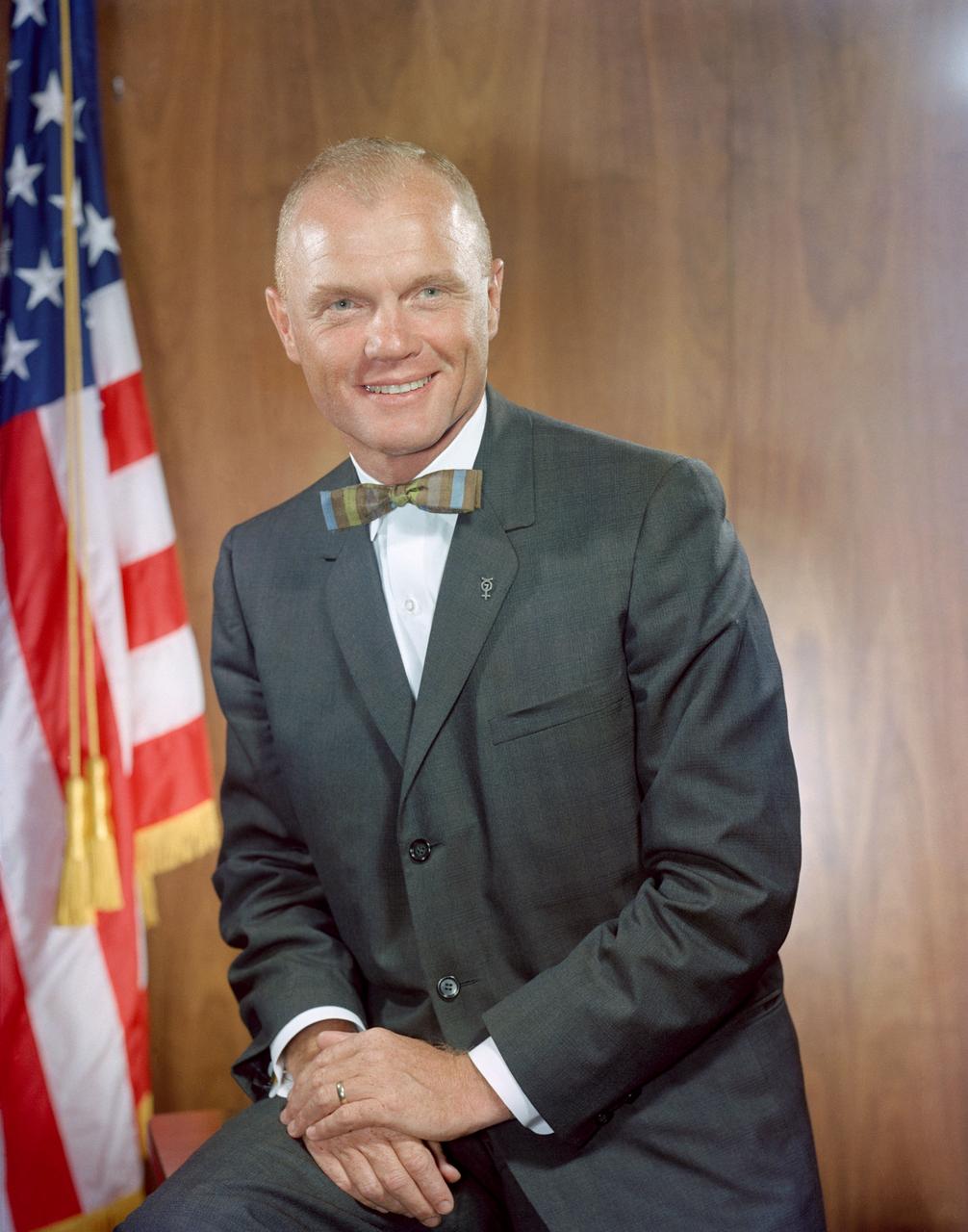
S62-05540 (December 1962) --- Official portrait of astronaut John H. Glenn Jr., the first American to orbit Earth in a Project Mercury spacecraft. Photo credit: NASA
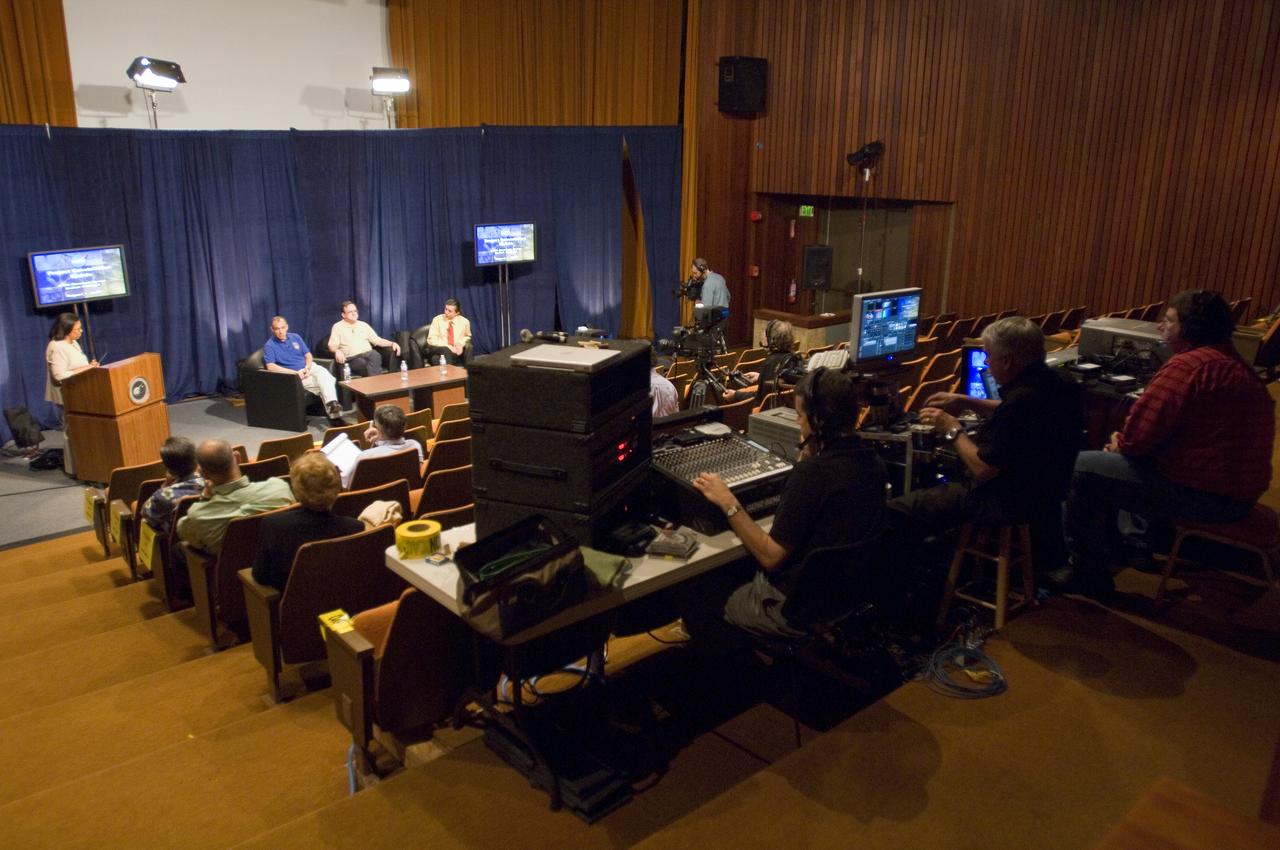
NASA Officials gather at Ames Research Center to discuss Spaceship development progress. Constellation is developing the Orion spacecraft and Ares rockets to support an American return to the moon by 2020.

VANDENBERG AFB, California – An American flag flies at Space Launch Complex-2 at Vandenberg AFB, California - the launch site for NASA's SMAP spacecraft. For more, go to www.nasa.gov/smap Photo credit: NASA/Randy Beaudoin
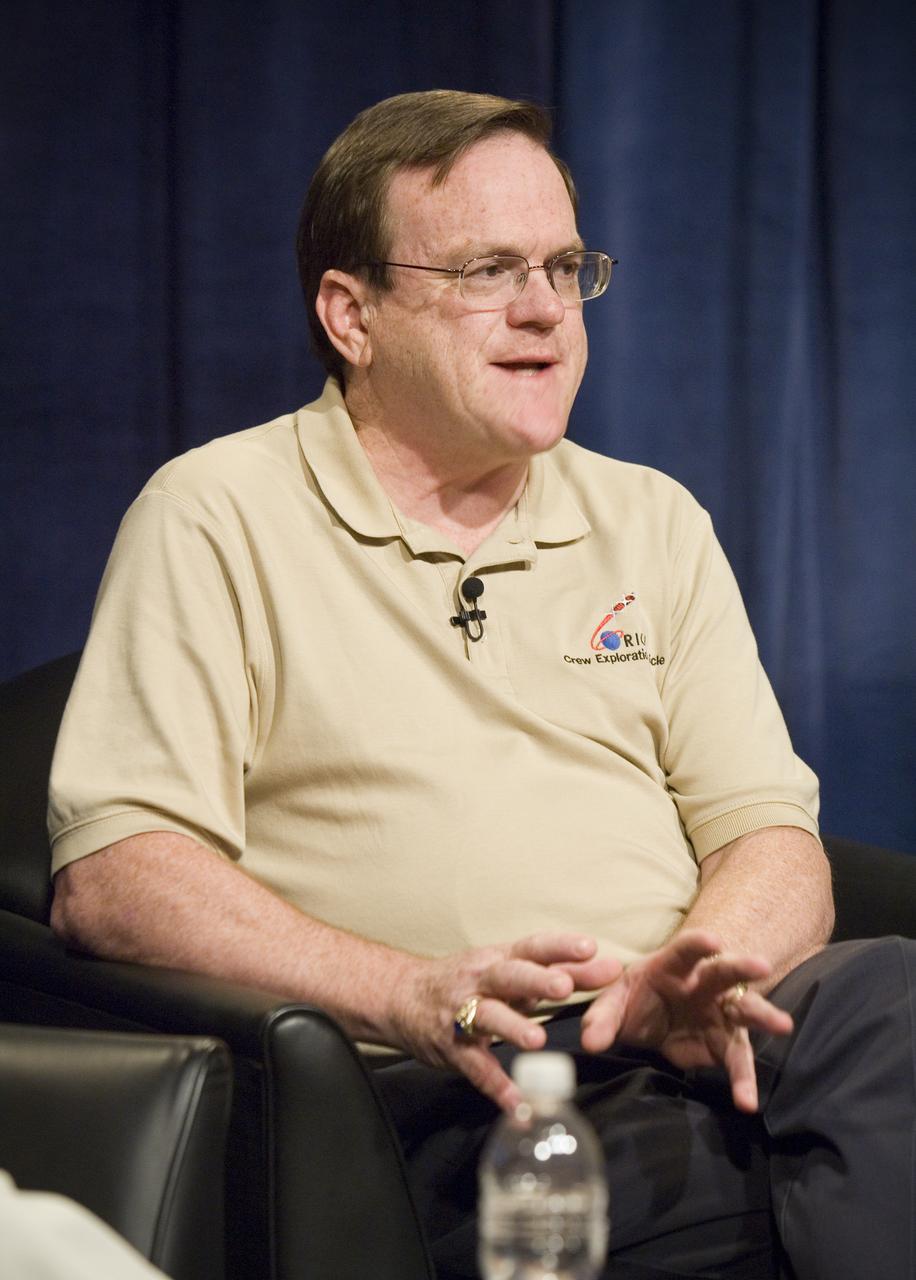
NASA Officials gather at Ames Research Center to discuss Spaceship development progress. Constellation is developing the Orion spacecraft and Ares rockets to support an American return to the moon by 2020. Speaker; Skip Hatfield, JSC Orion Project Manager
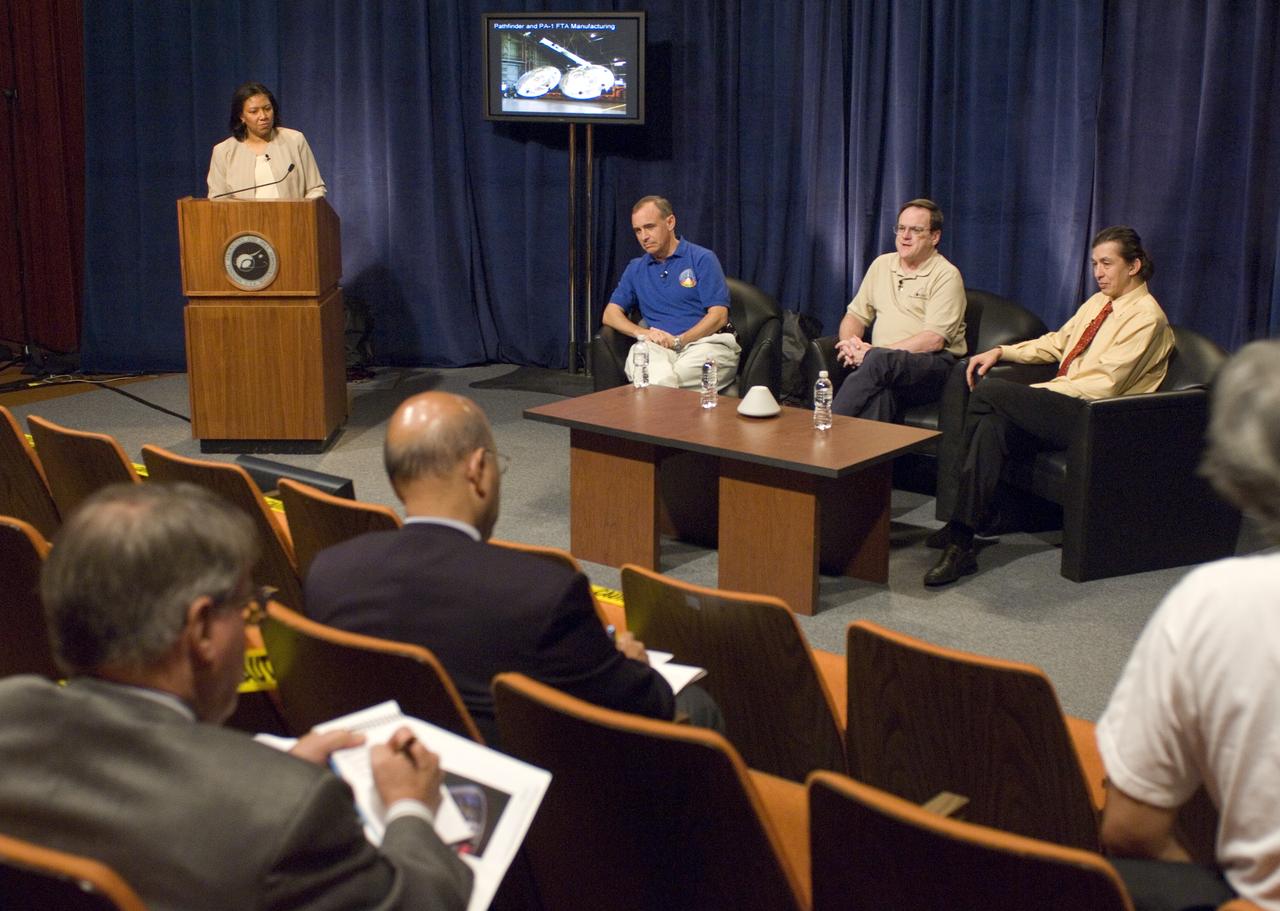
NASA Officials gather at Ames Research Center to discuss Spaceship development progress. Constellation is developing the Orion spacecraft and Ares rockets to support an American return to the moon by 2020.
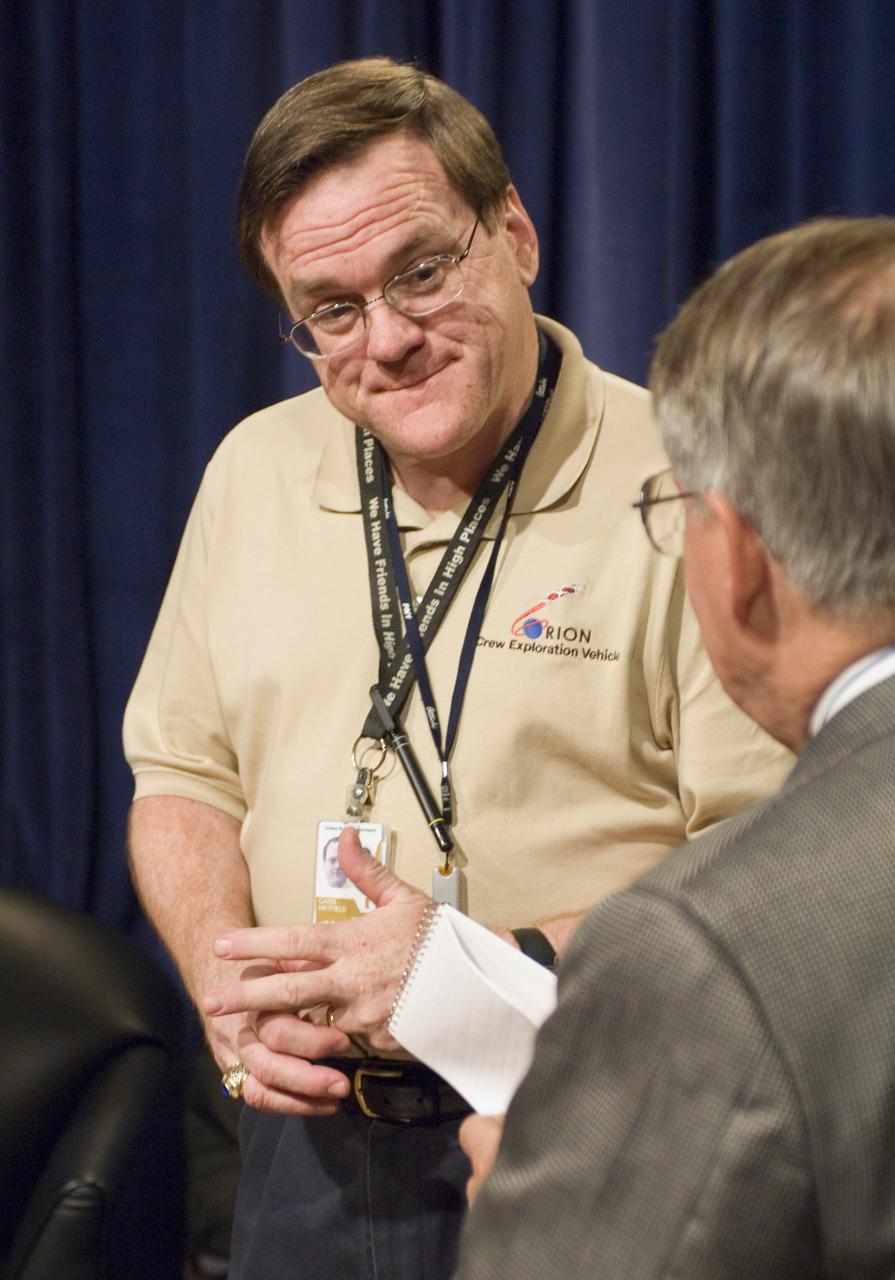
NASA Officials gather at Ames Research Center to discuss Spaceship development progress. Constellation is developing the Orion spacecraft and Ares rockets to support an American return to the moon by 2020. Speaker; Skip Hatfield, JSC Orion Project Manager
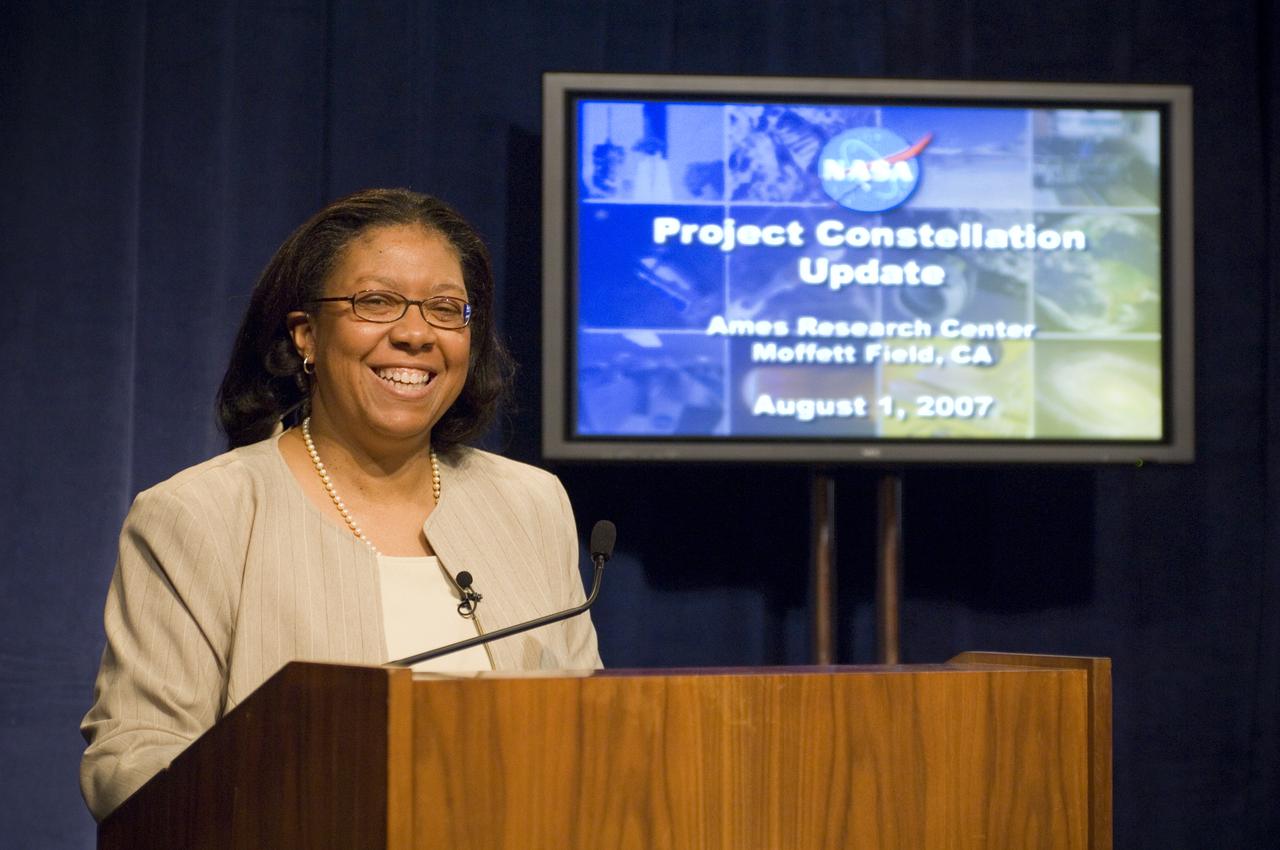
NASA Officials gather at Ames Research Center to discuss Spaceship development progress. Constellation is developing the Orion spacecraft and Ares rockets to support an American return to the moon by 2020. Dolores Beasley, Director NASA Ames PAO
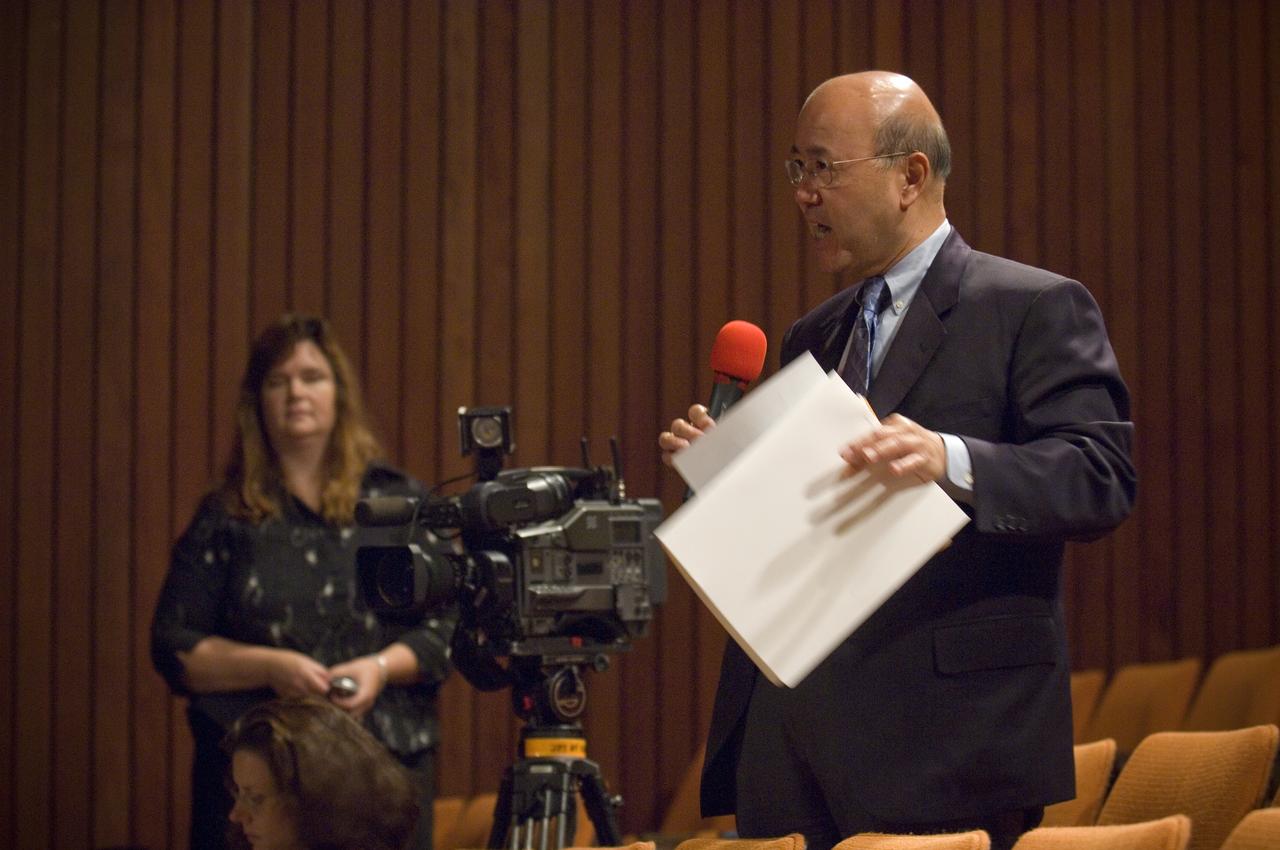
NASA Officials gather at Ames Research Center to discuss Spaceship development progress. Constellation is developing the Orion spacecraft and Ares rockets to support an American return to the moon by 2020.
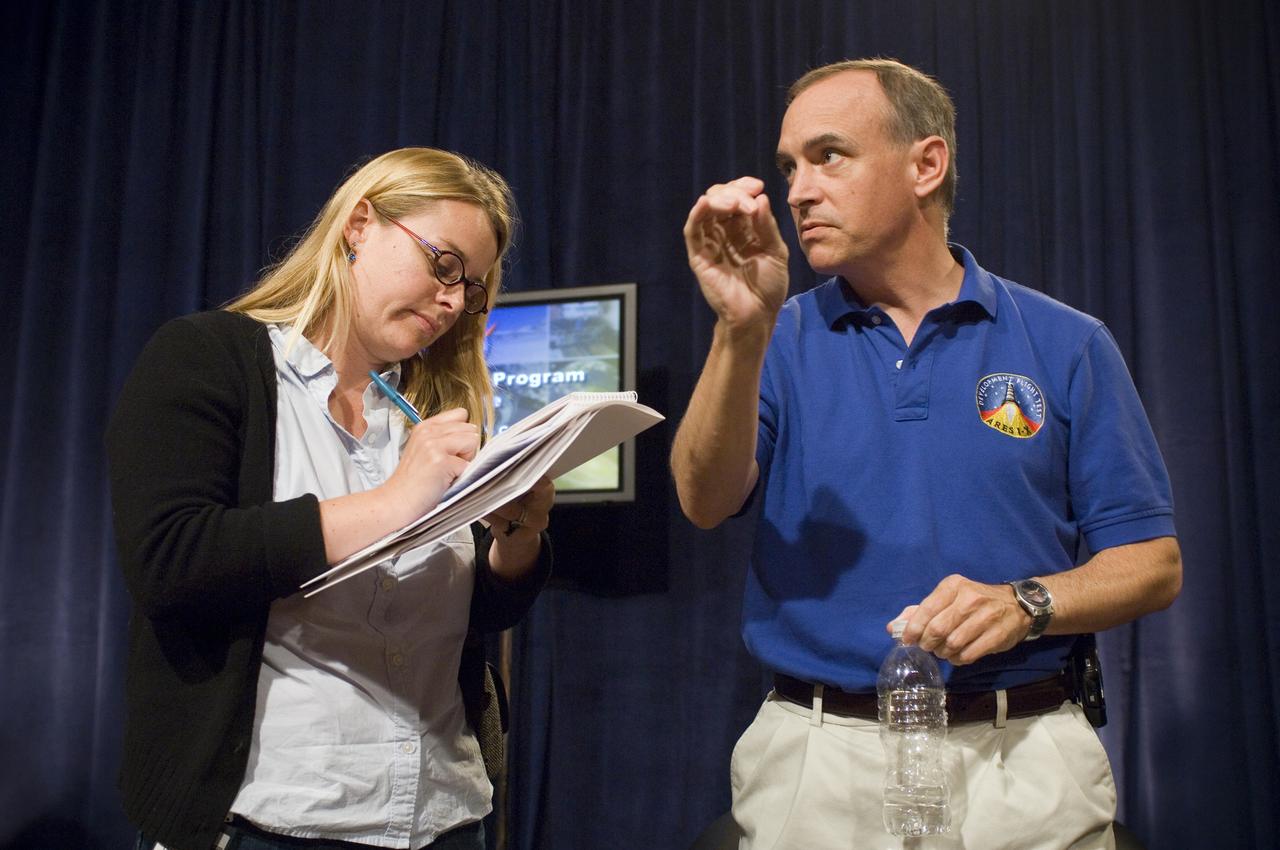
NASA Officials gather at Ames Research Center to discuss Spaceship development progress. Constellation is developing the Orion spacecraft and Ares rockets to support an American return to the moon by 2020. Speaker Jeff Hanley, JSC Constellation program manager
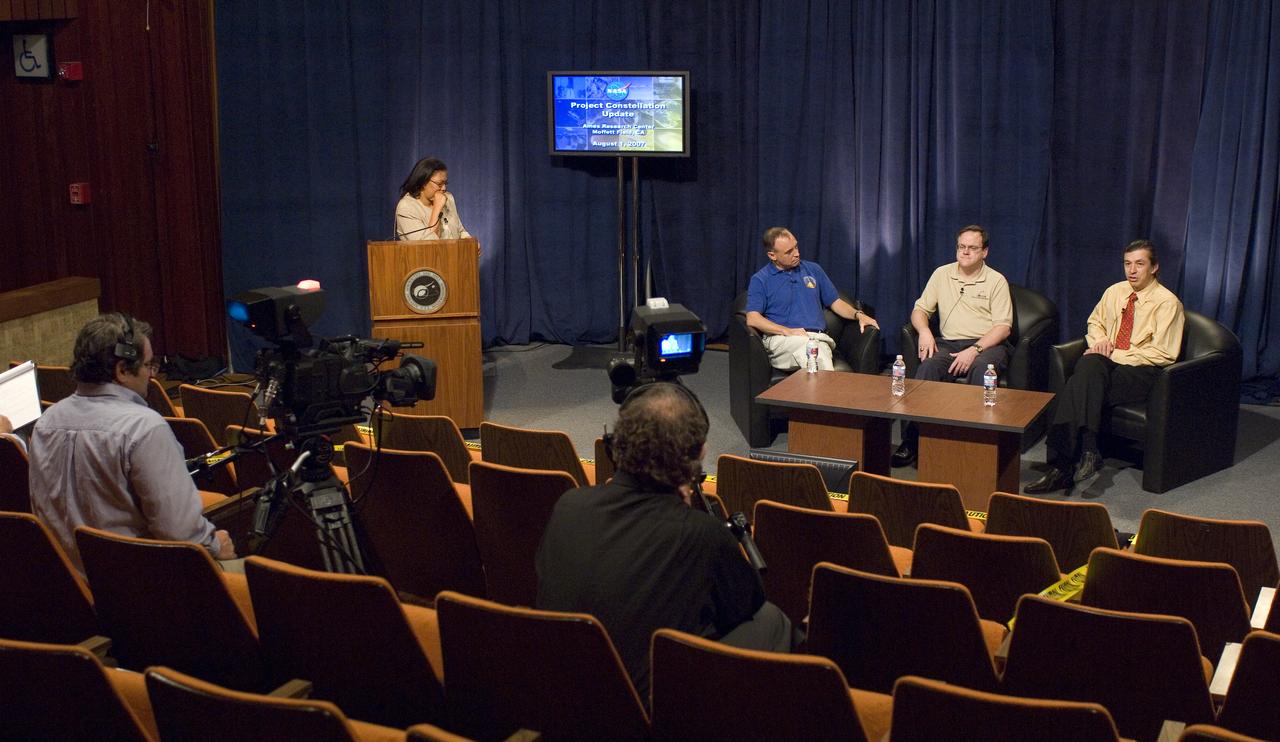
NASA Officials gather at Ames Research Center to discuss Spaceship development progress. Constellation is developing the Orion spacecraft and Ares rockets to support an American return to the moon by 2020.
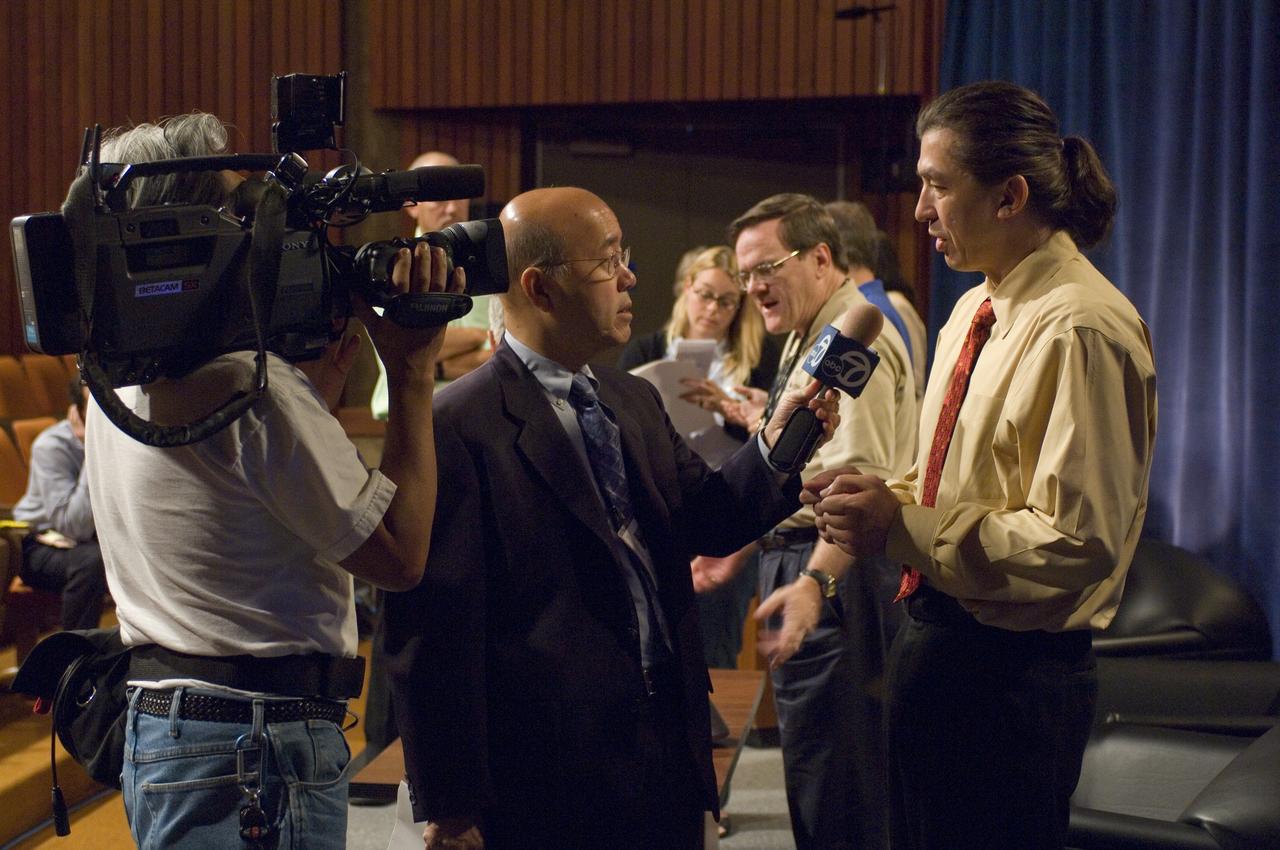
NASA Officials gather at Ames Research Center to discuss Spaceship development progress. Constellation is developing the Orion spacecraft and Ares rockets to support an American return to the moon by 2020.
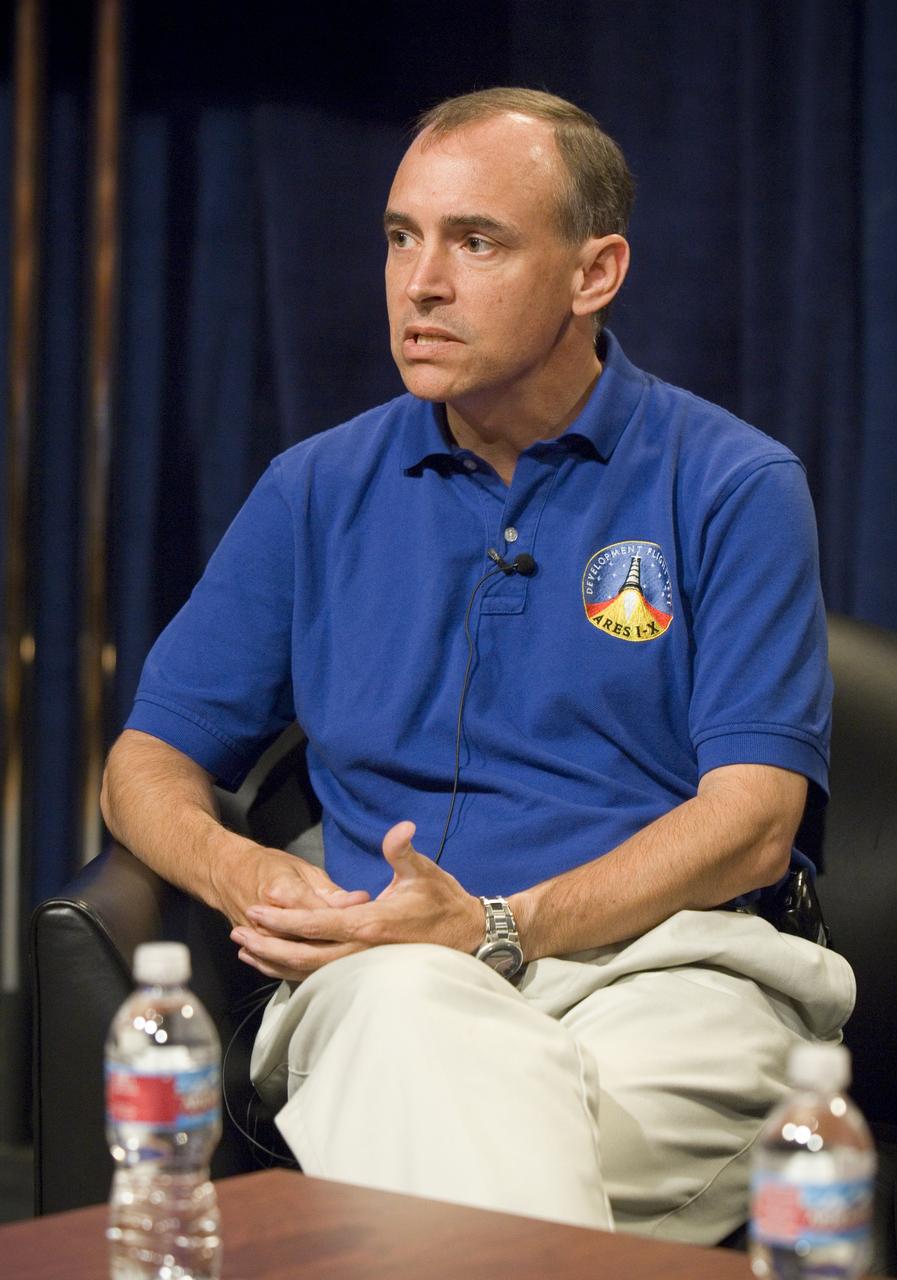
NASA Officials gather at Ames Research Center to discuss Spaceship development progress. Constellation is developing the Orion spacecraft and Ares rockets to support an American return to the moon by 2020. Speaker Jeff Hanley, JSC Constellation program manager
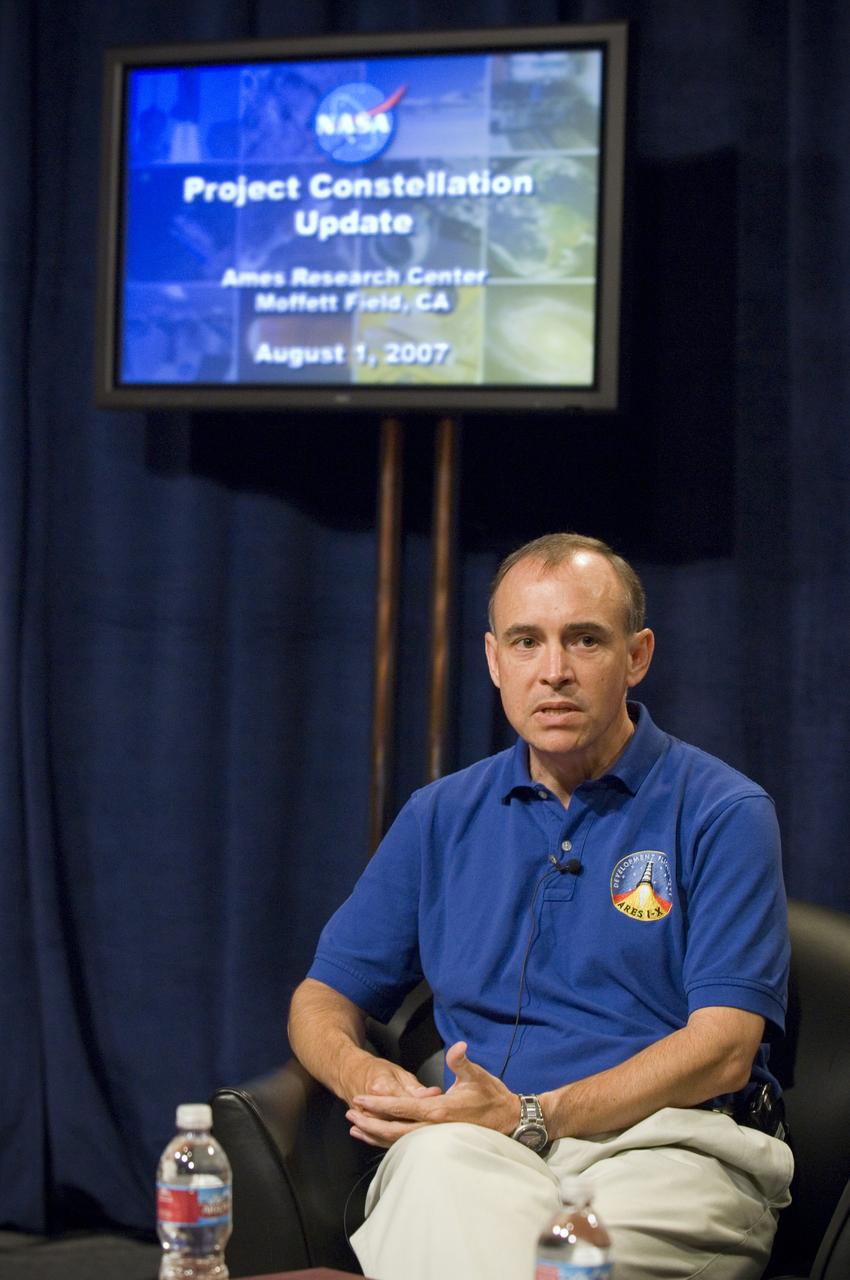
NASA Officials gather at Ames Research Center to discuss Spaceship development progress. Constellation is developing the Orion spacecraft and Ares rockets to support an American return to the moon by 2020. Speaker Jeff Hanley, JSC Constellation program manager
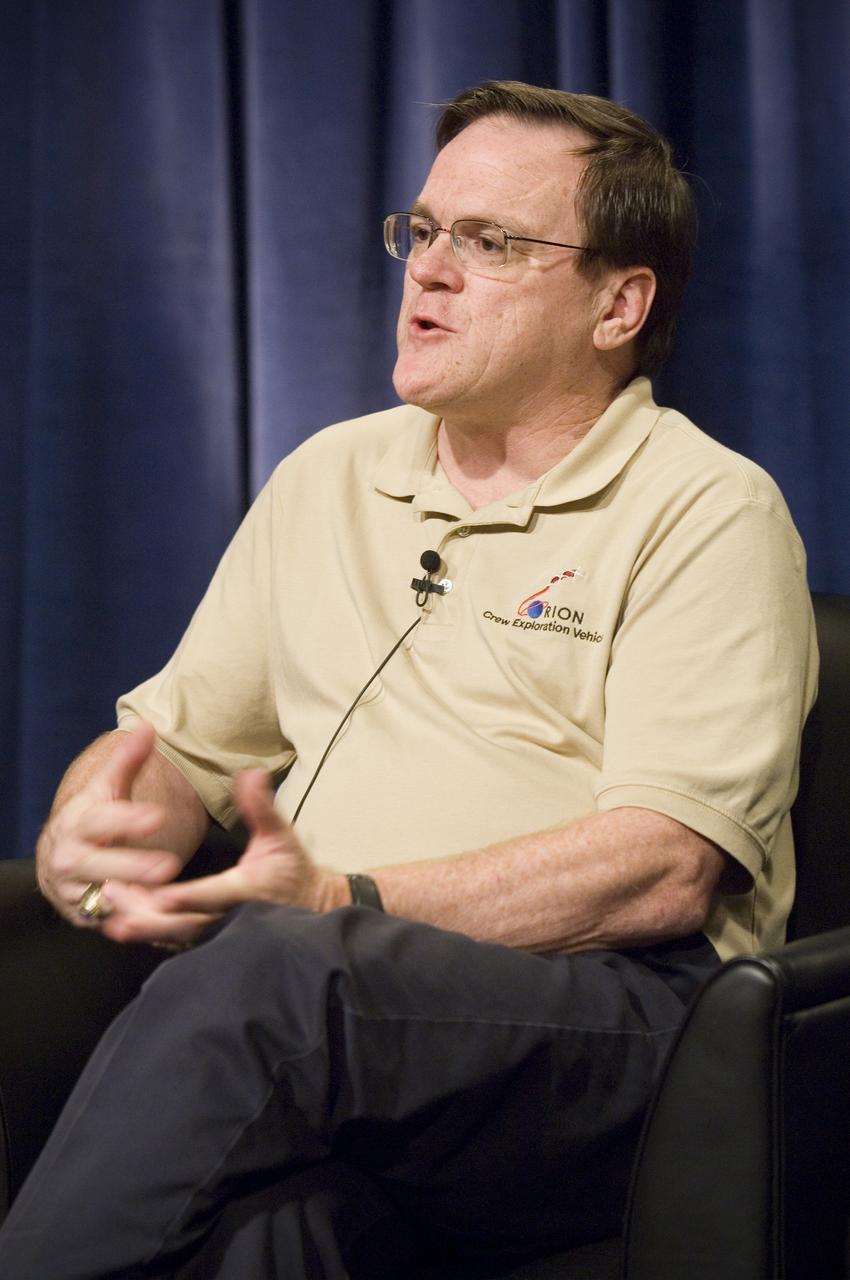
NASA Officials gather at Ames Research Center to discuss Spaceship development progress. Constellation is developing the Orion spacecraft and Ares rockets to support an American return to the moon by 2020. Speaker; Skip Hatfield, JSC Orion Project Manager

NASA Officials gather at Ames Research Center to discuss Spaceship development progress. Constellation is developing the Orion spacecraft and Ares rockets to support an American return to the moon by 2020. Dolores Beasley, Director NASA Ames PAO

NASA Officials gather at Ames Research Center to discuss Spaceship development progress. Constellation is developing the Orion spacecraft and Ares rockets to support an American return to the moon by 2020.
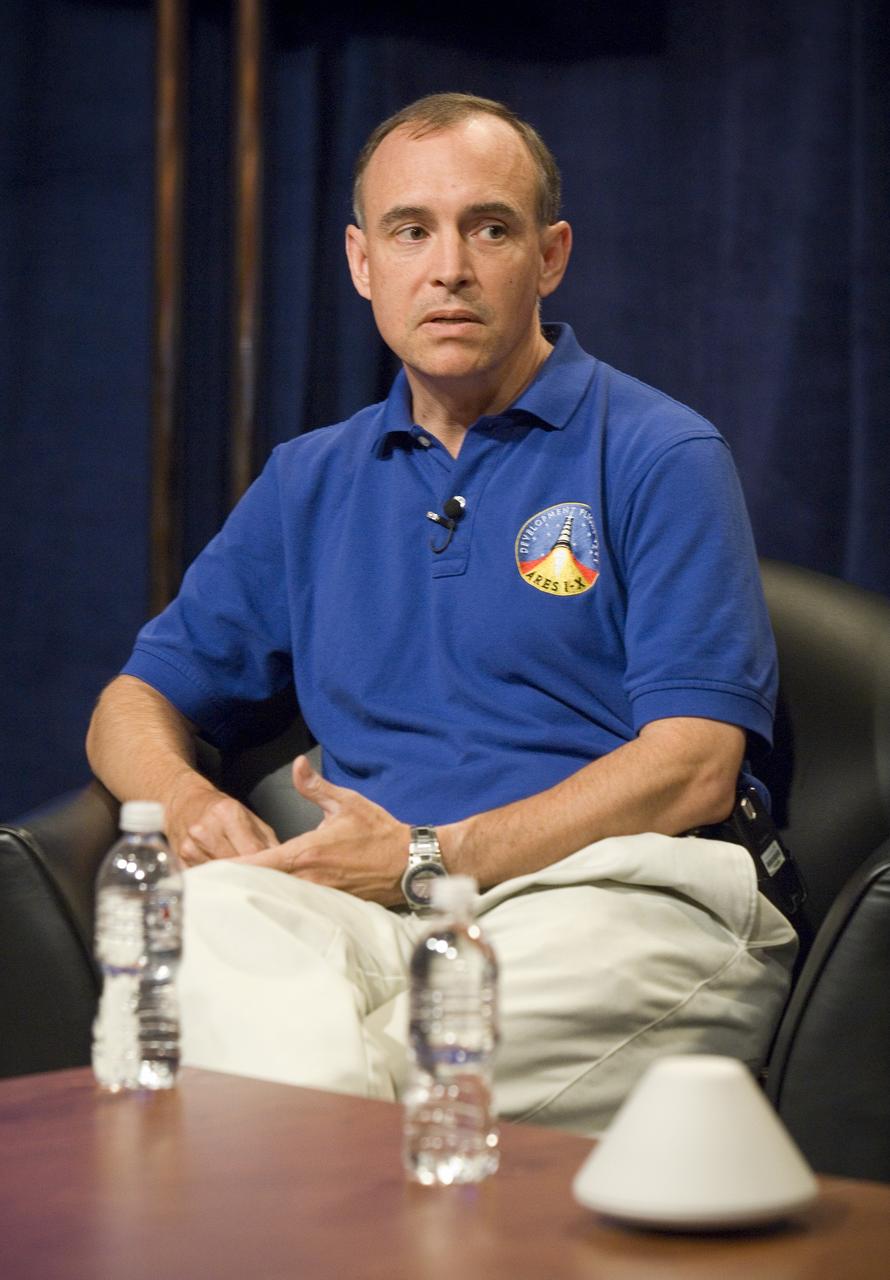
NASA Officials gather at Ames Research Center to discuss Spaceship development progress. Constellation is developing the Orion spacecraft and Ares rockets to support an American return to the moon by 2020. Speaker Jeff Hanley, JSC Constellation program manager
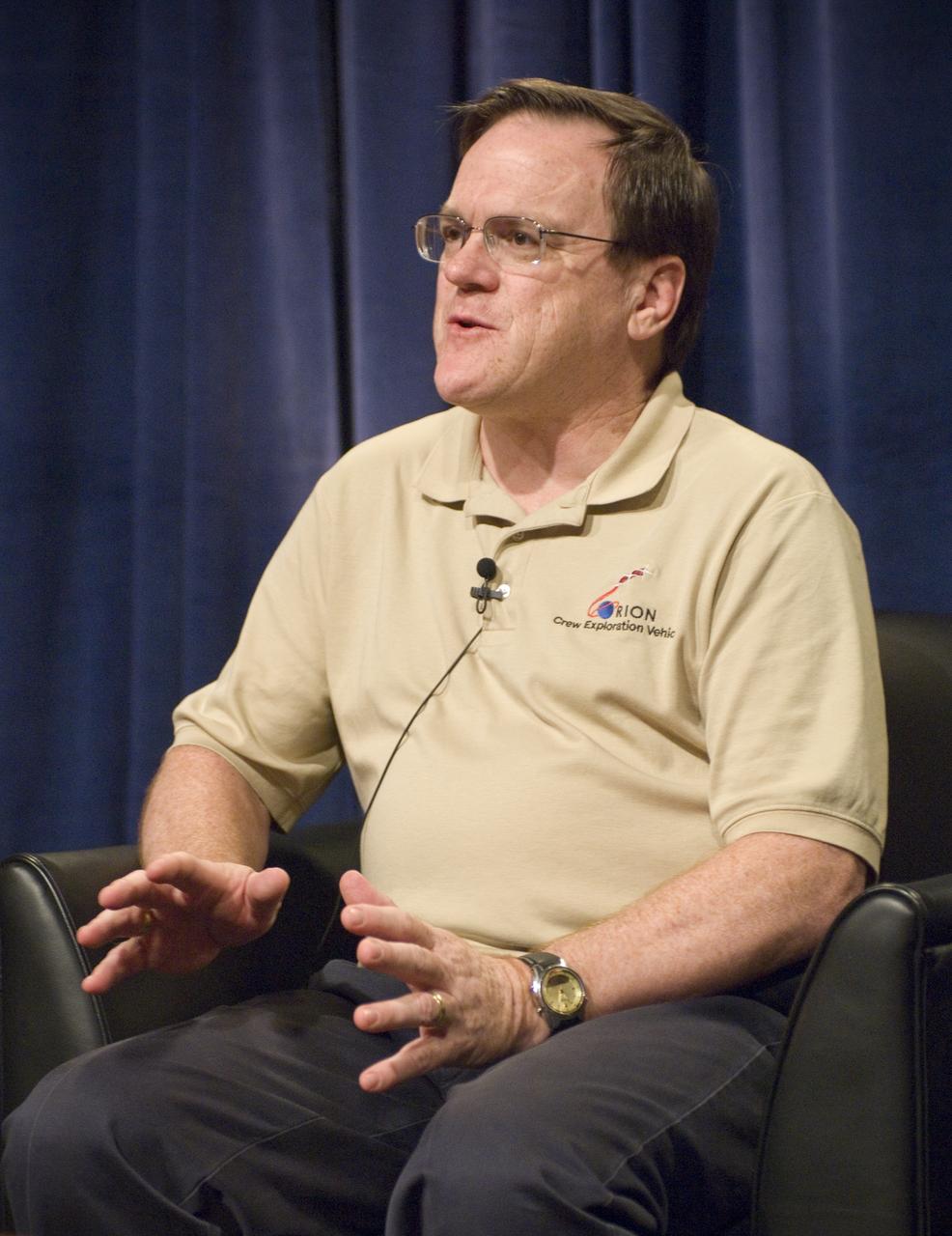
NASA Officials gather at Ames Research Center to discuss Spaceship development progress. Constellation is developing the Orion spacecraft and Ares rockets to support an American return to the moon by 2020.
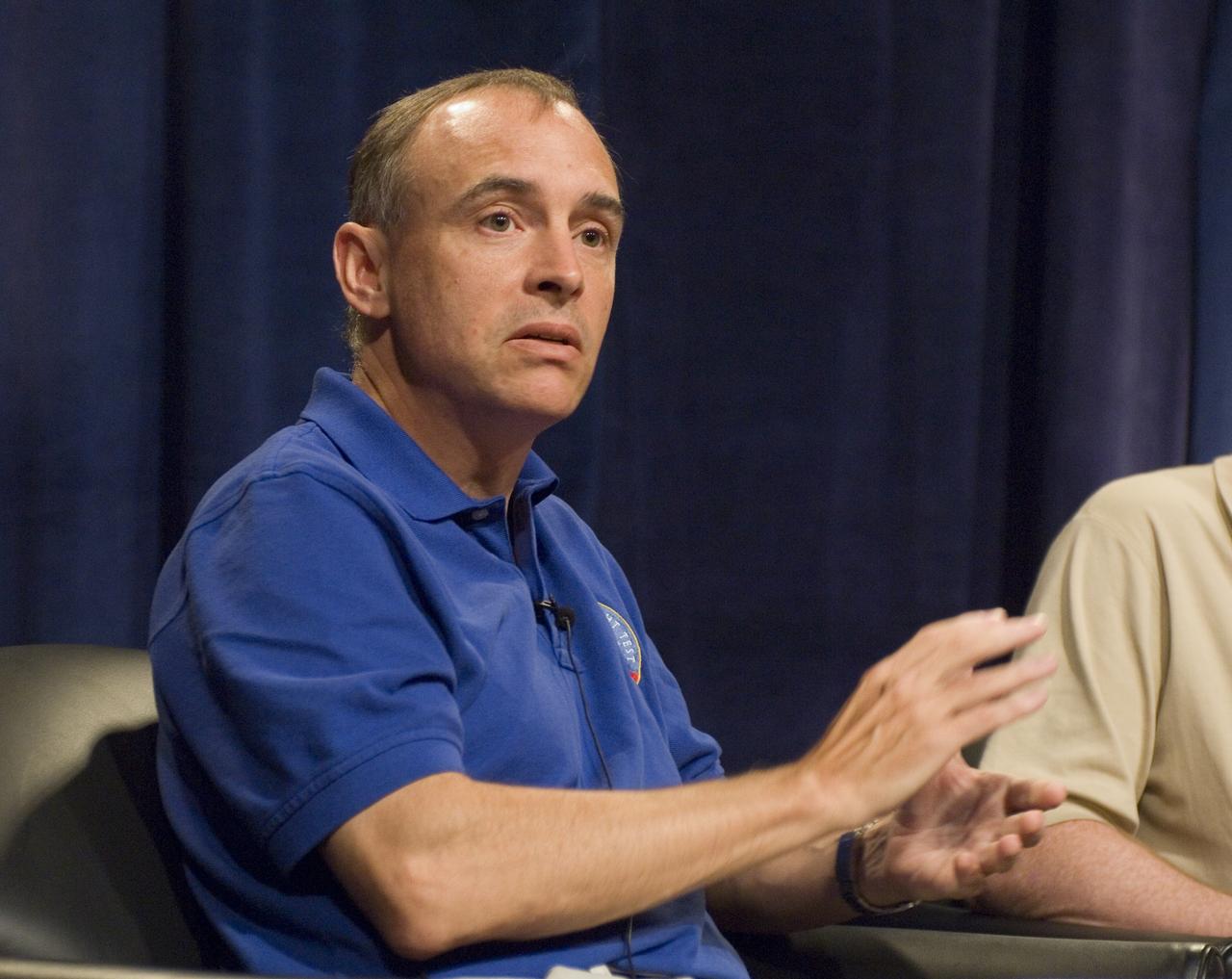
NASA Officials gather at Ames Research Center to discuss Spaceship development progress. Constellation is developing the Orion spacecraft and Ares rockets to support an American return to the moon by 2020. Speaker Jeff Hanley, JSC Constellation program manager

NASA Officials gather at Ames Research Center to discuss Spaceship development progress. Constellation is developing the Orion spacecraft and Ares rockets to support an American return to the moon by 2020.
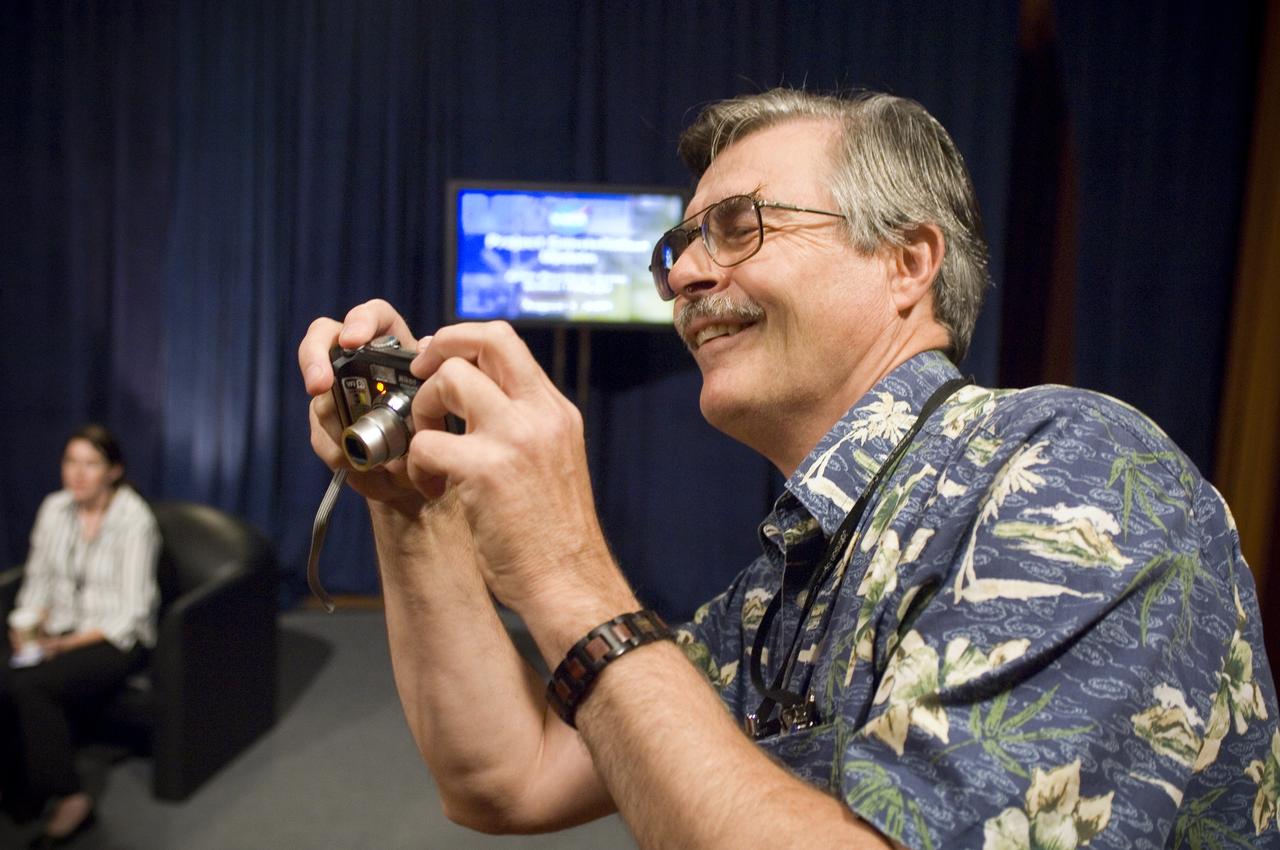
NASA Officials gather at Ames Research Center to discuss Spaceship development progress. Constellation is developing the Orion spacecraft and Ares rockets to support an American return to the moon by 2020. with John Bluck, NASA Ames PAO officer
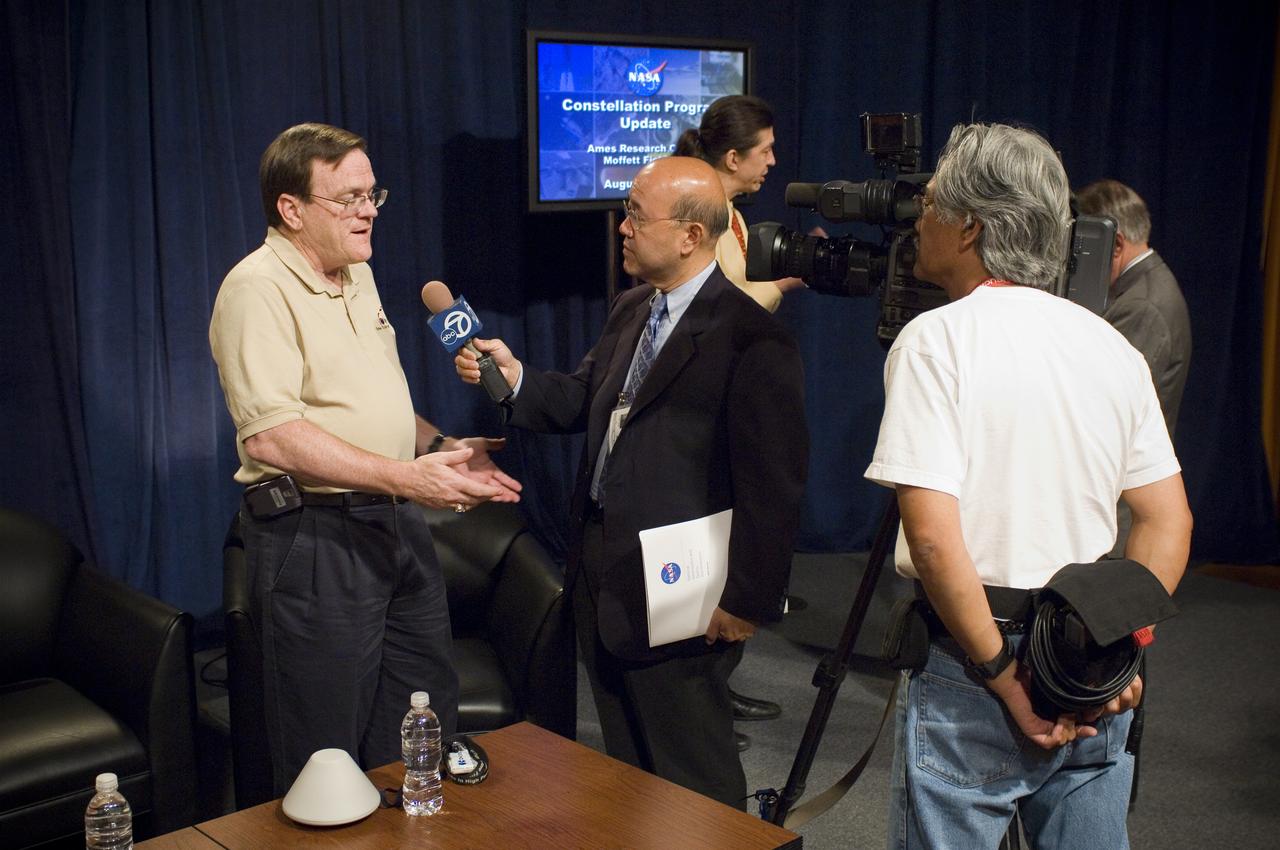
NASA Officials gather at Ames Research Center to discuss Spaceship development progress. Constellation is developing the Orion spacecraft and Ares rockets to support an American return to the moon by 2020. Speaker; Skip Hatfield, JSC Orion Project Manager
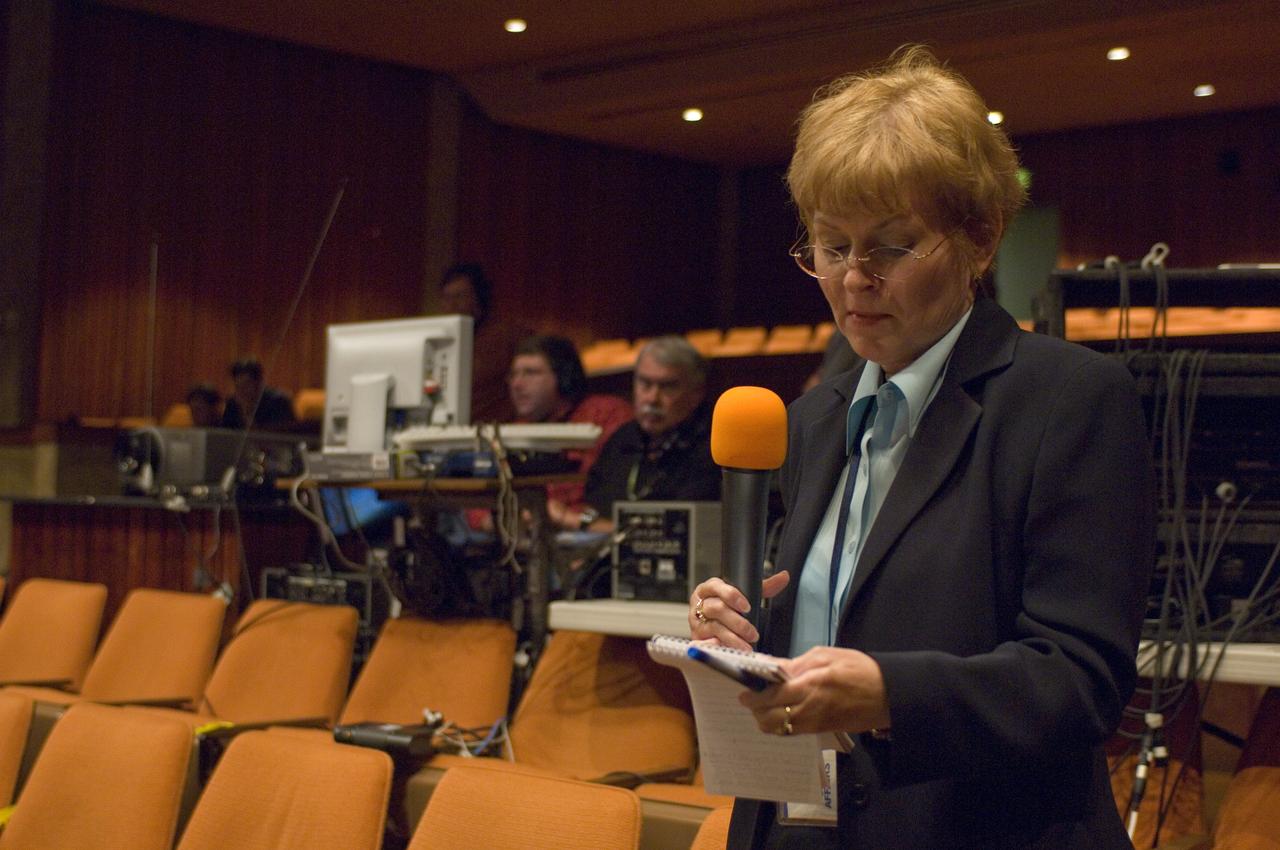
NASA Officials gather at Ames Research Center to discuss Spaceship development progress. Constellation is developing the Orion spacecraft and Ares rockets to support an American return to the moon by 2020. (with Ruth Marlaire)
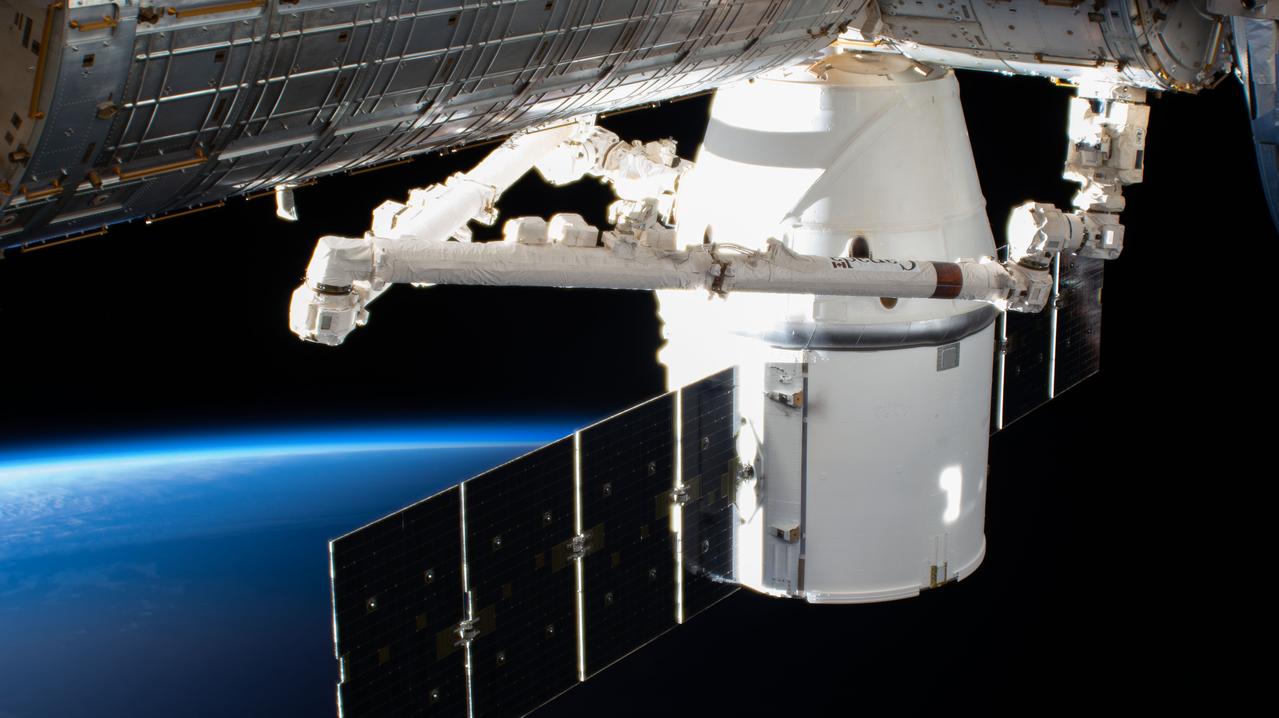
iss062e087409 (March 9, 2020) --- The SpaceX Dragon resupply ship is pictured attached to the International Space Station's Harmony module as both spacecraft were soaring into an orbital sunrise 264 miles above the American state of Nevada.
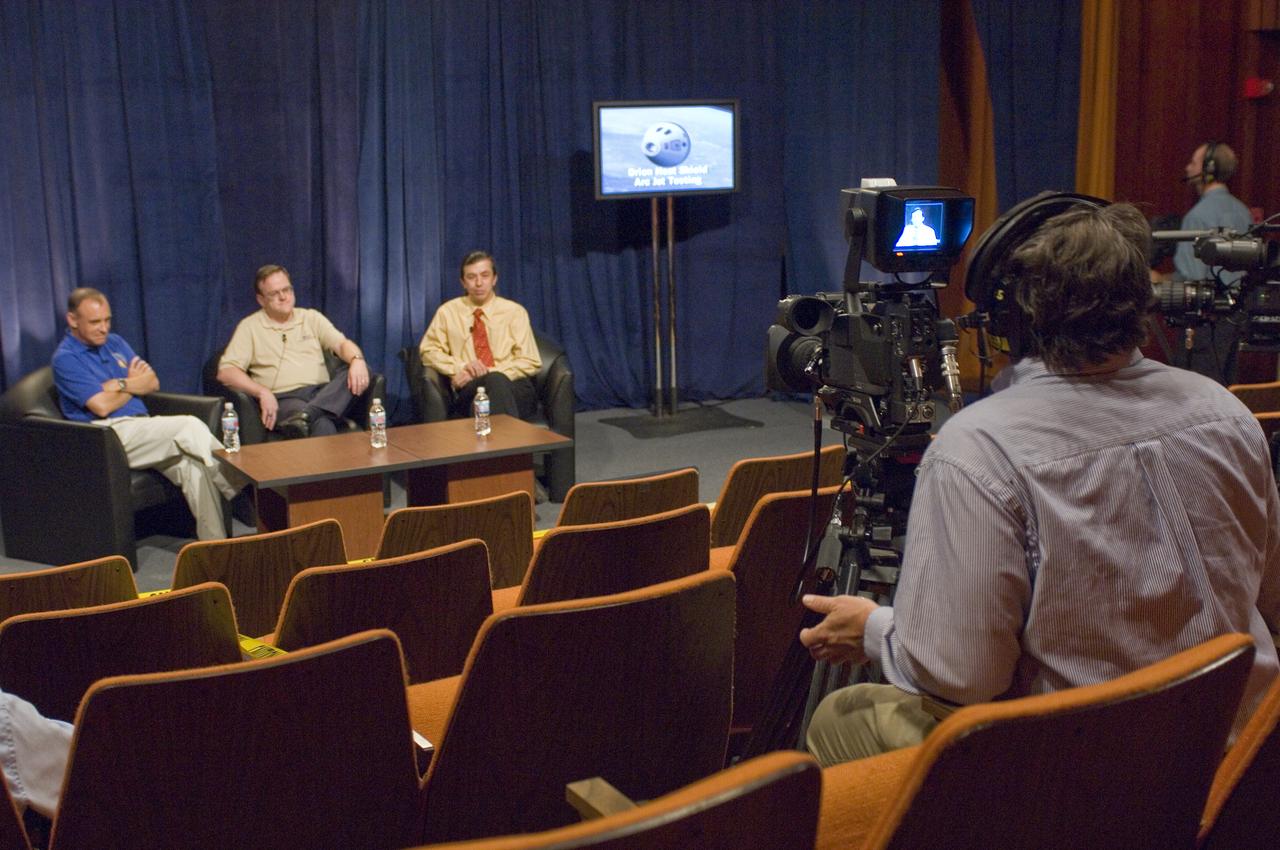
NASA Officials gather at Ames Research Center to discuss Spaceship development progress. Constellation is developing the Orion spacecraft and Ares rockets to support an American return to the moon by 2020.
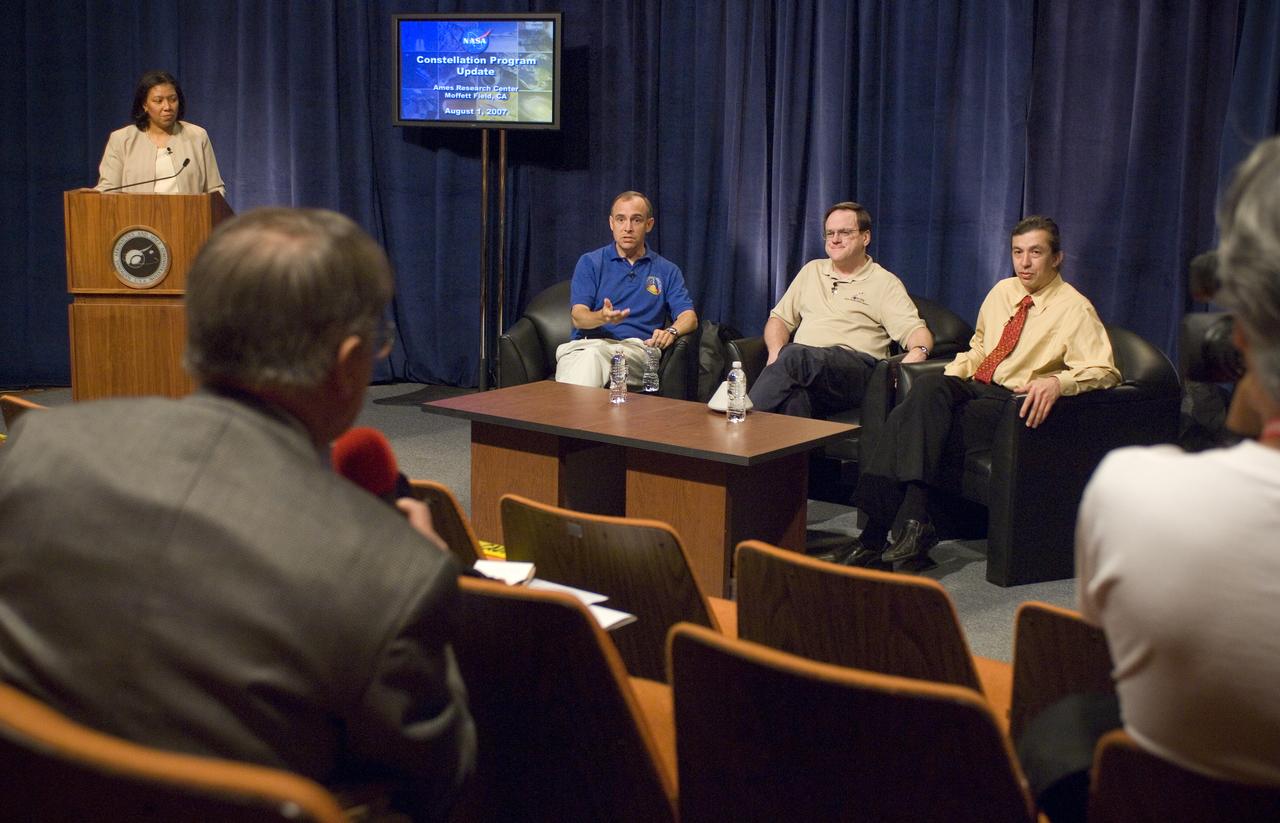
NASA Officials gather at Ames Research Center to discuss Spaceship development progress. Constellation is developing the Orion spacecraft and Ares rockets to support an American return to the moon by 2020.

NASA Officials gather at Ames Research Center to discuss Spaceship development progress. Constellation is developing the Orion spacecraft and Ares rockets to support an American return to the moon by 2020. Speaker; Skip Hatfield, JSC Orion Project Manager
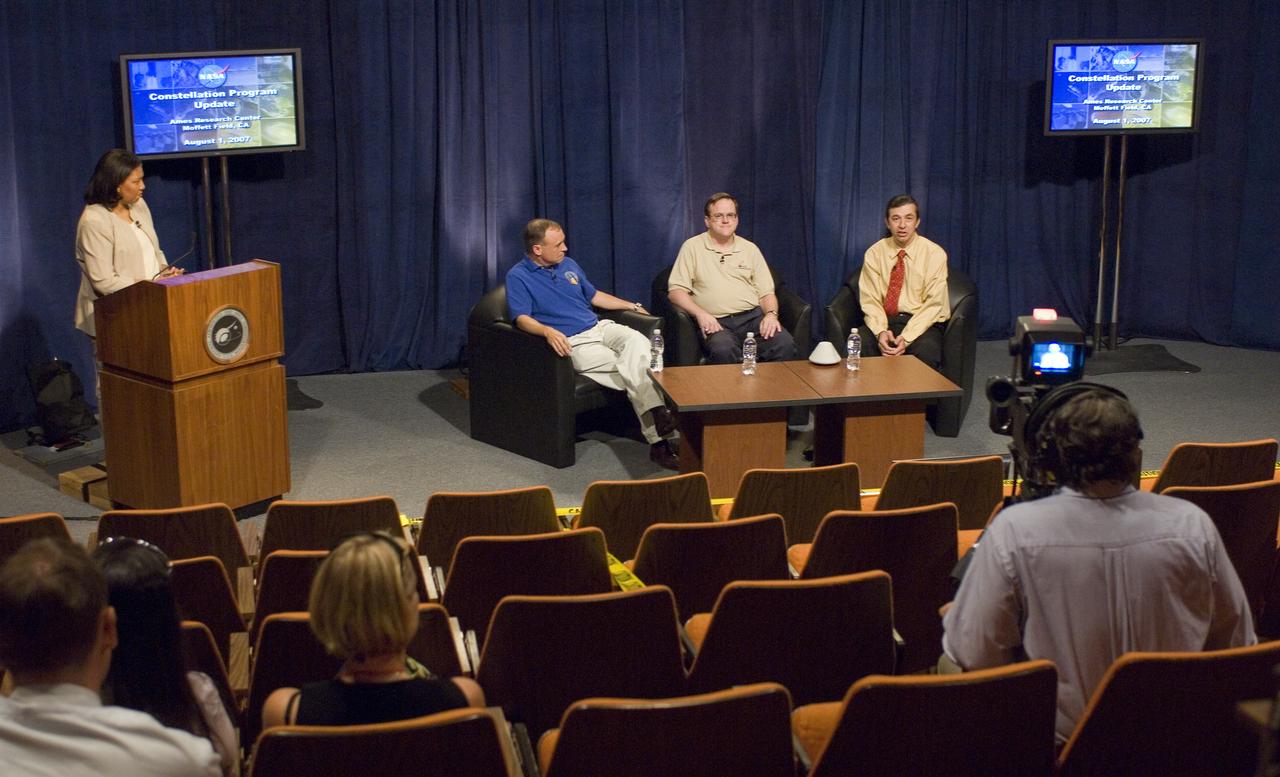
NASA Officials gather at Ames Research Center to discuss Spaceship development progress. Constellation is developing the Orion spacecraft and Ares rockets to support an American return to the moon by 2020.
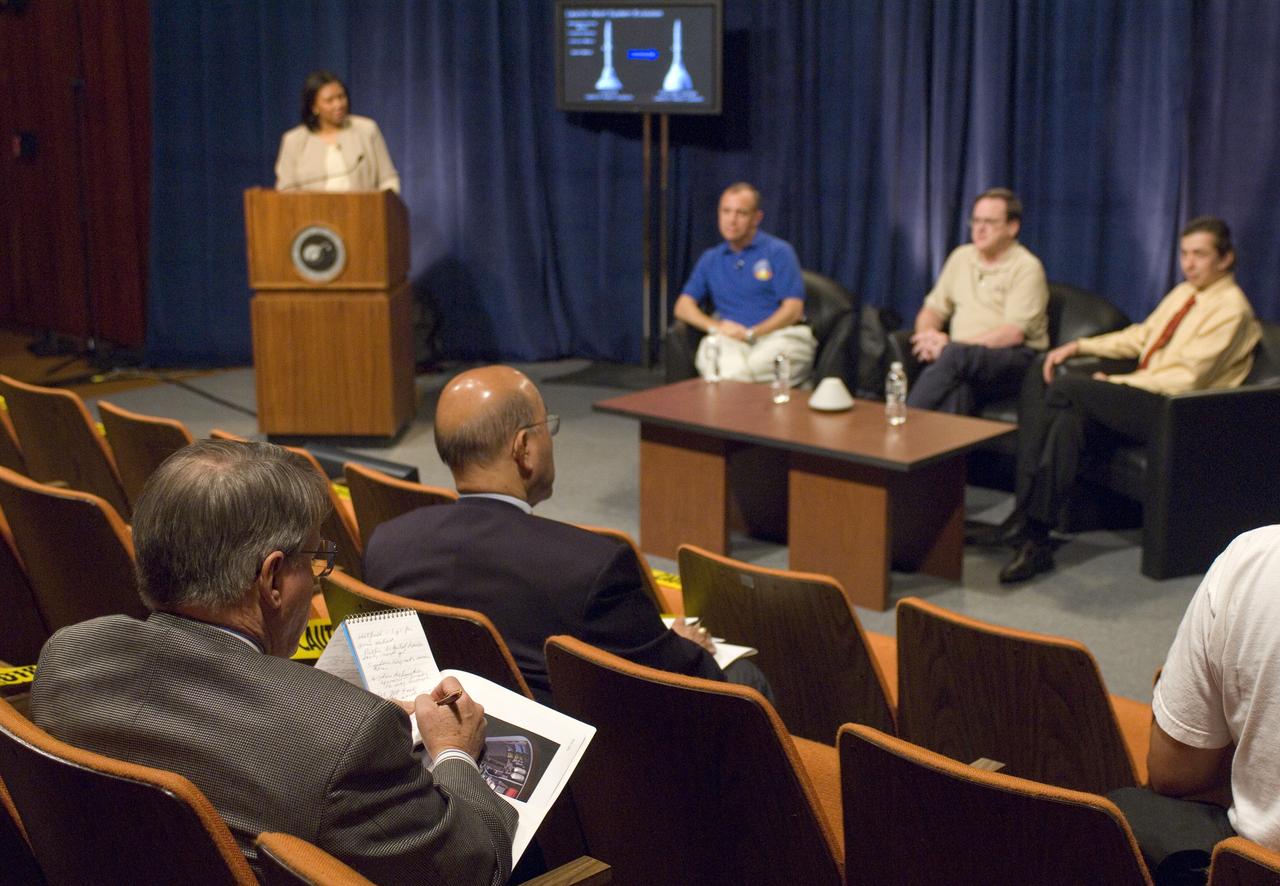
NASA Officials gather at Ames Research Center to discuss Spaceship development progress. Constellation is developing the Orion spacecraft and Ares rockets to support an American return to the moon by 2020.
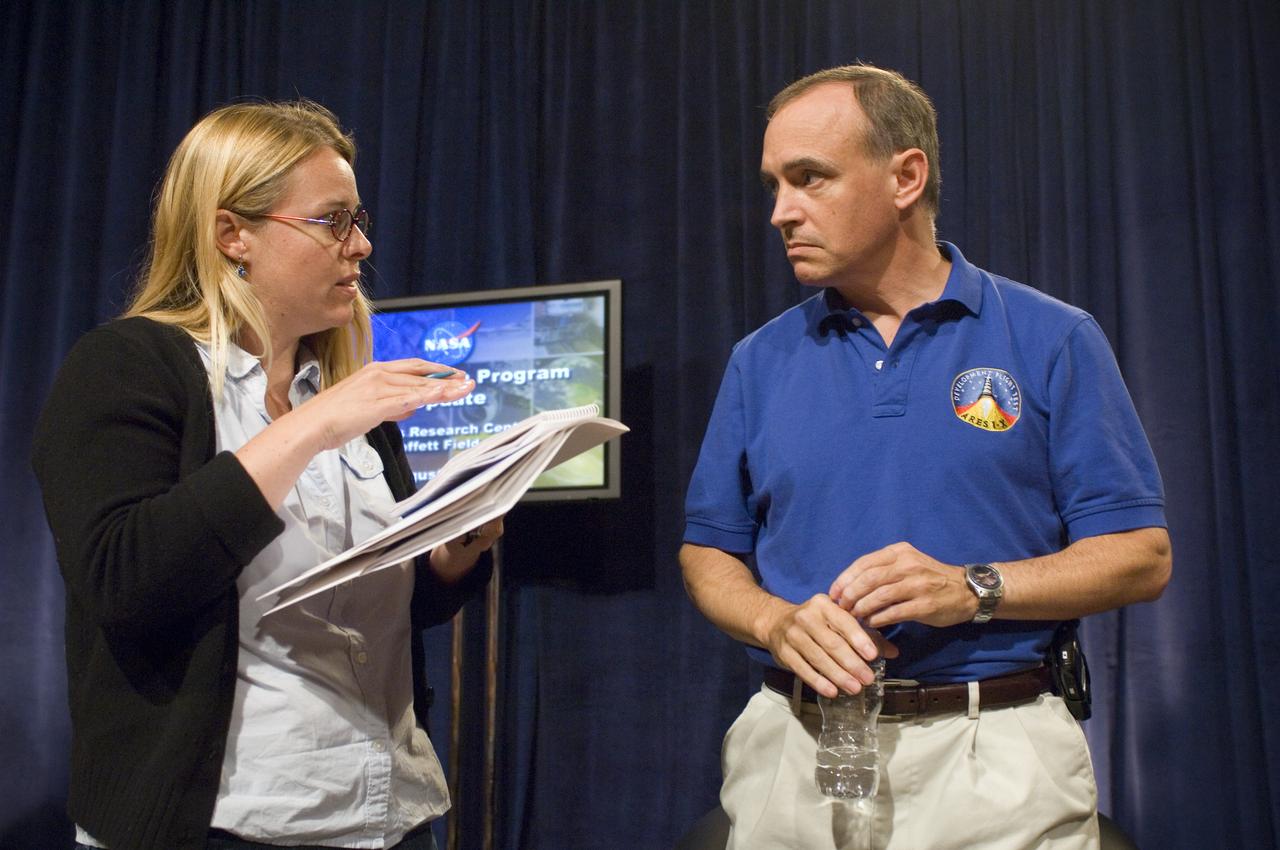
NASA Officials gather at Ames Research Center to discuss Spaceship development progress. Constellation is developing the Orion spacecraft and Ares rockets to support an American return to the moon by 2020. Speaker Jeff Hanley, JSC Constellation program manager
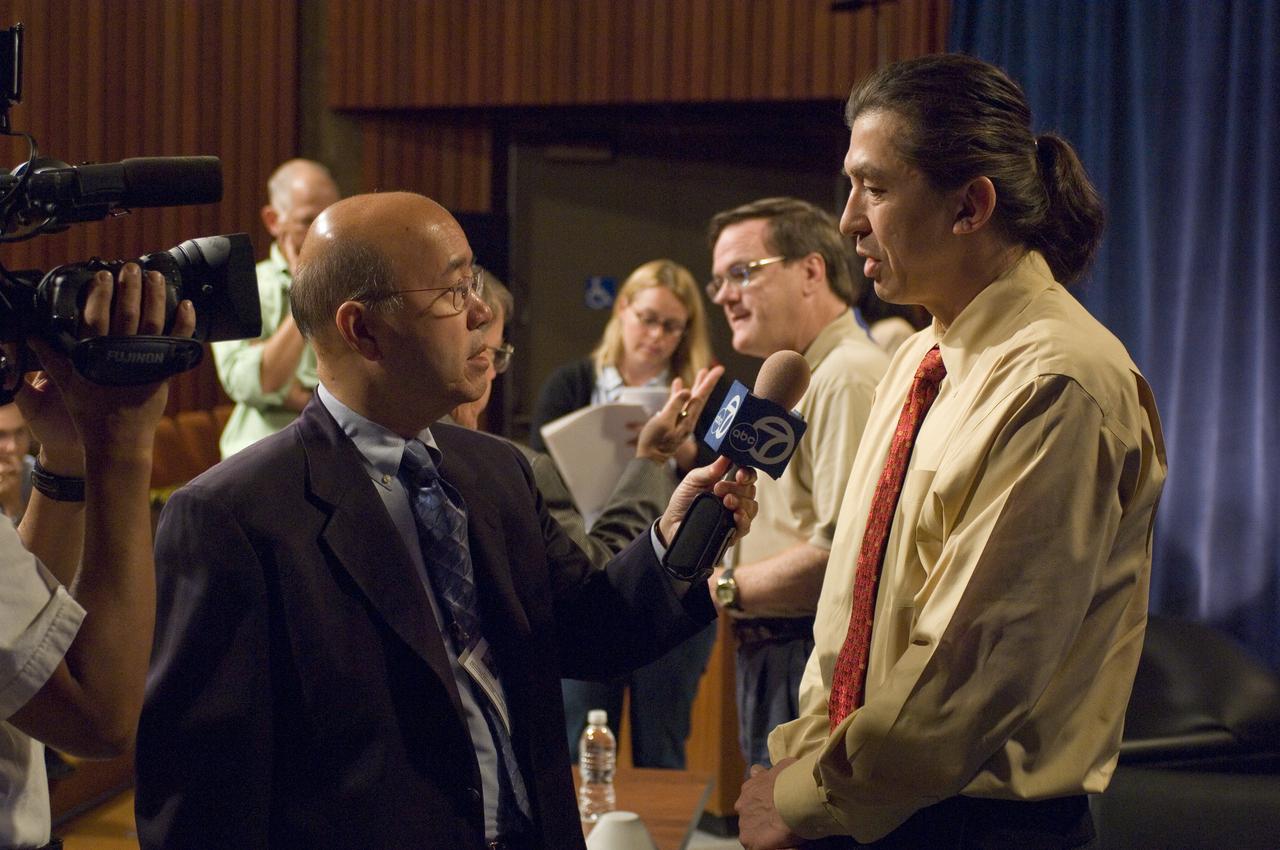
NASA Officials gather at Ames Research Center to discuss Spaceship development progress. Constellation is developing the Orion spacecraft and Ares rockets to support an American return to the moon by 2020.
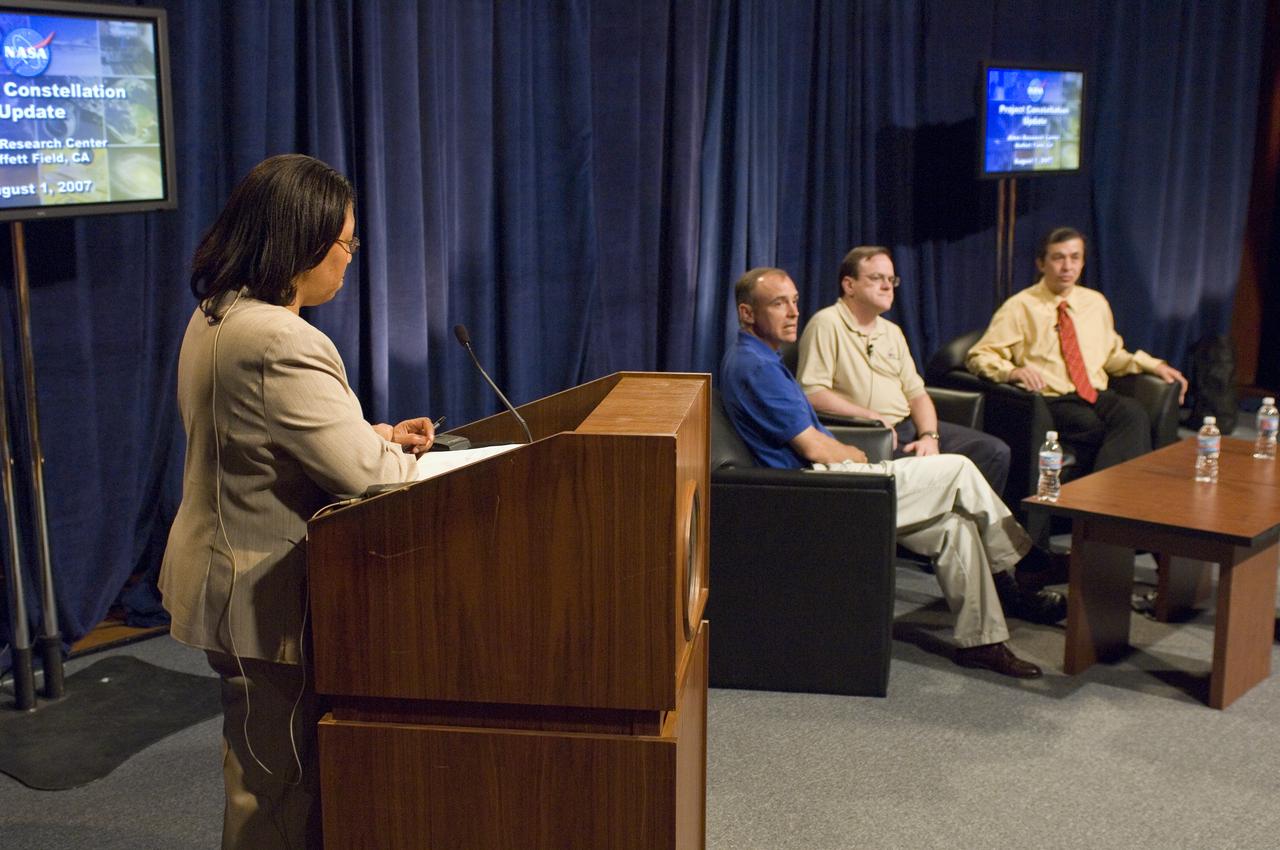
NASA Officials gather at Ames Research Center to discuss Spaceship development progress. Constellation is developing the Orion spacecraft and Ares rockets to support an American return to the moon by 2020.
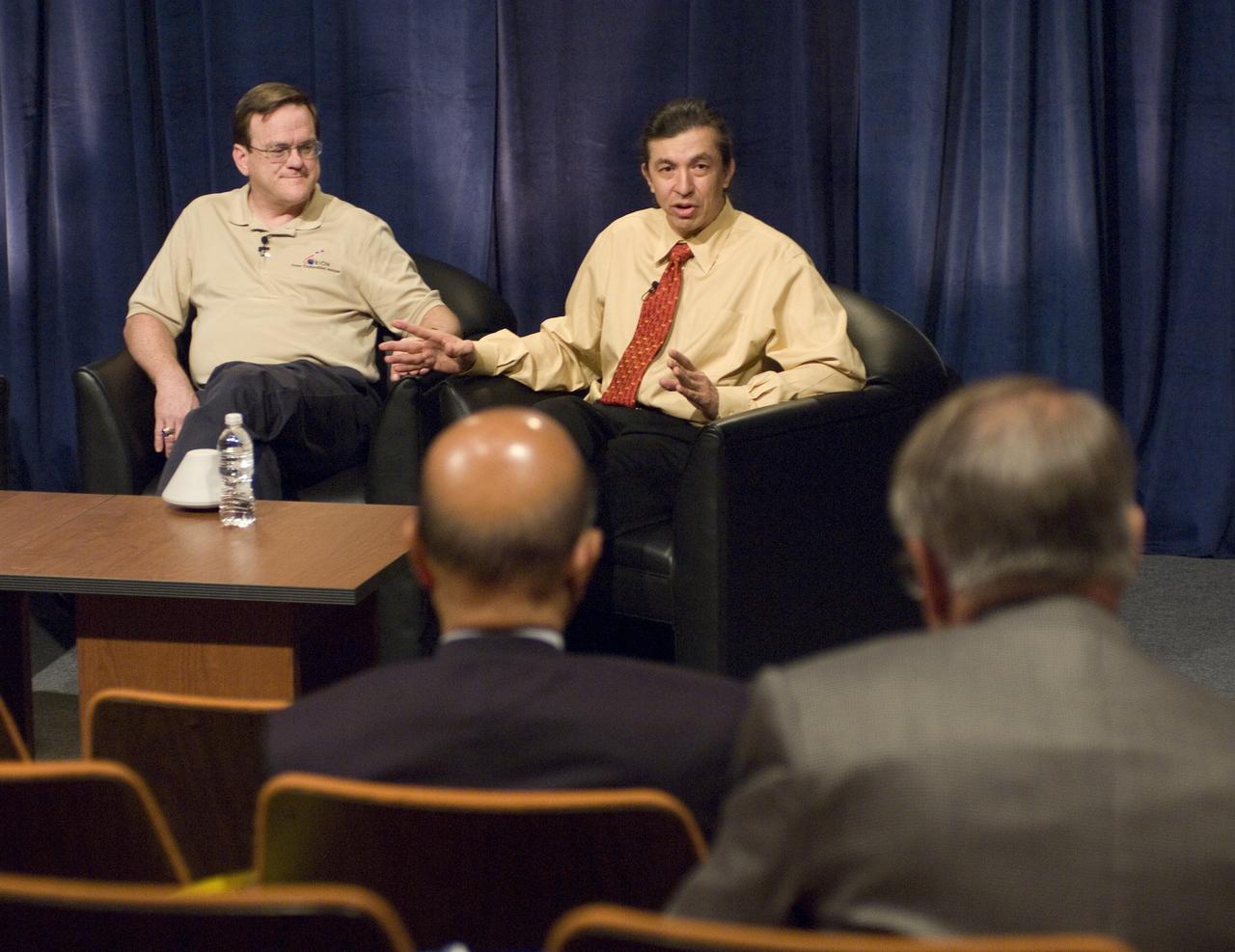
NASA Officials gather at Ames Research Center to discuss Spaceship development progress. Constellation is developing the Orion spacecraft and Ares rockets to support an American return to the moon by 2020.
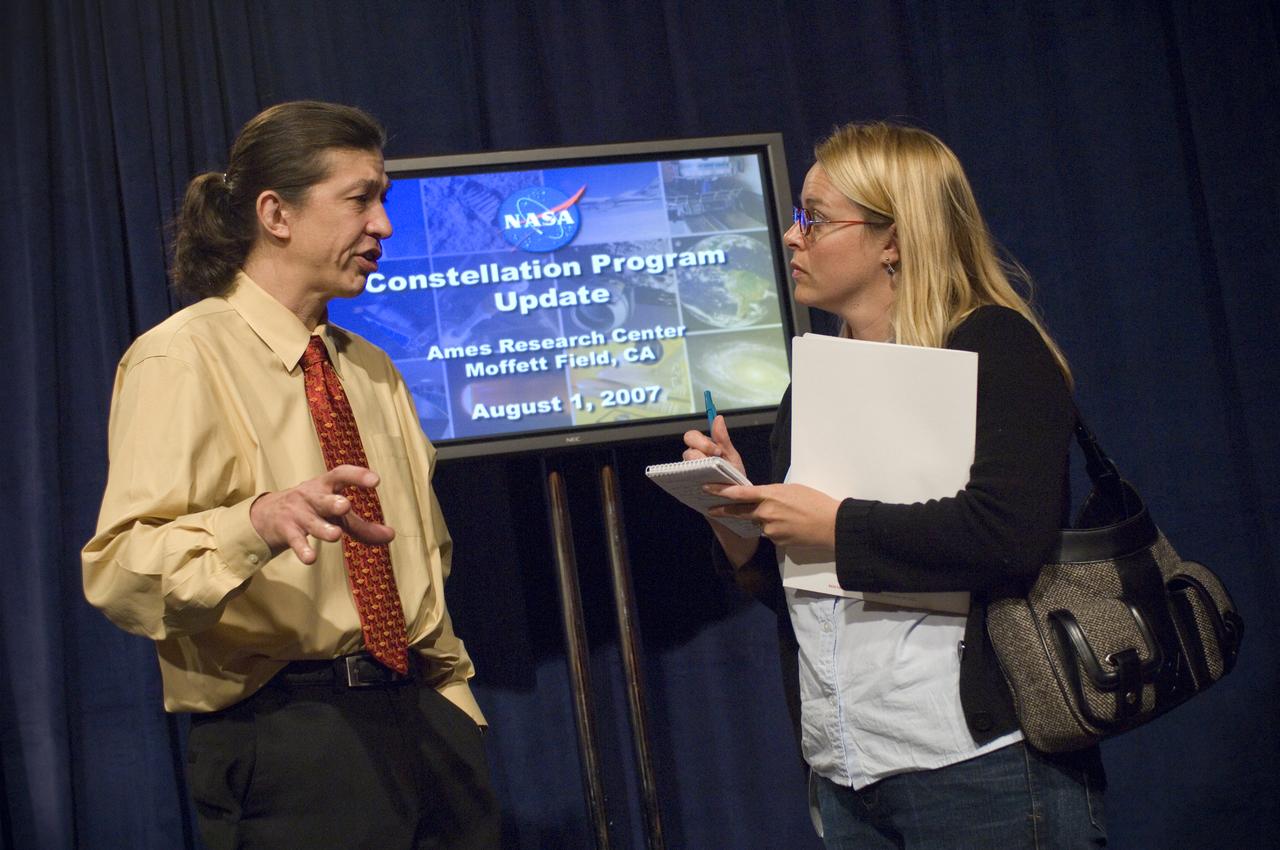
NASA Officials gather at Ames Research Center to discuss Spaceship development progress. Constellation is developing the Orion spacecraft and Ares rockets to support an American return to the moon by 2020.
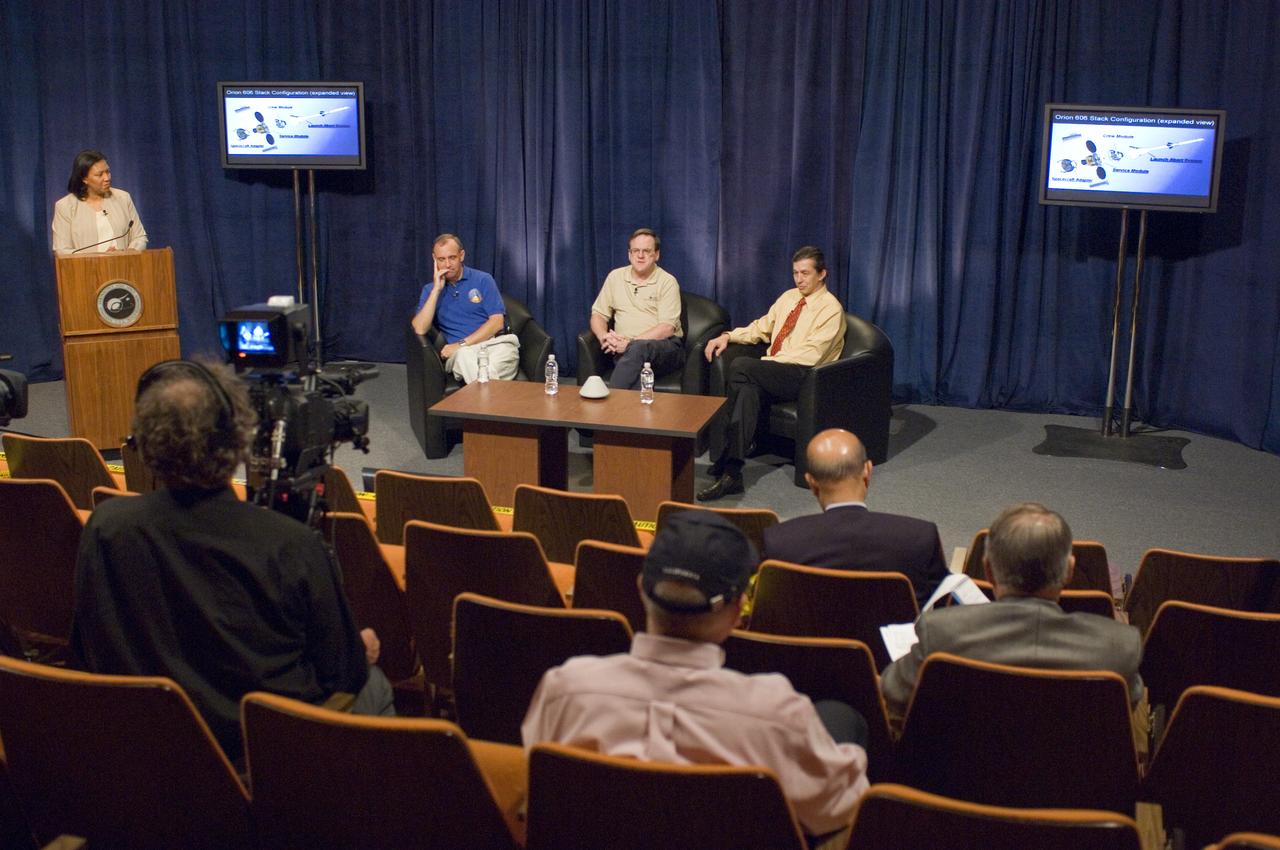
NASA Officials gather at Ames Research Center to discuss Spaceship development progress. Constellation is developing the Orion spacecraft and Ares rockets to support an American return to the moon by 2020.

NASA Officials gather at Ames Research Center to discuss Spaceship development progress. Constellation is developing the Orion spacecraft and Ares rockets to support an American return to the moon by 2020.

NASA Officials gather at Ames Research Center to discuss Spaceship development progress. Constellation is developing the Orion spacecraft and Ares rockets to support an American return to the moon by 2020.
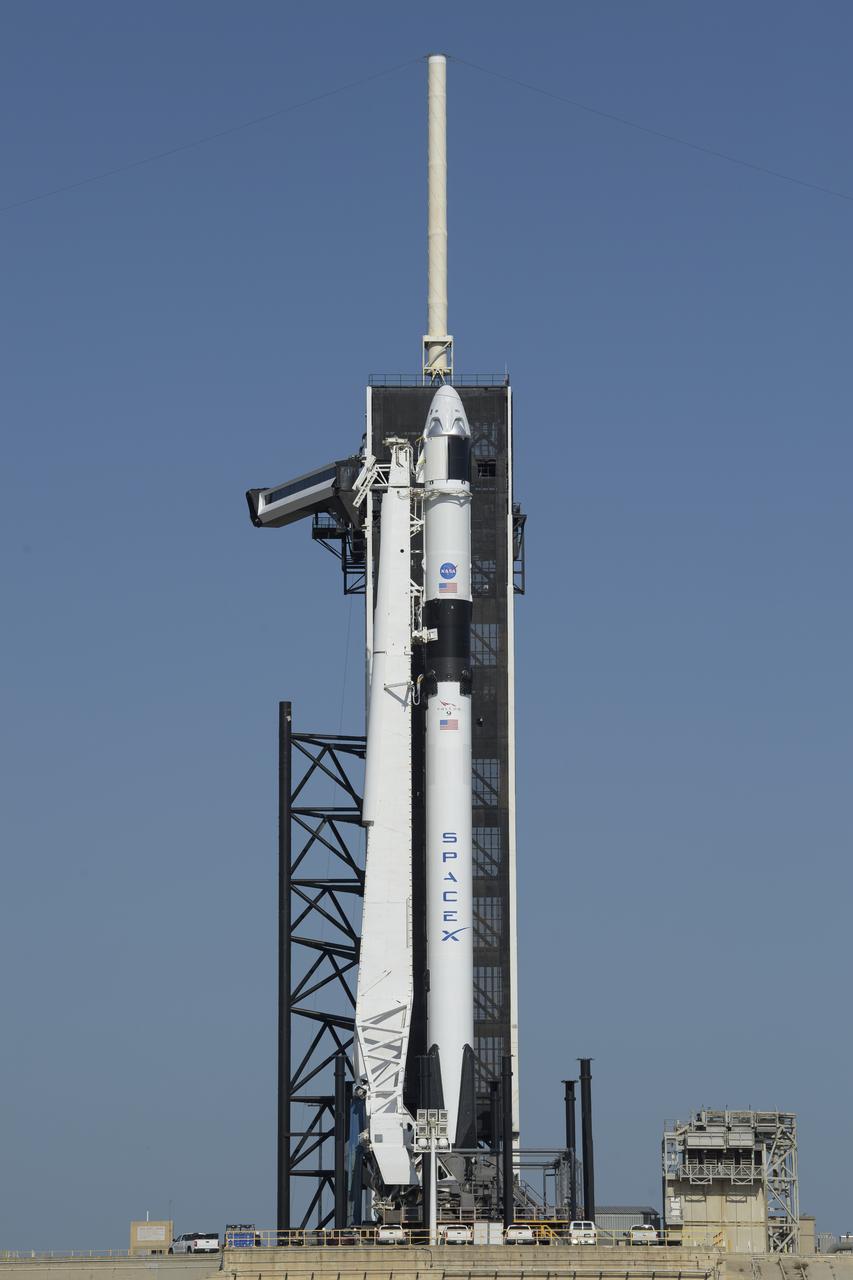
A SpaceX Falcon 9 rocket with the company's Crew Dragon spacecraft onboard is seen on the launch pad at Launch Complex 39A as preparations continue for the Demo-2 mission, Thursday, May 21, 2020, at NASA’s Kennedy Space Center in Florida. NASA’s SpaceX Demo-2 mission is the first launch with astronauts of the SpaceX Crew Dragon spacecraft and Falcon 9 rocket to the International Space Station as part of the agency’s Commercial Crew Program. The flight test will serve as an end-to-end demonstration of SpaceX’s crew transportation system. Behnken and Hurley are scheduled to launch at 4:33 p.m. EDT on Wednesday, May 27, from Launch Complex 39A at the Kennedy Space Center. A new era of human spaceflight is set to begin as American astronauts once again launch on an American rocket from American soil to low-Earth orbit for the first time since the conclusion of the Space Shuttle Program in 2011. Photo Credit: (NASA/Bill Ingalls)
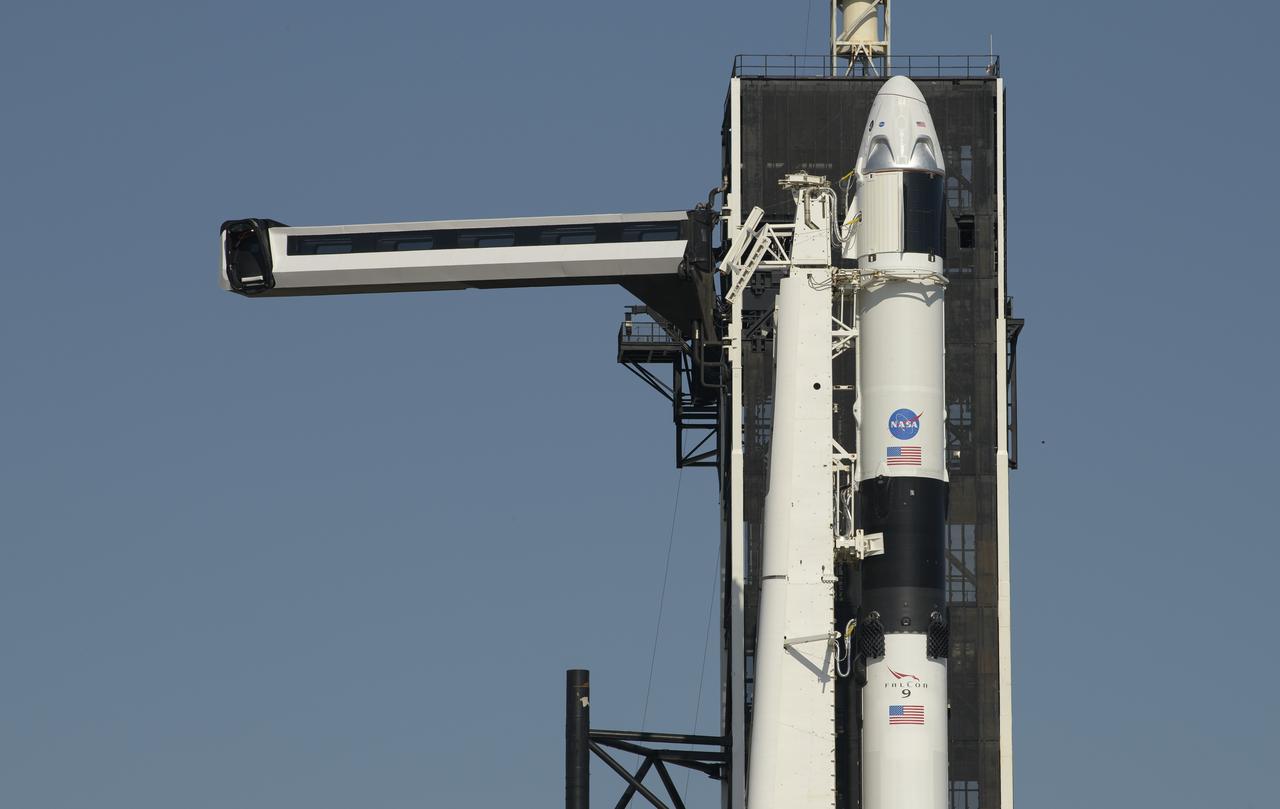
The crew access arm is swung into position for the Crew Dragon spacecraft and the SpaceX Falcon 9 rocket at Launch Complex 39A as preparations continue for the Demo-2 mission, Thursday, May 21, 2020, at NASA’s Kennedy Space Center in Florida. NASA’s SpaceX Demo-2 mission is the first launch with astronauts of the SpaceX Crew Dragon spacecraft and Falcon 9 rocket to the International Space Station as part of the agency’s Commercial Crew Program. The flight test will serve as an end-to-end demonstration of SpaceX’s crew transportation system. Behnken and Hurley are scheduled to launch at 4:33 p.m. EDT on Wednesday, May 27, from Launch Complex 39A at the Kennedy Space Center. A new era of human spaceflight is set to begin as American astronauts once again launch on an American rocket from American soil to low-Earth orbit for the first time since the conclusion of the Space Shuttle Program in 2011. Photo Credit: (NASA/Bill Ingalls)
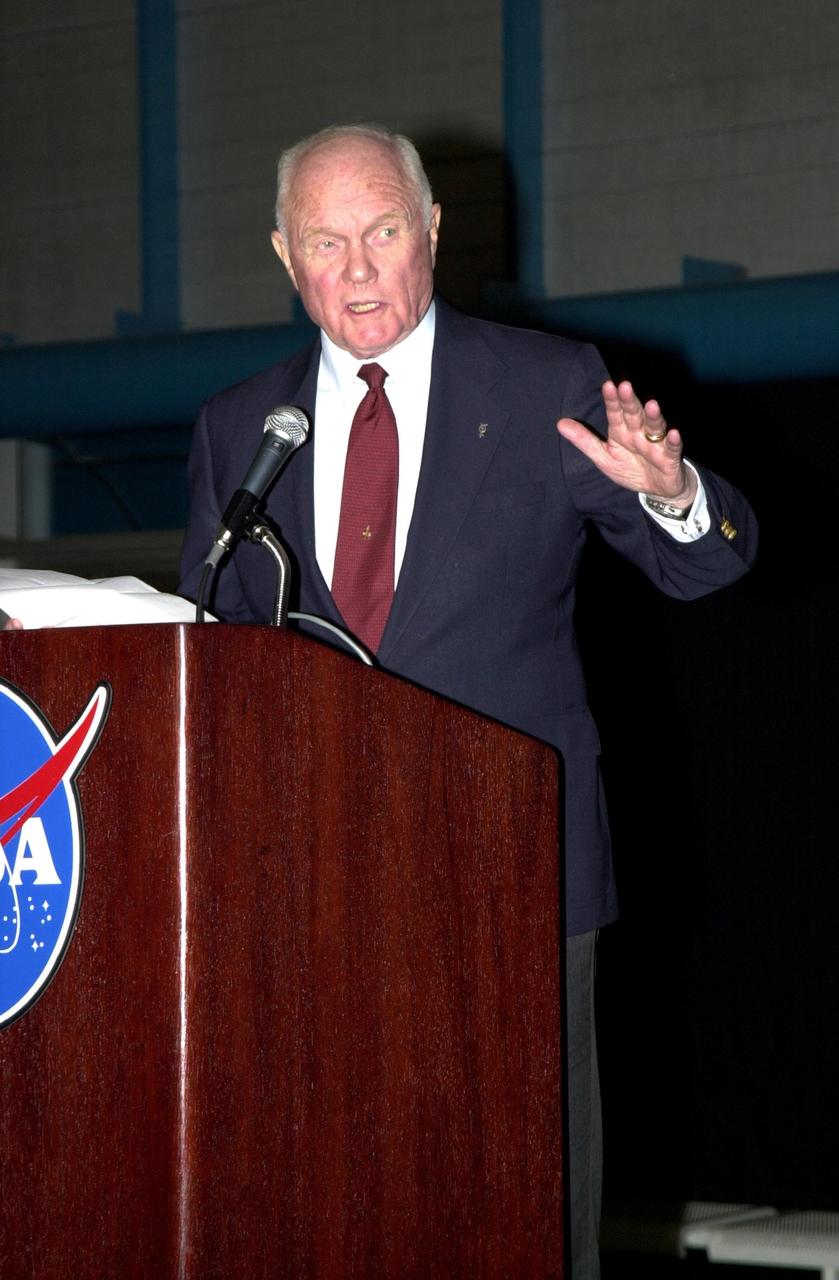
KENNEDY SPACE CENTER, FLA. - John Glenn Jr. speaks to the audience at KSC's Apollo/Saturn V Center during the dinner celebration of the 40th anniversary of American spaceflight. Glenn was the first American to orbit the Earth, aboard the Friendship 7 spacecraft. That journey lasted nearly five hours. In 1998, 36 years later, Glenn flew on Space Shuttle Discovery on mission STS-95, orbiting the Earth for 218 hours
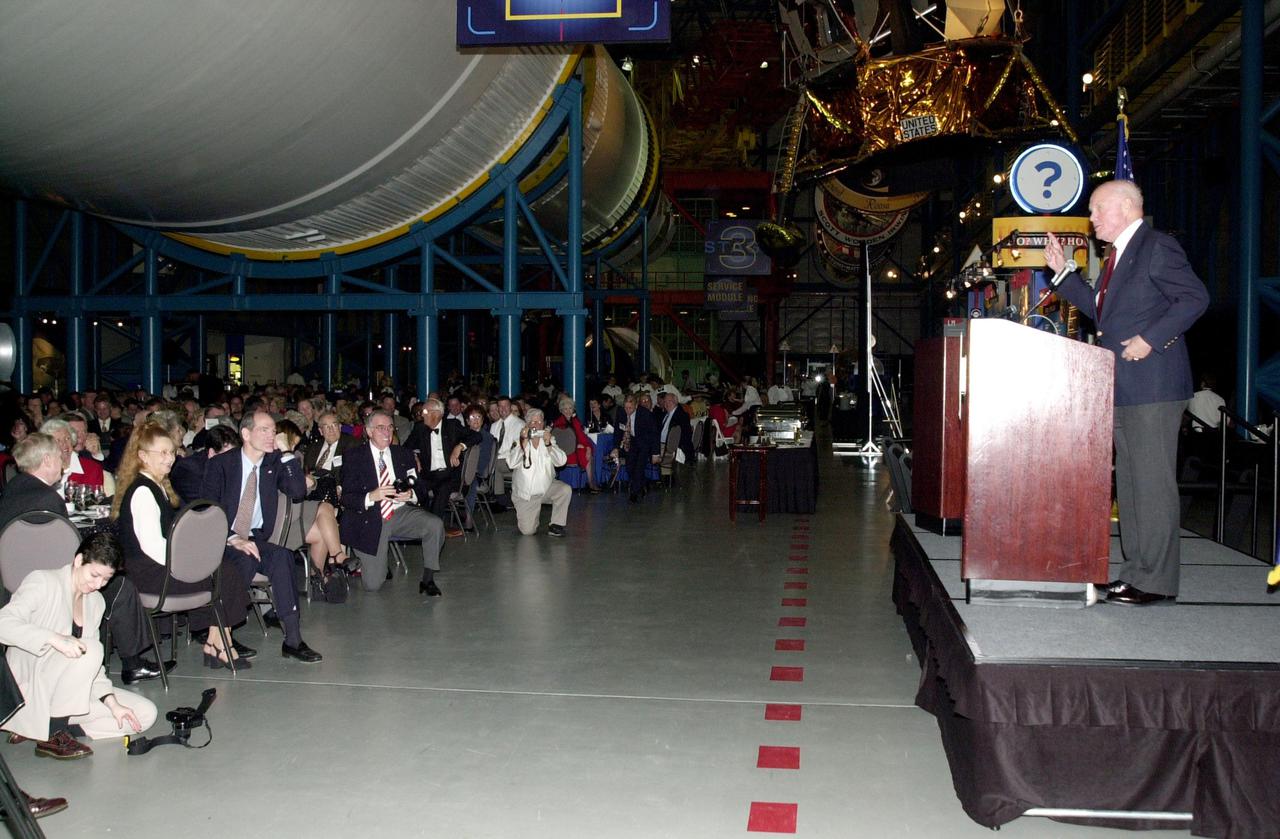
KENNEDY SPACE CENTER, FLA. - In the Apollo_Saturn V Center at KSC, guests enjoy the comments of John Glenn Jr. during the dinner celebration of the 40th anniversary of American spaceflight. In the background is the Saturn V rocket. Glenn was the first American to orbit the Earth, aboard the Friendship 7 spacecraft. That journey lasted nearly five hours. In 1998, 36 years later, Glenn flew on Space Shuttle Discovery on mission STS-95, orbiting the Earth for 218 hours
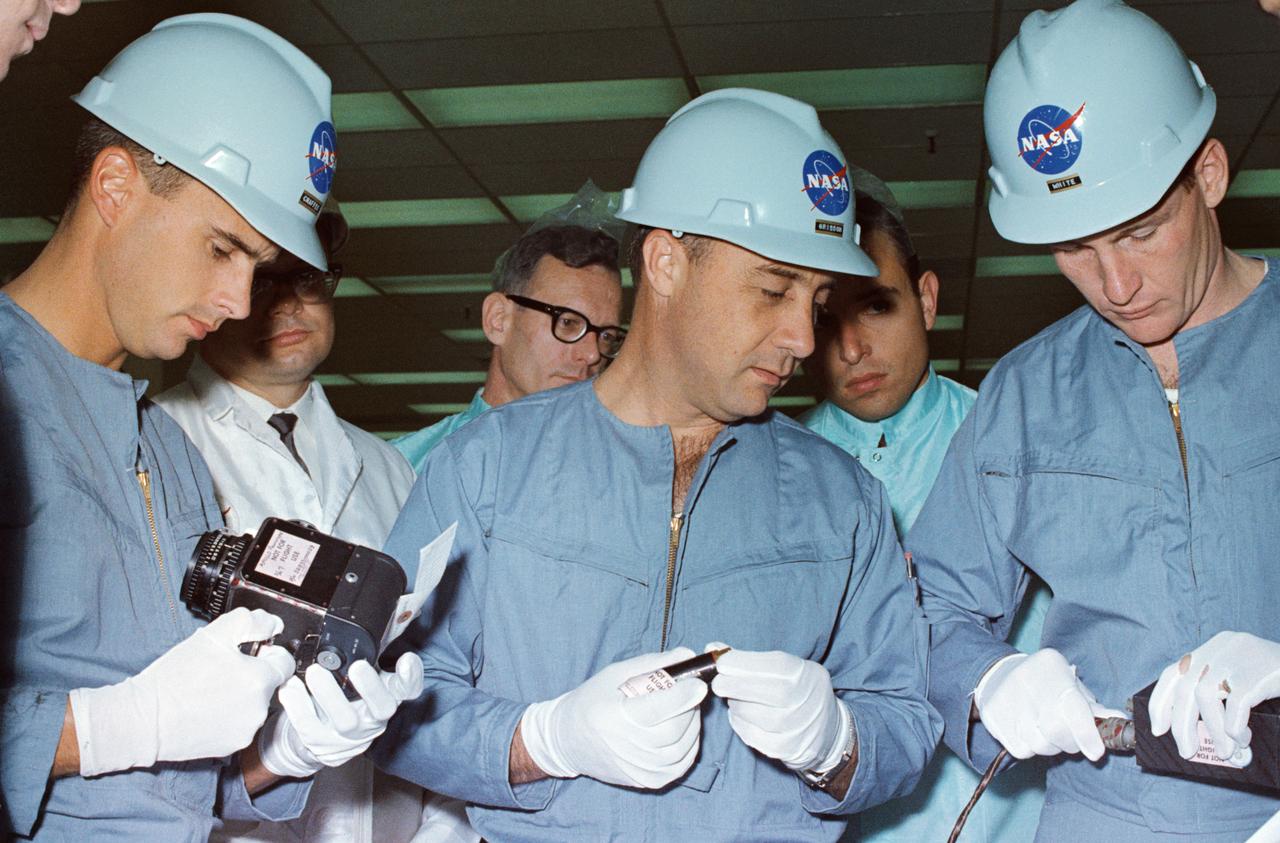
The members of the prime crew of the first manned Apollo space flight Apollo/Saturn 204 (AS-204) inspect spacecraft equipment during a tour of North American Aviation's (NAA) Downey facility. In the foreground, left to right, are astronauts Roger B. Chaffee, Virgil I. Grissom, and Edward H. White, II. NAA engineers and technicians are in the background. NORTH AMERICAN AVIATION, INC., DOWNEY, CA B&W
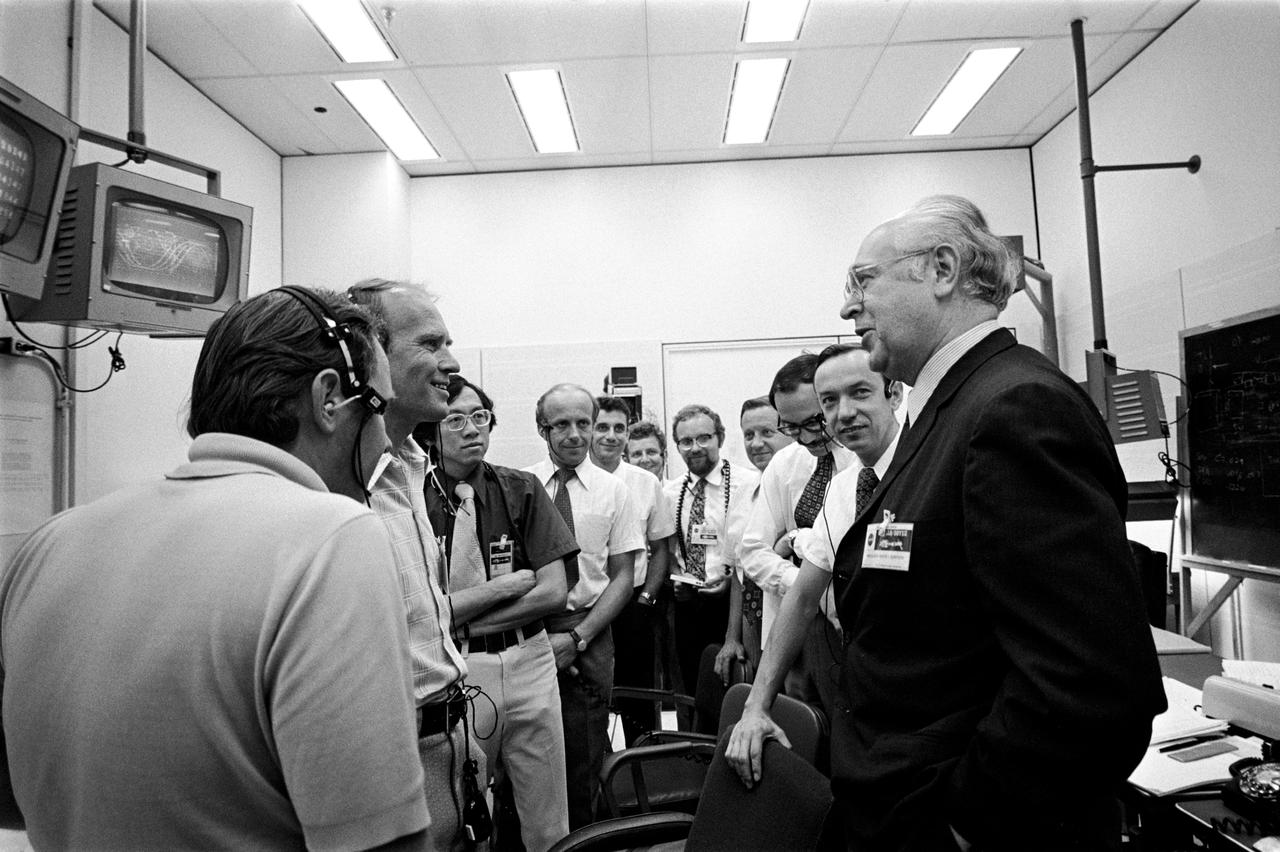
S75-28534 (17 July 1975) --- Anatoliy Dobrynin (right), Soviet Union ambassador to the United States, visits with a group of USSR ASTP flight controllers in the Mission Control Center during a tour of NASA's Johnson Space Center (JSC). Dobrynin was at JSC on the day the Soviet Soyuz and the American Apollo spacecraft docked in Earth orbit. The group also includes a couple of American ASTP flight controllers.
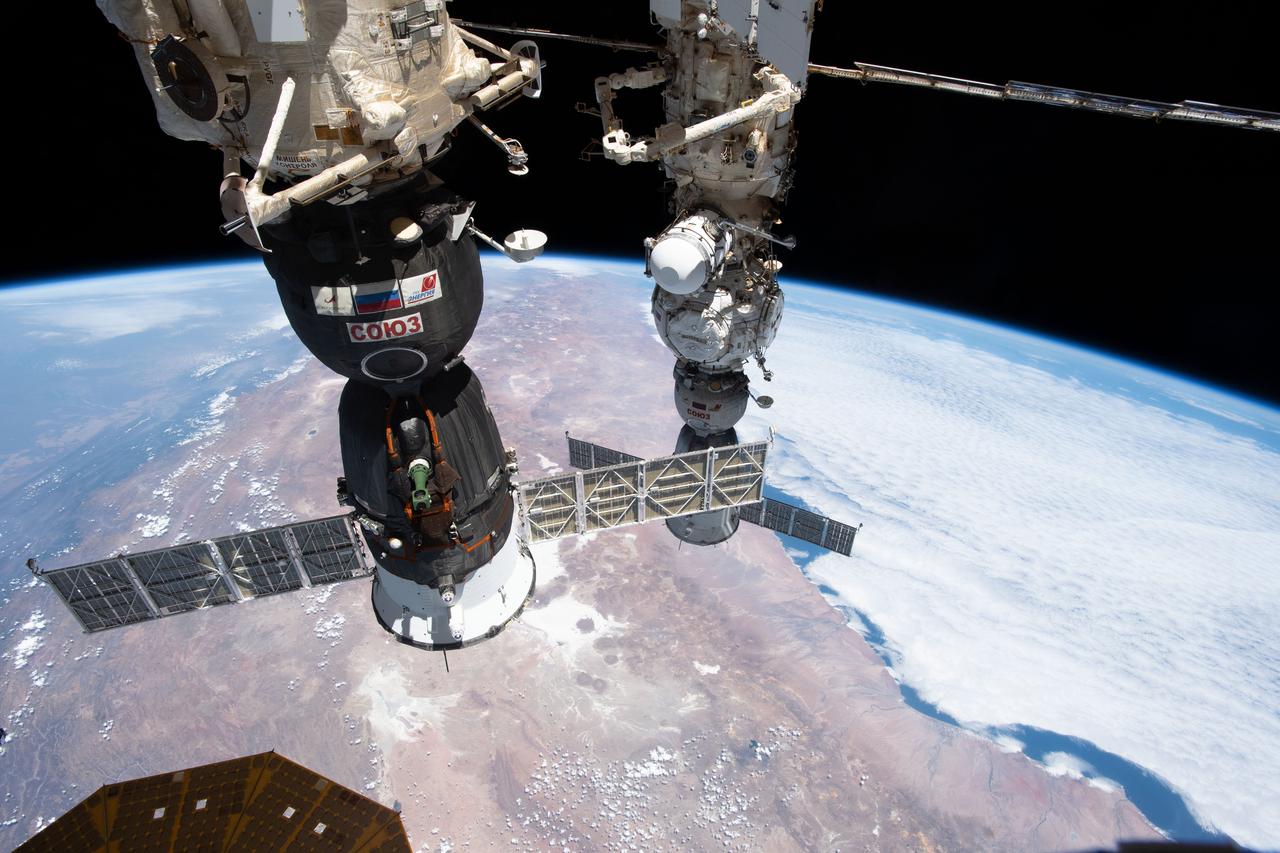
iss069e091770 (Sept. 23, 2023) --- Two Soyuz crew ships are pictured docked to the International Space Station as it orbited 262 miles above La Paz, Bolivia, on the South American continent. In the foreground, is the Soyuz MS-24 spacecraft docked to the Rassvet module. In the background is the Soyuz MS-23 spacecraft docked to the Prichal docking module.
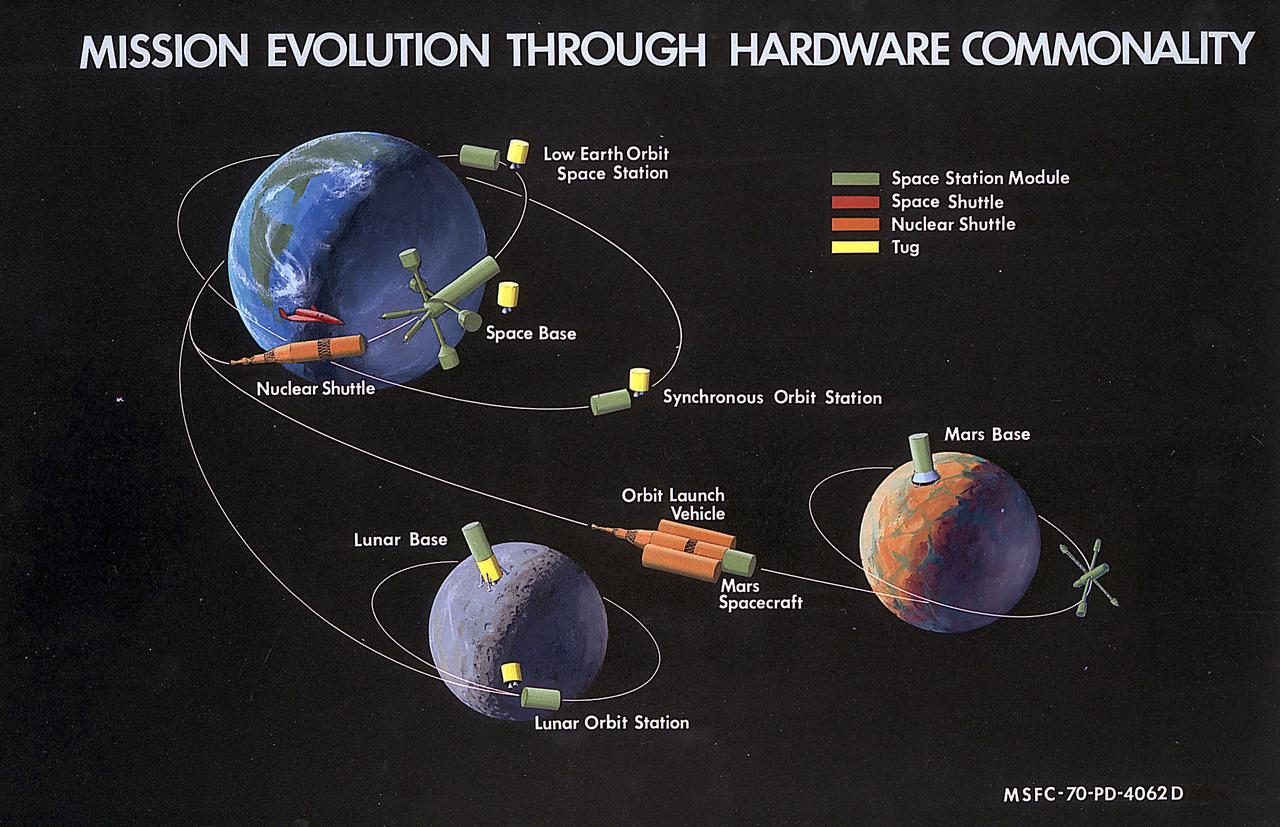
In this artist's concept from 1970, propulsion concepts such as the Nuclear Shuttle and Space Tug are shown in conjunction with other proposed spacecraft. As a result of the recommendations from President Nixon's Space Task Group for more commonality and integration in the American space program, Marshall Space Flight engineers studied many of the spacecraft depicted here.
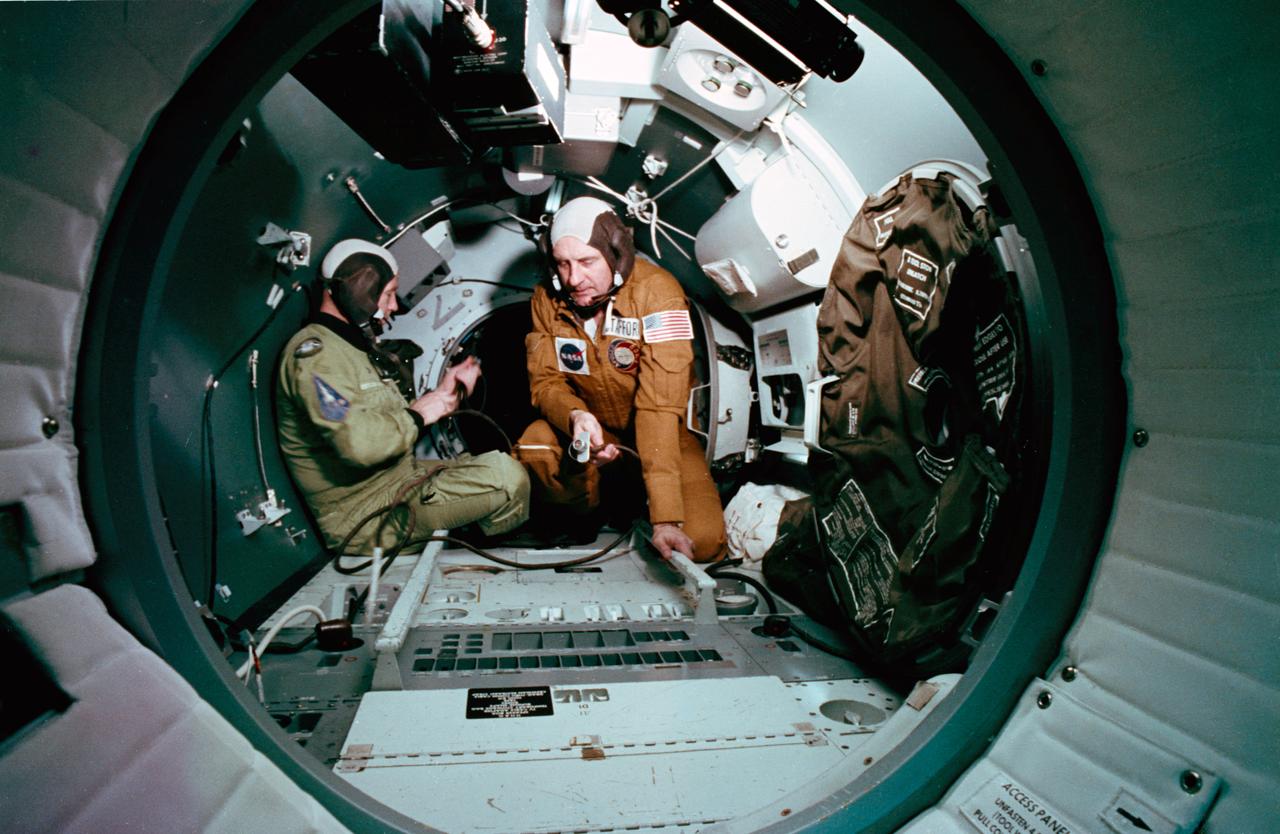
S75-22785 (25 Feb. 1975) --- An interior view of the Docking Module trainer, in Building 35, during Apollo-Soyuz Test Project (ASTP) joint crew training at NASA's Johnson Space Center (JSC). Astronaut Thomas P. Stafford, commander of the American ASTP prime crew, is on the right. The other crewman is cosmonaut Aleksky A. Leonov, commander of the Soviet ASTP prime crew. The training session simulated activities on the second day in Earth orbit. The American and Soviet crews will visit each other's spacecraft during the July 1975 docking mission in Earth orbit. The Docking Module is designed to link the Apollo and Soyuz spacecraft.
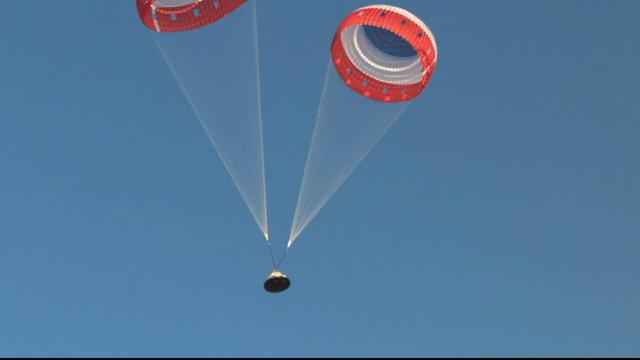
Parachutes deploy in in Boeing’s Pad Abort Test of its CST-100 Starliner spacecraft over the White Sands Missile Range in New Mexico, slowing the descent of the vehicle. The test, conducted Nov. 4, 2019, was designed to verify that each of Starliner’s systems will function not only separately, but in concert, to protect astronauts by carrying them safely away from the launch pad in the unlikely event of an emergency prior to liftoff. This is Boeing’s first test flight for NASA’s Commercial Crew Program, which is working to launch astronauts on American rockets and spacecraft from American soil for the first time since 2011.
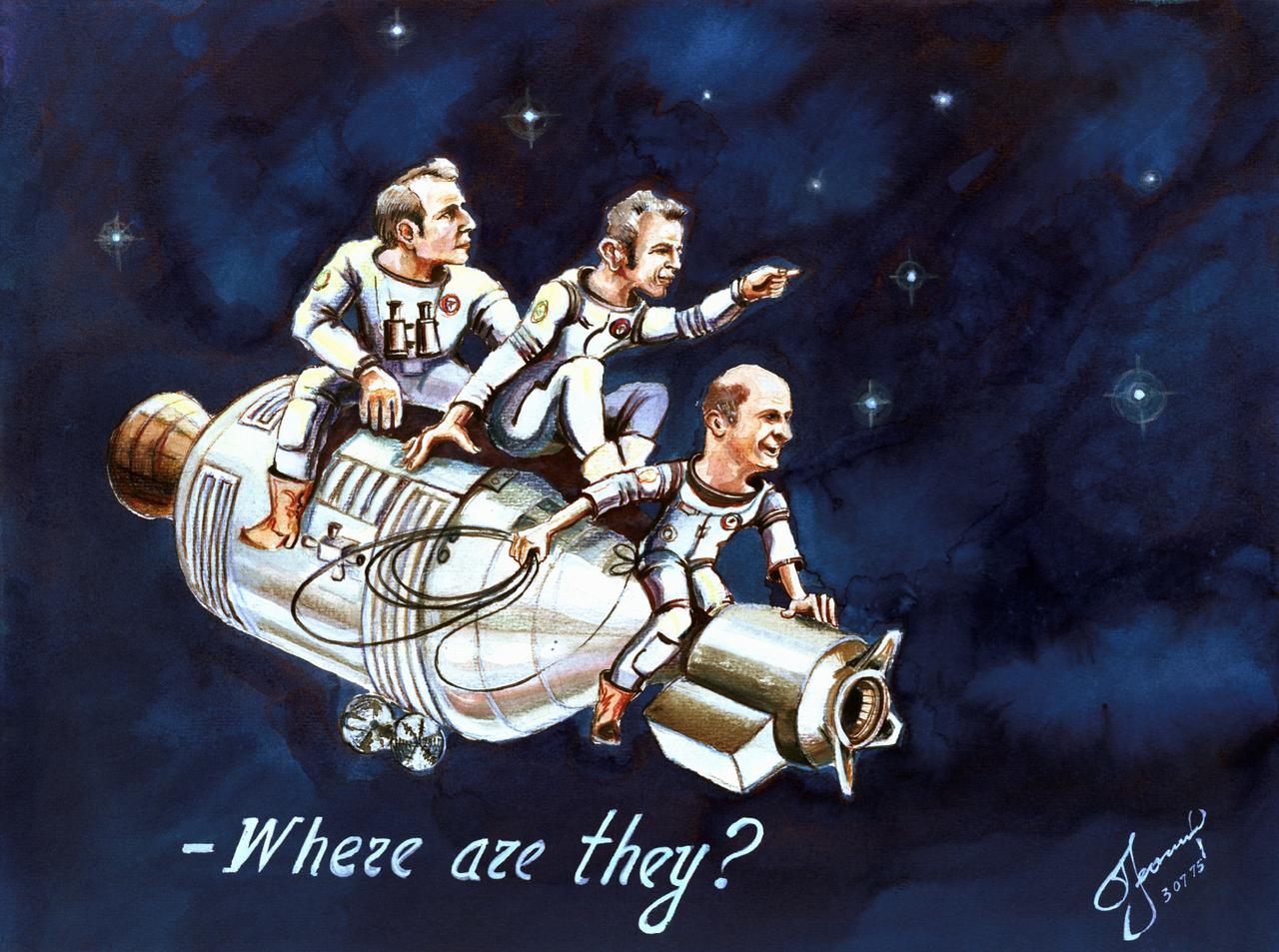
S75-28504 (17 July 1975) --- The American ASTP crewmen search the skies for the Soviet Soyuz spacecraft in this humorous artwork by cosmonaut Aleksey A. Leonov. Astronauts Vance D. Brand, Donald K. Slayton and Thomas P. Stafford (left to right) sit astride the Apollo spacecraft and Docking Module ready to lasso Soyuz. The cartoon humorously depicts the approaching historic event of an American spacecraft rendezvousing and docking in Earth orbit with a USSR spacecraft, scheduled today (July 17, 1975). Aboard Soyuz are Leonov, crew commander, and his fellow cosmonaut, Valeriy N. Kubasov. Stafford is the Apollo crew commander. The U.S. and USSR crewmen will visit each other's spacecraft while the Apollo and Soyuz are docked in Earth orbit for two days. Leonov, an accomplished artist, specializes in paintings on space subjects. He has a number of paintings on public exhibit in his native land.
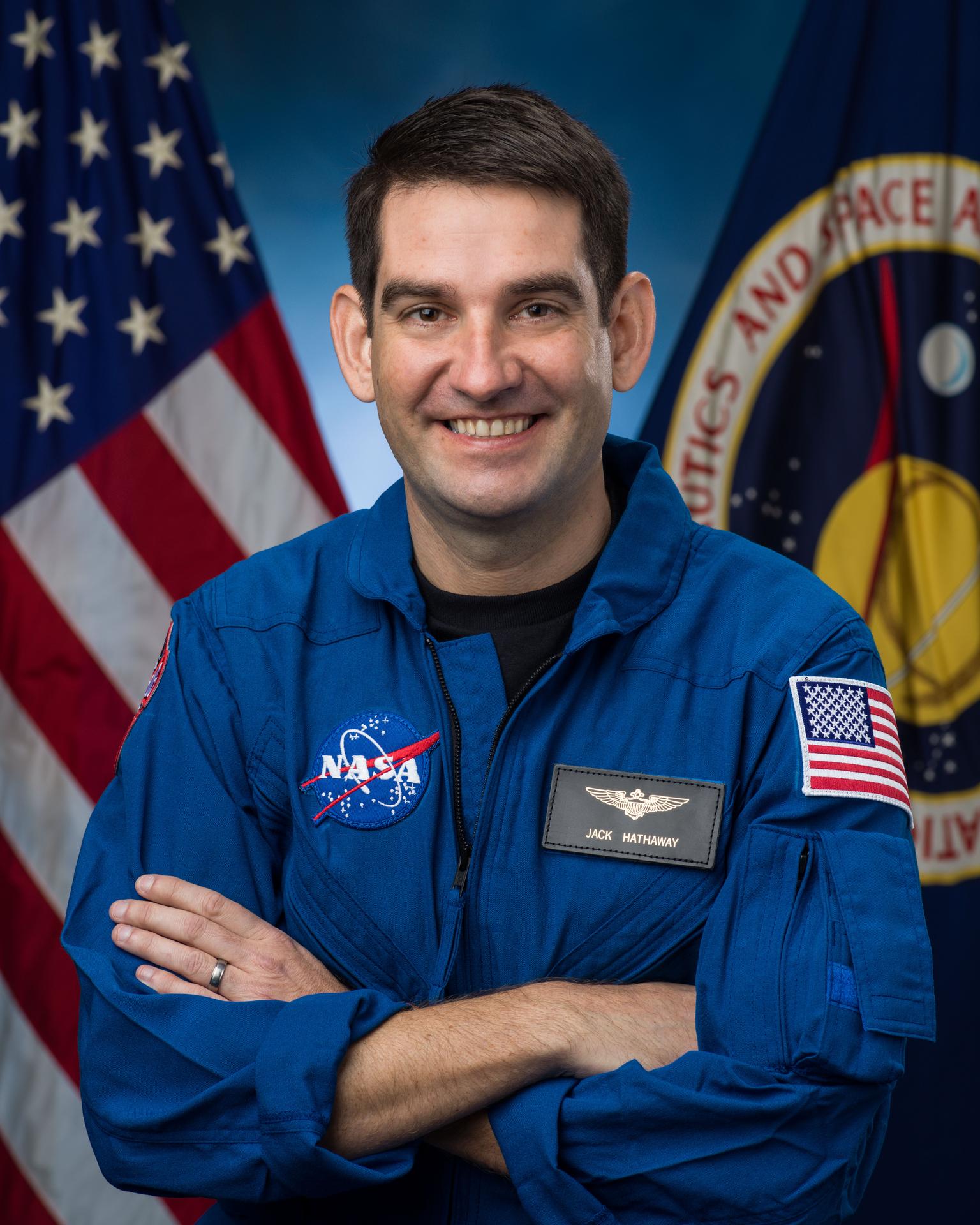
jsc2021e062805 (December 3, 2021) --- NASA Astronaut Candidate Jack Hathaway, one of 10 new NASA astronaut candidates, was announced December 6, 2021, during an event at Ellington Field near NASA’s Johnson Space Center in Houston. NASA’s new astronaut candidates will begin about two years of training in January 2022, after which they could be assigned to missions performing research on the International Space Station, launching from American soil on spacecraft built by commercial companies, and launching on Artemis missions to the Moon on NASA’s new Orion spacecraft and Space Launch System rocket. Credit: NASA/Robert Markowitz.
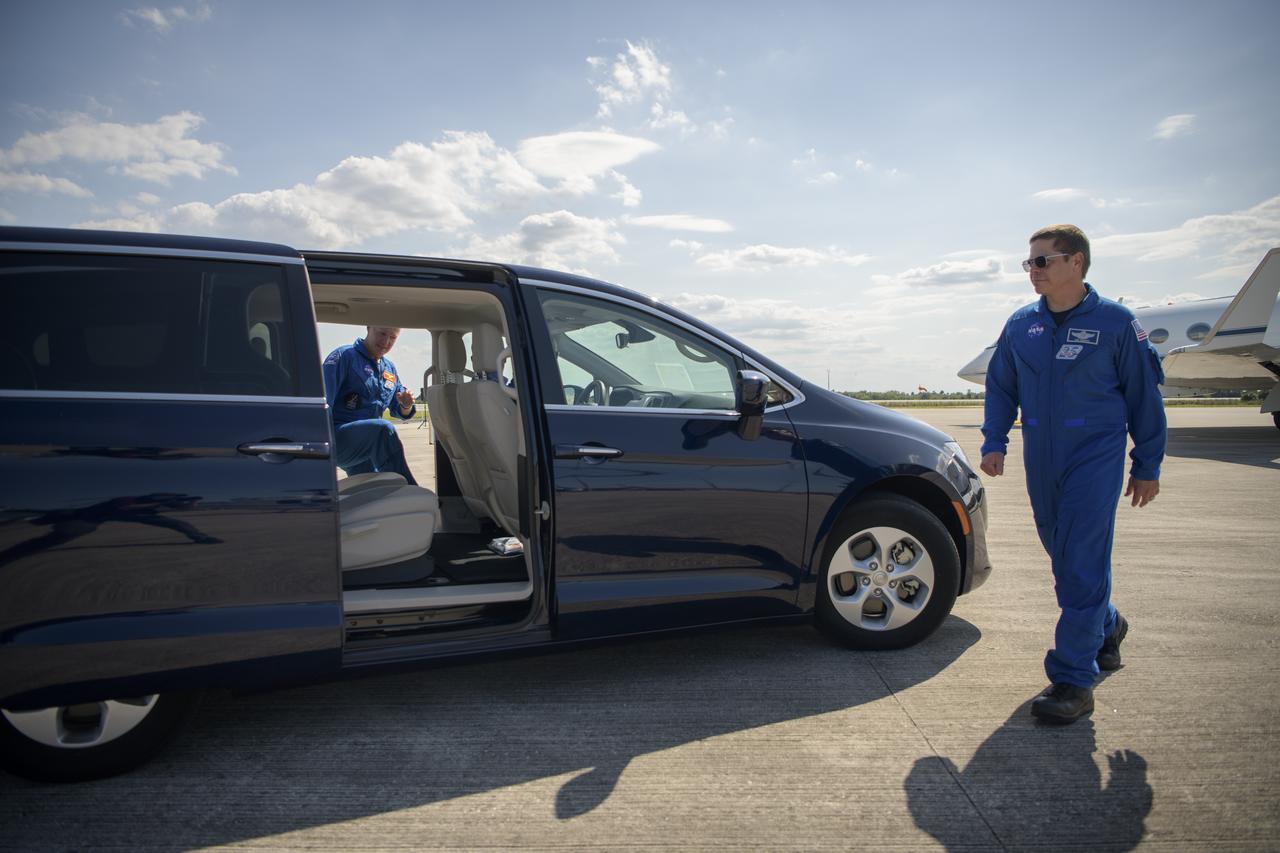
NASA astronauts Douglas Hurley, left, and Robert Behnken depart the Launch and Landing Facility and head to crew quarters at NASA’s Kennedy Space Center ahead of SpaceX’s Demo-2 mission, Wednesday, May 20, 2020, in Florida. NASA’s SpaceX Demo-2 mission is the first launch with astronauts of the SpaceX Crew Dragon spacecraft and Falcon 9 rocket to the International Space Station as part of the agency’s Commercial Crew Program. The flight test will serve as an end-to-end demonstration of SpaceX’s crew transportation system. Behnken and Hurley are scheduled to launch at 4:33 p.m. EDT on Wednesday, May 27, from Launch Complex 39A at the Kennedy Space Center. A new era of human spaceflight is set to begin as American astronauts once again launch on an American rocket from American soil to low-Earth orbit for the first time since the conclusion of the Space Shuttle Program in 2011. Photo Credit: (NASA/Bill Ingalls)
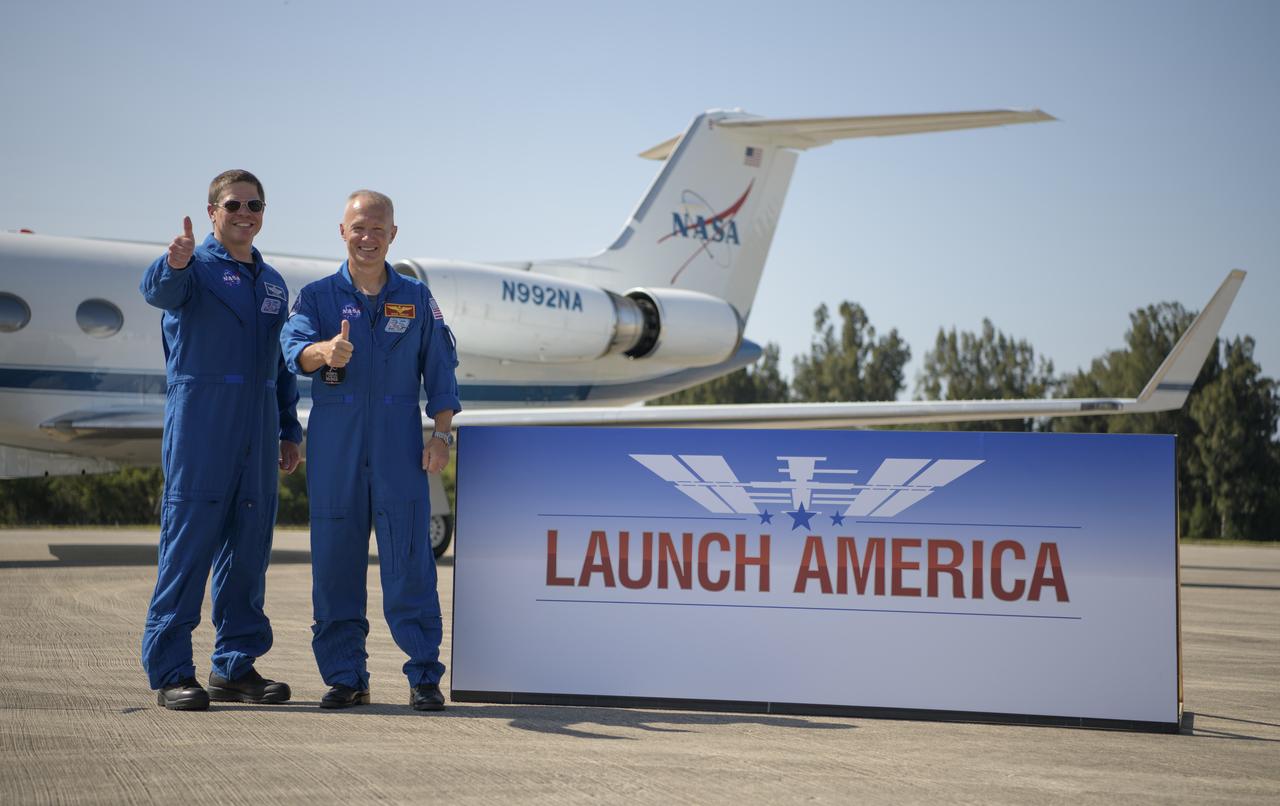
NASA astronauts Robert Behnken, left, and Douglas Hurley gives a thumbs up after arriving at the Launch and Landing Facility at NASA’s Kennedy Space Center ahead of SpaceX’s Demo-2 mission, Wednesday, May 20, 2020, in Florida. NASA’s SpaceX Demo-2 mission is the first launch with astronauts of the SpaceX Crew Dragon spacecraft and Falcon 9 rocket to the International Space Station as part of the agency’s Commercial Crew Program. The flight test will serve as an end-to-end demonstration of SpaceX’s crew transportation system. Behnken and Hurley are scheduled to launch at 4:33 p.m. EDT on Wednesday, May 27, from Launch Complex 39A at the Kennedy Space Center. A new era of human spaceflight is set to begin as American astronauts once again launch on an American rocket from American soil to low-Earth orbit for the first time since the conclusion of the Space Shuttle Program in 2011. Photo Credit: (NASA/Bill Ingalls)
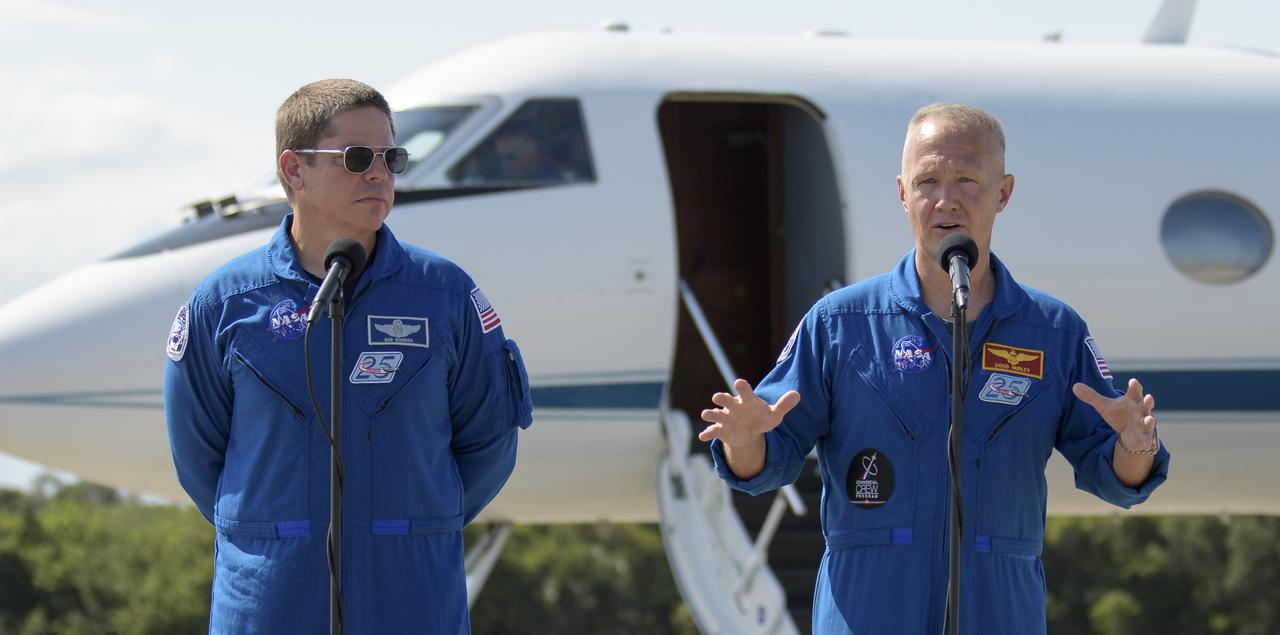
NASA astronauts Robert Behnken, left, and Douglas Hurley speak to members of the media after arriving at the Launch and Landing Facility at NASA’s Kennedy Space Center ahead of SpaceX’s Demo-2 mission, Wednesday, May 20, 2020, in Florida. NASA’s SpaceX Demo-2 mission is the first launch with astronauts of the SpaceX Crew Dragon spacecraft and Falcon 9 rocket to the International Space Station as part of the agency’s Commercial Crew Program. The flight test will serve as an end-to-end demonstration of SpaceX’s crew transportation system. Behnken and Hurley are scheduled to launch at 4:33 p.m. EDT on Wednesday, May 27, from Launch Complex 39A at the Kennedy Space Center. A new era of human spaceflight is set to begin as American astronauts once again launch on an American rocket from American soil to low-Earth orbit for the first time since the conclusion of the Space Shuttle Program in 2011. Photo Credit: (NASA/Bill Ingalls)
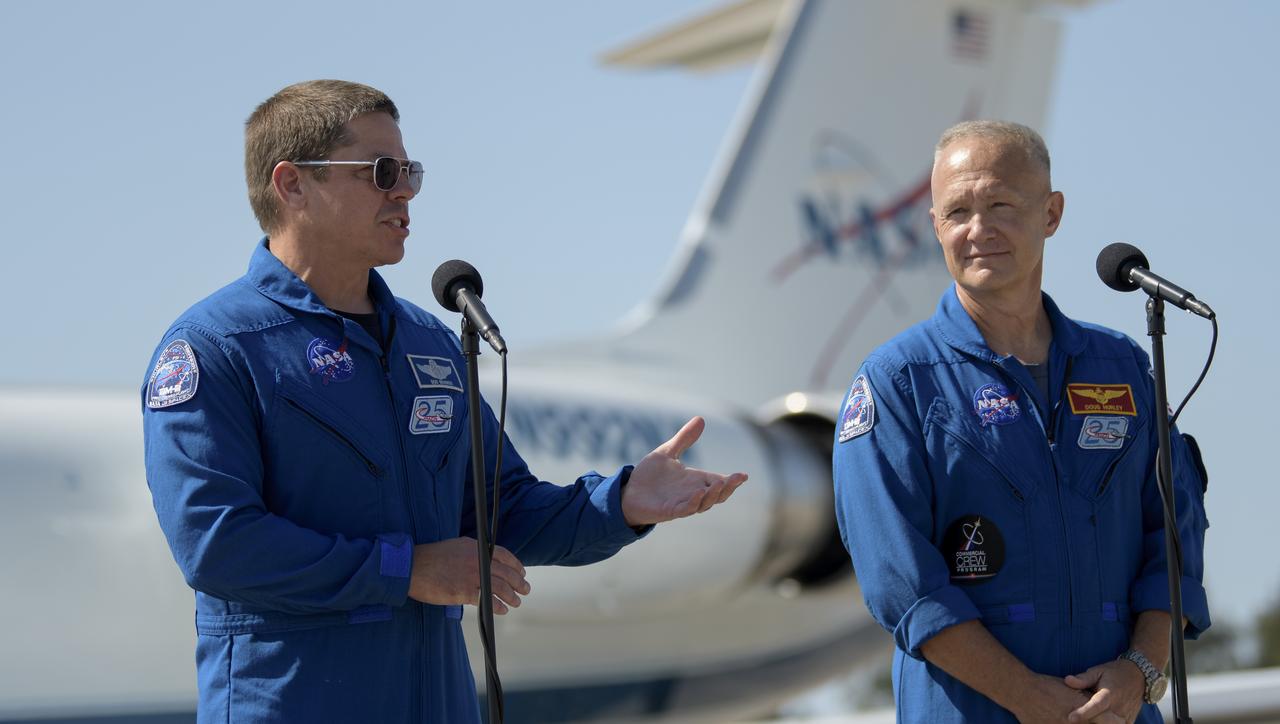
NASA astronauts Robert Behnken, left, and Douglas Hurley speak to members of the media after arriving at the Launch and Landing Facility at NASA’s Kennedy Space Center ahead of SpaceX’s Demo-2 mission, Wednesday, May 20, 2020, in Florida. NASA’s SpaceX Demo-2 mission is the first launch with astronauts of the SpaceX Crew Dragon spacecraft and Falcon 9 rocket to the International Space Station as part of the agency’s Commercial Crew Program. The flight test will serve as an end-to-end demonstration of SpaceX’s crew transportation system. Behnken and Hurley are scheduled to launch at 4:33 p.m. EDT on Wednesday, May 27, from Launch Complex 39A at the Kennedy Space Center. A new era of human spaceflight is set to begin as American astronauts once again launch on an American rocket from American soil to low-Earth orbit for the first time since the conclusion of the Space Shuttle Program in 2011. Photo Credit: (NASA/Bill Ingalls)
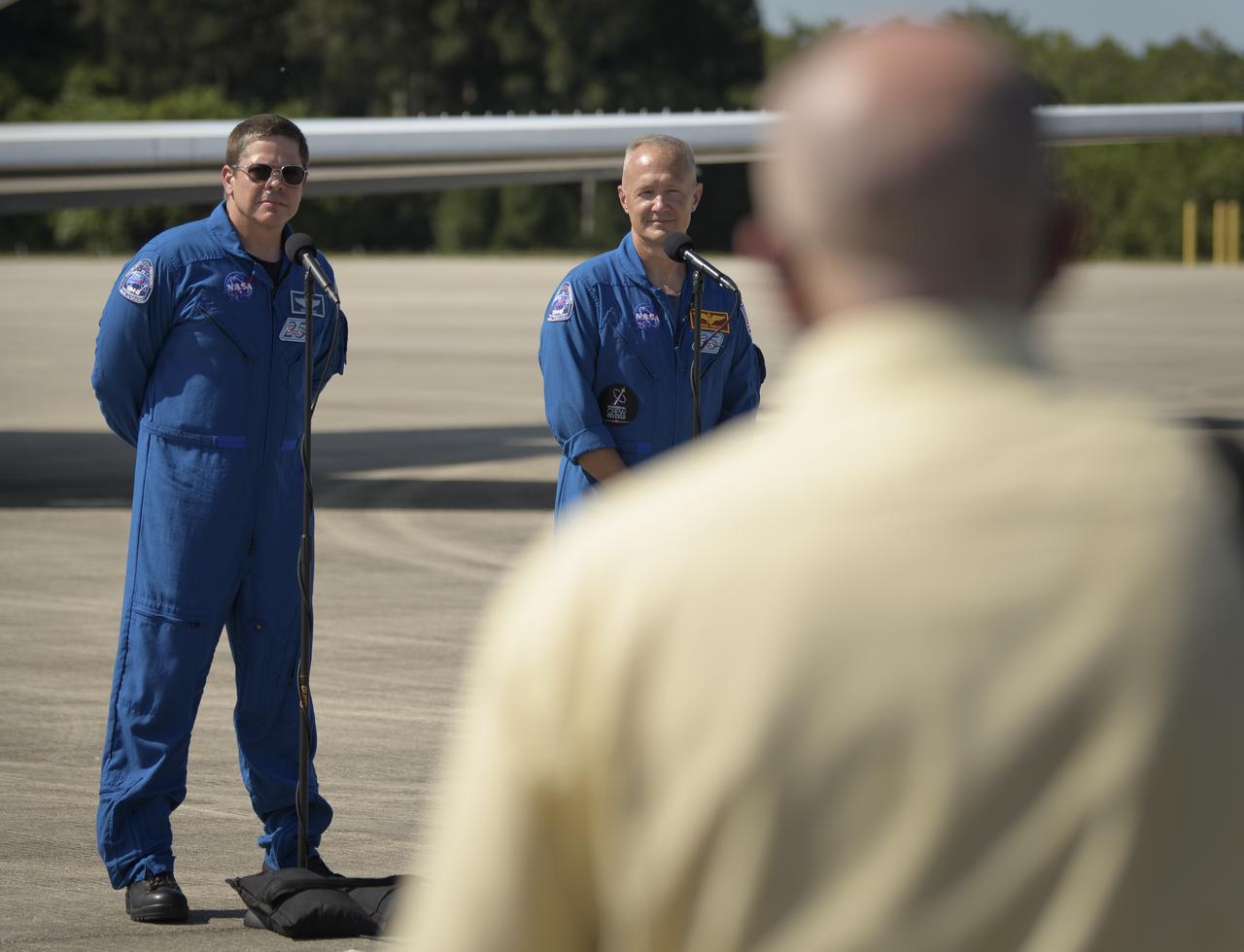
NASA astronauts Robert Behnken, left, and Douglas Hurley speak to members of the media after arriving at the Launch and Landing Facility at NASA’s Kennedy Space Center ahead of SpaceX’s Demo-2 mission, Wednesday, May 20, 2020, in Florida. NASA’s SpaceX Demo-2 mission is the first launch with astronauts of the SpaceX Crew Dragon spacecraft and Falcon 9 rocket to the International Space Station as part of the agency’s Commercial Crew Program. The flight test will serve as an end-to-end demonstration of SpaceX’s crew transportation system. Behnken and Hurley are scheduled to launch at 4:33 p.m. EDT on Wednesday, May 27, from Launch Complex 39A at the Kennedy Space Center. A new era of human spaceflight is set to begin as American astronauts once again launch on an American rocket from American soil to low-Earth orbit for the first time since the conclusion of the Space Shuttle Program in 2011. Photo Credit: (NASA/Bill Ingalls)
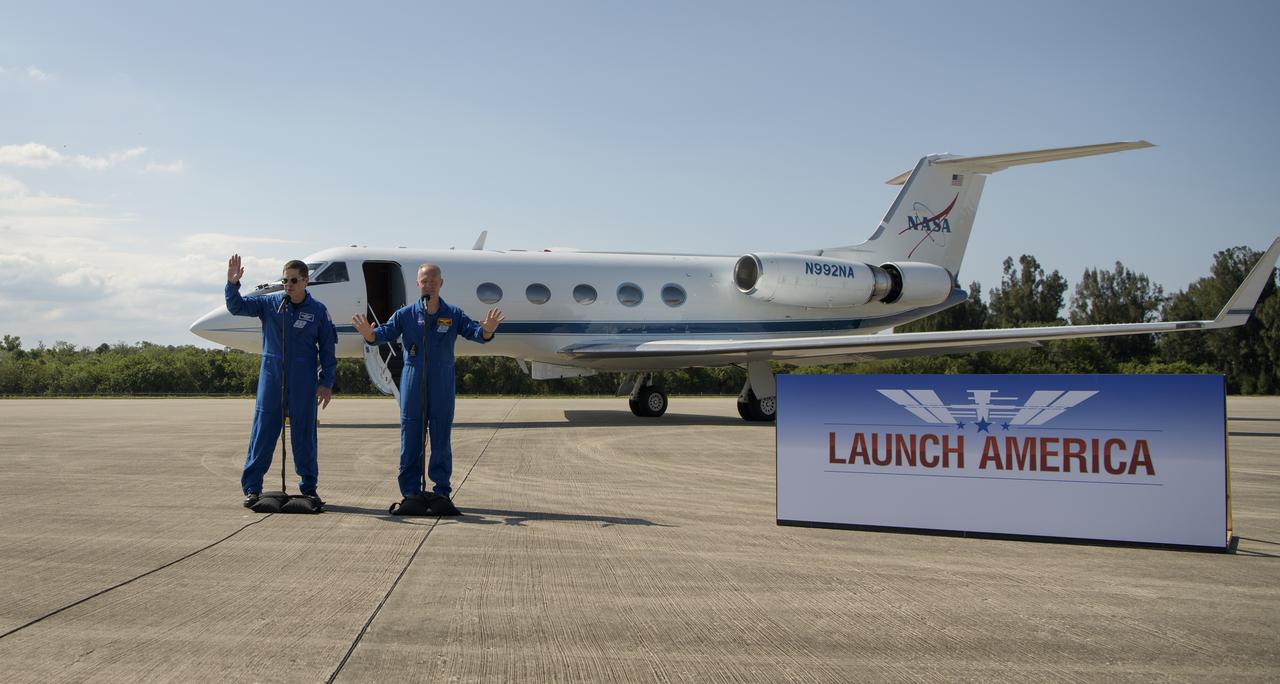
NASA astronauts Robert Behnken, left, and Douglas Hurley wave after speaking to members of the media and arriving at the Launch and Landing Facility at NASA’s Kennedy Space Center ahead of SpaceX’s Demo-2 mission, Wednesday, May 20, 2020, in Florida. NASA’s SpaceX Demo-2 mission is the first launch with astronauts of the SpaceX Crew Dragon spacecraft and Falcon 9 rocket to the International Space Station as part of the agency’s Commercial Crew Program. The flight test will serve as an end-to-end demonstration of SpaceX’s crew transportation system. Behnken and Hurley are scheduled to launch at 4:33 p.m. EDT on Wednesday, May 27, from Launch Complex 39A at the Kennedy Space Center. A new era of human spaceflight is set to begin as American astronauts once again launch on an American rocket from American soil to low-Earth orbit for the first time since the conclusion of the Space Shuttle Program in 2011. Photo Credit: (NASA/Bill Ingalls)
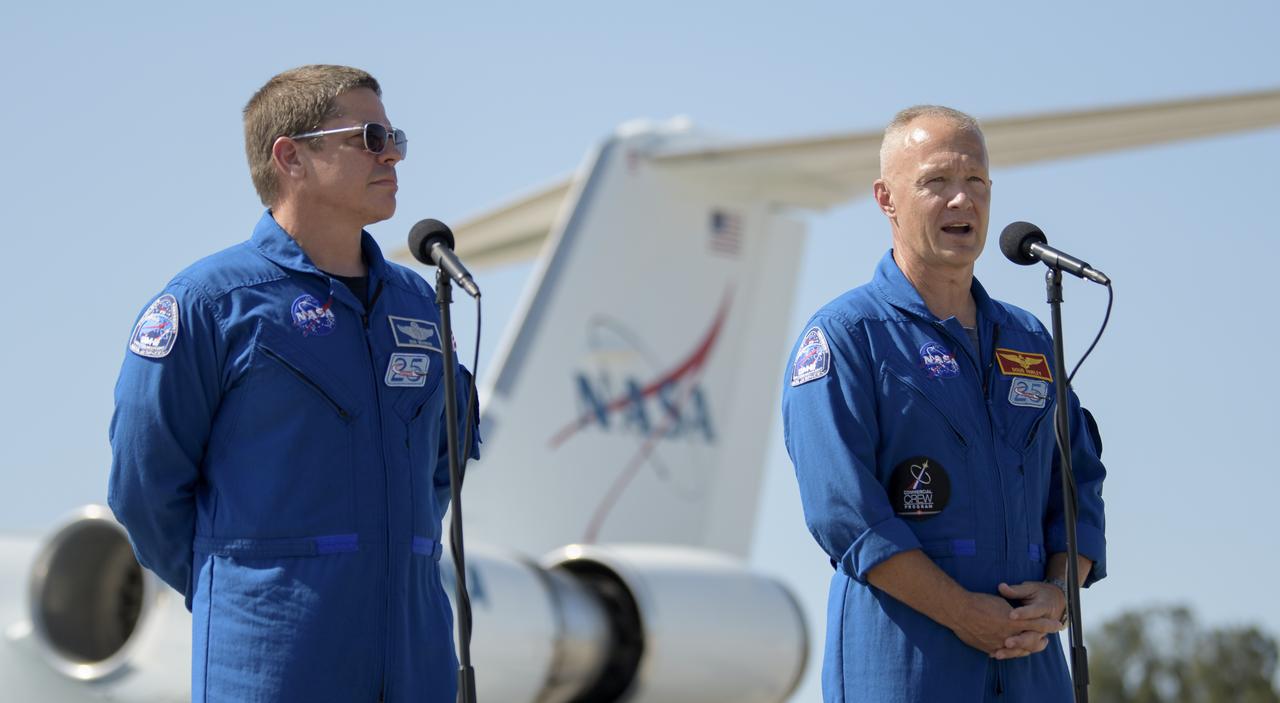
NASA astronauts Robert Behnken, left, and Douglas Hurley speak to members of the media after arriving at the Launch and Landing Facility at NASA’s Kennedy Space Center ahead of SpaceX’s Demo-2 mission, Wednesday, May 20, 2020, in Florida. NASA’s SpaceX Demo-2 mission is the first launch with astronauts of the SpaceX Crew Dragon spacecraft and Falcon 9 rocket to the International Space Station as part of the agency’s Commercial Crew Program. The flight test will serve as an end-to-end demonstration of SpaceX’s crew transportation system. Behnken and Hurley are scheduled to launch at 4:33 p.m. EDT on Wednesday, May 27, from Launch Complex 39A at the Kennedy Space Center. A new era of human spaceflight is set to begin as American astronauts once again launch on an American rocket from American soil to low-Earth orbit for the first time since the conclusion of the Space Shuttle Program in 2011. Photo Credit: (NASA/Bill Ingalls)
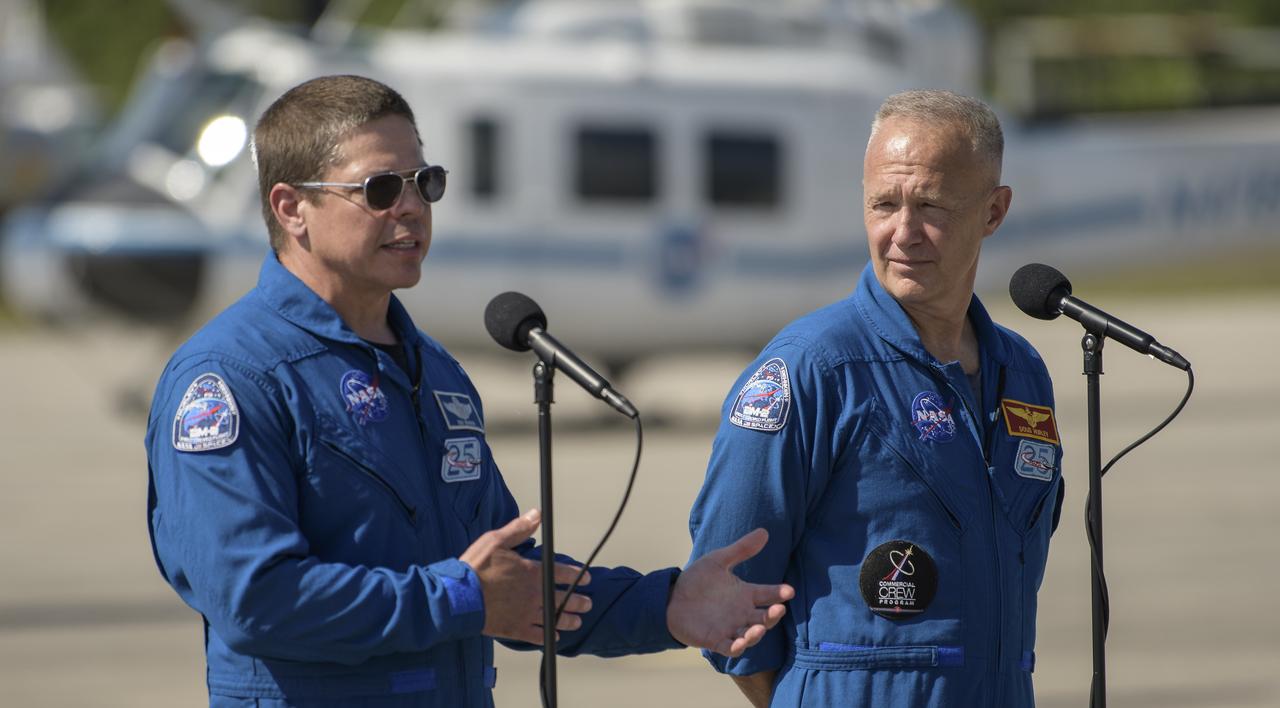
NASA astronauts Robert Behnken, left, and Douglas Hurley speak to members of the media after arriving at the Launch and Landing Facility at NASA’s Kennedy Space Center ahead of SpaceX’s Demo-2 mission, Wednesday, May 20, 2020, in Florida. NASA’s SpaceX Demo-2 mission is the first launch with astronauts of the SpaceX Crew Dragon spacecraft and Falcon 9 rocket to the International Space Station as part of the agency’s Commercial Crew Program. The flight test will serve as an end-to-end demonstration of SpaceX’s crew transportation system. Behnken and Hurley are scheduled to launch at 4:33 p.m. EDT on Wednesday, May 27, from Launch Complex 39A at the Kennedy Space Center. A new era of human spaceflight is set to begin as American astronauts once again launch on an American rocket from American soil to low-Earth orbit for the first time since the conclusion of the Space Shuttle Program in 2011. Photo Credit: (NASA/Bill Ingalls)
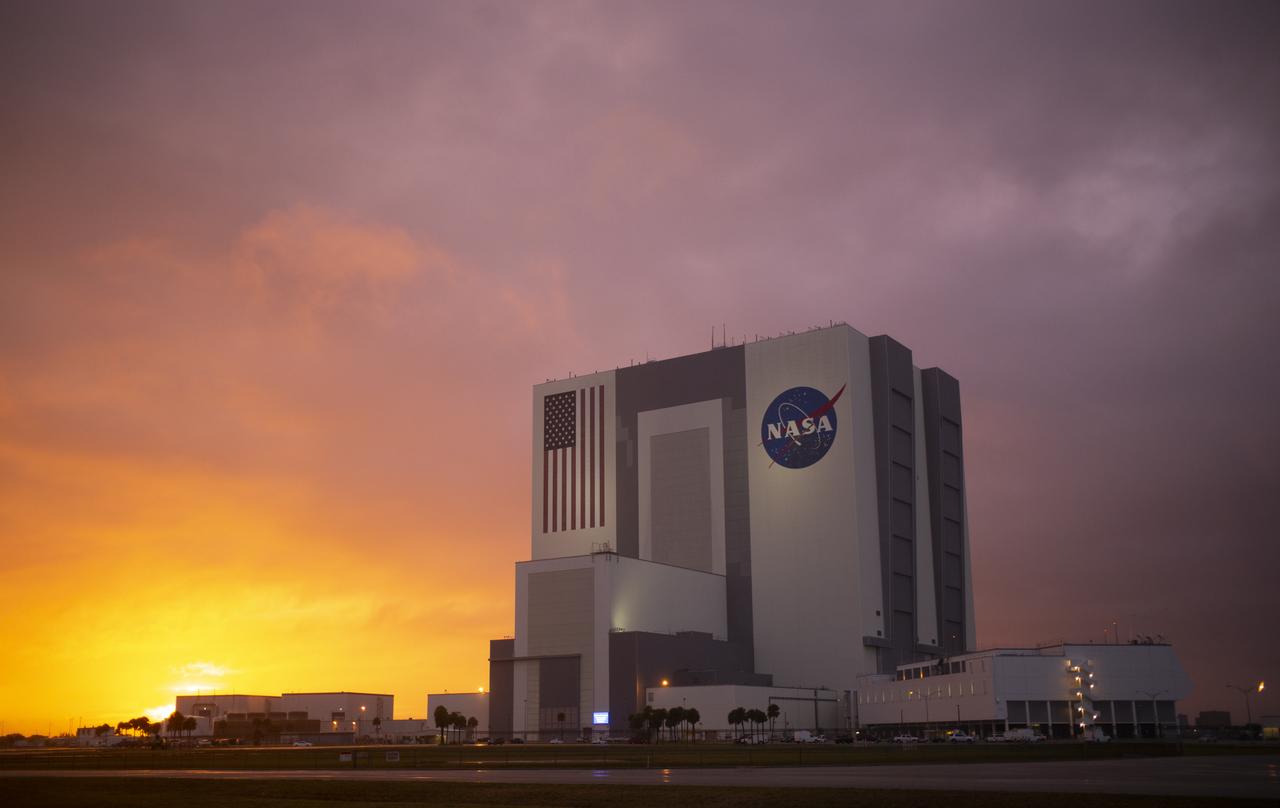
The Vehicle Assembly Building is seen at sunset as preparations continue for the NASA’s SpaceX Demo-2 mission, Monday, May 25, 2020, at NASA’s Kennedy Space Center in Florida. NASA’s SpaceX Demo-2 mission is the first launch with astronauts of the SpaceX Crew Dragon spacecraft and Falcon 9 rocket to the International Space Station as part of the agency’s Commercial Crew Program. The test flight serves as an end-to-end demonstration of SpaceX’s crew transportation system. Robert Behnken and Douglas Hurley are scheduled to launch at 4:33 p.m. EDT on Wednesday, May 27, from Launch Complex 39A at the Kennedy Space Center. A new era of human spaceflight is set to begin as American astronauts once again launch on an American rocket from American soil to low-Earth orbit for the first time since the conclusion of the Space Shuttle Program in 2011. Photo Credit: (NASA/Joel Kowsky)
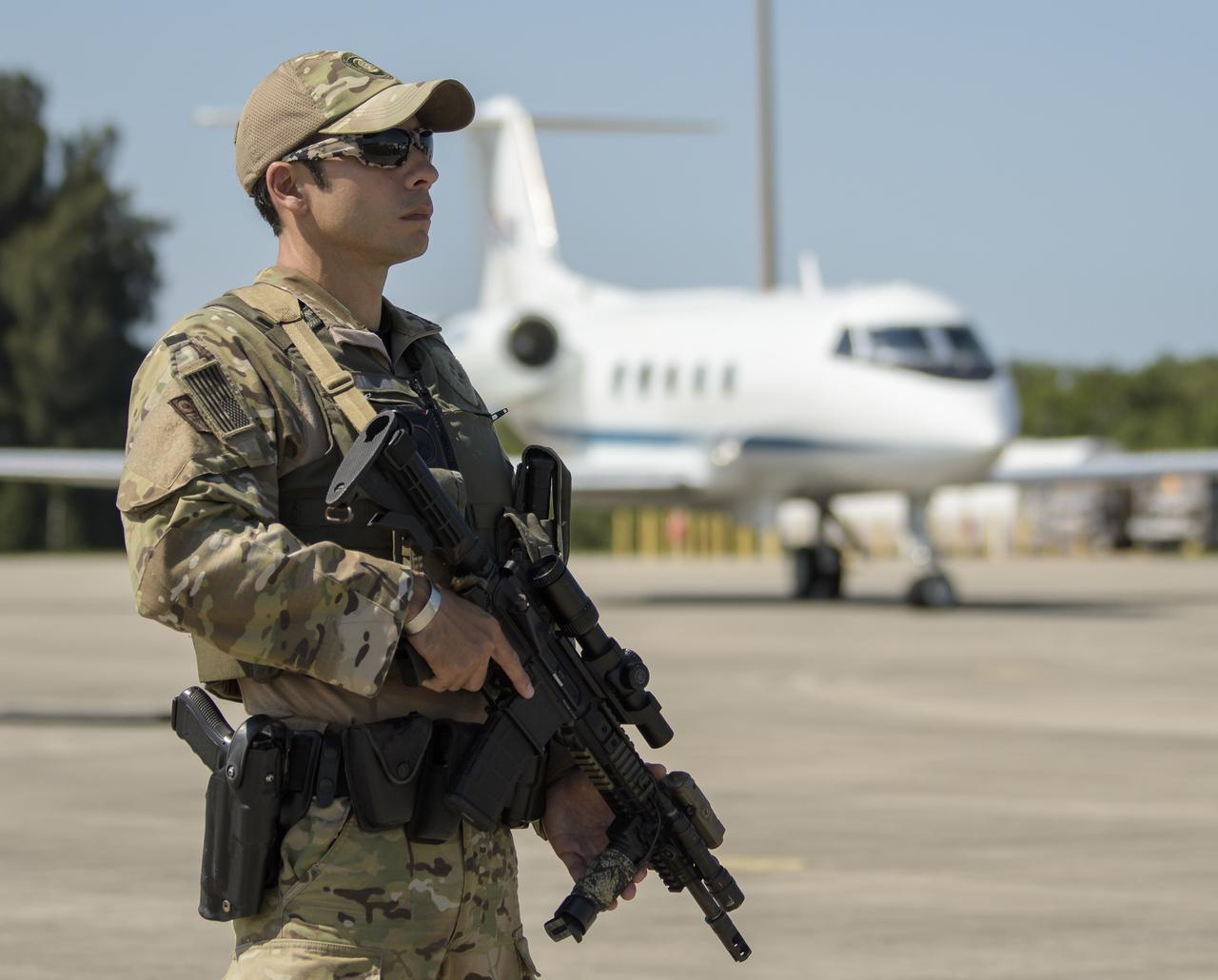
NASA astronauts Douglas Hurley and Robert Behnken arrive at the Launch and Landing Facility at NASA’s Kennedy Space Center ahead of SpaceX’s Demo-2 mission, Wednesday, May 20, 2020, in Florida. NASA’s SpaceX Demo-2 mission is the first launch with astronauts of the SpaceX Crew Dragon spacecraft and Falcon 9 rocket to the International Space Station as part of the agency’s Commercial Crew Program. The flight test will serve as an end-to-end demonstration of SpaceX’s crew transportation system. Behnken and Hurley are scheduled to launch at 4:33 p.m. EDT on Wednesday, May 27, from Launch Complex 39A at the Kennedy Space Center. A new era of human spaceflight is set to begin as American astronauts once again launch on an American rocket from American soil to low-Earth orbit for the first time since the conclusion of the Space Shuttle Program in 2011. Photo Credit: (NASA/Bill Ingalls)

President Donald Trump departs Air Force One after arriving at NASA’s Kennedy Space Center Launch and Landing Facility ahead of SpaceX’s Demo-2 mission, Saturday, May 30, 2020, in Florida. NASA’s SpaceX Demo-2 mission is the first launch with astronauts of the SpaceX Crew Dragon spacecraft and Falcon 9 rocket to the International Space Station as part of the agency’s Commercial Crew Program. The test flight serves as an end-to-end demonstration of SpaceX’s crew transportation system. Behnken and Hurley are scheduled to launch at 3:22 p.m. EDT on Saturday, May 30, from Launch Complex 39A at the Kennedy Space Center. A new era of human spaceflight is set to begin as American astronauts once again launch on an American rocket from American soil to low-Earth orbit for the first time since the conclusion of the Space Shuttle Program in 2011. Photo Credit: (NASA/Bill Ingalls)
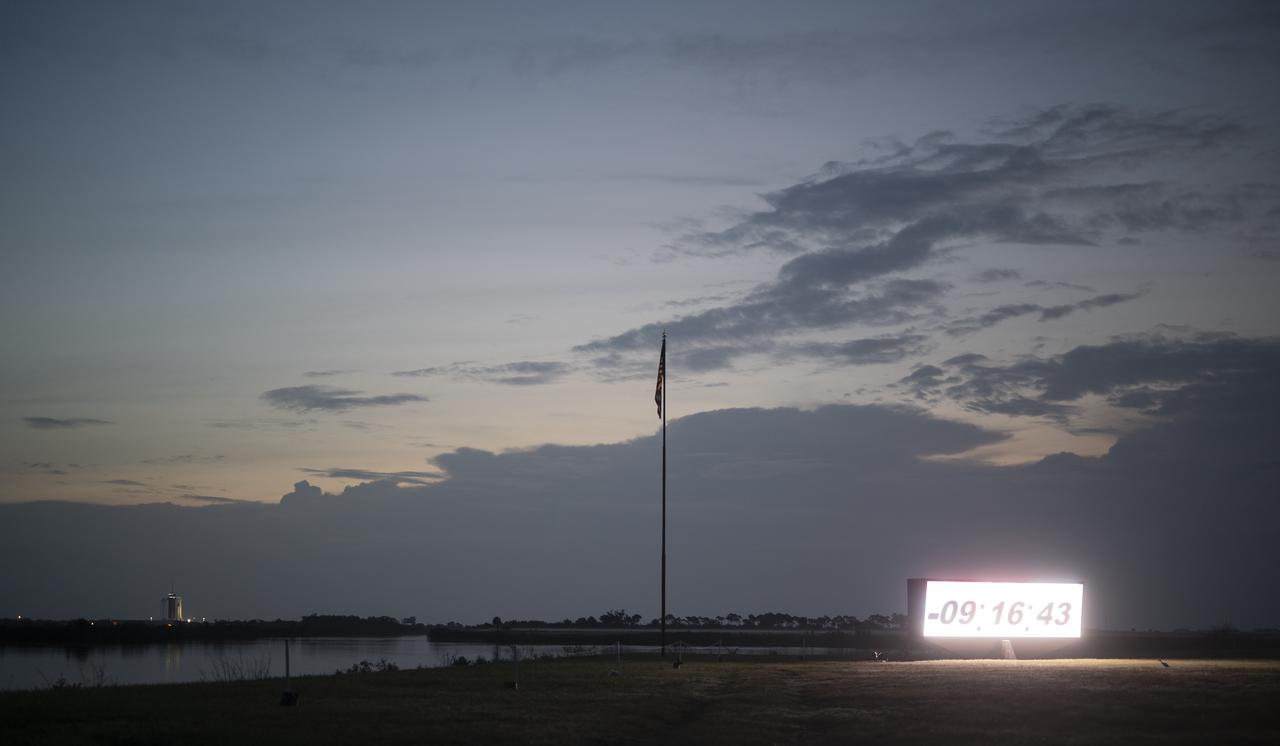
The countdown clock at NASA’s Kennedy Space Center Press Site is seen during sunrise on launch day for NASA’s SpaceX Demo-2 mission, Saturday, May 30, 2020, in Florida. NASA’s SpaceX Demo-2 mission is the first launch with astronauts of the SpaceX Crew Dragon spacecraft and Falcon 9 rocket to the International Space Station as part of the agency’s Commercial Crew Program. The test flight serves as an end-to-end demonstration of SpaceX’s crew transportation system. Robert Behnken and Douglas Hurley are scheduled to launch at 3:22 p.m. EDT on Saturday, May 30, from Launch Complex 39A at the Kennedy Space Center. A new era of human spaceflight is set to begin as American astronauts once again launch on an American rocket from American soil to low-Earth orbit for the first time since the conclusion of the Space Shuttle Program in 2011. Photo Credit: (NASA/Joel Kowsky)
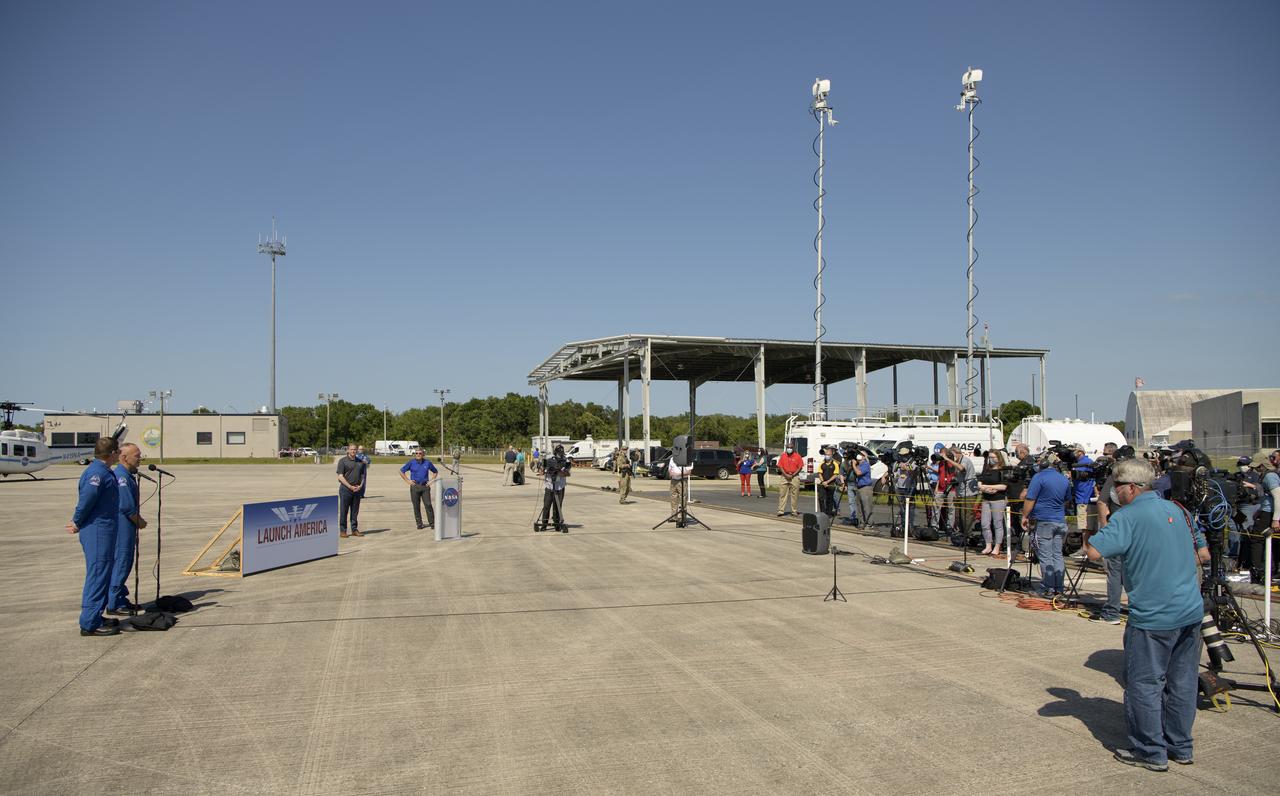
NASA astronauts Robert Behnken, left, and Douglas Hurley speak to members of the media after arriving at the Launch and Landing Facility at NASA’s Kennedy Space Center ahead of SpaceX’s Demo-2 mission, Wednesday, May 20, 2020, in Florida. NASA’s SpaceX Demo-2 mission is the first launch with astronauts of the SpaceX Crew Dragon spacecraft and Falcon 9 rocket to the International Space Station as part of the agency’s Commercial Crew Program. The flight test will serve as an end-to-end demonstration of SpaceX’s crew transportation system. Behnken and Hurley are scheduled to launch at 4:33 p.m. EDT on Wednesday, May 27, from Launch Complex 39A at the Kennedy Space Center. A new era of human spaceflight is set to begin as American astronauts once again launch on an American rocket from American soil to low-Earth orbit for the first time since the conclusion of the Space Shuttle Program in 2011. Photo Credit: (NASA/Bill Ingalls)
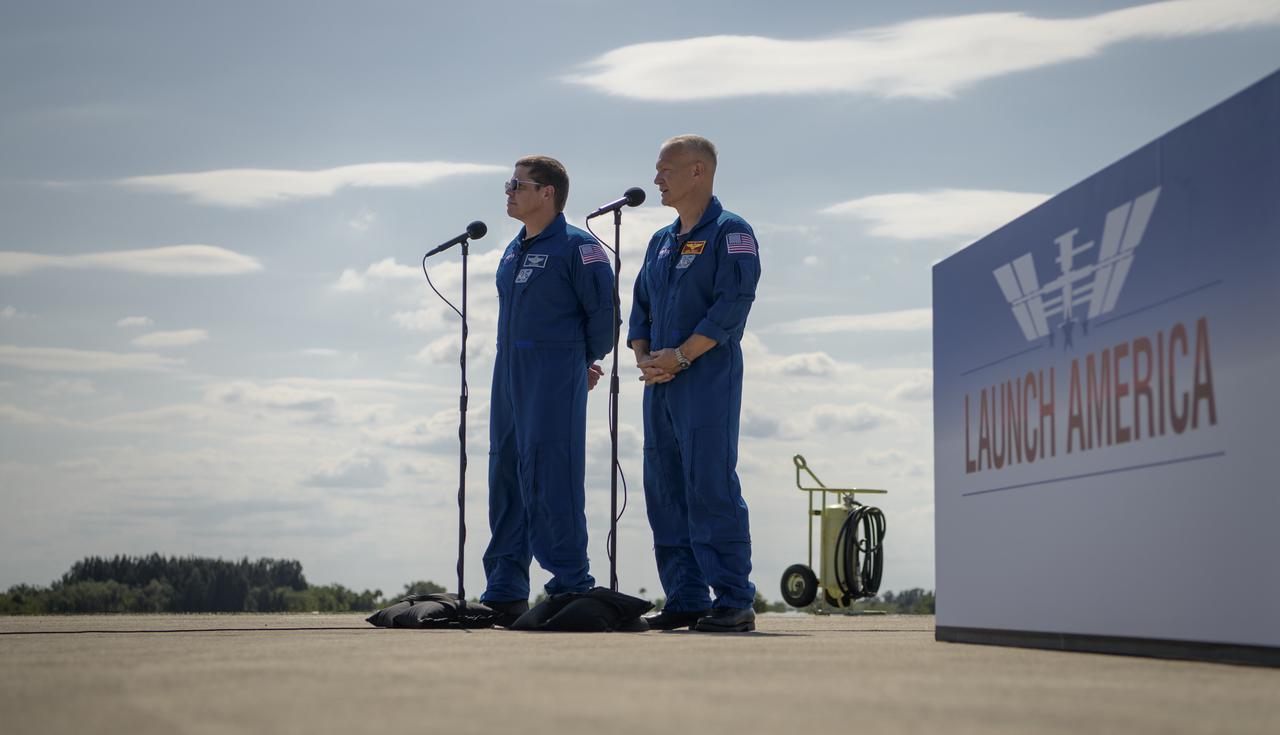
NASA astronauts Robert Behnken, left, and Douglas Hurley speak to members of the media after arriving at the Launch and Landing Facility at NASA’s Kennedy Space Center ahead of SpaceX’s Demo-2 mission, Wednesday, May 20, 2020, in Florida. NASA’s SpaceX Demo-2 mission is the first launch with astronauts of the SpaceX Crew Dragon spacecraft and Falcon 9 rocket to the International Space Station as part of the agency’s Commercial Crew Program. The flight test will serve as an end-to-end demonstration of SpaceX’s crew transportation system. Behnken and Hurley are scheduled to launch at 4:33 p.m. EDT on Wednesday, May 27, from Launch Complex 39A at the Kennedy Space Center. A new era of human spaceflight is set to begin as American astronauts once again launch on an American rocket from American soil to low-Earth orbit for the first time since the conclusion of the Space Shuttle Program in 2011. Photo Credit: (NASA/Bill Ingalls)
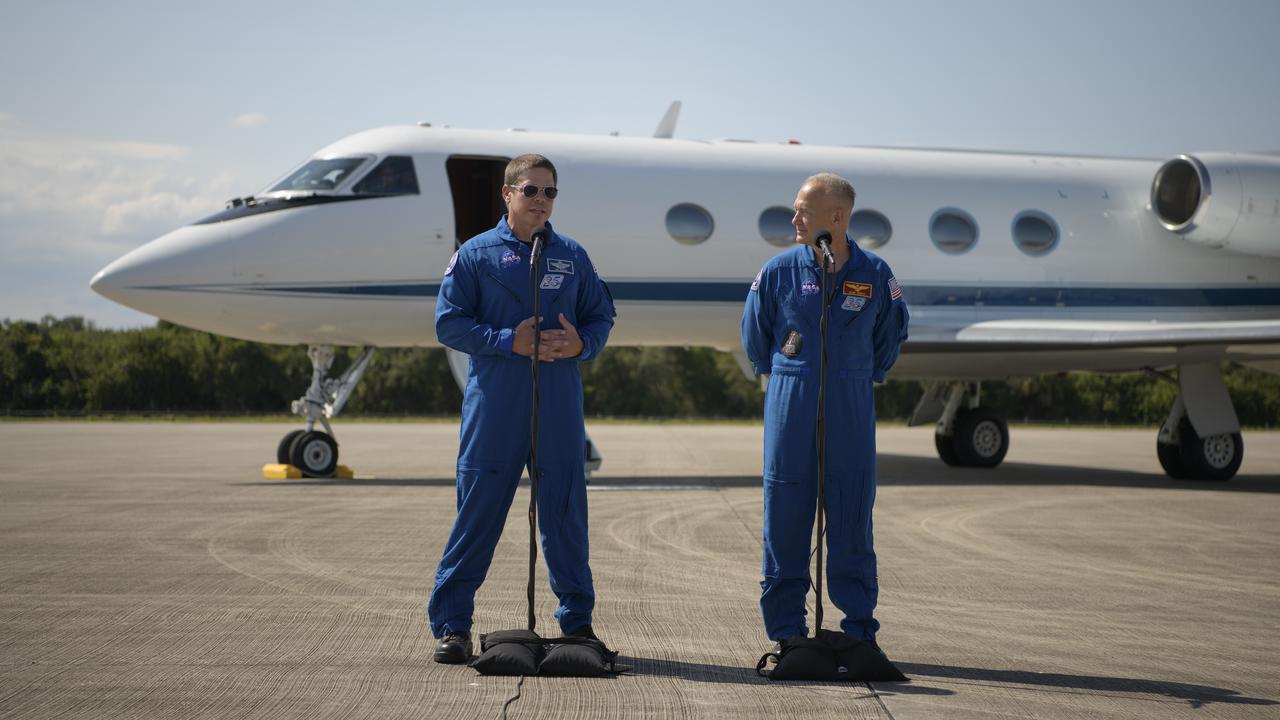
NASA astronauts Robert Behnken, left, and Douglas Hurley speak to members of the media after arriving at the Launch and Landing Facility at NASA’s Kennedy Space Center ahead of SpaceX’s Demo-2 mission, Wednesday, May 20, 2020, in Florida. NASA’s SpaceX Demo-2 mission is the first launch with astronauts of the SpaceX Crew Dragon spacecraft and Falcon 9 rocket to the International Space Station as part of the agency’s Commercial Crew Program. The flight test will serve as an end-to-end demonstration of SpaceX’s crew transportation system. Behnken and Hurley are scheduled to launch at 4:33 p.m. EDT on Wednesday, May 27, from Launch Complex 39A at the Kennedy Space Center. A new era of human spaceflight is set to begin as American astronauts once again launch on an American rocket from American soil to low-Earth orbit for the first time since the conclusion of the Space Shuttle Program in 2011. Photo Credit: (NASA/Bill Ingalls)