
N-211 Ames Hangar - ground views
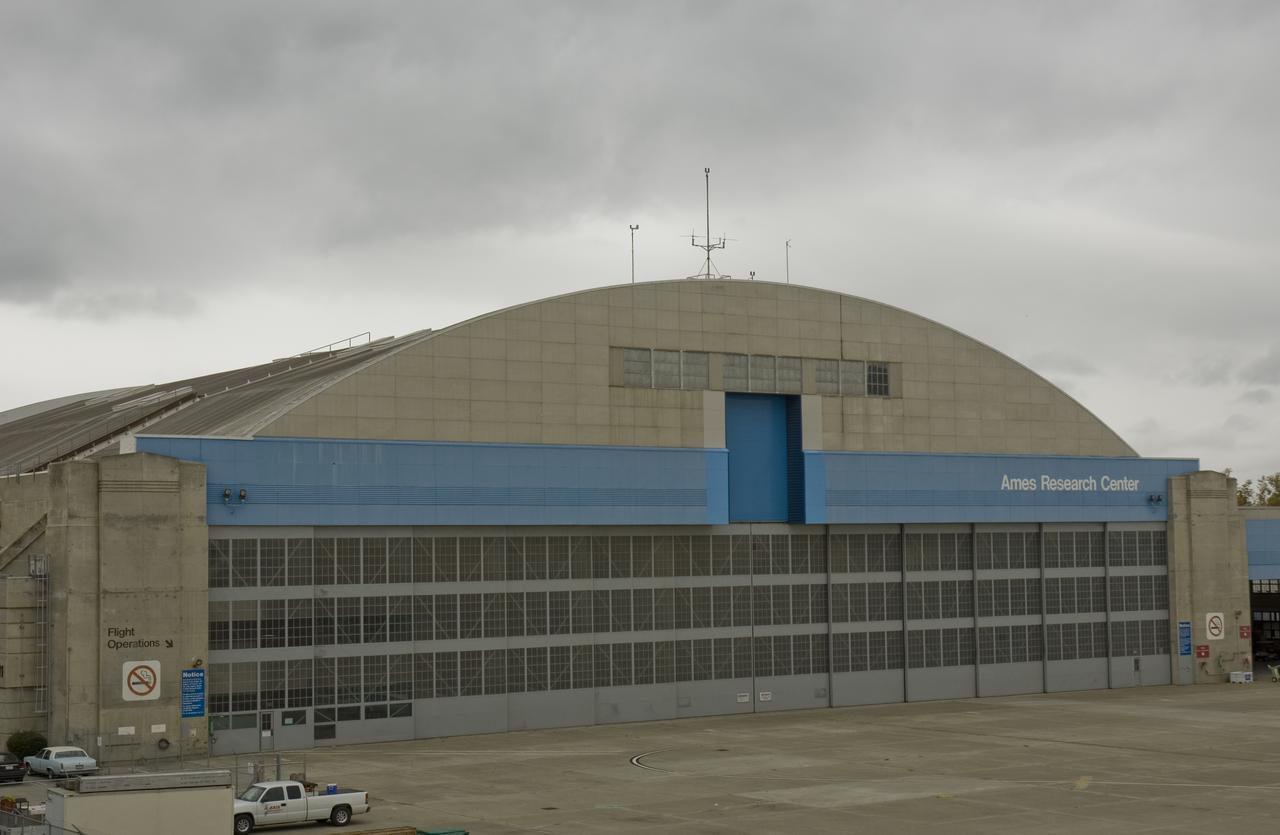
N-211 Ames Hangar - ground views

N-211 Ames Hangar - ground views

N-211 Ames Hangar - ground views
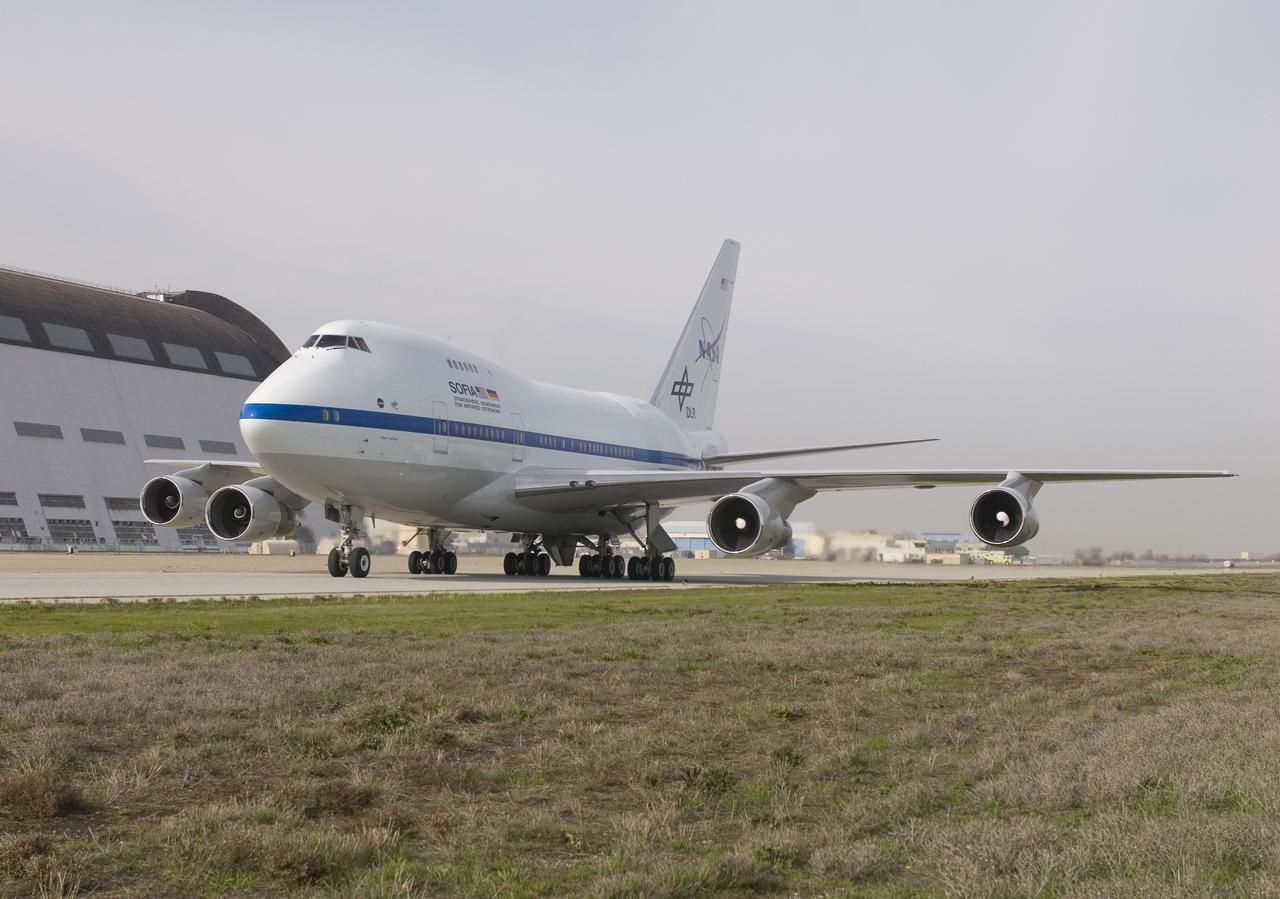
NASA's SOFIA airborne observatory taxis past Hangar 1, the 1930s-era dirigible hangar at Moffett Field, during its first visit to NASA Ames Research Center.
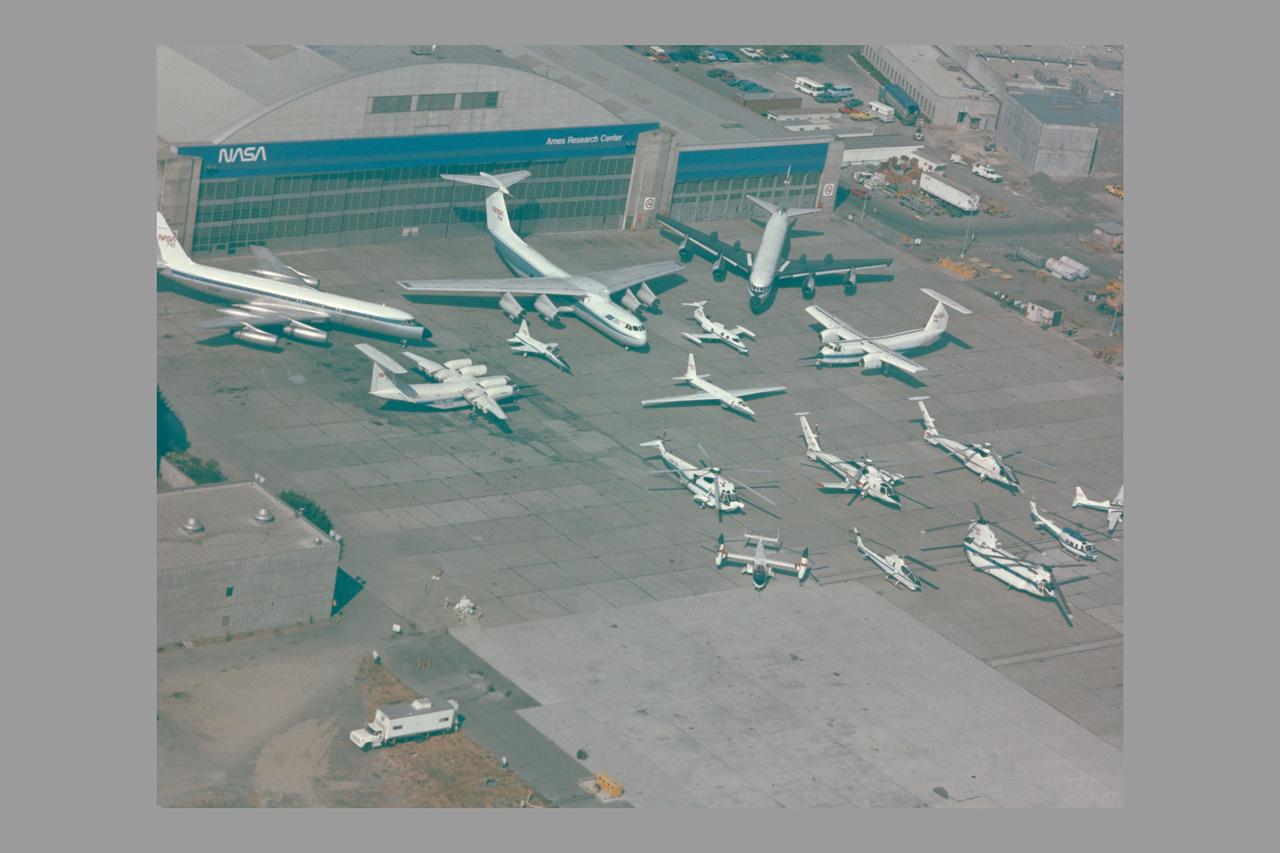
NASA Ames Research Center Aircraft on ramp. Photographed front of Ames hangar.
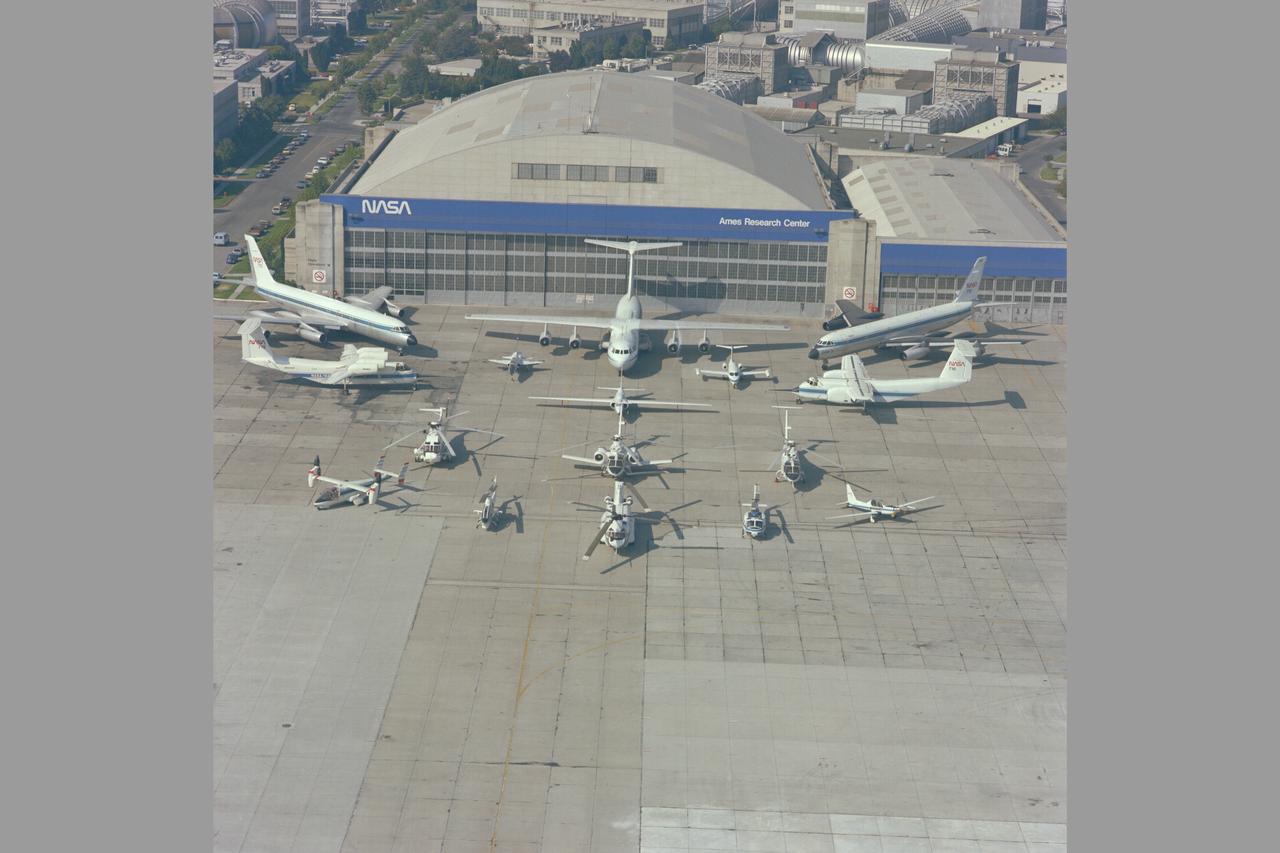
NASA Ames Research Center Aircraft and Helicopter compliment on ramp in front of Ames hangar.
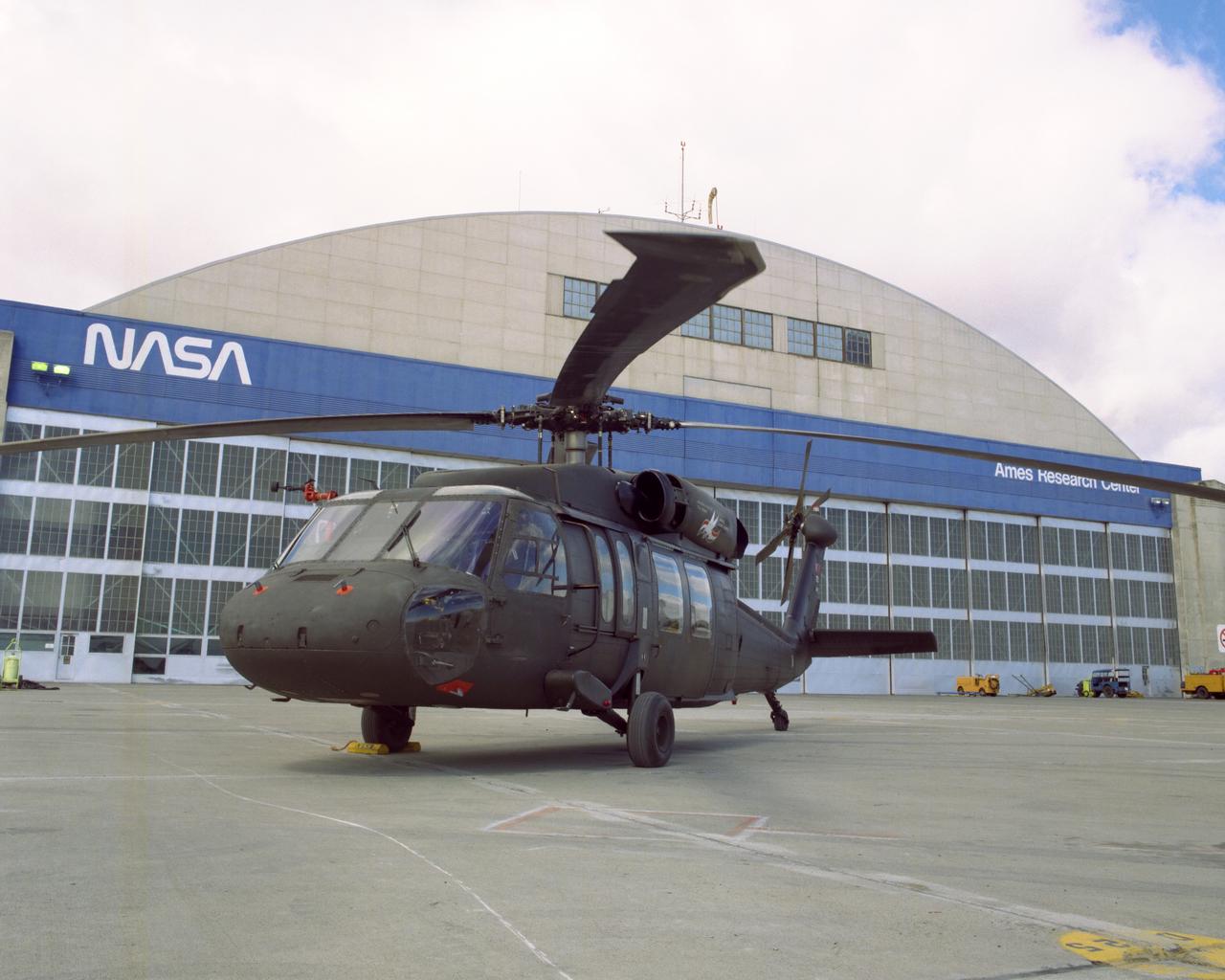
UH-60 NASA-750 in front of Ames hangar
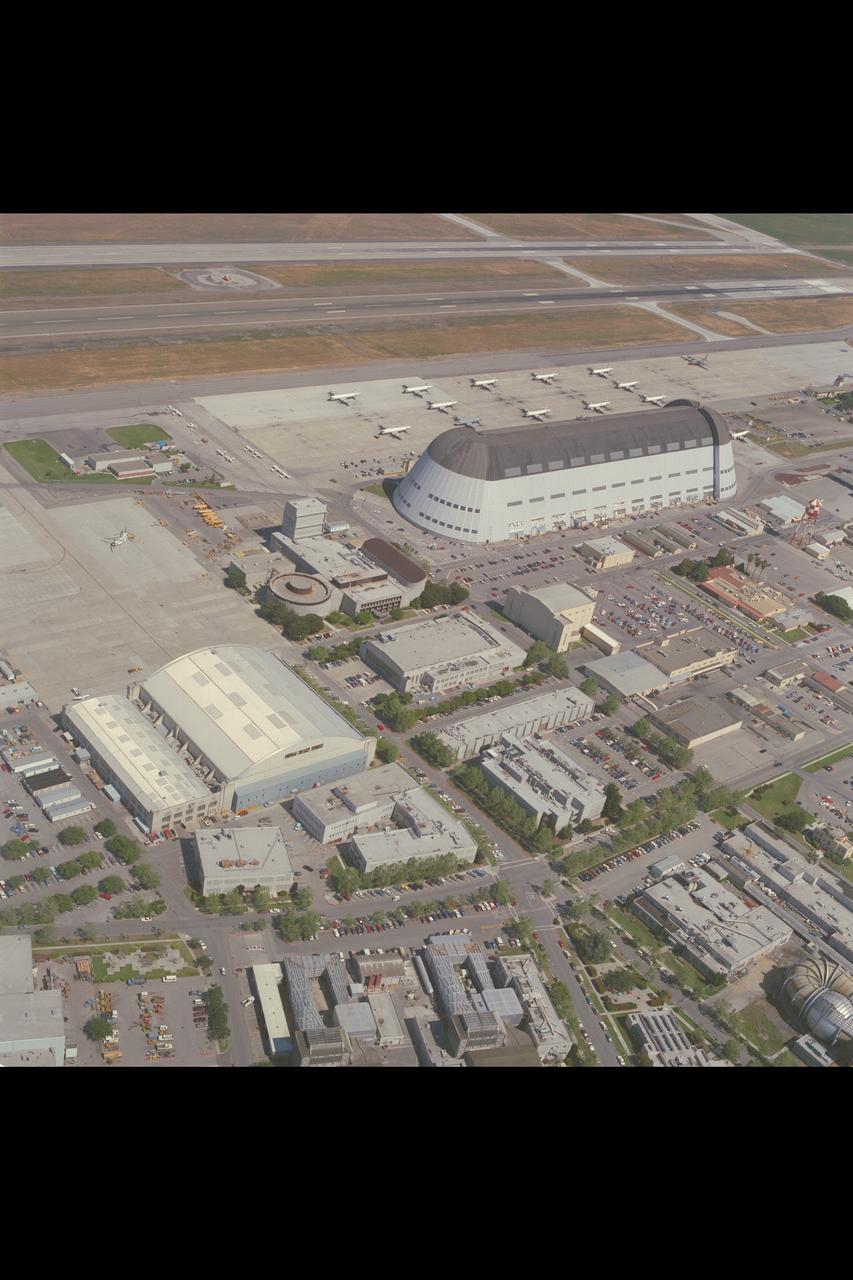
Ames aerial: Hangar 1, N-211 Hangar, N-243 & N-243A, N-239, N-213, N-212
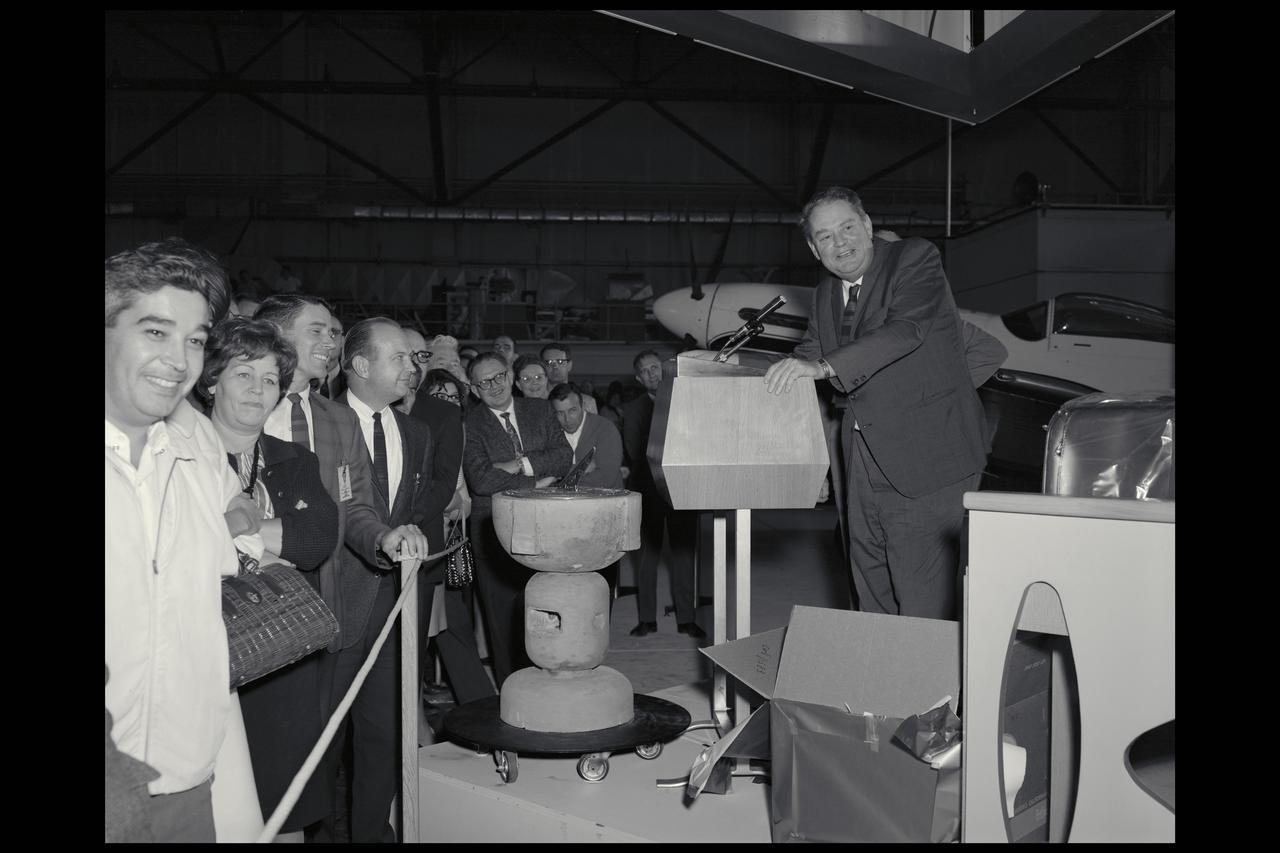
Harvey Allen at his retirement party held in the Ames Hangar N-211.
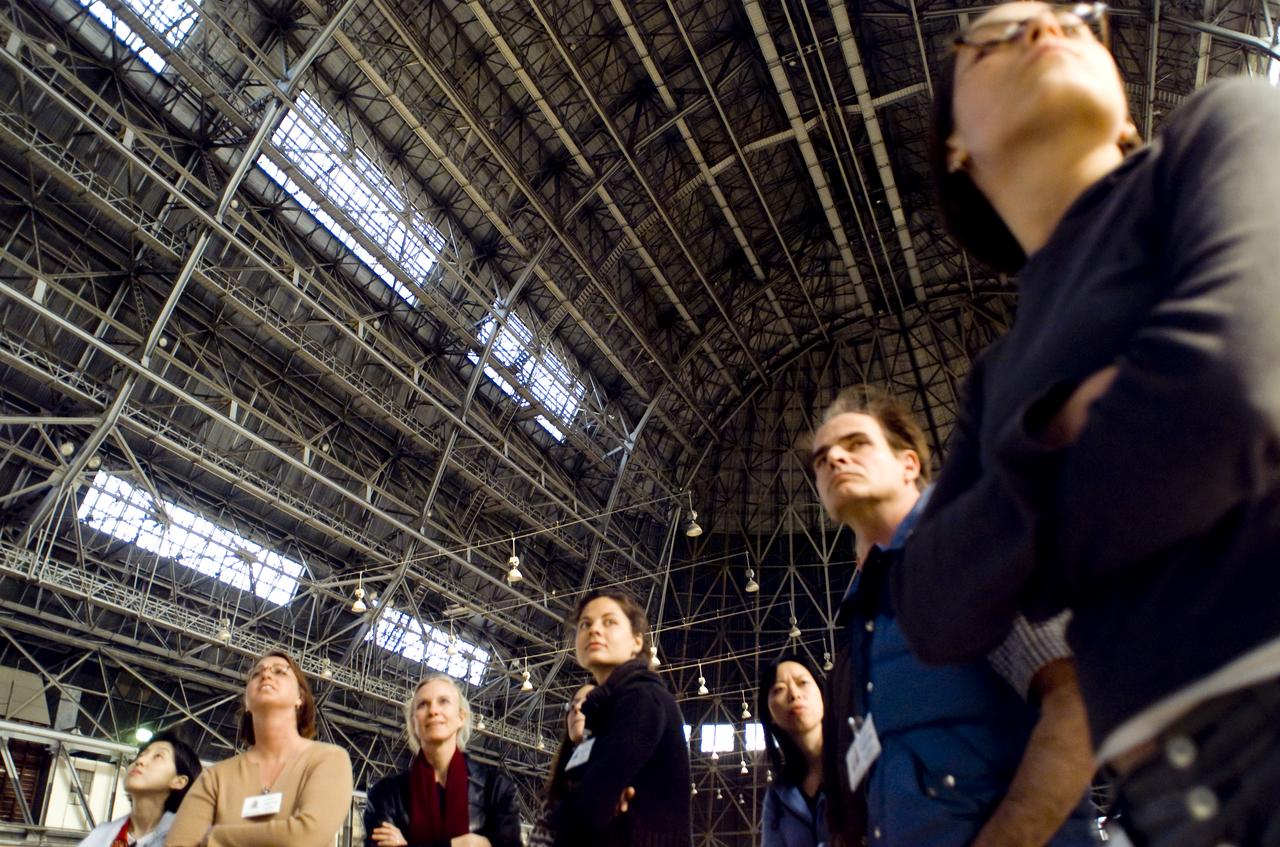
San Jose State University Art Students tour Ames Hangar One
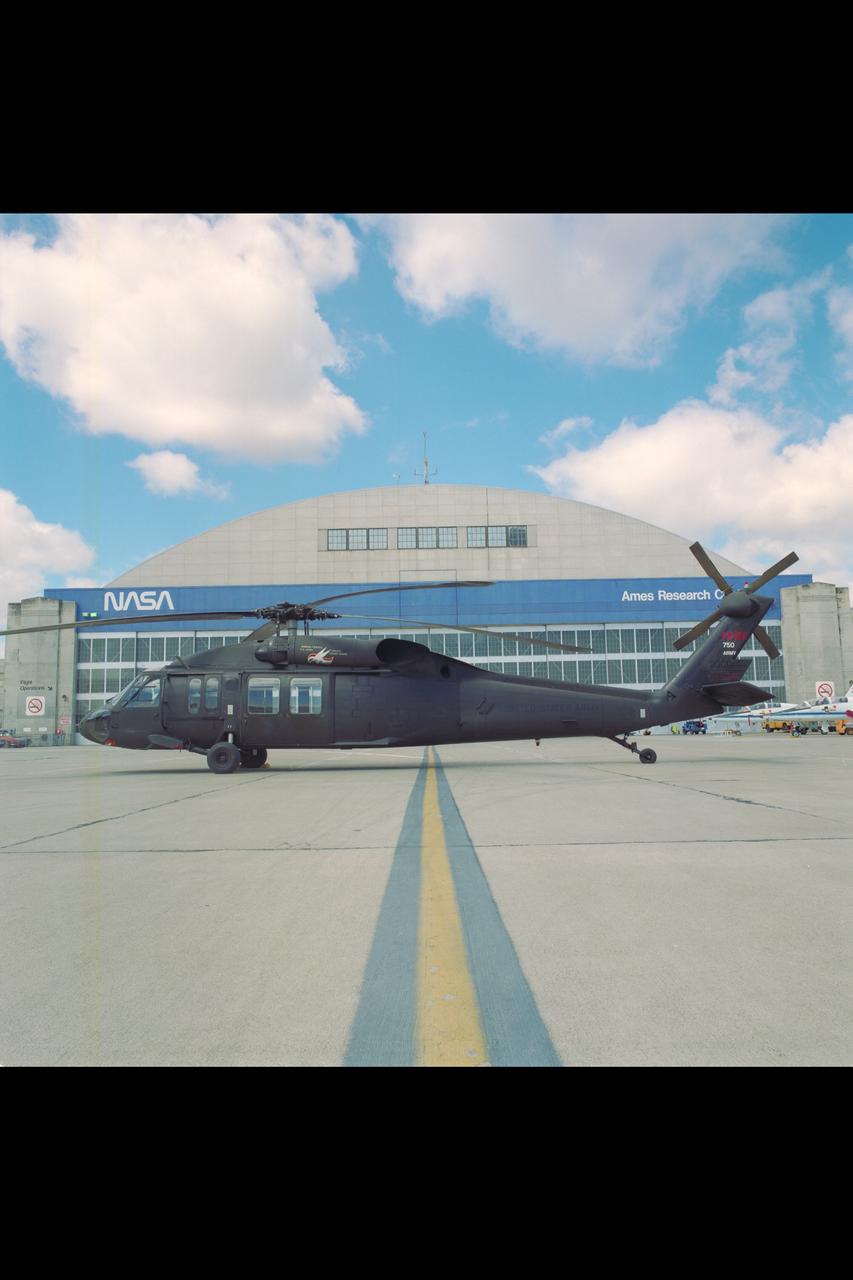
UH-60 (NASA-750) on Ames ramp - side view in front of hangar
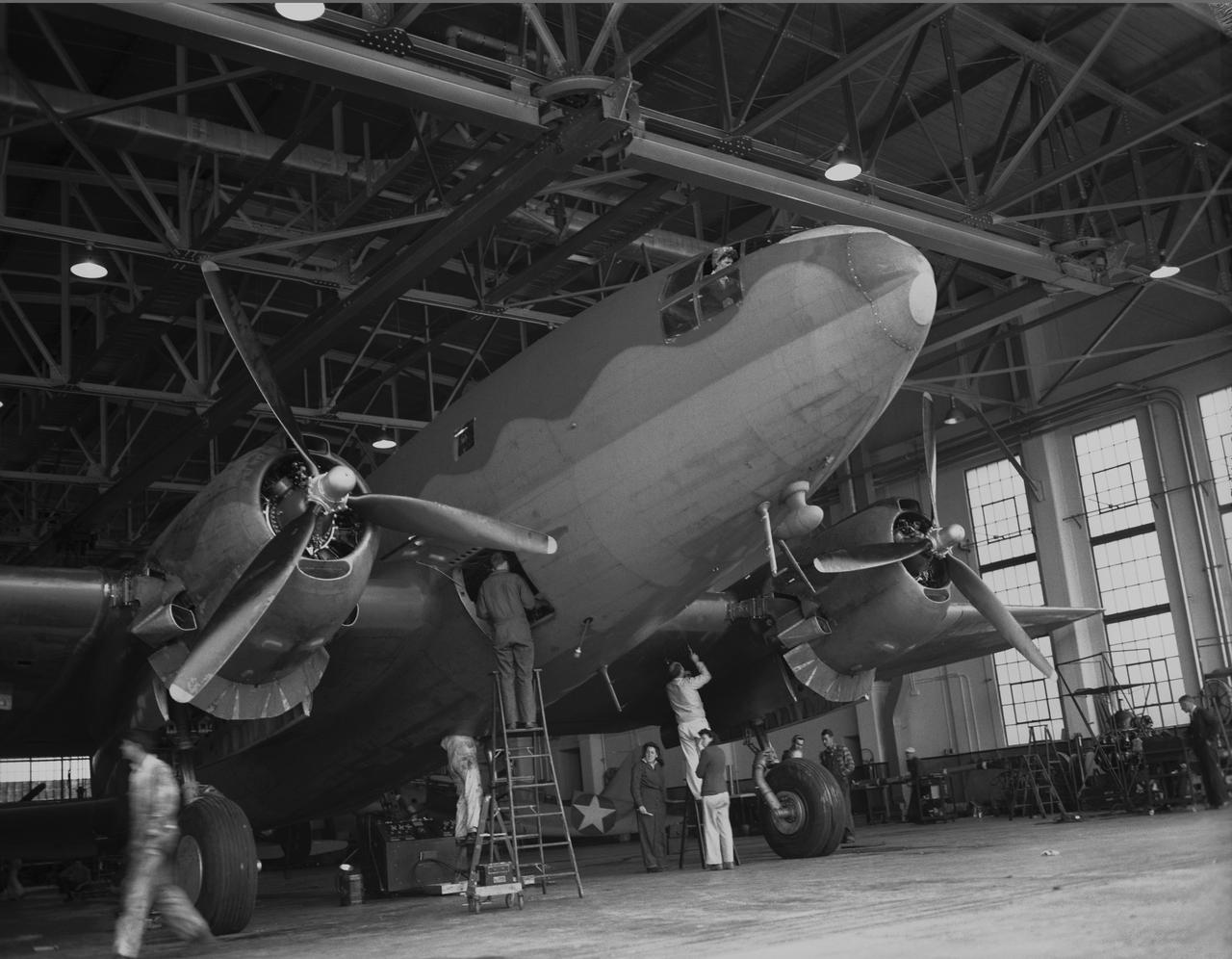
Ames mechanics working on C-46 airplane in front of hangar
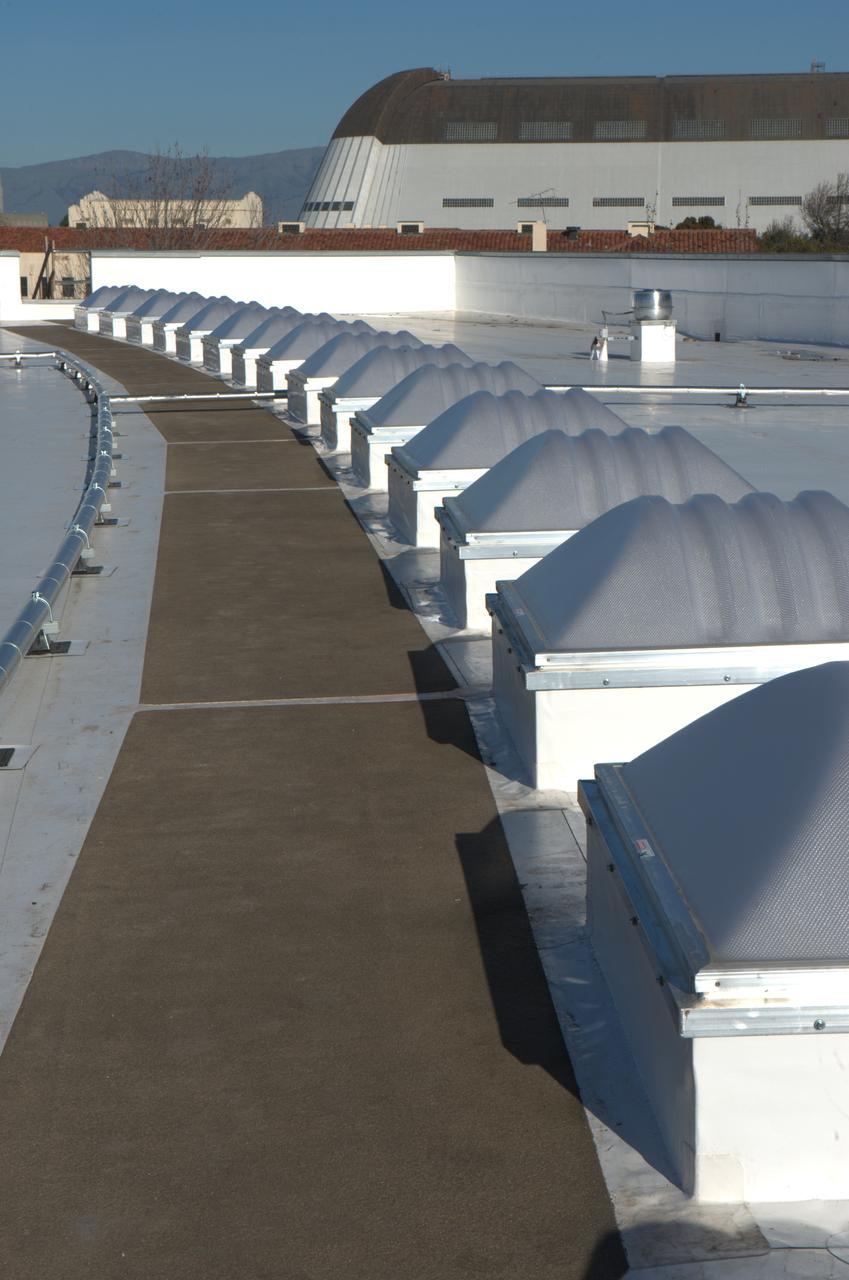
Construction of the new NASA Ames Green Building dubbed Sustainability Base located on the Ames Research Center campus at Moffett Field, CA. Skylight and piping on roof, Hangar One in background.
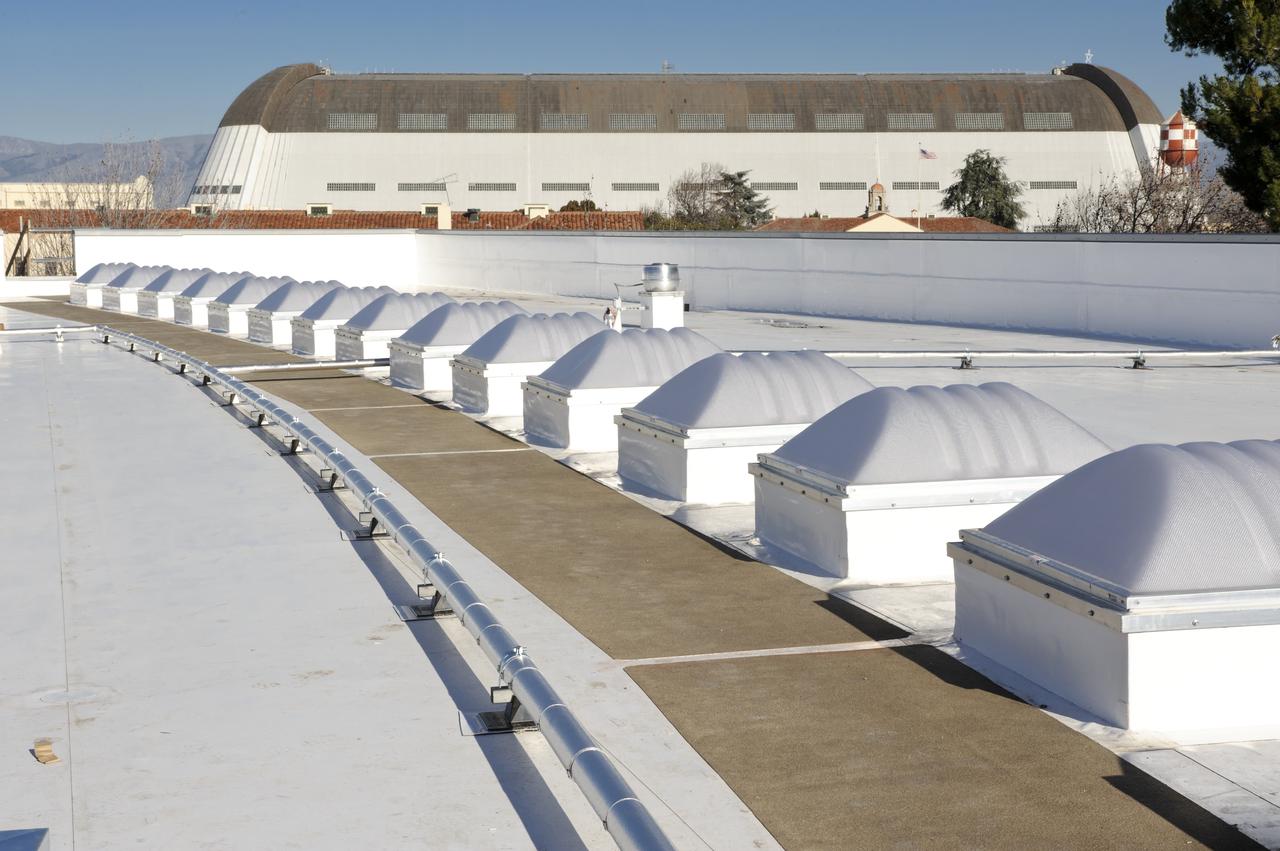
Construction of the new NASA Ames Green Building dubbed Sustainability Base located on the Ames Research Center campus at Moffett Field, CA. Skylight and piping on roof, Hangar One in background.
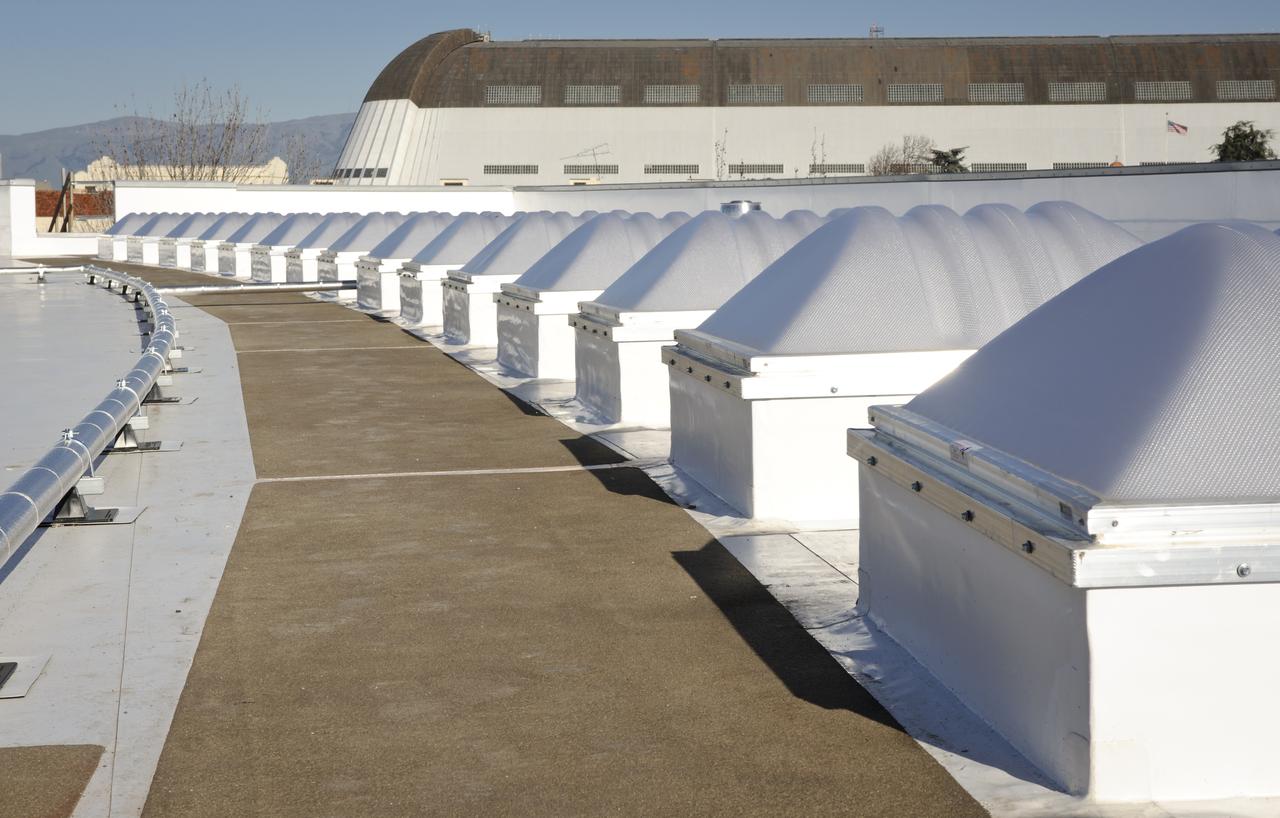
Construction of the new NASA Ames Green Building dubbed Sustainability Base located on the Ames Research Center campus at Moffett Field, CA. Skylight and piping on roof, Hangar One in background.
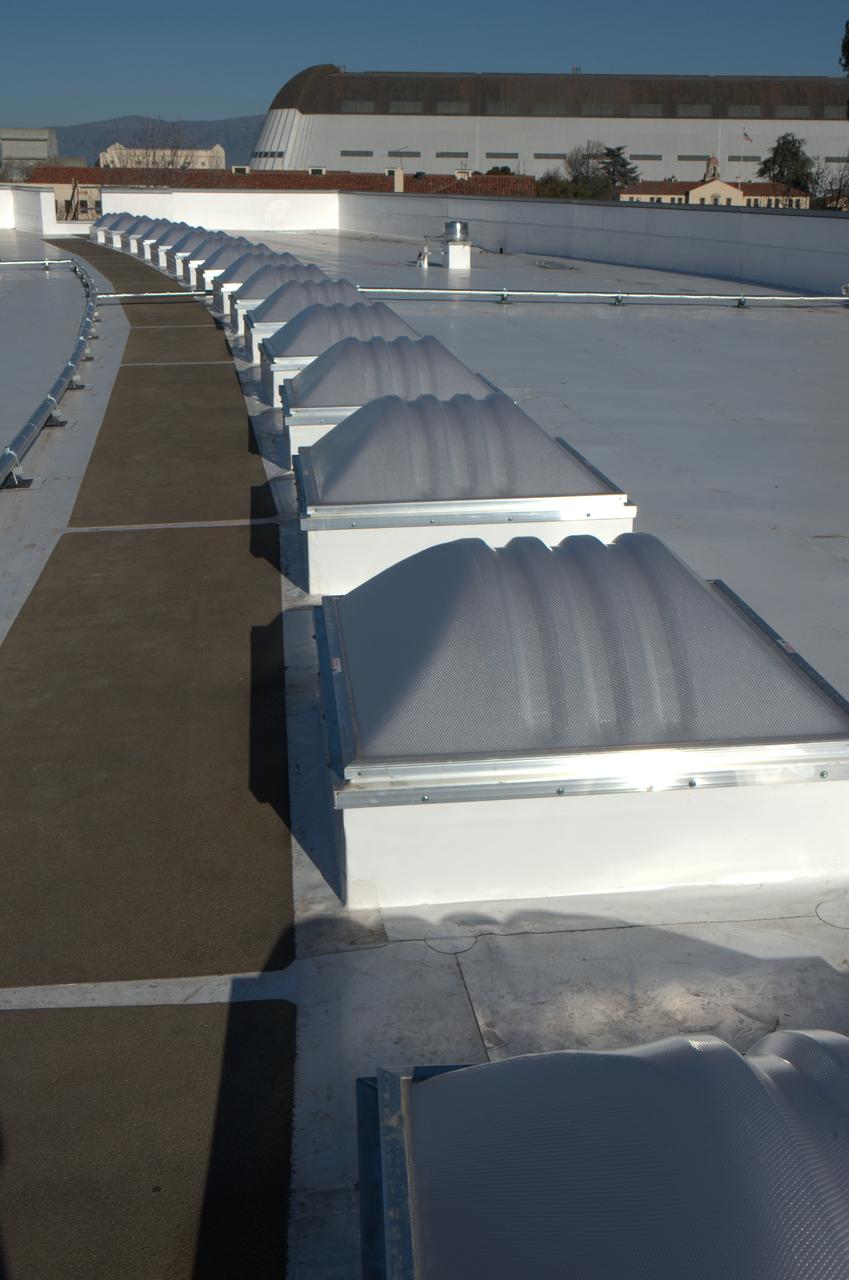
Construction of the new NASA Ames Green Building dubbed Sustainability Base located on the Ames Research Center campus at Moffett Field, CA. Skylight and piping on roof, Hangar One in background.
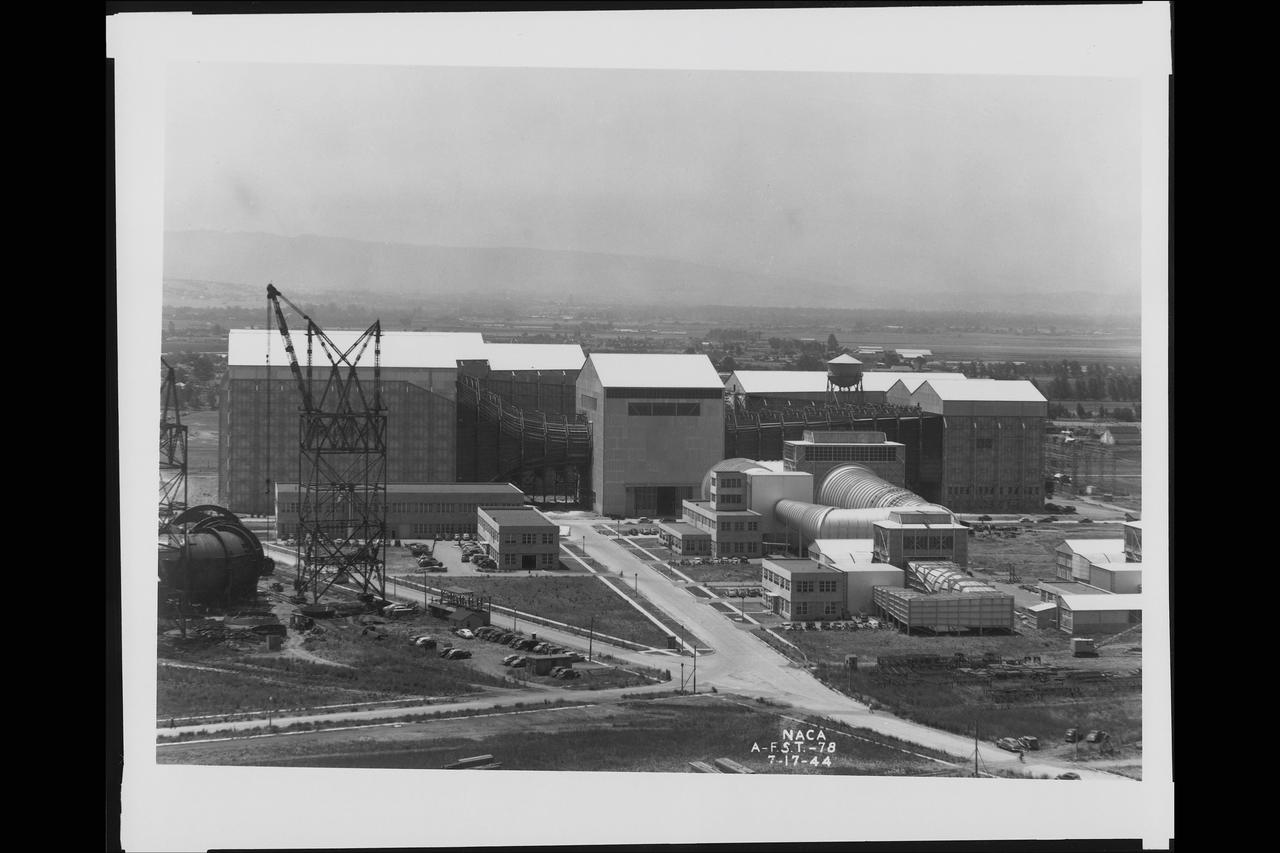
General view of Ames Subsonic 40x80ft wind tunnel from atop of the Moffett Naval Airship Hangar One (with construction of the Ames 12ft Pressure Wind Tunnel in forground) July 17, 1944
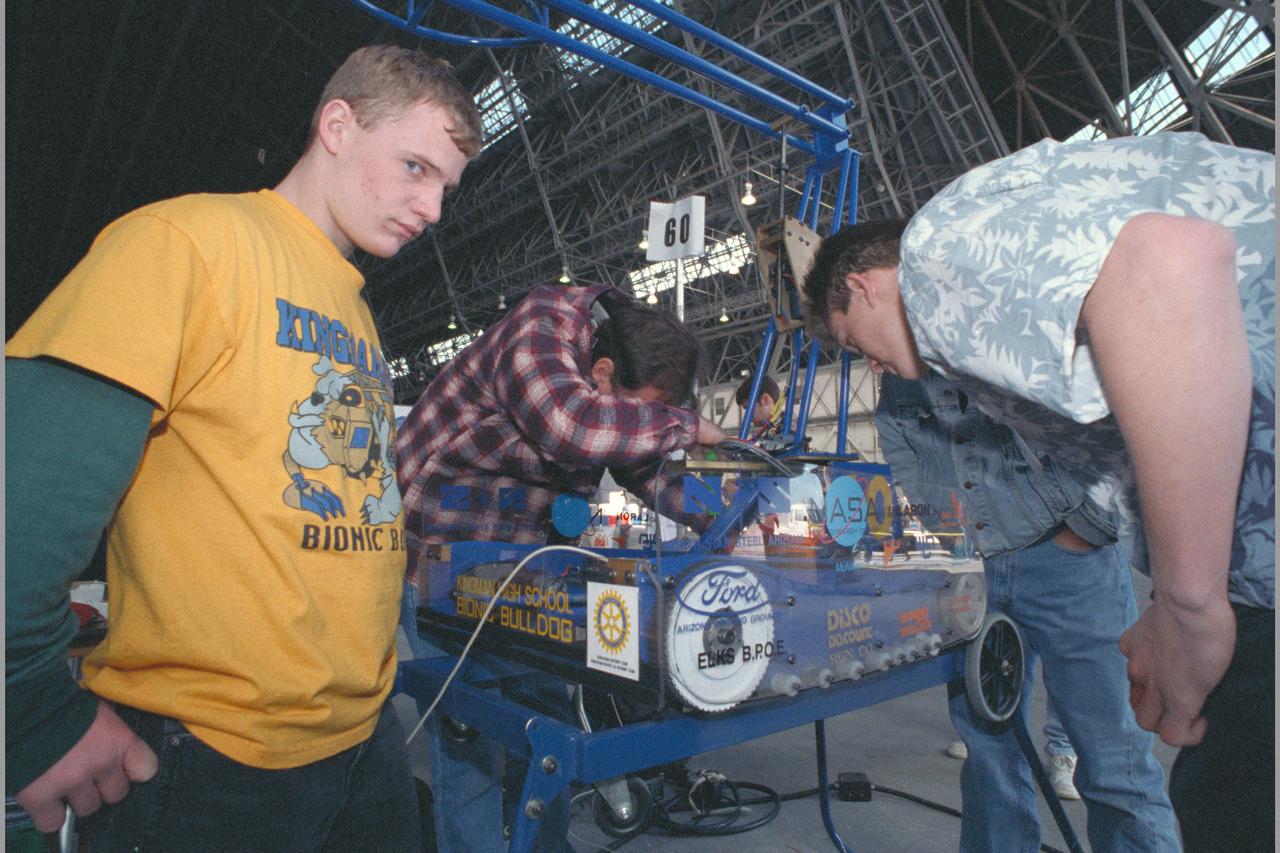
NASA AMES sponsored FIRST (Inspiration and Recognition of Science and Technology) Western Regional Robot Games Student competition in Hangar

NASA AMES sponsored FIRST (Inspiration and Recognition of Science and Technology) Western Regional Robot Games Student competition in Hangar
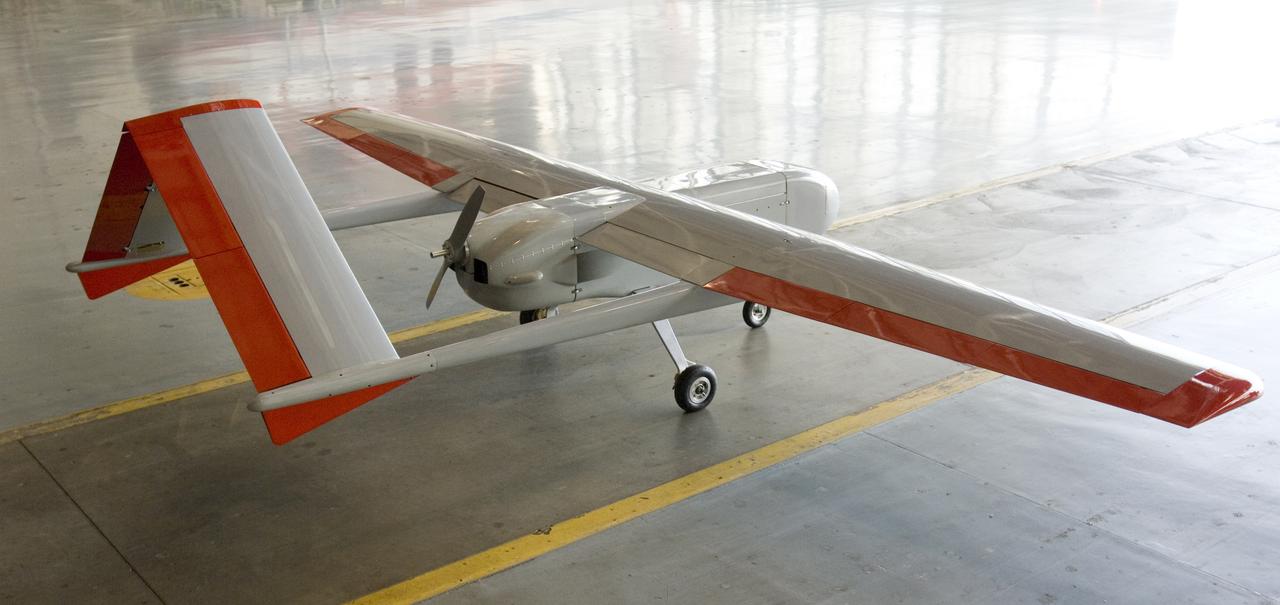
Sierra Uninhaited Aerial System (UAV plane) in the Ames hangar. aks; Sierra Unpiloted Aerial system (UAS)
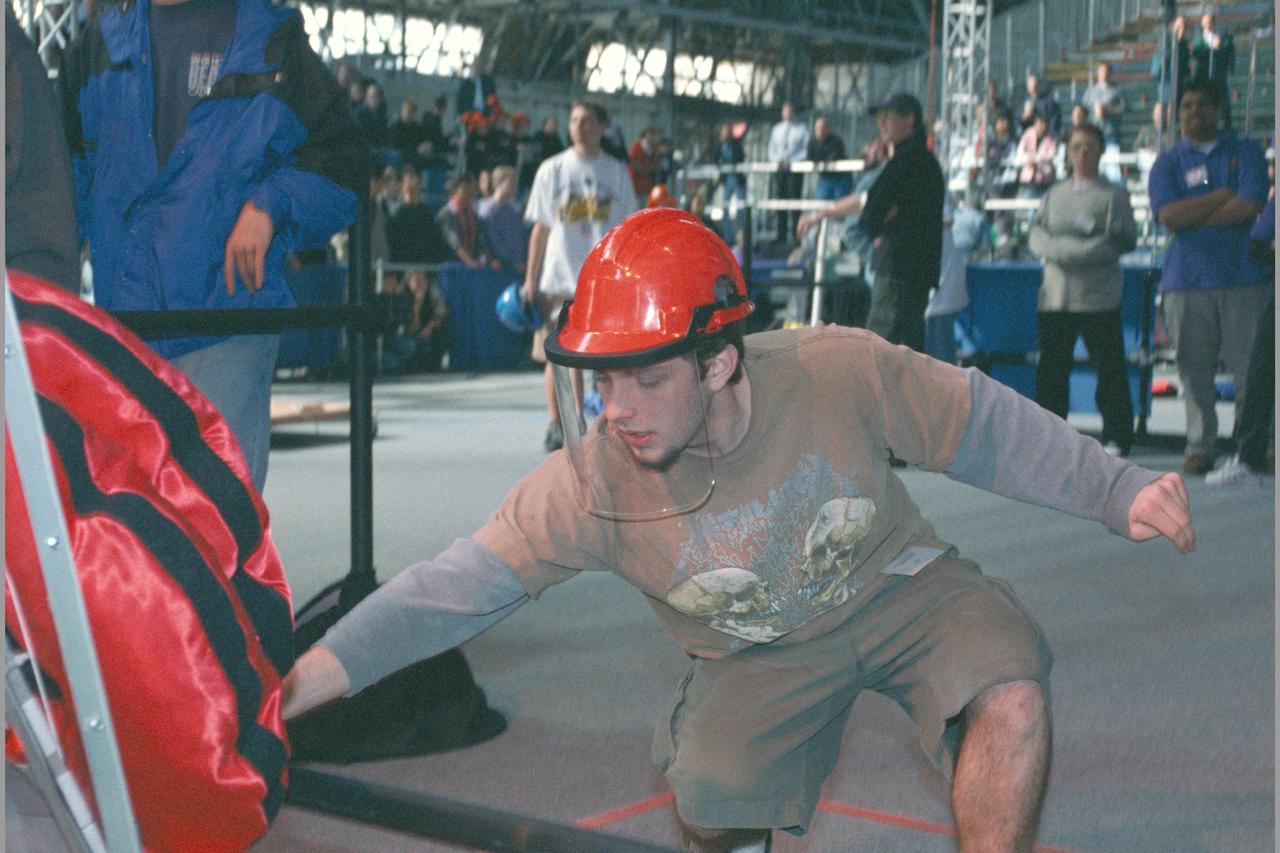
NASA AMES sponsored FIRST (Inspiration and Recognition of Science and Technology) Western Regional Robot Games Student competition in Hangar
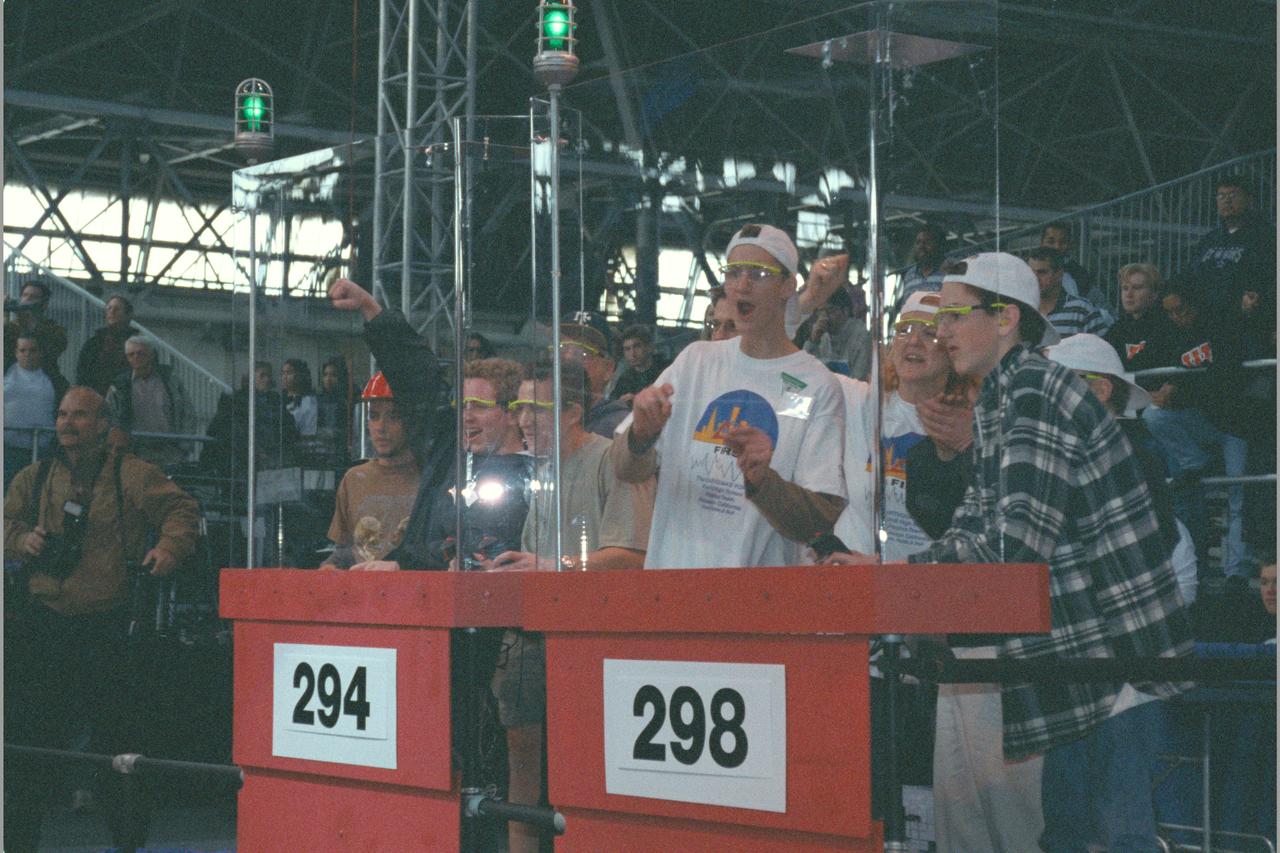
NASA AMES sponsored FIRST (Inspiration and Recognition of Science and Technology) Western Regional Robot Games Student competition in Hangar
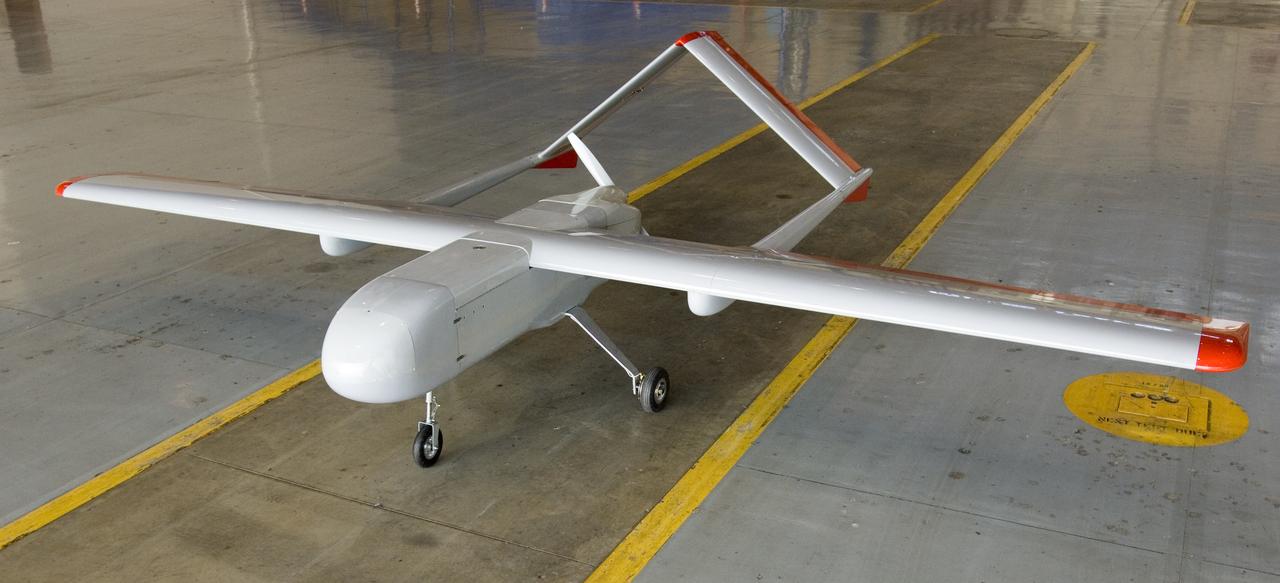
Sierra Uninhaited Aerial System (UAV plane) in the Ames hangar. aks; Sierra Unpiloted Aerial system (UAS)
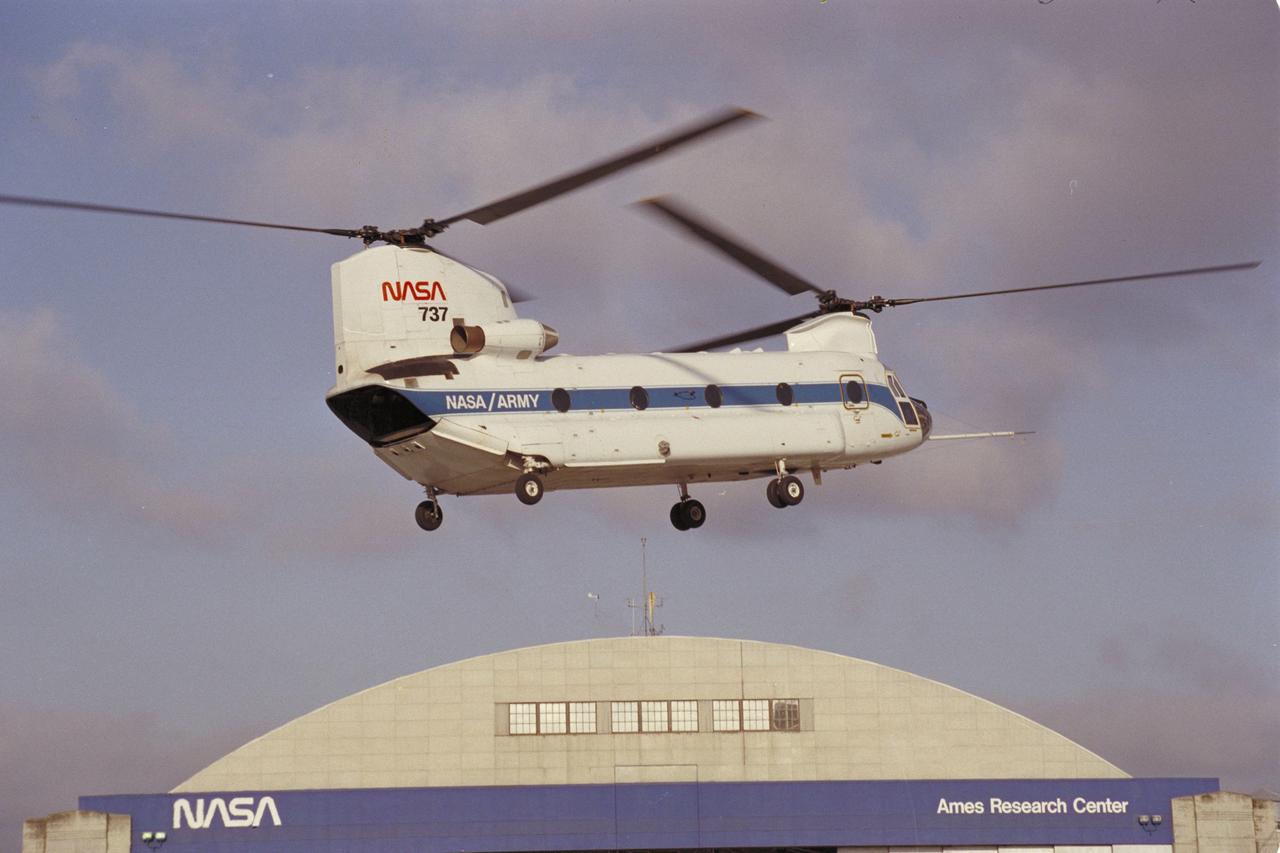
CH-47B (NASA-737) in flight with NASA Ames Research Center Hangar in the background.
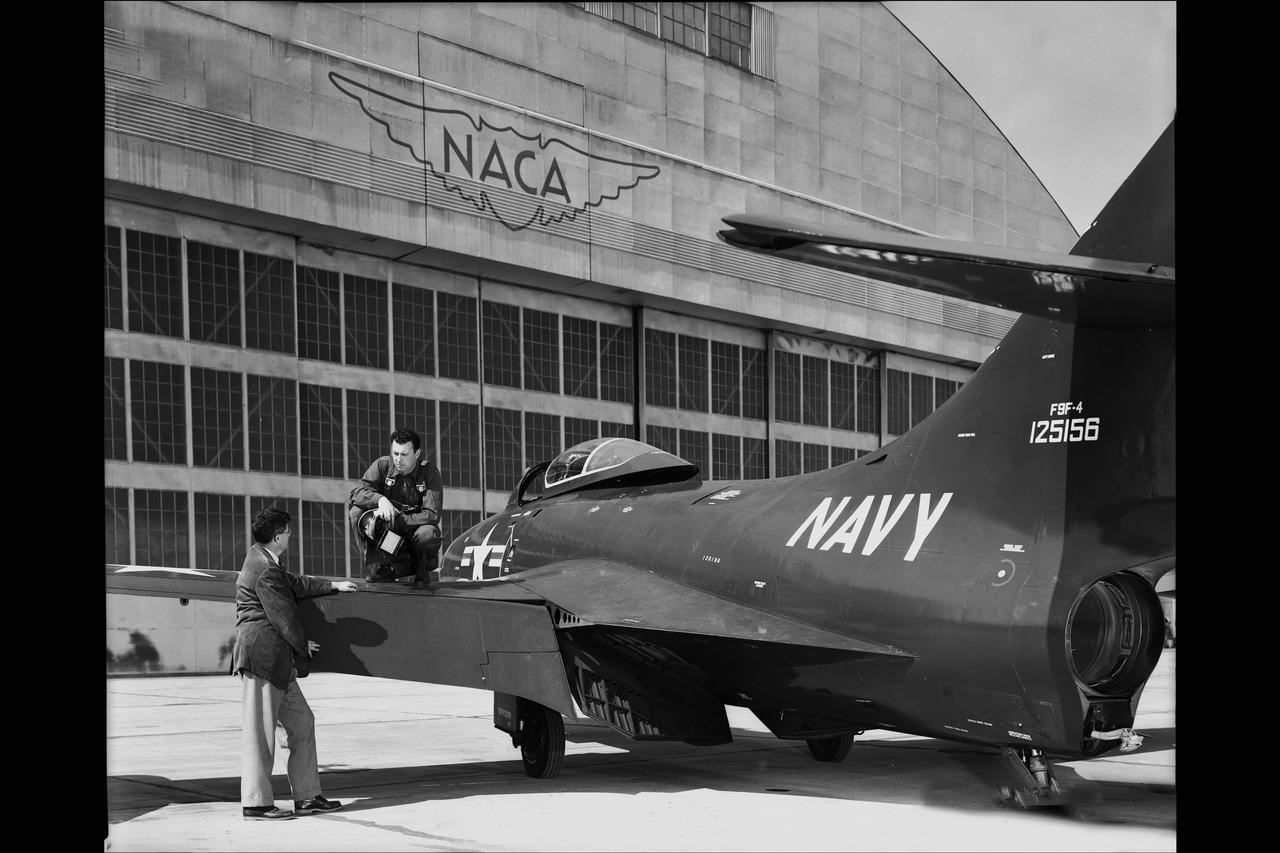
Navy - GRUMAN F9F-4 AIRPLAN with NACA PILOTS INNIS & ROLLS on NACA Ames ramp in front of Hangar 211
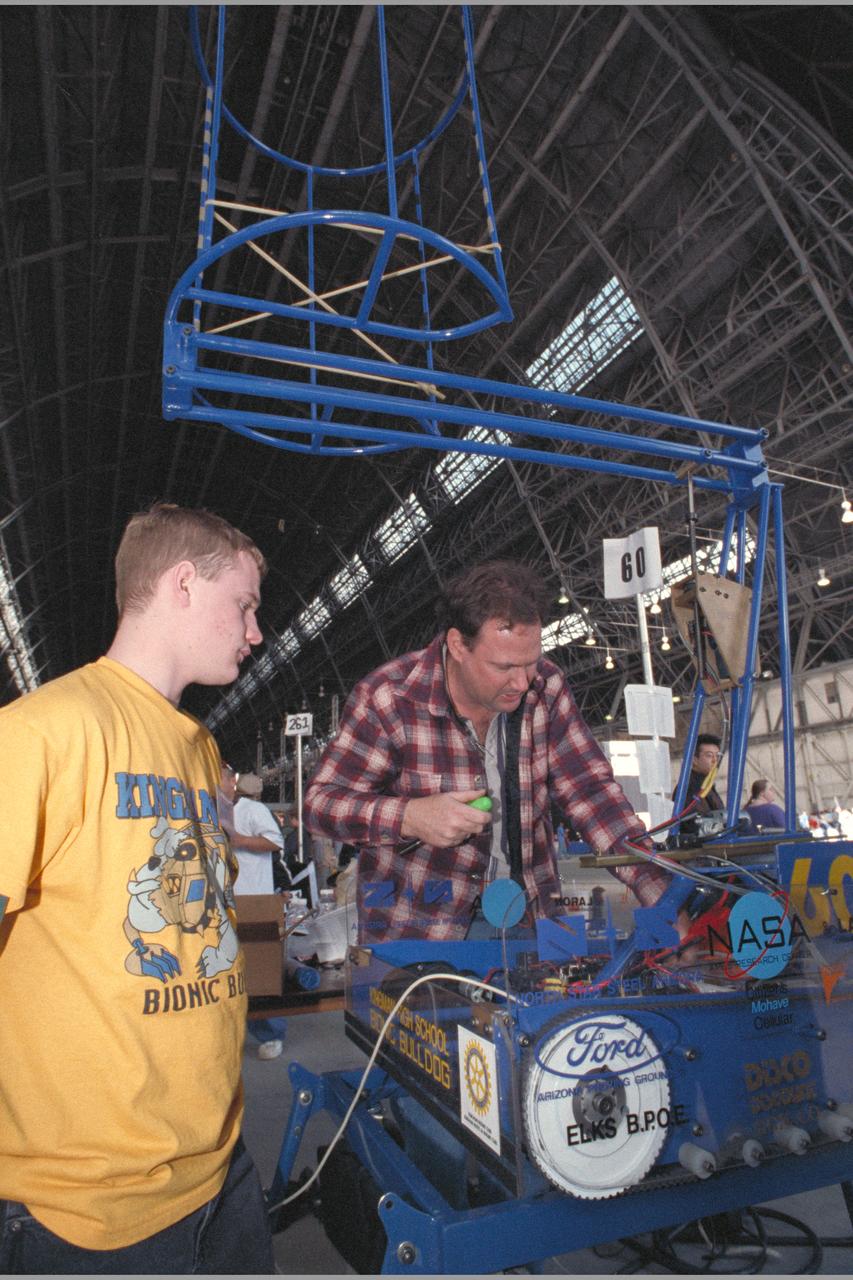
NASA AMES sponsored FIRST (Inspiration and Recognition of Science and Technology) Western Regional Robot Games Student competition in Hangar
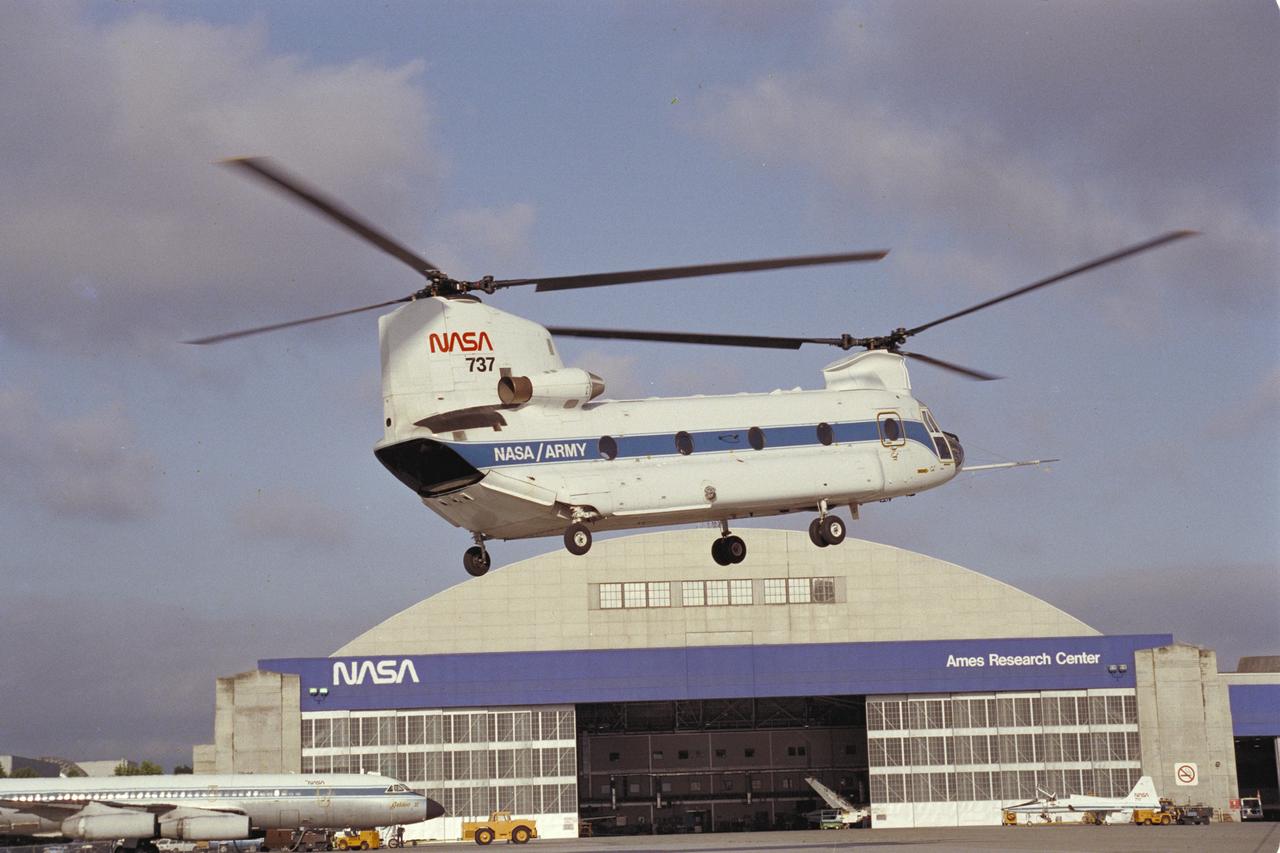
CH-47B (NASA-737) in flight with NASA Ames Research Center Hangar in the background.
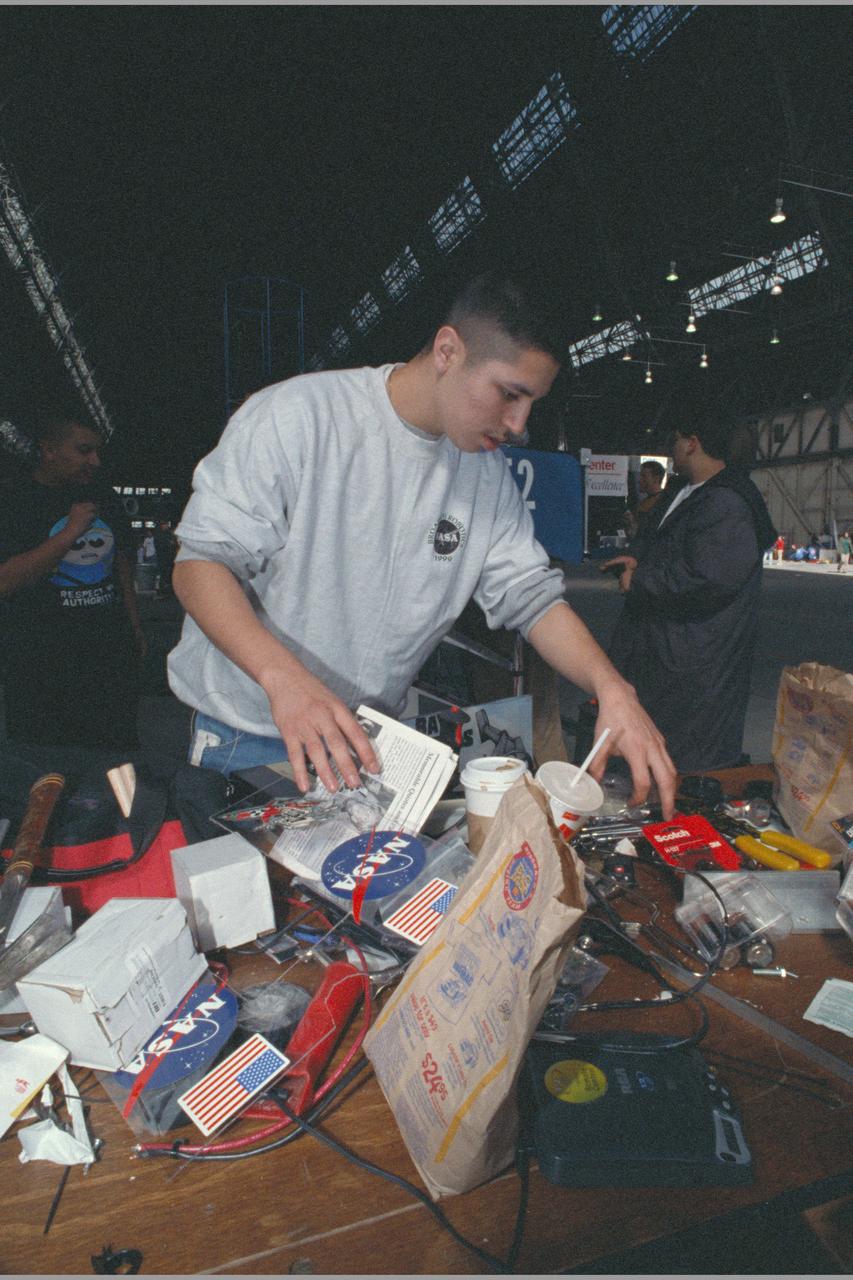
NASA AMES sponsored FIRST (Inspiration and Recognition of Science and Technology) Western Regional Robot Games Student competition in Hangar
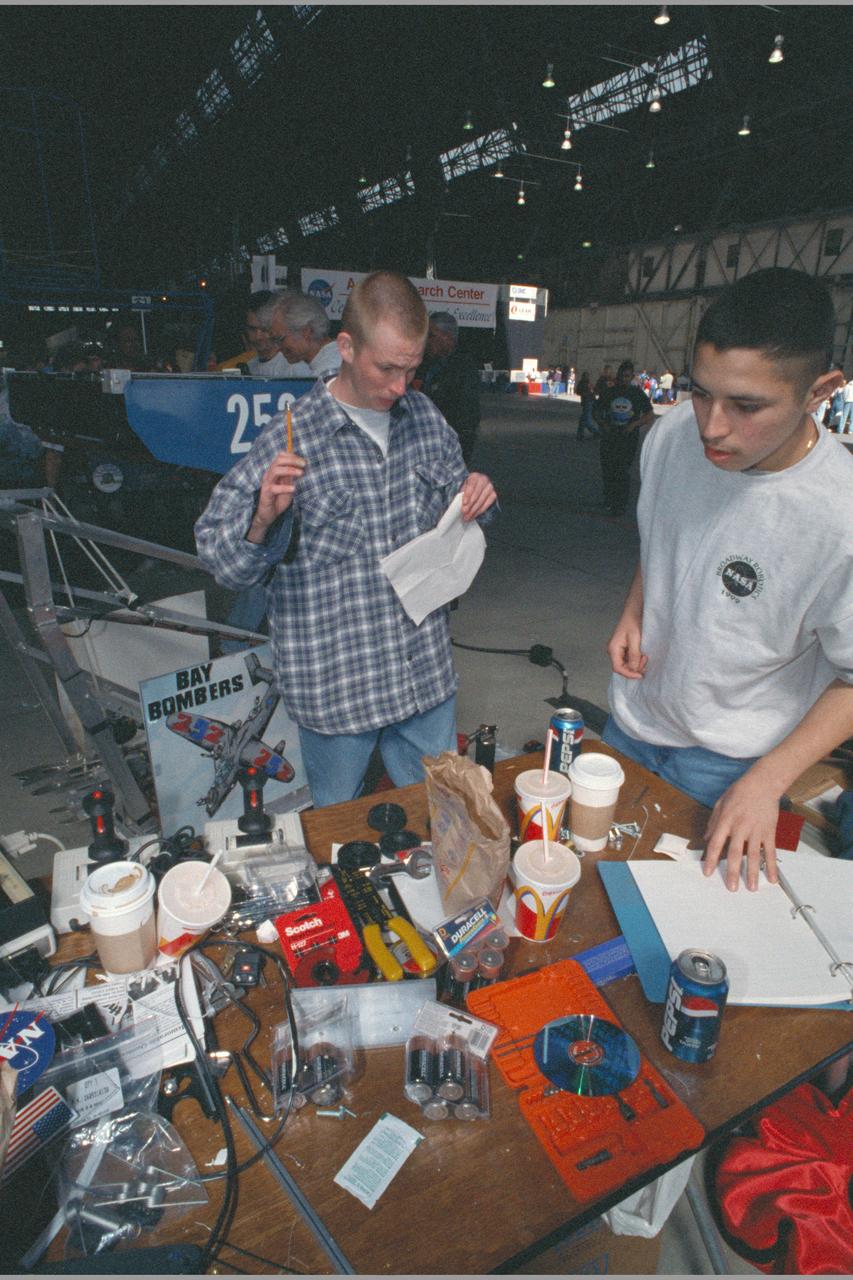
NASA AMES sponsored FIRST (Inspiration and Recognition of Science and Technology) Western Regional Robot Games Student competition in Hangar
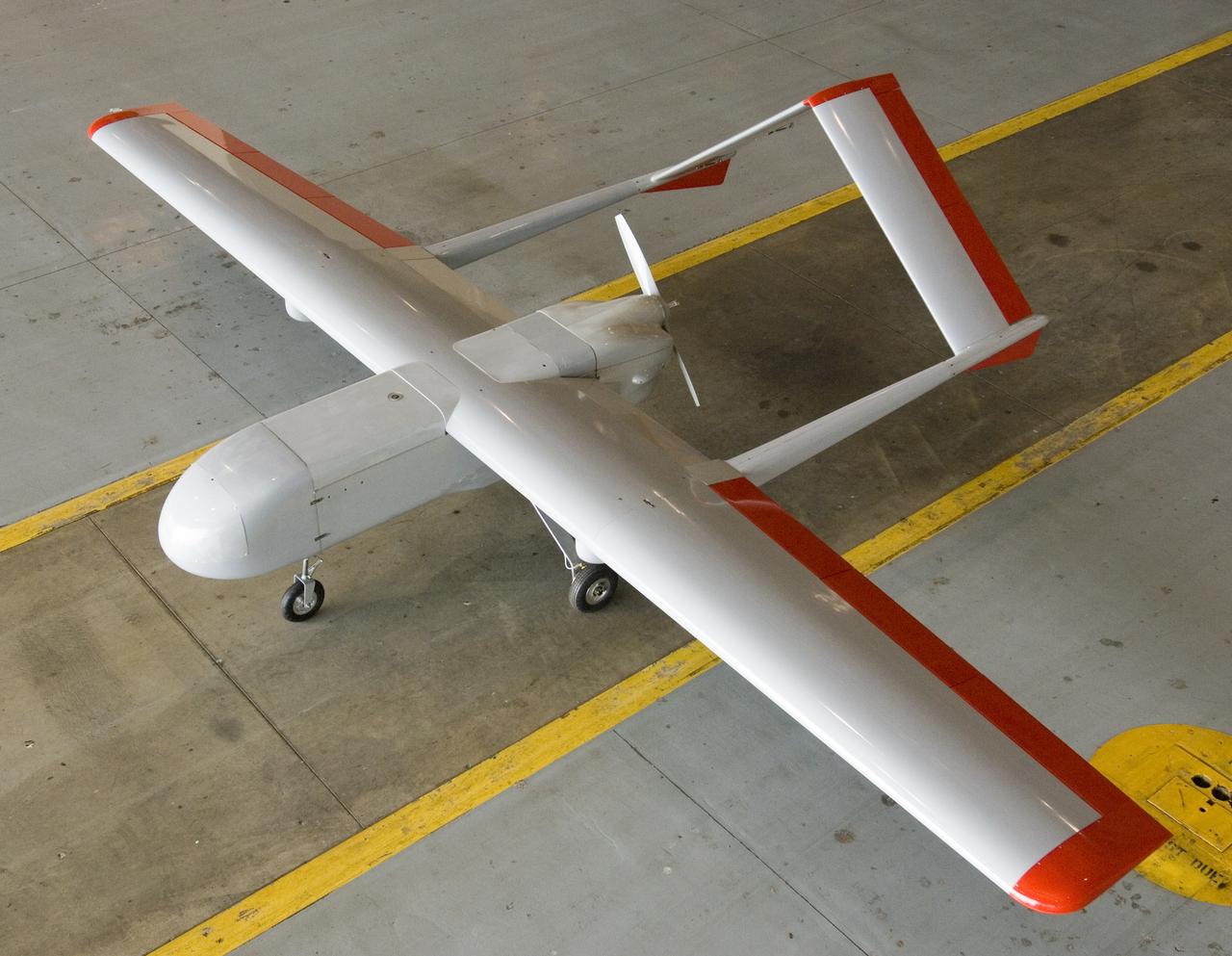
Sierra Uninhaited Aerial System (UAV plane) in the Ames hangar. aks; Sierra Unpiloted Aerial system (UAS)
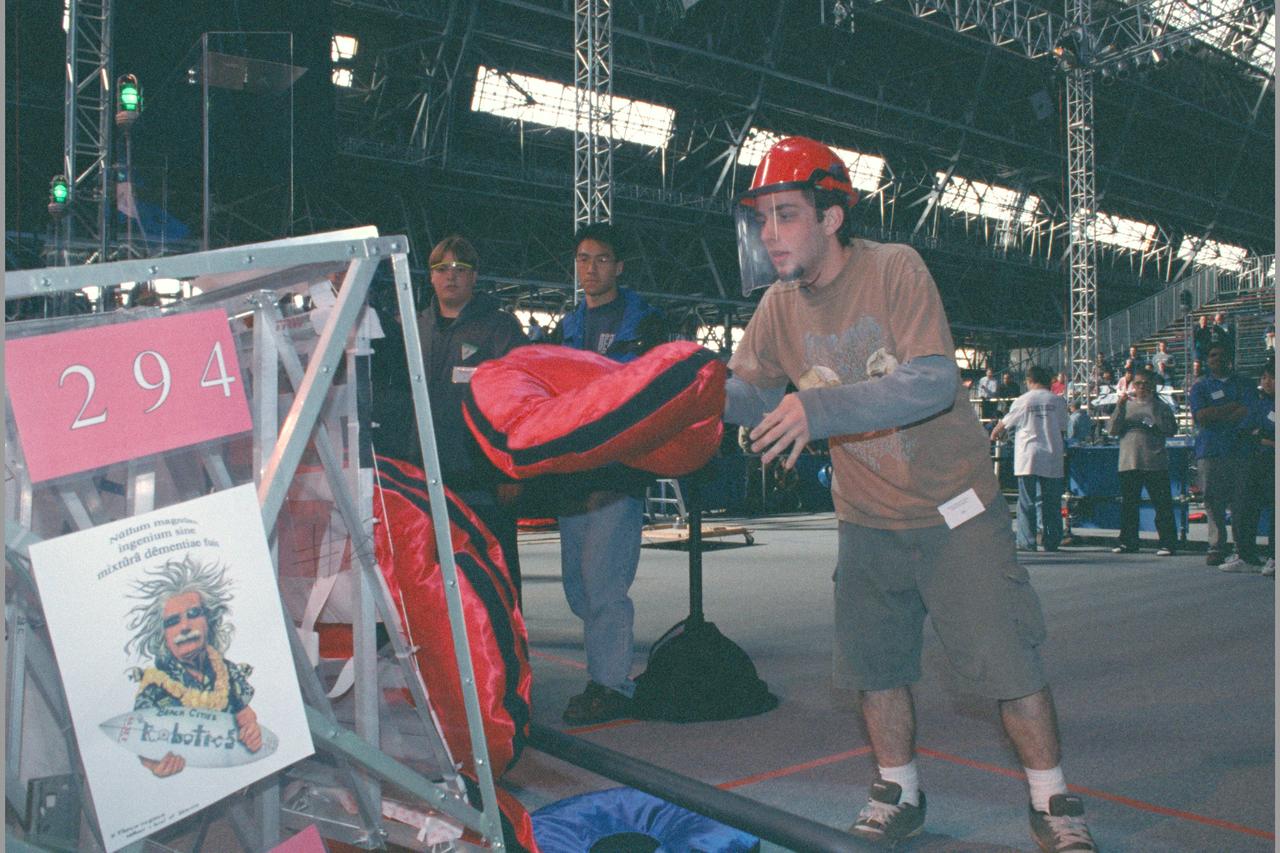
NASA AMES sponsored FIRST (Inspiration and Recognition of Science and Technology) Western Regional Robot Games Student competition in Hangar
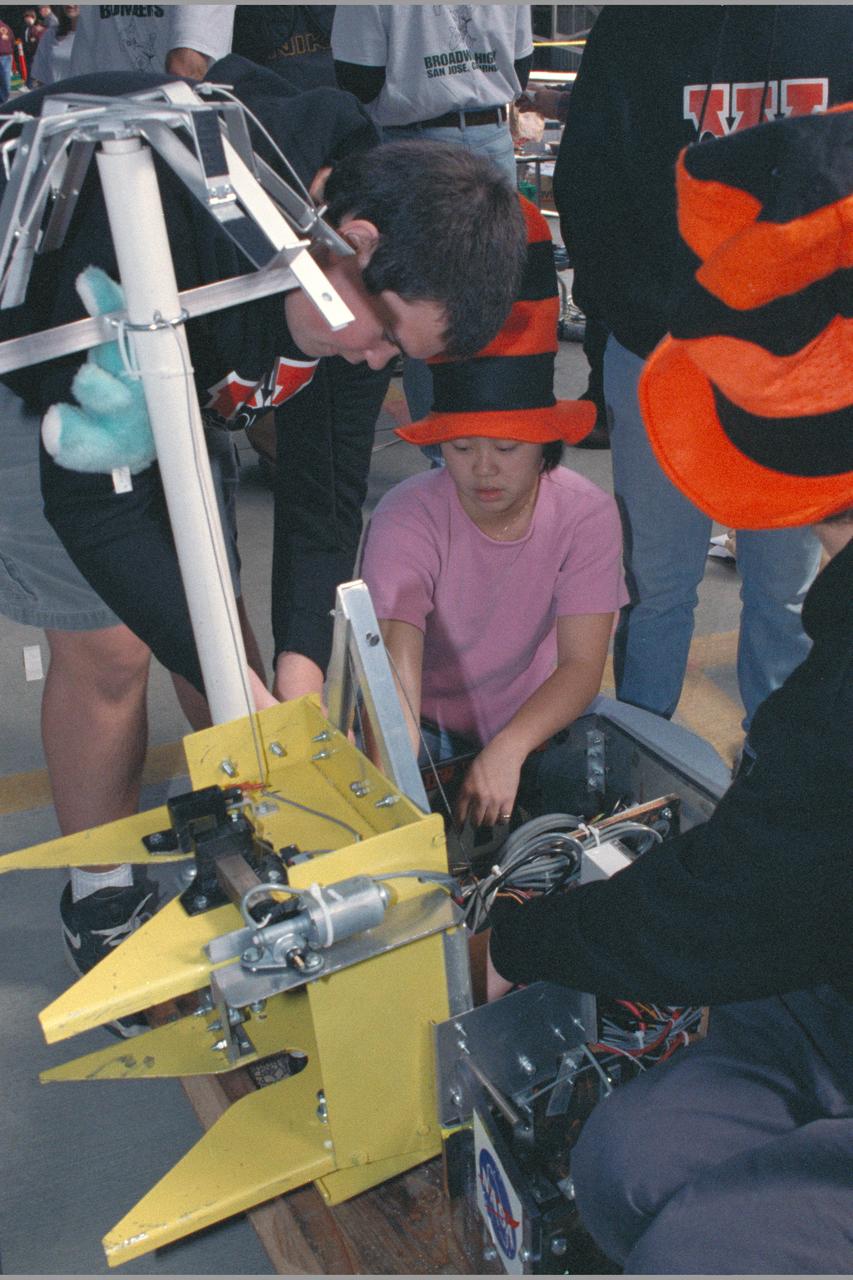
NASA AMES sponsored FIRST (Inspiration and Recognition of Science and Technology) Western Regional Robot Games Student competition in Hangar
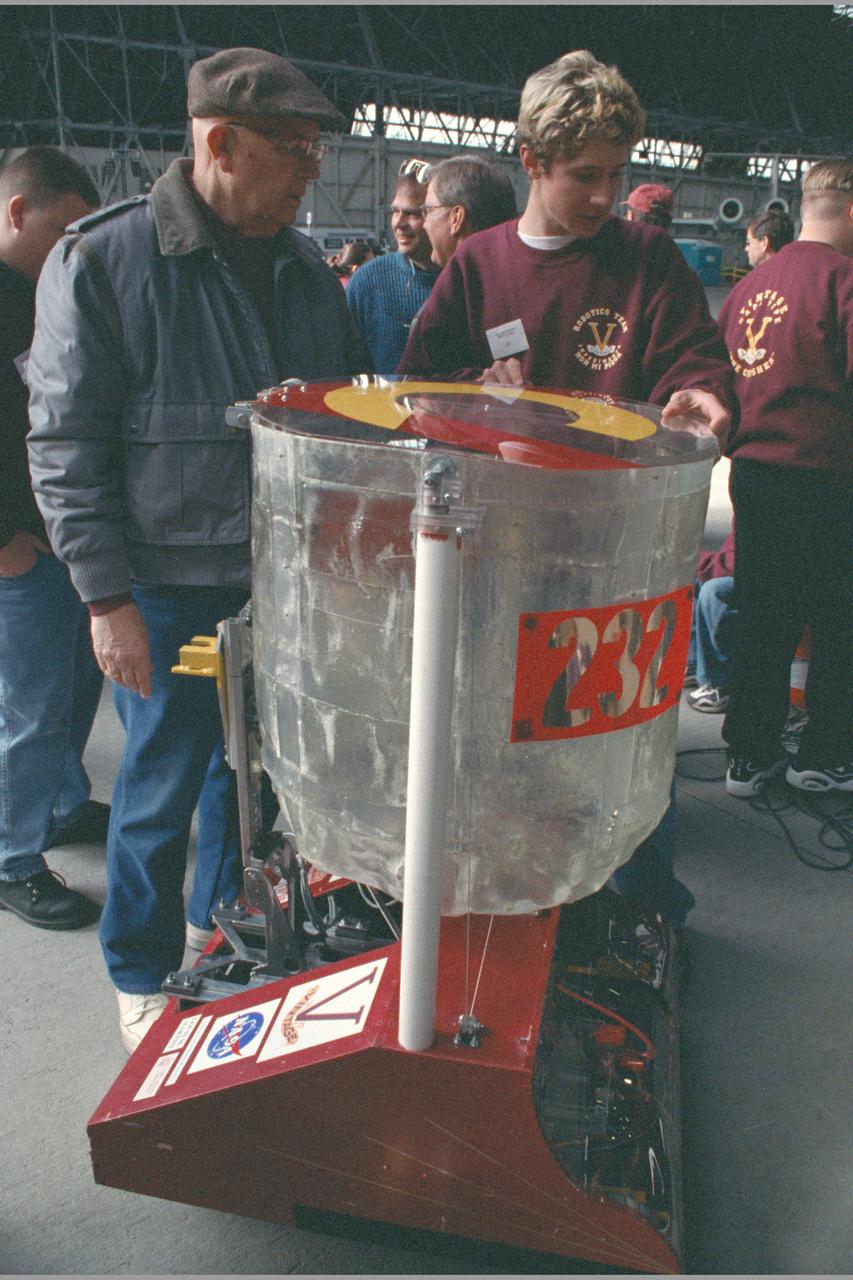
NASA AMES sponsored FIRST (Inspiration and Recognition of Science and Technology) Western Regional Robot Games Student competition in Hangar
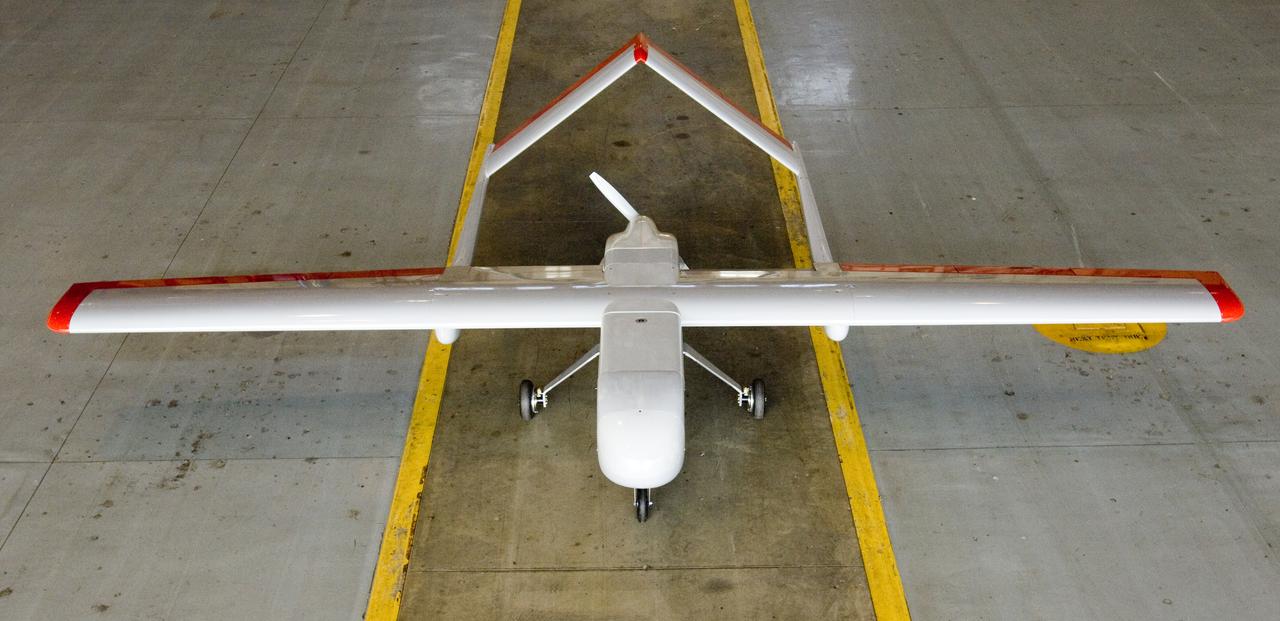
Sierra Uninhaited Aerial System (UAV plane) in the Ames hangar. aks; Sierra Unpiloted Aerial system (UAS)
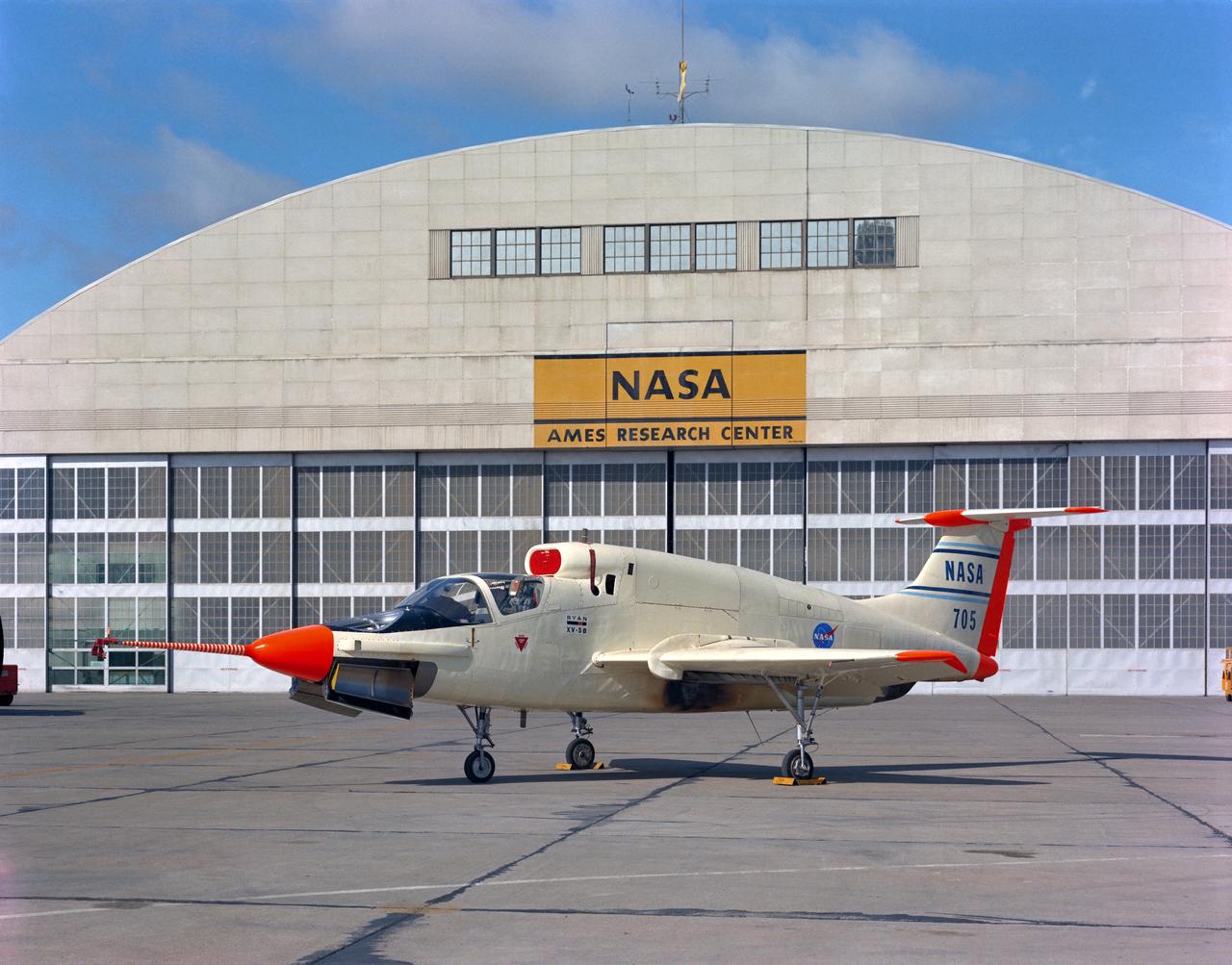
XV-5B (NASA-705) on Flight Line at Ames Research Center with hangar in the background.
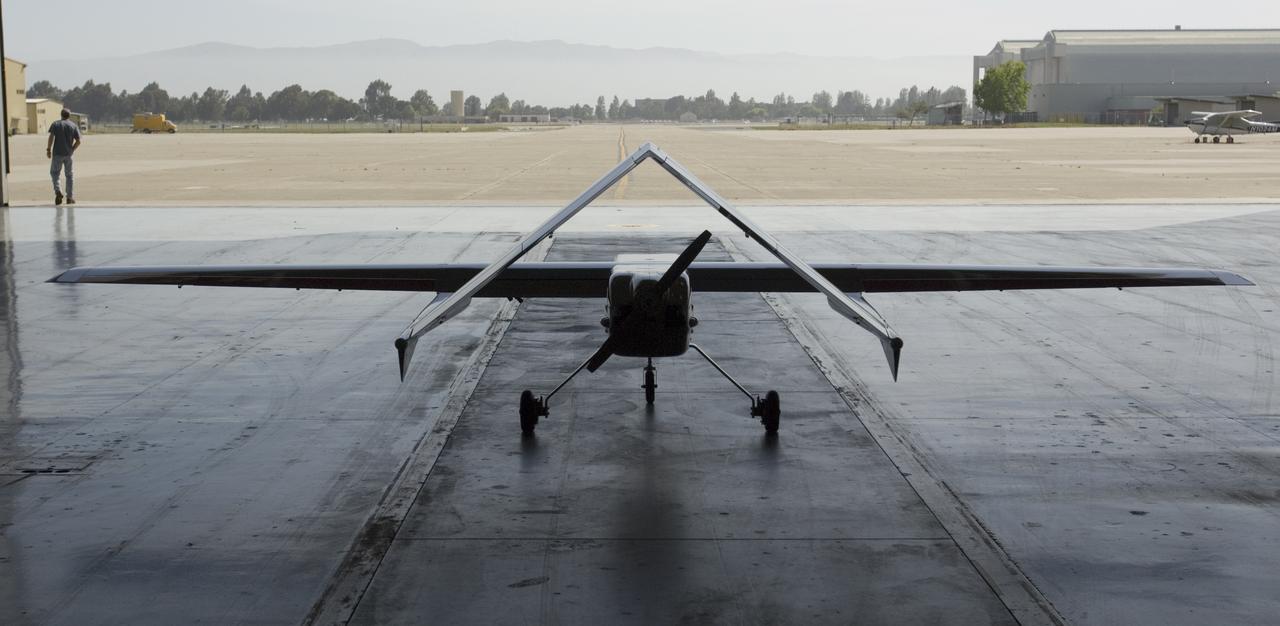
Sierra Uninhaited Aerial System (UAV plane) in the Ames hangar. aks; Sierra Unpiloted Aerial system (UAS)

NC-130B in front of NASA Ames Research Center Hangar. A Study of STOL Operational Techniques. BLC instrumentation
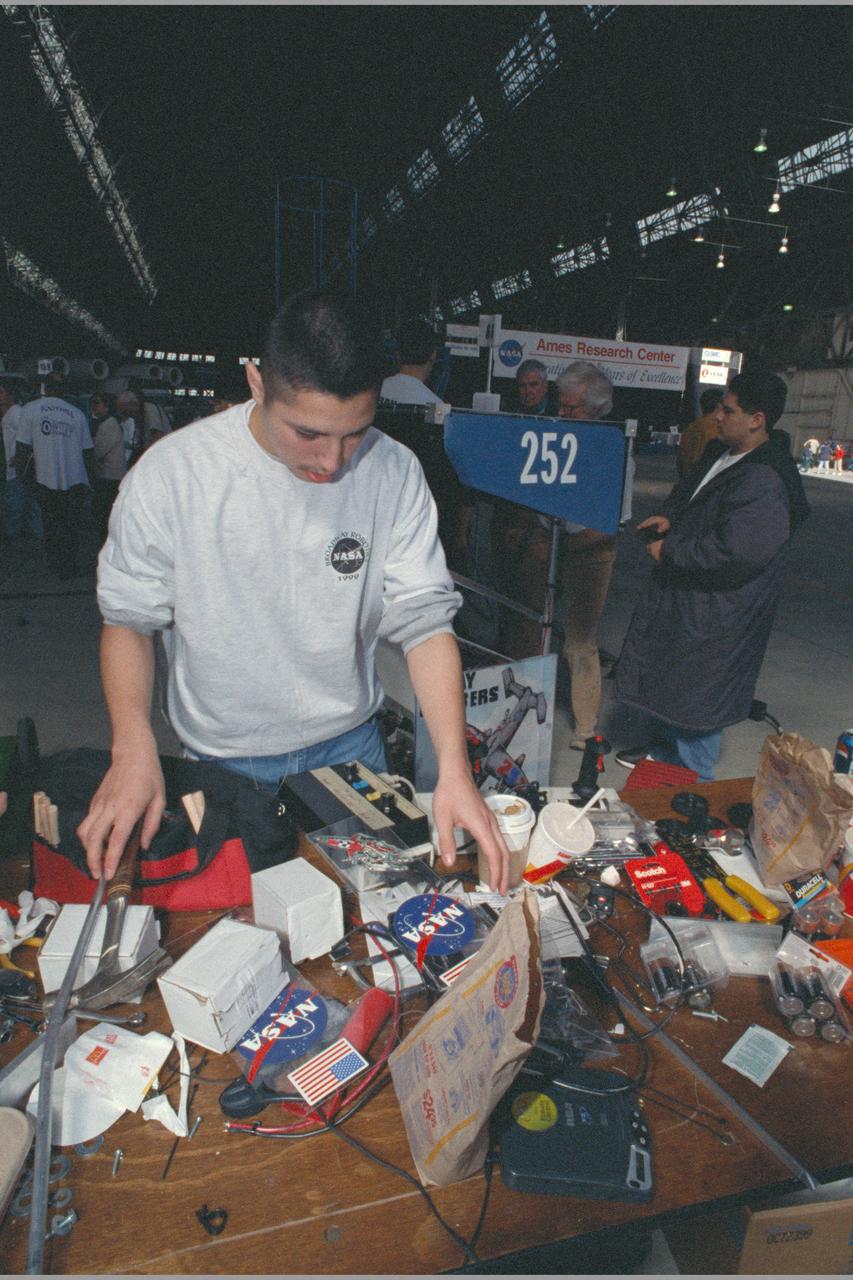
NASA AMES sponsored FIRST (Inspiration and Recognition of Science and Technology) Western Regional Robot Games Student competition in Hangar
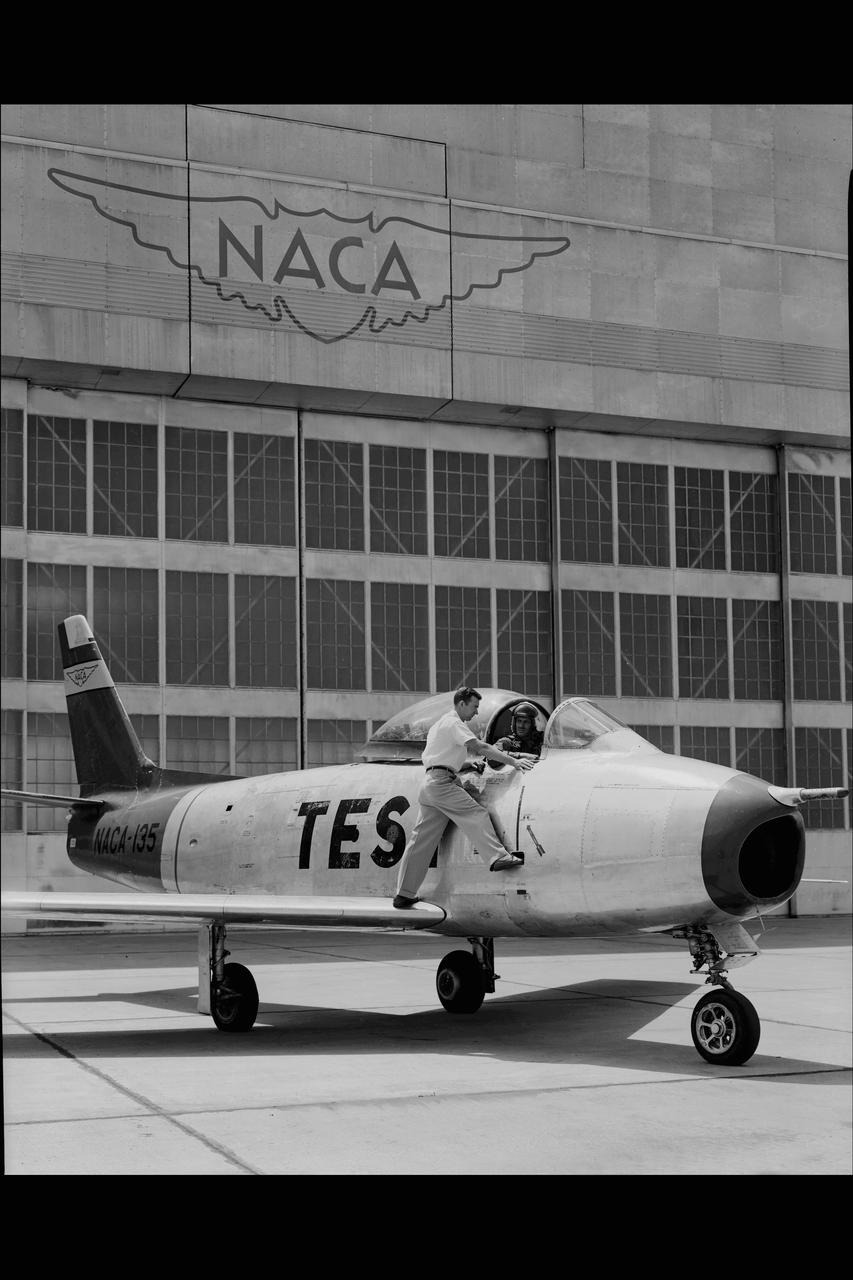
NORTH AMERICAN F86-A #135 AIRPLANE on Ames ramp in front of hangar 211 with NACA PILOTS COOPER & CREER
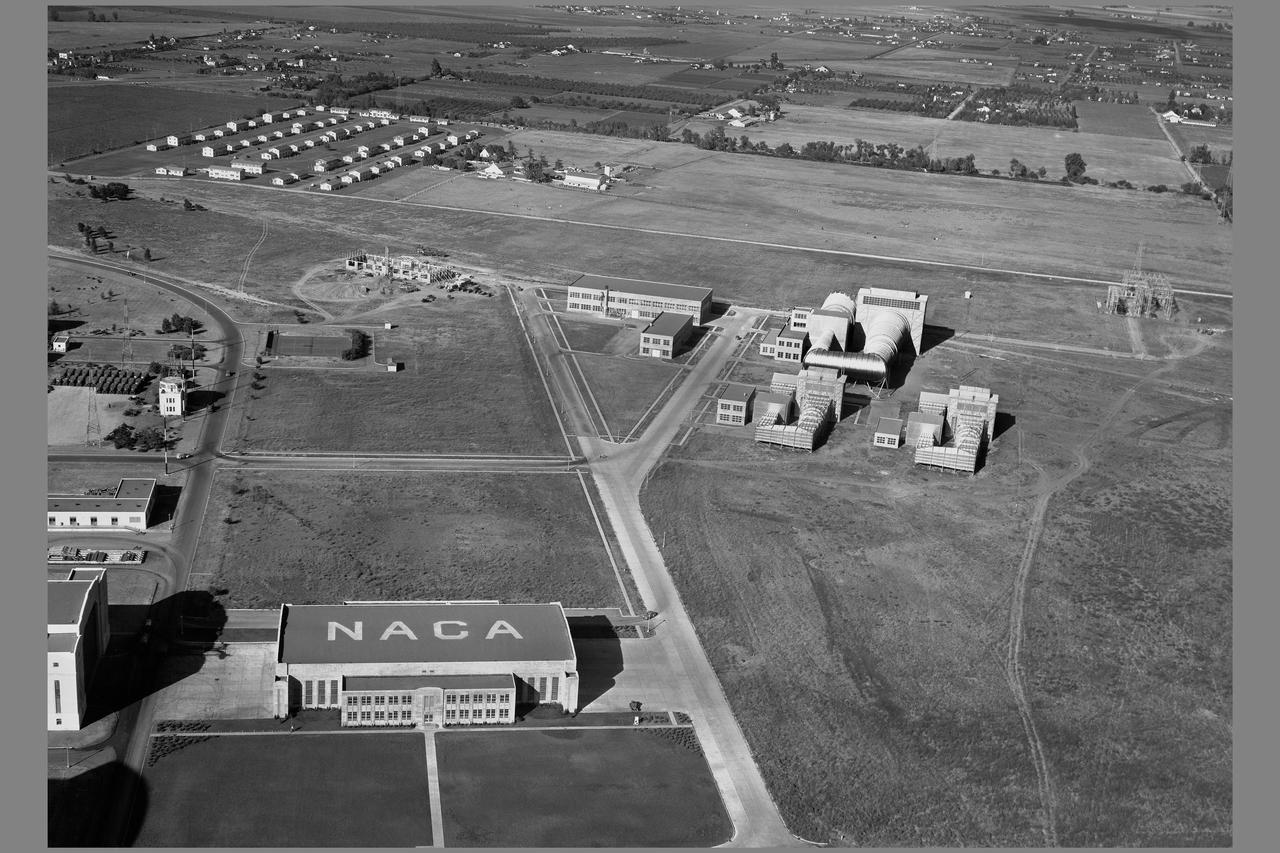
Ames Aeronautical Research Laboratory aerial shows original flight research hangar in foreground, the two 7x10ft w.t. the 16ft w.t. and Admin buildings NOTE: printed in NASA Ames Publications: Adventures in Research - SP-4320; Searching the Horizon - SP 4304; 57 Years - Flight Research at AMES - NASA SP-1998-3300
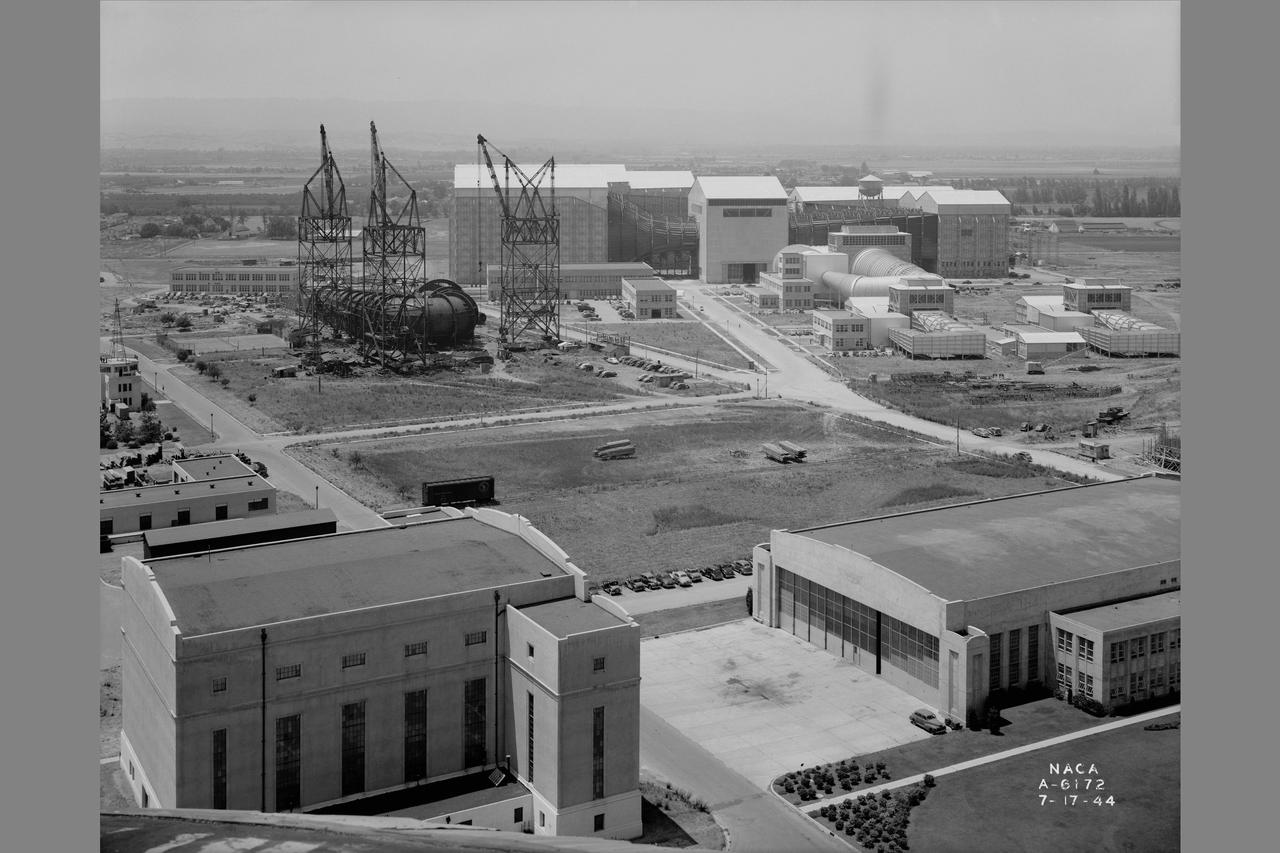
General view of Ames Aeronautical Laboratory taken from Naval airship hangar. Shows construction of the 12ft Pressure Wind Tunnel with large cranes.
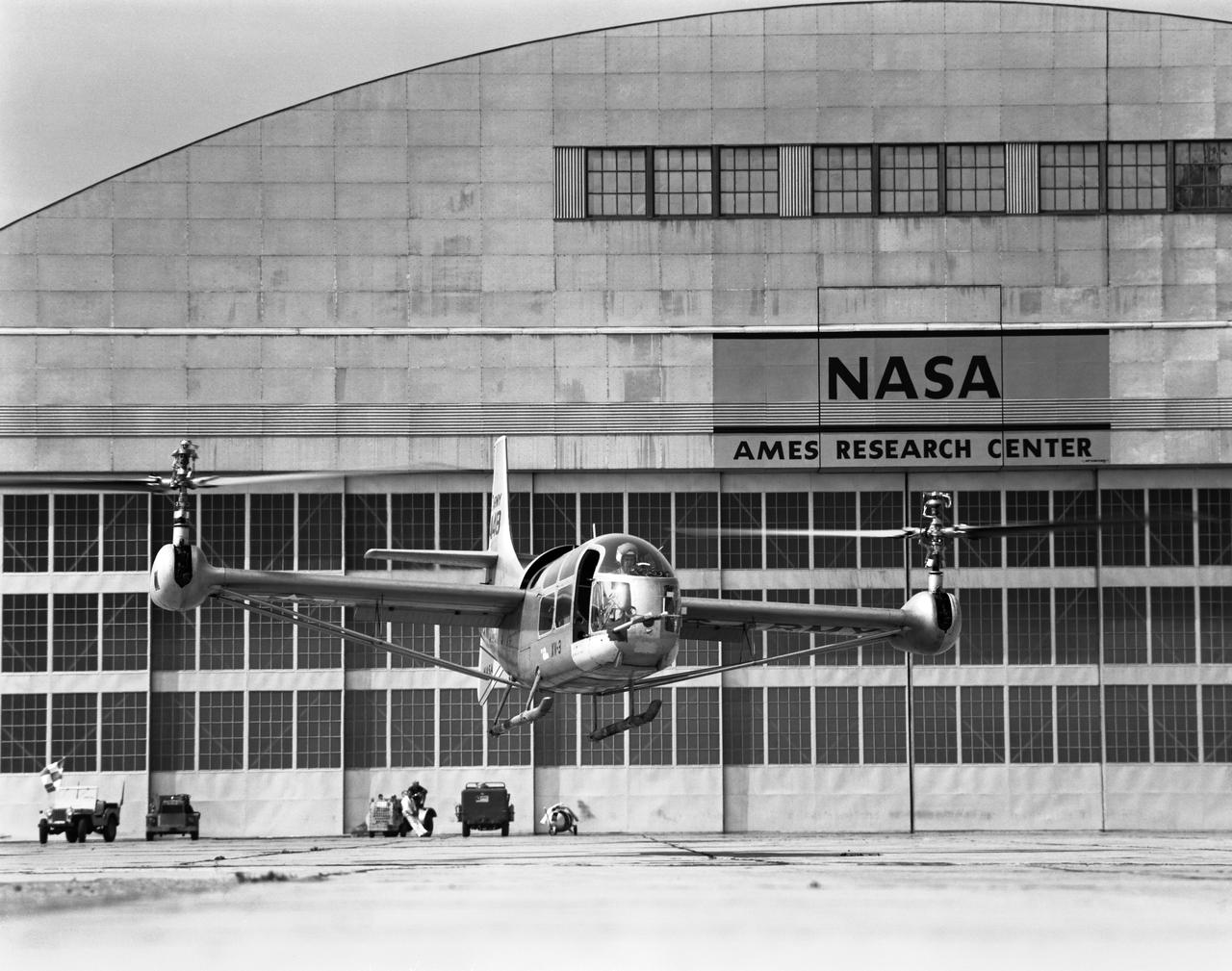
XV-3 airplane helicopter hovering VTOLin front of the NASA Ames Research Center, Moffett Field, CA hangar N-211
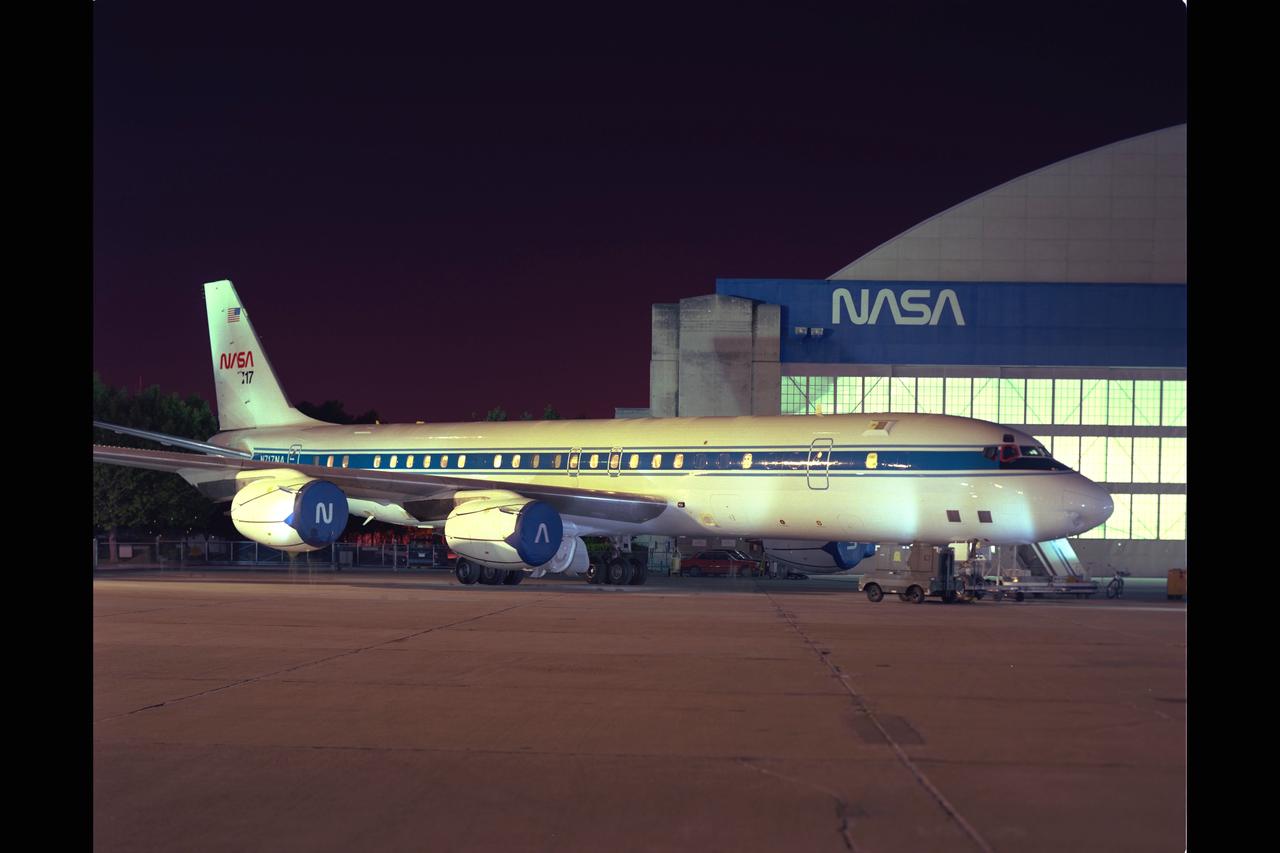
NASA Ames Research Center interaction with environment. This evening shot was time exposed in front of the NASA Hangar with DC-8 (NASA-717) aircraft in the foreground.
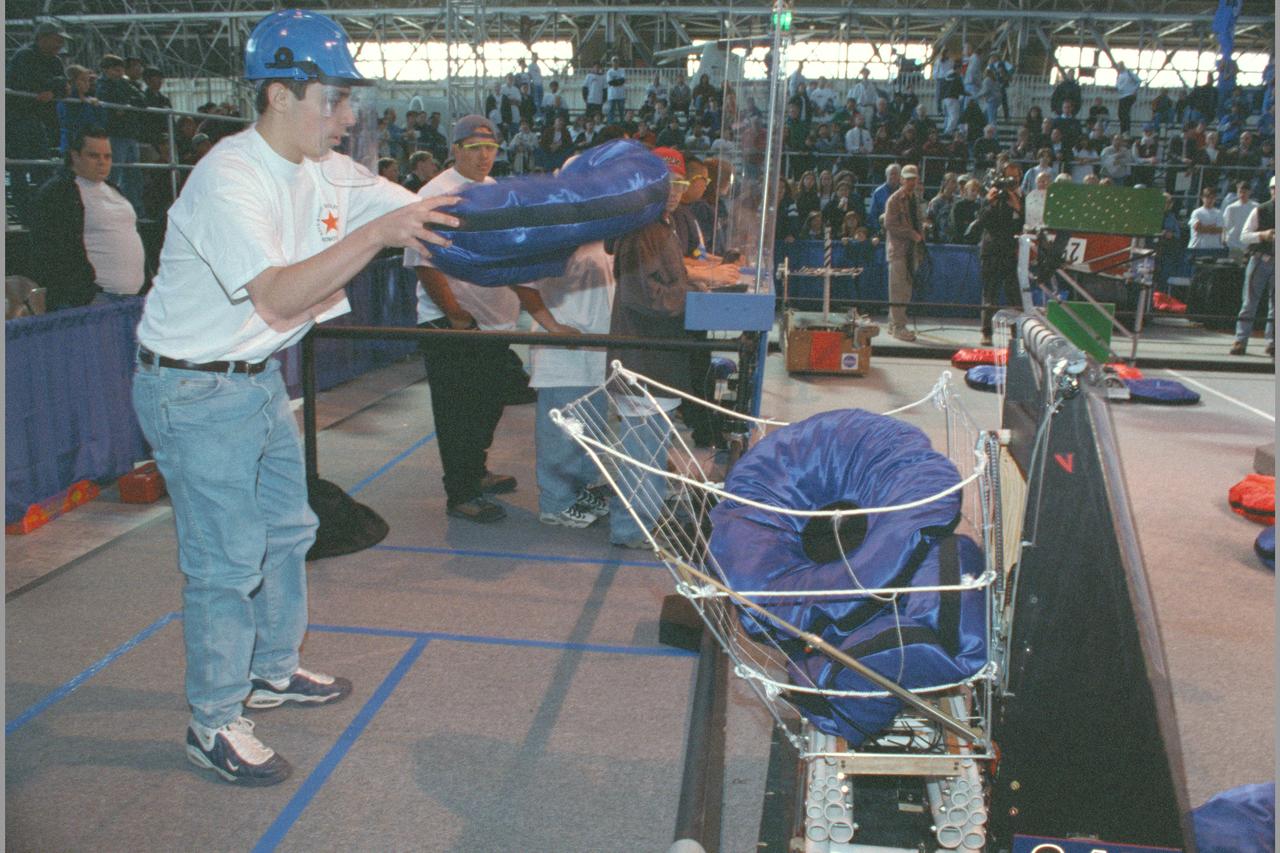
NASA AMES sponsored FIRST (Inspiration and Recognition of Science and Technology) Western Regional Robot Games Student competition in Hangar 1 (BOBOT)
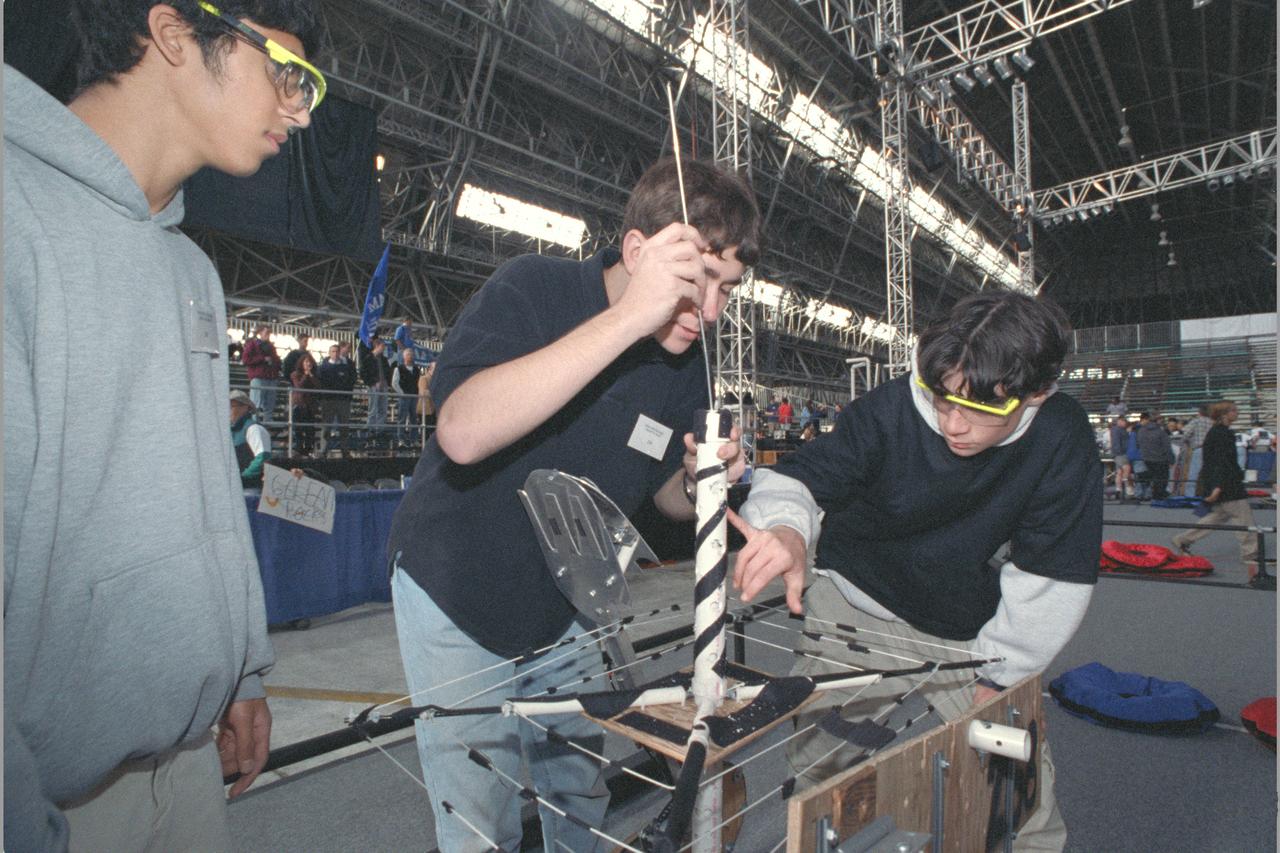
NASA AMES sponsored FIRST (Inspiration and Recognition of Science and Technology) Western Regional Robot Games Student competition in Hangar Students making repairs between matches
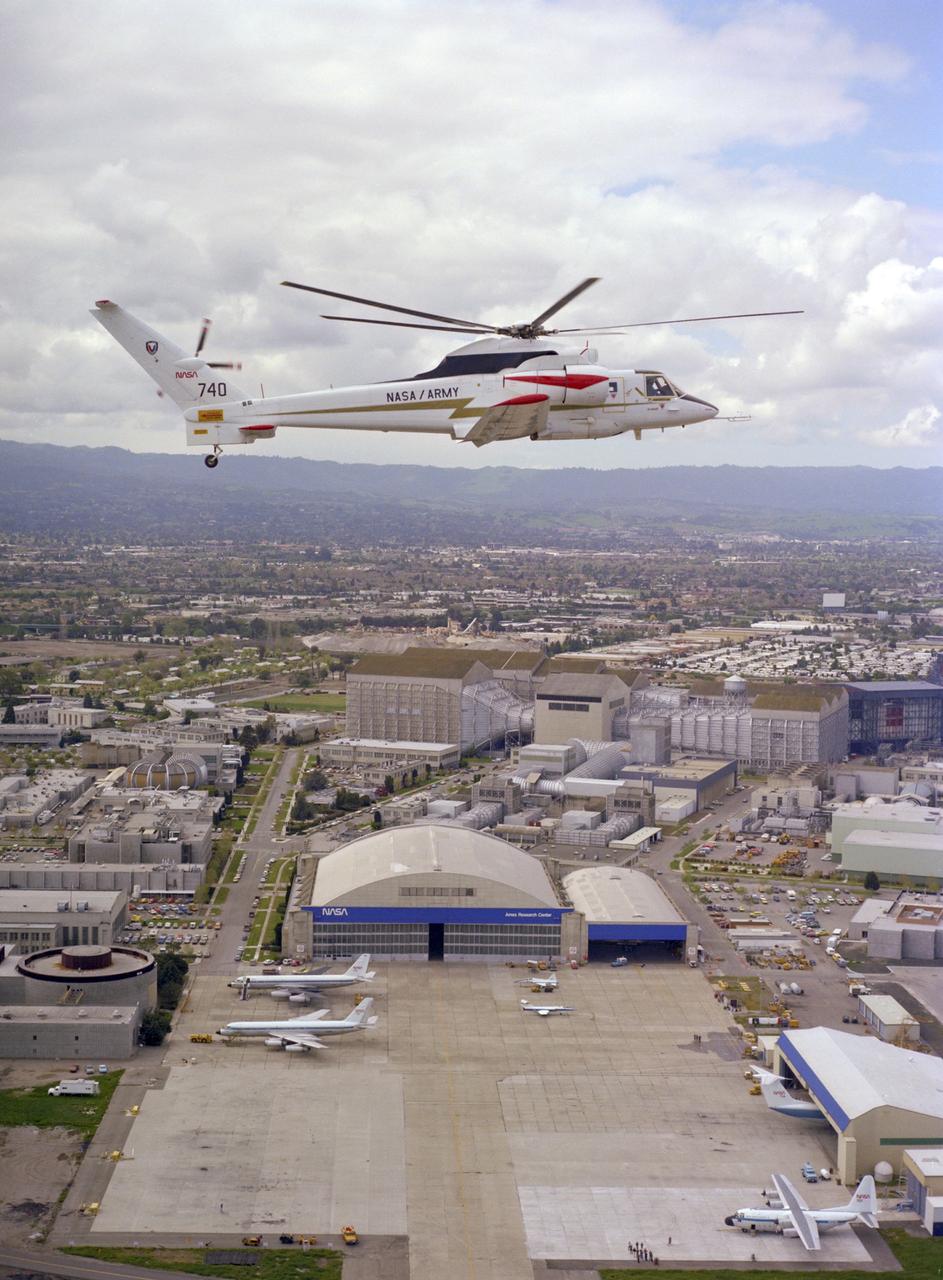
Sikorsky Rotor Systems Research Aircraft ' RSRA' (72-001 NASA-740) compound configuration in flight: NASA Ames Research Center, Hangar and 40x 80x120ft W.T. in the background. Note: Used in publication in Flight Research at Ames; 57 Years of Development and Validation of Aeronautical Technology NASA SP-1998-3300 fig. 132
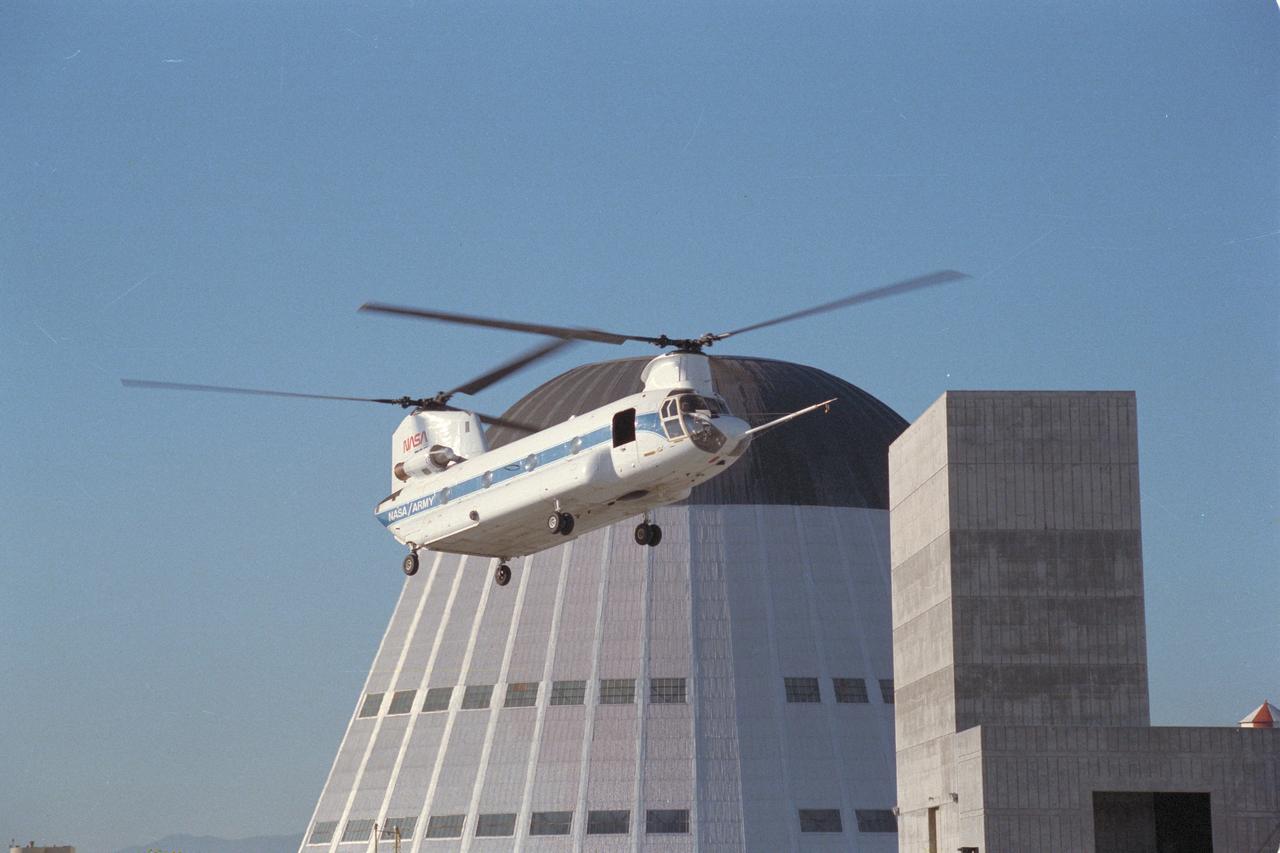
Boeing CH-47B (USA 66-19138 NASA-737) Chinook in-flight simulator with Moffet Field Navy Hangar and Ames VMS in background. Note: Used in publication in Flight Research at Ames; 57 Years of Development and Validation of Aeronautical Technology NASA SP-1998-3300 fig. 133
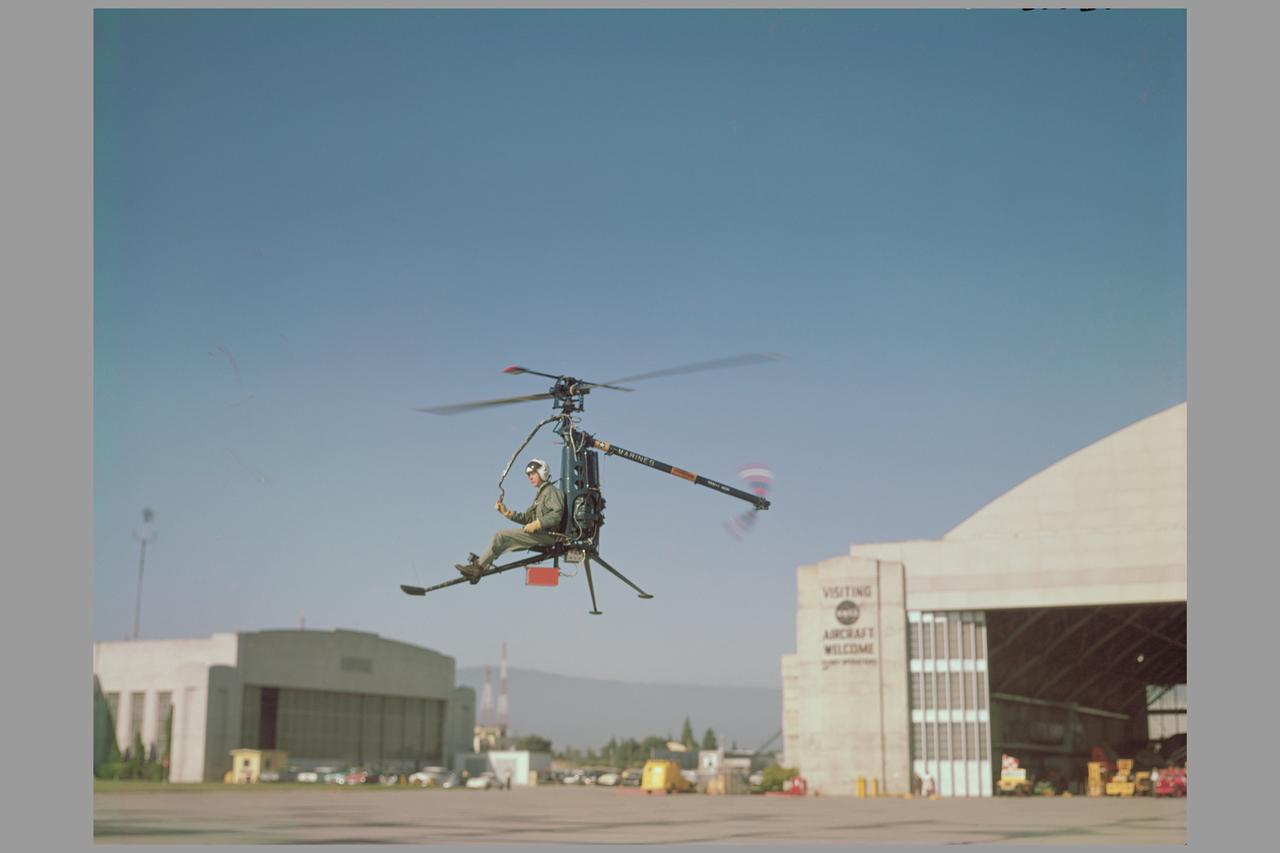
Ames aerodynamicists tested a wide variety of VTOL aircraft and helicopters during the 1960's. Here the Hiller rotorcycle YROE-1, made by Hiller Helicopter in nearby PaloAlto, California, hovers in front of the Ames Hangar. (4020, 4021, 4024) Published in NASA SP Flight Research at Ames: 57 Years of Development and Validation of Aeronautical Technology and Ames 60yr History Atmosphere of Freedom.
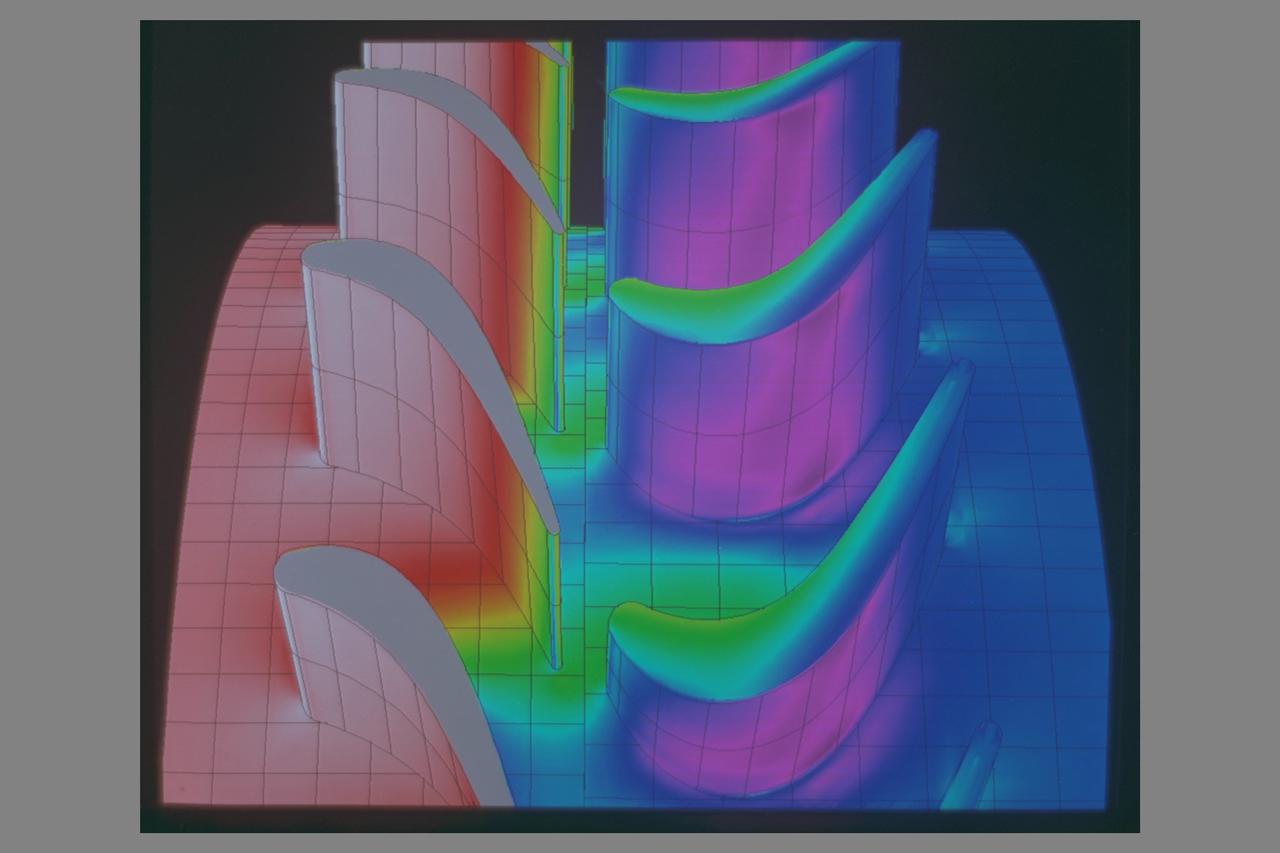
Ames Aircraft complement on Ramp in front of N-211 hangar: DC-8, C-141, C-130, ER-2, Lear Jet, YO-3A, T-38, AH-1G, AV-8B, UH-60
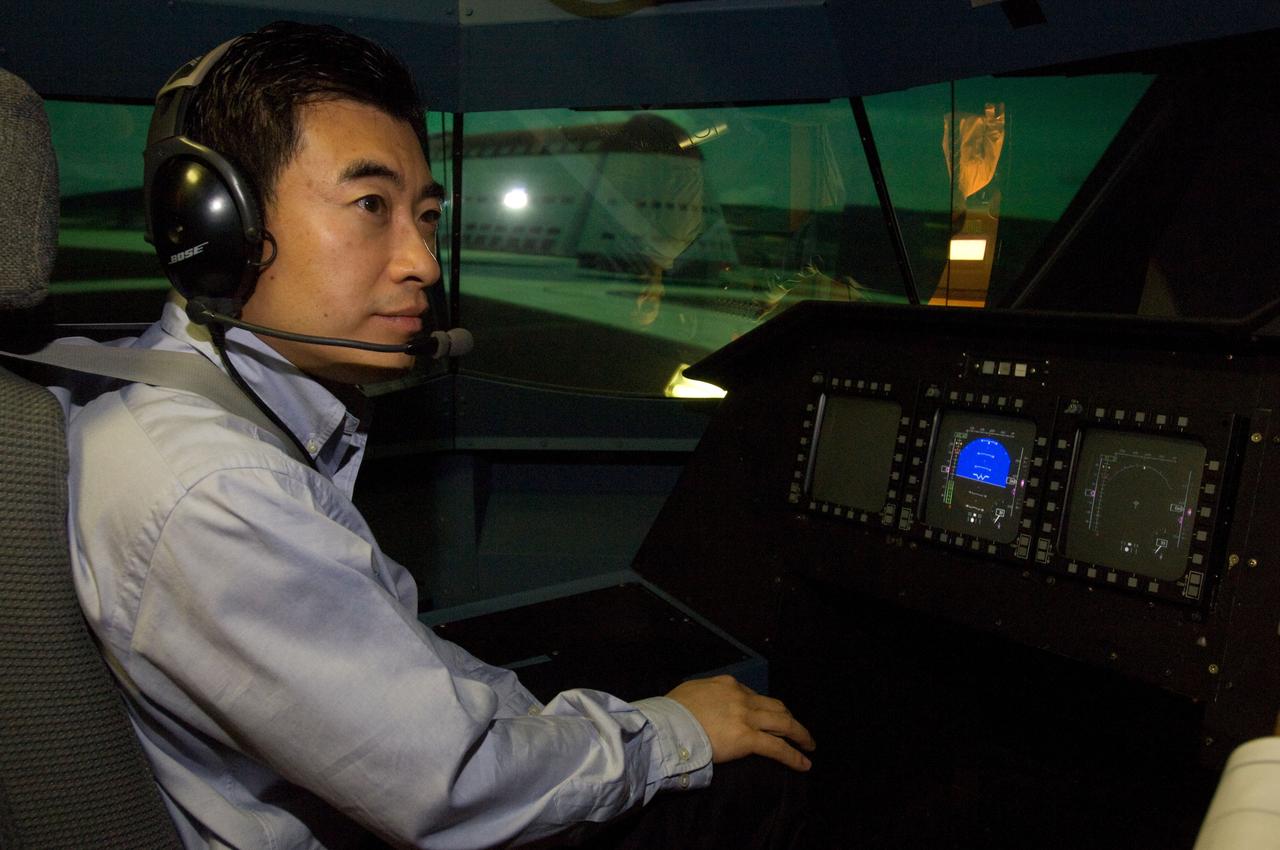
NASA AA - Associate Administrator for Aeronautics Jai Shin visits Ames Research Center and tours the Vertical Motion Simulator (VMS, T-cab) Jaiwon Shin, Moffett Field Hangar 1 shows in the VMS visual scene.
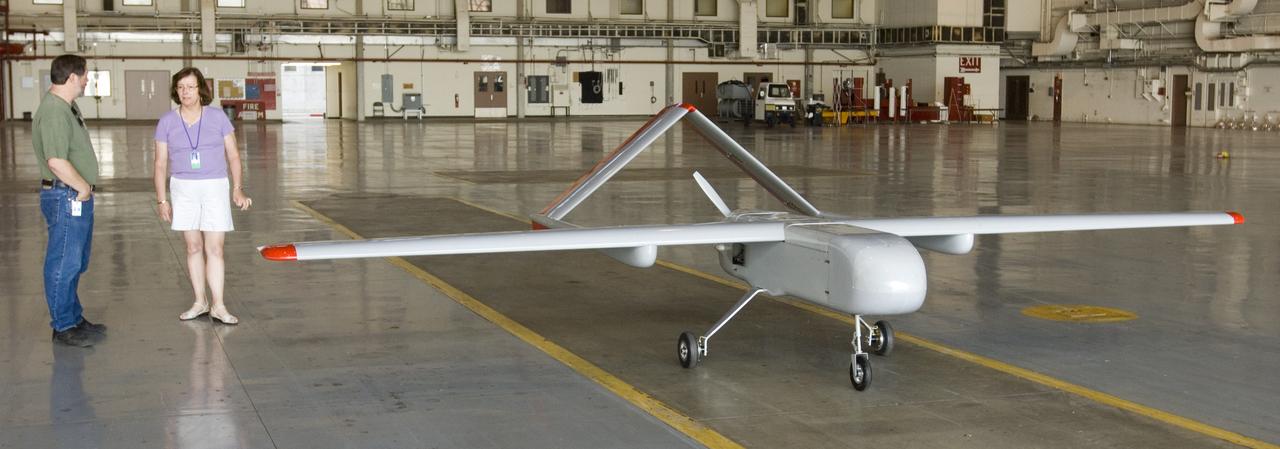
Sierra Uninhaited Aerial System (UAV plane) in the Ames hangar. aks; Sierra Unpiloted Aerial system (UAS) with L-R: Larry Pezzolo and Leslie Monforton, Naval Research Lab (on detail)
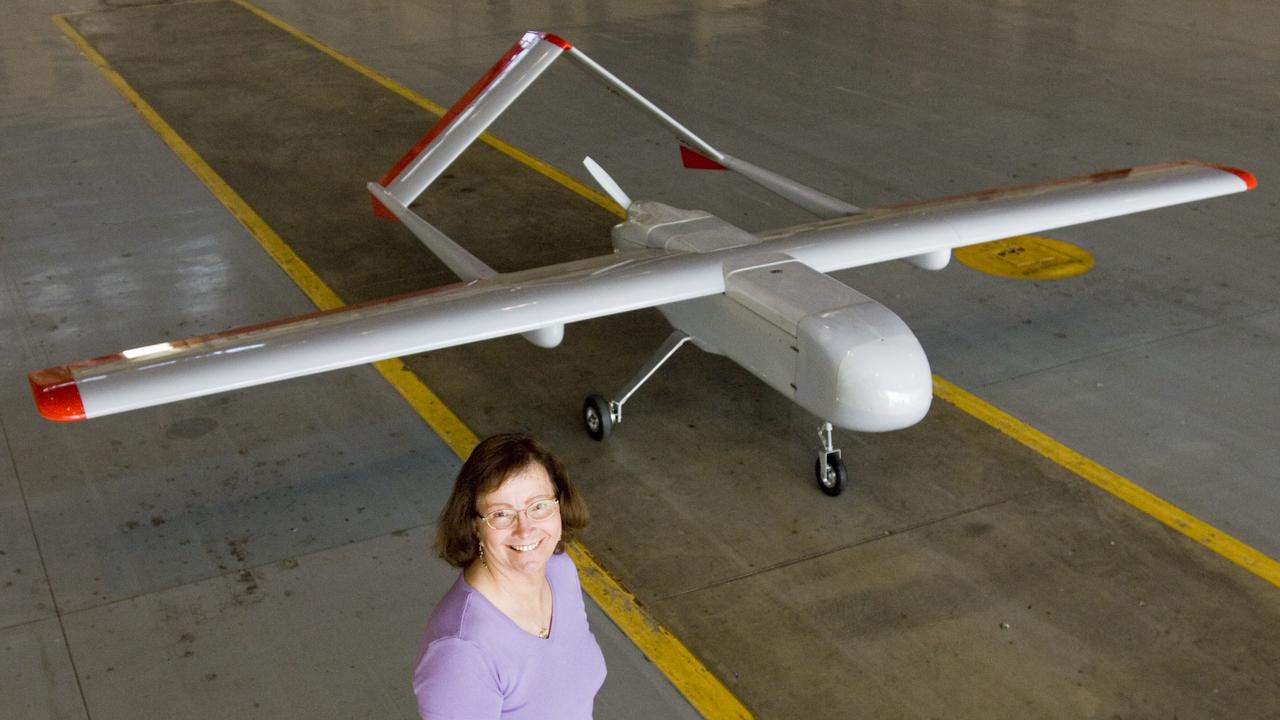
Sierra Uninhaited Aerial System (UAV plane) in the Ames hangar. aks; Sierra Unpiloted Aerial system (UAS) with Leslie Monforton (on detail from the Naval Reesearch Lab)
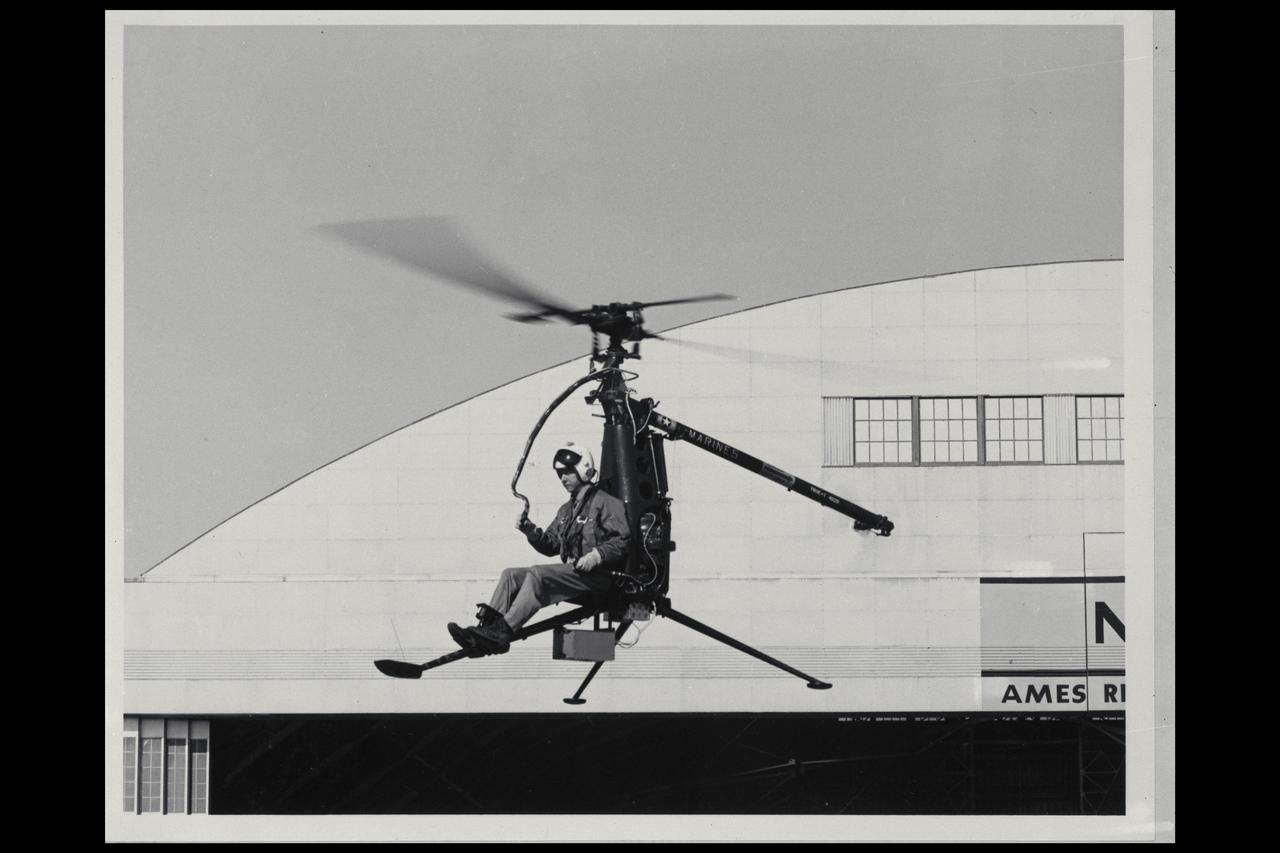
Ames aerodynamicists tested a wide variety of VTOL aircraft and helicopters during the 1960's Here the Hiller rotorcycle YROE-1, made by Hiller Helicopter in nearby Palo Alto, California, hovers in front of the Ames Hangar. The Rotorcycle was a small, 500pound, single-place helicopter. Tests indicated that the vehicle was unsafe because of low yaw-control capability to the right; the design also had oor crashworthiness.
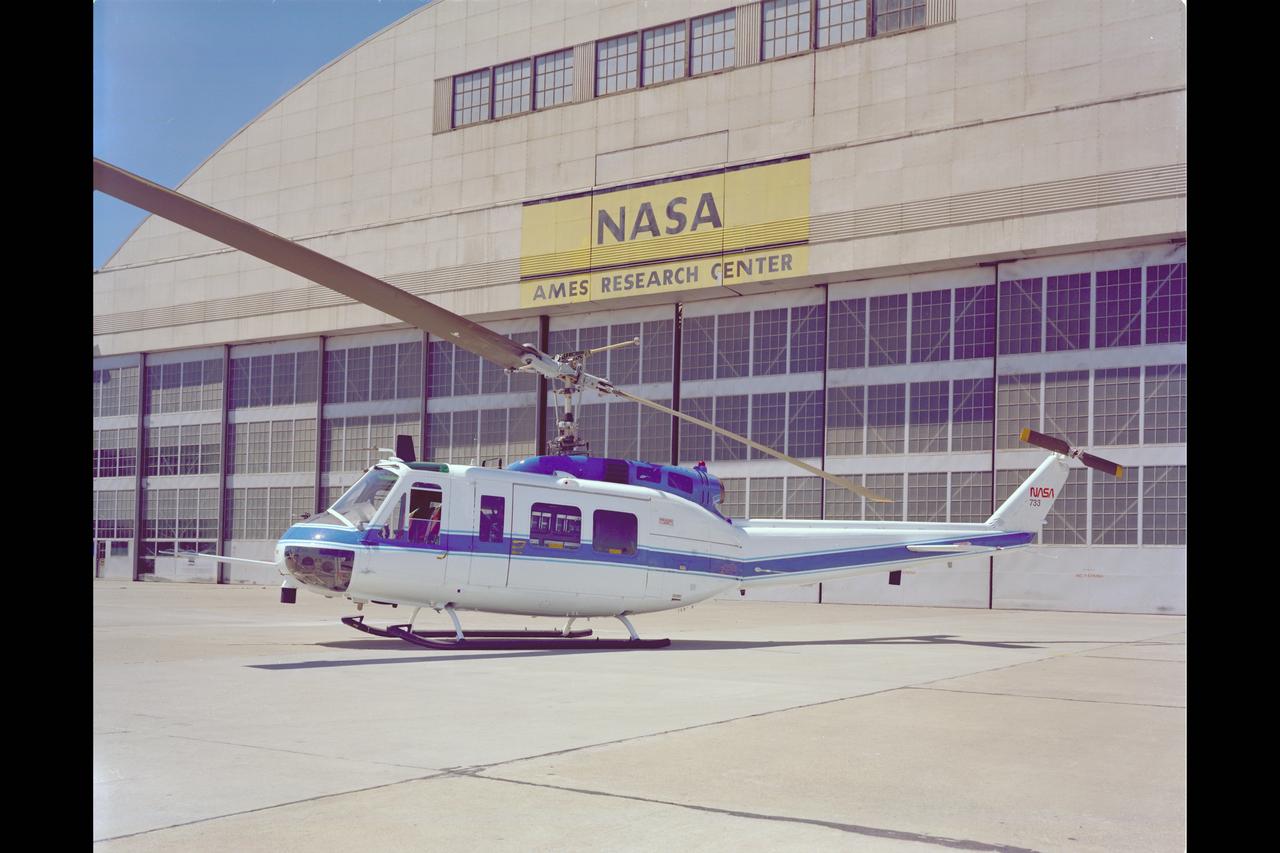
UH-IH (USA 69-15231 NASA-733) V/STOLAND helicopter parked in front of the NASA Hangar. Note: Used in publication in Flight Research at Ames; 57 Years of Development and Validation of Aeronautical Technology NASA SP-1998-3300 fig. 129
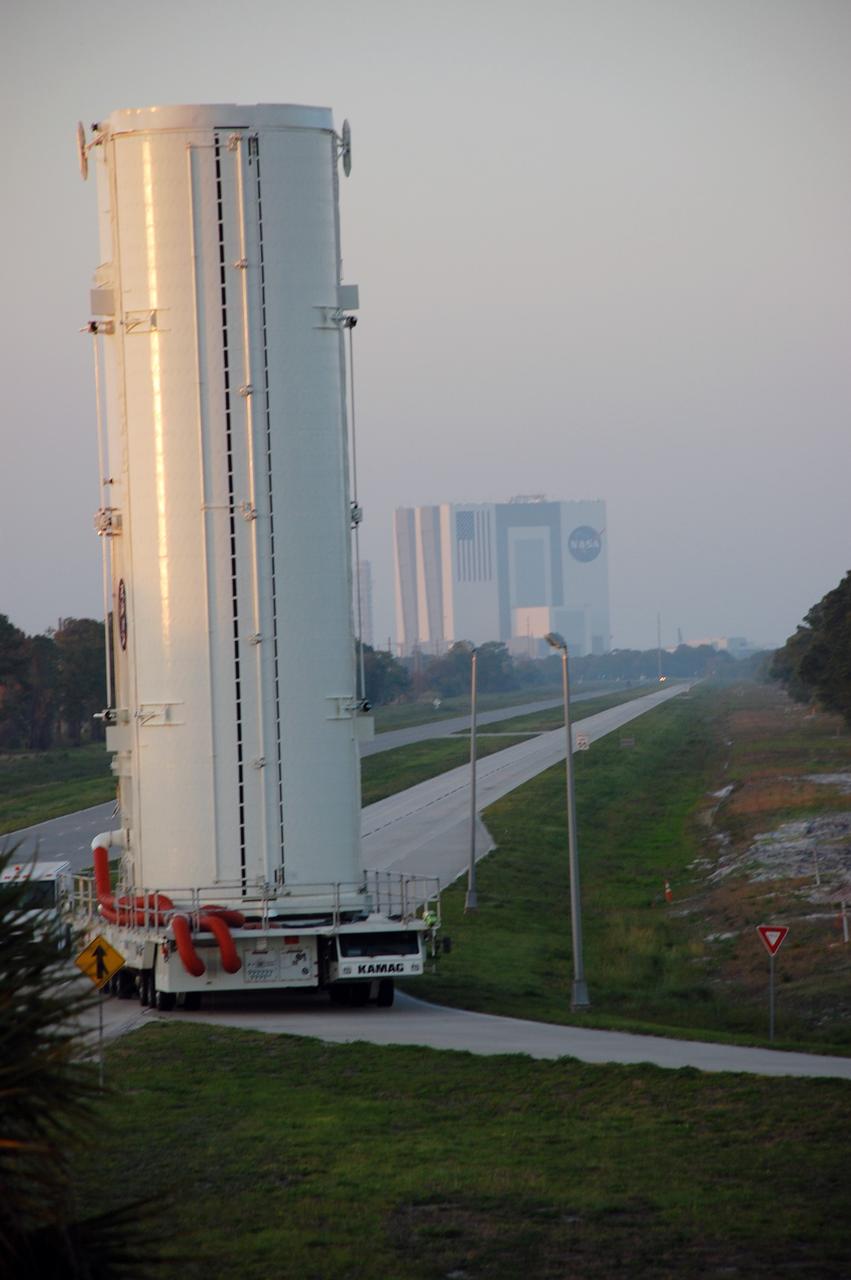
CAPE CANAVERAL, Fla. -- The canister that safely transported space shuttle Endeavour's primary payload to Launch Pad 39A at NASA's Kennedy Space Center in Florida heads back to its processing hangar, called the Canister Rotation Facility. Endeavour and its six-member STS-134 crew will deliver the Alpha Magnetic Spectrometer-2 (AMS) and Express Logistics Carrier-3 to the International Space Station. Endeavour is targeted to lift off on its final scheduled mission April 19 at 7:48 p.m. EDT. For more information visit, www.nasa.gov/mission_pages/shuttle/shuttlemissions/sts134/index.html. Photo credit: NASA/Ben Smegelsky
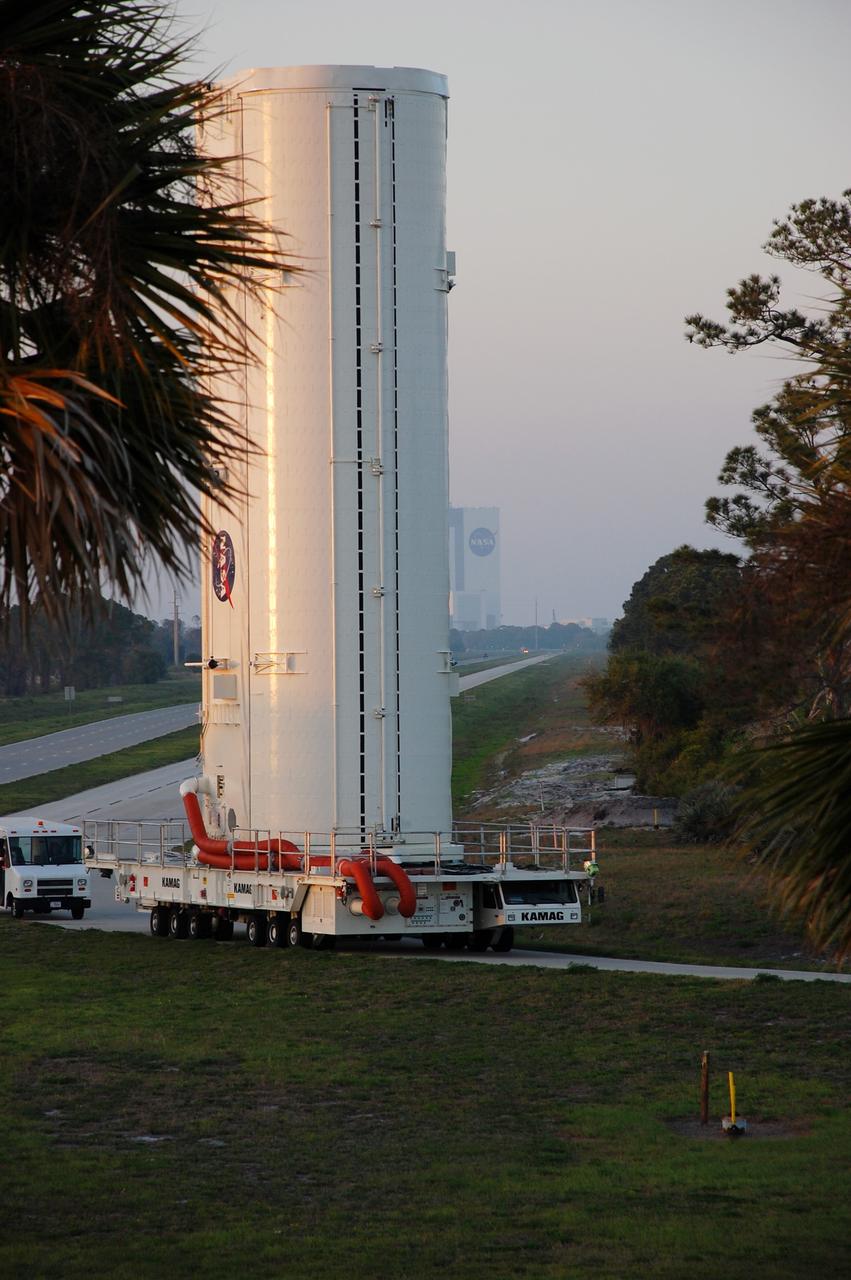
CAPE CANAVERAL, Fla. -- The canister that safely transported space shuttle Endeavour's primary payload to Launch Pad 39A at NASA's Kennedy Space Center in Florida heads back to its processing hangar, called the Canister Rotation Facility. Endeavour and its six-member STS-134 crew will deliver the Alpha Magnetic Spectrometer-2 (AMS) and Express Logistics Carrier-3 to the International Space Station. Endeavour is targeted to lift off on its final scheduled mission April 19 at 7:48 p.m. EDT. For more information visit, www.nasa.gov/mission_pages/shuttle/shuttlemissions/sts134/index.html. Photo credit: NASA/Ben Smegelsky
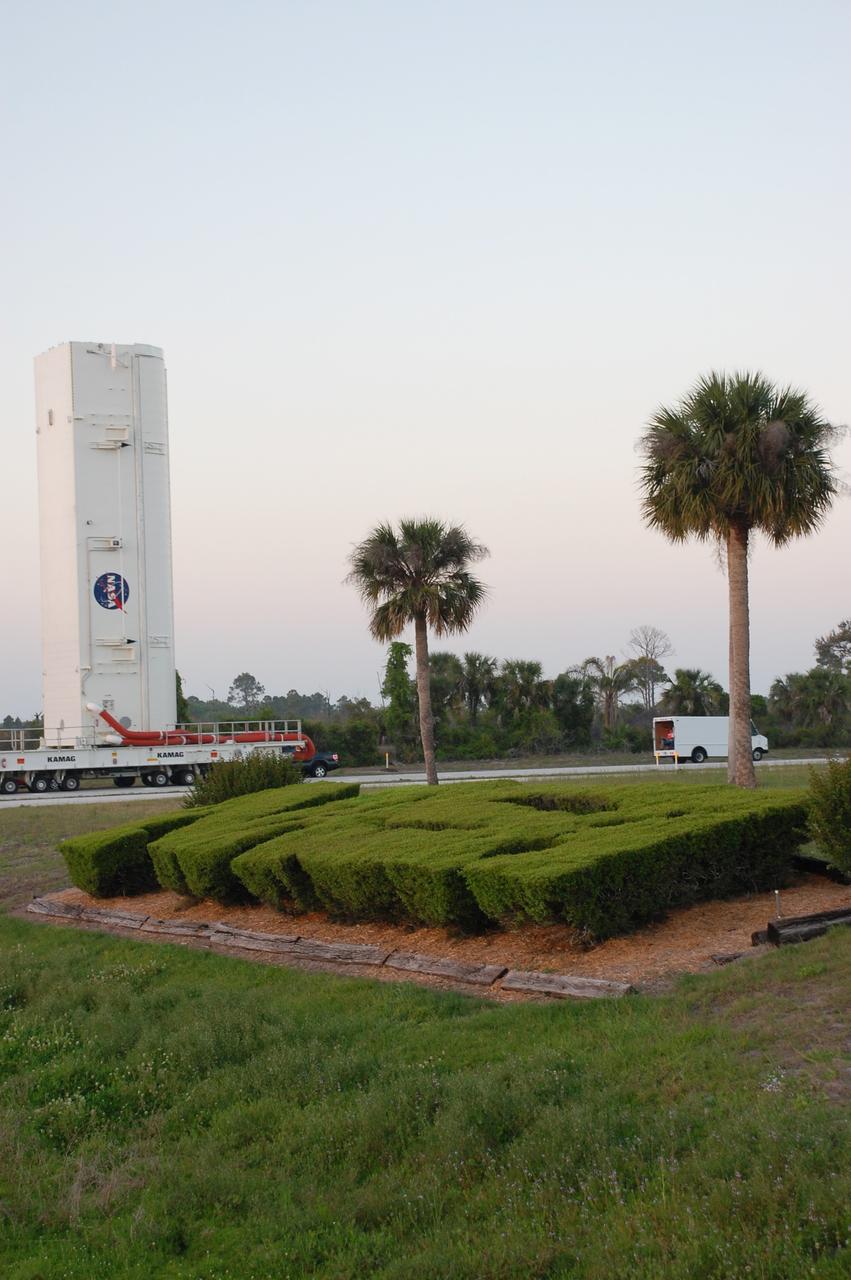
CAPE CANAVERAL, Fla. -- The canister that safely transported space shuttle Endeavour's primary payload to Launch Pad 39A at NASA's Kennedy Space Center in Florida heads back to its processing hangar, called the Canister Rotation Facility. Endeavour and its six-member STS-134 crew will deliver the Alpha Magnetic Spectrometer-2 (AMS) and Express Logistics Carrier-3 to the International Space Station. Endeavour is targeted to lift off on its final scheduled mission April 19 at 7:48 p.m. EDT. For more information visit, www.nasa.gov/mission_pages/shuttle/shuttlemissions/sts134/index.html. Photo credit: NASA/Ben Smegelsky
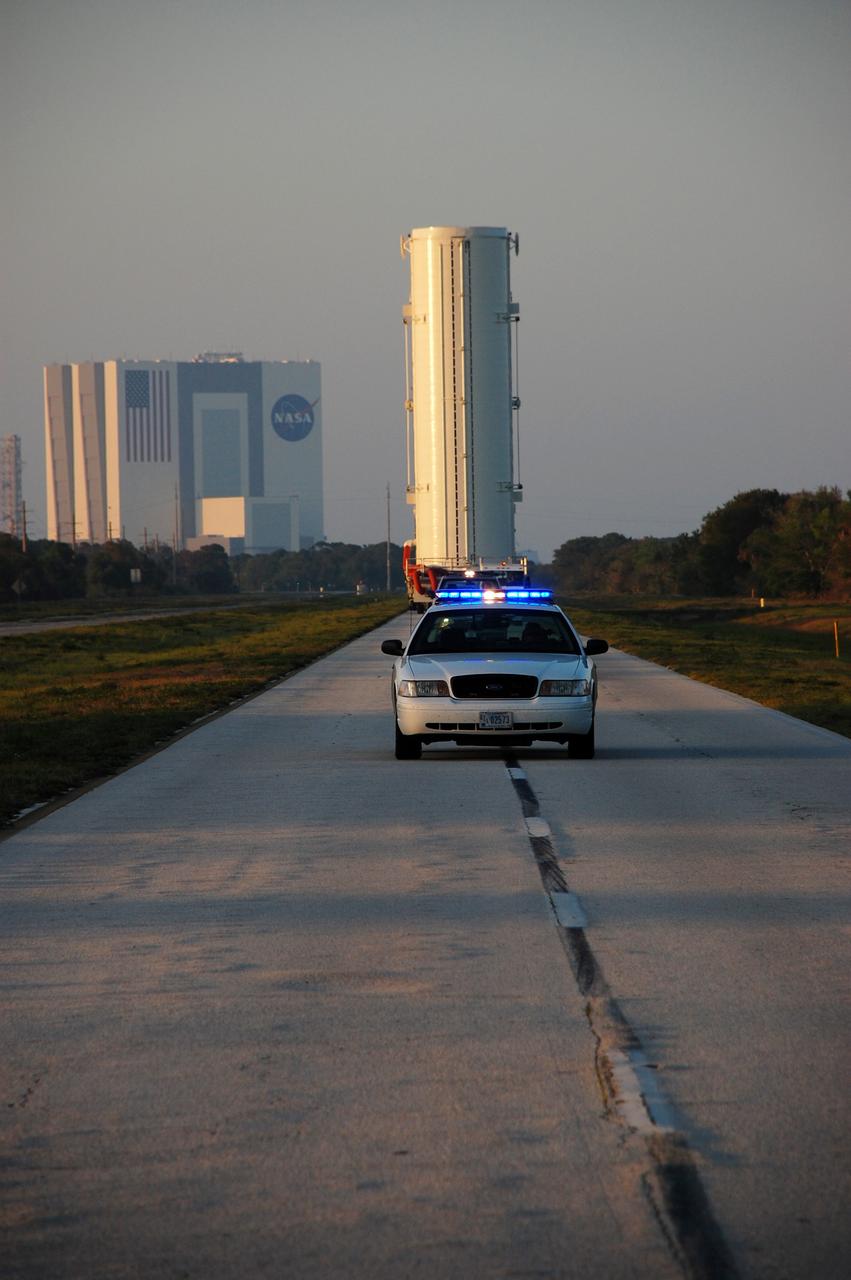
CAPE CANAVERAL, Fla. -- The canister that safely transported space shuttle Endeavour's primary payload to Launch Pad 39A at NASA's Kennedy Space Center in Florida heads back to its processing hangar, called the Canister Rotation Facility. Endeavour and its six-member STS-134 crew will deliver the Alpha Magnetic Spectrometer-2 (AMS) and Express Logistics Carrier-3 to the International Space Station. Endeavour is targeted to lift off on its final scheduled mission April 19 at 7:48 p.m. EDT. For more information visit, www.nasa.gov/mission_pages/shuttle/shuttlemissions/sts134/index.html. Photo credit: NASA/Ben Smegelsky
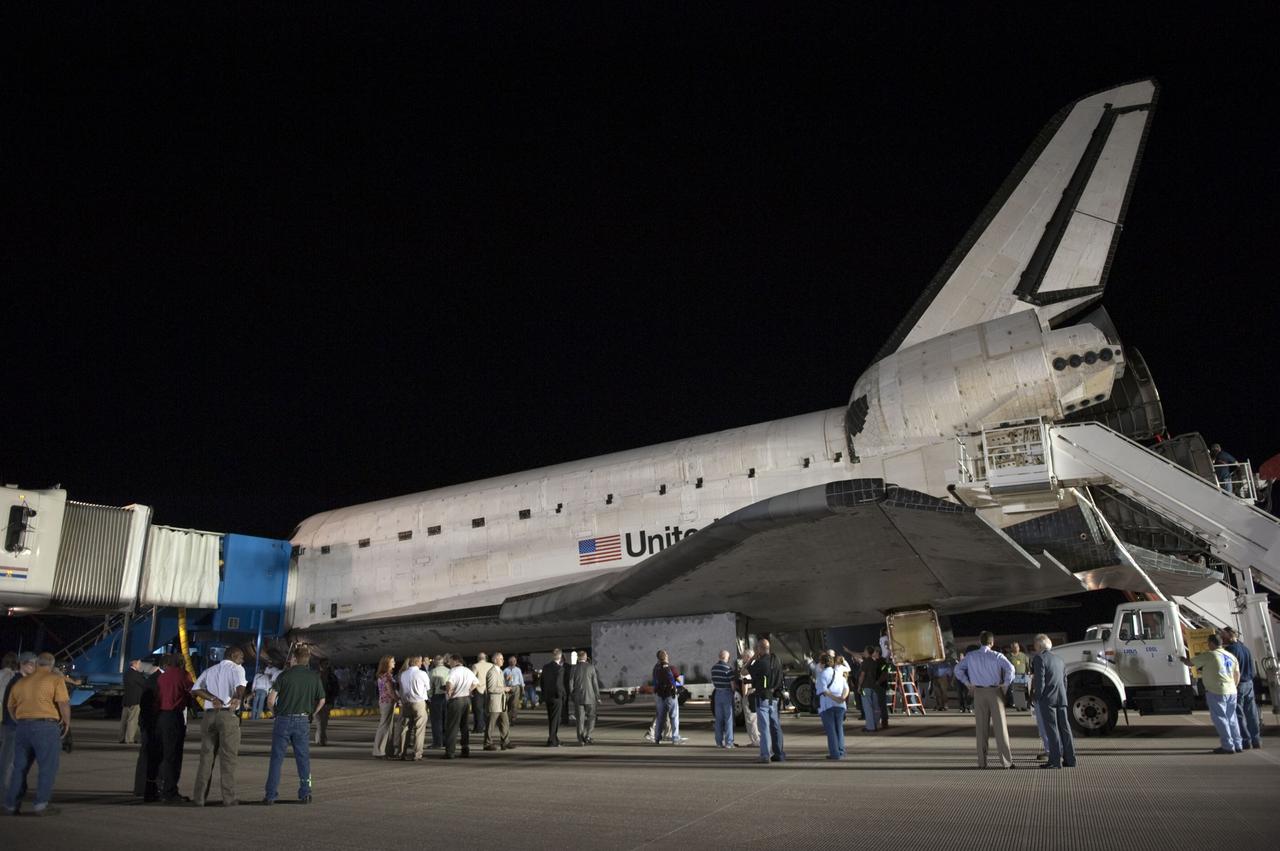
CAPE CANAVERAL, Fla. -- Employees admire space shuttle Endeavour as the landing convoy makes the vehicle safe and secure for towing to its processing hangar at NASA's Kennedy Space Center in Florida. Endeavour's final return from space completed the 16-day, 6.5-million-mile STS-134 mission. Main gear touchdown on the Shuttle Landing Facility's Runway 15 was at 2:34:51 a.m. EDT, followed by nose gear touchdown at 2:35:04 a.m., and wheelstop at 2:35:36 a.m. STS-134 delivered the Alpha Magnetic Spectrometer-2 (AMS) and the Express Logistics Carrier-3 (ELC-3) to the International Space Station. AMS will help researchers understand the origin of the universe and search for evidence of dark matter, strange matter and antimatter from the station. ELC-3 carried spare parts that will sustain station operations once the shuttles are retired from service. STS-134 was the 25th and final flight for Endeavour, which spent 299 days in space, orbited Earth 4,671 times and traveled 122,883,151 miles. Photo credit: NASA/Kim Shiflett

CAPE CANAVERAL, Fla. -- The landing convoy that will make space shuttle Endeavour safe and secure for towing to its processing hangar begins to pull up around the vehicle following wheelstop on the Shuttle Landing Facility's Runway 15 at NASA's Kennedy Space Center in Florida. Endeavour's final return from space completed the 16-day, 6.5-million-mile STS-134 mission. Main gear touchdown was at 2:34:51 a.m. EDT, followed by nose gear touchdown at 2:35:04 a.m., and wheelstop at 2:35:36 a.m. STS-134 delivered the Alpha Magnetic Spectrometer-2 (AMS) and the Express Logistics Carrier-3 (ELC-3) to the International Space Station. AMS will help researchers understand the origin of the universe and search for evidence of dark matter, strange matter and antimatter from the station. ELC-3 carried spare parts that will sustain station operations once the shuttles are retired from service. STS-134 was the 25th and final flight for Endeavour, which spent 299 days in space, orbited Earth 4,671 times and traveled 122,883,151 miles. Photo credit: NASA/Kim Shiflett
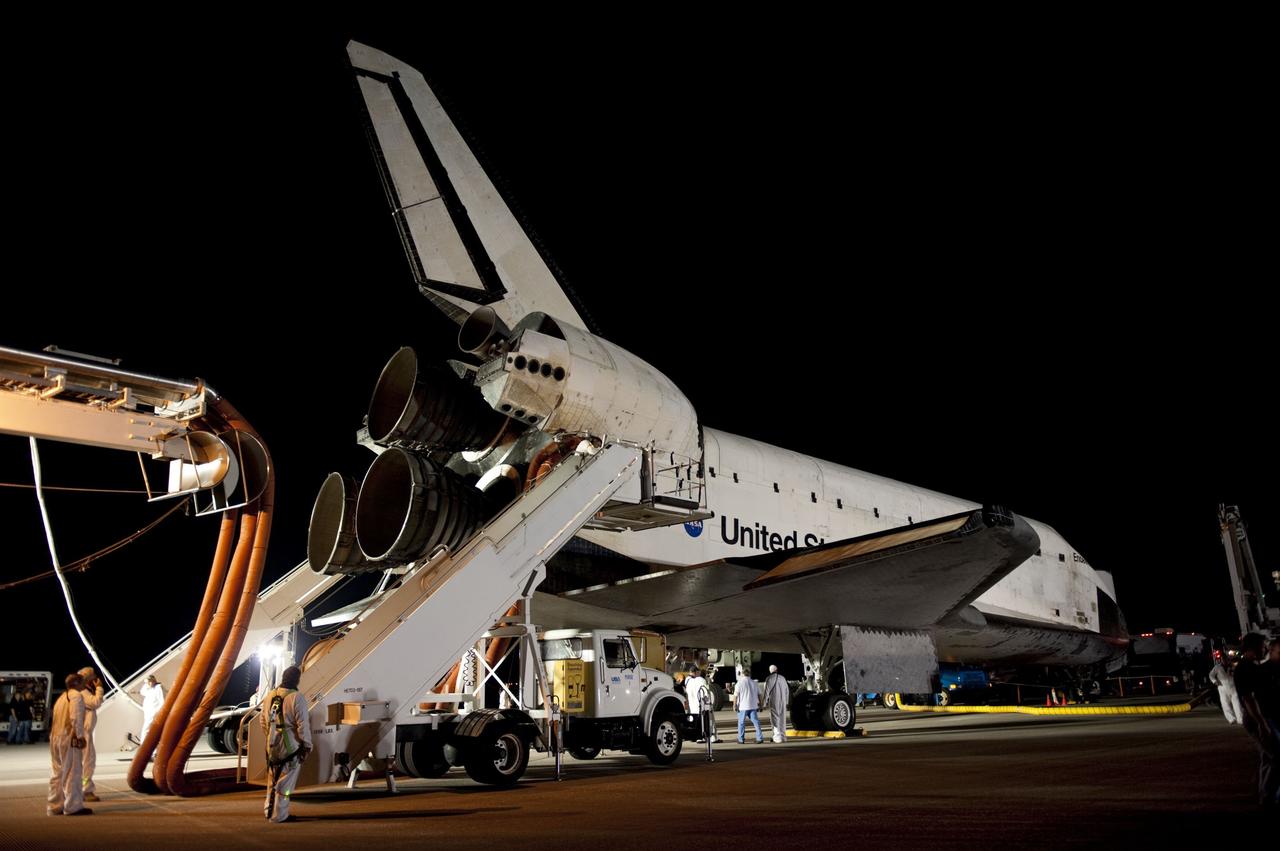
CAPE CANAVERAL, Fla. -- The landing convoy that will make space shuttle Endeavour safe and secure for towing to its processing hangar begins to pull up around the vehicle following wheelstop on the Shuttle Landing Facility's Runway 15 at NASA's Kennedy Space Center in Florida. Endeavour's final return from space completed the 16-day, 6.5-million-mile STS-134 mission. Main gear touchdown was at 2:34:51 a.m. EDT, followed by nose gear touchdown at 2:35:04 a.m., and wheelstop at 2:35:36 a.m. STS-134 delivered the Alpha Magnetic Spectrometer-2 (AMS) and the Express Logistics Carrier-3 (ELC-3) to the International Space Station. AMS will help researchers understand the origin of the universe and search for evidence of dark matter, strange matter and antimatter from the station. ELC-3 carried spare parts that will sustain station operations once the shuttles are retired from service. STS-134 was the 25th and final flight for Endeavour, which spent 299 days in space, orbited Earth 4,671 times and traveled 122,883,151 miles. Photo credit: NASA/Kim Shiflett
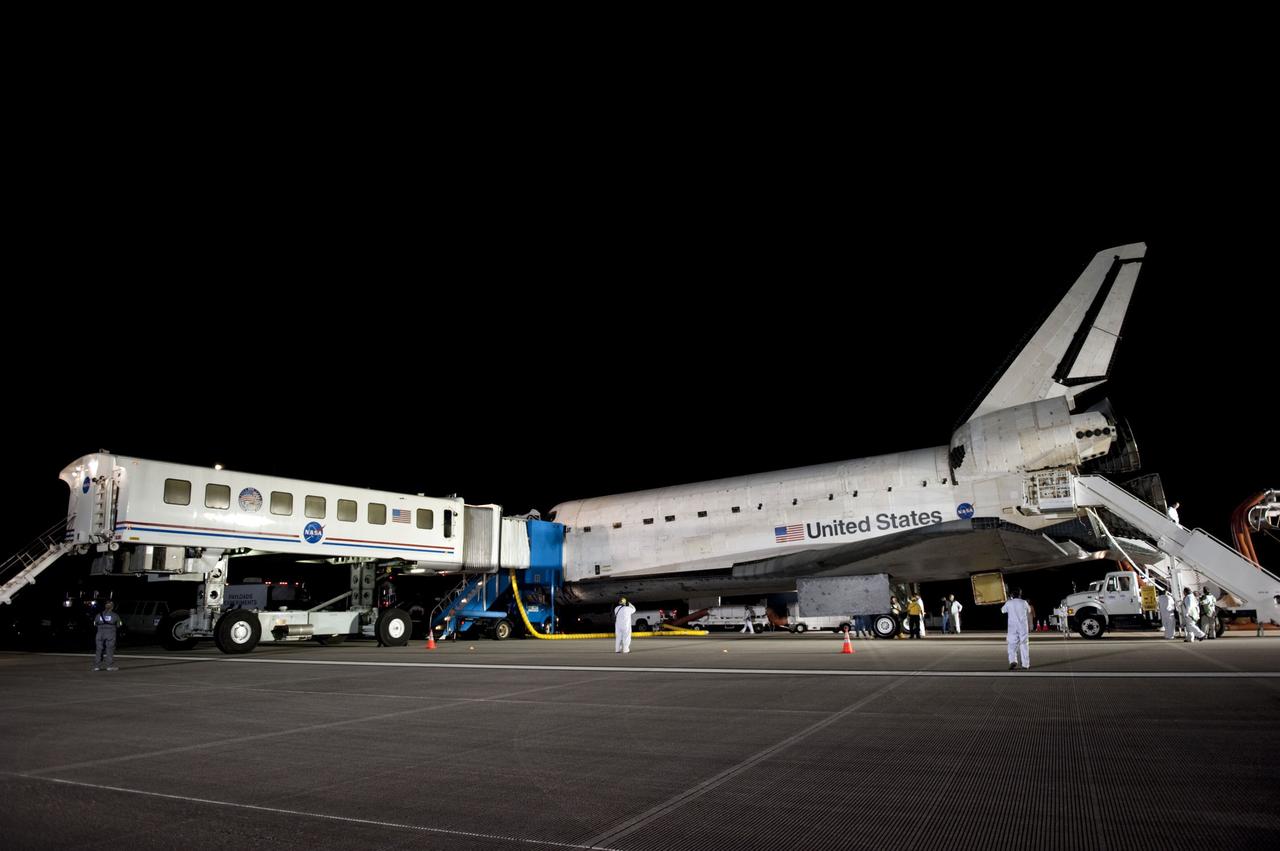
CAPE CANAVERAL, Fla. -- The landing convoy that will make space shuttle Endeavour safe and secure for towing to its processing hangar begins to pull up around the vehicle following wheelstop on the Shuttle Landing Facility's Runway 15 at NASA's Kennedy Space Center in Florida. Endeavour's final return from space completed the 16-day, 6.5-million-mile STS-134 mission. Main gear touchdown was at 2:34:51 a.m. EDT, followed by nose gear touchdown at 2:35:04 a.m., and wheelstop at 2:35:36 a.m. STS-134 delivered the Alpha Magnetic Spectrometer-2 (AMS) and the Express Logistics Carrier-3 (ELC-3) to the International Space Station. AMS will help researchers understand the origin of the universe and search for evidence of dark matter, strange matter and antimatter from the station. ELC-3 carried spare parts that will sustain station operations once the shuttles are retired from service. STS-134 was the 25th and final flight for Endeavour, which spent 299 days in space, orbited Earth 4,671 times and traveled 122,883,151 miles. Photo credit: NASA/Kim Shiflett
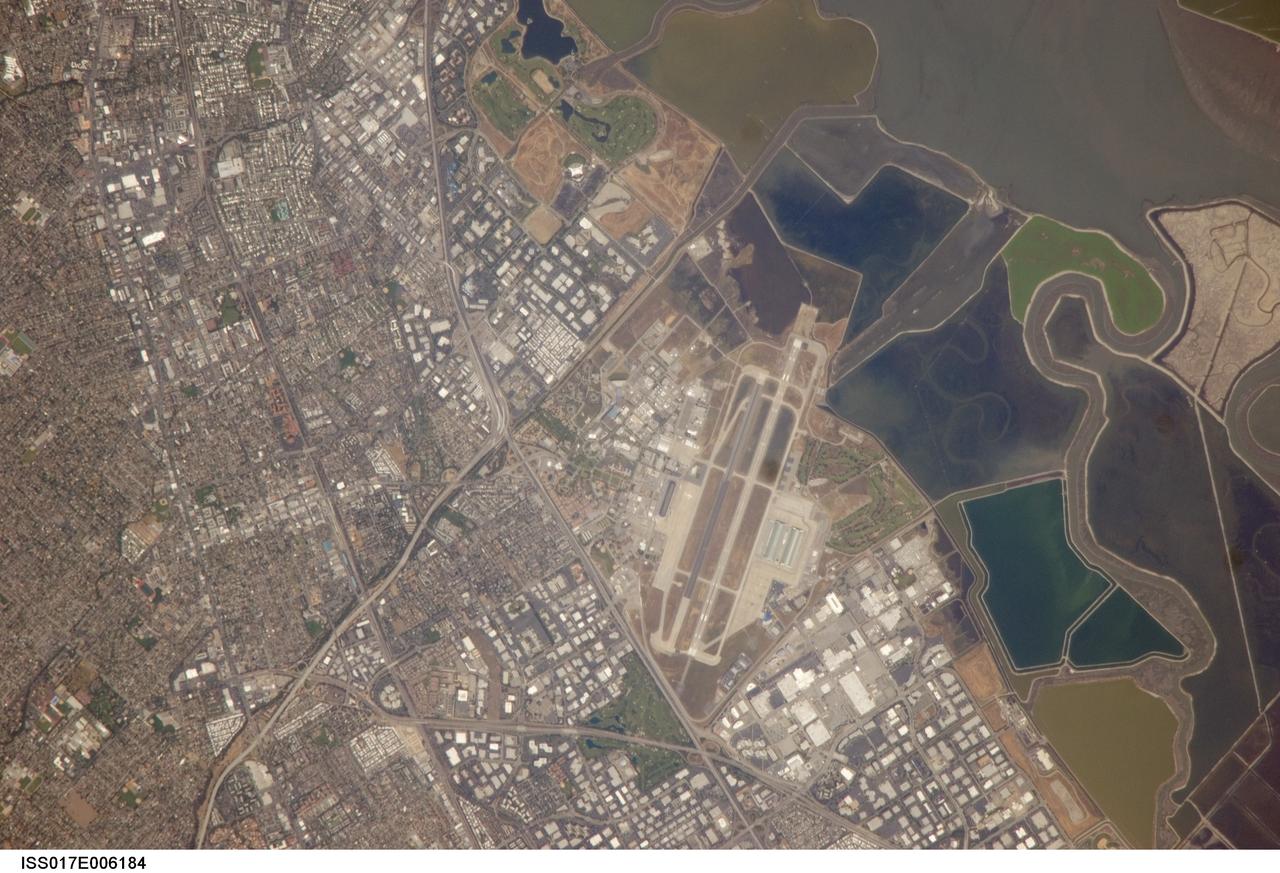
ISS017-E-006184 (3 May 2008) --- NASA Ames Research Center, Moffett Field, CA is featured in this image photographed by an Expedition 17 crewmember on the International Space Station. This view illustrates the diverse built environment surrounding NASA's Ames Research Center, or ARC located at the southernmost end of the San Francisco Bay. Founded in 1939 as an aircraft research laboratory, Ames became a NASA facility in 1958. Its original aircraft research focus was enhanced by the adjacent Moffett Field -- an active Naval Air Station until 1994 and original home of the Navy dirigible U.S.S. Macon. The large hangar for docking the U.S.S. Macon is still present at Moffett Field, and is visible in this image (center). Today, NASA ARC includes the former Naval Air Station, and continues its focus on aeronautics in addition to nanotechnology, information technology, fundamental space biology, biotechnology, thermal protection systems, and human factors research. Land use and land cover in the southern San Francisco Bay area is a diverse mix of industrial, institutional, and residential patterns. Industrial lots -- characterized by lack of green vegetation and large buildings with highly reflective white rooftops -- border NASA ARC to the west, east, and south. The city of Mountain View directly to the south appears as a dense gray-brown network of streets and residential properties with interspersed green parks. The northern boundary of NASA ARC consists of former salt ponds in the process of being returned to tidal wetlands (right). Drainage channels that predate the salt pond levees are visible at right.

CAPE CANAVERAL, Fla. -- The landing convoy that will make space shuttle Endeavour safe and secure for towing to its processing hangar begins to pull up around the vehicle following wheelstop on the Shuttle Landing Facility's Runway 15 at NASA's Kennedy Space Center in Florida. Endeavour's final return from space completed the 16-day, 6.5-million-mile STS-134 mission. Main gear touchdown was at 2:34:51 a.m. EDT, followed by nose gear touchdown at 2:35:04 a.m., and wheelstop at 2:35:36 a.m. Endeavour's final return from space completed the 16-day, 6.5-million-mile STS-134 mission. Main gear touchdown was at 2:34:51 a.m. EDT, followed by nose gear touchdown at 2:35:04 a.m., and wheelstop at 2:35:36 a.m. Endeavour and its crew delivered the Alpha Magnetic Spectrometer-2 (AMS) and the Express Logistics Carrier-3 (ELC-3) to the International Space Station. AMS will help researchers understand the origin of the universe and search for evidence of dark matter, strange matter and antimatter from the station. ELC-3 carried spare parts that will sustain station operations once the shuttles are retired from service. STS-134 was the 25th and final flight for Endeavour, which spent 299 days in space, orbited Earth 4,671 times and traveled 122,883,151 miles. Photo credit: NASA/Jack Pfaller
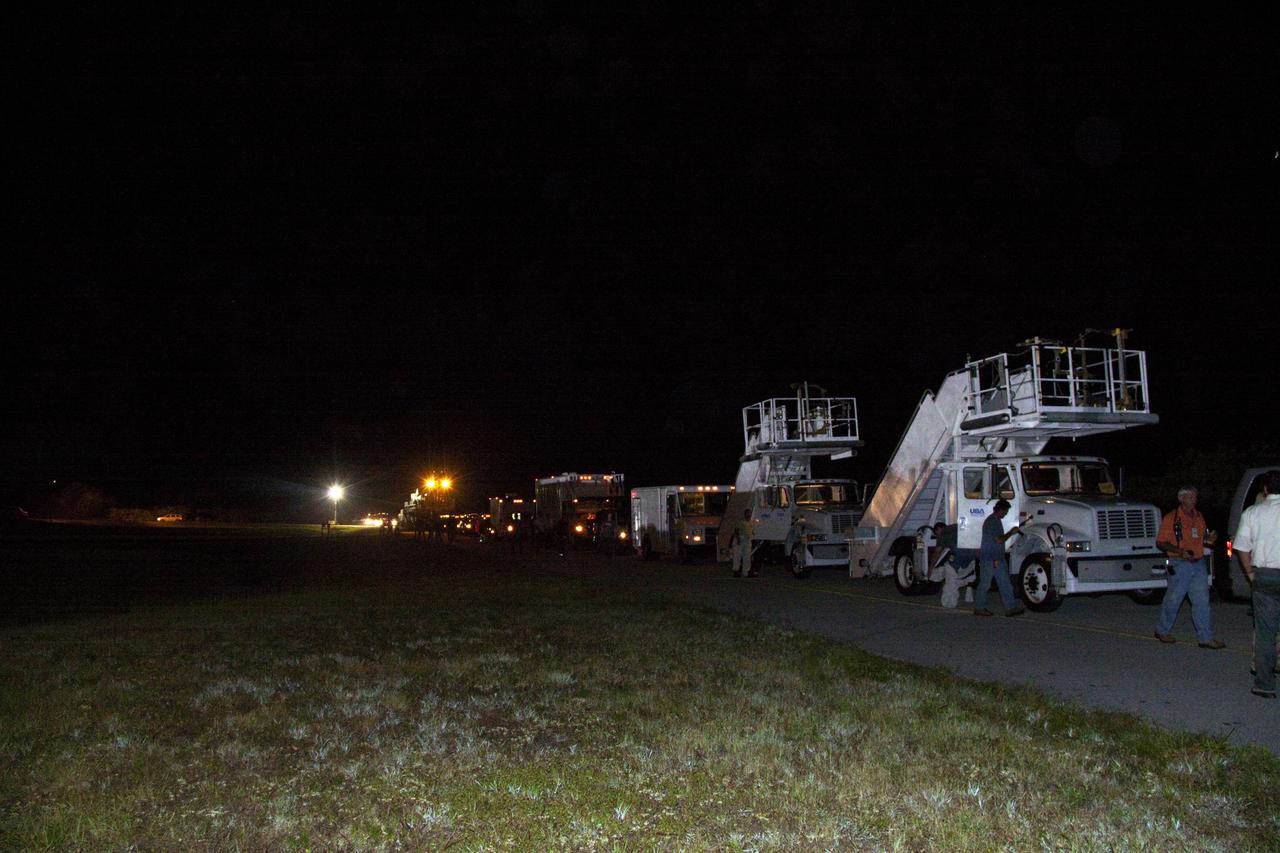
CAPE CANAVERAL, Fla. -- The landing convoy that will make space shuttle Endeavour safe and secure for towing to its processing hangar begins to pull up around the vehicle following wheelstop on the Shuttle Landing Facility's Runway 15 at NASA's Kennedy Space Center in Florida. Endeavour's final return from space completed the 16-day, 6.5-million-mile STS-134 mission. Main gear touchdown was at 2:34:51 a.m. EDT, followed by nose gear touchdown at 2:35:04 a.m., and wheelstop at 2:35:36 a.m. Endeavour's final return from space completed the 16-day, 6.5-million-mile STS-134 mission. Main gear touchdown was at 2:34:51 a.m. EDT, followed by nose gear touchdown at 2:35:04 a.m., and wheelstop at 2:35:36 a.m. Endeavour and its crew delivered the Alpha Magnetic Spectrometer-2 (AMS) and the Express Logistics Carrier-3 (ELC-3) to the International Space Station. AMS will help researchers understand the origin of the universe and search for evidence of dark matter, strange matter and antimatter from the station. ELC-3 carried spare parts that will sustain station operations once the shuttles are retired from service. STS-134 was the 25th and final flight for Endeavour, which spent 299 days in space, orbited Earth 4,671 times and traveled 122,883,151 miles. Photo credit: NASA/Jack Pfaller
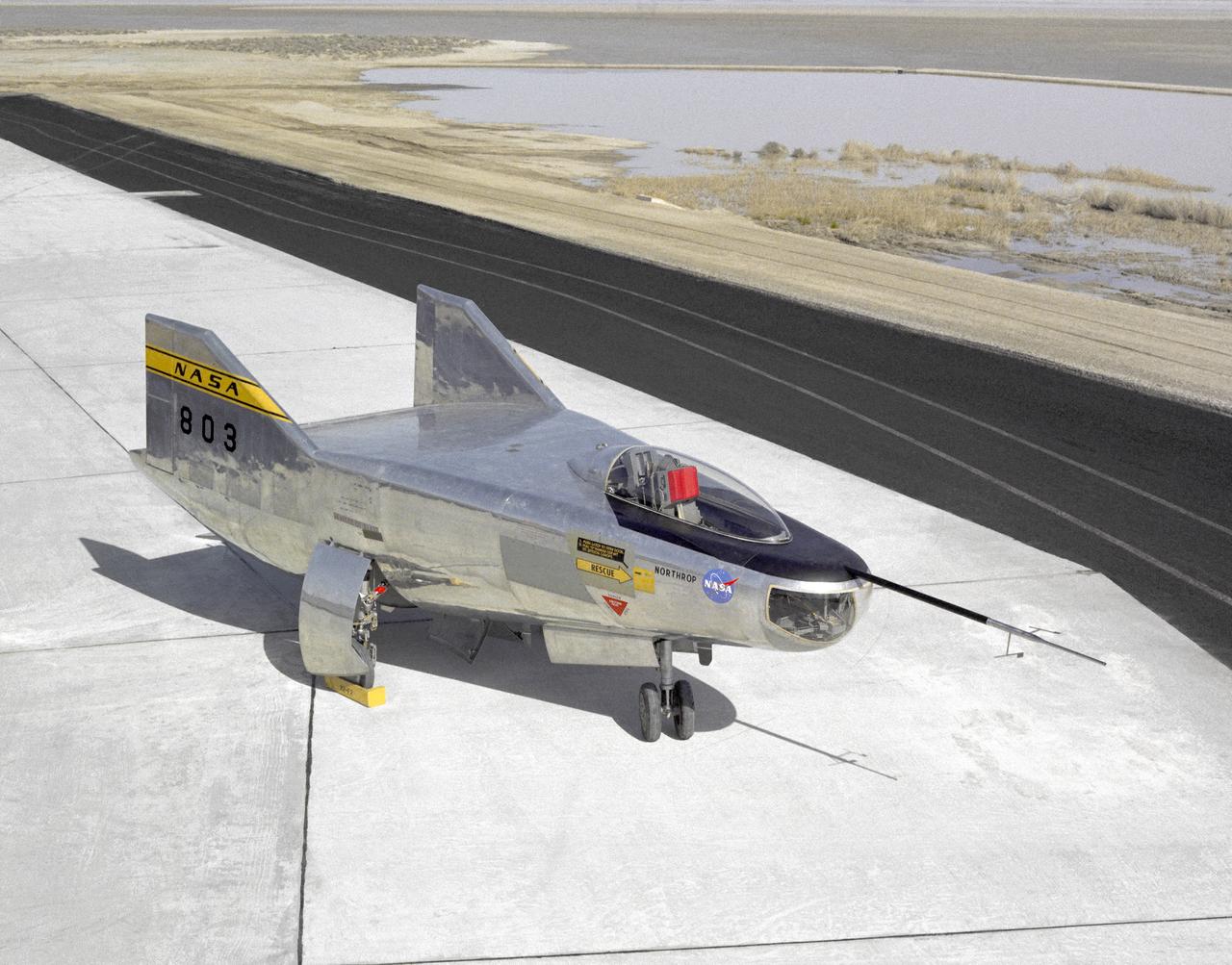
The M2-F2 Lifting Body is seen here on the ramp at the NASA Dryden Flight Research Center. The success of Dryden's M2-F1 program led to NASA's development and construction of two heavyweight lifting bodies based on studies at NASA's Ames and Langley research centers -- the M2-F2 and the HL-10, both built by the Northrop Corporation. The "M" refers to "manned" and "F" refers to "flight" version. "HL" comes from "horizontal landing" and 10 is for the tenth lifting body model to be investigated by Langley. The first flight of the M2-F2 -- which looked much like the "F1" -- was on July 12, 1966. Milt Thompson was the pilot. By then, the same B-52 used to air launch the famed X-15 rocket research aircraft was modified to also carry the lifting bodies. Thompson was dropped from the B-52's wing pylon mount at an altitude of 45,000 feet on that maiden glide flight. The M2-F2 weighed 4,620 pounds, was 22 feet long, and had a width of about 10 feet. On May 10, 1967, during the sixteenth glide flight leading up to powered flight, a landing accident severely damaged the vehicle and seriously injured the NASA pilot, Bruce Peterson. NASA pilots and researchers realized the M2-F2 had lateral control problems, even though it had a stability augmentation control system. When the M2-F2 was rebuilt at Dryden and redesignated the M2-F3, it was modified with an additional third vertical fin -- centered between the tip fins -- to improve control characteristics. The M2-F2/F3 was the first of the heavy-weight, entry-configuration lifting bodies. Its successful development as a research test vehicle answered many of the generic questions about these vehicles. NASA donated the M2-F3 vehicle to the Smithsonian Institute in December 1973. It is currently hanging in the Air and Space Museum along with the X-15 aircraft number 1, which was its hangar partner at Dryden from 1965 to 1969.
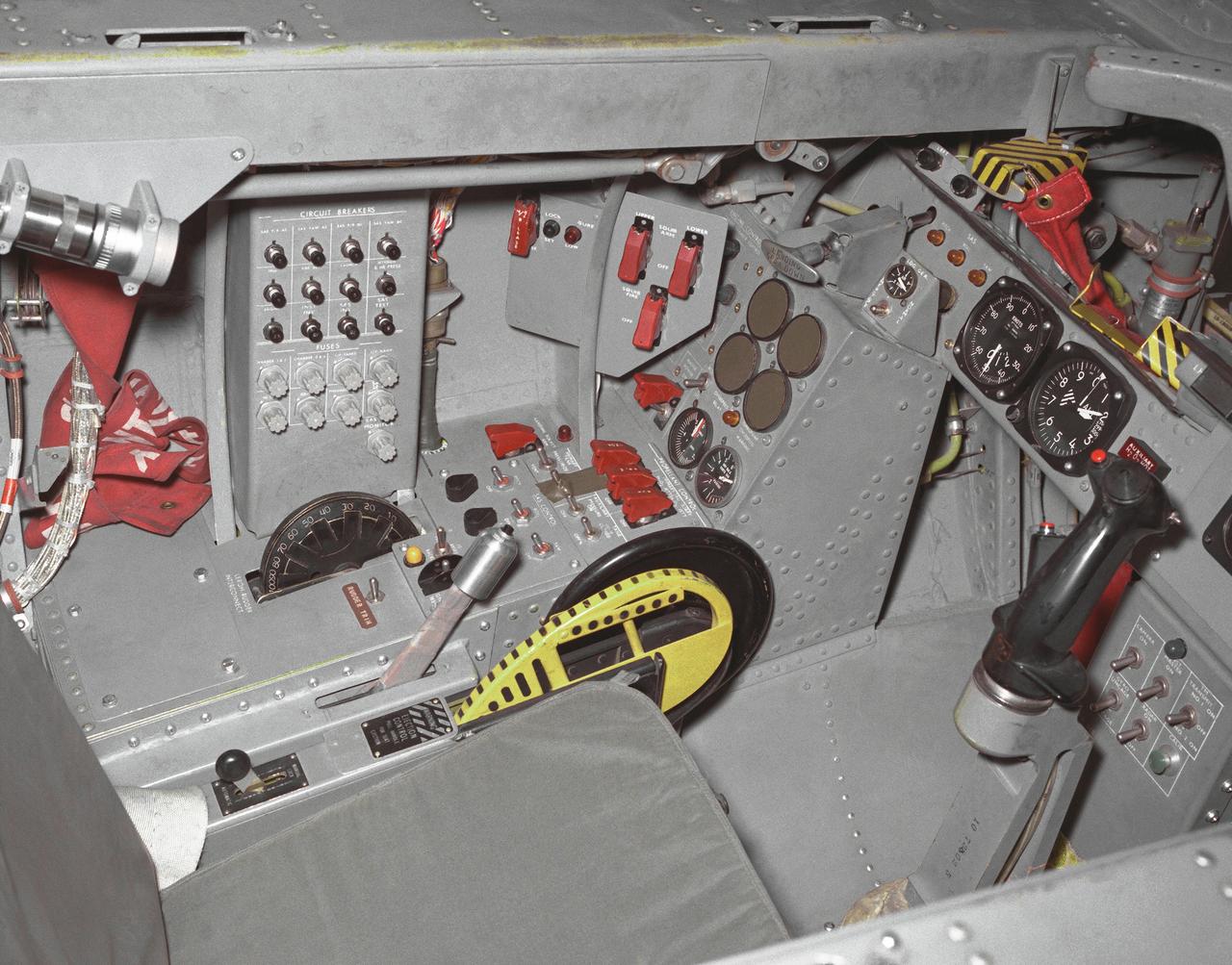
This photo shows the left side cockpit instrumentation panel of the M2-F2 Lifting Body. The success of Dryden's M2-F1 program led to NASA's development and construction of two heavyweight lifting bodies based on studies at NASA's Ames and Langley research centers -- the M2-F2 and the HL-10, both built by the Northrop Corporation. The "M" refers to "manned" and "F" refers to "flight" version. "HL" comes from "horizontal landing" and 10 is for the tenth lifting body model to be investigated by Langley. The first flight of the M2-F2 -- which looked much like the "F1" -- was on July 12, 1966. Milt Thompson was the pilot. By then, the same B-52 used to air launch the famed X-15 rocket research aircraft was modified to also carry the lifting bodies. Thompson was dropped from the B-52's wing pylon mount at an altitude of 45,000 feet on that maiden glide flight. The M2-F2 weighed 4,620 pounds, was 22 feet long, and had a width of about 10 feet. On May 10, 1967, during the sixteenth glide flight leading up to powered flight, a landing accident severely damaged the vehicle and seriously injured the NASA pilot, Bruce Peterson. NASA pilots and researchers realized the M2-F2 had lateral control problems, even though it had a stability augmentation control system. When the M2-F2 was rebuilt at Dryden and redesignated the M2-F3, it was modified with an additional third vertical fin -- centered between the tip fins -- to improve control characteristics. The M2-F2/F3 was the first of the heavy-weight, entry-configuration lifting bodies. Its successful development as a research test vehicle answered many of the generic questions about these vehicles. NASA donated the M2-F3 vehicle to the Smithsonian Institute in December 1973. It is currently hanging in the Air and Space Museum along with the X-15 aircraft number 1, which was its hangar partner at Dryden from 1965 to 1969.
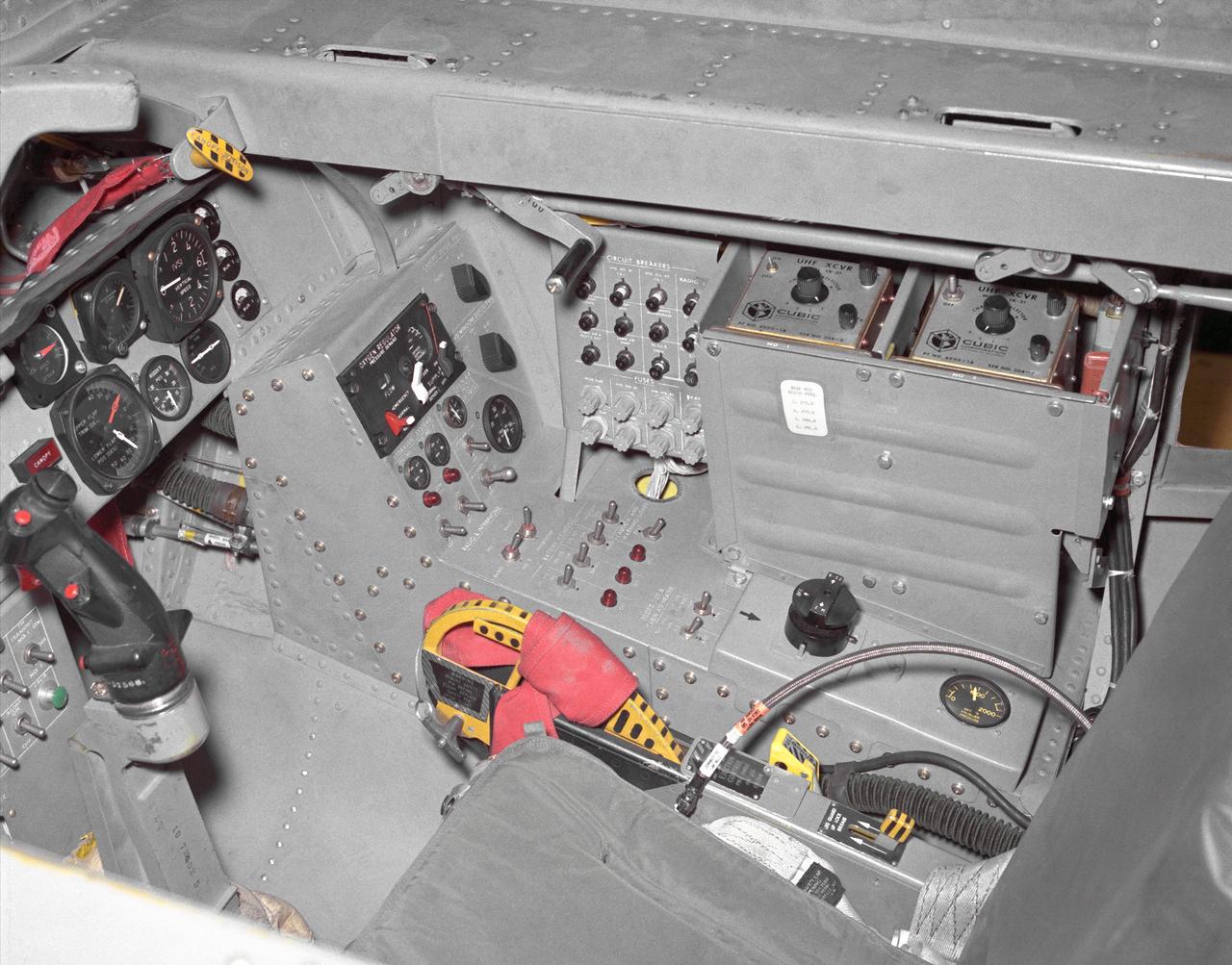
This photo shows the right side cockpit instrumentation panel of the M2-F2 Lifting Body. The success of Dryden's M2-F1 program led to NASA's development and construction of two heavyweight lifting bodies based on studies at NASA's Ames and Langley research centers -- the M2-F2 and the HL-10, both built by the Northrop Corporation. The "M" refers to "manned" and "F" refers to "flight" version. "HL" comes from "horizontal landing" and 10 is for the tenth lifting body model to be investigated by Langley. The first flight of the M2-F2 -- which looked much like the "F1" -- was on July 12, 1966. Milt Thompson was the pilot. By then, the same B-52 used to air launch the famed X-15 rocket research aircraft was modified to also carry the lifting bodies. Thompson was dropped from the B-52's wing pylon mount at an altitude of 45,000 feet on that maiden glide flight. The M2-F2 weighed 4,620 pounds, was 22 feet long, and had a width of about 10 feet. On May 10, 1967, during the sixteenth glide flight leading up to powered flight, a landing accident severely damaged the vehicle and seriously injured the NASA pilot, Bruce Peterson. NASA pilots and researchers realized the M2-F2 had lateral control problems, even though it had a stability augmentation control system. When the M2-F2 was rebuilt at Dryden and redesignated the M2-F3, it was modified with an additional third vertical fin -- centered between the tip fins -- to improve control characteristics. The M2-F2/F3 was the first of the heavy-weight, entry-configuration lifting bodies. Its successful development as a research test vehicle answered many of the generic questions about these vehicles. NASA donated the M2-F3 vehicle to the Smithsonian Institute in December 1973. It is currently hanging in the Air and Space Museum along with the X-15 aircraft number 1, which was its hangar partner at Dryden from 1965 to 1969.