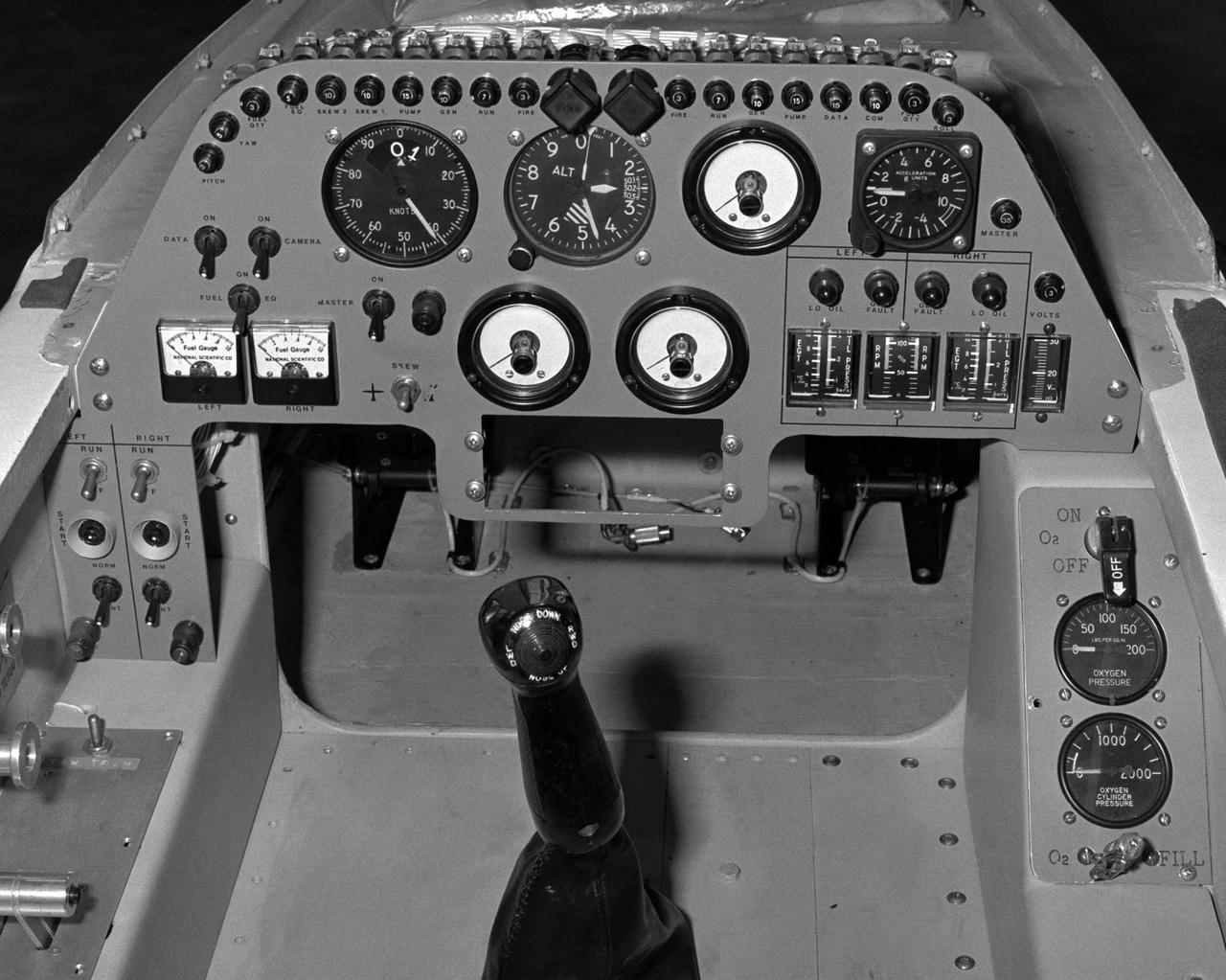
The cockpit and instrument panel of the AD-1 aircraft. Due to the small size of the AD-1, instrumentation was limited and the cockpit was cramped.
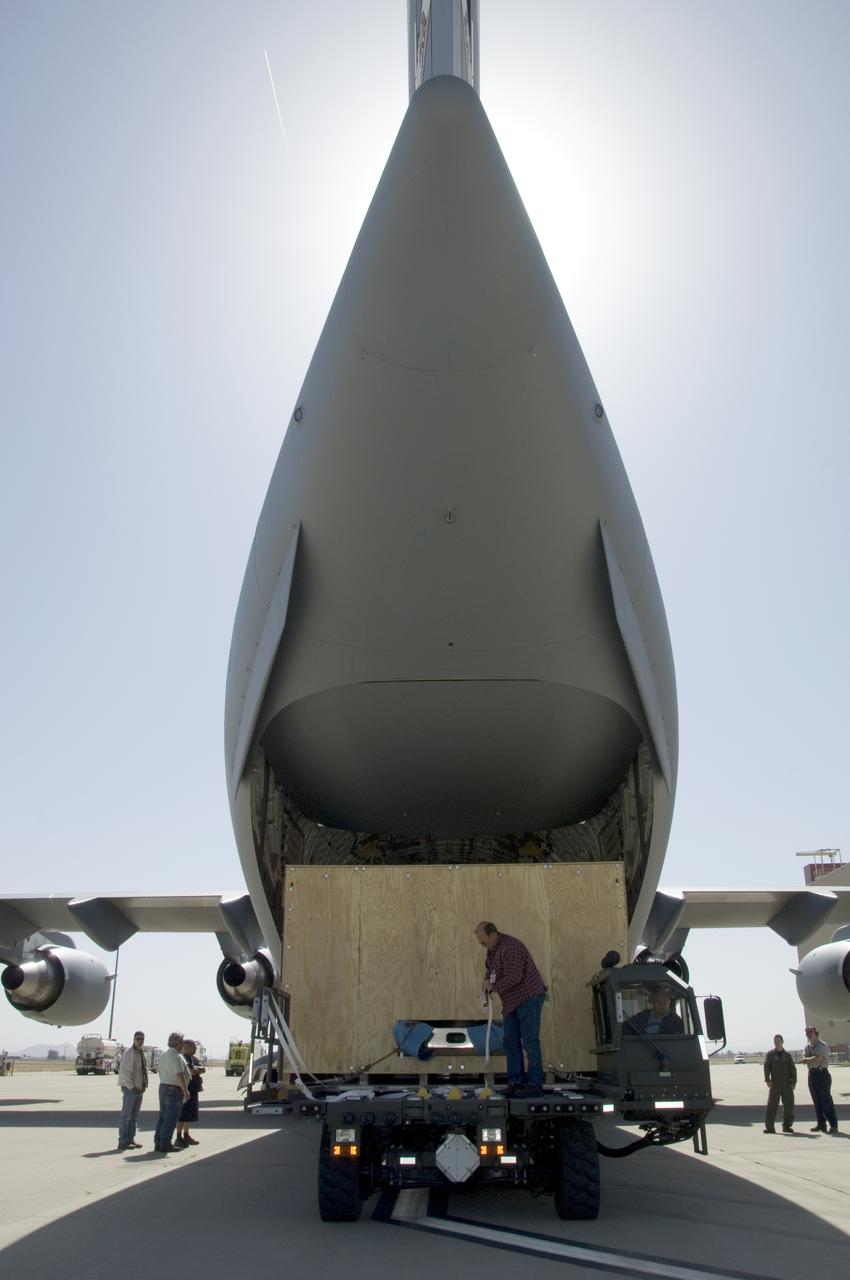
Technicians at NASA's Dryden Aircraft Operations Facility in Palmdale, Calif., loaded the German-built primary mirror assembly of the Stratospheric Observatory for Infrared Astronomy, or SOFIA, onto an Air Force C-17 for shipment to NASA's Ames Research Center on May 1, 2008. In preparation for the final finish coating of the mirror, the more than two-ton mirror assembly had been removed from its cavity in the rear fuselage of the highly modified SOFIA Boeing 747SP two weeks earlier. After arrival at NASA Ames at Moffett Field near Mountain View, Calif., the mirror would receive its aluminized finish coating before being re-installed in the SOFIA aircraft.
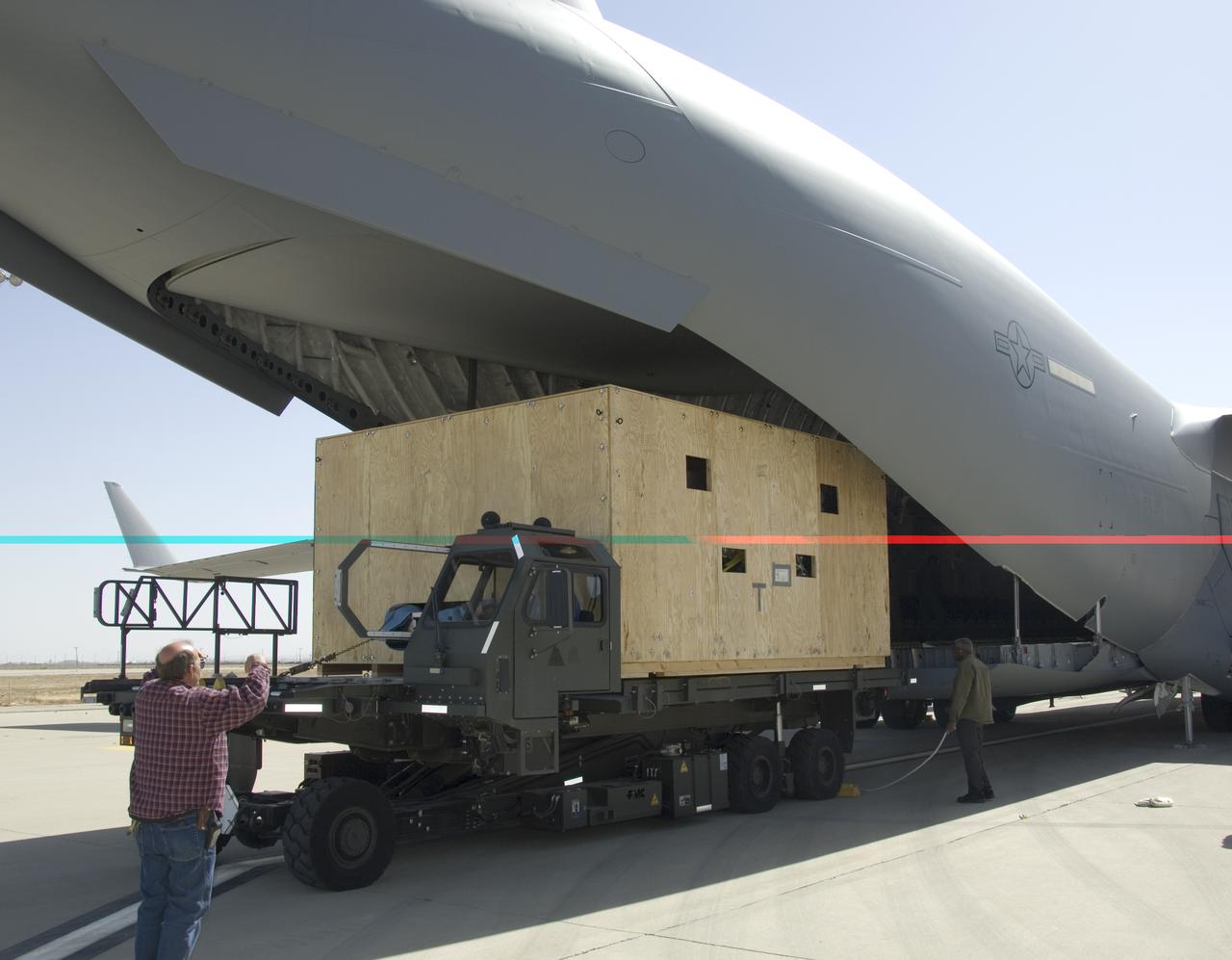
Technicians at NASA's Dryden Aircraft Operations Facility in Palmdale, Calif., loaded the German-built primary mirror assembly of the Stratospheric Observatory for Infrared Astronomy, or SOFIA, onto an Air Force C-17 for shipment to NASA's Ames Research Center on May 1, 2008. In preparation for the final finish coating of the mirror, the more than two-ton mirror assembly had been removed from its cavity in the rear fuselage of the highly modified SOFIA Boeing 747SP two weeks earlier. After arrival at NASA Ames at Moffett Field near Mountain View, Calif., the mirror would receive its aluminized finish coating before being re-installed in the SOFIA aircraft.
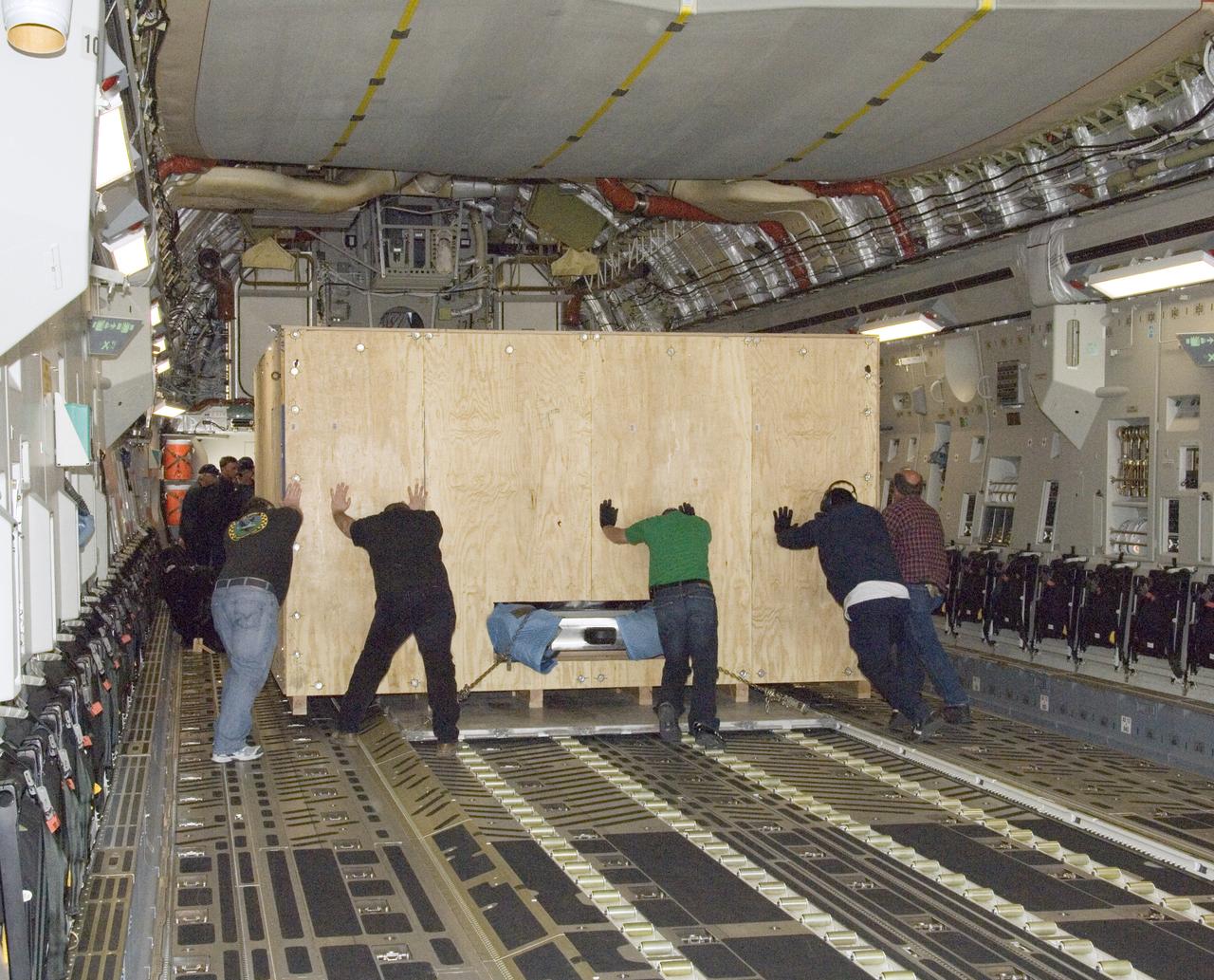
Technicians at NASA's Dryden Aircraft Operations Facility in Palmdale, Calif., loaded the German-built primary mirror assembly of the Stratospheric Observatory for Infrared Astronomy, or SOFIA, onto an Air Force C-17 for shipment to NASA's Ames Research Center on May 1, 2008. In preparation for the final finish coating of the mirror, the more than two-ton mirror assembly had been removed from its cavity in the rear fuselage of the highly modified SOFIA Boeing 747SP two weeks earlier. After arrival at NASA Ames at Moffett Field near Mountain View, Calif., the mirror would receive its aluminized finish coating before being re-installed in the SOFIA aircraft.
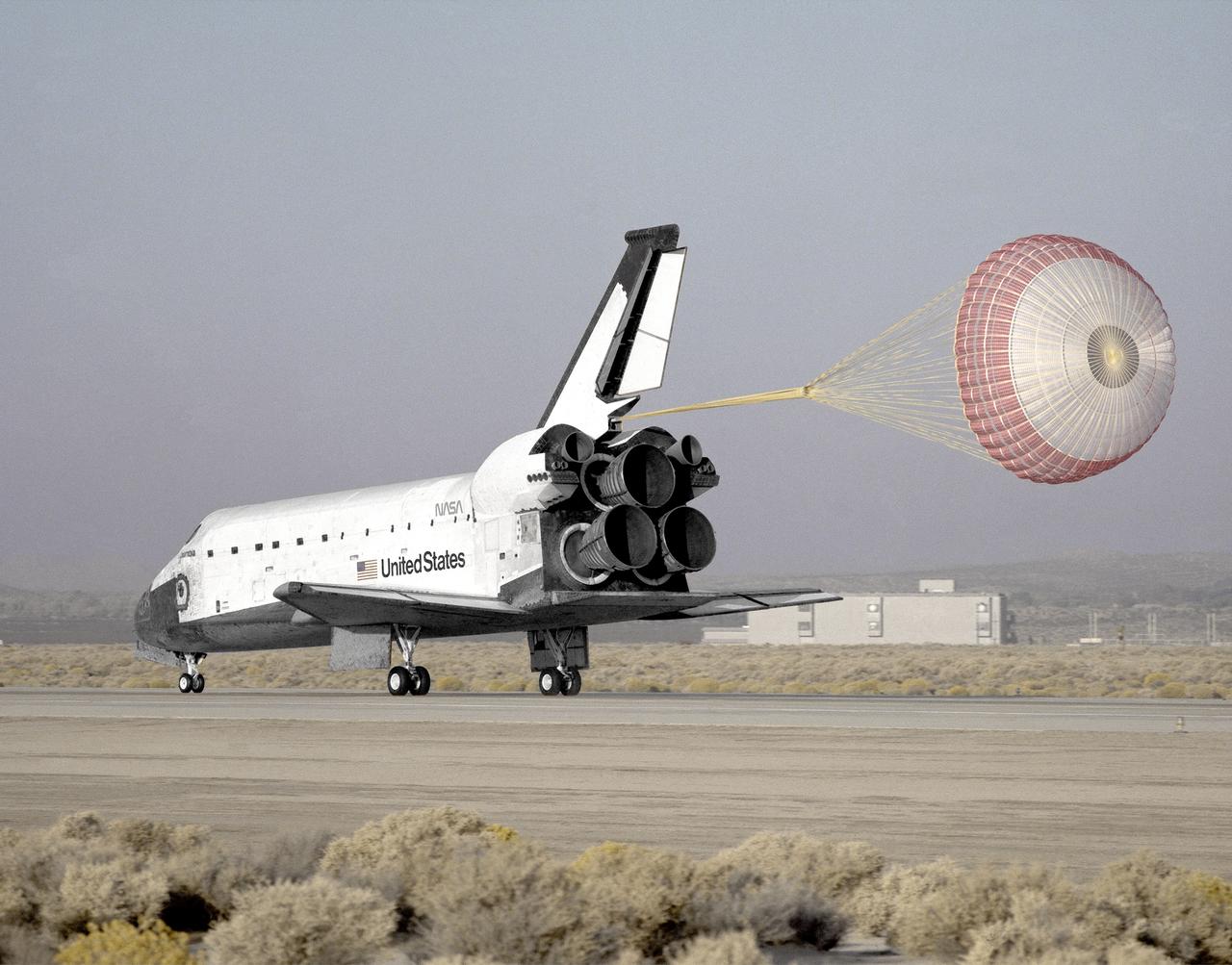
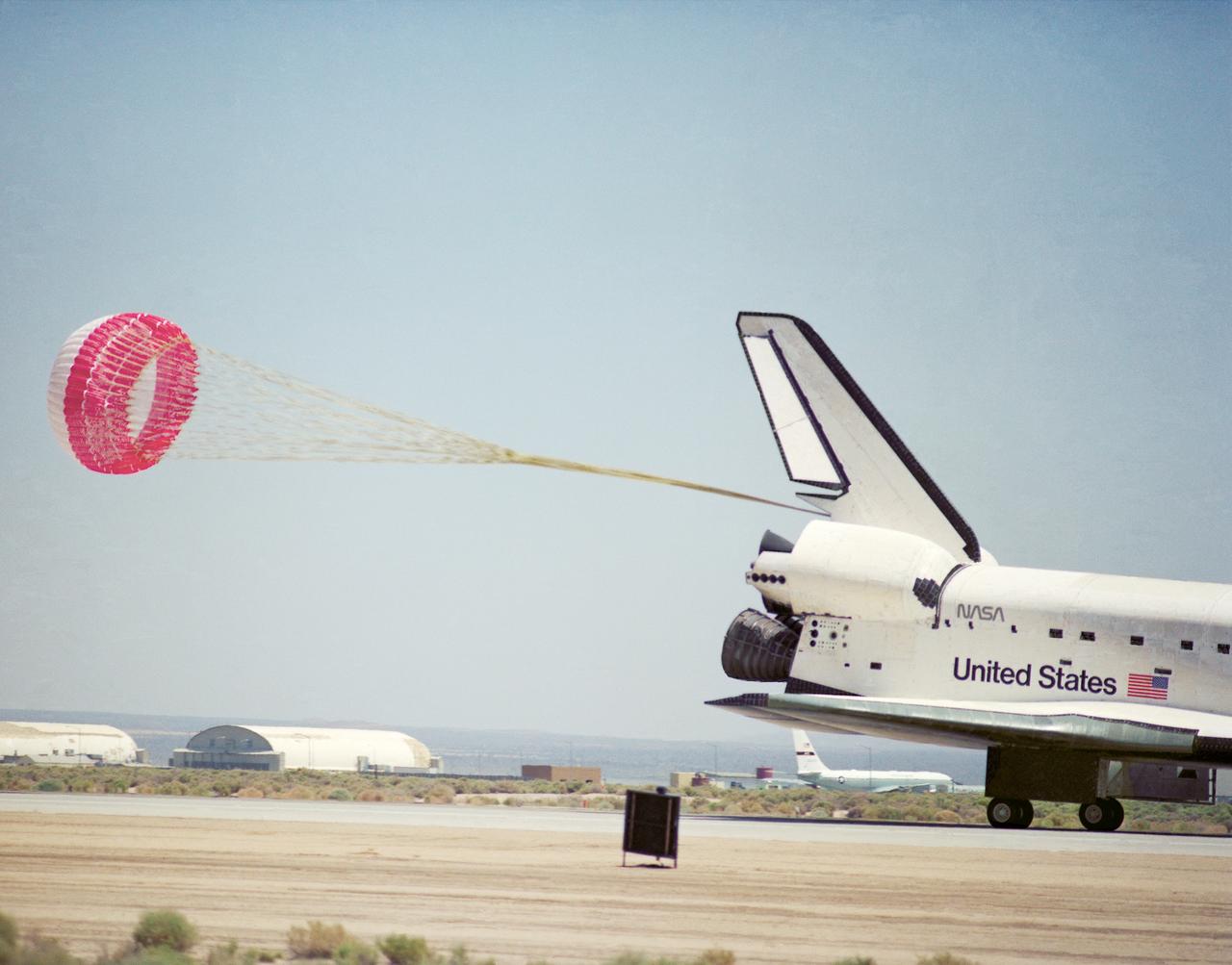
A drag chute slows the space shuttle Columbia as it rolls to a perfect landing concluding NASA's longest mission at that time, STS-58, at the Ames-Dryden Flight Research Facility (later redesignated the Dryden Flight Research Center), Edwards, California, with a 8:06 a.m. (PST) touchdown 1 November 1993 on Edward's concrete runway 22. The planned 14 day mission, which began with a launch from Kennedy Space Center, Florida, at 7:53 a.m. (PDT), October 18, was the second spacelab flight dedicated to life sciences research. Seven Columbia crewmembers performed a series of experiments to gain more knowledge on how the human body adapts to the weightless environment of space. Crewmembers on this flight included: John Blaha, commander; Rick Searfoss, pilot; payload commander Rhea Seddon; mission specialists Bill MacArthur, David Wolf, and Shannon Lucid; and payload specialist Martin Fettman.
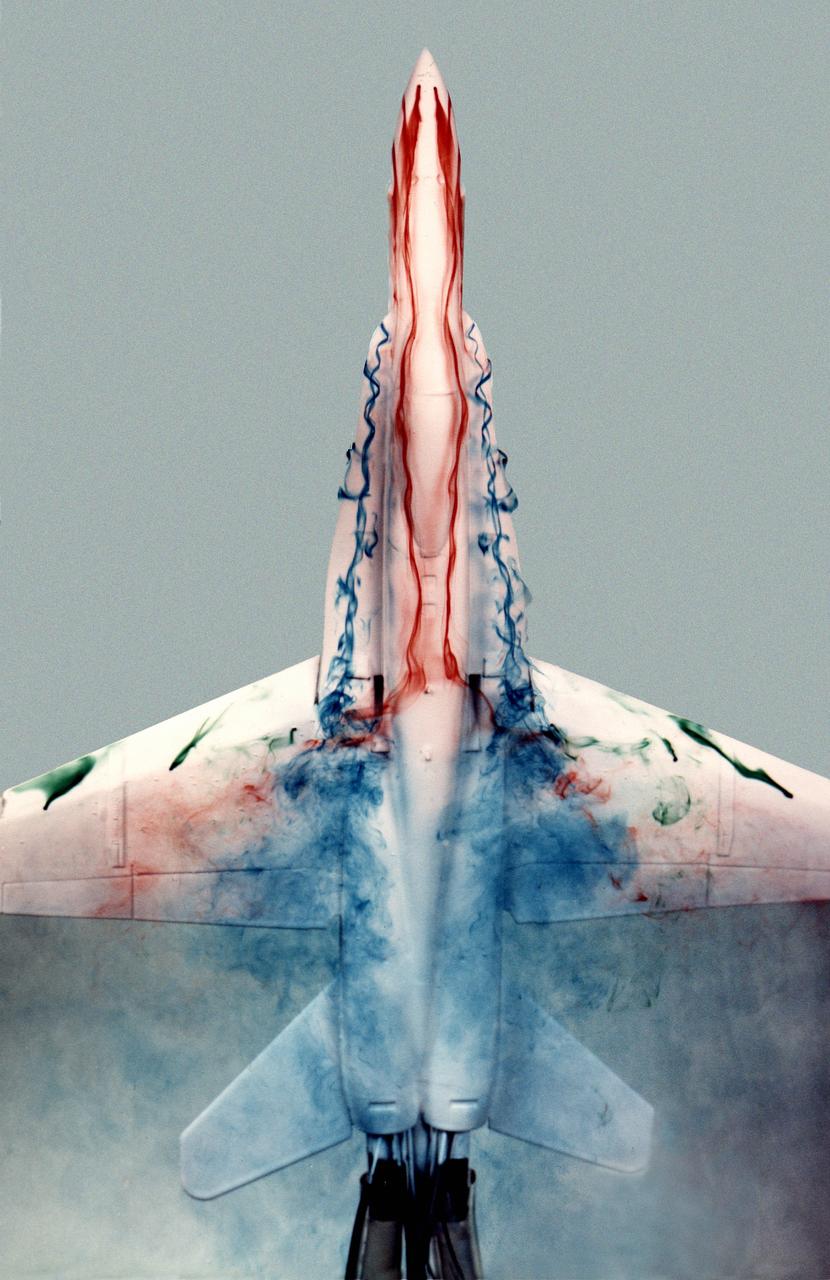
This image shows a plastic 1/48-scale model of an F-18 aircraft inside the "Water Tunnel" more formally known as the NASA Dryden Flow Visualization Facility. Water is pumped through the tunnel in the direction of normal airflow over the aircraft; then, colored dyes are pumped through tubes with needle valves. The dyes flow back along the airframe and over the airfoils highlighting their aerodynamic characteristics. The aircraft can also be moved through its pitch axis to observe airflow disruptions while simulating actual flight at high angles of attack. The Water Tunnel at NASA's Dryden Flight Research Center, Edwards, CA, became operational in 1983 when Dryden was a Flight Research Facility under the management of the Ames Research Center in Mountain View, CA. As a medium for visualizing fluid flow, water has played a significant role. Its use dates back to Leonardo da Vinci (1452-1519), the Renaissance Italian engineer, architect, painter, and sculptor. In more recent times, water tunnels have assisted the study of complex flows and flow-field interactions on aircraft shapes that generate strong vortex flows. Flow visualization in water tunnels assists in determining the strength of vortices, their location, and possible methods of controlling them. The design of the Dryden Water Tunnel imitated that of the Northrop Corporation's tunnel in Hawthorne, CA. Called the Flow Visualization Facility, the Dryden tunnel was built to assist researchers in understanding the aerodynamics of aircraft configured in such a way that they create strong vortex flows, particularly at high angles of attack. The tunnel provides results that compare well with data from aircraft in actual flight in another fluid-air. Other uses of the tunnel have included study of how such flight hardware as antennas, probes, pylons, parachutes, and experimental fixtures affect airflow. The facility has also been helpful in finding the best locations for emitting smoke from flight vehicles for flow vi
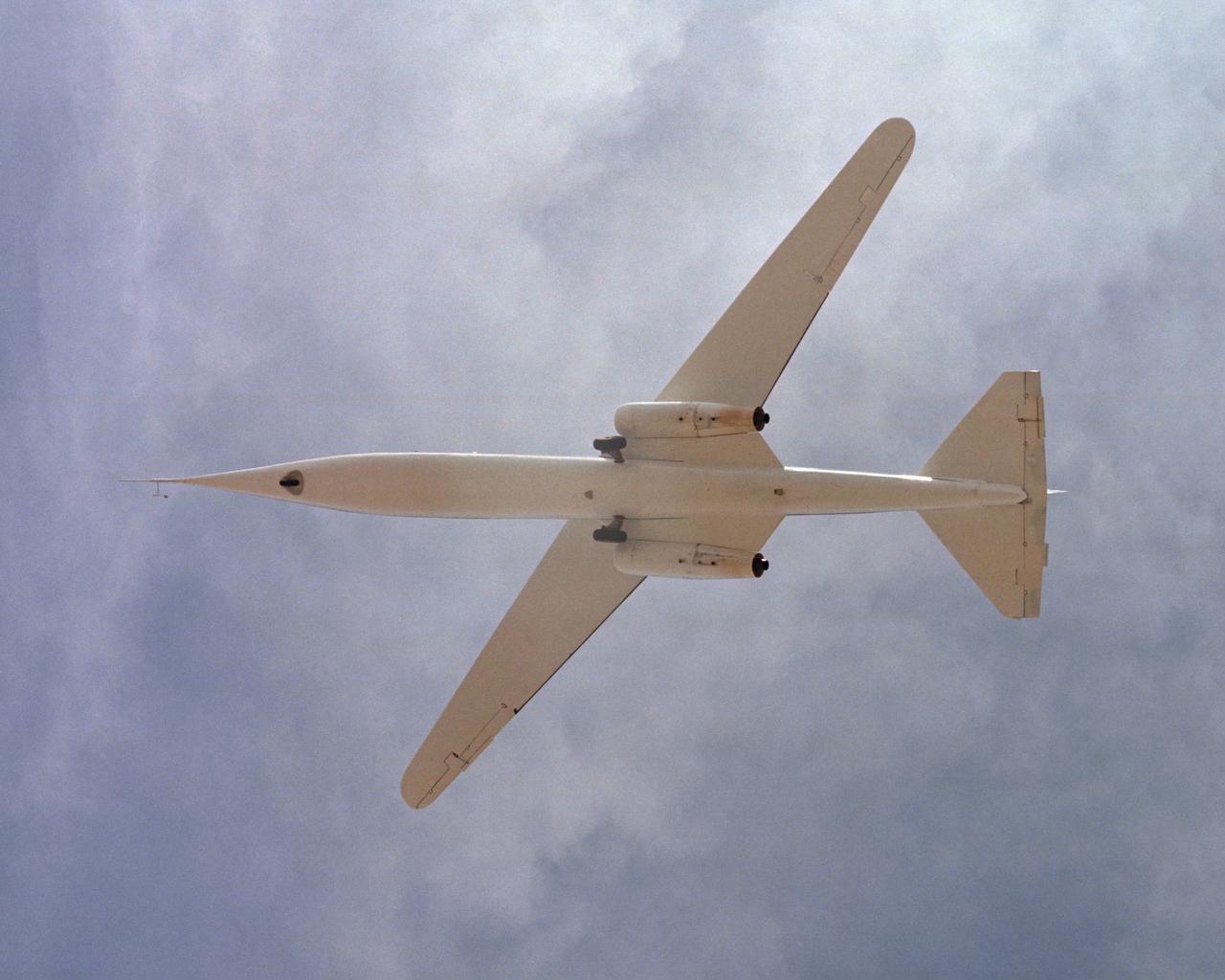
The AD-1 aircraft with its wing swept. Visible are the twin jet engines that powered the aircraft and the fixed landing gear.
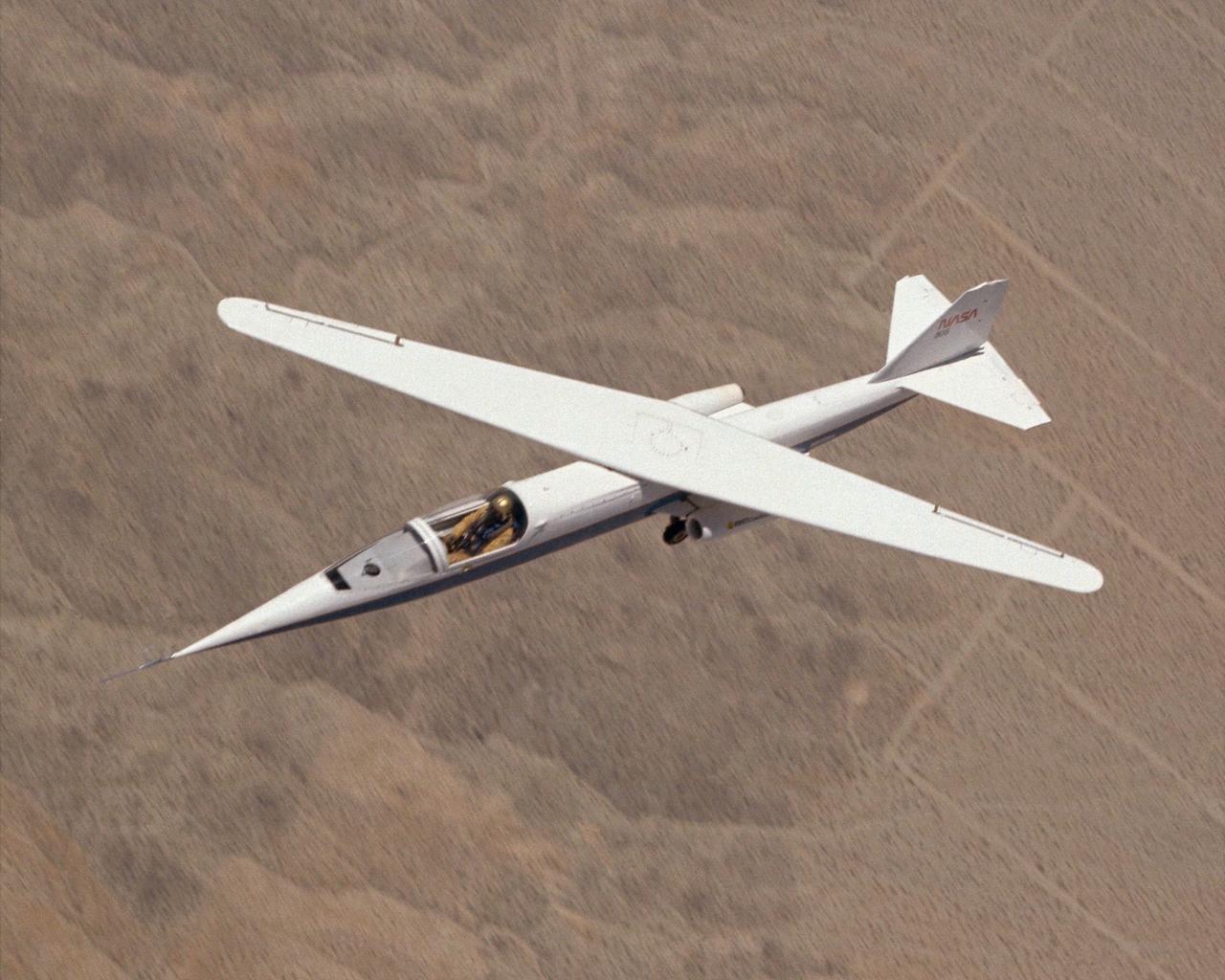
AD-1 in flight. Flight #30. The AD-1 aircraft in flight with its wing swept at 60 degrees, the maximum sweep angle.
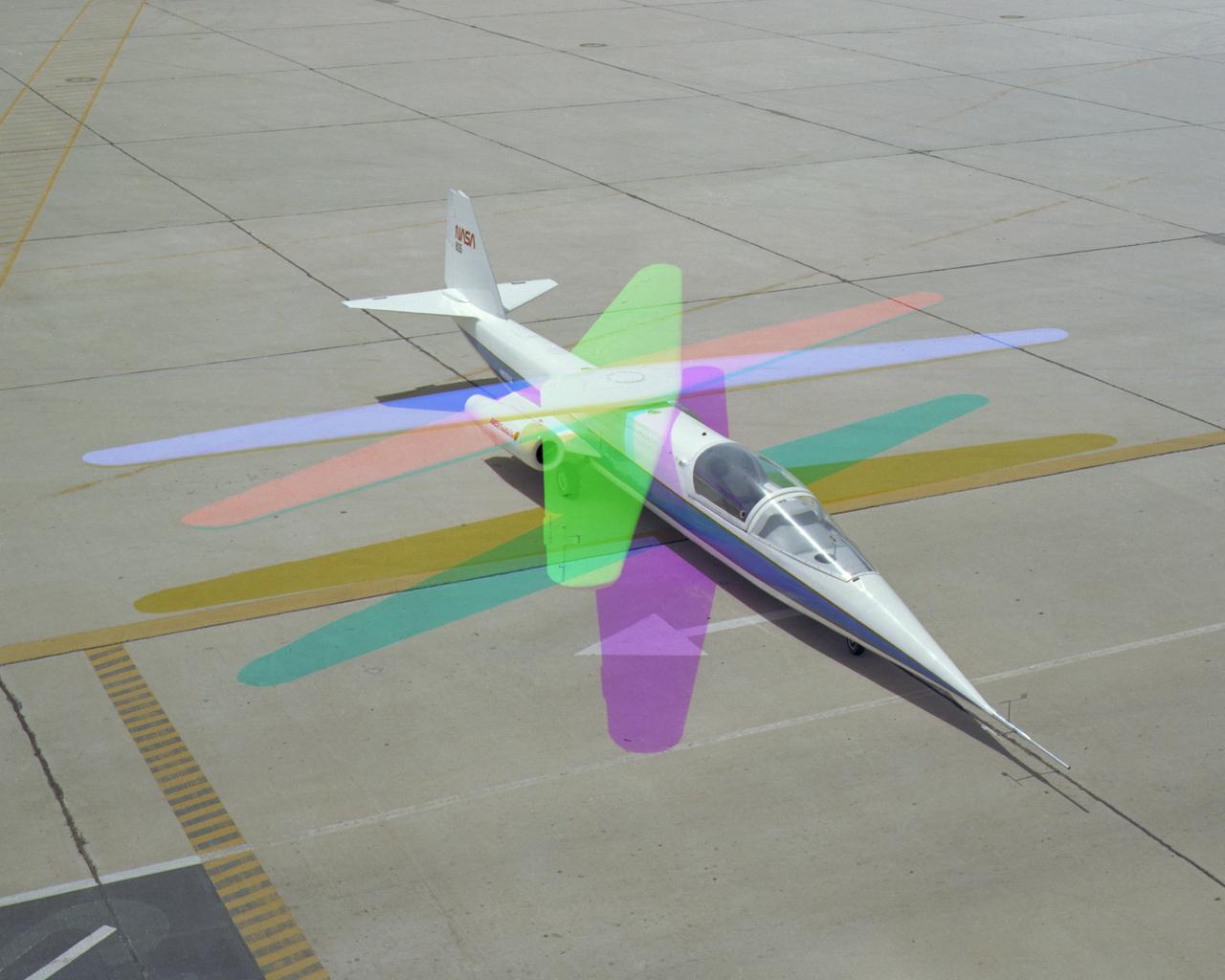
Multiple exposure image showing wing movement on AD-1.
The Space Shuttle Endeavour concludes mission STS-49 at NASA's Ames-Dryden Flight Research Facility (later redesignated Dryden Flight Research Center), Edwards, California, with a 1:57 p.m. (PDT) landing 16 May on Edward's concrete runway 22. The planned 7-day mission, which began with a launch from Kennedy Space Center, Florida, at 4:41 p.m. (PFT), 7 May, was extended two days to allow extra time to rescue the Intelsat VI satellite and complete Space Station assembly techniques originally planned. After a perfect rendezvous in orbit and numerous attempts to grab the satellite, space walking astronauts Pierre Thuot, Rick Hieb and Tom Akers successfully rescued it by hand on the third space walk with the support of mission specialists Kathy Thornton and Bruce Melnick. The three astronauts, on a record space walk, took hold of the satellite and directed it to the shuttle where a booster motor was attached to launch it to its proper orbit. Commander Dan Brandenstein and Pilot Kevin Chilton brought Endeavours's record setting maiden voyage to a perfect landing at Edwards AFB with the first deployment of a drag chute on a shuttle mission.
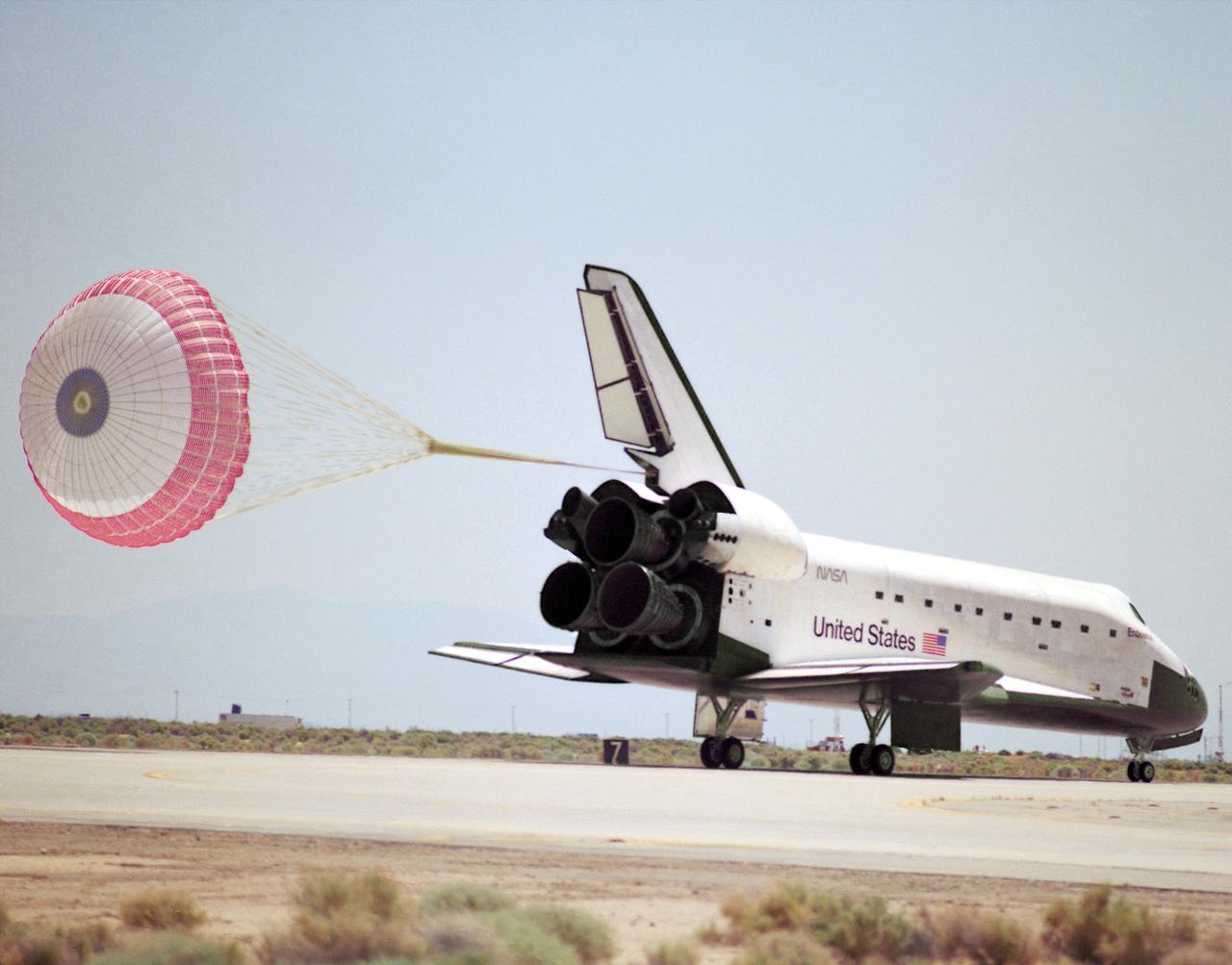
The Space Shuttle Endeavour concludes mission STS-49 at NASA's Ames-Dryden Flight Research Facility (later redesignated Dryden Flight Research Center), Edwards, California, with a 1:57 p.m. (PDT) landing May 16 on Edward's concrete runway 22. The planned 7-day mission, which began with a launch from Kennedy Space Center, Florida, at 4:41 p.m. (PFT), 7 May, was extended two days to allow extra time to rescue the Intelsat VI satellite and complete Space Station assembly techniques originally planned. After a perfect rendezvous in orbit and numerous attempts to grab the satellite, space walking astronauts Pierre Thuot, Rick Hieb and Tom Akers successfully rescued it by hand on the third space walk with the support of mission specialists Kathy Thornton and Bruce Melnick. The three astronauts, on a record space walk, took hold of the satellite and directed it to the shuttle where a booster motor was attached to launch it to its proper orbit. Commander Dan Brandenstein and Pilot Kevin Chilton brought Endeavours's record setting maiden voyage to a perfect landing at Edwards with the first deployment of a drag chute on a shuttle mission.
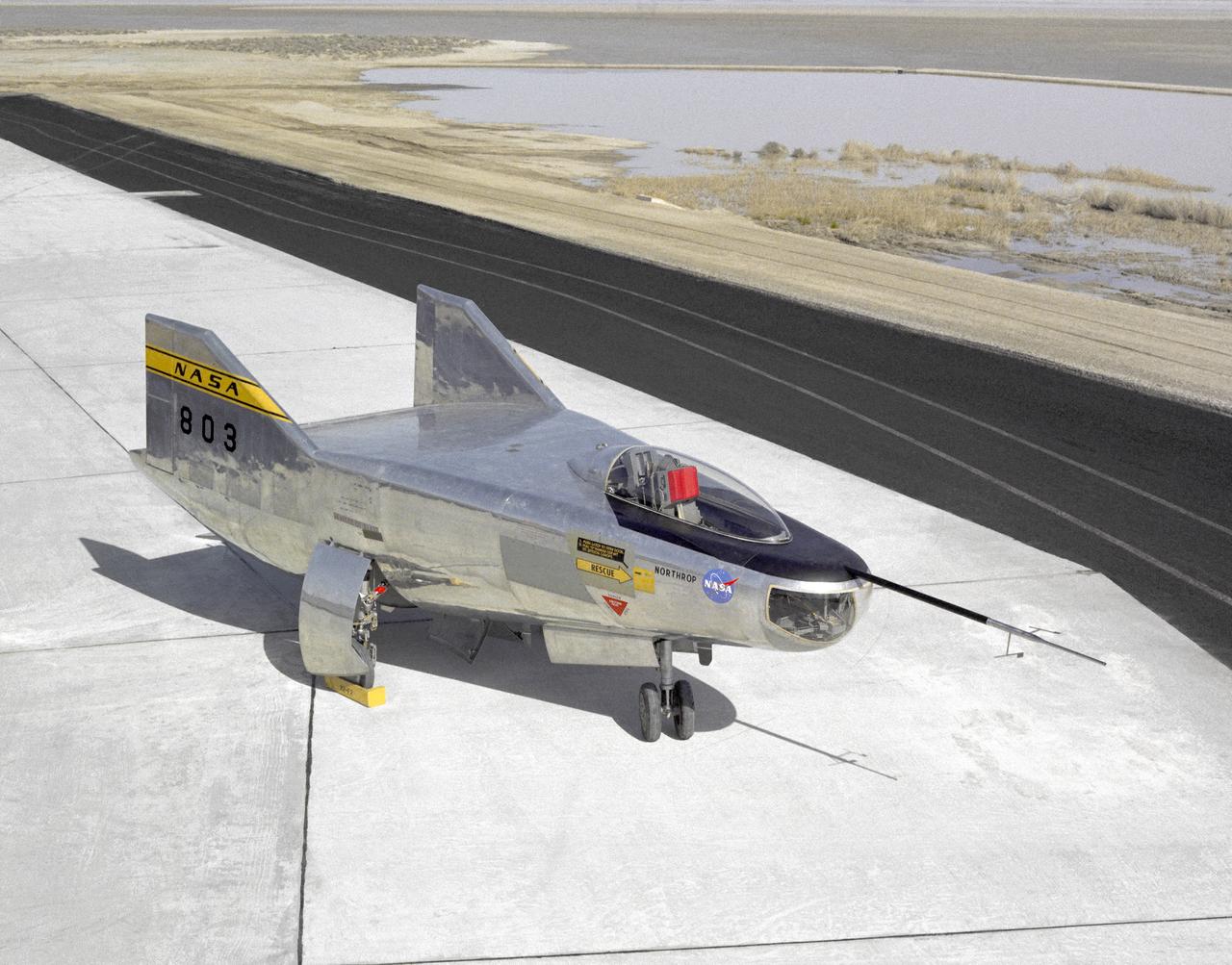
The M2-F2 Lifting Body is seen here on the ramp at the NASA Dryden Flight Research Center. The success of Dryden's M2-F1 program led to NASA's development and construction of two heavyweight lifting bodies based on studies at NASA's Ames and Langley research centers -- the M2-F2 and the HL-10, both built by the Northrop Corporation. The "M" refers to "manned" and "F" refers to "flight" version. "HL" comes from "horizontal landing" and 10 is for the tenth lifting body model to be investigated by Langley. The first flight of the M2-F2 -- which looked much like the "F1" -- was on July 12, 1966. Milt Thompson was the pilot. By then, the same B-52 used to air launch the famed X-15 rocket research aircraft was modified to also carry the lifting bodies. Thompson was dropped from the B-52's wing pylon mount at an altitude of 45,000 feet on that maiden glide flight. The M2-F2 weighed 4,620 pounds, was 22 feet long, and had a width of about 10 feet. On May 10, 1967, during the sixteenth glide flight leading up to powered flight, a landing accident severely damaged the vehicle and seriously injured the NASA pilot, Bruce Peterson. NASA pilots and researchers realized the M2-F2 had lateral control problems, even though it had a stability augmentation control system. When the M2-F2 was rebuilt at Dryden and redesignated the M2-F3, it was modified with an additional third vertical fin -- centered between the tip fins -- to improve control characteristics. The M2-F2/F3 was the first of the heavy-weight, entry-configuration lifting bodies. Its successful development as a research test vehicle answered many of the generic questions about these vehicles. NASA donated the M2-F3 vehicle to the Smithsonian Institute in December 1973. It is currently hanging in the Air and Space Museum along with the X-15 aircraft number 1, which was its hangar partner at Dryden from 1965 to 1969.
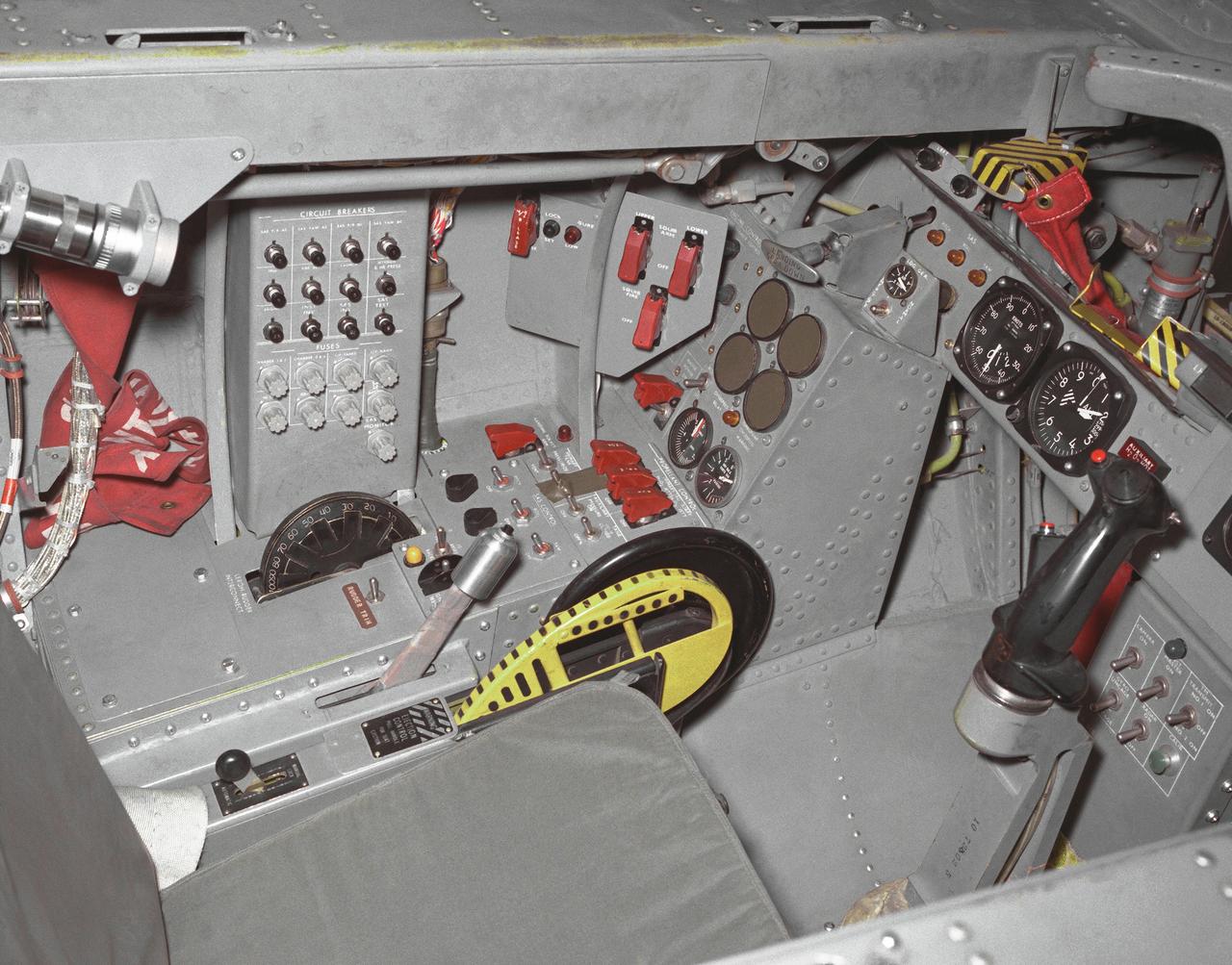
This photo shows the left side cockpit instrumentation panel of the M2-F2 Lifting Body. The success of Dryden's M2-F1 program led to NASA's development and construction of two heavyweight lifting bodies based on studies at NASA's Ames and Langley research centers -- the M2-F2 and the HL-10, both built by the Northrop Corporation. The "M" refers to "manned" and "F" refers to "flight" version. "HL" comes from "horizontal landing" and 10 is for the tenth lifting body model to be investigated by Langley. The first flight of the M2-F2 -- which looked much like the "F1" -- was on July 12, 1966. Milt Thompson was the pilot. By then, the same B-52 used to air launch the famed X-15 rocket research aircraft was modified to also carry the lifting bodies. Thompson was dropped from the B-52's wing pylon mount at an altitude of 45,000 feet on that maiden glide flight. The M2-F2 weighed 4,620 pounds, was 22 feet long, and had a width of about 10 feet. On May 10, 1967, during the sixteenth glide flight leading up to powered flight, a landing accident severely damaged the vehicle and seriously injured the NASA pilot, Bruce Peterson. NASA pilots and researchers realized the M2-F2 had lateral control problems, even though it had a stability augmentation control system. When the M2-F2 was rebuilt at Dryden and redesignated the M2-F3, it was modified with an additional third vertical fin -- centered between the tip fins -- to improve control characteristics. The M2-F2/F3 was the first of the heavy-weight, entry-configuration lifting bodies. Its successful development as a research test vehicle answered many of the generic questions about these vehicles. NASA donated the M2-F3 vehicle to the Smithsonian Institute in December 1973. It is currently hanging in the Air and Space Museum along with the X-15 aircraft number 1, which was its hangar partner at Dryden from 1965 to 1969.
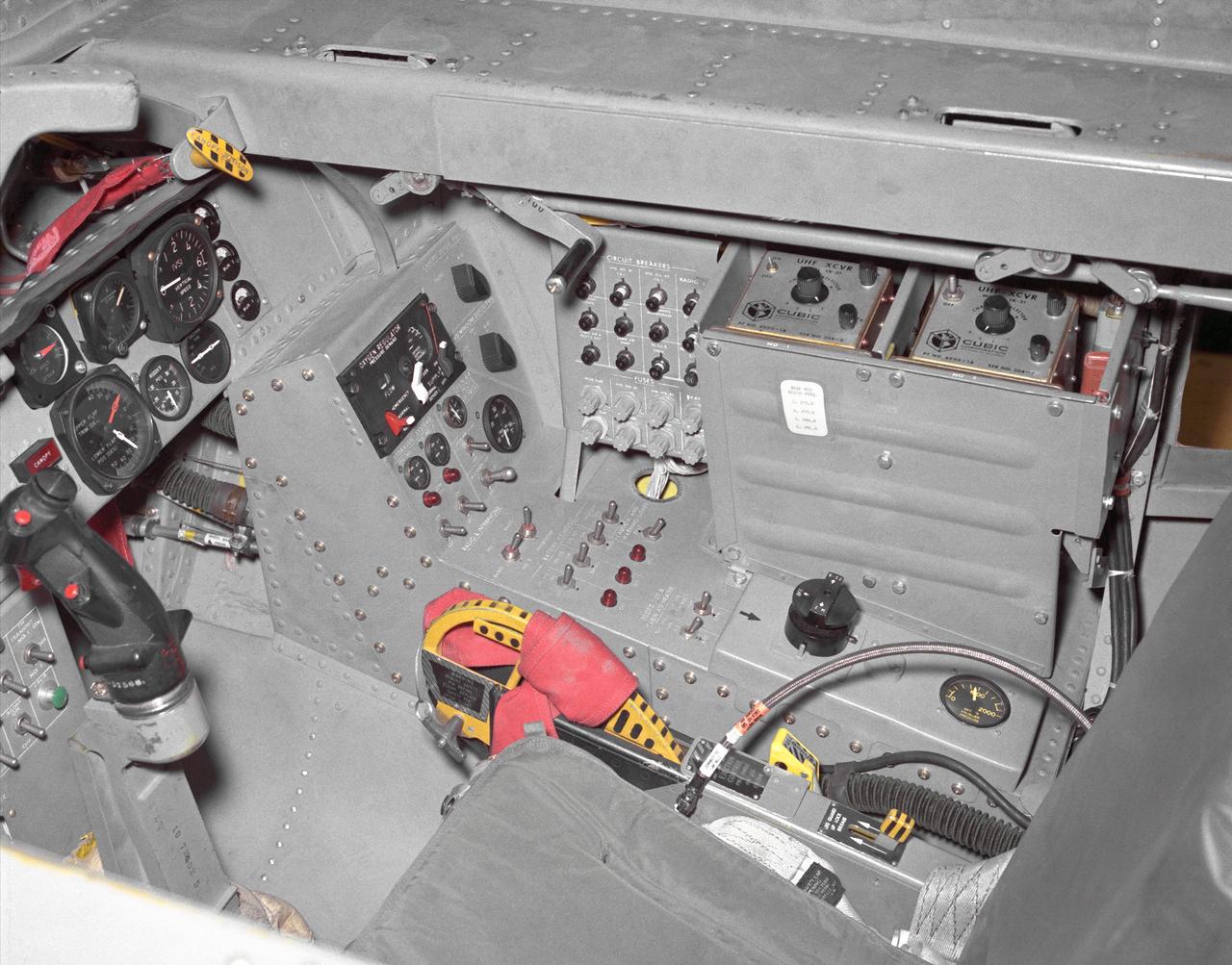
This photo shows the right side cockpit instrumentation panel of the M2-F2 Lifting Body. The success of Dryden's M2-F1 program led to NASA's development and construction of two heavyweight lifting bodies based on studies at NASA's Ames and Langley research centers -- the M2-F2 and the HL-10, both built by the Northrop Corporation. The "M" refers to "manned" and "F" refers to "flight" version. "HL" comes from "horizontal landing" and 10 is for the tenth lifting body model to be investigated by Langley. The first flight of the M2-F2 -- which looked much like the "F1" -- was on July 12, 1966. Milt Thompson was the pilot. By then, the same B-52 used to air launch the famed X-15 rocket research aircraft was modified to also carry the lifting bodies. Thompson was dropped from the B-52's wing pylon mount at an altitude of 45,000 feet on that maiden glide flight. The M2-F2 weighed 4,620 pounds, was 22 feet long, and had a width of about 10 feet. On May 10, 1967, during the sixteenth glide flight leading up to powered flight, a landing accident severely damaged the vehicle and seriously injured the NASA pilot, Bruce Peterson. NASA pilots and researchers realized the M2-F2 had lateral control problems, even though it had a stability augmentation control system. When the M2-F2 was rebuilt at Dryden and redesignated the M2-F3, it was modified with an additional third vertical fin -- centered between the tip fins -- to improve control characteristics. The M2-F2/F3 was the first of the heavy-weight, entry-configuration lifting bodies. Its successful development as a research test vehicle answered many of the generic questions about these vehicles. NASA donated the M2-F3 vehicle to the Smithsonian Institute in December 1973. It is currently hanging in the Air and Space Museum along with the X-15 aircraft number 1, which was its hangar partner at Dryden from 1965 to 1969.
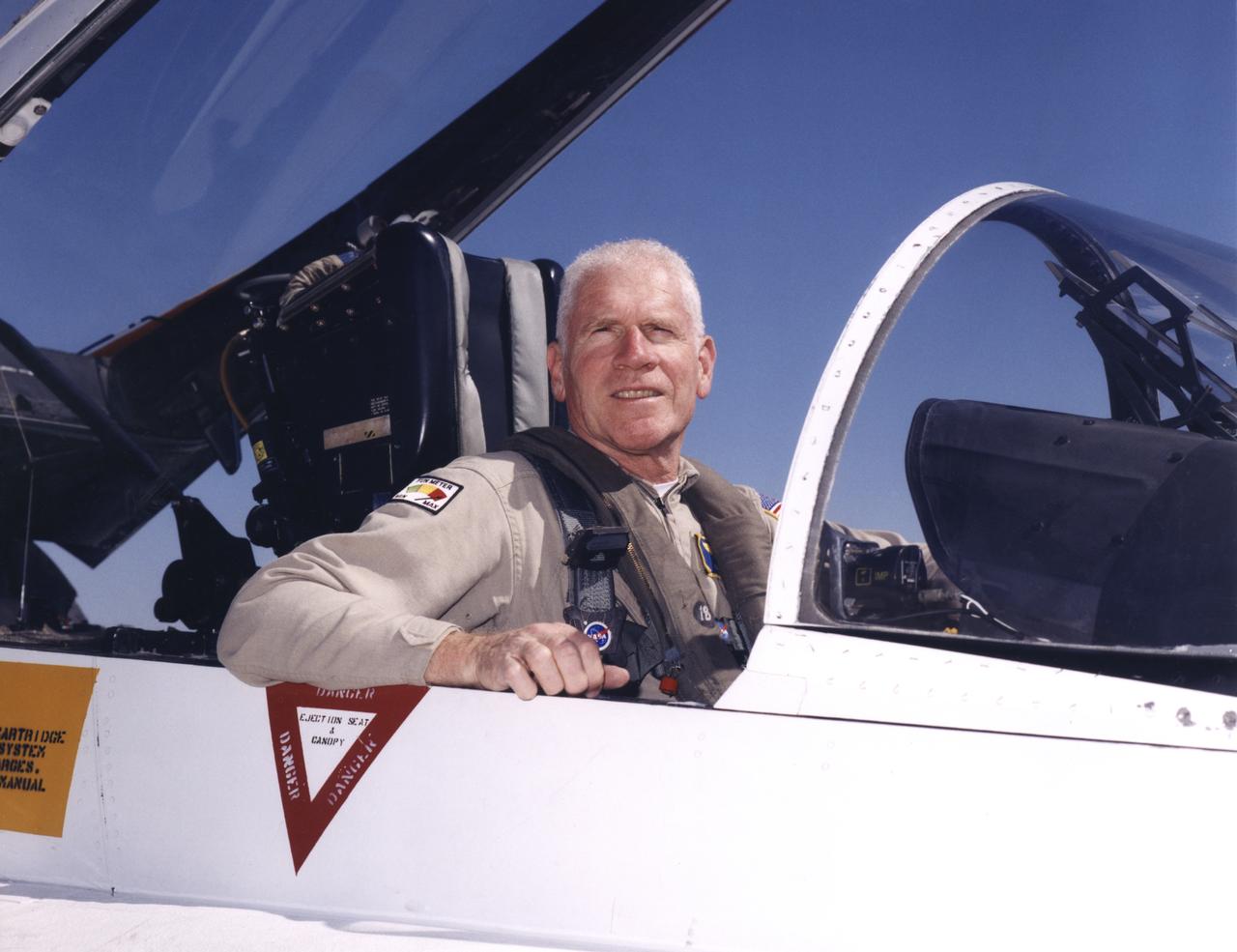
Edwin W. Lewis Jr. is a research pilot in the Airborne Science program, Flight Crew Branch, Dryden Flight Research Center, Edwards, California. He currently flies the DC-8, F/A-18, Lear Jet 24, King Air, and T-34C in support of Dryden's flight operations and is mentor pilot for the King Air and the Lear Jet. Prior to accepting this assignment Lewis was a pilot for eight years at NASA's Ames Research Center, Moffett Field, California, flying 10 different aircraft C-130B, DC-8-72, UH-1, SH-3, King Air, Lear 24, T-38A, T-39G and YO-3A in support of NASA flight missions. Lewis also flew the Kuiper Airborne Observatory (a modified civilian version of the Lockheed C-141 Starlifter). He was project pilot for Ames' 747 and T-38 programs. Lewis was born in New York City on May 19, 1936, and began flight training as a Civil Air Patrol cadet in 1951, ultimately earning his commercial pilot's certificate in 1958. He received a bachelor of arts degree in biology from Hobart College, Geneva, N.Y., and entered the U.S. Air Force through the Reserve Officer Training Corps. Following pilot training he was assigned to Moody Air Force Base, Ga., as an instructor pilot, for both the T-33 and T-37 aircraft. He served in Vietnam in 1965 and 1966, where he was a forward air controller, instructor and standardization/evaluation pilot, flying more than 1,000 hours in the O-1 "Bird Dog." Lewis separated from the regular Air Force and joined Pan American World Airways and the 129th Air Commando Group, California Air National Guard (ANG) based in Hayward, California. During his 18-year career with the California ANG he flew the U-6, U-10, C-119, HC-130 aircraft and the HH-3 helicopter. He retired as commander, 129th Air Rescue and Recovery Group, a composite combat rescue group, in the grade of colonel. During his 22 years as an airline pilot, he flew the Boeing 707, 727 and 747. He took early retirement from Pan American in 1989 to become a pilot with NASA.
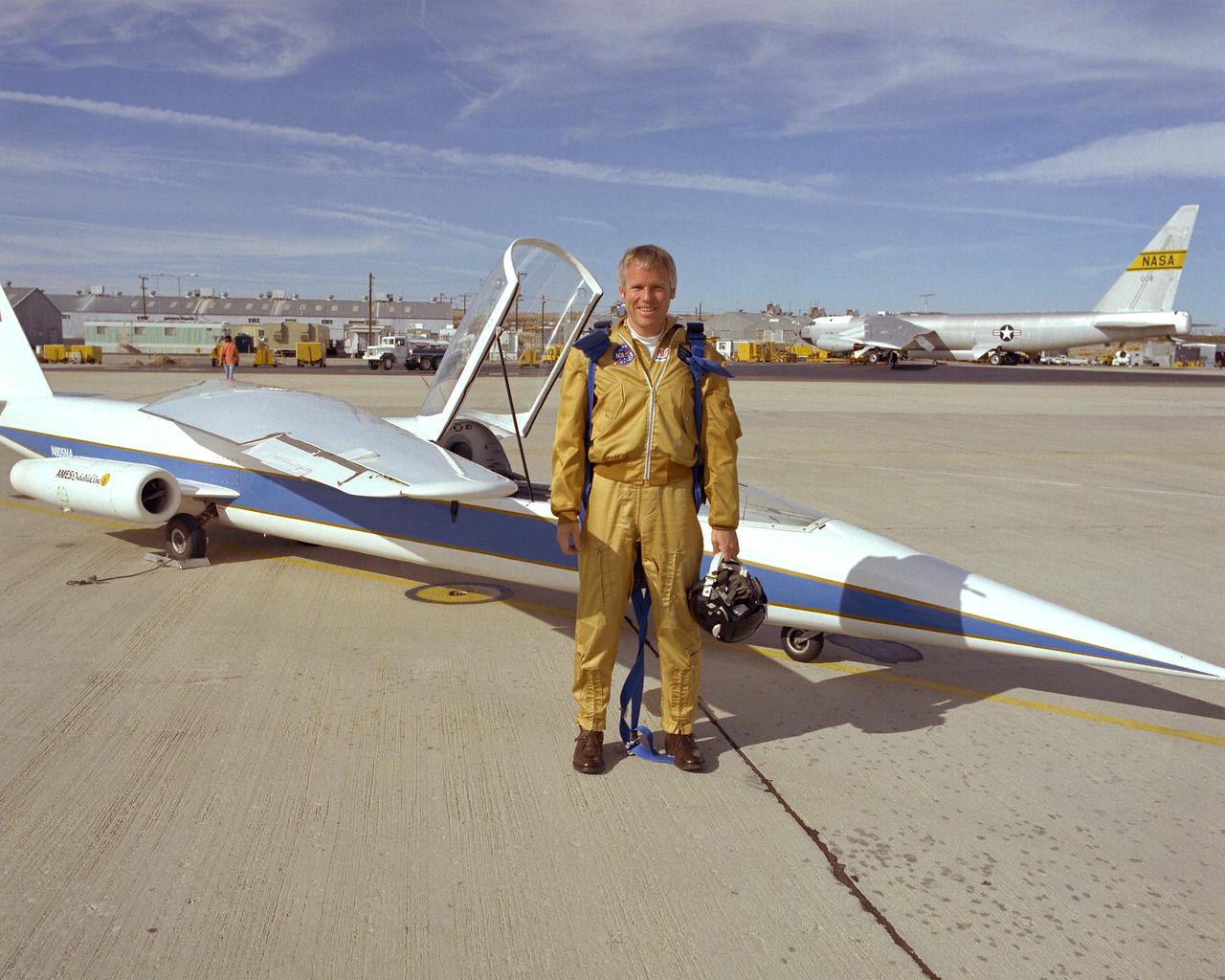
Research pilot Richard E. Gray, standing in front of the AD-1 Oblique Wing research aircraft.