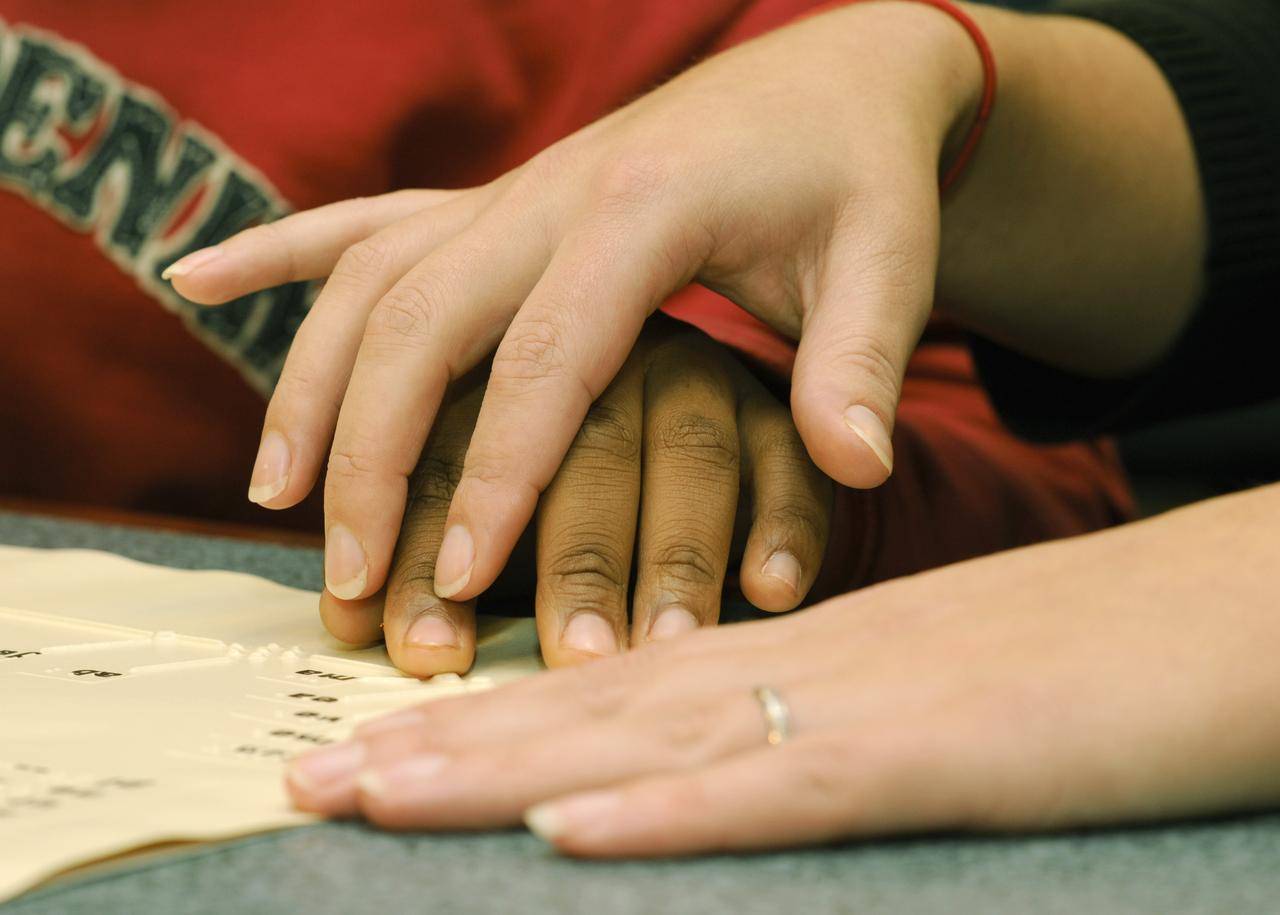
The hands of Maryland School for the Blind student Andrea Washington and science teacher Colleen Shovestull use their sense of touch on a topographical map of the solar system during a visit to NASA Headquarters in Washington, Thursday, Oct. 29, 2009. Seven students from the Maryland School for the Blind visited NASA and participated in activities to learn about NASA'smission, functions, and careers. Photo Credit: (NASA/Paul E. Alers)
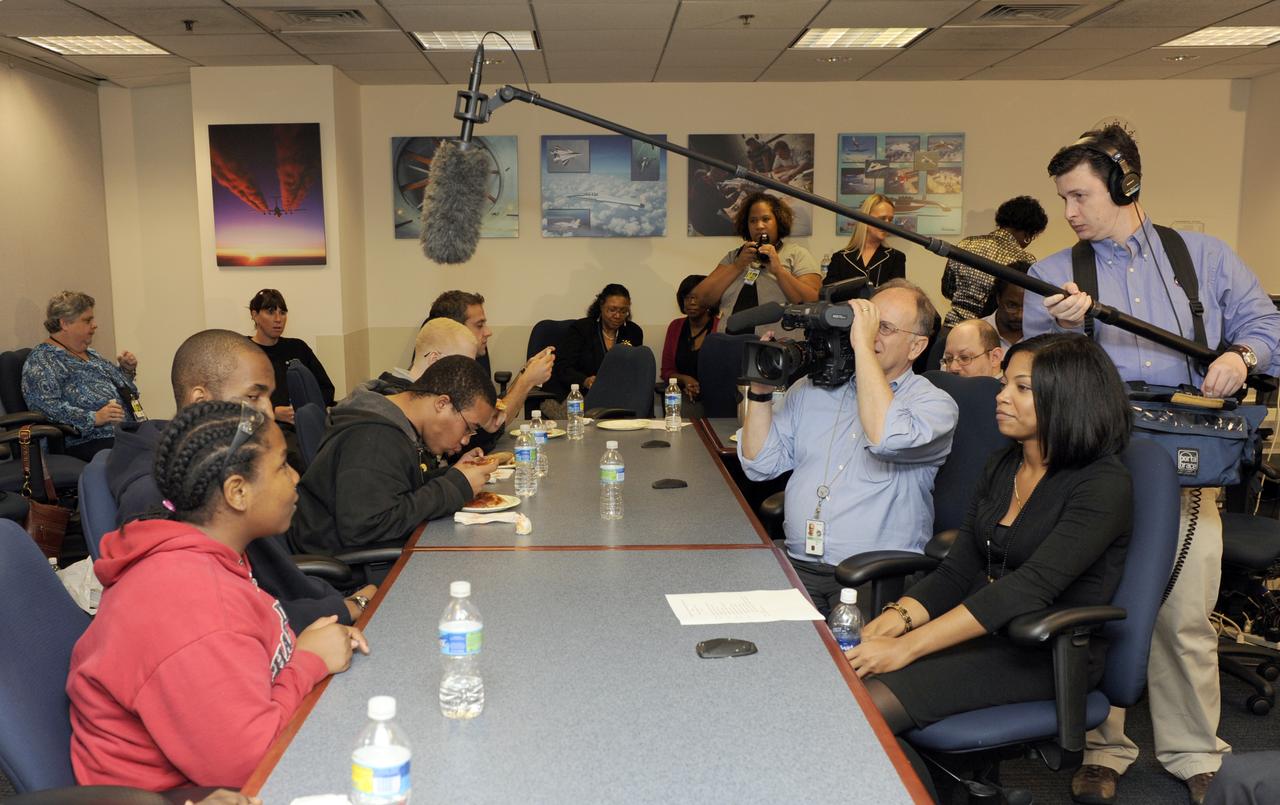
Maryland School for the Blind student Andrea Washington, left, in red, is interviewed by NASA television during a visit to NASA Headquarters in Washington, Thursday, Oct. 29, 2009. Seven students from the Maryland School for the Blind visited NASA and participated in activities to learn about NASA'smission, functions, and careers. Photo Credit: (NASA/Paul E. Alers)
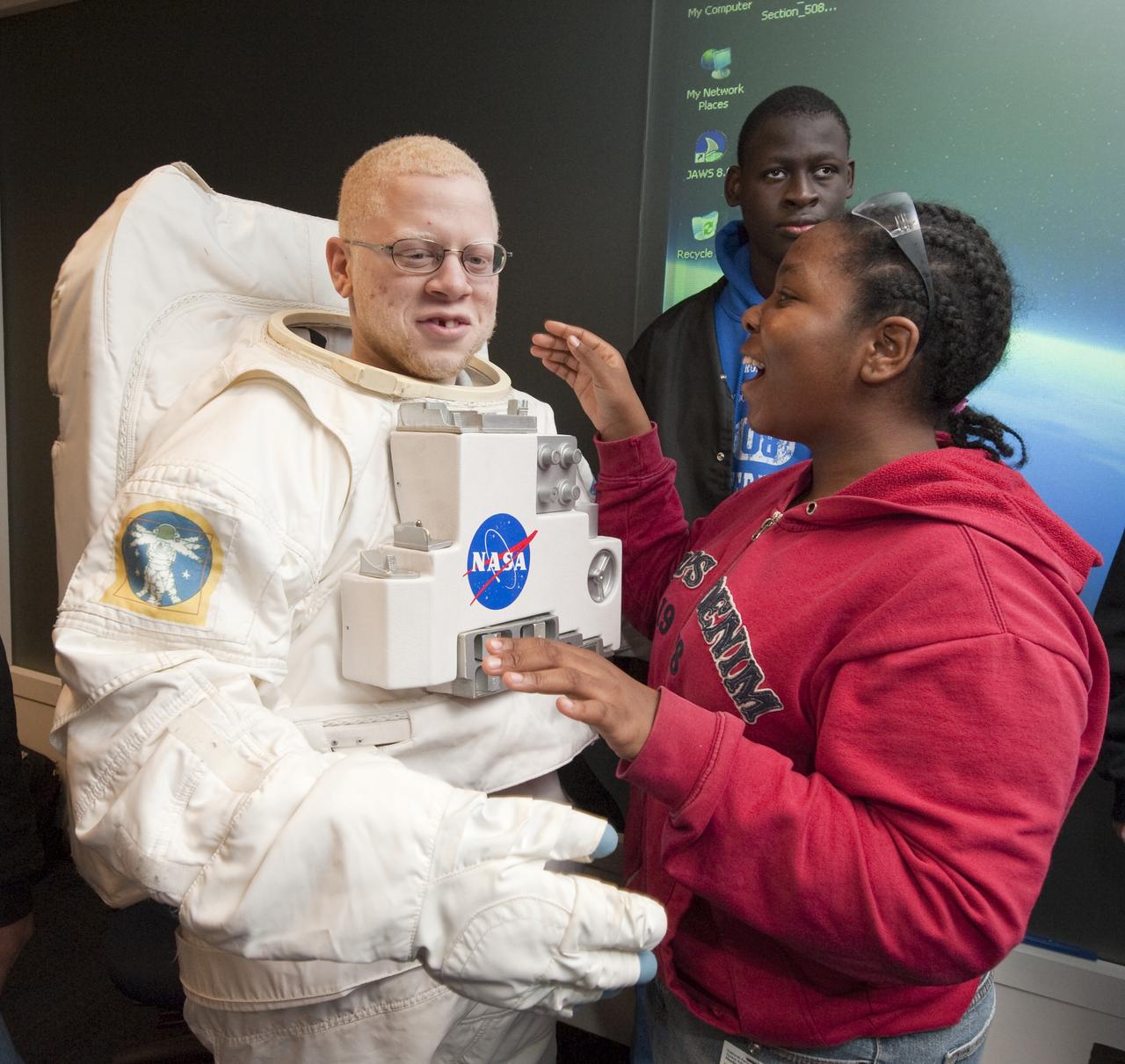
Maryland School for the Blind students Andrea Washington, right, reacts to fellow student Nino Jacobs, left, after he donned a Space suit during a visit to NASA Headquarters in Washington, Thursday, Oct. 29, 2009. Seven students from the Maryland School for the Blind visited NASA and participated in activities to learn about NASA'smission, functions, and careers. Student Kuassi Kouhiko is in the background. Photo Credit: (NASA/Paul E. Alers)
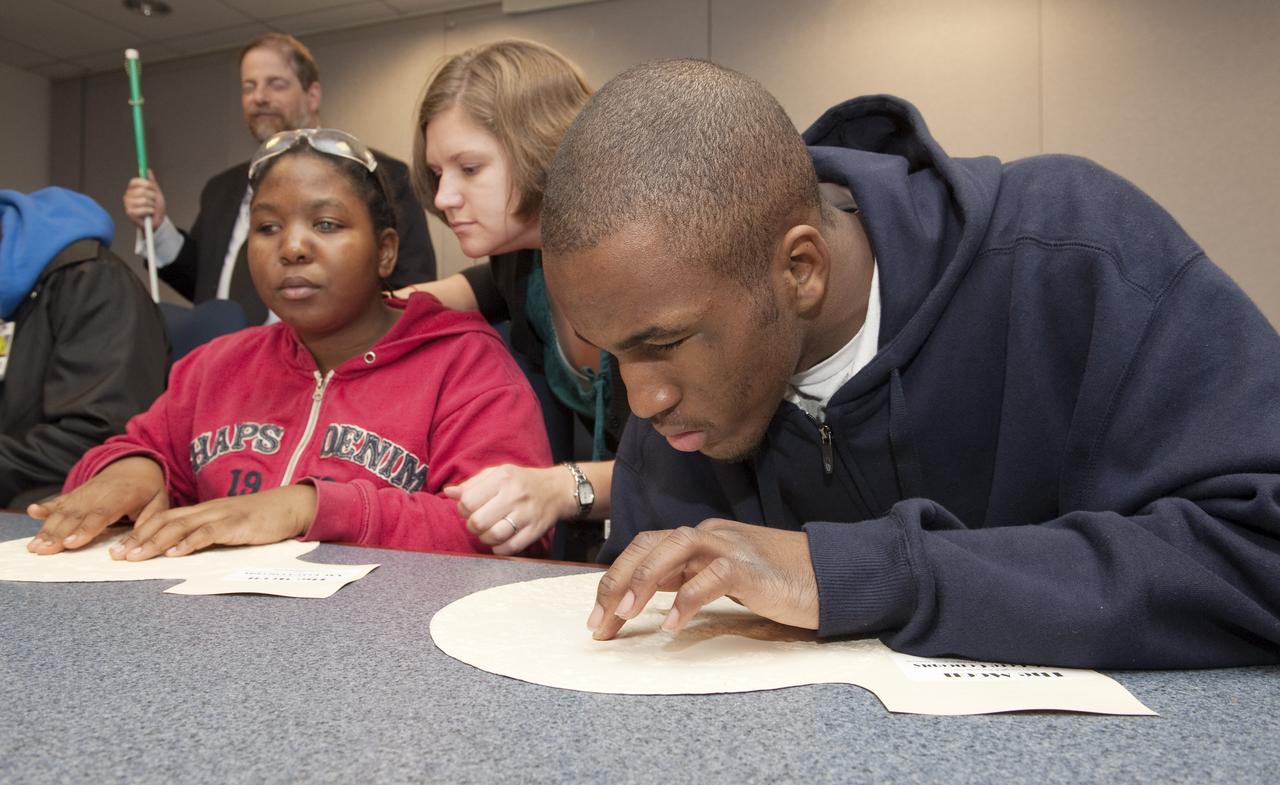
Maryland School for the Blind students Andrea Washington, left, and Derontay Taylor, right, along with science teacher Colleen Shovestull, center, use their sense of touch on topographical maps to learn about the Moon during a visit to NASA Headquarters in Washington, Thursday, Oct. 29, 2009. Seven students from the Maryland School for the Blind visited NASA and participated in activities to learn about NASA'smission, functions, and careers. Photo Credit: (NASA/Paul E. Alers)
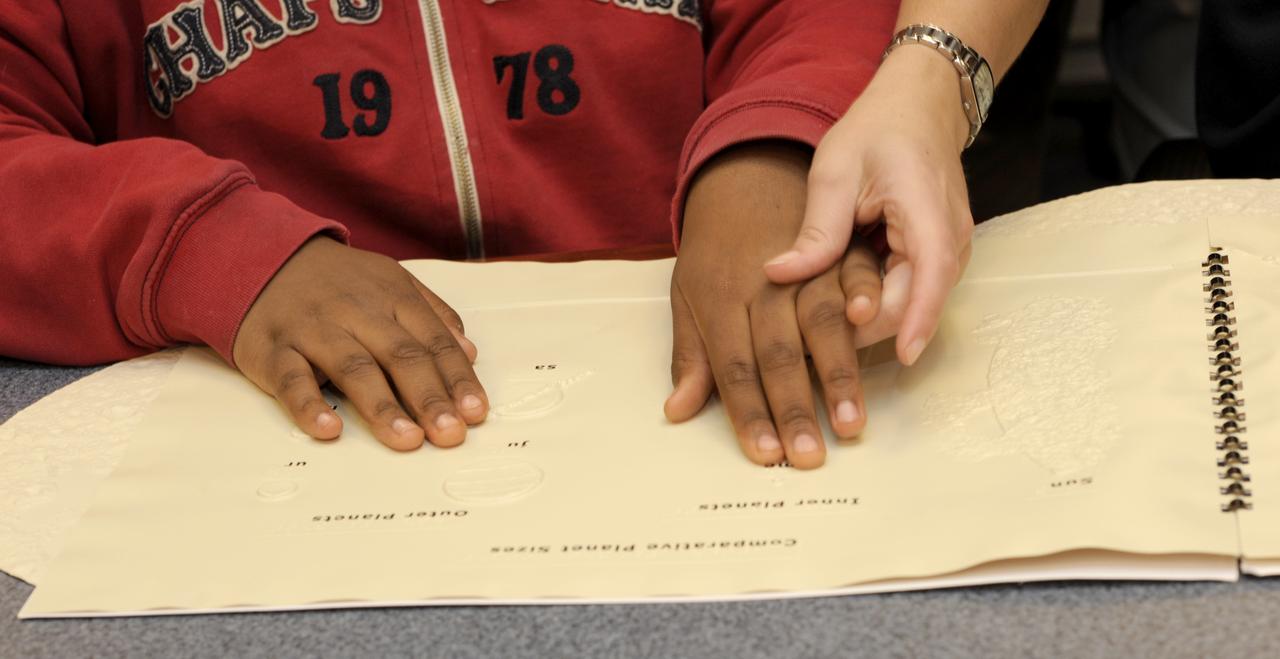
The hands of Maryland School for the Blind student Andrea Washington, are guided across a topographical map of the Solar System by science teacher Colleen Shovestull during a visit to NASA Headquarters in Washington, Thursday, Oct. 29, 2009. Seven students from the Maryland School for the Blind visited NASA and participated in activities to learn about NASA'smission, functions, and careers. Photo Credit: (NASA/Paul E. Alers)
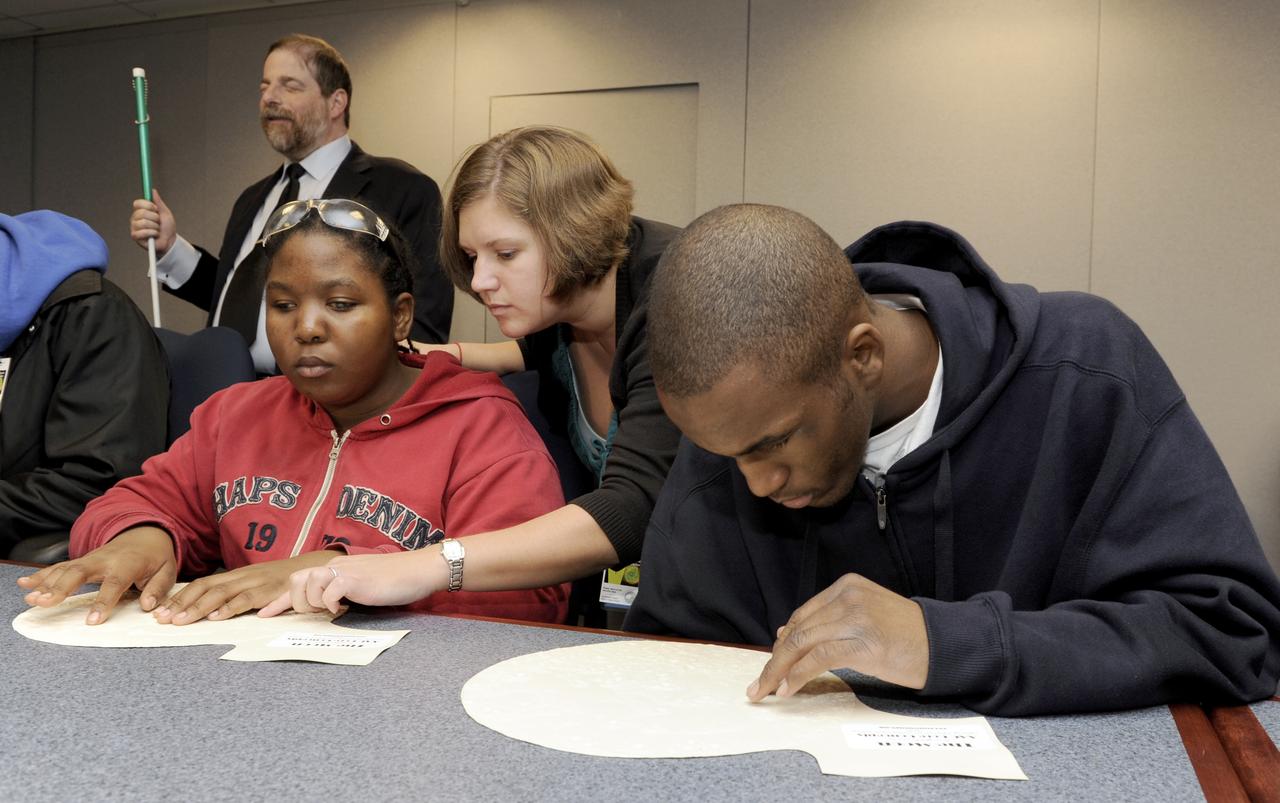
Maryland School for the Blind students Andrea Washington, left, and Derontay Taylor, right, along with science teacher Colleen Shovestull, center, use their sense of touch on topographical maps to learn about the Moon during a visit to NASA Headquarters in Washington, Thursday, Oct. 29, 2009. Seven students from the Maryland School for the Blind visited NASA and participated in activities to learn about NASA'smission, functions, and careers. Photo Credit: (NASA/Paul E. Alers)
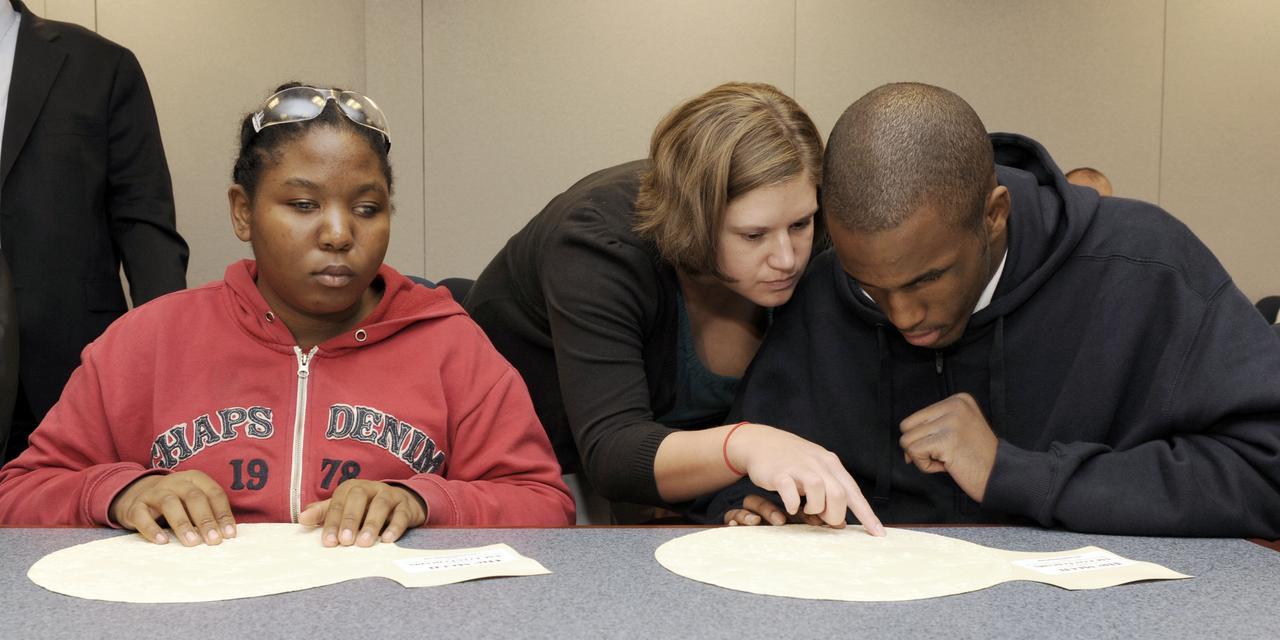
Maryland School for the Blind students Andrea Washington, left, and Derontay Taylor, right, along with science teacher Colleen Shovestull, center, use their sense of touch on topographical maps to learn about the Moon during a visit to NASA Headquarters in Washington, Thursday, Oct. 29, 2009. Seven students from the Maryland School for the Blind visited NASA and participated in activities to learn about NASA'smission, functions, and careers. Photo Credit: (NASA/Paul E. Alers)
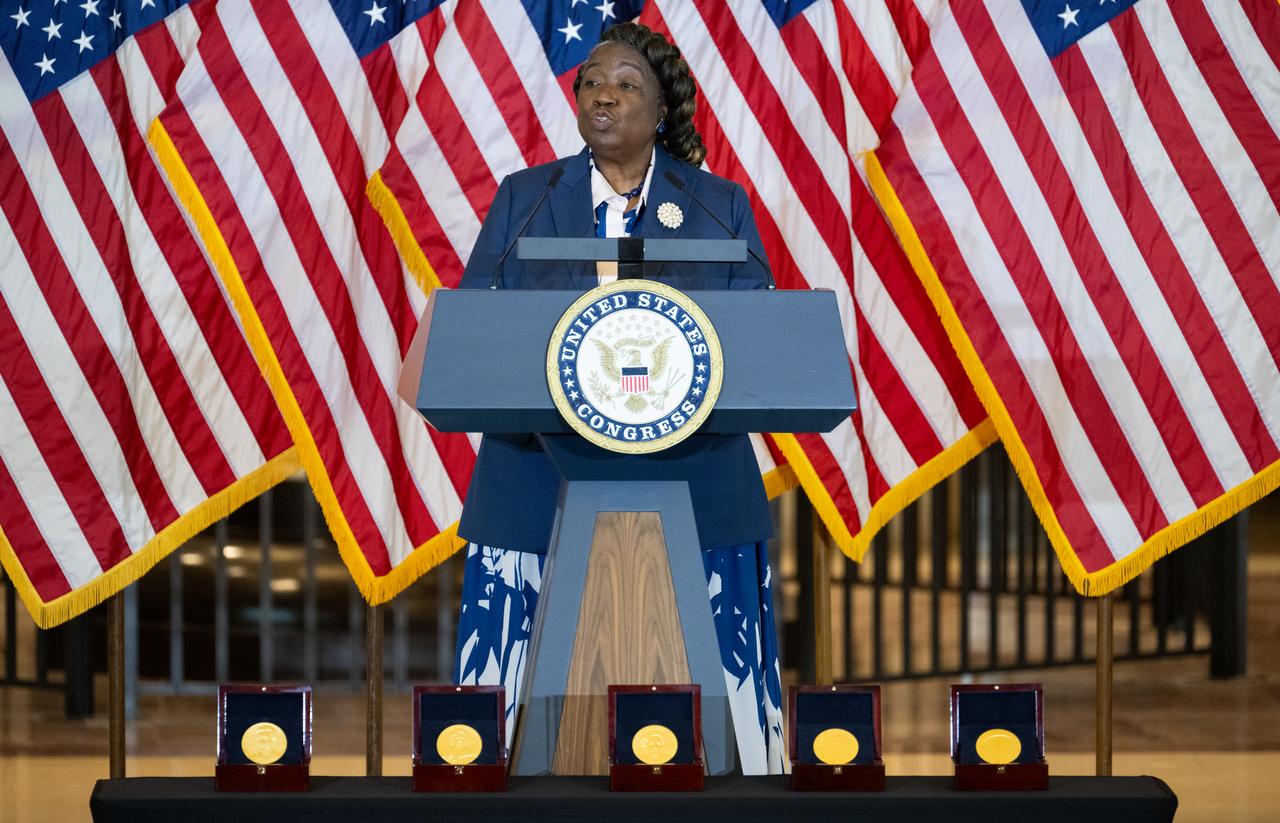
Andrea Mosie, Apollo Sample Lead Processor at NASA's Johnson Space Center, delivers remarks during a Congressional Gold Medal ceremony recognizing NASA’s Hidden Figures, Wednesday, Sept. 18, 2024, in Emancipation Hall at the U.S. Capitol in Washington. Congressional Gold Medals were awarded to Katherine Johnson, Dr. Christine Darden, Dorothy Vaughan, and Mary W. Jackson in recognition of their service to the United States as well as a Congressional Gold Medal in recognition of all the women who served as computers, mathematicians, and engineers at the National Advisory Committee for Aeronautics and NASA between the 1930s and 1970s. Photo Credit: (NASA/Joel Kowsky)
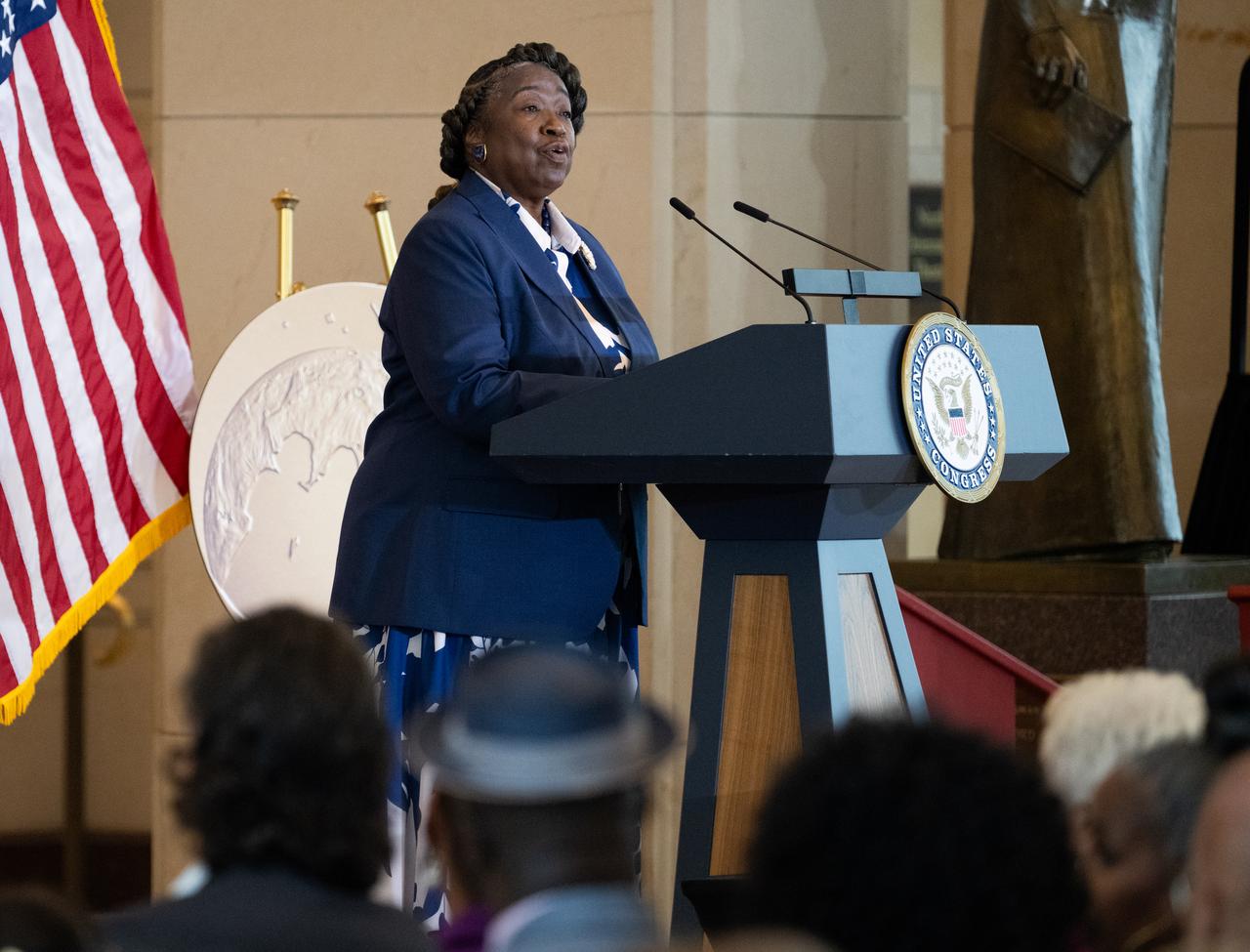
Andrea Mosie, Apollo Sample Lead Processor at NASA's Johnson Space Center, delivers remarks during a Congressional Gold Medal ceremony recognizing NASA’s Hidden Figures, Wednesday, Sept. 18, 2024, in Emancipation Hall at the U.S. Capitol in Washington. Congressional Gold Medals were awarded to Katherine Johnson, Dr. Christine Darden, Dorothy Vaughan, and Mary W. Jackson in recognition of their service to the United States as well as a Congressional Gold Medal in recognition of all the women who served as computers, mathematicians, and engineers at the National Advisory Committee for Aeronautics and NASA between the 1930s and 1970s. Photo Credit: (NASA/Joel Kowsky)
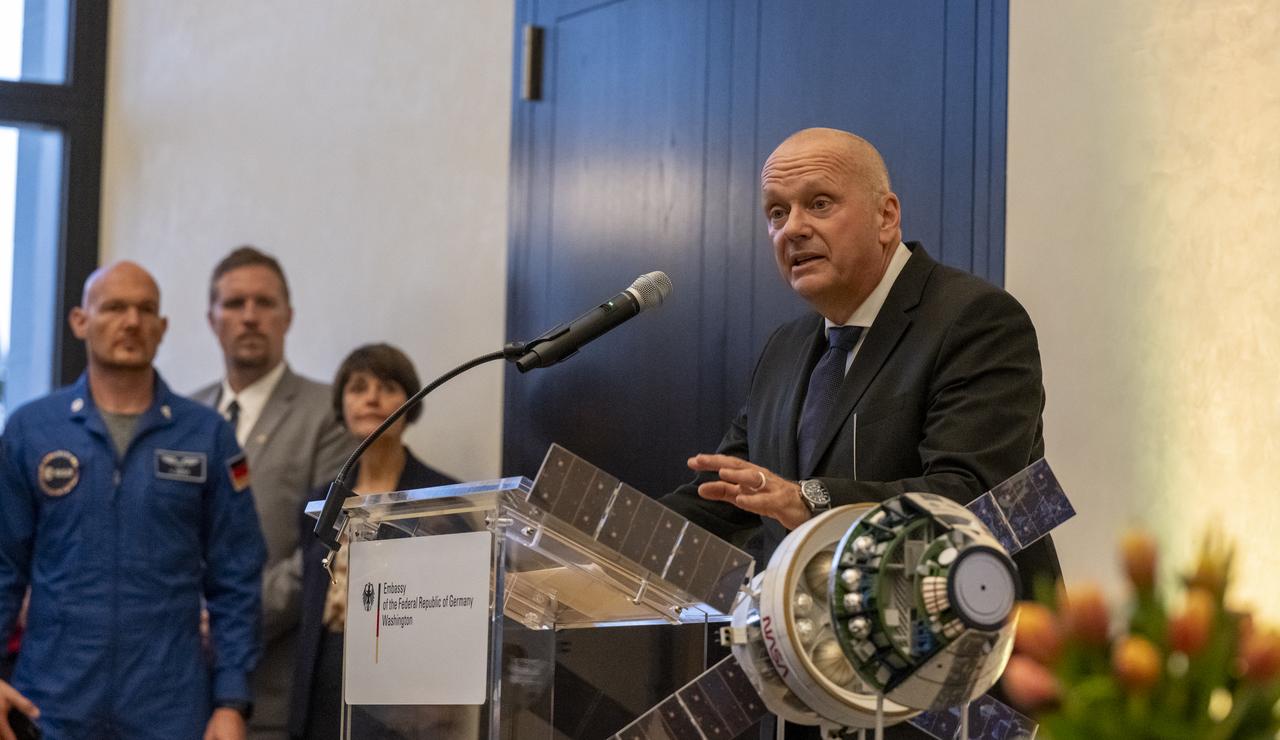
German Ambassador to the United States Andreas Michaelis delivers remarks during an Artemis Accords signing ceremony, Thursday, September 14, 2023, at the German Ambassador’s Residence in Washington. Germany is the 29th country to sign the Artemis Accords, which establish a practical set of principles to guide space exploration cooperation among nations participating in NASA’s Artemis program. Photo Credit: (NASA/Keegan Barber)
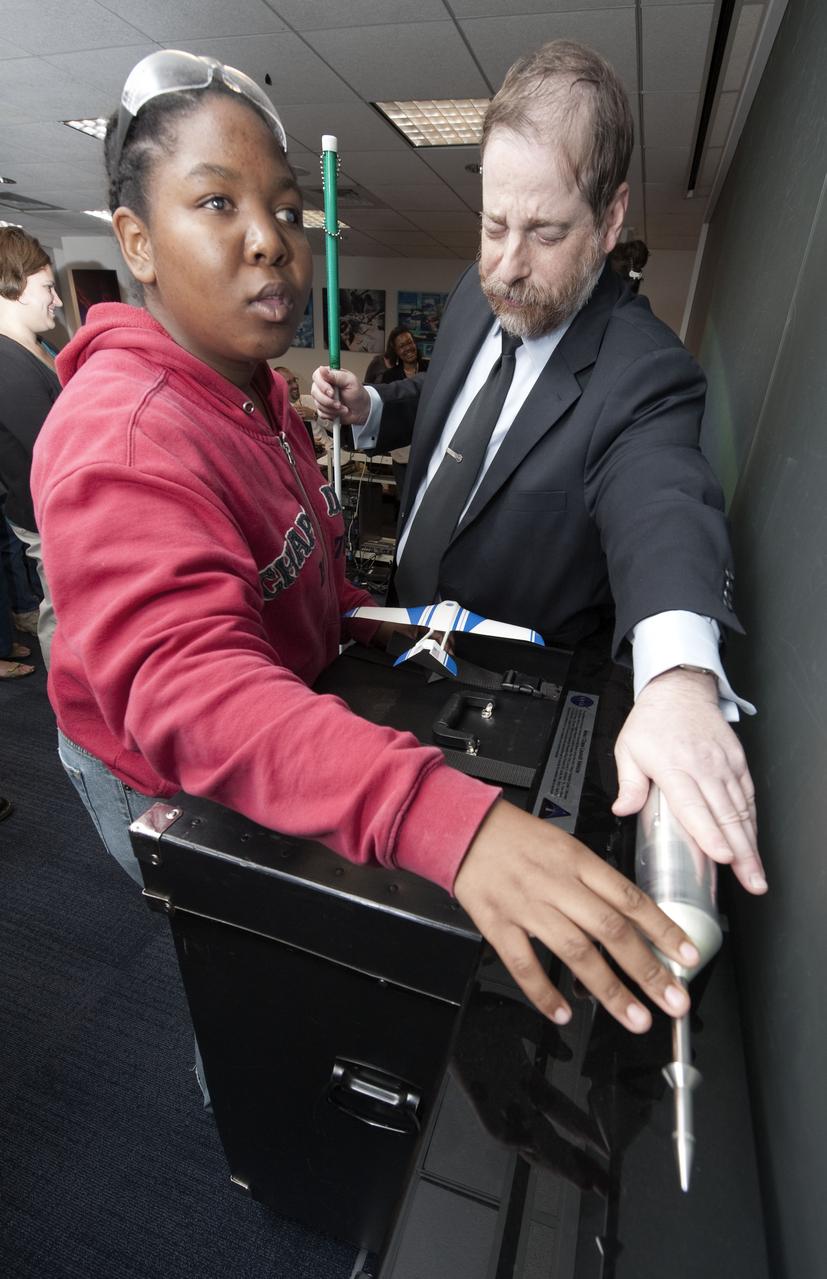
Maryland School for the Blind student Andrea Washington, left, and Kenneth Silberman, an engineer at NASA's Goddard Space Flight Center, use their sense of touch on a model of the Ares I-X rocket during a visit to NASA Headquarters in Washington, Thursday, Oct. 29, 2009. Seven students from the Maryland School for the Blind visited NASA and participated in activities to learn about NASA'smission, functions, and careers. Photo Credit: (NASA/Paul E. Alers)
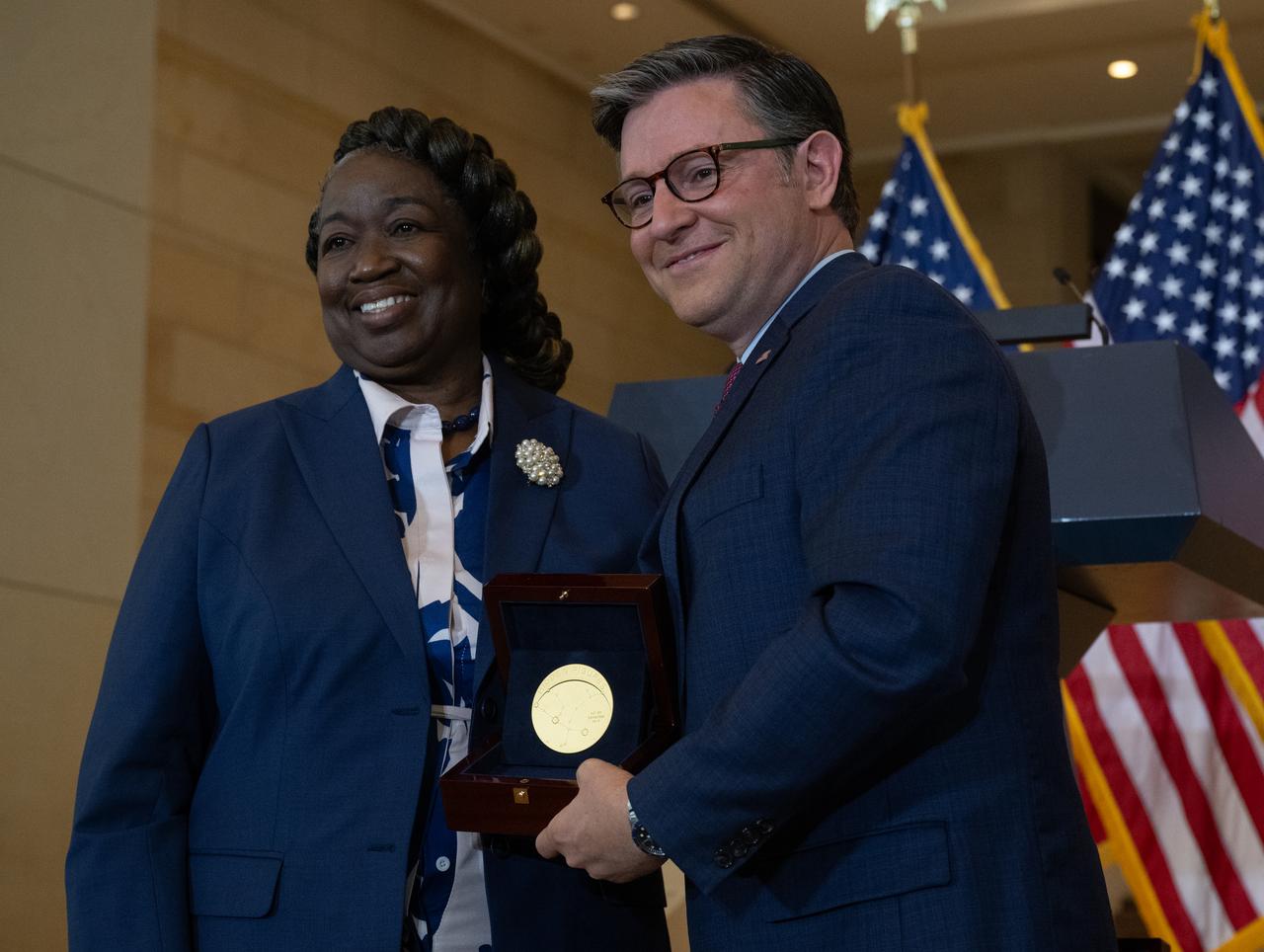
Andrea Mosie, Apollo Sample Lead Processor at NASA's Johnson Space Center, accepts the Congressional Gold Medal on behalf of all the women who served as computers, mathematicians, and engineers at NACA and NASA between the 1930s and 1970s during a ceremony recognizing NASA’s Hidden Figures, Wednesday, Sept. 18, 2024, in Emancipation Hall at the U.S. Capitol in Washington. Congressional Gold Medals were awarded to Katherine Johnson, Dr. Christine Darden, Dorothy Vaughan, and Mary W. Jackson in recognition of their service to the United States as well as a Congressional Gold Medal in recognition of all the women who served as computers, mathematicians, and engineers at the National Advisory Committee for Aeronautics and NASA between the 1930s and 1970s. Photo Credit: (NASA/Joel Kowsky)
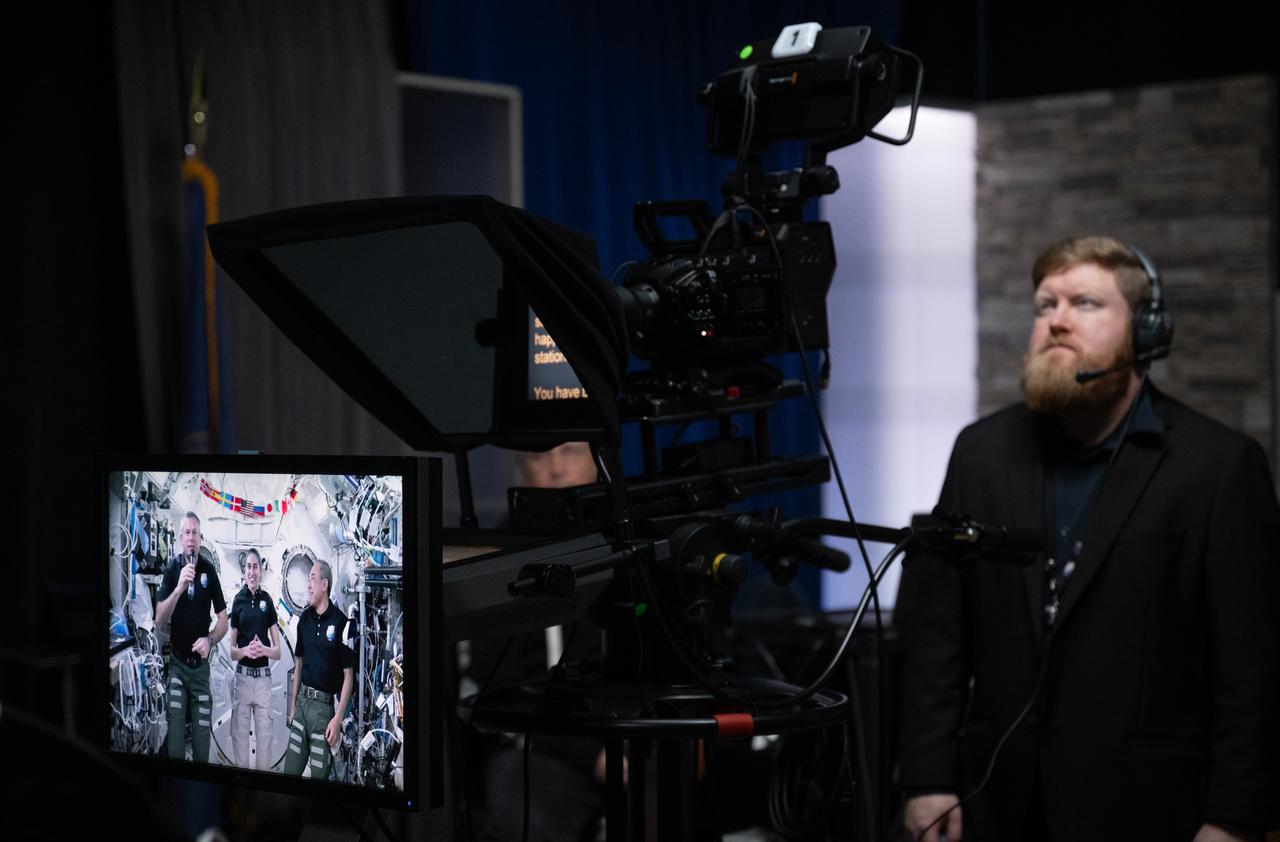
Expedition 70 crew members Andreas Mogenson of ESA left, Jasmin Moghbeli of NASA, and Satoshi Furukawa of JAXA are seen aboard the International Space Station on a monitor as they talk with NASA Administrator Bill Nelson and Lisa Carnell, director of NASA’s Biological and Physical Sciences Division, during an Earth-to-space call, Wednesday, Feb. 21, 2024, at the Mary W. Jackson NASA Headquarters building in Washington. Nelson and Carnell spoke with Mogenson, Moghbeli, and Furukawa about recent science research and technology demonstrations aboard the orbiting laboratory. Photo Credit: (NASA/Joel Kowsky)
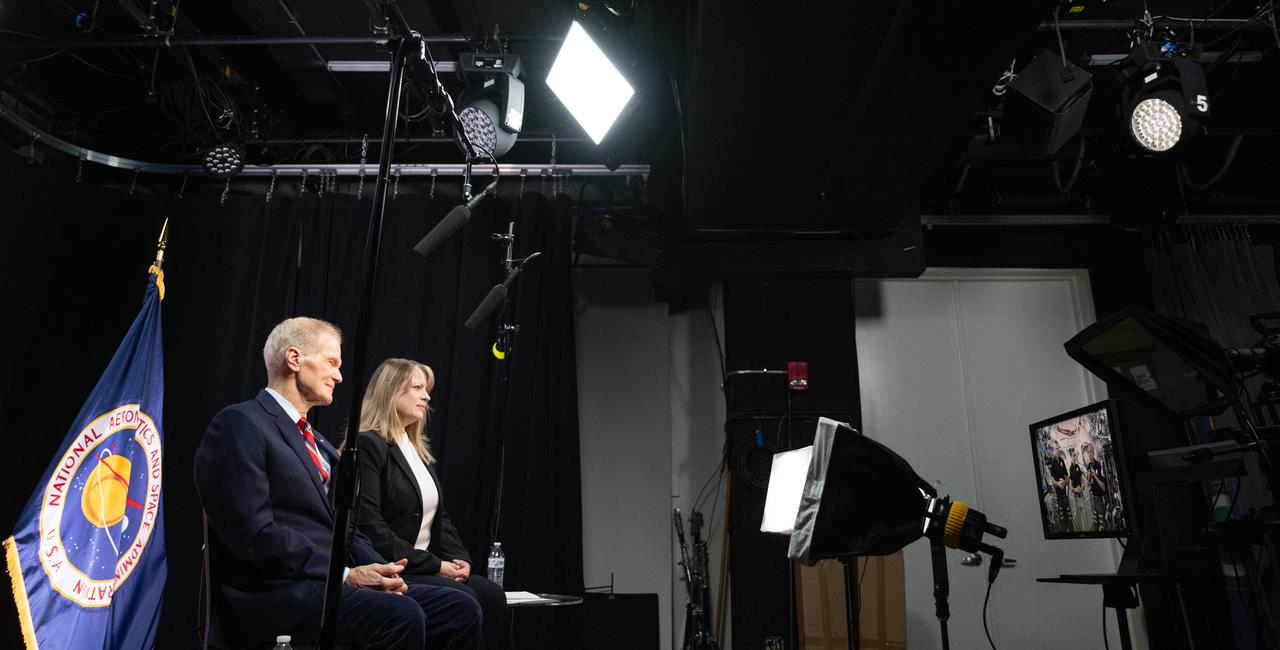
NASA Administrator Bill Nelson, left, and Lisa Carnell, director of NASA’s Biological and Physical Sciences Division are seen during an Earth-to-space call with Expedition 70 crew members Andreas Mogenson of ESA, Jasmin Moghbeli of NASA, and Satoshi Furukawa of JAXA aboard the International Space Station, visible on monitor to the right, Wednesday, Feb. 21, 2024, at the Mary W. Jackson NASA Headquarters building in Washington. Nelson and Carnell spoke with Mogenson, Moghbeli, and Furukawa about recent science research and technology demonstrations aboard the orbiting laboratory. Photo Credit: (NASA/Joel Kowsky)
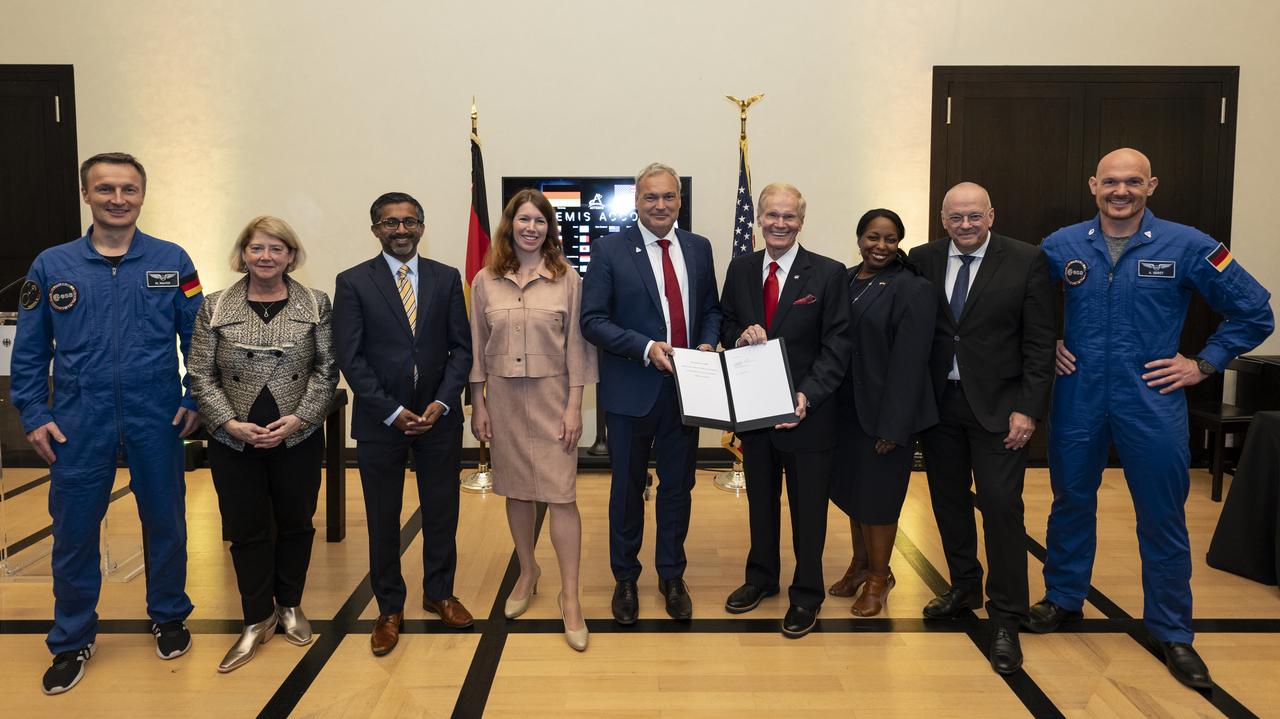
From left to right, ESA (European Space Agency) astronaut Matthias Maurer, NASA Deputy Administrator Pam Melroy, National Space Council (NSpC) Executive Secretary Chirag Parikh, Federal Government Coordinator of German Aerospace Policy Anna Christmann, NASA Administrator Bill Nelson, Director General of the German Space Agency at the German Aerospace Center (DLR) Walther Pelzer, Acting Assistant Secretary of State for Oceans and International Environmental and Scientific Affairs Jennifer R. Littlejohn, German Ambassador to the United States Andreas Michaelis, and ESA astronaut Alexander Gerst pose for a group photo during an Artemis Accords signing ceremony, Thursday, September 14, 2023, at the German Ambassador’s Residence in Washington. Germany is the 29th country to sign the Artemis Accords, which establish a practical set of principles to guide space exploration cooperation among nations participating in NASA’s Artemis program. Photo Credit: (NASA/Keegan Barber)
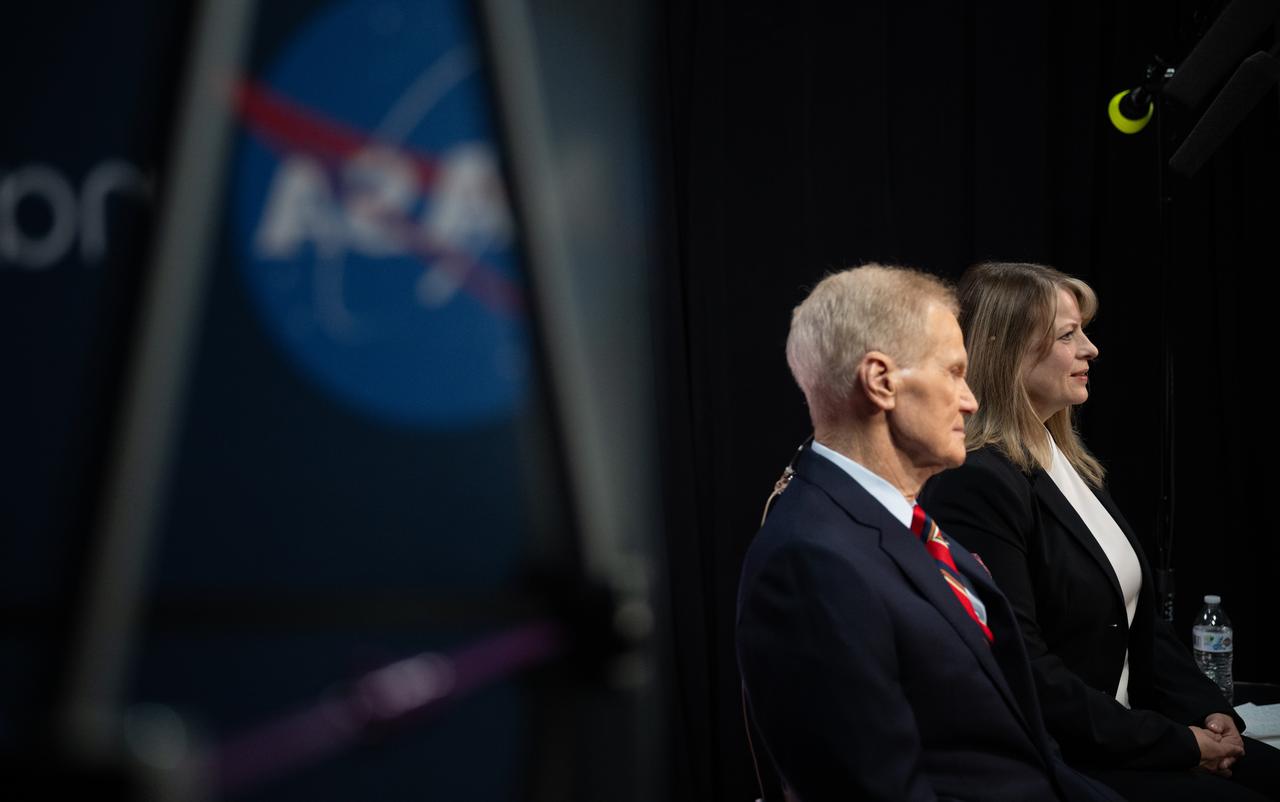
NASA Administrator Bill Nelson, left, and Lisa Carnell, director of NASA’s Biological and Physical Sciences Division are seen during an Earth-to-space call with astronauts aboard the International Space Station, Wednesday, Feb. 21, 2024, at the Mary W. Jackson NASA Headquarters building in Washington. Nelson and Carnell spoke with Expedition 70 crew members Andreas Mogenson of ESA, Jasmin Moghbeli of NASA, and Satoshi Furukawa of JAXA about recent science research and technology demonstrations aboard the orbiting laboratory. Photo Credit: (NASA/Joel Kowsky)
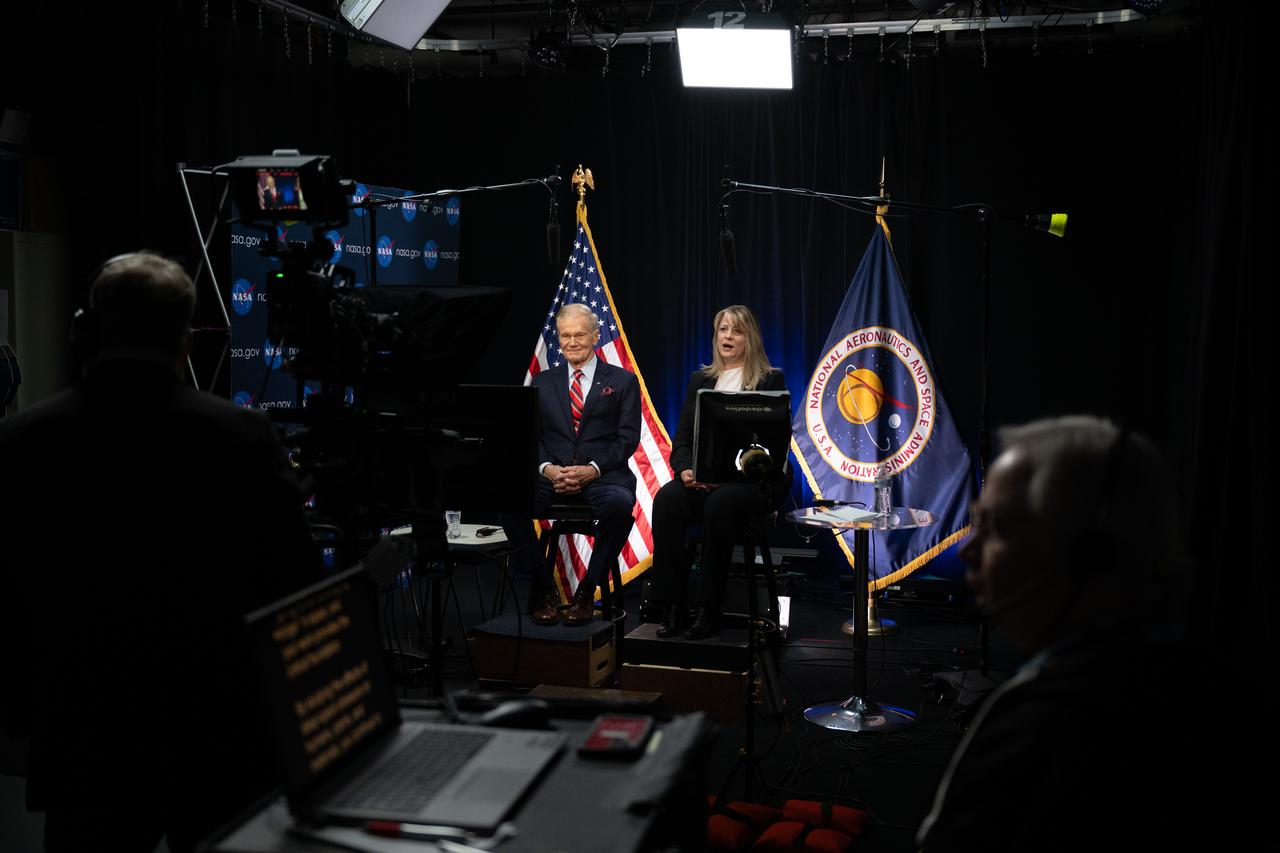
NASA Administrator Bill Nelson, left, and Lisa Carnell, director of NASA’s Biological and Physical Sciences Division are seen during an Earth-to-space call with astronauts aboard the International Space Station, Wednesday, Feb. 21, 2024, at the Mary W. Jackson NASA Headquarters building in Washington. Nelson and Carnell spoke with Expedition 70 crew members Andreas Mogenson of ESA, Jasmin Moghbeli of NASA, and Satoshi Furukawa of JAXA about recent science research and technology demonstrations aboard the orbiting laboratory. Photo Credit: (NASA/Joel Kowsky)
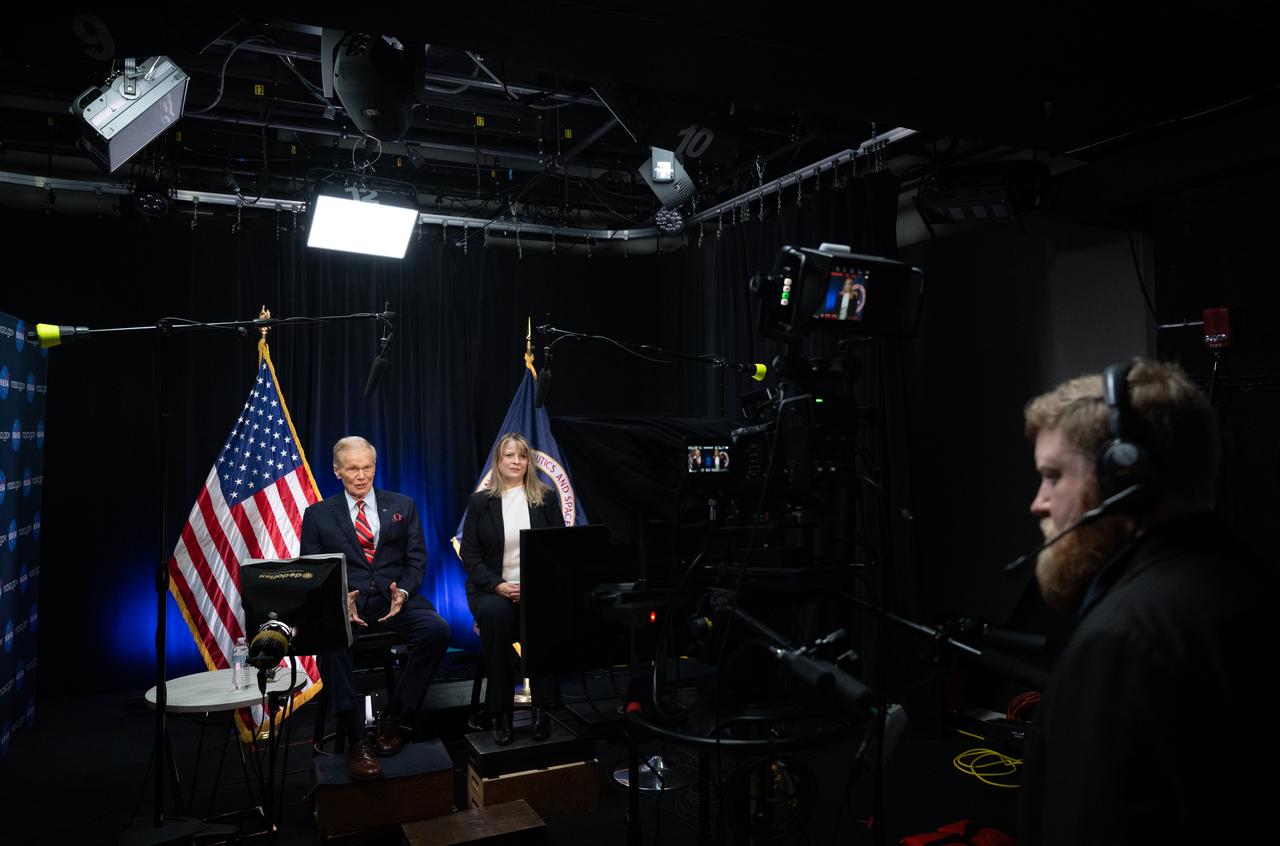
NASA Administrator Bill Nelson, left, and Lisa Carnell, director of NASA’s Biological and Physical Sciences Division are seen during an Earth-to-space call with astronauts aboard the International Space Station, Wednesday, Feb. 21, 2024, at the Mary W. Jackson NASA Headquarters building in Washington. Nelson and Carnell spoke with Expedition 70 crew members Andreas Mogenson of ESA, Jasmin Moghbeli of NASA, and Satoshi Furukawa of JAXA about recent science research and technology demonstrations aboard the orbiting laboratory. Photo Credit: (NASA/Joel Kowsky)
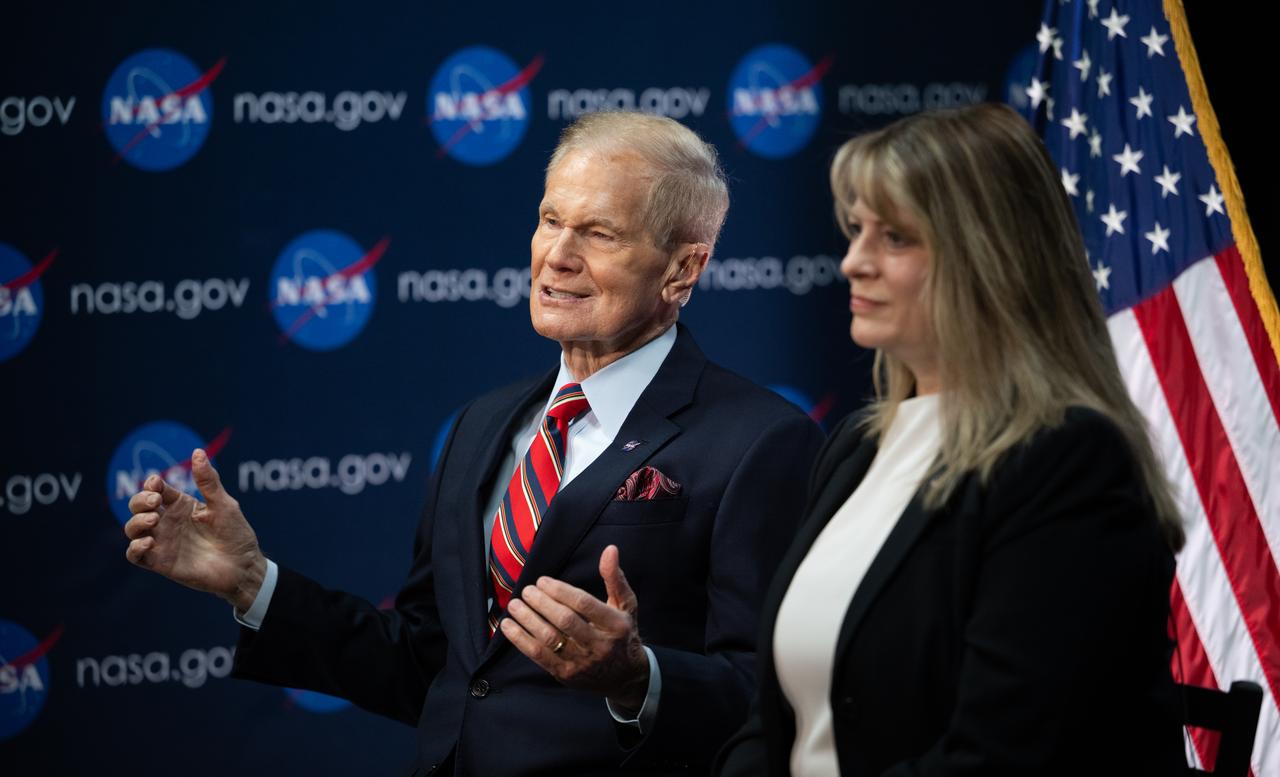
NASA Administrator Bill Nelson, left, speaks along side Lisa Carnell, director of NASA’s Biological and Physical Sciences Division during an Earth-to-space call with astronauts aboard the International Space Station, Wednesday, Feb. 21, 2024, at the Mary W. Jackson NASA Headquarters building in Washington. Nelson and Carnell spoke with Expedition 70 crew members Andreas Mogenson of ESA, Jasmin Moghbeli of NASA, and Satoshi Furukawa of JAXA about recent science research and technology demonstrations aboard the orbiting laboratory. Photo Credit: (NASA/Joel Kowsky)
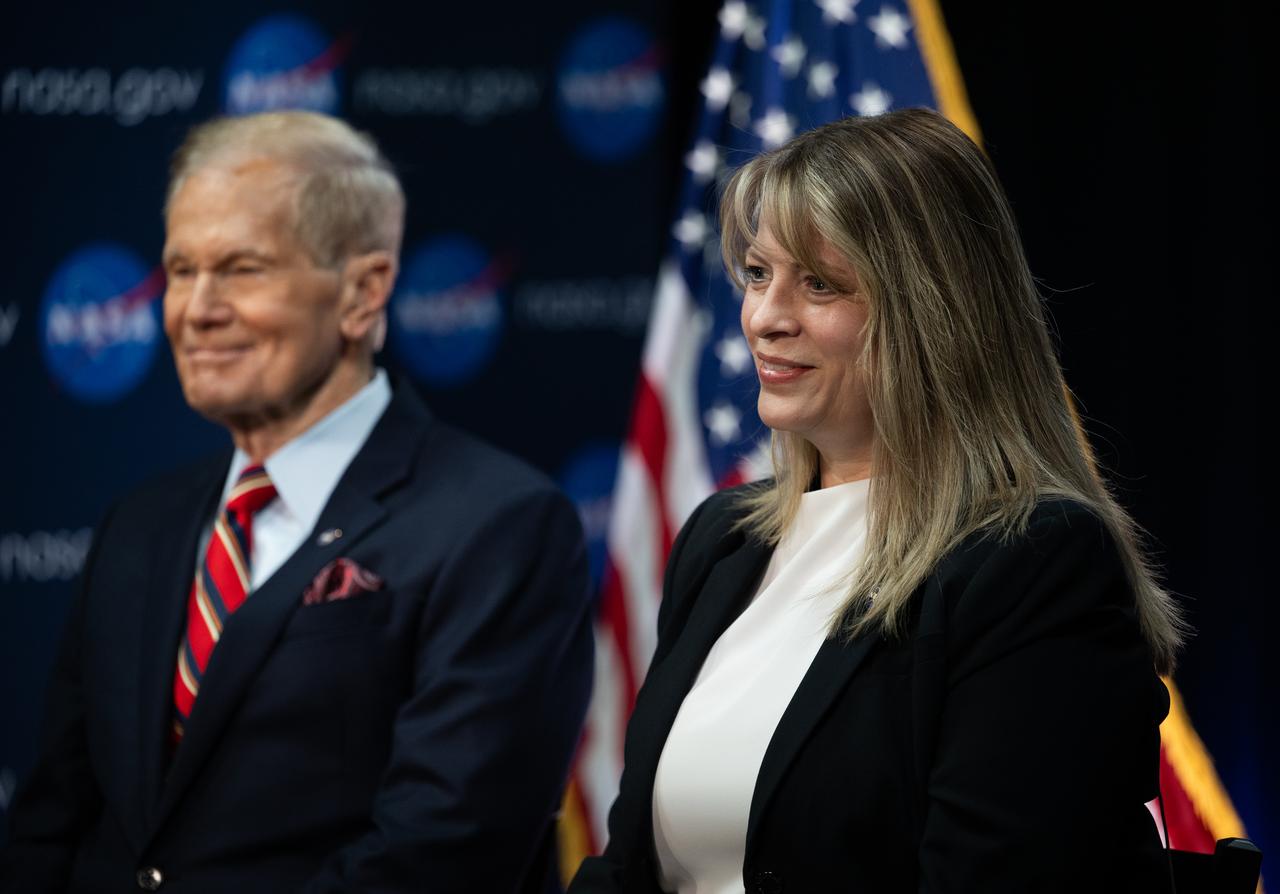
Lisa Carnell, director of NASA’s Biological and Physical Sciences Division, right, speaks along side NASA Administrator Bill Nelson during an Earth-to-space call with astronauts aboard the International Space Station, Wednesday, Feb. 21, 2024, at the Mary W. Jackson NASA Headquarters building in Washington. Nelson and Carnell spoke with Expedition 70 crew members Andreas Mogenson of ESA, Jasmin Moghbeli of NASA, and Satoshi Furukawa of JAXA about recent science research and technology demonstrations aboard the orbiting laboratory. Photo Credit: (NASA/Joel Kowsky)
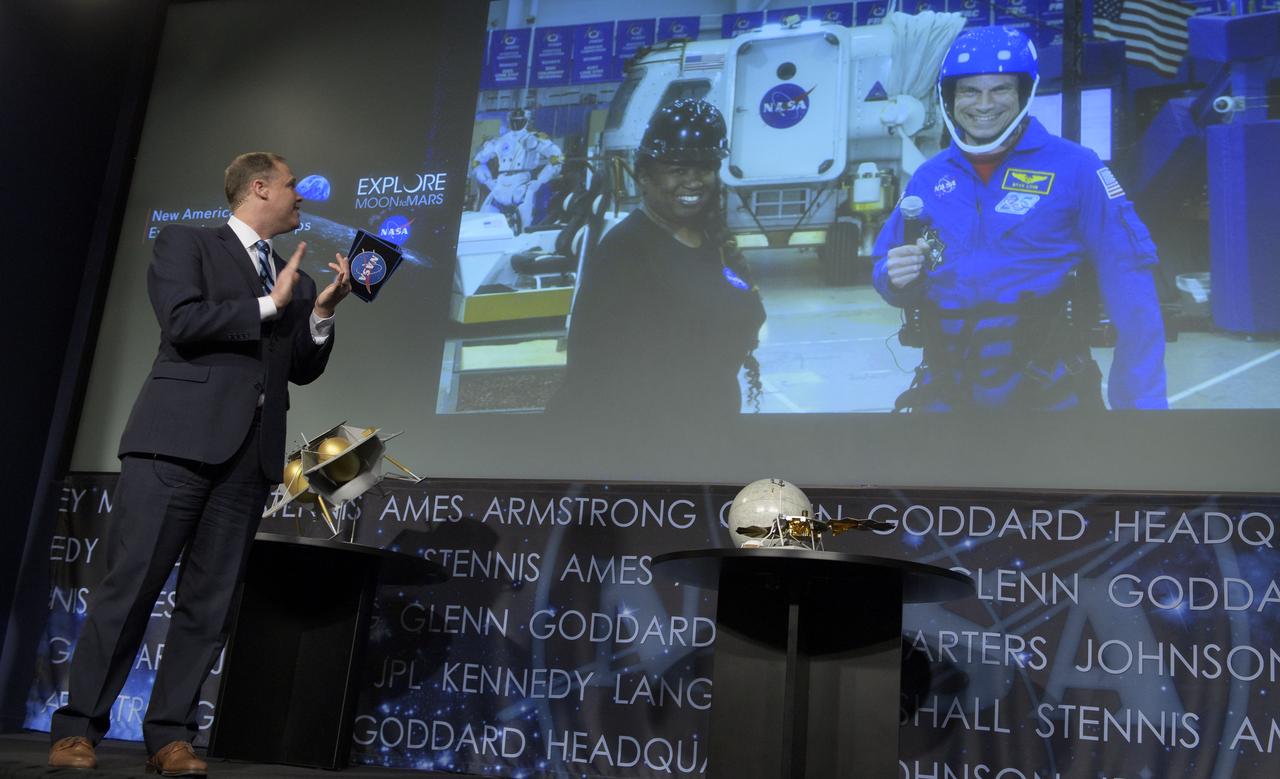
NASA Administrator Jim Bridenstine talks via satellite with Andrea Mosie, Apollo sample laboratory manager, and NASA astronaut Stan Love from NASA’s Johnson Space Center in Houston during a event where it was announced that nine U.S. companies are eligible to bid on NASA delivery services to the lunar surface through Commercial Lunar Payload Services (CLPS) contracts, Thursday, Nov. 29, 2018 at NASA Headquarters in Washington. The companies will be able to bid on delivering science and technology payloads for NASA, including payload integration and operations, launching from Earth and landing on the surface of the Moon. NASA expects to be one of many customers that will use these commercial landing services. Photo Credit: (NASA/Bill Ingalls)
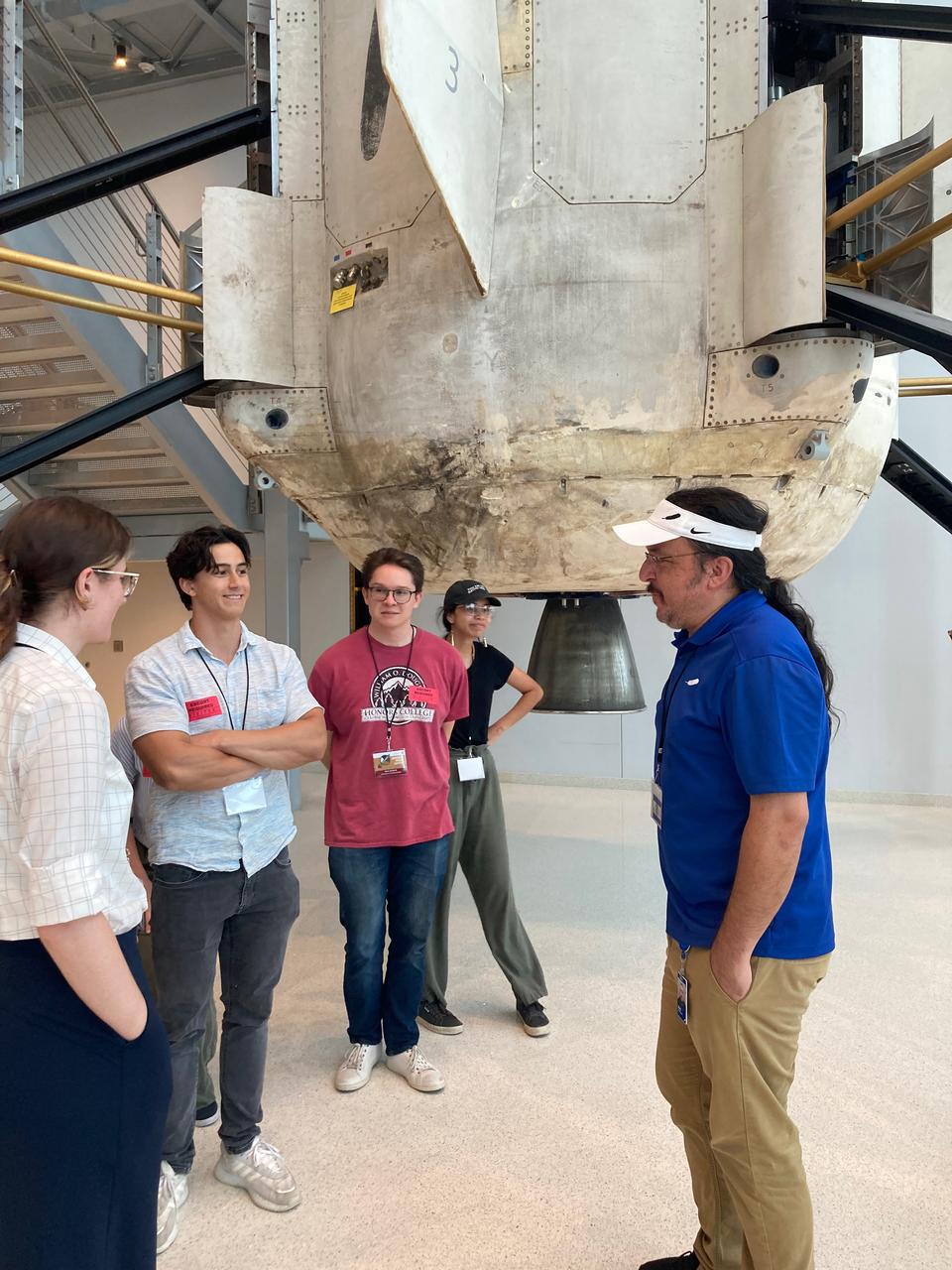
Participants from the 14th First Nations Launch High-Power Rocket Competition watch NASA’s SpaceX Crew-7 launch from the Banana Creek viewing site at the agency’s Kennedy Space Center in Florida on Saturday, Aug. 26, 2023. A SpaceX Falcon 9 rocket carrying NASA astronaut Jasmin Moghbeli, ESA (European Space Agency) astronaut Andreas Mogensen, JAXA (Japan Aerospace Exploration Agency) astronaut Satoshi Furukawa, and Roscosmos cosmonaut Konstantin Borisov launched to the International Space Station at 3:27 a.m. EDT from Kennedy’s Launch Complex 39A. Students and advisors from University of Washington, University of Colorado-Boulder, and an international team from Queens University – this year’s First Nations Launch grand prize teams – traveled to Kennedy for a VIP tour, culminating in viewing the Crew-7 launch. Another highlight included a guided tour of historic Hangar AE, led by James Wood (Osage Nation and Loyal Shawnee), chief engineer of NASA’s Launch Services Program, technical advisor for the Crew-7 launch, and First Nations mentor and judge. One of NASA’s Artemis Student Challenges, the First Nations Launch competition comprises students from tribal colleges and universities, Native American-Serving Nontribal Institutions, and collegiate chapters of the American Indian Science and Engineering Society who design, build, and launch a high-powered rocket from a launch site in Kansasville, Wisconsin. The competition is facilitated by NASA’s Wisconsin Space Grant Consortium and managed by the agency’s Office of STEM Engagement at Kennedy.
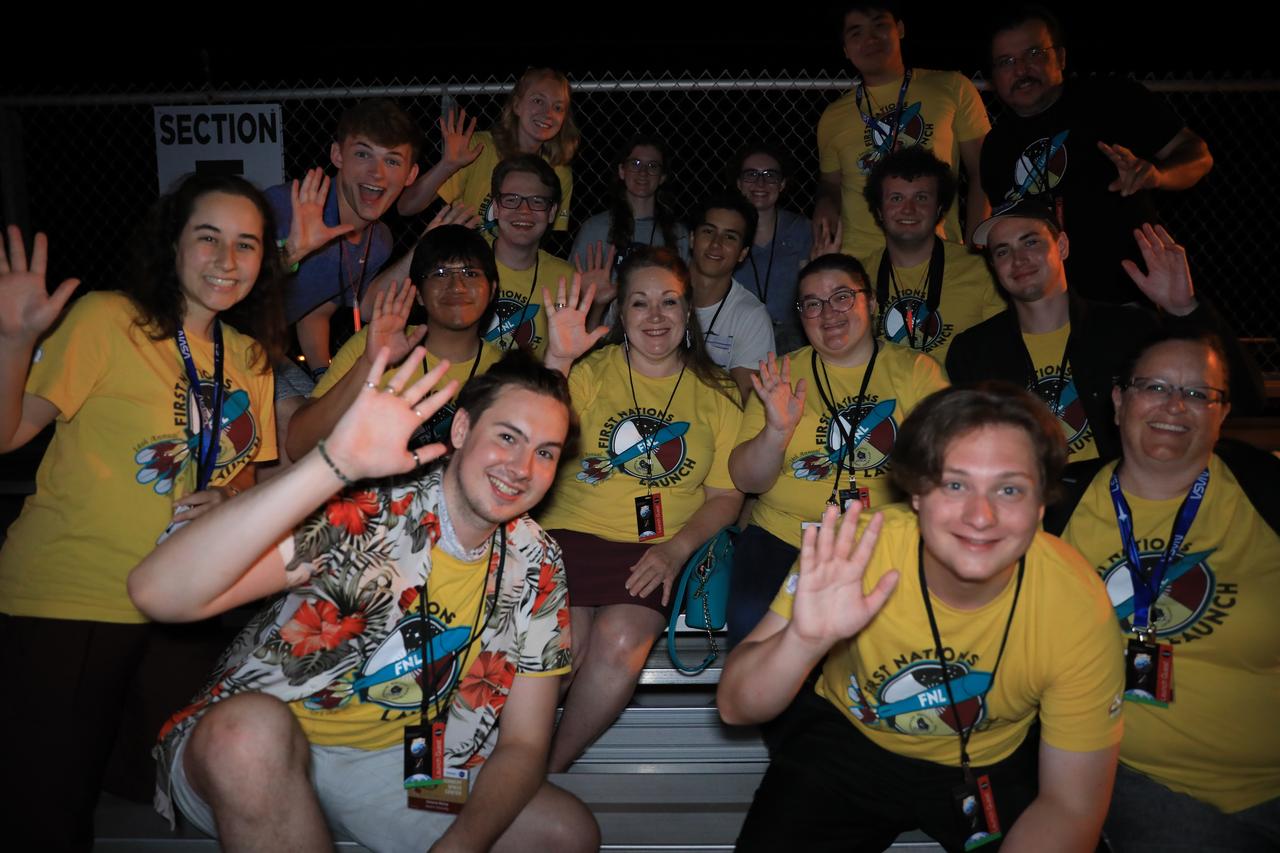
Participants from the 14th First Nations Launch High-Power Rocket Competition watch NASA’s SpaceX Crew-7 launch from the Banana Creek viewing site at the agency’s Kennedy Space Center in Florida on Saturday, Aug. 26, 2023. A SpaceX Falcon 9 rocket carrying NASA astronaut Jasmin Moghbeli, ESA (European Space Agency) astronaut Andreas Mogensen, JAXA (Japan Aerospace Exploration Agency) astronaut Satoshi Furukawa, and Roscosmos cosmonaut Konstantin Borisov launched to the International Space Station at 3:27 a.m. EDT from Kennedy’s Launch Complex 39A. Students and advisors from University of Washington, University of Colorado-Boulder, and an international team from Queens University – this year’s First Nations Launch grand prize teams – traveled to Kennedy for a VIP tour, culminating in viewing the Crew-7 launch. Another highlight included a guided tour of historic Hangar AE, led by James Wood (Osage Nation and Loyal Shawnee), chief engineer of NASA’s Launch Services Program, technical advisor for the Crew-7 launch, and First Nations mentor and judge. One of NASA’s Artemis Student Challenges, the First Nations Launch competition comprises students from tribal colleges and universities, Native American-Serving Nontribal Institutions, and collegiate chapters of the American Indian Science and Engineering Society who design, build, and launch a high-powered rocket from a launch site in Kansasville, Wisconsin. The competition is facilitated by NASA’s Wisconsin Space Grant Consortium and managed by the agency’s Office of STEM Engagement at Kennedy.
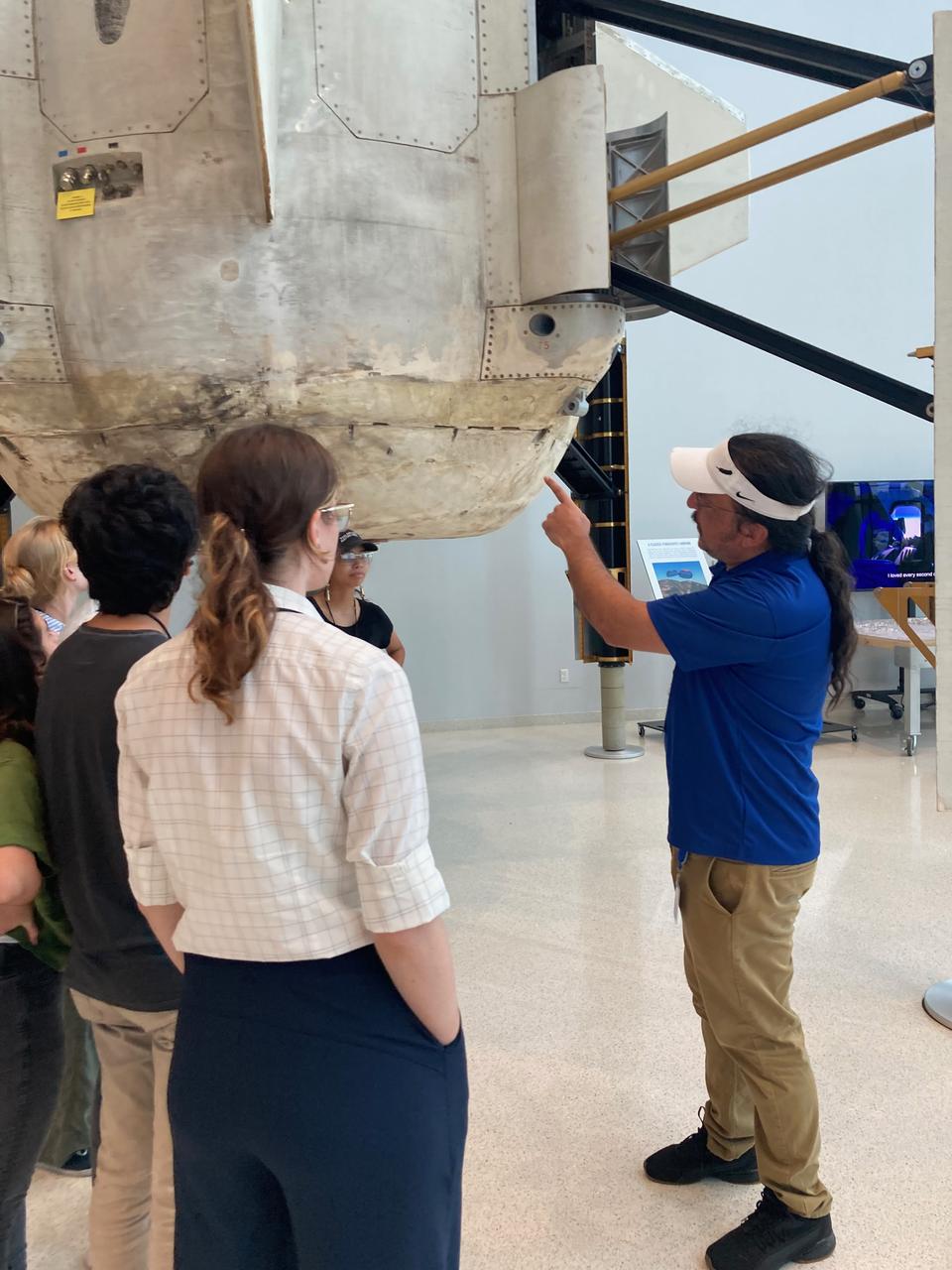
Participants from the 14th First Nations Launch High-Power Rocket Competition watch NASA’s SpaceX Crew-7 launch from the Banana Creek viewing site at the agency’s Kennedy Space Center in Florida on Saturday, Aug. 26, 2023. A SpaceX Falcon 9 rocket carrying NASA astronaut Jasmin Moghbeli, ESA (European Space Agency) astronaut Andreas Mogensen, JAXA (Japan Aerospace Exploration Agency) astronaut Satoshi Furukawa, and Roscosmos cosmonaut Konstantin Borisov launched to the International Space Station at 3:27 a.m. EDT from Kennedy’s Launch Complex 39A. Students and advisors from University of Washington, University of Colorado-Boulder, and an international team from Queens University – this year’s First Nations Launch grand prize teams – traveled to Kennedy for a VIP tour, culminating in viewing the Crew-7 launch. Another highlight included a guided tour of historic Hangar AE, led by James Wood (Osage Nation and Loyal Shawnee), chief engineer of NASA’s Launch Services Program, technical advisor for the Crew-7 launch, and First Nations mentor and judge. One of NASA’s Artemis Student Challenges, the First Nations Launch competition comprises students from tribal colleges and universities, Native American-Serving Nontribal Institutions, and collegiate chapters of the American Indian Science and Engineering Society who design, build, and launch a high-powered rocket from a launch site in Kansasville, Wisconsin. The competition is facilitated by NASA’s Wisconsin Space Grant Consortium and managed by the agency’s Office of STEM Engagement at Kennedy.
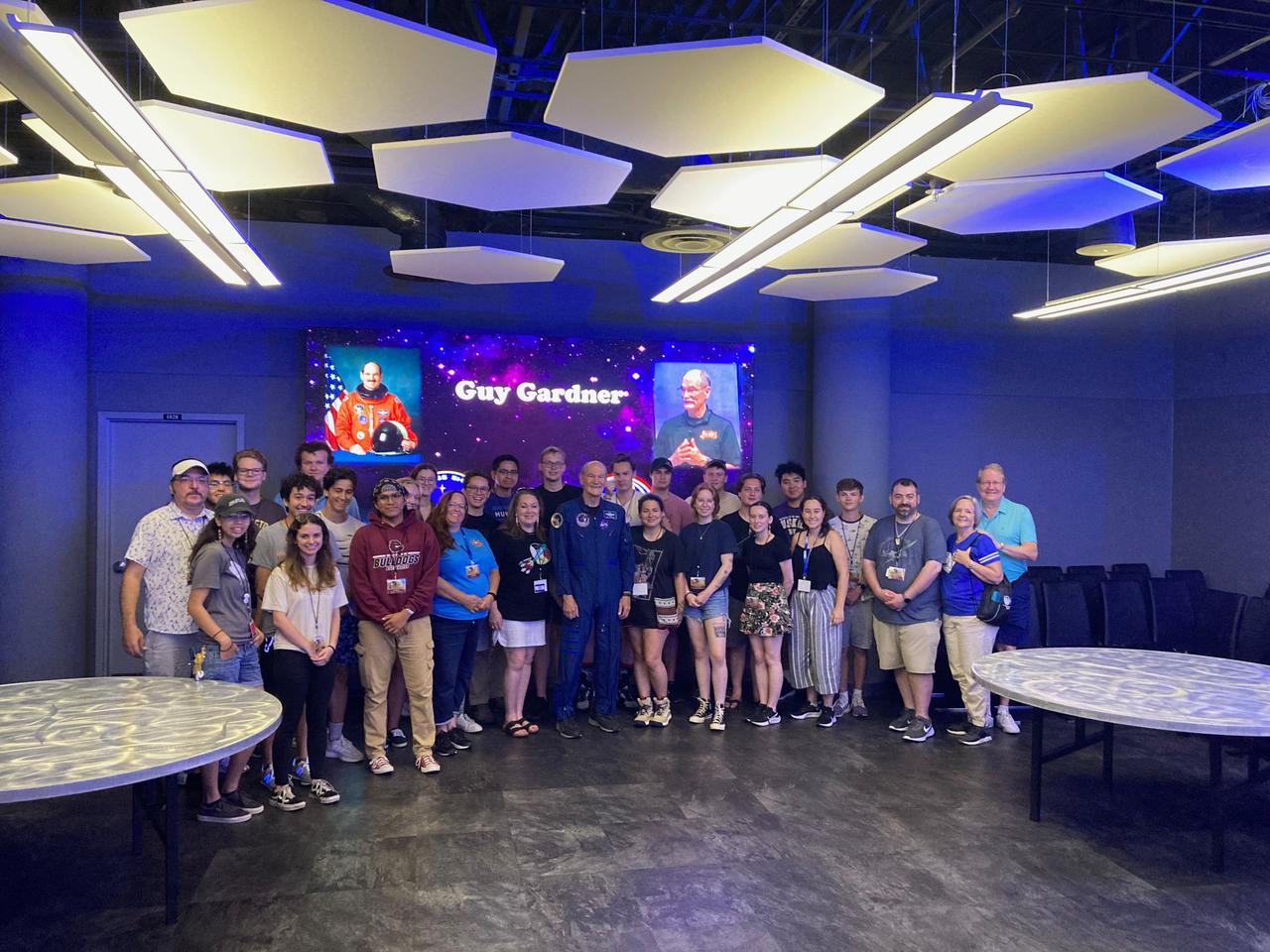
Participants from the 14th First Nations Launch High-Power Rocket Competition watch NASA’s SpaceX Crew-7 launch from the Banana Creek viewing site at the agency’s Kennedy Space Center in Florida on Saturday, Aug. 26, 2023. A SpaceX Falcon 9 rocket carrying NASA astronaut Jasmin Moghbeli, ESA (European Space Agency) astronaut Andreas Mogensen, JAXA (Japan Aerospace Exploration Agency) astronaut Satoshi Furukawa, and Roscosmos cosmonaut Konstantin Borisov launched to the International Space Station at 3:27 a.m. EDT from Kennedy’s Launch Complex 39A. Students and advisors from University of Washington, University of Colorado-Boulder, and an international team from Queens University – this year’s First Nations Launch grand prize teams – traveled to Kennedy for a VIP tour, culminating in viewing the Crew-7 launch. Another highlight included a guided tour of historic Hangar AE, led by James Wood (Osage Nation and Loyal Shawnee), chief engineer of NASA’s Launch Services Program, technical advisor for the Crew-7 launch, and First Nations mentor and judge. One of NASA’s Artemis Student Challenges, the First Nations Launch competition comprises students from tribal colleges and universities, Native American-Serving Nontribal Institutions, and collegiate chapters of the American Indian Science and Engineering Society who design, build, and launch a high-powered rocket from a launch site in Kansasville, Wisconsin. The competition is facilitated by NASA’s Wisconsin Space Grant Consortium and managed by the agency’s Office of STEM Engagement at Kennedy.
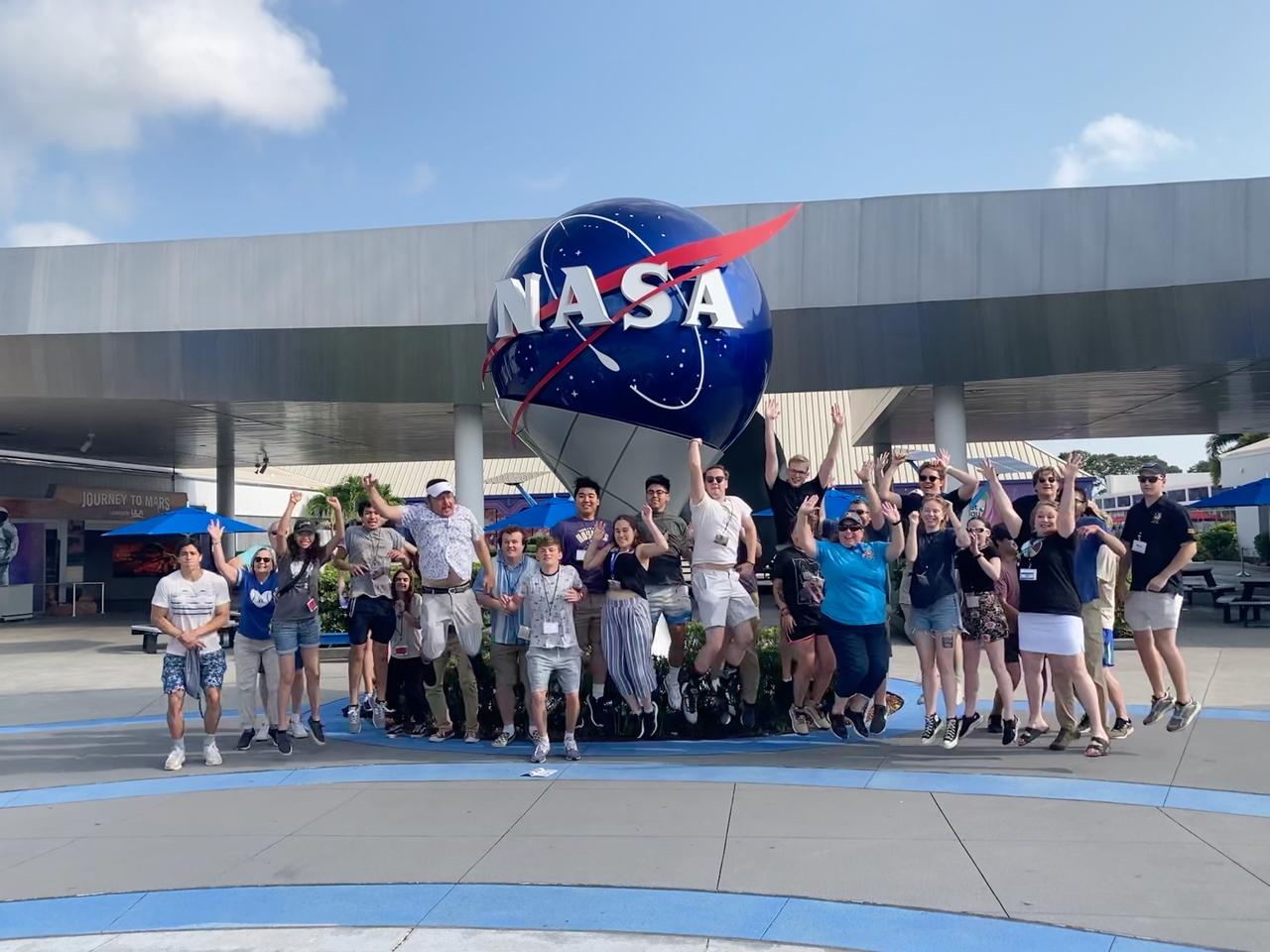
Participants from the 14th First Nations Launch High-Power Rocket Competition watch NASA’s SpaceX Crew-7 launch from the Banana Creek viewing site at the agency’s Kennedy Space Center in Florida on Saturday, Aug. 26, 2023. A SpaceX Falcon 9 rocket carrying NASA astronaut Jasmin Moghbeli, ESA (European Space Agency) astronaut Andreas Mogensen, JAXA (Japan Aerospace Exploration Agency) astronaut Satoshi Furukawa, and Roscosmos cosmonaut Konstantin Borisov launched to the International Space Station at 3:27 a.m. EDT from Kennedy’s Launch Complex 39A. Students and advisors from University of Washington, University of Colorado-Boulder, and an international team from Queens University – this year’s First Nations Launch grand prize teams – traveled to Kennedy for a VIP tour, culminating in viewing the Crew-7 launch. Another highlight included a guided tour of historic Hangar AE, led by James Wood (Osage Nation and Loyal Shawnee), chief engineer of NASA’s Launch Services Program, technical advisor for the Crew-7 launch, and First Nations mentor and judge. One of NASA’s Artemis Student Challenges, the First Nations Launch competition comprises students from tribal colleges and universities, Native American-Serving Nontribal Institutions, and collegiate chapters of the American Indian Science and Engineering Society who design, build, and launch a high-powered rocket from a launch site in Kansasville, Wisconsin. The competition is facilitated by NASA’s Wisconsin Space Grant Consortium and managed by the agency’s Office of STEM Engagement at Kennedy.