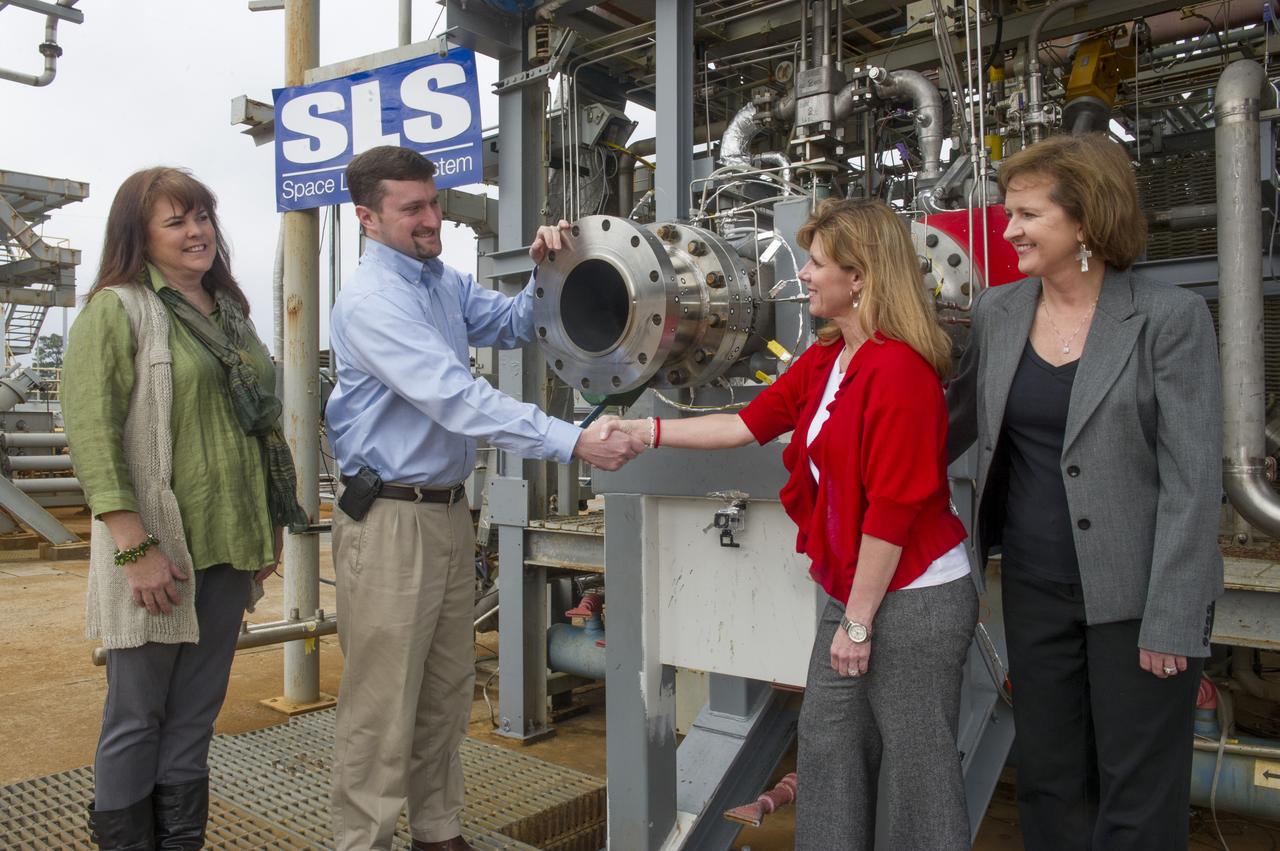
FROM LEFT TO RIGHT IN FRONT OF THE F-1 GAS GENERATOR ARE: DYNETICS PROGRAM MANAGER KIM DOERING, DYNETICS DEPUTY PROGRAM MANAGER ANDY CROCKER, MARSHALL PARTNERSHIPS MANAGER STACY COUNTS, AND MARSHALL PROJECT MANAGER FOR DYNETICS WHITNEY YOUNG.

NASA astronauts Zena Cardman, left, Mike Fincke, second from right, and Japan Aerospace Exploration Agency (JAXA) astronaut Kimiya Yui, right, speak with U.S. Sen. Andy Kim, D-N.J., left, about their time onboard the International Space Station as part of Expeditions 73 and 74, Wednesday, June 3, 2026, in the Hart Senate Office Building in Washington. Cardman, Fincke, and Yui spent 167 days onboard the orbiting laboratory as part of Expeditions 73 and 74. Photo Credit: (NASA/Joel Kowsky)

U.S. Senator Maria Cantwell (D-WA) provides remarks as from left to right, U.S. Senator Ted Cruz (R-Texas); NASA astronaut Reid Wiseman, Artemis II commander; U.S. Senator Amy Klobuchar (D-MN); NASA astronaut Victor Glover, Artemis II pilot; U.S. Senator Lisa Blunt Rochester (D-DE); and U.S. Senator Andy Kim (D-NJ) look on during an event at the Russell Senate Office Building, Tuesday, May 12, 2026, in Washington. NASA’s Artemis II mission took Wiseman, Glover, Koch, and Hansen on a nearly 10-day journey around the Moon and back to Earth in April 2026. Photo Credit: (NASA/Aubrey Gemignani)

U.S. Senator Ted Cruz (R-Texas) provides remarks as from left to right, CSA (Canadian Space Agency) astronaut Jeremy Hansen, Artemis II mission specialist; NASA astronaut Christina Koch, Artemis II mission specialist; U.S. Senator Maria Cantwell (D-WA); NASA astronaut Reid Wiseman, Artemis II commander; U.S. Senator Amy Klobuchar (D-MN); NASA astronaut Victor Glover, Artemis II pilot; U.S. Senator Lisa Blunt Rochester (D-DE); and U.S. Senator Andy Kim (D-NJ) look on during an event at the Russell Senate Office Building, Tuesday, May 12, 2026, in Washington. NASA’s Artemis II mission took Wiseman, Glover, Koch, and Hansen on a nearly 10-day journey around the Moon and back to Earth in April 2026. Photo Credit: (NASA/Aubrey Gemignani)

U.S. Senator Maria Cantwell (D-WA) provides remarks as from left to right, NASA Administrator Jared Isaacman; CSA (Canadian Space Agency) astronaut Jeremy Hansen, Artemis II mission specialist; NASA astronaut Christina Koch, Artemis II mission specialist; U.S. Senator Ted Cruz (R-Texas); NASA astronaut Reid Wiseman, Artemis II commander; U.S. Senator Amy Klobuchar (D-MN); NASA astronaut Victor Glover, Artemis II pilot; U.S. Senator Lisa Blunt Rochester (D-DE); U.S. Senator Andy Kim (D-NJ); and U.S. Senator Edward Markey (D-Mass.), look on during an event at the Russell Senate Office Building, Tuesday, May 12, 2026, in Washington. NASA’s Artemis II mission took Wiseman, Glover, Koch, and Hansen on a nearly 10-day journey around the Moon and back to Earth in April 2026. Photo Credit: (NASA/Aubrey Gemignani)
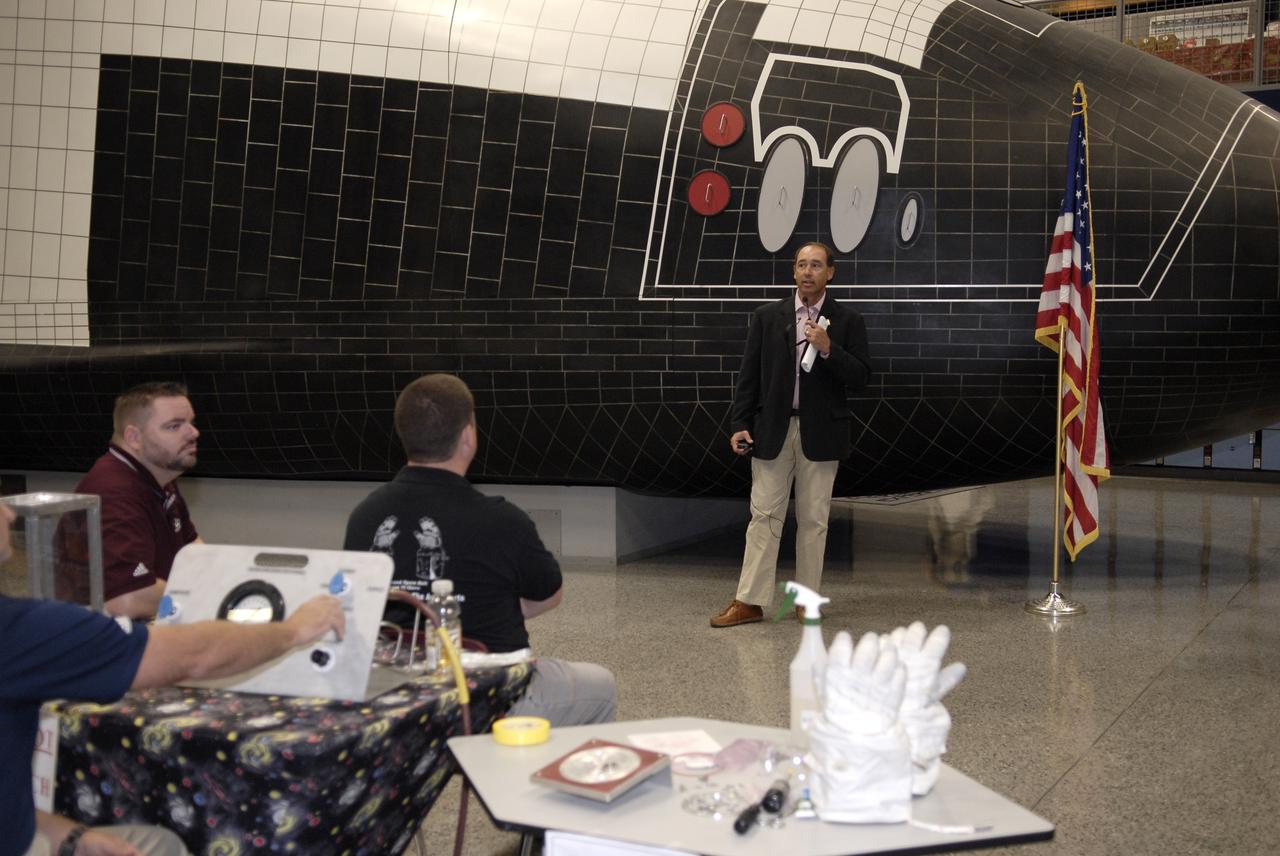
CAPE CANAVERAL, Fla. – Andy Petro, at microphone, manager of NASA Centennial Challenges, addresses the participants in the 2009 Astronaut Glove Challenge, part of NASA’s Centennial Challenges Program, at the Astronaut Hall of Fame near NASA’s Kennedy Space Center in Florida. The nationwide competition focused on developing improved pressure suit gloves for astronauts to use while working in space. During the challenge, inventors tested the gloves to measure dexterity and strength during operation in a glove box which simulates the vacuum of space. Centennial Challenges is NASA’s program of technology prizes for the citizen-inventor. The winning prize for the Glove Challenge is $250,000 provided by the Centennial Challenges Program. Photo credit: NASA/Kim Shiflett

CAPE CANAVERAL, Fla. – During a news conference at NASA's Kennedy Space Center in Florida, agency and contractor officials discussed science and technology experiment payloads being transported to the International Space Station by the SpaceX-3 Commercial Resupply Services mission. Andy Petro of the agency's Space Technology Mission Directorate participated in the briefing by telephone from NASA Headquarters in Washington D.C. Scheduled for launch on April 14, 2014 atop a Falcon 9 rocket, the Dragon spacecraft will be marking its fourth trip to the space station. The SpaceX-3 mission carrying almost 2.5 tons of supplies, technology and science experiments is the third of 12 flights contracted by NASA to resupply the orbiting laboratory. For more information, visit http://www.nasa.gov/mission_pages/station/structure/launch/index.html Photo credit: NASA/ Kim Shiflett
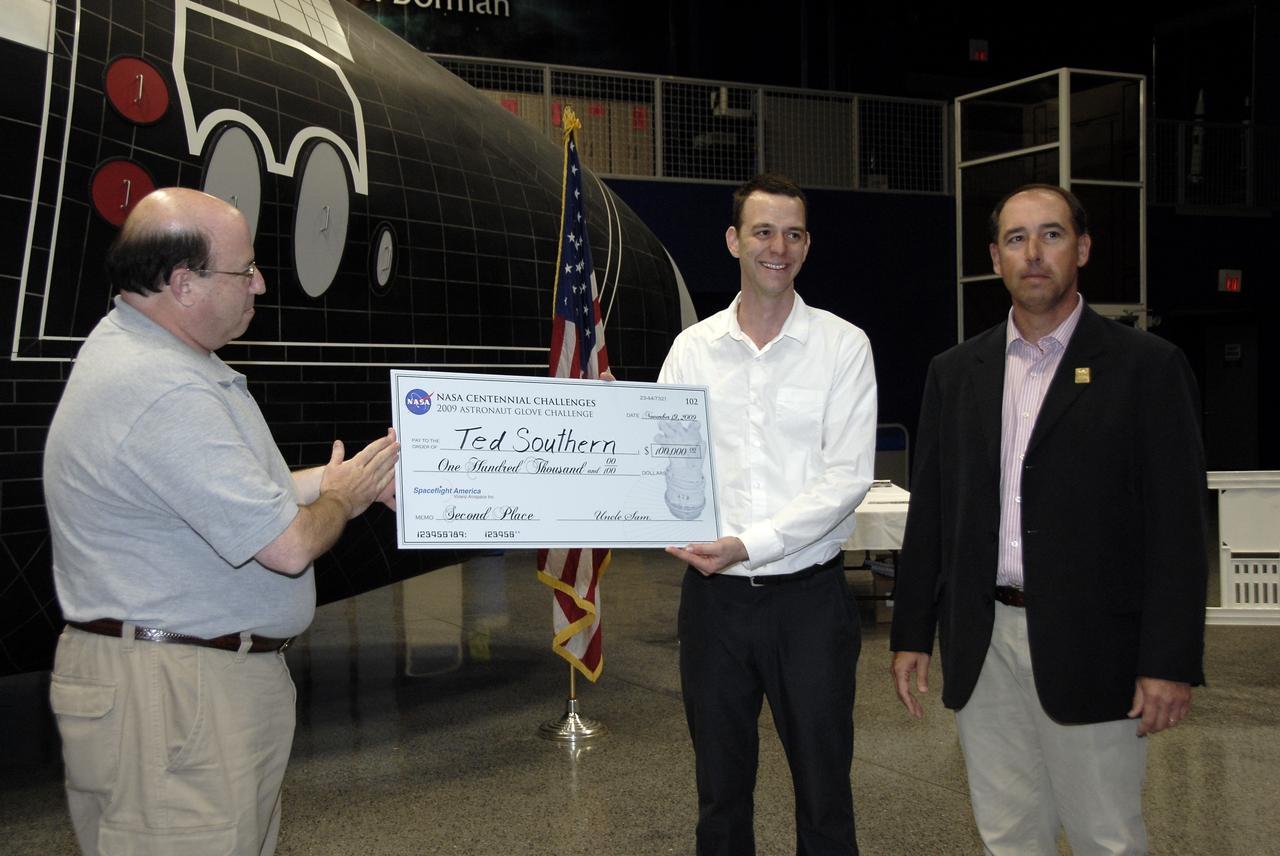
CAPE CANAVERAL, Fla. – Alan Hayes, left, chairman of Volanz Aerospace Inc., presents Ted Southern of Brooklyn, N.Y., with the second place prize of $100,000 at the 2009 Astronaut Glove Challenge, part of NASA’s Centennial Challenges Program, as Andy Petro, manager of NASA Centennial Challenges, stands by at the Astronaut Hall of Fame near NASA’s Kennedy Space Center in Florida. The nationwide competition focused on developing improved pressure suit gloves for astronauts to use while working in space. During the challenge, the gloves were submitted to burst tests, joint force tests and tests to measure their dexterity and strength during operation in a glove box which simulates the vacuum of space. Centennial Challenges is NASA’s program of technology prizes for the citizen-inventor. The winning prize for the Glove Challenge is $250,000 provided by the Centennial Challenges Program. Photo credit: NASA/Kim Shiflett
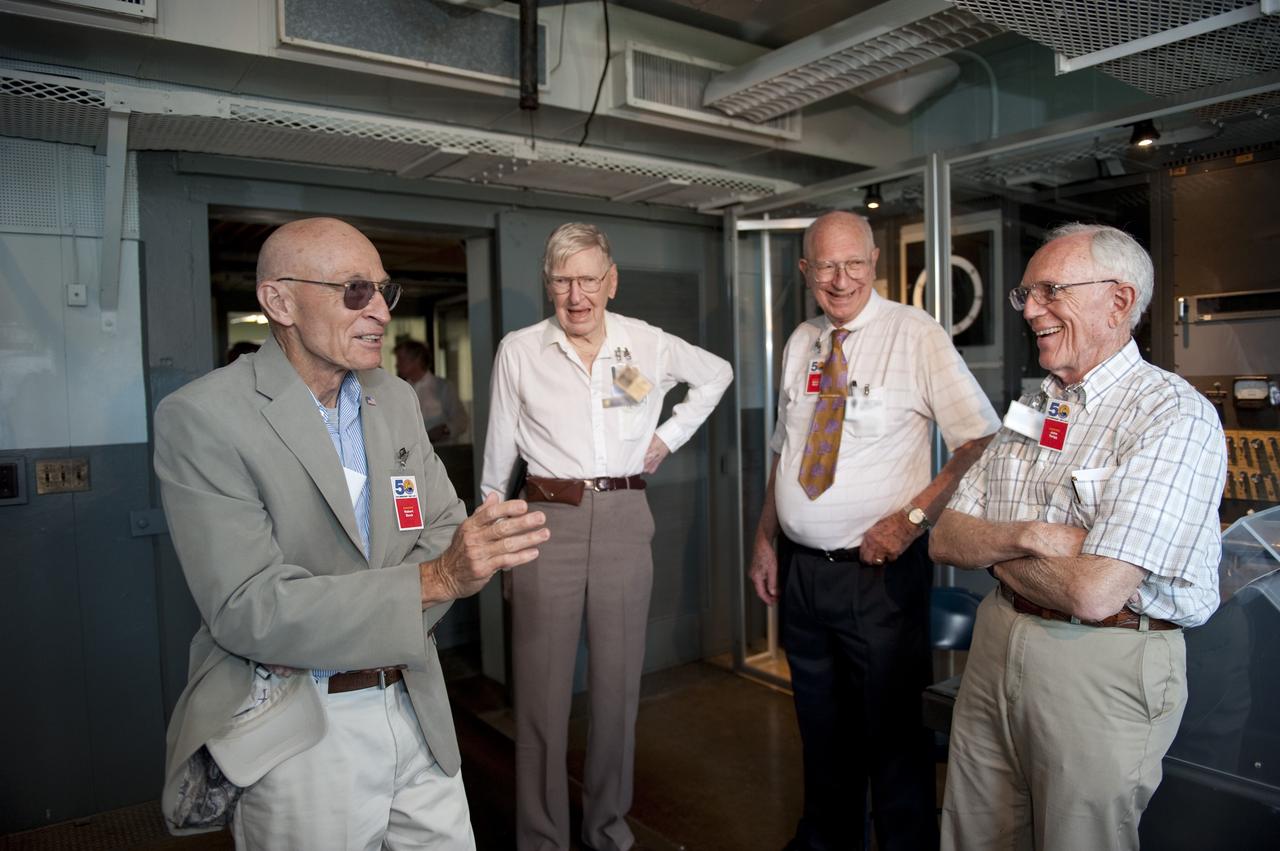
CAPE CANAVERAL, Fla. -- On Cape Canaveral Air Force Station in Florida, invited guests tour the blockhouse at Complex 5/6 during a celebration of Alan Shepard's historic flight 50 years ago. From left are Robert Sieck, former shuttle launch director; Andy Anderson, former manager for communications in the Mercury Mission Control Center; Bob Moser, former chief test conductor for the Mercury-Redstone launches; and John Twigg, former backup chief test conductor for the Mercury-Redstone launches. The celebration was held at the launch site of the first U.S. manned spaceflight May 5, 1961, to mark the 50th anniversary of the flight. Fifty years ago, astronaut Alan Shepard lifted off inside the Mercury capsule, "Freedom 7," atop an 82-foot-tall Mercury-Redstone rocket at 9:34 a.m. EST, sending him on a remarkably successful, 15-minute suborbital flight. The event was attended by more than 200 workers from the original Mercury program and included a re-creation of Shepard's flight and recovery, as well as a tribute to his contributions as a moonwalker on the Apollo 14 lunar mission. For more information, visit www.nasa.gov/topics/history/milestones/index.html. Photo credit: NASA/Kim Shiflett
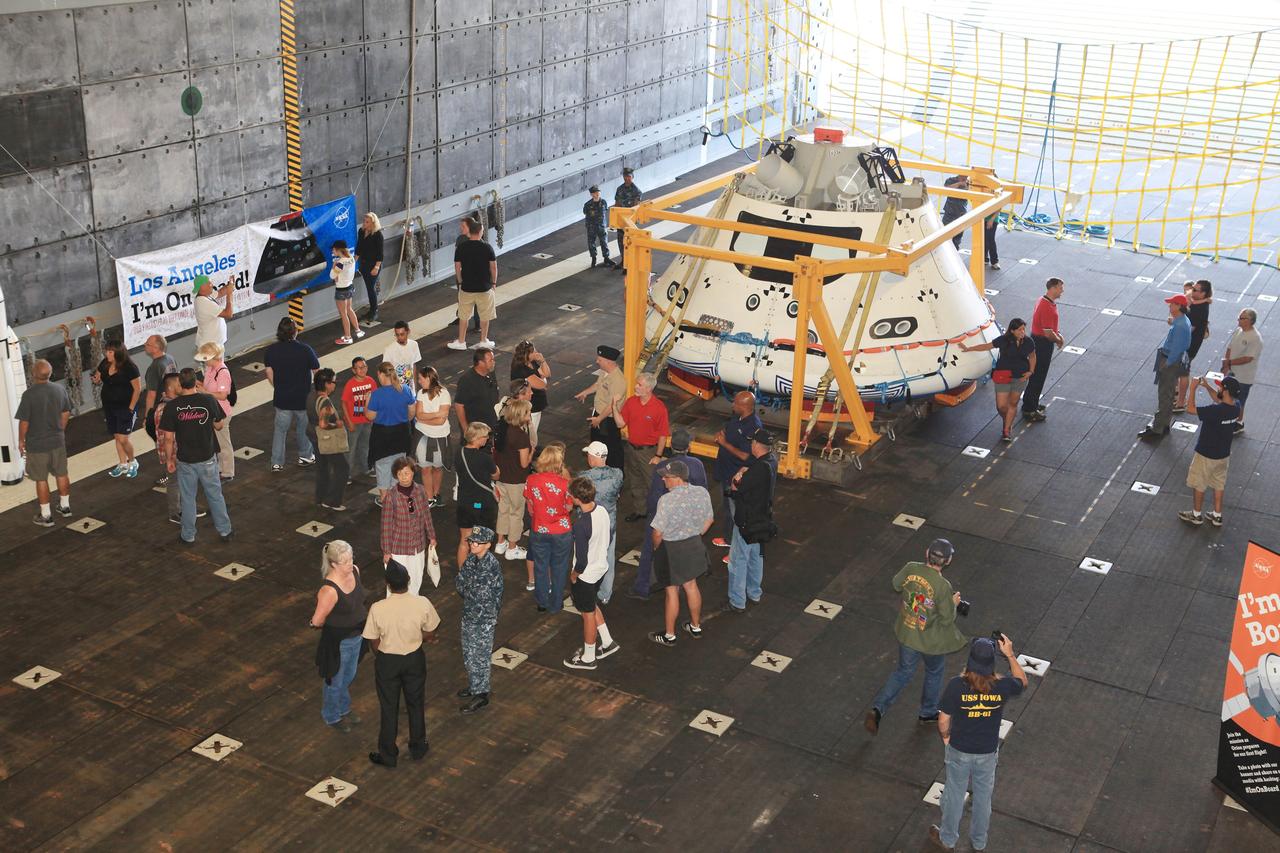
LOS ANGELES, Calif. – Andy Quiett, Detachment 3 deputy operations lead for the Orion program and DoD liaison for NASA, answers questions about the Orion boilerplate test vehicle from visitors touring the well deck of the USS Anchorage during the Science, Technology, Engineering and Mathematics, or STEM, Expo for L.A. Navy Days at the Port of Los Angeles in California. A combined team from NASA’s Ground Systems Development and Operations Program and the U.S. Navy were in San Diego to practice recovering Orion from the ocean, as they will do in December following the spacecraft's first trip to space during Exploration Flight Test-1. Orion is the exploration spacecraft designed to carry astronauts to destinations not yet explored by humans, including an asteroid and Mars. It will have emergency abort capability, sustain the crew during space travel and provide safe re-entry from deep-space return velocities. The first unpiloted test flight of the Orion is scheduled to launch in 2014 atop a Delta IV rocket and in 2017 on NASA’s Space Launch System rocket. For more information, visit http://www.nasa.gov/orion. Photo credit: NASA/Kim Shiflett

LOS ANGELES, Calif. – Andy Quiett, Detachment 3 deputy operations lead for the Orion program and DoD liaison for NASA, answers questions about the Orion boilerplate test vehicle from visitors touring the well deck of the USS Anchorage during the Science, Technology, Engineering and Mathematics, or STEM, Expo for L.A. Navy Days at the Port of Los Angeles in California. A combined team from NASA’s Ground Systems Development and Operations Program and the U.S. Navy were in San Diego to practice recovering Orion from the ocean, as they will do in December following the spacecraft's first trip to space during Exploration Flight Test-1. Orion is the exploration spacecraft designed to carry astronauts to destinations not yet explored by humans, including an asteroid and Mars. It will have emergency abort capability, sustain the crew during space travel and provide safe re-entry from deep-space return velocities. The first unpiloted test flight of the Orion is scheduled to launch in 2014 atop a Delta IV rocket and in 2017 on NASA’s Space Launch System rocket. For more information, visit http://www.nasa.gov/orion. Photo credit: NASA/Kim Shiflett
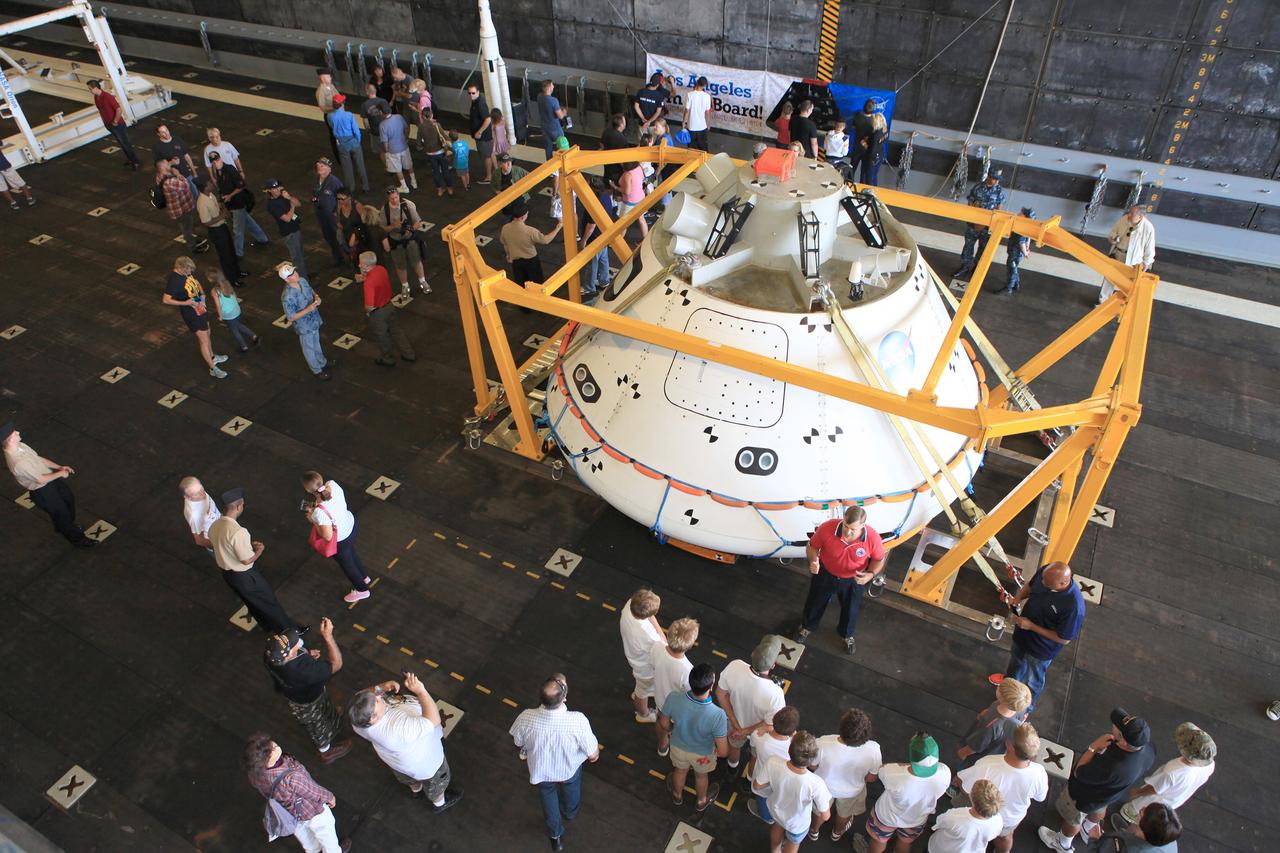
LOS ANGELES, Calif. – Andy Quiett, Detachment 3 deputy operations lead for the Orion program and DoD liaison for NASA, answers questions about the Orion boilerplate test vehicle from visitors touring the well deck of the USS Anchorage during the Science, Technology, Engineering and Mathematics, or STEM, Expo for L.A. Navy Days at the Port of Los Angeles in California. A combined team from NASA’s Ground Systems Development and Operations Program and the U.S. Navy were in San Diego to practice recovering Orion from the ocean, as they will do in December following the spacecraft's first trip to space during Exploration Flight Test-1. Orion is the exploration spacecraft designed to carry astronauts to destinations not yet explored by humans, including an asteroid and Mars. It will have emergency abort capability, sustain the crew during space travel and provide safe re-entry from deep-space return velocities. The first unpiloted test flight of the Orion is scheduled to launch in 2014 atop a Delta IV rocket and in 2017 on NASA’s Space Launch System rocket. For more information, visit http://www.nasa.gov/orion. Photo credit: NASA/Kim Shiflett
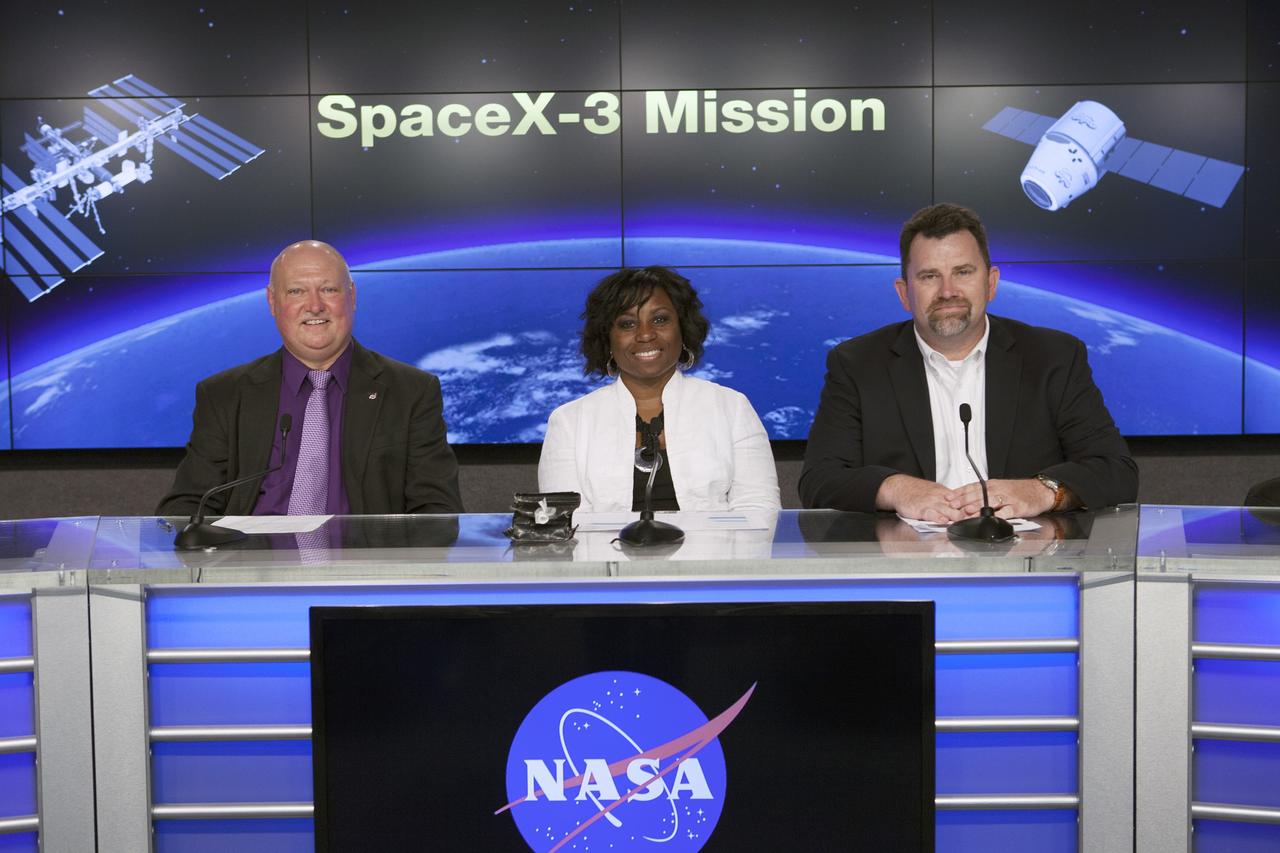
CAPE CANAVERAL, Fla. – During a news conference at NASA's Kennedy Space Center in Florida, agency and contractor officials discussed science and technology experiment payloads being transported to the International Space Station by the SpaceX-3 Commercial Resupply Services mission. Participating in the briefing, from the left, are Mike Curie of NASA Public Affairs, Camille Alleyne, assistant program scientist in the NASA ISS Program Science Office, and Michael Roberts, senior research pathway manager with the Center for the Advancement of Science in Space CASIS. Andy Petro of the agency's Space Technology Mission Directorate participated in the briefing by telephone from NASA Headquarters in Washington D.C. Scheduled for launch on April 14, 2014 atop a Falcon 9 rocket, the Dragon spacecraft will be marking its fourth trip to the space station. The SpaceX-3 mission carrying almost 2.5 tons of supplies, technology and science experiments is the third of 12 flights contracted by NASA to resupply the orbiting laboratory. For more information, visit http://www.nasa.gov/mission_pages/station/structure/launch/index.html Photo credit: NASA/ Kim Shiflett
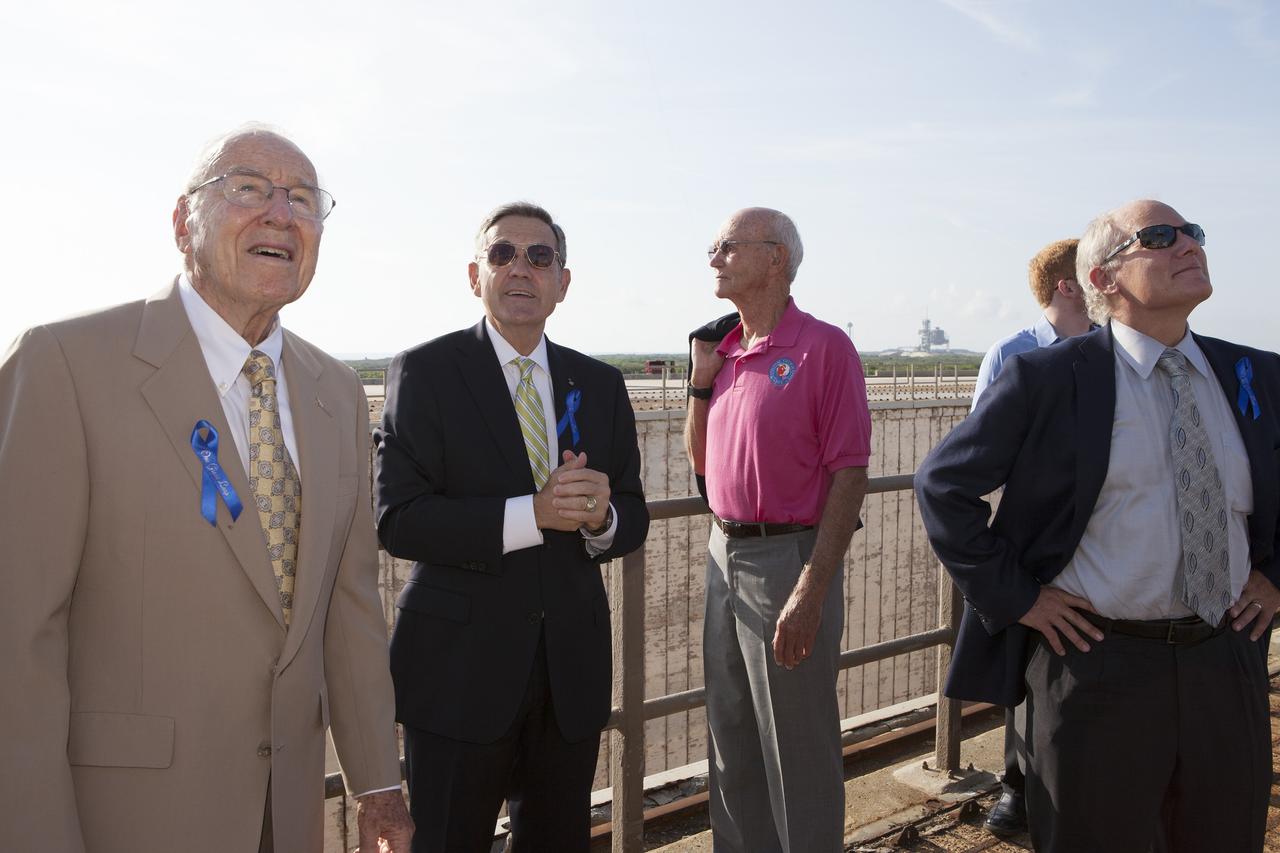
CAPE CANAVERAL, Fla. -- At the Kennedy Space Center in Florida, NASA officials and Apollo astronauts visiting Launch Pad 39B with their families and friends take a moment to enjoy the view. From left are Apollo astronaut Jim Lovell, Center Director Bob Cabana, Apollo 11 command module pilot Mike Collins, and Apollo 11 moonwalker Buzz Aldrin's son Andy Aldrin. The group is at Kennedy for a ceremony renaming the Operations and Checkout Building for Apollo 11 astronaut Neil Armstrong, the first person to set foot on the moon. The pad is being modified to support the agency's new Orion spacecraft which will lift off atop the Space Launch System rocket. Orion is designed to take humans farther than they’ve ever gone before, serving as the exploration vehicle that will carry astronauts to deep space and sustain the crew during travel to destinations such as an asteroid or Mars. The visit of the former astronauts was part of NASA's 45th anniversary celebration of the Apollo 11 moon landing. As the world watched, Neil Armstrong and Neil Aldrin landed in the moon's Sea of Tranquility aboard the lunar module Eagle on July 20, 1969. Meanwhile, crewmate Michael Collins orbited above in the command module Columbia. For more, visit http://www.nasa.gov/press/2014/july/nasa-honors-historic-first-moon-landing-eyes-first-mars-mission. Photo credit: NASA/Kim Shiflett
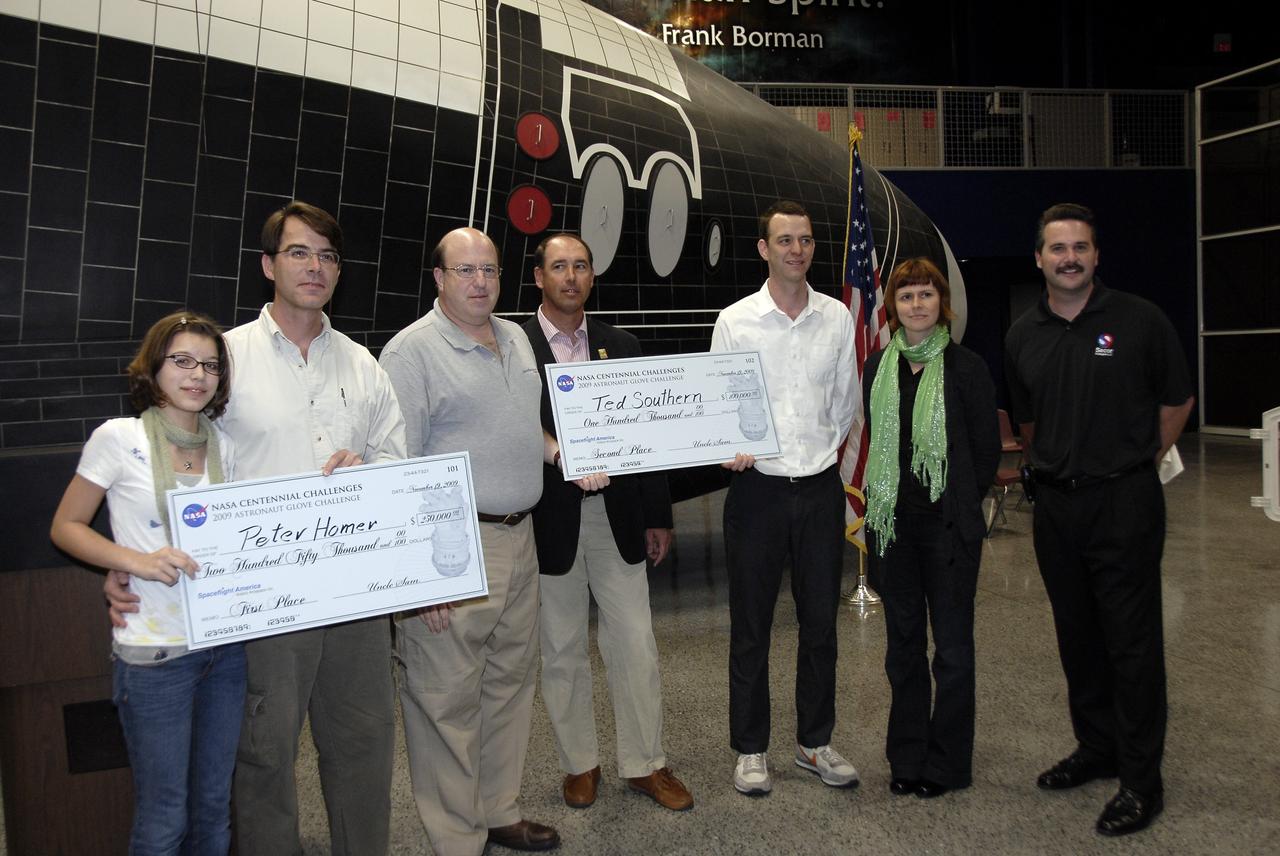
CAPE CANAVERAL, Fla. - At the Astronaut Hall of Fame near NASA’s Kennedy Space Center in Florida, the winners of the 2009 Astronaut Glove Challenge, part of NASA’s Centennial Challenges Program, pose for a group photograph with their friends, family and the event organizers. From left are Caroline Homer and her father, Peter Homer, winner of the $250,000 first prize; Alan Hayes, chairman of Volanz Aerospace Inc.; Andy Petro, manager of NASA Centennial Challenges; Ted Southern, winner of the $100,000 second prize; his friend and glove tester Amy Miller; and Paul Secor, Secor Strategies LLC. The nationwide competition focused on developing improved pressure suit gloves for astronauts to use while working in space. During the challenge, the gloves were submitted to burst tests, joint force tests and tests to measure their dexterity and strength during operation in a glove box which simulates the vacuum of space. Centennial Challenges is NASA’s program of technology prizes for the citizen-inventor. The winning prize for the Glove Challenge is $250,000 provided by the Centennial Challenges Program. Photo credit: NASA/Kim Shiflett

NASA astronaut Christina Koch, Artemis II mission specialist, provides remarks during an event at the Russell Senate Office Building, Tuesday, May 12, 2026, in Washington. NASA’s Artemis II mission took Koch, NASA astronaut Reid Wiseman, Artemis II commander; NASA astronaut Victor Glover, Artemis II pilot; and CSA (Canadian Space Agency) astronaut Jeremy Hansen, Artemis II mission specialist, on a nearly 10-day journey around the Moon and back to Earth in April 2026. Photo Credit: (NASA/Aubrey Gemignani)
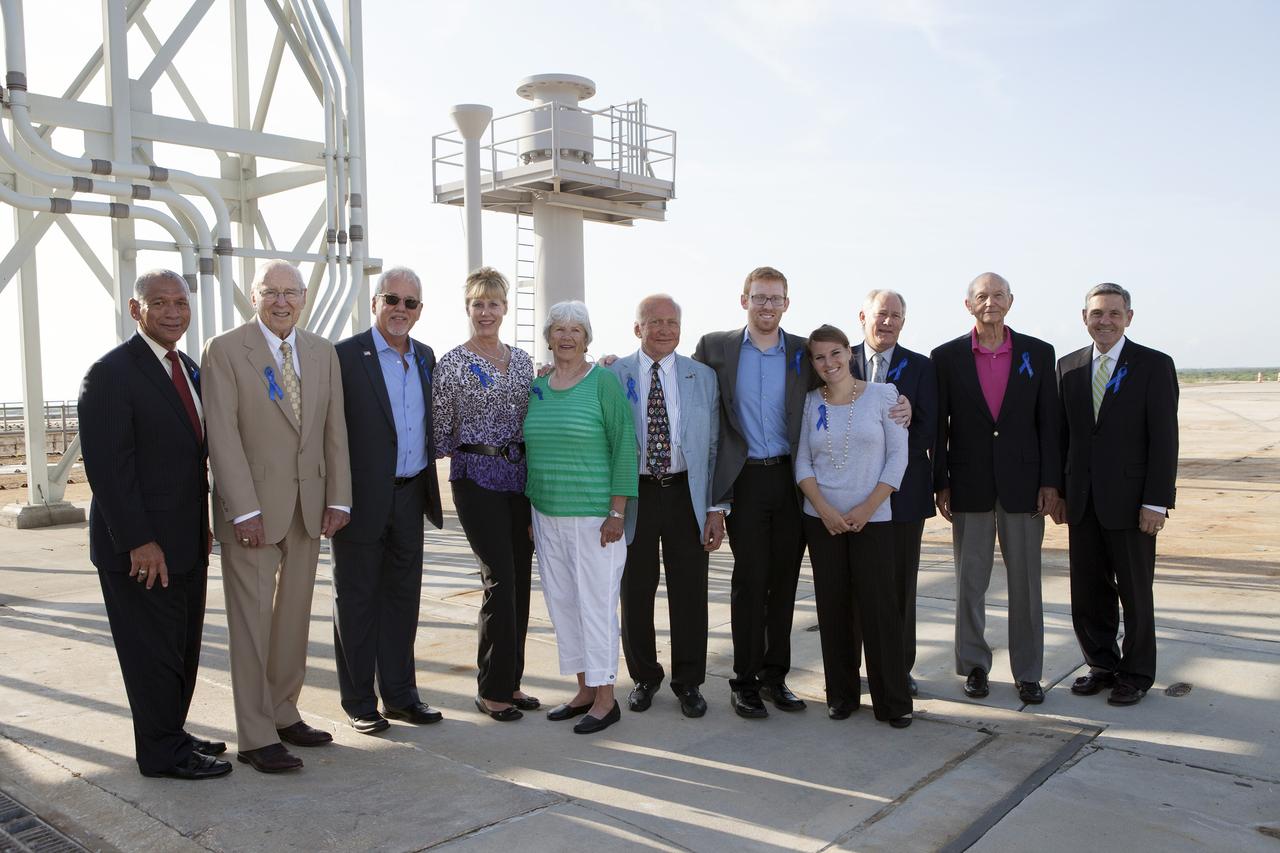
CAPE CANAVERAL, Fla. -- At NASA's Kennedy Space Center in Florida, NASA officials and Apollo astronauts visiting Launch Pad 39B with their families and friends preserve the moment with a group portrait. The group was at Kennedy for a ceremony renaming the Operations and Checkout Building for Apollo 11 astronaut Neil Armstrong, the first person to set foot on the moon. From left are NASA Administrator Charles Bolden, Apollo astronaut Jim Lovell, Buzz Aldrin's grandson Jeffrey Schuss, Jeffrey's wife April Schuss, Neil's former wife Janet Armstrong, Apollo 11 moonwalker Buzz Aldrin, Buzz's son-in-law Bruce Hanifan, Buzz's daughter Jan Aldrin, Buzz's son Andy Aldrin, Apollo 11 command module pilot Mike Collins, and Center Director Bob Cabana. The pad is being modified to support the agency's new Orion spacecraft which will lift off atop the Space Launch System rocket. Orion is designed to take humans farther than they’ve ever gone before, serving as the exploration vehicle that will carry astronauts to deep space and sustain the crew during travel to destinations such as an asteroid or Mars. The visit of the former astronauts was part of NASA's 45th anniversary celebration of the Apollo 11 moon landing. As the world watched, Neil Armstrong and Neil Aldrin landed in the moon's Sea of Tranquility aboard the lunar module Eagle on July 20, 1969. Meanwhile, crewmate Michael Collins orbited above in the command module Columbia. For more, visit http://www.nasa.gov/press/2014/july/nasa-honors-historic-first-moon-landing-eyes-first-mars-mission. Photo credit: NASA/Kim Shiflett
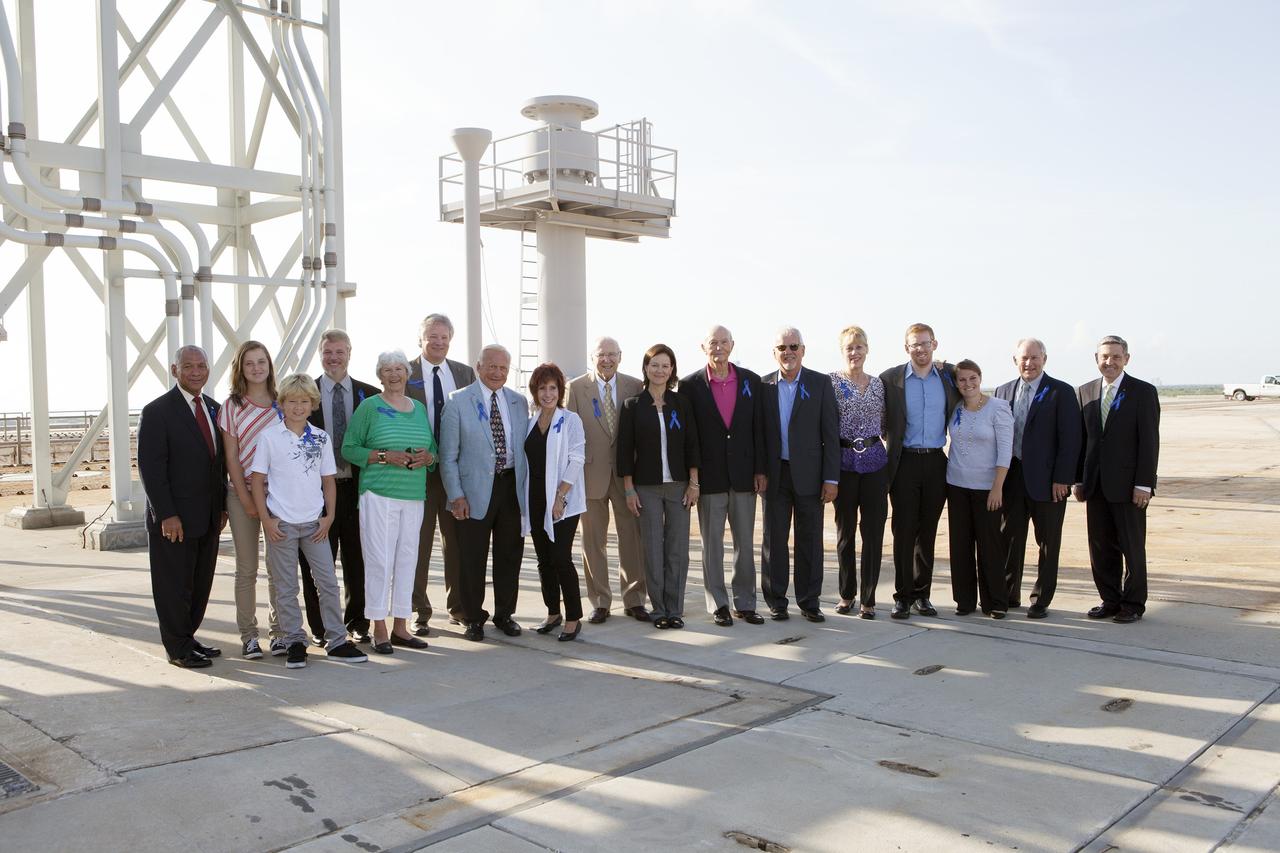
CAPE CANAVERAL, Fla. -- At NASA's Kennedy Space Center in Florida, NASA officials and Apollo astronauts visiting Launch Pad 39B with their families and friends preserve the moment with a group portrait. The group was at Kennedy for a ceremony renaming the Operations and Checkout Building for Apollo 11 astronaut Neil Armstrong, the first person to set foot on the moon. From left are NASA Administrator Charles Bolden, Neil's granddaughter Lily Armstrong, Neil's grandson Bryce Armstrong, Neil's son Mark Armstrong, Neil's former wife Janet Armstrong, Neil's son Rick Armstrong, Apollo 11 moonwalker Buzz Aldrin, Buzz's friend Judy Rice, Apollo astronaut Jim Lovell, Mike Collins' daughter Ann Starr, Apollo 11 command module pilot Mike Collins, Buzz's grandson Jeffrey Schuss, Jeffrey's wife April Schuss, Buzz's son-in-law Bruce Hanifan, Buzz's daughter Jan Aldrin, Buzz's son Andy Aldrin, and Center Director Bob Cabana. The pad is being modified to support the agency's new Orion spacecraft which will lift off atop the Space Launch System rocket. Orion is designed to take humans farther than they’ve ever gone before, serving as the exploration vehicle that will carry astronauts to deep space and sustain the crew during travel to destinations such as an asteroid or Mars. The visit of the former astronauts was part of NASA's 45th anniversary celebration of the Apollo 11 moon landing. As the world watched, Neil Armstrong and Neil Aldrin landed in the moon's Sea of Tranquility aboard the lunar module Eagle on July 20, 1969. Meanwhile, crewmate Michael Collins orbited above in the command module Columbia. For more, visit http://www.nasa.gov/press/2014/july/nasa-honors-historic-first-moon-landing-eyes-first-mars-mission. Photo credit: NASA/Kim Shiflett