
Andy Klesh, MarCO chief engineer, NASA JPL, gives remarks during a Mars InSight post-landing press conference, Monday, Nov. 26, 2018 at NASA's Jet Propulsion Laboratory in Pasadena, California. InSight, short for Interior Exploration using Seismic Investigations, Geodesy and Heat Transport, is a Mars lander designed to study the "inner space" of Mars: its crust, mantle, and core. Photo Credit: (NASA/Bill Ingalls)

Elizabeth Barrett, InSight Instrument Operations Lead, NASA JPL, gives remarks, as Andy Klesh, MarCO chief engineer, NASA JPL, left, looks on during a Mars InSight post-landing press conference, Monday, Nov. 26, 2018 at NASA's Jet Propulsion Laboratory in Pasadena, California. InSight, short for Interior Exploration using Seismic Investigations, Geodesy and Heat Transport, is a Mars lander designed to study the "inner space" of Mars: its crust, mantle, and core. Photo Credit: (NASA/Bill Ingalls)

Andy Klesh, MarCO chief engineer, NASA JPL, discusses NASA's InSight mission during a prelaunch media briefing, Thursday, May 3, 2018, at Vandenberg Air Force Base in California. InSight, short for Interior Exploration using Seismic Investigations, Geodesy and Heat Transport, is a Mars lander designed to study the "inner space" of Mars: its crust, mantle, and core. Photo Credit: (NASA/Bill Ingalls)
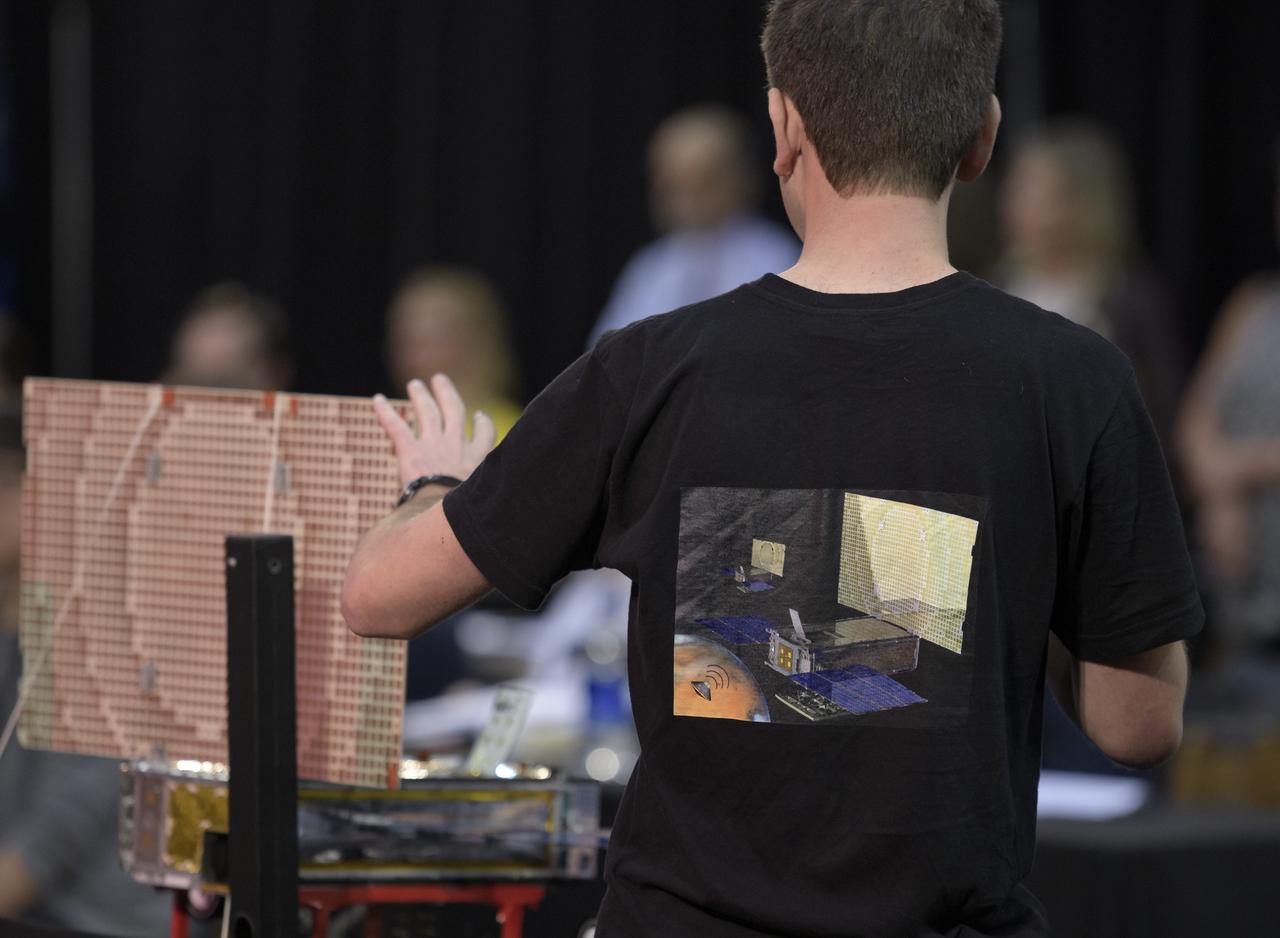
Andy Klesh, MarCO chief engineer, NASA JPL, discusses NASA's InSight mission during a prelaunch media briefing, Thursday, May 3, 2018, at Vandenberg Air Force Base in California. InSight, short for Interior Exploration using Seismic Investigations, Geodesy and Heat Transport, is a Mars lander designed to study the "inner space" of Mars: its crust, mantle, and core. Photo Credit: (NASA/Bill Ingalls)

Mike Kobayashi, MarCO telecoms, right, and Andy Klesh, MarCO Chief Engineer, monitor the status of the Mars Cube One (MarCO) CubeSats prior to Mars InSight touching down on Mars, Monday, Nov. 26, 2018 inside the Mission Support Area at NASA's Jet Propulsion Laboratory in Pasadena, California. InSight, short for Interior Exploration using Seismic Investigations, Geodesy and Heat Transport, is a Mars lander designed to study the "inner space" of Mars: its crust, mantle, and core. Photo Credit: (NASA/Bill Ingalls)
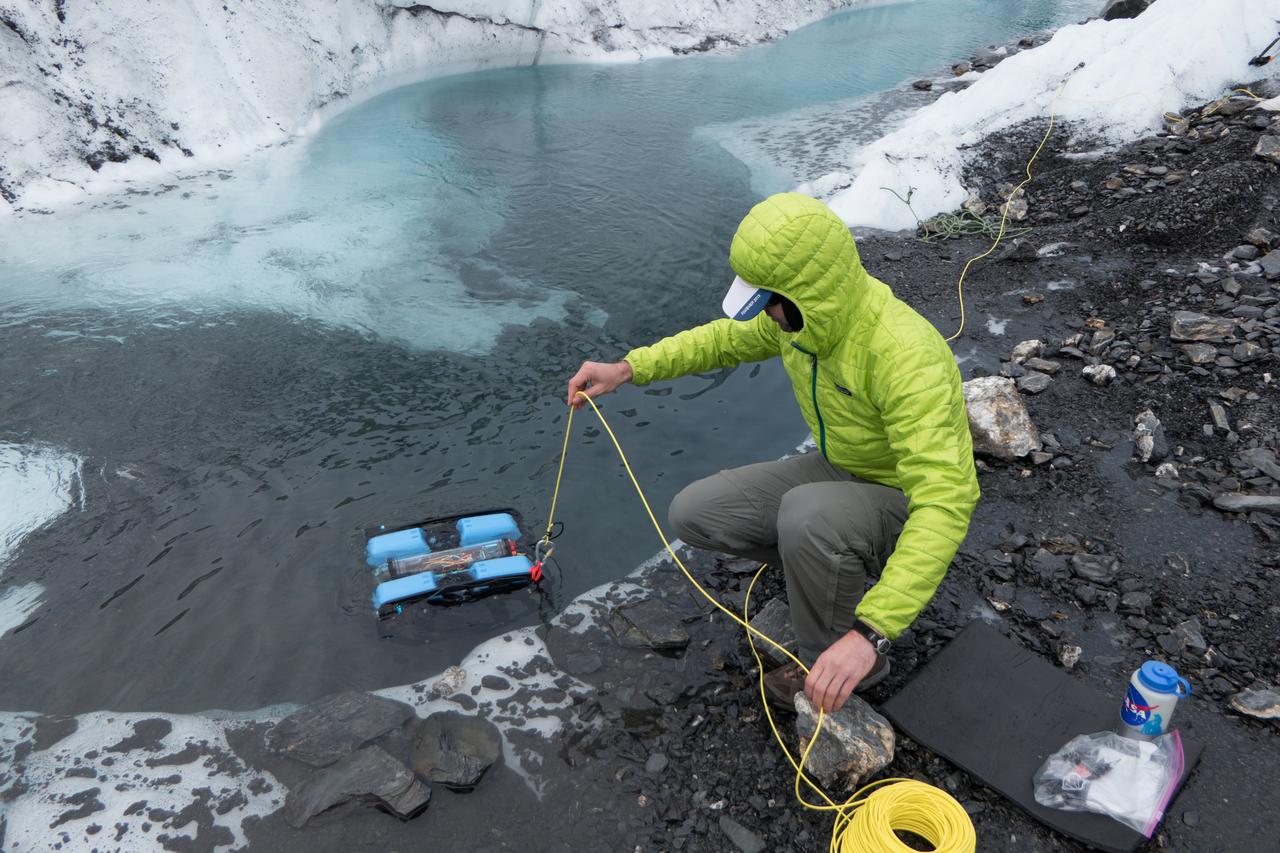
JPL engineer Andy Klesh lowers a robotic submersible into a moulin. Klesh and JPL's John Leichty used robots and probes to explore the Matanuska Glacier in Alaska this past July. Image Credit: NASA/JPL-Caltech
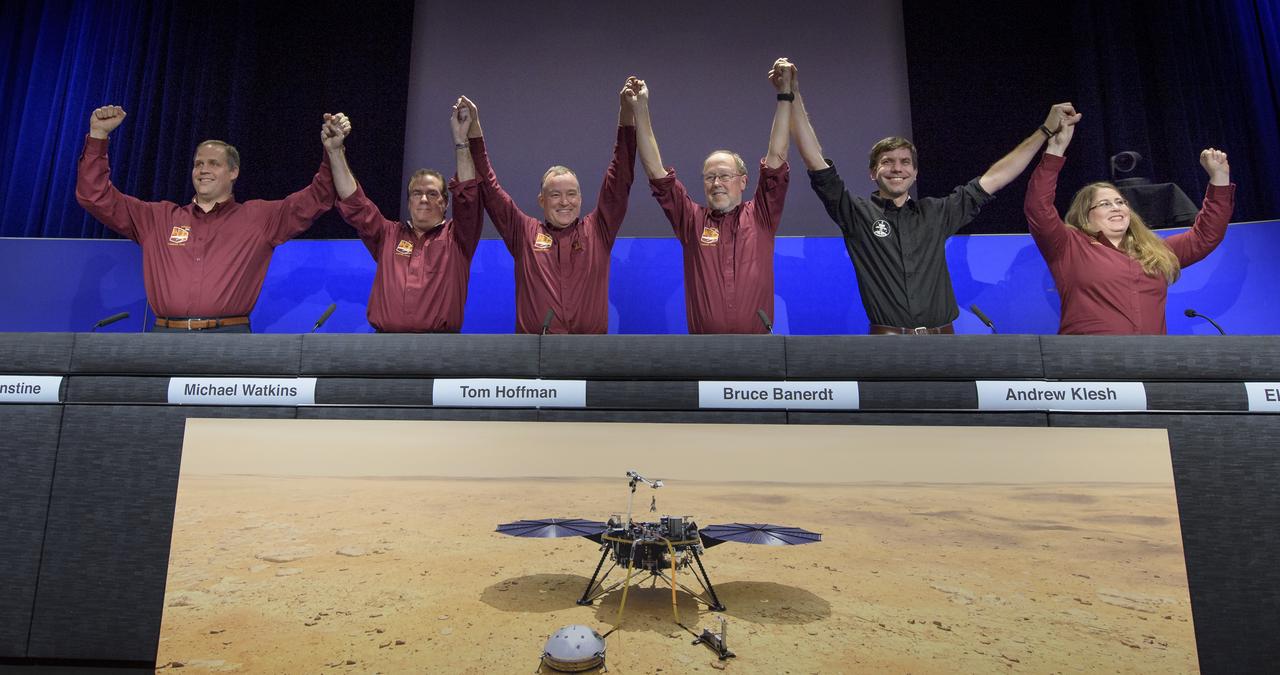
NASA Administrator Jim Bridenstine, left, JPL Director Michael Watkins, InSight Project Manager Tom Hoffman, InSight Principal Investigator Bruce Banerdt, MarCO chief engineer Andy Klesh, and InSight Instrument Operations Lead Elizabeth Barrett, celebrate Mars InSight landing successfully on Mars during a press conference, Monday, Nov. 26, 2018 at NASA's Jet Propulsion Laboratory in Pasadena, California. InSight, short for Interior Exploration using Seismic Investigations, Geodesy and Heat Transport, is a Mars lander designed to study the "inner space" of Mars: its crust, mantle, and core. Photo Credit: (NASA/Bill Ingalls)
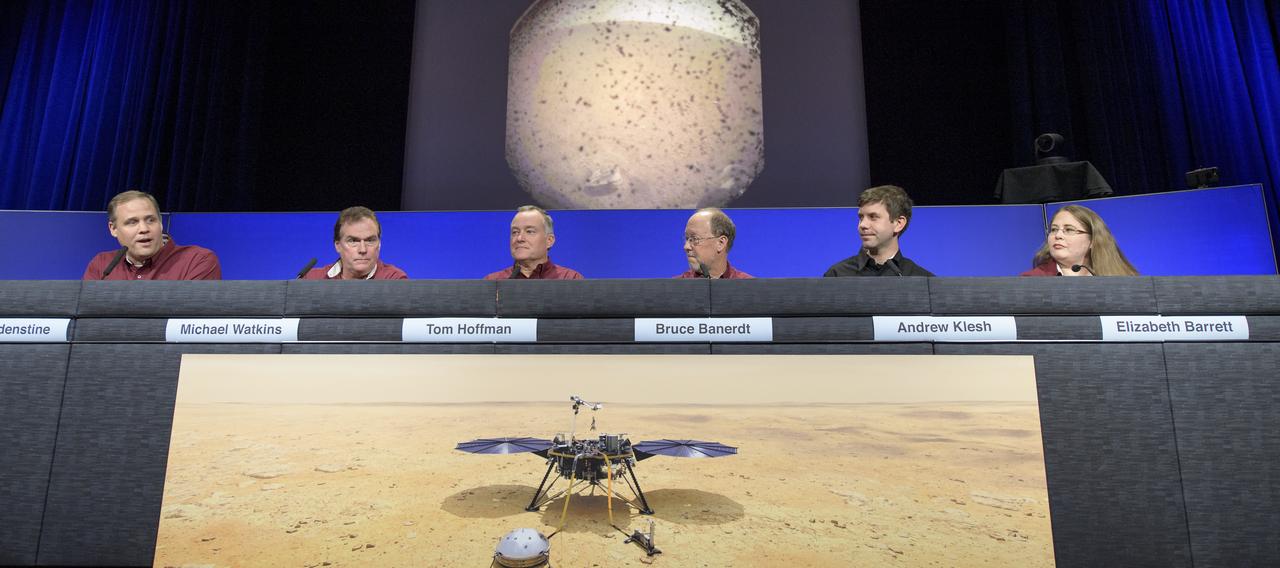
NASA Administrator Jim Bridenstine, left, JPL Director Michael Watkins, InSight Project Manager Tom Hoffman, InSight Principal Investigator Bruce Banerdt, MarCO chief engineer Andy Klesh, and InSight Instrument Operations Lead Elizabeth Barrett, give a Mars InSight post-landing press conference, Monday, Nov. 26, 2018 at NASA's Jet Propulsion Laboratory in Pasadena, California. InSight, short for Interior Exploration using Seismic Investigations, Geodesy and Heat Transport, is a Mars lander designed to study the "inner space" of Mars: its crust, mantle, and core. Photo Credit: (NASA/Bill Ingalls)
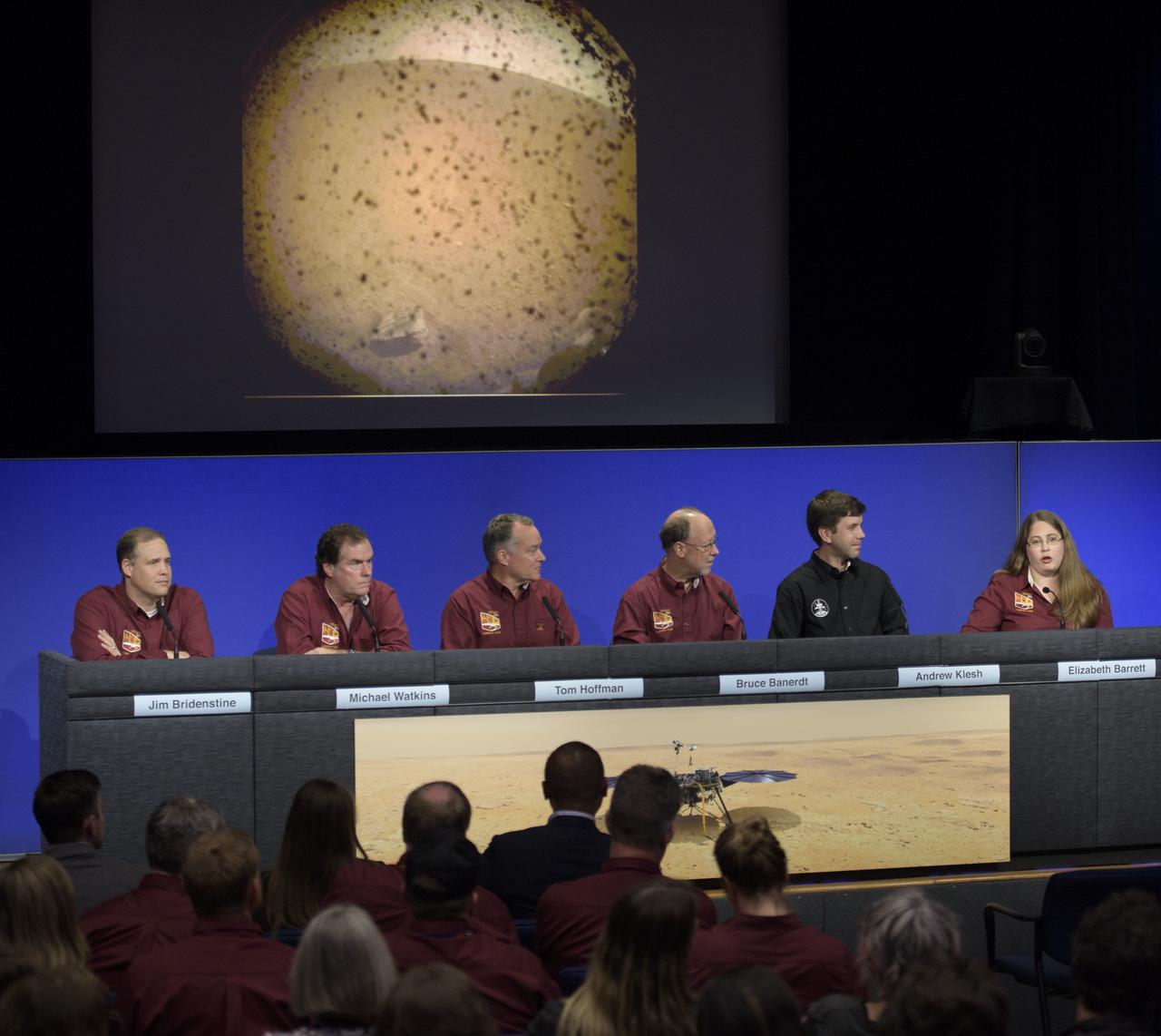
NASA Administrator Jim Bridenstine, left, JPL Director Michael Watkins, InSight Project Manager Tom Hoffman, InSight Principal Investigator Bruce Banerdt, MarCO chief engineer Andy Klesh, and InSight Instrument Operations Lead Elizabeth Barrett, answer questions during a Mars InSight post-landing press conference, Monday, Nov. 26, 2018 at NASA's Jet Propulsion Laboratory in Pasadena, California. InSight, short for Interior Exploration using Seismic Investigations, Geodesy and Heat Transport, is a Mars lander designed to study the "inner space" of Mars: its crust, mantle, and core. Photo Credit: (NASA/Bill Ingalls)
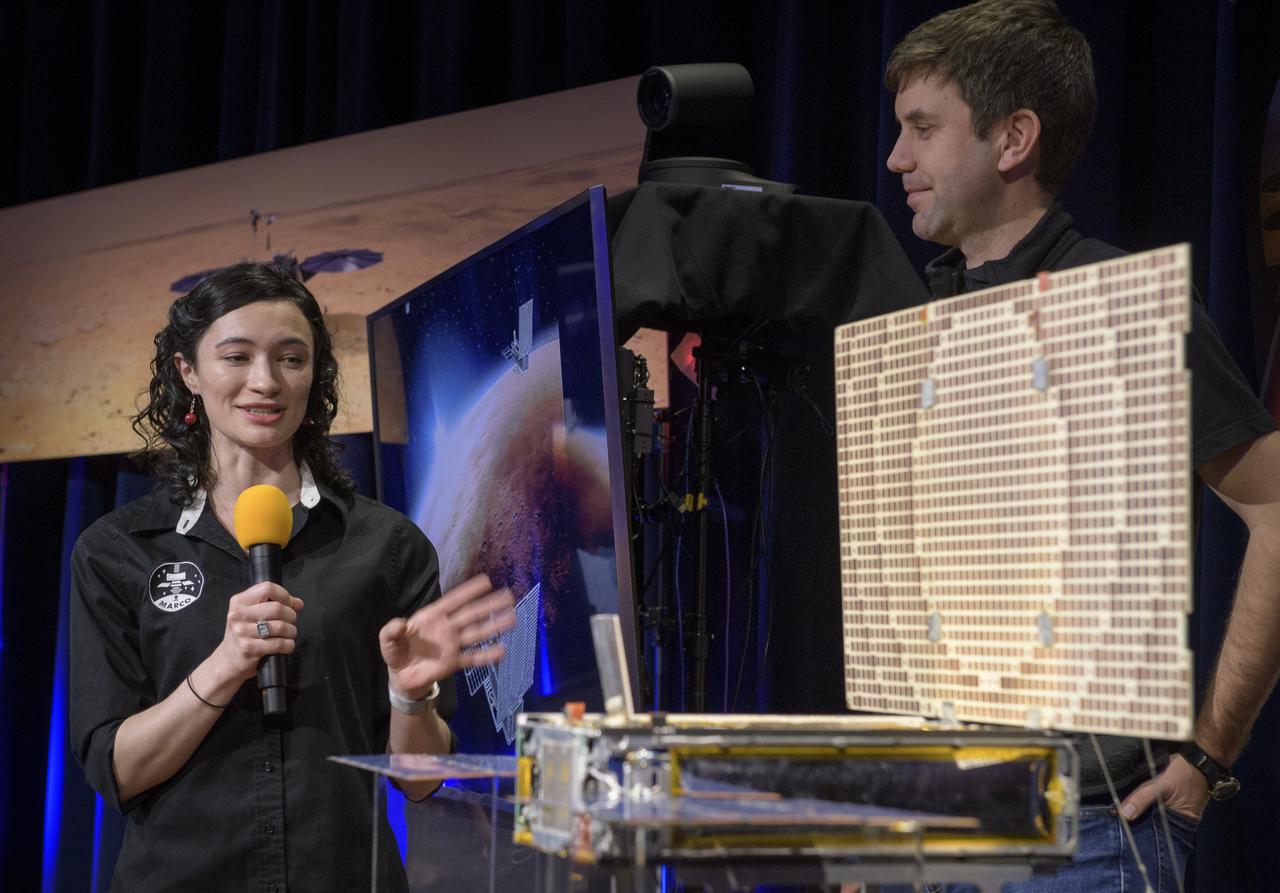
Annie Marinan, MarCO-B Missio Manager, NASA JPL, left, and Andy Klesh, MarCO chief engineer, NASA JPL, talk about Mars Cube One (MarCO) during a social media briefing, Sunday, Nov. 25, 2018 at NASA's Jet Propulsion Laboratory in Pasadena, California. InSight, short for Interior Exploration using Seismic Investigations, Geodesy and Heat Transport, is a Mars lander designed to study the "inner space" of Mars: its crust, mantle, and core. InSight is scheduled to touch down on the Red Planet at approximately noon PST (3 p.m. EST) on Nov. 26. Photo Credit: (NASA/Bill Ingalls)
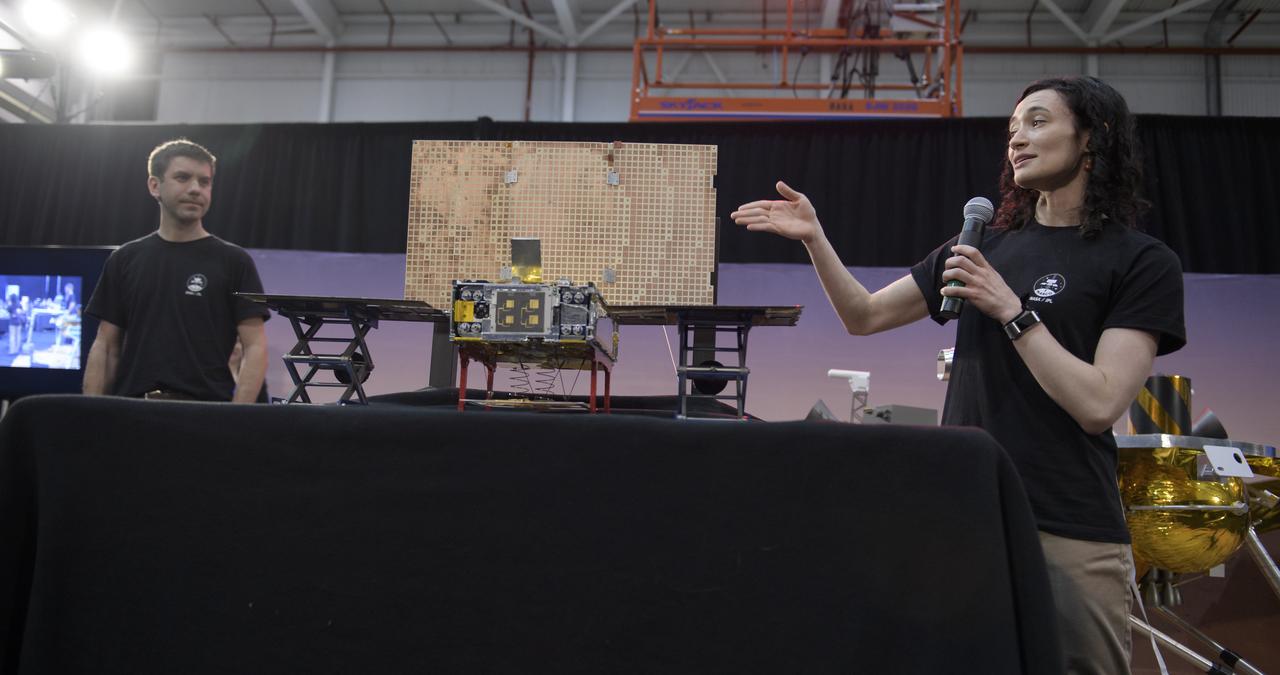
Andy Klesh, MarCO chief engineer, NASA JPL, left, and Annie Marinan, MarCO Systems Engineer, NASA JPL discuss NASA's Mars Cube One (MarCO) technology demonstration mission during a prelaunch media briefing, Thursday, May 3, 2018, at Vandenberg Air Force Base in California. MarCO, which is a separate mission launching on the same rocket at NASA’s InSight mission to Mars, will test new miniaturized deep space communication equipment. Photo Credit: (NASA/Bill Ingalls)
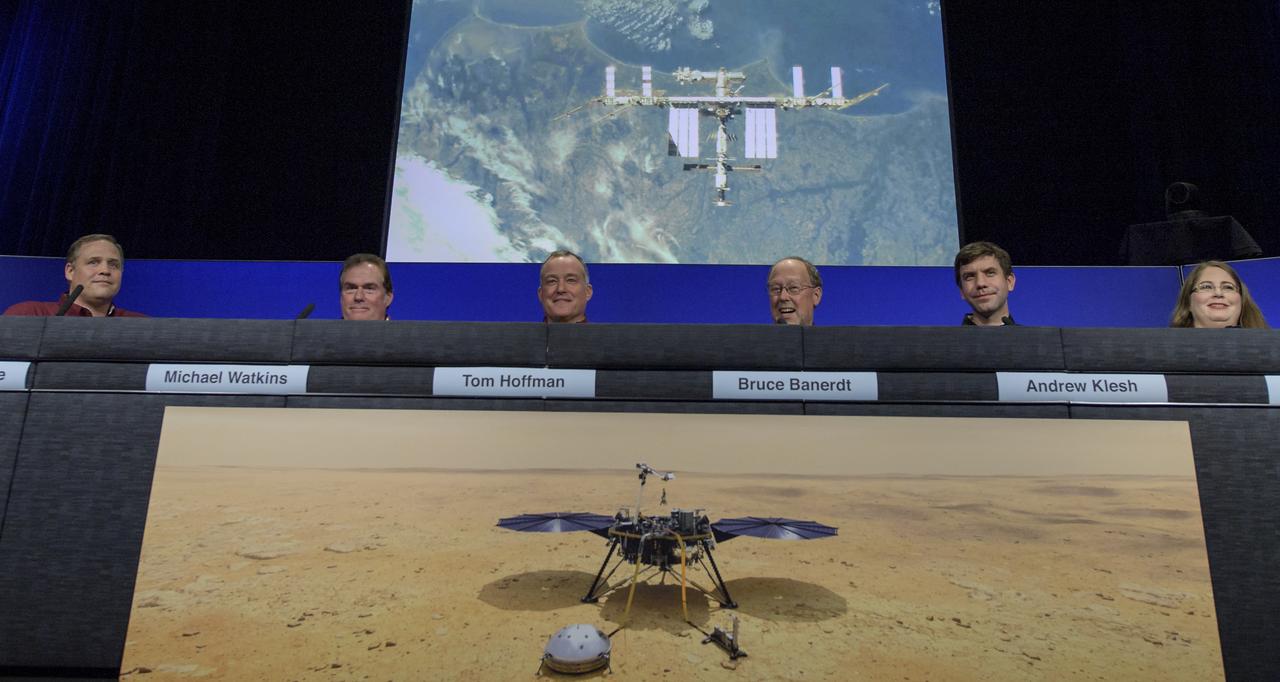
NASA Administrator Jim Bridenstine, left, JPL Director Michael Watkins, InSight Project Manager Tom Hoffman, InSight Principal Investigator Bruce Banerdt, MarCO chief engineer Andy Klesh, and InSight Instrument Operations Lead Elizabeth Barrett, listen to comments given by the International Space Station crew during a Mars InSight post-landing press conference, Monday, Nov. 26, 2018 at NASA's Jet Propulsion Laboratory in Pasadena, California. InSight, short for Interior Exploration using Seismic Investigations, Geodesy and Heat Transport, is a Mars lander designed to study the "inner space" of Mars: its crust, mantle, and core. Photo Credit: (NASA/Bill Ingalls)
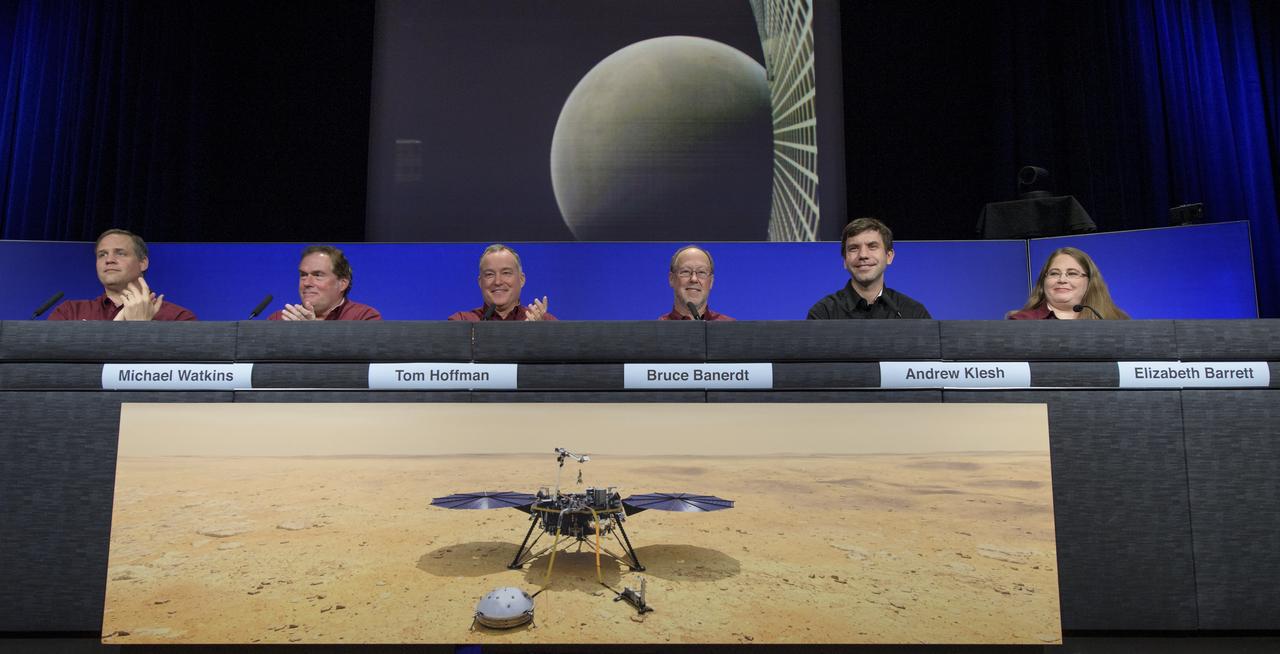
NASA Administrator Jim Bridenstine, left, JPL Director Michael Watkins, InSight Project Manager Tom Hoffman, InSight Principal Investigator Bruce Banerdt, MarCO chief engineer Andy Klesh, and InSight Instrument Operations Lead Elizabeth Barrett, show an image of Mars made by one of the Mars Cube One CubeSats during a Mars InSight post-landing press conference, Monday, Nov. 26, 2018 at NASA's Jet Propulsion Laboratory in Pasadena, California. InSight, short for Interior Exploration using Seismic Investigations, Geodesy and Heat Transport, is a Mars lander designed to study the "inner space" of Mars: its crust, mantle, and core. Photo Credit: (NASA/Bill Ingalls)
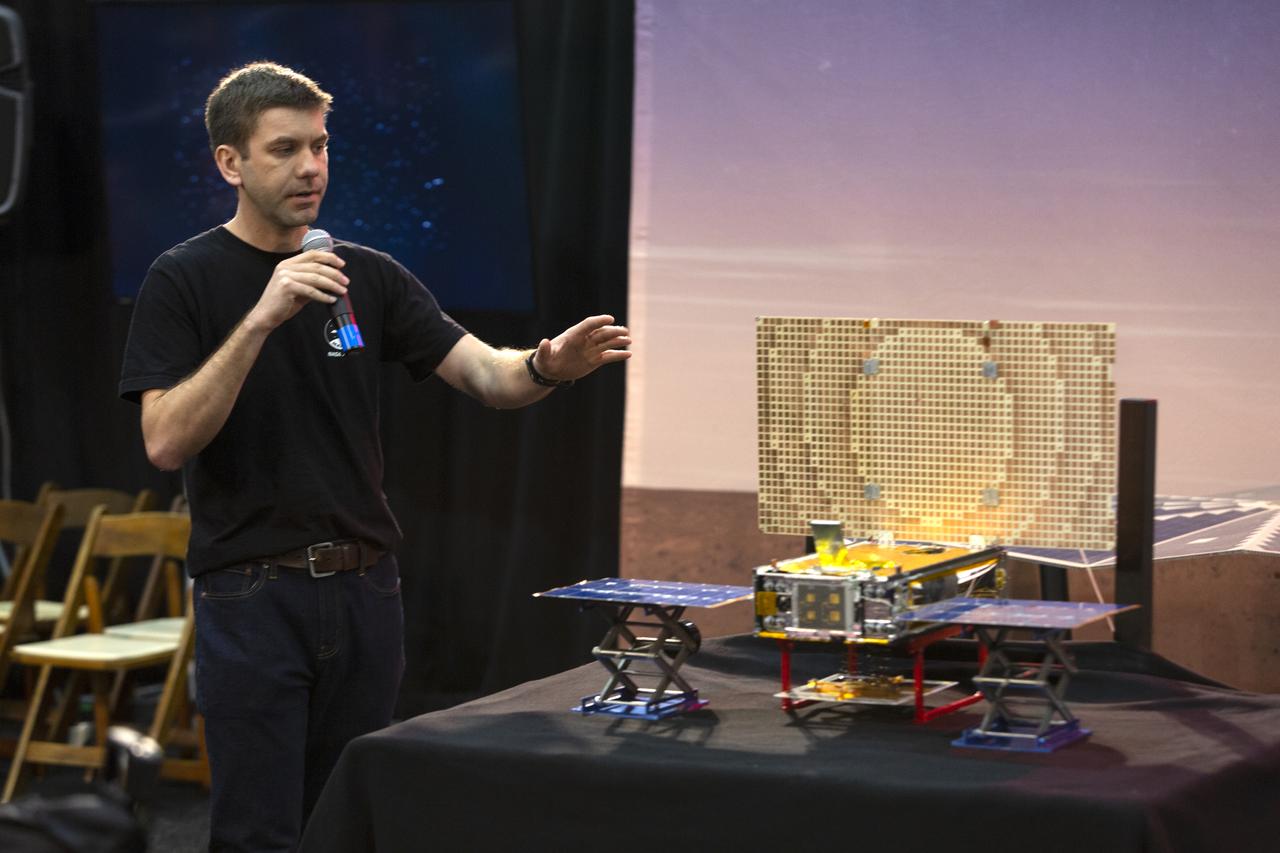
During a prelaunch briefing at Vandenberg Air Force Base in California, Andy Klesh, MarCO Chief Engineer at NASA's Jet Propulsion Laboratory, speaks to members of the media. The presentation focused on NASA's Interior Exploration using Seismic Investigations, Geodesy and Heat Transport, or InSight, Mars lander. InSight is scheduled for liftoff May 5, 2018, atop a United Launch Alliance (ULA) Atlas V rocket from Space Launch Complex 3 at Vandenberg. The spacecraft will be the first mission to look deep beneath the Martian surface studying the planet's interior by measuring its heat output and listen for marsquakes.
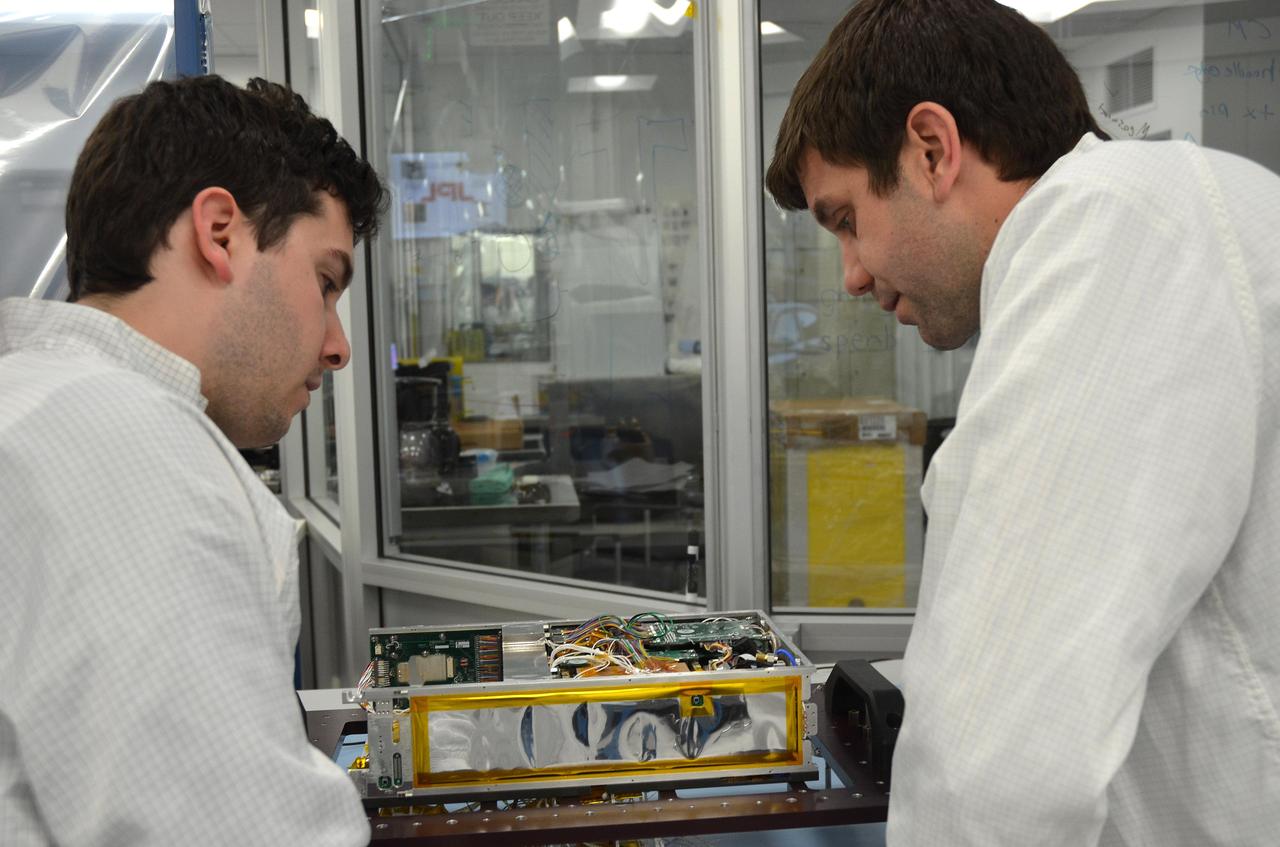
Engineers for NASA's MarCO (Mars Cube One) technology demonstration inspect one of the two MarCO CubeSats. Cody Colley, MarCO integration and test deputy, left, and Andy Klesh, MarCO chief engineer, are on the team at NASA's Jet Propulsion Laboratory, Pasadena, California, preparing twin MarCO CubeSats. The briefcase-size MarCO twins were designed to ride along with NASA's next Mars lander, InSight. Its planned March 2016 launch was suspended. InSight -- an acronym for Interior Exploration using Seismic Investigations, Geodesy and Heat Transport -- will study the interior of Mars to improve understanding of the processes that formed and shaped rocky planets, including Earth. Note: After thorough examination, NASA managers have decided to suspend the planned March 2016 launch of the Interior Exploration using Seismic Investigations Geodesy and Heat Transport (InSight) mission. The decision follows unsuccessful attempts to repair a leak in a section of the prime instrument in the science payload. http://photojournal.jpl.nasa.gov/catalog/PIA20342
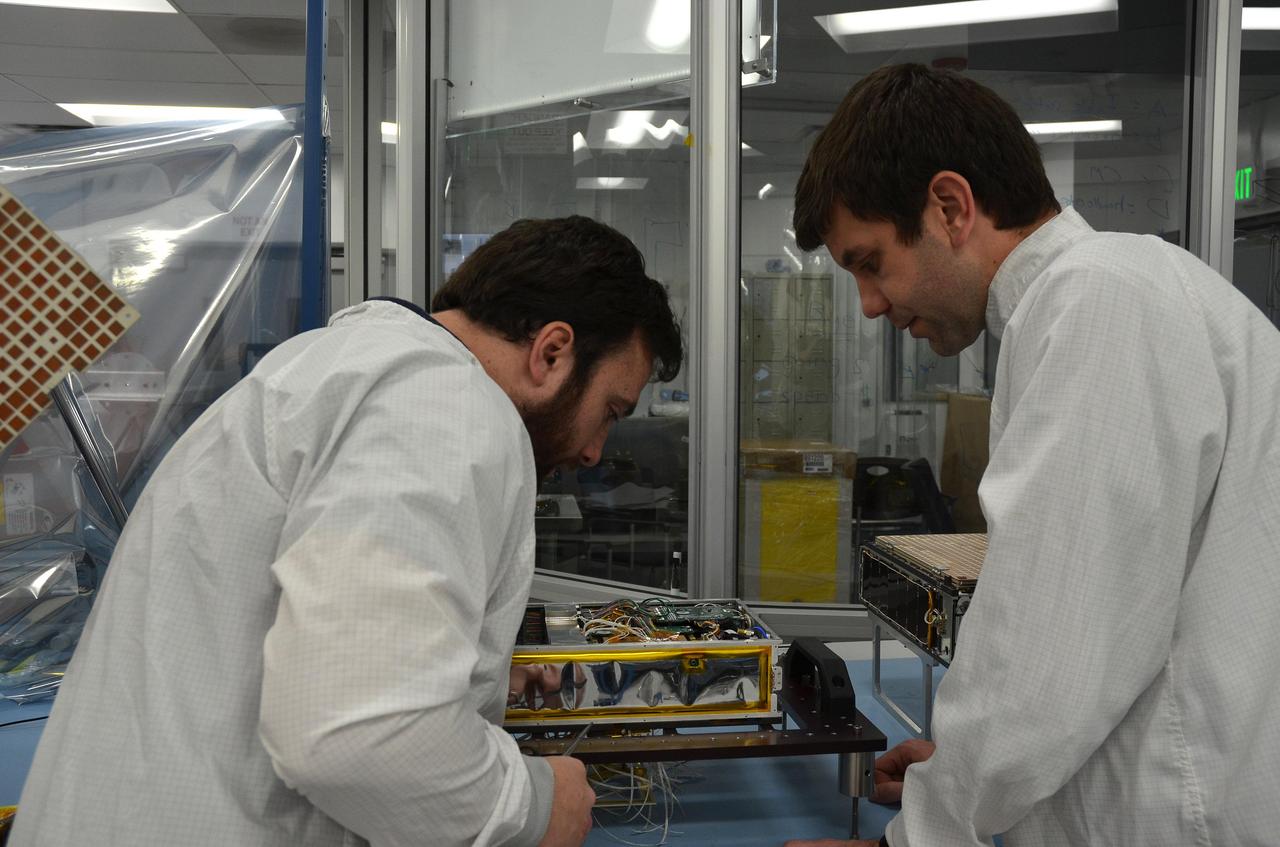
Engineers for NASA's MarCO (Mars Cube One) technology demonstration inspect one of the two MarCO CubeSats. Joel Steinkraus, MarCO lead mechanical engineer, left, and Andy Klesh, MarCO chief engineer, are on the team at NASA's Jet Propulsion Laboratory, Pasadena, California, preparing twin MarCO CubeSats. The briefcase-size MarCO twins were designed to ride along with NASA's next Mars lander, InSight. Its planned March 2016 launch was suspended. InSight -- an acronym for Interior Exploration using Seismic Investigations, Geodesy and Heat Transport -- will study the interior of Mars to improve understanding of the processes that formed and shaped rocky planets, including Earth. Note: After thorough examination, NASA managers have decided to suspend the planned March 2016 launch of the Interior Exploration using Seismic Investigations Geodesy and Heat Transport (InSight) mission. The decision follows unsuccessful attempts to repair a leak in a section of the prime instrument in the science payload. http://photojournal.jpl.nasa.gov/catalog/PIA20343
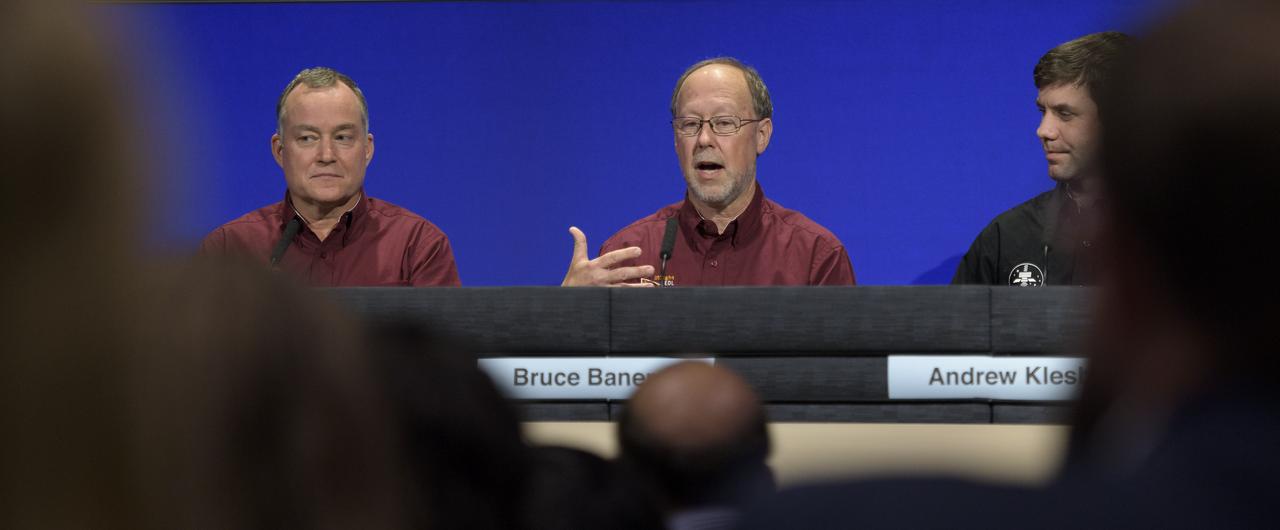
Bruce Banerdt, InSight Principal Investigator, NASA JPL, center, answers questions during a Mars InSight post-landing press conference, Monday, Nov. 26, 2018 at NASA's Jet Propulsion Laboratory in Pasadena, California. InSight, short for Interior Exploration using Seismic Investigations, Geodesy and Heat Transport, is a Mars lander designed to study the "inner space" of Mars: its crust, mantle, and core. Photo Credit: (NASA/Bill Ingalls)
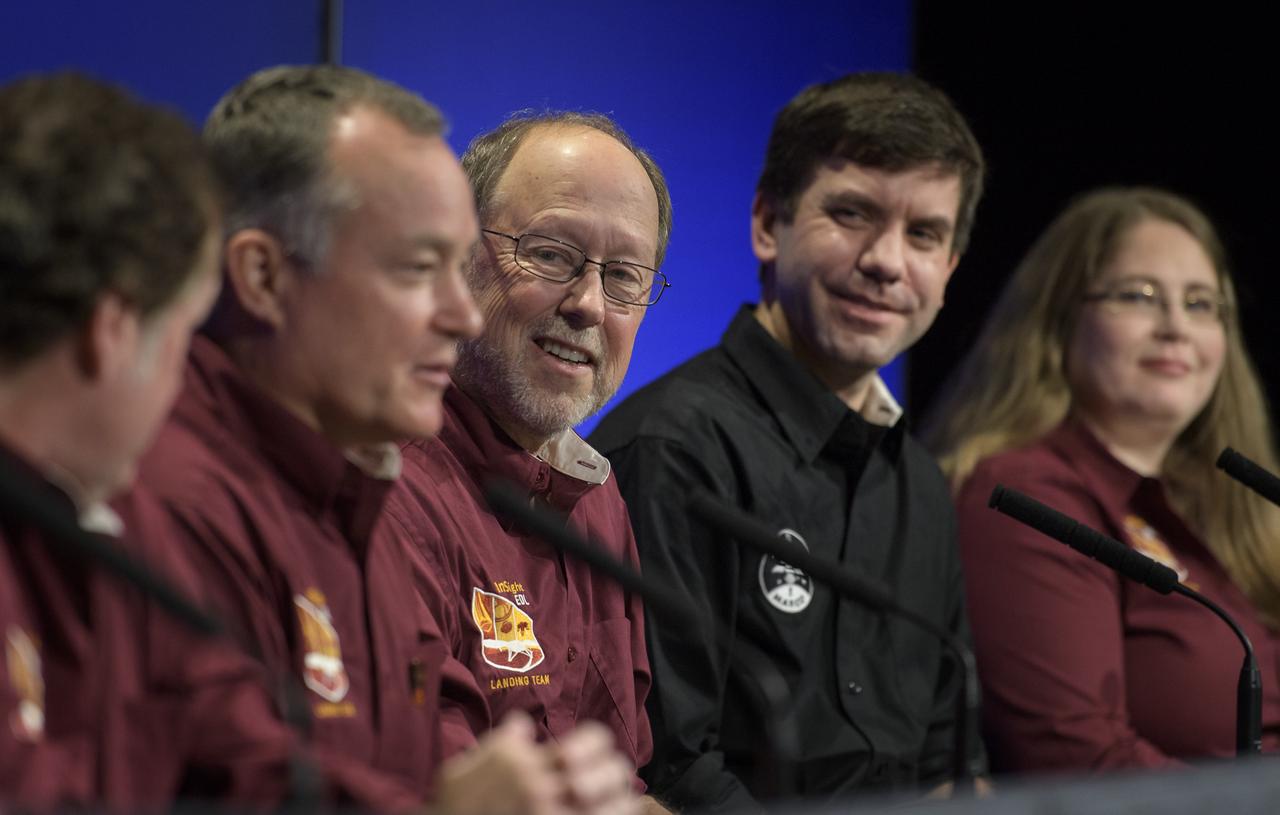
Bruce Banerdt, InSight Principal Investigator, NASA JPL, center, listens as other Mars InSight team members give remarks during a post-landing press conference, Monday, Nov. 26, 2018 at NASA's Jet Propulsion Laboratory in Pasadena, California. InSight, short for Interior Exploration using Seismic Investigations, Geodesy and Heat Transport, is a Mars lander designed to study the "inner space" of Mars: its crust, mantle, and core. Photo Credit: (NASA/Bill Ingalls)
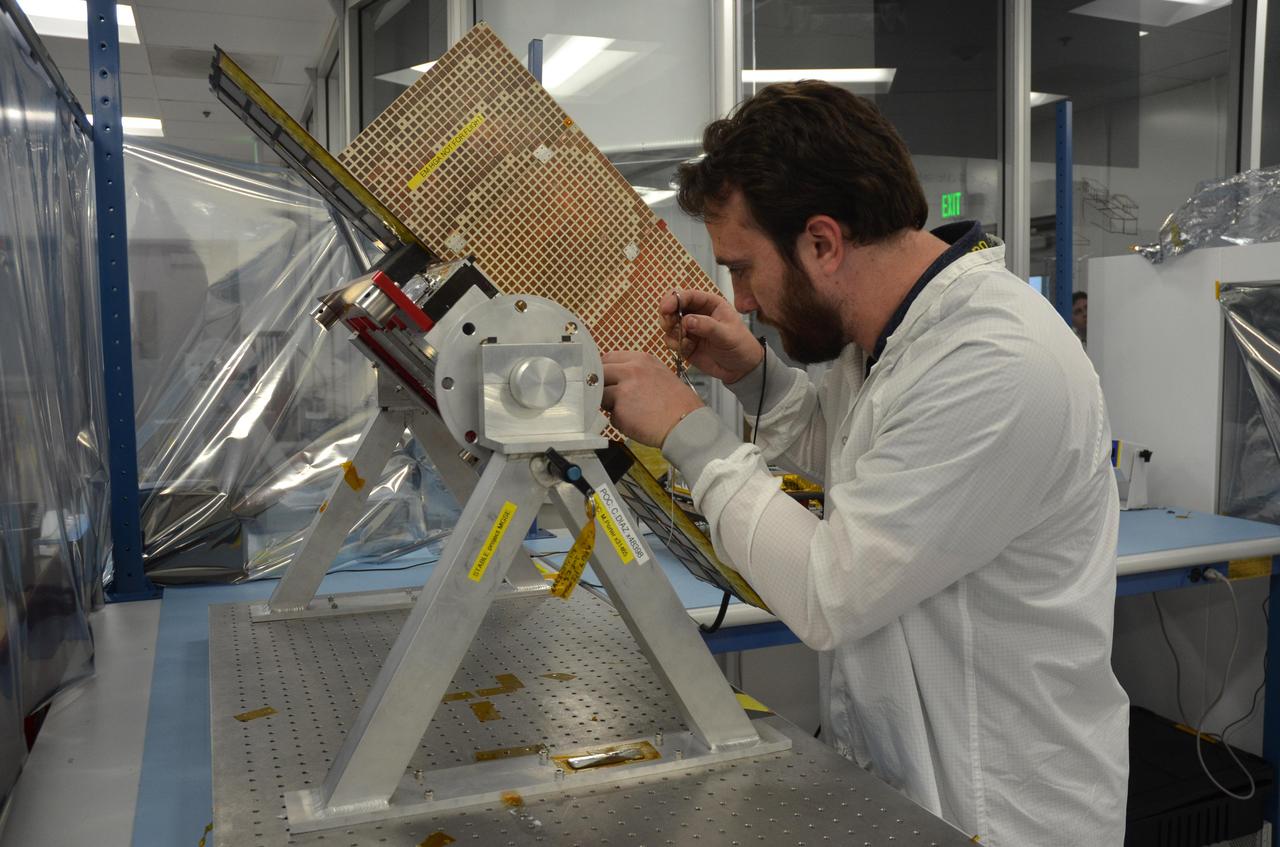
Joel Steinkraus, lead mechanical engineer for the MarCO (Mars Cube One) CubeSat spacecraft, adjusts a model of one of the two spacecraft. The mock-up in the photo is in a configuration to show the deployed position of components that correspond to MarCO's two solar panels and two antennas. During launch, those components will be stowed for a total vehicle size of about 14.4 inches (36.6 centimeters) by 9.5 inches (24.3 centimeters) by 4.6 inches (11.8 centimeters). The briefcase-size MarCO twins were designed to ride along with NASA's next Mars lander, InSight. Its planned March 2016 launch was suspended. InSight -- an acronym for Interior Exploration using Seismic Investigations, Geodesy and Heat Transport -- will study the interior of Mars to improve understanding of the processes that formed and shaped rocky planets, including Earth. Note: After thorough examination, NASA managers have decided to suspend the planned March 2016 launch of the Interior Exploration using Seismic Investigations Geodesy and Heat Transport (InSight) mission. The decision follows unsuccessful attempts to repair a leak in a section of the prime instrument in the science payload. http://photojournal.jpl.nasa.gov/catalog/PIA20344