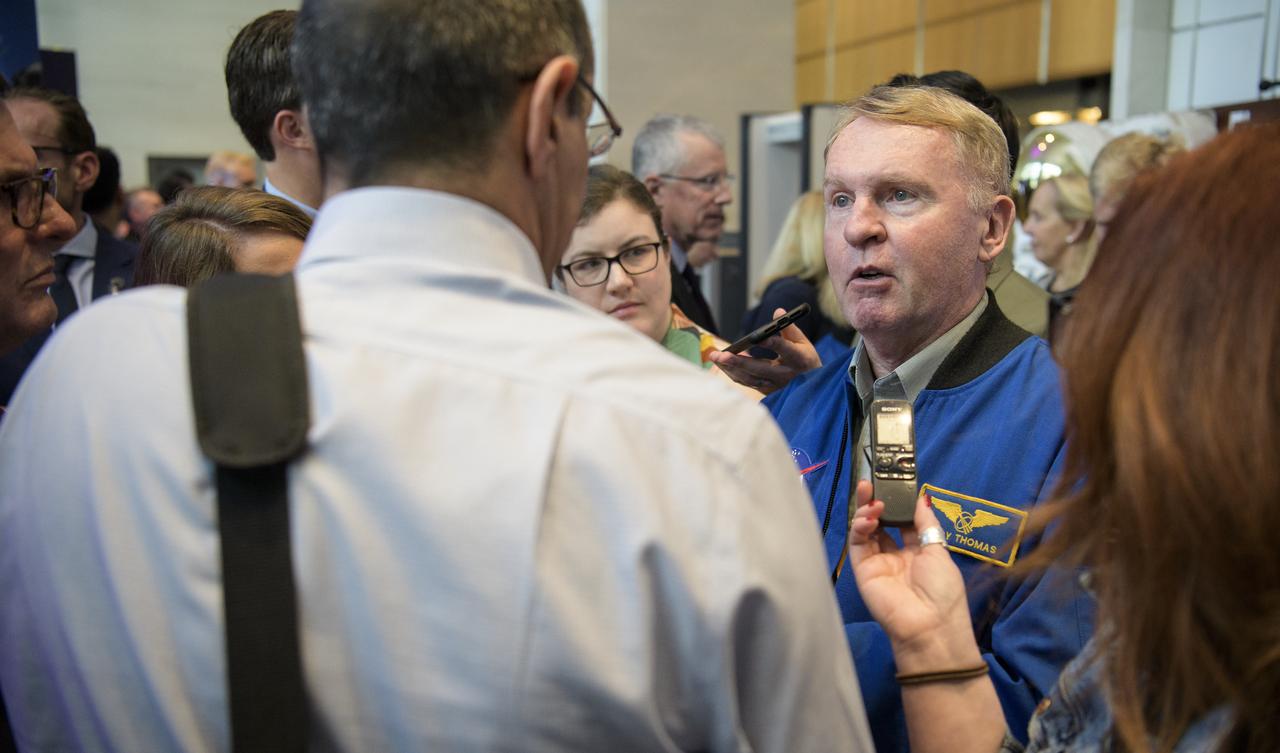
Former NASA astronaut Andy Thomas speaks with members of the media following the signing of a letter of intent between NASA and the Australian Space Agency, Saturday, Sept. 21, 2019 at NASA Headquarters in Washington. NASA and the Australian Space Agency will build on over 60 years of collaboration in space exploration between the two countries and commit to expanding cooperation. Photo Credit: (NASA/Joel Kowsky)
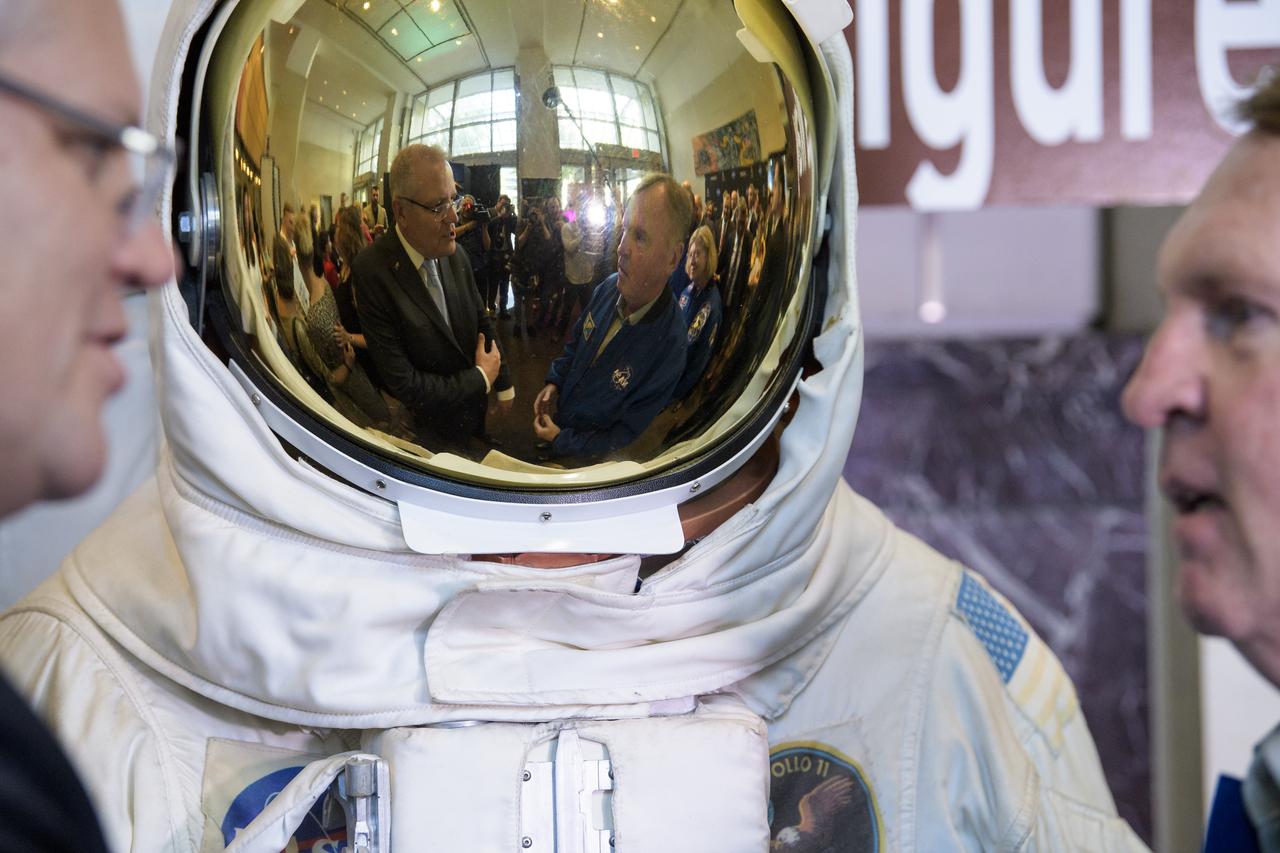
Australian Prime Minister Scott Morrison, left, and former NASA astronaut Andy Thomas, right, are reflected in the visor of a spacesuit replica as they talk following the signing of a letter of intent between NASA and the Australian Space Agency, Saturday, Sept. 21, 2019 at NASA Headquarters in Washington. NASA and the Australian Space Agency will build on over 60 years of collaboration in space exploration between the two countries and commit to expanding cooperation. Photo Credit: (NASA/Joel Kowsky)
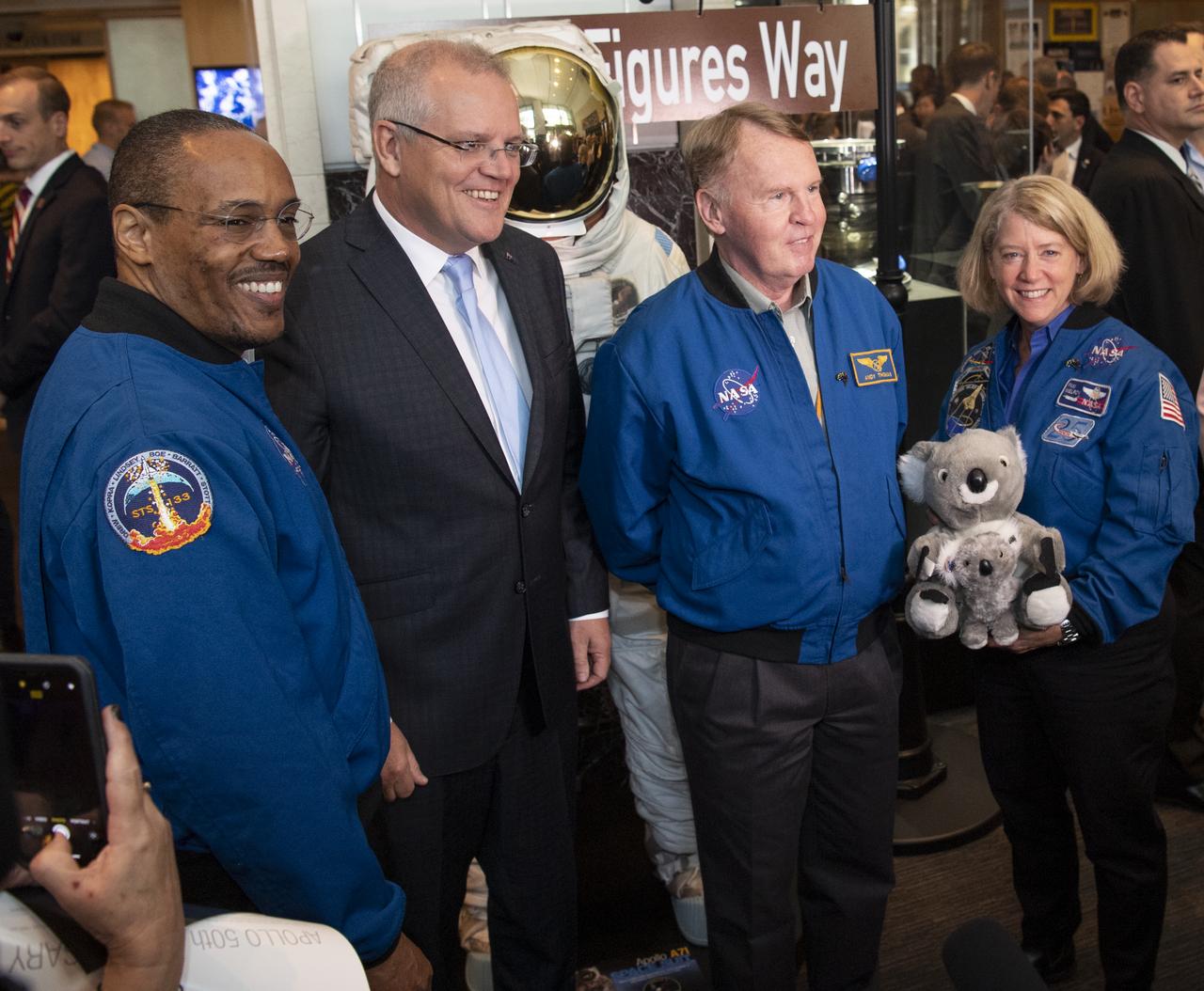
Australian Prime Minister Scott Morrison, second from left, poses for a picture with NASA astronaut Alvin Drew, left, and former NASA astronauts Andy Thomas, second from right, and Pam Melroy, right, following the signing of a letter of intent between NASA and the Australian Space Agency, Saturday, Sept. 21, 2019 at NASA Headquarters in Washington. NASA and the Australian Space Agency will build on over 60 years of collaboration in space exploration between the two countries and commit to expanding cooperation. Photo Credit: (NASA/Joel Kowsky)
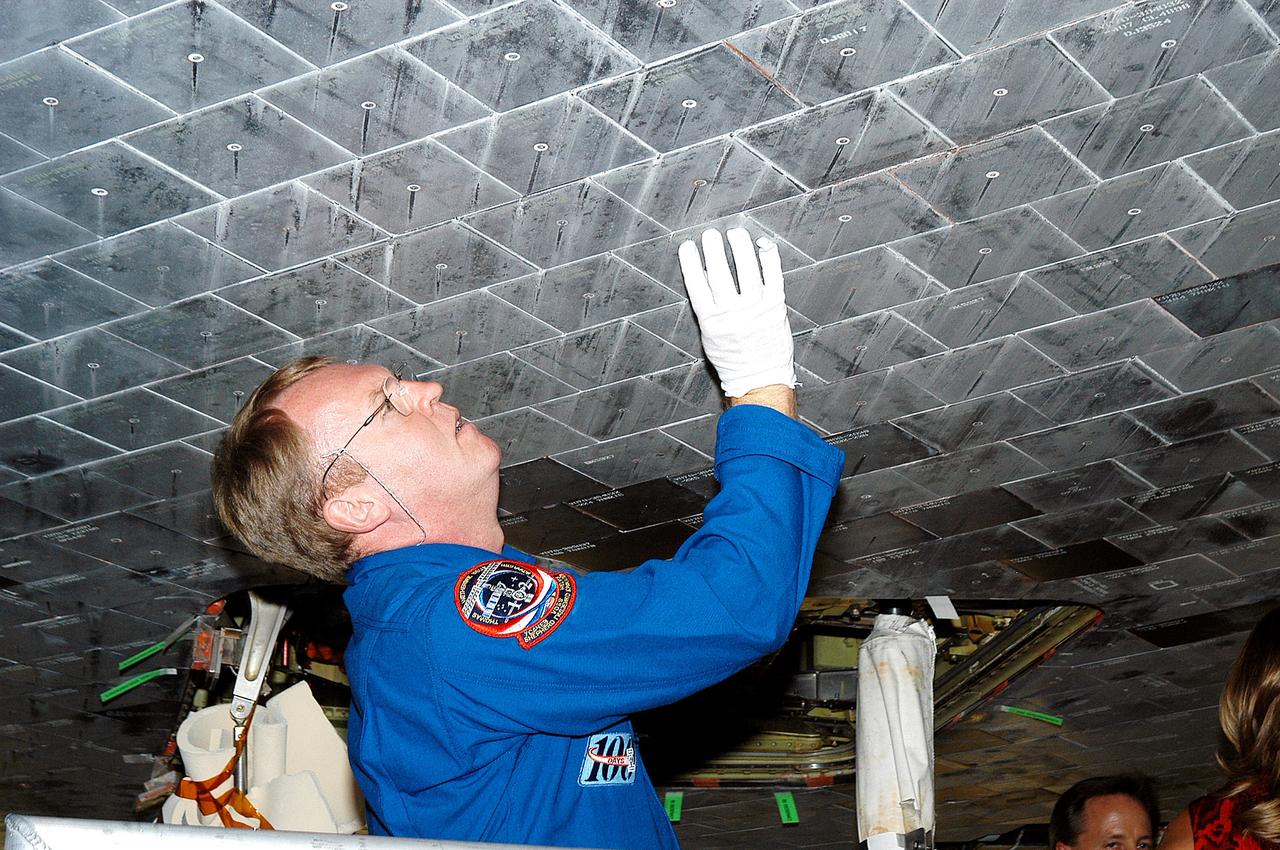
KENNEDY SPACE CENTER, FLA. - In the Orbiter Processing Facility, STS-114 Mission Specialist Andy Thomas takes a close look at the some of the tiles underneath Atlantis. Thomas is a new addition to the mission crew. The STS-114 crew is at KSC to take part in crew equipment and orbiter familiarization.

KENNEDY SPACE CENTER, FLA. - In the Orbiter Processing Facility, STS-114 Mission Specialist Andy Thomas takes a close look at the some of the tiles underneath Atlantis. Thomas is a new addition to the mission crew. The STS-114 crew is at KSC to take part in crew equipment and orbiter familiarization.
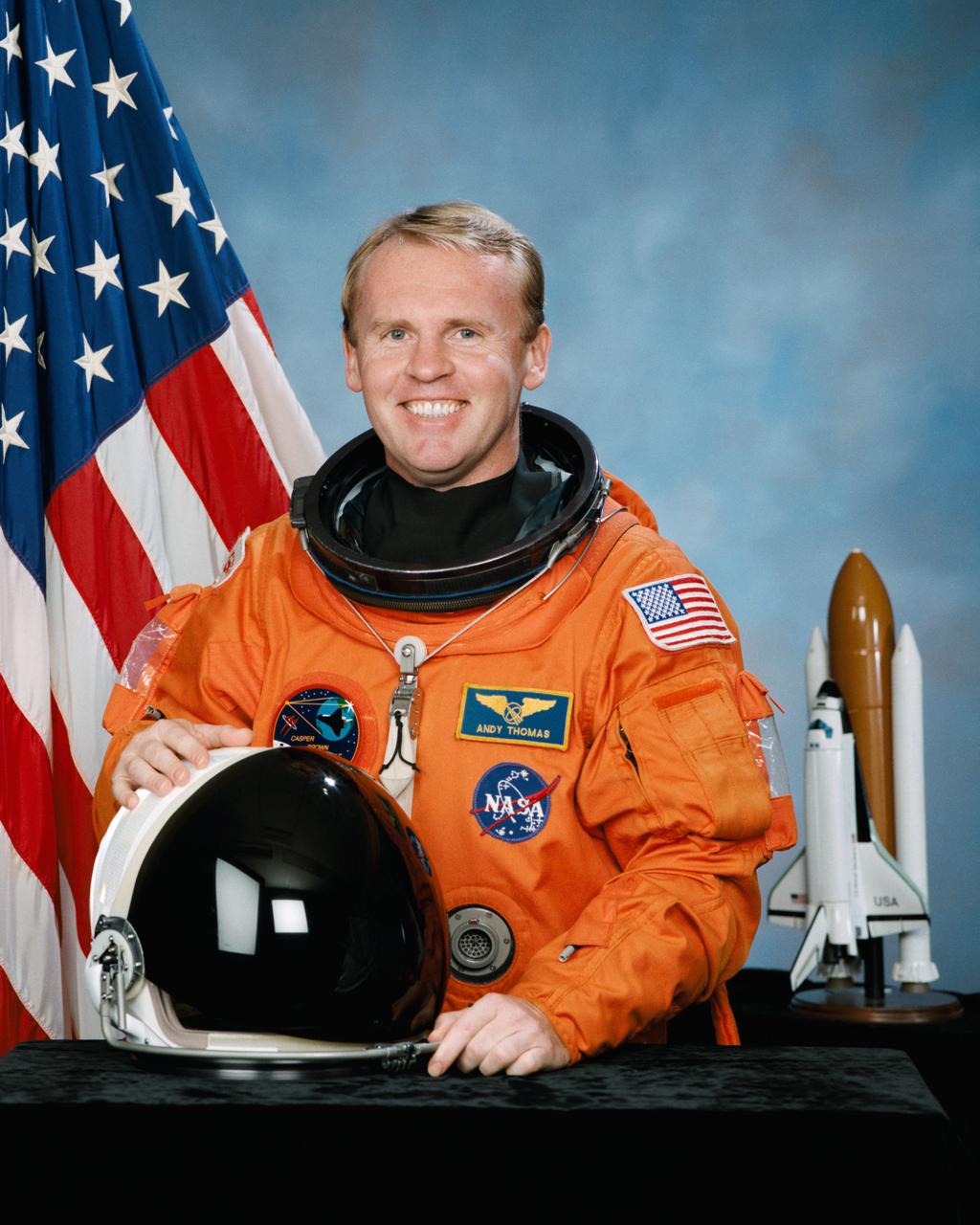
S96-04832 (March 1996) --- Astronaut Andrew S. W. Thomas, mission specialist.
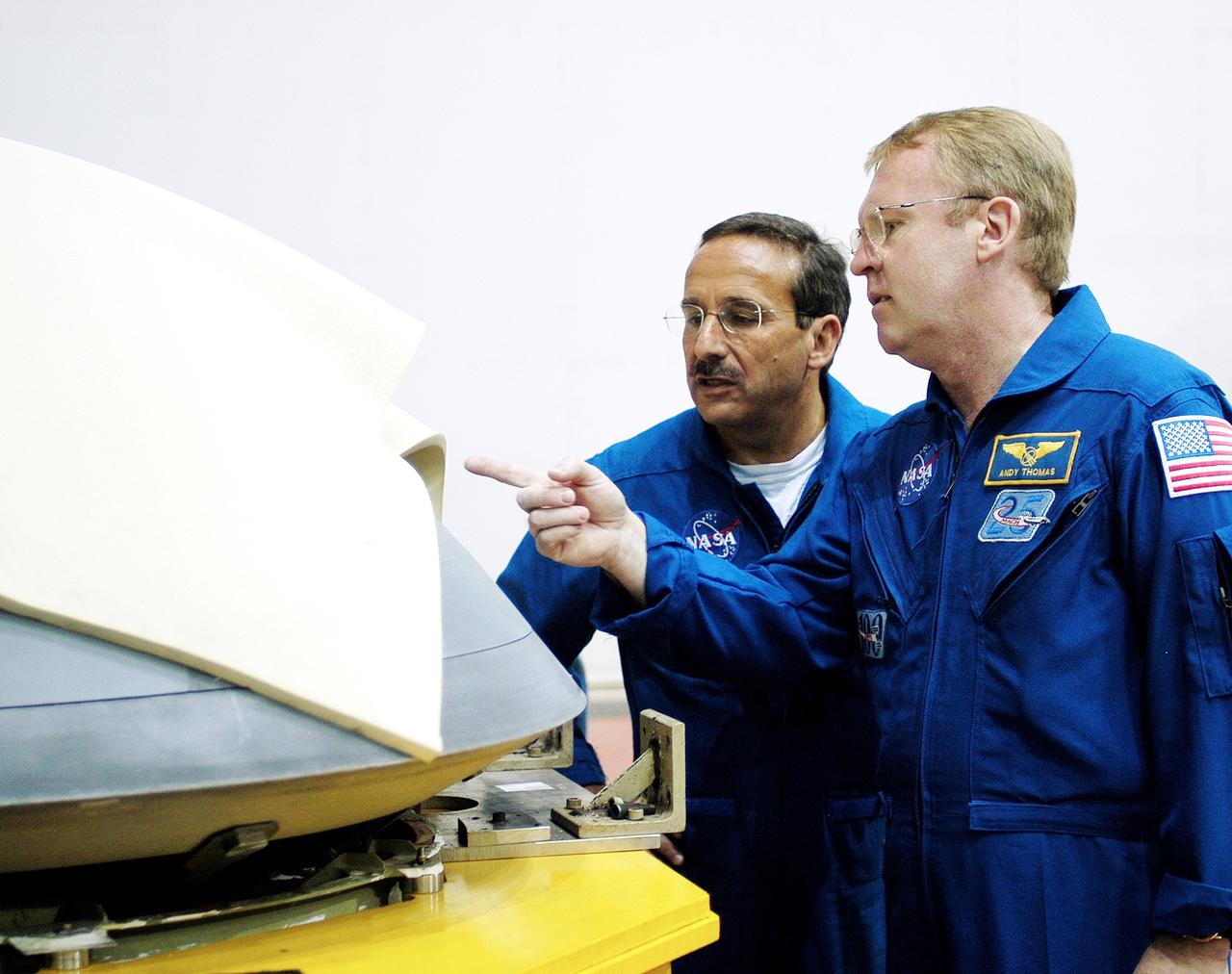
KENNEDY SPACE CENTER, FLA. - In the Orbiter Processing Facility, STS-114 Mission Specialists Charles Camarda and Andy Thomas, who were recently added to the crew, look at the nose cap recently removed from Atlantis. The STS-114 crew is at KSC to take part in crew equipment and orbiter familiarization.
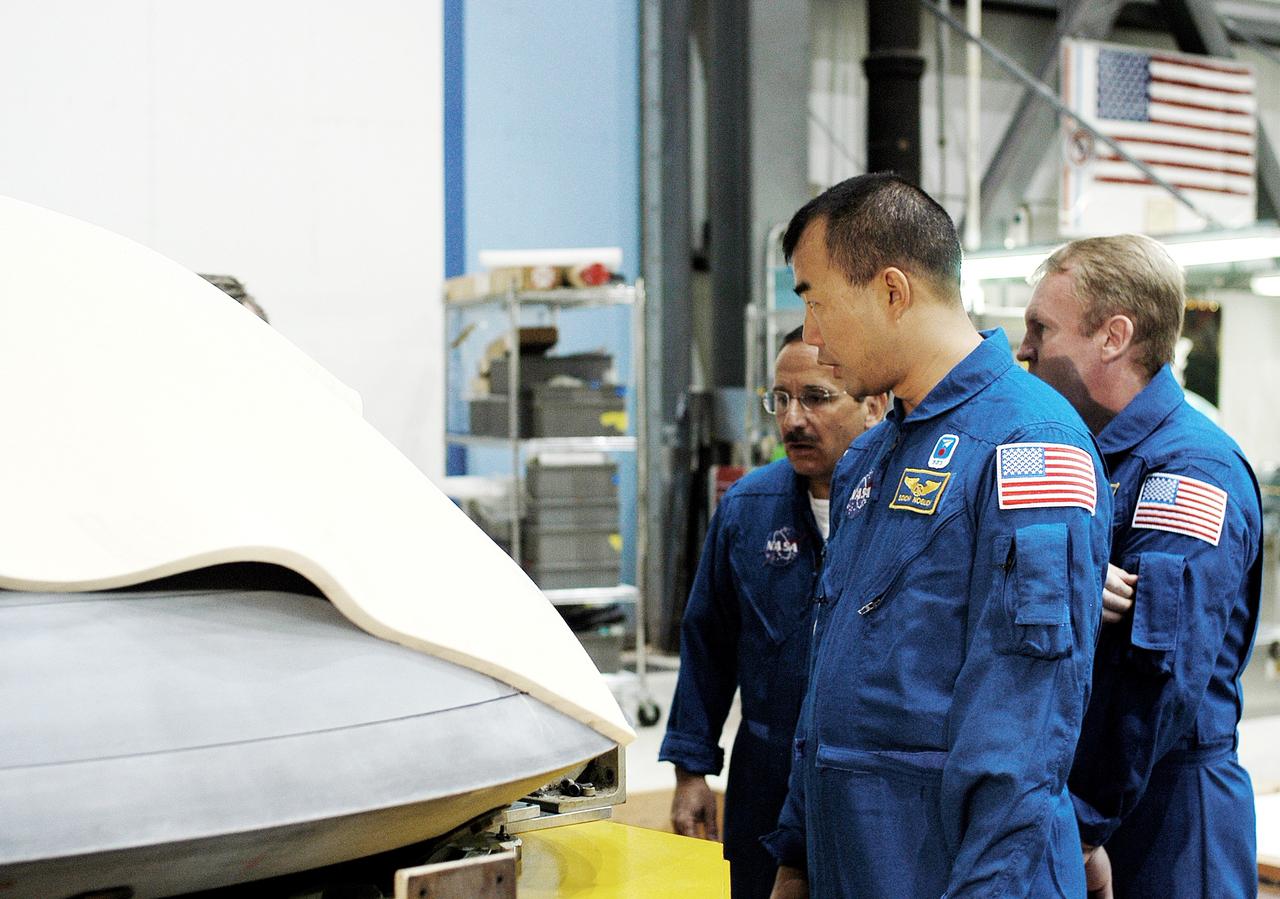
KENNEDY SPACE CENTER, FLA. - In the Orbiter Processing Facility, STS-114 crew members look at the nose cap recently removed from Atlantis. From left are Mission Specialists Charles Camarda, Soichi Noguchi, and Andy Thomas. Camarda and Thomas are new additions to the crew. Noguchi is with the Japan Aerospace Exploration Agency, JAXA. The STS-114 crew is at KSC to take part in crew equipment and orbiter familiarization.
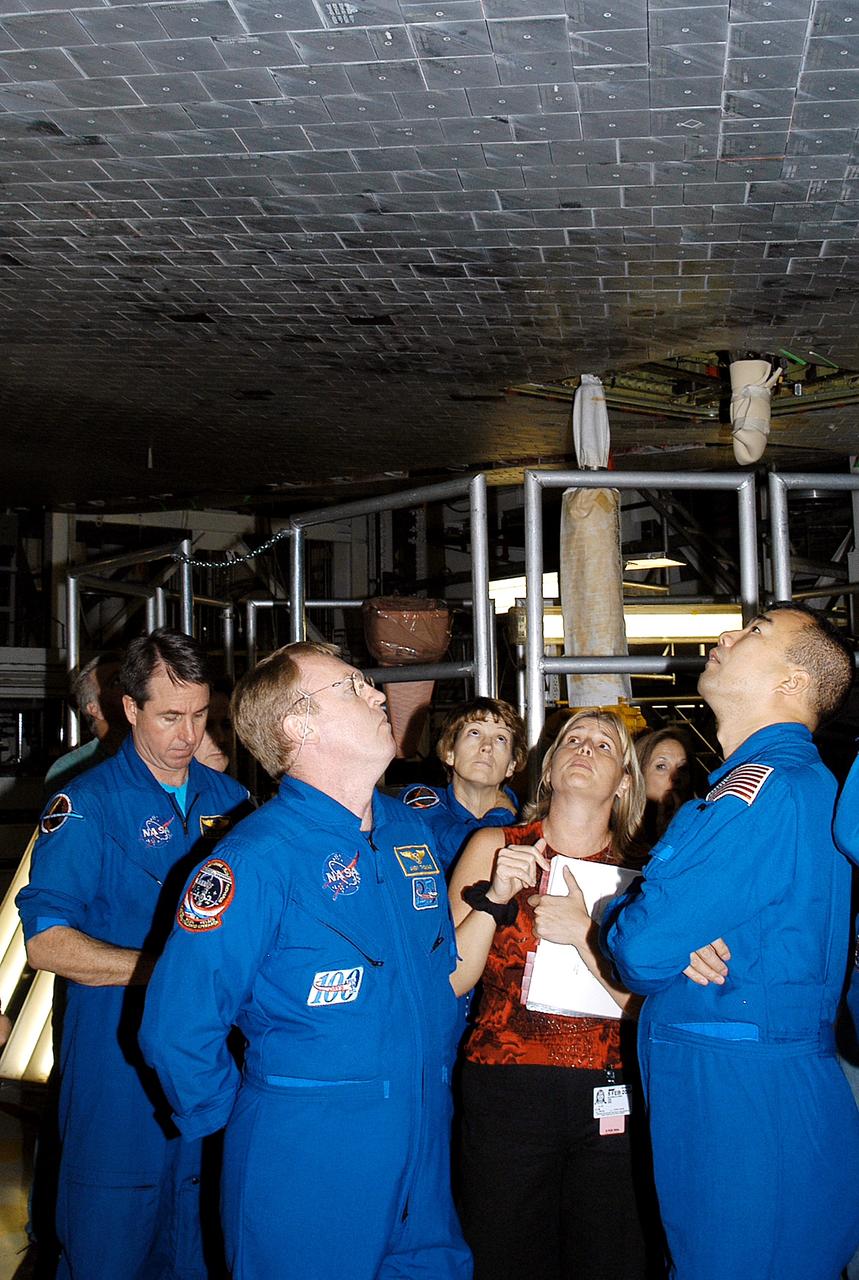
KENNEDY SPACE CENTER, FLA. - In the Orbiter Processing Facility, STS-114 crew members look at the tiles underneath Atlantis. From left (in flight suits) are Mission Specialists Stephen Robinson and Andy Thomas, Commander Eileen Collins and, at right, Mission Specialist Soichi Noguchi, who is with the Japan Aerospace Exploration Agency, JAXA. Accompanying them is Glenda Laws, EVA Task Leader, with United Space Alliance at Johnson Space Center. The STS-114 crew is at KSC to take part in crew equipment and orbiter familiarization.
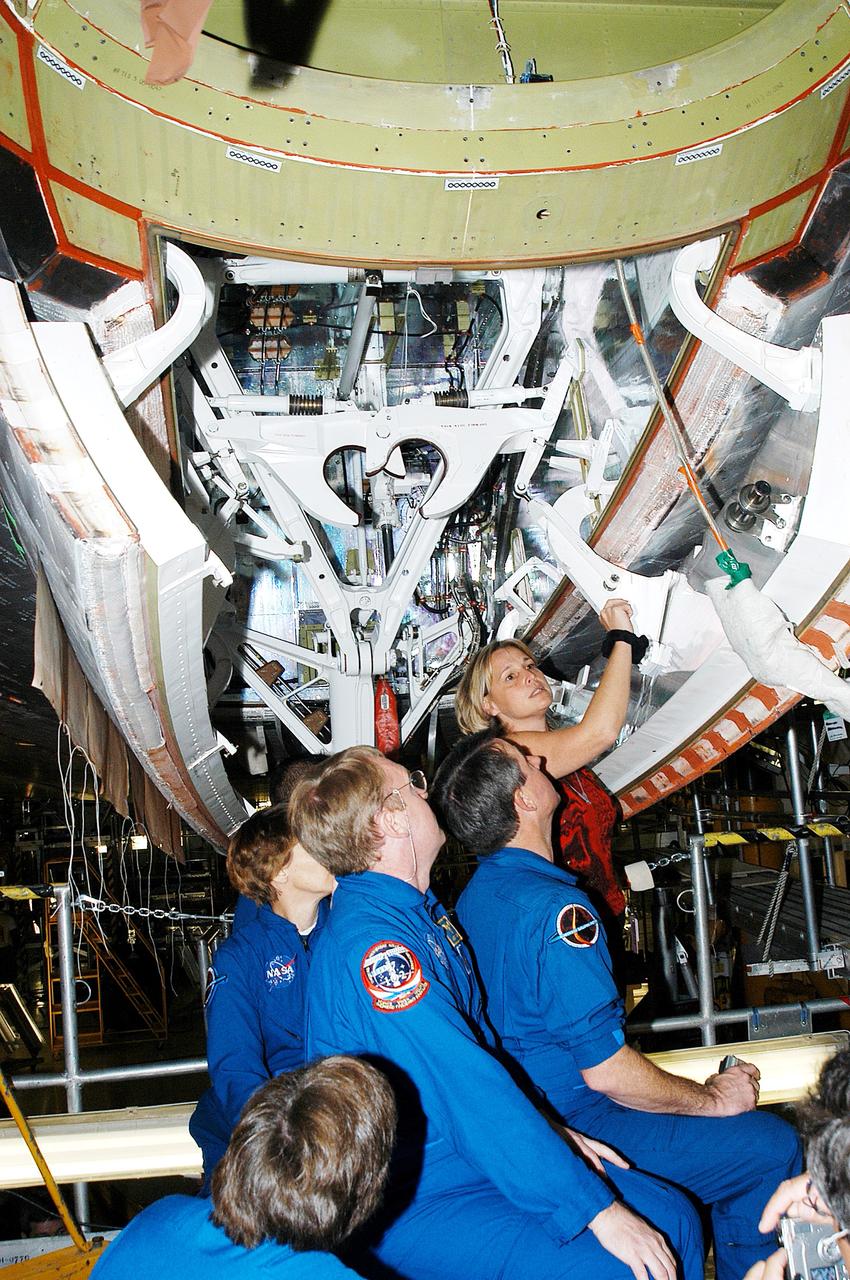
KENNEDY SPACE CENTER, FLA. - Members of the STS-114 crew look over Shuttle equipment in the Orbiter Processing Facility. In the foreground is Mission Specialist Wendy Lawrence, who is a new addition to the crew. Behind her are (left to right) Commander Eileen Collins and Mission Specialists Andy Thomas and Stephen Robinson. At the rear is Glenda Laws, EVA Task Leader, with United Space Alliance at Johnson Space Center. The STS-114 crew is at KSC to take part in crew equipment and orbiter familiarization.

KENNEDY SPACE CENTER, FLA. - While STS-114 Commander Eileen Collins talks to workers in the Orbiter Processing Facility, standing by are (left to right) astronaut Stephen Frick and Mission Specialists Charles Camarda, Wendy Lawrence and Andy Thomas. Frick is a tile specialist who joined the STS-114 crew during crew equipment and orbiter familiarization at KSC.
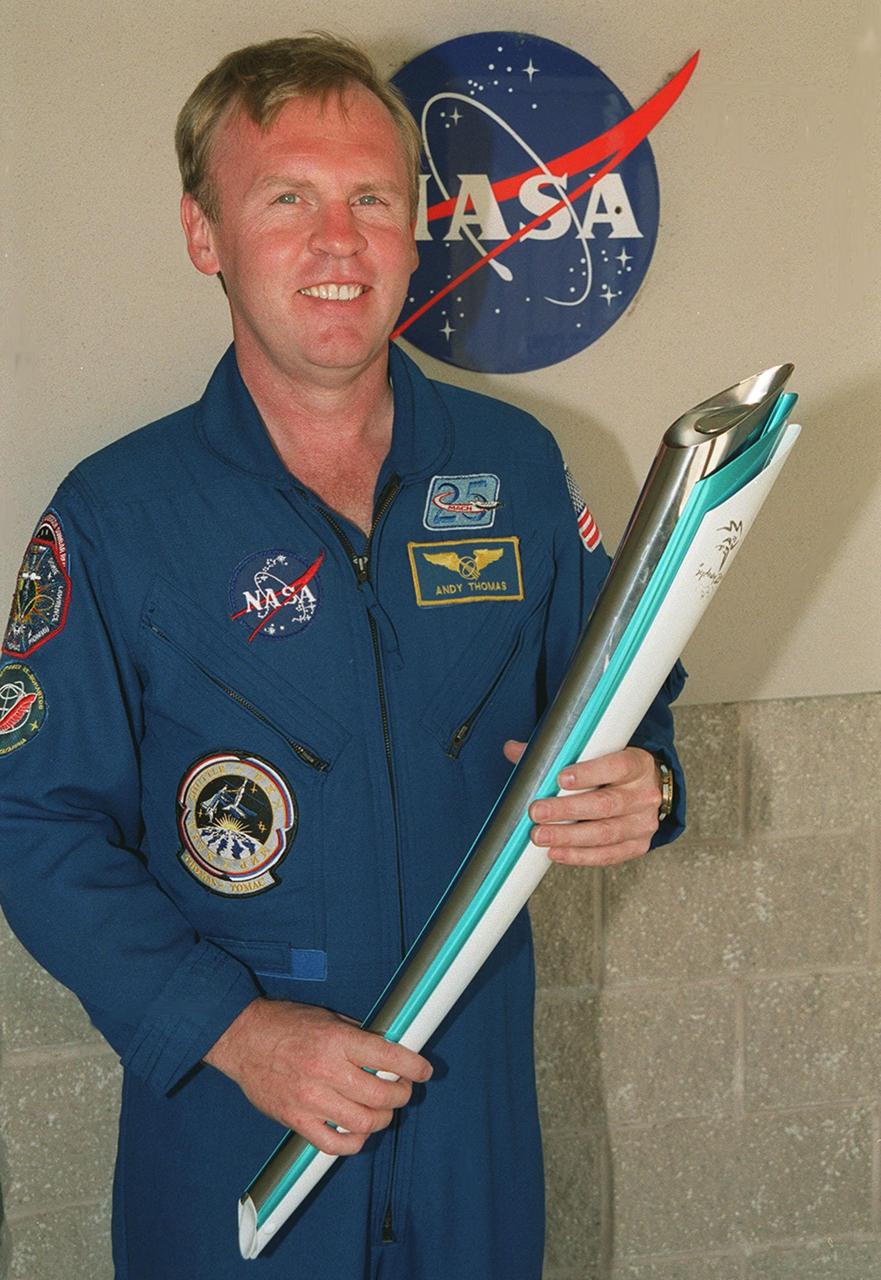
Astronaut Andy Thomas holds a facsimile of the Olympic torch that is being carried on Space Shuttle Atlantis during mission STS-101. Thomas is from Australia, which is the site of the 2000 Olympics. He coordinated the effort to have the torch added to the manifest so that it would truly circle the Earth in the spirit of the worldwide sporting event. The Sydney Olympic Torch Relay will arrive in Australia on June 8. The games begin Sept. 1
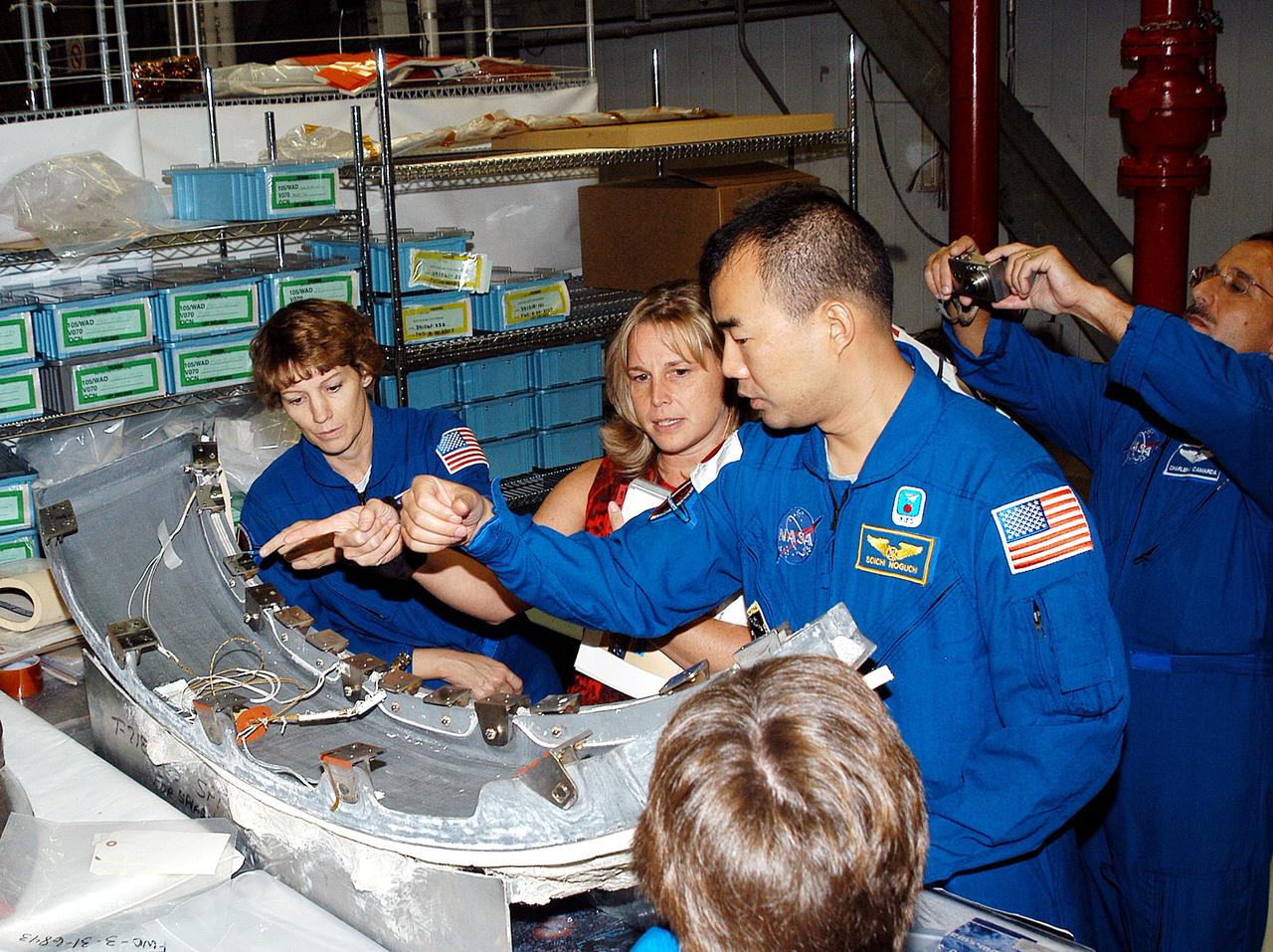
KENNEDY SPACE CENTER, FLA. - Members of the STS-114 crew look over flight equipment in the Orbiter Processing Facility. From left are Mission Commander Eileen Collins; Glenda Laws, EVA Task Leader, with United Space Alliance at Johnson Space Center; and Mission Specialists Soichi Noguchi and Charles Camarda. In the foreground is Mission Specialist Wendy Lawrence. Noguchi is with the Japan Aerospace Exploration Agency, JAXA. Not seen are Pilot James Kelly and Mission Specialists Andy Thomas and Stephen Robinson. The STS-114 crew is at KSC to take part in crew equipment and orbiter familiarization.
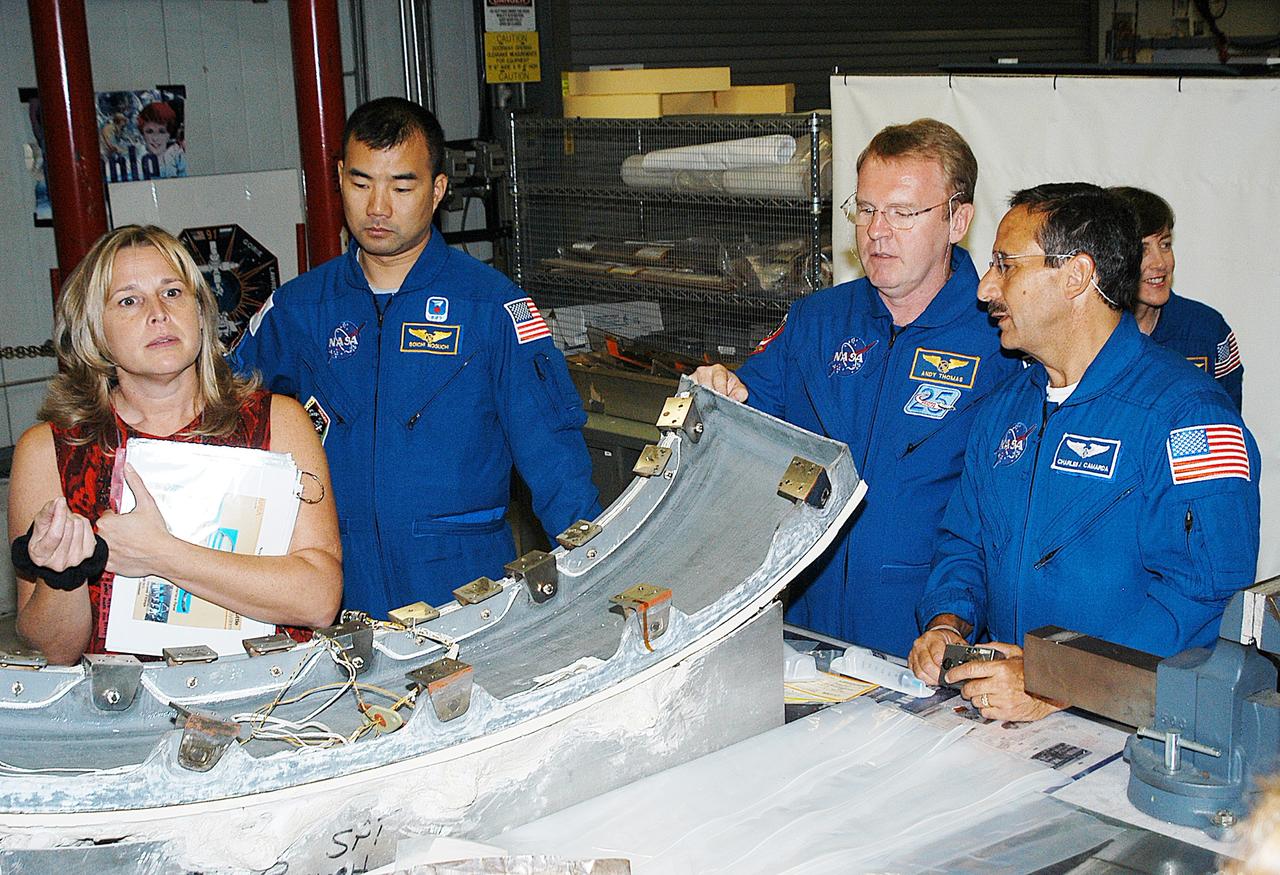
KENNEDY SPACE CENTER, FLA. - Members of the STS-114 crew look over flight equipment in the Orbiter Processing Facility. From left are Glenda Laws, EVA Task Leader, with United Space Alliance at Johnson Space Center, Mission Specialists Soichi Noguchi, Andy Thomas, Charles Camarda and Wendy Lawrence. Noguchi is with the Japan Aerospace Exploration Agency, JAXA. Not seen are Mission Commander Eileen Collins, Pilot James Kelly and Mission Specialist Stephen Robinson. The STS-114 crew is at KSC to take part in crew equipment and orbiter familiarization.
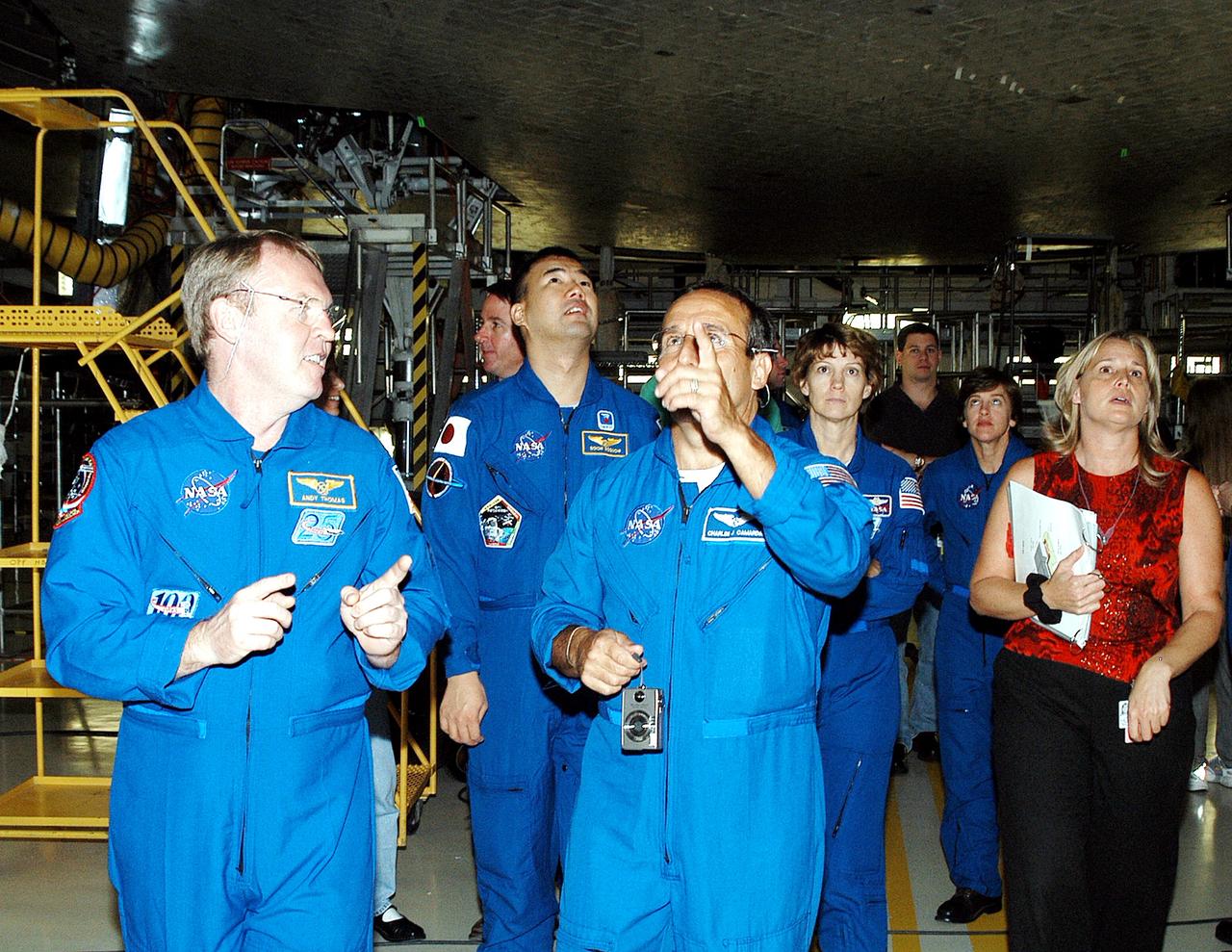
KENNEDY SPACE CENTER, FLA. - The STS-114 mission crew walks through the Orbiter Processing Facility looking at the tiles underneath Atlantis. From left are Mission Specialists Andy Thomas, Stephen Robinson, Soichi Noguchi and Charles Camarda (pointing); Commander Eileen Collins; and Mission Specialist Wendy Lawrence. At far right Glenda Laws, EVA Task Leader, with United Space Alliance at Johnson Space Center. Not seen is Pilot James Kelly. Noguchi is with the Japan Aerospace Exploration Agency, JAXA. The STS-114 crew is at KSC to take part in crew equipment and orbiter familiarization.
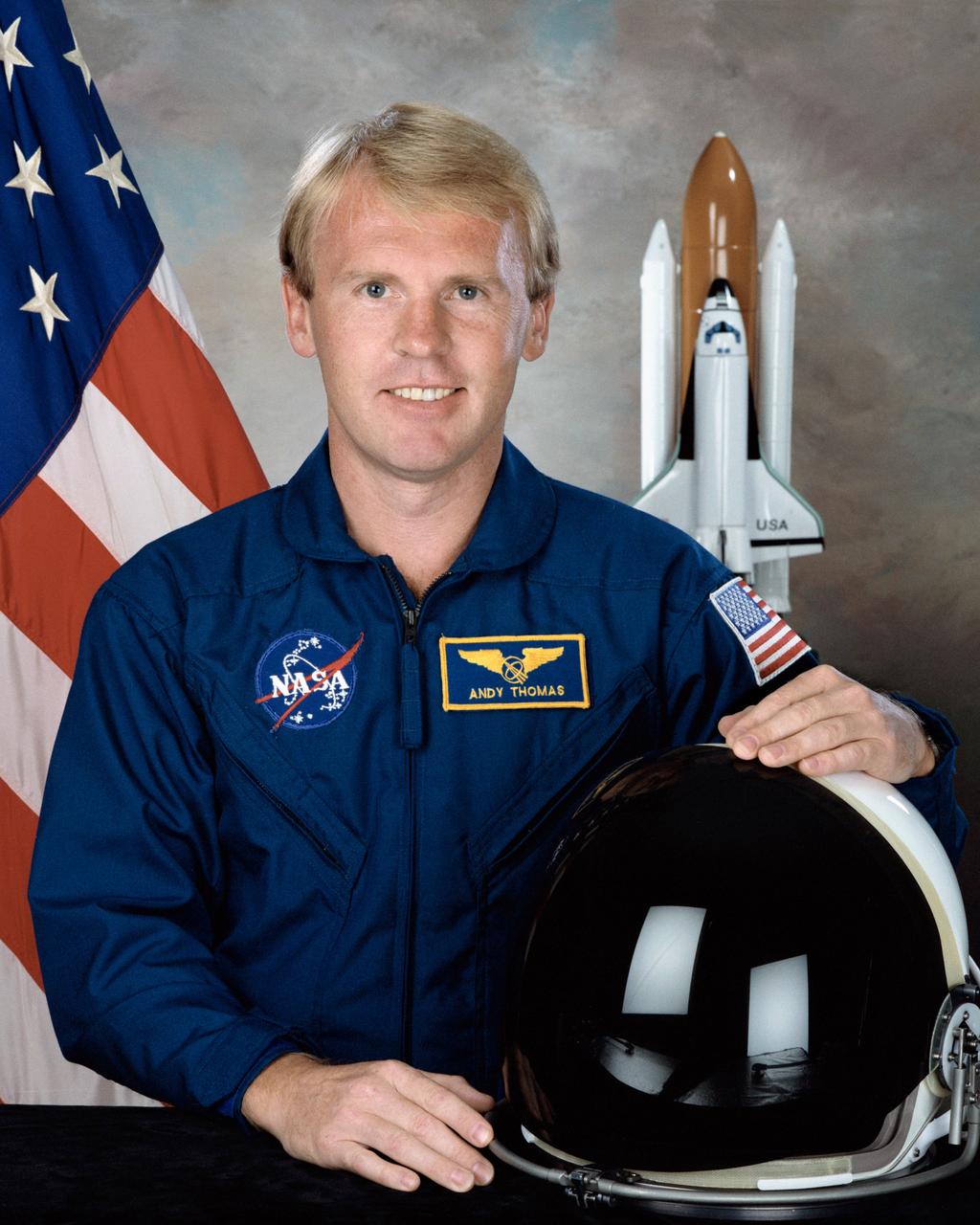
S92-49268 (November 1992) --- Astronaut Andrew S.W. Thomas, mission specialist.
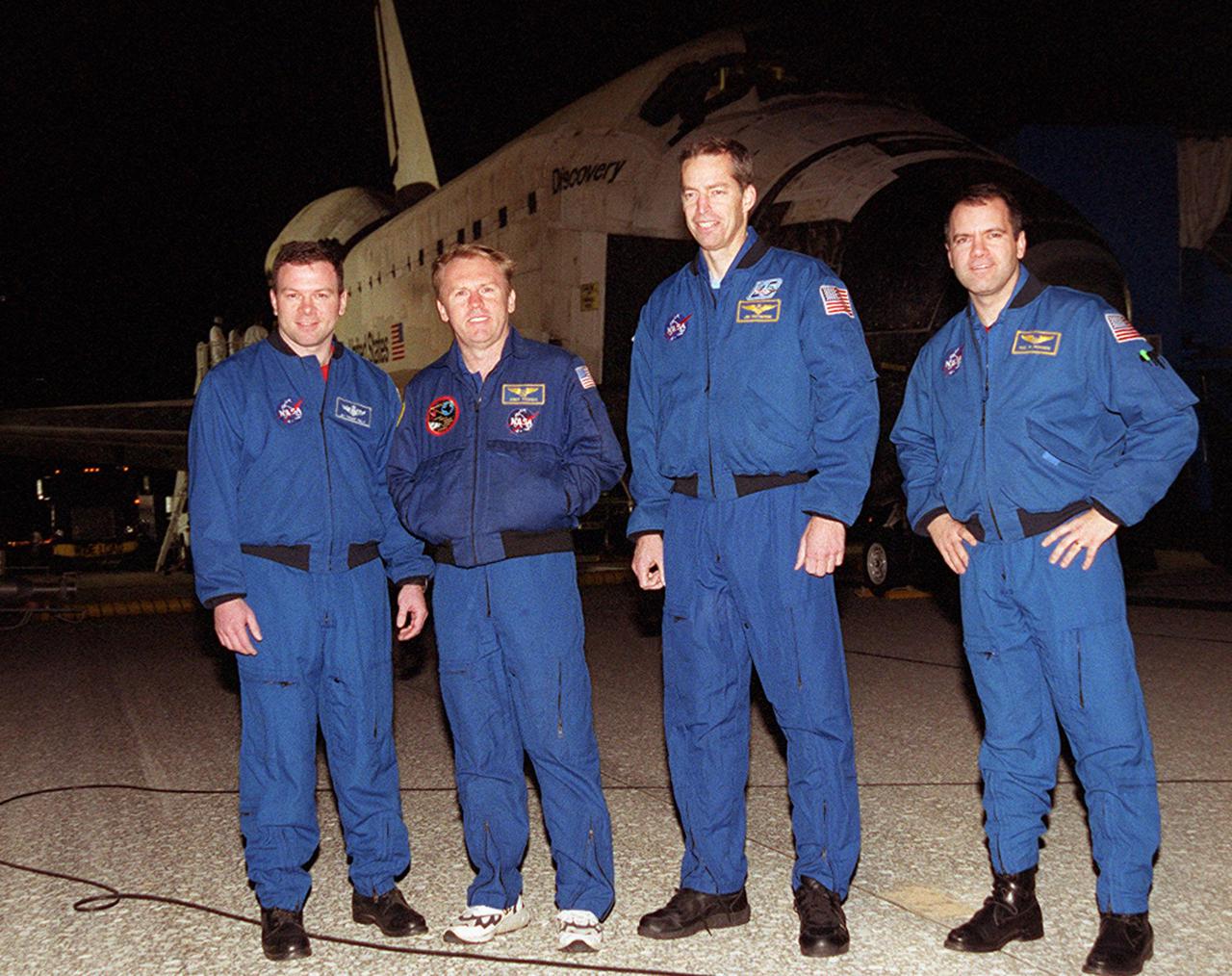
After exiting the Crew Transport Vehicle, the STS-102 crew gathers under Discovery for a walk-around. From left are Pilot James Kelly, Mission Specialist Andy Thomas, Commander James Wetherbee and Mission Specialist Paul Richards. The crew landed at the KSC Shuttle Landing Facility at 2:31 a.m. EST aboard Discovery following a 12-day, 19-hour, 49-minute mission to the International Space Station
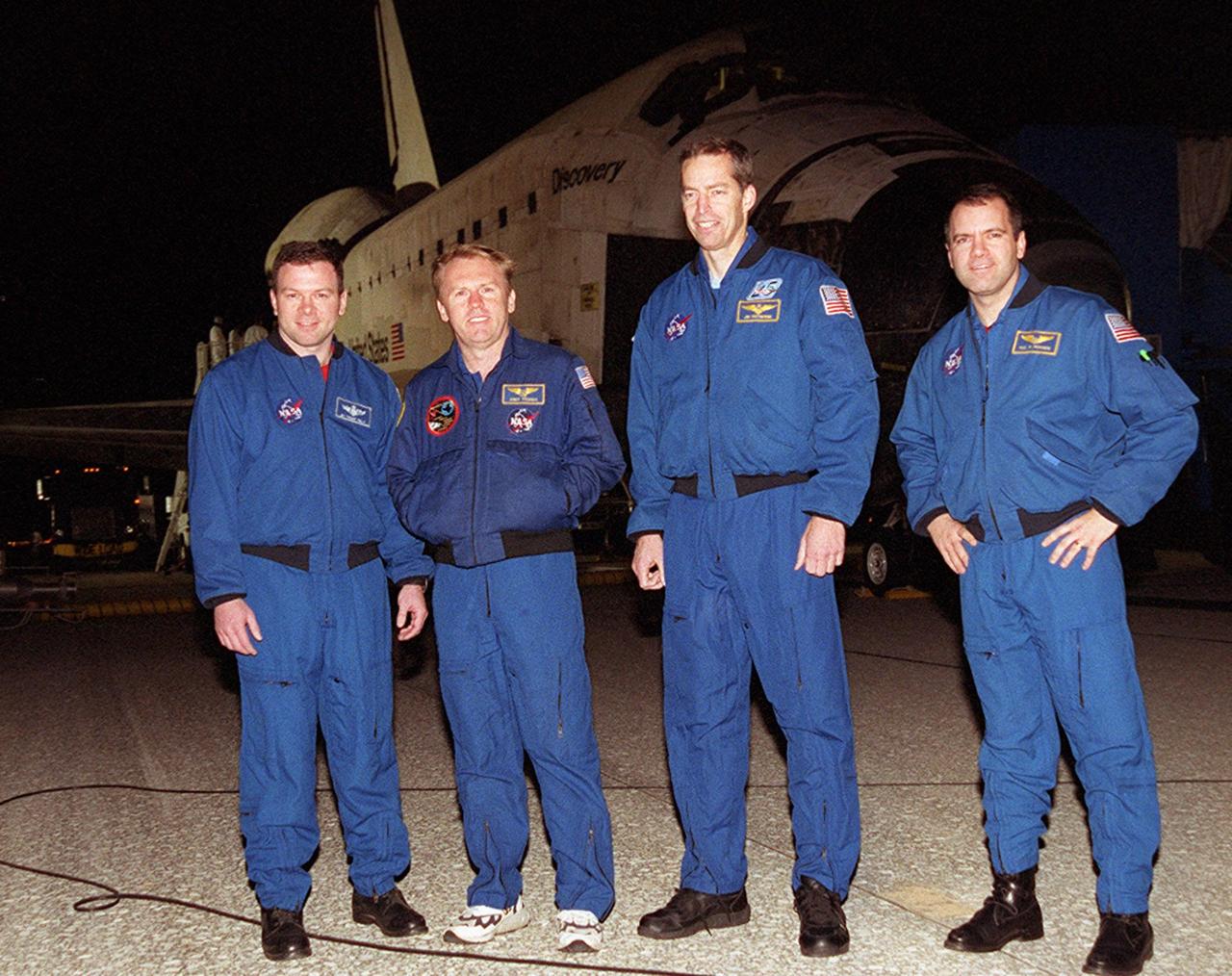
After exiting the Crew Transport Vehicle, the STS-102 crew gathers under Discovery for a walk-around. From left are Pilot James Kelly, Mission Specialist Andy Thomas, Commander James Wetherbee and Mission Specialist Paul Richards. The crew landed at the KSC Shuttle Landing Facility at 2:31 a.m. EST aboard Discovery following a 12-day, 19-hour, 49-minute mission to the International Space Station
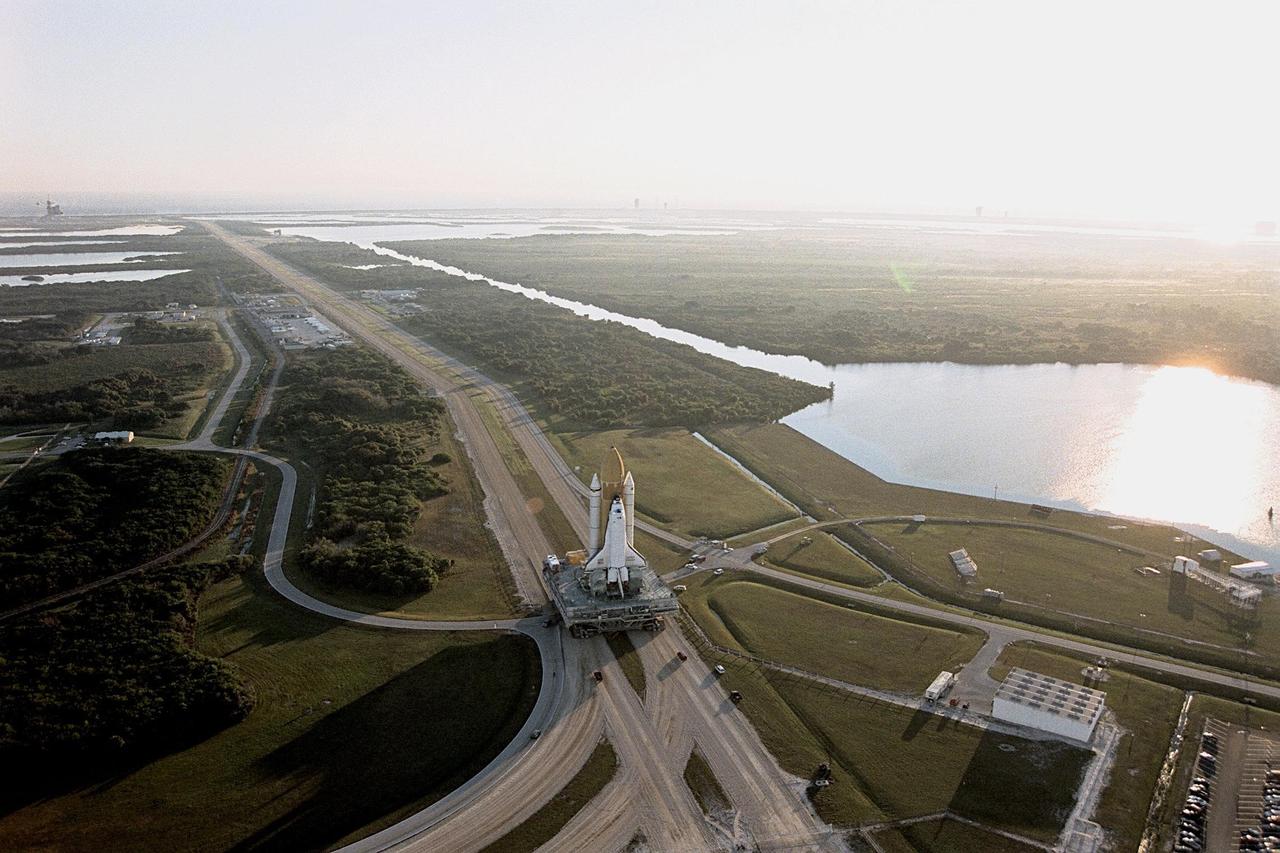
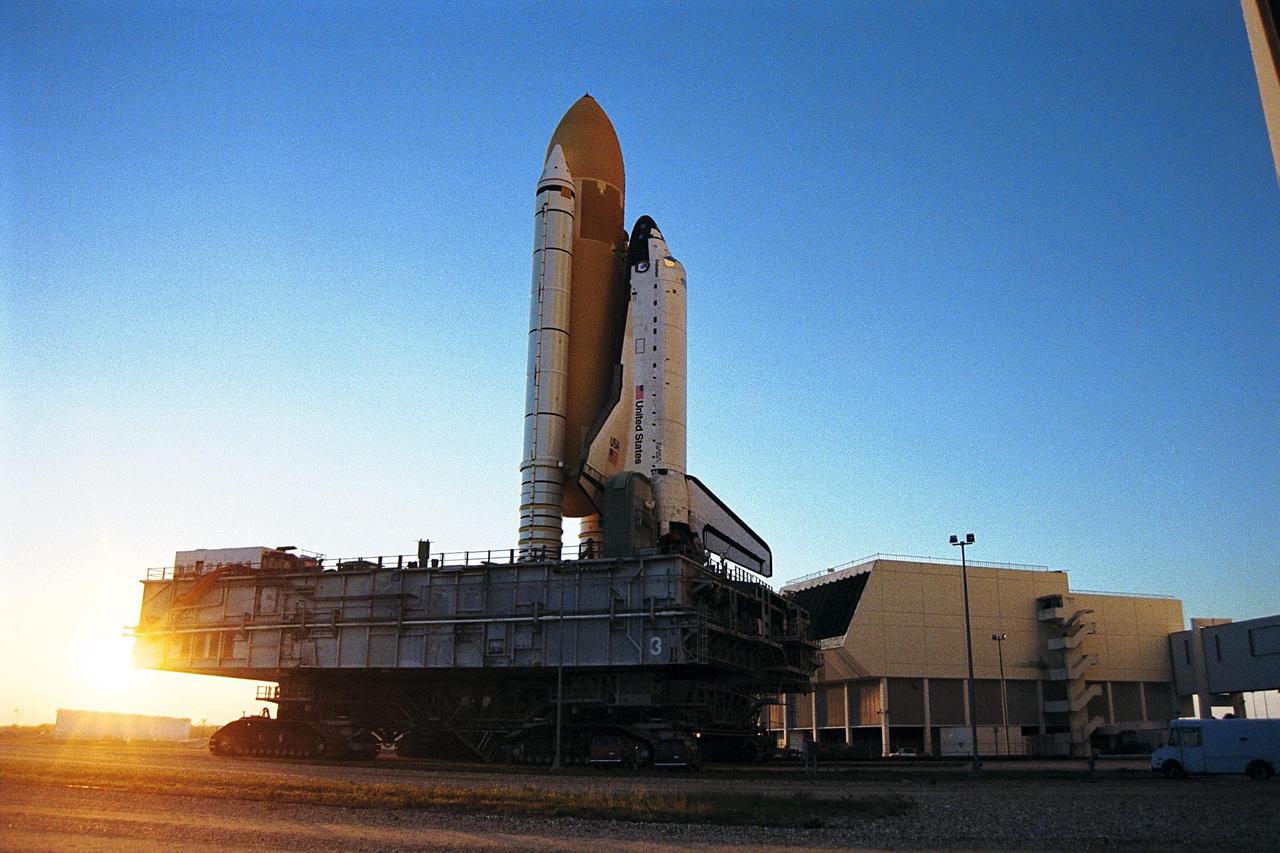
KENNEDY SPACE CENTER, Fla. -- The Space Shuttle Endeavour rolls out to Launch Pad 39A, the destination of its journey from the Vehicle Assembly Building, for final preparations for liftoff of the STS-89 mission. Endeavour and its crew of seven are targeted for a Jan. 22 launch. STS-89 will be the eighth Shuttle docking with the Russian Space Station Mir as part of Phase 1 of the International Space Station program. Mission Specialist Andy Thomas, Ph.D., will succeed Mission Specialist David Wolf, M.D., as the last NASA astronaut scheduled for a long-duration stay aboard Mir
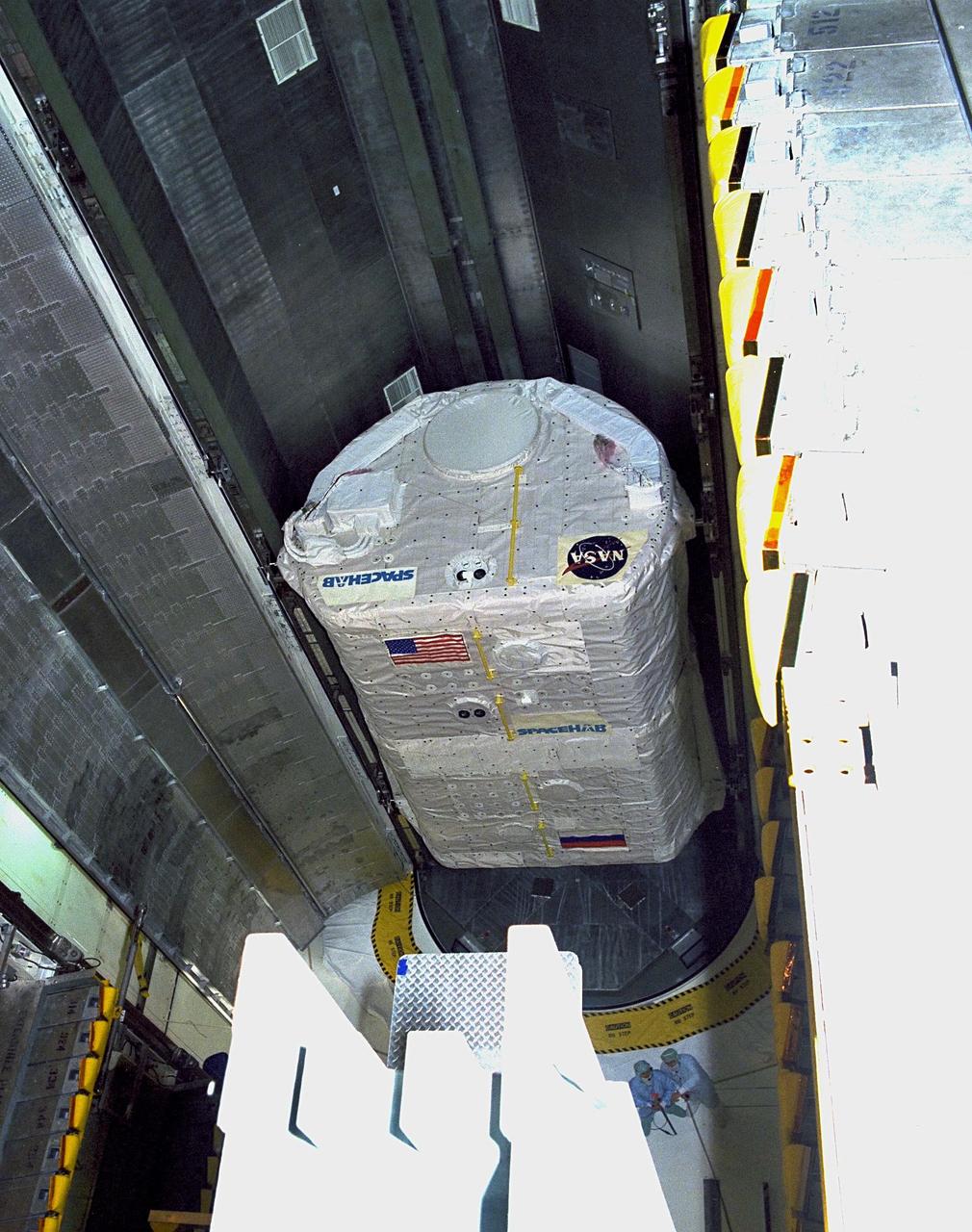
KENNEDY SPACE CENTER, FLA. -- The SPACEHAB payload arrived at Launch Pad 39A this morning and was installed in the Payload Changeout Room. Final preparations for liftoff of the STS-89 mission are under way. Endeavour and its crew of seven are targeted for a Jan. 22 launch. STS-89 will be the eighth Shuttle docking with the Russian Space Station Mir as part of Phase 1 of the International Space Station program. Mission Specialist Andy Thomas, Ph.D., will succeed Mission Specialist David Wolf, M.D., as the last NASA astronaut scheduled for a long-duration stay aboard Mir
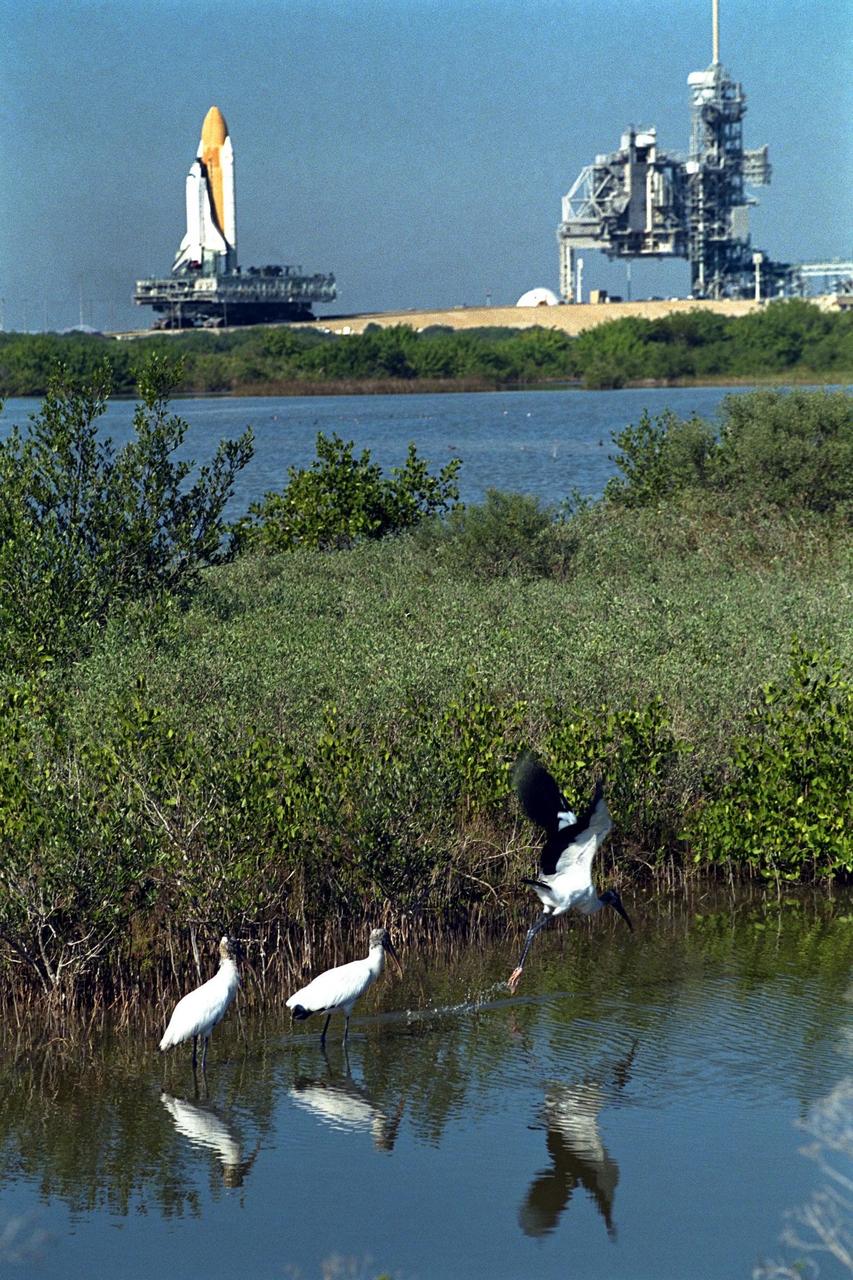
KENNEDY SPACE CENTER, Fla. -- The Space Shuttle Endeavour rolls out to Launch Pad 39A, the destination of its journey from the Vehicle Assembly Building, for final preparations for liftoff of the STS-89 mission. Endeavour and its crew of seven are targeted for a Jan. 22 launch. STS-89 will be the eighth Shuttle docking with the Russian Space Station Mir as part of Phase 1 of the International Space Station program. Mission Specialist Andy Thomas, Ph.D., will succeed Mission Specialist David Wolf, M.D., as the last NASA astronaut scheduled for a long-duration stay aboard Mir

The STS-102 crew wait for instructions about the M-113 armored carrier they are seated in. At left is Mission Specialist Andy Thomas. On the right side are (left to right) Mission Specialist Paul Richards, Commander James Wetherbee and Pilot James Kelly. In the event of an emergency at the pad prior to launch, the carrier could be used to transport the crew to a nearby bunker or farther. The STS-102 crew is at KSC to take part in Terminal Countdown Demonstration Test activities, which also include a simulated launch countdown. STS-102 is the eighth construction flight to the International Space Station, carrying as payload the Multi-Purpose Logistics Module Leonardo. Launch on mission STS-102 is scheduled for March 8
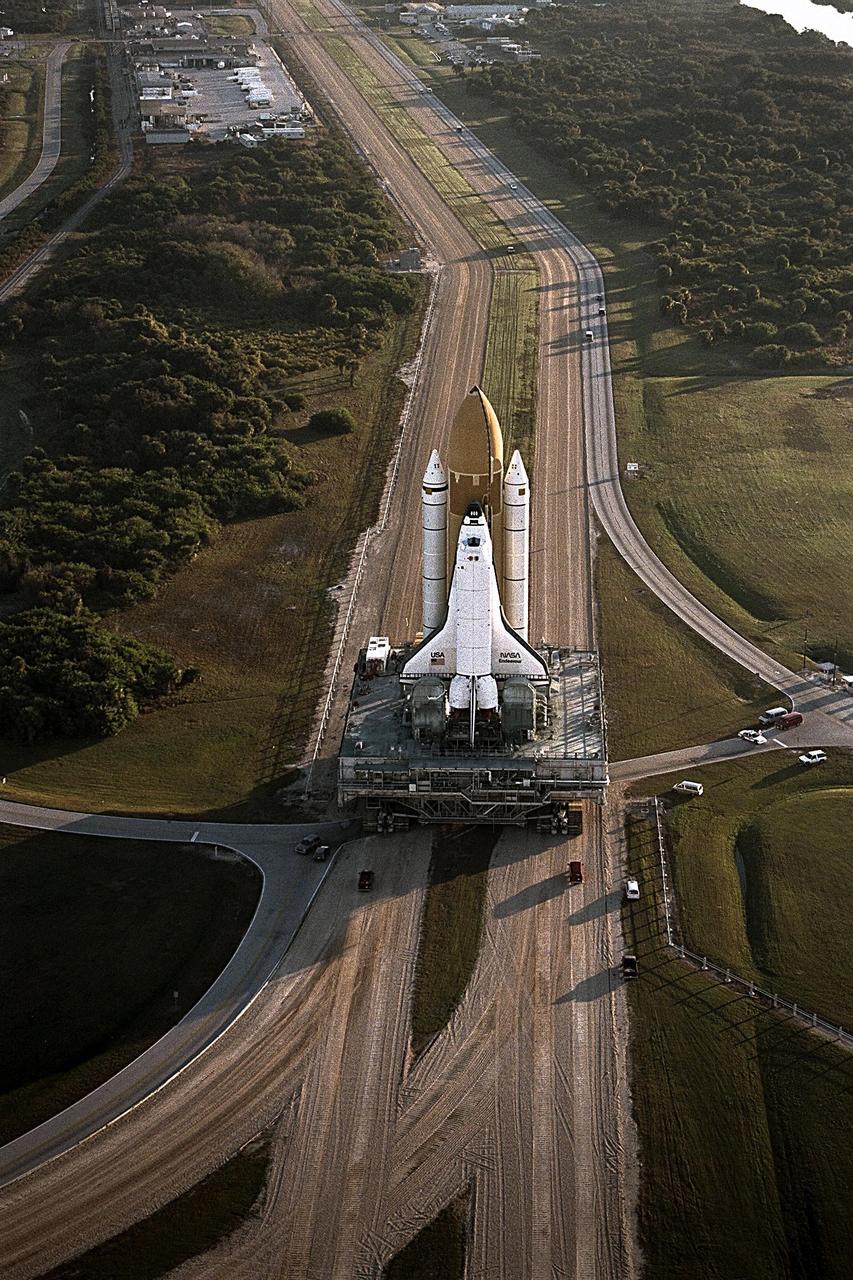
KENNEDY SPACE CENTER, Fla. -- The Space Shuttle Endeavour rolls out to Launch Pad 39A, the destination of its journey from the Vehicle Assembly Building, for final preparations for liftoff of the STS-89 mission. Endeavour and its crew of seven are targeted for a Jan. 22 launch. STS-89 will be the eighth Shuttle docking with the Russian Space Station Mir as part of Phase 1 of the International Space Station program. Mission Specialist Andy Thomas, Ph.D., will succeed Mission Specialist David Wolf, M.D., as the last NASA astronaut scheduled for a long-duration stay aboard Mir
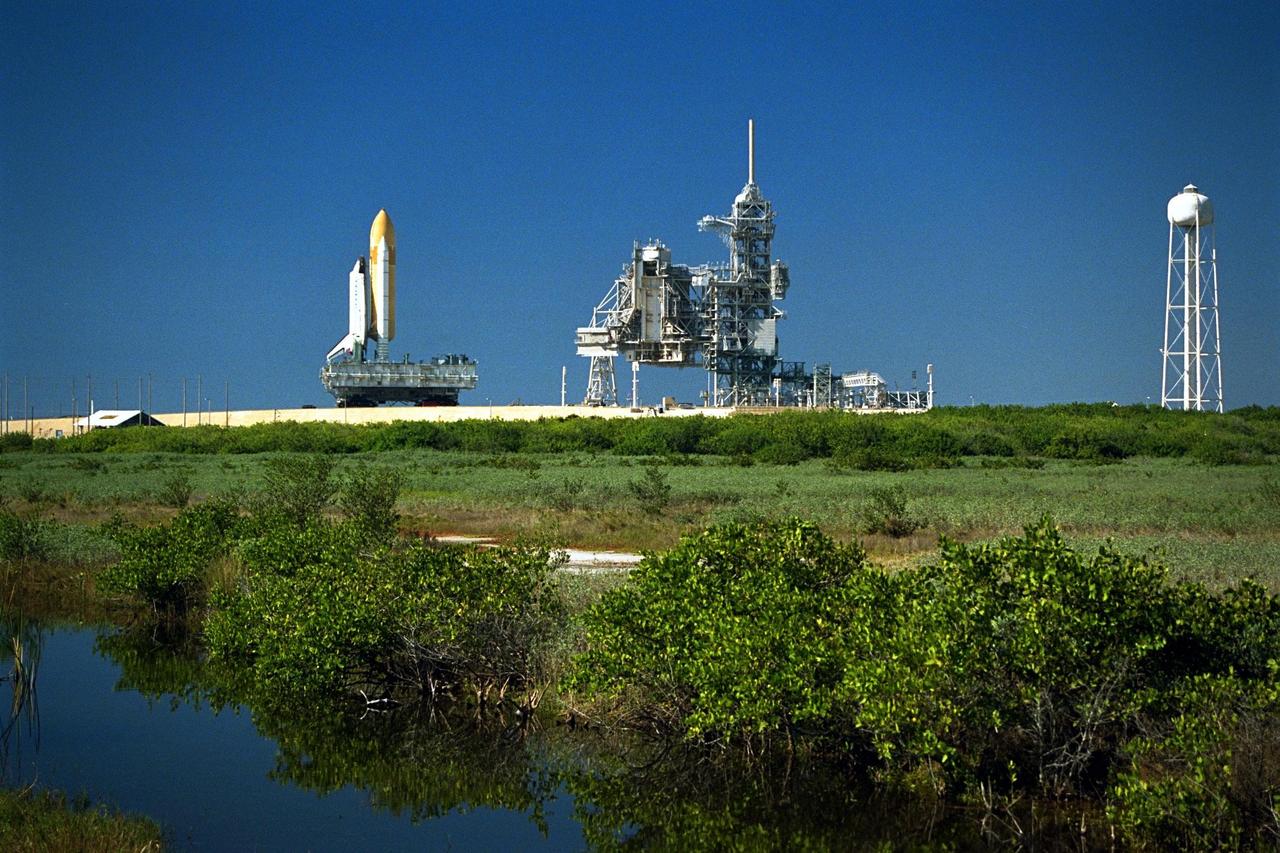
KENNEDY SPACE CENTER, Fla. -- The Space Shuttle Endeavour rolls out to Launch Pad 39A, the destination of its journey from the Vehicle Assembly Building, for final preparations for liftoff of the STS-89 mission. Endeavour and its crew of seven are targeted for a Jan. 22 launch. STS-89 will be the eighth Shuttle docking with the Russian Space Station Mir as part of Phase 1 of the International Space Station program. Mission Specialist Andy Thomas, Ph.D., will succeed Mission Specialist David Wolf, M.D., as the last NASA astronaut scheduled for a long-duration stay aboard Mir
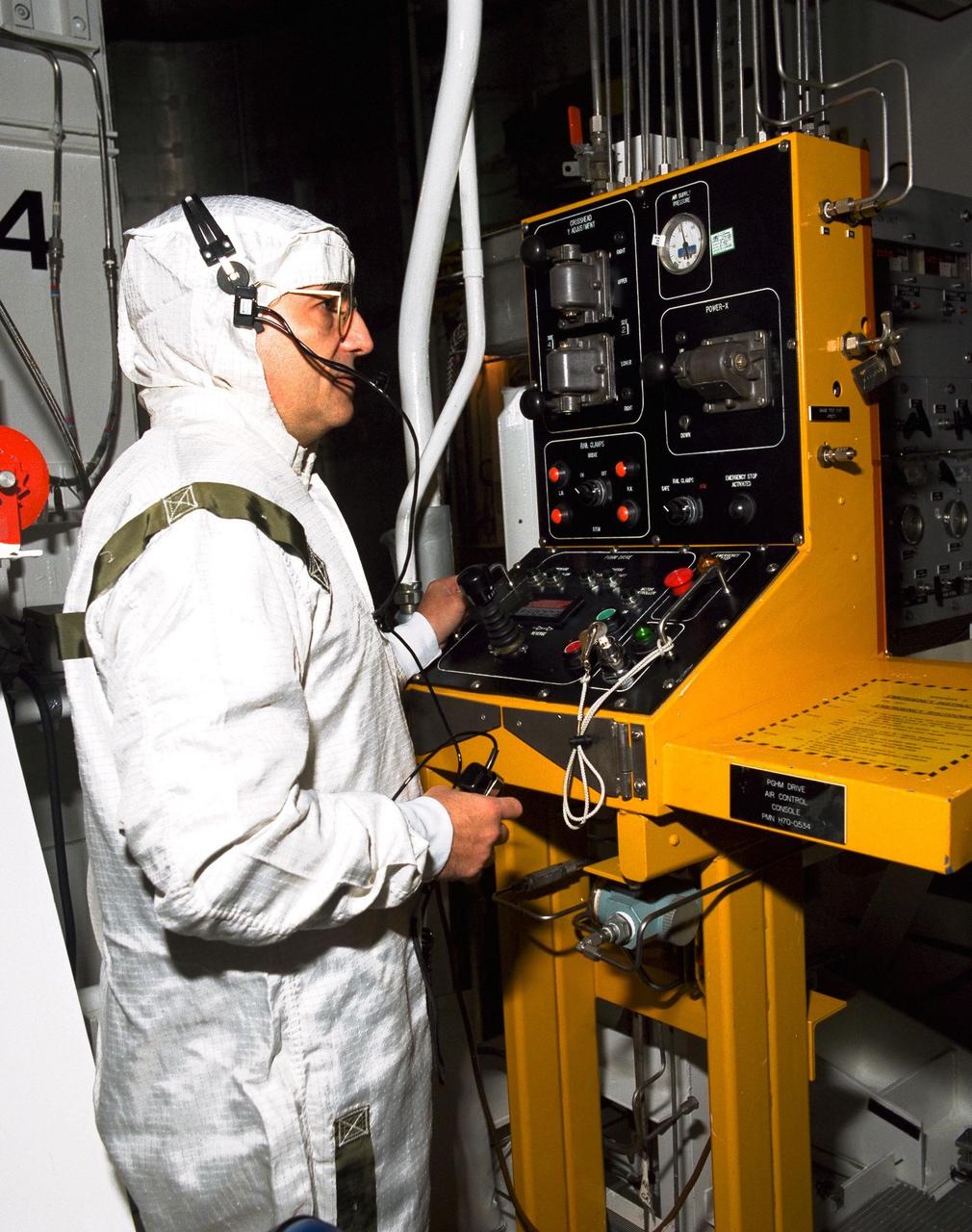
KENNEDY SPACE CENTER, FLA. -- The SPACEHAB payload arrived at Launch Pad 39A this morning and was installed in the Payload Changeout Room. Final preparations for liftoff of the STS-89 mission are under way. Endeavour and its crew of seven are targeted for a Jan. 22 launch. STS-89 will be the eighth Shuttle docking with the Russian Space Station Mir as part of Phase 1 of the International Space Station program. Mission Specialist Andy Thomas, Ph.D., will succeed Mission Specialist David Wolf, M.D., as the last NASA astronaut scheduled for a long-duration stay aboard Mir
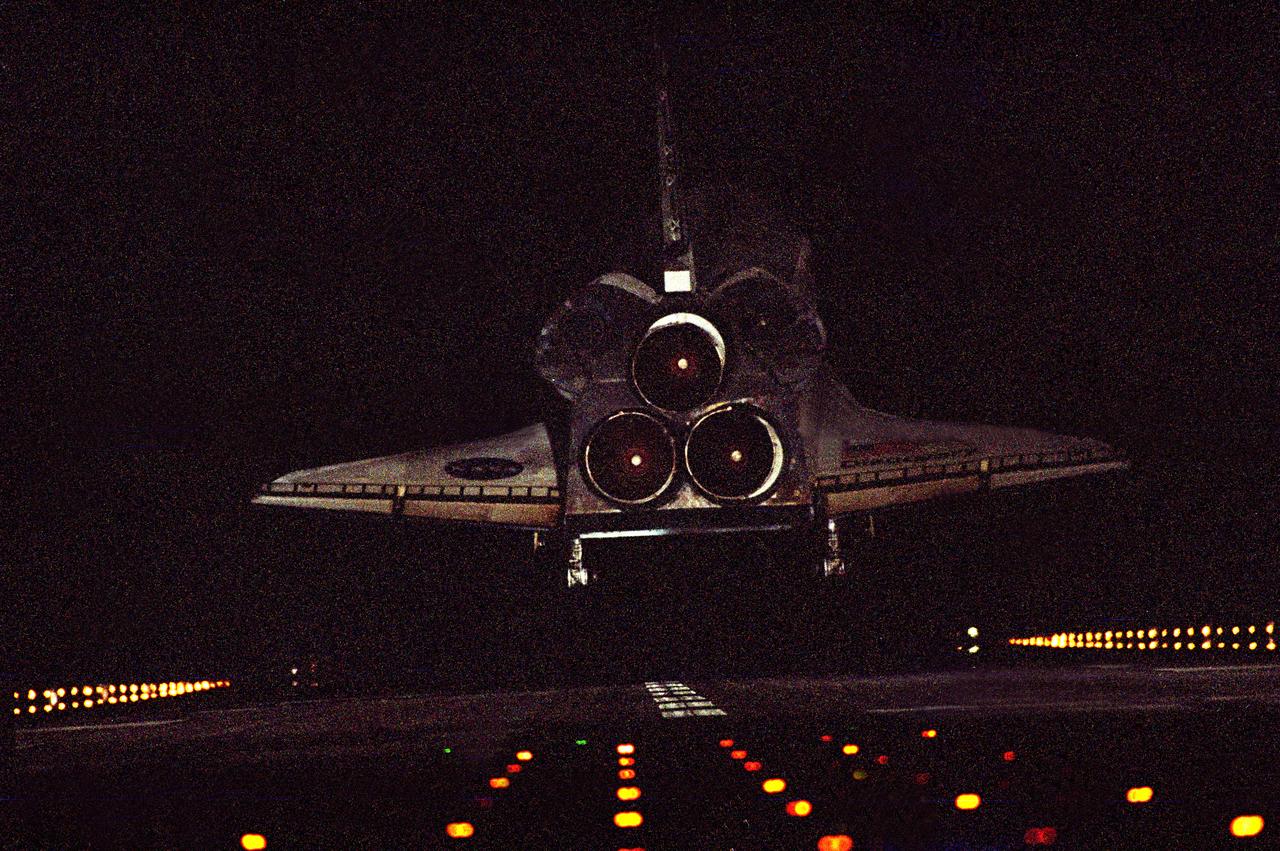
STS102-S-015 (21 March 2001)--- After a 5.3 million mile mission, The Space Shuttle Discovery approaches touchdown on Runway 15 at the KSC Shuttle Landing Facility in this aft view. The landing completed the successful 12-day STS-102 mission. Onboard the shuttle were astronauts James Wetherbee, James Kelly, Andy Thomas, and Paul Richards. Discovery’s touchdown also marked the return of the space station’s first resident crew – Expedition One which were William Shepherd, Yuri Gidzenko and Sergei Krikalev. STS-102 was the 103rd shuttle flight and the eighth shuttle mission to visit the station.
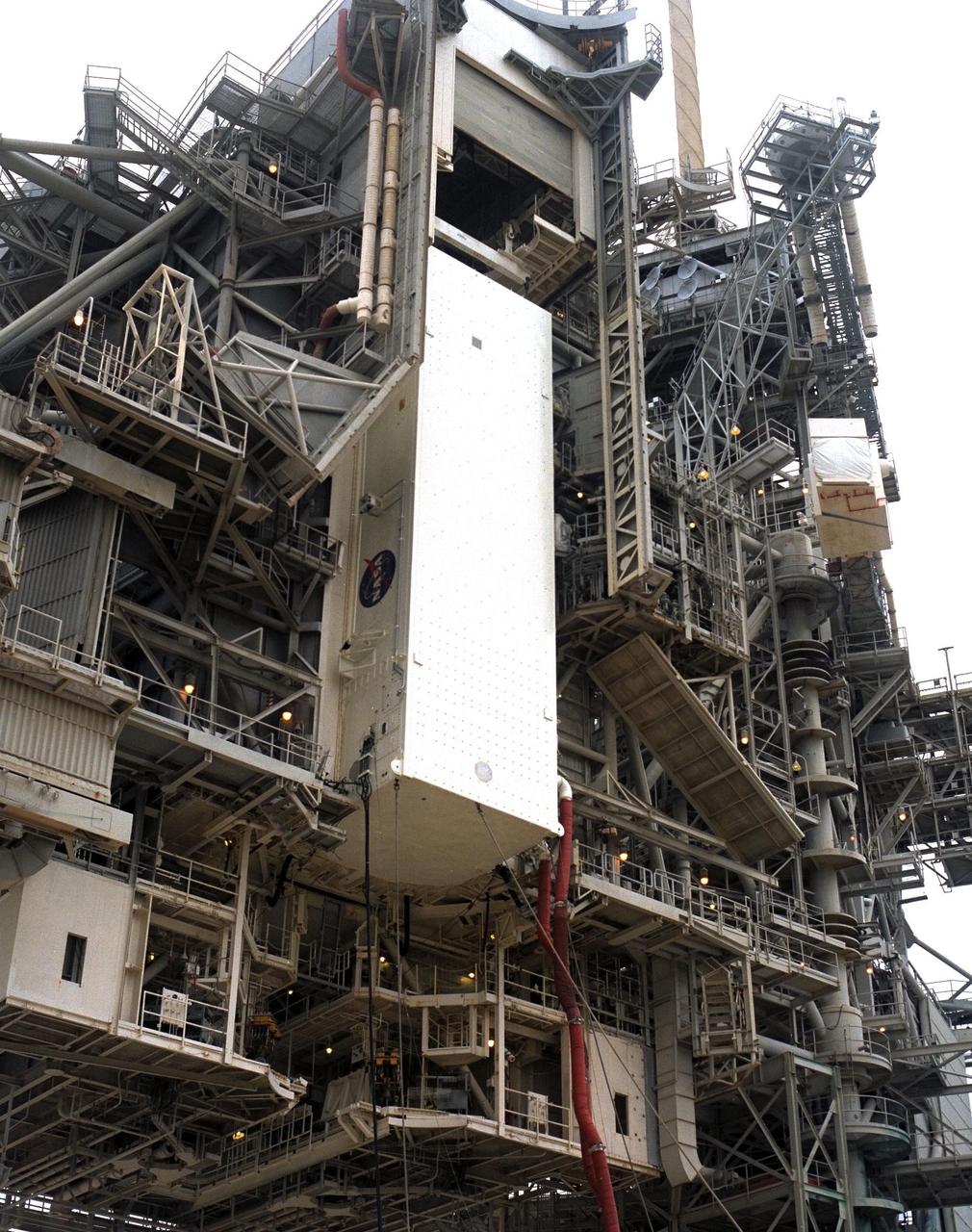
KENNEDY SPACE CENTER, FLA. -- The SPACEHAB payload arrived at Launch Pad 39A this morning and was installed in the Payload Changeout Room. Final preparations for liftoff of the STS-89 mission are under way. Endeavour and its crew of seven are targeted for a Jan. 22 launch. STS-89 will be the eighth Shuttle docking with the Russian Space Station Mir as part of Phase 1 of the International Space Station program. Mission Specialist Andy Thomas, Ph.D., will succeed Mission Specialist David Wolf, M.D., as the last NASA astronaut scheduled for a long-duration stay aboard Mir
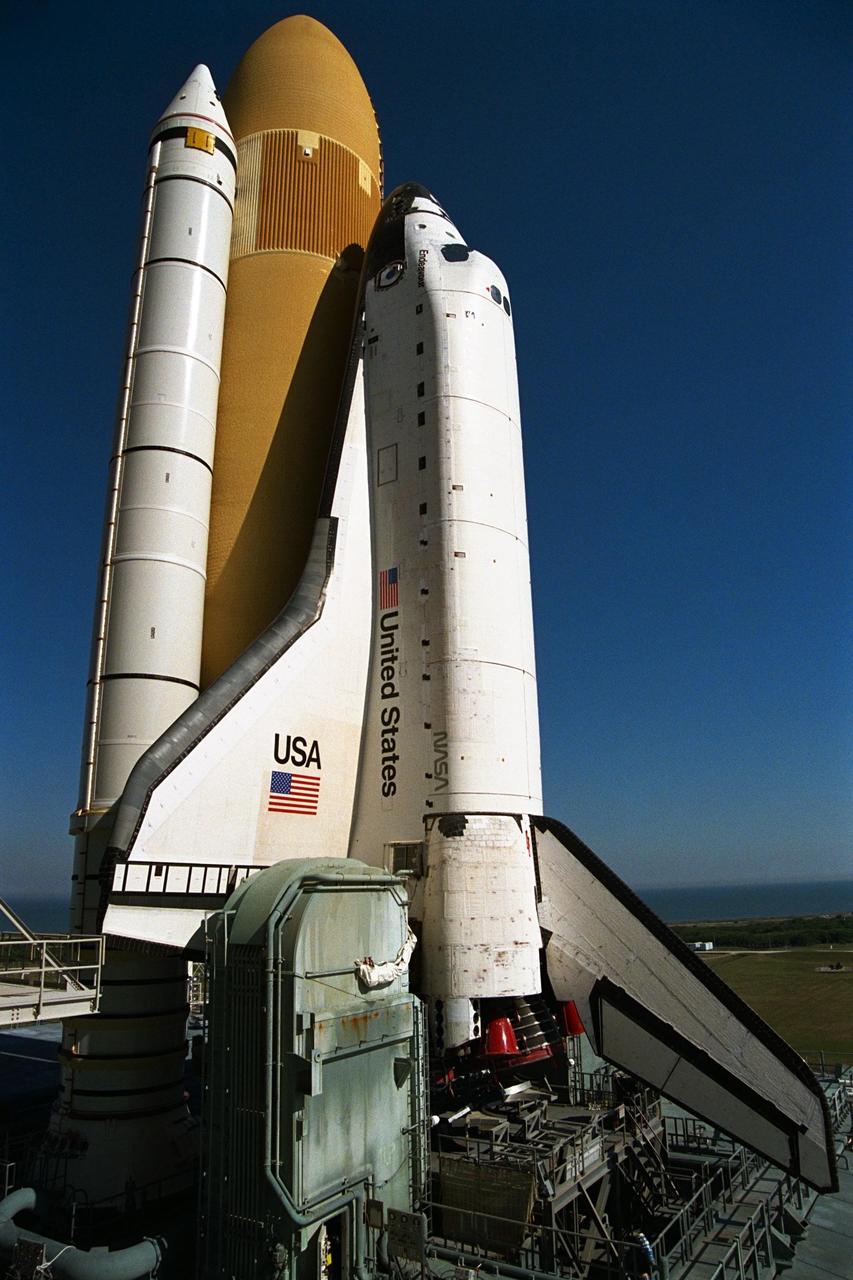
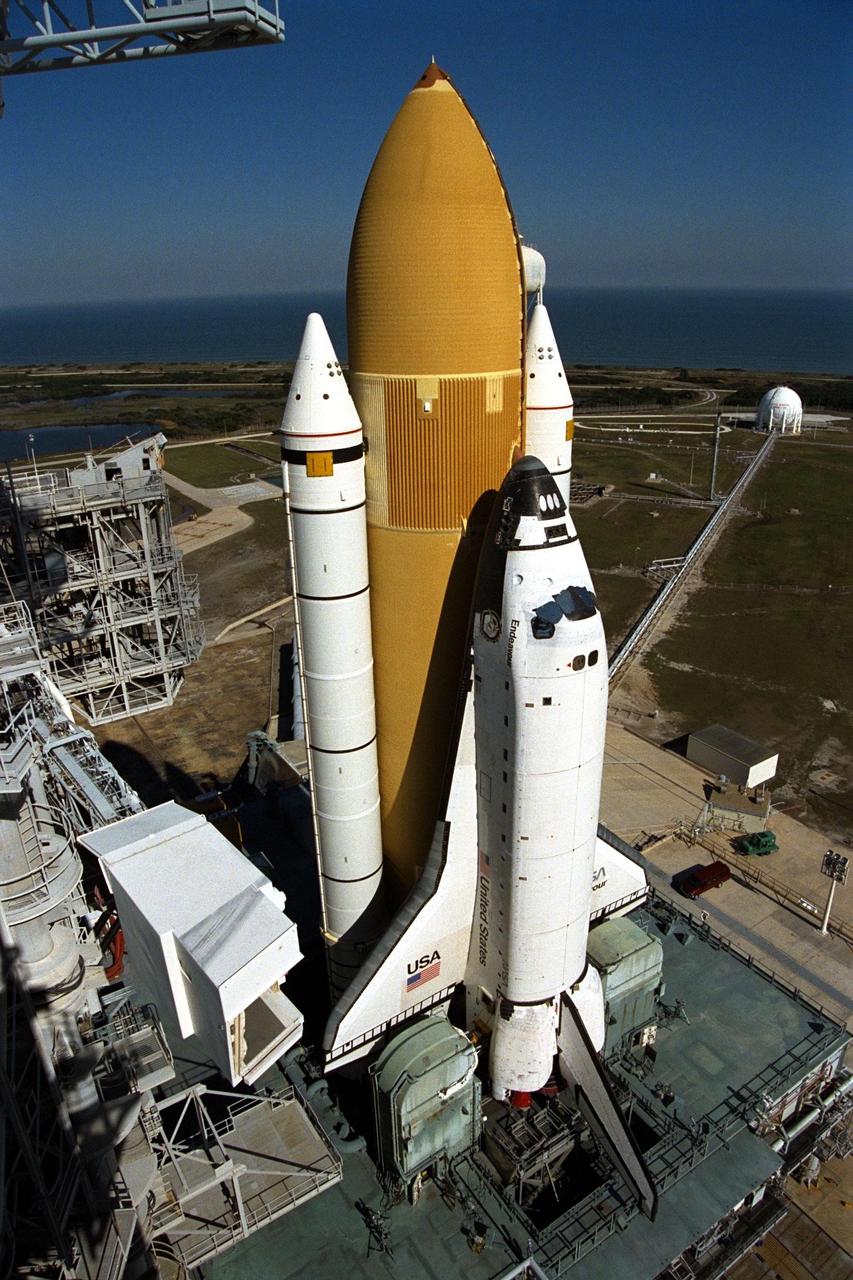
KENNEDY SPACE CENTER, Fla. -- The Space Shuttle Endeavour rolls out to Launch Pad 39A, the destination of its journey from the Vehicle Assembly Building, for final preparations for liftoff of the STS-89 mission. Endeavour and its crew of seven are targeted for a Jan. 22 launch. STS-89 will be the eighth Shuttle docking with the Russian Space Station Mir as part of Phase 1 of the International Space Station program. Mission Specialist Andy Thomas, Ph.D., will succeed Mission Specialist David Wolf, M.D., as the last NASA astronaut scheduled for a long-duration stay aboard Mir
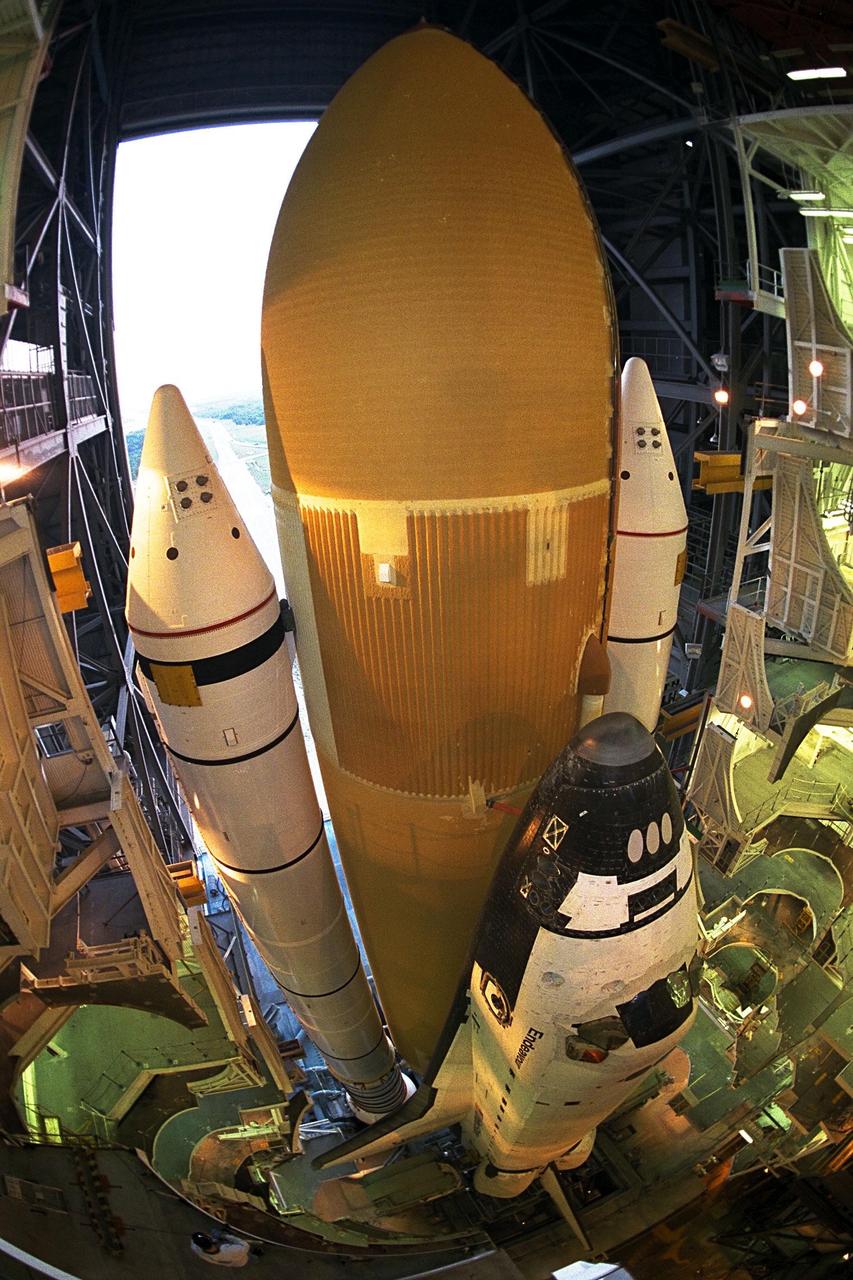
KENNEDY SPACE CENTER, Fla. -- The Space Shuttle Endeavour rolls out to Launch Pad 39A, the destination of its journey from the Vehicle Assembly Building, for final preparations for liftoff of the STS-89 mission. Endeavour and its crew of seven are targeted for a Jan. 22 launch. STS-89 will be the eighth Shuttle docking with the Russian Space Station Mir as part of Phase 1 of the International Space Station program. Mission Specialist Andy Thomas, Ph.D., will succeed Mission Specialist David Wolf, M.D., as the last NASA astronaut scheduled for a long-duration stay aboard Mir
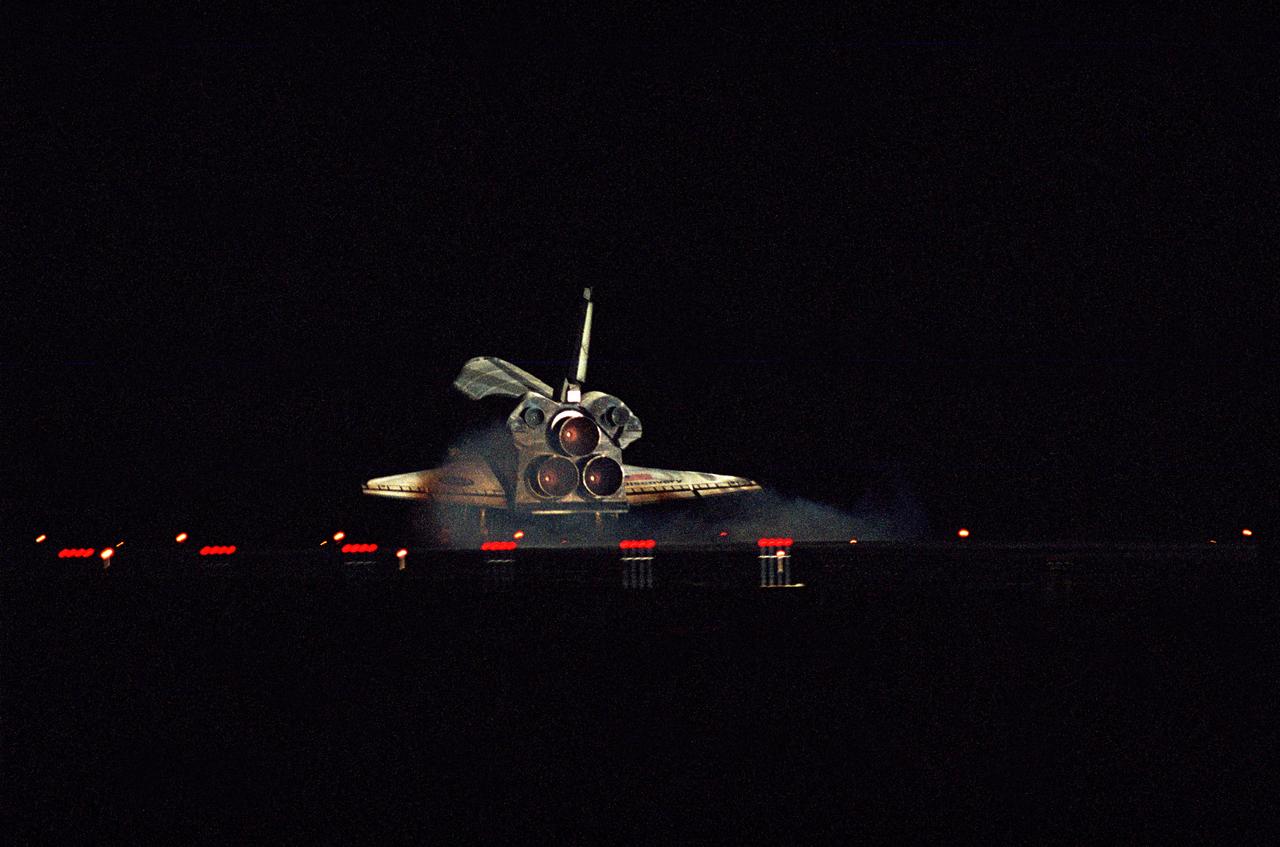
STS102-S-013 (21 March 2001) --- After a 5.3 million mile mission, The Space Shuttle Discovery approaches touchdown on Runway 15 at the KSC Shuttle Landing Facility in this aft view. The landing completed the successful 12-day STS-102 mission. Onboard the shuttle were astronauts James Wetherbee, James Kelly, Andy Thomas, and Paul Richards. Discovery’s touchdown also marked the return of the space station’s first resident crew – Expedition One which were William Shepherd, Yuri Gidzenko and Sergei Krikalev. STS-102 was the 103rd shuttle flight and the eighth shuttle mission to visit the station.
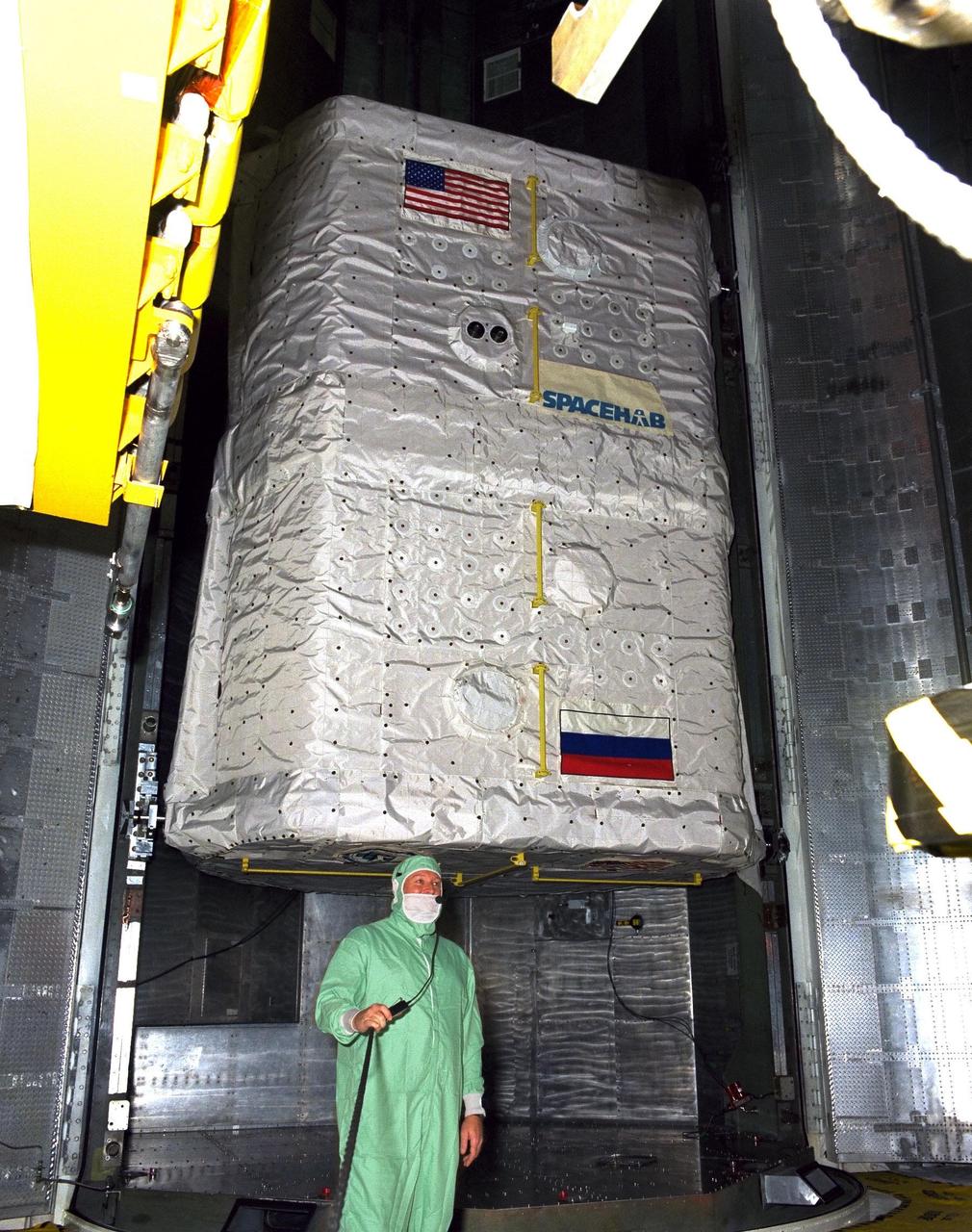
KENNEDY SPACE CENTER, FLA. -- The SPACEHAB payload arrived at Launch Pad 39A this morning and was installed in the Payload Changeout Room. Final preparations for liftoff of the STS-89 mission are under way. Endeavour and its crew of seven are targeted for a Jan. 22 launch. STS-89 will be the eighth Shuttle docking with the Russian Space Station Mir as part of Phase 1 of the International Space Station program. Mission Specialist Andy Thomas, Ph.D., will succeed Mission Specialist David Wolf, M.D., as the last NASA astronaut scheduled for a long-duration stay aboard Mir
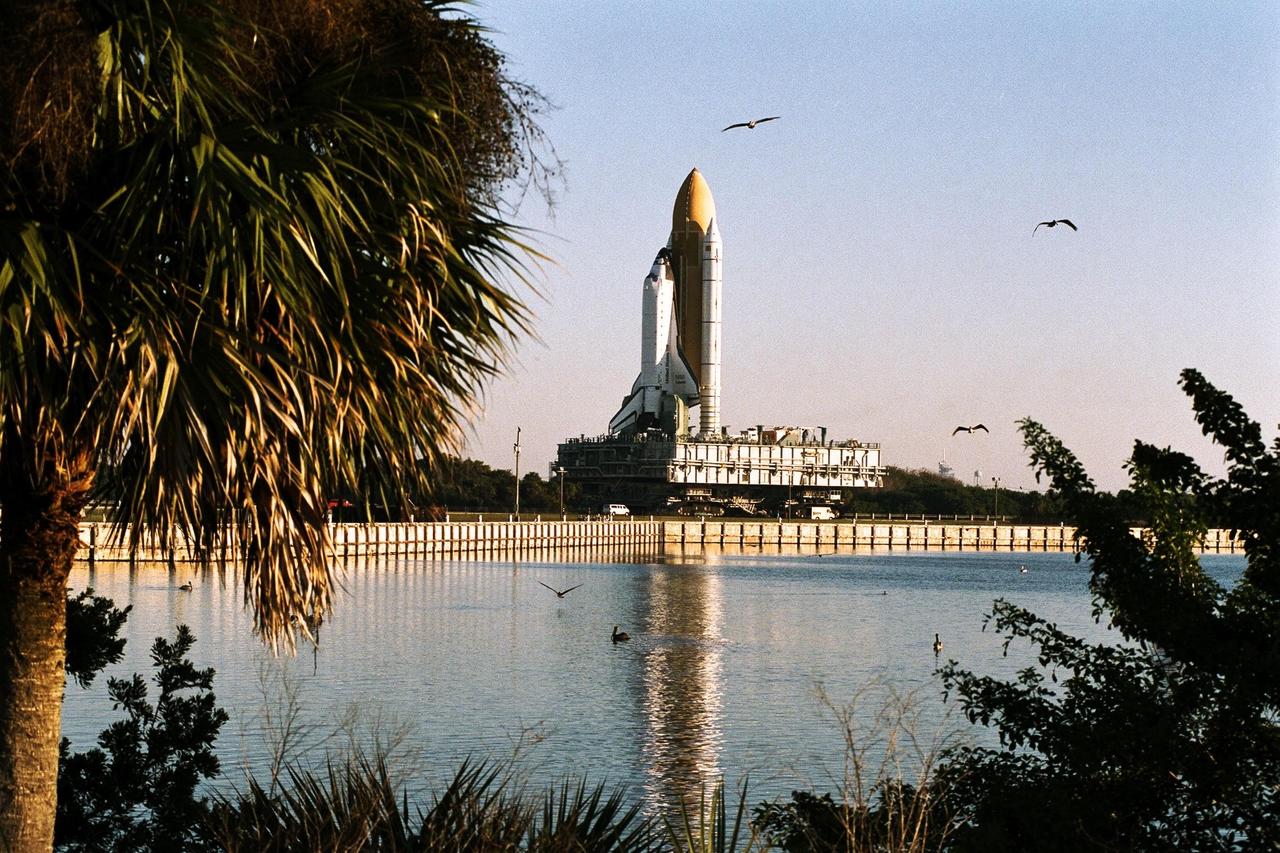
KENNEDY SPACE CENTER, Fla. -- The Space Shuttle Endeavour rolls out to Launch Pad 39A, the destination of its journey from the Vehicle Assembly Building, for final preparations for liftoff of the STS-89 mission. Endeavour and its crew of seven are targeted for a Jan. 22 launch. STS-89 will be the eighth Shuttle docking with the Russian Space Station Mir as part of Phase 1 of the International Space Station program. Mission Specialist Andy Thomas, Ph.D., will succeed Mission Specialist David Wolf, M.D., as the last NASA astronaut scheduled for a long-duration stay aboard Mir
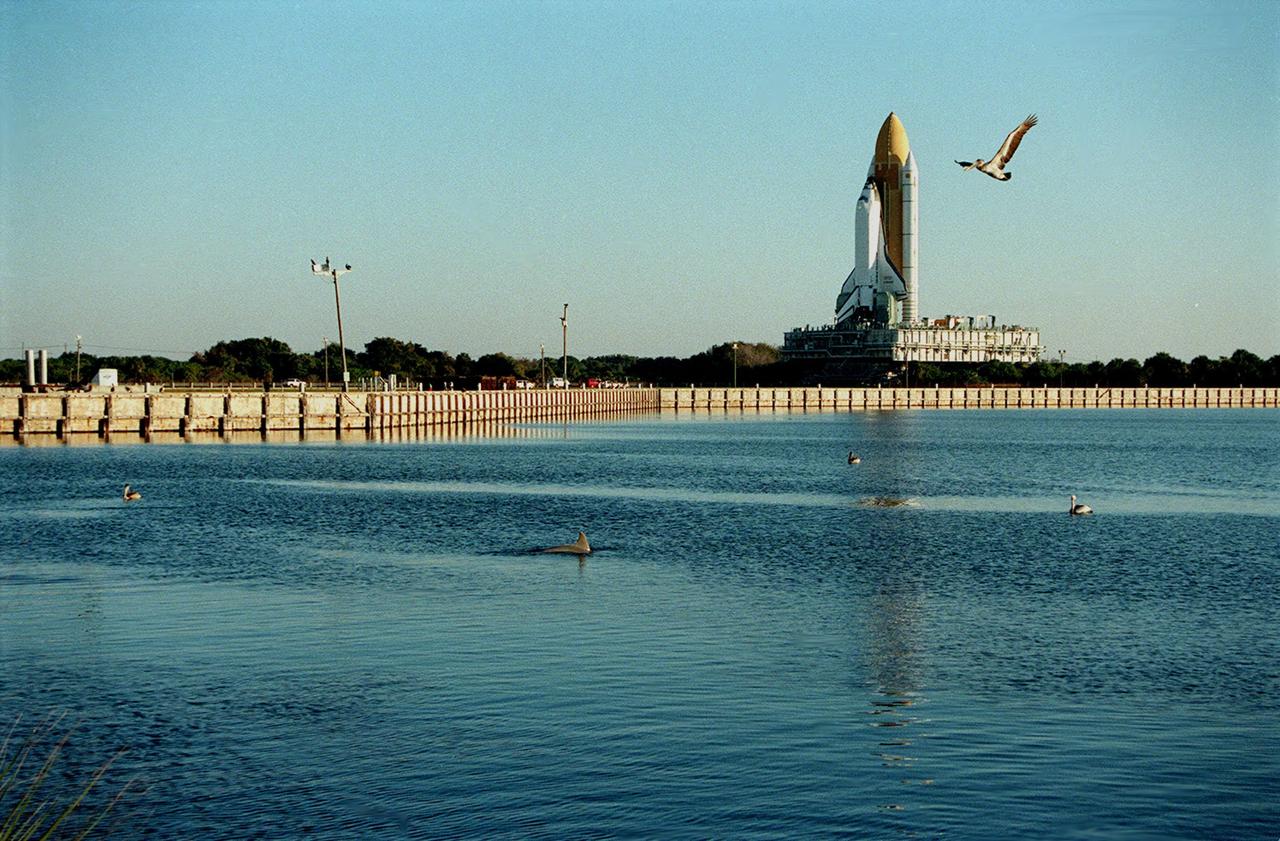
KENNEDY SPACE CENTER, Fla. -- The Space Shuttle Endeavour rolls out to Launch Pad 39A, the destination of its journey from the Vehicle Assembly Building, for final preparations for liftoff of the STS-89 mission. Endeavour and its crew of seven are targeted for a Jan. 22 launch. STS-89 will be the eighth Shuttle docking with the Russian Space Station Mir as part of Phase 1 of the International Space Station program. Mission Specialist Andy Thomas, Ph.D., will succeed Mission Specialist David Wolf, M.D., as the last NASA astronaut scheduled for a long-duration stay aboard Mir
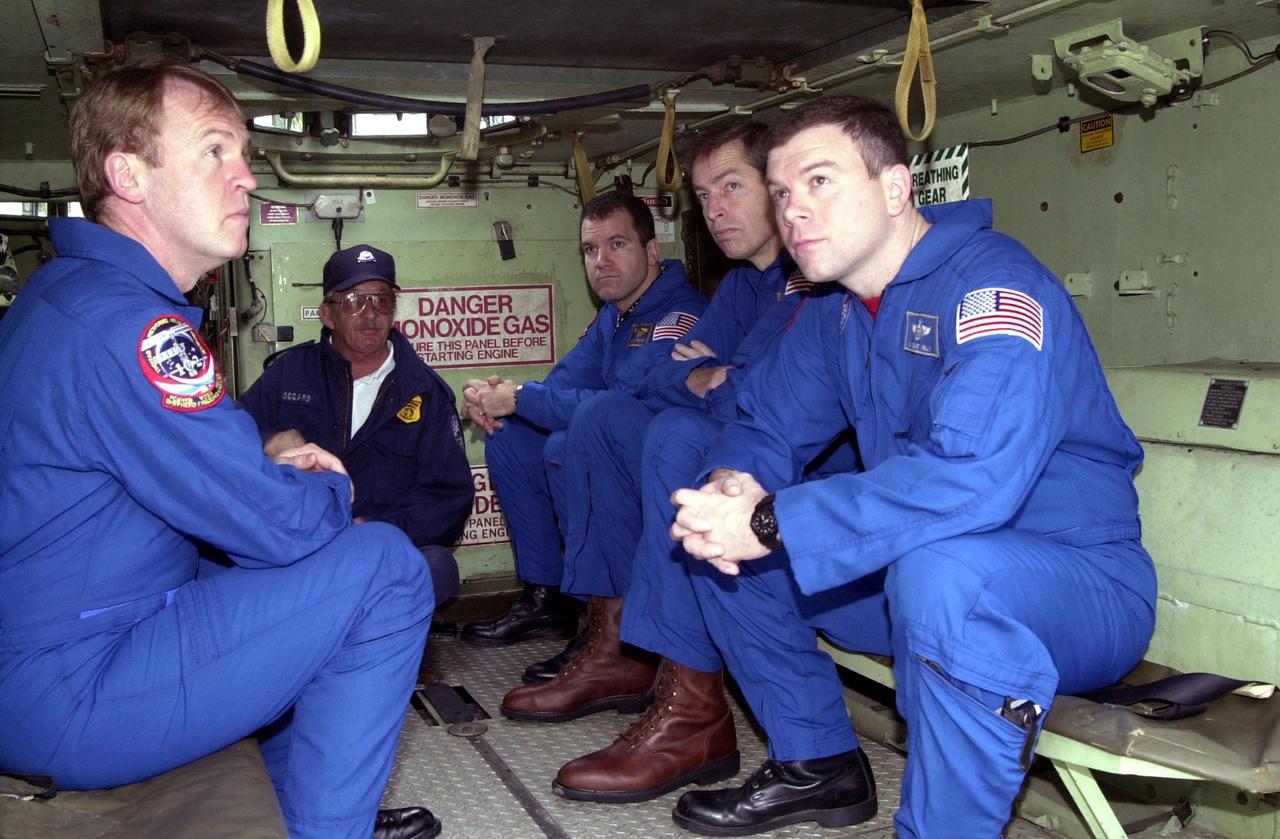
The STS-102 crew wait for instructions about the M-113 armored carrier they are seated in. At left is Mission Specialist Andy Thomas. On the right side are (left to right) Mission Specialist Paul Richards, Commander James Wetherbee and Pilot James Kelly. In the event of an emergency at the pad prior to launch, the carrier could be used to transport the crew to a nearby bunker or farther. The STS-102 crew is at KSC to take part in Terminal Countdown Demonstration Test activities, which also include a simulated launch countdown. STS-102 is the eighth construction flight to the International Space Station, carrying as payload the Multi-Purpose Logistics Module Leonardo. Launch on mission STS-102 is scheduled for March 8
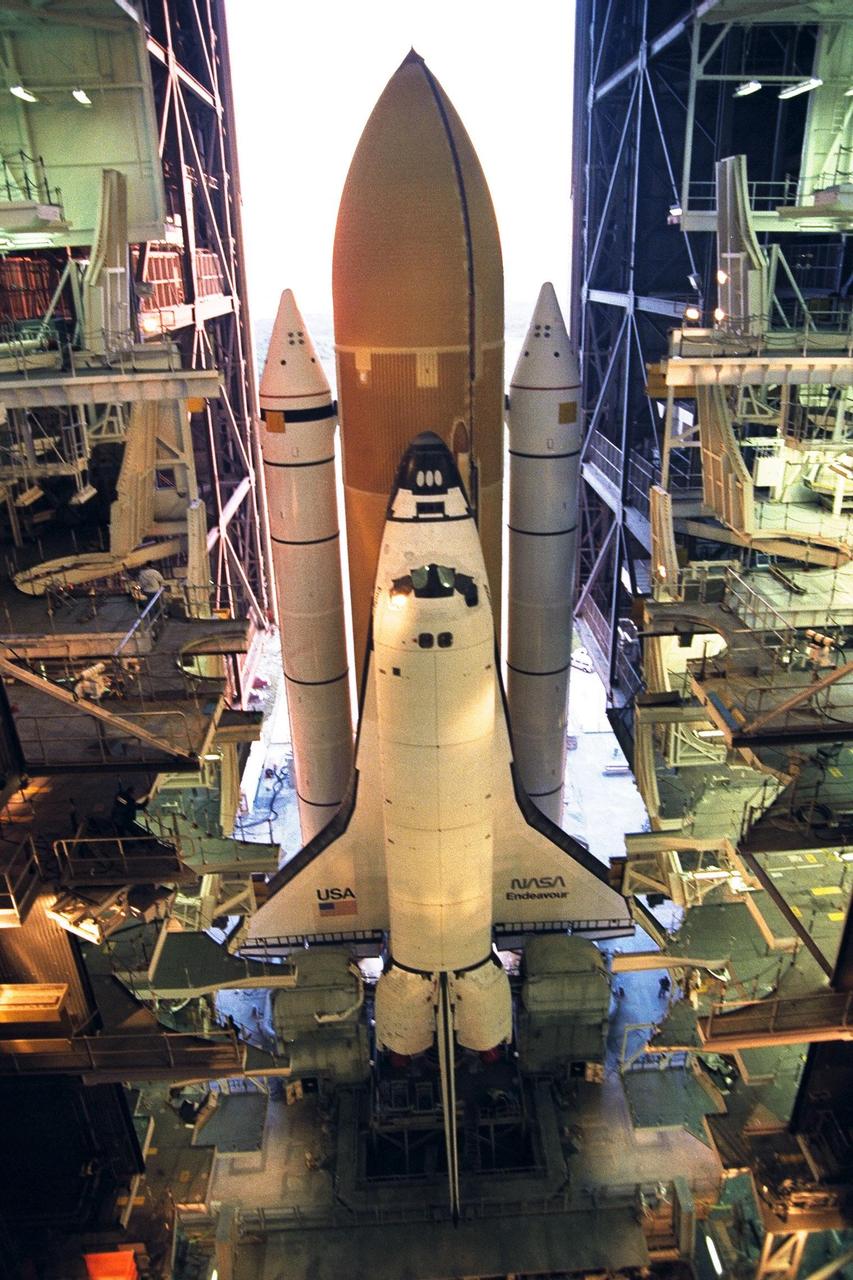
KENNEDY SPACE CENTER, Fla. -- The Space Shuttle Endeavour rolls out to Launch Pad 39A, the destination of its journey from the Vehicle Assembly Building, for final preparations for liftoff of the STS-89 mission. Endeavour and its crew of seven are targeted for a Jan. 22 launch. STS-89 will be the eighth Shuttle docking with the Russian Space Station Mir as part of Phase 1 of the International Space Station program. Mission Specialist Andy Thomas, Ph.D., will succeed Mission Specialist David Wolf, M.D., as the last NASA astronaut scheduled for a long-duration stay aboard Mir
KENNEDY SPACE CENTER, Fla. -- The Space Shuttle Endeavour rolls out to Launch Pad 39A, the destination of its journey from the Vehicle Assembly Building, for final preparations for liftoff of the STS-89 mission. Endeavour and its crew of seven are targeted for a Jan. 22 launch. STS-89 will be the eighth Shuttle docking with the Russian Space Station Mir as part of Phase 1 of the International Space Station program. Mission Specialist Andy Thomas, Ph.D., will succeed Mission Specialist David Wolf, M.D., as the last NASA astronaut scheduled for a long-duration stay aboard Mir
KENNEDY SPACE CENTER, Fla. -- The Space Shuttle Endeavour rolls out to Launch Pad 39A, the destination of its journey from the Vehicle Assembly Building, for final preparations for liftoff of the STS-89 mission. Endeavour and its crew of seven are targeted for a Jan. 22 launch. STS-89 will be the eighth Shuttle docking with the Russian Space Station Mir as part of Phase 1 of the International Space Station program. Mission Specialist Andy Thomas, Ph.D., will succeed Mission Specialist David Wolf, M.D., as the last NASA astronaut scheduled for a long-duration stay aboard Mir
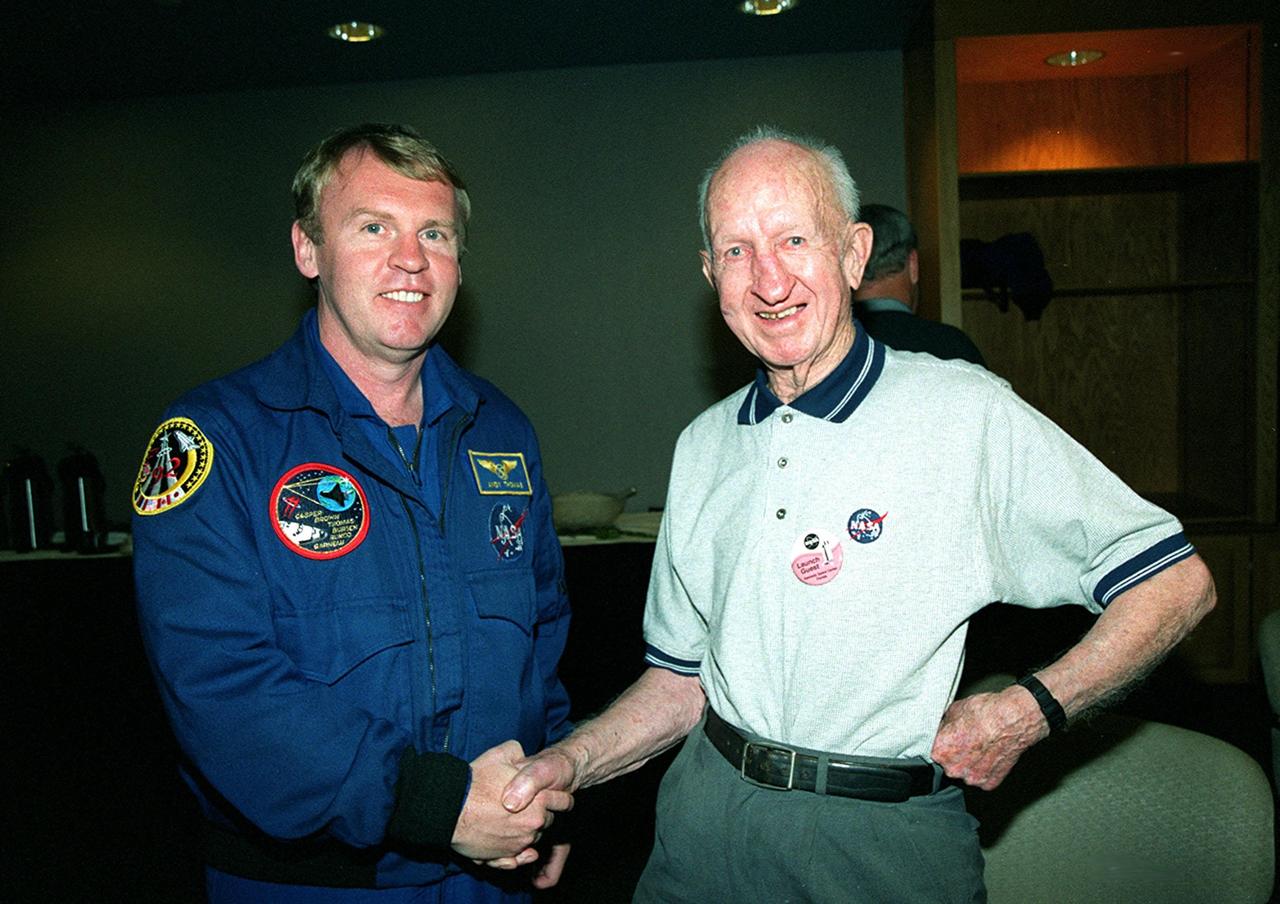
Astronaut Andy Thomas (left) greets 100-year-old Captain Ralph Charles, one of the VIPs attending the launch of STS-99. Charles also met NASA Administrator Dan Goldin. An aviator who has the distinction of being the oldest licensed pilot in the United States, Charles is still flying. He has experienced nearly a century of flight history, from the Wright Brothers to the Space Program. He took flying lessons from one of the first fliers trained by Orville Wright, first repaired then built airplanes, went barnstorming, operated a charter service in the Caribbean, and worked as a test pilot for the Curtiss Wright Airplane Co. Charles watches all the Shuttle launches from his home in Ohio and his greatest wish is to be able to watch one in person from KSC
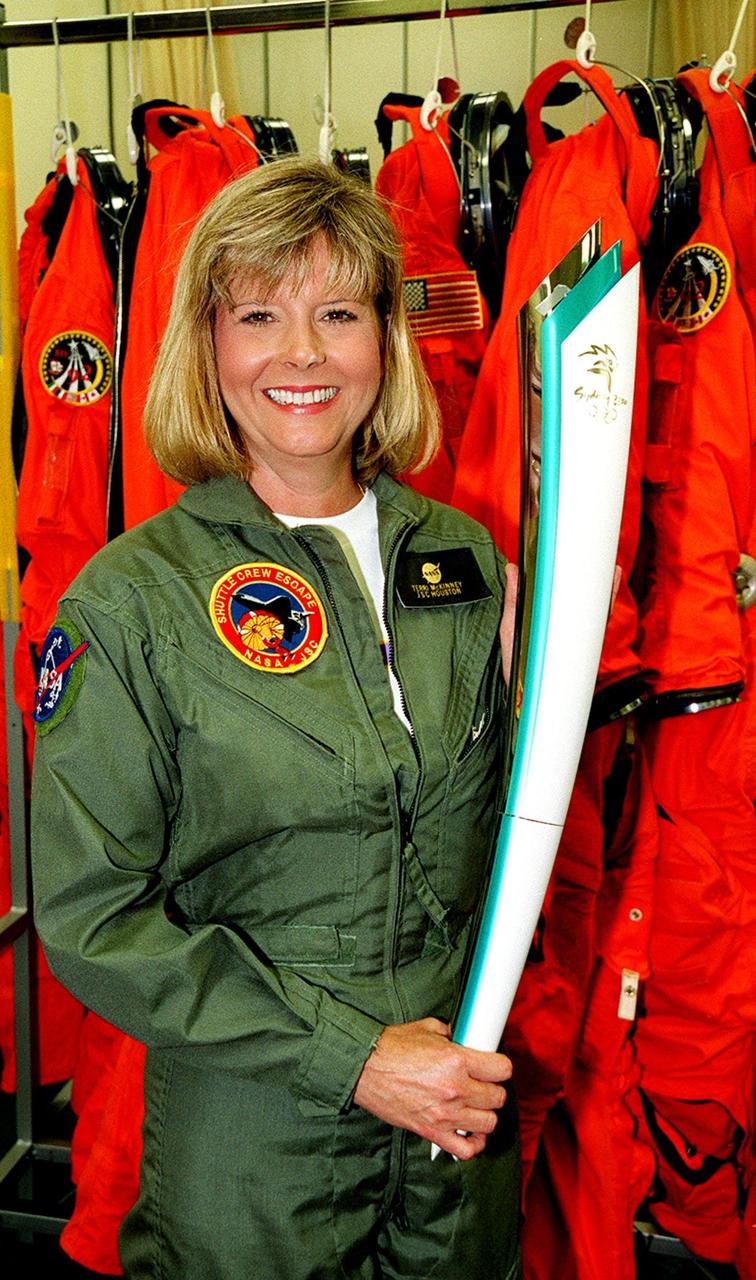
Teri McKinney, with Shuttle Crew Escape, Johnson Space Center, holds a replica of the Olympic torch carried aboard Space Shuttle Atlantis on mission STS-101. The addition of the torch to the payload was coordinated by astronaut Andy Thomas, who is from Australia. The torch will travel to Australia for the 2000 Olympic games being held there in September. . STS-101 was the third flight to the International Space Station and included repairs to the Station plus transfer of equipment and supplies to the Station for future missions. The landing of Atlantis completed a 9-day, 20-hour, 9-minute-long mission. It was the 98th flight in the Space Shuttle program and the 21st for Atlantis. The landing was the 51st at KSC, the 22nd consecutive landing at KSC and the 29th in the last 30 Shuttle flights, plus the 14th nighttime landing in Shuttle history
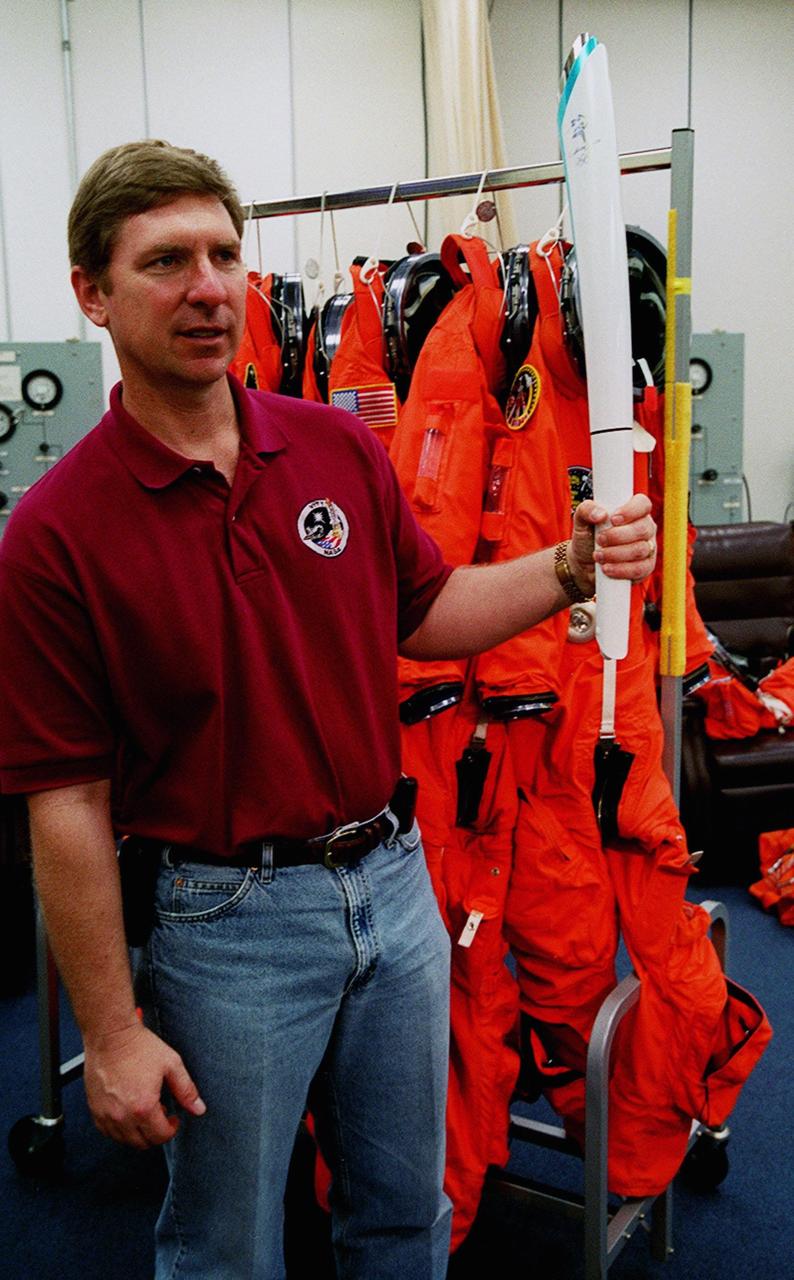
To; Kwiatkowski, Vehicle Integration Team Lead, recovers a replica of the Olympic torch after its journey on Space Shuttle Atlantis on mission STS-101. The addition of the torch to the payload was coordinated by astronaut Andy Thomas, who is from Australia. The torch will travel to Australia for the 2000 Olympic games being held there in September. STS-101 was the third flight to the International Space Station and included repairs to the Station plus transfer of equipment and supplies to the Station for future missions. The landing of Atlantis completed a 9-day, 20-hour, 9-minute-long mission. It was the 98th flight in the Space Shuttle program and the 21st for Atlantis. The landing was the 51st at KSC, the 22nd consecutive landing at KSC and the 29th in the last 30 Shuttle flights, plus the 14th nighttime landing in Shuttle history
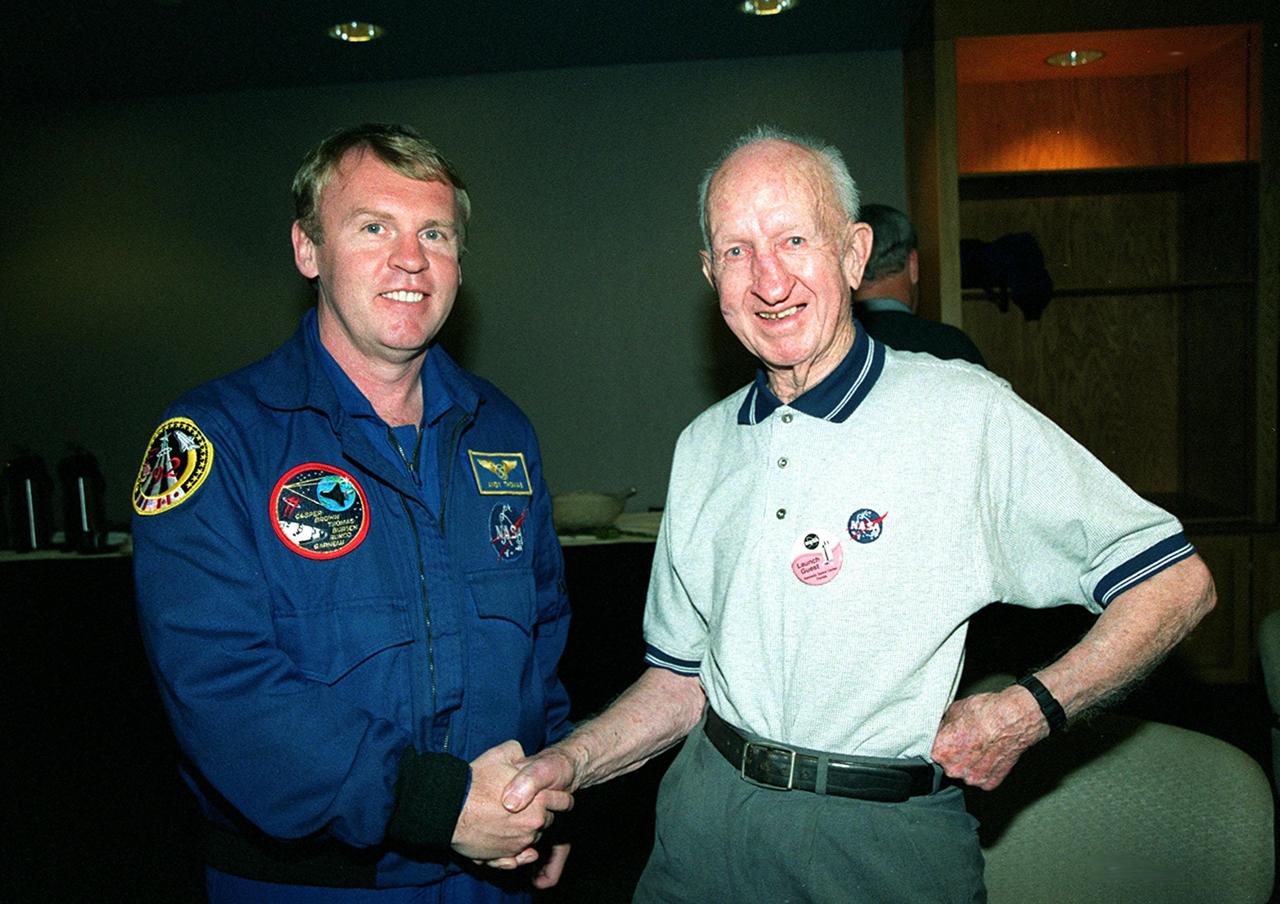
Astronaut Andy Thomas (left) greets 100-year-old Captain Ralph Charles, one of the VIPs attending the launch of STS-99. Charles also met NASA Administrator Dan Goldin. An aviator who has the distinction of being the oldest licensed pilot in the United States, Charles is still flying. He has experienced nearly a century of flight history, from the Wright Brothers to the Space Program. He took flying lessons from one of the first fliers trained by Orville Wright, first repaired then built airplanes, went barnstorming, operated a charter service in the Caribbean, and worked as a test pilot for the Curtiss Wright Airplane Co. Charles watches all the Shuttle launches from his home in Ohio and his greatest wish is to be able to watch one in person from KSC
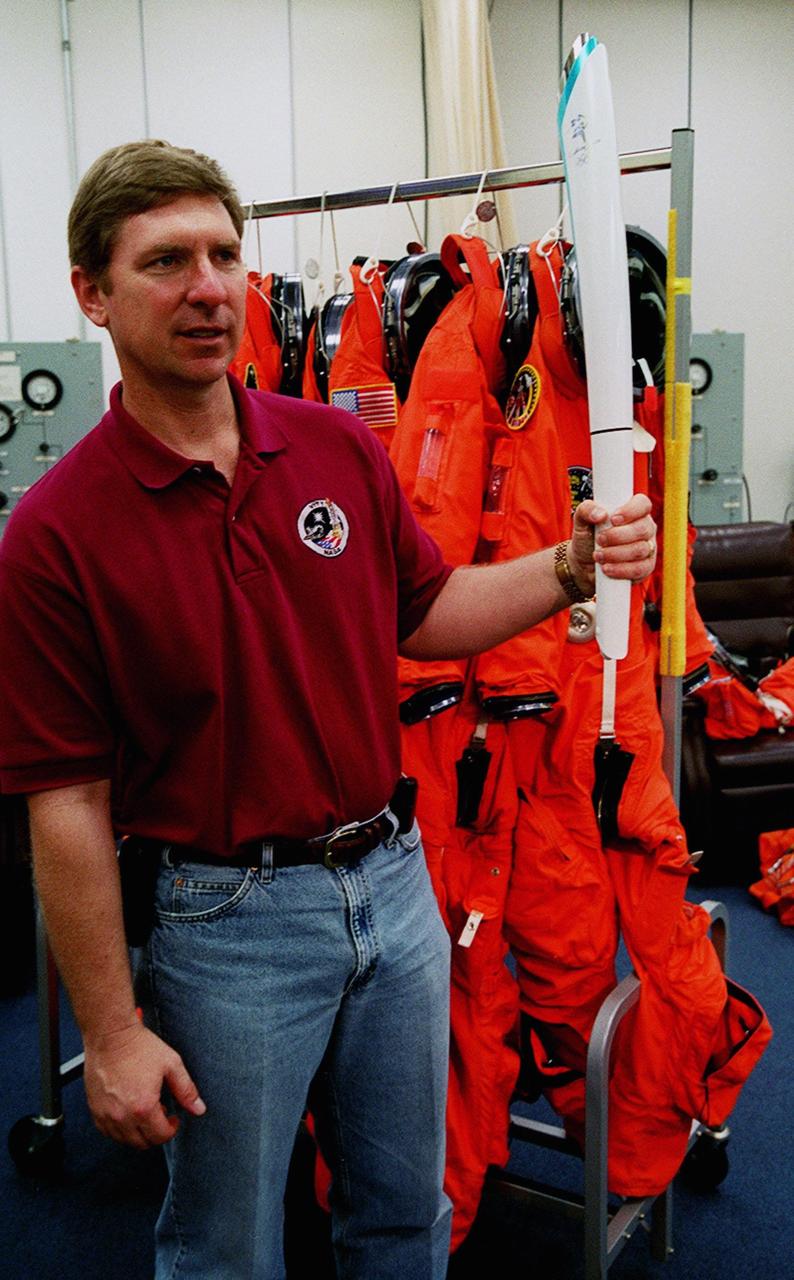
To; Kwiatkowski, Vehicle Integration Team Lead, recovers a replica of the Olympic torch after its journey on Space Shuttle Atlantis on mission STS-101. The addition of the torch to the payload was coordinated by astronaut Andy Thomas, who is from Australia. The torch will travel to Australia for the 2000 Olympic games being held there in September. STS-101 was the third flight to the International Space Station and included repairs to the Station plus transfer of equipment and supplies to the Station for future missions. The landing of Atlantis completed a 9-day, 20-hour, 9-minute-long mission. It was the 98th flight in the Space Shuttle program and the 21st for Atlantis. The landing was the 51st at KSC, the 22nd consecutive landing at KSC and the 29th in the last 30 Shuttle flights, plus the 14th nighttime landing in Shuttle history
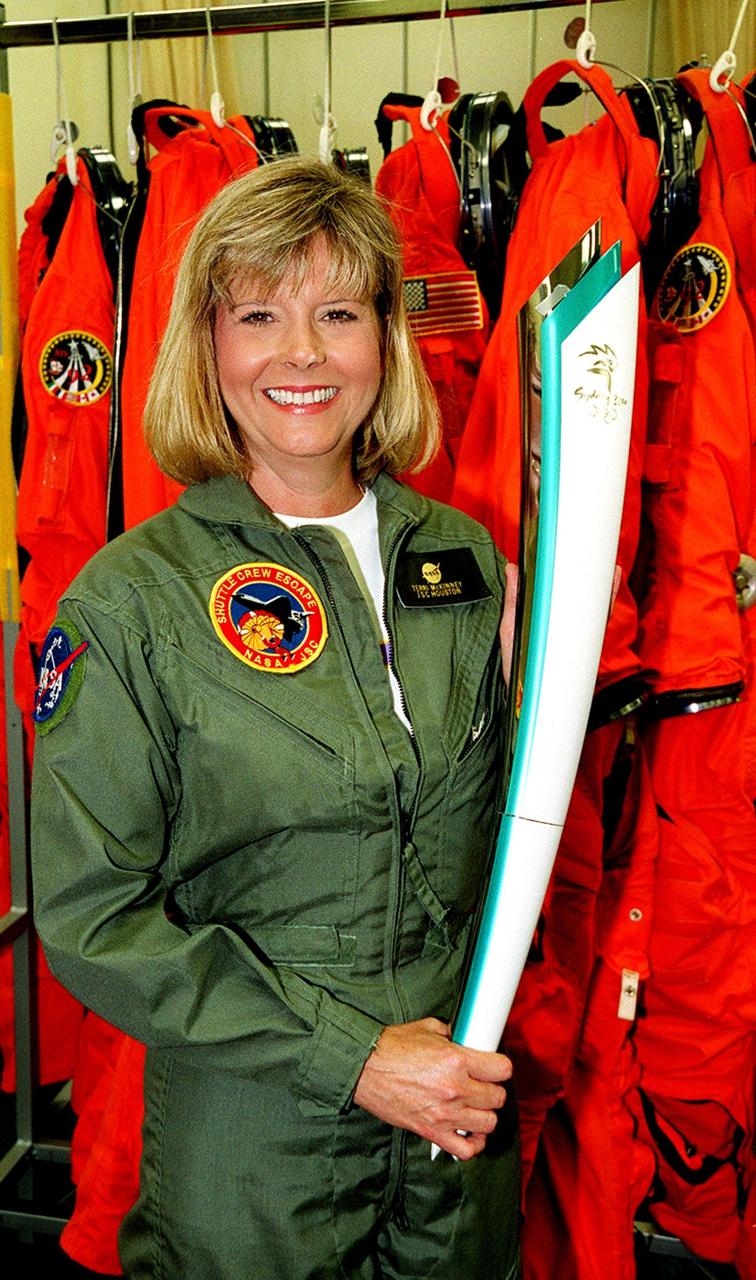
Teri McKinney, with Shuttle Crew Escape, Johnson Space Center, holds a replica of the Olympic torch carried aboard Space Shuttle Atlantis on mission STS-101. The addition of the torch to the payload was coordinated by astronaut Andy Thomas, who is from Australia. The torch will travel to Australia for the 2000 Olympic games being held there in September. . STS-101 was the third flight to the International Space Station and included repairs to the Station plus transfer of equipment and supplies to the Station for future missions. The landing of Atlantis completed a 9-day, 20-hour, 9-minute-long mission. It was the 98th flight in the Space Shuttle program and the 21st for Atlantis. The landing was the 51st at KSC, the 22nd consecutive landing at KSC and the 29th in the last 30 Shuttle flights, plus the 14th nighttime landing in Shuttle history
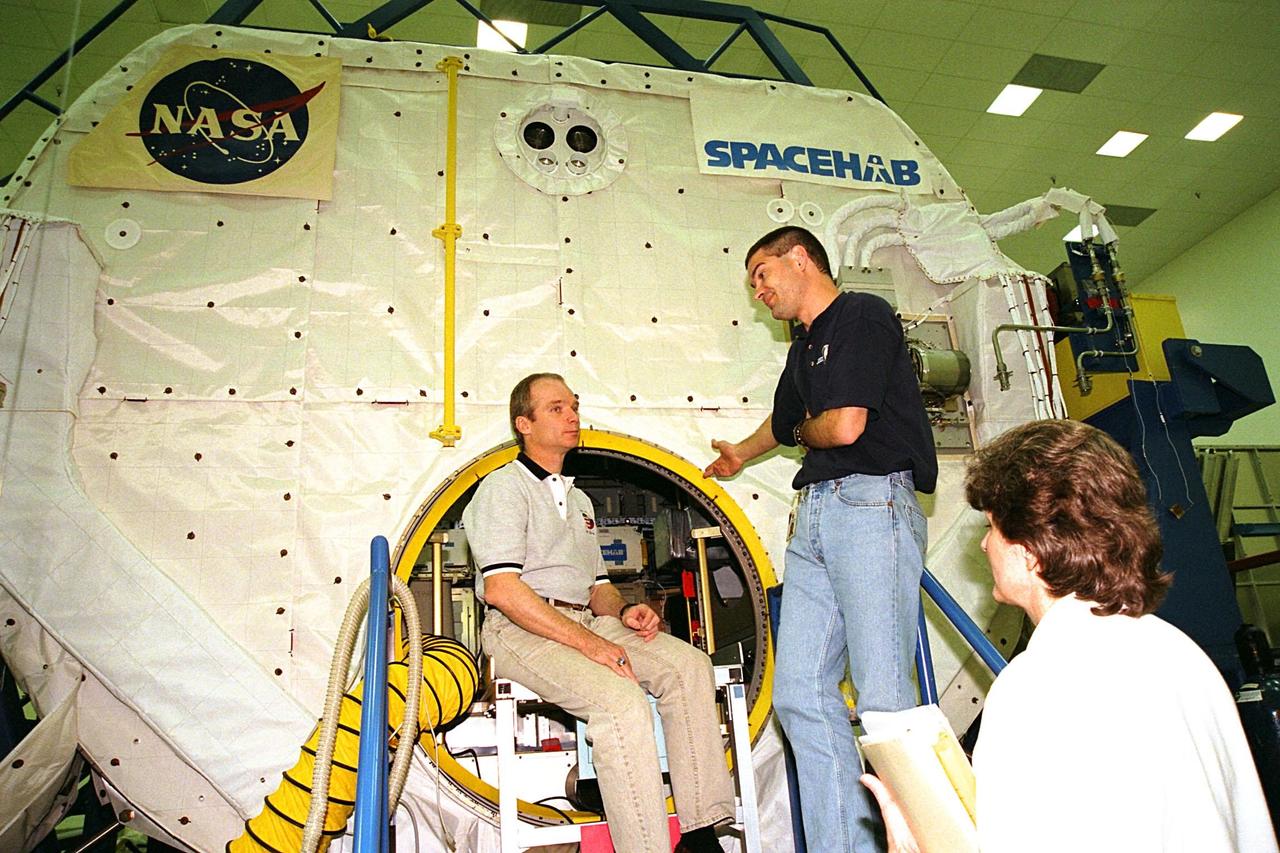
KENNEDY SPACE CENTER, FLA. -- The STS-91 crew participate in the Crew Equipment Interface Test (CEIT) for their upcoming Space Shuttle mission at the SPACEHAB Payload Processing Facility in Cape Canaveral. The CEIT gives astronauts an opportunity to get a hands-on look at the payloads with which they will be working on-orbit. STS-91 will be the ninth and final scheduled Mir docking and will include a single module of SPACEHAB, used mainly as a large pressurized cargo container for science, logistical equipment and supplies to be exchanged between the orbiter Discovery and the Russian Space Station Mir. The nearly 10-day flight of STS-91 also is scheduled to include the return of the last astronaut to live and work aboard the Russian orbiting outpost, Mission Specialist Andy Thomas, Ph.D. Liftoff of Discovery and its six-member crew is targeted for May 28, 1998, at 8:05 p.m. EDT from Launch Pad 39A. Sitting in front of SPACEHAB is STS-91 Commander Charles Precourt listening to instruction by Chris Jaskolka, Boeing SPACEHAB Program senior engineer, as Lynn Ashby, Boeing SPACEHAB Program principal engineer, looks on
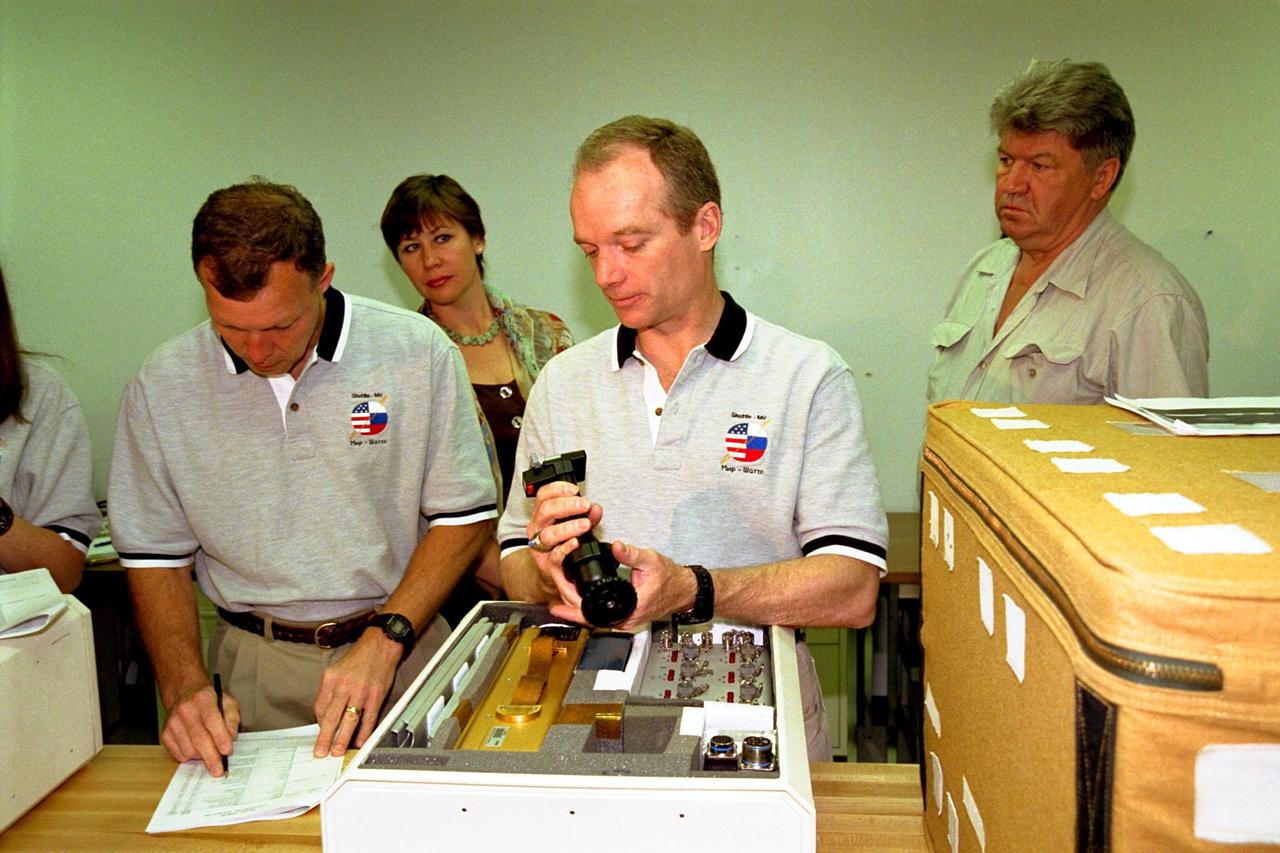
KENNEDY SPACE CENTER, FLA. -- The STS-91 crew participate in the Crew Equipment Interface Test (CEIT) for their upcoming Space Shuttle mission at the SPACEHAB Payload Processing Facility in Cape Canaveral. The CEIT gives astronauts an opportunity to get a hands-on look at the payloads with which they will be working on-orbit. STS-91 will be the ninth and final scheduled Mir docking and will include a single module of SPACEHAB, used mainly as a large pressurized cargo container for science, logistical equipment and supplies to be exchanged between the orbiter Discovery and the Russian Space Station Mir. The nearly 10-day flight of STS-91 also is scheduled to include the return of the last astronaut to live and work aboard the Russian orbiting outpost, Mission Specialist Andy Thomas, Ph.D. Liftoff of Discovery and its six-member crew is targeted for May 28, 1998, at 8:05 p.m. EDT from Launch Pad 39A. From left to right are STS-91 Pilot Dominic Gorie, Russian Interpreter Olga Belozerova, STS-91 Commander Charles Precourt, and STS-91 Mission Specialist Valery Ryumin with the Russian Space Agency
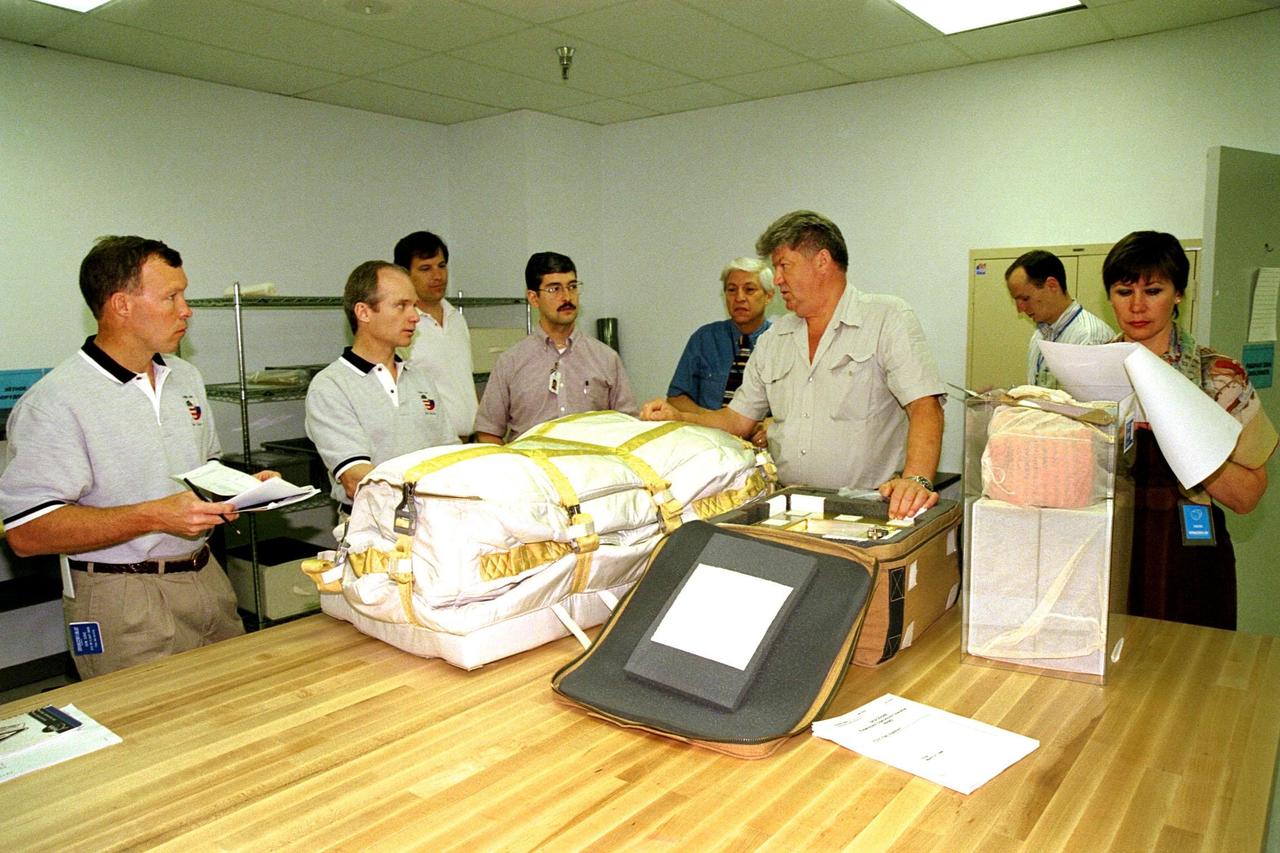
The STS-91 crew participate in the Crew Equipment Interface Test (CEIT) for their upcoming Space Shuttle mission at the SPACEHAB Payload Processing Facility in Cape Canaveral. The CEIT gives astronauts an opportunity to get a hands-on look at the payloads with which they will be working on-orbit. STS-91 will be the ninth and final scheduled Mir docking and will include a single module of SPACEHAB, used mainly as a large pressurized cargo container for science, logistical equipment and supplies to be exchanged between the orbiter Discovery and the Russian Space Station Mir. The nearly 10-day flight of STS-91 also is scheduled to include the return of the last astronaut to live and work aboard the Russian orbiting outpost, Mission Specialist Andy Thomas, Ph.D. Liftoff of Discovery and its six-member crew is targeted for May 28, 1998, at 8:05 p.m. EDT from Launch Pad 39A. From left to right are STS-91 Pilot Dominic Gorie, STS-91 Commander Charles Precourt, Boeing SPACEHAB Payload Operations Senior Engineer Jim Behling, Boeing SPACEHAB Program Senior Engineer Shawn Hicks, Boeing SPACEHAB Program Specialist in Engineering Ed Saenger, STS-91 Mission Specialist Valery Ryumin with the Russian Space Agency, Boeing SPACEHAB Program Manager in Engineering Brad Reid, and Russian Interpreter Olga Belozerova

In the Kennedy Space Center's Operations and Support Building II, Thursday, Aug. 9, 2018, members of the media participate in a prelaunch mission briefing on NASA's Parker Solar Probe. Moderating the science briefing are Karen Fox, far left, Goddard Space Flight Center; and Dwaye Brown, far right, NASA Communications. Briefers are Andy Driesman, Parker Solar Probe project manager, Johns Hopkins Applied Physics Laboratory; Nicky Fox, Parker Solar Probe project scientist, Johns Hopkins Applied Physics Laboratory; and Thomas Zurbuchen, associate administrator for NASA's Science Mission Directorate in Washington. The Parker Solar Probe will lift off on a United Launch Alliance Delta IV Heavy rocket from Space Launch Complex 37 at Cape Canaveral Air Force Station in Florida. The spacecraft was built by Applied Physics Laboratory of Johns Hopkins University in Laurel, Maryland. The mission will perform the closest-ever observations of a star when it travels through the Sun's atmosphere, called the corona. The probe will rely on measurements and imaging to revolutionize our understanding of the corona and the Sun-Earth connection.
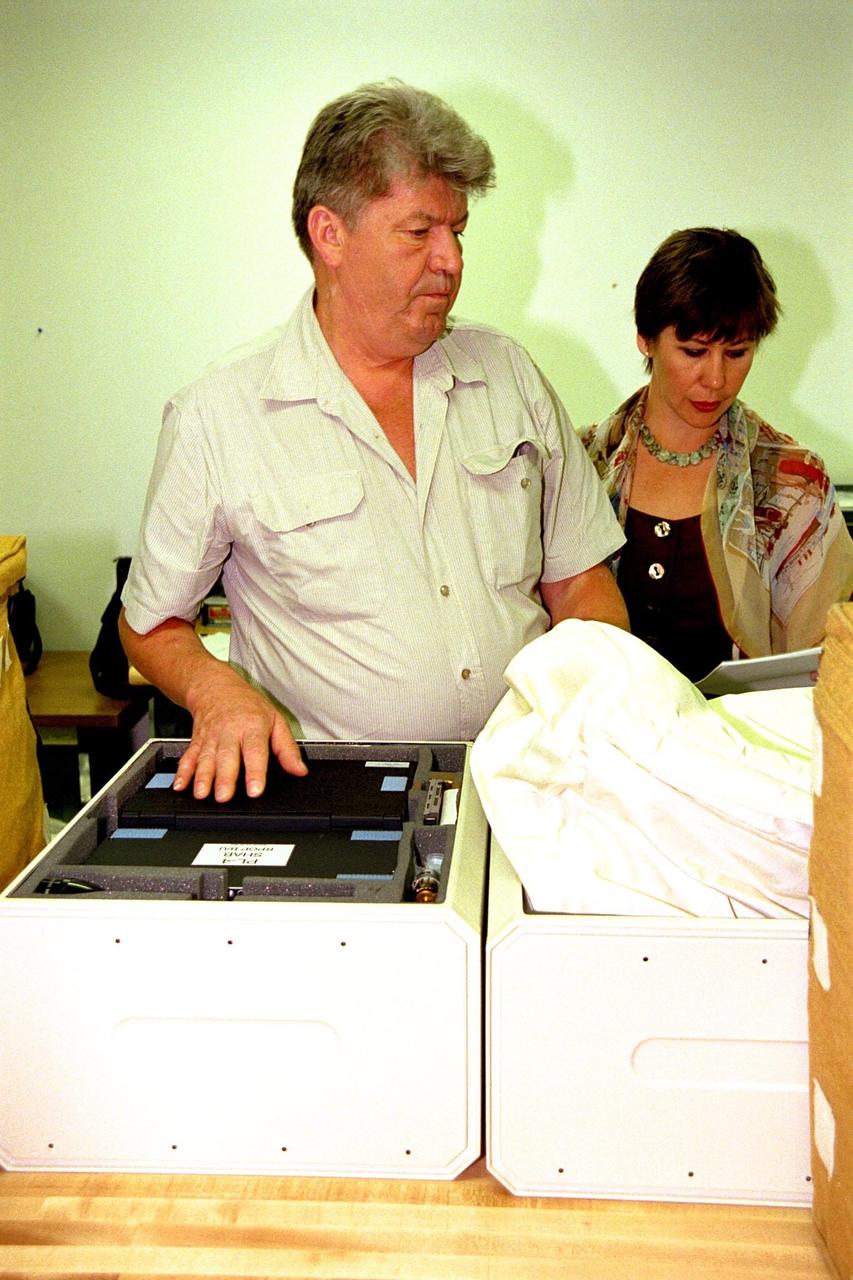
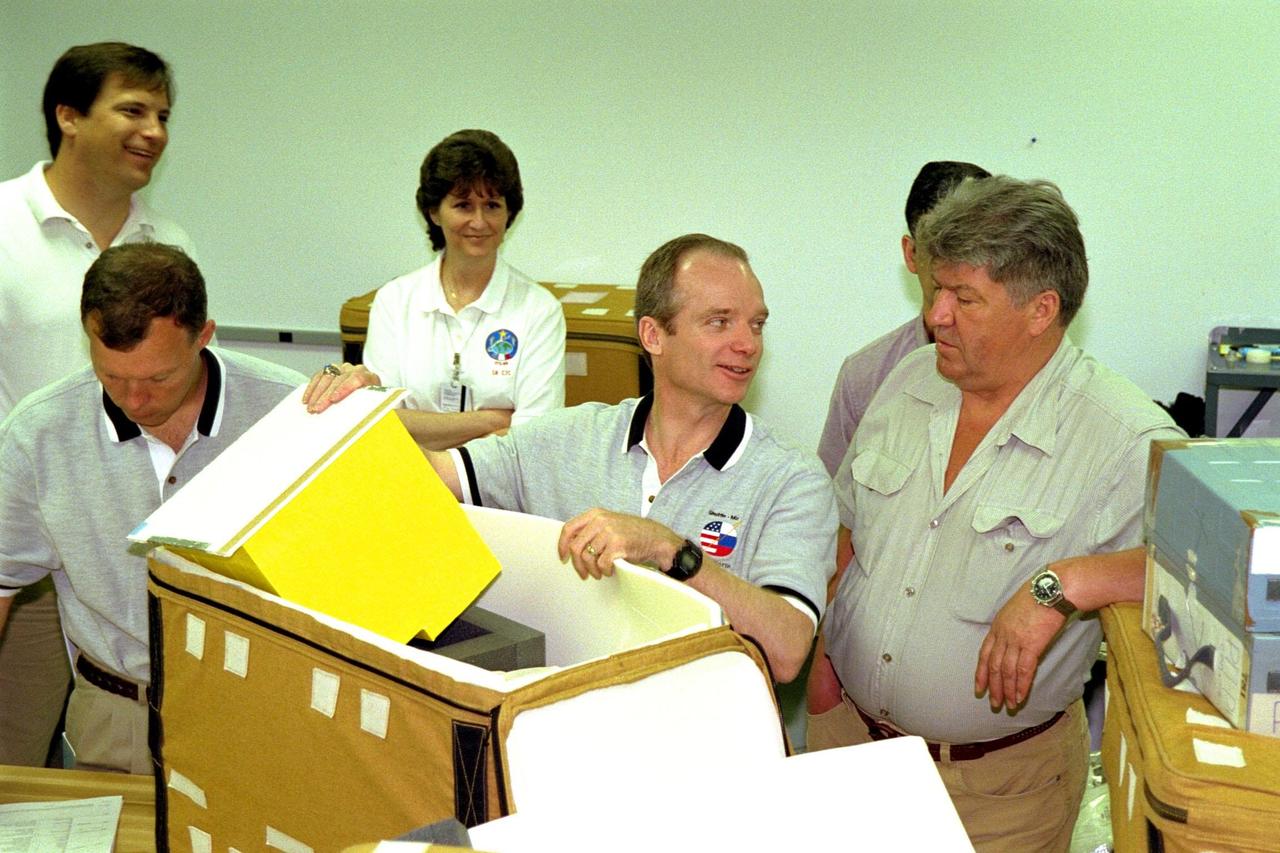
KENNEDY SPACE CENTER, FLA. -- The STS-91 crew participate in the Crew Equipment Interface Test (CEIT) for their upcoming Space Shuttle mission at the SPACEHAB Payload Processing Facility in Cape Canaveral. The CEIT gives astronauts an opportunity to get a hands-on look at the payloads with which they will be working on-orbit. STS-91 will be the ninth and final scheduled Mir docking and will include a single module of SPACEHAB, used mainly as a large pressurized cargo container for science, logistical equipment and supplies to be exchanged between the orbiter Discovery and the Russian Space Station Mir. The nearly 10-day flight of STS-91 also is scheduled to include the return of the last astronaut to live and work aboard the Russian orbiting outpost, Mission Specialist Andy Thomas, Ph.D. Liftoff of Discovery and its six-member crew is targeted for May 28, 1998, at 8:05 p.m. EDT from Launch Pad 39A. Seen here are STS-91 Mission Specialist Valery Ryumin with the Russian Space Agency and his Russian Interpreter Olga Belozerova
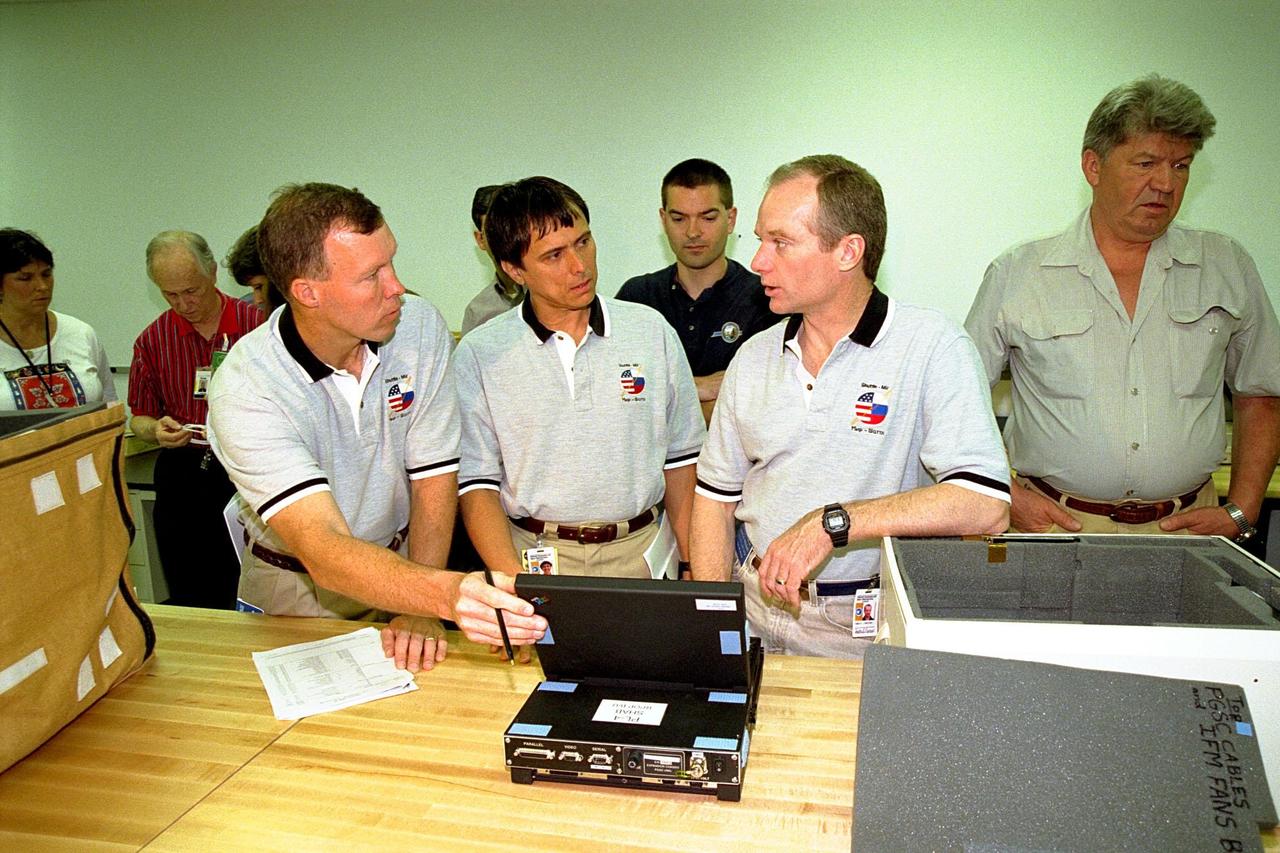
KENNEDY SPACE CENTER, FLA. -- The STS-91 crew participate in the Crew Equipment Interface Test (CEIT) for their upcoming Space Shuttle mission at the SPACEHAB Payload Processing Facility in Cape Canaveral. The CEIT gives astronauts an opportunity to get a hands-on look at the payloads with which they will be working on-orbit. STS-91 will be the ninth and final scheduled Mir docking and will include a single module of SPACEHAB, used mainly as a large pressurized cargo container for science, logistical equipment and supplies to be exchanged between the orbiter Discovery and the Russian Space Station Mir. The nearly 10-day flight of STS-91 also is scheduled to include the return of the last astronaut to live and work aboard the Russian orbiting outpost, Mission Specialist Andy Thomas, Ph.D. Liftoff of Discovery and its six-member crew is targeted for May 28, 1998, at 8:05 p.m. EDT from Launch Pad 39A. From left to right are Boeing SPACEHAB Payload Operations Senior Engineer Jim Behling, STS-91 Pilot Dominic Gorie, Boeing SPACEHAB Program Principal Engineer Lynn Ashby, STS-91 Commander Charles Precourt, and STS-91 Mission Specialist Valery Ryumin with the Russian Space Agency
KENNEDY SPACE CENTER, FLA. -- The STS-91 crew participate in the Crew Equipment Interface Test (CEIT) for their upcoming Space Shuttle mission at the SPACEHAB Payload Processing Facility in Cape Canaveral. The CEIT gives astronauts an opportunity to get a hands-on look at the payloads with which they will be working on-orbit. STS-91 will be the ninth and final scheduled Mir docking and will include a single module of SPACEHAB, used mainly as a large pressurized cargo container for science, logistical equipment and supplies to be exchanged between the orbiter Discovery and the Russian Space Station Mir. The nearly 10-day flight of STS-91 also is scheduled to include the return of the last astronaut to live and work aboard the Russian orbiting outpost, Mission Specialist Andy Thomas, Ph.D. Liftoff of Discovery and its six-member crew is targeted for May 28, 1998, at 8:05 p.m. EDT from Launch Pad 39A. At far left is Boeing SPACEHAB Program Senior Engineer Ellen Styles, and around the table are, left to right, STS-91 Pilot Dominic Gorie, STS-91 Mission Specialist Franklin Chang-Diaz, Ph.D., Boeing SPACEHAB Program Senior Engineer Chris Jazkolka, STS-91 Commander Charles Precourt, and STS-91 Mission Specialist Valery Ryumin with the Russian Space Agency
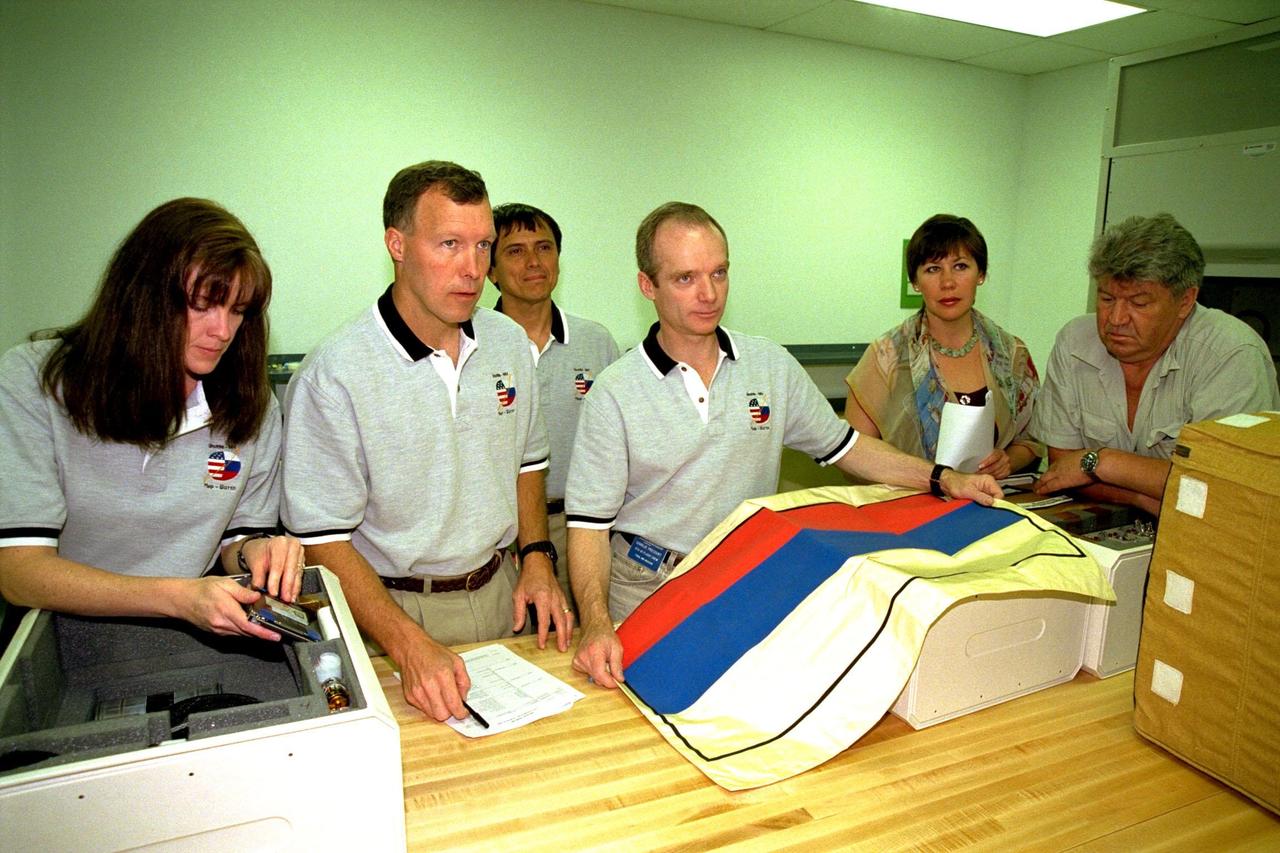
KENNEDY SPACE CENTER, FLA. -- The STS-91 crew participate in the Crew Equipment Interface Test (CEIT) for their upcoming Space Shuttle mission at the SPACEHAB Payload Processing Facility in Cape Canaveral. The CEIT gives astronauts an opportunity to get a hands-on look at the payloads with which they will be working on-orbit. STS-91 will be the ninth and final scheduled Mir docking and will include a single module of SPACEHAB, used mainly as a large pressurized cargo container for science, logistical equipment and supplies to be exchanged between the orbiter Discovery and the Russian Space Station Mir. The nearly 10-day flight of STS-91 also is scheduled to include the return of the last astronaut to live and work aboard the Russian orbiting outpost, Mission Specialist Andy Thomas, Ph.D. Liftoff of Discovery and its six-member crew is targeted for May 28, 1998, at 8:05 p.m. EDT from Launch Pad 39A. From left to right are Mission Specialist Janet Kavandi, Ph.D., Pilot Dominic Gorie, Mission Specialist Franklin Chang-Diaz, Ph.D., Commander Charles Precourt, Russian Interpreter Olga Belozerova, and Mission Specialist Valery Ryumin with the Russian Space Agency
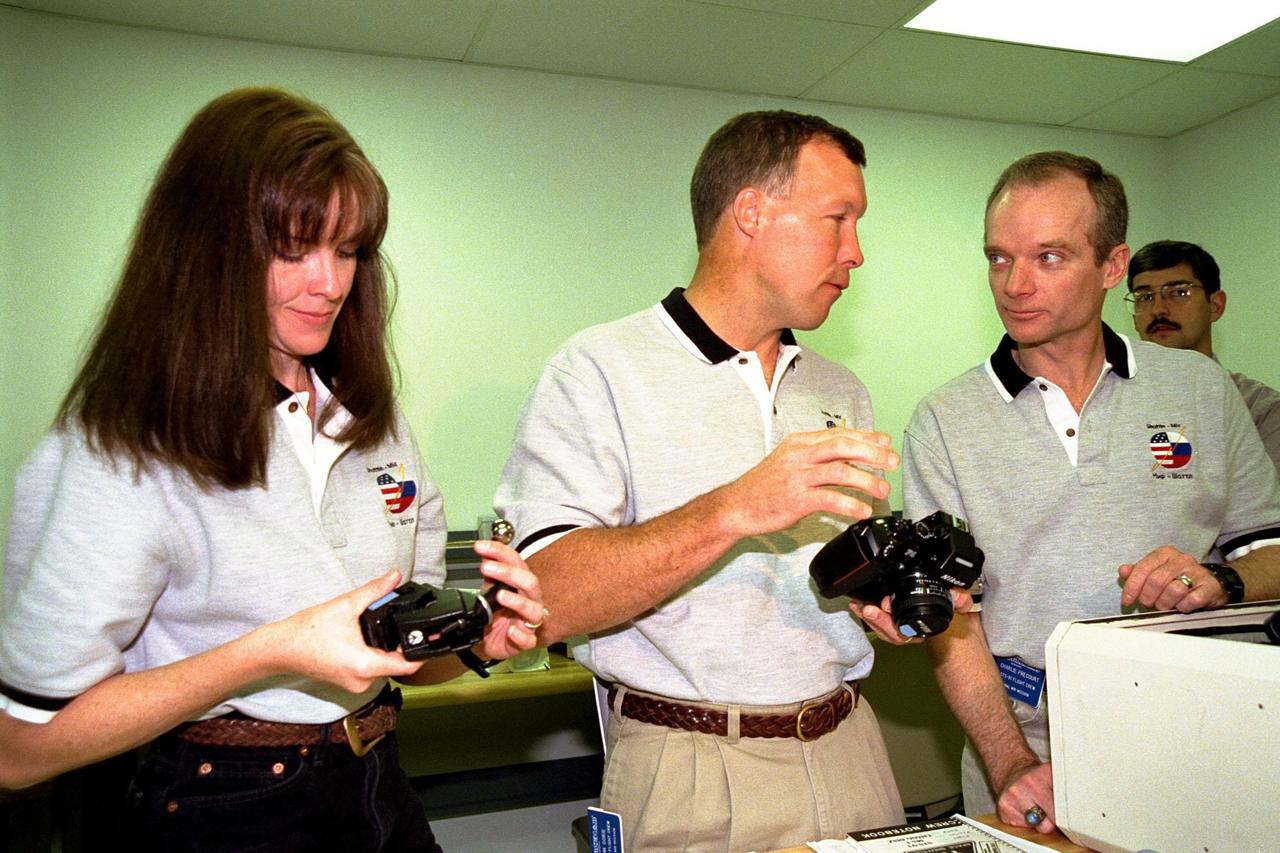
KENNEDY SPACE CENTER, FLA. -- The STS-91 crew participate in the Crew Equipment Interface Test (CEIT) for their upcoming Space Shuttle mission at the SPACEHAB Payload Processing Facility in Cape Canaveral. The CEIT gives astronauts an opportunity to get a hands-on look at the payloads with which they will be working on-orbit. STS-91 will be the ninth and final scheduled Mir docking and will include a single module of SPACEHAB, used mainly as a large pressurized cargo container for science, logistical equipment and supplies to be exchanged between the orbiter Discovery and the Russian Space Station Mir. The nearly 10-day flight of STS-91 also is scheduled to include the return of the last astronaut to live and work aboard the Russian orbiting outpost, Mission Specialist Andy Thomas, Ph.D. Liftoff of Discovery and its six-member crew is targeted for May 28, 1998, at 8:05 p.m. EDT from Launch Pad 39A. From left to right are STS-91 Mission Specialist Janet Kavandi, Ph.D., STS091 Pilot Dominic Gorie, and STS-91 Commander Charles Precourt, and Boeing SPACEHAB Program Senior Engineer Shawn Hicks
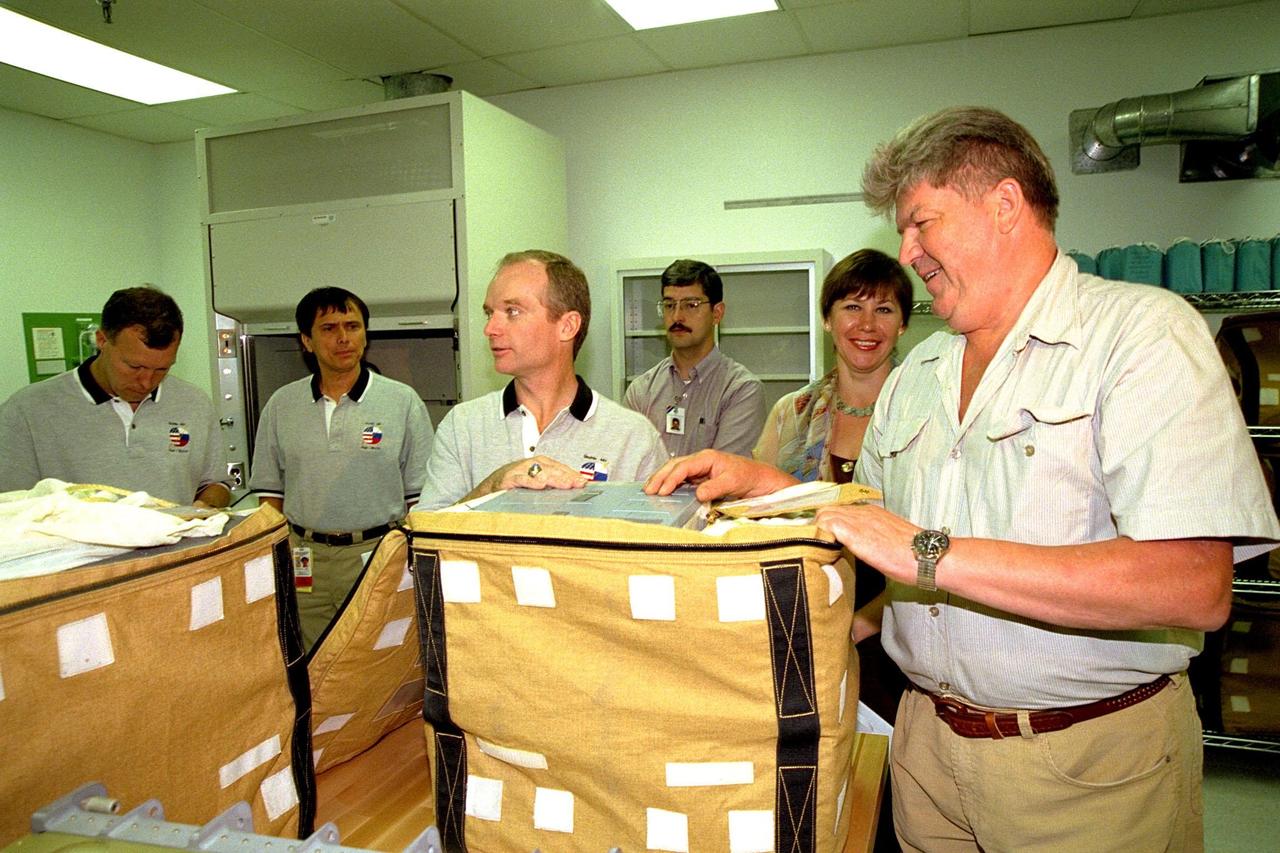
KENNEDY SPACE CENTER, FLA. -- The STS-91 crew participate in the Crew Equipment Interface Test (CEIT) for their upcoming Space Shuttle mission at the SPACEHAB Payload Processing Facility in Cape Canaveral. The CEIT gives astronauts an opportunity to get a hands-on look at the payloads with which they will be working on-orbit. STS-91 will be the ninth and final scheduled Mir docking and will include a single module of SPACEHAB, used mainly as a large pressurized cargo container for science, logistical equipment and supplies to be exchanged between the orbiter Discovery and the Russian Space Station Mir. The nearly 10-day flight of STS-91 also is scheduled to include the return of the last astronaut to live and work aboard the Russian orbiting outpost, Mission Specialist Andy Thomas, Ph.D. Liftoff of Discovery and its six-member crew is targeted for May 28, 1998, at 8:05 p.m. EDT from Launch Pad 39A. From left to right are STS-91 Pilot Dominic Gorie, STS-91 Mission Specialist Franklin Chang-Diaz, Ph.D., STS-91 Commander Charles Precourt, Boeing SPACEHAB Program Senior Engineer Shawn Hicks, Russian Interpreter Olga Belozerova, and STS-91 Mission Specialist Valery Ryumin with the Russian Space Agency

Astronaut Paul W. Richards, STS-102 mission specialist, works in the cargo bay of the Space Shuttle Discovery during the second of two scheduled space walks. Richards, along with astronaut Andy Thomas, spent 6.5 hours outside the International Space Station (ISS), continuing work to outfit the station and prepare for delivery of its robotic arm. STS-102 delivered the first Multipurpose Logistics Modules (MPLM) named Leonardo, which was filled with equipment and supplies to outfit the U.S. Destiny Laboratory Module. The Leonardo MPLM is the first of three such pressurized modules that will serve as the ISS' moving vans, carrying laboratory racks filled with equipment, experiments, and supplies to and from the Station aboard the Space Shuttle. The cylindrical module is approximately 21-feet long and 15- feet in diameter, weighing almost 4.5 tons. It can carry up to 10 tons of cargo in 16 standard Space Station equipment racks. Of the 16 racks the module can carry, 5 can be furnished with power, data, and fluid to support refrigerators or freezers. In order to function as an attached station module as well as a cargo transport, the logistics module also includes components that provide life support, fire detection and suppression, electrical distribution, and computer functions. NASA's 103rd overall mission and the 8th Space Station Assembly Flight, STS-102 mission also served as a crew rotation flight. It delivered the Expedition Two crew to the Station and returned the Expedition One crew back to Earth.