
Santa Anita Panorama
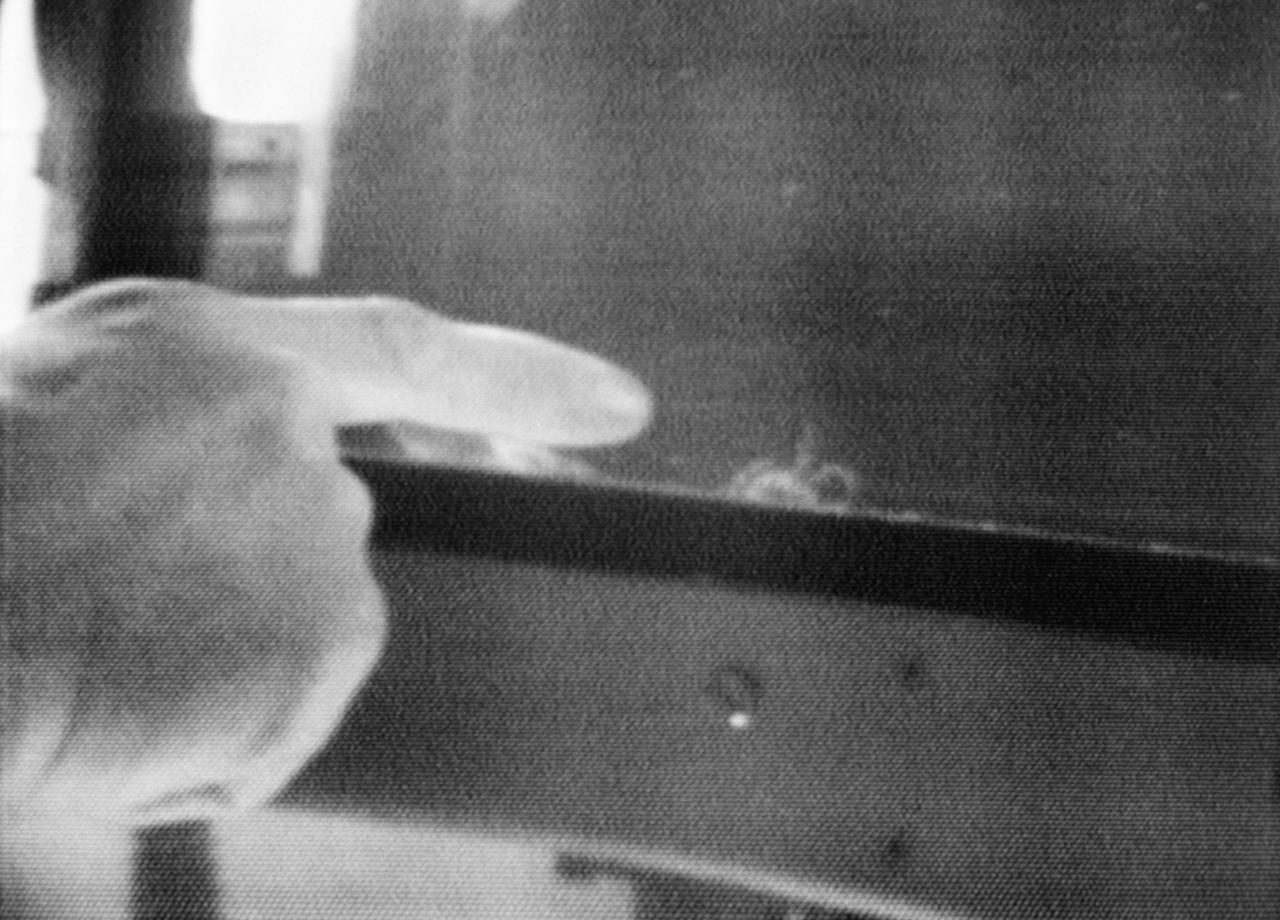
S73-33164 (27 Aug. 1973) --- A close-up view of Anita, one of the two common cross spiders “Araneus diadematus” aboard Skylab, is seen in this photographic reproduction of a color television transmission made by a TV camera aboard the Skylab space station in Earth orbit. A finger of one of the Skylab 3 crewmen points to Anita. The two spiders are housed in an enclosure onto which a motion picture and still camera are attached to record the spider’s attempt to build a web in the zero-gravity of space. The spider experiment (ED52) is one of 25 experiments selected by NASA for Skylab from more than 3,400 experiment proposals submitted by high school students throughout the nation. ED52 was submitted by 17-year old Judith S. Miles of Lexington, Mass. Photo credit: NASA
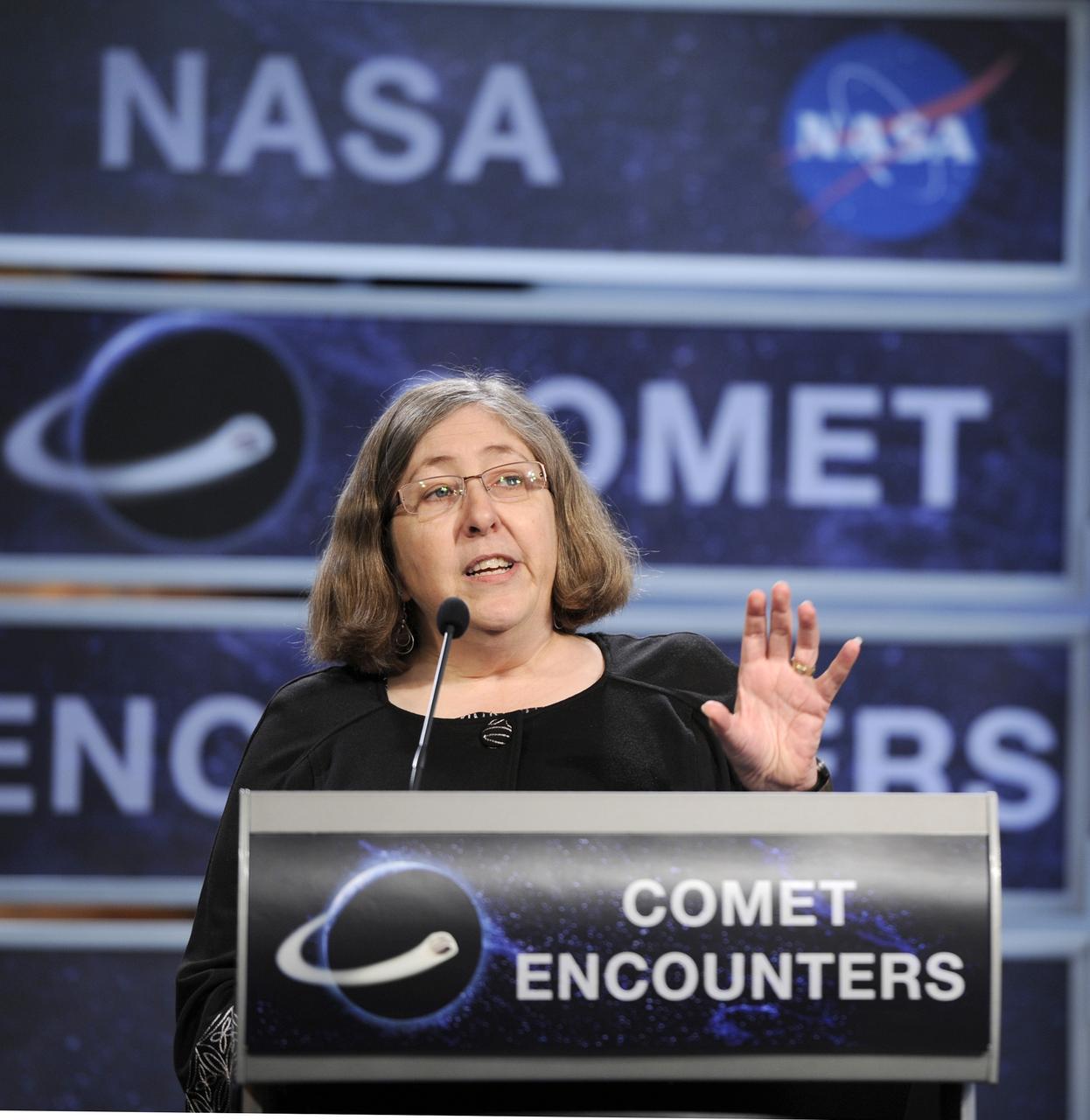
Dr. Anita Cochran, Assistant Director, McDonald Observatory at the University of Texas-Austin, speaks during a symposium commemorating a quarter-century of comet discoveries, Friday, Sept. 10, 2010, in the Knight studio at the Newseum in Washington. The International Sun-Earth Explorer-3 (ISEE-3) spacecraft flew past the comet Giacobini-Zinner on Sept. 11, 1985 which established a foundation of discoveries that continue today. Photo Credit: (NASA/Paul E. Alers)
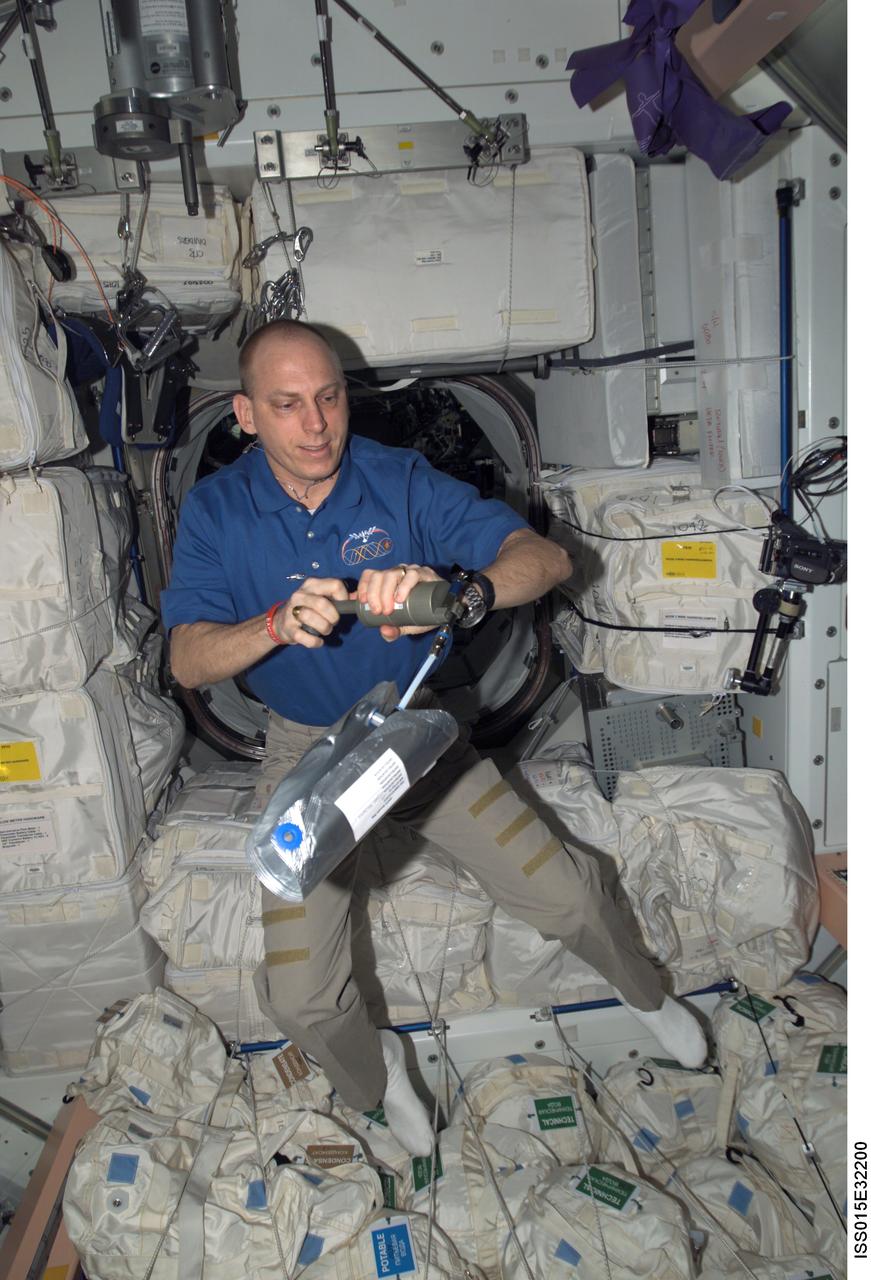
ISS015-E-32200 (6 Oct. 2007) --- Astronaut Clay Anderson, Expedition 15 flight engineer, uses an air sample pump and 2.5 liter gas sample bag to gather and analyze air samples for the Analyzing Interferometer for Ambient Air (ANITA) experiment in the Unity node of the International Space Station.
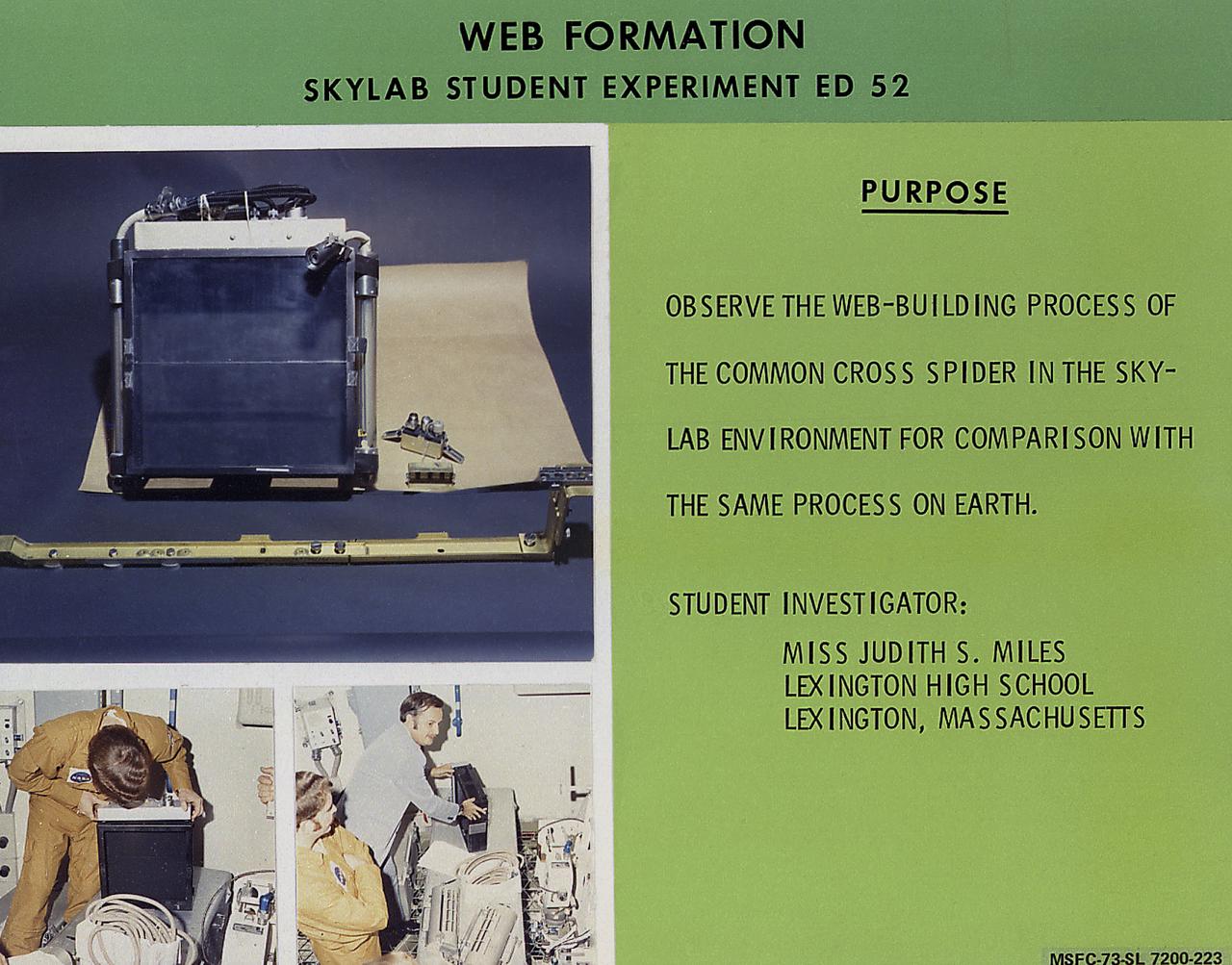
This chart describes the Skylab student experiment Web Formation. Judith S. Miles of Lexington High School, Lexington, Massachusetts, proposed a study of the spider's behavior in a weightless environment. The geometrical structure of the web of the orb-weaving spider provides a good measure of the condition of its central nervous system. Since the spider senses its own weight to determine the required thickness of web material and uses both the wind and gravity to initiate construction of its web, the lack of gravitational force in Skylab provided a new and different stimulus to the spider's behavioral response. Two common cross spiders, Arabella and Anita, were used for the experiment aboard the Skylab-3 mission. After initial disoriented attempts, both spiders produced almost Earth-like webs once they had adapted to weightlessness. In March 1972, NASA and the National Science Teachers Association selected 25 experiment proposals for flight on Skylab. Science advisors from the Marshall Space Flight Center aided and assisted the students in developing the proposals for flight on Skylab.
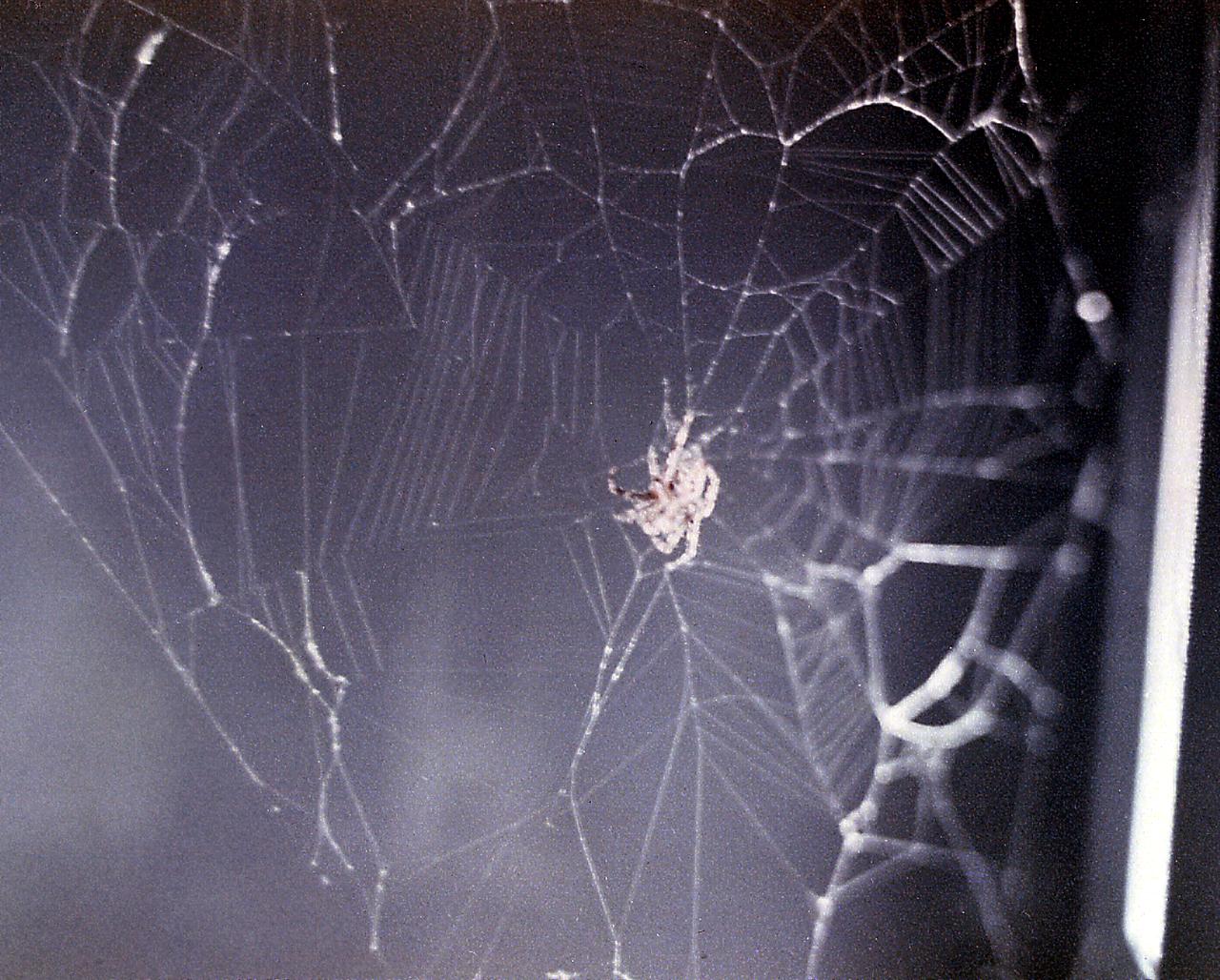
Judith S. Miles of Lexington High School, Lexington, Massachusetts, proposed skylab student experiment ED-52, Web Formation. This experiment was a study of a spider's behavior in a weightless environment. The geometrical structure of the web of the orb-weaving spider provides a good measure of the condition of its central nervous system. Since the spider senses its own weight to determine the required thickness of web material and uses both the wind and gravity to initiate construction of its web, the lack of gravitational force in Skylab provided a new and different stimulus to the spider's behavioral response. Two common cross spiders, Arabella and Anita, were used for the experiment aboard the Skylab-3 mission. After initial disoriented attempts, both spiders produced almost Earth-like webs once they had adapted to weightlessness. This photograph is of Arabella, a cross spider, in her initial attempt at spirning a web. This picture was taken by the crew of the Skylab 3 mission before Arabella adapted to her new environment.
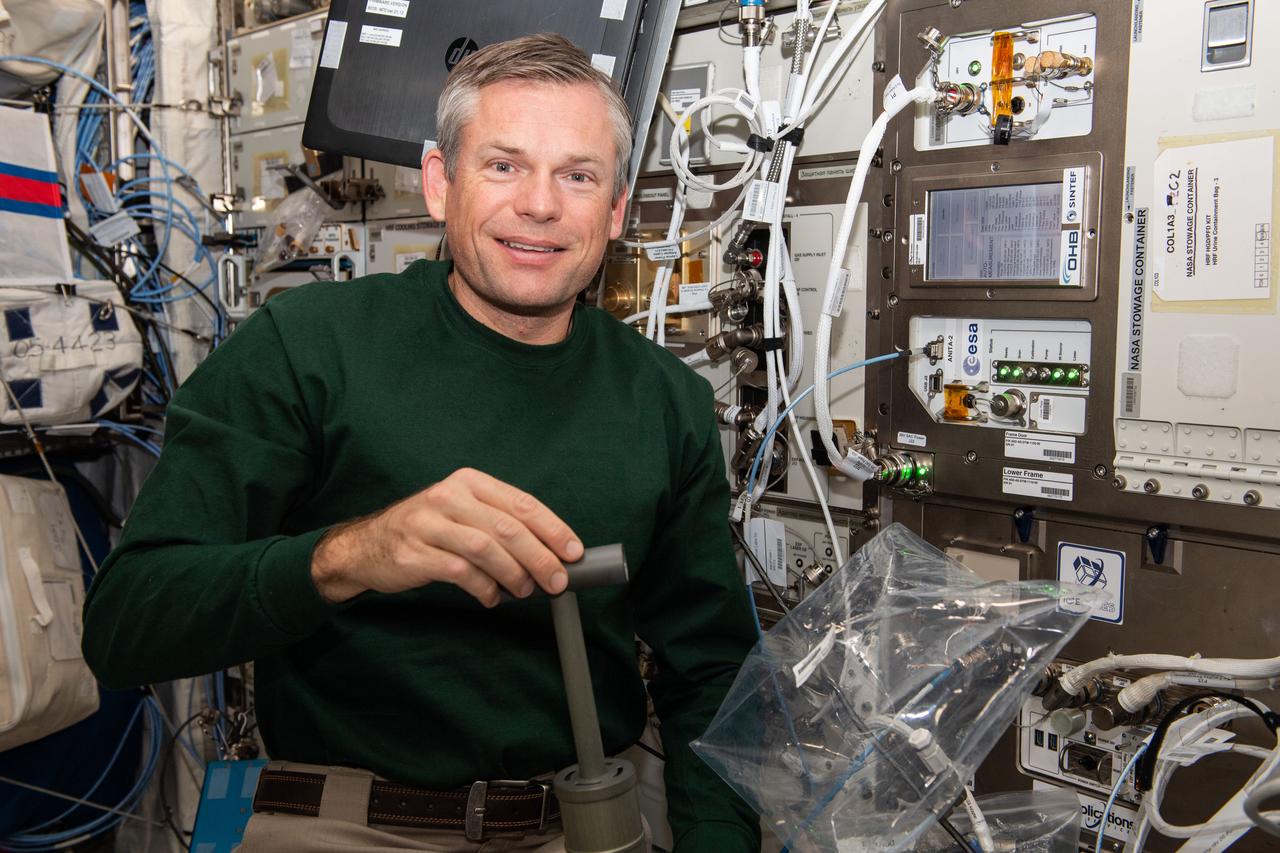
iss070e003140 (10/12/2023) --- European Space Agency (ESA) astronaut Andreas Mogensen is seen filling an ANITA-2 sampling bag a measurement demonstration. The ANITA-2 is a compact gas analyzer which can analyze and quantify 33 trace contaminants in the atmosphere aboard the ISS automatically.
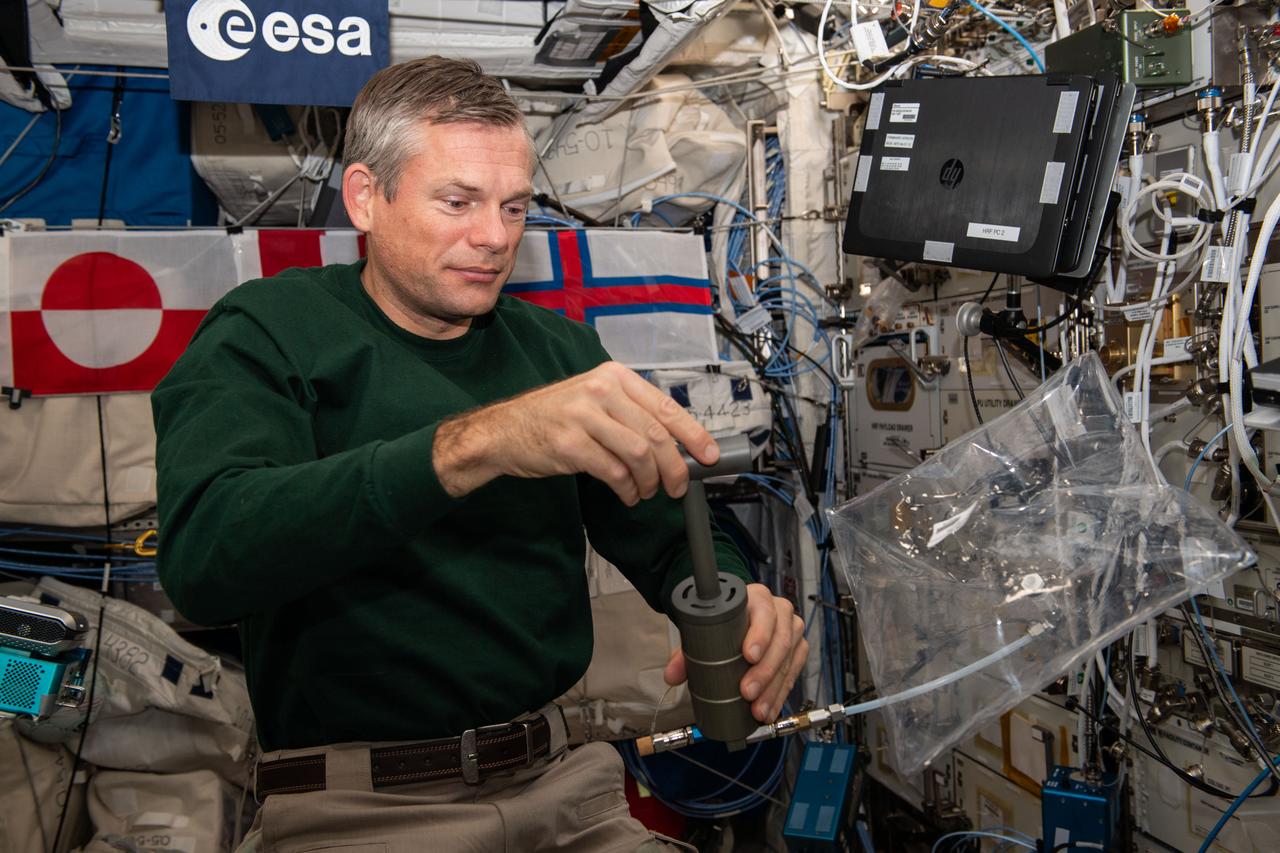
iss070e003131 (10/12/2023) --- European Space Agency (ESA) astronaut Andreas Mogensen is seen filling an ANITA-2 sampling bag a measurement demonstration. The ANITA-2 is a compact gas analyzer which can analyze and quantify 33 trace contaminants in the atmosphere aboard the ISS automatically.
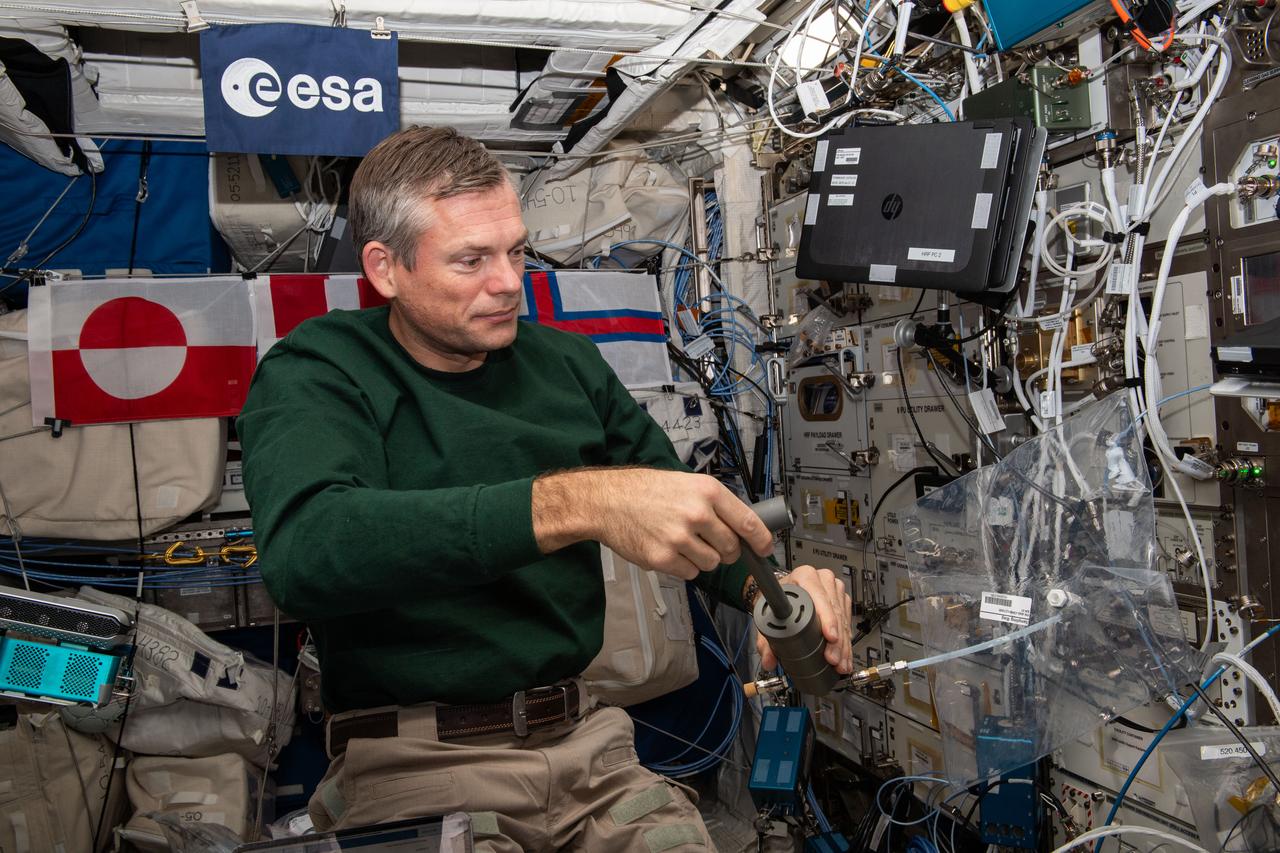
iss070e003120_alt (10/12/2023) --- European Space Agency (ESA) astronaut Andreas Mogensen is seen filling an ANITA-2 sampling bag a measurement demonstration. The ANITA-2 is a compact gas analyzer which can analyze and quantify 33 trace contaminants in the atmosphere aboard the ISS automatically.
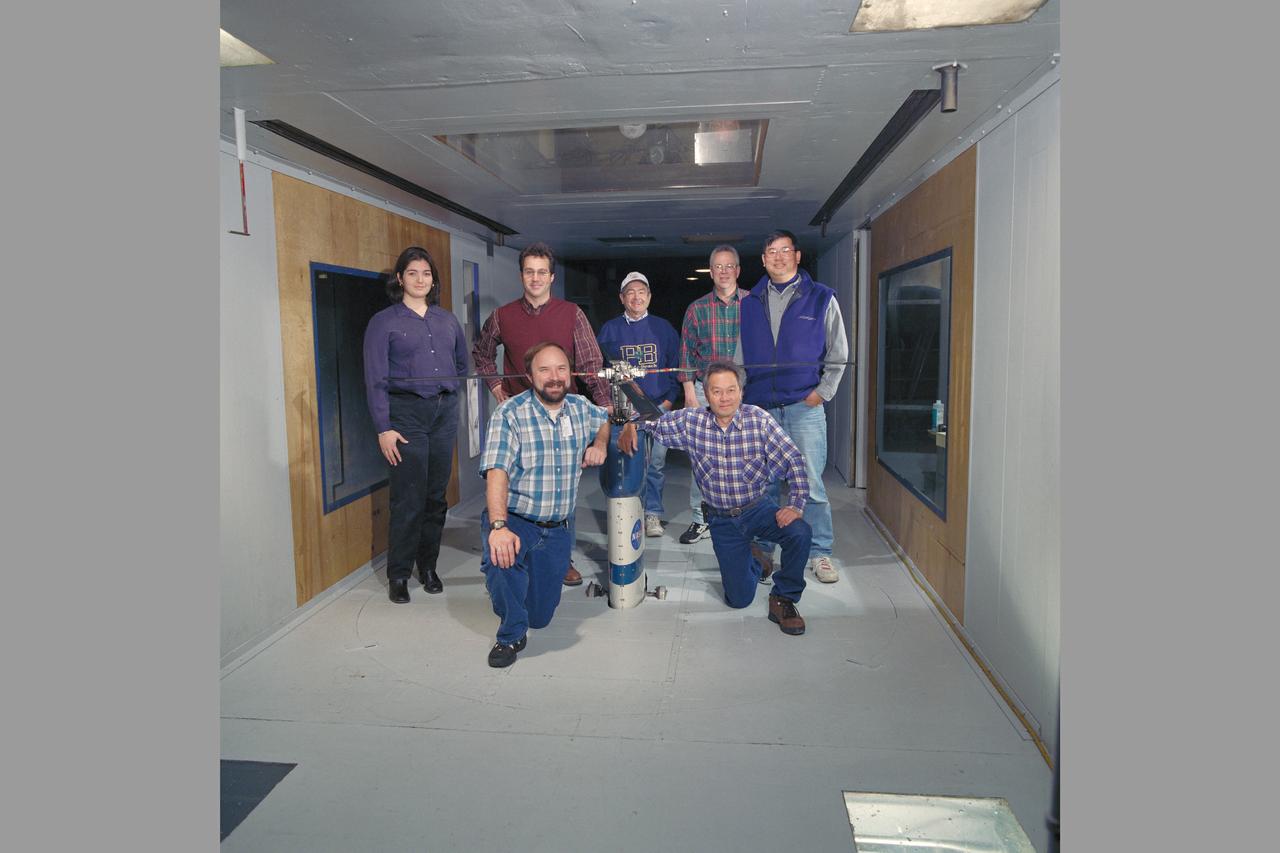
ADM Swept Group Shot: Anita Abergo, Brian Chan, Joel Gunter, Dave Pfluger, Steve Chan, Dave Sharpe, Tom Maier, in 7 x 10 ft. # 1 Wind Tunnel Test-7101099.
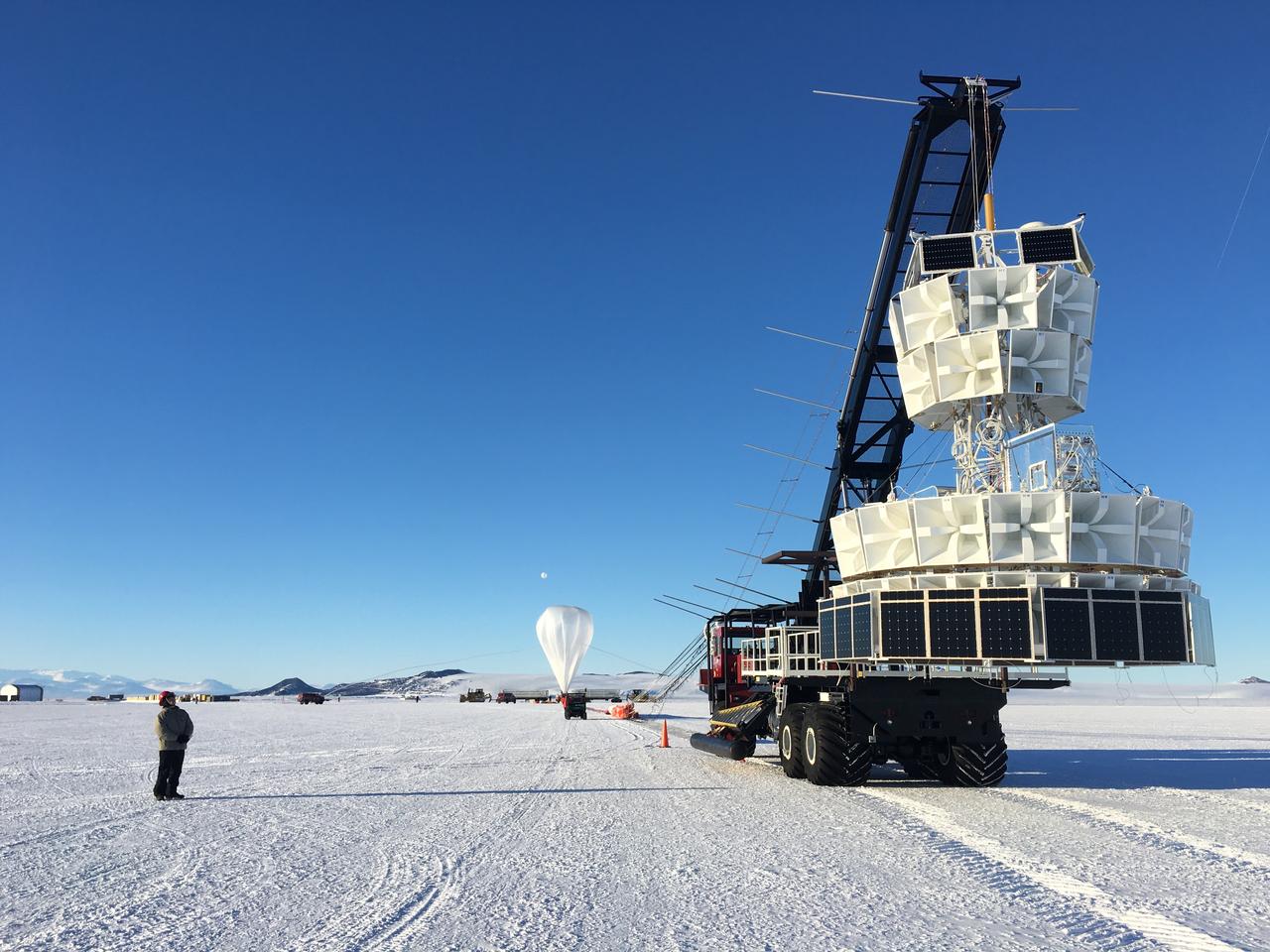
The second of three missions as part of NASA’s Antarctica Long Duration Balloon Flight Campaign was successfully launched at 8:10 a.m. EDT, Dec. 2. The Antarctic Impulsive Transient Antenna (ANITA) from the University of Hawaii at Manoa was launched from Antarctica’s Ross Ice Shelf near McMurdo Station with support from the National Science Foundation’s United States Antarctic Program. Scientists will use ANITA’s instruments to study the reactions in the core of stars and as they explode via the release of neutrinos that travel to Earth and interact with the Antarctica ice. More: <a href="http://go.nasa.gov/2ghR6Le" rel="nofollow">go.nasa.gov/2ghR6Le</a>
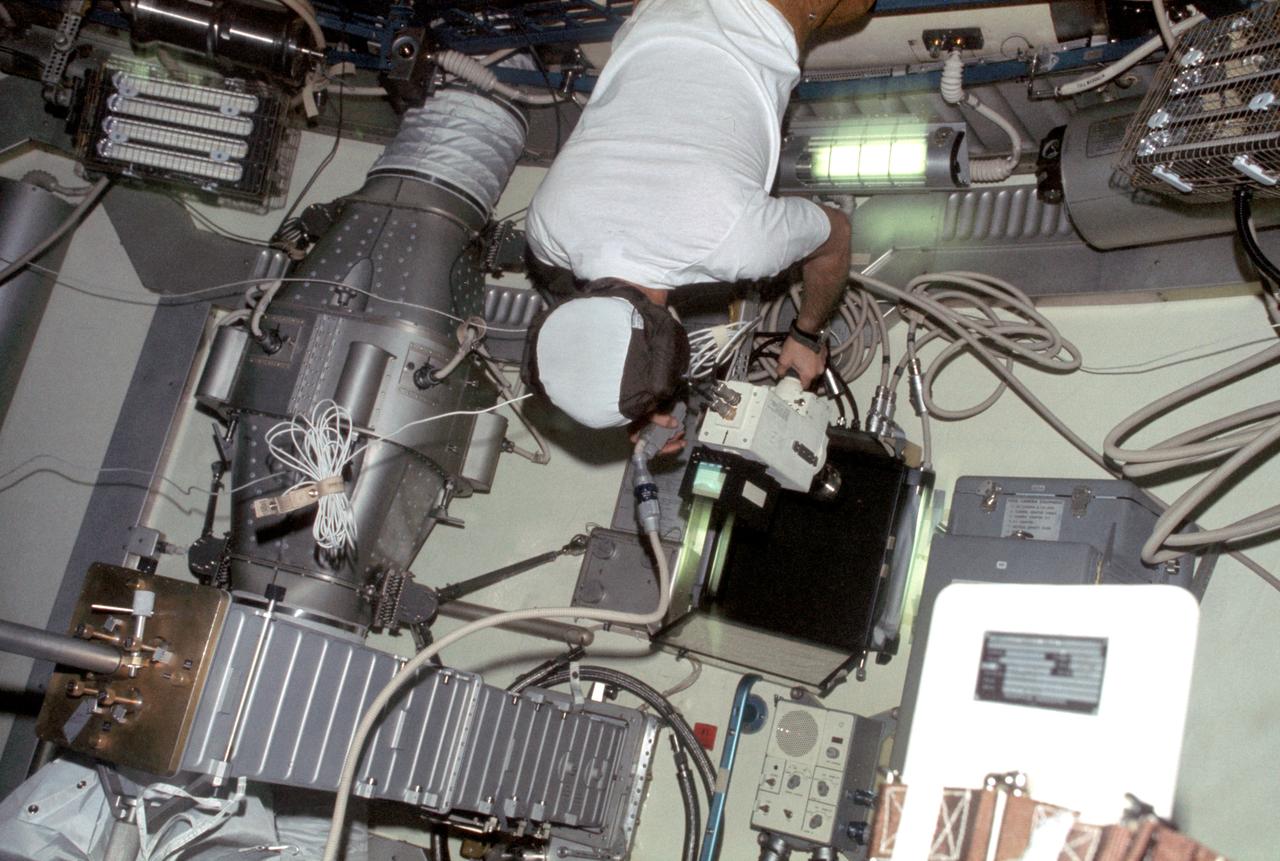
SL3-109-1345 (August 1973) --- View of scientist-astronaut Owen K. Garriott, Skylab 3 science pilot, taking TV footage of Arabella and Anita, the two Skylab 3 common cross spiders "aranous diadematus," aboard the Skylab space station cluster in Earth orbit. During the 59-day Skylab 3 mission the two spiders Arabella and Anita, were housed in an enclosure onto which a motion picture and still camera were attached to record the spiders' attempts to build a web in the weightless environment. Note the automatic data acquisition camera (DAC) about 3.5 feet to Garriott's right (about waist level). Photo credit: NASA
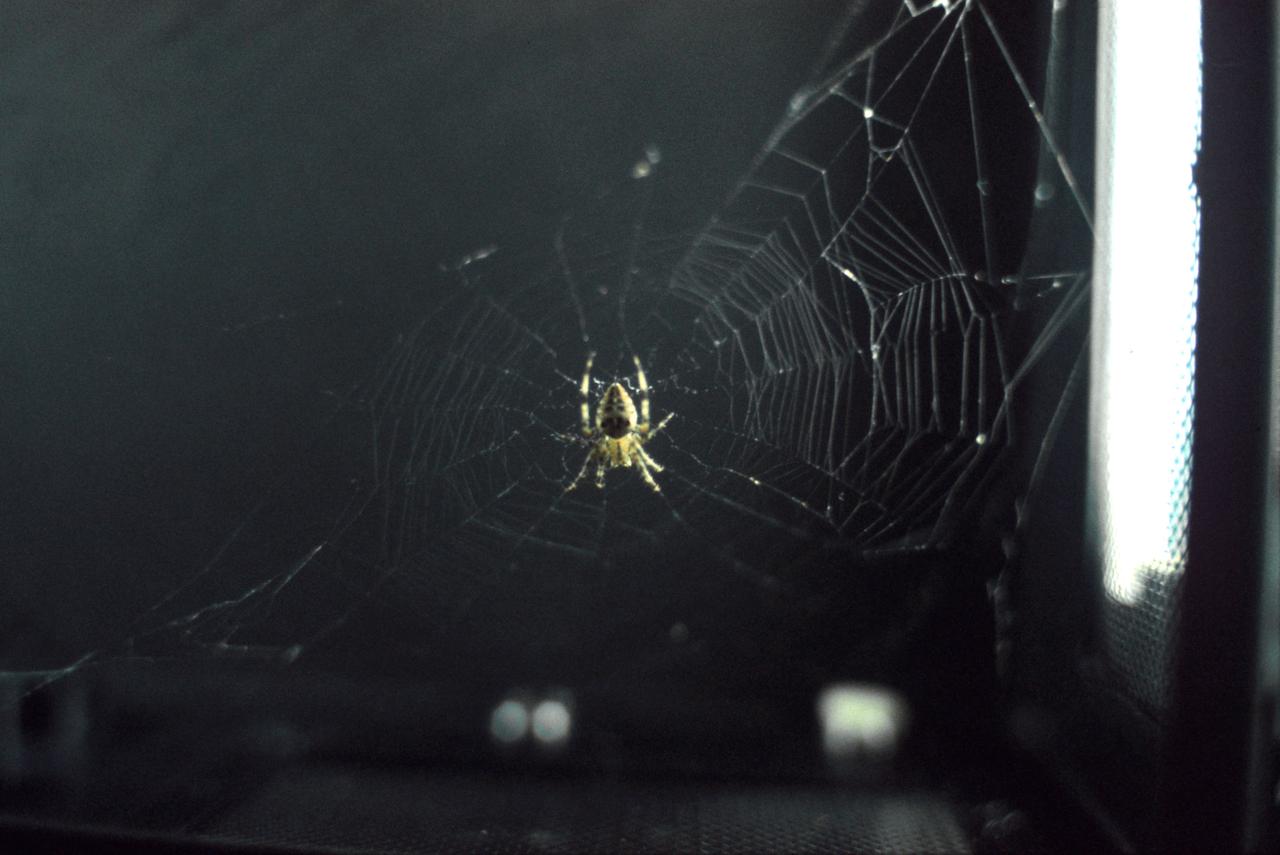
SL3-108-1307 (July-September 1973) --- A close-up view of Arabella, one of the two Skylab 3 common cross spiders "Araneus diadematus," and the web it had spun in the zero-gravity of space aboard the Skylab space station cluster in Earth orbit. This picture was taken with a hand-held 35mm Nikon camera. During the 59-day Skylab 3 mission the two spiders, Arabella and Anita, were housed in an enclosure onto which a motion picture and a still camera were attempts to build a web in the weightless environment. The spider experiment (ED52) was one of 25 experiments selected for Skylab by NASA from more than 3,400 experiment proposals submitted by high school students throughout the nation. ED52 was submitted by 17-year-old Judith S. Miles of Lexington, Massachusetts. Anita died during the last week of the mission. Photo credit: NASA
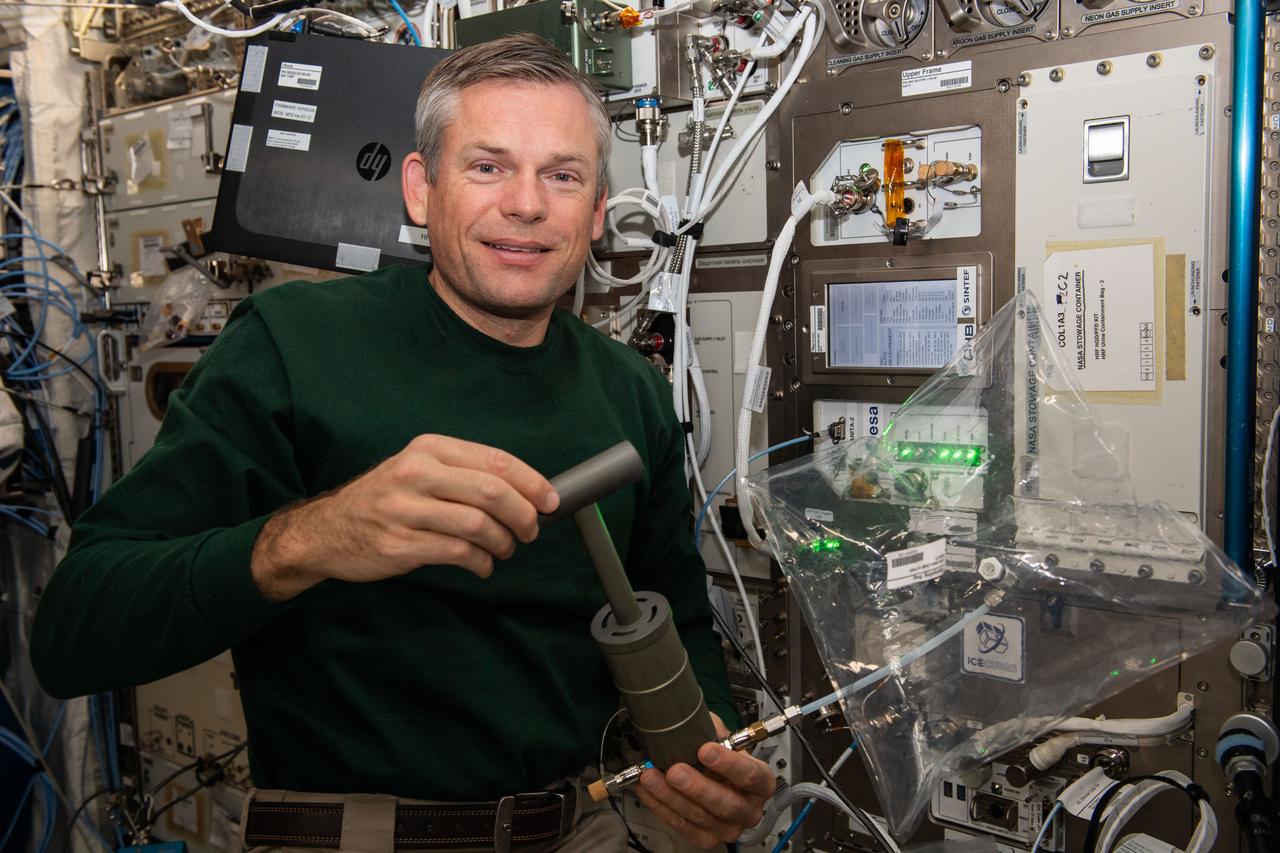
iss070e003139 (Oct. 12, 2023) --- Expedition 70 Commander Andreas Mogensen of ESA (European Space Agency) demonstrates collecting air samples to analyze and quantify trace contaminants in the International Space Station's atmosphere. The Analyzing Interferometer for Ambient Air-2, or ANITA-2, serves as a technology demonstration in support of human exploration missions beyond low-Earth orbit.
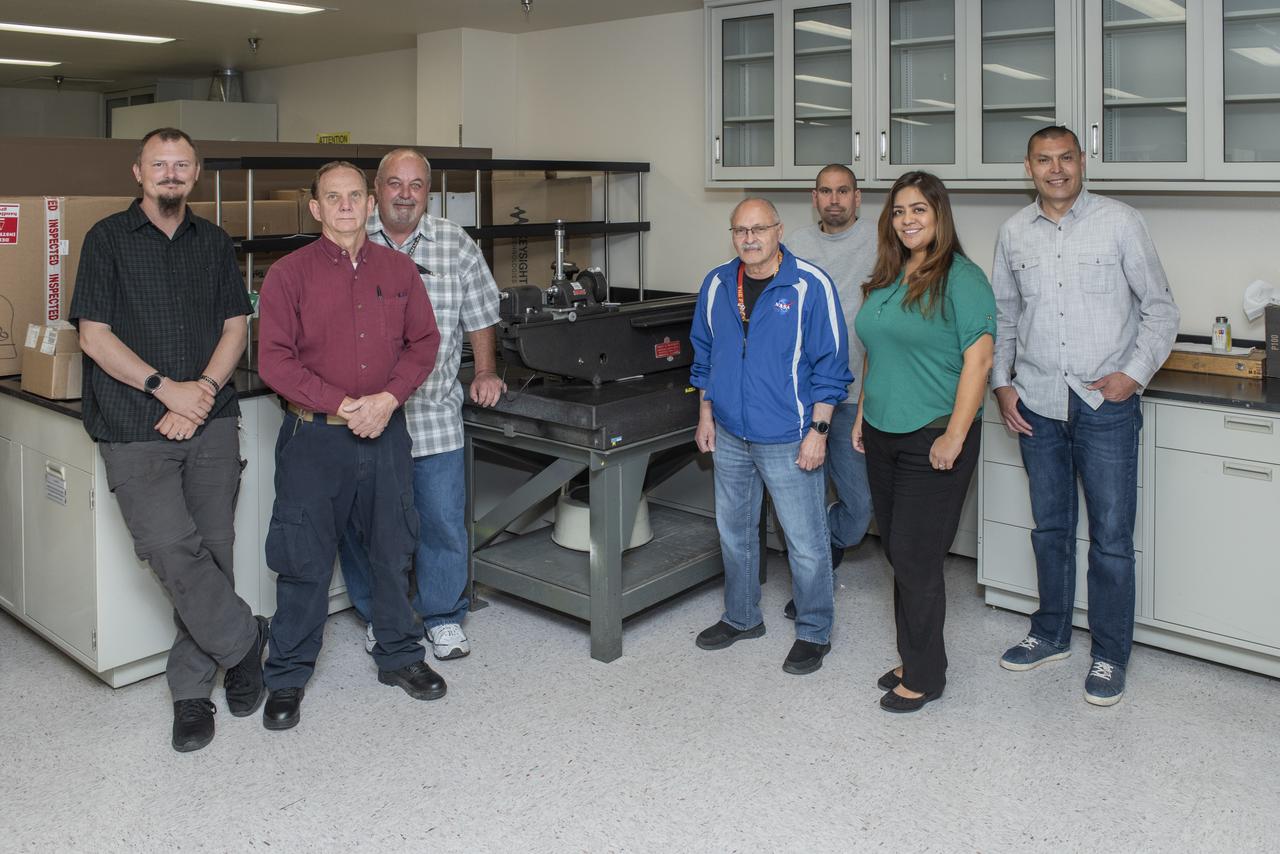
NASA’s Armstrong Flight Research Center Calibration Laboratory in California has a workload that is 80 percent related to items used in preparing aircraft for flight. To successfully complete that work takes a staff, which from left includes Paul Craig, James Kelly, David Swindle, Arnold Gonzales, Ronnie Juvinall, Anita Solorio and Alex Rivera. They are standing by a 1948 calibration tool they call the boat anchor, which still is a valued asset.
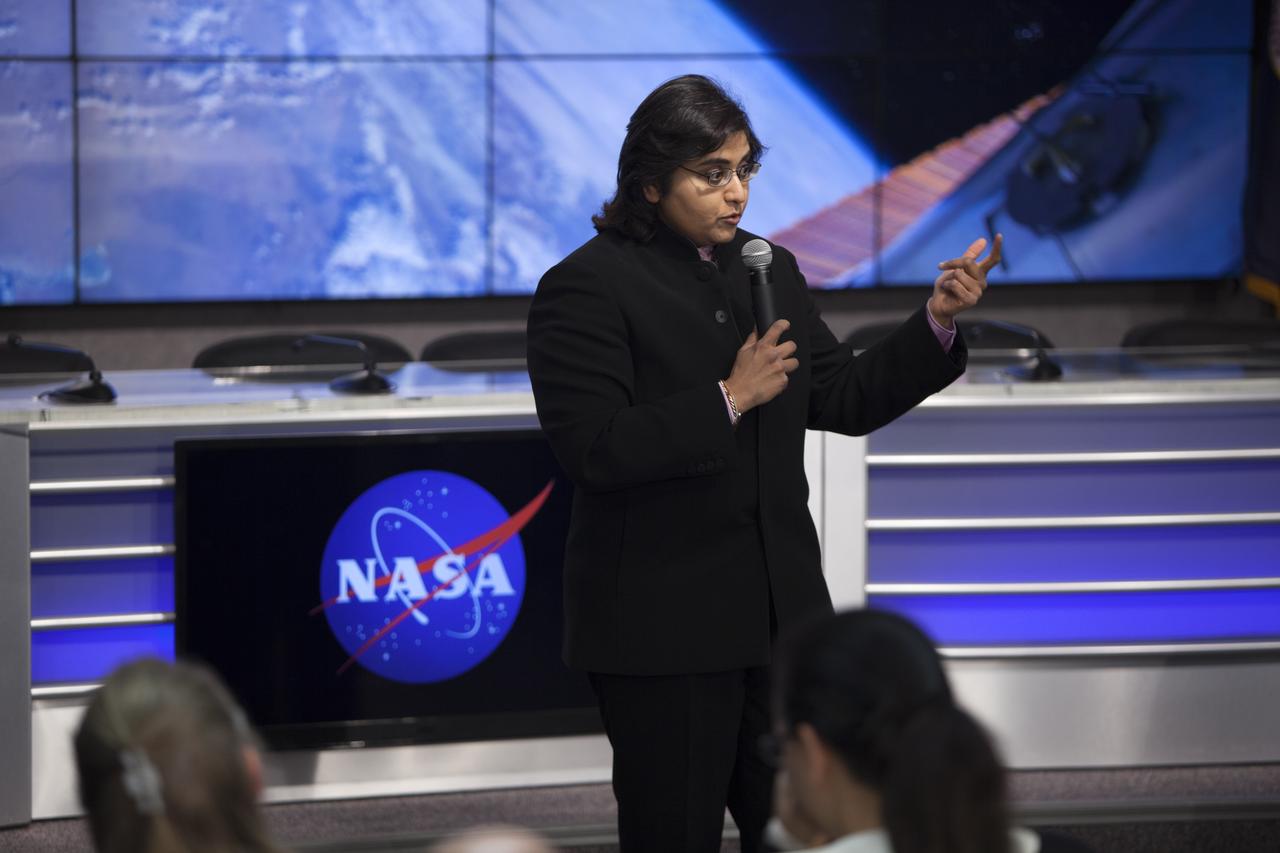
Dr. Anita Goel, chairman and scientific director of Nanobiosym in Cambridge, Massachusetts, speaks to members of social media in the Kennedy Space Center’s Press Site auditorium. The briefing focused on research in the field of nanobiophysics planned for the International Space Station following the arrival of a Dragon spacecraft. The Dragon is scheduled to be launched from Kennedy’s Launch Complex 39A on Feb. 18 atop a SpaceX Falcon 9 rocket on the company's 10th Commercial Resupply Services mission to the space station.

NASA employees Anita Douglas (l to r), Amy Grose, Aaron Brooks and Cabrina Bell sort through early contributions to the 2011 Feds Feed Families Food Drive at Stennis Space Center. Each summer for three years, federal agencies across the nation have worked together to collect nonperishable food for local food banks across the country.
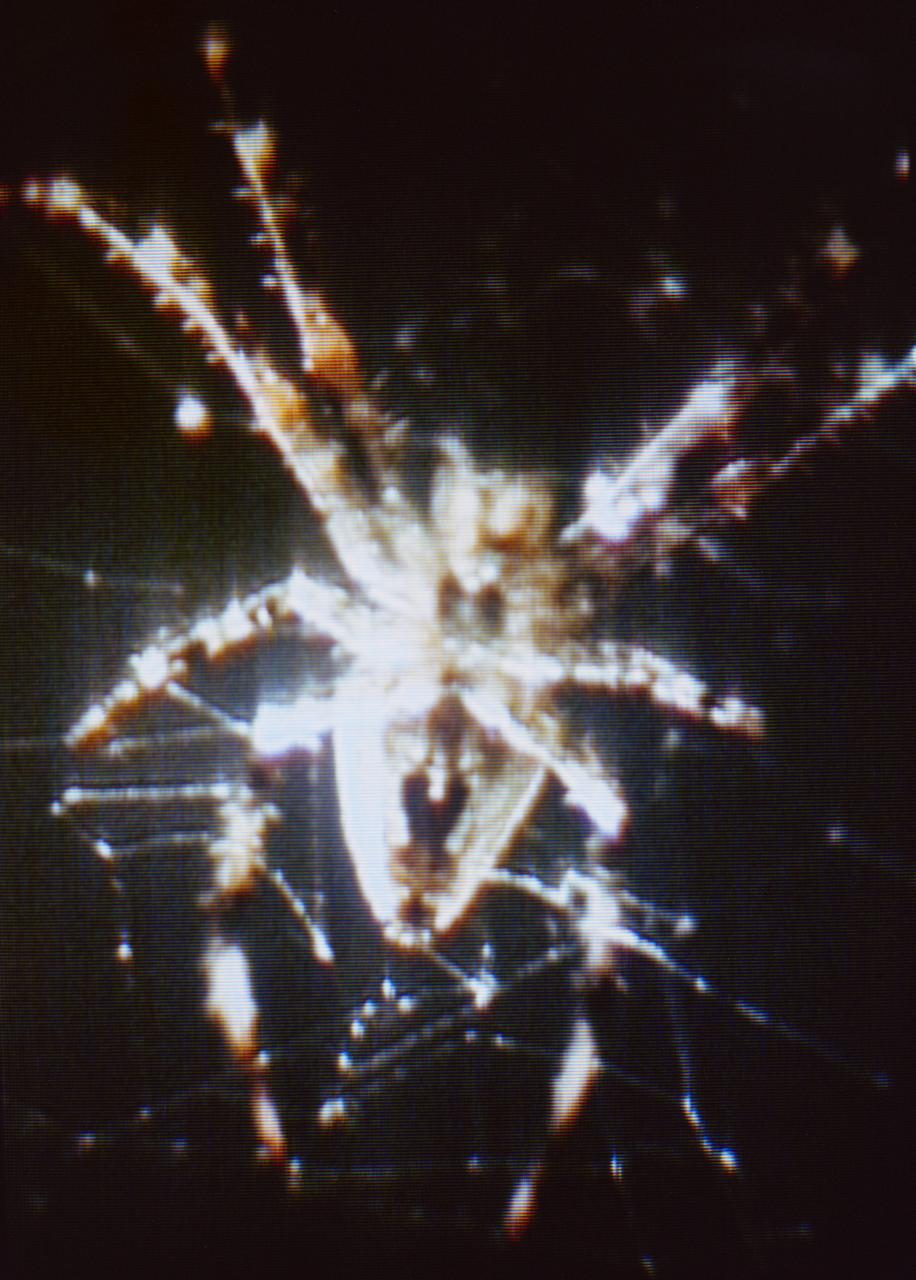
S73-34206 (8 Aug. 1973) --- A closeup view of Arabella, one of two Skylab 3 common cross spiders ?Araneus diadematus,? and the web it had spun in the zero-gravity of space aboard the Skylab space station cluster in Earth orbit. This is a photographic reproduction made a color television transmission aboard Skylab. During the 59-day Skylab 3 mission the two spiders, Arabella and Anita, were housed in an enclosure onto which a motion picture camera and a still camera were attached to record the spiders? attempts to build a web in the weightless environment. The spider experiment (ED52) was one of 25 experiments selected for Skylab by NASA from more than 3,400 experiment proposals submitted by 17-year-old Judith S. Miles of Lexington, Massachusetts. Anita died during the last week of the mission. THIS PHOTOGRAPH IS A GOVERNMENT PUBLICATION ?NOT SUBJECT TO COPYRIGHT. It may not be used to state or imply the endorsement by NASA or by any NASA employee of a commercial product, process or service, or used in any way that might mislead. Accordingly, it is requested that if this photograph is used in advertising and other commercial promotions, layout and copy be submitted to NASA prior to release. Photo credit: NASA
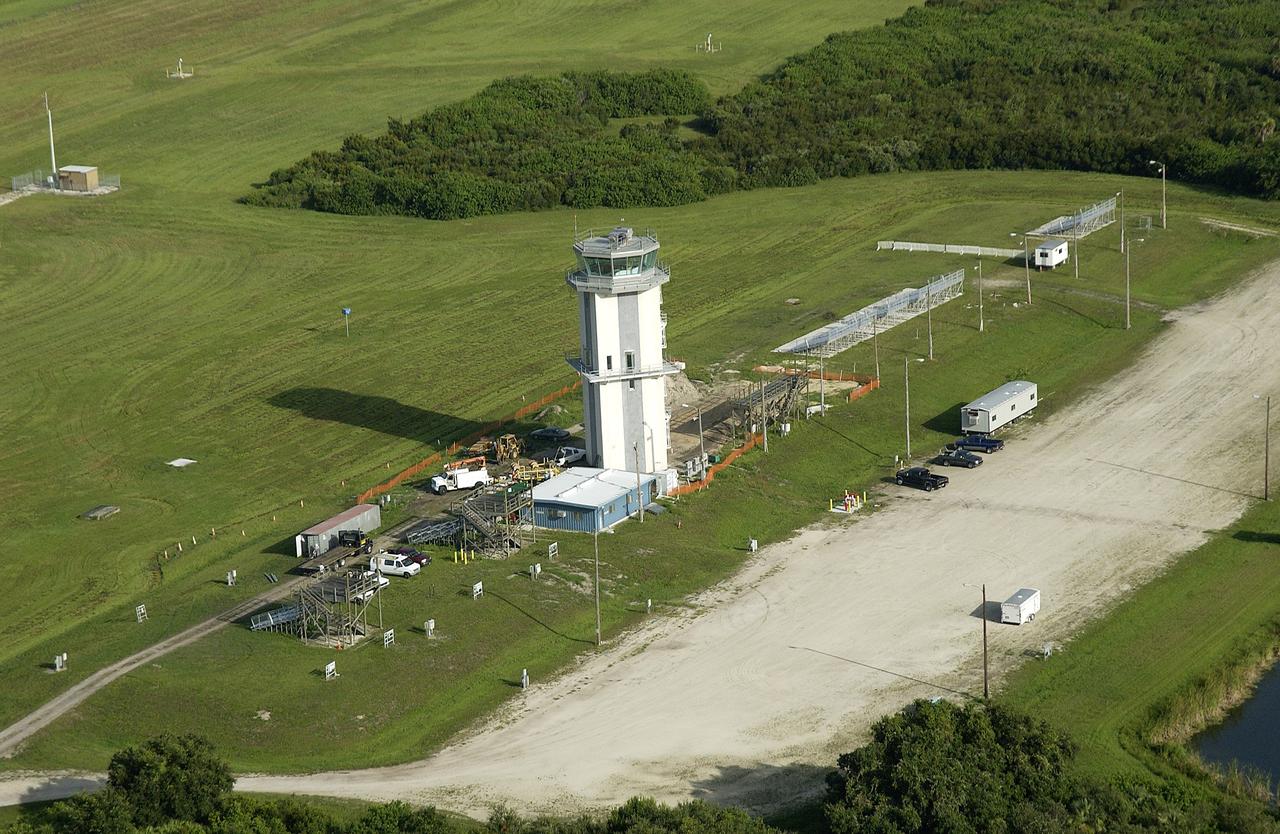
KENNEDY SPACE CENTER, FLA. - An aerial view of the control tower at the KSC Shuttle Landing Facility.
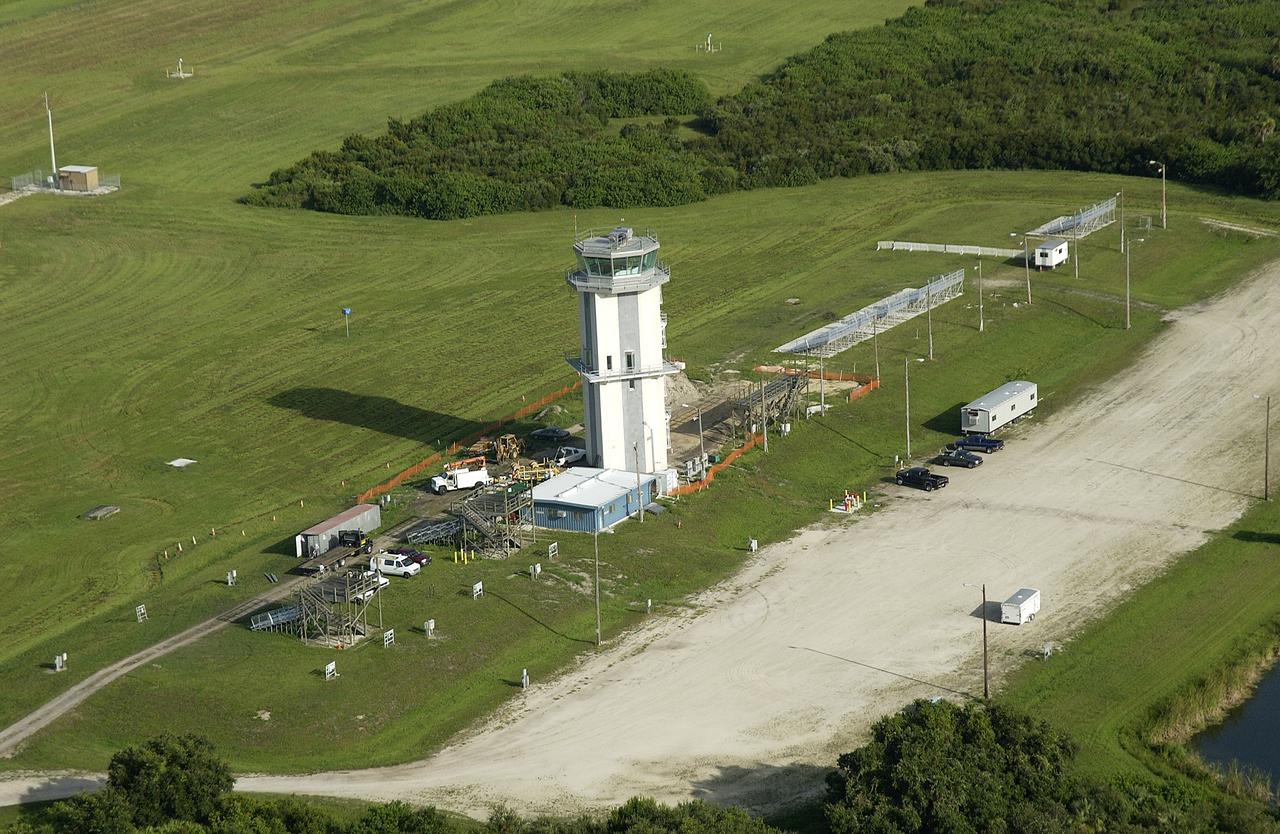
KENNEDY SPACE CENTER, FLA. – An aerial view of the control tower at the KSC Shuttle Landing Facility.

KENNEDY SPACE CENTER, FLA. - Its fiery tail casting a pink glow on cirrus clouds and water below, Space Shuttle Endeavour roars into space on mission STS-111 to the International Space Station. Liftoff occurred at 5:22:49 p.m. EDT. The STS-111 crew includes Commander Kenneth Cockrell, Pilot Paul Lockhart, and Mission Specialists Franklin Chang-Diaz and Philippe Perrin (CNES), as well as the Expedition Five crew members Valeri Korzun, Peggy Whitson and Sergei Treschev. This mission marks the 14th Shuttle flight to the International Space Station and the third Shuttle mission this year. Mission STS-111 is the 18th flight of Endeavour and the 110th flight overall in NASA's Space Shuttle program. [Photo by Anita Barrett
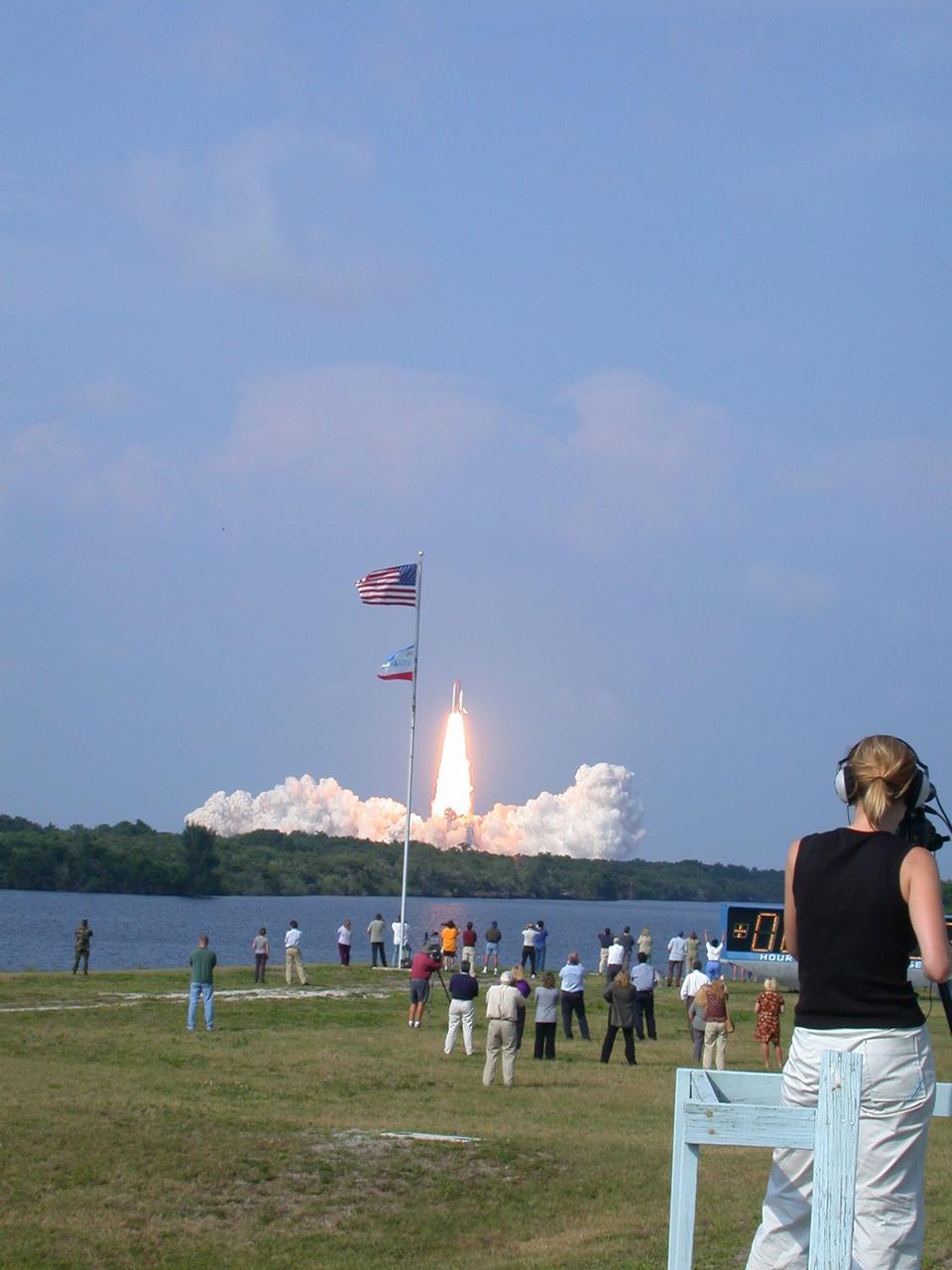
KENNEDY SPACE CENTER, FLA. -- Photographers gather near the turn basin in the Launch Complex 39 Area as Space Shuttle Endeavour roars into space on mission STS-111 to the International Space Station. Liftoff occurred at 5:22:49 p.m. EDT. The STS-111 crew includes Commander Kenneth Cockrell, Pilot Paul Lockhart, and Mission Specialists Franklin Chang-Diaz and Philippe Perrin (CNES), as well as the Expedition Five crew members Valeri Korzun, Peggy Whitson and Sergei Treschev. This mission marks the 14th Shuttle flight to the International Space Station and the third Shuttle mission this year. Mission STS-111 is the 18th flight of Endeavour and the 110th flight overall in NASA's Space Shuttle program. [Photo by Anita Barrett
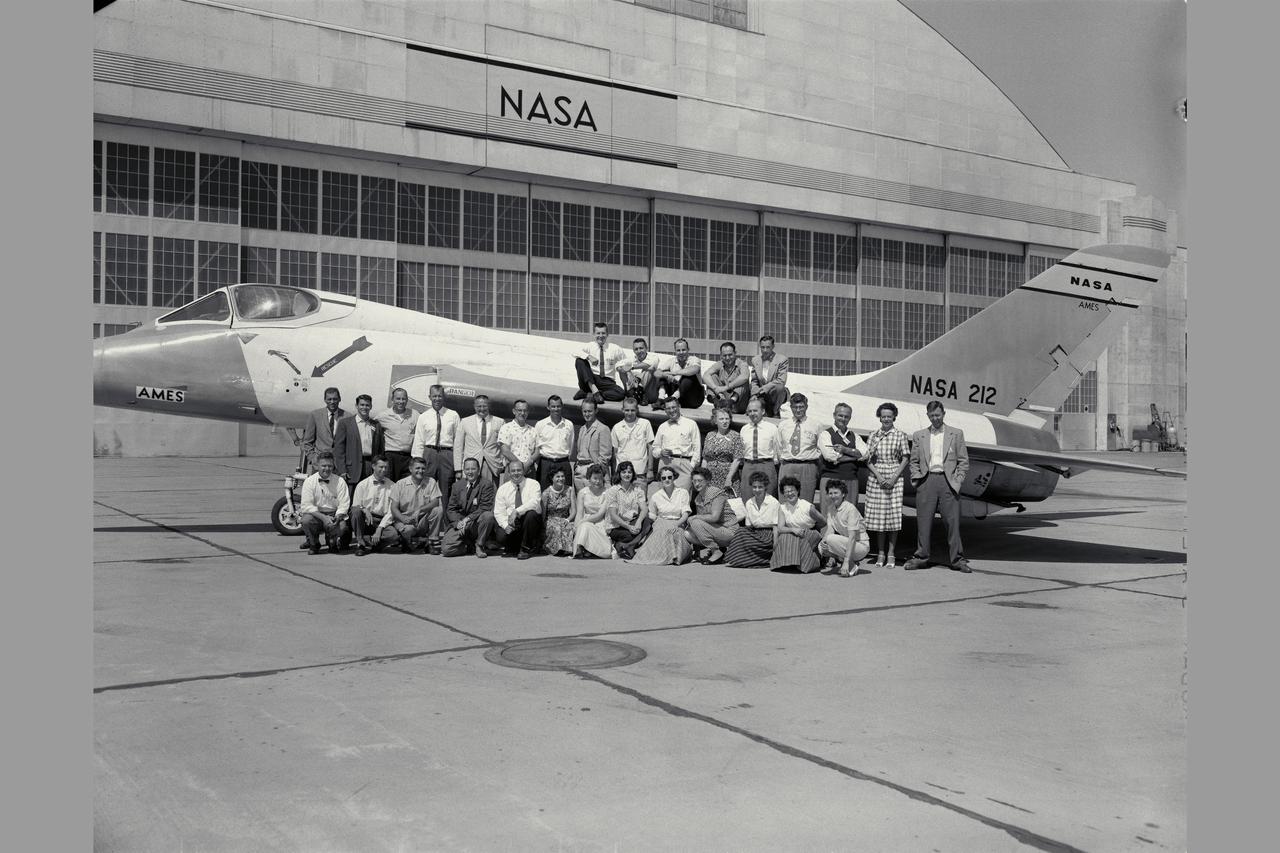
FLIGHT RESEARCH BRANCH PERSONNEL-1959. FRONT ROW: George Rathert, Stu Brown, Norm McFadden, Howard Turner, Gus Brunner, Venia McCloud, Violet Shaw, Kay Rizzi, Yvonne Settle, Genevieve Ziegler, Anita Palmer, Grace Carpenter, Evelyn Olson. SECOND ROW: Bill Triplett, Alan Faye, Dick Bray, Seth Anderson, Steve Belsley, Hervey Quigley, Hank Cole, Elwood Stewart, Don Higdon, Maurie White, Dorothea Wilkinson, Dick Vomaske, Stew Rolls, Mel Sadoff, Mary Thompson, Brent Creer. BACK ROW: Ron Gerdes, Joe Douvillier, John Stewart, Rod Wingrove, Walter McNeill. Note: Used in publication in Flight Research at Ames; 57 Years of Development and Validation of Aeronautical Technology NASA SP-1998-3300 fig 89
![KENNEDY SPACE CENTER, FLA. -- Space Shuttle Columbia emblazons the pre-dawn clouds as it soars into the sky on its 27th flight into space on mission STS-109. Liftoff occurred at 6:22:02:08 a.m. EST(11:22:02:08 GMT). The goal of the mission is the maintenance and upgrade of the Hubble Space Telescope, to be carried out in five spacewalks. The crew of STS-109 comprises Commander Scott D. Altman, Pilot Duane G. Carey, Payload Commander John M. Grunsfeld, and Mission Specialists Nancy Jane Currie, Richard M. Linnehan, James H. Newman and Michael J. Massimino. After an 11-day mission, Columbia is expected to return to Kennedy March 12 about 4:35 a.m. EST (09:35 GMT). [Photo by Anita Barrett]](https://images-assets.nasa.gov/image/KSC-02pd0217/KSC-02pd0217~medium.jpg)
KENNEDY SPACE CENTER, FLA. -- Space Shuttle Columbia emblazons the pre-dawn clouds as it soars into the sky on its 27th flight into space on mission STS-109. Liftoff occurred at 6:22:02:08 a.m. EST(11:22:02:08 GMT). The goal of the mission is the maintenance and upgrade of the Hubble Space Telescope, to be carried out in five spacewalks. The crew of STS-109 comprises Commander Scott D. Altman, Pilot Duane G. Carey, Payload Commander John M. Grunsfeld, and Mission Specialists Nancy Jane Currie, Richard M. Linnehan, James H. Newman and Michael J. Massimino. After an 11-day mission, Columbia is expected to return to Kennedy March 12 about 4:35 a.m. EST (09:35 GMT). [Photo by Anita Barrett]
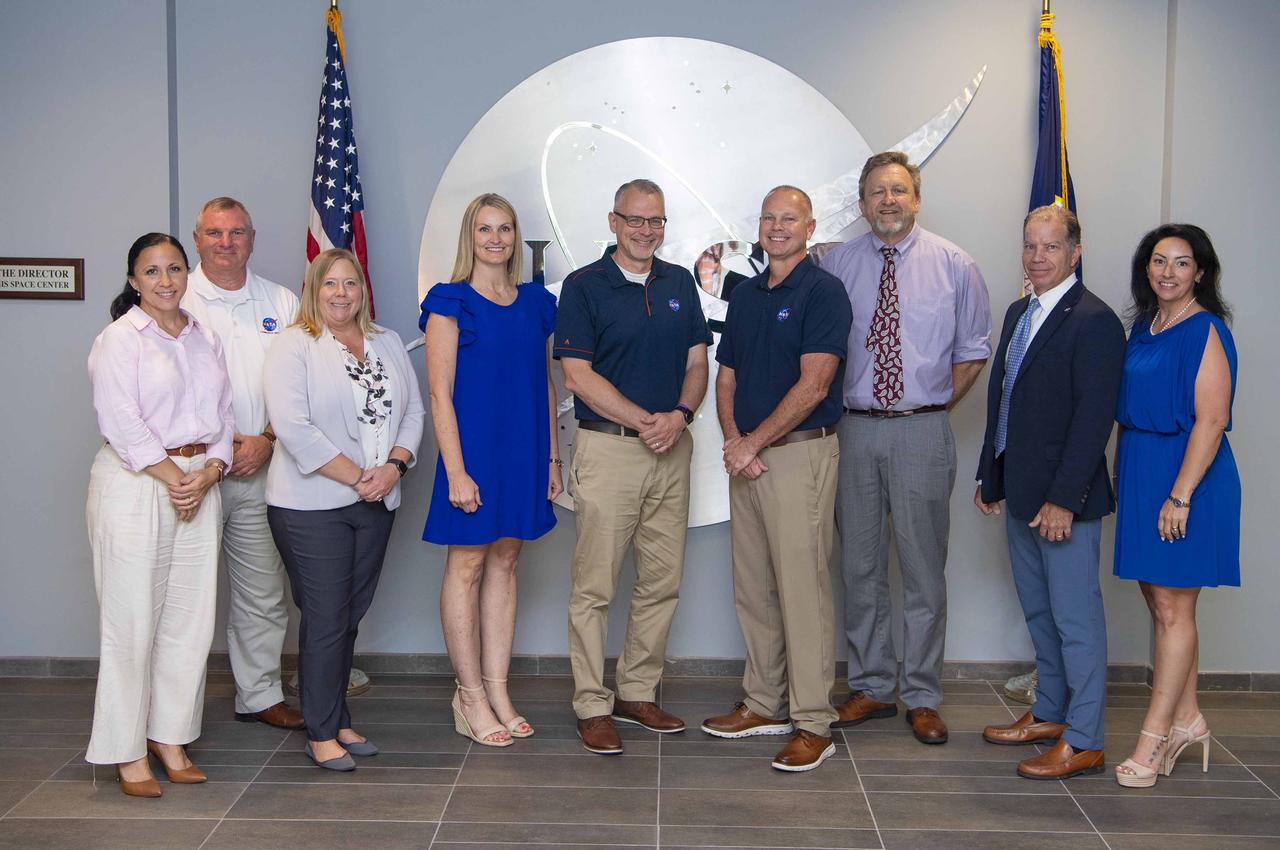
NASA Associate Administrator Jim Free stands with leaders from NASA Stennis and the NASA Shared Services Center during a visit on July 16 to the south Mississippi site. Free also met with representatives of commercial companies engaged in onsite propulsion activities. Pictured left to right is Jill Castiglione, NASA Stennis executive assistant; Troy Frisbie, NASA Stennis chief of staff; Nikki Tubbs, NASA Shared Services Center director of support operations; Anita Harrell, NASA Shared Services Center executive director; Free; John Bailey, NASA Stennis director; Rodney McKellip, NASA Stennis associate director; Troy Taylor, NASA Shared Services Center deputy director of service delivery; and Jessie Shiyou, NASA Shared Services Center executive assistant.
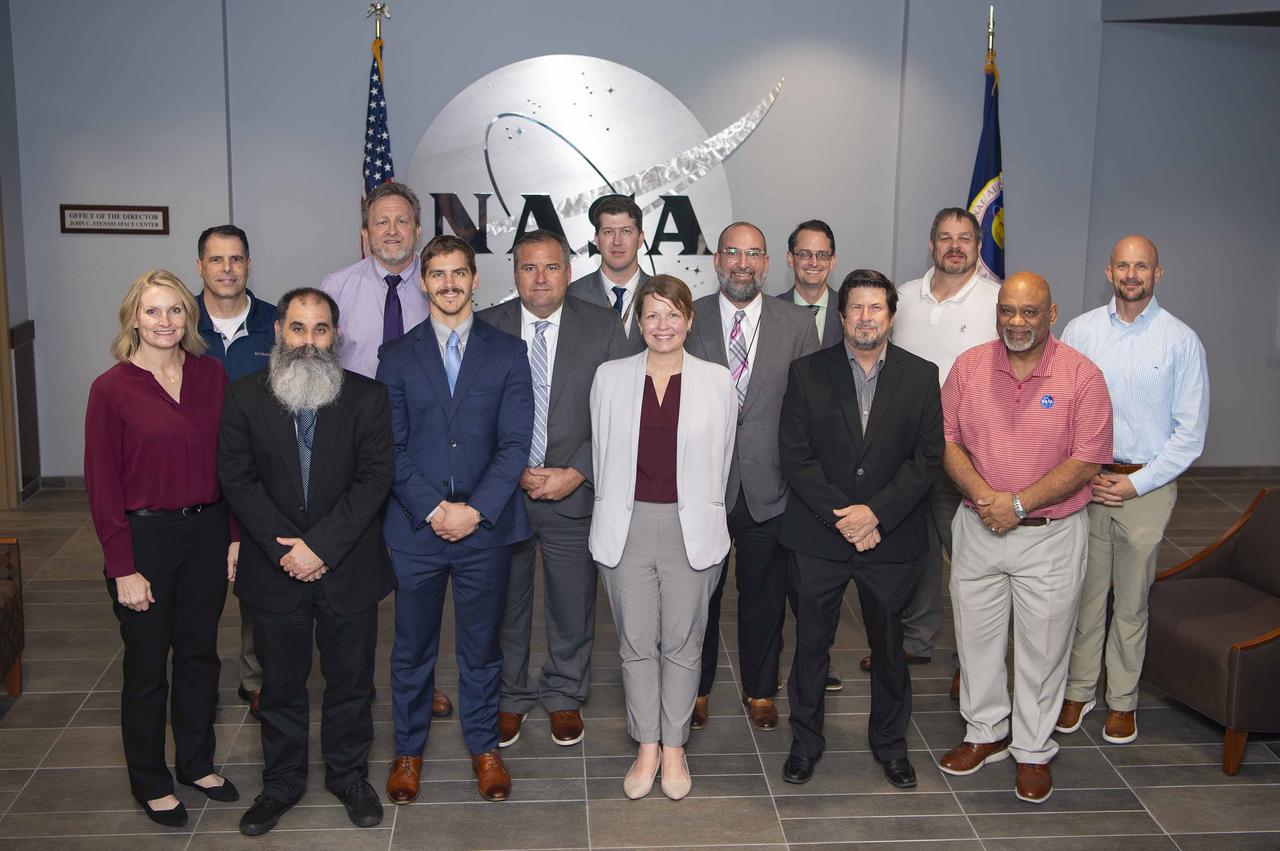
U.S. Navy officials visited with NASA Stennis leaders Nov. 13 for a meet-and-greet opportunity, also receiving an overview briefing about the work and operations of south Mississippi site. Participants in the gathering included (left to right): Anita Harrell, executive director of the NASA Shared Services Center; Joe Schuyler, director of the NASA Stennis Engineering and Test Directorate; Herschel Mims, a management support specialist with the Naval Oceanography Operations Command; Rodney McKellip, NASA Stennis associate director; Francis Prikasky, an electronics engineer and information technology administrator with the Naval Oceanographic Office; Robert Gavagnie, a contract specialist with the Naval Oceanographic Office; James “Brett” English, information systems security manager with the Naval Meteorology and Oceanography Command; Dr. Brooke Jones, head of the Ocean Forecasting Division for the Fleet Numerical Meteorology and Oceanography Center; Maxwell Williamson, a physical scientists with the Naval Oceanographic Office; Dr. Benjamin Phrampus, a research geophysicist with the Naval Research Laboratory; Gary Benton, director of the NASA Stennis Safety and Mission Assurance Directorate; Thom Rich, associate director of the NASA Stennis Center Operations Directorate; Ken Newton, director of service delivery for the NASA Shared Services Center; and Eli Ouder, director of the NASA Stennis/NASA Shared Services Center Office of Procurement.

Caption: A NASA Super Pressure Balloon with the COSI payload is ready for launch from McMurdo, Antarctica. Credit: NASA More info: NASA’s globetrotting Balloon Program Office is wrapping up its 2014-2015 Antarctic campaign while prepping for an around-the-world flight launching out of Wanaka, New Zealand, in March. After 16 days, 12 hours, and 56 minutes of flight, operators successfully conducted a planned flight termination of the Suborbital Polarimeter for Inflation Dust and the Epoch of Reionization (SPIDER) mission Saturday, Jan. 18, the final mission of the campaign. Other flights in the 2014-2015 Antarctic campaign included the Antarctic Impulsive Transient Antenna (ANITA-III) mission as well as the Compton Spectrometer and Imager (COSI) payload flown on the developmental Super Pressure Balloon (SPB). ANITA-III successfully wrapped up Jan. 9 after 22 days, 9 hours, and 14 minutes of flight. Flight controllers terminated the COSI flight 43 hours into the mission after detecting a small gas leak in the balloon. Crews are now working to recover all three instruments from different locations across the continent. The 6,480-pound SPIDER payload is stationary at a position about 290 miles from the United Kingdom’s Sky Blu Logistics Facility in Antarctica. The 4,601 pound ANITA-III payload, located about 100 miles from Australia’s Davis Station, and the 2,866 pound COSI payload, located about 340 miles from the United States McMurdo Station both had numerous key components recovered in the past few days. Beginning in late January, the Balloon Program Office will deploy a team to Wanaka, New Zealand, to begin preparations for an SPB flight, scheduled to launch in March. The Program Office seeks to fly the SPB more than 100 days, which would shatter the current flight duration record of 55 days, 1 hour, and 34 minutes for a large scientific balloon. “We’re looking forward to the New Zealand campaign and hopefully a history-making flight with the Super Pressure Balloon,” said Debbie Fairbrother, NASA’s Balloon Program Office Chief. Most scientific balloons see altitude variances based on temperature changes in the atmosphere at night and during the day. The SPB is capable of missions on the order of 100 days or more at constant float altitudes due to the pressurization of the balloon. “Stable, long-duration flights at near-space altitudes above more than 99 percent of the atmosphere are highly desirable in the science community, and we’re ready to deliver,” said Fairbrother. In addition to the SPB flight in March, the Balloon Program Office has 10 more balloon missions planned through September 2015 to include scheduled test flights of the Low-Density Supersonic Decelerator, which is testing new technologies for landing larger, heavier payloads on Mars. NASA’s Wallops Flight Facility manages the agency’s Scientific Balloon Program with 10 to 15 flights each year from launch sites worldwide. The balloons are massive in volume; the average-sized balloon could hold the volume of nearly 200 blimps. Previous work on balloons have contributed to confirming the Big Bang Theory. For more information on NASA’s Scientific Balloon Program, see: <a href="http://sites.wff.nasa.gov/code820/index.html" rel="nofollow">sites.wff.nasa.gov/code820/index.html</a> <b><a href="http://www.nasa.gov/audience/formedia/features/MP_Photo_Guidelines.html" rel="nofollow">NASA image use policy.</a></b> <b><a href="http://www.nasa.gov/centers/goddard/home/index.html" rel="nofollow">NASA Goddard Space Flight Center</a></b> enables NASA’s mission through four scientific endeavors: Earth Science, Heliophysics, Solar System Exploration, and Astrophysics. Goddard plays a leading role in NASA’s accomplishments by contributing compelling scientific knowledge to advance the Agency’s mission. <b>Follow us on <a href="http://twitter.com/NASAGoddardPix" rel="nofollow">Twitter</a></b> <b>Like us on <a href="http://www.facebook.com/pages/Greenbelt-MD/NASA-Goddard/395013845897?ref=tsd" rel="nofollow">Facebook</a></b> <b>Find us on <a href="http://instagram.com/nasagoddard?vm=grid" rel="nofollow">Instagram</a></b>