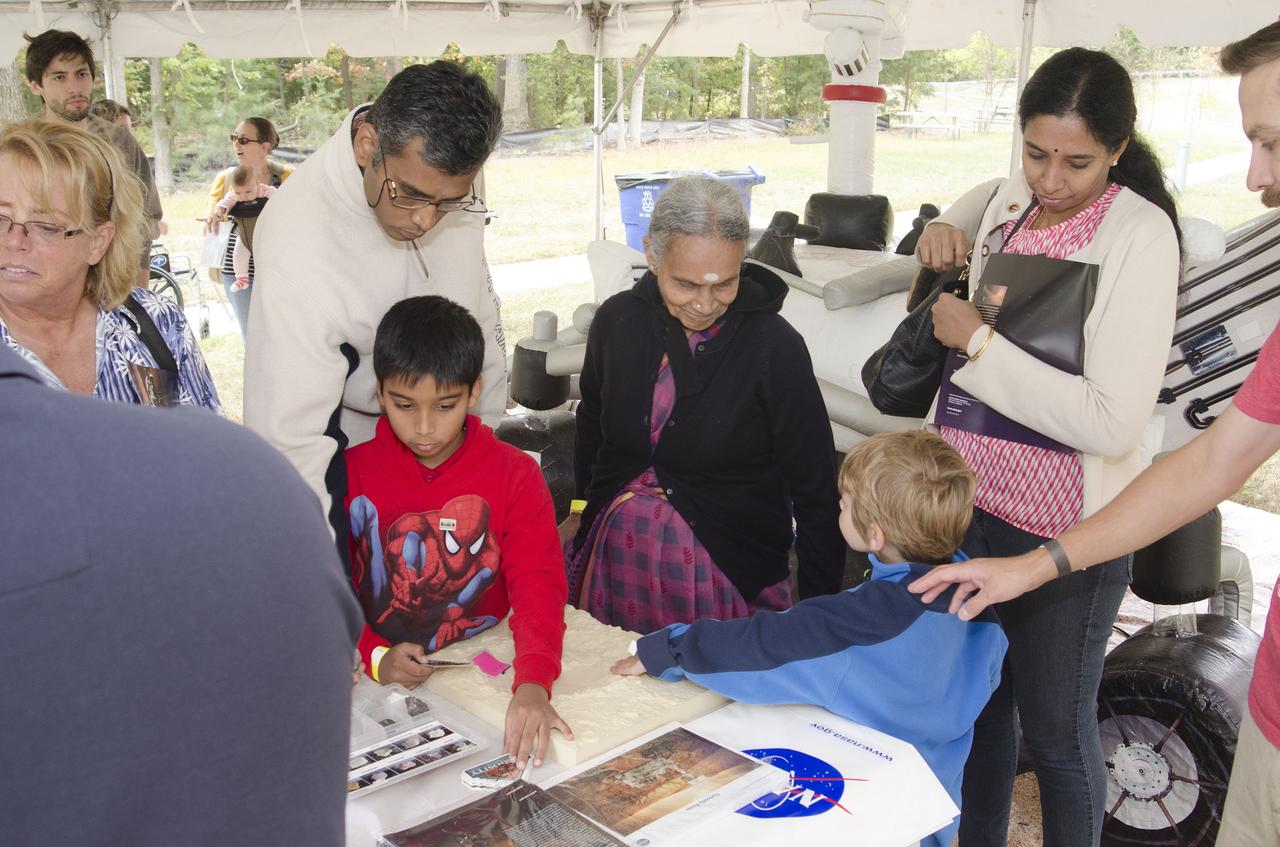
Explore@NASAGoddard celebrates the 25th anniversary of the launch of the Hubble Space Telescope. All areas of Goddard’s research – Earth science, heliophysics, planetary science, astrophysics, and engineering and technology – will be presented, as each discipline plays a critical part in NASA's ongoing journey to reach new heights.
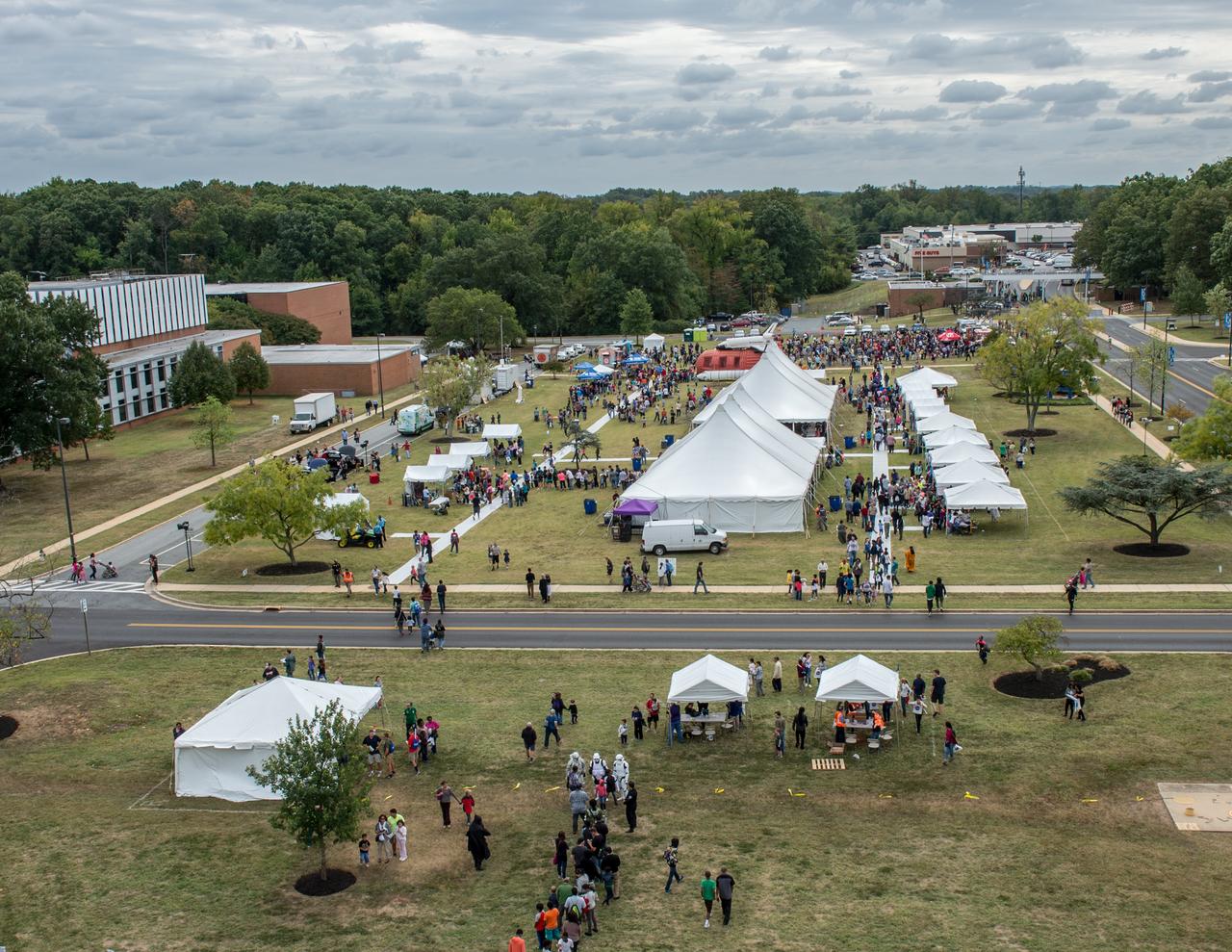
Explore@NASAGoddard celebrates the 25th anniversary of the launch of the Hubble Space Telescope. All areas of Goddard’s research – Earth science, heliophysics, planetary science, astrophysics, and engineering and technology – will be presented, as each discipline plays a critical part in NASA's ongoing journey to reach new heights.
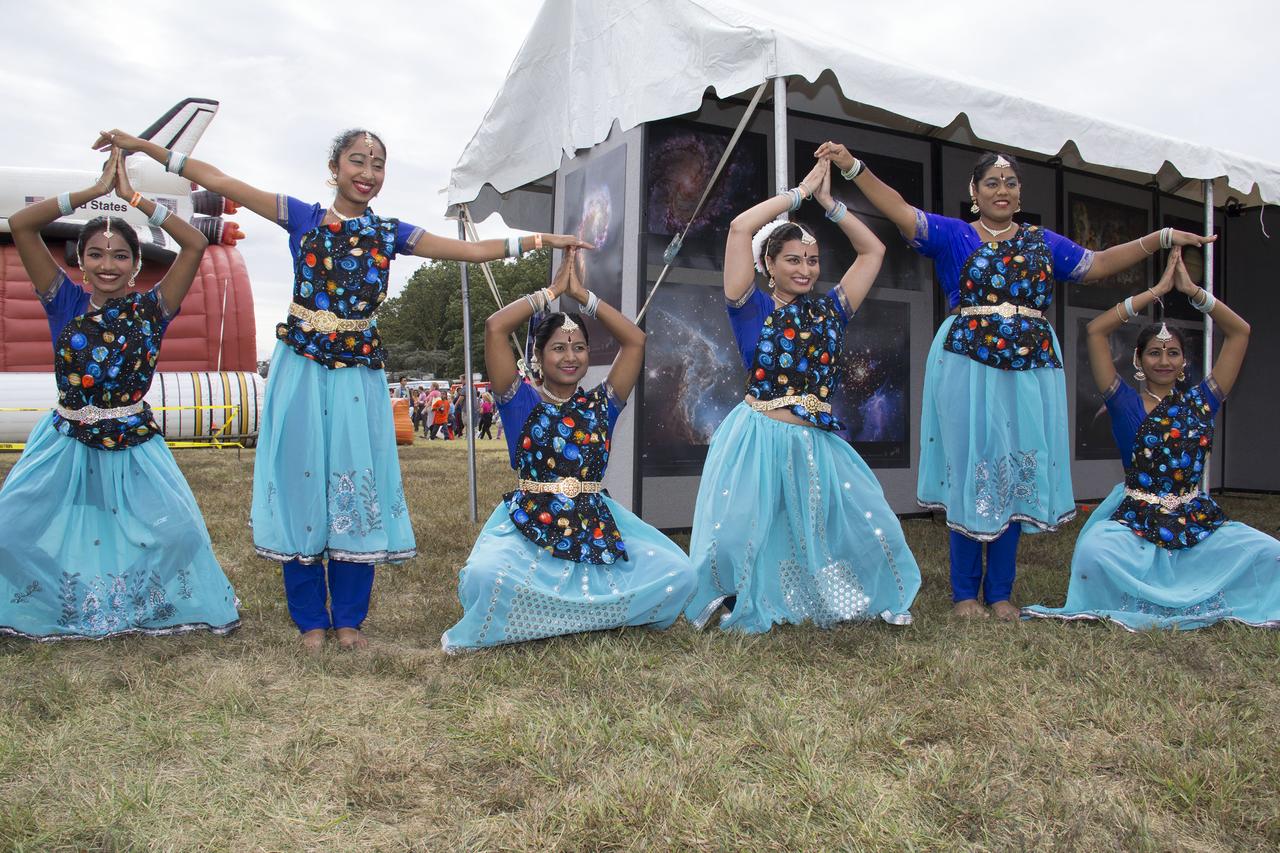
Explore@NASAGoddard celebrates the 25th anniversary of the launch of the Hubble Space Telescope. All areas of Goddard’s research – Earth science, heliophysics, planetary science, astrophysics, and engineering and technology – will be presented, as each discipline plays a critical part in NASA's ongoing journey to reach new heights.
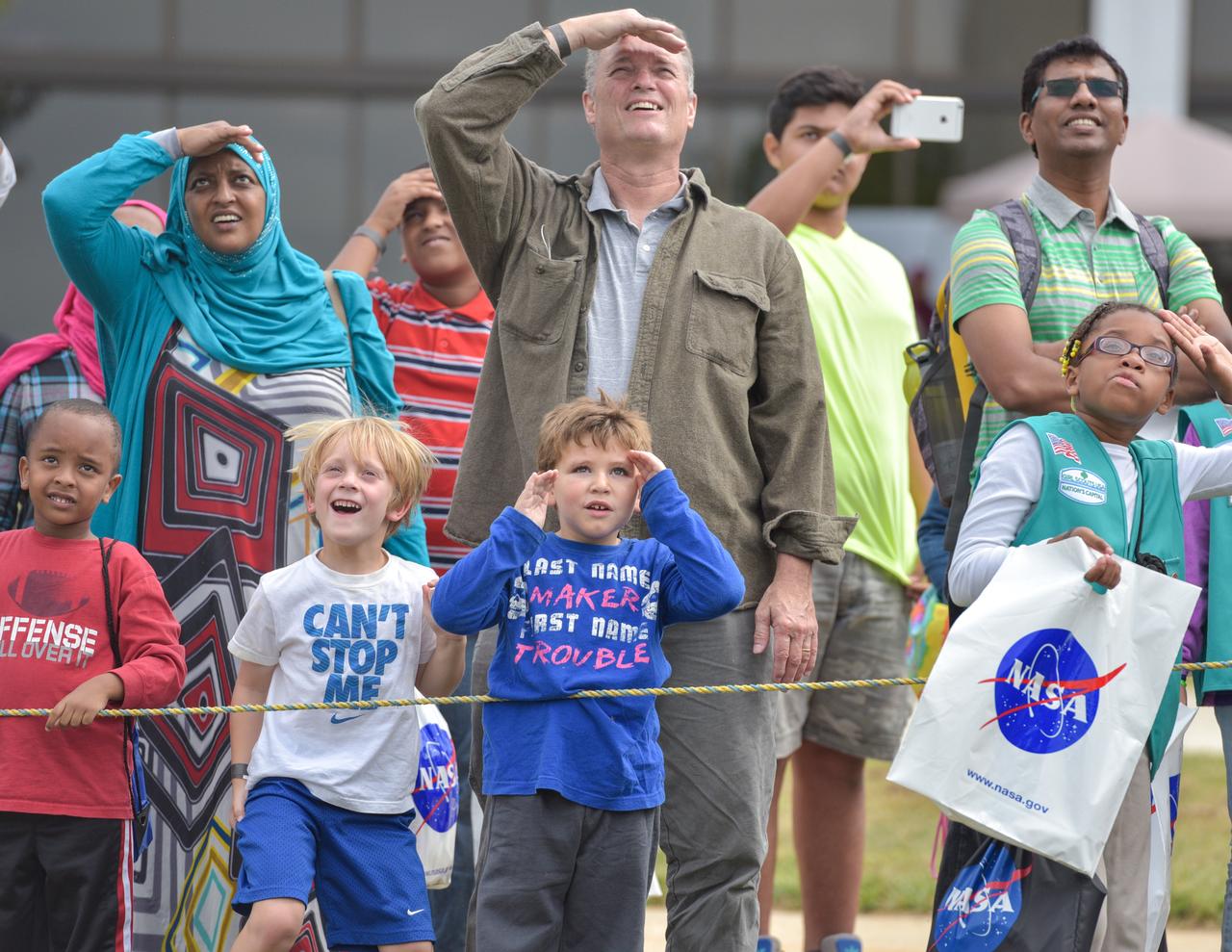
Explore@NASAGoddard celebrates the 25th anniversary of the launch of the Hubble Space Telescope. All areas of Goddard’s research – Earth science, heliophysics, planetary science, astrophysics, and engineering and technology – will be presented, as each discipline plays a critical part in NASA's ongoing journey to reach new heights.
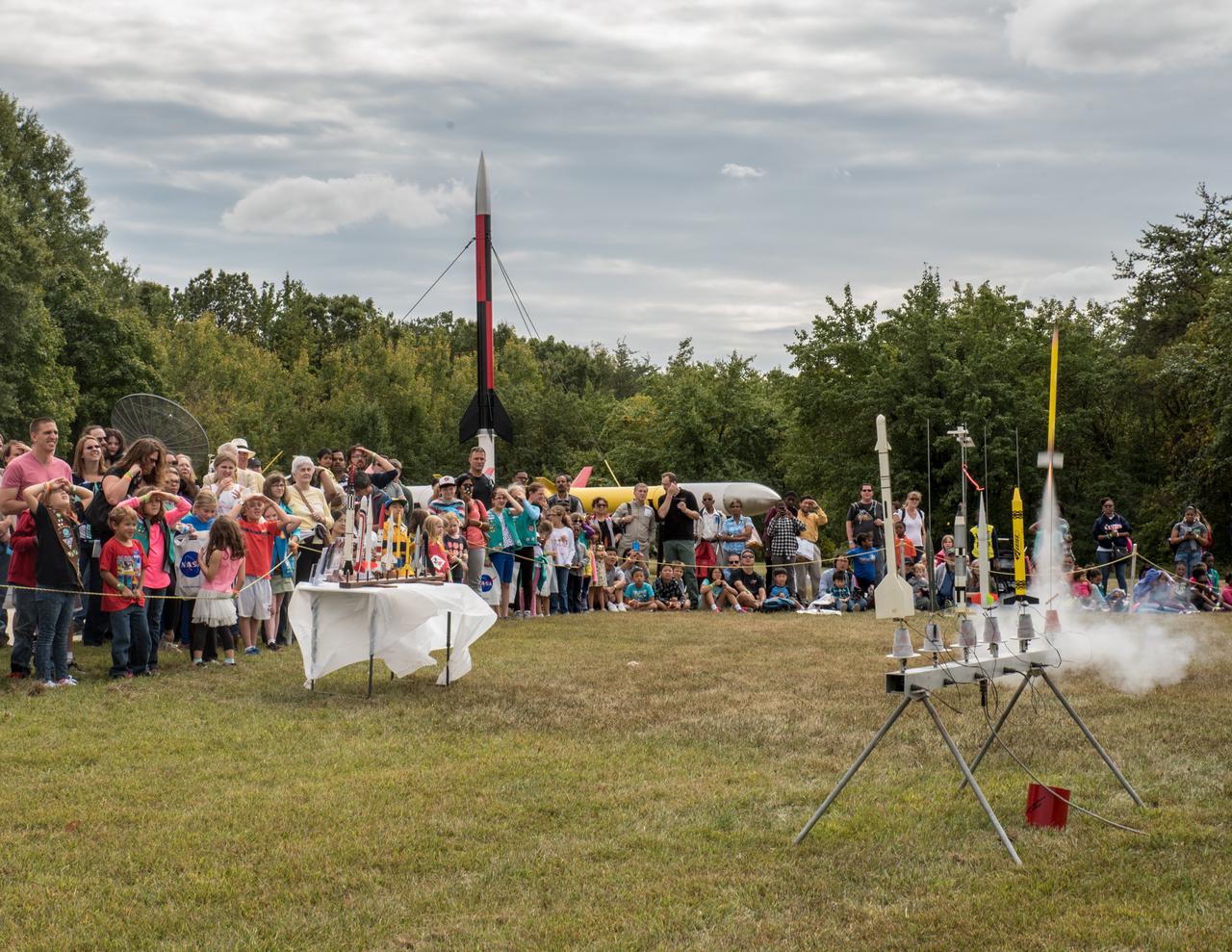
Explore@NASAGoddard celebrates the 25th anniversary of the launch of the Hubble Space Telescope. All areas of Goddard’s research – Earth science, heliophysics, planetary science, astrophysics, and engineering and technology – will be presented, as each discipline plays a critical part in NASA's ongoing journey to reach new heights.
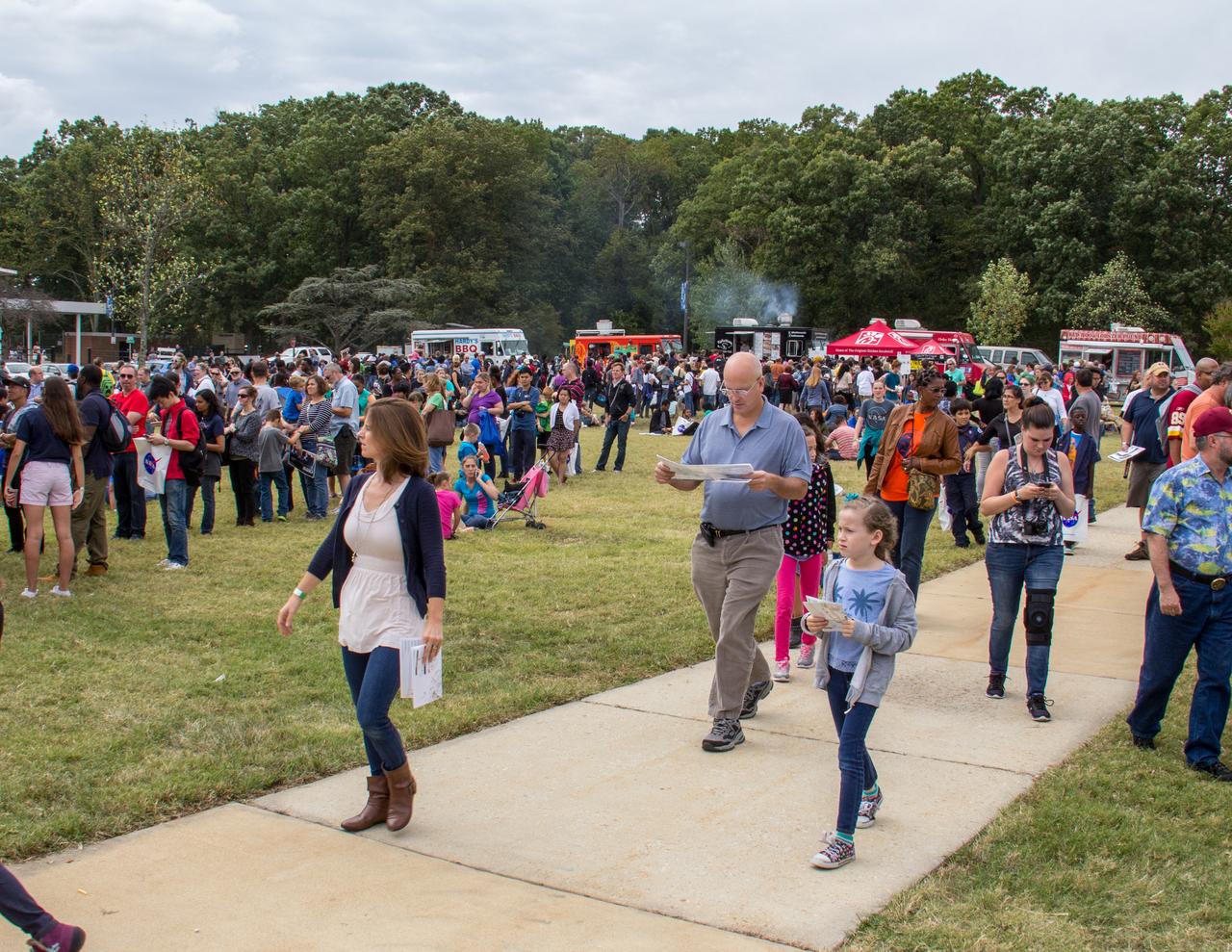
Explore@NASAGoddard celebrates the 25th anniversary of the launch of the Hubble Space Telescope. All areas of Goddard’s research – Earth science, heliophysics, planetary science, astrophysics, and engineering and technology – will be presented, as each discipline plays a critical part in NASA's ongoing journey to reach new heights.
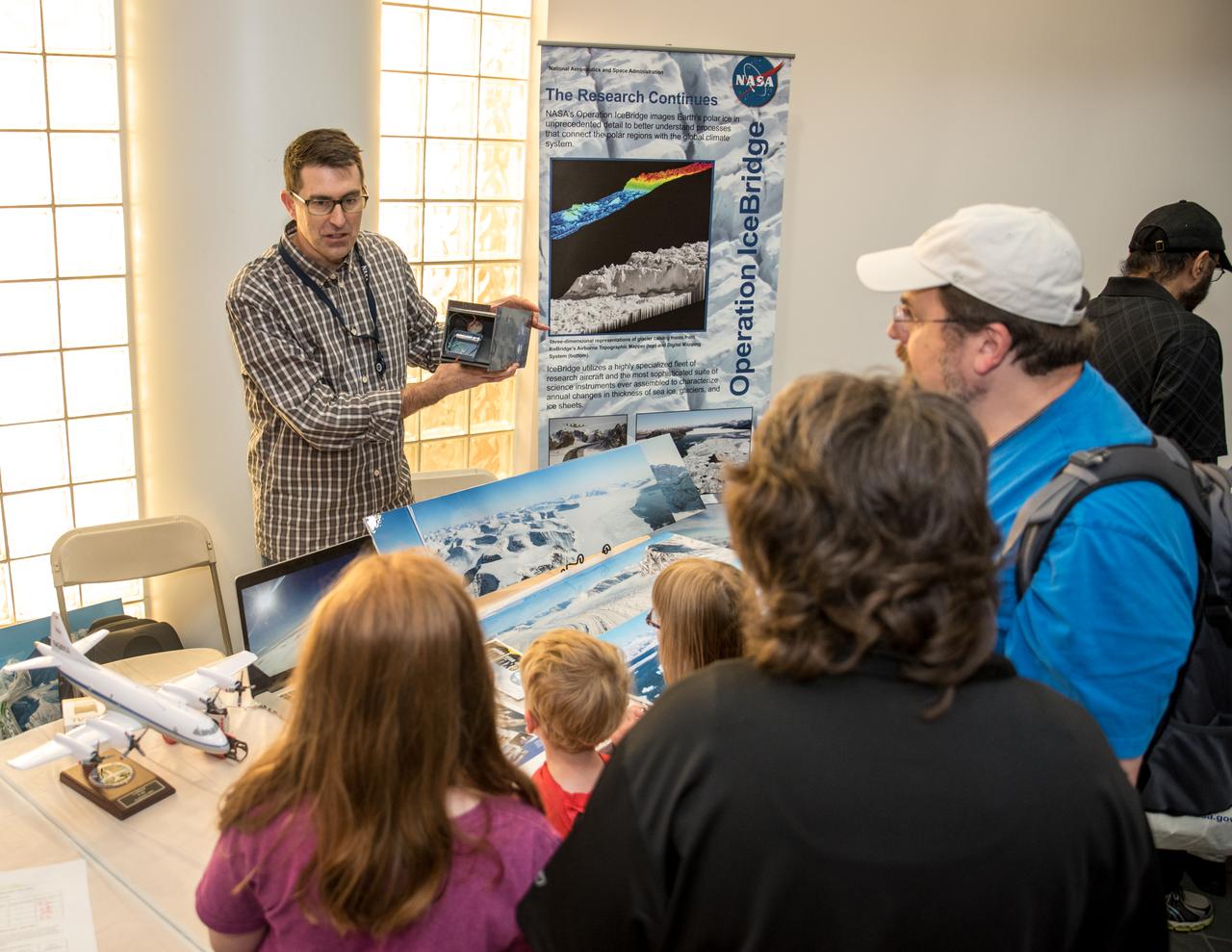
Explore@NASAGoddard celebrates the 25th anniversary of the launch of the Hubble Space Telescope. All areas of Goddard’s research – Earth science, heliophysics, planetary science, astrophysics, and engineering and technology – will be presented, as each discipline plays a critical part in NASA's ongoing journey to reach new heights.
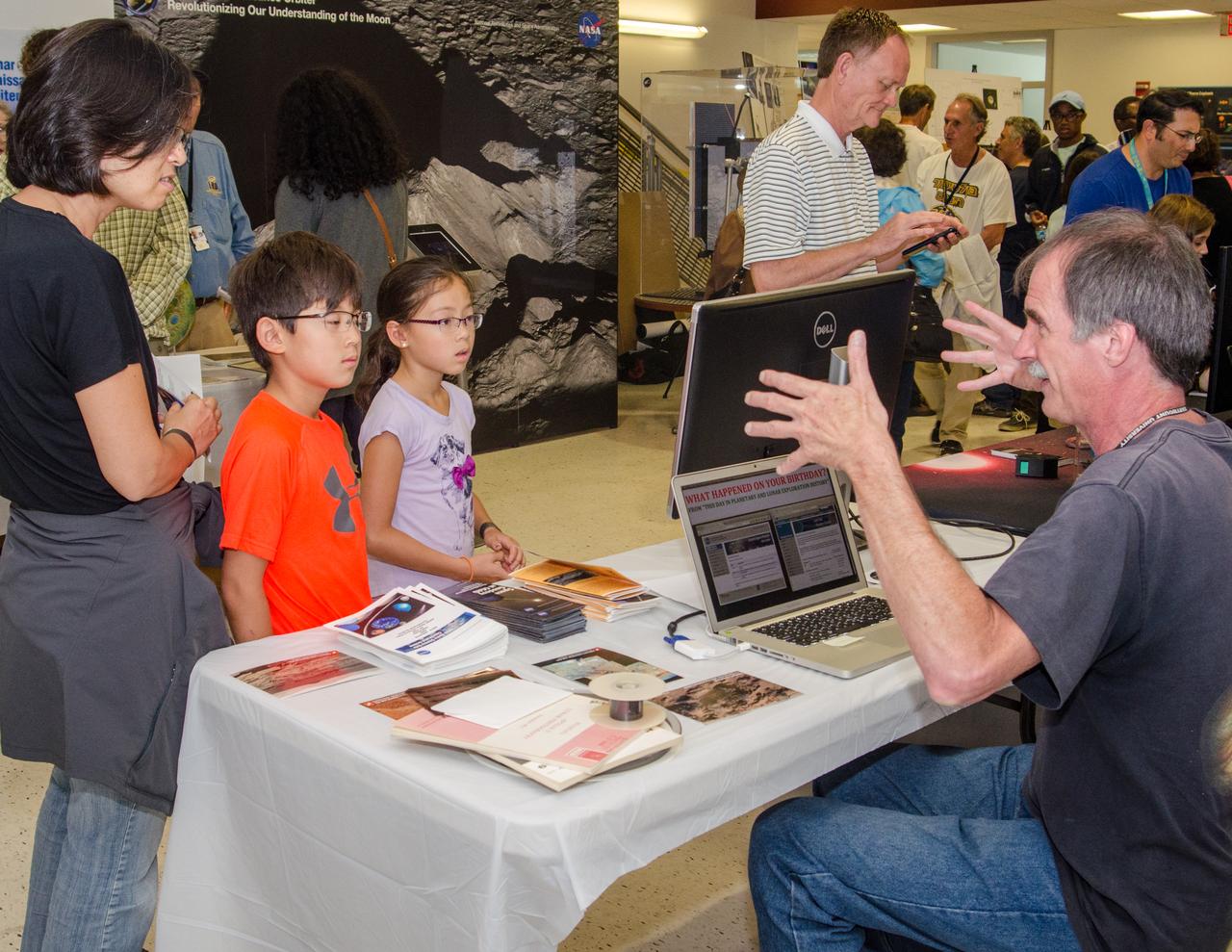
Explore@NASAGoddard celebrates the 25th anniversary of the launch of the Hubble Space Telescope. All areas of Goddard’s research – Earth science, heliophysics, planetary science, astrophysics, and engineering and technology – will be presented, as each discipline plays a critical part in NASA's ongoing journey to reach new heights.
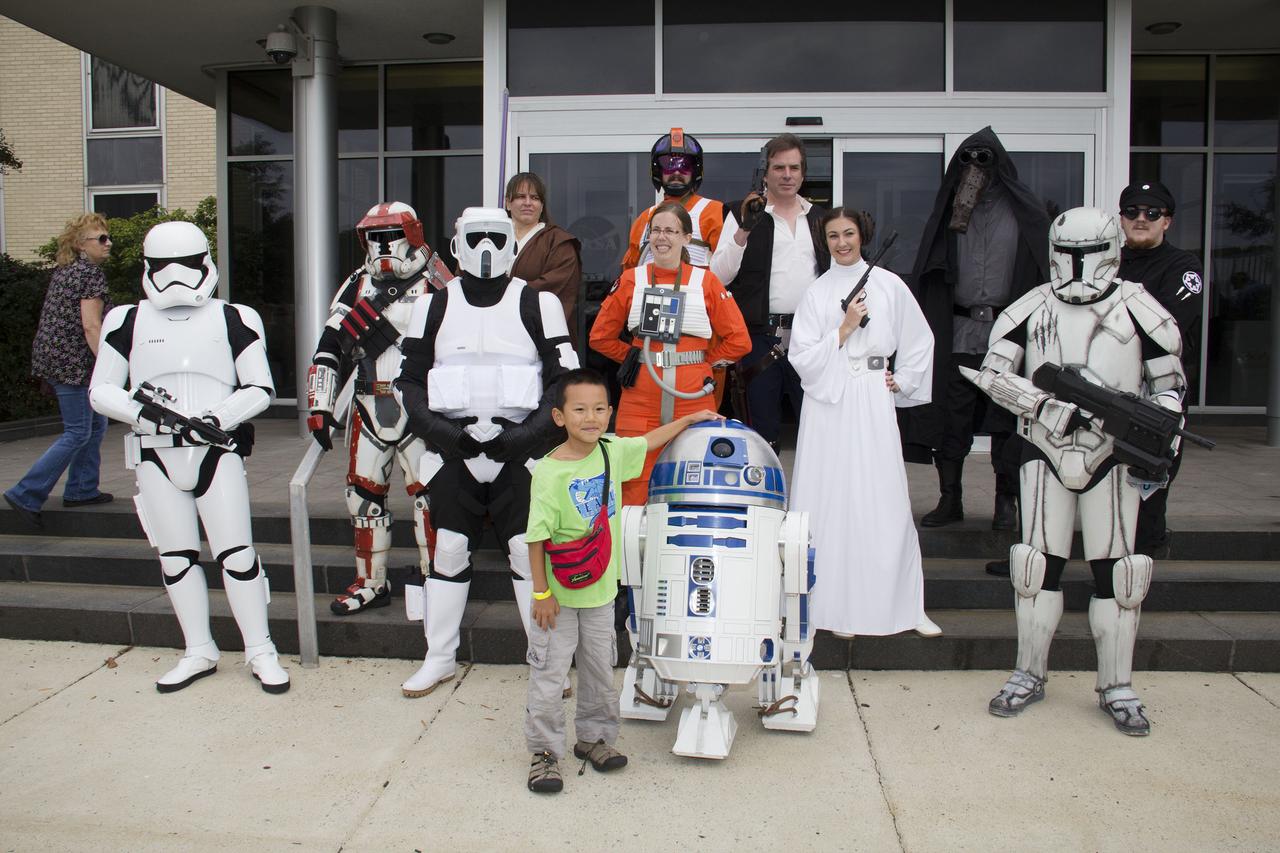
Explore@NASAGoddard celebrates the 25th anniversary of the launch of the Hubble Space Telescope. All areas of Goddard’s research – Earth science, heliophysics, planetary science, astrophysics, and engineering and technology – will be presented, as each discipline plays a critical part in NASA's ongoing journey to reach new heights.

Stennis Space Center Director Patrick Scheuermann (right) and Naval Meteorology and Oceanography Command Chief of Staff James Pettigrew drop the first shovelfuls of dirt on a time capsule to be opened on the rocket engine test facility's 100th anniversary in 2061. The time capsule was placed in front of the Roy S. Estess Building on Oct. 25 as Stennis concluded celebrations of its 50th anniversary. NASA publicly announced plans to build the rocket engine test site Oct. 25, 1961.

Stennis Space Center Director Patrick Scheuermann (right) and Naval Meteorology and Oceanography Command Chief of Staff James Pettigrew drop the first shovelfuls of dirt on a time capsule to be opened on the rocket engine test facility's 100th anniversary in 2061. The time capsule was placed in front of the Roy S. Estess Building on Oct. 25 as Stennis concluded celebrations of its 50th anniversary.
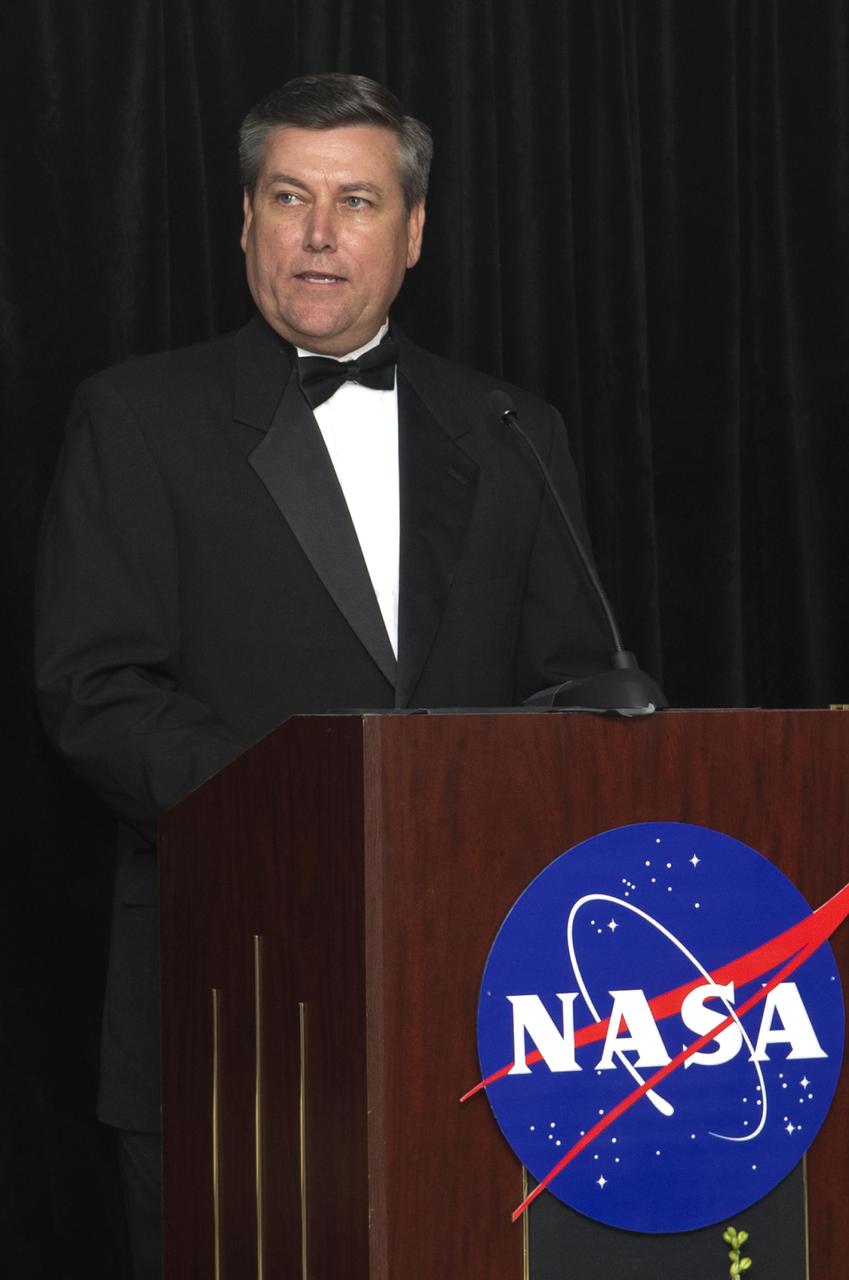
Stennis Space Center Director Patrick Scheuermann welcomes guests to the facility's 50th Anniversary Gala on Oct. 15. The event culminated Stennis' yearlong celebration of its 50th anniversary. NASA publicly announced plans to build the rocket engine test site Oct. 25, 1961.
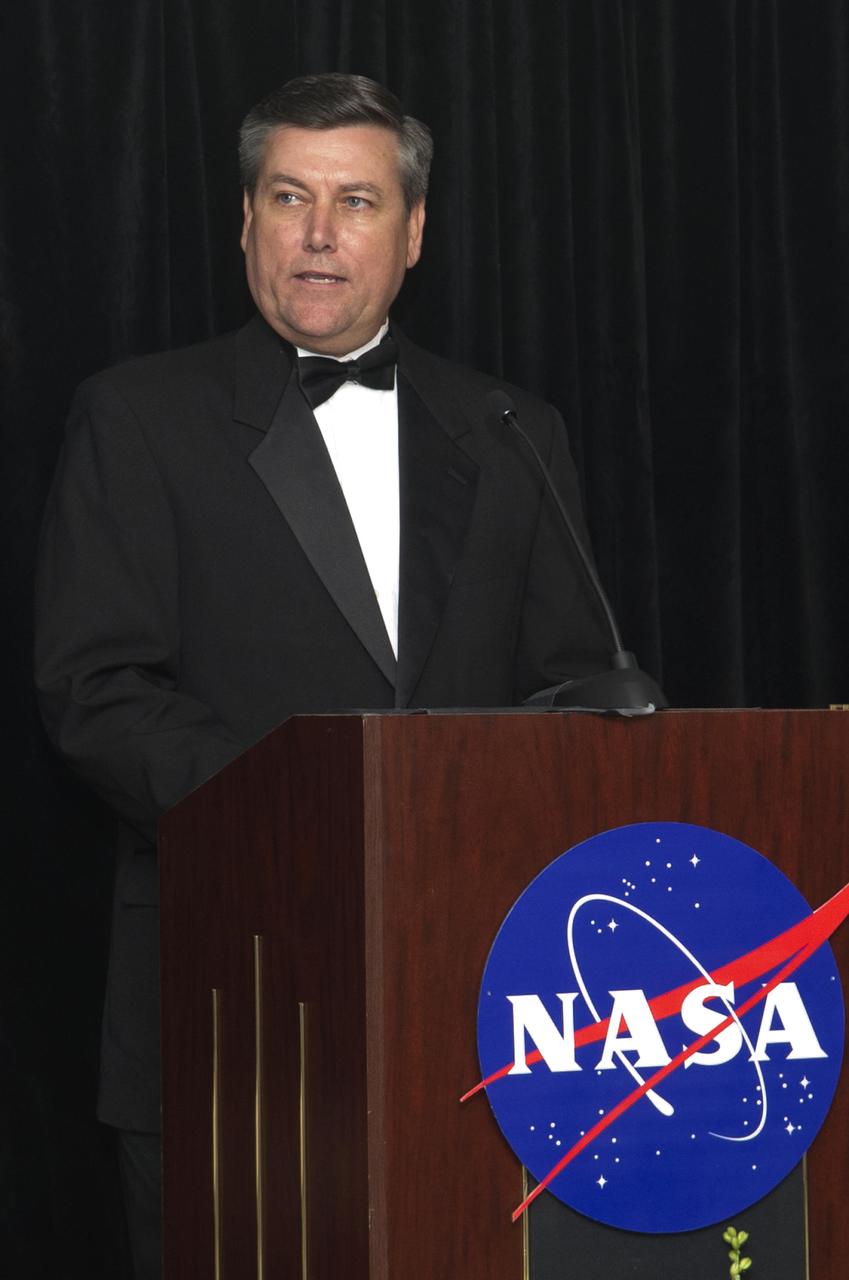
Stennis Space Center Director Patrick Scheuermann welcomes guests to the facility's 50th Anniversary Gala on Oct. 15. The event culminated Stennis' yearlong celebration of its 50th anniversary. NASA publicly announced plans to build the rocket engine test site Oct. 25, 1961.
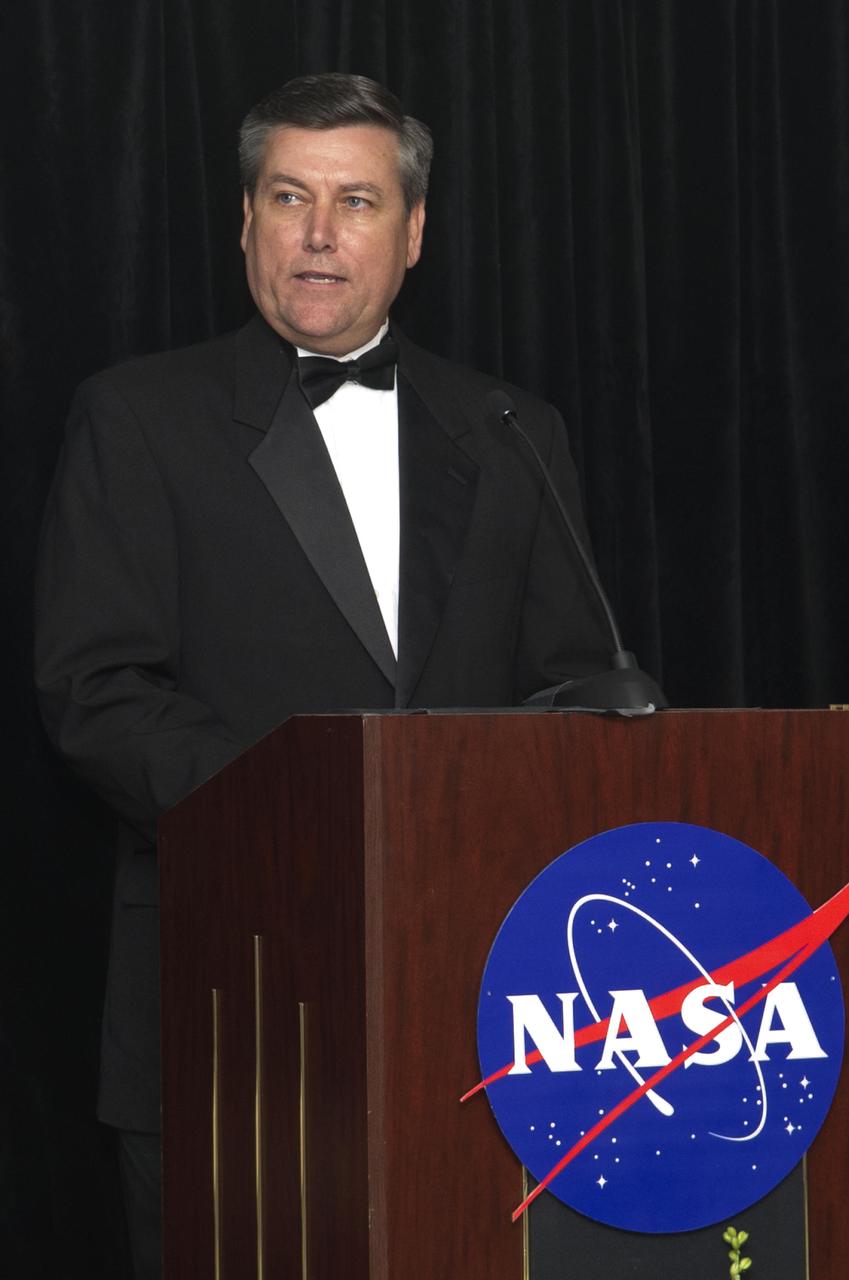
Stennis Space Center Director Patrick Scheuermann welcomes guests to the facility's 50th Anniversary Gala on Oct. 15. The event culminated Stennis' yearlong celebration of its 50th anniversary. NASA publicly announced plans to build the rocket engine test site Oct. 25, 1961.
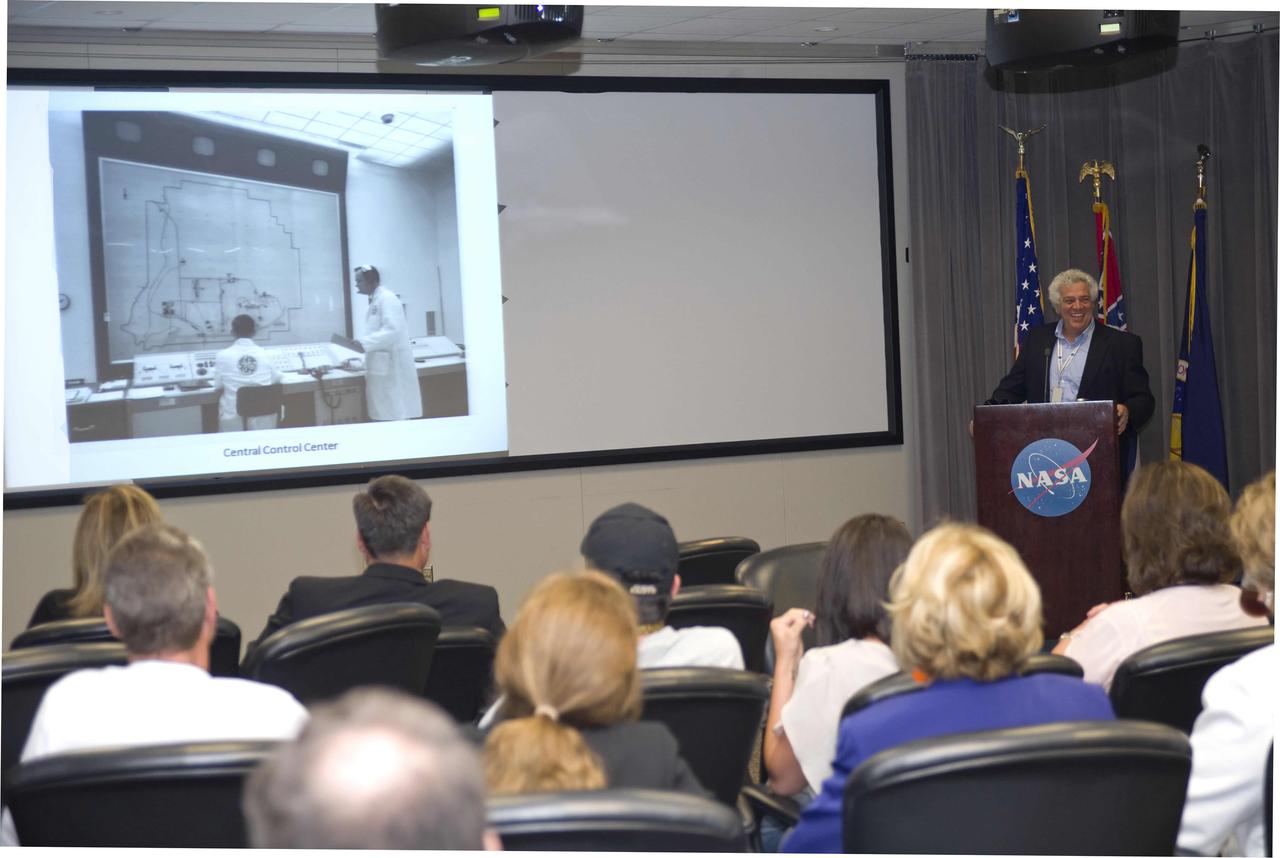
John C. Stennis Space Center historian Marco Giardino speaks to center employees during the first An Hour in History session March 22. The Stennis History Office launched the series as part of the rocket engine test facility's yearlong 50th anniversary celebration. The inaugural session focused on Stennis history during the early 1960s. Subsequent sessions will focus on other aspects of Stennis history as part of the '50 Years of Powering Dreams' anniversary theme.
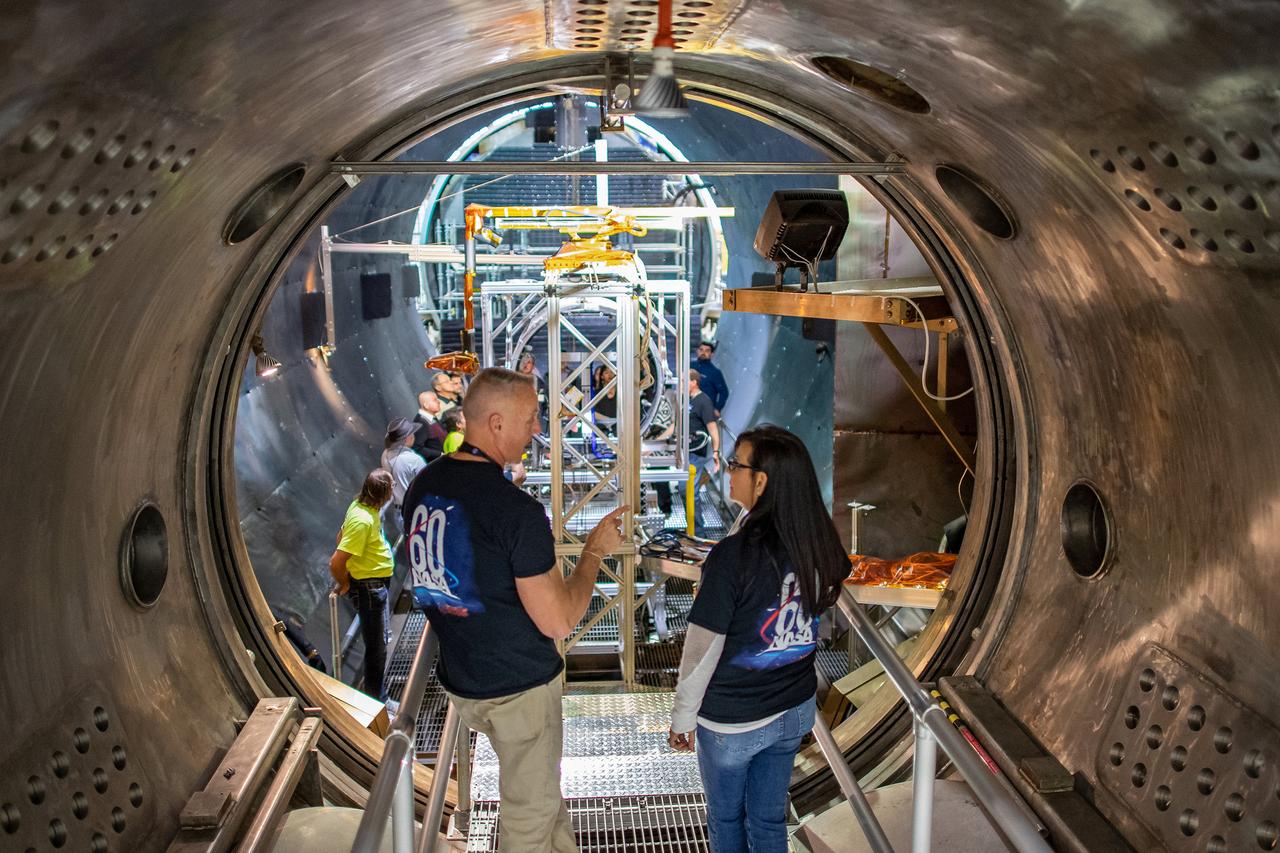
NASA 60th Anniversary Public Tours / NASA 60th Anniversary Celebration at the Great Lakes Science Center
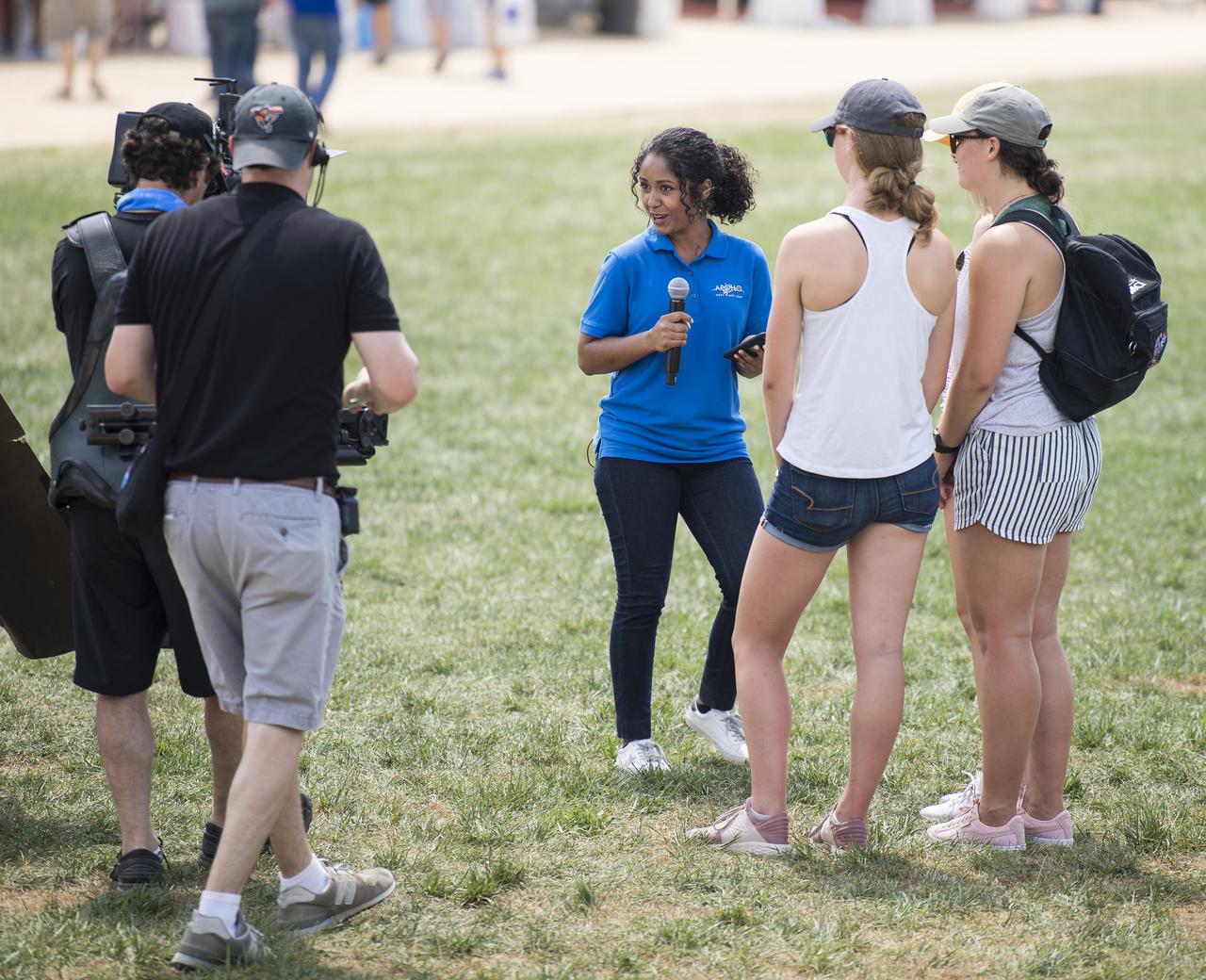
NASA Social Media Specialist, Tahira Allen, interviews visitors to the Apollo 11 50th Anniversary celebration on the National Mall during “NASA’s Giant Leaps: Past and Future," a live television program on Friday, July 19, 2019 in Washington. NASA and the world are recognizing the 50th anniversary of Apollo 11, in which astronauts Neil Armstrong, Michael Collins, and Buzz Aldrin crewed the first mission to land astronauts on the Moon. Photo Credit: (NASA/Aubrey Gemignani)
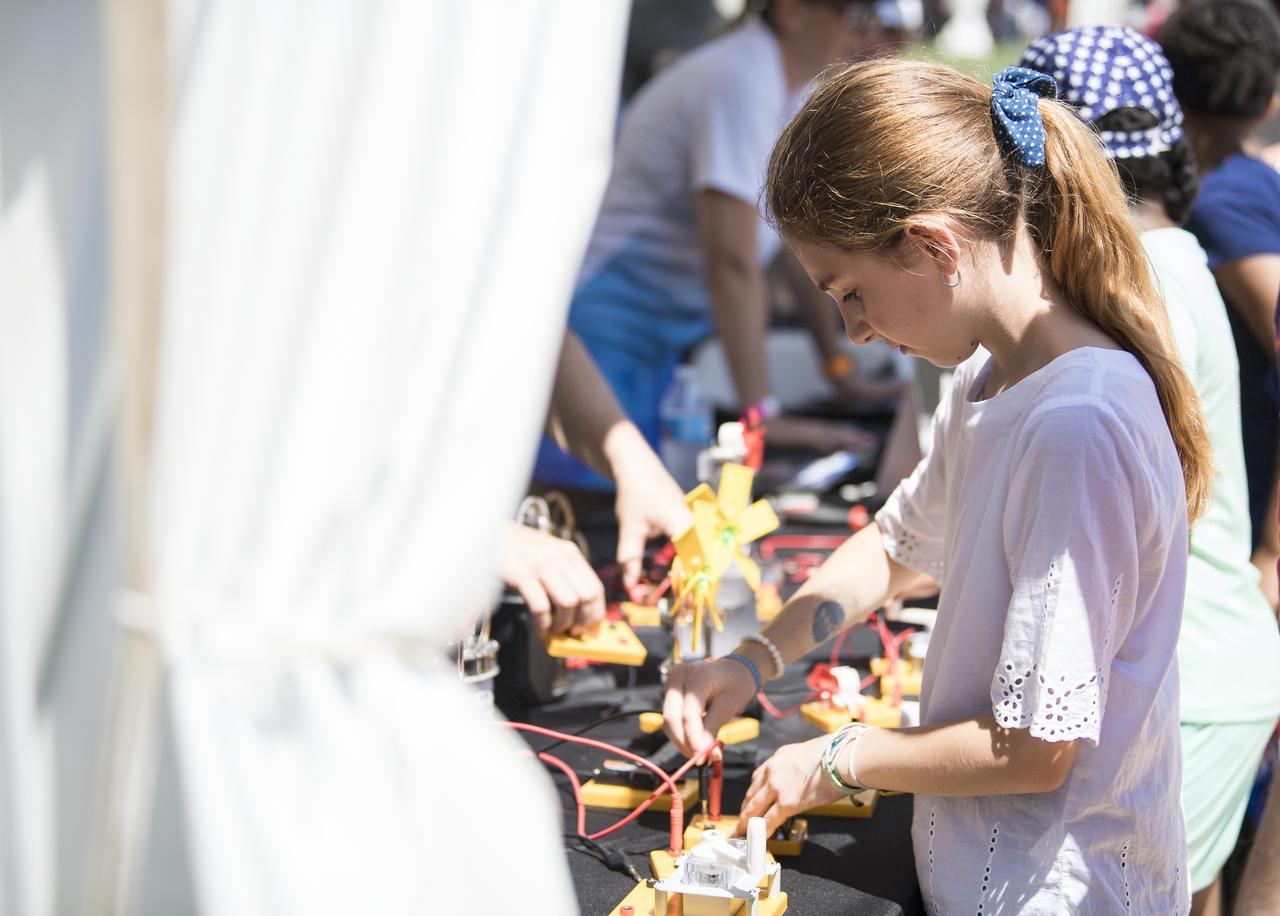
A visitor learns about circuits at the Apollo 11 50th Anniversary celebration on the National Mall, Friday, July 19, 2019 in Washington. Apollo 11 was the first mission to land astronauts on the Moon and launched on July 16, 1969 with astronauts Neil Armstrong, Michael Collins, and Buzz Aldrin. Photo Credit: (NASA/Aubrey Gemignani)
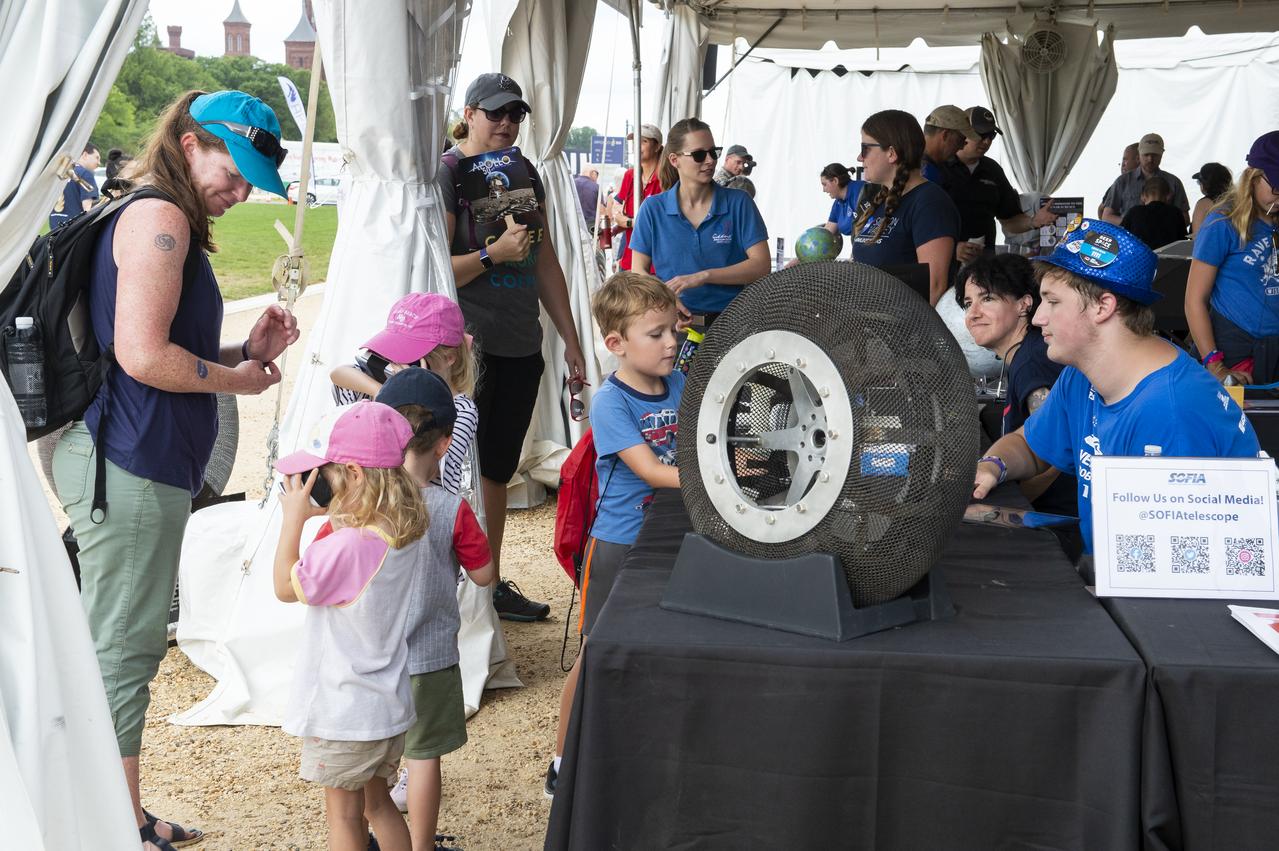
Visitors learn about the SOFIA telescope at the Apollo 11 50th Anniversary celebration on the National Mall, Thursday, July 18, 2019 in Washington. Apollo 11 was the first mission to land astronauts on the Moon and launched on July 16, 1969 with astronauts Neil Armstrong, Michael Collins, and Buzz Aldrin. Photo Credit: (NASA/Connie Moore)
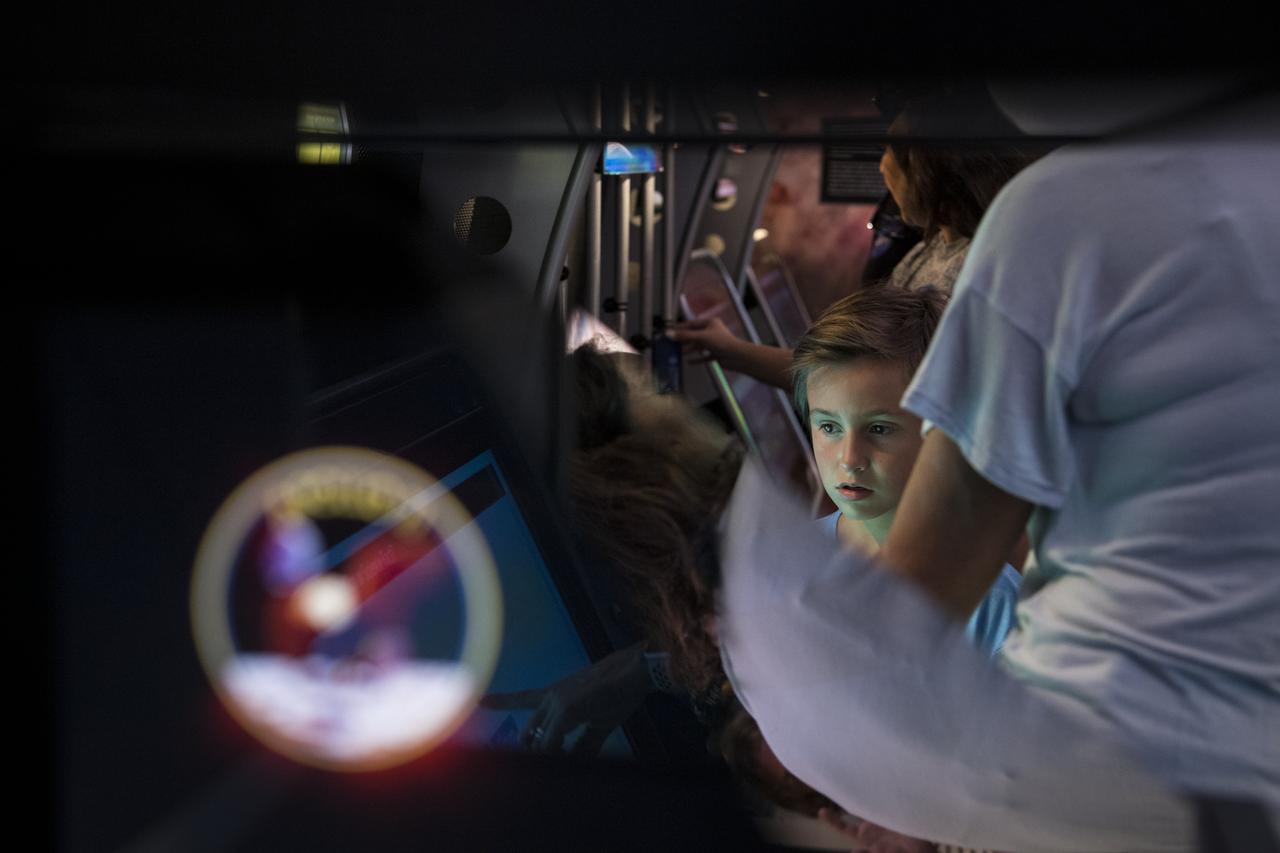
A visitor explores the Journey to Tomorrow exhibit at the Apollo 11 50th Anniversary celebration on the National Mall, Thursday, July 18, 2019 in Washington. Apollo 11 was the first mission to land astronauts on the Moon and launched on July 16, 1969 with astronauts Neil Armstrong, Michael Collins, and Buzz Aldrin. Photo Credit: (NASA/Aubrey Gemignani)
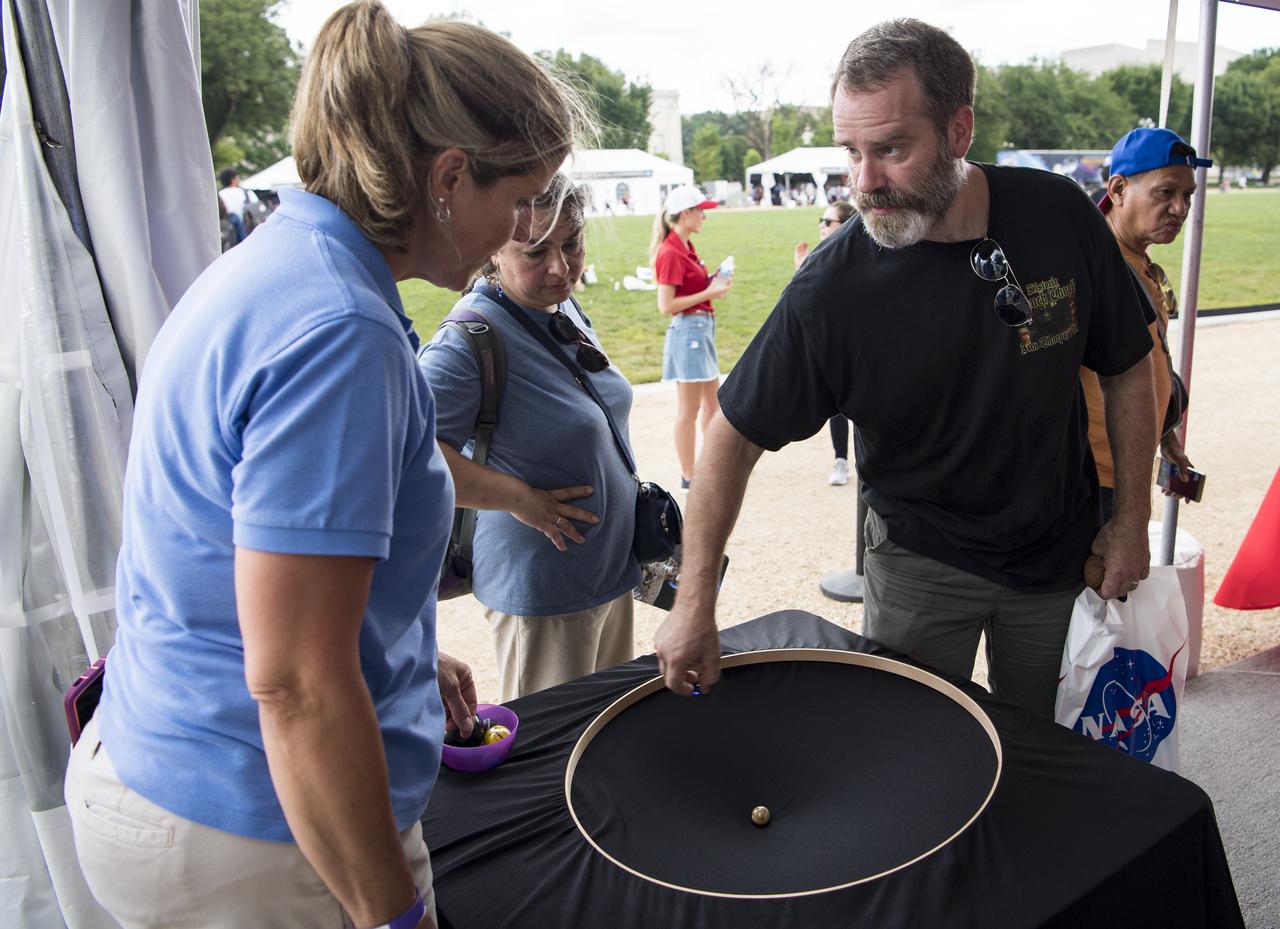
A visitor explores the exhibit at the Apollo 11 50th Anniversary celebration on the National Mall, Thursday, July 18, 2019 in Washington. Apollo 11 was the first mission to land astronauts on the Moon and launched on July 16, 1969 with astronauts Neil Armstrong, Michael Collins, and Buzz Aldrin. Photo Credit: (NASA/Aubrey Gemignani)

Visitors explore the Lockheed Martin exhibit at the Apollo 11 50th Anniversary celebration on the National Mall, Thursday, July 18, 2019 in Washington. Apollo 11 was the first mission to land astronauts on the Moon and launched on July 16, 1969 with astronauts Neil Armstrong, Michael Collins, and Buzz Aldrin. Photo Credit: (NASA/Connie Moore)
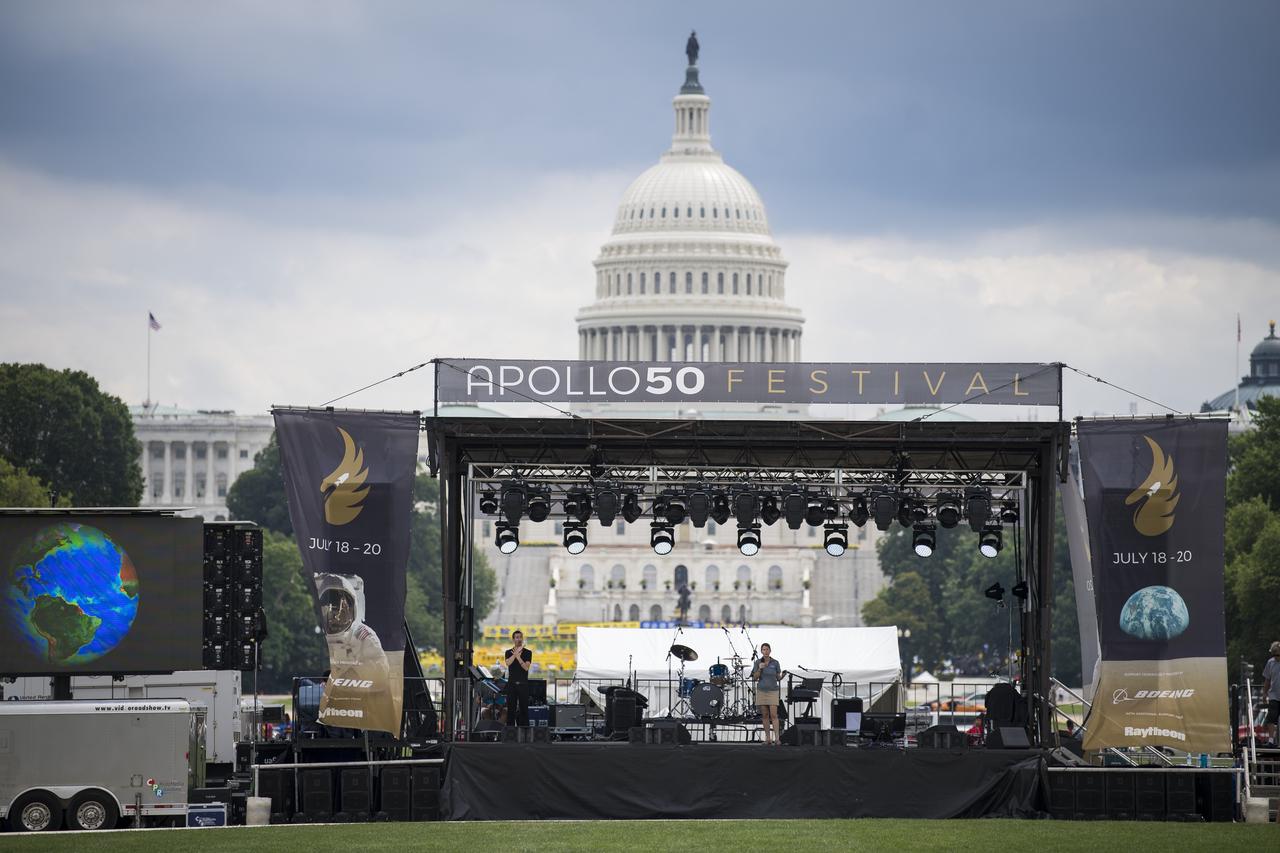
The main stage at the Apollo 11 50th Anniversary celebration is seen on the National Mall, Thursday, July 18, 2019 in Washington. Apollo 11 was the first mission to land astronauts on the Moon and launched on July 16, 1969 with astronauts Neil Armstrong, Michael Collins, and Buzz Aldrin. Photo Credit: (NASA/Aubrey Gemignani)
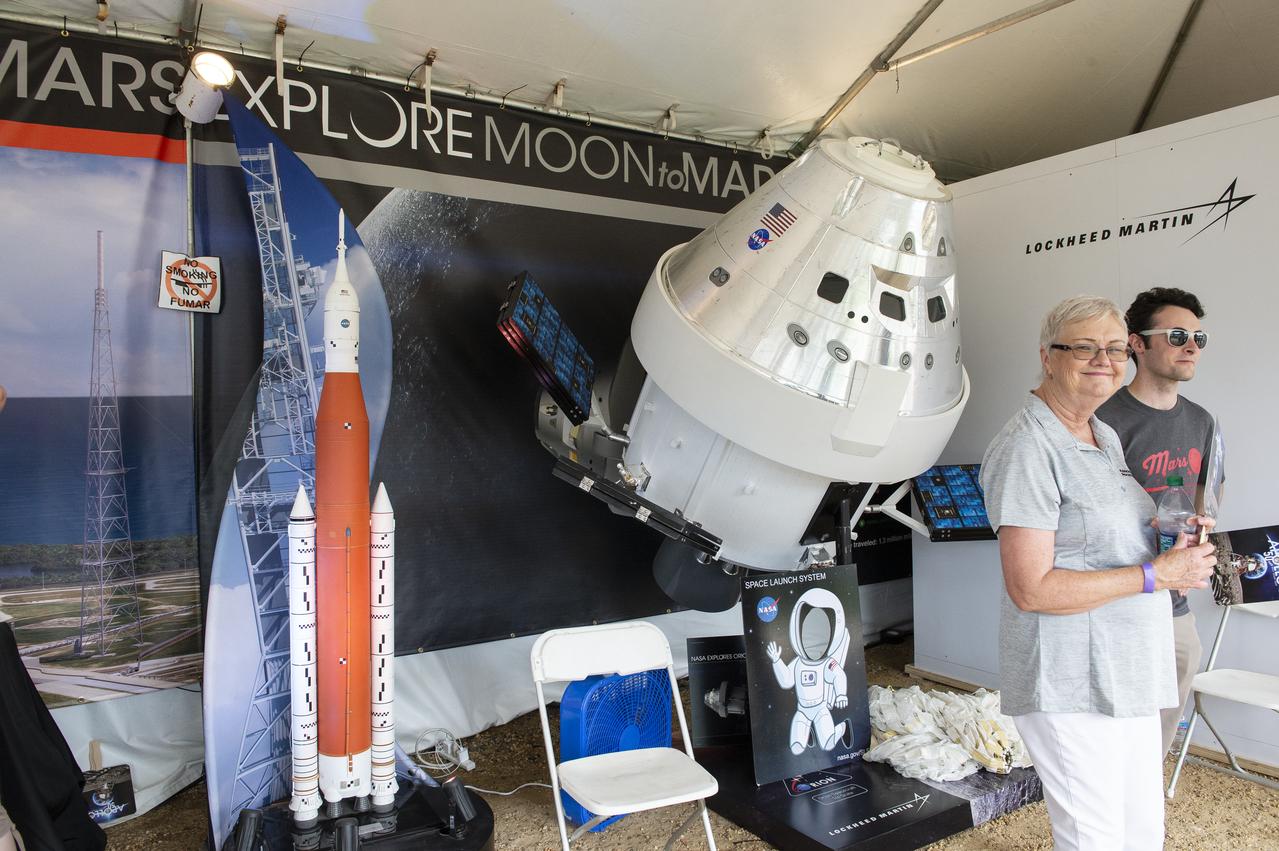
The Moon to Mars exhibit is seen at the Apollo 11 50th Anniversary celebration on the National Mall, Thursday, July 18, 2019 in Washington. Apollo 11 was the first mission to land astronauts on the Moon and launched on July 16, 1969 with astronauts Neil Armstrong, Michael Collins, and Buzz Aldrin. Photo Credit: (NASA/Connie Moore)
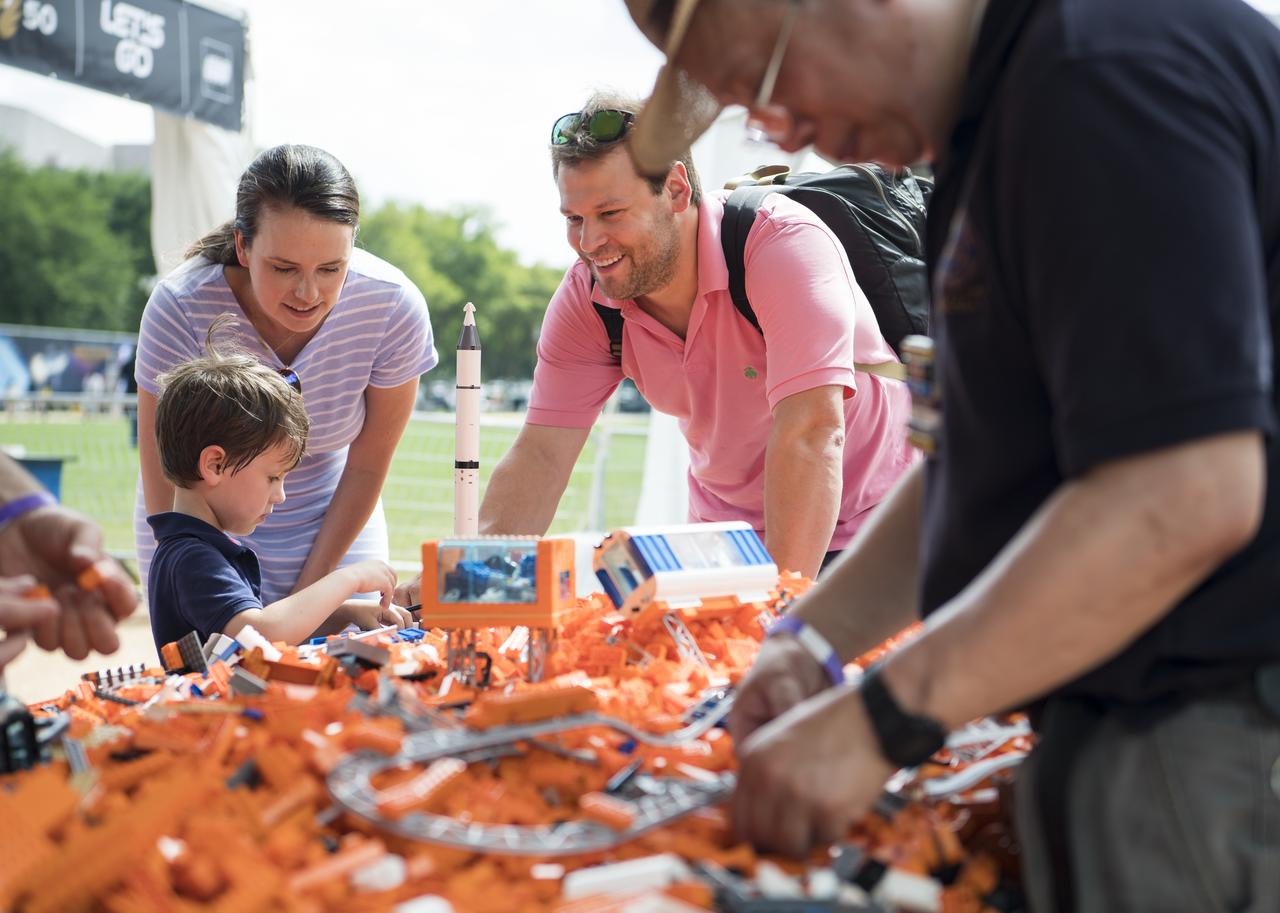
Visitors explore the LEGO exhibit at the Apollo 11 50th Anniversary celebration on the National Mall, Thursday, July 18, 2019 in Washington. Apollo 11 was the first mission to land astronauts on the Moon and launched on July 16, 1969 with astronauts Neil Armstrong, Michael Collins, and Buzz Aldrin. Photo Credit: (NASA/Aubrey Gemignani)

A small rover is driven over a visitor at the Apollo 11 50th Anniversary celebration on the National Mall, Friday, July 19, 2019 in Washington. Apollo 11 was the first mission to land astronauts on the Moon and launched on July 16, 1969 with astronauts Neil Armstrong, Michael Collins, and Buzz Aldrin. Photo Credit: (NASA/Aubrey Gemignani)
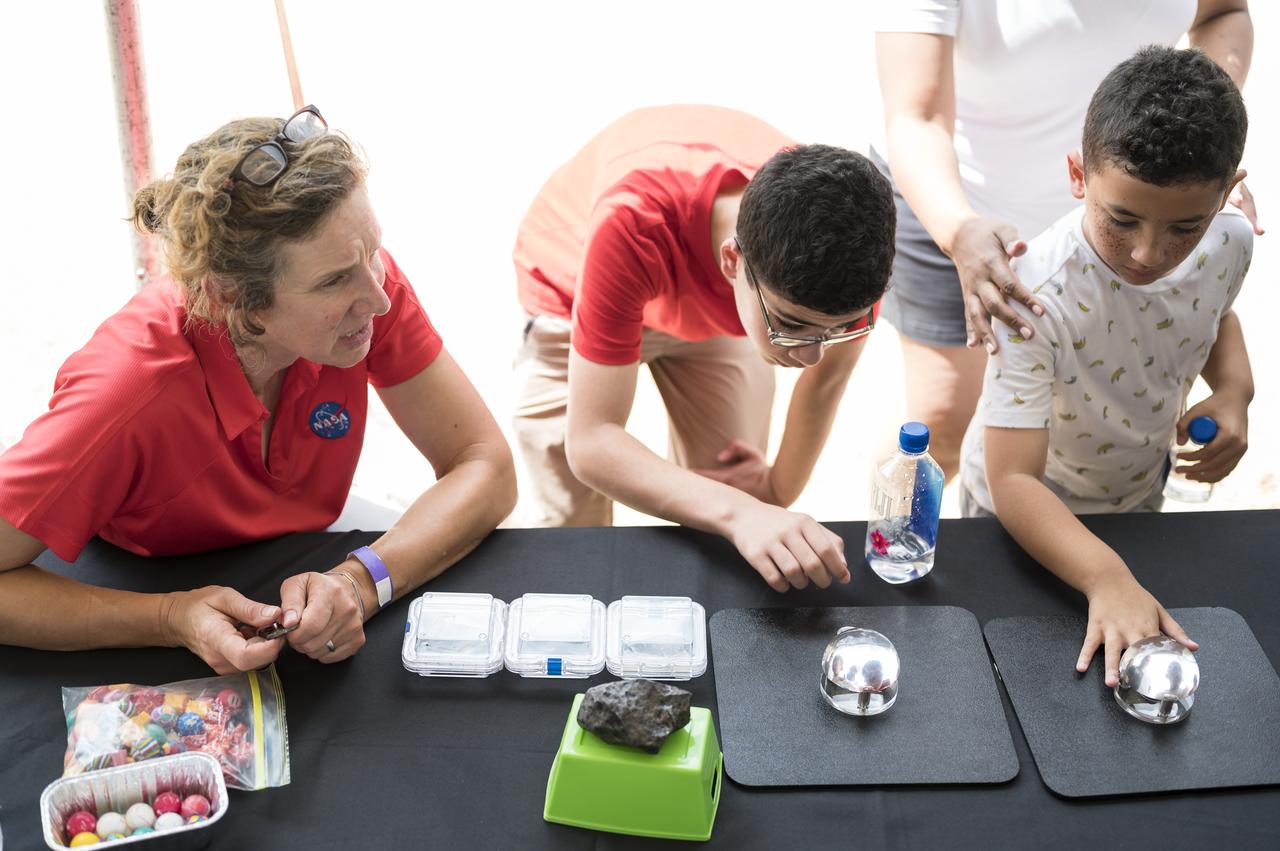
Visitors examine meteorites at a NASA exhibit at the Apollo 11 50th Anniversary celebration on the National Mall, Thursday, July 18, 2019 in Washington. Apollo 11 was the first mission to land astronauts on the Moon and launched on July 16, 1969 with astronauts Neil Armstrong, Michael Collins, and Buzz Aldrin. Photo Credit: (NASA/Aubrey Gemignani)
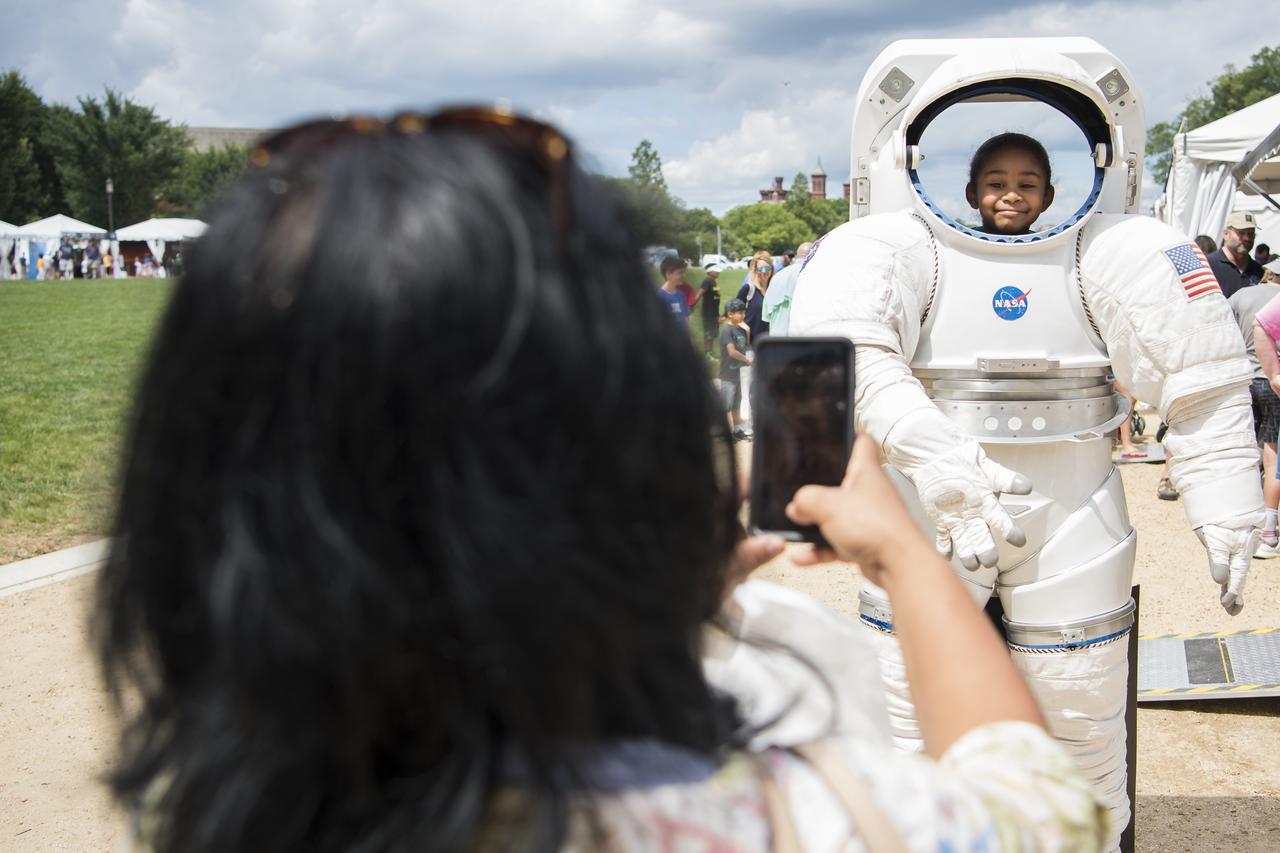
A visitor poses for a photo in the NASA spacesuit at the Apollo 11 50th Anniversary celebration on the National Mall, Thursday, July 18, 2019 in Washington. Apollo 11 was the first mission to land astronauts on the Moon and launched on July 16, 1969 with astronauts Neil Armstrong, Michael Collins, and Buzz Aldrin. Photo Credit: (NASA/Aubrey Gemignani)
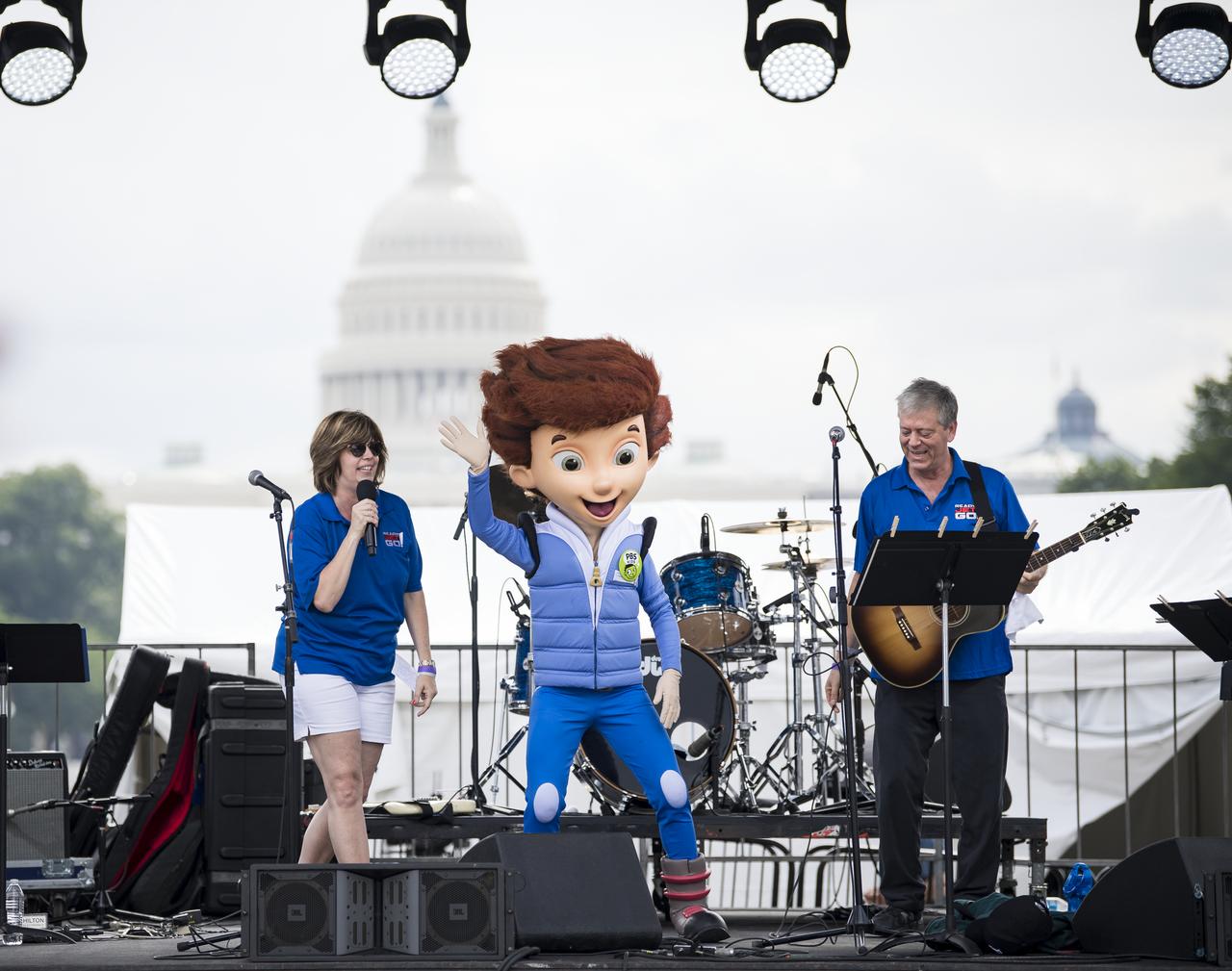
A Ready Jet Go performance is seen at the Apollo 11 50th Anniversary celebration on the National Mall, Thursday, July 18, 2019 in Washington. Apollo 11 was the first mission to land astronauts on the Moon and launched on July 16, 1969 with astronauts Neil Armstrong, Michael Collins, and Buzz Aldrin. Photo Credit: (NASA/Aubrey Gemignani)
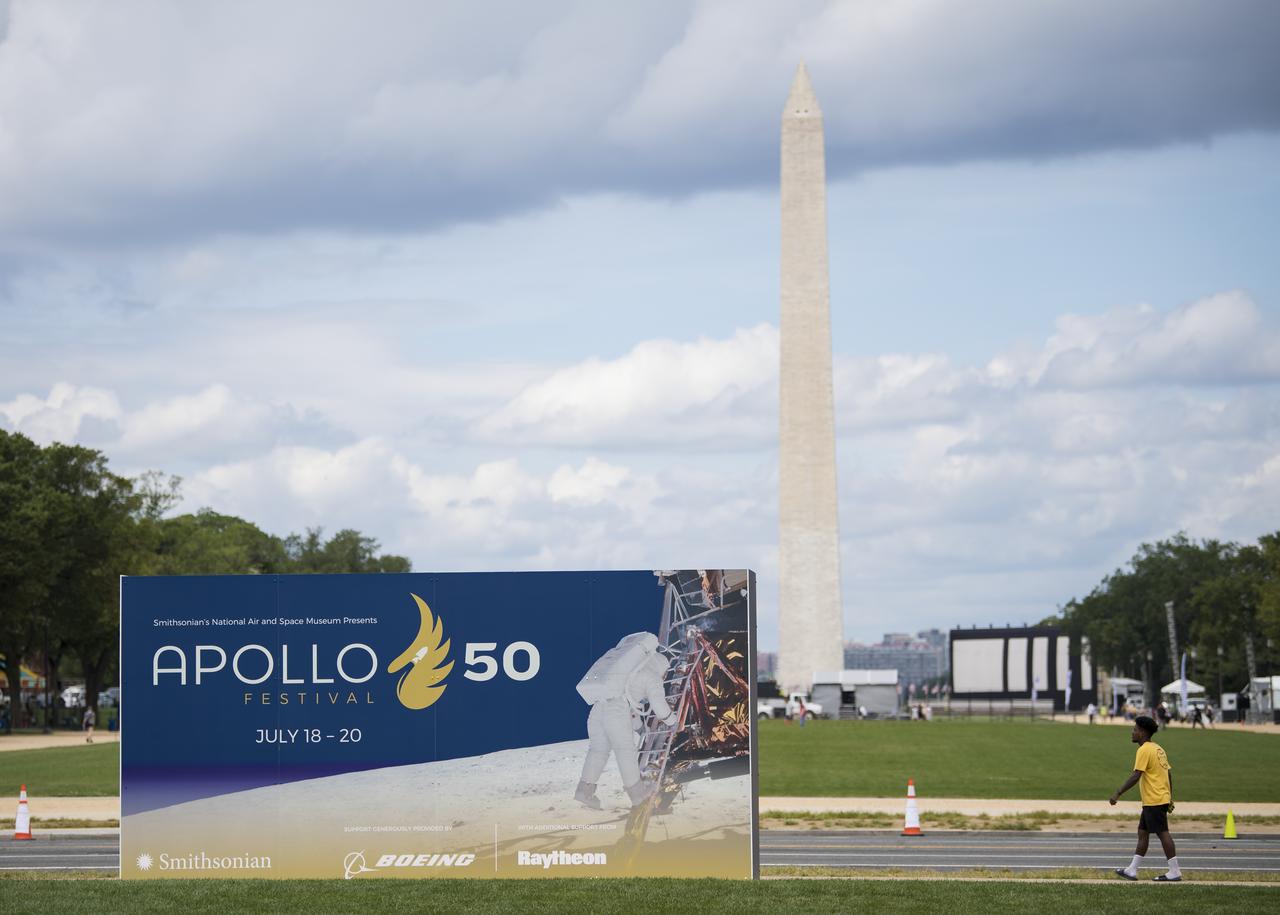
A visitor explores the exhibit at the Apollo 11 50th Anniversary celebration on the National Mall, Thursday, July 18, 2019 in Washington. Apollo 11 was the first mission to land astronauts on the Moon and launched on July 16, 1969 with astronauts Neil Armstrong, Michael Collins, and Buzz Aldrin. Photo Credit: (NASA/Aubrey Gemignani)
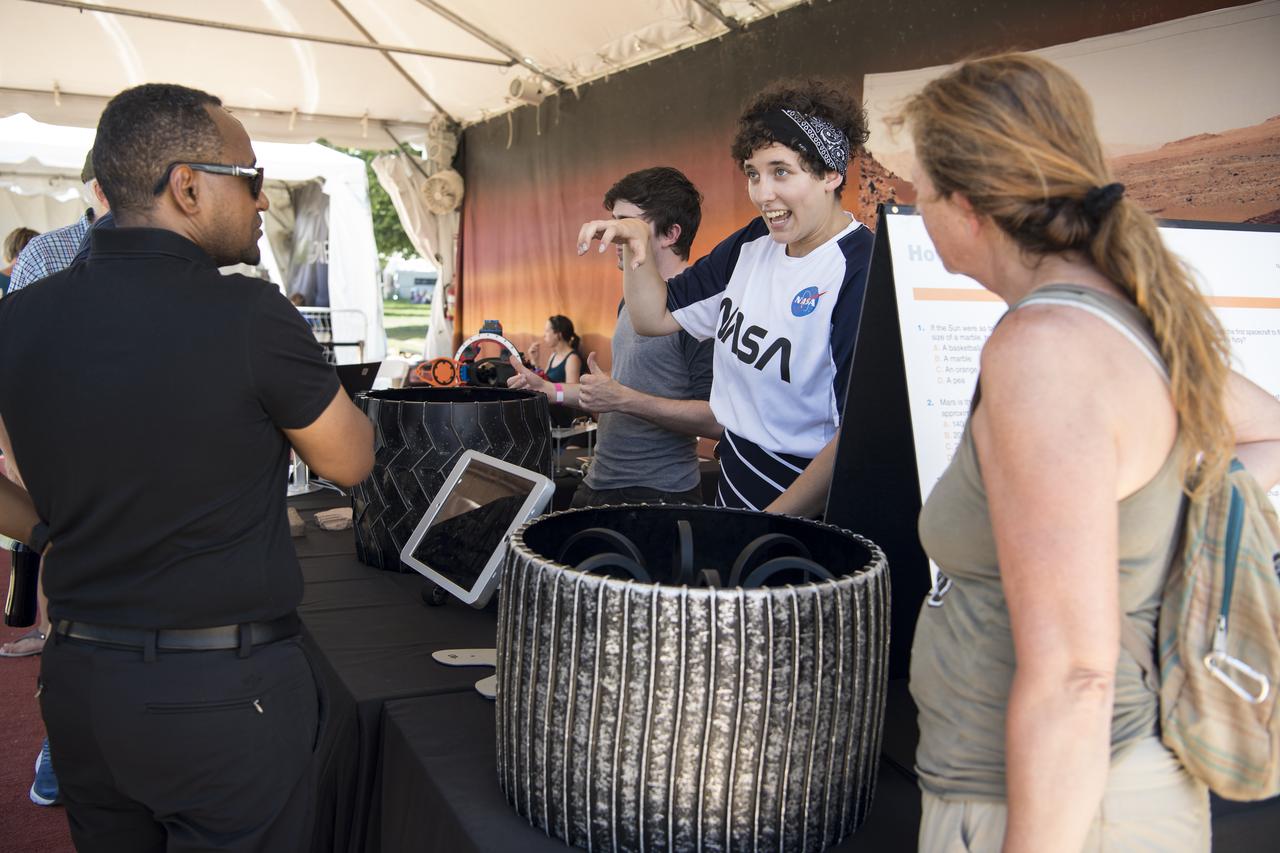
Visitors learn about rover tires at the Apollo 11 50th Anniversary celebration on the National Mall, Friday, July 19, 2019 in Washington. Apollo 11 was the first mission to land astronauts on the Moon and launched on July 16, 1969 with astronauts Neil Armstrong, Michael Collins, and Buzz Aldrin. Photo Credit: (NASA/Aubrey Gemignani)
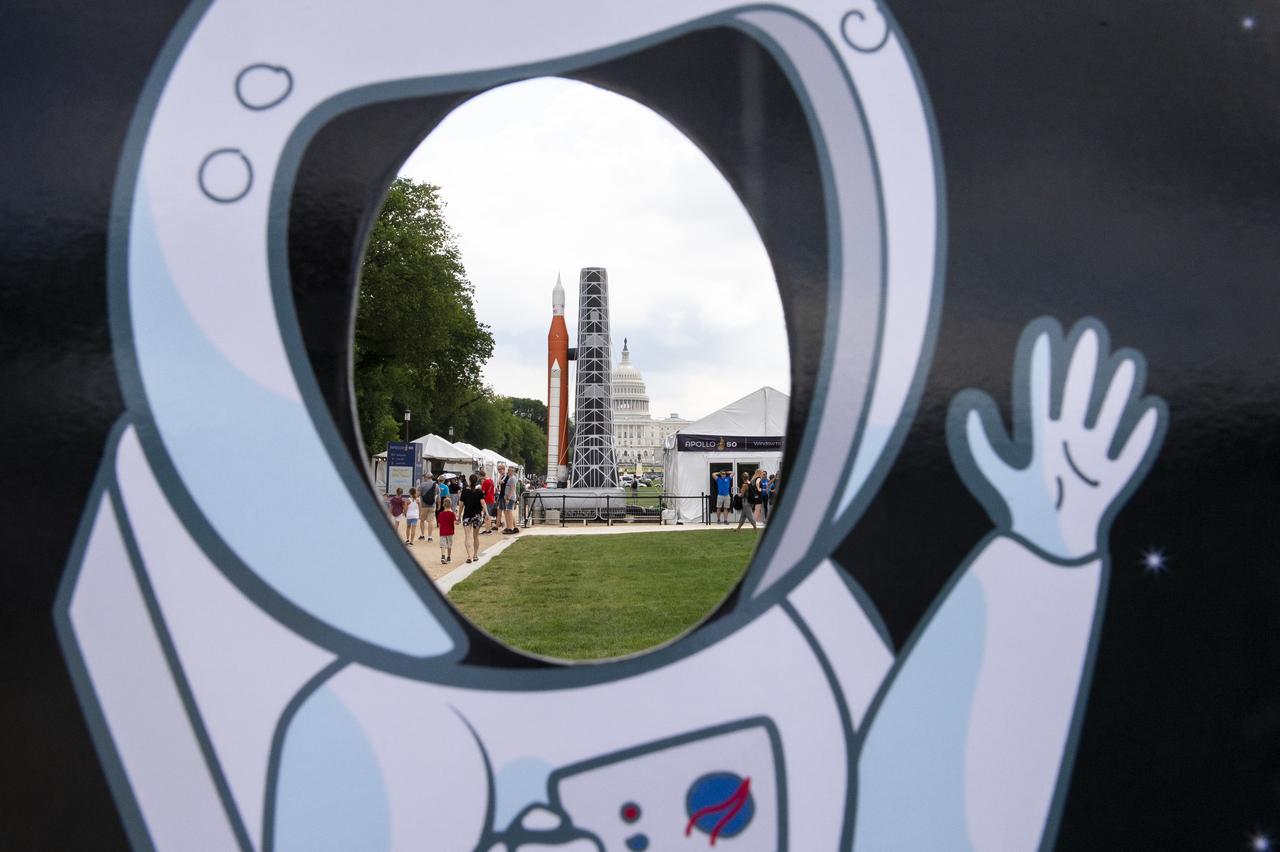
A view of the Apollo 11 50th Anniversary celebration on the National Mall, Thursday, July 18, 2019 in Washington. Apollo 11 was the first mission to land astronauts on the Moon and launched on July 16, 1969 with astronauts Neil Armstrong, Michael Collins, and Buzz Aldrin. Photo Credit: (NASA/Connie Moore)
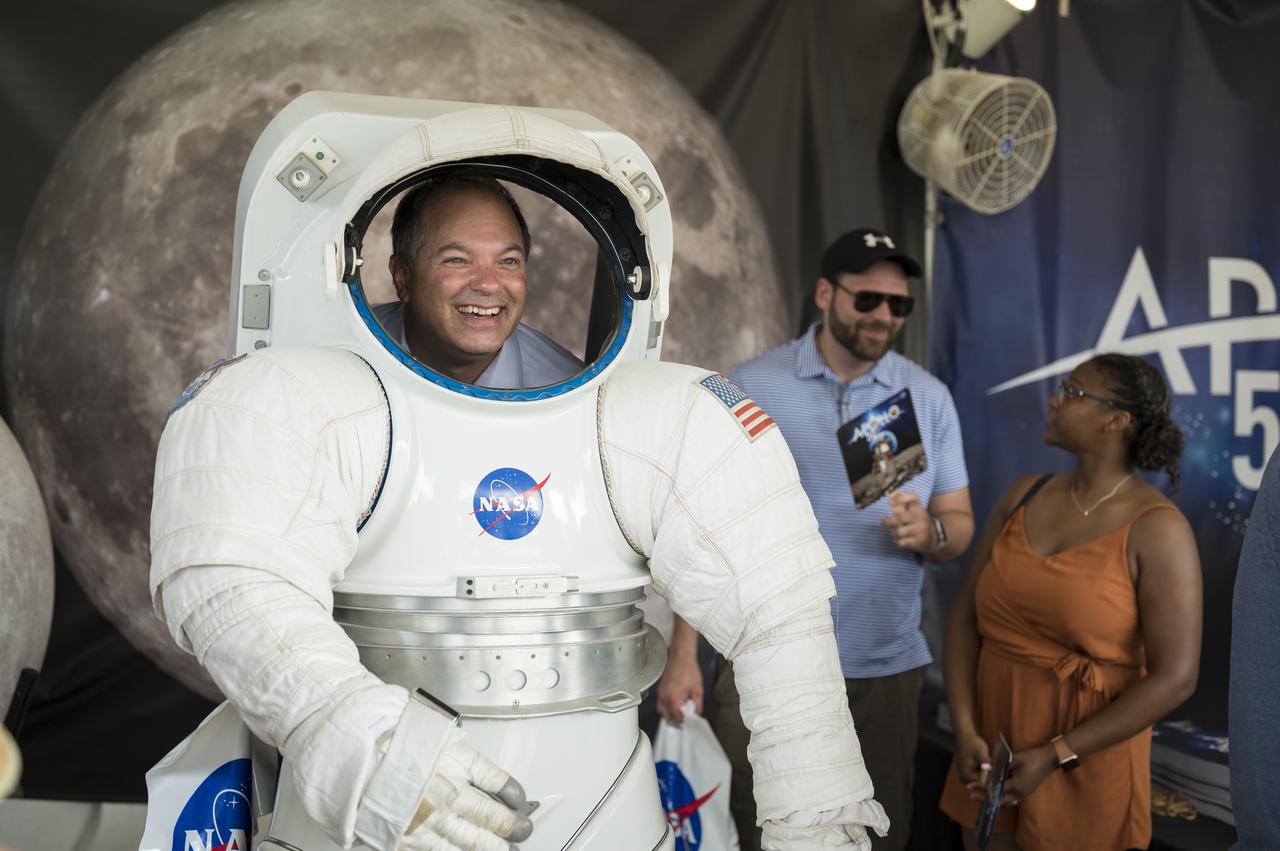
A visitor poses for a photo in the NASA spacesuit at the Apollo 11 50th Anniversary celebration on the National Mall, Thursday, July 18, 2019 in Washington. Apollo 11 was the first mission to land astronauts on the Moon and launched on July 16, 1969 with astronauts Neil Armstrong, Michael Collins, and Buzz Aldrin. Photo Credit: (NASA/Aubrey Gemignani)
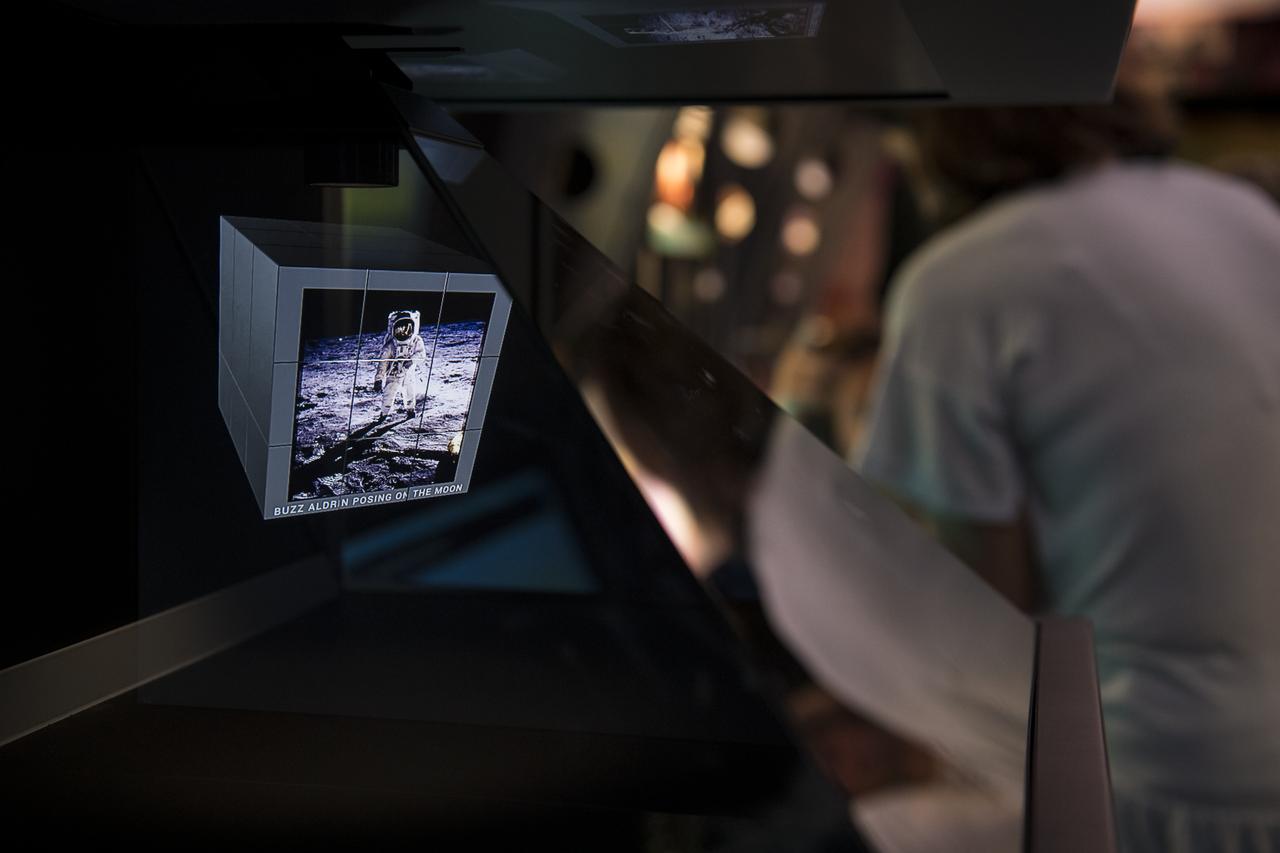
A visitor explores the Journey to Tomorrow exhibit at the Apollo 11 50th Anniversary celebration on the National Mall, Thursday, July 18, 2019 in Washington. Apollo 11 was the first mission to land astronauts on the Moon and launched on July 16, 1969 with astronauts Neil Armstrong, Michael Collins, and Buzz Aldrin. Photo Credit: (NASA/Aubrey Gemignani)
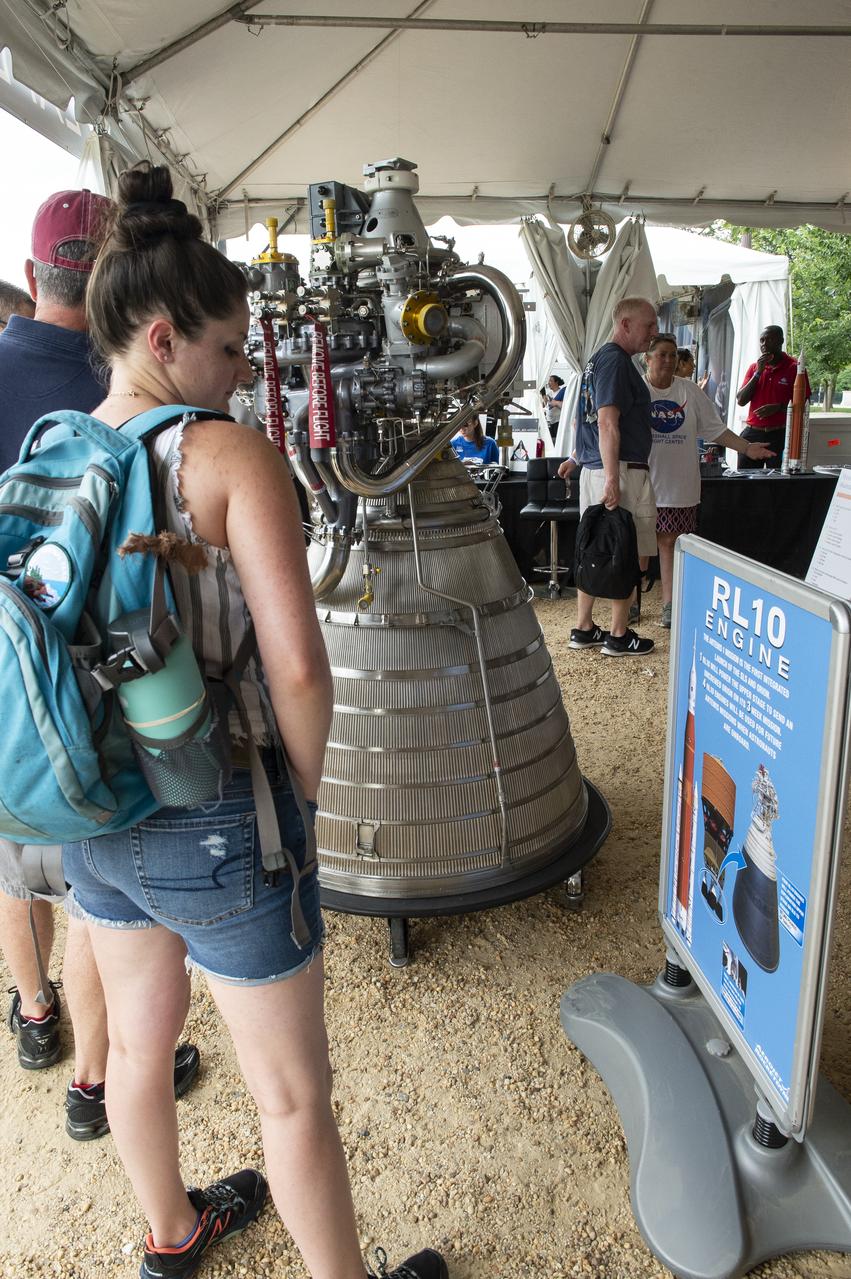
A visitor reads about the RL10 engines at the Apollo 11 50th Anniversary celebration on the National Mall, Thursday, July 18, 2019 in Washington. Apollo 11 was the first mission to land astronauts on the Moon and launched on July 16, 1969 with astronauts Neil Armstrong, Michael Collins, and Buzz Aldrin. Photo Credit: (NASA/Connie Moore)
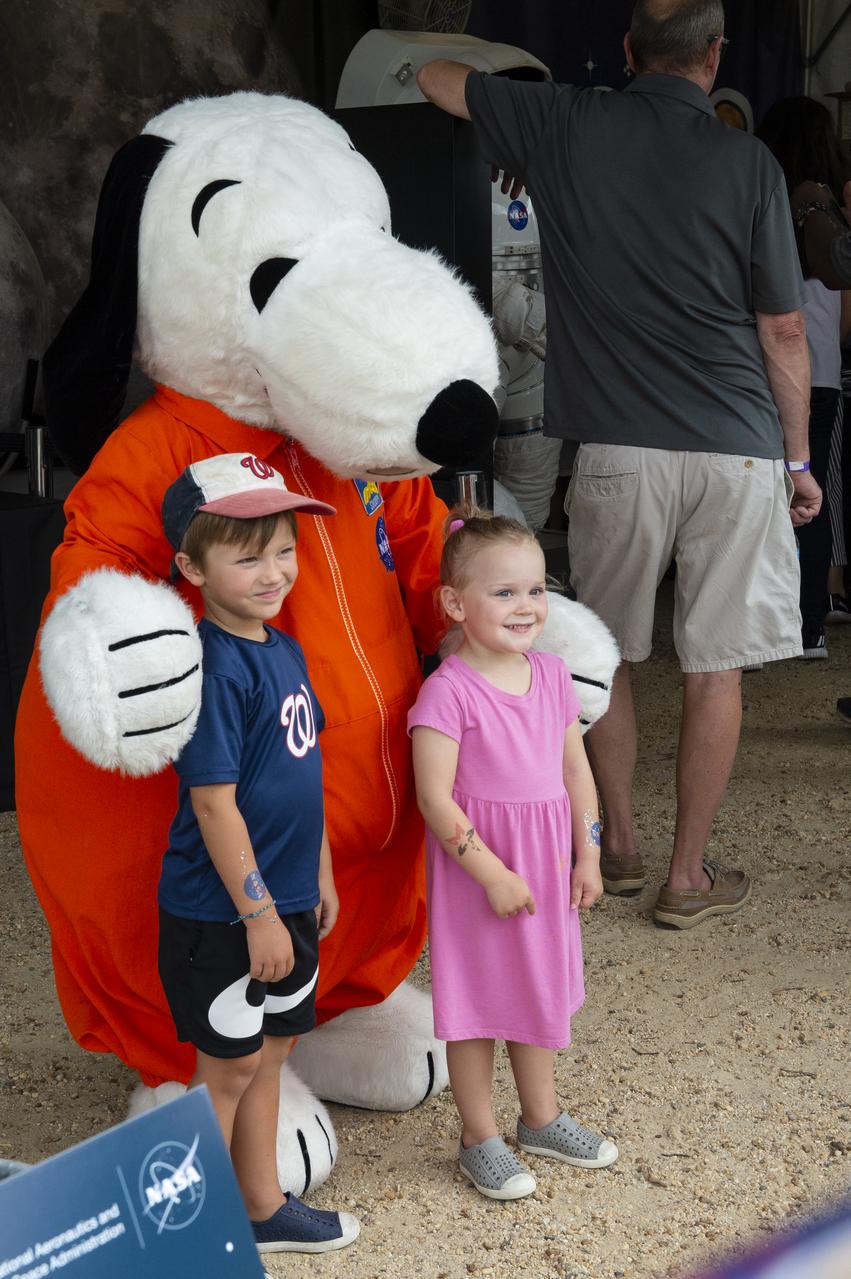
Visitors pose for a photo with Snoopy at the Apollo 11 50th Anniversary celebration on the National Mall, Thursday, July 18, 2019 in Washington. Apollo 11 was the first mission to land astronauts on the Moon and launched on July 16, 1969 with astronauts Neil Armstrong, Michael Collins, and Buzz Aldrin. Photo Credit: (NASA/Connie Moore)
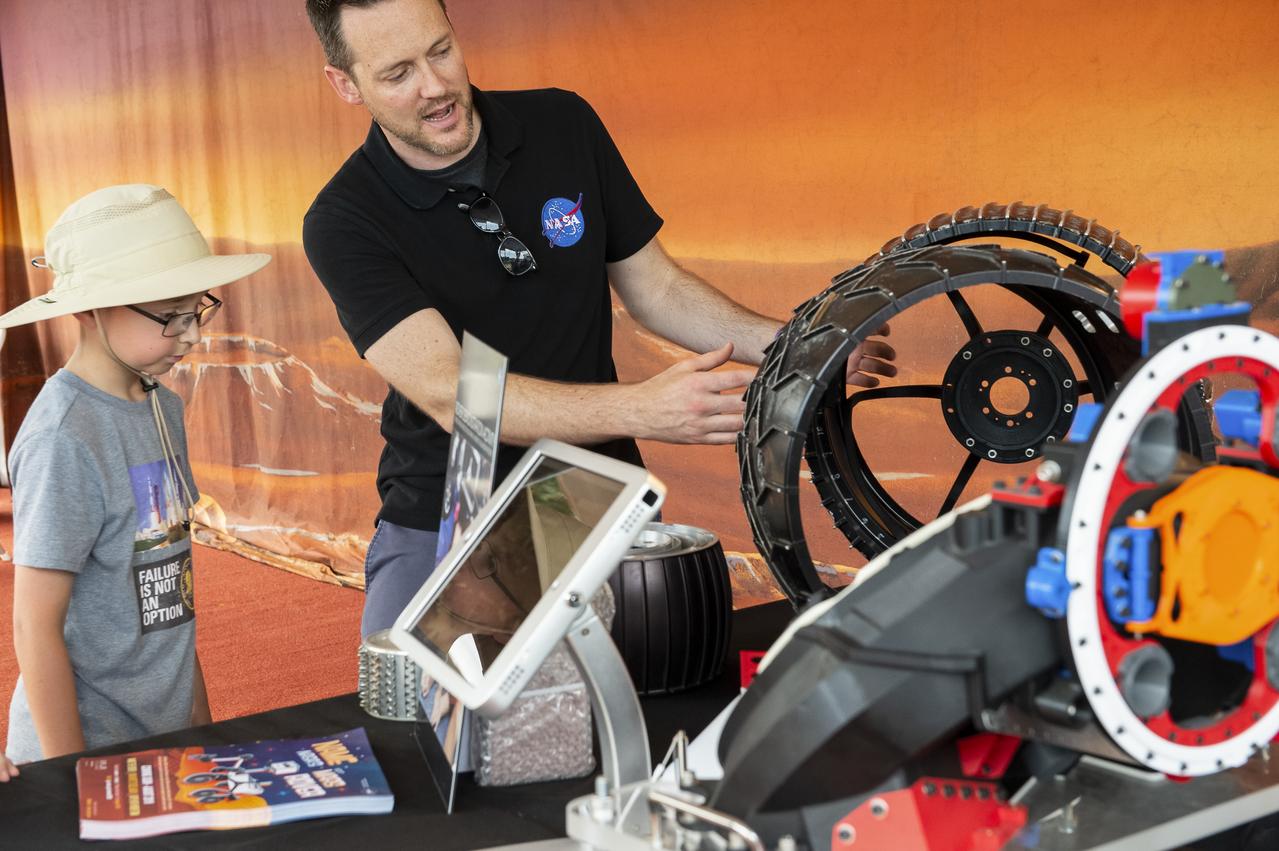
Visitors learn about rover tires at the Apollo 11 50th Anniversary celebration on the National Mall, Thursday, July 18, 2019 in Washington. Apollo 11 was the first mission to land astronauts on the Moon and launched on July 16, 1969 with astronauts Neil Armstrong, Michael Collins, and Buzz Aldrin. Photo Credit: (NASA/Connie Moore)
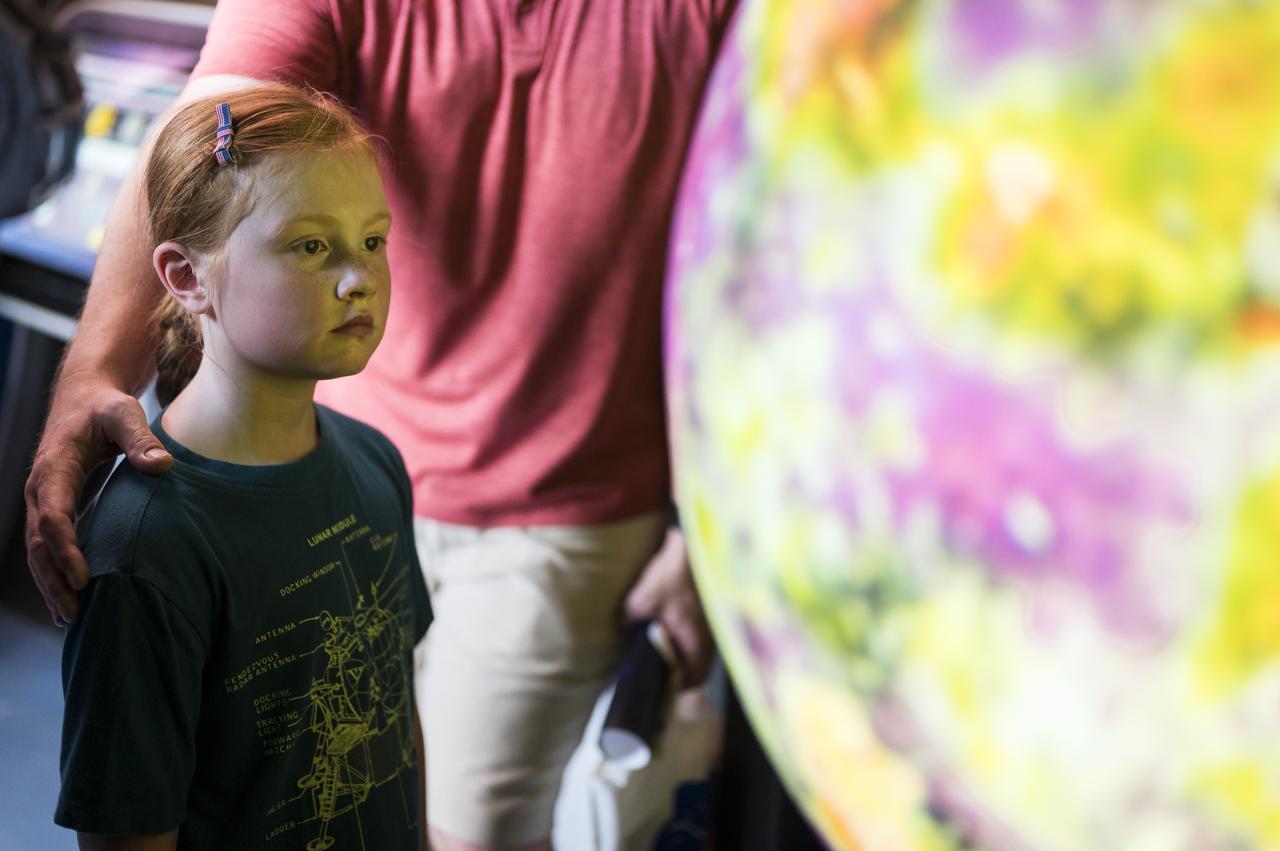
A visitor explores the Journey to Tomorrow exhibit at the Apollo 11 50th Anniversary celebration on the National Mall, Thursday, July 18, 2019 in Washington. Apollo 11 was the first mission to land astronauts on the Moon and launched on July 16, 1969 with astronauts Neil Armstrong, Michael Collins, and Buzz Aldrin. Photo Credit: (NASA/Aubrey Gemignani)
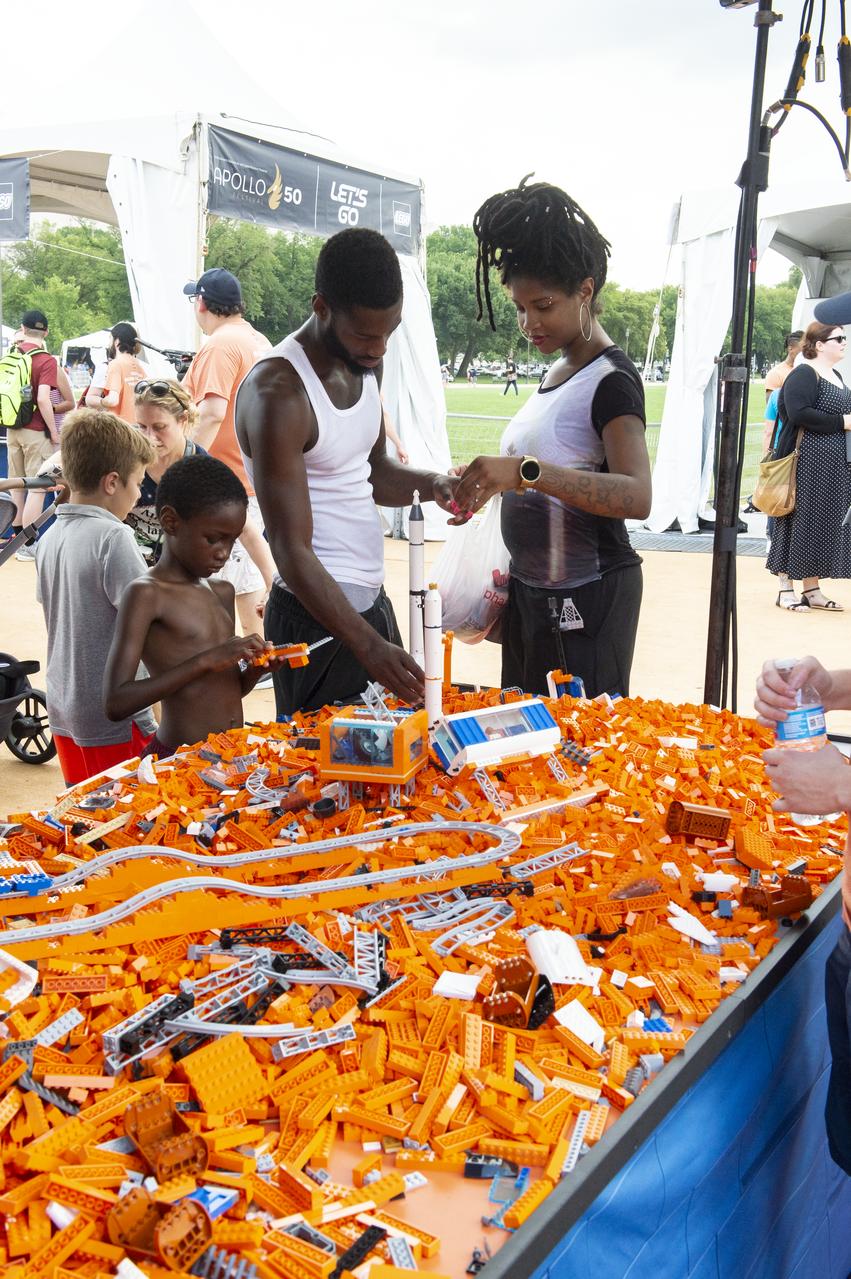
Visitors explore the LEGO exhibit at the Apollo 11 50th Anniversary celebration on the National Mall, Thursday, July 18, 2019 in Washington. Apollo 11 was the first mission to land astronauts on the Moon and launched on July 16, 1969 with astronauts Neil Armstrong, Michael Collins, and Buzz Aldrin. Photo Credit: (NASA/Connie Moore)
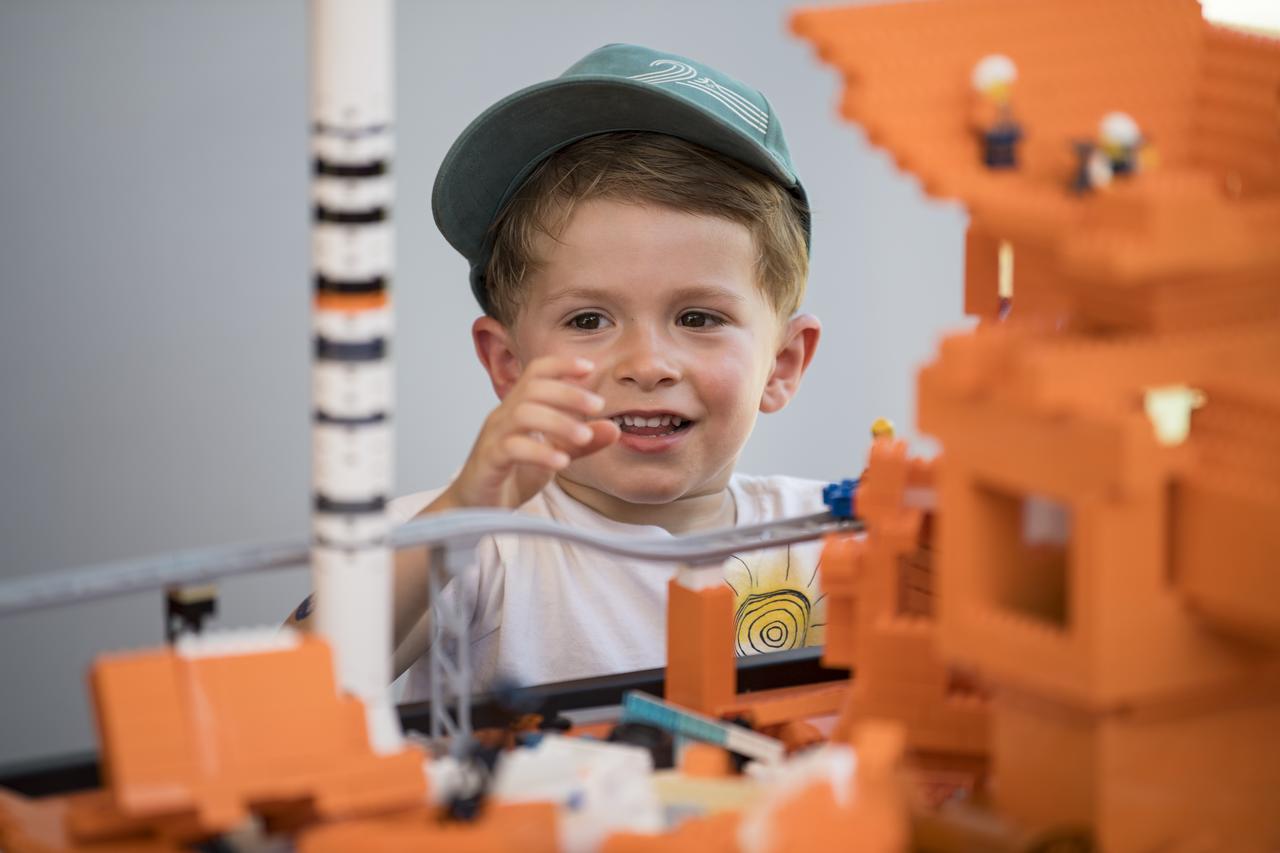
A visitor explores the LEGO exhibit at the Apollo 11 50th Anniversary celebration on the National Mall, Friday, July 19, 2019 in Washington. Apollo 11 was the first mission to land astronauts on the Moon and launched on July 16, 1969 with astronauts Neil Armstrong, Michael Collins, and Buzz Aldrin. Photo Credit: (NASA/Aubrey Gemignani)
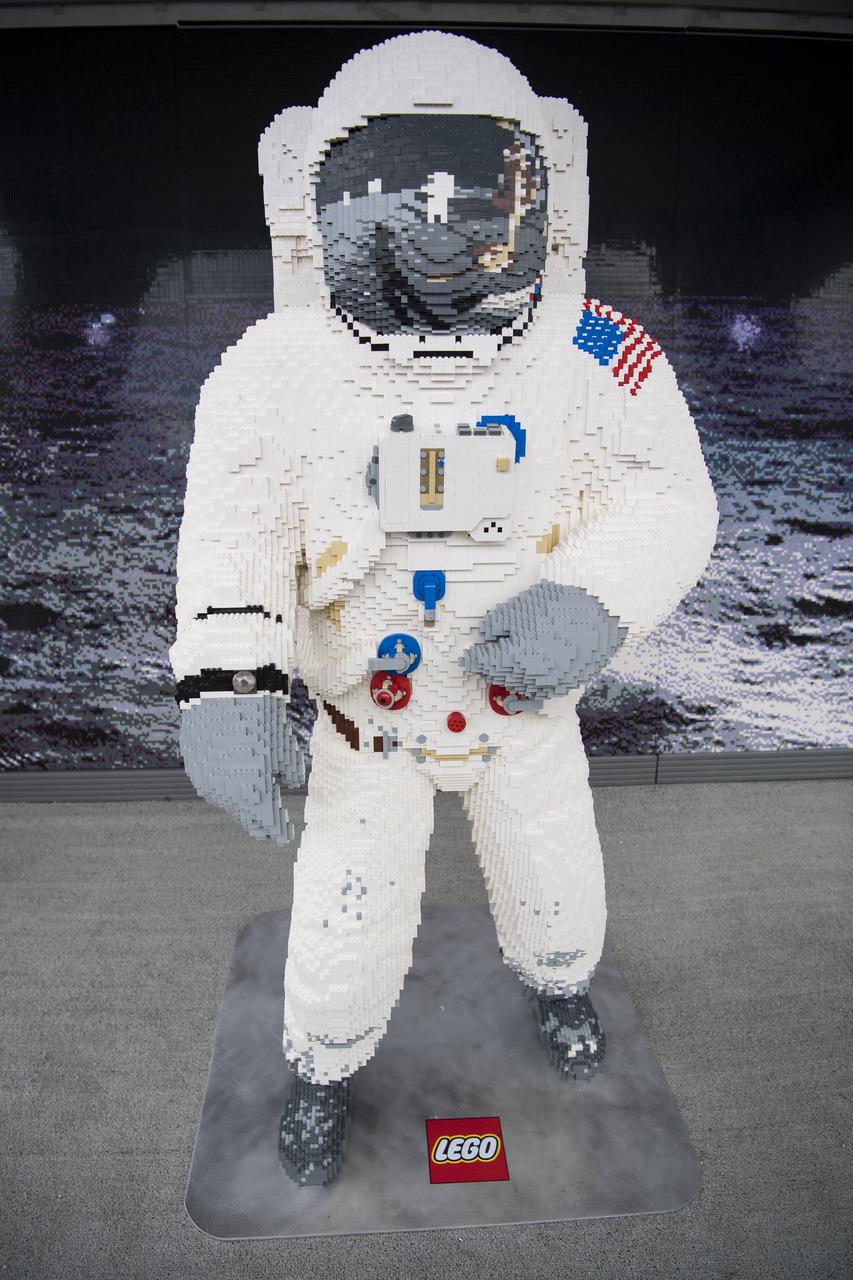
A LEGO astronaut is seen at the Apollo 11 50th Anniversary celebration on the National Mall, Thursday, July 18, 2019 in Washington. Apollo 11 was the first mission to land astronauts on the Moon and launched on July 16, 1969 with astronauts Neil Armstrong, Michael Collins, and Buzz Aldrin. Photo Credit: (NASA/Aubrey Gemignani)
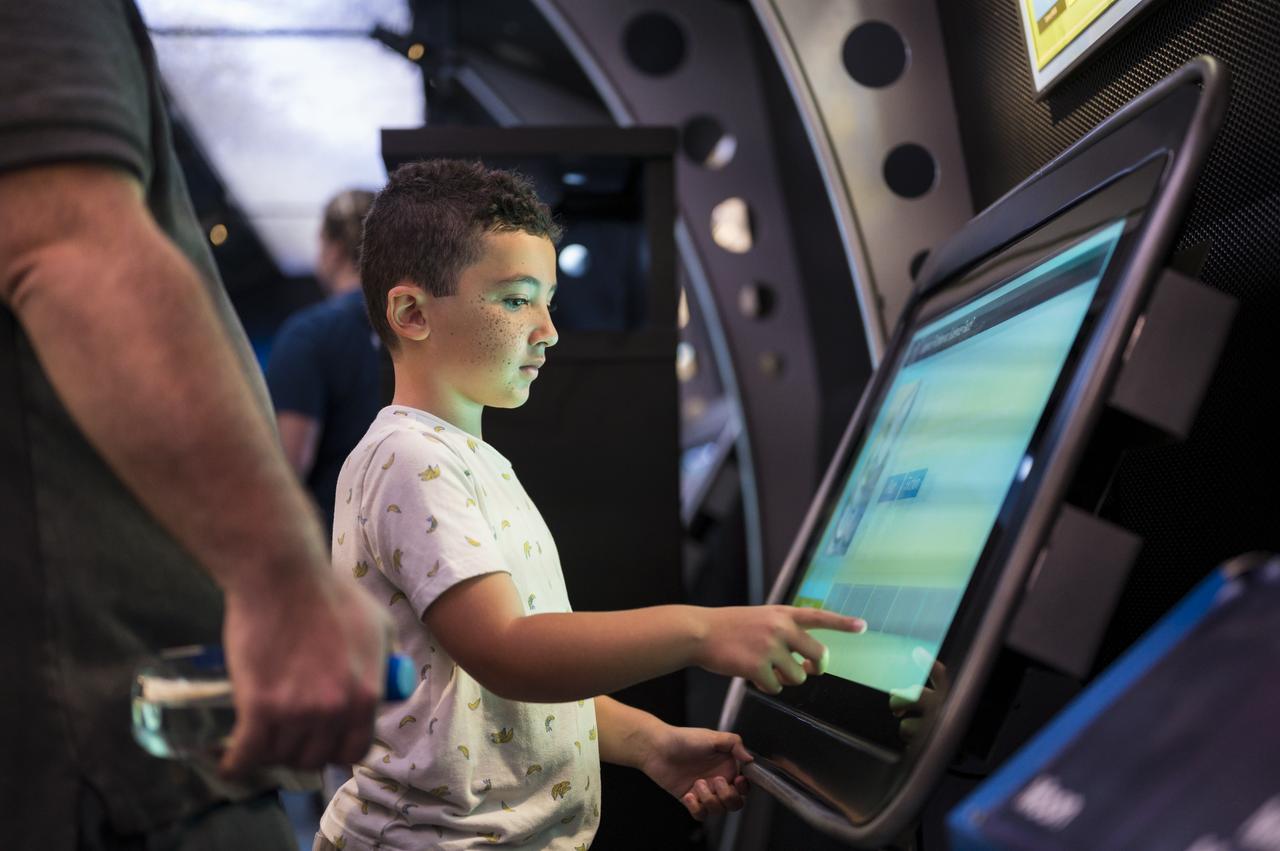
A visitor explores the Journey to Tomorrow exhibit at the Apollo 11 50th Anniversary celebration on the National Mall, Thursday, July 18, 2019 in Washington. Apollo 11 was the first mission to land astronauts on the Moon and launched on July 16, 1969 with astronauts Neil Armstrong, Michael Collins, and Buzz Aldrin. Photo Credit: (NASA/Aubrey Gemignani)
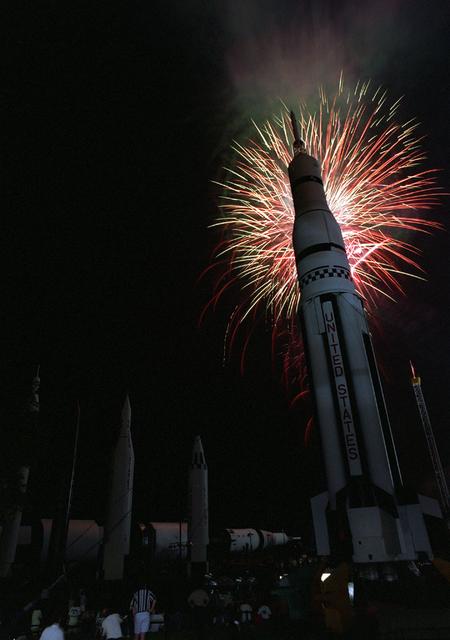
The evening skies over the U. S. Space and Rocket Center in Huntsville, AL burst into life as members of the Huntsville community gathered to celebrate the 30th arniversary of the Lunar Landing. Commerating this historical achievement for NASA and the US Space Program, a replica of the original Saturn V rocket was built on the grounds of the U. S. Space and Rocket Center in Huntsville, AL. On the evening of the anniversary thousands of onlookers cheered as fireworks lit up the night sky behind the massive Saturn V rocket.
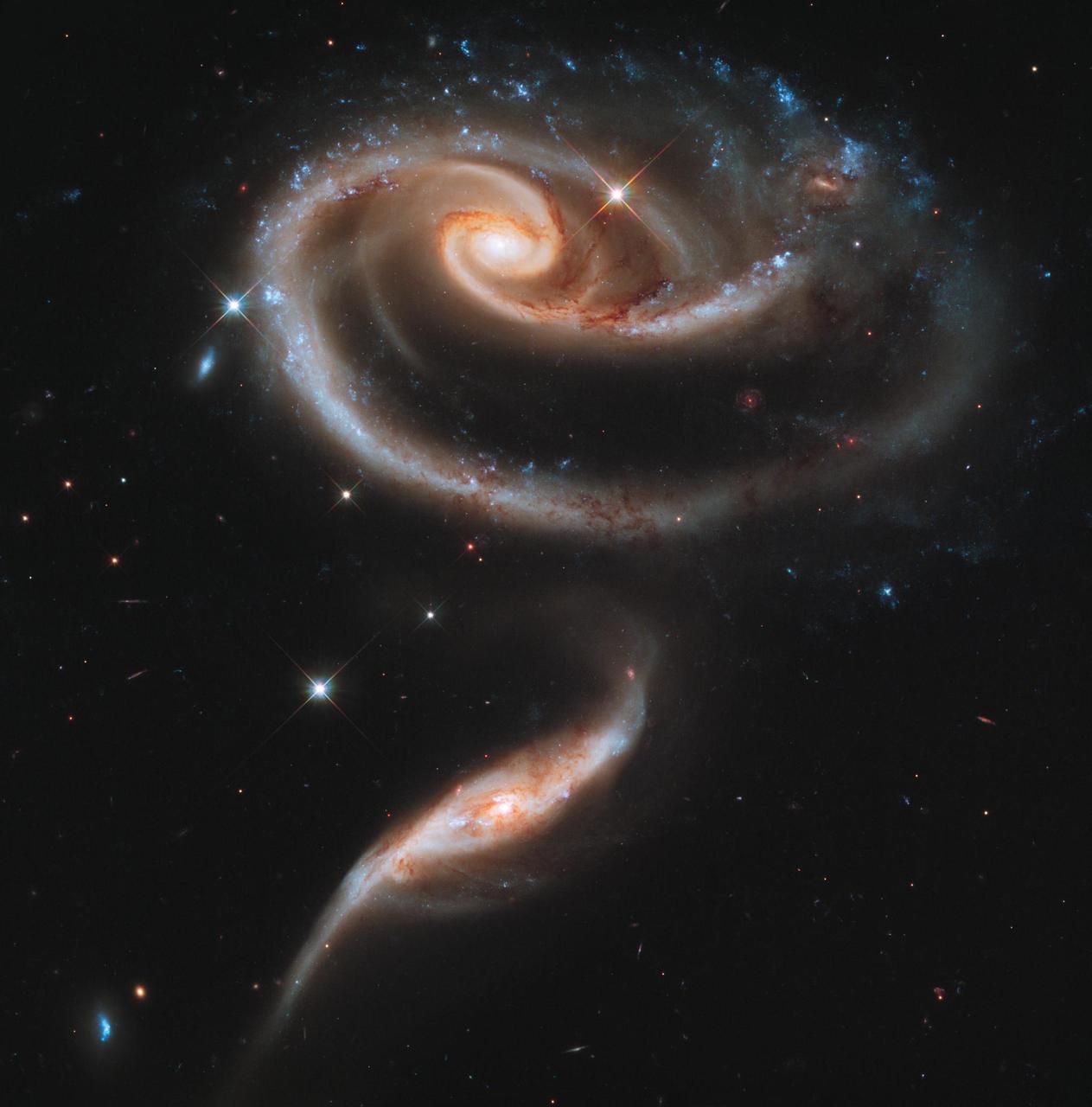
NASA image release April 20, 2011 To see a video of this image go here: <a href="http://www.flickr.com/photos/gsfc/5637796622">www.flickr.com/photos/gsfc/5637796622</a> To celebrate the 21st anniversary of the Hubble Space Telescope's deployment into space, astronomers at the Space Telescope Science Institute in Baltimore, Md., pointed Hubble's eye at an especially photogenic pair of interacting galaxies called Arp 273. The larger of the spiral galaxies, known as UGC 1810, has a disk that is distorted into a rose-like shape by the gravitational tidal pull of the companion galaxy below it, known as UGC 1813. This image is a composite of Hubble Wide Field Camera 3 data taken on December 17, 2010, with three separate filters that allow a broad range of wavelengths covering the ultraviolet, blue, and red portions of the spectrum. Hubble was launched April 24, 1990, aboard Discovery's STS-31 mission. Hubble discoveries revolutionized nearly all areas of current astronomical research from planetary science to cosmology. Credit: NASA, ESA, and the Hubble Heritage Team (STScI/AURA) To read more about this image go here: <a href="http://www.nasa.gov/mission_pages/hubble/science/hubble-rose.html" rel="nofollow">www.nasa.gov/mission_pages/hubble/science/hubble-rose.html</a> <b><a href="http://www.nasa.gov/centers/goddard/home/index.html" rel="nofollow">NASA Goddard Space Flight Center</a></b> enables NASA’s mission through four scientific endeavors: Earth Science, Heliophysics, Solar System Exploration, and Astrophysics. Goddard plays a leading role in NASA’s accomplishments by contributing compelling scientific knowledge to advance the Agency’s mission. <b>Follow us on <a href="http://twitter.com/NASA_GoddardPix" rel="nofollow">Twitter</a></b> <b>Join us on <a href="http://www.facebook.com/pages/Greenbelt-MD/NASA-Goddard/395013845897?ref=tsd" rel="nofollow">Facebook</a></b>
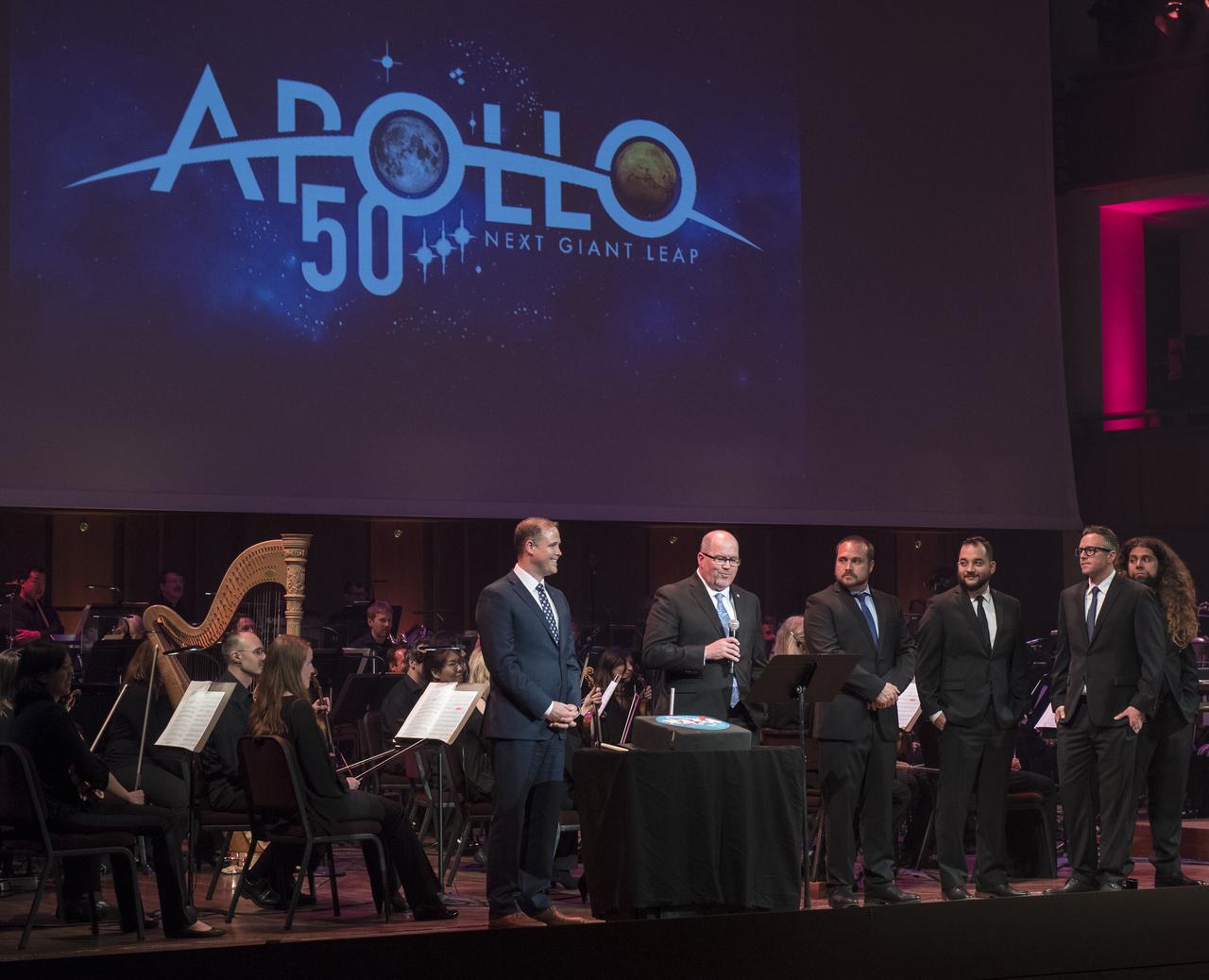
The Apollo 50th Anniversary logo is unveiled during the "National Symphony Orchestra Pops: Space, the Next Frontier" event celebrating NASA's 60th Anniversary, Friday, June 1, 2018 at the John F. Kennedy Center for the Performing Arts in Washington. The event featured music inspired by space including artists will.i.am, Grace Potter, Coheed & Cambria, John Cho, and guest Nick Sagan, son of Carl Sagan. Photo Credit: (NASA/Aubrey Gemignani)
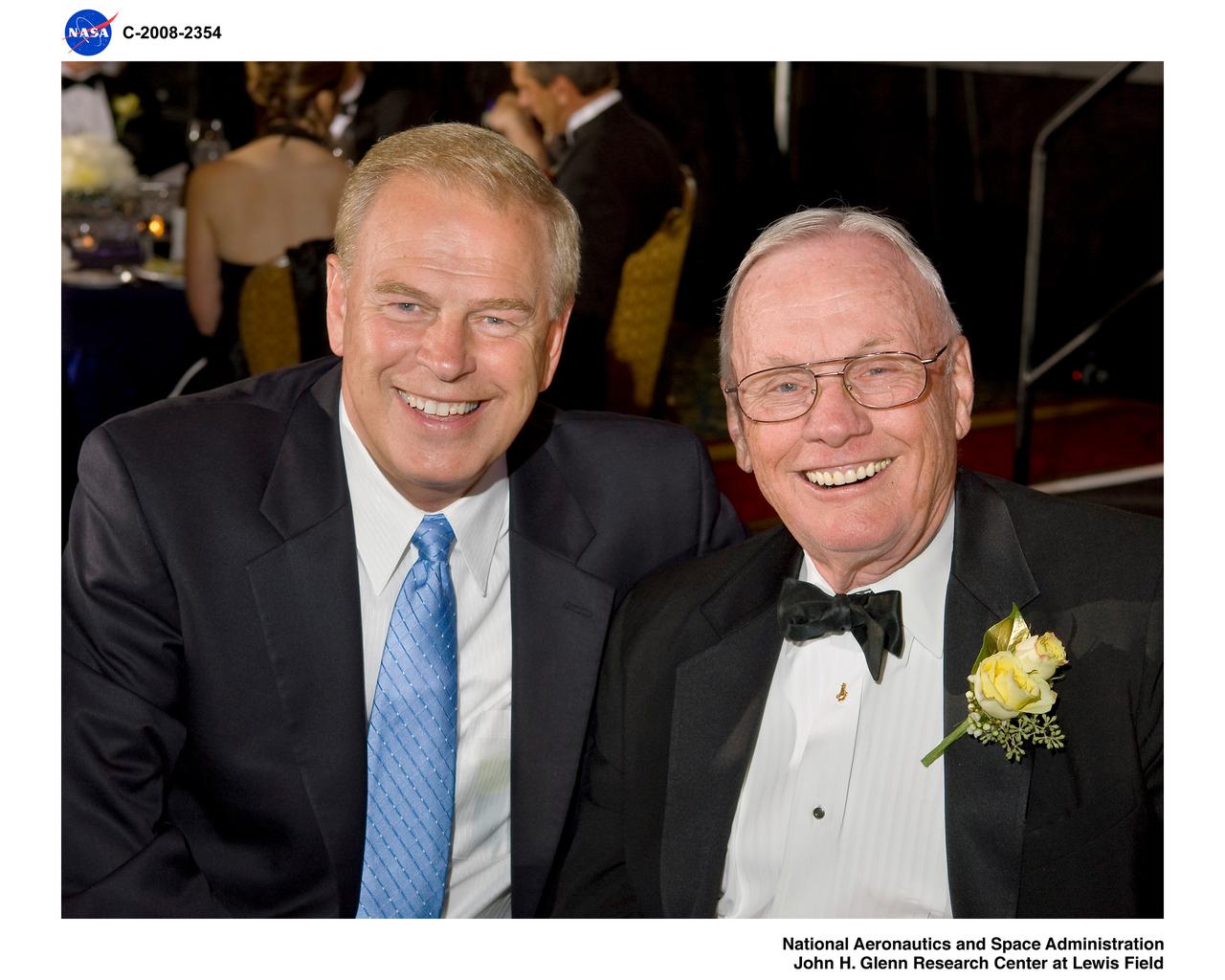
Ohio Governor Ted Strickland, Neal Armstrong at the NASA 50th Anniversary Gala Celebration - Ohio Astronaut Reunion
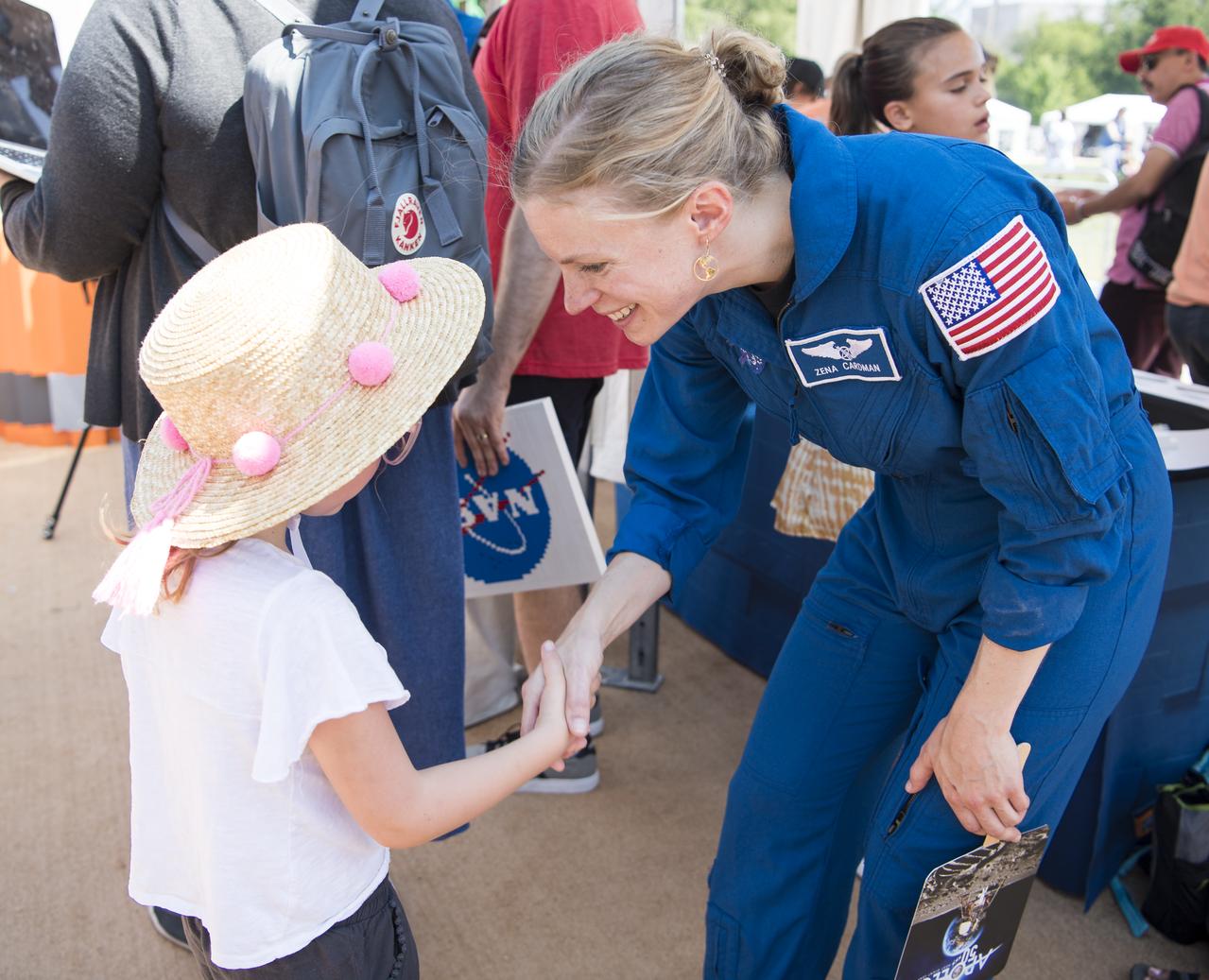
NASA astronaut candidate Zena Cardman greets a visitor at the LEGO exhibit at the Apollo 11 50th Anniversary celebration on the National Mall, Friday, July 19, 2019 in Washington. Apollo 11 was the first mission to land astronauts on the Moon and launched on July 16, 1969 with astronauts Neil Armstrong, Michael Collins, and Buzz Aldrin. Photo Credit: (NASA/Aubrey Gemignani)
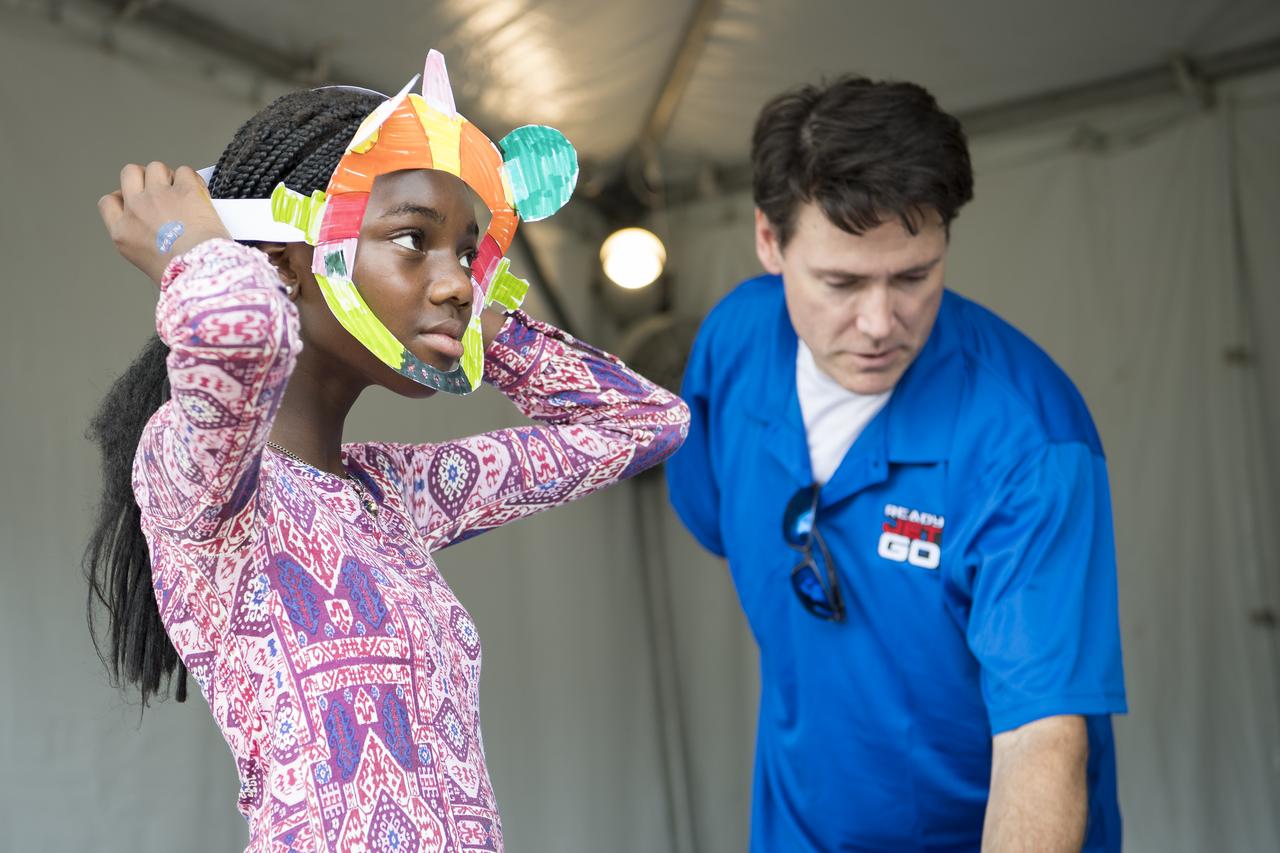
A visitor explores the Ready Jet Go exhibit at the Apollo 11 50th Anniversary celebration on the National Mall, Thursday, July 18, 2019 in Washington. Apollo 11 was the first mission to land astronauts on the Moon and launched on July 16, 1969 with astronauts Neil Armstrong, Michael Collins, and Buzz Aldrin. Photo Credit: (NASA/Aubrey Gemignani)
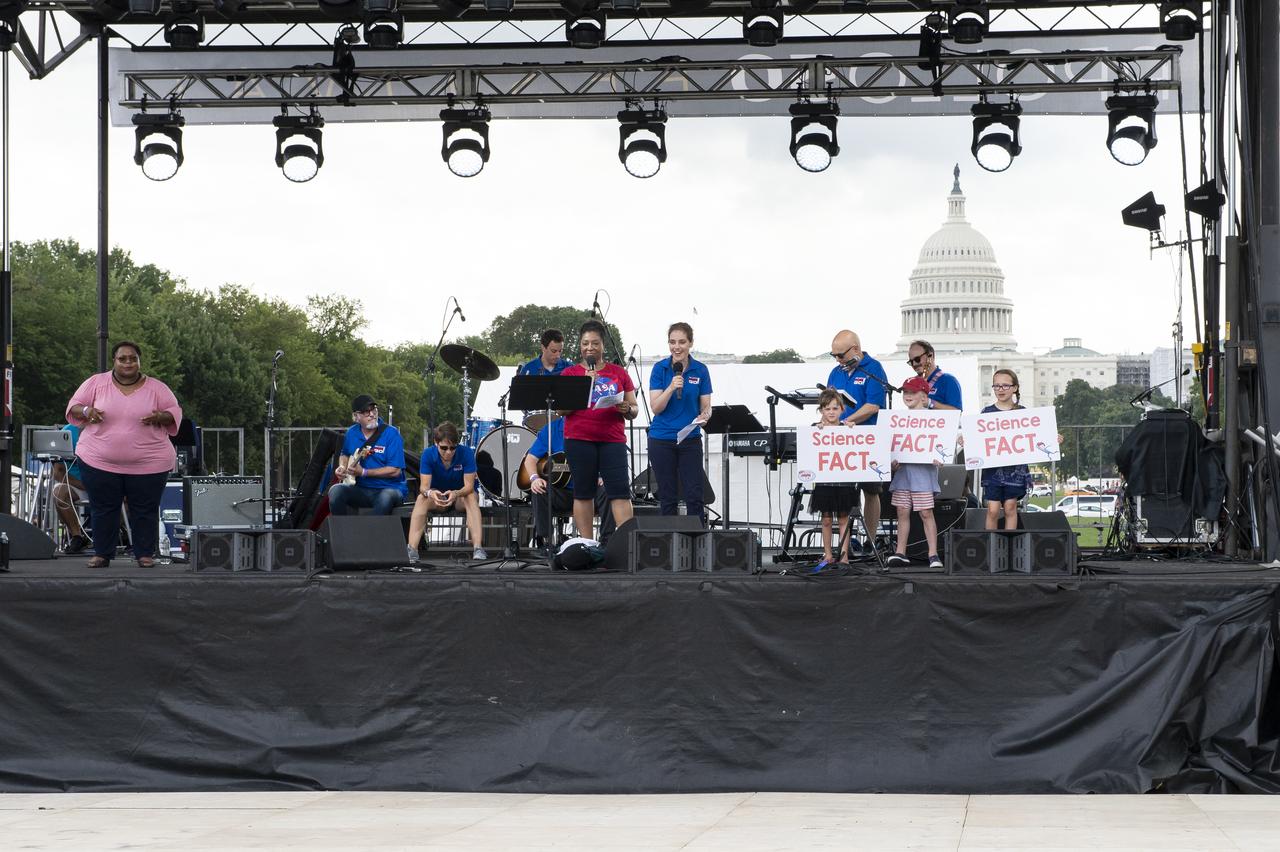
Christyl Johnson, NASA Goddard deputy director for technology and research investments, is seen on stage during a performance at the Apollo 11 50th Anniversary celebration on the National Mall, Thursday, July 18, 2019 in Washington. Apollo 11 was the first mission to land astronauts on the Moon and launched on July 16, 1969 with astronauts Neil Armstrong, Michael Collins, and Buzz Aldrin. Photo Credit: (NASA/Connie Moore)
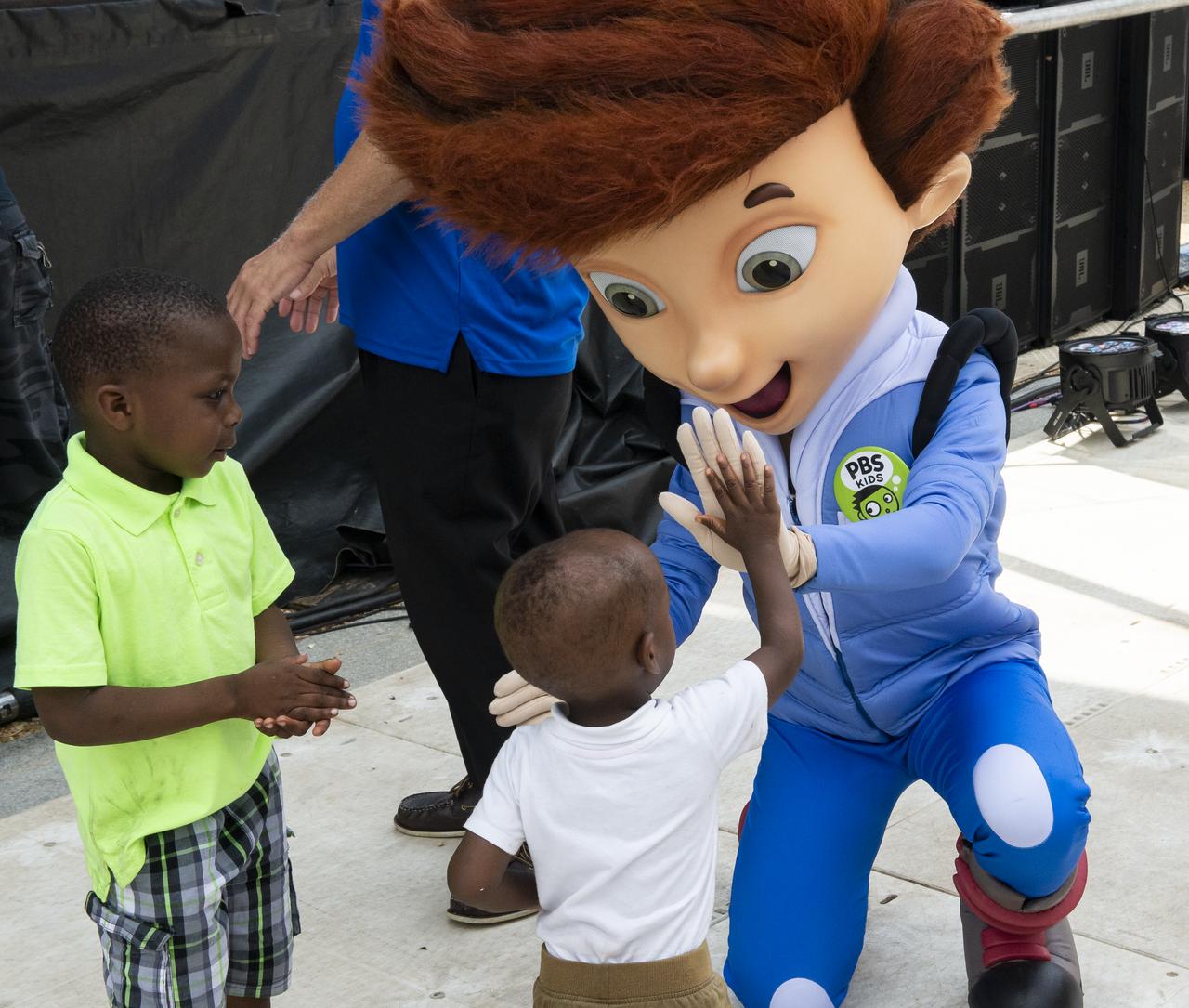
A visitor high fives Ready Jet Go's Jet Propulsion at the Apollo 11 50th Anniversary celebration on the National Mall, Thursday, July 18, 2019 in Washington. Apollo 11 was the first mission to land astronauts on the Moon and launched on July 16, 1969 with astronauts Neil Armstrong, Michael Collins, and Buzz Aldrin. Photo Credit: (NASA/Connie Moore)
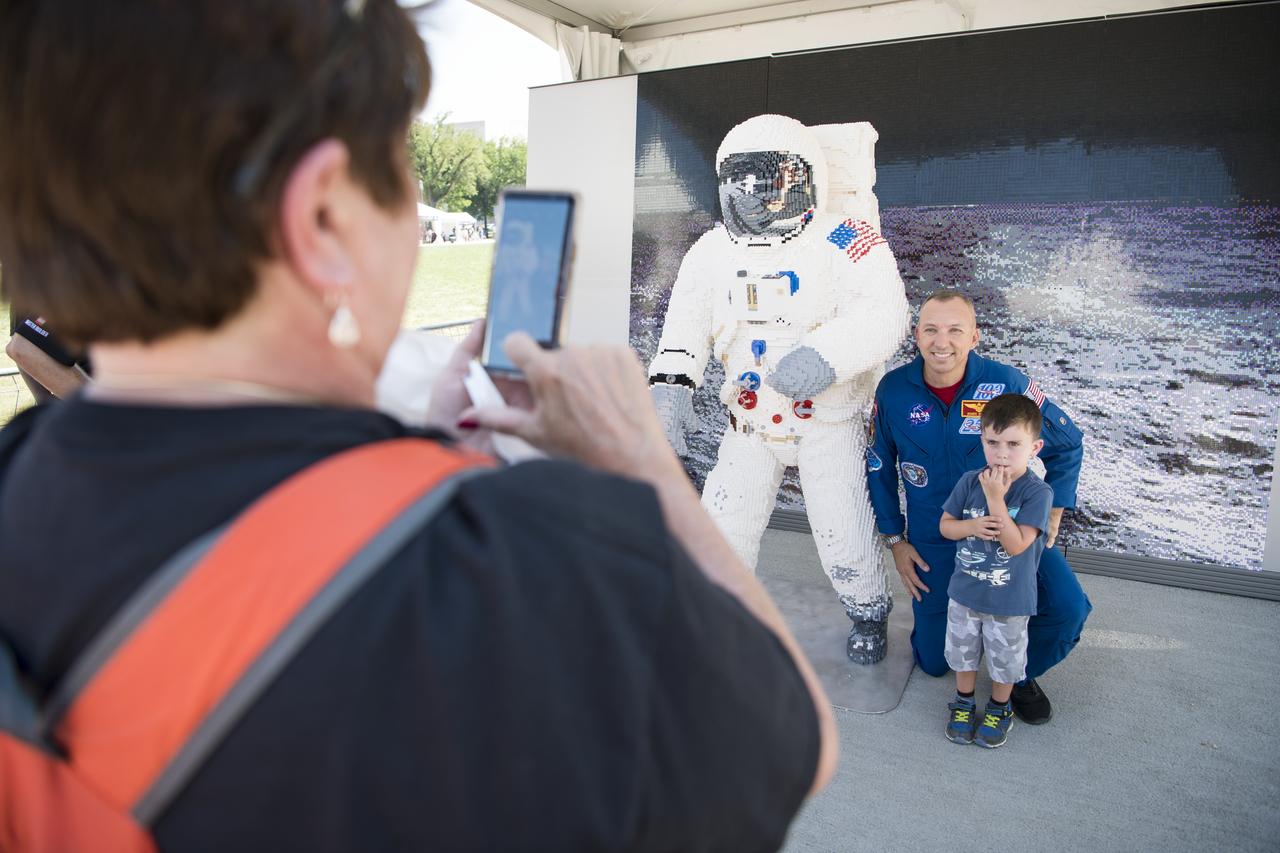
A visitor poses for a photo with NASA astronaut Randy Bresnik at the LEGO exhibit at the Apollo 11 50th Anniversary celebration on the National Mall, Friday, July 19, 2019 in Washington. Apollo 11 was the first mission to land astronauts on the Moon and launched on July 16, 1969 with astronauts Neil Armstrong, Michael Collins, and Buzz Aldrin. Photo Credit: (NASA/Aubrey Gemignani)
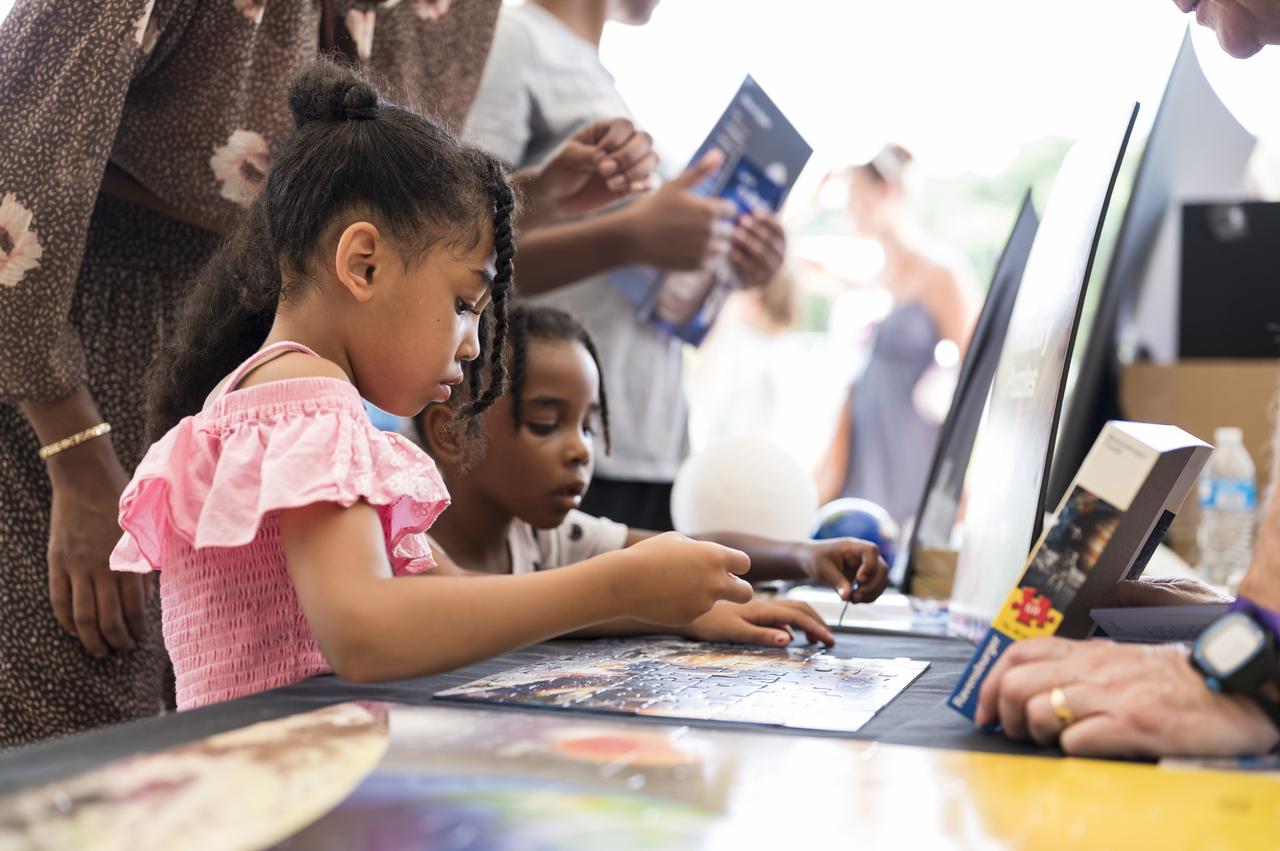
Visitors put a puzzle together at a NASA exhibit at the Apollo 11 50th Anniversary celebration on the National Mall, Thursday, July 18, 2019 in Washington. Apollo 11 was the first mission to land astronauts on the Moon and launched on July 16, 1969 with astronauts Neil Armstrong, Michael Collins, and Buzz Aldrin. Photo Credit: (NASA/Aubrey Gemignani)
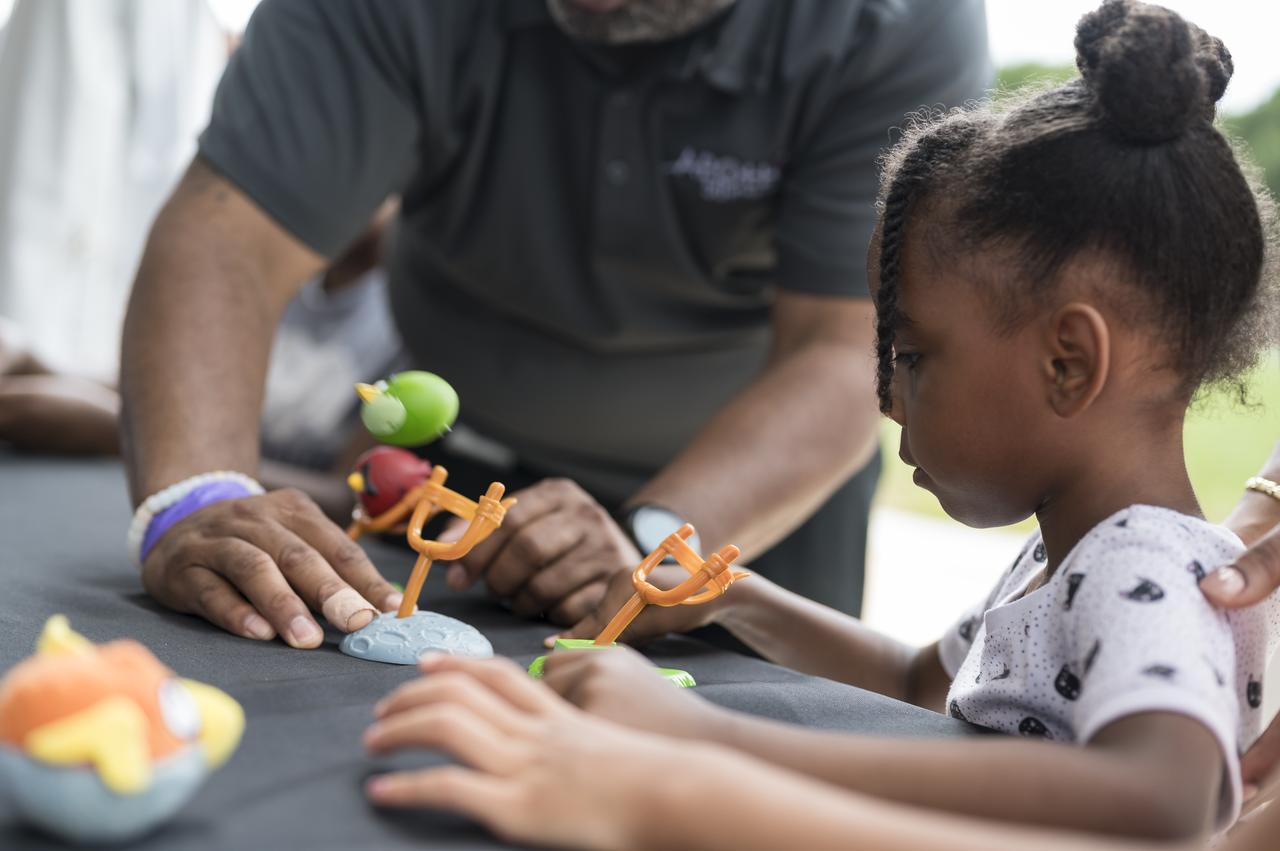
A visitor catapults an Angry Bird at a NASA exhibit at the Apollo 11 50th Anniversary celebration on the National Mall, Thursday, July 18, 2019 in Washington. Apollo 11 was the first mission to land astronauts on the Moon and launched on July 16, 1969 with astronauts Neil Armstrong, Michael Collins, and Buzz Aldrin. Photo Credit: (NASA/Aubrey Gemignani)
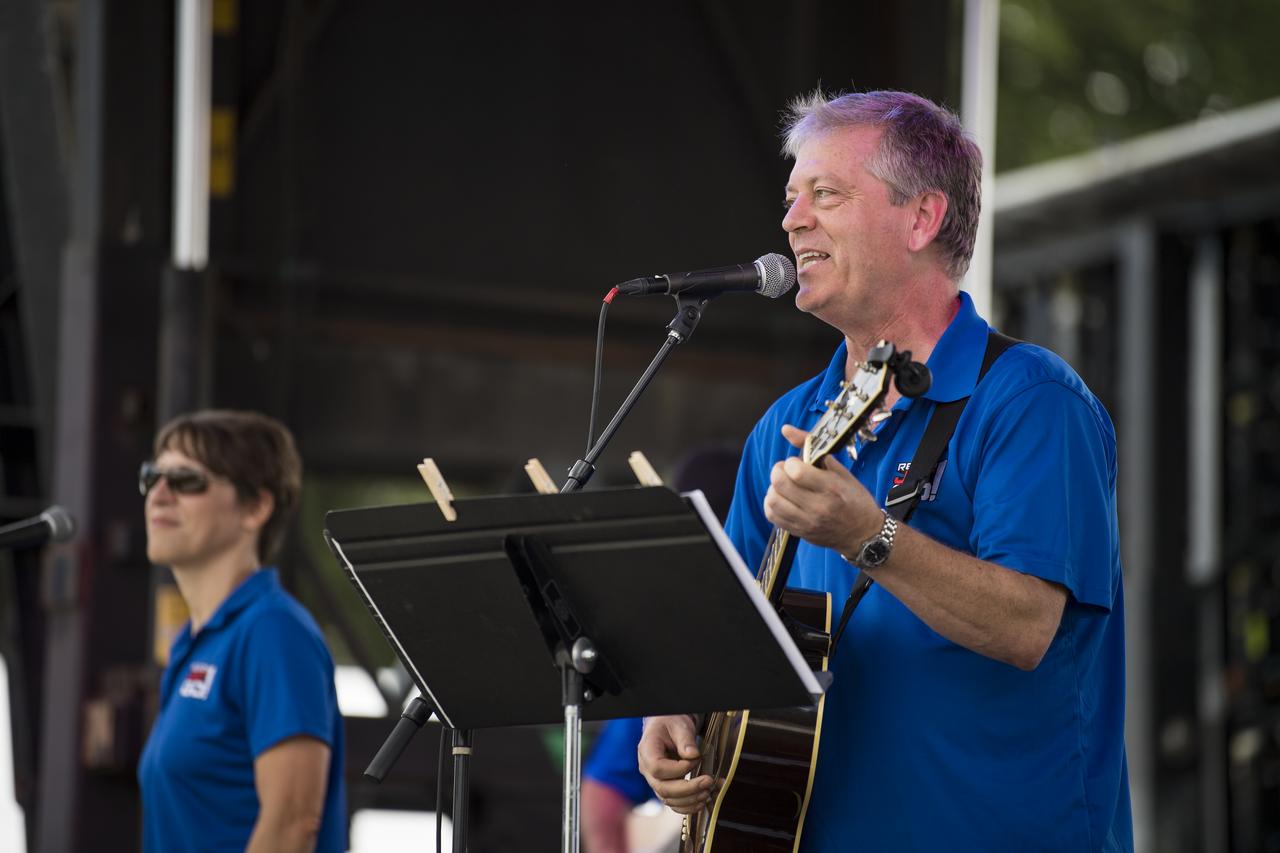
Musicians perform during the Ready Jet Go segment at the Apollo 11 50th Anniversary celebration on the National Mall, Thursday, July 18, 2019 in Washington. Apollo 11 was the first mission to land astronauts on the Moon and launched on July 16, 1969 with astronauts Neil Armstrong, Michael Collins, and Buzz Aldrin. Photo Credit: (NASA/Aubrey Gemignani)
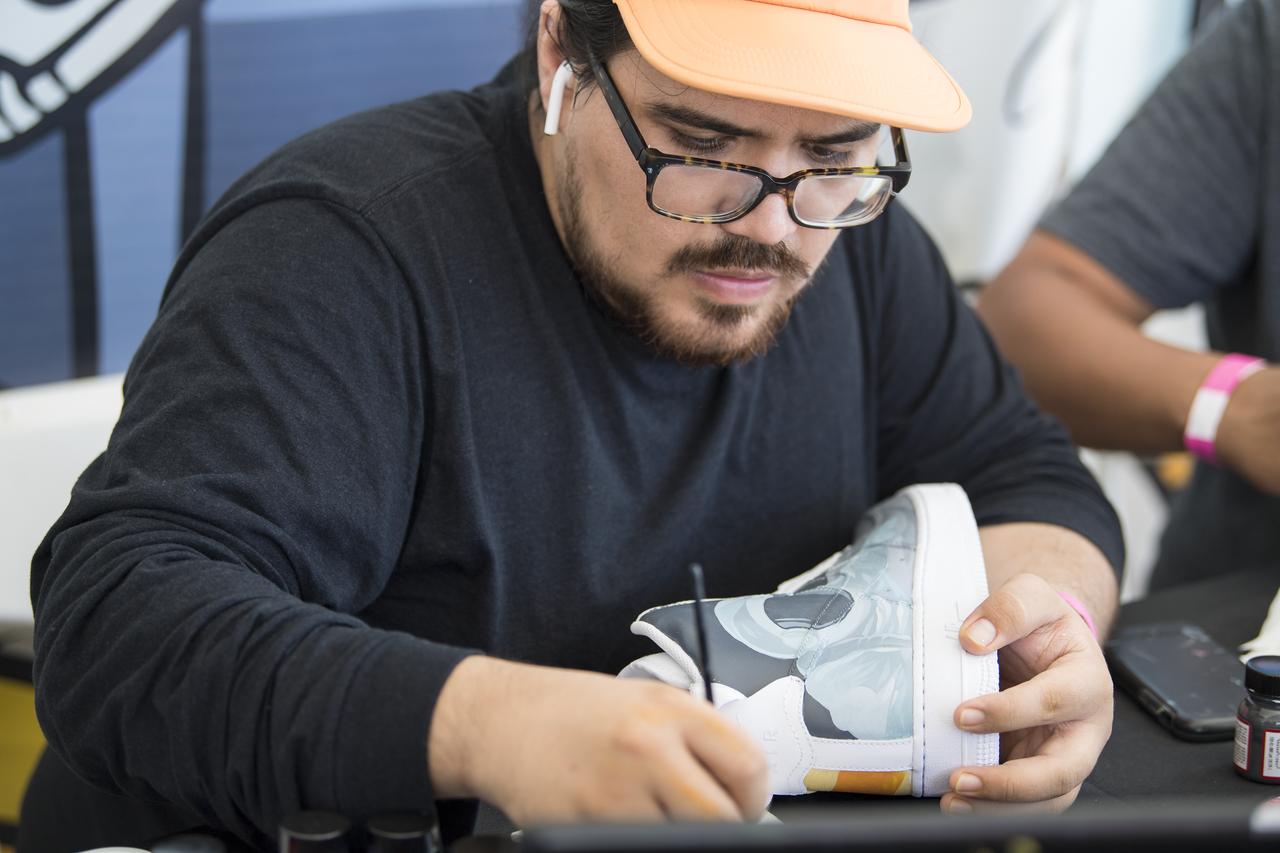
Artist David Maldonado paints a pair of high top shoes with a space themed design at the Apollo 11 50th Anniversary celebration on the National Mall, Friday, July 19, 2019 in Washington. Apollo 11 was the first mission to land astronauts on the Moon and launched on July 16, 1969 with astronauts Neil Armstrong, Michael Collins, and Buzz Aldrin. Photo Credit: (NASA/Aubrey Gemignani)
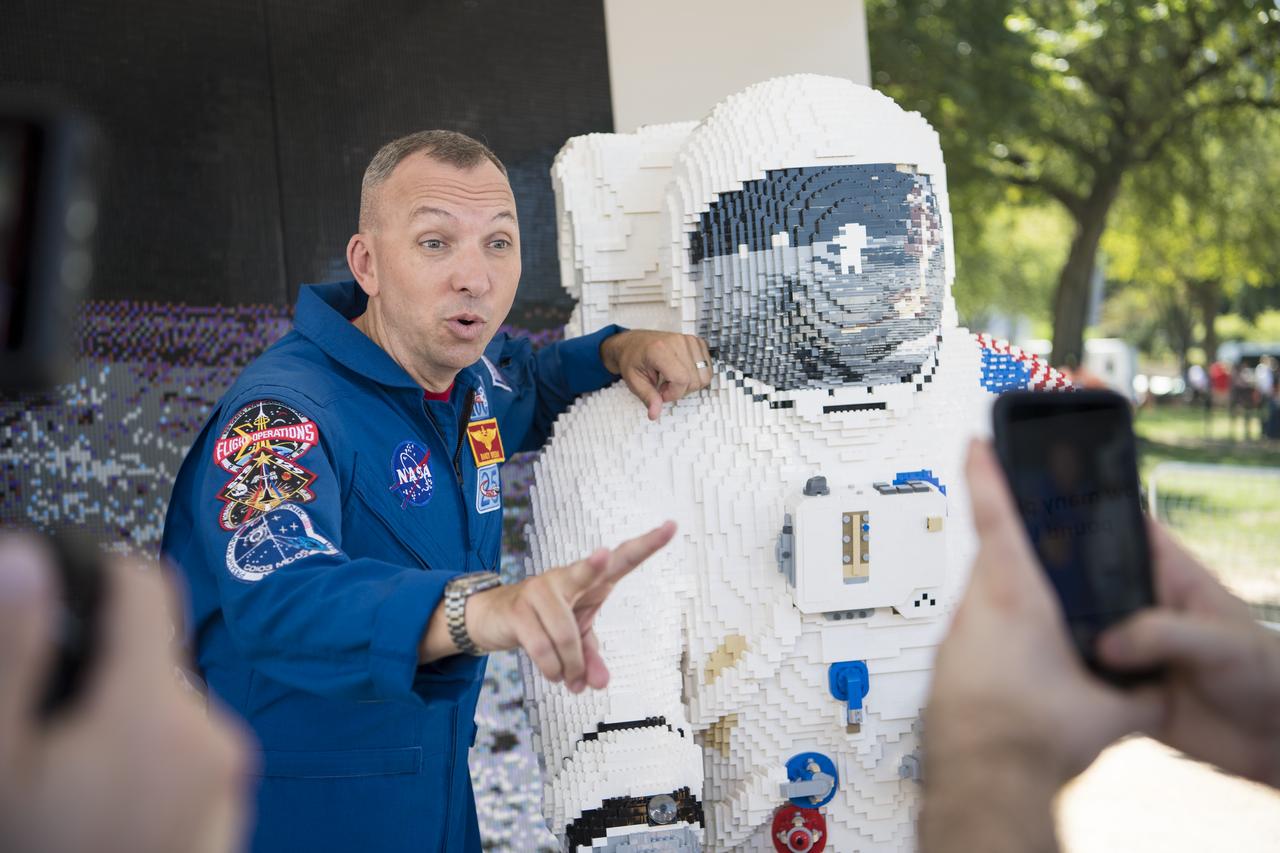
NASA astronaut Randy Bresnik speaks at the LEGO exhibit for a video at the Apollo 11 50th Anniversary celebration on the National Mall, Friday, July 19, 2019 in Washington. Apollo 11 was the first mission to land astronauts on the Moon and launched on July 16, 1969 with astronauts Neil Armstrong, Michael Collins, and Buzz Aldrin. Photo Credit: (NASA/Aubrey Gemignani)
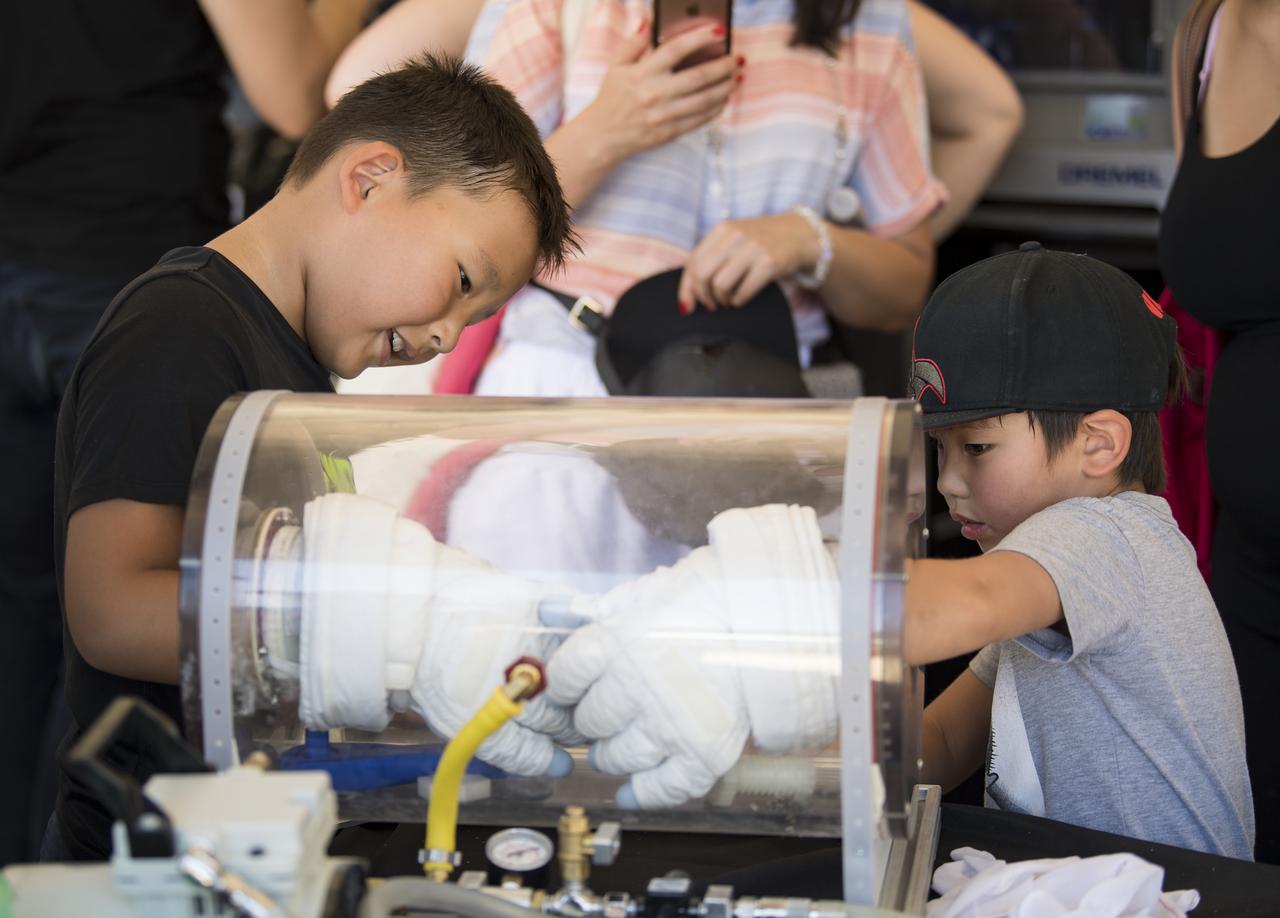
Visitors test out some space gloves at the Apollo 11 50th Anniversary celebration on the National Mall, Friday, July 19, 2019 in Washington. Apollo 11 was the first mission to land astronauts on the Moon and launched on July 16, 1969 with astronauts Neil Armstrong, Michael Collins, and Buzz Aldrin. Photo Credit: (NASA/Aubrey Gemignani)
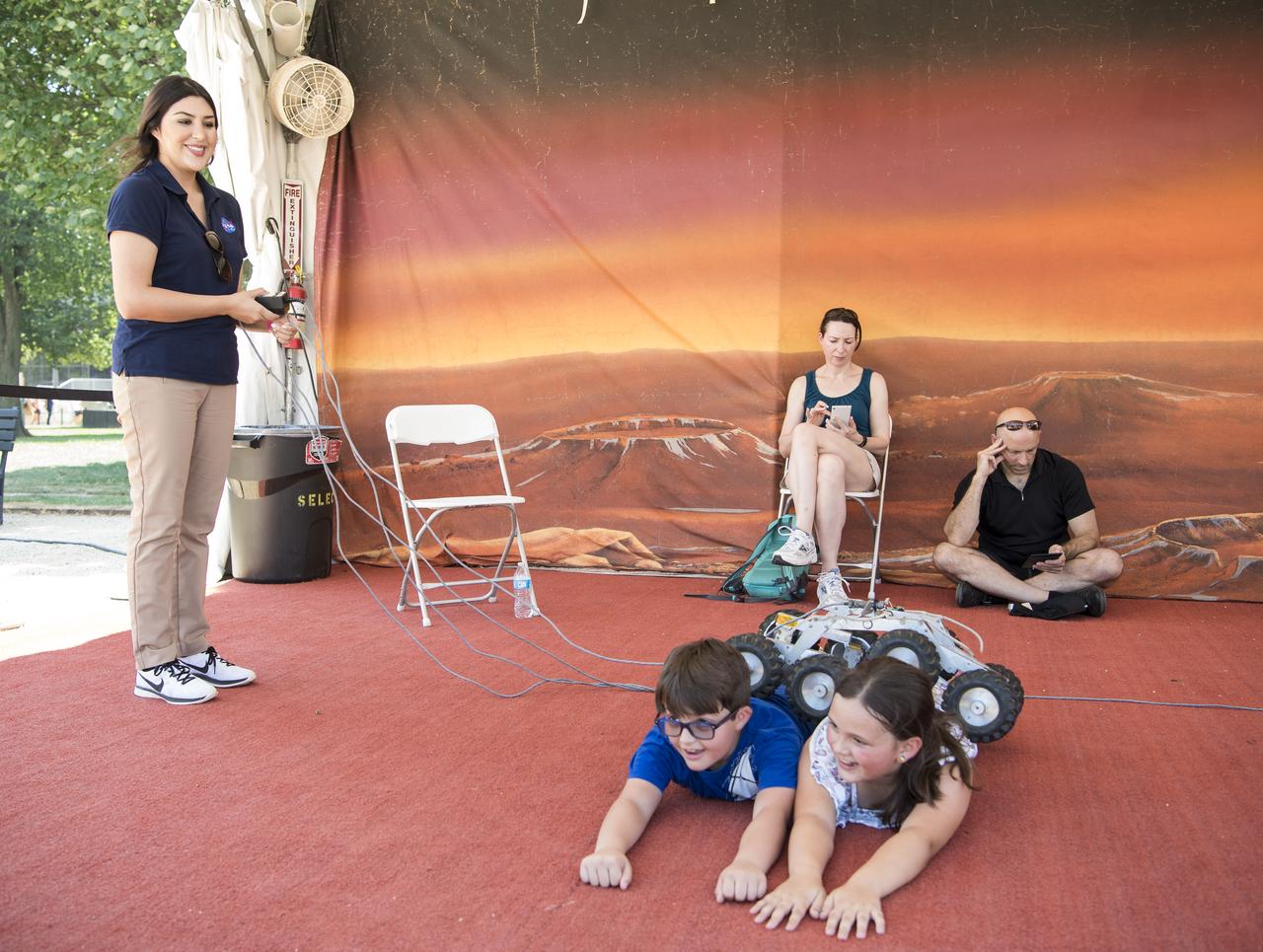
A small rover is driven over some visitors at the Apollo 11 50th Anniversary celebration on the National Mall, Friday, July 19, 2019 in Washington. Apollo 11 was the first mission to land astronauts on the Moon and launched on July 16, 1969 with astronauts Neil Armstrong, Michael Collins, and Buzz Aldrin. Photo Credit: (NASA/Aubrey Gemignani)
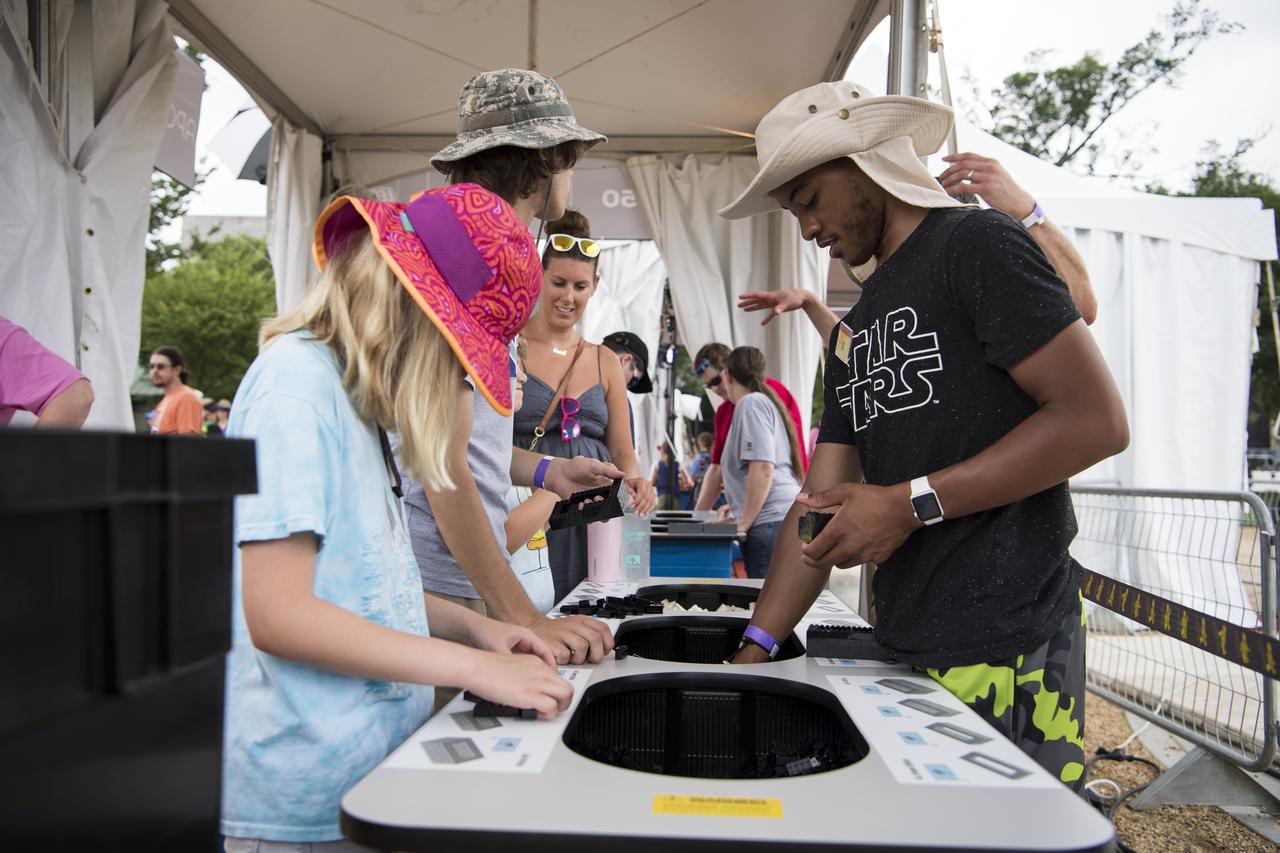
Visitors help build pieces of a 20 ft. rocket at the LEGO exhibit at the Apollo 11 50th Anniversary celebration on the National Mall, Thursday, July 18, 2019 in Washington. Apollo 11 was the first mission to land astronauts on the Moon and launched on July 16, 1969 with astronauts Neil Armstrong, Michael Collins, and Buzz Aldrin. Photo Credit: (NASA/Aubrey Gemignani)
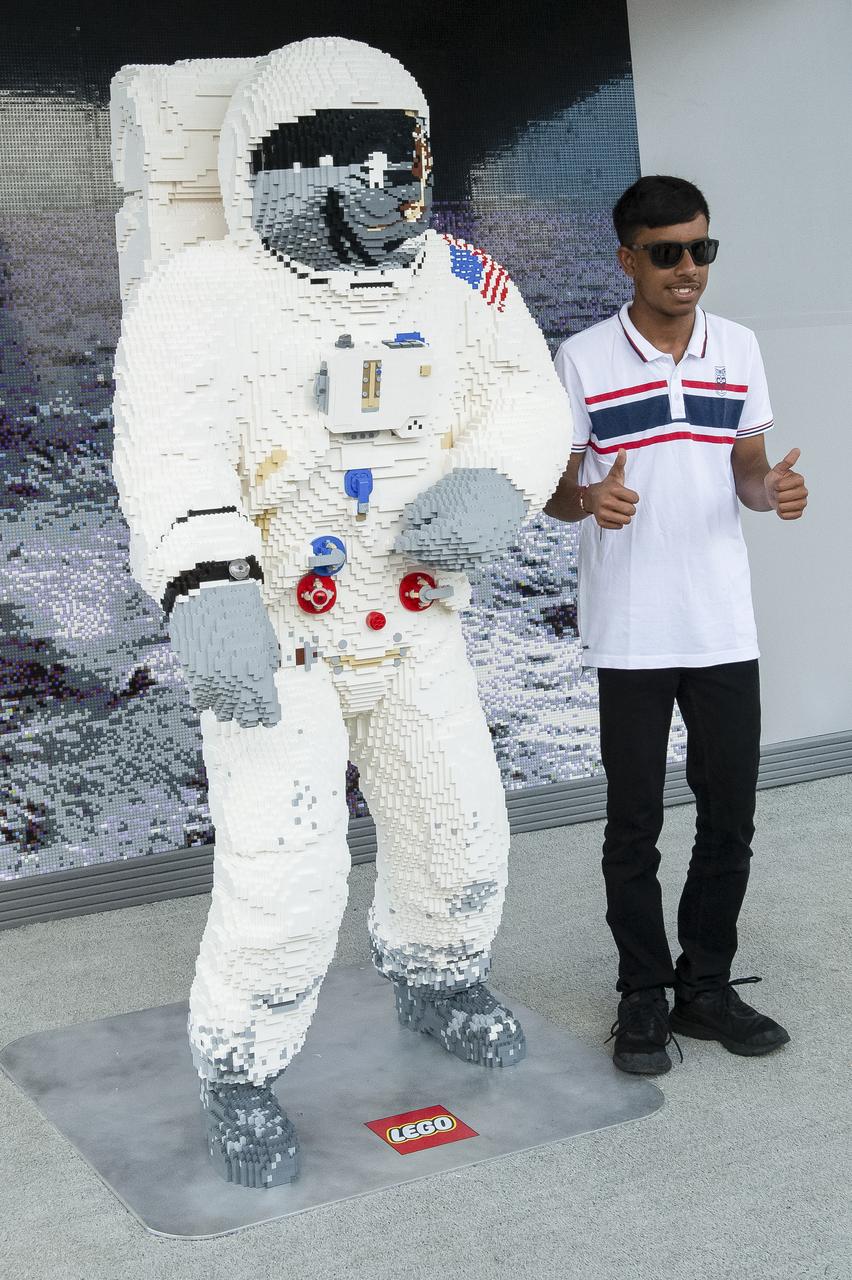
A visitor poses for a photo with an astronaut made of LEGOs at the LEGO exhibit at the Apollo 11 50th Anniversary celebration on the National Mall, Thursday, July 18, 2019 in Washington. Apollo 11 was the first mission to land astronauts on the Moon and launched on July 16, 1969 with astronauts Neil Armstrong, Michael Collins, and Buzz Aldrin. Photo Credit: (NASA/Connie Moore)
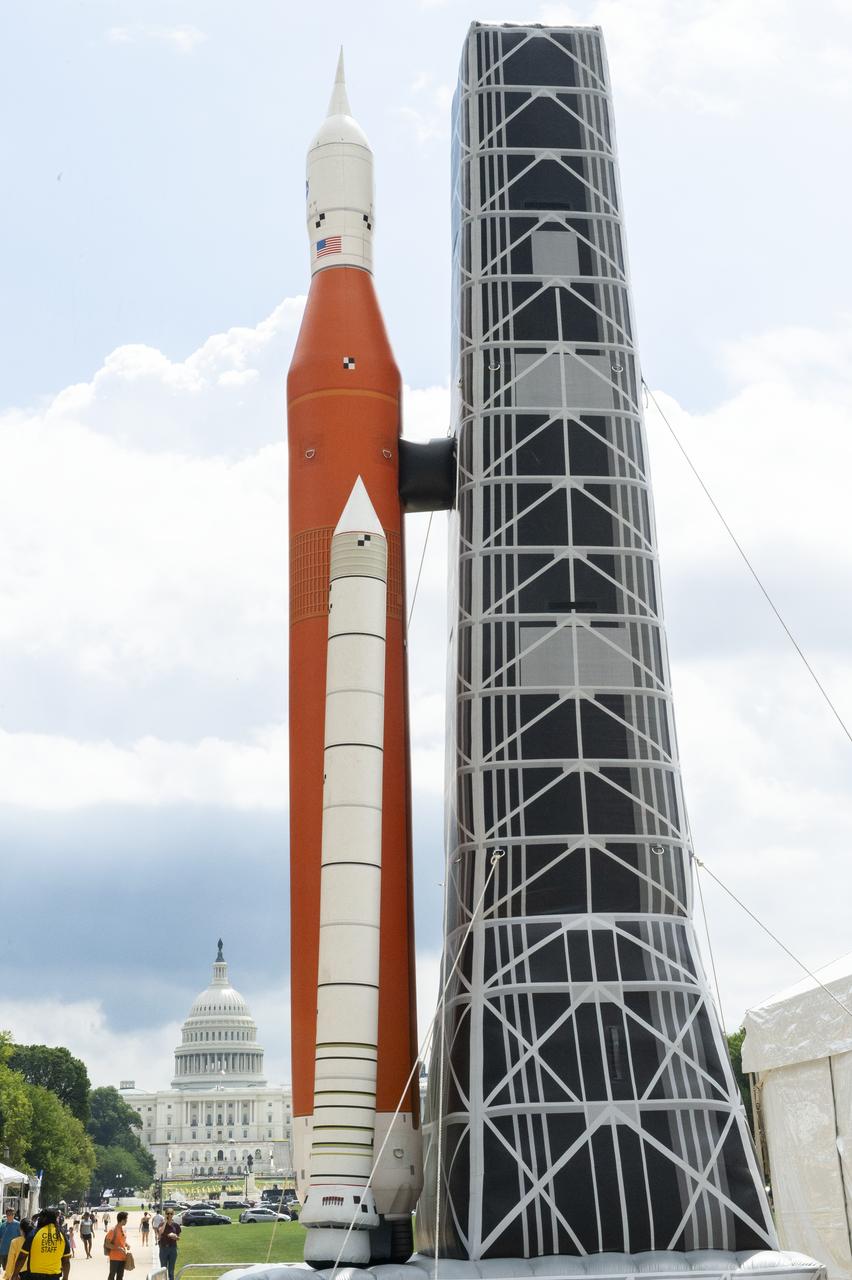
A large inflatable Space Launch System (SLS) rocket is seen at the Apollo 11 50th Anniversary celebration on the National Mall, Thursday, July 18, 2019 in Washington. Apollo 11 was the first mission to land astronauts on the Moon and launched on July 16, 1969 with astronauts Neil Armstrong, Michael Collins, and Buzz Aldrin. Photo Credit: (NASA/Connie Moore)
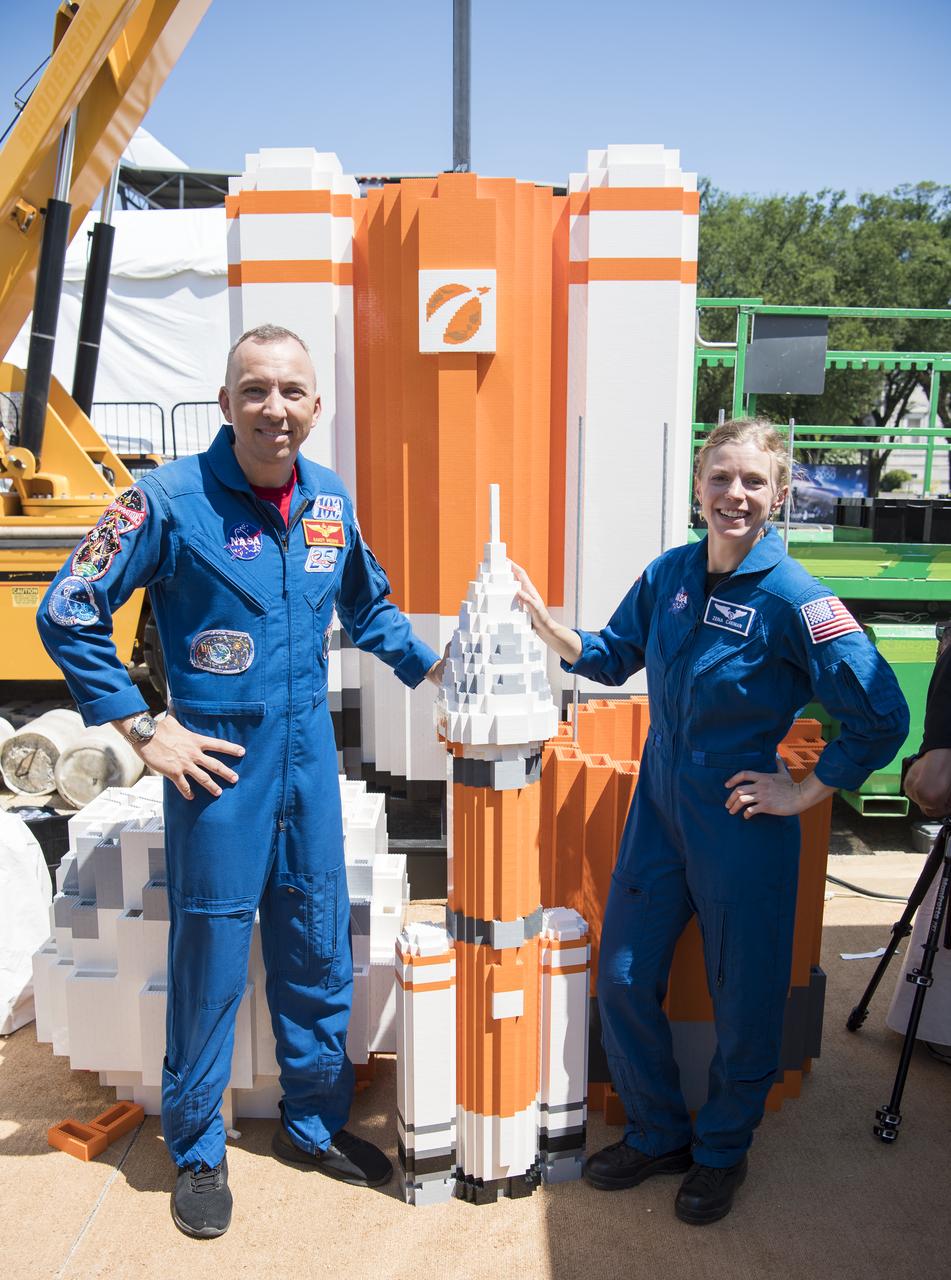
NASA astronaut Randy Bresnik, left, and NASA astronaut candidate, Zena Cardman, pose for a photo with the soon to be 20 ft. model of the Space Launch System (SLS) made out of LEGOs, at the Apollo 11 50th Anniversary celebration on the National Mall, Friday, July 19, 2019 in Washington. Apollo 11 was the first mission to land astronauts on the Moon and launched on July 16, 1969 with astronauts Neil Armstrong, Michael Collins, and Buzz Aldrin. Photo Credit: (NASA/Aubrey Gemignani)
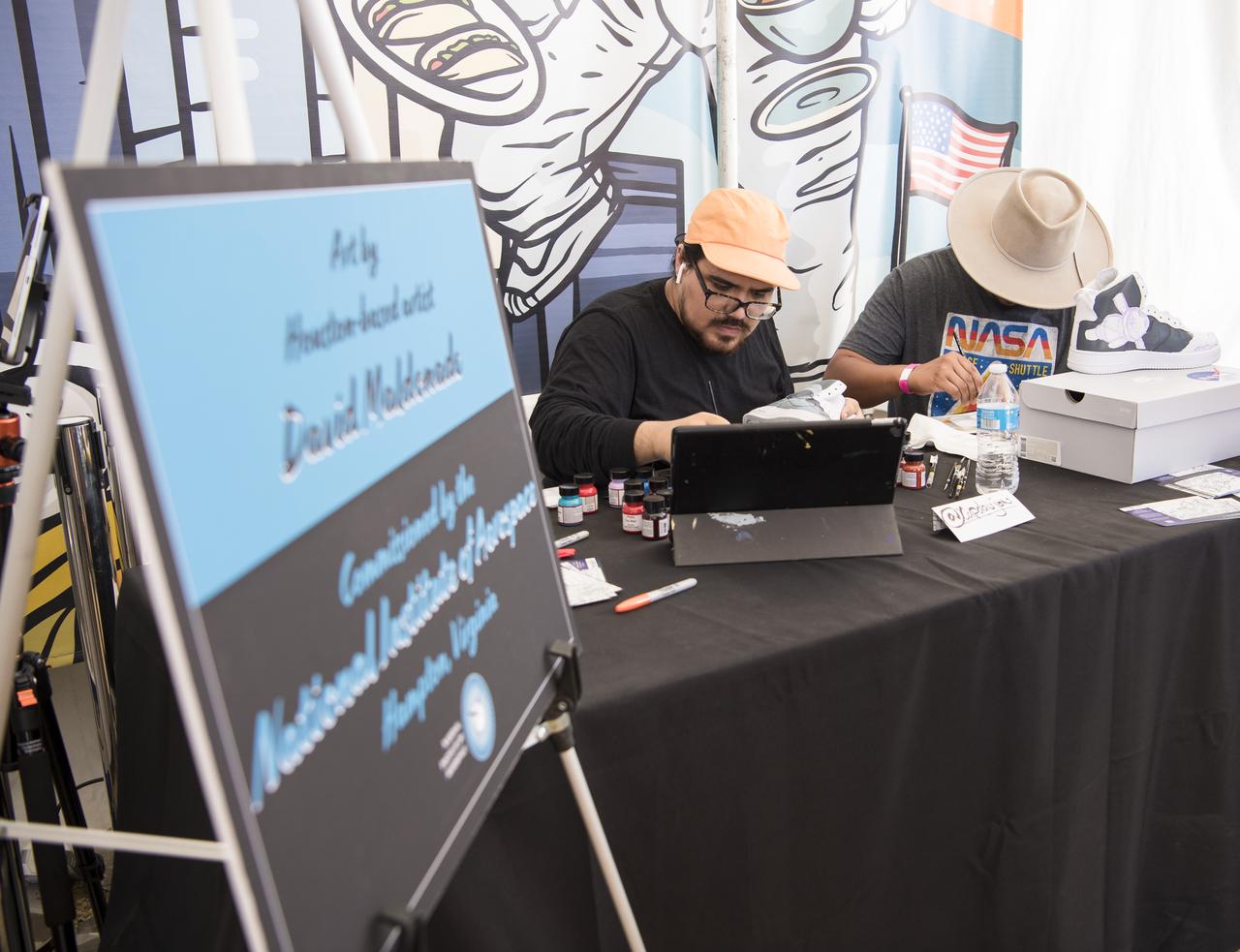
Artist David Maldonado paints a pair of high top shoes with a space themed design at the Apollo 11 50th Anniversary celebration on the National Mall, Friday, July 19, 2019 in Washington. Apollo 11 was the first mission to land astronauts on the Moon and launched on July 16, 1969 with astronauts Neil Armstrong, Michael Collins, and Buzz Aldrin. Photo Credit: (NASA/Aubrey Gemignani)
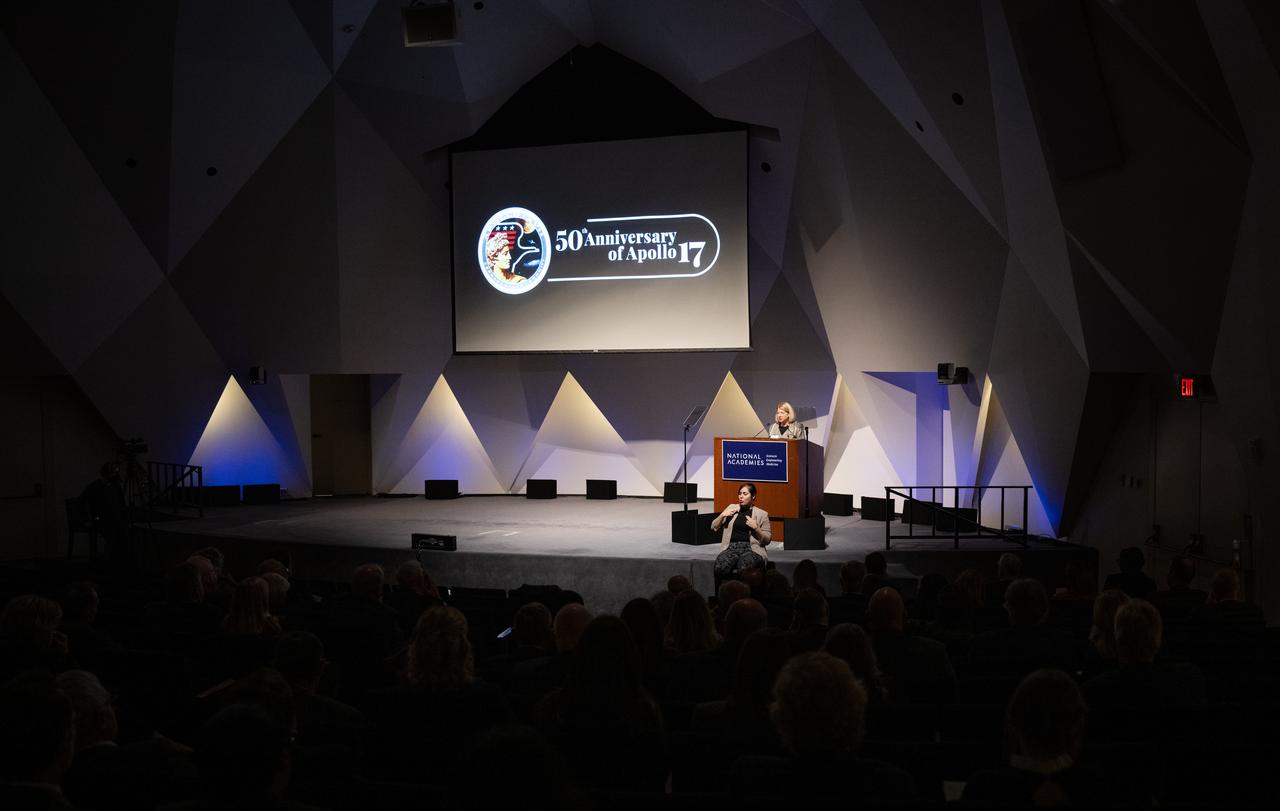
NASA Deputy Administrator Pam Melroy delivers remarks during an event celebrating the 50th anniversary of the Apollo 17 mission, Wednesday, Dec. 14, 2022, at the National Academies of Science in Washington. The three-astronaut crew of Apollo 17 - commander Eugene Cernan, lunar module pilot Harrison Schmitt, and command module pilot Ronald Evans, embarked on the last mission of the Apollo program to land humans on the Moon in December of 1972. Cernan and Schmitt spent three days on the lunar surface collecting samples and performing scientific experiments before lifting off from the Taurus-Littrow Valley on December 14, 1972. Photo Credit: (NASA/Joel Kowsky)
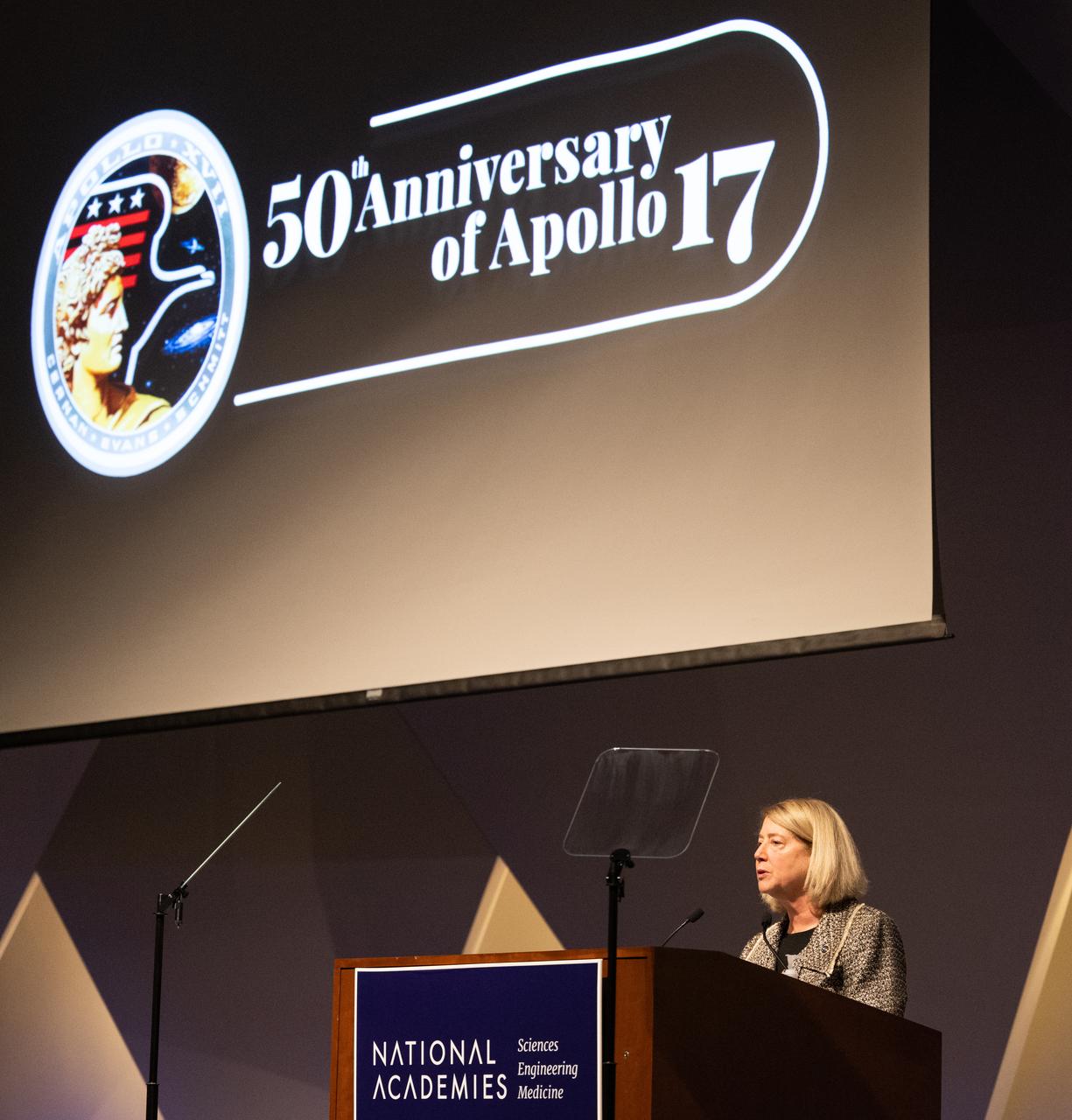
NASA Deputy Administrator Pam Melroy delivers remarks during an event celebrating the 50th anniversary of the Apollo 17 mission, Wednesday, Dec. 14, 2022, at the National Academies of Science in Washington. The three-astronaut crew of Apollo 17 - commander Eugene Cernan, lunar module pilot Harrison Schmitt, and command module pilot Ronald Evans, embarked on the last mission of the Apollo program to land humans on the Moon in December of 1972. Cernan and Schmitt spent three days on the lunar surface collecting samples and performing scientific experiments before lifting off from the Taurus-Littrow Valley on December 14, 1972. Photo Credit: (NASA/Joel Kowsky)
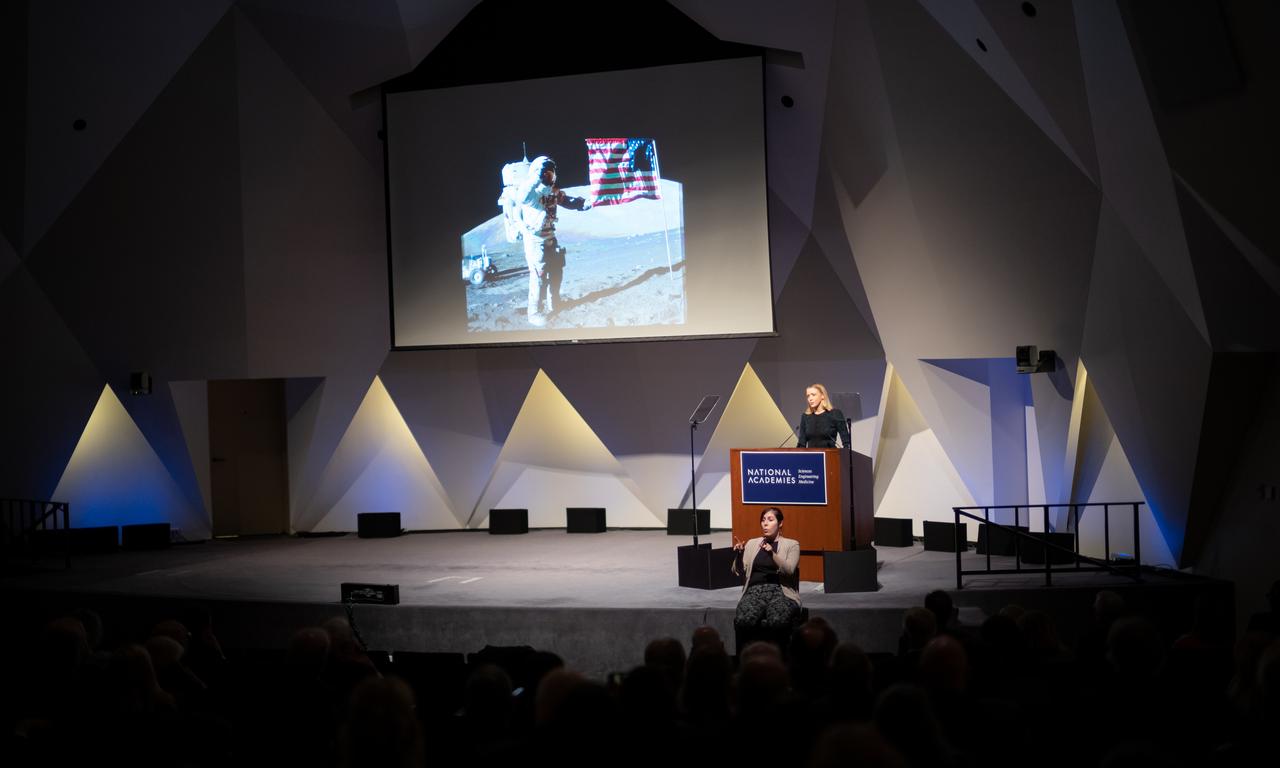
Teasel Muir-Harmony, curator of the Apollo collection at the Smithsonian National Air and Space Museum speaks during an event celebrating the 50th anniversary of the Apollo 17 mission, Wednesday, Dec. 14, 2022, at the National Academies of Science in Washington. The three-astronaut crew of Apollo 17 - commander Eugene Cernan, lunar module pilot Harrison Schmitt, and command module pilot Ronald Evans, embarked on the last mission of the Apollo program to land humans on the Moon in December of 1972. Cernan and Schmitt spent three days on the lunar surface collecting samples and performing scientific experiments before lifting off from the Taurus-Littrow Valley on December 14, 1972. Photo Credit: (NASA/Joel Kowsky)
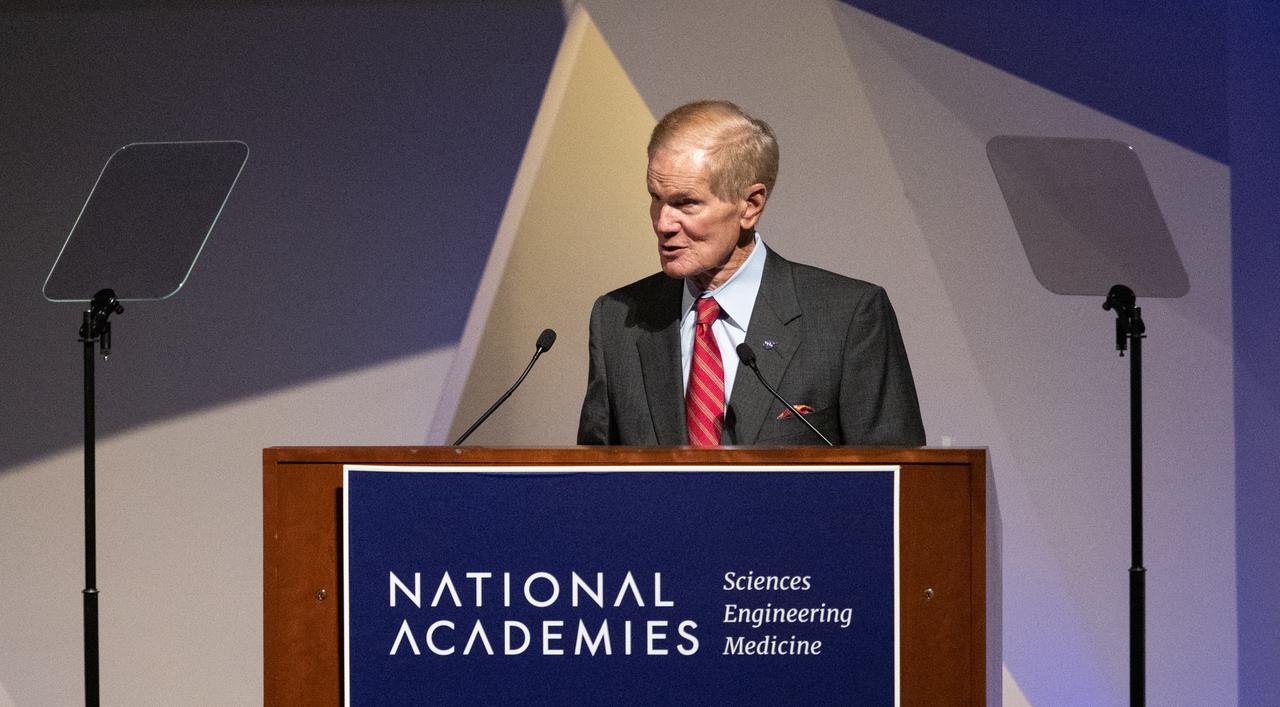
NASA Administrator Bill Nelson delivers remarks during an event celebrating the 50th anniversary of the Apollo 17 mission, Wednesday, Dec. 14, 2022, at the National Academies of Science in Washington. The three-astronaut crew of Apollo 17 - commander Eugene Cernan, lunar module pilot Harrison Schmitt, and command module pilot Ronald Evans, embarked on the last mission of the Apollo program to land humans on the Moon in December of 1972. Cernan and Schmitt spent three days on the lunar surface collecting samples and performing scientific experiments before lifting off from the Taurus-Littrow Valley on December 14, 1972. Photo Credit: (NASA/Joel Kowsky)
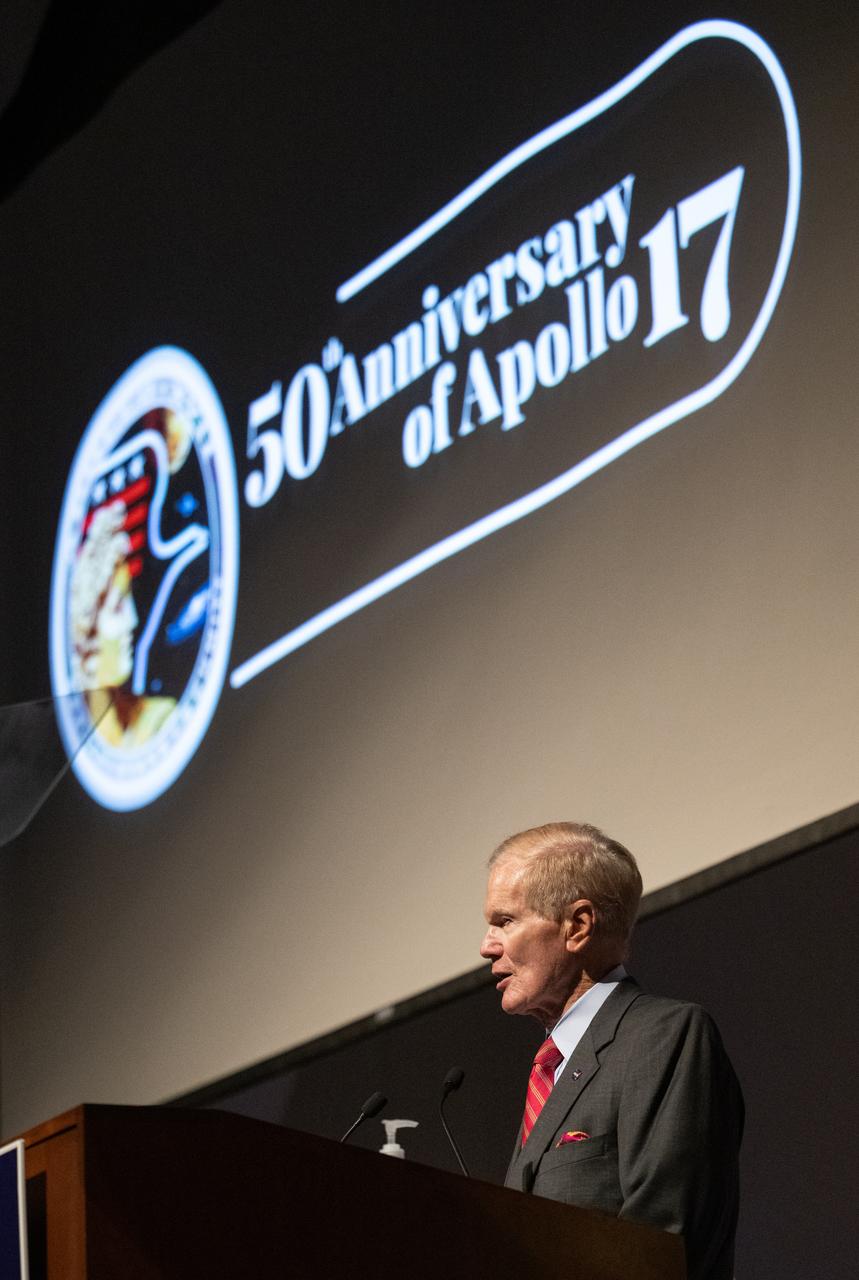
NASA Administrator Bill Nelson delivers remarks during an event celebrating the 50th anniversary of the Apollo 17 mission, Wednesday, Dec. 14, 2022, at the National Academies of Science in Washington. The three-astronaut crew of Apollo 17 - commander Eugene Cernan, lunar module pilot Harrison Schmitt, and command module pilot Ronald Evans, embarked on the last mission of the Apollo program to land humans on the Moon in December of 1972. Cernan and Schmitt spent three days on the lunar surface collecting samples and performing scientific experiments before lifting off from the Taurus-Littrow Valley on December 14, 1972. Photo Credit: (NASA/Joel Kowsky)
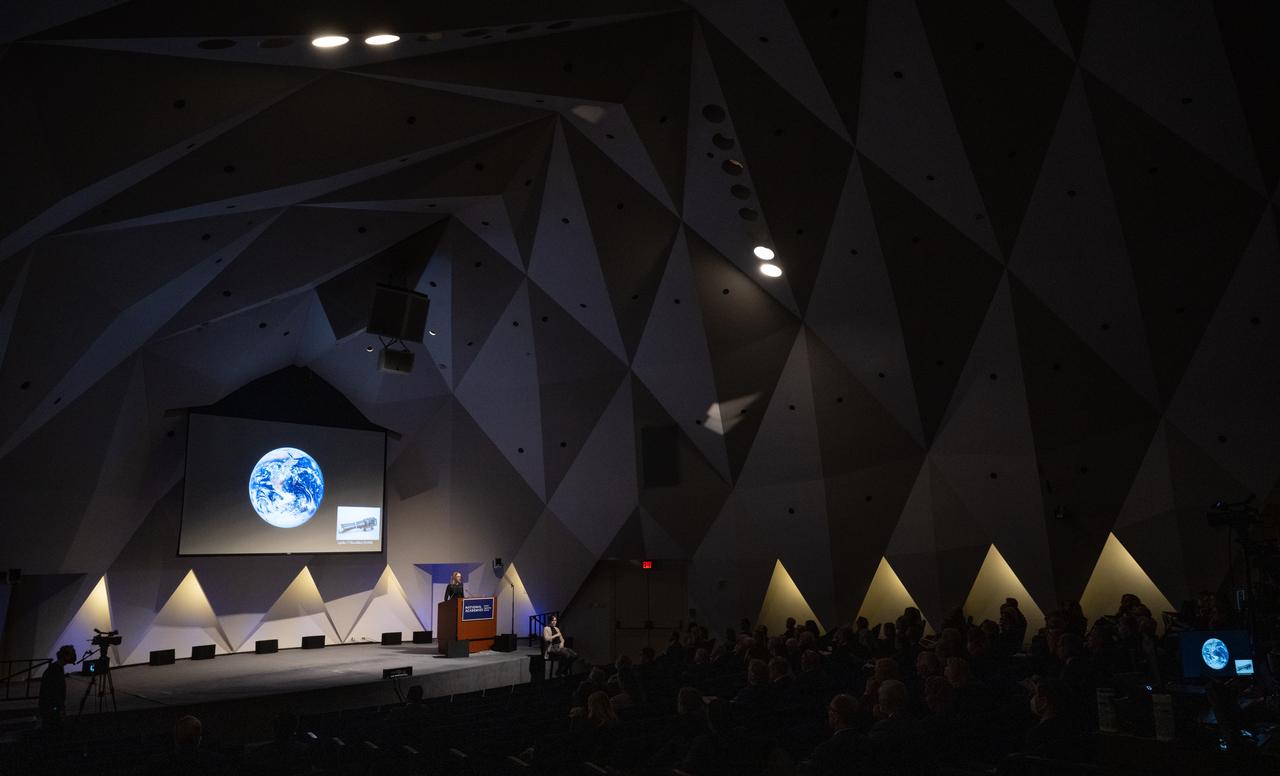
Teasel Muir-Harmony, curator of the Apollo collection at the Smithsonian National Air and Space Museum, speaks during an event celebrating the 50th anniversary of the Apollo 17 mission, Wednesday, Dec. 14, 2022, at the National Academies of Science in Washington. The three-astronaut crew of Apollo 17 - commander Eugene Cernan, lunar module pilot Harrison Schmitt, and command module pilot Ronald Evans, embarked on the last mission of the Apollo program to land humans on the Moon in December of 1972. Cernan and Schmitt spent three days on the lunar surface collecting samples and performing scientific experiments before lifting off from the Taurus-Littrow Valley on December 14, 1972. Photo Credit: (NASA/Joel Kowsky)
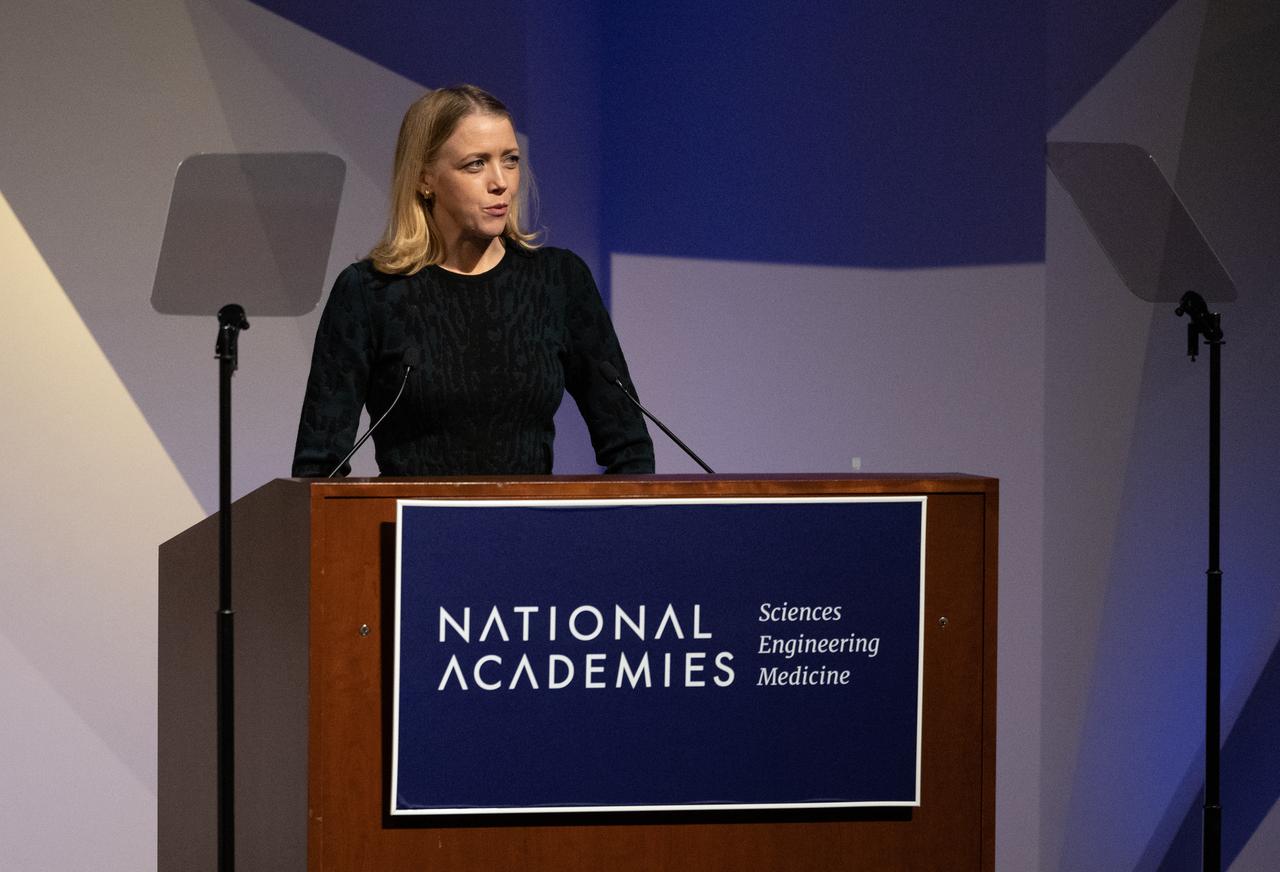
Teasel Muir-Harmony, curator of the Apollo collection at the Smithsonian National Air and Space Museum, speaks during an event celebrating the 50th anniversary of the Apollo 17 mission, Wednesday, Dec. 14, 2022, at the National Academies of Science in Washington. The three-astronaut crew of Apollo 17 - commander Eugene Cernan, lunar module pilot Harrison Schmitt, and command module pilot Ronald Evans, embarked on the last mission of the Apollo program to land humans on the Moon in December of 1972. Cernan and Schmitt spent three days on the lunar surface collecting samples and performing scientific experiments before lifting off from the Taurus-Littrow Valley on December 14, 1972. Photo Credit: (NASA/Joel Kowsky)
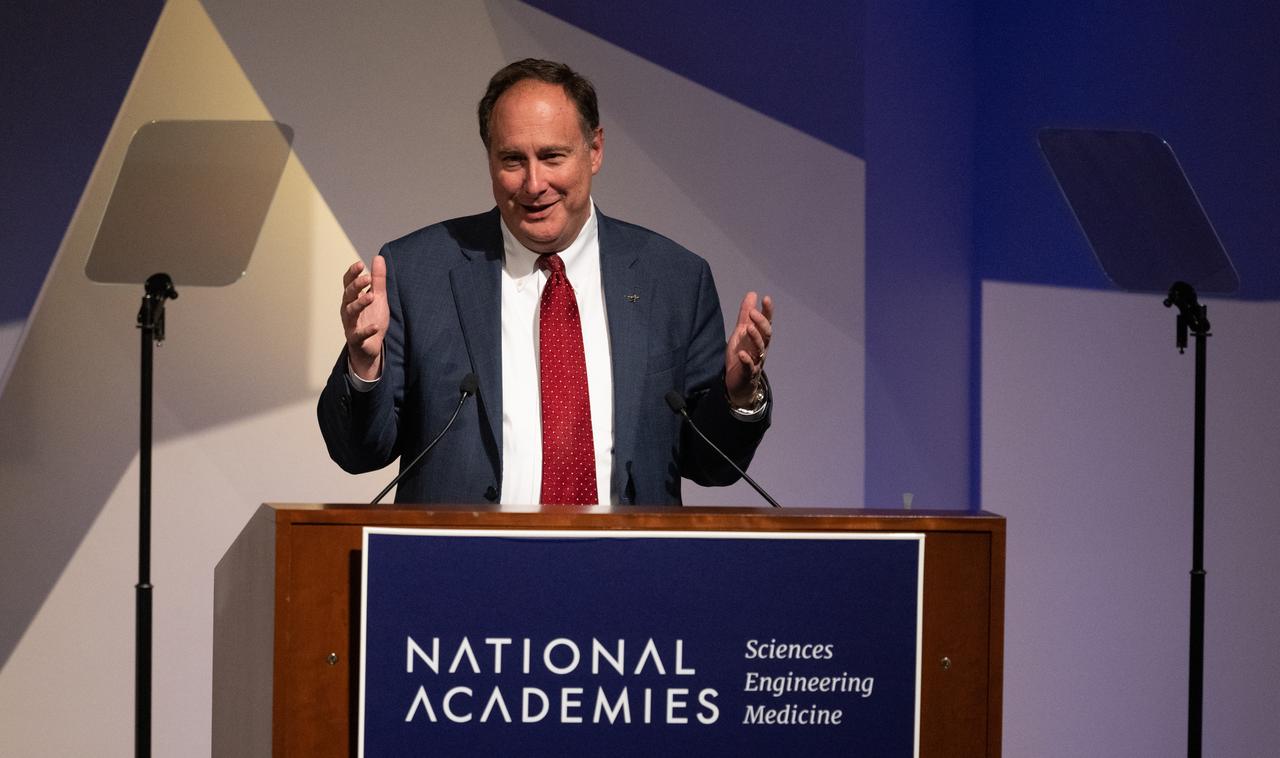
Robert Lightfoot, executive vice president of Lockheed Martin Space, speaks during an event celebrating the 50th anniversary of the Apollo 17 mission, Wednesday, Dec. 14, 2022, at the National Academies of Science in Washington. The three-astronaut crew of Apollo 17 - commander Eugene Cernan, lunar module pilot Harrison Schmitt, and command module pilot Ronald Evans, embarked on the last mission of the Apollo program to land humans on the Moon in December of 1972. Cernan and Schmitt spent three days on the lunar surface collecting samples and performing scientific experiments before lifting off from the Taurus-Littrow Valley on December 14, 1972. Photo Credit: (NASA/Joel Kowsky)
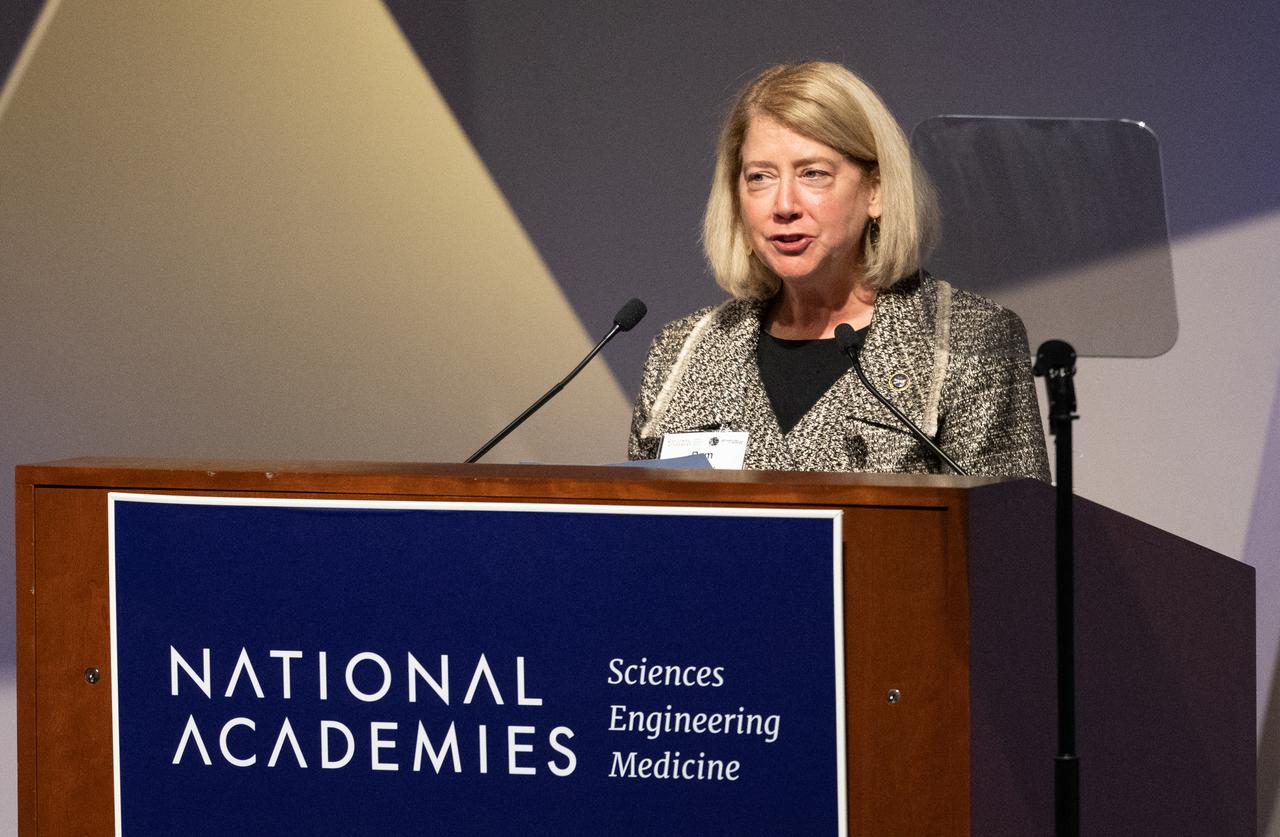
NASA Deputy Administrator Pam Melroy delivers remarks during an event celebrating the 50th anniversary of the Apollo 17 mission, Wednesday, Dec. 14, 2022, at the National Academies of Science in Washington. The three-astronaut crew of Apollo 17 - commander Eugene Cernan, lunar module pilot Harrison Schmitt, and command module pilot Ronald Evans, embarked on the last mission of the Apollo program to land humans on the Moon in December of 1972. Cernan and Schmitt spent three days on the lunar surface collecting samples and performing scientific experiments before lifting off from the Taurus-Littrow Valley on December 14, 1972. Photo Credit: (NASA/Joel Kowsky)
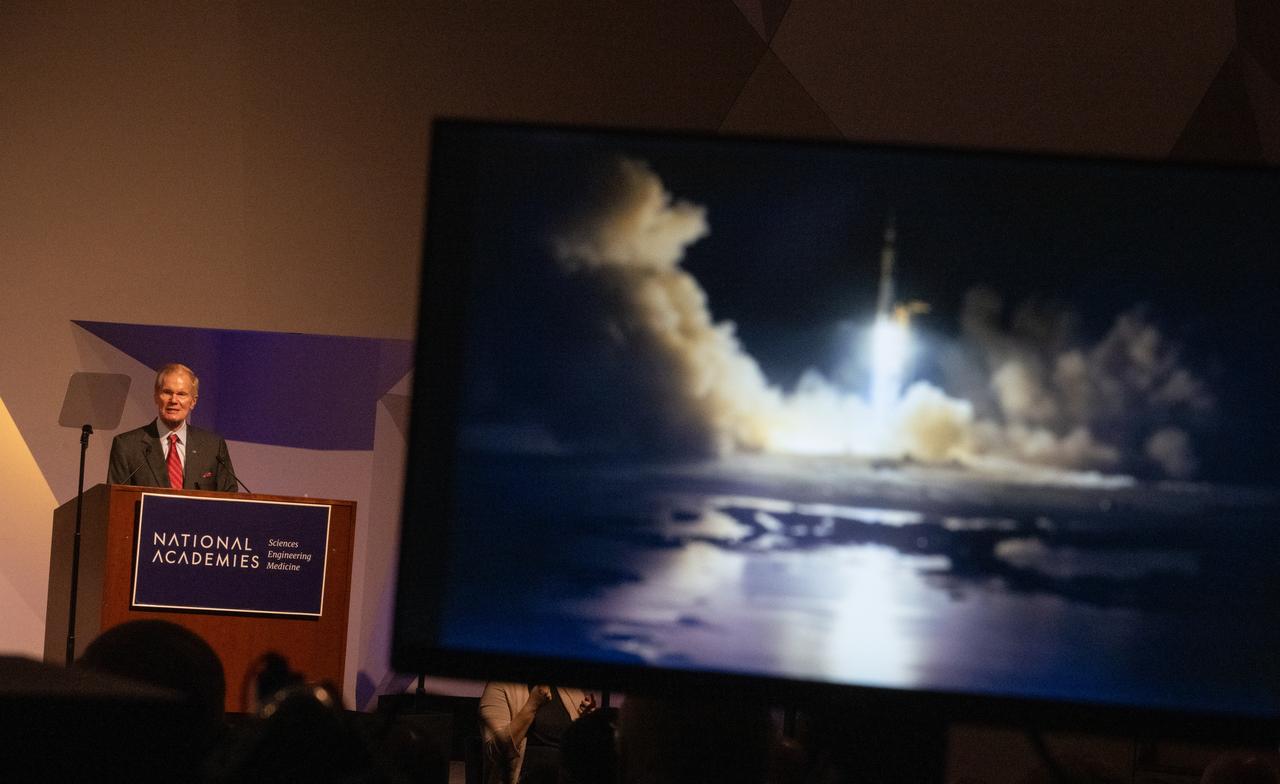
NASA Administrator Bill Nelson delivers remarks during an event celebrating the 50th anniversary of the Apollo 17 mission, Wednesday, Dec. 14, 2022, at the National Academies of Science in Washington. The three-astronaut crew of Apollo 17 - commander Eugene Cernan, lunar module pilot Harrison Schmitt, and command module pilot Ronald Evans, embarked on the last mission of the Apollo program to land humans on the Moon in December of 1972. Cernan and Schmitt spent three days on the lunar surface collecting samples and performing scientific experiments before lifting off from the Taurus-Littrow Valley on December 14, 1972. Photo Credit: (NASA/Joel Kowsky)
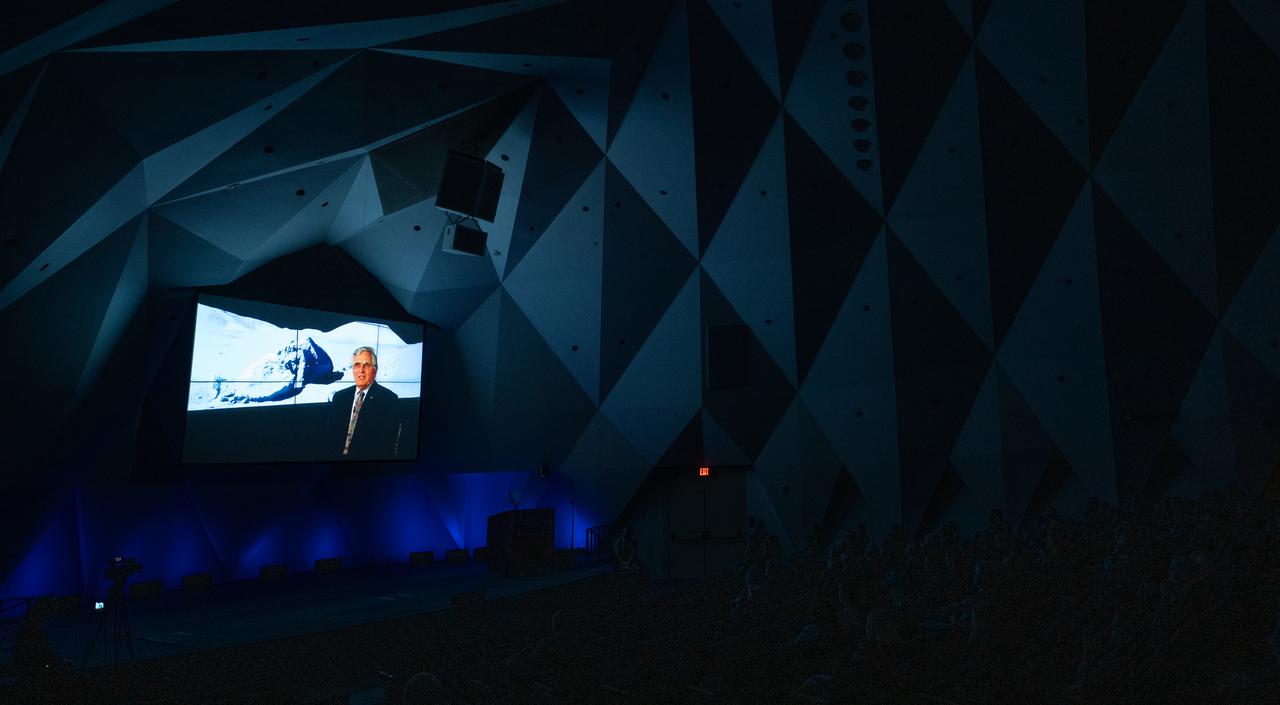
Apollo 17 astronaut Harrison Schmitt is seen in a video during an event celebrating the 50th anniversary of the Apollo 17 mission, Wednesday, Dec. 14, 2022, at the National Academies of Science in Washington. The three-astronaut crew of Apollo 17 - commander Eugene Cernan, lunar module pilot Harrison Schmitt, and command module pilot Ronald Evans, embarked on the last mission of the Apollo program to land humans on the Moon in December of 1972. Cernan and Schmitt spent three days on the lunar surface collecting samples and performing scientific experiments before lifting off from the Taurus-Littrow Valley on December 14, 1972. Photo Credit: (NASA/Joel Kowsky)
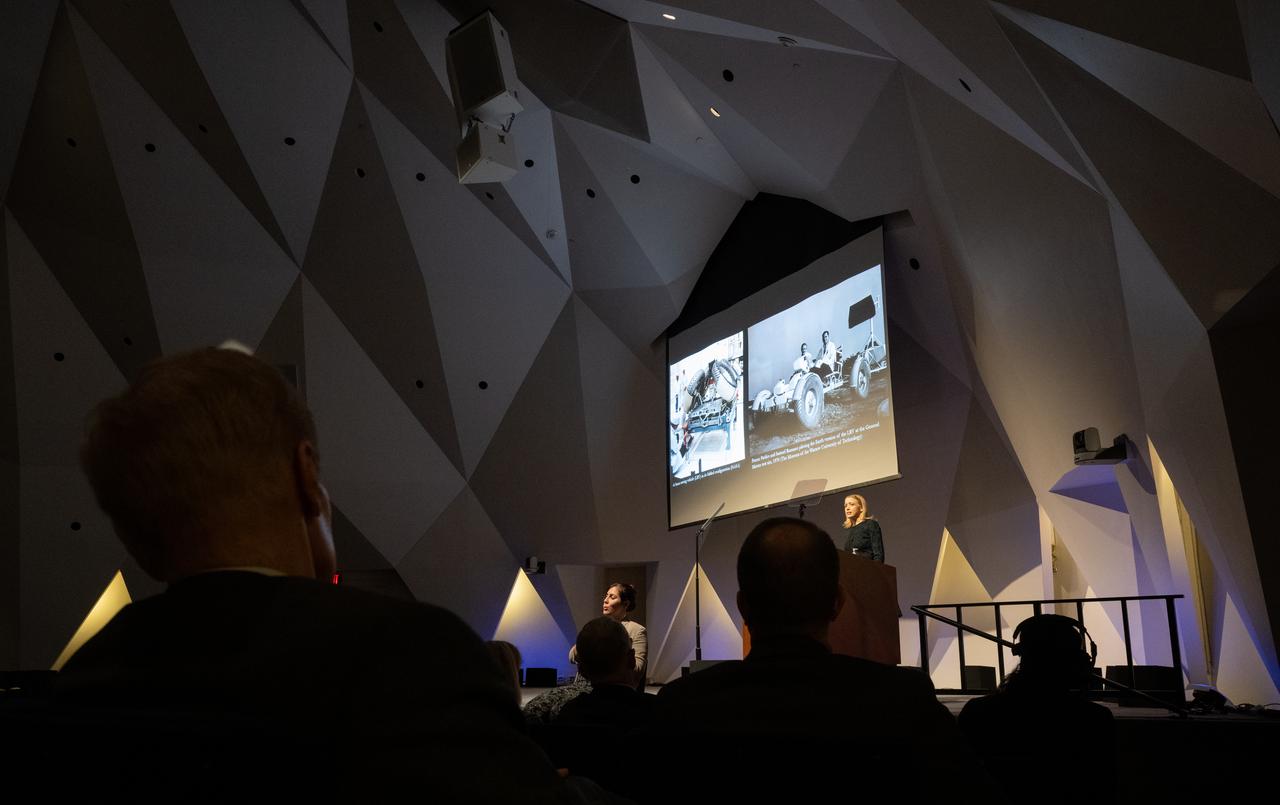
Teasel Muir-Harmony, curator of the Apollo collection at the Smithsonian National Air and Space Museum, speaks during an event celebrating the 50th anniversary of the Apollo 17 mission, Wednesday, Dec. 14, 2022, at the National Academies of Science in Washington. The three-astronaut crew of Apollo 17 - commander Eugene Cernan, lunar module pilot Harrison Schmitt, and command module pilot Ronald Evans, embarked on the last mission of the Apollo program to land humans on the Moon in December of 1972. Cernan and Schmitt spent three days on the lunar surface collecting samples and performing scientific experiments before lifting off from the Taurus-Littrow Valley on December 14, 1972. Photo Credit: (NASA/Joel Kowsky)
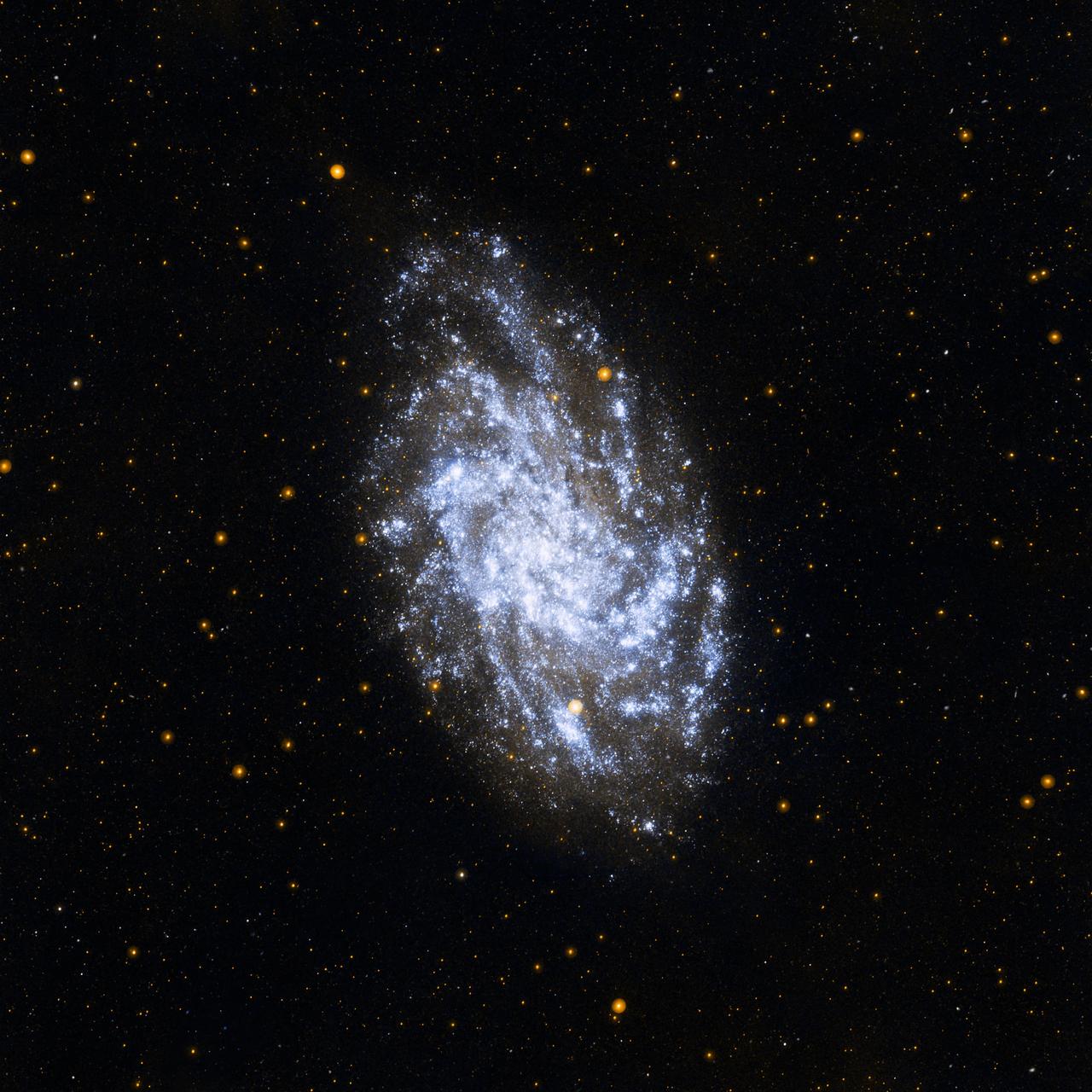
NASA Galaxy Evolution Explorer Mission celebrates its sixth anniversary studying galaxies beyond our Milky Way through its sensitive ultraviolet telescope, the only such far-ultraviolet detector in space. The mission studies the shape, brightness, size and distance of distant galaxies across 10 billion years of cosmic history, giving scientists a wealth of data to help us better understand the origins of the universe. One such object is pictured here, the galaxy NGC598, more commonly known as M33. The image shows a map of the recent star formation history of M33. The bright blue and white areas are where star formation has been extremely active over the past few million years. The patches of yellow and gold are regions where star formation was more active 100 million years ago. In addition, the ultraviolet image shows the most massive young stars in M33. These stars burn their large supply of hydrogen fuel quickly, burning hot and bright while emitting most of their energy at ultraviolet wavelengths. Compared with low-mass stars like our sun, which live for billions of years, these massive stars never reach old age, having a lifespan as short as a few million years. http://photojournal.jpl.nasa.gov/catalog/PIA12000

NASA's Dryden Flight Research Center marked its 60th anniversary as the aerospace agency's lead center for atmospheric flight research and operations in 2006. In connection with that milestone, hundreds of the center's staff and retirees gathered in nearby Lancaster, Calif., in November 2006 to reflect on the center's challenges and celebrate its accomplishments over its six decades of advancing the state-of-the-art in aerospace technology. The center had its beginning in 1946 when a few engineers from the National Advisory Committee for Aeronautics' Langley Memorial Aeronautical Laboratory were detailed to Muroc Army Air Base (now Edwards Air Force Base) in Southern California's high desert to support the joint Army Air Force / NACA / Bell Aircraft XS-1 research airplane program. Since that inauspicious beginning, the center has been at the forefront of many of the advances in aerospace technology by validating advanced concepts through actual in-flight research and testing. Dryden is uniquely situated to take advantage of the excellent year-round flying weather, remote area, and visibility to test some of the nation�s most exciting aerospace vehicles. Today, NASA Dryden is NASA's premier flight research and test organization, continuing to push the envelope in the validation of high-risk aerospace technology and space exploration concepts, and in conducting airborne environmental and space science missions in the 21st century.
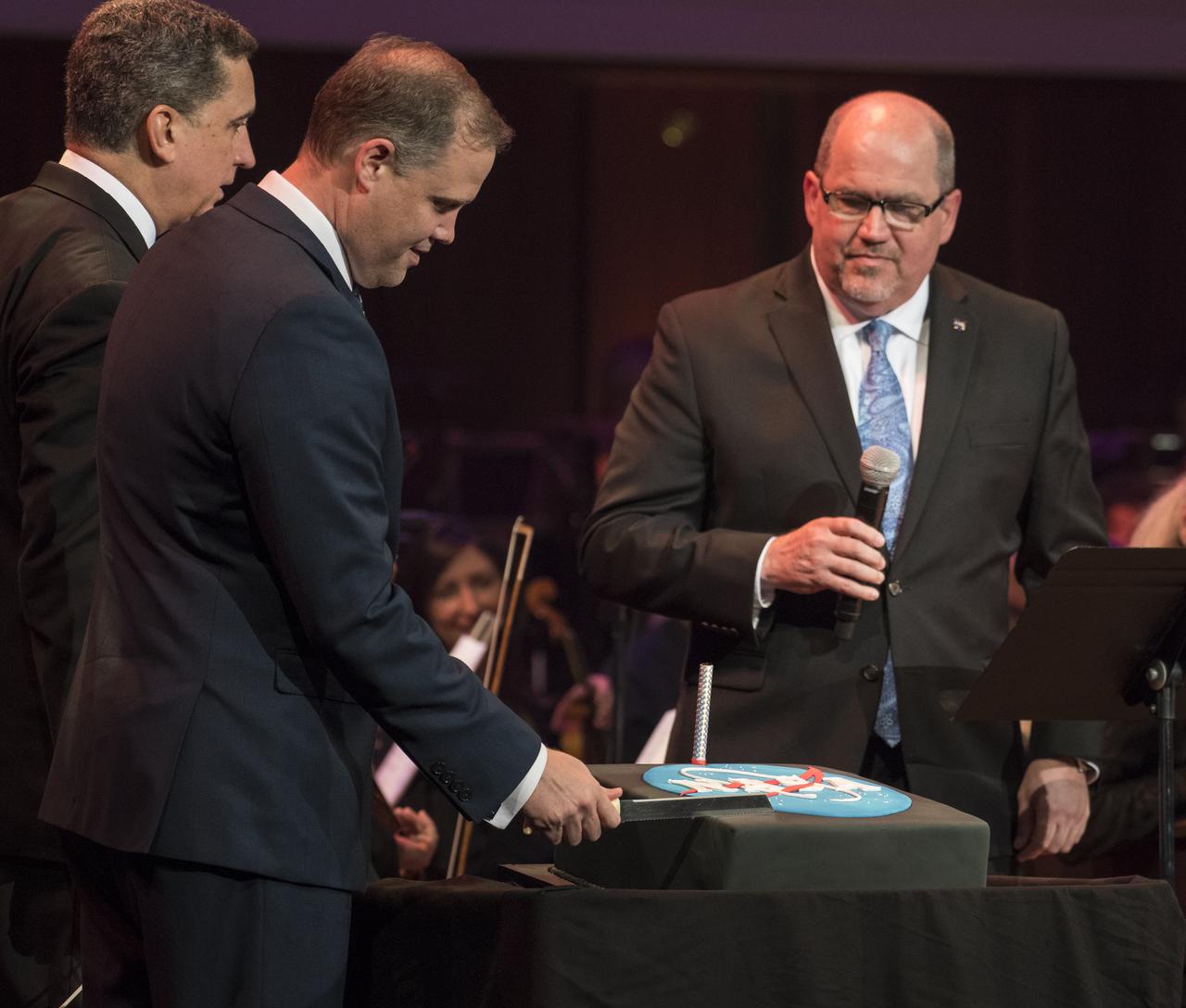
A NASA logo cake is cut by Administrator Bridenstine at the "National Symphony Orchestra Pops: Space, the Next Frontier" event celebrating NASA's 60th Anniversary, Friday, June 1, 2018 at the John F. Kennedy Center for the Performing Arts in Washington. The event featured music inspired by space including artists will.i.am, Grace Potter, Coheed & Cambria, John Cho, and guest Nick Sagan, son of Carl Sagan. Photo Credit: (NASA/Aubrey Gemignani)
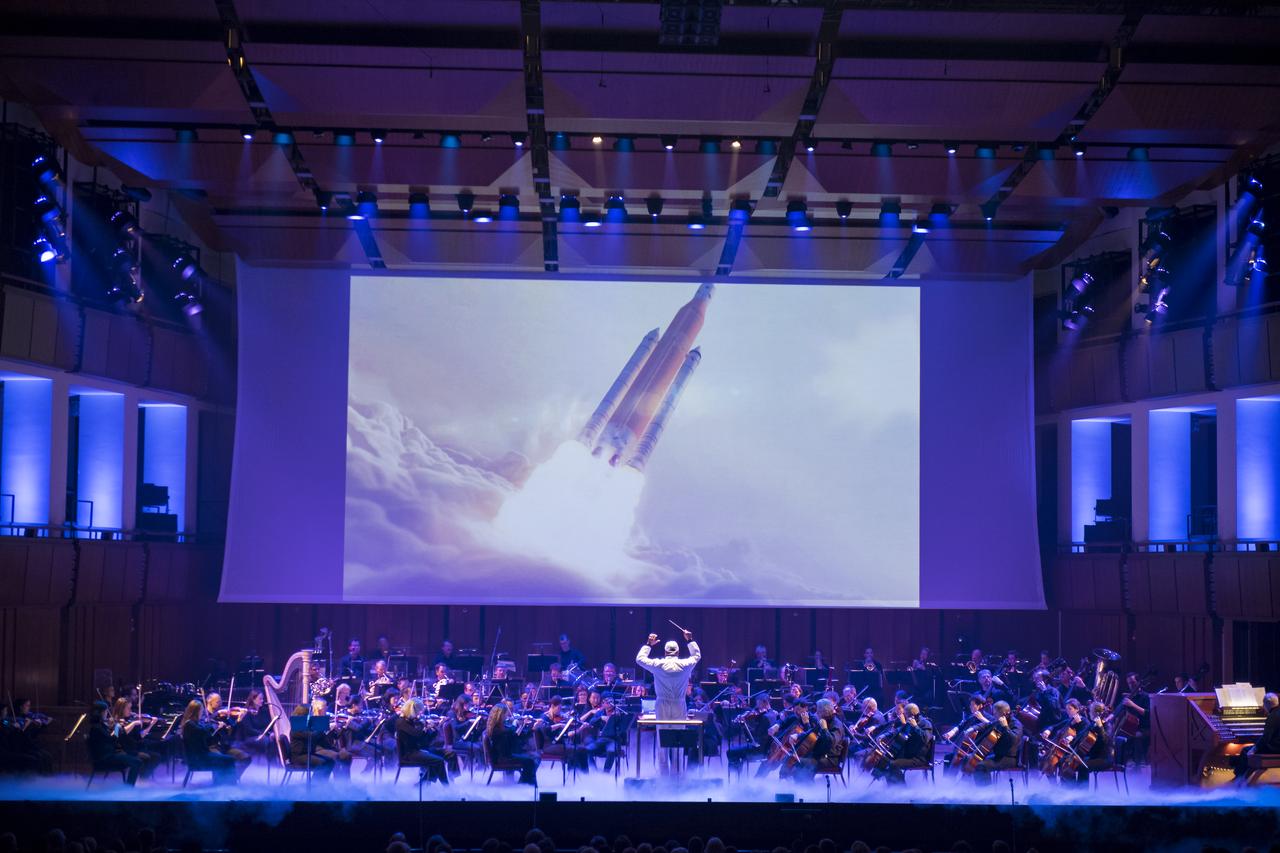
Conductor Emil de Cou leads the National Symphony Orchestra during the "Space, the Next Frontier" event celebrating NASA's 60th Anniversary, Friday, June 1, 2018 at the John F. Kennedy Center for the Performing Arts in Washington. The event featured music inspired by space including artists will.i.am, Grace Potter, Coheed & Cambria, John Cho, and guest Nick Sagan, son of Carl Sagan. Photo Credit: (NASA/Aubrey Gemignani)
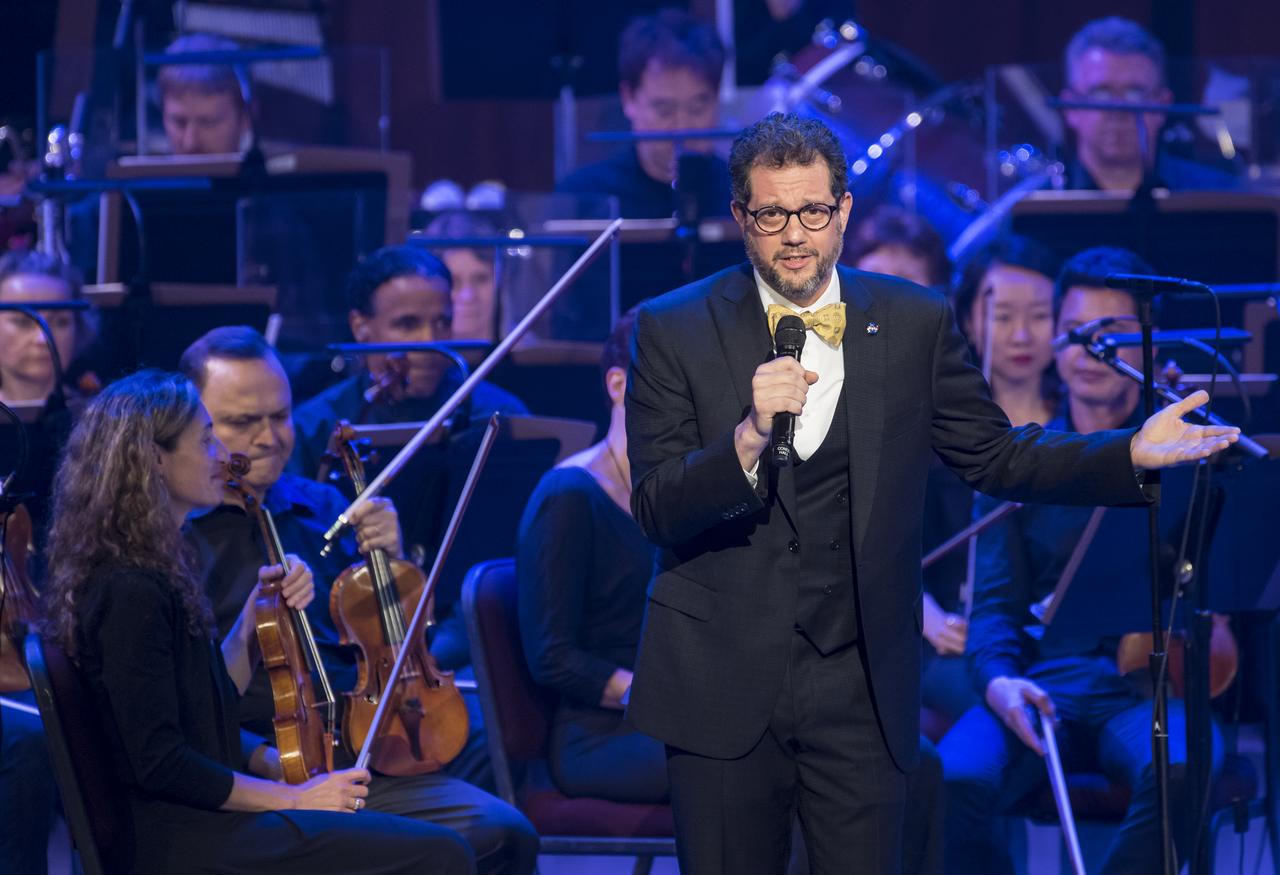
Composer Michael Giacchino speaks during the "National Symphony Orchestra Pops: Space, the Next Frontier" event celebrating NASA's 60th Anniversary, Friday, June 1, 2018 at the John F. Kennedy Center for the Performing Arts in Washington. The event featured music inspired by space including artists will.i.am, Grace Potter, Coheed & Cambria, John Cho, and guest Nick Sagan, son of Carl Sagan. Photo Credit: (NASA/Aubrey Gemignani)
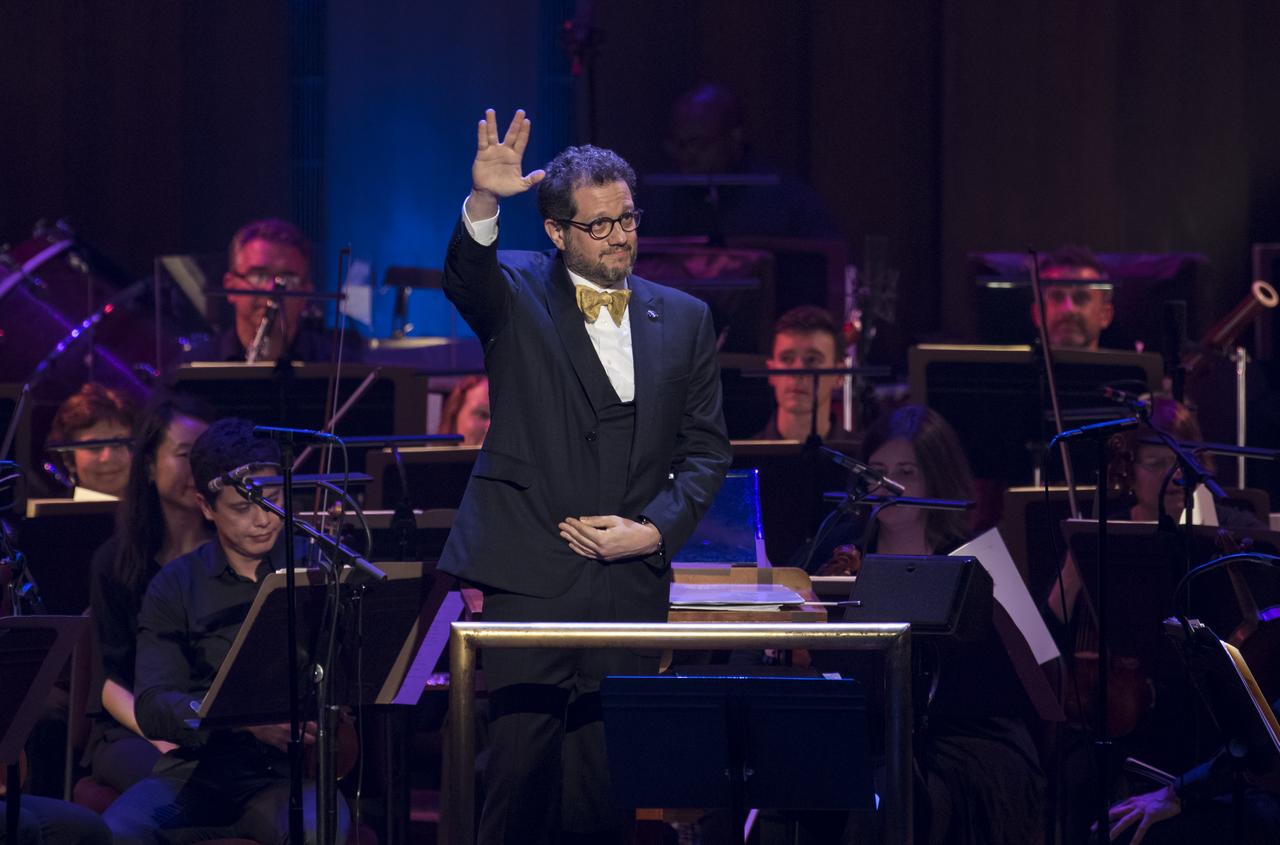
Star Trek composer Michael Giacchino does the Vulcan salute after conducting the National Symphony Orchestra during the "Space, the Next Frontier" event celebrating NASA's 60th Anniversary, Friday, June 1, 2018 at the John F. Kennedy Center for the Performing Arts in Washington. The event featured music inspired by space including artists will.i.am, Grace Potter, Coheed & Cambria, John Cho, and guest Nick Sagan, son of Carl Sagan. Photo Credit: (NASA/Aubrey Gemignani)
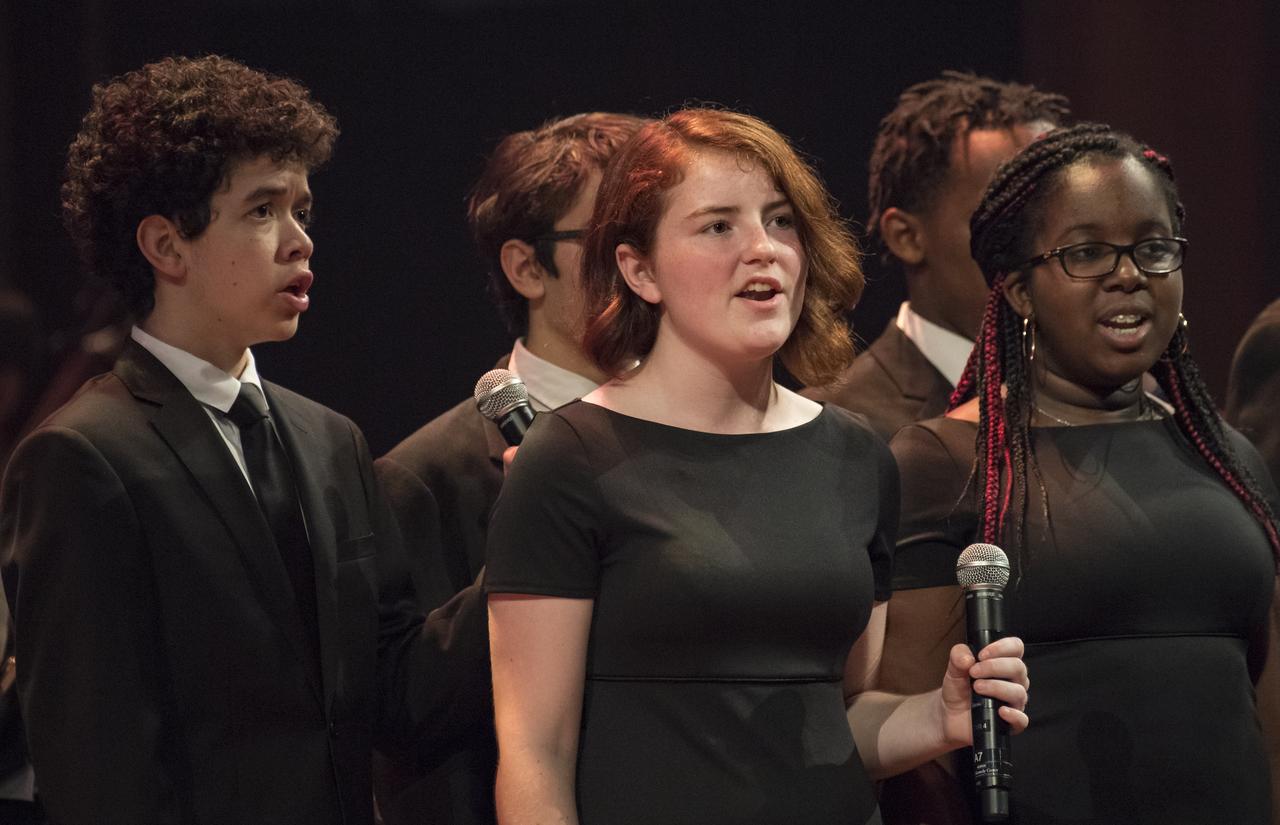
Students provide backup vocals during a performance of Will.i.am's "Reach for the Stars" at the "National Symphony Orchestra Pops: Space, the Next Frontier" event celebrating NASA's 60th Anniversary, Friday, June 1, 2018 at the John F. Kennedy Center for the Performing Arts in Washington. The event featured music inspired by space including artists will.i.am, Grace Potter, Coheed & Cambria, John Cho, and guest Nick Sagan, son of Carl Sagan. Photo Credit: (NASA/Aubrey Gemignani)

Will.i.am speaks before conducting the National Symphony Orchestra during the "Space, the Next Frontier" event celebrating NASA's 60th Anniversary, Friday, June 1, 2018 at the John F. Kennedy Center for the Performing Arts in Washington. The event featured music inspired by space including artists will.i.am, Grace Potter, Coheed & Cambria, John Cho, and guest Nick Sagan, son of Carl Sagan. Photo Credit: (NASA/Aubrey Gemignani)

Coheed and Cambria performs at the "National Symphony Orchestra Pops: Space, the Next Frontier" event celebrating NASA's 60th Anniversary, Friday, June 1, 2018 at the John F. Kennedy Center for the Performing Arts in Washington. The event featured music inspired by space including artists will.i.am, Grace Potter, Coheed & Cambria, John Cho, and guest Nick Sagan, son of Carl Sagan. Photo Credit: (NASA/Aubrey Gemignani)
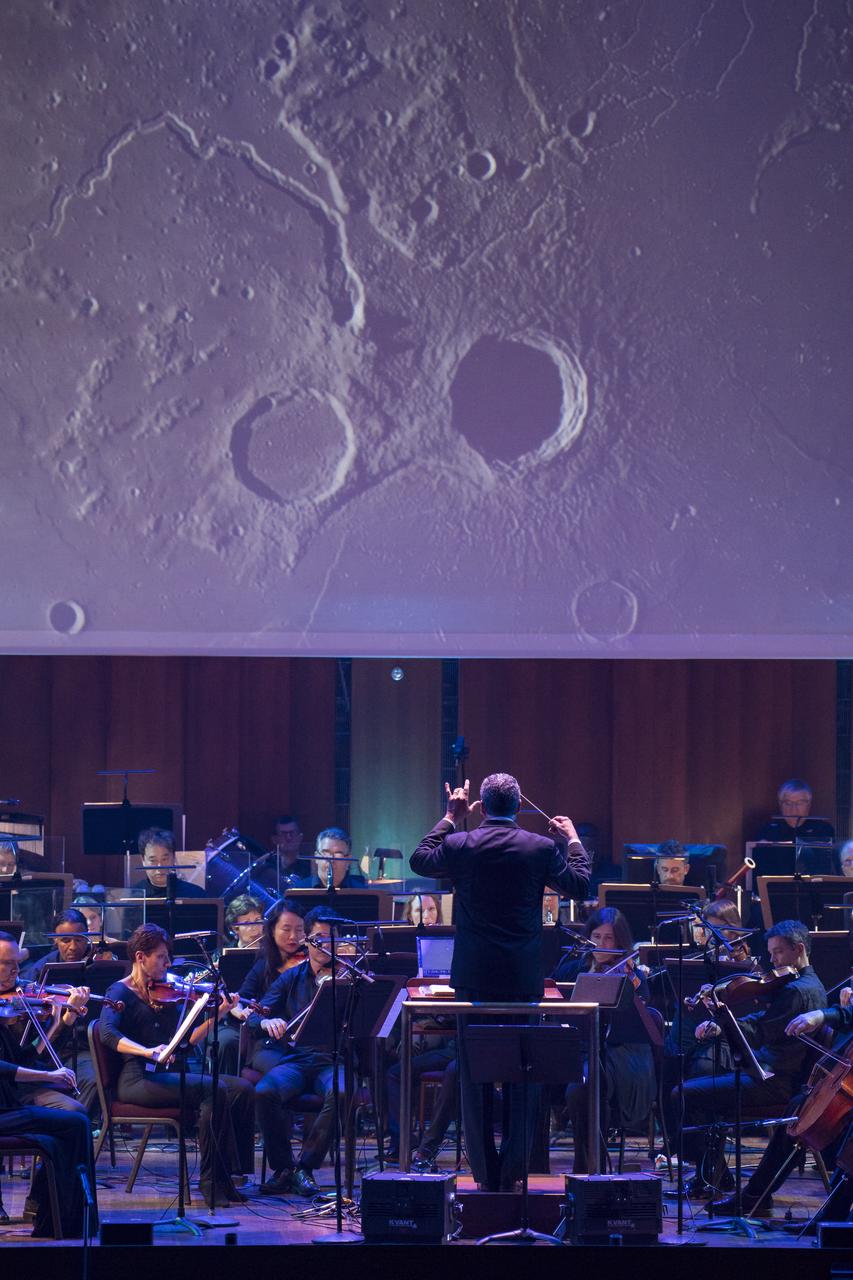
Conductor Emil de Cou leads the National Symphony Orchestra during the "Space, the Next Frontier" event celebrating NASA's 60th Anniversary, Friday, June 1, 2018 at the John F. Kennedy Center for the Performing Arts in Washington. The event featured music inspired by space including artists will.i.am, Grace Potter, Coheed & Cambria, John Cho, and guest Nick Sagan, son of Carl Sagan. Photo Credit: (NASA/Aubrey Gemignani)
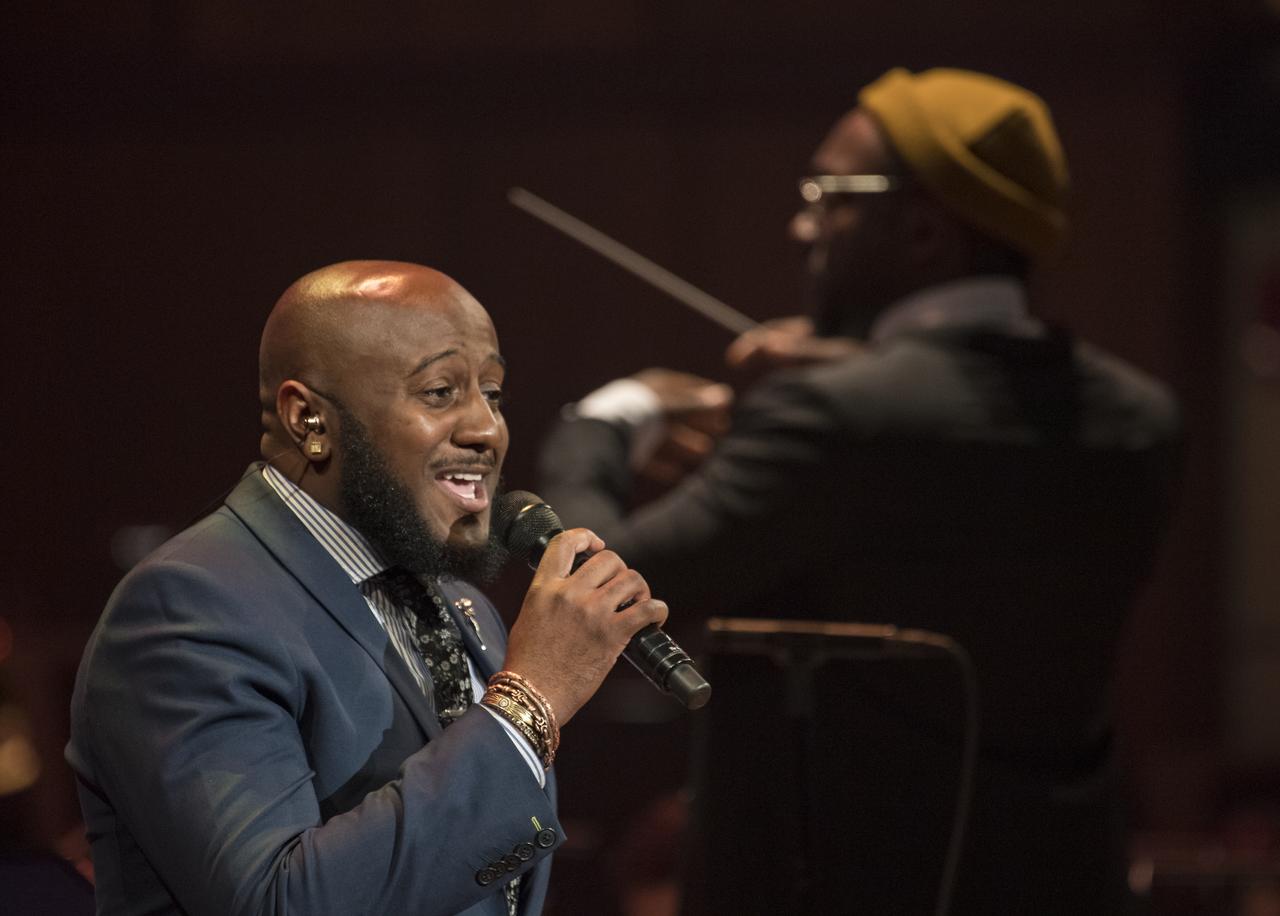
Will.i.am's "Reach for the Stars" is performed while he conducts the National Symphony Orchestra during the "Space, the Next Frontier" event celebrating NASA's 60th Anniversary, Friday, June 1, 2018 at the John F. Kennedy Center for the Performing Arts in Washington. The event featured music inspired by space including artists will.i.am, Grace Potter, Coheed & Cambria, John Cho, and guest Nick Sagan, son of Carl Sagan. Photo Credit: (NASA/Aubrey Gemignani)
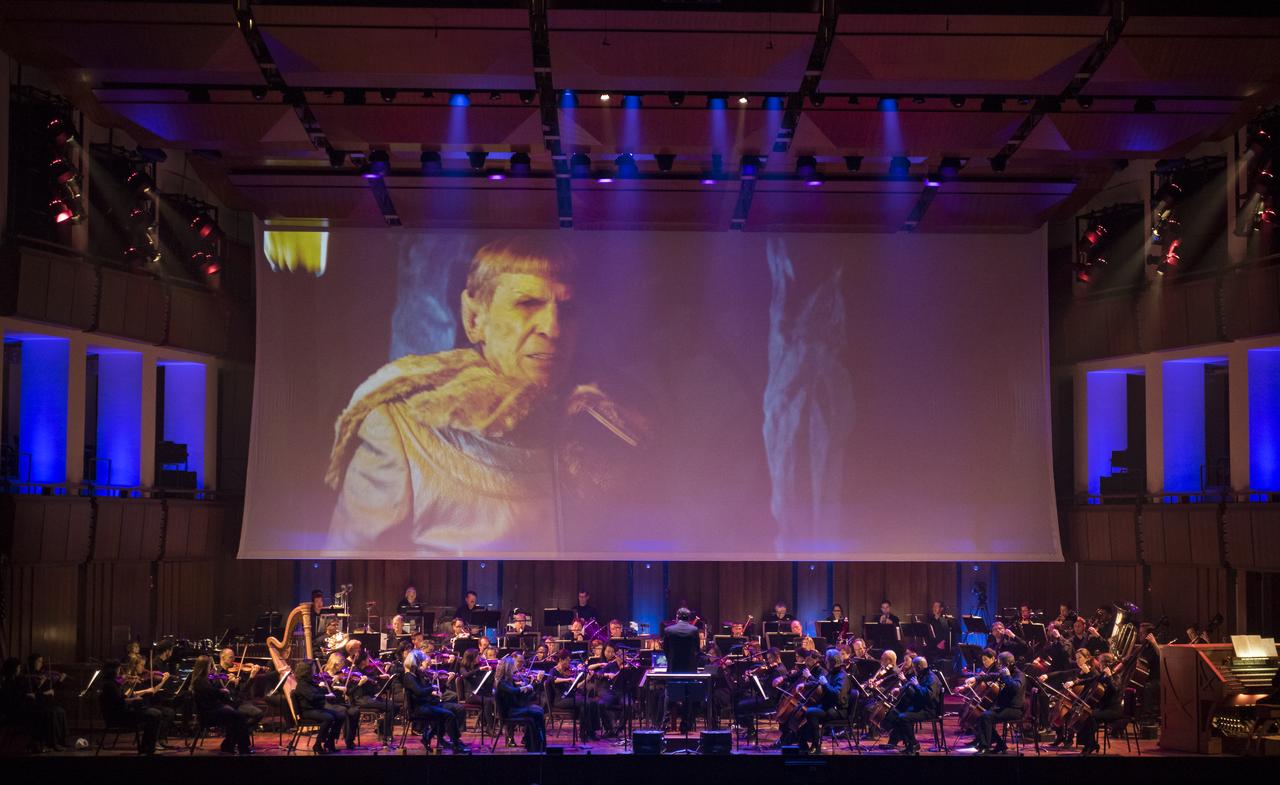
Star Trek composer Michael Giacchino conducts the National Symphony Orchestra during the "Space, the Next Frontier" event celebrating NASA's 60th Anniversary, Friday, June 1, 2018 at the John F. Kennedy Center for the Performing Arts in Washington. The event featured music inspired by space including artists will.i.am, Grace Potter, Coheed & Cambria, John Cho, and guest Nick Sagan, son of Carl Sagan. Photo Credit: (NASA/Aubrey Gemignani)
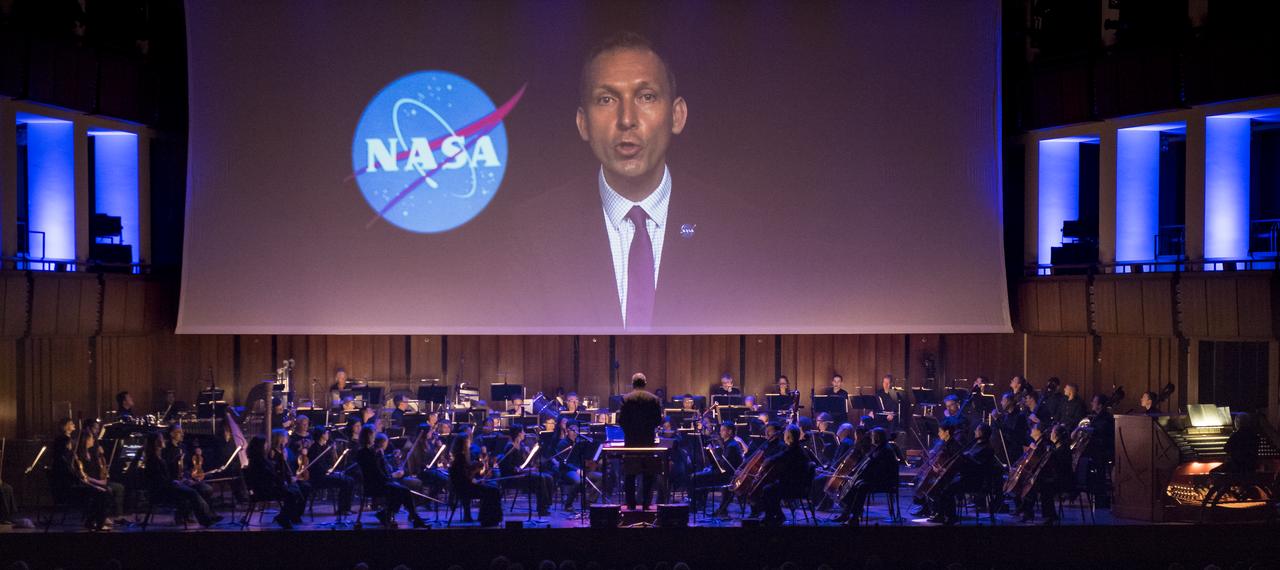
NASA's Associate Administrator for the Science Mission Directorate, Thomas Zurbuchen, is seen in a video message during the "National Symphony Orchestra Pops: Space, the Next Frontier" event celebrating NASA's 60th Anniversary, Friday, June 1, 2018 at the John F. Kennedy Center for the Performing Arts in Washington. The event featured music inspired by space including artists will.i.am, Grace Potter, Coheed & Cambria, John Cho, and guest Nick Sagan, son of Carl Sagan. Photo Credit: (NASA/Aubrey Gemignani)
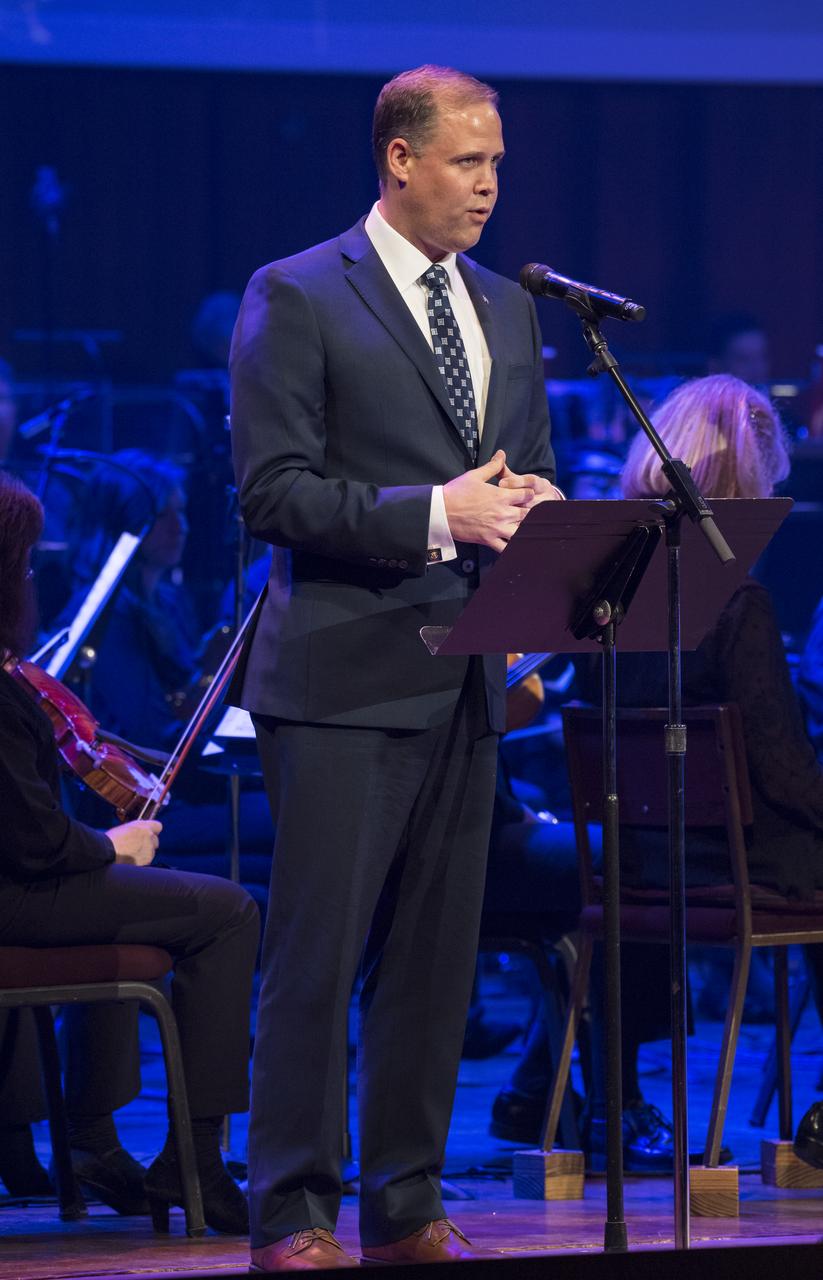
NASA Administrator Jim Bridenstine speaks during the "National Symphony Orchestra Pops: Space, the Next Frontier" event celebrating NASA's 60th Anniversary, Friday, June 1, 2018 at the John F. Kennedy Center for the Performing Arts in Washington. The event featured music inspired by space including artists will.i.am, Grace Potter, Coheed & Cambria, John Cho, and guest Nick Sagan, son of Carl Sagan. Photo Credit: (NASA/Aubrey Gemignani)
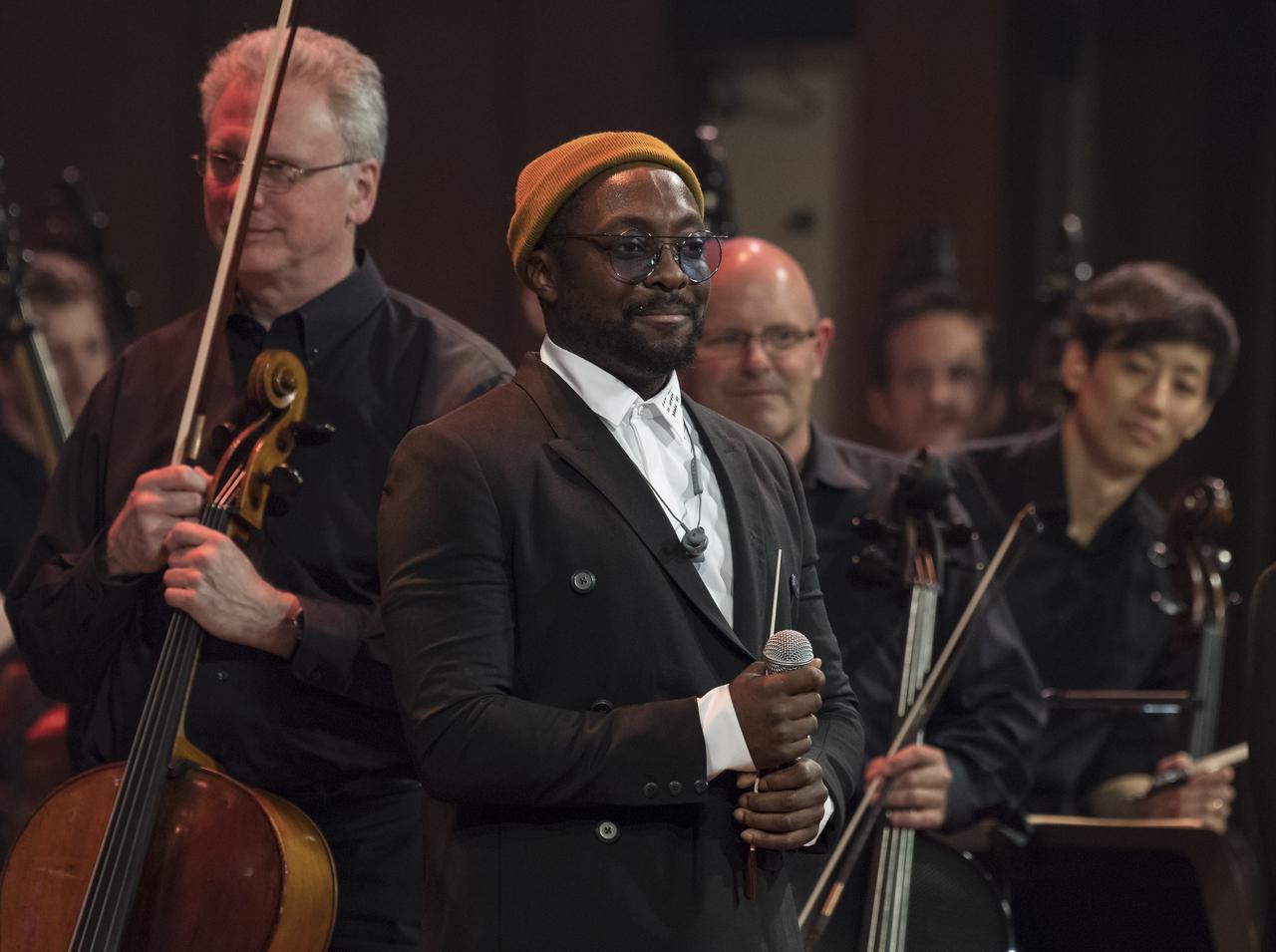
Will.i.am's is seen just after he conducted the National Symphony Orchestra during the "Space, the Next Frontier" event celebrating NASA's 60th Anniversary, Friday, June 1, 2018 at the John F. Kennedy Center for the Performing Arts in Washington. The event featured music inspired by space including artists will.i.am, Grace Potter, Coheed & Cambria, John Cho, and guest Nick Sagan, son of Carl Sagan. Photo Credit: (NASA/Aubrey Gemignani)
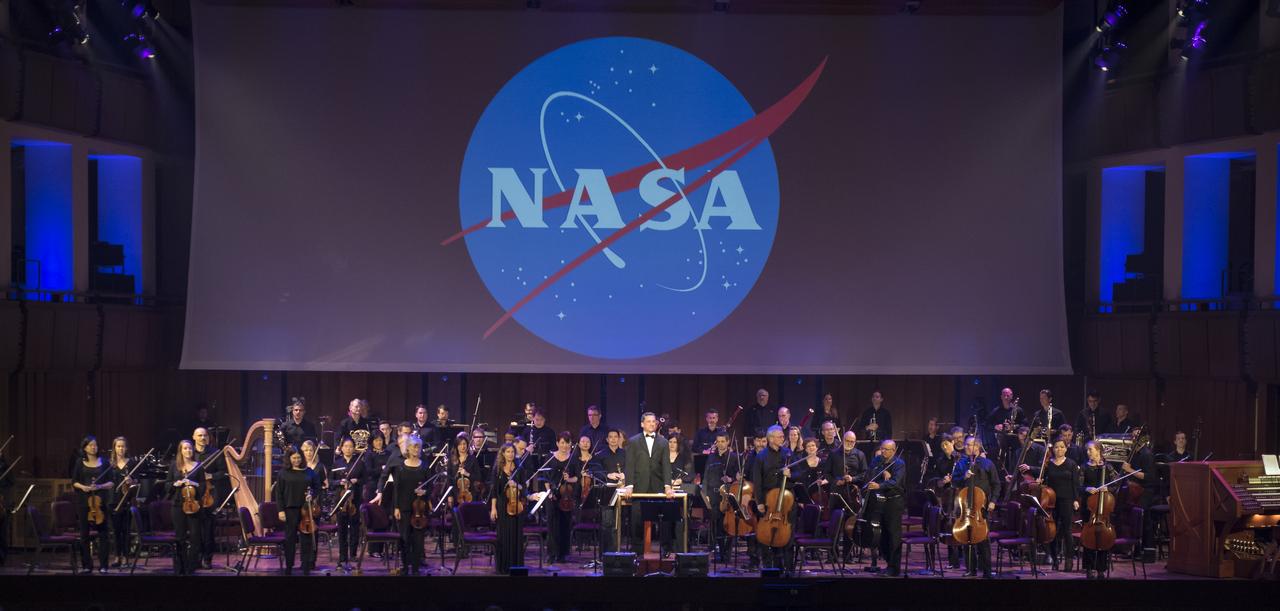
Conductor Emil de Cou and the National Symphony Orchestra stands at the start of the second half of "Space, the Next Frontier" celebrating NASA's 60th Anniversary, Friday, June 1, 2018 at the John F. Kennedy Center for the Performing Arts in Washington. The event featured music inspired by space including artists will.i.am, Grace Potter, Coheed & Cambria, John Cho, and guest Nick Sagan, son of Carl Sagan. Photo Credit: (NASA/Aubrey Gemignani)
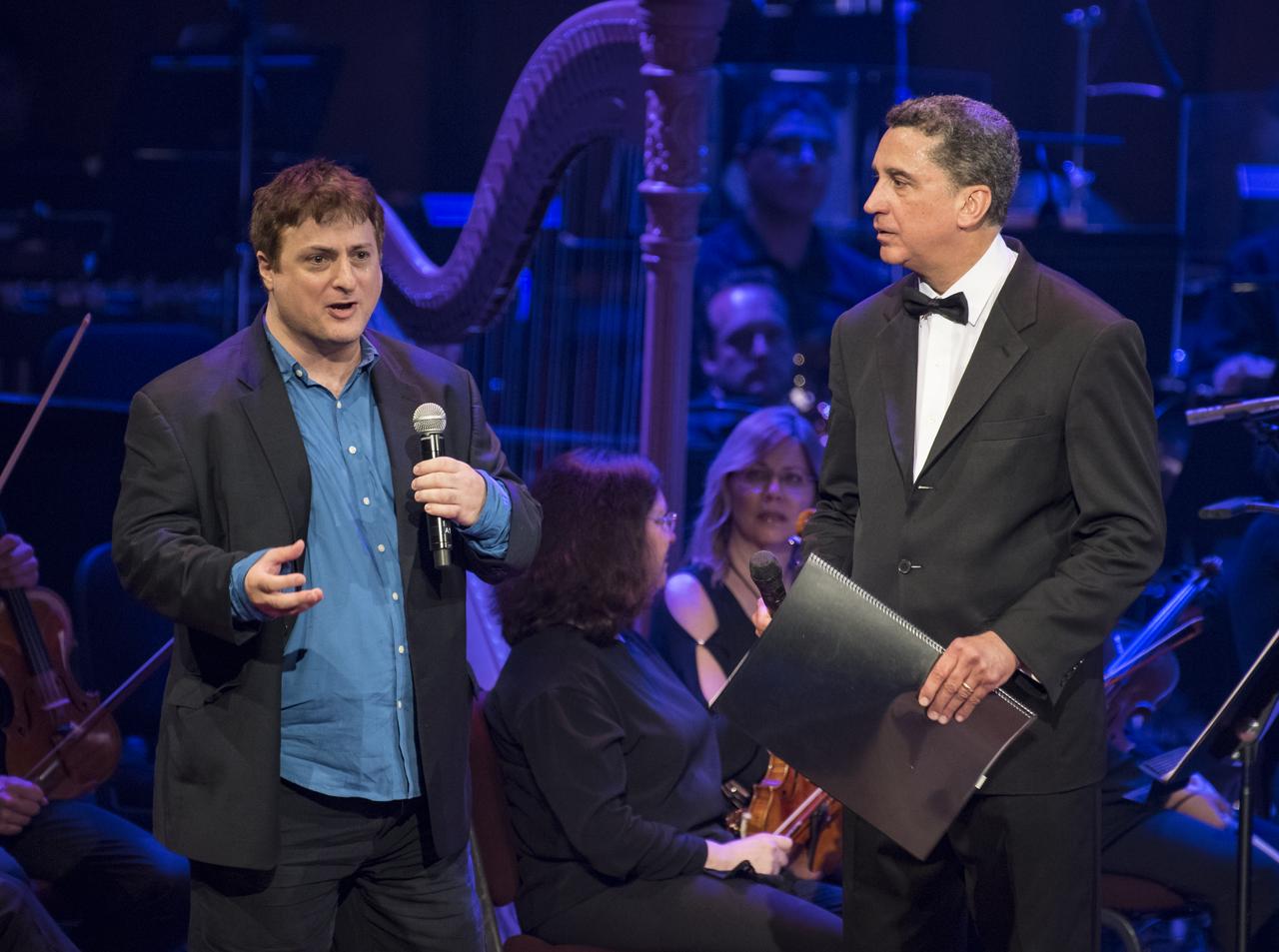
Carl Sagan's son, Nick Sagan, left, speaks at the "National Symphony Orchestra Pops: Space, the Next Frontier" event celebrating NASA's 60th Anniversary, Friday, June 1, 2018 at the John F. Kennedy Center for the Performing Arts in Washington. The event featured music inspired by space including artists will.i.am, Grace Potter, Coheed & Cambria, John Cho, and guest Nick Sagan. Photo Credit: (NASA/Aubrey Gemignani)
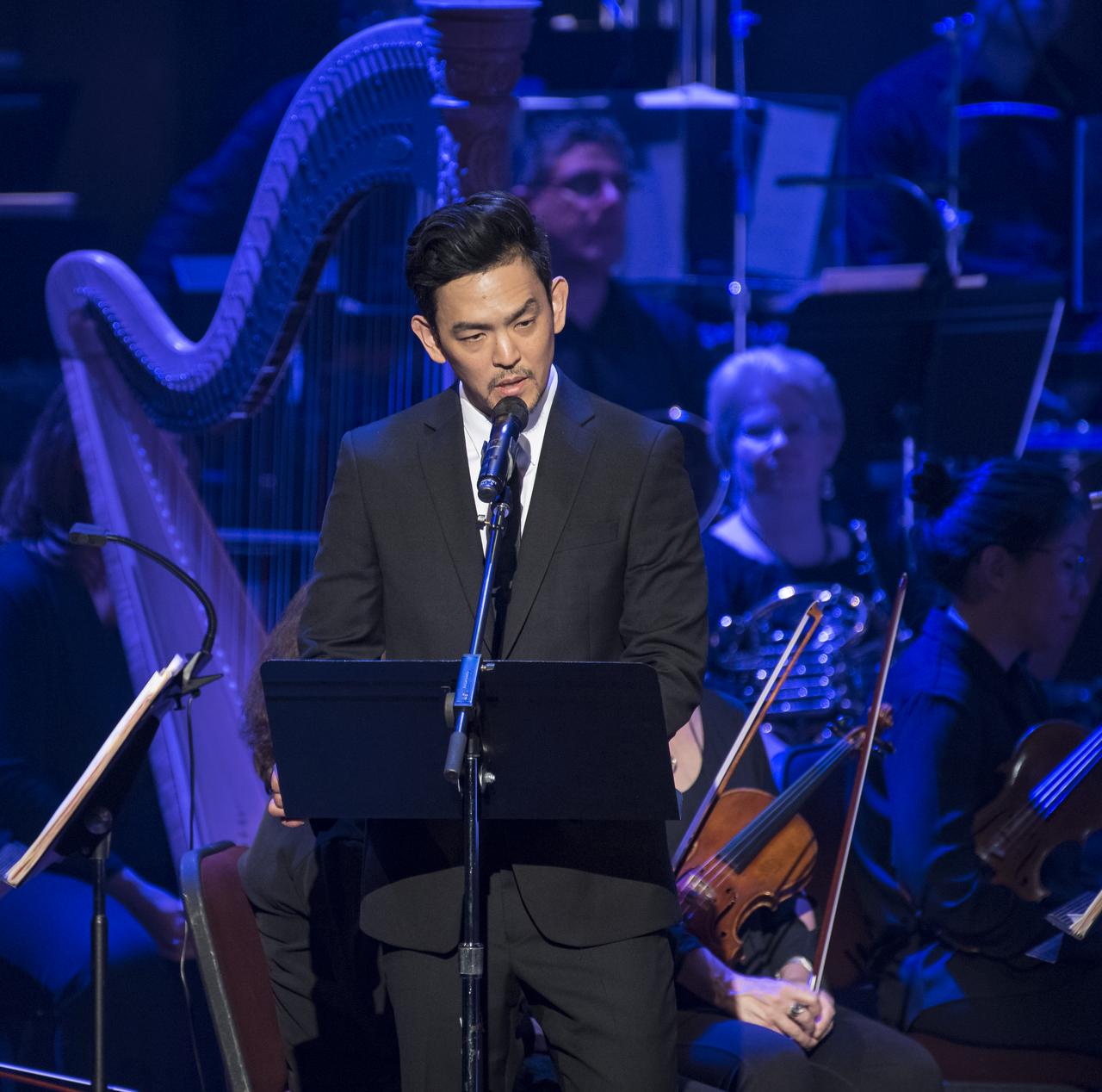
Actor John Cho recites a poem during the "National Symphony Orchestra Pops: Space, the Next Frontier" event celebrating NASA's 60th Anniversary, Friday, June 1, 2018 at the John F. Kennedy Center for the Performing Arts in Washington. The event featured music inspired by space including artists will.i.am, Grace Potter, Coheed & Cambria, John Cho, and guest Nick Sagan, son of Carl Sagan. Photo Credit: (NASA/Aubrey Gemignani)
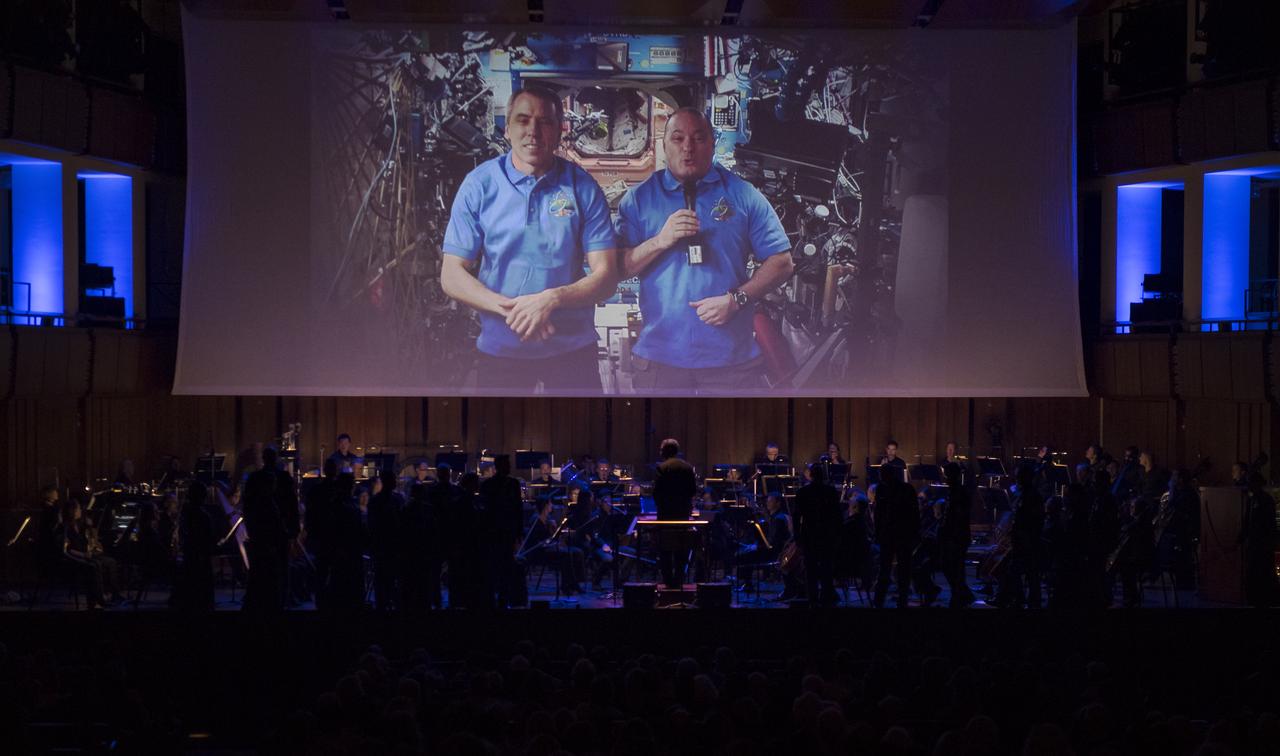
NASA astronauts Drew Feustel, left, and Scott Tingle, are seen during a video message to the audience of the "National Symphony Orchestra Pops: Space, the Next Frontier" event celebrating NASA's 60th Anniversary, Friday, June 1, 2018 at the John F. Kennedy Center for the Performing Arts in Washington. The event featured music inspired by space including artists will.i.am, Grace Potter, Coheed & Cambria, John Cho, and guest Nick Sagan, son of Carl Sagan. Photo Credit: (NASA/Aubrey Gemignani)
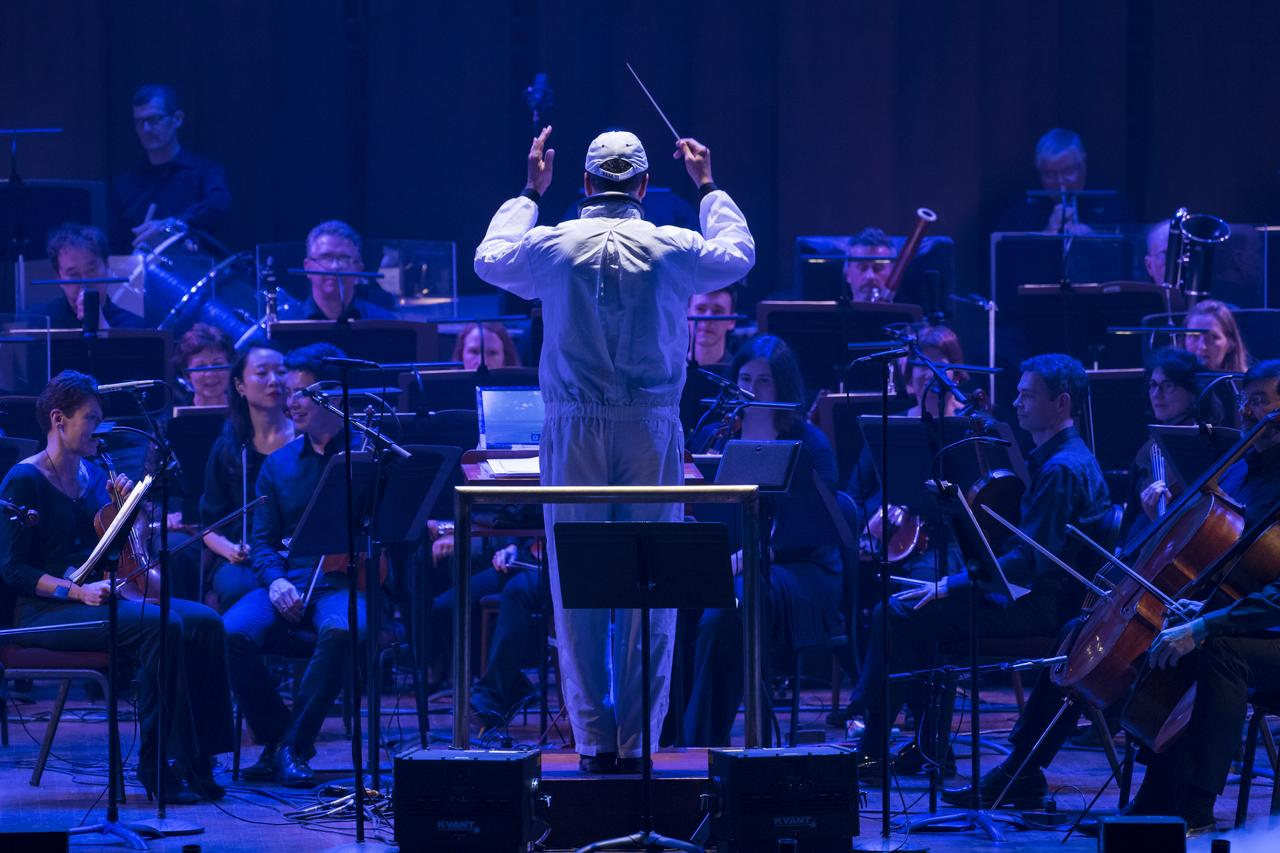
Conductor Emil de Cou leads the National Symphony Orchestra during the "Space, the Next Frontier" event celebrating NASA's 60th Anniversary, Friday, June 1, 2018 at the John F. Kennedy Center for the Performing Arts in Washington. The event featured music inspired by space including artists will.i.am, Grace Potter, Coheed & Cambria, John Cho, and guest Nick Sagan, son of Carl Sagan. Photo Credit: (NASA/Aubrey Gemignani)
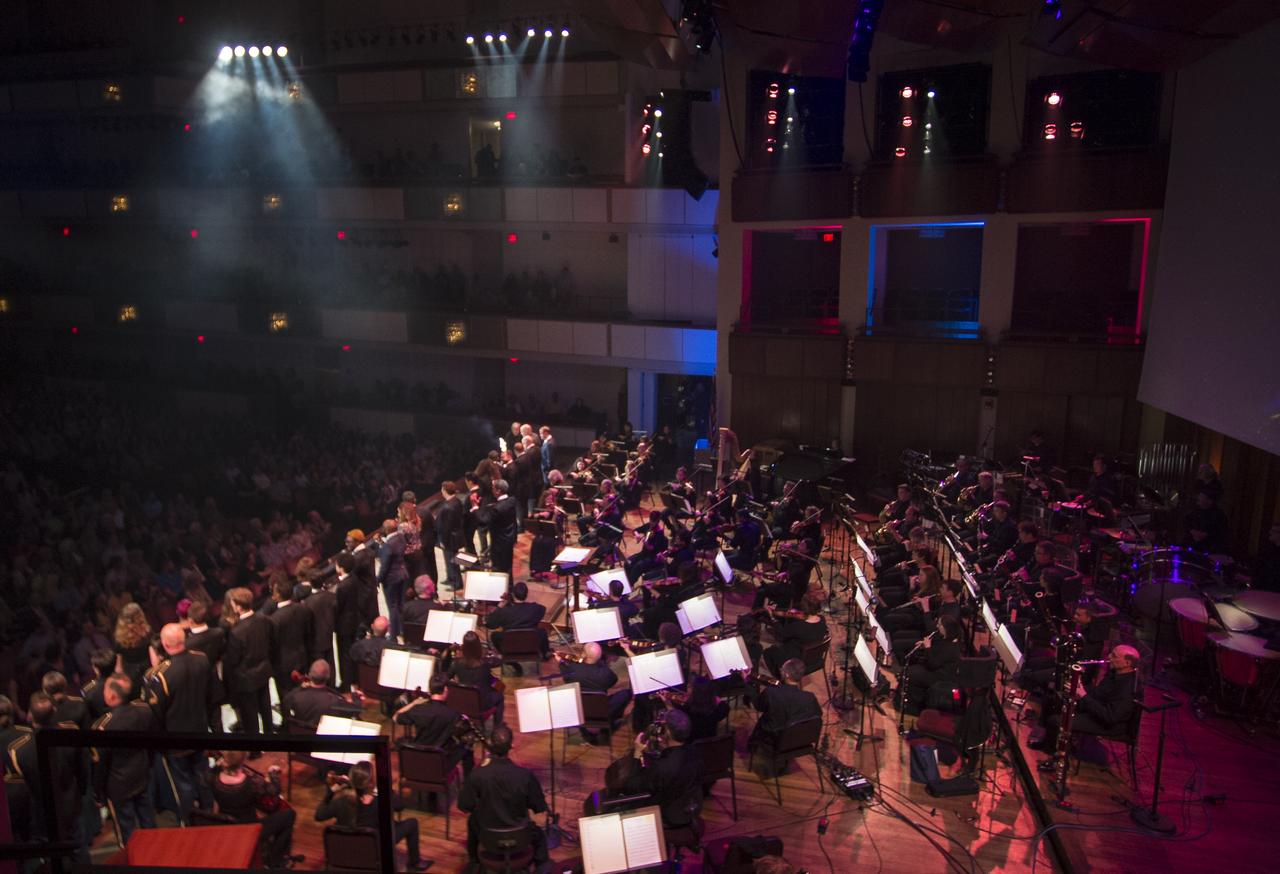
A NASA logo cake is brought onstage during the "National Symphony Orchestra Pops: Space, the Next Frontier" event celebrating NASA's 60th Anniversary, Friday, June 1, 2018 at the John F. Kennedy Center for the Performing Arts in Washington. The event featured music inspired by space including artists will.i.am, Grace Potter, Coheed & Cambria, John Cho, and guest Nick Sagan, son of Carl Sagan. Photo Credit: (NASA/Aubrey Gemignani)
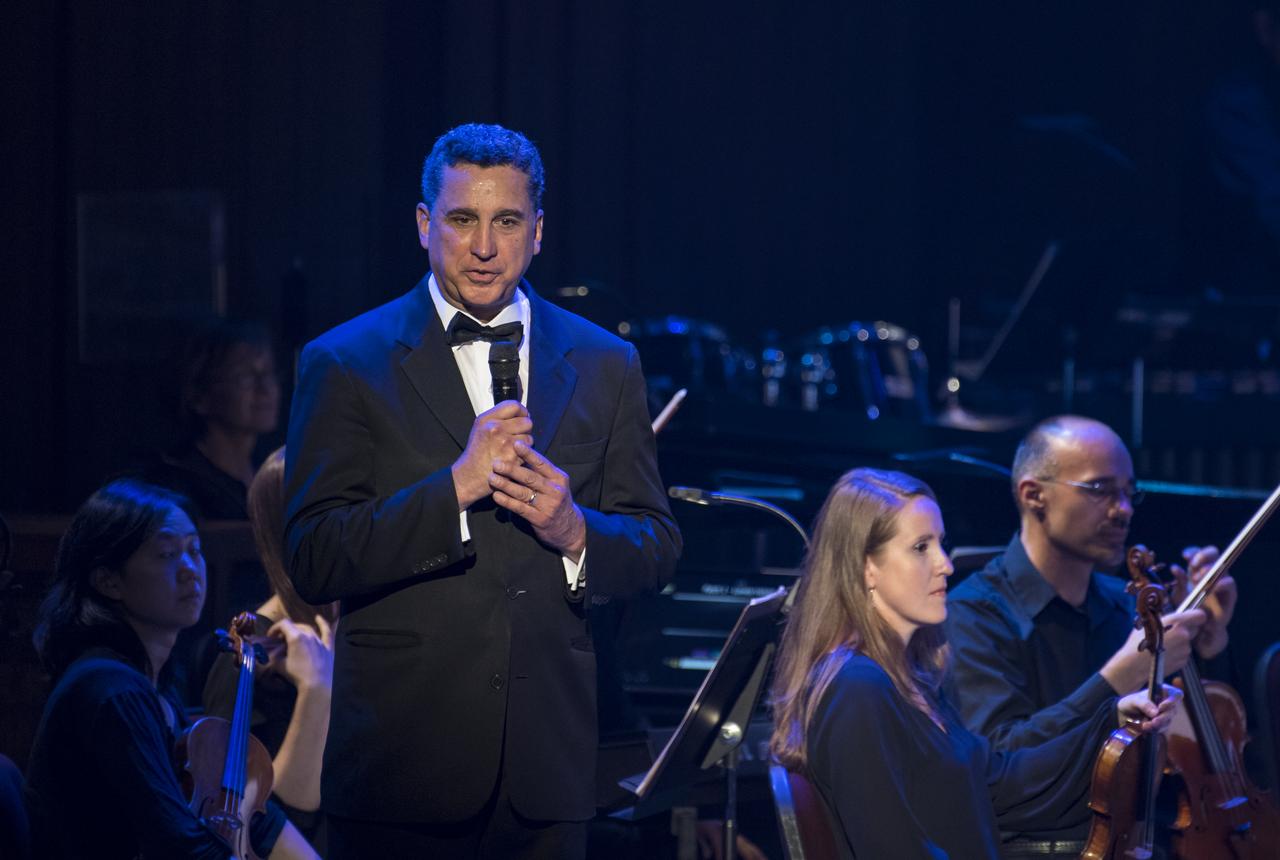
Conductor Emil de Cou speaks after leading the National Symphony Orchestra during the "Space, the Next Frontier" event celebrating NASA's 60th Anniversary, Friday, June 1, 2018 at the John F. Kennedy Center for the Performing Arts in Washington. The event featured music inspired by space including artists will.i.am, Grace Potter, Coheed & Cambria, John Cho, and guest Nick Sagan, son of Carl Sagan. Photo Credit: (NASA/Aubrey Gemignani)
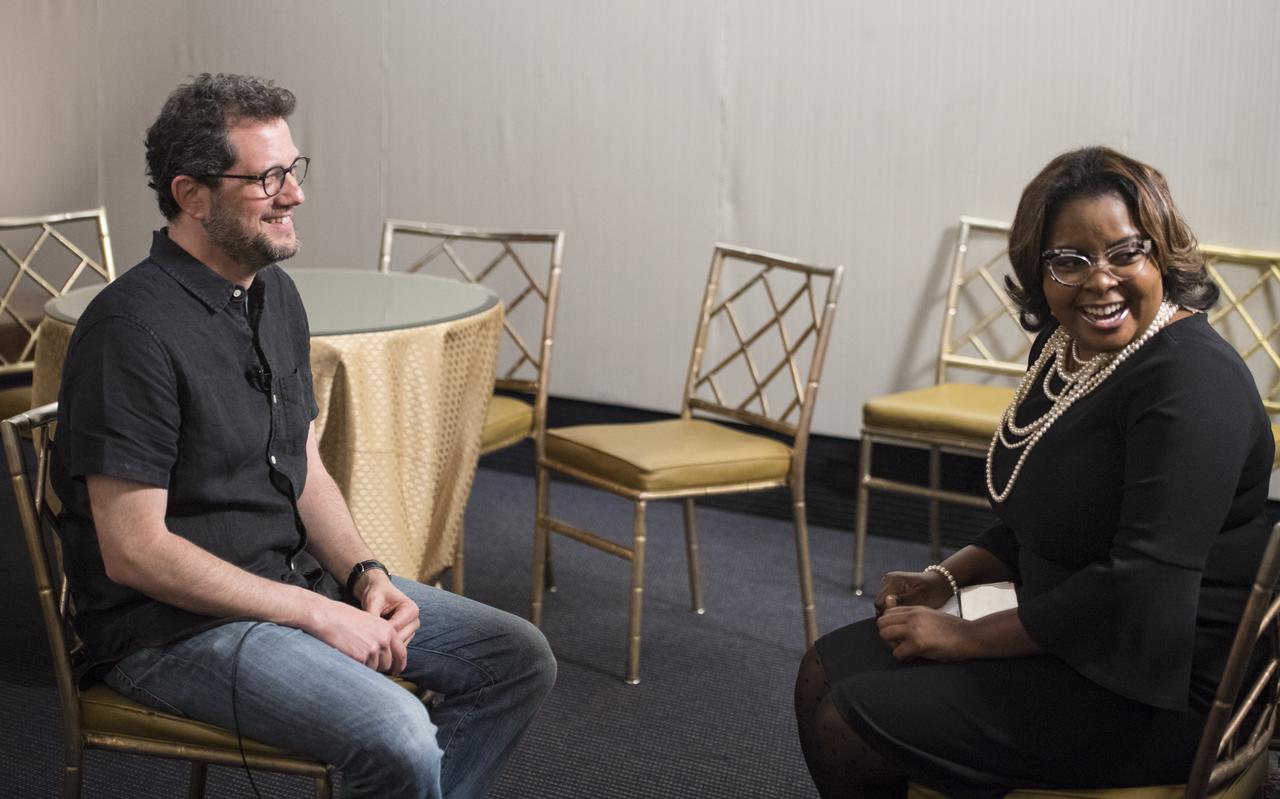
Michael Giacchino, Star Trek composer, is interviewed by NASA's Social Video Producer Brittany Brown, Friday, June 1, 2018 at the John F. Kennedy Center for the Performing Arts ahead of the "National Symphony Orchestra Pops: Space, the Next Frontier," celebrating NASA's 60th Anniversary in Washington DC. The event featured music inspired by space including artists Will.i.am, Grace Potter, Coheed & Cambria, John Cho, and guest Nick Sagan, son of Carl Sagan. Photo Credit: (NASA/Aubrey Gemignani)
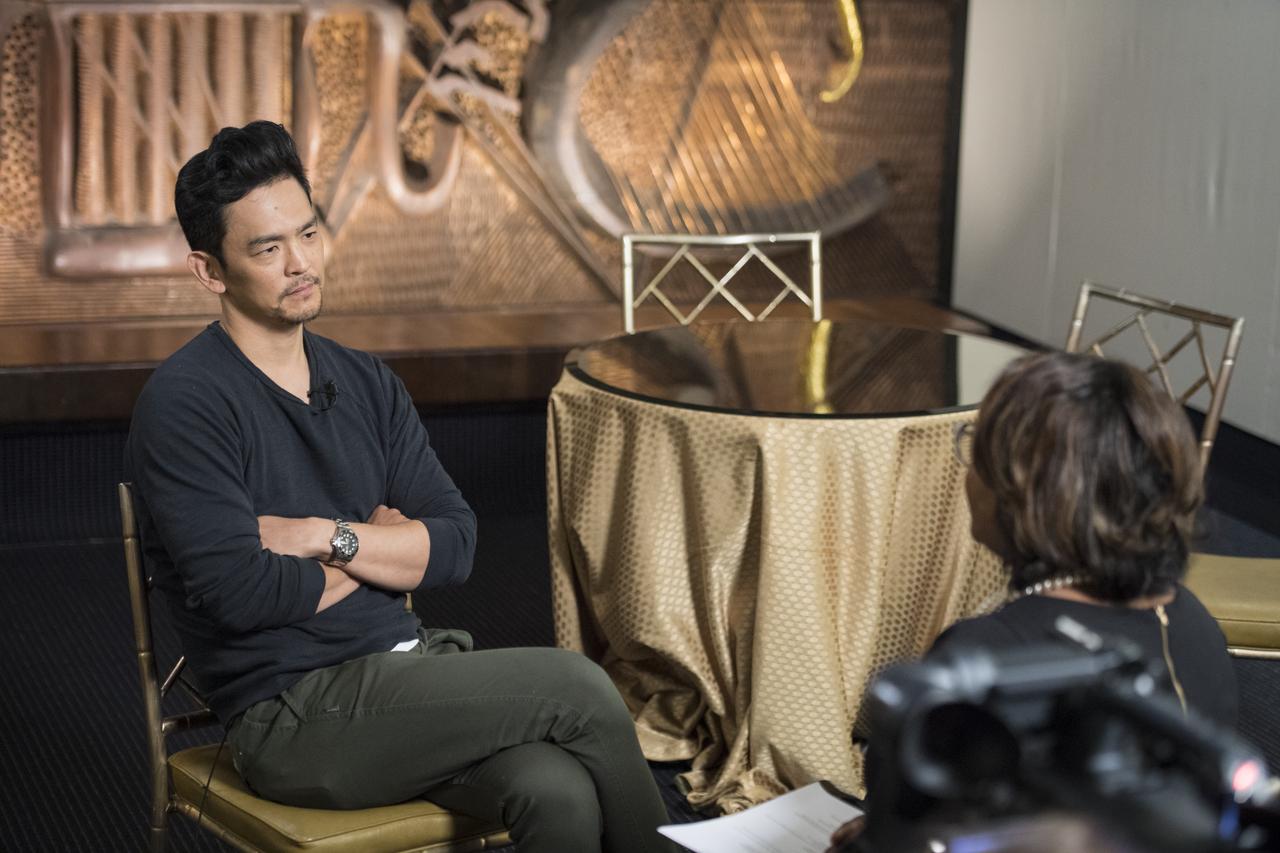
Actor John Cho in interviewed by NASA's Social Video Producer, Brittany Brown, Friday, June 1, 2018 at the John F. Kennedy Center for the Performing Arts ahead of the "National Symphony Orchestra Pops: Space, the Next Frontier," celebrating NASA's 60th Anniversary in Washington DC. The event featured music inspired by space including artists Will.i.am, Grace Potter, Coheed & Cambria, John Cho, and guest Nick Sagan, son of Carl Sagan. Photo Credit: (NASA/Aubrey Gemignani)
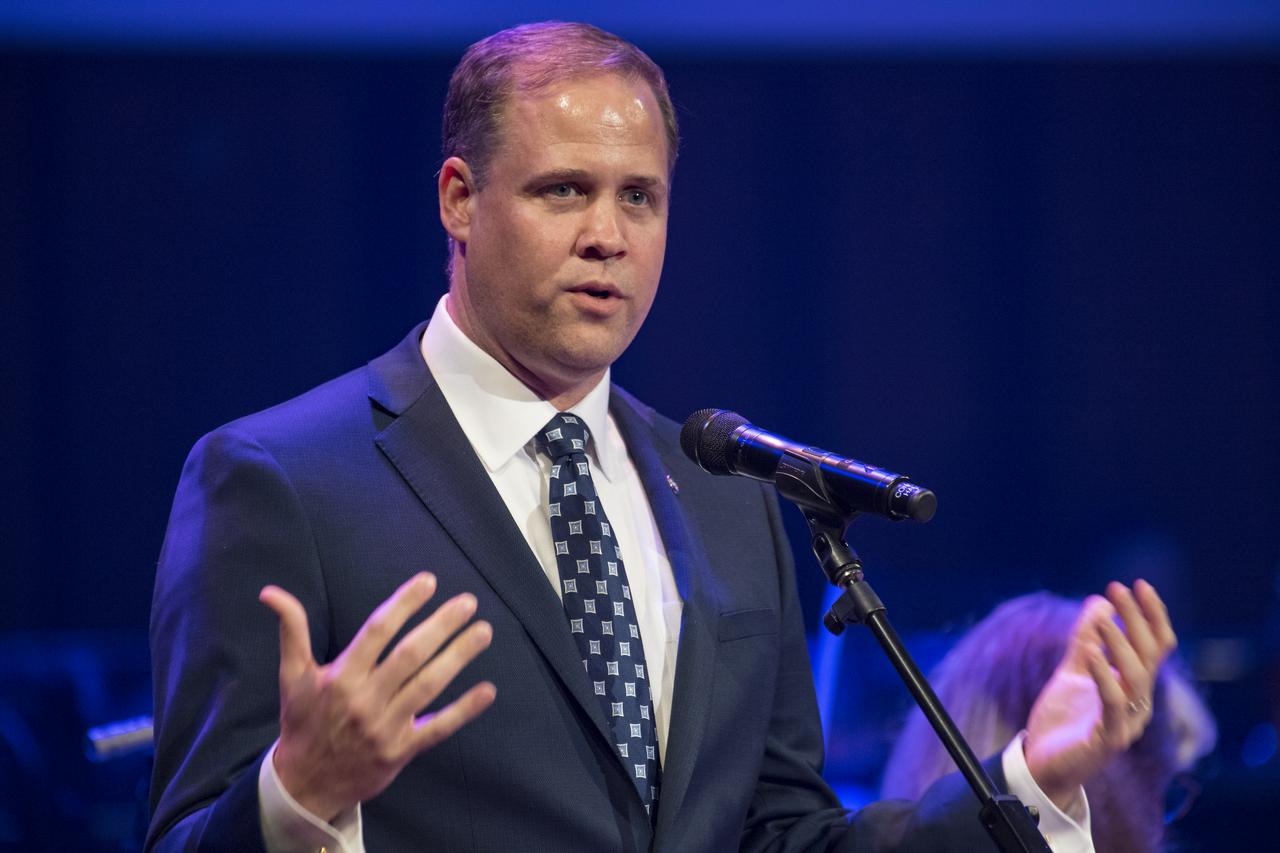
NASA Administrator Jim Bridenstine speaks during the "National Symphony Orchestra Pops: Space, the Next Frontier" event celebrating NASA's 60th Anniversary, Friday, June 1, 2018 at the John F. Kennedy Center for the Performing Arts in Washington. The event featured music inspired by space including artists will.i.am, Grace Potter, Coheed & Cambria, John Cho, and guest Nick Sagan, son of Carl Sagan. Photo Credit: (NASA/Aubrey Gemignani)