
Advanced Plant Experiment, APEX-4, support in the Telescience Support Center at NASA Glenn. APEX-4 continues a highly successful investigation into the effects of microgravity on the development of roots and cells on plant seedlings. After four days of growth, the petri plate will be inserted into the Fluids Integrated Rack (FIR) Light Microscopy Module (LMM) facility for detailed imaging.
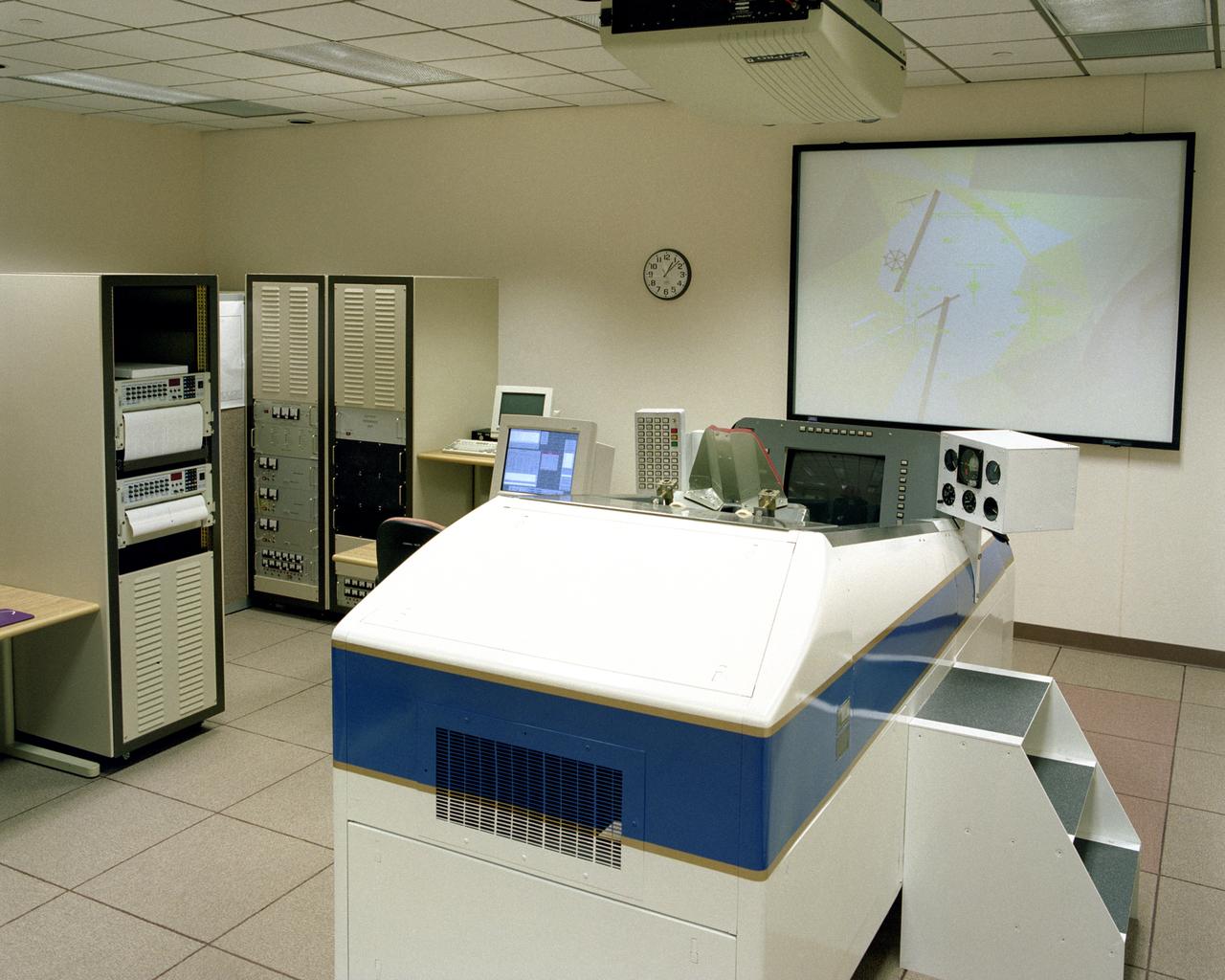
Apex simulator
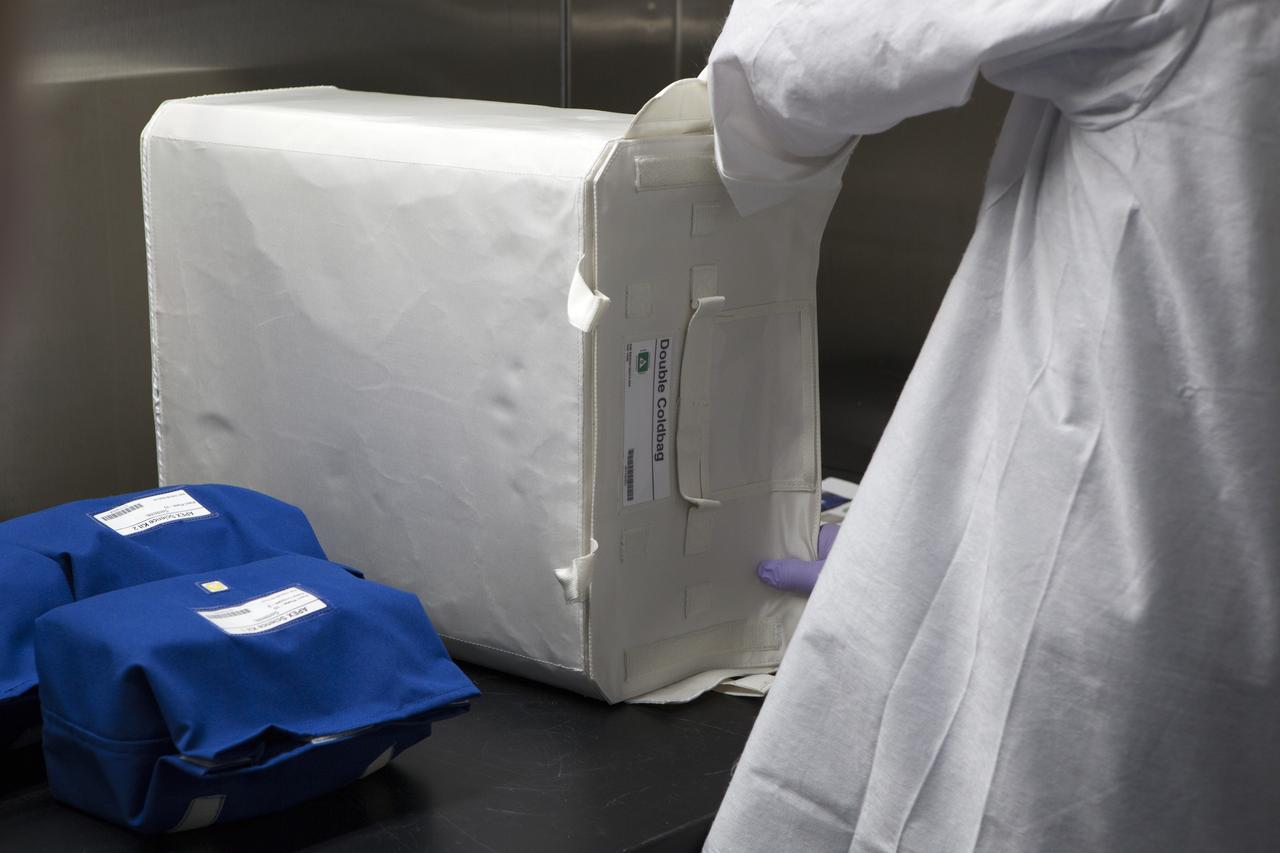
APEX-04, or Advanced Plant EXperiments-04, is being prepared in a cold room in the Kennedy Space Center Processing Facility for SpaceX-10. Eric Morris from the cold stowage group places the APEX-04 science kits into the Double Cold Bag (DCB), which is a non-powered container that keeps the APEX petri plates at +4 degrees Celsius during launch and ascent. The cold bricks in the lower right of the photo are placed in the DCB prior to closure. Dr. Anna Lisa Paul of the University of Florida is the principal investigator for APEX-04. Apex-04 is an experiment involving Arabidopsis in petri plates inside the Veggie facility aboard the International Space Station. Since Arabidopsis is the genetic model of the plant world, it is a perfect sample organism for performing genetic studies in spaceflight. The experiment is the result of a grant from NASA’s Space Life and Physical Sciences division.
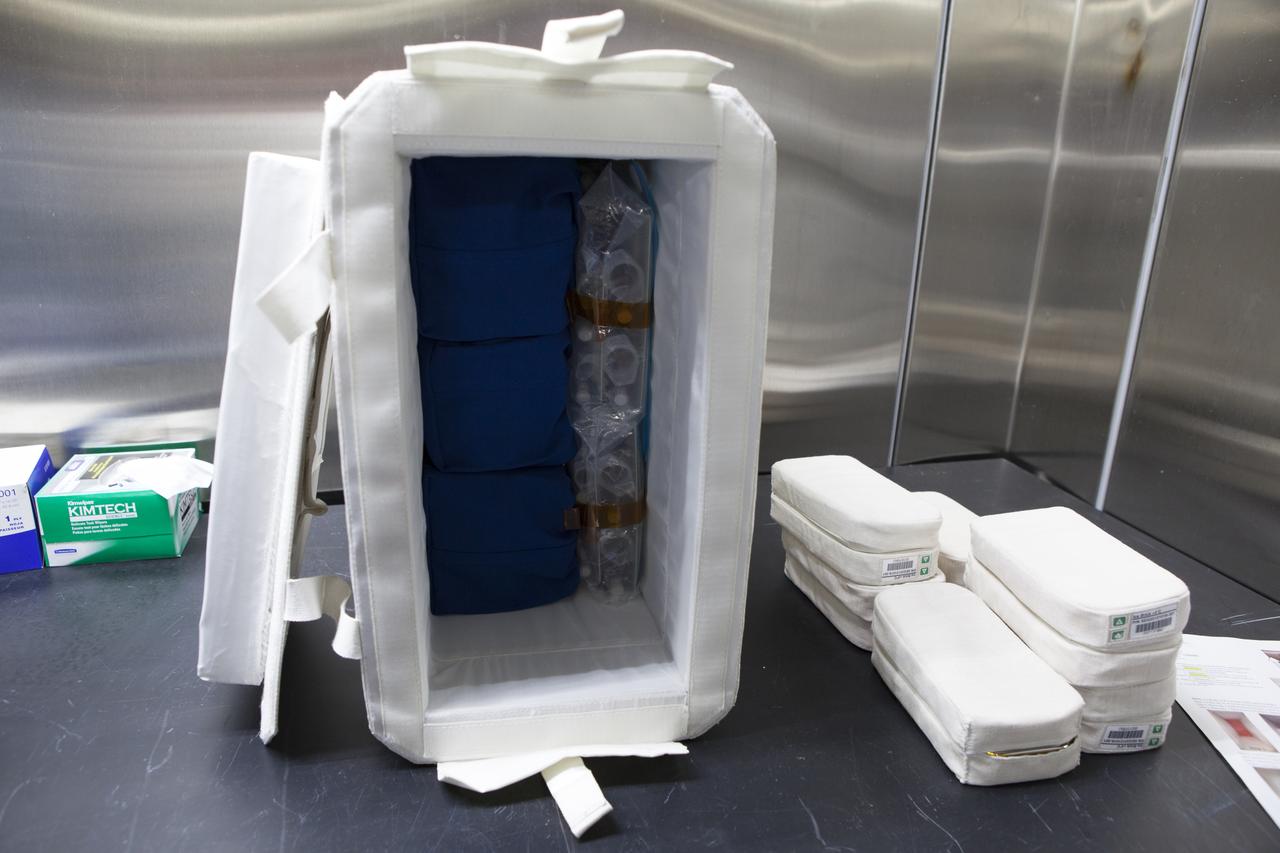
APEX-04, or Advanced Plant EXperiments-04, is being prepared in a cold room in the Kennedy Space Center Processing Facility for SpaceX-10. Dr. Anna Lisa Paul of the University of Florida is the principal investigator for APEX-04. Apex-04 is an experiment involving Arabidopsis in petri plates inside the Veggie facility aboard the International Space Station. Since Arabidopsis is the genetic model of the plant world, it is a perfect sample organism for performing genetic studies in spaceflight. The experiment is the result of a grant from NASA’s Space Life and Physical Sciences division.
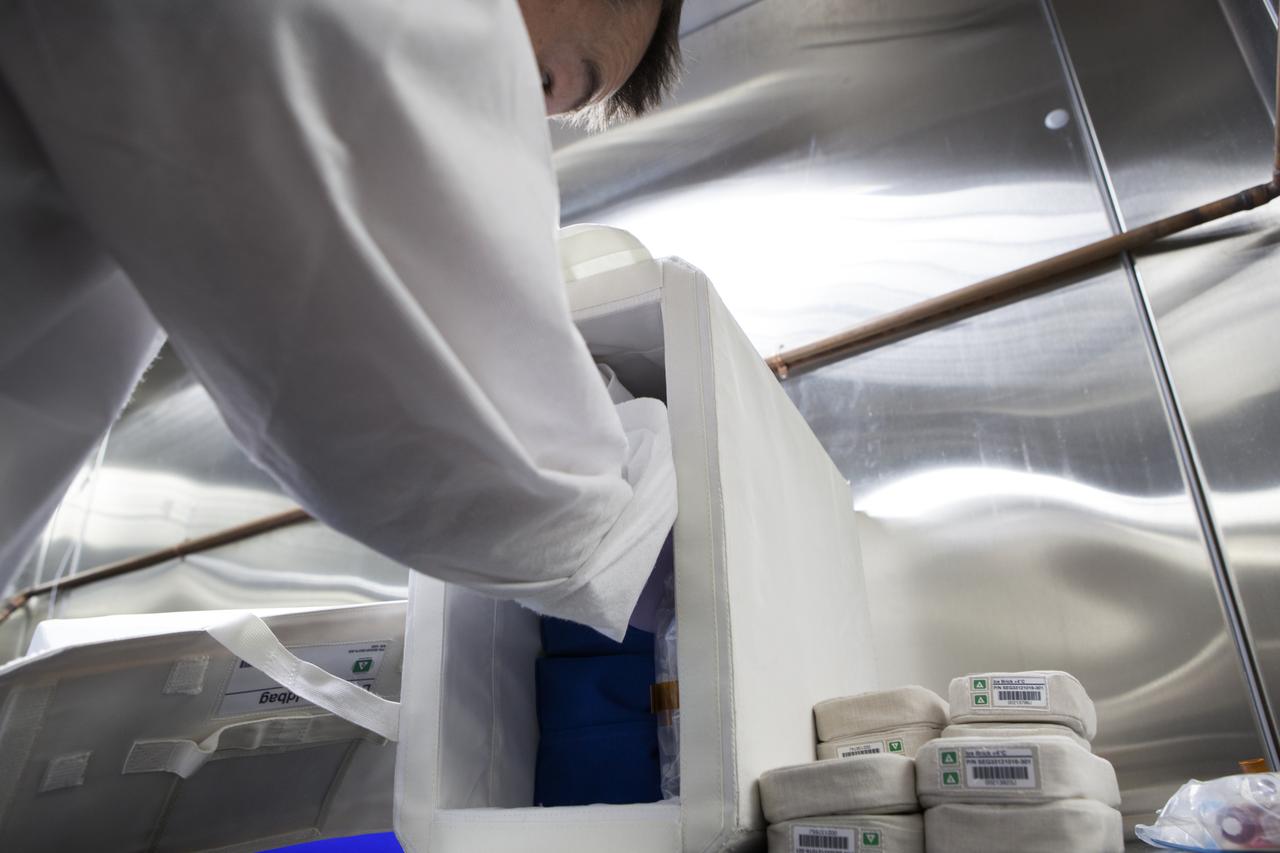
APEX-04, or Advanced Plant EXperiments-04, is being prepared in a cold room in the Kennedy Space Center Processing Facility for SpaceX-10. Eric Morris from the cold stowage group fits items into the Double Cold Bag (DCB) which is a non-powered container that keeps the APEX petri plates at +4 degrees Celsius during launch and ascent.. Dr. Anna Lisa Paul of the University of Florida is the principal investigator for APEX-04. Apex-04 is an experiment involving Arabidopsis in petri plates inside the Veggie facility aboard the International Space Station. Since Arabidopsis is the genetic model of the plant world, it is a perfect sample organism for performing genetic studies in spaceflight. The experiment is the result of a grant from NASA’s Space Life and Physical Sciences division.
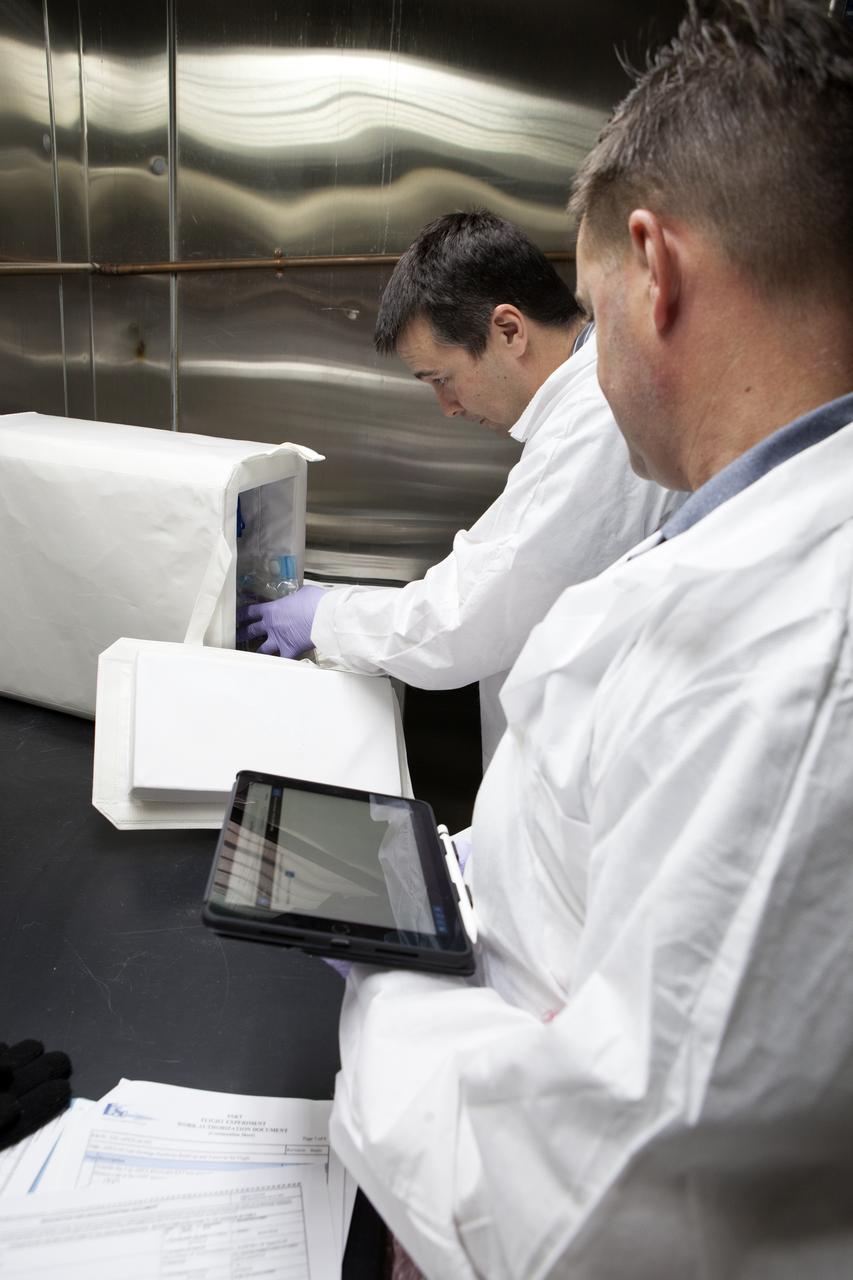
APEX-04, or Advanced Plant EXperiments-04, is being prepared in a cold room in the Kennedy Space Center Processing Facility for SpaceX-10. Eric Morris from the cold stowage group fits items into the Double Cold Bag (DCB) which is a non-powered container that keeps the APEX petri plates at +4 degrees Celsius during launch and ascent.. Dr. Anna Lisa Paul of the University of Florida is the principal investigator for APEX-04. Apex-04 is an experiment involving Arabidopsis in petri plates inside the Veggie facility aboard the International Space Station. Since Arabidopsis is the genetic model of the plant world, it is a perfect sample organism for performing genetic studies in spaceflight. The experiment is the result of a grant from NASA’s Space Life and Physical Sciences division.
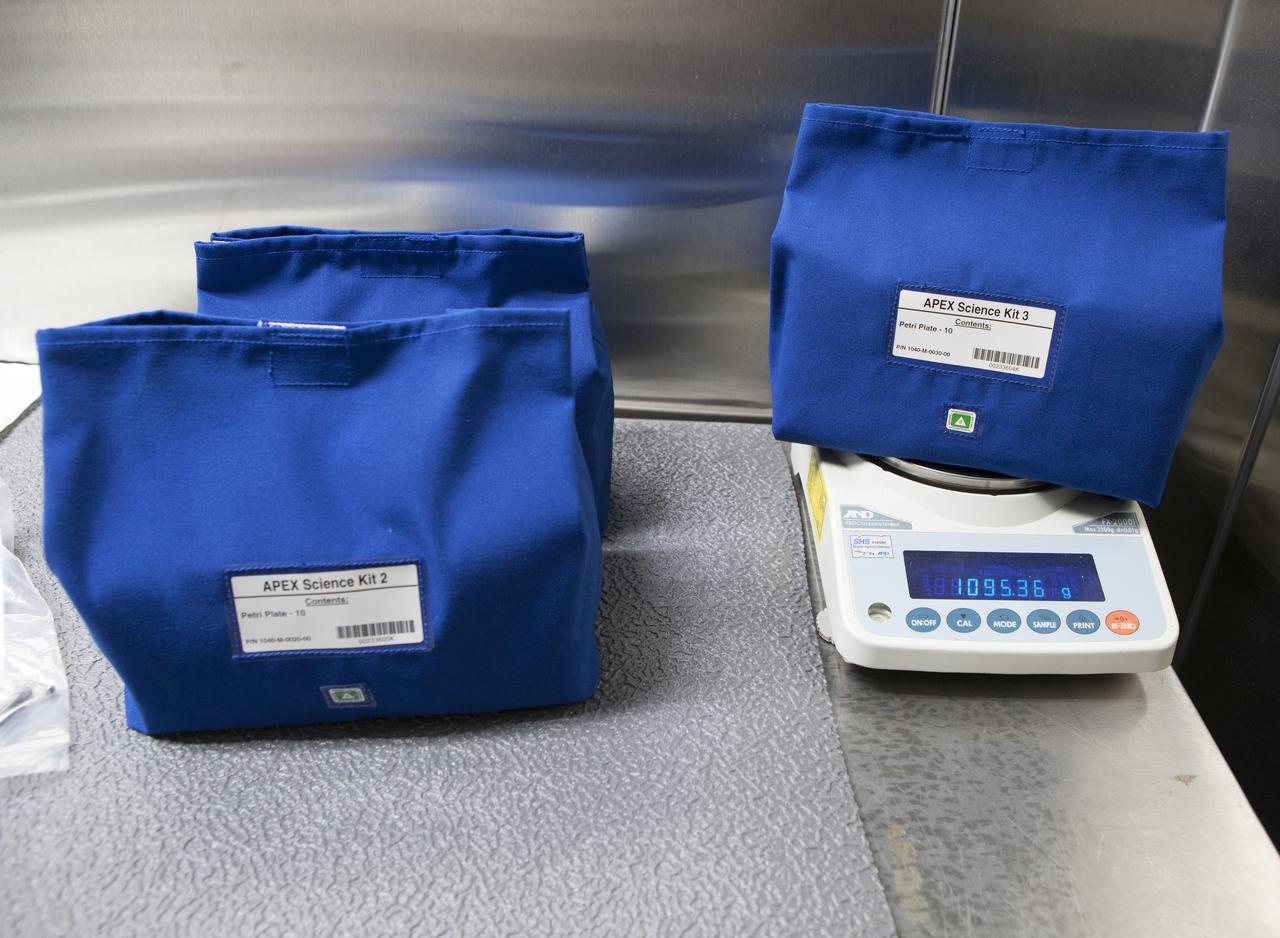
APEX-04, or Advanced Plant EXperiments-04, is being prepared in a cold room in the Kennedy Space Center Processing Facility for SpaceX-10. The three science kits are weighed prior to flight. Dr. Anna Lisa Paul of the University of Florida is the principal investigator for APEX-04. Apex-04 is an experiment involving Arabidopsis in petri plates inside the Veggie facility aboard the International Space Station. Since Arabidopsis is the genetic model of the plant world, it is a perfect sample organism for performing genetic studies in spaceflight. The experiment is the result of a grant from NASA’s Space Life and Physical Sciences division.
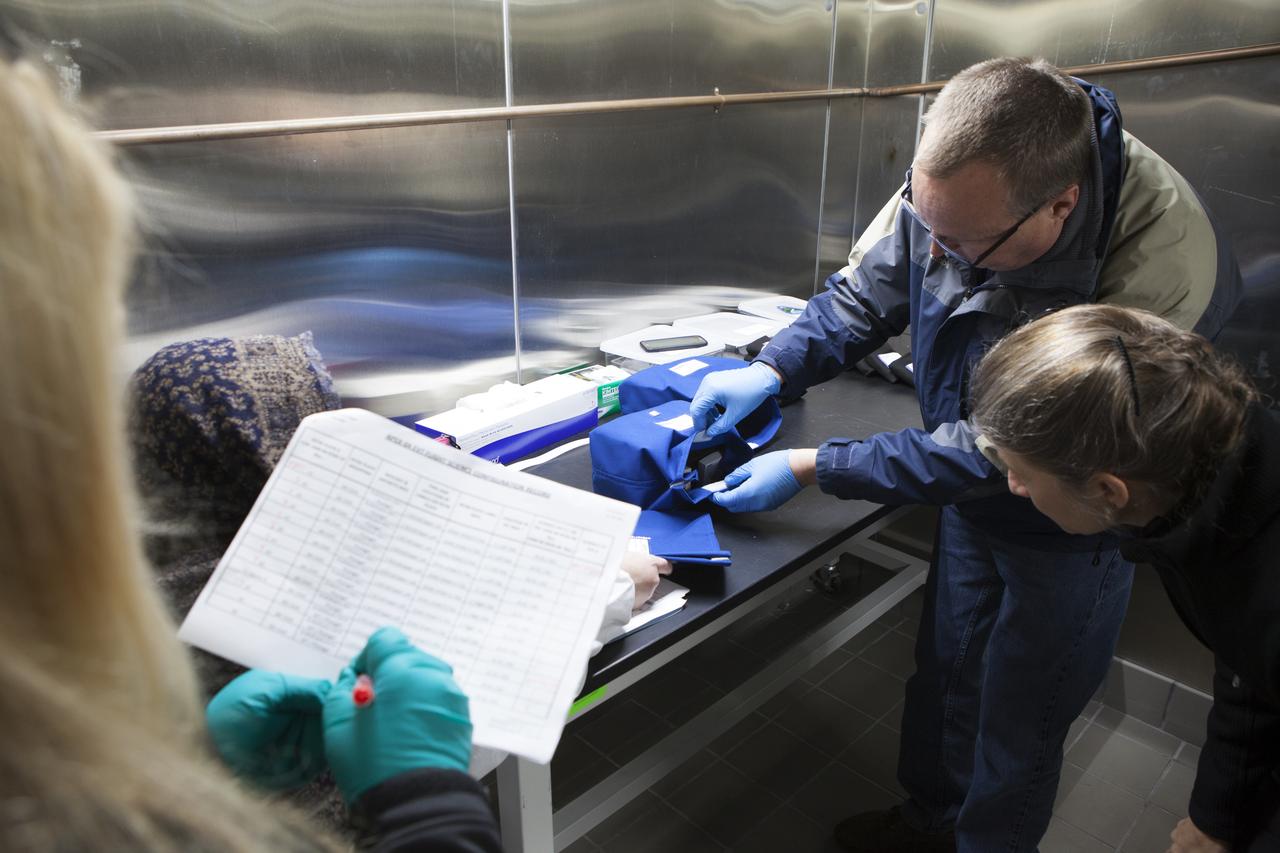
APEX-04, or Advanced Plant EXperiments-04, is being prepared in a cold room in the Kennedy Space Center Processing Facility for SpaceX-10. Shawn Stephens, Engineering Services Contract, and Dr. Anna Lisa Paul confirm proper orientation of the plates for launch prior to turnover to cold stowage. Dr. Paul of the University of Florida is the principal investigator for APEX-04. Apex-04 is an experiment involving Arabidopsis in petri plates inside the Veggie facility aboard the International Space Station. Since Arabidopsis is the genetic model of the plant world, it is a perfect sample organism for performing genetic studies in spaceflight. The experiment is the result of a grant from NASA’s Space Life and Physical Sciences division.
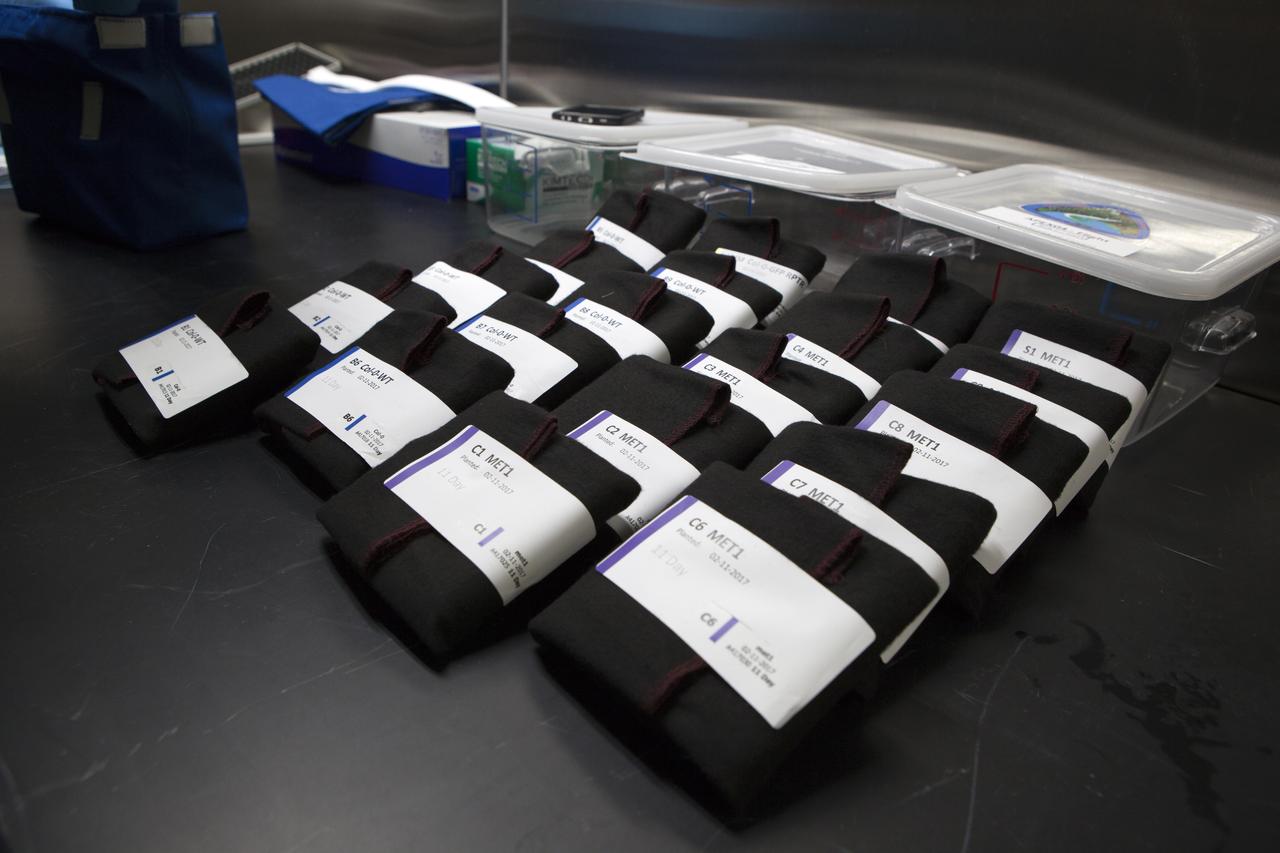
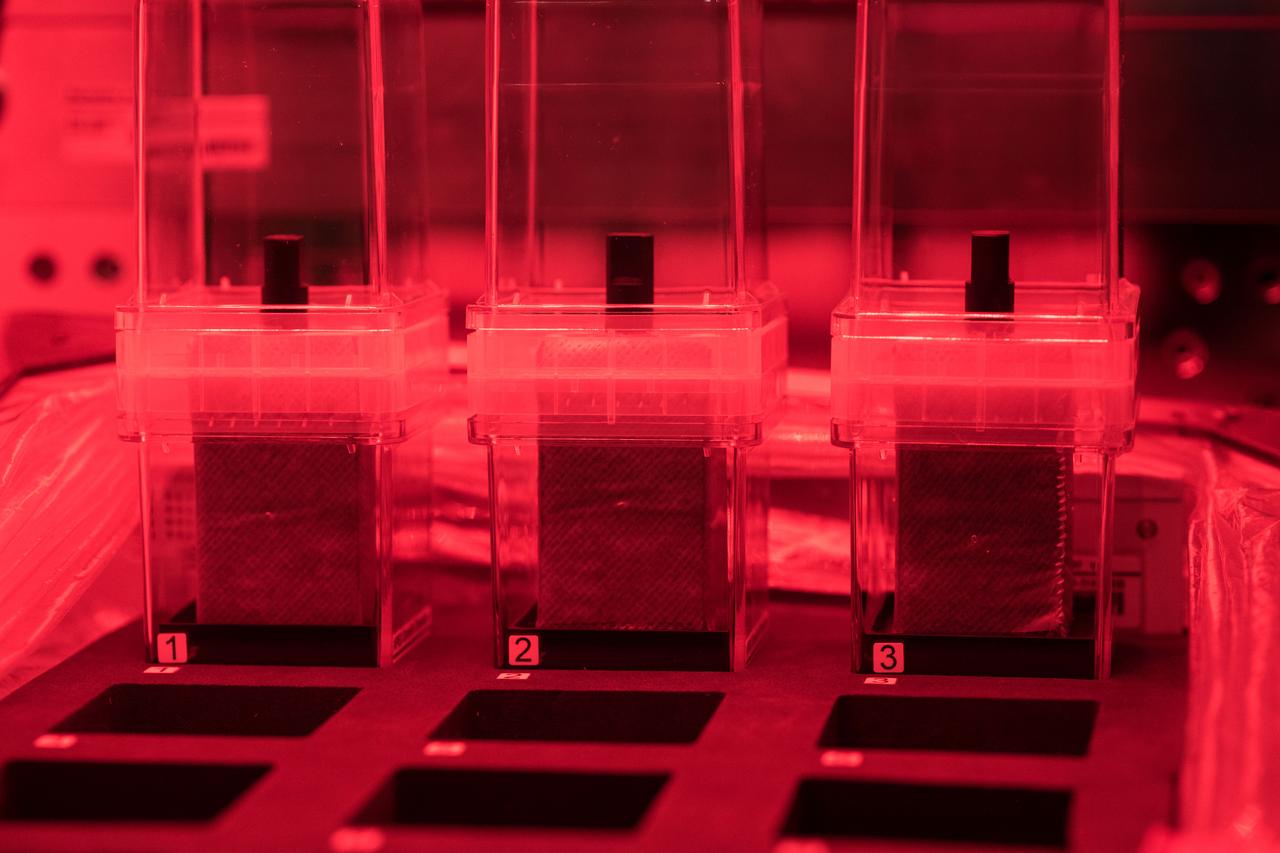
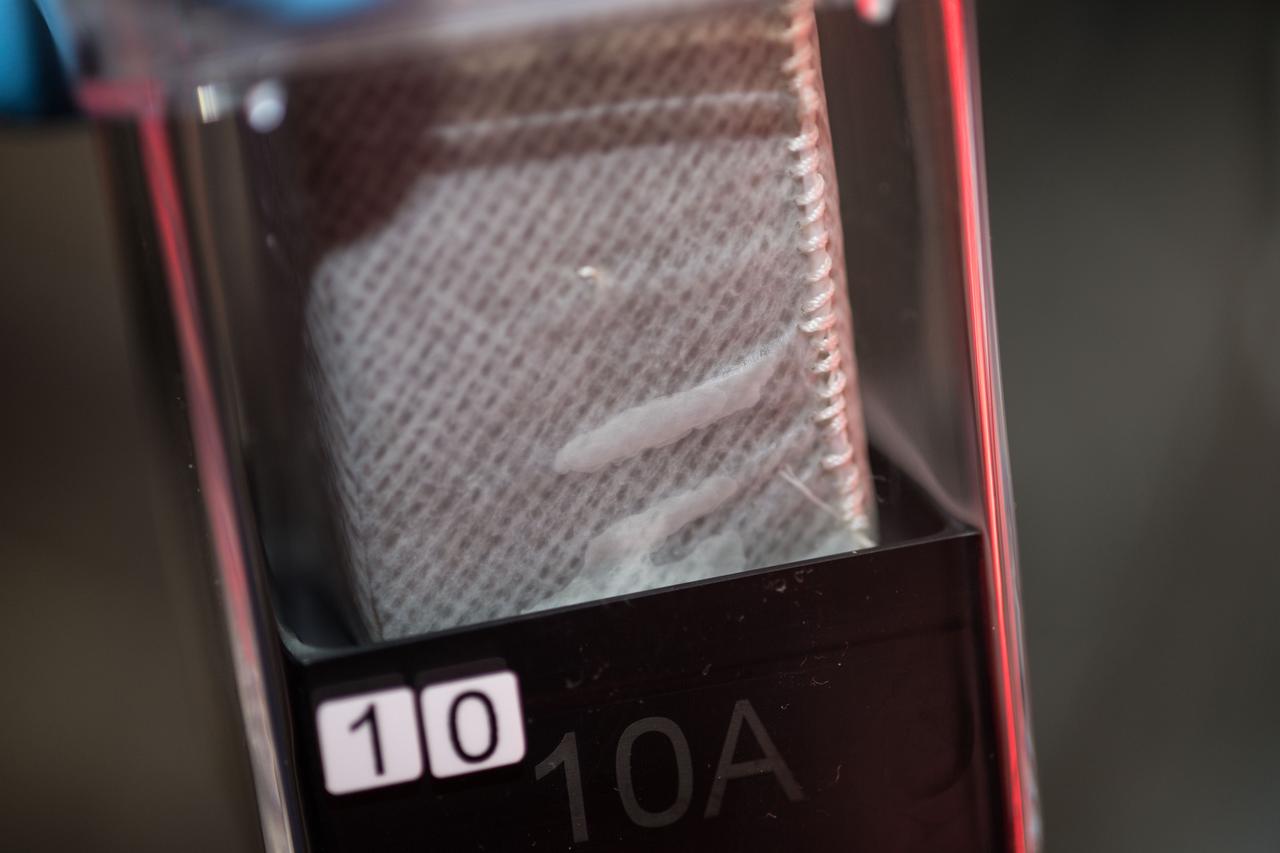
APEX-04, or Advanced Plant EXperiments-04, is being prepared in a cold room in the Kennedy Space Center Processing Facility for SpaceX-10. The petri plates are wrapped in black cloth and kept cold (+4 degrees Celsius) to prevent them from germinating prior to the experiment start on station. Dr. Anna Lisa Paul of the University of Florida is the principal investigator for APEX-04. Apex-04 is an experiment involving Arabidopsis in petri plates inside the Veggie facility aboard the International Space Station. Since Arabidopsis is the genetic model of the plant world, it is a perfect sample organism for performing genetic studies in spaceflight. The experiment is the result of a grant from NASA’s Space Life and Physical Sciences division.
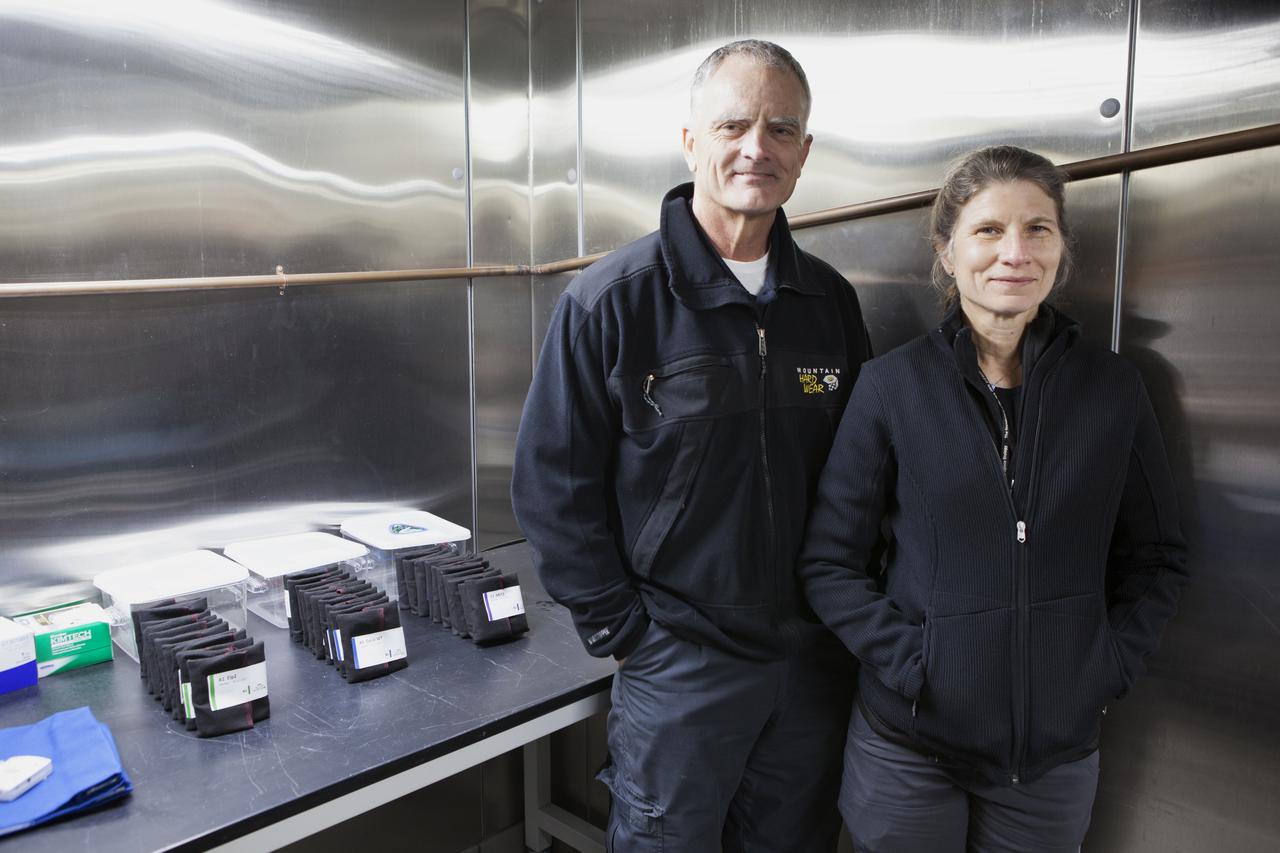
Drs. Rob Ferl and Anna-Lisa Paul in a cold room in the Kennedy Space Center Processing Facility with the petri plates they prepped at the University of Florida for APEX-04. Paul is the principal investigator (PI) and Ferl is co-PI. Apex-04 is an experiment involving Arabidopsis in petri plates inside the Veggie facility aboard the International Space Station. Since Arabidopsis is the genetic model of the plant world, it is a perfect sample organism for performing genetic studies in spaceflight. The experiment is the result of a grant from NASA’s Space Life and Physical Sciences division.
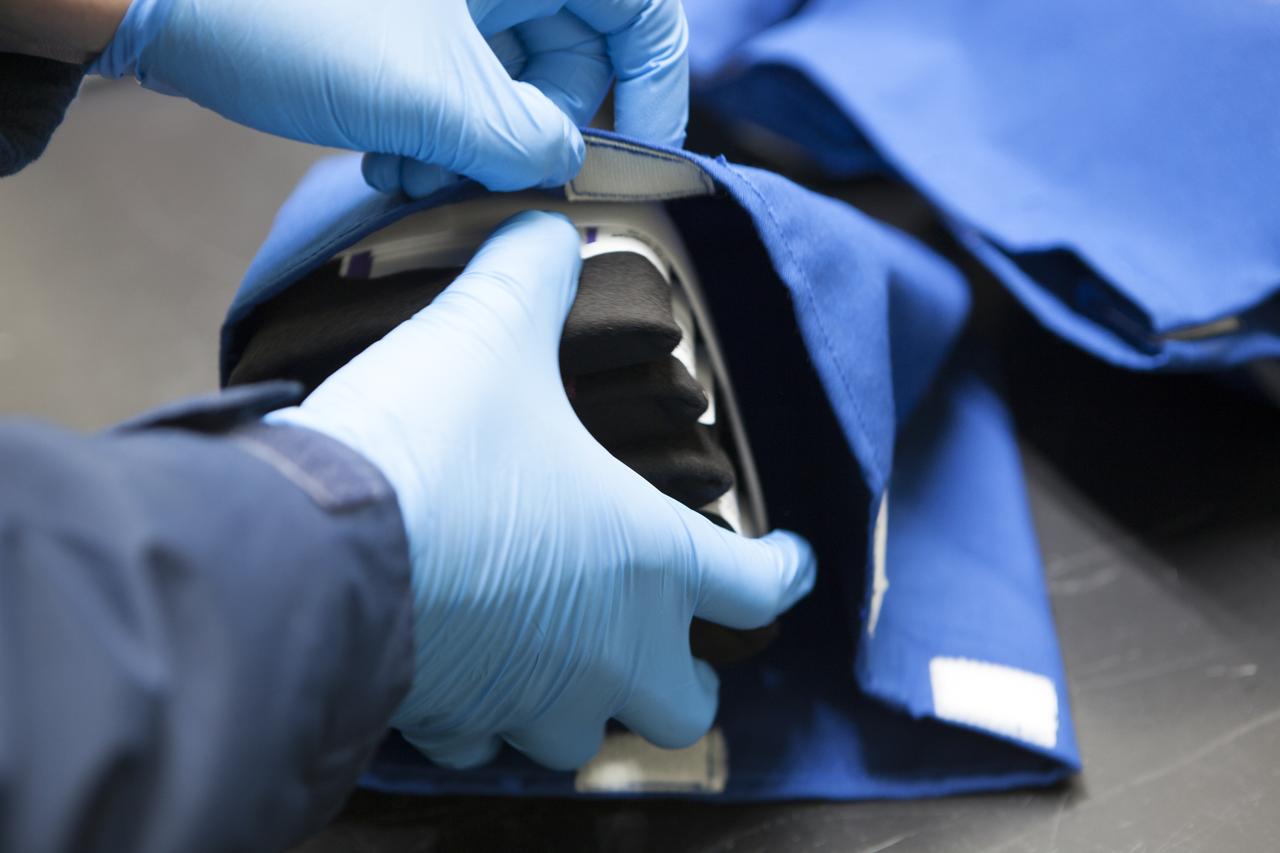
APEX-04, or Advanced Plant EXperiments-04, is being prepared in a cold room in the Kennedy Space Center Processing Facility for SpaceX-10. The 30 petri plates are bundled into groups of 10 and placed into one of three science kits. The science kits allow easy handling when the crew removes the plates from cold stowage on station. Dr. Anna Lisa Paul of the University of Florida is the principal investigator for APEX-04. Apex-04 is an experiment involving Arabidopsis in petri plates inside the Veggie facility aboard the International Space Station. Since Arabidopsis is the genetic model of the plant world, it is a perfect sample organism for performing genetic studies in spaceflight. The experiment is the result of a grant from NASA’s Space Life and Physical Sciences division.
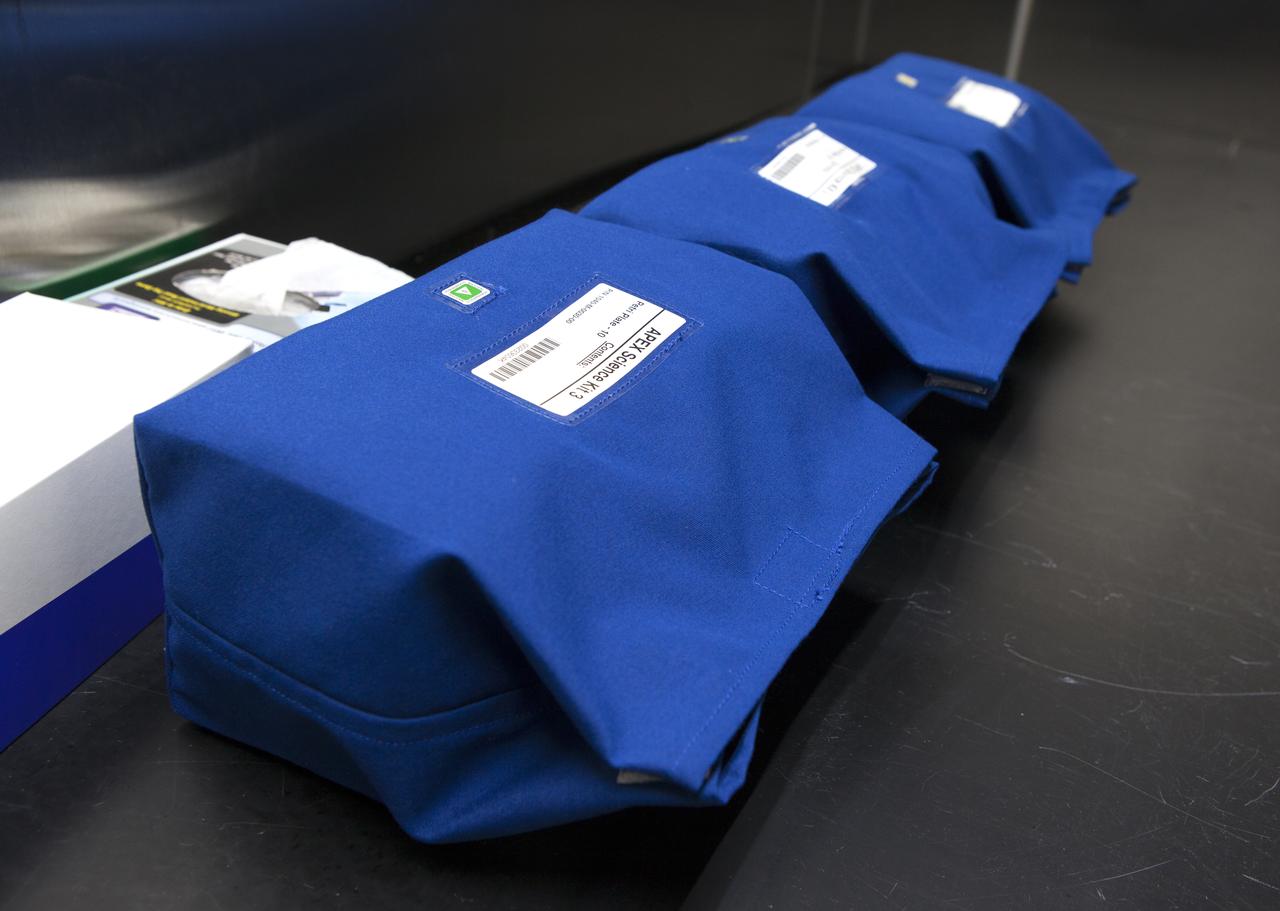
APEX-04, or Advanced Plant EXperiments-04, is being prepared in a cold room in the Kennedy Space Center Processing Facility for SpaceX-10. The 30 petri plates are bundled into groups of 10 and placed into one of three science kits. The science kits allow easy handling when the crew removes the plates from cold stowage on station. Dr. Anna Lisa Paul of the University of Florida is the principal investigator for APEX-04. Apex-04 is an experiment involving Arabidopsis in petri plates inside the Veggie facility aboard the International Space Station. Since Arabidopsis is the genetic model of the plant world, it is a perfect sample organism for performing genetic studies in spaceflight. The experiment is the result of a grant from NASA’s Space Life and Physical Sciences division.
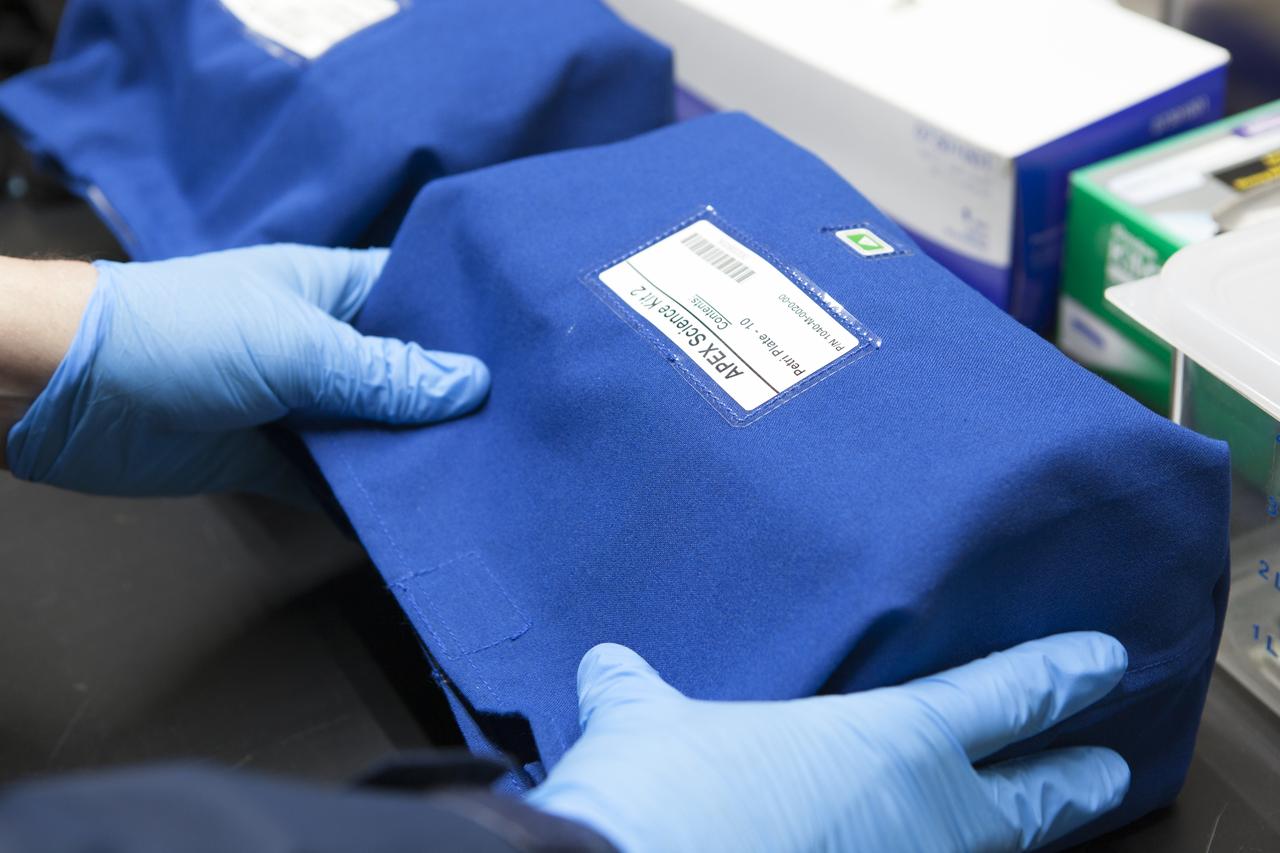
APEX-04, or Advanced Plant EXperiments-04, is being prepared in a cold room in the Kennedy Space Center Processing Facility for SpaceX-10. The 30 petri plates are bundled into groups of 10 and placed into one of three science kits. The science kits allow easy handling when the crew removes the plates from cold stowage on station. Dr. Anna Lisa Paul of the University of Florida is the principal investigator for APEX-04. Apex-04 is an experiment involving Arabidopsis in petri plates inside the Veggie facility aboard the International Space Station. Since Arabidopsis is the genetic model of the plant world, it is a perfect sample organism for performing genetic studies in spaceflight. The experiment is the result of a grant from NASA’s Space Life and Physical Sciences division.
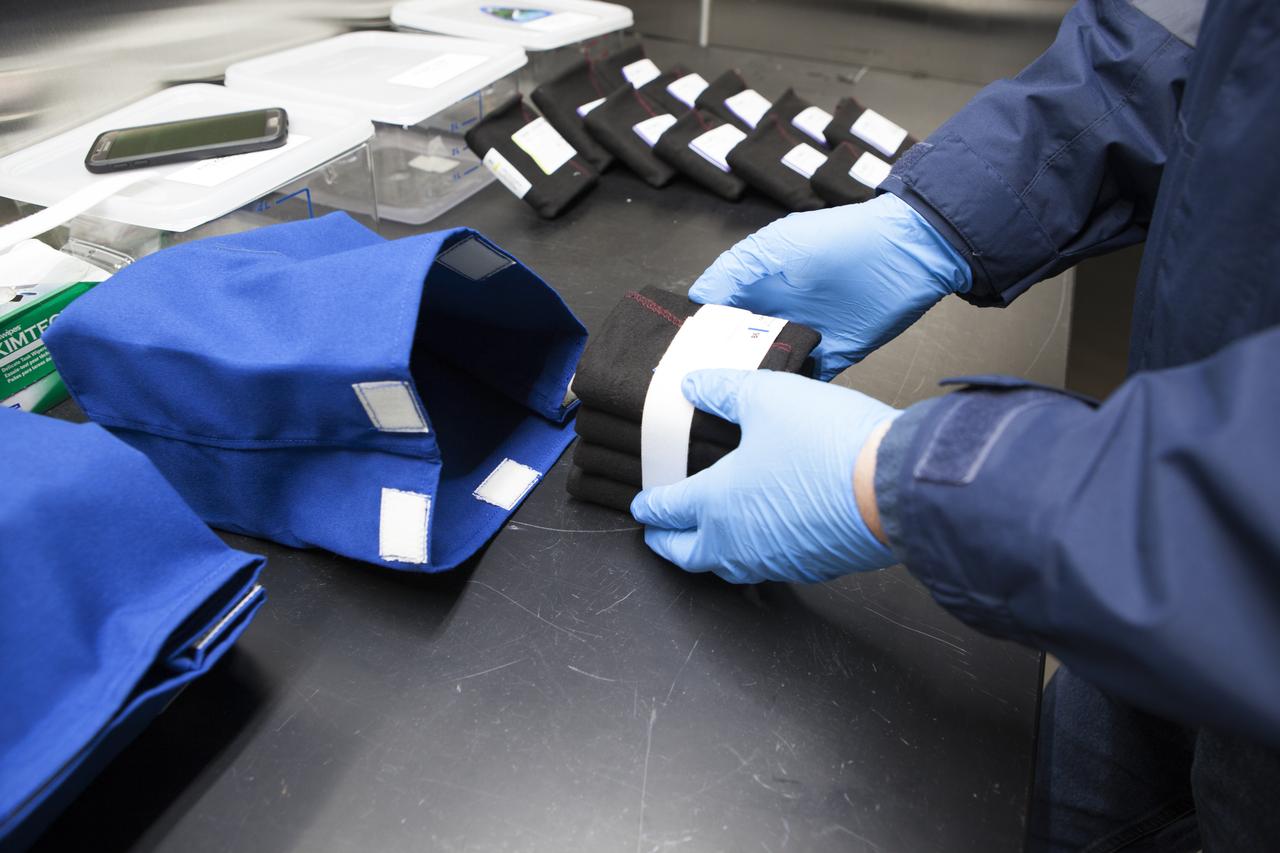
APEX-04, or Advanced Plant EXperiments-04, is being prepared in a cold room in the Kennedy Space Center Processing Facility for SpaceX-10. The 30 petri plates are bundled into groups of 10 and placed into one of three science kits. The science kits allow easy handling when the crew removes the plates from cold stowage on station. Dr. Anna Lisa Paul of the University of Florida is the principal investigator for APEX-04. Apex-04 is an experiment involving Arabidopsis in petri plates inside the Veggie facility aboard the International Space Station. Since Arabidopsis is the genetic model of the plant world, it is a perfect sample organism for performing genetic studies in spaceflight. The experiment is the result of a grant from NASA’s Space Life and Physical Sciences division.
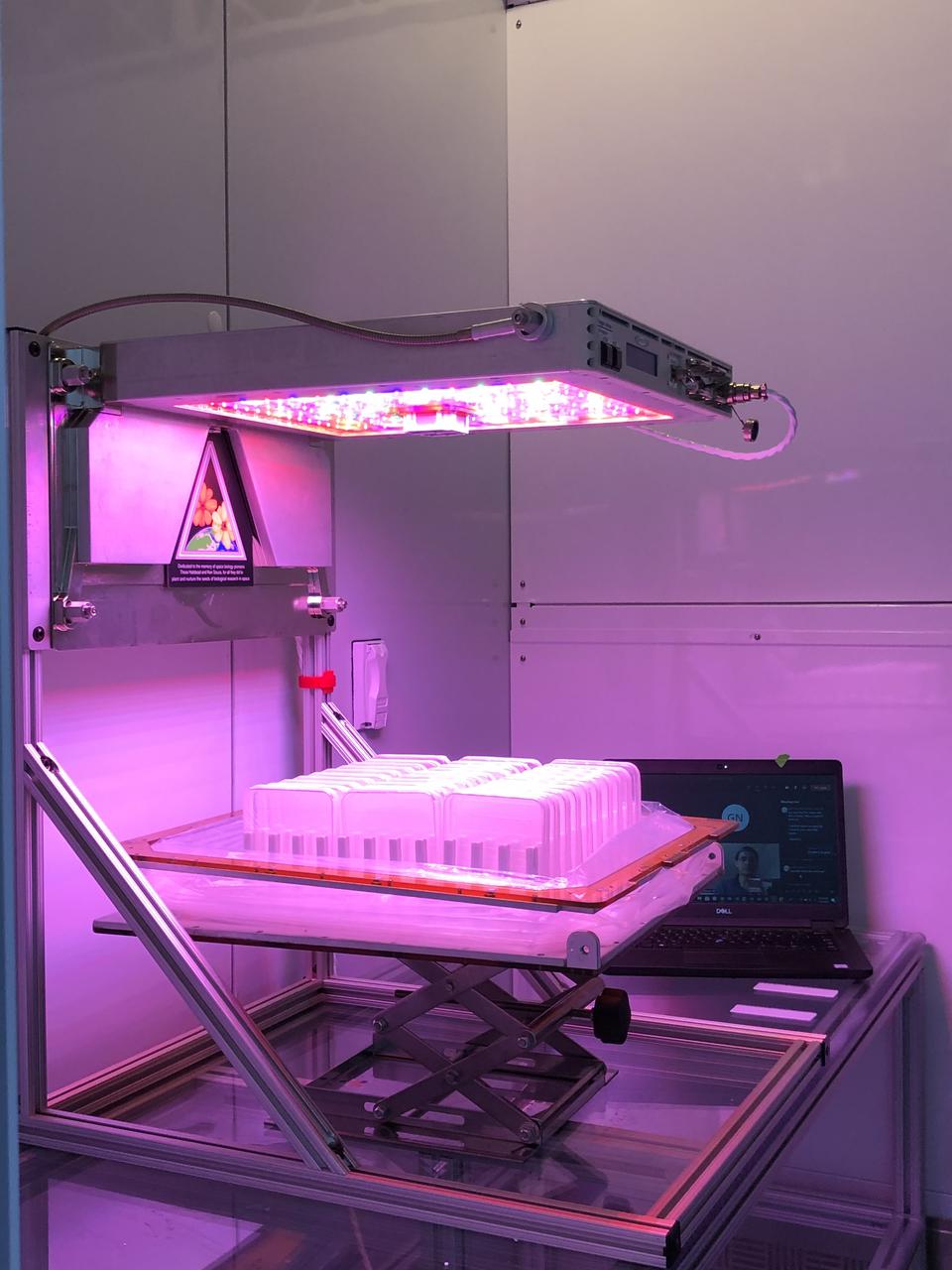
The Science Verification Test for NASA’s Advanced Plant Experiment-08 (APEX-08) testing Arabidopsis thaliana, a plant scientists routinely use for research, takes place inside the Veggie growth chamber at NASA’s Kennedy Space Center in Florida on Nov. 6, 2020. The test is part of the process for demonstrating readiness for space research ahead of its flight on SpaceX’s 23rd Commercial Resupply Services mission to the International Space Station. The APEX-08 study includes making genetic alterations that elicit a response in a group of organic compounds that modulate plant responses to environmental stress.
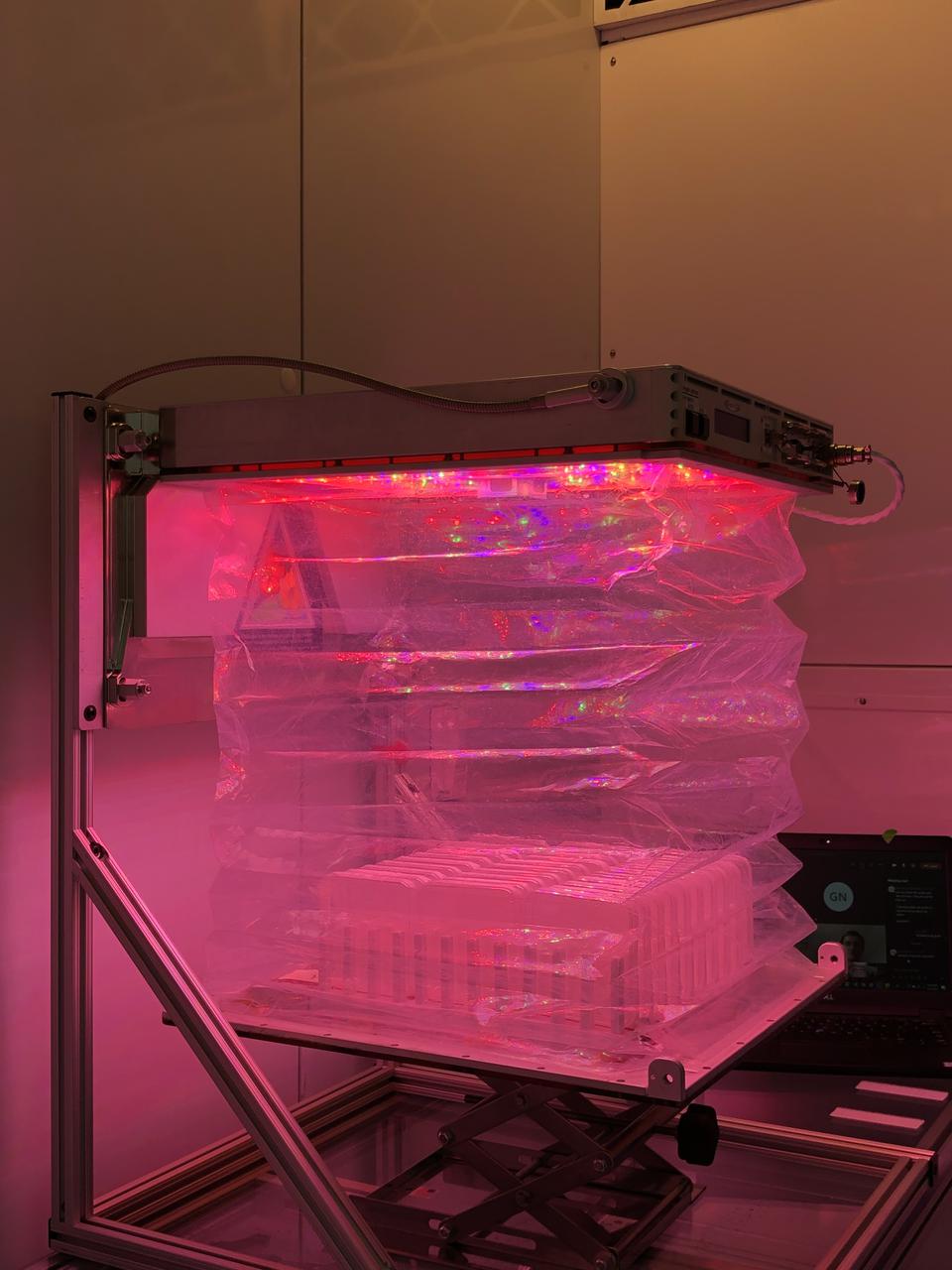
The Science Verification Test for NASA’s Advanced Plant Experiment-08 (APEX-08) testing Arabidopsis thaliana, a plant scientists routinely use for research, takes place inside the Veggie growth chamber at NASA’s Kennedy Space Center in Florida on Nov. 6, 2020. The test is part of the process for demonstrating readiness for space research ahead of its flight on SpaceX’s 23rd Commercial Resupply Services mission to the International Space Station. The APEX-08 study includes making genetic alterations that elicit a response in a group of organic compounds that modulate plant responses to environmental stress.
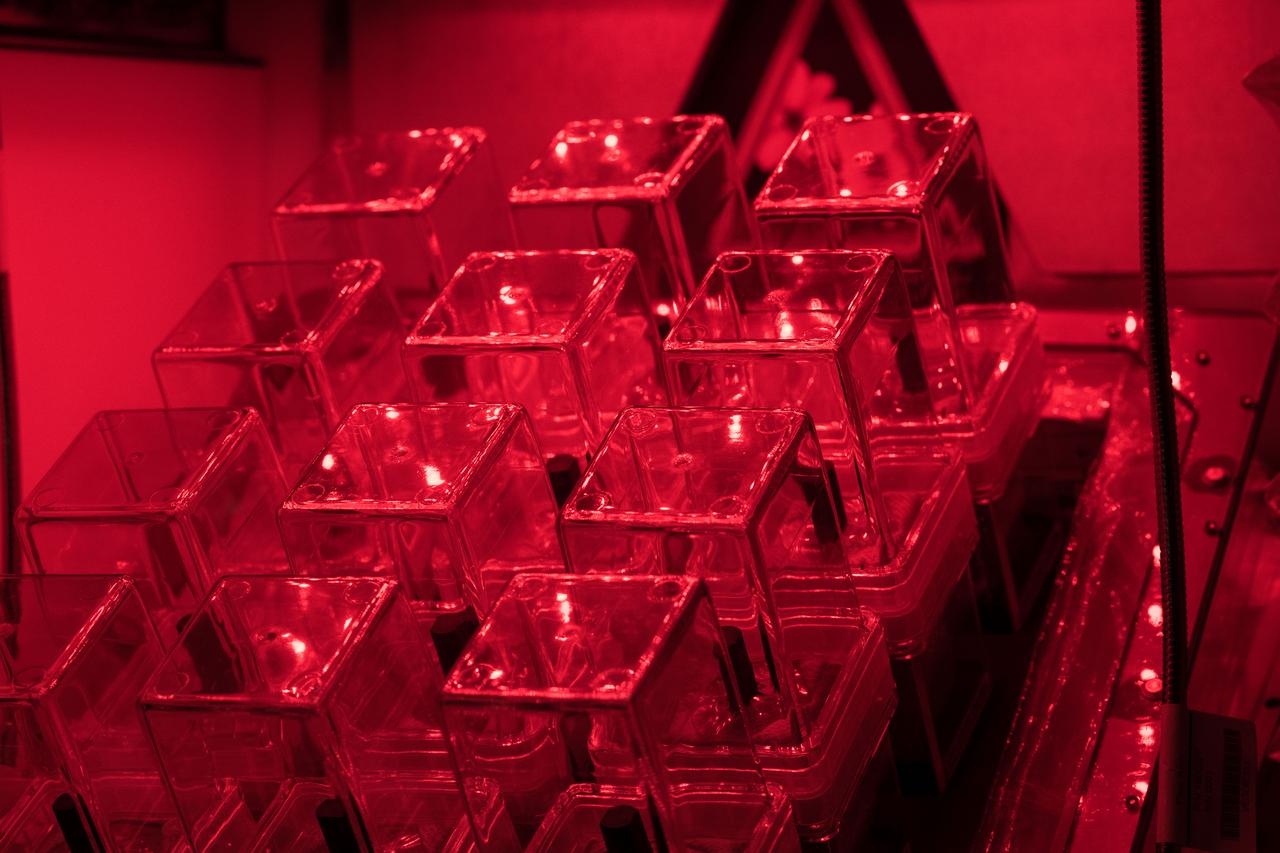
iss055e019903 (4/12/2018) --- Photographic documentation taken aboard the International Space Station (ISS) during the configuration of the Veggie facility and the installation of twenty APEX-06 petri plates to begin the growth process of the plants. APEX-06 expands the understanding of plant growth in space. Detailed understanding of how different plants grow in space can provide for better life support system design and resource planning for long term space missions.
iss055e019872 (4/12/2018) --- Photographic documentation taken aboard the International Space Station (ISS) during the configuration of the Veggie facility and the installation of twenty APEX-06 petri plates to begin the growth process of the plants. APEX-06 expands the understanding of plant growth in space. Detailed understanding of how different plants grow in space can provide for better life support system design and resource planning for long term space missions.
iss055e019898 (4/12/2018) --- Photographic documentation taken aboard the International Space Station (ISS) during the configuration of the Veggie facility and the installation of twenty APEX-06 petri plates to begin the growth process of the plants. APEX-06 expands the understanding of plant growth in space. Detailed understanding of how different plants grow in space can provide for better life support system design and resource planning for long term space missions.
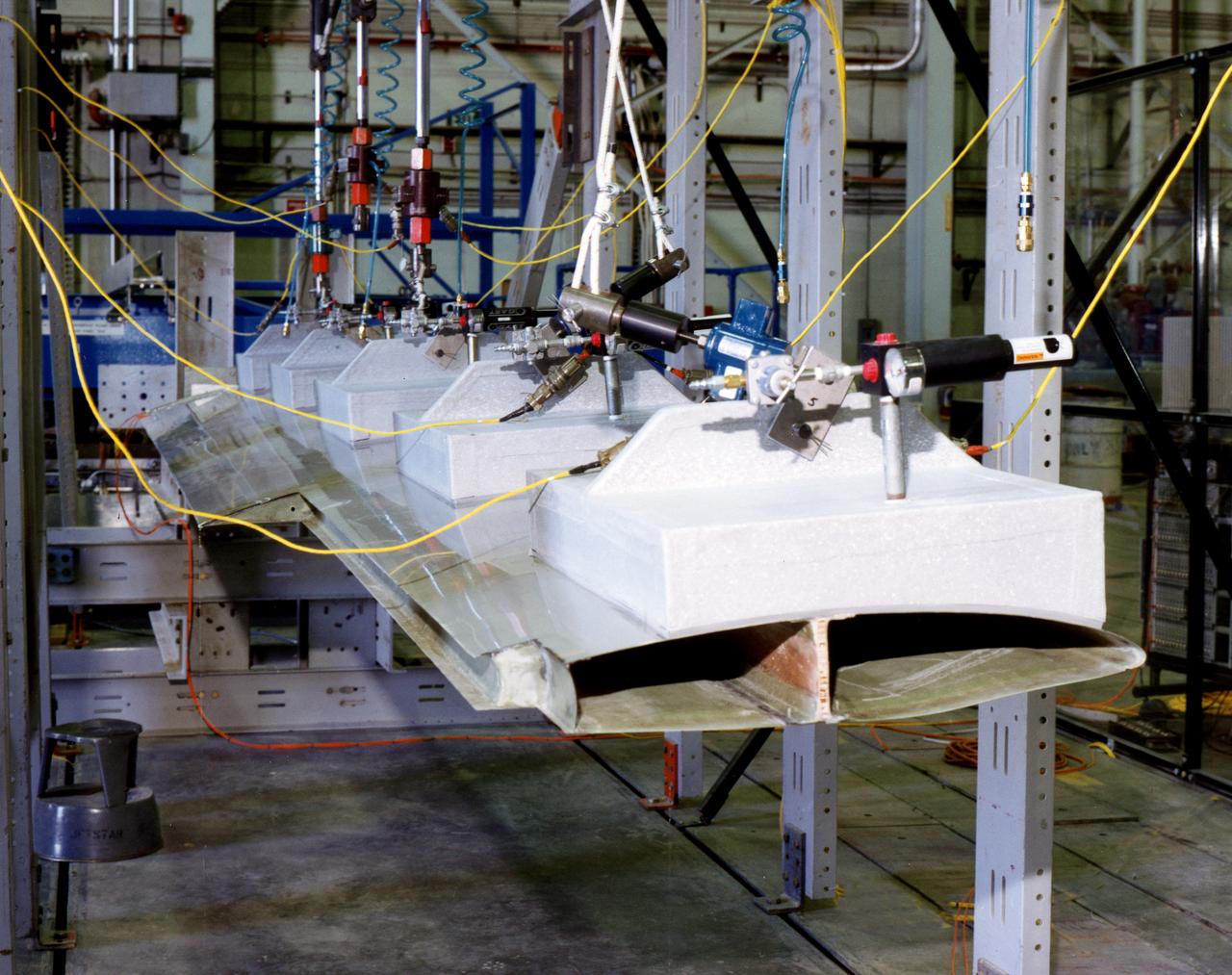
Apex wing section undergoing loading test.
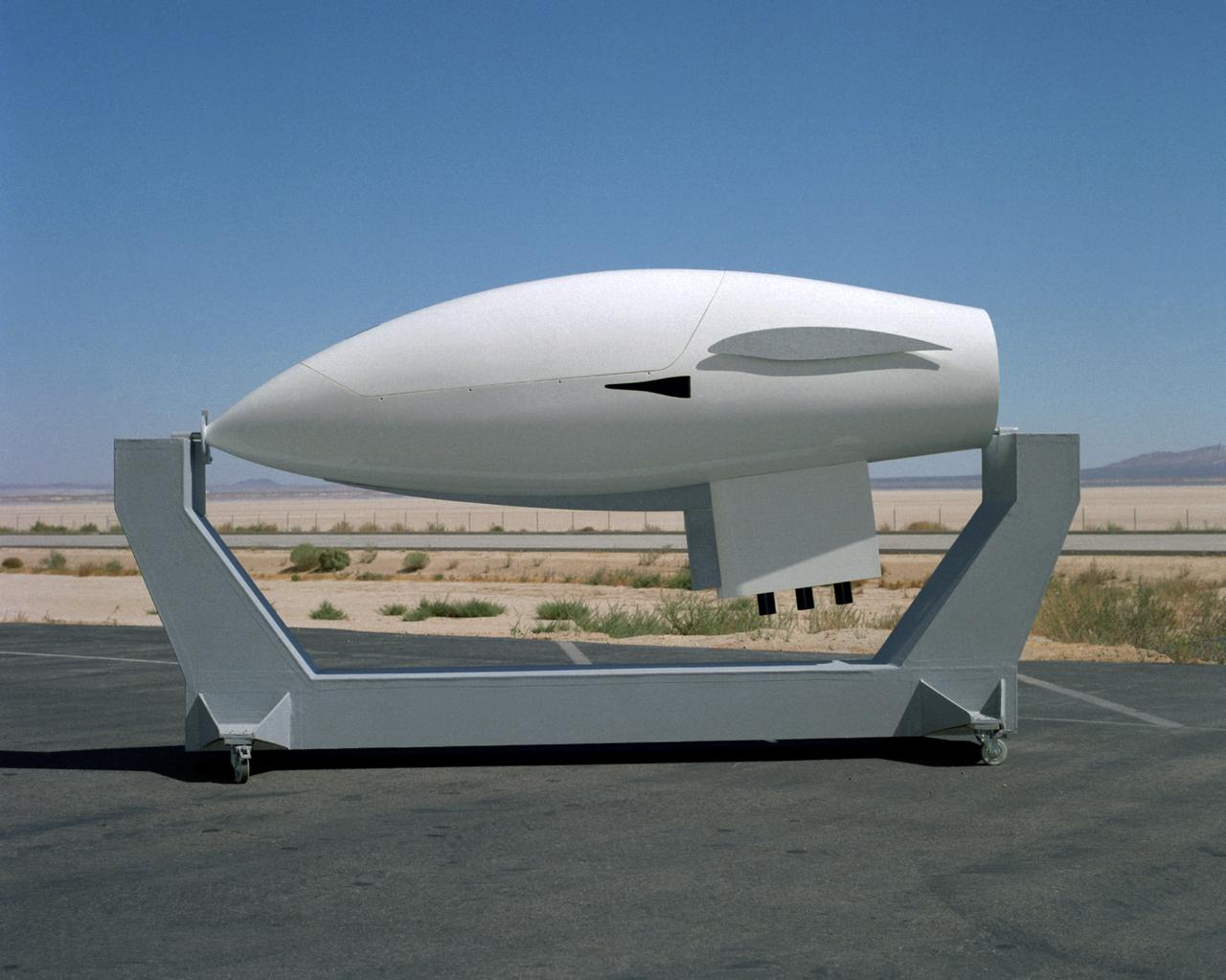
Apex high-altitude research sailplane mock-up
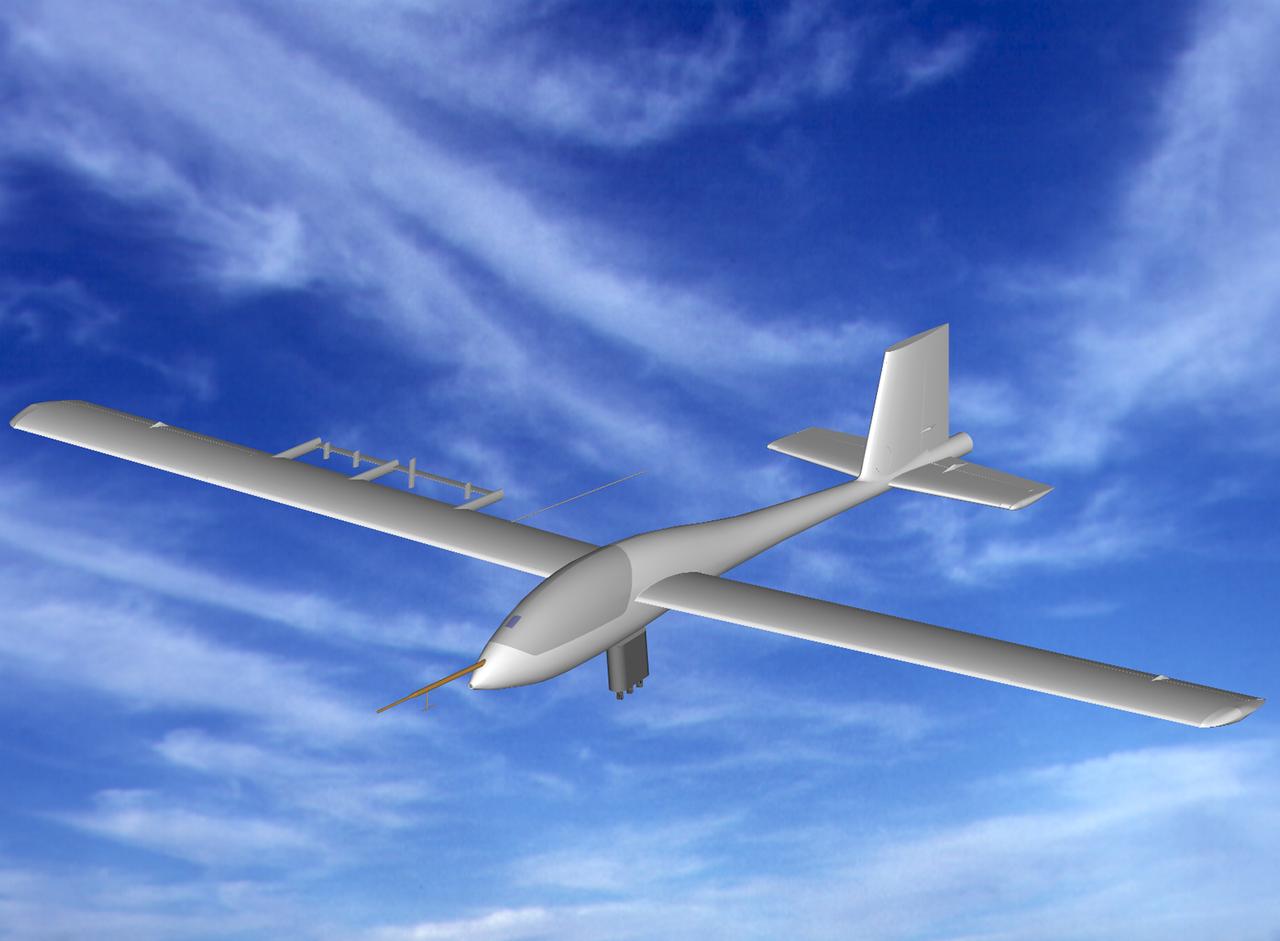
Computer generated image of Apex high-altitude research sailplane in flight
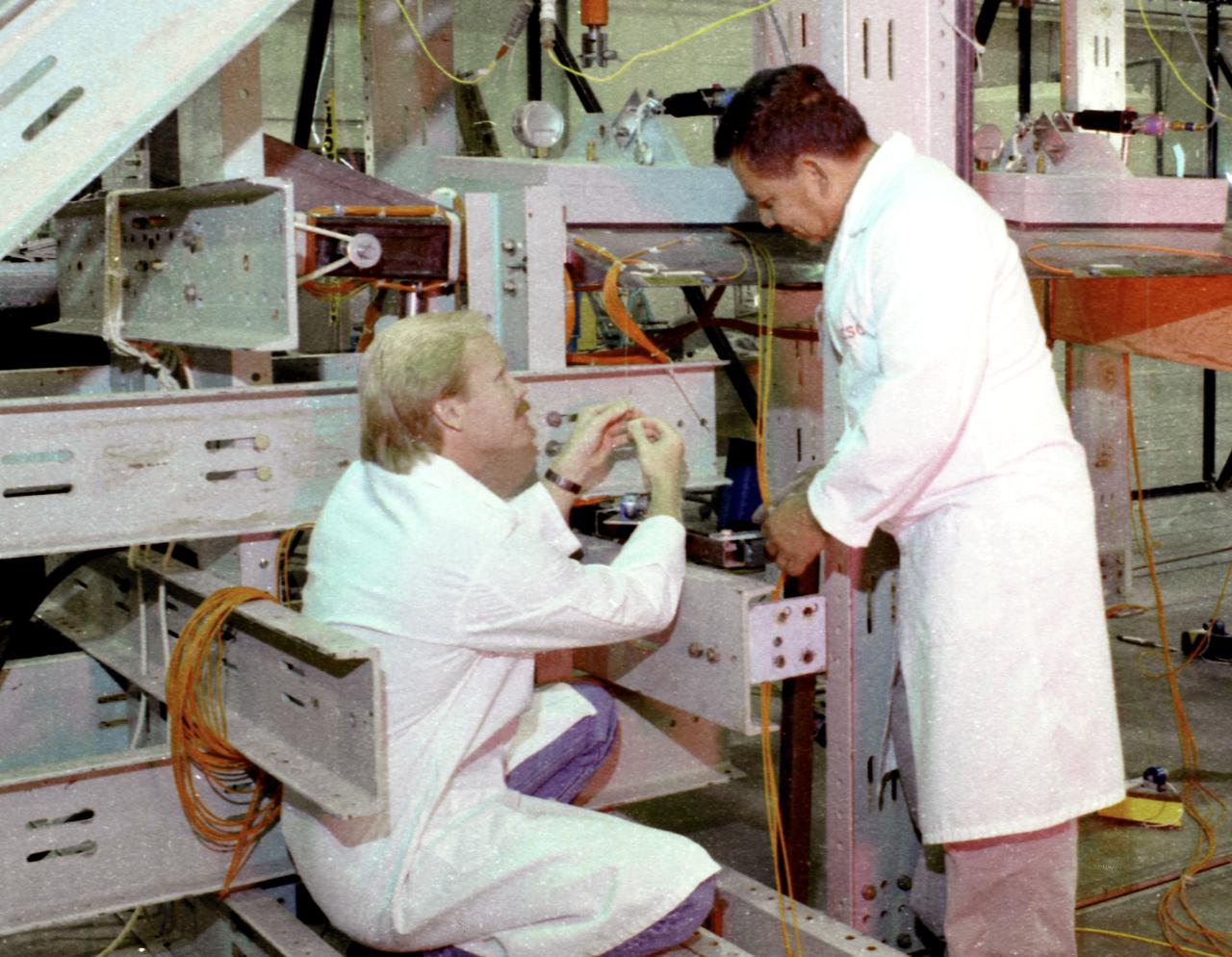
Apex wing section undergoing loading test preparation by Mark Nunnelee and Eliseo Sanchez
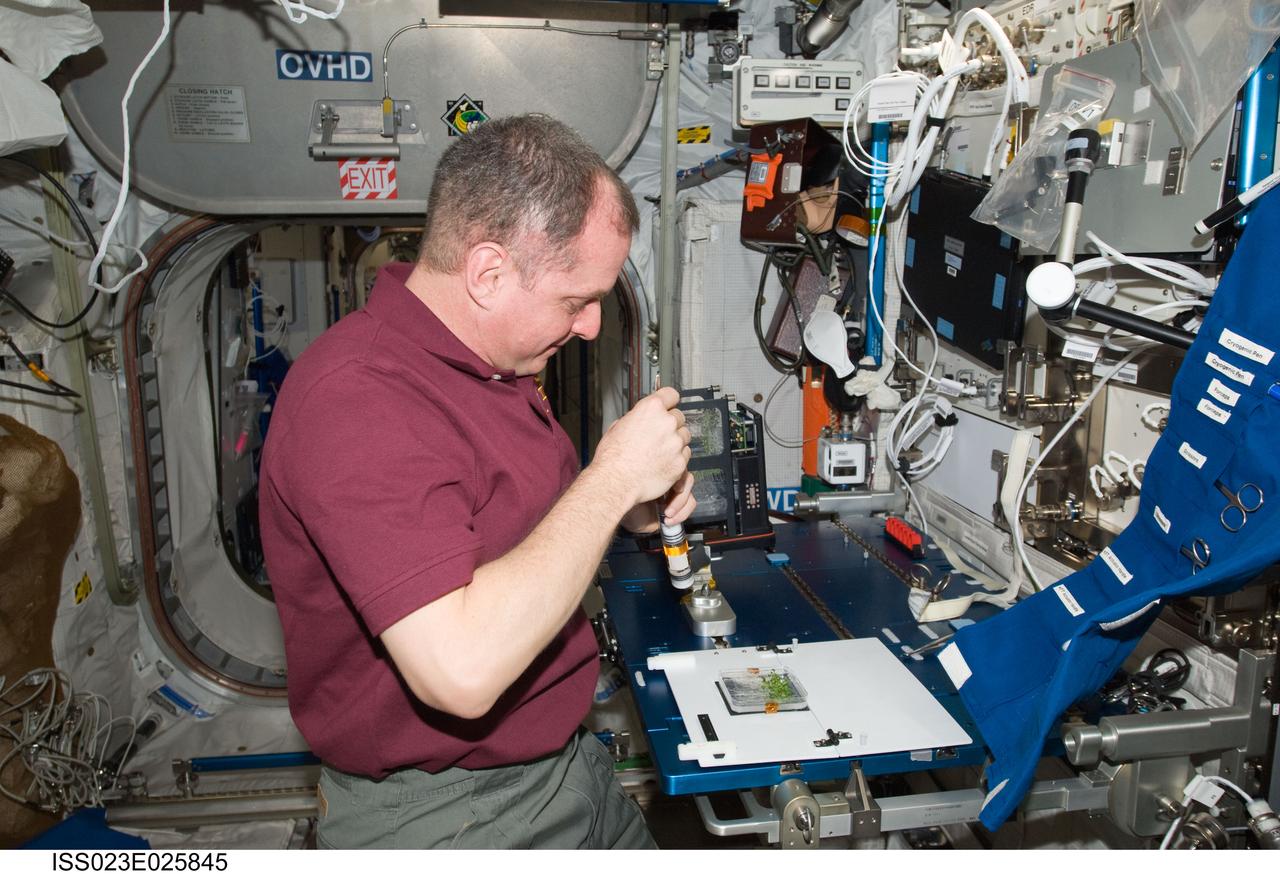
ISS023-E-025845 (21 April 2010) --- NASA astronaut T.J. Creamer, Expedition 23 flight engineer, services the Advanced Plant Experiments on Orbit-Cambium (APEX-Cambium) experiment in the Columbus laboratory of the International Space Station.
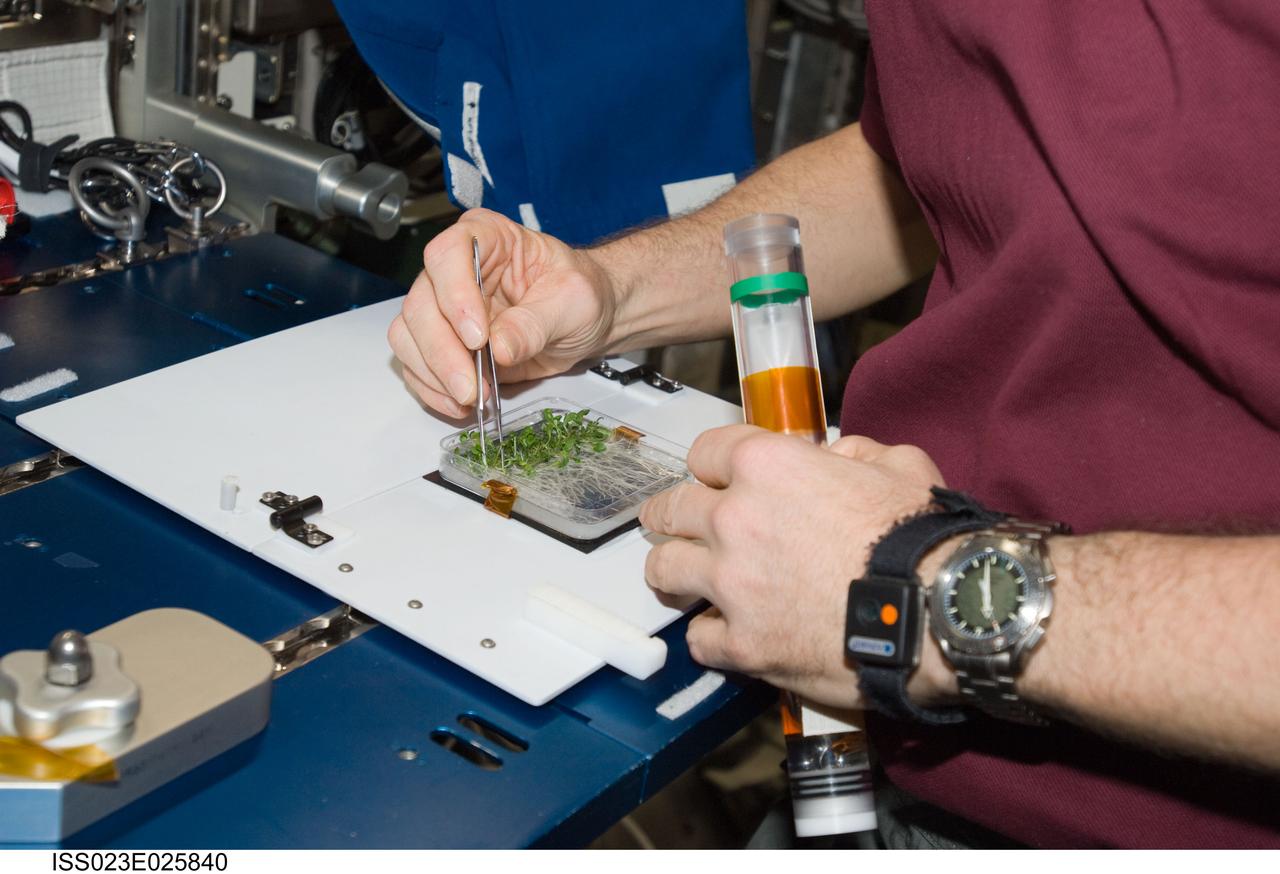
ISS023-E-025840 (21 April 2010) --- NASA astronaut T.J. Creamer, Expedition 23 flight engineer, services the Advanced Plant Experiments on Orbit-Cambium (APEX-Cambium) experiment in the Columbus laboratory of the International Space Station.
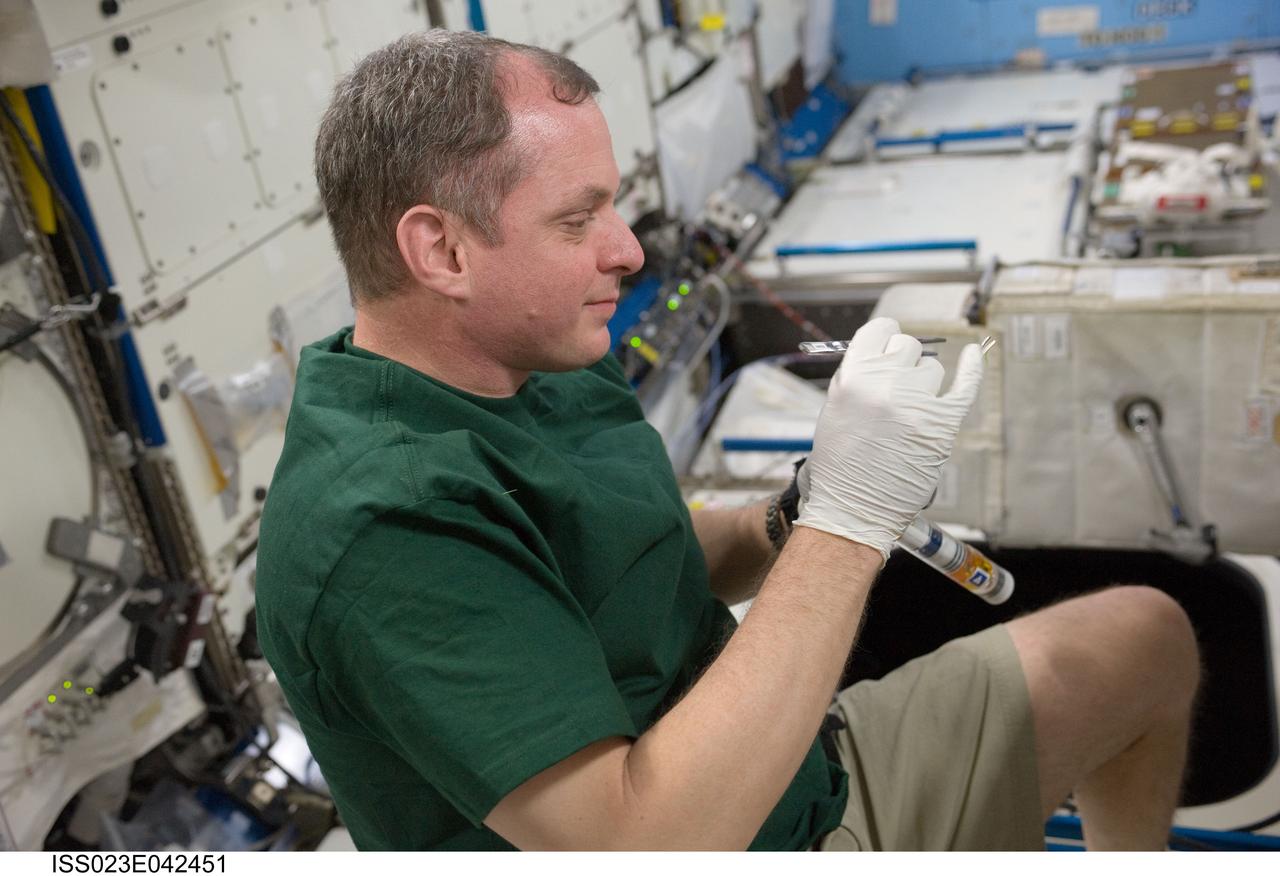
ISS023-E-042451 (10 May 2010) --- NASA astronaut T.J. Creamer, Expedition 23 flight engineer, services the Advanced Plant Experiments on Orbit-Cambium (APEX-Cambium) experiment in the Destiny laboratory of the International Space Station.
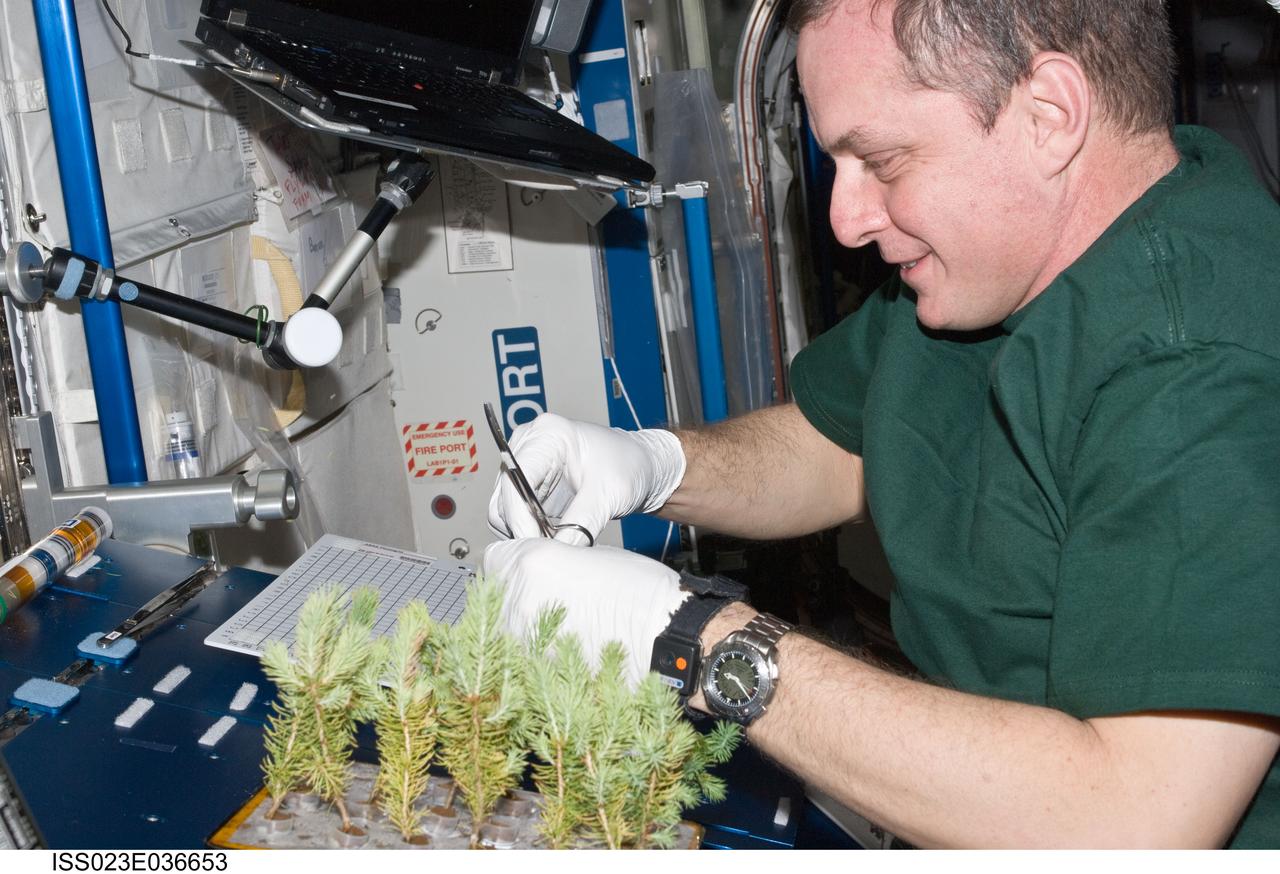
ISS023-E-036653 (10 May 2010) --- NASA astronaut T.J. Creamer, Expedition 23 flight engineer, services the Advanced Plant Experiments on Orbit-Cambium (APEX-Cambium) experiment in the Destiny laboratory of the International Space Station.
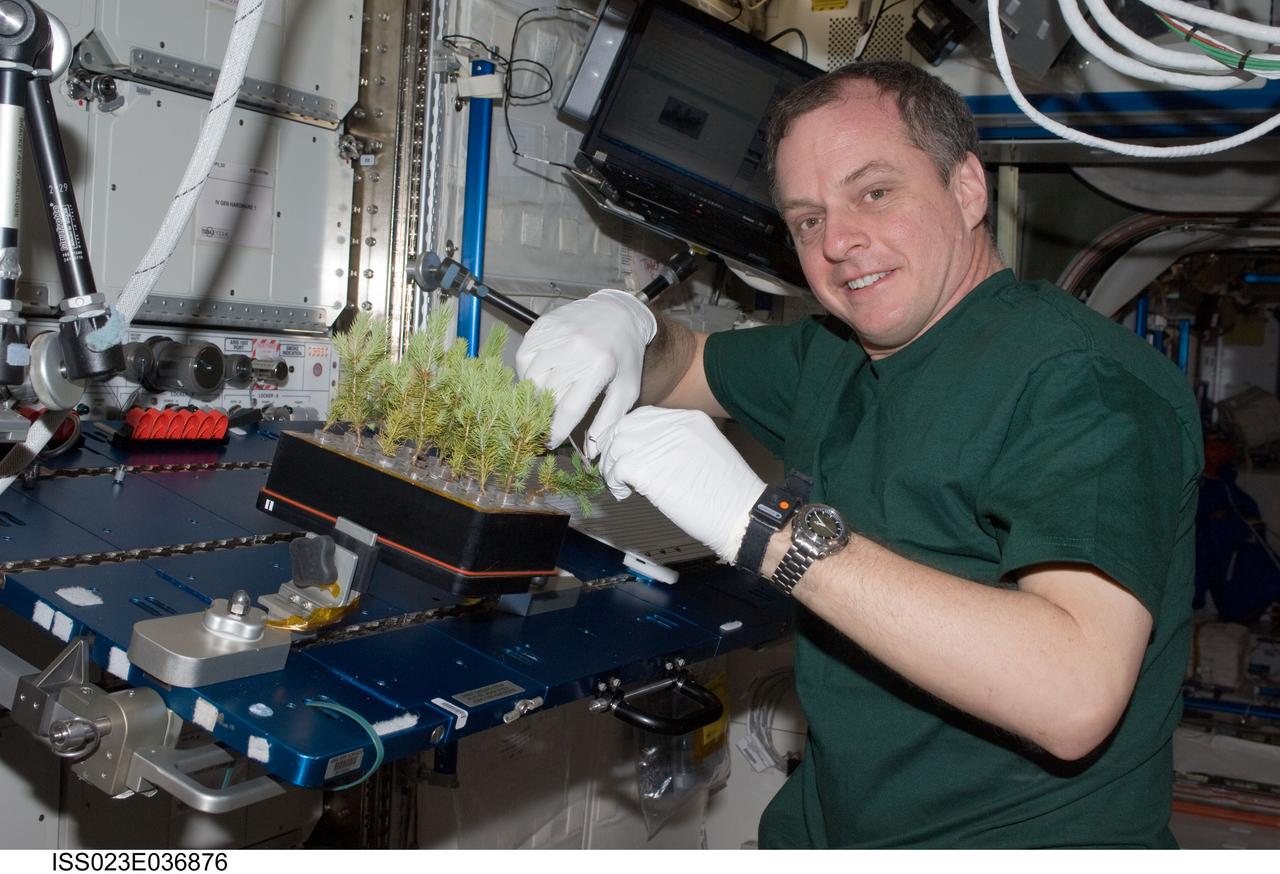
ISS023-E-036876 (10 May 2010) --- NASA astronaut T.J. Creamer, Expedition 23 flight engineer, services the Advanced Plant Experiments on Orbit-Cambium (APEX-Cambium) experiment in the Destiny laboratory of the International Space Station.
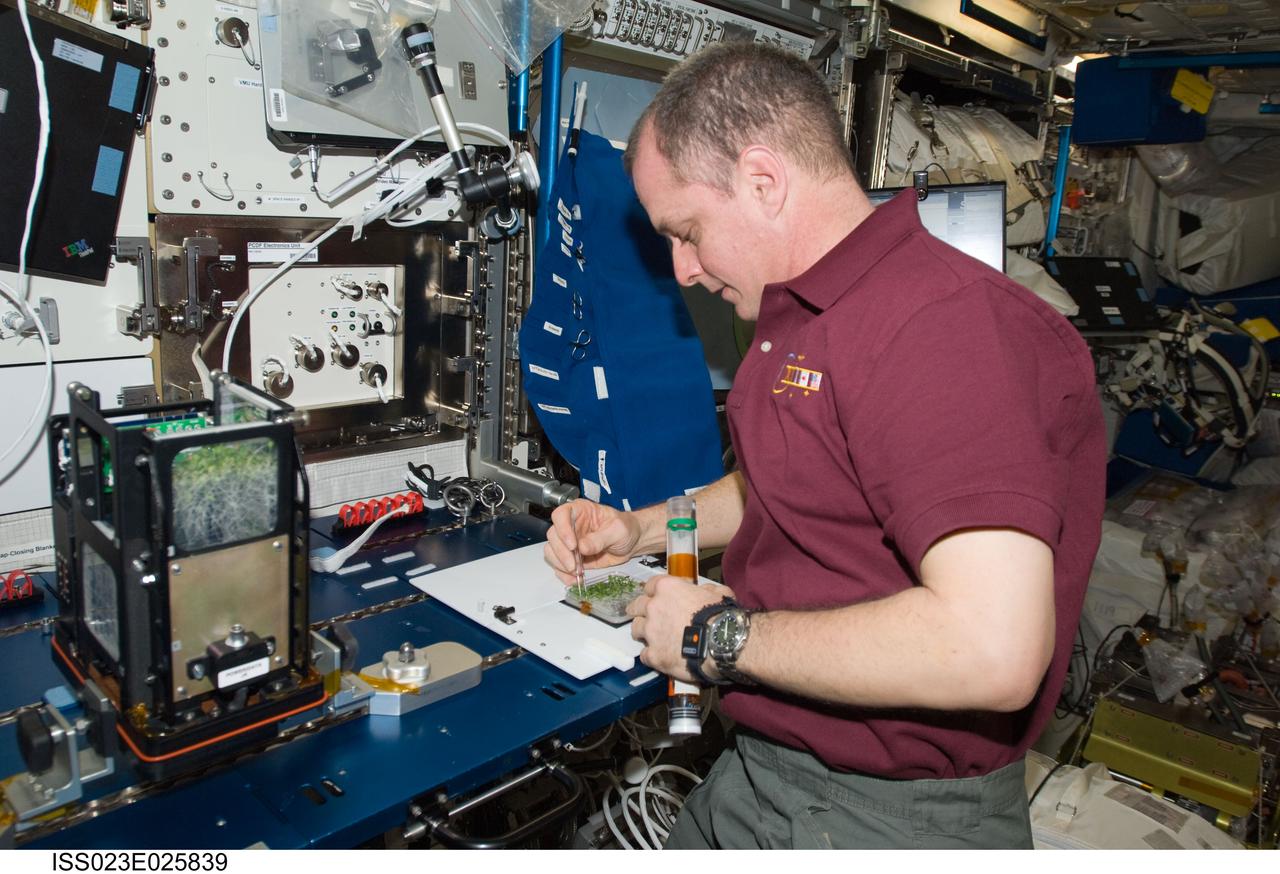
ISS023-E-025839 (21 April 2010) --- NASA astronaut T.J. Creamer, Expedition 23 flight engineer, services the Advanced Plant Experiments on Orbit-Cambium (APEX-Cambium) experiment in the Columbus laboratory of the International Space Station.
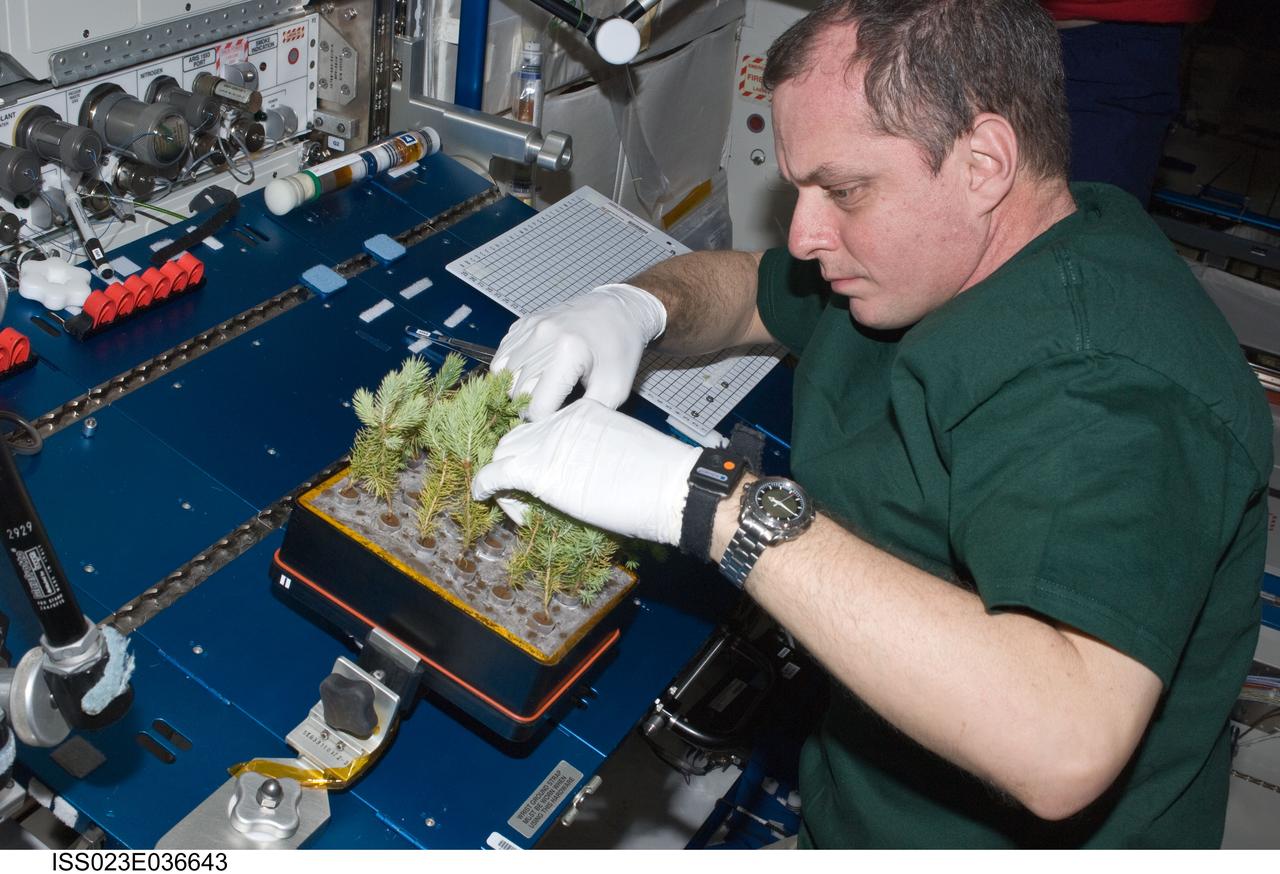
ISS023-E-036643 (10 May 2010) --- NASA astronaut T.J. Creamer, Expedition 23 flight engineer, services the Advanced Plant Experiments on Orbit-Cambium (APEX-Cambium) experiment in the Destiny laboratory of the International Space Station.
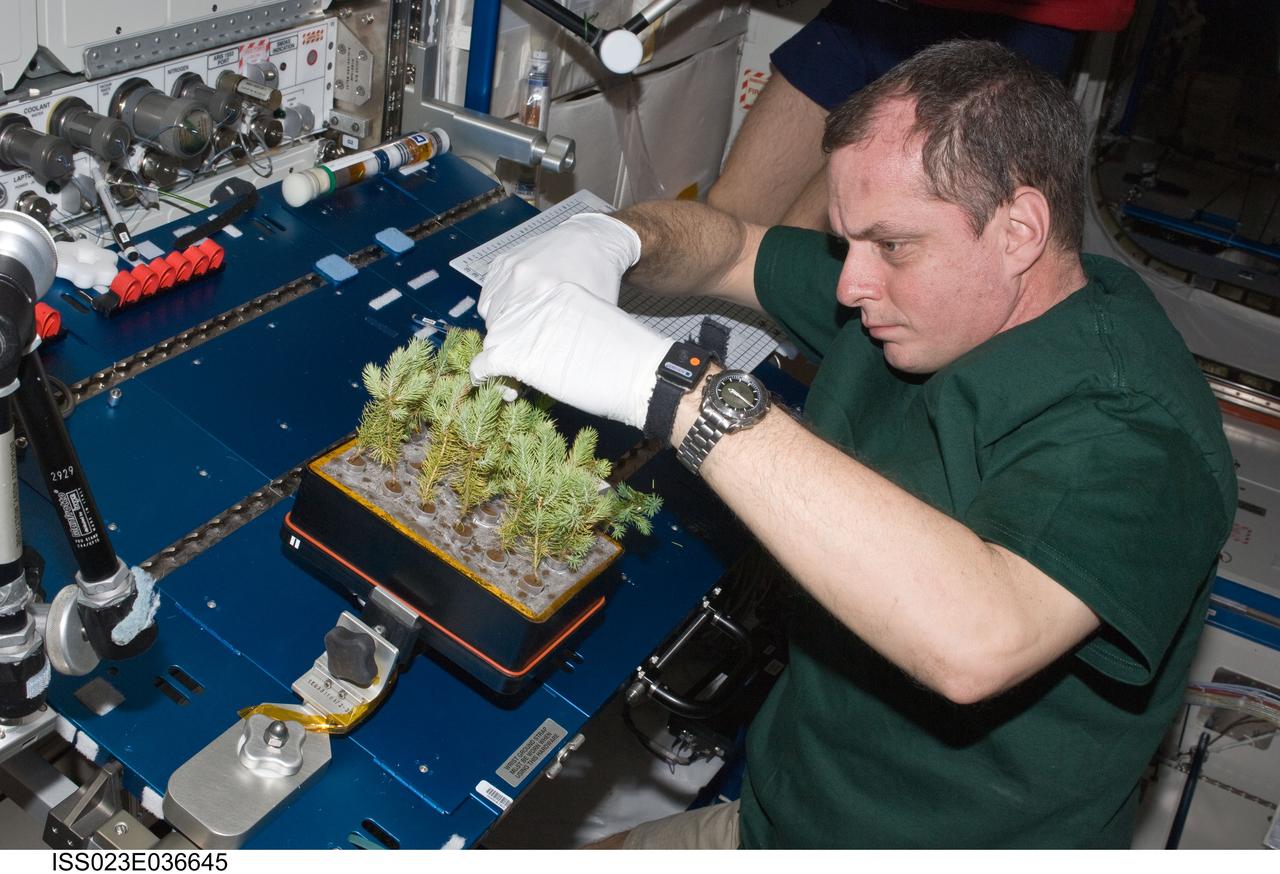
ISS023-E-036645 (10 May 2010) --- NASA astronaut T.J. Creamer, Expedition 23 flight engineer, services the Advanced Plant Experiments on Orbit-Cambium (APEX-Cambium) experiment in the Destiny laboratory of the International Space Station.
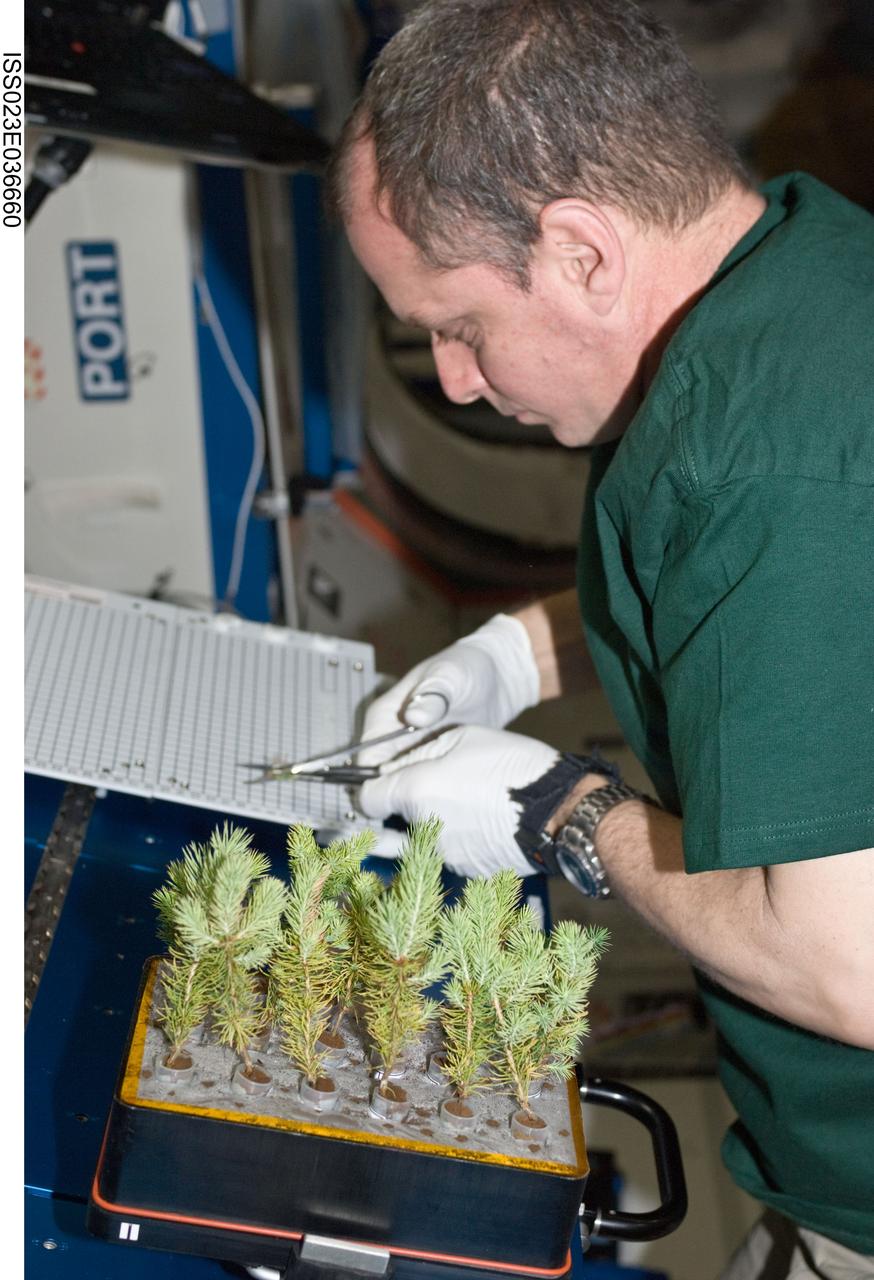
ISS023-E-036660 (10 May 2010) --- NASA astronaut T.J. Creamer, Expedition 23 flight engineer, services the Advanced Plant Experiments on Orbit-Cambium (APEX-Cambium) experiment in the Destiny laboratory of the International Space Station.
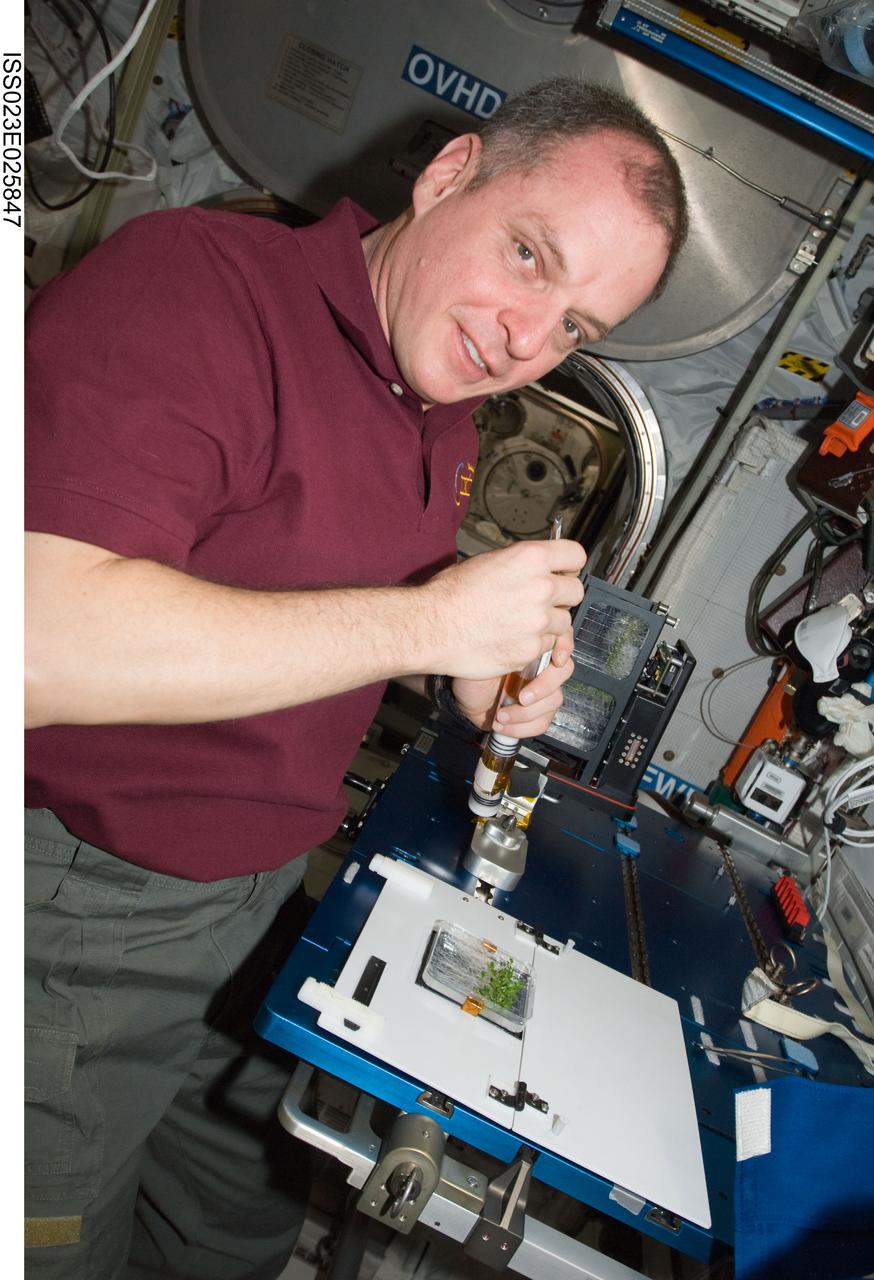
ISS023-E-025847 (21 April 2010) --- NASA astronaut T.J. Creamer, Expedition 23 flight engineer, services the Advanced Plant Experiments on Orbit-Cambium (APEX-Cambium) experiment in the Columbus laboratory of the International Space Station.
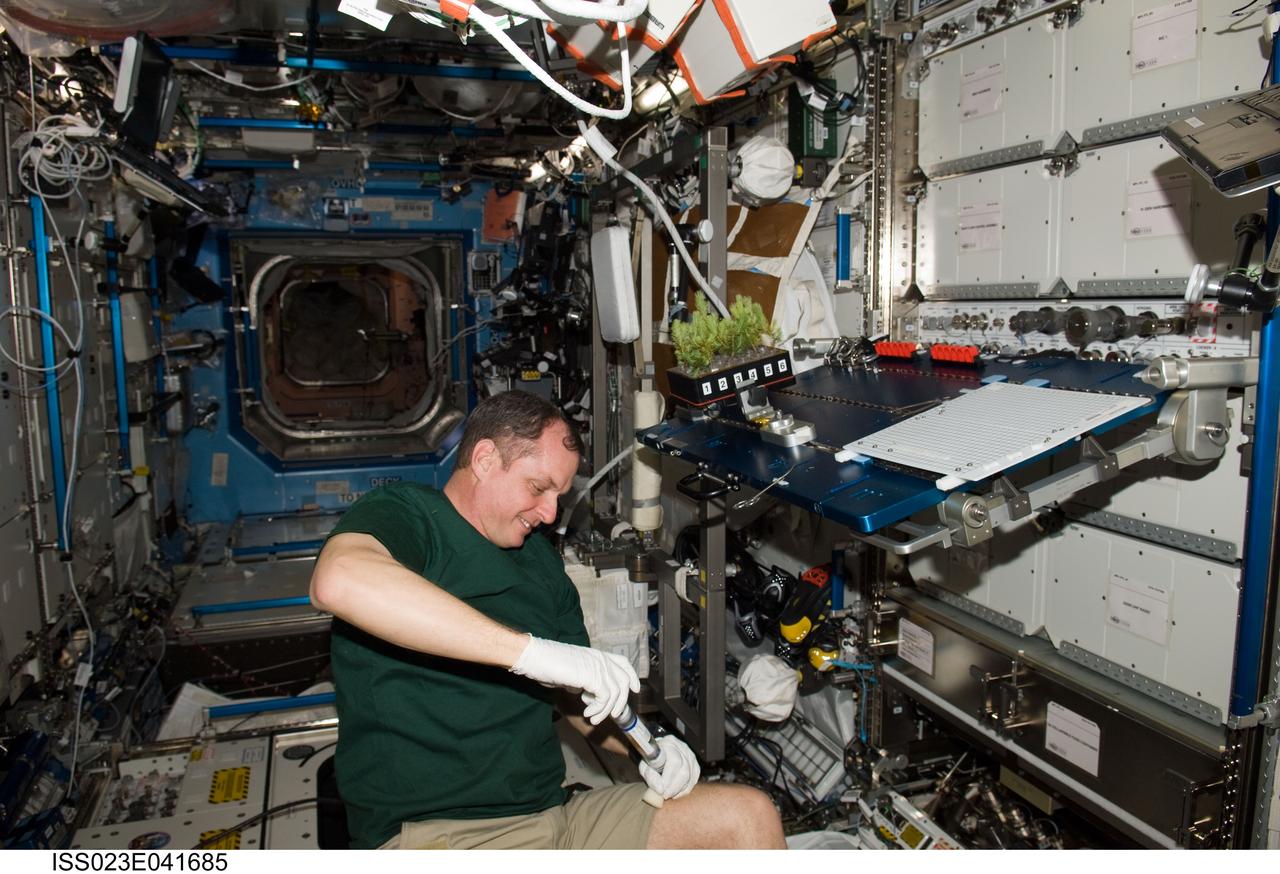
ISS023-E-041685 (10 May 2010) --- NASA astronaut T.J. Creamer, Expedition 23 flight engineer, services the Advanced Plant Experiments on Orbit-Cambium (APEX-Cambium) experiment in the Destiny laboratory of the International Space Station.
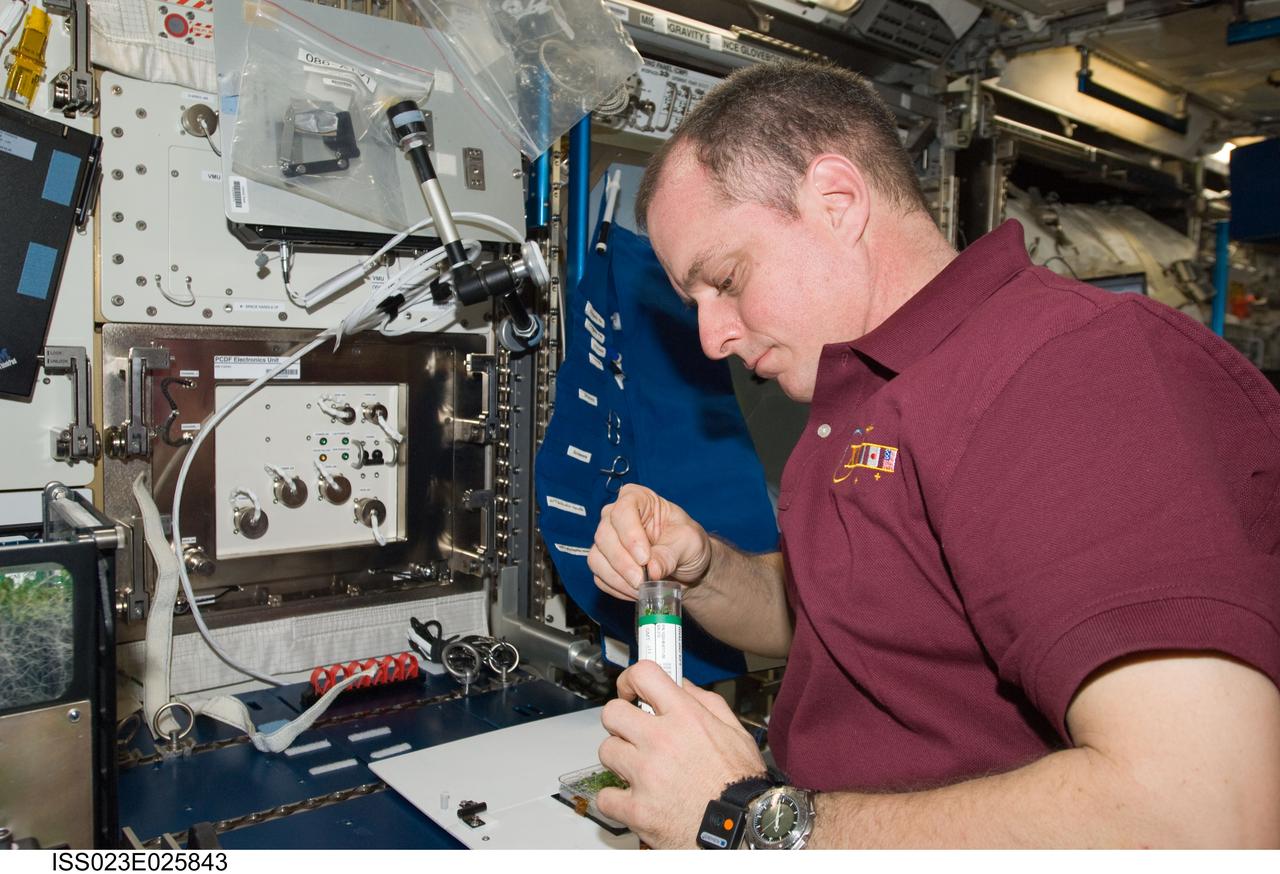
ISS023-E-025843 (21 April 2010) --- NASA astronaut T.J. Creamer, Expedition 23 flight engineer, services the Advanced Plant Experiments on Orbit-Cambium (APEX-Cambium) experiment in the Columbus laboratory of the International Space Station.

ISS022-E-011304 (15 Dec. 2009) --- NASA astronaut Jeffrey Williams, Expedition 22 commander, conducts a daily status check of the Advanced Plant Experiments on Orbit (APEX) experiment in the Kibo laboratory of the International Space Station. During each check, Williams looks for health and color of the plants, since the Cambium plants are removed from the Advanced Biological Research System (ABRS). When completed, the APEX-Cambium payload in conjunction with the NASA-sponsored Transgenic Arabidopsis Gene Expression System (TAGES) will determine the role of gravity in Cambium wood cell development and demonstrate non-destructive reporter gene technology and investigate spaceflight plant stress. APEX-Cambium provides NASA and the ISS community a permanent controlled environment capability to support growth of various organisms (i.e. whole plants).
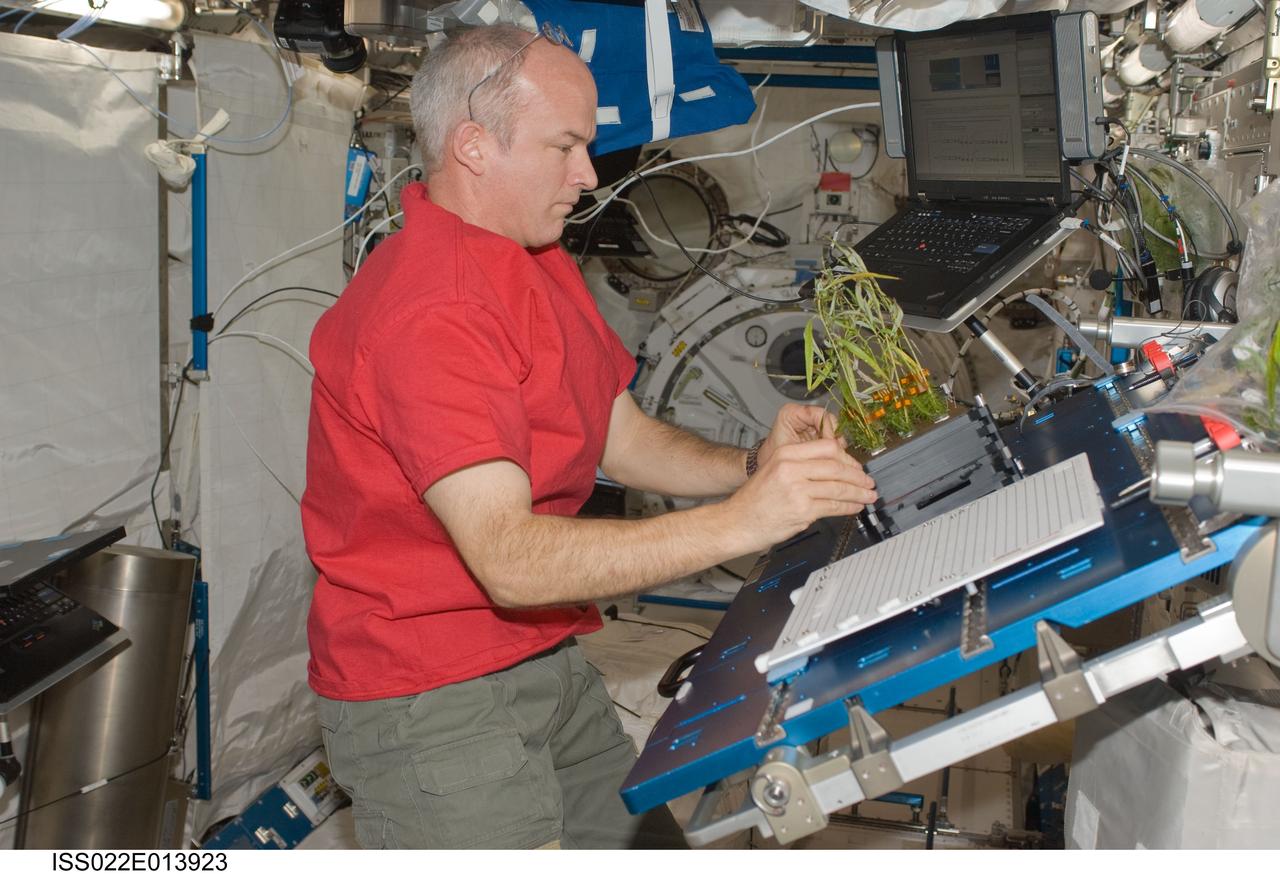
ISS022-E-013923 (21 Dec. 2009) --- NASA astronaut Jeffrey Williams, Expedition 22 commander, services the Advanced Plant Experiments on Orbit-Cambium (APEX-C) payload in the Kibo laboratory of the International Space Station.

ISS022-E-013926 (21 Dec. 2009) --- NASA astronaut Jeffrey Williams, Expedition 22 commander, takes a moment for a photo while servicing the Advanced Plant Experiments on Orbit-Cambium (APEX-C) payload in the Kibo laboratory of the International Space Station.
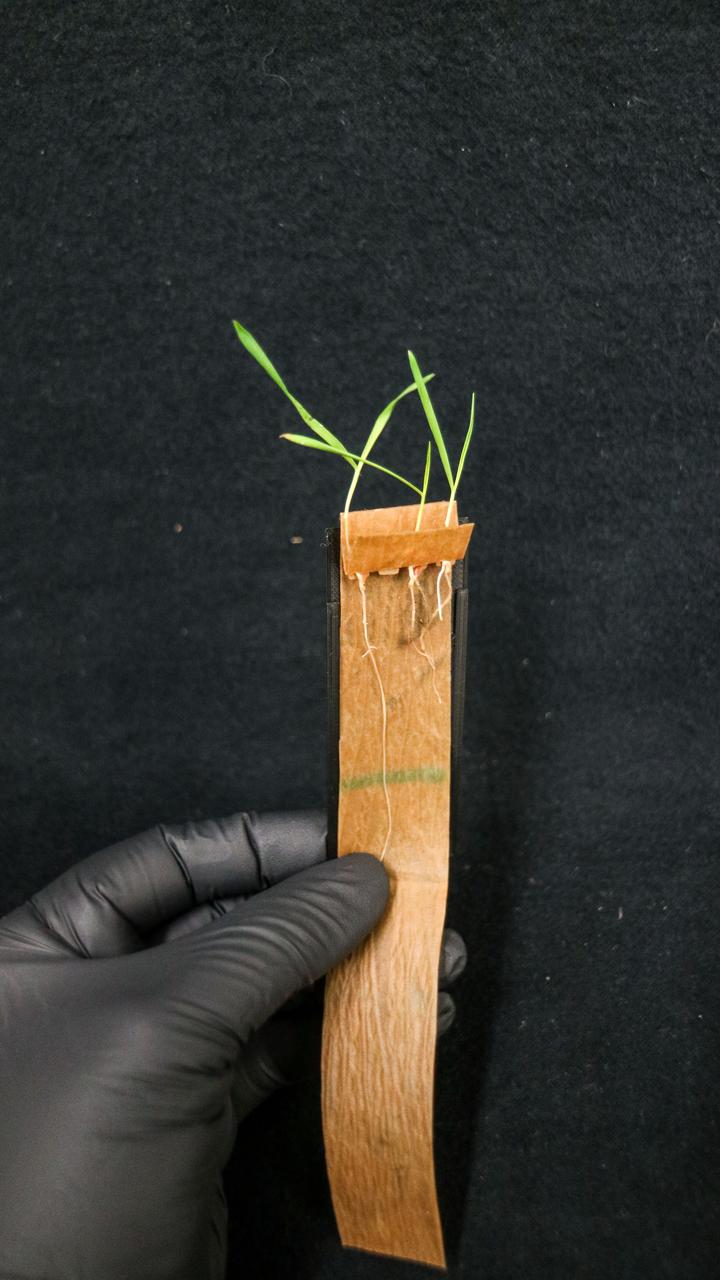
jsc2024e016229 (9/9/2022) --- Brachypodium seedlings are shown germinating on the germination paper guides used for APEX-09, C4 Photosynthesis in Space (C4Space) investigation. APEX-09 helps to inform future plant system designs for bio-regenerative support as part of deep exploration missions. Image courtesy of Dr. Handakumbura.
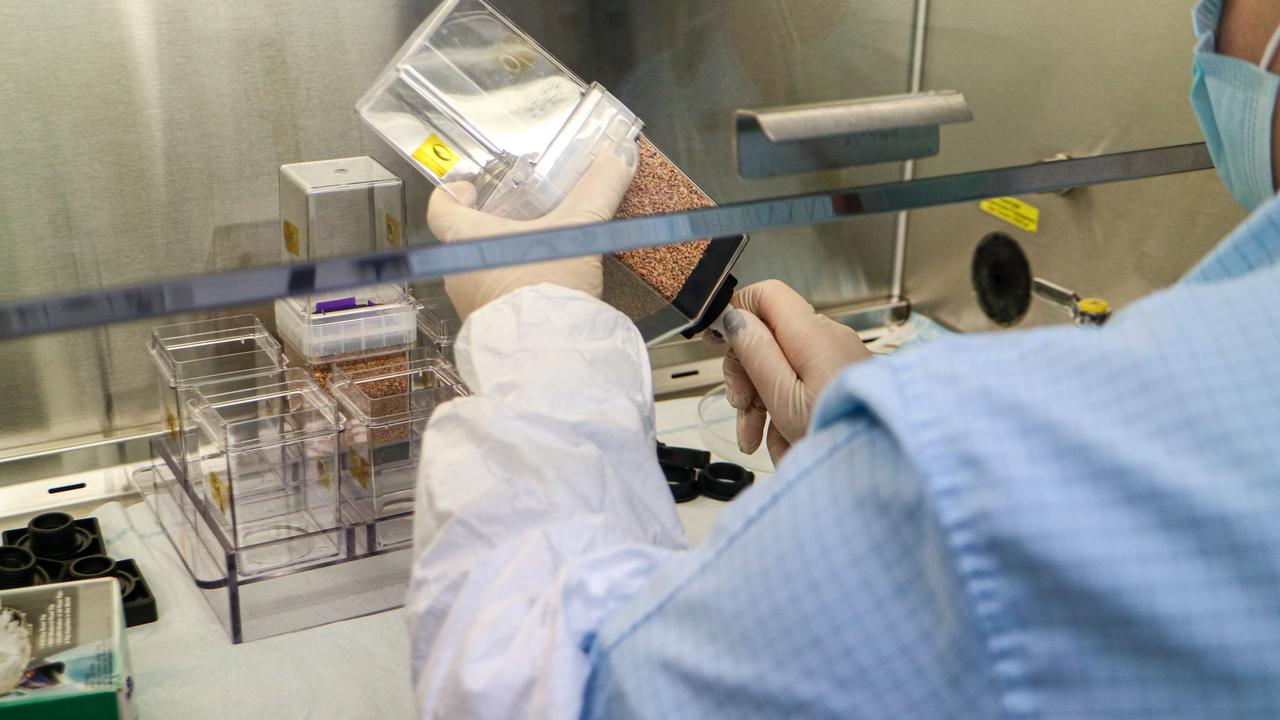
jsc2024e016231 (9/20/2023) --- The Plant Growth Systems are assembled during the APEX-09 Experiment Verification test at NASA's Kennedy Space Center. The knowledge uncovered through the C4 Photosynthesis in Space (C4 Space) (APEX-09) investigation may help researchers develop a better understanding of photosynthesis in space. Image courtesy of Dr. Handakumbura.
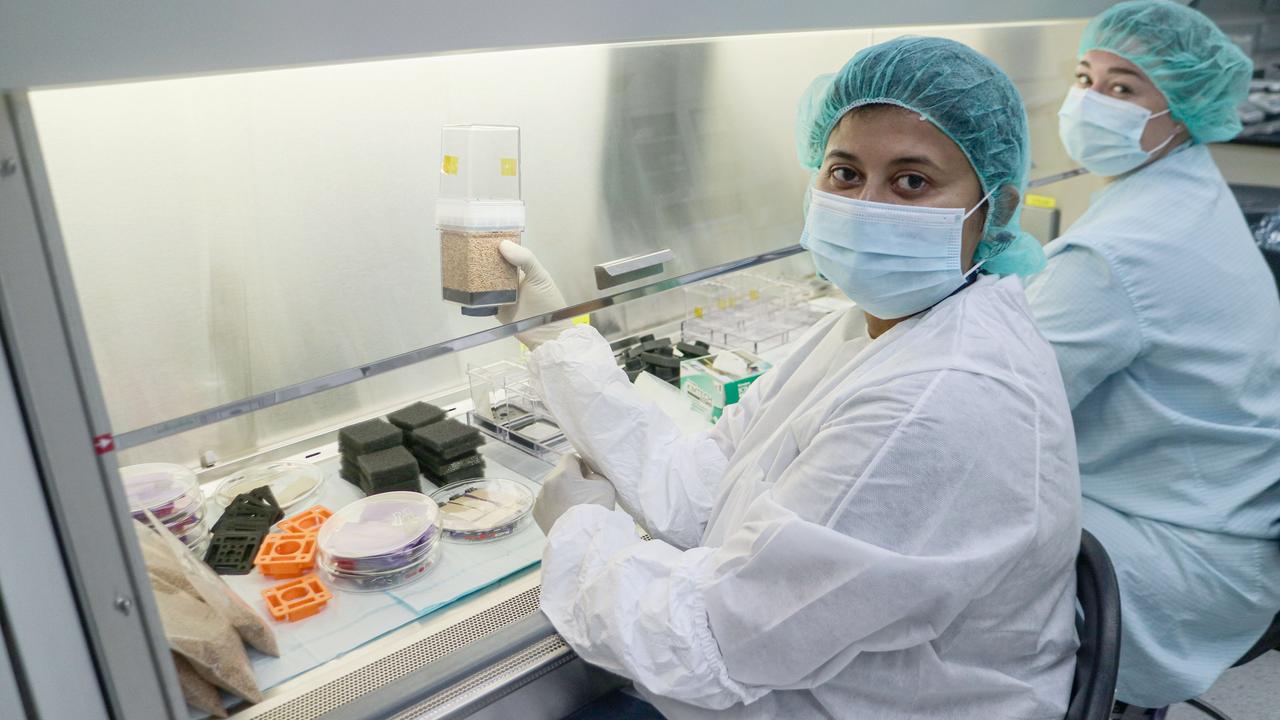
jsc2024e016230 (9/20/2023) --- Dr. Handakumbura, Principal Investigator for C4 Photosynthesis in Space (C4 Space) (APEX-09), is pictured alongside Payload Engineer Sarah Lemire as the NASA team assembles Plant Growth Systems during the APEX-09 Experiment Verification test at NASA's Kennedy Space Center. Image courtesy of Dr. Handakumbura.
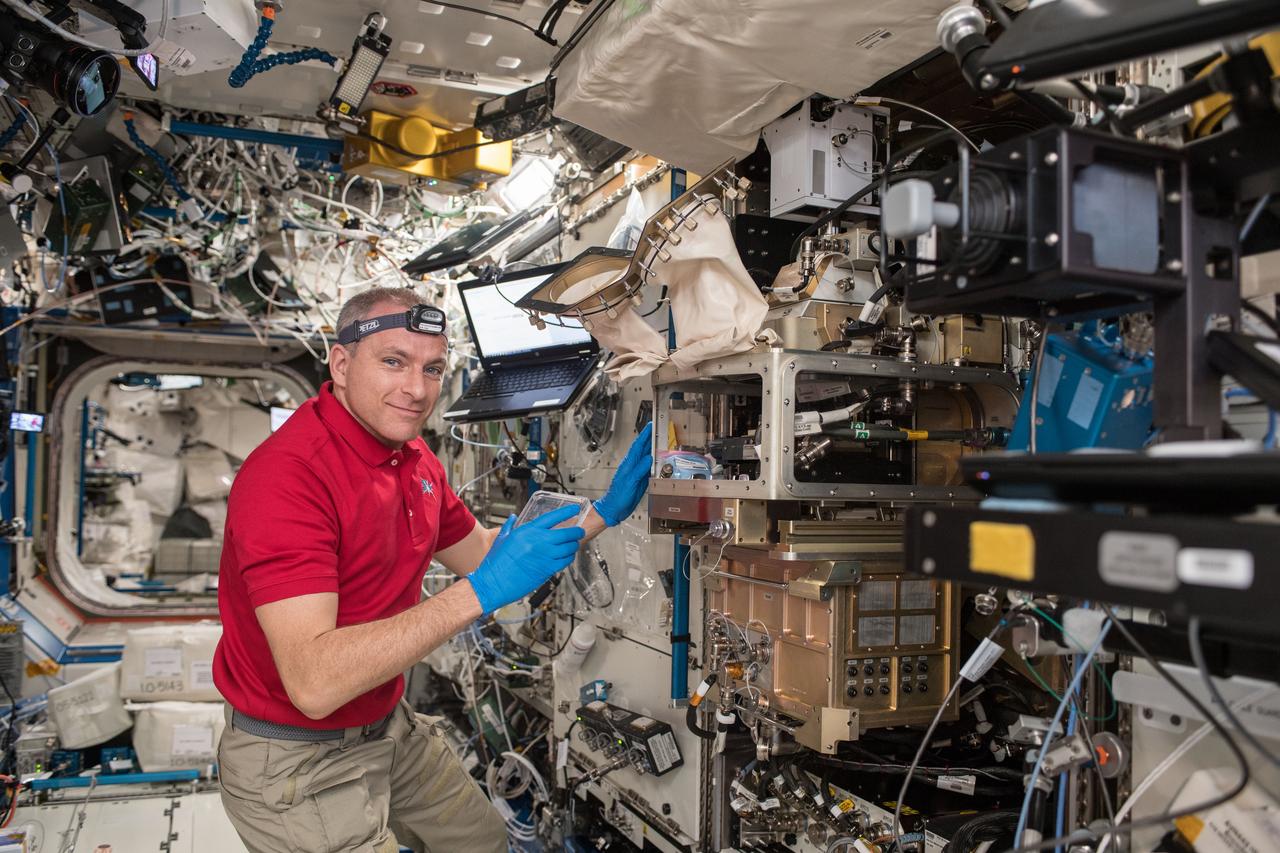
iss057e135002 (12/18/2018) --- Canadian Space Agency (CSA) astronaut David Saint-Jacques removes the APEX-05 Petri Plate from the FIR/LMM (Fluids Integrated Rack/Light Microscopy Module). The Spaceflight-induced Hypoxic/ROS Signaling (APEX-05) experiment grows different wild and mutant varieties of Arabidopsis thaliana, in order to understand how their genetic and molecular stress response systems work in space.
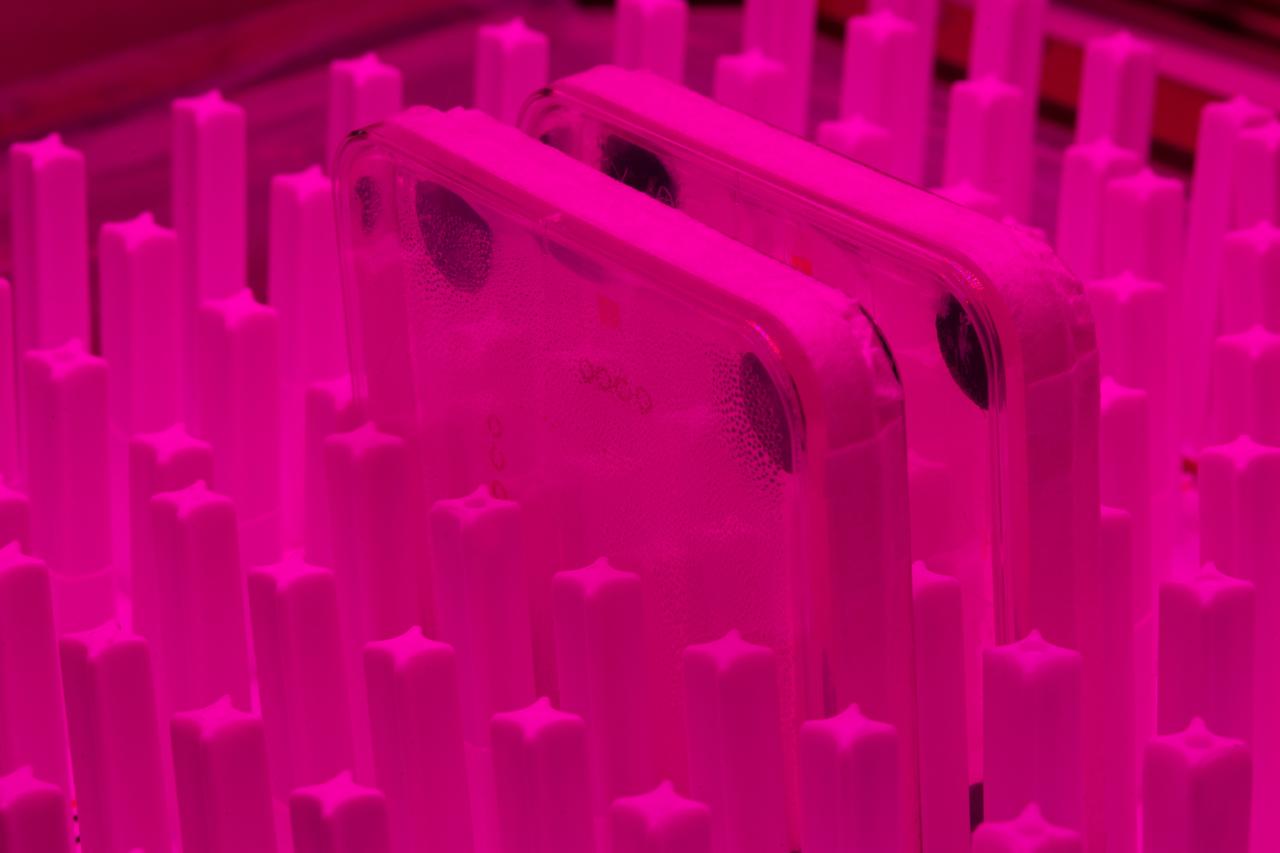
iss057e131531 (12/11/2018) --- A view of the APEX-05 Petri Plate in the Veggie facility onboard the International Space Station (ISS). The Spaceflight-induced Hypoxic/ROS Signaling (APEX-05) experiment grows different wild and mutant varieties of Arabidopsis thaliana, in order to understand how their genetic and molecular stress response systems work in space.
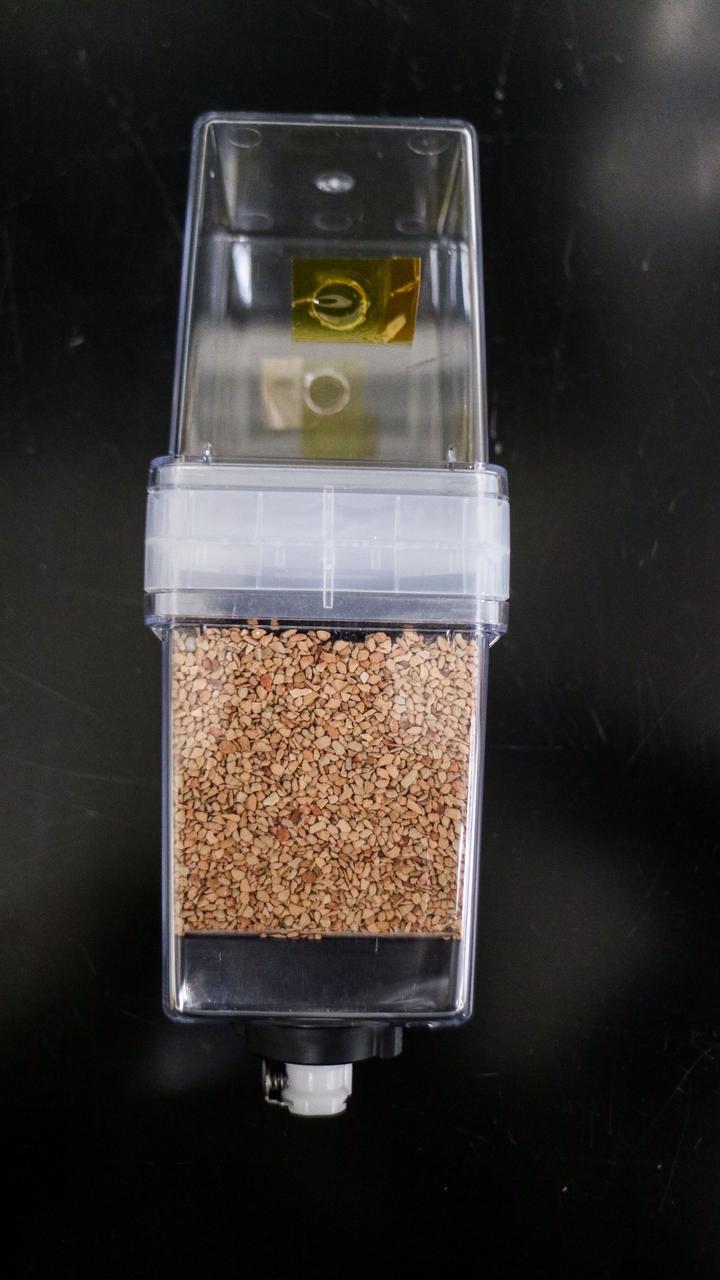
jsc2024e016232 (9/20/2023) --- Plant Growth System (PGS) that is used for the C4 Photosynthesis in Space (C4 Space) (APEX-09) investigation. APEX-09 observes two plant species with differing mechanisms for capturing CO2 during photosynthesis. Researchers hope to gain understanding of photosynthesis in space and examine how microgravity affects different plants and their unique metabolic pathways. Image courtesy of Dr. Handakumbura.

Perseid Meteor flight on Google's Gulfstream Aircraft. P.I. Peter Jenniskens, SETI Group L-R; Julian Nott, Santa Barbara, Peter Jenniskens, SETI and Apex Aviation Corp rep.
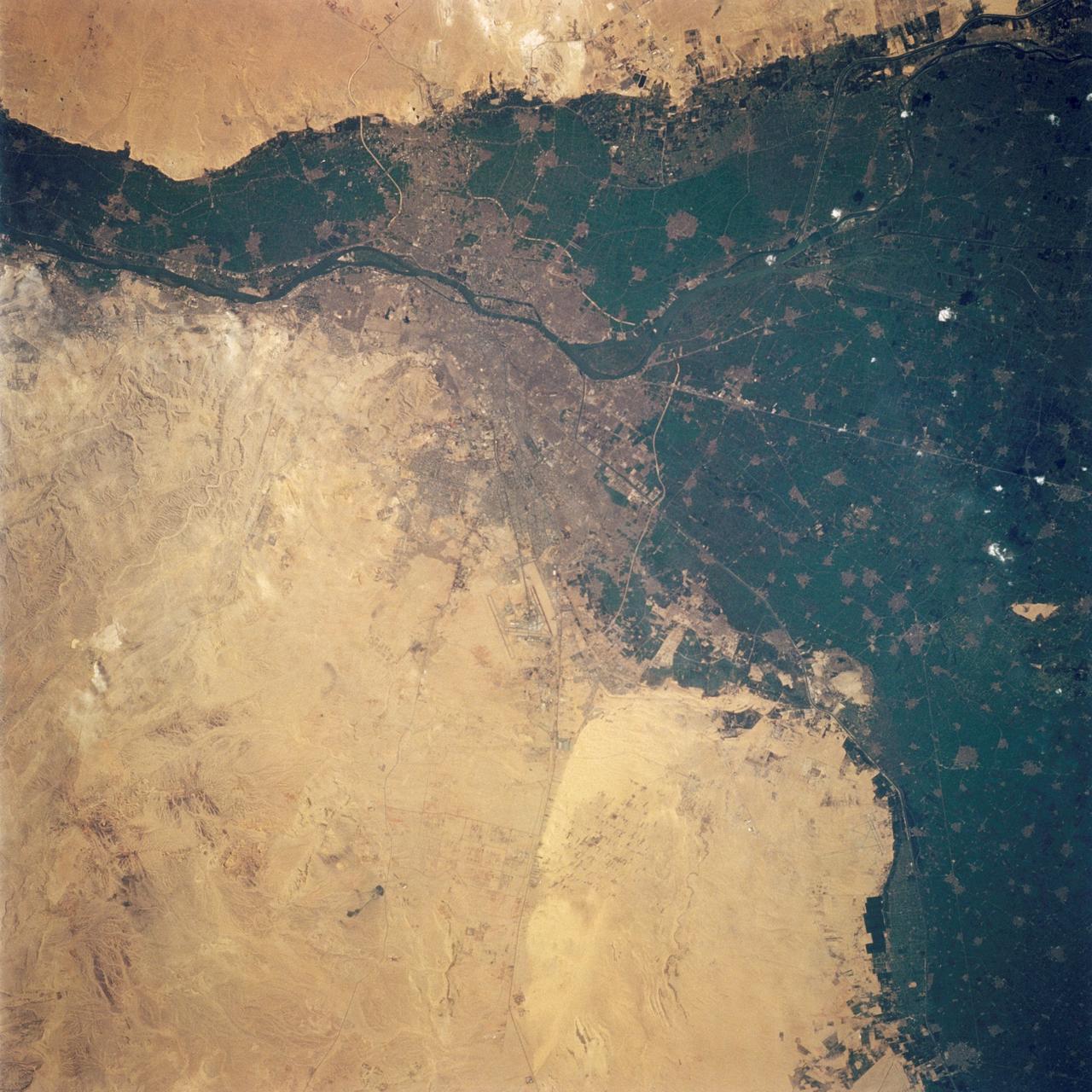
STS062-108-058 (4-18 March 1994) --- Cairo lies at the apex of the great delta of the Nile: the delta is marked by the strong greens of cultivated lands, Cairo by the gray sprawl along the river and the eastern delta apex as it develops in the direction of the airports and Suez. The city of El Giza lies on the west side of the Nile with the Giza pyramids in the desert just beyond the cultivated lands. Several major canals lead water to parts of the delta more distant from the Nile; generally these can be recognized as straighter, more engineered waterways. Towards the top left, the bifurcation of the Rosetta and Damietta branches of the Nile can be seen. These are the two major present-day veins of the Nile as it approaches the Mediterranean.

Perseid Meteor flight on Google's Gulfstream Aircraft. P.I. Peter Jenniskens, SETI Group Peter Jenniskens, SETI - briefing w/L-R; J Nott, P Jenniskens, M Koop, D Holman and two Apex Aviation Corp reps.
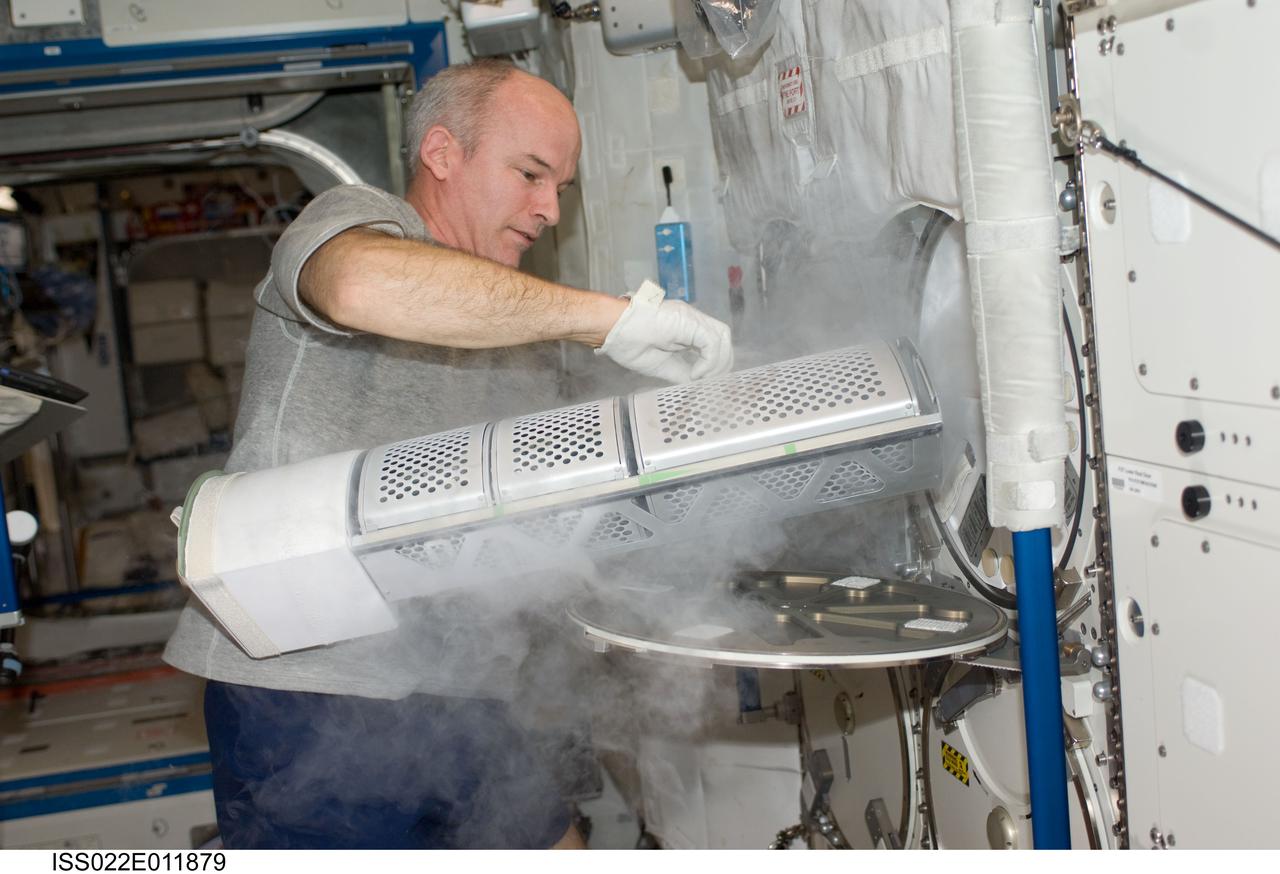
ISS022-E-011879 (16 Dec. 2009) --- NASA astronaut Jeffrey Williams, Expedition 22 commander, services the Advanced Plant Experiments on Orbit-Cambium (APEX-C) payload in the Minus Eighty Laboratory Freezer for ISS-2 (MELFI-2) in the Destiny laboratory of the International Space Station.
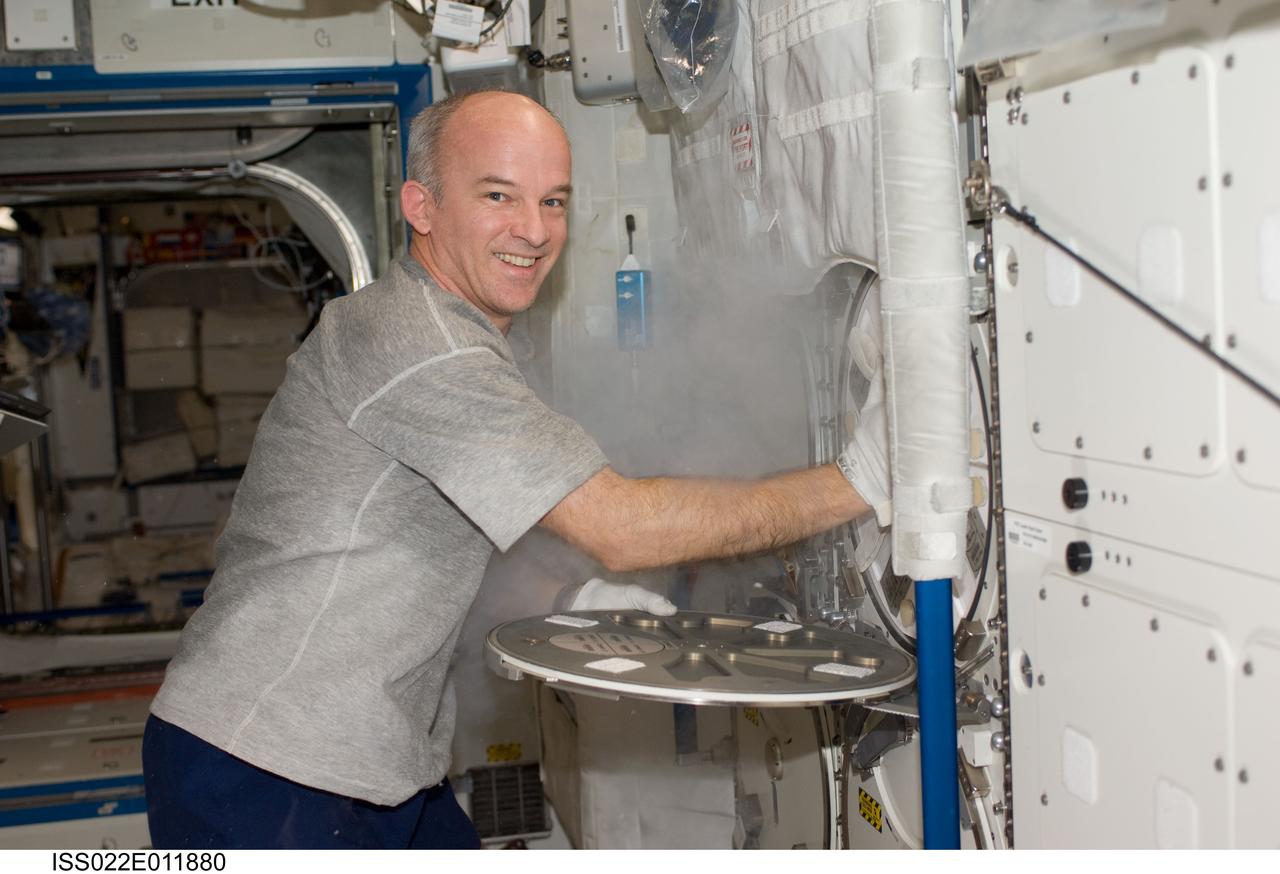
ISS022-E-011880 (16 Dec. 2009) --- NASA astronaut Jeffrey Williams, Expedition 22 commander, services the Advanced Plant Experiments on Orbit-Cambium (APEX-C) payload in the Minus Eighty Laboratory Freezer for ISS-2 (MELFI-2) in the Destiny laboratory of the International Space Station.
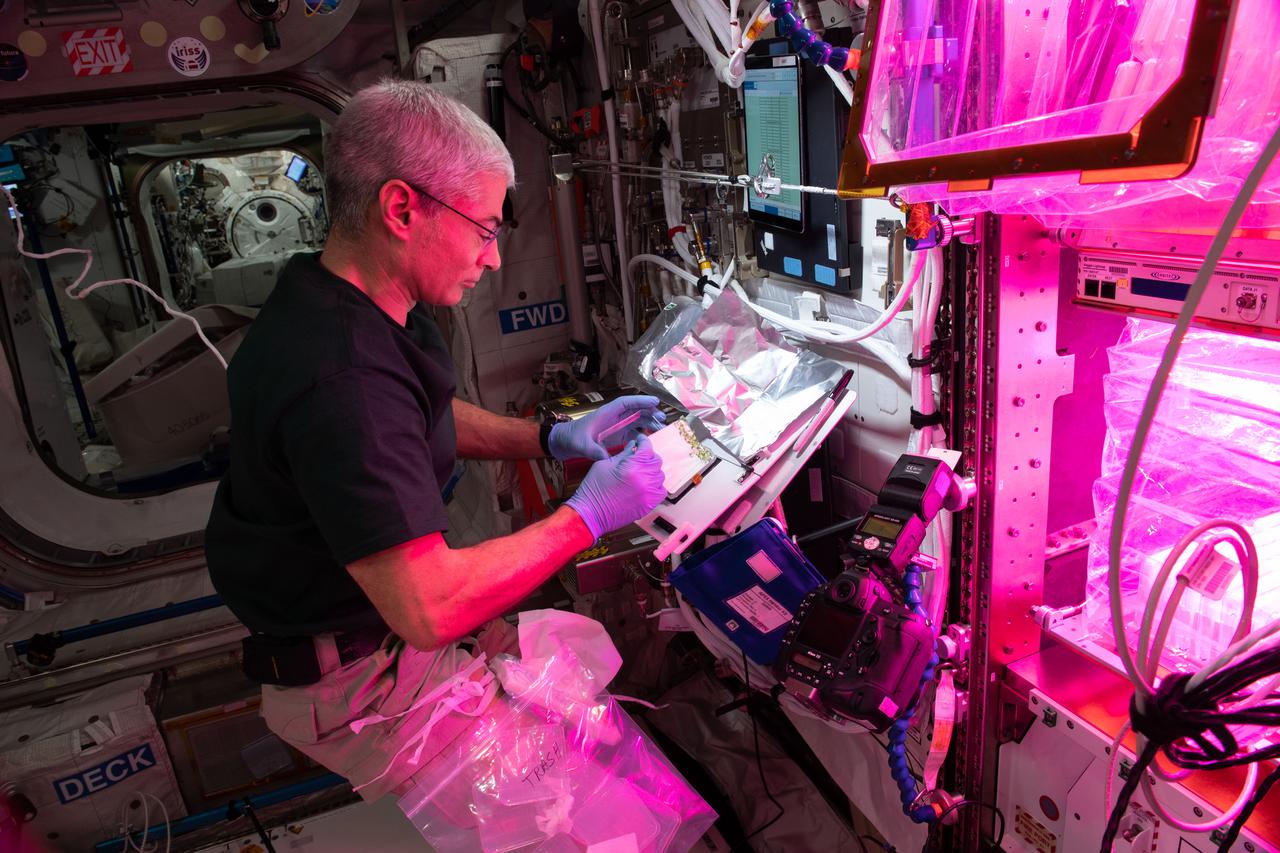
iss065e147928 (June 26, 2021) --- NASA astronaut and Expedition 65 Flight Engineer Mark Vande Hei harvests plants growing in petri plates inside the Veggie facility for the APEX-7 (Advanced Plant Experiment-07) space botany study.
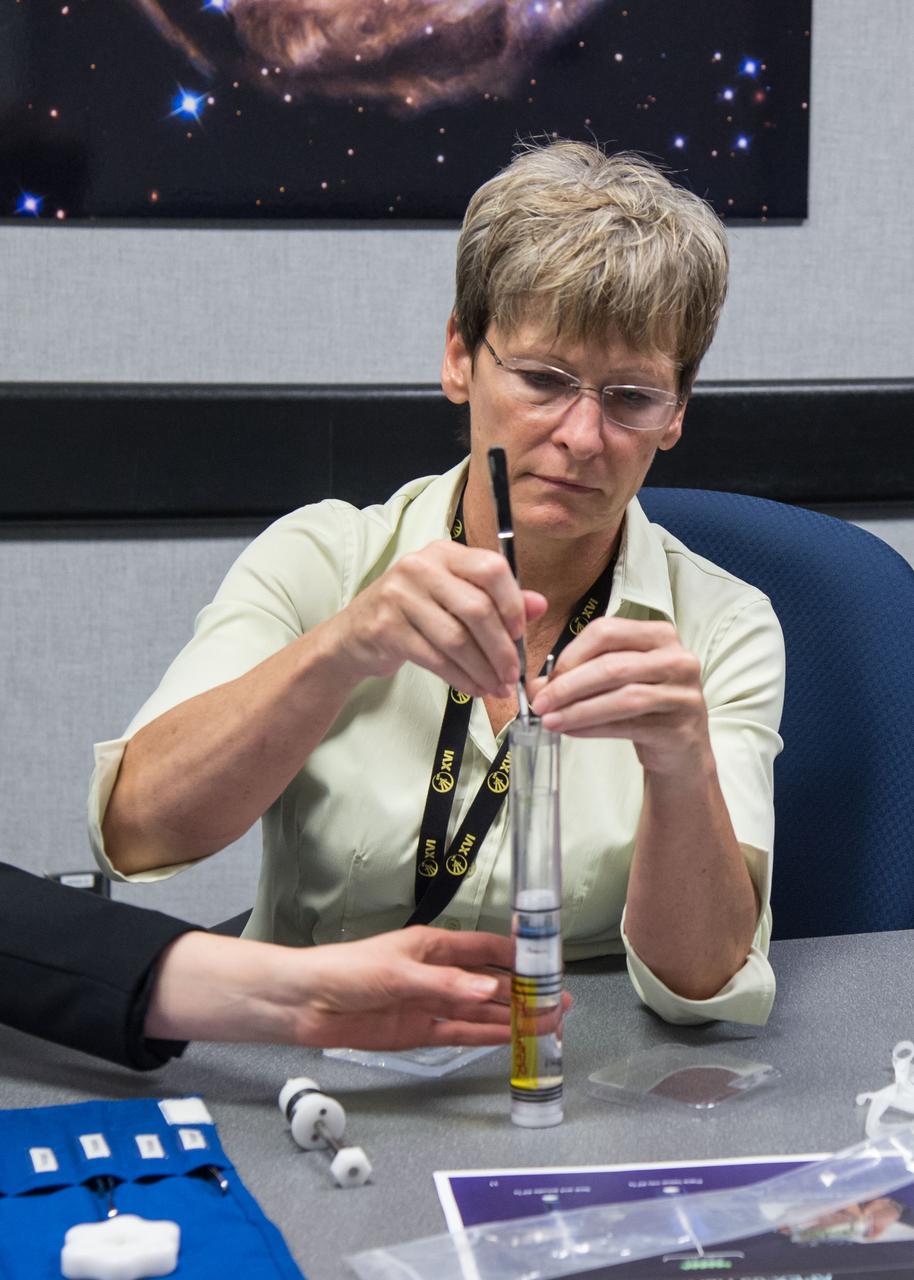
Photo Date: 03/30/16 Location: JSC B5, Room 3101 Subject: Expedition 50/51 crew member Peggy Whitson during P APEX hardware and science objectives training with instructors Kathy Brown and Nancy Horvath. Photographer: Regan Geeseman
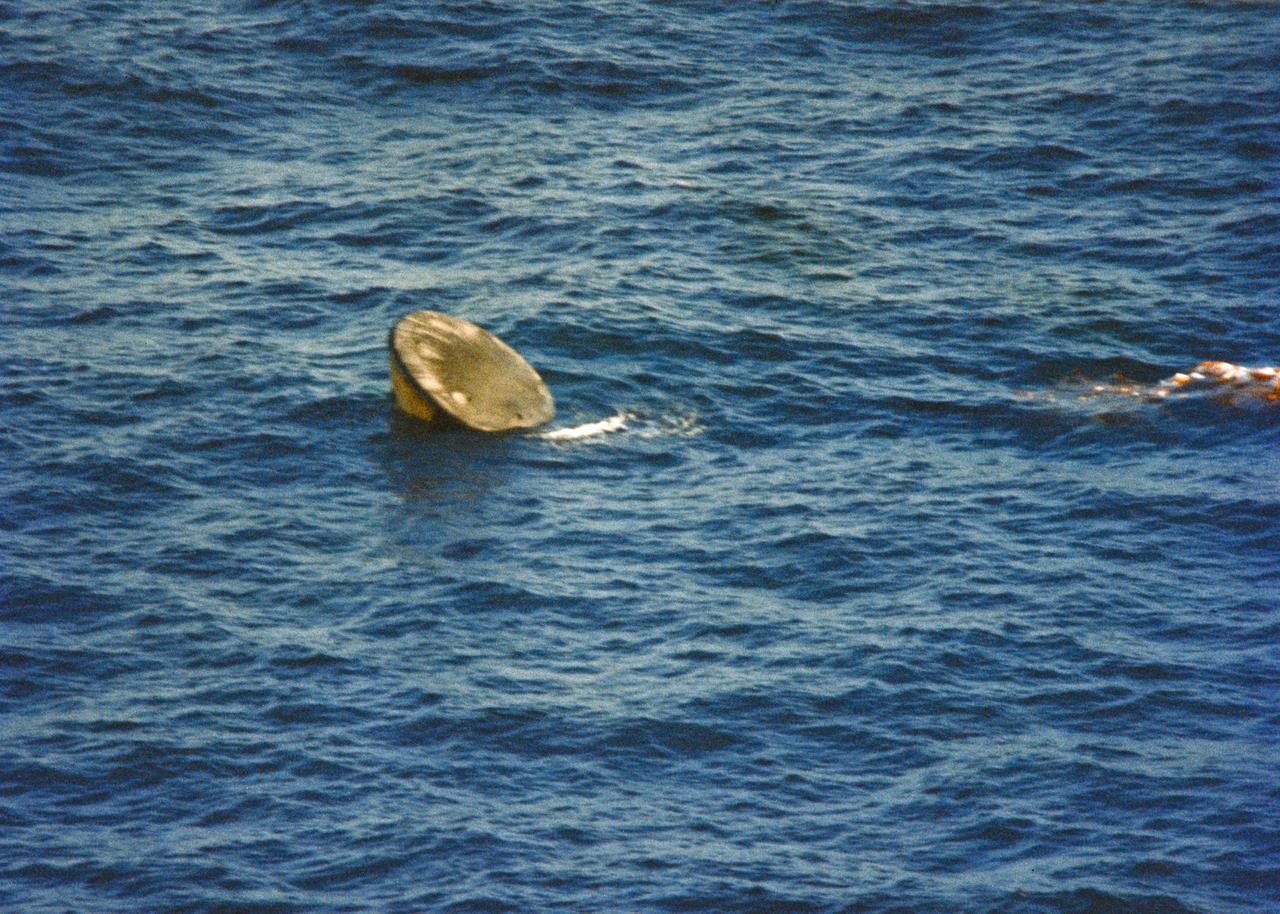
S74-17742 (8 Feb. 1974) --- The Skylab 4 Command Module bobs in an apex-down configuration (stable two) in the calm water of the Pacific Ocean 176 miles southwest of San Diego, California, following a successful splashdown and 84-day mission in Earth orbit. Photo credit: NASA
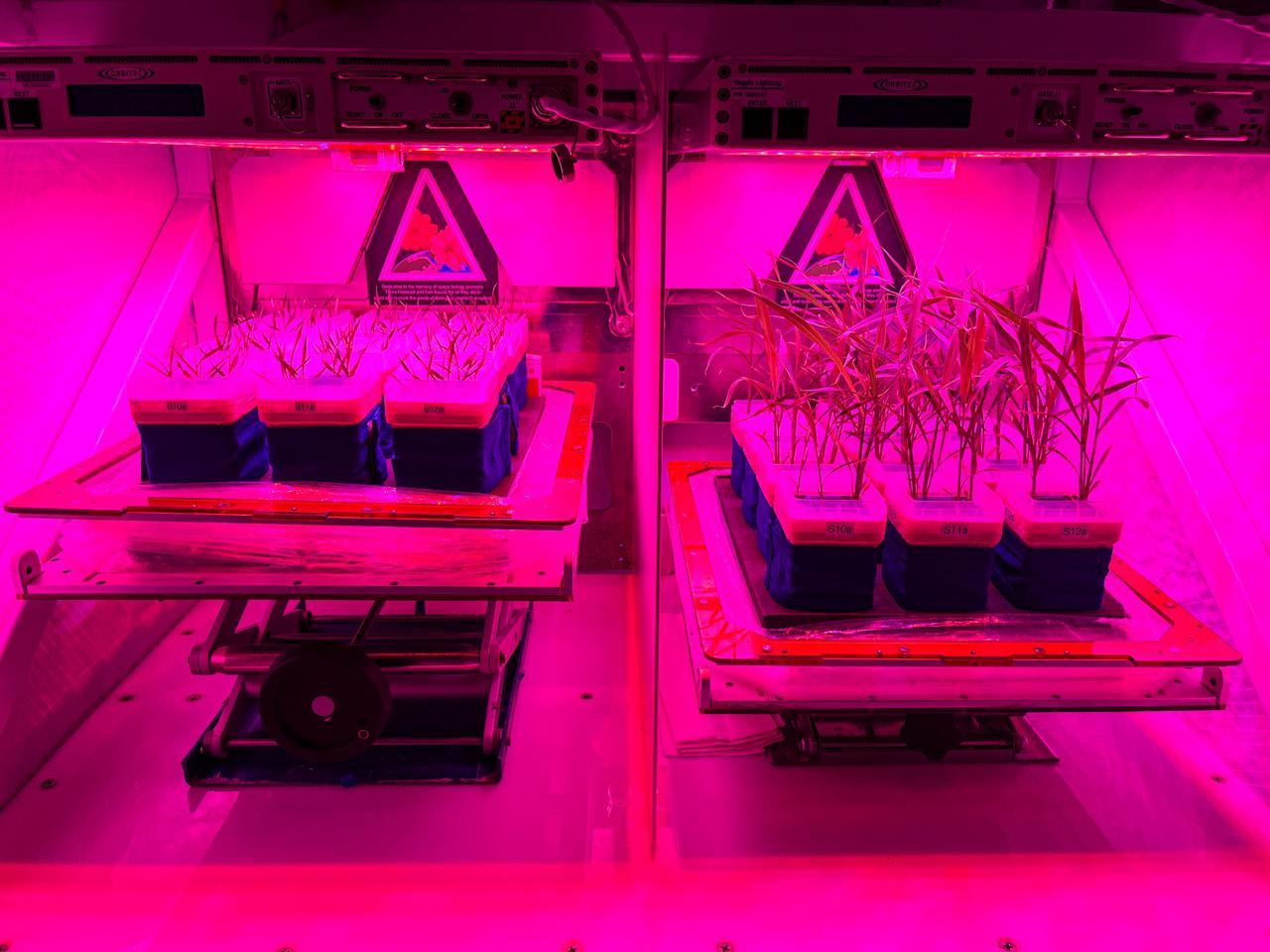
jsc2024e016234 (10/12/2023) --- Brachypodium and Setaria were grown in the Plant Growth Systems (PGS) and tested under International Space Station environmental conditions using the Veggie units at NASA's Kennedy Space Center during the APEX-09 Experiment Verification Test.
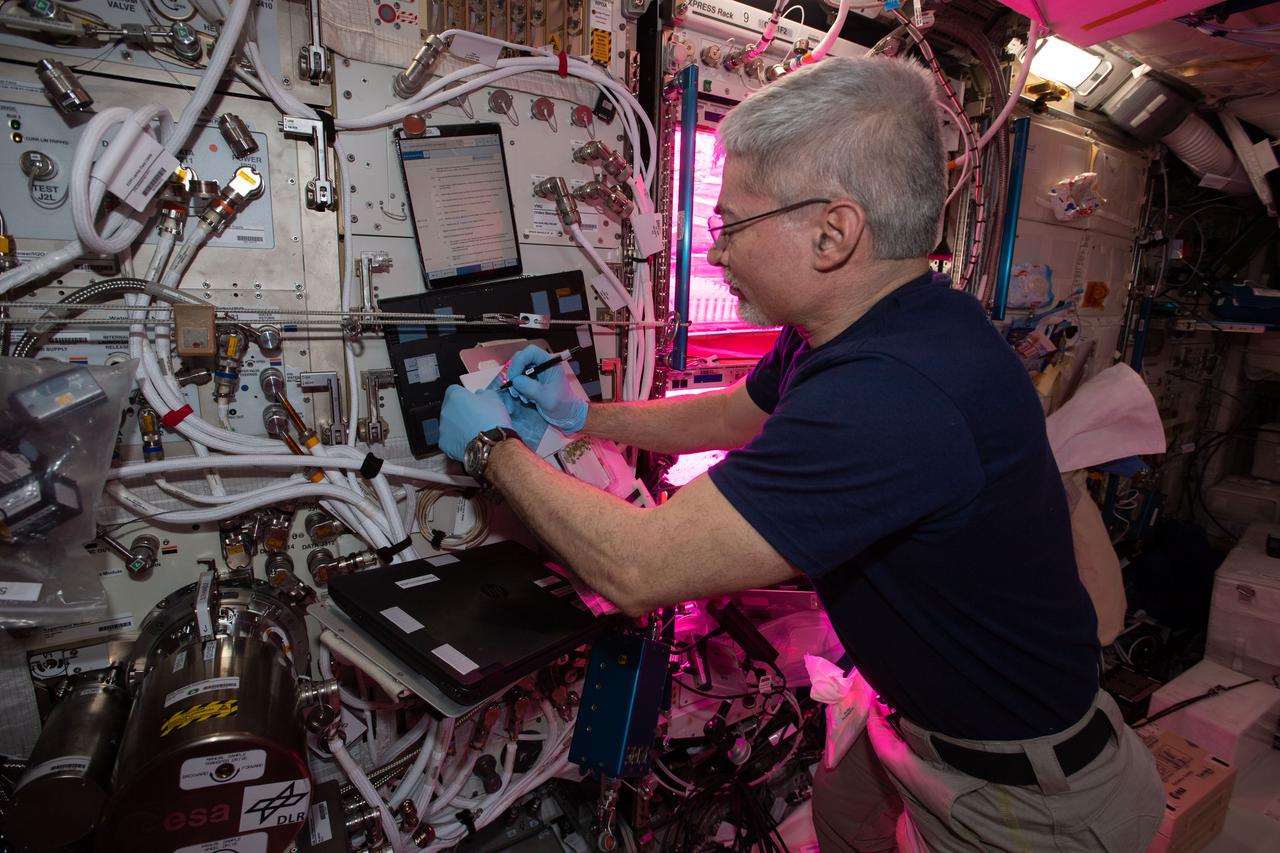
iss066e110211 (Jan. 10, 2022) --- NASA astronaut and Expedition 66 Flight Engineer Mark Vande Hei harvests plants grown on petri plates for the APEX-07 (Advanced Plant Experiments) space botany study that is exploring how microgravity affects genetic expression in plants.
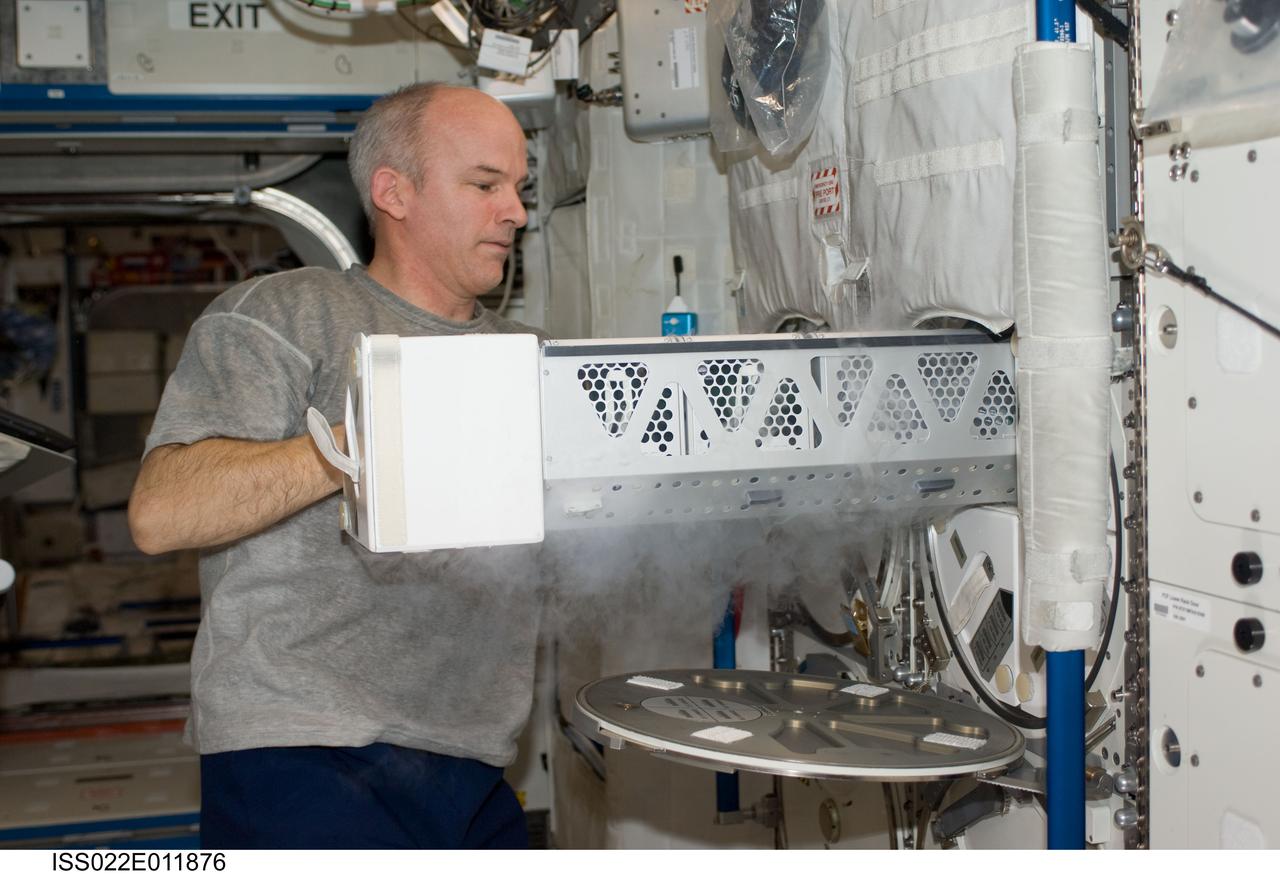
ISS022-E-011876 (16 Dec. 2009) --- NASA astronaut Jeffrey Williams, Expedition 22 commander, services the Advanced Plant Experiments on Orbit-Cambium (APEX-C) payload in the Minus Eighty Laboratory Freezer for ISS-2 (MELFI-2) in the Destiny laboratory of the International Space Station.
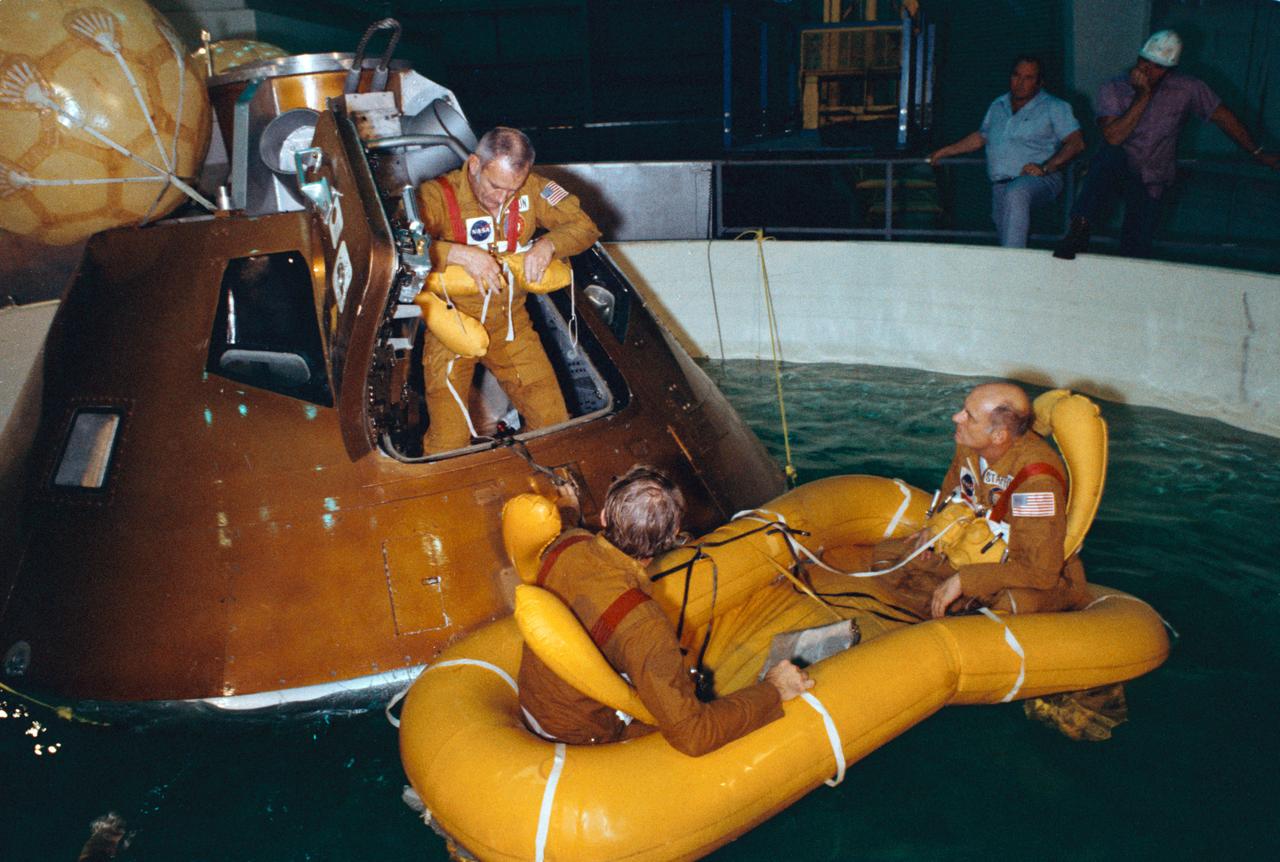
S75-23431 (8 March 1975) --- Astronaut Donald K. Slayton attaches his life preserver as he egresses an Apollo Command Module trainer in a water tank in Building 260 during water egress training at NASA's Johnson Space Center. The crewmen exit through the hatch when the CM is in this stable I (apex up) position; and they egress through the tunnel when the CM is in a stable II (apex down) position. Astronauts Vance D. Brand (on left) and Thomas P. Stafford have already egressed the trainer and are seated in a three-man life raft. This training session was part of the preparations for the joint U.S.-USSR Apollo-Soyuz Test Project docking mission in Earth orbit scheduled for July 1975. These three men compose the American ASTP prime crew. Stafford is the commander, Brand is the command module pilot, and Slayton is the docking module pilot.
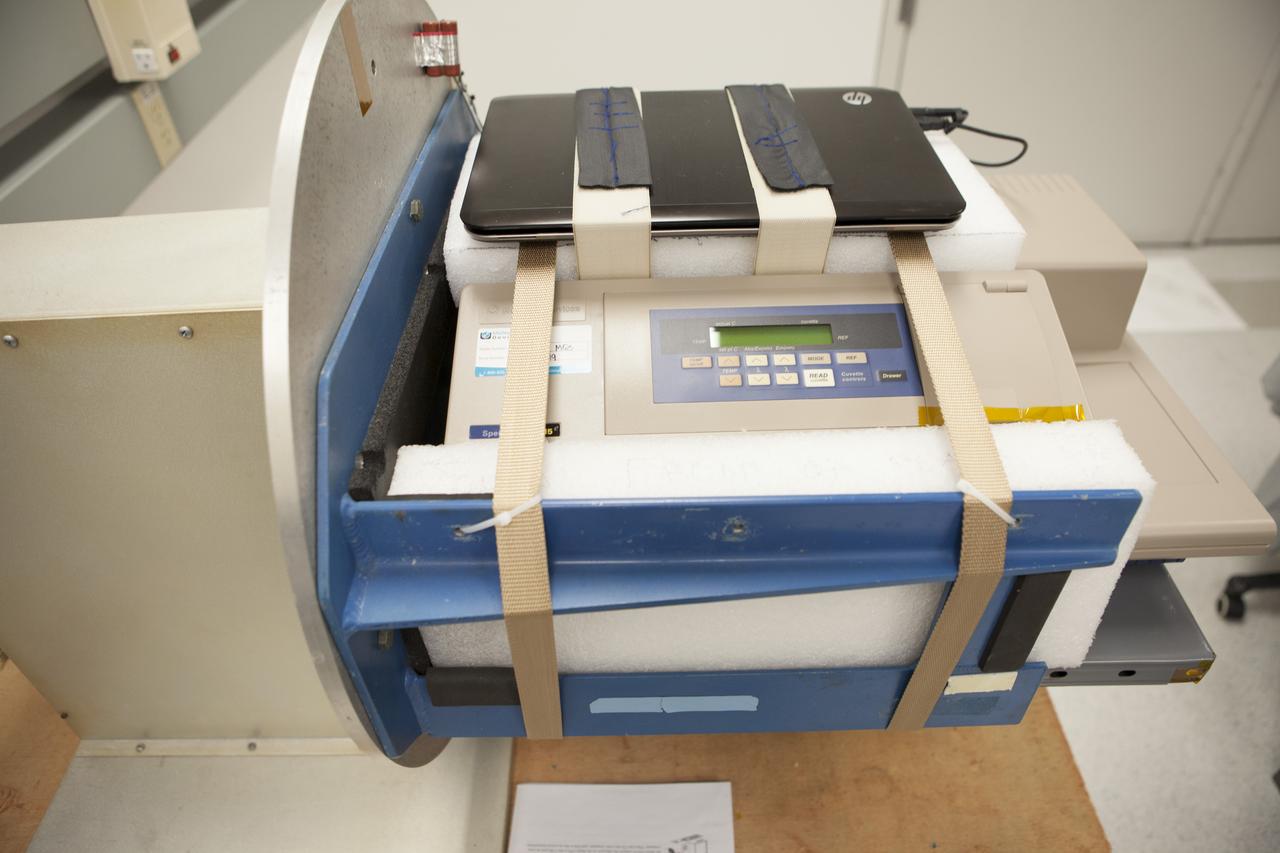
CAPE CANAVERAL, Fla. - In the Space Station Processing Facility at NASA's Kennedy Space Center in Florida, equipment supporting the Advanced Plant Experiment, or APEX, experiment is being prepared for launch to the International Space Station aboard a SpaceX Dragon spacecraft. The APEX investigation examines white spruce, picea glauca, to understand the influence of gravity on plant physiology, growth, and on the genetics of wood formation. Scheduled for launch on March 16 atop a Falcon 9 rocket, Dragon will be marking its fourth trip to the space station. The SpaceX-3 mission is the third of 12 flights contracted by NASA to resupply the orbiting laboratory. For more information, visit http://www.nasa.gov/mission_pages/station/structure/launch/index.html Photo credit: NASA/Kim Shiflett
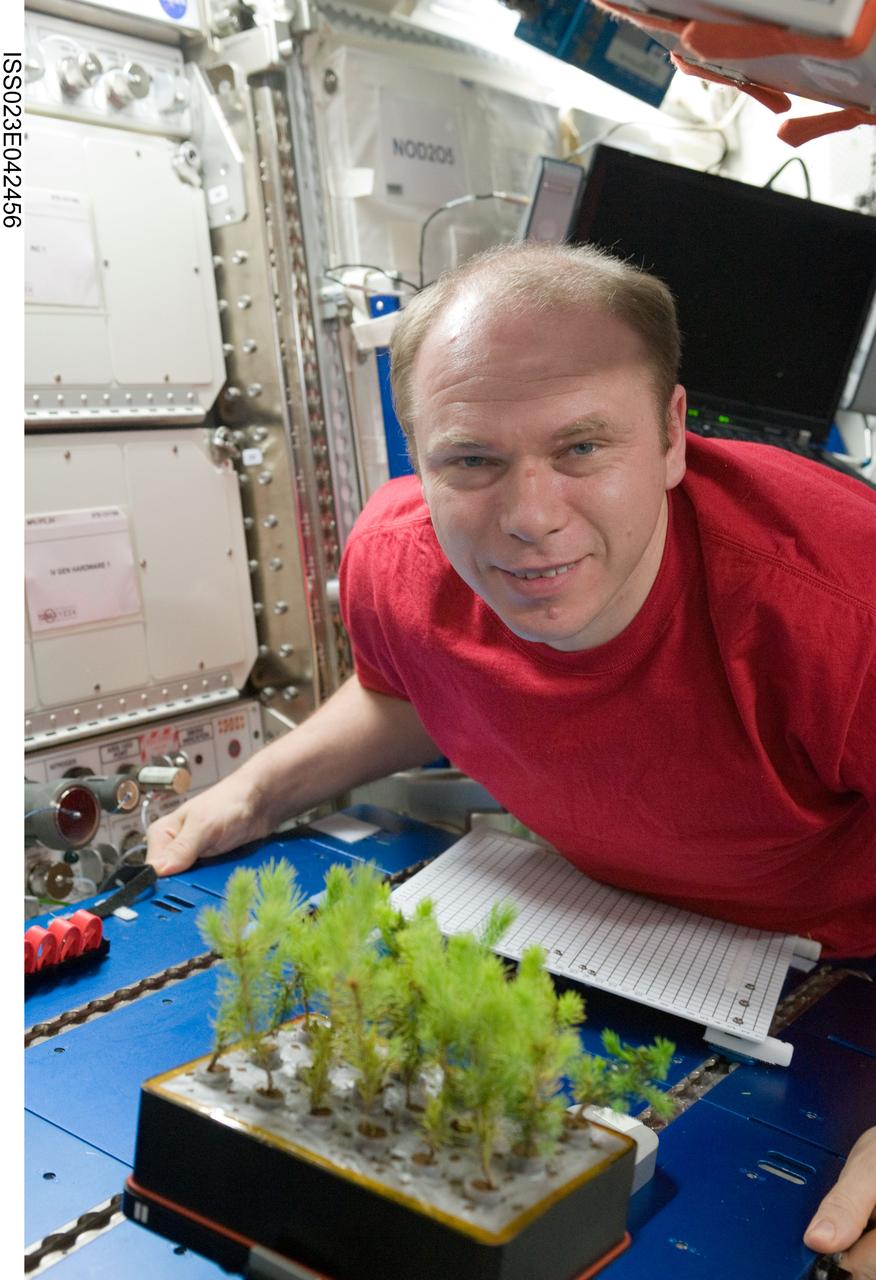
ISS023-E-042456 (10 May 2010) --- Russian cosmonaut Oleg Kotov, Expedition 23 commander, poses for a photo with a plant experiment in the Destiny laboratory of the International Space Station.
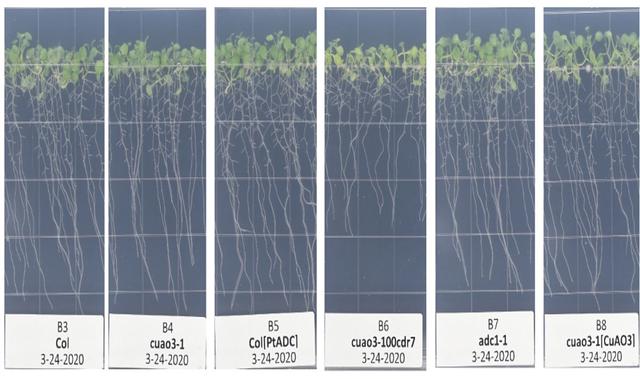
jsc2021e036657 (8/11/2021) --- Arabidopsis thaliana seedlings following 9 days of growth on 1.2% agar-based media in petri dishes in the VEGGIE growth chamber under temperature, humidity and CO2 conditions mimicking those recorded at the International Space Station. The genotypes of these plants are indicated at the bottom of each panel. These images were taken during the Science Verification Test carried out at NASA Kennedy Space Center. All genotypes grew equally well under these conditions except for the cuao3-100cdr7 mutant, which grew more slowly.
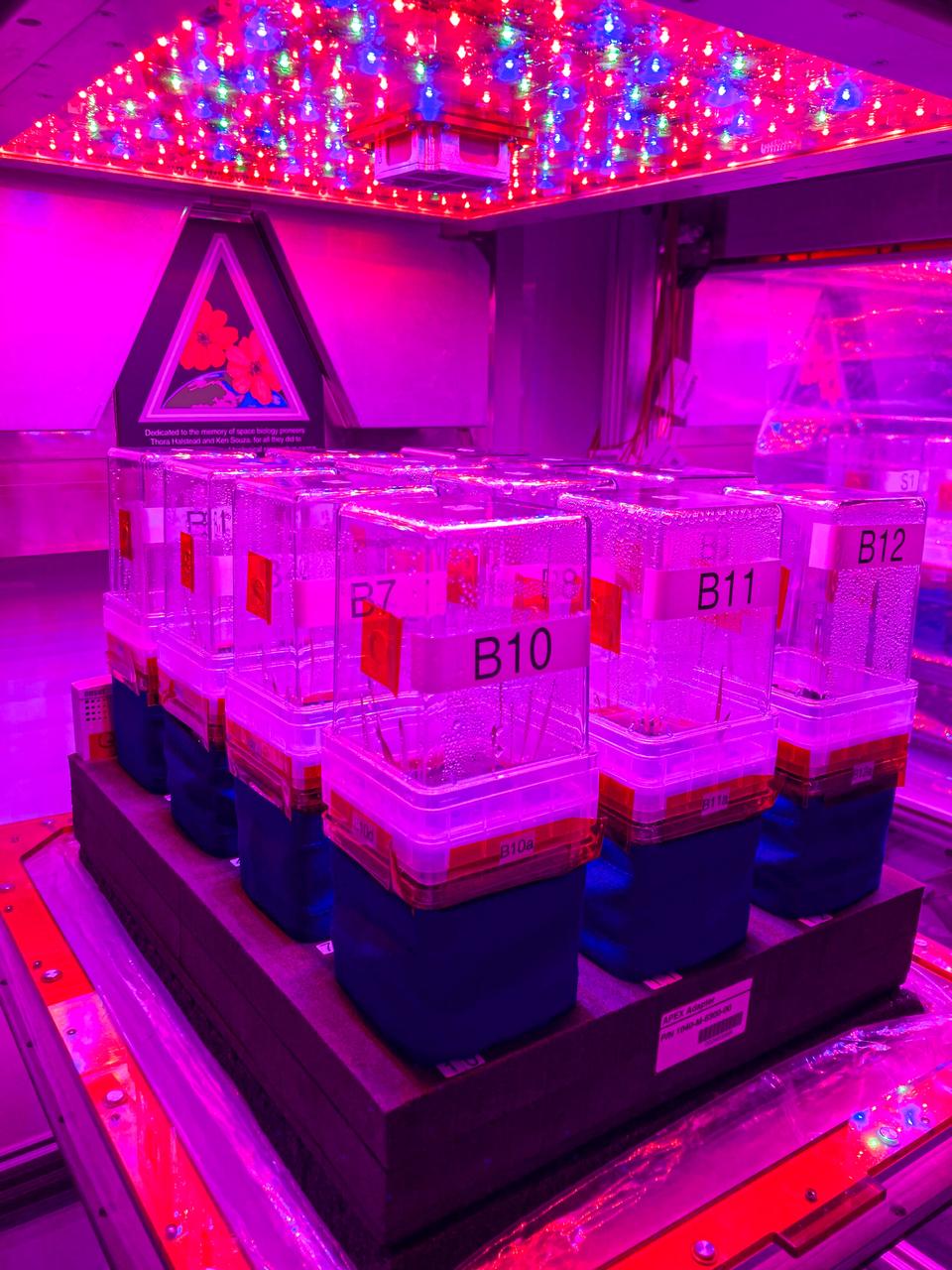
jsc2024e016235 (10/19/2022) --- The Vegetable Production System (Veggie) is used to grow Brachypodium and Setaria in the International Space Station and on Earth at NASA's Kennedy Space Center. C4 Photosynthesis in Space (C4 Space) (APEX-09) observes two plant species with differing mechanisms for capturing CO2 during photosynthesis. Researchers aim to uncover changes that occur in plant metabolism when they are exposed to microgravity, which could improve planning for bio-regenerative support systems on deep exploration missions.
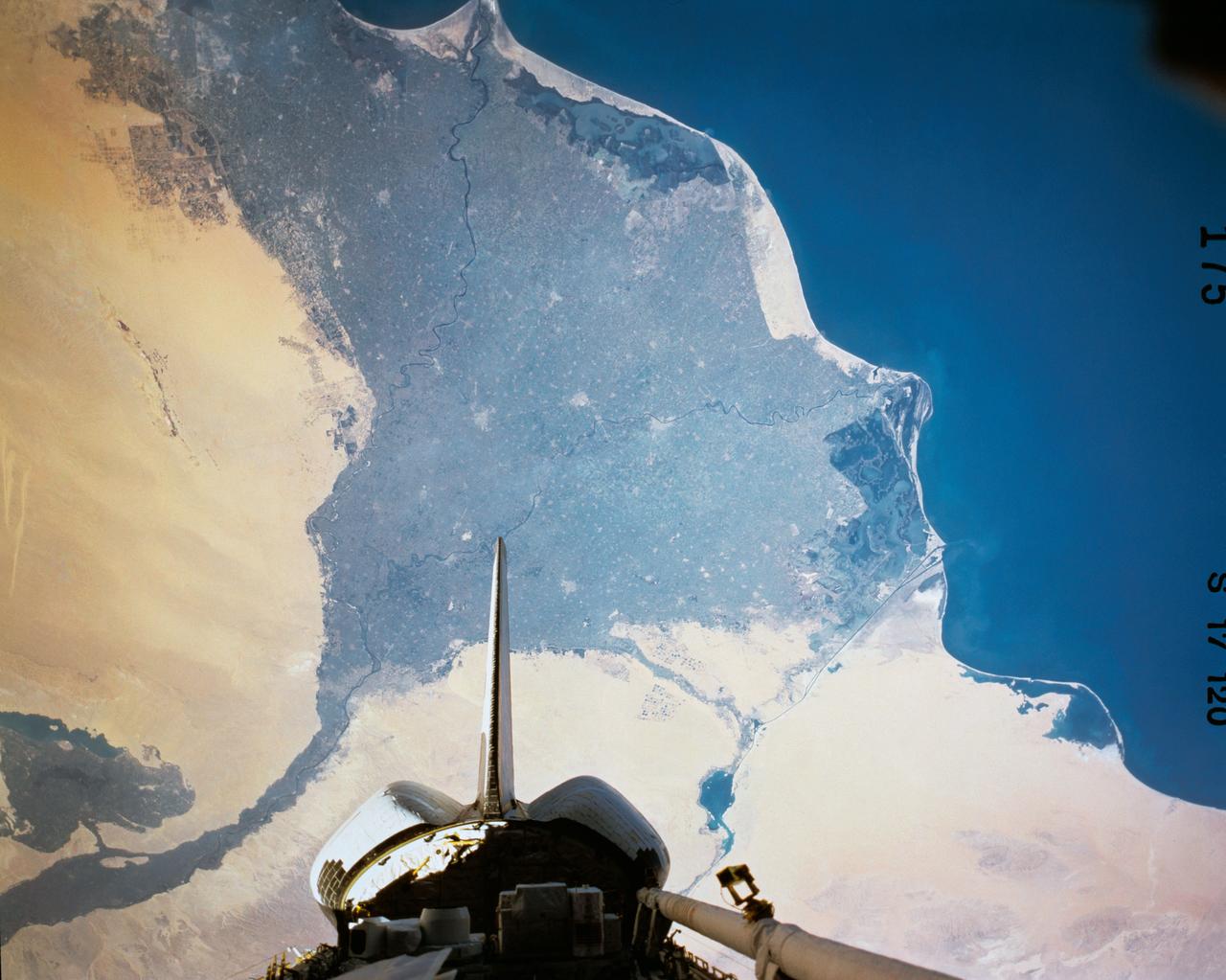
The Nile River Delta of Egypt (30.0N, 31.0E) irrigated by the Nile River and its many distributaries, is some of the richest farm land in the world and home to some 45 million people, over half of Egypt's population. The capital city of Cairo is at the apex of the delta. Just across the river from Cairo can be seen the ancient three big pyramids and sphinx at Giza and the Suez Canal is just to the right of the delta.
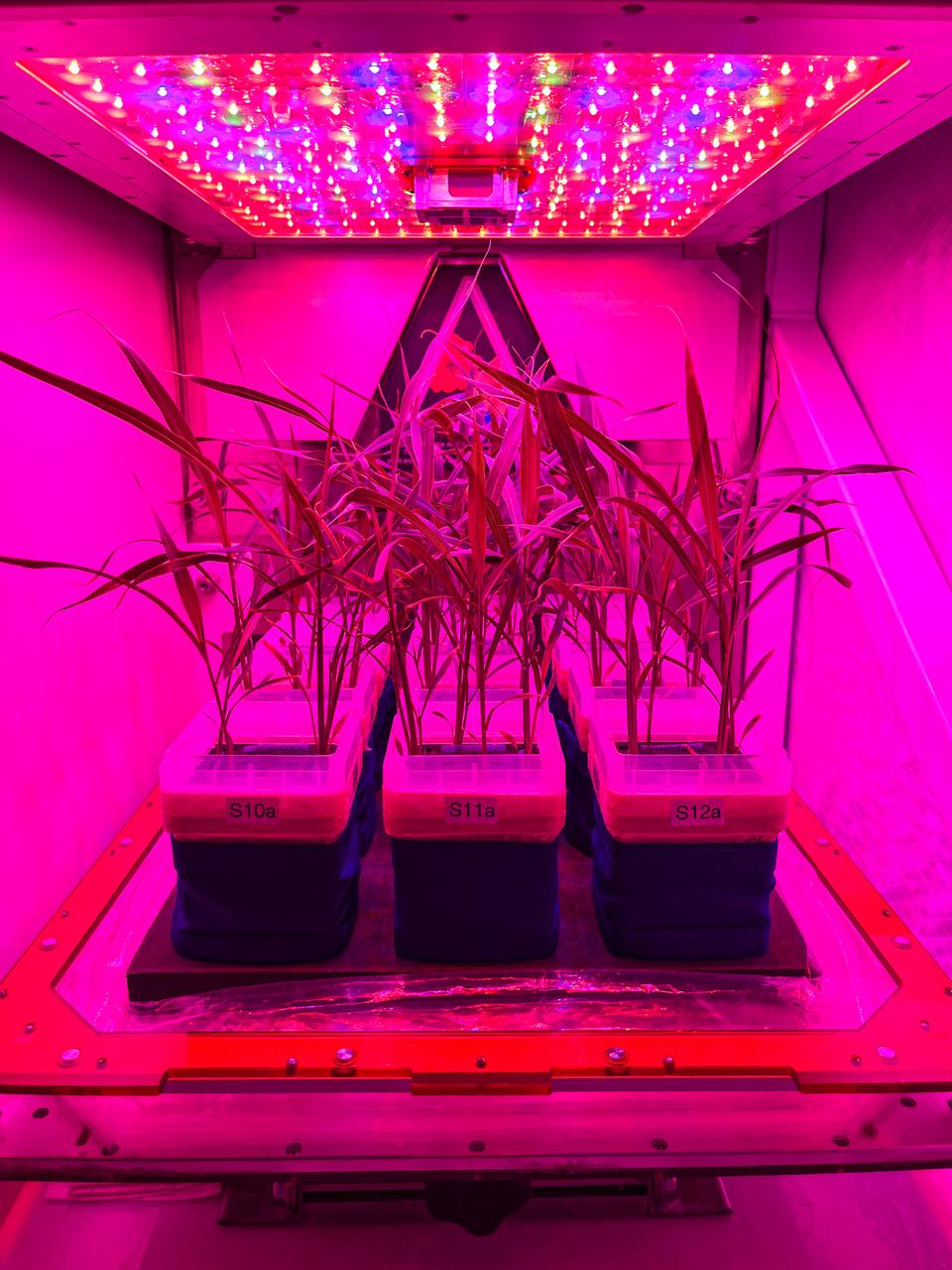
jsc2024e016233 (10/12/2023) --- The C4 Space project will grow and test Setaria, a C4 model grass species. APEX-09 observes two plant species (C3 and C4) with differing mechanisms for capturing CO2 during photosynthesis. Researchers aim to uncover the molecular changes that occur in plants when they are exposed to microgravity and a combination of space flight stressors. Image courtesy of Dr. Handakumbura.
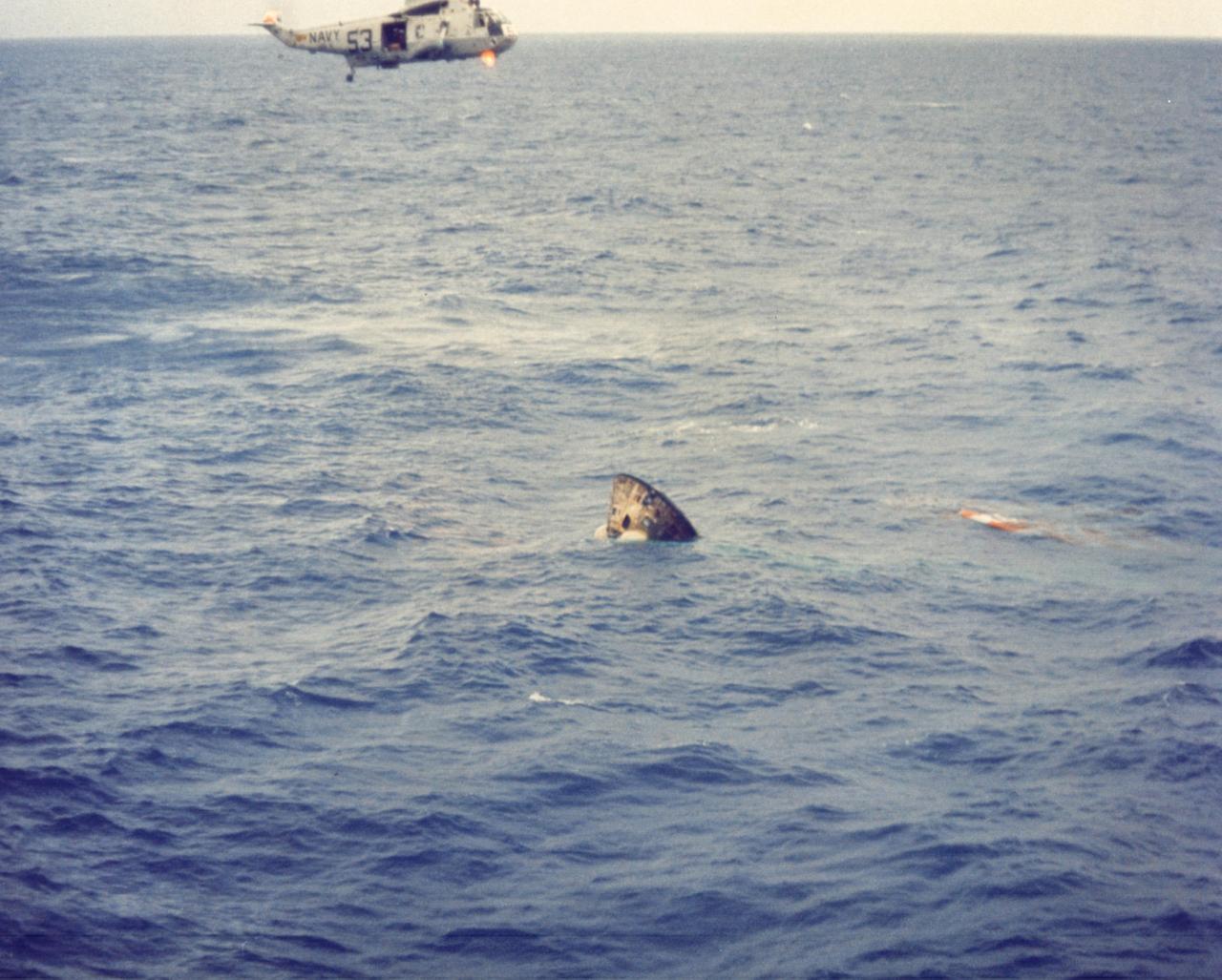
JOHNSON SPACE CENTER, HOUSTON, TEXAS - A recovery helicopter hovers above the Apollo 11 spacecraft seconds after it splashed down in the Pacific Ocean July 24, 1969, at 12:50 p.m. EDT 900 miles southwest of Hawaii. The spacecraft turned apex down after impact, as shown here, but inflatable bags repositioned it shortly after this view was taken.
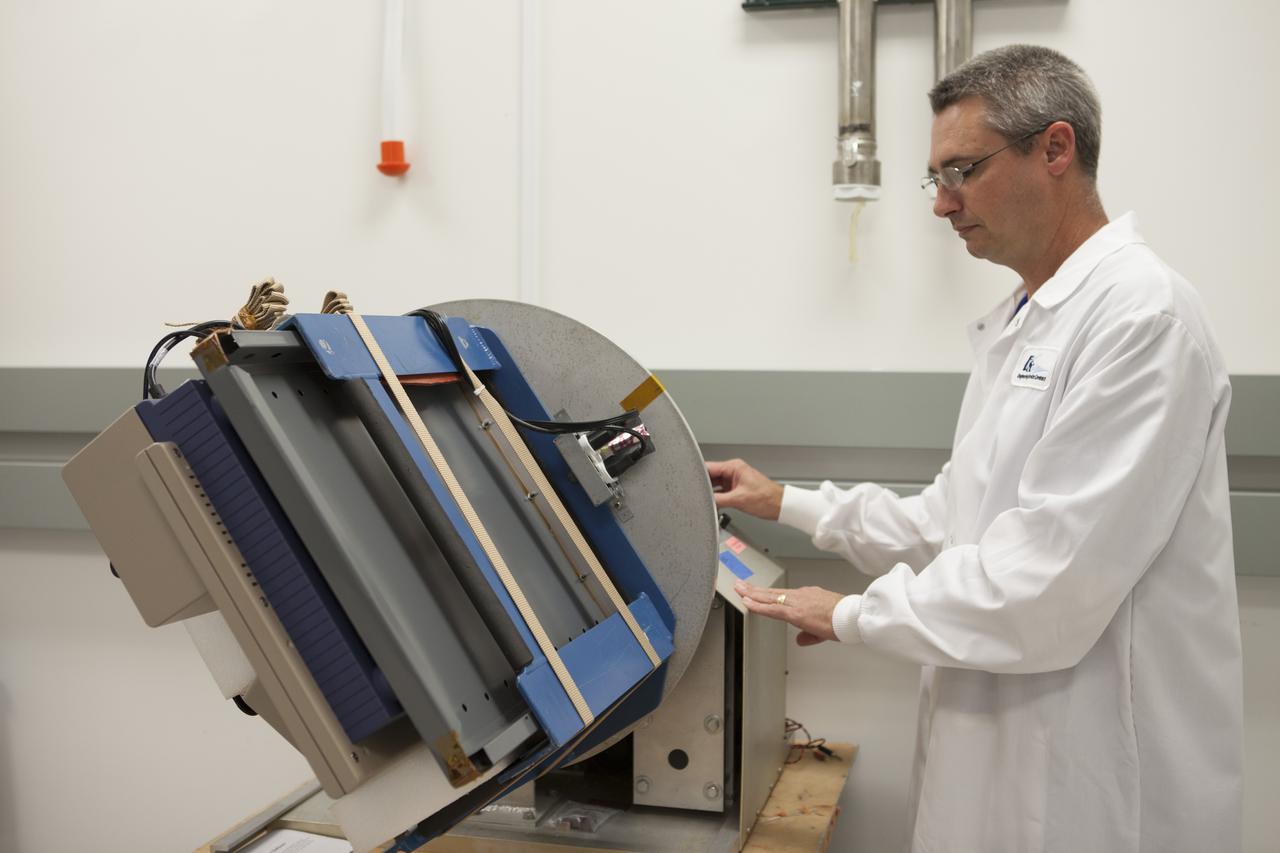
CAPE CANAVERAL, Fla. - In the Space Station Processing Facility at NASA's Kennedy Space Center in Florida, Donald Houzer, a QinetiQ North America mechanical technician checks out the Advanced Plant Experiment, or APEX, experiment as it is being prepared for launch to the International Space Station aboard a SpaceX Dragon spacecraft. Scheduled for launch on March 16 atop a Falcon 9 rocket, Dragon will be marking its fourth trip to the space station. The SpaceX-3 mission is the third of 12 flights contracted by NASA to resupply the orbiting laboratory. For more information, visit http://www.nasa.gov/mission_pages/station/structure/launch/index.html Photo credit: NASA/Kim Shiflett
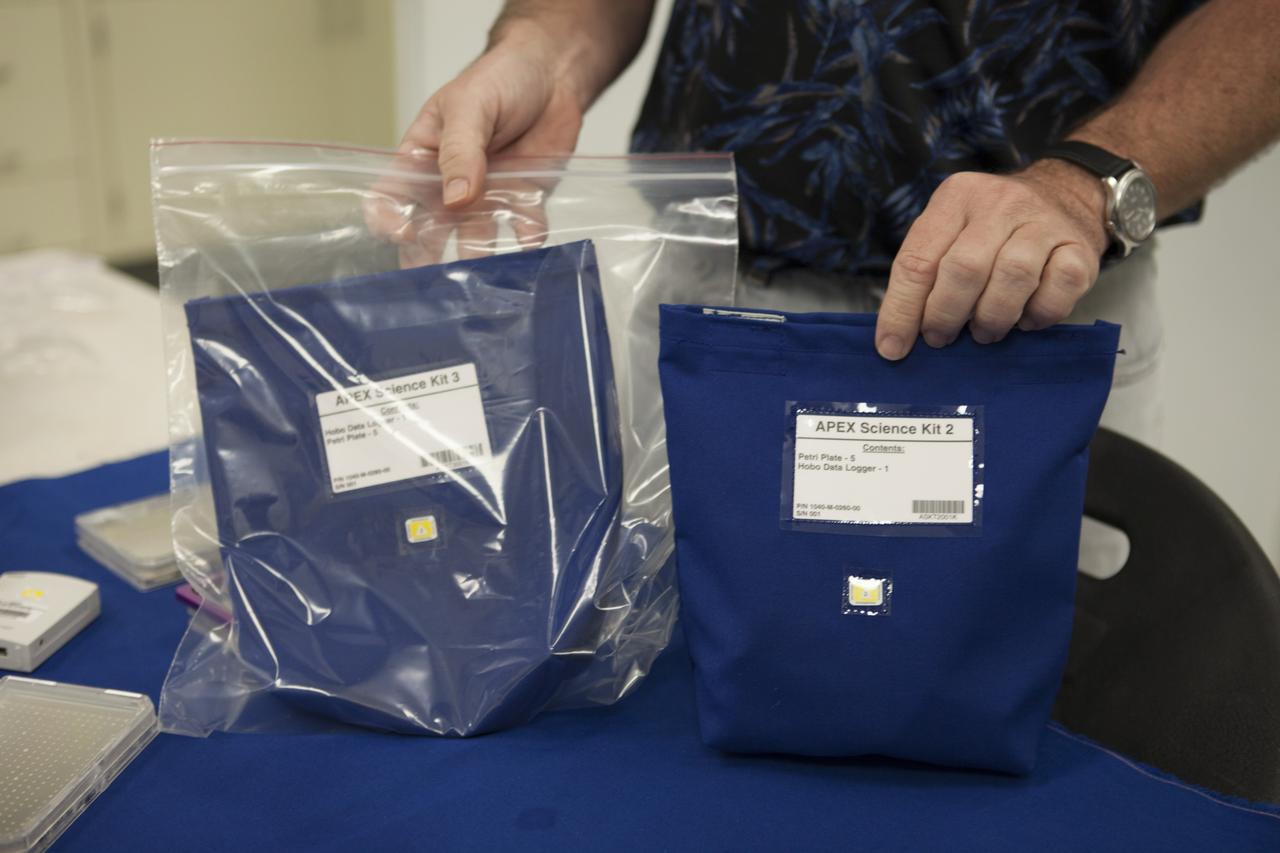
CAPE CANAVERAL, Fla. - In the Space Station Processing Facility at NASA's Kennedy Space Center in Florida, portions of the Advanced Plant Experiment, or APEX, experiment are checked out as it is prepared for launch to the International Space Station aboard a SpaceX Dragon spacecraft. Scheduled for launch on March 16 atop a Falcon 9 rocket, Dragon will be marking its fourth trip to the space station. The SpaceX-3 mission is the third of 12 flights contracted by NASA to resupply the orbiting laboratory. For more information, visit http://www.nasa.gov/mission_pages/station/structure/launch/index.html Photo credit: NASA/Kim Shiflett

CAPE CANAVERAL, Fla. - In the Space Station Processing Facility at NASA's Kennedy Space Center in Florida, a portion of the Advanced Plant Experiment, or APEX, experiment is checked out as it is prepared for launch to the International Space Station aboard a SpaceX Dragon spacecraft. Scheduled for launch on March 16 atop a Falcon 9 rocket, Dragon will be marking its fourth trip to the space station. The SpaceX-3 mission is the third of 12 flights contracted by NASA to resupply the orbiting laboratory. For more information, visit http://www.nasa.gov/mission_pages/station/structure/launch/index.html Photo credit: NASA/Kim Shiflett

CAPE CANAVERAL, Fla. - In the Space Station Processing Facility at NASA's Kennedy Space Center in Florida, John Carver, a project manager with Jacobs Technology checks the Advanced Plant Experiment, or APEX, experiment as it is being prepared for launch to the International Space Station aboard a SpaceX Dragon spacecraft. Scheduled for launch on March 16 atop a Falcon 9 rocket, Dragon will be marking its fourth trip to the space station. The SpaceX-3 mission is the third of 12 flights contracted by NASA to resupply the orbiting laboratory. For more information, visit http://www.nasa.gov/mission_pages/station/structure/launch/index.html Photo credit: NASA/Kim Shiflett
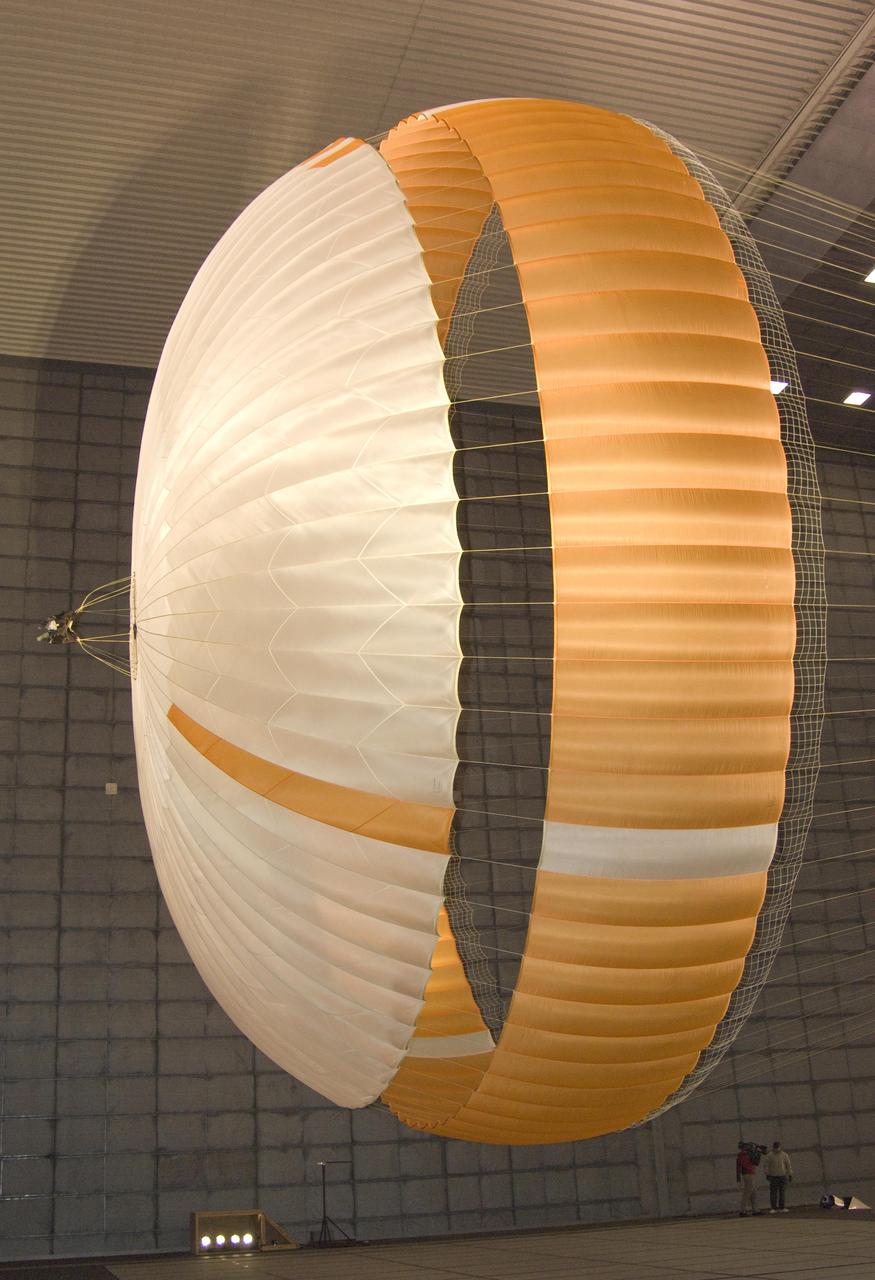
The parachute for NASA Mars Science Laboratory mission opens to a diameter of nearly 16 meters 51 feet. This image shows a duplicate qualification-test parachute inside the world's largest wind tunnel, at NASA Ames Research Center, Moffett Field, Calif. The Mars Science Laboratory will be launched in 2011 for a landing on Mars in 2012. Its parachute is the largest ever built to fly on an extraterrestrial mission. The parachute uses a configuration called disk-gap-band, with 80 suspension lines. Most of the orange and white fabric is nylon, though a small disk of heavier polyester is used near the vent in the apex of the canopy due to higher stresses there. http://photojournal.jpl.nasa.gov/catalog/PIA11994
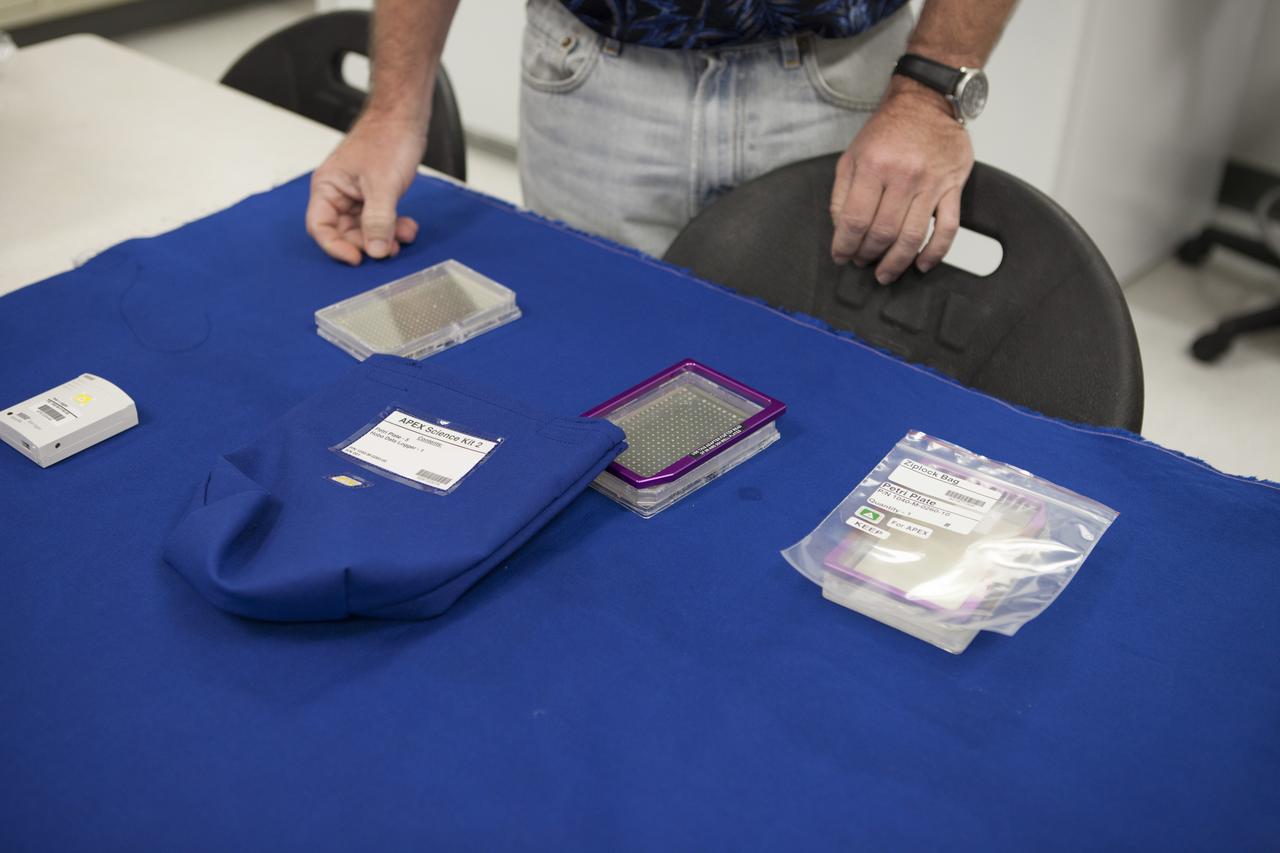
CAPE CANAVERAL, Fla. - In the Space Station Processing Facility at NASA's Kennedy Space Center in Florida, portions of the Advanced Plant Experiment, or APEX, experiment are checked out as it is prepared for launch to the International Space Station aboard a SpaceX Dragon spacecraft. Scheduled for launch on March 16 atop a Falcon 9 rocket, Dragon will be marking its fourth trip to the space station. The SpaceX-3 mission is the third of 12 flights contracted by NASA to resupply the orbiting laboratory. For more information, visit http://www.nasa.gov/mission_pages/station/structure/launch/index.html Photo credit: NASA/Kim Shiflett
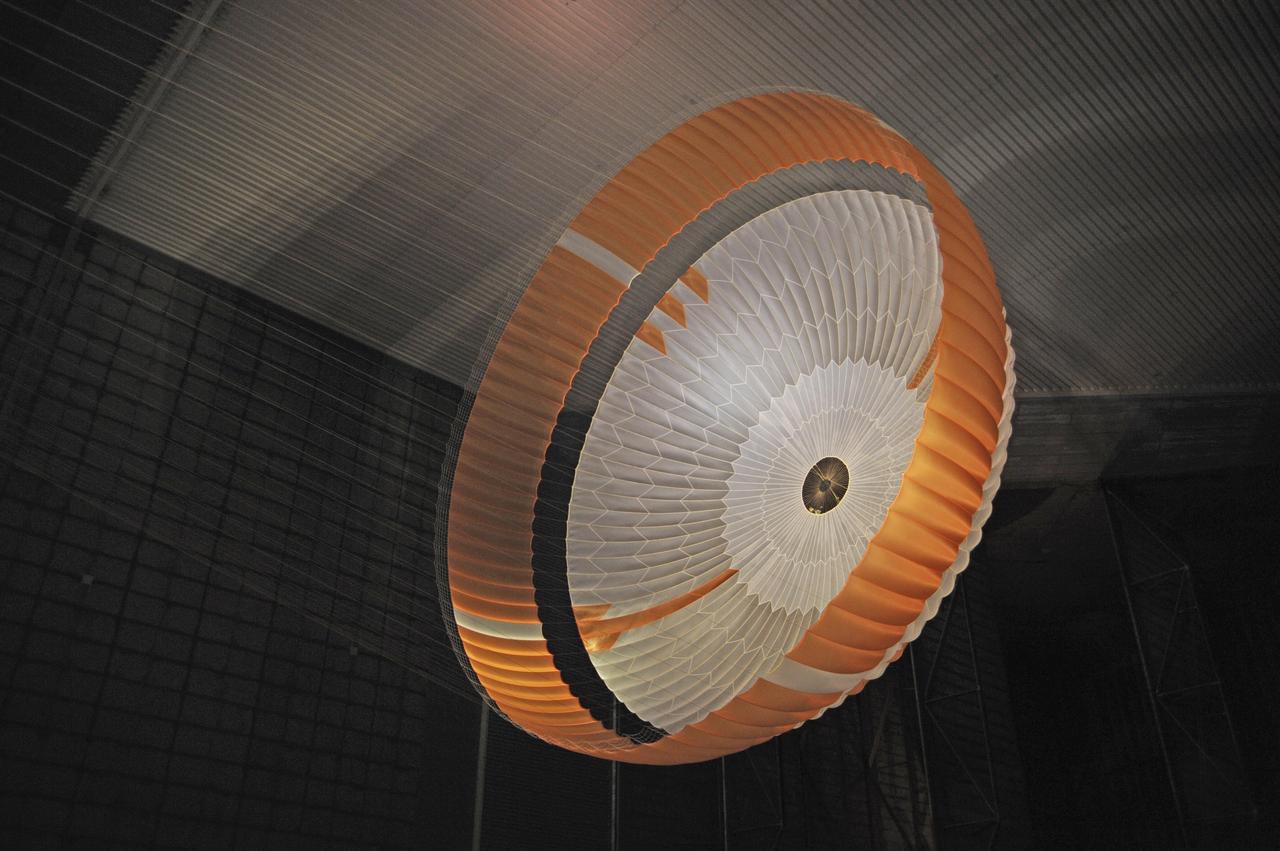
Testing during March and April 2009 inside the world largest wind tunnel, at NASA Ames Research Center, Moffett Field, Calif., qualified the parachute for NASA next Mars rover. The parachute for NASA's Mars Science Laboratory mission, to be launched in 2011 and land on Mars in 2012, is the largest ever built to fly on an extraterrestrial mission. This image shows the qualification-test parachute beginning to open a few seconds after it was launched from a mortar into an 80-mile-per-hour (36-meter-per-second) wind. The parachute uses a configuration called disk-gap-band. It has 80 suspension lines, measures more than 50 meters (165 feet) in length, and opens to a diameter of nearly 16 meters (51 feet). Most of the orange and white fabric is nylon, though a small disk of heavier polyester is used near the vent in the apex of the canopy due to higher stresses there. http://photojournal.jpl.nasa.gov/catalog/PIA11993
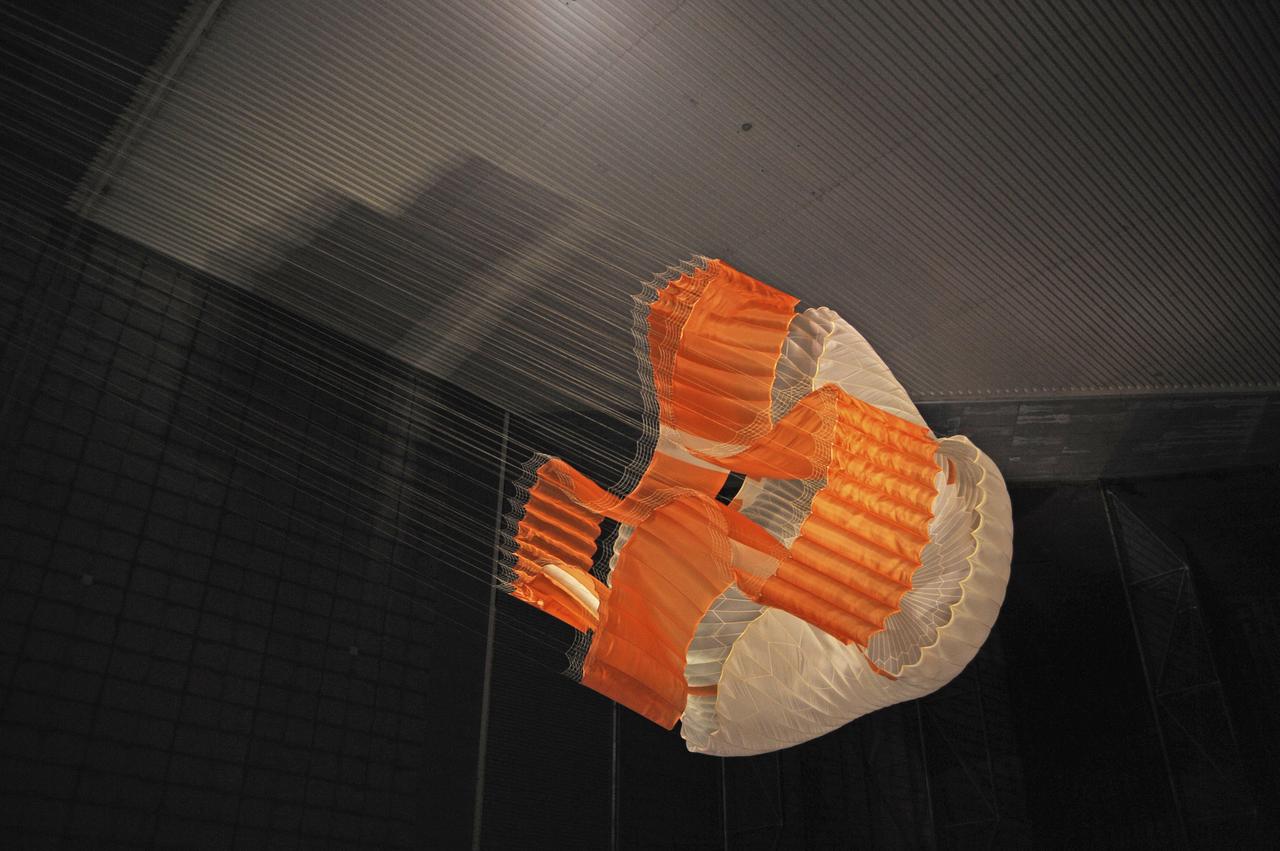
Testing during March and April 2009 inside the world largest wind tunnel, at NASA Ames Research Center, Moffett Field, Calif., qualified the parachute for NASA next Mars rover. The parachute for NASA's Mars Science Laboratory mission, to be launched in 2011 and land on Mars in 2012, is the largest ever built to fly on an extraterrestrial mission. This image shows the qualification-test parachute beginning to open a few seconds after it was launched from a mortar into an 80-mile-per-hour (36-meter-per-second) wind. The parachute uses a configuration called disk-gap-band. It has 80 suspension lines, measures more than 50 meters (165 feet) in length, and opens to a diameter of nearly 16 meters (51 feet). Most of the orange and white fabric is nylon, though a small disk of heavier polyester is used near the vent in the apex of the canopy due to higher stresses there. http://photojournal.jpl.nasa.gov/catalog/PIA11992
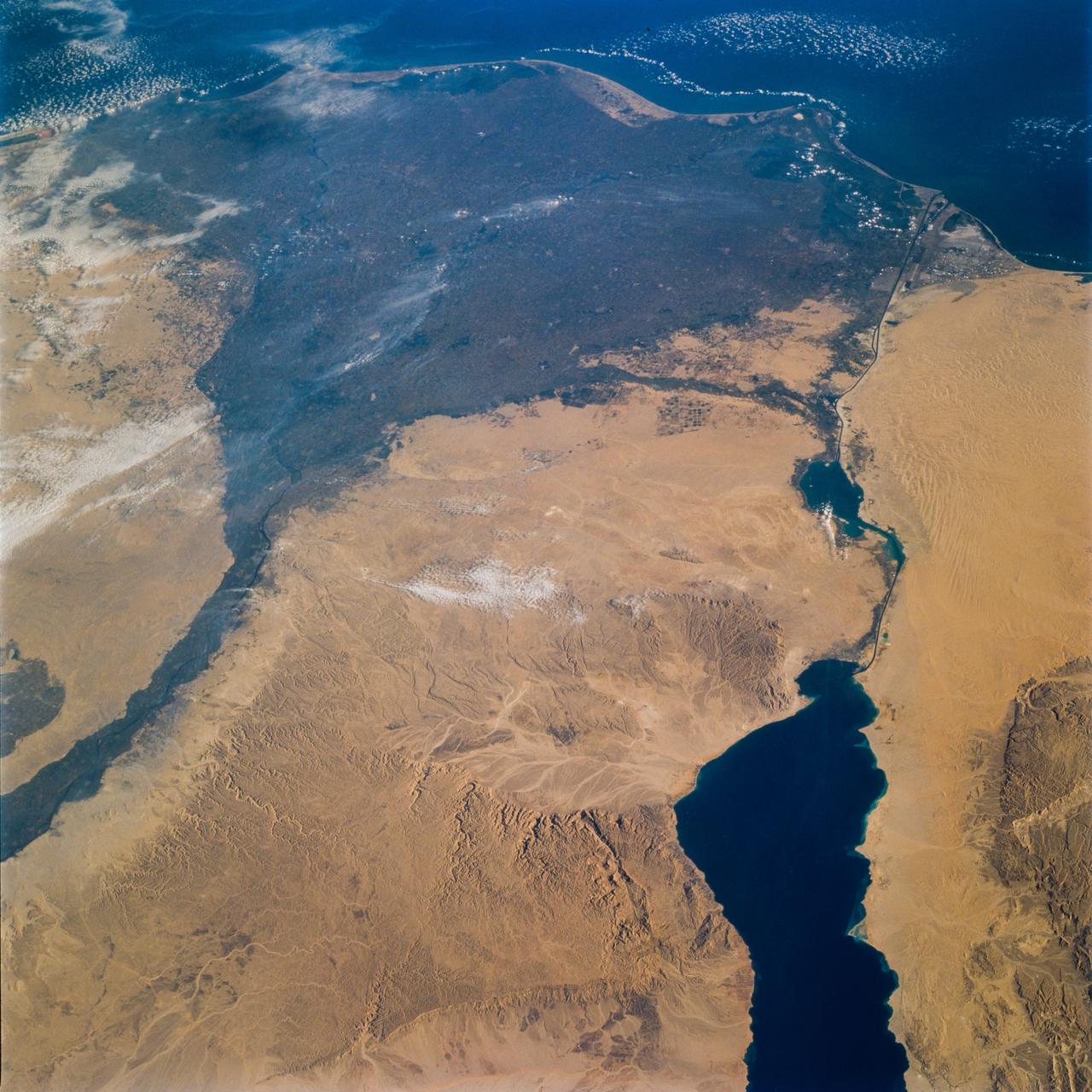
STS077-732-089 (19-29 May 1996) --- This photograph encompasses an area comprising 99 percent of the Egyptian population of close to 60 million people. North is roughly to the right side of the photograph. Cairo, the capital and principal city, lies at the apex of the Nile Delta. Alexandria is in the top right corner of the frame. The Suez Canal connects the Red Sea and the Mediterranean Sea and is in the bottom of the photograph. The Delta itself is 100 miles long and 160 miles wide at the coast. This view brings out the details of the Eastern Desert that rises abruptly from the Nile valley. This desert supports some vegetation in contrast to the sandier Western desert. It has more relief with some of the peaks rising to 6,000 feet. Rainfall in the region ranges from a high of 7 inches at Alexandria to 0.1 inch in the Eastern Desert. Most of Egypt’s mineral resources are concentrated in this area.
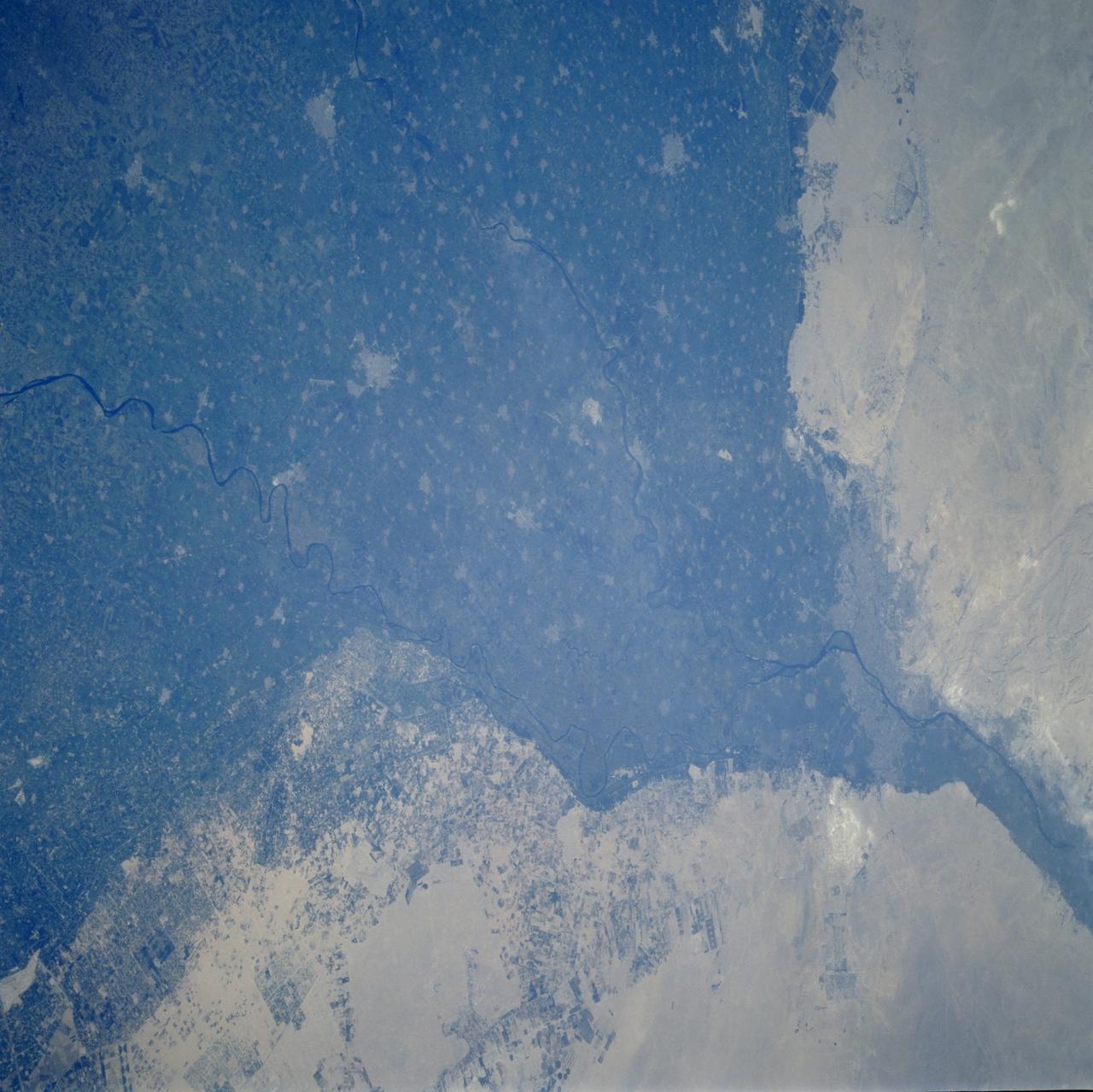
STS106-701-025 (8-20 September 2000) --- One of the STS-106 crew members on board the Space Shuttle Atlantis used a handheld 70mm camera to photograph this image of Cairo, Egypt, the largest city in Africa. Its population is nearly 16 million, a figure which translates to approximately 130,000 people per square mile. Metropolitan Cairo shows as a gray area in the green of the Nile River valley at the apex of the Delta. The shadows of the three major pyramids at Giza on the Western edge of the city are visible. They are right below the bright new road construction. This side of the metropolitan area is experiencing rapid growth. According to geologists who have been studying shuttle-to-Earth imagery for many years, this photograph documents some of the many changes in land use in the Western Desert.
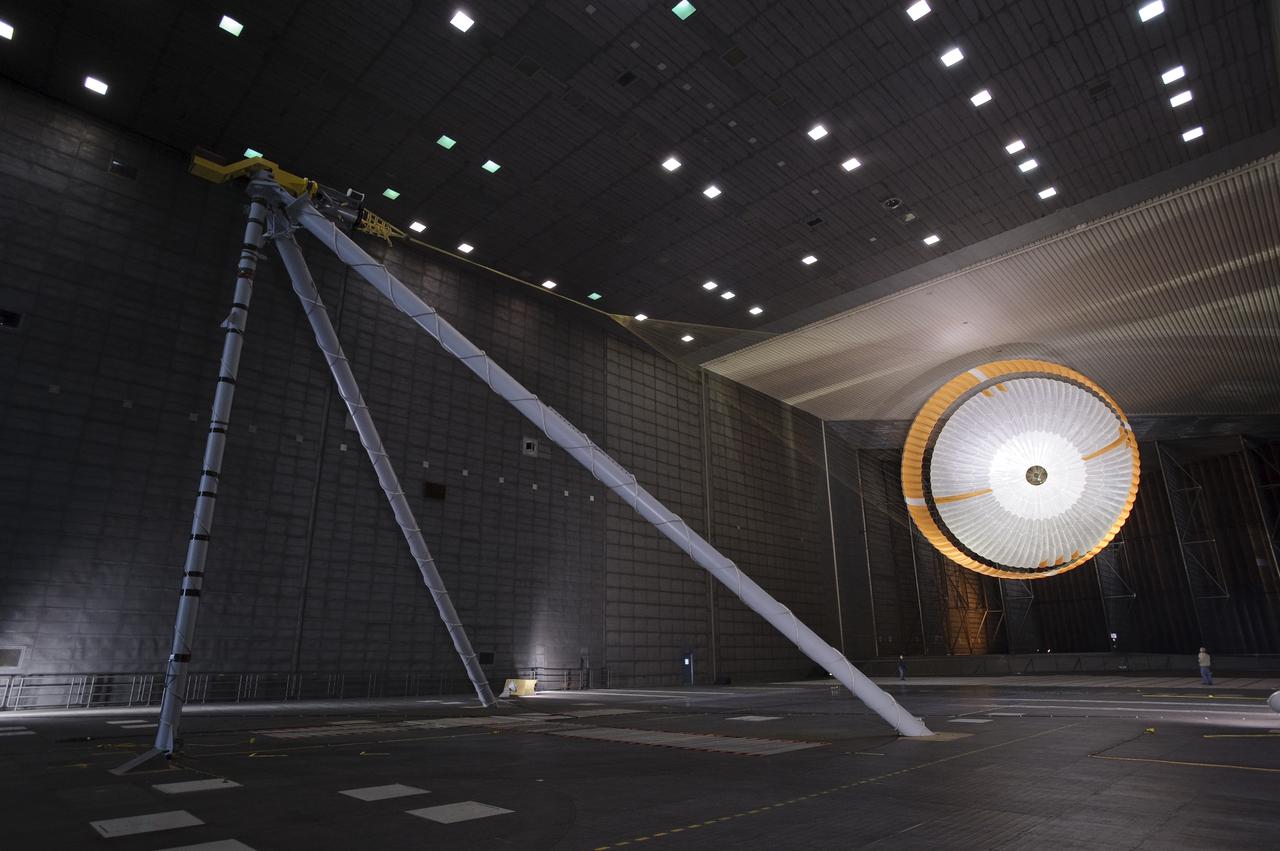
Mars Science Laboratory (MSL) parachuste test in the NASA Ames 80x120ft Subsonic Wind Tunnel at Moffett Field, Calif. (TR #22 - Phase 6) is the largest ever built to fly on an extraterrestrail mission. This image shows a duplicate qualification-test parachute inflated in a 80-mile-per-hour (36-meter-per-second) wind inside the test facility. It has 80 suspension lines, measures more that 50 meers (165 feet) in lenght, and opens to a diameter of nearly 16 meters (51 feet). Most the the orange and white fabric is nylon, though a small disk of heavier polyester is used near the vent in the apex of the canapy due to the higher stresses there. It is designed to survive deployment at Mach 2.2 in the Martian atmosphere, where it will generate up to 65,000 pounds of drag force.
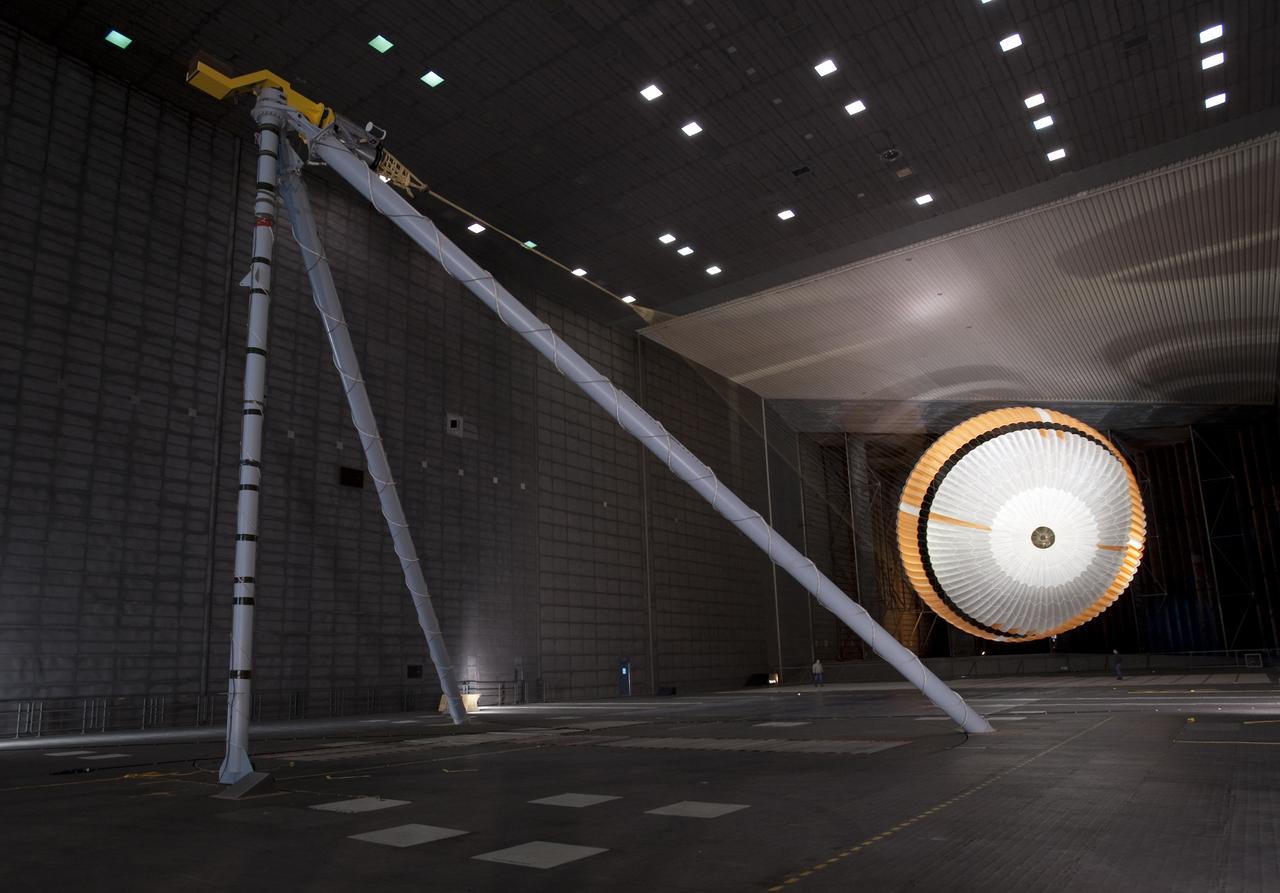
Mars Science Laboratory (MSL) parachuste test in the NASA Ames 80x120ft Subsonic Wind Tunnel at Moffett Field, Calif. (TR #22 - Phase 6) is the largest ever built to fly on an extraterrestrail mission. This image shows a duplicate qualification-test parachute inflated in a 80-mile-per-hour (36-meter-per-second) wind inside the test facility. It has 80 suspension lines, measures more that 50 meers (165 feet) in lenght, and opens to a diameter of nearly 16 meters (51 feet). Most the the orange and white fabric is nylon, though a small disk of heavier polyester is used near the vent in the apex of the canapy due to the higher stresses there. It is designed to survive deployment at Mach 2.2 in the Martian atmosphere, where it will generate up to 65,000 pounds of drag force.
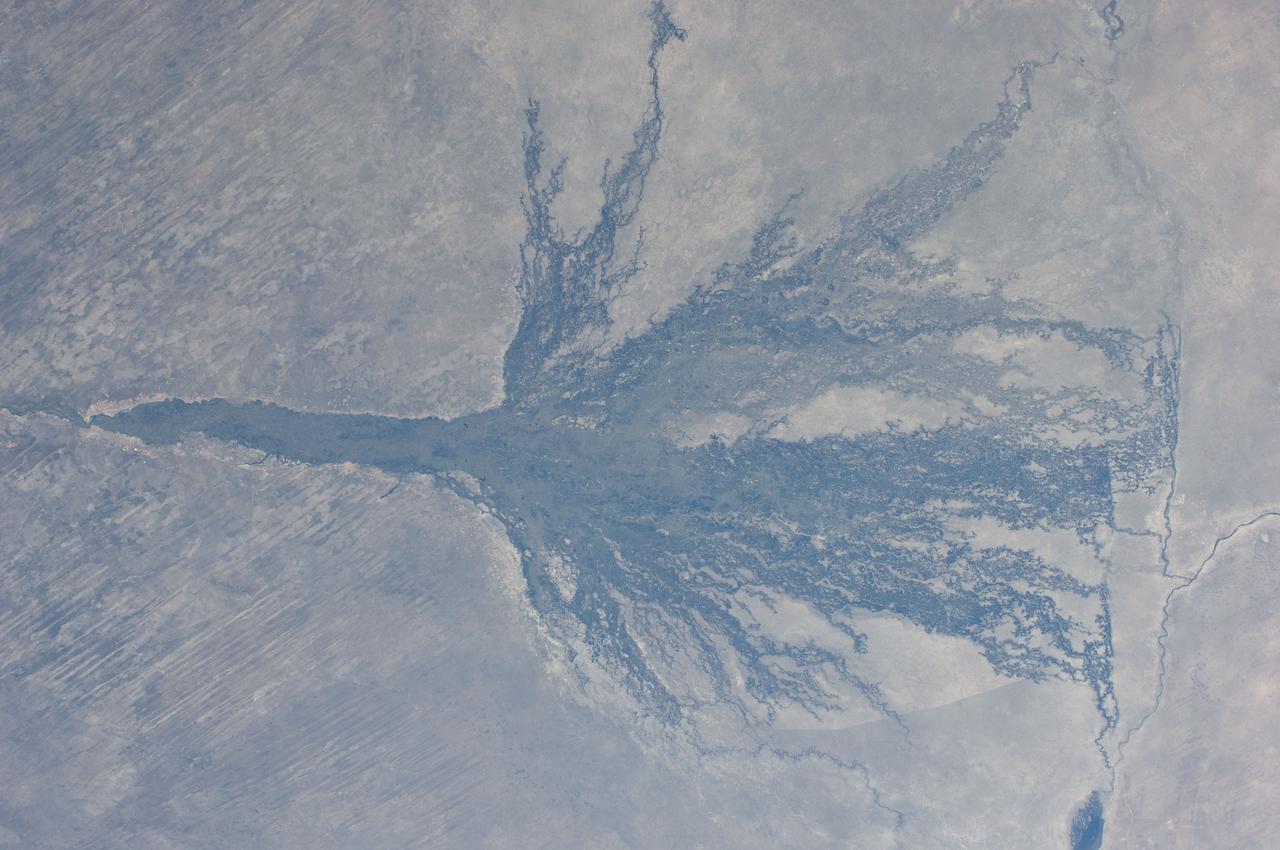
ISS028-E-006830 (2 June 2011) --- Okavango Swamp in Botswana is featured in this image photographed by an Expedition 28 crew member on the International Space Station. This short focal-length photograph shows the entire Okavango ?delta,? a swampland known in Southern Africa as the ?Jewel of the Kalahari Desert?. This enormous pristine wetland of forest, wildlife, and freshwater almost miraculously appears in a desert where surface water is typically non-existent. The water comes from the Okavango River which rises in the high-rainfall zone of southern Angola, hundreds of kilometers to the northwest. The dark green forested floodplain is approximately 10 kilometers wide where it enters the view (left). The Okavango then enters a rift basin which allows the river to spread out, forming the wetland. The width of the rift determines the dimensions of the delta?150 kilometers from apex to the linear downstream margin (right). The apex fault is more difficult to discern, but two fault lines actually define the downstream margin; the fault traces are indicated by linear stream channels and vegetation patterns oriented at nearly right angles to the southeast-trending distributary channels at center. The distributary channels carry sediment from the Okavango River that is deposited within the rift basin. Over time, a fan-shaped morphology of the deposits has developed, leading to characterization of the wetland as the Okavango ?delta?. The drying trend from higher rainfall in the north (left) to less rainfall in central Botswana (right) is shown by the change from the greens of denser savanna vegetation to browns of an open ?thornscrub? savanna. More subtle distinctions appear: the distributary arms of the delta include tall, permanent riverine and seasonal forest (dark green), with grasses and other savanna vegetation (light green) on floodplains?which appear well watered in this image. Linear dunes, emplaced by constant winds from the east during drier climates, appear as straight lines at left. The dunes are 10 meters high and their sands hold enough moisture for some trees to grow on them. Counter-intuitively, the low ?streets? between the dunes are treeless because they are dominated by dense dry white soils known as calcretes.
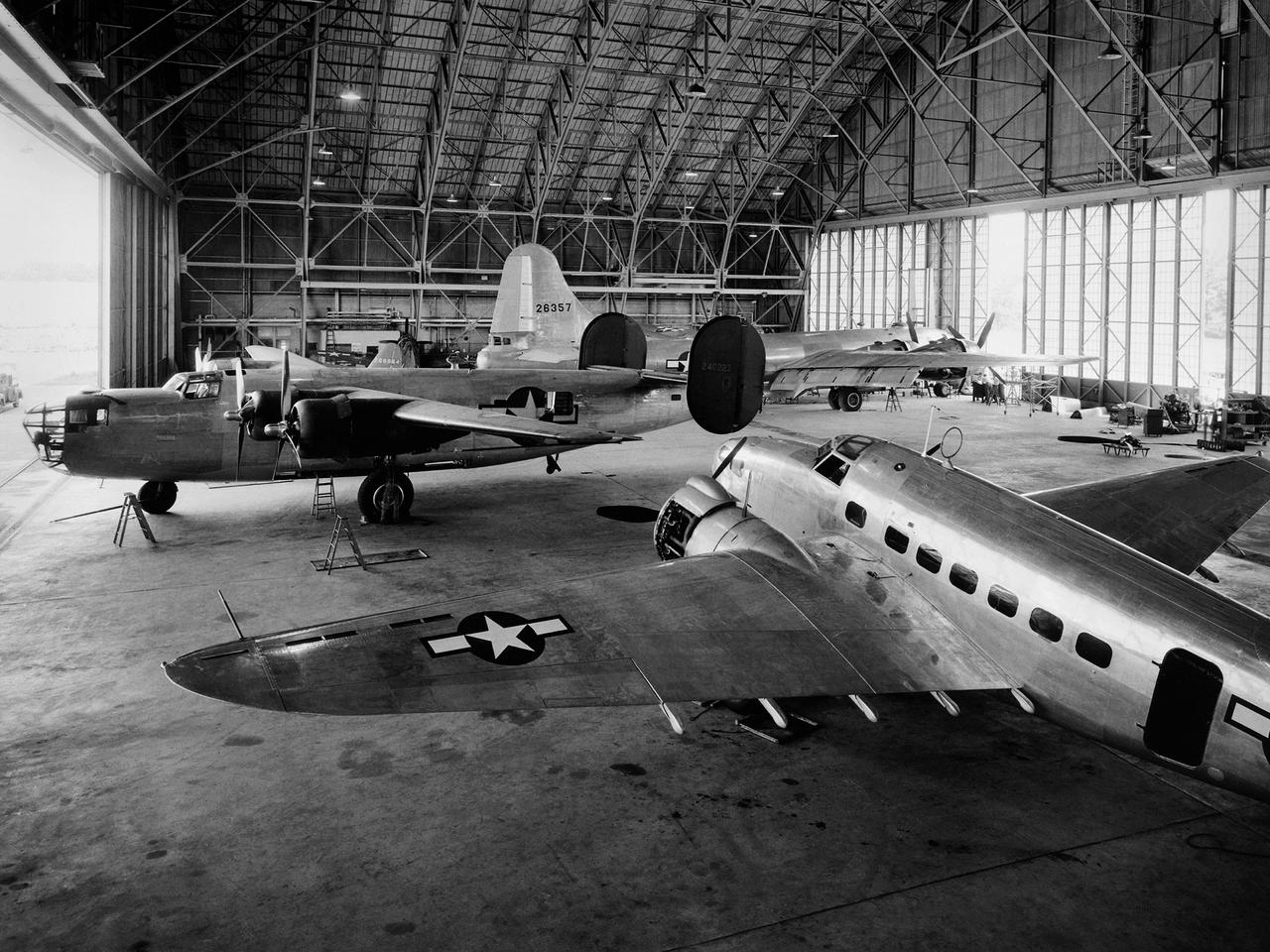
A Consolidated B–24D Liberator (left), Boeing B–29 Superfortress (background), and Lockheed RA–29 Hudson (foreground) parked inside the Flight Research Building at the National Advisory Committee for Aeronautics (NACA) Aircraft Engine Research Laboratory in Cleveland, Ohio. A P–47G Thunderbolt and P–63A King Cobra are visible in the background. The laboratory utilized 15 different aircraft during the final 2.5 years of World War II. This starkly contrasts with the limited-quantity, but long-duration aircraft of the NASA’s modern fleet. The Flight Research Building is a 272- by 150-foot hangar with an internal height ranging from 40 feet at the sides to 90 feet at its apex. The steel support trusses were pin-connected at the top with tension members extending along the corrugated transite walls down to the floor. The 37.5-foot-tall and 250-foot-long doors on either side can be opened in sections. The hangar included a shop area and stock room along the far wall, and a single-story office wing with nine offices, behind the camera. The offices were later expanded. The hangar has been in continual use since its completion in December 1942. Nearly 70 different aircraft have been sheltered here over the years. Temporary offices were twice constructed over half of the floor area when office space was at a premium.
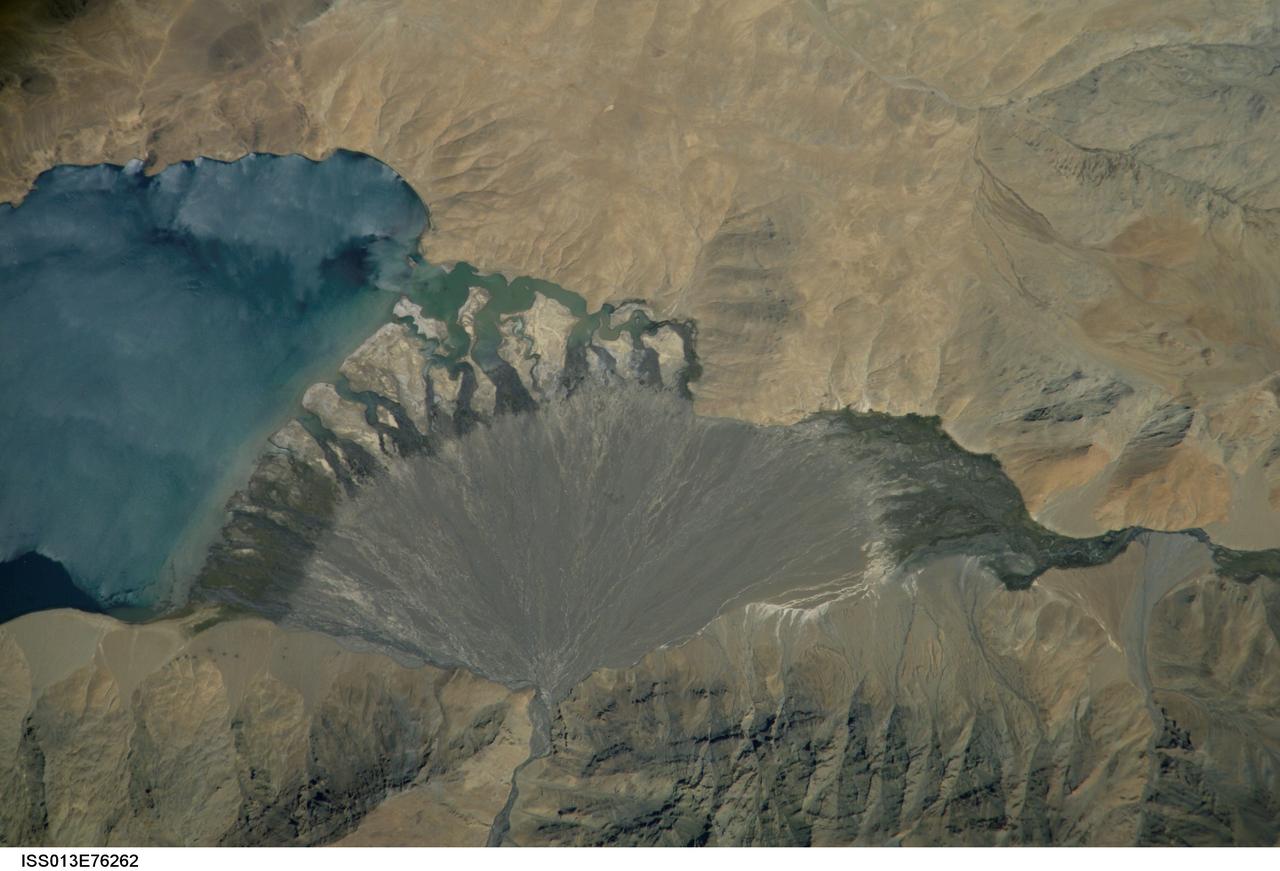
ISS013-E-76262 (4 Sept. 2006) --- Lake Morari, Tibet is featured in this image photographed by an Expedition 13 crewmember onboard the International Space Station. Melt-water from glaciers to the east and west drains into Lake Morari, a large lake on the Tibetan Plateau which lies at an altitude of 4,521 meters (14,830 feet). The main inflow to the lake is via a west-side stream. Mud from this river gives the light blue hues to the lake water. The well-formed alluvial fan (center), built by sediment from the main inflow river, is the reason the lake has formed at this point in the valley. The fan has dammed up the depression now occupied by Lake Morari (approximately 7 kilometers wide in this view) and forms the curved southern shore of the lake. The apex of the fan lies fully 40 meters above the level of the lake. The change of color and texture on the fan seems to result from a new influx of gray sediment on top of an older fan which had several channels cut into it. Interestingly, the alluvial fan also acts as the only outlet of the lake, although no obvious outlet channel can be seen in this detailed view. South of the fan an outlet river appears as a green surface, possibly due to aquatic vegetation or algae. Altitude measurements show that the outlet river lies many meters below the lake surface.

A Mercury capsule is mounted inside the Altitude Wind Tunnel for a test of its escape tower rockets at the National Aeronautics and Space Administration (NASA) Lewis Research Center. In October 1959 NASA’s Space Task Group allocated several Project Mercury assignments to Lewis. The Altitude Wind Tunnel was quickly modified so that its 51-foot diameter western leg could be used as a test chamber. The final round of tests in the Altitude Wind Tunnel sought to determine if the smoke plume from the capsule’s escape tower rockets would shroud or compromise the spacecraft. The escape tower, a 10-foot steel rig with three small rockets, was attached to the nose of the Mercury capsule. It could be used to jettison the astronaut and capsule to safety in the event of a launch vehicle malfunction on the pad or at any point prior to separation from the booster. Once actuated, the escape rockets would fire, and the capsule would be ejected away from the booster. After the capsule reached its apex of about 2,500 feet, the tower, heatshield, retropackage, and antenna would be ejected and a drogue parachute would be released. Flight tests of the escape system were performed at Wallops Island as part of the series of Little Joe launches. Although the escape rockets fired prematurely on Little Joe’s first attempt in August 1959, the January 1960 follow-up was successful.

NASA image release May 20, 2011 <b>To see a really cool video related to this image go here: <a href="http://www.flickr.com/photos/gsfc/5740451675/in/photostream">www.flickr.com/photos/gsfc/5740451675/in/photostream</a></b> This composite of visible, microwave (orange) and X-ray (blue) data reveals the jets and radio-emitting lobes emanating from Centaurus A's central black hole. Credit: ESO/WFI (visible); MPIfR/ESO/APEX/A.Weiss et al. (microwave); NASA/CXC/CfA/R.Kraft et al. (X-ray) To read more go to: <a href="http://www.nasa.gov/topics/universe/features/radio-particle-jets.html" rel="nofollow">www.nasa.gov/topics/universe/features/radio-particle-jets...</a> <b><a href="http://www.nasa.gov/centers/goddard/home/index.html" rel="nofollow">NASA Goddard Space Flight Center</a></b> enables NASA’s mission through four scientific endeavors: Earth Science, Heliophysics, Solar System Exploration, and Astrophysics. Goddard plays a leading role in NASA’s accomplishments by contributing compelling scientific knowledge to advance the Agency’s mission. <b>Follow us on <a href="http://twitter.com/NASA_GoddardPix" rel="nofollow">Twitter</a></b> <b>Join us on <a href="http://www.facebook.com/pages/Greenbelt-MD/NASA-Goddard/395013845897?ref=tsd" rel="nofollow">Facebook</a></b>
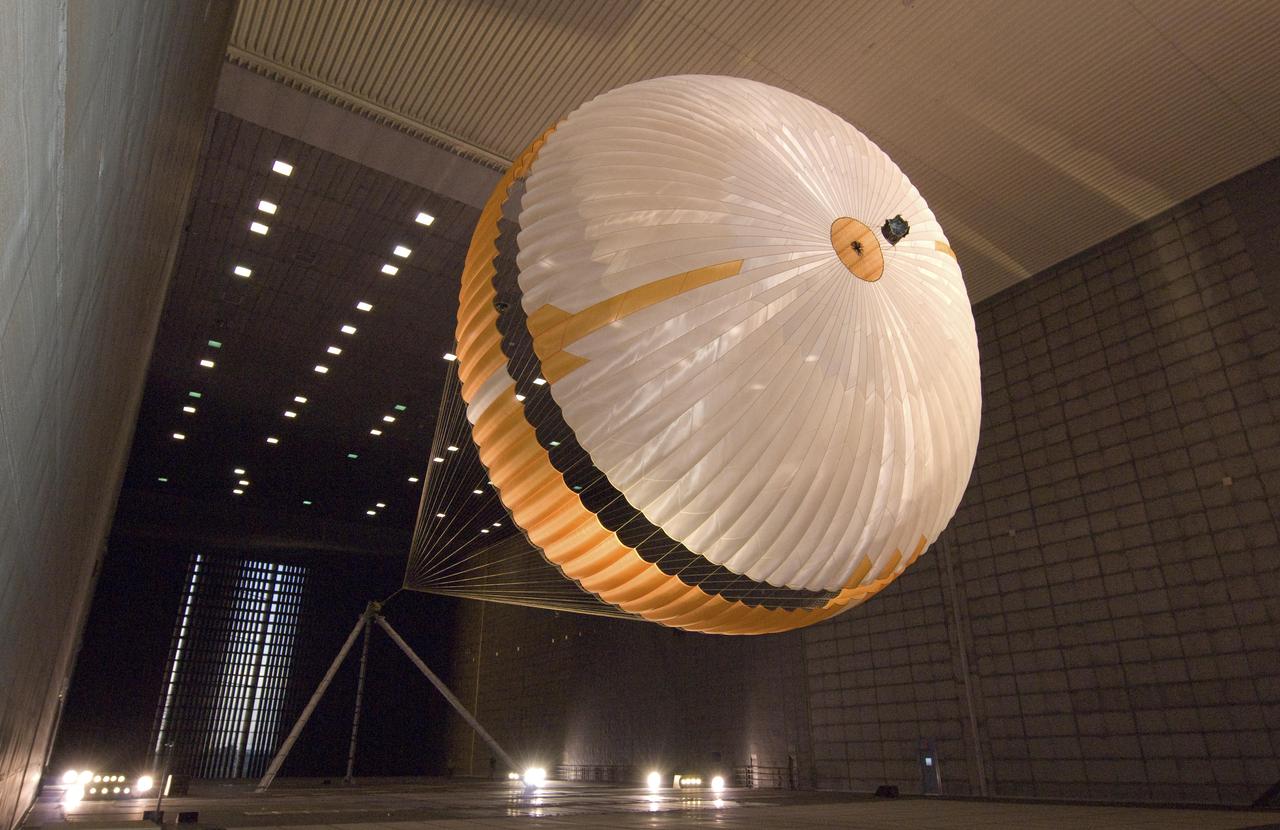
The parachute for NASA next mission to Mars passed flight-qualification testing in March and April 2009 inside the world largest wind tunnel, at NASA Ames Research Center, Moffett Field, Calif. NASA's Mars Science Laboratory mission, to be launched in 2011 and land on Mars in 2012, will use the largest parachute ever built to fly on an extraterrestrial mission. This image shows a duplicate qualification-test parachute inflated in an 80-mile-per-hour (36-meter-per-second) wind inside the test facility. The parachute uses a configuration called disk-gap-band. It has 80 suspension lines, measures more than 50 meters (165 feet) in length, and opens to a diameter of nearly 16 meters (51 feet). Most of the orange and white fabric is nylon, though a small disk of heavier polyester is used near the vent in the apex of the canopy due to higher stresses there. It is designed to survive deployment at Mach 2.2 in the Martian atmosphere, where it will generate up to 65,000 pounds of drag force. The wind tunnel is 24 meters (80 feet) tall and 37 meters (120 feet) wide, big enough to house a Boeing 737. It is part of the National Full-Scale Aerodynamics Complex, operated by the Arnold Engineering Development Center of the U.S. Air Force. http://photojournal.jpl.nasa.gov/catalog/PIA11995
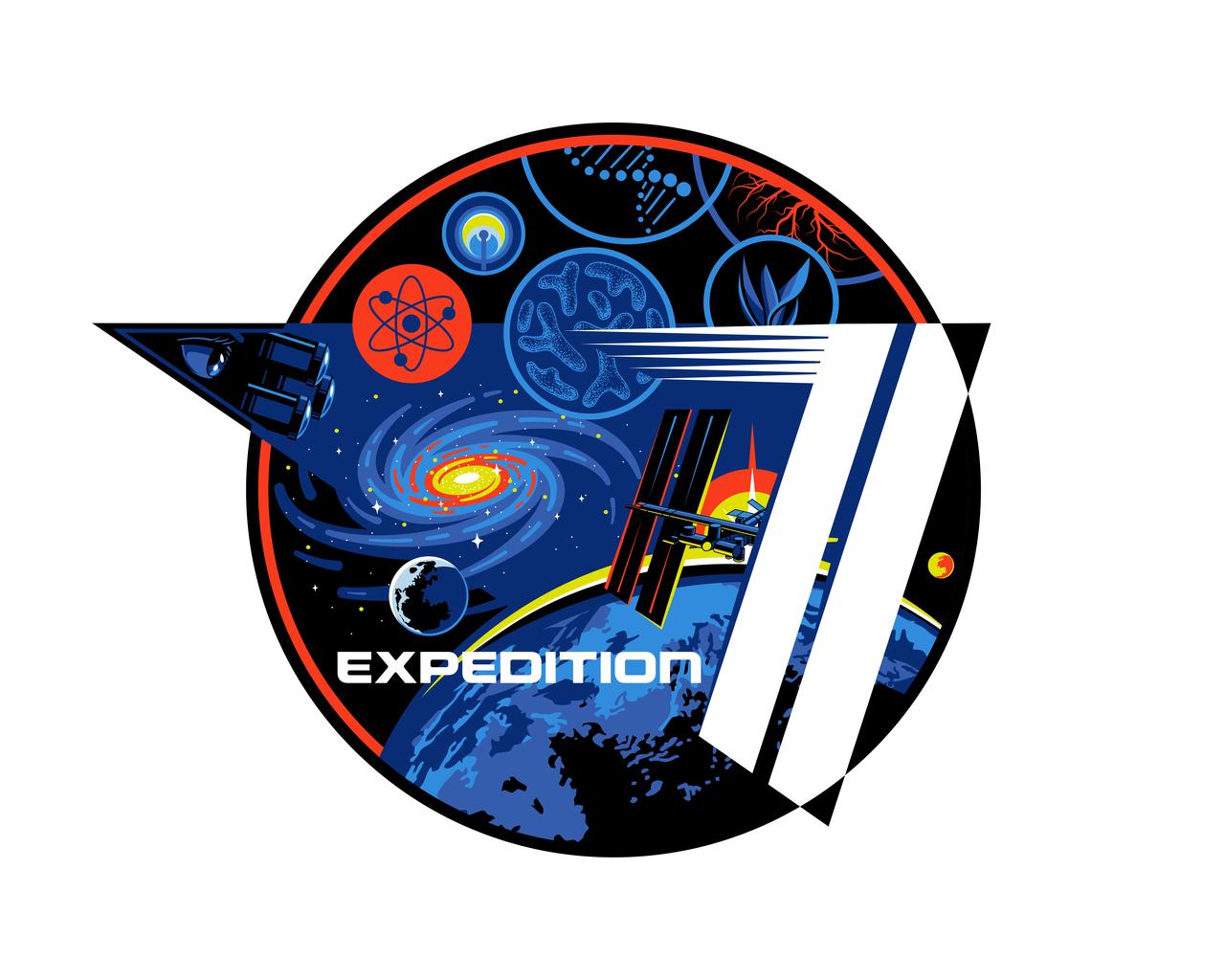
iss071-s-001 (Aug. 31, 2023) --- For nearly a quarter of a century the International Space Station (ISS) has hosted crews and accommodated science experiments even as it has continued to evolve into the highly capable orbiting laboratory of today. With its unique vantage point, the ISS serves as an intersection for discoveries ranging from the vast, such as the search for dark matter and cosmological origins, to the near, such as detailed observation of our home planet and its atmosphere, to the microscopic, including behavior of microbial life, DNA sequencing, and molecular biology in the microgravity environment. The Expedition 71 patch celebrates this science as well as the thousands of multinational scientists and technicians that have contributed to numerous groundbreaking experiments. The ISS is the ultimate destination for the scientifically curious. The symbology represents onboard research into quantum behavior of novel states of matter, antibodies and immune function, the search for dark matter, flame and combustion physics, DNA expression, plant growth and root behavior, and direct earth observation. The human eye and microscope objectives at upper left form the apex of a cone of vision culminating in the Expedition number 71, and represents the deliberate and disciplined practice of scientific observation. Earth’s moon and Mars are also depicted as next steps for exploration, with an anticipation of further rich scientific discovery using many techniques and skills honed aboard the ISS.
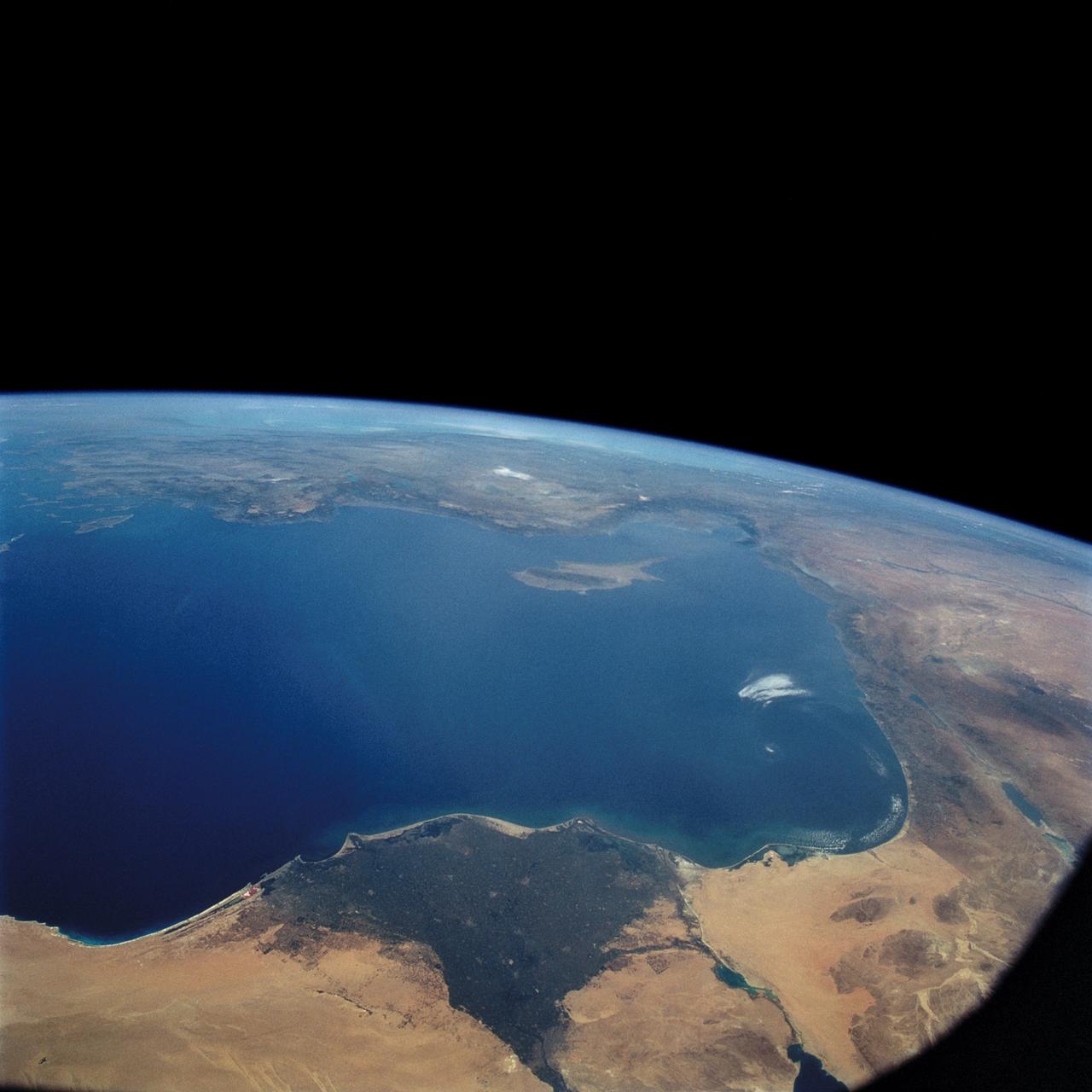
STS057-73-075 (21 June-1 July 1993) --- Eastern Mediterranean from an unusually high vantage point over the Nile River, this north-looking view shows not only the eastern Mediterranean but also the entire landmass of Asia Minor, with the Black Sea dimly visible at the horizon. Many of the Greek islands can be seen in the Aegean Sea (top left), off the coast of Asia Minor. Cyprus is visible under atmospheric dust in the northeast corner of the Mediterranean. The dust cloud covers the east end of the Mediterranean, its western edge demarcated by a line that cuts the center of the Nile Delta. This dust cloud originated far to the west, in Algeria, and moved northeast over Sicily, southern Italy, and Greece. Part of the cloud then moved on over the Black Sea, but another part swerved southward back towards Egypt. A gyre of clouds in the southeast corner of the Mediterranean indicates a complementary counterclockwise (cyclonic) circulation of air. The Euphrates River appears as a thin green line (upper right) in the yellow Syrian Desert just south of the blue-green mountains of Turkey. The Dead Sea (lower right) lies in a rift valley which extends north into Turkey and south thousands of miles down the Gulf of Aqaba, the Red Sea, and on through East Africa. The straight international boundary between Israel and Egypt (where the coastline angles) is particularly clear in this view, marked by the thicker vegetation on the Israeli side of the border. The green delta of the Nile River appears in the foreground, with the great conurbation of Cairo seen as a gray area at the apex of the triangle. Most of Egypt's 52 million inhabitants live in the delta. On the east side of the delta, the Suez Canal is visible. On the western corner of the delta lies the ancient city of Alexandria, beside the orange and white salt pans. The World War II battlesite El Alamein lies on the coast.
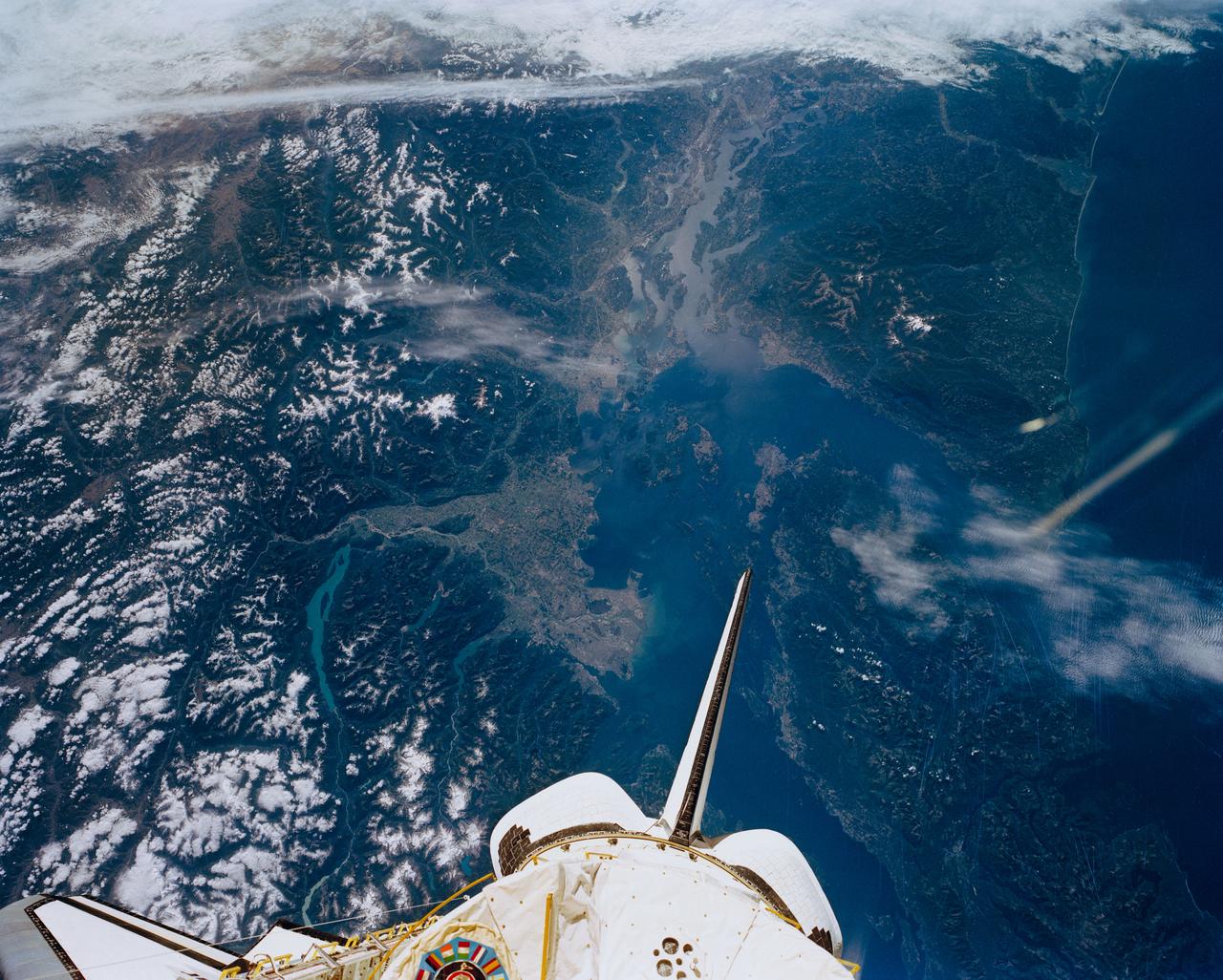
STS047-151-488 (12 - 20 Sept 1992) --- In this large format camera image, the forested Cascade Range appears along the left side; the Pacific Ocean, on the right. The frame was photographed as the Space Shuttle Endeavour flew north to south over Vancouver and Seattle. Many peaks in the Cascades reach altitudes greater than 9,000 feet and remain snowcapped even in mid-summer. The Strait of Juan de Fuca separates the Olympic Peninsula (top right) from Vancouver Island (bottom right). Snowcapped Mt. Olympus (7,965 feet) is one of the wettest places in the continental United States, with rainfall in excess of 120 inches per year. The port cities of Seattle and Tacoma occupy the heavily indented coastline of Puget Sound (top center). They appear as light-colored areas on the left side of the Sound. The angular street pattern of Tacoma is visible at the top of the picture. The international boundary between Canada and the United States of America runs across the middle of the view. The city of Victoria (center) is the light patch on the tip of Vancouver Island. Canada's Fraser River Delta provides flat topography on which the cities of Vancouver, Burnaby, and New Westminster were built. These cities appear as the light-colored area just left of center. The Fraser River can be seen snaking its way out of the mountains at the apex of the delta. Numerous ski resorts dot the slopes of the mountains (bottom left) that rise immediately to the north of Vancouver. In the same area the blue water of Harrison and other, smaller lakes fills some of the valleys that were excavated by glaciers in the "recent" geological past, according to NASA scientists studying the photography. A Linhof camera was used to expose the frame.
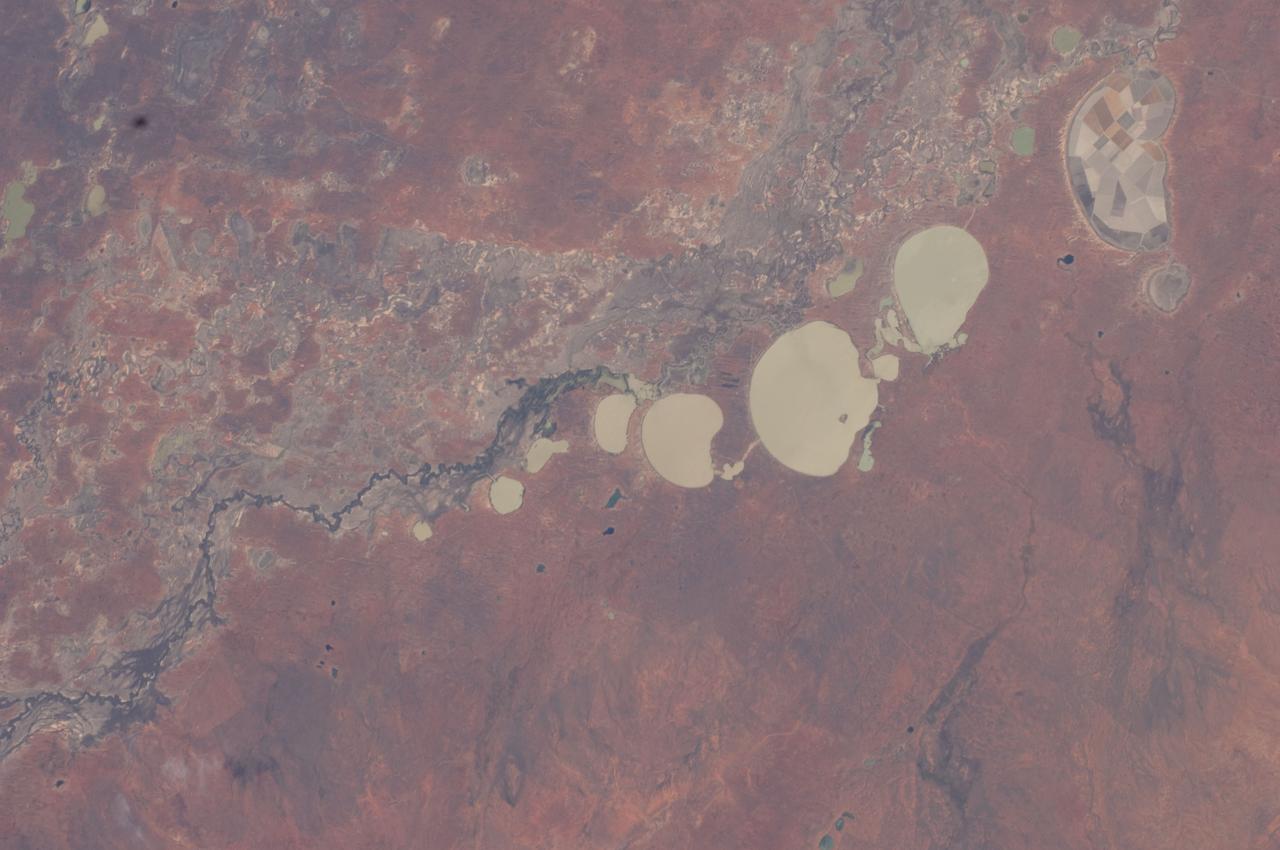
ISS030-E-009186 (3 Dec. 2011) --- The Menindee Lakes, New South Wales, Australia are featured in this image photographed by an Expedition 30 crew member on the International Space Station. The Menindee Lakes comprise a system of ephemeral, freshwater lakes fed by the Darling River when it floods. The lakes lie in the far west of New South Wales, Australia, near the town of Menindee. The longest is Lake Tandou (18.6 kilometers north?south dimension), visible at the upper right of this photograph. The lakes appear to have a small amount of water flooding them. The Darling River itself was flowing, as indicated by the dark water and blackened mud along its course (left). The Darling River flows southwest in tortuous fashion (bottom left to upper right). In the flat landscapes of this part of Australia, the river has created several inland deltas in its course to the sea, with characteristic diverging channel patterns, marked by younger sediments, which appear grayer than the surrounding ancient red soils and rocks. One such inland delta appears at right where minor channels wind across the countryside. The apex of another inland delta appears at upper right. Some of the Menindee Lakes have been incorporated in an artificially regulated overflow system providing for flood control, water storage for domestic use and livestock, as well as downstream irrigation. The lakes are also important as wetlands supporting a rich diversity of birds. The floor of one lake, Lake Tandou, is also used as prime agricultural land, as can be seen by its patchwork of irrigated fields, and is protected from flooding.
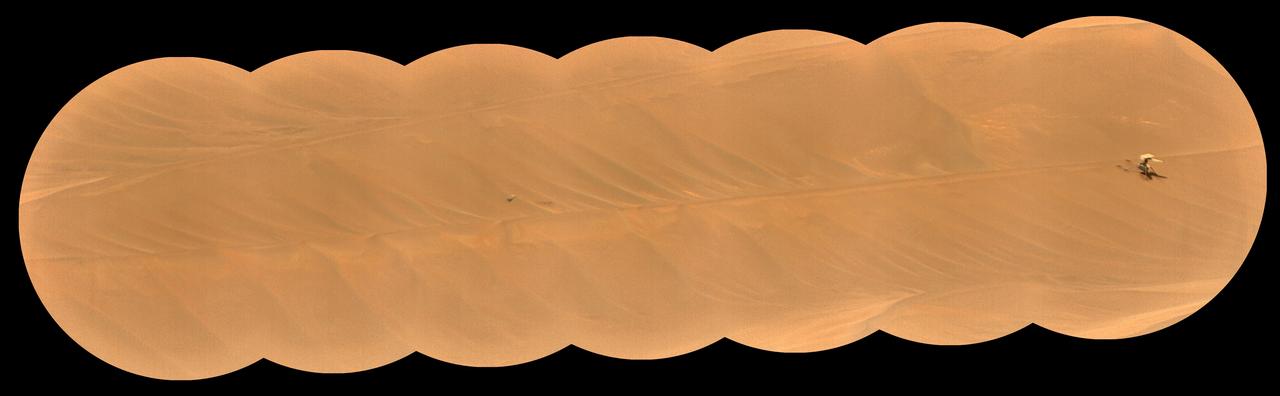
The Remote Microscopic Imager (RMI) camera aboard NASA's Perseverance Mars rover took these zoomed-in images of the Ingenuity Mars Helicopter and one of its rotor blades on Feb. 24, 2024, the 1,072nd Martian day, or sol, of the mission. The mosaic shows the helicopter at right, standing at an angle near the apex of a sand ripple. About 49 feet (15 meters) to the west of the helicopter's location (just left of center in the image), a large portion of one of the helicopter's rotor blades lies on the surface. The Ingenuity team is considering a theory that the blade detached after the rotorcraft impacted the Martian surface at the conclusion of the helicopter's 72nd and final flight on Jan. 18, 2024. This mosaic is made up of seven images taken by the RMI, which is part of the rover's SuperCam instrument. At the time these images were taken, the distance between the rover and helicopter was about 1,365 feet (415 meters). Each circular image has a field of view of 26 feet (7.8 meters) at this distance. Able to spot a softball from nearly a mile away, the RMI allows scientists to take images of details from a long distance. It also provides fine details of nearby targets zapped by SuperCam's laser. SuperCam is led by Los Alamos National Laboratory in New Mexico, where the instrument's body unit was developed. The mast unit, including the RMI used for these images, was developed and built by several laboratories of the CNRS (the French research center) and French universities under the contracting authority of Centre National d'Études Spatiales (CNES), the French space agency. A key objective for Perseverance's mission on Mars is astrobiology, including the search for signs of ancient microbial life. The rover will characterize the planet's geology and past climate, pave the way for human exploration of the Red Planet, and be the first mission to collect and cache Martian rock and regolith (broken rock and dust). Subsequent NASA missions, in cooperation with ESA (European Space Agency), would send spacecraft to Mars to collect these sealed samples from the surface and return them to Earth for in-depth analysis. The Mars 2020 Perseverance mission is part of NASA's Moon to Mars exploration approach, which includes Artemis missions to the Moon that will help prepare for human exploration of the Red Planet. https://photojournal.jpl.nasa.gov/catalog/PIA26238