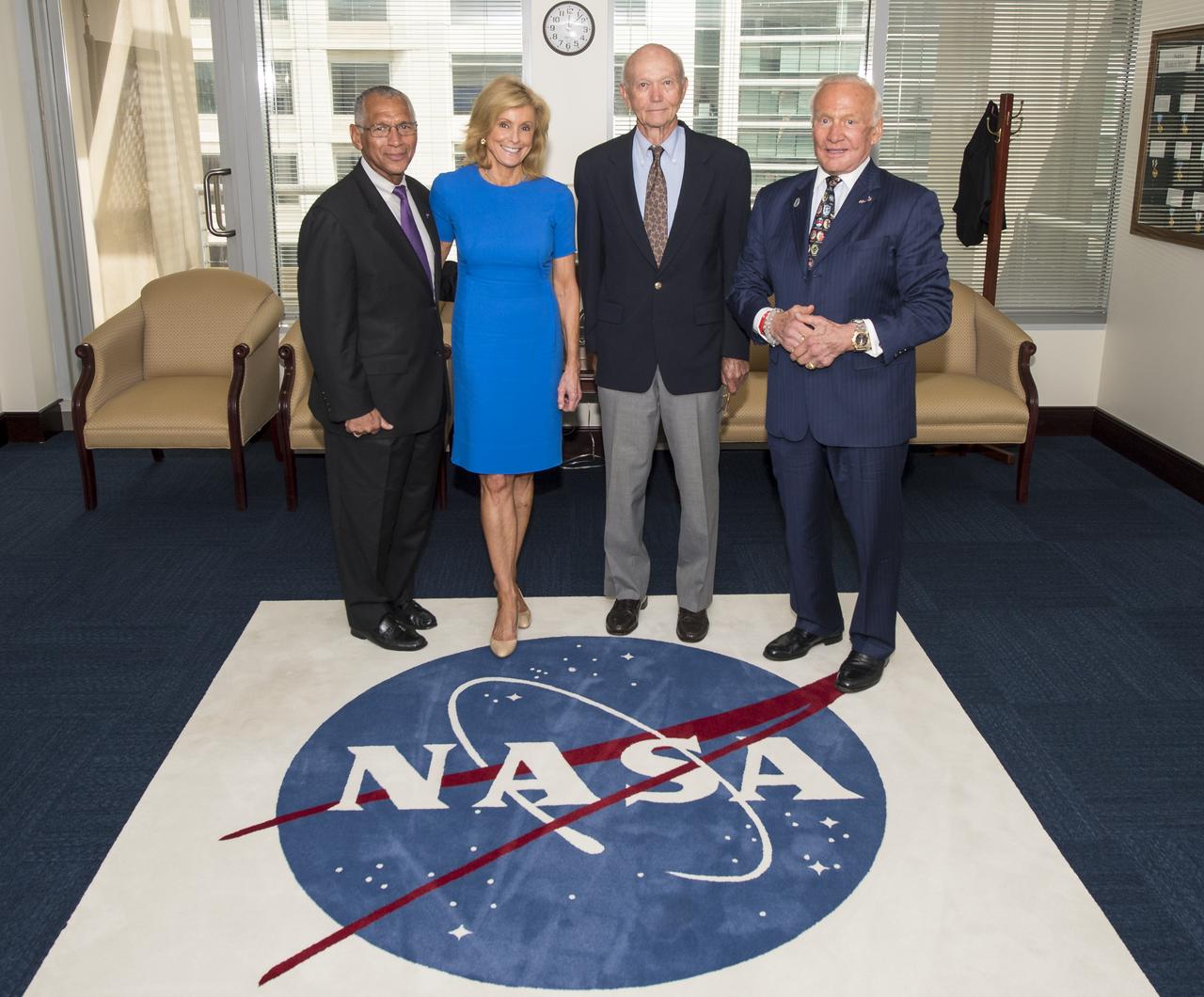
NASA Administrator Charles Bolden, left, welcomes Carol Armstrong, widow of Apollo 11 commander, Neil Armstrong, Apollo 11 astronauts Michael Collins and Buzz Aldrin, right, to NASA Headquarters in Washington on Tuesday, July 22, 2014, during the 45th anniversary week of the Apollo 11 lunar landing. Photo Credit: (NASA/Joel Kowsky)
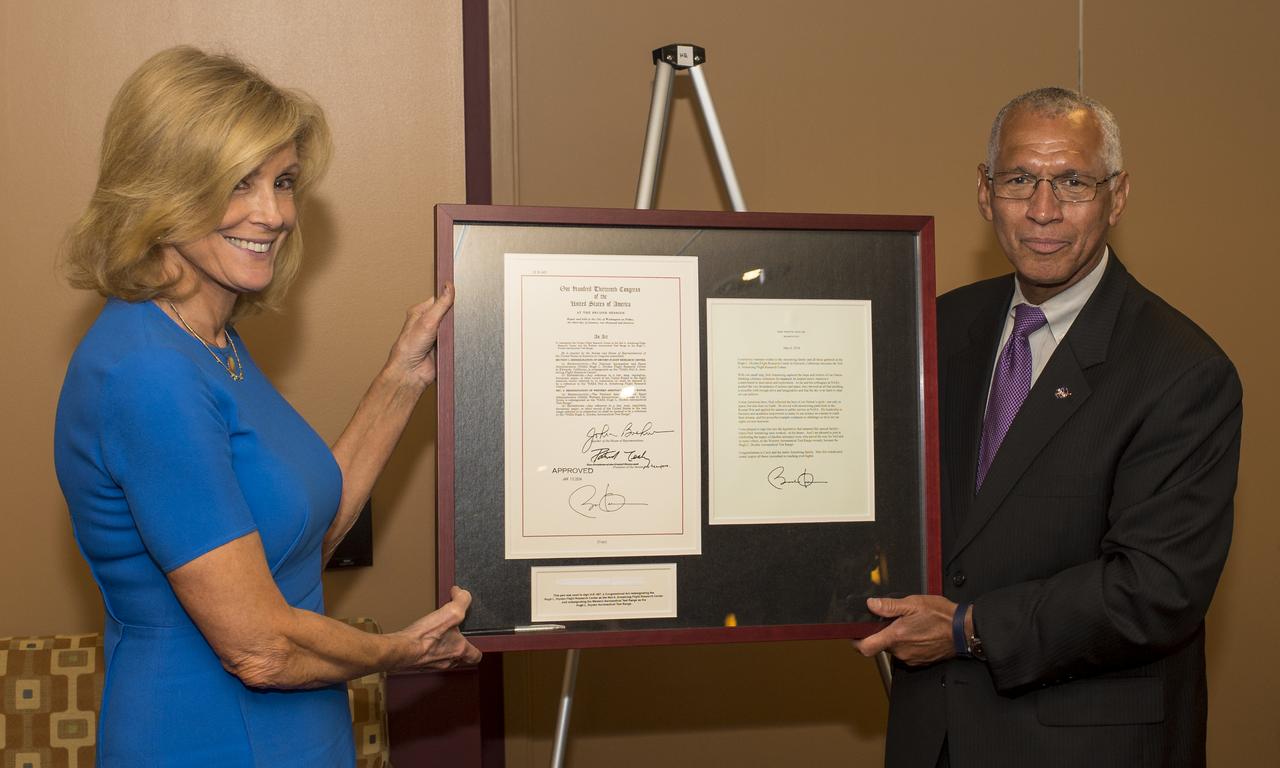
NASA Administrator Charles Bolden, right, presents Carol Armstrong, widow of Apollo 11 commander, Neil Armstrong, with the signed bill that renamed the Hugh L. Dryden Flight Research Center as the Neil A. Armstrong Flight Research Center, Tuesday, July 22, 2014 at NASA Headquarters in Washington. Photo Credit: (NASA/Joel Kowsky)
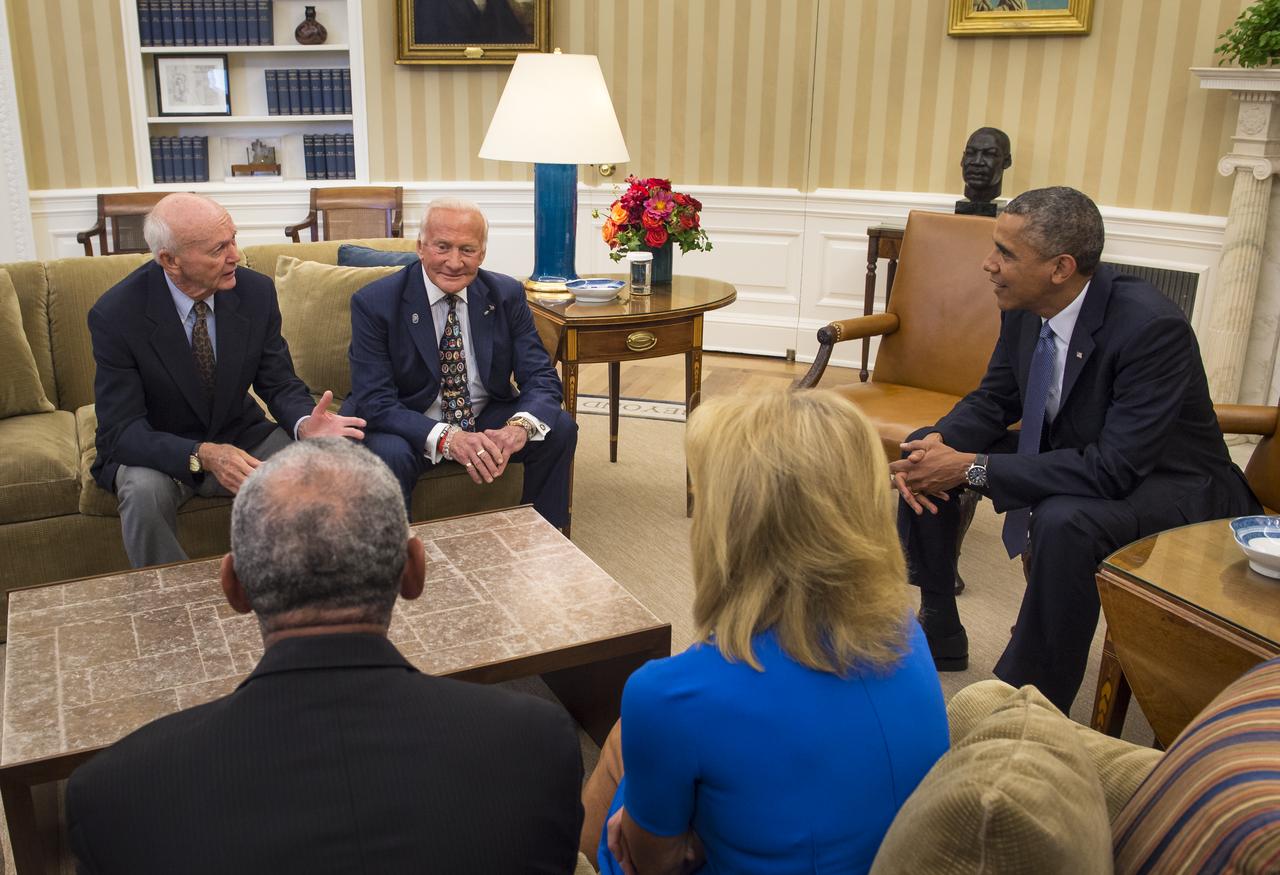
President Barack Obama meets with Apollo 11 astronauts Michael Collins, seated left, Buzz Aldrin, center, Carol Armstrong, widow of Apollo 11 commander, Neil Armstrong, and NASA Administrator Charles Bolden, Tuesday, July 22, 2014, in the Oval Office of the White House in Washington, during the 45th anniversary week of the Apollo 11 lunar landing. Photo Credit: (NASA/Bill Ingalls)
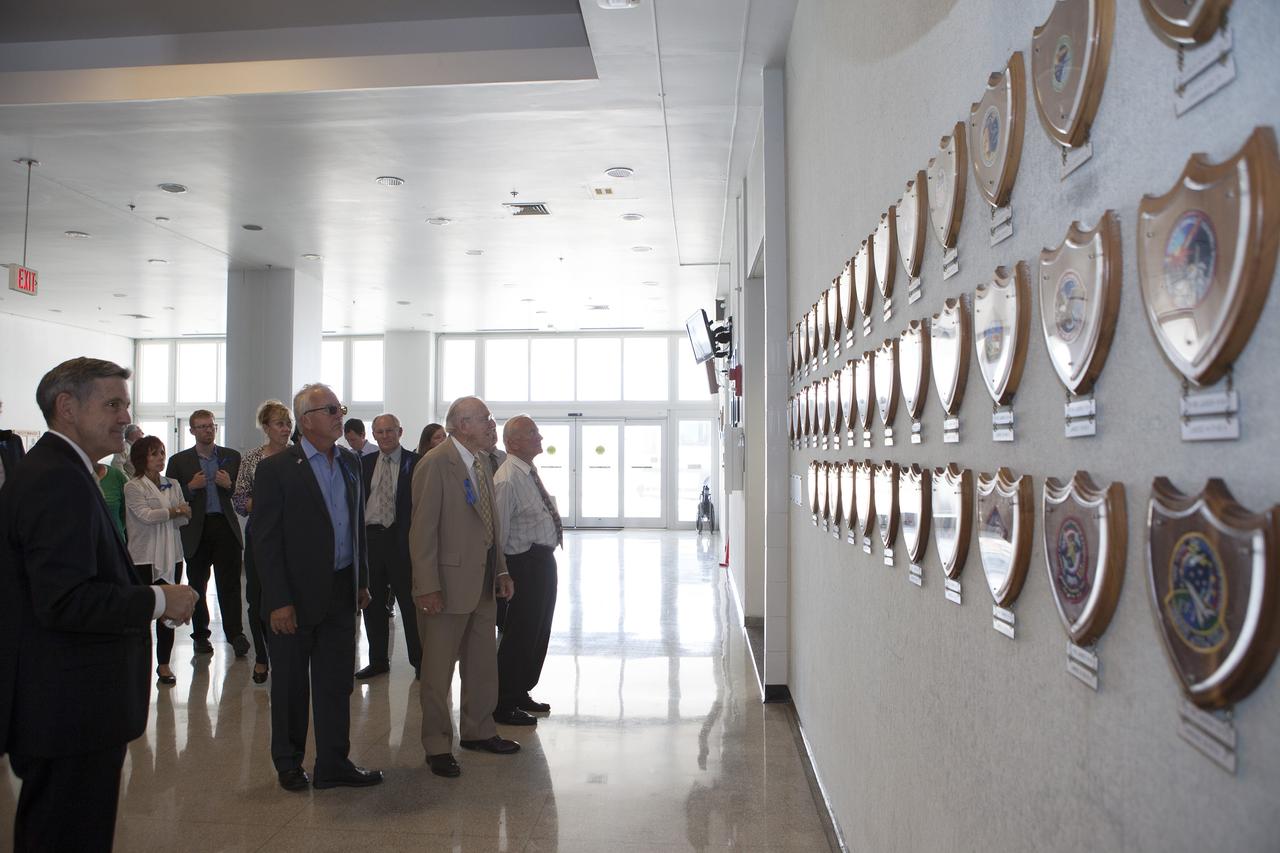
CAPE CANAVERAL, Fla. -- Apollo astronauts and their families examine the mission plaques mounted on the wall in the lobby of the Launch Control Center at NASA's Kennedy Space Center in Florida. The facility houses the firing rooms from which the Apollo countdowns were conducted. Kennedy Director Robert Cabana, at left, led the tour which followed a ceremony renaming the refurbished Operations and Checkout Building for Apollo 11 astronaut Neil Armstrong, the first person to set foot on the moon. The ceremony was part of NASA's 45th anniversary celebration of the Apollo 11 moon landing. As the world watched, Neil Armstrong and Buzz Aldrin landed in the moon's Sea of Tranquility on July 20, 1969, aboard the lunar module Eagle. Meanwhile, crewmate Michael Collins orbited above in the command module Columbia. For more, visit http://www.nasa.gov/press/2014/july/nasa-honors-historic-first-moon-landing-eyes-first-mars-mission. Photo credit: NASA/Kim Shiflett
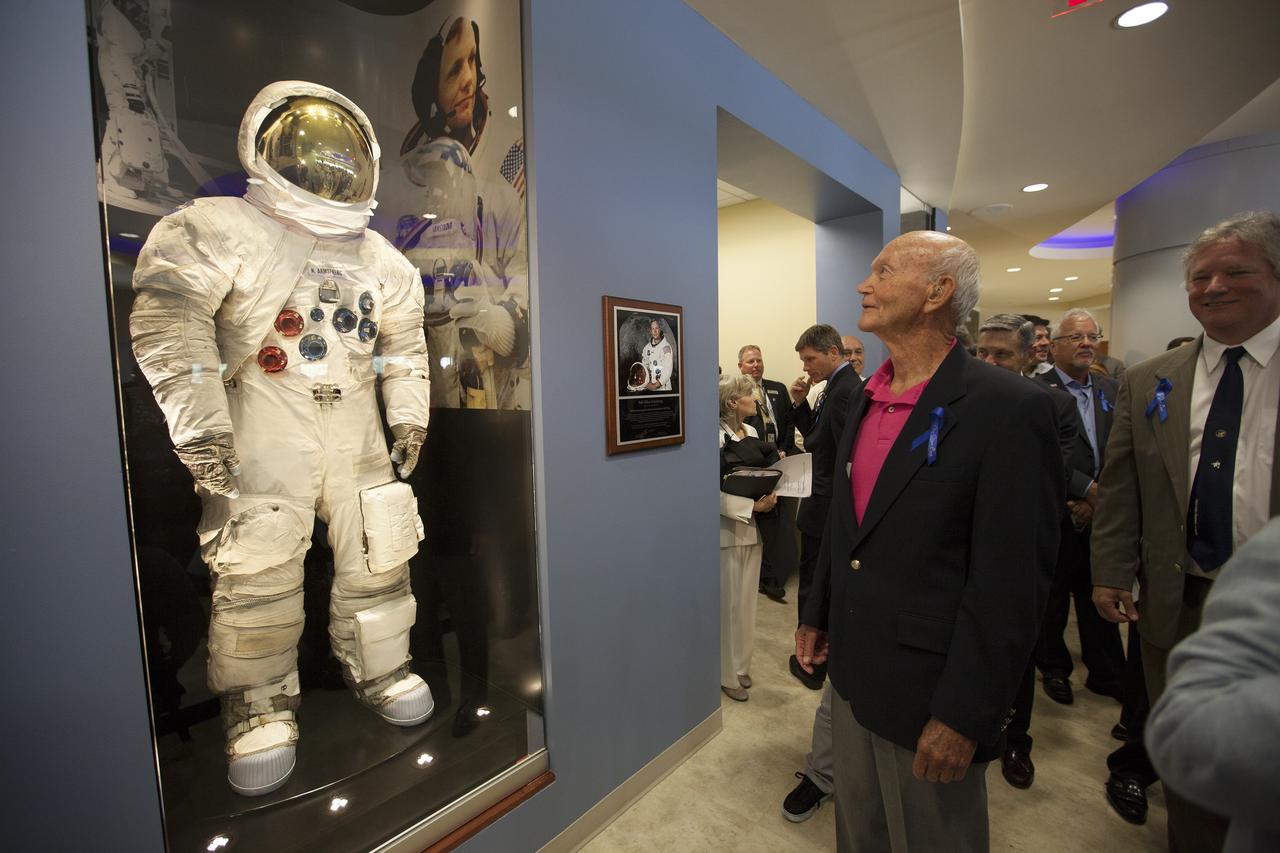
CAPE CANAVERAL, Fla. -- At the Kennedy Space Center in Florida, Apollo 11 astronaut Michael Collins gets a close look at an Apollo-era spacesuit following its unveiling in the lobby of the newly named Neil Armstrong Operations and Checkout Building. The facility has been renamed for Apollo 11 astronaut Neil Armstrong, the first person to set foot on the moon. The building's high bay is being used to support the agency's new Orion spacecraft and is the same spaceport facility where the Apollo 11 command/service module and lunar module were prepped for the first lunar landing mission in 1969. Orion is designed to take humans farther than they’ve ever gone before, serving as the exploration vehicle that will carry astronauts to deep space and sustain the crew during travel to destinations such as an asteroid or Mars. The unveiling was part of NASA's 45th anniversary celebration of the Apollo 11 moon landing. As the world watched, Apollo 11 astronauts landed in the moon's Sea of Tranquility aboard the lunar module, Eagle, on July 20, 1969, as the command module, Columbia, orbited overhead. For more: http://www.nasa.gov/press/2014/july/nasa-honors-historic-first-moon-landing-eyes-first-mars-mission/ Photo credit: NASA/Kim Shiflett
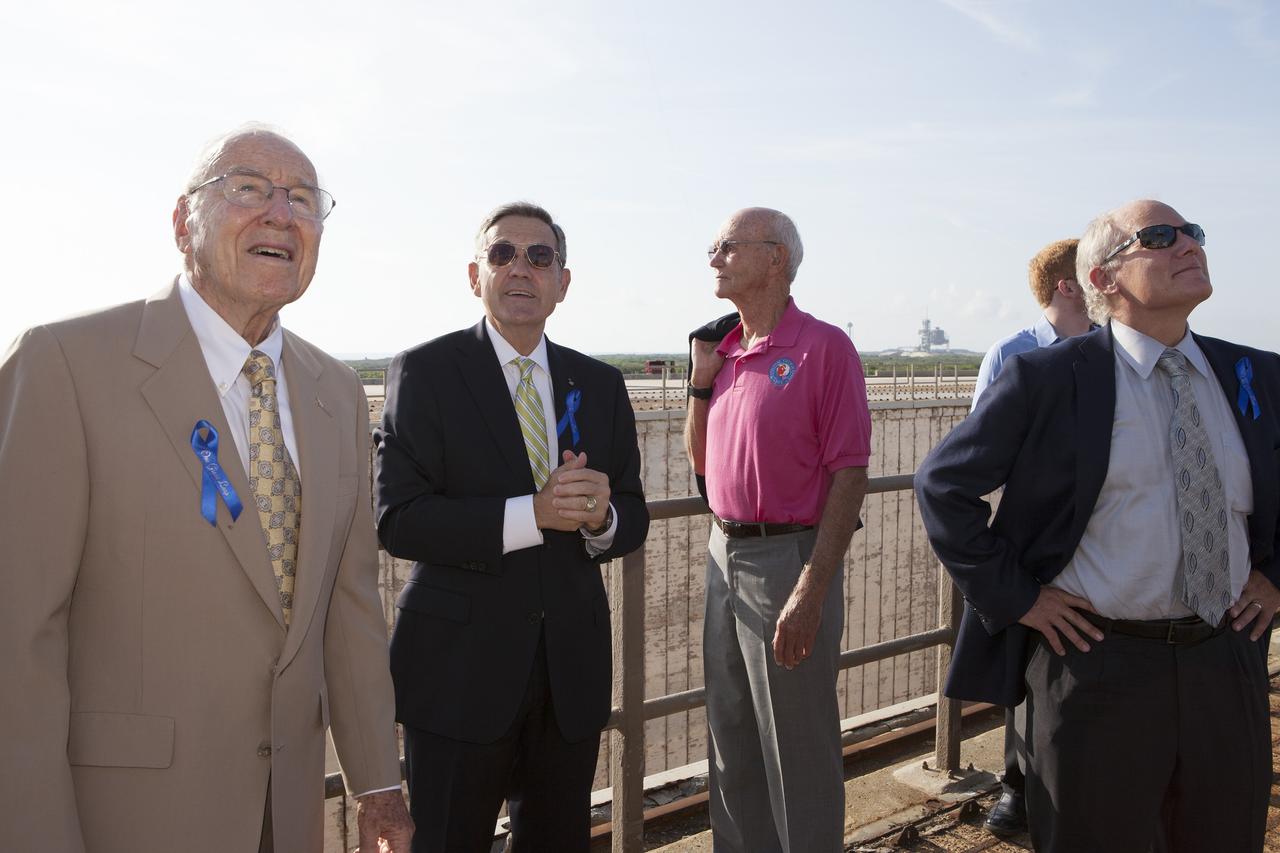
CAPE CANAVERAL, Fla. -- At the Kennedy Space Center in Florida, NASA officials and Apollo astronauts visiting Launch Pad 39B with their families and friends take a moment to enjoy the view. From left are Apollo astronaut Jim Lovell, Center Director Bob Cabana, Apollo 11 command module pilot Mike Collins, and Apollo 11 moonwalker Buzz Aldrin's son Andy Aldrin. The group is at Kennedy for a ceremony renaming the Operations and Checkout Building for Apollo 11 astronaut Neil Armstrong, the first person to set foot on the moon. The pad is being modified to support the agency's new Orion spacecraft which will lift off atop the Space Launch System rocket. Orion is designed to take humans farther than they’ve ever gone before, serving as the exploration vehicle that will carry astronauts to deep space and sustain the crew during travel to destinations such as an asteroid or Mars. The visit of the former astronauts was part of NASA's 45th anniversary celebration of the Apollo 11 moon landing. As the world watched, Neil Armstrong and Neil Aldrin landed in the moon's Sea of Tranquility aboard the lunar module Eagle on July 20, 1969. Meanwhile, crewmate Michael Collins orbited above in the command module Columbia. For more, visit http://www.nasa.gov/press/2014/july/nasa-honors-historic-first-moon-landing-eyes-first-mars-mission. Photo credit: NASA/Kim Shiflett
CAPE CANAVERAL, Fla. -- Apollo astronauts and their families receive a briefing in one of the remodeled firing rooms in the Launch Control Center at NASA's Kennedy Space Center in Florida. The facility's firing rooms were used to conduct the Saturn V countdowns during the Apollo Program. The tour followed a ceremony renaming the refurbished Operations and Checkout Building for Apollo 11 astronaut Neil Armstrong, the first person to set foot on the moon. Second from left is Apollo 11 moonwalker Buzz Aldrin and former astronaut Jim Lovell, a member of the Apollo 8 and Apollo 13 crews, standing next to him, at center. The ceremony was part of NASA's 45th anniversary celebration of the Apollo 11 moon landing. As the world watched, Neil Armstrong and Buzz Aldrin landed in the moon's Sea of Tranquility on July 20, 1969, aboard the lunar module Eagle. Meanwhile, crewmate Michael Collins orbited above in the command module Columbia. For more, visit http://www.nasa.gov/press/2014/july/nasa-honors-historic-first-moon-landing-eyes-first-mars-mission. Photo credit: NASA/Kevin O'Connell

CAPE CANAVERAL, Fla. -- Apollo astronauts and their families receive a briefing in one of the remodeled firing rooms in the Launch Control Center at NASA's Kennedy Space Center in Florida. The facility's firing rooms were used to conduct the Saturn V countdowns during the Apollo Program. The tour followed a ceremony renaming the refurbished Operations and Checkout Building for Apollo 11 astronaut Neil Armstrong, the first person to set foot on the moon. Second from left is Apollo 11 moonwalker Buzz Aldrin and former astronaut Jim Lovell, a member of the Apollo 8 and Apollo 13 crews, standing next to him, at center. The ceremony was part of NASA's 45th anniversary celebration of the Apollo 11 moon landing. As the world watched, Neil Armstrong and Buzz Aldrin landed in the moon's Sea of Tranquility on July 20, 1969, aboard the lunar module Eagle. Meanwhile, crewmate Michael Collins orbited above in the command module Columbia. For more, visit http://www.nasa.gov/press/2014/july/nasa-honors-historic-first-moon-landing-eyes-first-mars-mission. Photo credit: NASA/Kim Shiflett
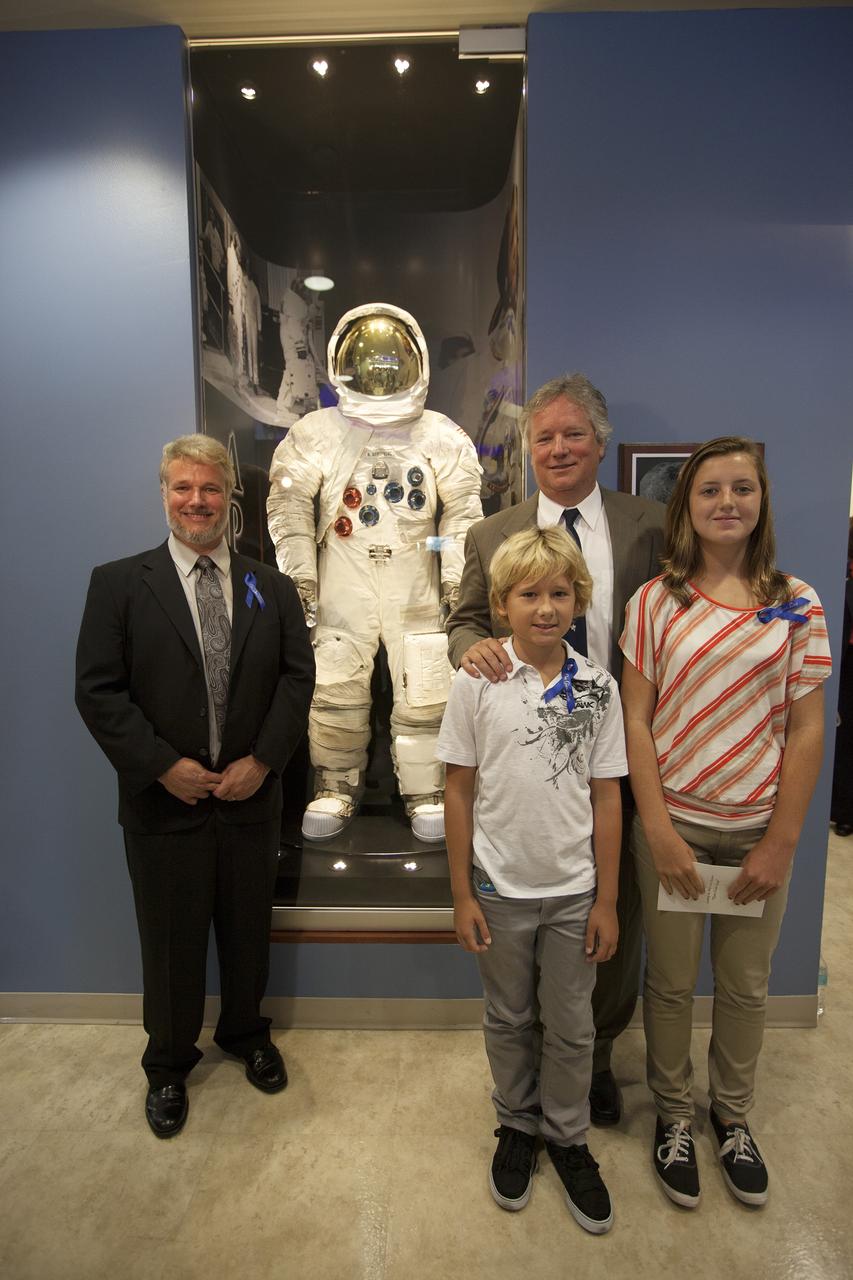
CAPE CANAVERAL, Fla. -- At the Kennedy Space Center in Florida, members of the Armstrong family pose for a portrait with an Apollo-era spacesuit following its unveiling in the lobby of the newly named Neil Armstrong Operations and Checkout Building. The facility has been renamed for Apollo 11 astronaut Neil Armstrong, the first person to set foot on the moon. From left are Armstrong's son Mark, his grandson Bryce, his son Rick and his granddaughter Lily. The building's high bay is being used to support the agency's new Orion spacecraft and is the same spaceport facility where the Apollo 11 command/service module and lunar module were prepped for the first lunar landing mission in 1969. Orion is designed to take humans farther than they’ve ever gone before, serving as the exploration vehicle that will carry astronauts to deep space and sustain the crew during travel to destinations such as an asteroid or Mars. The unveiling was part of NASA's 45th anniversary celebration of the Apollo 11 moon landing. As the world watched, Apollo 11 astronauts landed in the moon's Sea of Tranquility aboard the lunar module, Eagle, on July 20, 1969, as the command module, Columbia, orbited overhead. For more: http://www.nasa.gov/press/2014/july/nasa-honors-historic-first-moon-landing-eyes-first-mars-mission/ Photo credit: NASA/Kim Shiflett
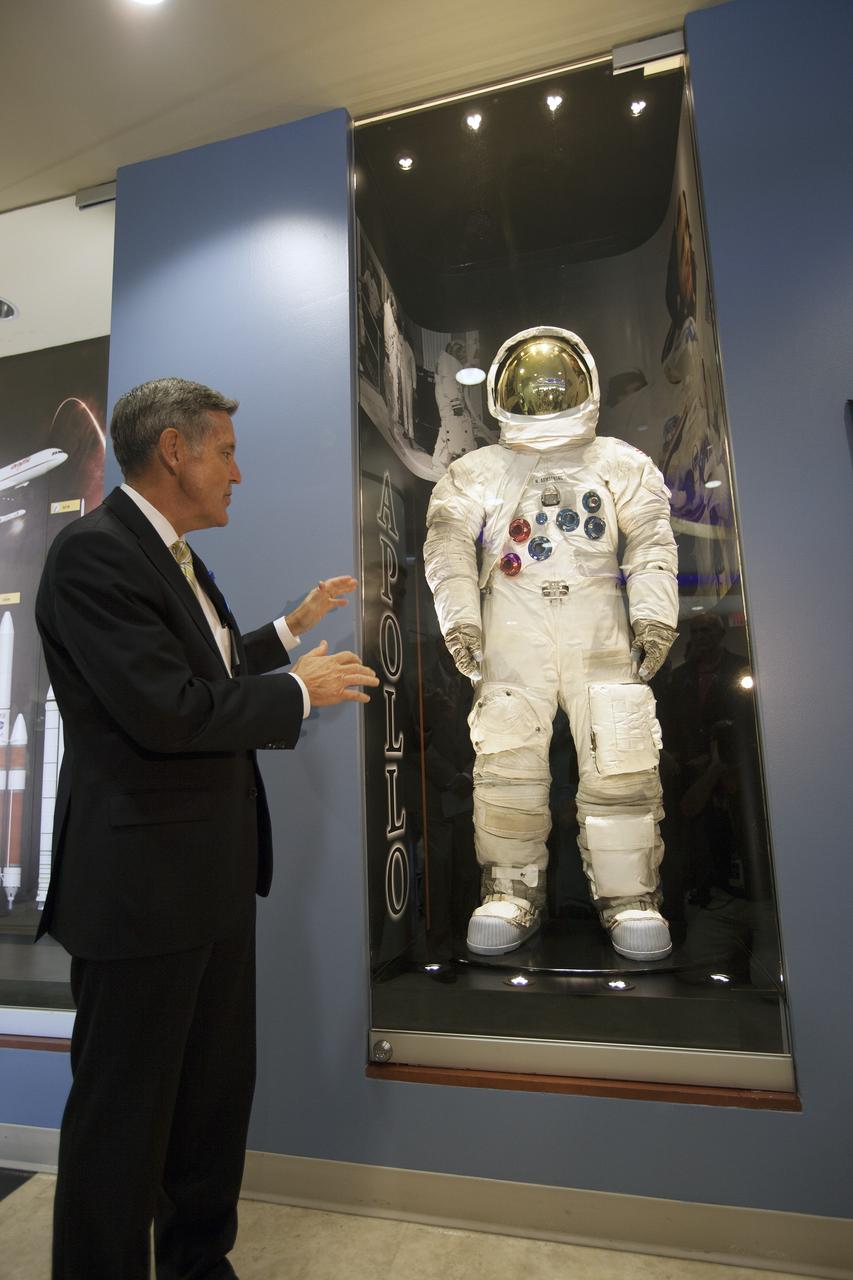
KSC-2014-3220 – CAPE CANAVERAL, Fla. -- At the Kennedy Space Center in Florida, Center Director Robert Cabana unveils an Apollo-era spacesuit on display in the lobby of the newly named Neil Armstrong Operations and Checkout Building. The facility has been renamed for Apollo 11 astronaut Neil Armstrong, the first person to set foot on the moon. The building's high bay is being used to support the agency's new Orion spacecraft and is the same spaceport facility where the Apollo 11 command/service module and lunar module were prepped for the first lunar landing mission in 1969. Orion is designed to take humans farther than they’ve ever gone before, serving as the exploration vehicle that will carry astronauts to deep space and sustain the crew during travel to destinations such as an asteroid or Mars. The unveiling was part of NASA's 45th anniversary celebration of the Apollo 11 moon landing. As the world watched, Apollo 11 astronauts landed in the moon's Sea of Tranquility aboard the lunar module, Eagle, on July 20, 1969, as the command module, Columbia, orbited overhead. For more: http://www.nasa.gov/press/2014/july/nasa-honors-historic-first-moon-landing-eyes-first-mars-mission/ Photo credit: NASA/Kim Shiflett
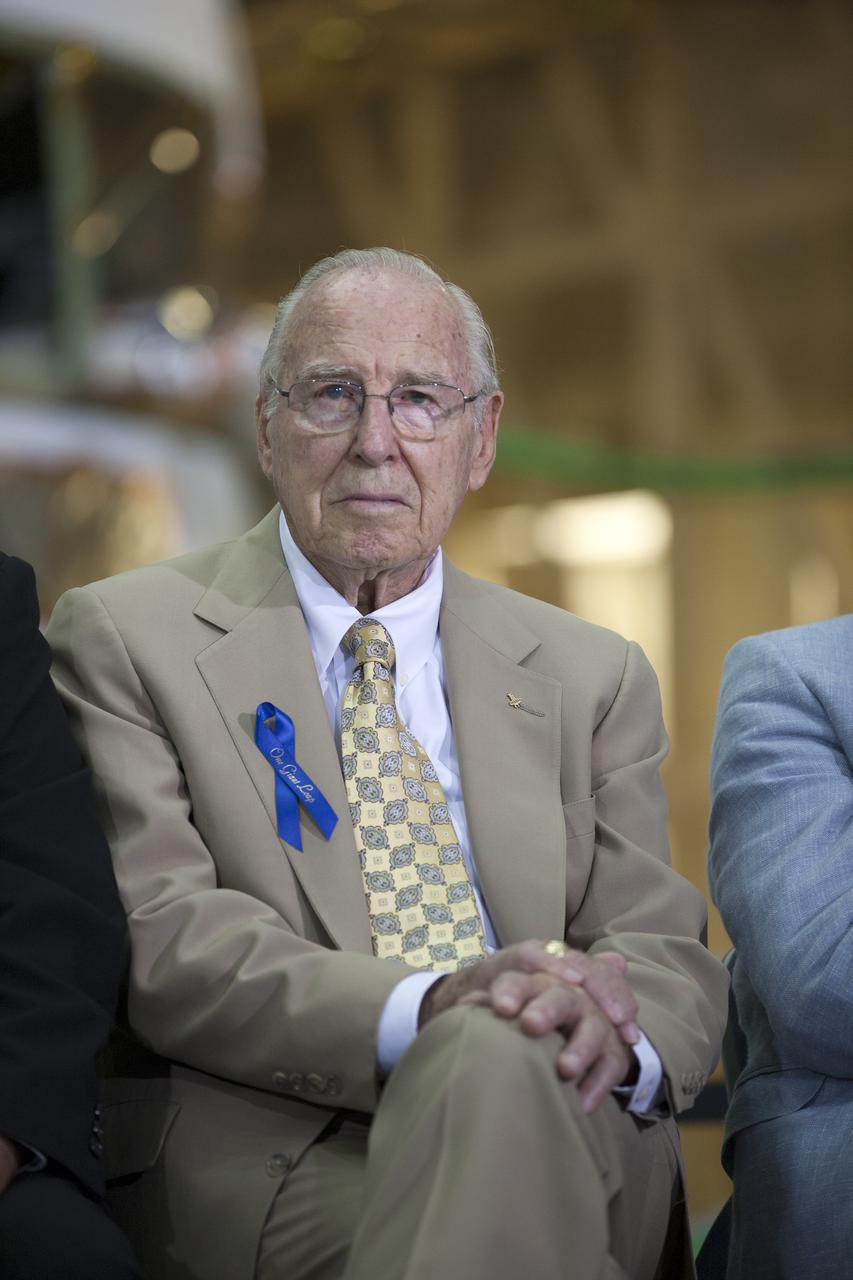
CAPE CANAVERAL, Fla. -- At the Kennedy Space Center in Florida, Apollo astronaut Jim Lovell participates in a ceremony renaming the refurbished Operations and Checkout Building for Apollo 11 astronaut Neil Armstrong, the first person to set foot on the moon. Lovell served on the crews of Apollo 8 and Apollo 13. The building's high bay is being used to support the agency's new Orion spacecraft and is the same spaceport facility where the Apollo 11 command_service module and lunar module were prepped for the first lunar landing mission in 1969. Orion is designed to take humans farther than they’ve ever gone before, serving as the exploration vehicle that will carry astronauts to deep space and sustain the crew during travel to destinations such as an asteroid or Mars. The ceremony was part of NASA's 45th anniversary celebration of the Apollo 11 moon landing. As the world watched, Neil Armstrong and Buzz Aldrin landed in the moon's Sea of Tranquility on July 20, 1969, aboard the lunar module Eagle. Meanwhile, crewmate Michael Collins orbited above in the command module Columbia. For more, visit http:__www.nasa.gov_press_2014_july_nasa-honors-historic-first-moon-landing-eyes-first-mars-mission. Photo credit: NASA_Kim Shiflett
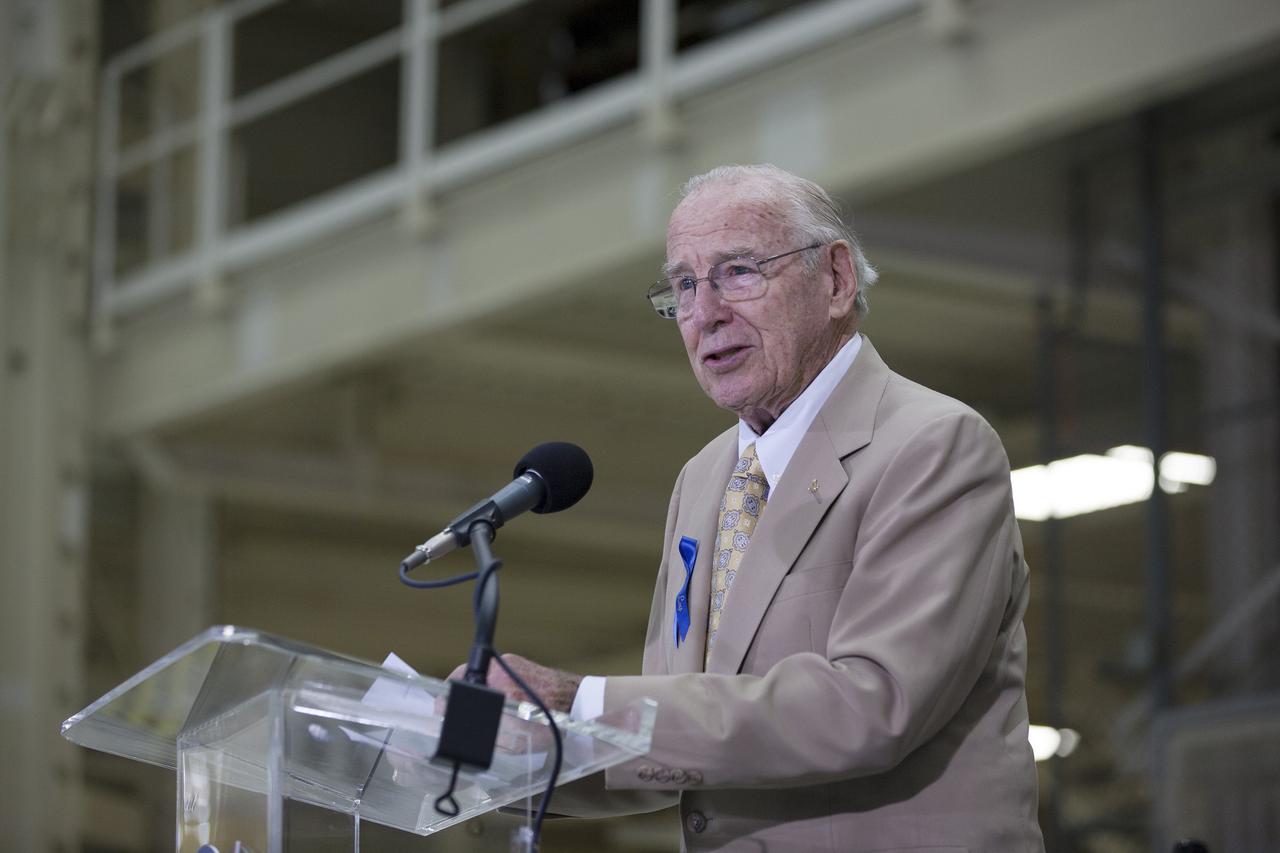
CAPE CANAVERAL, Fla. -- At the Kennedy Space Center in Florida, Apollo astronaut Jim Lovell addresses the audience at a ceremony renaming the refurbished Operations and Checkout Building for Apollo 11 astronaut Neil Armstrong, the first person to set foot on the moon. Lovell served on the crews of Apollo 8 and Apollo 13. The building's high bay is being used to support the agency's new Orion spacecraft and is the same spaceport facility where the Apollo 11 command/service module and lunar module were prepped for the first lunar landing mission in 1969. Orion is designed to take humans farther than they’ve ever gone before, serving as the exploration vehicle that will carry astronauts to deep space and sustain the crew during travel to destinations such as an asteroid or Mars. The ceremony was part of NASA's 45th anniversary celebration of the Apollo 11 moon landing. As the world watched, Neil Armstrong and Buzz Aldrin landed in the moon's Sea of Tranquility on July 20, 1969, aboard the lunar module Eagle. Meanwhile, crewmate Michael Collins orbited above in the command module Columbia. For more, visit http://www.nasa.gov/press/2014/july/nasa-honors-historic-first-moon-landing-eyes-first-mars-mission. Photo credit: NASA/Kim Shiflett
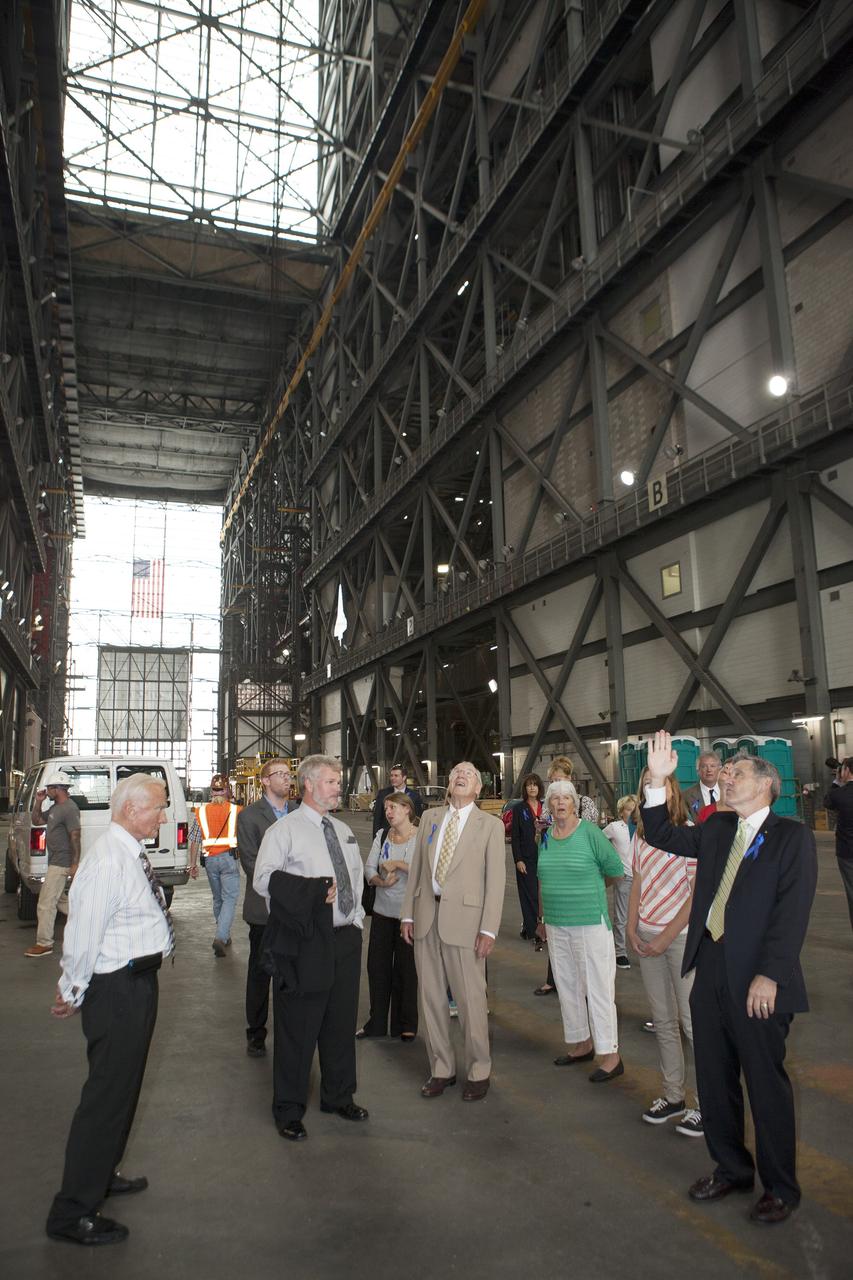
CAPE CANAVERAL, Fla. -- Kennedy Space Center Director Robert Cabana, at right, escorts Apollo astronauts and their families through the transfer aisle of the 525-foot-tall Vehicle Assembly Building, the facility in which Apollo's Saturn V rockets were processed at NASA's Kennedy Space Center in Florida. The visit followed a ceremony renaming Kennedy's refurbished Operations and Checkout Building for Apollo 11 astronaut Neil Armstrong, the first person to set foot on the moon. In front of the group, from left, are Apollo 11 moonwalker Buzz Aldrin, Armstrong's son Mark, Apollo astronaut Jim Lovell, Armstrong's former wife Janet, and Cabana. The ceremony was part of NASA's 45th anniversary celebration of the Apollo 11 moon landing. As the world watched, Neil Armstrong and Buzz Aldrin landed in the moon's Sea of Tranquility on July 20, 1969, aboard the lunar module Eagle. Meanwhile, crewmate Michael Collins orbited above in the command module Columbia. For more, visit http://www.nasa.gov/press/2014/july/nasa-honors-historic-first-moon-landing-eyes-first-mars-mission. Photo credit: NASA/Kim Shiflett
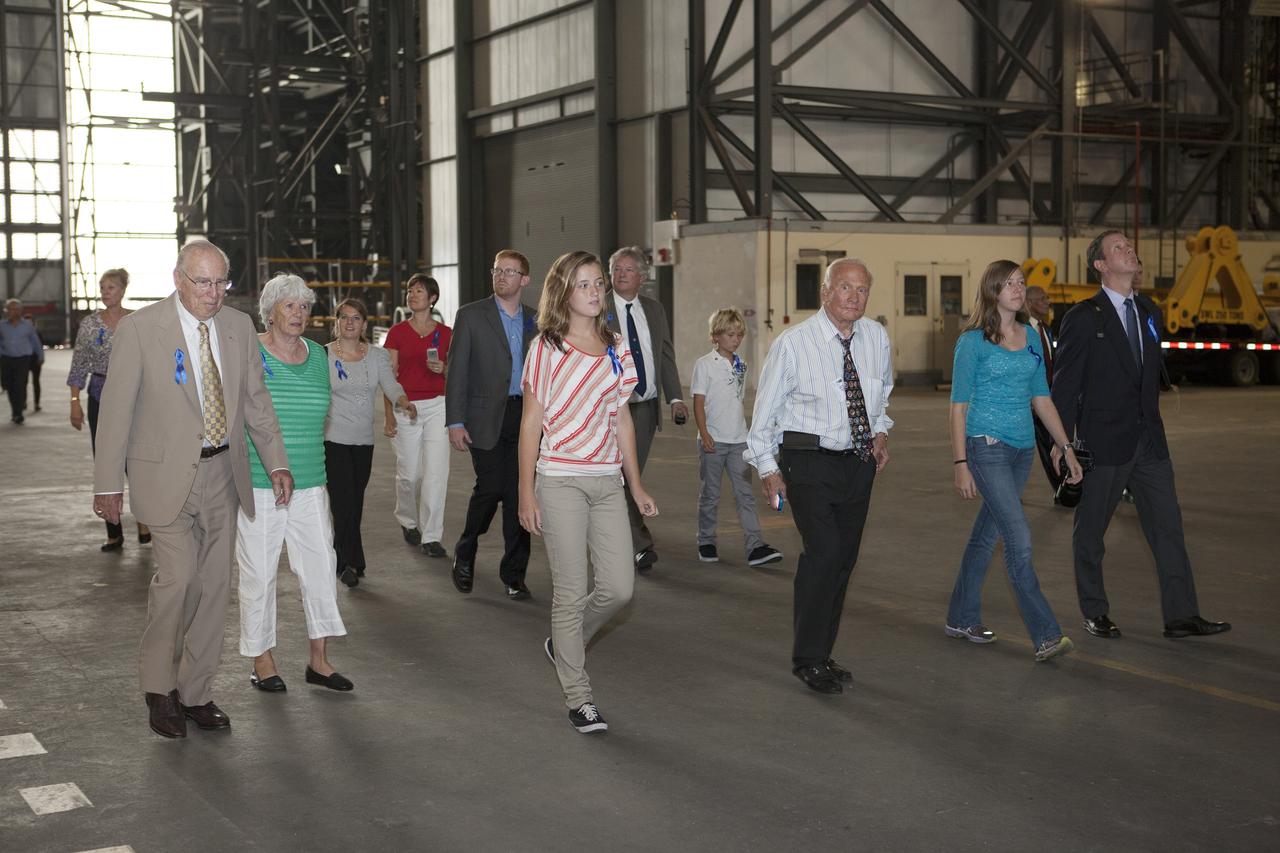
CAPE CANAVERAL, Fla. -- Apollo astronauts and their families tour the Vehicle Assembly Building, the facility in which Apollo's Saturn V rockets were processed at NASA's Kennedy Space Center in Florida. The tour followed a ceremony renaming the refurbished Operations and Checkout Building for Apollo 11 astronaut Neil Armstrong, the first person to set foot on the moon. Leading the way through the transfer aisle, from left, are Apollo astronaut Jim Lovell, Neil's former wife Janet, Neil's granddaughter Lily, and Apollo 11 moonwalker Buzz Aldrin. The ceremony was part of NASA's 45th anniversary celebration of the Apollo 11 moon landing. As the world watched, Neil Armstrong and Buzz Aldrin landed in the moon's Sea of Tranquility on July 20, 1969, aboard the lunar module Eagle. Meanwhile, crewmate Michael Collins orbited above in the command module Columbia. For more, visit http://www.nasa.gov/press/2014/july/nasa-honors-historic-first-moon-landing-eyes-first-mars-mission. Photo credit: NASA/Kim Shiflett
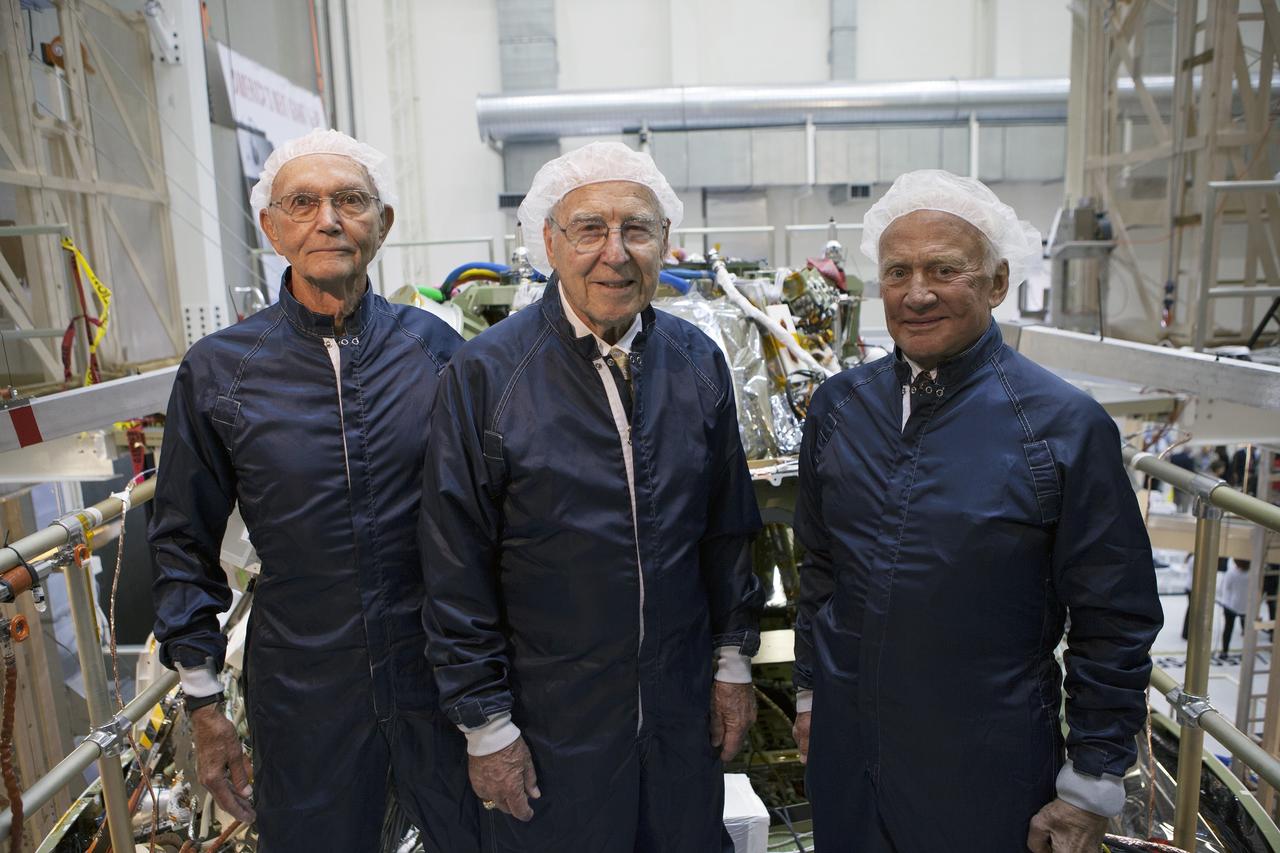
CAPE CANAVERAL, Fla. -- At the Kennedy Space Center in Florida, Apollo astronauts tour the refurbished Operations and Checkout Building, newly named for Apollo 11 astronaut Neil Armstrong, the first person to set foot on the moon. Viewing the Orion crew module stacked on top of the service module from left, are Apollo 11 astronaut Michael Collins, Apollo astronaut Jim Lovell, and Apollo 11 astronaut Buzz Aldrin. The building's high bay is being used to support the agency's new Orion spacecraft, which will lift off atop the Space Launch System. Orion is designed to take humans farther than they've ever gone before, serving as the exploration vehicle that will carry astronauts to deep space and sustain the crew during travel to destinations such as an asteroid or Mars. The visit of the former astronauts was part of NASA's 45th anniversary celebration of the moon landing. As the world watched, Neil Armstrong and Aldrin landed in the moon's Sea of Tranquility aboard the lunar module Eagle on July 20, 1969. Meanwhile, crewmate Collins orbited above in the command module Columbia. For more, visit http://www.nasa.gov/press/2014/july/nasa-honors-historic-first-moon-landing-eyes-first-mars-mission. Photo credit: NASA/Kim Shiflett
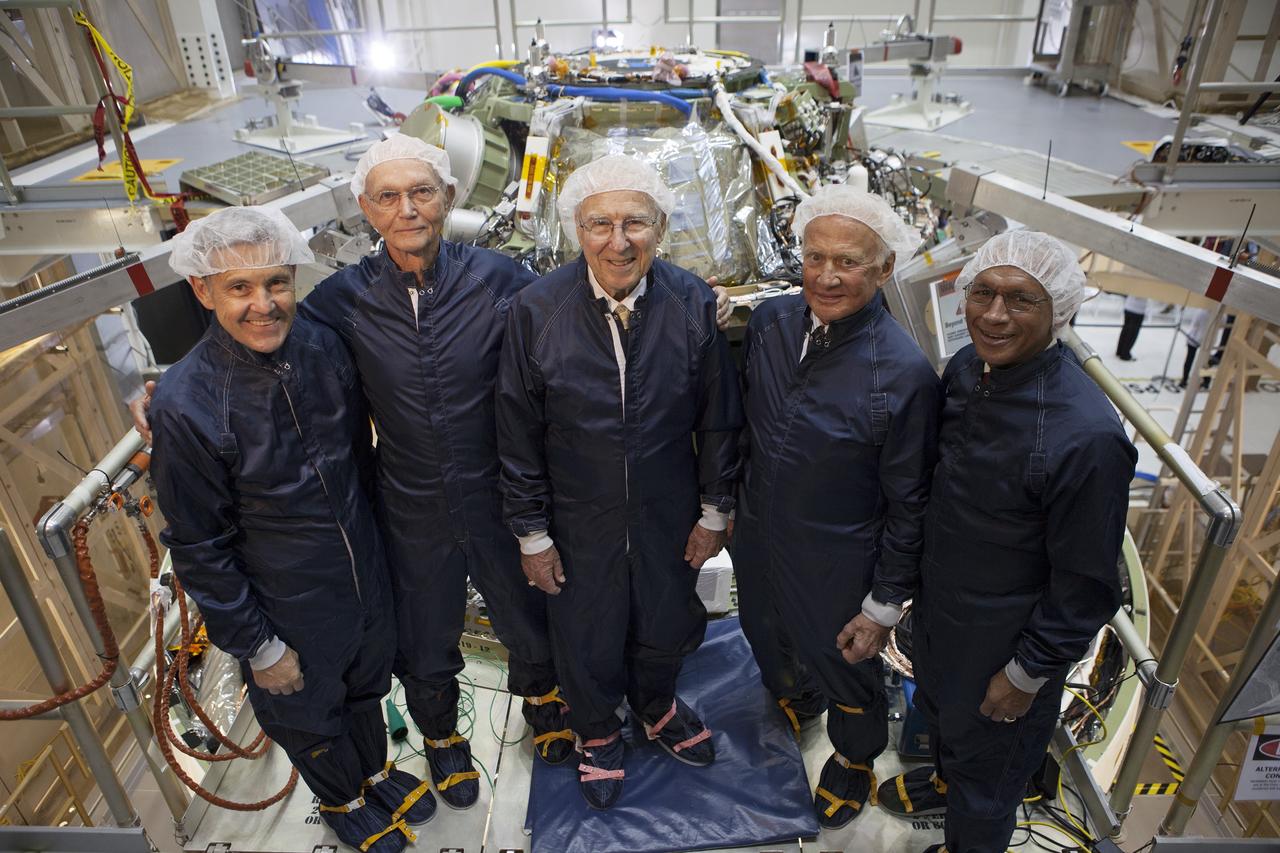
CAPE CANAVERAL, Fla. -- At the Kennedy Space Center in Florida, NASA officials and Apollo astronauts tour the refurbished Operations and Checkout Building, newly named for Apollo 11 astronaut Neil Armstrong, the first person to set foot on the moon. Viewing the Orion crew module stacked on top of the service module from left, are Kennedy Center Director Bob Cabana, Apollo 11 astronaut Michael Collins, Apollo astronaut Jim Lovell, Apollo 11 astronaut Buzz Aldrin, and NASA Administrator Charlie Bolden. The building's high bay is being used to support the agency's new Orion spacecraft, which will lift off atop the Space Launch System. Orion is designed to take humans farther than they've ever gone before, serving as the exploration vehicle that will carry astronauts to deep space and sustain the crew during travel to destinations such as an asteroid or Mars. The visit of the former astronauts was part of NASA's 45th anniversary celebration of the moon landing. As the world watched, Neil Armstrong and Aldrin landed in the moon's Sea of Tranquility aboard the lunar module Eagle on July 20, 1969. Meanwhile, crewmate Collins orbited above in the command module Columbia. For more, visit http://www.nasa.gov/press/2014/july/nasa-honors-historic-first-moon-landing-eyes-first-mars-mission. Photo credit: NASA/Kim Shiflett
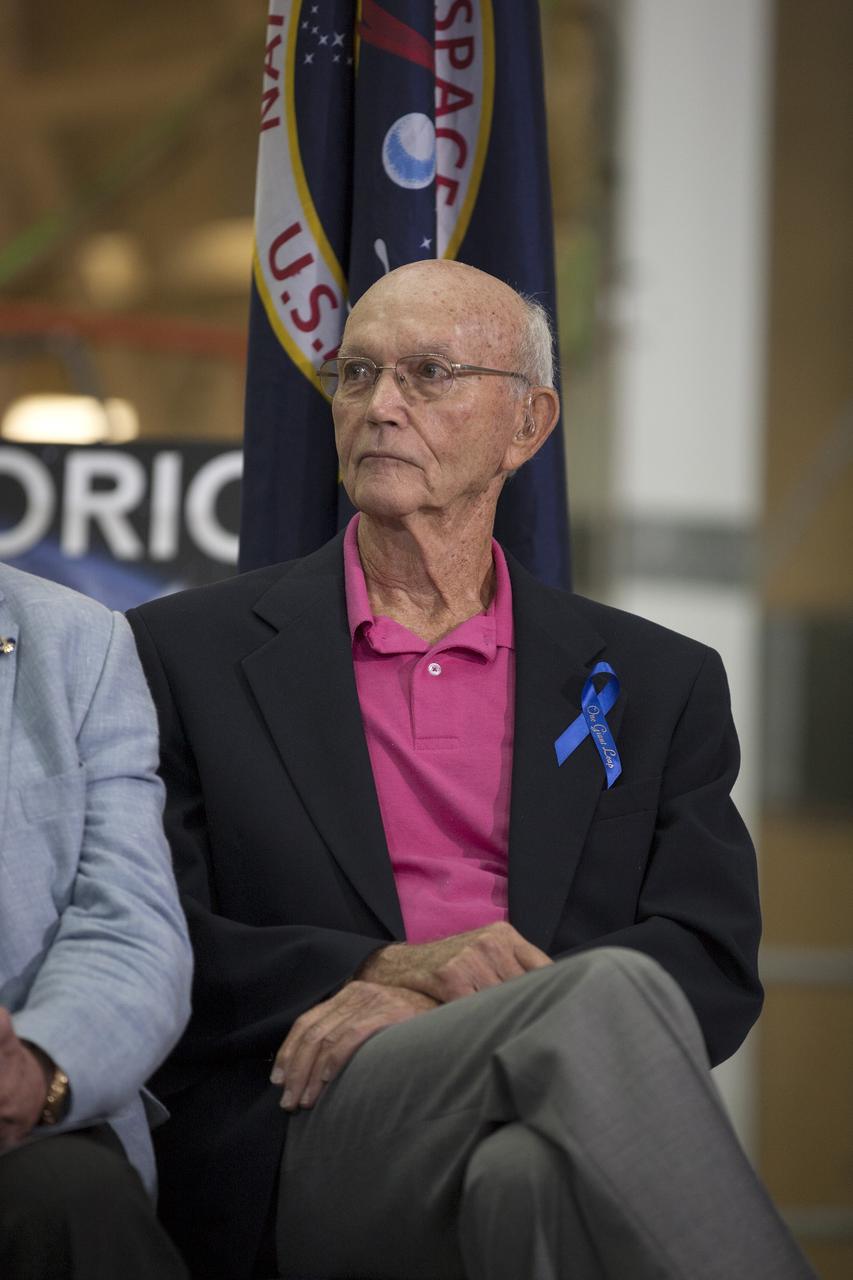
CAPE CANAVERAL, Fla. -- At the Kennedy Space Center in Florida, Apollo 11 astronaut Michael Collins participates in a ceremony renaming the refurbished Operations and Checkout Building for Apollo 11 astronaut Neil Armstrong, the first person to set foot on the moon. The building's high bay is being used to support the agency's new Orion spacecraft and is the same spaceport facility where the Apollo 11 command/service module and lunar module were prepped for the first lunar landing mission in 1969. Orion is designed to take humans farther than they’ve ever gone before, serving as the exploration vehicle that will carry astronauts to deep space and sustain the crew during travel to destinations such as an asteroid or Mars. The ceremony was part of NASA's 45th anniversary celebration of the Apollo 11 moon landing. As the world watched, Neil Armstrong and Buzz Aldrin landed in the moon's Sea of Tranquility on July 20, 1969, aboard the lunar module Eagle. Meanwhile, crewmate Michael Collins orbited above in the command module Columbia. For more, visit http://www.nasa.gov/press/2014/july/nasa-honors-historic-first-moon-landing-eyes-first-mars-mission. Photo credit: NASA/Kim Shiflett
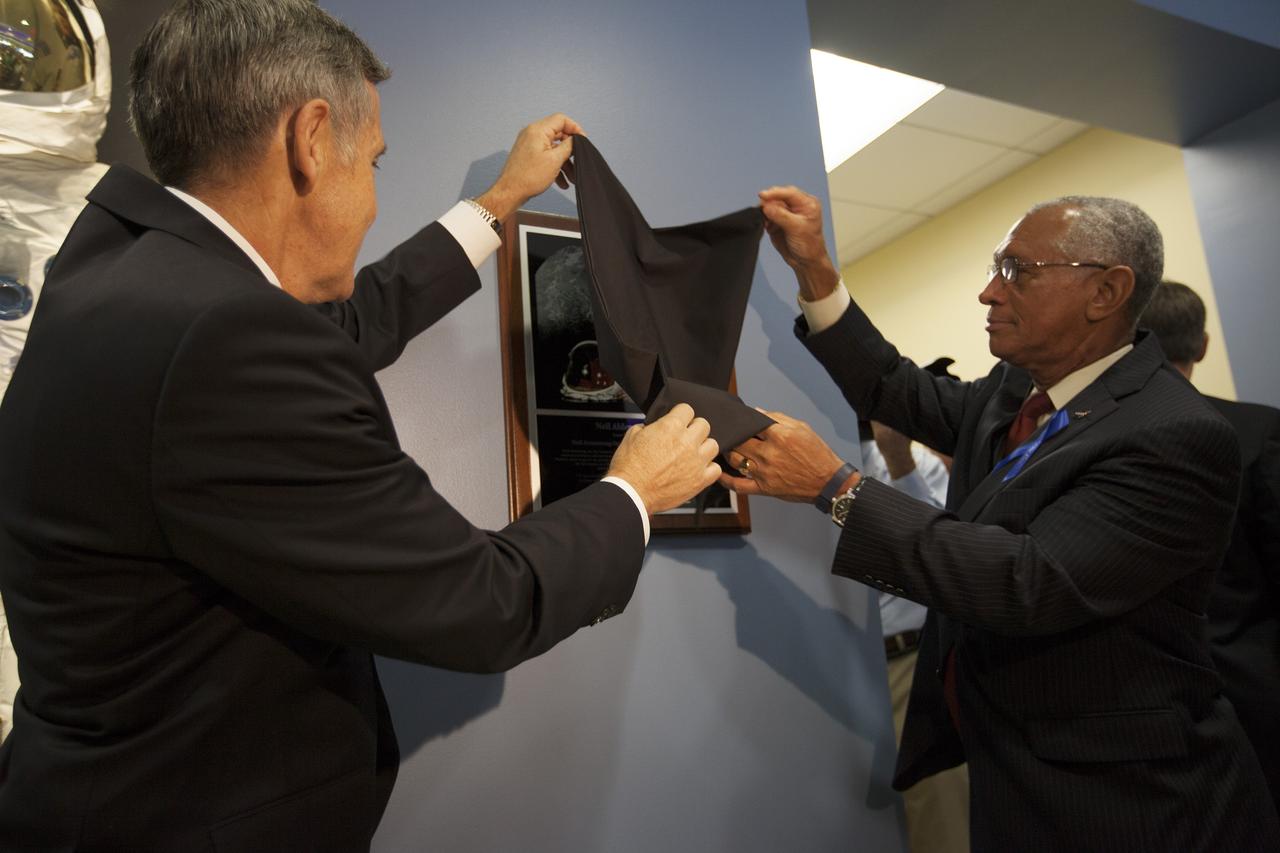
CAPE CANAVERAL, Fla. -- At the Kennedy Space Center in Florida, Center Director Robert Cabana, left, and NASA Administrator Charles Bolden unveil a plaque on display in the lobby of the newly named Neil Armstrong Operations and Checkout Building. The facility has been renamed for Apollo 11 astronaut Neil Armstrong, the first person to set foot on the moon. The building's high bay is being used to support the agency's new Orion spacecraft and is the same spaceport facility where the Apollo 11 command/service module and lunar module were prepped for the first lunar landing mission in 1969. Orion is designed to take humans farther than they’ve ever gone before, serving as the exploration vehicle that will carry astronauts to deep space and sustain the crew during travel to destinations such as an asteroid or Mars. The unveiling was part of NASA's 45th anniversary celebration of the Apollo 11 moon landing. As the world watched, Apollo 11 astronauts landed in the moon's Sea of Tranquility aboard the lunar module, Eagle, on July 20, 1969, as the command module, Columbia, orbited overhead. For more: http://www.nasa.gov/press/2014/july/nasa-honors-historic-first-moon-landing-eyes-first-mars-mission/ Photo credit: NASA/Kim Shiflett
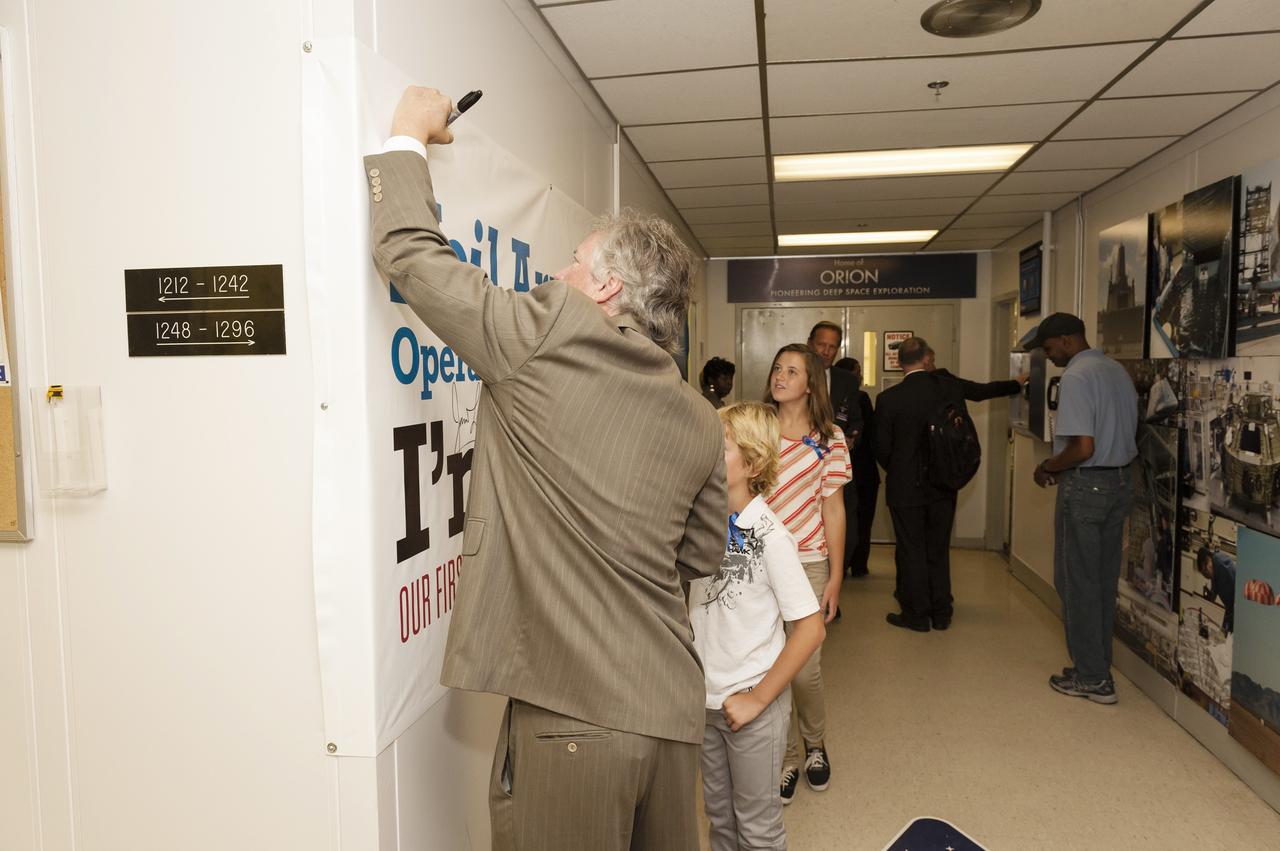
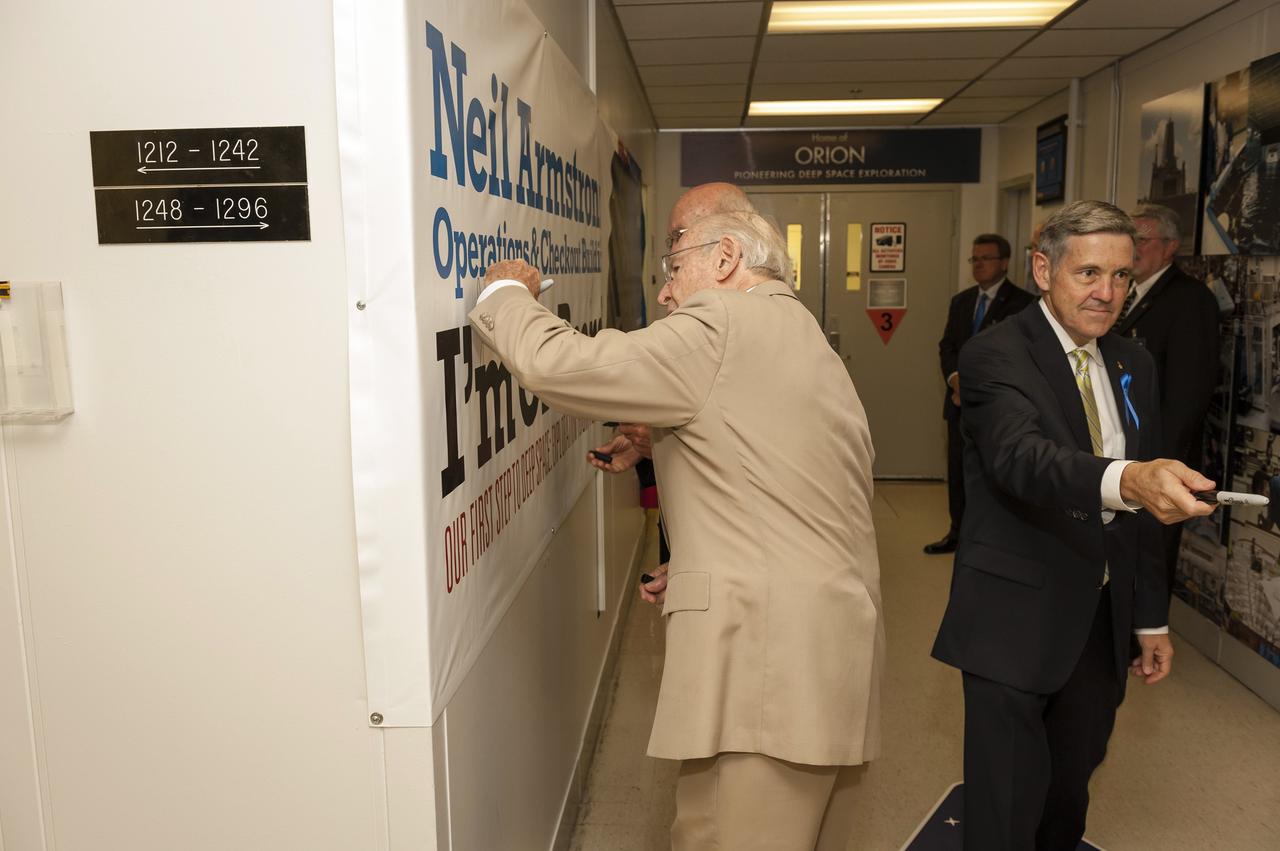
CAPE CANAVERAL, Fla. -- Family members of Apollo 11 astronaut Neil Armstrong sign a banner displaying the new name of the Operations and Checkout Building at NASA's Kennedy Space Center in Florida. The banner signing followed a ceremony renaming the refurbished building for Apollo 11 astronaut Neil Armstrong, the first person to set foot on the moon. From left are Armstrong's son Rick, his grandson Bryce and his granddaughter Lily. The building's high bay is being used to support the agency's new Orion spacecraft and is the same spaceport facility where the Apollo 11 command/service module and lunar module were prepped for the first lunar landing mission in 1969. Orion is designed to take humans farther than they’ve ever gone before, serving as the exploration vehicle that will carry astronauts to deep space and sustain the crew during travel to destinations such as an asteroid or Mars. The ceremony was part of NASA's 45th anniversary celebration of the Apollo 11 moon landing. As the world watched, Neil Armstrong and Buzz Aldrin landed in the moon's Sea of Tranquility on July 20, 1969, aboard the lunar module Eagle. Meanwhile, crewmate Michael Collins orbited above in the command module Columbia. For more, visit http://www.nasa.gov/press/2014/july/nasa-honors-historic-first-moon-landing-eyes-first-mars-mission. Photo credit: NASA/Kevin O'Connell
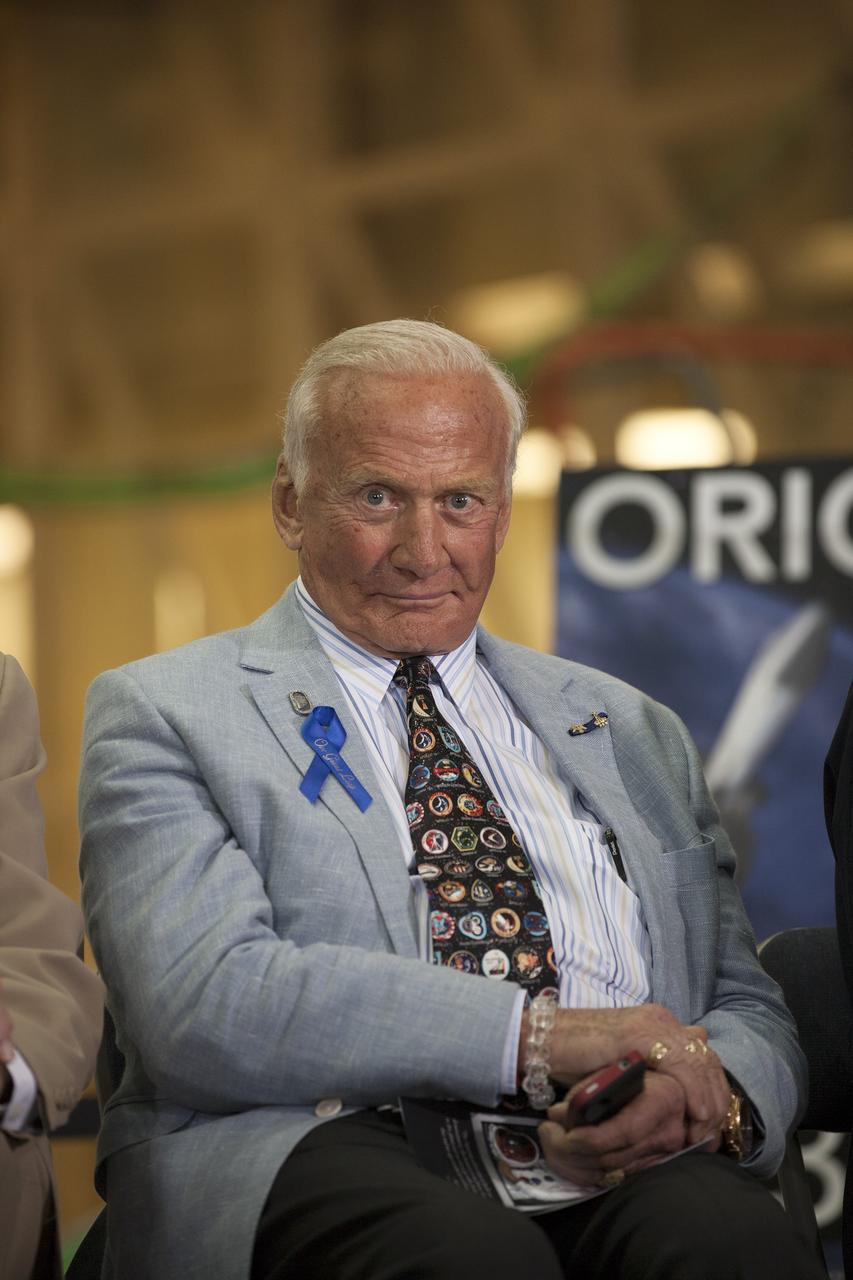
CAPE CANAVERAL, Fla. -- At the Kennedy Space Center in Florida, Apollo 11 astronaut Buzz Aldrin participates in a ceremony renaming the refurbished Operations and Checkout Building for Apollo 11 astronaut Neil Armstrong, the first person to set foot on the moon. The building's high bay is being used to support the agency's new Orion spacecraft and is the same spaceport facility where the Apollo 11 command/service module and lunar module were prepped for the first lunar landing mission in 1969. Orion is designed to take humans farther than they’ve ever gone before, serving as the exploration vehicle that will carry astronauts to deep space and sustain the crew during travel to destinations such as an asteroid or Mars. The ceremony was part of NASA's 45th anniversary celebration of the Apollo 11 moon landing. As the world watched, Neil Armstrong and Buzz Aldrin landed in the moon's Sea of Tranquility on July 20, 1969, aboard the lunar module Eagle. Meanwhile, crewmate Michael Collins orbited above in the command module Columbia. For more, visit http://www.nasa.gov/press/2014/july/nasa-honors-historic-first-moon-landing-eyes-first-mars-mission. Photo credit: NASA/Kim Shiflett
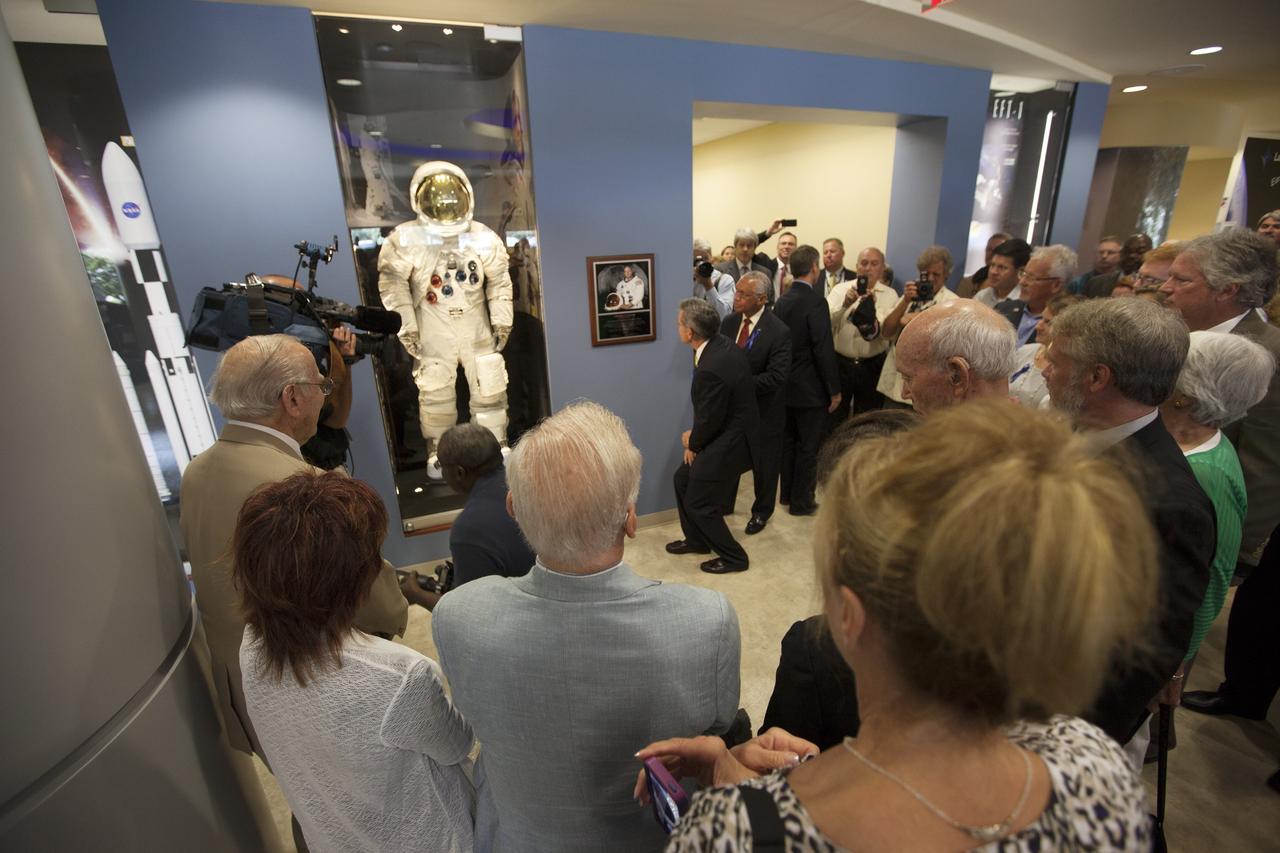
CAPE CANAVERAL, Fla. -- At the Kennedy Space Center in Florida, Center Director Robert Cabana reads the inscription on a plaque to invited guests following its unveiling in the lobby of the newly named Neil Armstrong Operations and Checkout Building. NASA Administrator Charles Bolden is at his right. The facility has been renamed for Apollo 11 astronaut Neil Armstrong, the first person to set foot on the moon. The building's high bay is being used to support the agency's new Orion spacecraft and is the same spaceport facility where the Apollo 11 command/service module and lunar module were prepped for the first lunar landing mission in 1969. Orion is designed to take humans farther than they’ve ever gone before, serving as the exploration vehicle that will carry astronauts to deep space and sustain the crew during travel to destinations such as an asteroid or Mars. The unveiling was part of NASA's 45th anniversary celebration of the Apollo 11 moon landing. As the world watched, Apollo 11 astronauts landed in the moon's Sea of Tranquility aboard the lunar module, Eagle, on July 20, 1969, as the command module, Columbia, orbited overhead. For more: http://www.nasa.gov/press/2014/july/nasa-honors-historic-first-moon-landing-eyes-first-mars-mission/ Photo credit: NASA/Kim Shiflett
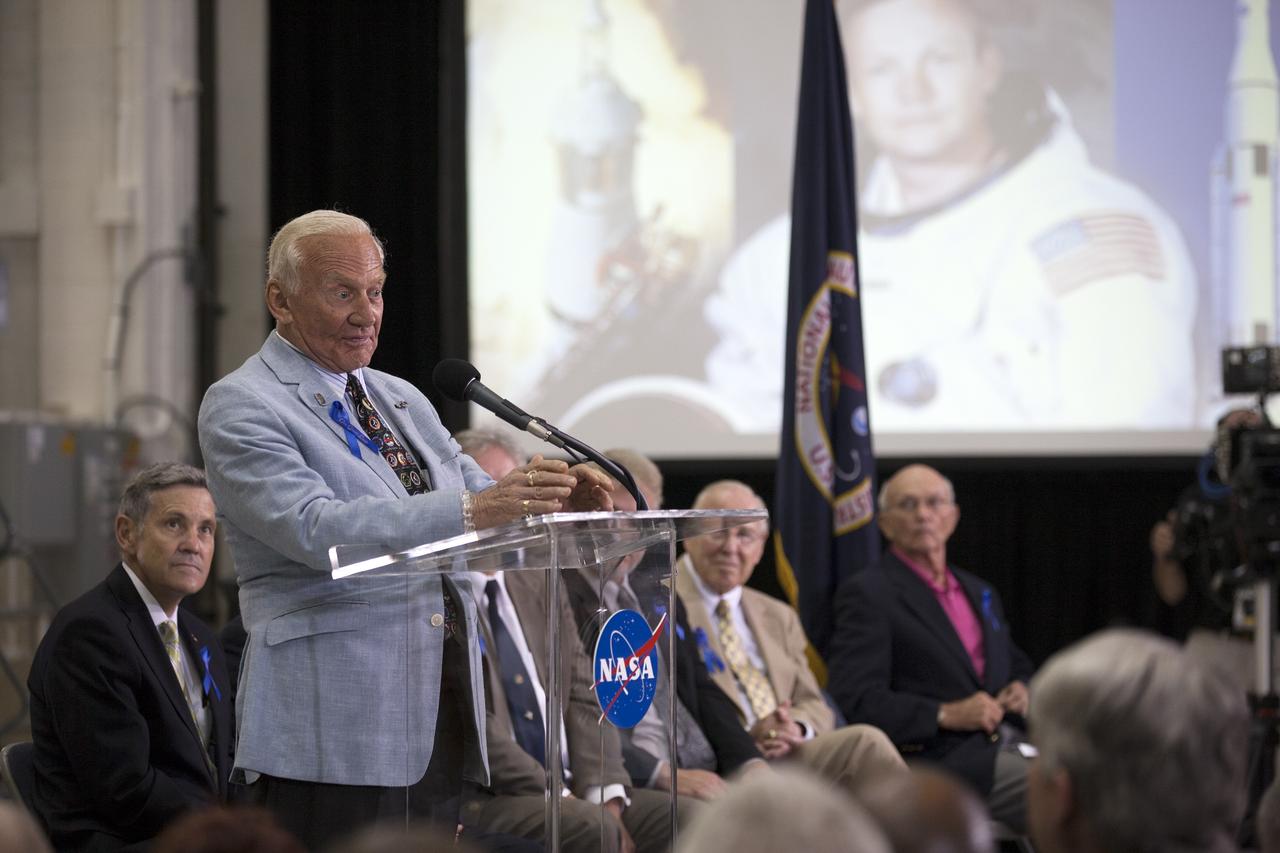
CAPE CANAVERAL, Fla. -- At the Kennedy Space Center in Florida, Apollo 11 astronaut Buzz Aldrin addresses the audience at a ceremony renaming the refurbished Operations and Checkout Building for Apollo 11 astronaut Neil Armstrong, the first person to set foot on the moon. The building's high bay is being used to support the agency's new Orion spacecraft and is the same spaceport facility where the Apollo 11 command/service module and lunar module were prepped for the first lunar landing mission in 1969. Orion is designed to take humans farther than they’ve ever gone before, serving as the exploration vehicle that will carry astronauts to deep space and sustain the crew during travel to destinations such as an asteroid or Mars. The ceremony was part of NASA's 45th anniversary celebration of the Apollo 11 moon landing. As the world watched, Neil Armstrong and Buzz Aldrin landed in the moon's Sea of Tranquility on July 20, 1969, aboard the lunar module Eagle. Meanwhile, crewmate Michael Collins orbited above in the command module Columbia. For more, visit http://www.nasa.gov/press/2014/july/nasa-honors-historic-first-moon-landing-eyes-first-mars-mission. Photo credit: NASA/Kim Shiflett
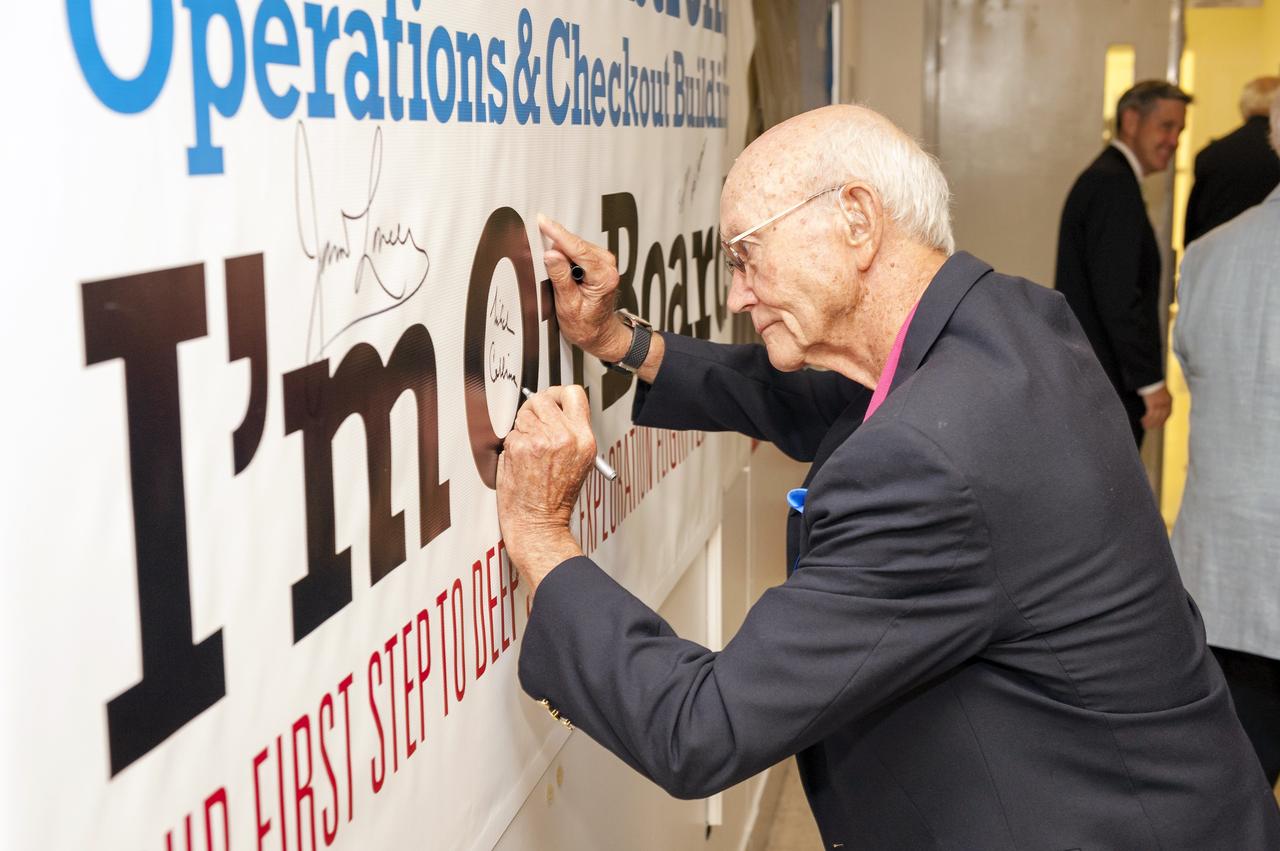
CAPE CANAVERAL, Fla. -- Apollo 11 command module pilot Michael Collins signs a banner displaying the new name of the Operations and Checkout Building at NASA's Kennedy Space Center in Florida. The banner signing followed a ceremony renaming the refurbished building for Apollo 11 astronaut Neil Armstrong, the first person to set foot on the moon. The building's high bay is being used to support the agency's new Orion spacecraft and is the same spaceport facility where the Apollo 11 command/service module and lunar module were prepped for the first lunar landing mission in 1969. Orion is designed to take humans farther than they’ve ever gone before, serving as the exploration vehicle that will carry astronauts to deep space and sustain the crew during travel to destinations such as an asteroid or Mars. The ceremony was part of NASA's 45th anniversary celebration of the Apollo 11 moon landing. As the world watched, Neil Armstrong and Buzz Aldrin landed in the moon's Sea of Tranquility on July 20, 1969, aboard the lunar module Eagle. Meanwhile, crewmate Michael Collins orbited above in the command module Columbia. For more, visit http://www.nasa.gov/press/2014/july/nasa-honors-historic-first-moon-landing-eyes-first-mars-mission. Photo credit: NASA/Kevin O'Connell
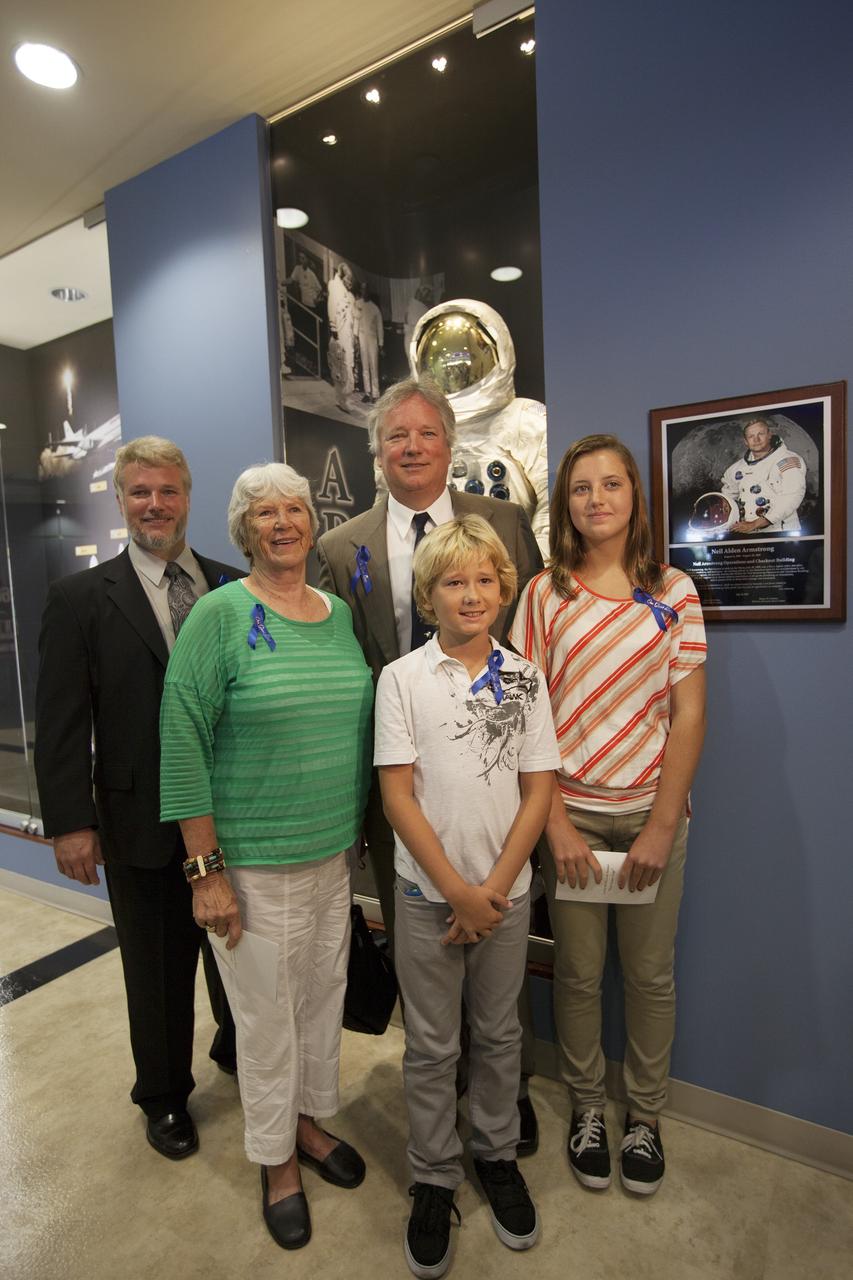
CAPE CANAVERAL, Fla. -- At the Kennedy Space Center in Florida, members of the Armstrong family pose beside a plaque following its unveiling in the lobby of the newly named Neil Armstrong Operations and Checkout Building. The facility has been renamed for Apollo 11 astronaut Neil Armstrong, the first person to set foot on the moon. From left are Armstrong's son Mark, his former wife Janet, his son Rick, his grandson Bryce, and his granddaughter Lily. The building's high bay is being used to support the agency's new Orion spacecraft and is the same spaceport facility where the Apollo 11 command/service module and lunar module were prepped for the first lunar landing mission in 1969. Orion is designed to take humans farther than they’ve ever gone before, serving as the exploration vehicle that will carry astronauts to deep space and sustain the crew during travel to destinations such as an asteroid or Mars. The unveiling was part of NASA's 45th anniversary celebration of the Apollo 11 moon landing. As the world watched, Apollo 11 astronauts landed in the moon's Sea of Tranquility aboard the lunar module, Eagle, on July 20, 1969, as the command module, Columbia, orbited overhead. For more: http://www.nasa.gov/press/2014/july/nasa-honors-historic-first-moon-landing-eyes-first-mars-mission/ Photo credit: NASA/Kim Shiflett
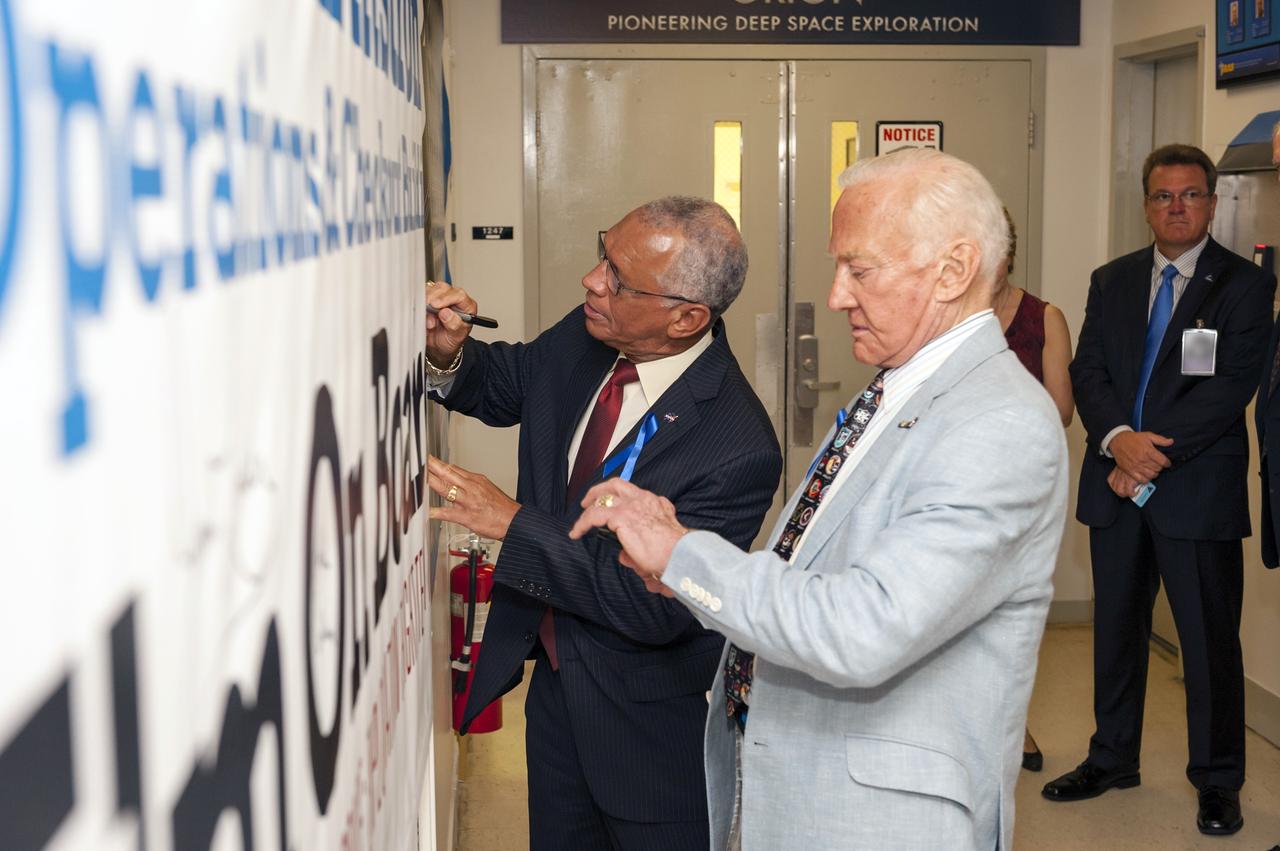
CAPE CANAVERAL, Fla. -- At NASA's Kennedy Space Center in Florida, NASA Administrator Charles Bolden, left, signs a banner displaying the new name of the Operations and Checkout Building, as Apollo 11 moonwalker Buzz Aldrin prepares to sign. The banner signing followed a ceremony renaming the refurbished Operations and Checkout Building for Apollo 11 astronaut Neil Armstrong, the first person to set foot on the moon. The building's high bay is being used to support the agency's new Orion spacecraft and is the same spaceport facility where the Apollo 11 command/service module and lunar module were prepped for the first lunar landing mission in 1969. Orion is designed to take humans farther than they’ve ever gone before, serving as the exploration vehicle that will carry astronauts to deep space and sustain the crew during travel to destinations such as an asteroid or Mars. The ceremony was part of NASA's 45th anniversary celebration of the Apollo 11 moon landing. As the world watched, Neil Armstrong and Buzz Aldrin landed in the moon's Sea of Tranquility on July 20, 1969, aboard the lunar module Eagle. Meanwhile, crewmate Michael Collins orbited above in the command module Columbia. For more, visit http://www.nasa.gov/press/2014/july/nasa-honors-historic-first-moon-landing-eyes-first-mars-mission. Photo credit: NASA/Kevin O'Connell

CAPE CANAVERAL, Fla. -- Apollo astronauts and their families tour one of the remodeled firing rooms in the Launch Control Center at NASA's Kennedy Space Center in Florida. The facility's firing rooms were used to conduct the Saturn V countdowns during the Apollo Program. NASA Administrator Charles Bolden, at left, accompanied the astronauts on the tour which followed a ceremony renaming the refurbished Operations and Checkout Building for Apollo 11 astronaut Neil Armstrong, the first person to set foot on the moon. Former astronaut Jim Lovell, a member of the Apollo 8 and Apollo 13 crews, is at center. The ceremony was part of NASA's 45th anniversary celebration of the Apollo 11 moon landing. As the world watched, Neil Armstrong and Buzz Aldrin landed in the moon's Sea of Tranquility on July 20, 1969, aboard the lunar module Eagle. Meanwhile, crewmate Michael Collins orbited above in the command module Columbia. For more, visit http://www.nasa.gov/press/2014/july/nasa-honors-historic-first-moon-landing-eyes-first-mars-mission. Photo credit: NASA/Kim Shiflett
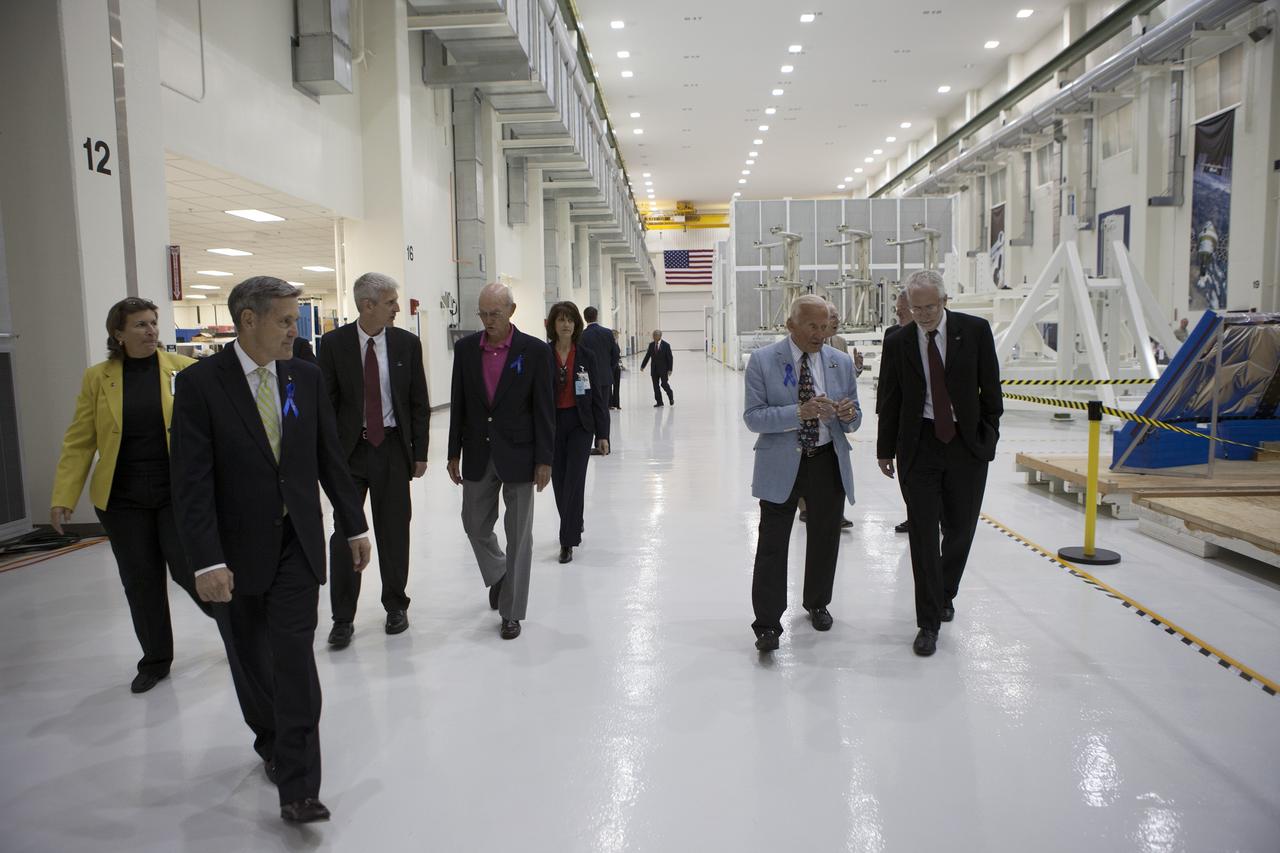
CAPE CANAVERAL, Fla. -- At the Kennedy Space Center in Florida, NASA officials and Apollo astronauts tour the refurbished Operations and Checkout Building, newly named for Apollo 11 astronaut Neil Armstrong, the first person to set foot on the moon. Leading the way at left is Kennedy Center Director Bob Cabana, Scott Wilson, manager, production operations for the Orion Program, and Apollo 11 astronaut Michael Collins. At right is Apollo 11 astronaut Buzz Aldrin, and Mark Geyer, Orion Program manager. The building's high bay is being used to support the agency's new Orion spacecraft, which will lift off atop the Space Launch System. Orion is designed to take humans farther than they've ever gone before, serving as the exploration vehicle that will carry astronauts to deep space and sustain the crew during travel to destinations such as an asteroid or Mars. The visit of the former astronauts was part of NASA's 45th anniversary celebration of the moon landing. As the world watched, Neil Armstrong and Aldrin landed in the moon's Sea of Tranquility aboard the lunar module Eagle on July 20, 1969. Meanwhile, crewmate Collins orbited above in the command module Columbia. For more, visit http://www.nasa.gov/press/2014/july/nasa-honors-historic-first-moon-landing-eyes-first-mars-mission. Photo credit: NASA/Kim Shiflett
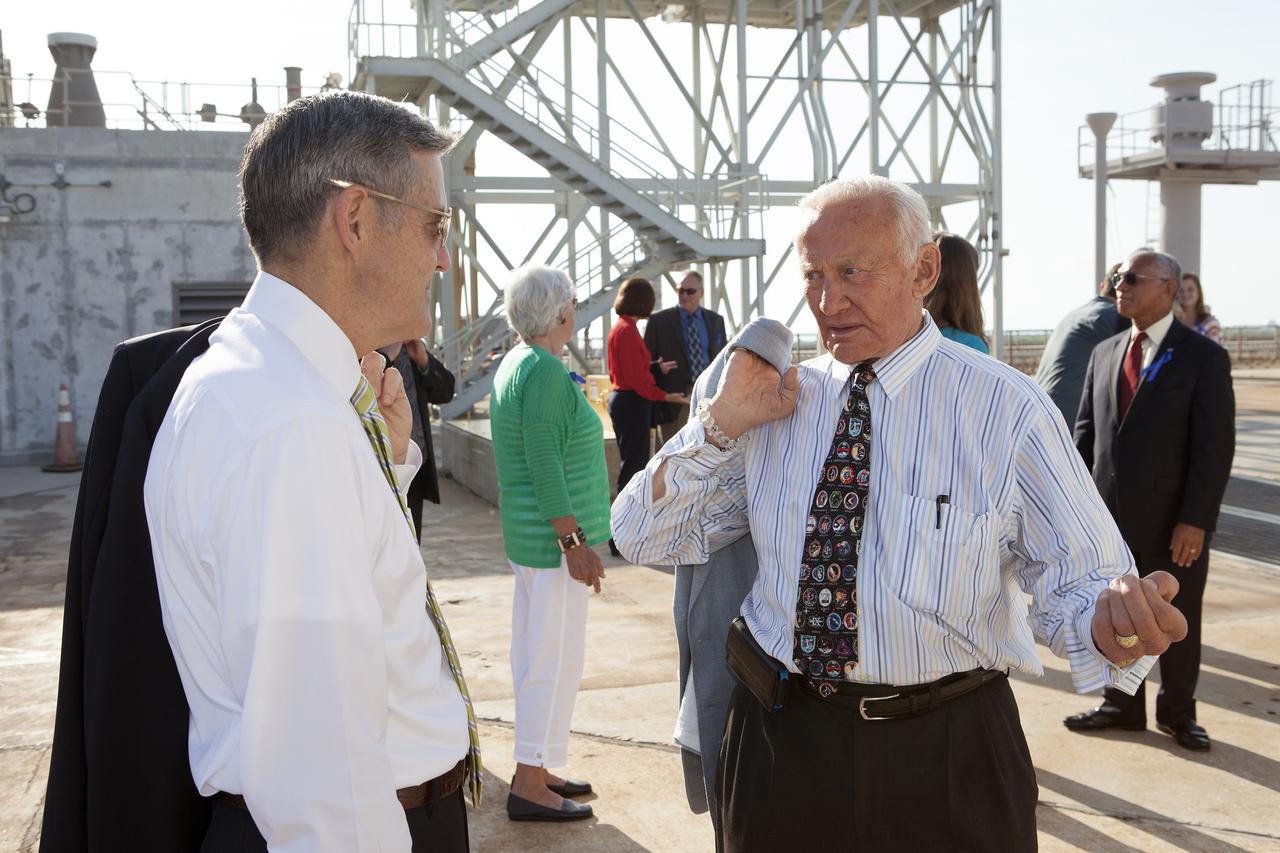
CAPE CANAVERAL, Fla. -- At the Kennedy Space Center in Florida, Center Director Robert Cabana, left, briefs Apollo 11 astronaut Buzz Aldren, right, on the changes underway to Launch Pad 39B. Behind them are the visiting Apollo astronauts' families and friends.The pad is being modified to support the agency's new Orion spacecraft which will lift off atop the Space Launch System rocket. Orion is designed to take humans farther than they’ve ever gone before, serving as the exploration vehicle that will carry astronauts to deep space and sustain the crew during travel to destinations such as an asteroid or Mars. The visit was part of NASA's 45th anniversary celebration of the Apollo 11 moon landing. As the world watched, the Apollo 11 astronauts landed in the moon's Sea of Tranquility aboard the lunar module Eagle on July 20, 1969. For more, visit http://www.nasa.gov/press/2014/july/nasa-honors-historic-first-moon-landing-eyes-first-mars-mission. Photo credit: NASA/Kim Shiflett
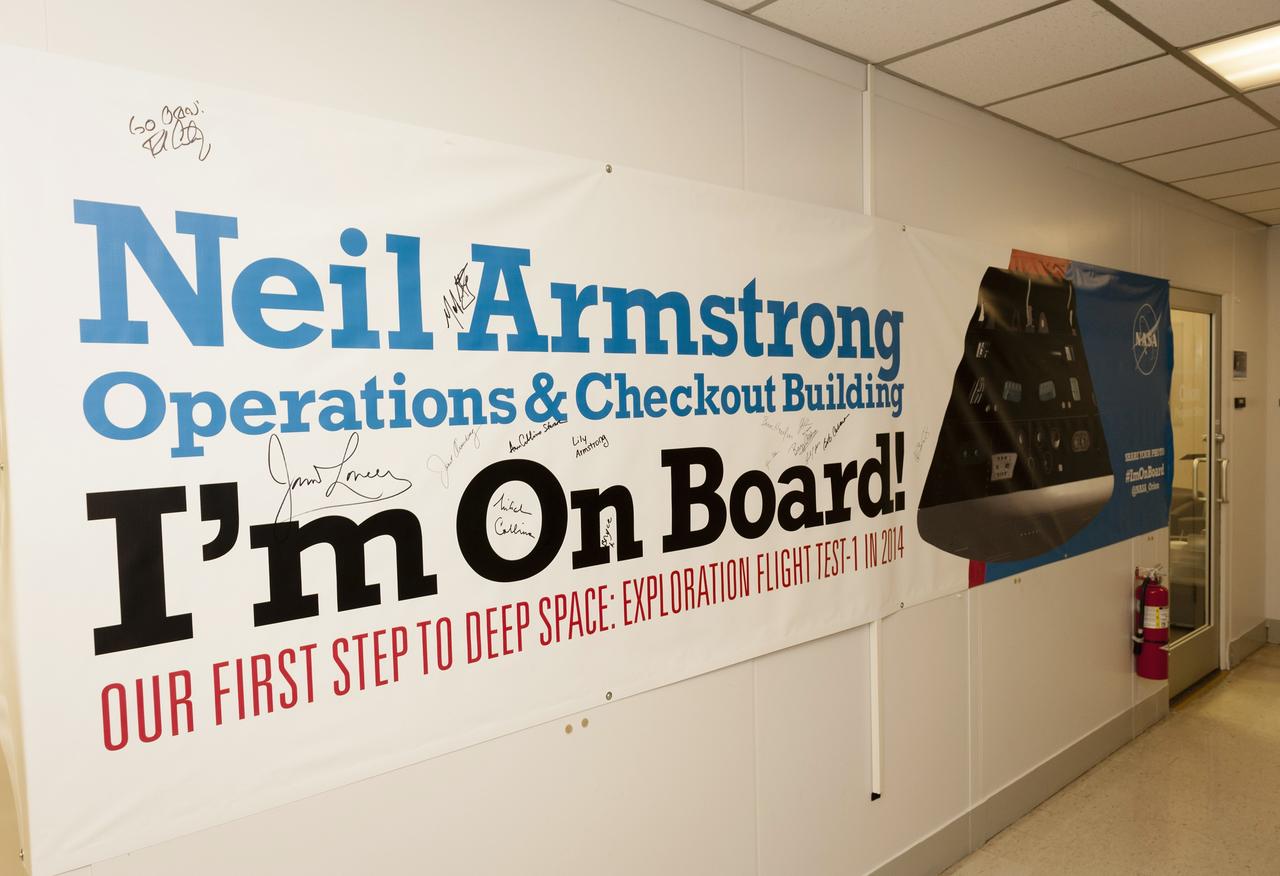
CAPE CANAVERAL, Fla. -- A banner displaying the new name of the Operations and Checkout Building at NASA's Kennedy Space Center in Florida is signed by Apollo astronauts and their families. The banner signing followed a ceremony renaming the refurbished building for Apollo 11 astronaut Neil Armstrong, the first person to set foot on the moon. The building's high bay is being used to support the agency's new Orion spacecraft and is the same spaceport facility where the Apollo 11 command/service module and lunar module were prepped for the first lunar landing mission in 1969. The Orion spacecraft is designed to take humans farther than they’ve ever gone before, serving as the exploration vehicle that will carry astronauts to deep space and sustain the crew during travel to destinations such as an asteroid or Mars. Orion's first flight will be Exploration Fight Test-1, planned for December 2014. The ceremony was part of NASA's 45th anniversary celebration of the Apollo 11 moon landing. As the world watched, Neil Armstrong and Buzz Aldrin landed in the moon's Sea of Tranquility on July 20, 1969, aboard the lunar module Eagle. Meanwhile, crewmate Michael Collins orbited above in the command module Columbia. For more, visit http://www.nasa.gov/press/2014/july/nasa-honors-historic-first-moon-landing-eyes-first-mars-mission. Photo credit: NASA/Kevin O'Connell
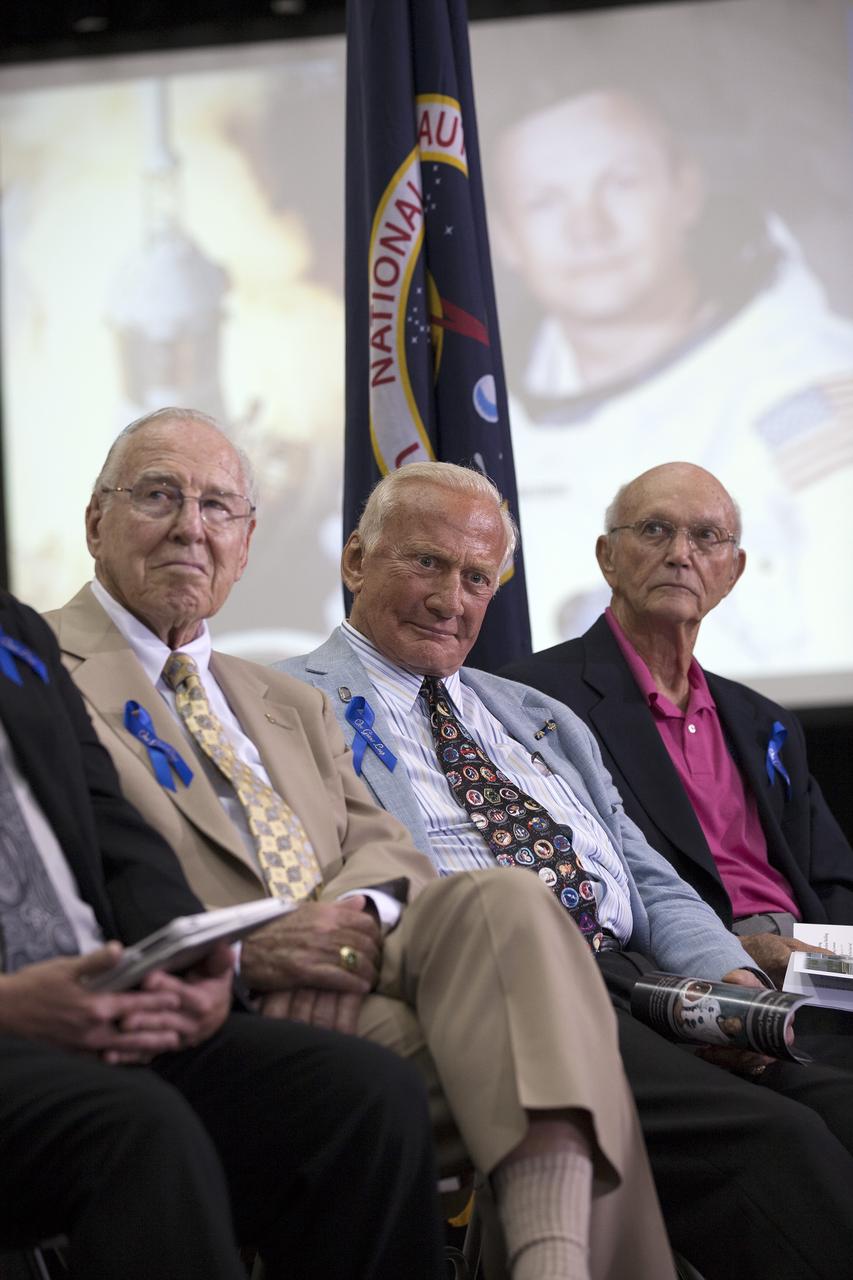
CAPE CANAVERAL, Fla. -- At the Kennedy Space Center in Florida, Apollo astronauts participate in a ceremony renaming the refurbished Operations and Checkout Building for Apollo 11 astronaut Neil Armstrong, the first person to set foot on the moon. From left are Jim Lovell, Buzz Aldrin and Michael Collins. The building's high bay is being used to support the agency's new Orion spacecraft and is the same spaceport facility where the Apollo 11 command/service module and lunar module were prepped for the first lunar landing mission in 1969. Orion is designed to take humans farther than they’ve ever gone before, serving as the exploration vehicle that will carry astronauts to deep space and sustain the crew during travel to destinations such as an asteroid or Mars. The ceremony was part of NASA's 45th anniversary celebration of the Apollo 11 moon landing. As the world watched, Neil Armstrong and Buzz Aldrin landed in the moon's Sea of Tranquility on July 20, 1969, aboard the lunar module Eagle. Meanwhile, crewmate Michael Collins orbited above in the command module Columbia. For more, visit http://www.nasa.gov/press/2014/july/nasa-honors-historic-first-moon-landing-eyes-first-mars-mission. Photo credit: NASA/Kim Shiflett
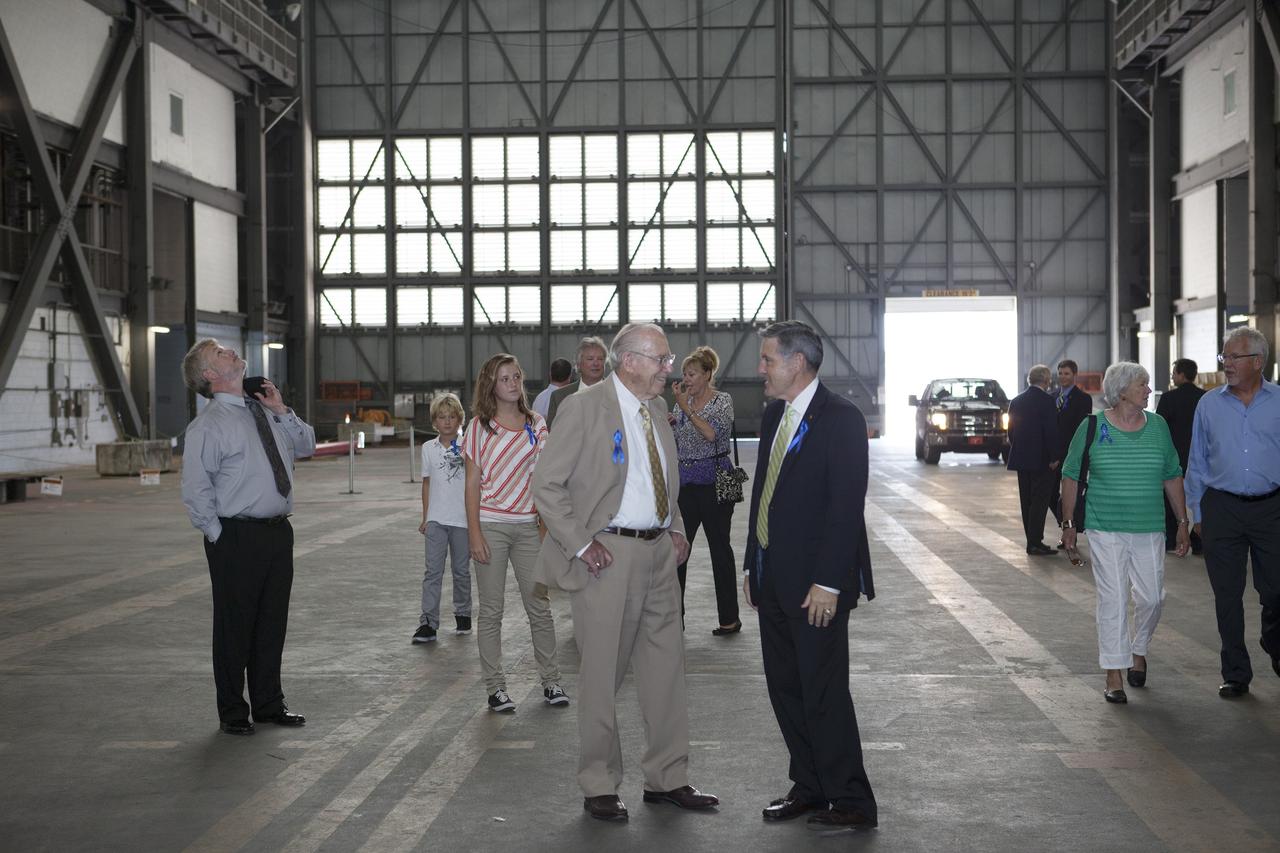
CAPE CANAVERAL, Fla. -- Kennedy Space Center Director Robert Cabana, a former space shuttle astronaut, at front right, finds a moment to talk to Apollo astronaut Jim Lovell during a tour for Apollo astronauts and their families of the Vehicle Assembly Building, the facility in which Apollo's Saturn V rockets were processed at NASA's Kennedy Space Center in Florida. The visit followed a ceremony renaming Kennedy's refurbished Operations and Checkout Building for Apollo 11 astronaut Neil Armstrong, the first person to set foot on the moon. The ceremony was part of NASA's 45th anniversary celebration of the Apollo 11 moon landing. As the world watched, Neil Armstrong and Buzz Aldrin landed in the moon's Sea of Tranquility on July 20, 1969, aboard the lunar module Eagle. Meanwhile, crewmate Michael Collins orbited above in the command module Columbia. For more, visit http://www.nasa.gov/press/2014/july/nasa-honors-historic-first-moon-landing-eyes-first-mars-mission. Photo credit: NASA/Kim Shiflett
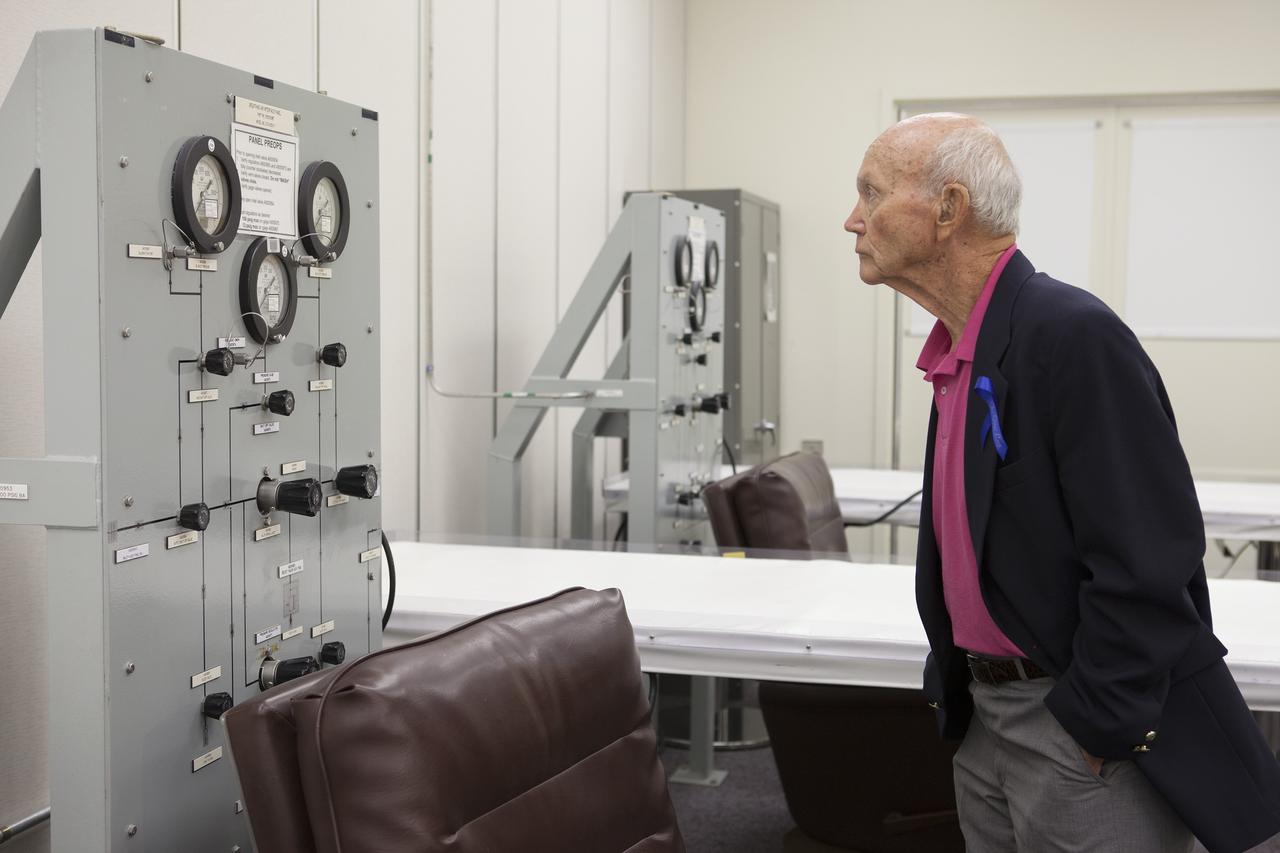
CAPE CANAVERAL, Fla. -- Apollo 11 astronaut Michael Collins checks out some equipment during a tour of the astronaut crew quarters in the Operations and Checkout Building at NASA's Kennedy Space Center in Florida. The tour followed a ceremony renaming the refurbished Operations and Checkout Building for Apollo 11 astronaut Neil Armstrong, the first person to set foot on the moon. Besides housing the crew quarters, the building's high bay is being used to support the agency's new Orion spacecraft and is the same spaceport facility where the Apollo 11 command/service module and lunar module were prepped for the first lunar landing mission in 1969. Orion is designed to take humans farther than they’ve ever gone before, serving as the exploration vehicle that will carry astronauts to deep space and sustain the crew during travel to destinations such as an asteroid or Mars. The visit of the former astronauts was part of NASA's 45th anniversary celebration of the moon landing. As the world watched, Neil Armstrong and Aldrin landed in the moon's Sea of Tranquility aboard the lunar module Eagle on July 20, 1969. Meanwhile, crewmate Collins orbited above in the command module Columbia. For more, visit http://www.nasa.gov/press/2014/july/nasa-honors-historic-first-moon-landing-eyes-first-mars-mission. Photo credit: NASA/Kim Shiflett

CAPE CANAVERAL, Fla. -- At the Kennedy Space Center in Florida, media representatives turn out for a ceremony renaming the refurbished Operations and Checkout Building for Apollo 11 astronaut Neil Armstrong, the first person to set foot on the moon. The building's high bay, in which the ceremony was held, is being used to support the agency's new Orion spacecraft and is the same spaceport facility where the Apollo 11 command/service module and lunar module were prepped for the first lunar landing mission in 1969. Orion is designed to take humans farther than they’ve ever gone before, serving as the exploration vehicle that will carry astronauts to deep space and sustain the crew during travel to destinations such as an asteroid or Mars. The ceremony was part of NASA's 45th anniversary celebration of the Apollo 11 moon landing. As the world watched, Neil Armstrong and Buzz Aldrin landed in the moon's Sea of Tranquility on July 20, 1969, aboard the lunar module Eagle. Meanwhile, crewmate Michael Collins orbited above in the command module Columbia. For more, visit http://www.nasa.gov/press/2014/july/nasa-honors-historic-first-moon-landing-eyes-first-mars-mission. Photo credit: NASA/Kim Shiflett
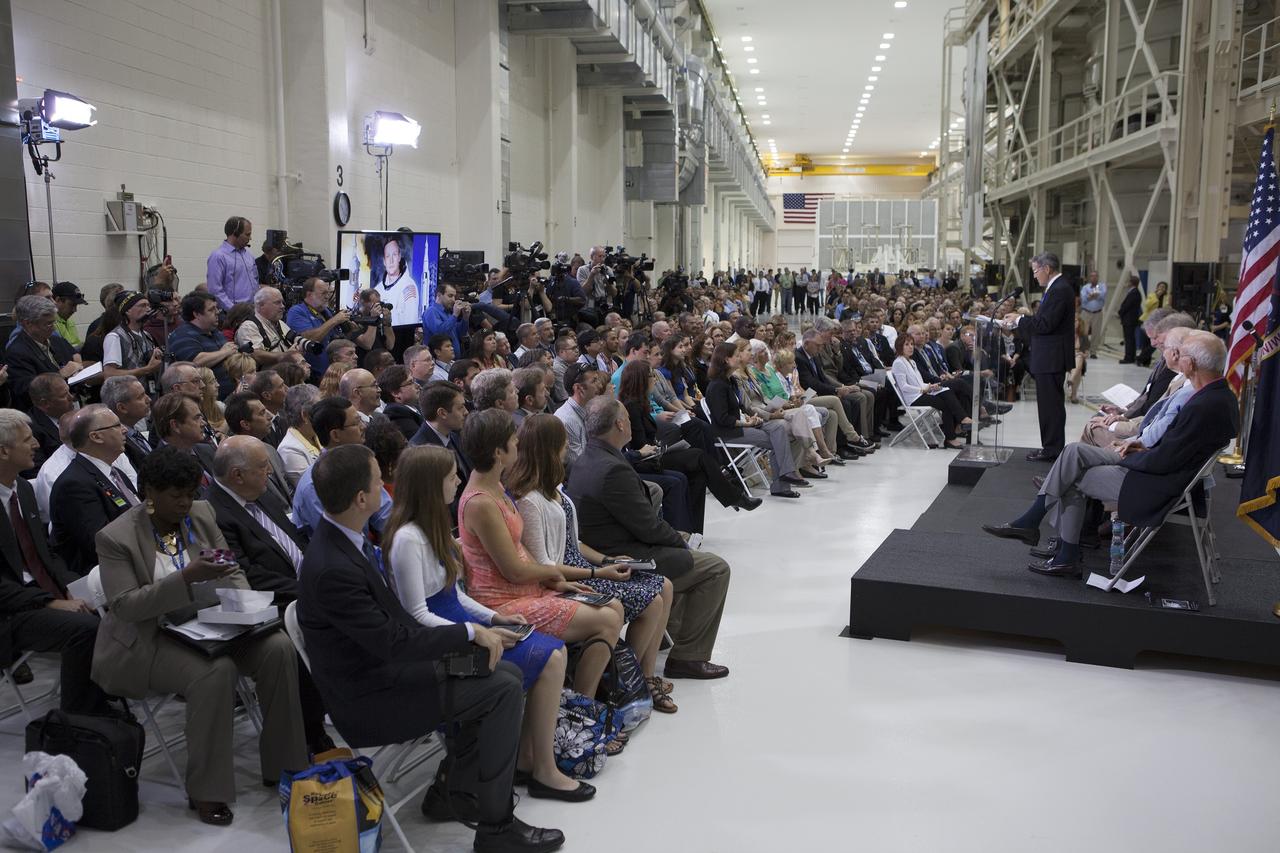
CAPE CANAVERAL, Fla. -- At the Kennedy Space Center in Florida, Center Director Robert Cabana addresses the audience at a ceremony renaming the refurbished Operations and Checkout Building for Apollo 11 astronaut Neil Armstrong, the first person to set foot on the moon. The building's high bay is being used to support the agency's new Orion spacecraft and is the same spaceport facility where the Apollo 11 command/service module and lunar module were prepped for the first lunar landing mission in 1969. Orion is designed to take humans farther than they’ve ever gone before, serving as the exploration vehicle that will carry astronauts to deep space and sustain the crew during travel to destinations such as an asteroid or Mars. The ceremony was part of NASA's 45th anniversary celebration of the Apollo 11 moon landing. As the world watched, Neil Armstrong and Buzz Aldrin landed in the moon's Sea of Tranquility on July 20, 1969, aboard the lunar module Eagle. Meanwhile, crewmate Michael Collins orbited above in the command module Columbia. For more, visit http://www.nasa.gov/press/2014/july/nasa-honors-historic-first-moon-landing-eyes-first-mars-mission. Photo credit: NASA/Kim Shiflett
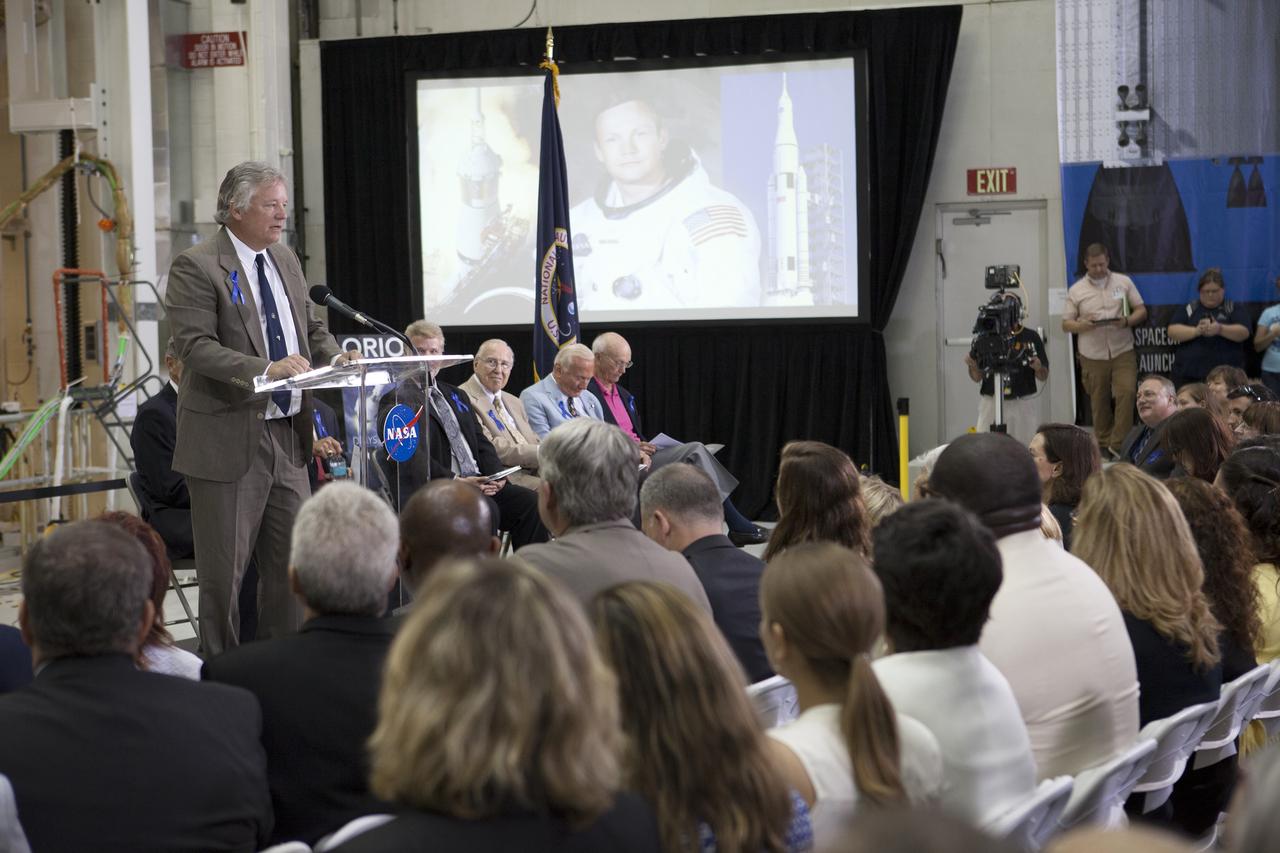
CAPE CANAVERAL, Fla. -- At the Kennedy Space Center in Florida, Rick Armstrong addresses the audience at a ceremony renaming the refurbished Operations and Checkout Building for Apollo 11 astronaut Neil Armstrong, the first person to set foot on the moon. Rick is Neil Armstrong's son. The building's high bay is being used to support the agency's new Orion spacecraft and is the same spaceport facility where the Apollo 11 command/service module and lunar module were prepped for the first lunar landing mission in 1969. Orion is designed to take humans farther than they’ve ever gone before, serving as the exploration vehicle that will carry astronauts to deep space and sustain the crew during travel to destinations such as an asteroid or Mars. The ceremony was part of NASA's 45th anniversary celebration of the Apollo 11 moon landing. As the world watched, Neil Armstrong and Buzz Aldrin landed in the moon's Sea of Tranquility on July 20, 1969, aboard the lunar module Eagle. Meanwhile, crewmate Michael Collins orbited above in the command module Columbia. For more, visit http://www.nasa.gov/press/2014/july/nasa-honors-historic-first-moon-landing-eyes-first-mars-mission. Photo credit: NASA/Kim Shiflett
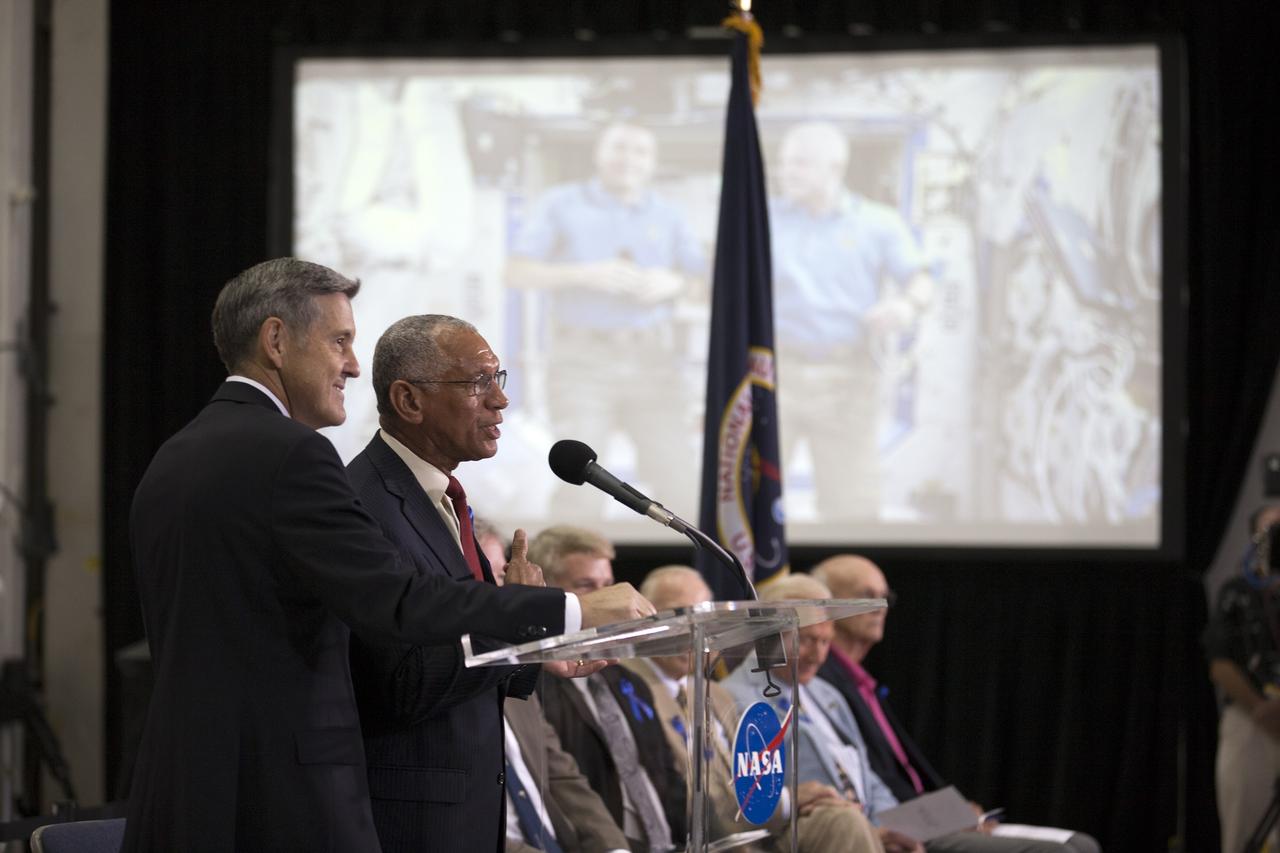
CAPE CANAVERAL, Fla. -- At the Kennedy Space Center in Florida, Center Director Robert Cabana, left, and NASA Administrator Charles Bolden participate a ceremony renaming the refurbished Operations and Checkout Building for Apollo 11 astronaut Neil Armstrong, the first person to set foot on the moon. The building's high bay is being used to support the agency's new Orion spacecraft and is the same spaceport facility where the Apollo 11 command/service module and lunar module were prepped for the first lunar landing mission in 1969. Orion is designed to take humans farther than they’ve ever gone before, serving as the exploration vehicle that will carry astronauts to deep space and sustain the crew during travel to destinations such as an asteroid or Mars. The ceremony was part of NASA's 45th anniversary celebration of the Apollo 11 moon landing. As the world watched, Neil Armstrong and Buzz Aldrin landed in the moon's Sea of Tranquility on July 20, 1969, aboard the lunar module Eagle. Meanwhile, crewmate Michael Collins orbited above in the command module Columbia. For more, visit http://www.nasa.gov/press/2014/july/nasa-honors-historic-first-moon-landing-eyes-first-mars-mission. Photo credit: NASA/Kim Shiflett
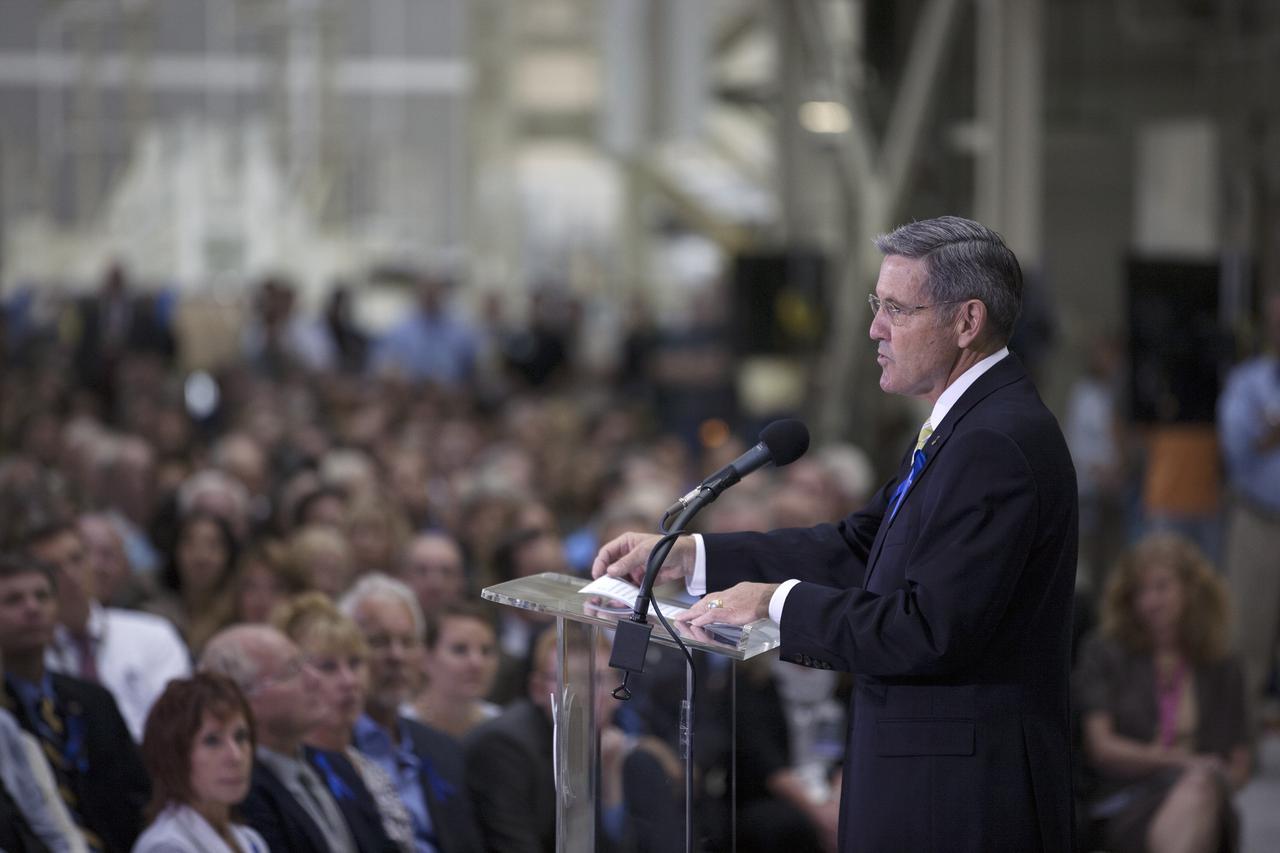
CAPE CANAVERAL, Fla. -- At the Kennedy Space Center in Florida, Center Director Robert Cabana addresses the audience at a ceremony renaming the refurbished Operations and Checkout Building for Apollo 11 astronaut Neil Armstrong, the first person to set foot on the moon. The building's high bay is being used to support the agency's new Orion spacecraft and is the same spaceport facility where the Apollo 11 command/service module and lunar module were prepped for the first lunar landing mission in 1969. Orion is designed to take humans farther than they’ve ever gone before, serving as the exploration vehicle that will carry astronauts to deep space and sustain the crew during travel to destinations such as an asteroid or Mars. The ceremony was part of NASA's 45th anniversary celebration of the Apollo 11 moon landing. As the world watched, Neil Armstrong and Buzz Aldrin landed in the moon's Sea of Tranquility on July 20, 1969, aboard the lunar module Eagle. Meanwhile, crewmate Michael Collins orbited above in the command module Columbia. For more, visit http://www.nasa.gov/press/2014/july/nasa-honors-historic-first-moon-landing-eyes-first-mars-mission. Photo credit: NASA/Kim Shiflett
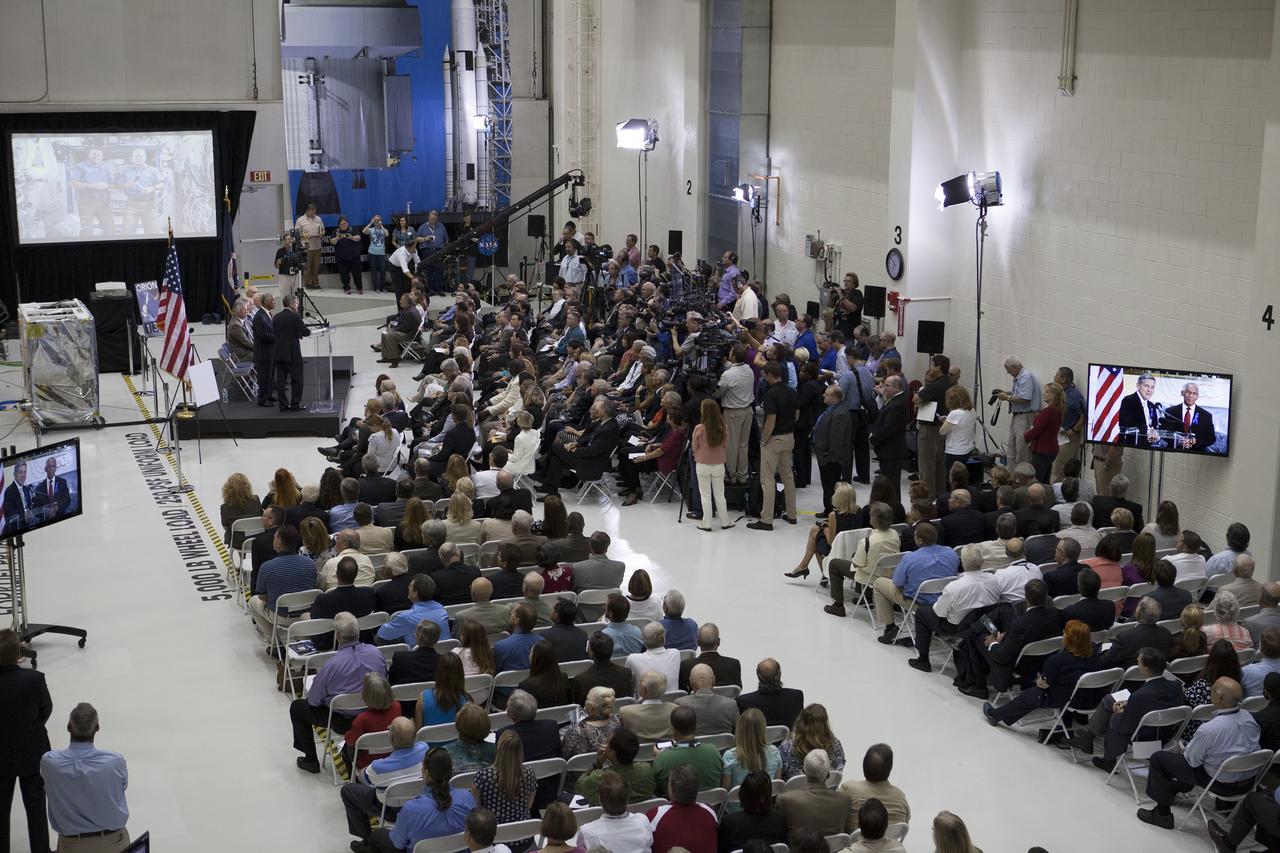
CAPE CANAVERAL, Fla. -- At the Kennedy Space Center in Florida, a crowd turns out for a ceremony renaming the refurbished Operations and Checkout Building for Apollo 11 astronaut Neil Armstrong, the first person to set foot on the moon. The building's high bay is being used to support the agency's new Orion spacecraft and is the same spaceport facility where the Apollo 11 command/service module and lunar module were prepped for the first lunar landing mission in 1969. Orion is designed to take humans farther than they’ve ever gone before, serving as the exploration vehicle that will carry astronauts to deep space and sustain the crew during travel to destinations such as an asteroid or Mars. The ceremony was part of NASA's 45th anniversary celebration of the Apollo 11 moon landing. As the world watched, Neil Armstrong and Buzz Aldrin landed in the moon's Sea of Tranquility on July 20, 1969, aboard the lunar module Eagle. Meanwhile, crewmate Michael Collins orbited above in the command module Columbia. For more, visit http://www.nasa.gov/press/2014/july/nasa-honors-historic-first-moon-landing-eyes-first-mars-mission. Photo credit: NASA/Kim Shiflett
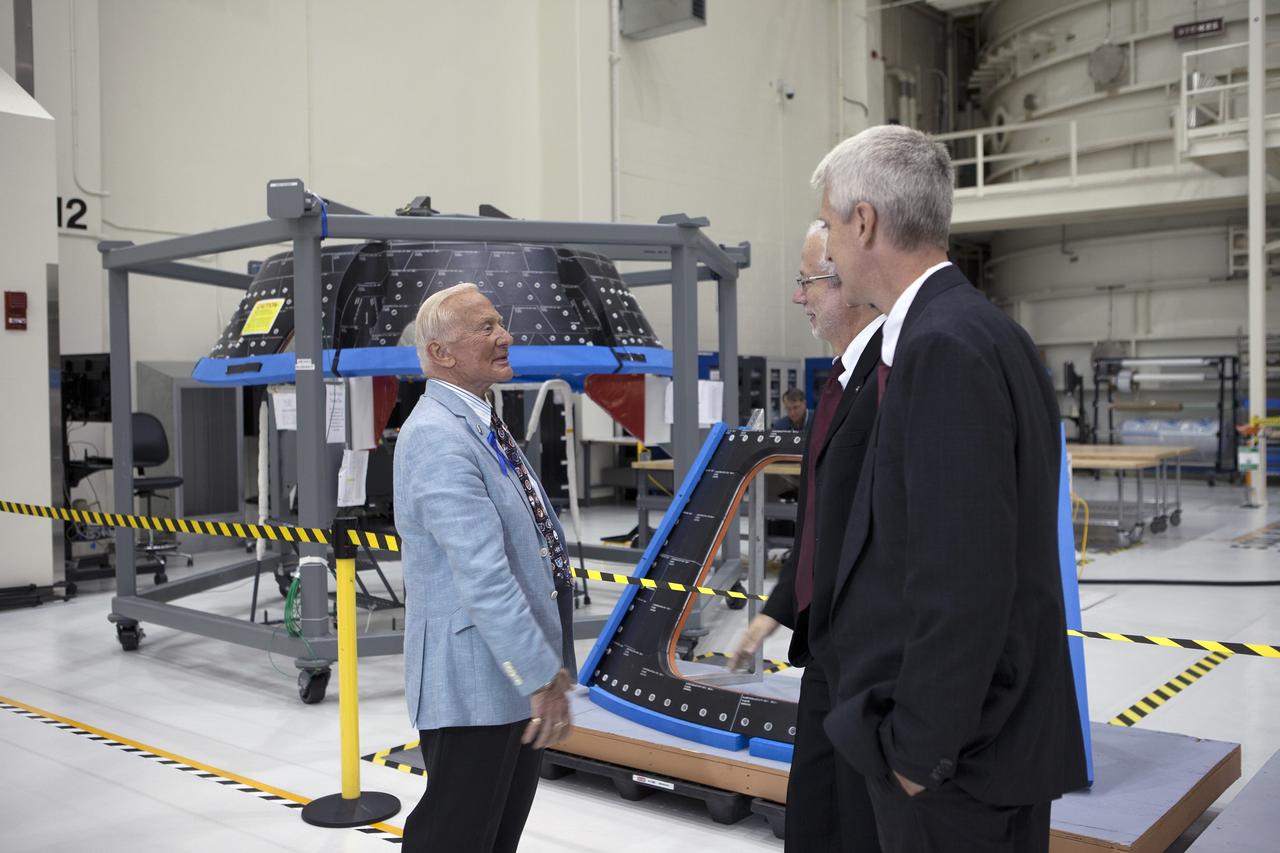
CAPE CANAVERAL, Fla. -- At the Kennedy Space Center in Florida, NASA officials and Apollo astronauts tour the refurbished Operations and Checkout Building, newly named for Apollo 11 astronaut Neil Armstrong, the first person to set foot on the moon. From left, are Apollo 11 astronaut Buzz Aldrin, Mark Geyer, Orion Program manager, and Scott Wilson, manager, production operations for the Orion Program. Also at the renaming ceremony were Apollo astronauts Michael Collins and Jim Lovell. The building's high bay is being used to support the agency's new Orion spacecraft, which will lift off atop the Space Launch System. Orion is designed to take humans farther than they've ever gone before, serving as the exploration vehicle that will carry astronauts to deep space and sustain the crew during travel to destinations such as an asteroid or Mars. The visit of the former astronauts was part of NASA's 45th anniversary celebration of the moon landing. As the world watched, Neil Armstrong and Aldrin landed in the moon's Sea of Tranquility aboard the lunar module Eagle on July 20, 1969. Meanwhile, crewmate Collins orbited above in the command module Columbia. For more, visit http://www.nasa.gov/press/2014/july/nasa-honors-historic-first-moon-landing-eyes-first-mars-mission. Photo credit: NASA/Kim Shiflett

CAPE CANAVERAL, Fla. -- At the Kennedy Space Center in Florida, NASA officials showcase the modifications underway at Launch Pad 39 B to Apollo astronauts visiting the center. From left are NASA Administrator Charles Bolden, Apollos 8 and 13 astronaut Jim Lovell, Apollo 11 astronauts Buzz Aldrin and Mike Collins, and Center Director Bob Cabana. The pad is being modified to support the agency's new Orion spacecraft which will lift off atop the Space Launch System rocket. Orion is designed to take humans farther than they’ve ever gone before, serving as the exploration vehicle that will carry astronauts to deep space and sustain the crew during travel to destinations such as an asteroid or Mars. The visit of the former astronauts was part of NASA's 45th anniversary celebration of the Apollo 11 moon landing. As the world watched, Neil Armstrong and Aldrin landed in the moon's Sea of Tranquility aboard the lunar module Eagle on July 20, 1969. Meanwhile, crewmate Collins orbited above in the command module Columbia. For more, visit http://www.nasa.gov/press/2014/july/nasa-honors-historic-first-moon-landing-eyes-first-mars-mission. Photo credit: NASA/Kim Shiflett
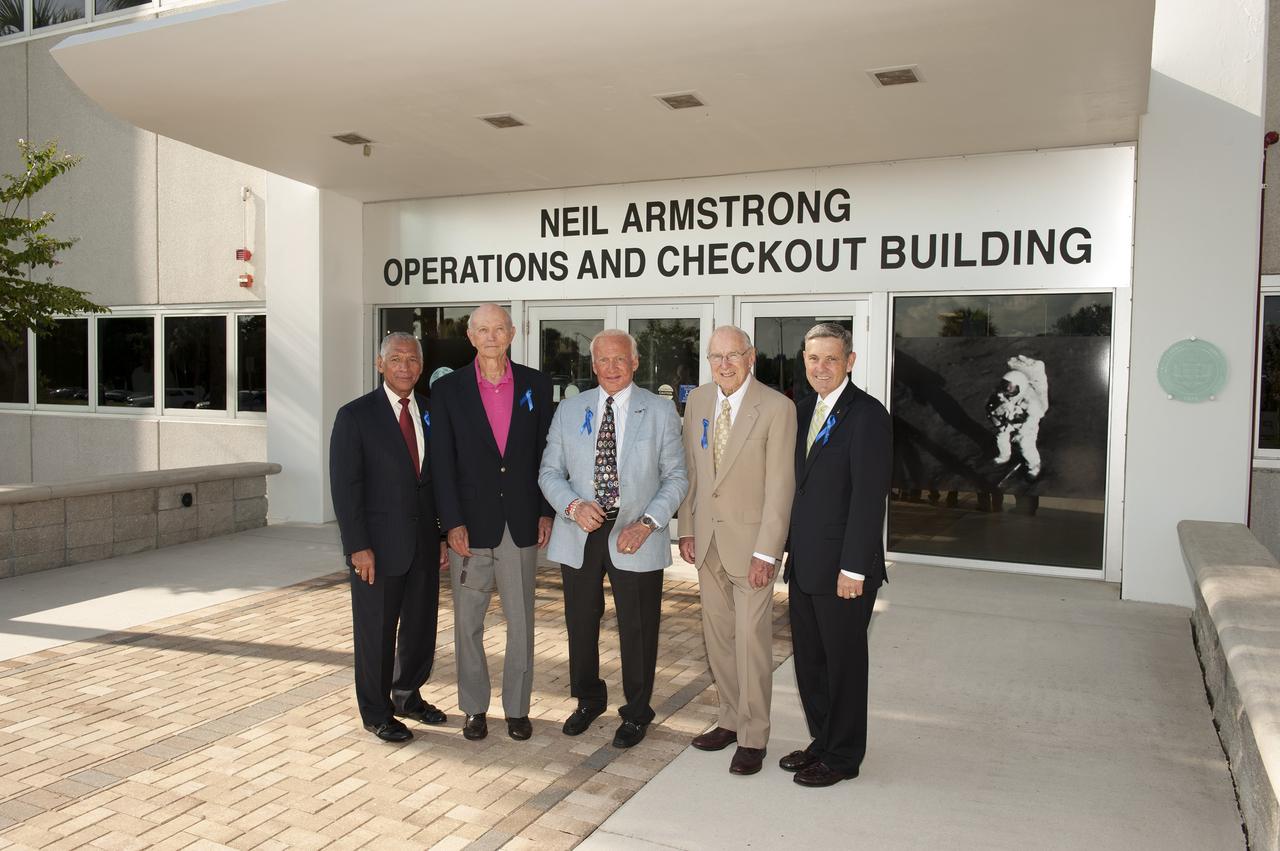
CAPE CANAVERAL, Fla. -- At the Kennedy Space Center in Florida, NASA officials and Apollo astronauts have a group portrait taken in front of the refurbished Operations and Checkout Building, newly named for Apollo 11 astronaut Neil Armstrong, the first person to set foot on the moon. From left are NASA Administrator Charles Bolden, Apollo astronauts Mike Collins, Buzz Aldrin and Jim Lovell, and Center Director Robert Cabana. The building's high bay is being used to support the agency's new Orion spacecraft, which will lift off atop the Space Launch System rocket. Orion is designed to take humans farther than they’ve ever gone before, serving as the exploration vehicle that will carry astronauts to deep space and sustain the crew during travel to destinations such as an asteroid or Mars. The visit of the former astronauts was part of NASA's 45th anniversary celebration of the Apollo 11 moon landing. As the world watched, Neil Armstrong and Aldrin landed in the moon's Sea of Tranquility aboard the lunar module Eagle on July 20, 1969. Meanwhile, crewmate Collins orbited above in the command module Columbia. For more, visit http://www.nasa.gov/press/2014/july/nasa-honors-historic-first-moon-landing-eyes-first-mars-mission. Photo credit: NASA/Kevin O'Connell
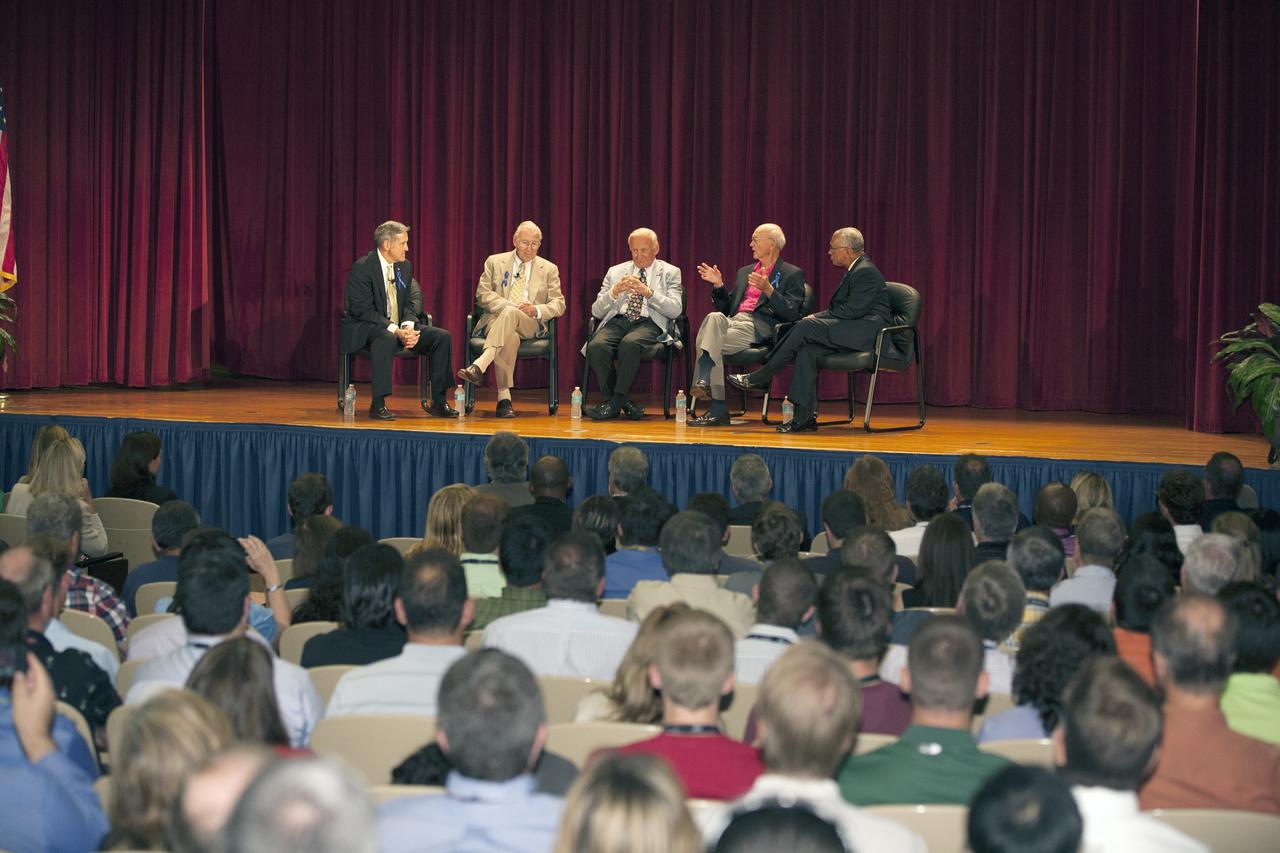
CAPE CANAVERAL, Fla. -- Apollo astronauts participate in a panel discussion held for employees in the KSC Training Auditorium at NASA's Kennedy Space Center in Florida. From left are Center Director Robert Cabana, Apollo 8 and Apollo 13 crew member Jim Lovell, Apollo 11 moonwalker Buzz Aldrin, Apollo 11 command module pilot Michael Collins, and NASA Administrator Charles Bolden. Cabana and Bolden, both shuttle astronauts, asked the questions to which the panel members responded. The panel discussion followed a ceremony renaming the refurbished Operations and Checkout Building for Apollo 11 astronaut Neil Armstrong, the first person to set foot on the moon. The building's high bay, the site for the ceremony, is being used to support the agency's new Orion spacecraft and is the same spaceport facility where the Apollo 11 command/service module and lunar module were prepped for the first lunar landing mission in 1969. Orion is designed to take humans farther than they’ve ever gone before, serving as the exploration vehicle that will carry astronauts to deep space and sustain the crew during travel to destinations such as an asteroid or Mars. The ceremony and panel discussion were part of NASA's 45th anniversary celebration of the Apollo 11 moon landing. As the world watched, Neil Armstrong and Buzz Aldrin landed in the moon's Sea of Tranquility on July 20, 1969, aboard the lunar module Eagle. Meanwhile, crewmate Michael Collins orbited above in the command module Columbia. For more, visit http://www.nasa.gov/press/2014/july/nasa-honors-historic-first-moon-landing-eyes-first-mars-mission. Photo credit: NASA/Kim Shiflett
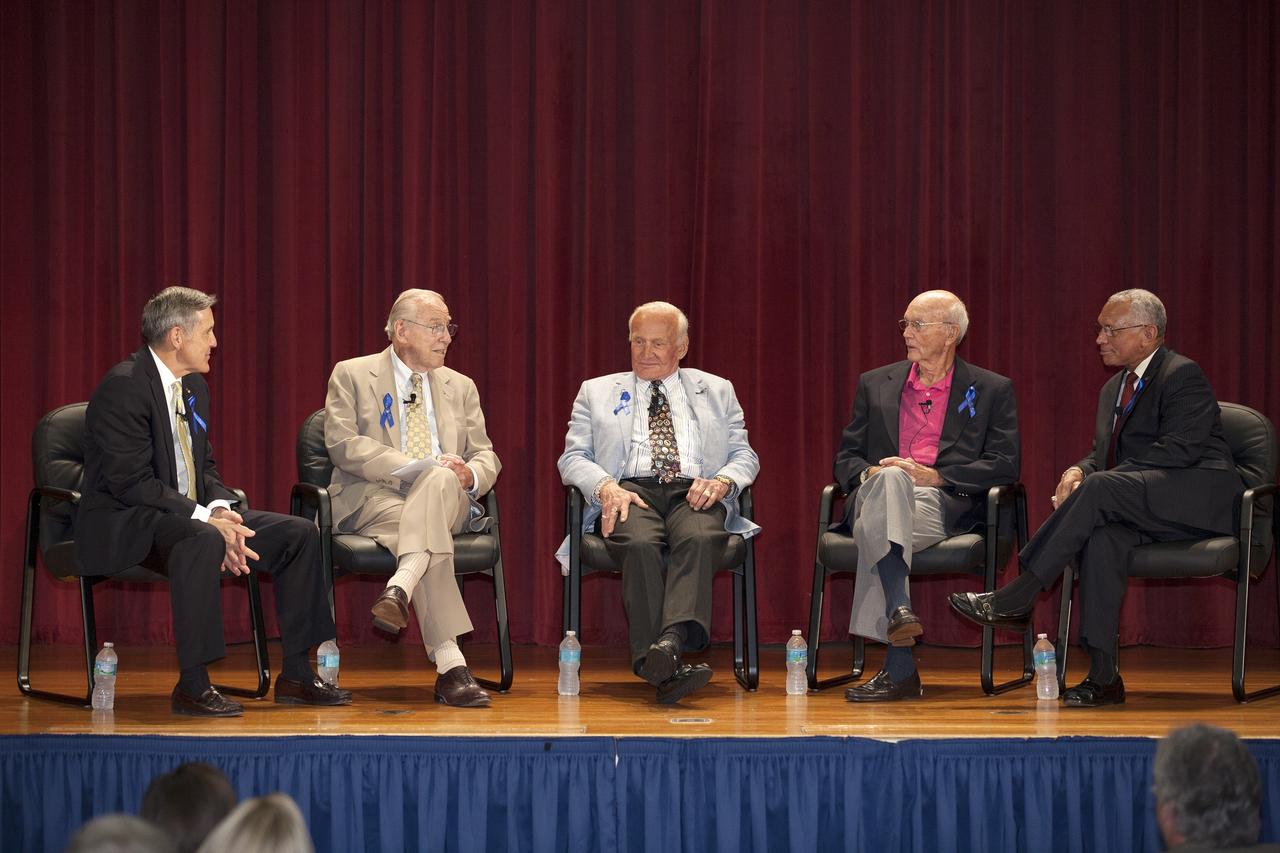
CAPE CANAVERAL, Fla. -- Apollo astronauts participate in a panel discussion held for employees in the KSC Training Auditorium at NASA's Kennedy Space Center in Florida. From left are Center Director Robert Cabana, Apollo 8 and Apollo 13 crew member Jim Lovell, Apollo 11 moonwalker Buzz Aldrin, Apollo 11 command module pilot Michael Collins, and NASA Administrator Charles Bolden. Cabana and Bolden, both shuttle astronauts, asked the questions to which the panel members responded. The panel discussion followed a ceremony renaming the refurbished Operations and Checkout Building for Apollo 11 astronaut Neil Armstrong, the first person to set foot on the moon. The building's high bay, the site for the ceremony, is being used to support the agency's new Orion spacecraft and is the same spaceport facility where the Apollo 11 command/service module and lunar module were prepped for the first lunar landing mission in 1969. Orion is designed to take humans farther than they’ve ever gone before, serving as the exploration vehicle that will carry astronauts to deep space and sustain the crew during travel to destinations such as an asteroid or Mars. The ceremony and panel discussion were part of NASA's 45th anniversary celebration of the Apollo 11 moon landing. As the world watched, Neil Armstrong and Buzz Aldrin landed in the moon's Sea of Tranquility on July 20, 1969, aboard the lunar module Eagle. Meanwhile, crewmate Michael Collins orbited above in the command module Columbia. For more, visit http://www.nasa.gov/press/2014/july/nasa-honors-historic-first-moon-landing-eyes-first-mars-mission. Photo credit: NASA/Kim Shiflett
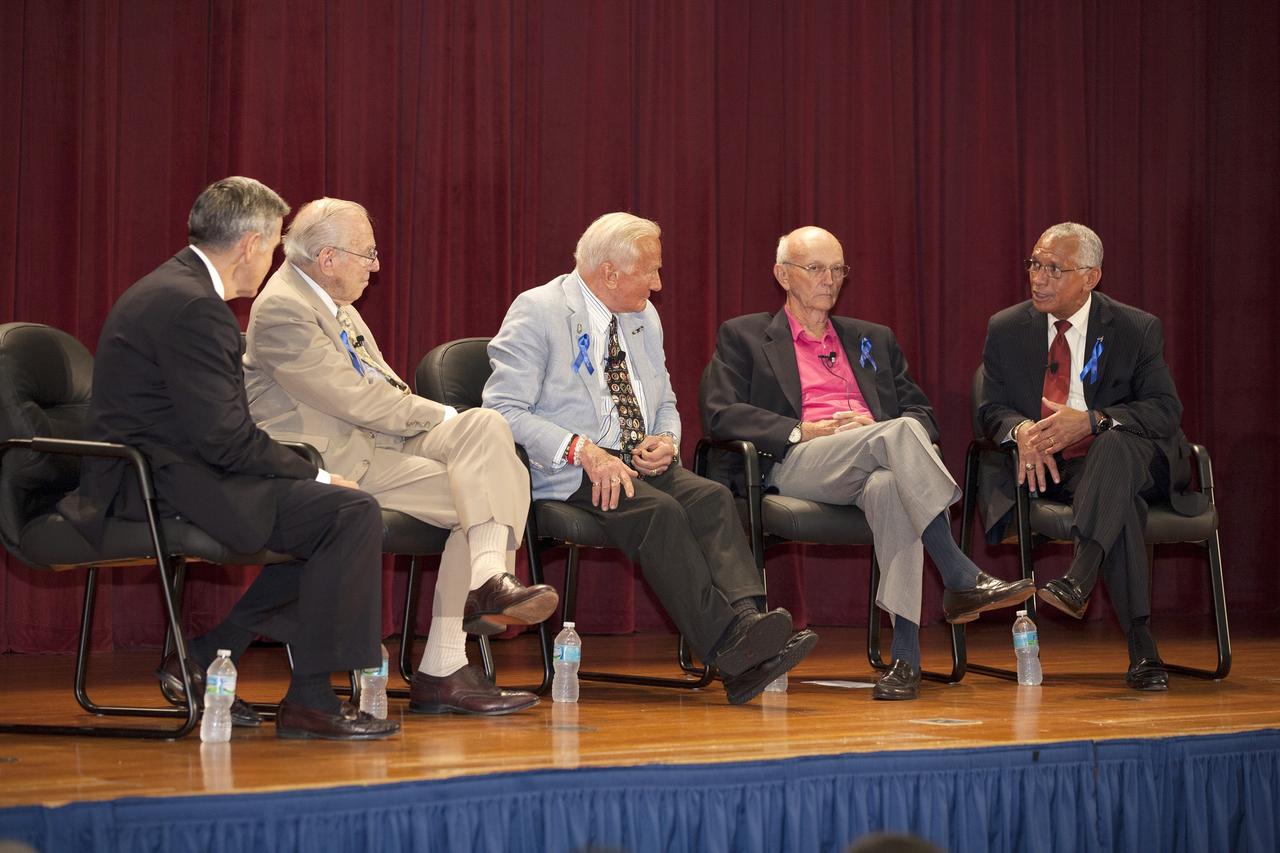
CAPE CANAVERAL, Fla. -- Apollo astronauts participate in a panel discussion held for employees in the KSC Training Auditorium at NASA's Kennedy Space Center in Florida. From left are Center Director Robert Cabana, Apollo 8 and Apollo 13 crew member Jim Lovell, Apollo 11 moonwalker Buzz Aldrin, Apollo 11 command module pilot Michael Collins, and NASA Administrator Charles Bolden. Cabana and Bolden, both shuttle astronauts, asked the questions to which the panel members responded. The panel discussion followed a ceremony renaming the refurbished Operations and Checkout Building for Apollo 11 astronaut Neil Armstrong, the first person to set foot on the moon. The building's high bay, the site for the ceremony, is being used to support the agency's new Orion spacecraft and is the same spaceport facility where the Apollo 11 command/service module and lunar module were prepped for the first lunar landing mission in 1969. Orion is designed to take humans farther than they’ve ever gone before, serving as the exploration vehicle that will carry astronauts to deep space and sustain the crew during travel to destinations such as an asteroid or Mars. The ceremony and panel discussion were part of NASA's 45th anniversary celebration of the Apollo 11 moon landing. As the world watched, Neil Armstrong and Buzz Aldrin landed in the moon's Sea of Tranquility on July 20, 1969, aboard the lunar module Eagle. Meanwhile, crewmate Michael Collins orbited above in the command module Columbia. For more, visit http://www.nasa.gov/press/2014/july/nasa-honors-historic-first-moon-landing-eyes-first-mars-mission. Photo credit: NASA/Kim Shiflett
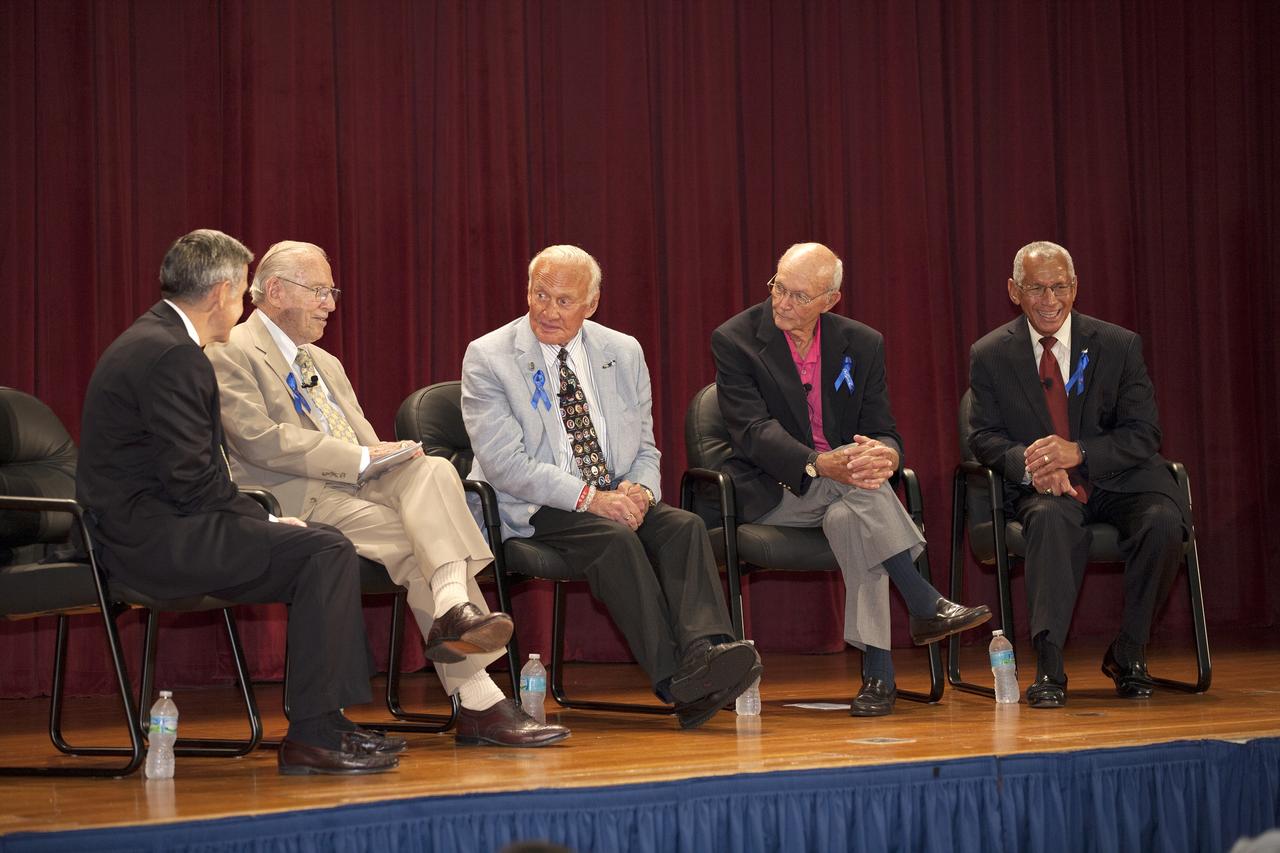
CAPE CANAVERAL, Fla. -- Apollo astronauts participate in a panel discussion held for employees in the KSC Training Auditorium at NASA's Kennedy Space Center in Florida. From left are Center Director Robert Cabana, Apollo 8 and Apollo 13 crew member Jim Lovell, Apollo 11 moonwalker Buzz Aldrin, Apollo 11 command module pilot Michael Collins, and NASA Administrator Charles Bolden. Cabana and Bolden, both shuttle astronauts, asked the questions to which the panel members responded. The panel discussion followed a ceremony renaming the refurbished Operations and Checkout Building for Apollo 11 astronaut Neil Armstrong, the first person to set foot on the moon. The building's high bay, the site for the ceremony, is being used to support the agency's new Orion spacecraft and is the same spaceport facility where the Apollo 11 command/service module and lunar module were prepped for the first lunar landing mission in 1969. Orion is designed to take humans farther than they’ve ever gone before, serving as the exploration vehicle that will carry astronauts to deep space and sustain the crew during travel to destinations such as an asteroid or Mars. The ceremony and panel discussion were part of NASA's 45th anniversary celebration of the Apollo 11 moon landing. As the world watched, Neil Armstrong and Buzz Aldrin landed in the moon's Sea of Tranquility on July 20, 1969, aboard the lunar module Eagle. Meanwhile, crewmate Michael Collins orbited above in the command module Columbia. For more, visit http://www.nasa.gov/press/2014/july/nasa-honors-historic-first-moon-landing-eyes-first-mars-mission. Photo credit: NASA/Kim Shiflett
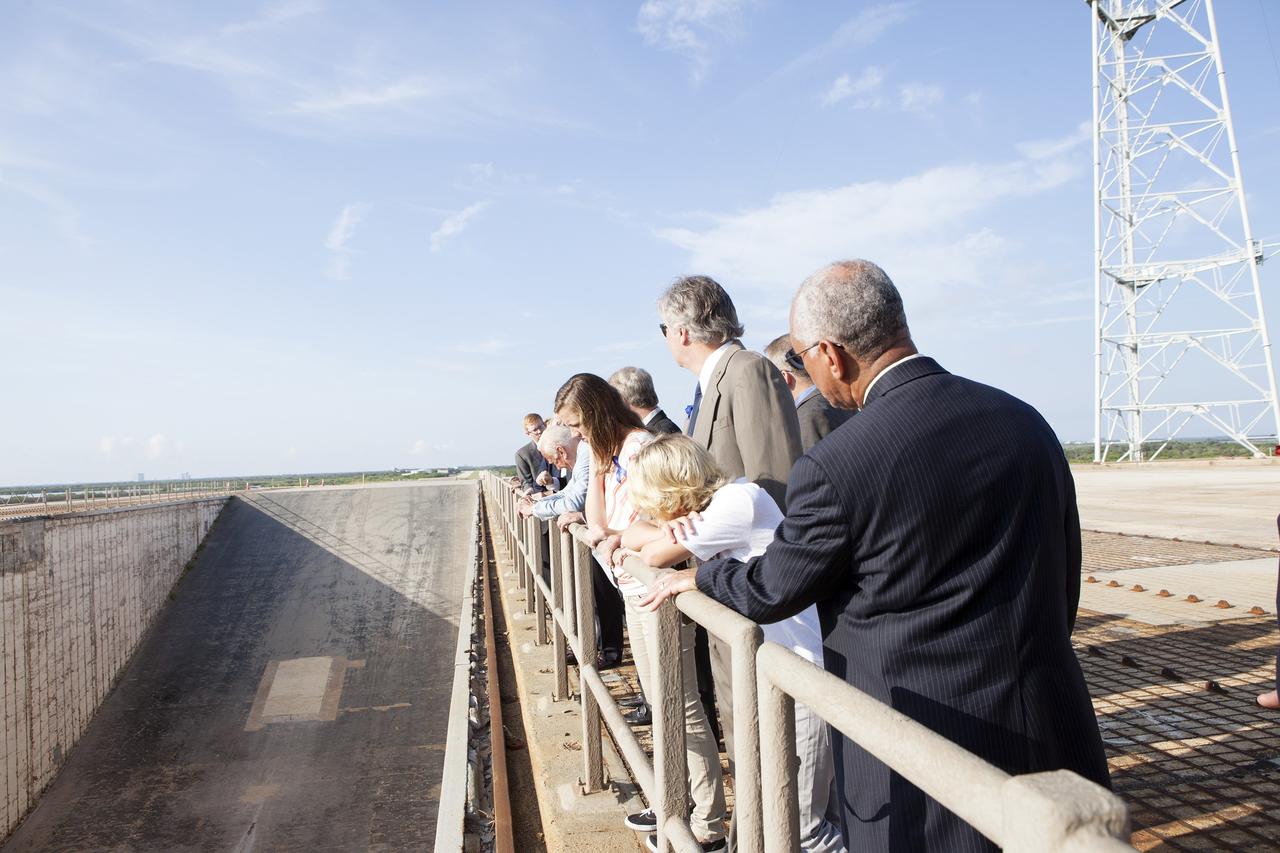
CAPE CANAVERAL, Fla. -- At the Kennedy Space Center in Florida, NASA administrator Charles Bolden, at right, enjoys an unobstructed view of the flame trench on Launch Pad 39B with Apollo astronauts and their families and friends. The pad is being modified to support the agency's new Orion spacecraft which will lift off atop the Space Launch System rocket. Orion is designed to take humans farther than they’ve ever gone before, serving as the exploration vehicle that will carry astronauts to deep space and sustain the crew during travel to destinations such as an asteroid or Mars. The visit of the former astronauts was part of NASA's 45th anniversary celebration of the Apollo 11 moon landing. As the world watched, the Apollo 11 astronauts landed in the moon's Sea of Tranquility aboard the lunar module Eagle on July 20, 1969. For more, visit http://www.nasa.gov/press/2014/july/nasa-honors-historic-first-moon-landing-eyes-first-mars-mission. Photo credit: NASA/Kim Shiflett
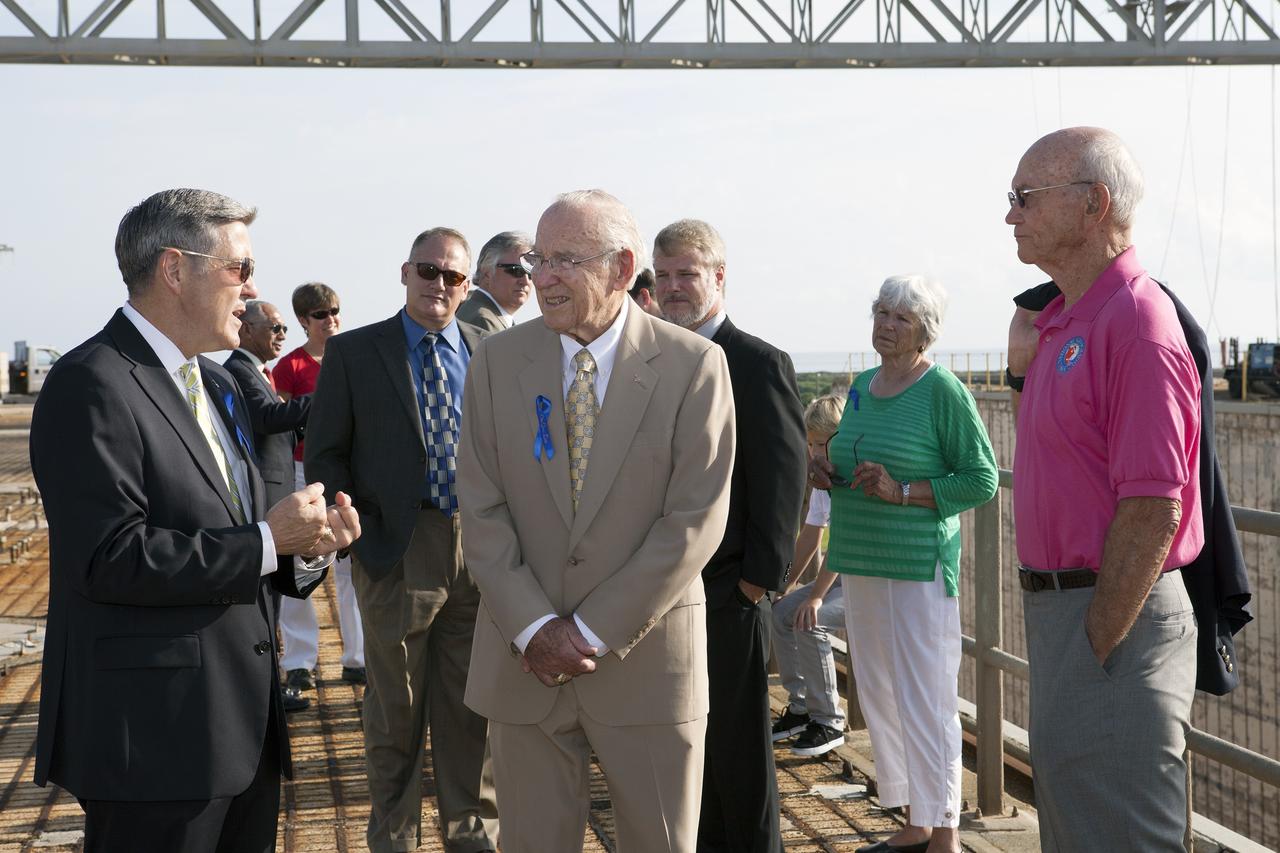
CAPE CANAVERAL, Fla. -- At the Kennedy Space Center in Florida, Center Director Robert Cabana, left, briefs Apollo astronauts Jim Lovell, center, and Mike Collins, right, on the changes underway to Launch Pad 39B. Behind them are the astronauts' families and friends. The pad is being modified to support the agency's new Orion spacecraft which will lift off atop the Space Launch System rocket. Orion is designed to take humans farther than they’ve ever gone before, serving as the exploration vehicle that will carry astronauts to deep space and sustain the crew during travel to destinations such as an asteroid or Mars. The visit of the former astronauts was part of NASA's 45th anniversary celebration of the Apollo 11 moon landing. As the world watched, the Apollo 11 astronauts landed in the moon's Sea of Tranquility aboard the lunar module Eagle on July 20, 1969. For more, visit http://www.nasa.gov/press/2014/july/nasa-honors-historic-first-moon-landing-eyes-first-mars-mission. Photo credit: NASA/Kim Shiflett
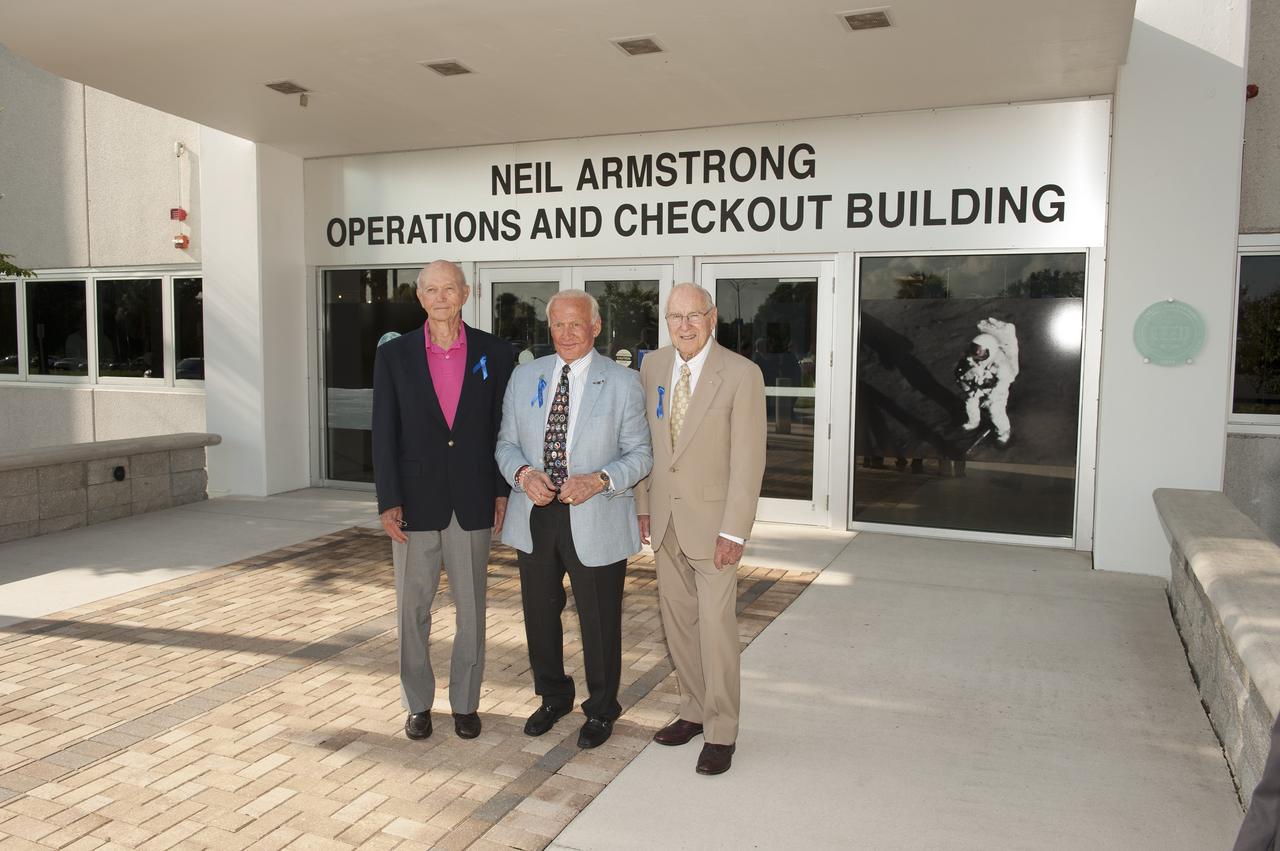
CAPE CANAVERAL, Fla. -- At the Kennedy Space Center in Florida, visiting Apollo astronauts have a group portrait taken in front of the refurbished Operations and Checkout Building, newly named for Apollo 11 astronaut Neil Armstrong, the first person to set foot on the moon. From left are Mike Collins, Buzz Aldrin and Jim Lovell. The building's high bay is being used to support the agency's new Orion spacecraft, which will lift off atop the Space Launch System rocket. Orion is designed to take humans farther than they’ve ever gone before, serving as the exploration vehicle that will carry astronauts to deep space and sustain the crew during travel to destinations such as an asteroid or Mars. The visit of the former astronauts was part of NASA's 45th anniversary celebration of the Apollo 11 moon landing. As the world watched, Neil Armstrong and Aldrin landed in the moon's Sea of Tranquility aboard the lunar module Eagle on July 20, 1969. Meanwhile, crewmate Collins orbited above in the command module Columbia. For more, visit http://www.nasa.gov/press/2014/july/nasa-honors-historic-first-moon-landing-eyes-first-mars-mission. Photo credit: NASA/Kevin O'Connell

CAPE CANAVERAL, Fla. -- Apollo astronauts Jim Lovell, left, and Buzz Aldrin tour the astronaut crew quarters in the Operations and Checkout Building at NASA's Kennedy Space Center in Florida. The tour followed a ceremony renaming the refurbished Operations and Checkout Building for Apollo 11 astronaut Neil Armstrong, the first person to set foot on the moon. Besides housing the crew quarters, the building's high bay is being used to support the agency's new Orion spacecraft and is the same spaceport facility where the Apollo 11 command/service module and lunar module were prepped for the first lunar landing mission in 1969. Orion is designed to take humans farther than they’ve ever gone before, serving as the exploration vehicle that will carry astronauts to deep space and sustain the crew during travel to destinations such as an asteroid or Mars. The visit of the former astronauts was part of NASA's 45th anniversary celebration of the moon landing. As the world watched, Neil Armstrong and Aldrin landed in the moon's Sea of Tranquility aboard the lunar module Eagle on July 20, 1969. Meanwhile, crewmate Collins orbited above in the command module Columbia. For more, visit http://www.nasa.gov/press/2014/july/nasa-honors-historic-first-moon-landing-eyes-first-mars-mission. Photo credit: NASA/Kim Shiflett

CAPE CANAVERAL, Fla. -- Apollo astronaut Michael Collins tours the astronaut crew quarters in the Operations and Checkout Building at NASA's Kennedy Space Center in Florida, accompanied by family members and friends. The tour followed a ceremony renaming the refurbished Operations and Checkout Building for Apollo 11 astronaut Neil Armstrong, the first person to set foot on the moon. Besides housing the crew quarters, the building's high bay is being used to support the agency's new Orion spacecraft and is the same spaceport facility where the Apollo 11 command/service module and lunar module were prepped for the first lunar landing mission in 1969. Orion is designed to take humans farther than they’ve ever gone before, serving as the exploration vehicle that will carry astronauts to deep space and sustain the crew during travel to destinations such as an asteroid or Mars. The visit of the former astronauts was part of NASA's 45th anniversary celebration of the moon landing. As the world watched, Neil Armstrong and Aldrin landed in the moon's Sea of Tranquility aboard the lunar module Eagle on July 20, 1969. Meanwhile, crewmate Collins orbited above in the command module Columbia. For more, visit http://www.nasa.gov/press/2014/july/nasa-honors-historic-first-moon-landing-eyes-first-mars-mission. Photo credit: NASA/Kim Shiflett
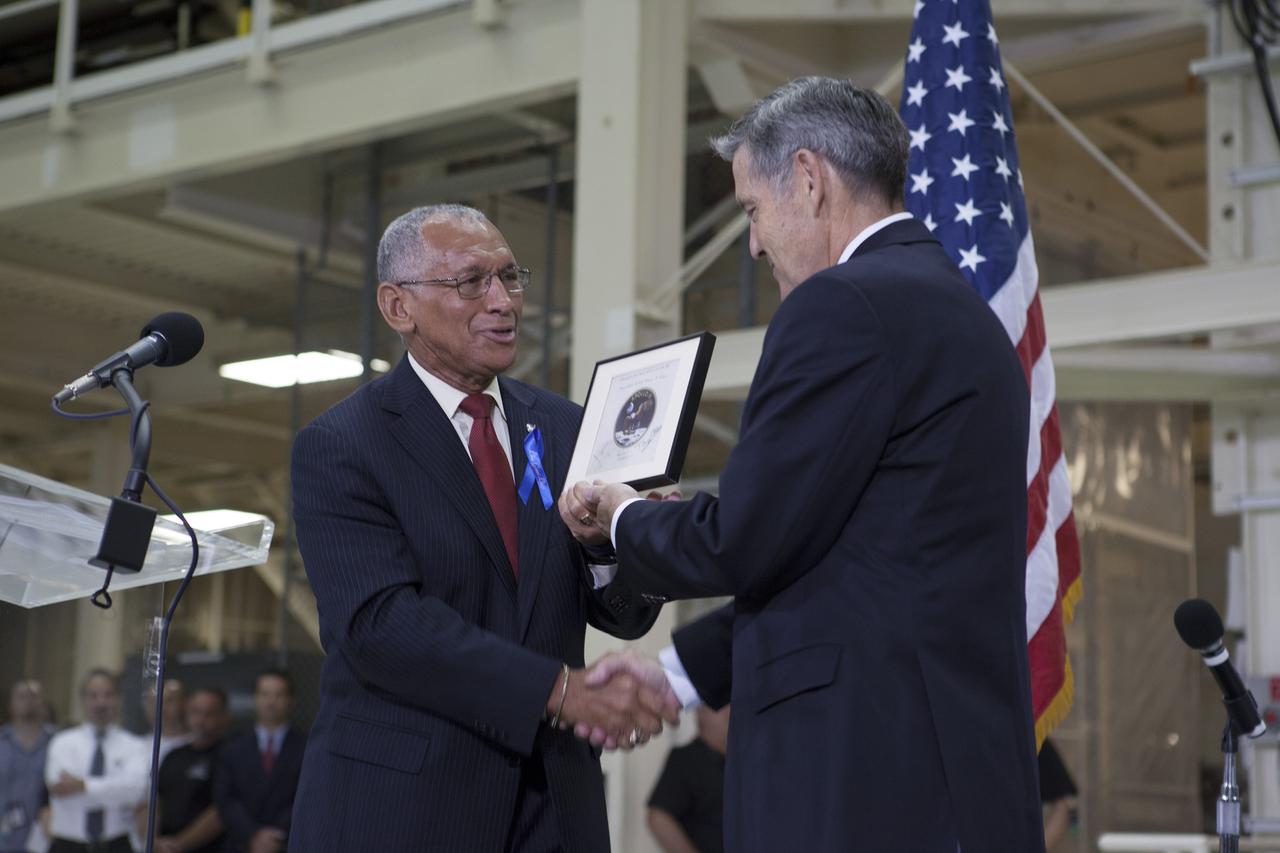
CAPE CANAVERAL, Fla. -- At the Kennedy Space Center in Florida, NASA Administrator Charles Bolden, left, presents Center Director Robert Cabana with an Apollo 11 patch that flew to the moon on the Apollo 11 mission and is signed by all three Apollo 11 astronauts. The patch will remain at Kennedy until the first human spaceflight to Mars, when it will fly once again. The presentation was made during a ceremony renaming the refurbished Operations and Checkout Building for Apollo 11 astronaut Neil Armstrong, the first person to set foot on the moon. The building's high bay, in which the ceremony was held, is being used to support the agency's new Orion spacecraft and is the same spaceport facility where the Apollo 11 command/service module and lunar module were prepped for the first lunar landing mission in 1969. Orion is designed to take humans farther than they’ve ever gone before, serving as the exploration vehicle that will carry astronauts to deep space and sustain the crew during travel to destinations such as an asteroid or Mars. The ceremony was part of NASA's 45th anniversary celebration of the Apollo 11 moon landing. As the world watched, Neil Armstrong and Buzz Aldrin landed in the moon's Sea of Tranquility on July 20, 1969, aboard the lunar module Eagle. Meanwhile, crewmate Michael Collins orbited above in the command module Columbia. For more, visit http://www.nasa.gov/press/2014/july/nasa-honors-historic-first-moon-landing-eyes-first-mars-mission. Photo credit: NASA/Kim Shiflett
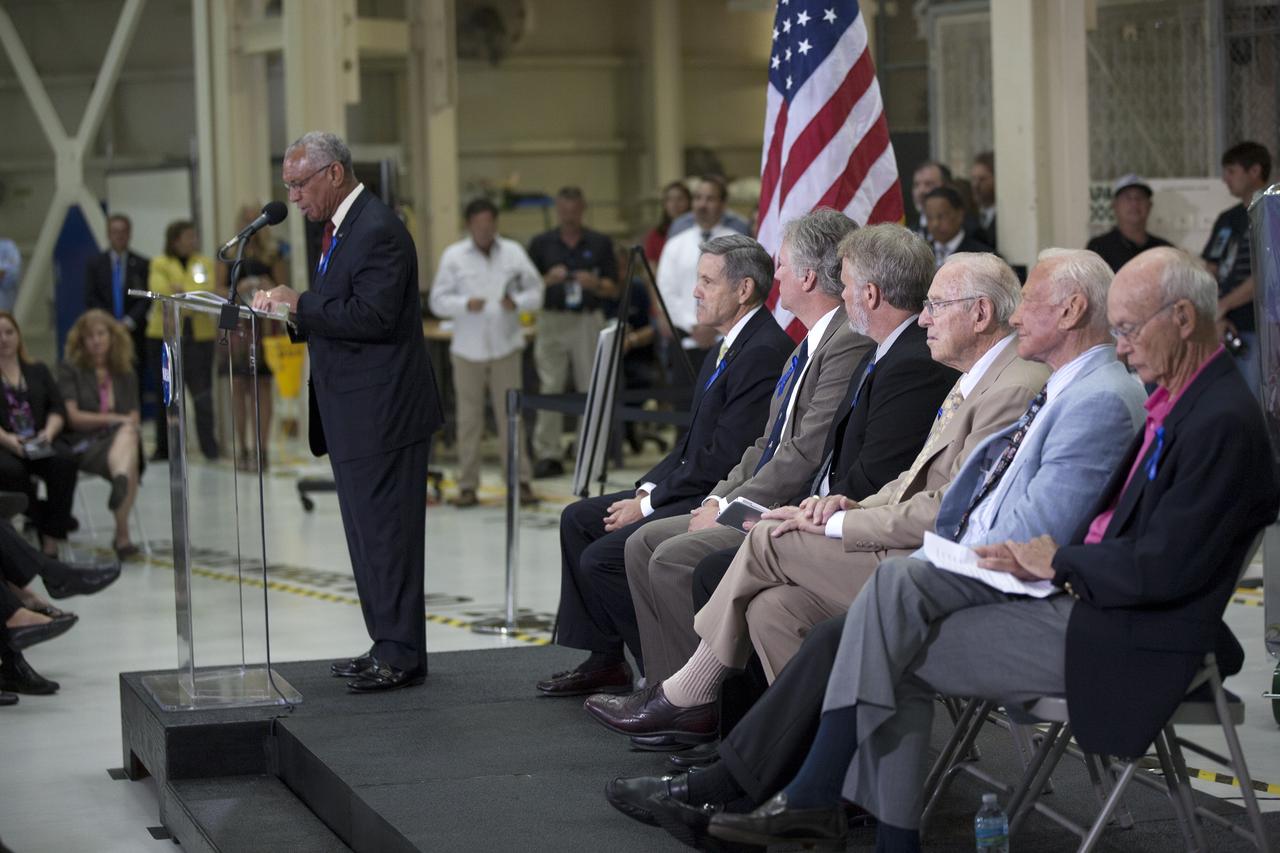
CAPE CANAVERAL, Fla. -- At the Kennedy Space Center in Florida, NASA Administrator Charles Bolden addresses the audience at a ceremony renaming the refurbished Operations and Checkout Building for Apollo 11 astronaut Neil Armstrong, the first person to set foot on the moon. Also participating in the ceremony are, from left, Center Director Robert Cabana, Armstrong's son Rick, Armstrong's son Mark, Apollo astronaut Jim Lovell, Apollo 11 astronaut Buzz Aldrin, and Apollo 11 astronaut Michael Collins. The building's high bay is being used to support the agency's new Orion spacecraft and is the same spaceport facility where the Apollo 11 command/service module and lunar module were prepped for the first lunar landing mission in 1969. Orion is designed to take humans farther than they’ve ever gone before, serving as the exploration vehicle that will carry astronauts to deep space and sustain the crew during travel to destinations such as an asteroid or Mars. The ceremony was part of NASA's 45th anniversary celebration of the Apollo 11 moon landing. As the world watched, Neil Armstrong and Buzz Aldrin landed in the moon's Sea of Tranquility on July 20, 1969, aboard the lunar module Eagle. Meanwhile, crewmate Michael Collins orbited above in the command module Columbia. For more, visit http://www.nasa.gov/press/2014/july/nasa-honors-historic-first-moon-landing-eyes-first-mars-mission. Photo credit: NASA/Kim Shiflett
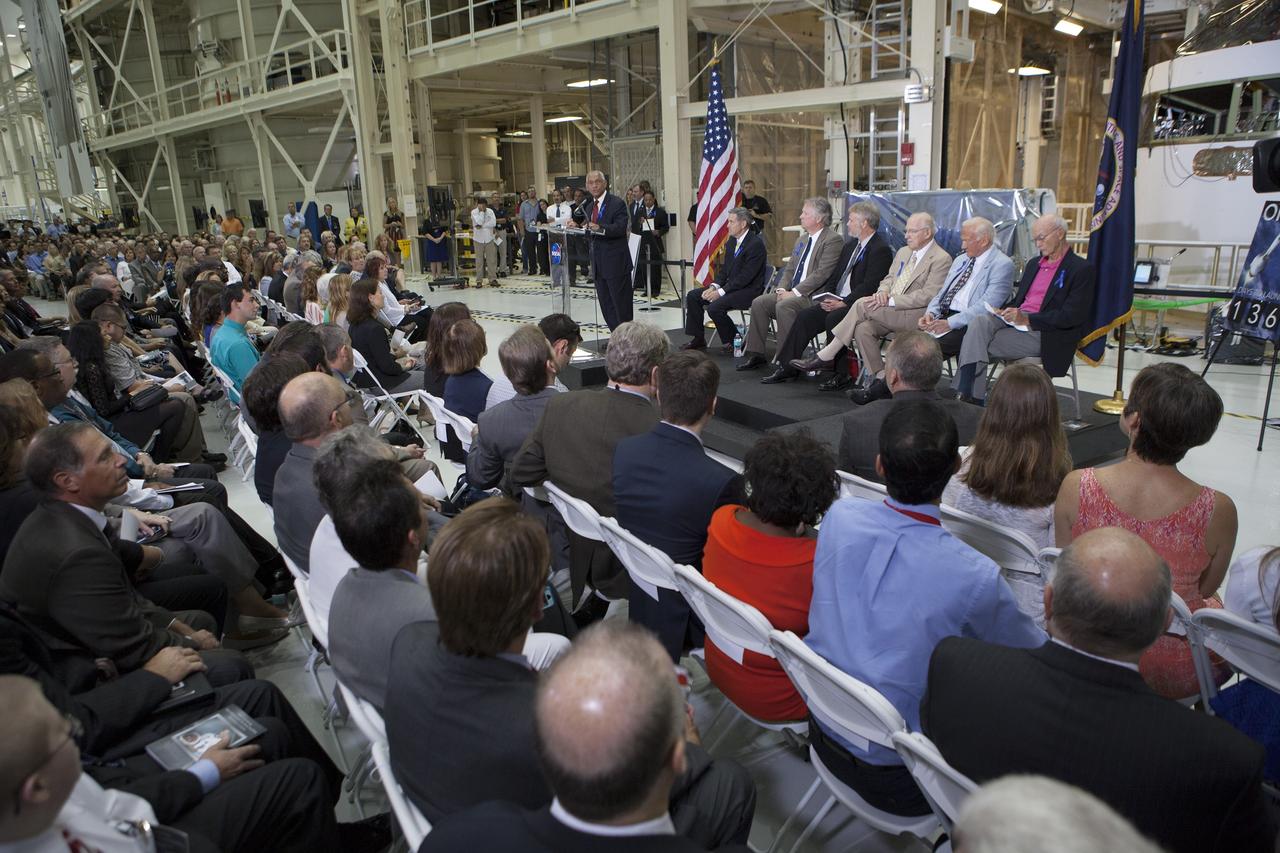
CAPE CANAVERAL, Fla. -- At the Kennedy Space Center in Florida, NASA Administrator Charles Bolden addresses the audience at a ceremony renaming the refurbished Operations and Checkout Building for Apollo 11 astronaut Neil Armstrong, the first person to set foot on the moon. Also participating in the ceremony are, from left, Center Director Robert Cabana, Armstrong's son Rick, Armstrong's son Mark, Apollo astronaut Jim Lovell, Apollo 11 astronaut Buzz Aldrin, and Apollo 11 astronaut Michael Collins. The building's high bay is being used to support the agency's new Orion spacecraft and is the same spaceport facility where the Apollo 11 command/service module and lunar module were prepped for the first lunar landing mission in 1969. Orion is designed to take humans farther than they’ve ever gone before, serving as the exploration vehicle that will carry astronauts to deep space and sustain the crew during travel to destinations such as an asteroid or Mars. The ceremony was part of NASA's 45th anniversary celebration of the Apollo 11 moon landing. As the world watched, Neil Armstrong and Buzz Aldrin landed in the moon's Sea of Tranquility on July 20, 1969, aboard the lunar module Eagle. Meanwhile, crewmate Michael Collins orbited above in the command module Columbia. For more, visit http://www.nasa.gov/press/2014/july/nasa-honors-historic-first-moon-landing-eyes-first-mars-mission. Photo credit: NASA/Kim Shiflett
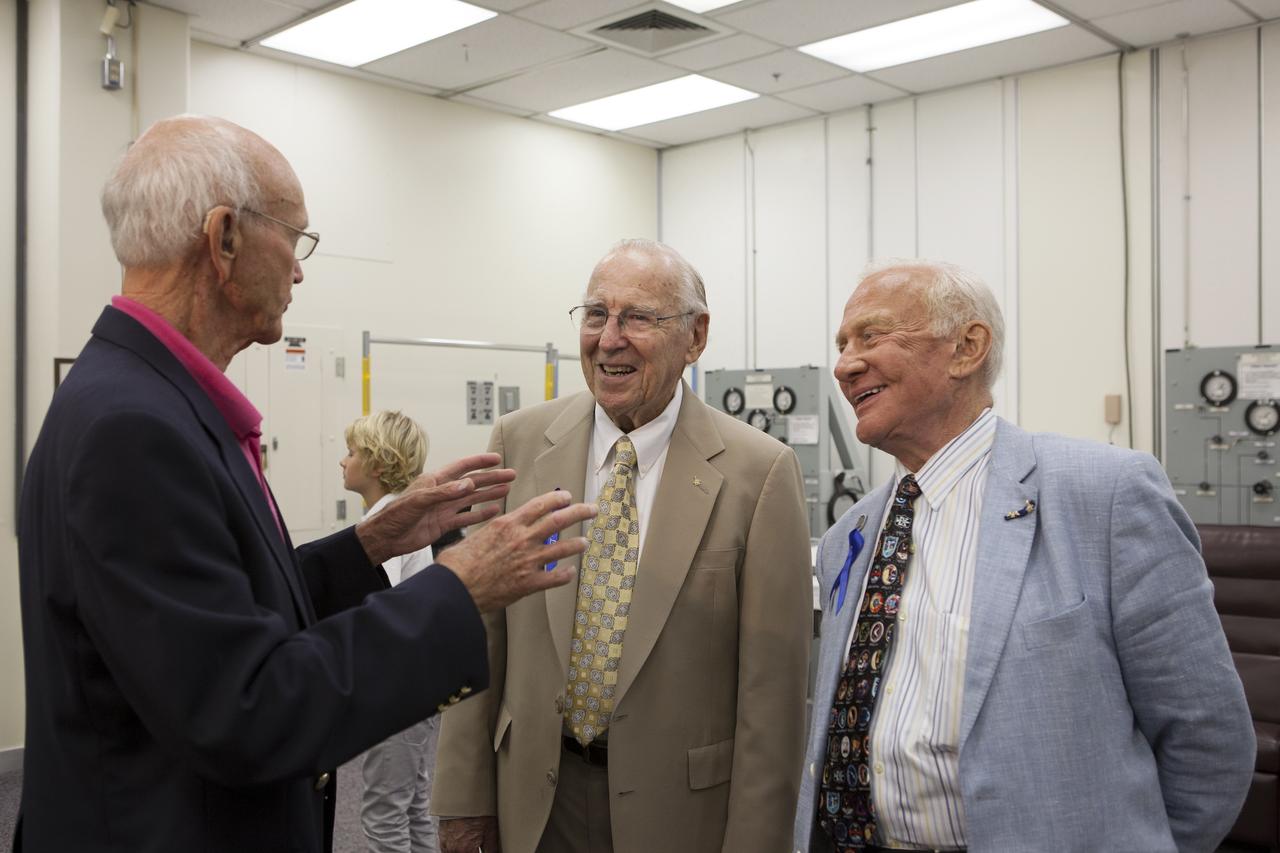
CAPE CANAVERAL, Fla. -- Apollo astronauts and their families tour the astronaut crew quarters in the Operations and Checkout Building at NASA's Kennedy Space Center in Florida. Here, from left, Apollo 11 command module pilot Michael Collins, Apollo 8 and Apollo 13 crew member Jim Lovell, and Apollo 11 moonwalker Buzz Aldrin share a light moment. The tour followed a ceremony renaming the refurbished Operations and Checkout Building for Apollo 11 astronaut Neil Armstrong, the first person to set foot on the moon. Besides housing the crew quarters, the building's high bay is being used to support the agency's new Orion spacecraft and is the same spaceport facility where the Apollo 11 command/service module and lunar module were prepped for the first lunar landing mission in 1969. Orion is designed to take humans farther than they’ve ever gone before, serving as the exploration vehicle that will carry astronauts to deep space and sustain the crew during travel to destinations such as an asteroid or Mars. The visit of the former astronauts was part of NASA's 45th anniversary celebration of the moon landing. As the world watched, Neil Armstrong and Aldrin landed in the moon's Sea of Tranquility aboard the lunar module Eagle on July 20, 1969. Meanwhile, crewmate Collins orbited above in the command module Columbia. For more, visit http://www.nasa.gov/press/2014/july/nasa-honors-historic-first-moon-landing-eyes-first-mars-mission. Photo credit: NASA/Kim Shiflett
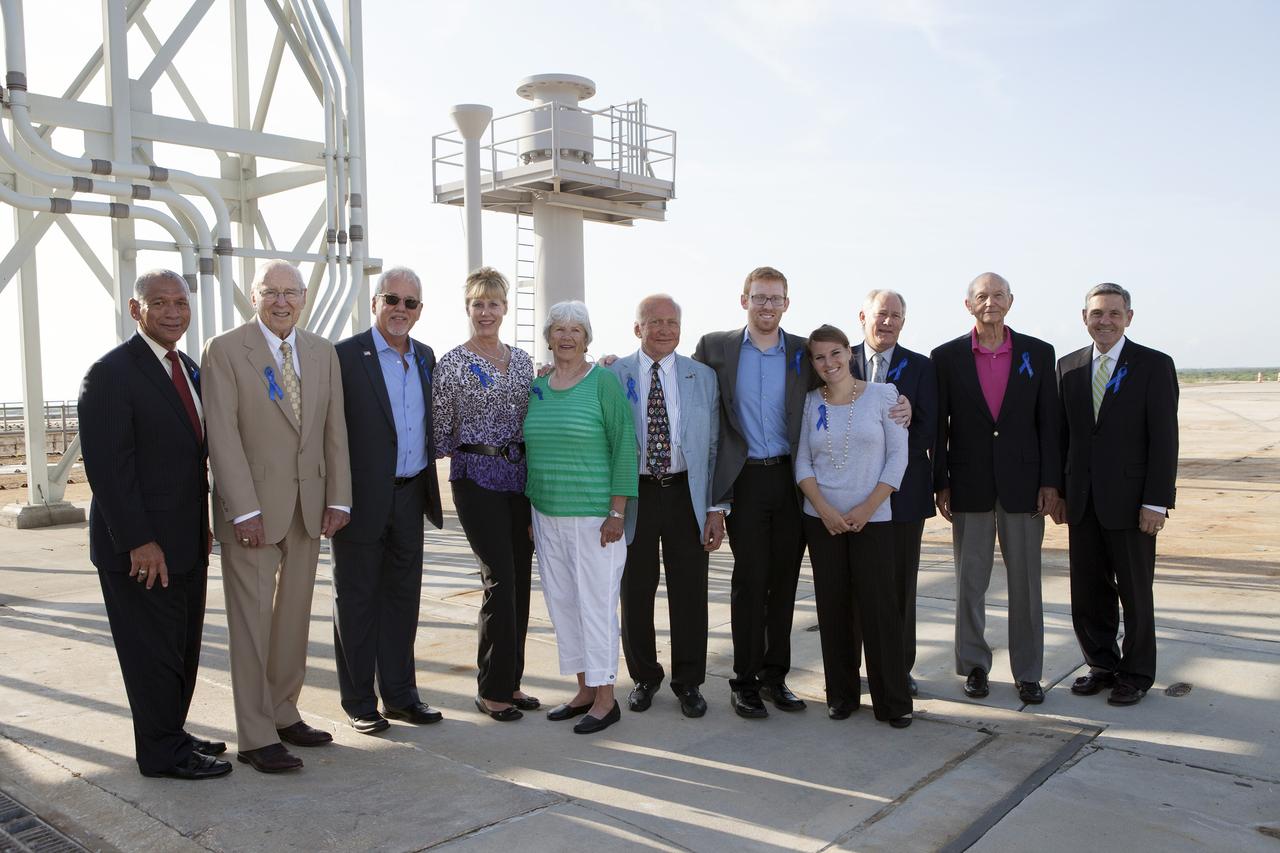
CAPE CANAVERAL, Fla. -- At NASA's Kennedy Space Center in Florida, NASA officials and Apollo astronauts visiting Launch Pad 39B with their families and friends preserve the moment with a group portrait. The group was at Kennedy for a ceremony renaming the Operations and Checkout Building for Apollo 11 astronaut Neil Armstrong, the first person to set foot on the moon. From left are NASA Administrator Charles Bolden, Apollo astronaut Jim Lovell, Buzz Aldrin's grandson Jeffrey Schuss, Jeffrey's wife April Schuss, Neil's former wife Janet Armstrong, Apollo 11 moonwalker Buzz Aldrin, Buzz's son-in-law Bruce Hanifan, Buzz's daughter Jan Aldrin, Buzz's son Andy Aldrin, Apollo 11 command module pilot Mike Collins, and Center Director Bob Cabana. The pad is being modified to support the agency's new Orion spacecraft which will lift off atop the Space Launch System rocket. Orion is designed to take humans farther than they’ve ever gone before, serving as the exploration vehicle that will carry astronauts to deep space and sustain the crew during travel to destinations such as an asteroid or Mars. The visit of the former astronauts was part of NASA's 45th anniversary celebration of the Apollo 11 moon landing. As the world watched, Neil Armstrong and Neil Aldrin landed in the moon's Sea of Tranquility aboard the lunar module Eagle on July 20, 1969. Meanwhile, crewmate Michael Collins orbited above in the command module Columbia. For more, visit http://www.nasa.gov/press/2014/july/nasa-honors-historic-first-moon-landing-eyes-first-mars-mission. Photo credit: NASA/Kim Shiflett
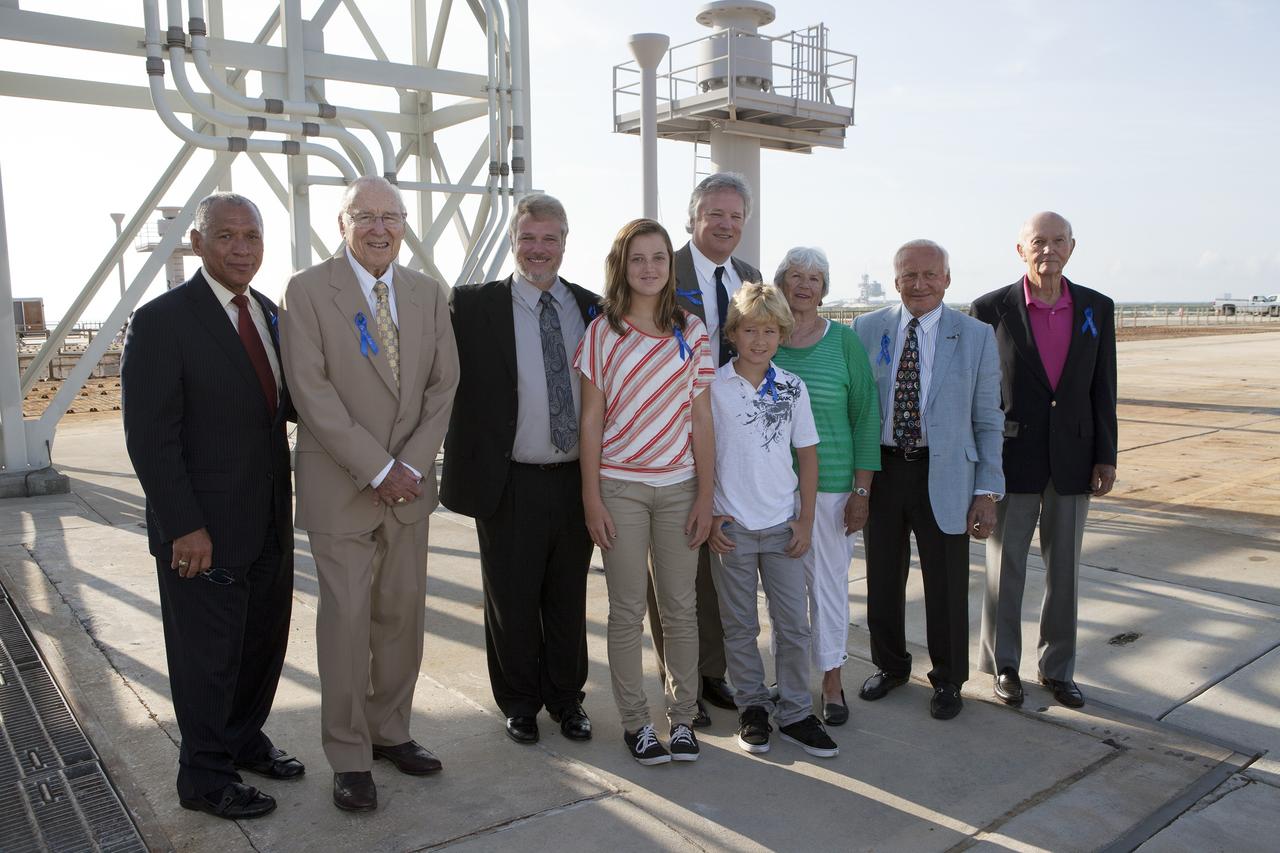
CAPE CANAVERAL, Fla. -- At the Kennedy Space Center in Florida, NASA officials and Apollo astronauts visiting Launch Pad 39B with their families and friends preserve the moment with a group portrait. The group was at Kennedy for a ceremony renaming the Operations and Checkout Building for Apollo 11 astronaut Neil Armstrong, the first person to set foot on the moon. From left are NASA Administrator Charles Bolden, Apollo astronaut Jim Lovell, Neil's son Mark Armstrong, Neil's granddaughter Lily Armstrong, Neil's son Rick Armstrong, Neil's grandson Bryce Armstrong, Neil's former wife Janet Armstrong, Apollo 11 moonwalker Buzz Aldrin, and Apollo 11 command module pilot Michael Collins. The pad is being modified to support the agency's new Orion spacecraft which will lift off atop the Space Launch System rocket. Orion is designed to take humans farther than they’ve ever gone before, serving as the exploration vehicle that will carry astronauts to deep space and sustain the crew during travel to destinations such as an asteroid or Mars. The visit of the former astronauts was part of NASA's 45th anniversary celebration of the Apollo 11 moon landing. As the world watched, Neil Armstrong and Neil Aldrin landed in the moon's Sea of Tranquility aboard the lunar module Eagle on July 20, 1969. Meanwhile, crewmate Michael Collins orbited above in the command module Columbia. For more, visit http://www.nasa.gov/press/2014/july/nasa-honors-historic-first-moon-landing-eyes-first-mars-mission. Photo credit: NASA/Kim Shiflett
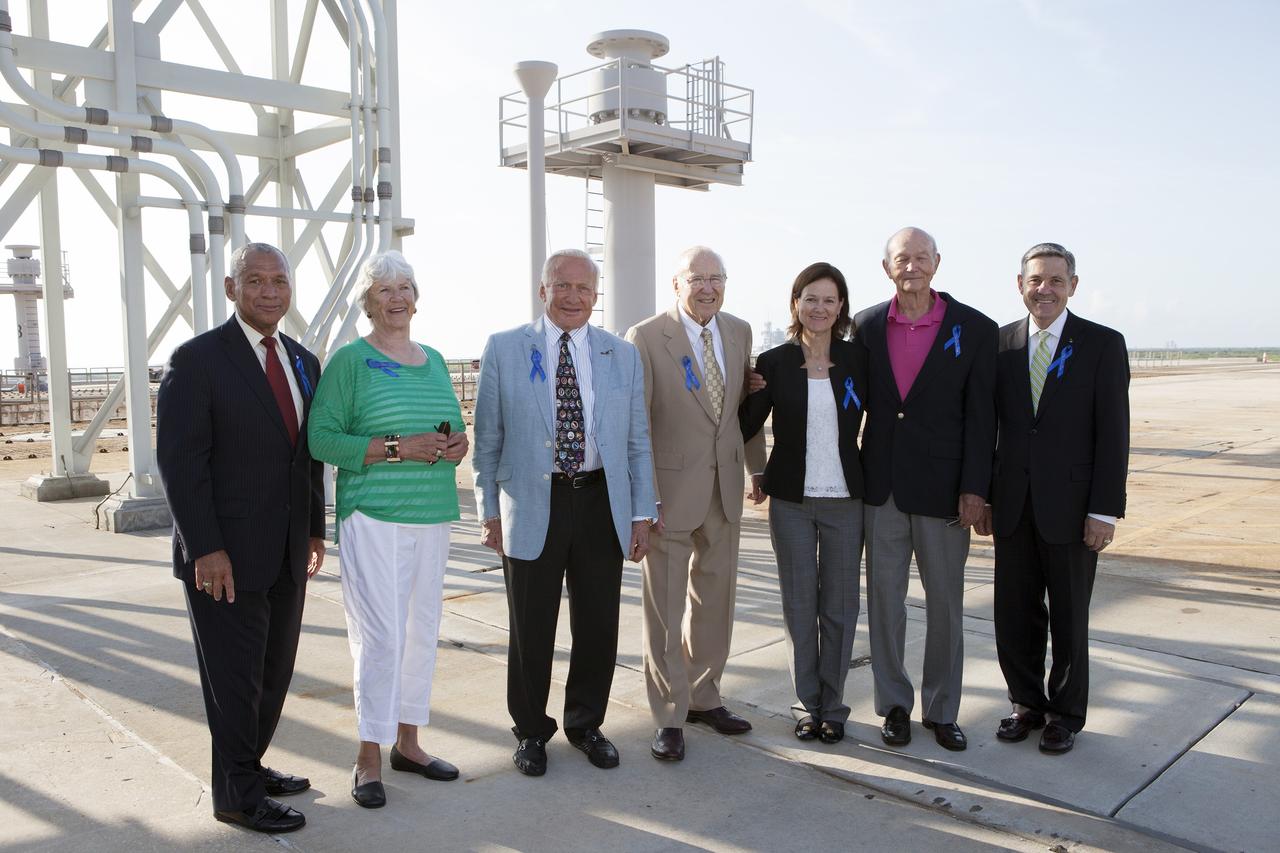
CAPE CANAVERAL, Fla. -- At NASA's Kennedy Space Center in Florida, NASA officials and Apollo astronauts visiting Launch Pad 39B with their families and friends preserve the moment with a group portrait. The group was at Kennedy for a ceremony renaming the Operations and Checkout Building for Apollo 11 astronaut Neil Armstrong, the first person to set foot on the moon. From left are NASA Administrator Charles Bolden, Neil's former wife Janet Armstrong, Apollo 11 moonwalker Buzz Aldrin, Apollo astronaut Jim Lovell, Mike Collins' daughter Ann Starr, Apollo 11 command module pilot Mike Collins, and Center Director Bob Cabana. The pad is being modified to support the agency's new Orion spacecraft which will lift off atop the Space Launch System rocket. Orion is designed to take humans farther than they’ve ever gone before, serving as the exploration vehicle that will carry astronauts to deep space and sustain the crew during travel to destinations such as an asteroid or Mars. The visit of the former astronauts was part of NASA's 45th anniversary celebration of the Apollo 11 moon landing. As the world watched, Neil Armstrong and Neil Aldrin landed in the moon's Sea of Tranquility aboard the lunar module Eagle on July 20, 1969. Meanwhile, crewmate Michael Collins orbited above in the command module Columbia. For more, visit http://www.nasa.gov/press/2014/july/nasa-honors-historic-first-moon-landing-eyes-first-mars-mission. Photo credit: NASA/Kim Shiflett
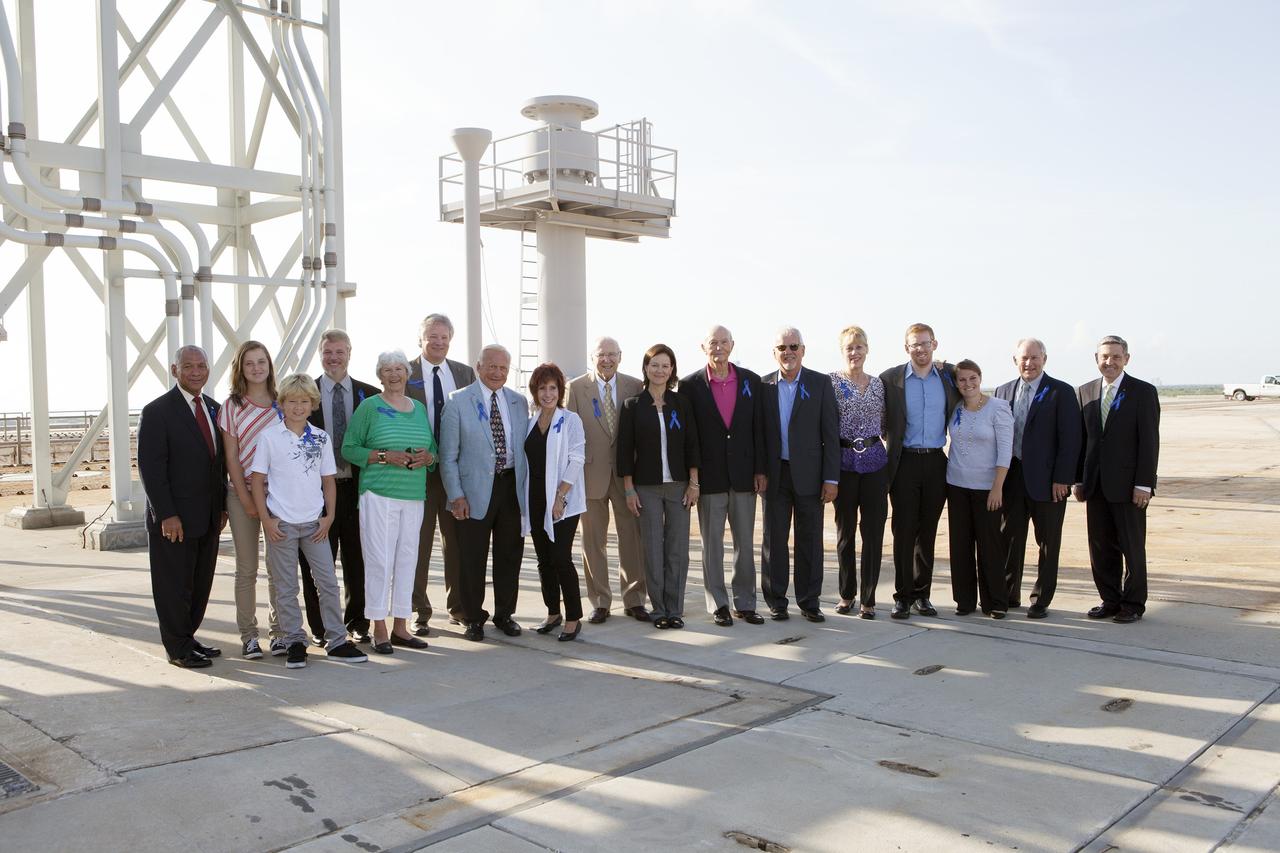
CAPE CANAVERAL, Fla. -- At NASA's Kennedy Space Center in Florida, NASA officials and Apollo astronauts visiting Launch Pad 39B with their families and friends preserve the moment with a group portrait. The group was at Kennedy for a ceremony renaming the Operations and Checkout Building for Apollo 11 astronaut Neil Armstrong, the first person to set foot on the moon. From left are NASA Administrator Charles Bolden, Neil's granddaughter Lily Armstrong, Neil's grandson Bryce Armstrong, Neil's son Mark Armstrong, Neil's former wife Janet Armstrong, Neil's son Rick Armstrong, Apollo 11 moonwalker Buzz Aldrin, Buzz's friend Judy Rice, Apollo astronaut Jim Lovell, Mike Collins' daughter Ann Starr, Apollo 11 command module pilot Mike Collins, Buzz's grandson Jeffrey Schuss, Jeffrey's wife April Schuss, Buzz's son-in-law Bruce Hanifan, Buzz's daughter Jan Aldrin, Buzz's son Andy Aldrin, and Center Director Bob Cabana. The pad is being modified to support the agency's new Orion spacecraft which will lift off atop the Space Launch System rocket. Orion is designed to take humans farther than they’ve ever gone before, serving as the exploration vehicle that will carry astronauts to deep space and sustain the crew during travel to destinations such as an asteroid or Mars. The visit of the former astronauts was part of NASA's 45th anniversary celebration of the Apollo 11 moon landing. As the world watched, Neil Armstrong and Neil Aldrin landed in the moon's Sea of Tranquility aboard the lunar module Eagle on July 20, 1969. Meanwhile, crewmate Michael Collins orbited above in the command module Columbia. For more, visit http://www.nasa.gov/press/2014/july/nasa-honors-historic-first-moon-landing-eyes-first-mars-mission. Photo credit: NASA/Kim Shiflett
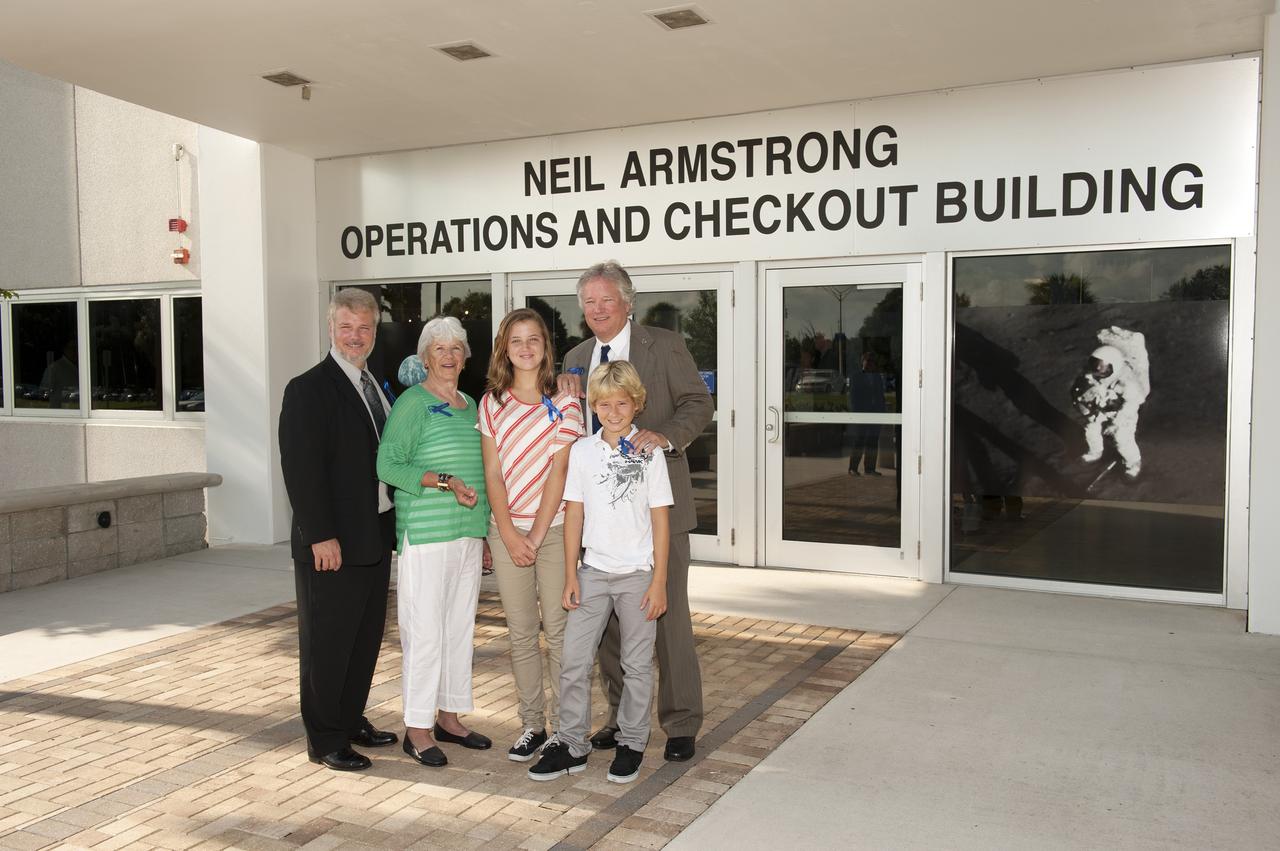
CAPE CANAVERAL, Fla. -- At the Kennedy Space Center in Florida, the family of Neil Armstrong poses for a group portrait in front of the refurbished Operations and Checkout Building. From left are Armstrong's son Mark, his former wife Janet, his granddaughter Lily, his son Rick and his grandson Bryce. Armstrong, an Apollo 11 astronaut, was the first person to set foot on the moon and for whom the facility is newly named. The building's high bay is being used to support the agency's new Orion spacecraft, which will lift off atop the Space Launch System rocket. Orion is designed to take humans farther than they’ve ever gone before, serving as the exploration vehicle that will carry astronauts to deep space and sustain the crew during travel to destinations such as an asteroid or Mars. The visit of the former astronauts was part of NASA's 45th anniversary celebration of the Apollo 11 moon landing. As the world watched, Neil Armstrong and Aldrin landed in the moon's Sea of Tranquility aboard the lunar module Eagle on July 20, 1969. Meanwhile, crewmate Collins orbited above in the command module Columbia. For more, visit http://www.nasa.gov/press/2014/july/nasa-honors-historic-first-moon-landing-eyes-first-mars-mission. Photo credit: NASA/Kevin O'Connell
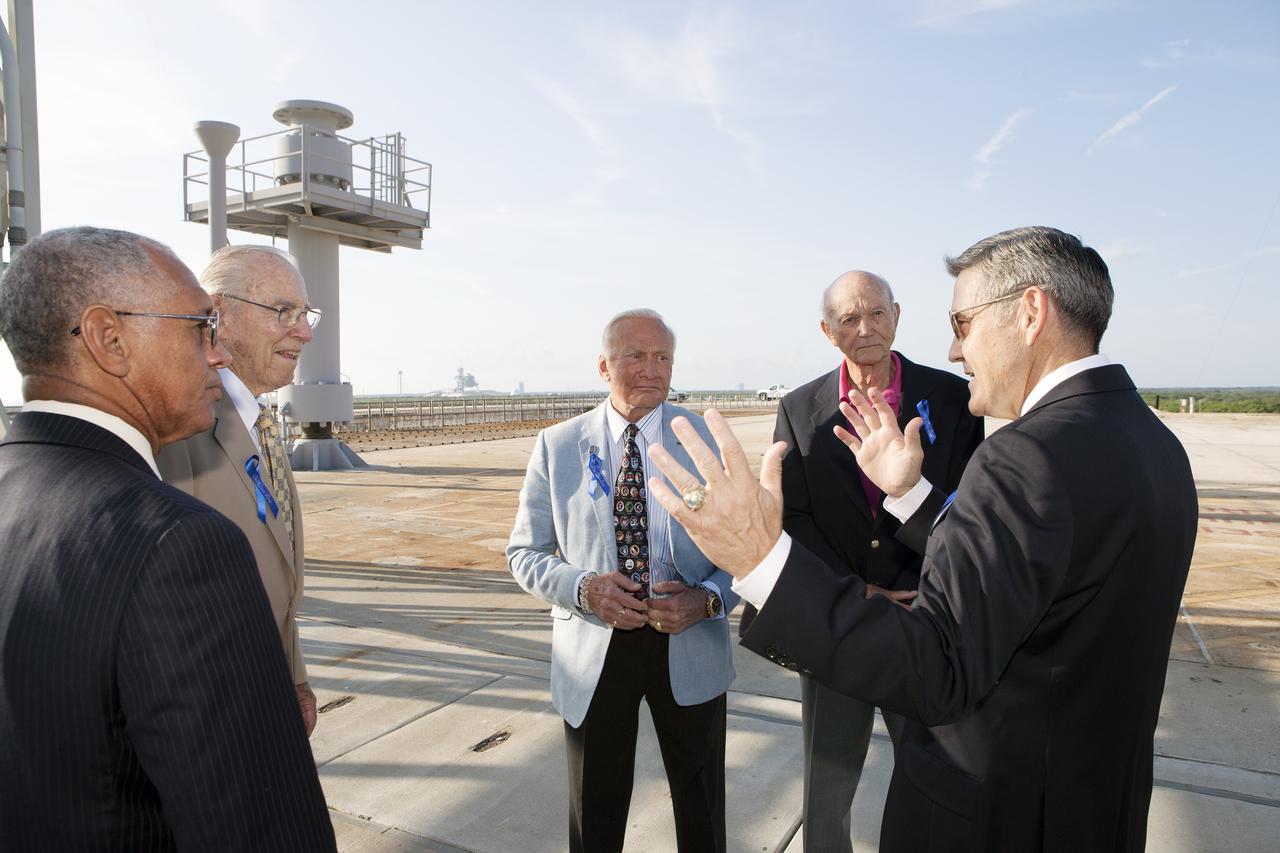
CAPE CANAVERAL, Fla. -- At the Kennedy Space Center in Florida, Center Director Bob Cabana, at right, briefs Apollo astronauts on the changes underway to Launch Pad 39B. From left are NASA administrator Charles Bolden, Apollo astronauts Jim Lovell, Buzz Aldrin and Mike Collins, and Cabana. The pad is being modified to support the agency's new Orion spacecraft which will lift off atop the Space Launch System rocket. Orion is designed to take humans farther than they’ve ever gone before, serving as the exploration vehicle that will carry astronauts to deep space and sustain the crew during travel to destinations such as an asteroid or Mars. The visit of the former astronauts was part of NASA's 45th anniversary celebration of the Apollo 11 moon landing. As the world watched, Neil Armstrong and Aldrin landed in the moon's Sea of Tranquility aboard the lunar module Eagle on July 20, 1969. Meanwhile, crewmate Collins orbited above in the command module Columbia. For more, visit http://www.nasa.gov/press/2014/july/nasa-honors-historic-first-moon-landing-eyes-first-mars-mission. Photo credit: NASA/Kim Shiflett
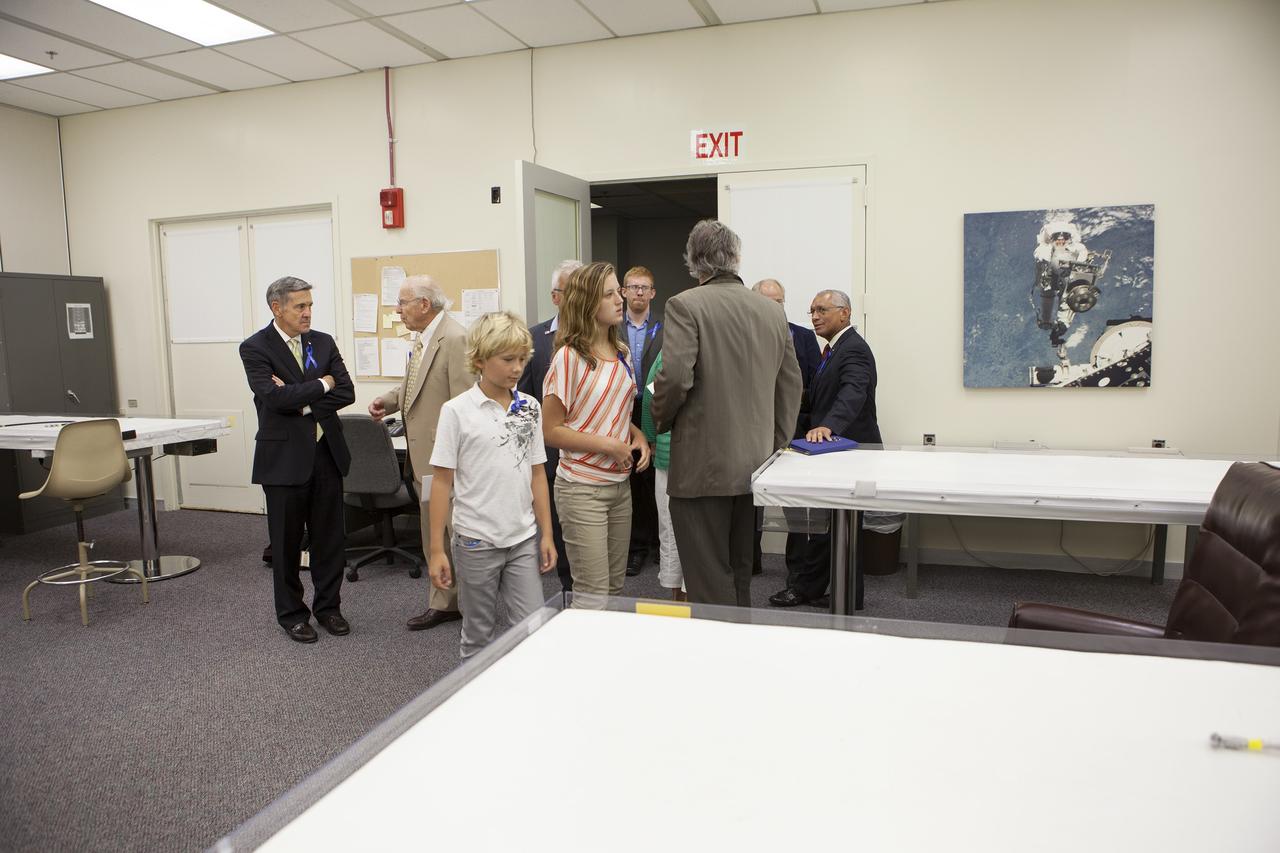
CAPE CANAVERAL, Fla. -- Apollo astronauts and their families tour the astronaut crew quarters in the Operations and Checkout Building at NASA's Kennedy Space Center in Florida. The tour followed a ceremony renaming the refurbished Operations and Checkout Building for Apollo 11 astronaut Neil Armstrong, the first person to set foot on the moon. Here, Armstrong's grandchildren, Bryce and Lily, in front, make their way into the room. Center Director Robert Cabana talks with Apollo 8 and Apollo 13 crew member Jim Lovell, at left, as NASA Administrator Charles Bolden talks with other Armstrong family members, at right. Besides housing the crew quarters, the building's high bay is being used to support the agency's new Orion spacecraft and is the same spaceport facility where the Apollo 11 command/service module and lunar module were prepped for the first lunar landing mission in 1969. Orion is designed to take humans farther than they’ve ever gone before, serving as the exploration vehicle that will carry astronauts to deep space and sustain the crew during travel to destinations such as an asteroid or Mars. The ceremony was part of NASA's 45th anniversary celebration of the Apollo 11 moon landing. As the world watched, Neil Armstrong and Buzz Aldrin landed in the moon's Sea of Tranquility on July 20, 1969, aboard the lunar module Eagle. Meanwhile, crewmate Michael Collins orbited above in the command module Columbia. For more, visit http://www.nasa.gov/press/2014/july/nasa-honors-historic-first-moon-landing-eyes-first-mars-mission. Photo credit: NASA/Kim Shiflett

CAPE CANAVERAL, Fla. -- Apollo astronauts and their families tour the astronaut crew quarters in the Operations and Checkout Building at NASA's Kennedy Space Center in Florida. Here, from left, Apollo 11 astronaut Michael Collins, NASA Administrator Charles Bolden, and Apollo 8 and Apollo 13 crew member Jim Lovell share a light moment. The tour followed a ceremony renaming the refurbished Operations and Checkout Building for Apollo 11 astronaut Neil Armstrong, the first person to set foot on the moon. Besides housing the crew quarters, the building's high bay is being used to support the agency's new Orion spacecraft and is the same spaceport facility where the Apollo 11 command/service module and lunar module were prepped for the first lunar landing mission in 1969. Orion is designed to take humans farther than they’ve ever gone before, serving as the exploration vehicle that will carry astronauts to deep space and sustain the crew during travel to destinations such as an asteroid or Mars. The visit of the former astronauts was part of NASA's 45th anniversary celebration of the moon landing. As the world watched, Neil Armstrong and Aldrin landed in the moon's Sea of Tranquility aboard the lunar module Eagle on July 20, 1969. Meanwhile, crewmate Collins orbited above in the command module Columbia. For more, visit http://www.nasa.gov/press/2014/july/nasa-honors-historic-first-moon-landing-eyes-first-mars-mission. Photo credit: NASA/Kim Shiflett
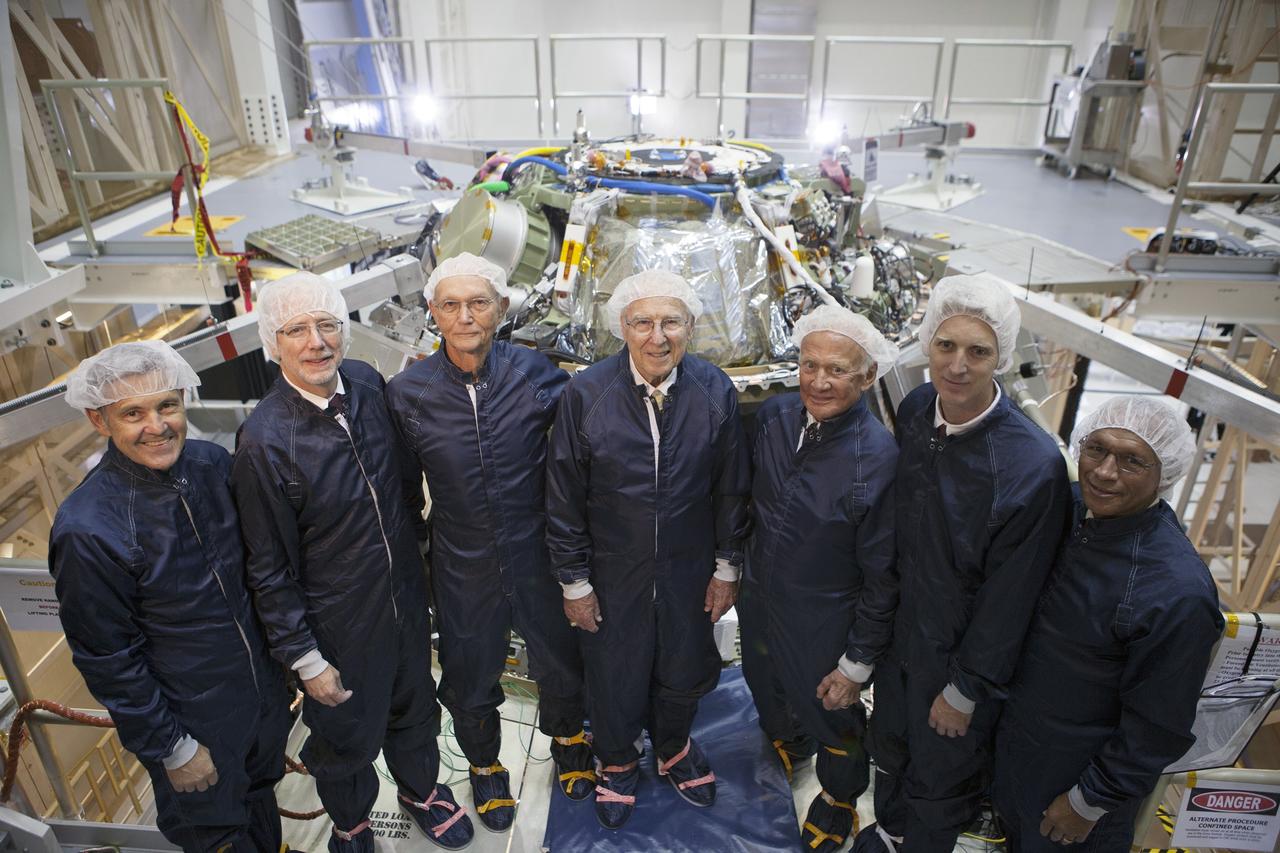
CAPE CANAVERAL, Fla. -- At the Kennedy Space Center in Florida, NASA officials and Apollo astronauts tour the refurbished Operations and Checkout Building, newly named for Apollo 11 astronaut Neil Armstrong, the first person to set foot on the moon. Viewing the Orion crew module stacked on top of the service module from left, are Kennedy Center Director Bob Cabana, Mark Geyer, Orion Program manager, Apollo 11 astronaut Michael Collins, Apollo astronaut Jim Lovell, Apollo 11 astronaut Buzz Aldrin, Scott Wilson, manager, production operations for the Orion Program, and NASA Administrator Charlie Bolden. The building's high bay is being used to support the agency's new Orion spacecraft, which will lift off atop the Space Launch System. Orion is designed to take humans farther than they've ever gone before, serving as the exploration vehicle that will carry astronauts to deep space and sustain the crew during travel to destinations such as an asteroid or Mars. The visit of the former astronauts was part of NASA's 45th anniversary celebration of the moon landing. As the world watched, Neil Armstrong and Aldrin landed in the moon's Sea of Tranquility aboard the lunar module Eagle on July 20, 1969. Meanwhile, crewmate Collins orbited above in the command module Columbia. For more, visit http://www.nasa.gov/press/2014/july/nasa-honors-historic-first-moon-landing-eyes-first-mars-mission. Photo credit: NASA/Kim Shiflett
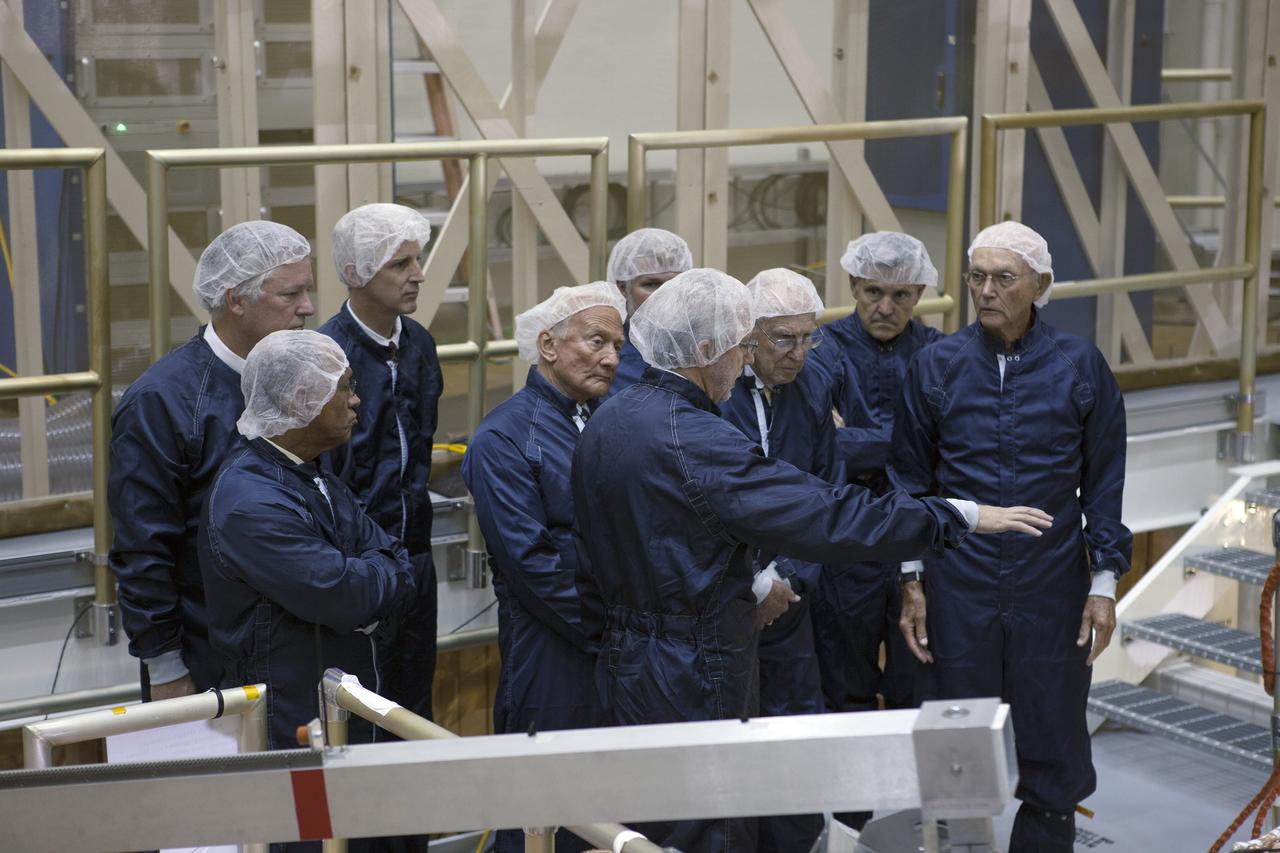
CAPE CANAVERAL, Fla. -- At the Kennedy Space Center in Florida, NASA officials and Apollo astronauts tour the refurbished Operations and Checkout Building, newly named for Apollo 11 astronaut Neil Armstrong, the first person to set foot on the moon. From left, are NASA Administrator Charlie Bolden, Rick Armstrong, Scott Wilson, manager, production operations for the Orion Program, Apollo 11 astronaut Buzz Aldrin, Mark Geyer, Orion Program manager, partially hidden is Mark Armstrong, Apollo astronaut Jim Lovell, Kennedy Center Director Bob Cabana, and Apollo 11 astronaut Michael Collins. The building's high bay is being used to support the agency's new Orion spacecraft, which will lift off atop the Space Launch System. Orion is designed to take humans farther than they've ever gone before, serving as the exploration vehicle that will carry astronauts to deep space and sustain the crew during travel to destinations such as an asteroid or Mars. The visit of the former astronauts was part of NASA's 45th anniversary celebration of the moon landing. As the world watched, Neil Armstrong and Aldrin landed in the moon's Sea of Tranquility aboard the lunar module Eagle on July 20, 1969. Meanwhile, crewmate Collins orbited above in the command module Columbia. For more, visit http://www.nasa.gov/press/2014/july/nasa-honors-historic-first-moon-landing-eyes-first-mars-mission. Photo credit: NASA/Kim Shiflett
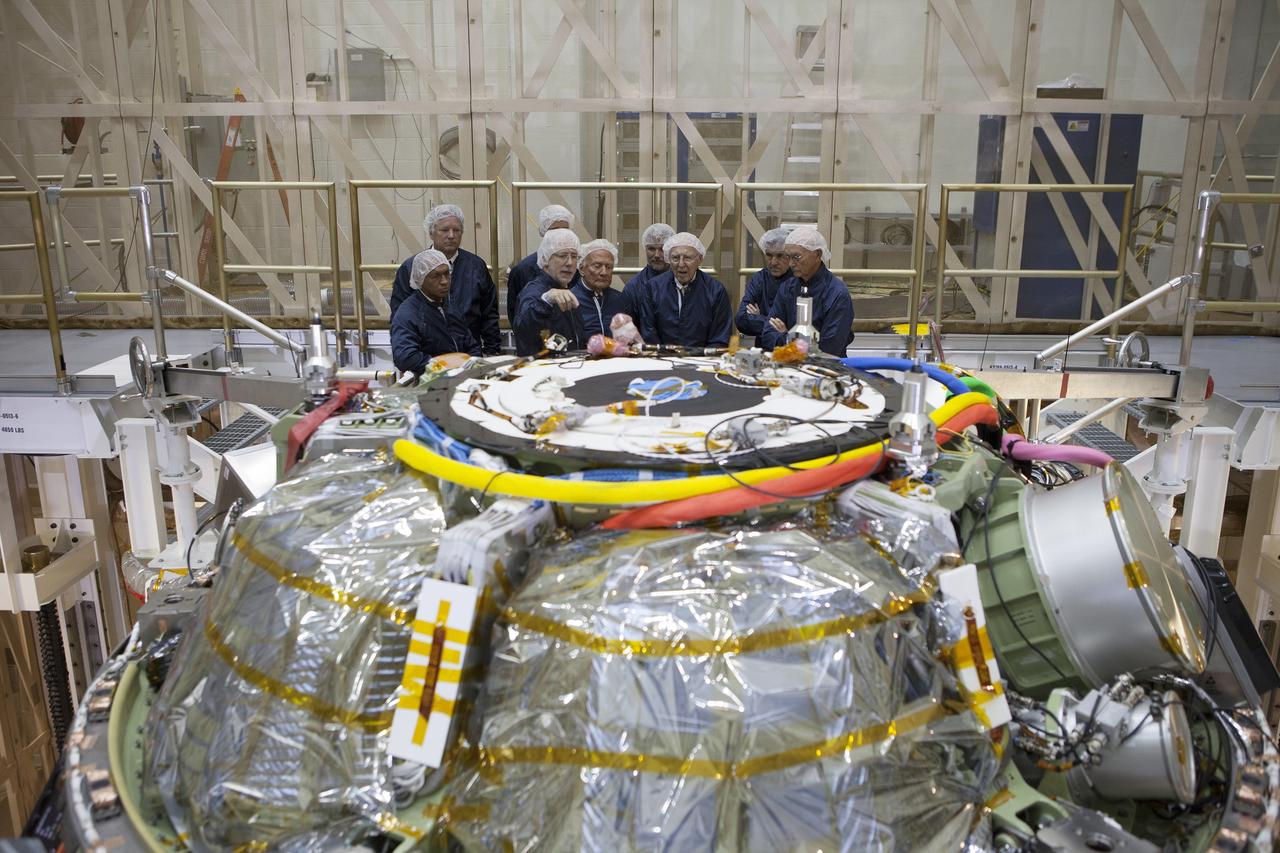
CAPE CANAVERAL, Fla. -- At the Kennedy Space Center in Florida, NASA officials and Apollo astronauts tour the refurbished Operations and Checkout Building, newly named for Apollo 11 astronaut Neil Armstrong, the first person to set foot on the moon. Viewing the Orion crew module stacked on top of the service module from left, are NASA Administrator Charlie Bolden, Rick Armstrong, Mark Geyer, Orion Program manager, Apollo 11 astronaut Buzz Aldrin, and Apollo astronaut Jim Lovell. Behind Lovell is Mark Armstrong, Kennedy Center Director Bob Cabana, and Apollo 11 astronaut Michael Collins. Partially hidden behind Geyer is Scott Wilson, manager, production operations for the Orion Program. The building's high bay is being used to support the agency's new Orion spacecraft, which will lift off atop the Space Launch System. Orion is designed to take humans farther than they've ever gone before, serving as the exploration vehicle that will carry astronauts to deep space and sustain the crew during travel to destinations such as an asteroid or Mars. The visit of the former astronauts was part of NASA's 45th anniversary celebration of the moon landing. As the world watched, Neil Armstrong and Aldrin landed in the moon's Sea of Tranquility aboard the lunar module Eagle on July 20, 1969. Meanwhile, crewmate Collins orbited above in the command module Columbia. For more, visit http://www.nasa.gov/press/2014/july/nasa-honors-historic-first-moon-landing-eyes-first-mars-mission. Photo credit: NASA/Kim Shiflett
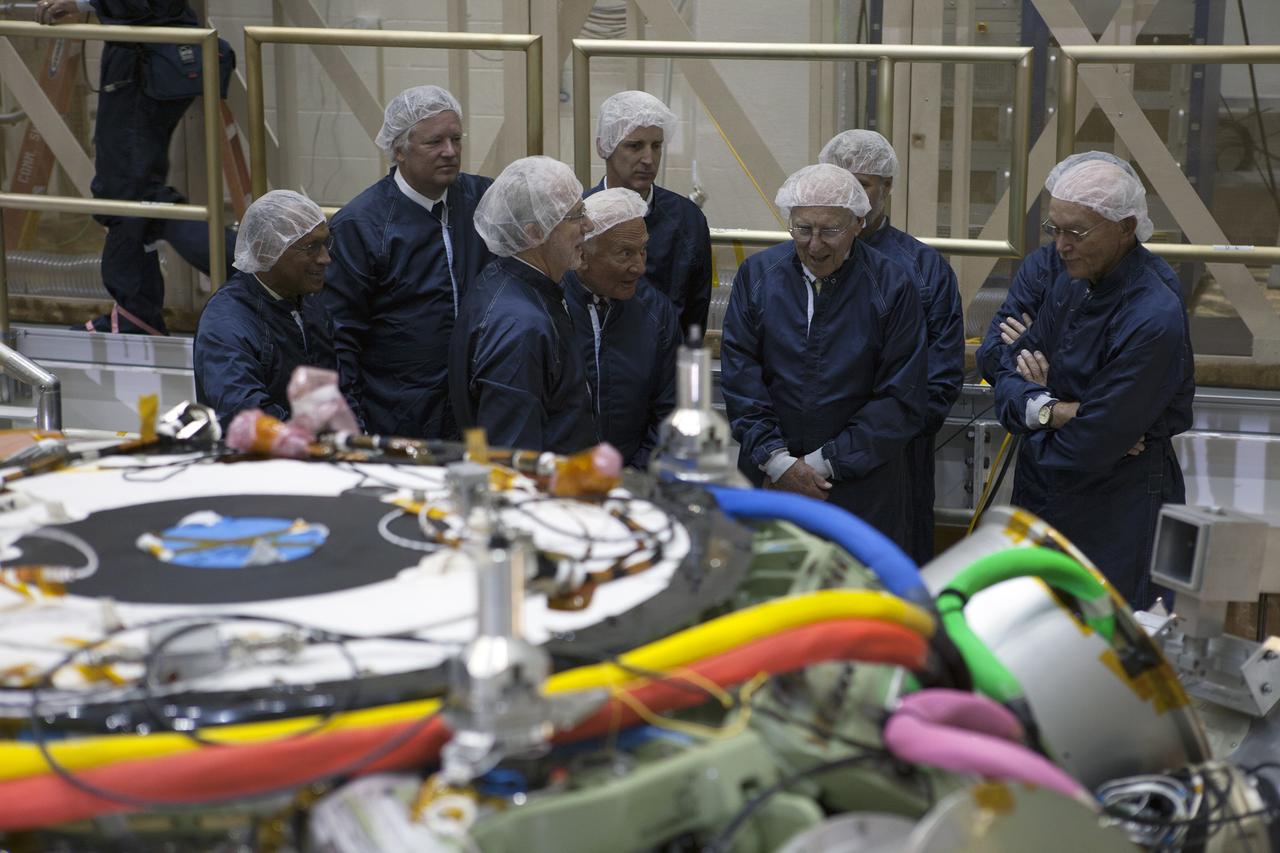
CAPE CANAVERAL, Fla. -- At the Kennedy Space Center in Florida, NASA officials and Apollo astronauts tour the refurbished Operations and Checkout Building, newly named for Apollo 11 astronaut Neil Armstrong, the first person to set foot on the moon. From left, are NASA Administrator Charlie Bolden, Rick Armstrong, Mark Geyer, Orion Program manager, Apollo 11 astronaut Buzz Aldrin, Scott Wilson, manager, production operations for the Orion Program, and Apollo astronaut Jim Lovell. Behind Lovell is Mark Armstrong, Apollo 11 astronaut Michael Collins, and partially hidden is Kennedy Center Director Bob Cabana. The building's high bay is being used to support the agency's new Orion spacecraft, which will lift off atop the Space Launch System. Orion is designed to take humans farther than they've ever gone before, serving as the exploration vehicle that will carry astronauts to deep space and sustain the crew during travel to destinations such as an asteroid or Mars. The visit of the former astronauts was part of NASA's 45th anniversary celebration of the moon landing. As the world watched, Neil Armstrong and Aldrin landed in the moon's Sea of Tranquility aboard the lunar module Eagle on July 20, 1969. Meanwhile, crewmate Collins orbited above in the command module Columbia. For more, visit http://www.nasa.gov/press/2014/july/nasa-honors-historic-first-moon-landing-eyes-first-mars-mission. Photo credit: NASA/Kim Shiflett
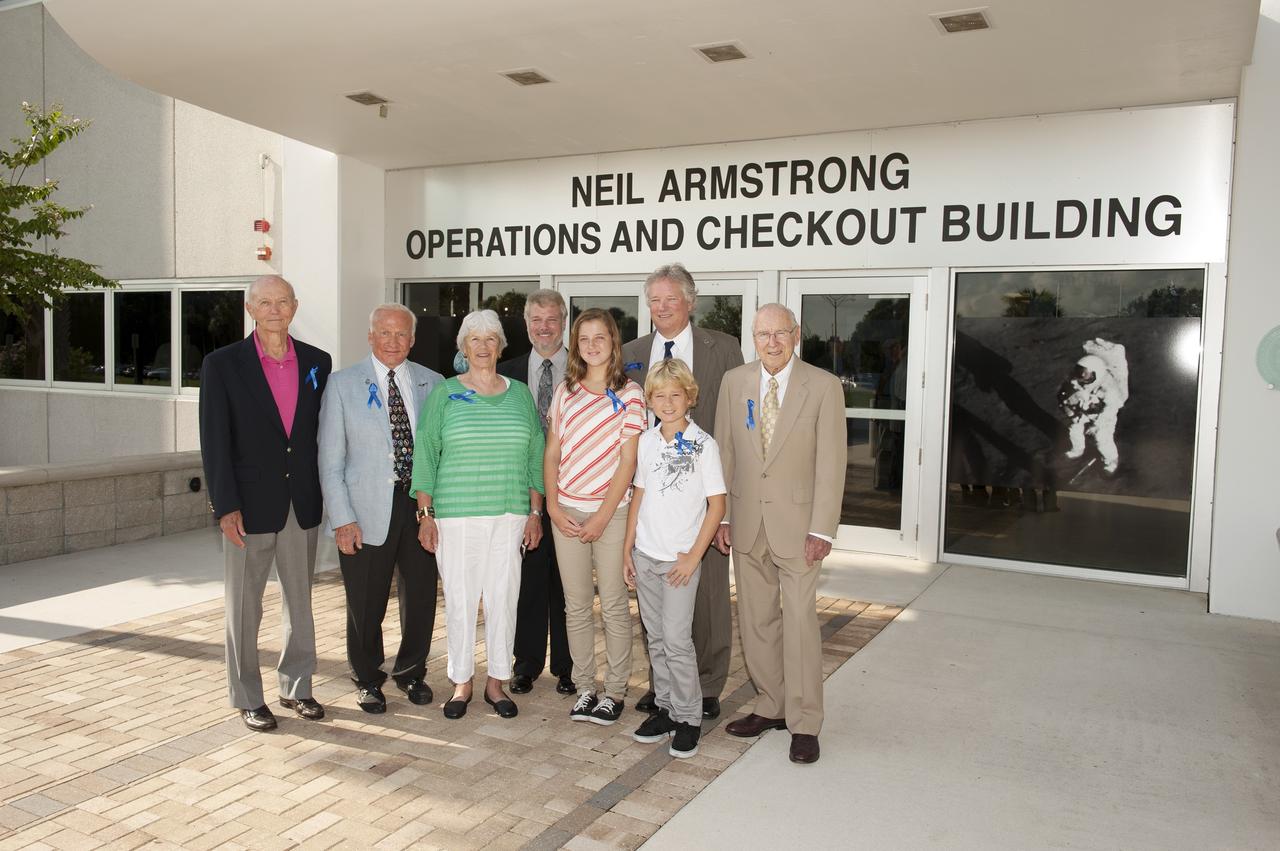
CAPE CANAVERAL, Fla. -- At the Kennedy Space Center in Florida, visiting Apollo astronauts have a group portrait taken in front of the refurbished Operations and Checkout Building, with the family of Neil Armstrong, the Apollo 11 astronaut who was the first person to set foot on the moon and for whom the facility is newly named. From left are Apollo 11 astronauts Mike Collins and Buzz Aldrin, Armstrong's former wife Janet, his son Rick, his granddaughter Lily, his son Rick, his grandson Bryce, and Apollo 8 and 13 astronaut Jim Lovell. The building's high bay is being used to support the agency's new Orion spacecraft, which will lift off atop the Space Launch System rocket. Orion is designed to take humans farther than they’ve ever gone before, serving as the exploration vehicle that will carry astronauts to deep space and sustain the crew during travel to destinations such as an asteroid or Mars. The visit of the former astronauts was part of NASA's 45th anniversary celebration of the Apollo 11 moon landing. As the world watched, Neil Armstrong and Aldrin landed in the moon's Sea of Tranquility aboard the lunar module Eagle on July 20, 1969. Meanwhile, crewmate Collins orbited above in the command module Columbia. For more, visit http://www.nasa.gov/press/2014/july/nasa-honors-historic-first-moon-landing-eyes-first-mars-mission. Photo credit: NASA/Kevin O'Connell

CAPE CANAVERAL, Fla. -- At the Kennedy Space Center in Florida, Apollo astronauts, from left, Jim Lovell, Buzz Aldrin and Mike Collins pause during their tour of Launch Pad 39B for a group portrait. The pad is being modified to support the agency's new Orion spacecraft which will lift off atop the Space Launch System rocket. Orion is designed to take humans farther than they’ve ever gone before, serving as the exploration vehicle that will carry astronauts to deep space and sustain the crew during travel to destinations such as an asteroid or Mars. The visit of the former astronauts was part of NASA's 45th anniversary celebration of the Apollo 11 moon landing. As the world watched, Neil Armstrong and Aldrin landed in the moon's Sea of Tranquility aboard the lunar module Eagle on July 20, 1969. Meanwhile, crewmate Collins orbited above in the command module Columbia. For more, visit http://www.nasa.gov/press/2014/july/nasa-honors-historic-first-moon-landing-eyes-first-mars-mission. Photo credit: NASA/Kim Shiflett
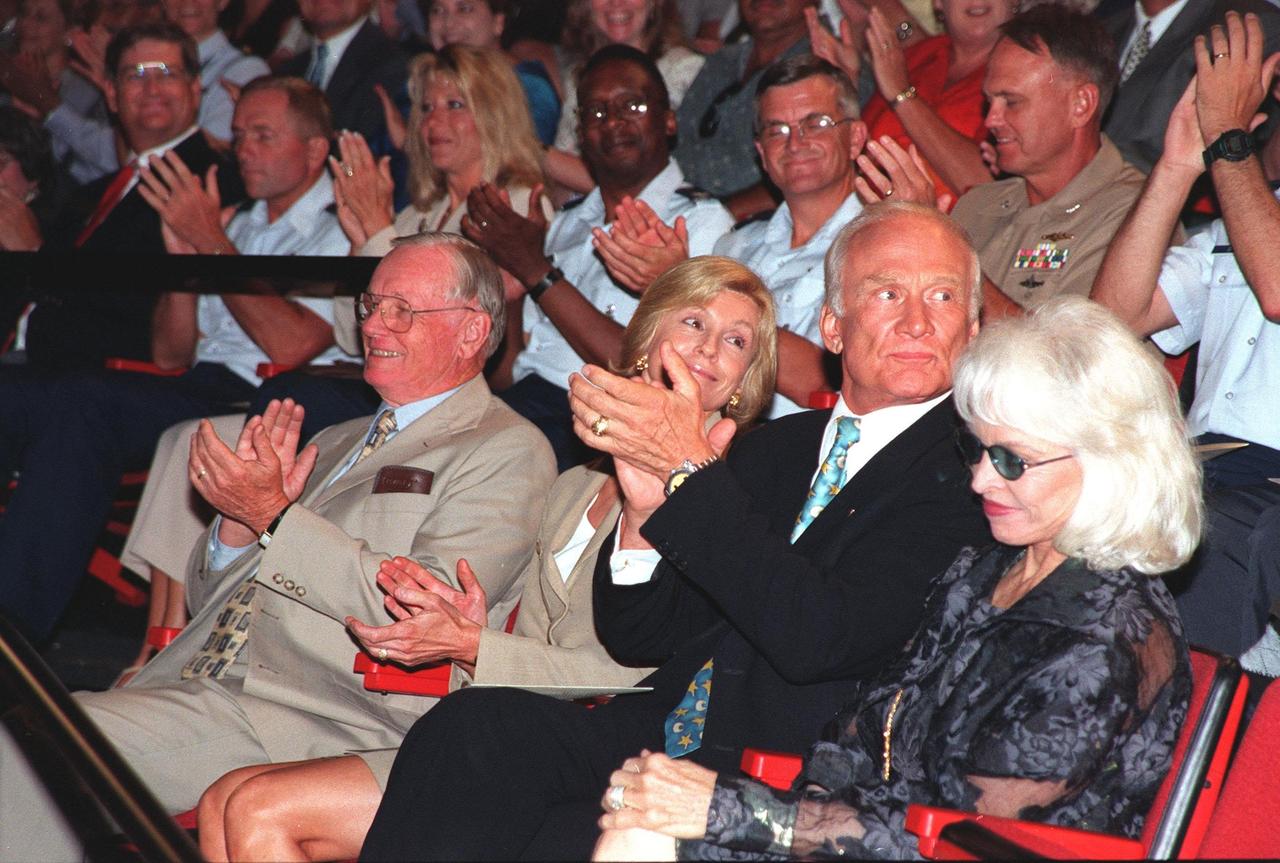
At a special presentation of the Hammer Award in the IMAX 2 Theater in the Kennedy Space Center Visitor Complex, former Apollo astronauts Neil Armstrong (left) and Edwin "Buzz" Aldrin (second from right) applauded the recipients, Kennedy Space Center and the 45th Space Wing. The Hammer Award is Vice President Al Gore's special recognition of teams of federal employees who have made significant contributions in support of the principles of the National Partnership for Reinventing Government. This Hammer Award acknowledges the accomplishments of a joint NASA and Air Force team that established the Joint Base Operations and Support Contract (J-BOSC) Source Evaluation Board (SEB). Ed Gormel and Chris Fairey, co-chairs of the SEB, accepted the awards for the SEB. The team developed and implemented the acquisition strategy for establishing a single set of base operations and support service requirements for KSC, Cape Canaveral Air Station and Patrick Air Force Base. Armstrong and Aldrin were at KSC to attend a banquet and other activities for the 30th anniversary of the Apollo 11 mission, which landed the first man on the moon