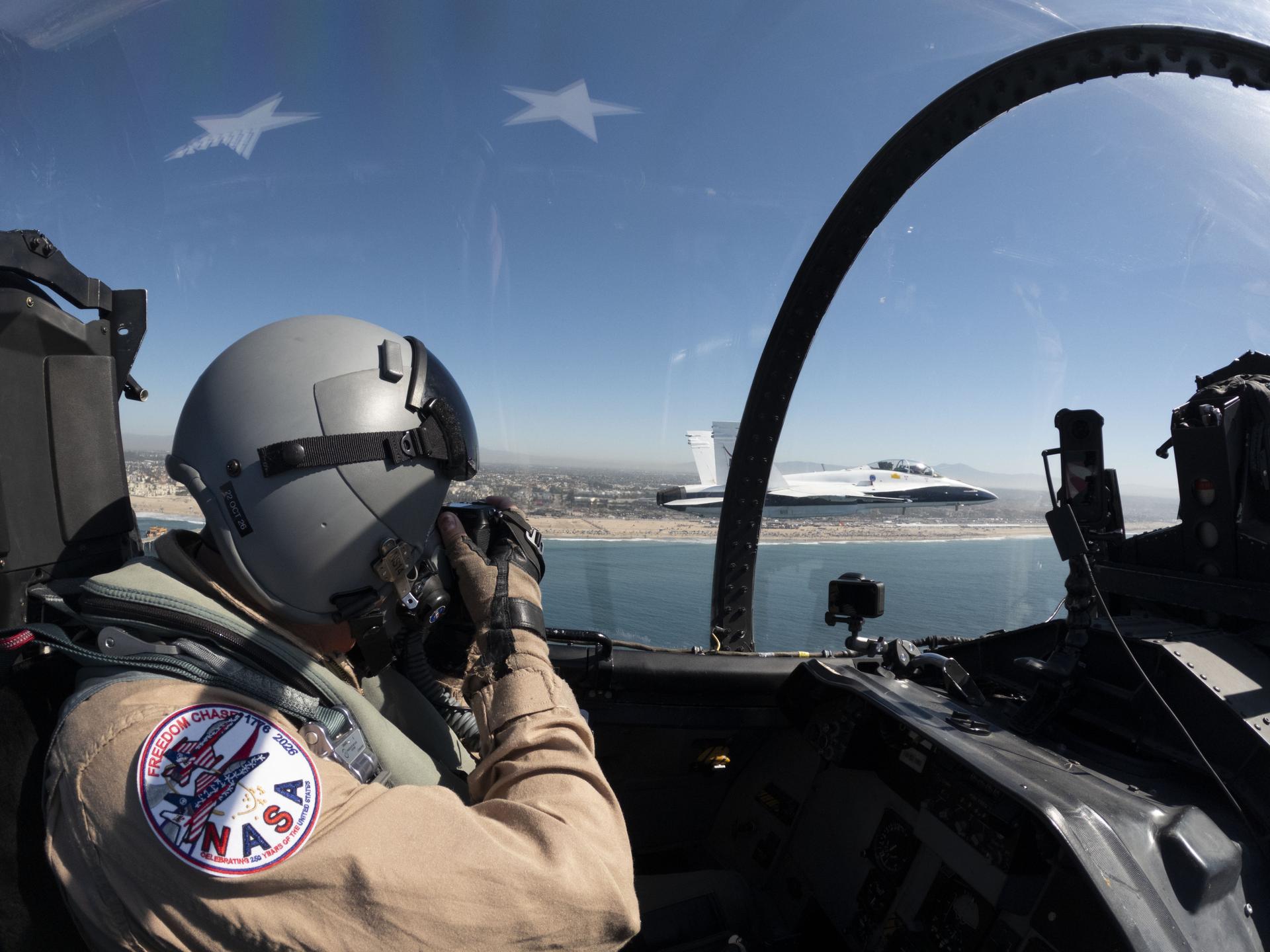
Photographer Jim Ross captures images of NASA’s F/A‑18 from the back seat of an F‑15 flying alongside during the Pacific Airshow at Huntington Beach, California, Friday, Oct. 2, 2026. NASA is also hosting an exhibit featuring Artemis, the X‑59, SkyFall, a lunar globe, and an Apollo 15 Moon rock.
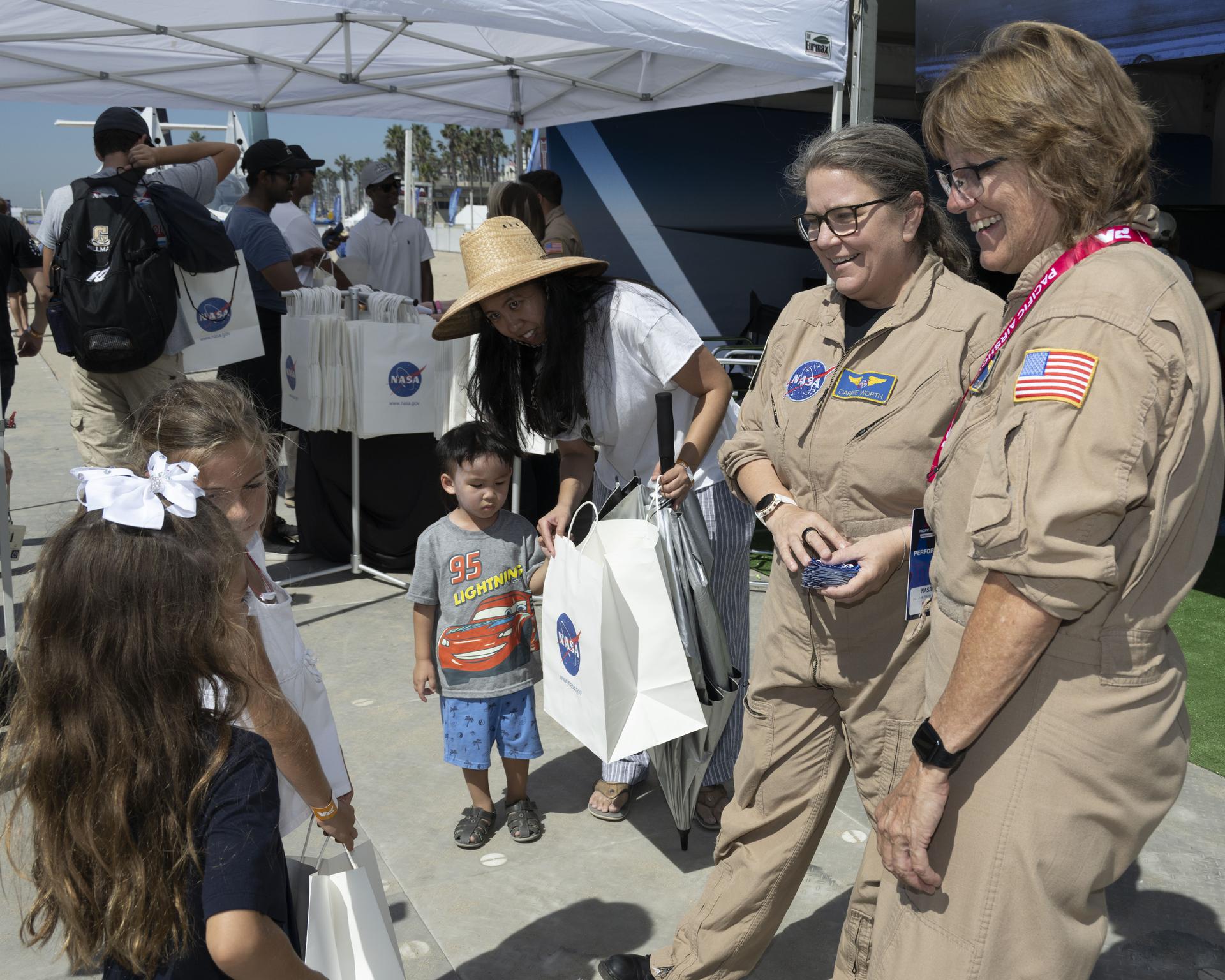
NASA videographer Lori Losey, right, and research pilot Carrie Worth speak with young visitors at the NASA exhibit during the Pacific Airshow at Huntington Beach, California, Friday, Oct. 2, 2026. The exhibit features Artemis, the X‑59, SkyFall, a lunar globe, and an Apollo 15 Moon rock.
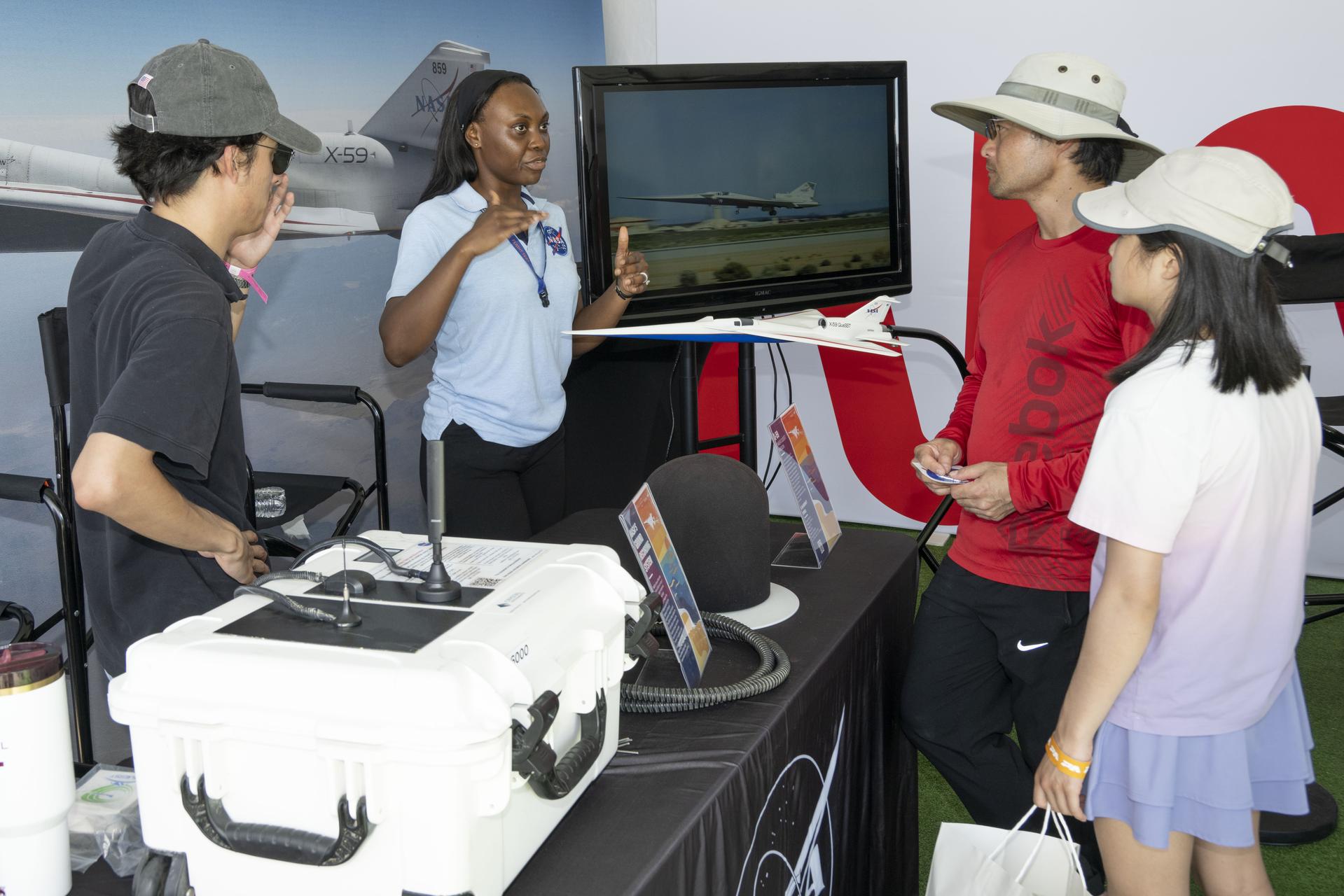
Akosua Dufie, F‑18 lead operations engineer, talks with visitors at the NASA exhibit during the Pacific Airshow at Huntington Beach, California, Friday, Oct. 2, 2026. The exhibit highlights Artemis, the X‑59, SkyFall, a lunar globe, and an Apollo 15 Moon rock.
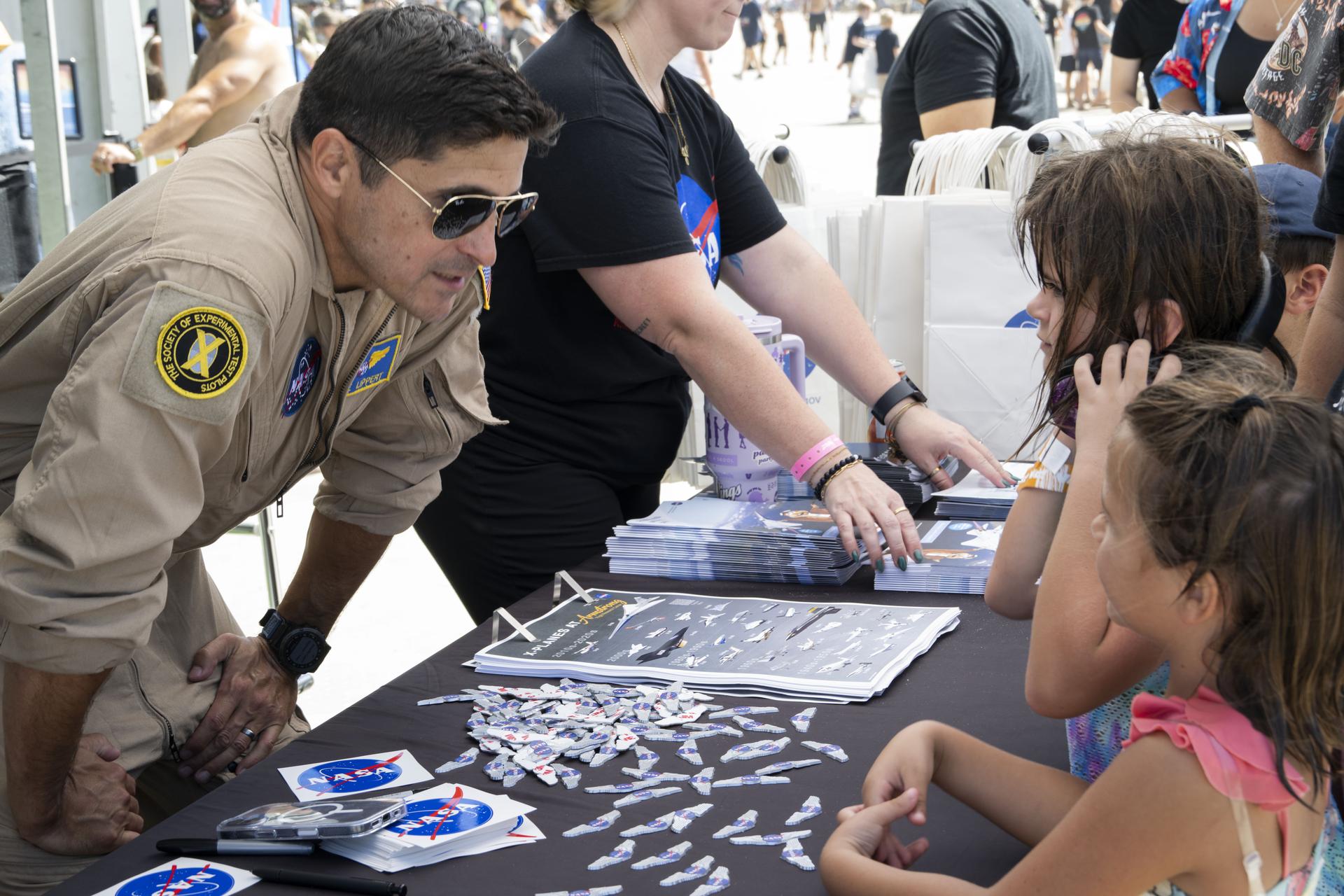
NASA test pilot Mike Lippert talks with young visitors at the NASA exhibit during the Pacific Airshow at Huntington Beach, California, Friday, Oct. 2, 2026. The exhibit features Artemis, the X‑59, SkyFall, a lunar globe, and an Apollo 15 Moon rock.
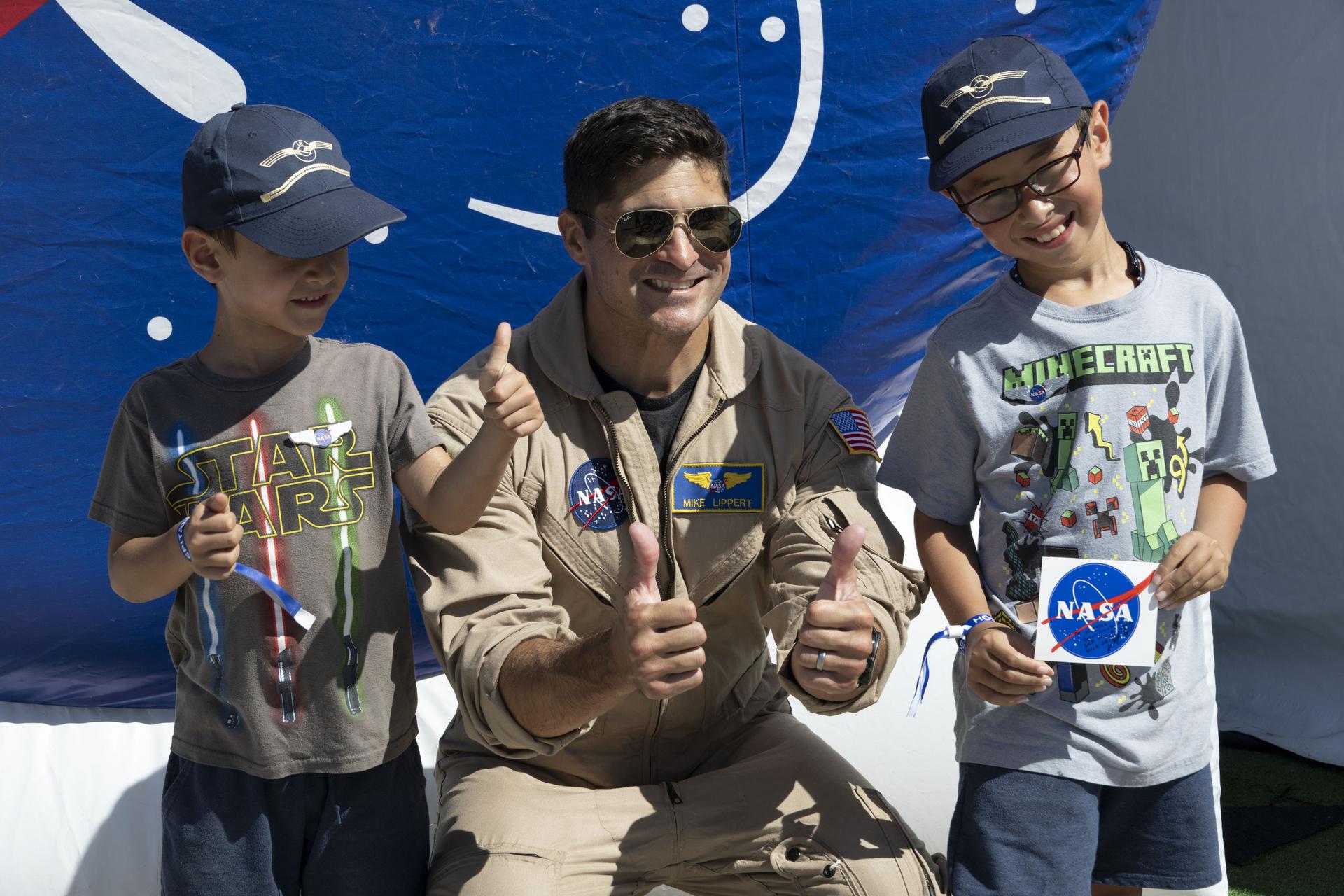
NASA test pilot Mike Lippert takes a photo with two young visitors at the NASA exhibit during the Pacific Airshow at Huntington Beach, California, Friday, Oct. 2, 2026. The exhibit features Artemis, the X‑59, SkyFall, a lunar globe, and an Apollo 15 Moon rock.
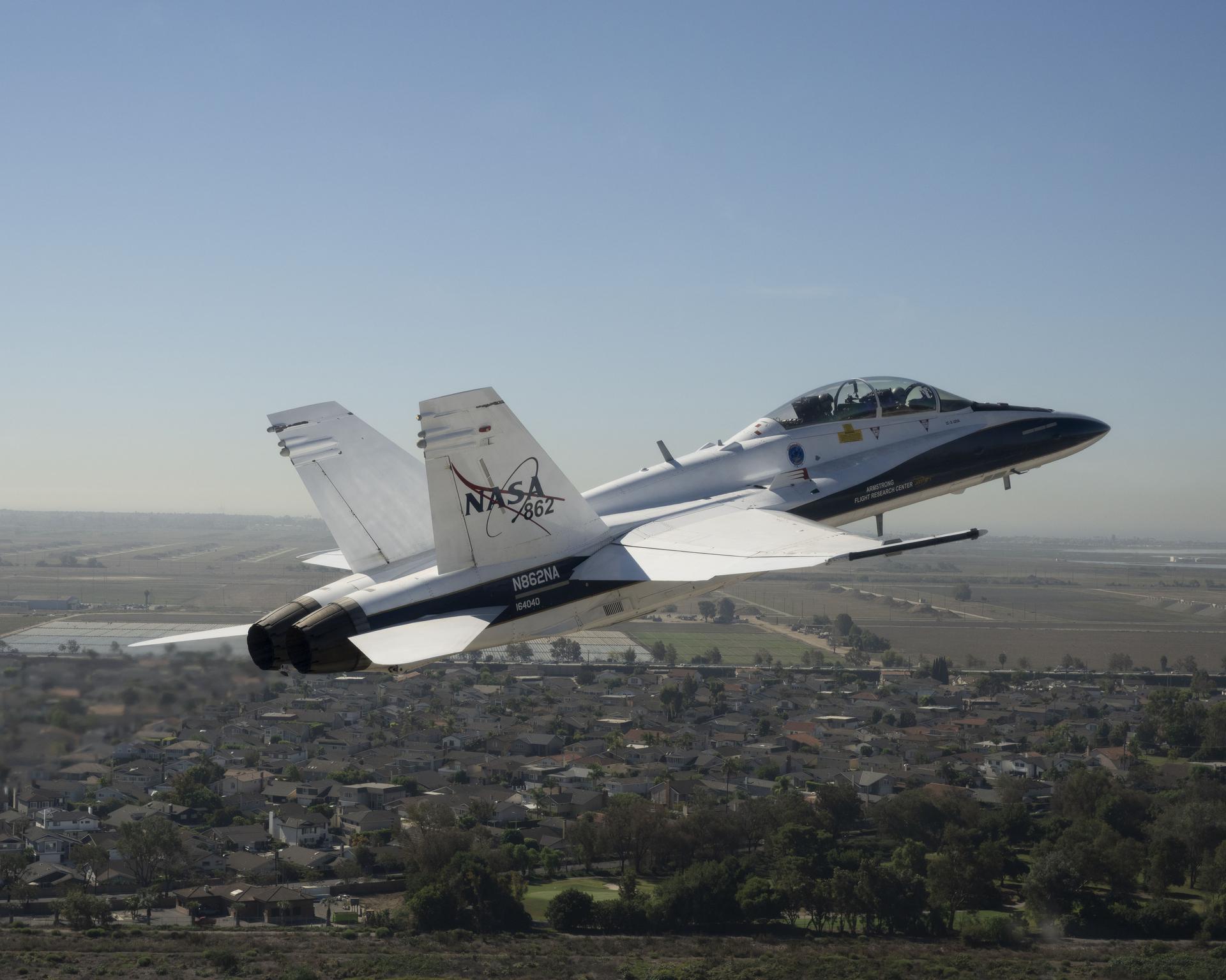
NASA test pilot Mike Lippert flies an F/A‑18 with videographer Lori Losey in the back seat during a Pacific Airshow flyover at Huntington Beach, California, Friday, Oct. 2, 2026. NASA is also hosting an exhibit featuring Artemis, the X‑59, SkyFall, a lunar globe, and an Apollo 15 Moon rock, with pilots and research experts available throughout the weekend.
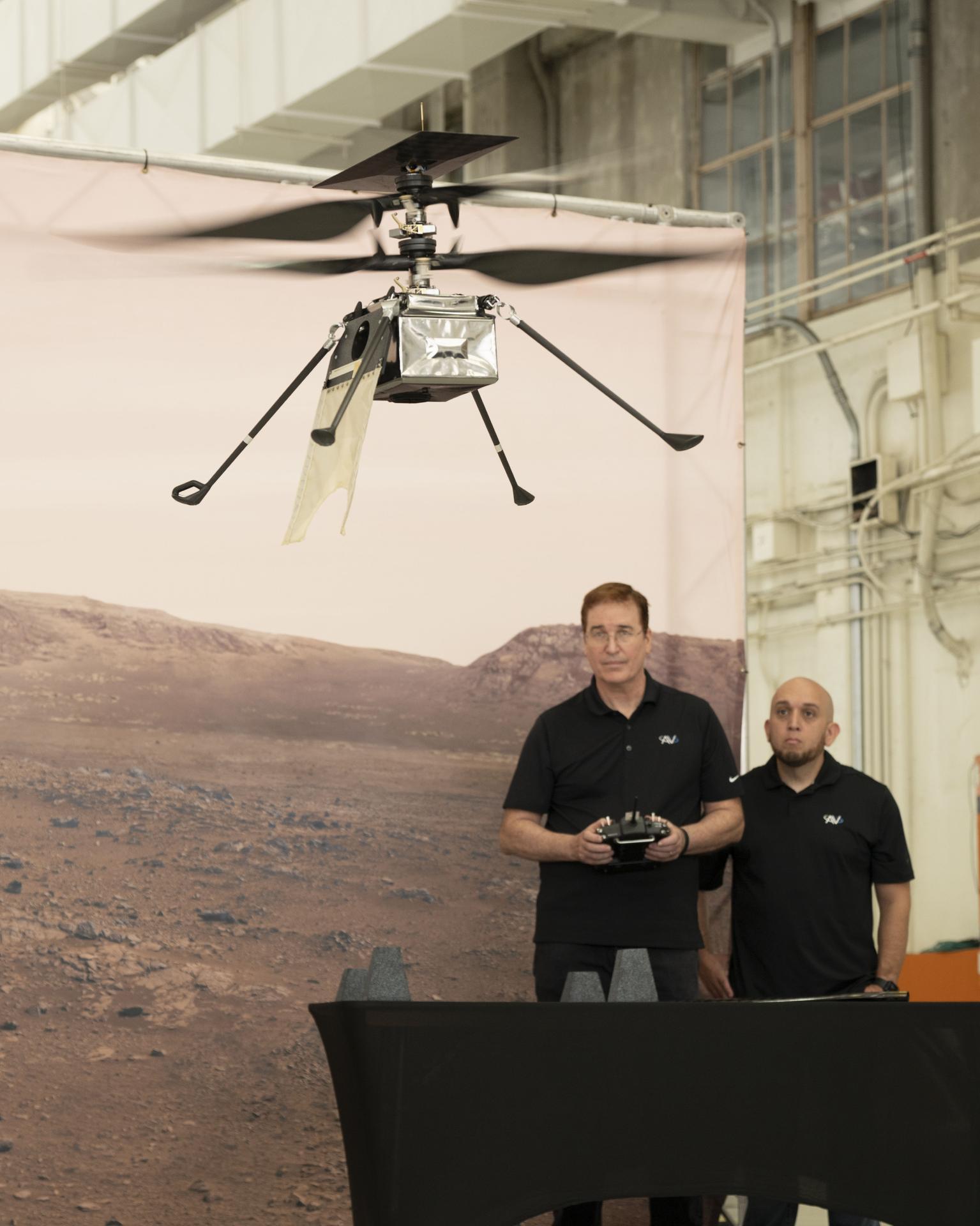
AeroVironment team members Matt Keenon, left, and Steve Quintero fly SkyFall, the next evolution of Mars helicopters, during Jet Propulsion Laboratory’s media demonstration at Los Alamitos Joint Forces Training Base, California, Thursday, Oct. 1, 2026. Visitors to the Pacific Airshow in Huntington Beach, California, Oct. 2-4, can get an up-close look at the rotorcraft at the NASA exhibit, which also highlights Artemis, the X-59, a lunar globe, and an Apollo 15 Moon rock.
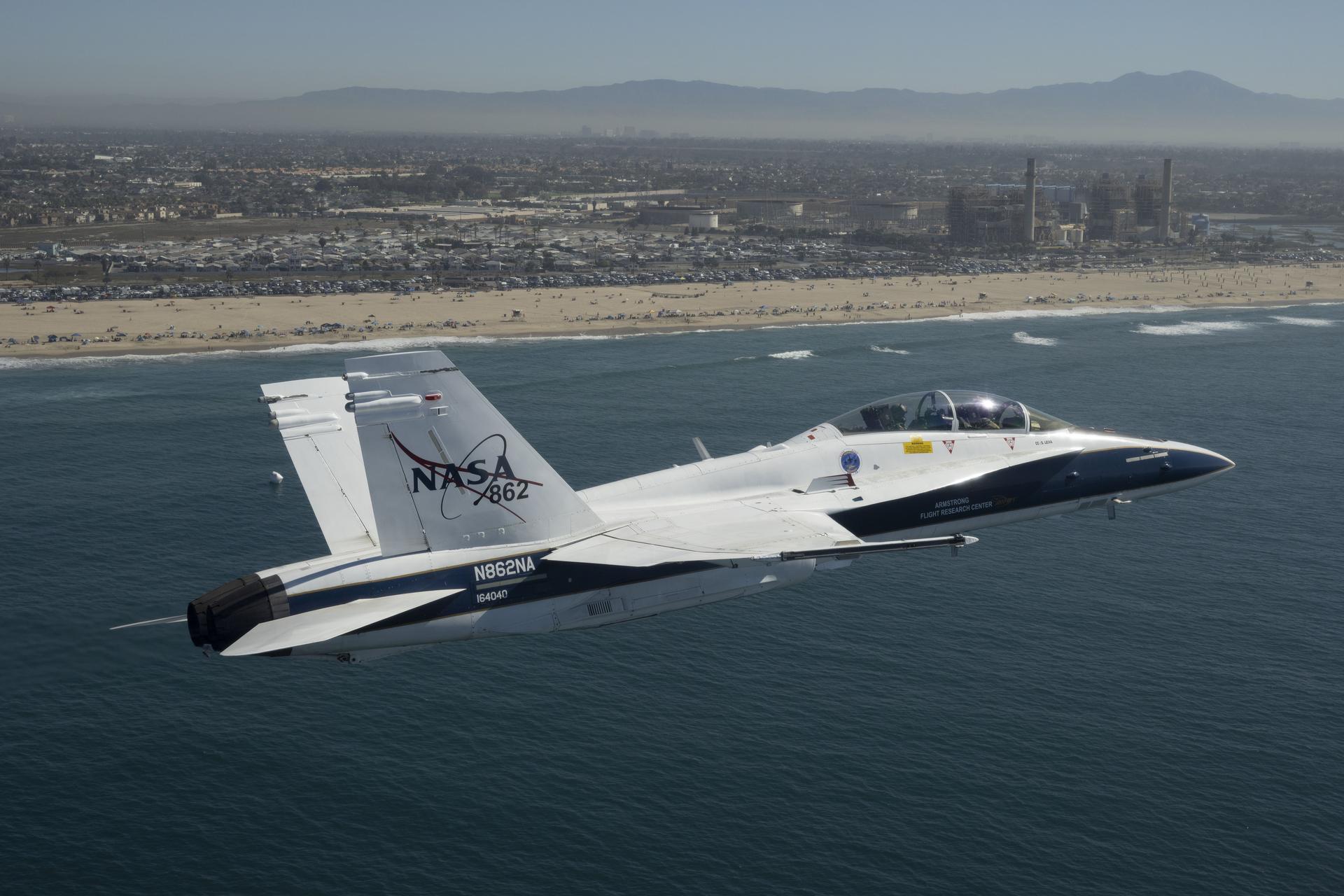
NASA test pilot Mike Lippert flies an F/A‑18 with videographer Lori Losey in the back seat during a Pacific Airshow flyover at Huntington Beach, California, Friday, Oct. 2, 2026. NASA is also hosting an exhibit featuring Artemis, the X‑59, SkyFall, a lunar globe, and an Apollo 15 Moon rock, with pilots and research experts available throughout the weekend.
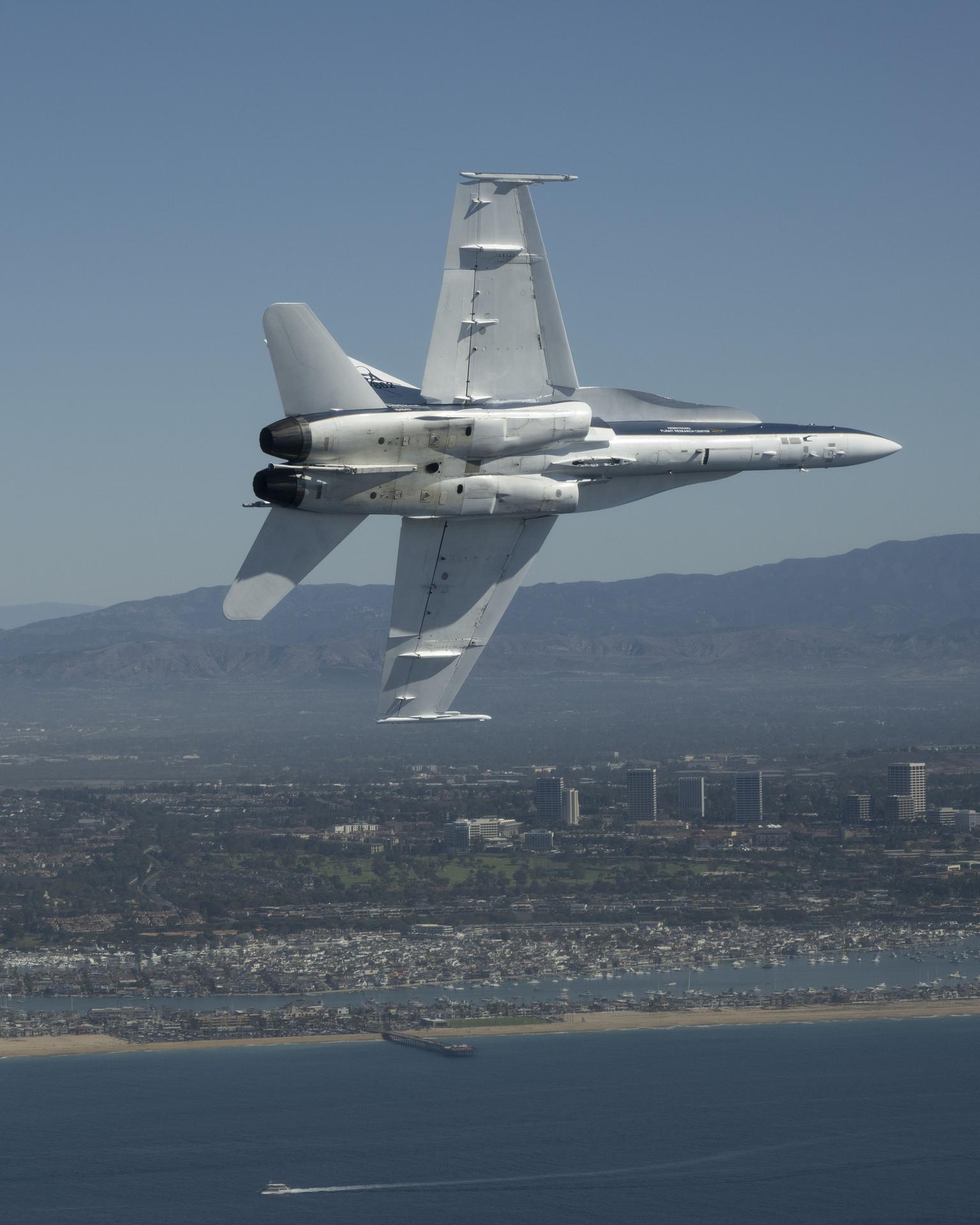
NASA test pilot Mike Lippert flies an F/A‑18 with videographer Lori Losey in the back seat during a Pacific Airshow flyover at Huntington Beach, California, Friday, Oct. 2, 2026. NASA is also hosting an exhibit featuring Artemis, the X‑59, SkyFall, a lunar globe, and an Apollo 15 Moon rock, with pilots and research experts available throughout the weekend.
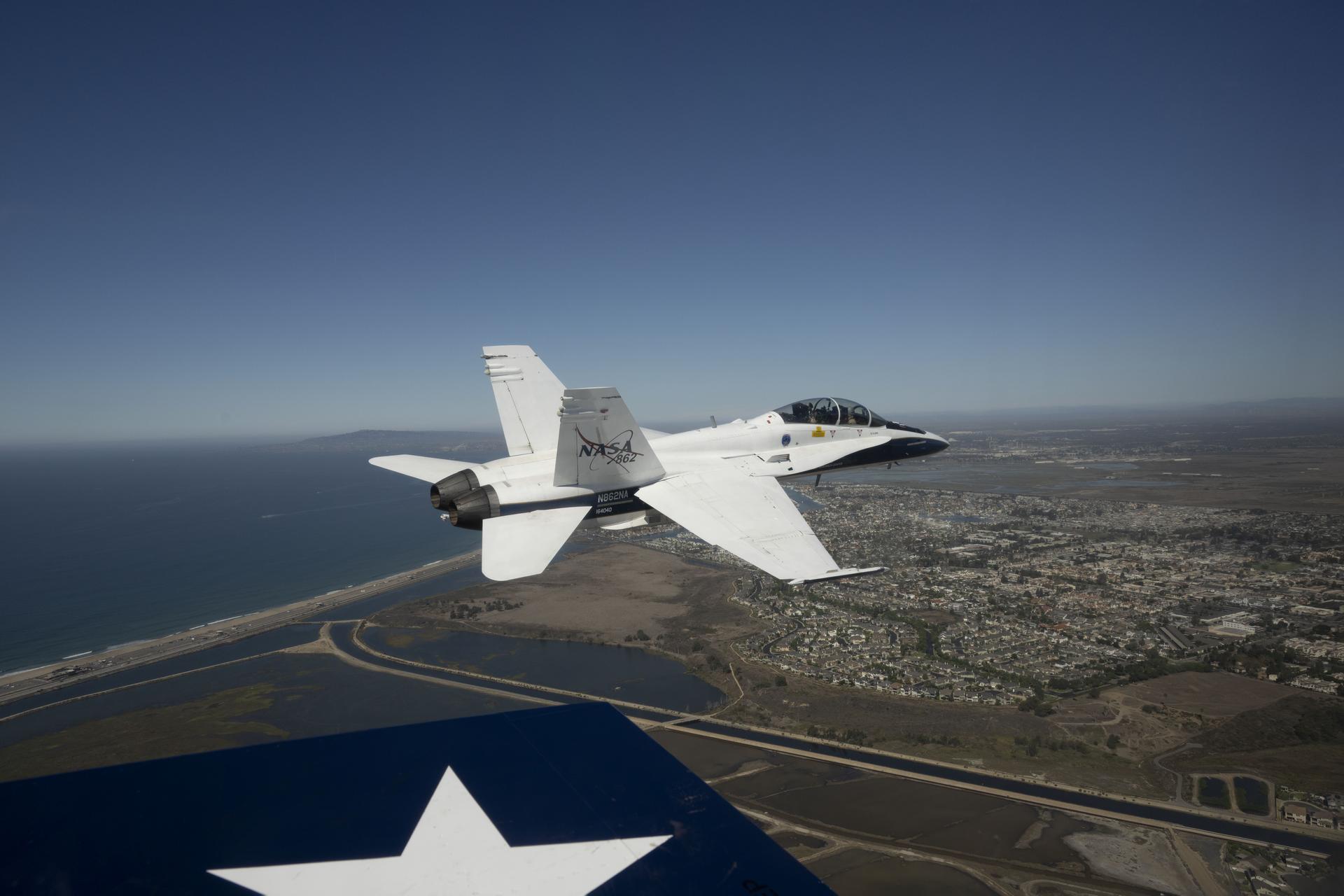
NASA test pilot Mike Lippert flies an F/A‑18 with videographer Lori Losey in the back seat during a Pacific Airshow flyover at Huntington Beach, California, Friday, Oct. 2, 2026. NASA is also hosting an exhibit featuring Artemis, the X‑59, SkyFall, a lunar globe, and an Apollo 15 Moon rock, with pilots and research experts available throughout the weekend.
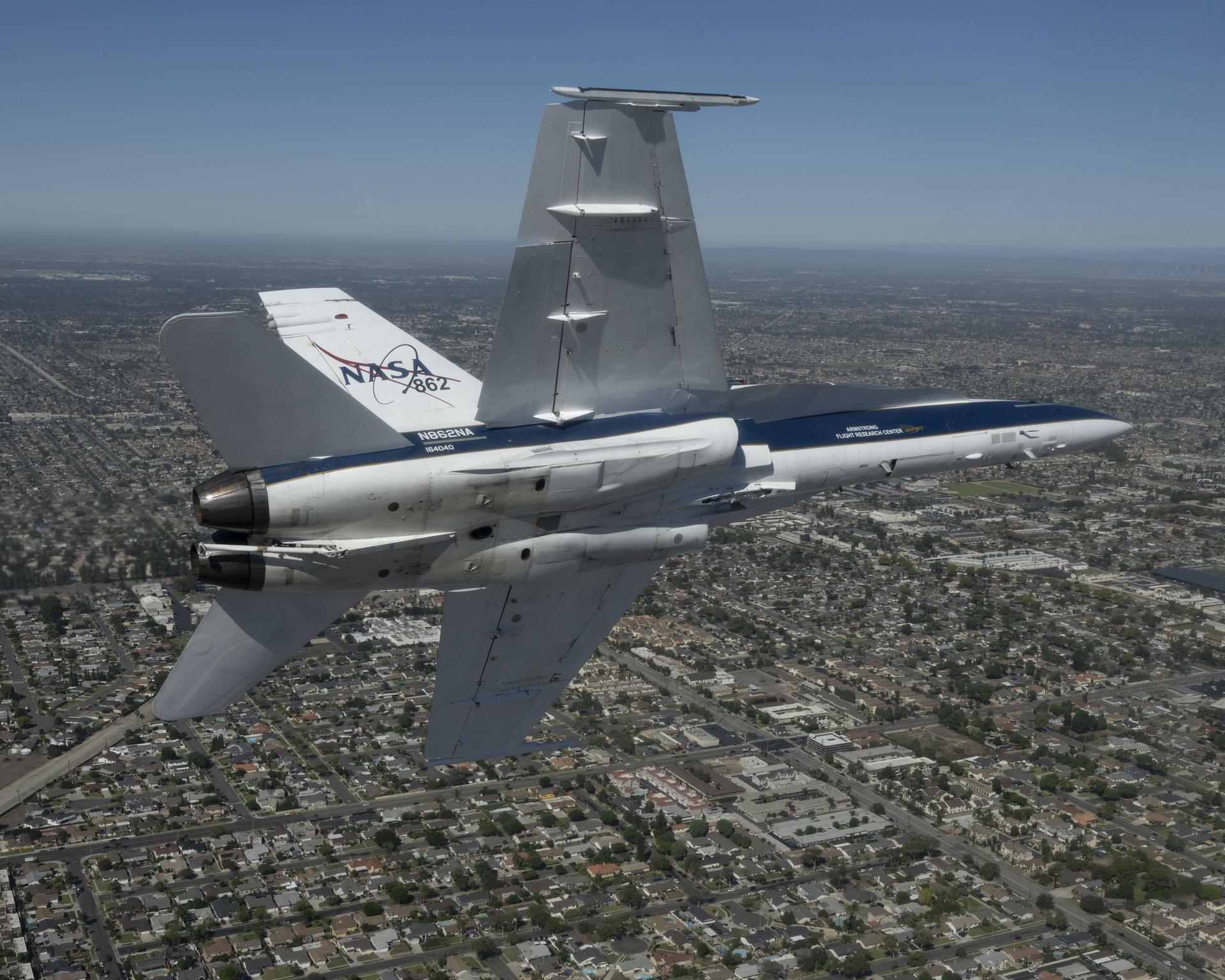
NASA test pilot Mike Lippert flies an F/A‑18 with videographer Lori Losey in the back seat during a Pacific Airshow flyover at Huntington Beach, California, Friday, Oct. 2, 2026. NASA is also hosting an exhibit featuring Artemis, the X‑59, SkyFall, a lunar globe, and an Apollo 15 Moon rock, with pilots and research experts available throughout the weekend.
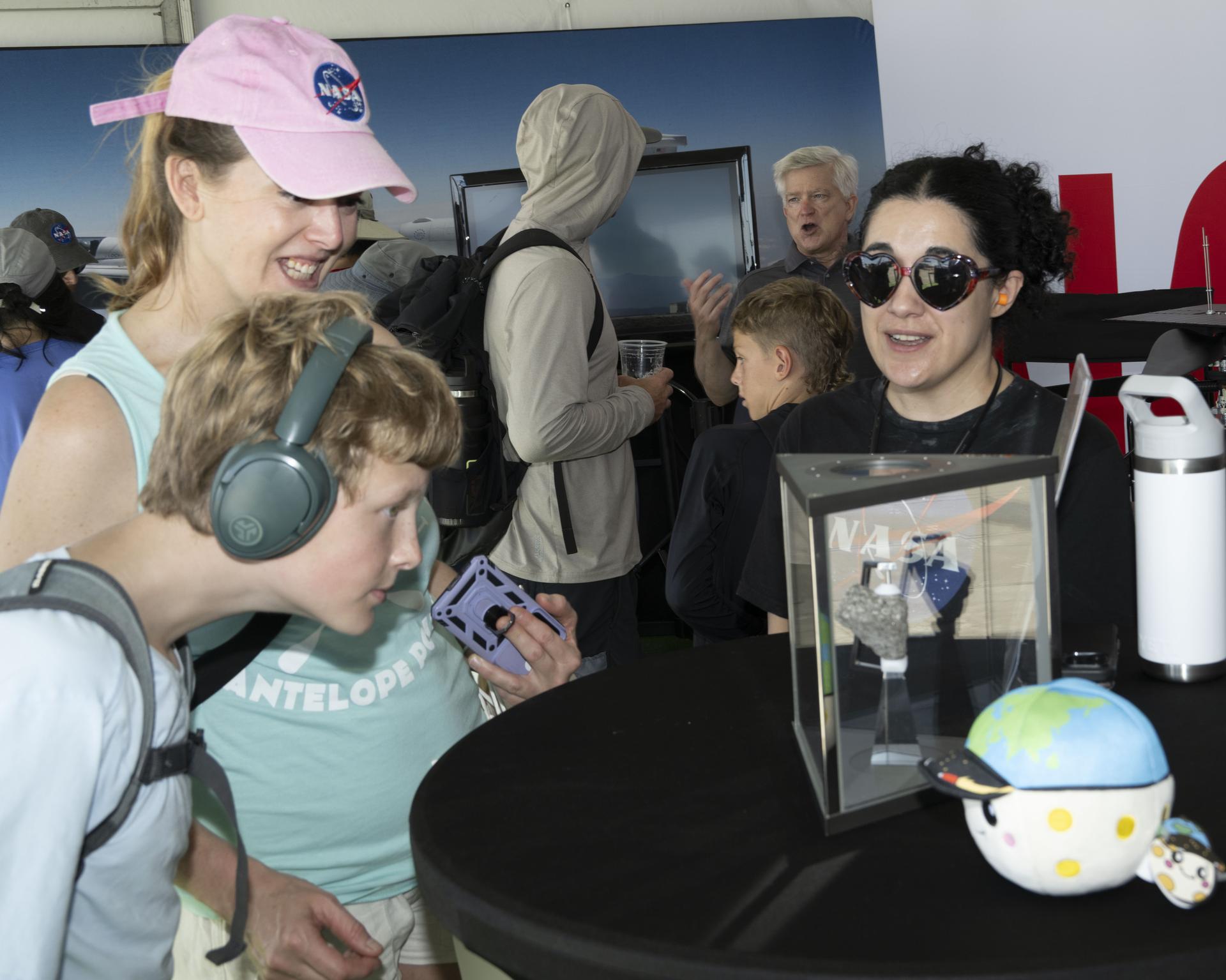
NASA public affairs specialist Arezu Sarvestani, right, speaks with visitors viewing the Apollo 15 Moon rock at NASA’s exhibit during the Pacific Airshow in Huntington Beach, California, Friday, Oct. 2, 2026. The exhibit also features Artemis, the X‑59, SkyFall, and a lunar globe. NASA aircraft will participate in the airshow from Oct. 2-4.
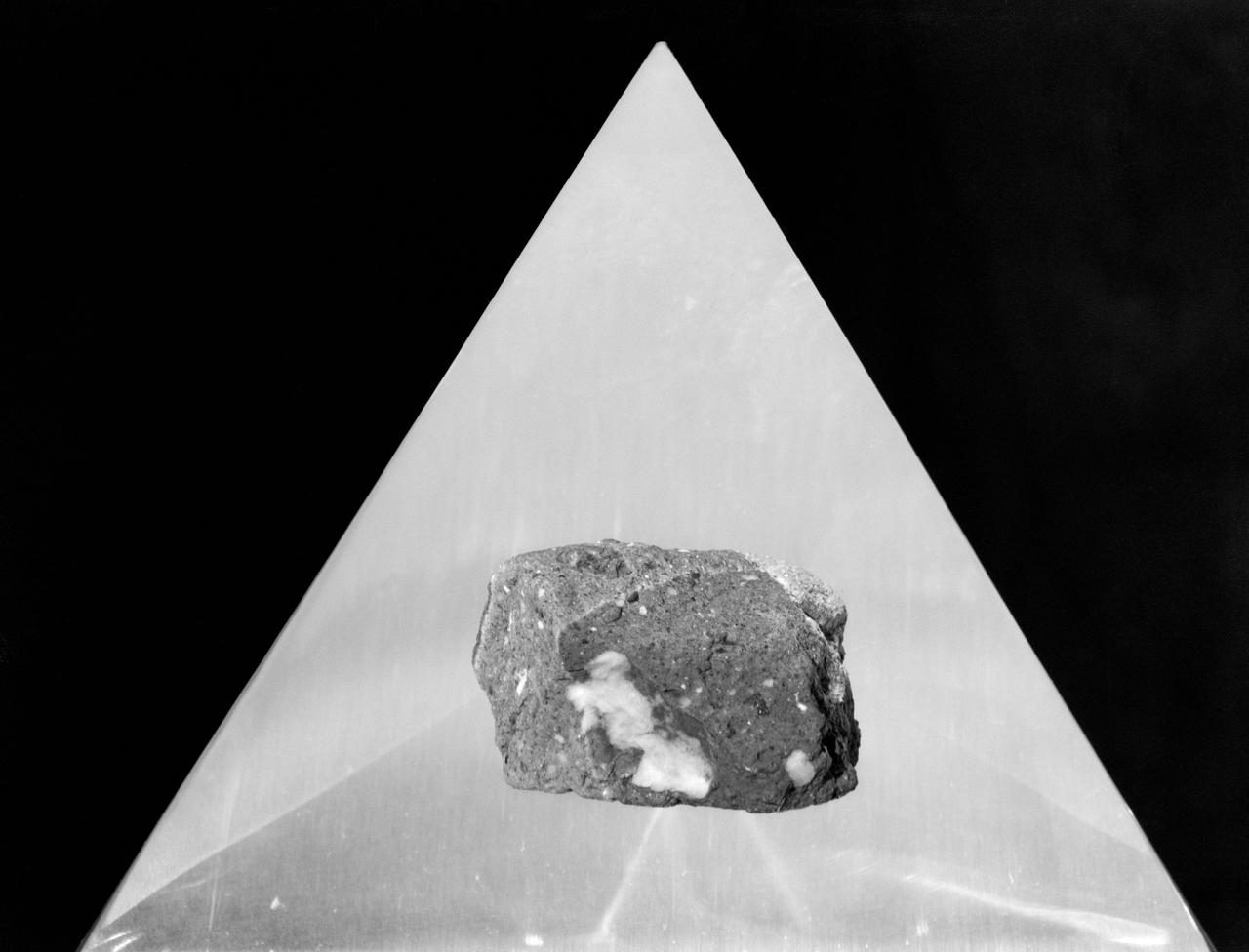
S75-23543 (April 1972) --- This Apollo 16 lunar sample (moon rock) was collected by astronaut John W. Young, commander of the mission, about 15 meters southwest of the landing site. This rock weighs 128 grams when returned to Earth. The sample is a polymict breccia. This rock, like all lunar highland breccias, is very old, about 3,900,000,000 years older than 99.99% of all Earth surface rocks, according to scientists. Scientific research is being conducted on the balance of this sample at NASA's Johnson Space Center and at other research centers in the United States and certain foreign nations under a continuing program of investigation involving lunar samples collected during the Apollo program.
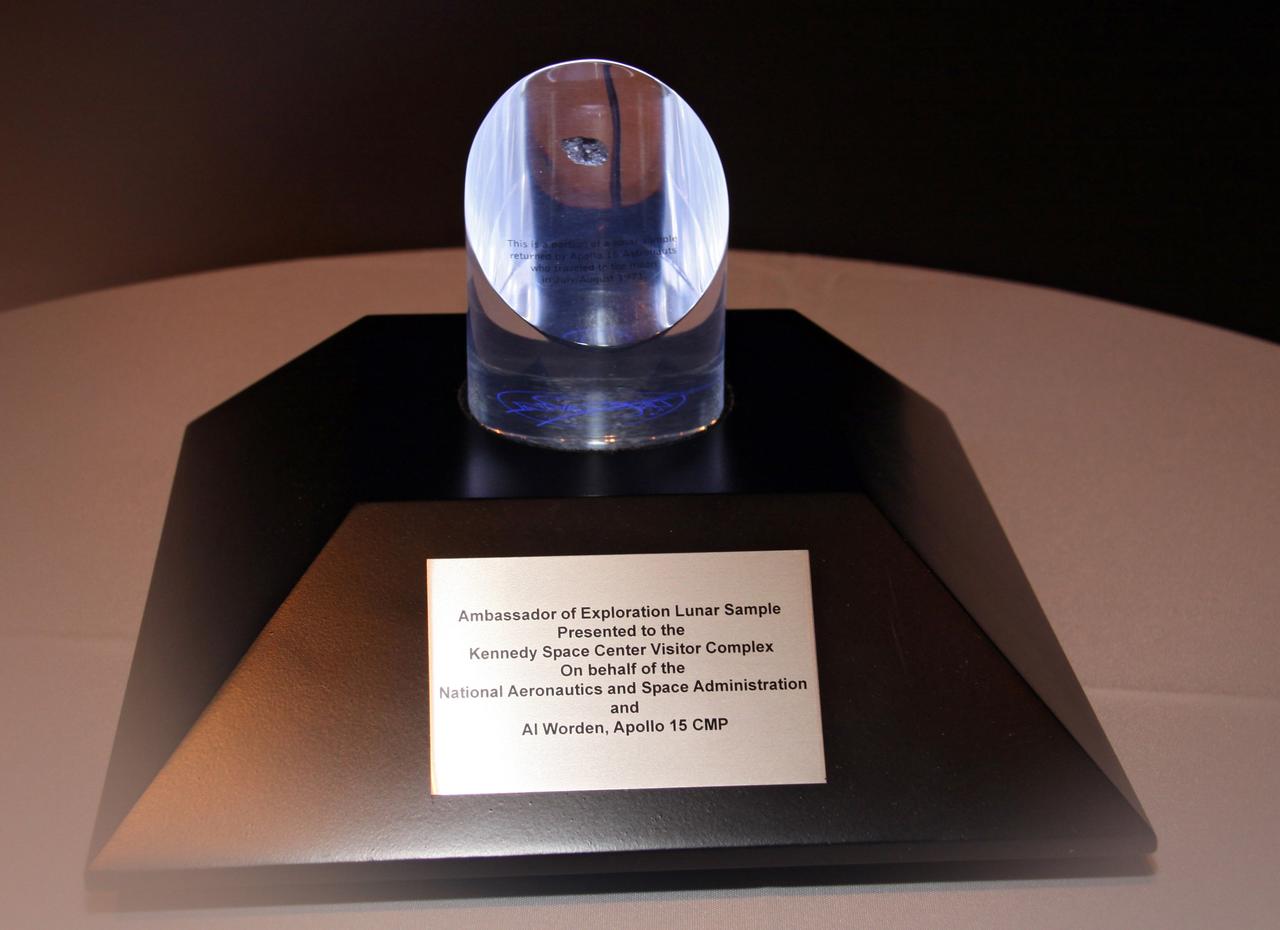
CAPE CANAVERAL, Fla. – NASA will honor Apollo astronaut Al Worden with the presentation of this Ambassador of Exploration Award, a moon rock encased in Lucite, mounted for public display. He is being honored for his contributions to the U.S. space program. Worden received the award during a ceremony July 30 at the Apollo Saturn V Center at NASA's Kennedy Space Center Visitor Complex in Florida, where the moon rock will be displayed. Worden served as command module pilot for the Apollo 15 mission, which set several moon records for NASA, including the longest lunar surface stay time, the longest lunar extravehicular activity and the first use of a lunar roving vehicle. Worden spent 38 minutes in a spacewalk outside the command module and logged a total of 295 hours, 11 minutes in space during the mission. NASA is giving the Ambassador of Exploration Award to the first generation of explorers in the Mercury, Gemini and Apollo space programs for realizing America's goal of going to the moon. The rock is part of the 842 pounds of lunar samples collected during six Apollo expeditions from 1969 to 1972. Those astronauts who receive the award will then present the award to a museum of their choice. Photo credit: NASA/Jack Pfaller
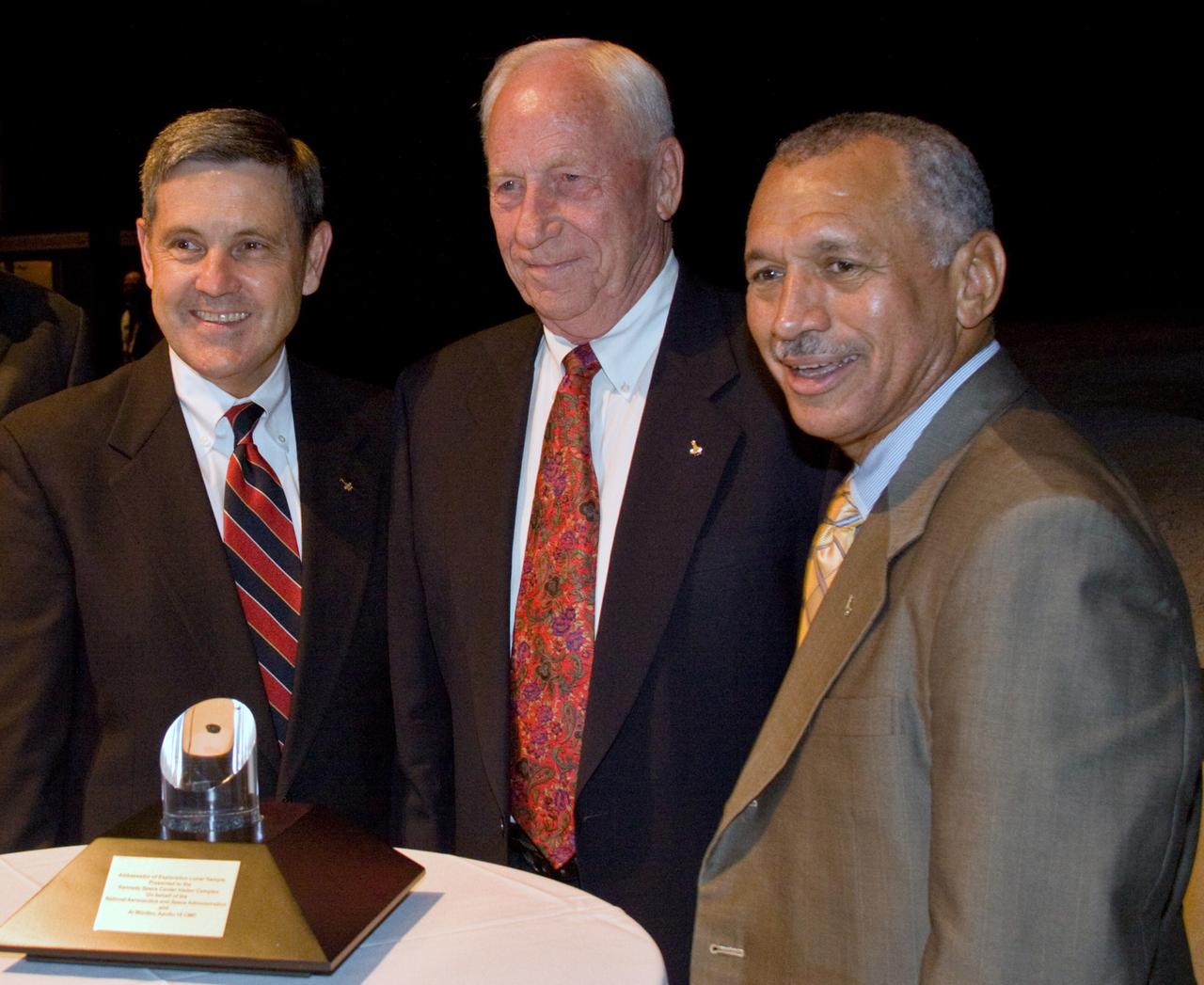
CAPE CANAVERAL, Fla. – At NASA Kennedy Space Center's Visitor Complex in Florida, Apollo astronaut Al Worden (center) is flanked by Center Director Bob Cabana (left) and NASA Administrator Charles Bolden. Worden was presented with the Ambassador of Exploration Award to honor his contributions to the U.S. space program. A moon rock encased in Lucite, the award is seen in the foreground and will be displayed at Kennedy. Worden served as command module pilot for the Apollo 15 mission, which set several moon records for NASA, including the longest lunar surface stay time, the longest lunar extravehicular activity and the first use of a lunar roving vehicle. Worden spent 38 minutes in a spacewalk outside the command module and logged a total of 295 hours, 11 minutes in space during the mission. NASA is giving the Ambassador of Exploration Award to the first generation of explorers in the Mercury, Gemini and Apollo space programs for realizing America's goal of going to the moon. The rock is part of the 842 pounds of lunar samples collected during six Apollo expeditions from 1969 to 1972. Those astronauts who receive the award will then present the award to a museum of their choice. Photo credit: NASA/Jack Pfaller
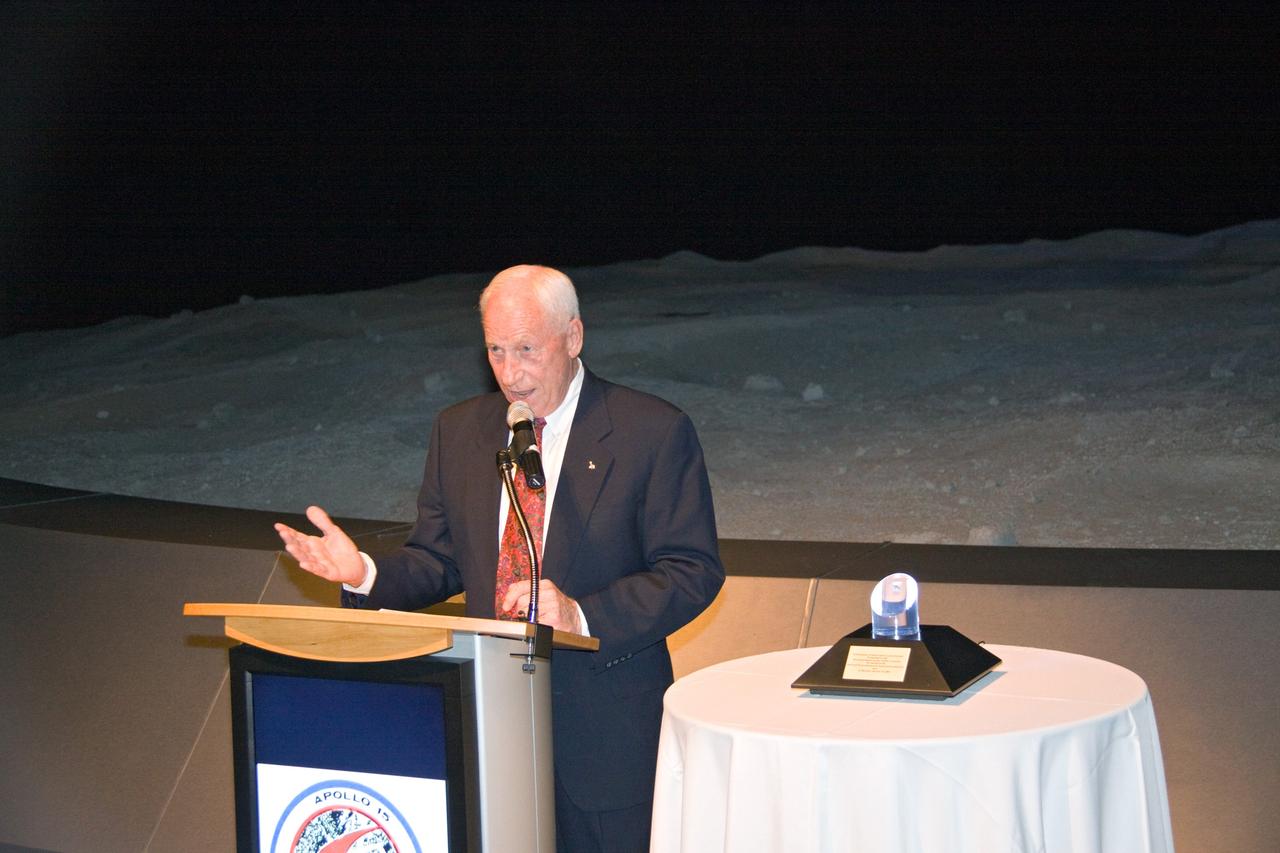
CAPE CANAVERAL, Fla. – At NASA Kennedy Space Center's Visitor Complex in Florida, Apollo astronaut Al Worden shares his thoughts about the Space Program after receiving the Ambassador of Exploration Award. Worden is being honored for his contributions to the U.S. space program. A moon rock encased in Lucite, the award is seen at right and will be displayed at Kennedy. Worden served as command module pilot for the Apollo 15 mission, which set several moon records for NASA, including the longest lunar surface stay time, the longest lunar extravehicular activity and the first use of a lunar roving vehicle. Worden spent 38 minutes in a spacewalk outside the command module and logged a total of 295 hours, 11 minutes in space during the mission. NASA is giving the Ambassador of Exploration Award to the first generation of explorers in the Mercury, Gemini and Apollo space programs for realizing America's goal of going to the moon. The rock is part of the 842 pounds of lunar samples collected during six Apollo expeditions from 1969 to 1972. Those astronauts who receive the award will then present the award to a museum of their choice. Photo credit: NASA/Jack Pfaller
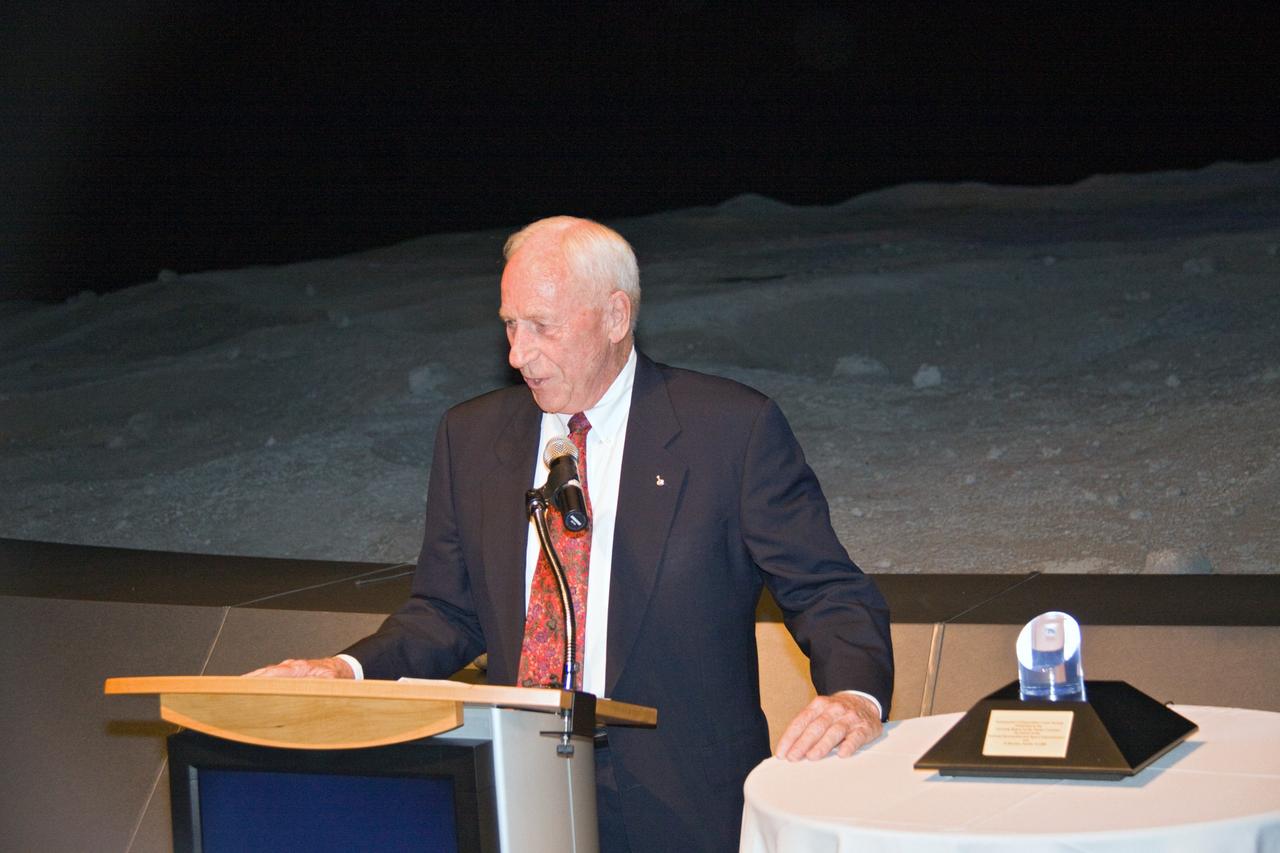
CAPE CANAVERAL, Fla. – At NASA Kennedy Space Center's Visitor Complex in Florida, Apollo astronaut Al Worden shares his thoughts about the Space Program after receiving the Ambassador of Exploration Award. Worden is being honored for his contributions to the U.S. space program. A moon rock encased in Lucite, the award is seen at right and will be displayed at Kennedy. Worden served as command module pilot for the Apollo 15 mission, which set several moon records for NASA, including the longest lunar surface stay time, the longest lunar extravehicular activity and the first use of a lunar roving vehicle. Worden spent 38 minutes in a spacewalk outside the command module and logged a total of 295 hours, 11 minutes in space during the mission. NASA is giving the Ambassador of Exploration Award to the first generation of explorers in the Mercury, Gemini and Apollo space programs for realizing America's goal of going to the moon. The rock is part of the 842 pounds of lunar samples collected during six Apollo expeditions from 1969 to 1972. Those astronauts who receive the award will then present the award to a museum of their choice. Photo credit: NASA/Jack Pfaller
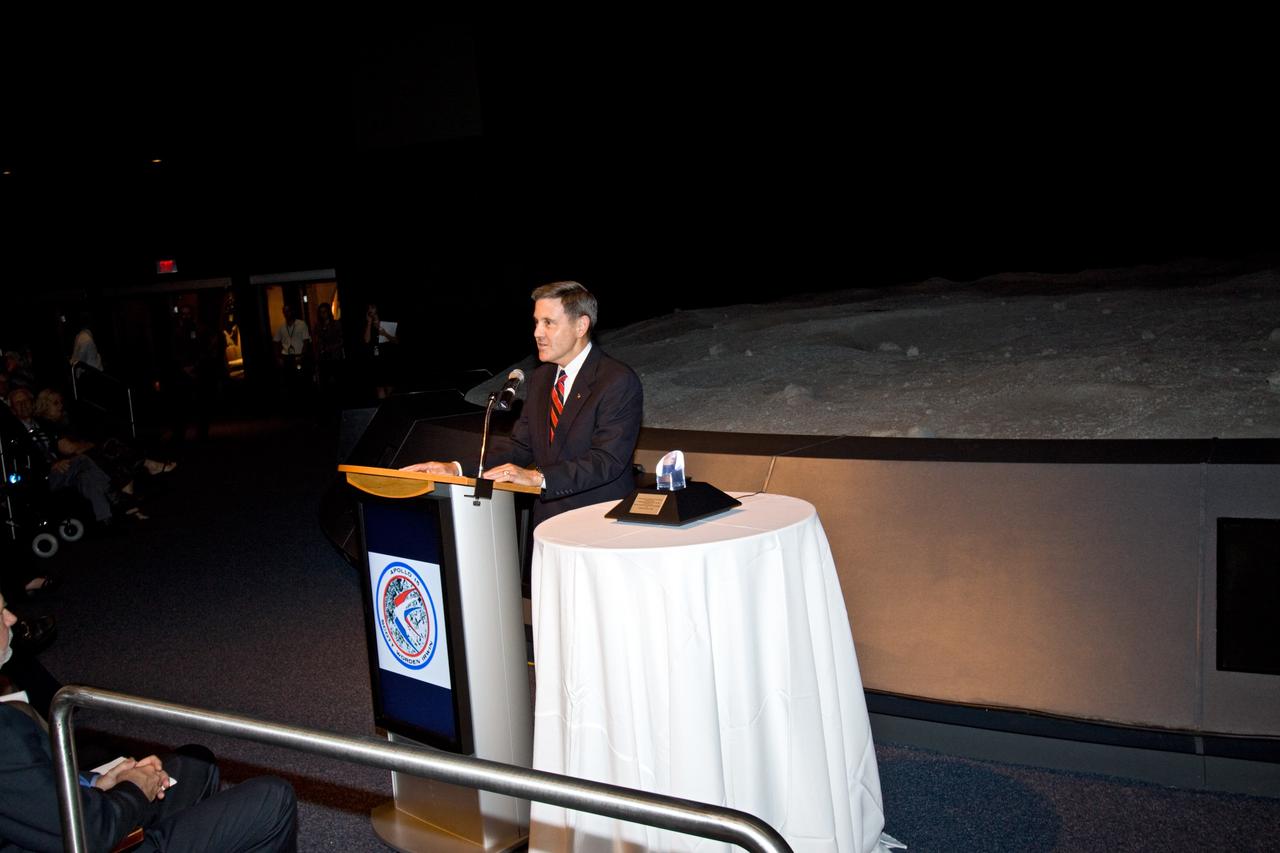
CAPE CANAVERAL, Fla. –At NASA's Kennedy Space Center in Florida, Director Bob Cabana speaks to an audience in Kennedy's Visitor Complex about Apollo astronaut Al Worden, who is receiving the Ambassador of Exploration Award. Worden is being honored for his contributions to the U.S. space program. The award, to be displayed at Kennedy, is a moon rock encased in Lucite, mounted for public display. Worden served as command module pilot for the Apollo 15 mission, which set several moon records for NASA, including the longest lunar surface stay time, the longest lunar extravehicular activity and the first use of a lunar roving vehicle. Worden spent 38 minutes in a spacewalk outside the command module and logged a total of 295 hours, 11 minutes in space during the mission. NASA is giving the Ambassador of Exploration Award to the first generation of explorers in the Mercury, Gemini and Apollo space programs for realizing America's goal of going to the moon. The rock is part of the 842 pounds of lunar samples collected during six Apollo expeditions from 1969 to 1972. Those astronauts who receive the award will then present the award to a museum of their choice. Photo credit: NASA/Jack Pfaller
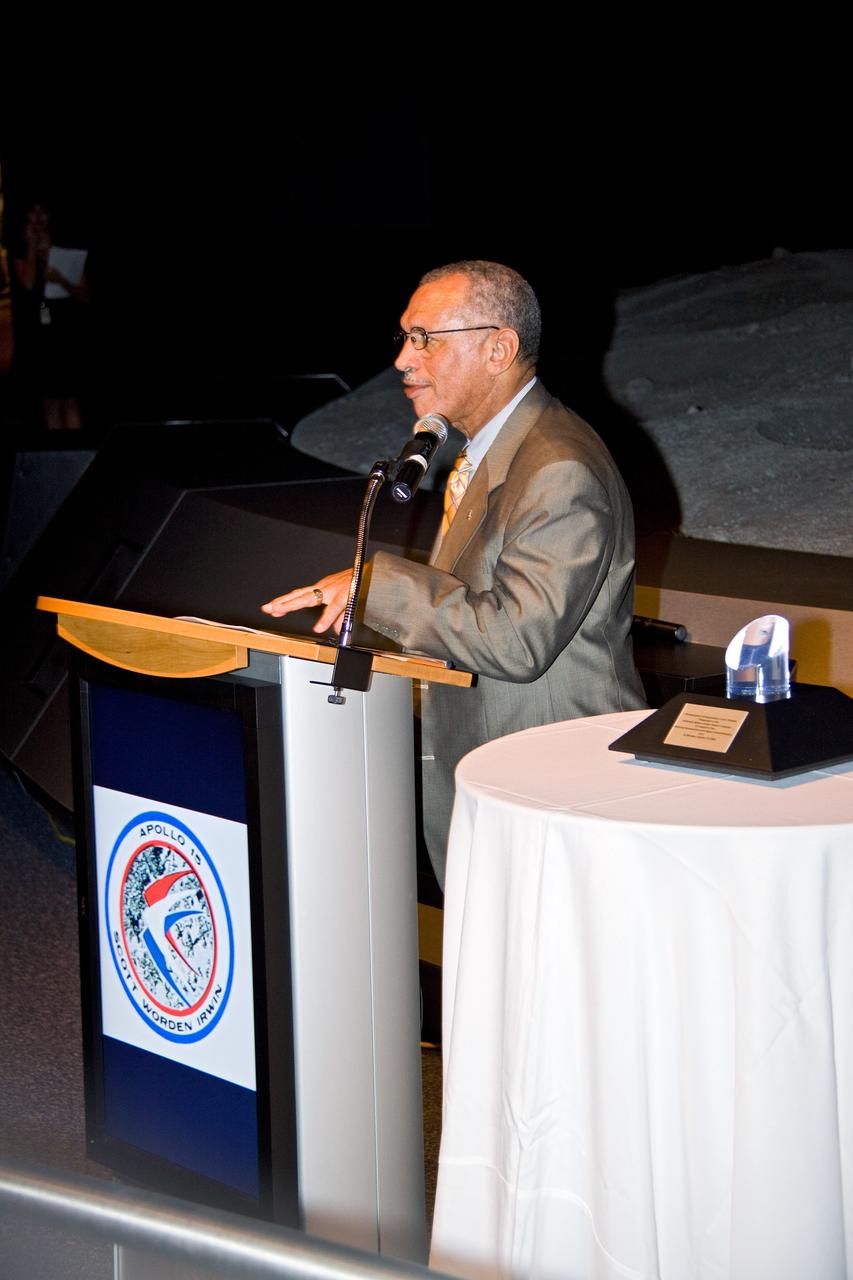
CAPE CANAVERAL, Fla. – At NASA's Kennedy Space Center in Florida, NASA Administrator Charles Bolden addresses guests who have gathered in Kennedy's Visitor Complex to celebrate Apollo astronaut Al Worden's receiving the Ambassador of Exploration Award. Worden is being honored for his contributions to the U.S. space program. The award, to be displayed at Kennedy, is a moon rock encased in Lucite, mounted for public display. Worden served as command module pilot for the Apollo 15 mission, which set several moon records for NASA, including the longest lunar surface stay time, the longest lunar extravehicular activity and the first use of a lunar roving vehicle. Worden spent 38 minutes in a spacewalk outside the command module and logged a total of 295 hours, 11 minutes in space during the mission. NASA is giving the Ambassador of Exploration Award to the first generation of explorers in the Mercury, Gemini and Apollo space programs for realizing America's goal of going to the moon. The rock is part of the 842 pounds of lunar samples collected during six Apollo expeditions from 1969 to 1972. Those astronauts who receive the award will then present the award to a museum of their choice. Photo credit: NASA/Jack Pfaller
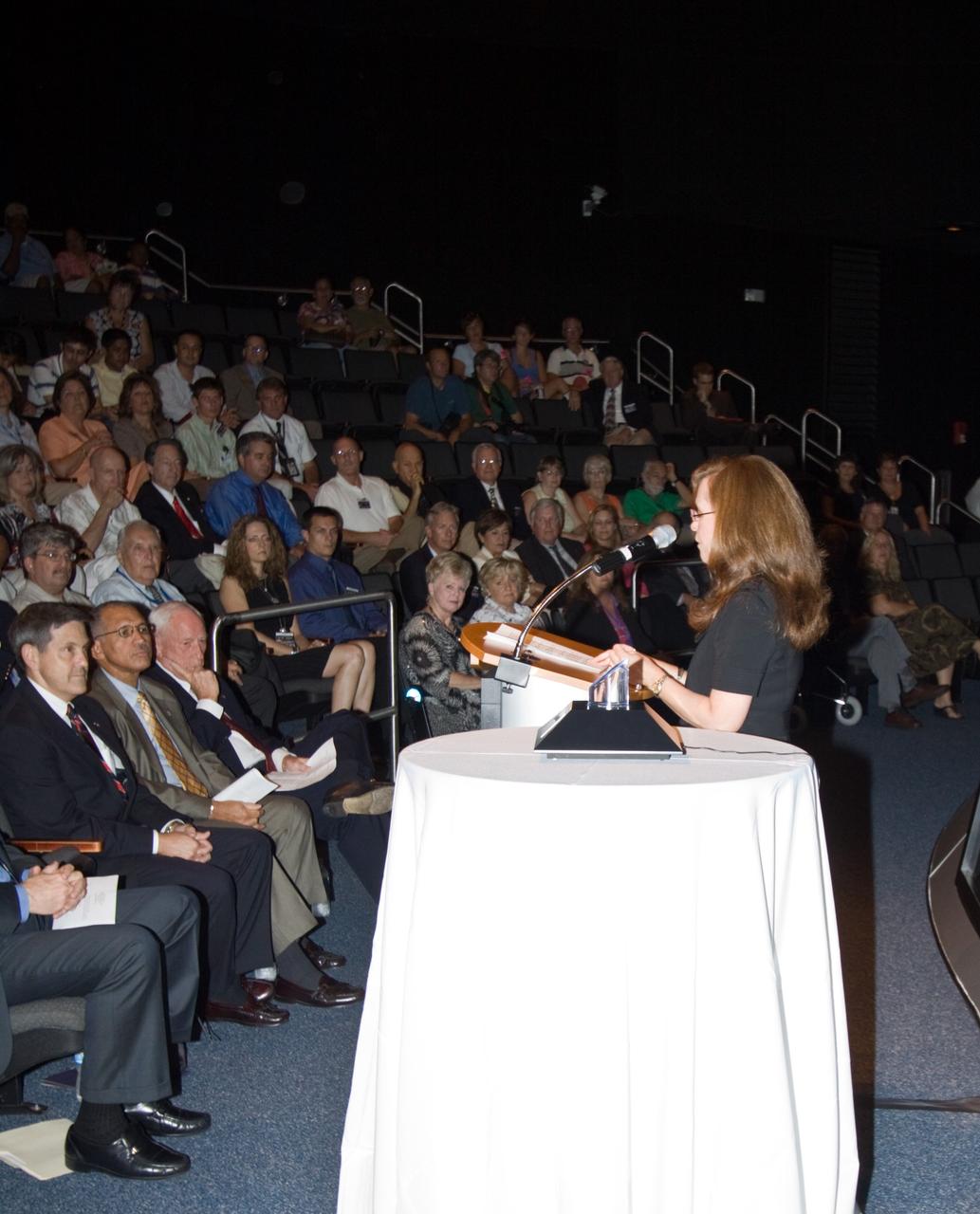
CAPE CANAVERAL, Fla. – At NASA's Kennedy Space Center in Florida, External Relations Director Lisa Malone speaks to an audience in Kennedy's Visitor Complex about the Ambassador of Exploration Award being given to Al Worden, an Apollo astronaut. Worden is being honored for his contributions to the U.S. space program. The award, to be displayed at Kennedy, is a moon rock encased in Lucite, mounted for public display. Worden served as command module pilot for the Apollo 15 mission, which set several moon records for NASA, including the longest lunar surface stay time, the longest lunar extravehicular activity and the first use of a lunar roving vehicle. Worden spent 38 minutes in a spacewalk outside the command module and logged a total of 295 hours, 11 minutes in space during the mission. NASA is giving the Ambassador of Exploration Award to the first generation of explorers in the Mercury, Gemini and Apollo space programs for realizing America's goal of going to the moon. The rock is part of the 842 pounds of lunar samples collected during six Apollo expeditions from 1969 to 1972. Those astronauts who receive the award will then present the award to a museum of their choice. Photo credit: NASA/Jack Pfaller
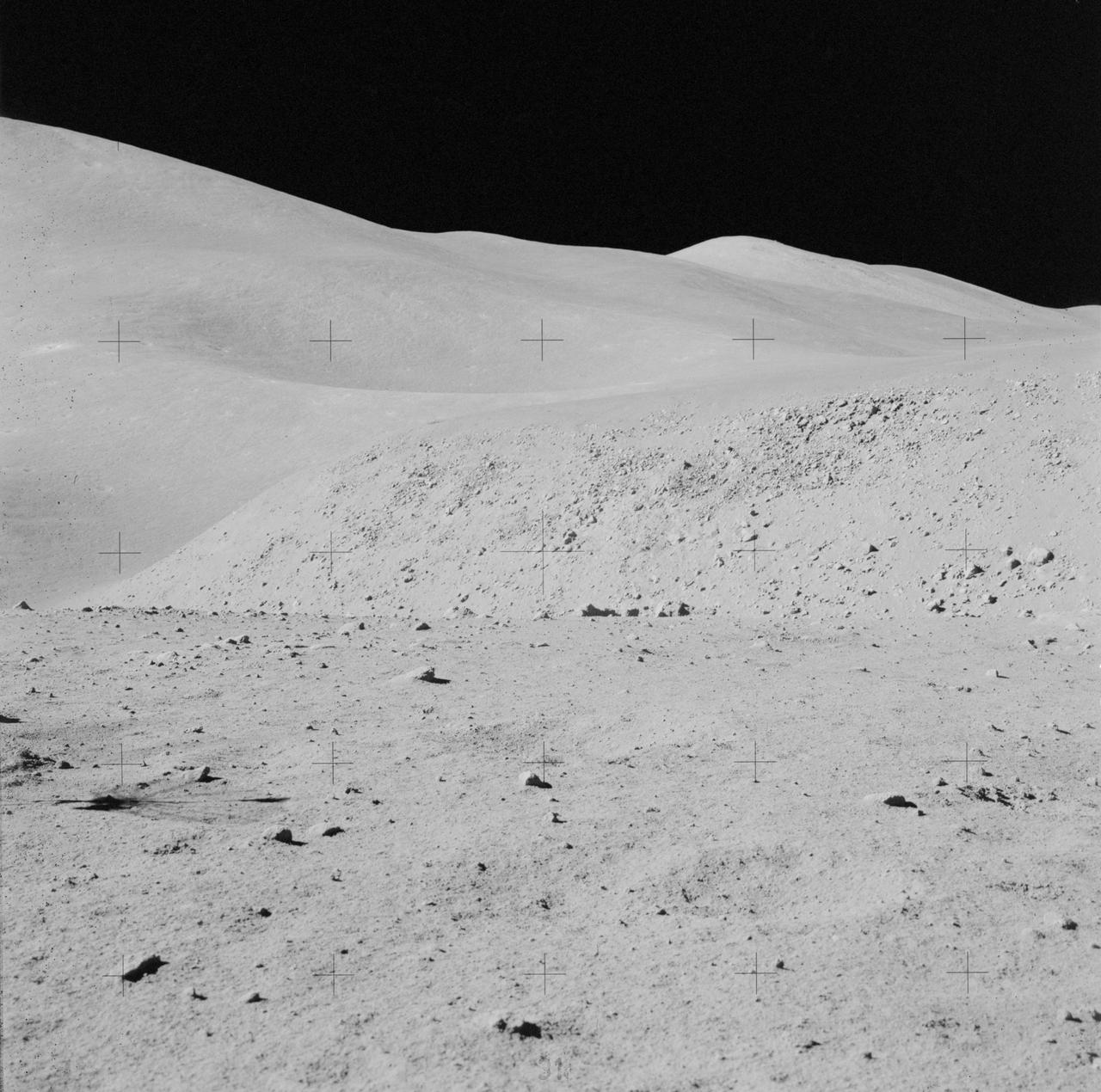
AS15-82-11123 (2 Aug. 1971) --- A view of the "strewn rock" scene encountered by Apollo 15 astronauts David R. Scott, commander, and James B. Irwin, lunar module pilot, during their third extravehicular activity (EVA) of the mission. Irwin took this photograph with a handheld 70mm camera. While astronauts Scott and Irwin descended in the Lunar Module (LM) "Falcon" to explore the moon, astronaut Alfred M. Worden, command module pilot, remained with the Command and Service Modules (CSM) in lunar orbit.
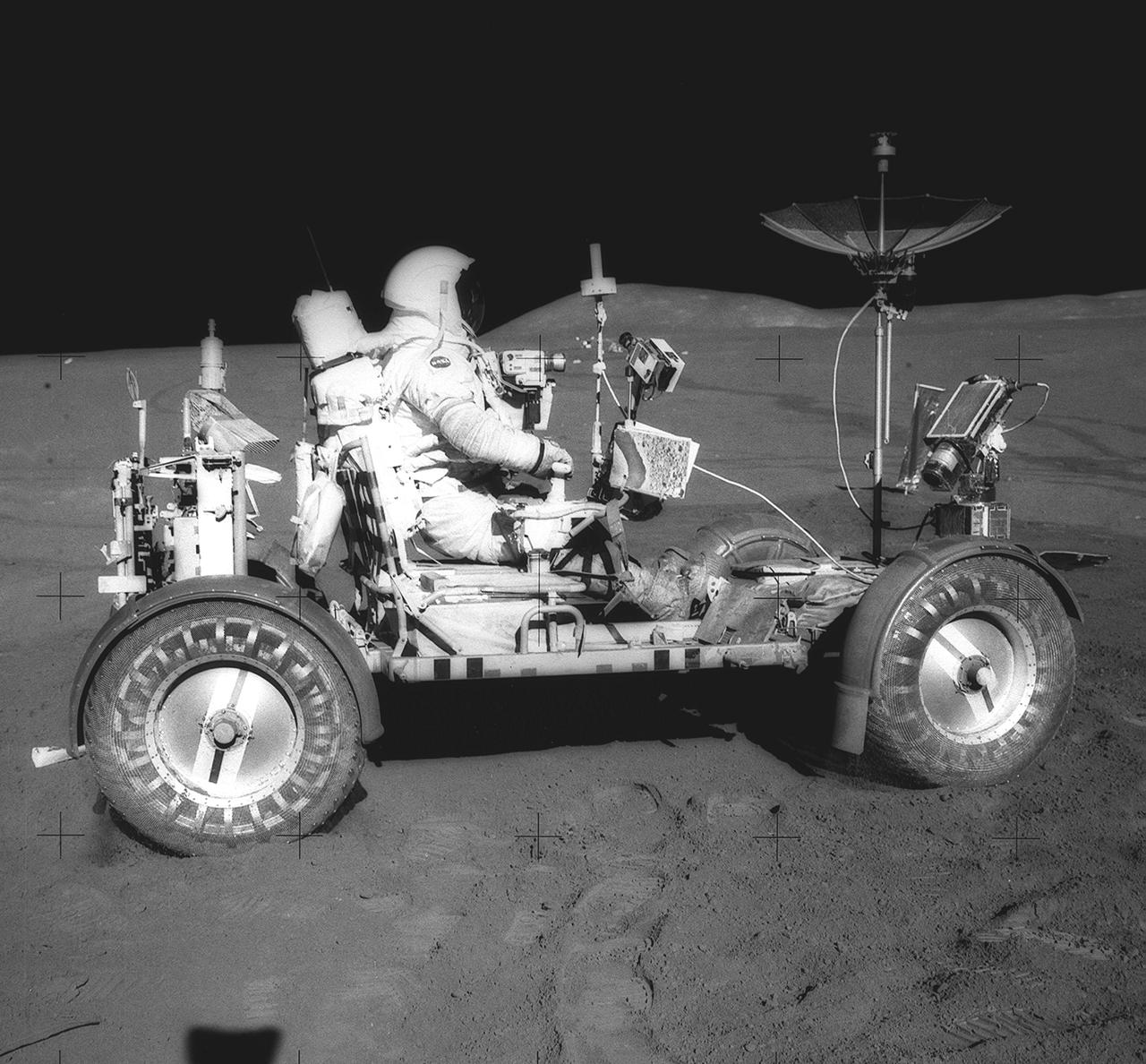
This photograph was taken during the Apollo 15 mission on the lunar surface. Astronaut David R. Scott waits in the Lunar Roving Vehicle (LRV) for astronaut James Irwin for the return trip to the Lunar Module, Falcon, with rocks and soil collected near the Hadley-Apernine landing site. The Apollo 15 was the first mission to use the LRV. Powered by battery, the lightweight electric car greatly increased the range of mobility and productivity on the scientific traverses for astronauts. It weighed 462 pounds (77 pounds on the Moon) and could carry two suited astronauts, their gear and cameras, and several hundred pounds of bagged samples. The LRV's mobility was quite high. It could climb and descend slopes of about 25 degrees. The LRV was designed and developed by the Marshall Space Flight Center and built by the Boeing Company.
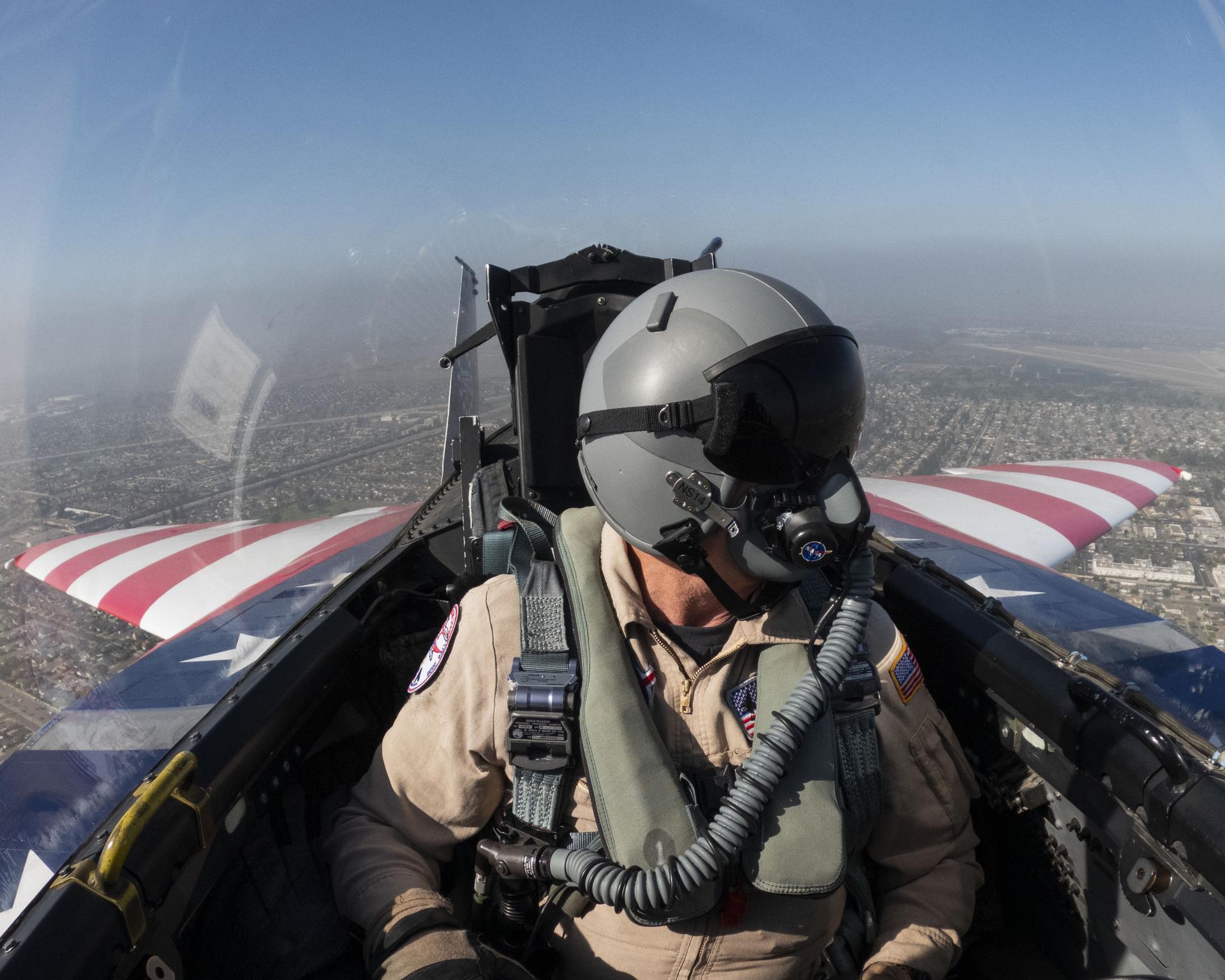
NASA photographer Jim Ross rides in the back seat of the agency’s newly painted F‑15, which honors America’s 250th birthday, during a transit flight to Huntington Beach, California, piloted by NASA test pilot Wayne Ringelberg, Thursday, Oct. 1, 2026. The aircraft will fly in the Pacific Airshow, Oct. 2-4.
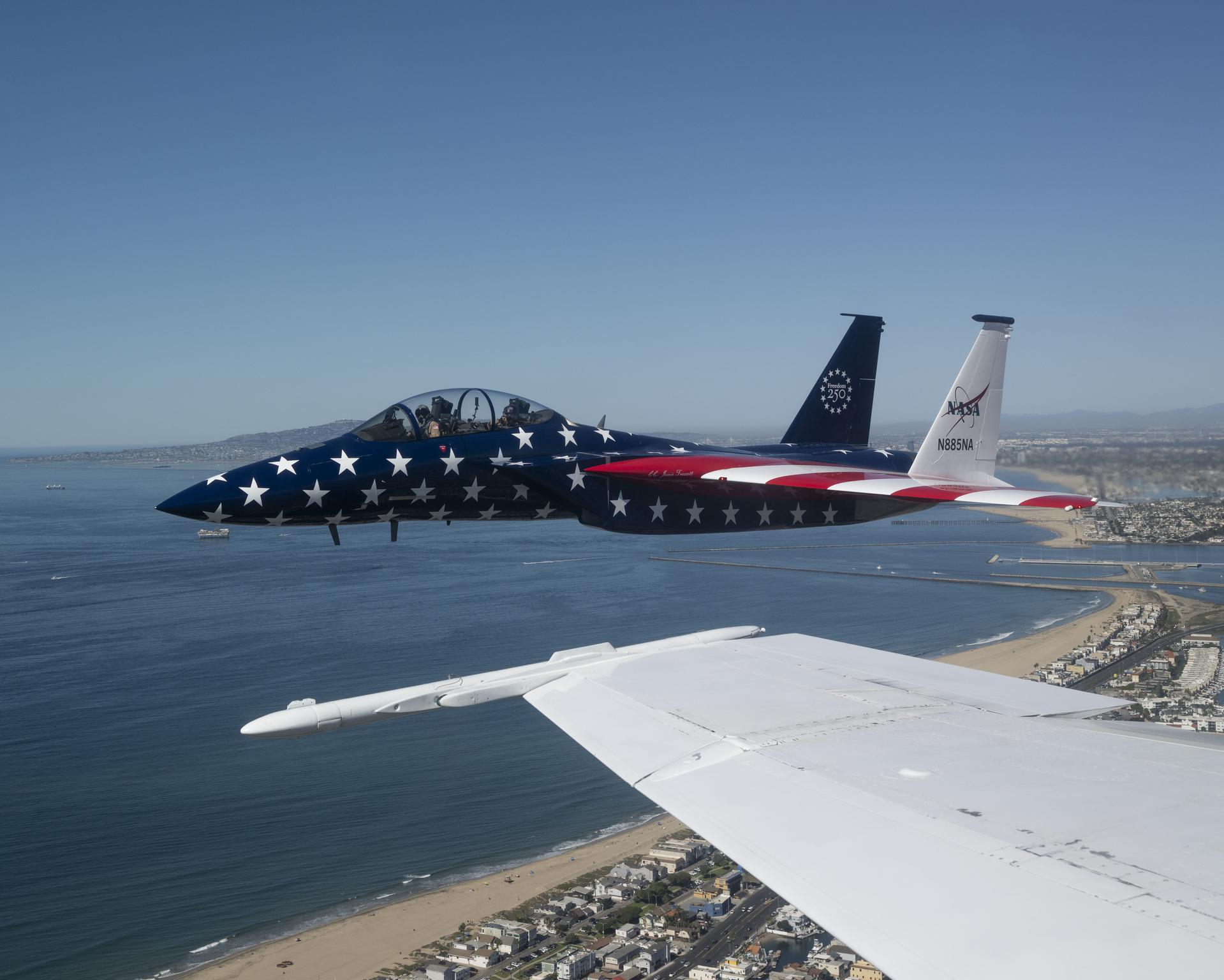
A NASA F‑15 aircraft is shown flying next to a NASA F/A‑18 during the Pacific Airshow in Huntington Beach, California, Saturday, Oct. 3, 2026. The F‑15, from NASA’s Armstrong Flight Research Center in Edwards, California, is painted in honor of America’s 250th birthday.
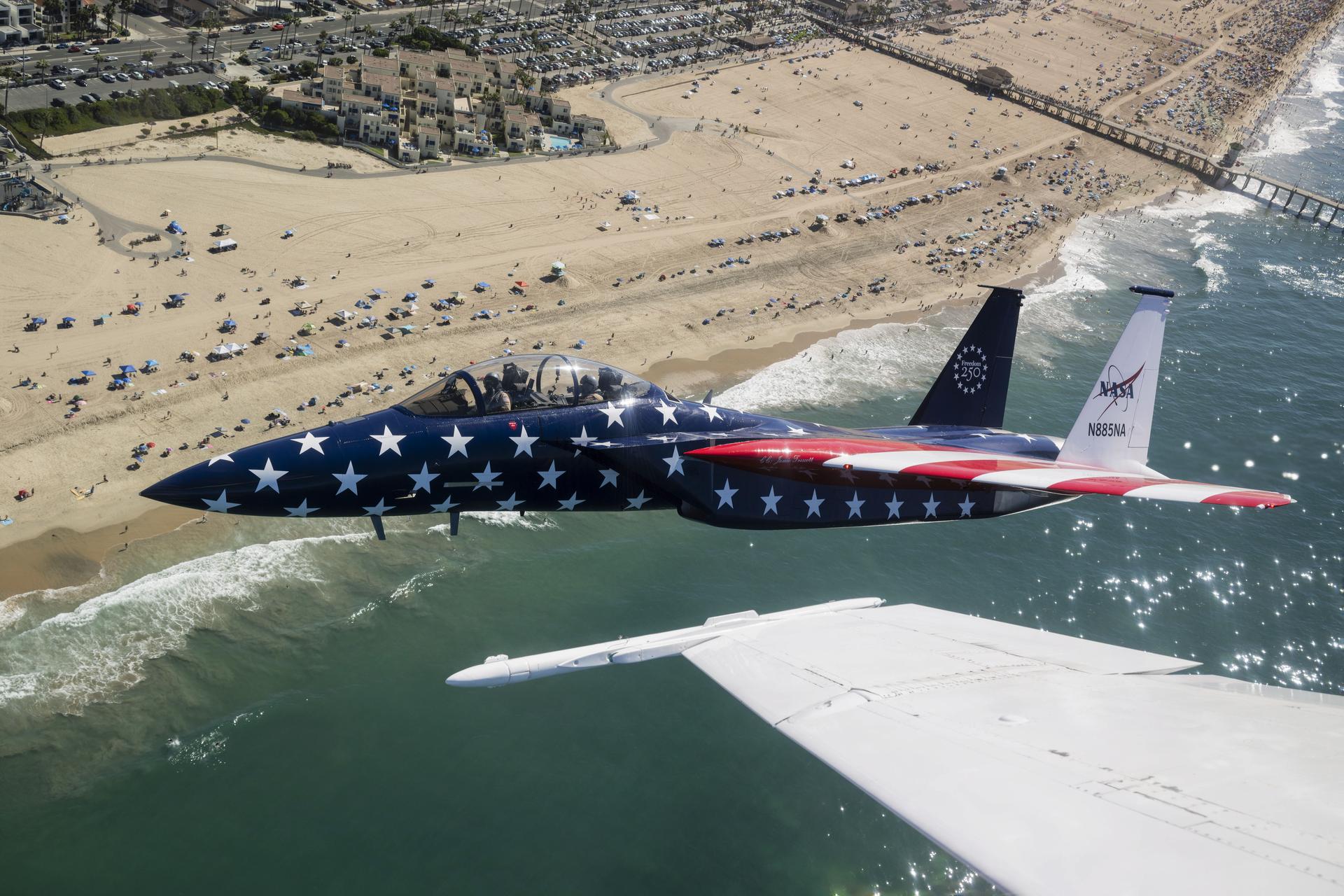
A NASA F‑15 aircraft is shown flying next to a NASA F/A‑18 during the Pacific Airshow in Huntington Beach, California, Saturday, Oct. 3, 2026. The F‑15, from NASA’s Armstrong Flight Research Center in Edwards, California, is painted in honor of America’s 250th birthday.
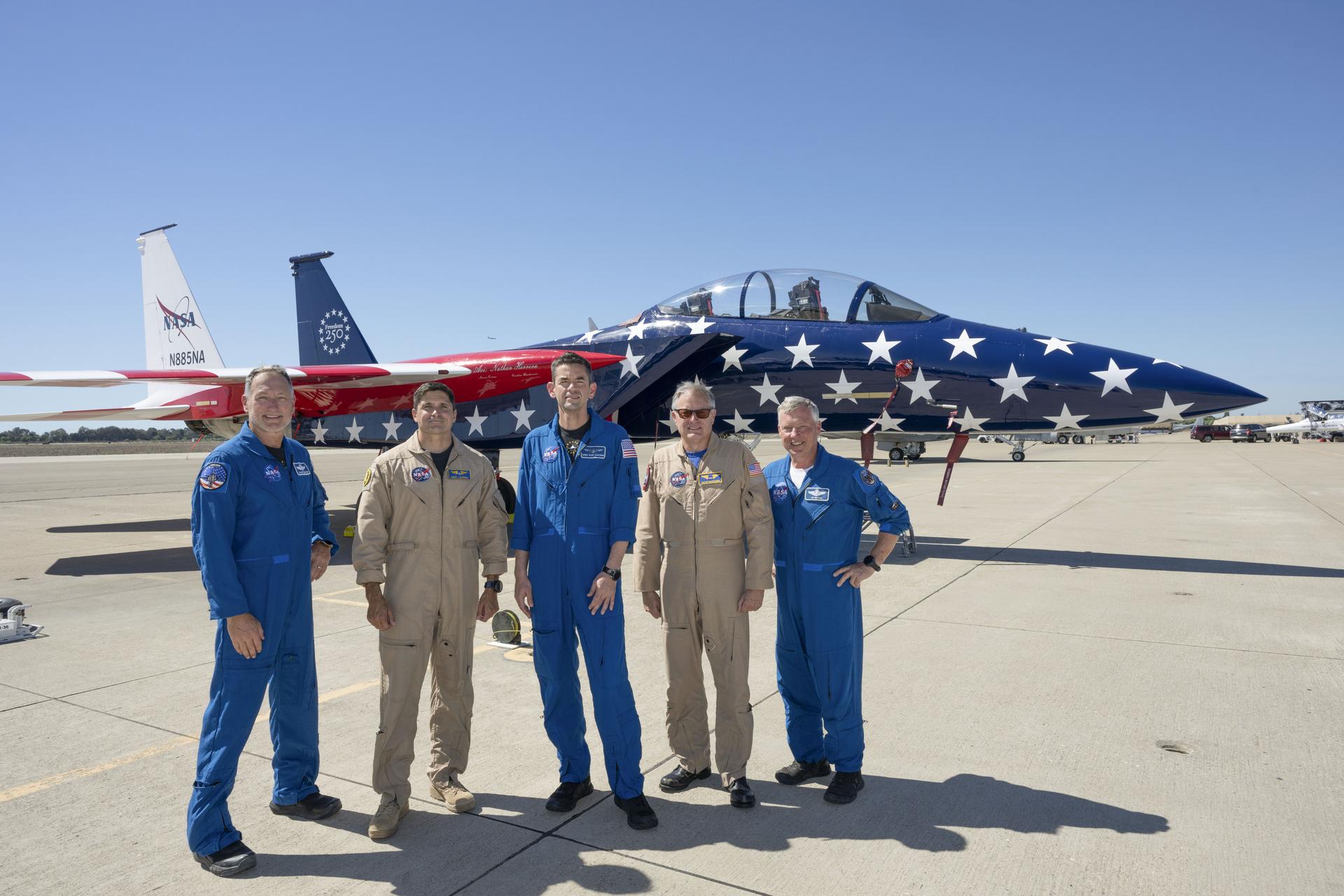
NASA’s 15th Administrator Jared Issacman, center, poses with, from left, Sean Gustafson, senior advisor to the administrator; NASA pilot Mike Lippert; NASA pilot Wayne Ringelberg; and Todd Ericson, senior advisor to the administrator, in front of agency’s newly painted F‑15, which honors America’s 250th birthday, during the Pacific Airshow in Huntington Beach, California, Saturday, Oct. 3, 2026.
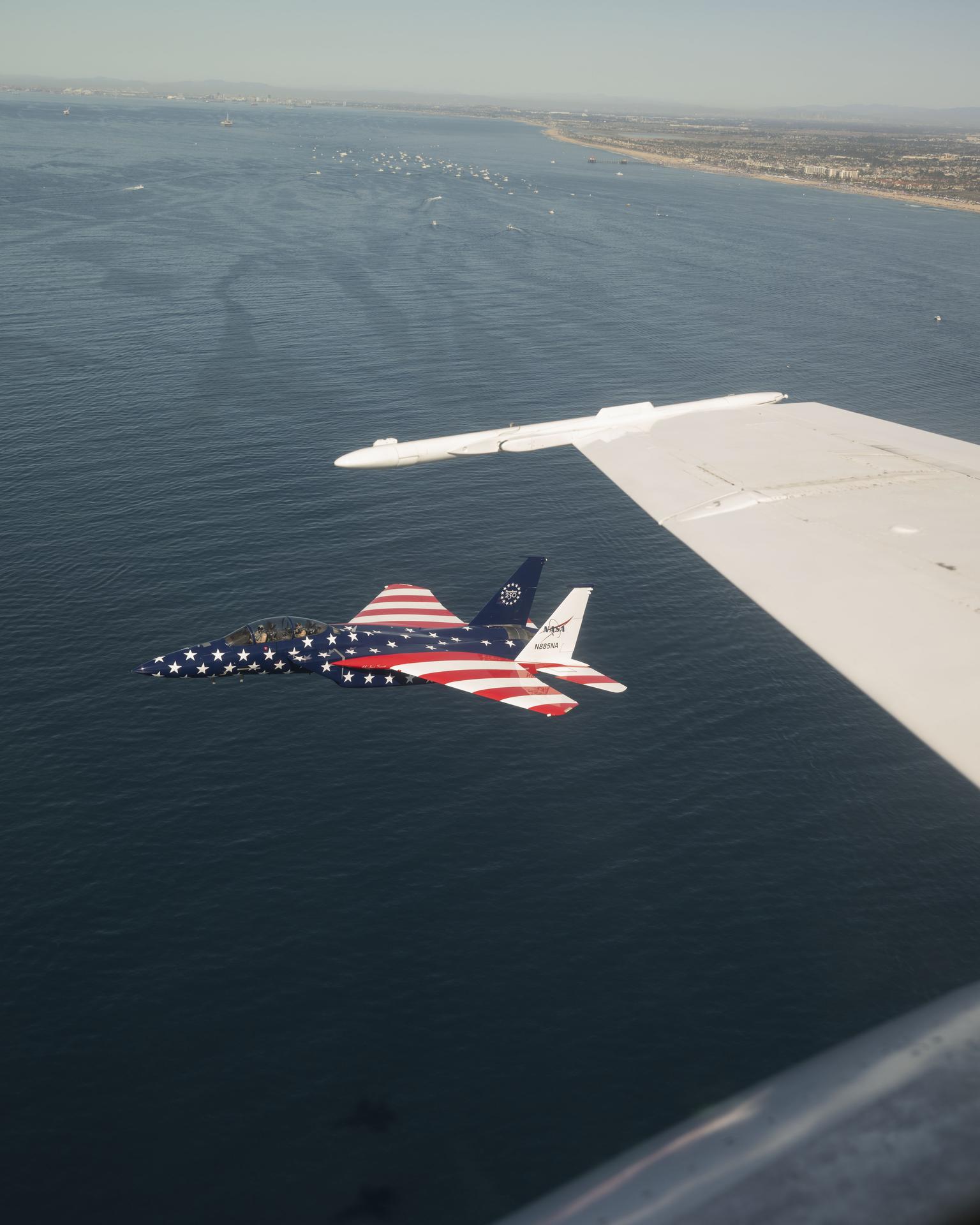
A NASA F‑15 aircraft is shown flying next to a NASA F/A‑18 during the Pacific Airshow in Huntington Beach, California, Saturday, Oct. 3, 2026. The F‑15, from NASA’s Armstrong Flight Research Center in Edwards, California, is painted in honor of America’s 250th birthday.
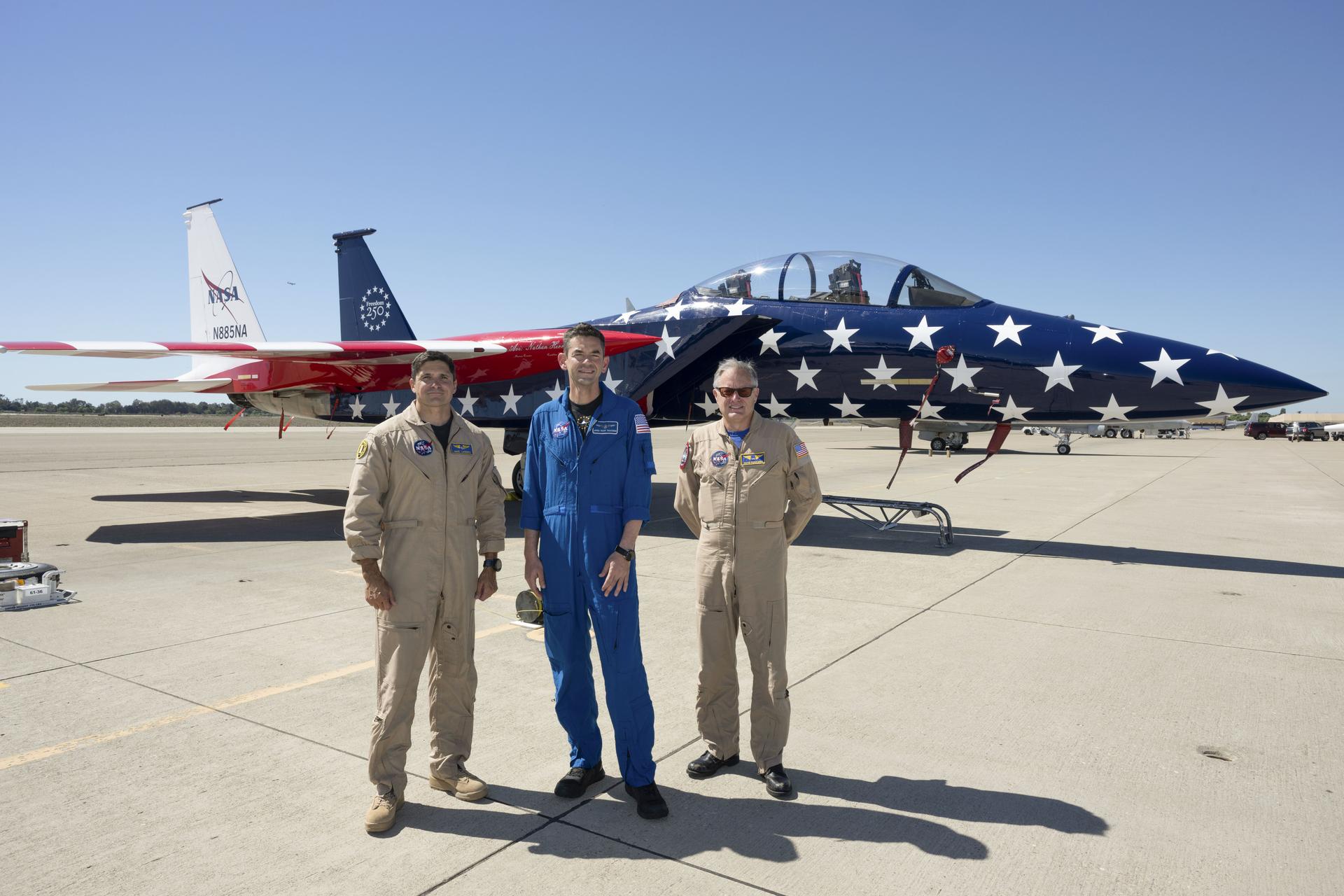
NASA’s 15th Administrator Jared Issacman, center, poses for a photo with NASA pilots Mike Lippert, left, and Wayne Ringelberg in front of agency’s newly painted F‑15, which honors America’s 250th birthday, during the Pacific Airshow in Huntington Beach, California, Saturday, Oct. 3, 2026.
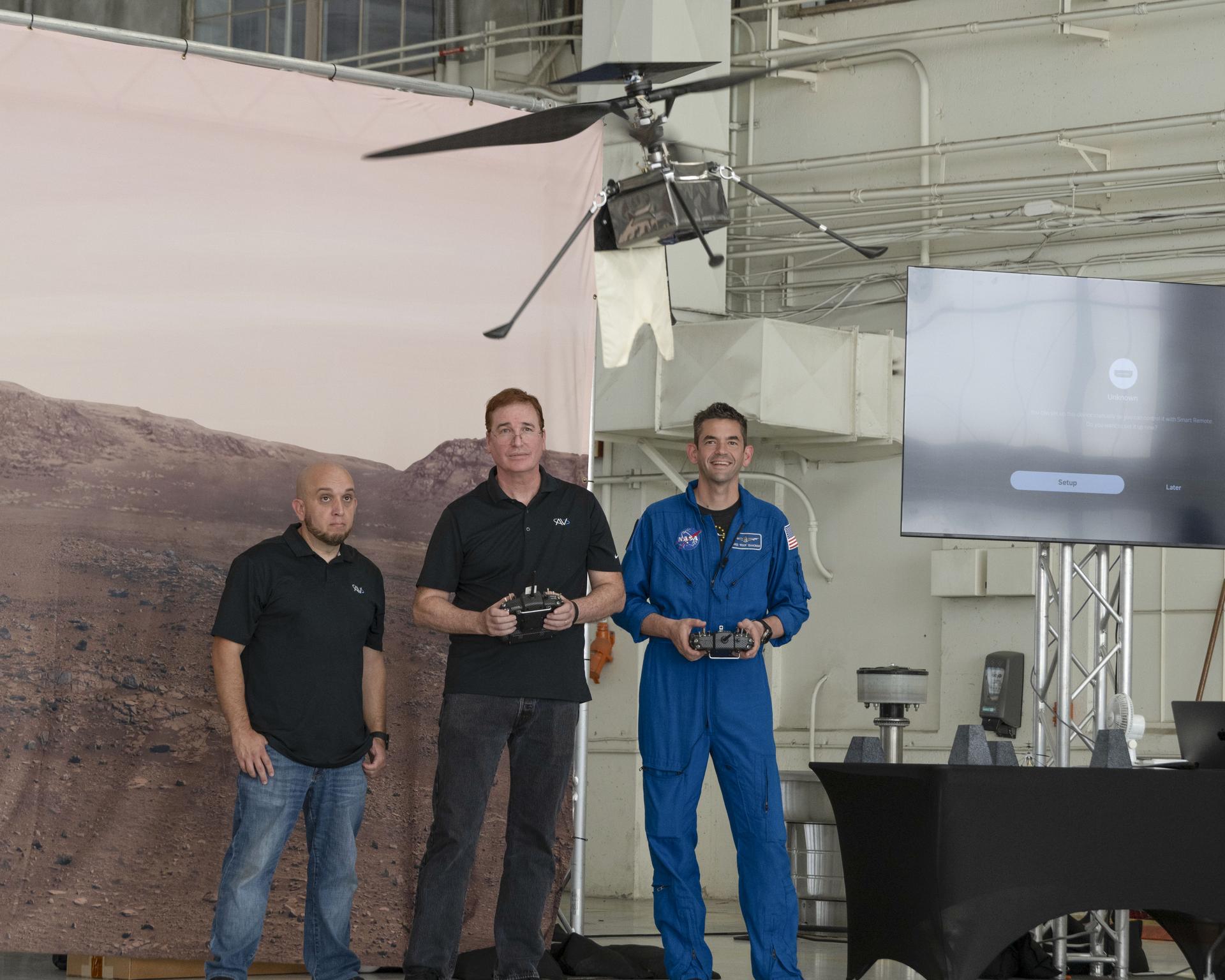
NASA’s 15th Administrator Jared Issacman, right, flies SkyFall, the next evolution of Mars helicopters, during Jet Propulsion Laboratory’s demonstration at Los Alamitos Joint Forces Training Base, California, Saturday, Oct. 3, 2026. Next to him is AeroVironment team members Matt Keenon, center, and Steve Quintero.
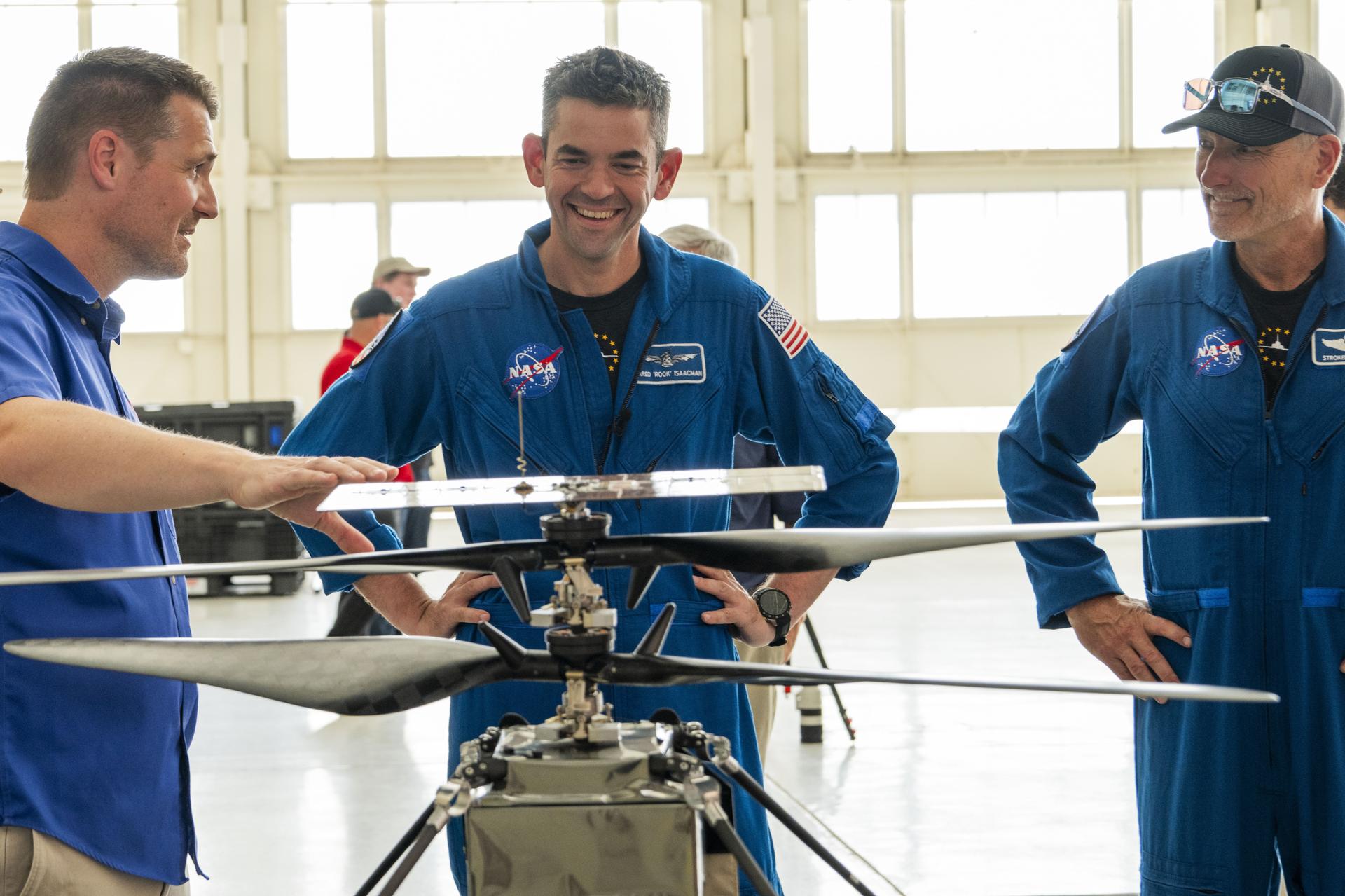
NASA’s 15th Administrator Jared Issacman, center, stands with Jet Propulsion Laboratory project manager Håvard Grip, left, and Sean Gustafson, senior advisor to the administrator during a demonstration of SkyFall, the next evolution of Mars helicopters, at Los Alamitos Joint Forces Training Base, California, Saturday, Oct. 3, 2026.
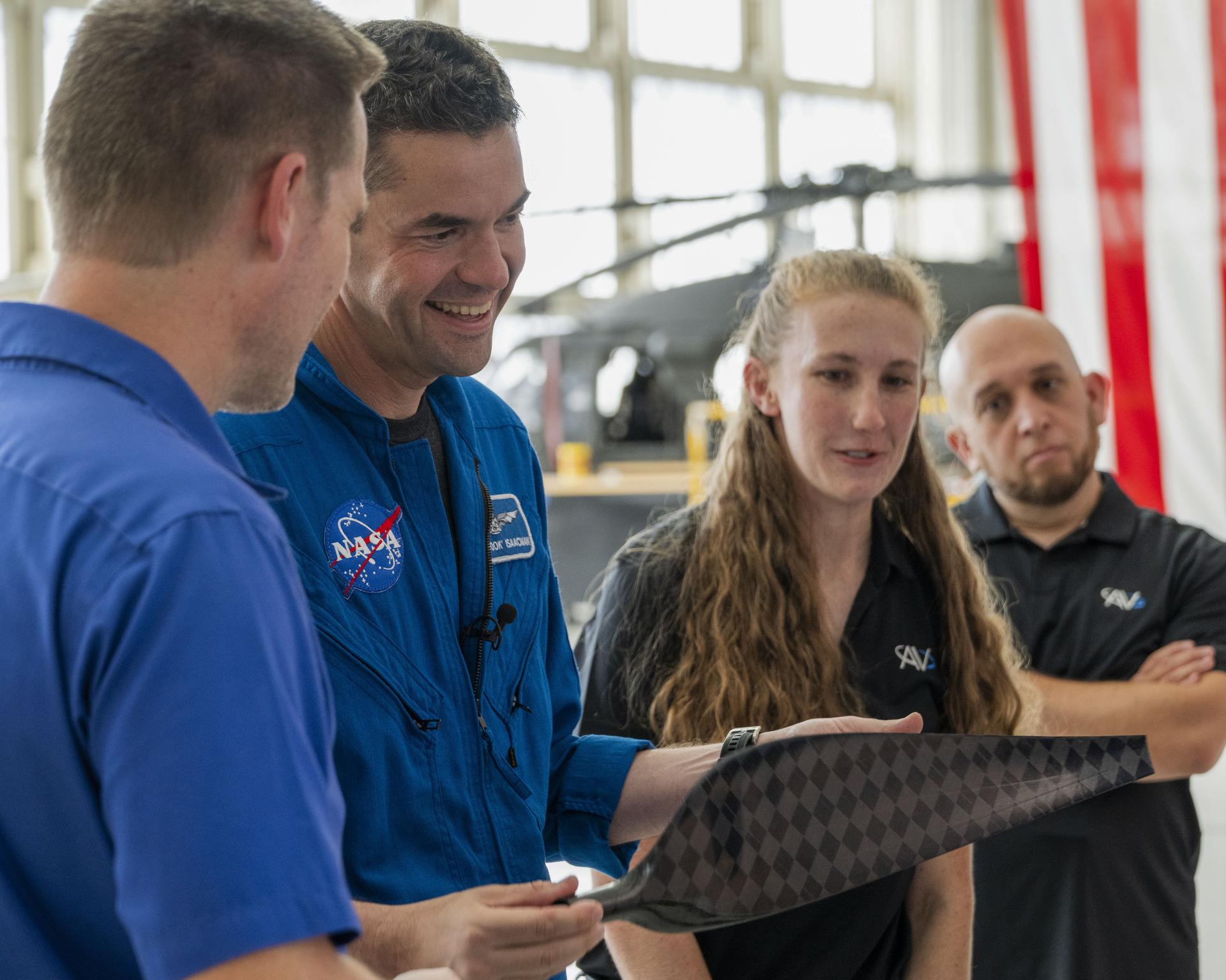
NASA’s 15th Administrator Jared Issacman, second from left, holds a SkyFall propeller bladeduring Jet Propulsion Laboratory’s demonstration of the next evolution of Mars helicopters at Los Alamitos Joint Forces Training Base, California, Saturday, Oct. 3, 2026. Also pictured are, from left, JPL SkyFall project manager Håvard Grip and AeroVironment team members Paulina Ridland and Steve Quintero.
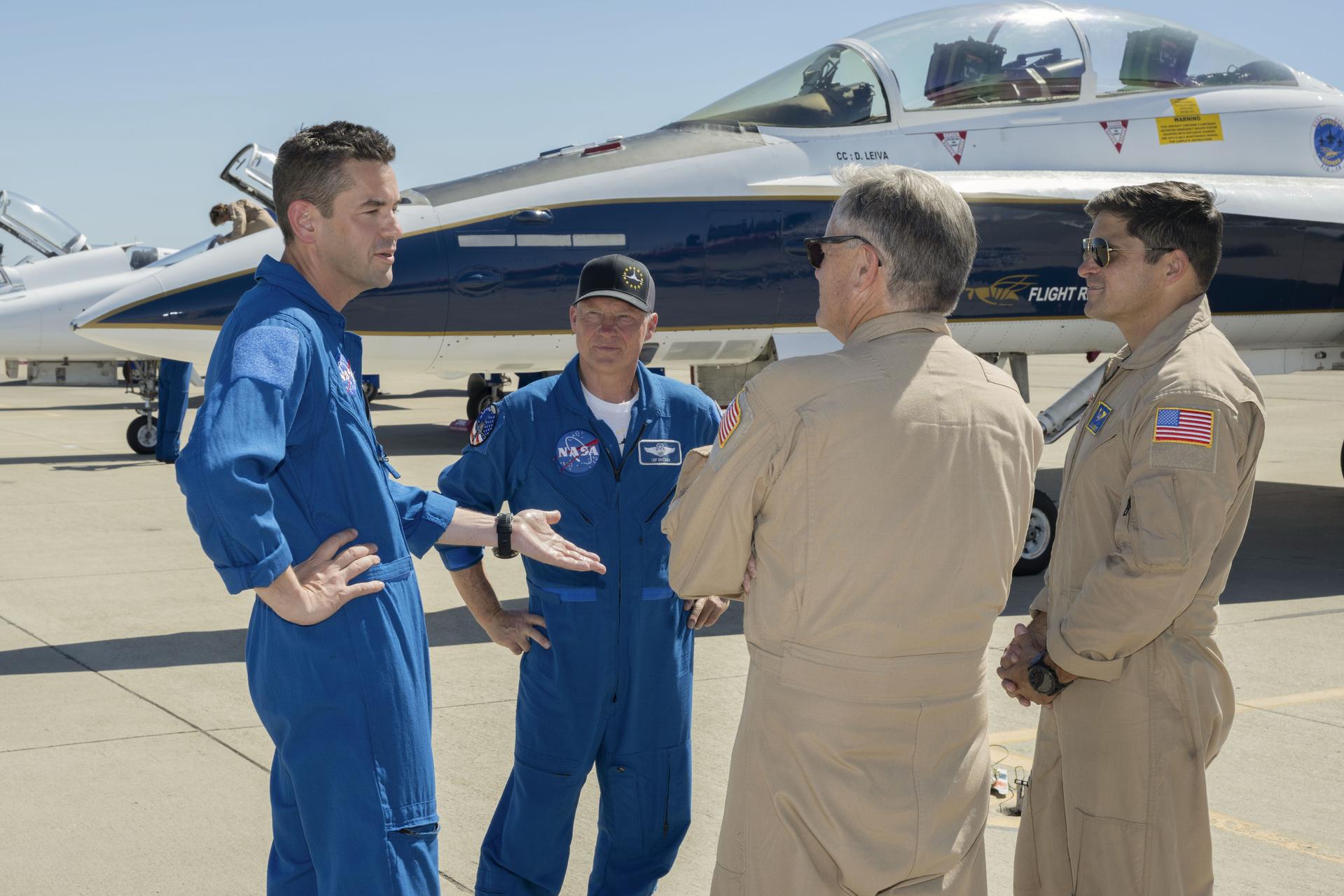
NASA’s 15th Administrator Jared Issacman, left, speaks with, from left, Todd Ericson, senior advisor to the administrator, NASA pilot Mike Lippert, and NASA pilot Wayne Ringelberg at Los Alamitos Joint Forces Training Base, California, Saturday, Oct. 3, 2026. Behind them is the agency’s F/A-18 aircraft, which Lippert and Ringelberg flew during the Pacific Airshow in Huntington Beach, California, Oct. 2-4.
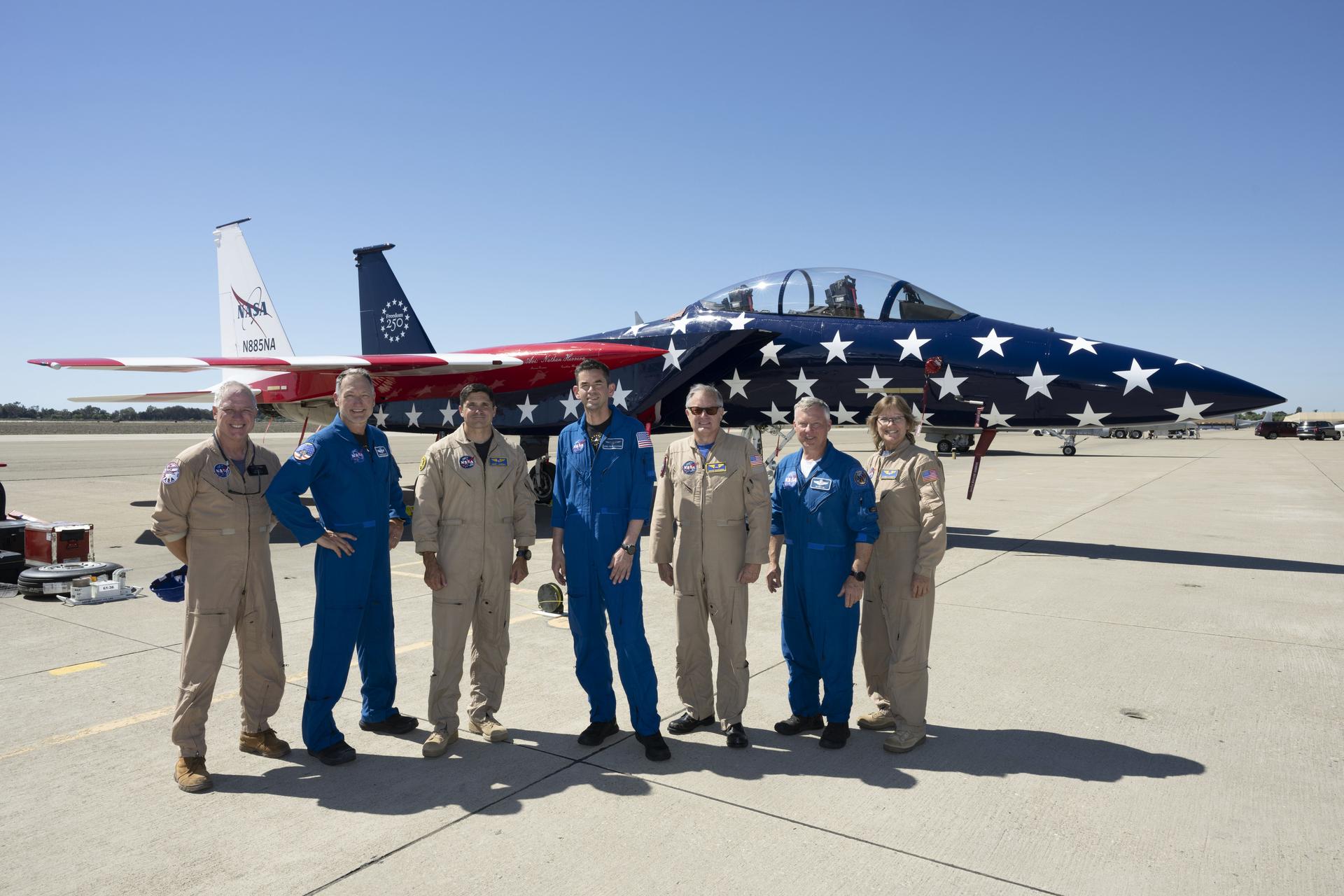
NASA’s 15th Administrator Jared Issacman, center, poses with, from left, NASA photographer Jim Ross; Sean Gustafson, senior advisor to the administrator; NASA pilot Mike Lippert; NASA pilot Wayne Ringelberg; Todd Ericson, senior advisor to the administrator; and videographer Lori Losey in front of agency’s newly painted F‑15, which honors America’s 250th birthday, during the Pacific Airshow in Huntington Beach, California, Saturday, Oct. 3, 2026.
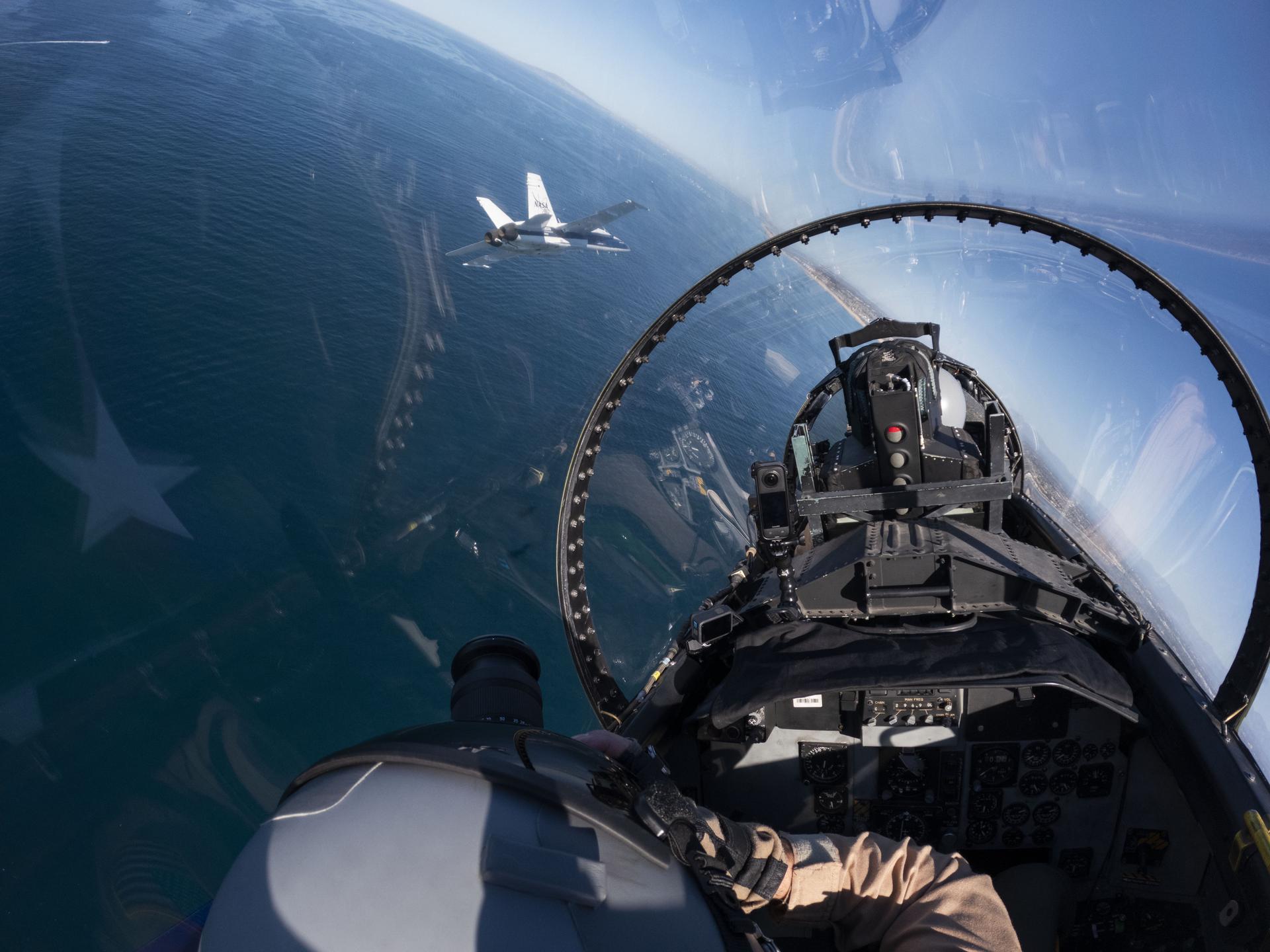
A NASA F/A-18 aircraft is shown flying next to the agency’s newly painted F-15 during the Pacific Airshow in Huntington Beach, California, Sunday, Oct. 4, 2026. The F‑15, from NASA’s Armstrong Flight Research Center in Edwards, California, is painted in honor of America’s 250th birthday.
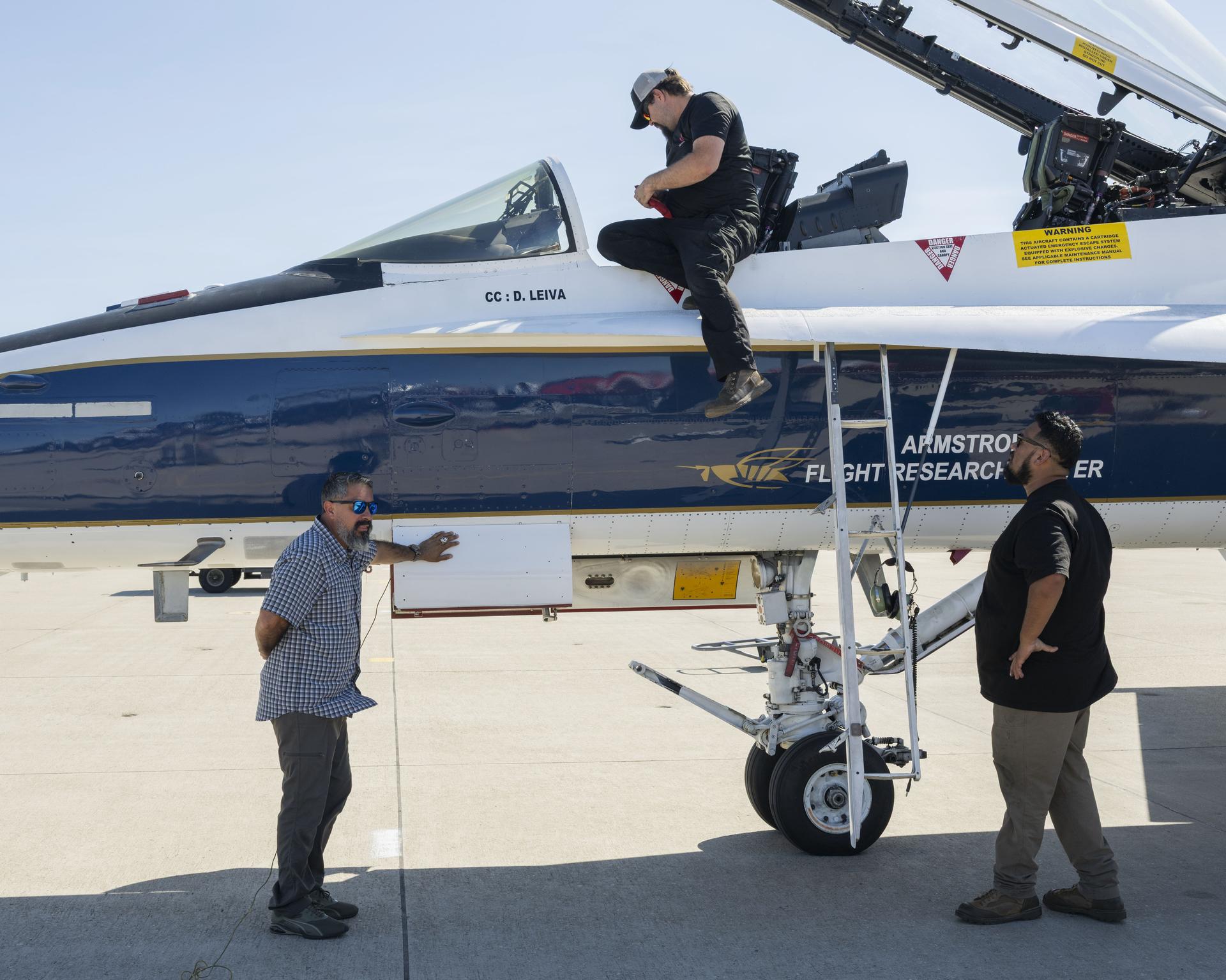
NASA quality assurance specialist Alejandro Rodriguez Mendez; Cameron Copple, F/A-18 crew chief; and F/A-18 mechanic Michael Lara inspect the aircraft at Los Alamitos Joint Forces Training Base, California, Sunday, Oct. 4, 2026. The jet was among the NASA aircraft that flew in the Pacific Airshow in Huntington Beach, California, Oct. 2-4.
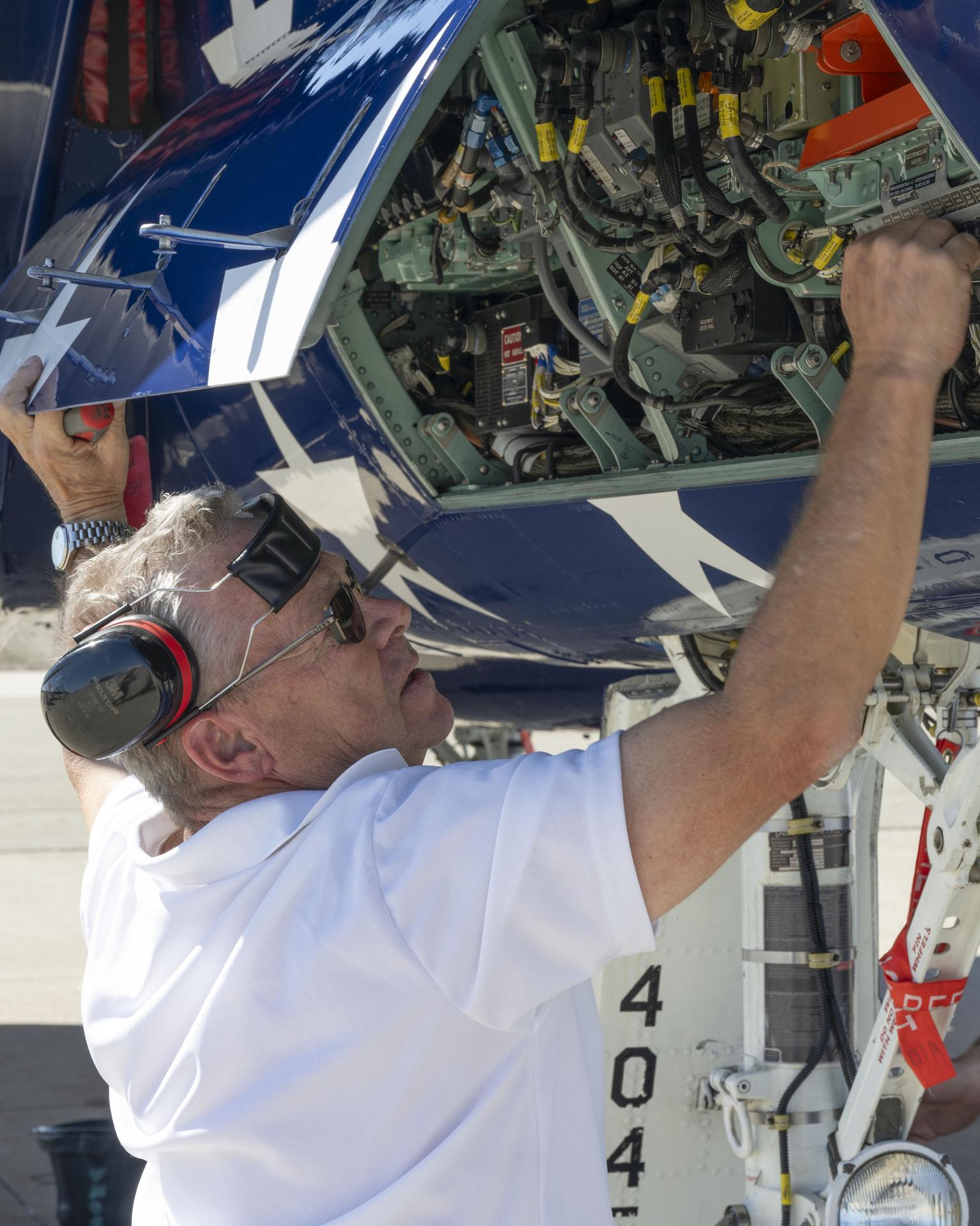
NASA quality assurance specialist Walt Kondracki inspects an agency F-15 aircraft at Los Alamitos Joint Forces Training Base, California, Sunday, Oct. 4, 2026. The jet was among the NASA aircraft that flew in the Pacific Airshow in Huntington Beach, California, Oct. 2-4.
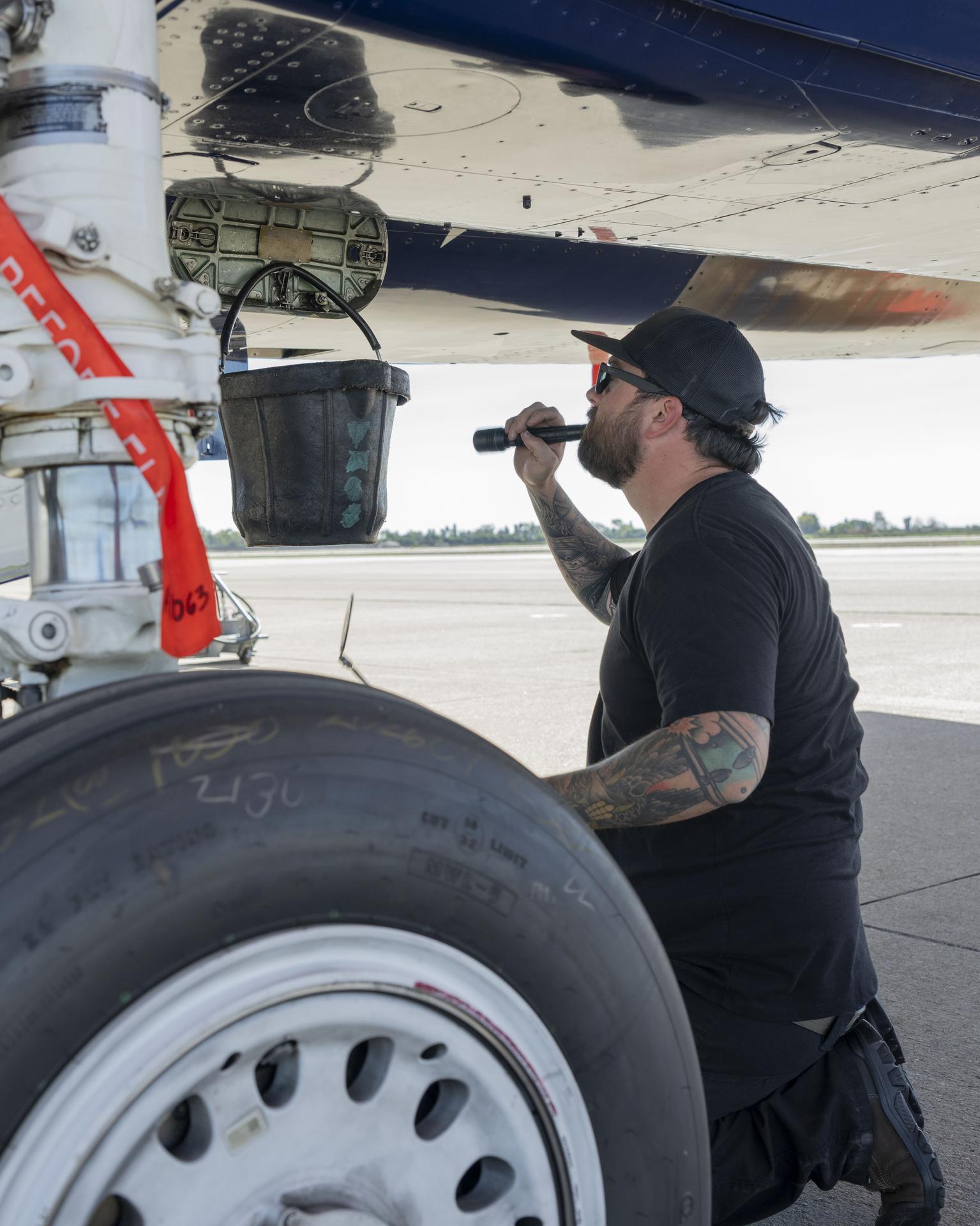
NASA F-15 Crew Chief Zach Burke inspects the aircraft at Los Alamitos Joint Forces Training Base, California, Sunday, Oct. 4, 2026. The jet was among the NASA aircraft that flew in the Pacific Airshow in Huntington Beach, California, Oct. 2-4.
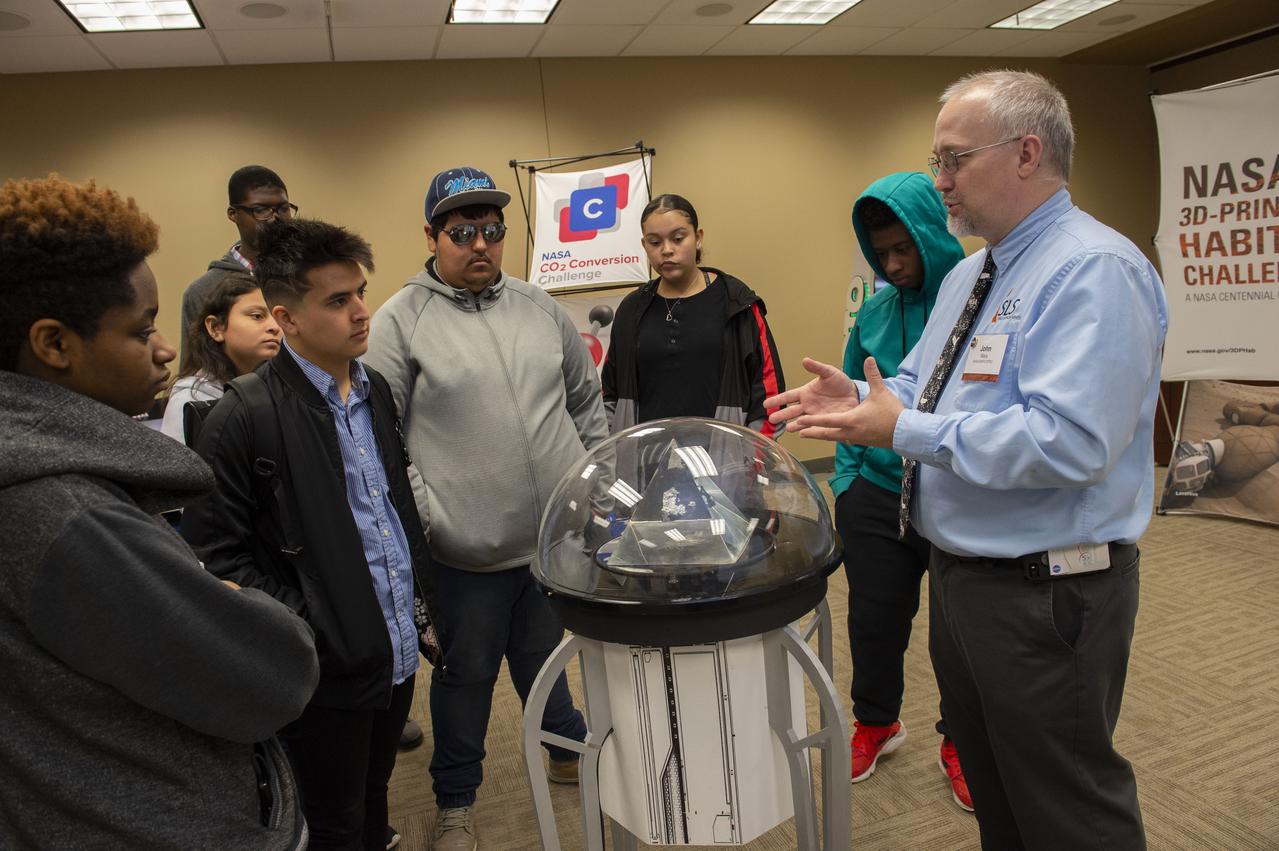
AI. SpaceFactory of New York and Pennsylvania State University of College Park print subscale habitat structures at NASA's 3D-Printed Habitat Challenge, held at the Caterpillar Edwards Demonstration & Learning Center in Edwards, Illinois, May 1-4, 2019. The habitat print is the final level of the multi-phase competition, which began in in 2015. The challenge is managed by NASA's Centennial Challenges program, and partner Bradley University of Peoria, Illinois. Marshall Space Flight Center educator john Weis, right, offers students from Manual Academic High School in Peoria, Illinois a first-hand look at a Moon rock retrieved by the Apollo 15 mission.
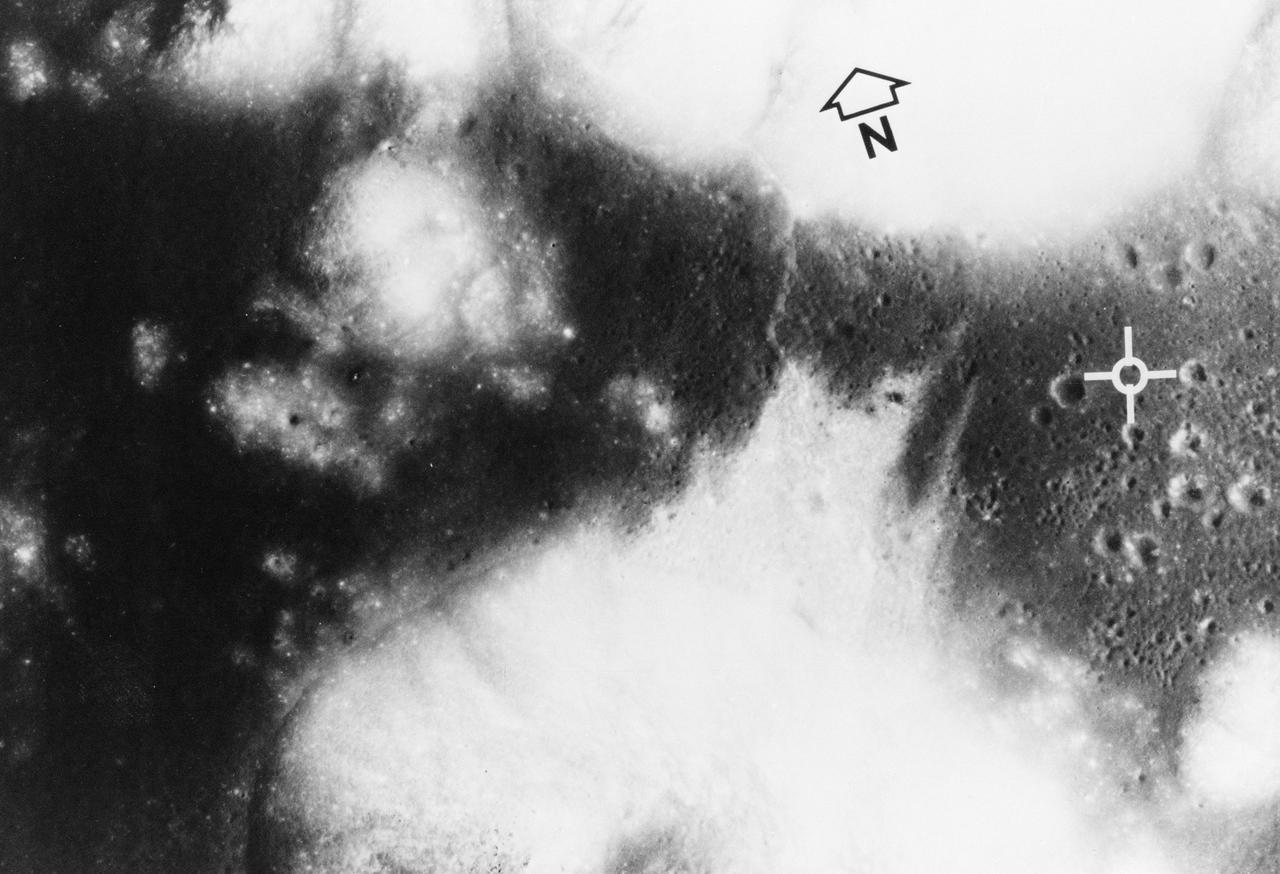
S72-35010 (April 1972) --- The Apollo Program's final manned landing on the moon will explore a site designated Taurus-Littrow on the southeastern rim of the Sea of Serenity. This photograph from the Apollo 15 Metric Camera gives a vertical view of the Apollo 17 landing site at 20 degrees north latitude and 30 degrees east longitude. The site (white cross) is on a dark-cratered plain at the base of light-colored highland mountains. The major scientific objective is to study the highlands for new knowledge about what is believed to be representative of the most ancient part of the moon. The darker material forms a bay amid steep-sided mountains that rise almost 2 kilometers (1 1/4 miles) above the adjacent plain or basin. Mountain slopes in excess of 25 degrees are common. The individual mountain masses and ridges are believed to represent very old highland crustal blocks structurally separated by various basin-forming events. The basin and parts of the highlands are mantled (covered) with dark deposits that may be fragmented rocks of volcanic origin. The dark mantle, a very low albedo, (low light-reflective) loose material which covers pre-existing terrain, is extensively developed in this region. Sampling of the dark deposits is given a high priority since its age and composition wouls shed light on the thermal history of the moon. Panoramic photography and command module pilot observations on Apollo 15 documented the presence here of a number of cinder cones which may be related to the dark mantle. It might be dust blown out by a volcanic eruption. Radar maps indicate this dark mantle is different because of its scarcity of block material. The photo covers 22 kilometers (13.5 miles) from east to west and 15 kilometers (9 miles) north to south. A ridge-like feature snakes from north to south across the basin and highlands about 6 kilometers (3.7 miles) west of the landing point, and is partly covered by a northward debris flow from the base of a mountain southwest
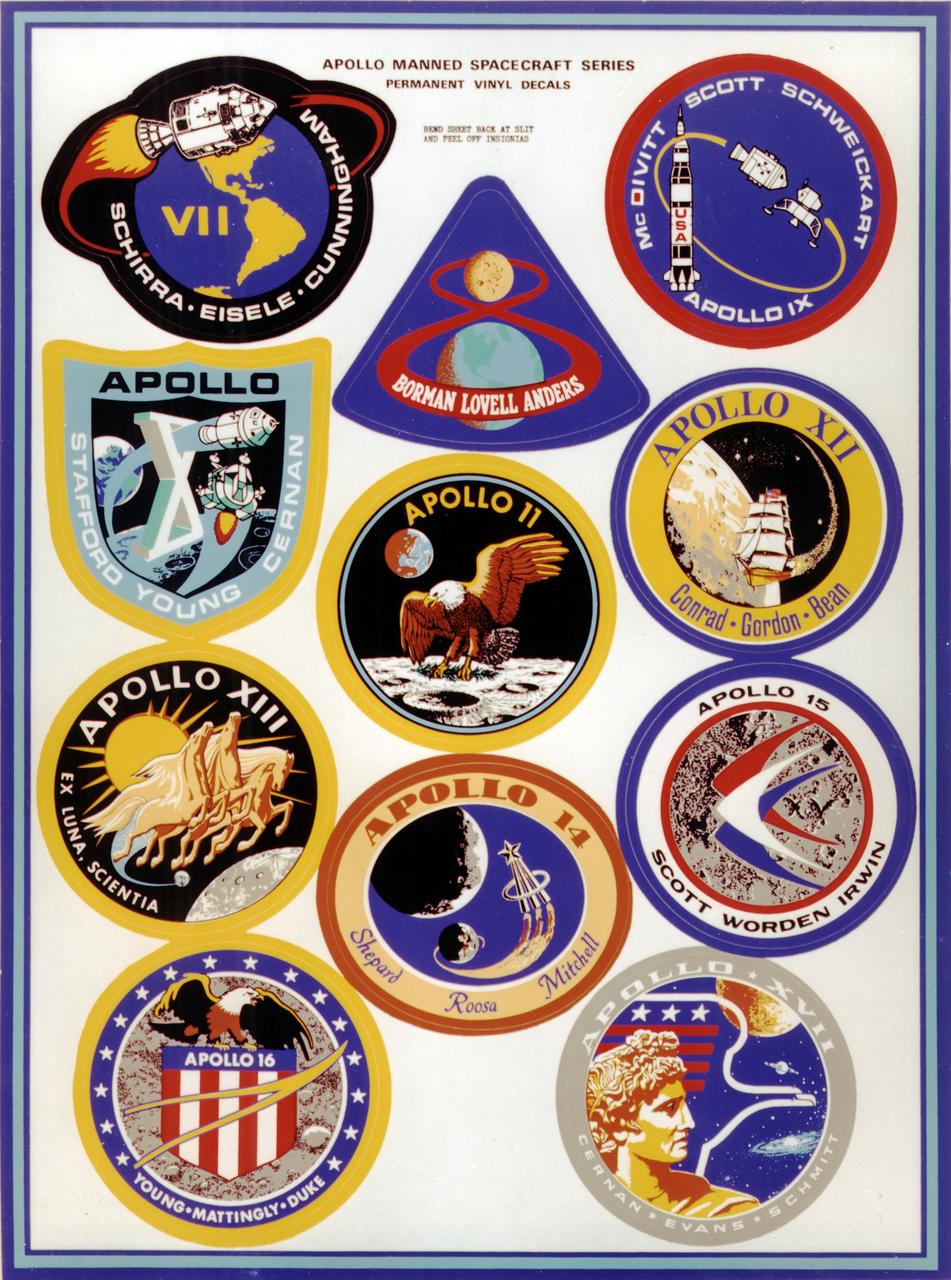
This montage depicts the flight crew patches for the manned Apollo 7 thru Apollo 17 missions. The Apollo 7 through 10 missions were basically manned test flights that paved the way for lunar landing missions. Primary objectives met included the demonstration of the Command Service Module (CSM) crew performance; crew/space vehicle/mission support facilities performance and testing during a manned CSM mission; CSM rendezvous capability; translunar injection demonstration; the first manned Apollo docking, the first Apollo Extra Vehicular Activity (EVA), performance of the first manned flight of the lunar module (LM); the CSM-LM docking in translunar trajectory, LM undocking in lunar orbit, LM staging in lunar orbit, and manned LM-CSM docking in lunar orbit. Apollo 11 through 17 were lunar landing missions with the exception of Apollo 13 which was forced to circle the moon without landing due to an onboard explosion. The craft was,however, able to return to Earth safely. Apollo 11 was the first manned lunar landing mission and performed the first lunar surface EVA. Landing site was the Sea of Tranquility. A message for mankind was delivered, the U.S. flag was planted, experiments were set up and 47 pounds of lunar surface material was collected for analysis back on Earth. Apollo 12, the 2nd manned lunar landing mission landed in the Ocean of Storms and retrieved parts of the unmanned Surveyor 3, which had landed on the Moon in April 1967. The Apollo Lunar Surface Experiments Package (ALSEP) was deployed, and 75 pounds of lunar material was gathered. Apollo 14, the 3rd lunar landing mission landed in Fra Mauro. ALSEP and other instruments were deployed, and 94 pounds of lunar materials were gathered, using a hand cart for first time to transport rocks. Apollo 15, the 4th lunar landing mission landed in the Hadley-Apennine region. With the first use of the Lunar Roving Vehicle (LRV), the crew was bale to gather 169 pounds of lunar material. Apollo 16, the 5th lunar landing mission, landed in the Descartes Highlands for the first study of highlands area. Selected surface experiments were deployed, the ultraviolet camera/spectrograph was used for first time on the Moon, and the LRV was used for second time for a collection of 213 pounds of lunar material. The Apollo program came to a close with Apollo 17, the 6th and final manned lunar landing mission that landed in the Taurus-Littrow highlands and valley area. This mission hosted the first scientist-astronaut, Schmitt, to land on the Moon. The 6th automated research station was set up, and 243 ponds of lunar material was gathered using the LRV.