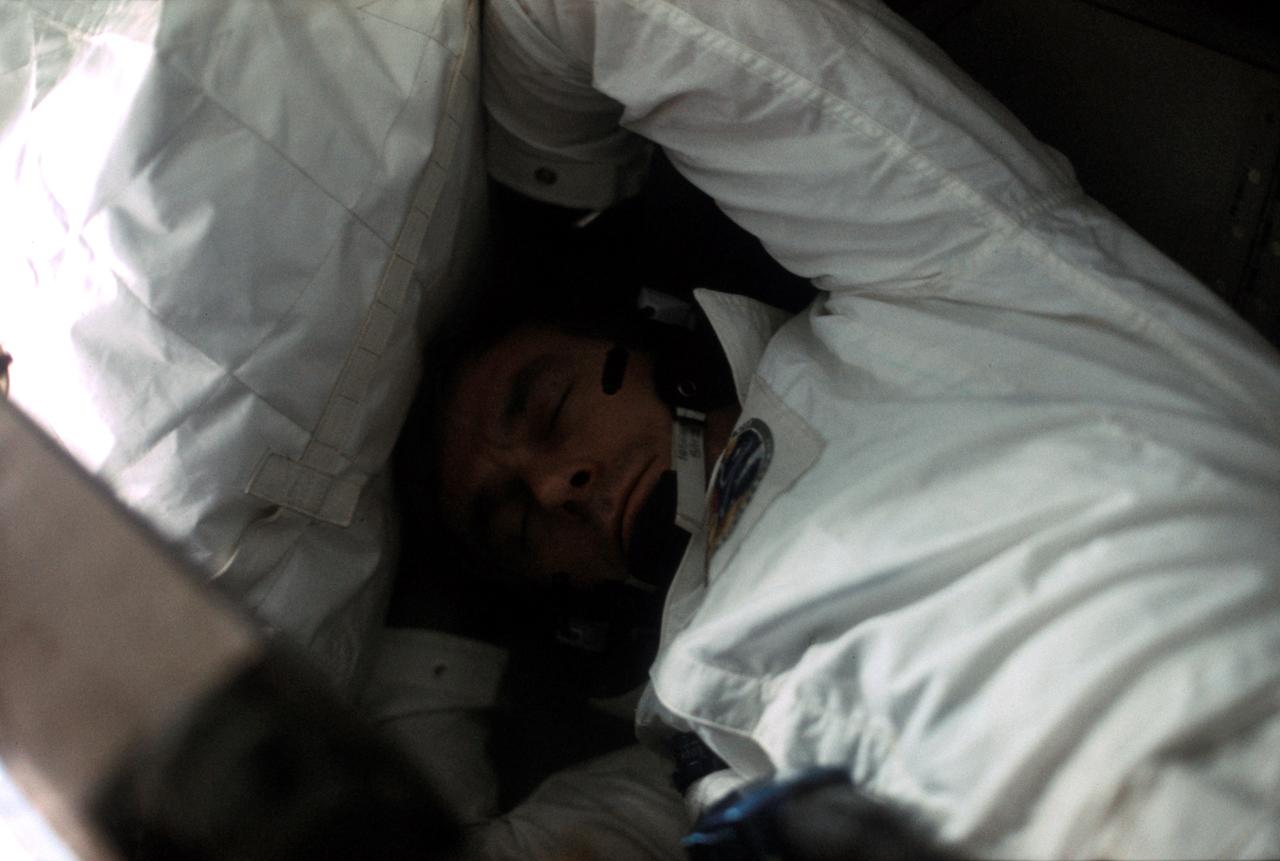
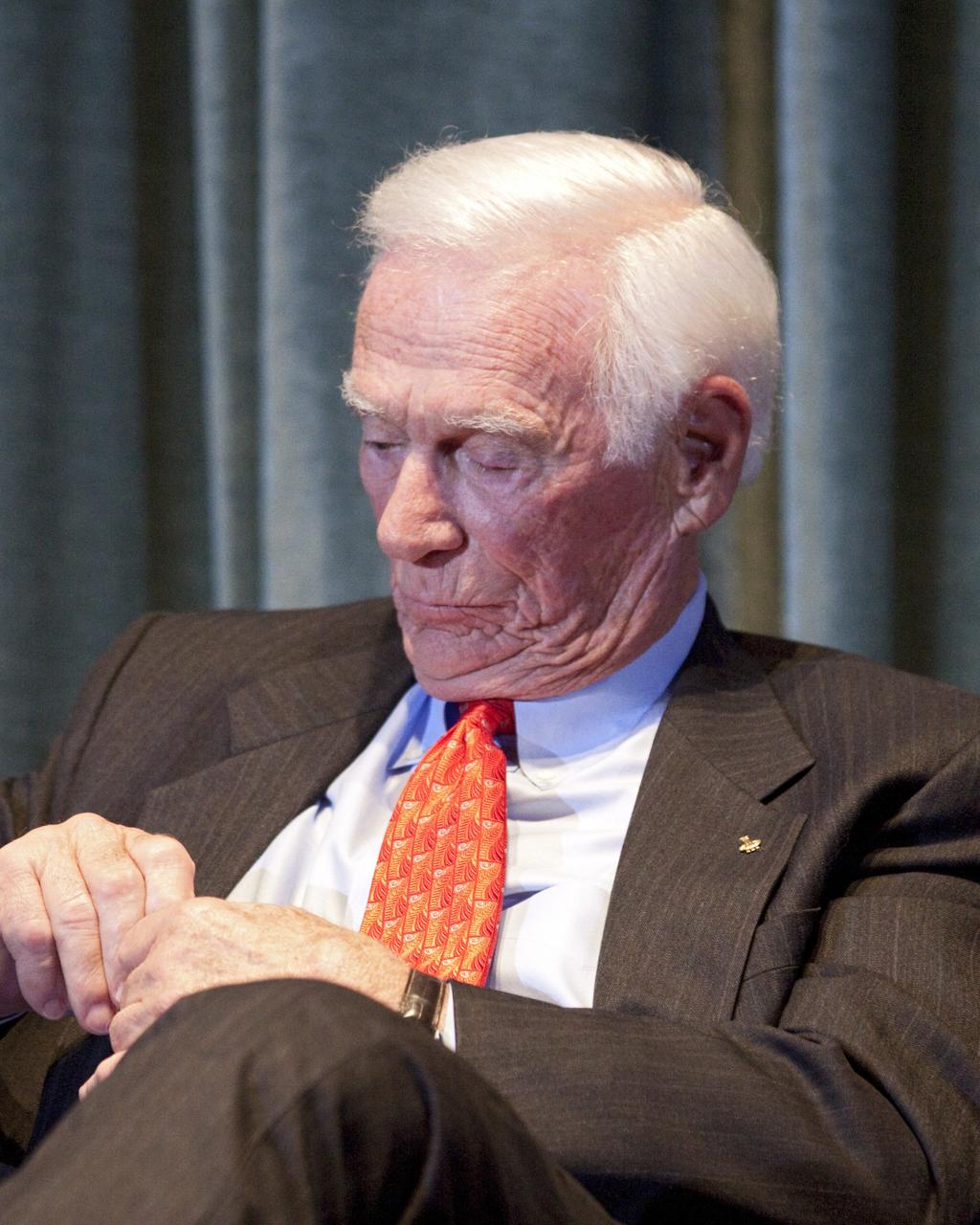
AS17-162-24049 (7-19 Dec. 1972) --- A fellow crewman took this picture of astronaut Eugene A. Cernan dozing aboard the Apollo 17 spacecraft during the final lunar landing mission in NASA's Apollo program. Also, aboard Apollo 17 were astronaut Ronald E. Evans, command module pilot, and scientist-astronaut Harrison H. "Jack" Schmitt, lunar module pilot. Cernan was the mission commander.
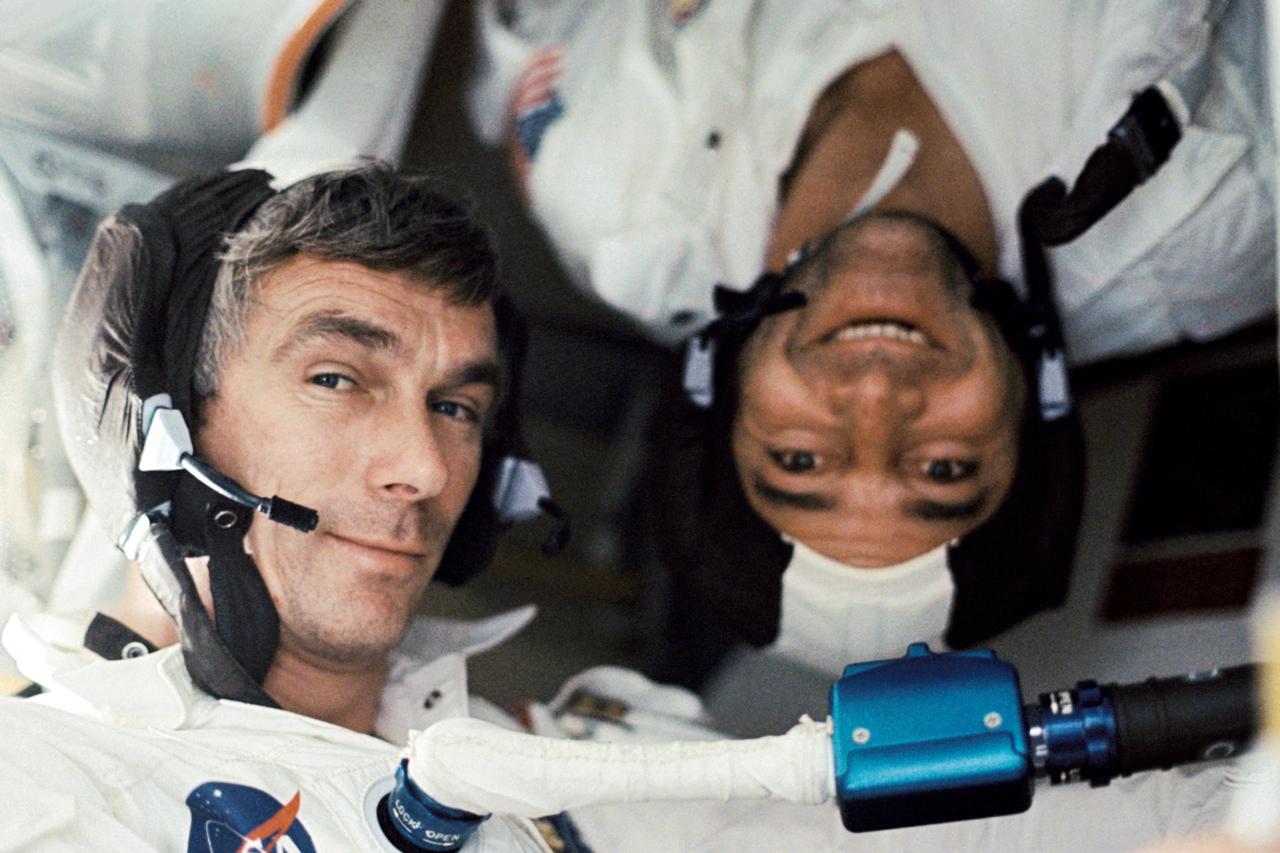
AS17-162-24053 (7-19 Dec. 1972) --- Scientist-astronaut Harrison H. "Jack" Schmitt, lunar module pilot, took this photograph of his two fellow crew men under zero-gravity conditions aboard the Apollo 17 spacecraft during the final lunar landing mission in NASA's Apollo program. That is astronaut Eugene A. Cernan, commander, who is seemingly "right side up." Astronaut Ronald E. Evans, command module pilot, appears to be "upside down." While astronauts Cernan and Schmitt descended in the Lunar Module (LM) "Challenger" to explore the Taurus-Littrow region of the moon, astronaut Evans remained with the Command and Service Modules (CSM) "America" in lunar orbit.
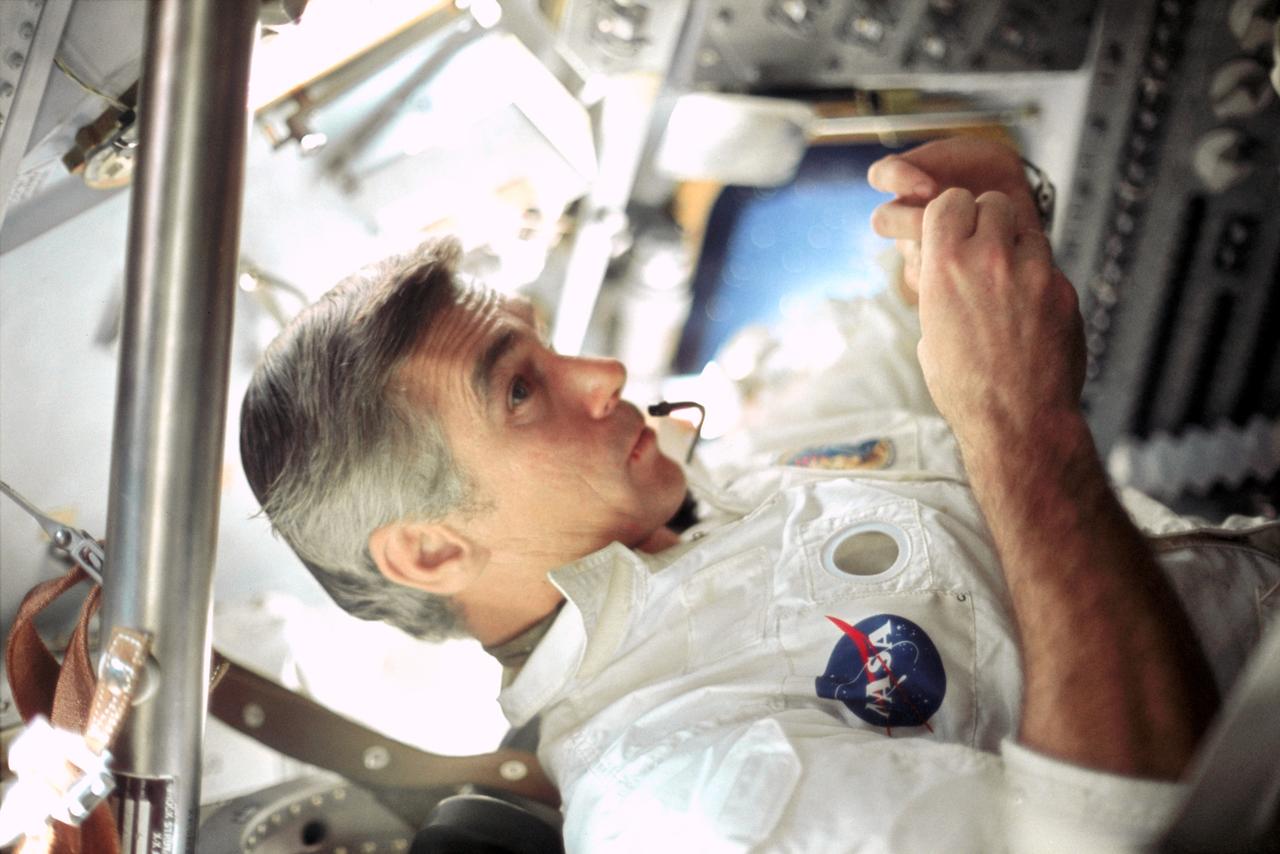
AS17-163-24122 (7-19 Dec. 1972) --- This candid photograph of astronaut Eugene A. Cernan was taken by a fellow crewman aboard the Apollo 17 spacecraft during the final lunar landing mission in NASA's Apollo program. Cernan was the mission commander. Also, aboard Apollo 17 were astronaut Ronald E. Evans, command module pilot, and scientist-astronaut Harrison H. "Jack" Schmitt, lunar module pilot.
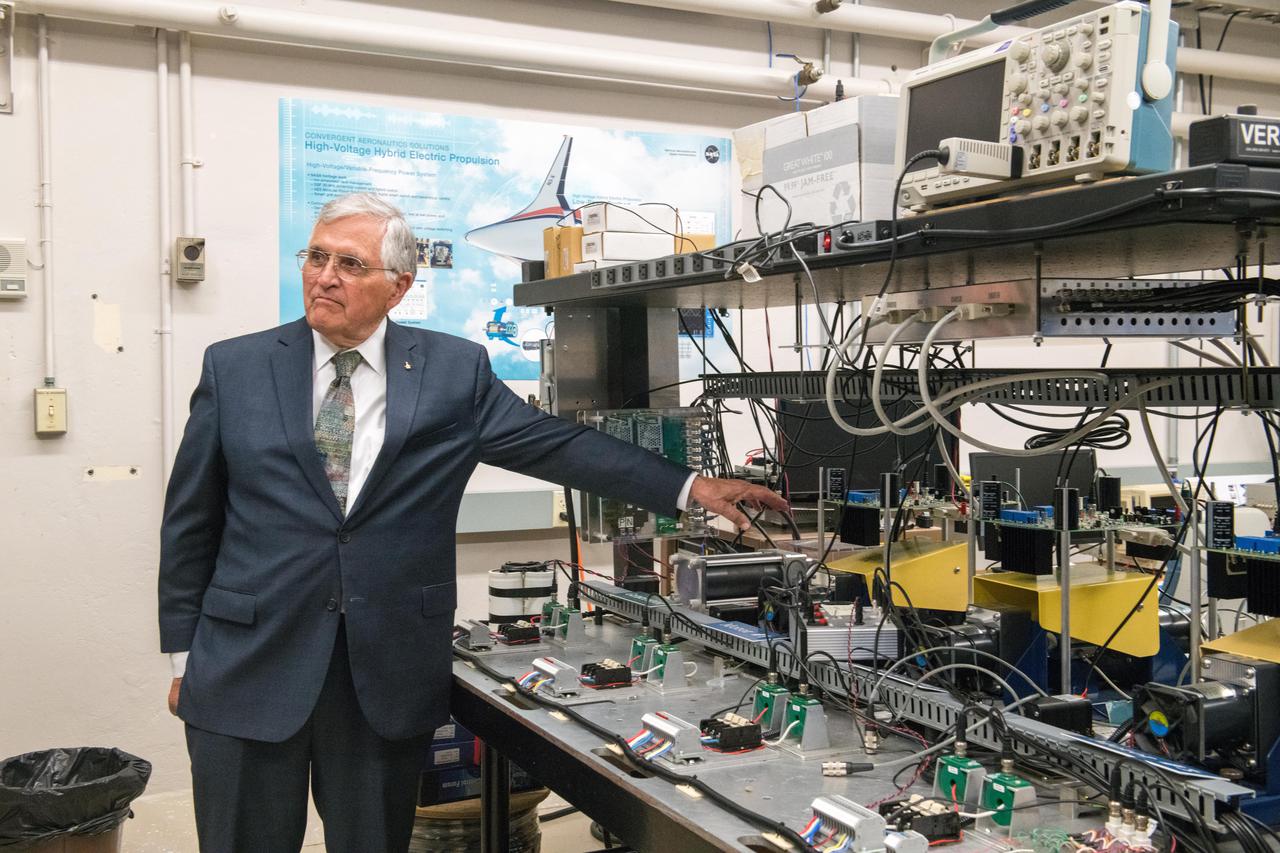
Visit by Dr. Harrison H. Schmitt, Apollo 17 Astronaut
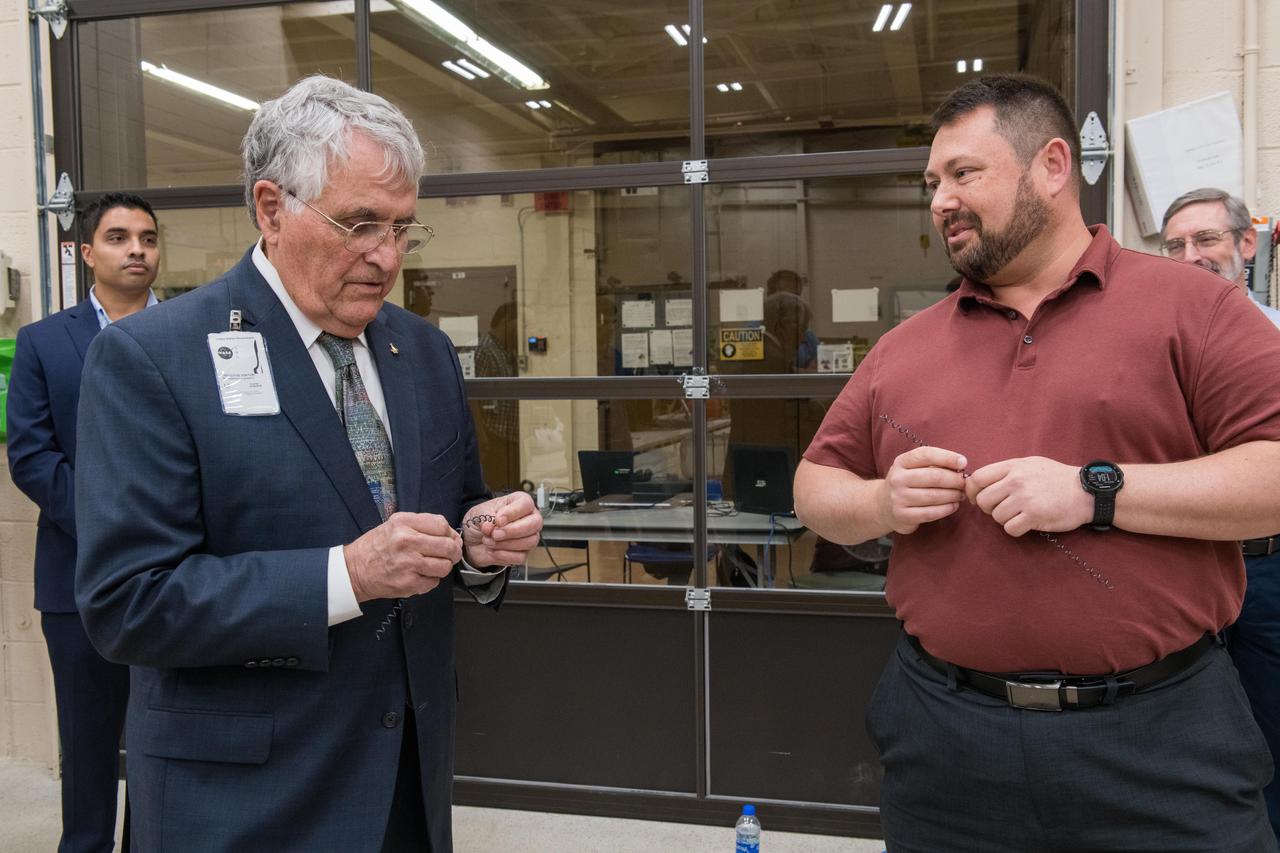
Visit by Dr. Harrison H. Schmitt, Apollo 17 Astronaut
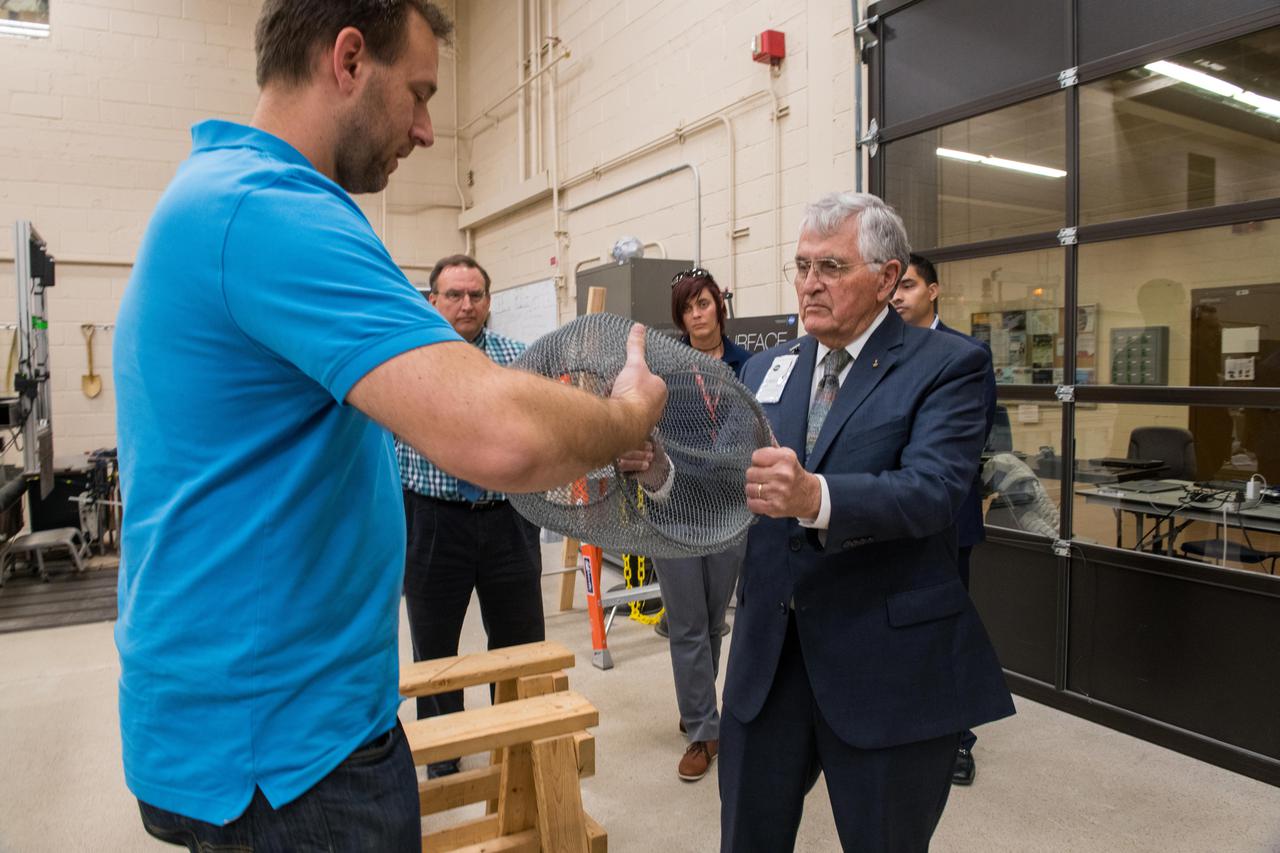
Visit by Dr. Harrison H. Schmitt, Apollo 17 Astronaut
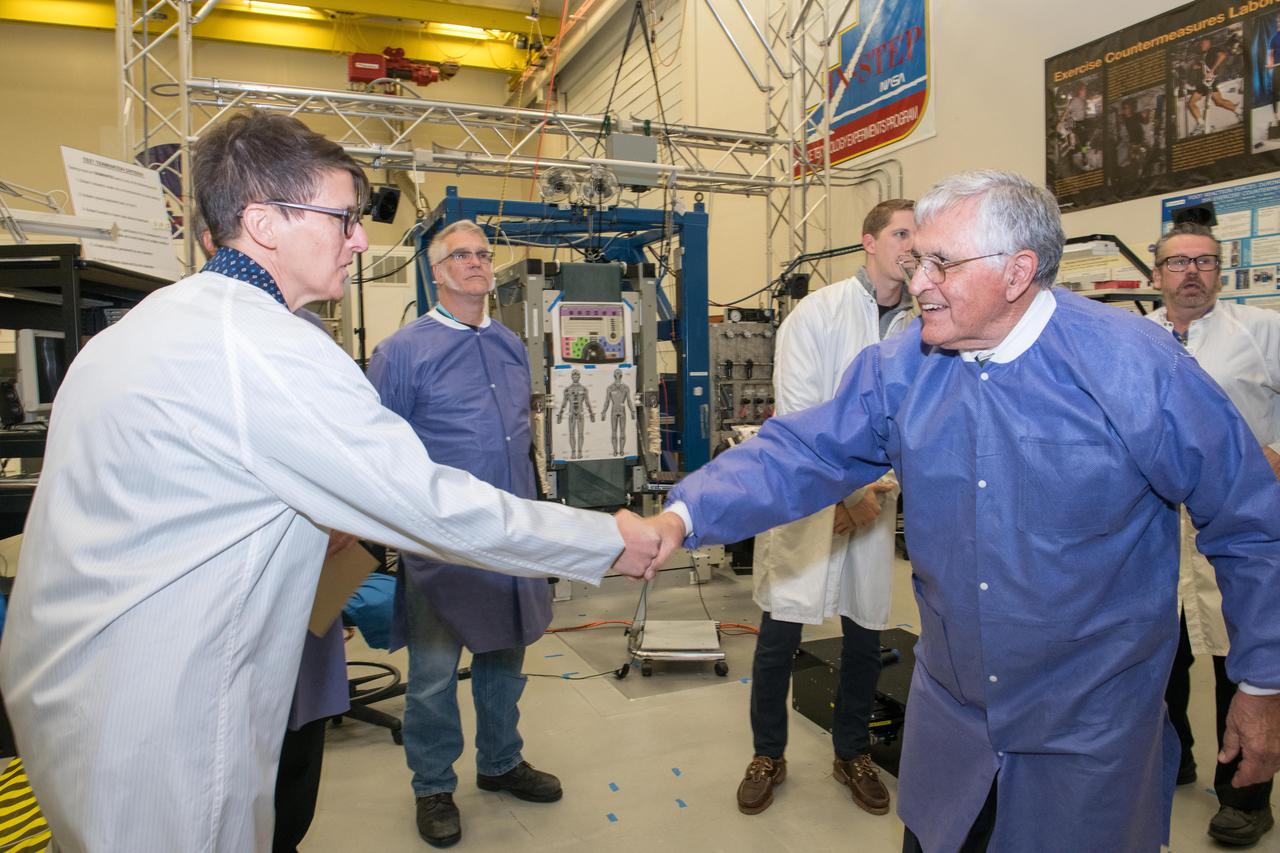
Visit by Dr. Harrison H. Schmitt, Apollo 17 Astronaut
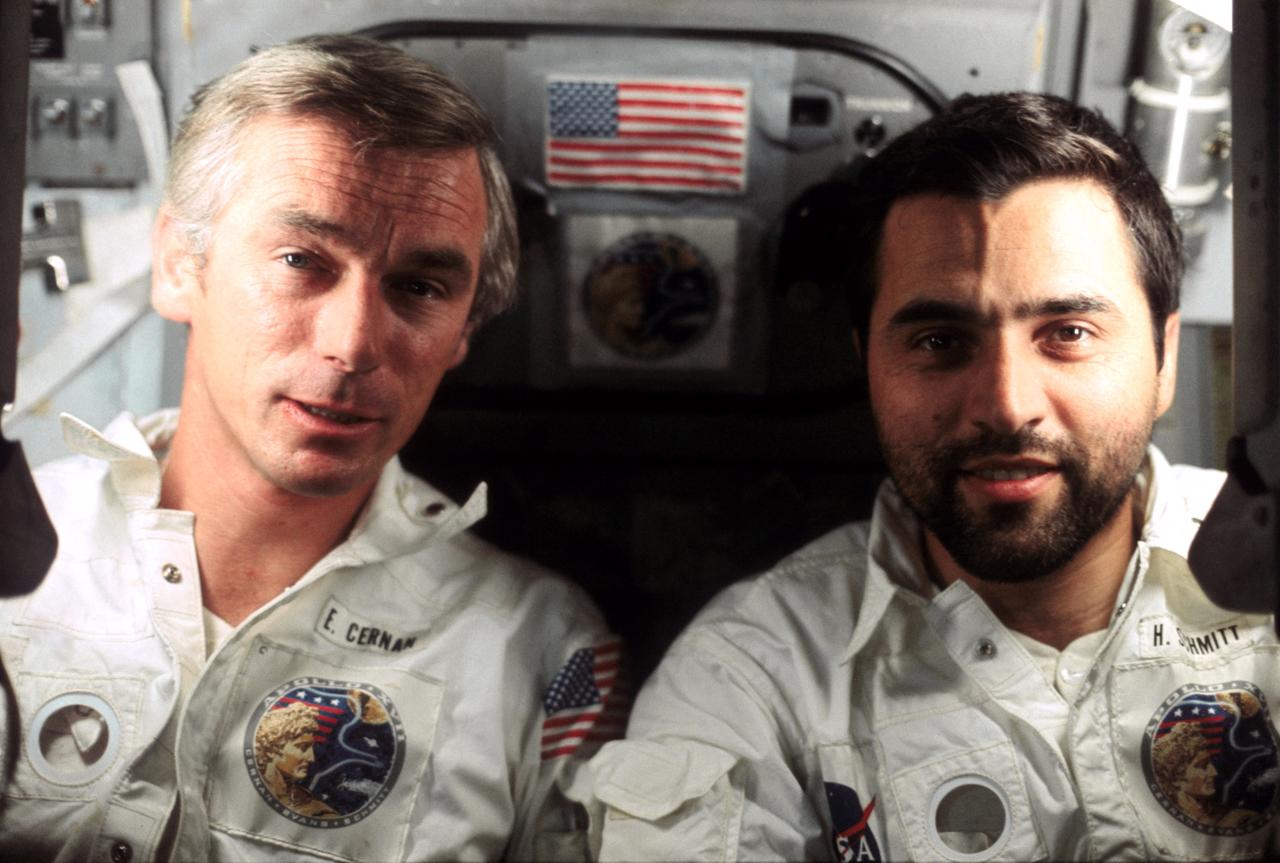
AS17-163-24148 (7-19 Dec. 1972) --- Astronaut Eugene A. Cernan (left) and scientist-astronaut Harrison H. "Jack" Schmitt are photographed by the third crew man aboard the Apollo 17 spacecraft during the final lunar landing mission in NASA's Apollo program. Astronaut Ronald E. Evans, command module pilot, took this picture. Cernan was the mission commander. Schmitt served as the lunar module pilot.
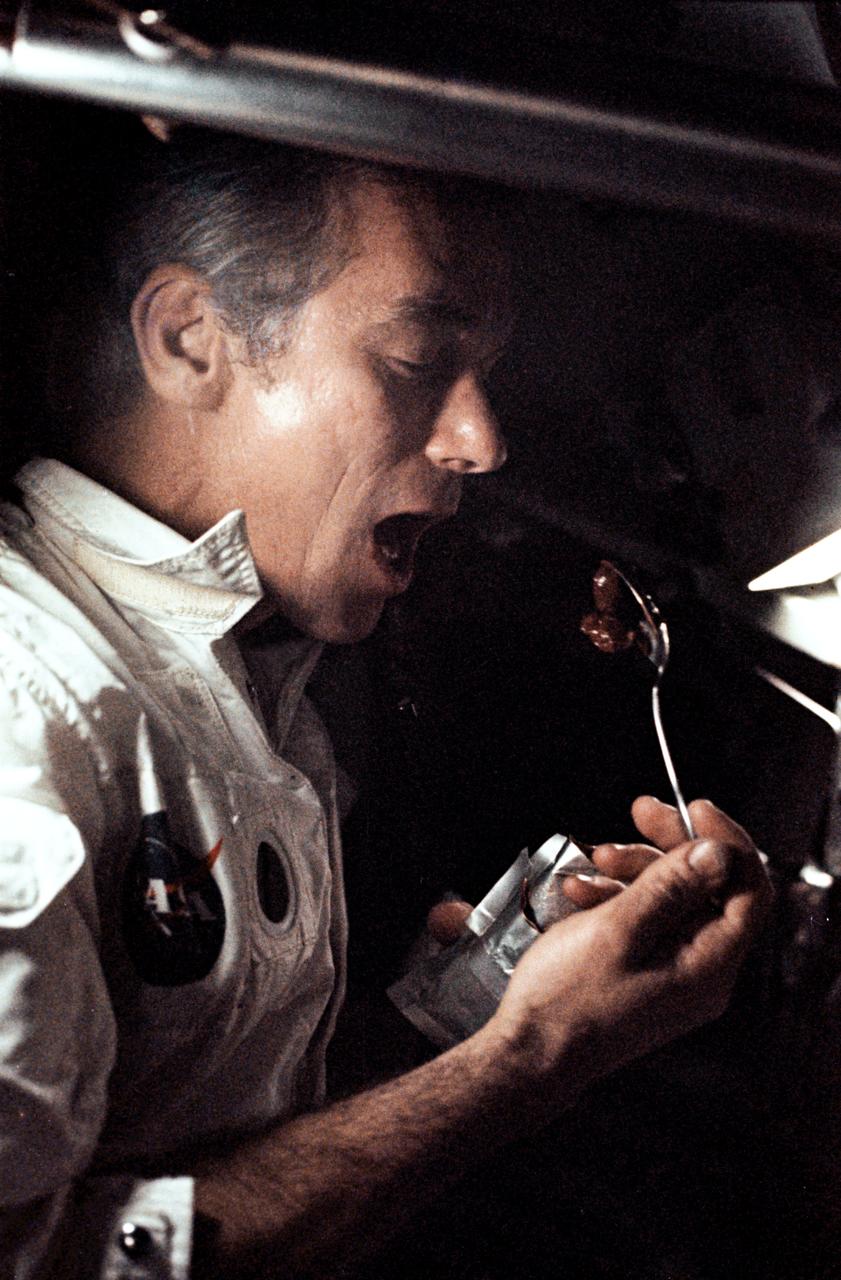
AS17-163-24129 (7-19 Dec. 1972) --- A fellow crewman took this photograph of astronaut Eugene A. Cernan eating a meal under weightlessness conditions of space during the final lunar landing mission in NASA's Apollo program. Also, aboard the Apollo 17 spacecraft were astronaut Ronald E. Evans, command module pilot, and scientist-astronaut Harrison H. "Jack" Schmitt, lunar module pilot. Cernan was the mission commander.
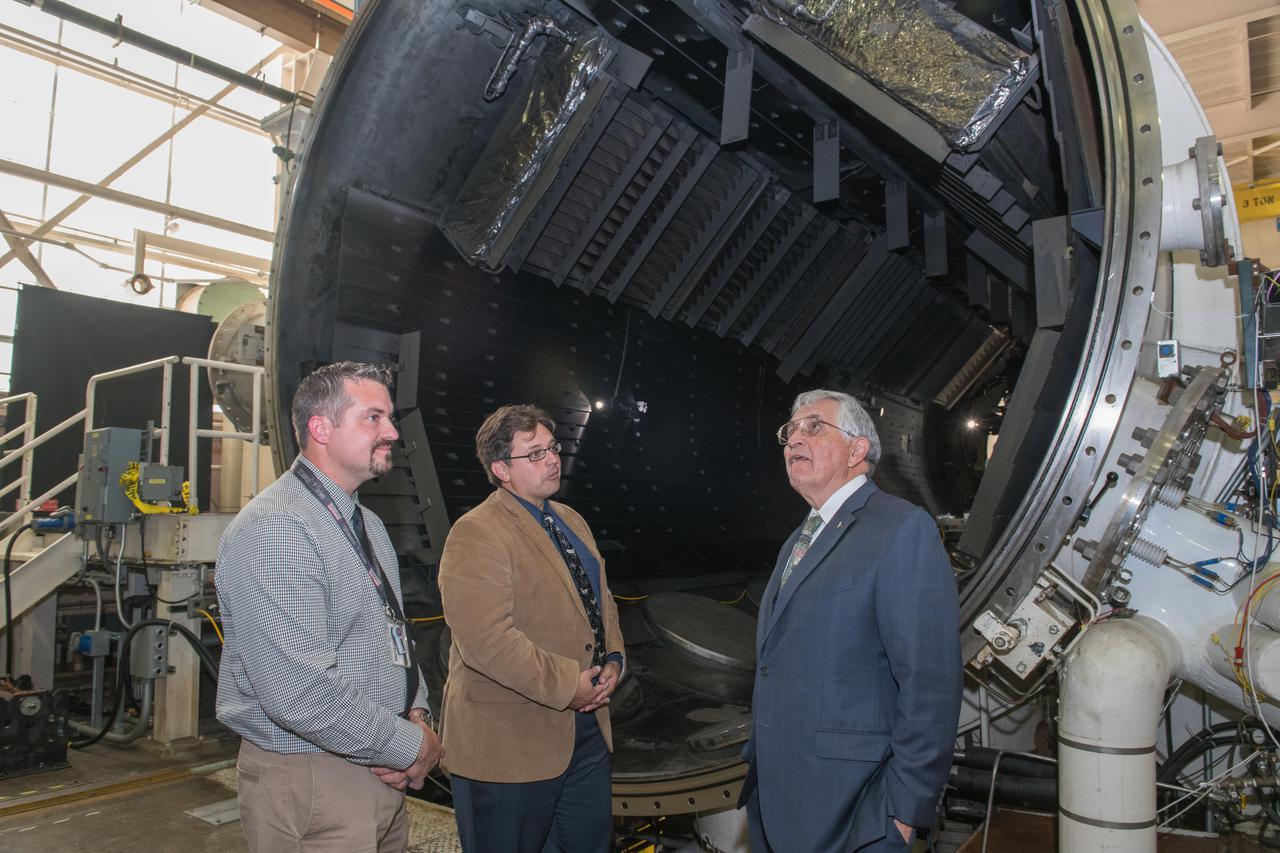
Visit by Dr. Harrison H. Schmitt, Apollo 17 Astronaut
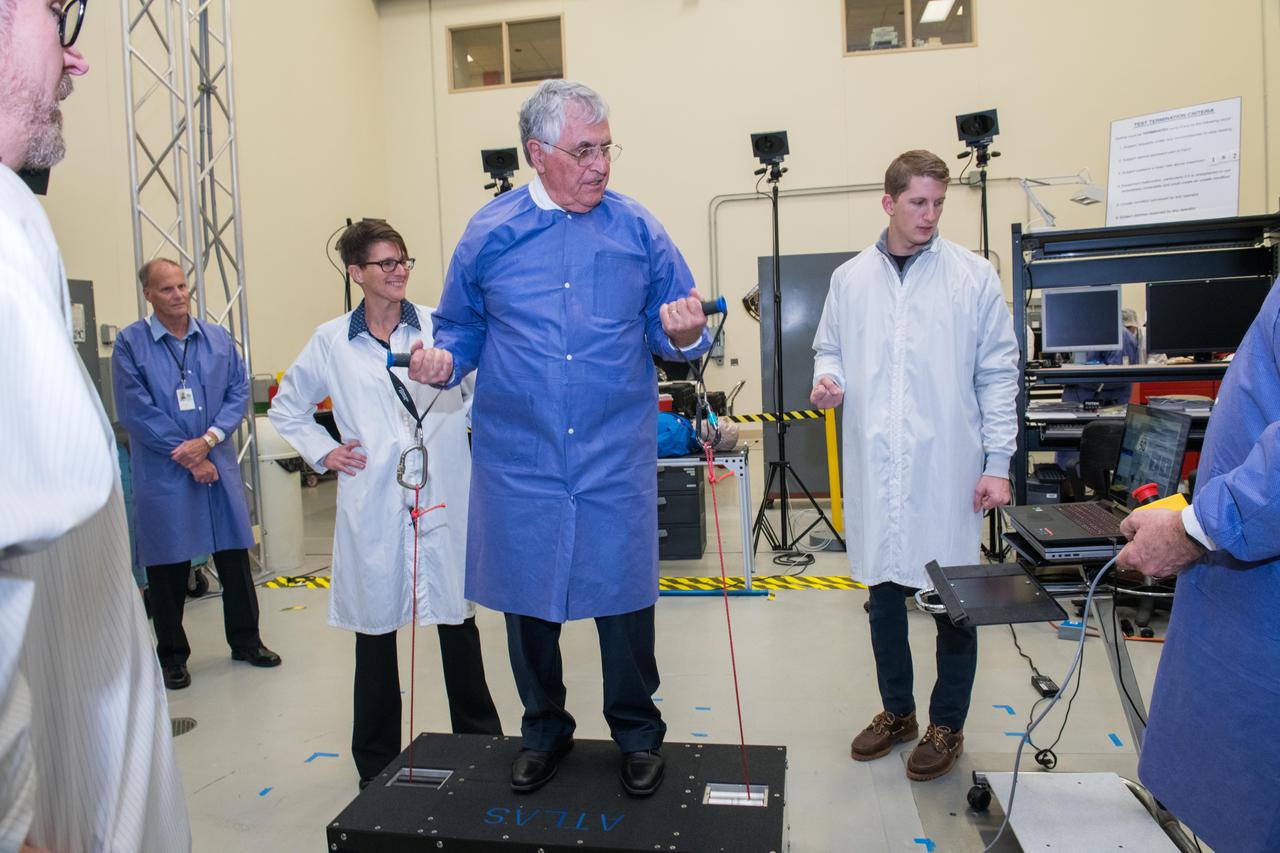
Visit by Dr. Harrison H. Schmitt, Apollo 17 Astronaut
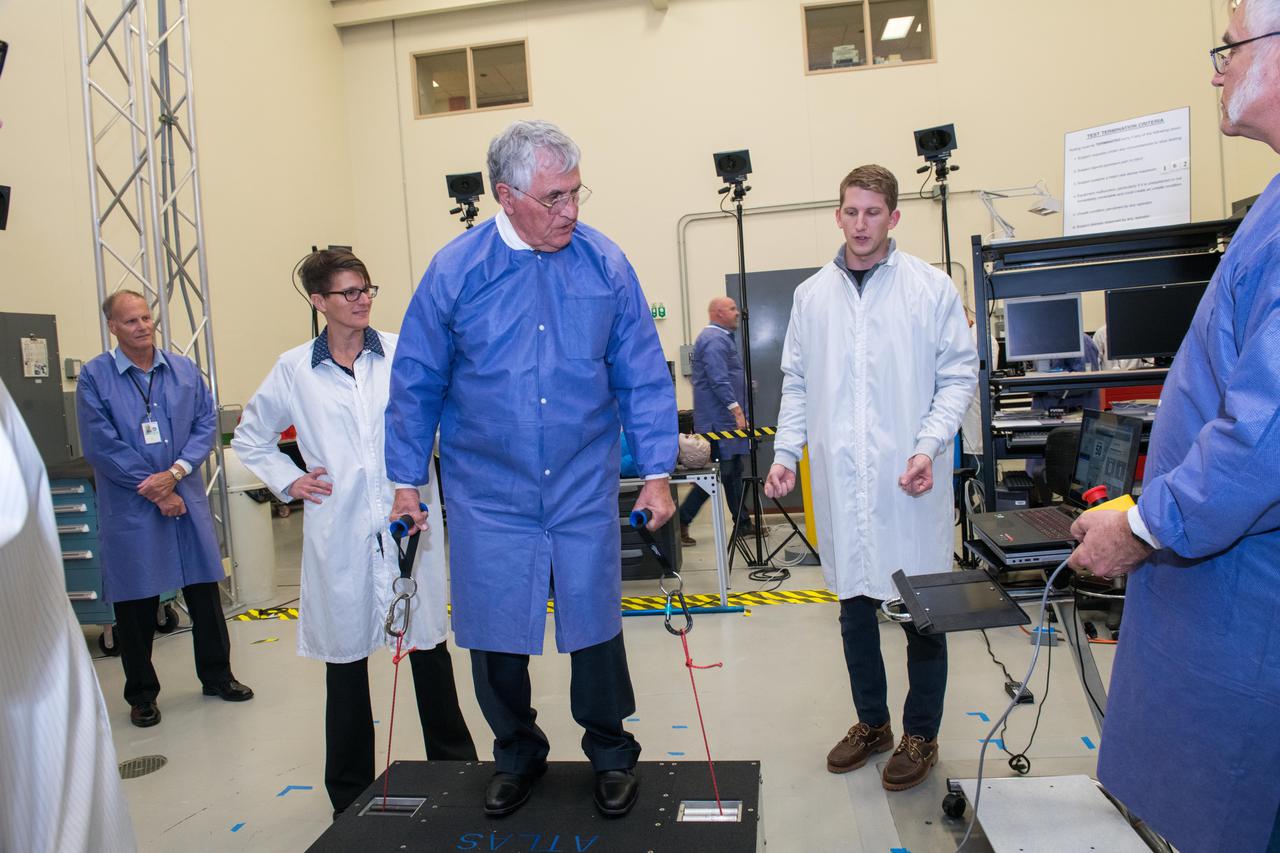
Visit by Dr. Harrison H. Schmitt, Apollo 17 Astronaut
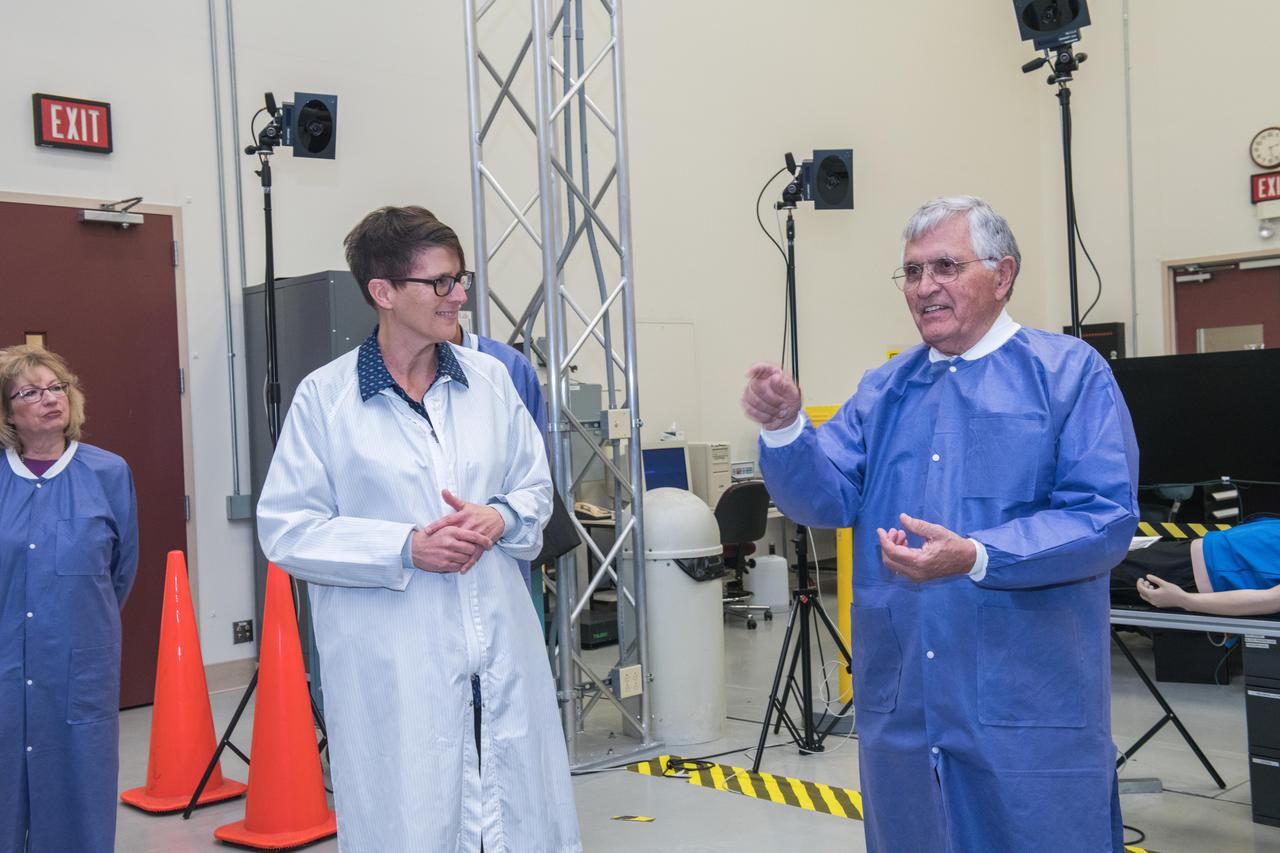
Visit by Dr. Harrison H. Schmitt, Apollo 17 Astronaut
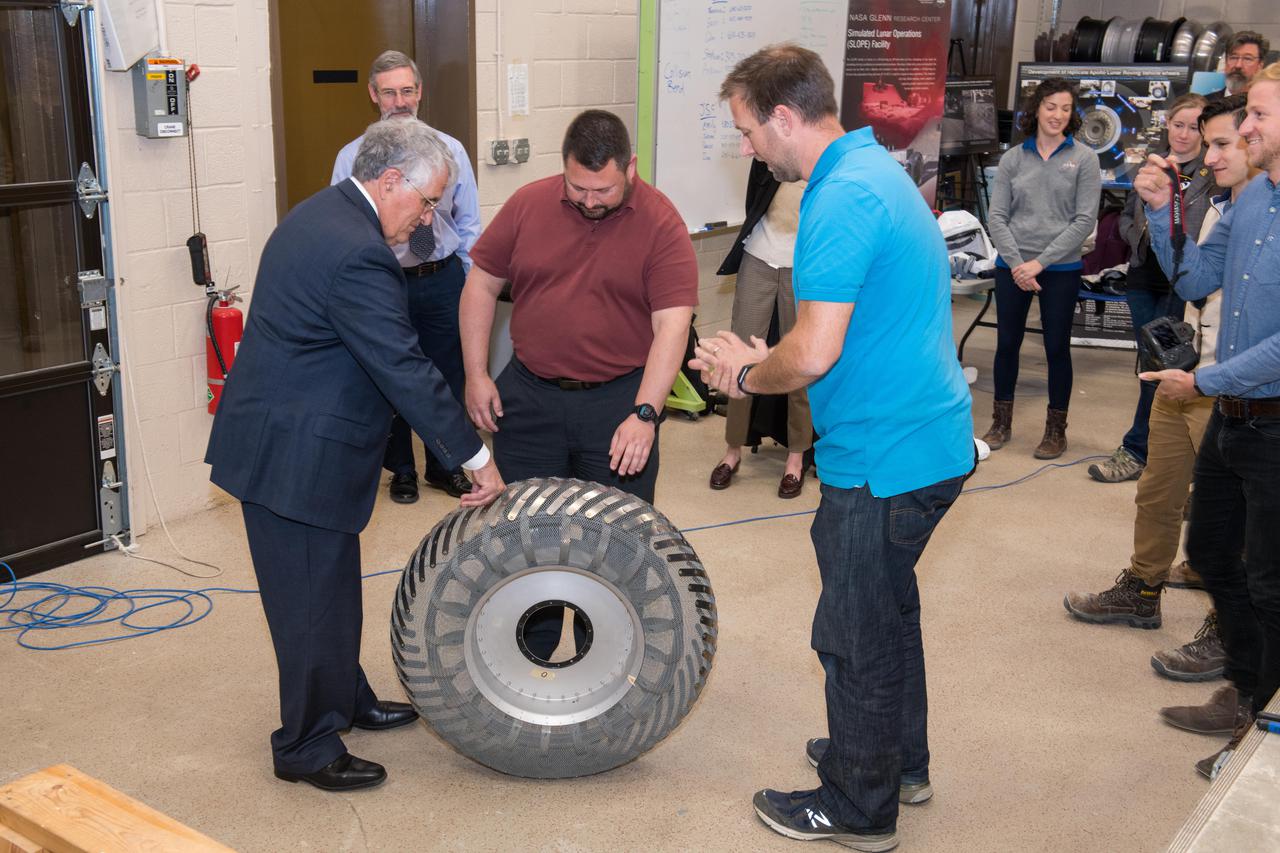
Visit by Dr. Harrison H. Schmitt, Apollo 17 Astronaut
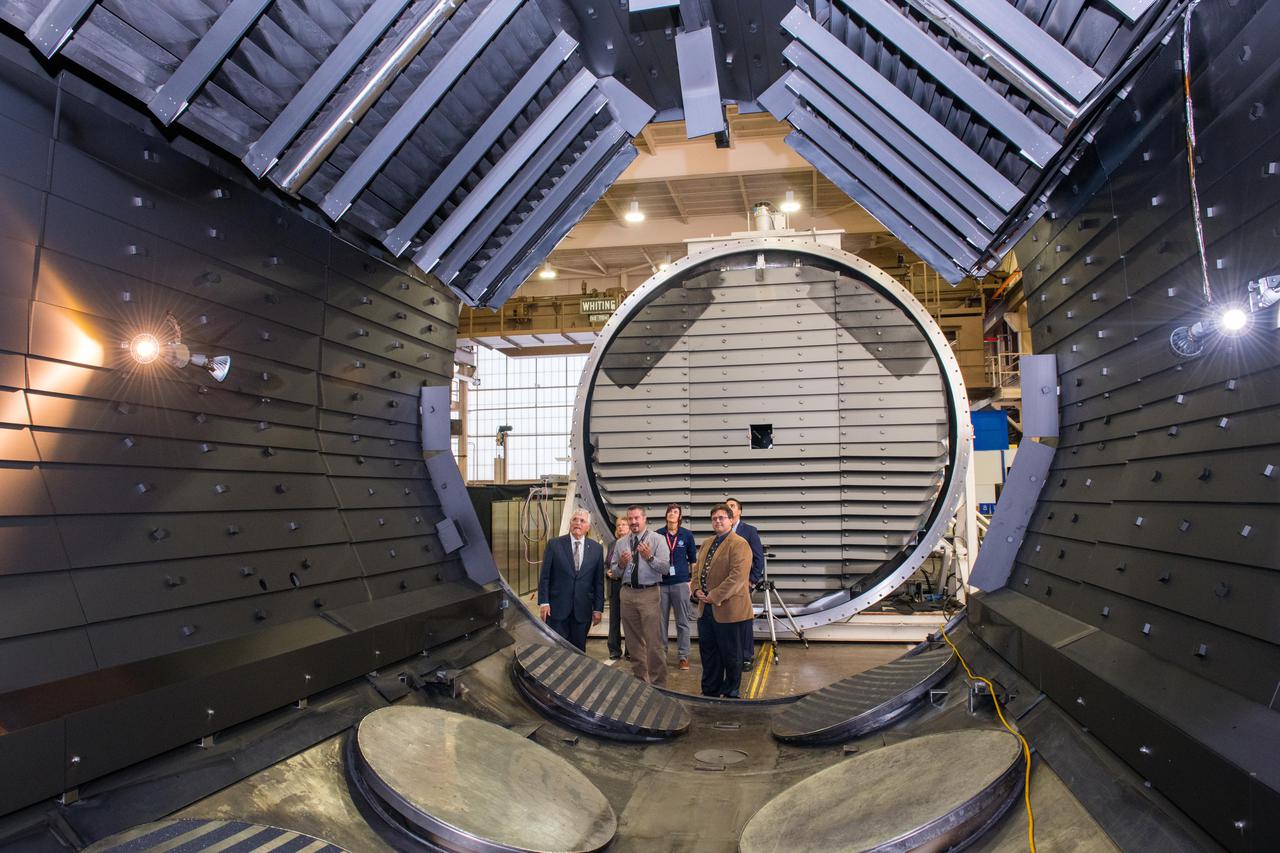
Visit by Dr. Harrison H. Schmitt, Apollo 17 Astronaut
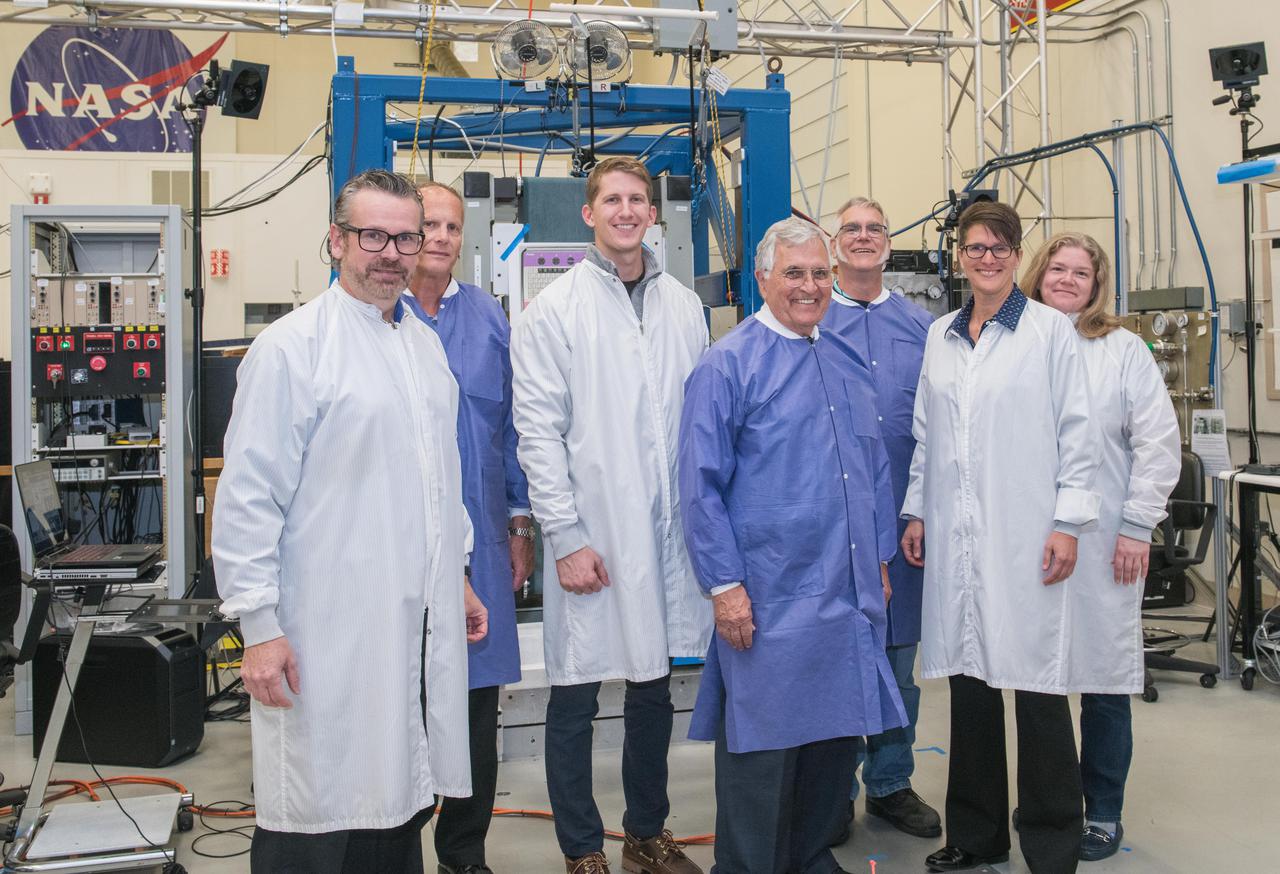
Visit by Dr. Harrison H. Schmitt, Apollo 17 Astronaut
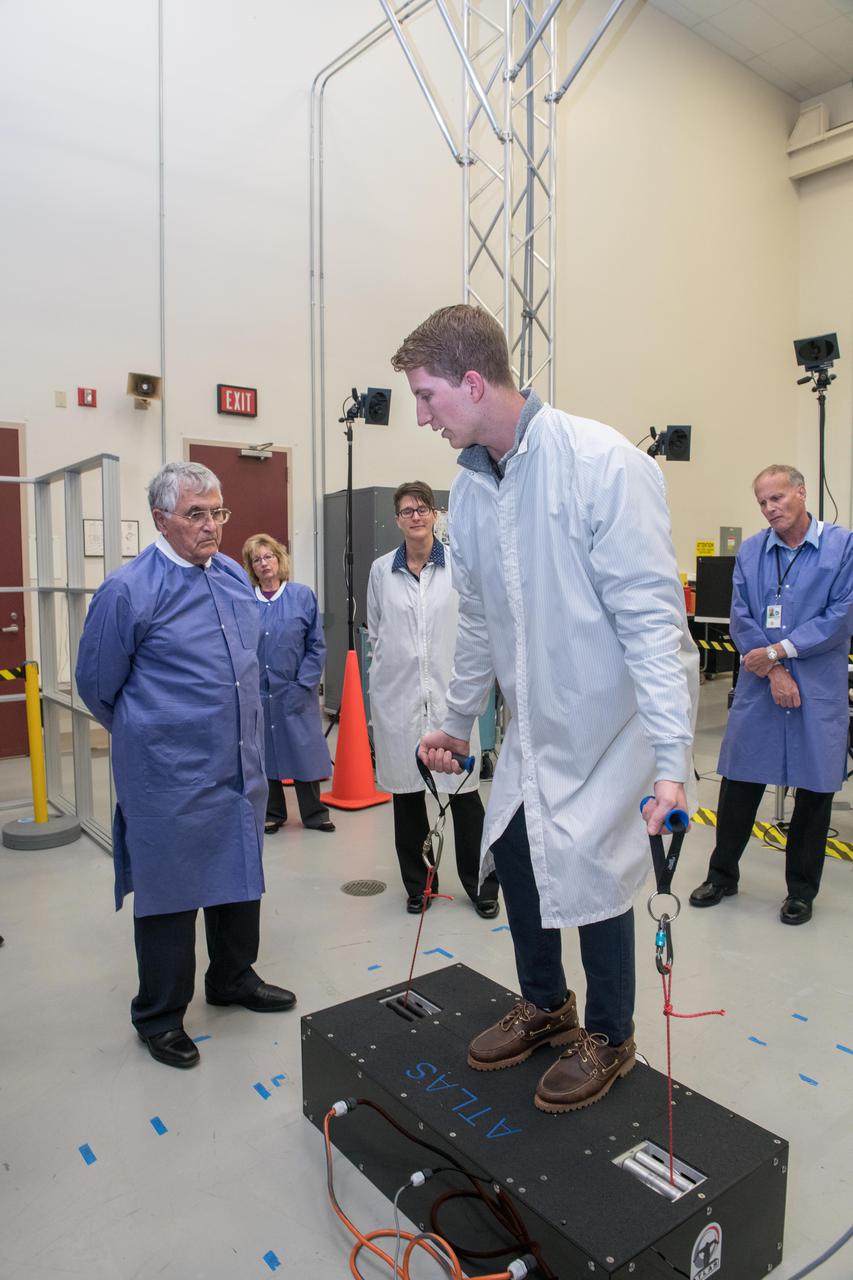
Visit by Dr. Harrison H. Schmitt, Apollo 17 Astronaut
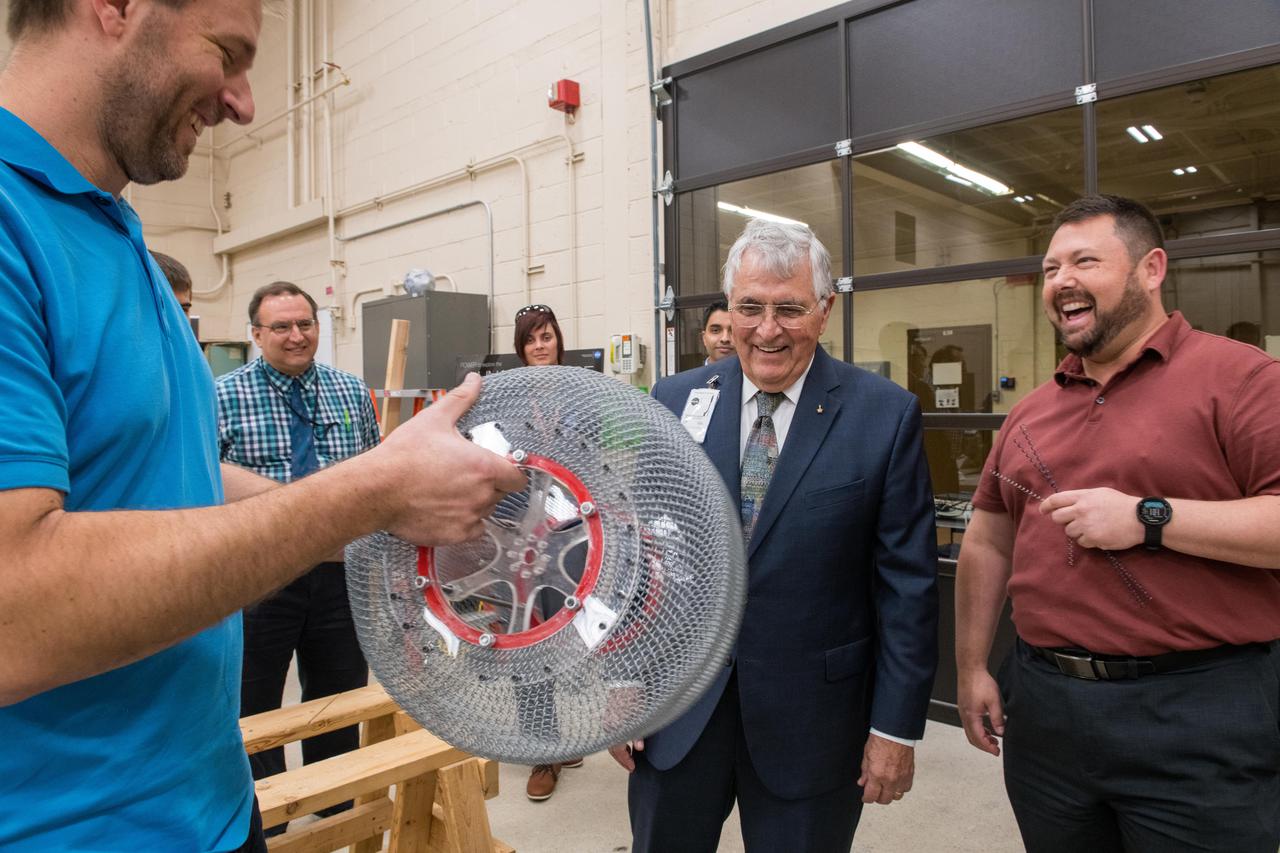
Visit by Dr. Harrison H. Schmitt, Apollo 17 Astronaut
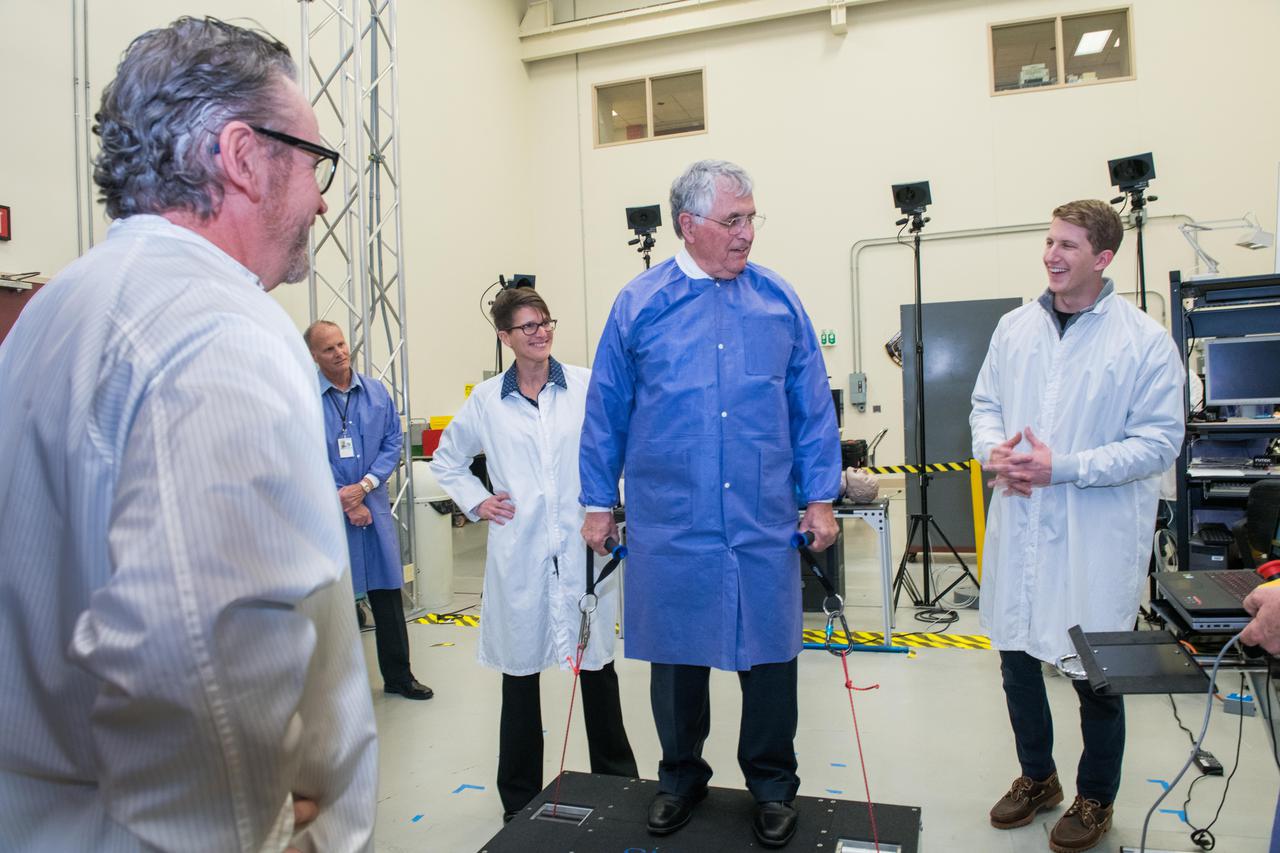
Visit by Dr. Harrison H. Schmitt, Apollo 17 Astronaut
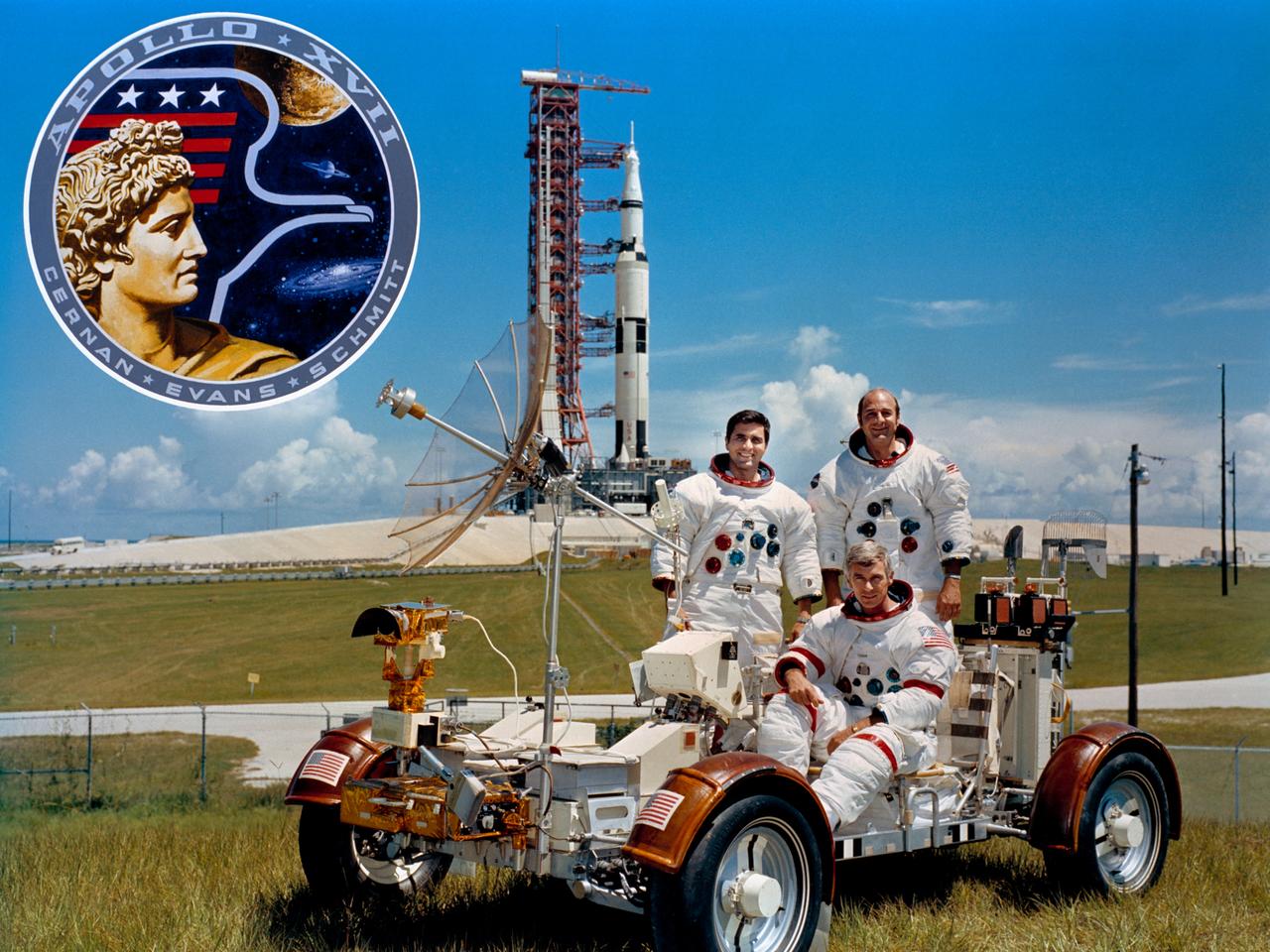
S72-50438 (September 1972) --- These three astronauts are the prime crew members of the Apollo 17 lunar landing mission. They are Eugene A. Cernan (seated), commander; Ronald E. Evans (standing on right), command module pilot; and Harrison H. Schmitt, lunar module pilot. They are photographed with a Lunar Roving Vehicle (LRV) trainer. Cernan and Schmitt will use an LRV during their exploration of the Taurus-Littrow landing site. The Apollo 17 Saturn V space vehicle is in the background. This picture was taken at Pad A, Launch Complex 39, Kennedy Space Center (KSC), Florida. The Apollo 17 insignia is in the photo insert at upper left. The insignia, designed by artist Robert T. McCall in collaboration with the crewmen, is dominated by the image of Apollo, the Greek sun god.
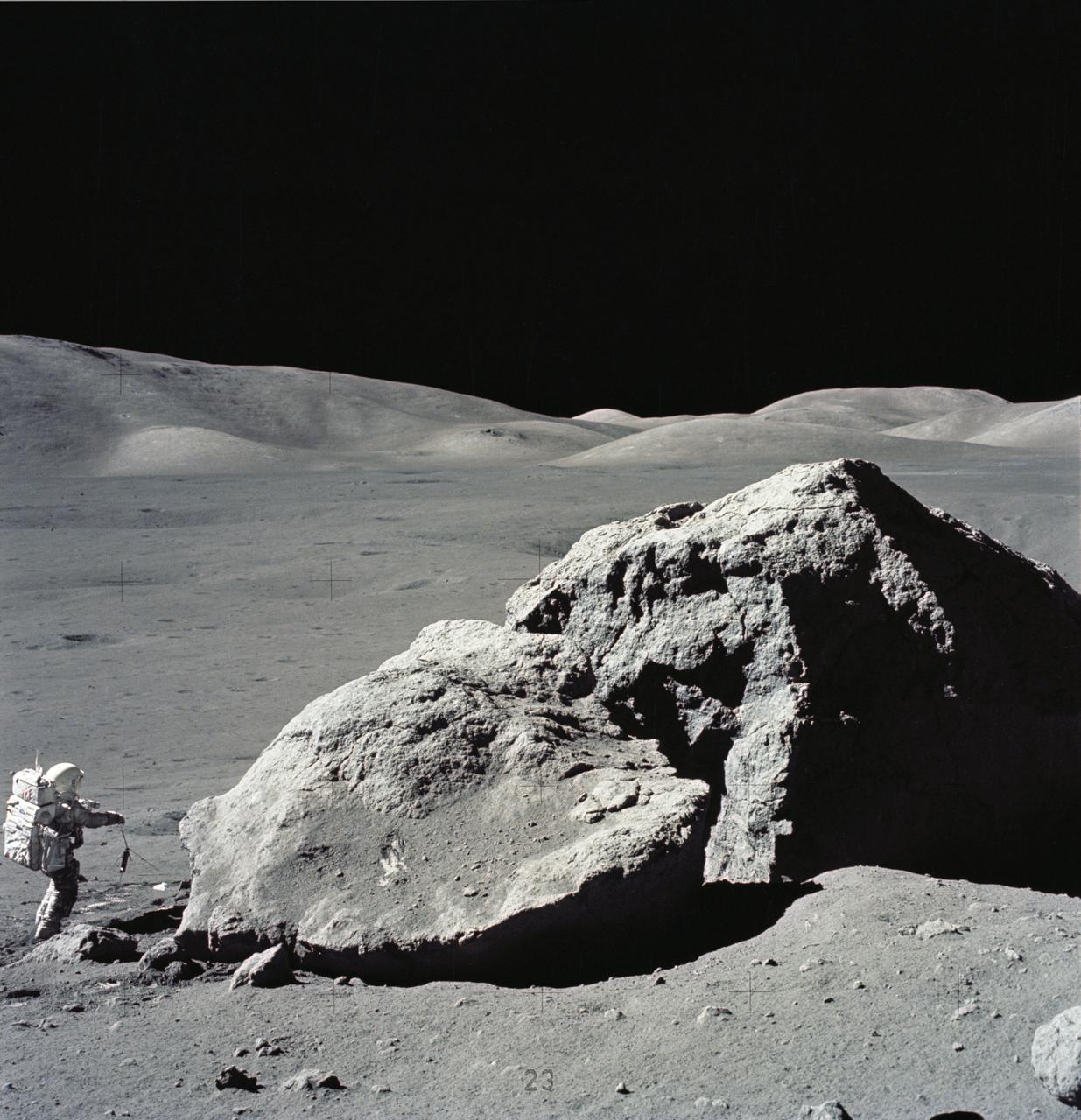
AS17-140-21496 (13 Dec. 1972) --- Scientist-astronaut Harrison H. Schmitt is photographed standing next to a huge, split boulder during the third Apollo 17 extravehicular activity (EVA) at the Taurus-Littrow landing site on the moon. Schmitt is the Apollo 17 lunar module pilot. This picture was taken by astronaut Eugene A. Cernan, commander. While Cernan and Schmitt descended in the Lunar Module (LM) "Challenger" to explore the moon, astronaut Ronald E. Evans, command module pilot, remained with the Apollo 17 Command and Service Modules (CSM) in lunar orbit.
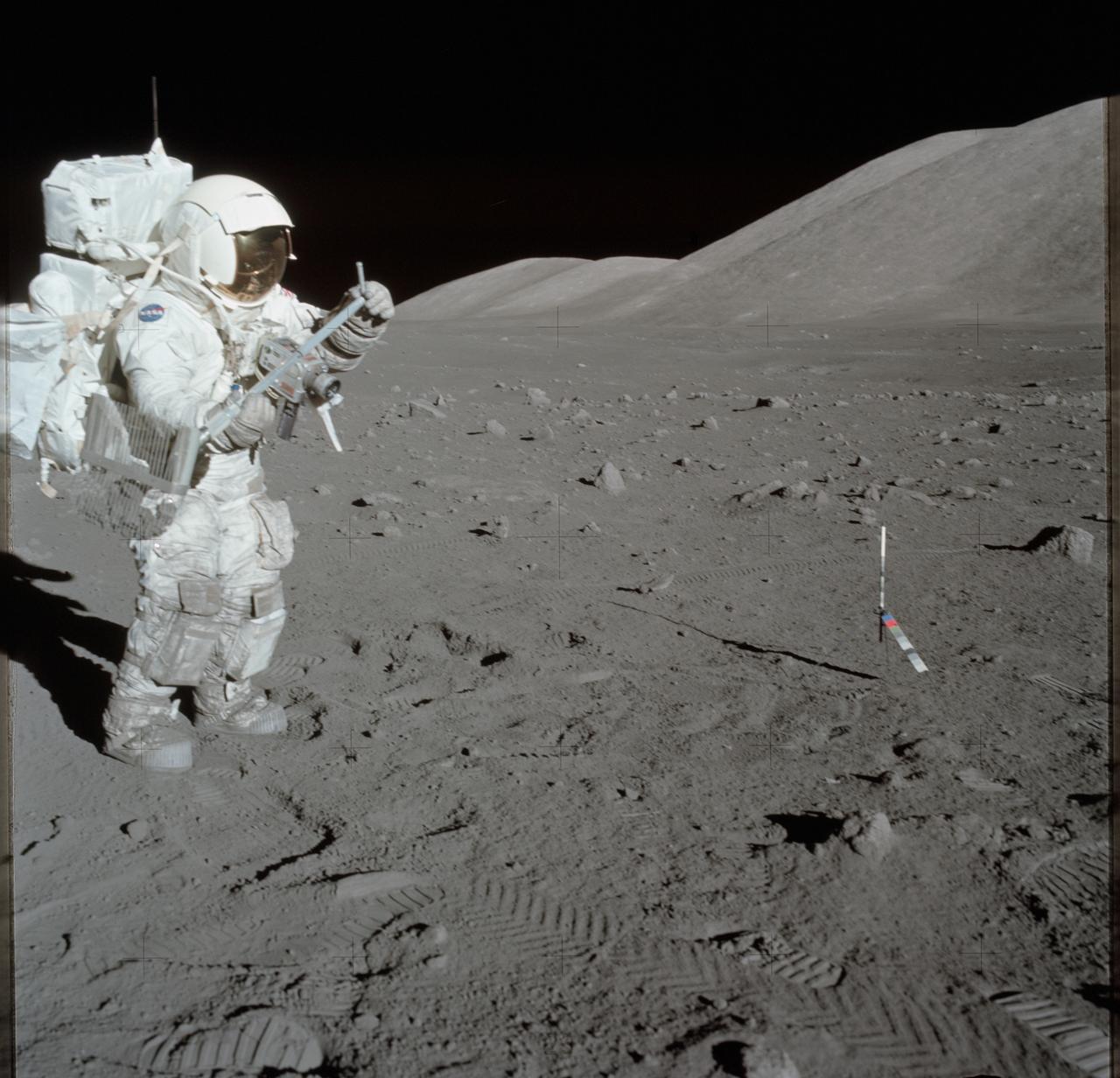
AS17-134-20426 (11 Dec. 1972) --- Scientist-astronaut Harrison H. Schmitt collects lunar rake samples at Station 1 during the first Apollo 17 extravehicular activity (EVA) at the Taurus-Littrow landing site. This picture was taken by astronaut Eugene A. Cernan, Apollo 17 commander. Schmitt is the lunar module pilot. The Lunar Rake, an Apollo Lunar Geology Hand Tool, is used to collect discrete samples of rocks and rock chips ranging in size from one-half inch (1.3 cm) to one inch (2.5 cm).
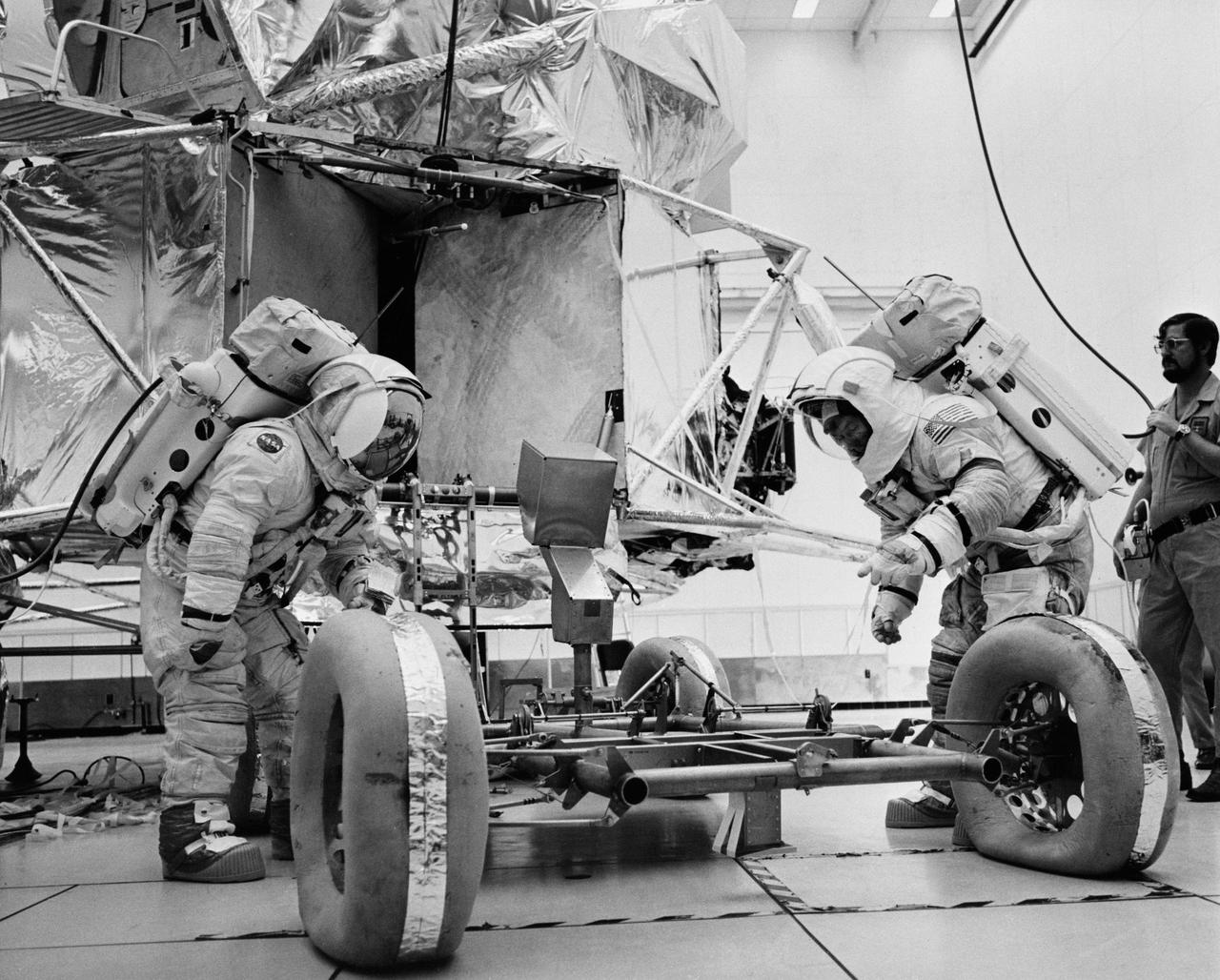
S72-44423 (8 Sept. 1972) --- Two Apollo 17 crewmen ready a Lunar Roving Vehicle trainer following its deployment from a Lunar Module trainer in the Flight Crew Training Building at the Kennedy Space Center, Florida. Taking part in the Apollo 17 training exercise were astronauts Eugene A. Cernan (right), commander; and Harrison H. "Jack" Schmitt, lunar module pilot.
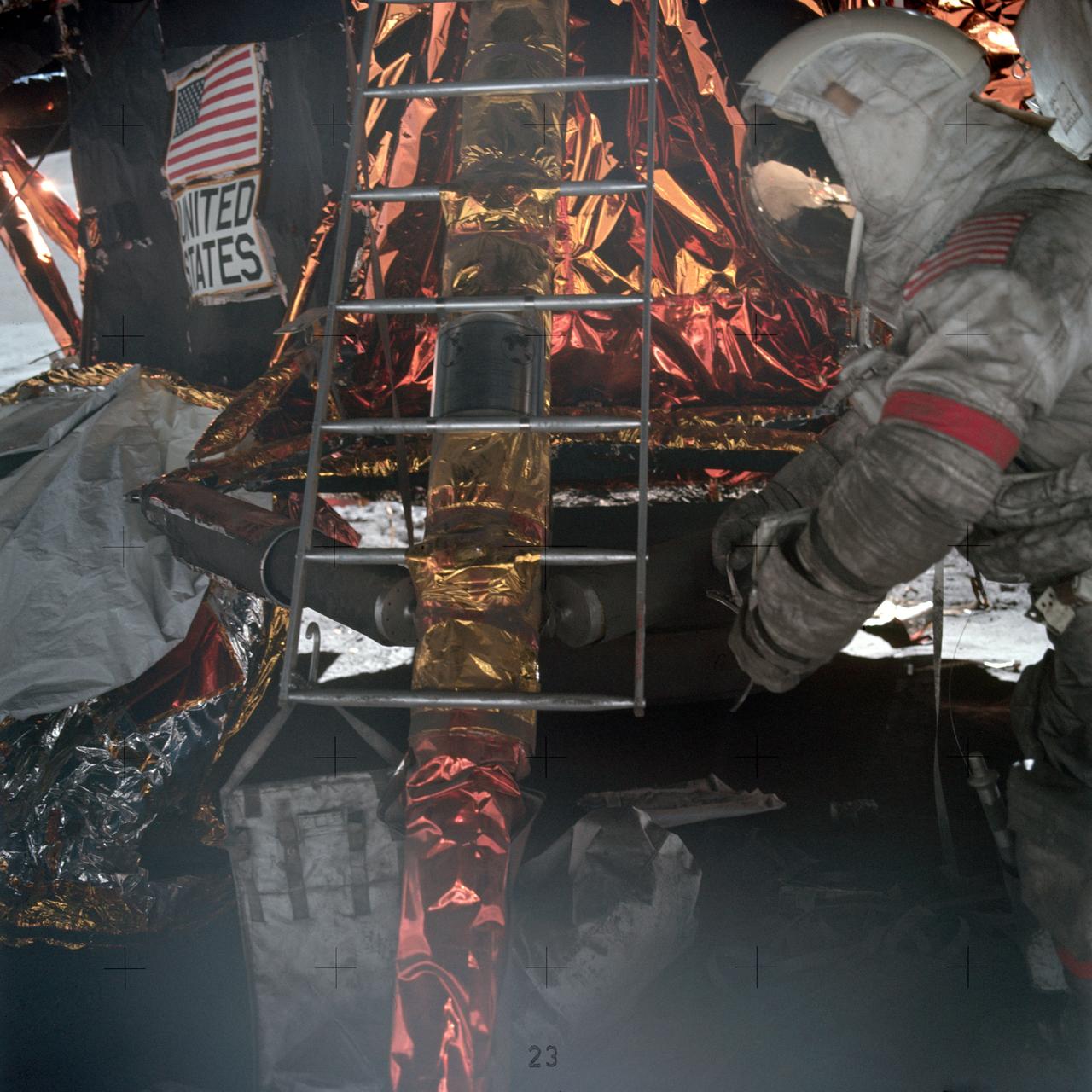
Astronaut Eugene A. Cernan, Apollo 17 commander, prepares to mount ladder to lunar module ascent stage. Note the plaque attached to the ladder which will be left with the descent stage when the mission lifts off from the lunar surface.
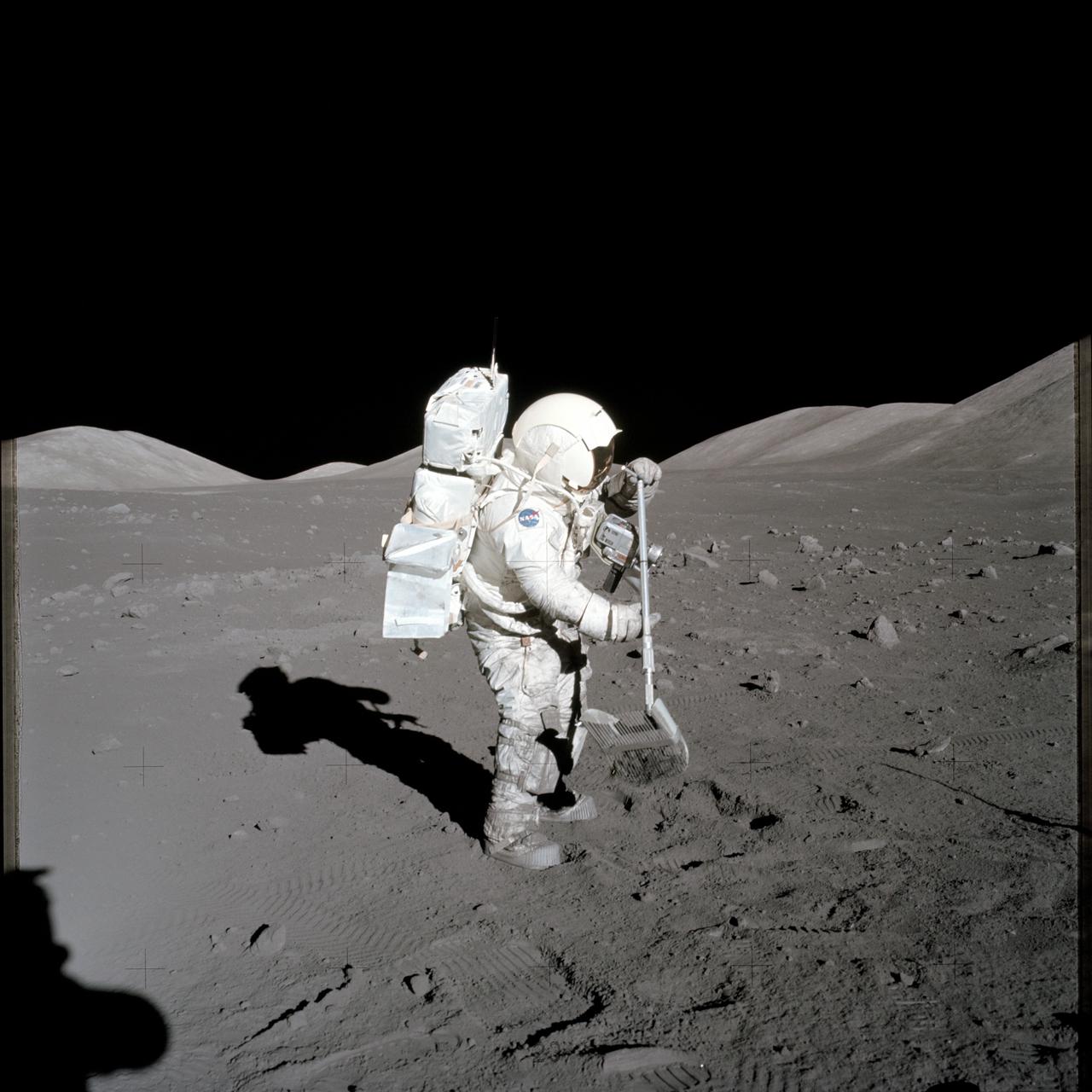
AS17-134-20425 (11 Dec. 1972) --- Scientist-astronaut Harrison H. Schmitt, lunar module pilot, collects lunar rake samples at Station 1 during the first Apollo 17 extravehicular activity (EVA) at the Taurus-Littrow landing site. This picture was taken by astronaut Eugene Cernan, commander. The lunar rake, an Apollo lunar geology hand tool, is used to collect discrete samples of rocks and rock chips ranging in size from one-half inch (1.3 centimeter) to one inch (2.5 centimeter).
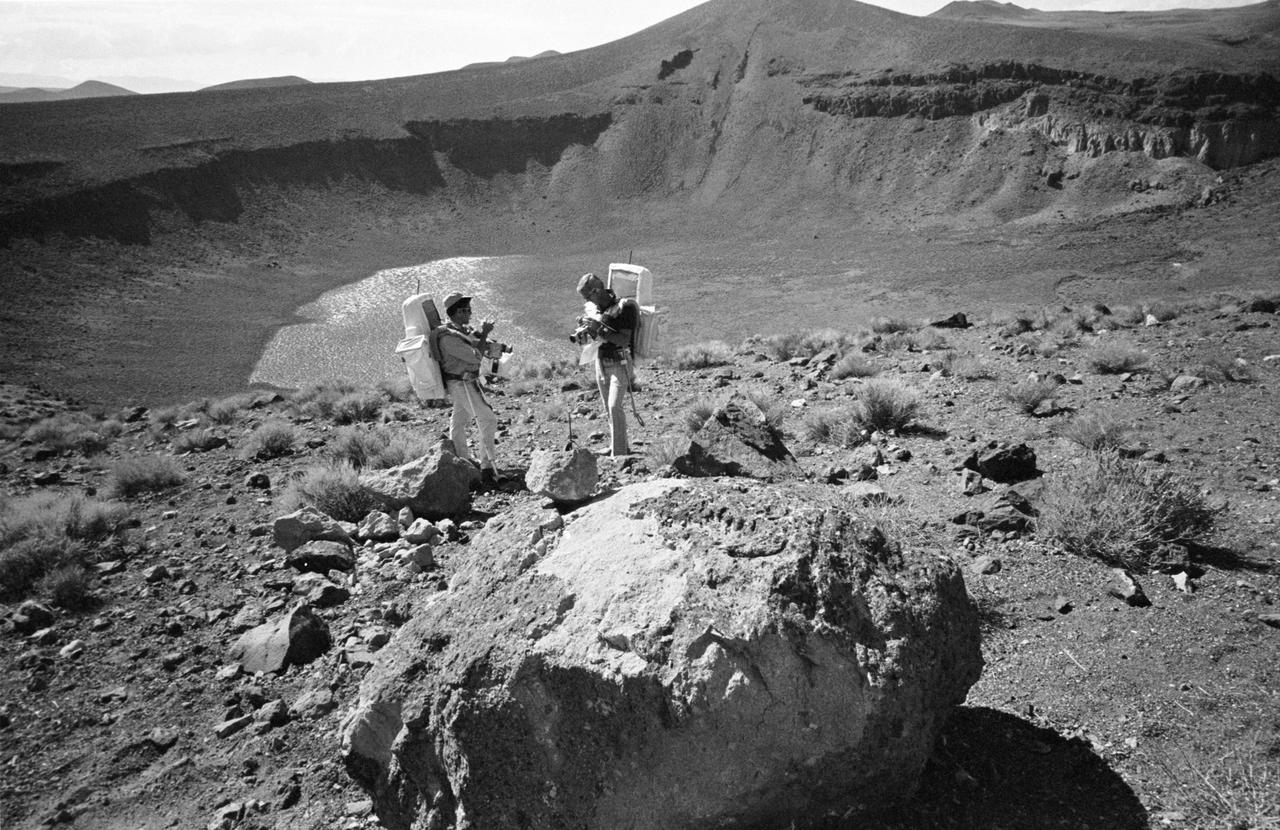
S72-48854 (6 Sept. 1972) --- Two members of the prime crew of the Apollo 17 lunar landing mission examine rock specimens during lunar surface extravehicular activity simulation training on a geological field trip to the Pancake Range area of south-central Nevada. They are astronaut Eugene A. Cernan (right), commander; and scientist-astronaut Harrison H. Schmitt, lunar module pilot. They are standing on the rim of Lunar Crater, which is about 600 feet deep and five-eighths of a mile in diameter. It is a volcanic crater.
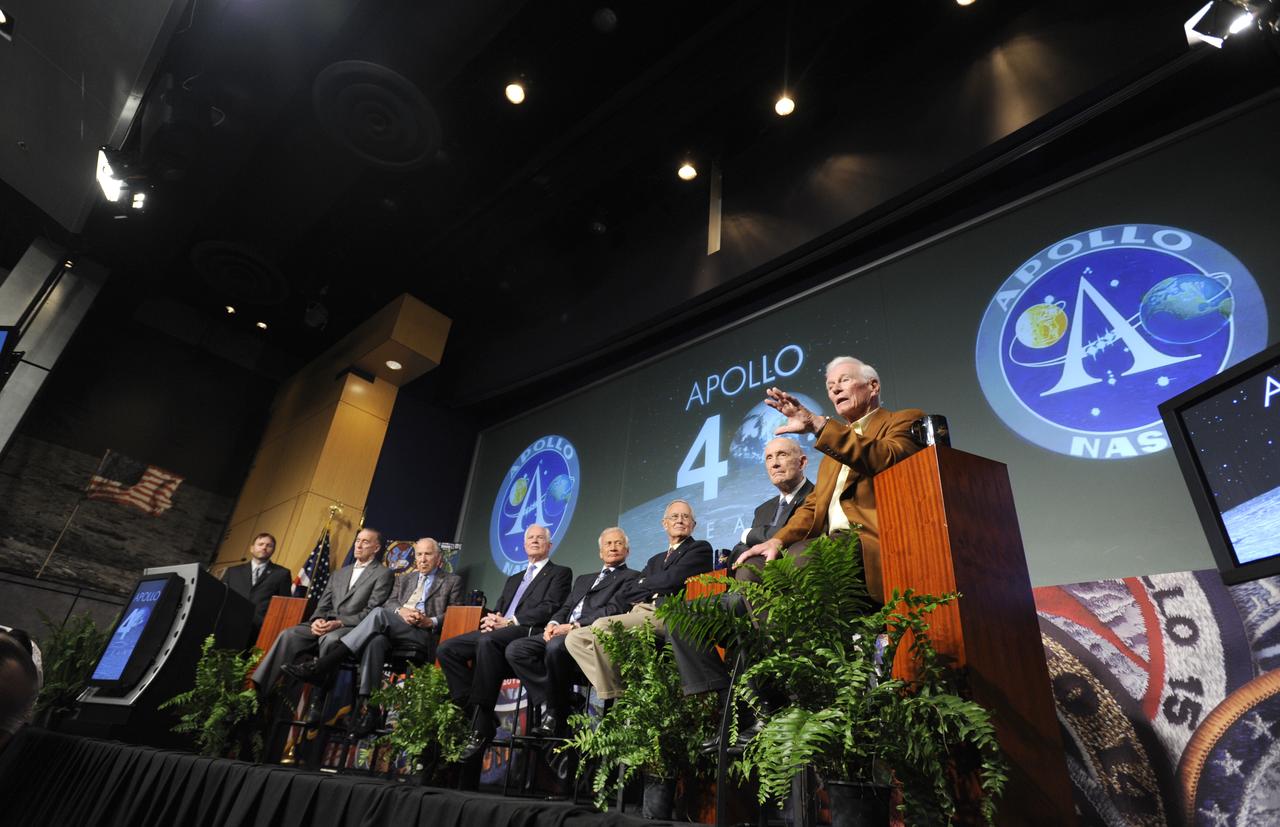
Apollo astronauts from left, Walt Cunningham (Apollo 17), James Lovell (Apollo 8 Apollo 13), David Scott (Apollo 9 Apollo 15), Buzz Aldrin (Apollo 11), Charles Duke (Apollo 16), Thomas Stafford (Apollo 10) and Eugene Cernan (Apollo 17) are seen during the 40th anniversary of the Apollo 11 mission and the walk on the moon press conference, Monday, July 20, 2009, at NASA Headquarters in Washington. Photo Credit: (NASA/Paul E. Alers)
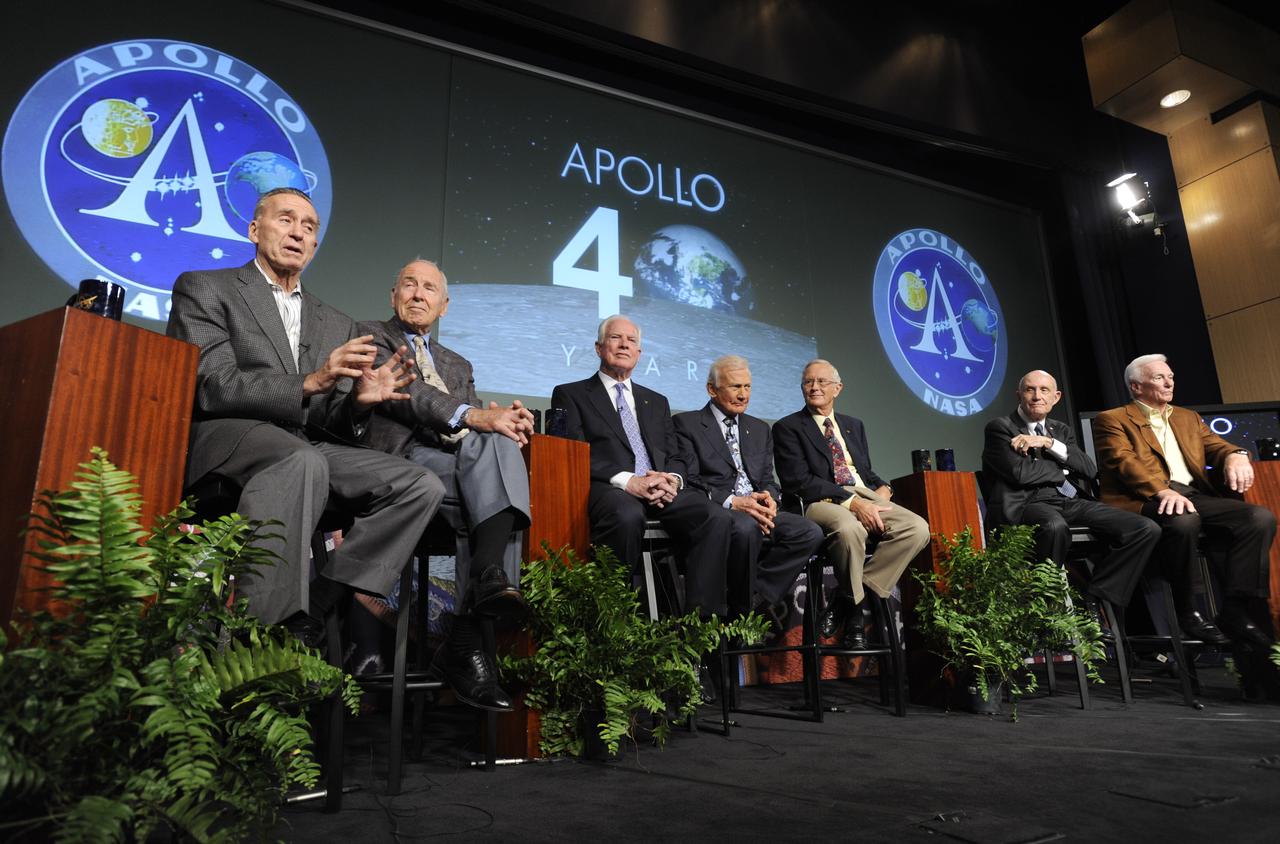
Apollo astronauts from left, Walt Cunningham (Apollo 17), James Lovell (Apollo 8 Apollo 13), David Scott (Apollo 9 Apollo 15), Buzz Aldrin (Apollo 11), Charles Duke (Apollo 16), Thomas Stafford (Apollo 10) and Eugene Cernan (Apollo 17) are seen during the 40th anniversary of the Apollo 11 mission and the walk on the moon press conference, Monday, July 20, 2009, at NASA Headquarters in Washington. Photo Credit: (NASA/Paul E. Alers)

Apollo astronauts from left, Walt Cunningham (Apollo 17), James Lovell (Apollo 8 Apollo 13), David Scott (Apollo 9 Apollo 15), Buzz Aldrin (Apollo 11), Charles Duke (Apollo 16), Thomas Stafford (Apollo 10) and Eugene Cernan (Apollo 17) are seen during the 40th anniversary of the Apollo 11 mission and the walk on the moon press conference, Monday, July 20, 2009, at NASA Headquarters in Washington. Photo Credit: (NASA/Paul E. Alers)
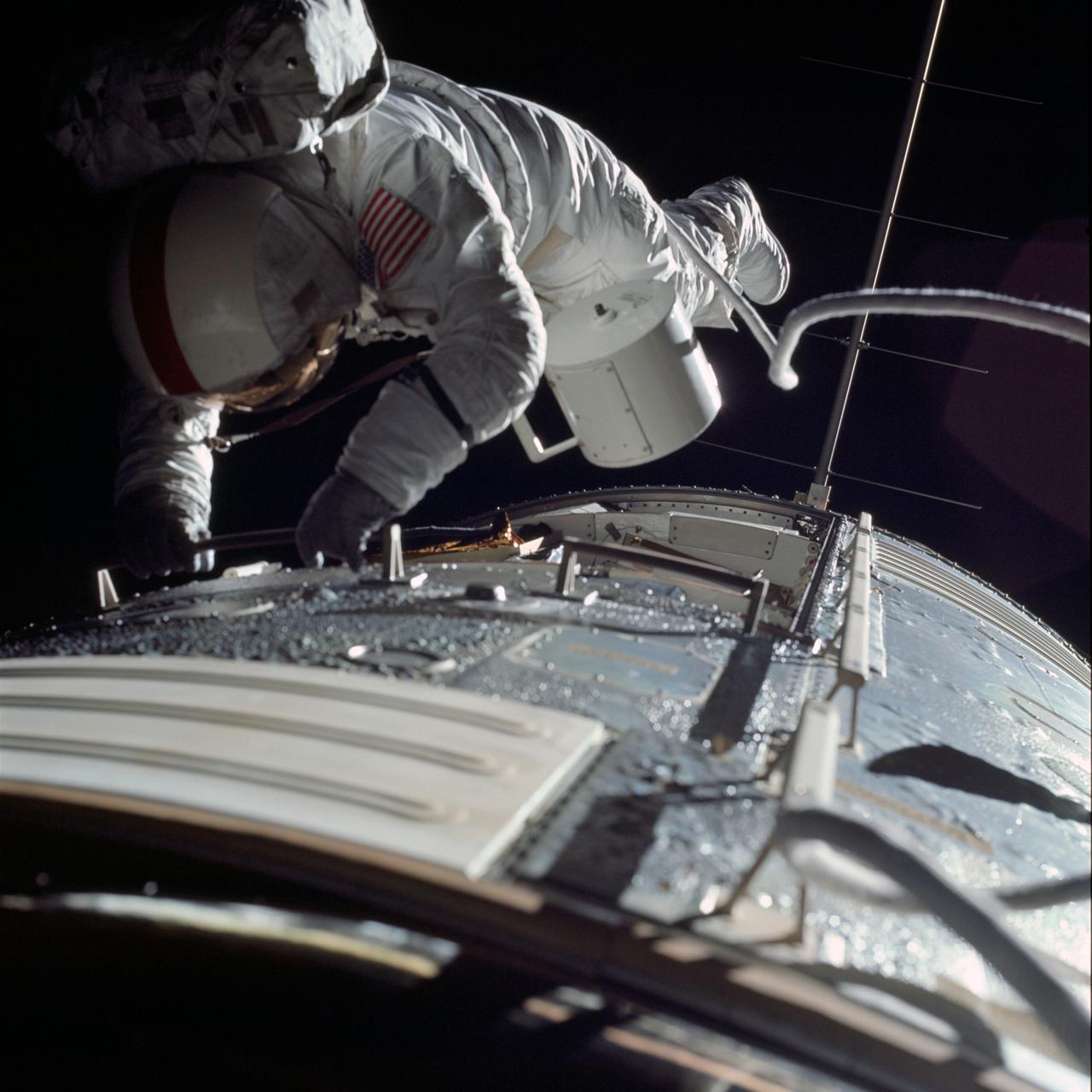
AS17-152-23391 (17 Dec. 1972) --- Astronaut Ronald E. Evans is photographed performing extravehicular activity during the Apollo 17 spacecraft's trans-Earth coast. During his EVA, Evans, command module pilot, retrieved film cassettes from the lunar sounder, mapping camera and panoramic camera. The cylindrical object at Evans' left side is the mapping camera cassette. The total time for the trans-Earth EVA was one hour, seven minutes, 18 seconds, starting at ground elapsed time of 257:25 (2:28 p.m.) and ending at G.E.T. of 258:42 (3:35 p.m.) on Sunday, Dec. 17, 1972.
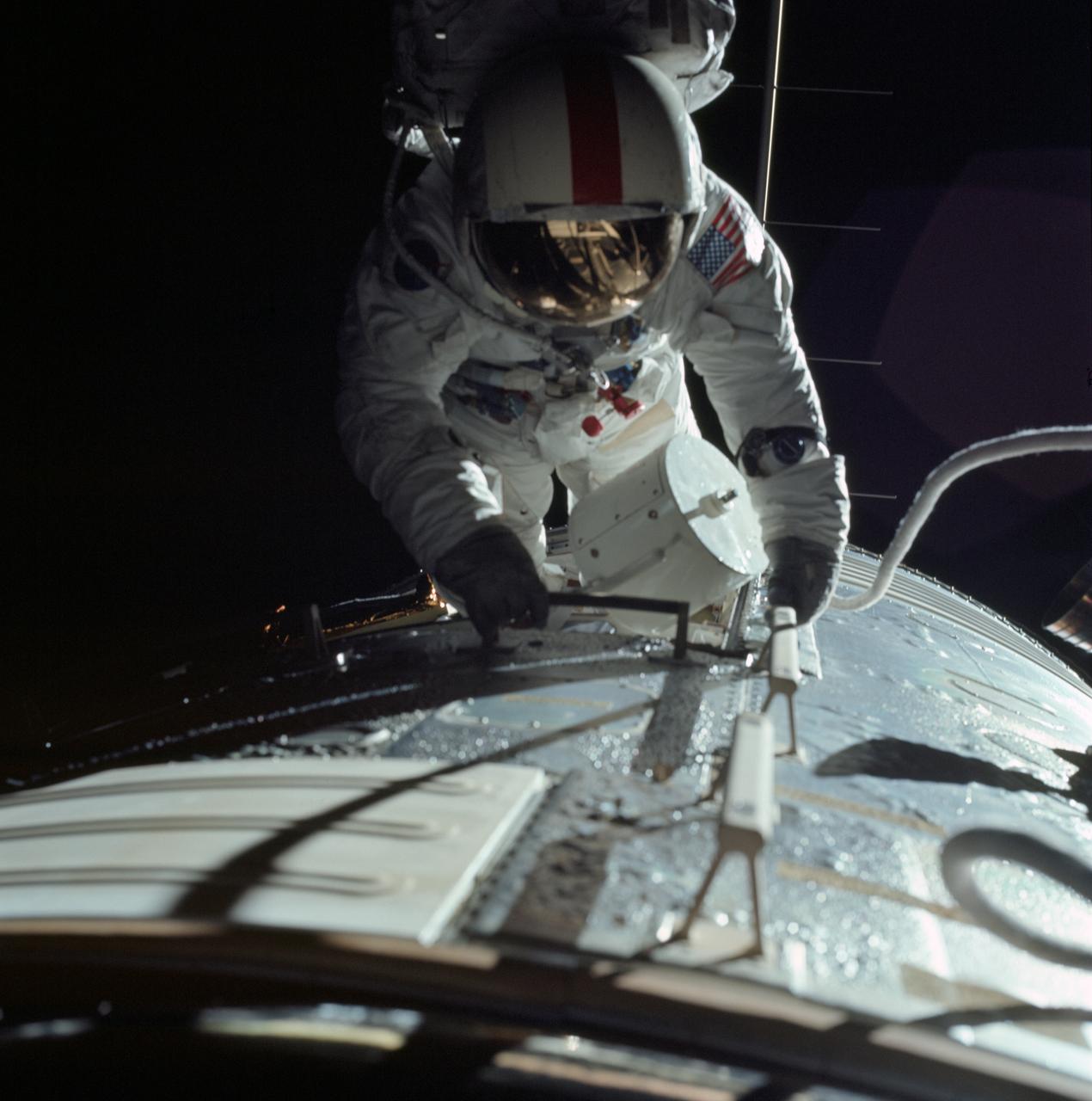
AS17-152-23393 (17 Dec. 1972) --- Astronaut Ronald E. Evans is photographed performing extravehicular activity during the Apollo 17 spacecraft's trans-Earth coast. During his EVA, command module pilot Evans retrieved film cassettes from the Lunar Sounder, Mapping Camera, and Panoramic Camera. The cylindrical object at Evans' left side is the Mapping Camera cassette. The total time for the trans-Earth EVA was one hour seven minutes 18 seconds, starting at ground elapsed time of 257:25 (2:28 p.m.) and ending at ground elapsed timed of 258:42 (3:35 p.m.) on Sunday, Dec. 17, 1972.
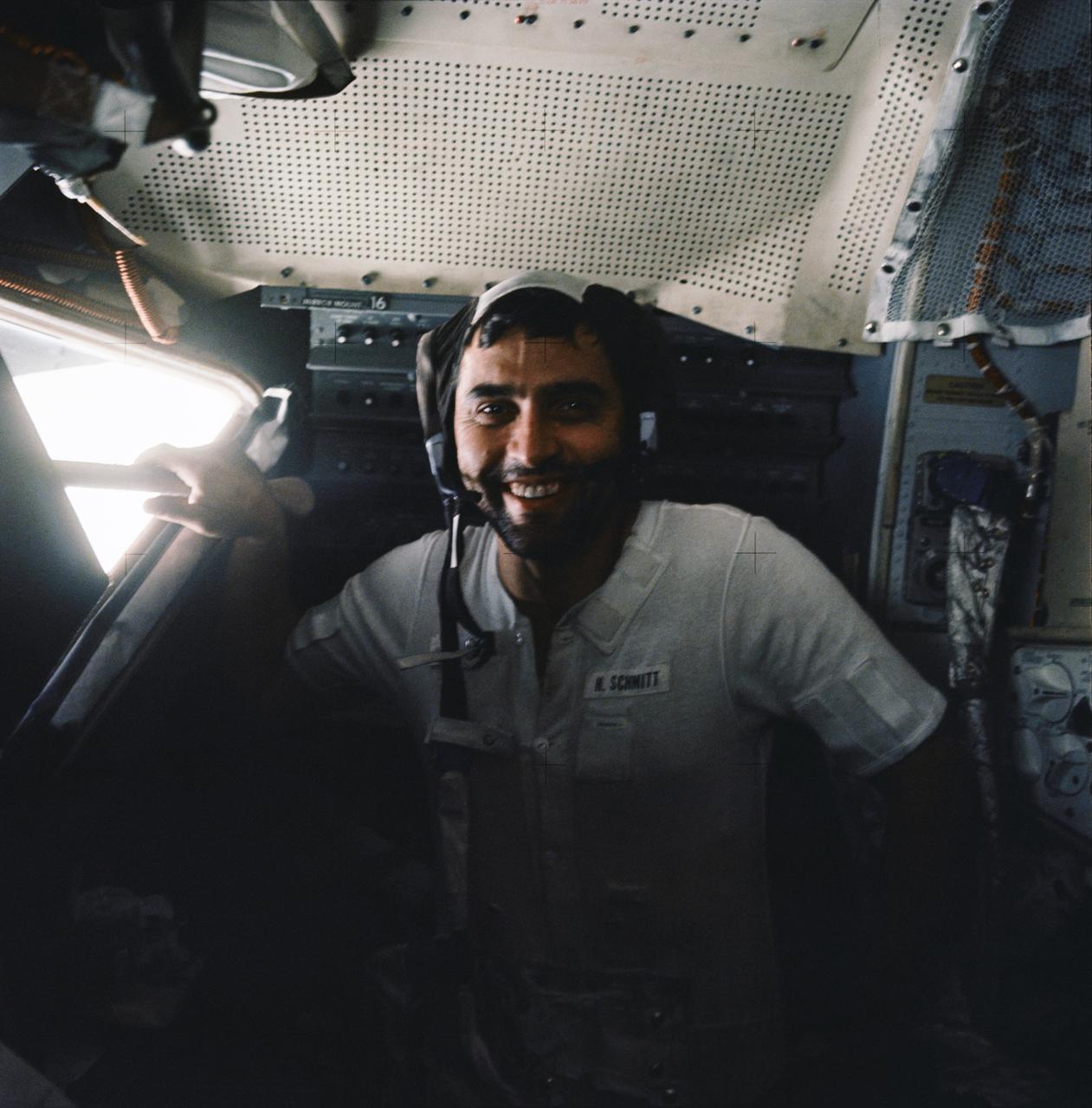
AS17-134-20530 (11 Dec. 1972) --- Astronaut Harrison H. Schmitt, lunar module pilot, displays several days of growth on his beard aboard the Lunar Module (LM) prior to its liftoff from the moon's surface. The photograph was taken by astronaut Eugene A. Cernan, mission commander. The two later re-joined astronaut Ronald E. Evans, who was orbiting the moon in the Apollo 17 Command and Service Modules (CSM).
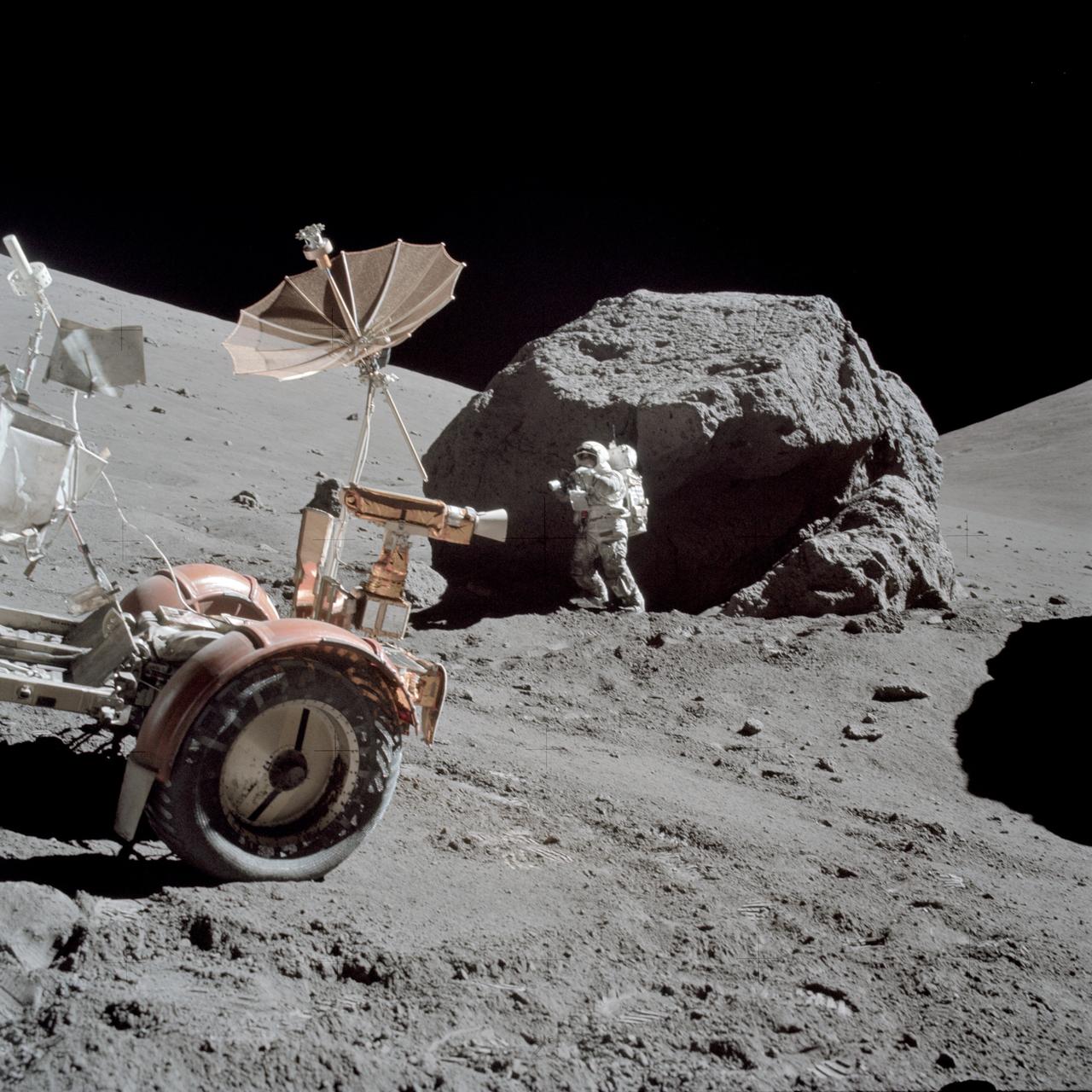
AS17-146-22294 (13 Dec. 1972) --- Scientist-astronaut Harrison H. Schmitt is photographed working beside a huge boulder at Station 6 (base of North Massif) during the third Apollo 17 extravehicular activity (EVA) at the Taurus-Littrow landing site. The front portion of the Lunar Roving Vehicle (LRV) is visible on the left. This picture was taken by astronaut Eugene A. Cernan, Apollo 17 commander. Schmitt is the lunar module pilot. While astronauts Cernan and Schmitt descended in the Lunar Module (LM) "Challenger" to explore the moon, astronaut Ronald E. Evans, command module pilot, remained with the Apollo 17 Command and Service Modules (CSM) in lunar orbit.
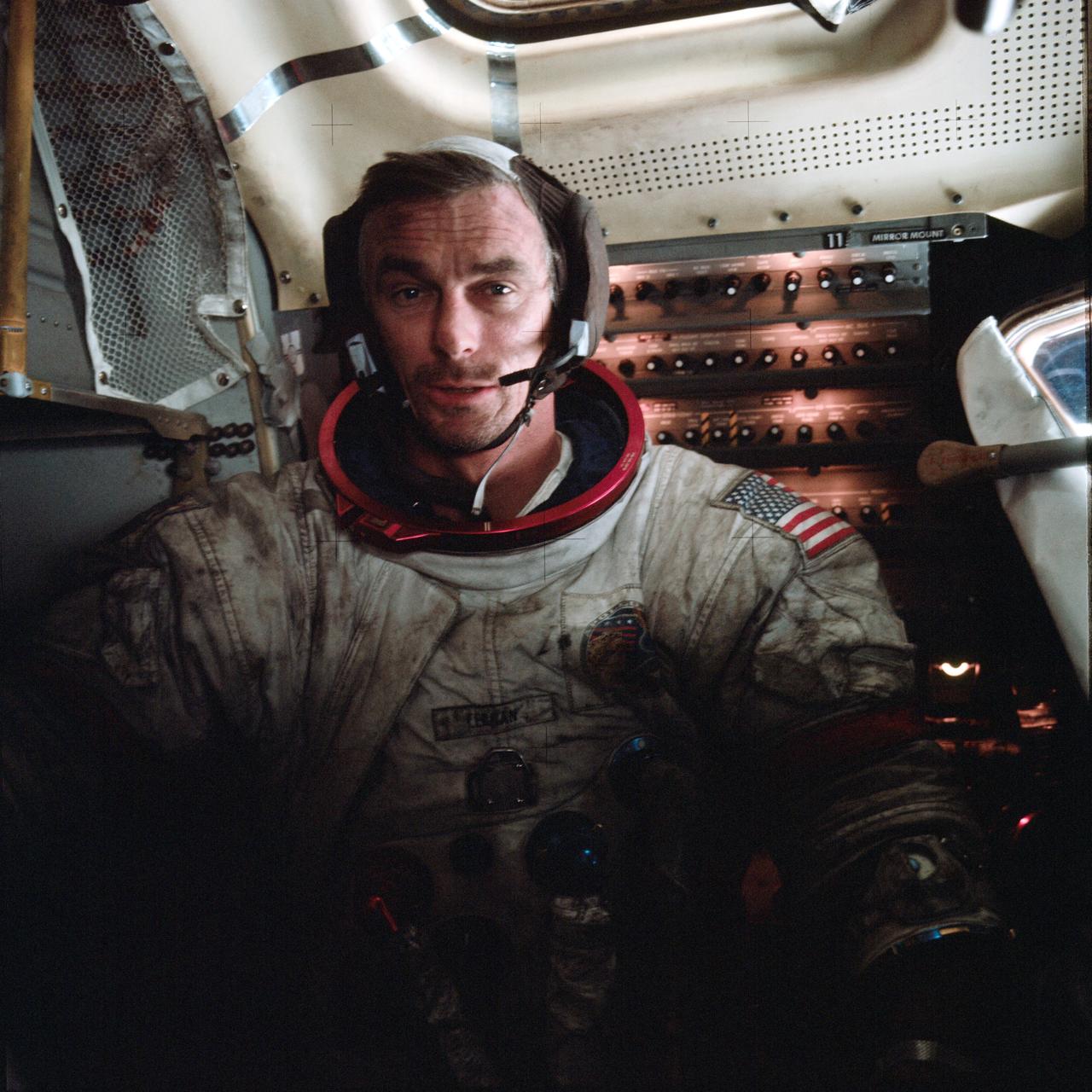
AS17-145-22224 (12 Dec. 1972) --- Astronaut Eugene A. Cernan, Apollo 17 commander, is photographed inside the lunar module on the lunar surface following the second extravehicular activity (EVA) of his mission. Note lunar dust on his suit. The photograph was taken by astronaut Harrison H. Schmitt, lunar module pilot, using a 70mm handheld Hasselblad camera and S0-368 film.
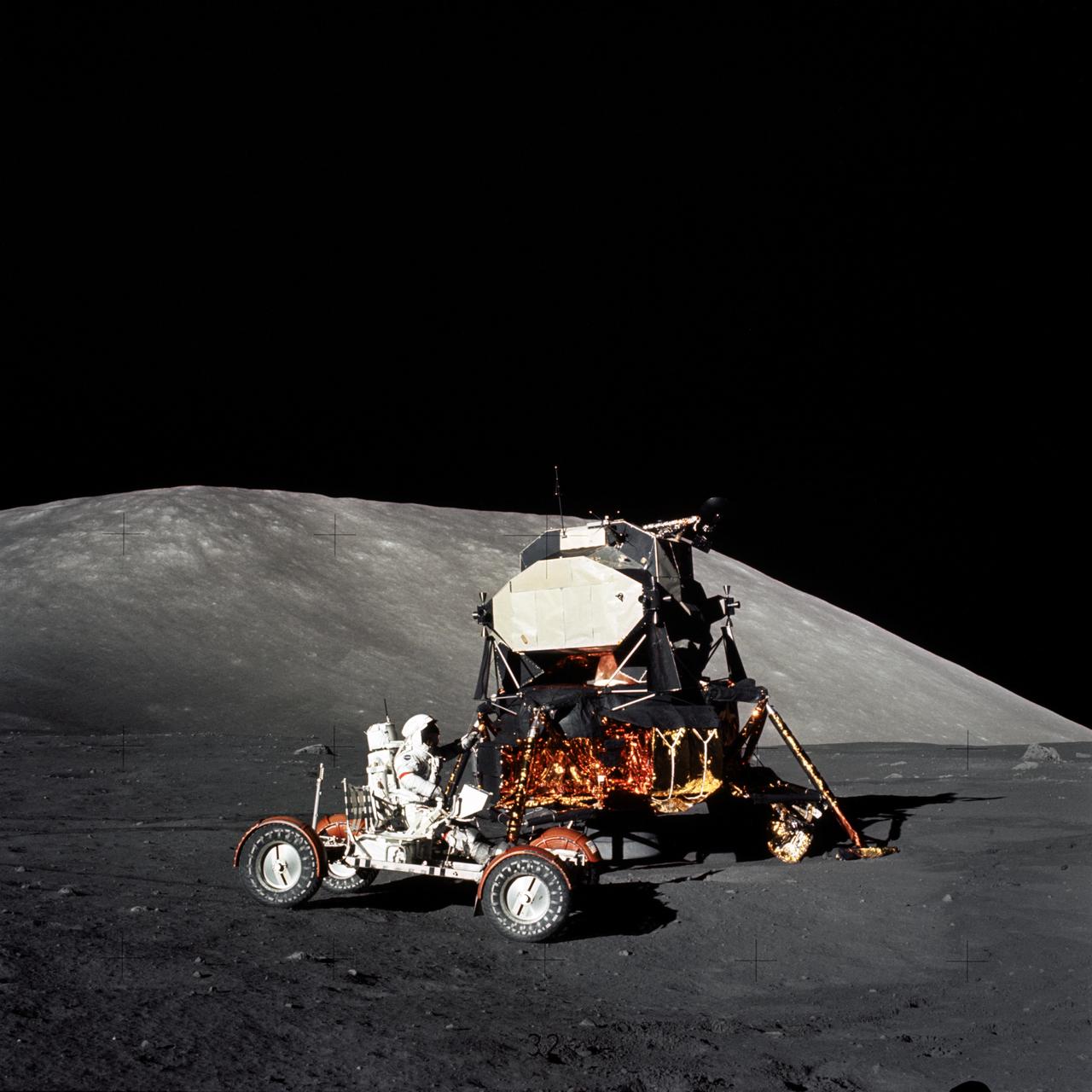
AS17-147-22527 (11 Dec. 1972) --- Astronaut Eugene A. Cernan, Apollo 17 mission commander, makes a short checkout of the Lunar Roving Vehicle during the early part of the first Apollo 17 extravehicular activity (EVA) at the Taurus-Littrow landing site. The Lunar Module is in the background. This photograph was taken by scientist-astronaut Harrison H. Schmitt, lunar module pilot.
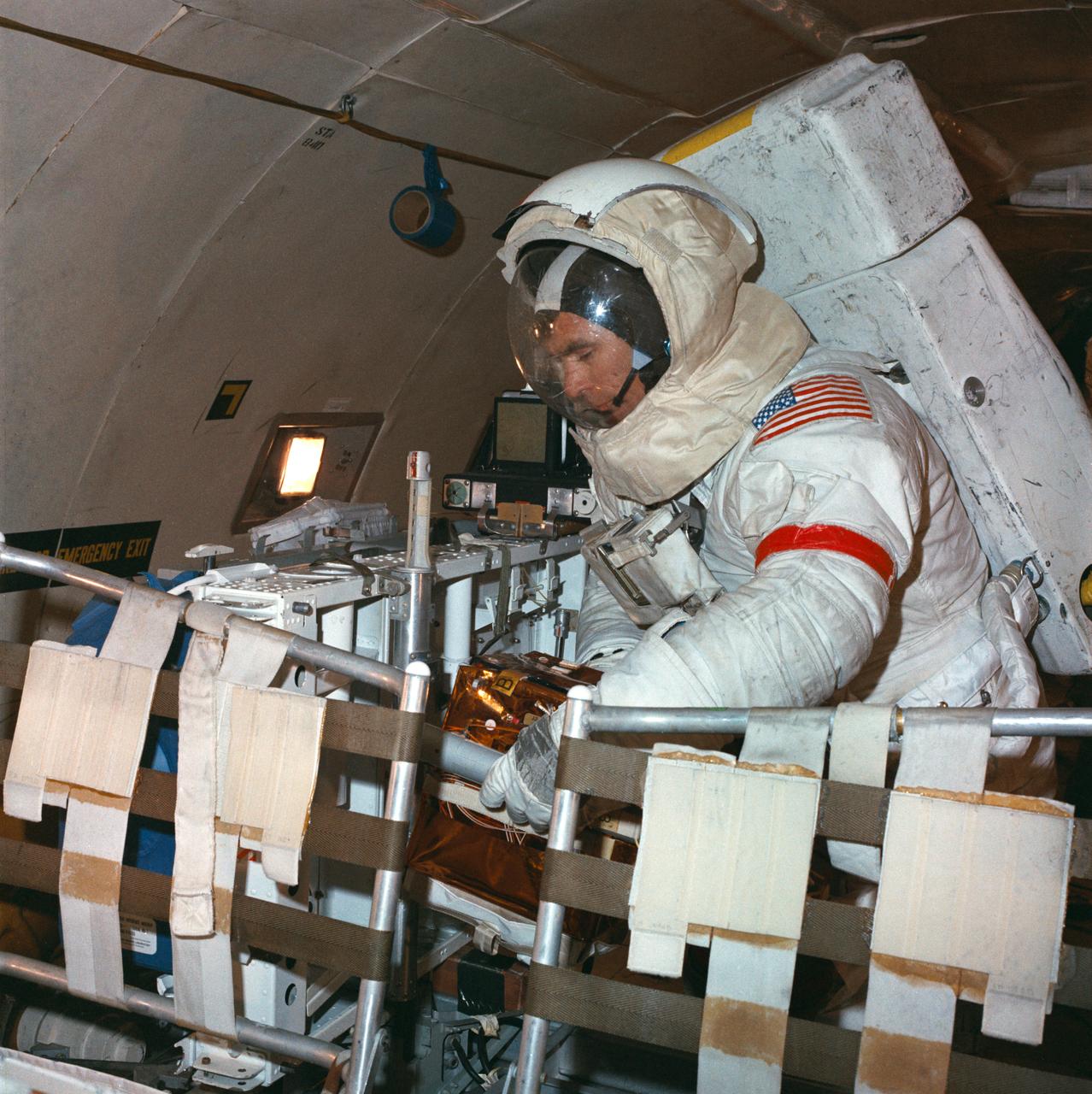
S72-50270 (September 1972) --- Astronaut Eugene A. Cernan, commander of the Apollo 17 lunar landing mission, participates in lunar surface extravehicular activity simulation training under one-sixth gravity conditions aboard a U. S. Air Force KC-135 aircraft. Here, Cernan simulates removing an experiment package from the aft end of a Lunar Roving Vehicle.
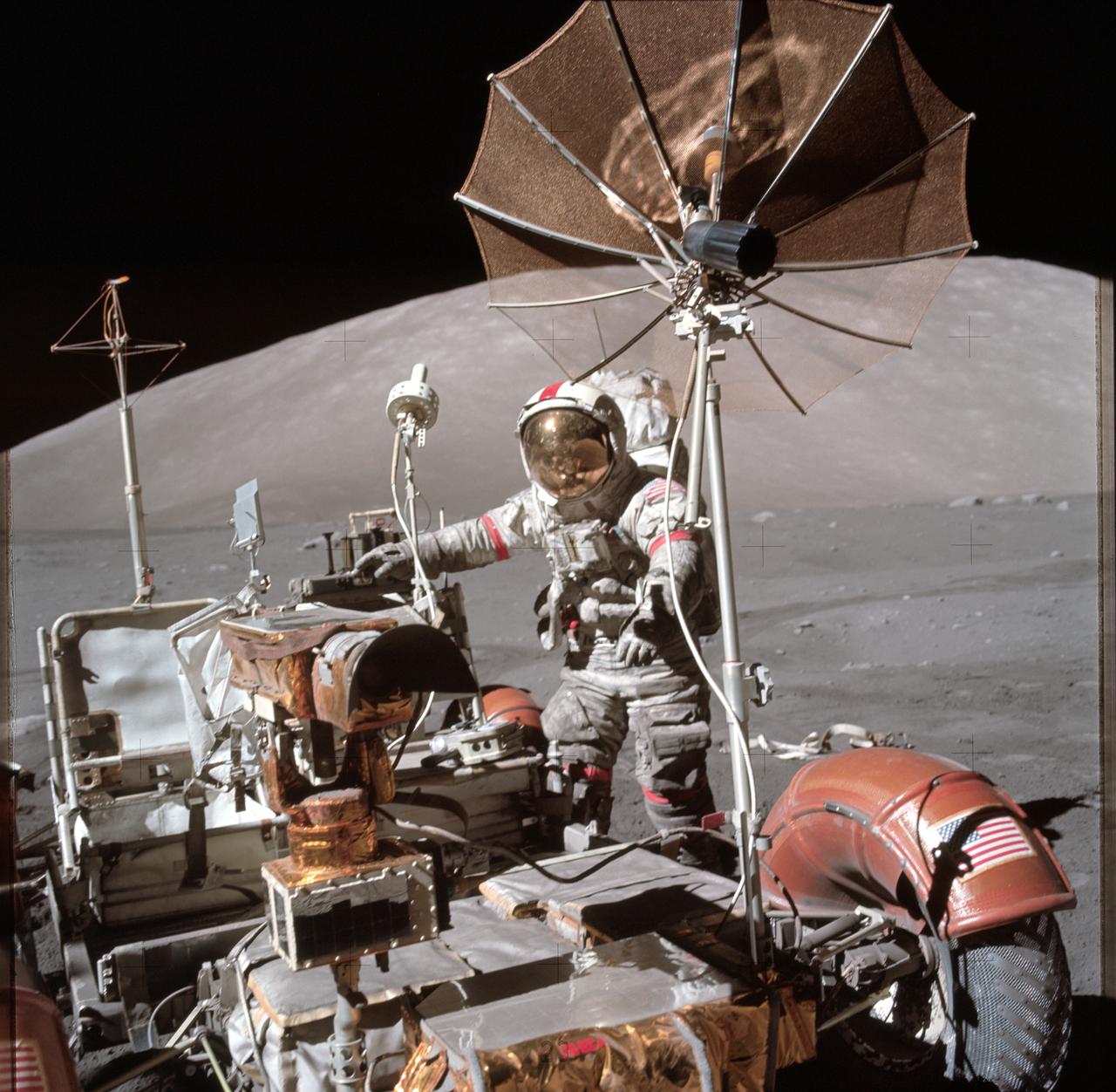
AS17-134-20476 (13 Dec. 1972) --- Astronaut Eugene A. Cernan, Apollo 17 commander, approaches the parked Lunar Roving Vehicle (LRV) on the lunar surface during the flight's third period of extravehicular activity (EVA). South Massif can be seen in the background. The photograph was taken with a hand-held Hasselblad camera by scientist-astronaut Harrison H. Schmitt, lunar module pilot. While the two explored the surface of the moon, astronaut Ronald E. Evans remained with the Command and Service Modules (CSM) in lunar orbit.
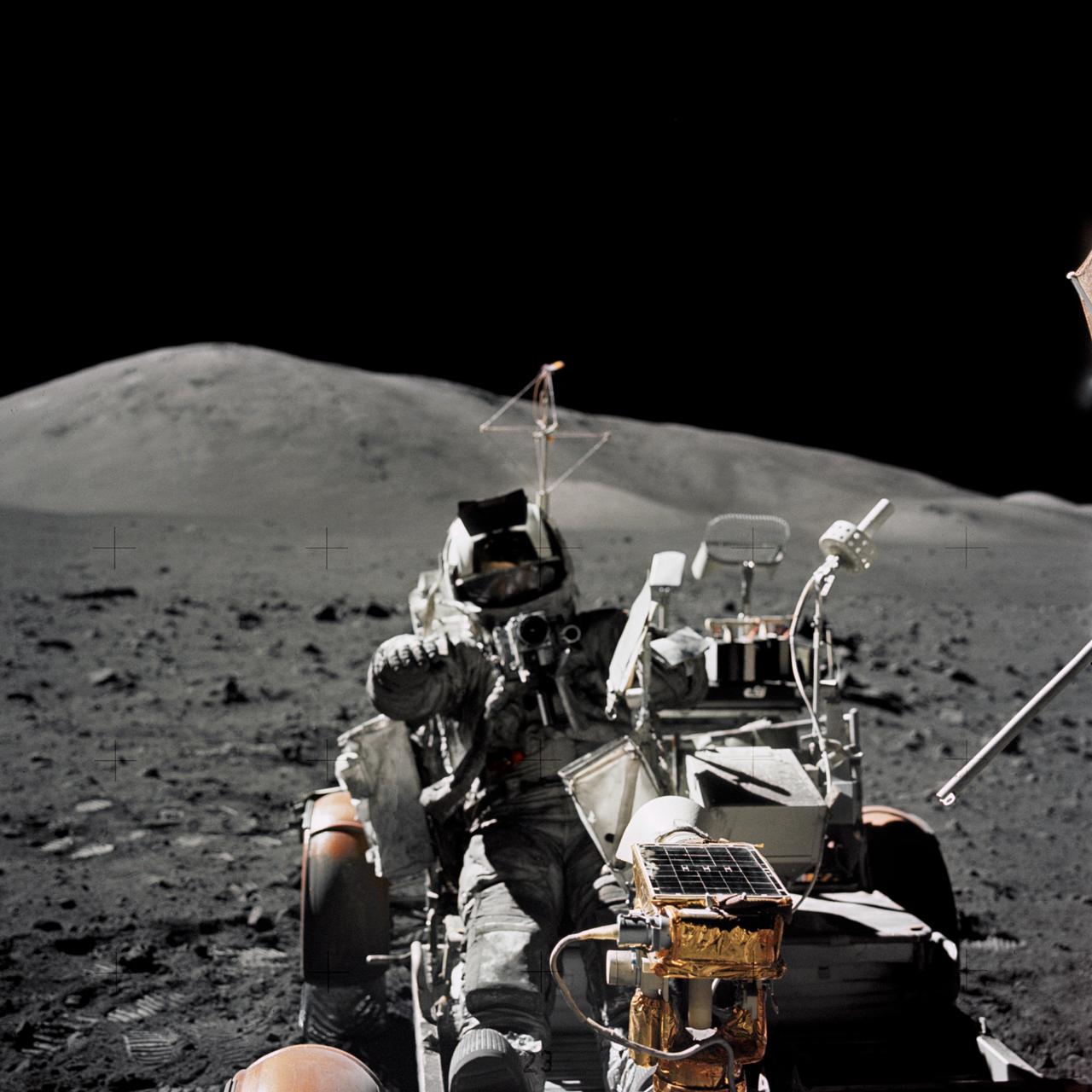
AS17-134-20454 (13 Dec. 1972) --- Scientist-astronaut Harrison H. Schmitt is photographed seated in the Lunar Roving Vehicle (LRV) at Station 9 (Van Serg Crater) during the third Apollo 17 extravehicular activity (EVA) at the Taurus-Littrow landing site. This photograph was taken by astronaut Eugene A. Cernan, commander. Schmitt, lunar module pilot, and Cernan explored the moon while astronaut Ronald E. Evans, command module pilot, remained with the Command and Service Modules in lunar orbit.
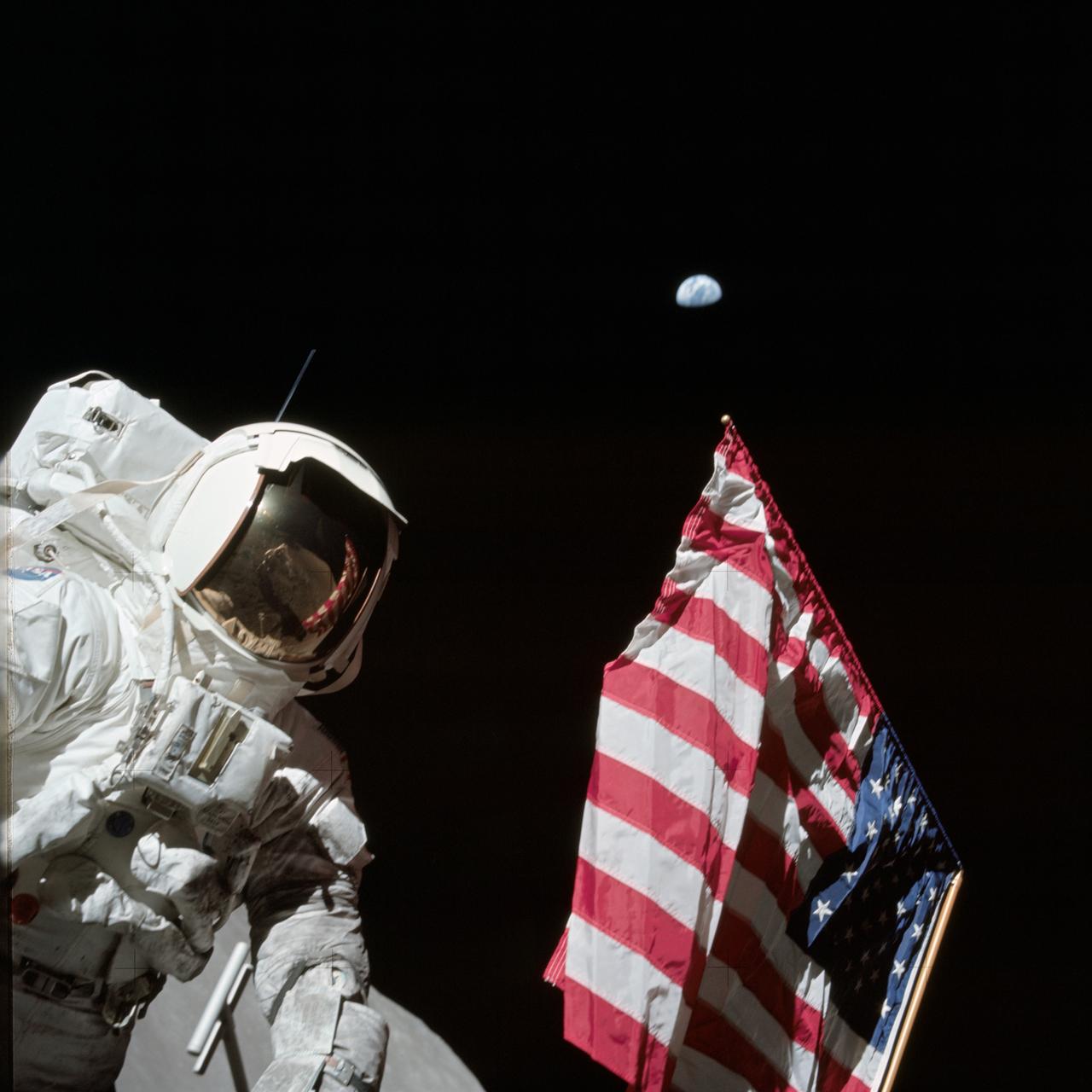
AS17-134-20384 (7-19 Dec. 1972) --- Scientist-astronaut Harrison H. Schmitt, lunar module pilot, is photographed next to the deployed United States flag during lunar surface extravehicular activity (EVA) at the Taurus-Littrow landing site. The highest part of the flag appears to point toward our planet Earth in the distant background. This picture was taken by astronaut Eugene A. Cernan, Apollo 17 commander. While astronauts Cernan and Schmitt descended in the Lunar Module (LM) to explore the moon, astronaut Ronald E. Evans, command module pilot, remained with the Command and Service Modules (CSM) in lunar orbit.

AS17-145-22157 (12 Dec. 1972) --- Scientist-astronaut Harrison Schmitt, Apollo 17 lunar module pilot, uses an adjustable sampling scoop to retrieve lunar samples during the second Apollo 17 extravehicular activity (EVA), at Station 5 at the Taurus-Littrow landing site. A gnomon is atop the large rock in the foreground. The gnomon is a stadia rod mounted on a tripod, and serves as an indicator of the gravitational vector and provides accurate vertical reference and calibrated length for determining size and position of objects in near-field photographs. The color scale of blue, orange and green is used to accurately determine color for photography. The rod of it is 18 inches long. The scoop Dr. Schmitt is using is 11 3/4 inches long and is attached to a tool extension which adds a potential 30 inches of length to the scoop. The pan portion, obscured in this view, has a flat bottom, flanged on both sides with a partial cover on the top. It is used to retrieve sand, dust and lunar samples too small for the tongs, another geological tool used by the astronauts. The pan and the adjusting mechanism are made of stainless steel and the handle is made of aluminum. Within the foreground of this scene, three lunar samples were taken--numbers 75060, 75075 and 75080. Astronaut Eugene A. Cernan, crew commander, was using a 60mm lens on the 70mm Hasselblad camera and type SO-368 film to take this photograph.
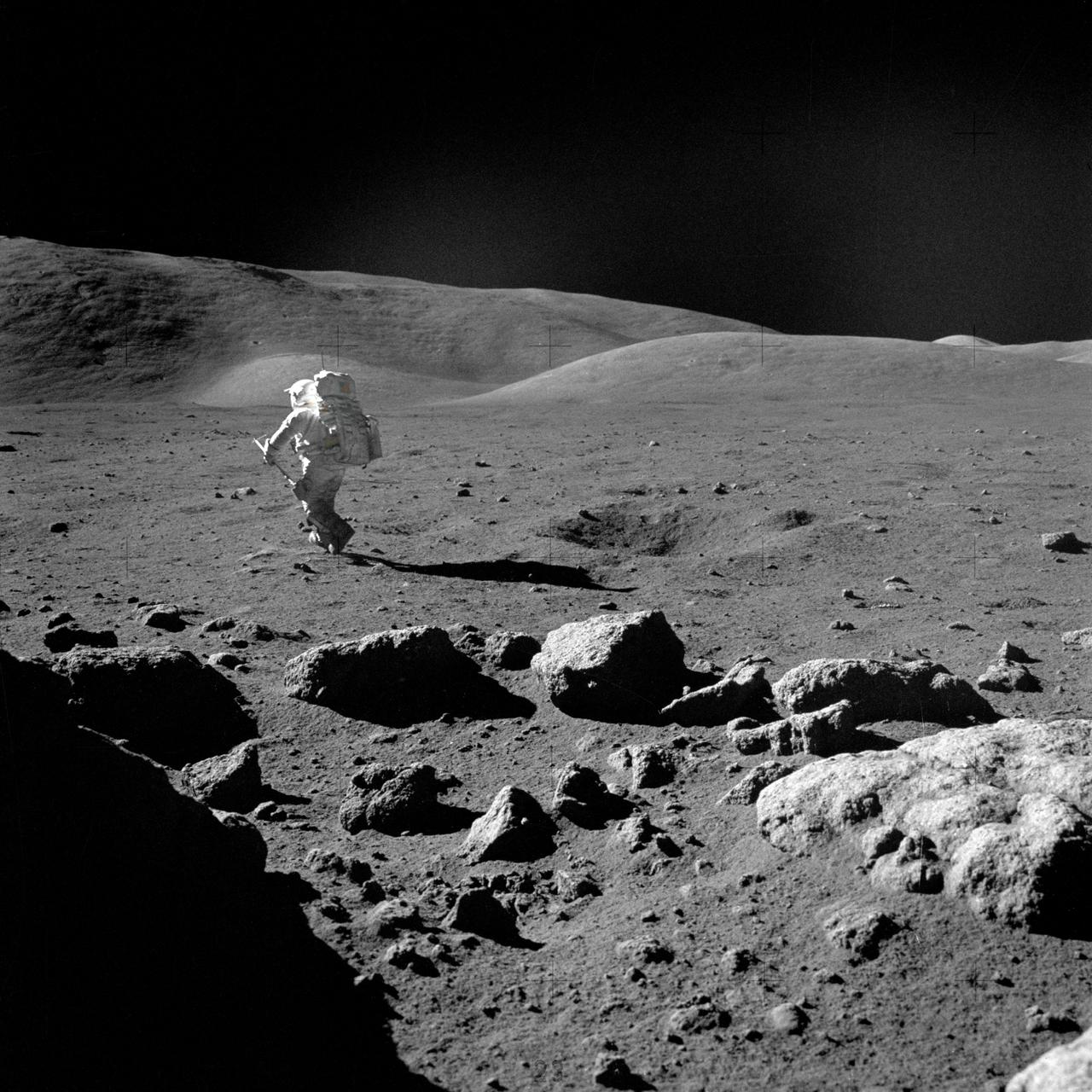
AS17-145-22165 (12 Dec. 1972) --- Scientist-astronaut Harrison H. Schmitt, lunar module pilot, with his adjustable sampling scoop, heads for a selected rock on the lunar surface to retrieve the sample for study. The action was photographed by Apollo 17 crew commander, astronaut Eugene A. Cernan on the mission's second extravehicular activity (EVA), at Station 5 at the Taurus-Littrow landing site. Cernan used a 70mm Hasselblad camera equipped with a 60mm lens and type SO-368 color film for this photograph. While astronauts Cernan and Schmitt descended in the Lunar Module (LM) "Challenger" to explore the Taurus-Littrow region of the moon, astronaut Ronald E. Evans, command module pilot, remained with the Command and Service Modules (CSM) "America" in lunar orbit.
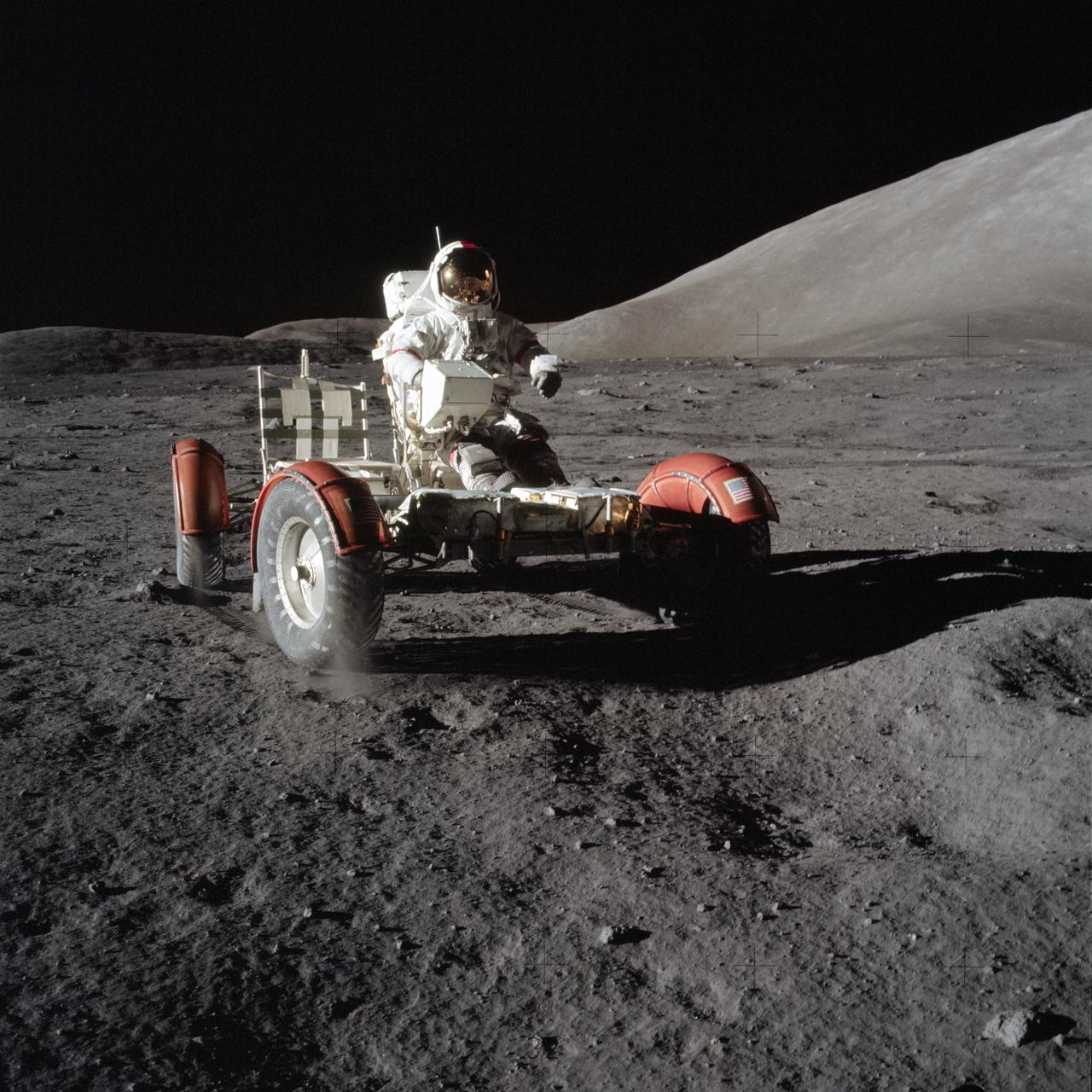
AS17-147-22526 (11 Dec. 1972) --- Astronaut Eugene A. Cernan, commander, makes a short checkout of the Lunar Roving Vehicle (LRV) during the early part of the first Apollo 17 extravehicular activity (EVA) at the Taurus-Littrow landing site. This view of the "stripped down" LRV is prior to loading up. Equipment later loaded onto the LRV included the ground-controlled television assembly, the lunar communications relay unit, hi-gain antenna, low-gain antenna, aft tool pallet, lunar tools and scientific gear. This photograph was taken by scientist-astronaut Harrison H. Schmitt, lunar module pilot. The mountain in the right background is the east end of South Massif. While astronauts Cernan and Schmitt descended in the Lunar Module (LM) "Challenger" to explore the moon, astronaut Ronald E. Evans, command module pilot, remained with the Command and Service Modules (CSM) "America" in lunar orbit.
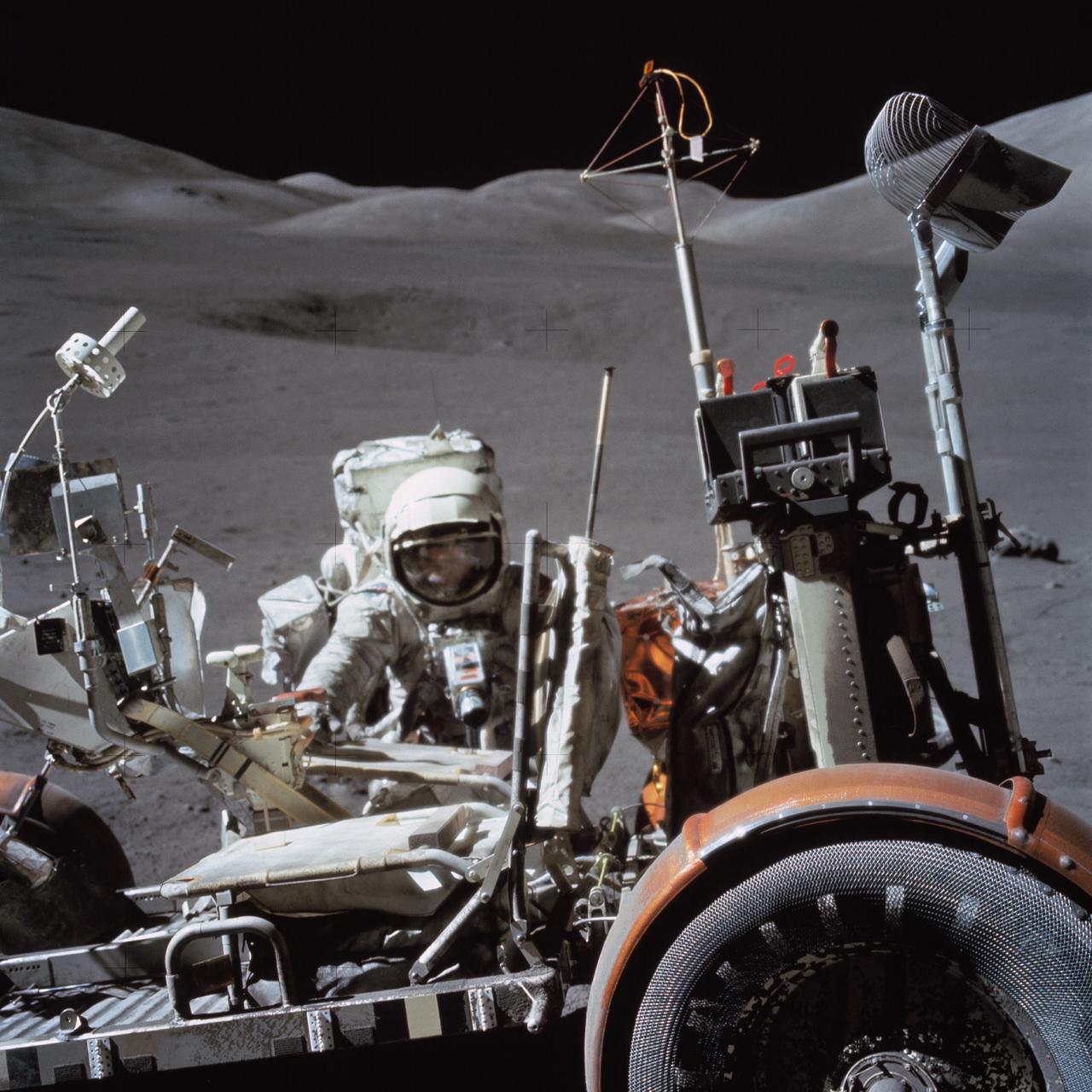
AS17-146-22296 (13 Dec. 1972) --- Astronaut Harrison H. Schmitt, lunar module pilot, works near the Lunar Roving Vehicle (LRV) during the third Apollo 17 extravehicular activity (EVA) at the Taurus-Littrow site on the lunar surface. The front part of the LRV is out of frame at left, but the seats and several geological tools can be seen. The photo was taken by astronaut Eugene A. Cernan, mission commander.
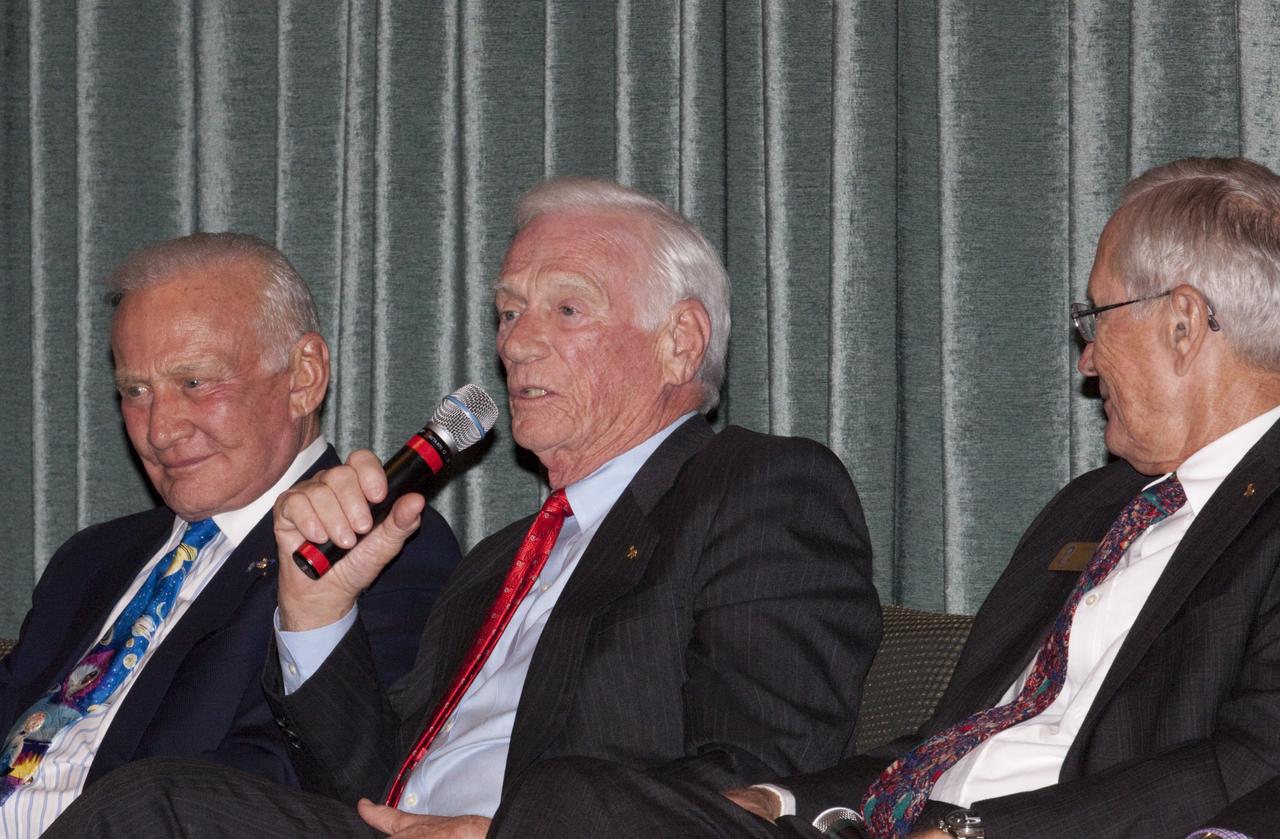
CAPE CANAVERAL, Fla. – Gemini 9, Apollo 10 and 17 astronaut Eugene Cernan speaks to guests gathered for the Astronaut Scholarship Foundation's dinner at the Radisson Resort at the Port in Cape Canaveral celebrating the 40th anniversary of Apollo 17. Listening on the left is Gemini 12 and Apollo 11 astronaut Buzz Aldrin, along with Apollo 16 astronaut Charles Duke. The gala commemorating the anniversary of Apollo 17 included mission commander Eugene Cernan and other astronauts who flew Apollo missions. Launched Dec. 7, 1972, Cernan and lunar module pilot Harrison Schmitt landed in the moon's Taurus-Littrow highlands while command module pilot Ronald Evans remained in lunar orbit operating a scientific instrument module. For more information, visit http://www-pao.ksc.nasa.gov/history/apollo/apollo-17/apollo-17.htm Photo credit: NASA/Kim Shiflett
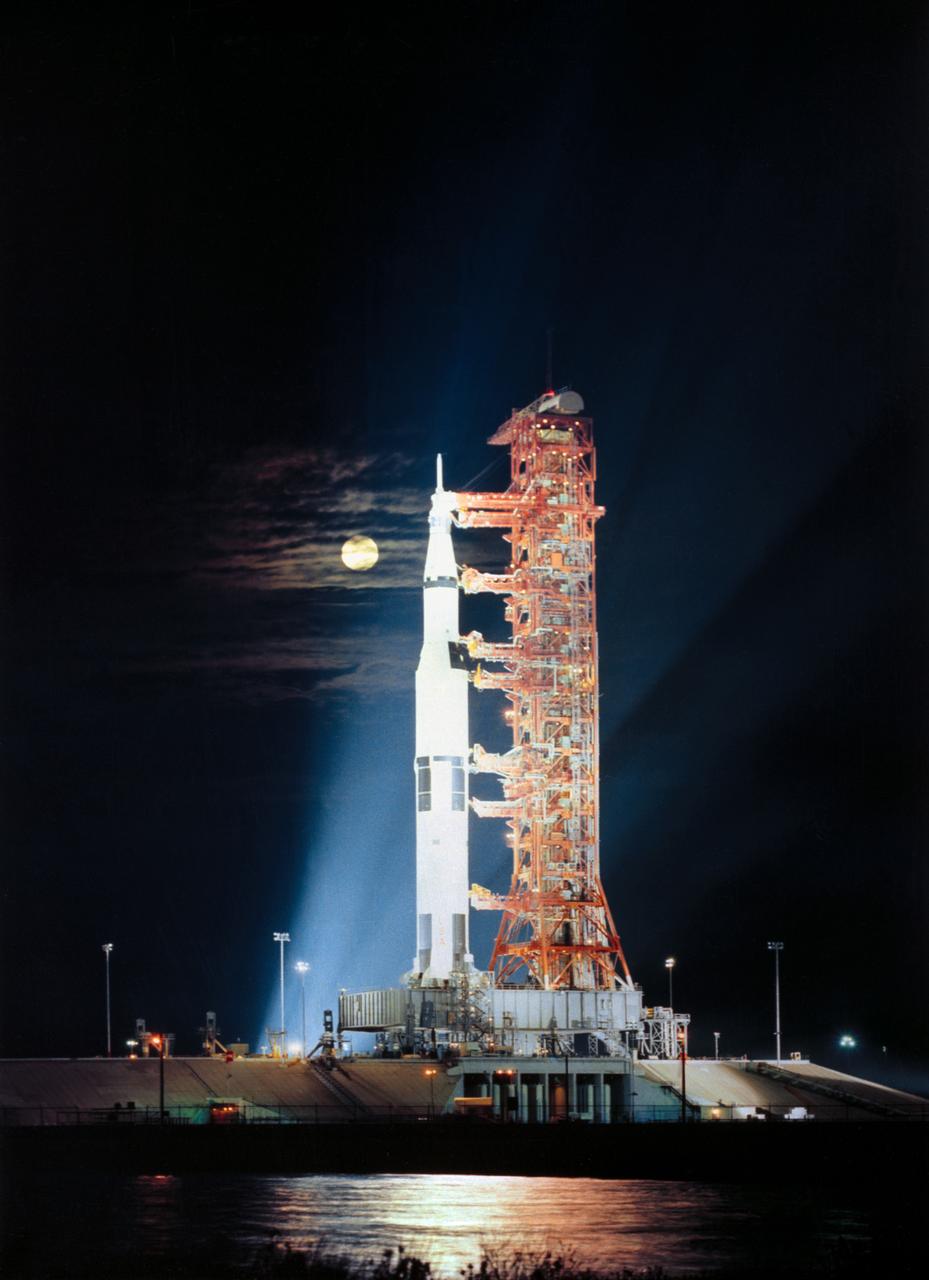
S72-54813 (November 1972) --- Searchlights illuminate this nighttime scene at Pad A, Launch Complex 39, Kennedy Space Center, Florida, showing the Apollo 17 (Spacecraft 114/Lunar Module 12/Saturn 512) space vehicle during prelaunch preparations. Apollo 17, the final lunar landing mission in NASA's Apollo program, will be the first nighttime liftoff of the huge Saturn V launch vehicle. Apollo 17 is scheduled for launching on the night of Dec. 6, 1972. Aboard the Apollo 17 spacecraft will be astronaut Eugene A. Cernan, commander; astronaut Ronald E. Evans, command module pilot; and scientist-astronaut Harrison H. Schmitt, lunar module pilot. Note the full moon in the background.
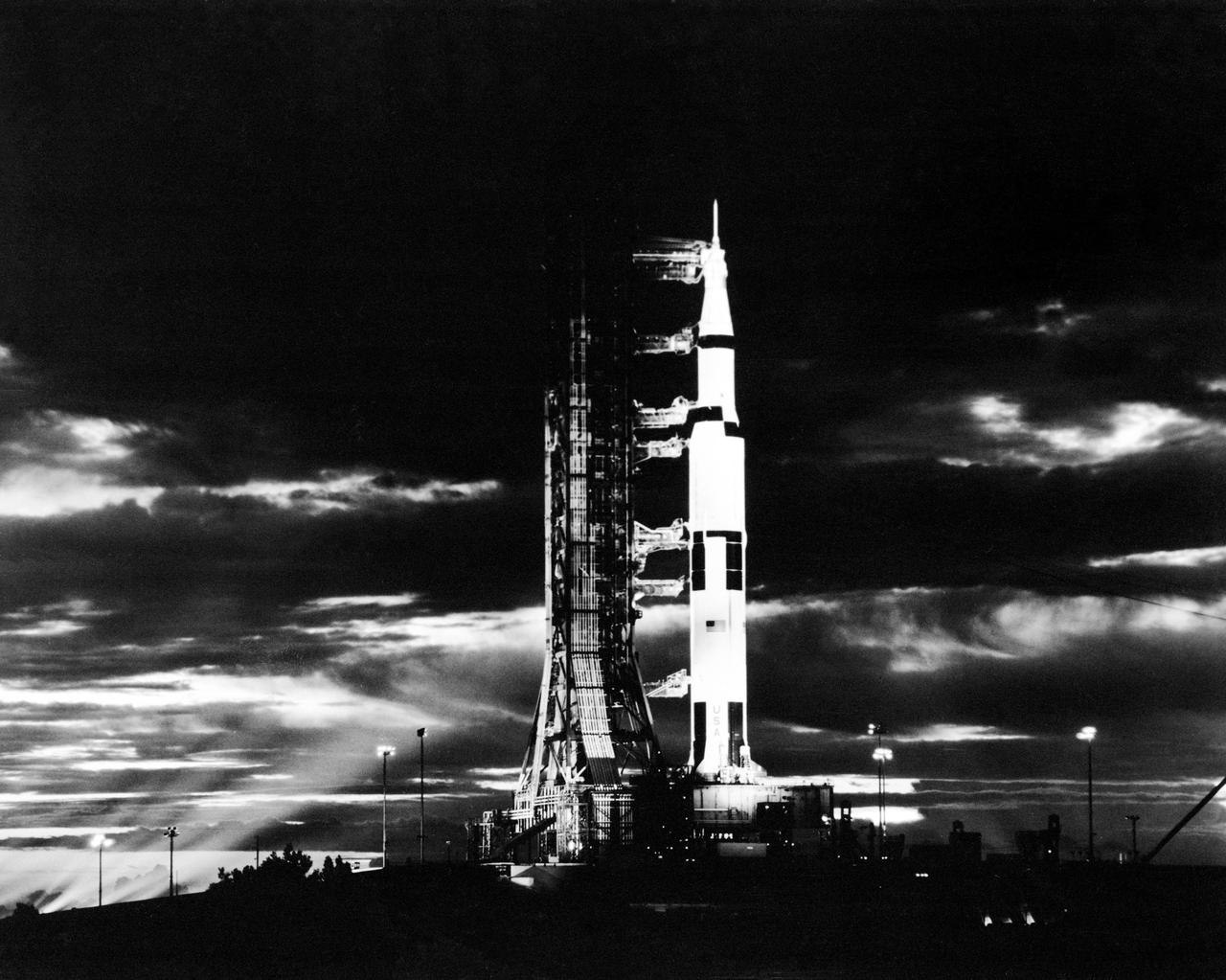
S72-54814 (November 1972) --- Searchlights illuminate this nighttime scene at Pad A, Launch Complex 39, Kennedy Space Center, Florida, showing the Apollo 17 (Spacecraft 114/Lunar Module 12/Saturn 512) space vehicle during prelaunch preparations. Apollo 17, the final lunar landing mission in NASA's Apollo program, will be the first nighttime liftoff of the huge Saturn V launch vehicle. Apollo 17 is scheduled for launching on the night of Dec. 6, 1972. Aboard the Apollo 17 spacecraft will be astronaut Eugene A. Cernan, commander; astronaut Ronald E. Evans, command module pilot; and scientist-astronaut Harrison H. Schmitt, lunar module pilot.
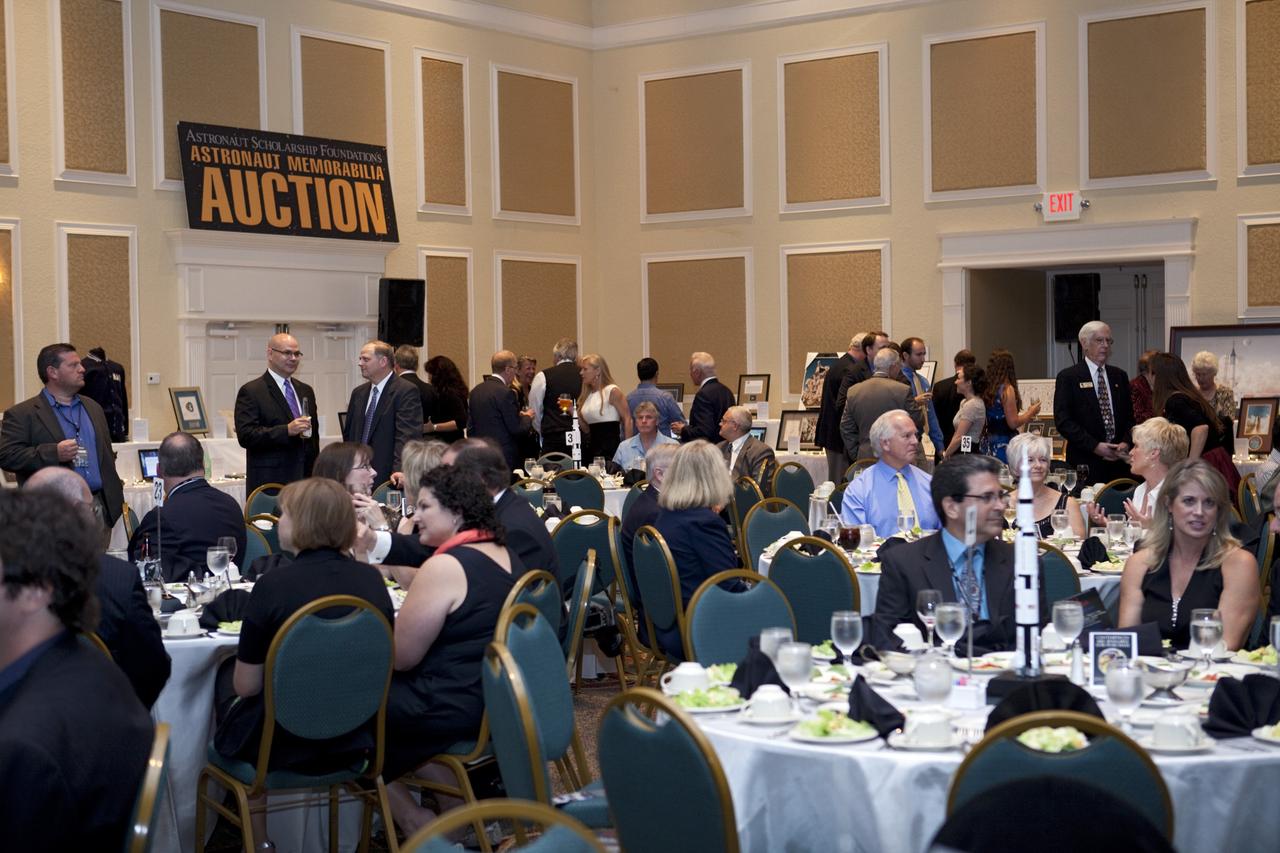
CAPE CANAVERAL, Fla. – Guests gather for the Astronaut Scholarship Foundation's dinner at the Radisson Resort at the Port in Cape Canaveral celebrating the 40th anniversary of Apollo 17. The gala commemorating the anniversary of Apollo 17 included mission commander Eugene Cernan and other astronauts who flew Apollo missions. Launched Dec. 7, 1972, Cernan and lunar module pilot Harrison Schmitt landed in the moon's Taurus-Littrow highlands while command module pilot Ronald Evans remained in lunar orbit operating a scientific instrument module. For more information, visit http://www-pao.ksc.nasa.gov/history/apollo/apollo-17/apollo-17.htm Photo credit: NASA/Kim Shiflett
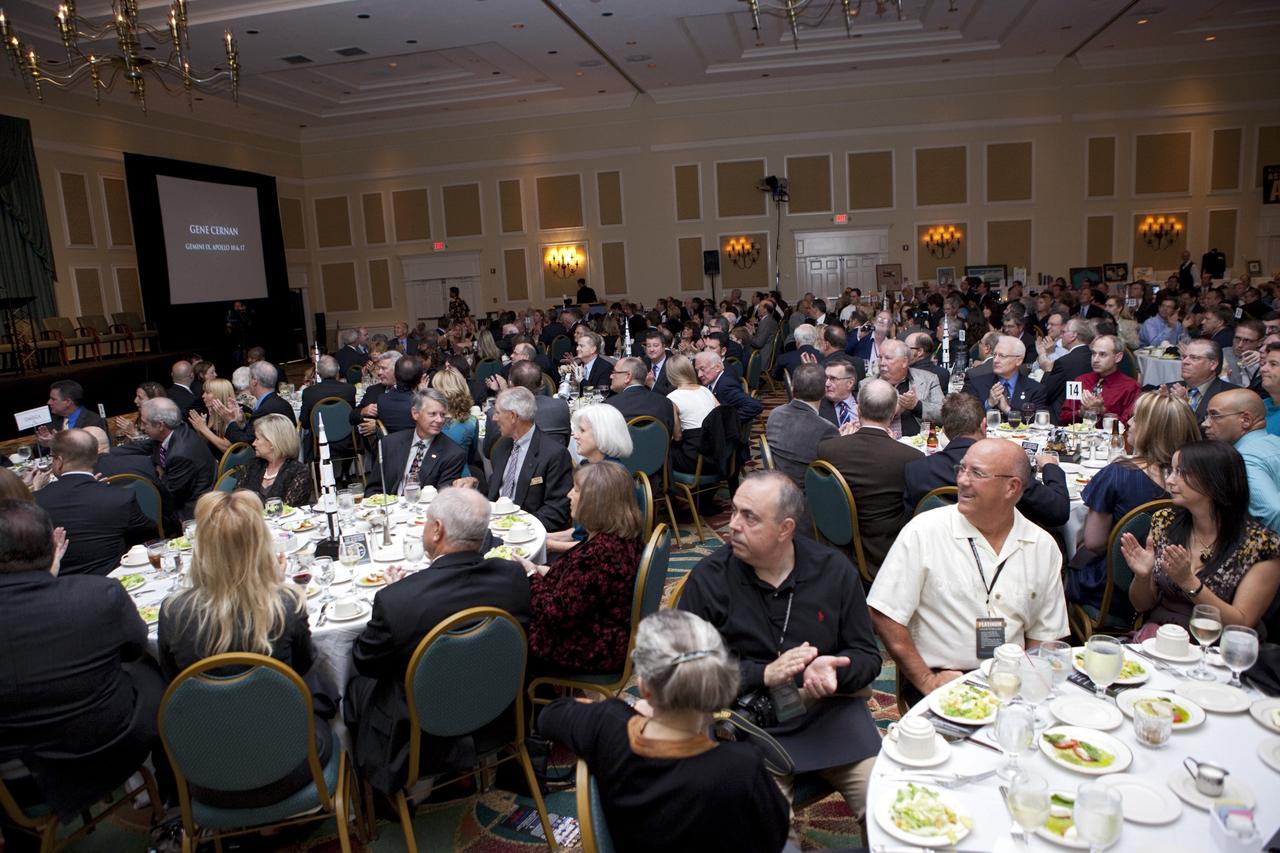
CAPE CANAVERAL, Fla. – Guests gather for the Astronaut Scholarship Foundation's dinner at the Radisson Resort at the Port in Cape Canaveral celebrating the 40th anniversary of Apollo 17. The gala commemorating the anniversary of Apollo 17 included mission commander Eugene Cernan and other astronauts who flew Apollo missions. Launched Dec. 7, 1972, Cernan and lunar module pilot Harrison Schmitt landed in the moon's Taurus-Littrow highlands while command module pilot Ronald Evans remained in lunar orbit operating a scientific instrument module. For more information, visit http://www-pao.ksc.nasa.gov/history/apollo/apollo-17/apollo-17.htm Photo credit: NASA/Kim Shiflett
CAPE CANAVERAL, Fla. – Gemini 9, Apollo 10 and 17 astronaut Eugene Cernan participates in a presentation to guests gathered for the Astronaut Scholarship Foundation's dinner at the Radisson Resort at the Port in Cape Canaveral celebrating the 40th anniversary of Apollo 17. The gala commemorating the anniversary of Apollo 17 included mission commander Eugene Cernan and other astronauts who flew Apollo missions. Launched Dec. 7, 1972, Cernan and lunar module pilot Harrison Schmitt landed in the moon's Taurus-Littrow highlands while command module pilot Ronald Evans remained in lunar orbit operating a scientific instrument module. For more information, visit http://www-pao.ksc.nasa.gov/history/apollo/apollo-17/apollo-17.htm Photo credit: NASA/Kim Shiflett
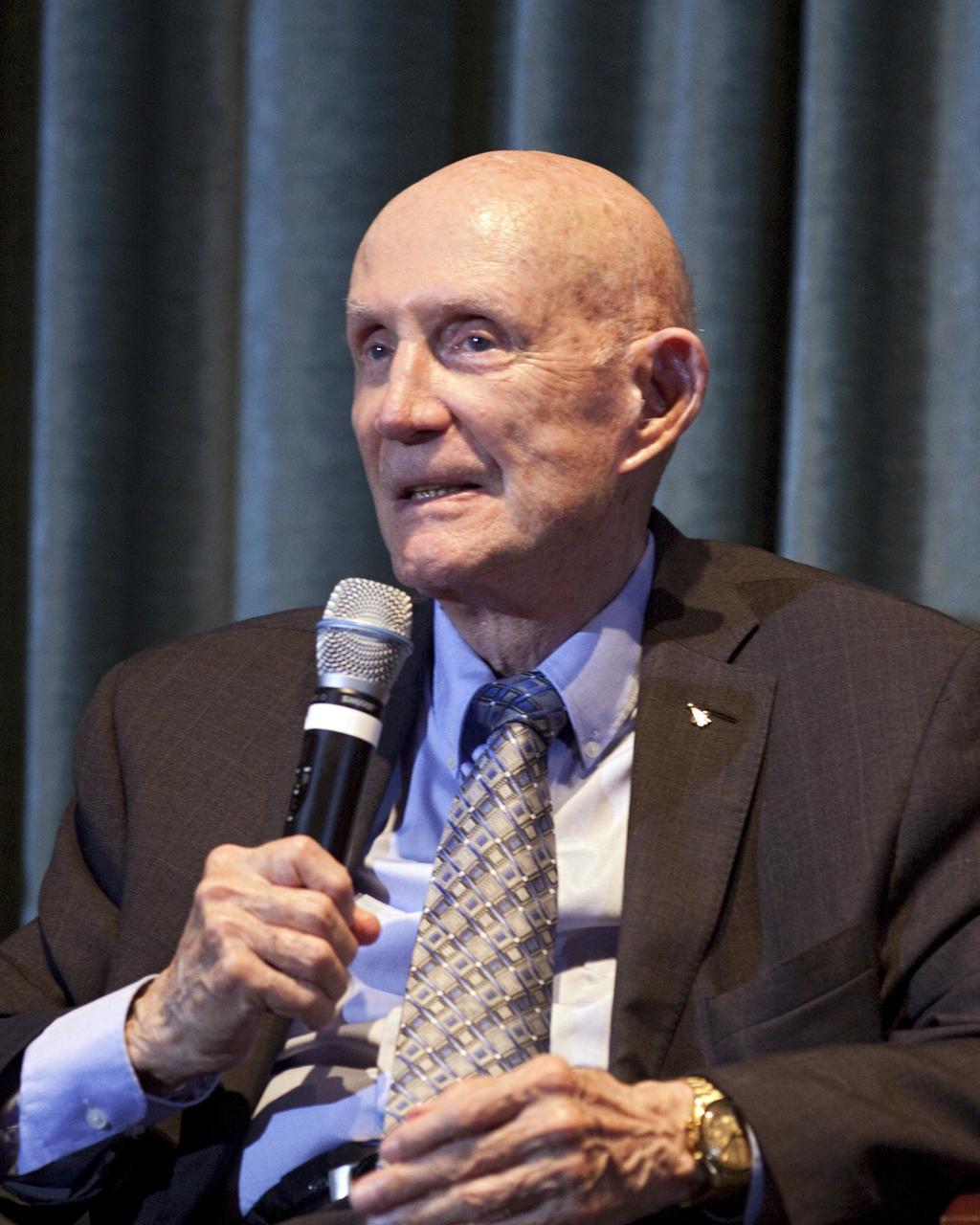
CAPE CANAVERAL, Fla. – Gemini 6 and 9, as well as Apollo 10 and Apollo-Soyuz astronaut Thomas Stafford speaks to guests gathered for the Astronaut Scholarship Foundation's dinner at the Radisson Resort at the Port in Cape Canaveral celebrating the 40th anniversary of Apollo 17. The gala commemorating the anniversary of Apollo 17 included mission commander Eugene Cernan and other astronauts who flew Apollo missions. Launched Dec. 7, 1972, Cernan and lunar module pilot Harrison Schmitt landed in the moon's Taurus-Littrow highlands while command module pilot Ronald Evans remained in lunar orbit operating a scientific instrument module. For more information, visit http://www-pao.ksc.nasa.gov/history/apollo/apollo-17/apollo-17.htm Photo credit: NASA/Kim Shiflett
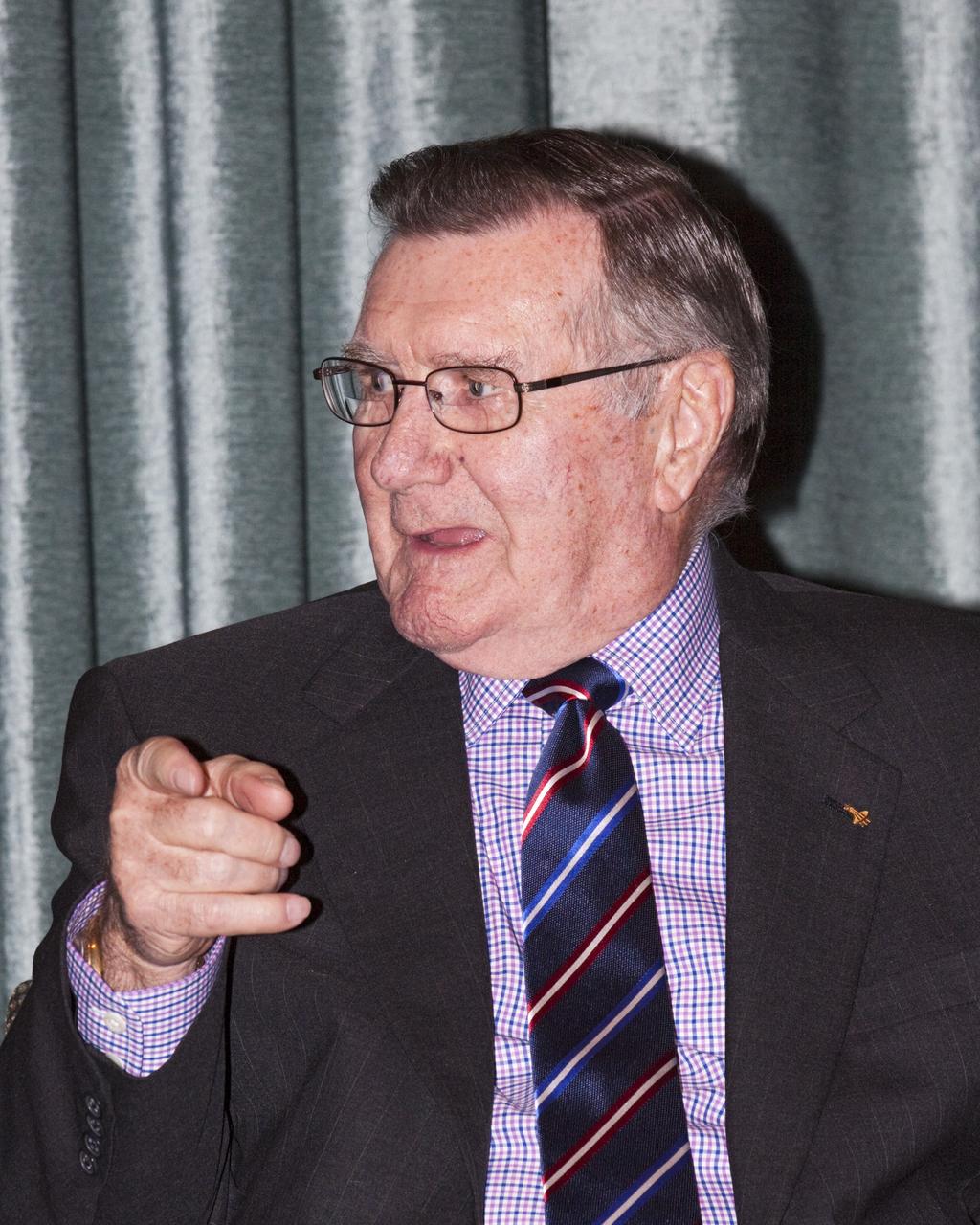
CAPE CANAVERAL, Fla. – Gemini 11 and Apollo 12 astronaut Richard Gordon speaks to guests gathered for the Astronaut Scholarship Foundation's dinner at the Radisson Resort at the Port in Cape Canaveral celebrating the 40th anniversary of Apollo 17. The gala commemorating the anniversary of Apollo 17 included mission commander Eugene Cernan and other astronauts who flew Apollo missions. Launched Dec. 7, 1972, Cernan and lunar module pilot Harrison Schmitt landed in the moon's Taurus-Littrow highlands while command module pilot Ronald Evans remained in lunar orbit operating a scientific instrument module. For more information, visit http://www-pao.ksc.nasa.gov/history/apollo/apollo-17/apollo-17.htm Photo credit: NASA/Kim Shiflett
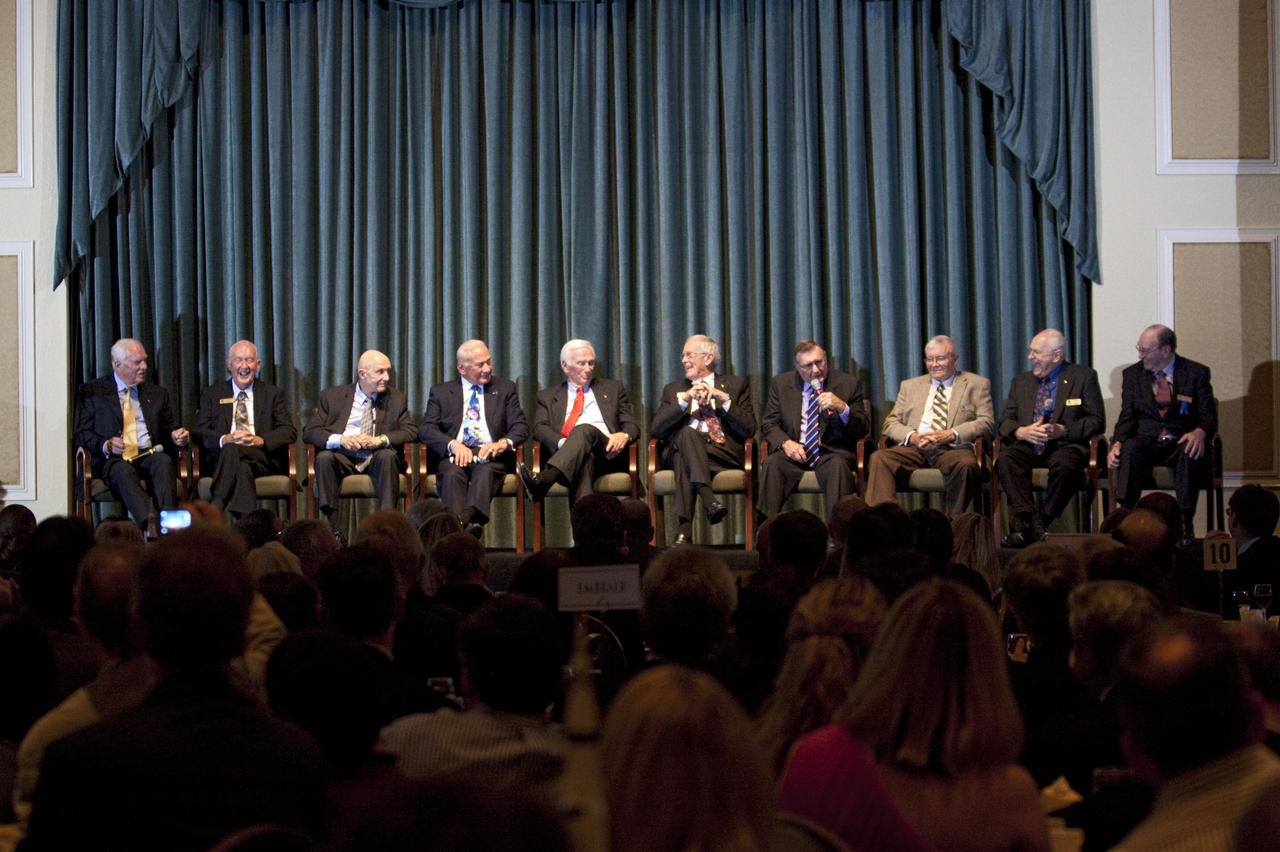
CAPE CANAVERAL, Fla. – Apollo astronauts, from the left, David Scott, James McDivitt, Thomas Stafford, Buzz Aldrin, Eugene Cernan, Charles Duke, Richard Gordon, Fred Haise, Alan Bean and Edgar Mitchell speak to guests gathered for the Astronaut Scholarship Foundation's dinner at the Radisson Resort at the Port in Cape Canaveral celebrating the 40th anniversary of Apollo 17. The gala commemorating the anniversary of Apollo 17 included mission commander Eugene Cernan and other astronauts who flew Apollo missions. Launched Dec. 7, 1972, Cernan and lunar module pilot Harrison Schmitt landed in the moon's Taurus-Littrow highlands while command module pilot Ronald Evans remained in lunar orbit operating a scientific instrument module. For more information, visit http://www-pao.ksc.nasa.gov/history/apollo/apollo-17/apollo-17.htm Photo credit: NASA/Kim Shiflett
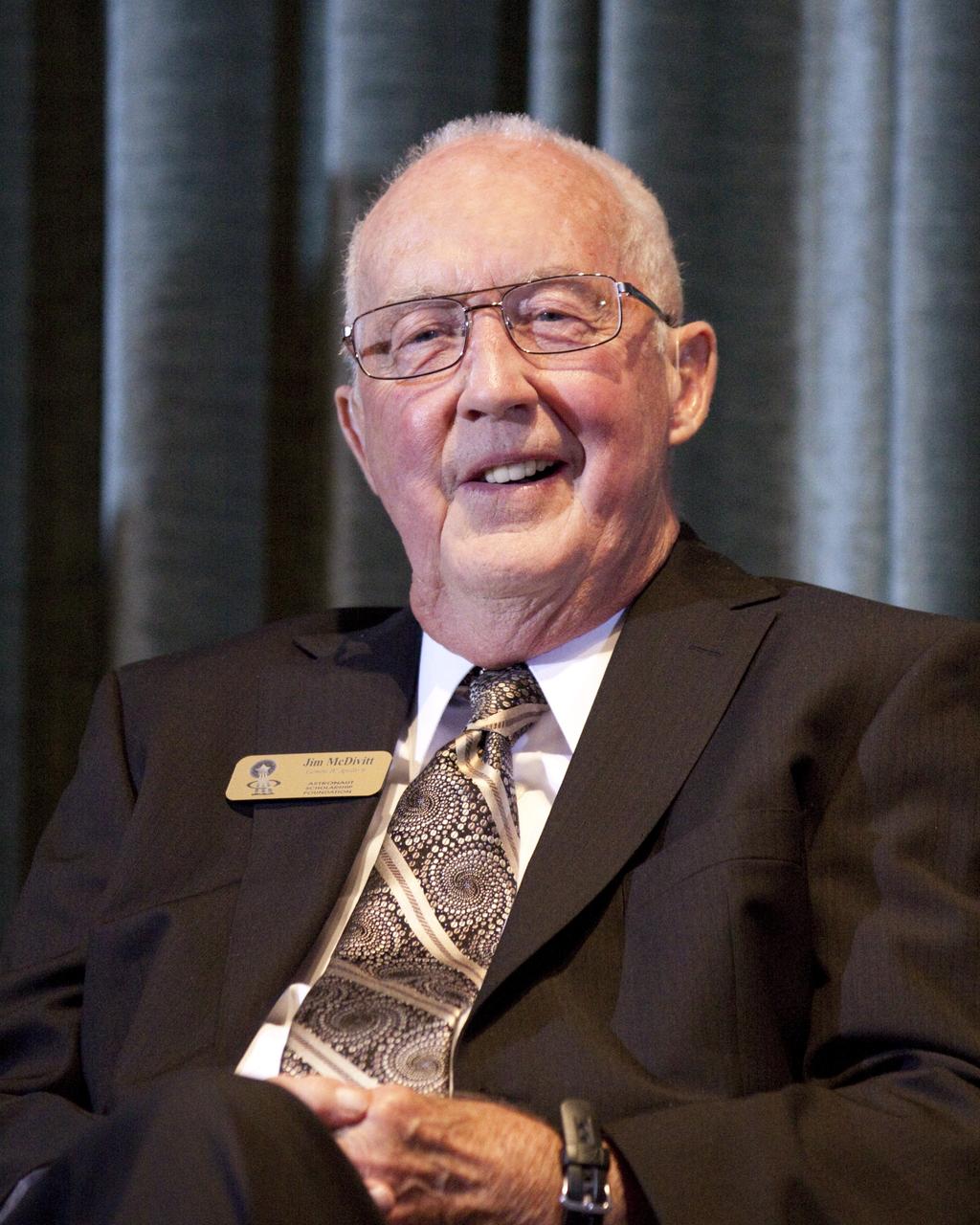
CAPE CANAVERAL, Fla. – Gemini 4 and Apollo 9 astronaut James McDivitt speaks to guests gathered for the Astronaut Scholarship Foundation's dinner at the Radisson Resort at the Port in Cape Canaveral celebrating the 40th anniversary of Apollo 17. The gala commemorating the anniversary of Apollo 17 included mission commander Eugene Cernan and other astronauts who flew Apollo missions. Launched Dec. 7, 1972, Cernan and lunar module pilot Harrison Schmitt landed in the moon's Taurus-Littrow highlands while command module pilot Ronald Evans remained in lunar orbit operating a scientific instrument module. For more information, visit http://www-pao.ksc.nasa.gov/history/apollo/apollo-17/apollo-17.htm Photo credit: NASA/Kim Shiflett
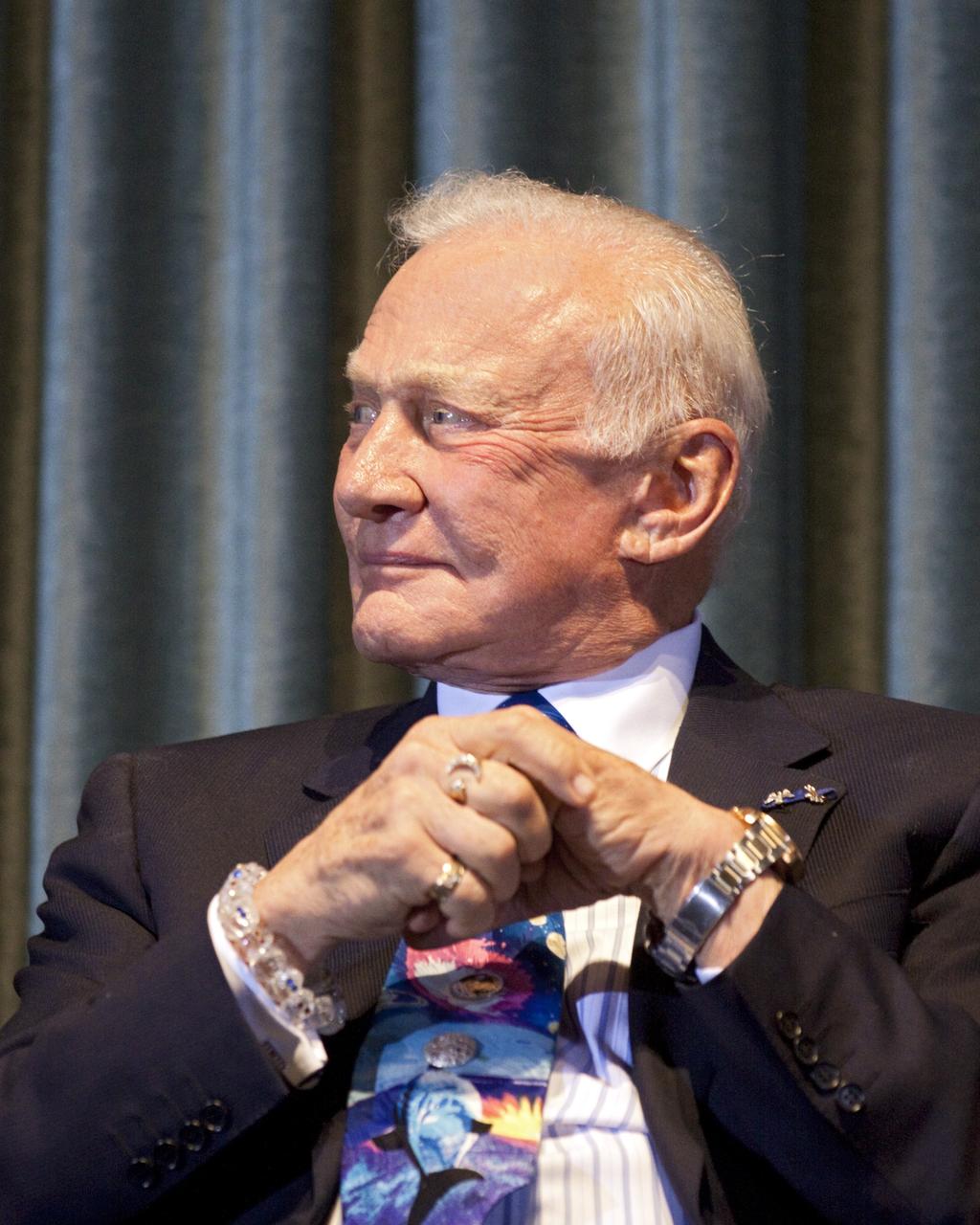
CAPE CANAVERAL, Fla. – Gemini 12 and Apollo 11 astronaut Buzz Aldrin participates in a presentation to guests gathered for the Astronaut Scholarship Foundation's dinner at the Radisson Resort at the Port in Cape Canaveral celebrating the 40th anniversary of Apollo 17. The gala commemorating the anniversary of Apollo 17 included mission commander Eugene Cernan and other astronauts who flew Apollo missions. Launched Dec. 7, 1972, Cernan and lunar module pilot Harrison Schmitt landed in the moon's Taurus-Littrow highlands while command module pilot Ronald Evans remained in lunar orbit operating a scientific instrument module. For more information, visit http://www-pao.ksc.nasa.gov/history/apollo/apollo-17/apollo-17.htm Photo credit: NASA/Kim Shiflett
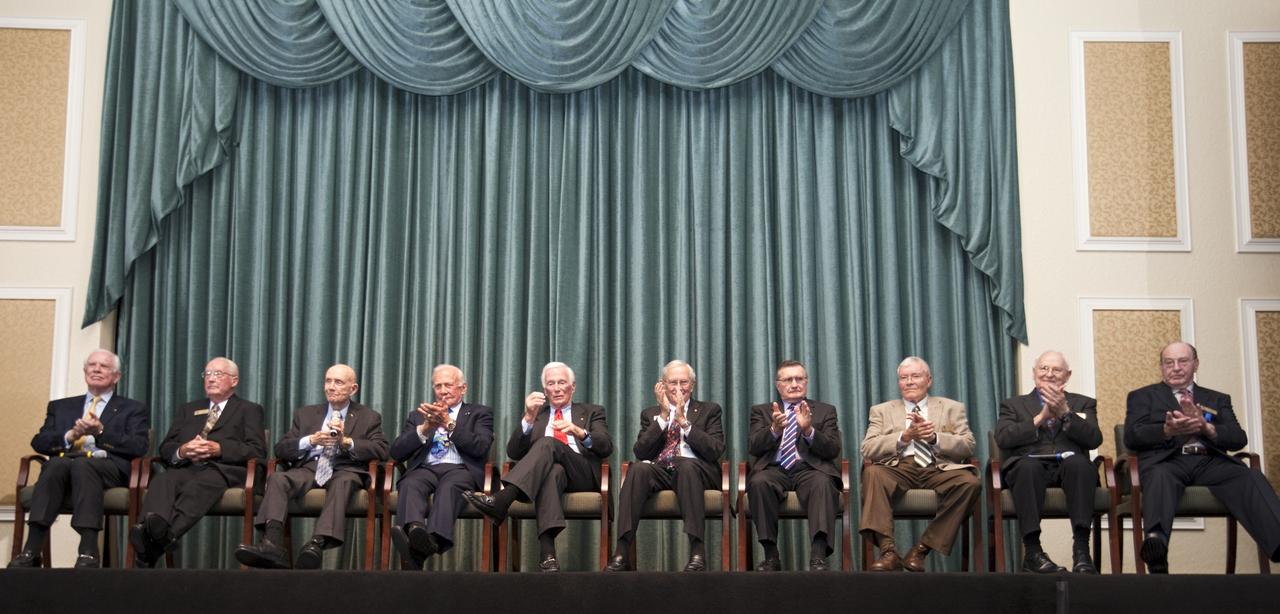
CAPE CANAVERAL, Fla. – Apollo astronauts, from the left, David Scott, James McDivitt, Thomas Stafford, Buzz Aldrin, Eugene Cernan, Charles Duke, Richard Gordon, Fred Haise, Alan Bean and Edgar Mitchell speak to guests gathered for the Astronaut Scholarship Foundation's dinner at the Radisson Resort at the Port in Cape Canaveral celebrating the 40th anniversary of Apollo 17. The gala commemorating the anniversary of Apollo 17 included mission commander Eugene Cernan and other astronauts who flew Apollo missions. Launched Dec. 7, 1972, Cernan and lunar module pilot Harrison Schmitt landed in the moon's Taurus-Littrow highlands while command module pilot Ronald Evans remained in lunar orbit operating a scientific instrument module. For more information, visit http://www-pao.ksc.nasa.gov/history/apollo/apollo-17/apollo-17.htm Photo credit: NASA/Kim Shiflett
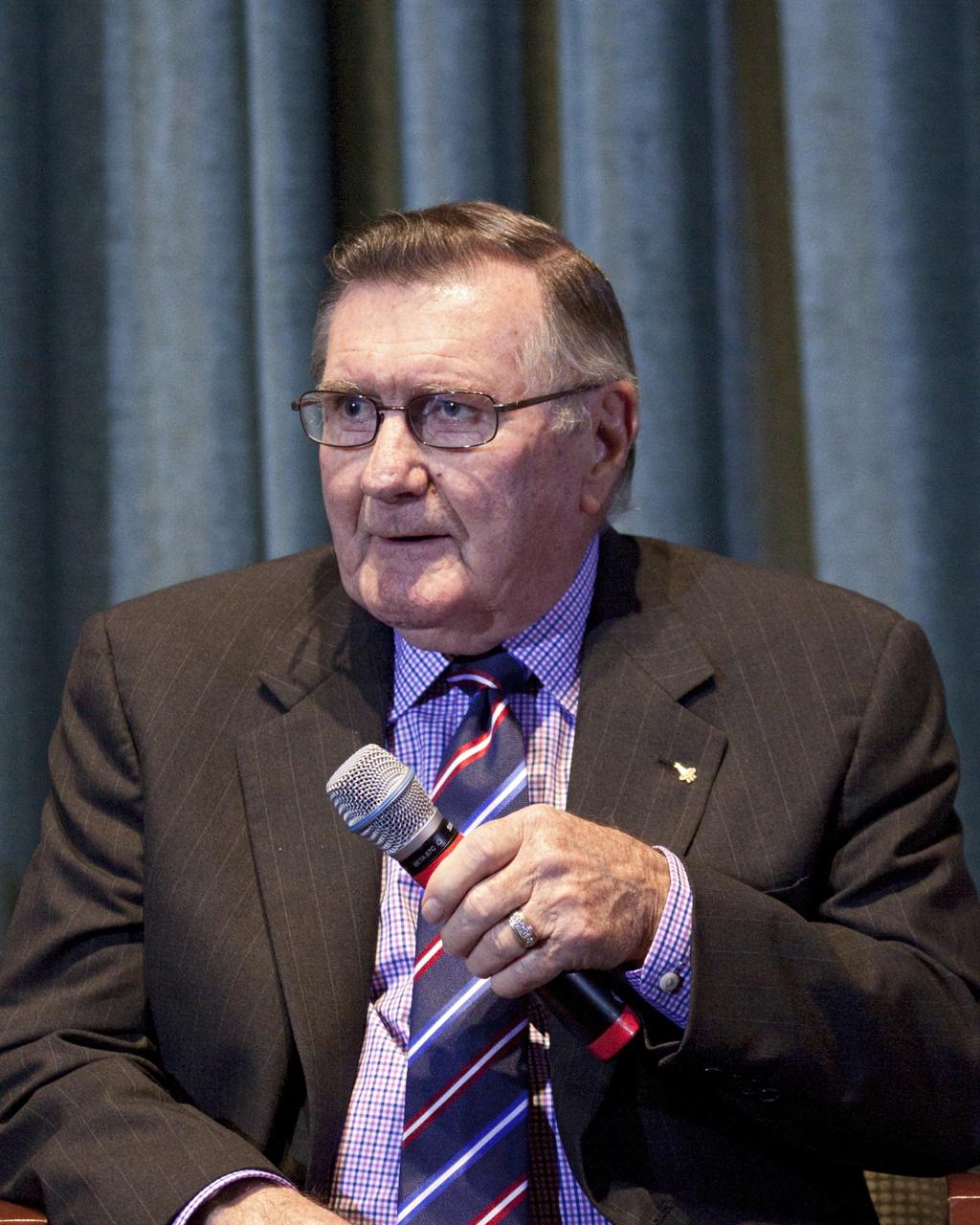
CAPE CANAVERAL, Fla. – Gemini 11 and Apollo 12 astronaut Richard Gordon speaks to guests gathered for the Astronaut Scholarship Foundation's dinner at the Radisson Resort at the Port in Cape Canaveral celebrating the 40th anniversary of Apollo 17. The gala commemorating the anniversary of Apollo 17 included mission commander Eugene Cernan and other astronauts who flew Apollo missions. Launched Dec. 7, 1972, Cernan and lunar module pilot Harrison Schmitt landed in the moon's Taurus-Littrow highlands while command module pilot Ronald Evans remained in lunar orbit operating a scientific instrument module. For more information, visit http://www-pao.ksc.nasa.gov/history/apollo/apollo-17/apollo-17.htm Photo credit: NASA/Kim Shiflett
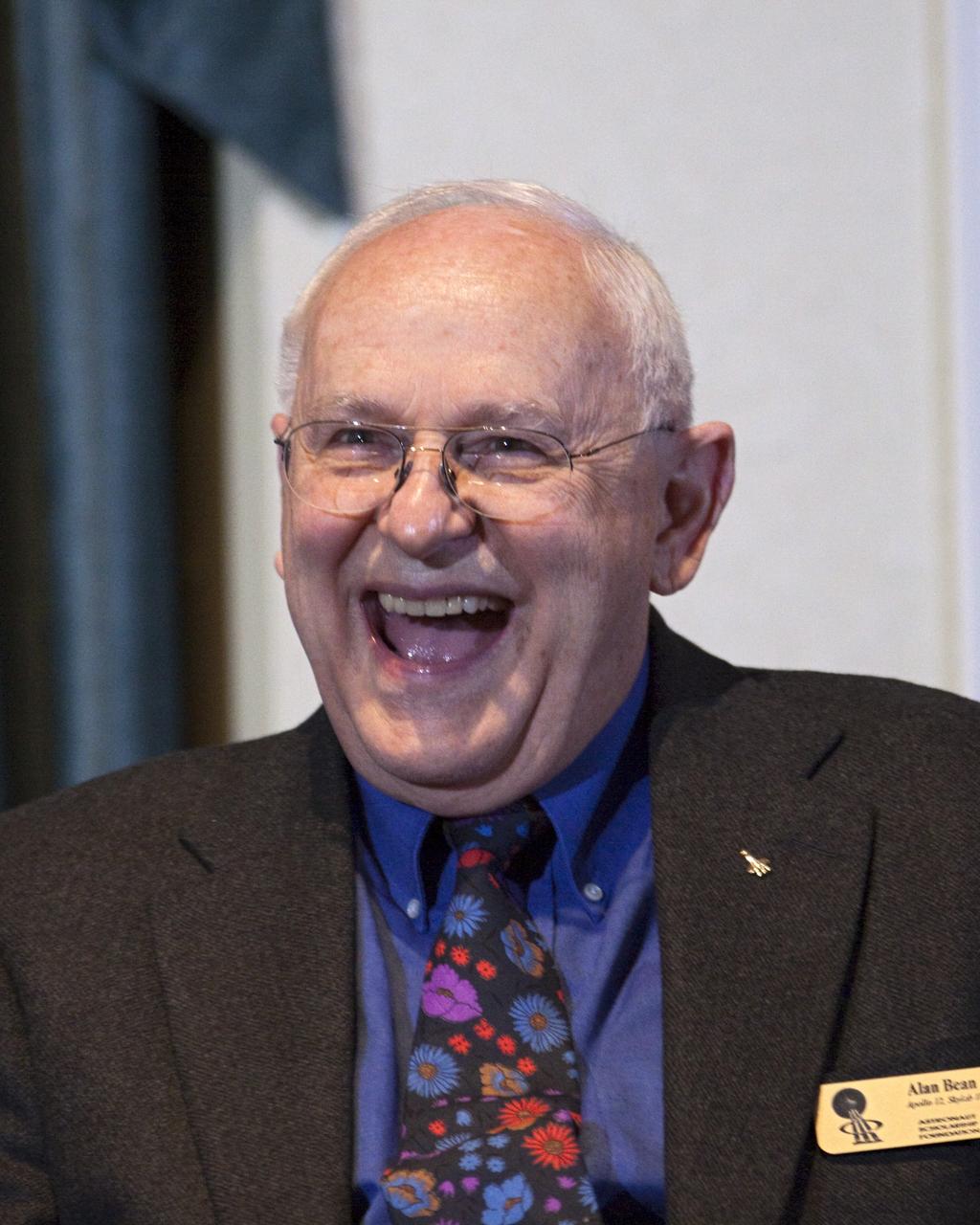
CAPE CANAVERAL, Fla. – Apollo 12 and Skylab 3 astronaut Alan Bean enjoys a light moment during a presentation to guests gathered for the Astronaut Scholarship Foundation's dinner at the Radisson Resort at the Port in Cape Canaveral celebrating the 40th anniversary of Apollo 17. The gala commemorating the anniversary of Apollo 17 included mission commander Eugene Cernan and other astronauts who flew Apollo missions. Launched Dec. 7, 1972, Cernan and lunar module pilot Harrison Schmitt landed in the moon's Taurus-Littrow highlands while command module pilot Ronald Evans remained in lunar orbit operating a scientific instrument module. For more information, visit http://www-pao.ksc.nasa.gov/history/apollo/apollo-17/apollo-17.htm Photo credit: NASA/Kim Shiflett
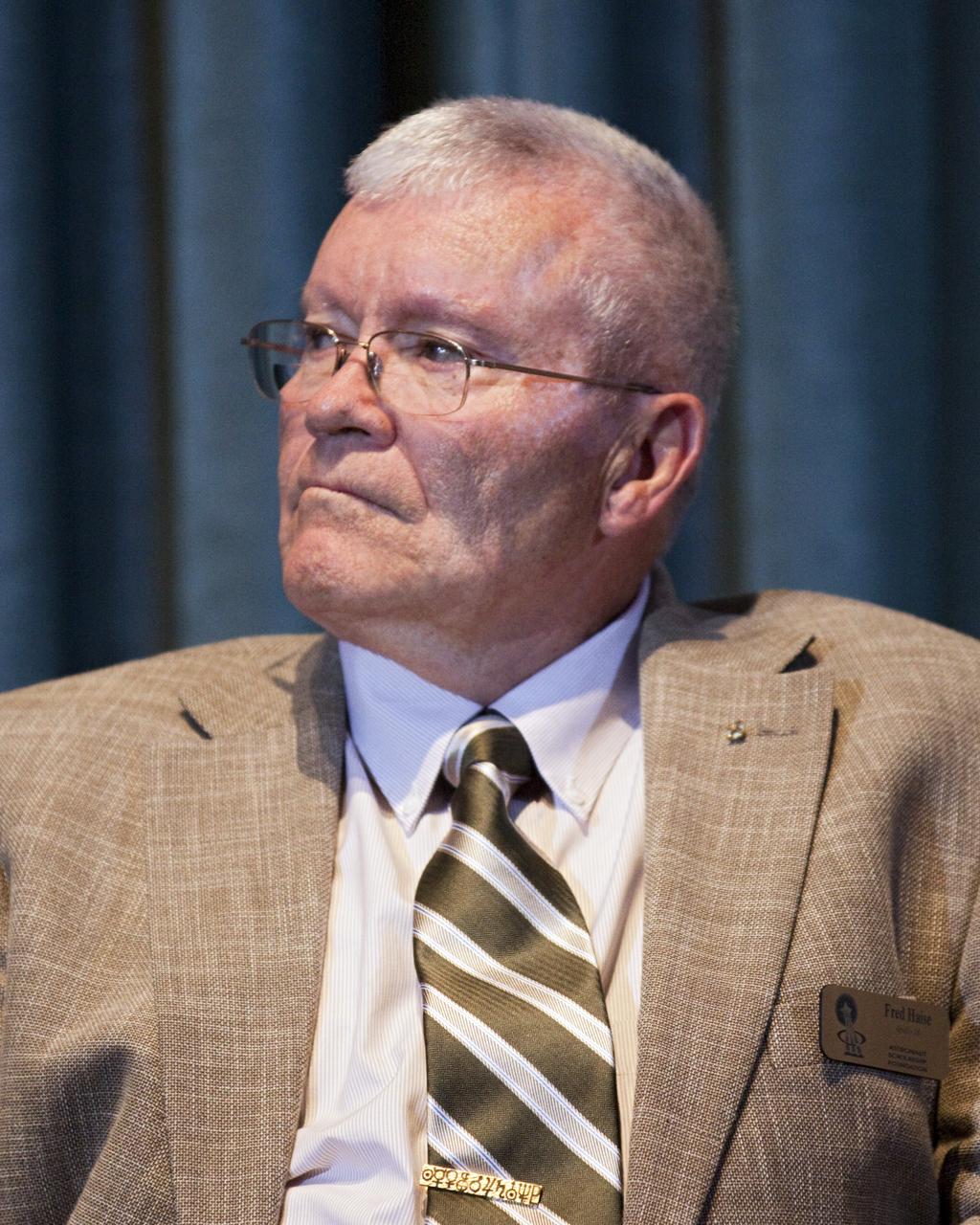
CAPE CANAVERAL, Fla. – Apollo 13 astronaut Fred Haise participates in a presentation to guests gathered for the Astronaut Scholarship Foundation's dinner at the Radisson Resort at the Port in Cape Canaveral celebrating the 40th anniversary of Apollo 17. The gala commemorating the anniversary of Apollo 17 included mission commander Eugene Cernan and other astronauts who flew Apollo missions. Launched Dec. 7, 1972, Cernan and lunar module pilot Harrison Schmitt landed in the moon's Taurus-Littrow highlands while command module pilot Ronald Evans remained in lunar orbit operating a scientific instrument module. For more information, visit http://www-pao.ksc.nasa.gov/history/apollo/apollo-17/apollo-17.htm Photo credit: NASA/Kim Shiflett
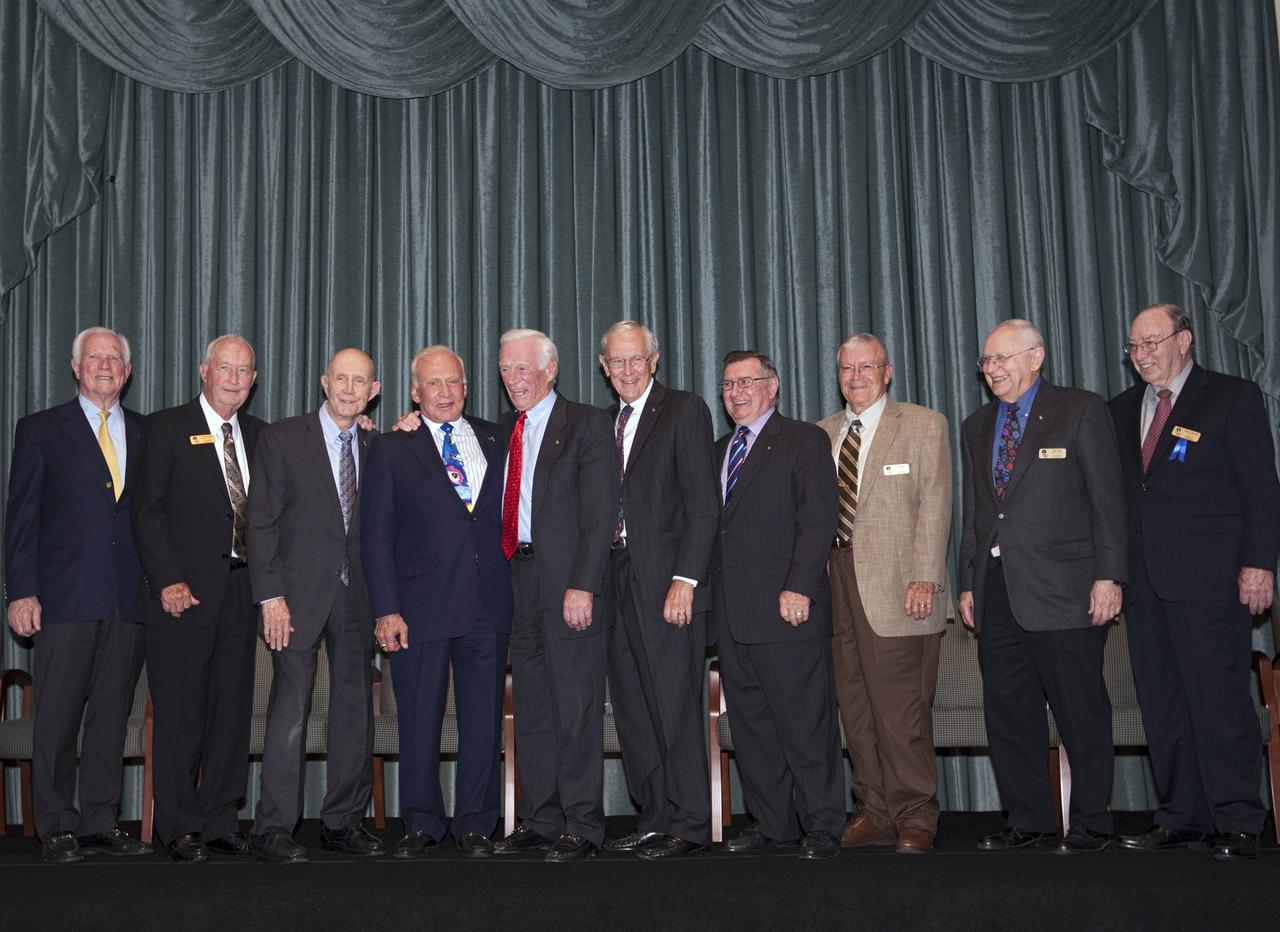
CAPE CANAVERAL, Fla. – Apollo astronauts, from the left, David Scott, James McDivitt, Thomas Stafford, Buzz Aldrin, Eugene Cernan, Charles Duke, Richard Gordon, Fred Haise, Alan Bean and Edgar Mitchell participated in the Astronaut Scholarship Foundation's dinner at the Radisson Resort at the Port in Cape Canaveral celebrating the 40th anniversary of Apollo 17. The gala commemorating the anniversary of Apollo 17 included mission commander Eugene Cernan and other astronauts who flew Apollo missions. Launched Dec. 7, 1972, Cernan and lunar module pilot Harrison Schmitt landed in the moon's Taurus-Littrow highlands while command module pilot Ronald Evans remained in lunar orbit operating a scientific instrument module. For more information, visit http://www-pao.ksc.nasa.gov/history/apollo/apollo-17/apollo-17.htm Photo credit: NASA/Kim Shiflett
CAPE CANAVERAL, Fla. – Gemini 8, Apollo 9 and 15 astronaut David Scott speaks to guests gathered for the Astronaut Scholarship Foundation's dinner at the Radisson Resort at the Port in Cape Canaveral celebrating the 40th anniversary of Apollo 17. The gala commemorating the anniversary of Apollo 17 included mission commander Eugene Cernan and other astronauts who flew Apollo missions. Launched Dec. 7, 1972, Cernan and lunar module pilot Harrison Schmitt landed in the moon's Taurus-Littrow highlands while command module pilot Ronald Evans remained in lunar orbit operating a scientific instrument module. For more information, visit http://www-pao.ksc.nasa.gov/history/apollo/apollo-17/apollo-17.htm Photo credit: NASA/Kim Shiflett
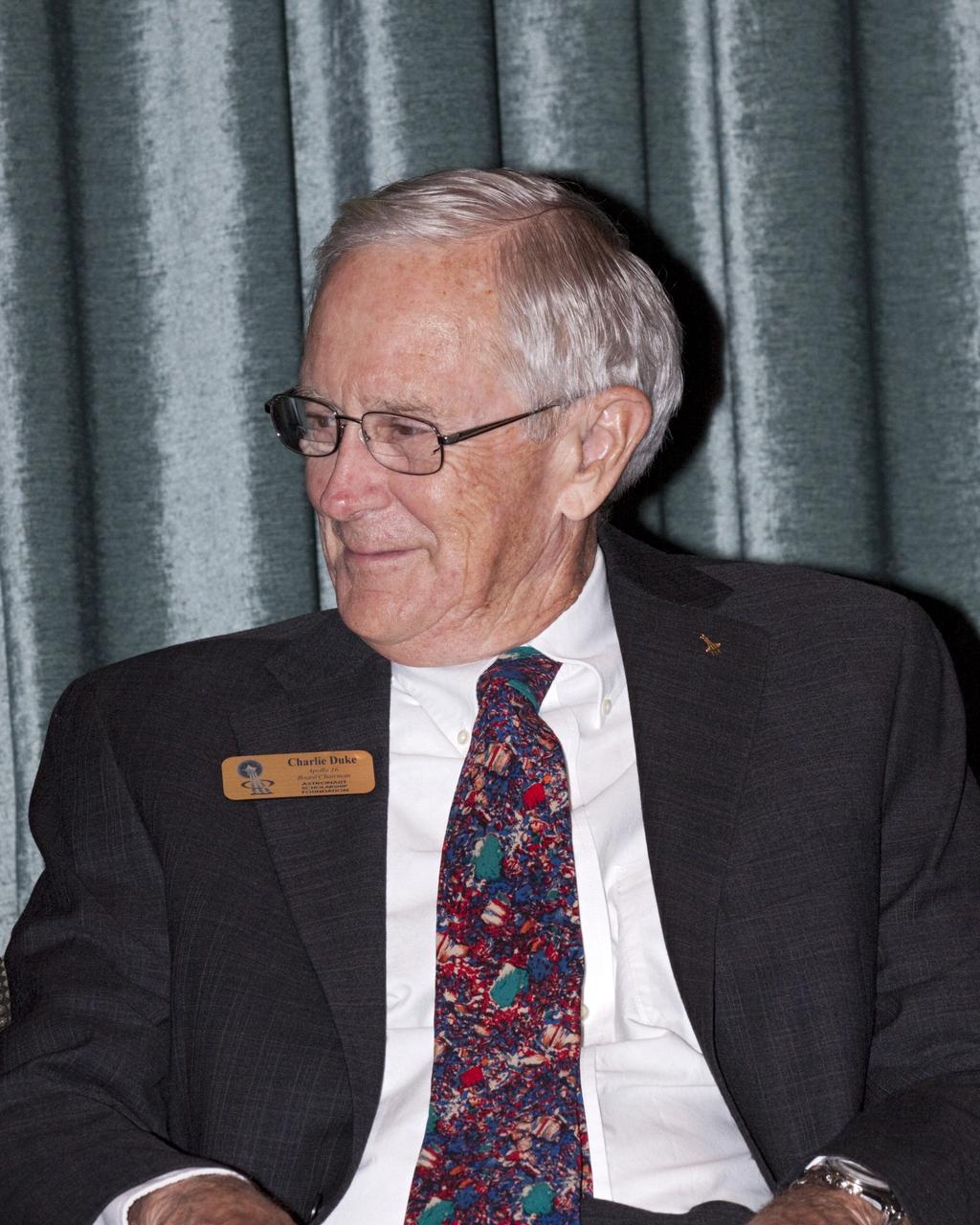
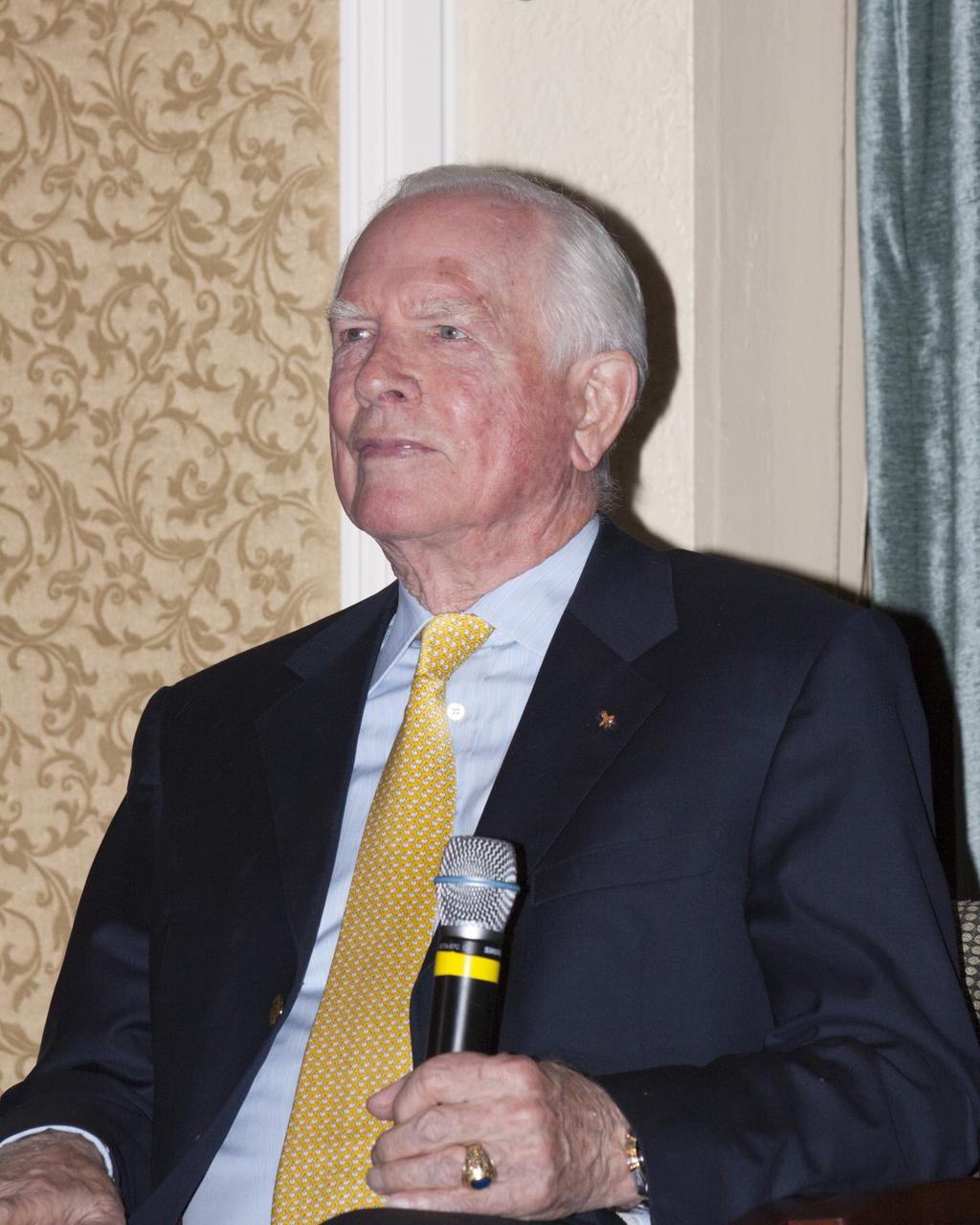
CAPE CANAVERAL, Fla. – Apollo 16 astronaut Charles Duke participates in a presentation to guests gathered for the Astronaut Scholarship Foundation's dinner at the Radisson Resort at the Port in Cape Canaveral celebrating the 40th anniversary of Apollo 17. The gala commemorating the anniversary of Apollo 17 included mission commander Eugene Cernan and other astronauts who flew Apollo missions. Launched Dec. 7, 1972, Cernan and lunar module pilot Harrison Schmitt landed in the moon's Taurus-Littrow highlands while command module pilot Ronald Evans remained in lunar orbit operating a scientific instrument module. For more information, visit http://www-pao.ksc.nasa.gov/history/apollo/apollo-17/apollo-17.htm Photo credit: NASA/Kim Shiflett
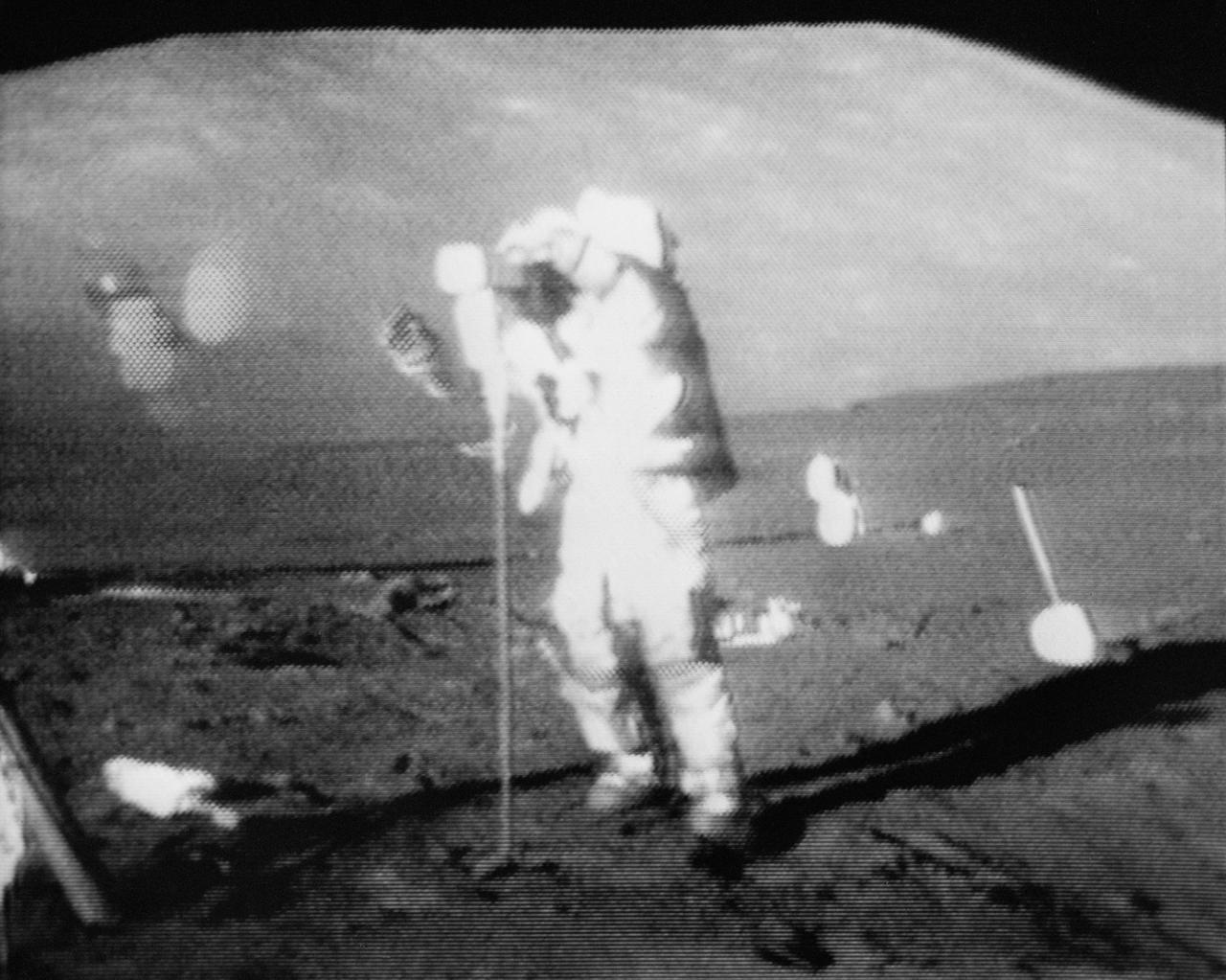
S72-55064 (11 Dec. 1972) --- Astronaut Eugene A. Cernan operates the Apollo Lunar Surface Drill during the first Apollo 17 extravehicular activity (EVA) at the Taurus-Littrow landing site, in this black and white reproduction taken from a color television transmission made by the RCA color TV camera mounted on the Lunar Roving Vehicle. Cernan is the commander of the Apollo 17 lunar landing mission. Astronaut Ronald E. Evans, command module pilot, remained with the Apollo 17 Command and Service Modules in lunar orbit while astronaut Cernan and scientist-astronaut Harrison H. Schmitt, lunar module pilot, descended in the Lunar Module to explore the moon.
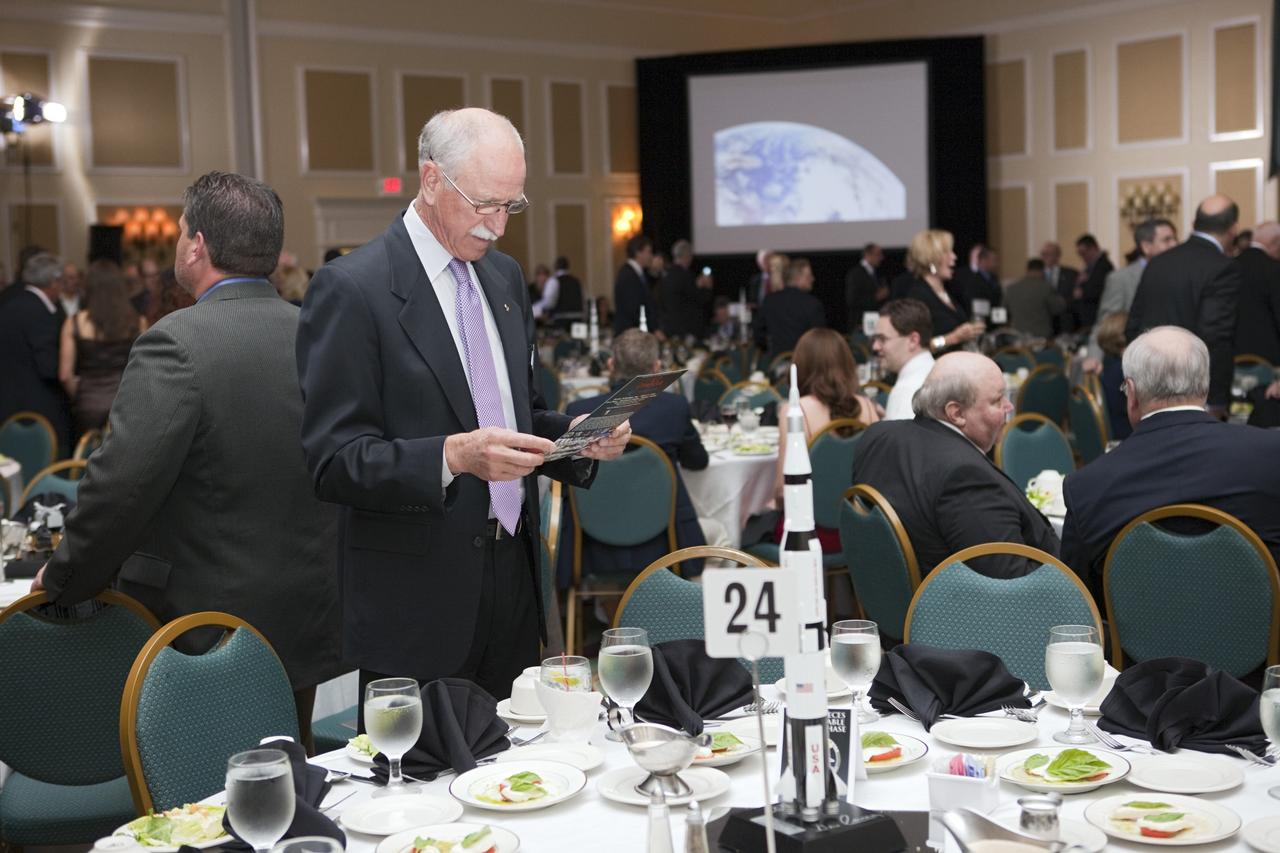
CAPE CANAVERAL, Fla. – Former space shuttle astronaut Richard Covey was among guests gathering for the Astronaut Scholarship Foundation's dinner at the Radisson Resort at the Port in Cape Canaveral celebrating the 40th anniversary of Apollo 17. The gala commemorating the anniversary of Apollo 17 included mission commander Eugene Cernan and other astronauts who flew Apollo missions. Launched Dec. 7, 1972, Cernan and lunar module pilot Harrison Schmitt landed in the moon's Taurus-Littrow highlands while command module pilot Ronald Evans remained in lunar orbit operating a scientific instrument module. For more information, visit http://www-pao.ksc.nasa.gov/history/apollo/apollo-17/apollo-17.htm Photo credit: NASA/Kim Shiflett
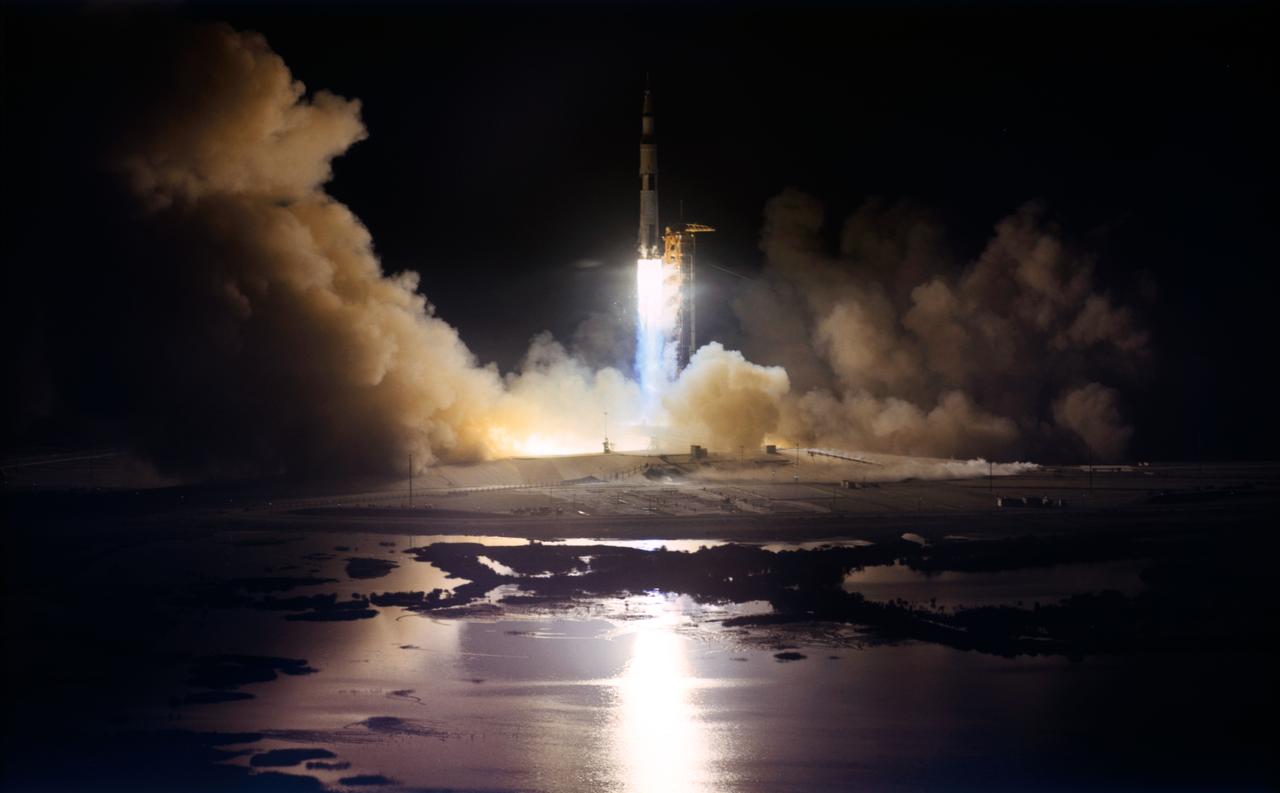
S72-55070 (7 Dec. 1972) --- The huge, 363-feet tall Apollo 17 (Spacecraft 114/Lunar Module 12/Saturn 512) space vehicle is launched from Pad A, Launch Complex 39, Kennedy Space Center (KSC), Florida, at 12:33 a.m. (EST), Dec. 7, 1972. Apollo 17, the final lunar landing mission in NASA's Apollo program, was the first nighttime liftoff of the Saturn V launch vehicle. Aboard the Apollo 17 spacecraft were astronaut Eugene A. Cernan, commander; astronaut Ronald E. Evans, command module pilot; and scientist-astronaut Harrison H. Schmitt, lunar module pilot. Flame from the five F-1 engines of the Apollo/Saturn first (S-1C) stage illuminates the nighttime scene. A two-hour and 40-minute hold delayed the Apollo 17 launching.
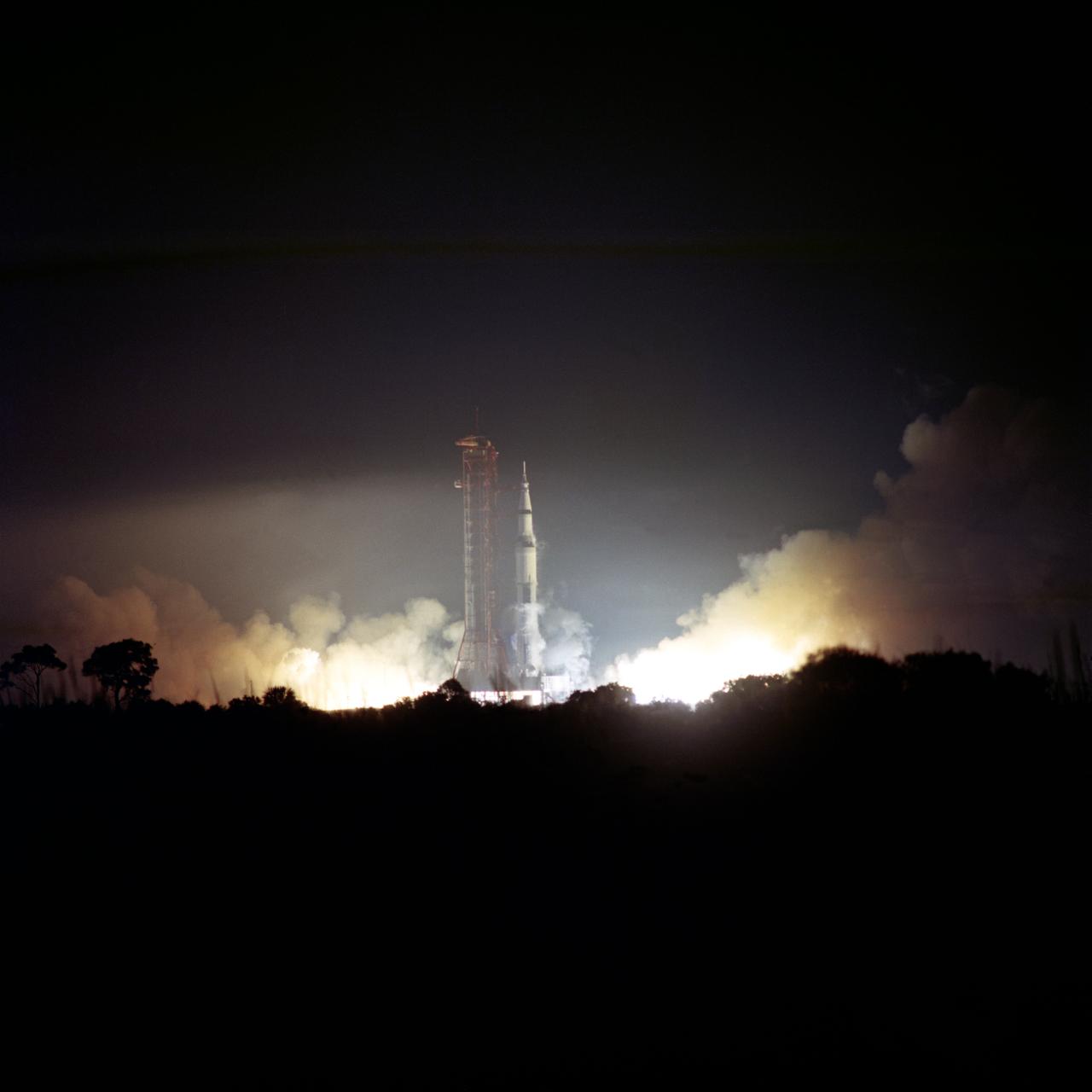
S72-55482 (7 Dec. 1972) --- The huge, 363-feet tall Apollo 17 (Spacecraft 114/Lunar Module 12/Saturn 512) space vehicle is launched from Pad A., Launch Complex 39, Kennedy Space Center (KSC), Florida, at 12:33 a.m. (EST), Dec. 7, 1972. Apollo 17, the final lunar landing mission in NASA's Apollo program, was the first nighttime liftoff of the Saturn V launch vehicle. Aboard the Apollo 17 spacecraft were astronaut Eugene A. Cernan, commander; astronaut Ronald E. Evans, command module pilot; and scientist-astronaut Harrison H. Schmitt, lunar module pilot. Flame from the five F-1 engines of the Apollo/Saturn first (S-1C) stage illuminates the nighttime scene. A two-hour and 40-minute hold delayed the Apollo 17 launching.
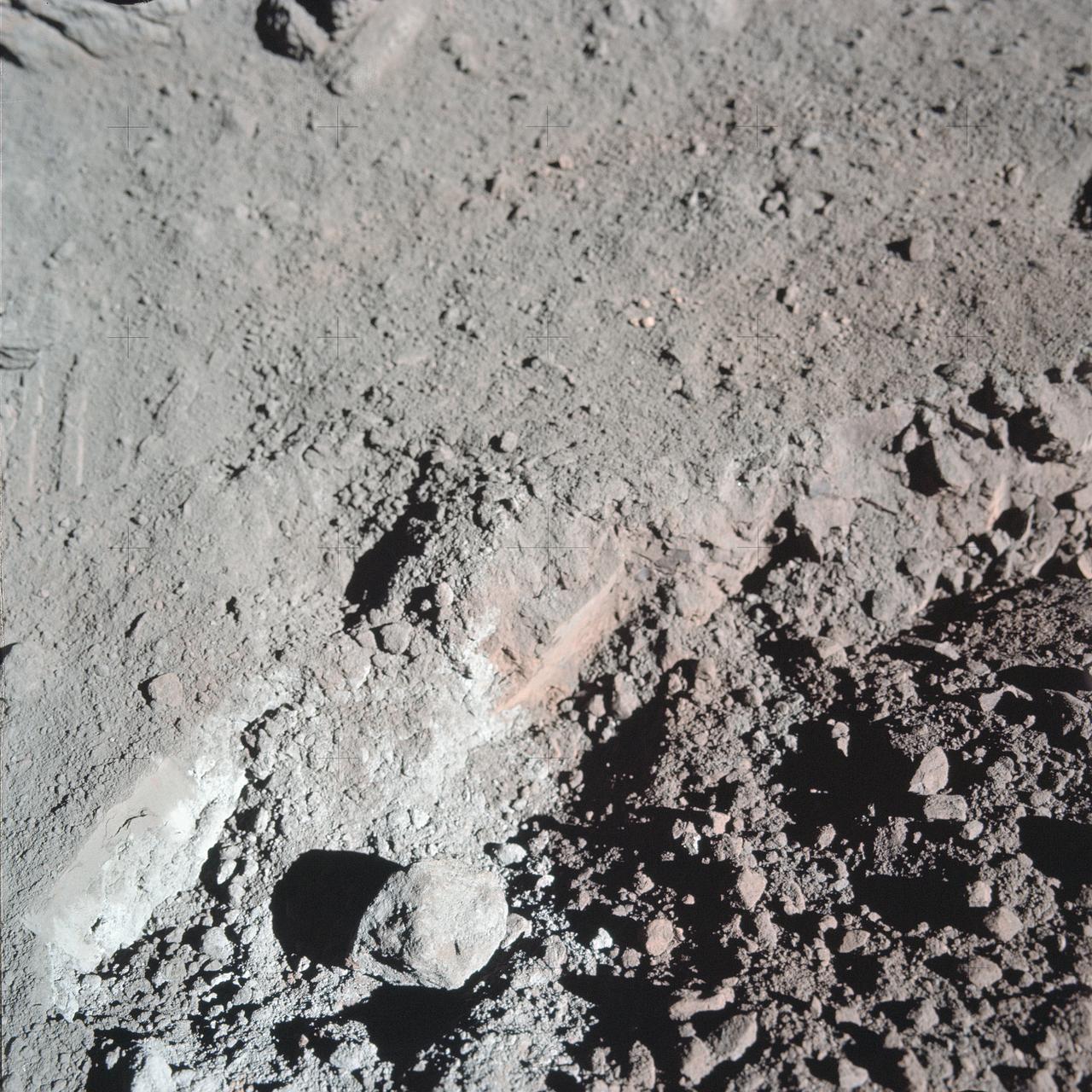
AS17-137-20989 (12 Dec. 1972) --- A close-up view of the much-publicized orange soil which the Apollo 17 crewmen found at Station 4 (Shorty Crater) during the second Apollo 17 extravehicular activity (EVA) at the Taurus-Littrow landing site. The orange soil was first spotted by scientist-astronaut Harrison H. Schmitt. While astronauts Schmitt and Eugene A. Cernan descended in the Lunar Module (LM) "Challenger" to explore the lunar surface, astronaut Ronald E. Evans remained with the Apollo 17 Command and Service Modules (CSM) in lunar orbit. The orange soil was never seen by the crewmen of the other lunar landing missions - Apollo 11 (Sea of Tranquility); Apollo 12 (Ocean of Storms); Apollo 14 (Fra Mauro); Apollo 15 (Hadley-Apennines); and Apollo 16 (Descartes).
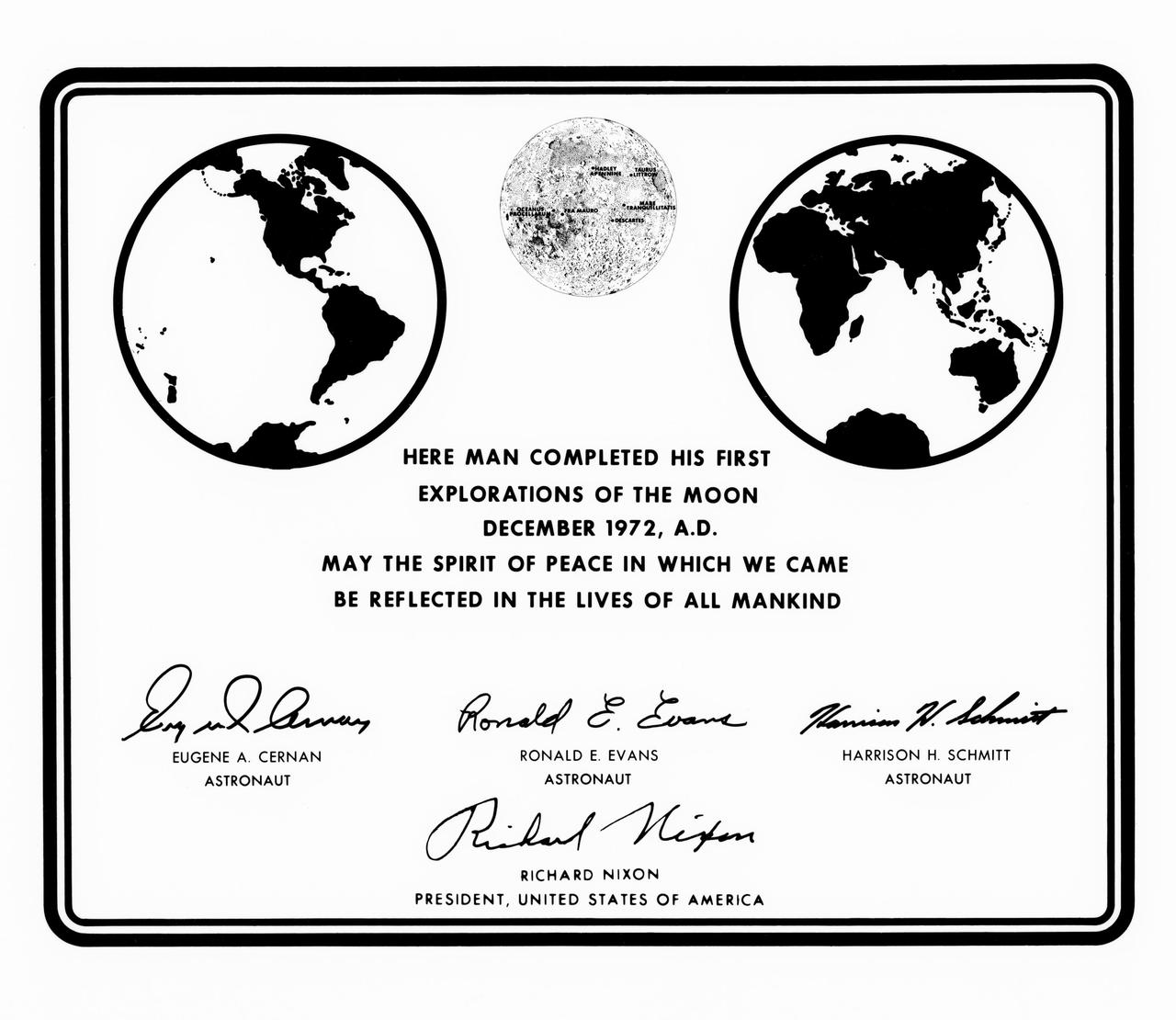
S72-55169 (14 Dec. 1972) --- A photographic replica of the plaque which the Apollo 17 astronauts left behind at the Taurus-Littrow landing site. Apollo 17 is the final lunar landing mission in NASA's Apollo program. The commemorative plaque was unveiled at the close of the third extravehicular activity (EVA). The plaque is made of stainless steel measuring nine by seven and five-eighths inches, and one-sixteenth inch thick. It is attached to the ladder on the landing gear strut on the descent stage of Apollo 17 Lunar Module (LM) "Challenger".
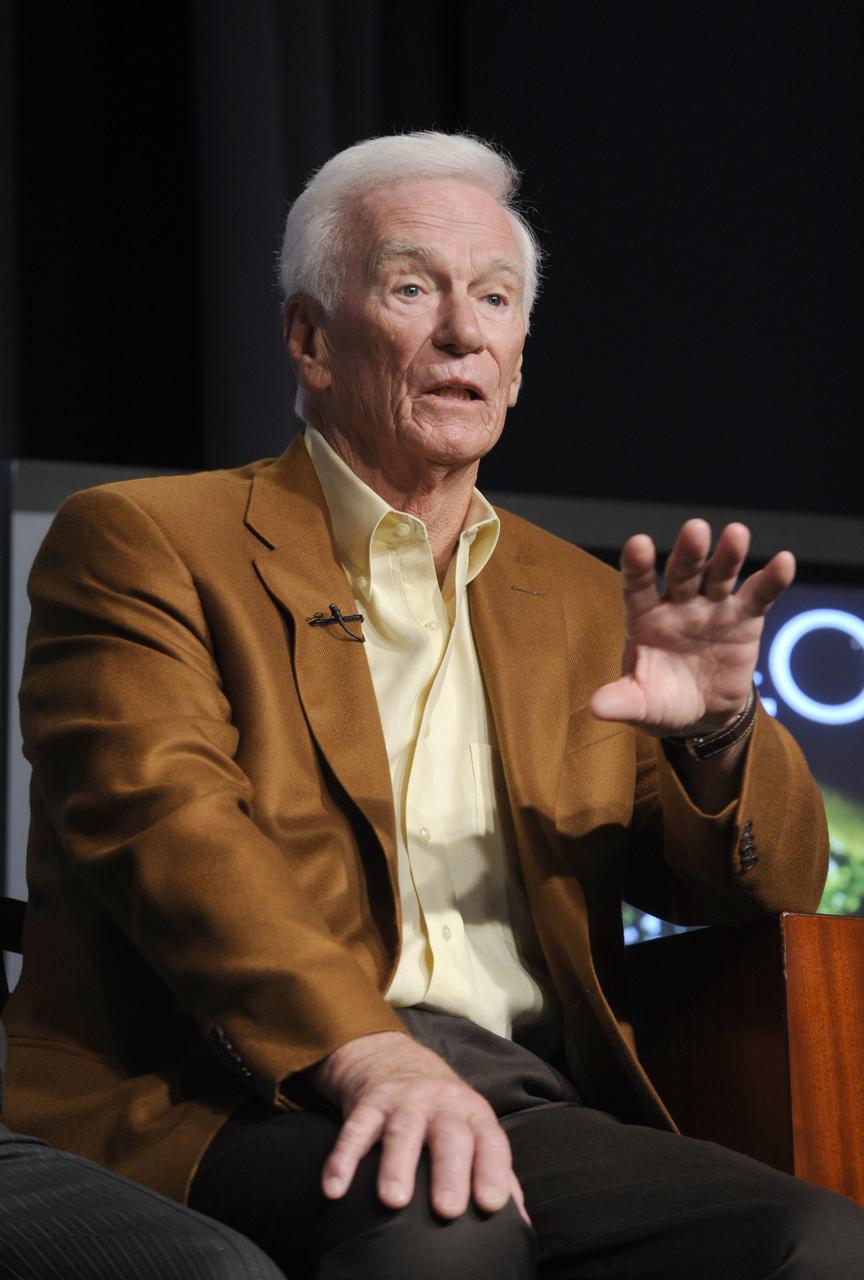
Eugene Cernan (Apollo 17) speaks during the 40th anniversary of the Apollo 11 mission and the walk on the moon press conference, Monday, July 20, 2009, at NASA Headquarters in Washington. Photo Credit: (NASA/Paul E. Alers)
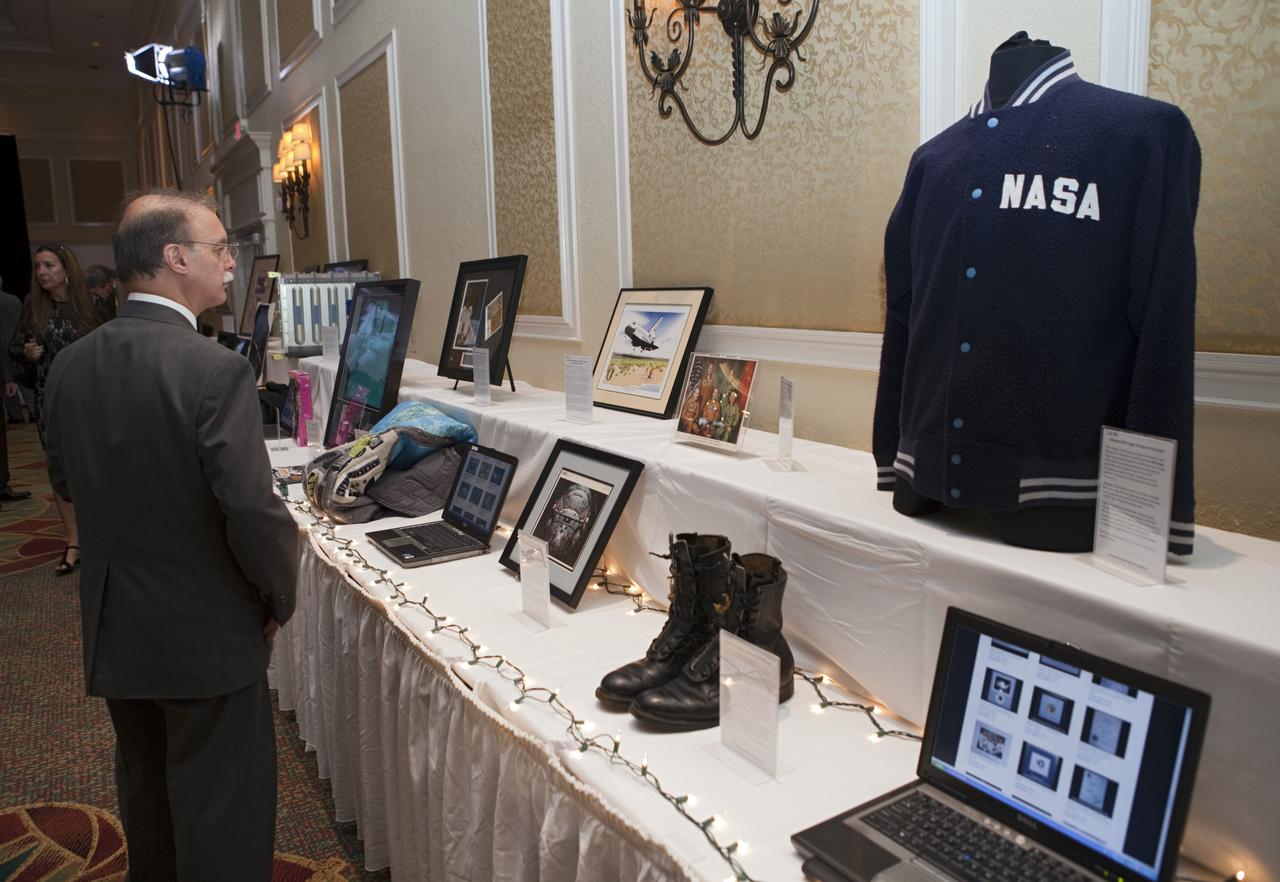
CAPE CANAVERAL, Fla. – A guest checks out an item available for auction at the Astronaut Scholarship Foundation's dinner at the Radisson Resort at the Port in Cape Canaveral celebrating the 40th anniversary of Apollo 17. The auction of space-related memorabilia was held with proceeds supporting college scholarships for students who exhibit imagination and exceptional performance in science, technology, engineering and math. The gala commemorating the anniversary of Apollo 17 included mission commander Eugene Cernan and other astronauts who flew Apollo missions. Launched Dec. 7, 1972, Cernan and lunar module pilot Harrison Schmitt landed in the moon's Taurus-Littrow highlands while command module pilot Ronald Evans remained in lunar orbit operating a scientific instrument module. For more information, visit http://www-pao.ksc.nasa.gov/history/apollo/apollo-17/apollo-17.htm Photo credit: NASA/Kim Shiflett
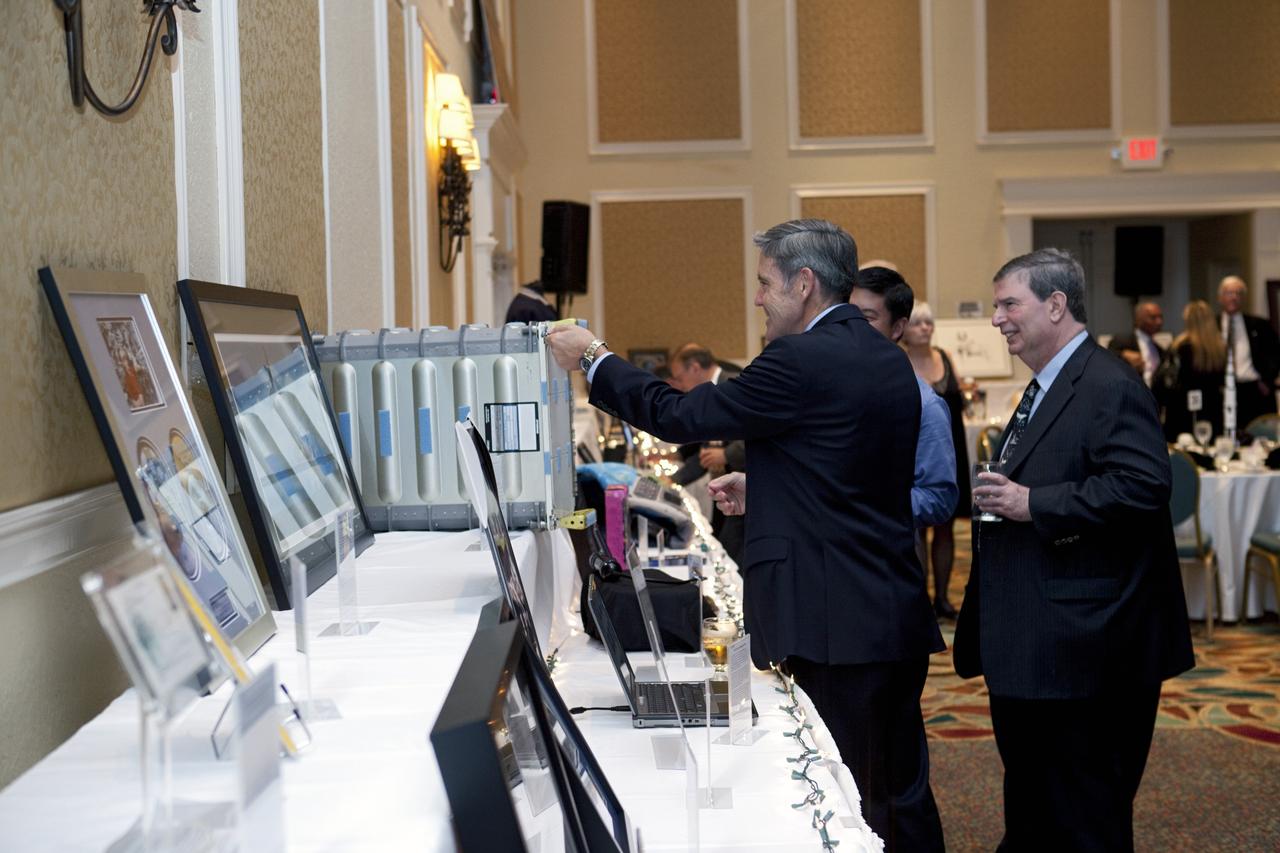
CAPE CANAVERAL, Fla. – Kennedy Space Center Director Bob Cabana checks out an item available for auction at the Astronaut Scholarship Foundation's dinner at the Radisson Resort at the Port in Cape Canaveral celebrating the 40th anniversary of Apollo 17. The auction of space-related memorabilia was held with proceeds supporting college scholarships for students who exhibit imagination and exceptional performance in science, technology, engineering and math. The gala commemorating the anniversary of Apollo 17 included mission commander Eugene Cernan and other astronauts who flew Apollo missions. Launched Dec. 7, 1972, Cernan and lunar module pilot Harrison Schmitt landed in the moon's Taurus-Littrow highlands while command module pilot Ronald Evans remained in lunar orbit operating a scientific instrument module. For more information, visit http://www-pao.ksc.nasa.gov/history/apollo/apollo-17/apollo-17.htm Photo credit: NASA/Kim Shiflett
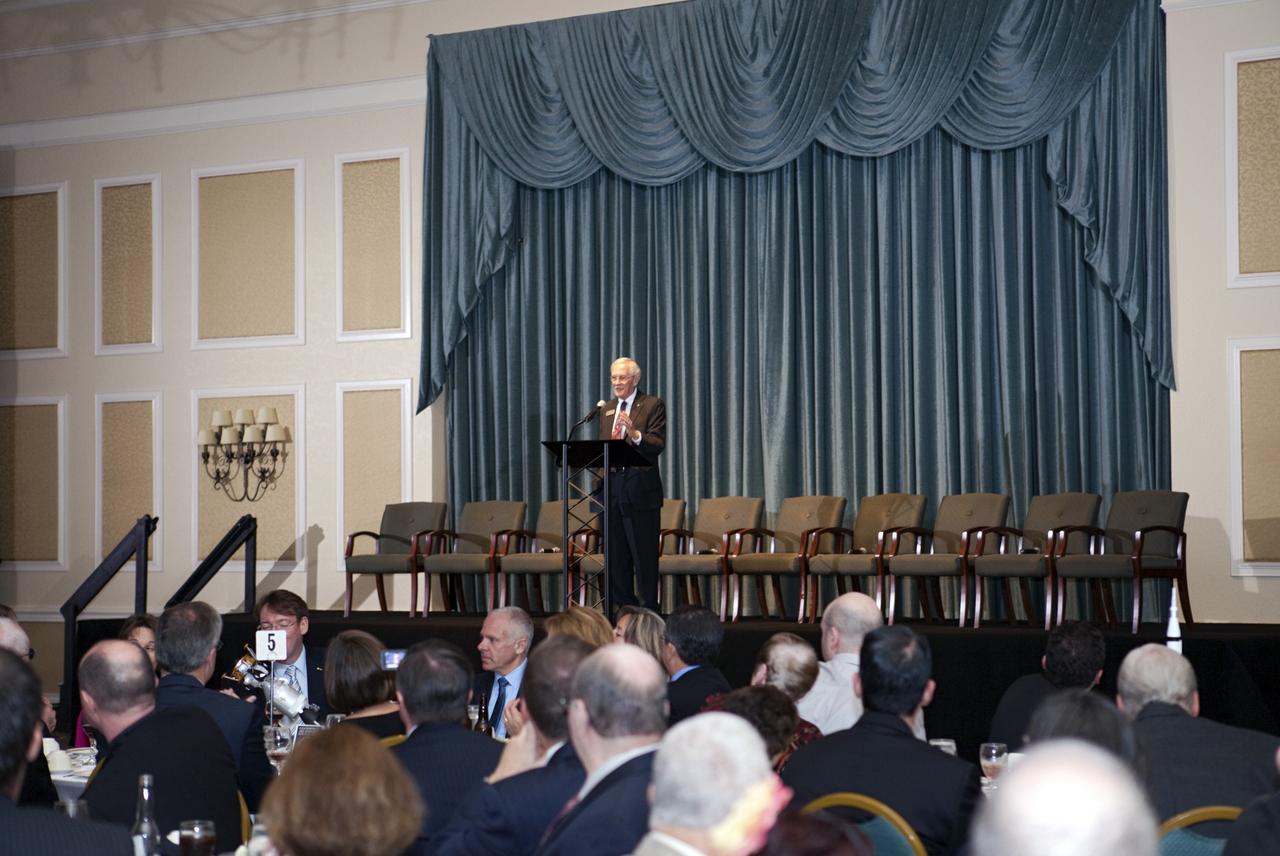
CAPE CANAVERAL, Fla. – Charles Duke, chairman of the board of directors for the Astronaut Scholarship Foundation welcomes guests who have gathered for the organization's dinner at the Radisson Resort at the Port in Cape Canaveral celebrating the 40th anniversary of Apollo 17. The gala commemorating the anniversary of Apollo 17 included mission commander Eugene Cernan and other astronauts who flew Apollo missions. Launched Dec. 7, 1972, Cernan and lunar module pilot Harrison Schmitt landed in the moon's Taurus-Littrow highlands while command module pilot Ronald Evans remained in lunar orbit operating a scientific instrument module. For more information, visit http://www-pao.ksc.nasa.gov/history/apollo/apollo-17/apollo-17.htm Photo credit: NASA/Kim Shiflett
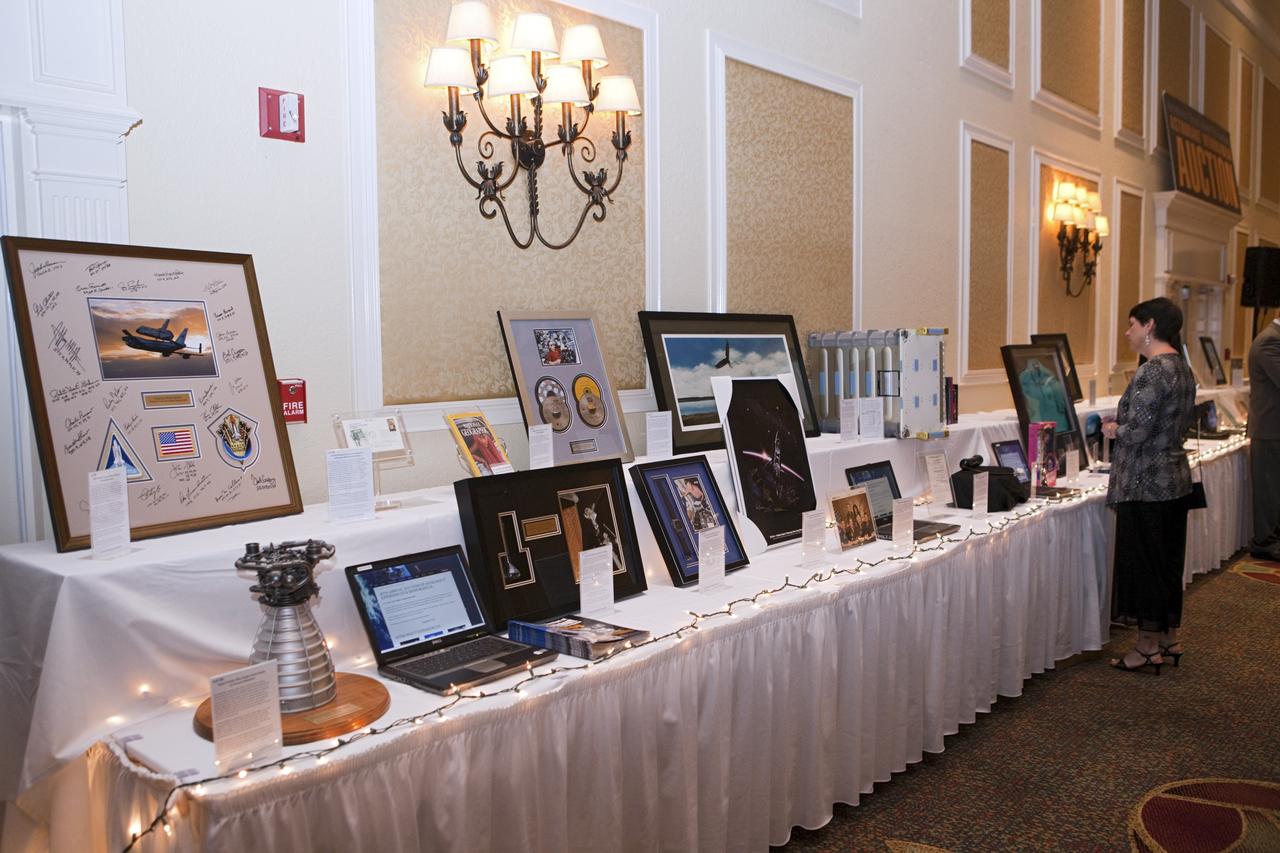
CAPE CANAVERAL, Fla. – The Astronaut Scholarship Foundation hosts a dinner at the Radisson Resort at the Port in Cape Canaveral celebrating the 40th anniversary of Apollo 17. An auction of space-related memorabilia was held with proceeds supporting college scholarships for students who exhibit imagination and exceptional performance in science, technology, engineering and math. The gala commemorating the anniversary of Apollo 17 included mission commander Eugene Cernan and other astronauts who flew Apollo missions. Launched Dec. 7, 1972, Cernan and lunar module pilot Harrison Schmitt landed in the moon's Taurus-Littrow highlands while command module pilot Ronald Evans remained in lunar orbit operating a scientific instrument module. For more information, visit http://www-pao.ksc.nasa.gov/history/apollo/apollo-17/apollo-17.htm Photo credit: NASA/Kim Shiflett
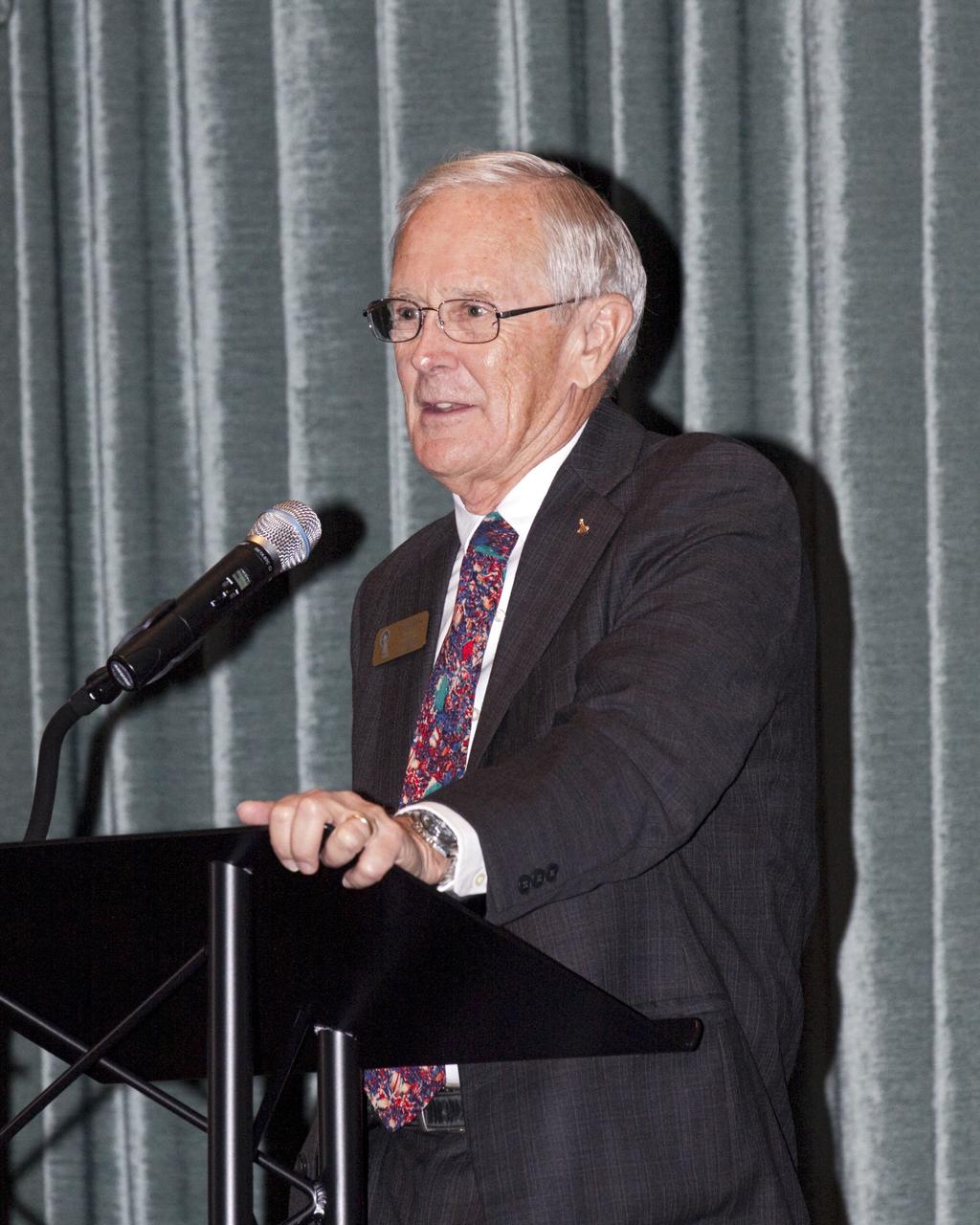
CAPE CANAVERAL, Fla. – Charles Duke, chairman of the board of directors for the Astronaut Scholarship Foundation welcomes guests who have gathered for the organization's dinner at the Radisson Resort at the Port in Cape Canaveral celebrating the 40th anniversary of Apollo 17. The gala commemorating the anniversary of Apollo 17 included mission commander Eugene Cernan and other astronauts who flew Apollo missions. Launched Dec. 7, 1972, Cernan and lunar module pilot Harrison Schmitt landed in the moon's Taurus-Littrow highlands while command module pilot Ronald Evans remained in lunar orbit operating a scientific instrument module. For more information, visit http://www-pao.ksc.nasa.gov/history/apollo/apollo-17/apollo-17.htm Photo credit: NASA/Kim Shiflett
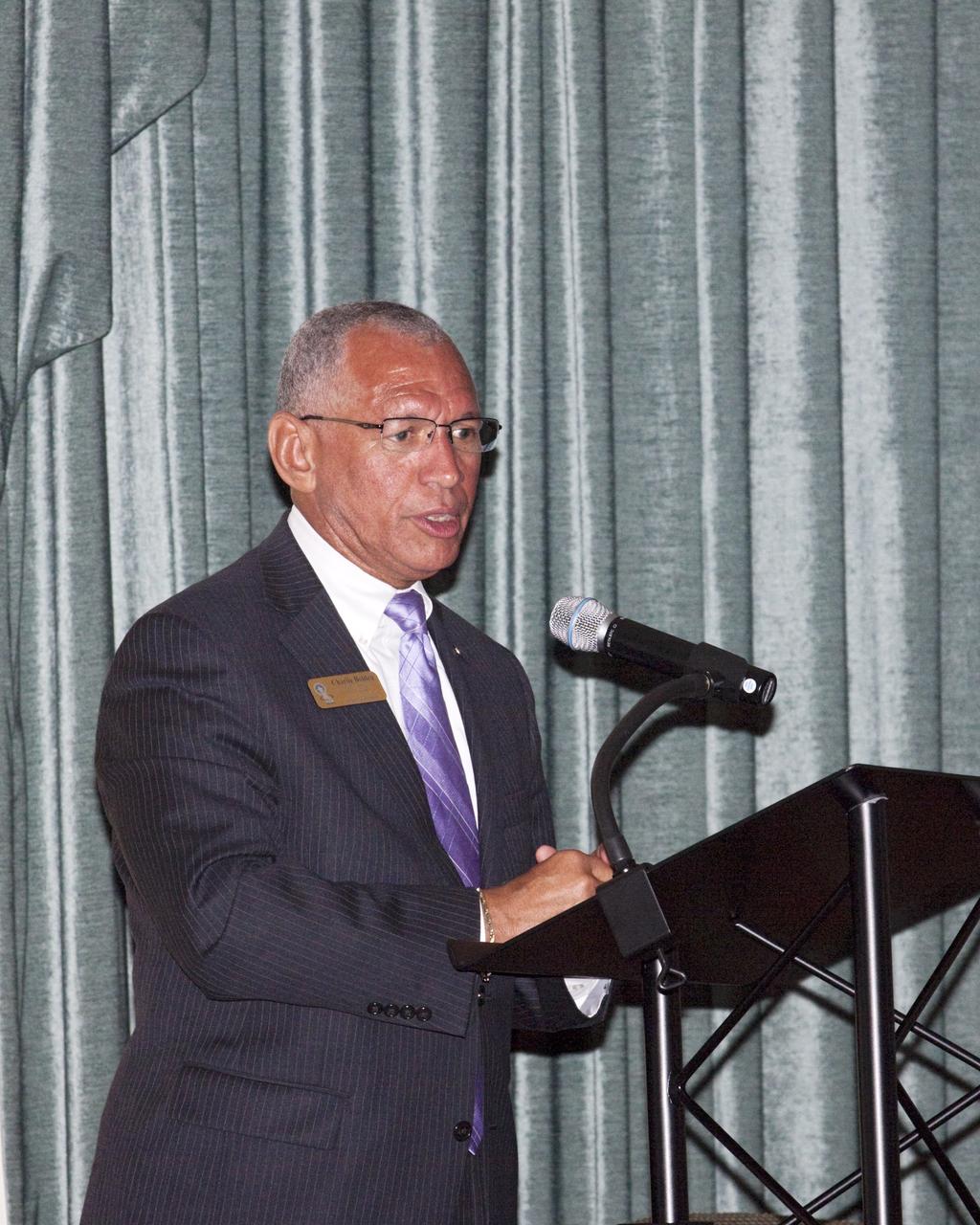
CAPE CANAVERAL, Fla. – NASA Administrator Charles Bolden speaks to guests gathered for the Astronaut Scholarship Foundation's dinner at the Radisson Resort at the Port in Cape Canaveral celebrating the 40th anniversary of Apollo 17. The gala commemorating the anniversary of Apollo 17 included mission commander Eugene Cernan and other astronauts who flew Apollo missions. Launched Dec. 7, 1972, Cernan and lunar module pilot Harrison Schmitt landed in the moon's Taurus-Littrow highlands while command module pilot Ronald Evans remained in lunar orbit operating a scientific instrument module. For more information, visit http://www-pao.ksc.nasa.gov/history/apollo/apollo-17/apollo-17.htm Photo credit: NASA/Kim Shiflett
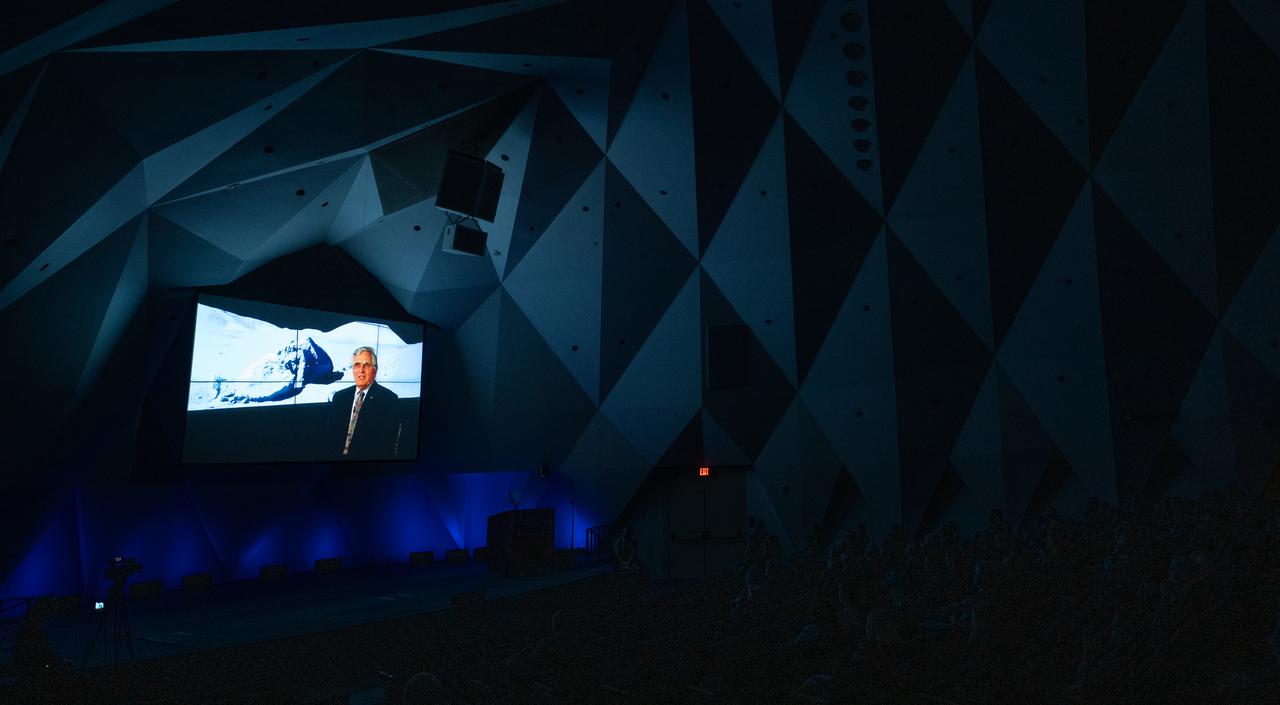
Apollo 17 astronaut Harrison Schmitt is seen in a video during an event celebrating the 50th anniversary of the Apollo 17 mission, Wednesday, Dec. 14, 2022, at the National Academies of Science in Washington. The three-astronaut crew of Apollo 17 - commander Eugene Cernan, lunar module pilot Harrison Schmitt, and command module pilot Ronald Evans, embarked on the last mission of the Apollo program to land humans on the Moon in December of 1972. Cernan and Schmitt spent three days on the lunar surface collecting samples and performing scientific experiments before lifting off from the Taurus-Littrow Valley on December 14, 1972. Photo Credit: (NASA/Joel Kowsky)
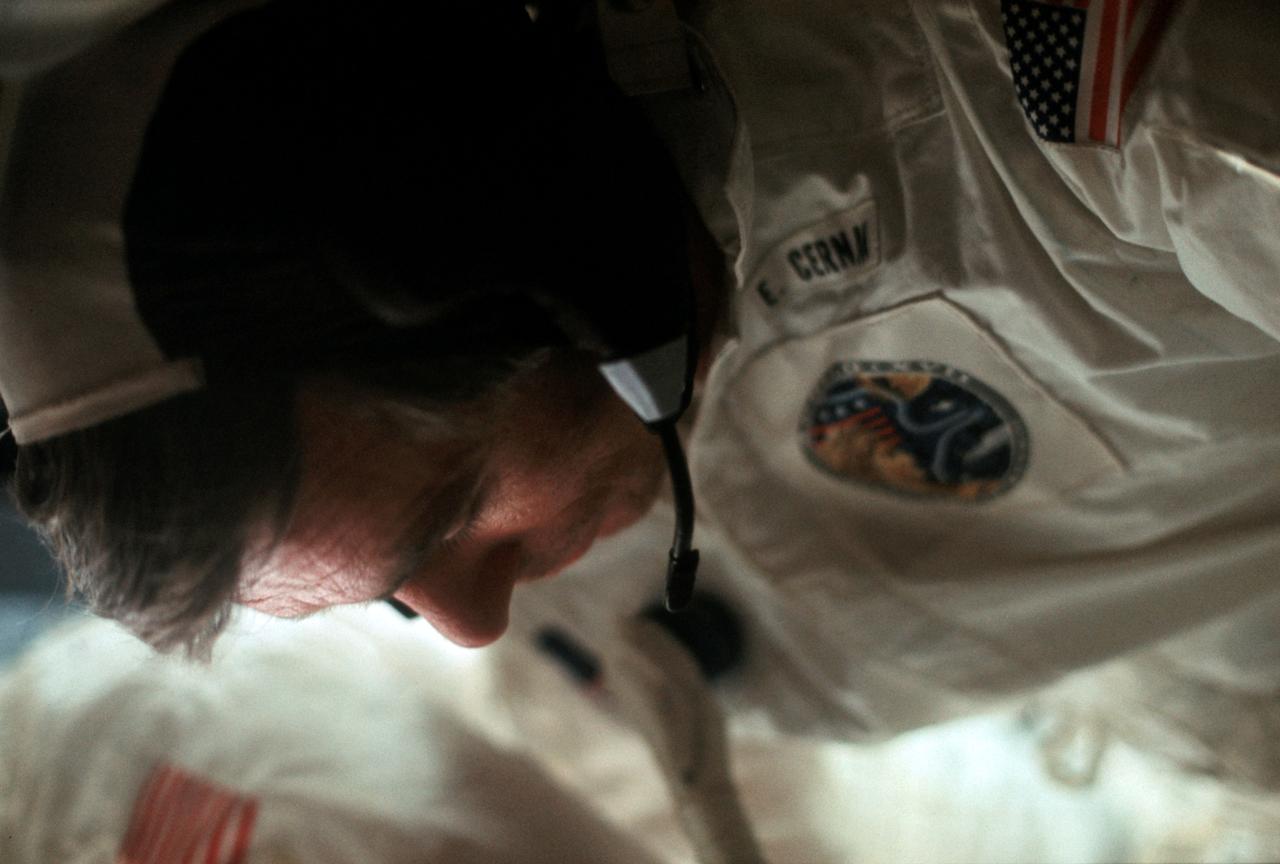
AS17-162-24050 (7-19 Dec. 1972) --- Astronaut Eugene A. Cernan appears to be relaxing in this candid photograph taken by a fellow crewman aboard the Apollo 17 spacecraft during the final lunar landing mission in NASA's Apollo program. Also, aboard Apollo 17 were astronaut Ronald E. Evans, command module pilot, and scientist-astronaut Harrison H. "Jack" Schmitt, lunar module pilot. Cernan was the mission commander.
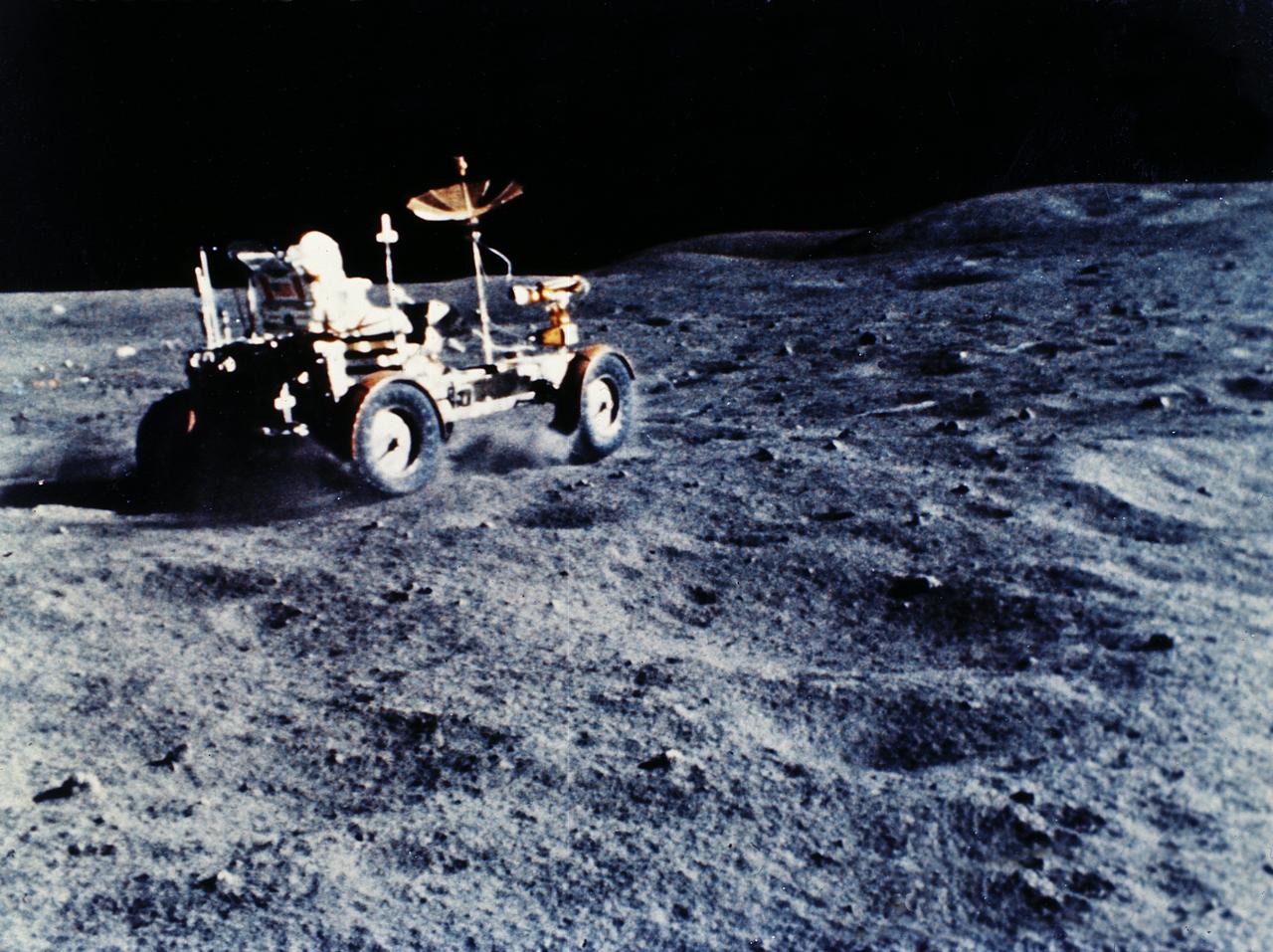
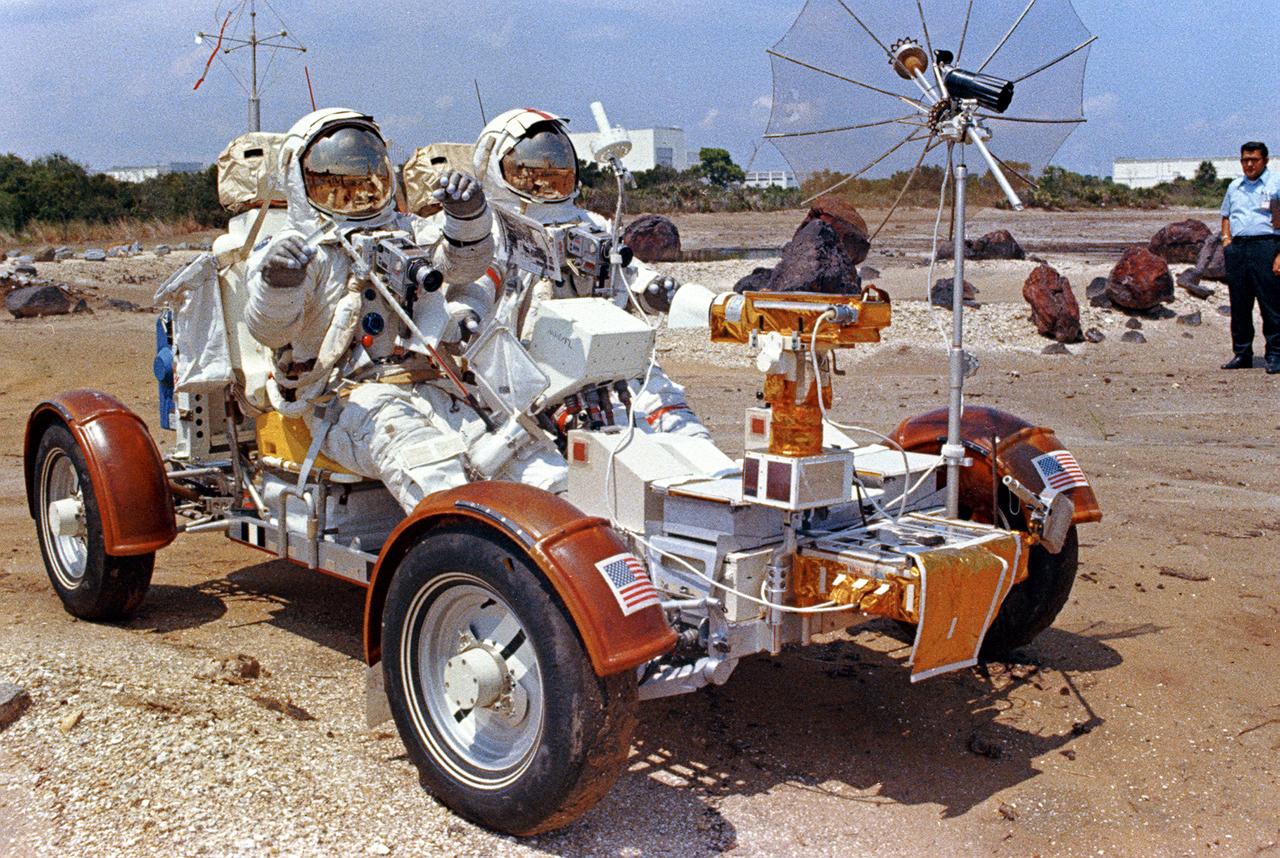
The Lunar Roving Vehicle (LRV) was designed to transport astronauts and materials on the Moon. An LRV was used on each of the last three Apollo missions; Apollo 15, Apollo 16, and Apollo 17, in 1971 and 1972, to permit the crew to travel several miles from the lunar landing site. This photograph was taken during the Apollo 16 mission.
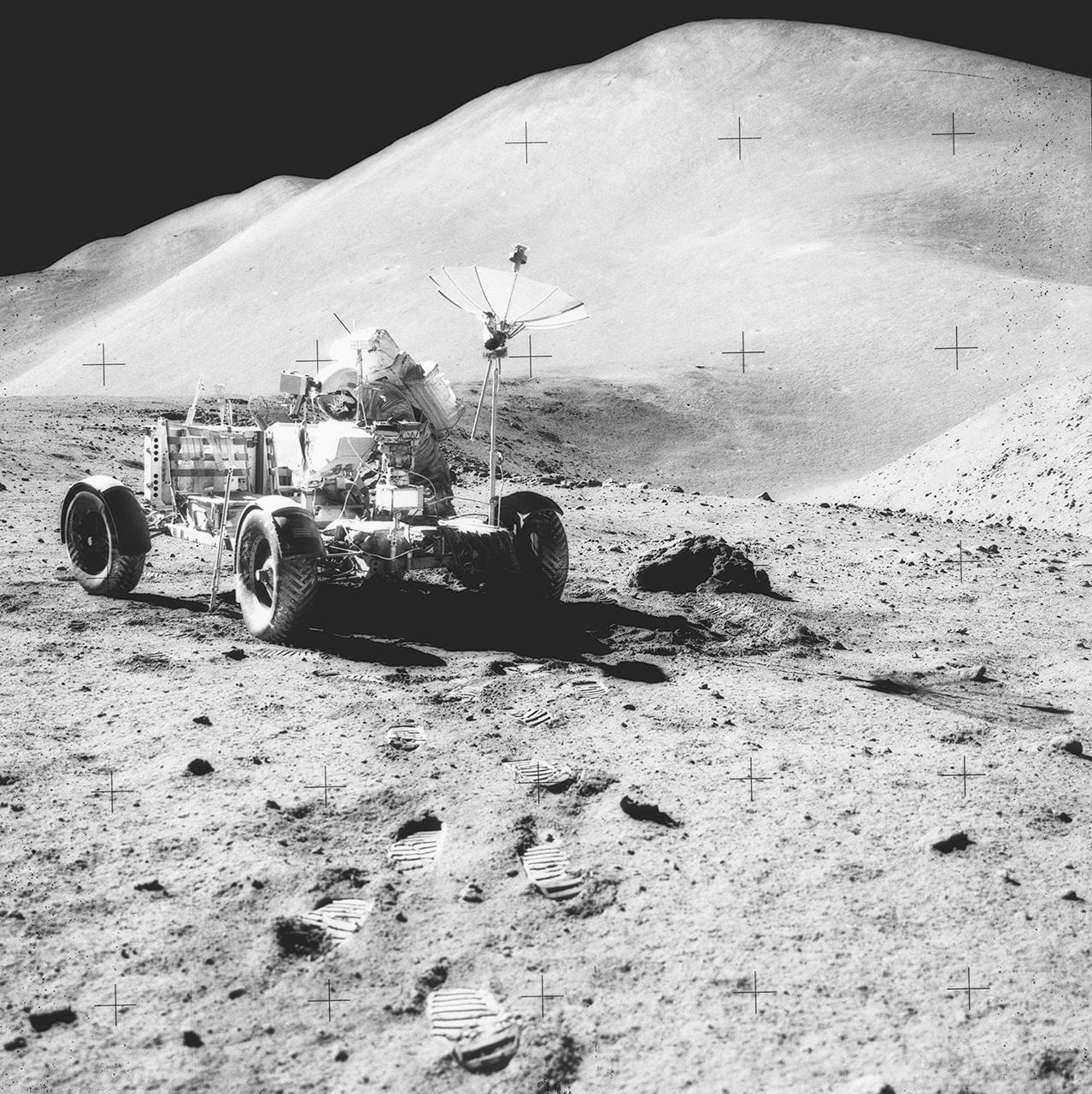
The Lunar Roving Vehicle (LRV) was designed to transport astronauts and materials on the Moon. An LRV was used on each of the last three Apollo missions, Apollo 15, Apollo 16, and Apollo 17, in 1971 and 1972 to permit the crew to travel several miles from the lunar landing site. This photograph was taken during the Apollo 15 mission.

AS17-140-21497 (13 Dec. 1972) --- Scientist-astronaut Harrison H. Schmitt is photographed standing next to a huge, split lunar boulder during the third Apollo 17 extravehicular activity (EVA) at the Taurus-Littrow landing site. Schmitt is the Apollo 17 lunar module pilot. This picture was taken by astronaut Eugene A. Cernan, commander. While Cernan and Schmitt descended in the Lunar Module (LM) "Challenger" to explore the Taurus-Littrow region of the moon, astronaut Ronald E. Evans, command module pilot, remained with the Apollo 17 Command and Service Modules (CSM) "America" in lunar orbit.
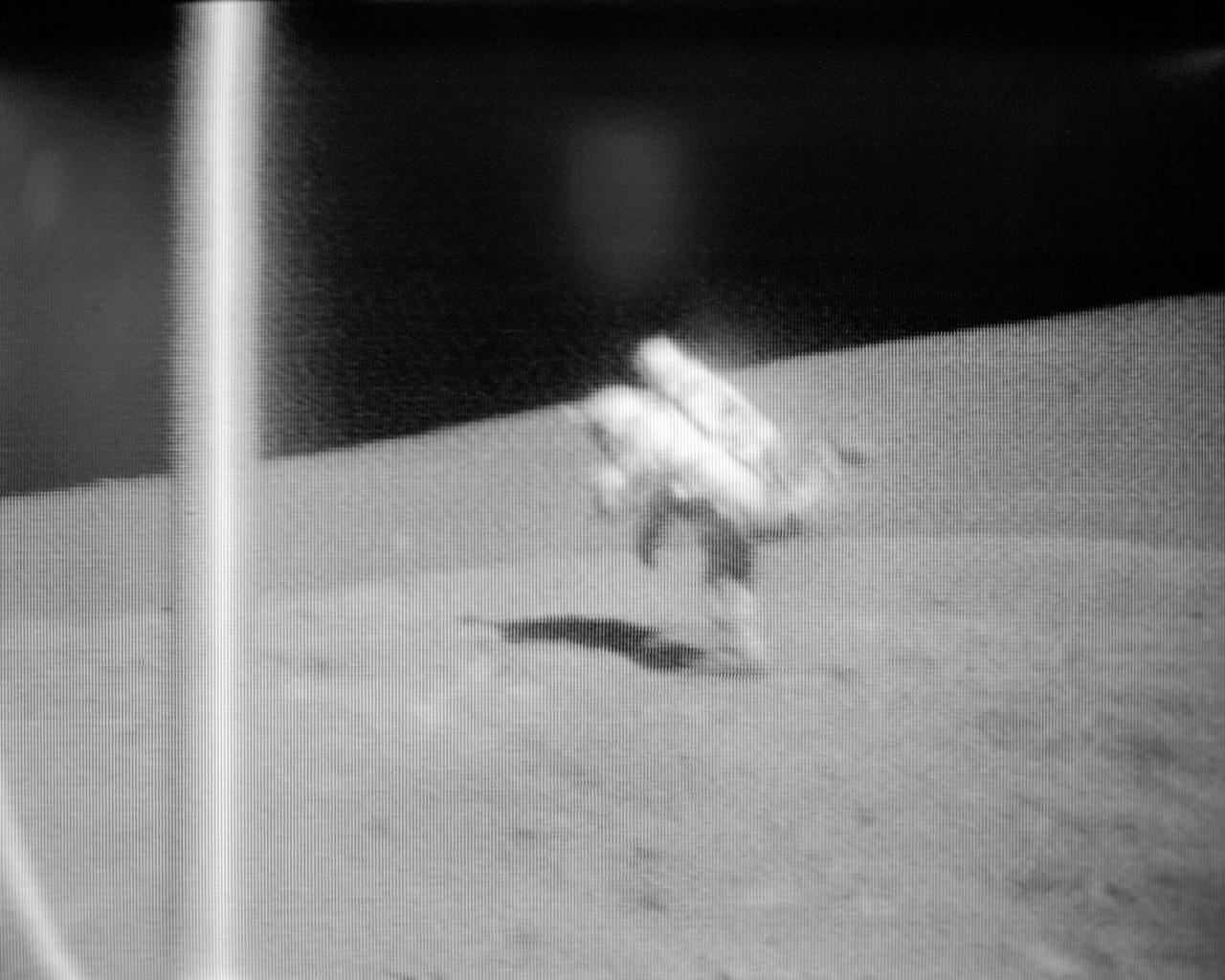
S72-55166 (12 Dec. 1972) --- Scientist-astronaut Harrison H. Schmitt loses his balance and heads for a fall during the second Apollo 17 extravehicular activity (EVA) at the Taurus-Littrow landing site, as seen in this black and white reproduction taken from a color television transmission made by the color RCA TV camera mounted on the Lunar Roving Vehicle. Schmitt is lunar module pilot of the Apollo 17 lunar landing mission. Astronaut Ronald E. Evans, command module pilot, remained with Apollo 17 Command and Service Modules in lunar orbit while astronauts Schmitt and Eugene A. Cernan, commander, descended in the Lunar Module "Challenger" to explore the moon.

S72-55066 (11 Dec. 1972) --- Scientist-astronaut Harrison H. Schmitt chips samples from a large boulder during the first Apollo 17 extravehicular activity (EVA) at the Taurus-Littrow landing site, in this black and white reproduction taken from a color television transmission made by the color RCA TV camera mounted on the Lunar Roving Vehicle. Schmitt is the lunar module pilot of the Apollo 17 lunar landing mission. Astronaut Ronald E. Evans, command module pilot, remained with the Apollo 17 Command and Service Modules in lunar orbit while astronauts Schmitt and Eugene A. Cernan, commander, descended in the Lunar Module to explore the moon.
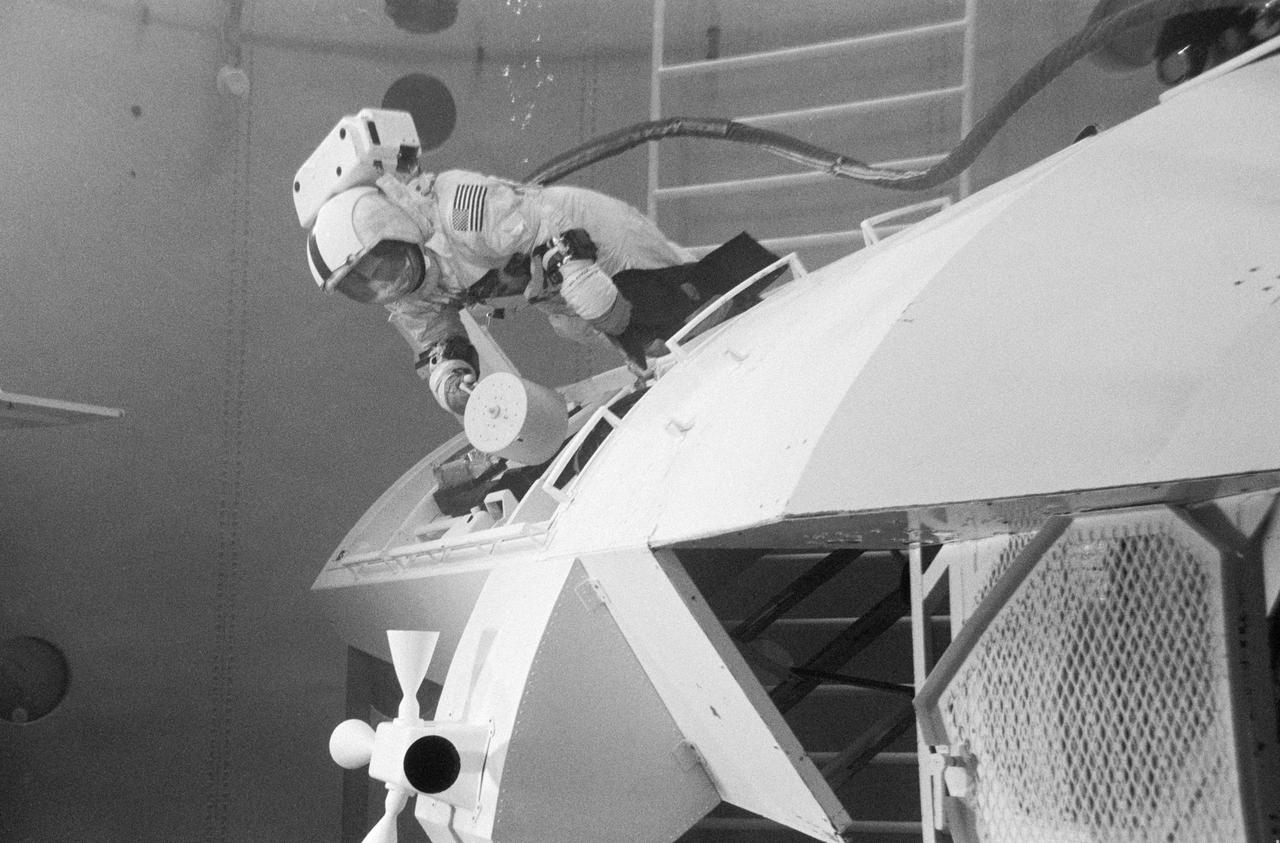
S72-49971 (29 Sept. 1972) --- Astronaut Ronald E. Evans, command module pilot of the Apollo 17 lunar landing mission, participates in extravehicular activity training in a water tank in Building 5 at the Manned Spacecraft Center. Evans is scheduled to perform trans-Earth extravehicular activity after the Apollo 17 spacecraft leaves lunar orbit on its way back home. The structure in the picture simulates the Scientific Instrument Module (SIM) bay of the Apollo 17 Service Module.
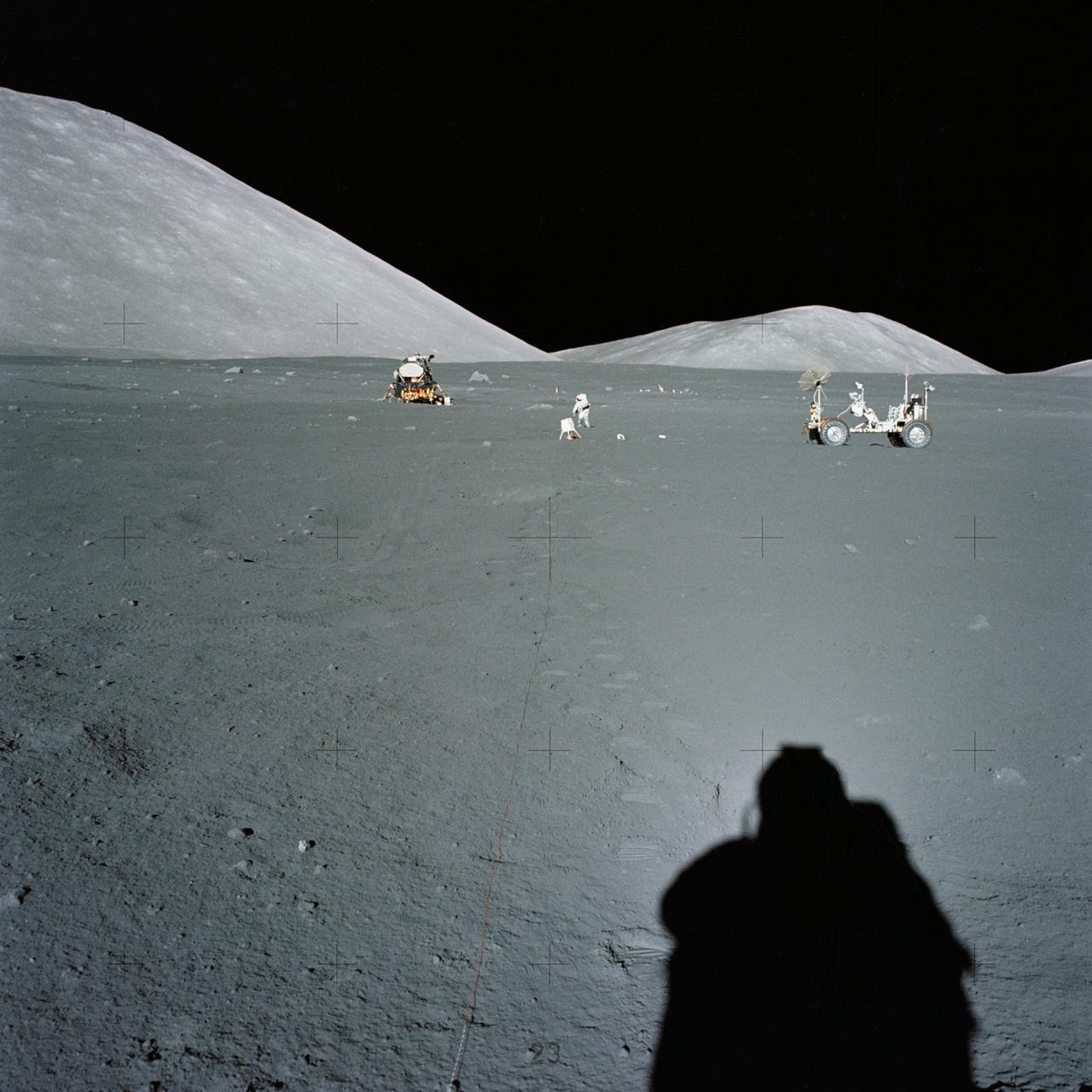
AS17-134-20435 (10 Dec. 1972) --- Wide-angle view of the Apollo 17 Taurus-Littrow lunar landing site. To the left in the background is the Lunar Module. To the right in the background is the Lunar Roving vehicle. An Apollo 17 crewmember is photographed between the two points. The shadow of the astronaut taking the photograph can be seen in the right foreground.
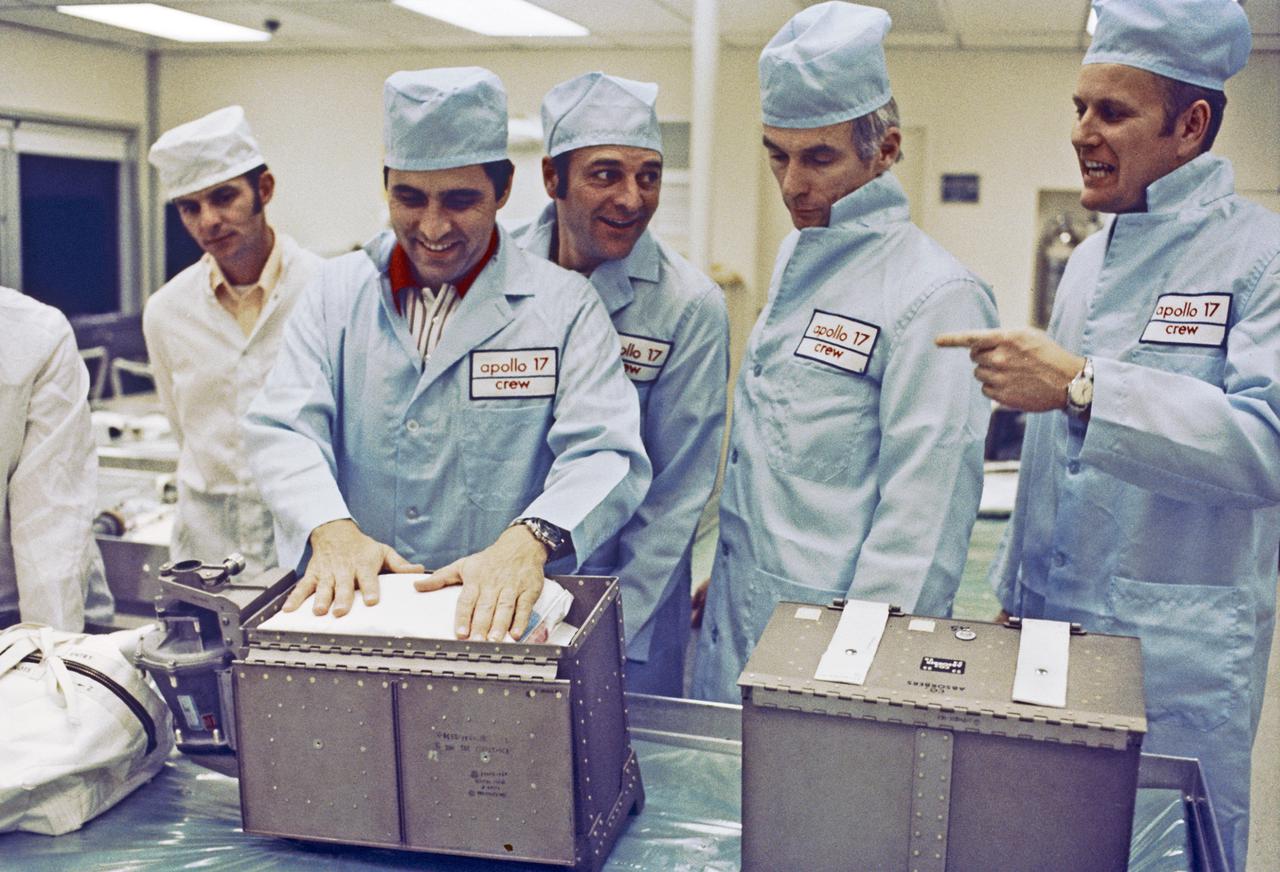
Apollo 17 Lunar Module Pilot Harrison H. Schmitt, center, examines items that will be carried aboard the Apollo 17 spacecraft to the moon. Behind and at his left is Astronaut Ronald E. Evans and Mission Commander Eugene A. Cernan next to Evans.
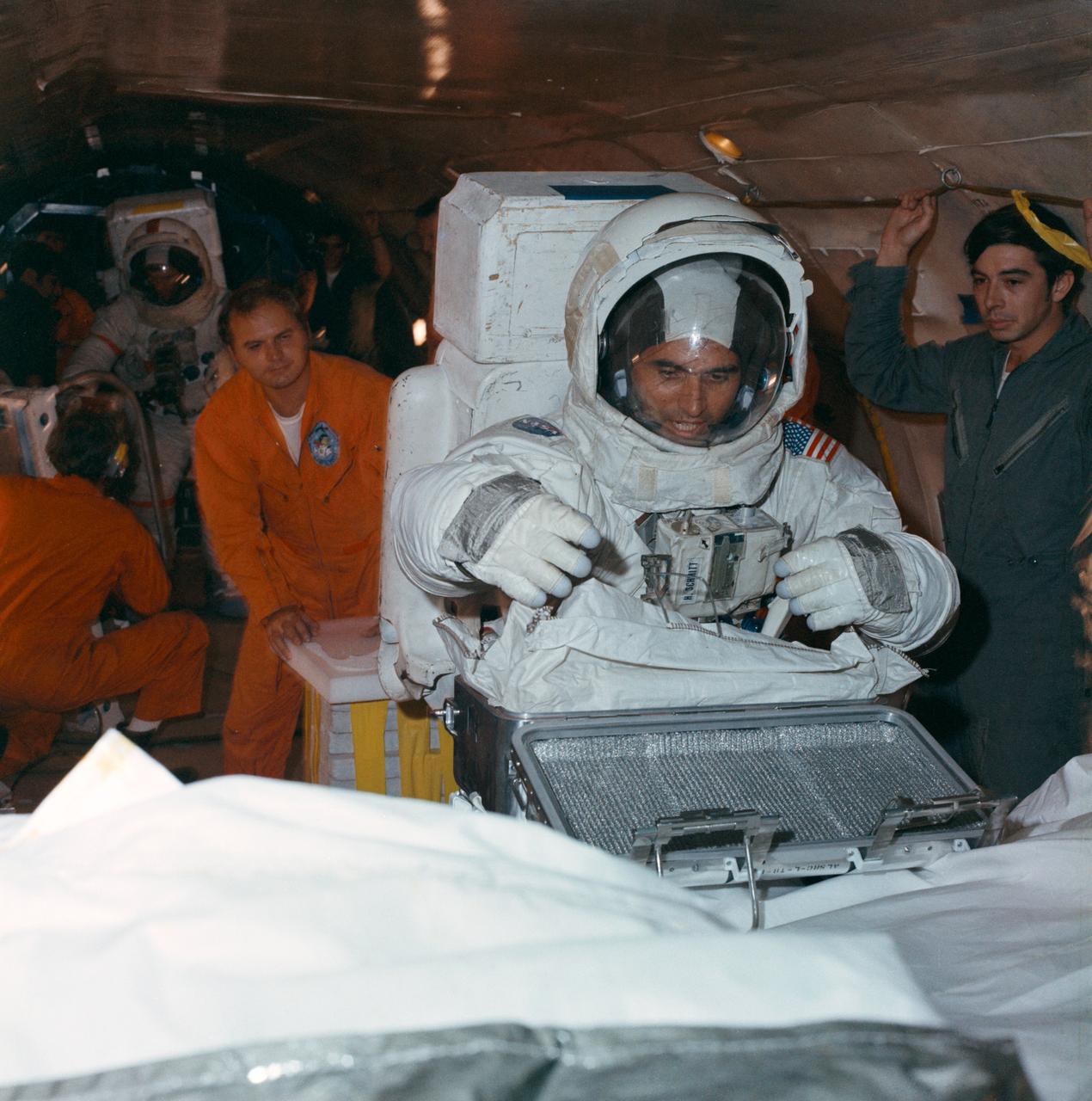
S72-50269 (September 1972) --- Scientist-astronaut Harrison H. Schmitt, lunar module pilot of the Apollo 17 lunar landing mission, seals an Apollo lunar sample return container during lunar surface extravehicular activity simulation training under one-sixth gravity conditions aboard a U.S. Air Force KC-135 aircraft. Astronaut Eugene A. Cernan, Apollo 17 commander, can be seen in the left background.
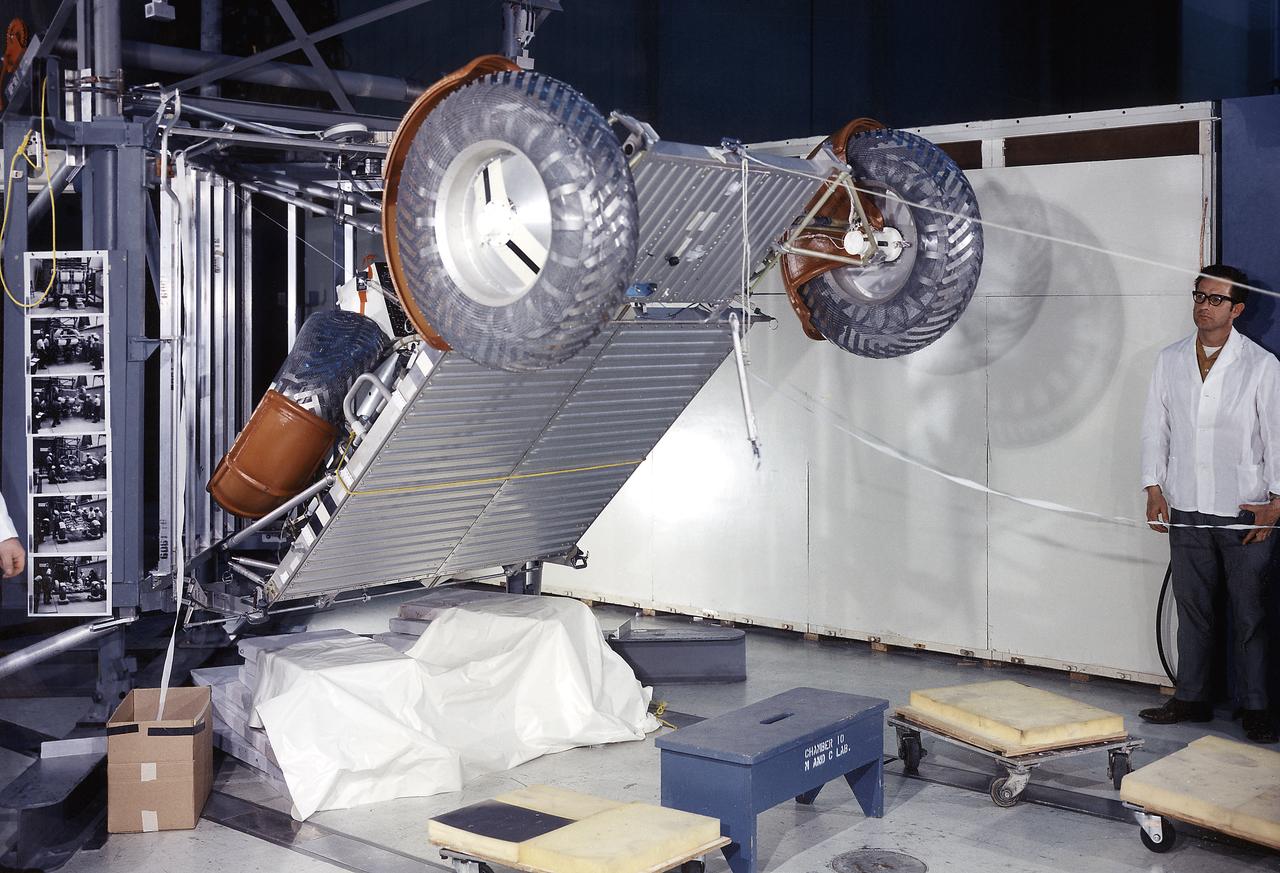
This photograph was taken during a deployment simulation of the Lunar Roving Vehicle (LRV). The LRV was built to give Apollo astronauts a greater range of mobility during the last three lunar exploration missions; Apollo 15, Apollo 16, and Apollo 17. It was designed and developed by the Marshall Space Flight Center and built by the Boeing Company.
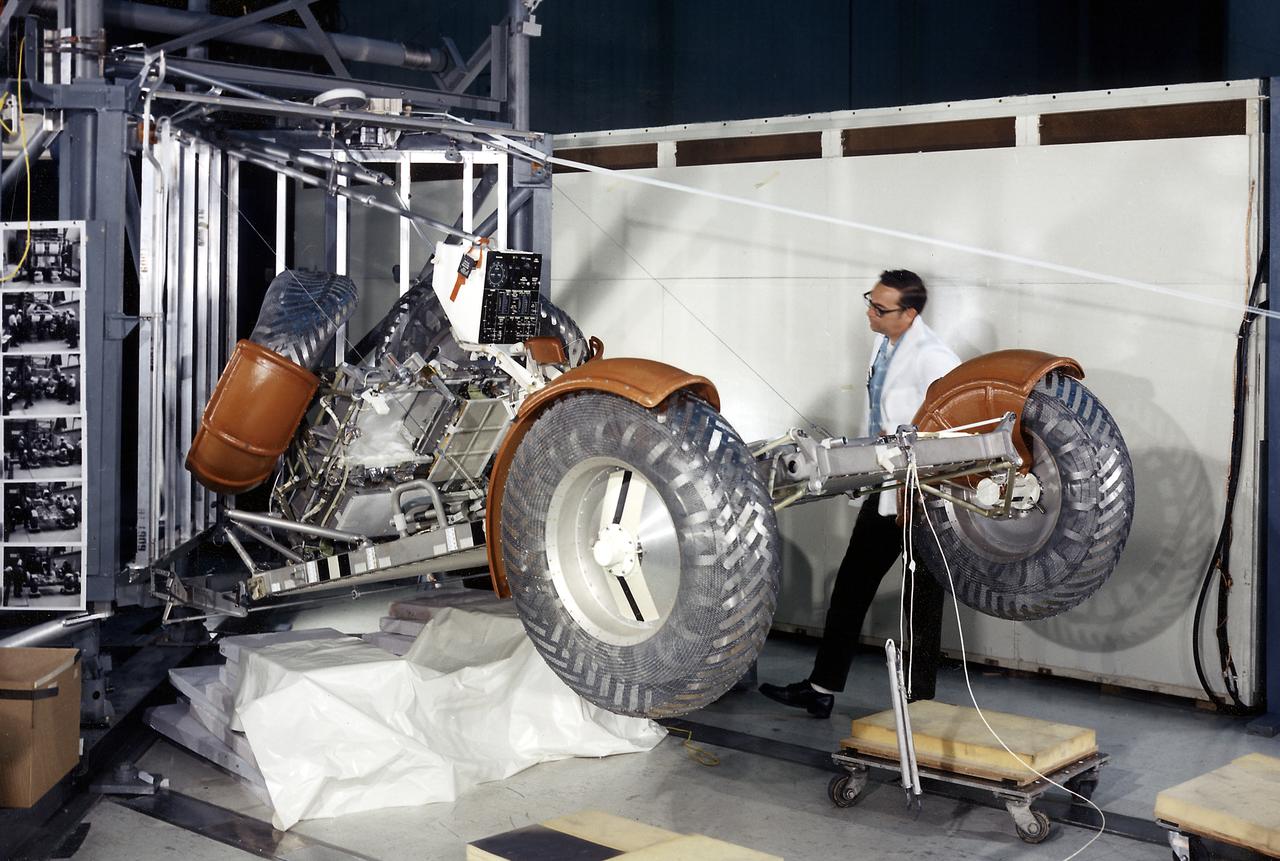
This photograph was taken during a deployment simulation of the Lunar Roving Vehicle (LRV). The LRV was built to give Apollo astronauts a greater range of mobility during the last three lunar exploration missions; Apollo 15, Apollo 16, and Apollo 17. It was designed and developed by the Marshall Space Flight Center and built by the Boeing Company.
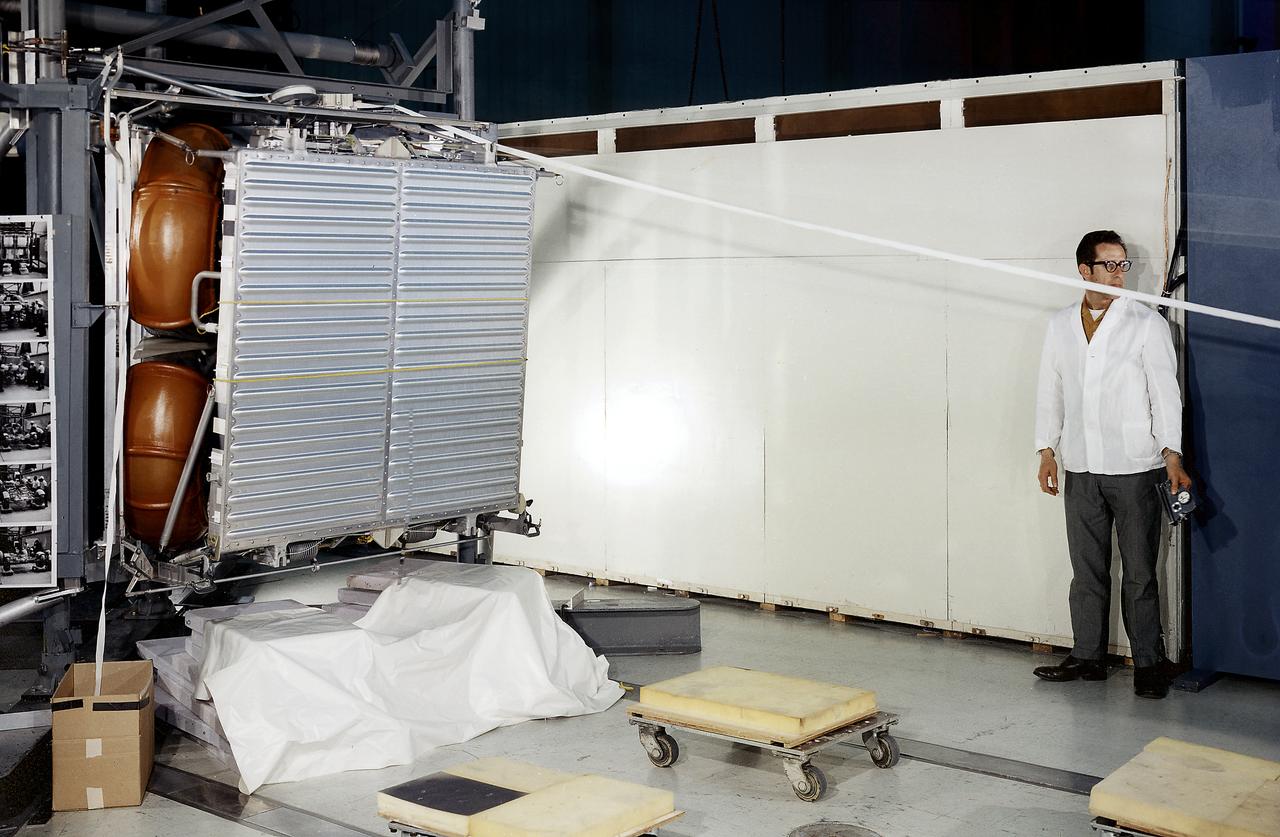
This photograph was taken during a deployment simulation of the Lunar Roving Vehicle (LRV). The LRV was built to give Apollo astronauts a greater range of mobility during the last three lunar exploration missions; Apollo 15, Apollo 16, and Apollo 17. It was designed and developed by the Marshall Space Flight Center and built by the Boeing Company.
This photograph was taken during the testing of the Lunar Roving Vehicle (LRV) at the Johnson Space Center. Developed by the MSFC, the LRV was the lightweight electric car designed to increase the range of mobility and productivity of astronauts on the lunar surface. It was used on the last three Apollo missions; Apollo 15, Apollo 16, and Apollo 17.
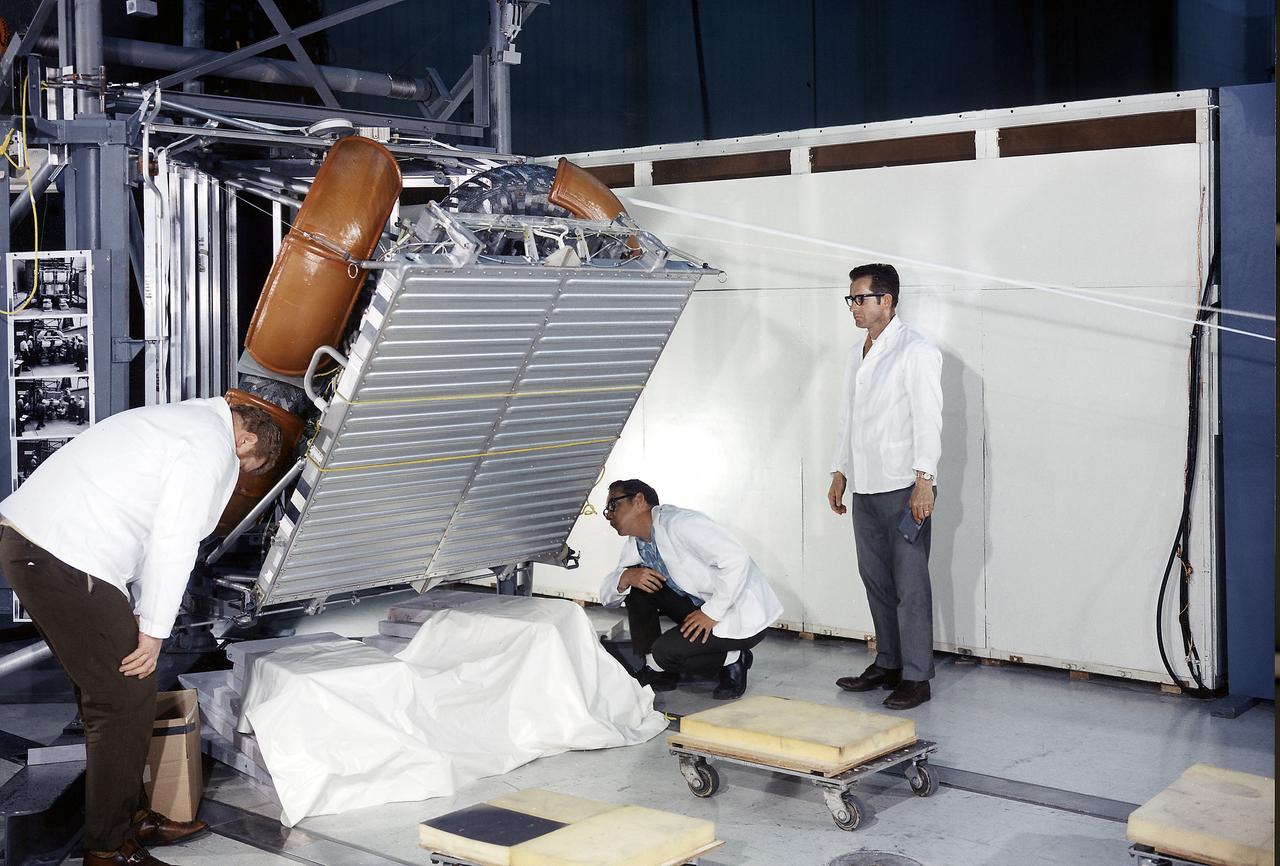
This photograph was taken during a deployment simulation of the Lunar Roving Vehicle (LRV). The LRV was built to give Apollo astronauts a greater range of mobility during the last three lunar exploration missions; Apollo 15, Apollo 16, and Apollo 17. It was designed and developed by the Marshall Space Flight Center and built by the Boeing Company.
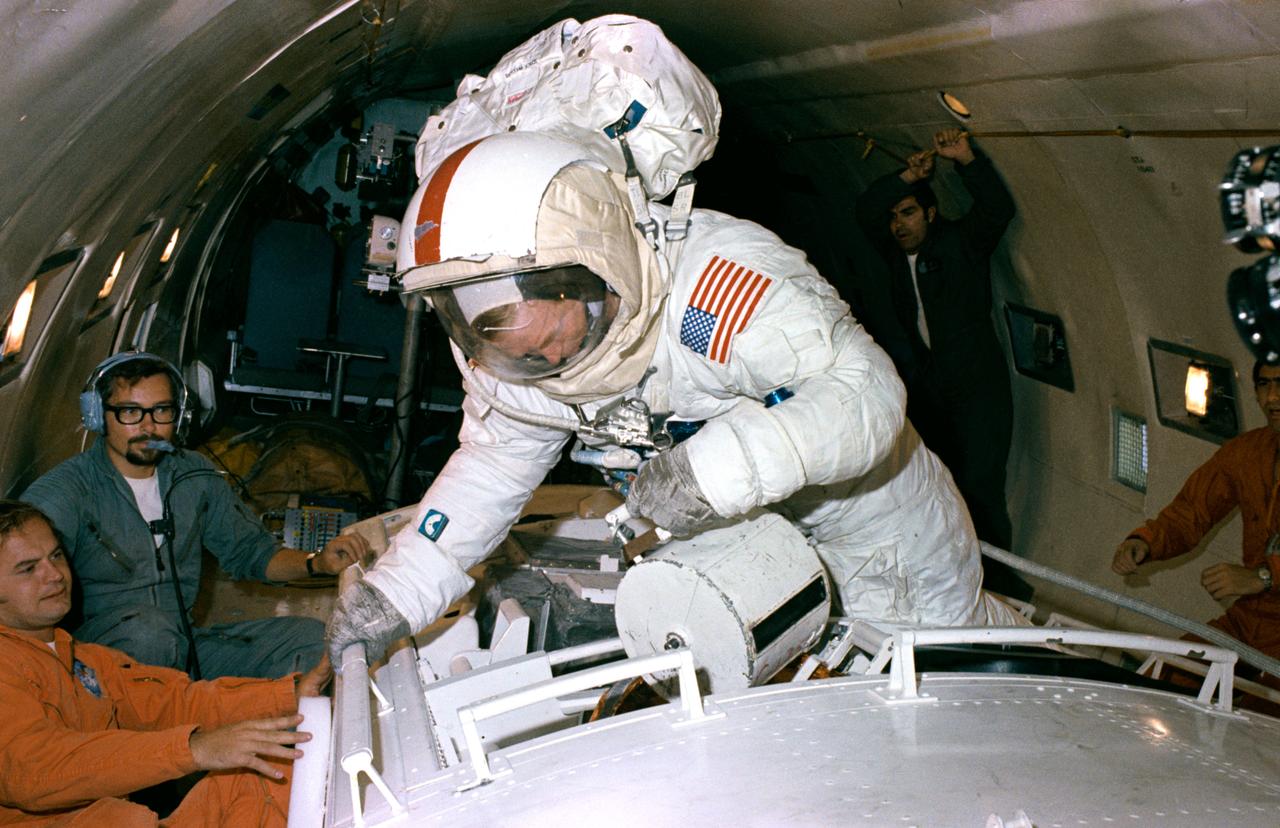
S72-50271 (September 1972) --- Astronaut Stuart A. Roosa, backup crew command module pilot of the Apollo 17 lunar landing mission, participates in extravehicular activity simulation training under zero-gravity conditions aboard a U. S. Air Force KC-135 aircraft. A mock-up of the Scientific Instrument Module (SIM) bay of the Apollo 17 Service Module is used in the exercise. Here, Roosa simulates retrieving the film cassette of the Mapping Camera from the SIM bay. Astronaut Ronald E. Evans, Apollo 17 prime crew command module pilot, is scheduled to receive film cassettes from the Mapping Camera, Panoramic Camera, and Lunar Sounder during Apollo 17 trans-Earth extravehicular activity.
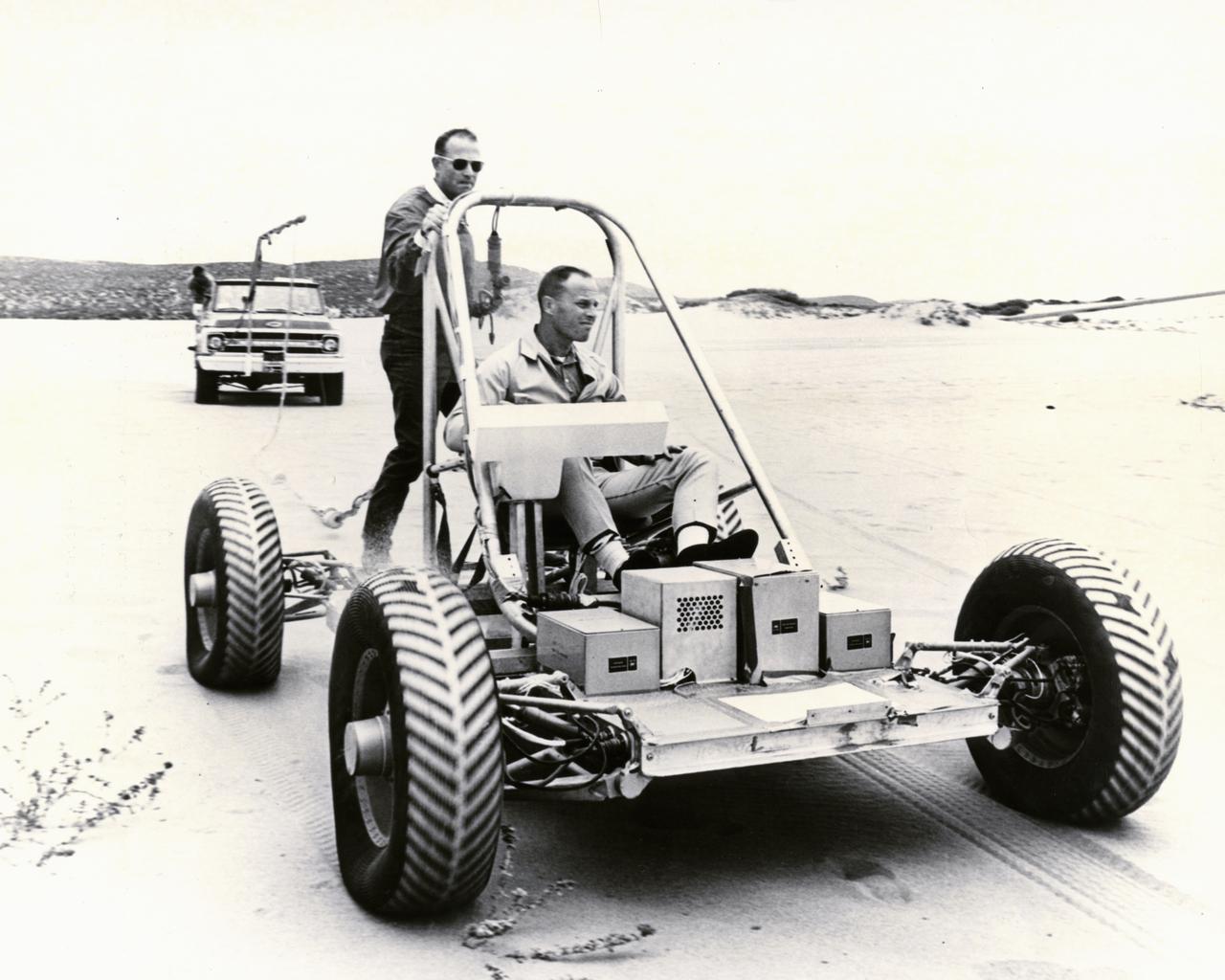
Astronauts Jack Lousma (seated) and Gerald Carr tested the Lunar Roving Vehicle (LRV) training unit on the sands near Pismo Beach. The vehicle was built by the AC Delco electronics division of General Motors Corporation. Under the direction of Marshall Space Flight Center (MSFC), the LRV was designed to allow Apollo astronauts a greater range of mobility during lunar exploration missions. The LRVs were deployed during the last three Apollo missions; Apollo 15, Apollo 16, and Apollo 17.
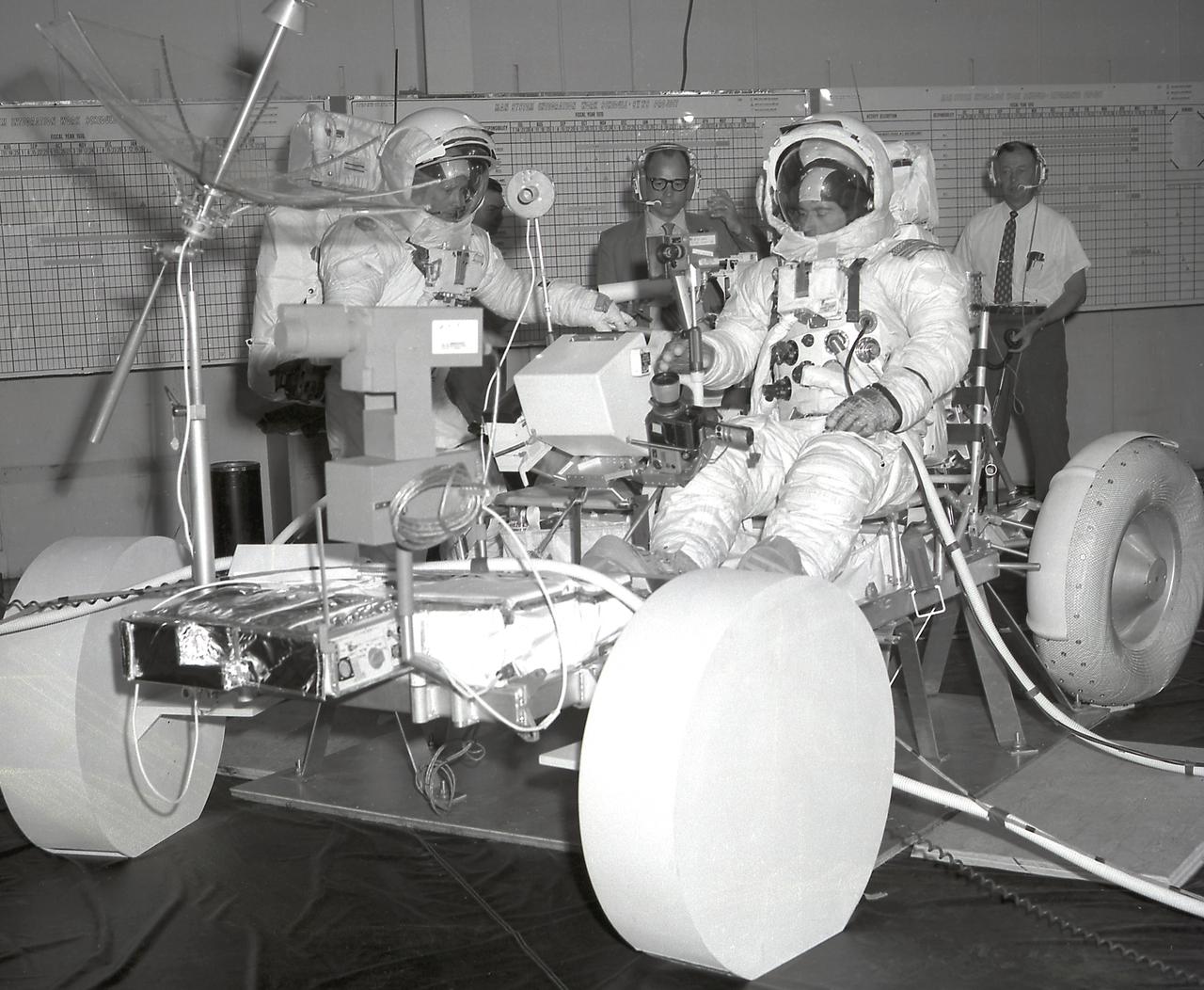
This image depicts the Apollo 16 mission astronauts John Young (right) and Charles Duke (left) in pressure suits during a final crew training on the Lunar Roving Vehicle (LRV) at the Marshall Space Flight Center (MSFC), building 4619. Developed by the MSFC, the LRV was the lightweight electric car designed to increase the range of mobility and productivity of astronauts on the lunar surface. It was used on the last three Apollo missions; Apollo 15, Apollo 16, and Apollo 17.
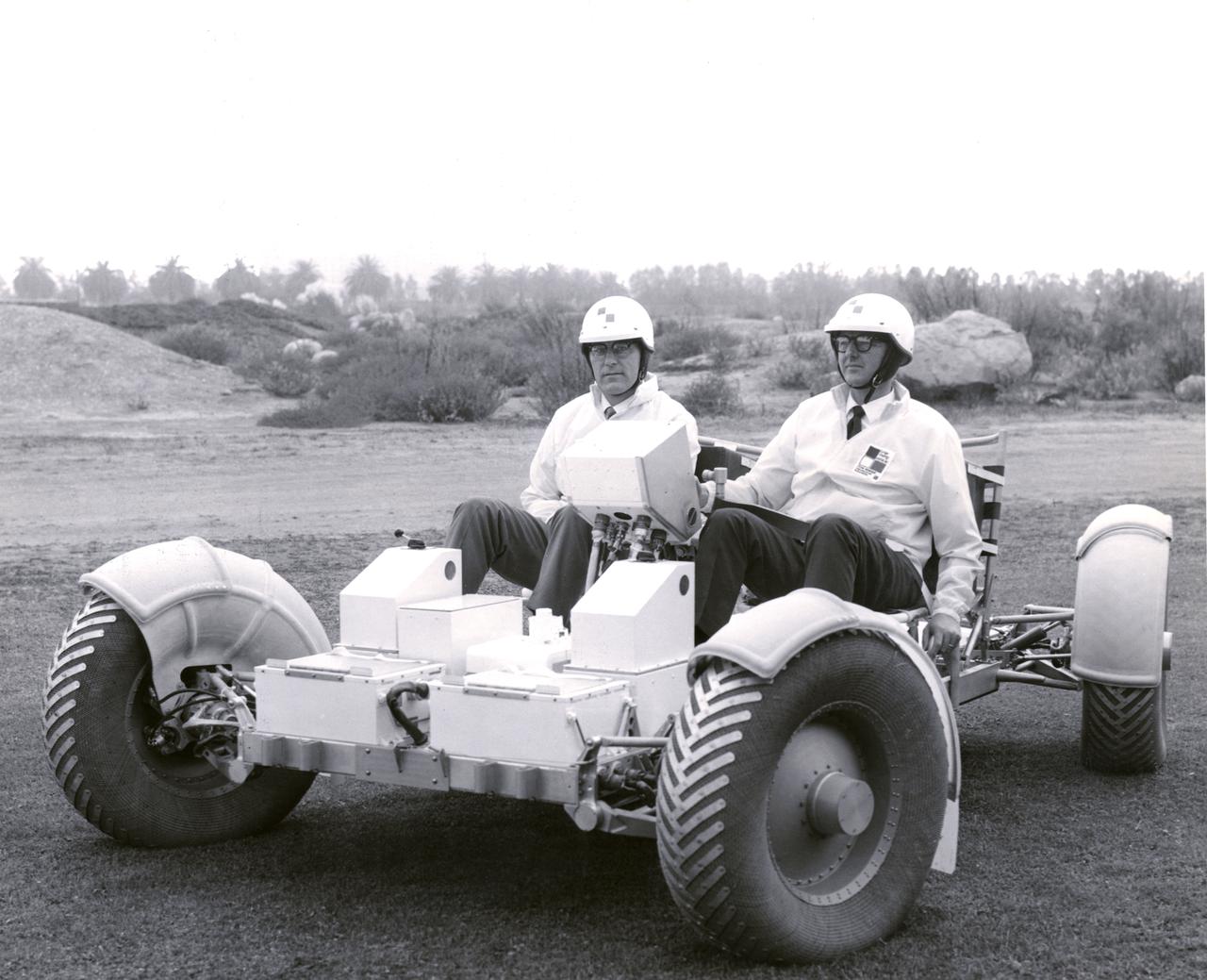
Delco engineers are operating this Lunar Roving Vehicle (LRV) Trainer. Built by by Delco Electronics Division of the General Motors Corporation, the trainer was shipped to NASA’s Manned Spacecraft Center in Houston, Texas for an astronaut training program. Under the direction of Marshall Space Flight Center (MSFC), the LRV was designed to allow Apollo astronauts a greater range of mobility during lunar exploration missions. The LRVs were deployed during the last three Apollo missions; Apollo 15, Apollo 16, and Apollo 17.
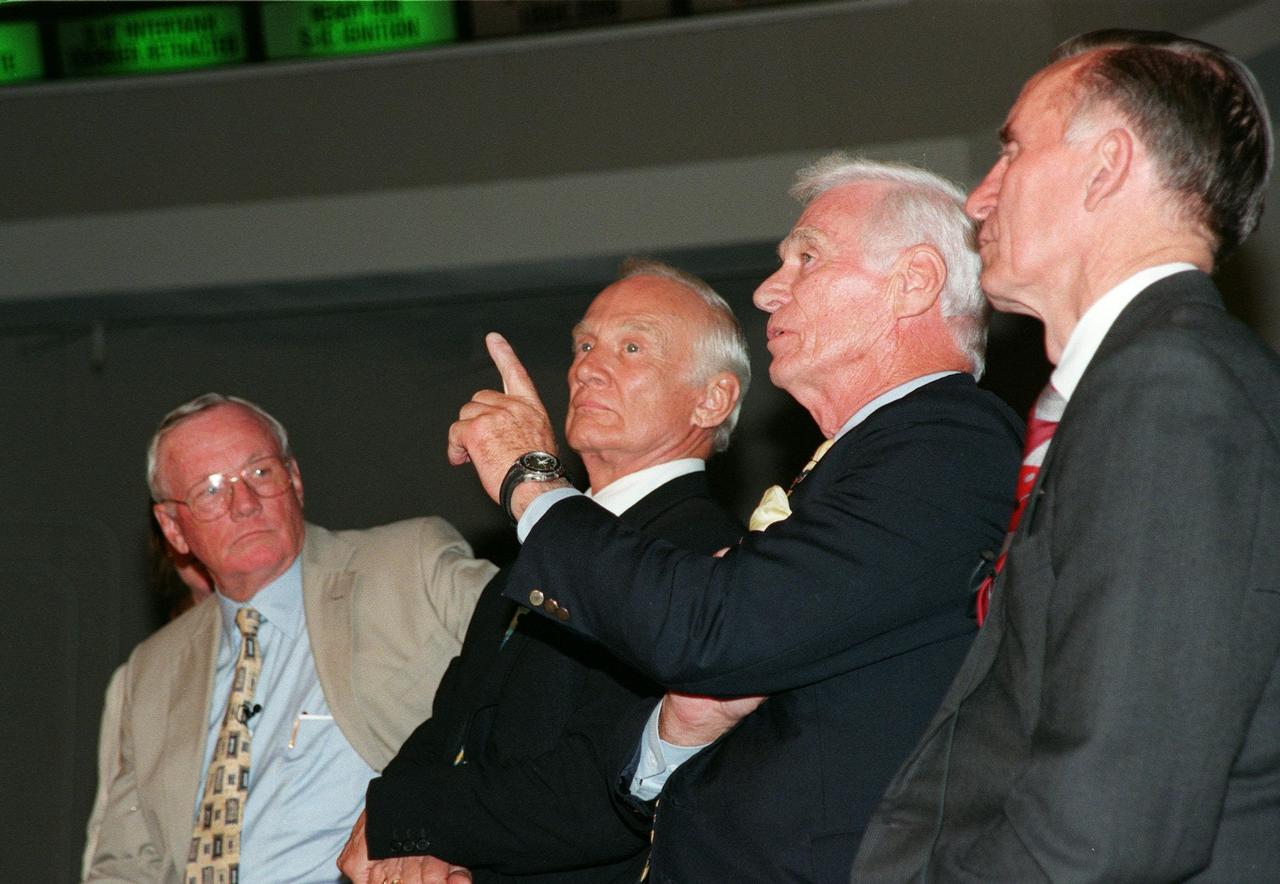
KENNEDY SPACE CENTER, FLA. -- At a media conference in the Apollo/Saturn V Center, former Apollo astronaut Gene Cernan, who flew on Apollo 10 and 17, makes a point in a comment for the press. Joining him in the conference are other Apollo astronauts (left) Neil A. Armstrong and Edwin "Buzz" Aldrin, who both flew on Apollo 11, the launch to the moon; and (right) Walt Cunningham, who flew on Apollo 7. The four astronauts were at KSC for the 30th anniversary of the Apollo 11 launch and moon landing, July 16 and July 20, 1969. Neil Armstrong was the first man to set foot on the moon
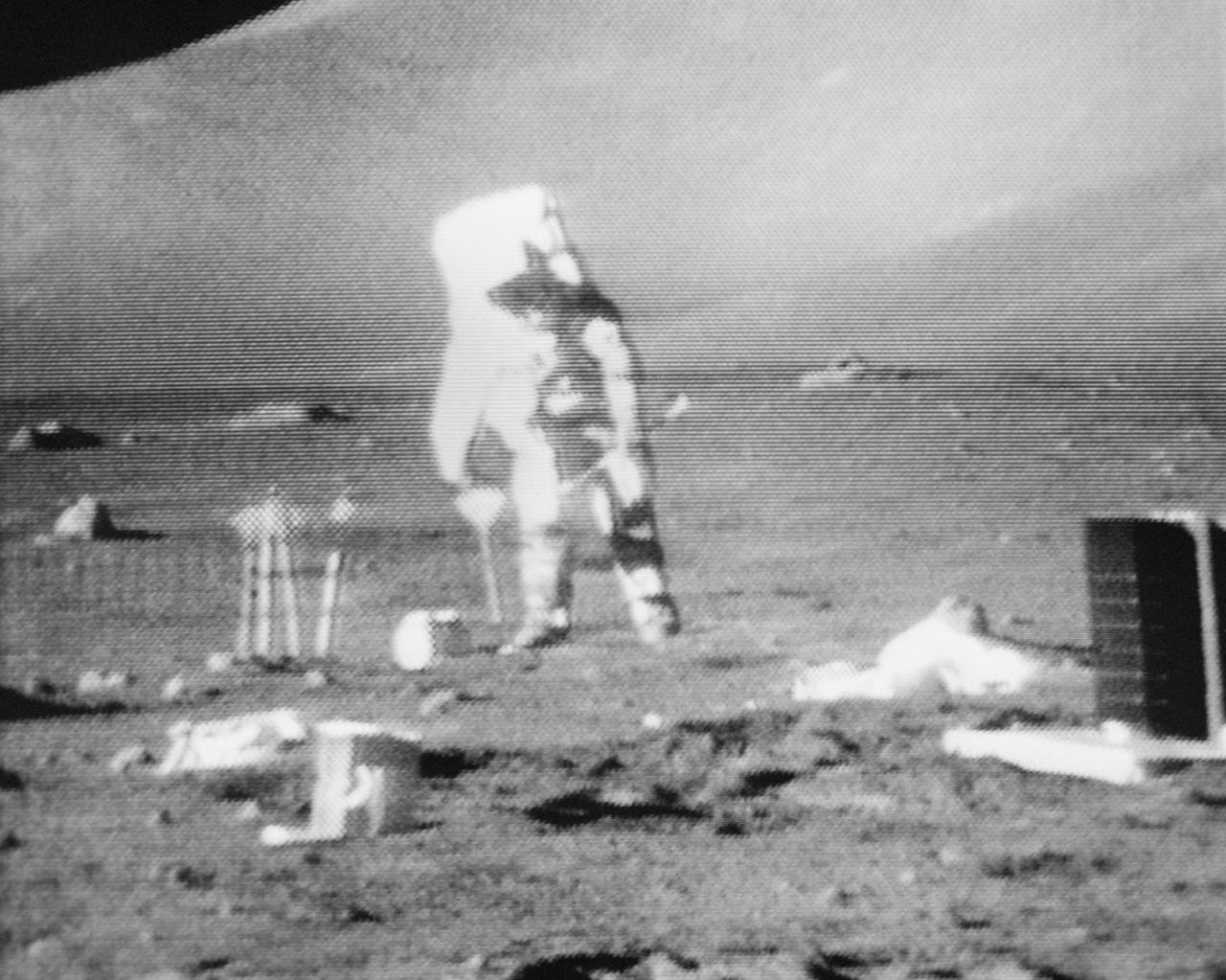
S72-55065 (11 Dec. 1972) --- Scientist-astronaut Harrison H. Schmitt is seen anchoring the geophone module with a flag during the first Apollo 17 extravehicular activity (EVA) at the Taurus-Littrow landing site, in the black and white reproduction taken from a color television transmission made by the color RCA TV camera mounted on the Lunar Roving Vehicle. Schmitt is the lunar module mounted on the Lunar Roving Vehicle. Schmitt is the lunar module pilot of the Apollo 17 lunar landing mission. Astronaut Ronald E. Evans, command module pilot, remained with the Apollo 17 Command and Service Modules in lunar orbit while astronauts Schmitt and Eugene A. Cernan, commander, descended in the Lunar Module to explore the moon. The geophone module is part of the Lunar Seismic Profiling Experiment (S-203), a component of the Apollo Lunar Surface Experiments Package (ALSEP). Other ALSEP components are visible in the picture.
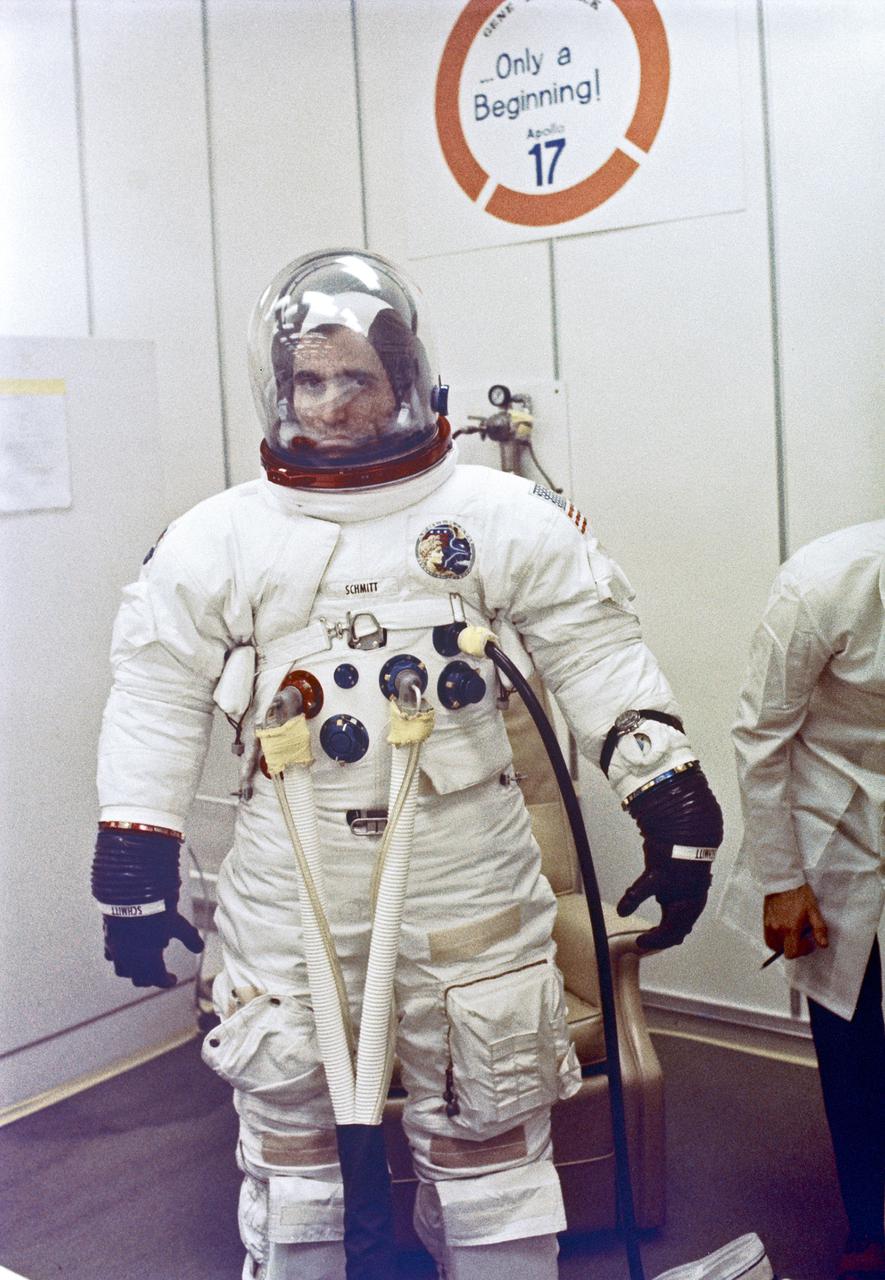
Standing in front of an encouraging sign on the wall, Apollo 17 Lunar Module Pilot Harrison H. Schmitt undergoes spacesuit checks prior to launch to the Moon tonight with astronauts Eugene A. Cernan and Ronald E. Evans. The wall poster points out that while Apollo 17 may be the last manned mission in the Apollo program NASA has additional on-going manned space flights planned for the future.
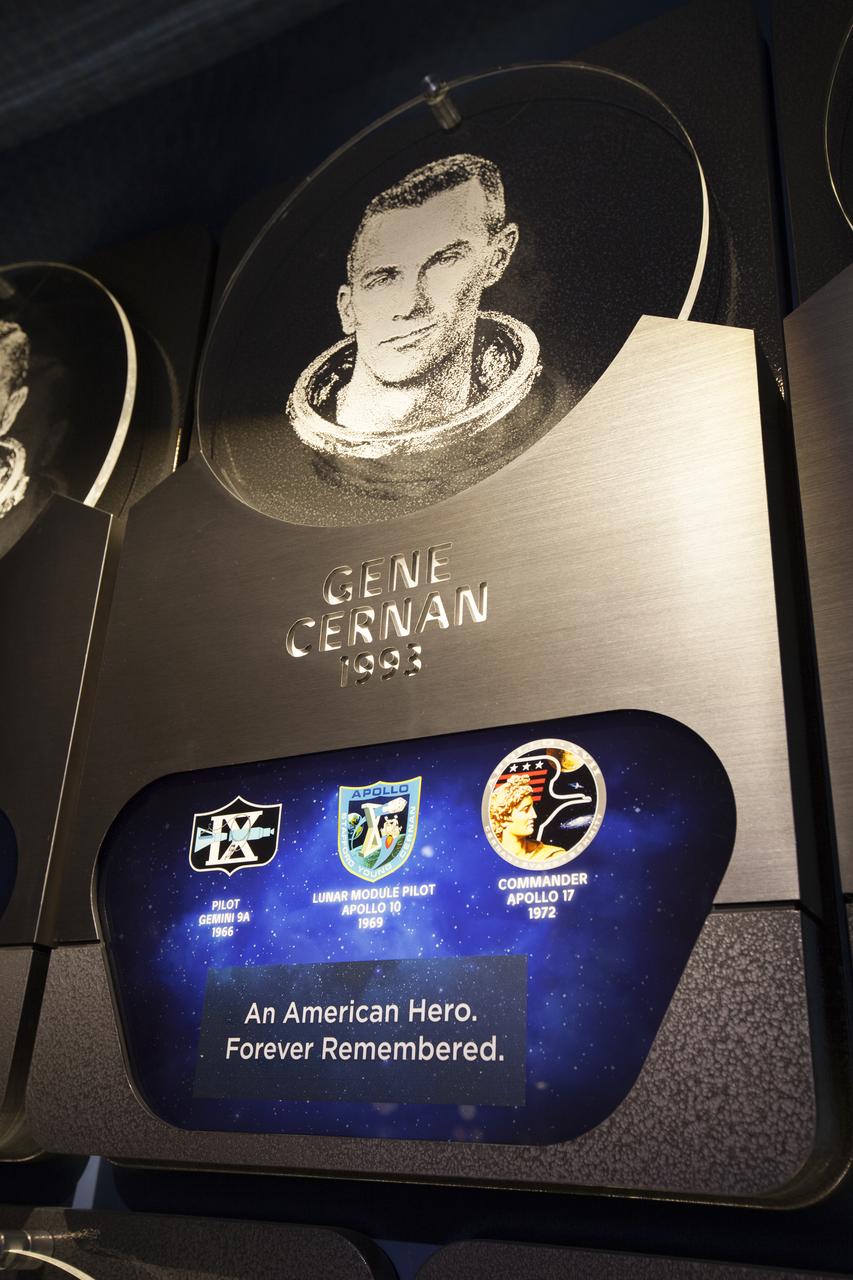
The Astronaut Hall of Fame display for astronaut Gene Cernan is shown following a remembrance ceremony Jan. 18, 2017, at NASA's Kennedy Space Center in Florida. Cernan, who flew on Gemini and Apollo missions, commanded the Apollo 17 mission and was the last person to walk on the moon.
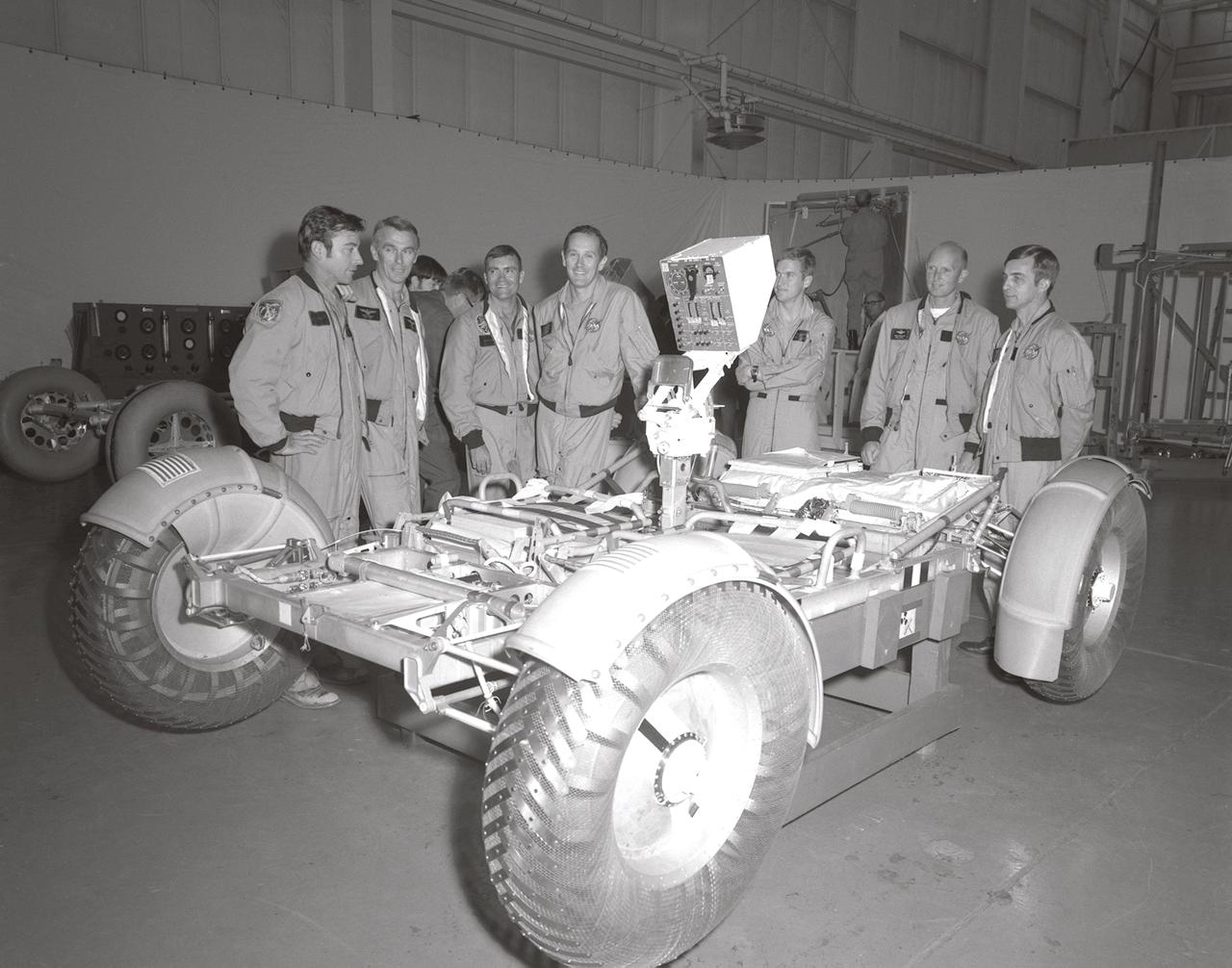
In this November 1971 photograph, (from left to right) Astronauts John Young, Eugene Cernan, Charles Duke, Fred Haise, Anthony England, Charles Fullerton, and Donald Peterson await deployment tests of the Lunar Roving Vehicle (LRV) qualification test unit in building 4649 at the Marshall Space Flight Center (MSFC). The LRV, developed under the direction of the MSFC, was designed to allow Apollo astronauts a greater range of mobility on the lunar surface during the last three lunar exploration missions; Apollo 15, Apollo 16, and Apollo 17.
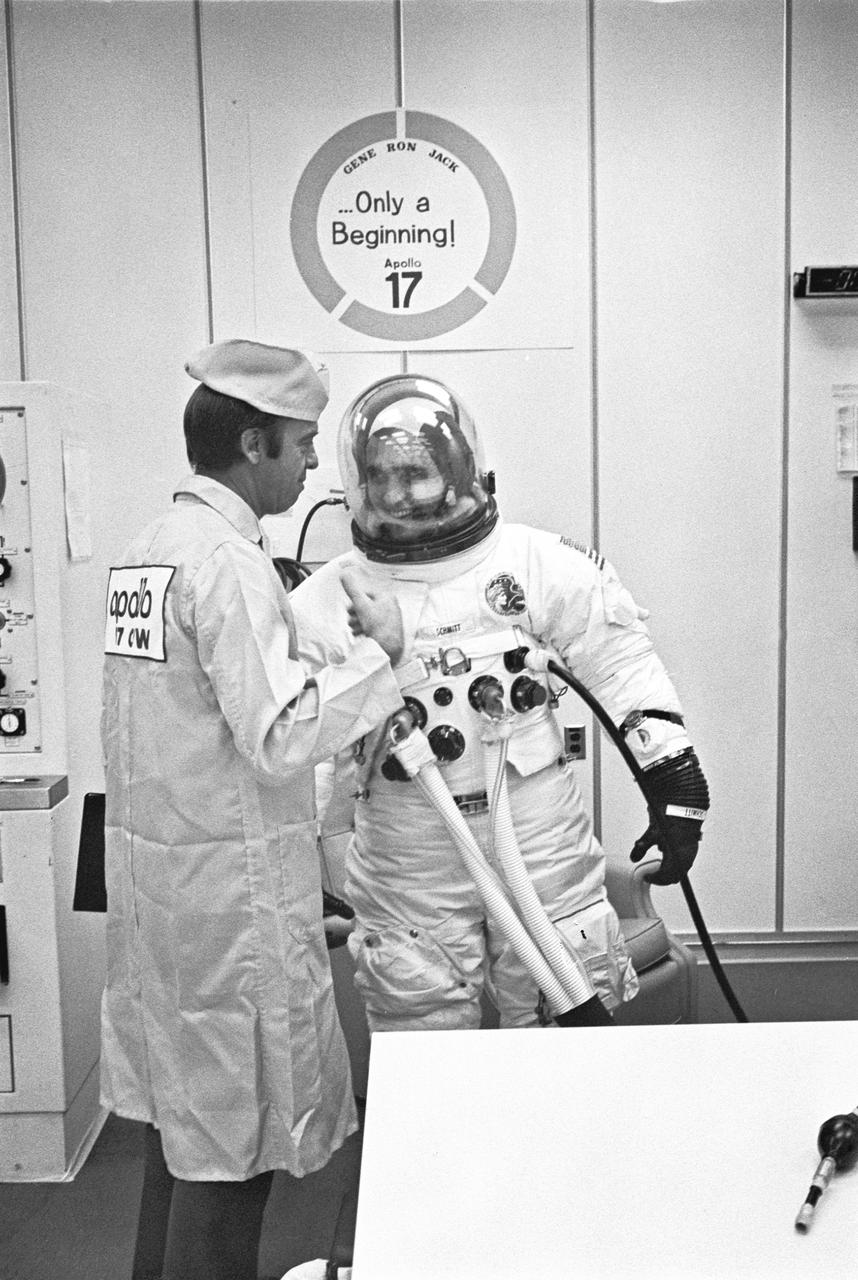
Apollo 17 Lunar module Pilot Harrison H. Schmitt shares a moment of relaxation with astronaut Alan Shepard during prelaunch suiting operations.