
Apollo 7,Cumulus,alto-cumulus,cirrus clouds. Very high oblique. Cloud Cover 50%. Original film magazine was labeled S. Camera Data: Hasselblad 500-C; Lens: Zeiss Planar,F/2.8,80mm; Film Type: Kodak SO-121,Aerial Ektachrome; Filter: Wratten 2A. Flight Date: October 11-12. 1968.
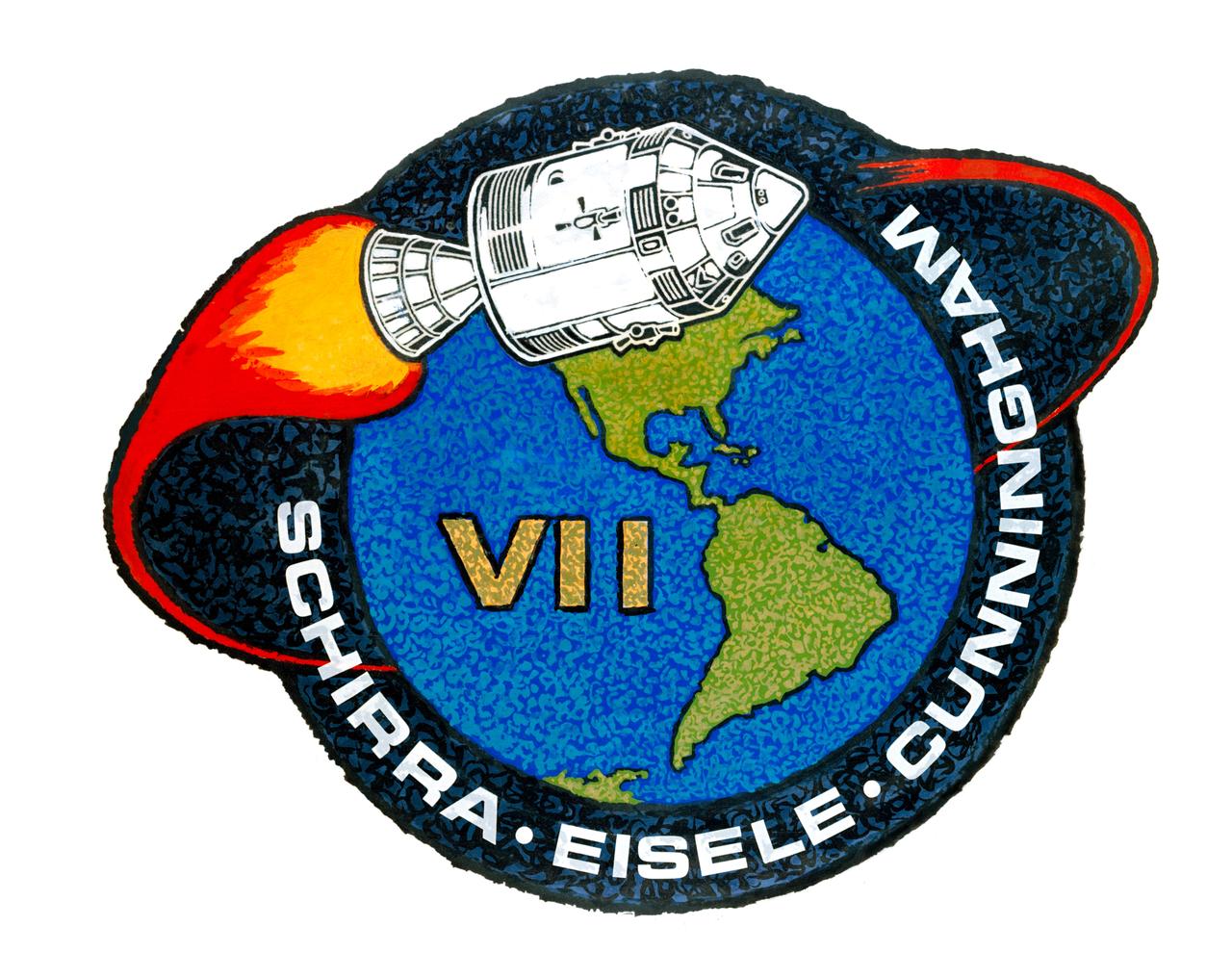
S68-26668 (June 1968) --- The official emblem of Apollo 7, the first manned Apollo space mission. The crew will consist of astronauts Walter M. Schirra Jr., Donn F. Eisele, and Walter Cunningham. The NASA insignia design for Apollo flights is reserved for use by the astronauts and for the official use as the NASA Administrator may authorize. Public availability has been approved only in the form of illustrations by the various news media. When and if there is any change in this policy, which we do not anticipate, it will be publicly announced.

AS07-04-1583 (11-22 Oct. 1968) --- Astronaut Donn F. Eisele, Apollo 7 command pilot, is photographed during the Apollo 7 mission.

AS07-04-1584 (11-22 Oct. 1968) --- Astronaut Walter Cunningham, Apollo 7 lunar module pilot, is photographed during the Apollo 7 mission.
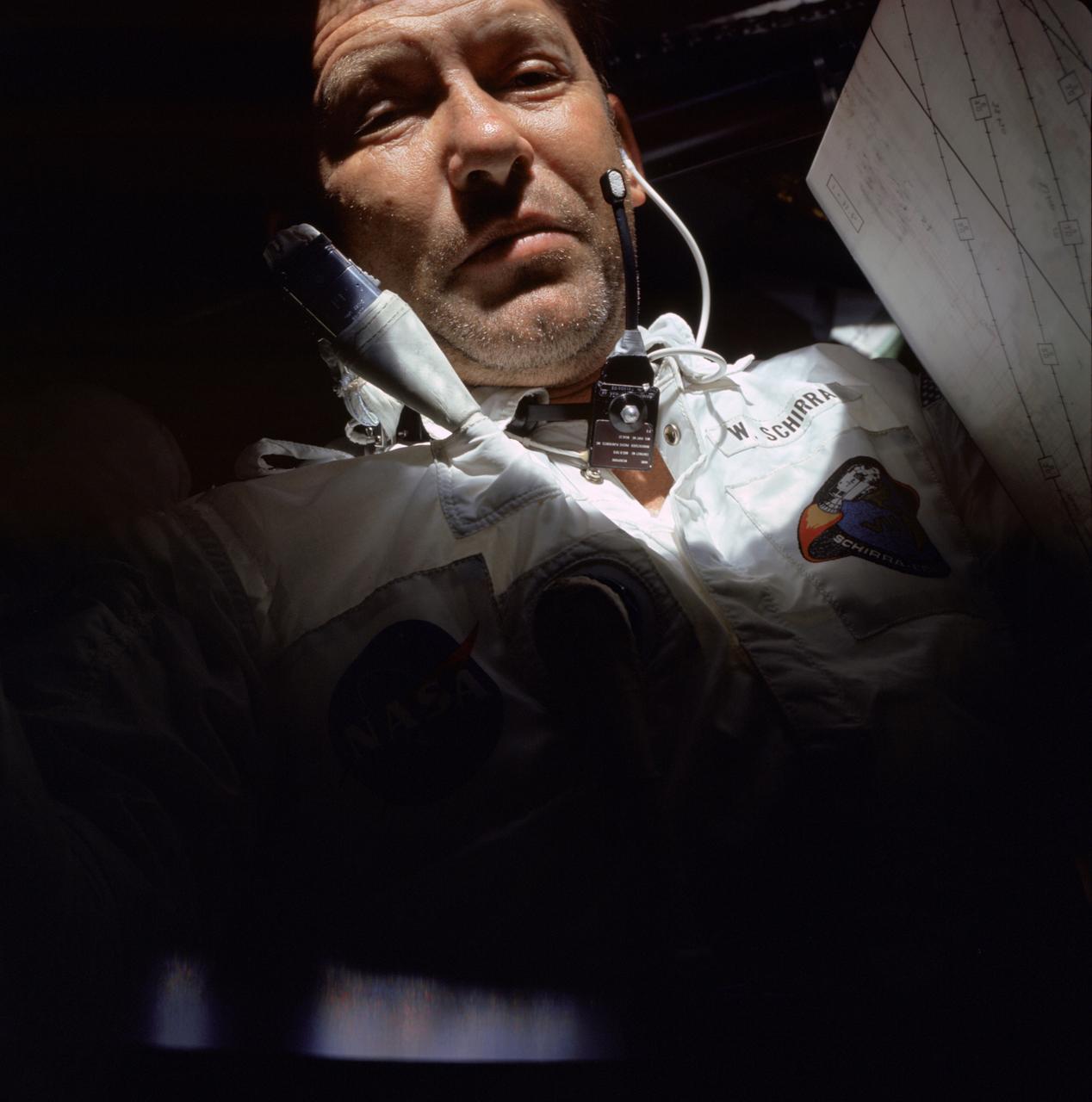
AS07-04-1582 (11-22 Oct. 1968) --- Astronaut Walter M. Schirra Jr., Apollo 7 commander, is photographed during the Apollo 7 mission.
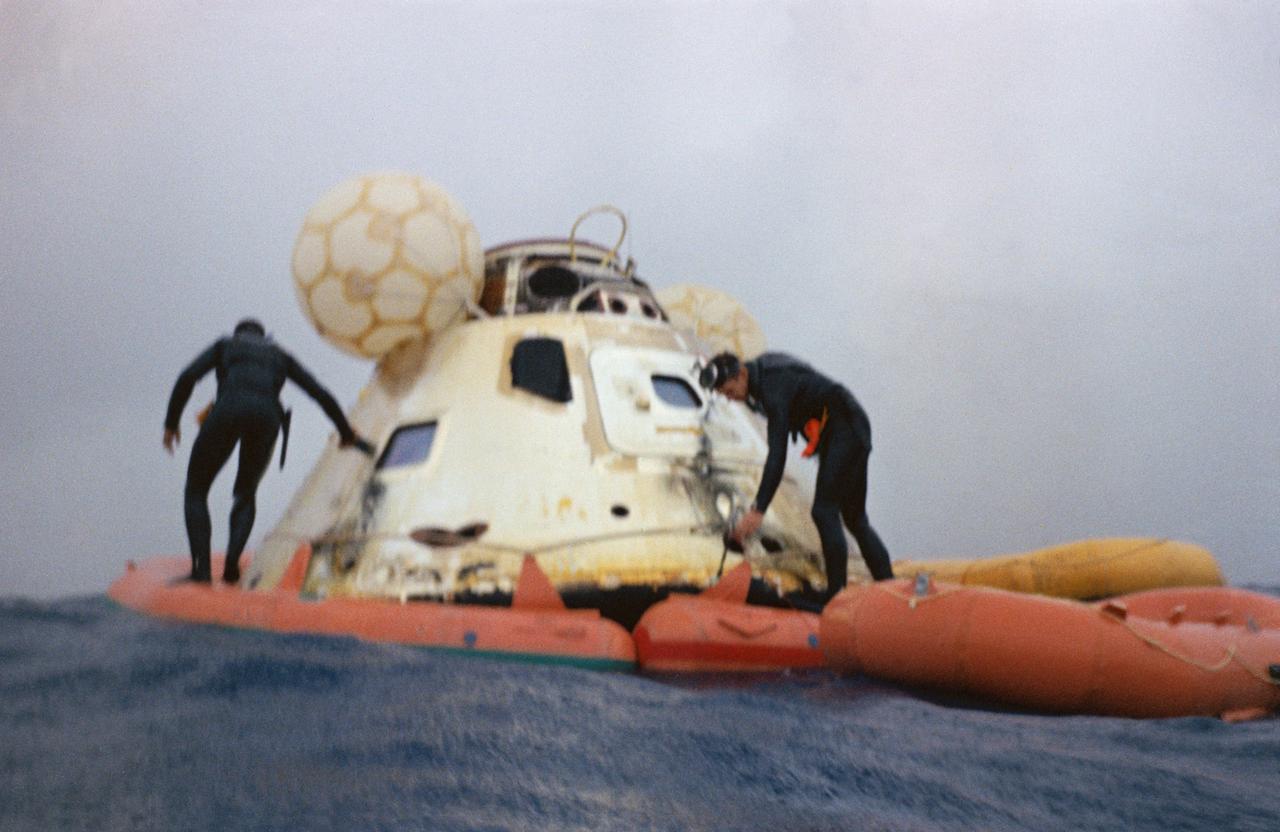
U.S. Navy frogmen attach a flotation collar to the Apollo 7 command module during recovery operations in the Atlantic. The Apollo 7 spacecraft splashed down at 7:11 a.m., October 22, 1968, approximately 200 nautical miles south-southwest of Bermuda.

AS07-04-1600 (20 Oct. 1968) --- Astronaut Donn F. Eisele, Apollo 7 command module pilot, smiles through a heavy growth of beard as he is photographed during a momentary pause on the ninth day of the Apollo 7 mission.
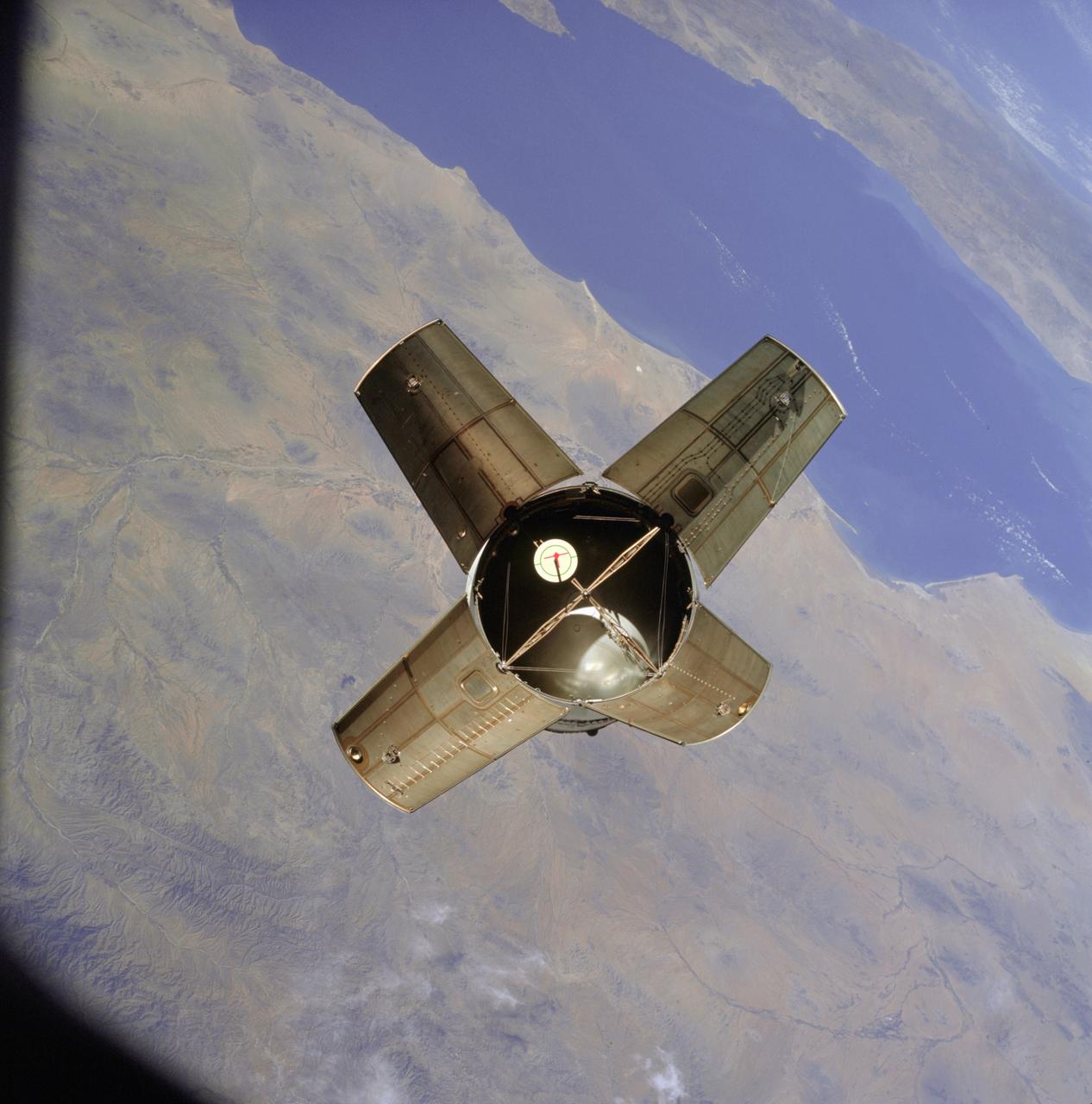
AS07-03-1531 (11 Oct. 1968) --- The expended Saturn IVB stage as photographed from the Apollo 7 spacecraft during transposition and docking maneuvers. This photograph was taken over Sonora, Mexico, during Apollo 7's second revolution of Earth. The round, white disc inside the open panels of the Saturn IVB is a simulated docking target similar to that used on the lunar module for docking during lunar missions.

AS07-03-1538 (11 Oct. 1968) --- The expended Saturn IVB stage as photographed from the Apollo 7 spacecraft during transposition and docking maneuvers. This photograph was taken during Apollo 7's second revolution of Earth. Earth below has heavy cloud cover. The round, white disc inside the open panels of the Saturn IVB is a simulated docking target similar to that used on the lunar module for docking during lunar missions.
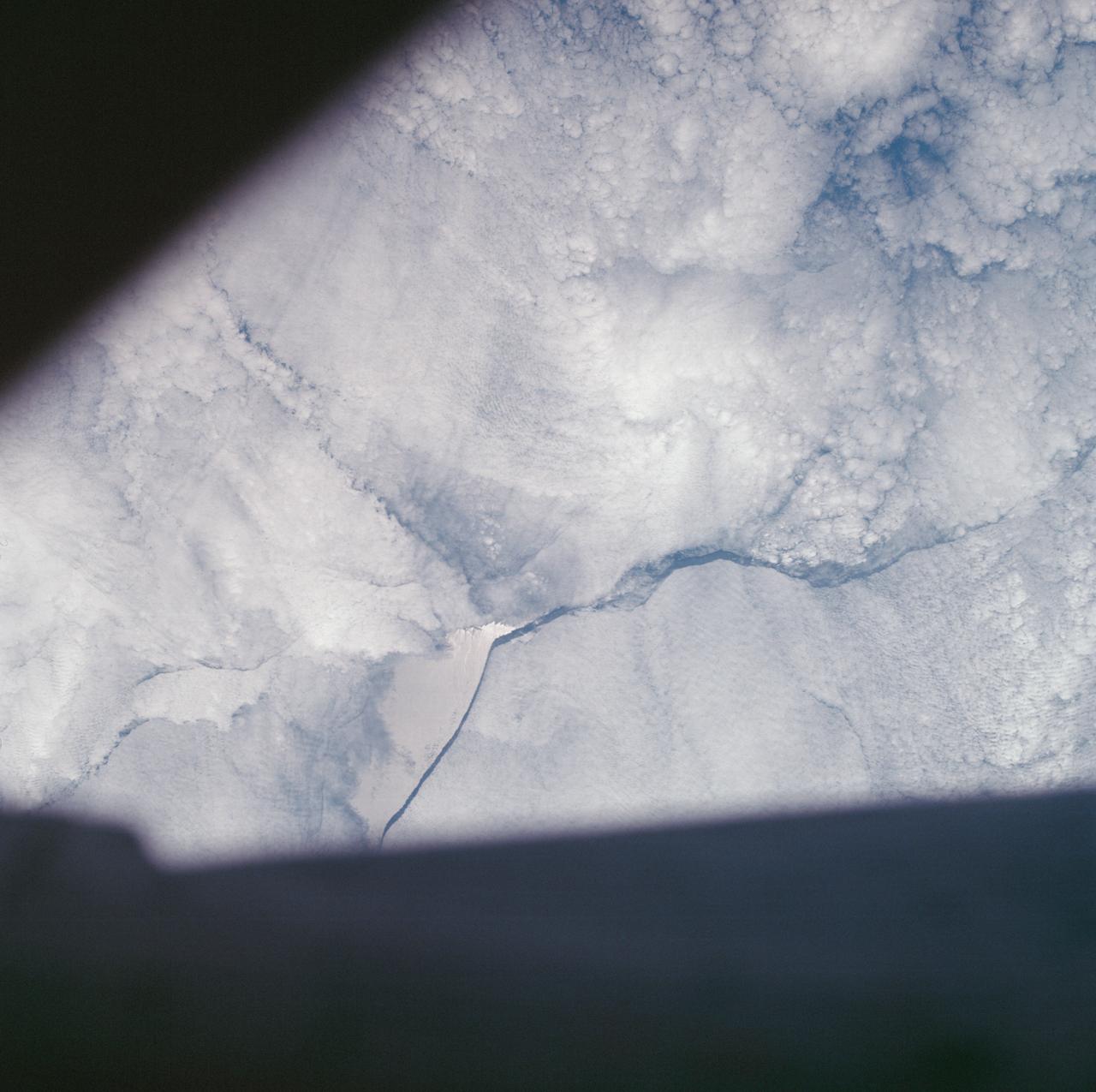
AS07-05-1644 (13 Oct. 1968) --- Remarkable cloud patterns as seen from the Apollo 7 spacecraft during its 34th revolution of Earth. Note break in two adjacent decks of strato-cumulus cloud formations. Sea can be seen through holes in clouds.
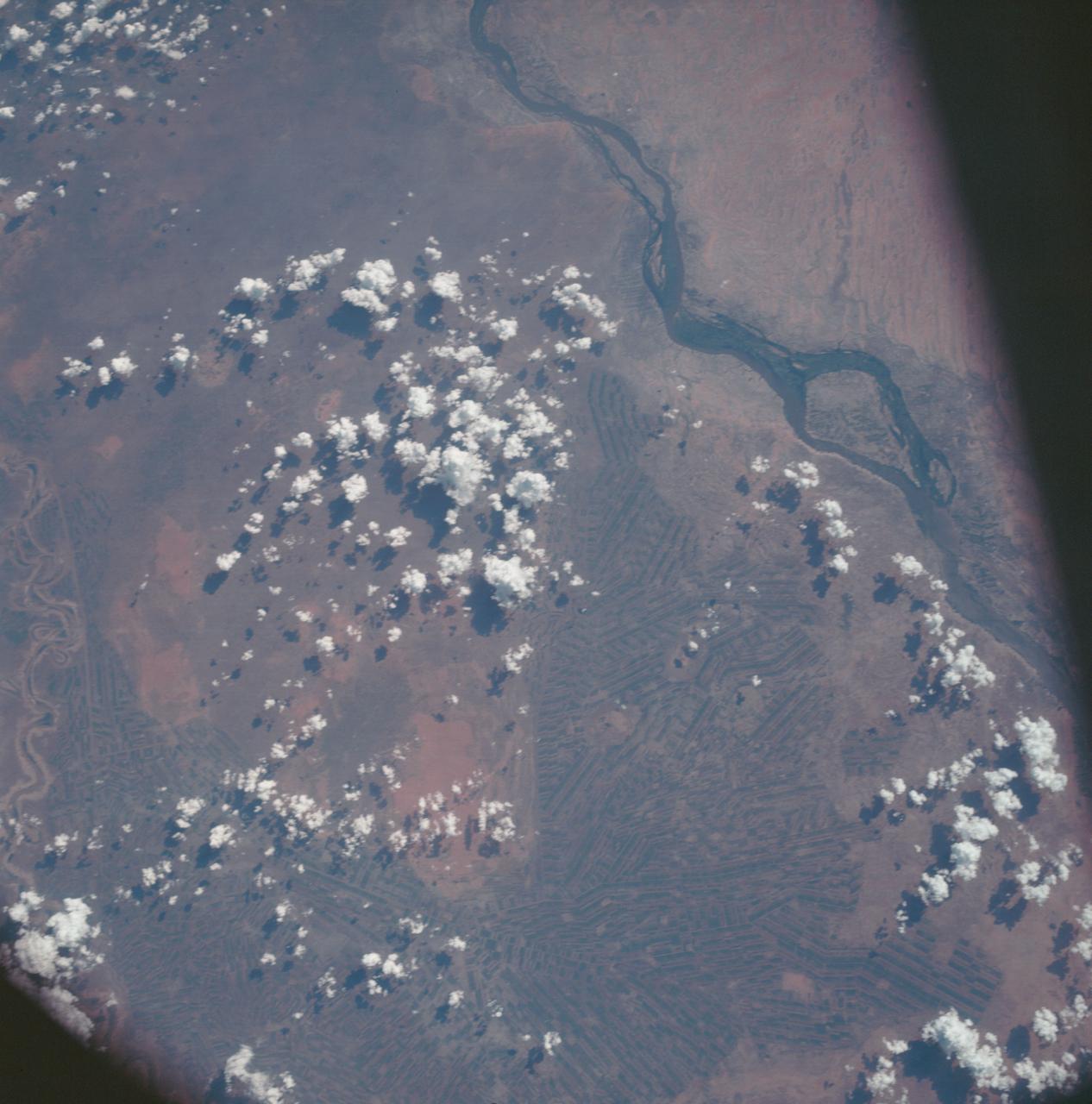
AS7-06-1718 (14 Oct. 1968) --- Sudan, showing White Nile and Blue Nile rivers below Khartoum, as seen from the Apollo 7 spacecraft during its 44th revolution of Earth. Photographed from an altitude of approximately 130 nautical miles, at ground elapsed time of 69 hours and 10 minutes. Note quilted-patchwork effect created by irrigated cultivated land.
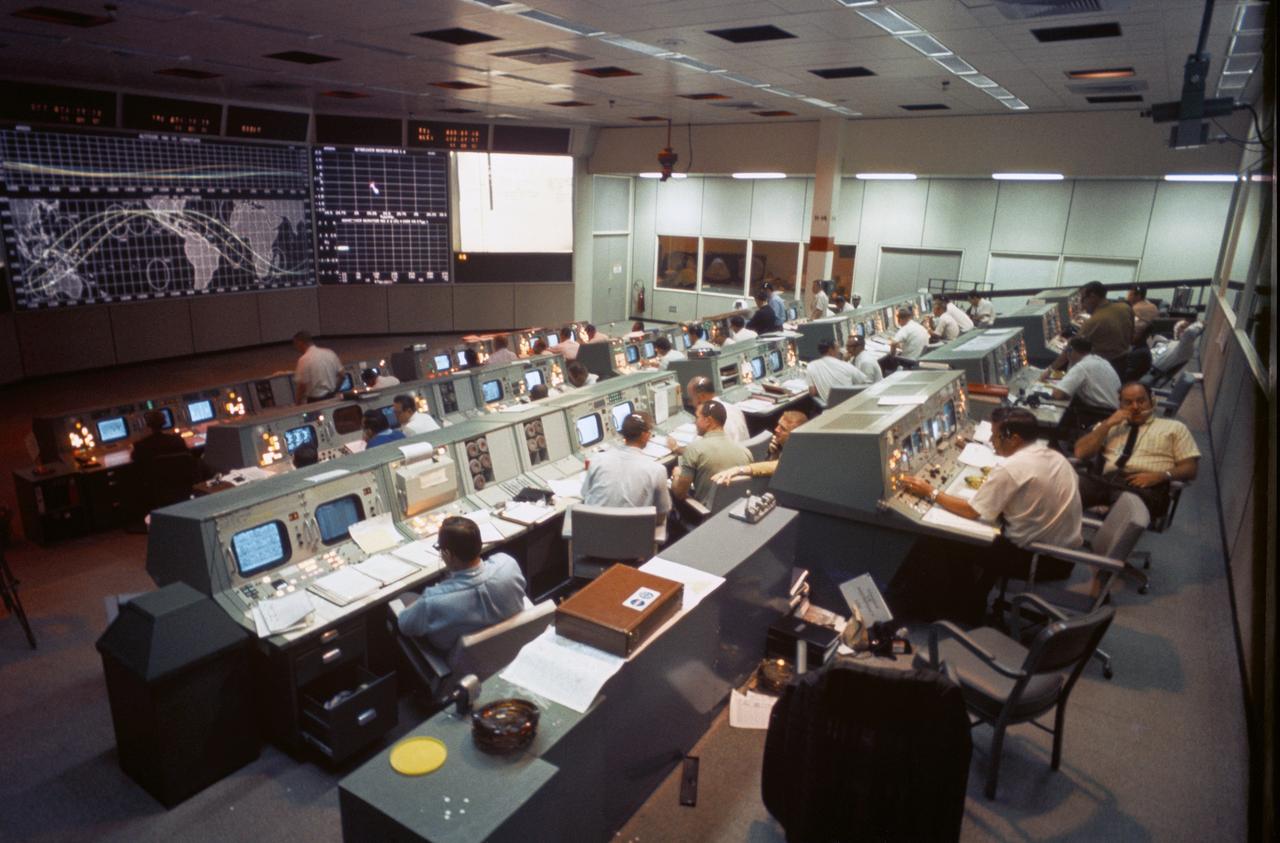
Overall view of activity in the Mission Operations Control Room in the Mission Control Center, Bldg 30, on the first day of the Apollo 7 space mission.
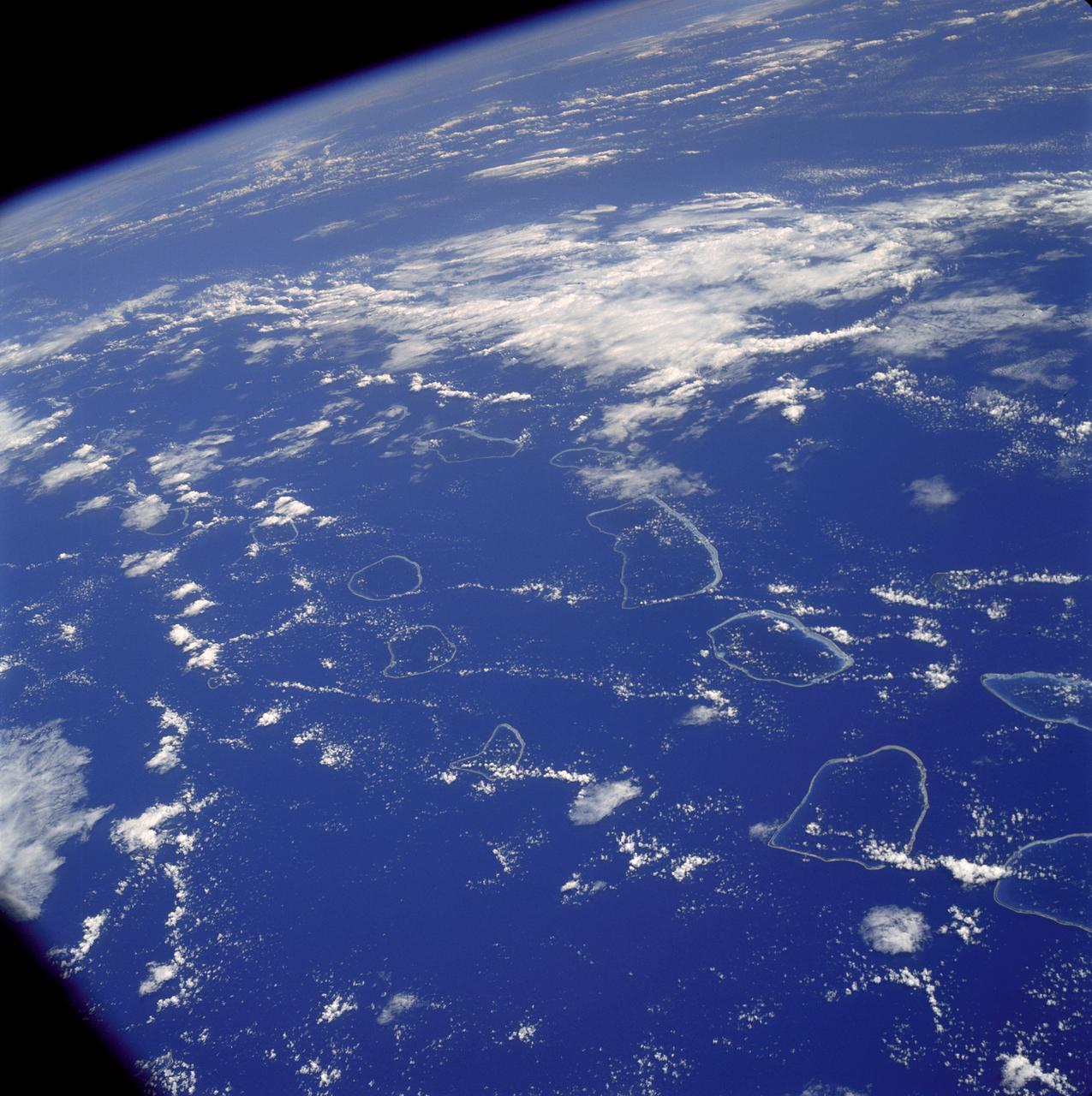
AS07-04-1590 (20 Oct. 1968) --- Tuamotu Archipelago in the South Pacific Ocean, looking southwest, as photographed from the Apollo 7 spacecraft during its 141st revolution of Earth. The photograph was taken from an altitude of 110 nautical miles, at a ground elapsed time of 224 hours and 18 minutes.
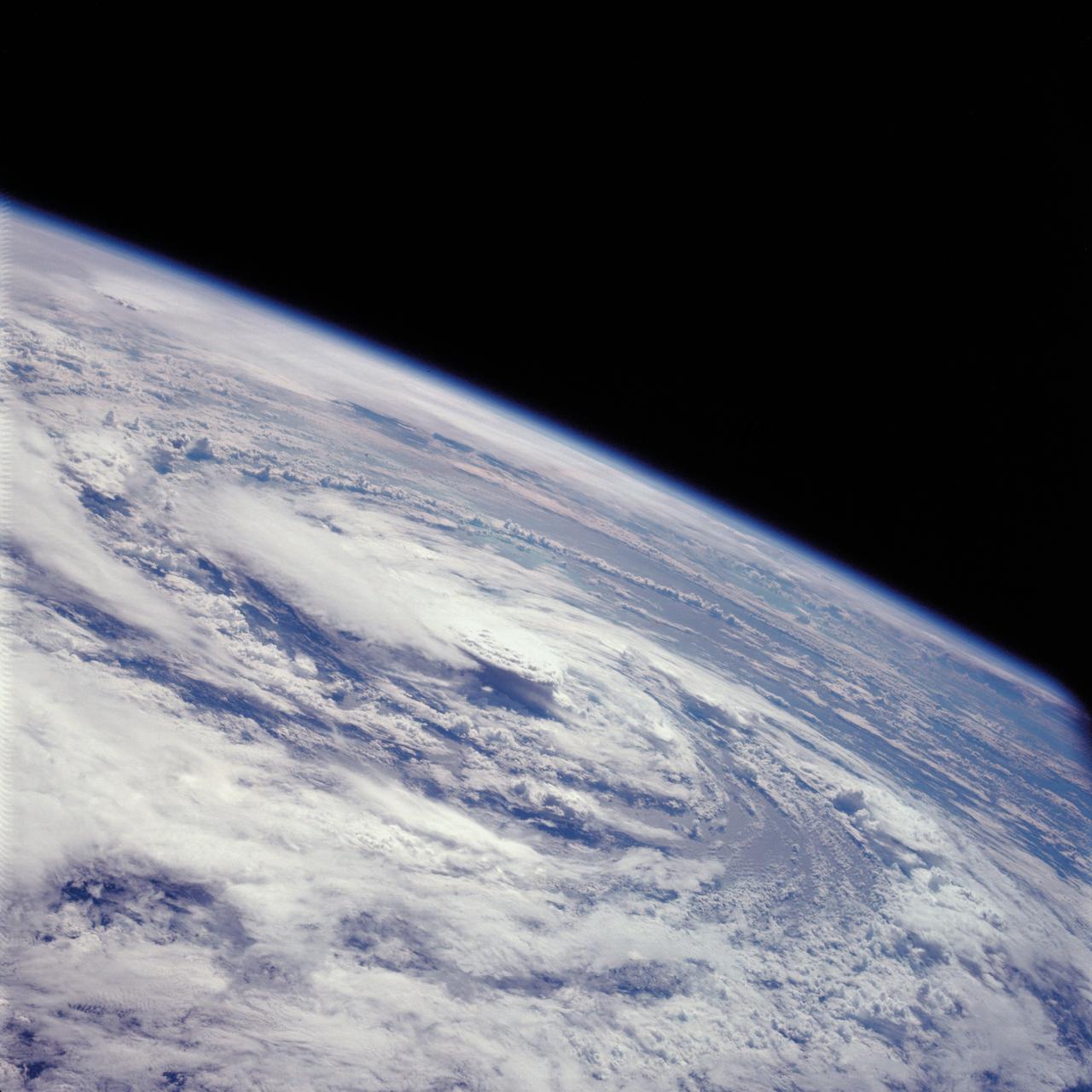
AS07-07-1877 (17 Oct. 1968) --- Hurricane Gladys, Gulf of Mexico, as seen from the Apollo 7 spacecraft during its 91st revolution of the earth. Photographed from an altitude of 99 nautical miles, at ground elapsed time of 144 hours and 27 minutes.
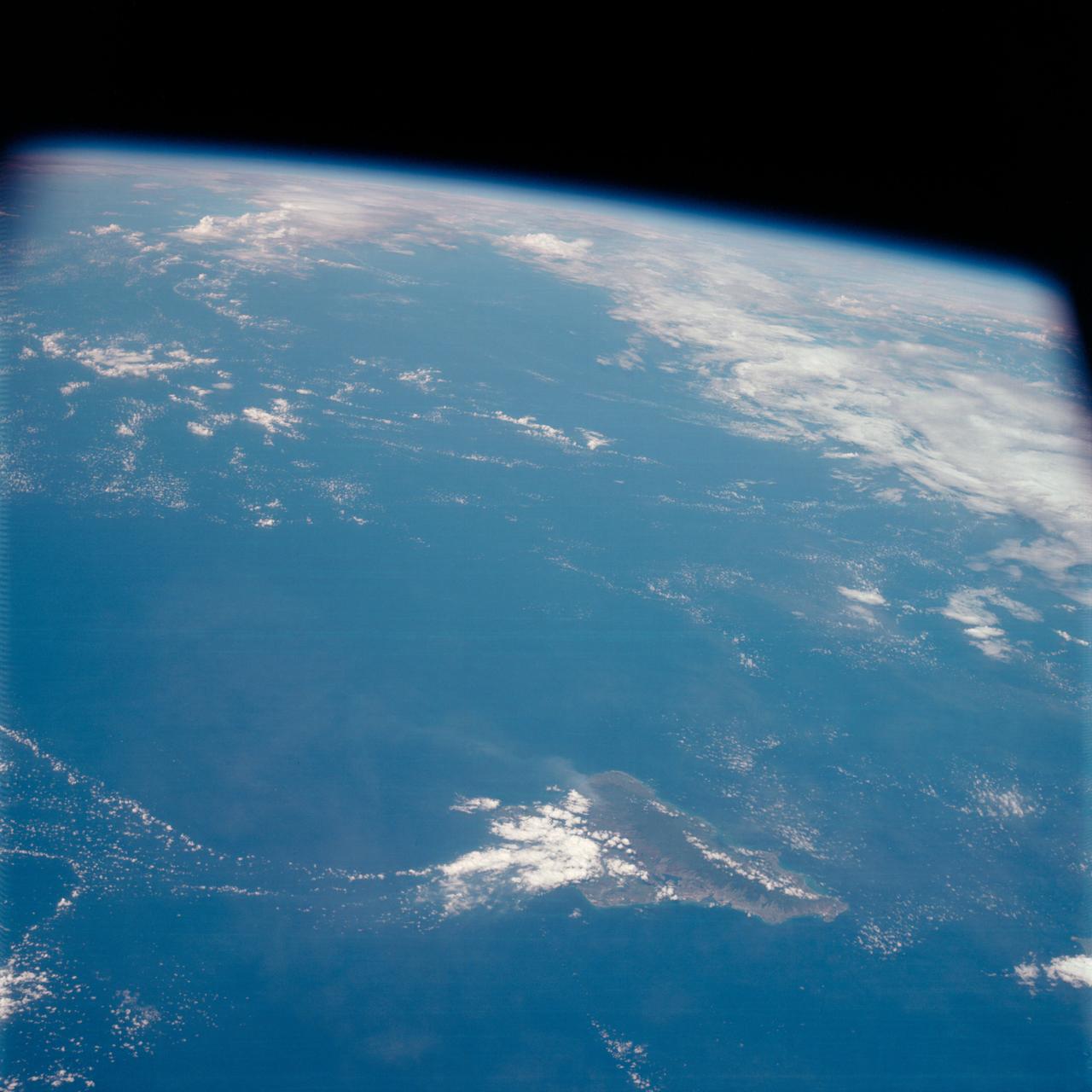
AS7-07-1741 (14 Oct. 1968) --- Island of Oahu, State of Hawaii, as seen from the Apollo 7 spacecraft during its 51st revolution of Earth. Photographed from an altitude of 122 nautical miles, at ground elapsed time of 81 hours. Diamond Head and Pearl Harbor are clearly visible.
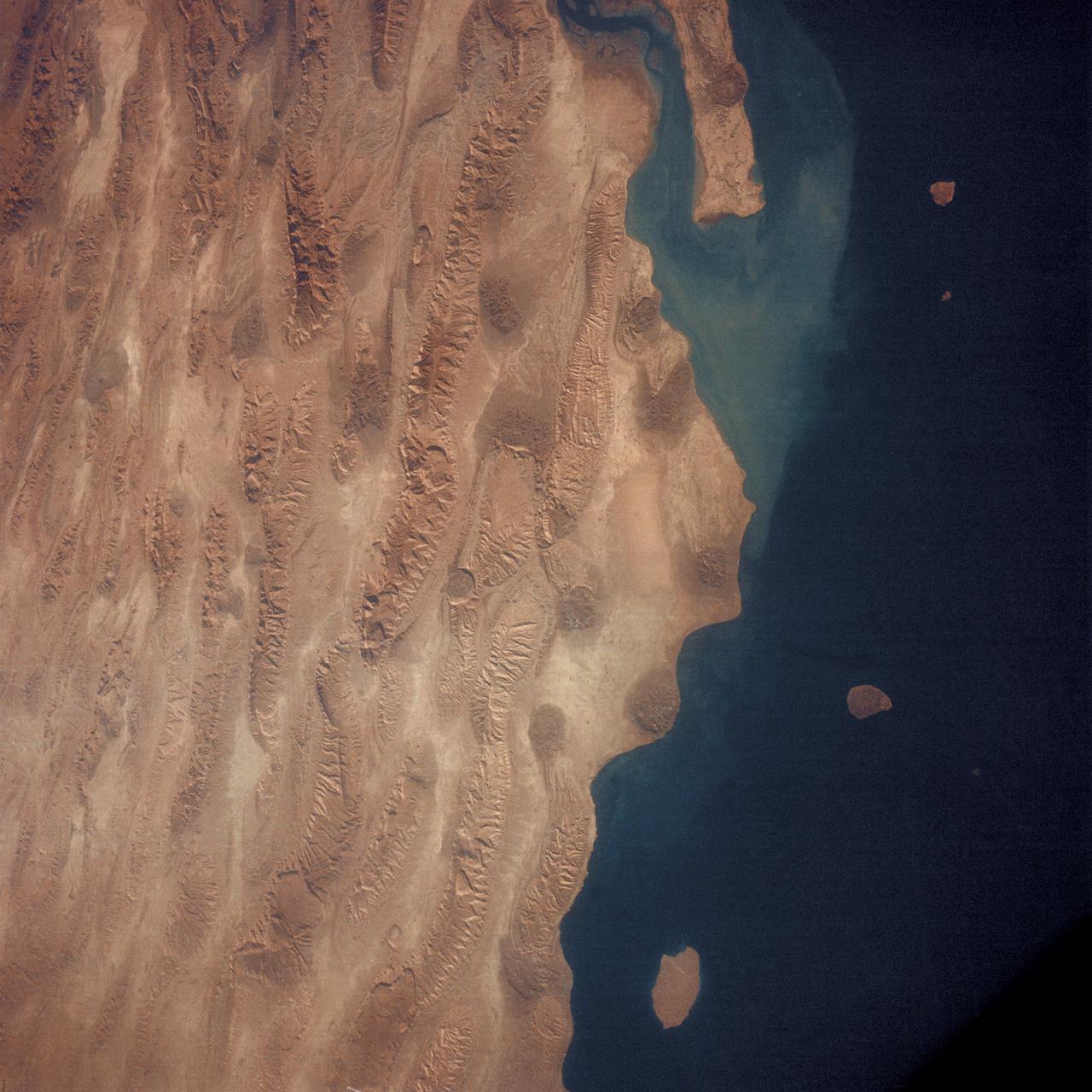
AS7-05-1615 (12 Oct. 1968) --- Persian Gulf coastal area of Iran, Qeshm Island, as seen from the Apollo 7 spacecraft during its 24th revolution of Earth. Photographed from an altitude of approximately 130 nautical miles, at ground elapsed time of 37 hours and 23 minutes.
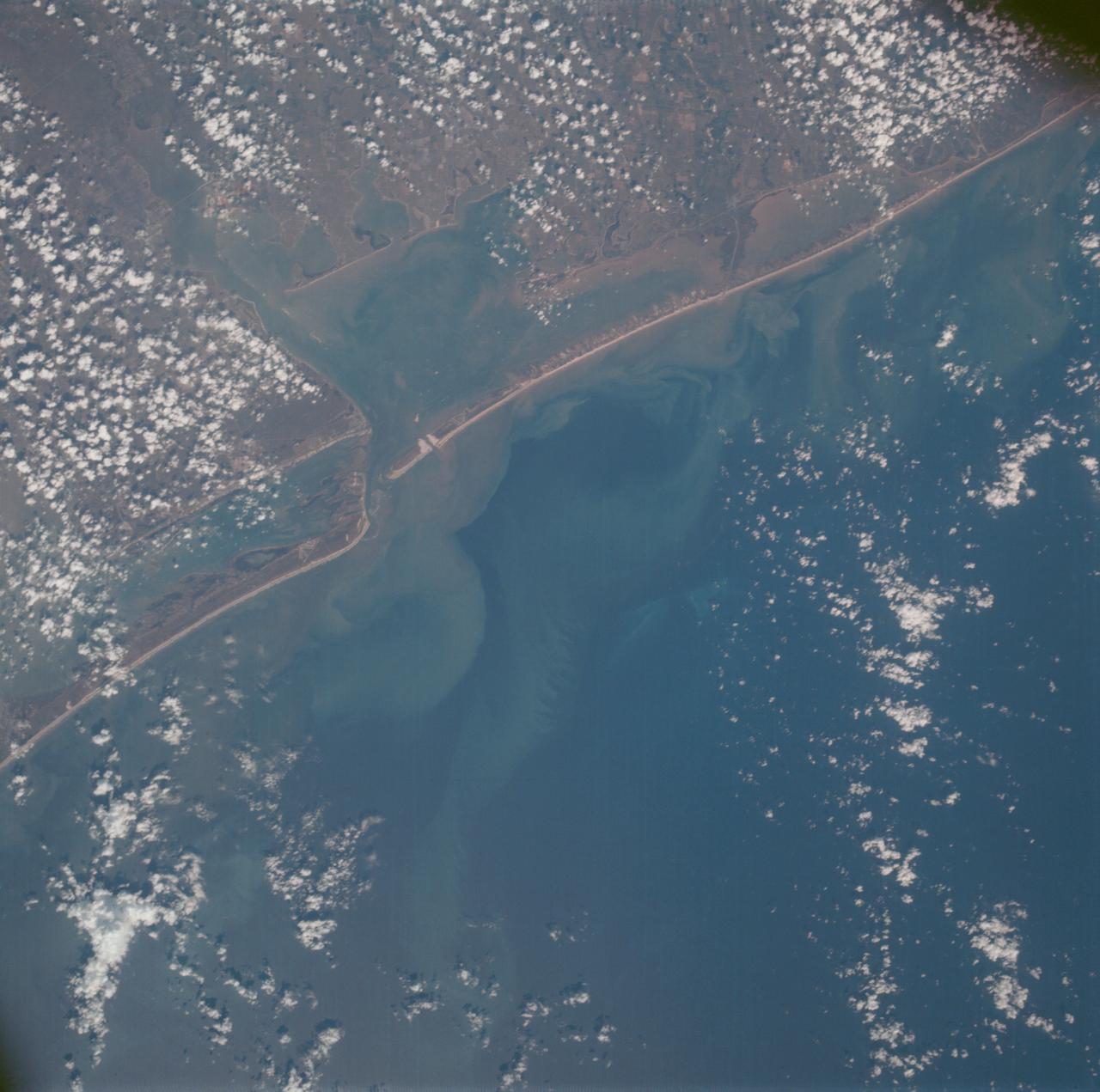
AS07-07-1800 (15 Oct. 1968) --- Matagorda Bay area on the Gulf Coast of Texas as seen from the Apollo 7 spacecraft during its 62nd revolution of Earth. Photographed from an altitude of 90 nautical miles, at ground elapsed time of 98 hours and 38 minutes.
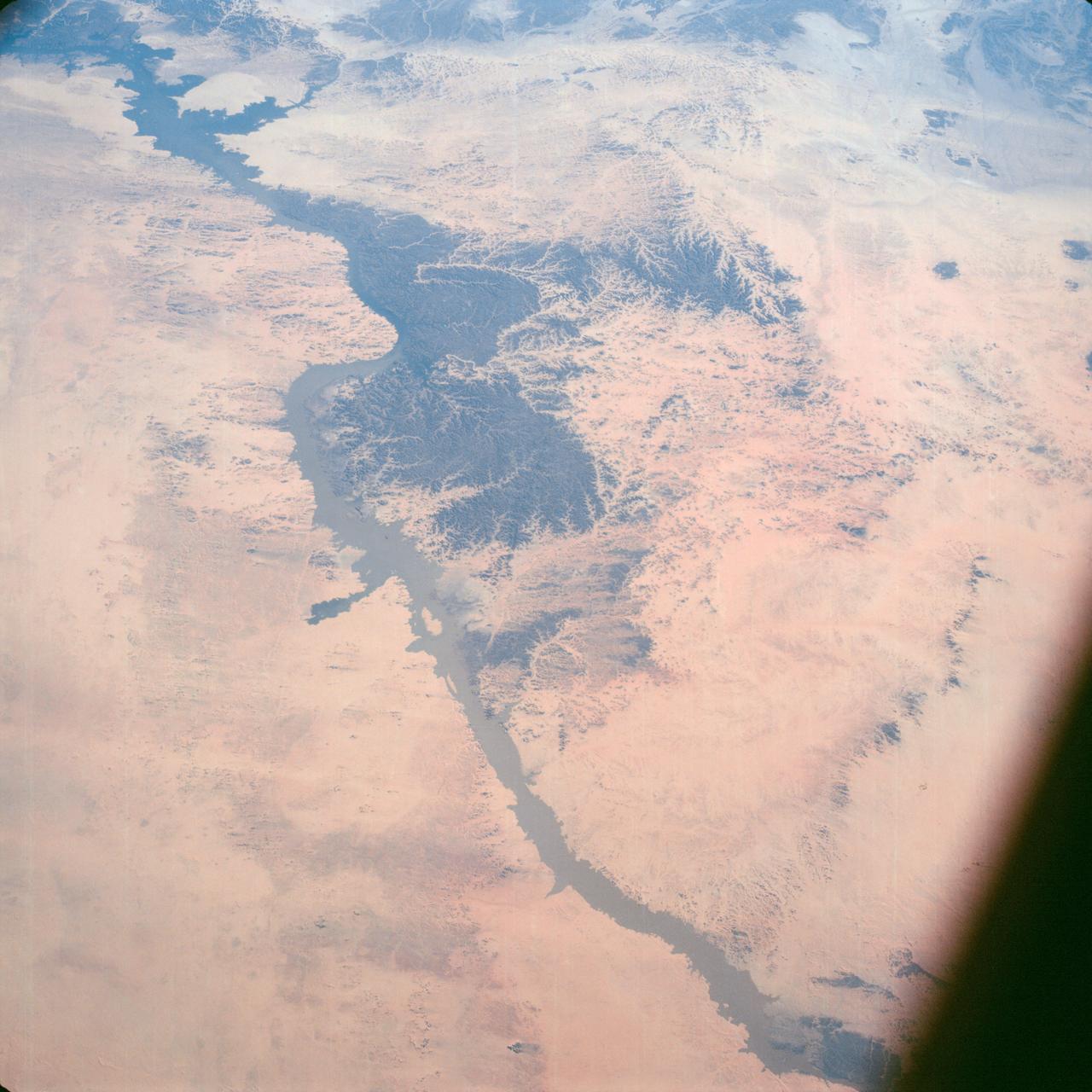
Lake Nasser on the Nile River in southeastern United Arab Republic (Egypt) as seen from the Apollo 7 spacecraft during its 10th revolution of the earth. Photographed from an altitude of 130 nautical miles, at ground elapsed time of 14 hours and 56 minutes. Lake Nasser was created by the contruction of the Aswan Dam on the Nile.
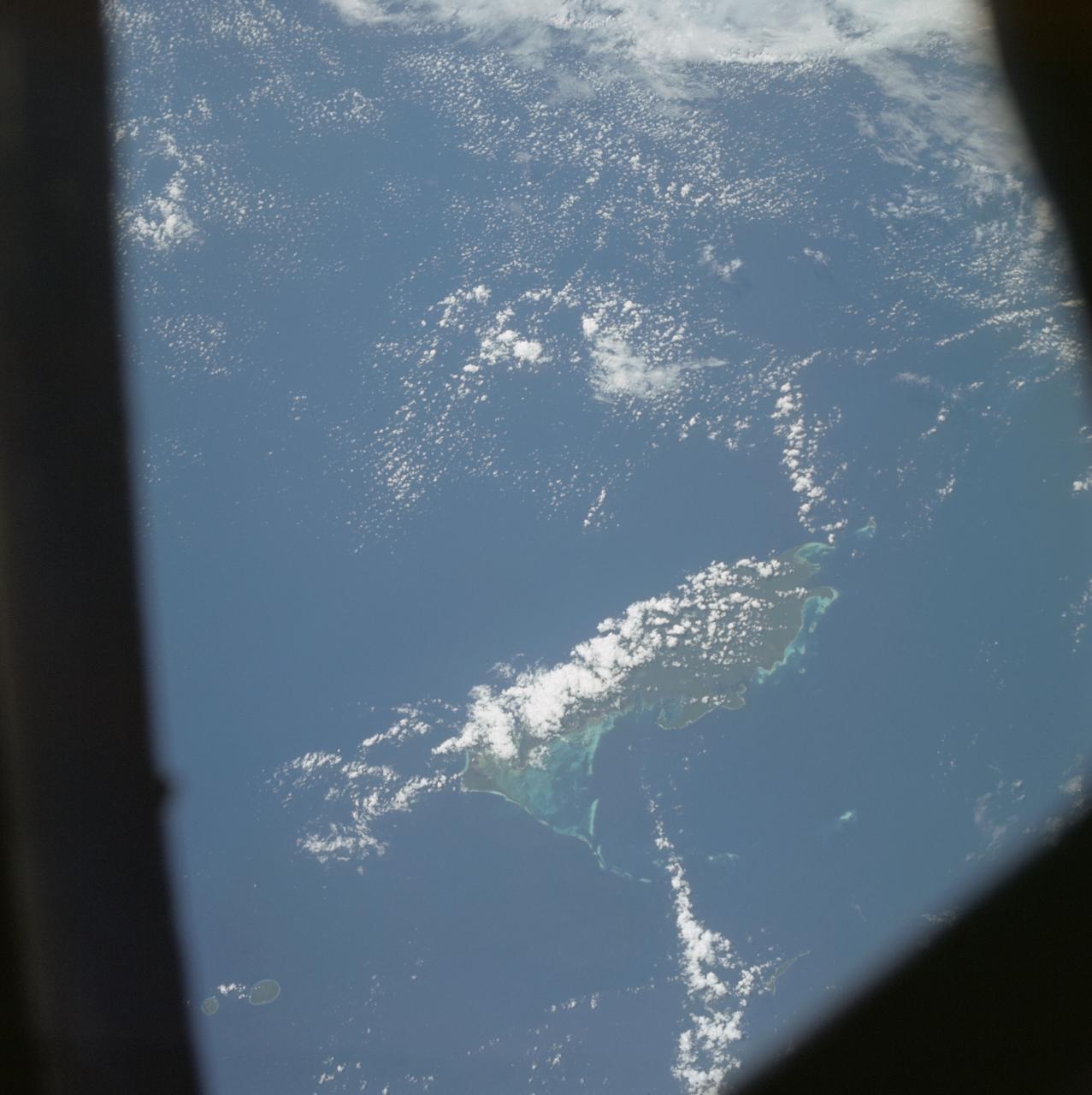
AS07-04-1609 (21 Oct. 1968) --- Woodlark Island in the Solomon Sea, east of New Guinea and northeast of Australia, as seen from the Apollo 7 spacecraft during its 158th revolution of Earth. Photographed from an altitude of 140 nautical miles, at ground elapsed time of 251 hours and 21 minutes.
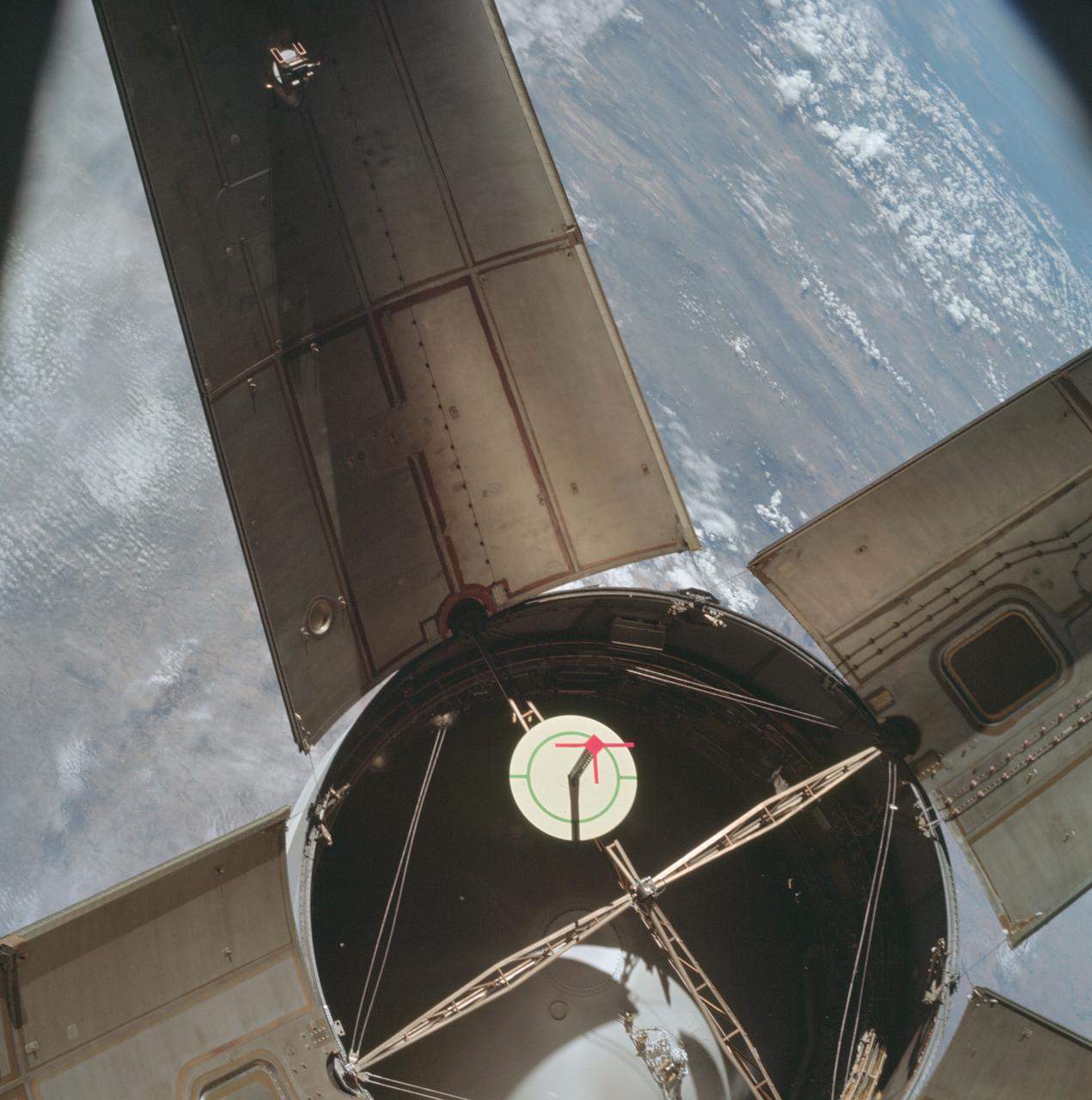
AS07-03-1535 (11 Oct. 1968) --- The expended Saturn IVB stage as photographed from the Apollo 7 spacecraft during transposition and docking maneuvers at an altitude of 126 nautical miles, at ground elapsed time of three hours, 11 minutes. The round, white disc inside the open panels of the Saturn IVB is a simulated docking target similar to that used on the lunar module for docking during lunar missions. The spacecraft is directly over Odessa-Midland, Texas. The view between the two panels (area of large puffy clouds) extends southwest across Texas into the Mexican State of Chihuahua. The distance between the Apollo 7 spacecraft and the S-IVB is approximately 50 feet.
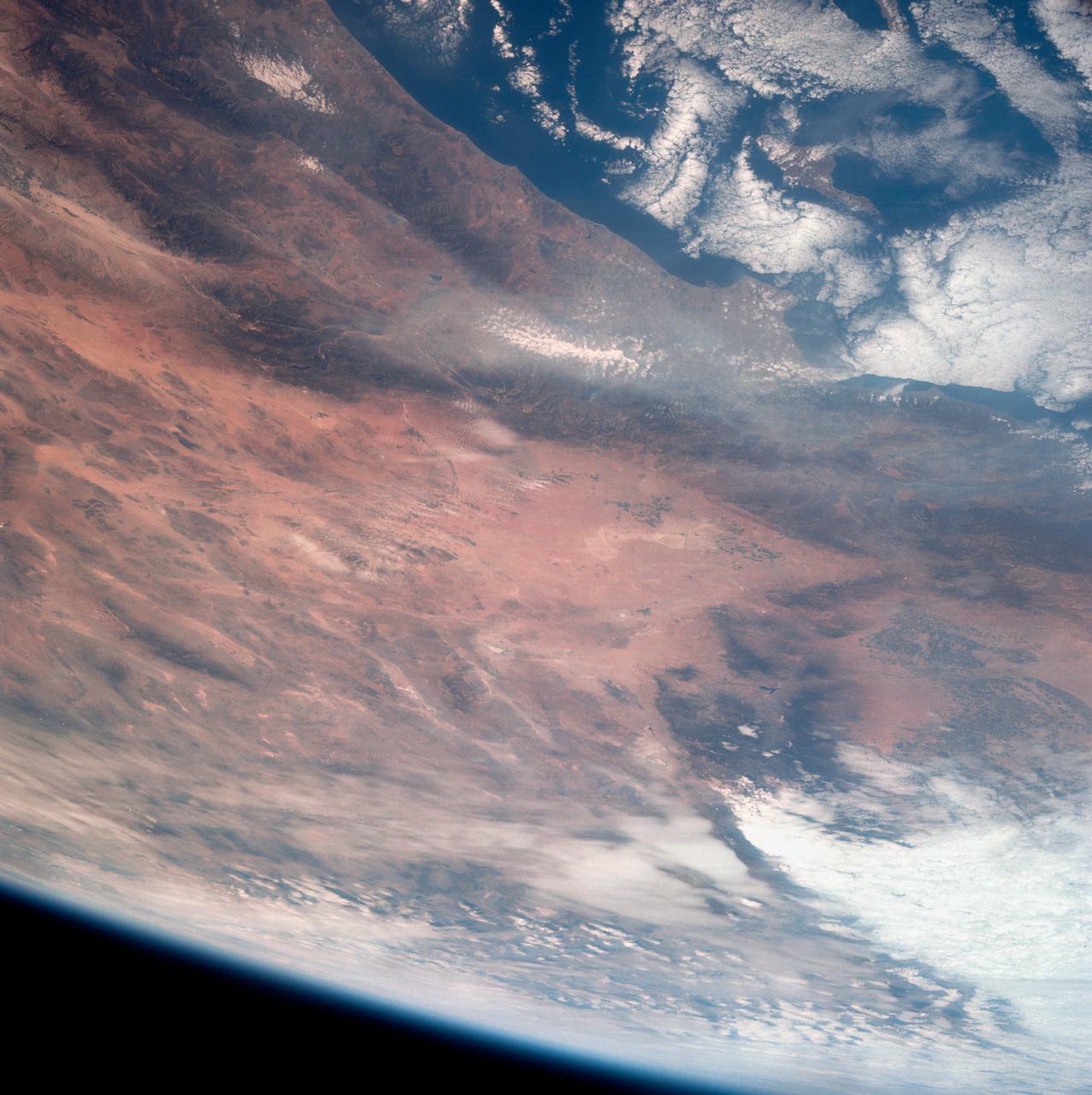
This view of southern California as seen from the Apollo 7 spacecraft during its 18th revolution of the earth. Photographed from an altitude of 124 nautical miles. The coast of California can be seen from Point Mugu southward to Oceanside. Santa Catalina can be seen below the off shore clouds. Details of the Los Angeles area are obscured by pollution which extends from Banning westard for 100 miles to beyond Malibu. In the upper portion of the photograph can be seen (left to right) the San Joaquin Valley beyond Bakersfield, the Techachapi Mountains, the Sierra Nevada, Owens Valley, Death Valley and the Mojave Desert.
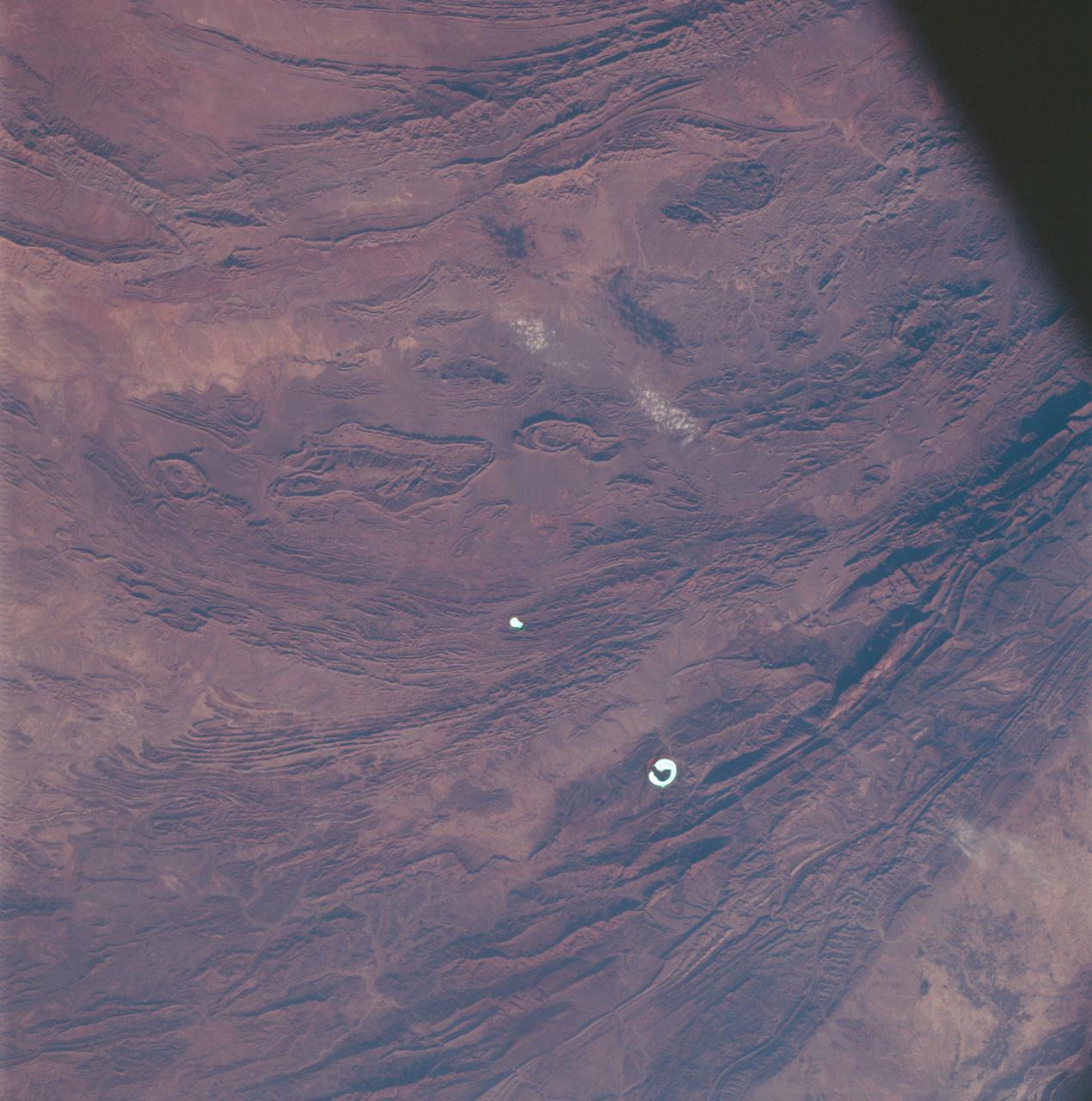
AS07-07-1832 (15 Oct. 1968) --- Toba, Kakar, Fort Sandeman, Sulaiman Range area in (West) Pakistan, as seen from the Apollo 7 spacecraft during its 84th revolution of Earth. Note geological features such as folded mountain structures, anticlines and synclines. Photographed from an altitude of 108 nautical miles, at ground elapsed time of 132 hours and 30 minutes.

The greater New Orleans area, including portions of Louisiana and Mississippi, as seen from the Apollo 7 spacecraft during its 120th revolution of the earth. Photographed from an altitude of 95 nautical miles, at ground elapsed time of 190 hours and 45 minutes. The largest body of water in the picture is Lake Pontchartrain. The Mississippi River is clearly visible as it meanders past New Orleans. Note highway network, and 25-mile causeway across lake.
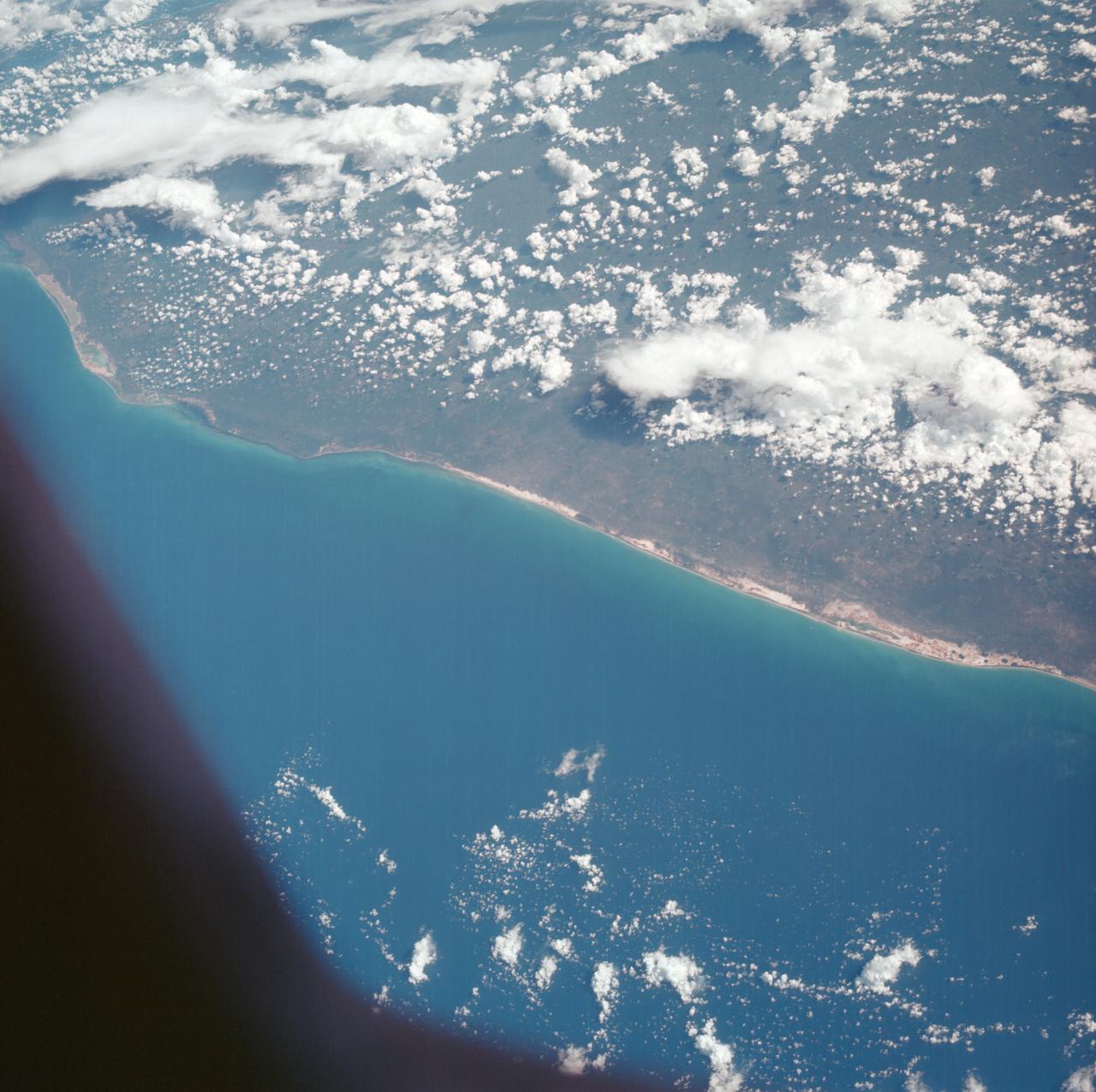
AS07-05-1635 (13 Oct. 1968) --- Gulf of Mexico, coast of Yucatan, Mexico, as seen from the Apollo 7 spacecraft during its 33rd revolution of Earth. Note road leading to city of Merida which is under cloud cover. Photographed from an altitude of 123 nautical miles, at ground elapsed time of 52 hours and 37 minutes.

AS07-05-1652 (13 Oct. 1968) --- Pacific coast area of southwestern Mexico, State of Guerrero, from Acapulco to Tecoanapa, as seen from the Apollo 7 spacecraft during its 34th revolution of Earth. Photographed from an altitude of 125 nautical miles, at ground elapsed time of 54 hours and 10 minutes. Much cloud cover in area.
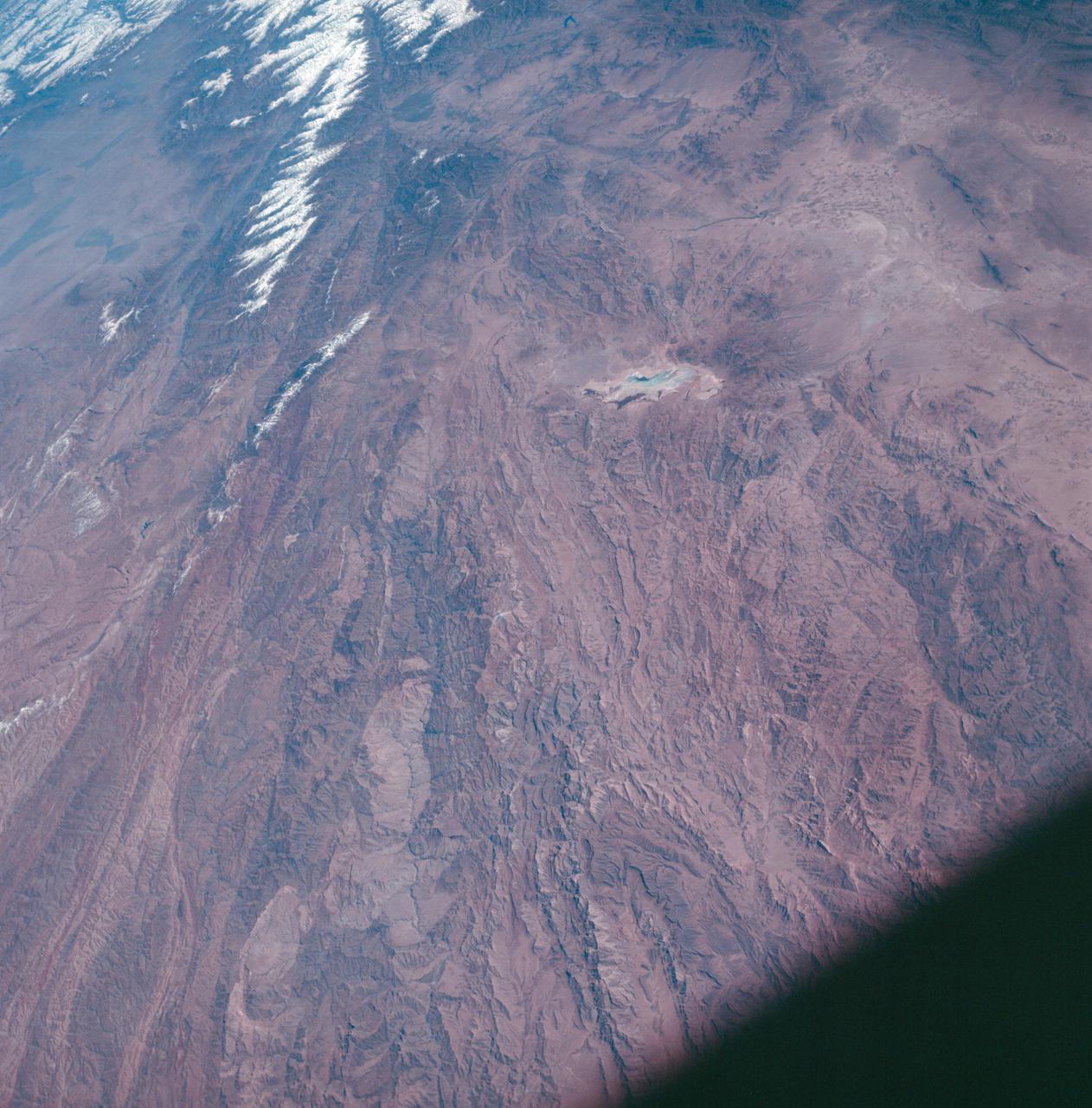
AS7-05-1667 (13 Oct. 1968) --- Kabul, Afghanistan area as seen from the Apollo 7 spacecraft during its 39th revolution of Earth. Photographed from an altitude of 127 nautical miles, at ground elapsed time of 61 hours and 20 minutes. Also, visible in picture are the Panjshir River and the Koh-i-Baba Mountains.
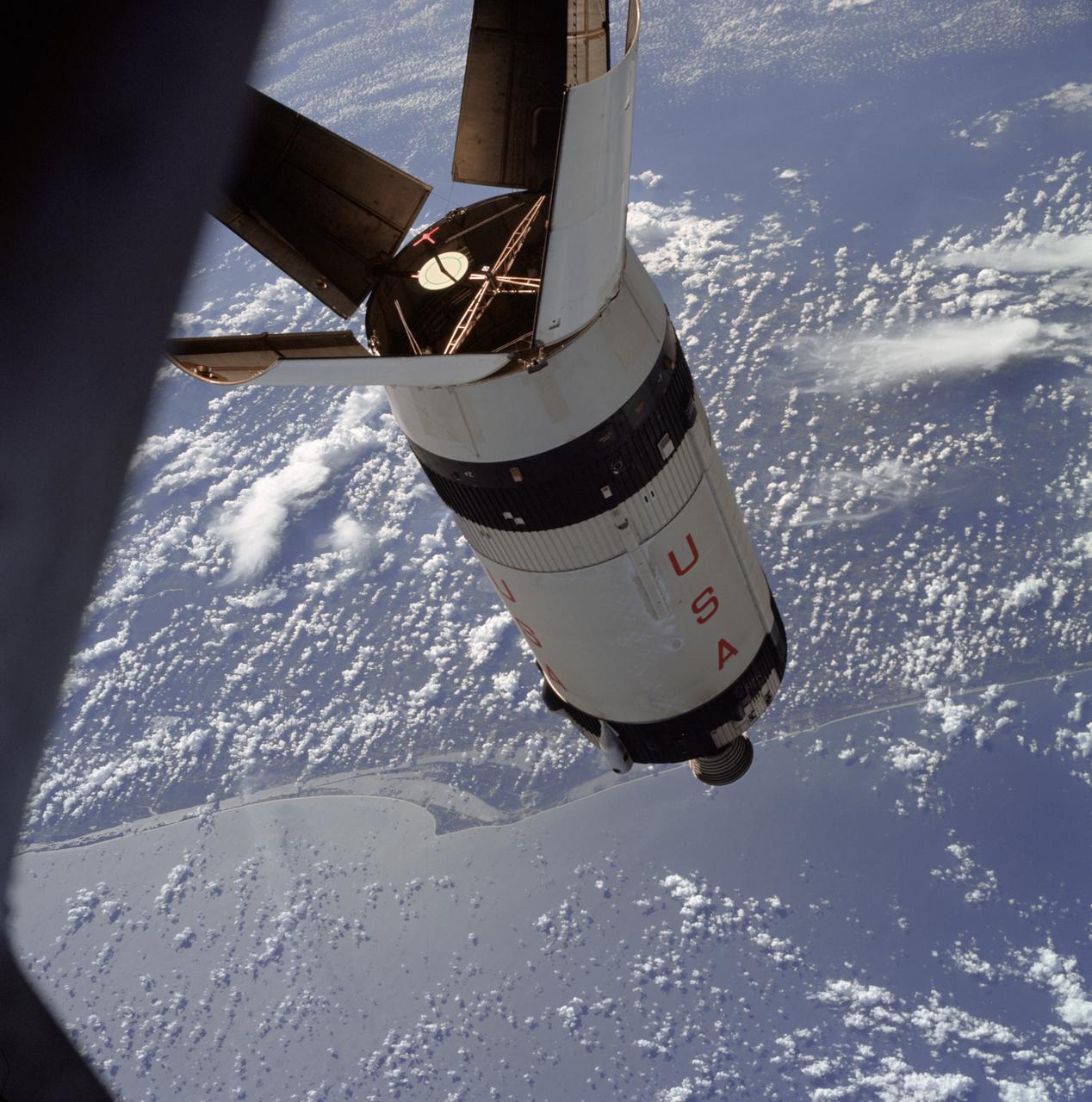
AS07-03-1545 (11 Oct. 1968) --- The expended Saturn S-IVB stage as photographed from the Apollo 7 spacecraft during transposition and docking maneuvers at an approximate altitude of 125 nautical miles, at ground elapsed time of three hours and 16 minutes (beginning of third revolution). This view is over the Atlantic Ocean off the coast of Cape Kennedy, Florida. The Florida coastline from Flagler Beach southward to Vero Beach is clearly visible in picture. Much of the Florida peninsula can be seen. Behind the open panels is the Gulf of Mexico. Distance between the Apollo 7 spacecraft and the S-IVB is approximately 100 feet. The round, white disc inside the open panels of the S-IVB is a simulated docking target similar to that used on the Lunar Module (LM) for docking during lunar missions.
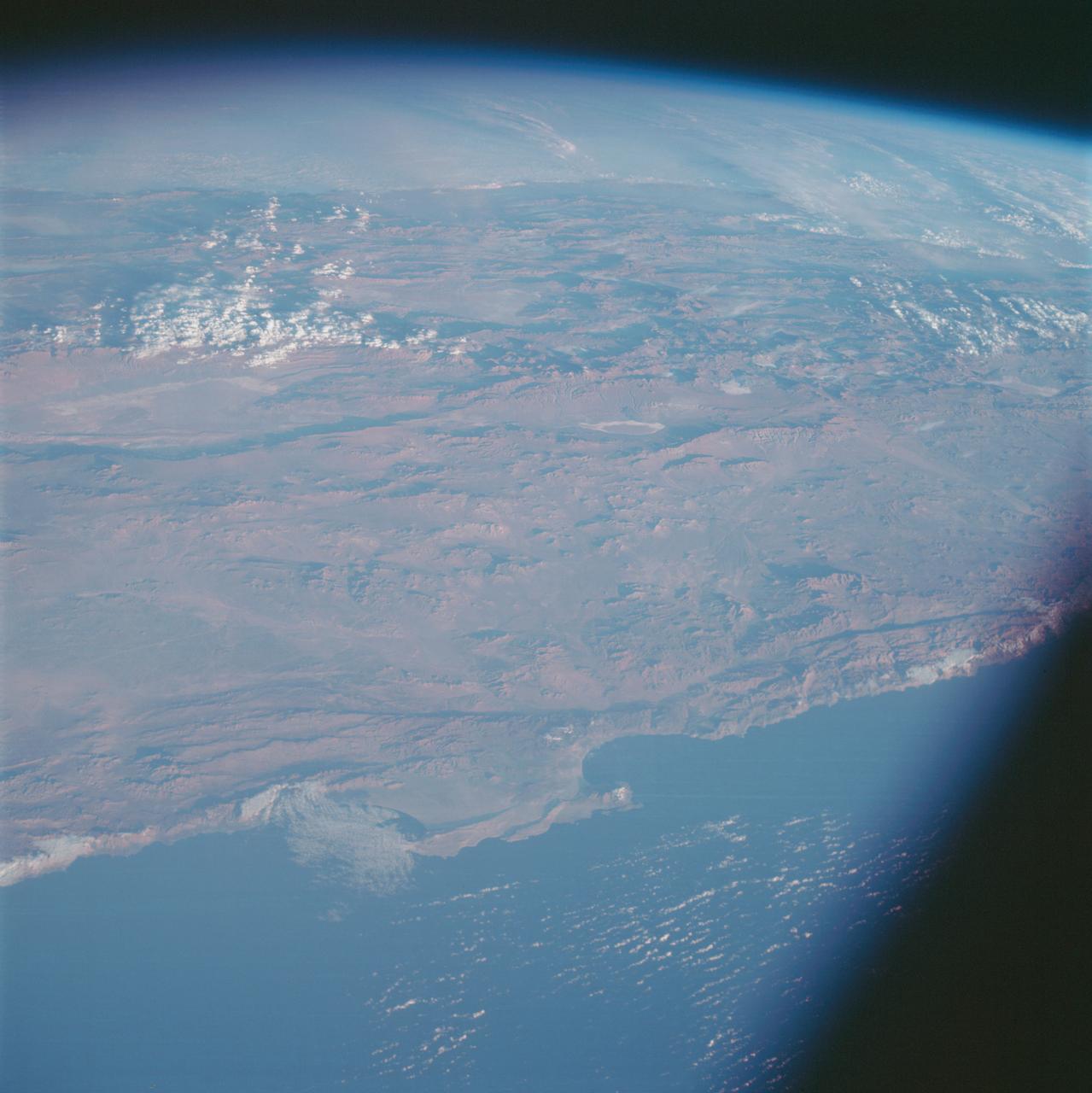
AS07-07-1826 (17 Oct. 1968) --- This view of South America was photographed from the Apollo 7 spacecraft during its 81st revolution of Earth from an altitude of 120 nautical miles. The port city of Antofagasta, Chile, is located in the half-moon shaped bay in the lower left portion of the picture. Beyond the coast is the Andean peak of Llullaillaco Volcano which rises 22,000 feet above sea level. At left center is the Chuquicamata copper mines located near Coloma. At the center of the photo, behind the large salt lake and atop a 19,000 foot high volcano, the countries of Bolivia, Argentina, and Chile meet at a common point. Below the clouds in the upper portion of the photo are the Great Plains known as the Gran Chaco.
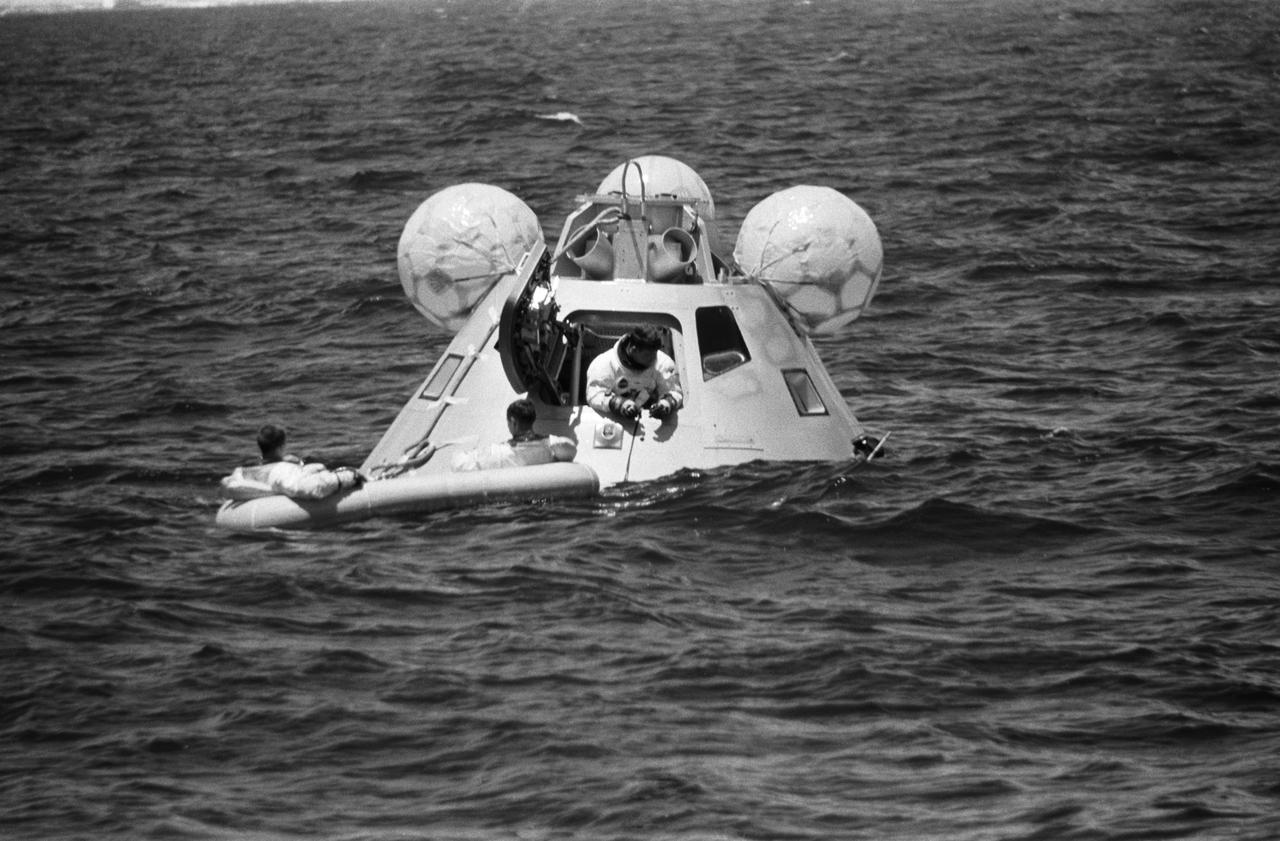
S68-42197 (5 Aug. 1968) --- The prime crew of the first manned Apollo space mission, Apollo 7, participates in water egress training in the Gulf of Mexico. In hatch of the Apollo egress trainer (command module) is astronaut Walter M. Schirra Jr. Sitting in life raft are astronauts Walter Cunningham (on left) and Donn F. Eisele. A team of MSC swimmers assisted with the training exercise. The inflated bags were used to upright the trainer prior to egress.
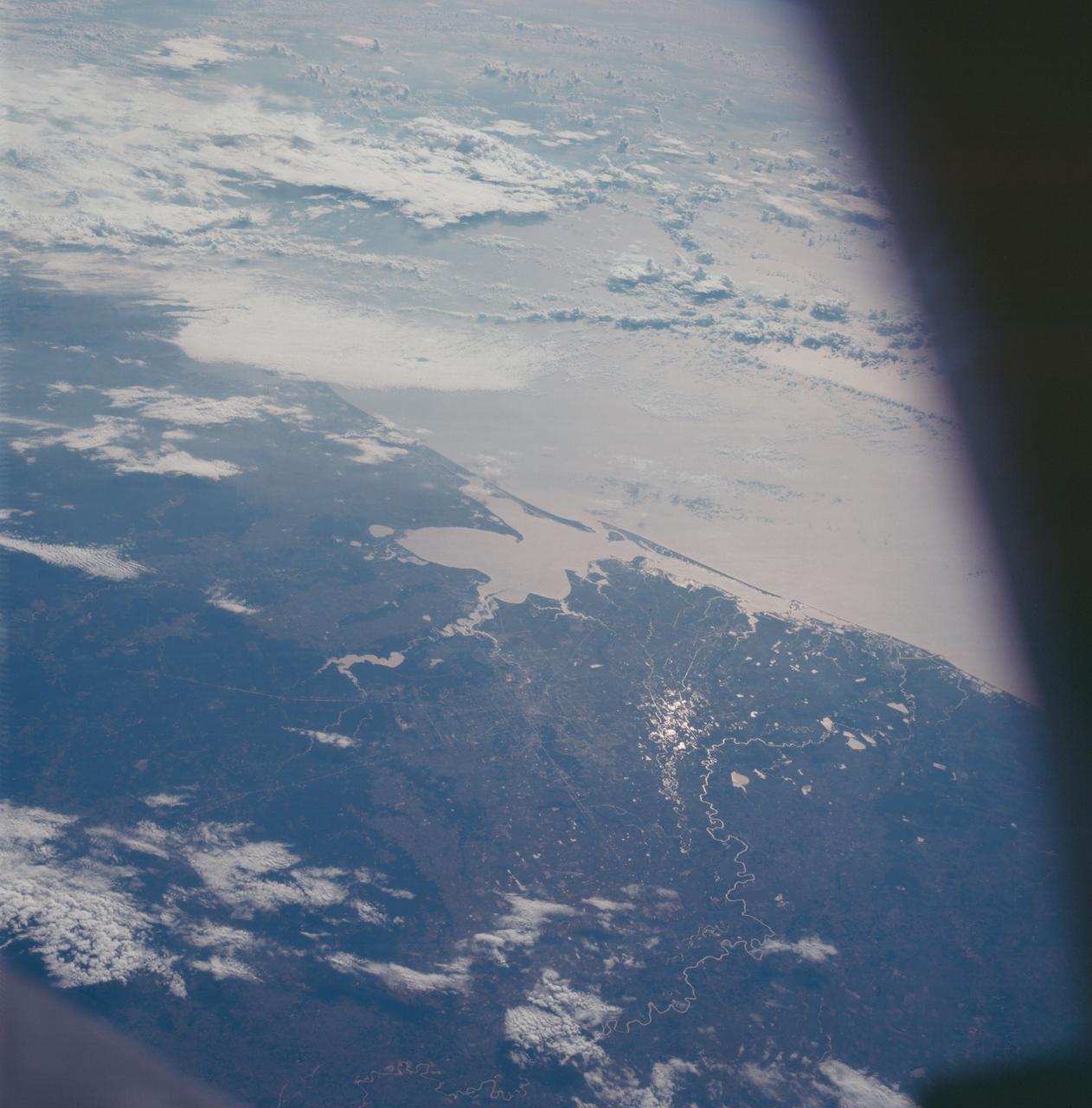
AS07-07-1872 (11-22 Oct. 1968) --- The Houston, Texas, and Gulf Coast area, looking southeast, as seen from the Apollo 7 spacecraft at an altitude of 101 nautical miles. This photograph was made during the spacecraft's 91st revolution of Earth, at ground elapsed time of 144 hours and 26 minutes. The morning sun causes a spectacular reflection on water surfaces such as the Gulf of Mexico, Galveston Bay, Buffalo Bayou, and the Brazos River, and causes a unique reflection in the canals and rice fields west of Alvin. Some of the landmarks visible in this picture include highways and freeways, the Astrodome, the new Intercontinental Airport, and the Manned Spacecraft Center.
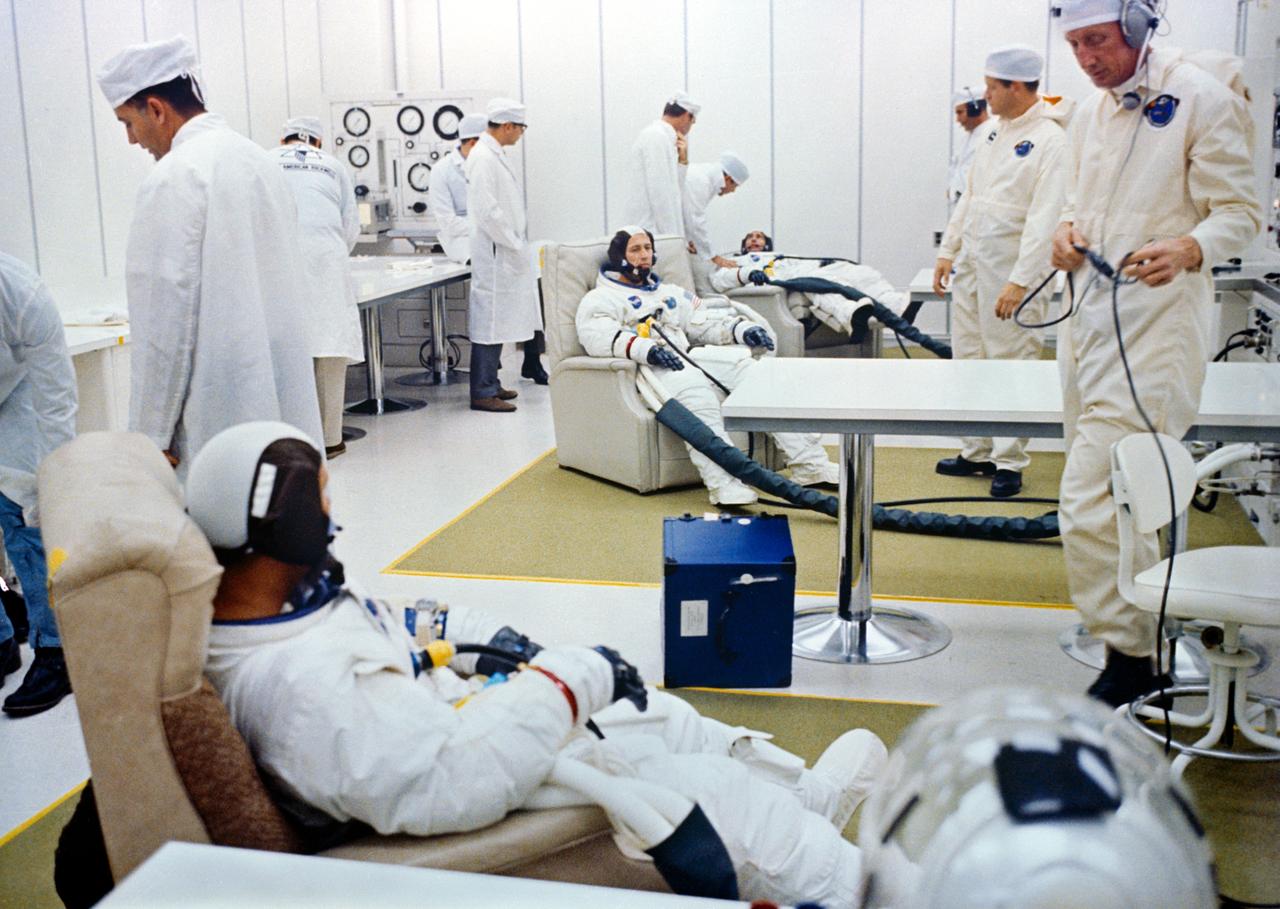
The Apollo 7 prime crew goes through suiting up operations in the Kennedy Space Center's Manned Spacecraft Operations Building during the Apollo 7 prelaunch countdown. From front to rear, are Astronauts Walter M. Schirra Jr., commander; Donn F. Eisele, command module pilot; and Walter Cunningham, lunar module pilot.
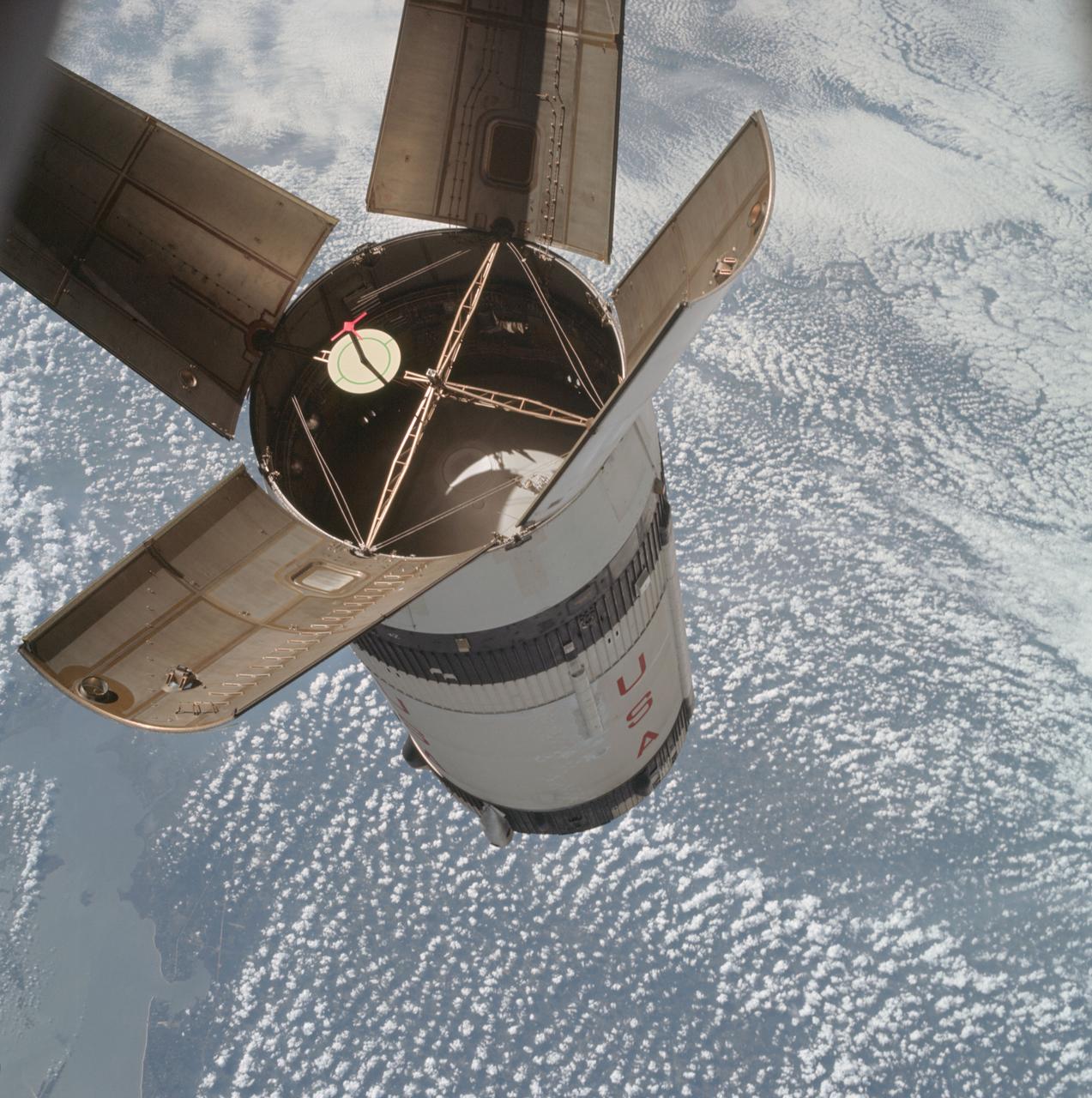
AS07-03-1541 (11 Oct. 1968) --- The expended Saturn IVB stage as photographed from the Apollo 7 spacecraft during transposition and docking maneuvers. St. Louis Bay and Lake Borgne area just east of New Orleans is seen below. The round, white disc inside the open panels of the Saturn IVB is a simulated docking target similar to that used on the lunar module for docking during lunar missions.
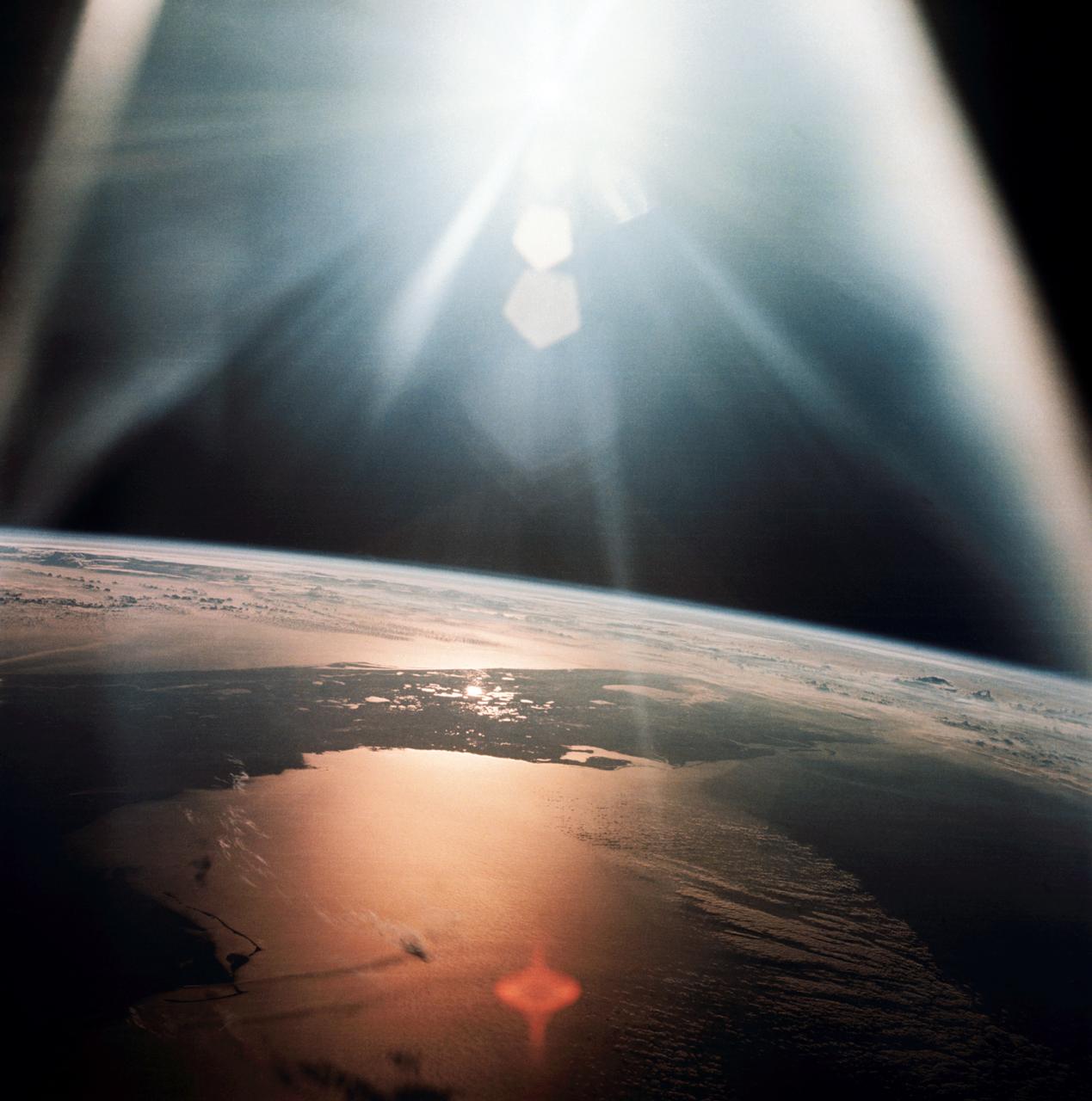
AS07-08-1933 (20 Oct. 1968) --- The morning sun reflects on the Gulf of Mexico and the Atlantic Ocean as seen from the Apollo 7 spacecraft at an altitude of 120 nautical miles above Earth. Most of Florida peninsula appears as a dark silhouette. This photograph was made during the spacecraft's 134th revolution of Earth, some 213 hours and 19 minutes after liftoff.

AS-205, the fifth Saturn IB launch vehicle developed by the Marshall Space Flight Center (MSFC), lifts off from Cape Canaveral, Florida on the first marned Apollo-Saturn mission, Apollo 7. Primary mission objectives included demonstration of the Apollo crew (Walter Schirra, Don Eisele, and Walter Cunningham) capabilities and the Command/Service Module rendezvous capability. In all, nine Saturn IB flights were made, ending with the Apollo-Soyuz Test Project in July 1975.
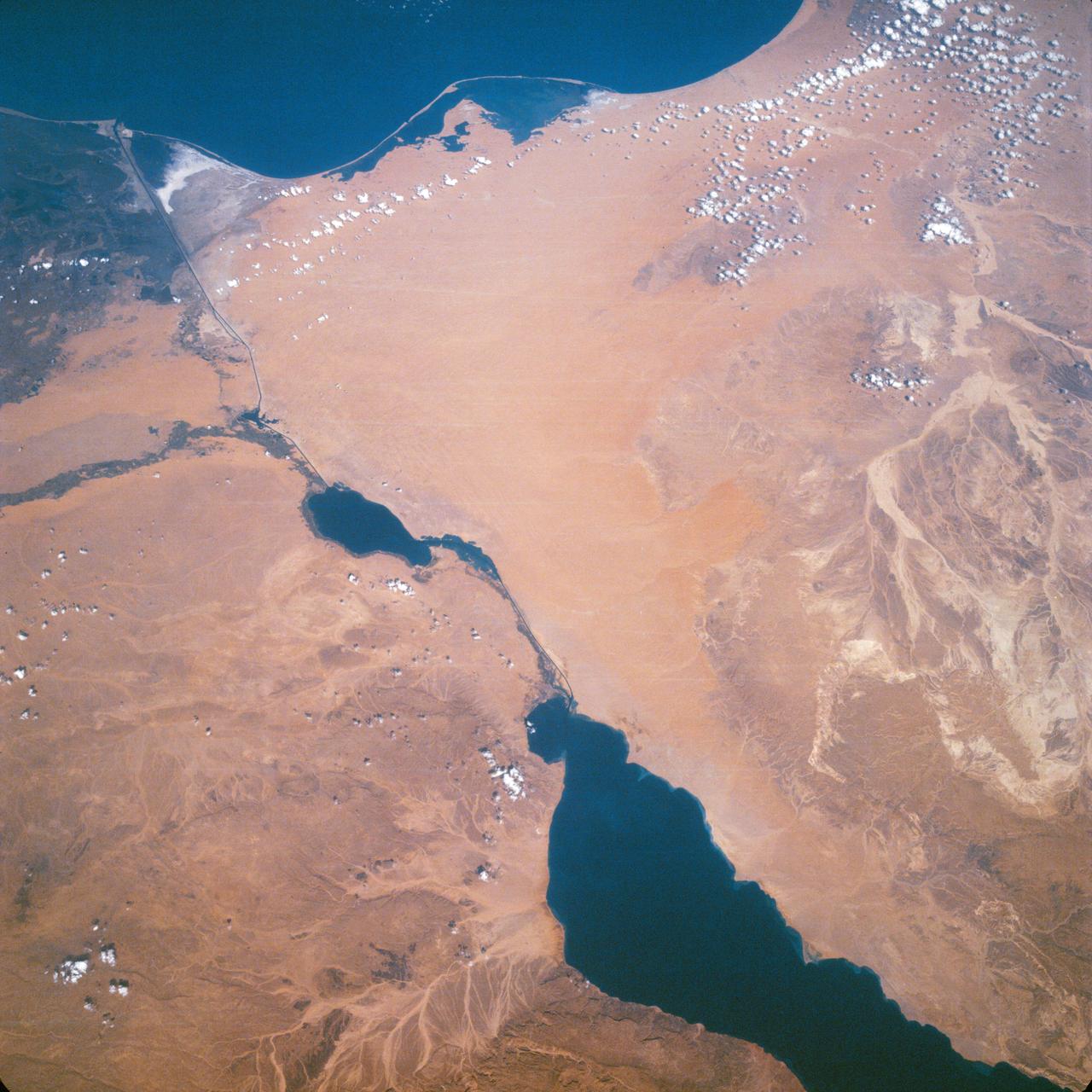
Suez Canal, Gulf of Suez, Sinai Peninsula, United Arab Republic (Egypt), Mediterranean Sea, as seen from the Apollo 7 spacecraft during its 13th revolution of the earth. Photographed from an altitude of 126 nautical miles, at ground elapsed time of 19 hours and 42 minutes.
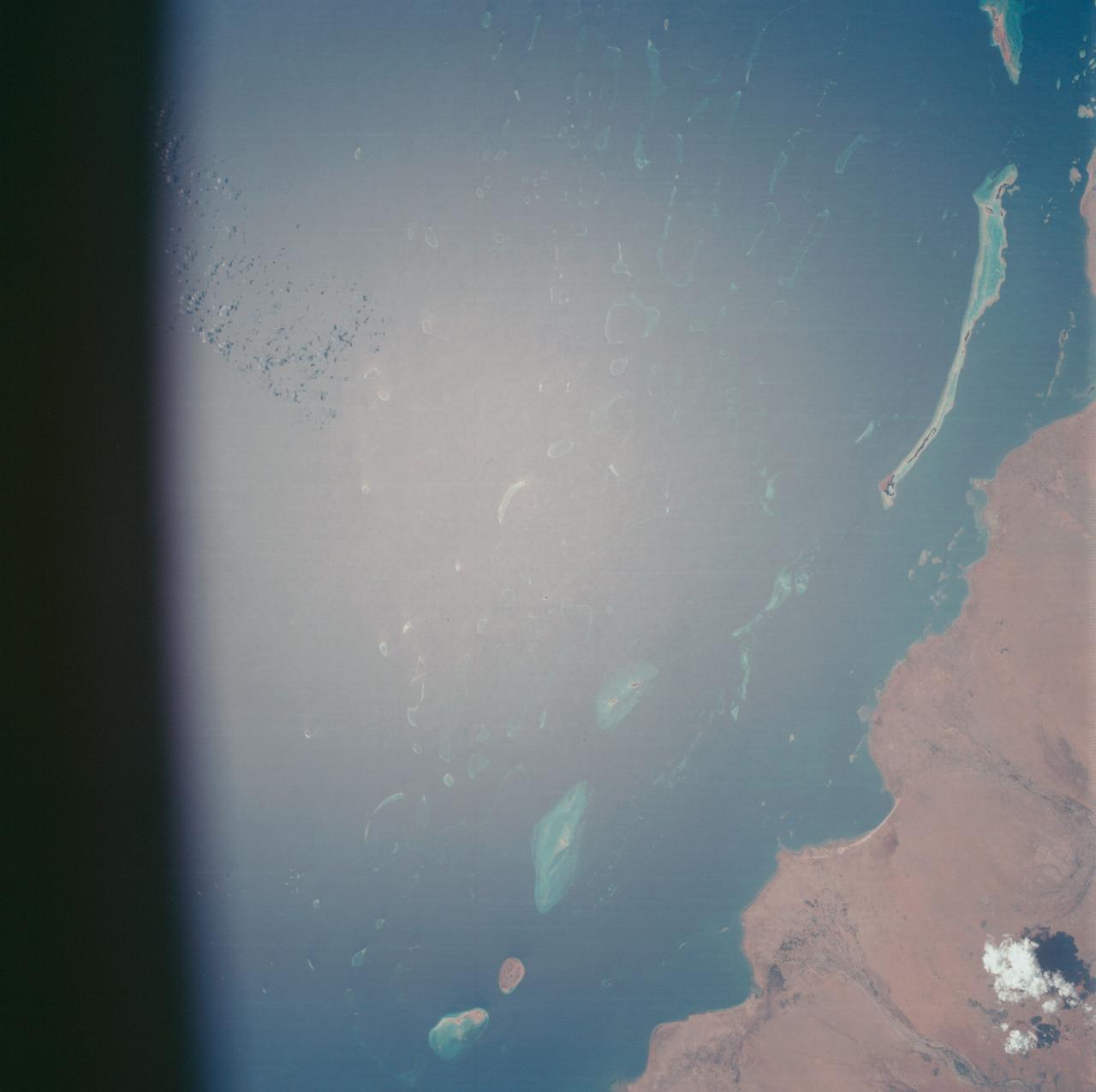
AS07-07-1774 (15 Oct. 1968) --- Red Sea coastal area of Saudi Arabia as seen from the Apollo 7 spacecraft during its 58th revolution of Earth. This picture shows extent of coral reefs in the Red Sea. Photographed from an altitude of 88 nautical miles, at ground elapsed time of 91 hours and 17 minutes.
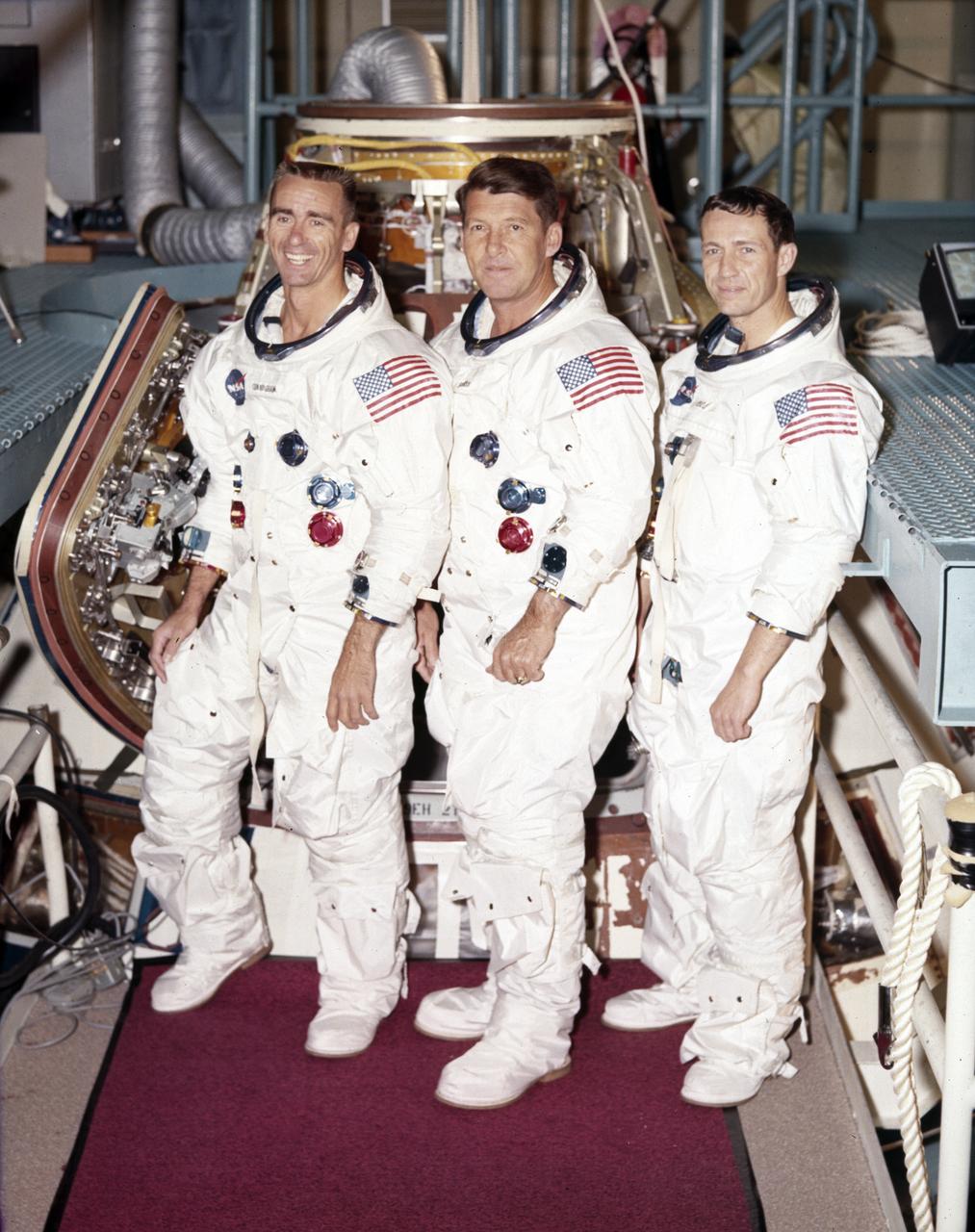
Pictured left to right, in the Apollo 7 Crew Portrait, are astronauts R. Walter Cunningham, Lunar Module pilot; Walter M. Schirra, Jr., commander; and Donn F. Eisele, Command Module Pilot. The Apollo 7 mission, boosted by a Saturn IB launch vehicle on October 11, 1968, was the first manned flight of the Apollo spacecraft.
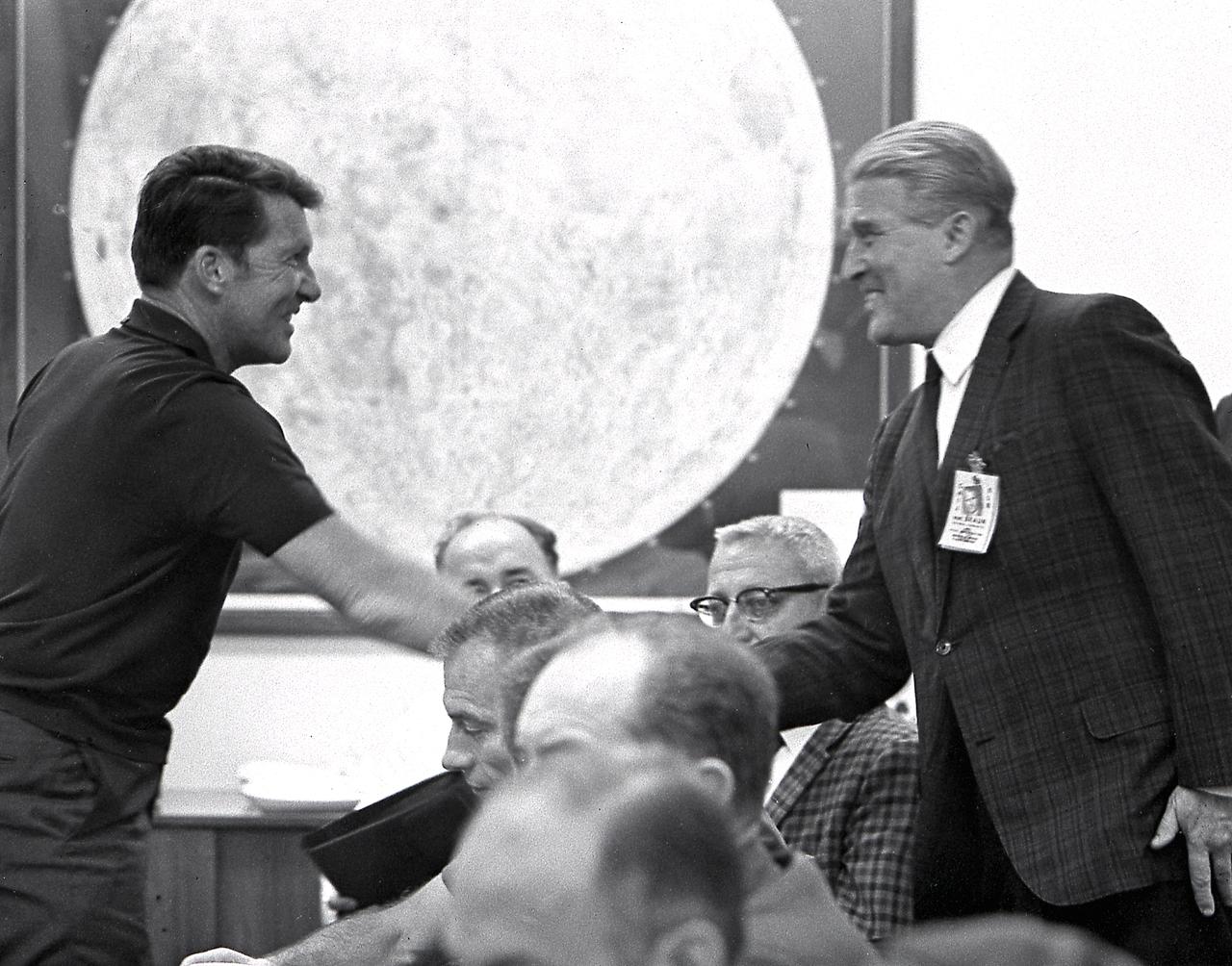
Dr. von Braun, Director of the Marshall Space Flight Center (MSFC), greets Commander of Apollo 7 mission, Walter M. Schirra, Jr., during the mission briefing at Kennedy Space Center (KSC). The Apollo 7 mission, boosted by a Saturn IB launch vehicle on October 11, 1968, was the first flight of the Apollo spacecraft with crew. Other crew members were Astronaut Donn Eisele and Astronaut Walter Cunningham.
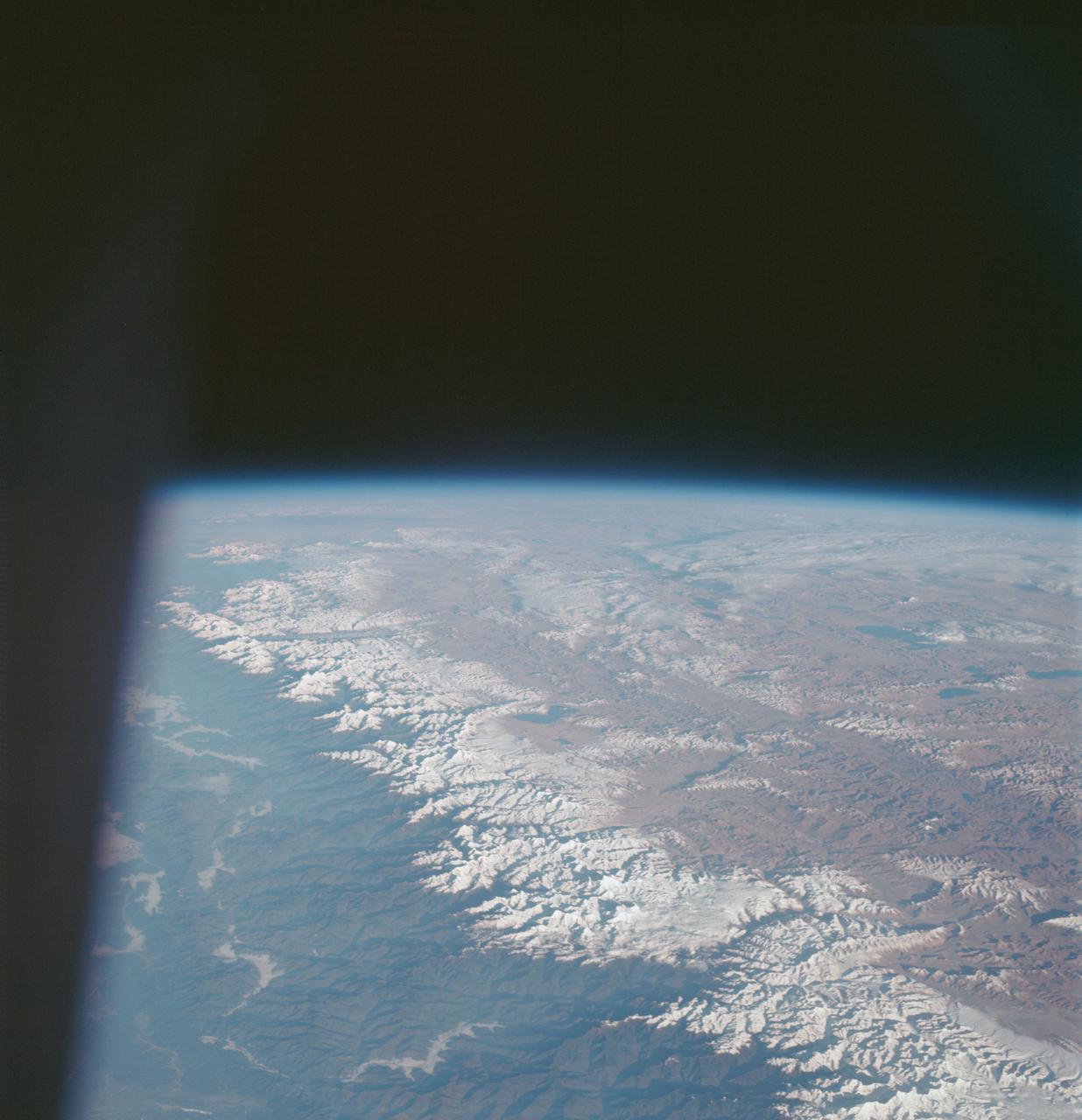
AS7-07-1748 (15 Oct. 1968) --- The world's dozen peaks which reach a height of greater than five miles above sea level are seen in this photograph from the Apollo 7 spacecraft at an altitude of approximately 130 nautical miles. The 29,028 ft. high Mount Everest is at lower center. On the central horizon can be seen the 28,250 ft. high Mount Godwin-Austen (K-2) some 800 miles northwest of Mount Everest. In the lower right, Mount Kanchenjunga rises 28,208 ft. to separate Nepal from Sikkim. The snow line on the peaks was at 17,500 ft. In the upper right the lake-studded highlands of Tibet are visible.
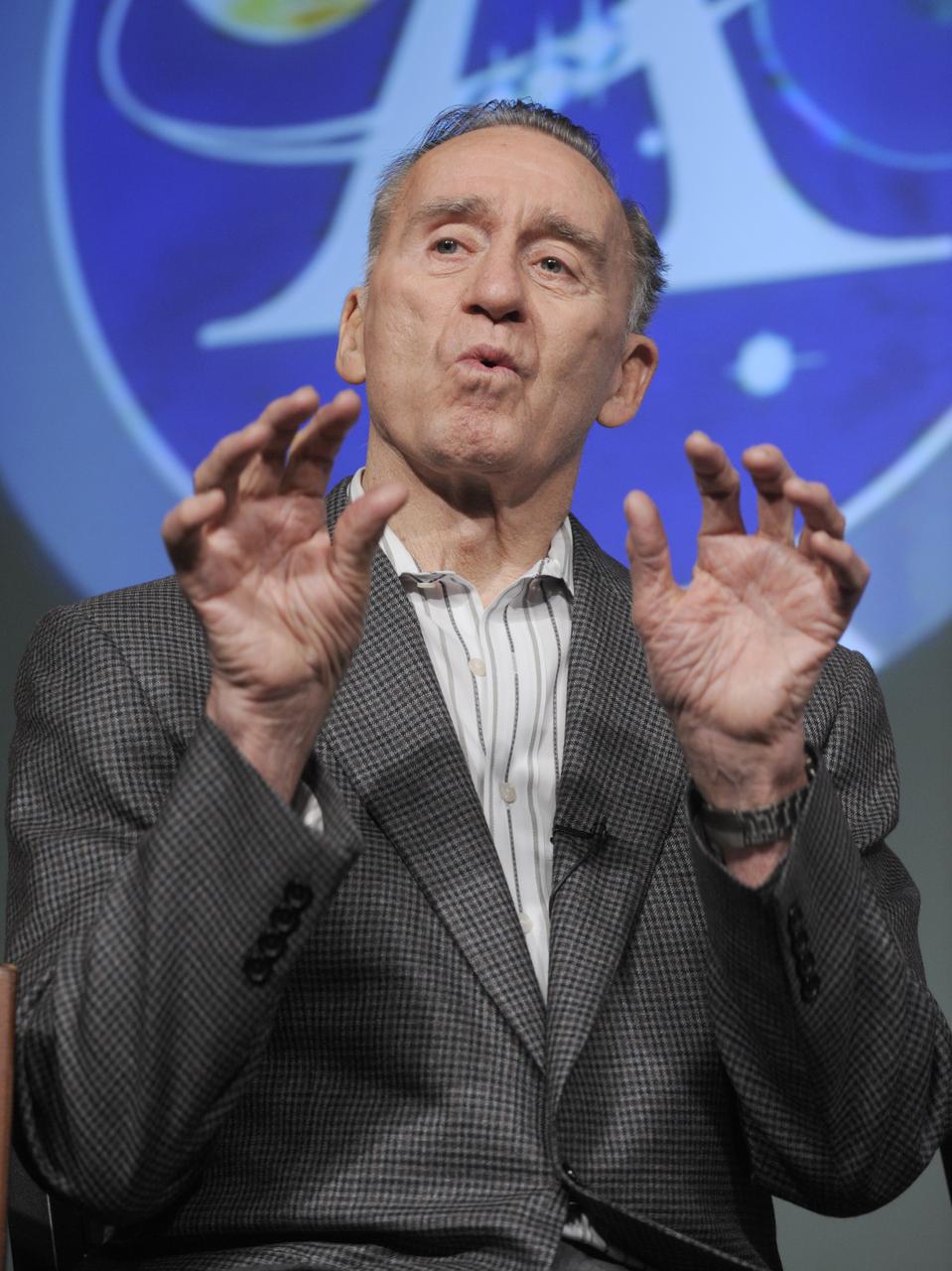
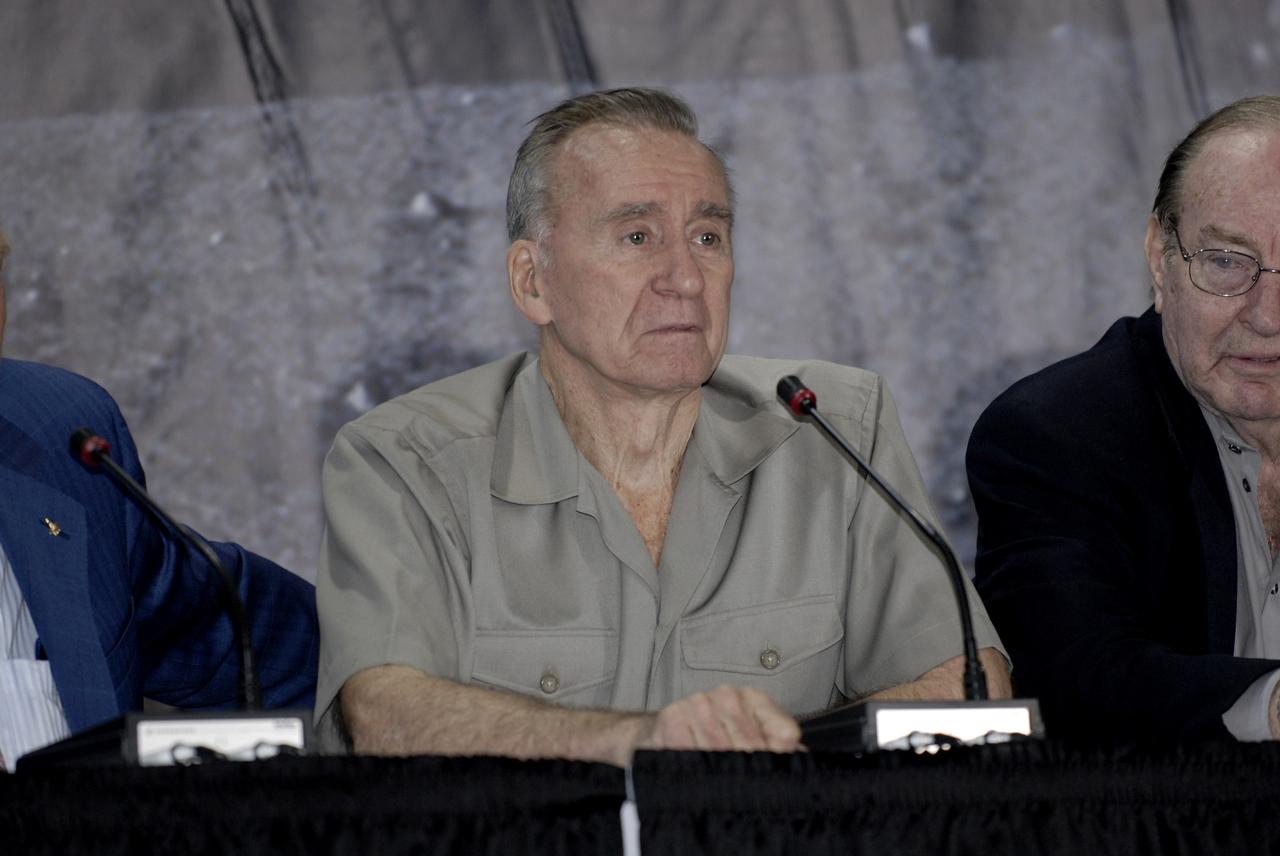
Walt Cunningham (Apollo 7) speaks during the 40th anniversary of the Apollo 11 mission and the walk on the moon press conference, Monday, July 20, 2009, at NASA Headquarters in Washington. Photo Credit: (NASA/Paul E. Alers)
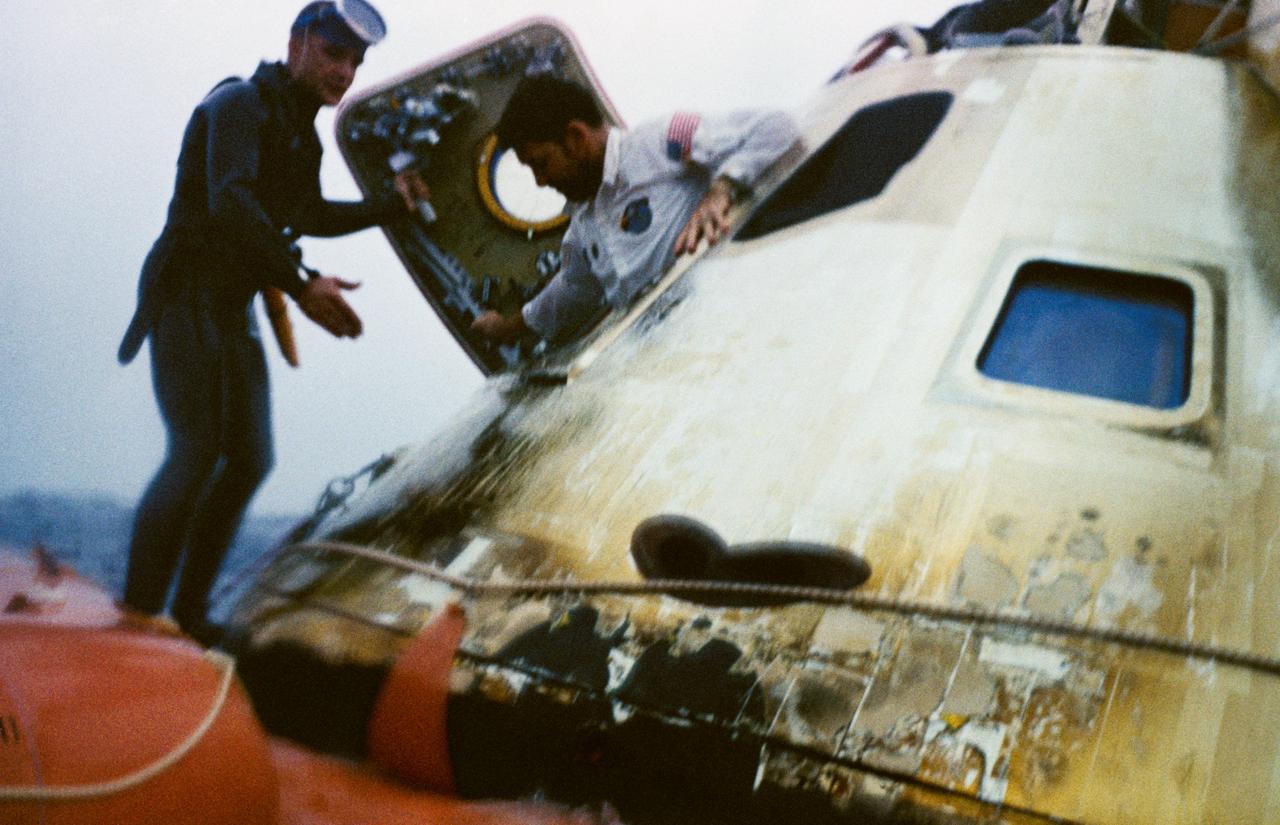
Astronaut Walter M. Schirra, Jr., Apollo 7 commander, egresses the spacecraft during recovery operations in the Atlantic. He is assisted by a member of the U.S. Navy frogman team. The Apollo 7 spacecraft splashed down at 7:11 a.m., October 22, 1968, approximately 200 nautical miles south-southwest of Bermuda.
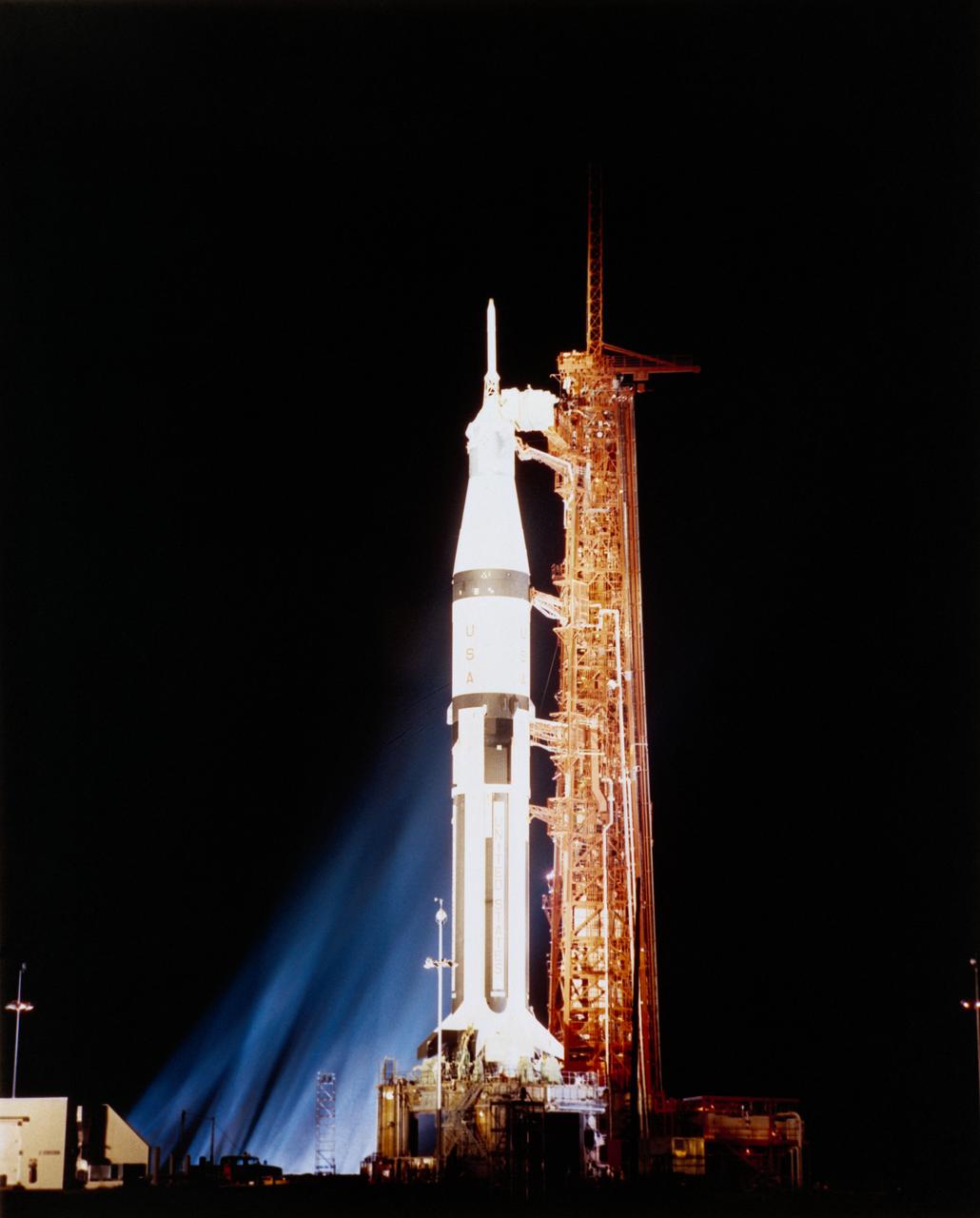
S68-50712 (16 Sept. 1968) --- Nighttime view of Launch Complex 34, Kennedy Space Center, showing the Apollo 7 (Spacecraft 101/Saturn 205) stack on pad.
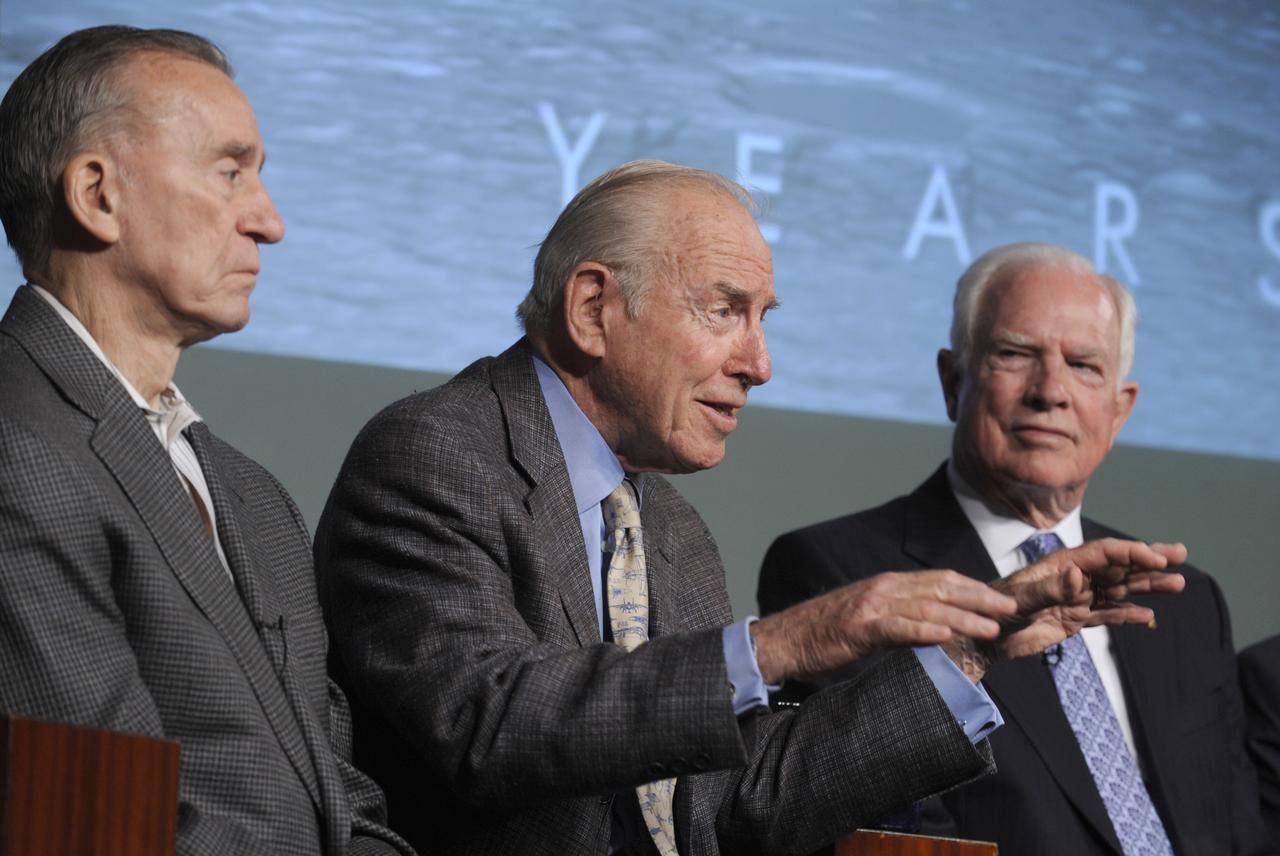
Astronaut James Lovell (Apollo 8 Apollo 13), center, flanked by Walt Cunningham (Apollo 7), left, and David Scott (Apollo 9 Apollo 15) responds during the 40th anniversary of the Apollo 11 mission and the walk on the moon press conference, Monday, July 20, 2009, at NASA Headquarters in Washington. Photo Credit: (NASA/Paul E. Alers)
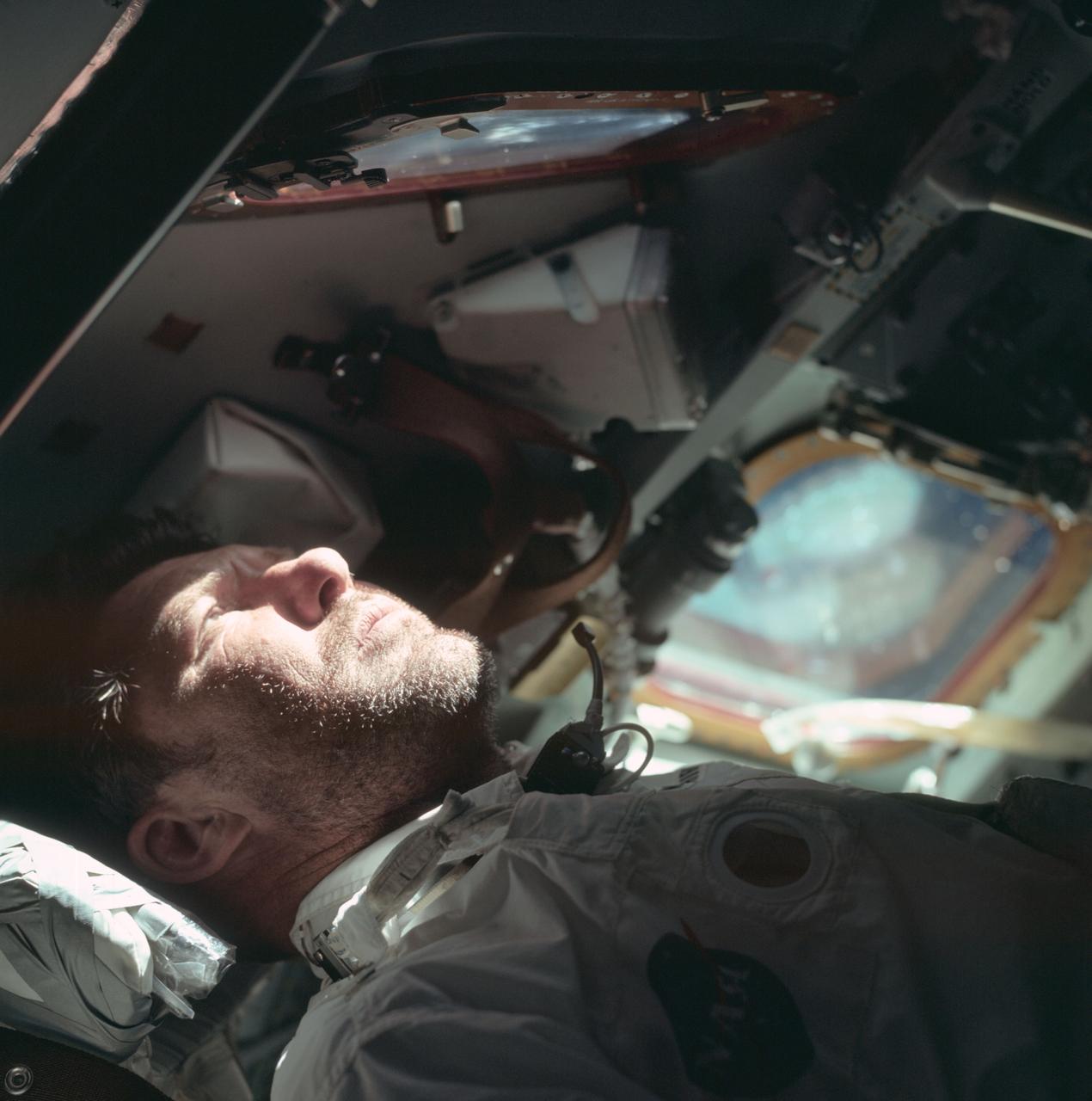
AS07-04-1596 (20 Oct. 1968) --- A heavy beard covers the face of astronaut Walter M. Schirra Jr., Apollo 7 commander, as he looks out the rendezvous window in front of the commander's station on the ninth day of the Apollo 7 mission.
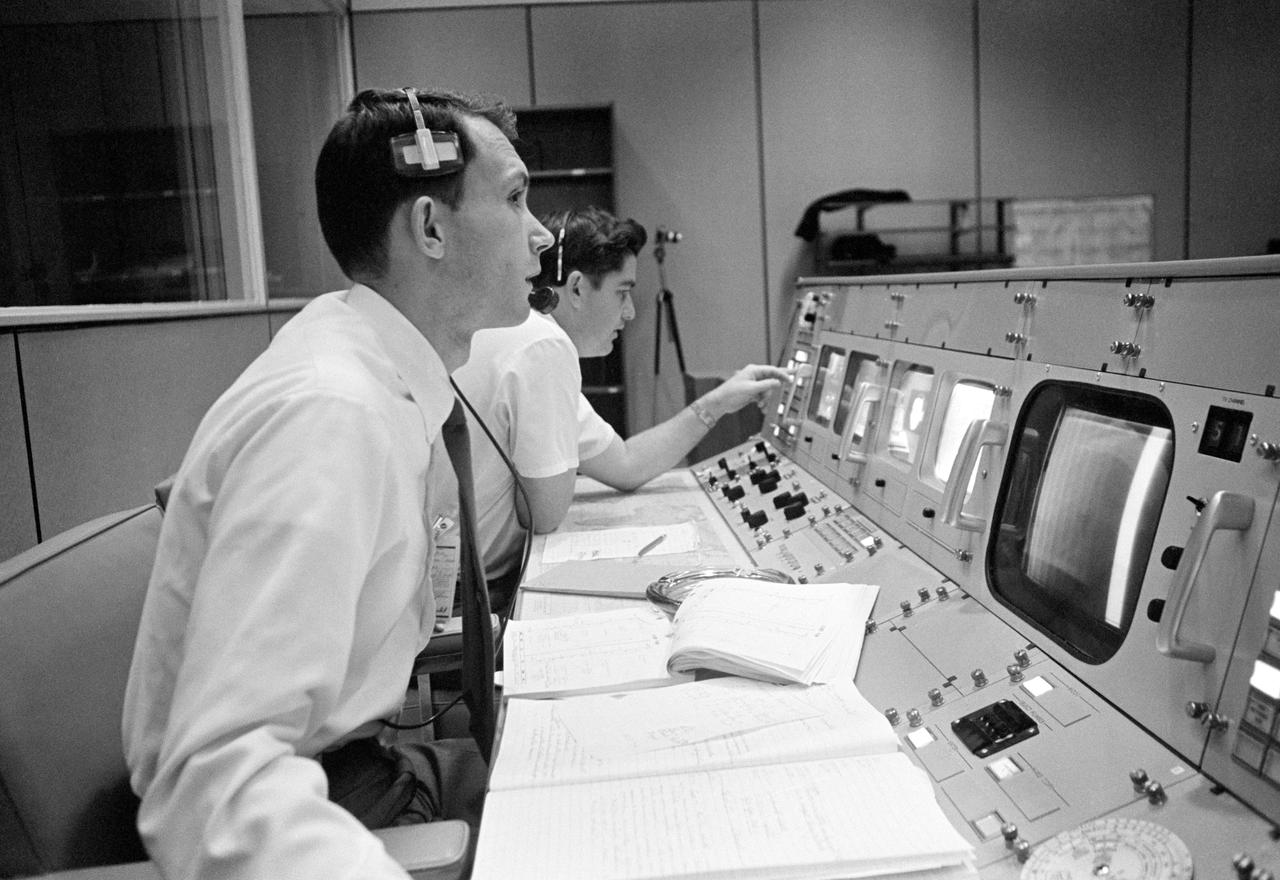
S68-50682 (October 1968) --- Public Affairs Office (PAO) commentator Douglas K. Ward is pictured at his console in the Mission Operations Control Room (MOCR) in the Mission Control Center at NASA's Johnson Space Center during the flight of Apollo 7. Photo credit: NASA
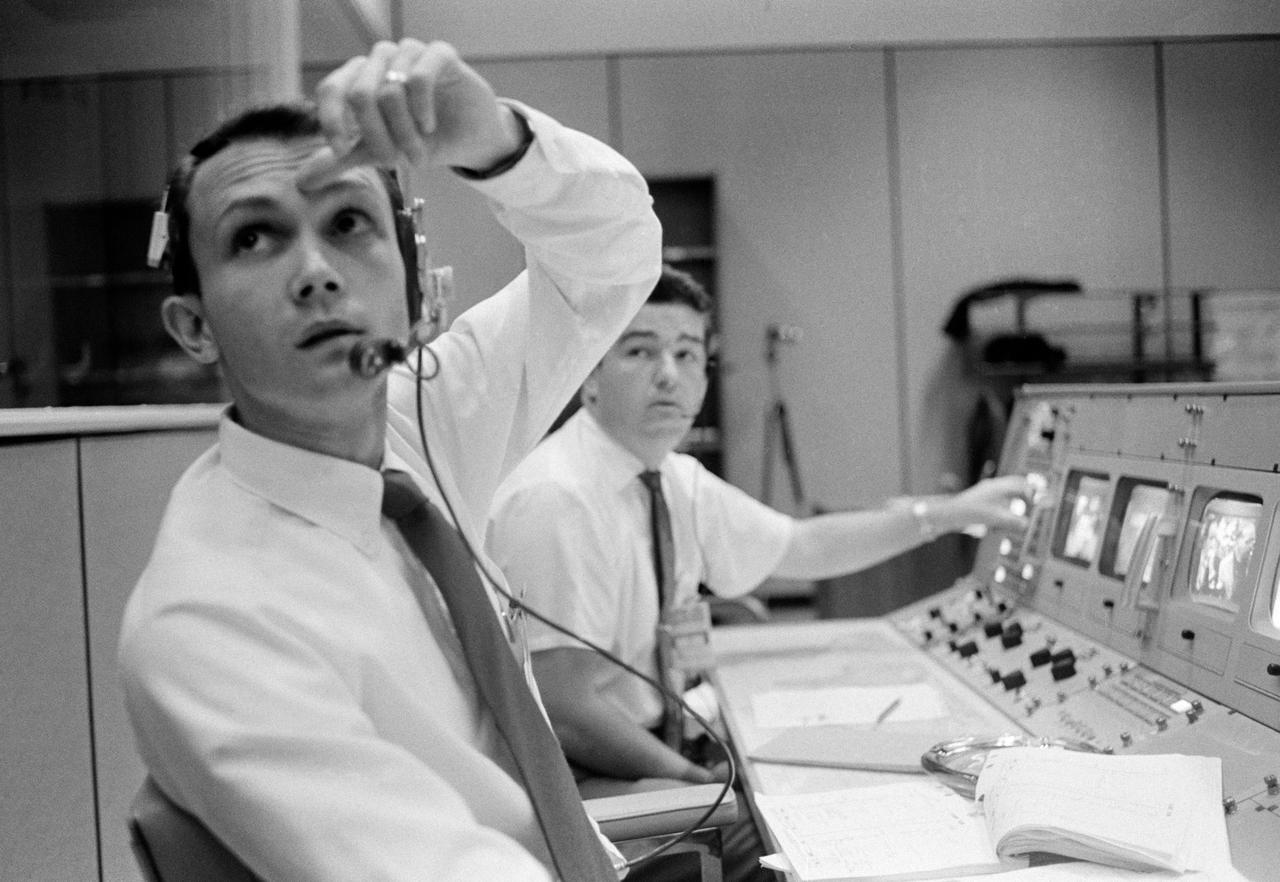
S68-50695 (October 1968) --- Public Affairs Office (PAO) commentator Douglas K. Ward is pictured at his console in the Mission Operations Control Room (MOCR) in the Mission Control Center at NASA's Johnson Space Center during the flight of Apollo 7. Photo credit: NASA
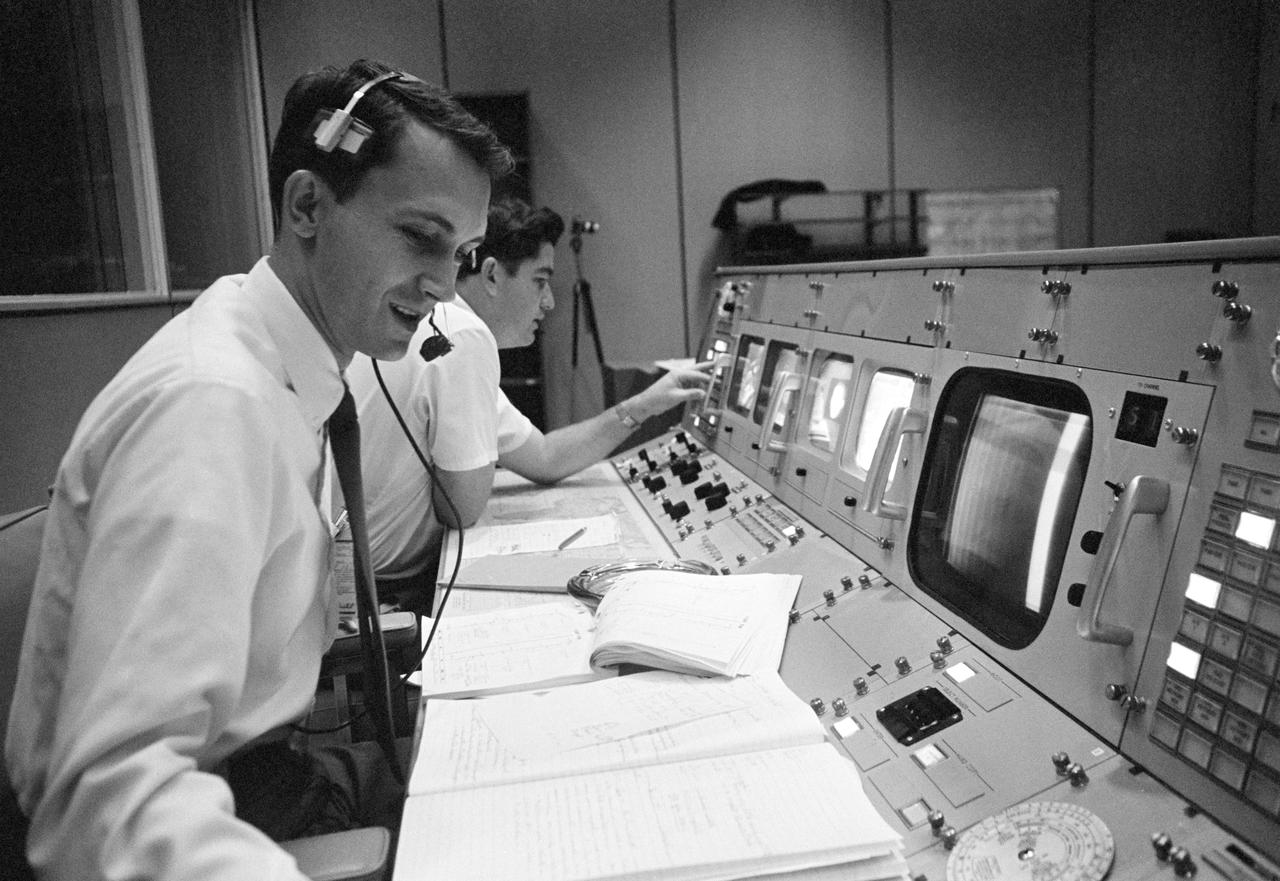
S68-50684 (October 1968) --- Public Affairs Office (PAO) commentator Douglas K. Ward is pictured at his console in the Mission Operations Control Room (MOCR) in the Mission Control Center at NASA's Johnson Space Center during the flight of Apollo 7. Photo credit: NASA
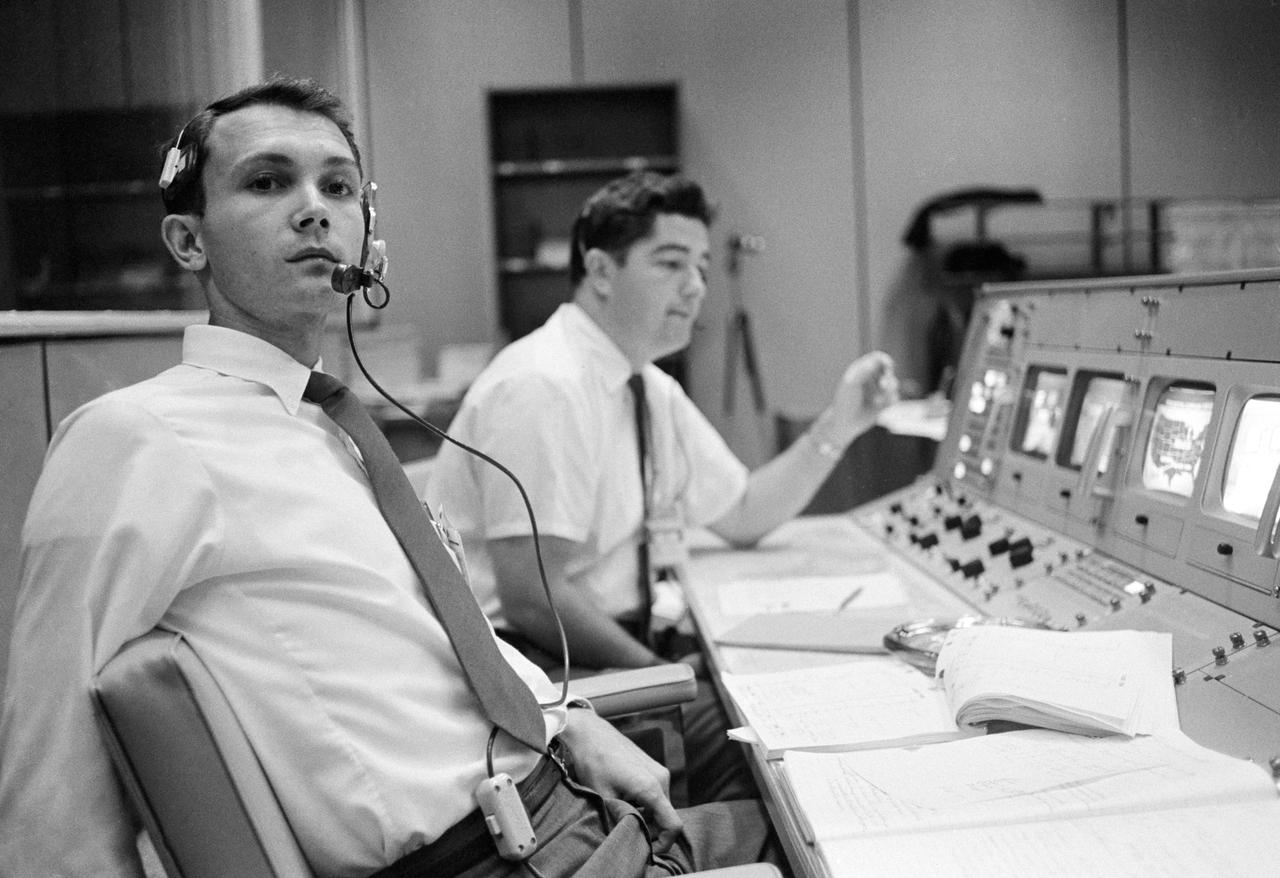
S68-50696 (October 1968) --- Public Affairs Office (PAO) commentator Douglas K. Ward (foreground) is pictured at his console in the Mission Operations Control Room (MOCR) in the Mission Control Center at NASA's Johnson Space Center during the flight of Apollo 7. Photo credit: NASA
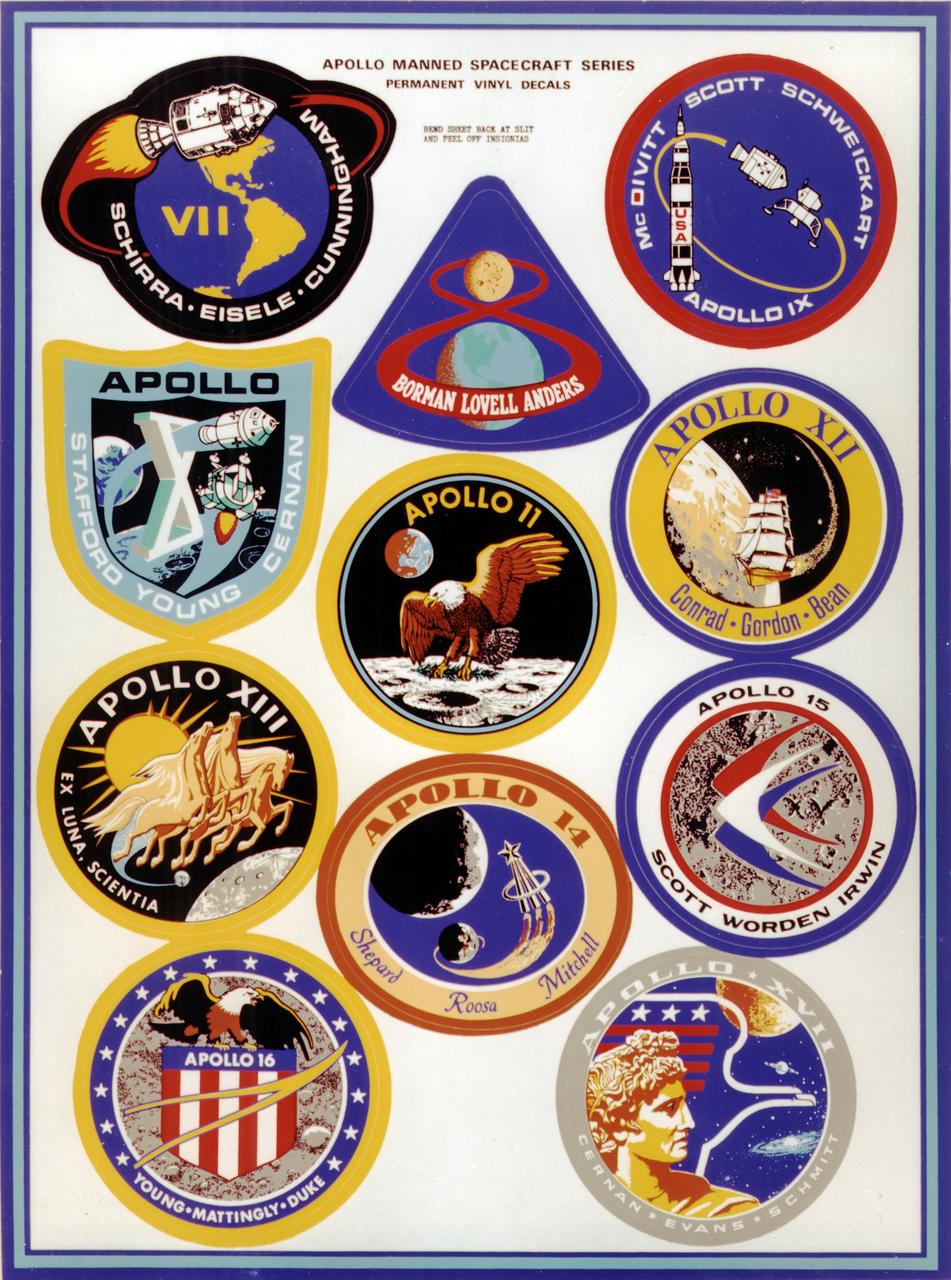
This montage depicts the flight crew patches for the manned Apollo 7 thru Apollo 17 missions. The Apollo 7 through 10 missions were basically manned test flights that paved the way for lunar landing missions. Primary objectives met included the demonstration of the Command Service Module (CSM) crew performance; crew/space vehicle/mission support facilities performance and testing during a manned CSM mission; CSM rendezvous capability; translunar injection demonstration; the first manned Apollo docking, the first Apollo Extra Vehicular Activity (EVA), performance of the first manned flight of the lunar module (LM); the CSM-LM docking in translunar trajectory, LM undocking in lunar orbit, LM staging in lunar orbit, and manned LM-CSM docking in lunar orbit. Apollo 11 through 17 were lunar landing missions with the exception of Apollo 13 which was forced to circle the moon without landing due to an onboard explosion. The craft was,however, able to return to Earth safely. Apollo 11 was the first manned lunar landing mission and performed the first lunar surface EVA. Landing site was the Sea of Tranquility. A message for mankind was delivered, the U.S. flag was planted, experiments were set up and 47 pounds of lunar surface material was collected for analysis back on Earth. Apollo 12, the 2nd manned lunar landing mission landed in the Ocean of Storms and retrieved parts of the unmanned Surveyor 3, which had landed on the Moon in April 1967. The Apollo Lunar Surface Experiments Package (ALSEP) was deployed, and 75 pounds of lunar material was gathered. Apollo 14, the 3rd lunar landing mission landed in Fra Mauro. ALSEP and other instruments were deployed, and 94 pounds of lunar materials were gathered, using a hand cart for first time to transport rocks. Apollo 15, the 4th lunar landing mission landed in the Hadley-Apennine region. With the first use of the Lunar Roving Vehicle (LRV), the crew was bale to gather 169 pounds of lunar material. Apollo 16, the 5th lunar landing mission, landed in the Descartes Highlands for the first study of highlands area. Selected surface experiments were deployed, the ultraviolet camera/spectrograph was used for first time on the Moon, and the LRV was used for second time for a collection of 213 pounds of lunar material. The Apollo program came to a close with Apollo 17, the 6th and final manned lunar landing mission that landed in the Taurus-Littrow highlands and valley area. This mission hosted the first scientist-astronaut, Schmitt, to land on the Moon. The 6th automated research station was set up, and 243 ponds of lunar material was gathered using the LRV.
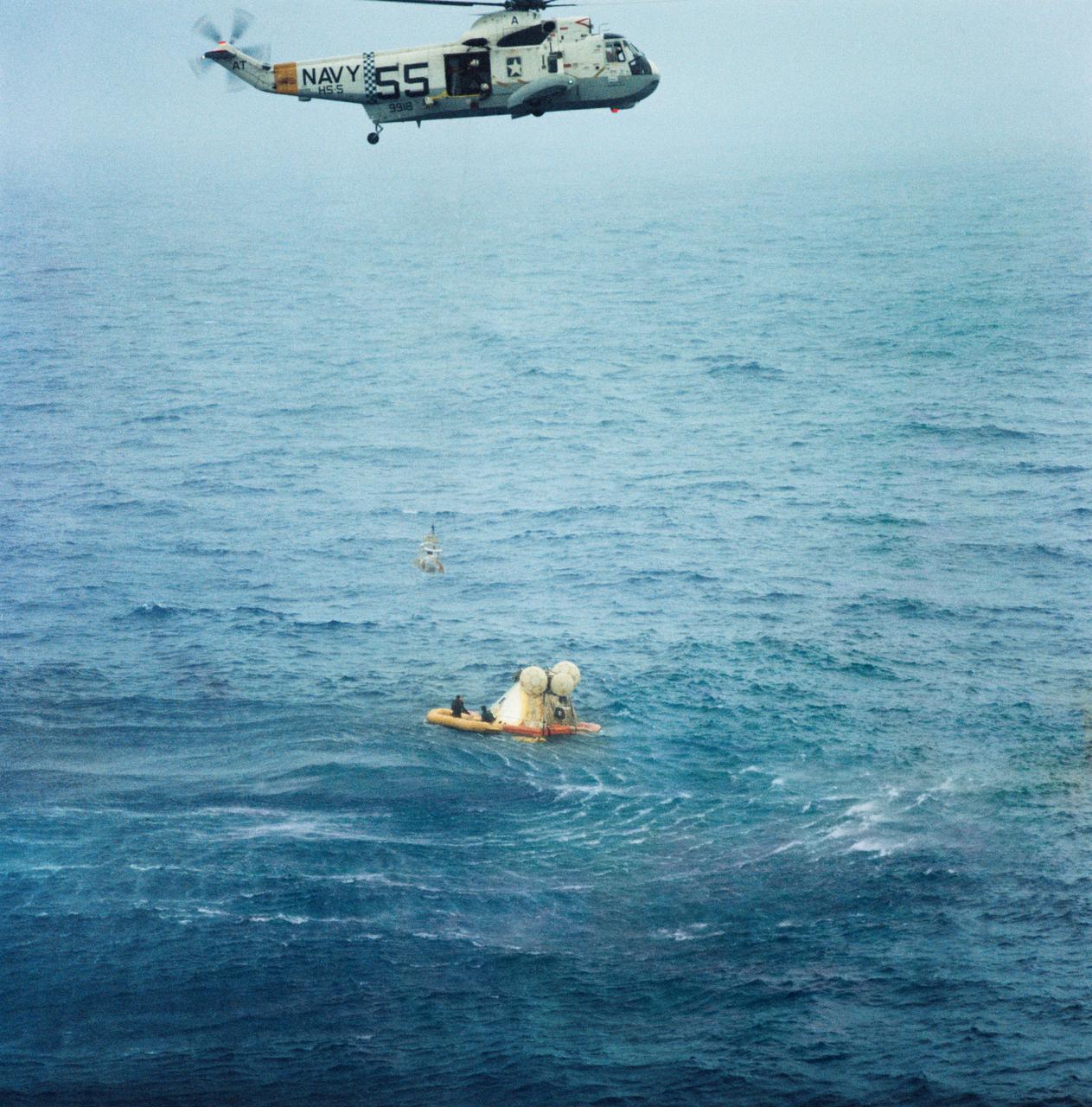
S68-49661 (22 Oct. 1968) --- A member of the Apollo 7 crew is hoisted up to a recovery helicopter from the USS Essex during recovery operations. The Apollo 7 spacecraft splashed down at 7:11 a.m., Oct. 22, 1968, approximately 200 nautical miles south-southwest of Bermuda. Photo credit: NASA

S68-33744 (22 May 1968) --- The prime crew of the first manned Apollo space mission, Apollo 7 (Spacecraft 101/Saturn 205), left to right, are astronauts Donn F. Eisele, command module pilot, Walter M. Schirra Jr., commander; and Walter Cunningham, lunar module pilot.
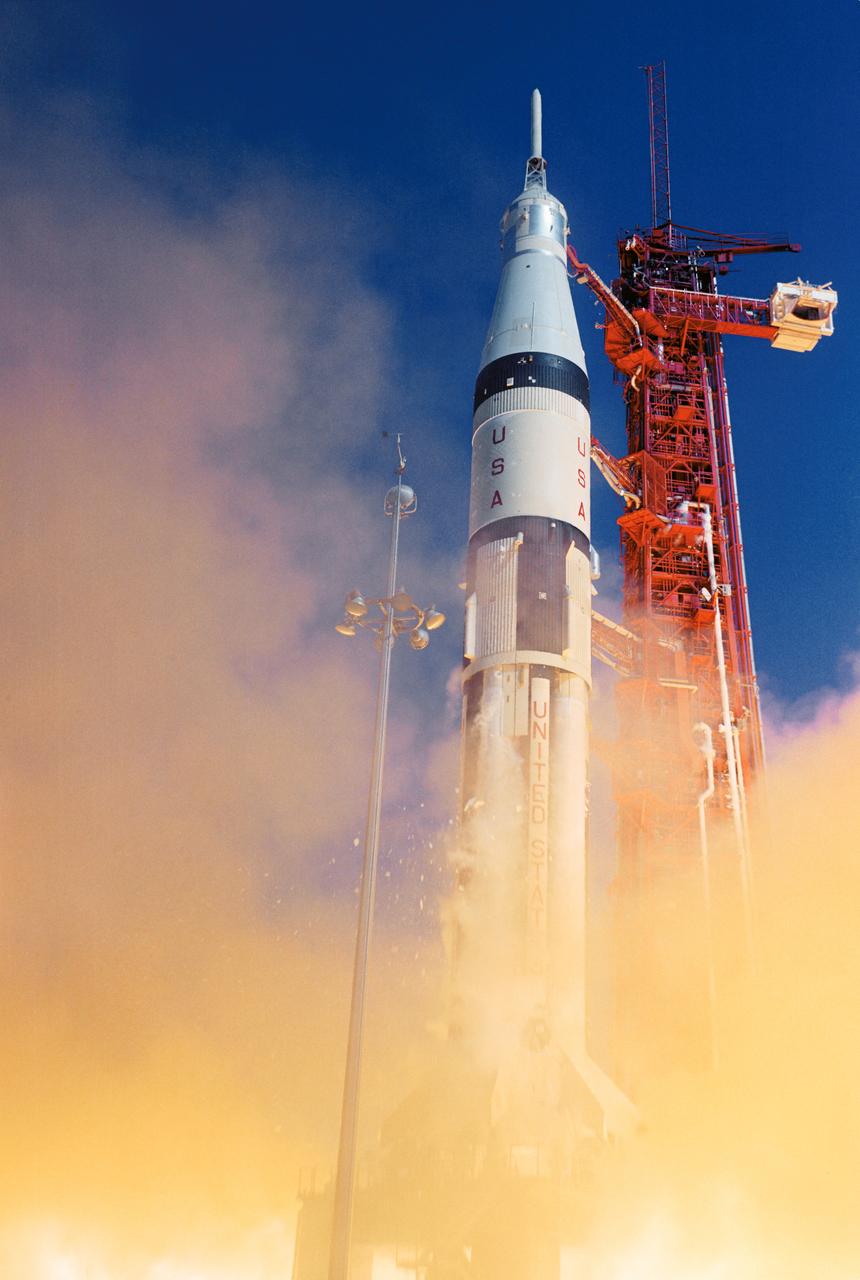
Apollo 7 lifts off from Cape Kennedy Launch Complex 34 at 11:03 A.M., EDT. The astronauts aboard, for the first manned lunar orbital mission, are Astronauts Walter M. Schirra,Jr. Commander; Donn F. Eisele, Command Module Pilot; and Walter Cunningham, Lunar Module Pilot. Original photo number was KSC-68PC-185.
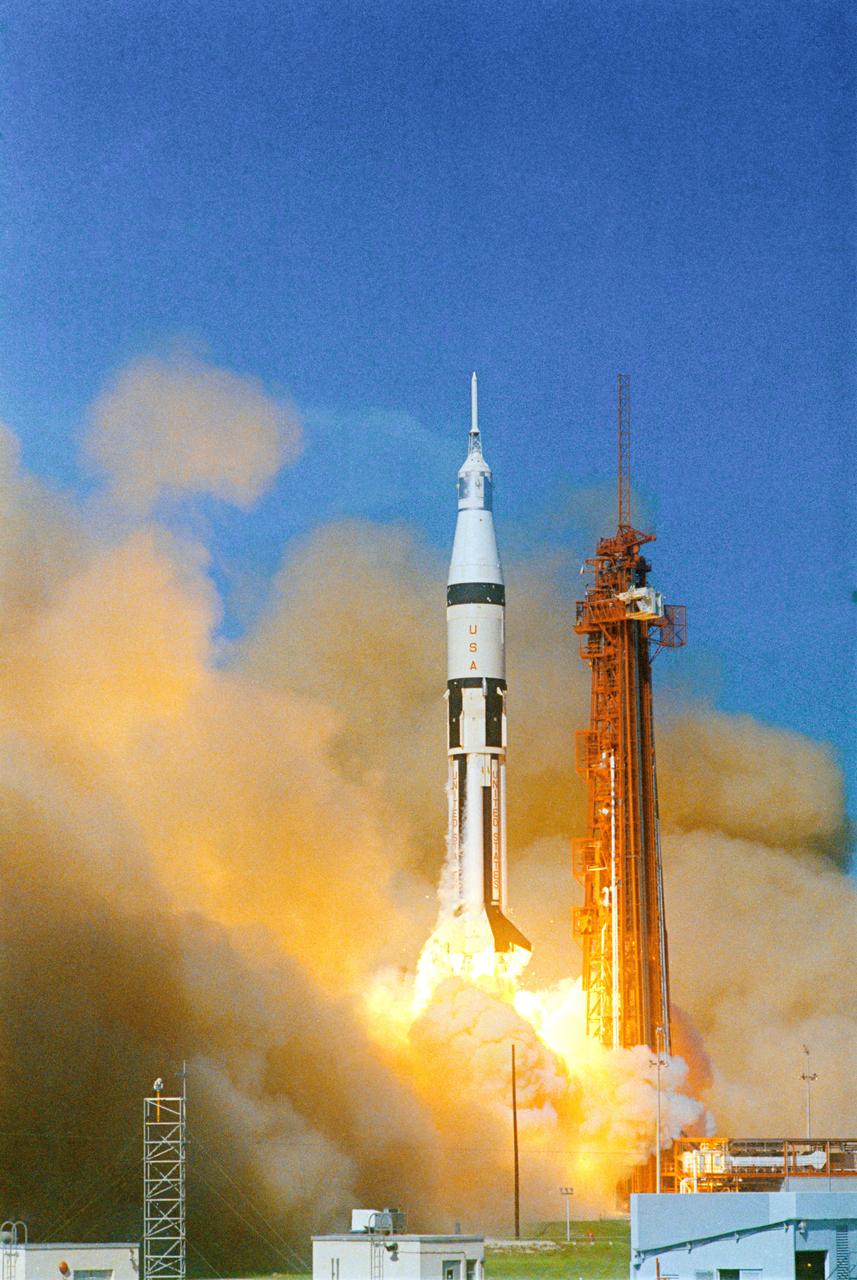
Apollo 7 lifts off from Cape Kennedy Launch Complex 34 at 11:03 A.M., EDT. The astronauts aboard, for the first manned lunar orbital mission, are Astronauts Walter M. Schirra,Jr. Commander; Donn F. Eisele, Command Module Pilot; and Walter Cunningham, Lunar Module Pilot. Original photo number was KSC-68PC-182.

S68-21590 (September 1968) --- This is a portrait of the Apollo-Saturn 7 crew members. They are, left to right, astronauts Walter M. Schirra Jr., commander; Walter Cunningham, lunar module pilot; and Donn F. Eisele, command module pilot. EDITOR'S NOTE: Since this photograph was made astronaut Eisele died Dec. 2, 1987 in Tokyo, Japan, of a heart attack.
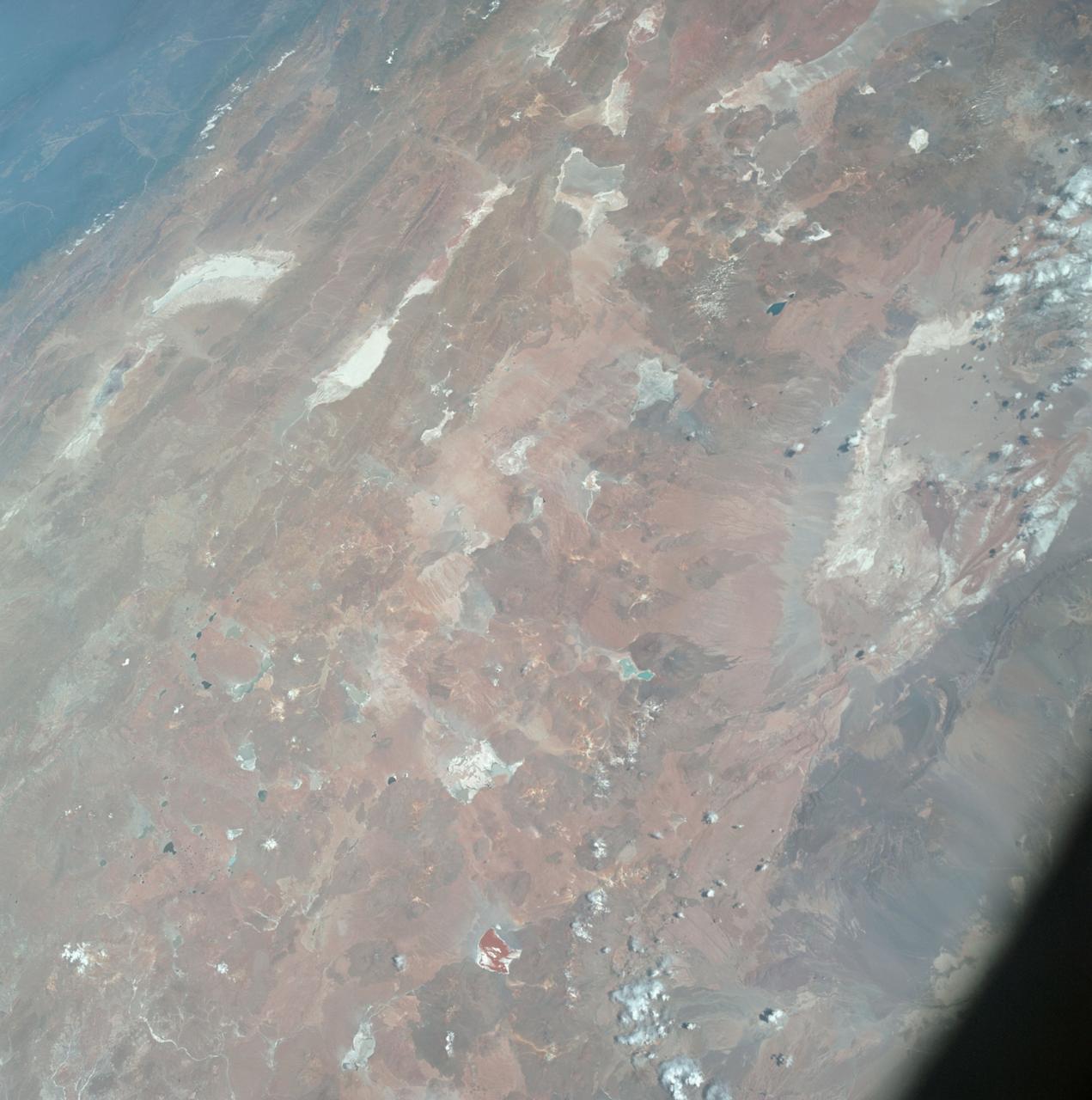
AS07-04-1593 (21 Oct. 1968) --- This Earth observation photograph shows Argentina, Chile, Bolivia, Salar de Atacama, the Andes Mountains, and Gran Chaco. The coordinates for the center of this photograph are 23.00 degrees south and 67.30 degrees west, taken at an altitude of 175 miles during the 154th revolution around Earth. The crew consisted of astronauts Walter M. Schirra, Donn F. Eisele and Walter Cunningham.

AS07-04-1586 (20 Oct. 1968) --- Astronaut Walter Cunningham, Apollo 7 lunar module pilot, writes with space pen as he is photographed performing flight tasks on the ninth day of the Apollo 7 mission. Note the 70mm Hasselblad camera film magazine just above Cunningham's right hand floating in the weightless (zero gravity) environment of the spacecraft.
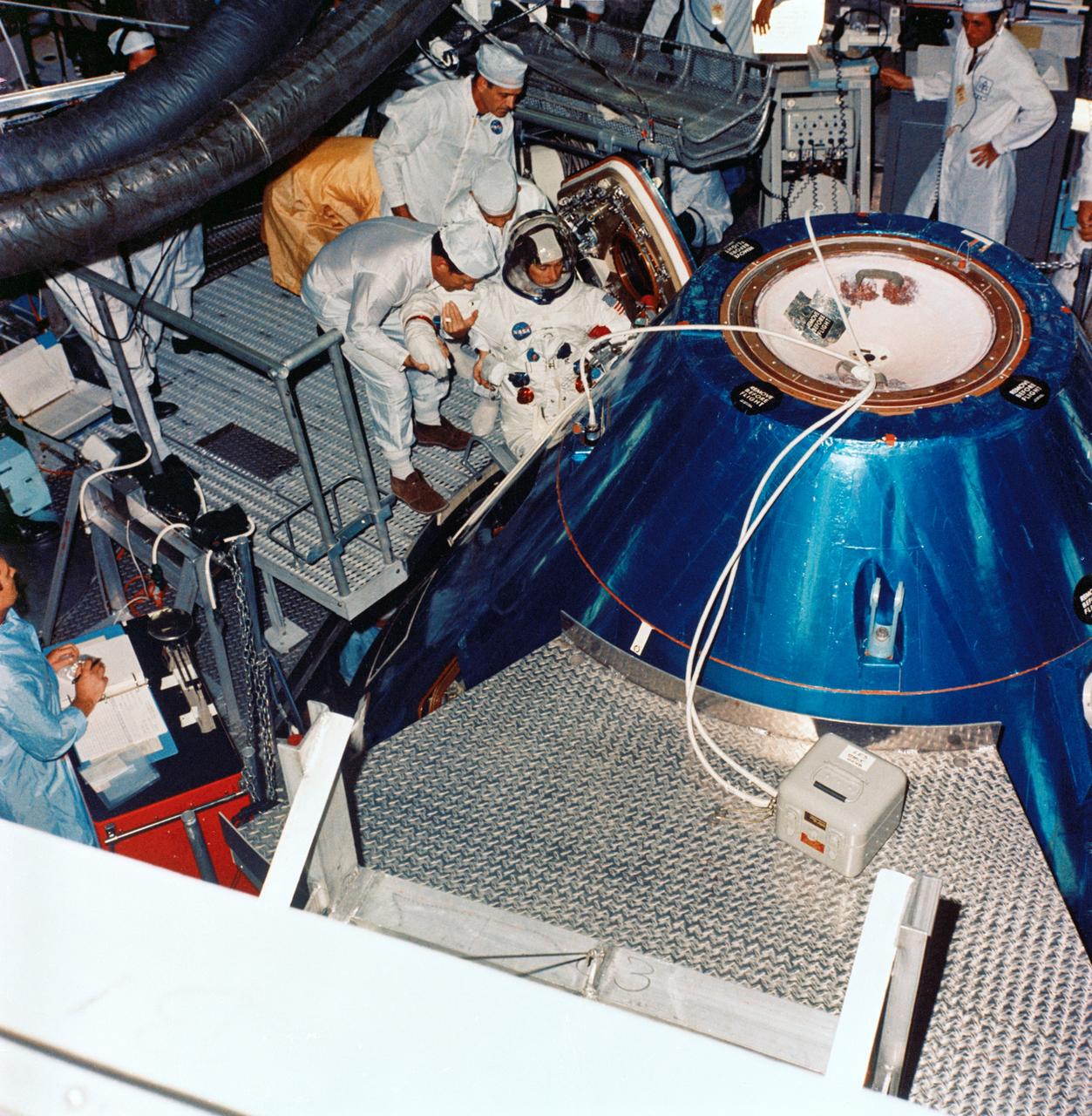
S68-40875 (5 July 1968) --- Astronaut John W. Young, Apollo 7 backup command module pilot, ingresses Apollo Spacecraft 101 Command Module during simulated altitude runs at the Kennedy Space Center's Pad 34.
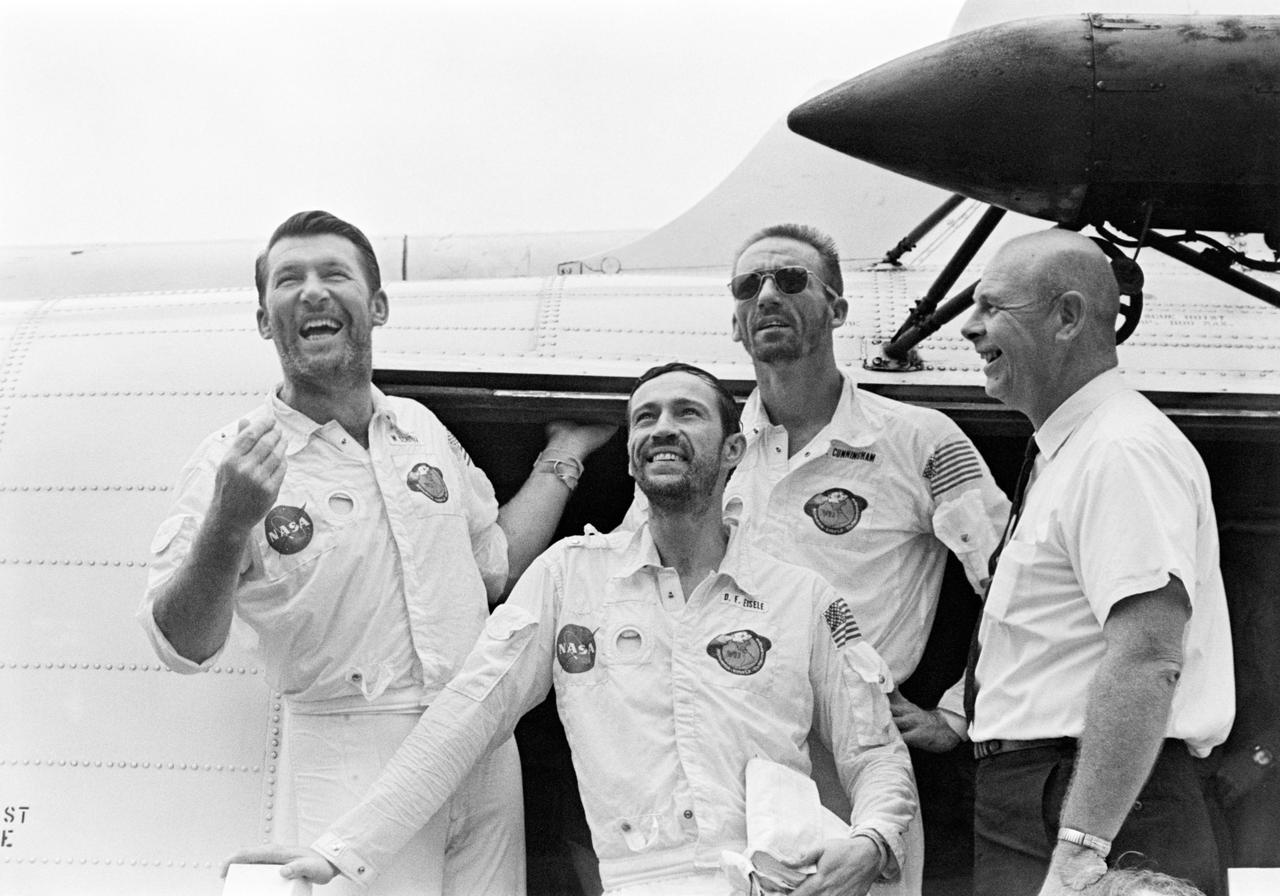
S68-52542 (22 Oct. 1968) --- The Apollo 7 crew arrives aboard the USS Essex, the prime recovery ship for the mission. Left to right, are astronauts Walter M. Schirra Jr., commander; Donn F. Eisele, command module pilot; Walter Cunningham, lunar module pilot; and Dr. Donald E. Stullken, NASA Recovery Team Leader from the Manned Spacecraft Center's (MSC) Landing and Recovery Division. The crew is pausing in the doorway of the recovery helicopter.

AS7-05-1617 (12 Oct. 1968) --- The great lake-studded highlands of Tibet, as seen from the Apollo 7 spacecraft during its 24th revolution of Earth. Photographed from an altitude of 124 nautical miles. The snow line in the picture is at 18,000 feet; and the lakes are at 15,000 feet above sea level.
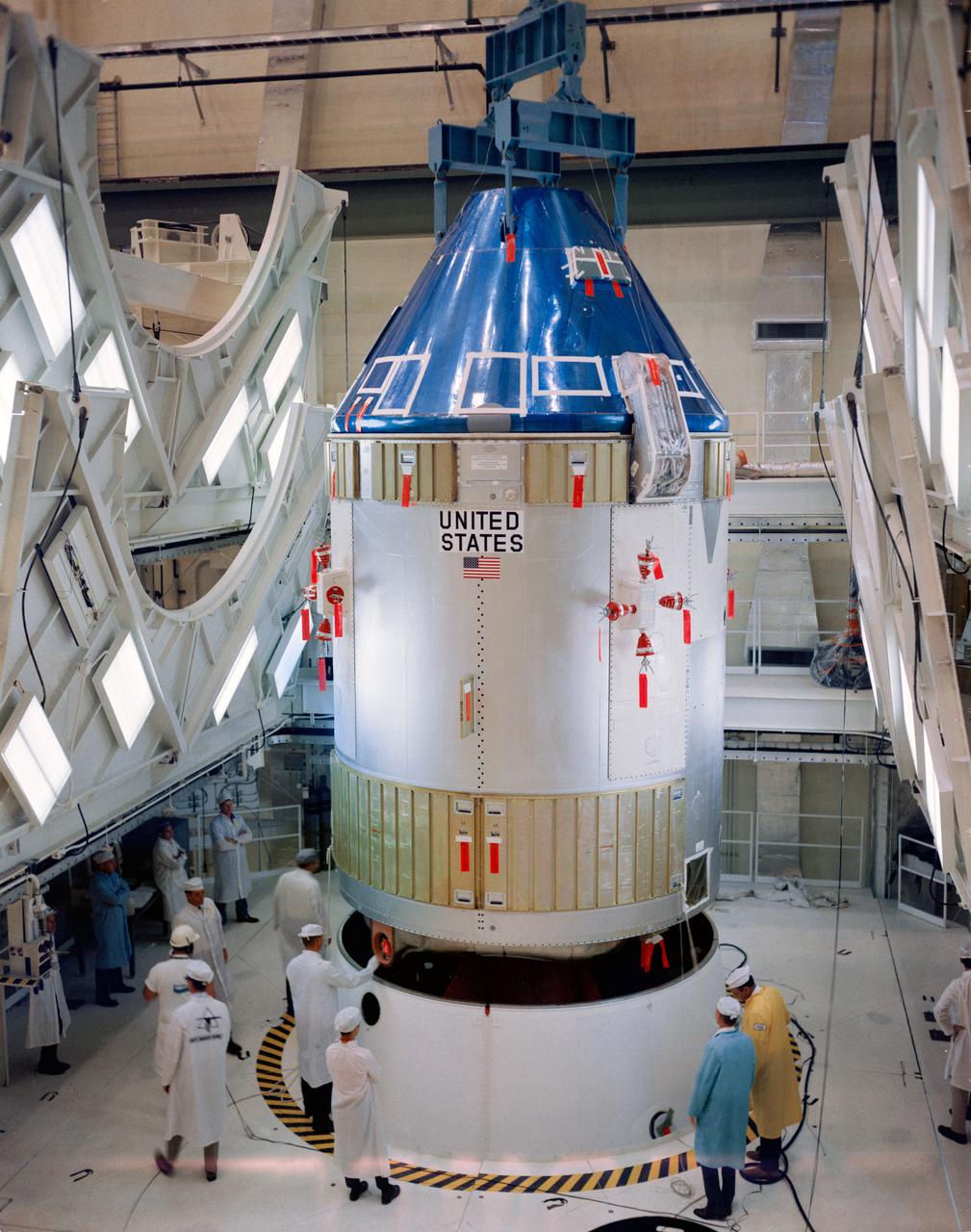
S68-42513 (5 Aug. 1968) --- Apollo Spacecraft 101 Command/Service Modules being moved into position for mating with Spacecraft Lunar Module Adapter (SLA)-5 in the Kennedy Space Center's Manned Spacecraft Operations Building. Apollo Spacecraft 101 will be flown on the first manned Apollo space mission, Apollo 7 (Spacecraft 101/Saturn 205).
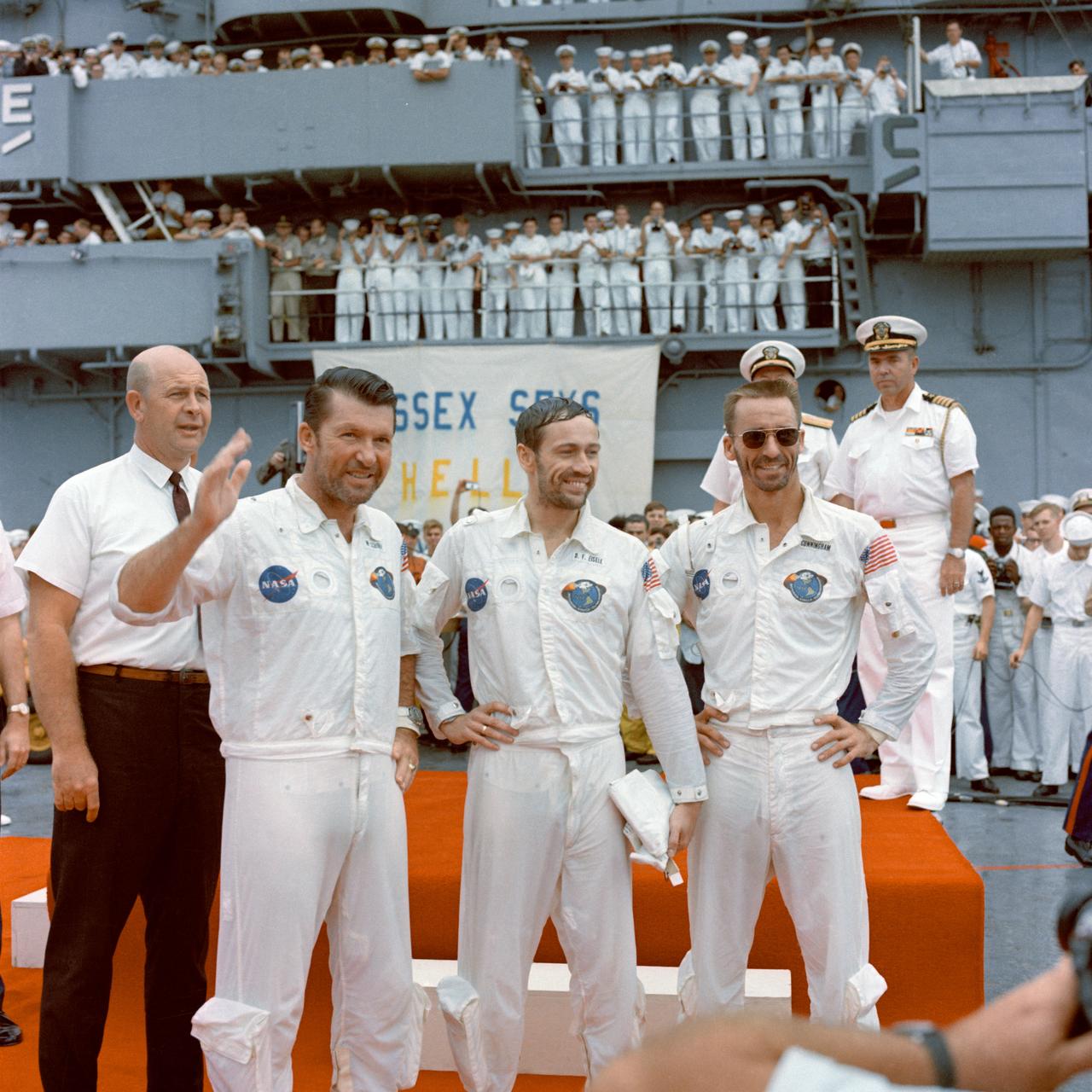
S68-49744 (22 Oct. 1968) --- The Apollo 7 crew is welcomed aboard the USS Essex, the prime recovery ship for the mission. Left to right, are astronauts Walter M. Schirra Jr., commander; Donn F. Eisele, command module pilot; and Walter Cunningham, lunar module pilot. In left background is Dr. Donald E. Stullken, NASA Recovery Team Leader from the Manned Spacecraft Center's (MSC) Landing and Recovery Division.
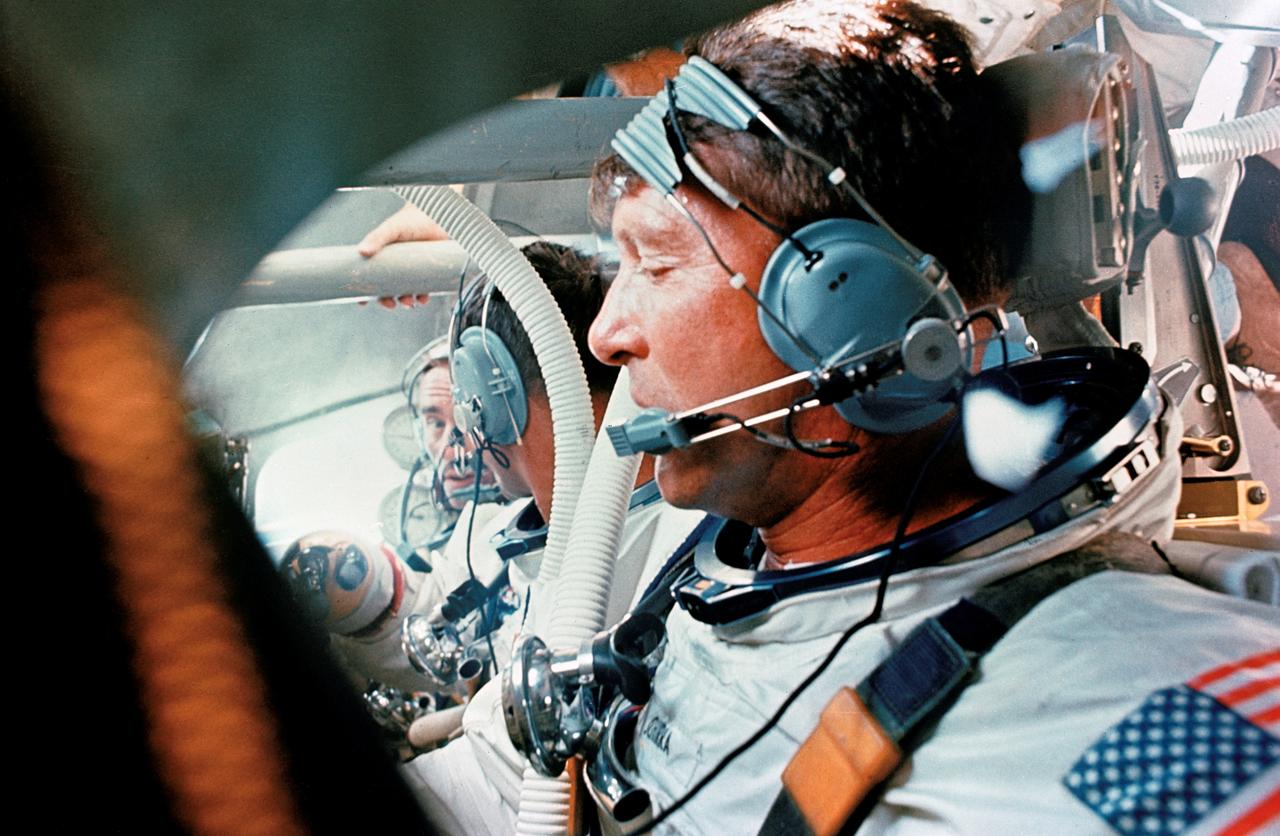
S68-46604 (5 Aug. 1968) --- The prime crew of the first manned Apollo mission (Spacecraft 101/Saturn 205) is seen in Apollo Command Module Boilerplate 1102 during water egress training in the Gulf of Mexico. In foreground is astronaut Walter M. Schirra Jr., in center is astronaut Donn F. Eisele, and in background is astronaut Walter Cunningham.
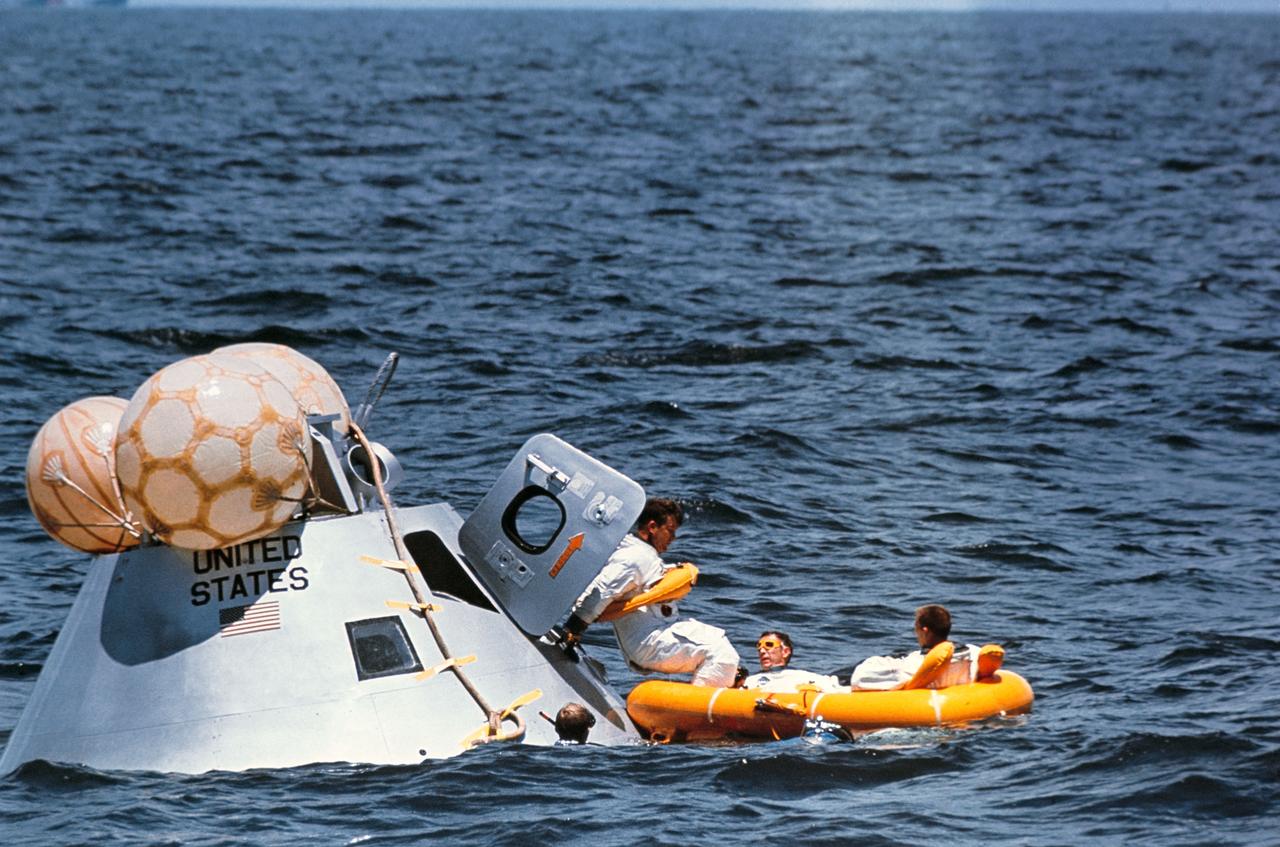
S68-46605 (5 Aug. 1968) --- The prime crew of the first manned Apollo mission (Spacecraft 101/Saturn 205) participates in water egress training in the Gulf of Mexico. Left to right, are astronauts Walter M. Schirra Jr. (stepping into life raft), Donn F. Eisele, and Walter Cunningham. They have just egressed Apollo Command Module Boilerplate 1102, and are awaiting helicopter pickup. Inflated bags were used to upright the boilerplate. MSC swimmers assisted in the training exercise.

From left to right are seen Apollo 7 astronaut Walter Cunningham (second from right), NASA astronaut Kay Hire, Hildreth Walker, Founder of A-MAN Inc. STEM International Science Center; NASA astronauts Michael Fincke and Gregory Johnson at the Endeavour Kick-Off Ceremony, Saturday, Oct. 13, 2012 in Inglewood. Endeavour, built as a replacement for space shuttle Challenger, completed 25 missions, spent 299 days in orbit, and orbited Earth 4,671 times while traveling 122,883,151 miles. Beginning Oct. 30, the shuttle will be on display in the CSC’s Samuel Oschin Space Shuttle Endeavour Display Pavilion, embarking on its new mission to commemorate past achievements in space and educate and inspire future generations of explorers. Photo Credit: (NASA/Carla Cioffi)

S68-41156 (August 1968) --- North American Rockwell Corporation artist's concept depicting the Apollo Command Module, oriented in a blunt and forward attitude, reentering Earth's atmosphere after returning from a trip to the moon. Cutaway view illustrates position of the three astronauts in the Command Module.
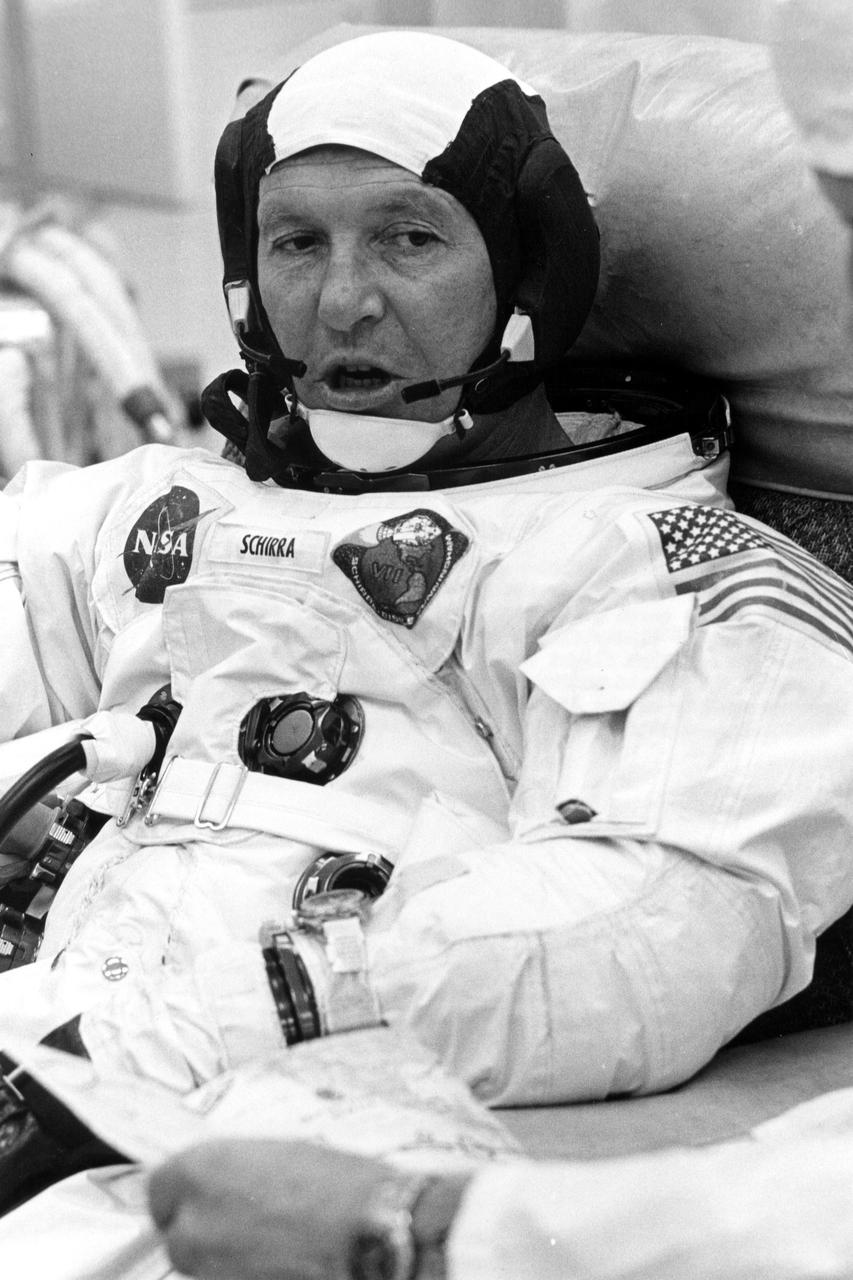
KENNEDY SPACE CENTER, FLA. -- Astsronaut Walter M. Schirra Jr. relaxes prior to boarding the Apollo 7 spacecraft, which rocketed into Earth orbit from Cape Kennedy this morning. Purpose of the 11-day flight is to qualify the Apollo spacecraft for a future flight to the moon. Other Apollo 7 pilots are Donn Eisele and Walter Cunningham. This is the first manned mission of the Apollo series. It is conducted by the National Aeronautics and Space Administration.
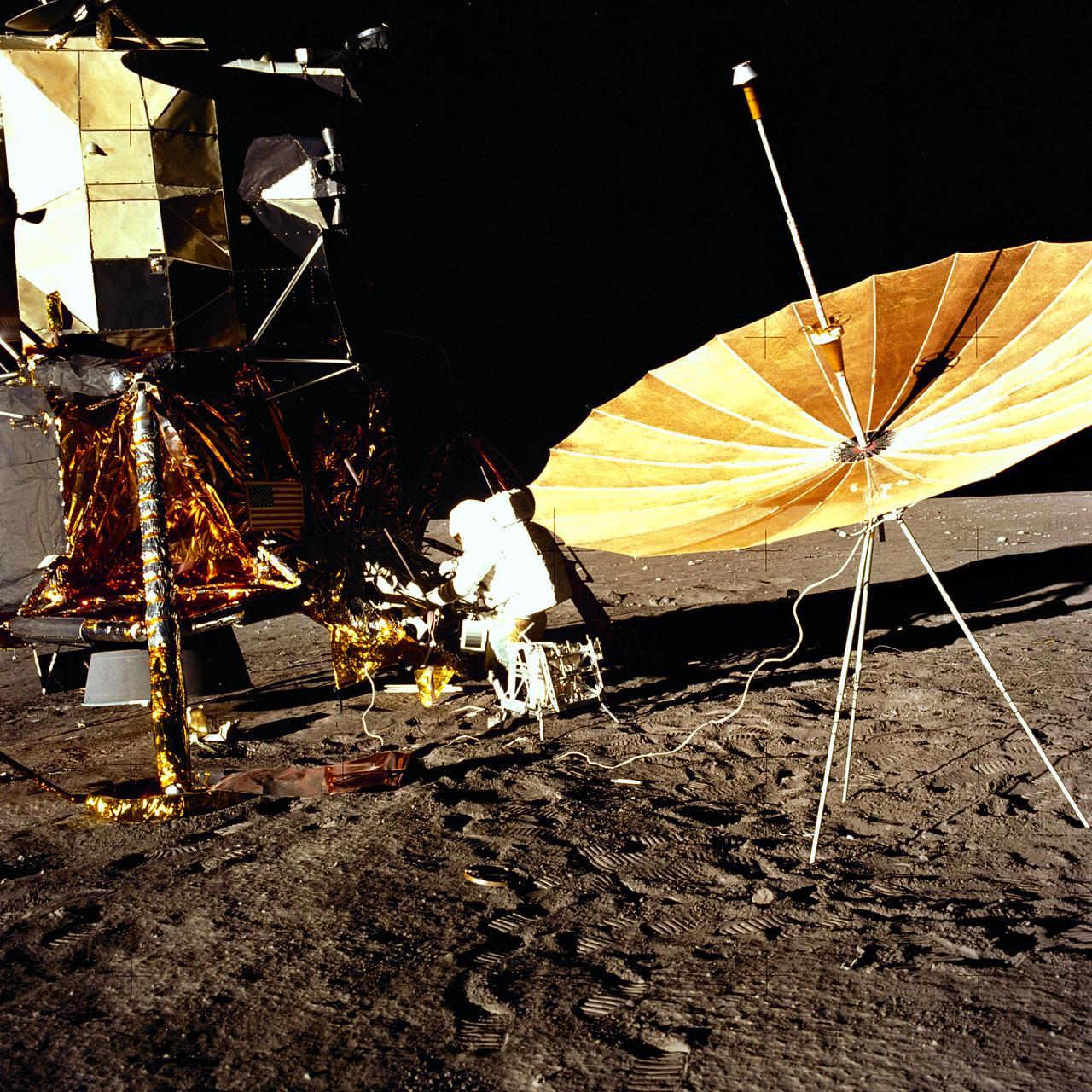
The second manned lunar landing mission, Apollo 12 launched from launch pad 39-A at Kennedy Space Center in Florida on November 14, 1969 via a Saturn V launch vehicle. The Saturn V vehicle was developed by the Marshall Space Flight Center (MSFC) under the direction of Dr. Wernher von Braun. Aboard Apollo 12 was a crew of three astronauts: Alan L. Bean, pilot of the Lunar Module (LM), Intrepid; Richard Gordon, pilot of the Command Module (CM), Yankee Clipper; and Spacecraft Commander Charles Conrad. The LM, Intrepid, landed astronauts Conrad and Bean on the lunar surface in what’s known as the Ocean of Storms while astronaut Richard Gordon piloted the CM, Yankee Clipper, in a parking orbit around the Moon. Lunar soil activities included the deployment of the Apollo Lunar Surface Experiments Package (ALSEP), finding the unmanned Surveyor 3 that landed on the Moon on April 19, 1967, and collecting 75 pounds (34 kilograms) of rock samples. This is the seventh of 25 images captured by the crew in attempt to provide a 360 degree Lunar surface scene. Apollo 12 safely returned to Earth on November 24, 1969.
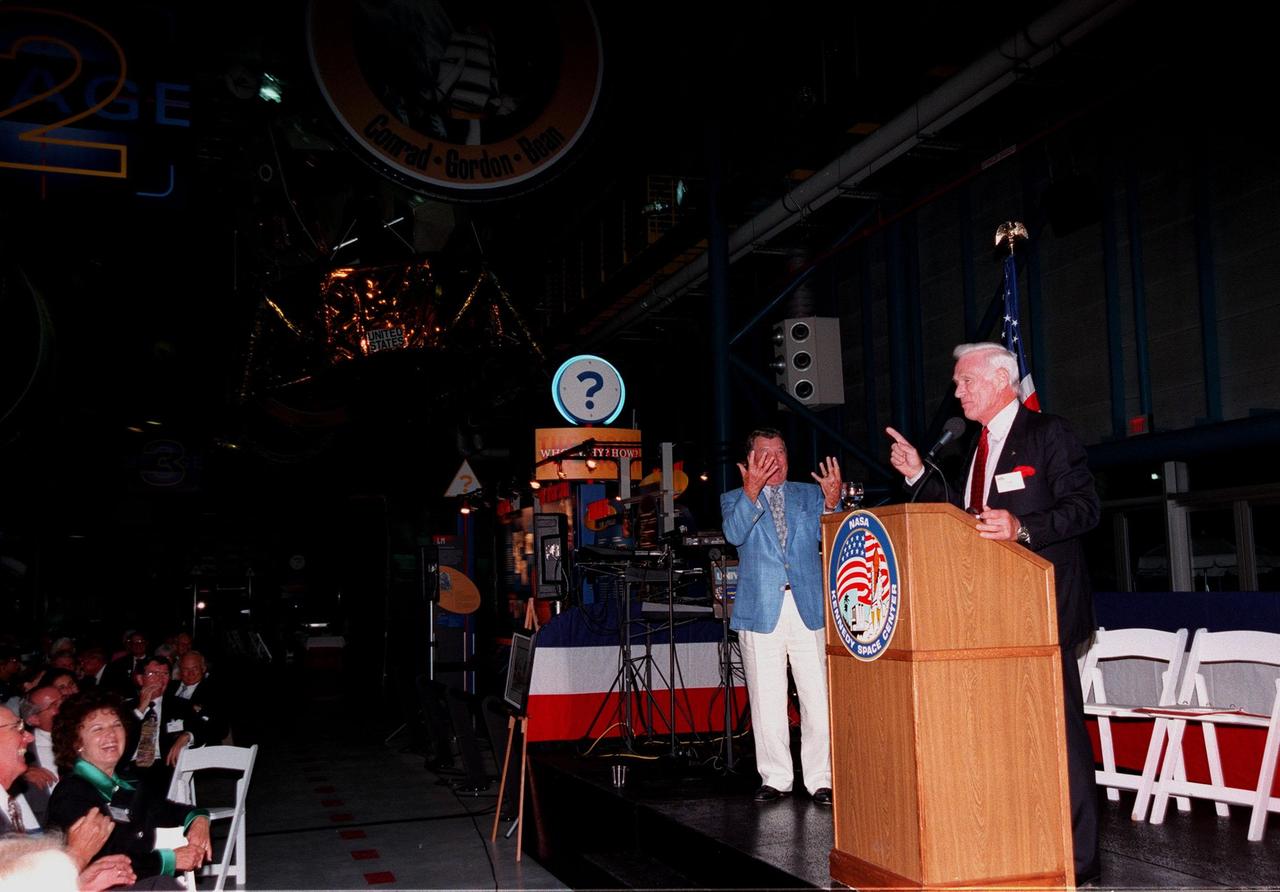
KENNEDY SPACE CENTER, FLA. -- During an anniversary banquet honoring the Apollo program team, the people who made the entire lunar landing program possible, former Apollo astronaut Gene Cernan relates a humorous comment while Wally Schirra (background) gestures behind him. Cernan, who flew on Apollo 10 and 17, was the last man to walk on the moon; Schirra flew on Apollo 7. The banquet was held in the Apollo/Saturn V Center, part of the KSC Visitor Complex. This is the 30th anniversary of the Apollo 11 launch and moon landing, July 16 and July 20, 1969. Other guests at the banquet were former Apollo astronauts are Neil A. Armstrong and Edwin "Buzz" Aldrin who flew on Apollo 11, the launch of the first moon landing, and Walt Cunningham, who also flew on Apollo 7

KENNEDY SPACE CENTER, FLA. -- Astronaut Donn F. Eisele adjusts communications carrier prior to the start of an 11-day Earth orbital mission in the Apollo 7 spacecraft. The communications carrier contains microphones and earphones. Flying with Eisele aboard Apollo 7 are astronauts Walter M. Schirra Jr. and Walter Cunningham. Purpose of the flight, conducted by the National Aeronautics and Space Administration, is to qualify the Apollo spacecraft for a future flight to the moon.
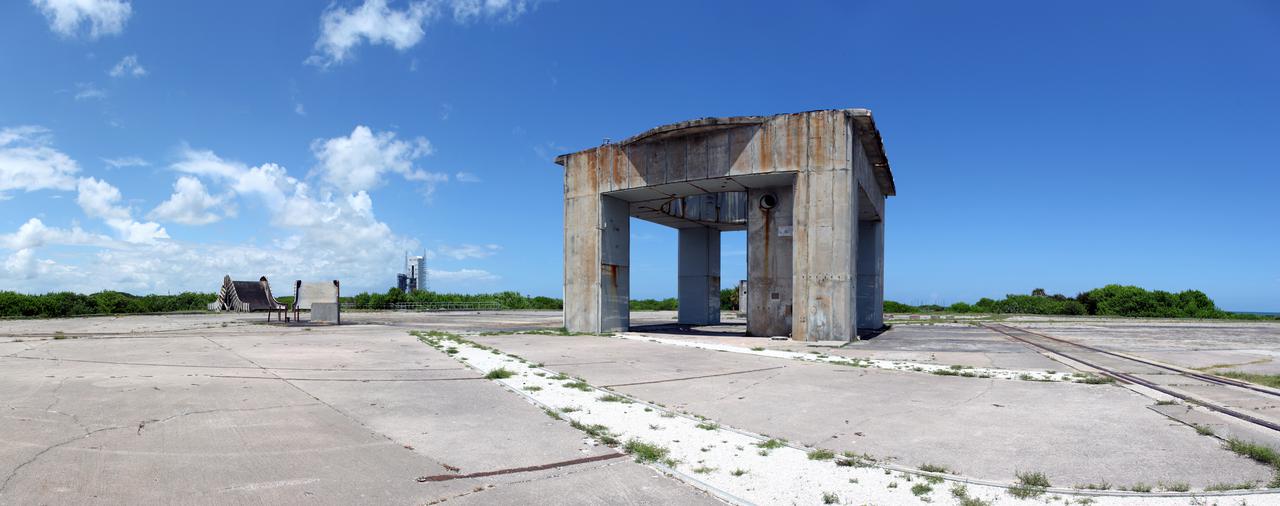
CAPE CANAVERAL, Fla. -- At Cape Canaveral Air Force Station in Florida stands the Launch Complex-34 launch platform. During the Apollo Program, Complex-34 was the site of the first Saturn I and Saturn IB launches, as well as the tragic fire in which the Apollo 1 astronauts lost their lives. Apollo 7, the first crewed Apollo flight, was the last to launch from Complex-34. Subsequent Apollo mission launched from NASA Kennedy Space Center's Launch Complex 39. Photo credit: NASA_Frankie Martin
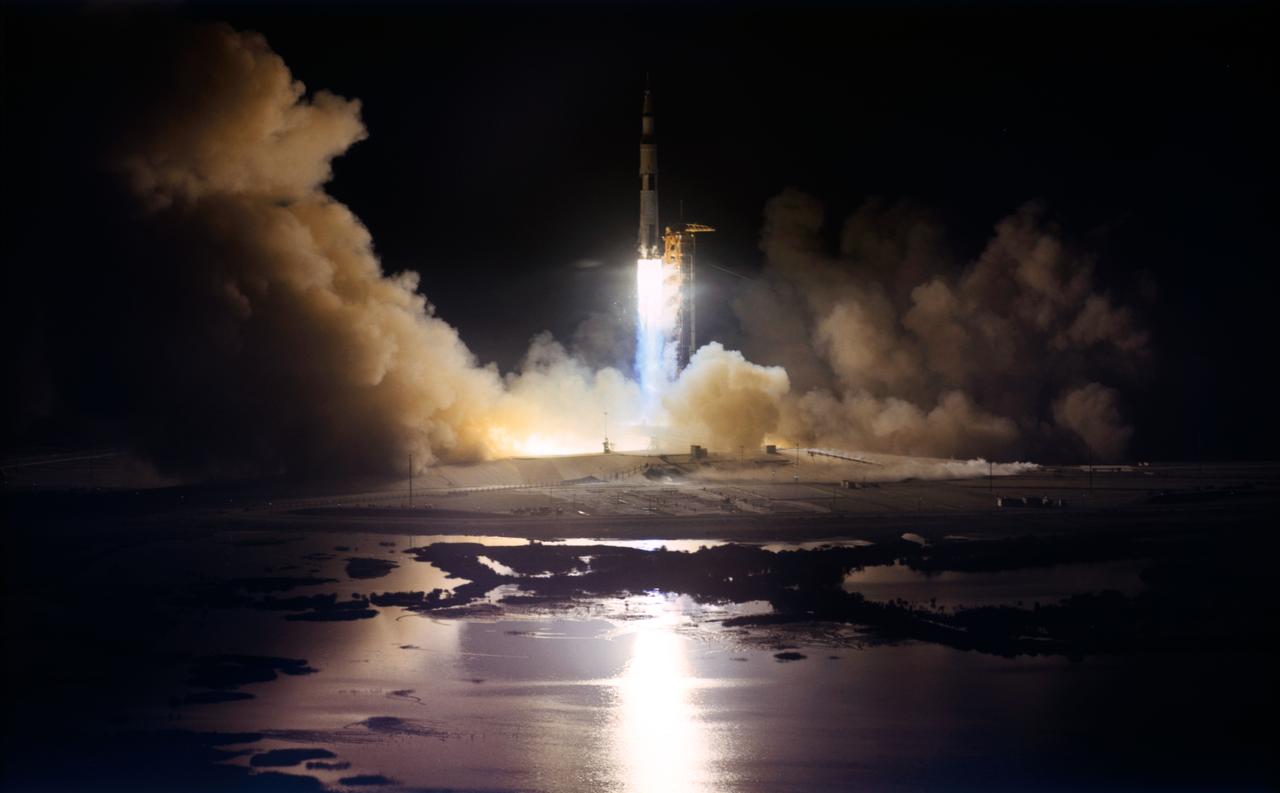
S72-55070 (7 Dec. 1972) --- The huge, 363-feet tall Apollo 17 (Spacecraft 114/Lunar Module 12/Saturn 512) space vehicle is launched from Pad A, Launch Complex 39, Kennedy Space Center (KSC), Florida, at 12:33 a.m. (EST), Dec. 7, 1972. Apollo 17, the final lunar landing mission in NASA's Apollo program, was the first nighttime liftoff of the Saturn V launch vehicle. Aboard the Apollo 17 spacecraft were astronaut Eugene A. Cernan, commander; astronaut Ronald E. Evans, command module pilot; and scientist-astronaut Harrison H. Schmitt, lunar module pilot. Flame from the five F-1 engines of the Apollo/Saturn first (S-1C) stage illuminates the nighttime scene. A two-hour and 40-minute hold delayed the Apollo 17 launching.
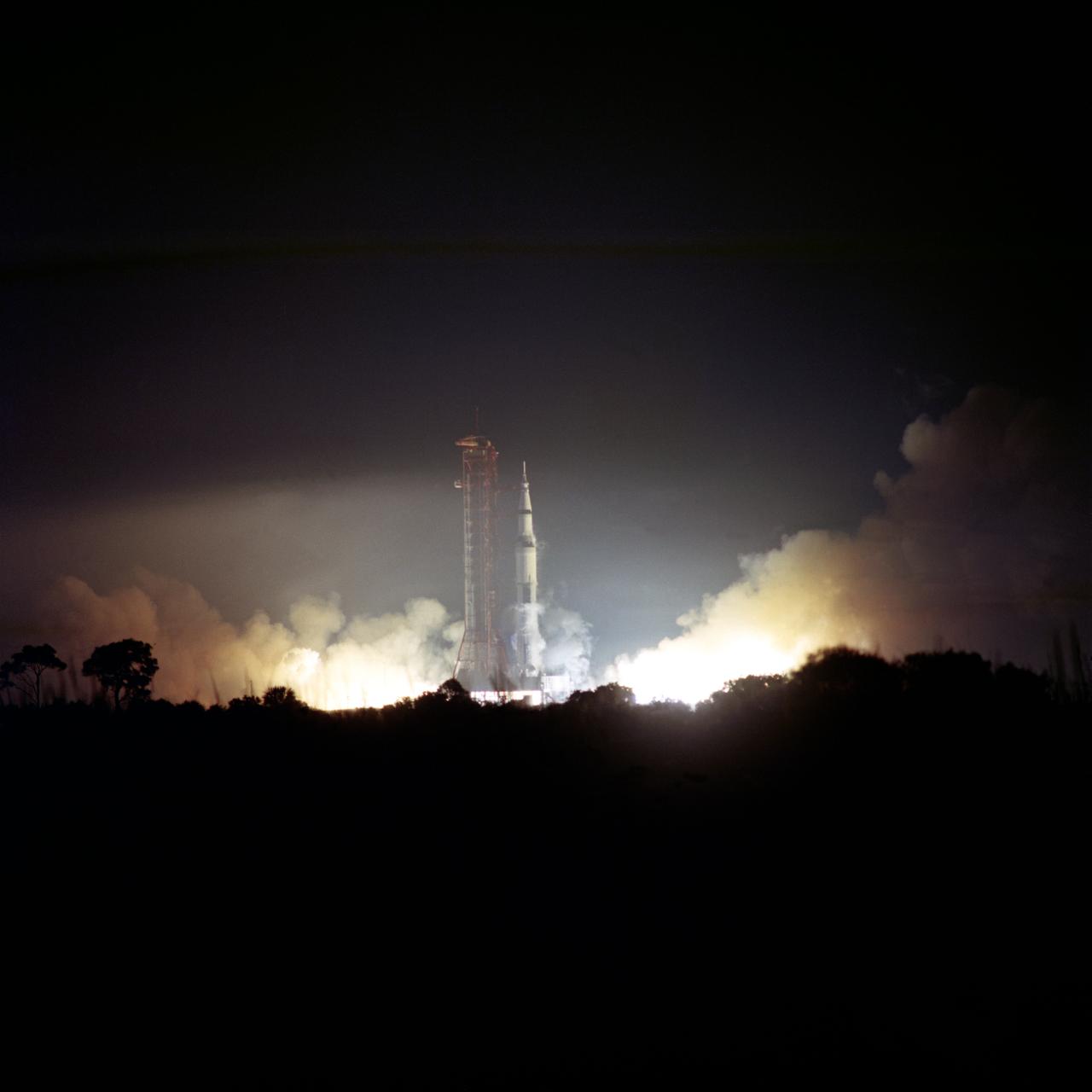
S72-55482 (7 Dec. 1972) --- The huge, 363-feet tall Apollo 17 (Spacecraft 114/Lunar Module 12/Saturn 512) space vehicle is launched from Pad A., Launch Complex 39, Kennedy Space Center (KSC), Florida, at 12:33 a.m. (EST), Dec. 7, 1972. Apollo 17, the final lunar landing mission in NASA's Apollo program, was the first nighttime liftoff of the Saturn V launch vehicle. Aboard the Apollo 17 spacecraft were astronaut Eugene A. Cernan, commander; astronaut Ronald E. Evans, command module pilot; and scientist-astronaut Harrison H. Schmitt, lunar module pilot. Flame from the five F-1 engines of the Apollo/Saturn first (S-1C) stage illuminates the nighttime scene. A two-hour and 40-minute hold delayed the Apollo 17 launching.
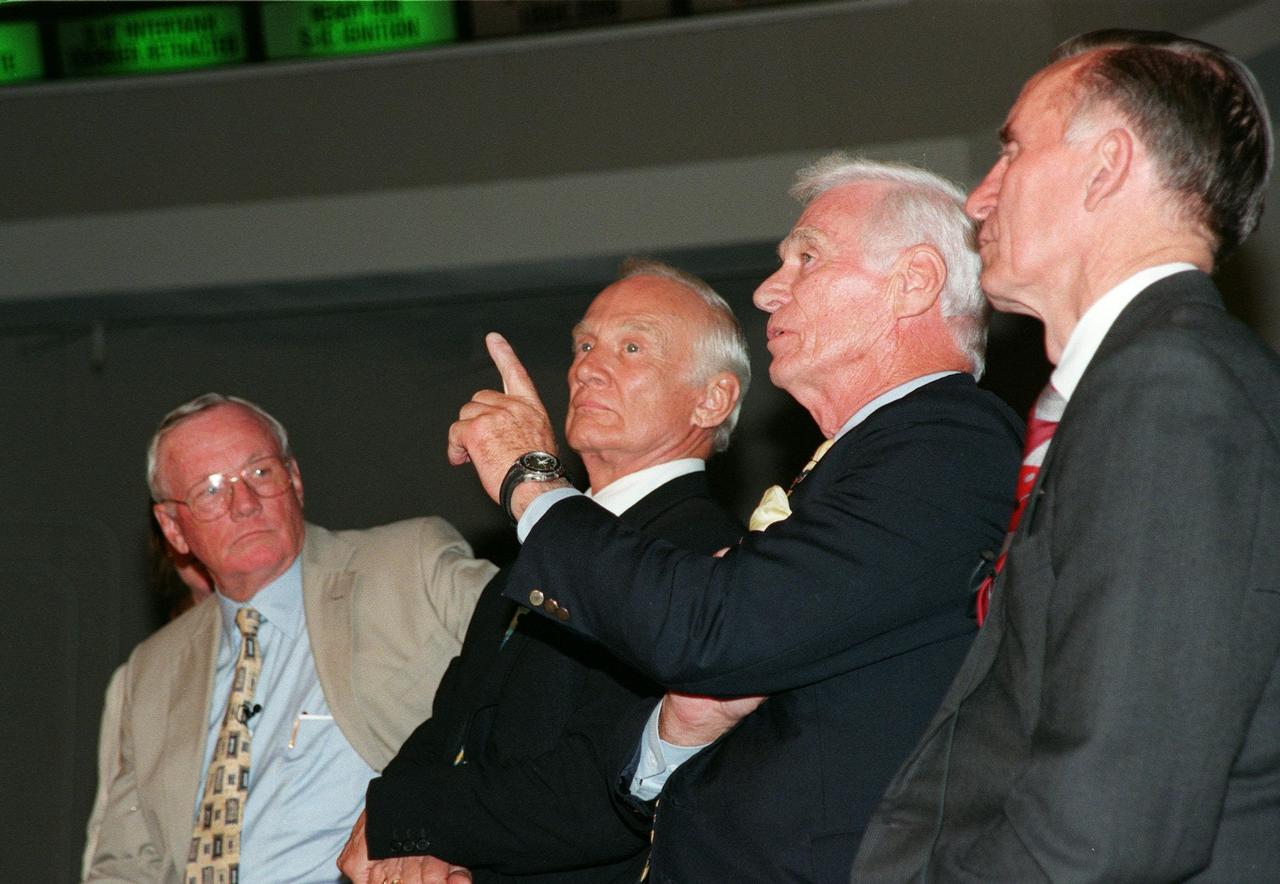
KENNEDY SPACE CENTER, FLA. -- At a media conference in the Apollo/Saturn V Center, former Apollo astronaut Gene Cernan, who flew on Apollo 10 and 17, makes a point in a comment for the press. Joining him in the conference are other Apollo astronauts (left) Neil A. Armstrong and Edwin "Buzz" Aldrin, who both flew on Apollo 11, the launch to the moon; and (right) Walt Cunningham, who flew on Apollo 7. The four astronauts were at KSC for the 30th anniversary of the Apollo 11 launch and moon landing, July 16 and July 20, 1969. Neil Armstrong was the first man to set foot on the moon

S68-50713 (14 Oct. 1968) --- Astronauts Walter M. Schirra Jr. (on right), mission commander; and Donn F. Eisele, command module pilot; are seen in the first live television transmission from space. Schirra is holding a sign which reads, "Keep those cards and letters coming in, folks!" Out of view at left is astronaut Walter Cunningham, lunar module pilot.
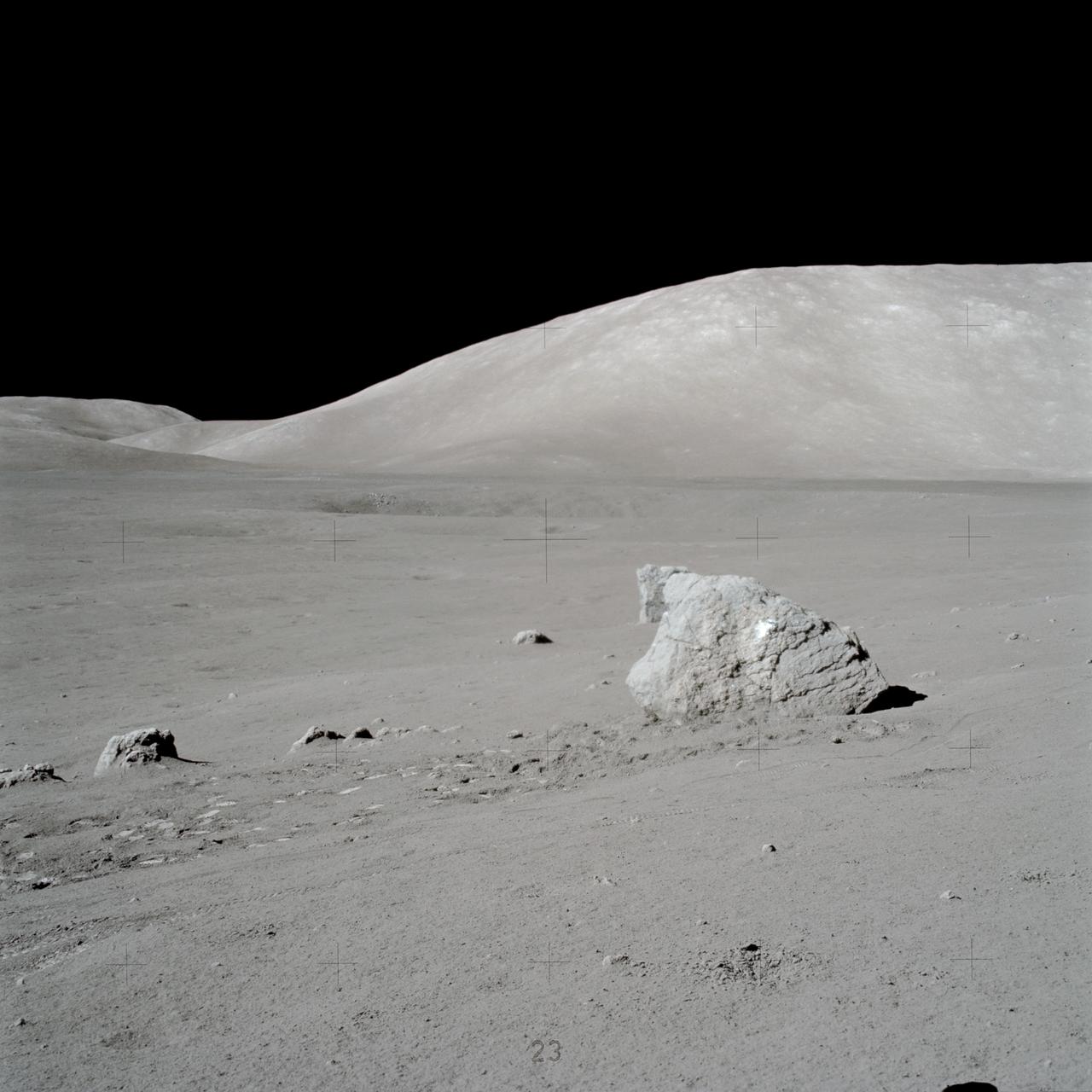
AS17-146-22351 (7-19 Dec. 1972) --- This view, photographed by astronaut Eugene A. Cernan, shows a large boulder which was discovered by astronauts Cernan and Harrison H. Schmitt during one of their space walks. The astronauts later pointed out light clasts on the boulder. South Massif is in the background. Tracks left by the Lunar Roving Vehicle (LRV) can be seen near foreground. While astronauts Cernan, commander, and Schmitt, lunar module pilot, descended in the Lunar Module (LM) "Challenger" to explore the Taurus-Littrow region of the moon, astronaut Ronald E. Evans, command module pilot, remained with the Command and Service Modules (CSM) "America" in lunar orbit.
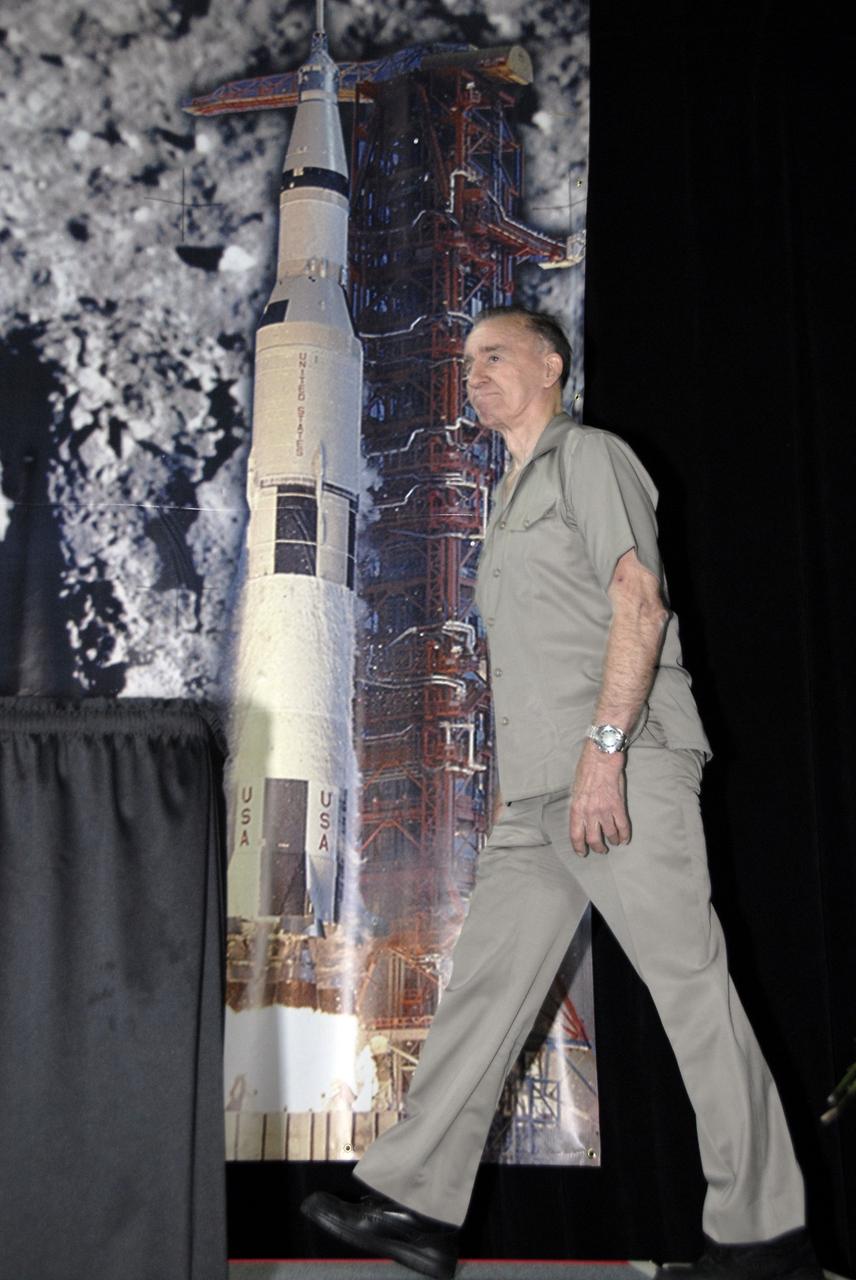
CAPE CANAVERAL, Fla. – At the Apollo/Saturn V Center at NASA's Kennedy Space Center in Florida, Apollo astronaut Walt Cunningham is introduced during NASA's 40th Anniversary of Apollo Celebration of the July 1969 launch and landing on the moon. Cunningham was joined by seven others involved in the program. Cunningham occupied the lunar module pilot seat for the 11-day flight of Apollo 7--the first manned flight test of the third-generation United States spacecraft. Photo credit: NASA/Kim Shiflett
CAPE CANAVERAL, Fla. – At the Apollo/Saturn V Center at NASA's Kennedy Space Center in Florida, Apollo astronaut Walt Cunningham shares his experiences with an eager crowd gathered for NASA's 40th Anniversary of Apollo Celebration of the July 1969 launch and landing on the moon. Cunningham occupied the lunar module pilot seat for the 11-day flight of Apollo 7--the first manned flight test of the third-generation United States spacecraft. Photo credit: NASA/Kim Shiflett
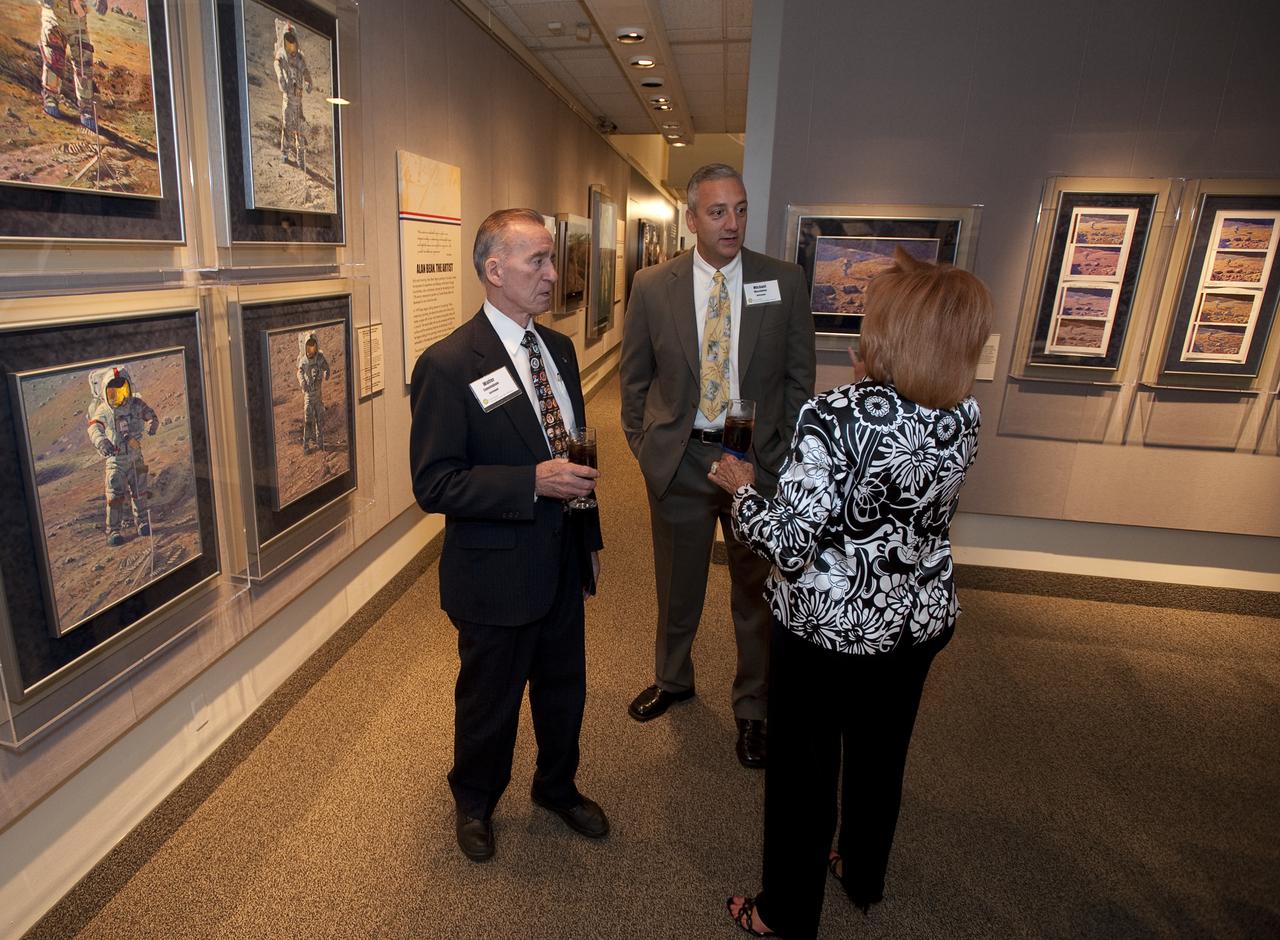
NASA Apollo 7 Astronaut Walt Cunningham, left, and NASA STS-125 Mission Specialist Michael Massimino talk with another guest during the opening of "Alan Bean: Painting Apollo, First Artist on Another World" by NASA Apollo 12 Astronaut and Artist Alan Bean at the National Air and Space Museum, Monday, July 20, 2009 in Washington. The show opening coincided with the 40th anniversary celebration of Apollo. Photo Credit: (NASA/Bill Ingalls)
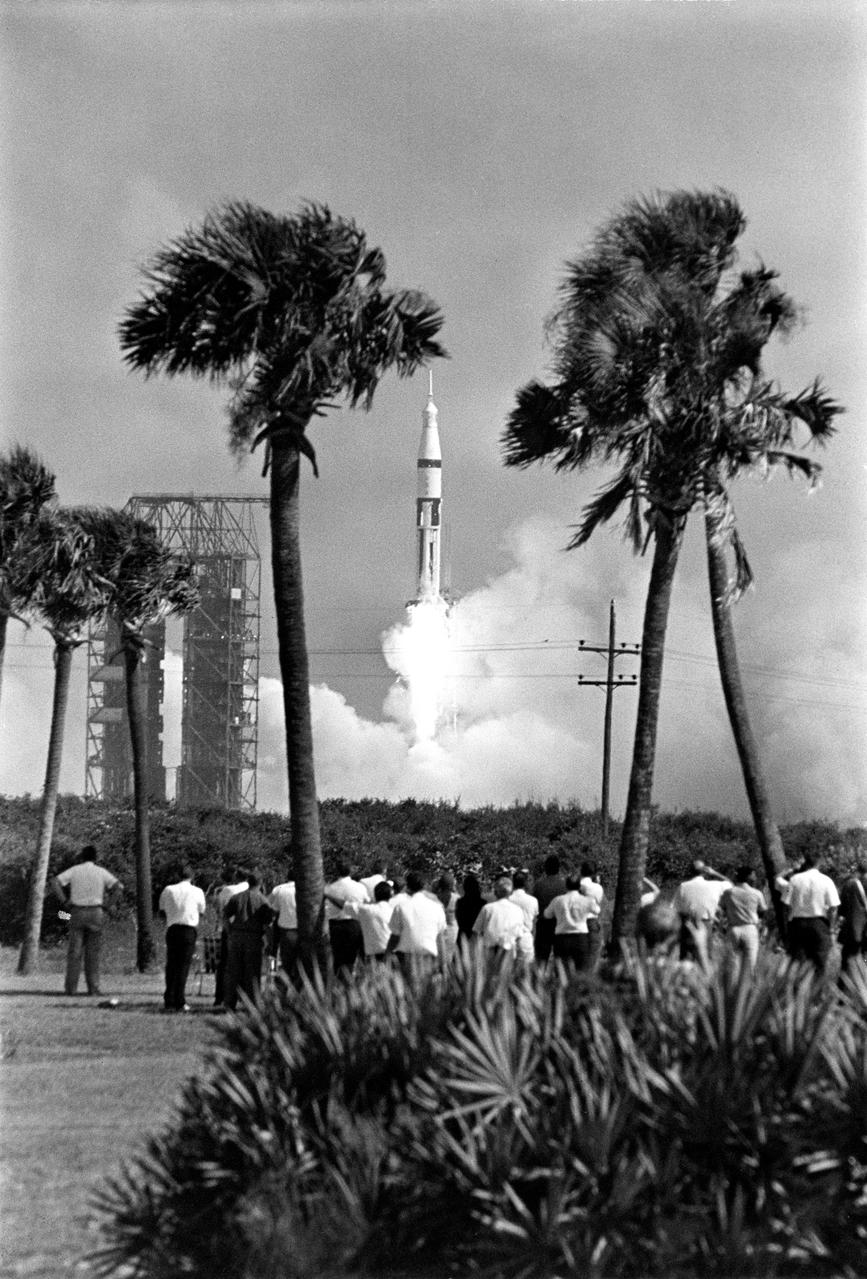
S68-48662 (11 Oct. 1968) --- The Apollo 7/Saturn IB space vehicle is launched from the Kennedy Space Center's Launch Complex 34 at 11:03 a.m. (EDT), Oct. 11, 1968. Apollo 7 (Spacecraft 101/Saturn 205) is the first of several manned flights aimed at qualifying the spacecraft for the half-million mile round trip to the moon. Aboard the Apollo spacecraft are astronauts Walter M. Schirra Jr., commander; Donn F. Eisele, command module pilot; and Walter Cunningham, lunar module pilot. (This view is framed by palm trees on either side).

S68-48788 (11 Oct. 1968) --- The Apollo 7/Saturn IB space vehicle is launched from the Kennedy Space Center's Launch Complex 34 at 11:03 a.m. (EDT), Oct. 11, 1968. Apollo 7 (Spacecraft 101/Saturn 205) is the first of several manned flights aimed at qualifying the spacecraft for the half-million-mile round trip to the moon. Aboard the Apollo spacecraft are astronauts Walter M. Schirra Jr., commander; Donn F. Eisele, command module pilot; and Walter Cunningham, lunar module pilot. (Tracking antenna on left and pad service structure on right)
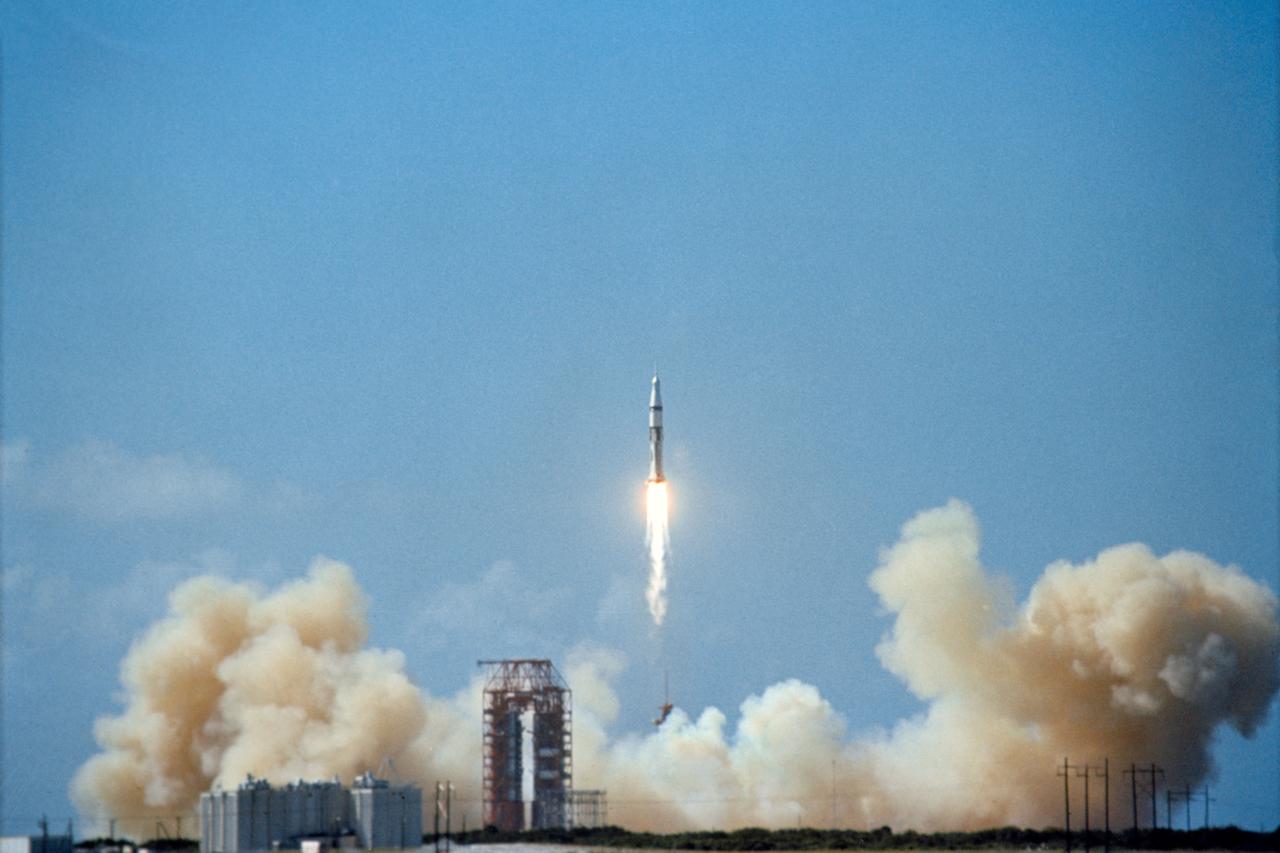
S68-48666 (11 Oct. 1968) --- The Apollo 7/Saturn IB space vehicle is launched from the Kennedy Space Center's Launch Complex 34 at 11:03 a.m. (EDT), Oct. 11, 1968. Apollo 7 (Spacecraft 101/Saturn 205) is the first of several manned flights aimed at qualifying the spacecraft for the half-million-mile round trip to the moon. Aboard the Apollo spacecraft are astronauts Walter M. Schirra Jr., commander; Donn F. Eisele, command module pilot; and Walter Cunningham, lunar module pilot.
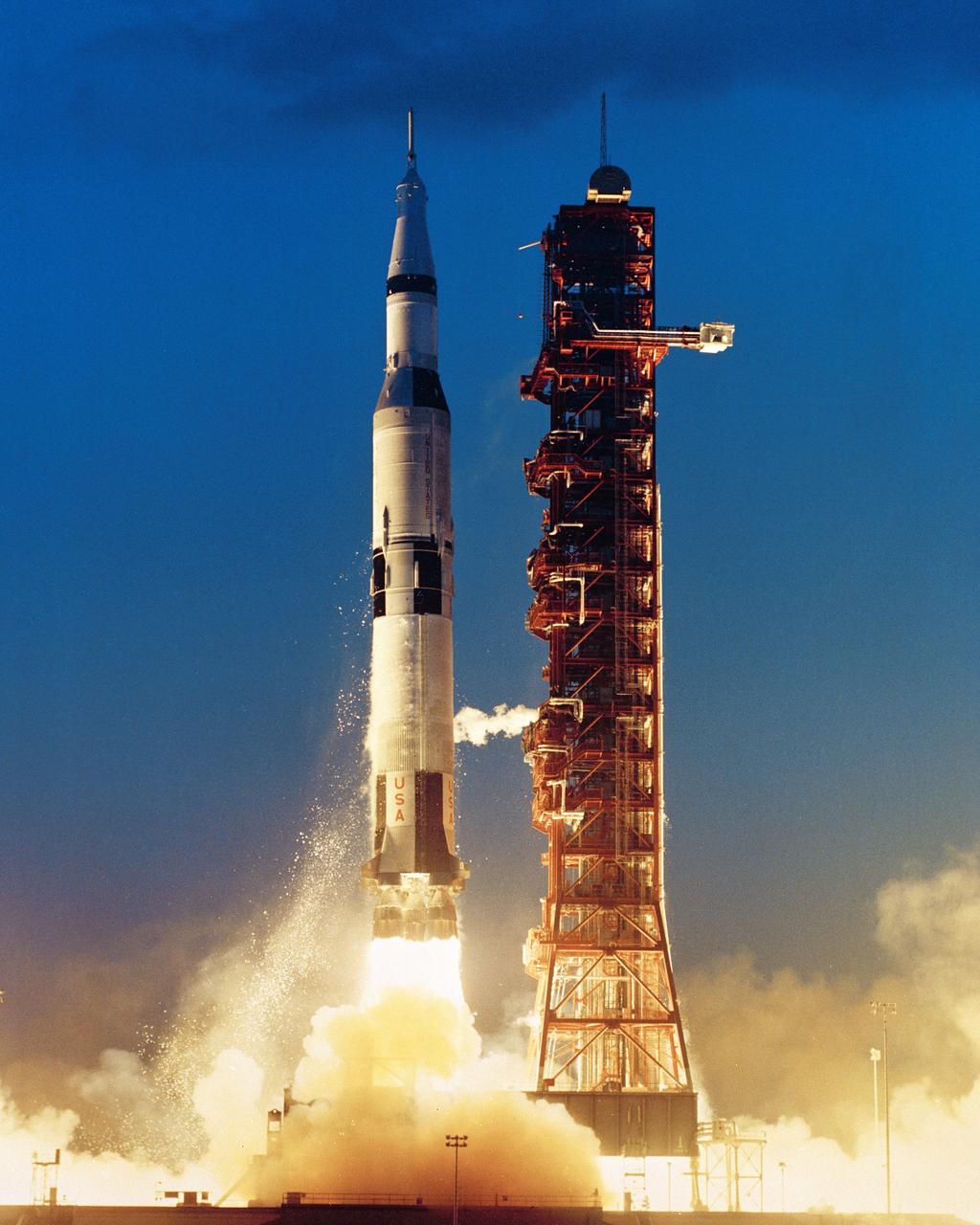
Saturn 501 - Apollo Saturn V liftoff from Complex 39A at 7 a.m. 9 November 1967 at Kennedy Space Center, Florida.
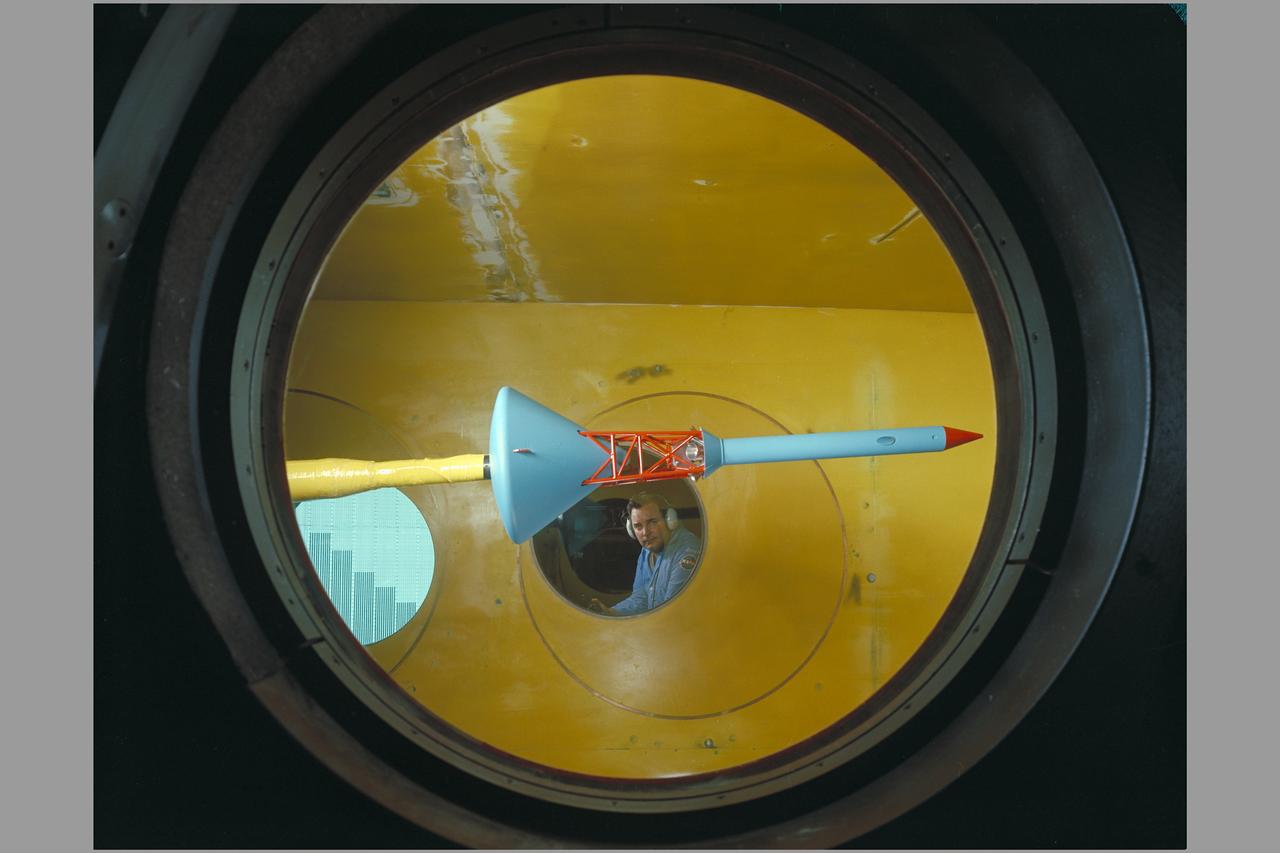
Side view of assembled command module, tower with flap & launch-escape rocket. Apollo FS-2 in 9 x 7 ft. SupersonicWind Tunnel.
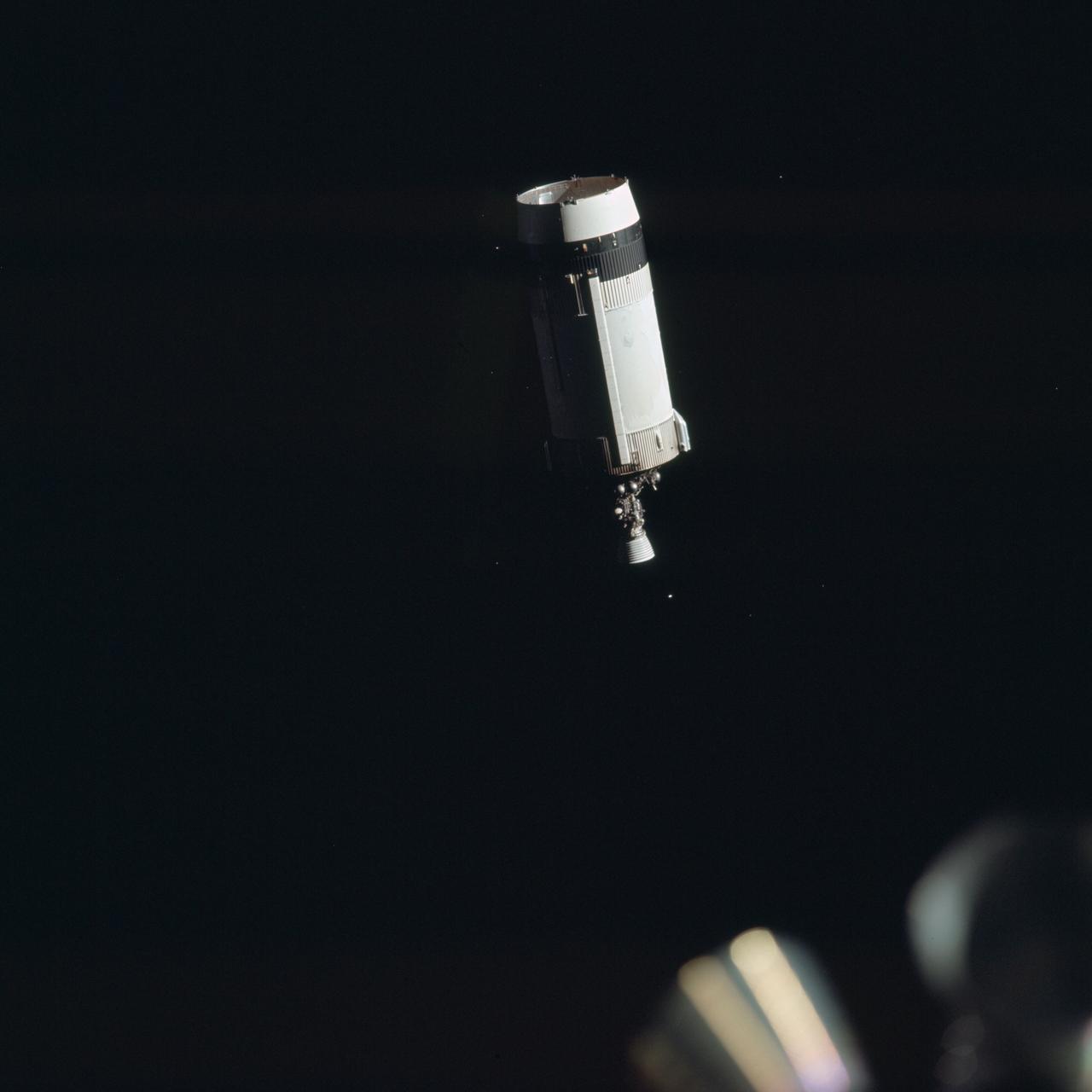
AS17-148-22714 (7-19 Dec. 1972) --- View of the expended Saturn IVB stage before Apollo 17 transposition/docking maneuvers.
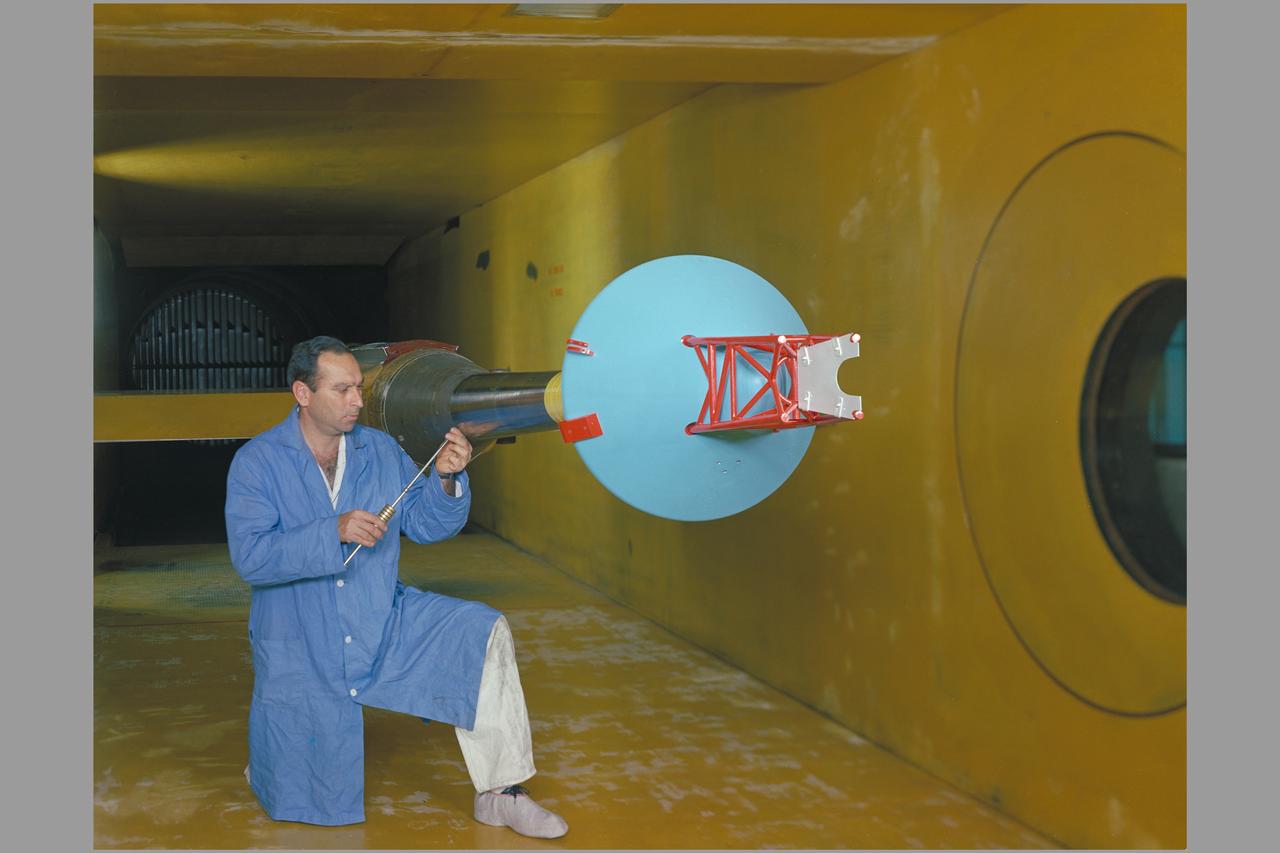
Side view of assembled command module, tower with flap & launch-escape rocket. Apollo FS-2 in 9 x 7 ft. SupersonicWind Tunnel.
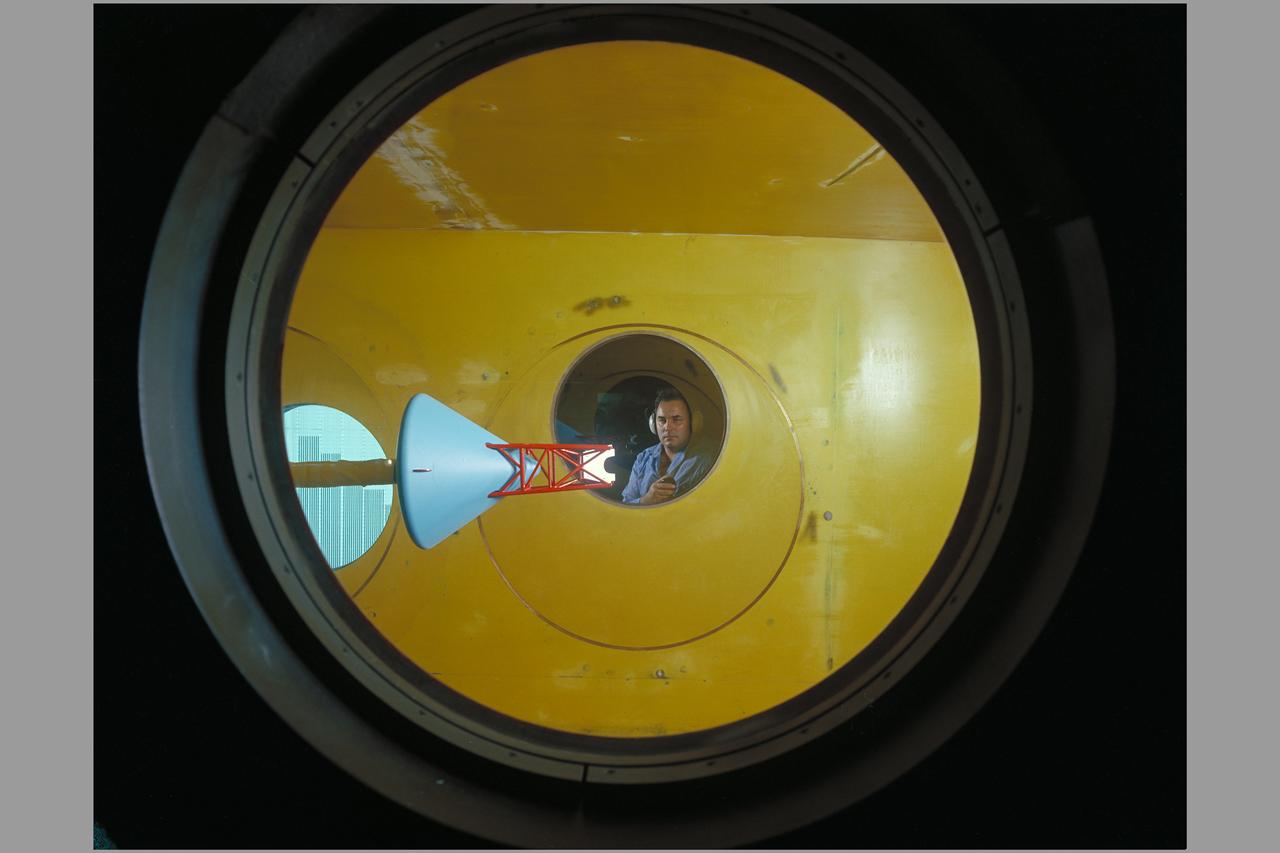
Side view of assembled command module, tower with flap & launch-escape rocket. Apollo FS-2 in 9 x 7 ft. SupersonicWind Tunnel.
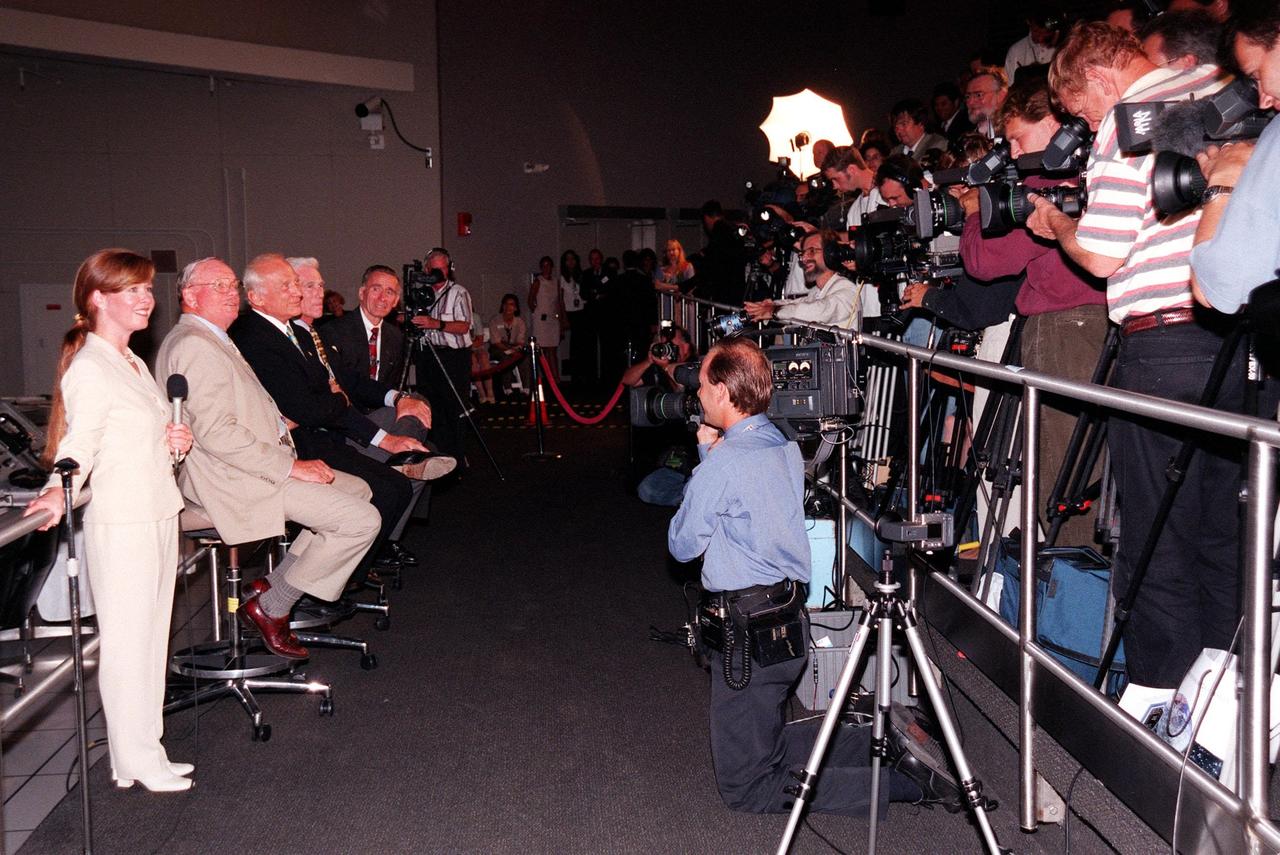
KENNEDY SPACE CENTER, FLA. -- In the Apollo/Saturn V Center, Lisa Malone (left), chief of KSC's Media Services branch, waits for photographers to take photos of former Apollo astronauts (left to right) Neil A. Armstrong and Edwin "Buzz" Aldrin who flew on Apollo 11, the launch to the moon; Gene Cernan, who flew on Apollo 10 and 17; and Walt Cunningham, who flew on Apollo 7. The four met with the media prior to an anniversary banquet highlighting the contributions of aerospace employees who made the Apollo program possible. The banquet celebrated the 30th anniversary of the launch and moon landing, July 16 and July 20, 1969. Neil Armstrong was the first man to set foot on the moon
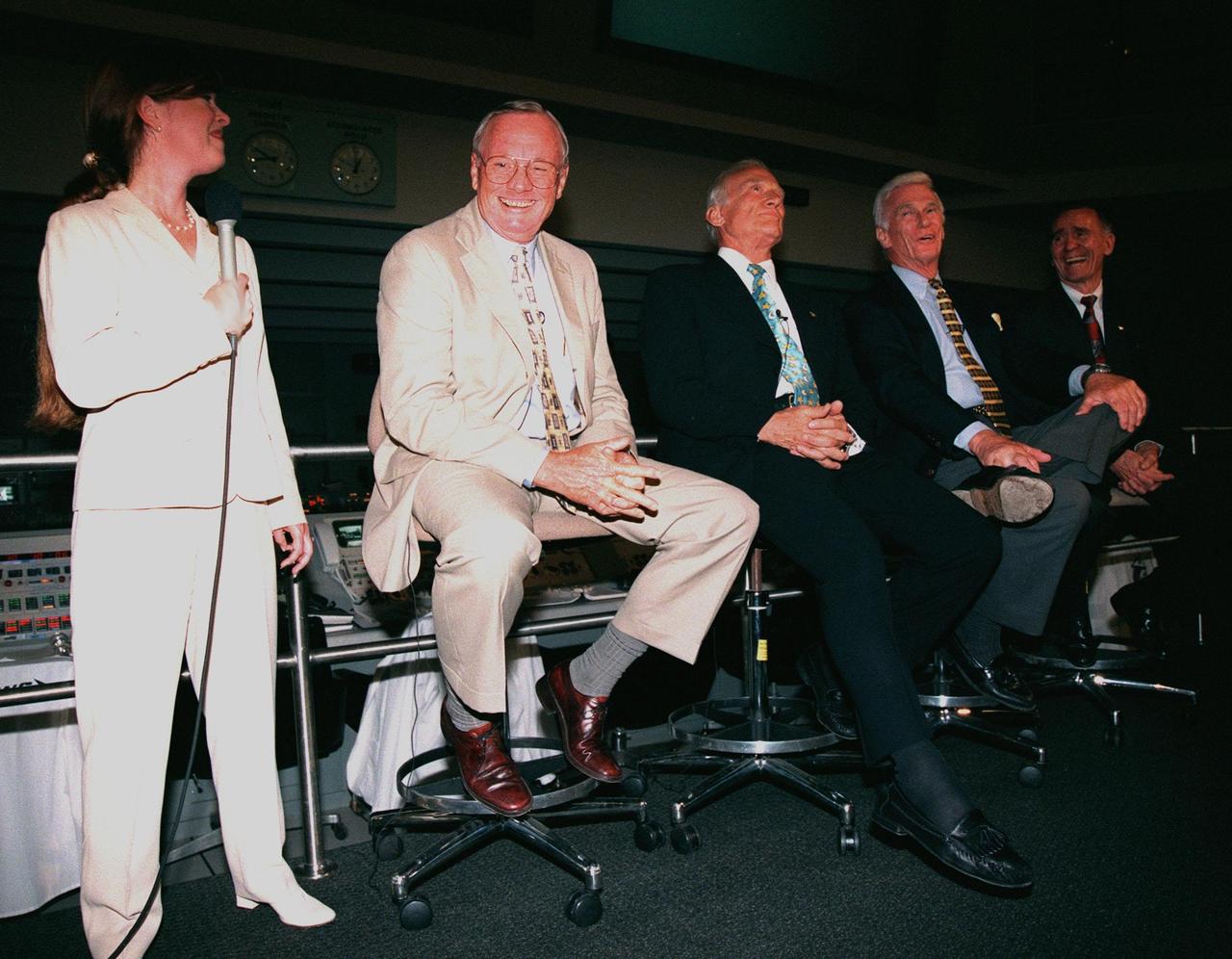
KENNEDY SPACE CENTER, FLA. -- In the Apollo/Saturn V Center, Lisa Malone (left), chief of KSC's Media Services branch, laughs at a humorous comment along with former Apollo astronauts Neil A. Armstrong and Edwin "Buzz" Aldrin who flew on Apollo 11, the launch to the moon; Gene Cernan, who flew on Apollo 10 and 17; and Walt Cunningham, who flew on Apollo 7. The four met with the media before an anniversary banquet celebrating the accomplishments of the Apollo program team. This is the 30th anniversary of the launch and moon landing, July 16 and July 20, 1969. Neil Armstrong was the first man to set foot on the moon
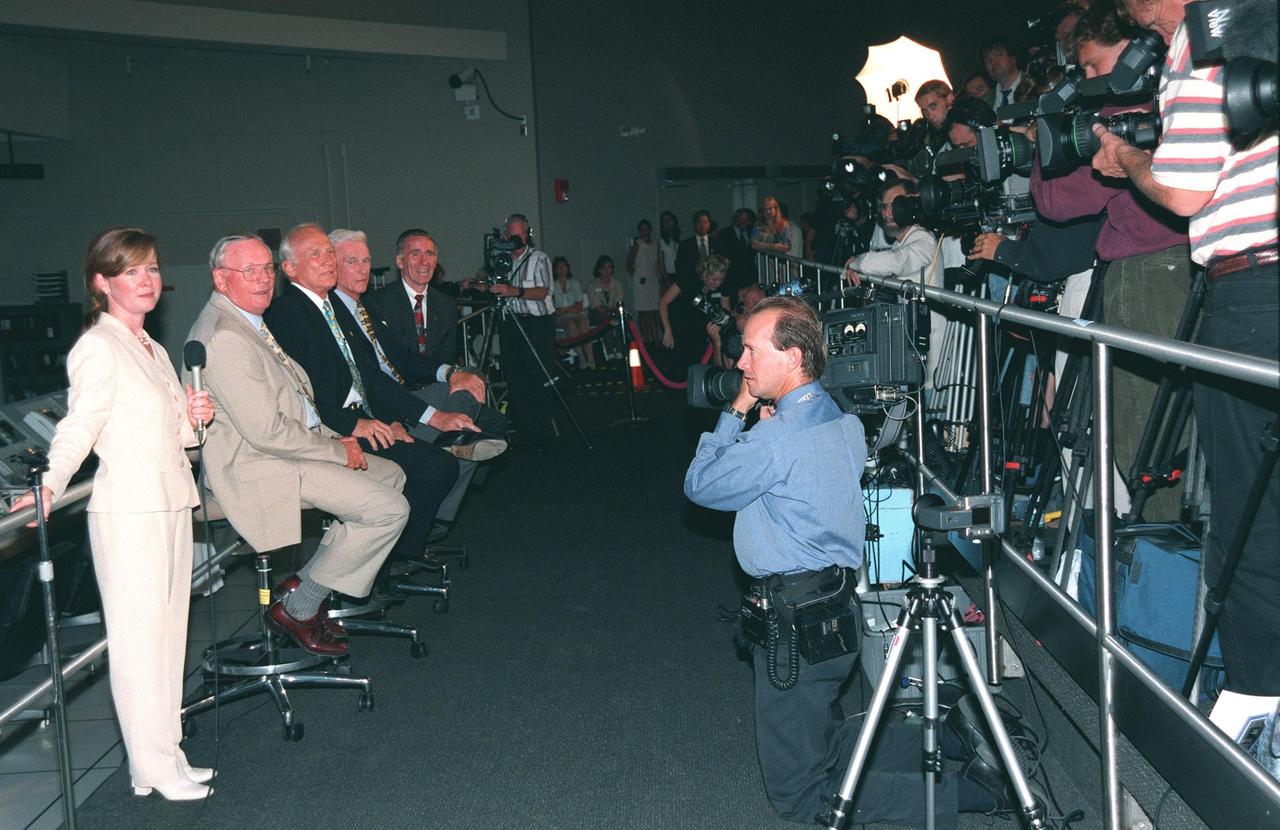
KENNEDY SPACE CENTER, FLA. -- Photographers and cameramen fill the stands of the Apollo/Saturn V Center for a press conference with former Apollo astronauts (seated, left to right) Neil A. Armstrong and Edwin "Buzz" Aldrin who flew on Apollo 11, the launch to the moon; Gene Cernan, who flew on Apollo 10 and 17; and Walt Cunningham, who flew on Apollo 7. At left is Lisa Malone, chief of KSC's Media Services branch, who monitored the session. The four astronauts were at KSC for the 30th anniversary of the Apollo 11 launch and moon landing, July 16 and July 20, 1969. Neil Armstrong was the first man to set foot on the moon

CAPE CANAVERAL, Fla. – Guests gather for the Astronaut Scholarship Foundation's dinner at the Radisson Resort at the Port in Cape Canaveral celebrating the 40th anniversary of Apollo 17. The gala commemorating the anniversary of Apollo 17 included mission commander Eugene Cernan and other astronauts who flew Apollo missions. Launched Dec. 7, 1972, Cernan and lunar module pilot Harrison Schmitt landed in the moon's Taurus-Littrow highlands while command module pilot Ronald Evans remained in lunar orbit operating a scientific instrument module. For more information, visit http://www-pao.ksc.nasa.gov/history/apollo/apollo-17/apollo-17.htm Photo credit: NASA/Kim Shiflett

CAPE CANAVERAL, Fla. – Guests gather for the Astronaut Scholarship Foundation's dinner at the Radisson Resort at the Port in Cape Canaveral celebrating the 40th anniversary of Apollo 17. The gala commemorating the anniversary of Apollo 17 included mission commander Eugene Cernan and other astronauts who flew Apollo missions. Launched Dec. 7, 1972, Cernan and lunar module pilot Harrison Schmitt landed in the moon's Taurus-Littrow highlands while command module pilot Ronald Evans remained in lunar orbit operating a scientific instrument module. For more information, visit http://www-pao.ksc.nasa.gov/history/apollo/apollo-17/apollo-17.htm Photo credit: NASA/Kim Shiflett
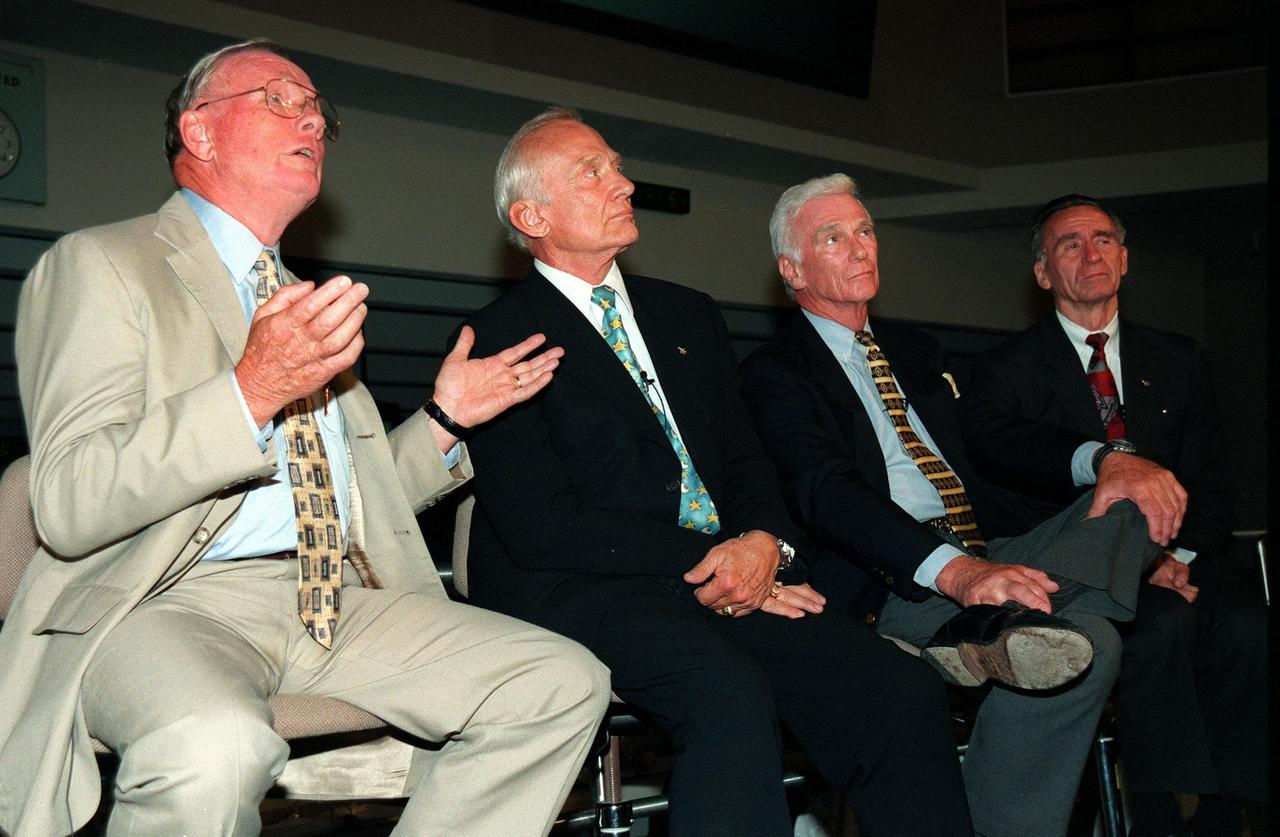
KENNEDY SPACE CENTER, FLA. -- Former Apollo astronauts meet with the media at the Apollo/Saturn V Center prior to an anniversary banquet highlighting the contributions of aerospace employees who made the Apollo program possible. From left are Neil A. Armstrong and Edwin "Buzz" Aldrin who flew on Apollo 11, the launch to the moon; Gene Cernan, who flew on Apollo 10 and 17; and Walt Cunningham, who flew on Apollo 7. This is the 30th anniversary of the launch and moon landing, July 16 and July 20, 1969. Neil Armstrong was the first man to set foot on the moon
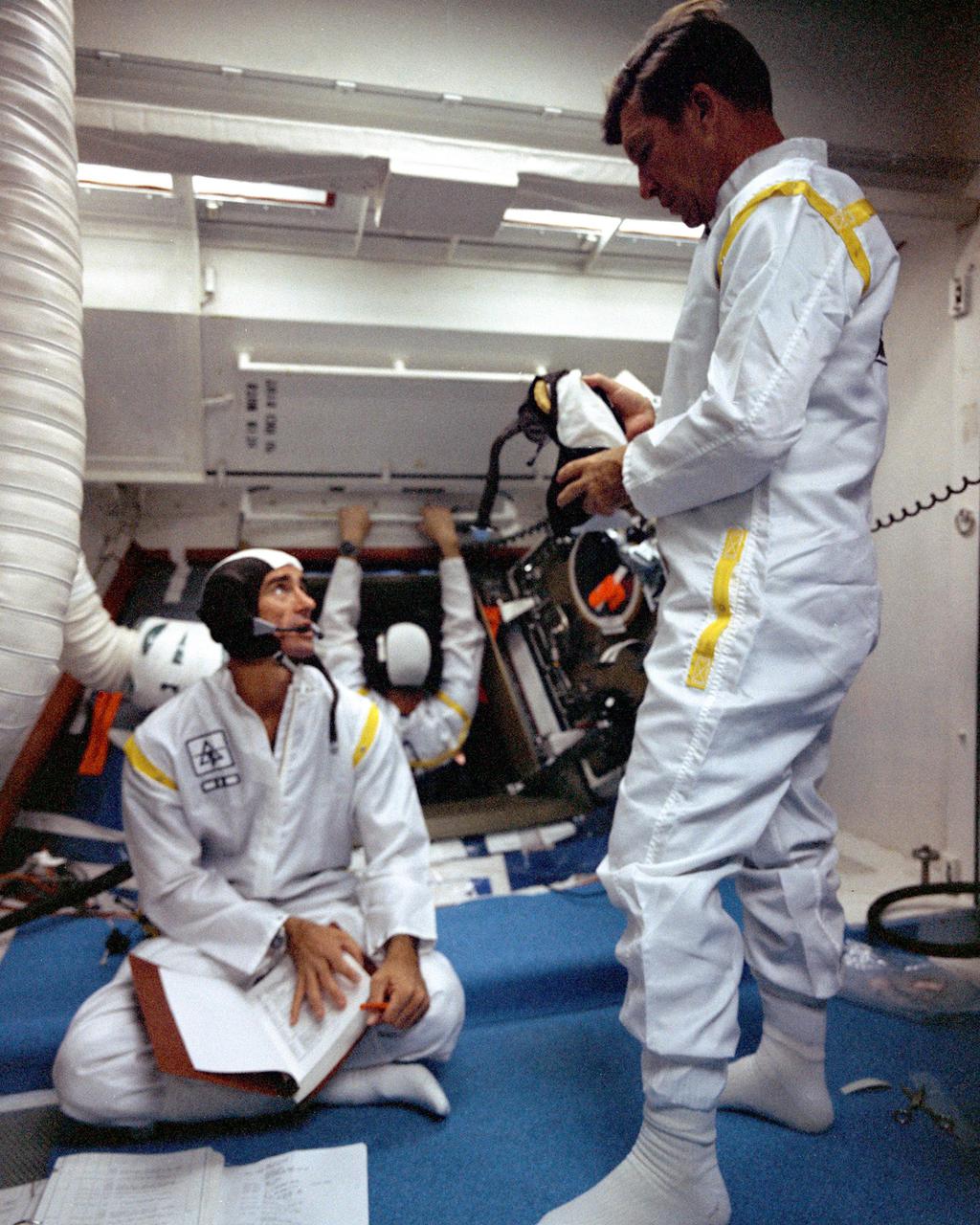
KENNEDY SPACE CENTER, FLA. - Apollo 7 Command Module Pilot Donn F. Eisele enters the spacecraft at Pad 34 while fellow crew members, Commander Walter M. Schirra Jr., left, and Lunar Module Pilot Walter Cunningham hold a brief discussion before they repeat that portion of the Plugs-Out test at the pad. The tests are being conducted in preparation for the scheduled launch of Apollo 7, the first manned lunar orbital mission.
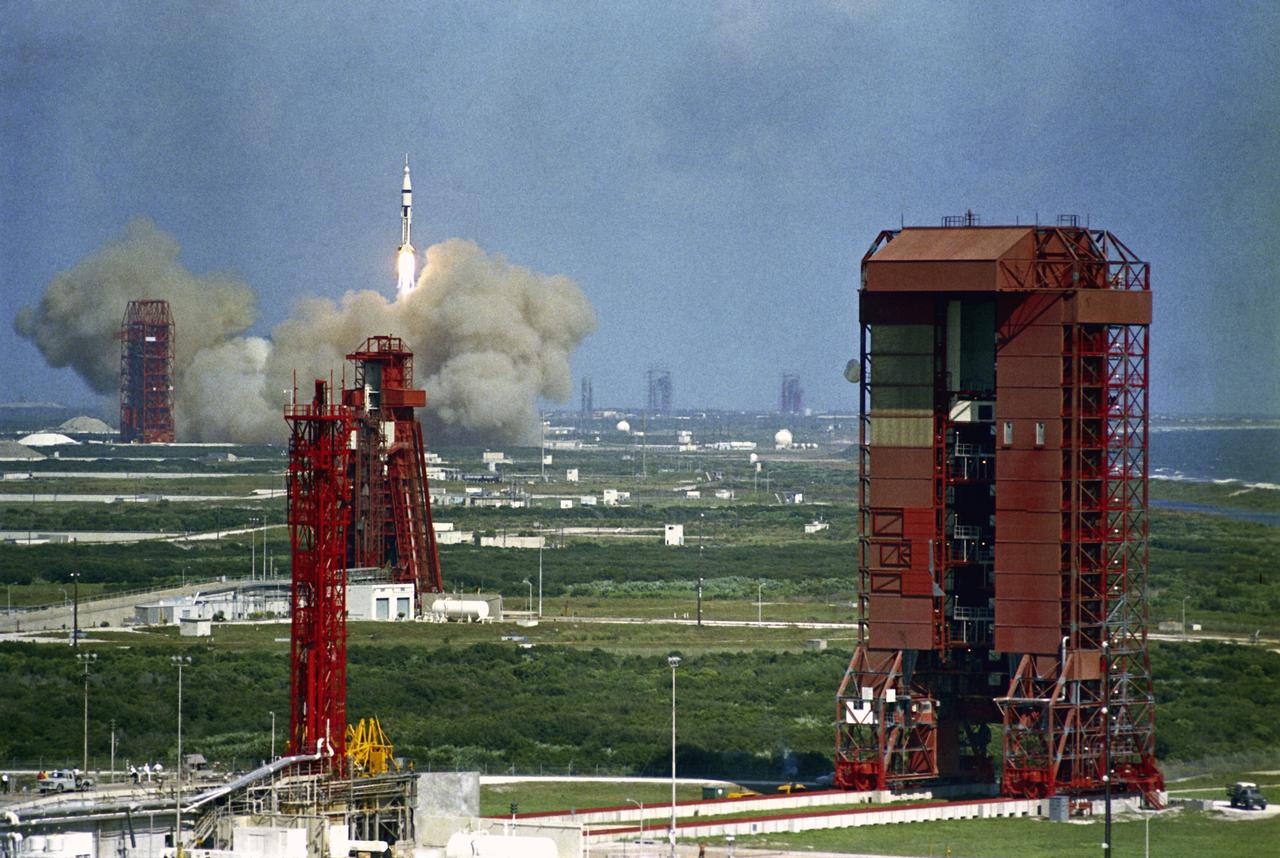
CAPE CANAVERAL, Fla. -- The Apollo 7 spacecraft, atop a Saturn IB rocket, lifts off from Complex 34, Cape Kennedy, at 11:03 a.m. EDT. The spacecraft achieved orbit to begin an 11-day mission. The flight is intended to qualify Apollo for a manned flight to the moon. Photo credit: NASA

S68-42343 (5 Aug. 1968) --- The prime crew of the first manned Apollo space mission, Apollo 7, stands on the deck of the NASA Motor Vessel Retriever after suiting up for water egress training in the Gulf of Mexico. Left to right, are astronauts Walter Cunningham, Donn F. Eisele, and Walter M. Schirra Jr.
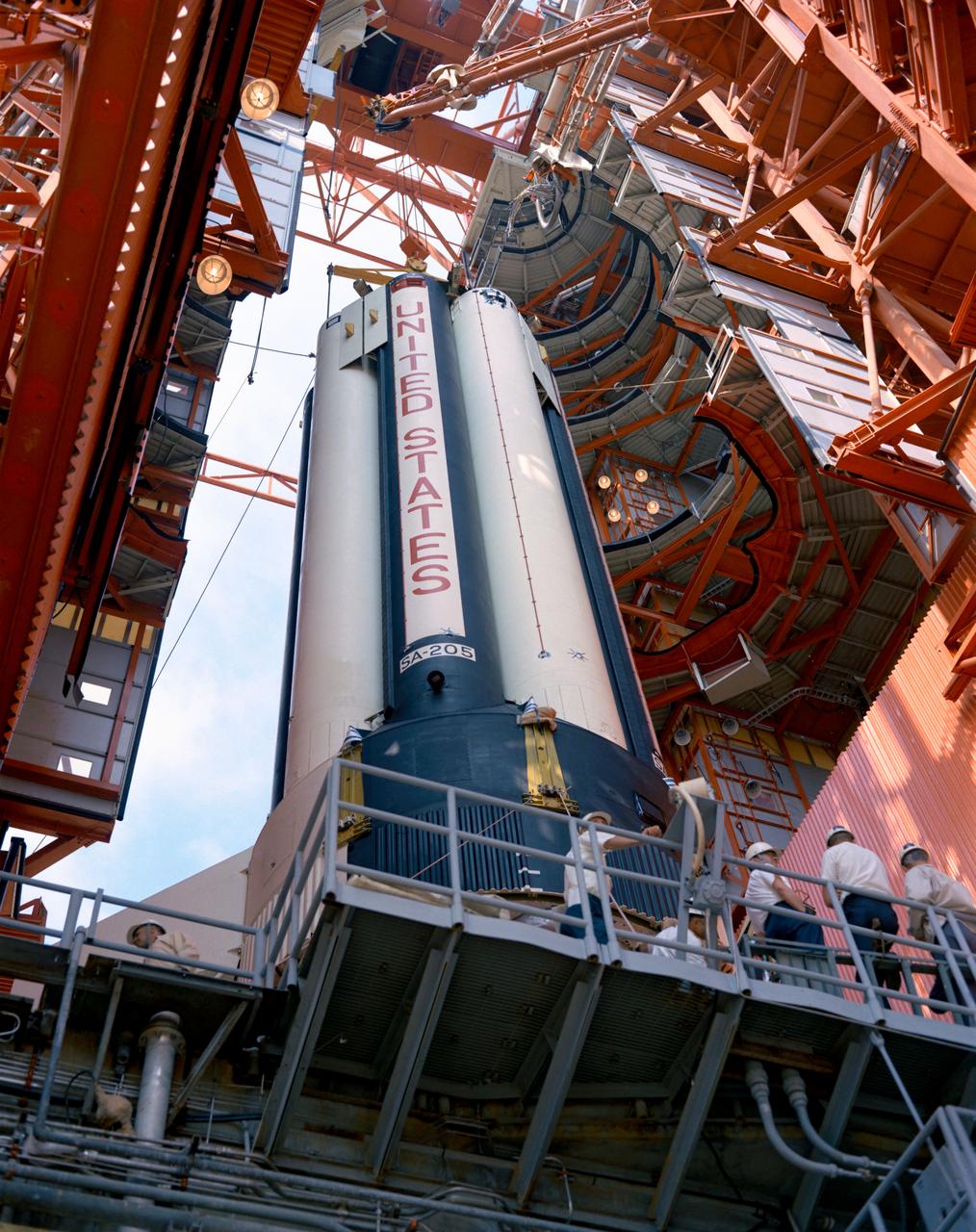
S68-29781 (22 April 1968) --- Low angle view at the Kennedy Space Center's Pad 34 showing the erection of the first stage of the Saturn 205 launch vehicle. The two-stage Saturn IB will be the launch vehicle for the first unmanned Apollo space mission, Apollo 7 (Spacecraft 101/Saturn 205).
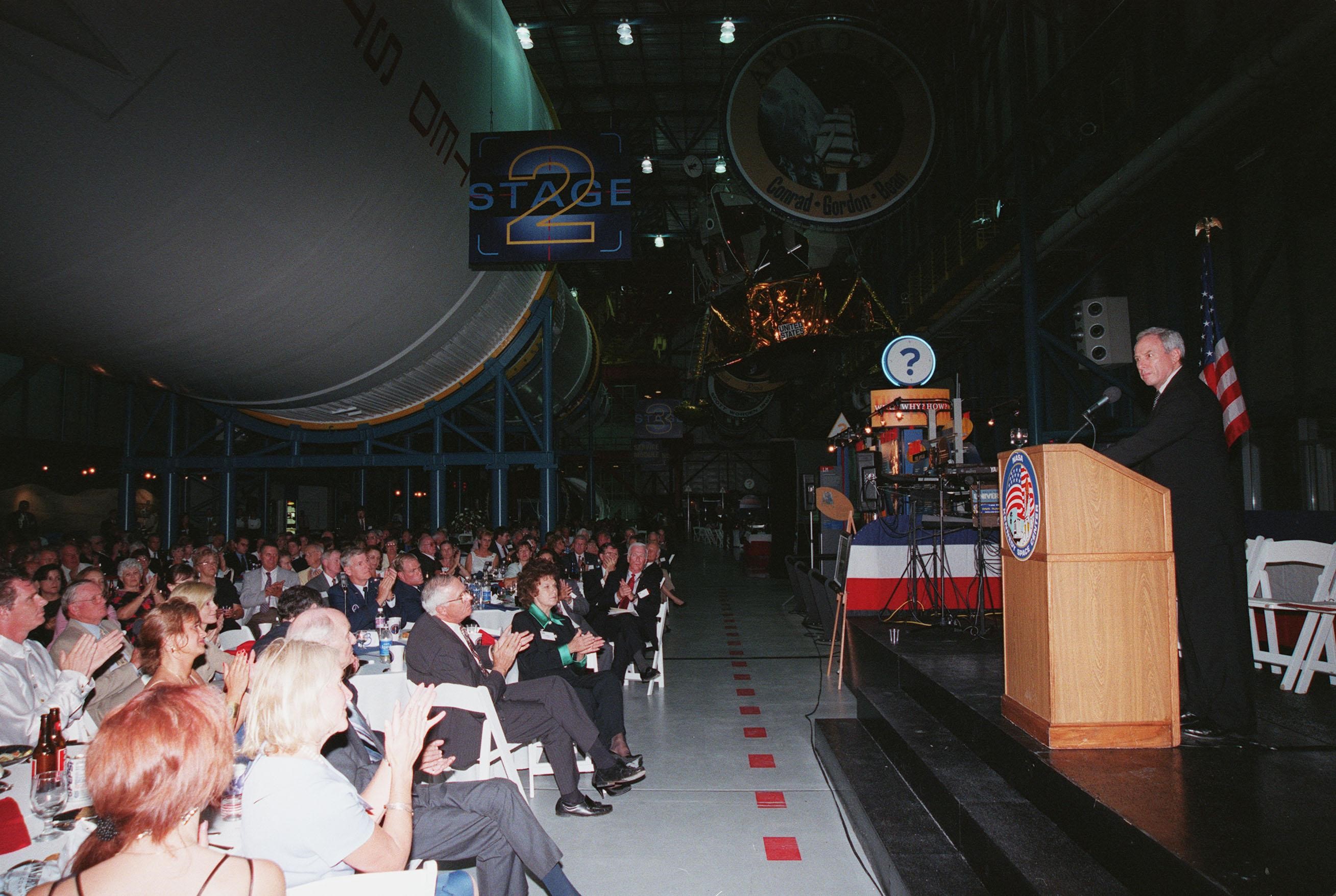
KENNEDY SPACE CENTER, FLA. -- NASA Administrator Daniel S. Goldin (right) addresses the audience at the Apollo 11 anniversary banquet honoring the Apollo team, the people who made the entire lunar landing program possible. The banquet was held in the Apollo/Saturn V Center, part of the KSC Visitor Complex, with seating under an unused Saturn V rocket like those that powered the Apollo launches . This is the 30th anniversary of the Apollo 11 launch and moon landing, July 16 and July 20, 1969. Among the guests at the banquet were former Apollo astronauts are Neil A. Armstrong and Edwin "Buzz" Aldrin who flew on Apollo 11, the launch of the first moon landing; Gene Cernan, who flew on Apollo 10 and 17 and was the last man to walk on the moon; and Walt Cunningham, who flew on Apollo 7
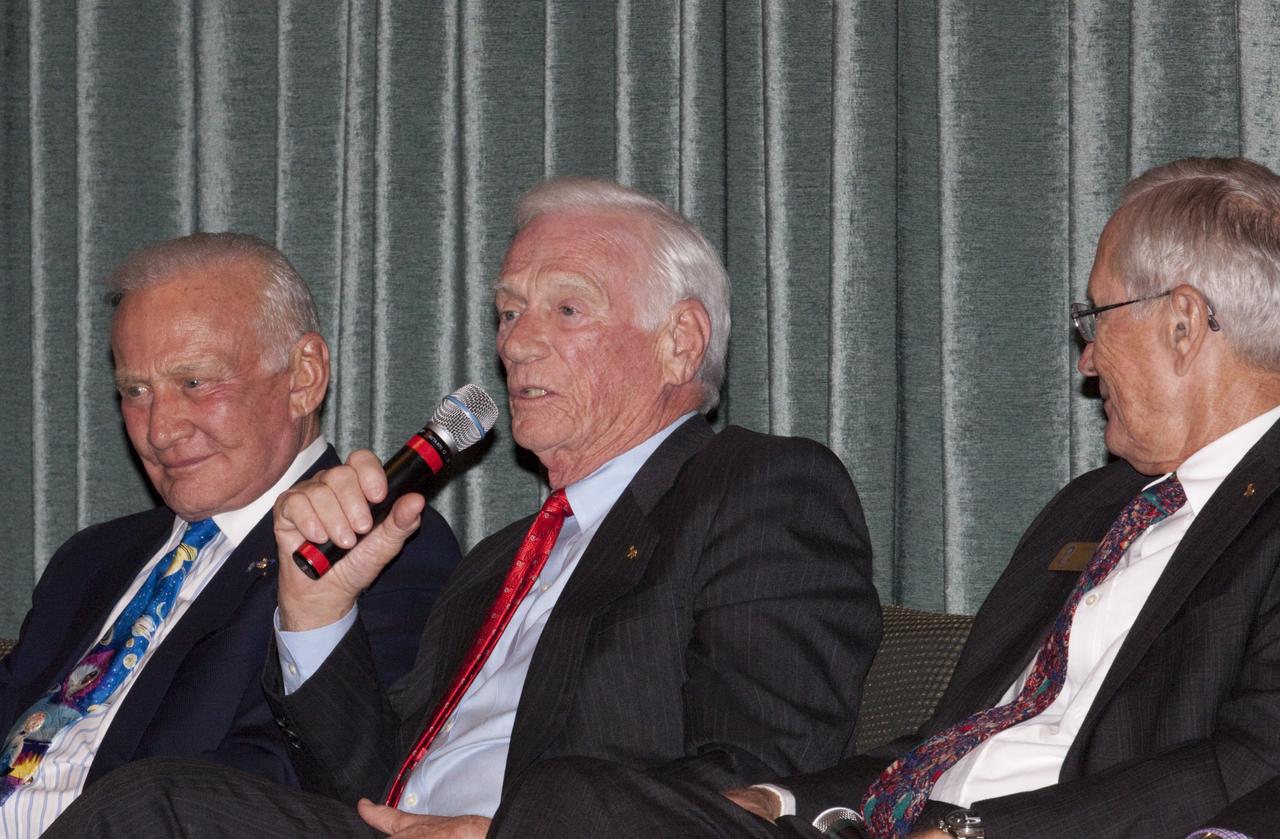
CAPE CANAVERAL, Fla. – Gemini 9, Apollo 10 and 17 astronaut Eugene Cernan speaks to guests gathered for the Astronaut Scholarship Foundation's dinner at the Radisson Resort at the Port in Cape Canaveral celebrating the 40th anniversary of Apollo 17. Listening on the left is Gemini 12 and Apollo 11 astronaut Buzz Aldrin, along with Apollo 16 astronaut Charles Duke. The gala commemorating the anniversary of Apollo 17 included mission commander Eugene Cernan and other astronauts who flew Apollo missions. Launched Dec. 7, 1972, Cernan and lunar module pilot Harrison Schmitt landed in the moon's Taurus-Littrow highlands while command module pilot Ronald Evans remained in lunar orbit operating a scientific instrument module. For more information, visit http://www-pao.ksc.nasa.gov/history/apollo/apollo-17/apollo-17.htm Photo credit: NASA/Kim Shiflett
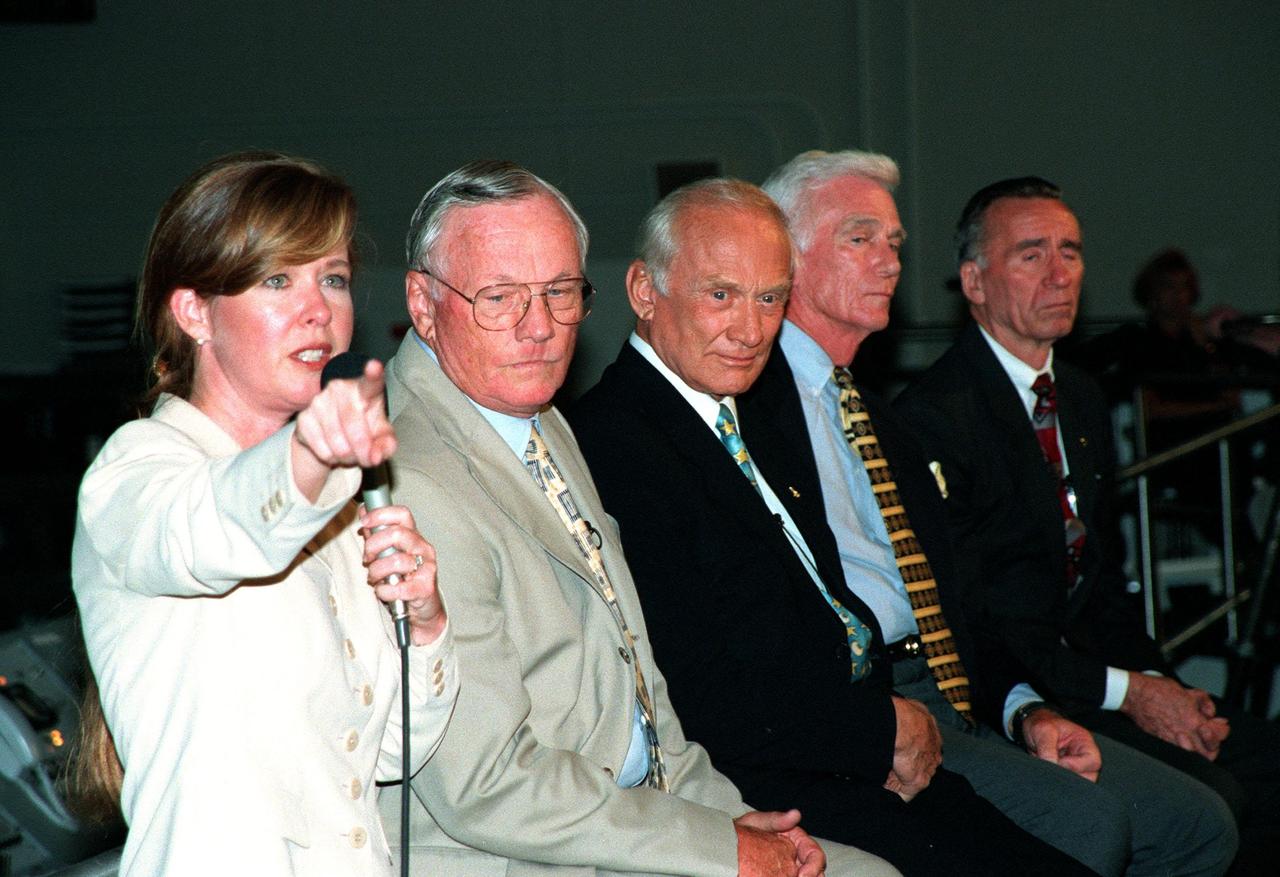
KENNEDY SPACE CENTER, FLA. -- In the Apollo/Saturn V Center, Lisa Malone (left), chief of KSC's Media Services branch, identifies a reporter to pose a question to one of the former Apollo astronauts seated next to her. From left, they are Neil A. Armstrong and Edwin "Buzz" Aldrin who flew on Apollo 11, the launch to the moon; Gene Cernan, who flew on Apollo 10 and 17; and Walt Cunningham, who flew on Apollo 7. This is the 30th anniversary of the launch and moon landing, July 16 and July 20, 1969. Neil Armstrong was the first man to set foot on the moon
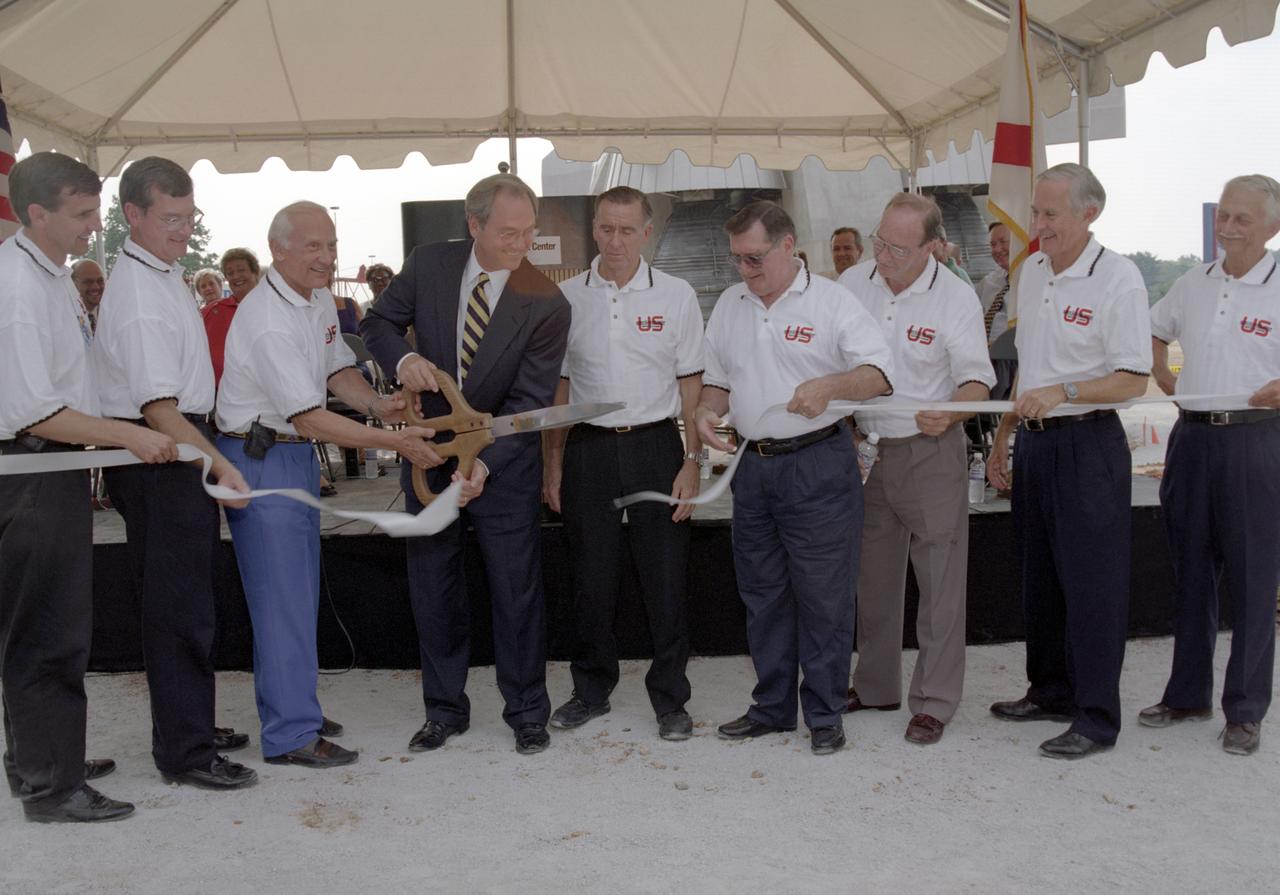
Alabama Governor Don Seigleman cuts the ribbon marking the dedication of the Saturn V rocket replica that was constructed at the U. S. Space and Rocket Center in honor of the 30th arniversary of the lunar landing. Accompanying the Governor are (L/R): Mike Wing, CEO US Space Rocket Center; Mike Gillespie, Madison County Commissioner, Dist. Seven; Buzz Aldrin, Apollo 11 Astronaut; Governor Seigleman; Walt Cunningham, Apollo 7 Astronaut; Dick Gordon, Apollo 12 Astronaut; Ed Mitchell, Apollo 14 Astronaut; Charlie Duke, Apollo 16 Astronaut; and Owen Garriott, Skylab 3 Astronaut.