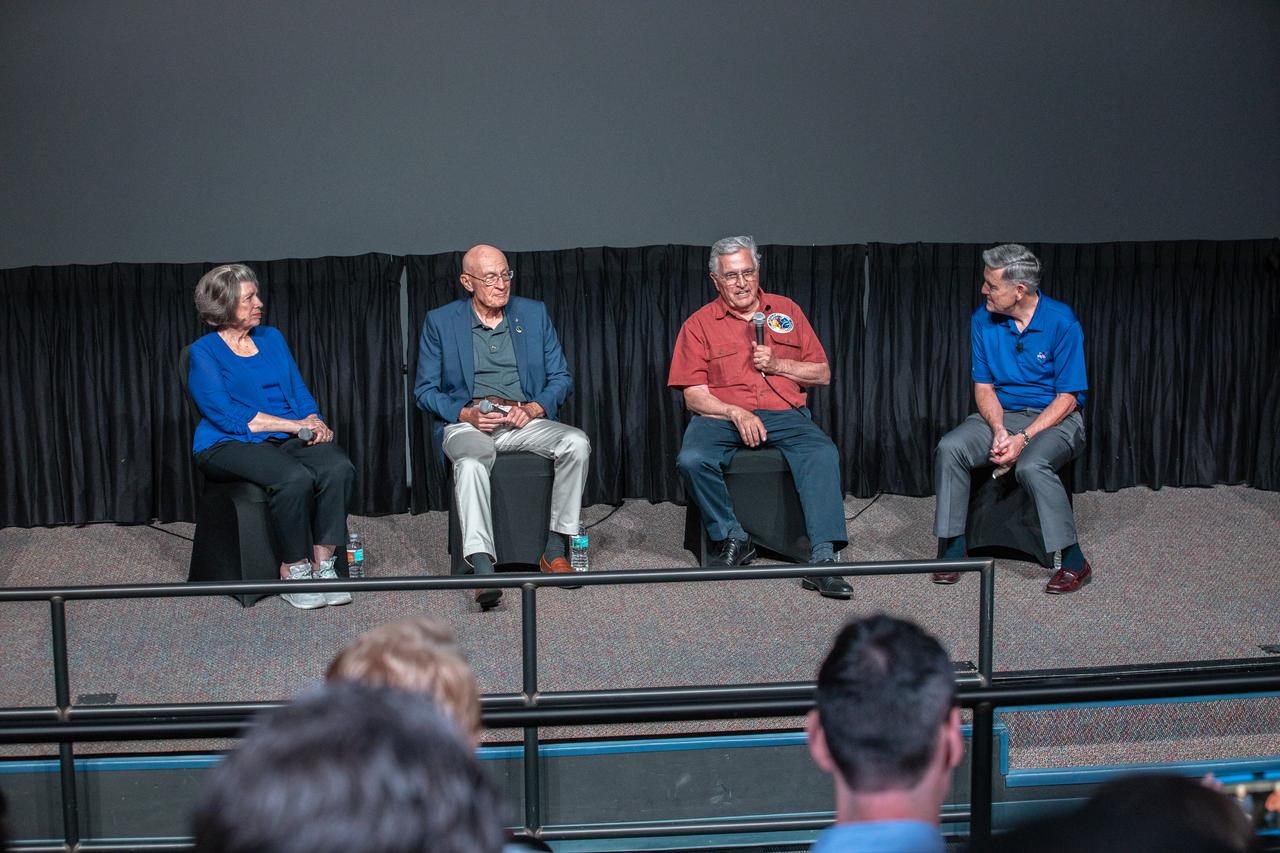
NASA Kennedy Space Center Director Bob Cabana, far right, serves as moderator for the “Apollo Heroes Panel Discussion” in the IMAX Theater at the Kennedy Space Center Visitor Complex in Florida on July 16, 2019. Panelists are, from left, JoAnn Morgan, the only woman on console in the Launch Control Center for Apollo 11 launch countdown activities; Bob Sieck, Apollo-era launch team member and former space shuttle launch director; and Harrison Schmitt, Apollo 17 astronaut and moonwalker. The panel discussion is one of several events at the visitor complex to honor the 50th anniversary of NASA’s Saturn V/Apollo 11 launch and landing on the Moon.
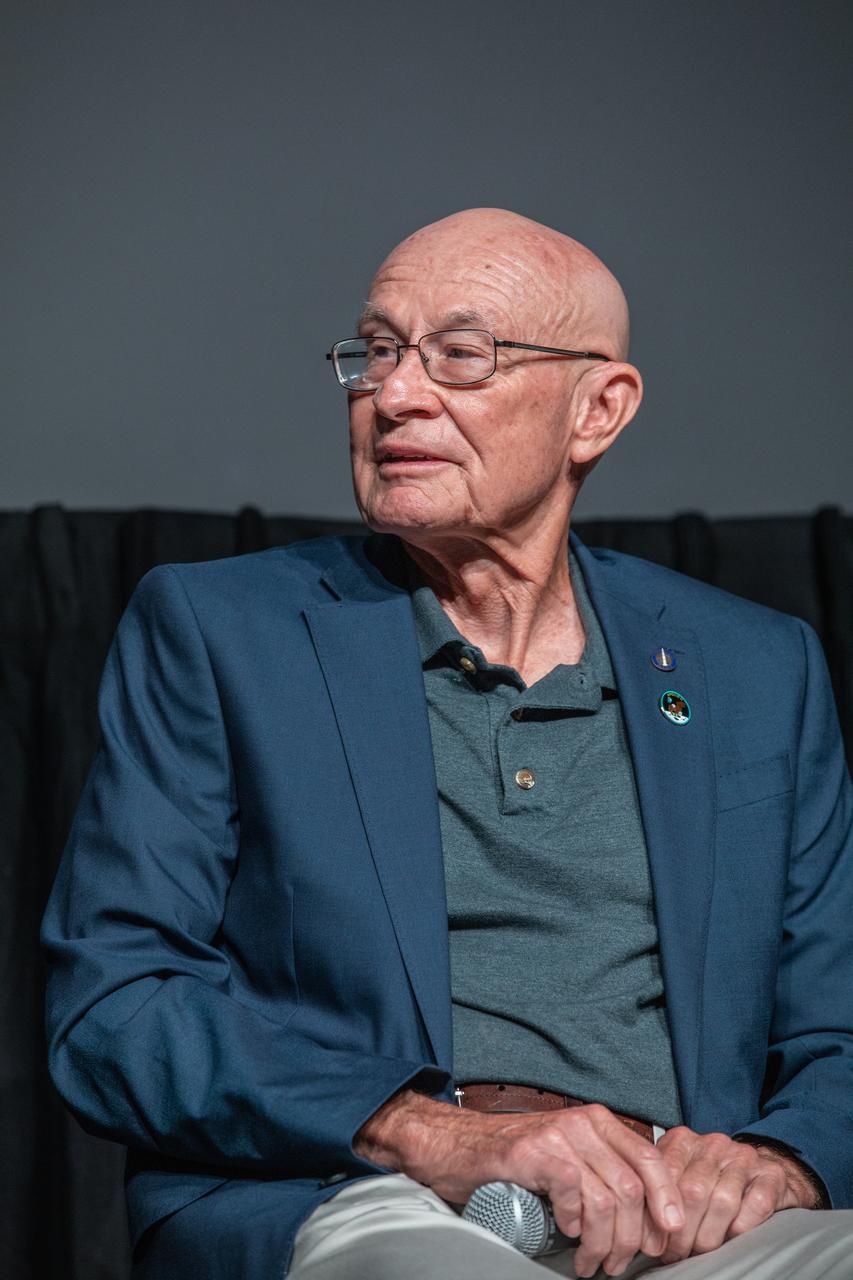
Bob Sieck, Apollo-era launch team member and former space shuttle launch director, particpates in the “Apollo Heroes Panel Discussion” in the IMAX Theater at the Kennedy Space Center Visitor Complex in Florida on July 16, 2019. The panel discussion is one of several events at the visitor complex to honor the 50th anniversary of NASA’s Saturn V/Apollo 11 launch and landing on the Moon.
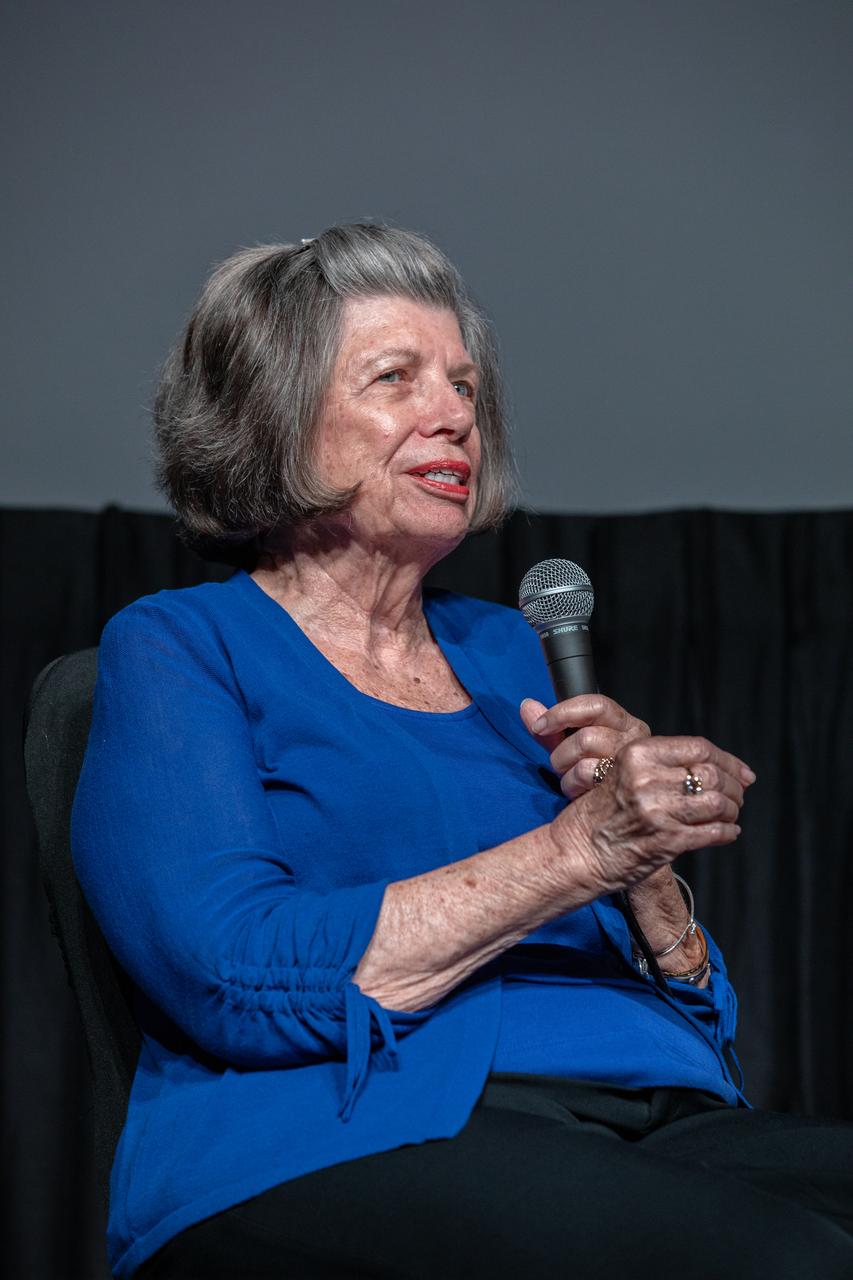
JoAnn Morgan, retired from NASA and the only woman on console in the Launch Control Center during Apollo 11 launch countdown activities, answers questions during the “Apollo Heroes Panel Discussion” in the IMAX Theater at the Kennedy Space Center Visitor Complex in Florida on July 16, 2019. The panel discussion is one of several events at the visitor complex to honor the 50th anniversary of NASA’s Saturn V/Apollo 11 launch and landing on the Moon.
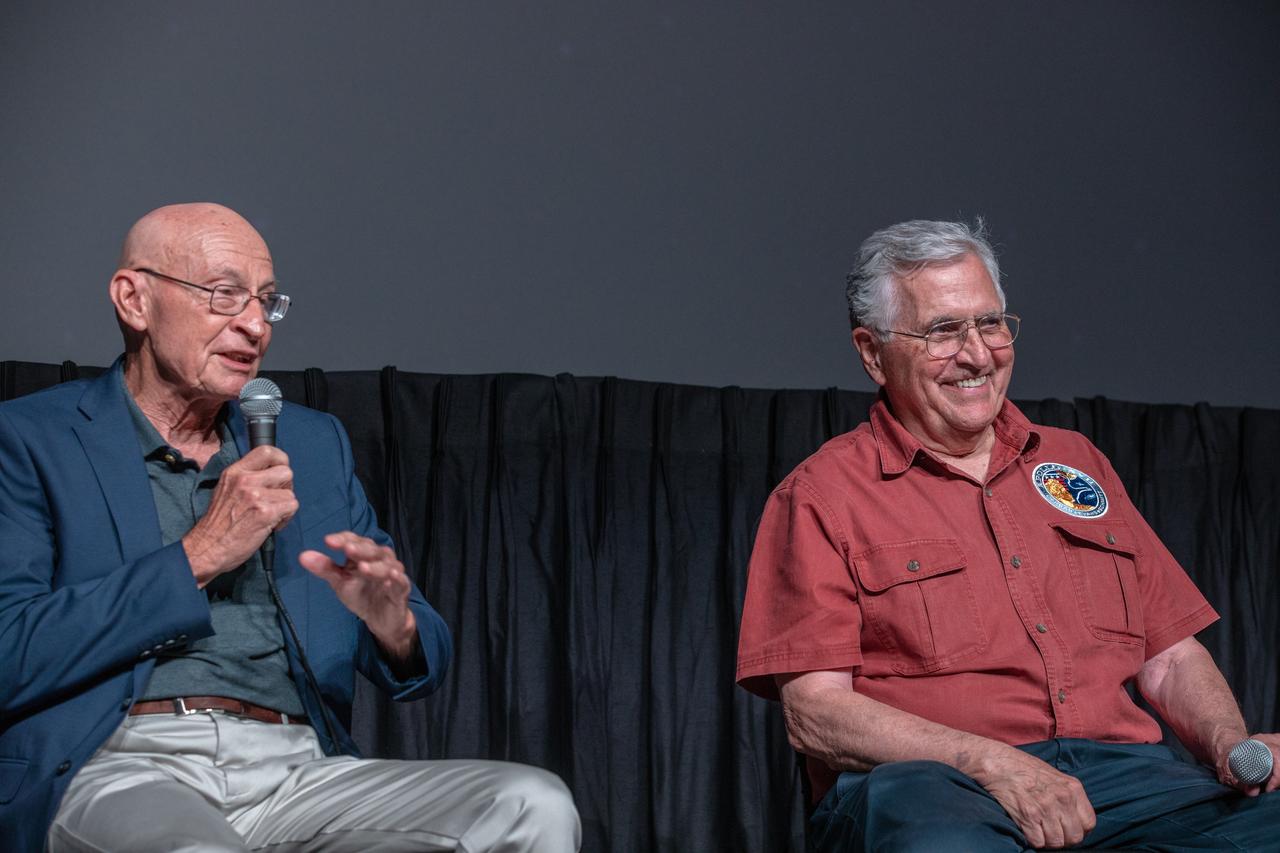
Bob Sieck, left, Apollo-era launch team member and former space shuttle launch director, and Harrison Schmitt, Apollo 17 astronaut and moonwalker, answer questions during the “Apollo Heroes Panel Discussion” in the IMAX Theater at the Kennedy Space Center Visitor Complex in Florida on July 16, 2019. The panel discussion is one of several events at the visitor complex to honor the 50th anniversary of NASA’s Saturn V/Apollo 11 launch and landing on the Moon.

NASA Kennedy Space Center Director Bob Cabana, far right, serves as moderator for the “Apollo Heroes Panel Discussion” in the IMAX Theater at the Kennedy Space Center Visitor Complex in Florida on July 16, 2019. Panelists are, from left, JoAnn Morgan, the only woman on console in the Launch Control Center for Apollo 11 launch countdown activities; Bob Sieck, Apollo-era launch team member and former space shuttle launch director; and Harrison Schmitt, Apollo 17 astronaut and moonwalker. The panel discussion is one of several events at the visitor complex to honor the 50th anniversary of NASA’s Saturn V/Apollo 11 launch and landing on the Moon.
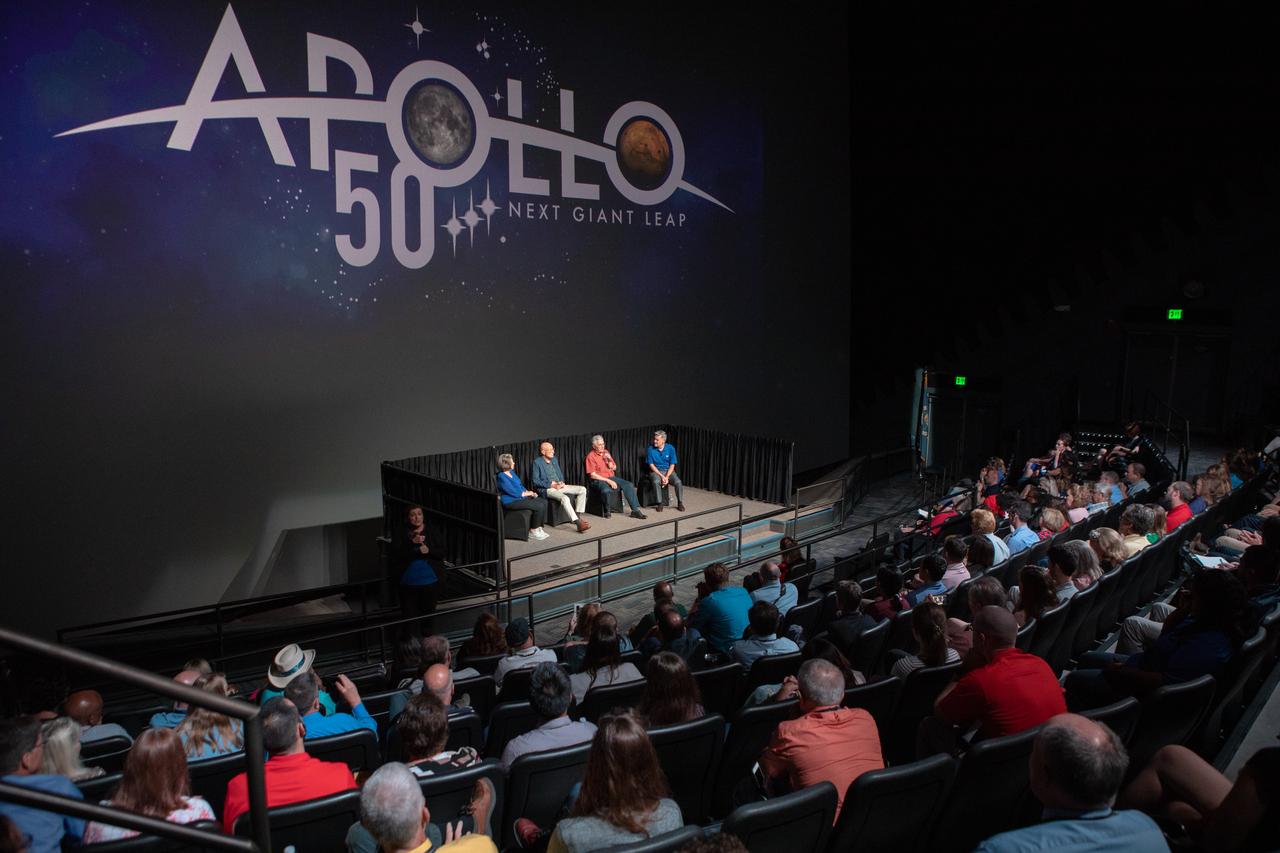
NASA Kennedy Space Center Director Bob Cabana, far right, serves as moderator for the “Apollo Heroes Panel Discussion” in the IMAX Theater at the Kennedy Space Center Visitor Complex in Florida on July 16, 2019. Panelists are, from left, JoAnn Morgan, the only woman on console in the Launch Control Center for Apollo 11 launch countdown activities; Bob Sieck, Apollo-era launch team member and former space shuttle launch director; and Harrison Schmitt, Apollo 17 astronaut and moonwalker. The panel discussion is one of several events at the visitor complex to honor the 50th anniversary of NASA’s Saturn V/Apollo 11 launch and landing on the Moon.
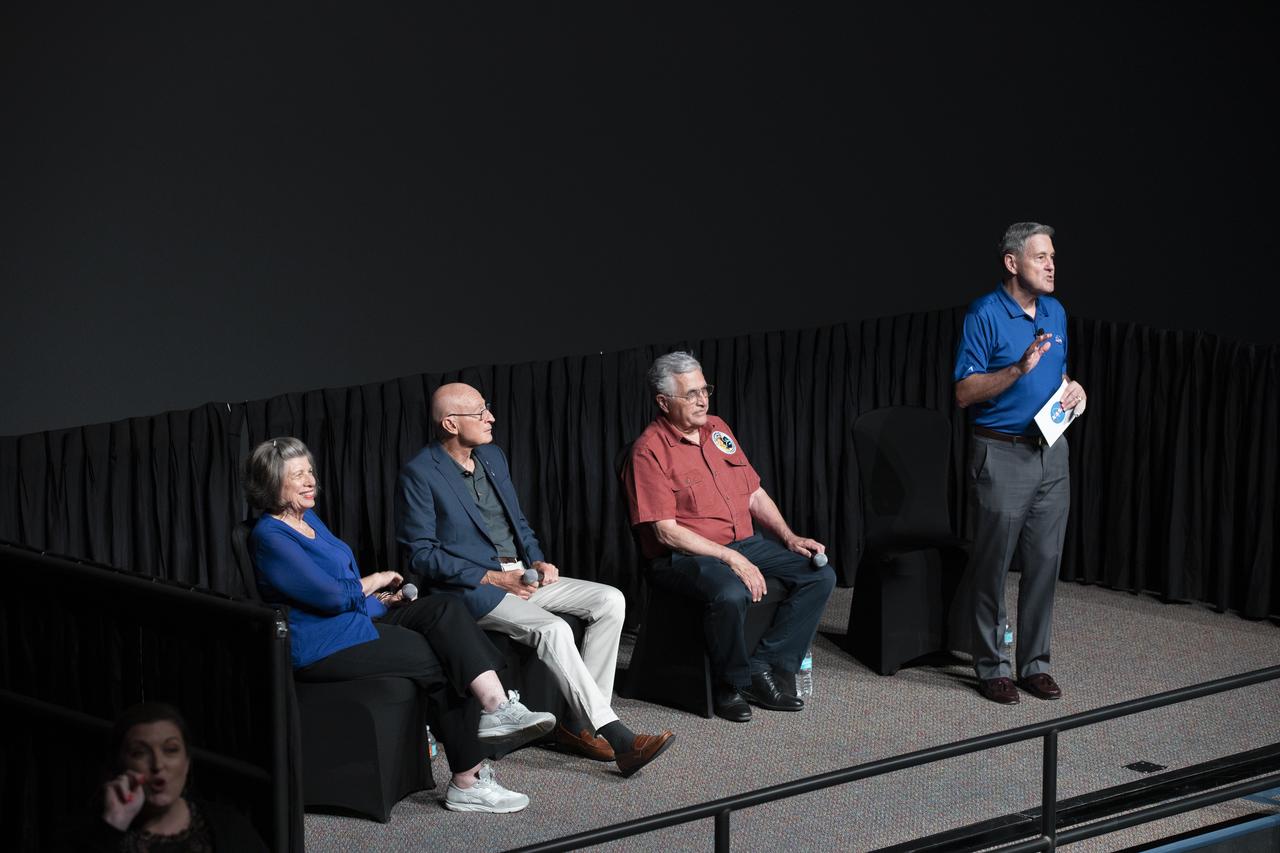
NASA Kennedy Space Center Director Bob Cabana, far right, serves as moderator for the “Apollo Heroes Panel Discussion” in the IMAX Theater at the Kennedy Space Center Visitor Complex in Florida on July 16, 2019. Panelists are, from left, JoAnn Morgan, the only woman on console in the Launch Control Center for Apollo 11 launch countdown activities; Bob Sieck, Apollo-era launch team member and former space shuttle launch director; and Harrison Schmitt, Apollo 17 astronaut and moonwalker. The panel discussion is one of several events at the visitor complex to honor the 50th anniversary of NASA’s Saturn V/Apollo 11 launch and landing on the Moon.
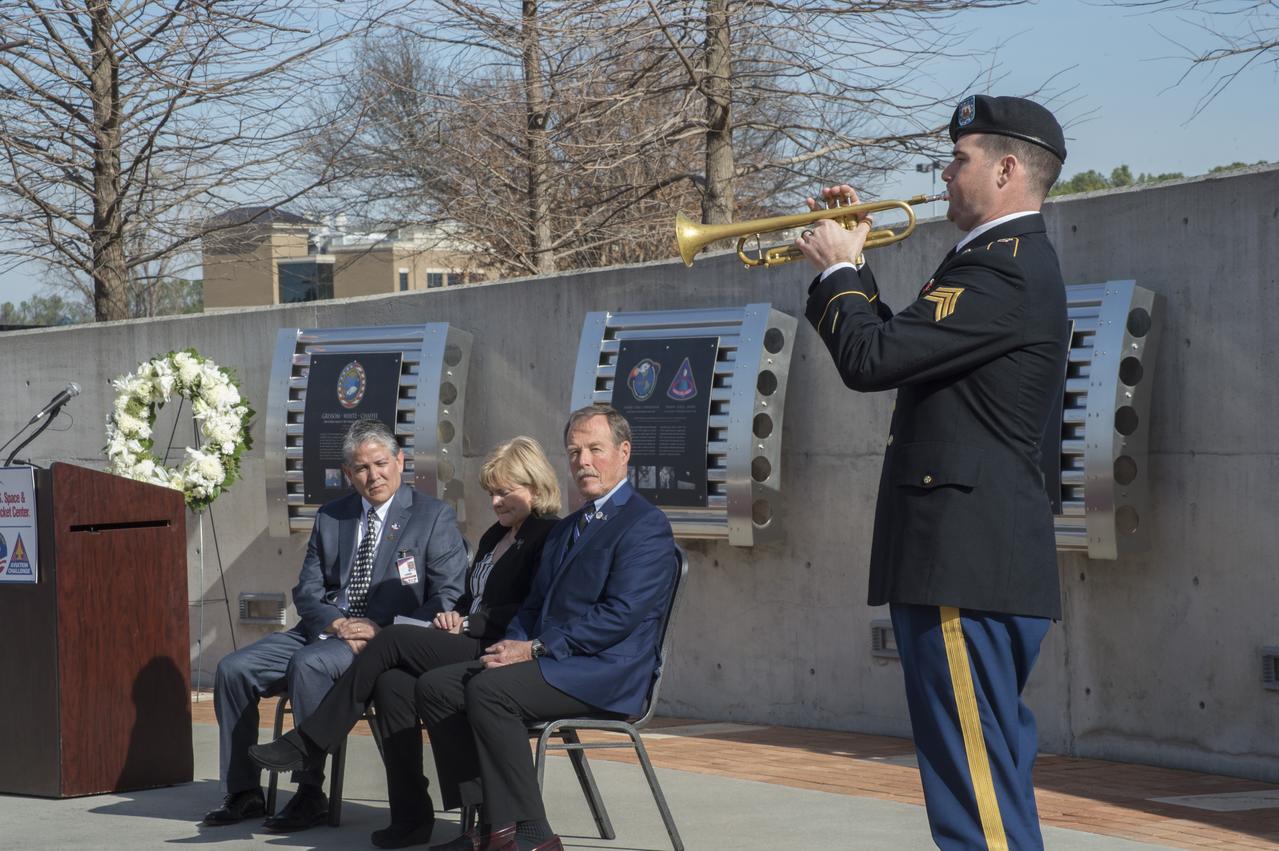
SGT. JAMES OLD, RIGHT, PERFORMS THE INTRODUCTION FROM JAMES HORNER'S "APOLLO 13" FILM SCORE AT THE U.S. SPACE AND ROCKET CENTER'S MEMORIAL EVENT HONORING NASA'S LOST SPACE HEROES.
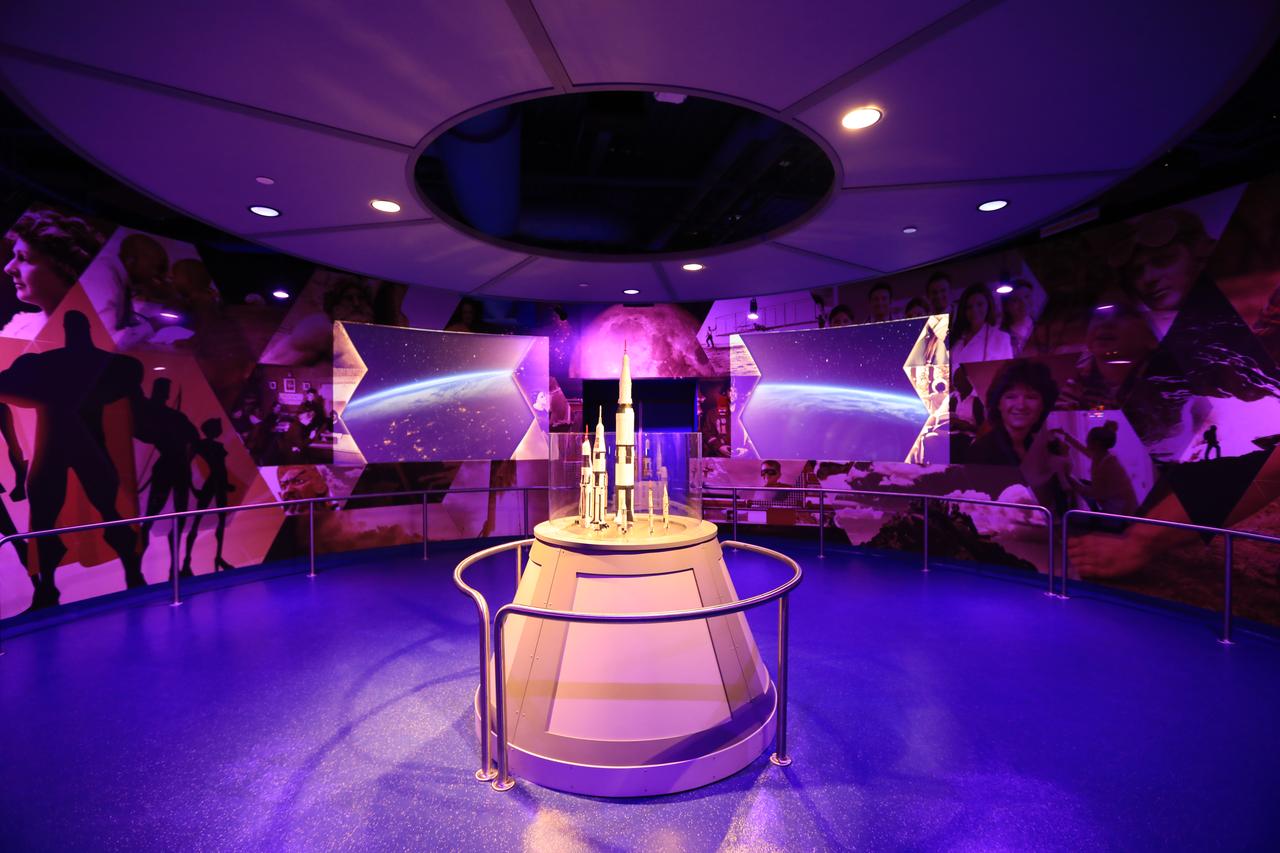
The Heroes and Legends attraction at the Kennedy Space Center Visitor Complex honors what it takes to be a hero. In the center of this display are models of rockets that played key roles in the history of NASA's efforts to explore space. The new facility looks back to the pioneering efforts of Mercury, Gemini and Apollo. It sets the stage by providing the background and context for space exploration and the legendary men and women who pioneered the nation's journey into space.

A memorial wreath is placed in the Heroes and Legends exhibit at the Kennedy Space Center Visitor Complex in Florida following a ceremony honoring the memory of former Apollo astronaut Walter Cunningham. The ceremony was held Jan. 9, 2023. Cunningham was the lunar module pilot for Apollo 7 – the first crewed flight test of the Apollo spacecraft – where he tested maneuvers necessary for docking and lunar orbit rendezvous. He passed away Jan. 3 at the age of 90.

Therrin Protze, chief operating officer of the Kennedy Space Center Visitor Complex, speaks during a memorial ceremony honoring former Apollo astronaut Walter Cunningham. The ceremony was held Jan. 9, 2023, at the Heroes and Legends exhibit within the Astronaut Hall of Fame at the Florida spaceport’s visitor complex. Cunningham was the lunar module pilot for Apollo 7 – the first crewed flight test of the Apollo spacecraft – where he tested maneuvers necessary for docking and lunar orbit rendezvous. He passed away Jan. 3 at the age of 90.

A photo of former Apollo astronaut Walter Cunningham is displayed during a memorial ceremony at NASA’s Kennedy Space Center in Florida. The ceremony was held Jan. 9, 2023, at the Heroes and Legends exhibit within the Astronaut Hall of Fame at the center’s visitor complex. Cunningham was the lunar module pilot for Apollo 7 – the first crewed flight test of the Apollo spacecraft – where he tested maneuvers necessary for docking and lunar orbit rendezvous. He passed away Jan. 3 at the age of 90.
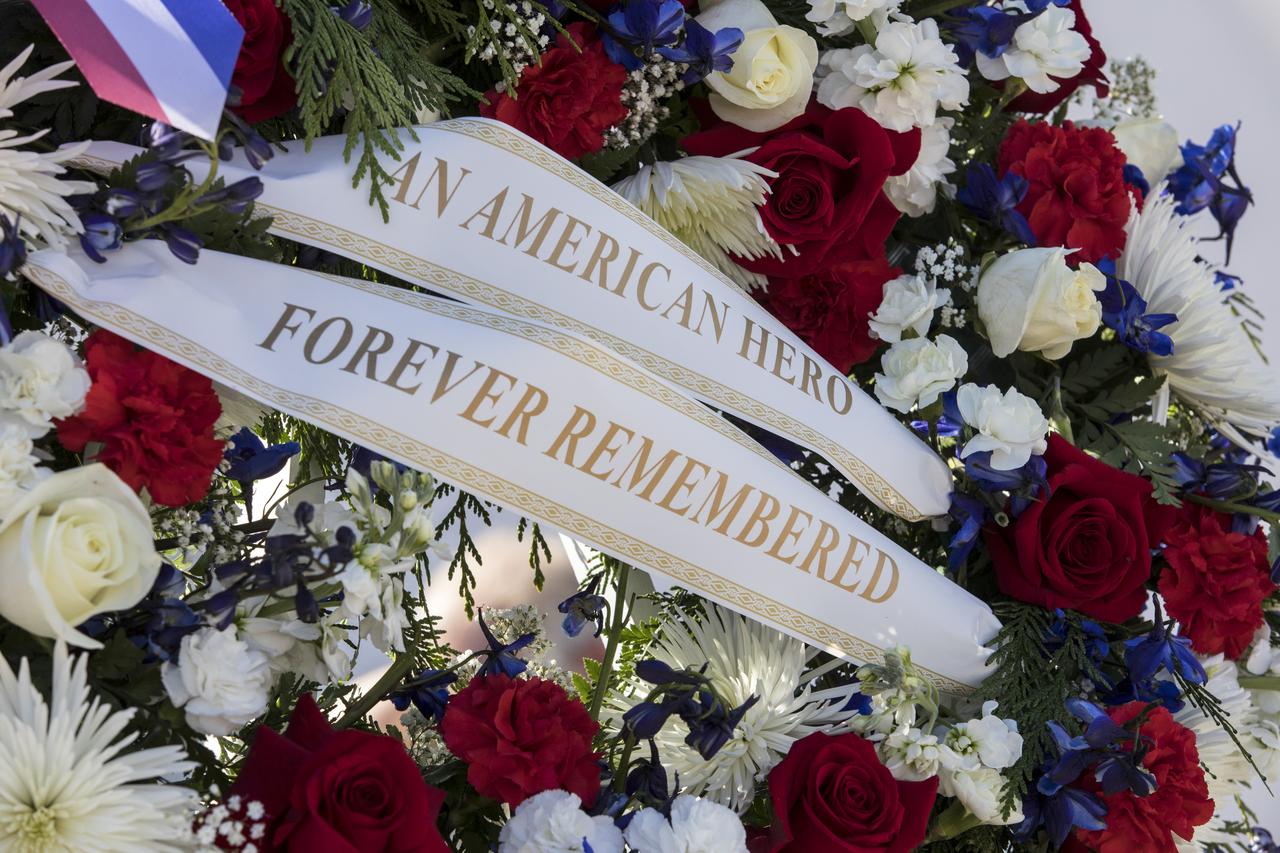
NASA astronaut John Young was remembered in a ceremony at the Heroes and Legends exhibit at the Kennedy Space Center Visitor Complex. The brief memorial took place on the afternoon of Jan. 11, 2018. Young died Jan. 5, 2018, in Houston at the age of 87. He was the only astronaut to fly in NASA's Gemini, Apollo and Space Shuttle Programs.
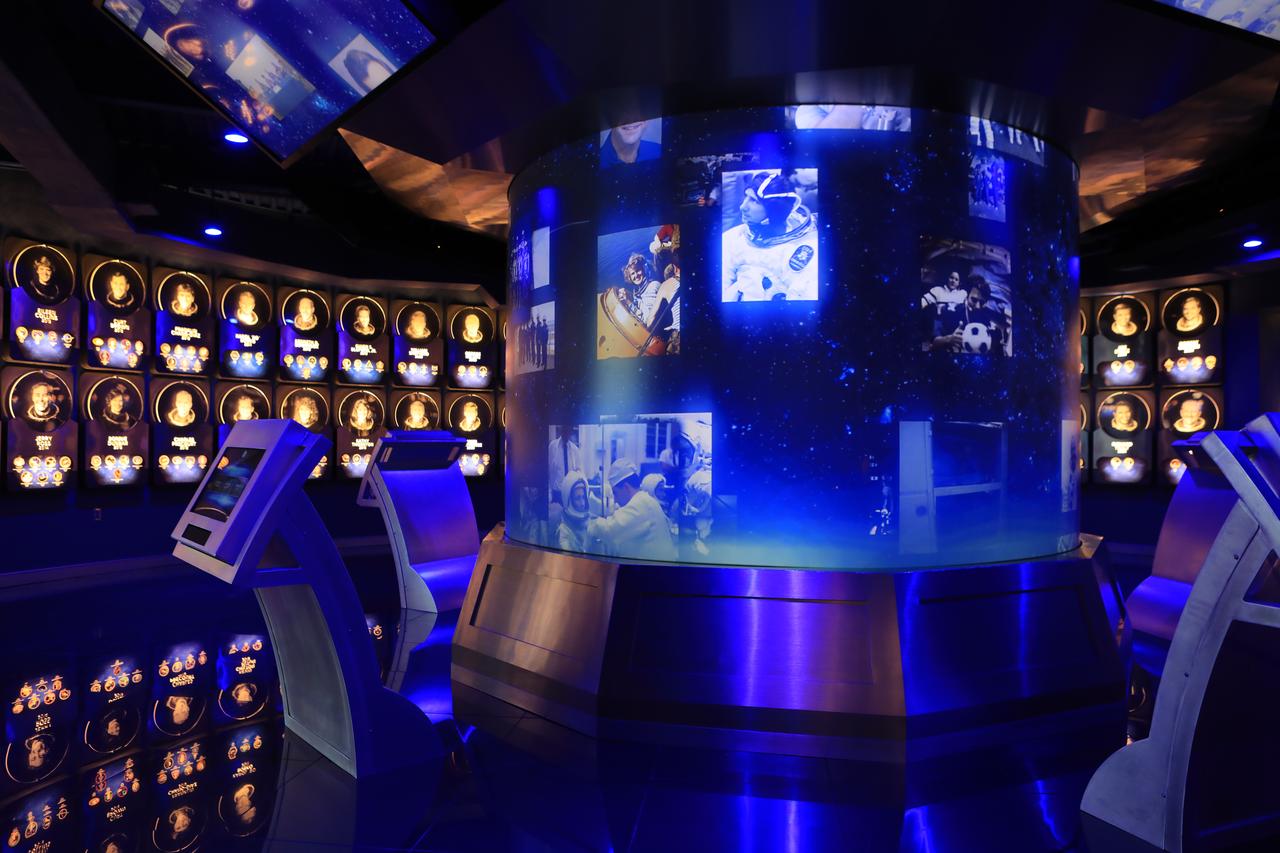
The Heroes and Legends attraction at the Kennedy Space Center Visitor Complex includes the U.S. Astronaut Hall of Fame. The new facility also looks back to the pioneering efforts of Mercury, Gemini and Apollo. It sets the stage by providing the background and context for space exploration and the legendary men and women who pioneered the nation's journey into space.
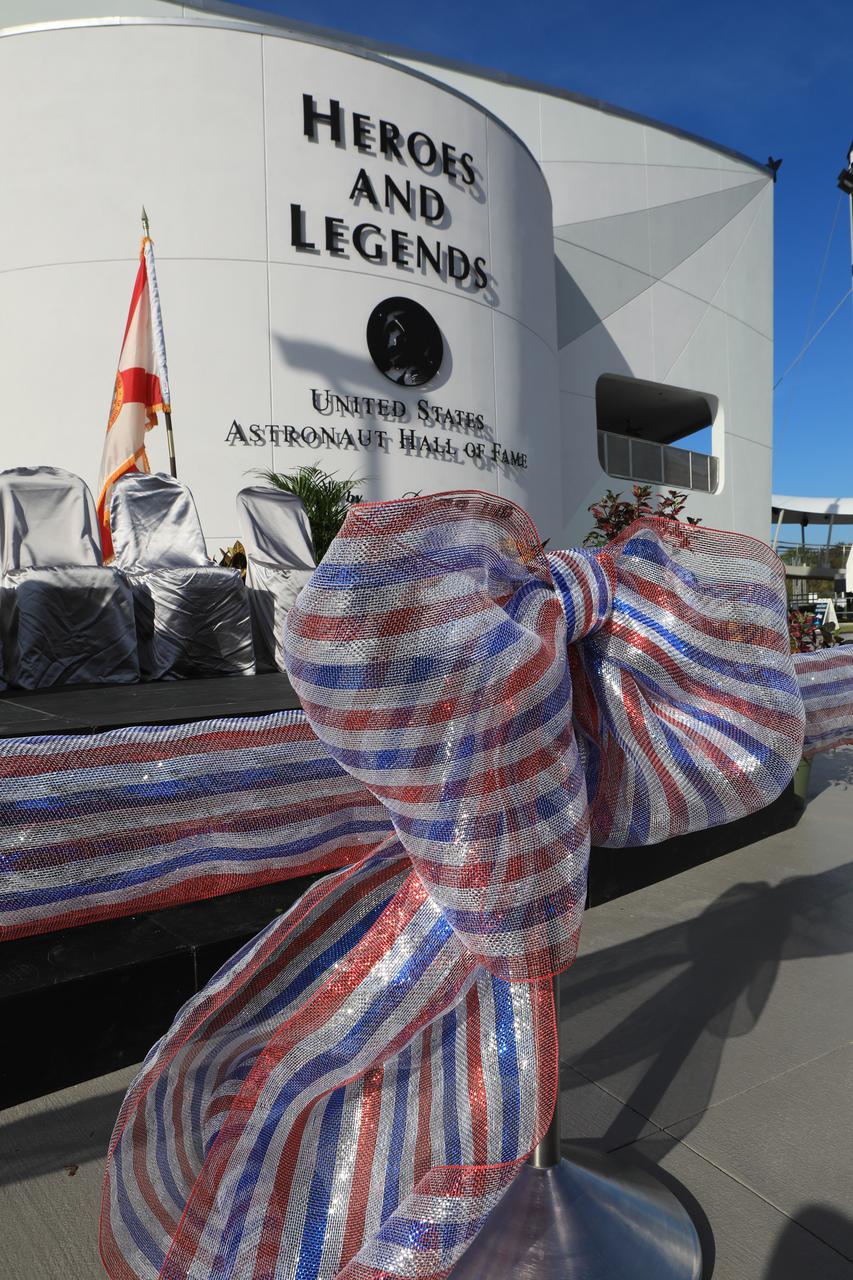
The Heroes and Legends attraction at the Kennedy Space Center Visitor Complex includes the U.S. Astronaut Hall of Fame. The new facility also looks back to the pioneering efforts of Mercury, Gemini and Apollo. It sets the stage by providing the background and context for space exploration and the legendary men and women who pioneered the nation's journey into space.
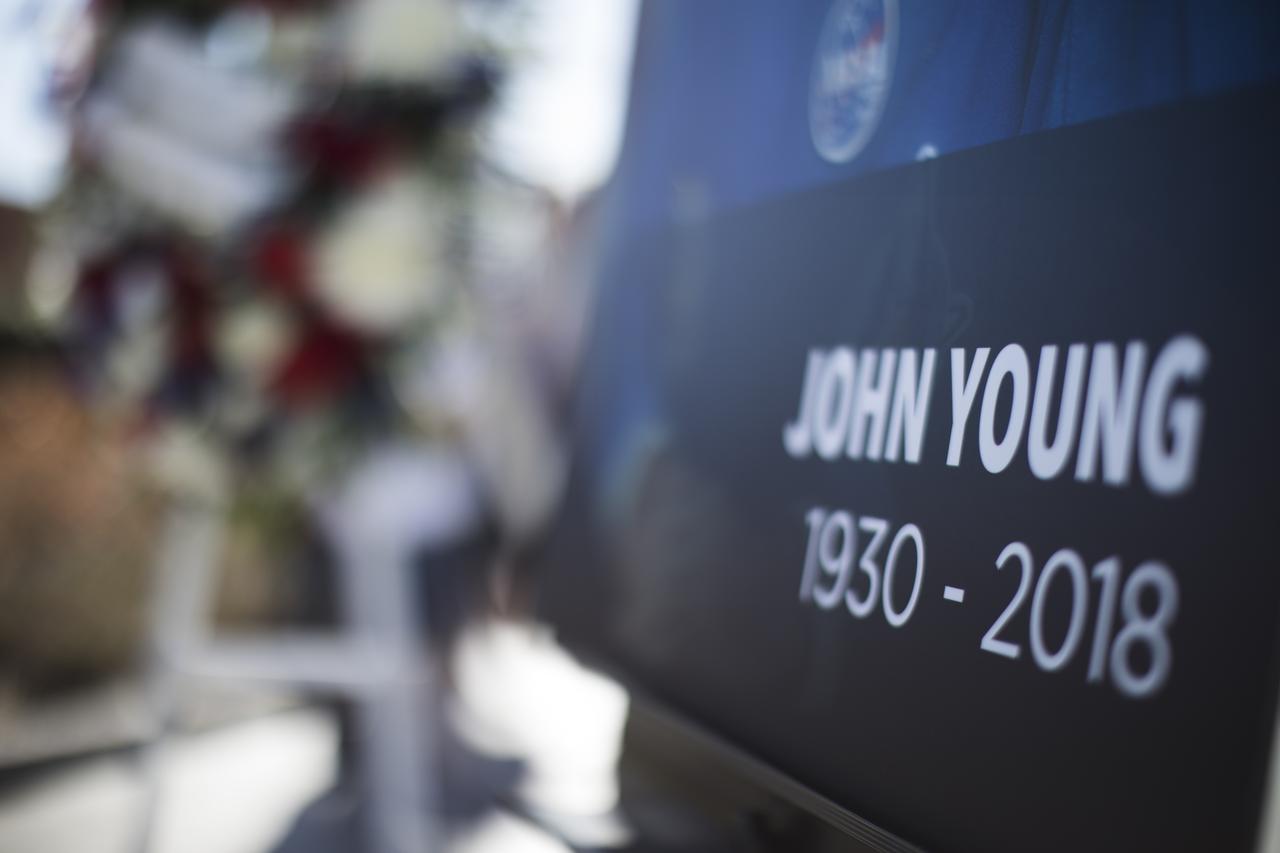
NASA astronaut John Young was remembered in a ceremony at the Heroes and Legends exhibit at the Kennedy Space Center Visitor Complex. The brief memorial took place on the afternoon of Jan. 11, 2018. Young died Jan. 5, 2018, in Houston at the age of 87. He was the only astronaut to fly in NASA's Gemini, Apollo and Space Shuttle Programs.
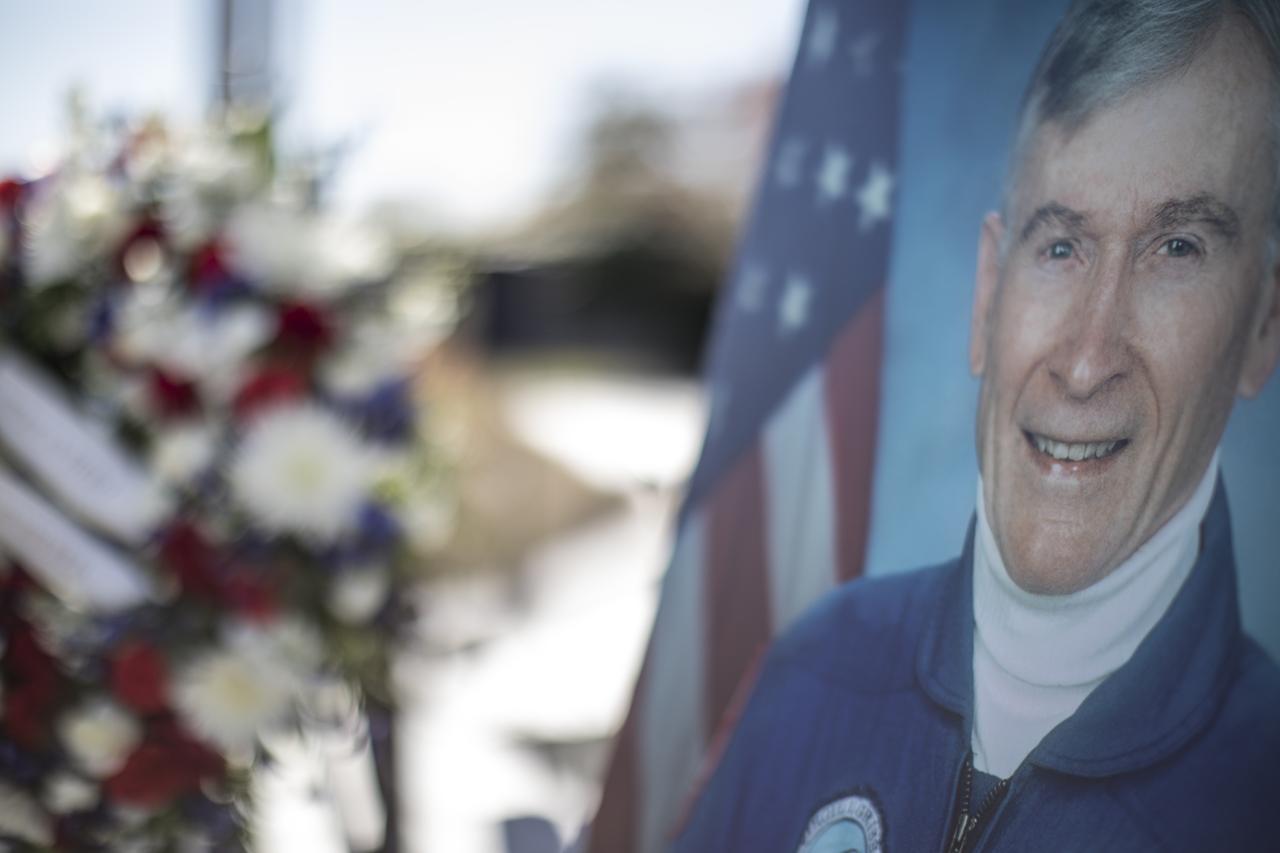
NASA astronaut John Young was remembered in a ceremony at the Heroes and Legends exhibit at the Kennedy Space Center Visitor Complex. The brief memorial took place on the afternoon of Jan. 11, 2018. Young died Jan. 5, 2018, in Houston at the age of 87. He was the only astronaut to fly in NASA's Gemini, Apollo and Space Shuttle Programs.
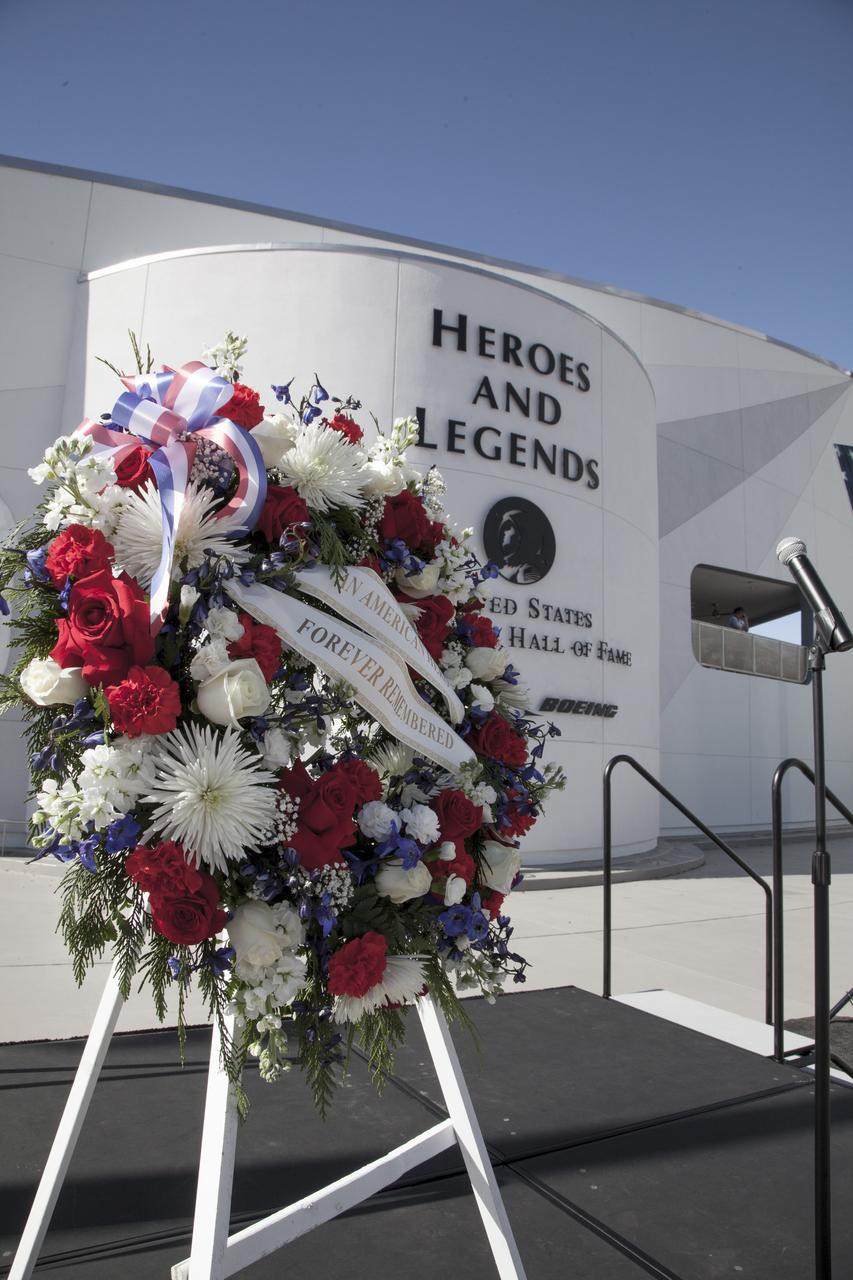
NASA astronaut John Young was remembered in a ceremony at the Heroes and Legends exhibit at the Kennedy Space Center Visitor Complex. The brief memorial took place on the afternoon of Jan. 11, 2018. Young died Jan. 5, 2018, in Houston at the age of 87. He was the only astronaut to fly in NASA's Gemini, Apollo and Space Shuttle Programs.
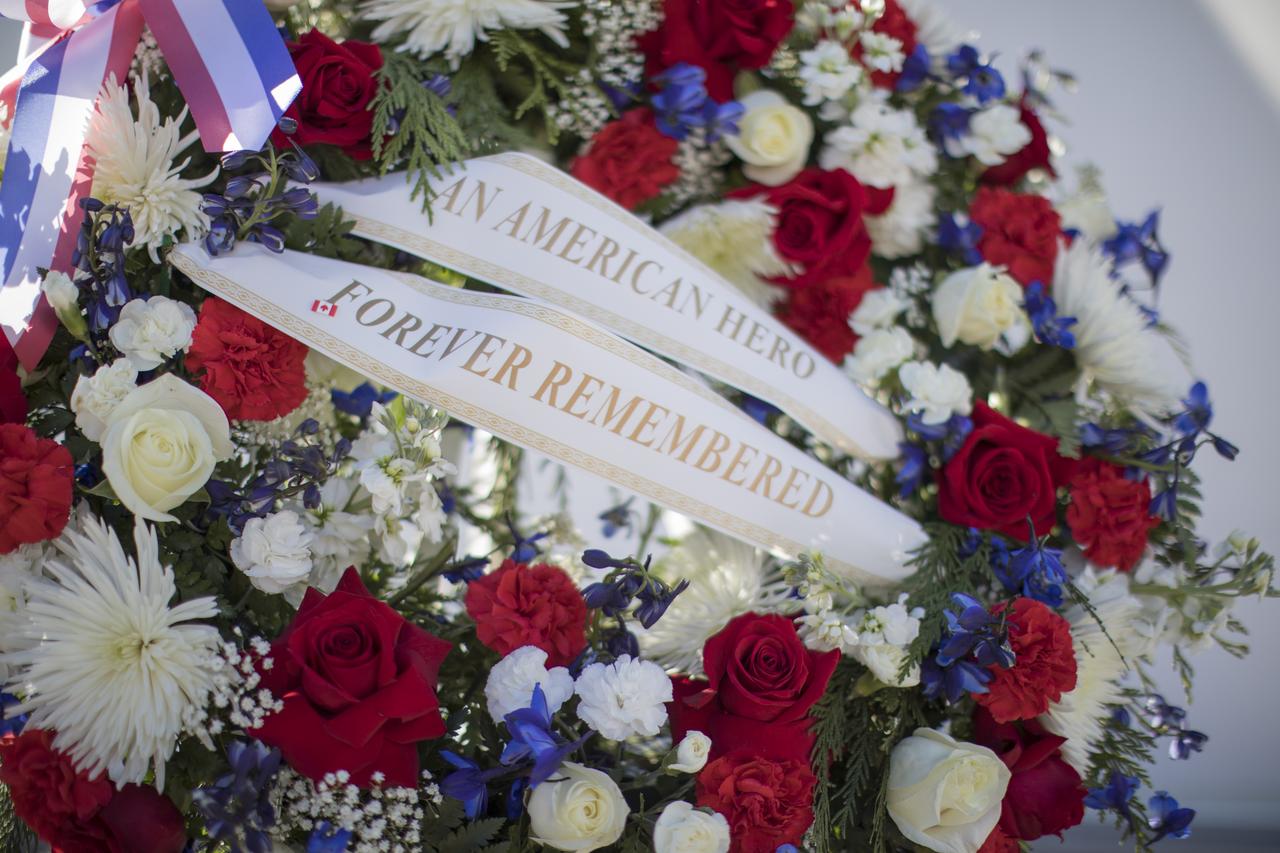
NASA astronaut John Young was remembered in a ceremony at the Heroes and Legends exhibit at the Kennedy Space Center Visitor Complex. The brief memorial took place on the afternoon of Jan. 11, 2018. Young died Jan. 5, 2018, in Houston at the age of 87. He was the only astronaut to fly in NASA's Gemini, Apollo and Space Shuttle Programs.

The Heroes and Legends attraction at the Kennedy Space Center Visitor Complex includes the U.S. Astronaut Hall of Fame. The new facility also looks back to the pioneering efforts of Mercury, Gemini and Apollo. It sets the stage by providing the background and context for space exploration and the legendary men and women who pioneered the nation's journey into space.
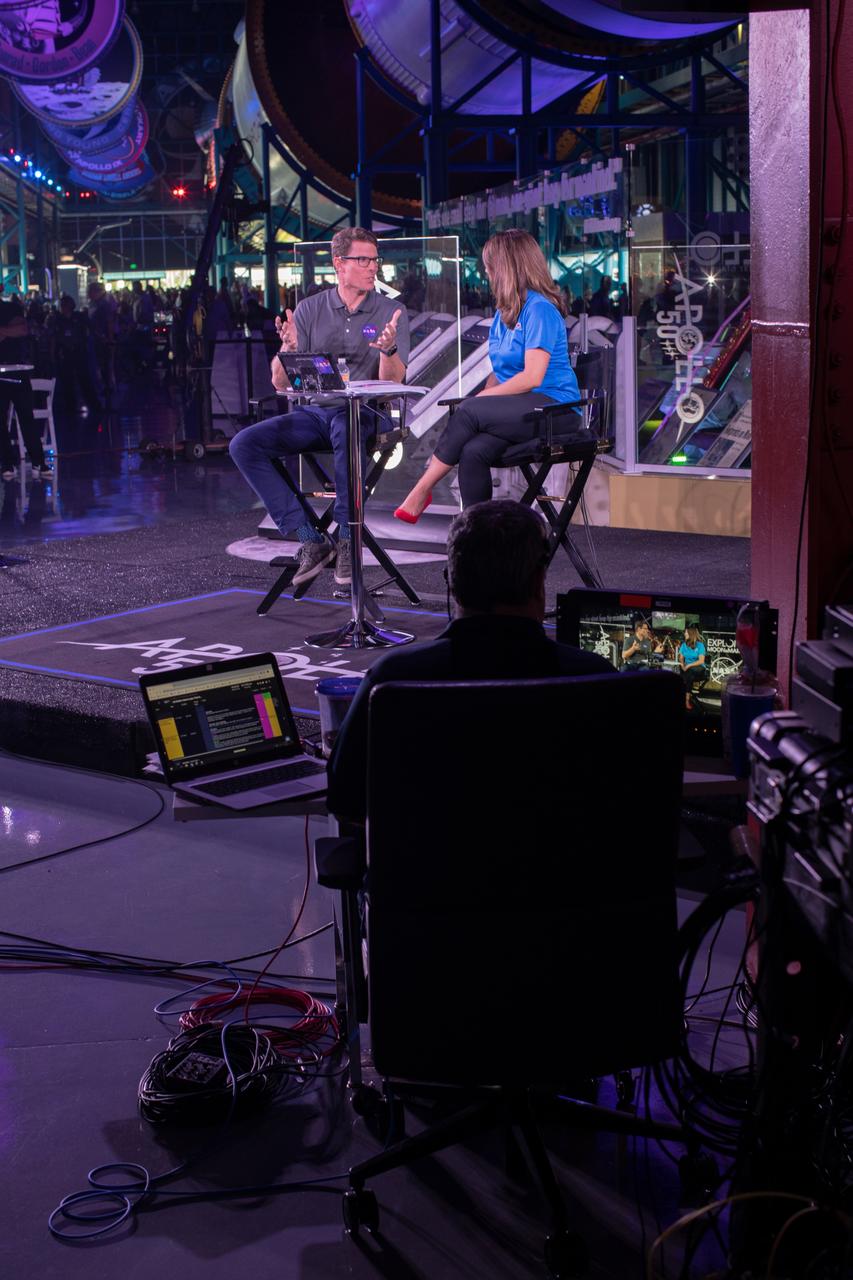
Derrol Nail, left, and Marie Lewis, NASA Office of Communications, host a special Apollo 11 show titled “NASA’s Giant Leaps: Past and Future” on July 19, 2019. The show, which honored the heroes of Apollo and examined NASA’s future plans, was broadcast live from Kennedy Space Center’s Apollo/Saturn V Center in Florida. It featured segments from across the nation, including The National Mall in Washington, NASA’s Johnson Space Center in Houston, Neil Armstrong’s hometown of Wapakoneta, Ohio, and the Apollo 11 command module on display at the Museum of Flight in Seattle.
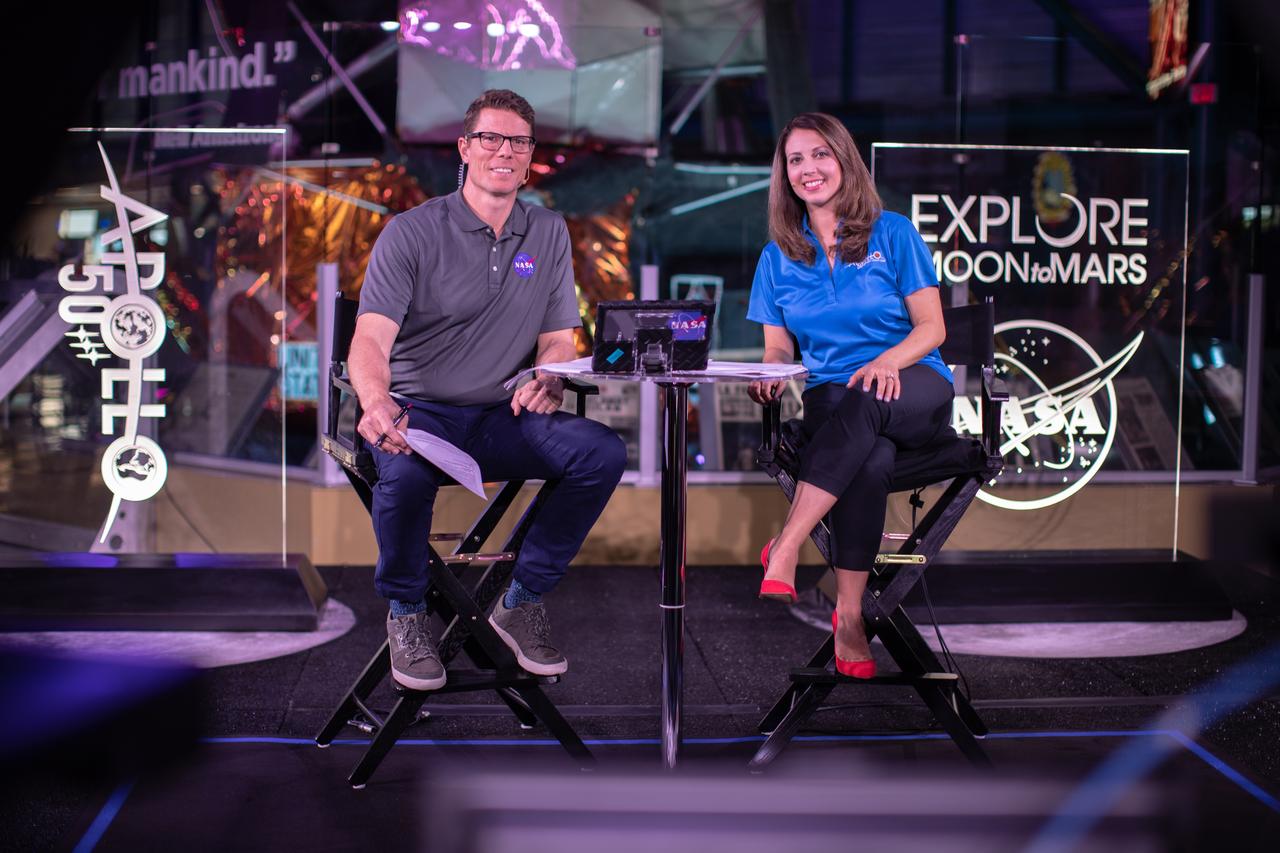
Derrol Nail, left, and Marie Lewis, NASA Office of Communications, host a special Apollo 11 show titled “NASA’s Giant Leaps: Past and Future” on July 19, 2019. The show, which honored the heroes of Apollo and examined NASA’s future plans, was broadcast live from Kennedy Space Center’s Apollo/Saturn V Center in Florida. It featured segments from across the nation, including The National Mall in Washington, NASA’s Johnson Space Center in Houston, Neil Armstrong’s hometown of Wapakoneta, Ohio, and the Apollo 11 command module on display at the Museum of Flight in Seattle.
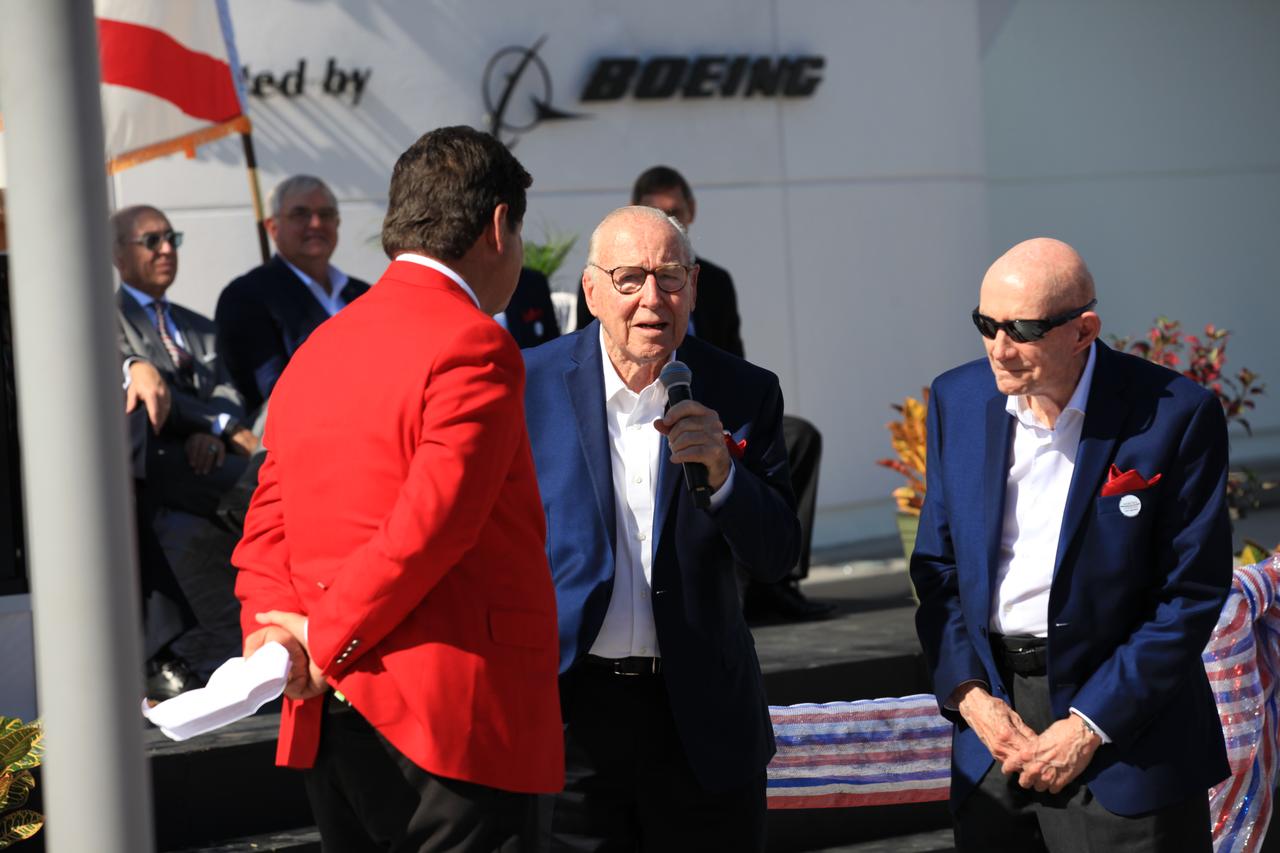
Former CNN space correspondent John Zarrella, left, interviews Gemini and Apollo astronauts Jim Lovell, center and Tom Stafford during opening ceremonies for the Heroes and Legends attraction at the Kennedy Space Center Visitor Complex. The new facility includes the U.S. Astronaut Hall of Fame and looks back to the pioneering efforts of Mercury, Gemini and Apollo. It sets the stage by providing the background and context for space exploration and the legendary men and women who pioneered the nation's journey into space.
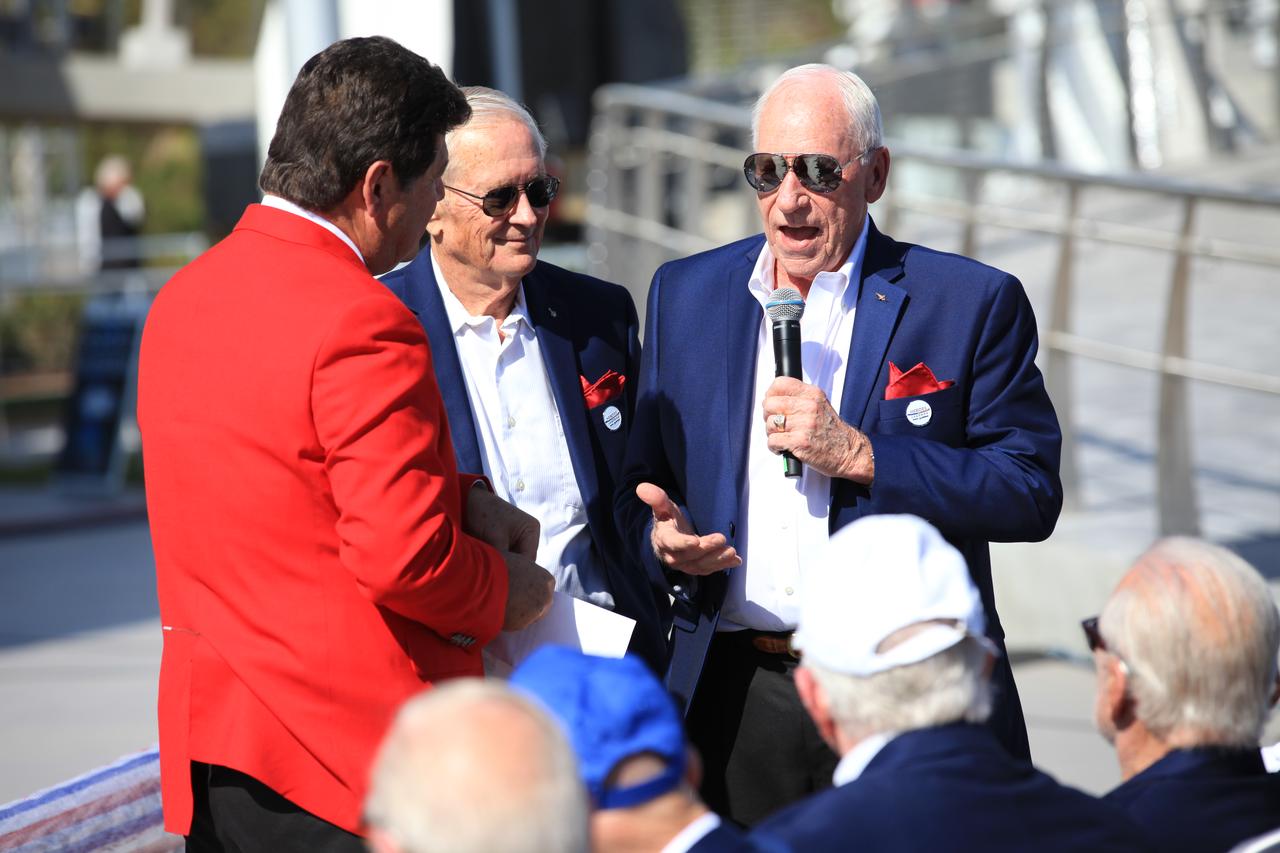
Former CNN space correspondent John Zarrella, left, interviews Apollo astronauts Charlie Duke, center and Walt Cunningham during opening ceremonies for the Heroes and Legends attraction at the Kennedy Space Center Visitor Complex. The new facility includes the U.S. Astronaut Hall of Fame and looks back to the pioneering efforts of Mercury, Gemini and Apollo. It sets the stage by providing the background and context for space exploration and the legendary men and women who pioneered the nation's journey into space.
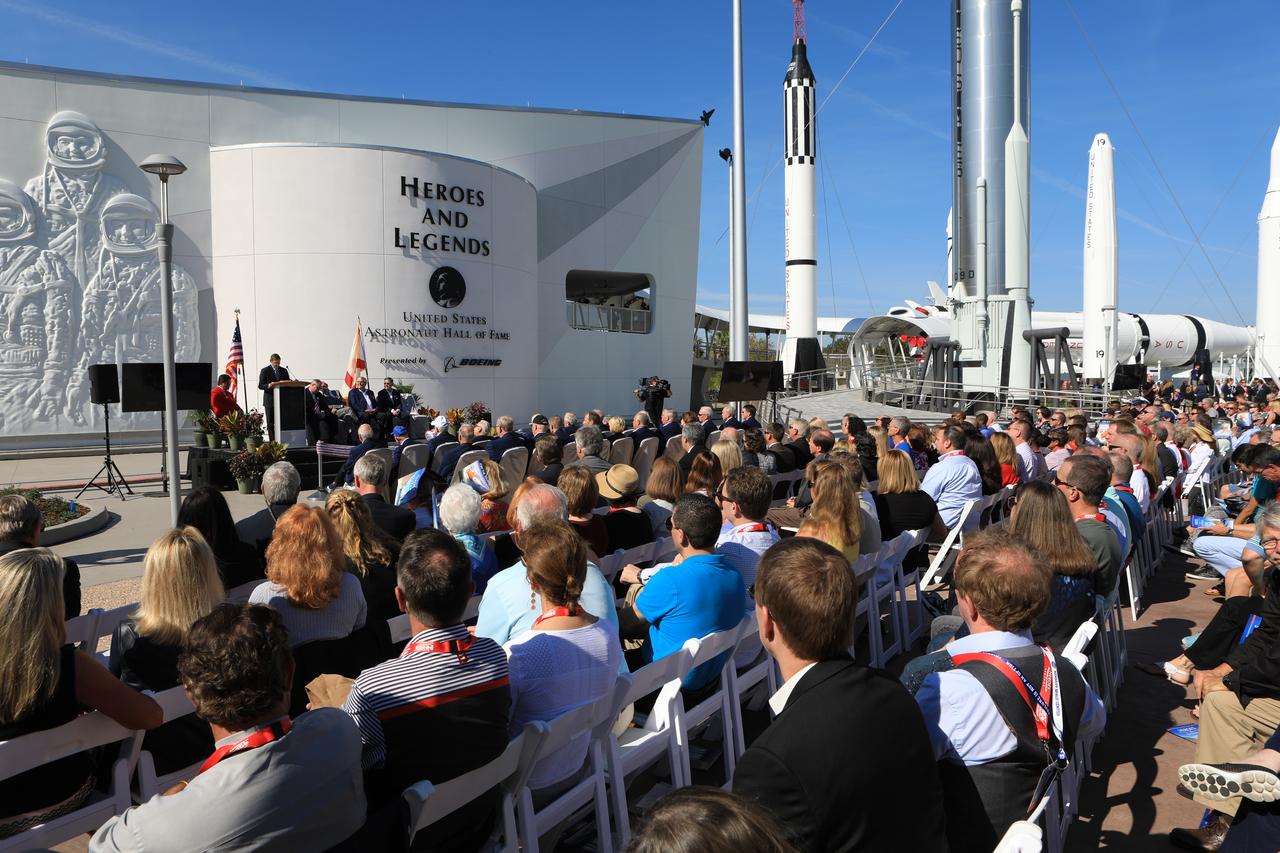
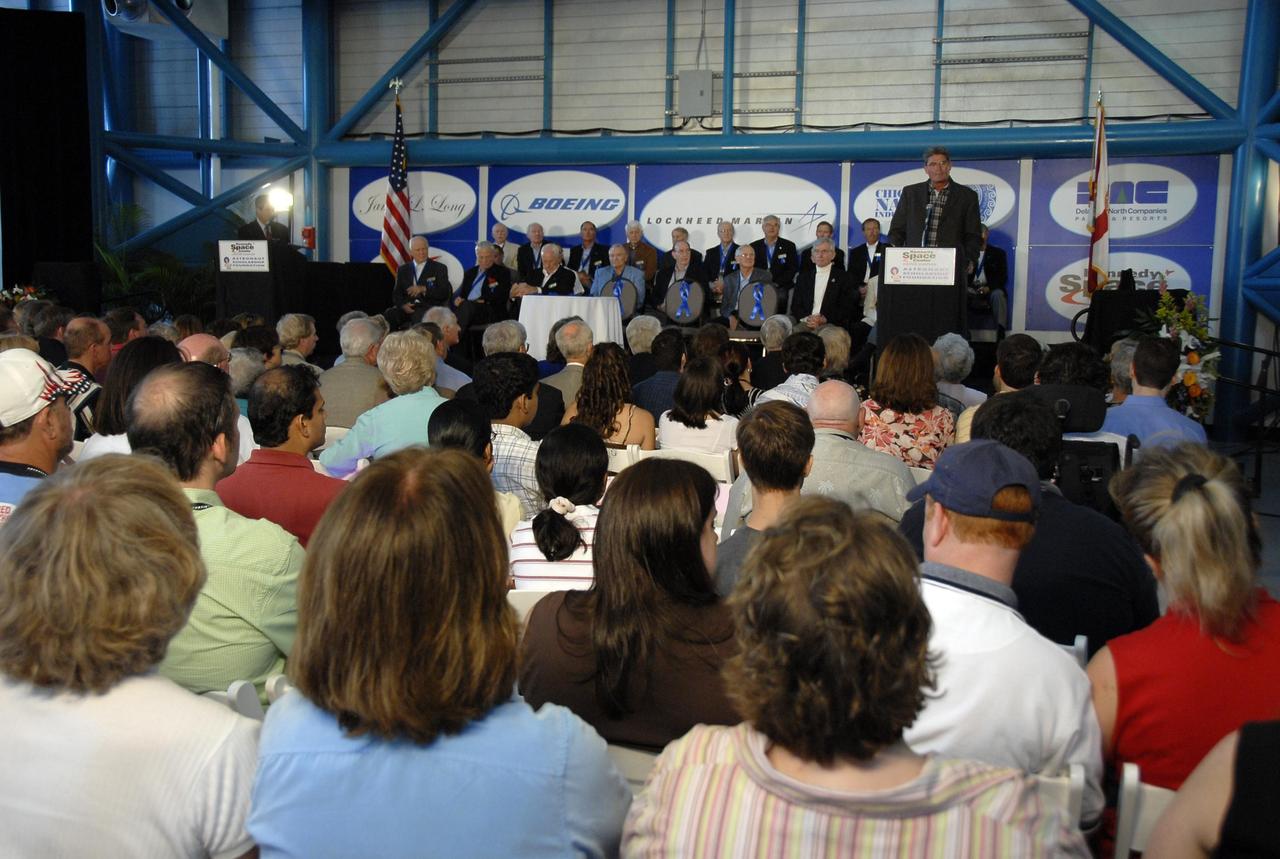
Boeing Vice President and General Manager John Elbon addresses the crowd gathered for the grand opening of the Heroes and Legends attraction at the Kennedy Space Center Visitor Complex. Boeing is sponsoring the new attraction. Launch vehicles used by NASA in its history of exploring space also are displayed in the "Rocket Garden" adjacent to the new Heroes and Legends facility. The new facility includes the U.S. Astronaut Hall of Fame and looks back to the pioneering efforts of Mercury, Gemini and Apollo. It sets the stage by providing the background and context for space exploration and the legendary men and women who pioneered the nation's journey into space.

Lisa Schott, vice chairman of the Astronaut Scholarship Foundation, speaks during a memorial ceremony honoring former Apollo astronaut Walter Cunningham at NASA’s Kennedy Space Center in Florida. The ceremony was held Jan. 9, 2023, at the Heroes and Legends exhibit within the Astronaut Hall of Fame at the spaceport’s visitor complex. Cunningham was the lunar module pilot for Apollo 7 – the first crewed flight test of the Apollo spacecraft – where he tested maneuvers necessary for docking and lunar orbit rendezvous. He passed away Jan. 3 at the age of 90.

A wreath-laying ceremony honoring the memory of former Apollo 11 astronaut Michael Collins is held outside of the Heroes and Legends exhibit at the Kennedy Space Center Visitor Complex in Florida on April 30, 2021. Kennedy Director Bob Cabana and Therrin Protze, chief operating officer of Delaware North at the visitor complex, provided remarks during the ceremony. Collins served as pilot on the three-day Gemini X mission in 1966, and he was the command module pilot for the historic Apollo 11 mission in 1969, where he remained in lunar orbit while Neil Armstrong and Buzz Aldrin become the first people to walk on the Moon. Collins passed away on April 28, 2021, at the age of 90.
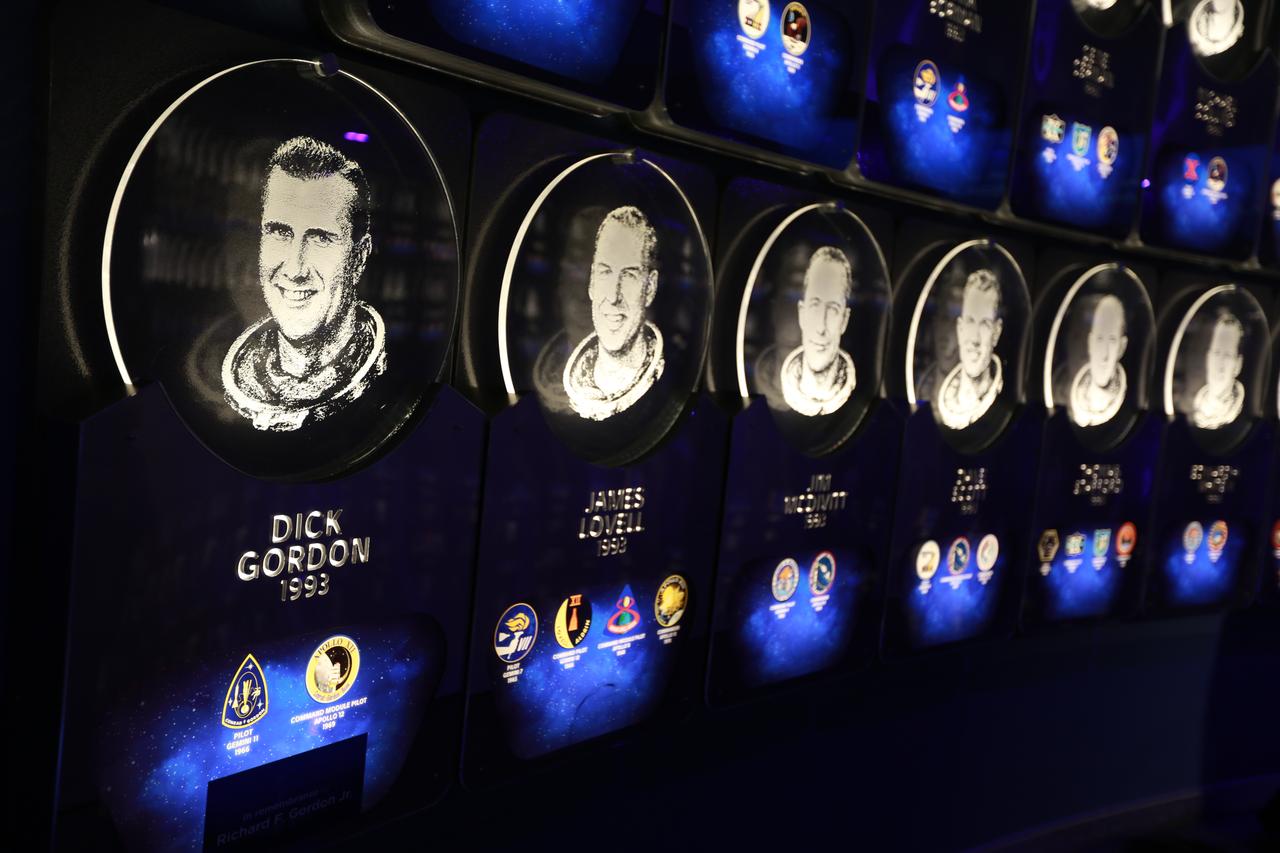
In the Heroes and Legends exhibit at the Kennedy Space Center Visitor Complex, former NASA astronaut Richard Gordon's plaque is seen among others enshrined in the U.S. Astronaut Hall of Fame. Gordon performed two spacewalks during Gemini XI in 1966 and was command module pilot on Apollo 12 in 1969. Gordon died Nov. 6, 2017, at the age of 88.
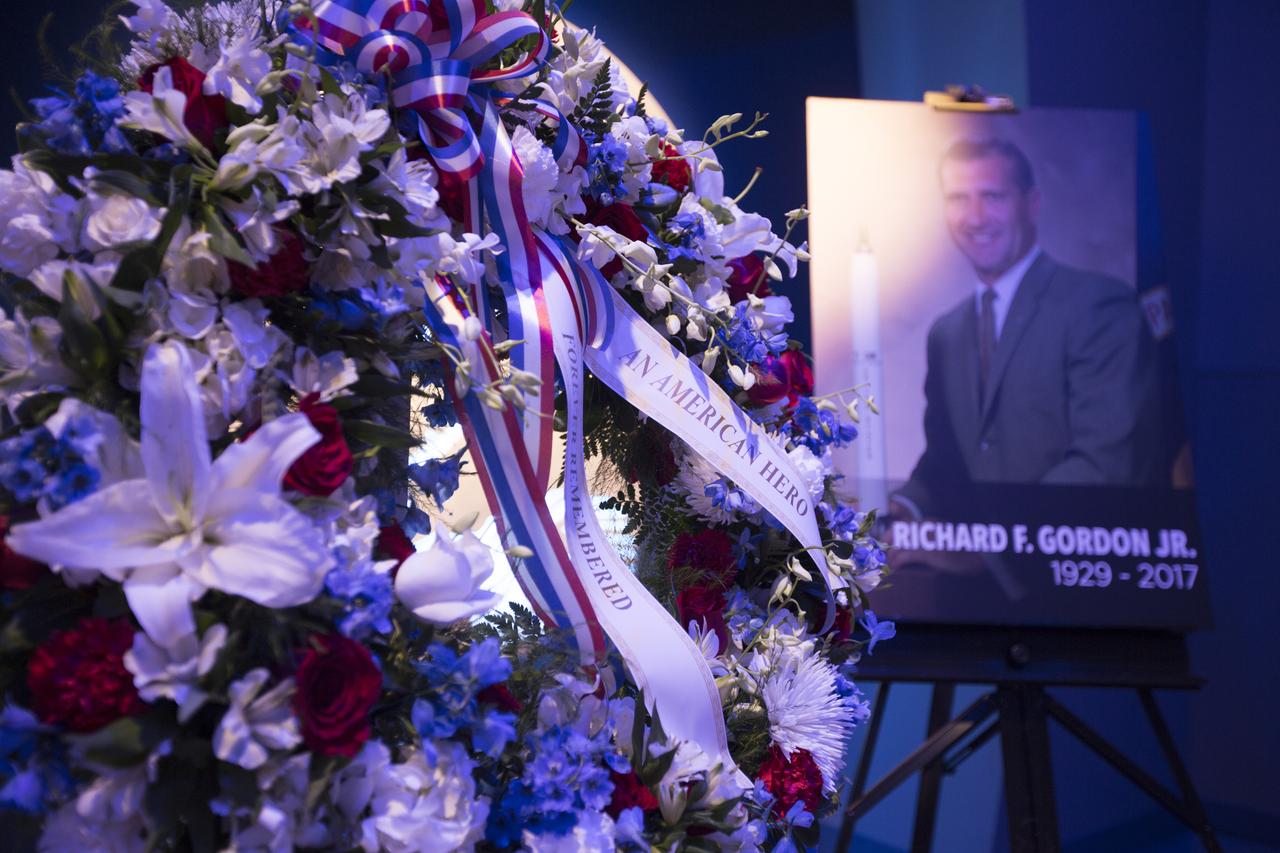
In the Heroes and Legends exhibit at the Kennedy Space Center Visitor Complex, a memorial wreath was placed following a ceremony to honor the memory of former NASA astronaut Richard Gordon. He performed two spacewalks during Gemini XI in 1966 and was command module pilot on Apollo 12 in 1969. Gordon died Nov. 6, 2017, at the age of 88.
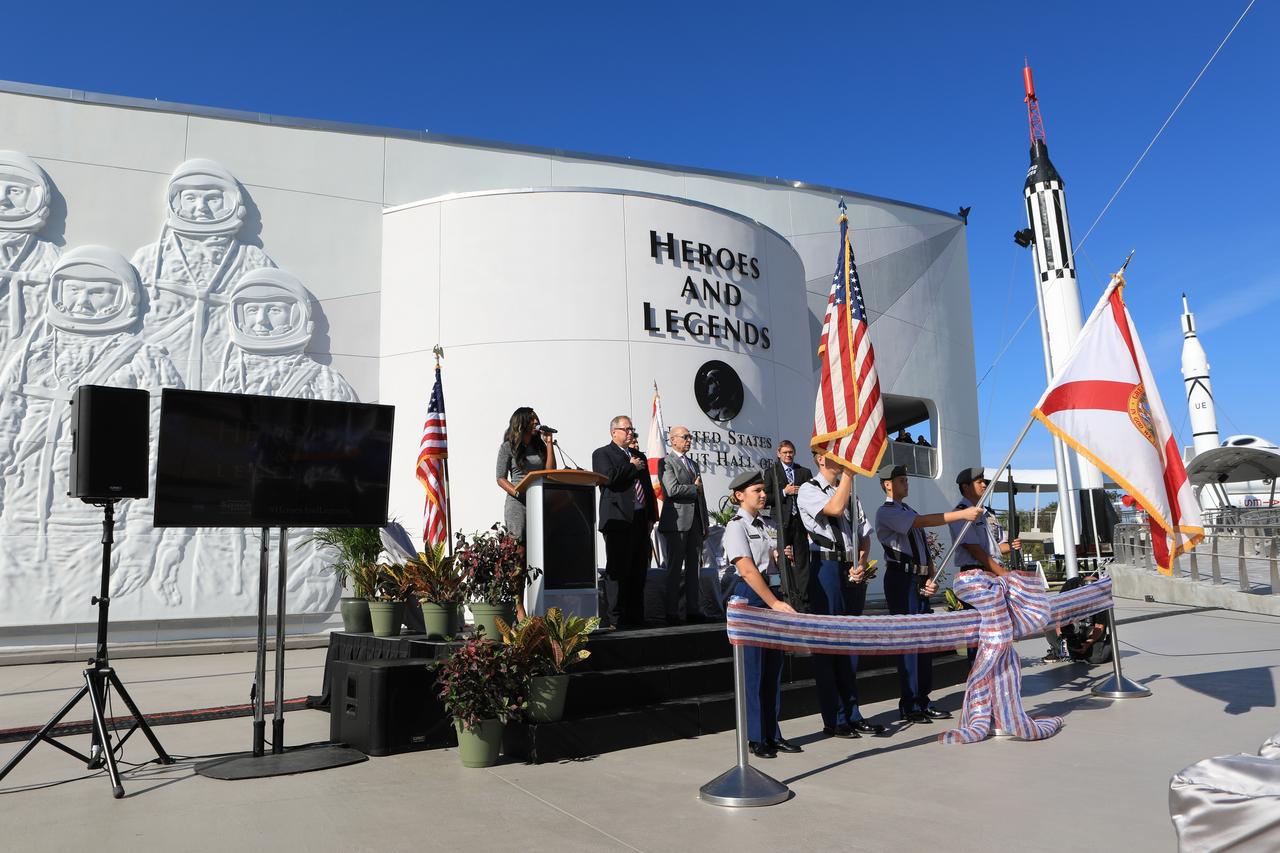
During the grand opening of the Heroes and Legends attraction at the Kennedy Space Center Visitor Complex, the national anthem was performed by Carmen Harrell. The new facility includes the U.S. Astronaut Hall of Fame and looks back to the pioneering efforts of Mercury, Gemini and Apollo. It sets the stage by providing the background and context for space exploration and the legendary men and women who pioneered the nation's journey into space.

KENNEDY SPACE CENTER, FLA. -- At the U.S. Astronaut Hall of Fame induction ceremony, former astronaut John Glenn acknowledges his membership in the Hall of Fame. These gentlemen have joined such American space heroes as Neil Armstrong, Glenn, Alan Shepard and Sally Ride. The ceremony was held at the Kennedy Space Center's Apollo/Saturn V Center. Photo credit: NASA/Kim Shiflett
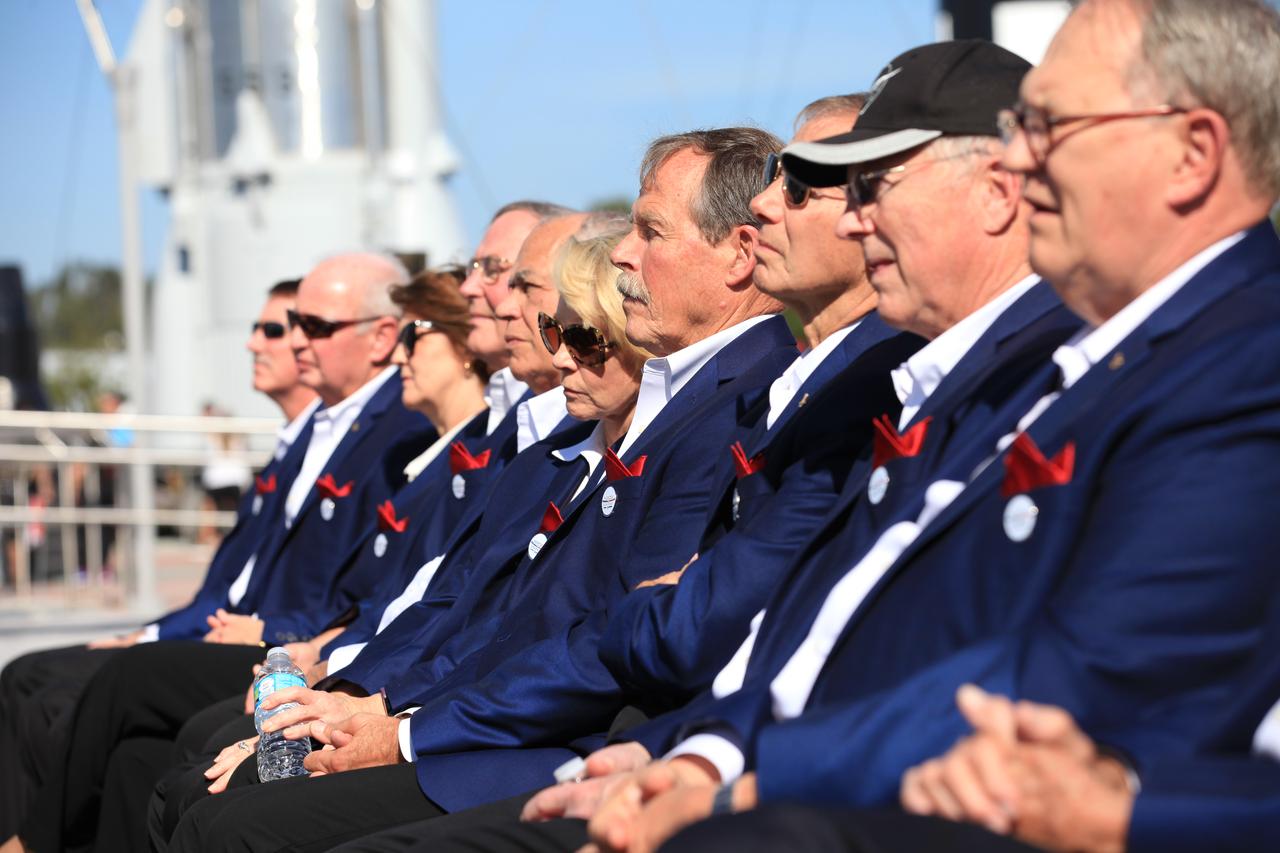
Members of the U.S. Astronaut Hall of Fame listen to speakers during the opening of the Heroes and Legends attraction at the Kennedy Space Center Visitor Complex. The new facility includes the U.S. Astronaut Hall of Fame and looks back to the pioneering efforts of Mercury, Gemini and Apollo. It sets the stage by providing the background and context for space exploration and the legendary men and women who pioneered the nation's journey into space.
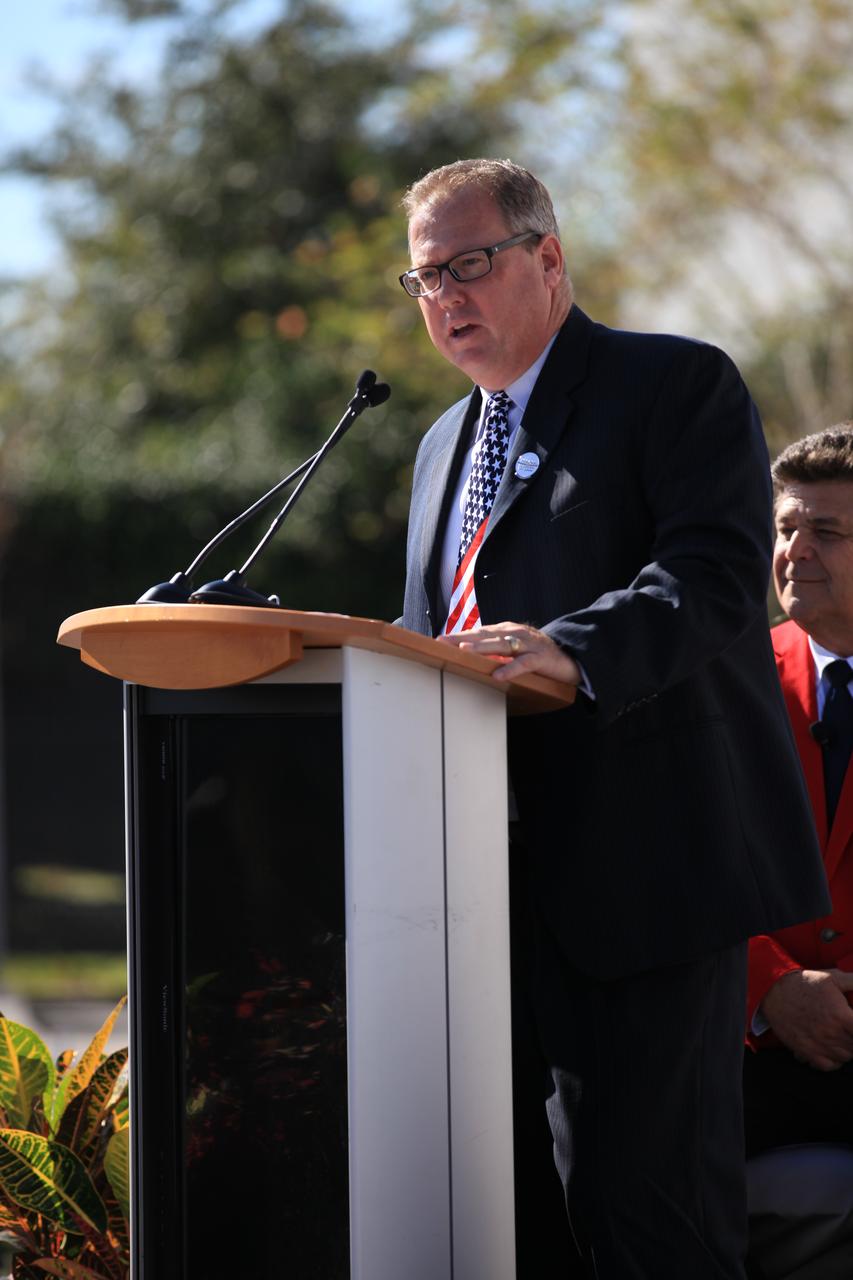
Therrin Protze, chief operating officer of the Kennedy Space Center Visitor Complex, speaks to guests during the opening of the Heroes and Legends attraction at the Kennedy Space Center Visitor Complex. The new facility includes the U.S. Astronaut Hall of Fame and looks back to the pioneering efforts of Mercury, Gemini and Apollo. It sets the stage by providing the background and context for space exploration and the legendary men and women who pioneered the nation's journey into space.
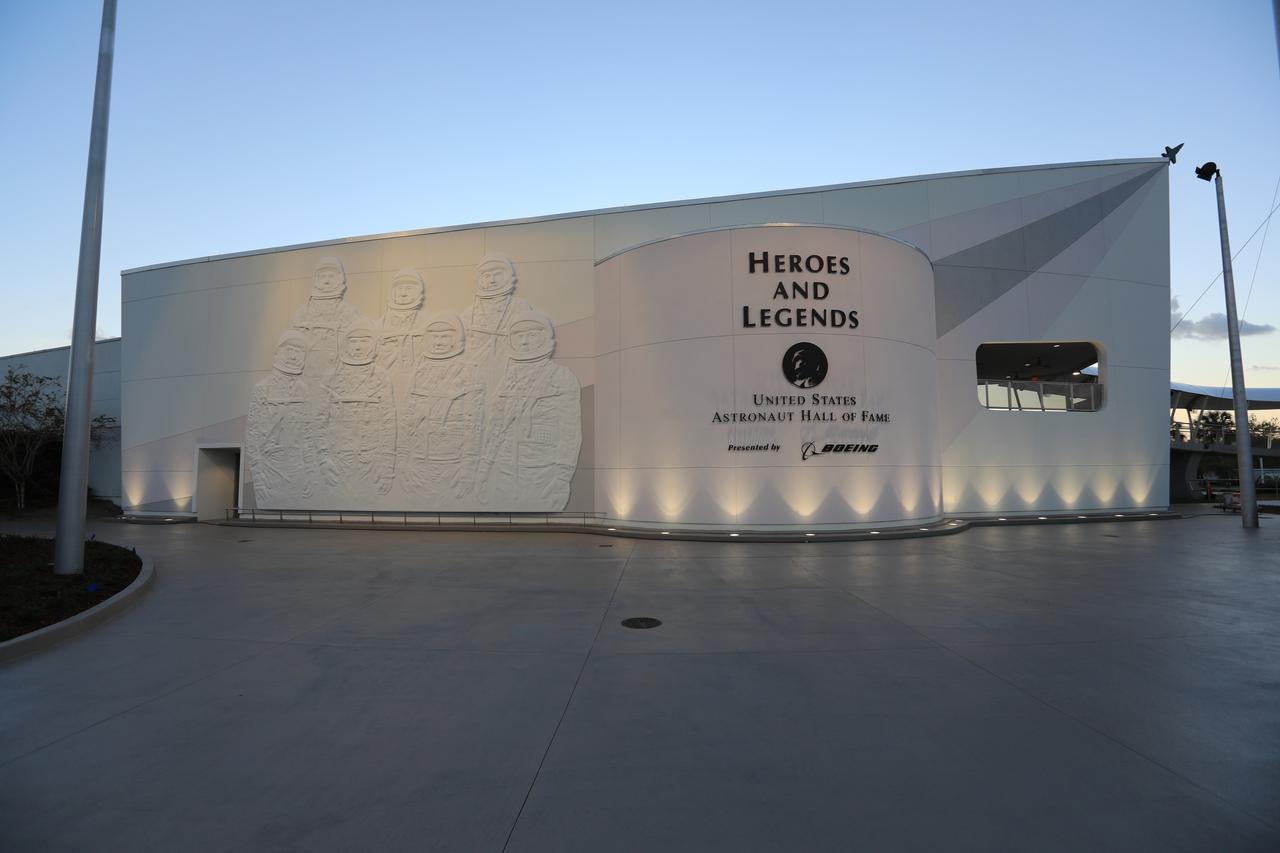
The Heroes and Legends attraction at the Kennedy Space Center Visitor Complex is just inside the entrance to set the stage as guests arrive. In addition to displays honoring the Americans currently enshrined in the U. S. Astronaut Hall of Fame. The new facility looks back to the pioneering efforts of Mercury, Gemini and Apollo. It sets the stage by providing the background and context for space exploration and the legendary men and women who pioneered the nation's journey into space.
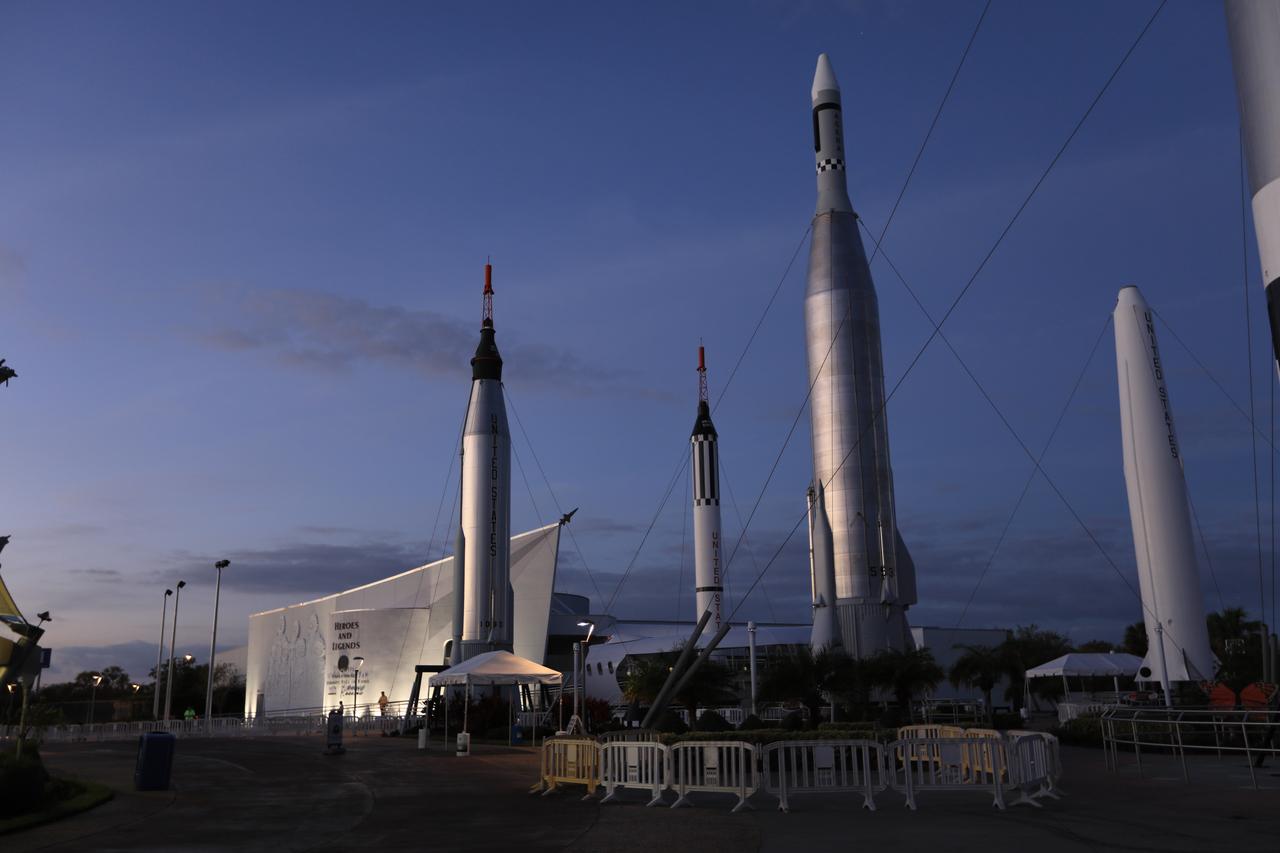
Launch vehicles used by NASA in its history of exploring space are displayed in the "Rocket Garden" adjacent to the new Heroes and Legends attraction at the Kennedy Space Center Visitor Complex. The new facility includes the U.S. Astronaut Hall of Fame and looks back to the pioneering efforts of Mercury, Gemini and Apollo. It sets the stage by providing the background and context for space exploration and the legendary men and women who pioneered the nation's journey into space.
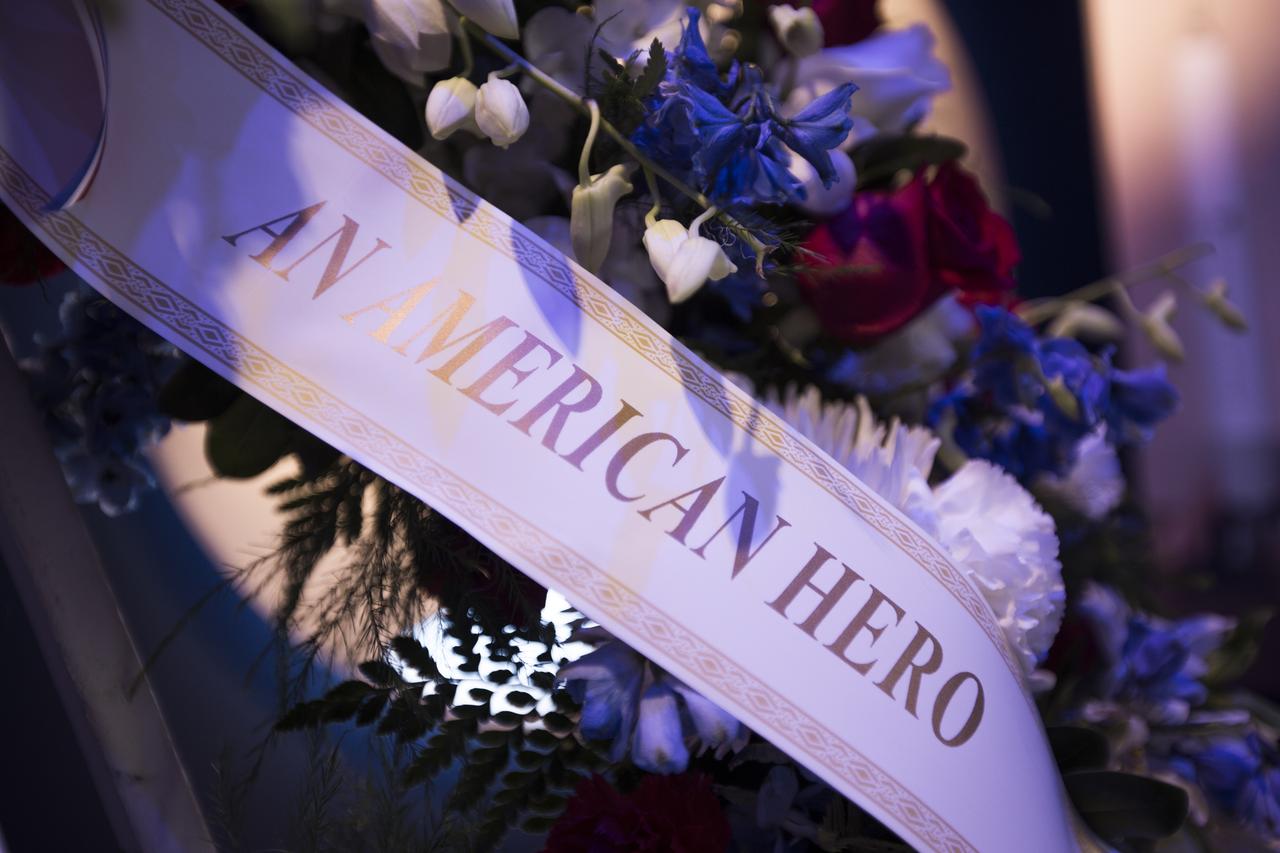
In the Heroes and Legends exhibit at the Kennedy Space Center Visitor Complex, a memorial wreath was placed following a ceremony to honor the memory of former NASA astronaut Richard Gordon. He performed two spacewalks during Gemini XI in 1966 and was command module pilot on Apollo 12 in 1969. Gordon died Nov. 6, 2017, at the age of 88.
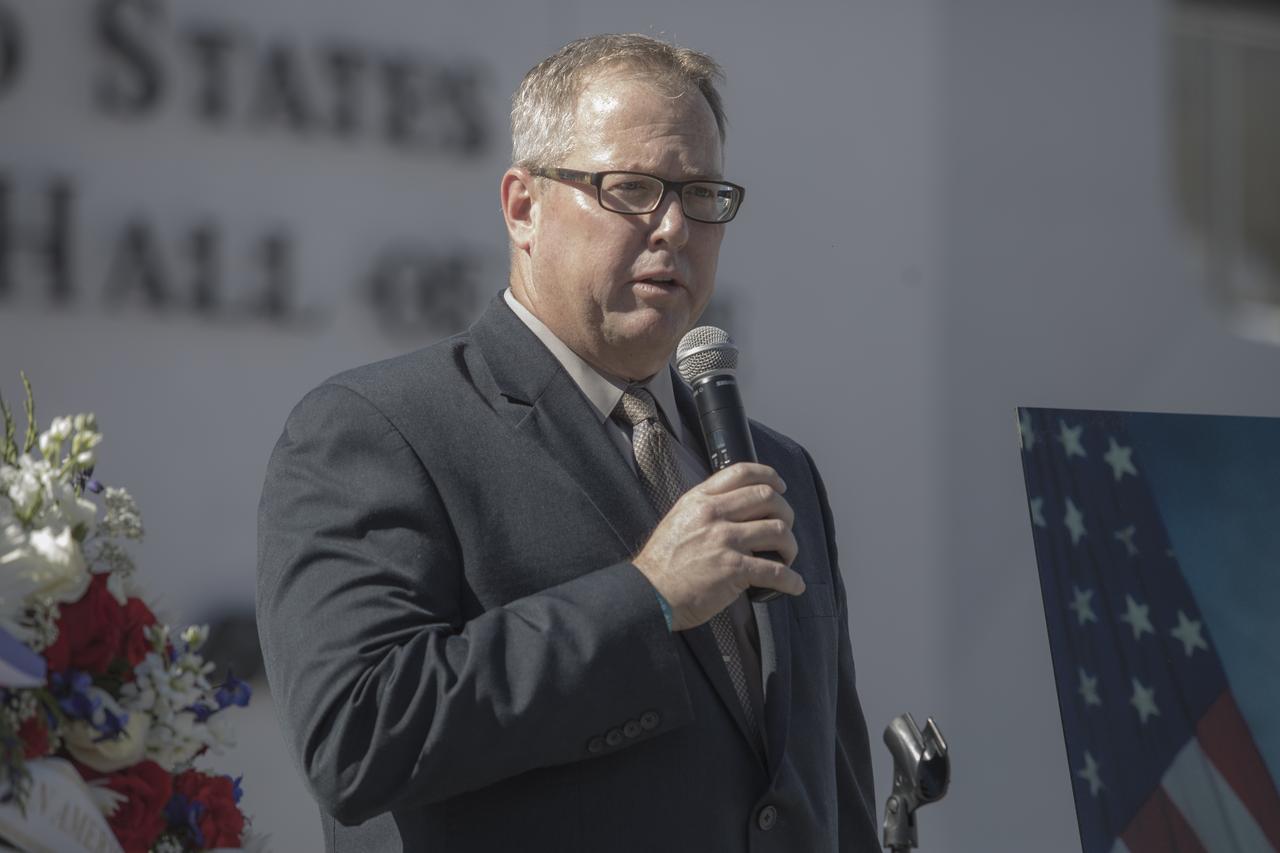
Delaware North COO Therrin Protze speaks during a ceremony at the Heroes and Legends exhibit at the Kennedy Space Center Visitor Complex. The brief memorial honoring NASA astronaut John Young took place on the afternoon of Jan. 11, 2018. Young died Jan. 5, 2018, in Houston at the age of 87. He was the only astronaut to fly in NASA's Gemini, Apollo and Space Shuttle Programs.
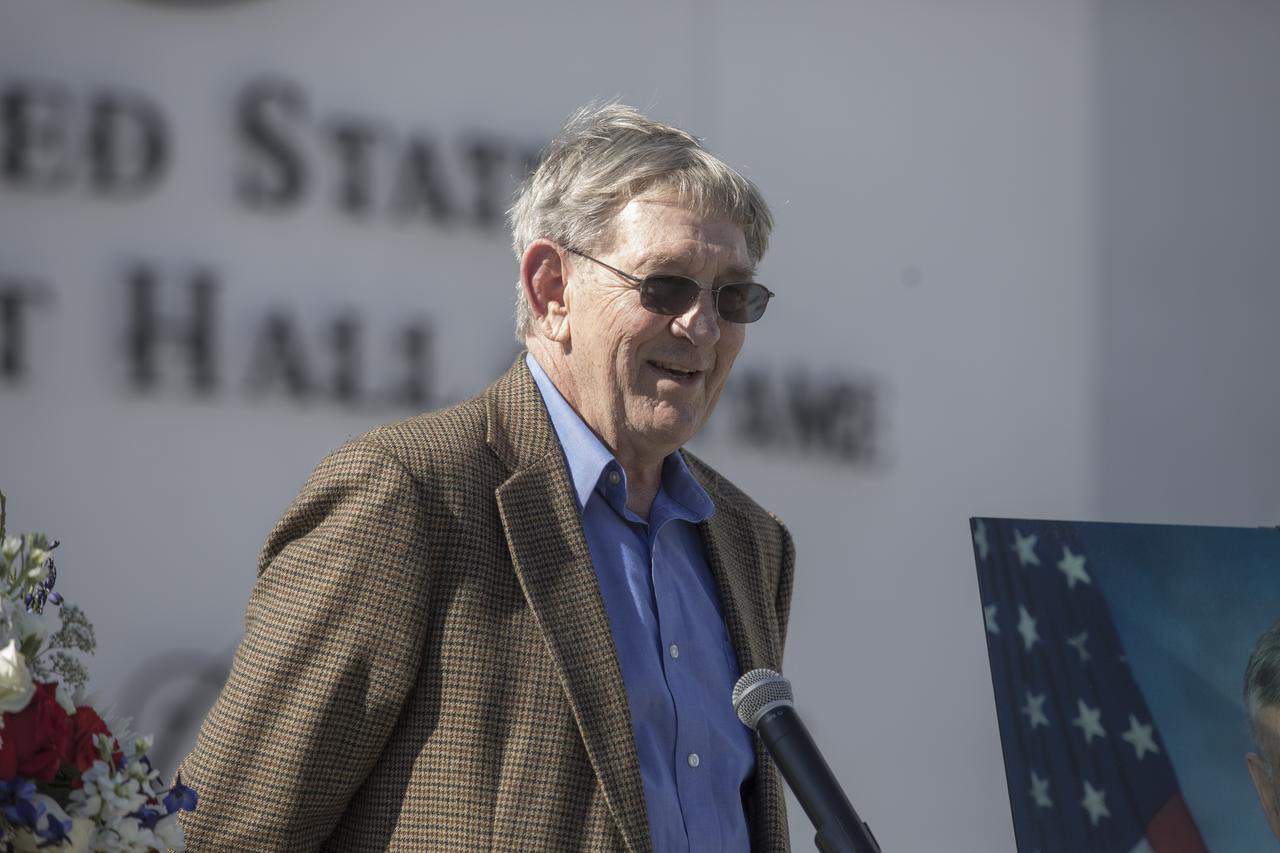
Former NASA astronaut Mike McCulley speaks during a ceremony at the Heroes and Legends exhibit at the Kennedy Space Center Visitor Complex. The brief memorial honoring NASA astronaut John Young took place on the afternoon of Jan. 11, 2018. Young died Jan. 5, 2018, in Houston at the age of 87.He was the only astronaut to fly in NASA's Gemini, Apollo and Space Shuttle Programs.
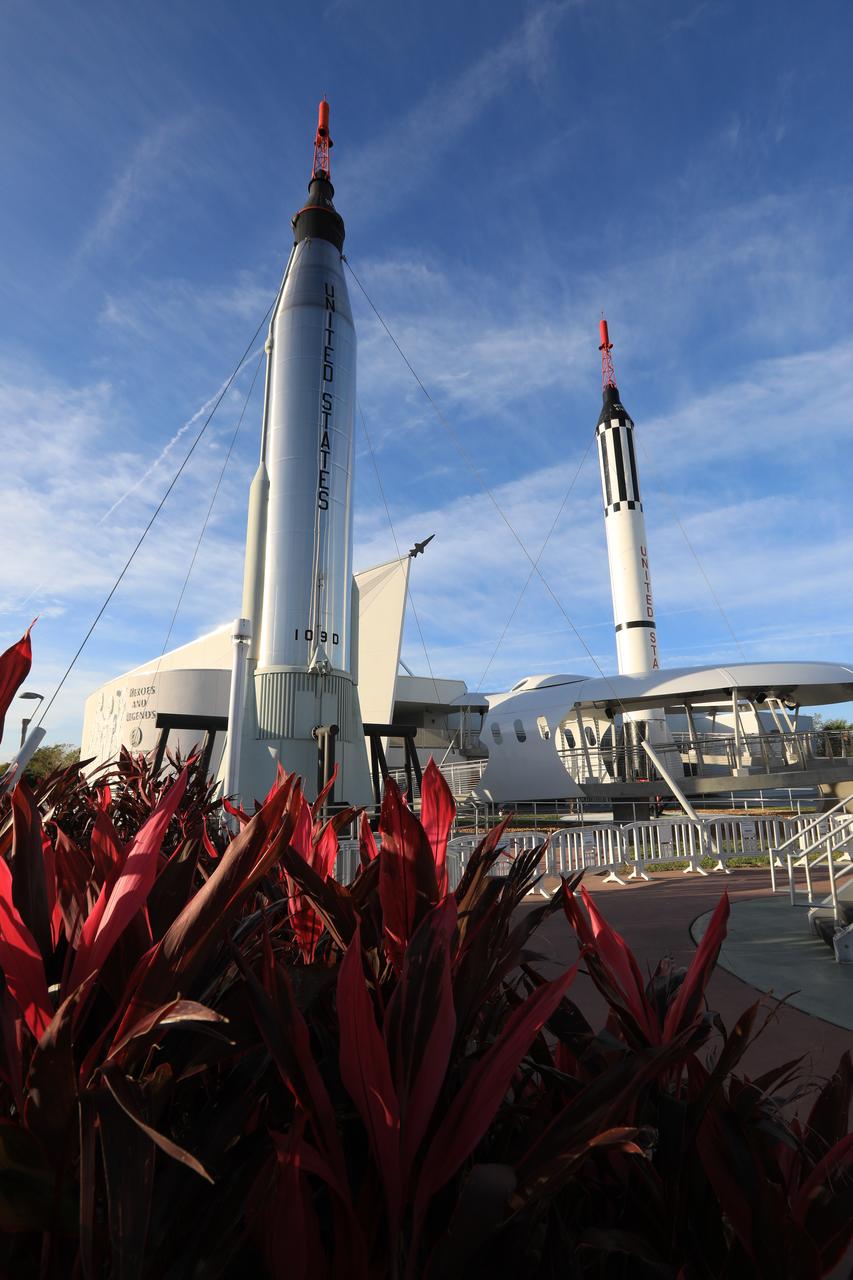
Launch vehicles used by NASA in its history of exploring space are displayed in the "Rocket Garden" adjacent to the new Heroes and Legends attraction at the Kennedy Space Center Visitor Complex. The new facility includes the U.S. Astronaut Hall of Fame and looks back to the pioneering efforts of Mercury, Gemini and Apollo. It sets the stage by providing the background and context for space exploration and the legendary men and women who pioneered the nation's journey into space.
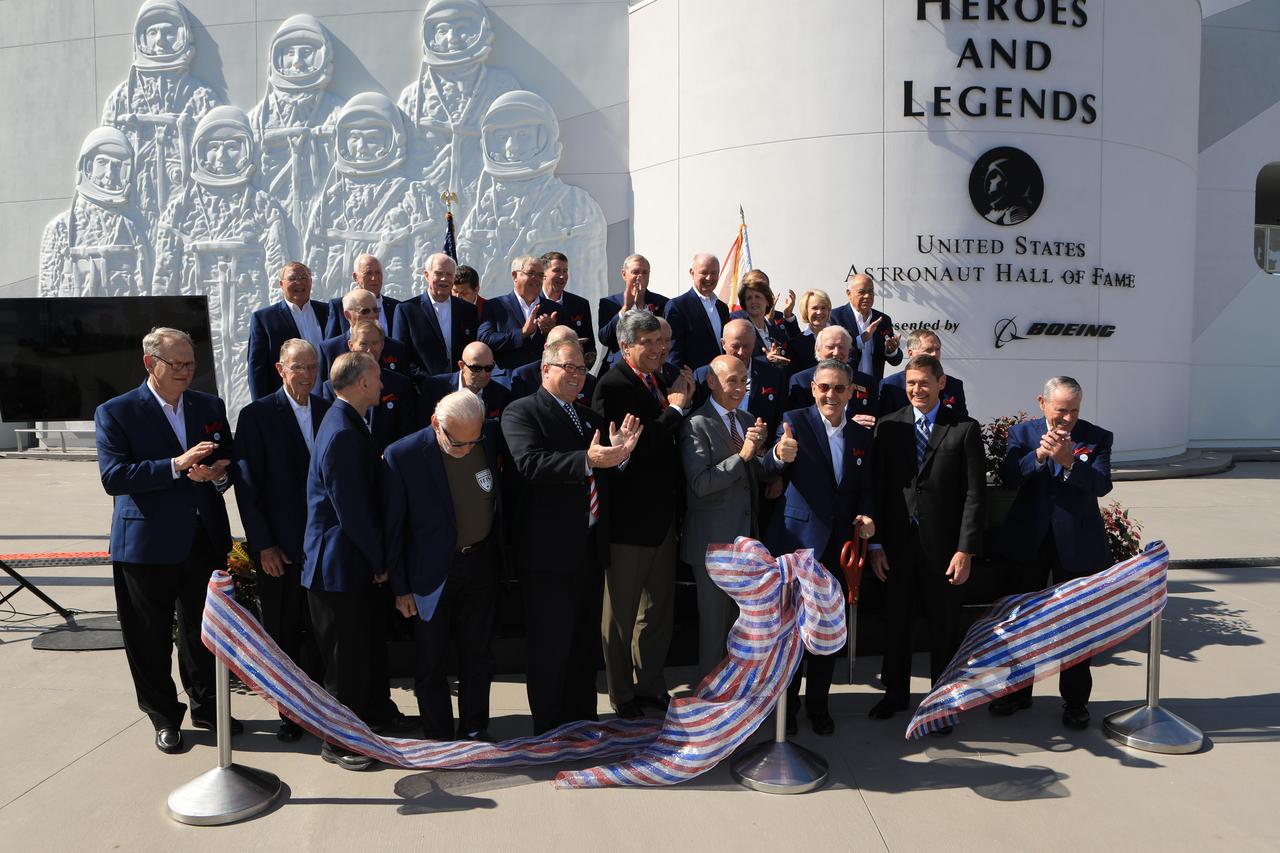
Dignitaries, including members of the U.S. Astronaut Hall of Fame, have just cut a ceremonial ribbon opening the Heroes and Legends attraction at the Kennedy Space Center Visitor Complex. The new facility includes the U.S. Astronaut Hall of Fame and looks back to the pioneering efforts of Mercury, Gemini and Apollo. It sets the stage by providing the background and context for space exploration and the legendary men and women who pioneered the nation's journey into space.
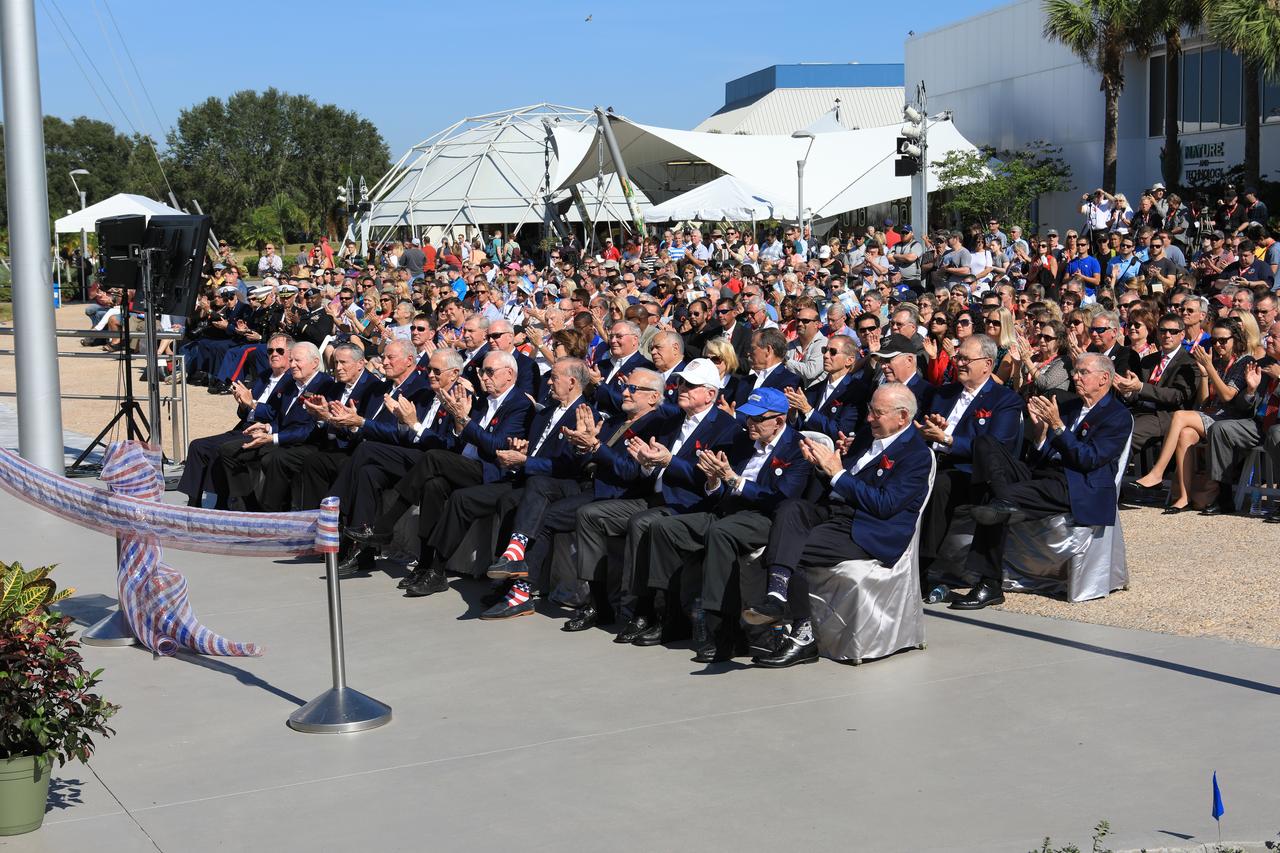
A large crowd, including members of the U.S. Astronaut Hall of Fame in the first two rows, listens to speakers during the grand opening of the Heroes and Legends attraction at the Kennedy Space Center Visitor Complex. The new facility includes the U.S. Astronaut Hall of Fame and looks back to the pioneering efforts of Mercury, Gemini and Apollo. It sets the stage by providing the background and context for space exploration and the legendary men and women who pioneered the nation's journey into space.
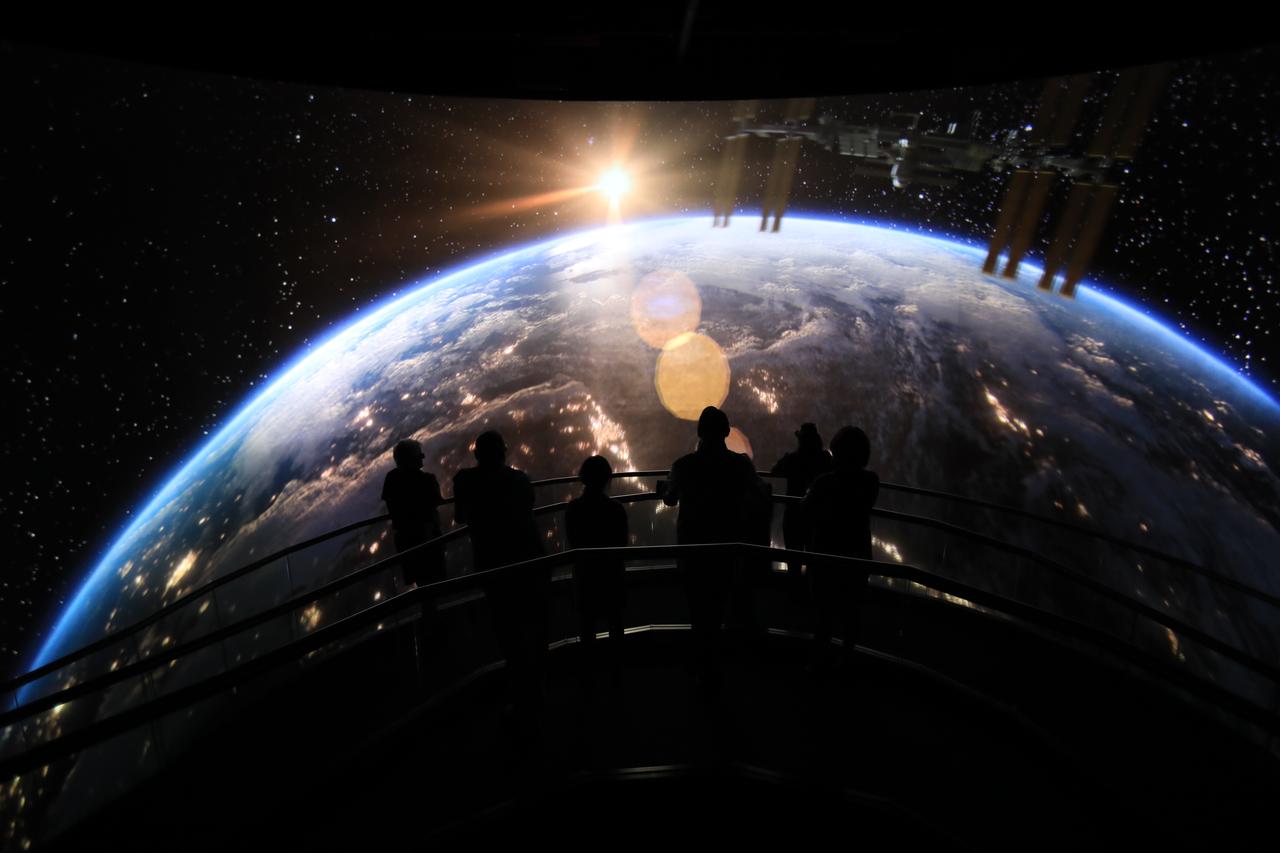
Inside the Heroes and Legends attraction at the Kennedy Space Center Visitor Complex guests watch a video presentation depicting the International Space Station in Earth orbit. In addition to displays honoring the Americans currently enshrined in the U. S. Astronaut Hall of Fame, the new facility looks back to the pioneering efforts of Mercury, Gemini and Apollo. It sets the stage by providing the background and context for space exploration and the legendary men and women who pioneered the nation's journey into space.
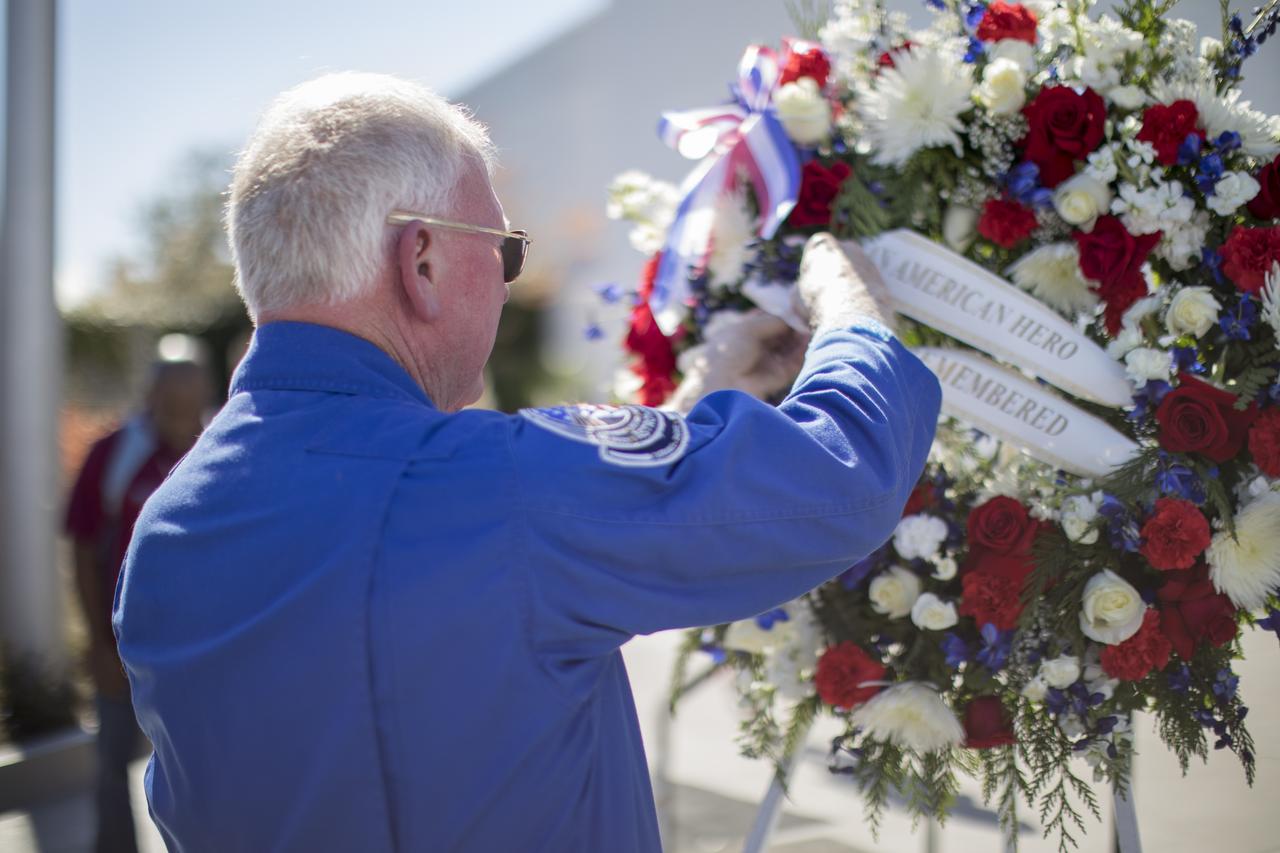
Former NASA astronaut Jon McBride places a wreath at the Heroes and Legends exhibit at the Kennedy Space Center Visitor Complex. The brief memorial honoring NASA astronaut John Young took place on the afternoon of Jan. 11, 2018. Young died Jan. 5, 2018, in Houston at the age of 87. He was the only astronaut to fly in NASA's Gemini, Apollo and Space Shuttle Programs.
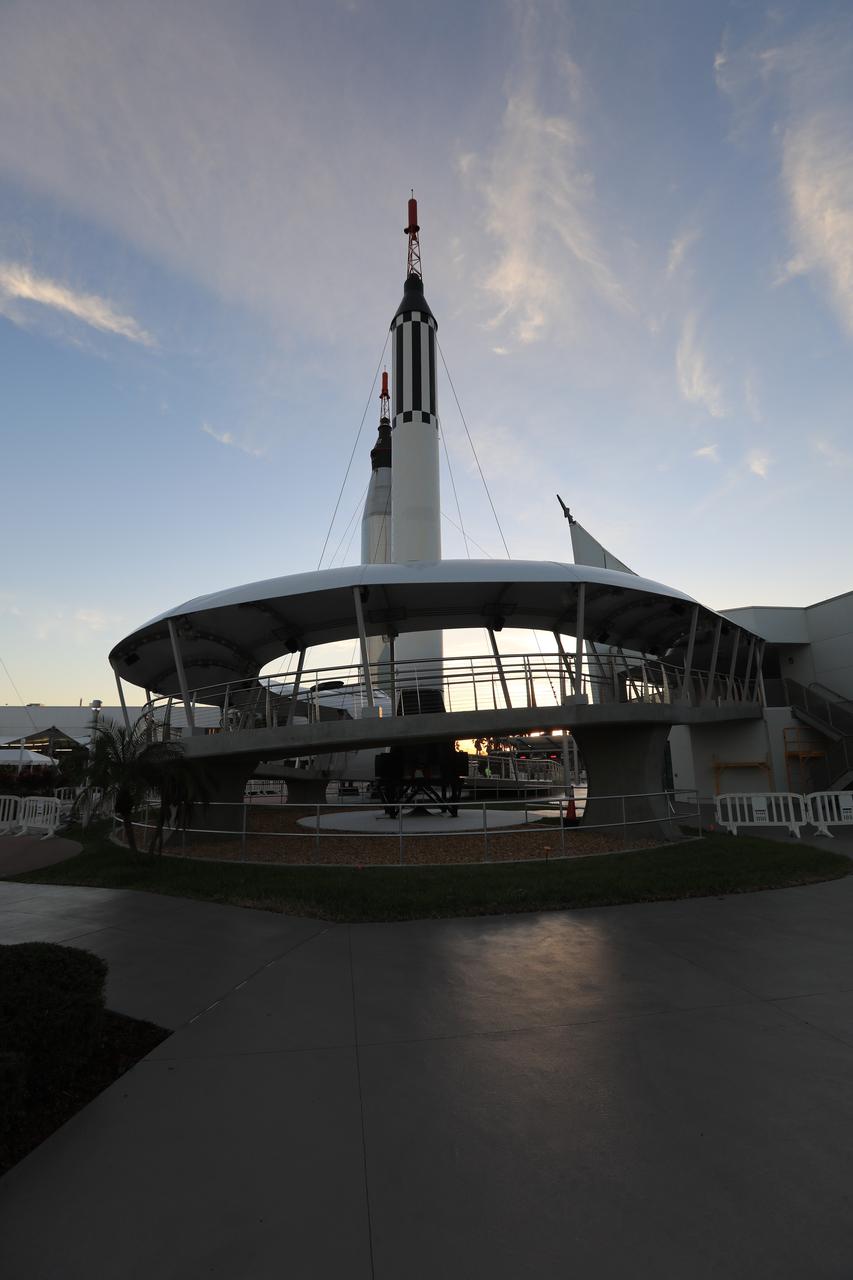
Entrance to the Heroes and Legends attraction at the Kennedy Space Center Visitor Complex is by way of a sweeping ramp designed to simulate a journey to the stars by way of the "Rocket Garden." The new facility includes the U.S. Astronaut Hall of Fame and looks back to the pioneering efforts of Mercury, Gemini and Apollo. It sets the stage by providing the background and context for space exploration and the legendary men and women who pioneered the nation's journey into space.
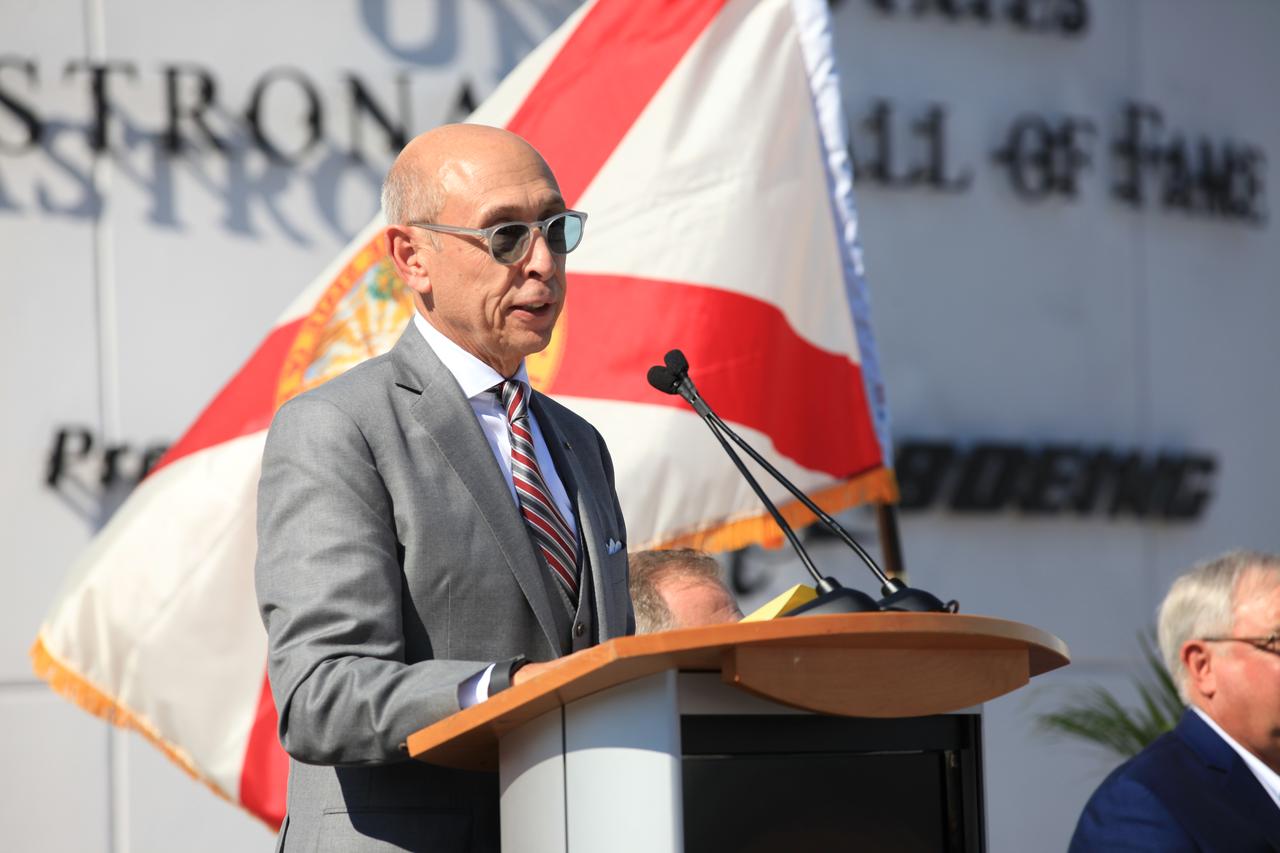
Rick Abramson, executive vice president and chief operating officer of Delaware North Companies Parks and Resorts, speaks to guests during the opening of the Heroes and Legends attraction at the Kennedy Space Center Visitor Complex. The new facility includes the U.S. Astronaut Hall of Fame and looks back to the pioneering efforts of Mercury, Gemini and Apollo. It sets the stage by providing the background and context for space exploration and the legendary men and women who pioneered the nation's journey into space.
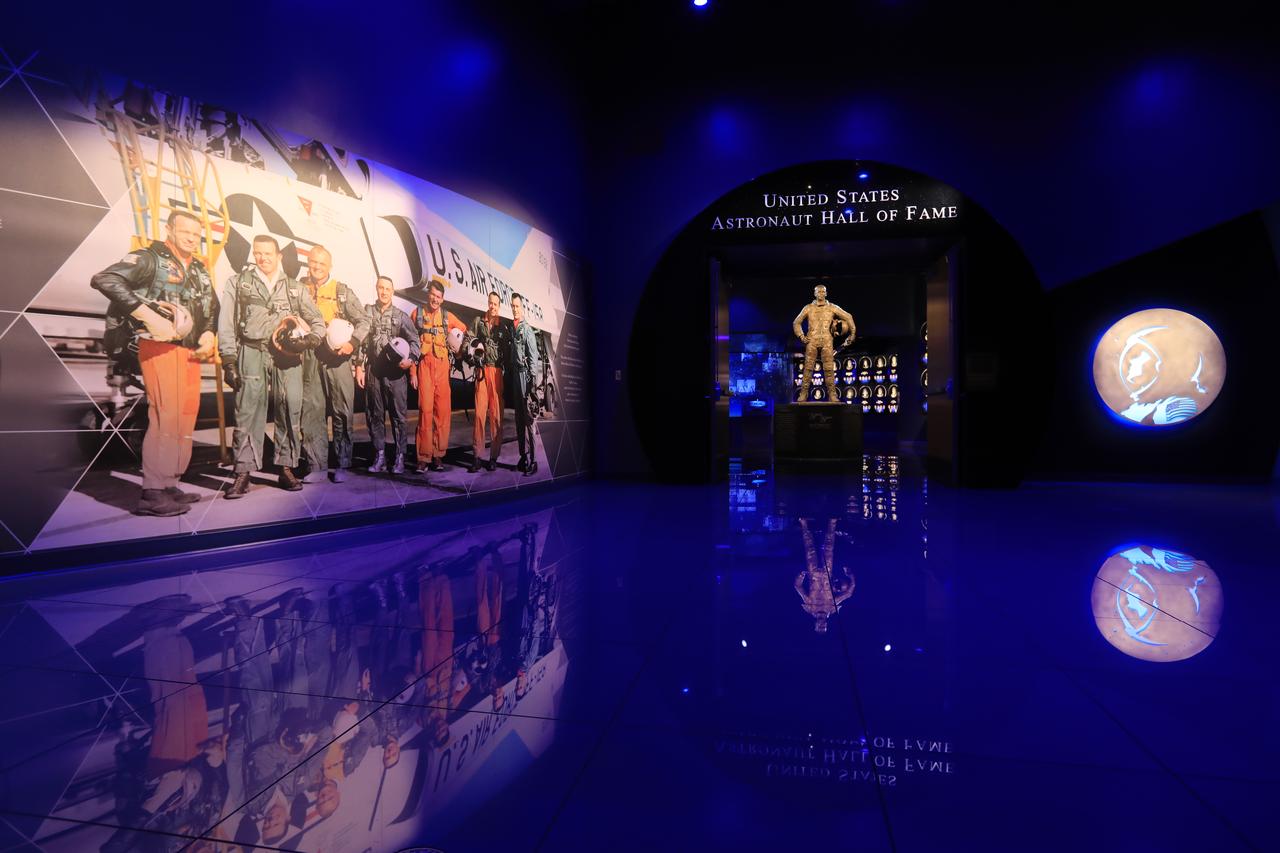
Inside the Heroes and Legends attraction at the Kennedy Space Center Visitor Complex, a statue of astronaut Alan Shepard, America's first person in space, stands just inside the doors to the U.S. Astronaut Hall of Fame. In addition to displays honoring the Americans currently enshrined in the U. S. Astronaut Hall of Fame, the new facility looks back to the pioneering efforts of Mercury, Gemini and Apollo. It sets the stage by providing the background and context for space exploration and the legendary men and women who pioneered the nation's journey into space.
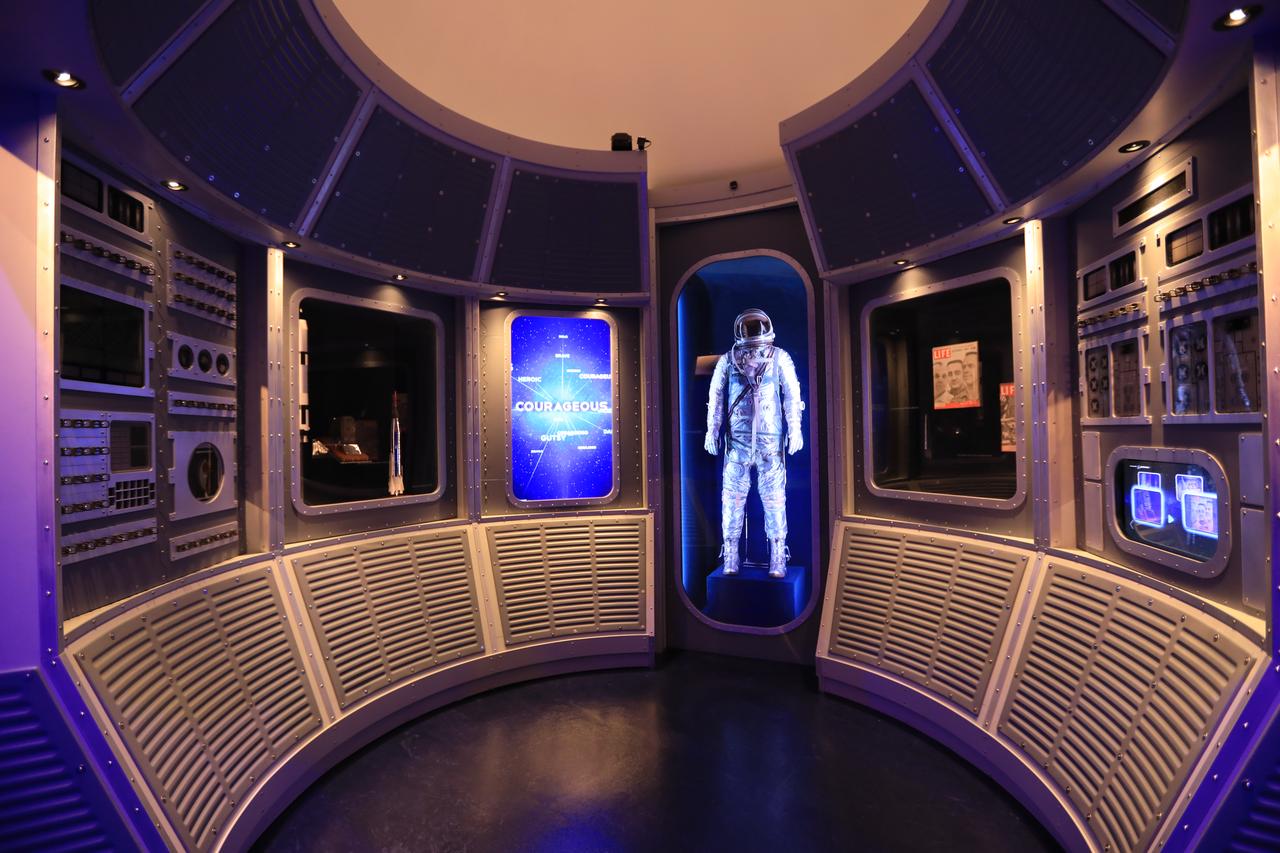
Inside the Heroes and Legends attraction at the Kennedy Space Center Visitor Complex, this display includes the spacesuit worn by astronaut Gus Grissom during his Mercury 4 suborbital flight of July 21, 1961. The new facility looks back to the pioneering efforts of Mercury, Gemini and Apollo. It sets the stage by providing the background and context for space exploration and the legendary men and women who pioneered the nation's journey into space.
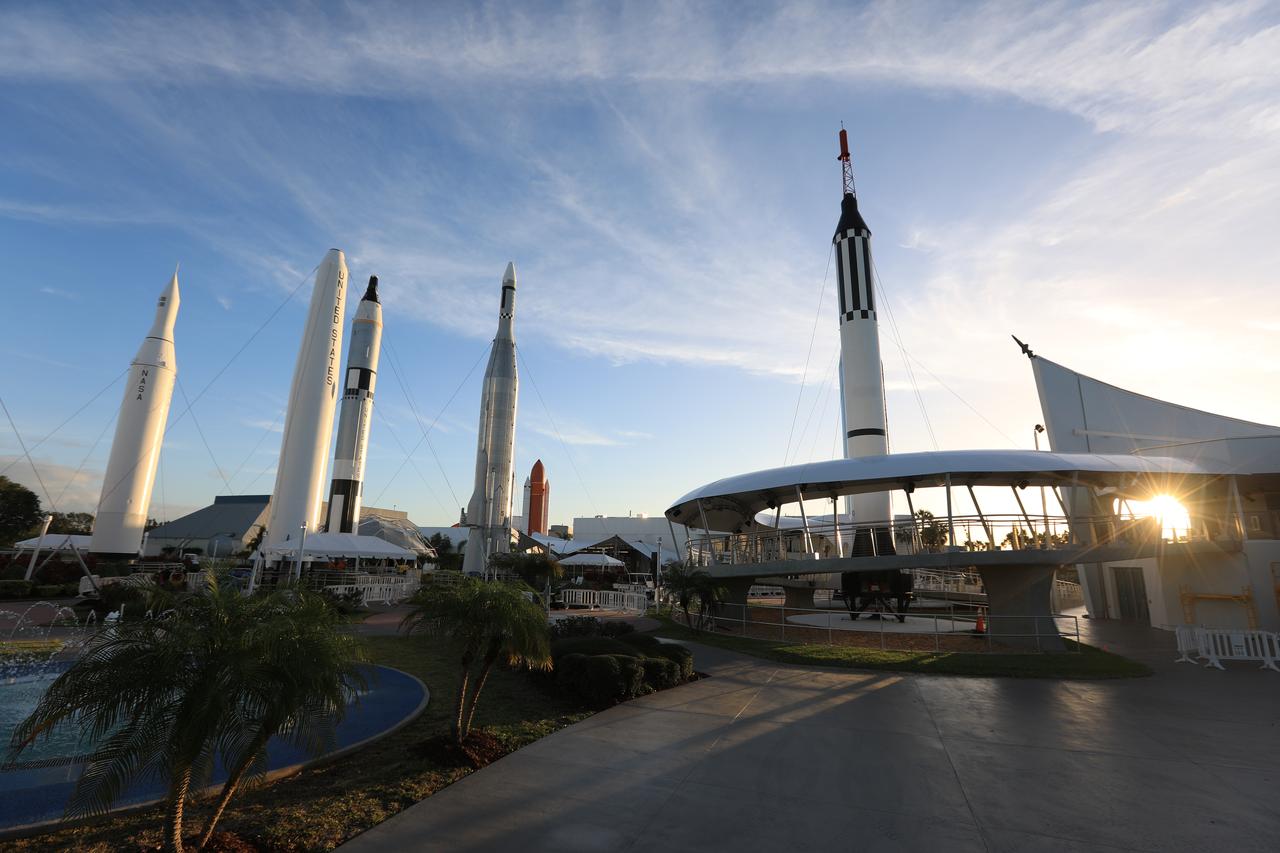
Entrance to the Heroes and Legends attraction at the Kennedy Space Center Visitor Complex is by way of a sweeping ramp designed to simulate a journey to the stars by way of the "Rocket Garden." The new facility includes the U.S. Astronaut Hall of Fame and looks back to the pioneering efforts of Mercury, Gemini and Apollo. It sets the stage by providing the background and context for space exploration and the legendary men and women who pioneered the nation's journey into space.
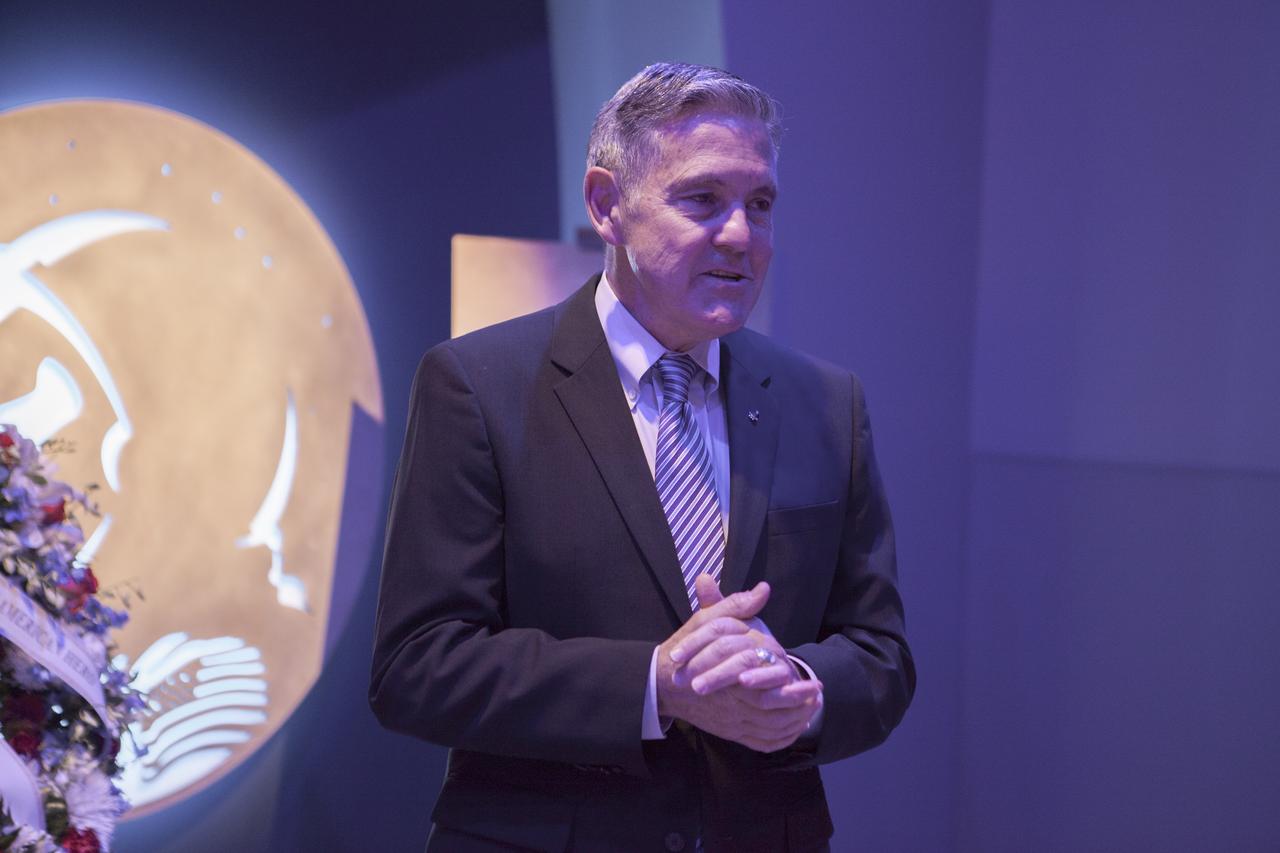
In the Heroes and Legends exhibit at the Kennedy Space Center Visitor Complex, Center Director Bob Cabana speaks during a ceremony honoring the memory of former NASA astronaut Richard Gordon. Having performed two spacewalks during Gemini XI in 1966, Gordon later served as command module pilot on Apollo 12 in 1969. Gordon died Nov. 6, 2017, at the age of 88.
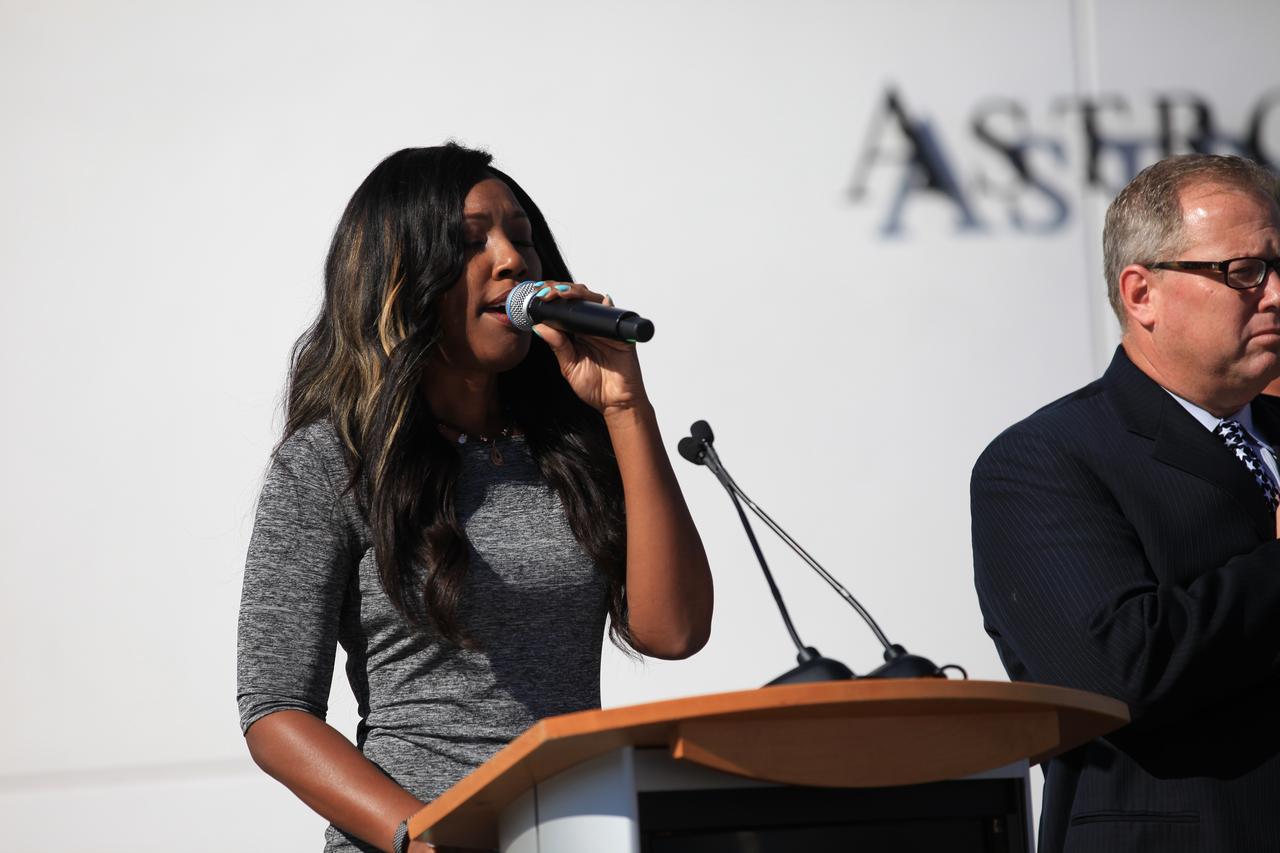
During the grand opening of the Heroes and Legends attraction at the Kennedy Space Center Visitor Complex, the national anthem was performed by Carmen Harrell. Therrin Protze, chief operating officer of the visitor complex is seen on the right. The new facility includes the U.S. Astronaut Hall of Fame and looks back to the pioneering efforts of Mercury, Gemini and Apollo. It sets the stage by providing the background and context for space exploration and the legendary men and women who pioneered the nation's journey into space.
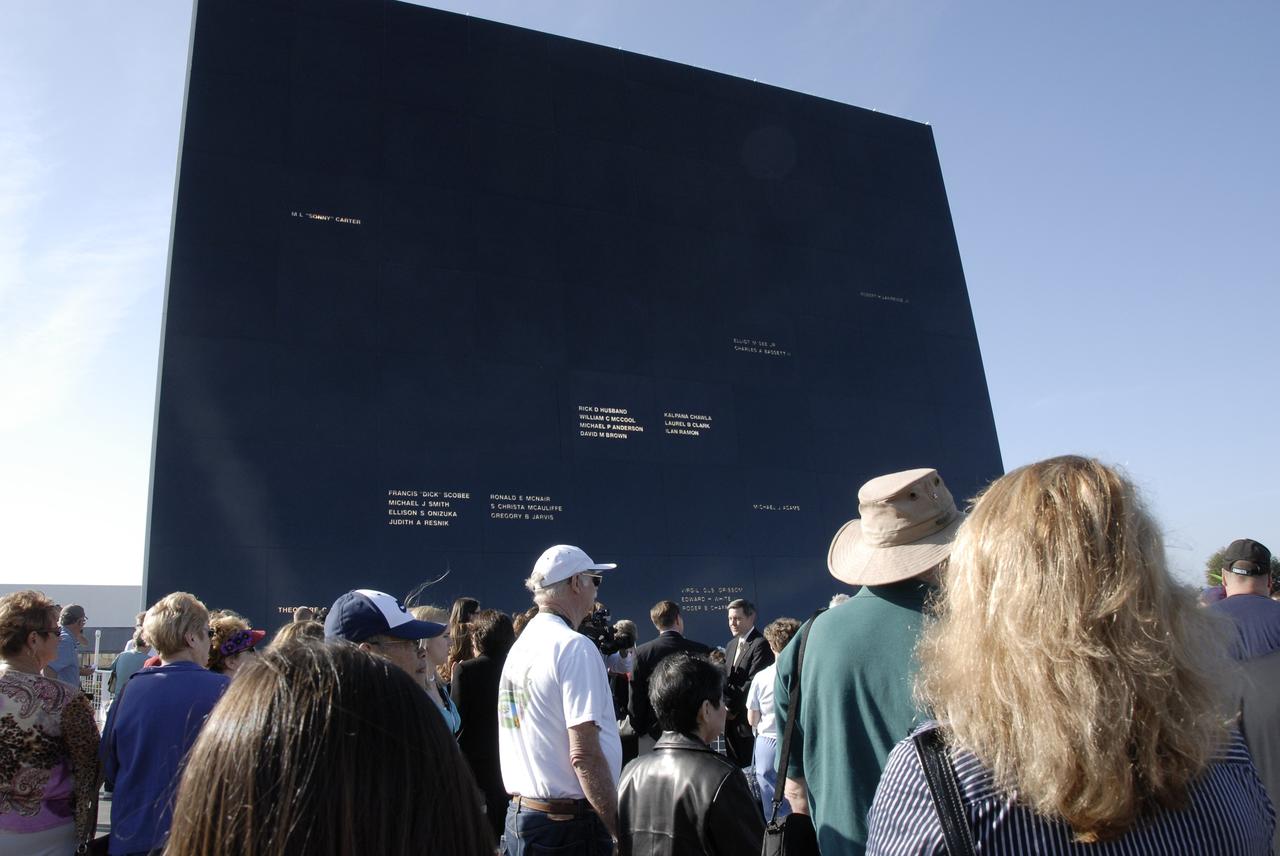
CAPE CANAVERAL, Fla. – At the Kennedy Space Center Visitor Complex, Center Director Bob Cabana takes part in a ceremony paying tribute to the crews of Apollo 1 and space shuttles Challenger and Columbia, as well as other NASA colleagues, during NASA's Day of Remembrance observance Jan. 29. The public was invited to the wreath-laying ceremony in front of the Space Mirror Memorial, on which are engraved the names of NASA's heroes who lost their lives while furthering the cause of exploration and discovery. Photo credit: NASA/Kim Shiflett
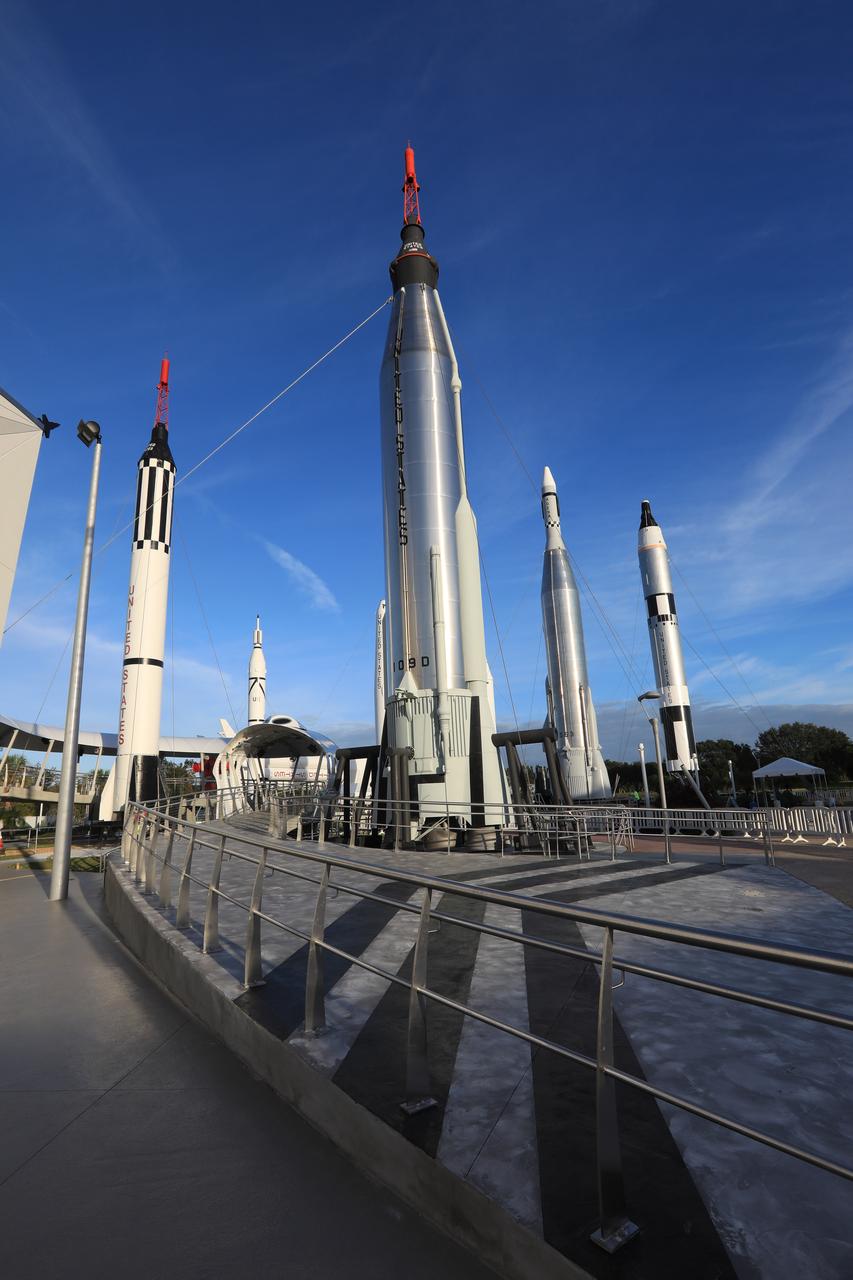
Launch vehicles used by NASA in its history of exploring space are displayed in the "Rocket Garden" adjacent to the new Heroes and Legends attraction at the Kennedy Space Center Visitor Complex. The new facility includes the U.S. Astronaut Hall of Fame and looks back to the pioneering efforts of Mercury, Gemini and Apollo. It sets the stage by providing the background and context for space exploration and the legendary men and women who pioneered the nation's journey into space.
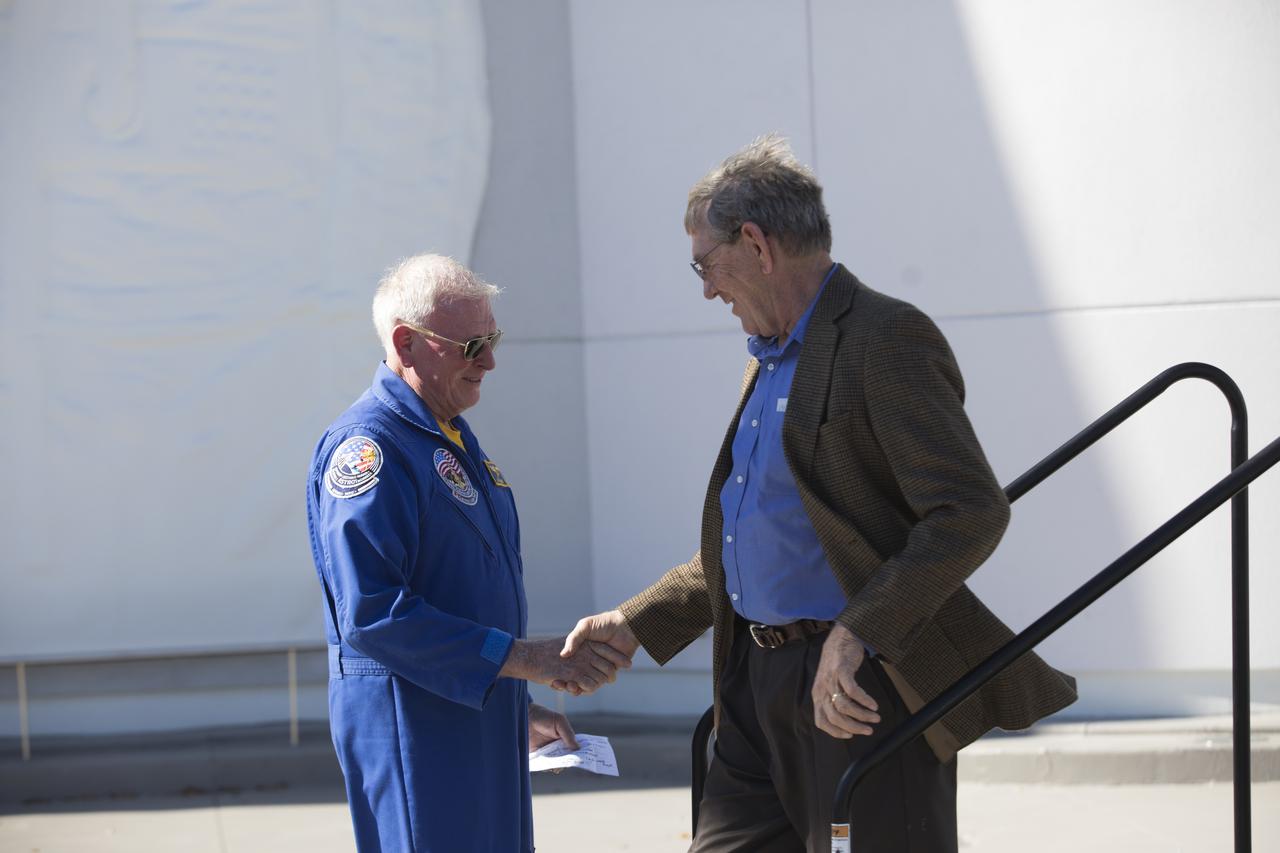
Former NASA astronaut Jon McBride, left, greets Mike McCulley during a ceremony at the Heroes and Legends exhibit at the Kennedy Space Center Visitor Complex. The brief memorial honoring NASA astronaut John Young took place on the afternoon of Jan. 11, 2018. Young died Jan. 5, 2018, in Houston at the age of 87. He was the only astronaut to fly in NASA's Gemini, Apollo and Space Shuttle Programs.
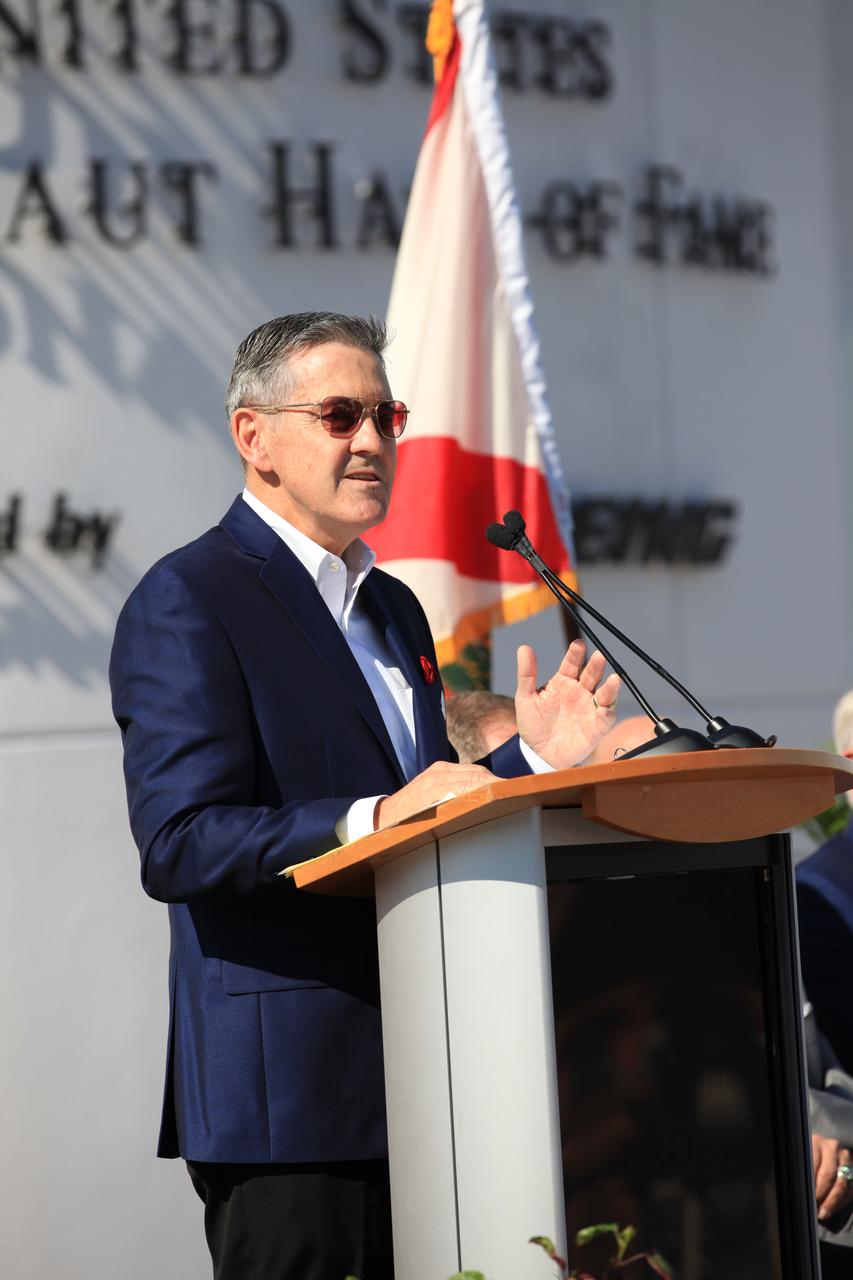
Kennedy Space Center Director Bob Cabana, a former space shuttle astronaut and member of the Astronaut Hall of Fame, speaks to guests during the opening of the Heroes and Legends attraction at the Kennedy Space Center Visitor Complex. The new facility includes the U.S. Astronaut Hall of Fame and looks back to the pioneering efforts of Mercury, Gemini and Apollo. It sets the stage by providing the background and context for space exploration and the legendary men and women who pioneered the nation's journey into space.
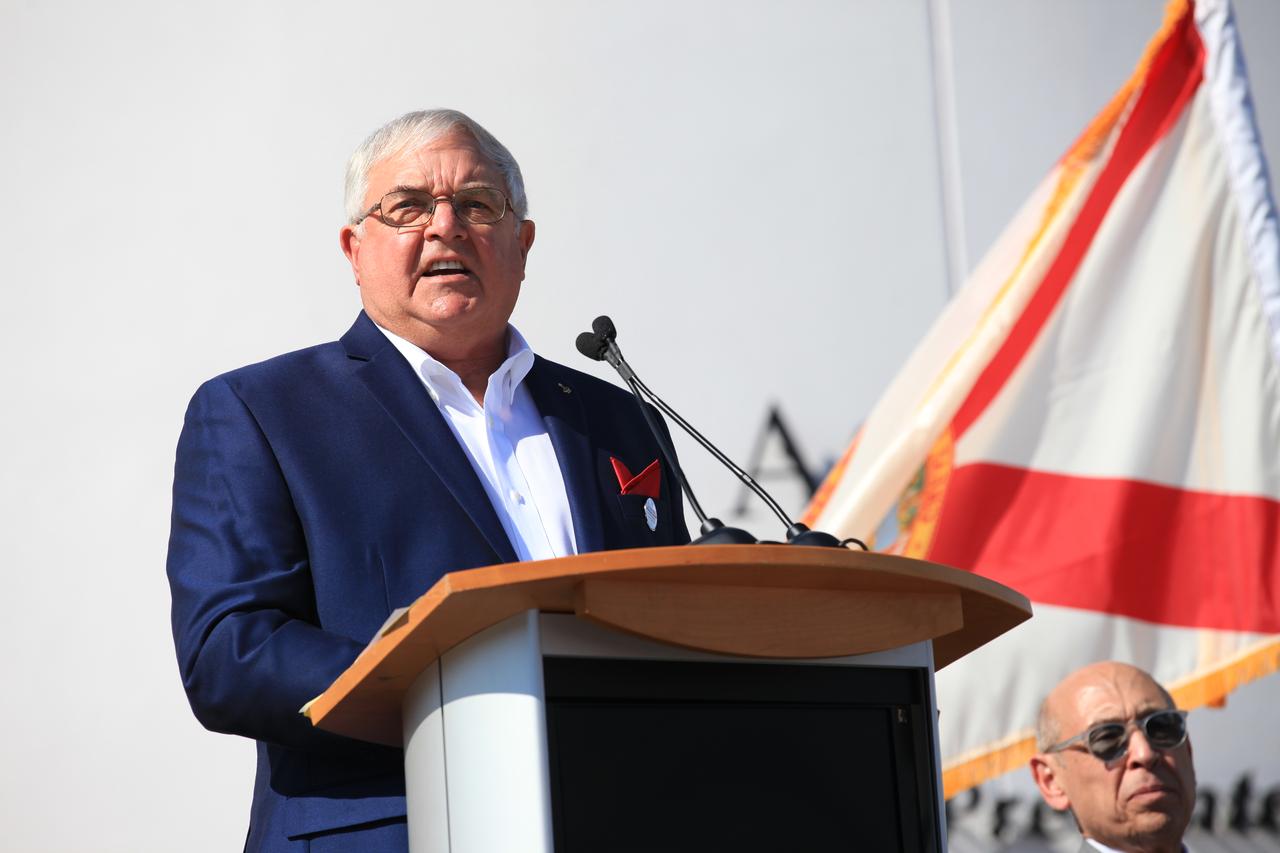
Former space shuttle astronaut Dan Brandenstein, chairman of the Astronaut Scholarship Foundation board of directors, speaks to guests during the opening of the Heroes and Legends attraction at the Kennedy Space Center Visitor Complex. The new facility includes the U.S. Astronaut Hall of Fame and looks back to the pioneering efforts of Mercury, Gemini and Apollo. It sets the stage by providing the background and context for space exploration and the legendary men and women who pioneered the nation's journey into space.
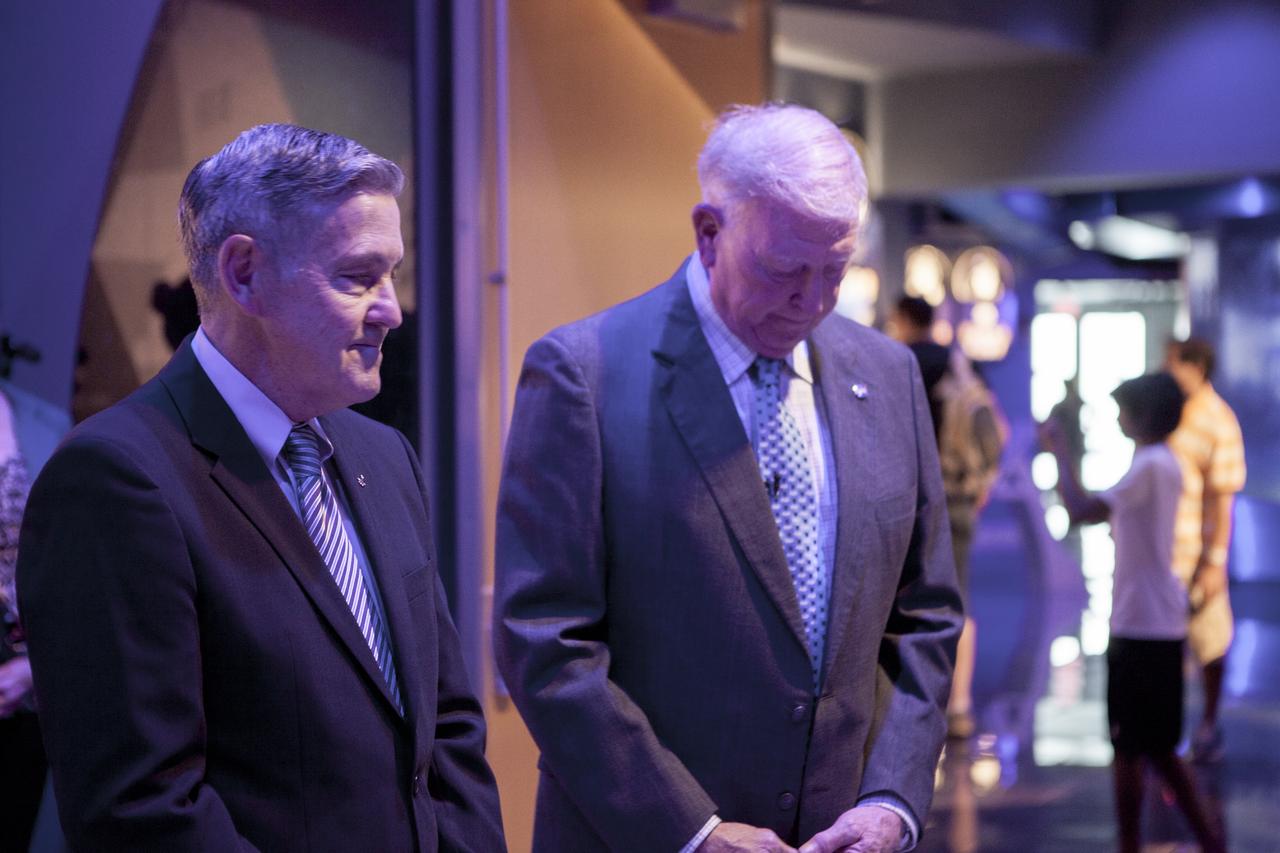
In the Heroes and Legends exhibit at the Kennedy Space Center Visitor Complex, Center Director Bob Cabana and space shuttle astronaut Jon McBride participate in a ceremony to honoring the memory of former NASA astronaut Richard Gordon. Having performed two spacewalks during Gemini XI in 1966, Gordon later served as command module pilot on Apollo 12 in 1969. Gordon died Nov. 6, 2017, at the age of 88.
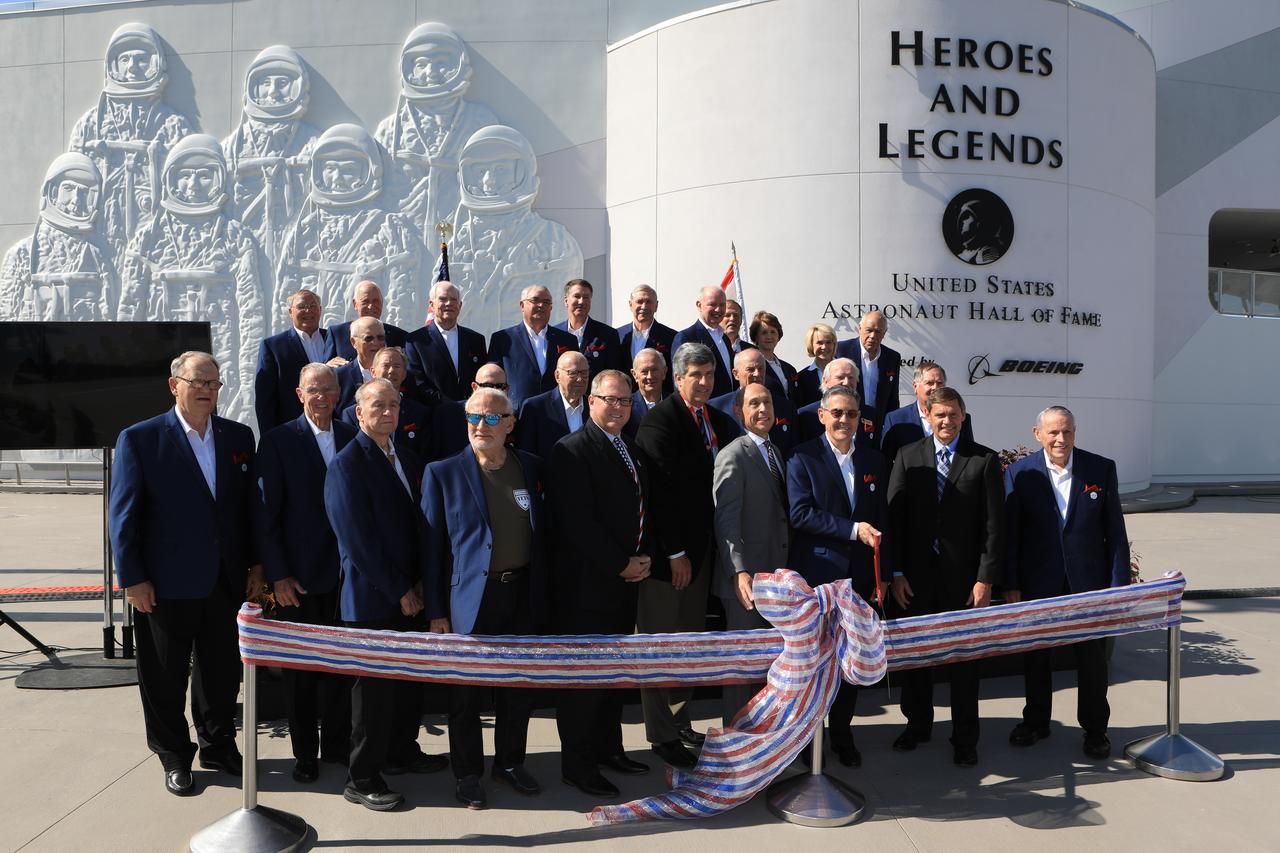
Dignitaries, including members of the U.S. Astronaut Hall of Fame, prepare to cut a ceremonial ribbon opening the Heroes and Legends attraction at the Kennedy Space Center Visitor Complex. The new facility includes the U.S. Astronaut Hall of Fame and looks back to the pioneering efforts of Mercury, Gemini and Apollo. It sets the stage by providing the background and context for space exploration and the legendary men and women who pioneered the nation's journey into space.
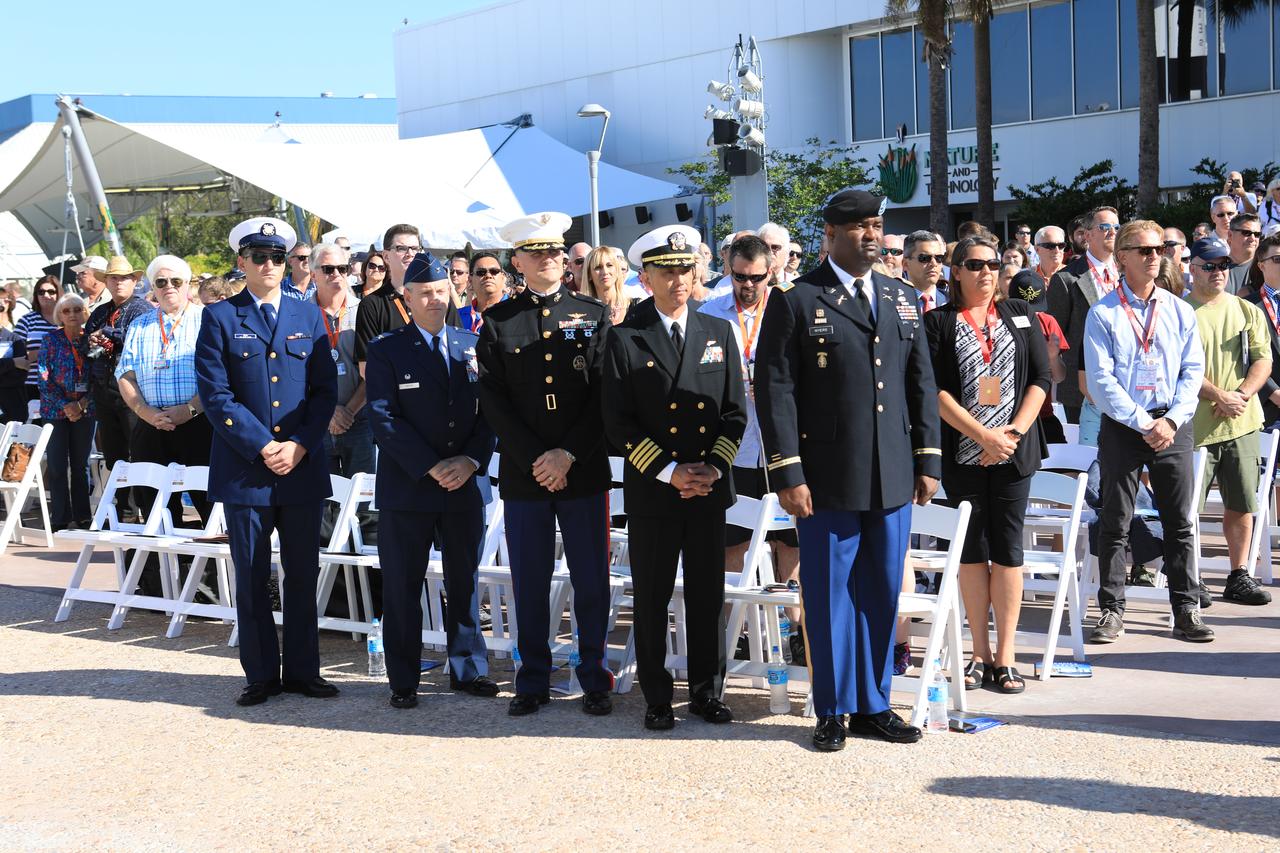
The grand opening of the Heroes and Legends attraction at the Kennedy Space Center Visitor Complex took place on Veterans Day. In honor of the celebration, representatives of the U.S. Coast Guard, Air Force, Marine Corps, Navy and Army were on hand to represent members of the nation's armed services. The new facility includes the U.S. Astronaut Hall of Fame and looks back to the pioneering efforts of Mercury, Gemini and Apollo. It sets the stage by providing the background and context for space exploration and the legendary men and women who pioneered the nation's journey into space.
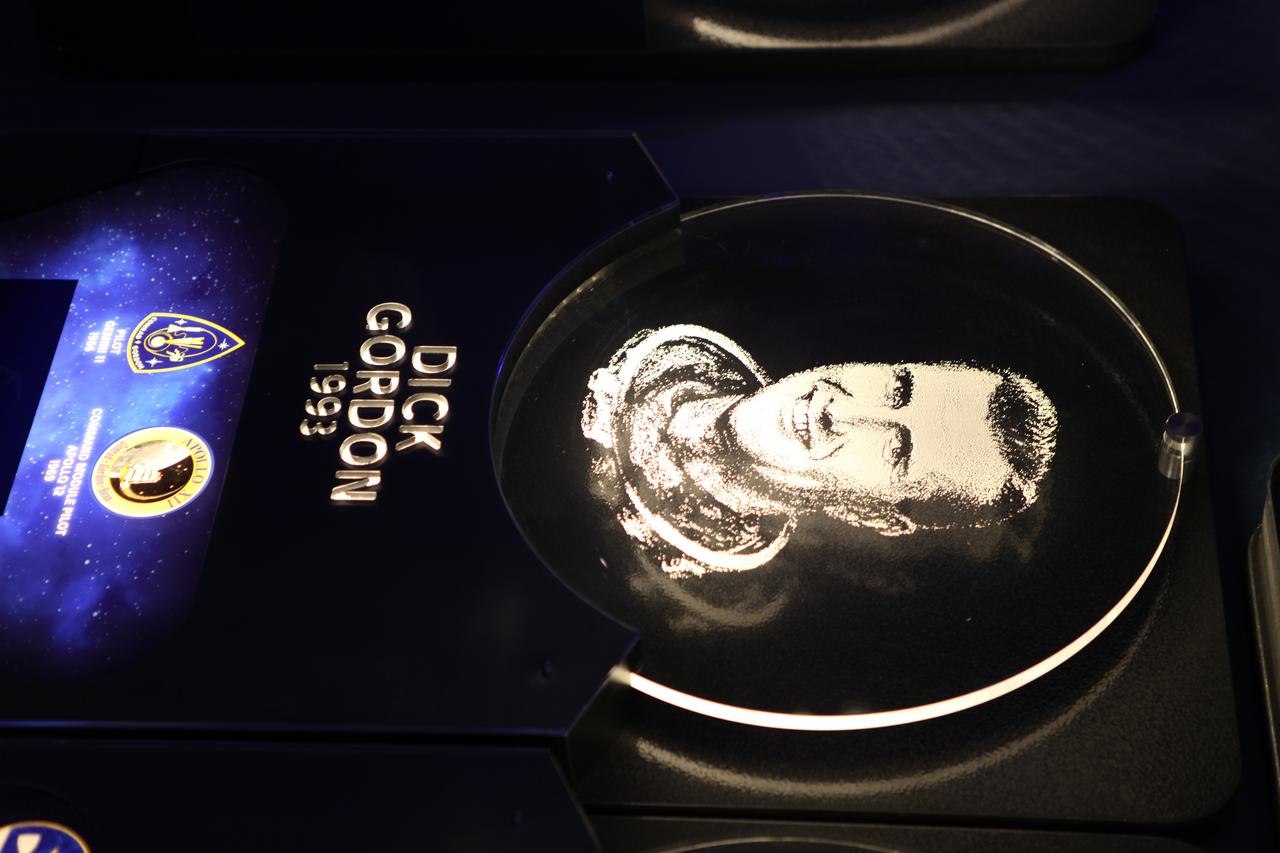
In the Heroes and Legends exhibit at the Kennedy Space Center Visitor Complex, former NASA astronaut Richard Gordon's plaque is seen among other enshrines of the U.S. Astronaut Hall of Fame. Gordon performed two spacewalks during Gemini XI in 1966 and was command module pilot on Apollo 12 in 1969. Gordon died Nov. 6, 2017, at the age of 88.
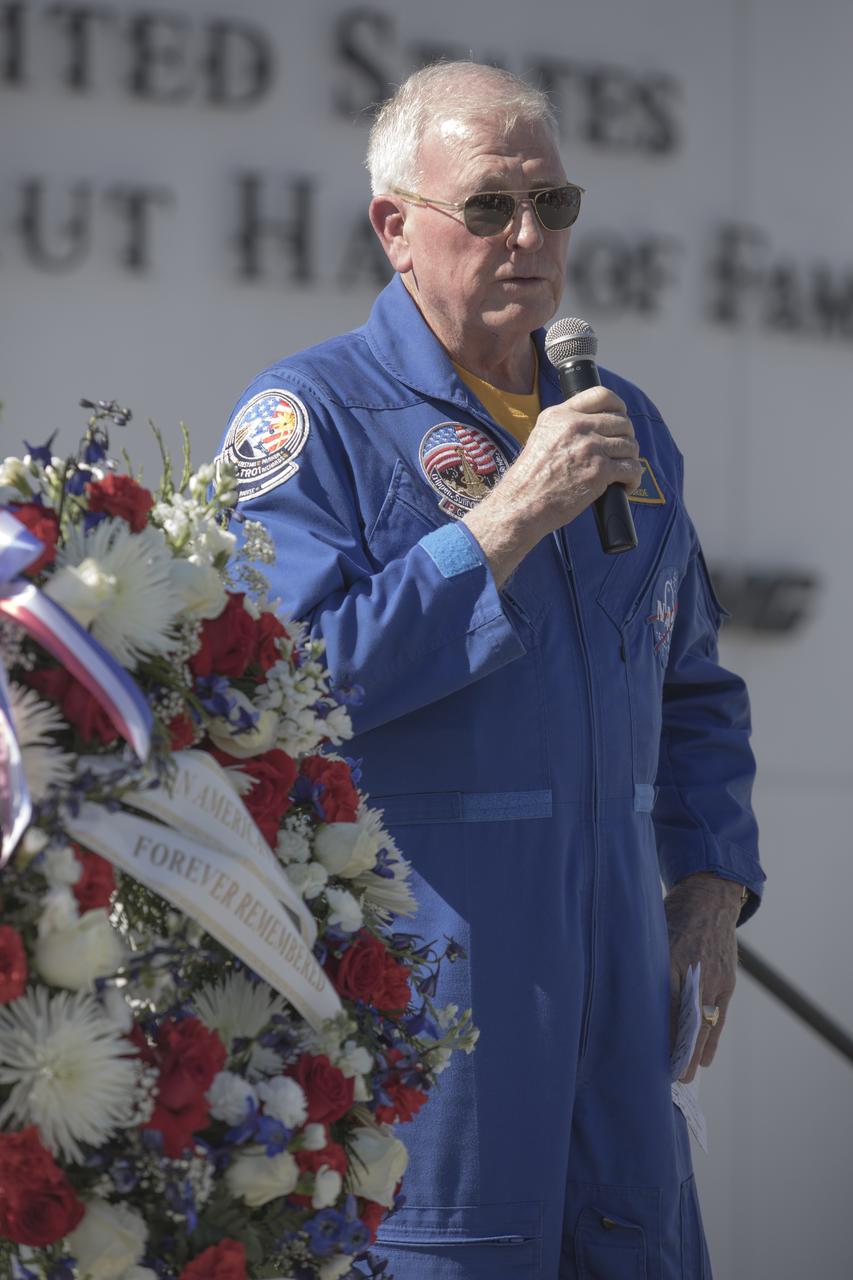
Former NASA astronaut Jon McBride speaks during a ceremony at the Heroes and Legends exhibit at the Kennedy Space Center Visitor Complex. The brief memorial honoring NASA astronaut John Young took place on the afternoon of Jan. 11, 2018. Young died Jan. 5, 2018, in Houston at the age of 87. He was the only astronaut to fly in NASA's Gemini, Apollo and Space Shuttle Programs.

The Heroes and Legends attraction at the Kennedy Space Center Visitor Complex is just inside the entrance to set the stage as guests arrive. In addition to displays honoring the Americans currently enshrined in the U. S. Astronaut Hall of Fame. The new facility looks back to the pioneering efforts of Mercury, Gemini and Apollo. It sets the stage by providing the background and context for space exploration and the legendary men and women who pioneered the nation's journey into space.
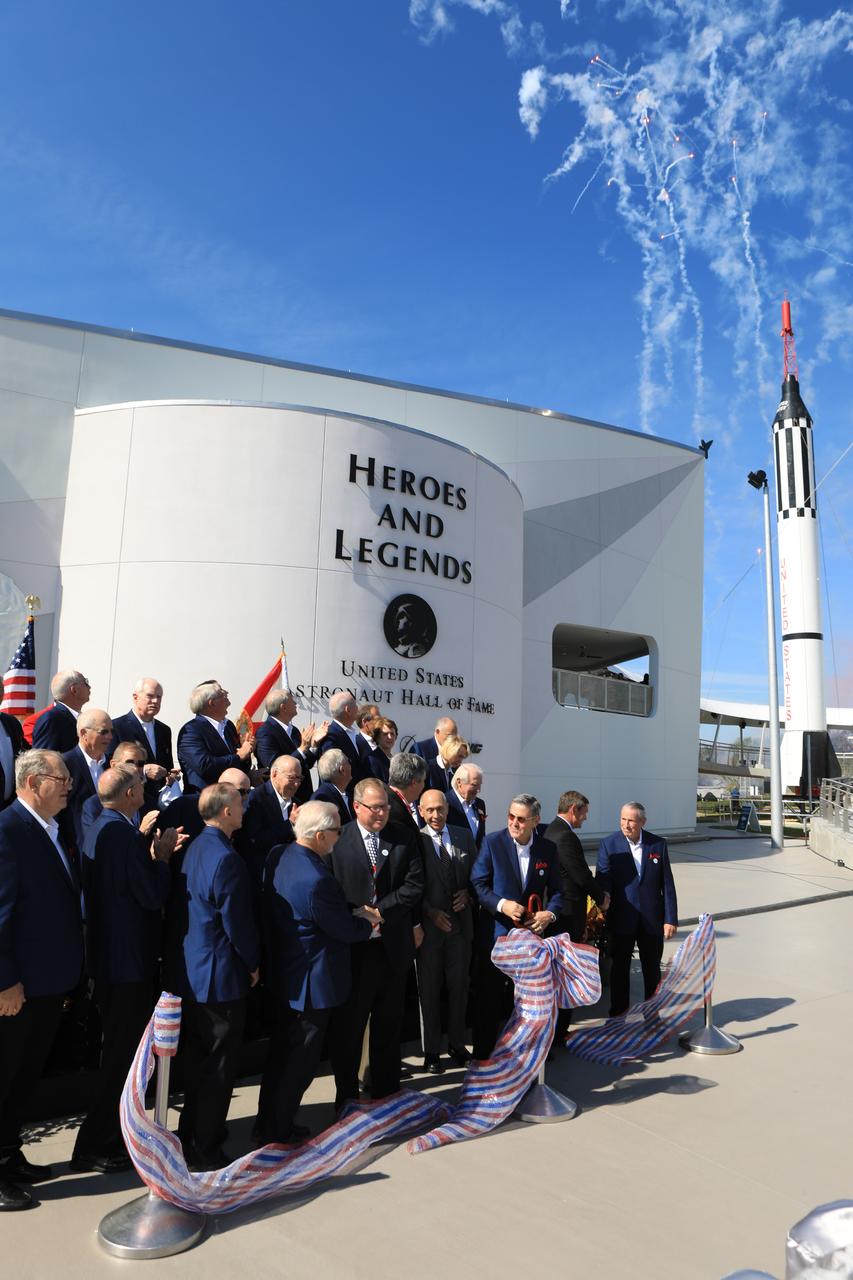
Fireworks are launched as dignitaries, including members of the U.S. Astronaut Hall of Fame, have just cut a ceremonial ribbon opening the Heroes and Legends attraction at the Kennedy Space Center Visitor Complex. The new facility includes the U.S. Astronaut Hall of Fame and looks back to the pioneering efforts of Mercury, Gemini and Apollo. It sets the stage by providing the background and context for space exploration and the legendary men and women who pioneered the nation's journey into space.
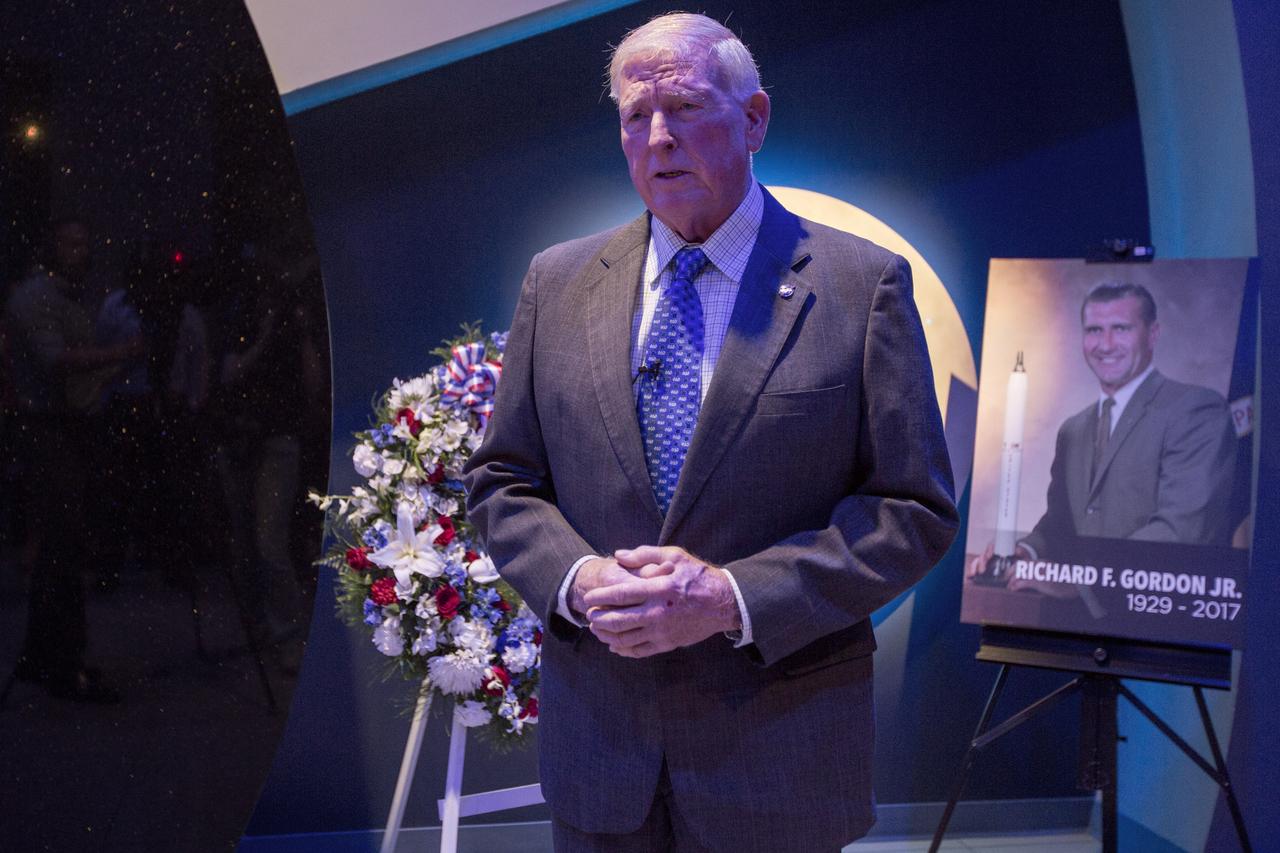
In the Heroes and Legends exhibit at the Kennedy Space Center Visitor Complex, space shuttle astronaut Jon McBride, speaks at a ceremony to honoring the memory of former NASA astronaut Richard Gordon. Having performed two spacewalks during Gemini XI in 1966, Gordon later served as command module pilot on Apollo 12 in 1969. Gordon died Nov. 6, 2017, at the age of 88.
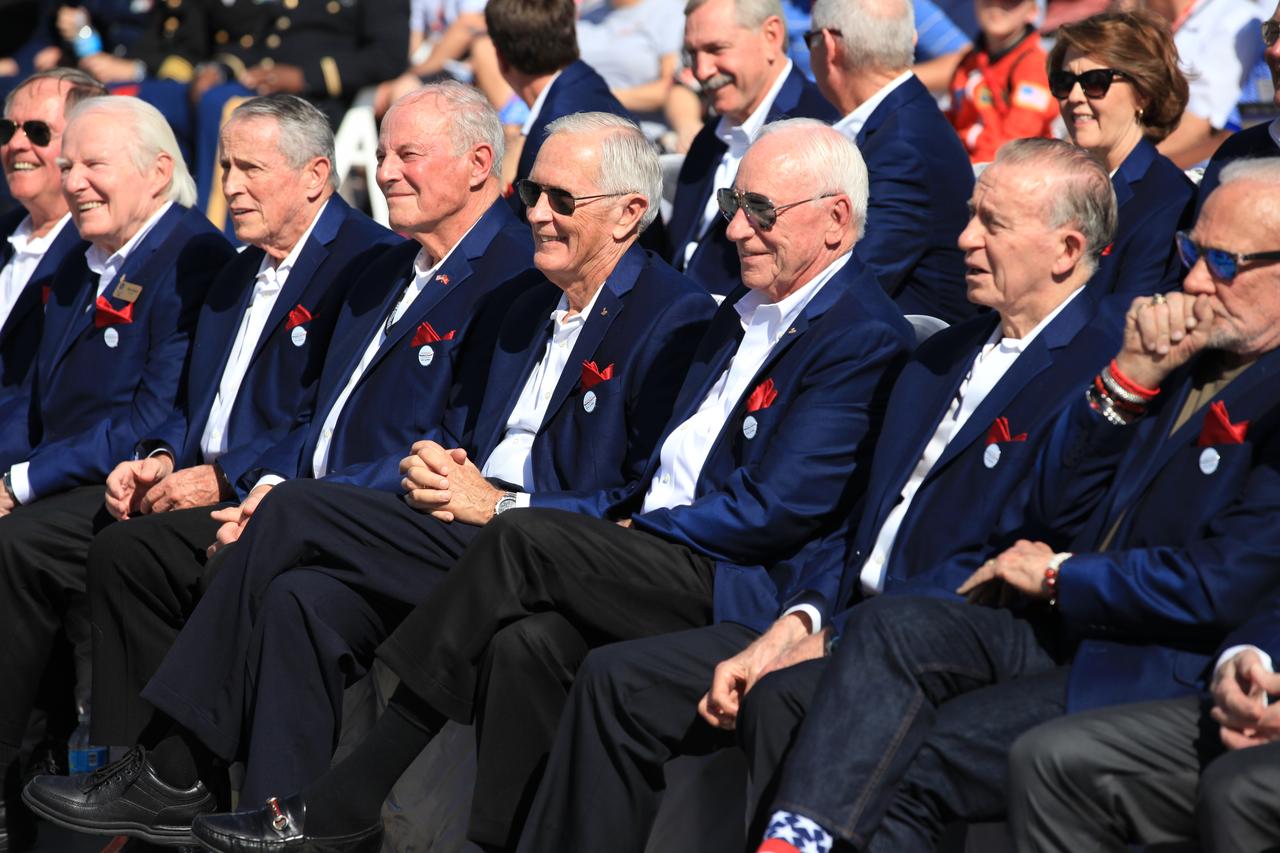
Members of the U.S. Astronaut Hall of Fame listen to speakers during the opening of the Heroes and Legends attraction at the Kennedy Space Center Visitor Complex. From the left are: Bob Crippen, Vance Brand, Ed Gibson, Jack Lousma, Charlie Duke, Al Worden, Walt Cunningham and Buzz Aldrin. The new facility includes the U.S. Astronaut Hall of Fame and looks back to the pioneering efforts of Mercury, Gemini and Apollo. It sets the stage by providing the background and context for space exploration and the legendary men and women who pioneered the nation's journey into space.
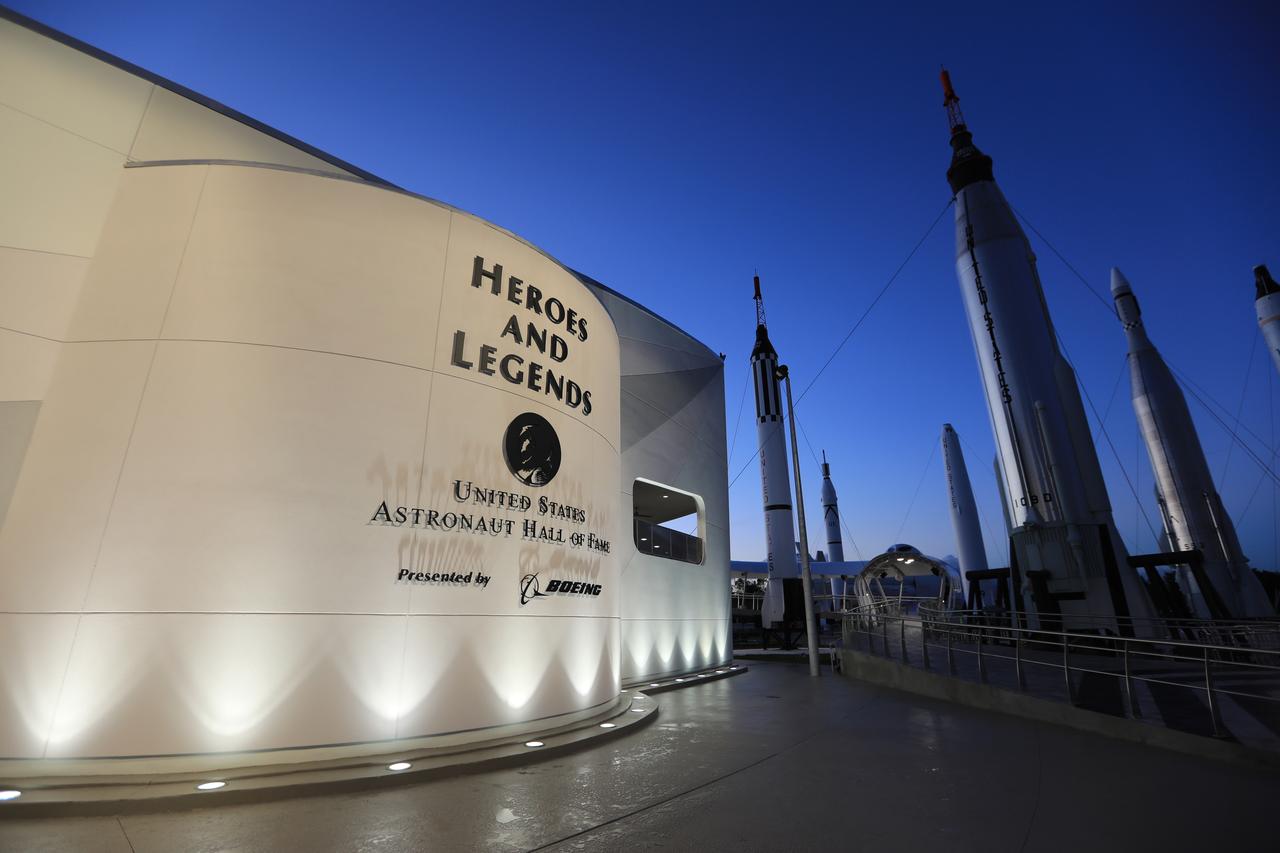
The Heroes and Legends attraction at the Kennedy Space Center Visitor Complex is just inside the entrance to set the stage as guests arrive. In addition to displays honoring the Americans currently enshrined in the U. S. Astronaut Hall of Fame. The new facility looks back to the pioneering efforts of Mercury, Gemini and Apollo. It sets the stage by providing the background and context for space exploration and the legendary men and women who pioneered the nation's journey into space.
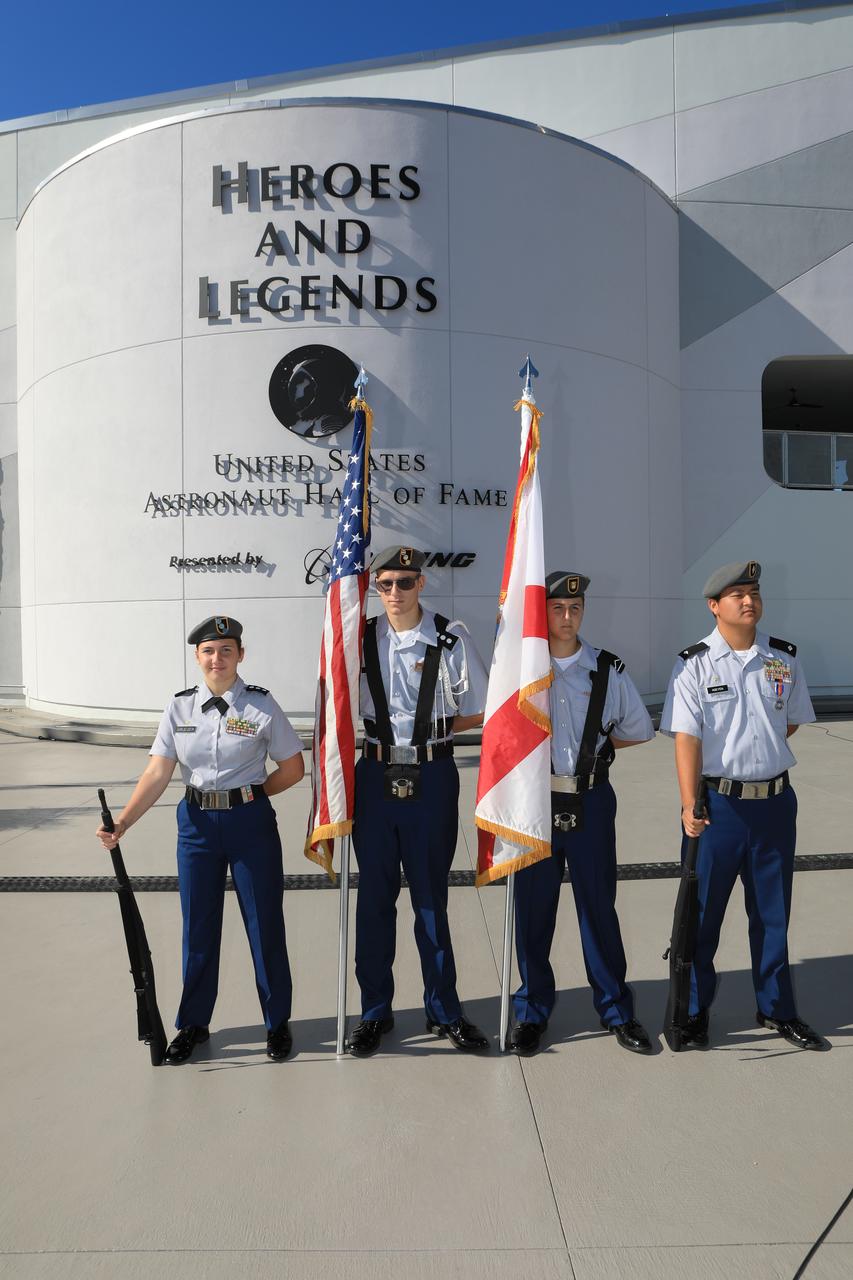
Members of the Merritt Island High School Army Reserve Officers' Training Corps (ROTC) present the colors during the grand opening of the Heroes and Legends attraction at the Kennedy Space Center Visitor Complex. The new facility includes the U.S. Astronaut Hall of Fame and looks back to the pioneering efforts of Mercury, Gemini and Apollo. It sets the stage by providing the background and context for space exploration and the legendary men and women who pioneered the nation's journey into space.
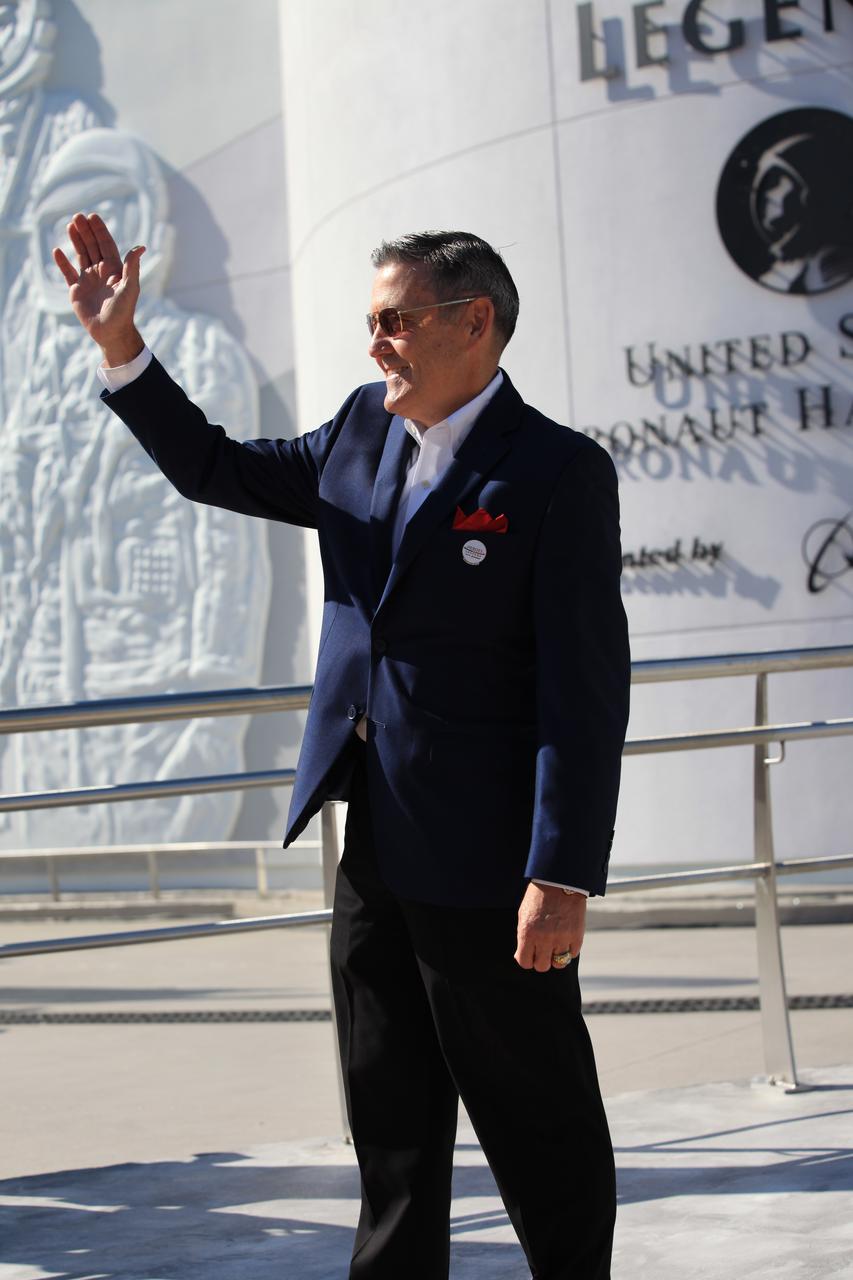
Kennedy Space Center Director Bob Cabana is introduced along with other members of the U.S. Astronaut Hall of Fame during ceremonies opening the Heroes and Legends attraction at the Kennedy Space Center Visitor Complex. The new facility includes the U.S. Astronaut Hall of Fame and looks back to the pioneering efforts of Mercury, Gemini and Apollo. It sets the stage by providing the background and context for space exploration and the legendary men and women who pioneered the nation's journey into space.
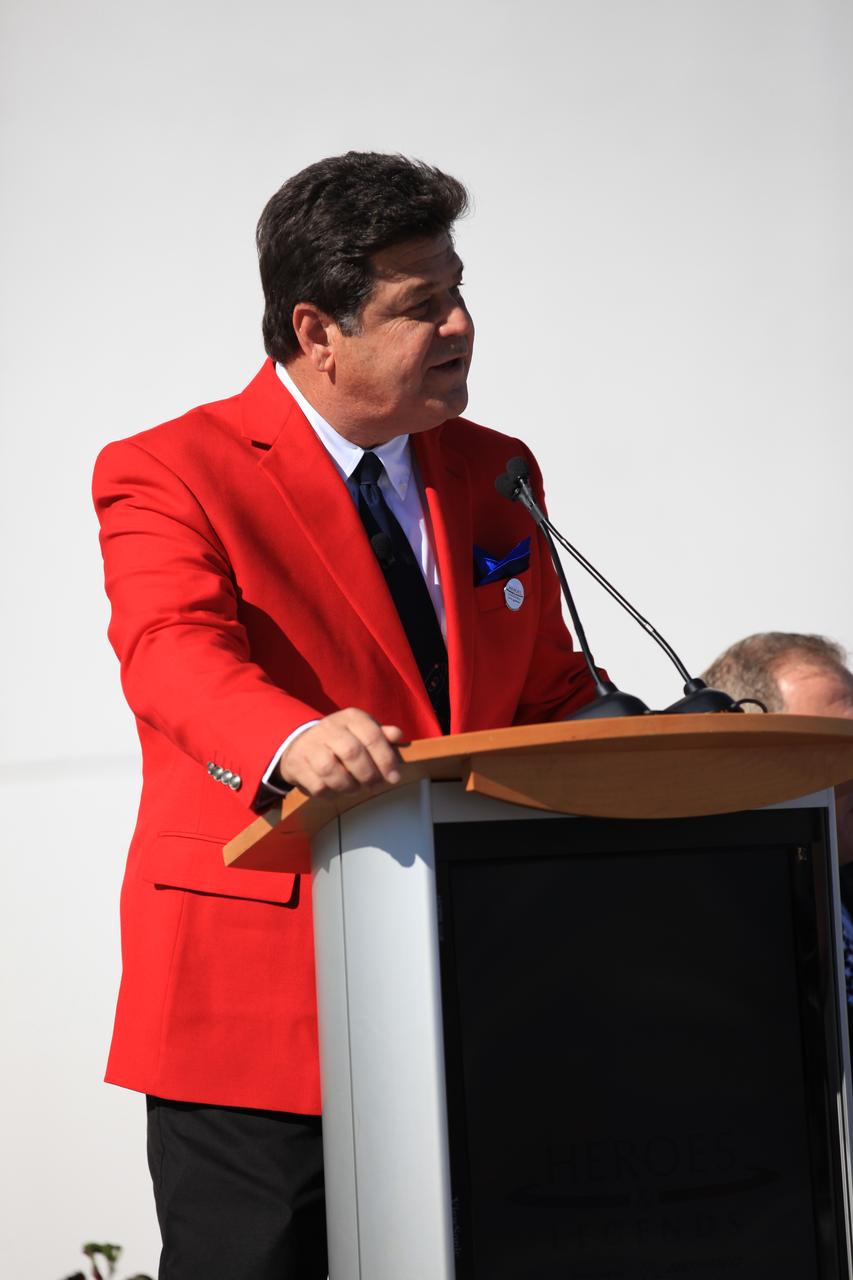
Former CNN space correspondent John Zarrella serves as master of ceremonies during the opening of the Heroes and Legends attraction at the Kennedy Space Center Visitor Complex. The new facility includes the U.S. Astronaut Hall of Fame and looks back to the pioneering efforts of Mercury, Gemini and Apollo. It sets the stage by providing the background and context for space exploration and the legendary men and women who pioneered the nation's journey into space.
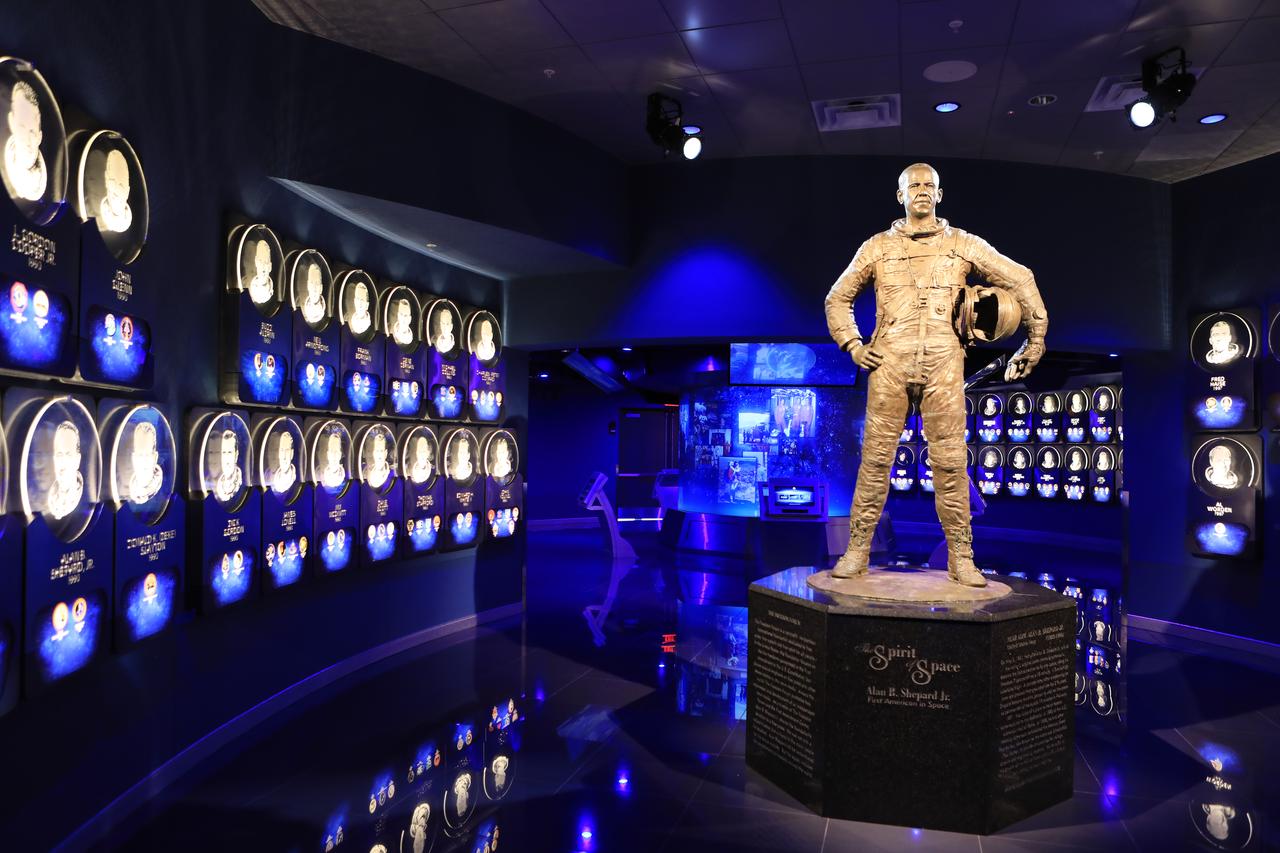
Inside the Heroes and Legends attraction at the Kennedy Space Center Visitor Complex, a statue of astronaut Alan Shepard, America's first person in space, stands just inside the doors to the U.S. Astronaut Hall of Fame. In addition to displays honoring the Americans currently enshrined in the U. S. Astronaut Hall of Fame, the new facility looks back to the pioneering efforts of Mercury, Gemini and Apollo. It sets the stage by providing the background and context for space exploration and the legendary men and women who pioneered the nation's journey into space.
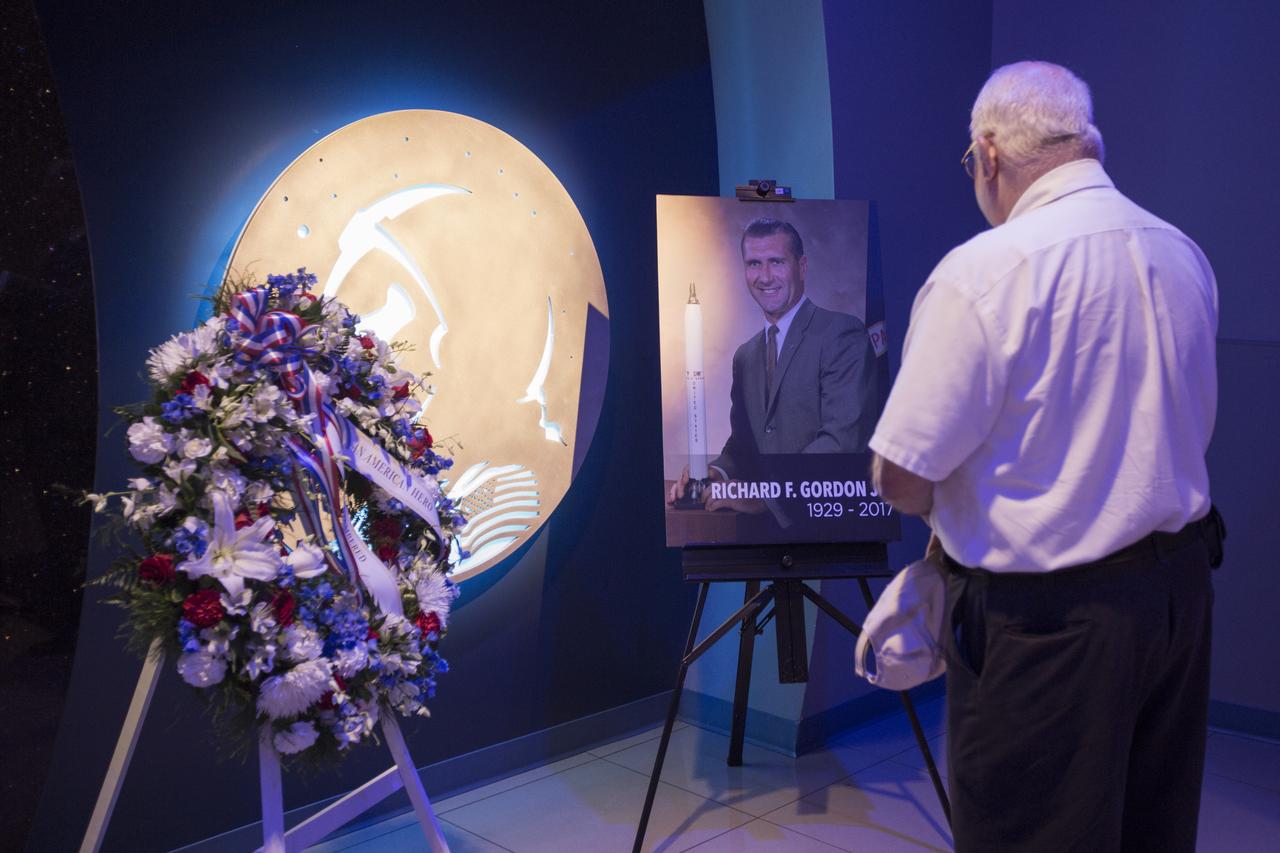
In the Heroes and Legends exhibit at the Kennedy Space Center Visitor Complex, a guest pays respect to former NASA astronaut Richard Gordon. A memorial wreath was placed following a ceremony to honor the memory of Gordon who performed two spacewalks during Gemini XI in 1966 and served as command module pilot on Apollo 12 in 1969. Gordon died Nov. 6, 2017, at the age of 88.
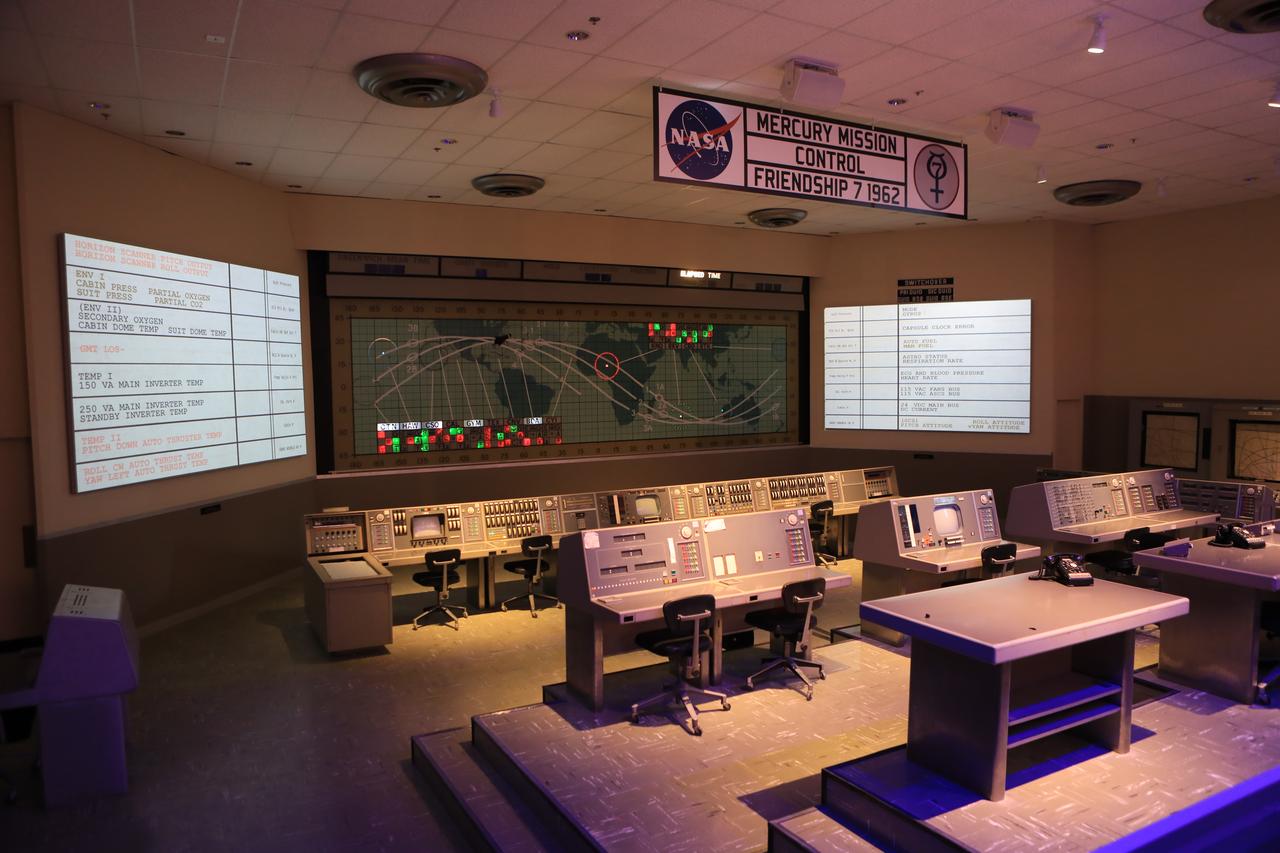
Inside the Heroes and Legends attraction at the Kennedy Space Center Visitor Complex, interactive features include the original consoles of the Mercury Mission Control room with the world map where capsules paths were followed between tracking stations. The new facility looks back to the pioneering efforts of Mercury, Gemini and Apollo. It sets the stage by providing the background and context for space exploration and the legendary men and women who pioneered the nation's journey into space.
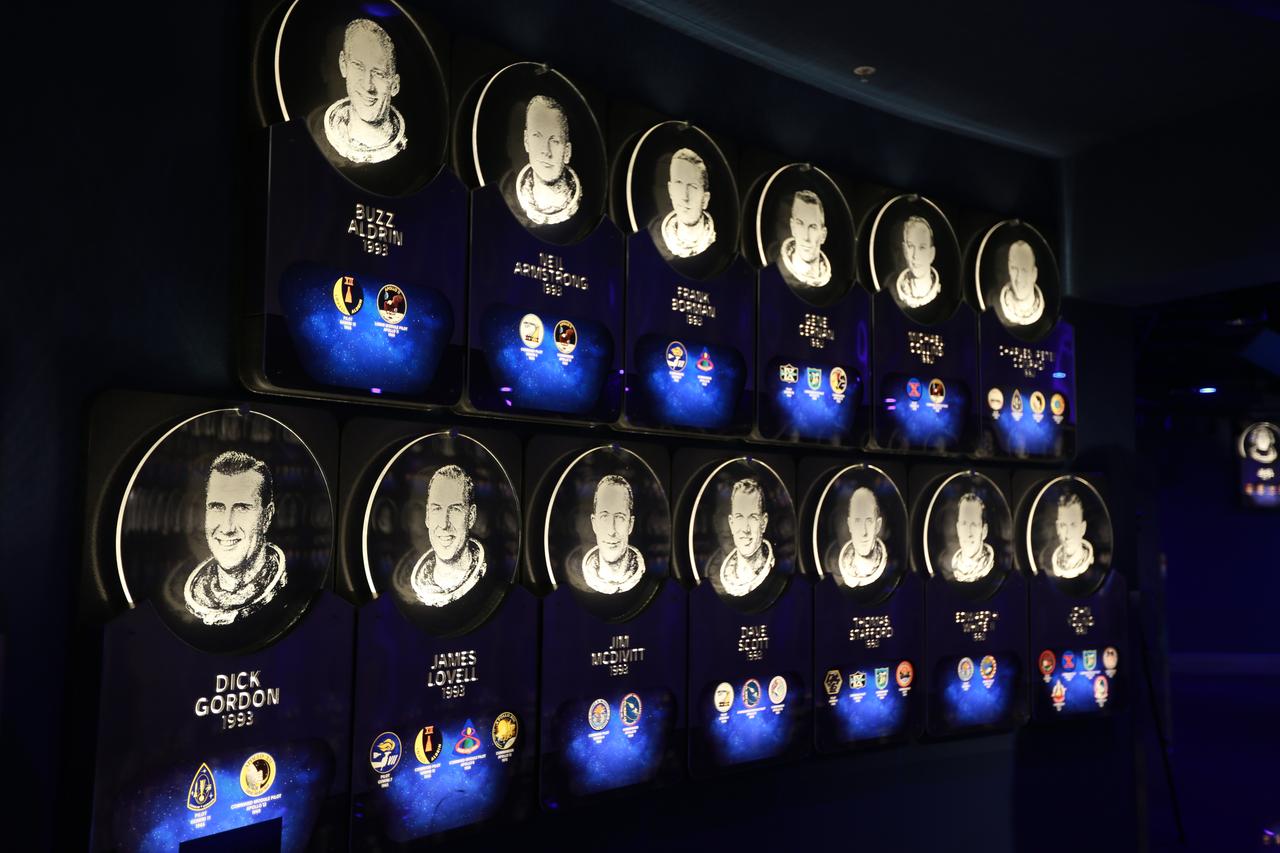
In the Heroes and Legends exhibit at the Kennedy Space Center Visitor Complex, former NASA astronaut Richard Gordon's plaque is seen among others enshrined in the U.S. Astronaut Hall of Fame. Gordon performed two spacewalks during Gemini XI in 1966 and was command module pilot on Apollo 12 in 1969. Gordon died Nov. 6, 2017, at the age of 88.
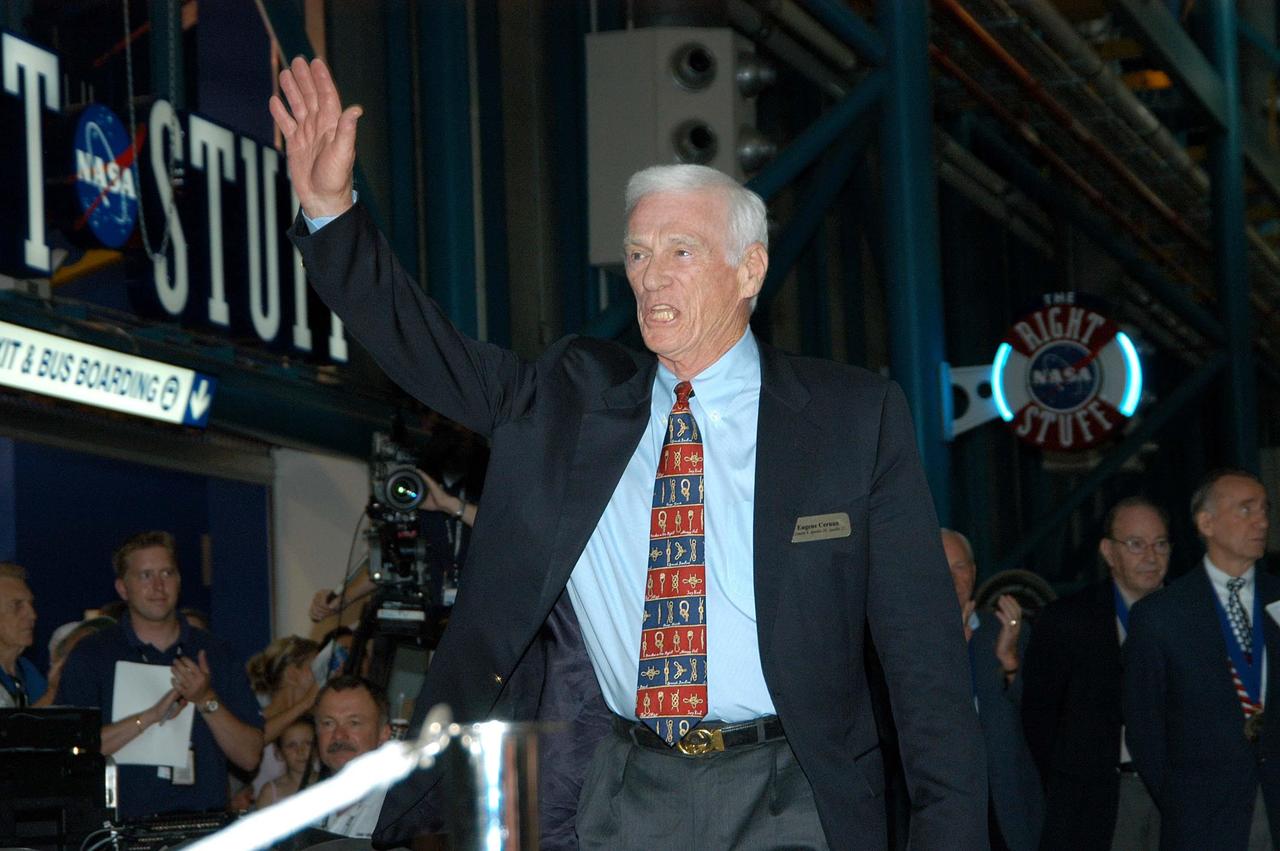
KENNEDY SPACE CENTER, FLA. -- Before the induction ceremony of five space program heroes into the U.S. Astronaut Hall of Fame, former astronaut Gene Cernan waves to guests as he is introduced as a previous inductee. He walked in space on Gemini 9, orbited the Moon on Apollo 10 and walked on the Moon as commander of Apollo 17. The ceremony was held at the Apollo/Saturn V Center at KSC. New inductees are Richard O. Covey, commander of the Hubble Space Telescope repair mission; Norman E. Thagard, the first American to occupy Russia’s Mir space station; the late Francis R. "Dick" Scobee, commander of the ill-fated 1986 Challenger mission; Kathryn D. Sullivan, the first American woman to walk in space; and Frederick D. Gregory, the first African-American to command a space mission and the current NASA deputy administrator. The U.S. Astronaut Hall of Fame opened in 1990 to provide a place where space travelers could be remembered for their participation and accomplishments in the U.S. space program. The five inductees join 52 previously honored astronauts from the ranks of the Gemini, Apollo, Skylab, Apollo-Soyuz, and Space Shuttle programs.
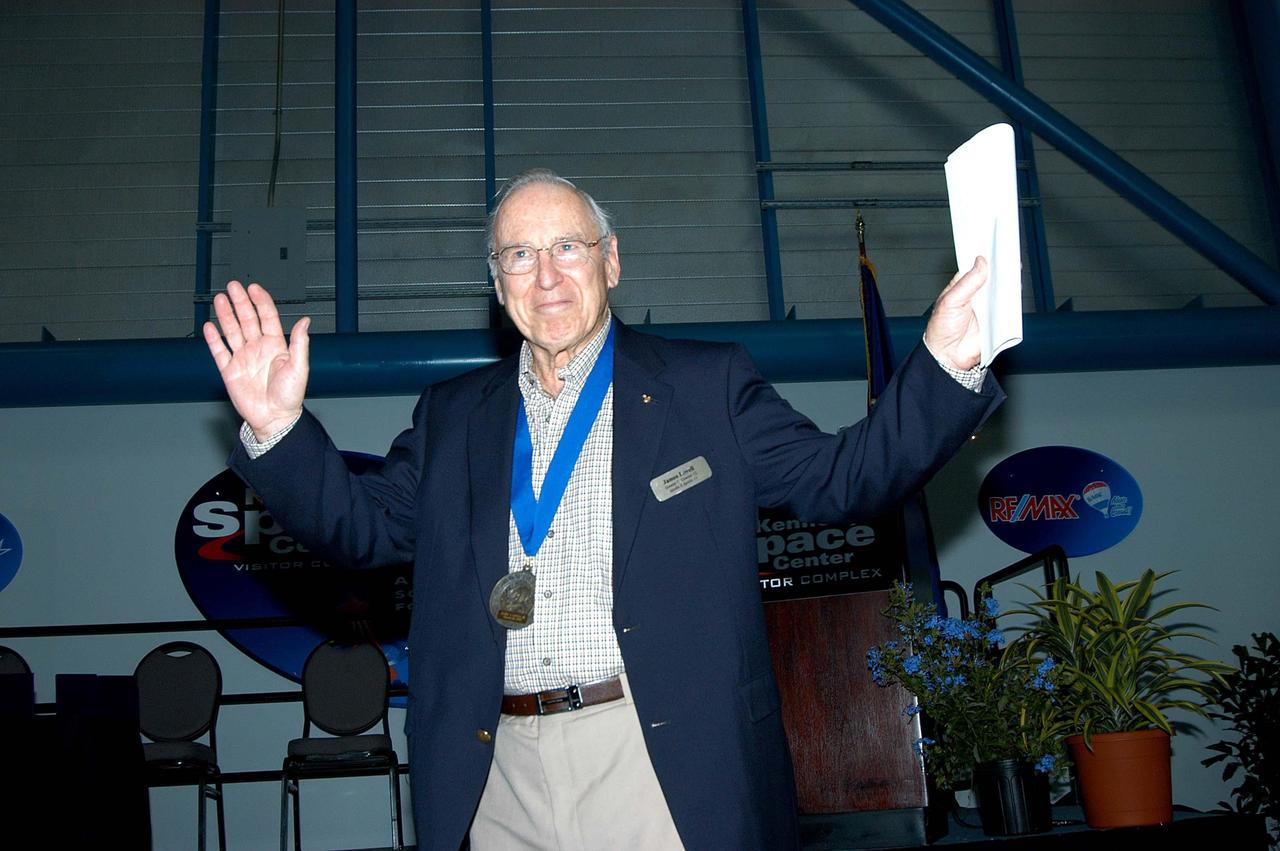
KENNEDY SPACE CENTER, FLA. -- Former astronaut Jim Lovell acknowledges the applause as he is introduced as a previous inductee into the U.S. Astronaut Hall of Fame. He and other Hall of Fame members were present for the induction of five new space program heroes into the U.S. Astronaut Hall of Fame: Richard O. Covey, commander of the Hubble Space Telescope repair mission; Norman E. Thagard, the first American to occupy Russia’s Mir space station; the late Francis R. "Dick" Scobee, commander of the ill-fated 1986 Challenger mission; Kathryn D. Sullivan, the first American woman to walk in space; and Frederick D. Gregory, the first African-American to command a space mission and the current NASA deputy administrator. Lovell piloted Gemini 7, commanded Gemini 12, orbited the Moon on Apollo 8 and commanded the aborted Apollo 13 moon flight. The induction ceremony was held at the Apollo/Saturn V Center at KSC. The U.S. Astronaut Hall of Fame opened in 1990 to provide a place where space travelers could be remembered for their participation and accomplishments in the U.S. space program. The five inductees join 52 previously honored astronauts from the ranks of the Gemini, Apollo, Skylab, Apollo-Soyuz, and Space Shuttle programs.
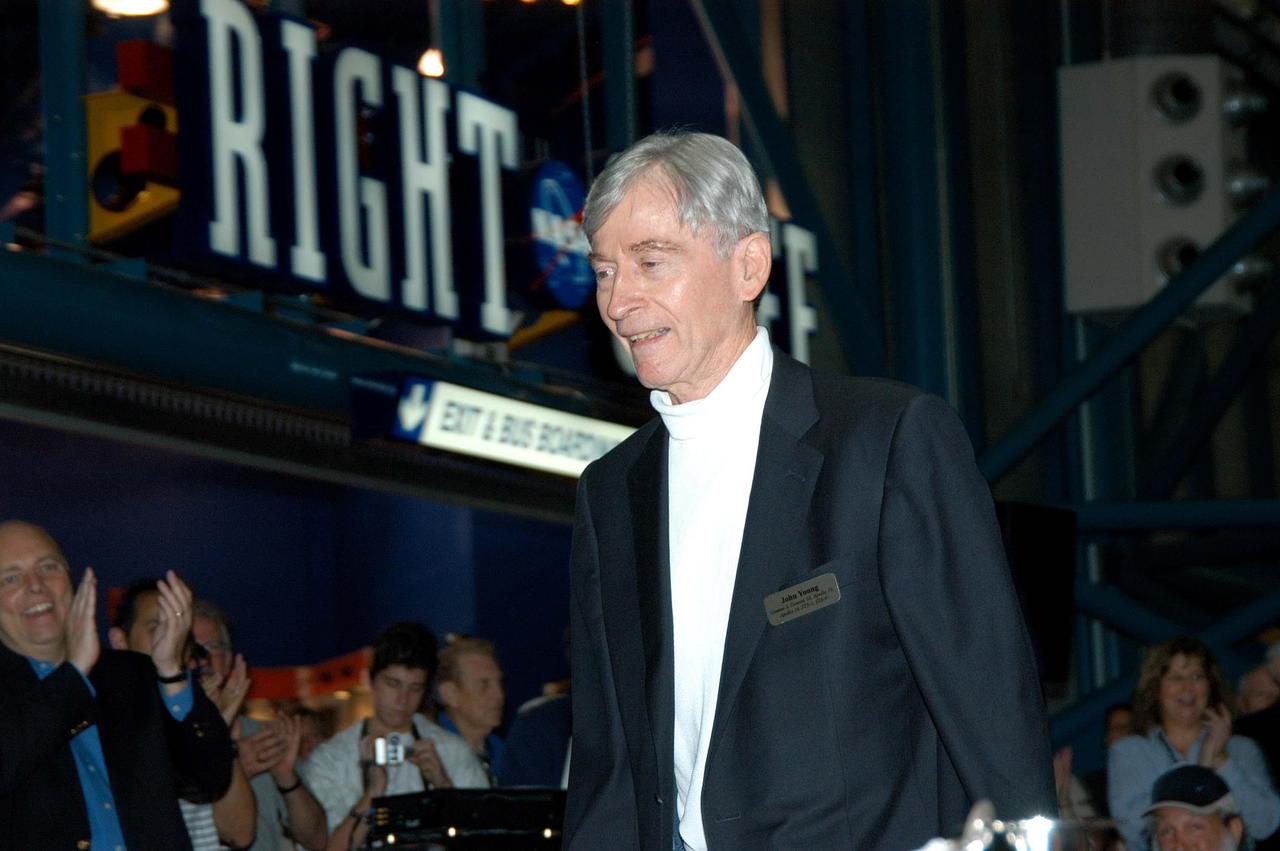
KENNEDY SPACE CENTER, FLA. -- Before the induction ceremony of five space program heroes into the U.S. Astronaut Hall of Fame, astronaut John Young is warmly greeted as he is introduced as a previous inductee. Co-holder of a record for the most space flights, six, he flew on Gemini 3 and 10, orbited the Moon on Apollo 10, walked on the Moon on Apollo 16, and commanded two space shuttle missions, STS-1 and STS-9. Young currently serves as associate director, technical, at Johnson Space Center. The induction ceremony was held at the Apollo/Saturn V Center at KSC. New inductees are Richard O. Covey, commander of the Hubble Space Telescope repair mission; Norman E. Thagard, the first American to occupy Russia’s Mir space station; the late Francis R. "Dick" Scobee, commander of the ill-fated 1986 Challenger mission; Kathryn D. Sullivan, the first American woman to walk in space; and Frederick D. Gregory, the first African-American to command a space mission and the current NASA deputy administrator. The U.S. Astronaut Hall of Fame opened in 1990 to provide a place where space travelers could be remembered for their participation and accomplishments in the U.S. space program. The five inductees join 52 previously honored astronauts from the ranks of the Gemini, Apollo, Skylab, Apollo-Soyuz, and Space Shuttle programs.
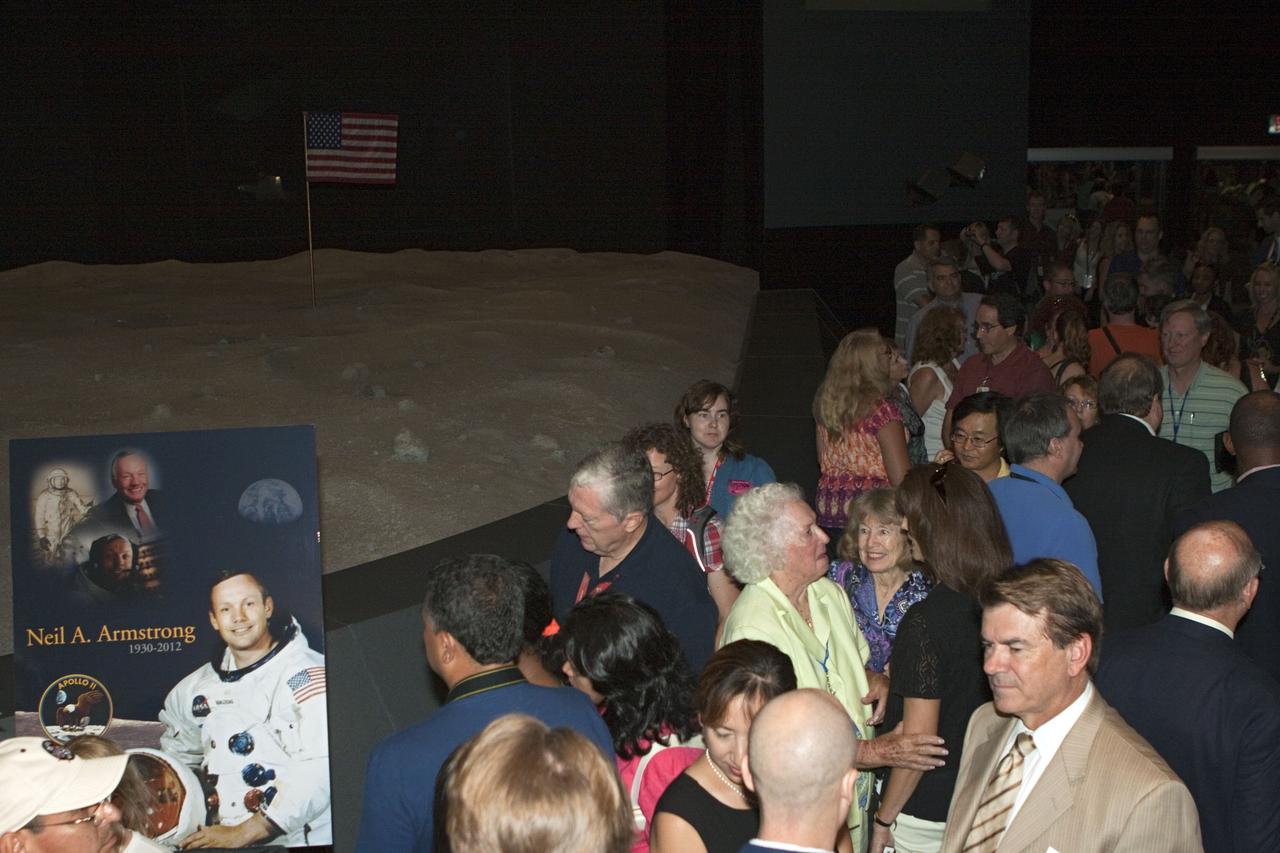
CAPE CANAVERAL, Fla. - Kennedy Space Center employees and guests gathered for a brief ceremony on Aug. 31, 2012 honoring Neil Armstrong, who died Aug. 25, 2012 at the age of 82. Armstrong was hailed by Center Director Bob Cabana as one of our heroes and a truly a great American. Cabana placed a wreath in the spaceport's Apollo-Saturn V Center. Selected as an astronaut in 1962, Neil Armstrong flew on NASA's Gemini 8 with David Scott in March 1966 and the first lunar landing mission, Apollo 11, with Mike Collins and Buzz Aldine in July 1969. On July 20, 1969, he became the first human to walk on the moon. For more information, visit: http://www.nasa.gov/centers/kennedy/news/neil_armstrong.html Photo credit: NASA/Kim Shiflett
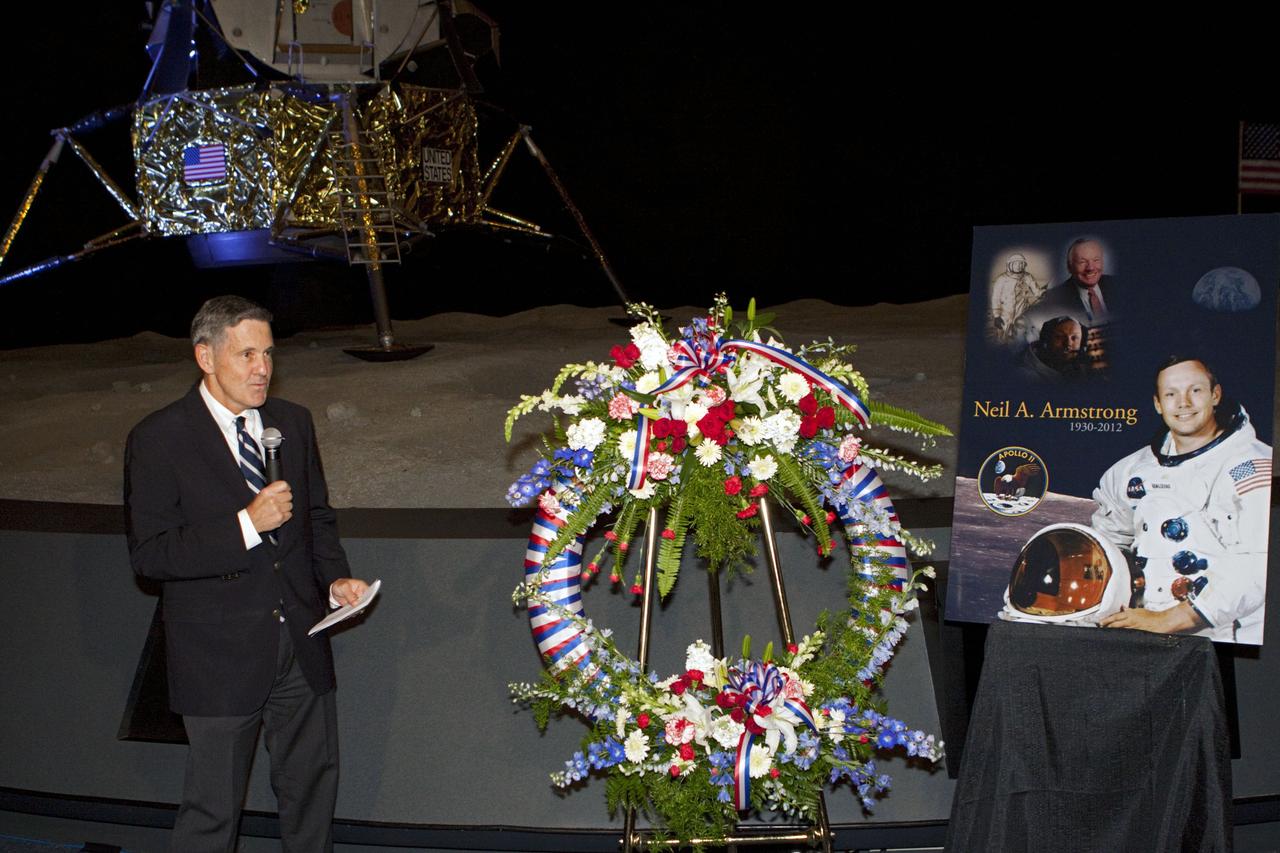
CAPE CANAVERAL, Fla. - Kennedy Space Center Director Bob Cabana spoke to spaceport employees and guests at a brief ceremony on Aug. 31, 2012 honoring Neil Armstrong, who died Aug. 25, 2012 at the age of 82. Armstrong was hailed by Cabana as one of our heroes and a truly a great American. Cabana, also a former astronaut, placed a wreath near a replica lunar module at the spaceport's Apollo-Saturn V Center. Selected as an astronaut in 1962, Neil Armstrong flew on NASA's Gemini 8 with David Scott in March 1966 and the first lunar landing mission, Apollo 11, with Mike Collins and Buzz Aldine in July 1969. On July 20, 1969, he became the first human to walk on the moon. For more information, visit: http://www.nasa.gov/centers/kennedy/news/neil_armstrong.html Photo credit: NASA/Kim Shiflett
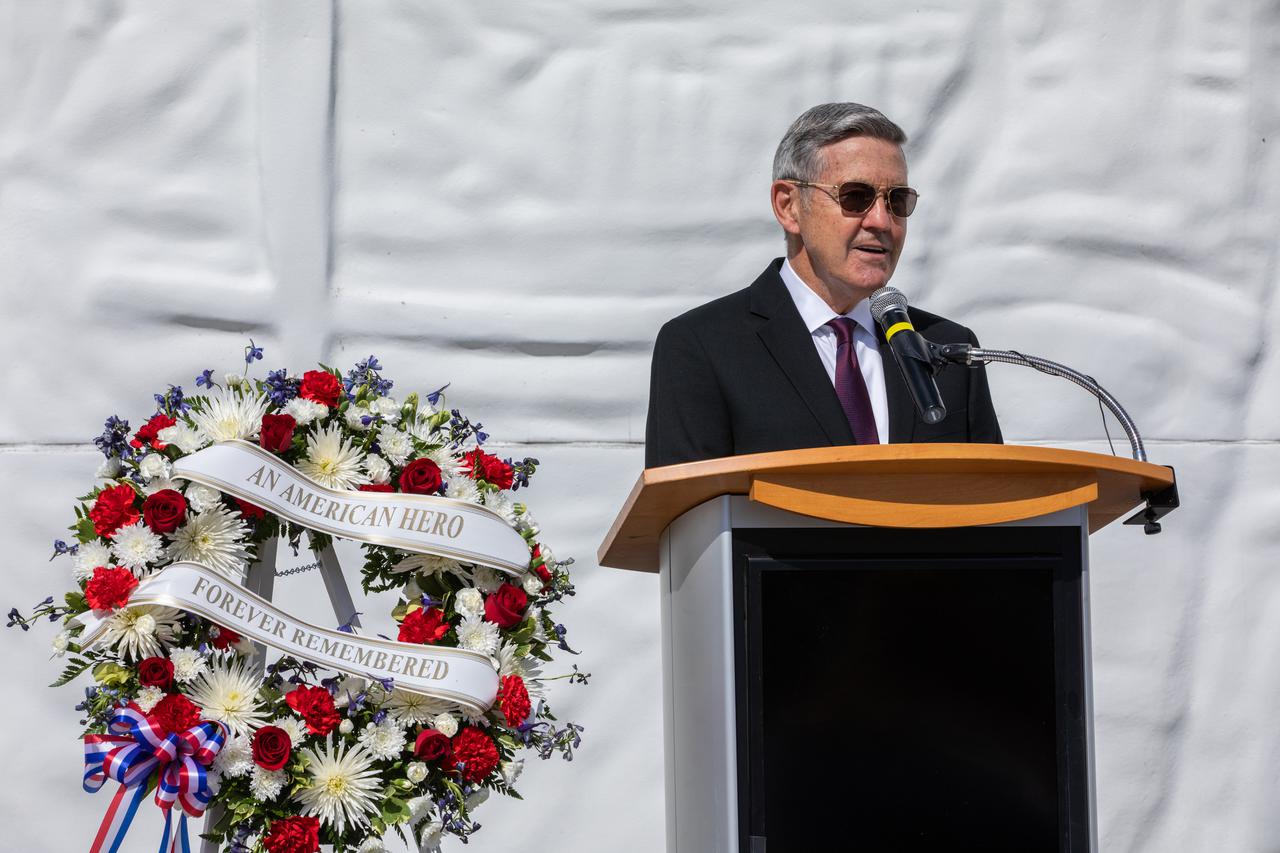
Kennedy Space Center Director Bob Cabana provides remarks during a wreath-laying ceremony in Florida, honoring the memory of former Apollo 11 astronaut Michael Collins on April 30, 2021. Therrin Protze, chief operating officer of Delaware North at Kennedy’s visitor complex, also spoke during the ceremony, held just outside of the Heroes and Legends exhibit at the visitor complex. Collins served as pilot on the three-day Gemini X mission in 1966, and he was the command module pilot for the historic Apollo 11 mission in 1969, where he remained in lunar orbit while Neil Armstrong and Buzz Aldrin become the first people to walk on the Moon. Collins passed away on April 28, 2021, at the age of 90.
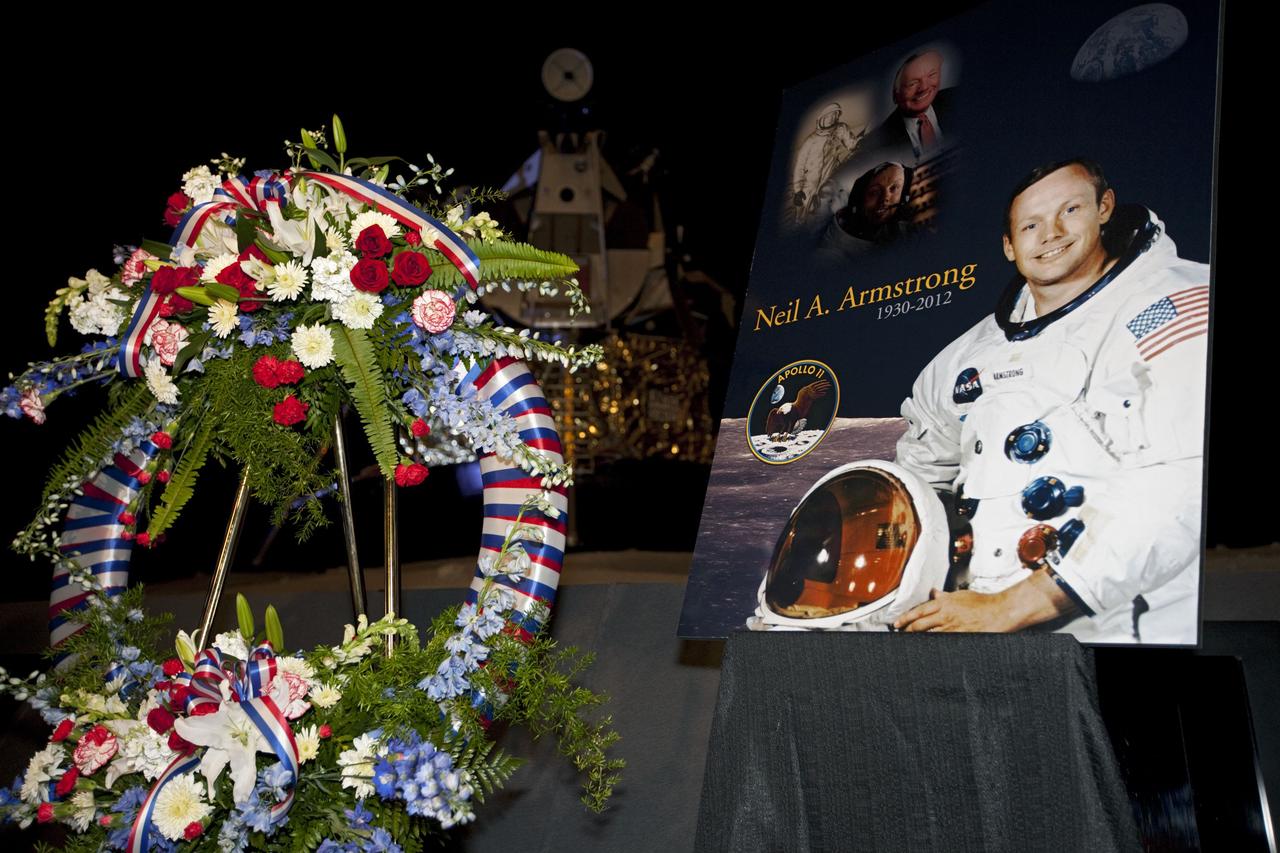
CAPE CANAVERAL, Fla. - Kennedy Space Center employees and guests gathered for a brief ceremony on Aug. 31, 2012 honoring Neil Armstrong, who died Aug. 25, 2012 at the age of 82. Armstrong was hailed by Center Director Bob Cabana as one of our heroes and a truly a great American. Cabana placed a wreath in the spaceport's Apollo-Saturn V Center. Selected as an astronaut in 1962, Neil Armstrong flew on NASA's Gemini 8 with David Scott in March 1966 and the first lunar landing mission, Apollo 11, with Mike Collins and Buzz Aldine in July 1969. On July 20, 1969, he became the first human to walk on the moon. For more information, visit: http://www.nasa.gov/centers/kennedy/news/neil_armstrong.html Photo credit: NASA/Kim Shiflett
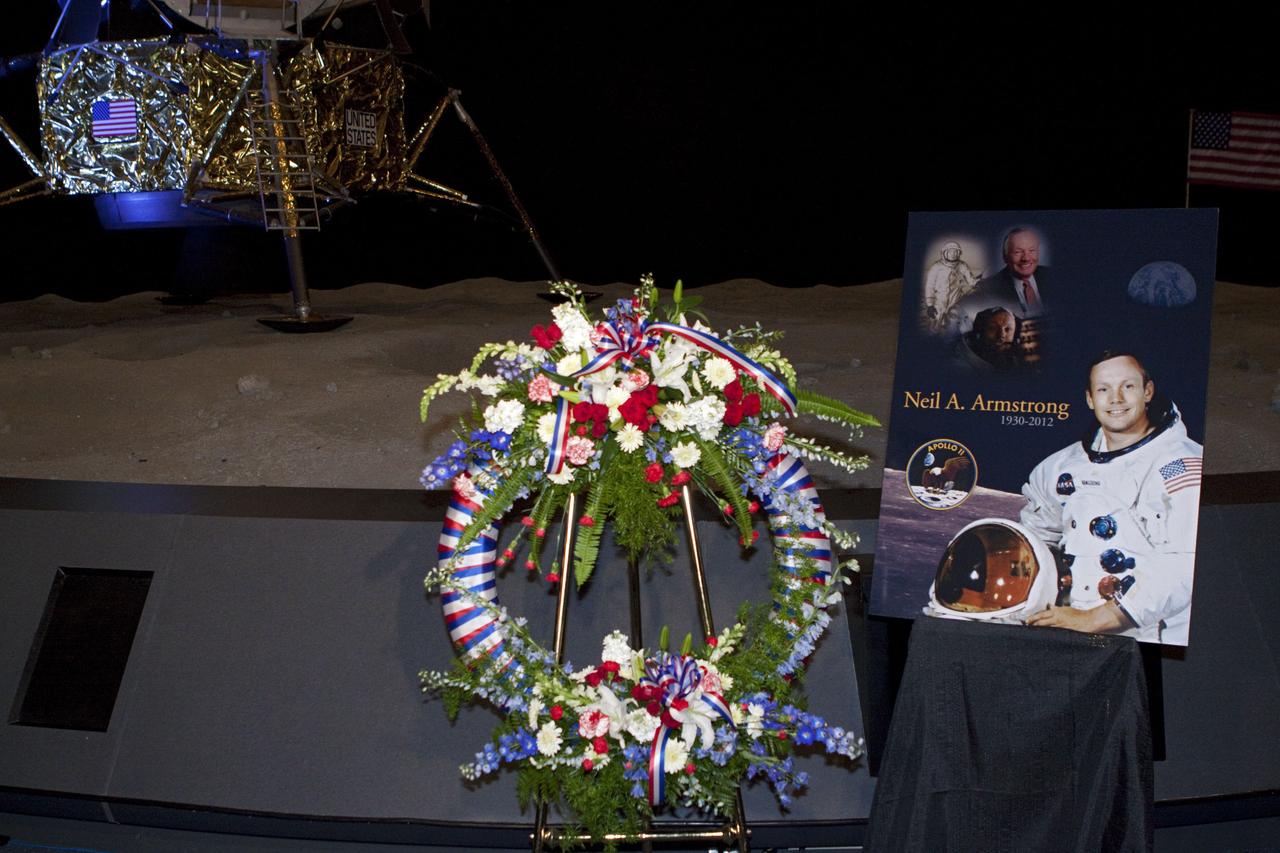
CAPE CANAVERAL, Fla. - Kennedy Space Center employees and guests gathered for a brief ceremony on Aug. 31, 2012 honoring Neil Armstrong, who died Aug. 25, 2012 at the age of 82. Armstrong was hailed by Center Director Bob Cabana as one of our heroes and a truly a great American. Cabana placed a wreath near a replica lunar module at the spaceport's Apollo-Saturn V Center. Selected as an astronaut in 1962, Neil Armstrong flew on NASA's Gemini 8 with David Scott in March 1966 and the first lunar landing mission, Apollo 11, with Mike Collins and Buzz Aldine in July 1969. On July 20, 1969, he became the first human to walk on the moon. For more information, visit: http://www.nasa.gov/centers/kennedy/news/neil_armstrong.html Photo credit: NASA/Kim Shiflett
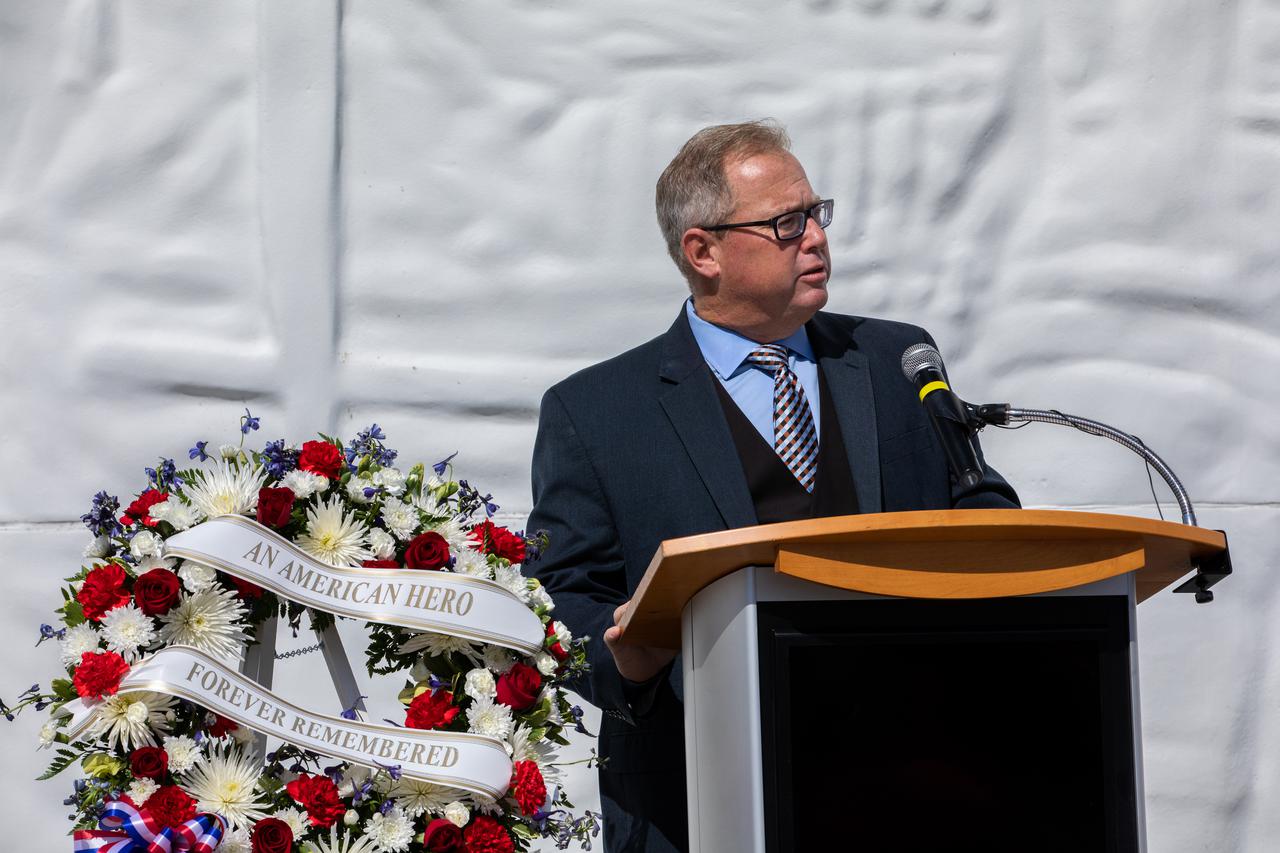
Therrin Protze, chief operating officer of Delaware North at the Kennedy Space Center Visitor Complex, provides remarks during a wreath-laying ceremony honoring the memory of former Apollo 11 astronaut Michael Collins on April 30, 2021. Kennedy Director Bob Cabana also spoke during the ceremony, held just outside of the Heroes and Legends exhibit at the Florida spaceport’s visitor complex. Collins served as pilot on the three-day Gemini X mission in 1966, and he was the command module pilot for the historic Apollo 11 mission in 1969, where he remained in lunar orbit while Neil Armstrong and Buzz Aldrin become the first people to walk on the Moon. Collins passed away on April 28, 2021, at the age of 90.
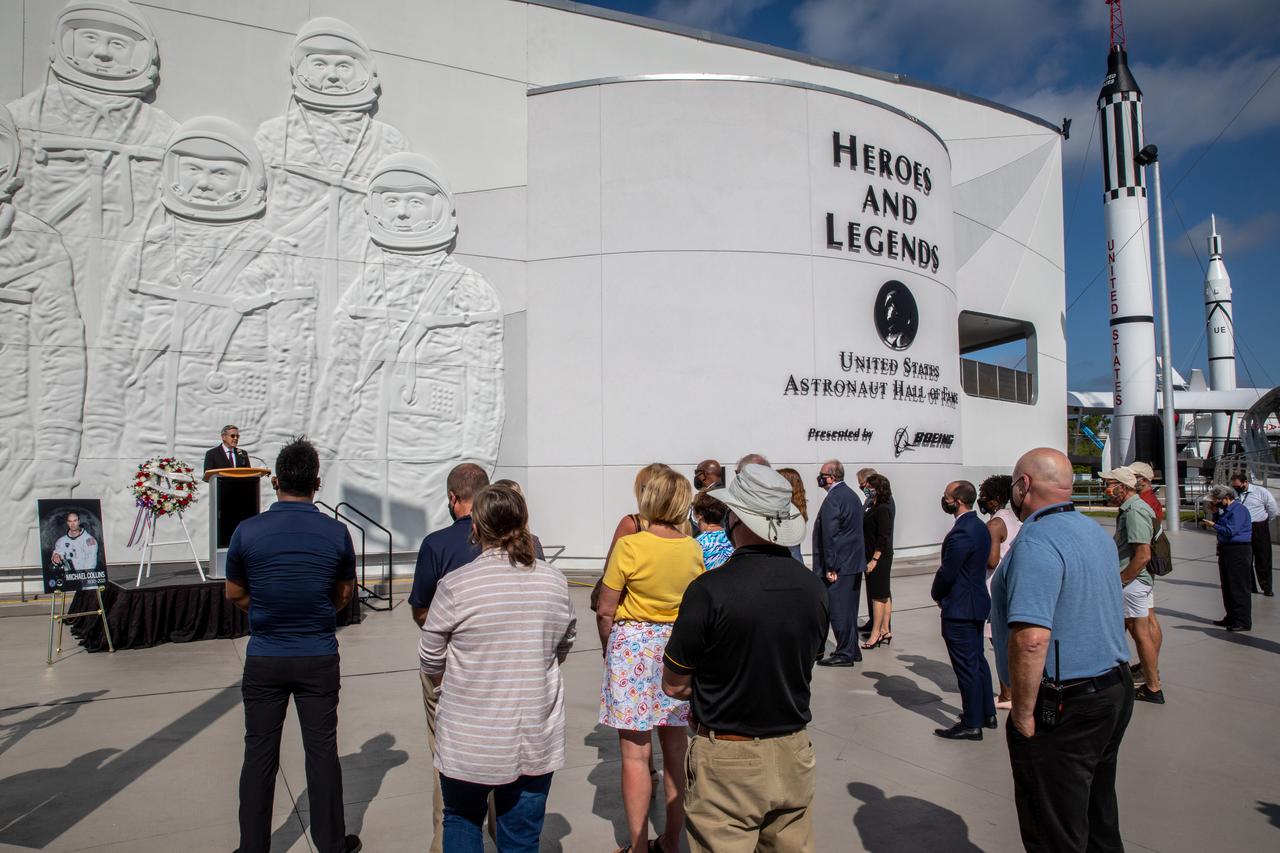
Kennedy Space Center Director Bob Cabana provides remarks during a wreath-laying ceremony in Florida, honoring the memory of former Apollo 11 astronaut Michael Collins on April 30, 2021. Therrin Protze, chief operating officer of Delaware North at Kennedy’s visitor complex, also spoke during the ceremony, held just outside of the Heroes and Legends exhibit at the visitor complex. Collins served as pilot on the three-day Gemini X mission in 1966, and he was the command module pilot for the historic Apollo 11 mission in 1969, where he remained in lunar orbit while Neil Armstrong and Buzz Aldrin become the first people to walk on the Moon. Collins passed away on April 28, 2021, at the age of 90.
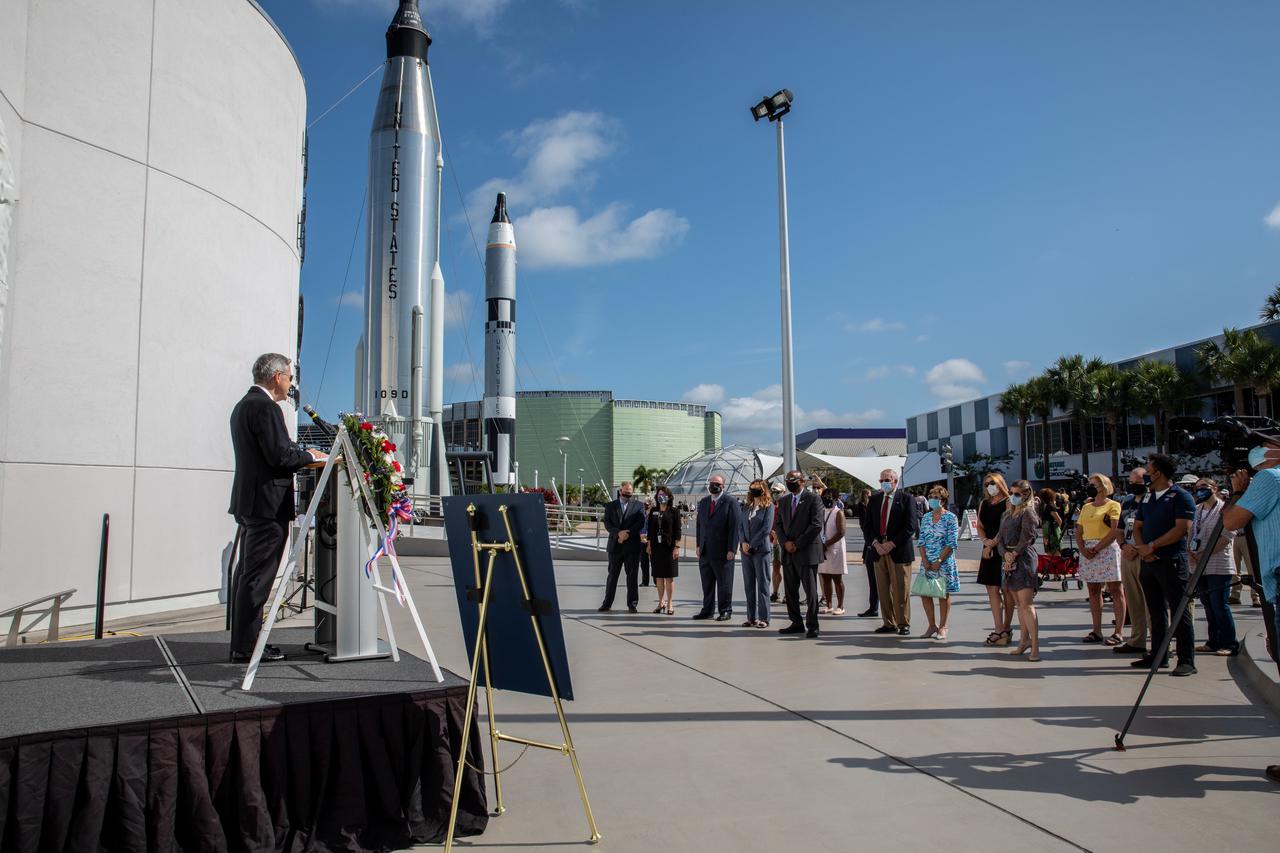
Kennedy Space Center Director Bob Cabana provides remarks during a wreath-laying ceremony in Florida, honoring the memory of former Apollo 11 astronaut Michael Collins on April 30, 2021. Therrin Protze, chief operating officer of Delaware North at Kennedy’s visitor complex, also spoke during the ceremony, held just outside of the Heroes and Legends exhibit at the visitor complex. Collins served as pilot on the three-day Gemini X mission in 1966, and he was the command module pilot for the historic Apollo 11 mission in 1969, where he remained in lunar orbit while Neil Armstrong and Buzz Aldrin become the first people to walk on the Moon. Collins passed away on April 28, 2021, at the age of 90.
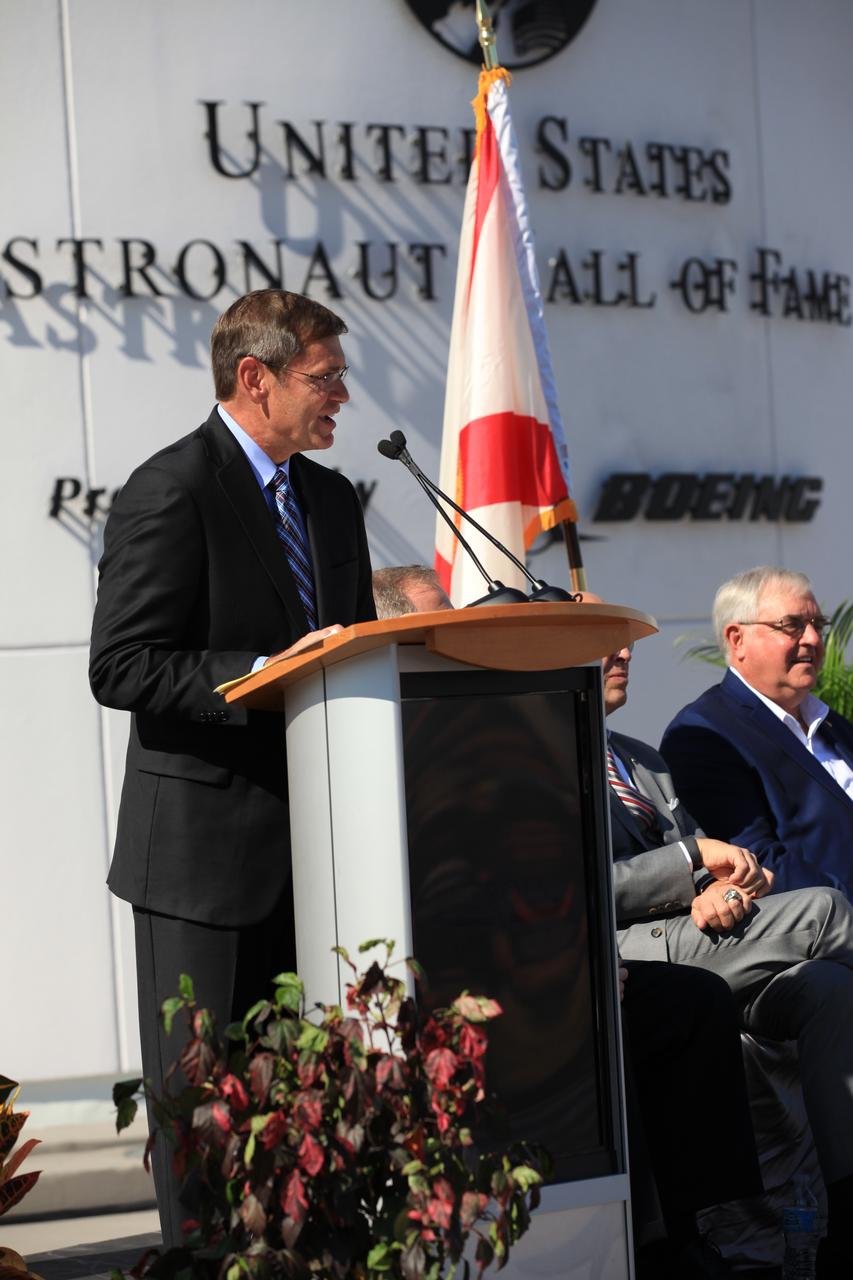
KENNEDY SPACE CENTER, FLA. -- At the U.S. Astronaut Hall of Fame induction ceremony, Kennedy Space Center Director Bill Parsons speaks about the accomplishments of the newest inductees to the Hall of Fame. The May 5 induction added space shuttle commanders Michael L. Coats, Steven A. Hawley and Jeffrey A. Hoffman to the Hall of Fame. They grow the number of space explorers enshrined in the Hall of Fame to 66. These gentlemen have joined such American space heroes as Neil Armstrong, Glenn, Alan Shepard and Sally Ride. The ceremony was held at the Kennedy Space Center's Apollo/Saturn V Center. Photo credit: NASA/Kim Shiflett
Boeing Vice President and General Manager John Elbon addresses the crowd gathered for the grand opening of the Heroes and Legends attraction at the Kennedy Space Center Visitor Complex. Boeing is sponsoring the new attraction. Seated, to the left, is former space shuttle astronaut Dan Brandenstein, chairman of the Astronaut Scholarship Foundation board of directors. The new facility includes the U.S. Astronaut Hall of Fame and looks back to the pioneering efforts of Mercury, Gemini and Apollo. It sets the stage by providing the background and context for space exploration and the legendary men and women who pioneered the nation's journey into space.

KENNEDY SPACE CENTER, FLA. -- At the Kennedy Space Center's Apollo/Saturn V Center, a wreath and poster honor former astronaut Wally Schirra, who died May 3. The site is the location for the U.S. Astronaut Hall of Fame induction ceremony. The May 5 induction added space shuttle commanders Michael L. Coats, Steven A. Hawley and Jeffrey A. Hoffman to the Hall of Fame. They grow the number of space explorers enshrined in the Hall of Fame to 66. These gentlemen have joined such American space heroes as Neil Armstrong, John Glenn, Alan Shepard and Sally Ride. Photo credit: NASA/Kim Shiflett
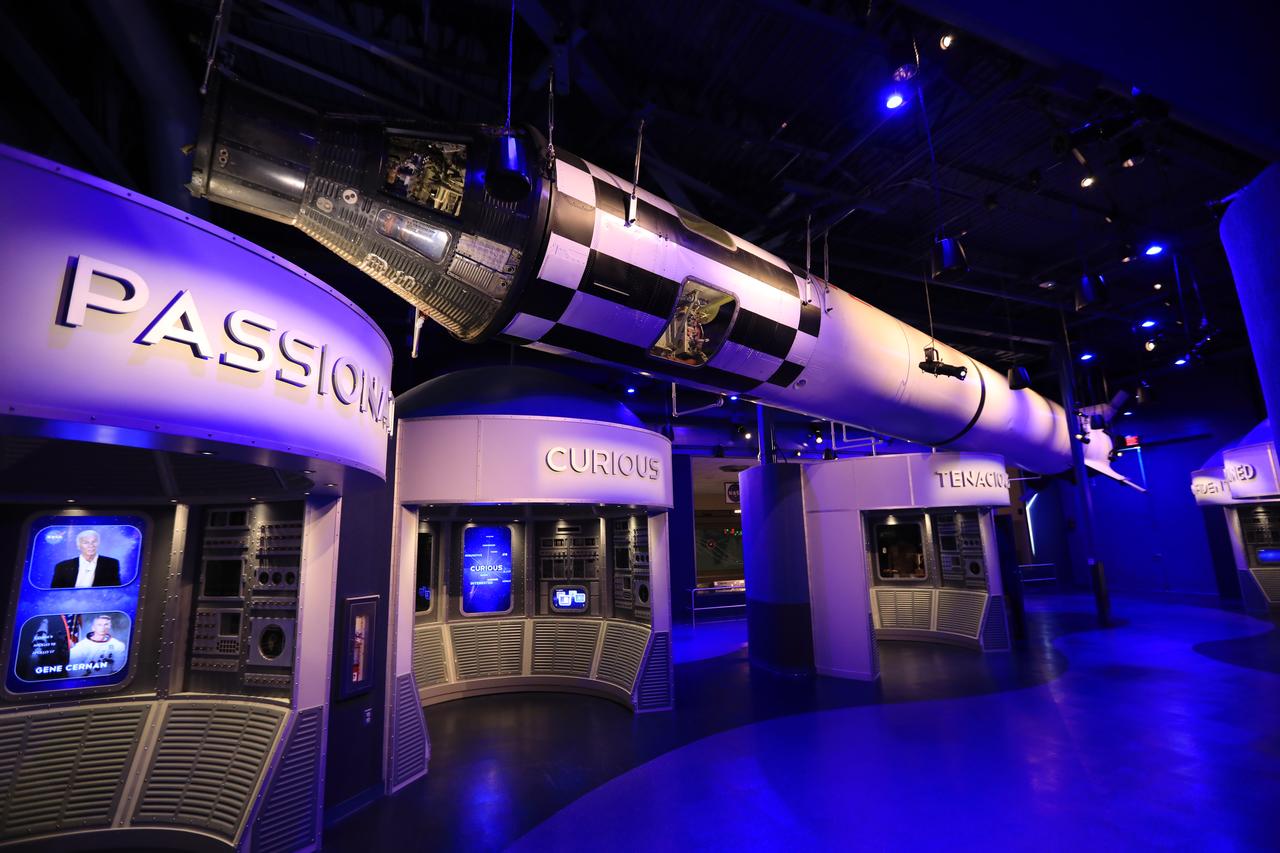
Inside the Heroes and Legends attraction at the Kennedy Space Center Visitor Complex, the Sigma 7 Mercury spacecraft in this exhibit was piloted by astronaut Wally Schirra during his six-orbit mission on Oct. 3, 1962. For display purposes, it is shown here attached to a Redstone launch vehicle like the one that boosted astronauts Alan Shepard and Gus Grissom on sub-orbital flights in 1961. Schirra's capsule was actually launched by the more powerful Atlas rocket in order to reach orbit. The new facility looks back to the pioneering efforts of Mercury, Gemini and Apollo. It sets the stage by providing the background and context for space exploration and the legendary men and women who pioneered the nation's journey into space.
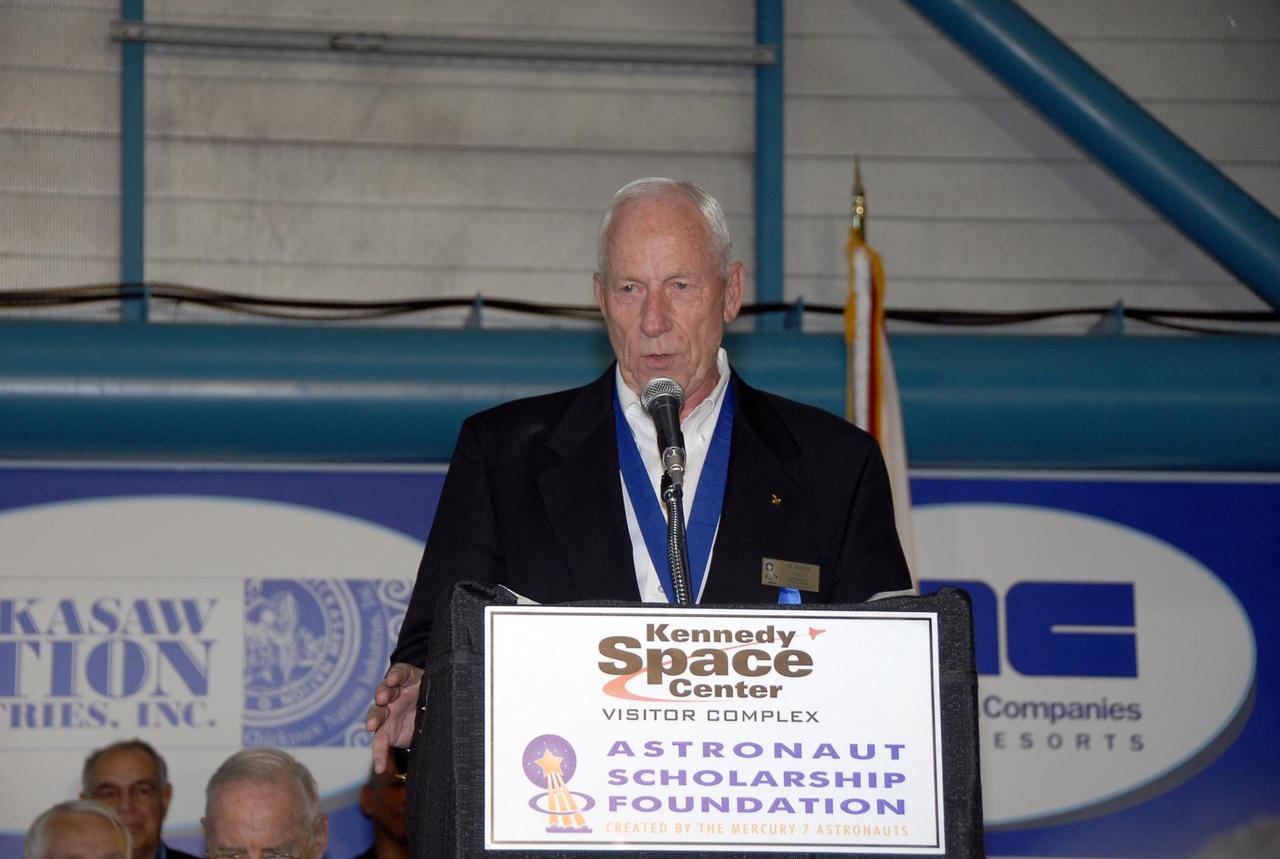
KENNEDY SPACE CENTER, FLA. -- U.S. Astronaut Hall of Fame member Al Worden speaks about the accomplishments of the newest inductees to the Hall of Fame. The May 5 induction added space shuttle commanders Michael L. Coats, Steven A. Hawley and Jeffrey A. Hoffman to the Hall of Fame. They grow the number of space explorers enshrined in the Hall of Fame to 66. These gentlemen have joined such American space heroes as Neil Armstrong, Glenn, Alan Shepard and Sally Ride. The ceremony was held at the Kennedy Space Center's Apollo/Saturn V Center. Photo credit: NASA/Kim Shiflett
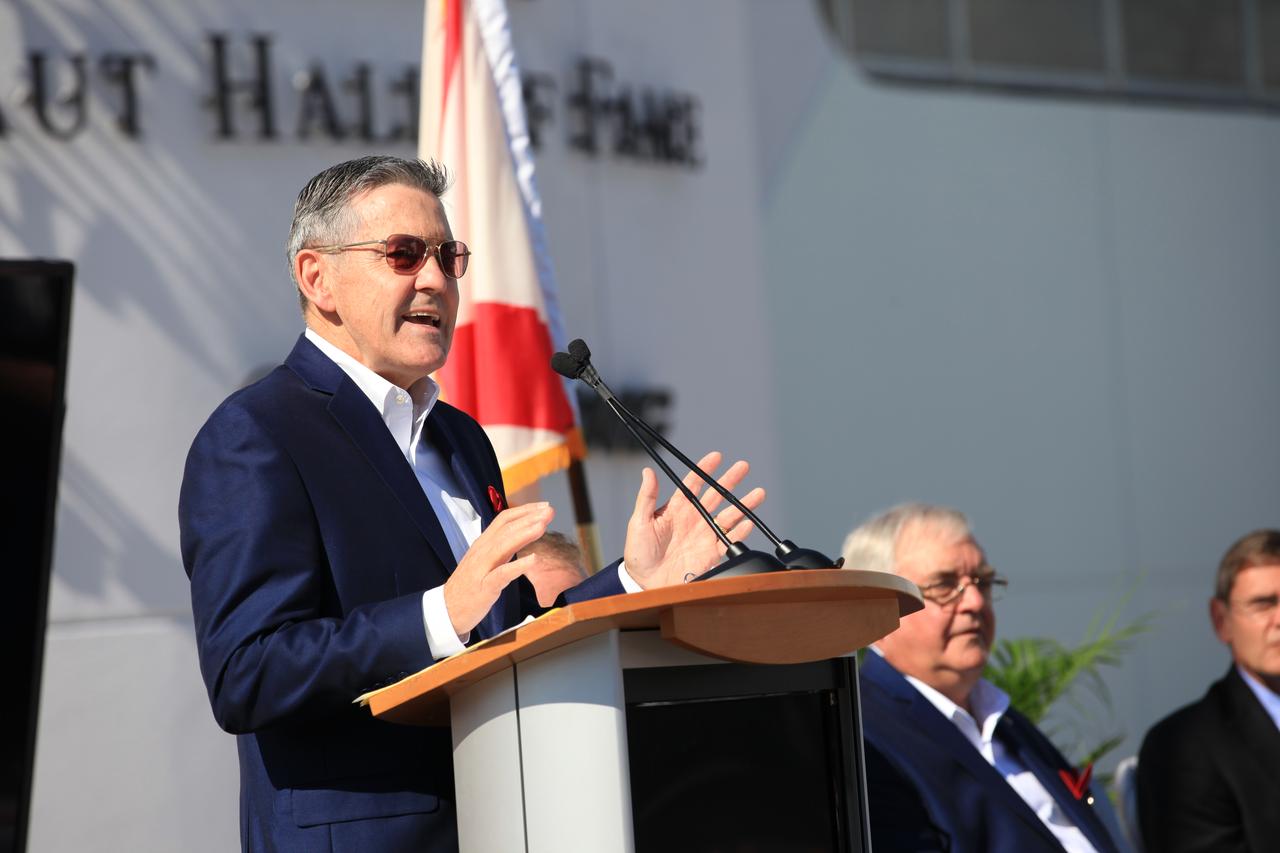
Kennedy Space Center Director Bob Cabana, a former space shuttle astronaut and member of the Astronaut Hall of Fame, speaks to guests during the opening of the Heroes and Legends attraction at the Kennedy Space Center Visitor Complex. Seated, from the left, are former space shuttle astronaut Dan Brandenstein, chairman of the Astronaut Scholarship Foundation board of directors, and, partially visible, John Elbon, vice president and general manager of Boeing. The new facility includes the U.S. Astronaut Hall of Fame and looks back to the pioneering efforts of Mercury, Gemini and Apollo. It sets the stage by providing the background and context for space exploration and the legendary men and women who pioneered the nation's journey into space.
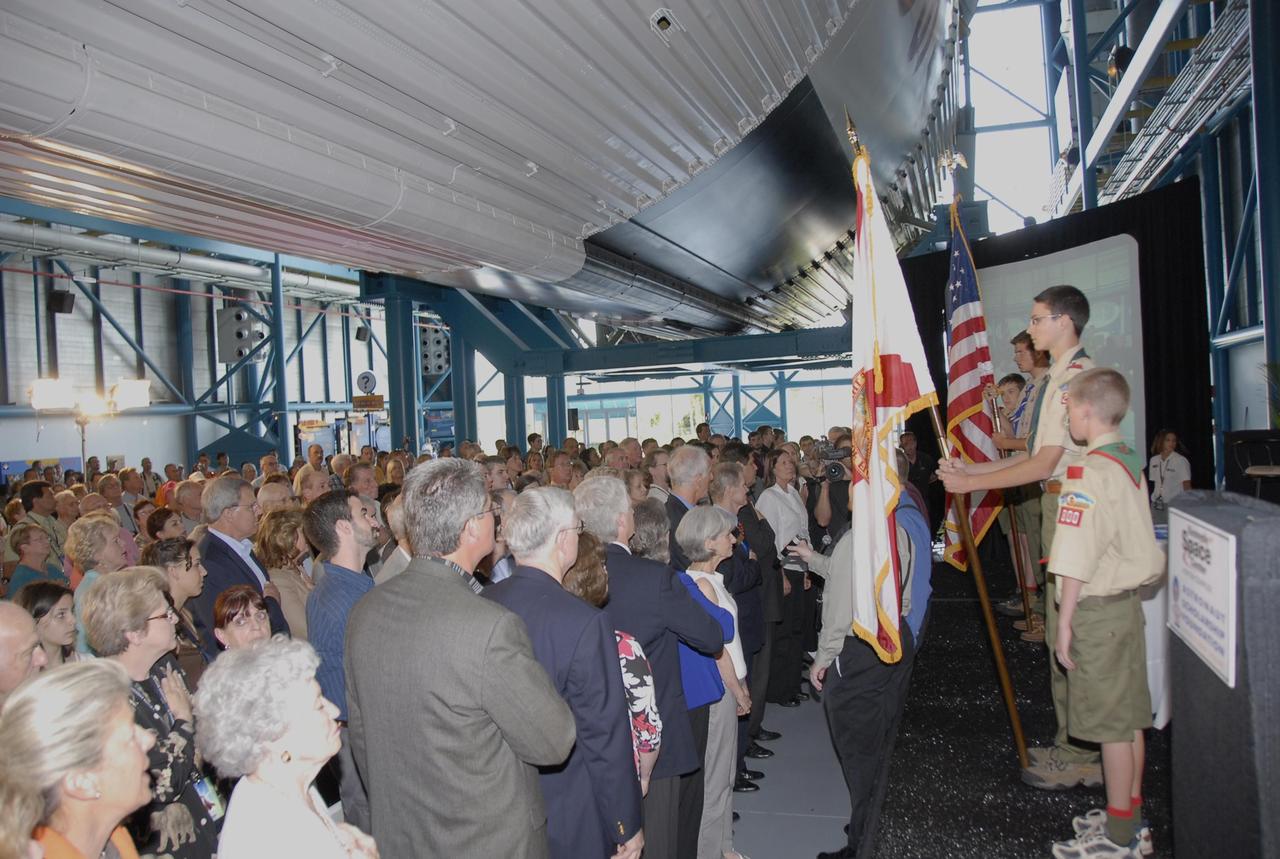
KENNEDY SPACE CENTER, FLA. -- At the U.S. Astronaut Hall of Fame induction ceremony, Boy Scouts lead the pledge of allegiance. The May 5 induction added space shuttle commanders Michael L. Coats, Steven A. Hawley and Jeffrey A. Hoffman to the Hall of Fame. They grow the number of space explorers enshrined in the Hall of Fame to 66. These gentlemen have joined such American space heroes as Neil Armstrong, John Glenn, Alan Shepard and Sally Ride. The ceremony was held at the Kennedy Space Center's Apollo/Saturn V Center. Photo credit: NASA/Kim Shiflett
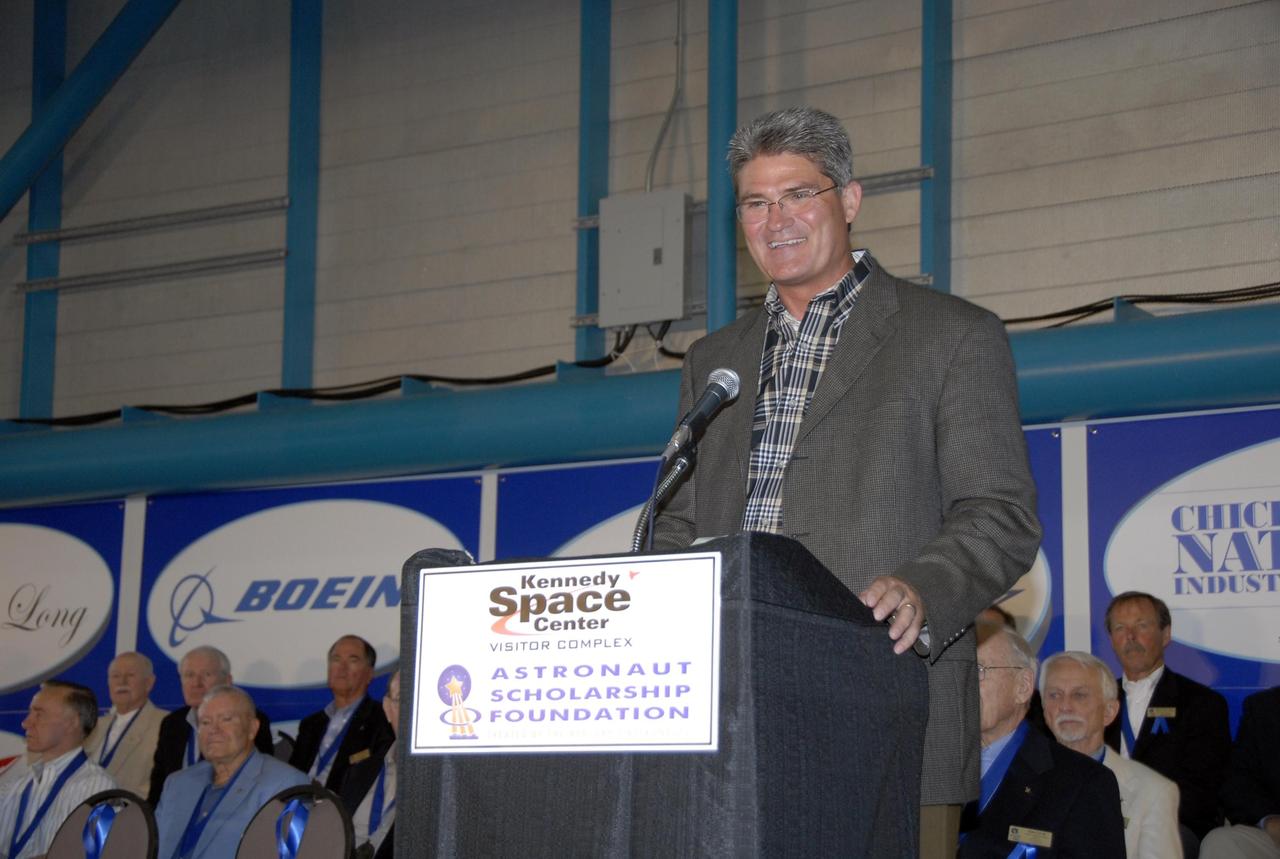
KENNEDY SPACE CENTER, FLA. -- At the U.S. Astronaut Hall of Fame induction ceremony, Kennedy Space Center Director Bill Parsons speaks about the accomplishments of the newest inductees to the Hall of Fame. The May 5 induction added space shuttle commanders Michael L. Coats, Steven A. Hawley and Jeffrey A. Hoffman to the Hall of Fame. They grow the number of space explorers enshrined in the Hall of Fame to 66. These gentlemen have joined such American space heroes as Neil Armstrong, Glenn, Alan Shepard and Sally Ride. The ceremony was held at the Kennedy Space Center's Apollo/Saturn V Center. Photo credit: NASA/Kim Shiflett

KENNEDY SPACE CENTER, FLA. -- Former astronaut Al Worden acknowledges the applause as he is introduced as a previous inductee into the U.S. Astronaut Hall of Fame. He and other Hall of Fame members were present for the induction of five new space program heroes into the U.S. Astronaut Hall of Fame: Richard O. Covey, commander of the Hubble Space Telescope repair mission; Norman E. Thagard, the first American to occupy Russia’s Mir space station; the late Francis R. "Dick" Scobee, commander of the ill-fated 1986 Challenger mission; Kathryn D. Sullivan, the first American woman to walk in space; and Frederick D. Gregory, the first African-American to command a space mission and the current NASA deputy administrator. Worden served as Command Module pilot on the 1971 Apollo 15 moon mission, during which he orbited the Moon and took a space walk 200,000 miles from Earth. The induction ceremony was held at the Apollo/Saturn V Center at KSC. The U.S. Astronaut Hall of Fame opened in 1990 to provide a place where space travelers could be remembered for their participation and accomplishments in the U.S. space program. The five inductees join 52 previously honored astronauts from the ranks of the Gemini, Apollo, Skylab, Apollo-Soyuz, and Space Shuttle programs.
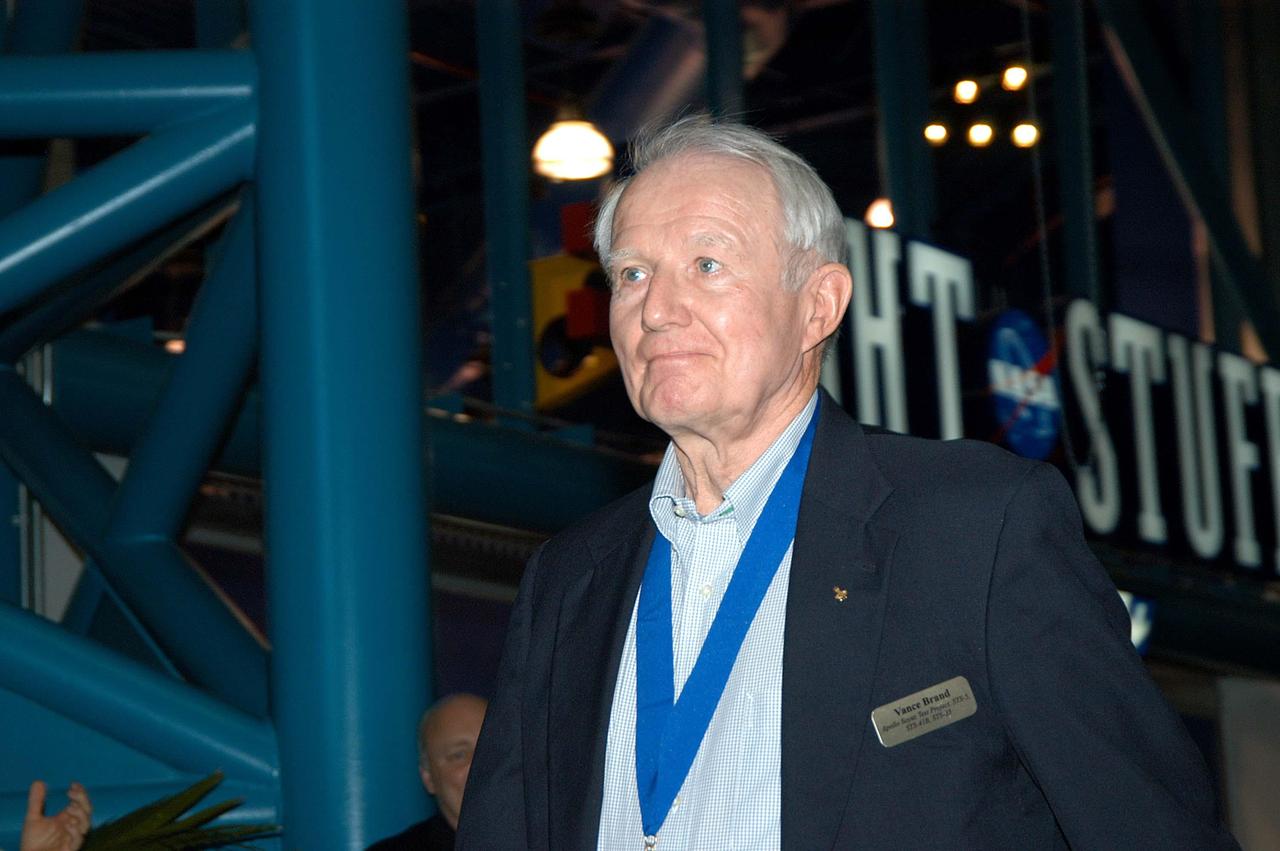
KENNEDY SPACE CENTER, FLA. -- Former astronaut Vance Brand is introduced as a previous inductee into the U.S. Astronaut Hall of Fame. He and other Hall of Fame members were present for the induction of five new space program heroes into the U.S. Astronaut Hall of Fame: Richard O. Covey, commander of the Hubble Space Telescope repair mission; Norman E. Thagard, the first American to occupy Russia’s Mir space station; the late Francis R. "Dick" Scobee, commander of the ill-fated 1986 Challenger mission; Kathryn D. Sullivan, the first American woman to walk in space; and Frederick D. Gregory, the first African-American to command a space mission and the current NASA deputy administrator. Brand was Command Module Pilot on the 1975 Apollo-Soyuz Test Project, the first linkup in orbit between spaceships of the United States and Soviet Union, and he later commanded three Space Shuttle missions. The induction ceremony was held at the Apollo/Saturn V Center at KSC. The U.S. Astronaut Hall of Fame opened in 1990 to provide a place where space travelers could be remembered for their participation and accomplishments in the U.S. space program. The five inductees join 52 previously honored astronauts from the ranks of the Gemini, Apollo, Skylab, Apollo-Soyuz, and Space Shuttle programs.
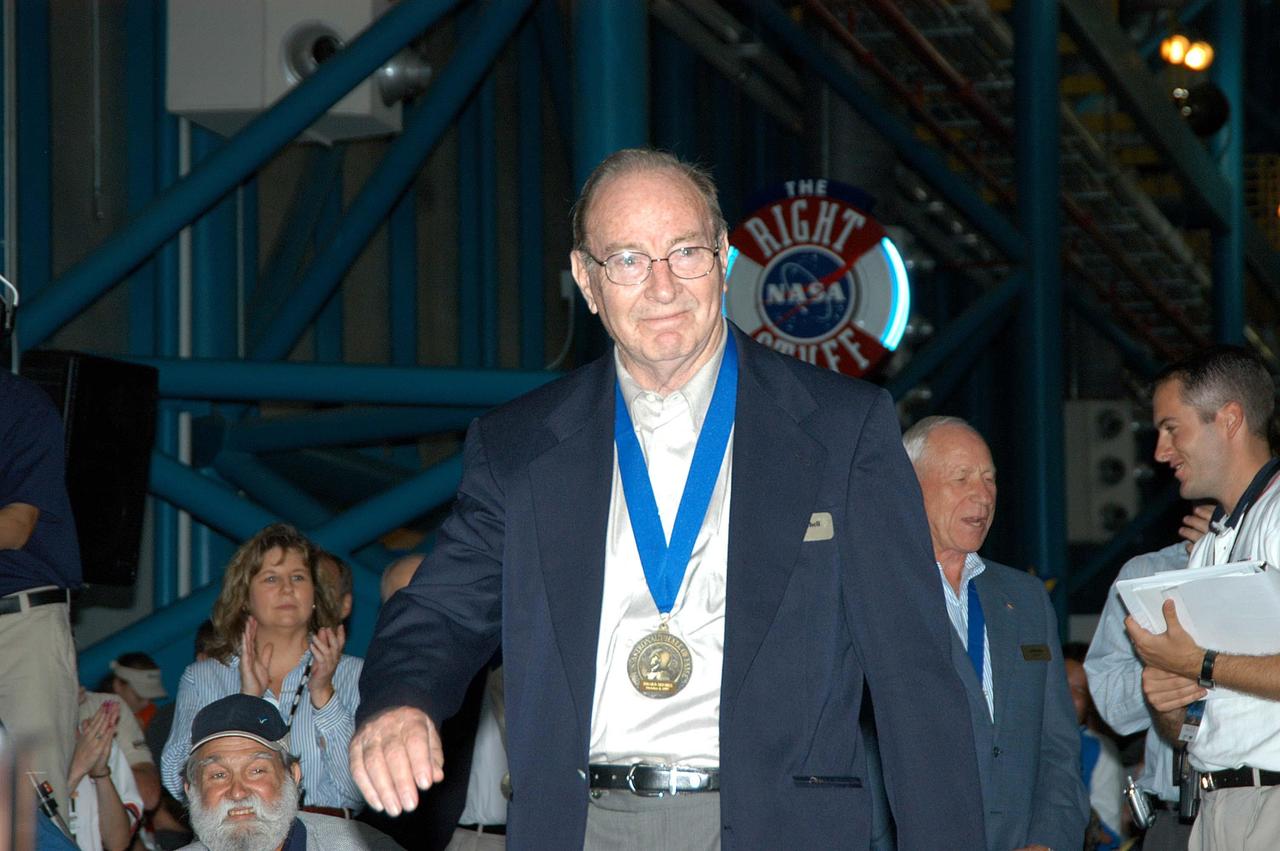
KENNEDY SPACE CENTER, FLA. -- Before the induction ceremony of five space program heroes into the U.S. Astronaut Hall of Fame, former astronaut Ed Mitchell is introduced as a previous inductee. Mitchell explored the Moon's hilly Fra Mauro region with Alan B. Shepard during the 1971 Apollo 14 mission. The ceremony was held at the Apollo/Saturn V Center at KSC. New inductees are Richard O. Covey, commander of the Hubble Space Telescope repair mission; Norman E. Thagard, the first American to occupy Russia’s Mir space station; the late Francis R. "Dick" Scobee, commander of the ill-fated 1986 Challenger mission; Kathryn D. Sullivan, the first American woman to walk in space; and Frederick D. Gregory, the first African-American to command a space mission and the current NASA deputy administrator. The U.S. Astronaut Hall of Fame opened in 1990 to provide a place where space travelers could be remembered for their participation and accomplishments in the U.S. space program. The five inductees join 52 previously honored astronauts from the ranks of the Gemini, Apollo, Skylab, Apollo-Soyuz, and Space Shuttle programs.
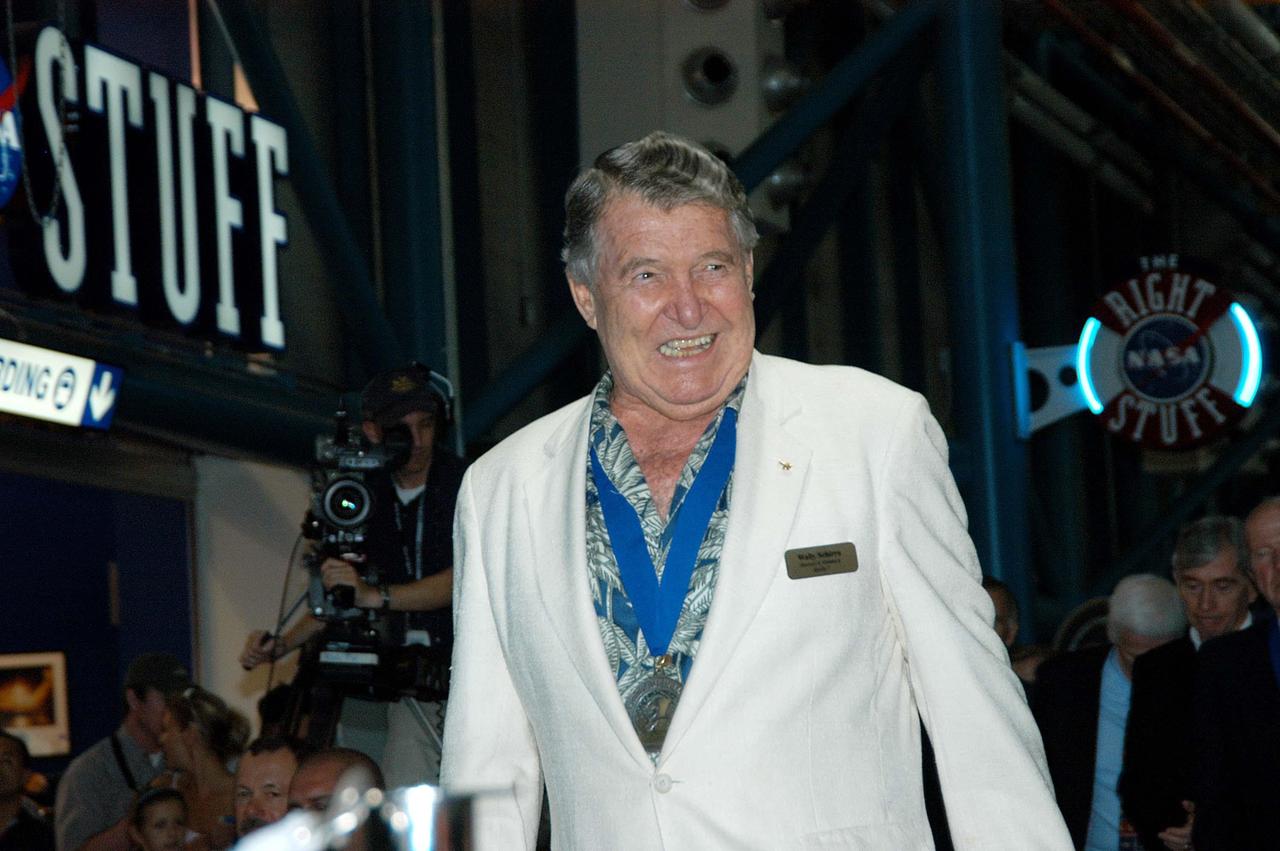
KENNEDY SPACE CENTER, FLA. -- Before the induction ceremony of five space program heroes into the U.S. Astronaut Hall of Fame, former astronaut Wally Schirra is greeted with applause as he is introduced as a previous inductee. One of America's original Mercury Seven astronauts, Schirra is the only one who flew in all three of the nation's pioneering space programs, Mercury, Gemini, and Apollo. The ceremony was held at the Apollo/Saturn V Center at KSC. New inductees are Richard O. Covey, commander of the Hubble Space Telescope repair mission; Norman E. Thagard, the first American to occupy Russia’s Mir space station; the late Francis R. "Dick" Scobee, commander of the ill-fated 1986 Challenger mission; Kathryn D. Sullivan, the first American woman to walk in space; and Frederick D. Gregory, the first African-American to command a space mission and the current NASA deputy administrator. The U.S. Astronaut Hall of Fame opened in 1990 to provide a place where space travelers could be remembered for their participation and accomplishments in the U.S. space program. The five inductees join 52 previously honored astronauts from the ranks of the Gemini, Apollo, Skylab, Apollo-Soyuz, and Space Shuttle programs.
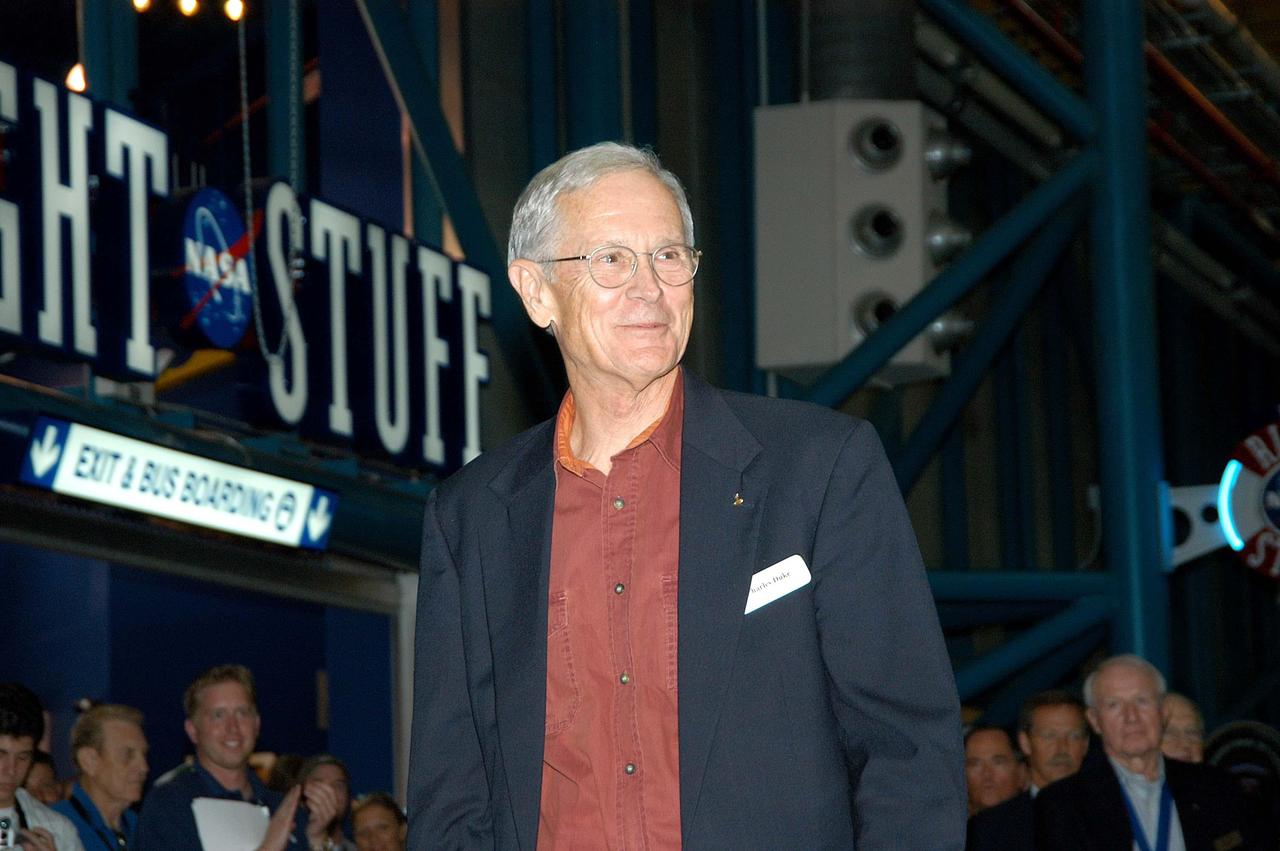
KENNEDY SPACE CENTER, FLA. -- Former astronaut Charles Duke receives a warm welcome as he is introduced as a previous inductee into the U.S. Astronaut Hall of Fame. He and other Hall of Fame members were present for the induction of five new space program heroes into the U.S. Astronaut Hall of Fame: Richard O. Covey, commander of the Hubble Space Telescope repair mission; Norman E. Thagard, the first American to occupy Russia’s Mir space station; the late Francis R. "Dick" Scobee, commander of the ill-fated 1986 Challenger mission; Kathryn D. Sullivan, the first American woman to walk in space; and Frederick D. Gregory, the first African-American to command a space mission and the current NASA deputy administrator. Duke explored the rugged highlands of the Moon’s Descartes region with John Young during the Apollo 16 mission in April 1972. The induction ceremony was held at the Apollo/Saturn V Center at KSC. The U.S. Astronaut Hall of Fame opened in 1990 to provide a place where space travelers could be remembered for their participation and accomplishments in the U.S. space program. The five inductees join 52 previously honored astronauts from the ranks of the Gemini, Apollo, Skylab, Apollo-Soyuz, and Space Shuttle programs.
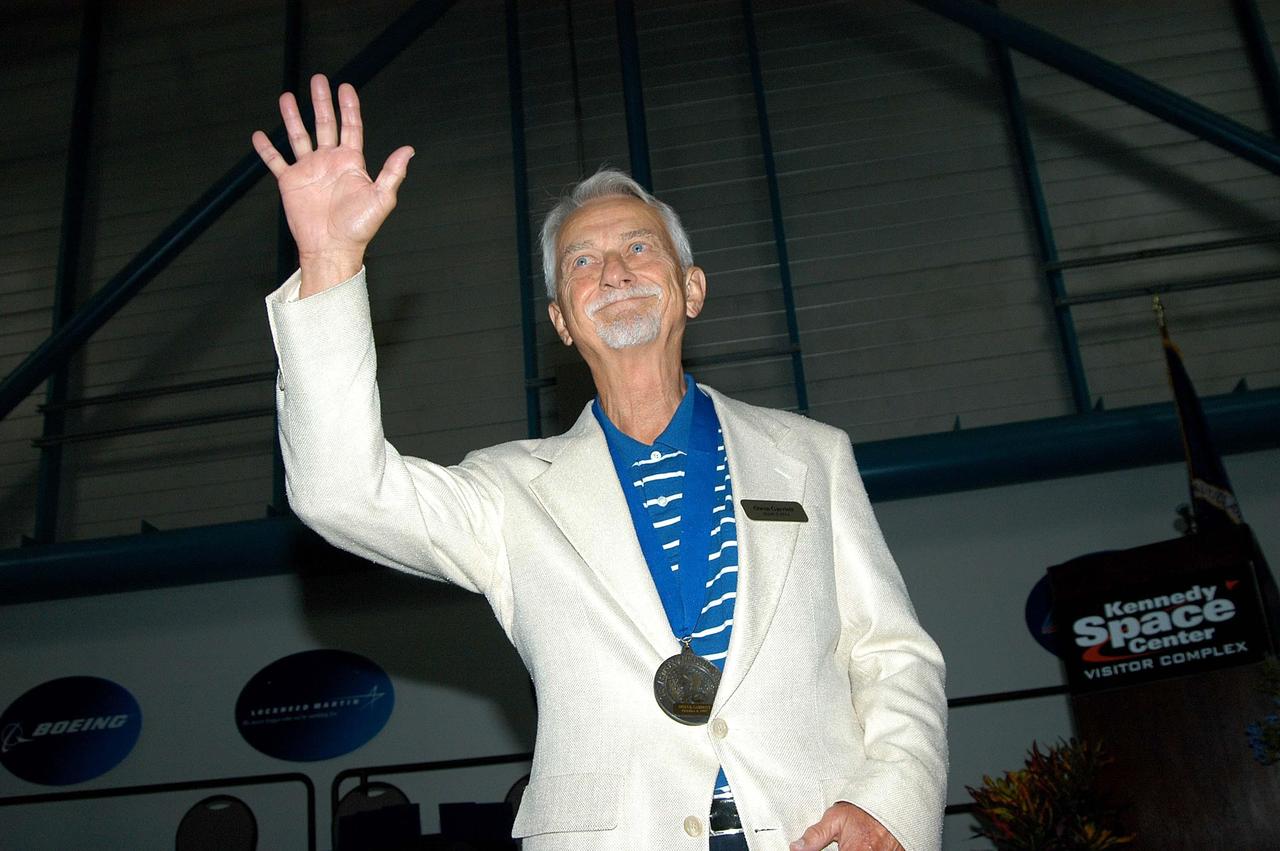
KENNEDY SPACE CENTER, FLA. -- Former astronaut Owen Garriott acknowledges the applause as he is introduced as a previous inductee into the U.S. Astronaut Hall of Fame. He and other Hall of Fame members were present for the induction of five new space program heroes into the U.S. Astronaut Hall of Fame: Richard O. Covey, commander of the Hubble Space Telescope repair mission; Norman E. Thagard, the first American to occupy Russia’s Mir space station; the late Francis R. "Dick" Scobee, commander of the ill-fated 1986 Challenger mission; Kathryn D. Sullivan, the first American woman to walk in space; and Frederick D. Gregory, the first African-American to command a space mission and the current NASA deputy administrator. Garriott exercised his expertise as a solar physicist on two space missions, the 59-day Skylab 3 flight in 1973, and an 11-day trip aboard the Space Shuttle Columbia a decade later. The induction ceremony was held at the Apollo/Saturn V Center at KSC. The U.S. Astronaut Hall of Fame opened in 1990 to provide a place where space travelers could be remembered for their participation and accomplishments in the U.S. space program. The five inductees join 52 previously honored astronauts from the ranks of the Gemini, Apollo, Skylab, Apollo-Soyuz, and Space Shuttle programs.
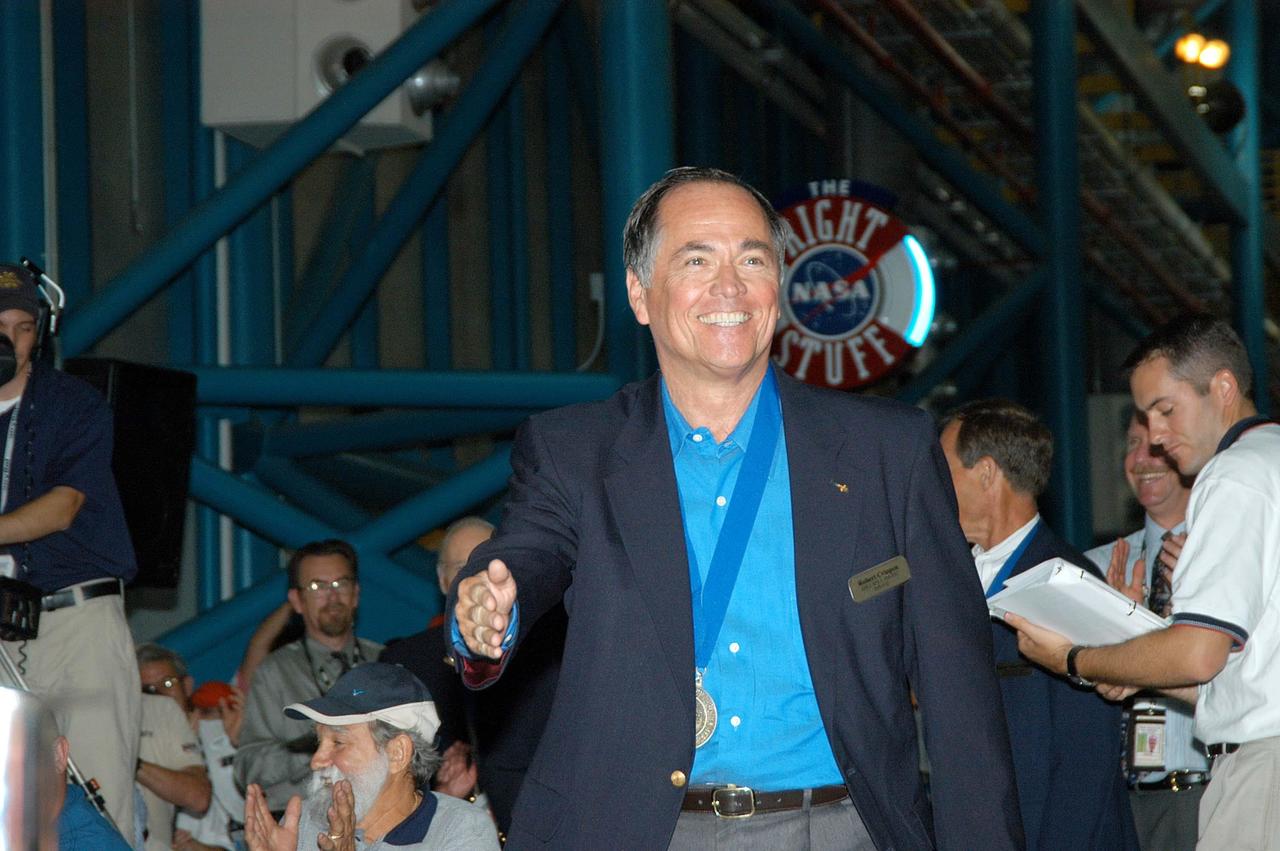
KENNEDY SPACE CENTER, FLA. -- Former astronaut Robert Crippen smiles at the warm greeting he is receiving when introduced as a previous inductee into the U.S. Astronaut Hall of Fame. He and other Hall of Fame members were present for the induction of five new space program heroes into the U.S. Astronaut Hall of Fame: Richard O. Covey, commander of the Hubble Space Telescope repair mission; Norman E. Thagard, the first American to occupy Russia’s Mir space station; the late Francis R. "Dick" Scobee, commander of the ill-fated 1986 Challenger mission; Kathryn D. Sullivan, the first American woman to walk in space; and Frederick D. Gregory, the first African-American to command a space mission and the current NASA deputy administrator. Crippen piloted the first Space Shuttle flight in 1981 and commanded three other Shuttle missions in the next 3-1/2 years. In the early 1990s he served as director of NASA’s Kennedy Space Center. The induction ceremony was held at the Apollo/Saturn V Center at KSC. The U.S. Astronaut Hall of Fame opened in 1990 to provide a place where space travelers could be remembered for their participation and accomplishments in the U.S. space program. The five inductees join 52 previously honored astronauts from the ranks of the Gemini, Apollo, Skylab, Apollo-Soyuz, and Space Shuttle programs.
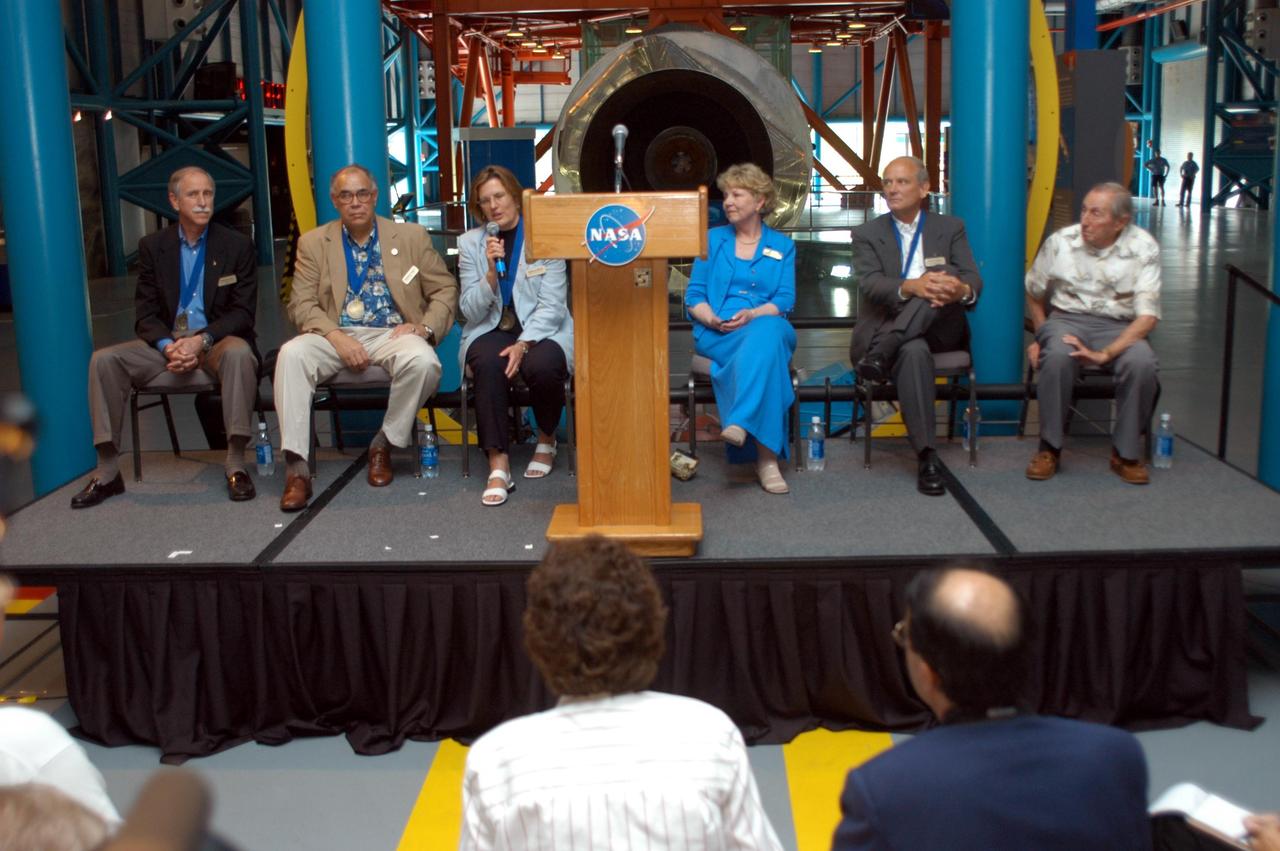
KENNEDY SPACE CENTER, FLA. -- Kathryn D. Sullivan, the first American woman to walk in space, responds to a reporter’s question at a press conference in the Apollo/Saturn V Center following the induction ceremony of five space program heroes into the Astronaut Hall of Fame. Seated (left to right) with her are Richard O. Covey, commander of the Hubble Space Telescope repair mission; Frederick D. Gregory (second from left), the first African-American to command a space mission and the current NASA deputy administrator; Sullivan; June Scobee, representing her late husband Francis R. "Dick" Scobee, commander of the ill-fated 1986 Challenger mission; and Norman E. Thagard, the first American to occupy Russia’s Mir space station. The U.S. Astronaut Hall of Fame opened in 1990 to provide a place where space travelers could be remembered for their participation and accomplishments in the U.S. space program. To be eligible for induction, an individual must have been a U.S. citizen, a NASA astronaut, and out of the active astronaut corps at least five years. The five inductees join 52 previously honored astronauts from the ranks of the Gemini, Apollo, Skylab, Apollo-Soyuz, and Space Shuttle programs.
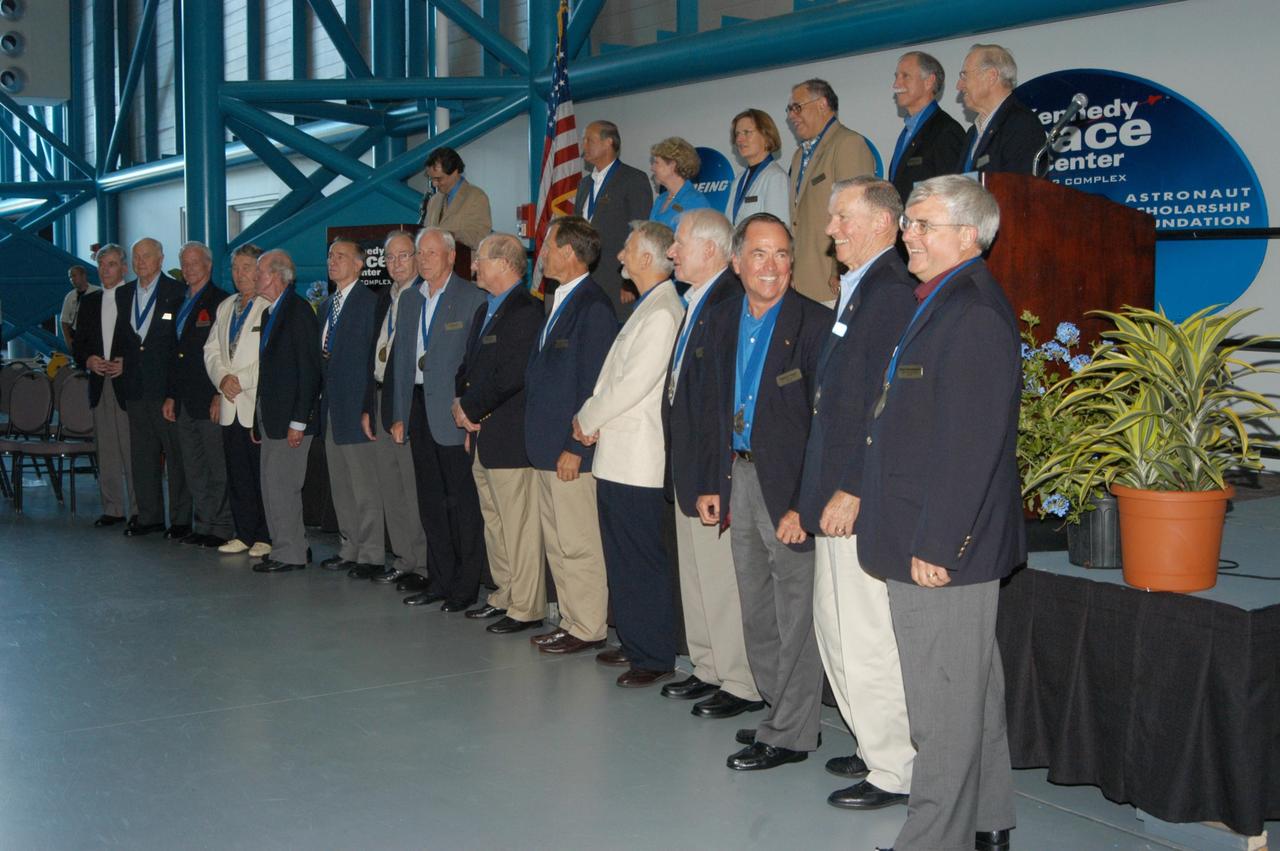
KENNEDY SPACE CENTER, FLA. -- Following the induction ceremony welcoming five new space program heroes in the U.S. Astronaut Hall of Fame, the members line up for a commemorative photo. From left, in front, are John Young, John Glenn Jr., Scott Carpenter, Wally Schirra, Gordon Cooper, Walt Cunningham, Ed Mitchell, Al Worden, Rick Hauck, Ed Gibson, Owen Garriott, Vance Brand, Robert Crippen, Joe Engle, Dan Brandenstein. In back are space author Andrew Chaikin, at the podium; and Norm Thagard, June Scobee representing her late husband Dick Scobee, Kathryn Sullivan, Fred Gregory, Richard Covey and Jim Lovell. The induction ceremony was held at the Apollo/Saturn V Center at KSC. The U.S. Astronaut Hall of Fame opened in 1990 to provide a place where space travelers could be remembered for their participation and accomplishments in the U.S. space program. The five inductees join 52 previously honored astronauts from the ranks of the Gemini, Apollo, Skylab, Apollo-Soyuz, and Space Shuttle programs.