
This photograph depicts the Saturn V vehicle (SA-501) for the Apollo 4 mission in the Vehicle Assembly Building (VAB) at the Kennedy Space Center (KSC). After the completion of the assembly operation, the work platform was retracted and the vehicle was readied to rollout from the VAB to the launch pad. The Apollo 4 mission was the first launch of the Saturn V launch vehicle. Objectives of the unmanned Apollo 4 test flight were to obtain flight information on launch vehicle and spacecraft structural integrity and compatibility, flight loads, stage separation, and subsystems operation including testing of restart of the S-IVB stage, and to evaluate the Apollo command module heat shield. The Apollo 4 was launched on November 9, 1967 from KSC.
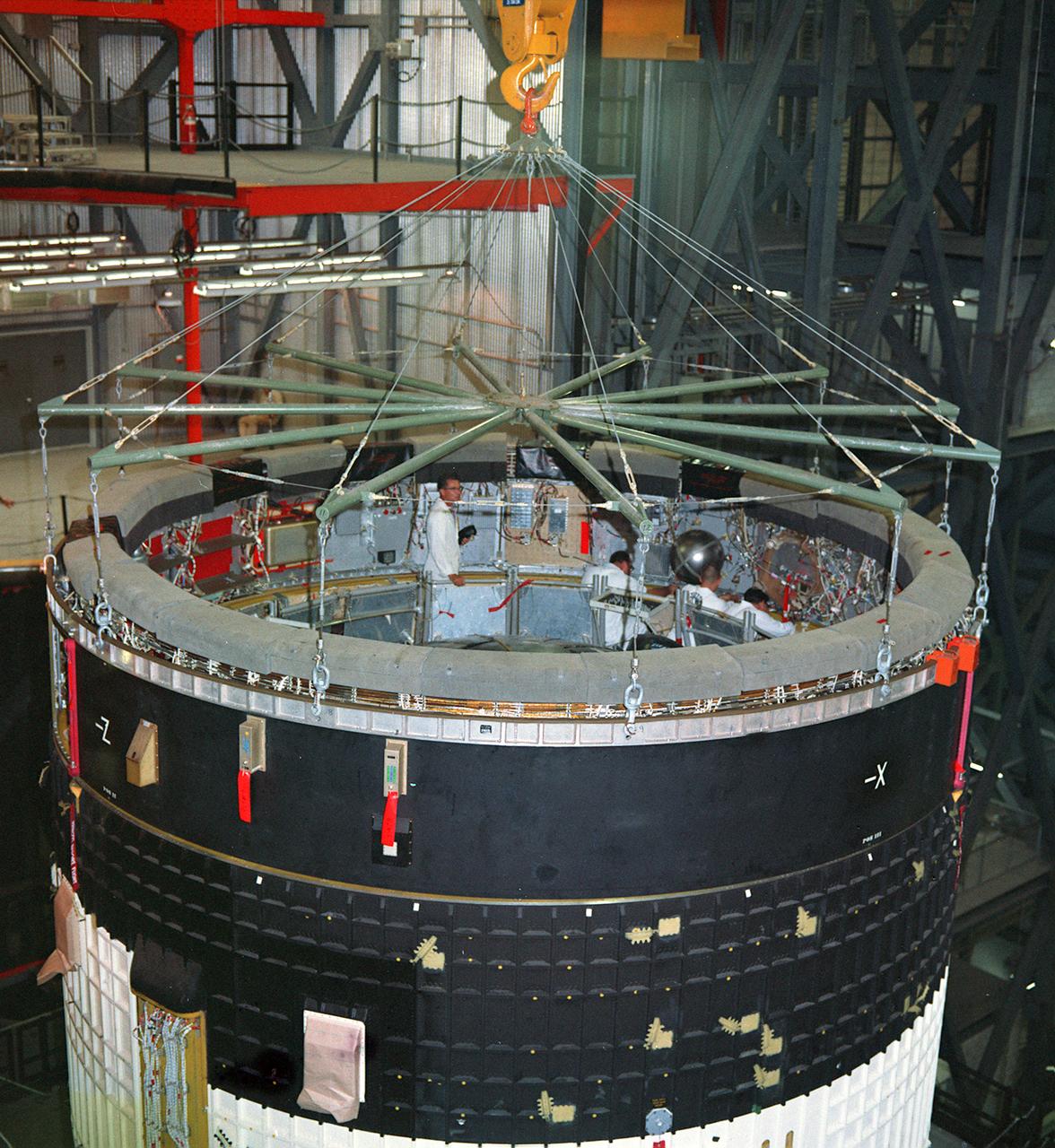
This photograph was taken during the final assembly operation of the Saturn V launch vehicle for the Apollo 4 (SA 501) mission. The instrument unit (IU) was mated atop the S-IC/S-II assembly in the Vehicle Assembly Building high bay at the Kennedy Space Center. The Apollo 4 mission was the first launch of the Saturn V launch vehicle. Objectives of the unmanned Apollo 4 test flight were to obtain flight information on launch vehicle and spacecraft structural integrity and compatibility, flight loads, stage separation, and subsystems operation including testing of restart of the S-IVB stage, and to evaluate the Apollo command module heat shield. The Apollo 4 was launched on November 9, 1967 from KSC.
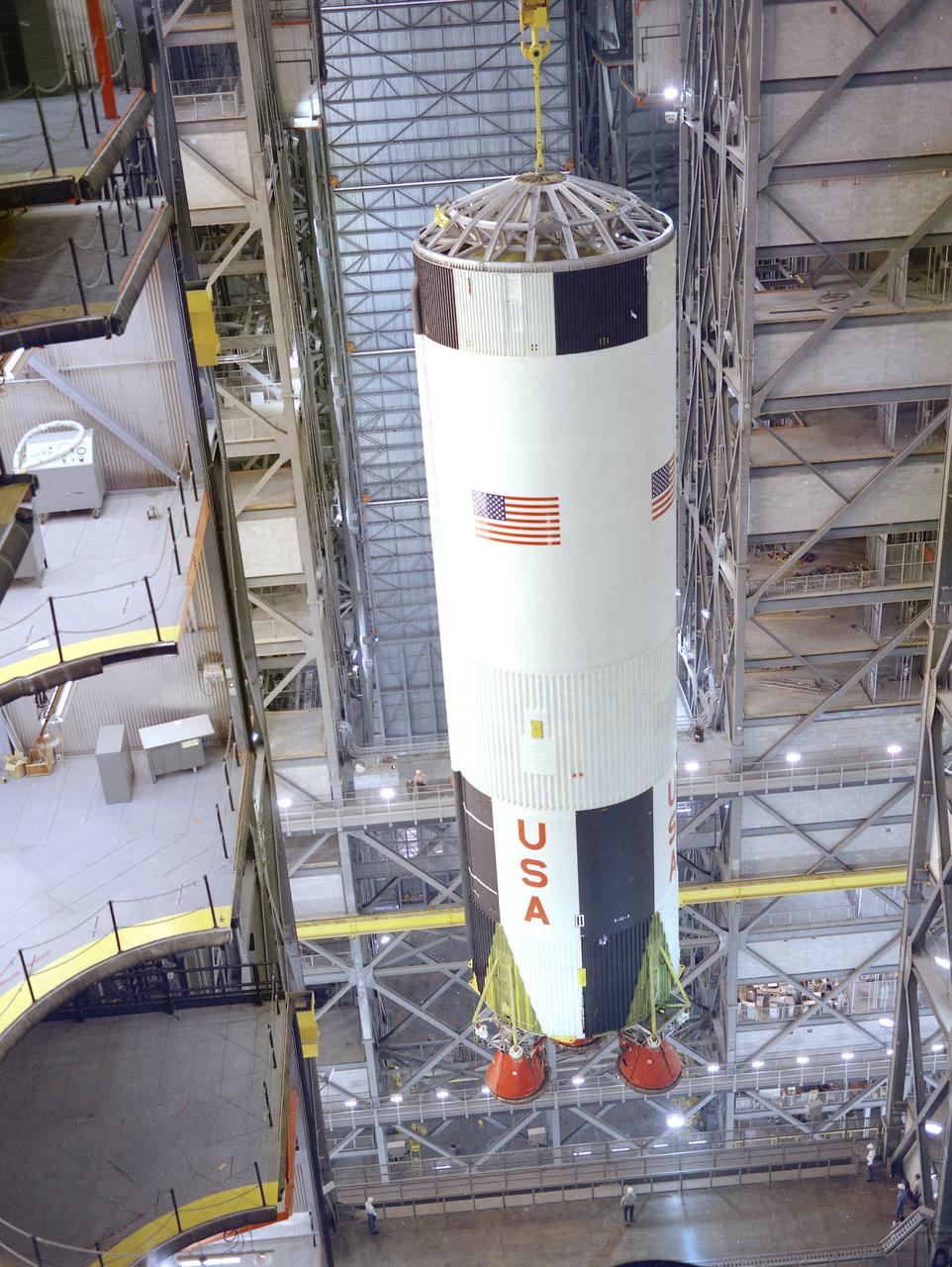
The S-IC stage being erected for the final assembly of the Saturn V launch vehicle for the Apollo 8 mission (AS-503), is photographed in the Vehicle Assembly Building (VAB) high bay at the Kennedy Space Center. The Apollo 8 mission was the first Saturn V manned mission with astronauts Frank Borman, James A. Lovell, and William Anders. They escaped Earth's gravity and traveled to lunar vicinity. The launch of Apollo 8 occurred on December 21, 1968.
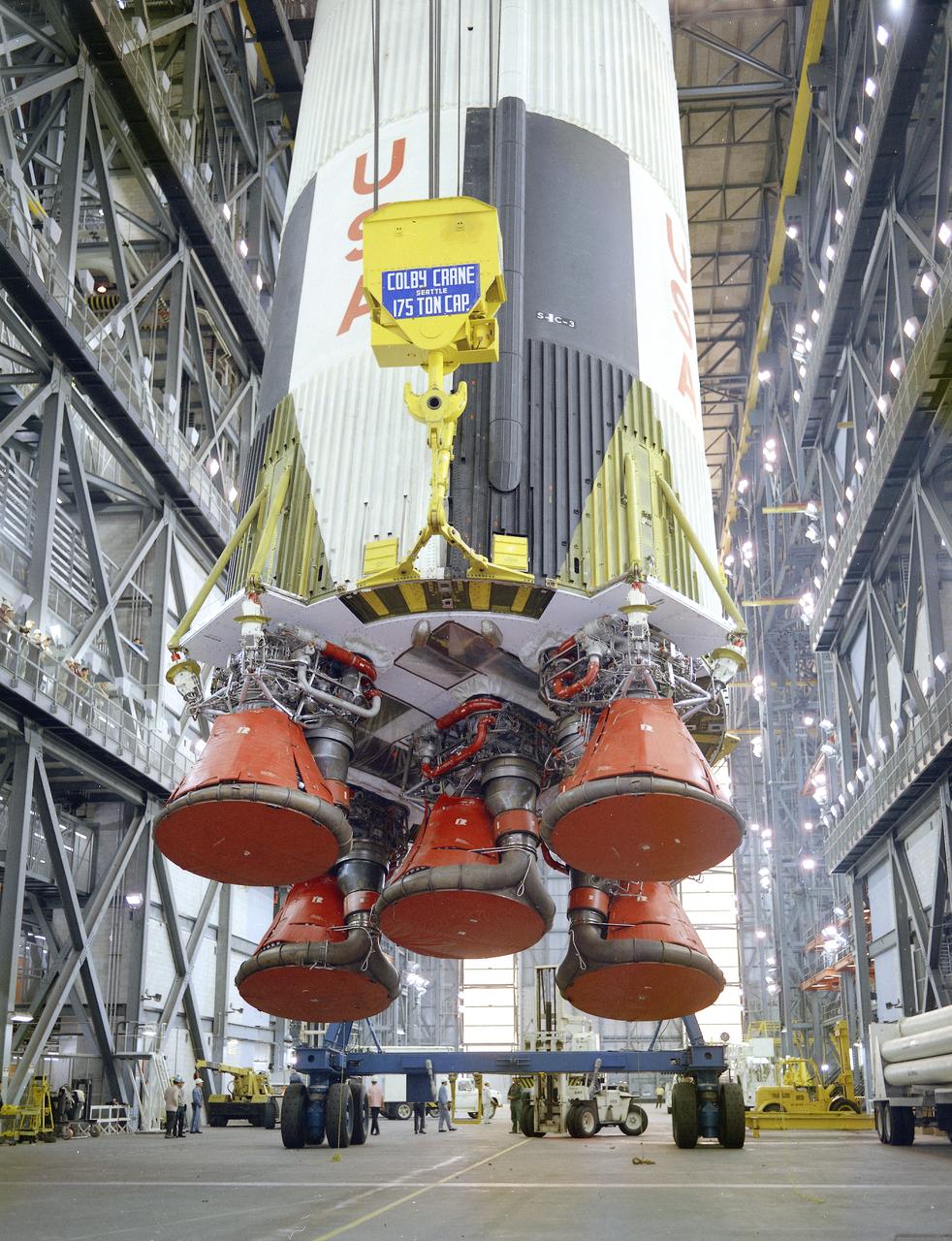
The S-IC stage being erected for the final assembly of the Saturn V launch vehicle for the Apollo 8 mission (AS-503), is photographed in the Vehicle Assembly Building (VAB) high bay at the Kennedy Space Center. The Apollo 8 mission was the first Saturn V manned mission with astronauts Frank Borman, James A. Lovell, and William Anders. They escaped Earth's gravity and traveled to lunar vicinity. The launch of Apollo 8 occurred on December 21, 1968.
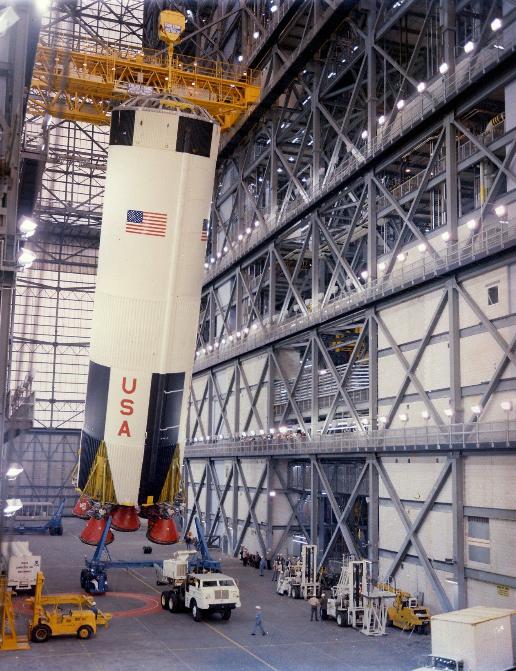
Teams lift the first stage of the Apollo 8 Saturn V rocket inside the transfer aisle of the Vehicle Assembly Building at NASA’s Kennedy Space Center in Florida on Feb. 1, 1968, and prepare to place it atop the mobile launcher. Apollo 8 was the first crewed spacecraft to successfully orbit the Moon and return to Earth, setting the stage for Apollo 11 – the first crewed lunar landing. Apollo 8 launched on Dec. 21, 1968, and the crew members consisted of Frank Borman, William A. Anders, and James A. Lovell Jr.
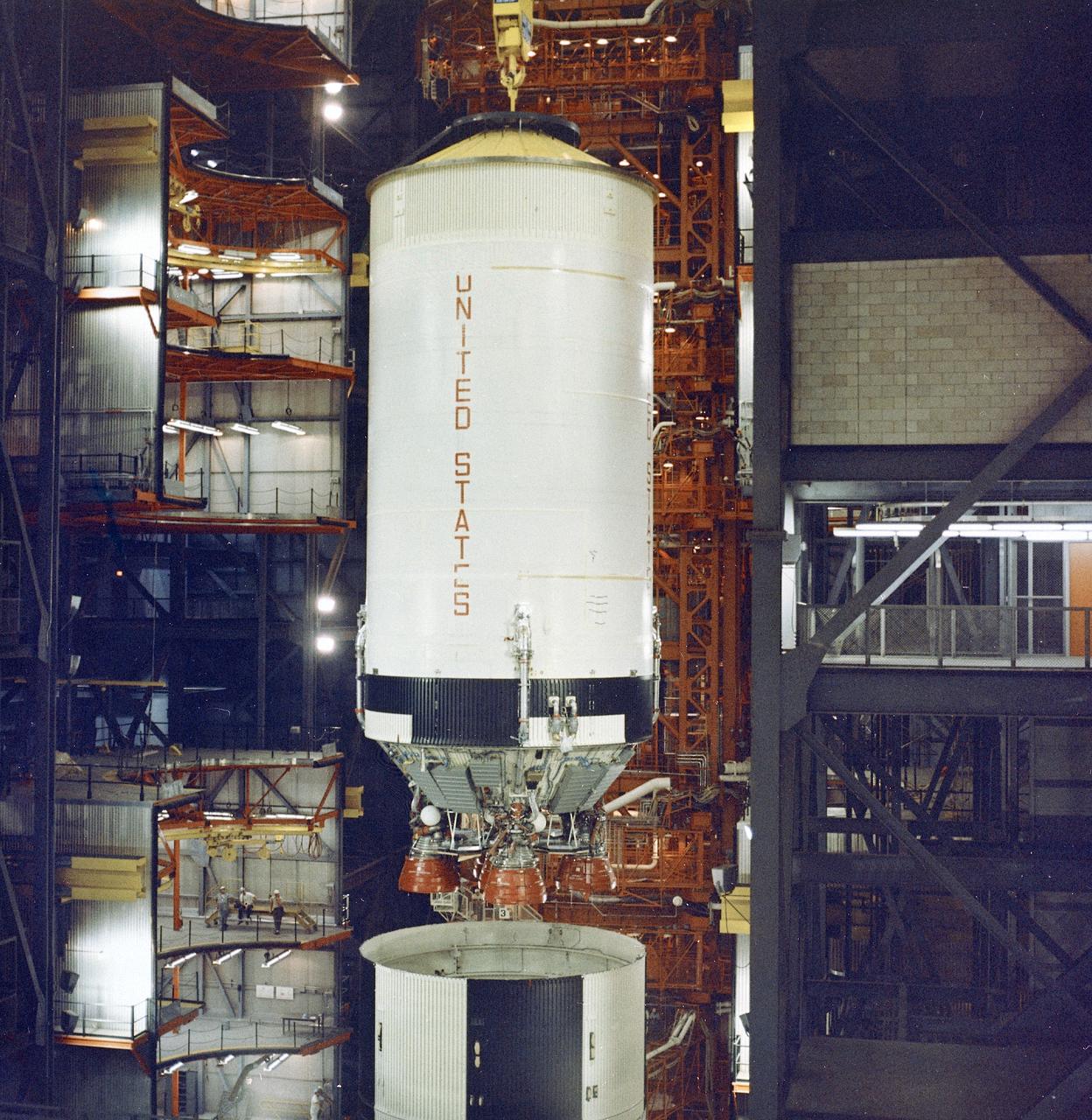
This photograph shows the Saturn V S-II (second) stage of the Apollo 6 mission being lowered atop of the S-IC (first) stage during the final assembly operations in the Vehicle Assembly Building (VAB) at the Kennedy Space Center. The Apollo 6 mission was the second Saturn V unmanned flight for testing an emergency detection system. The launch occurred on April 4, 1968.
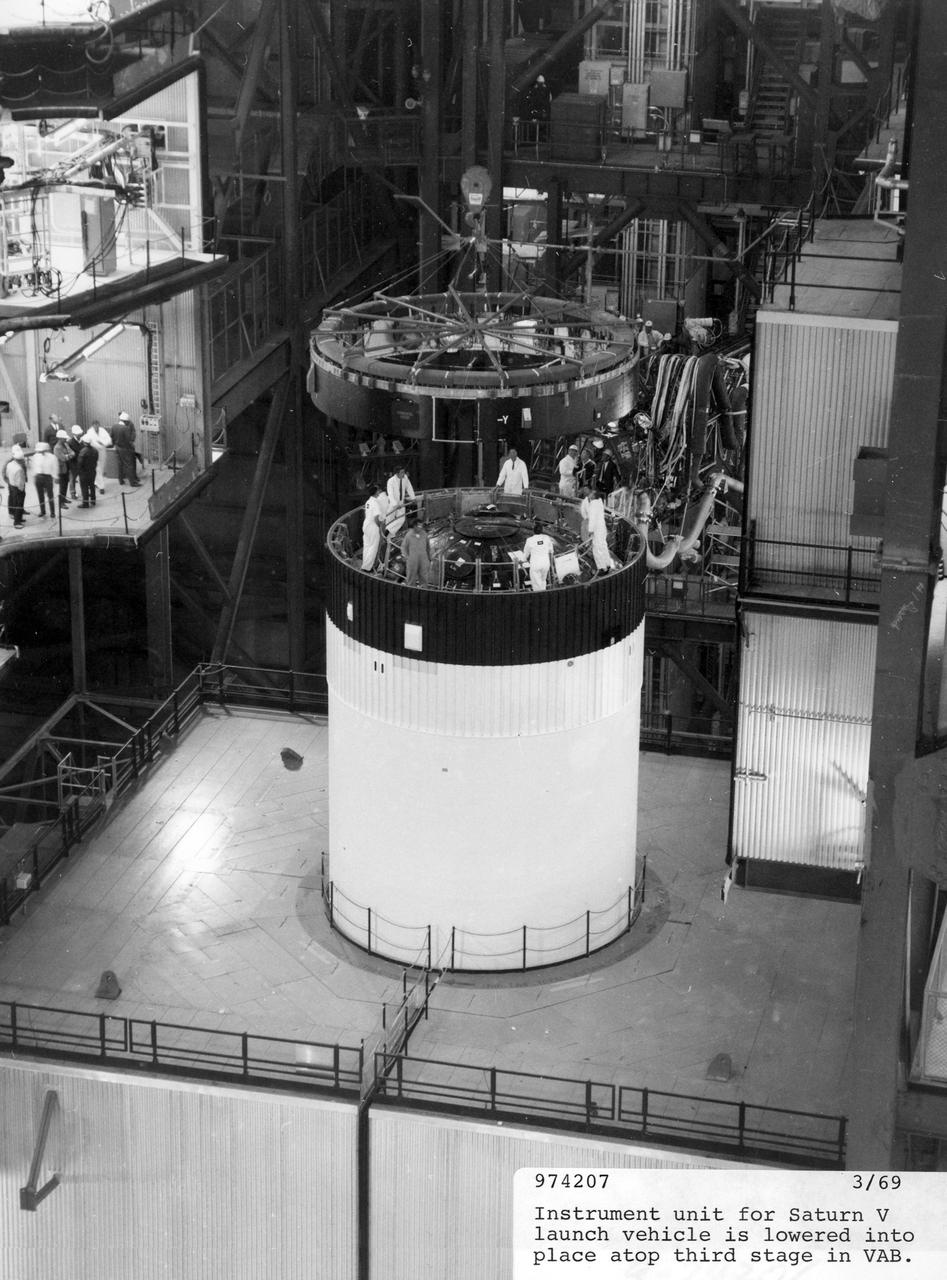
The instrument unit for the Saturn V launch vehicle, AS-506, used to propel the Apollo 11 lunar landing mission, is lowered into place atop the third (S-IVB) stage in the vehicle assembly building at the NASA Kennedy Space Center (KSC). Designed by the NASA Marshall Space Flight Center (MSFC), the instrument unit served as the Saturn’s “nerve center” providing guidance and control, command and sequence of vehicle functions, telemetry, and environmental control. The Apollo 11 mission launched from KSC in Florida via the MSFC developed Saturn V launch vehicle on July 16, 1969 and safely returned to Earth on July 24, 1969. Astronauts onboard included Neil A. Armstrong, commander; Michael Collins, Command Module (CM) pilot; and Edwin E. Aldrin, Jr., Lunar Module (LM) pilot. The CM, “Columbia”, piloted by Collins, remained in a parking orbit around the Moon while the LM, “Eagle’’, carrying astronauts Armstrong and Aldrin, landed on the Moon. On July 20, 1969, Armstrong was the first human to ever stand on the lunar surface, followed by Aldrin. During 2½ hours of surface exploration, the crew collected 47 pounds of lunar surface material for analysis back on Earth. With the success of Apollo 11, the national objective to land men on the Moon and return them safely to Earth had been accomplished
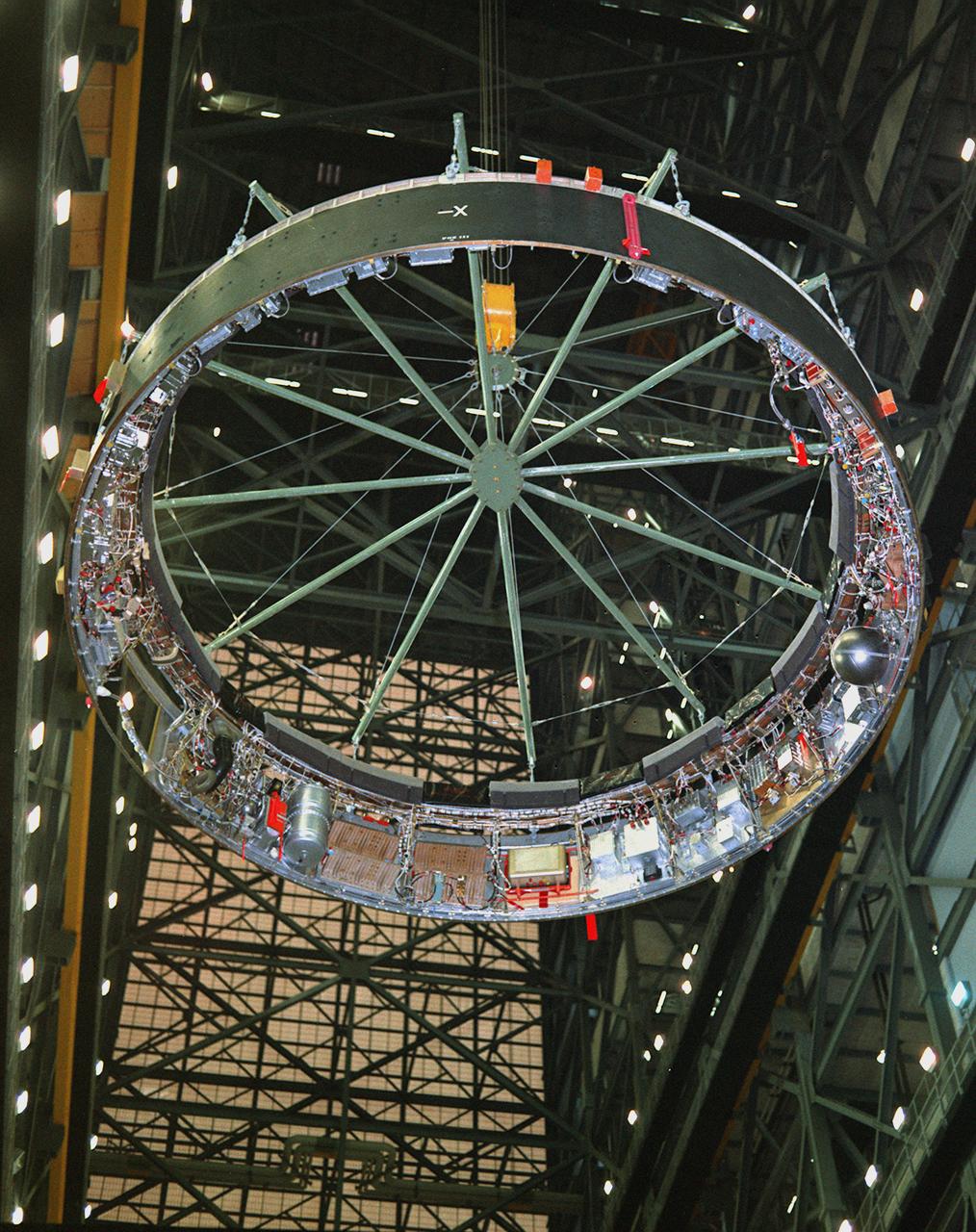
This photograph was taken during the final assembly operation of the Saturn V launch vehicle for the Apollo 4 (SA 501) mission. The instrument unit (IU) was hoisted to be mated to the S-IC/S-II assembly in the Vehicle Assembly Building high bay at the Kennedy Space Center. The Apollo 4 mission was the first launch of the Saturn V launch vehicle. Objectives of the unmanned Apollo 4 test flight were to obtain flight information on launch vehicle and spacecraft structural integrity and compatibility, flight loads, stage separation, and subsystems operation including testing of restart of the S-IVB stage, and to evaluate the Apollo command module heat shield. The Apollo 4 was launched on November 9, 1967 from KSC.
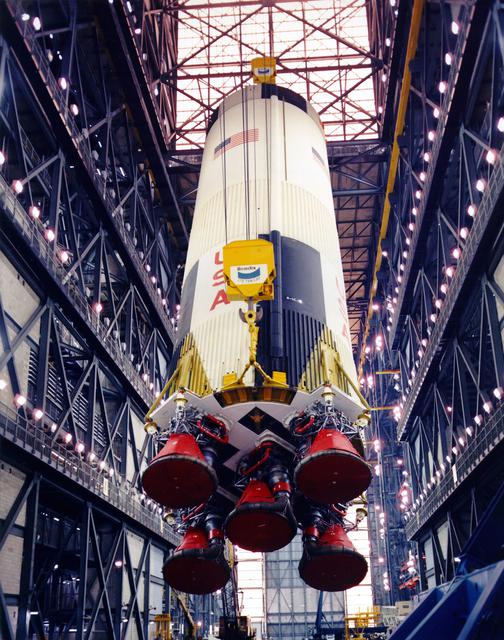
Teams lift the first stage of the Apollo 10 Saturn V rocket by crane inside High Bay 3 of the Vehicle Assembly Building at NASA’s Kennedy Space Center in Florida on Dec. 3, 1968, in preparation for stacking on the mobile launcher. The 138-foot-long stage generated 7.5 million pounds of thrust when it launched Apollo 10 astronauts Thomas P. Stafford, John W. Young, and Eugene A. Cernan. The mission launched on May 18, 1969, and was the first flight of a complete, crewed Apollo spacecraft to operate around the Moon.
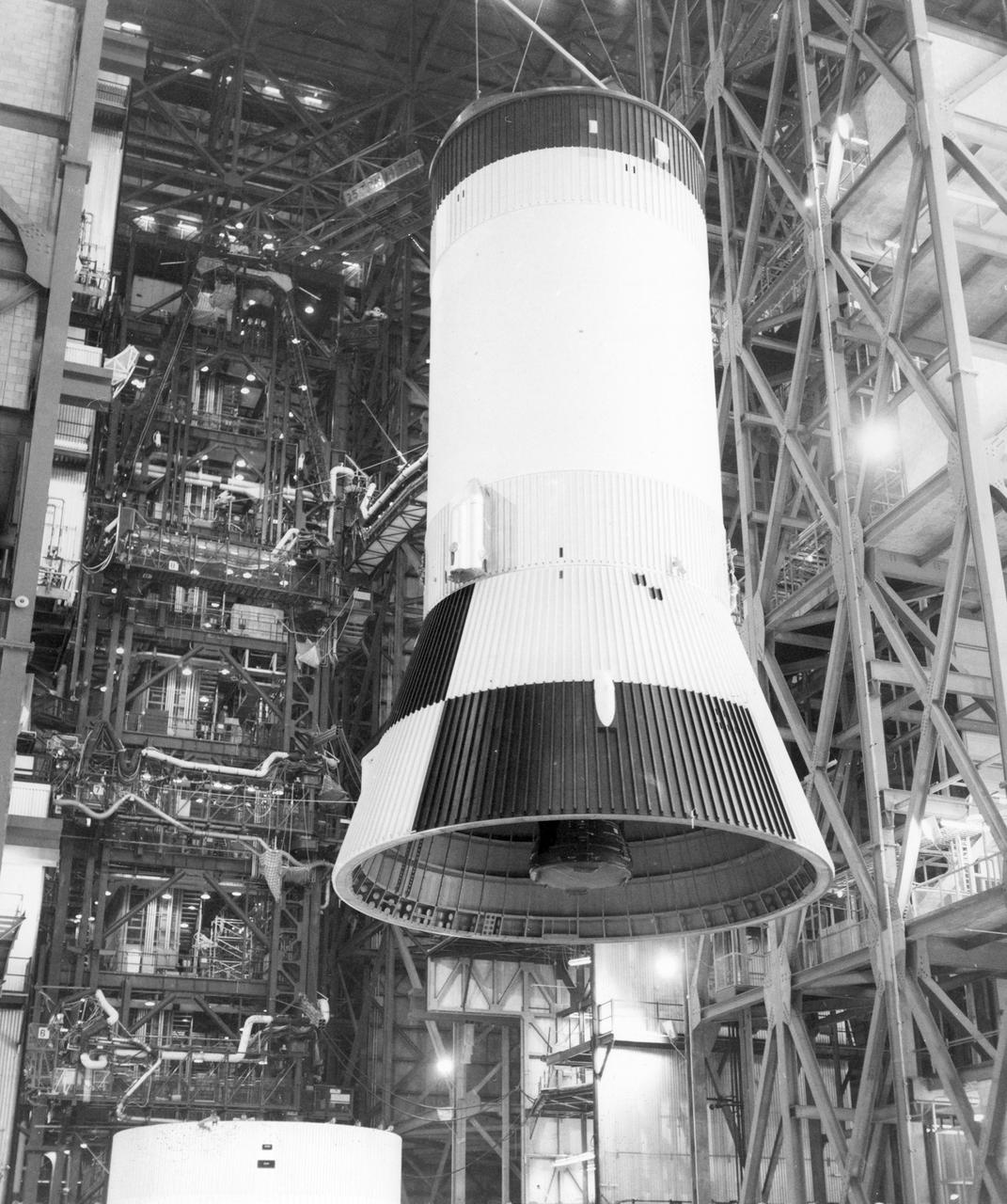
The third stage (S-IVB) of the Saturn V launch vehicle for the Apollo 11 lunar landing mission is hoisted in the vehicle assembly building at the NASA Kennedy Space Center (KSC) for mating with the second stage (S-II). The vehicle, designated as AS-506, projected the first lunar landing mission, Apollo 11, on a trajectory for the Moon. The Apollo 11 mission launched from KSC in Florida via the Marshall Space Flight Center (MSFC) developed Saturn V launch vehicle on July 16, 1969 and safely returned to Earth on July 24, 1969. Astronauts onboard included Neil A. Armstrong, commander; Michael Collins, Command Module (CM) pilot; and Edwin E. Aldrin, Jr., Lunar Module (LM) pilot. The CM, “Columbia”, piloted by Collins, remained in a parking orbit around the Moon while the LM, “Eagle’’, carrying astronauts Armstrong and Aldrin, landed on the Moon. On July 20, 1969, Armstrong was the first human to ever stand on the lunar surface, followed by Aldrin. During 2½ hours of surface exploration, the crew collected 47 pounds of lunar surface material for analysis back on Earth. With the success of Apollo 11, the national objective to land men on the Moon and return them safely to Earth had been accomplished.
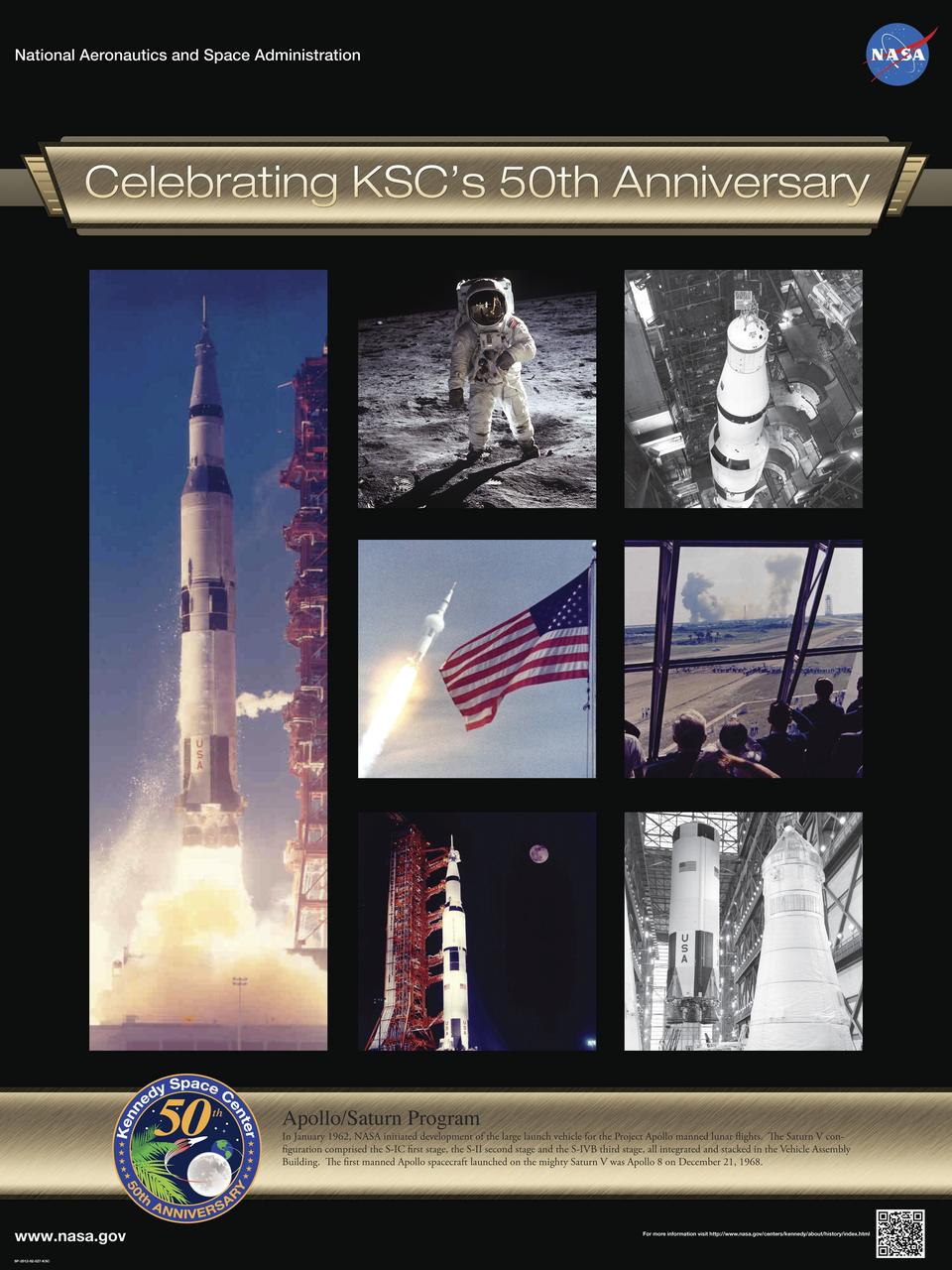
Apollo/Saturn Program: In January 1962, NASA initiated development of the large launch vehicle for the Project Apollo manned lunar flights. The Saturn V configuration comprised the S-IC first stage, the S-II second stage and the S-IVB third stage, all integrated and stacked in the Vehicle Assembly Building. The first manned Apollo spacecraft launched on the mighty Saturn V was Apollo 8 on December 21, 1968. Poster designed by Kennedy Space Center Graphics Department/Greg Lee. Credit: NASA

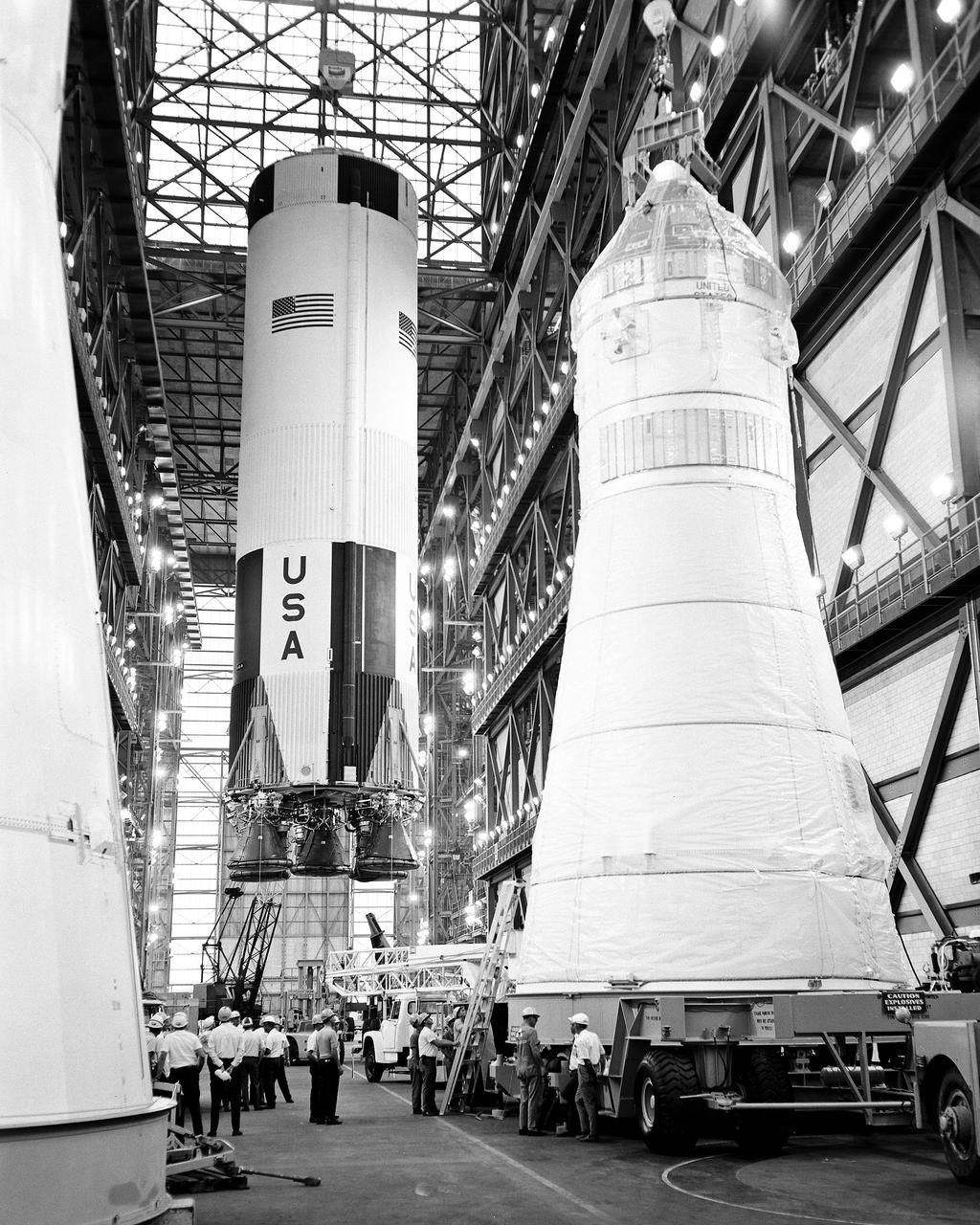
S67-36022 (20 June 1967) --- Apollo Spacecraft 017 is moved into position in the Vehicle Assembly Building's high bay area for mating with the Saturn V launch vehicle. S/C 017 will be flown on the Spacecraft 017/Saturn 501 (Apollo 4) space mission.
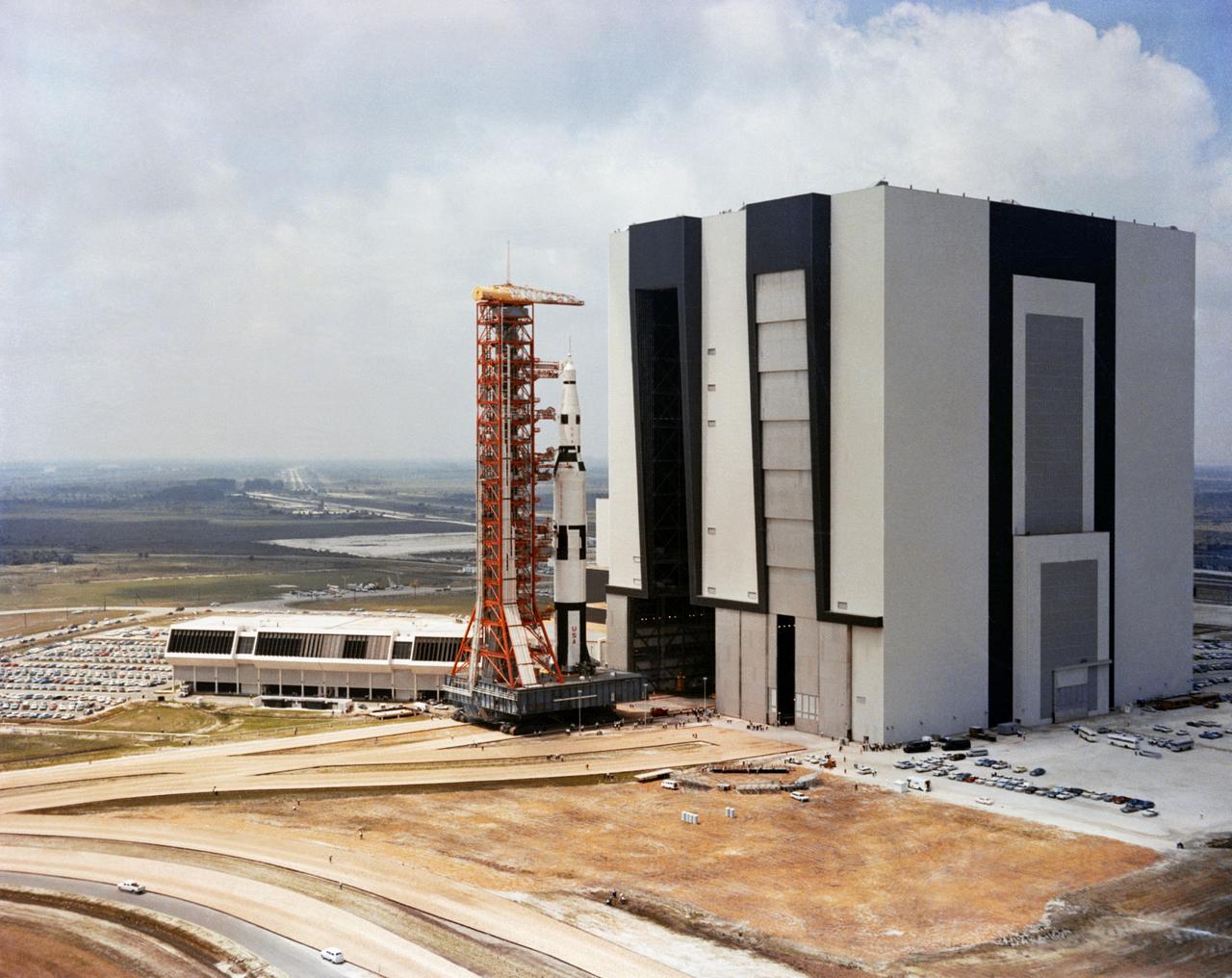
An Apollo/Saturn V facilities Test Vehicle and Launch Umbilical Tower (LUT) atop a crawler-transporter move from the Vehicle Assembly Building (VAB) on the way to Pad A. This test vehicle, designated the Apollo/Saturn 500-F, is being used to verify launch facilities, train launch crews, and develop test and checkout procedures.
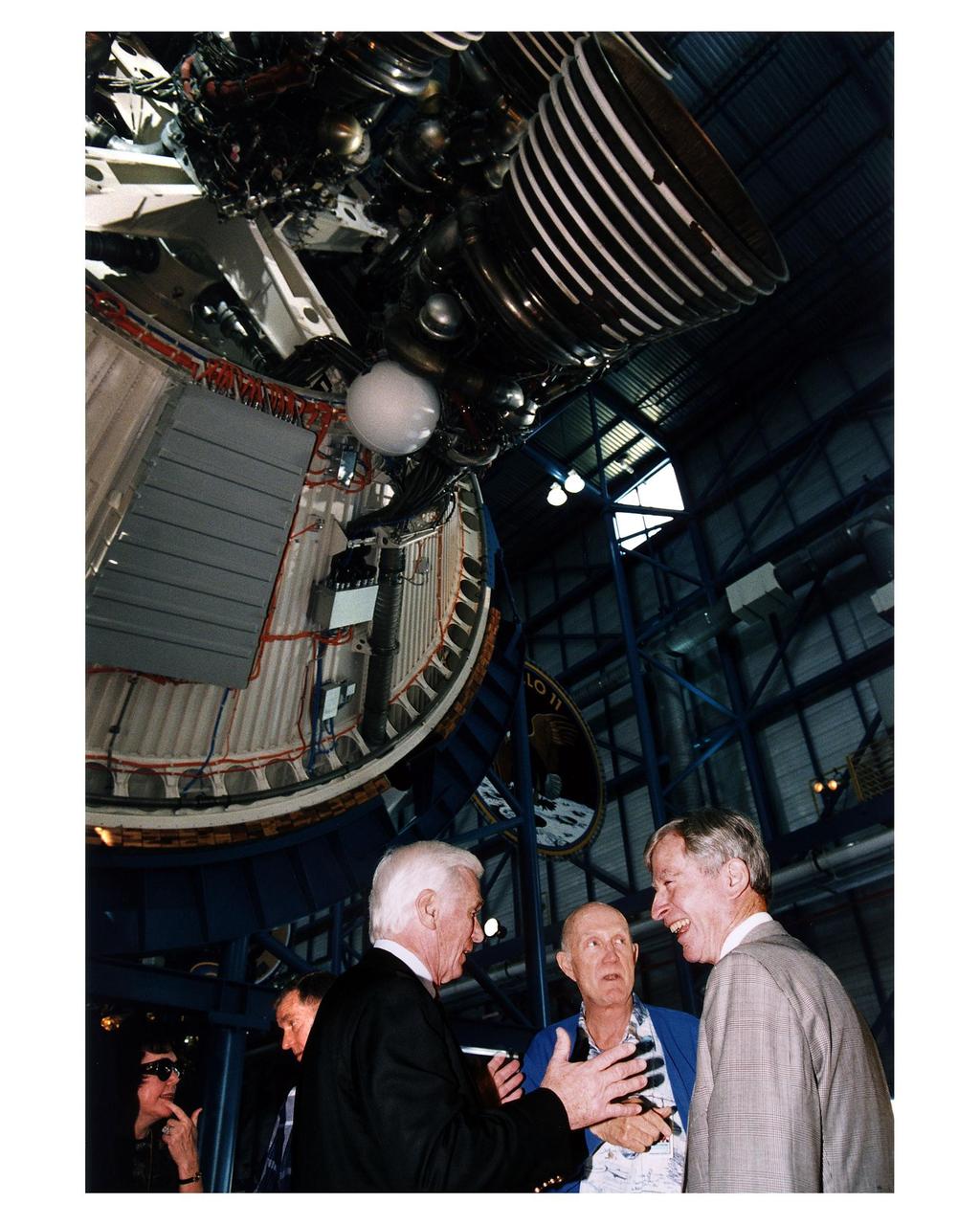
KENNEDY SPACE CENTER, FLA. -- Some of the former Apollo program astronauts tour the new Apollo/Saturn V Center (ASVC) at KSC prior to the gala grand opening ceremony for the facility that was held Jan. 8, 1997. The astronauts were invited to participate in the event, which also featured NASA Administrator Dan Goldin and KSC Director Jay Honeycutt. Discussing old times beneath the KSC Apollo/Saturn V rocket inside the building are (from left) Apollo 10 Lunar Module Pilot and Apollo 17 Commander Eugene A. Cernan; Apollo 10 Commander Thomas P. Stafford and Apollo 16 Commander John W. Young. The ASVC also features several other Apollo program spacecraft components, multimedia presentations and a simulated Apollo/ Saturn V liftoff. The facility will be a part of the KSC bus tour that embarks from the KSC Visitor Center
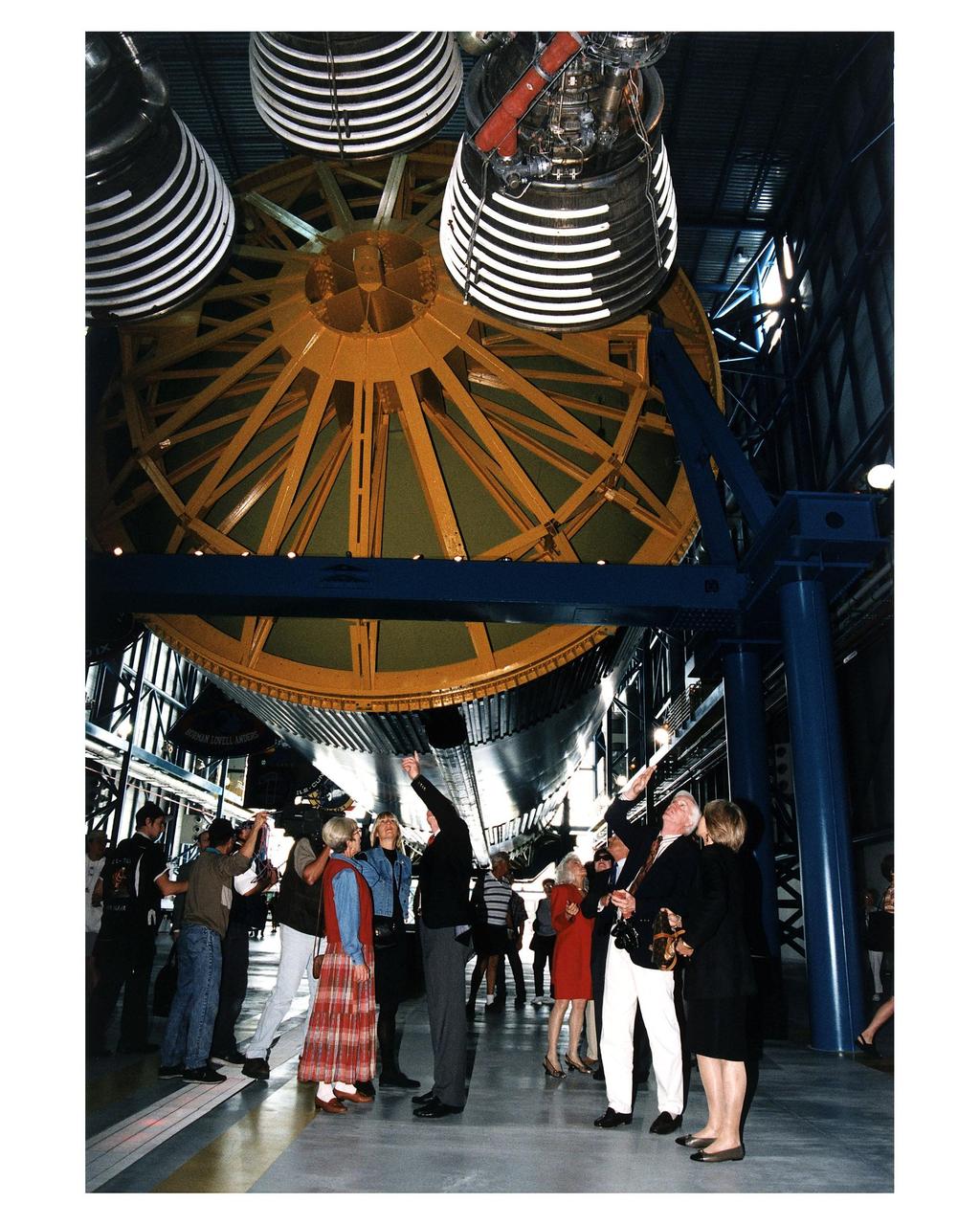
KENNEDY SPACE CENTER, FLA. -- Some of the former Apollo program astronauts tour the new Apollo/Saturn V Center (ASVC) at KSC prior to the gala grand opening ceremony for the facility that was held Jan. 8, 1997. The astronauts were invited to participate in the event, which also featured NASA Administrator Dan Goldin and KSC Director Jay Honeycutt. Apollo 10 Lunar Module Pilot and Apollo 17 Commander Eugene A. Cernan and Apollo 9 Lunar Module Pilot Russell L. Schweickart (second from right), are both pointing at the KSC Apollo/Saturn V rocket inside the building as they talk to other guests on the tour. The ASVC also features several other Apollo program spacecraft components, multimedia presentations and a simulated Apollo/Saturn V liftoff. The facility will be a part of the KSC bus tour that embarks from the KSC Visitor Center
![Apollo spacecraft 017 leaves the Manned Spacecraft Operations Building at Kennedy Space Center on its way to the Vehicle Assembly Building where it will be mated with the Saturn 501 launch vehicle. The first flight of the Saturn V [AS-501], an unmanned mission, is scheduled for this fall.](https://images-assets.nasa.gov/image/KSC-67P-0259/KSC-67P-0259~medium.jpg)
Apollo spacecraft 017 leaves the Manned Spacecraft Operations Building at Kennedy Space Center on its way to the Vehicle Assembly Building where it will be mated with the Saturn 501 launch vehicle. The first flight of the Saturn V [AS-501], an unmanned mission, is scheduled for this fall.
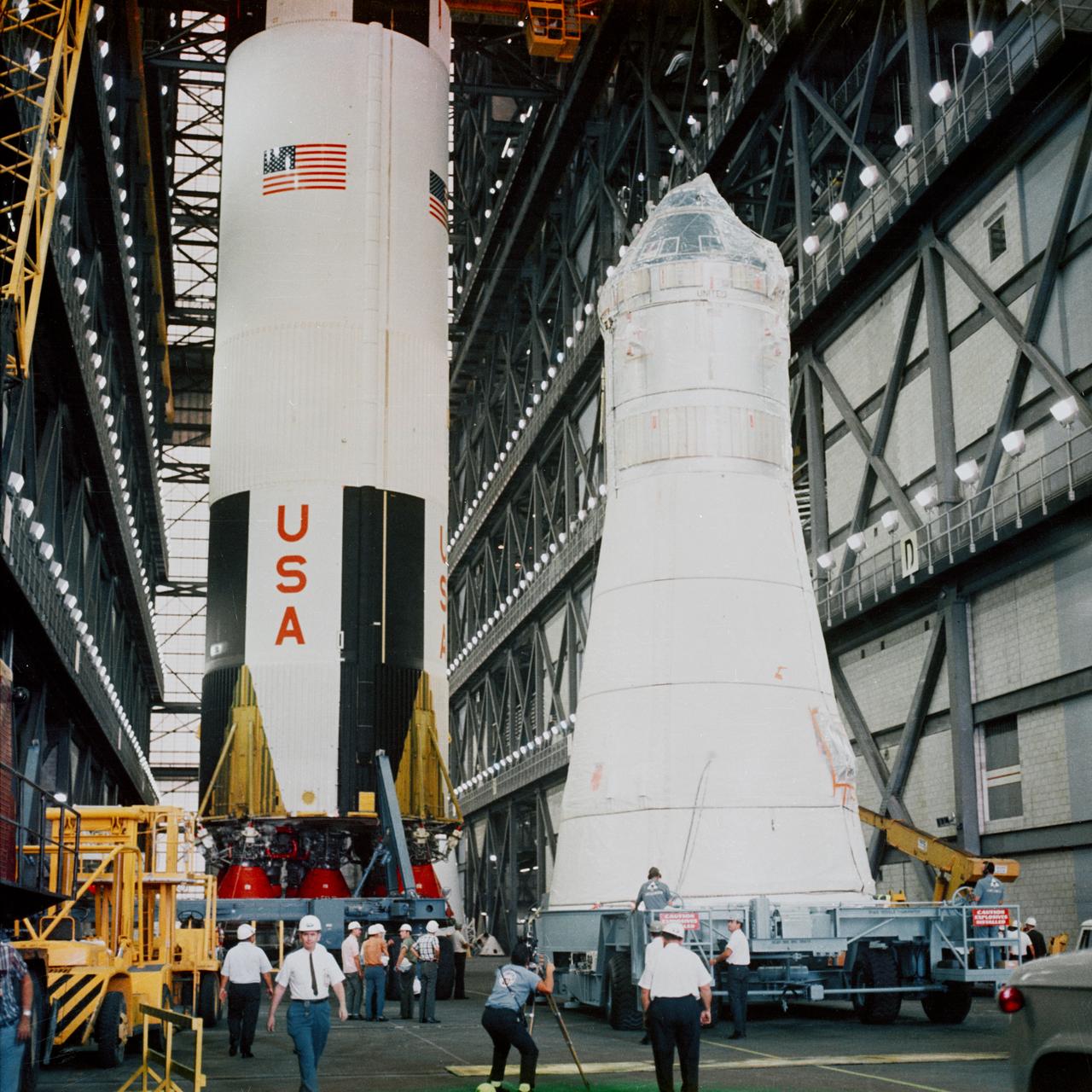
Apollo Spacecraft 104 Command/Service Module and Lunar Module 3 arrive at the Vehicle Assembly Building (VAB) for mating atop the Saturn 504 launch vehicle. The Saturn 504 stack is out of view. The Saturn V first (S-IC) stage in left background is scheduled for a later flight.
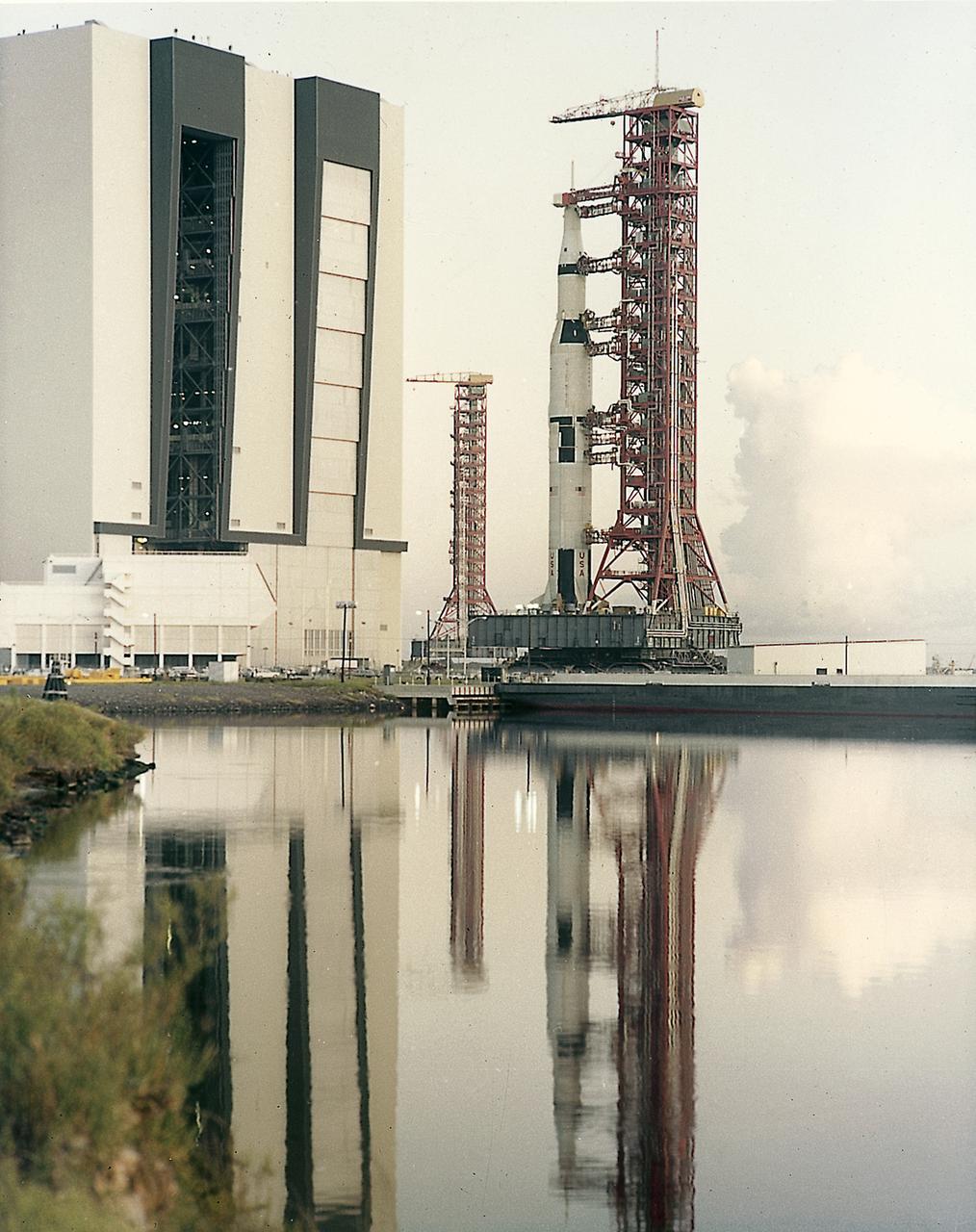
This picture shows the Saturn V vehicle (AS-501), for the Apollo 4 mission on the Crawler Transporter Vehicle. It was rolled out from the Vehicle Assembly Building and slowly (1 mph) moved to the launch pad at the Kennedy Space Center (KSC). The Apollo 4 mission was the first launch of the Saturn V launch vehicle. Objectives of the unmanned Apollo 4 test flight were to obtain flight information on launch vehicle and spacecraft structural integrity and compatibility, flight loads, stage separation, and subsystems operation including testing of restart of the S-IVB stage, and to evaluate the Apollo command module heat shield. The Apollo 4 was launched on November 9, 1967 from KSC.
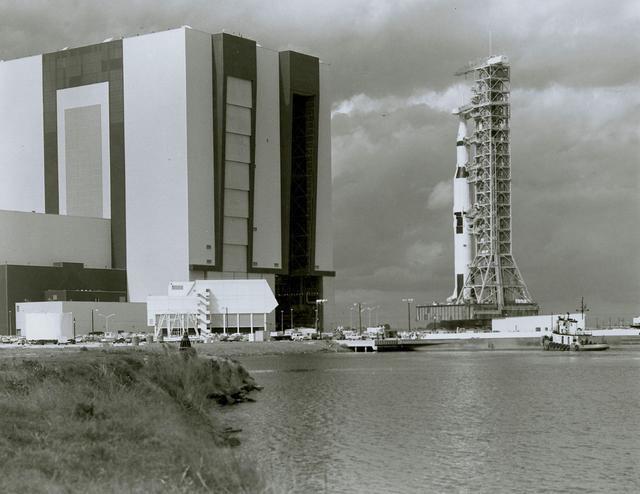
Apollo 6, the second and last of the unmarned Saturn V test flights, is slowly transported past the Vehicle Assembly Building on the way to launch pad 39-A. The towering 363-foot Saturn V was a multi-stage, multi-engine launch vehicle standing taller than the Statue of Liberty. Altogether, the Saturn V engines produced as much power as 85 Hoover Dams.
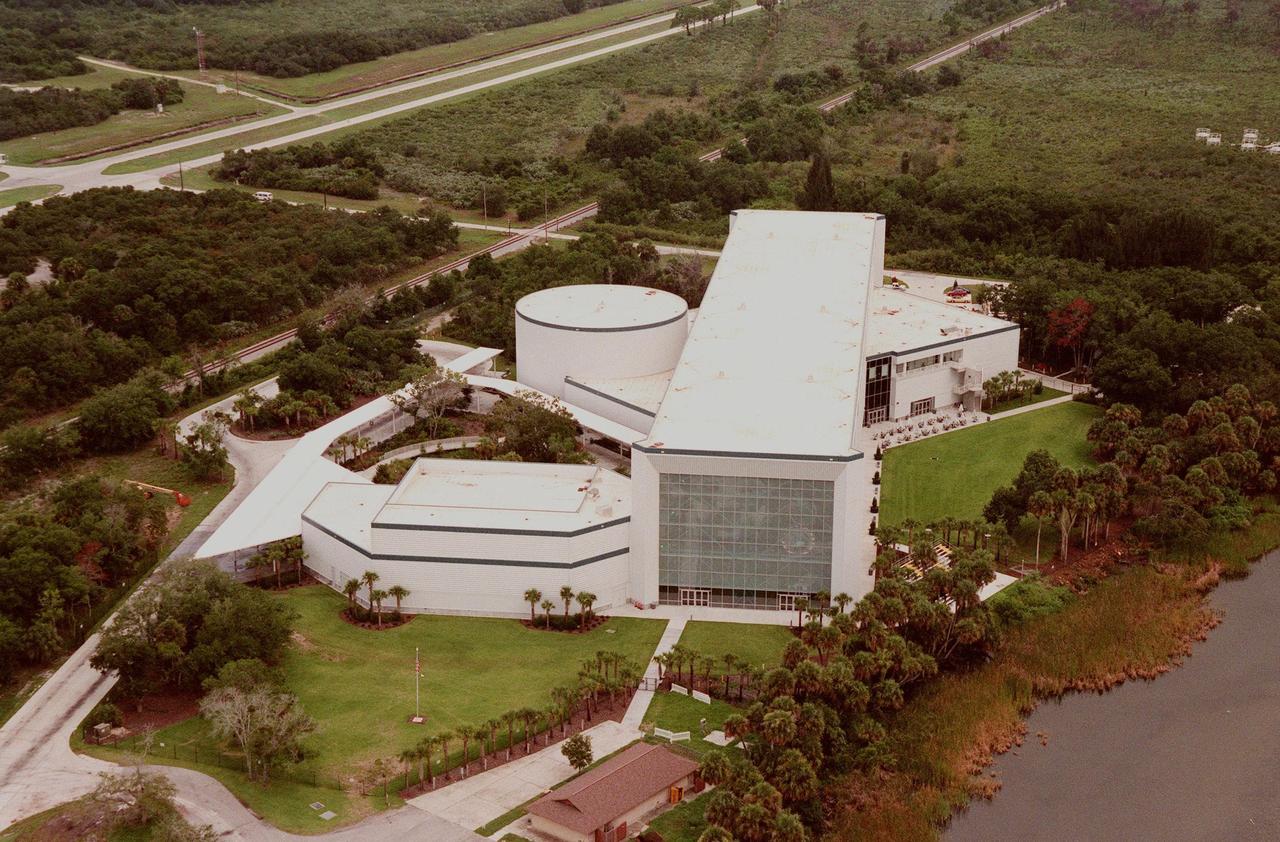
This aerial view, looking north, shows the Apollo/Saturn V Center, part of the KSC Visitor Complex. Located about 2 miles north of the Vehicle Assembly Building on the Kennedy Parkway, it is near the current Banana Creek VIP Shuttle launch viewing site. The 100,000-square-foot attraction includes a refurbished 363-foot-long Apollo-era Saturn V rocket that had been displayed previously near the VAB. Inside, the center includes artifacts and historical displays, plus two film theaters
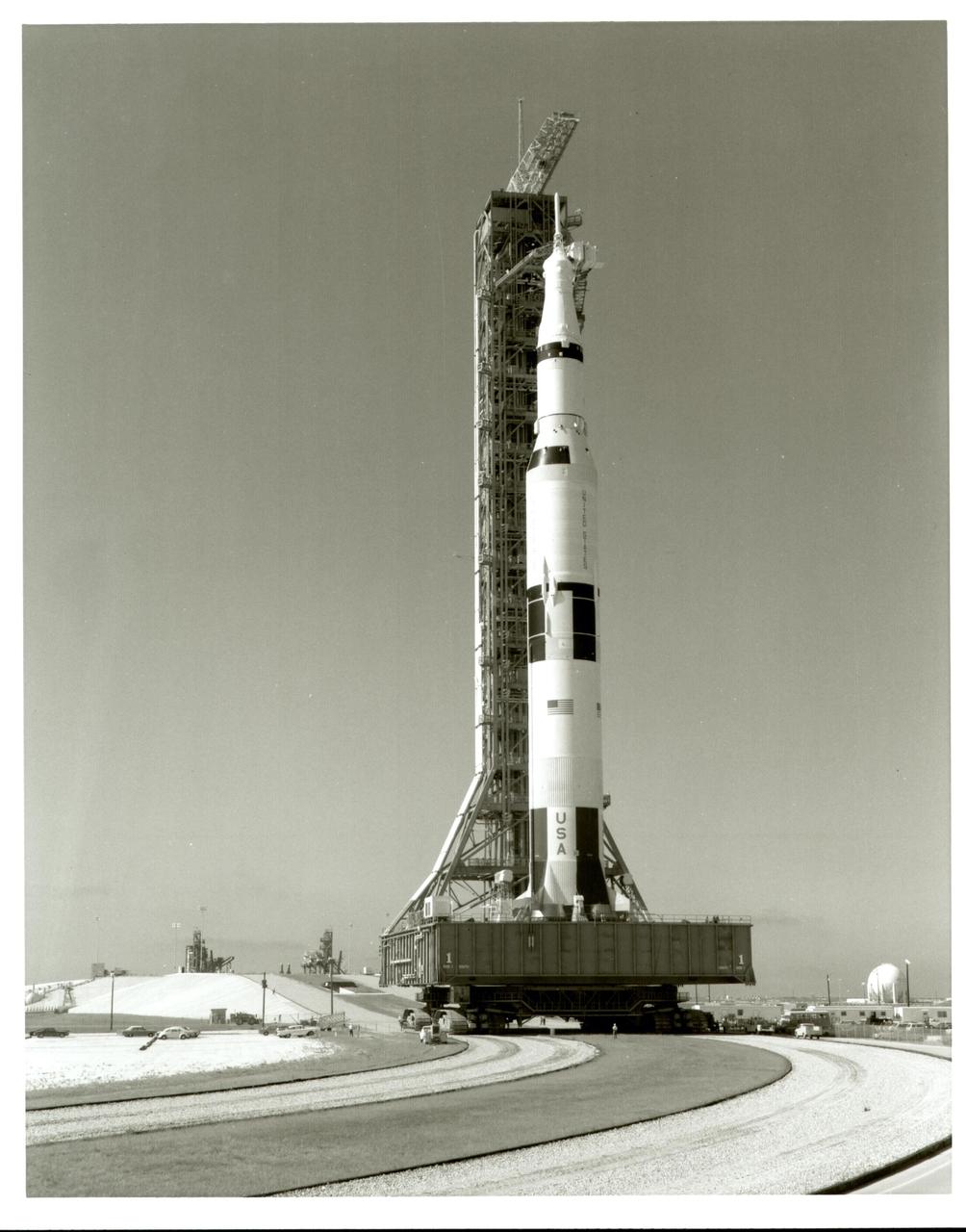
KENNEDY SPACE CENTER, FLA. - Rollout of Apollo 11 Saturn V space vehicle from the Vehicle Assembly Building's High Bay #1 to Launch Complex 39A.
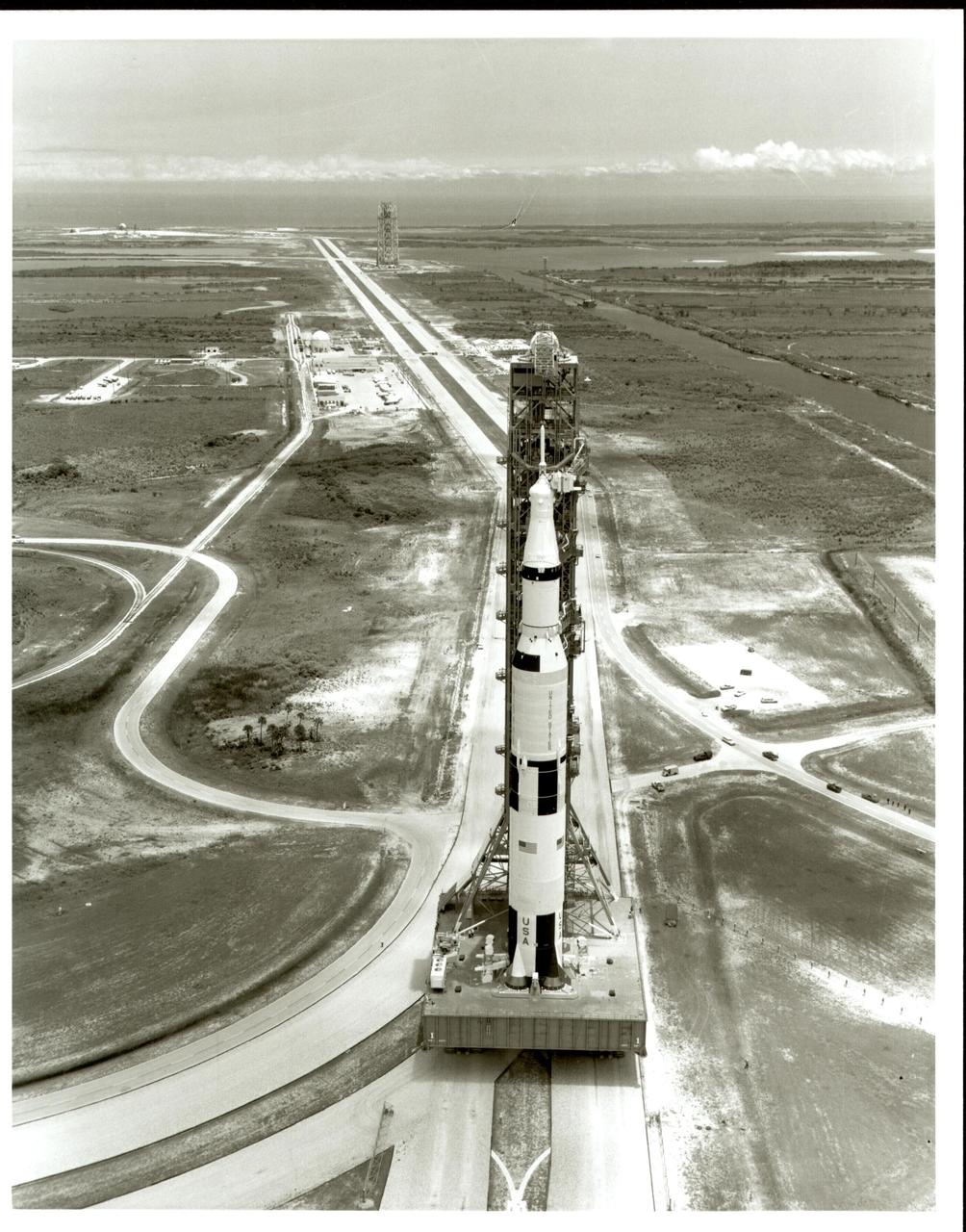
KENNEDY SPACE CENTER, FLA. - Rollout of Apollo 11 Saturn V space vehicle from the Vehicle Assembly Building's High Bay #1 to Launch Complex 39A.
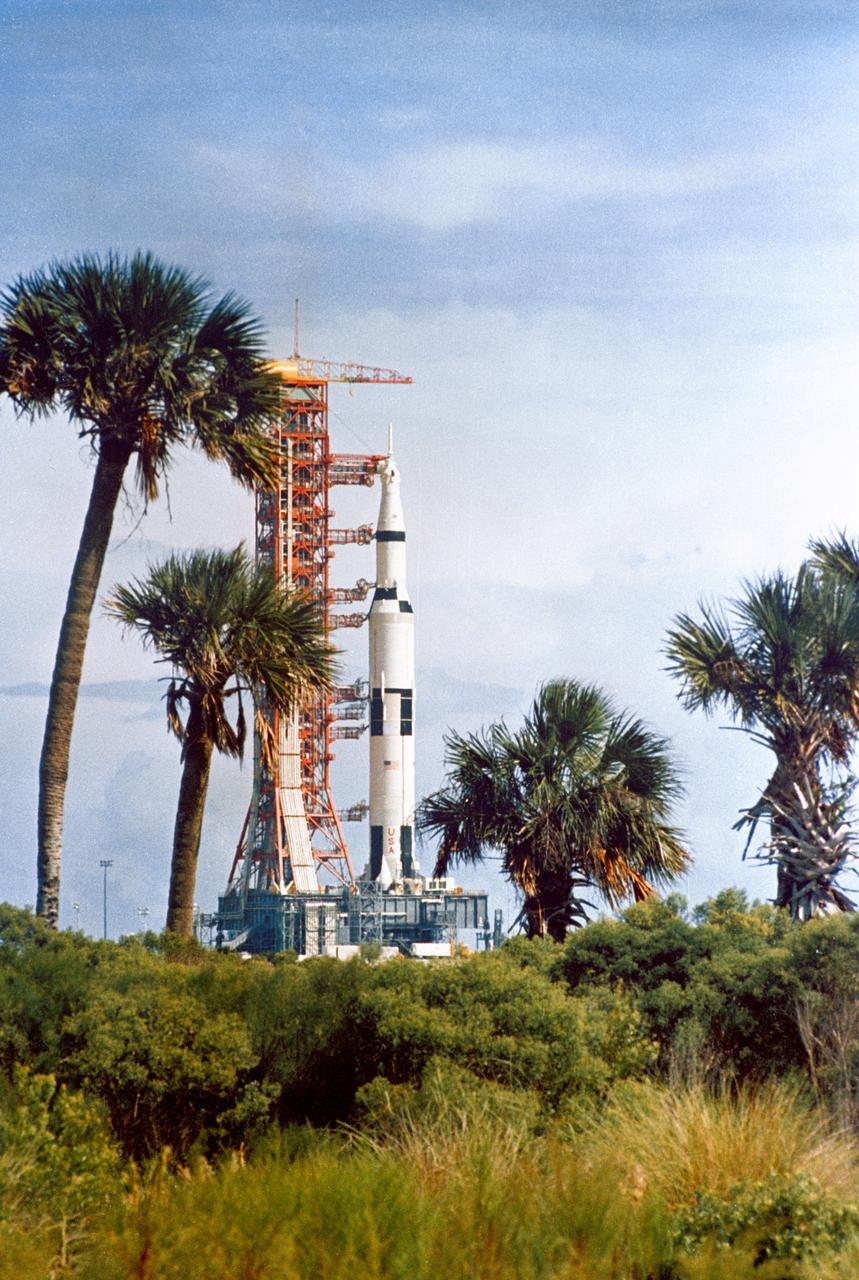
S68-49399 (9 Oct. 1968) --- The Apollo 8 (Spacecraft 103/Saturn 503) space vehicle on the way from the Kennedy Space Center's (KSC) Vehicle Assembly Building (VAB) to Pad A, Launch Complex 39. The Saturn V stack and its mobile launch tower are atop a huge crawler-transporter.
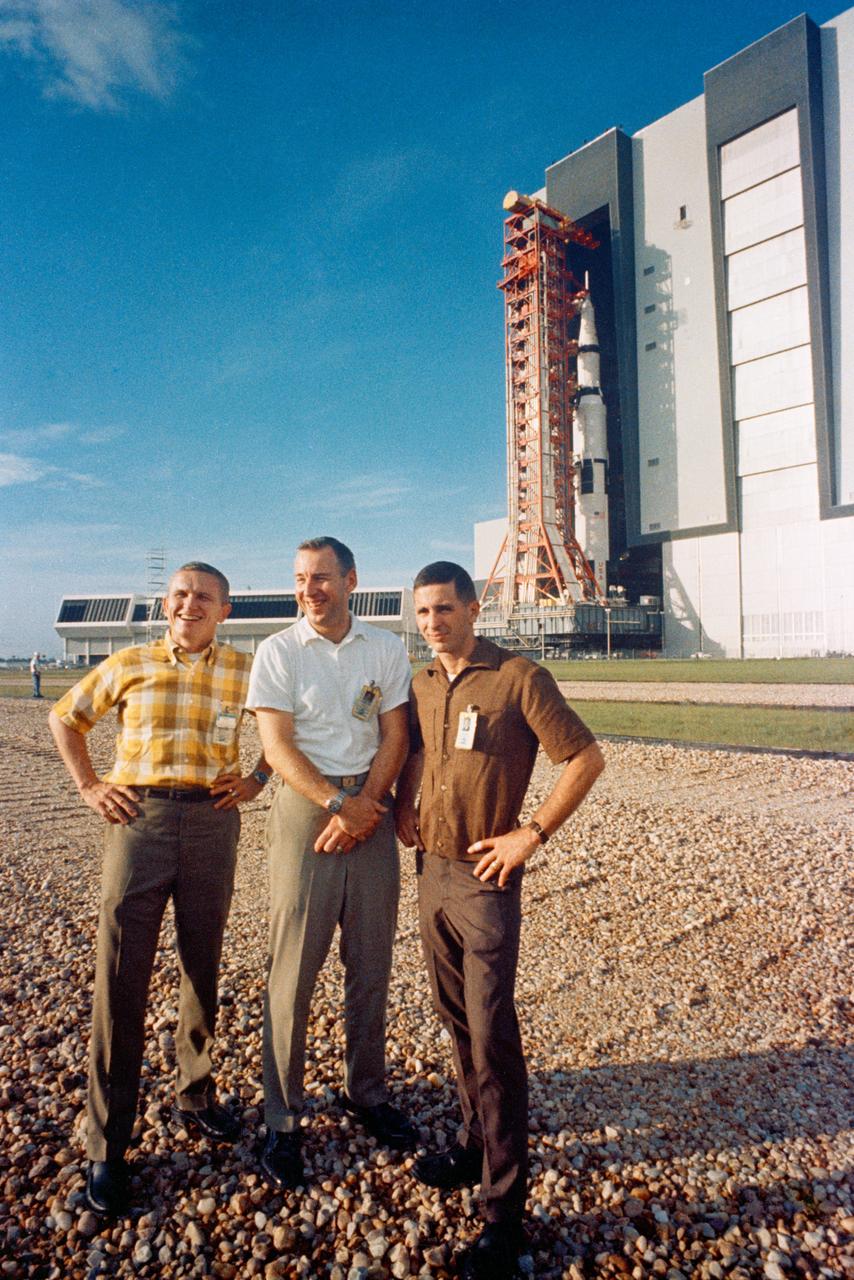
S68-49397 (9 Oct. 1968) --- The Apollo 8 prime crew stands in foreground as the Apollo (Spacecraft 103/Saturn 503) space vehicle leaves the Kennedy Space Center's Vehicle Assembly Building on way to Pad A, Launch Complex 39. The Saturn V stack and its mobile launch tower are atop a huge crawler-transporter. The Apollo 8 crew consists of (left to right) astronauts Frank Borman, commander; James A. Lovell Jr., command module pilot; and William A. Anders, lunar module pilot.
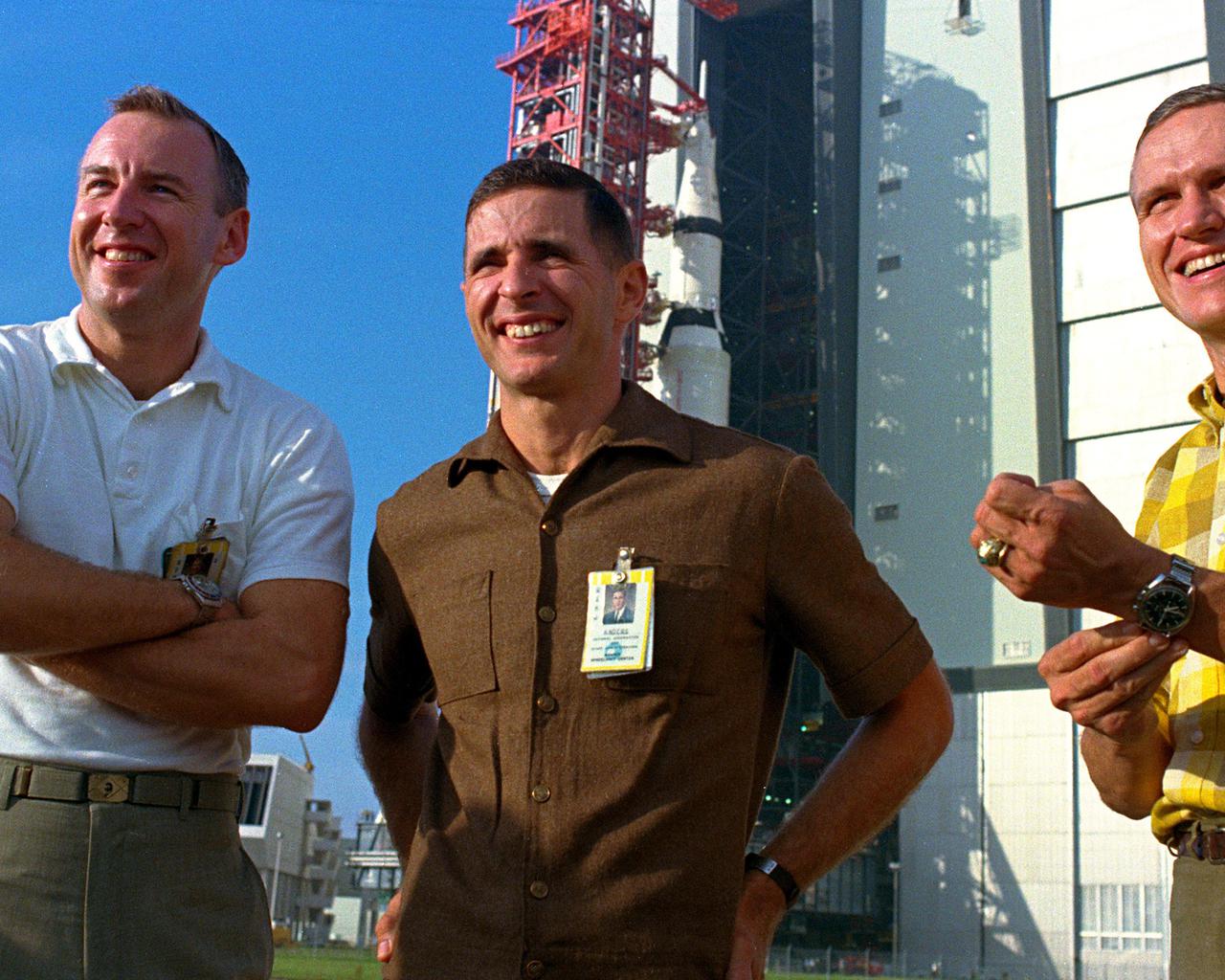
KENNEDY SPACE CENTER, FLA. - The 363-foot-high Apollo Saturn V space vehicle dwarfs the Apollo 8 Astronauts Frank Borman, James Lovell, and William Anders, during the roll out today of the space vehicle from the Vehicle Assembly Building (VAB) to Launch Pad 39A. .
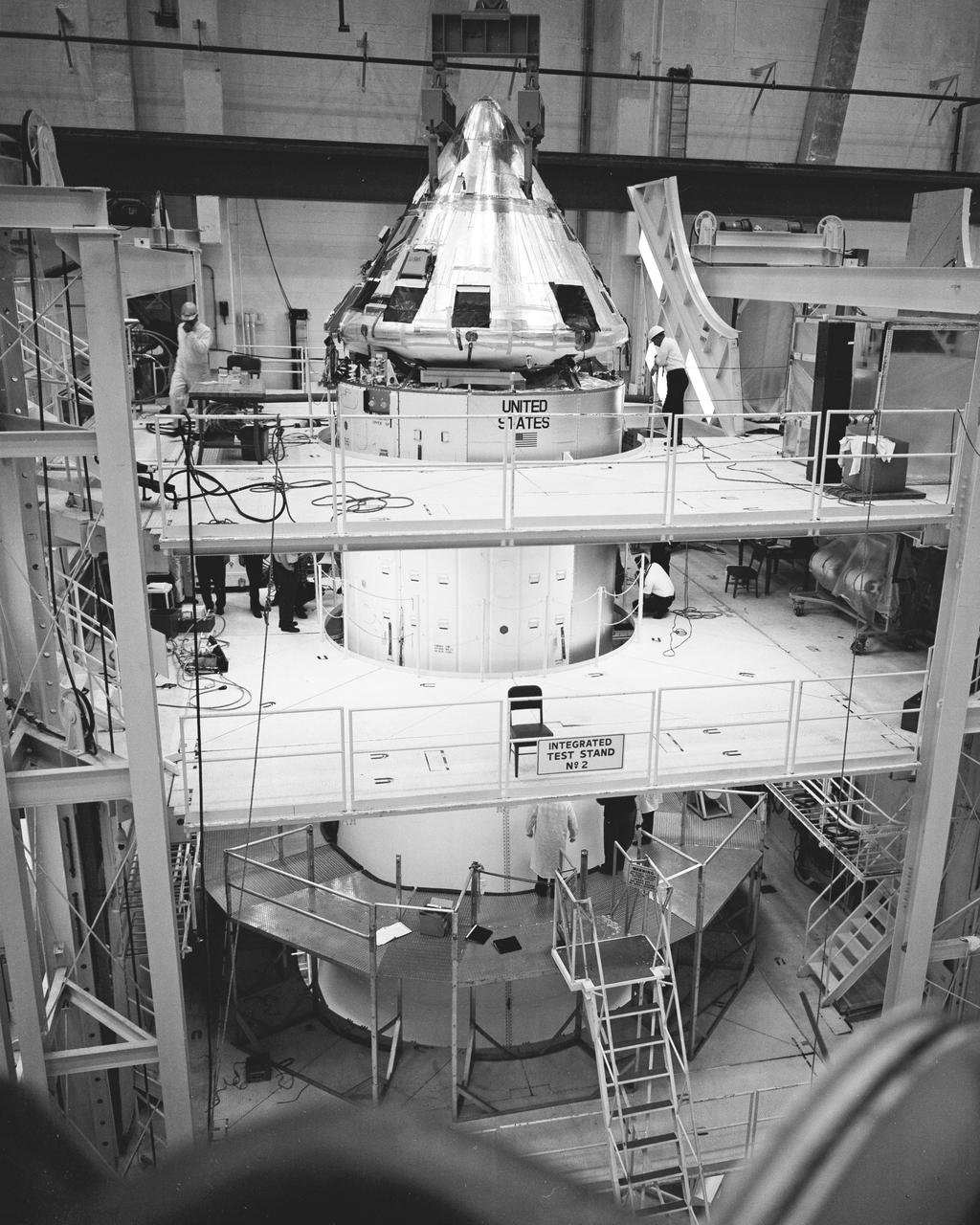
The Apollo/Saturn 501 spacecraft undergoes checkout in test stand within the Kennedy Space Center’s Manned Spacecraft Operations Building in preparation for the first flight of NASA’s Saturn V space vehicle in the second quarter of this year. The command module, top, was mated to the service module, and both were joined to the Spacecraft Lunar Module Adapter, the type that eventually will house a Lunar Module. The first Saturn V flight will be unmanned.
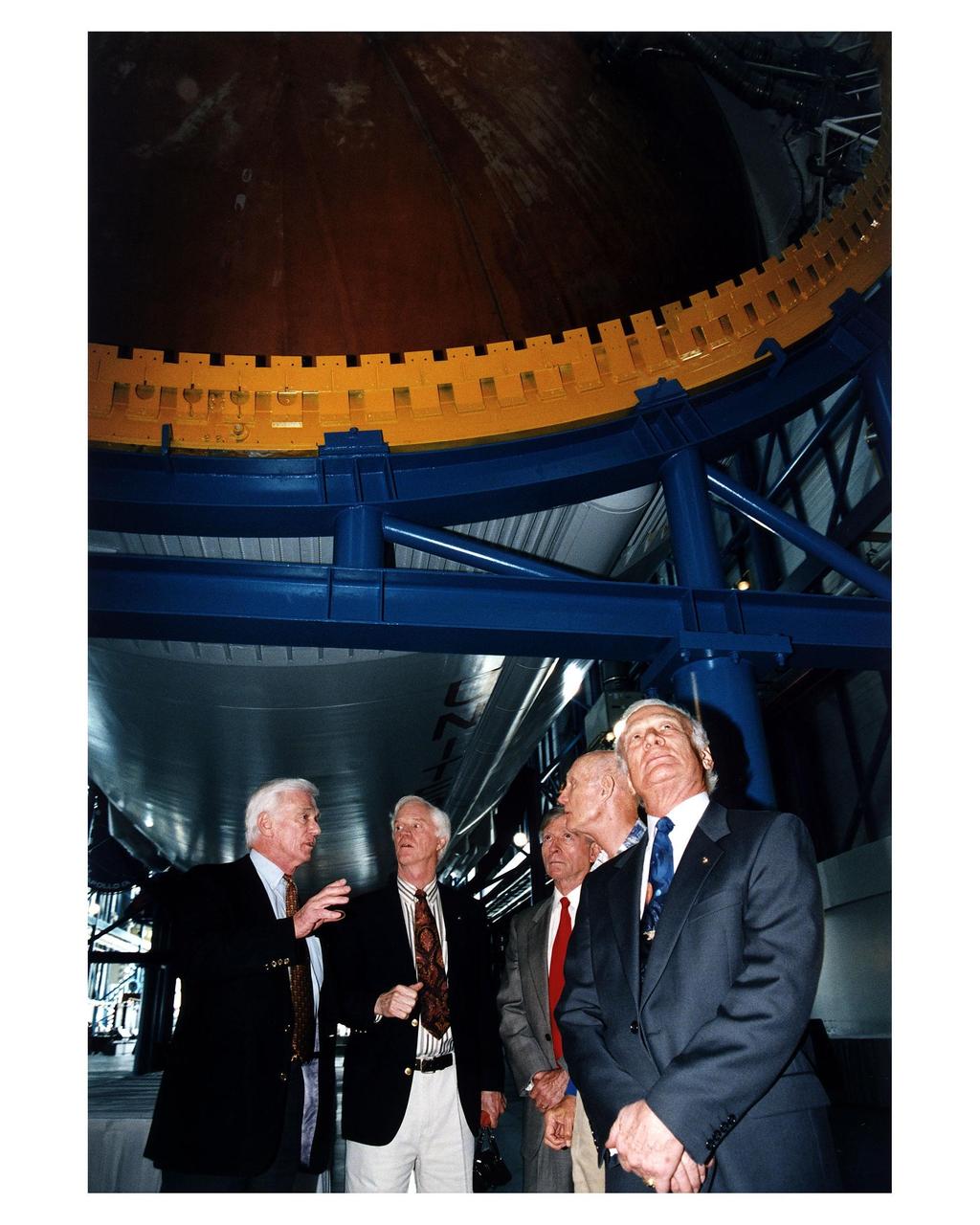
KENNEDY SPACE CENTER, FLA. -- Some of the former Apollo program astronauts tour the new Apollo/Saturn V Center (ASVC) at KSC prior to the gala grand opening ceremony for the facility that was held Jan. 8, 1997. The astronauts were invited to participate in the event, which also featured NASA Administrator Dan Goldin and KSC Director Jay Honeycutt. Passing underneath the KSC Apollo/Saturn V inside the building are (from left): Apollo 10 Lunar Module Pilot and Apollo 17 Commander Eugene A. Cernan; Apollo 9 Lunar Module Pilot Russell L. Schweikart; Apollo 10 Command Module Pilot and Apollo 16 Commander John W. Young; Apollo 10 Commander Thomas P. Stafford; and Apollo 11 Lunar Module Pilot Edwin E. "Buzz" Aldrin, Jr. The ASVC also features several other Apollo program spacecraft components, multimedia presentations and a simulated Apollo/Saturn V liftoff. The facility will be a part of the KSC bus tour that embarks from the KSC Visitor Center
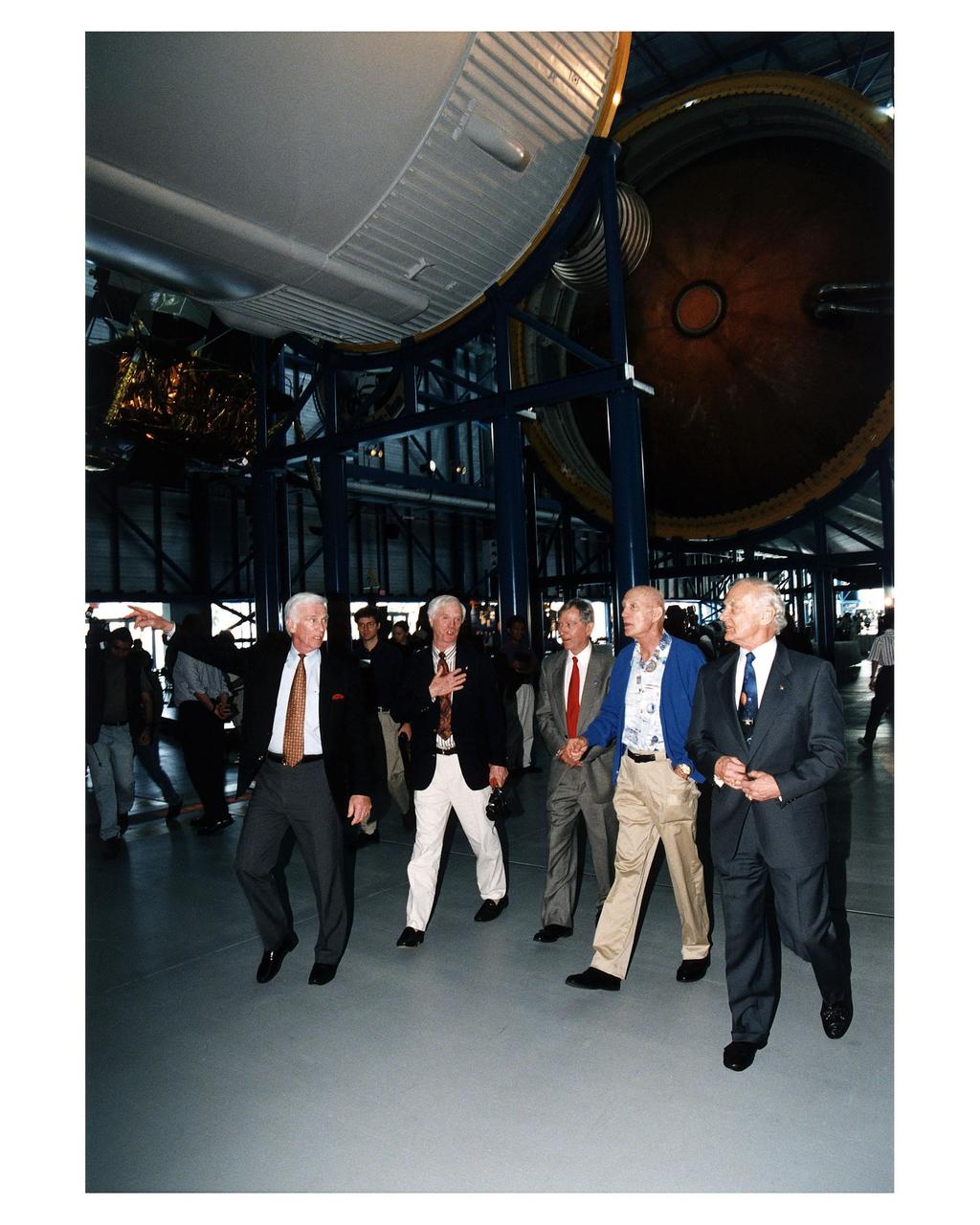
KENNEDY SPACE CENTER, FLA. -- Some of the former Apollo program astronauts tour the new Apollo/Saturn V Center (ASVC) at KSC prior to the gala grand opening ceremony for the facility that was held Jan. 8, 1997. The astronauts were invited to participate in the event, which also featured NASA Administrator Dan Goldin and KSC Director Jay Honeycutt. Passing underneath the KSC Apollo/Saturn V inside the building are (from left): Apollo 10 Lunar Module Pilot and Apollo 17 Commander Eugene A. Cernan; Apollo 9 Lunar Module Pilot Russell L. Schweikart; Apollo 10 Command Module Pilot and Apollo 16 Commander John W. Young; Apollo 10 Commander Thomas P. Stafford; and Apollo 11 Lunar Module Pilot Edwin E. "Buzz" Aldrin, Jr. The ASVC also features several other Apollo program spacecraft components, multimedia presentations and a simulated Apollo/Saturn V liftoff. The facility will be a part of the KSC bus tour that embarks from the KSC Visitor Center
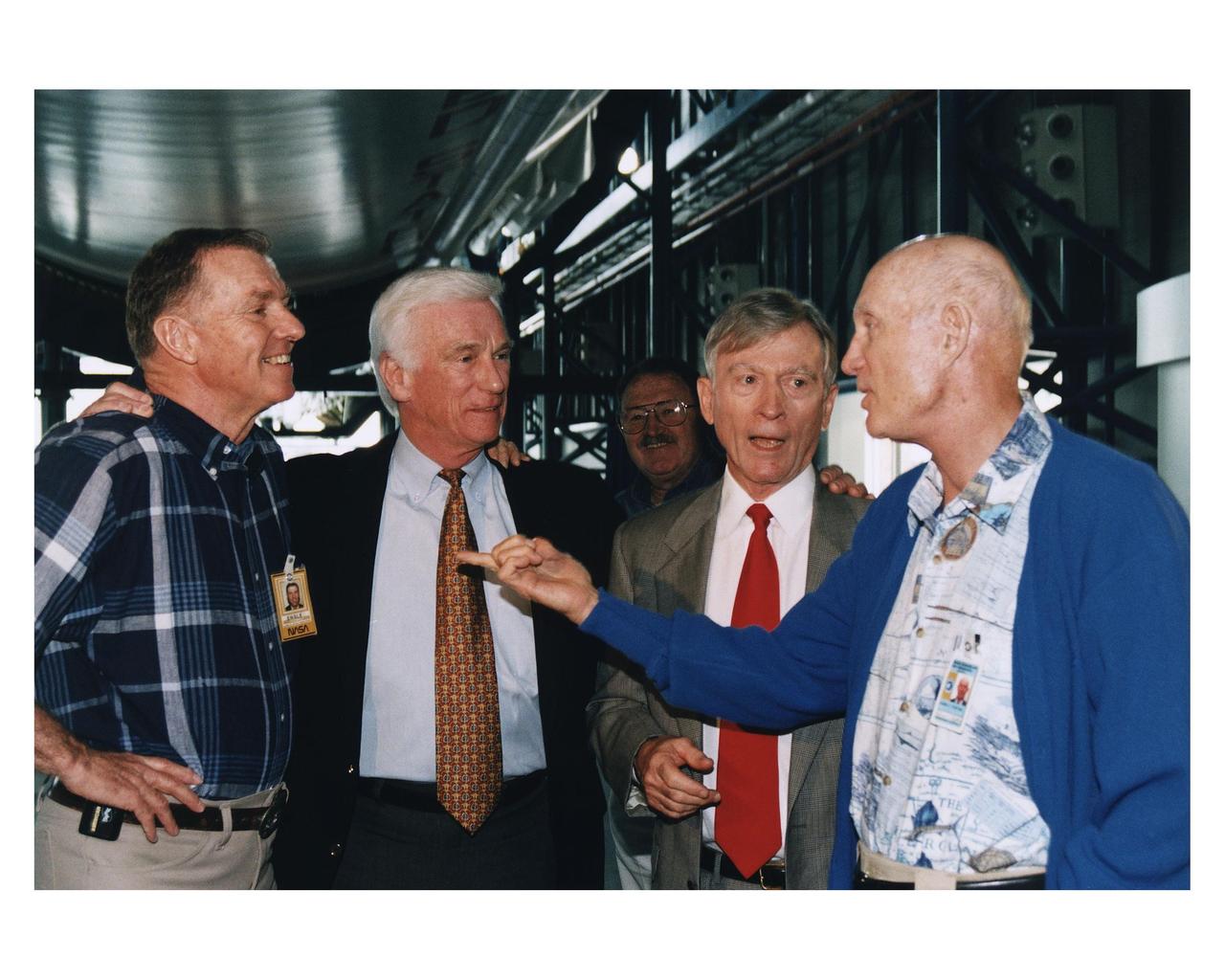
KENNEDY SPACE CENTER, FLA. -- Some of the former Apollo program astronauts recall the past as they tour the new Apollo/Saturn V Center (ASVC) at KSC prior to the gala grand opening ceremony for the facility that was held Jan. 8, 1997. The astronauts were invited to participate in the event, which also featured NASA Administrator Dan Goldin and KSC Director Jay Honeycutt. Standing underneath the KSC Apollo/Saturn V inside the building are (from left): Apollo 14 Back-up Lunar Module Pilot Joe H. Engle; Apollo 10 Lunar Module Pilot and Apollo 17 Commander Eugene A. Cernan; Apollo 10 Command Module Pilot and Apollo 16 Commander John W. Young; and Apollo 10 Commander Thomas P. Stafford. The ASVC also features several other Apollo program spacecraft components, multimedia presentations and a simulated Apollo/Saturn V liftoff. The facility will be a part of the KSC bus tour that embarks from the KSC Visitor Center
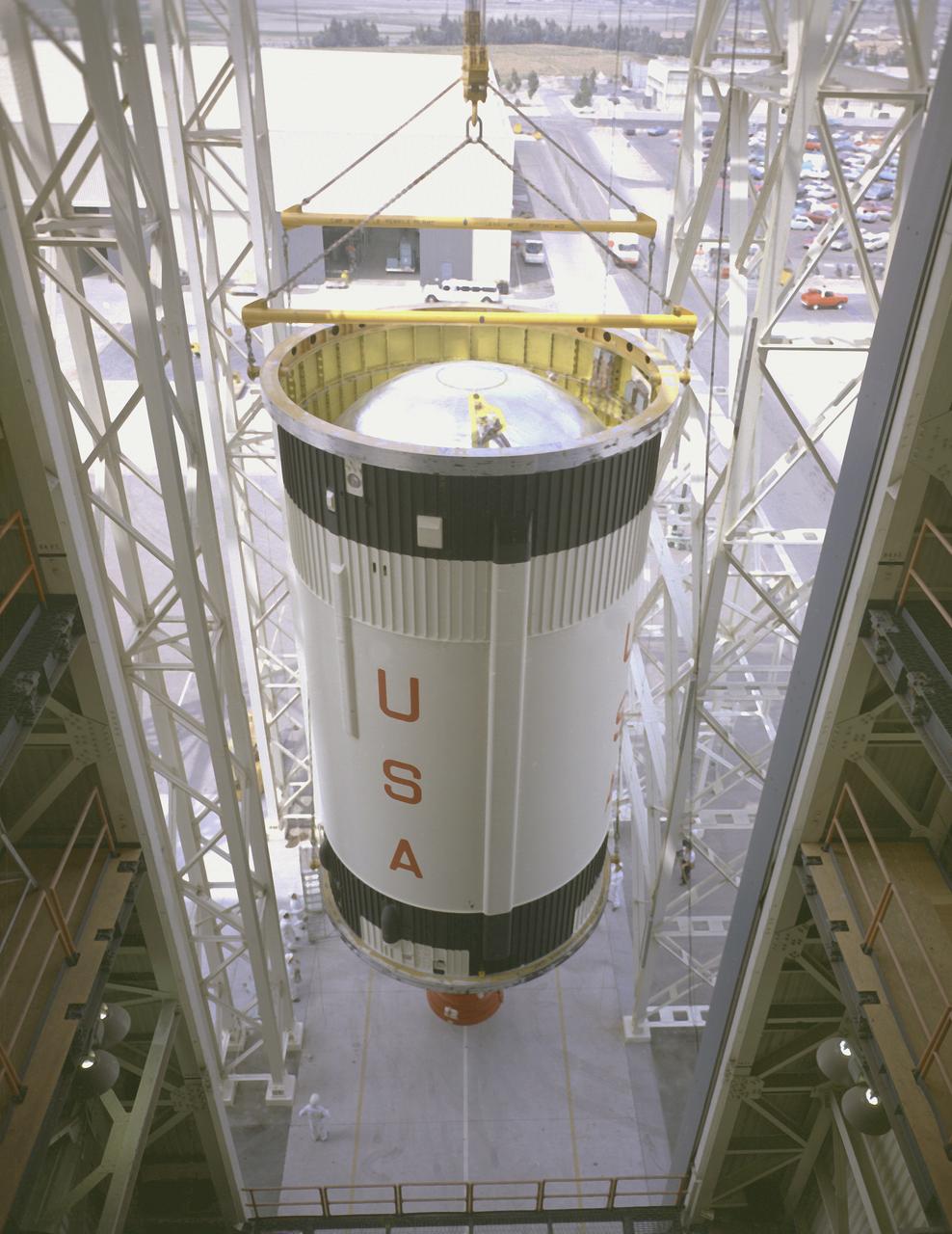
Workers at McDornel-Douglas install the Saturn IB S-IVB (second) stage for the Apollo-Soyuz mission into the company's S-IVB assembly and checkout tower in Huntington Beach, California. The Saturn IB launch vehicle was developed by the Marshall Space Flight Center (MSFC) as an interim vehicle in its "building block" approach to Saturn rocket development. This vehicle utilized the Saturn I technology to further develop and refine the capabilities of a larger booster and the Apollo spacecraft required for the manned lunar missions. The S-IVB stage, later used as the third stage of the Saturn V launch vehicle, was powered by a single J-2 engine initially capable of 200,000 pounds of thrust.

S73-25140 (16 April 1973) --- A ground-level view of Pad A, Launch Complex 39, Kennedy Space Center, Florida, showing the 341-feet tall Skylab 1/Saturn V space vehicle on the pad soon after being rolled out from the Vehicle Assembly Building (VAB). The vehicle is composed of the Saturn V first (S-1C) stage, the Apollo Telescope Mount (ATM), the Multiple Docking Adapter (MDA), the Airlock Module (AM), and the Orbital Workshop (OWS). Photo credit: NASA
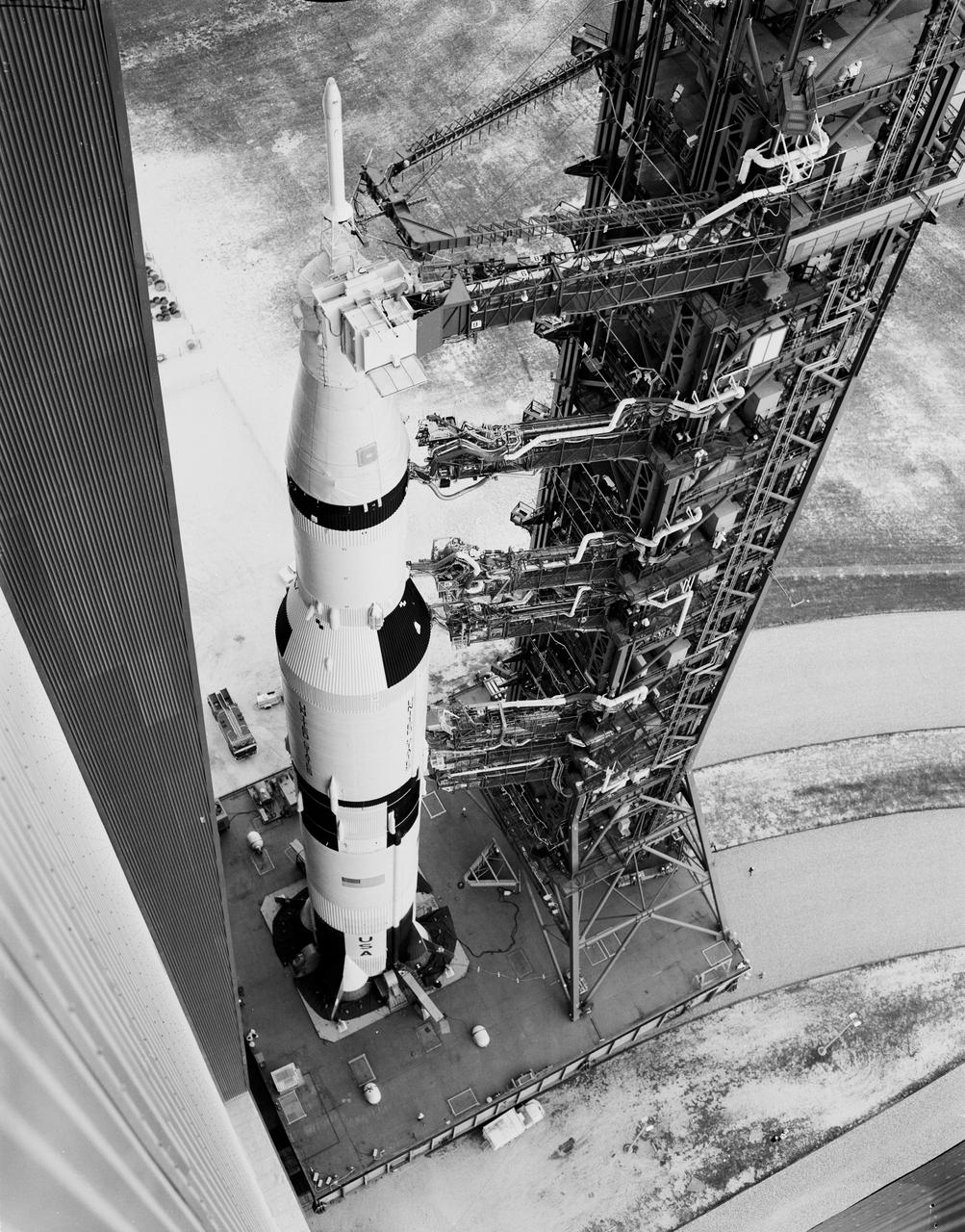
A bird's-eye view of Apollo 6 and its gantry leaving the Vehicle Assembly Building on the transporter heading to the launch site on Pad 39-A at Kennedy Space Center. The towering 363-foot Saturn V was a multi-stage, multi-engine launch vehicle standing taller than the Statue of Liberty. Altogether, the Saturn V engines produced as much power as 85 Hoover Dams.
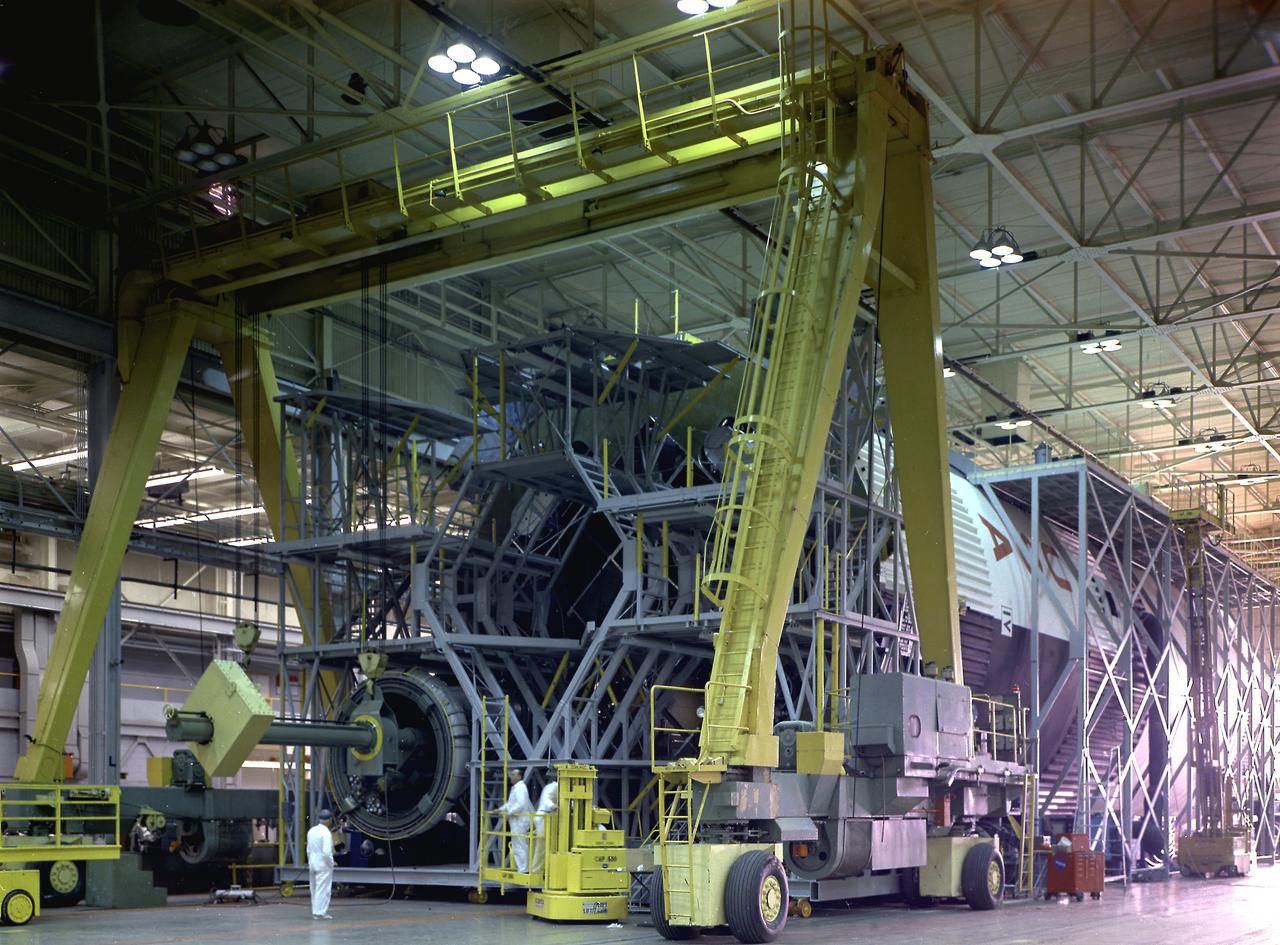
Engineers and technicians at the Marshall Space Flight Center were installing an F-I engine on the Saturn V S-IC (first) stage thrust structure in building 4705. The S-IC (first) stage used five F-1 engines that produced a total thrust of 7,500,000 pounds as each engine produced 1,500,000 pounds of thrust. The S-IC stage lifted the Saturn V vehicle and Apollo spacecraft from the launch pad.
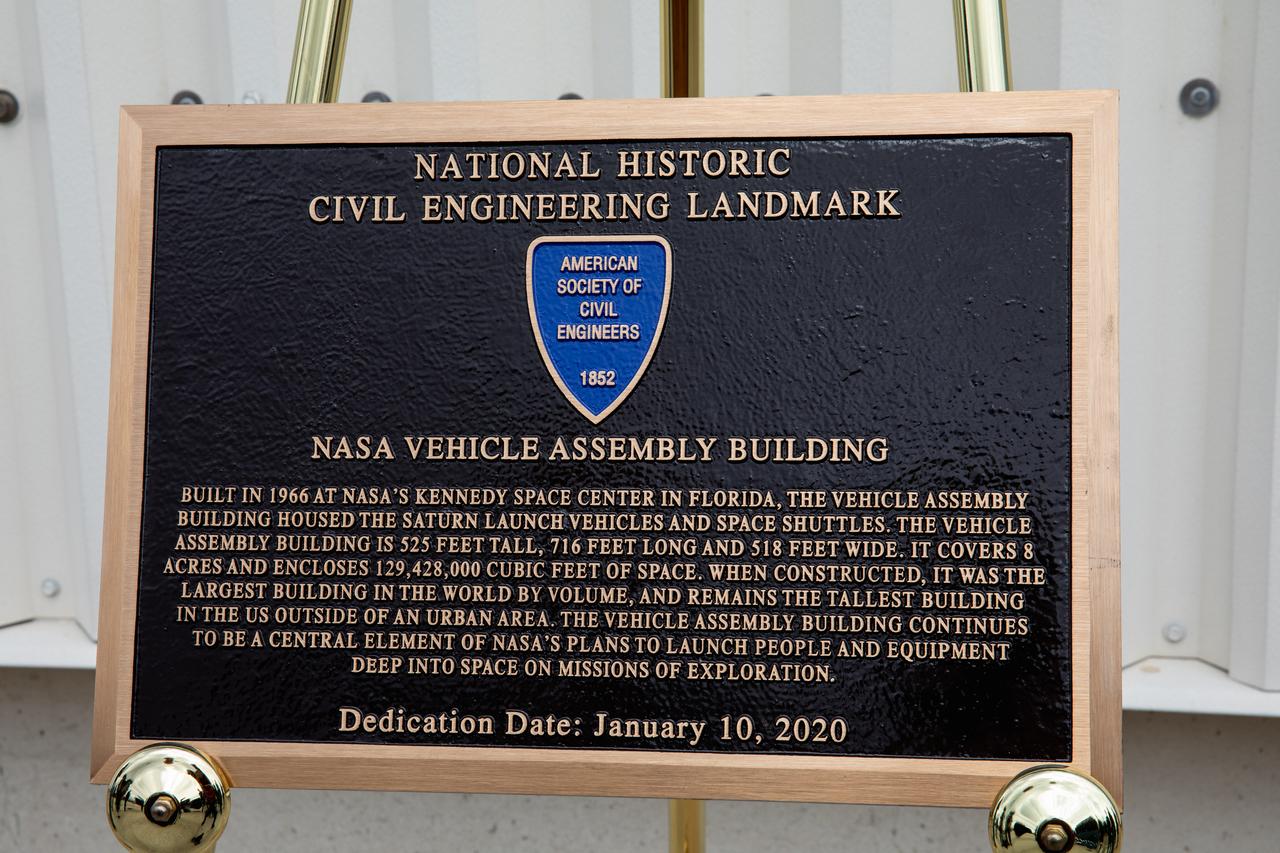
The Florida Section of the American Society of Civil Engineers bestowed the ASCE National Historic Civil Engineering Landmark award to Kennedy Space Center’s iconic Vehicle Assembly Building during a ceremony on Jan. 10, 2020. The VAB is the first building at Kennedy Space Center to earn this distinction. At the time of its completion, the 129-million-cubic-foot structure was the largest building in the world. Originally designed and built to accommodate the Saturn V/Apollo used in Project Apollo, the VAB was later modified for its role in the Space Shuttle Program.
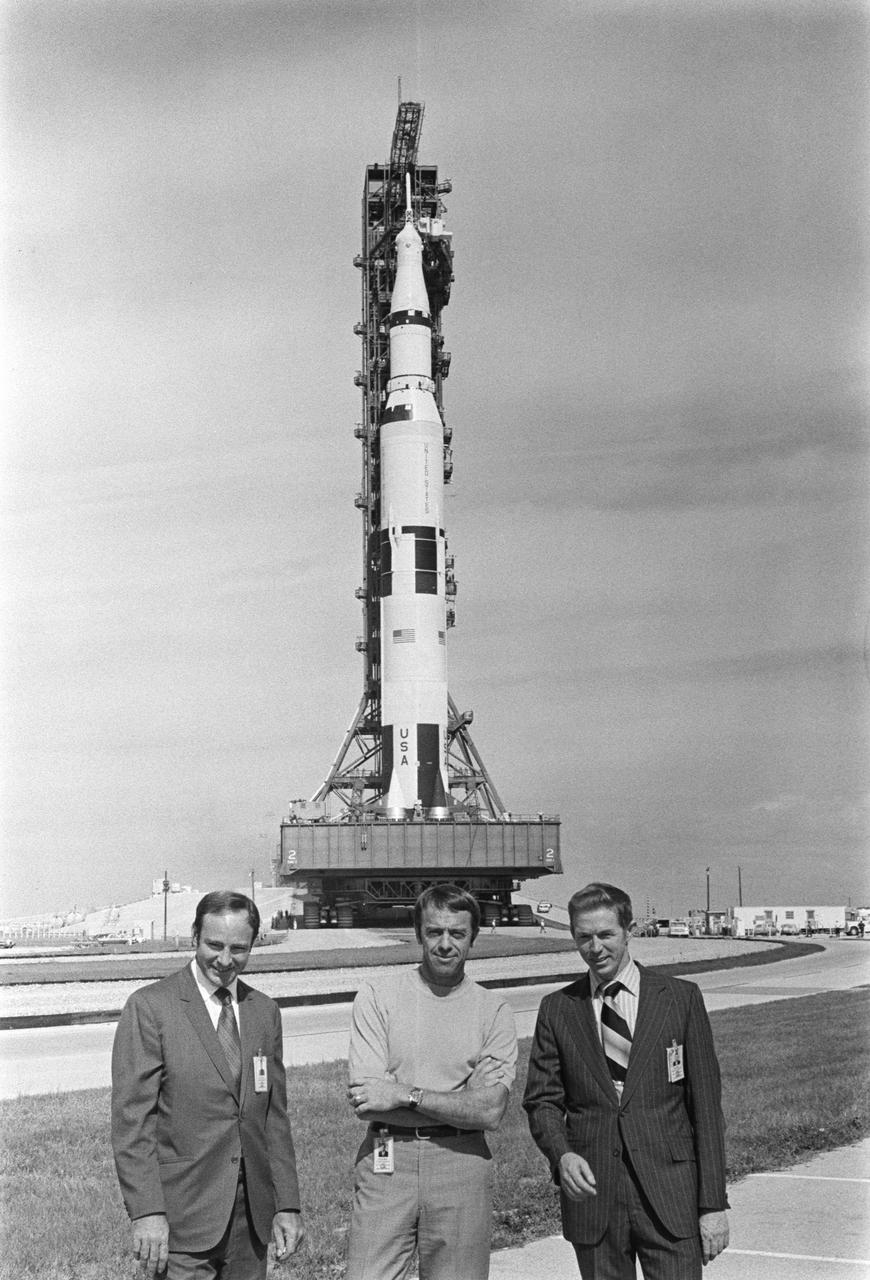
S70-55689 (9 Nov. 1970) --- The Apollo 14 (Spacecraft 110/Lunar Module 8/Saturn 509) space vehicle arrives at Pad A, Launch Complex 39, during the Apollo 14 roll out from the Kennedy Space Center's Vehicle Assembly Building. The Saturn V stack and its mobile launch tower atop a huge crawler-transporter. The three members of the Apollo 14 prime crew are in the foreground. They are (left to right) astronauts Edgar D. Mitchell, lunar module pilot; Alan B. Shepard Jr., commander; and Stuart A. Roosa, command module pilot.
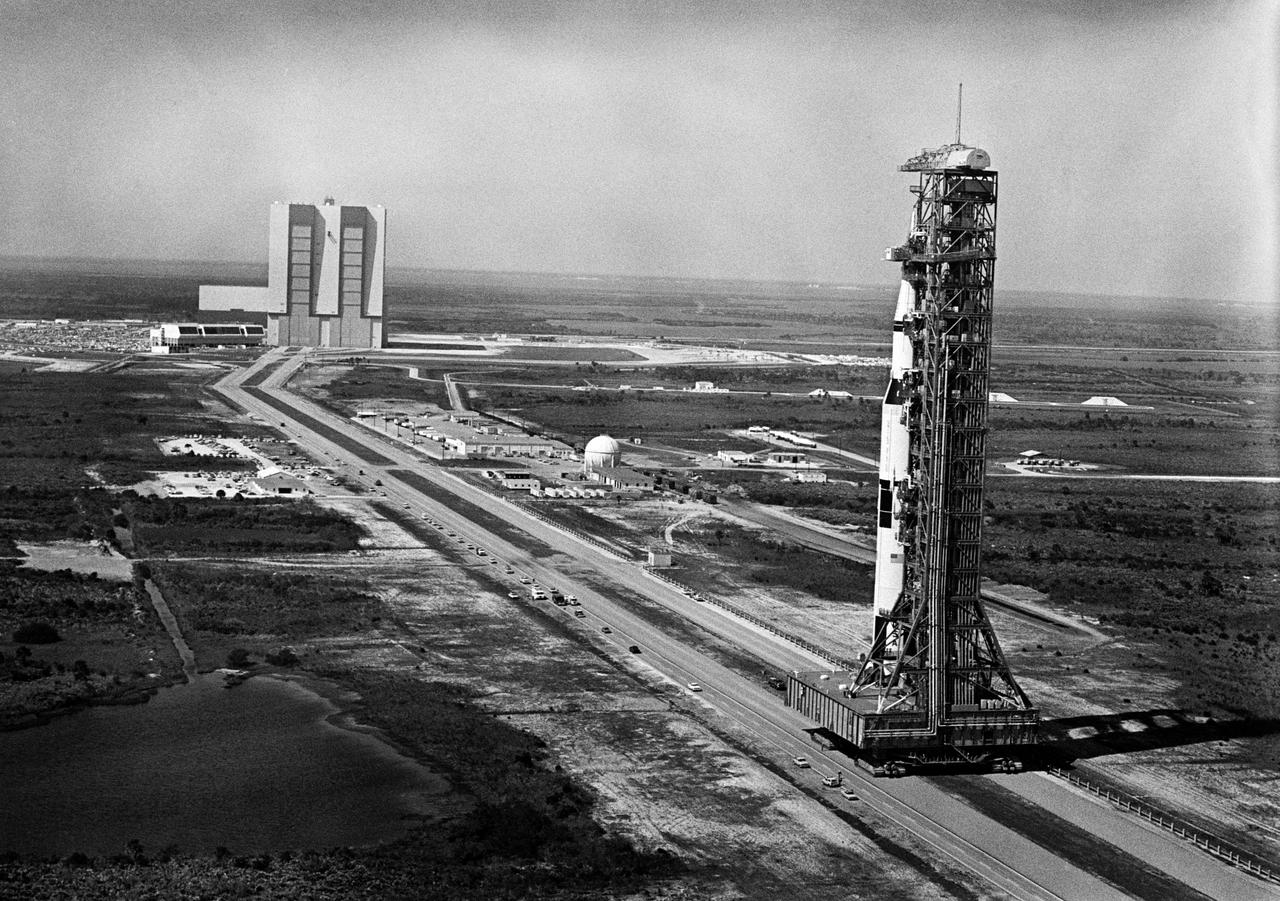
S69-27741 (11 March 1969) --- Aerial view at Launch Complex 39, Kennedy Space Center, showing the 363-feet tall Apollo 10 (Spacecraft 106/Lunar Module-4/Saturn 505) space vehicle on its way to Pad B. The Vehicle Assembly Building is in the background. The Saturn V stack and its mobile launch tower are atop a huge crawler-transporter. The Apollo 10 flight is schedule as a lunar orbit mission. The Apollo 10 crew will be astronauts Thomas P. Stafford, commander; John W. Young, command module pilot; and Eugene A. Cernan, lunar module pilot.
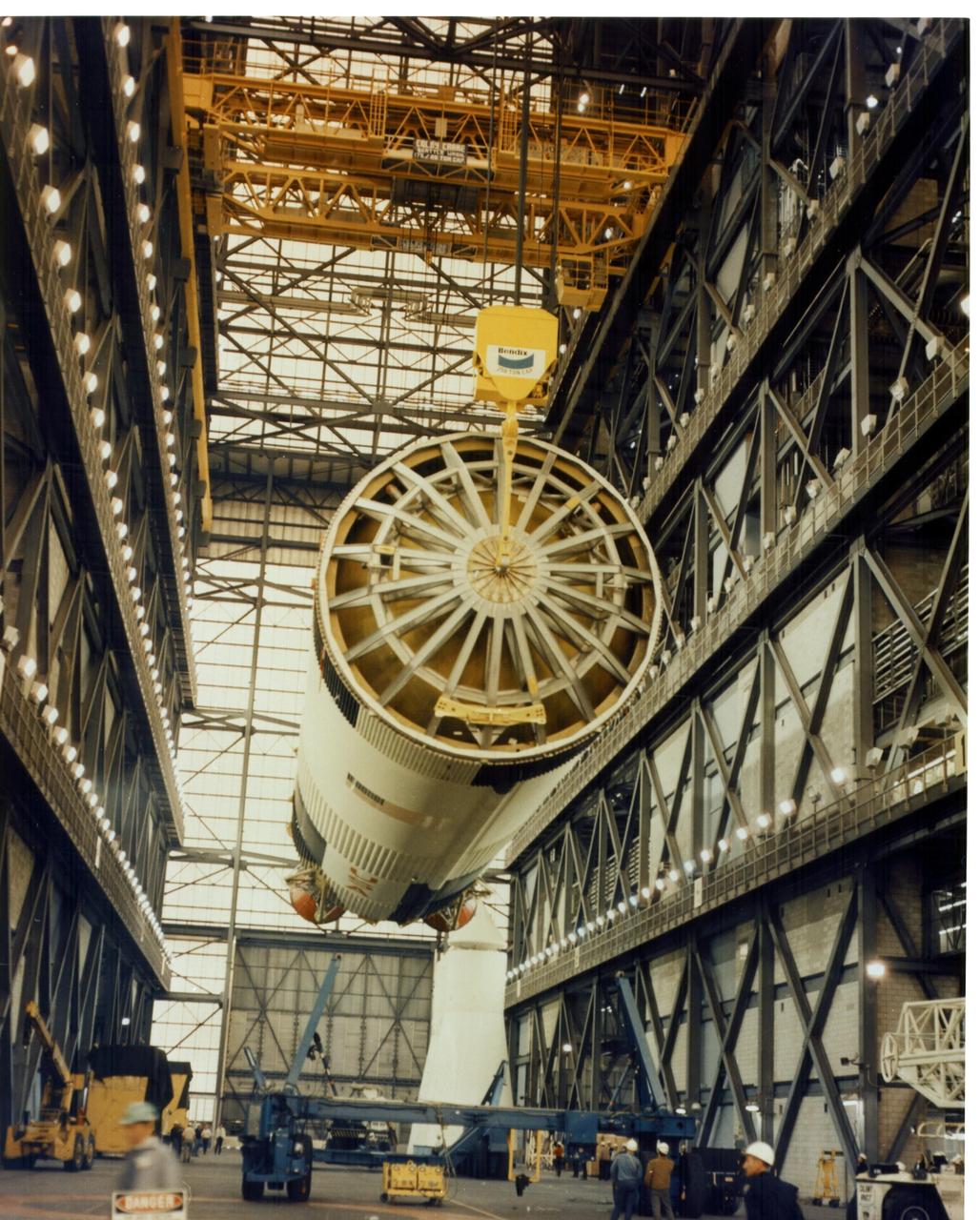
KENNEDY SPACE CENTER, FLA. - An overhead crane lifts the Saturn V first stage for the Apollo 11 mission from the transfer aisle floor in preparation for stacking on a mobile launcher within the Vehicle Assembly Building's High Bay 1. The fully assembled vehicle will be called the Apollo/Saturn 506. The 138-foot-long stage, to which two additional stages -- the instrument unit and the Apollo spacecraft -- will be added, will generate a liftoff thrust of 7.7 million pounds. Astronauts Neil A. Armstrong, Michael Collins and Edwin E. Aldrin Jr. will pilot the mission which is to include a lunar landing in the lunar module by Armstrong and Aldrin.
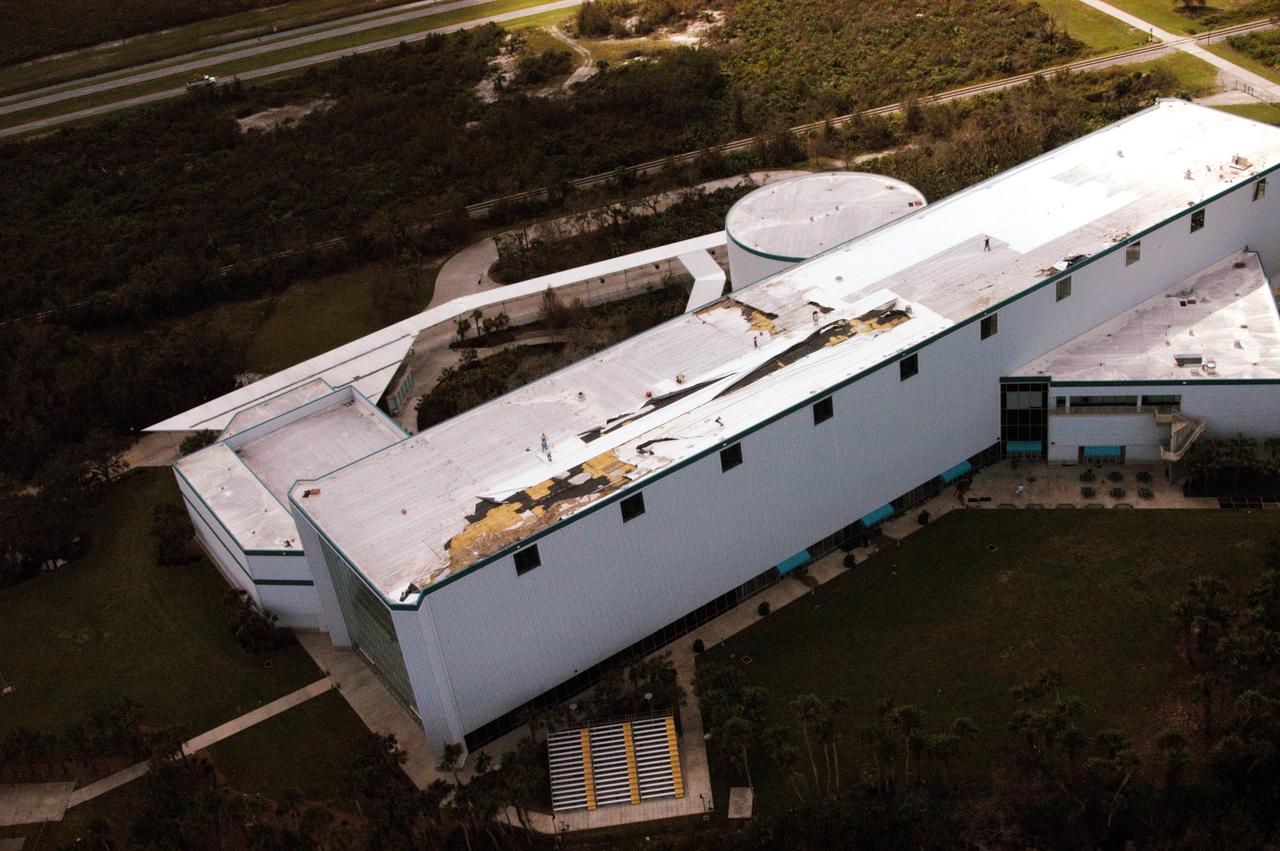
KENNEDY SPACE CENTER, FLA. - In this aerial view, damage is apparent on the roof of the Apollo/Saturn V Building at KSC from Hurricane Jeanne. A category 3 storm, Jeanne barreled through Central Florida Sept. 25-26, the fourth hurricane in 6 weeks to batter the state.
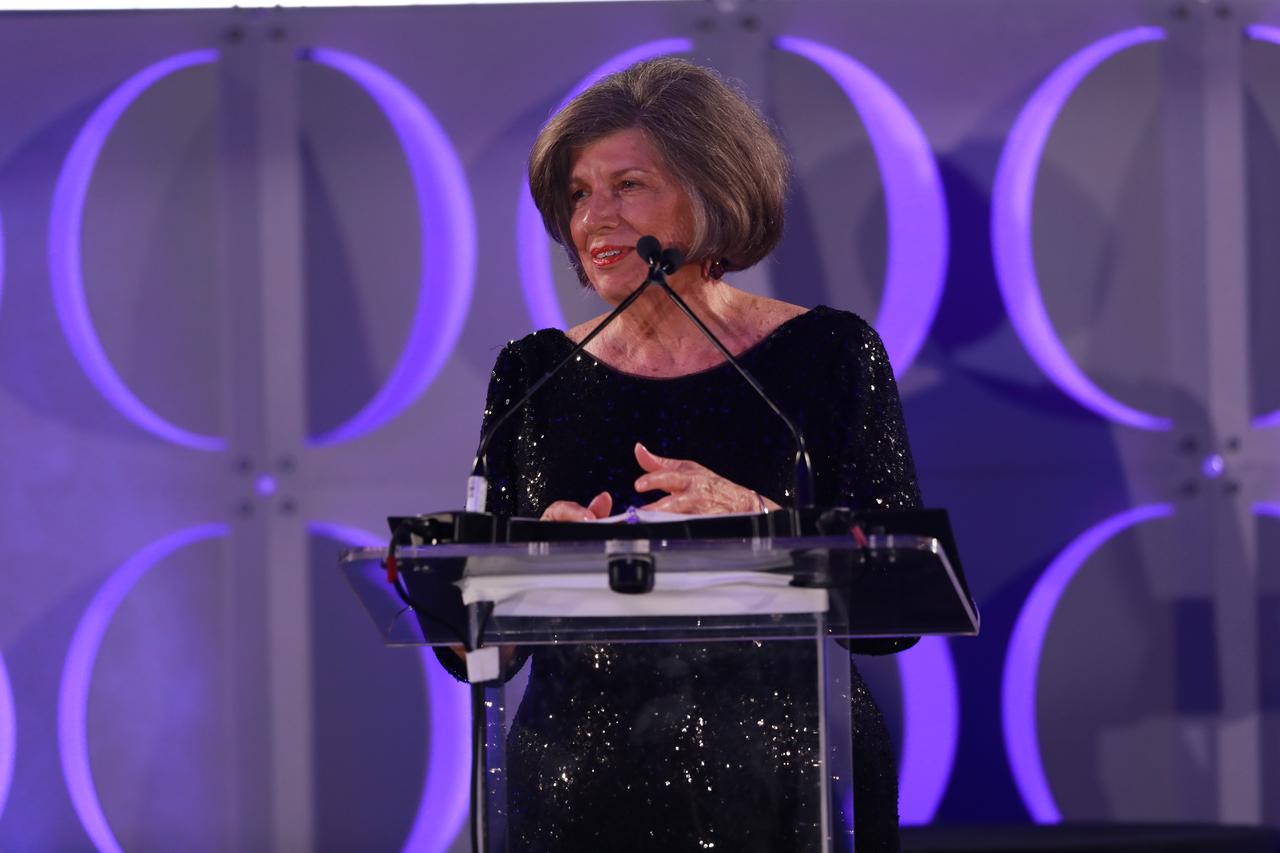
JoAnn Morgan, retired NASA engineer, makes remarks after receiving the Pioneer Award during the Apollo 11 50th Gala on July 16, 2019. The gala, presented by Northrop Grumman, was held inside the Apollo/Saturn V Center at the Kennedy Space Center Visitor Complex in Florida. Morgan was the first woman engineer on console at Kennedy Space Center and the only woman in the firing room during the Apollo 11 launch countdown and launch.
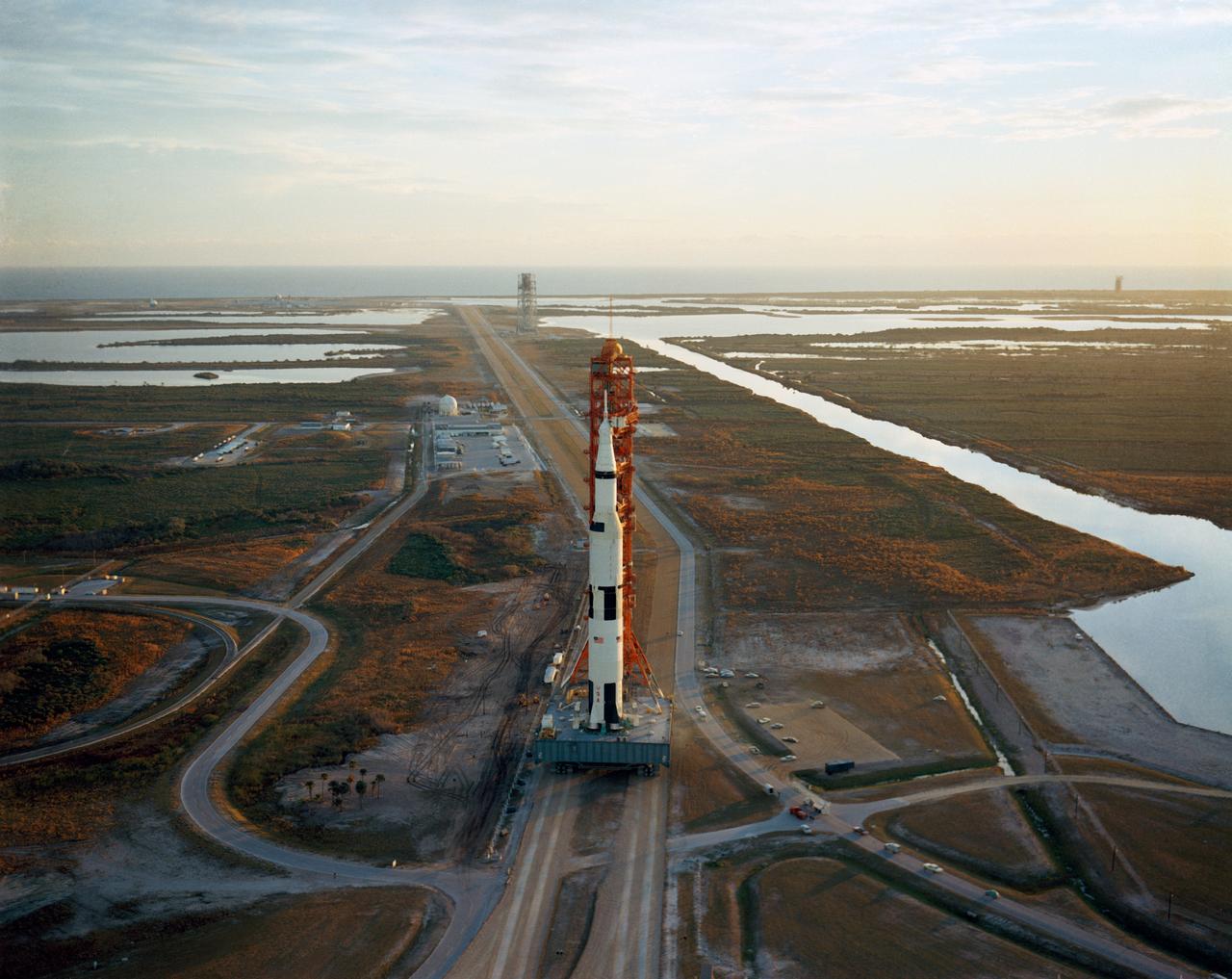
S69-17485 (3 Jan. 1969) --- Aerial view of the Apollo 9 (Spacecraft 104/Lunar Module 3/Saturn 504) space vehicle on the way from the Vehicle Assembly Building to Pad A, Launch Complex 39, Kennedy Space Center. The Saturn V stack and its mobile launch tower are atop a huge crawler-transporter. (view looking toward Pad A)
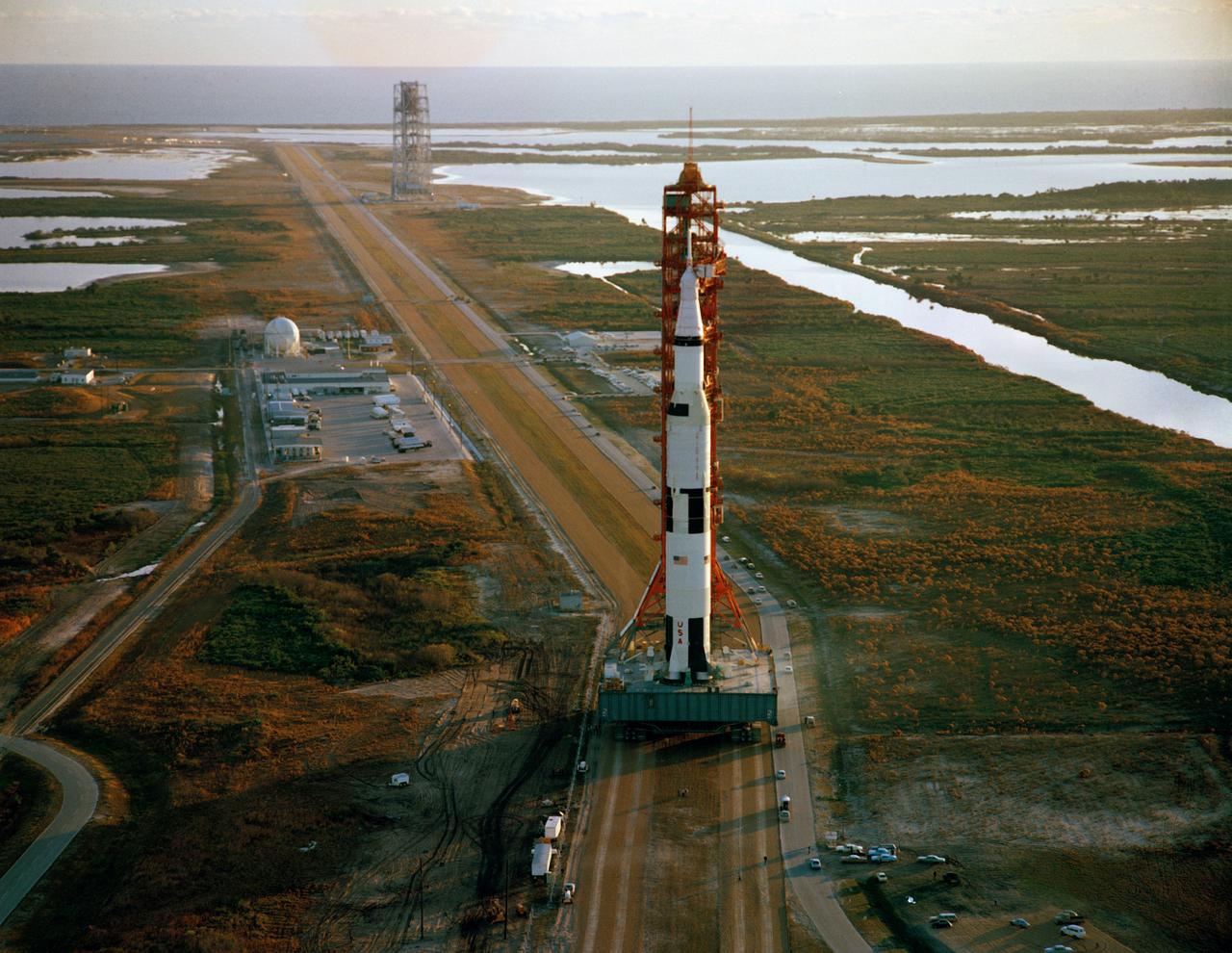
S69-17487 (3 Jan. 1969) --- Aerial view of the Apollo 9 (Spacecraft 104/Lunar Module 3/Saturn 504) space vehicle on the way from the Vehicle Assembly Building to Pad A, Launch Complex 39, Kennedy Space Center. The Saturn V stack and its mobile launch tower are atop a huge crawler-transporter. (view looking toward Pad A)
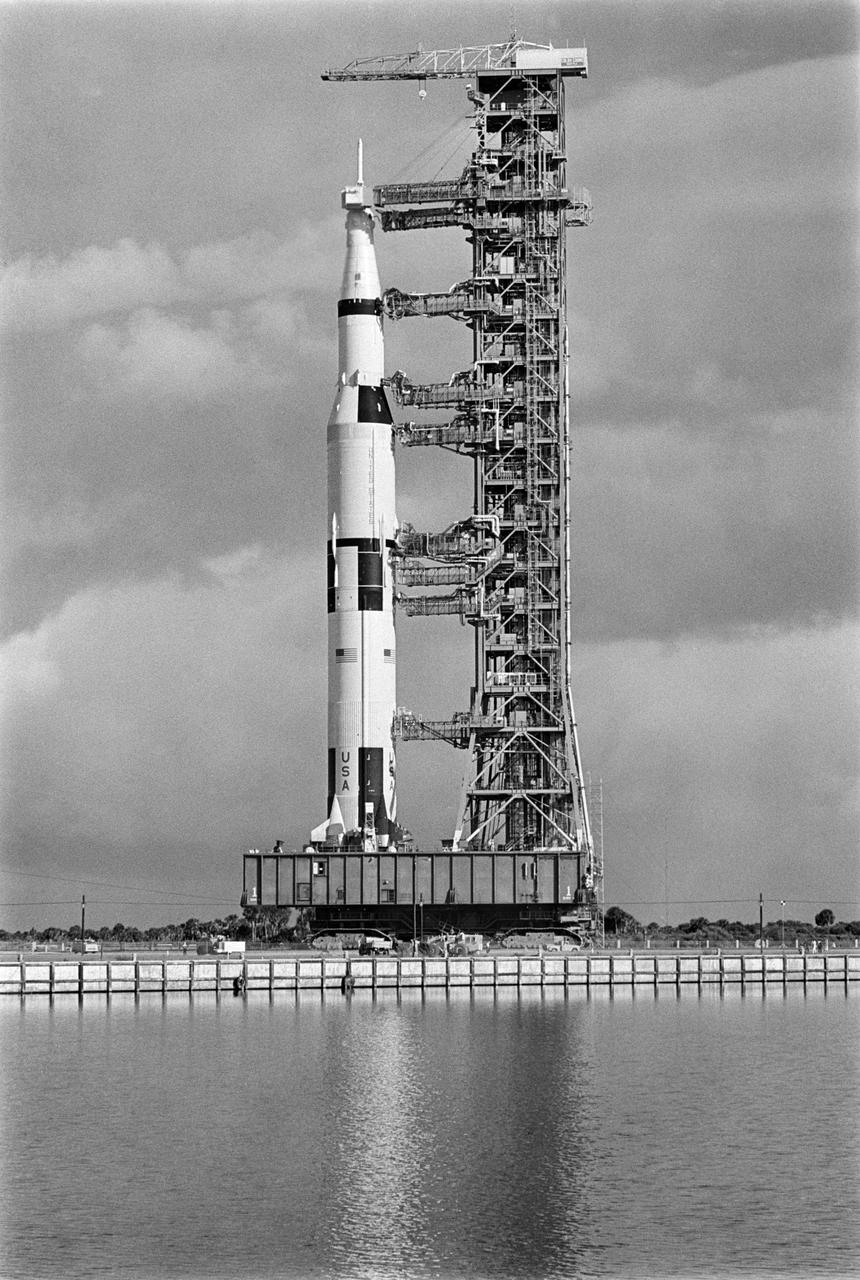
S68-49405 (9 Oct. 1968) --- The Apollo 8 (Spacecraft 103/Saturn 503) space vehicle on way from Kennedy Space Center's (KSC) Vehicle Assembly Building (VAB) to Pad A, Launch Complex 39. The Saturn V stack and its mobile launch tower are atop a huge crawler-transporter. (Ground level view, looking across water.)
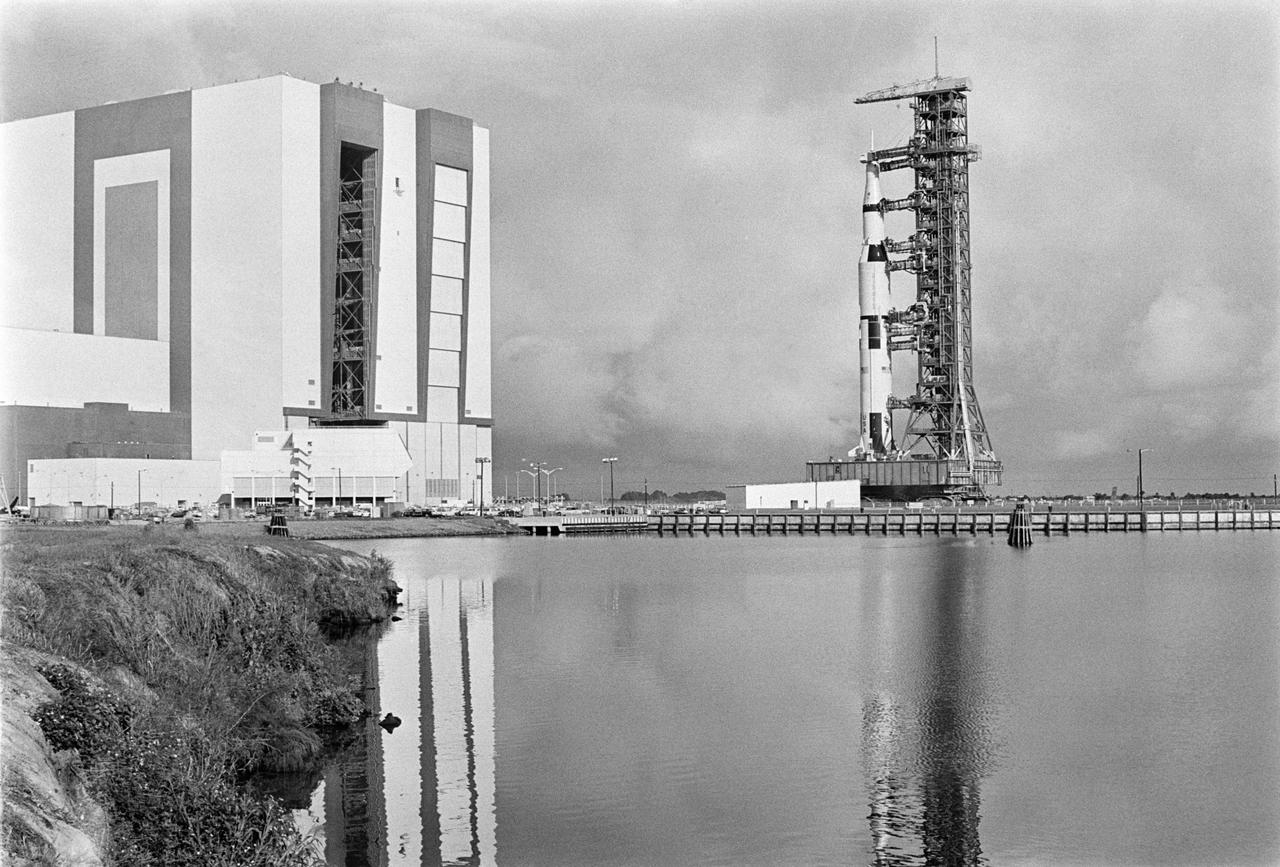
S68-49404 (9 Oct. 1968) --- The Apollo 8 (Spacecraft 103/Saturn 503) space vehicle on way from Kennedy Space Center's Vehicle Assembly Building to Pad A, Launch Complex 39. The Saturn V stack and its mobile launch tower are atop a huge crawler-transporter. (ground-level view, looking across water, with VAB on left)
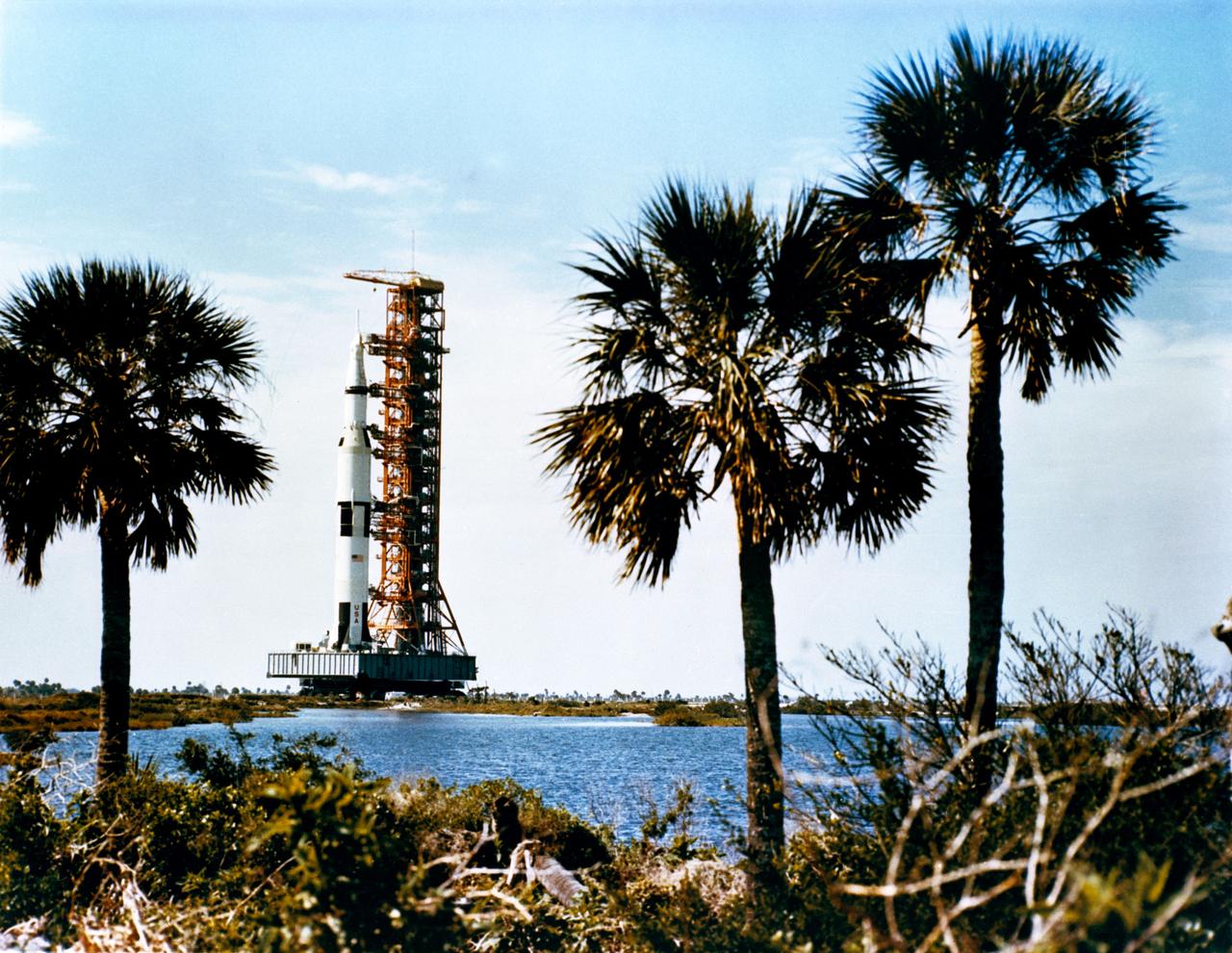
S69-34319 (11 March 1969) --- The 363-feet tall Apollo 10 (Spacecraft 106/Lunar Module 4/Saturn 505) space vehicle on the way from the Vehicle Assembly Building to Pad B, Launch Complex 39, Kennedy Space Center. The Saturn V stack and its mobile launch tower are atop a huge crawler-transporter.
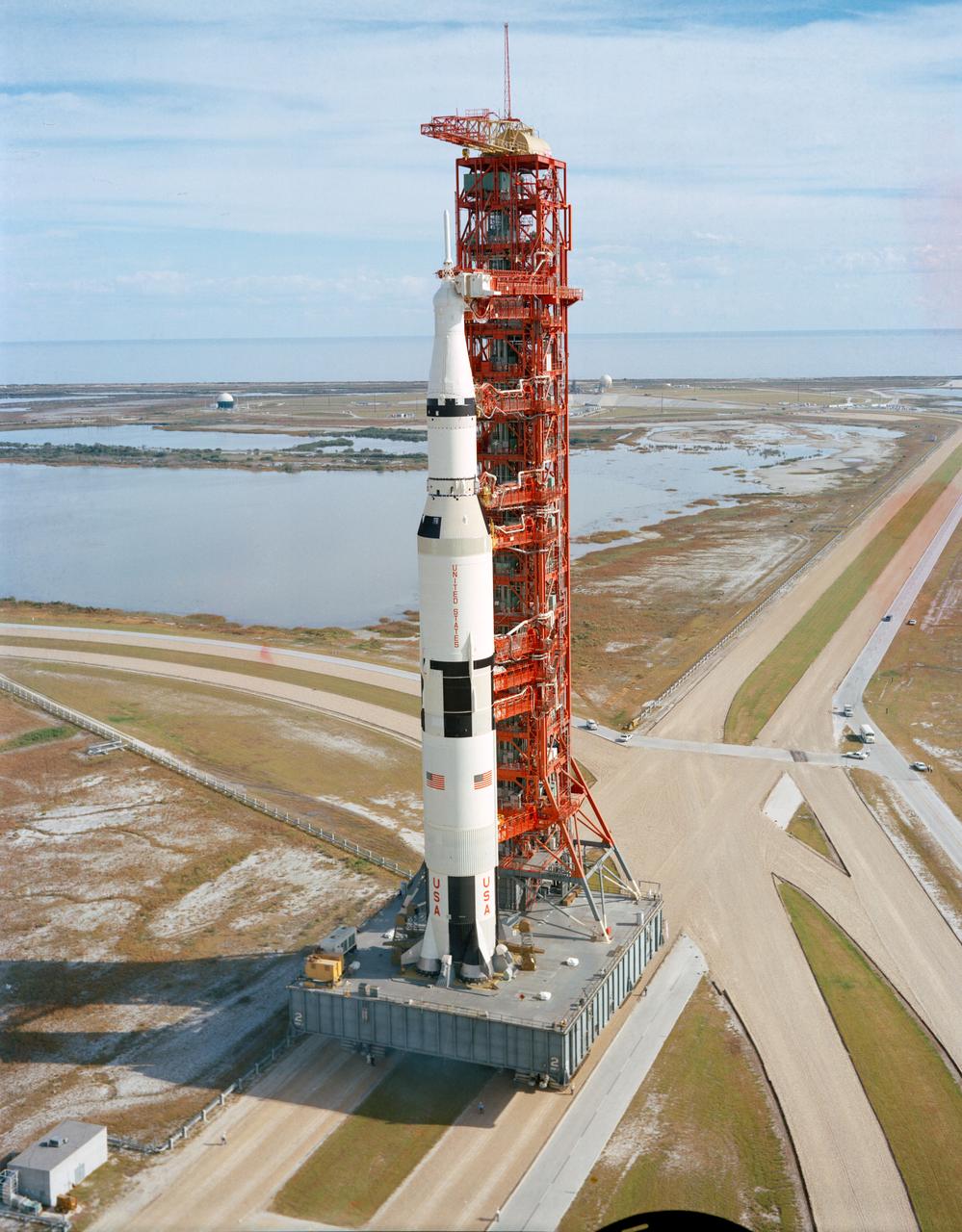
S70-54127 (9 Nov. 1970) --- A high-angle view at Launch Complex 39, Kennedy Space Center (KSC), showing the Apollo 14 (Spacecraft 110/Lunar Module 8/Saturn 509) space vehicle on the way from the Vehicle Assembly Building (VAB) to Pad A. The Saturn V stack and its mobile launch tower sit atop a huge crawler-transporter. The Apollo 14 crewmen will be astronauts Alan B. Shepard Jr., commander; Stuart A. Roosa, command module pilot; and Edgar D. Mitchell, lunar module pilot.

S69-51299 (8 Sept. 1969) --- Ground-level view at Launch Complex 39, Kennedy Space Center (KSC), showing the Apollo 12 (Spacecraft 108/ Lunar Module 6/ Saturn 507) space vehicle on the way from the Vehicle Assembly Building (VAB) to Pad A. The Saturn V stack and its mobile launch tower are atop a huge crawler-transporter. The Launch Complex 39 service structure is on the right. Apollo 12 is scheduled as the second lunar landing mission. The crew will be astronauts Charles Conrad Jr., commander; Richard F. Gordon Jr., command module pilot; and Alan L. Bean, lunar module pilot.
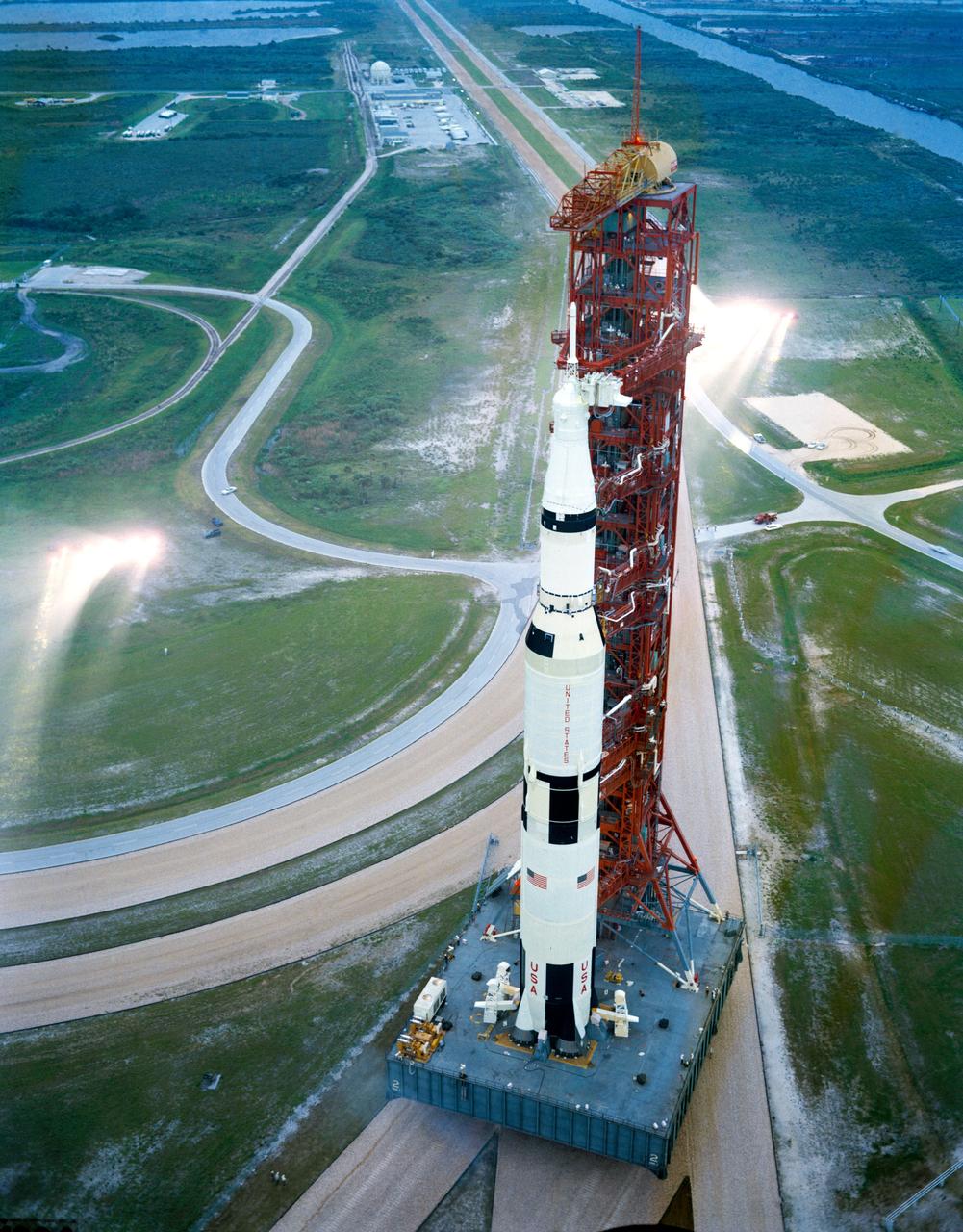
S69-51309 (8 Sept. 1969) --- High-angle view at Launch Complex 39, Kennedy Space Center (KSC), showing the Apollo 12 (Spacecraft 108/Lunar Module 6/Saturn 507) space vehicle on the way from the Vehicle Assembly Building (VAB) to Pad A. The Saturn V stack and its mobile launch tower are atop a huge crawler-transporter. Apollo 12 is scheduled as the second lunar landing mission. The crew will be astronauts Charles Conrad Jr., commander; Richard F. Gordon Jr., command module pilot; and Alan L. Bean, lunar module pilot.
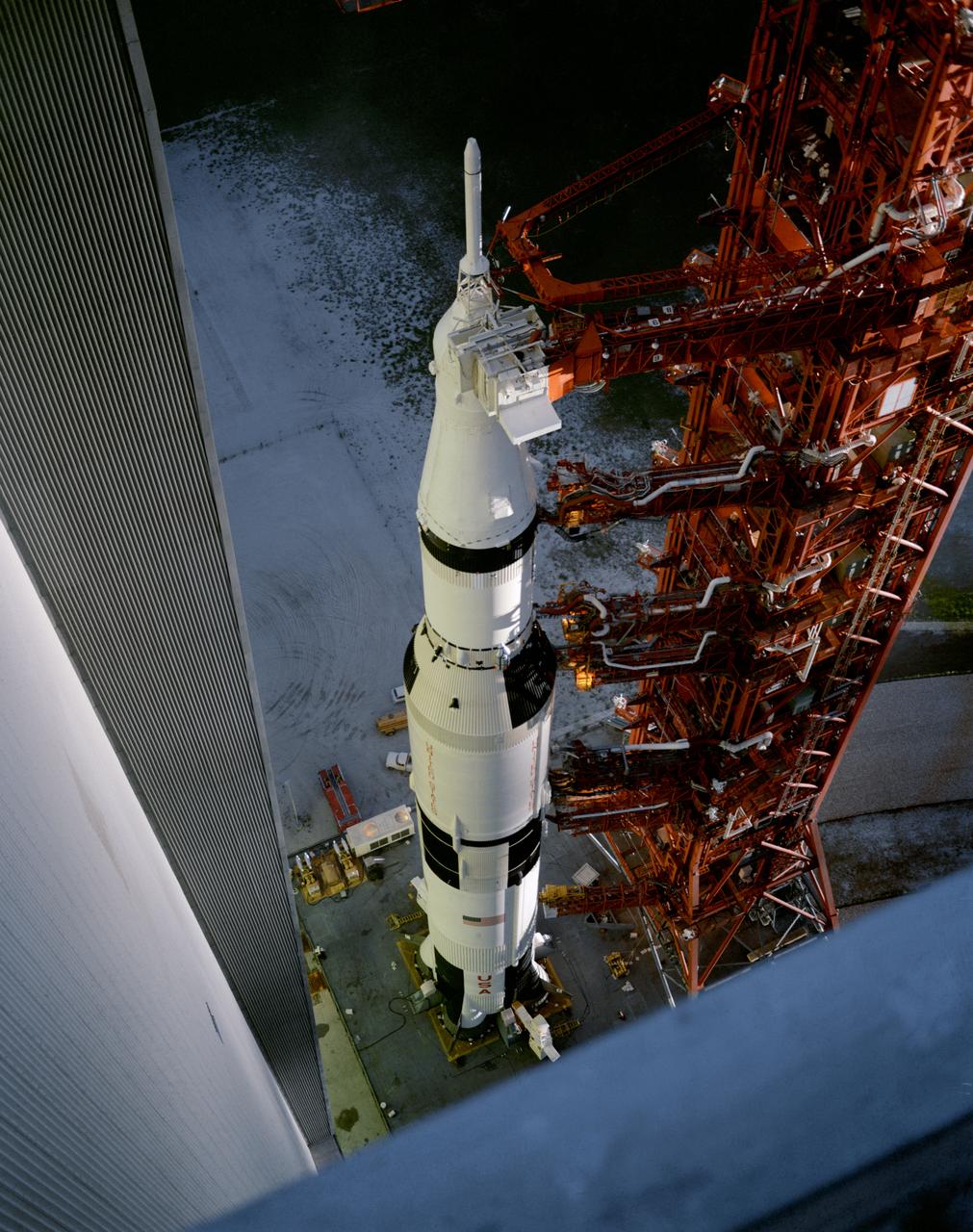
S69-51308 (8 Sept. 1969) --- High-angle view at Launch Complex 39, Kennedy Space Center (KSC), showing the Apollo 12 (Spacecraft 108/ Lunar Module 6/ Saturn 507) space vehicle leaving the Vehicle Assembly Building (VAB) on the way to Pad A. The Saturn V stack and its mobile launch tower are atop a huge crawler-transporter. Apollo 12 is scheduled as the second lunar landing mission. The crew will be astronauts Charles Conrad Jr., commander; Richard F. Gordon Jr., command module pilot; and Alan L. Bean, lunar module pilot.
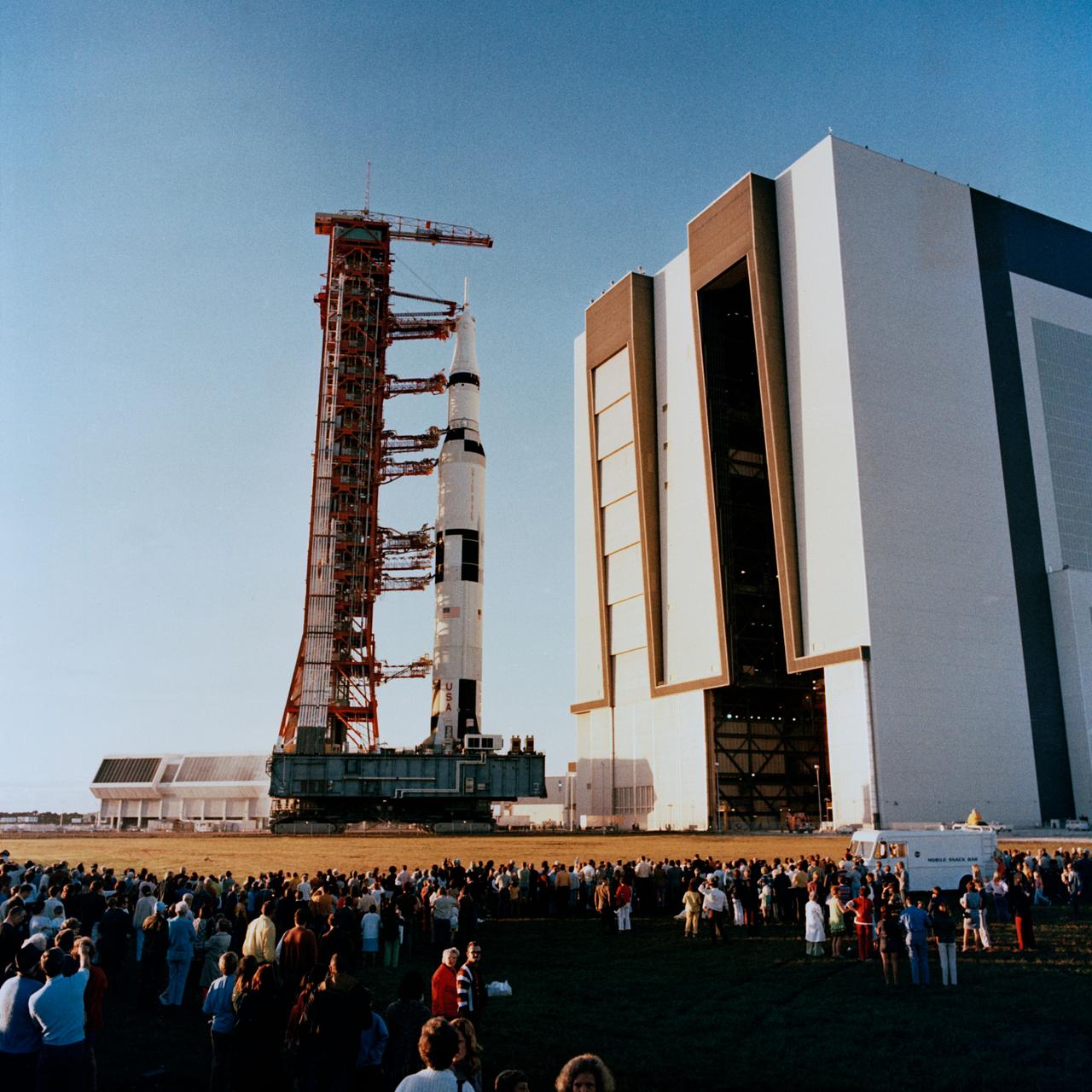
S72-19795 (13 Dec. 1971) --- A large crowd of spectators look on as the 363-feet tall Apollo 16 (Spacecraft 113/Lunar Module 11/Saturn 511) space vehicle moves out of the Vehicle Assembly Building (VAB) at the Kennedy Space Center's (KSC) Launch Complex 39 toward Pad A. The Saturn V stack and its mobile launch tower are atop a huge crawler-transporter. The prime crew men of the scheduled Apollo 16 lunar landing mission are astronauts John W. Young, commander; Thomas K. Mattingly, command module pilot; and Charles M. Duke Jr., lunar module pilot.
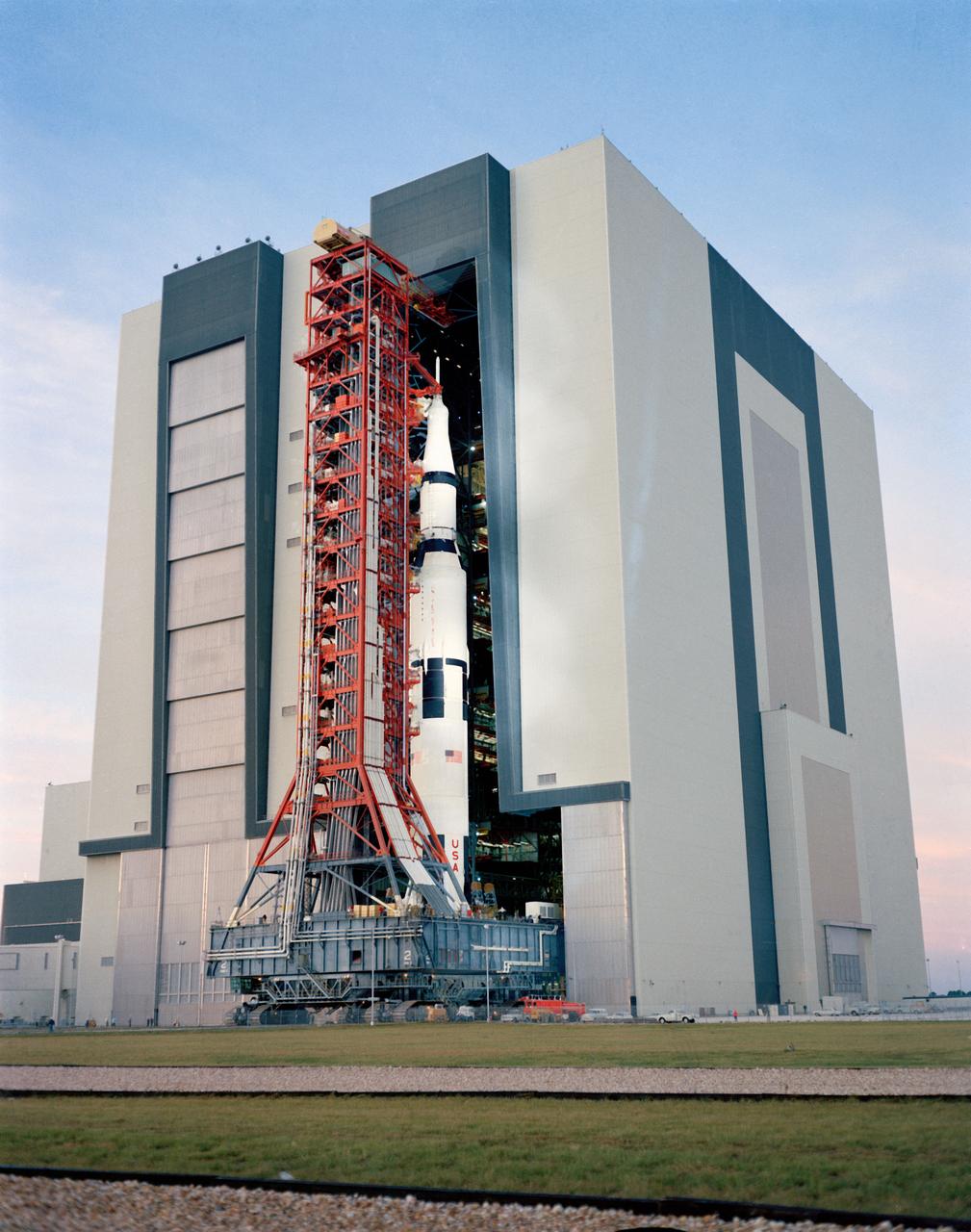
S70-54121 (9 Nov. 1970) --- A ground level view at Launch Complex 39, Kennedy Space Center (KSC), showing the Apollo 14 (Spacecraft 110/Lunar Module 8/Saturn 509) space vehicle leaving the Vehicle Assembly Building (VAB). The Saturn V stack and its mobile launch tower, atop a huge crawler-transporter, were rolled out to Pad A. The Apollo 14 crewmen will be astronauts Alan B. Shepard Jr., commander; Stuart A. Roosa, command module pilot; and Edgar D. Mitchell, lunar module pilot.
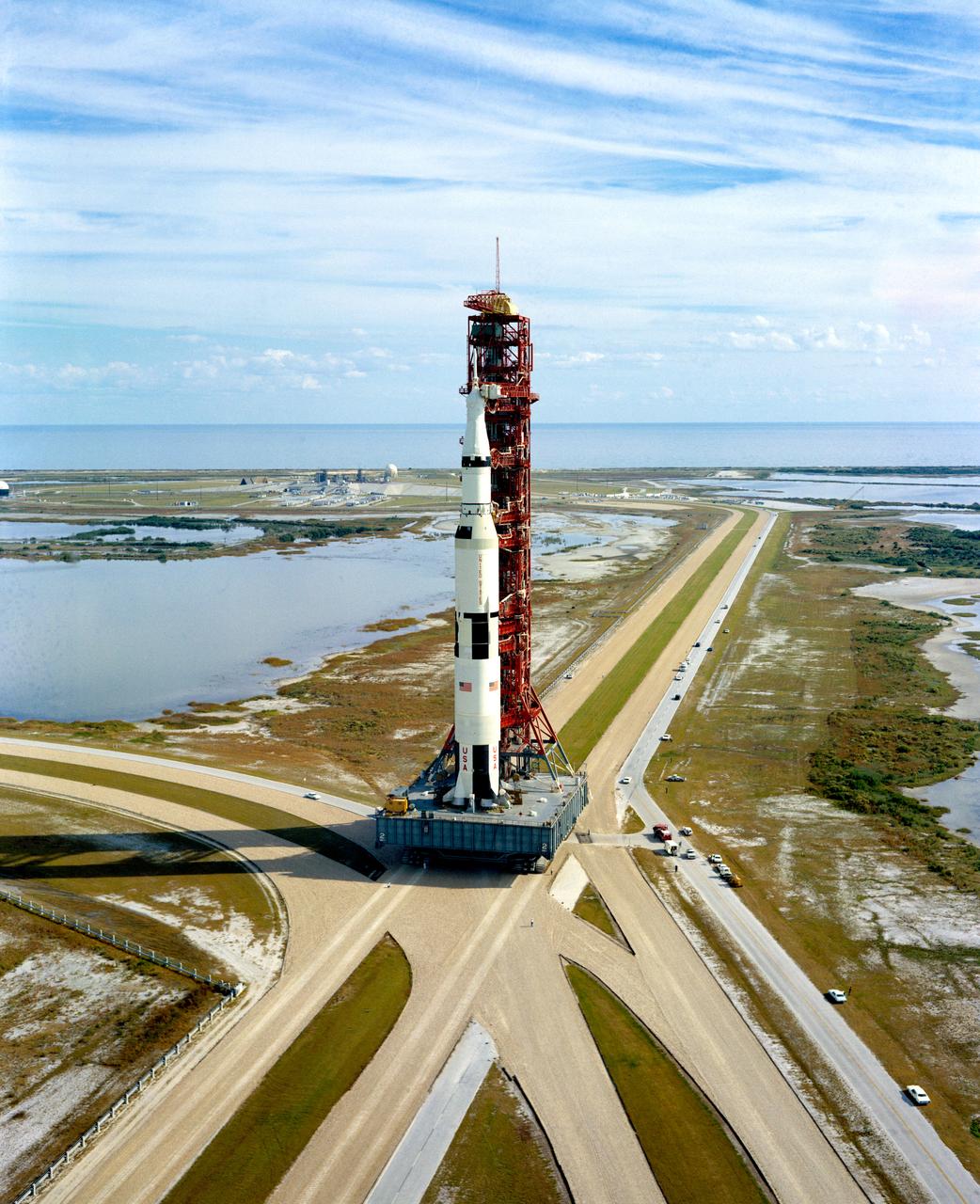
S70-54119 (9 Nov. 1970) --- A high-angle view at Launch Complex 39, Kennedy Space Center (KSC), showing the Apollo 14 (Spacecraft 110/Lunar Module 8/Saturn 509) space vehicle on the way from the Vehicle Assembly Building (VAB) to Pad A. The Saturn V stack and its mobile launch tower sit atop a huge crawler-transporter. The Apollo 14 crewmen will be astronauts Alan B. Shepard Jr., commander; Stuart A. Roosa, command module pilot; and Edgar D. Mitchell, lunar module pilot.
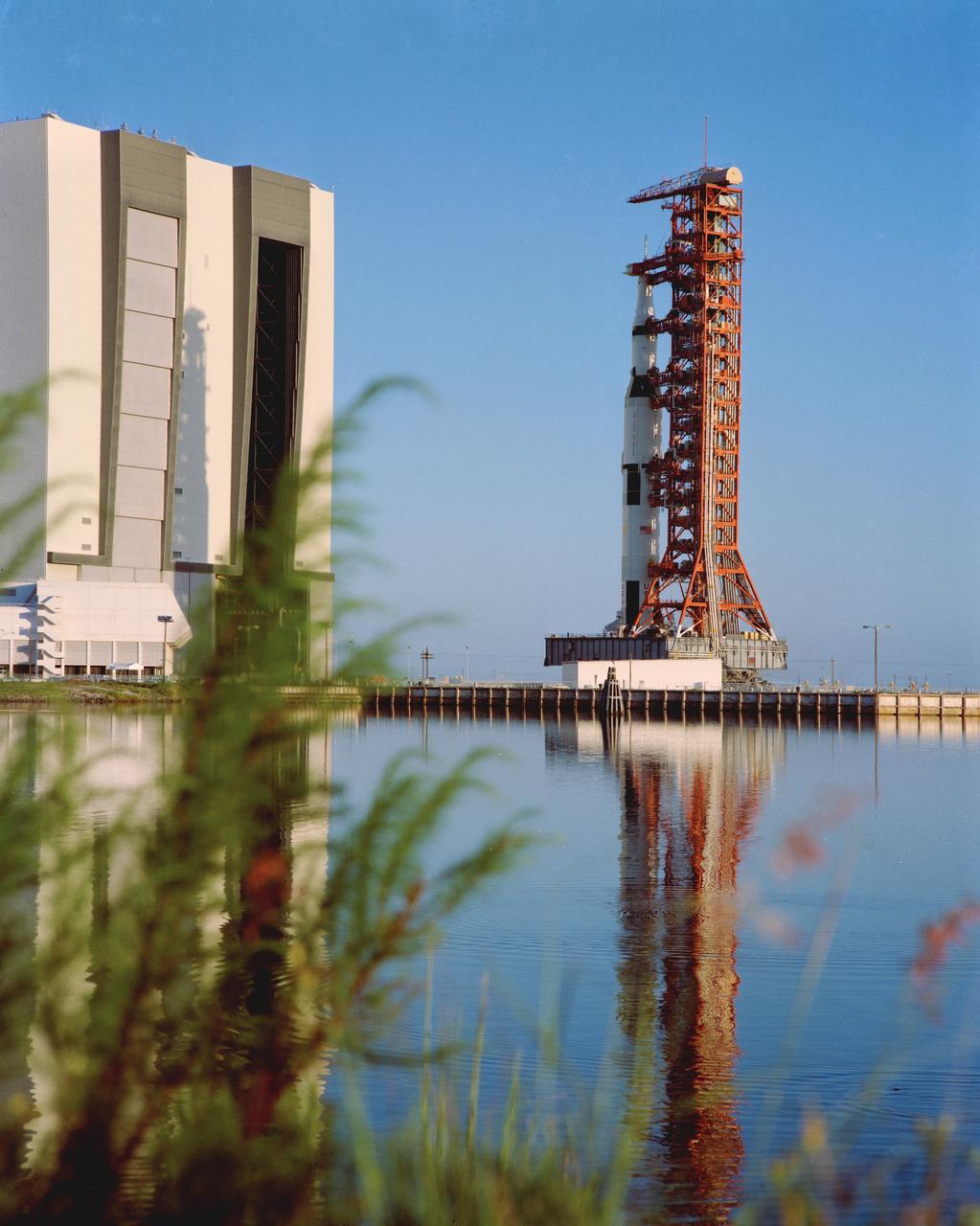
S72-48730 (28 Aug. 1972) --- A ground-level view of the huge Apollo 17 (Spacecraft 114/Lunar Module 12/Saturn 512) space vehicle leaving the Vehicle Assembly Building on its way to Pad A, Launch Complex 39, Kennedy Space Center. The Saturn V stack and its mobile launch tower are atop a mammoth crawler-transporter. The prime crew for the Apollo 17 lunar landing mission will be astronauts Eugene A. Cernan, commander; Ronald E. Evans, command module pilot; and scientist-astronaut Harrison H. Schmitt, lunar module pilot.
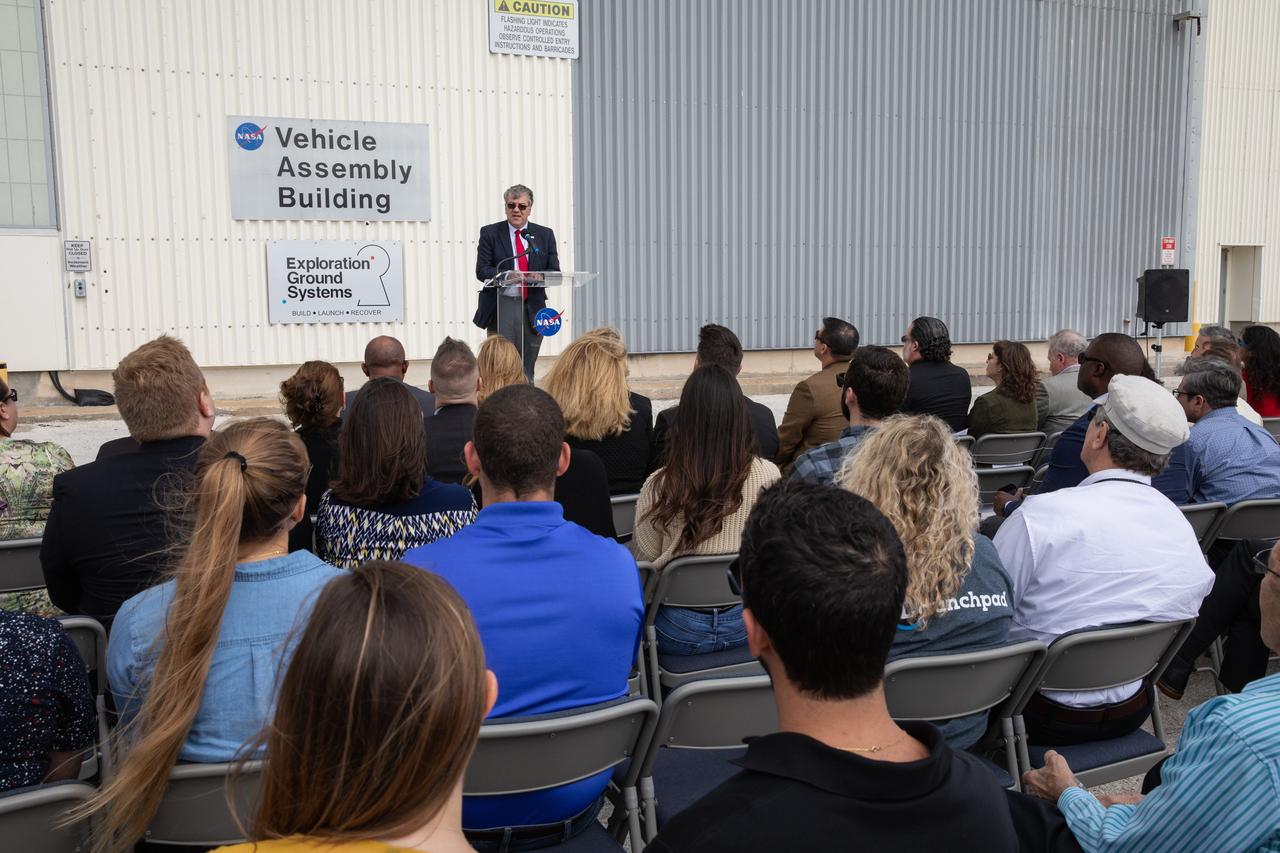
Florida Department of Transportation Secretary Kevin Thibault speaks to attendees during a ceremony on Jan. 10, 2020, to recognize the Vehicle Assembly Building with the National Historic Civil Engineering Landmark award. The Florida Section American Society of Civil Engineers nominated the historic building and bestowed the award. The VAB is the first building at Kennedy Space Center to earn this distinction. At the time of its completion, the 129-million-cubic-foot structure was the largest building in the world. Originally designed and built to accommodate the Saturn V/Apollo used in Project Apollo, the VAB was later modified for its role in the Space Shuttle Program.
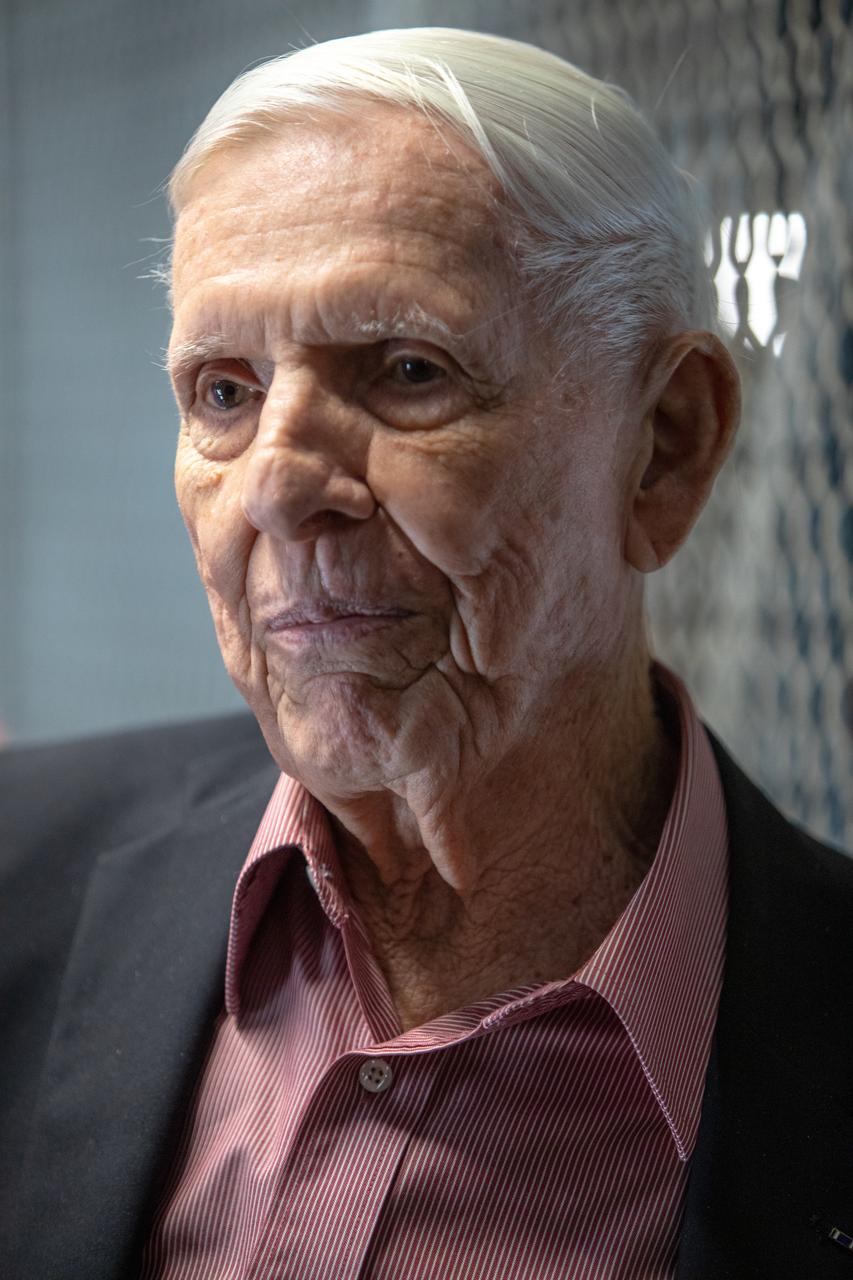
Phil Moyer, original project lead for the Vehicle Assembly Building (VAB), tours the Vehicle Assembly Building on Nov. 22, 2019 at NASA’s Kennedy Space Center in Florida. The VAB was recognized with the National Historic Civil Engineering Landmark award by the Florida Section American Society of Civil Engineers during a ceremony on Jan. 10, 2020. The VAB is the first building at Kennedy Space Center to earn this distinction. At the time of its completion, the 129-million-cubic-foot structure was the largest building in the world. Originally designed and built to accommodate the Saturn V/Apollo used in Project Apollo, the VAB was later modified for its role in the Space Shuttle Program.
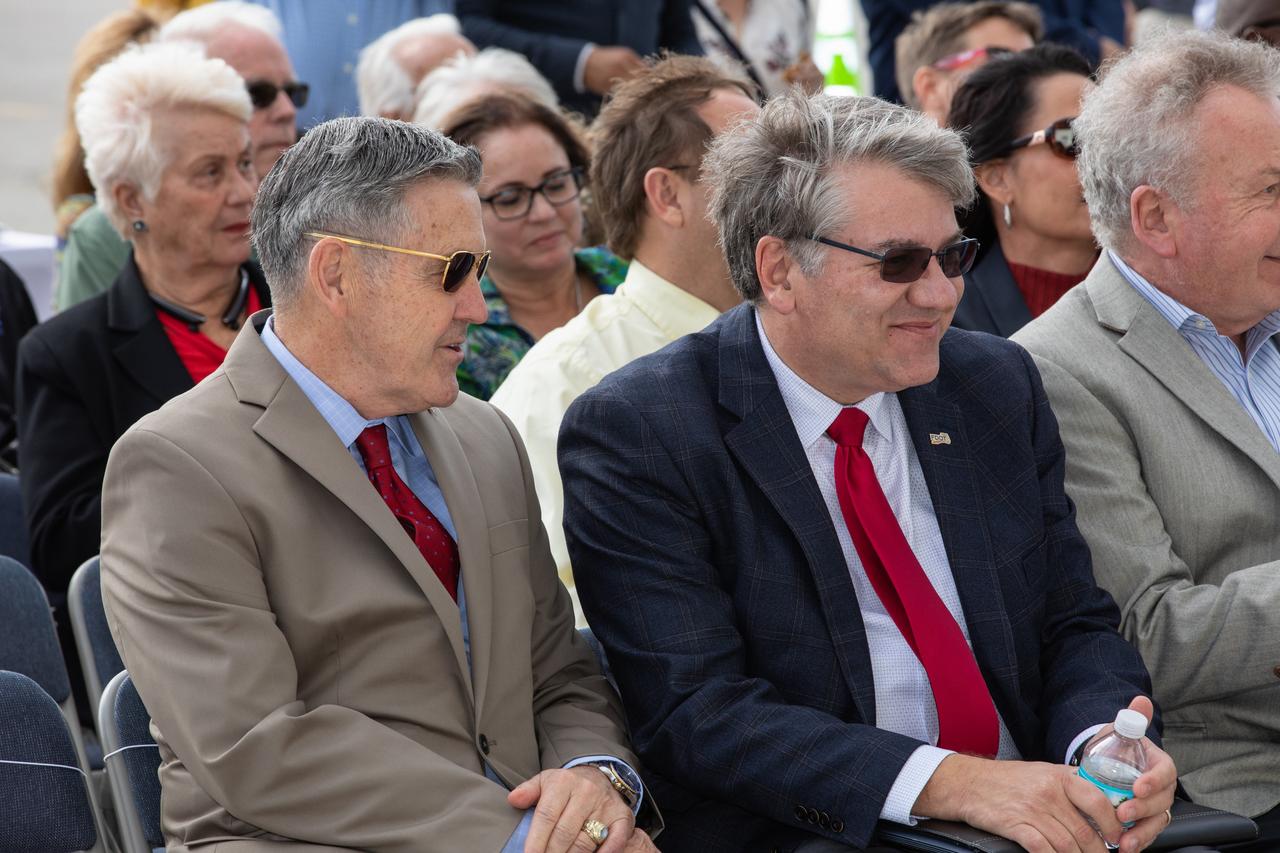
Kennedy Space Center Director Bob Cabana, left, talks with Florida Department of Transportation Secretary Kevin Thibault during a ceremony on Jan. 10, 2020, to recognize the Vehicle Assembly Building with the National Historic Civil Engineering Landmark award. The Florida Section American Society of Civil Engineers nominated the historic building and bestowed the award. The VAB is the first building at Kennedy Space Center to earn this distinction. At the time of its completion, the 129-million-cubic-foot structure was the largest building in the world. Originally designed and built to accommodate the Saturn V/Apollo used in Project Apollo, the VAB was later modified for its role in the Space Shuttle Program.
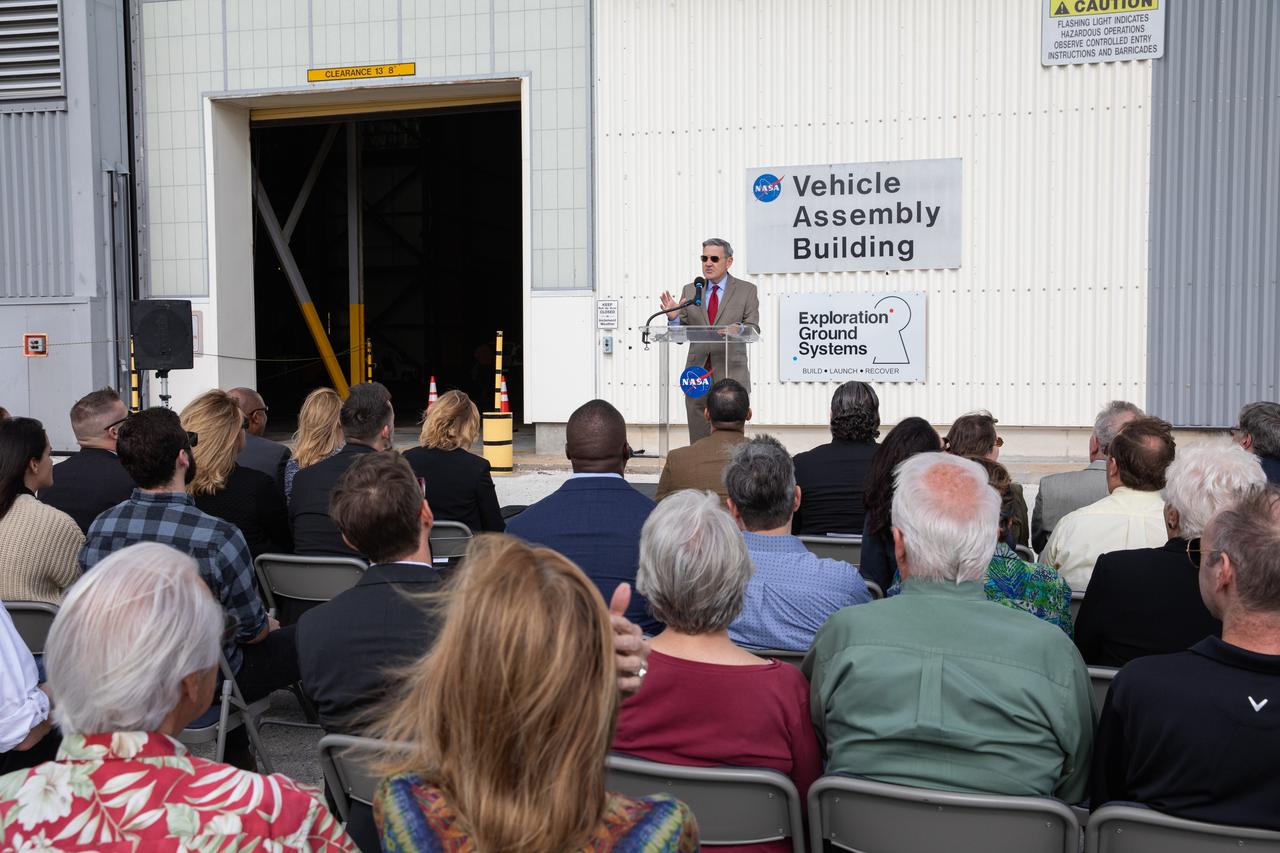
Kennedy Space Center Director Bob Cabana, speaks to attendees during a ceremony on Jan. 10, 2020, to recognize the Vehicle Assembly Building with the National Historic Civil Engineering Landmark award. The Florida Section American Society of Civil Engineers nominated the historic building and bestowed the award. The VAB is the first building at Kennedy Space Center to earn this distinction. At the time of its completion, the 129-million-cubic-foot structure was the largest building in the world. Originally designed and built to accommodate the Saturn V/Apollo used in Project Apollo, the VAB was later modified for its role in the Space Shuttle Program.

Phil Moyer, original project lead for the Vehicle Assembly Building (VAB), tours the Vehicle Assembly Building on Nov. 22, 2019 at NASA’s Kennedy Space Center in Florida. The VAB was recognized with the National Historic Civil Engineering Landmark award by the Florida Section American Society of Civil Engineers during a ceremony on Jan. 10, 2020. The VAB is the first building at Kennedy Space Center to earn this distinction. At the time of its completion, the 129-million-cubic-foot structure was the largest building in the world. Originally designed and built to accommodate the Saturn V/Apollo used in Project Apollo, the VAB was later modified for its role in the Space Shuttle Program.
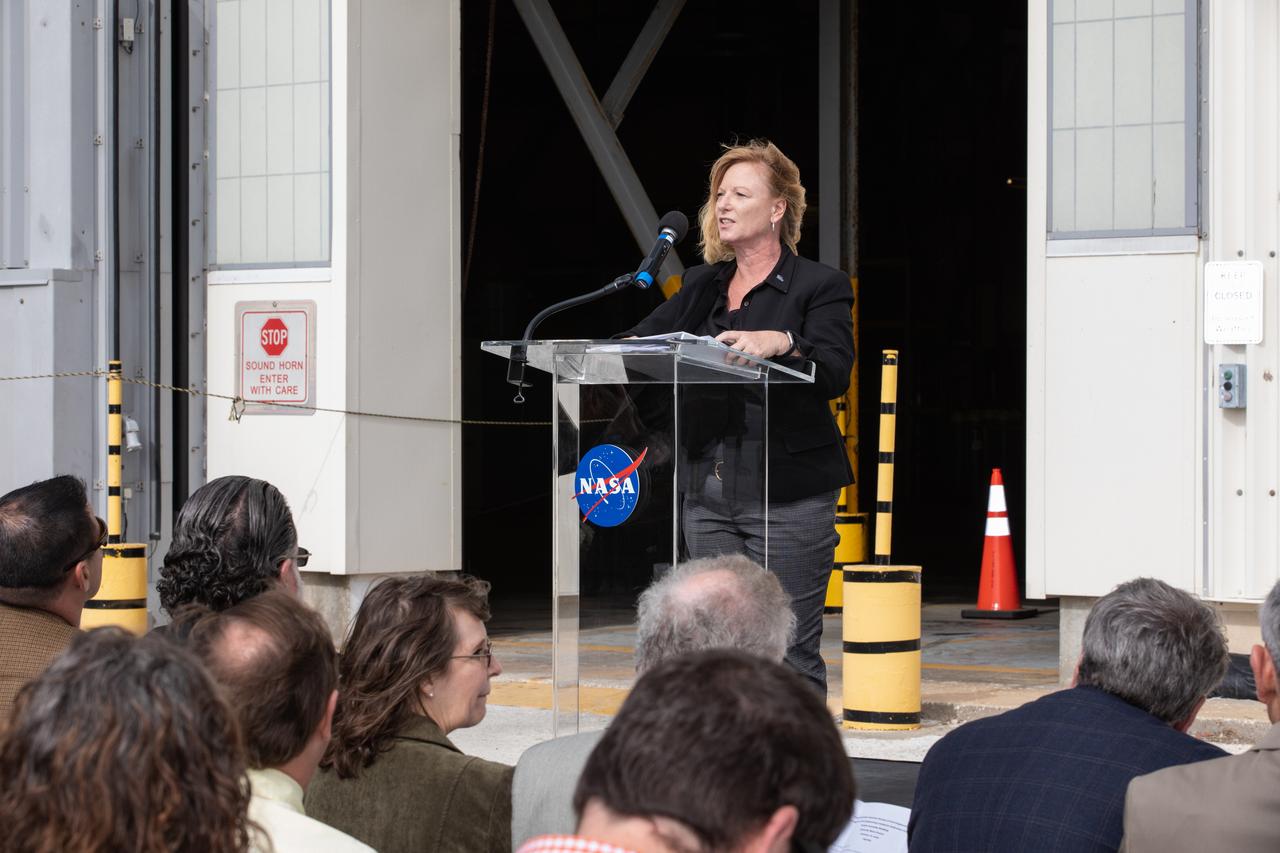
Kathleen Ruvarac, History and Heritage Committee chairperson with the American Society of Civil Engineers (ASCE), speaks to attendees during a ceremony on Jan. 10, 2020, to recognize the Vehicle Assembly Building with the National Historic Civil Engineering Landmark award. The Florida Section ASCE nominated the historic building and bestowed the award. The VAB is the first building at Kennedy Space Center to earn this distinction. At the time of its completion, the 129-million-cubic-foot structure was the largest building in the world. Originally designed and built to accommodate the Saturn V/Apollo used in Project Apollo, the VAB was later modified for its role in the Space Shuttle Program.
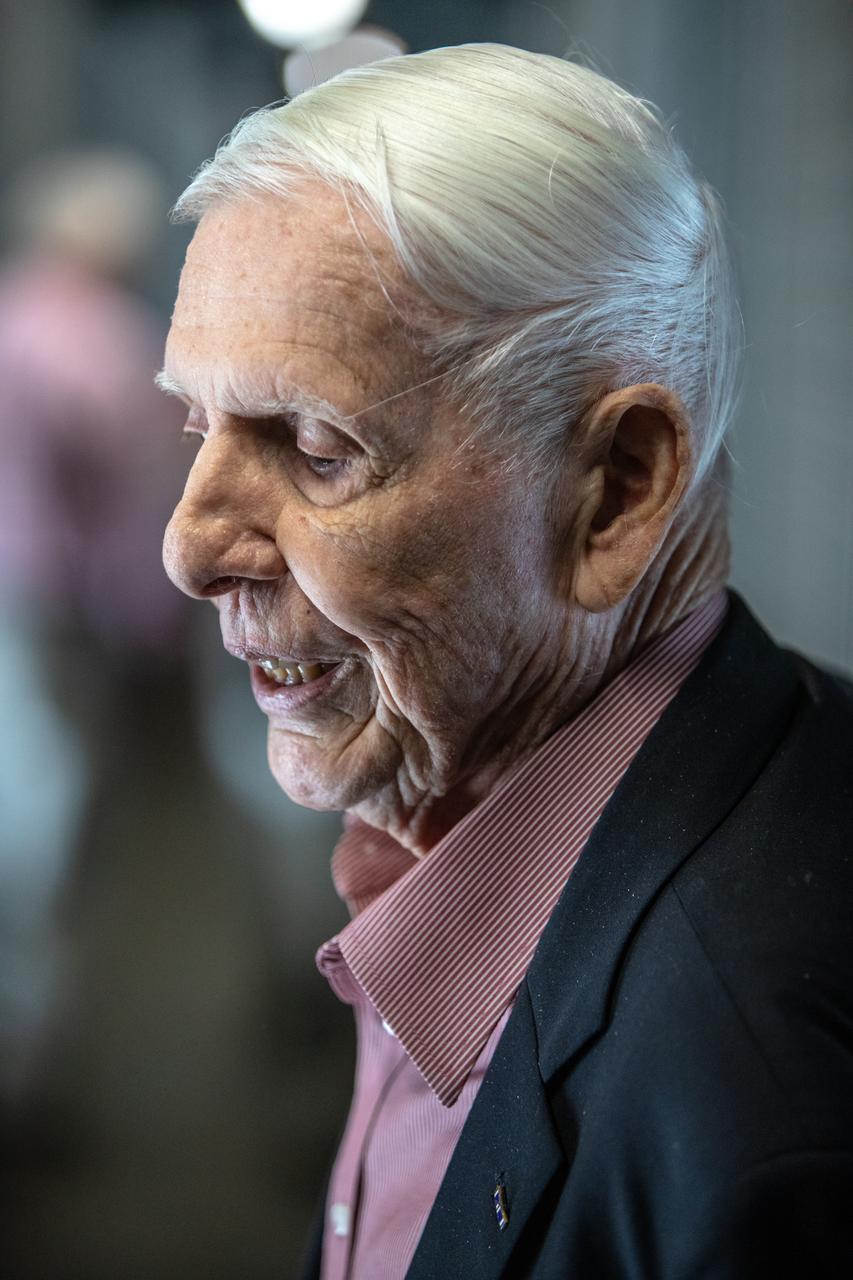
Phil Moyer, original project lead for the Vehicle Assembly Building (VAB), tours the Vehicle Assembly Building on Nov. 22, 2019 at NASA’s Kennedy Space Center in Florida. The VAB was recognized with the National Historic Civil Engineering Landmark award by the Florida Section American Society of Civil Engineers during a ceremony on Jan. 10, 2020. The VAB is the first building at Kennedy Space Center to earn this distinction. At the time of its completion, the 129-million-cubic-foot structure was the largest building in the world. Originally designed and built to accommodate the Saturn V/Apollo used in Project Apollo, the VAB was later modified for its role in the Space Shuttle Program.
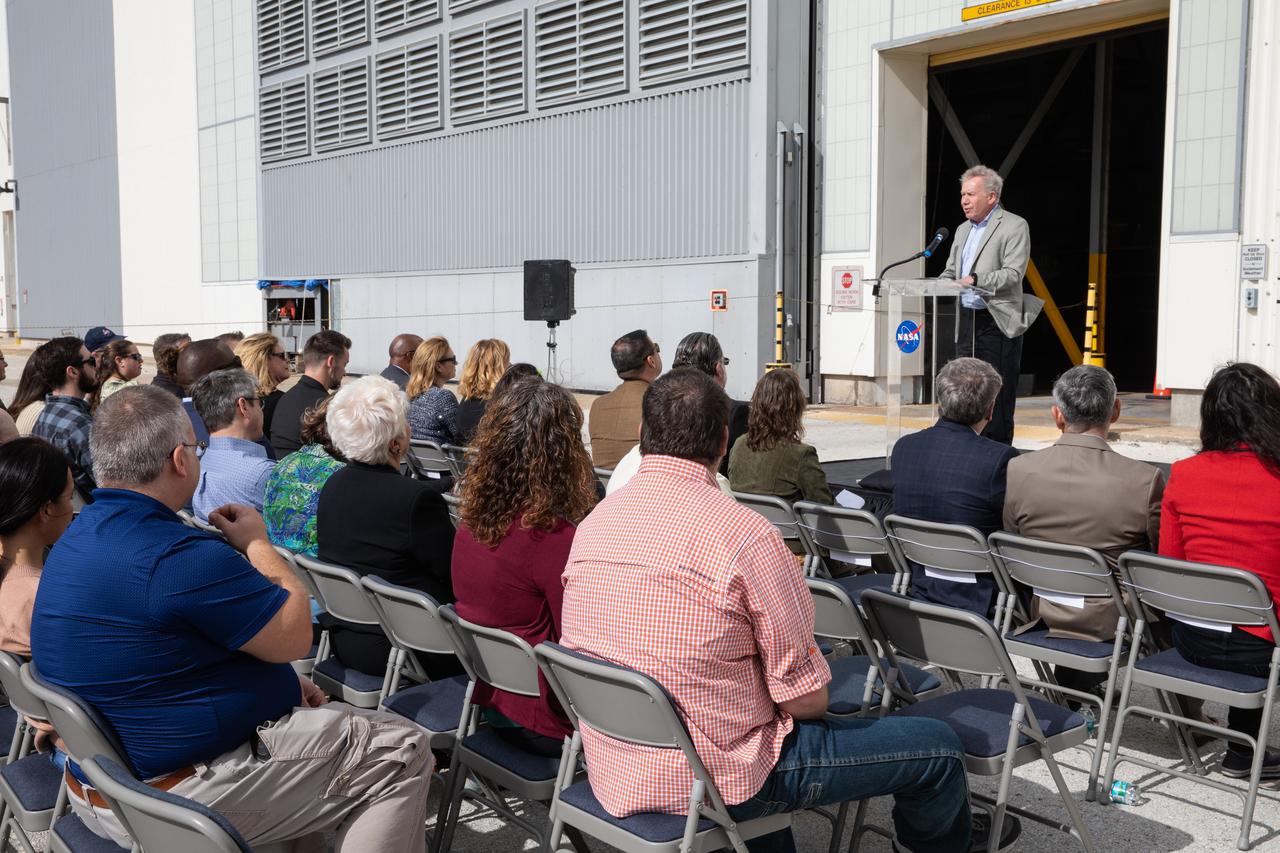
Glenn Bell, American Society of Civil Engineers (ASCE) Society of Structural Engineering Institute president speaks to attendees during a ceremony on Jan. 10, 2020, to recognize the Vehicle Assembly Building with the National Historic Civil Engineering Landmark award. The Florida Section ASCE nominated the historic building and bestowed the award. The VAB is the first building at Kennedy Space Center to earn this distinction. At the time of its completion, the 129-million-cubic-foot structure was the largest building in the world. Originally designed and built to accommodate the Saturn V/Apollo used in Project Apollo, the VAB was later modified for its role in the Space Shuttle Program.
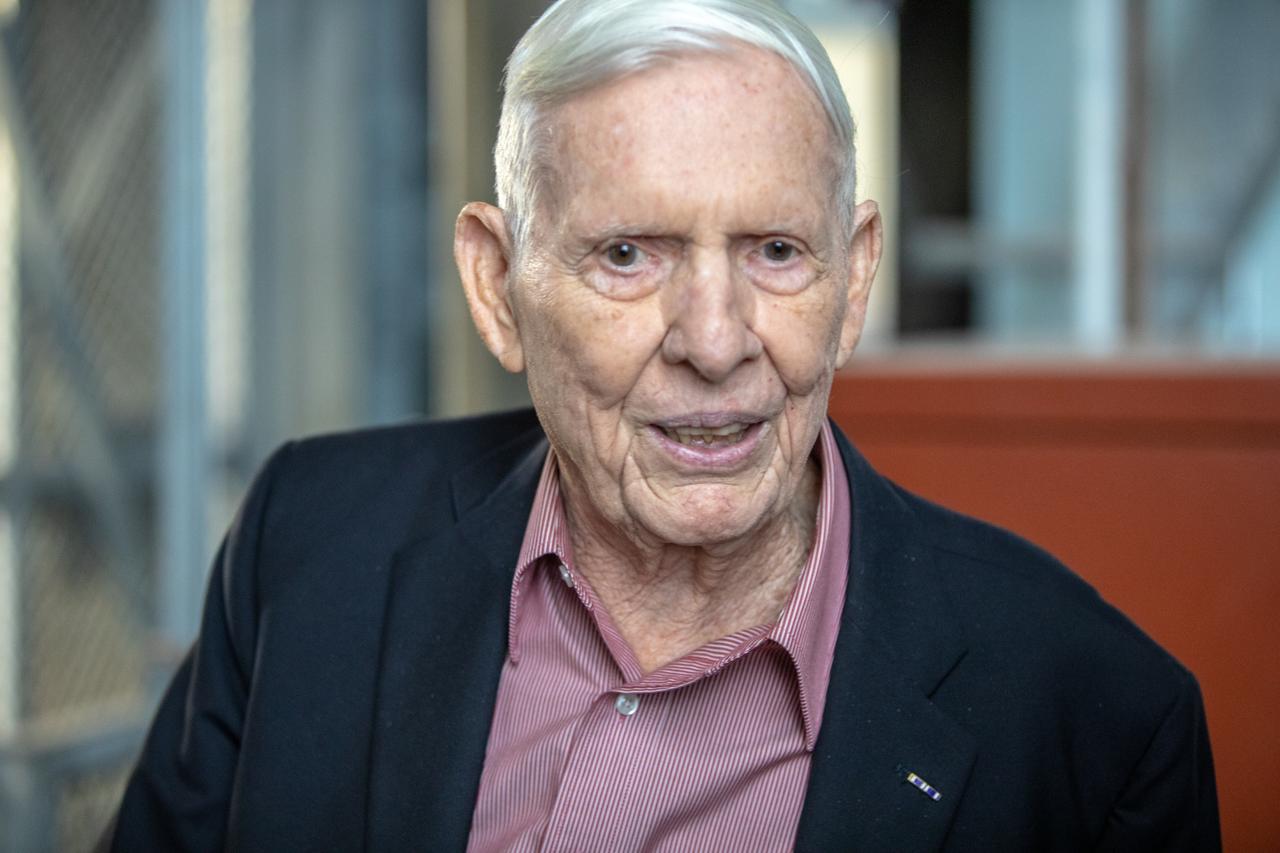
Phil Moyer, original project lead for the Vehicle Assembly Building (VAB), tours the Vehicle Assembly Building on Nov. 22, 2019 at NASA’s Kennedy Space Center in Florida. The VAB was recognized with the National Historic Civil Engineering Landmark award by the Florida Section American Society of Civil Engineers during a ceremony on Jan. 10, 2020. The VAB is the first building at Kennedy Space Center to earn this distinction. At the time of its completion, the 129-million-cubic-foot structure was the largest building in the world. Originally designed and built to accommodate the Saturn V/Apollo used in Project Apollo, the VAB was later modified for its role in the Space Shuttle Program.
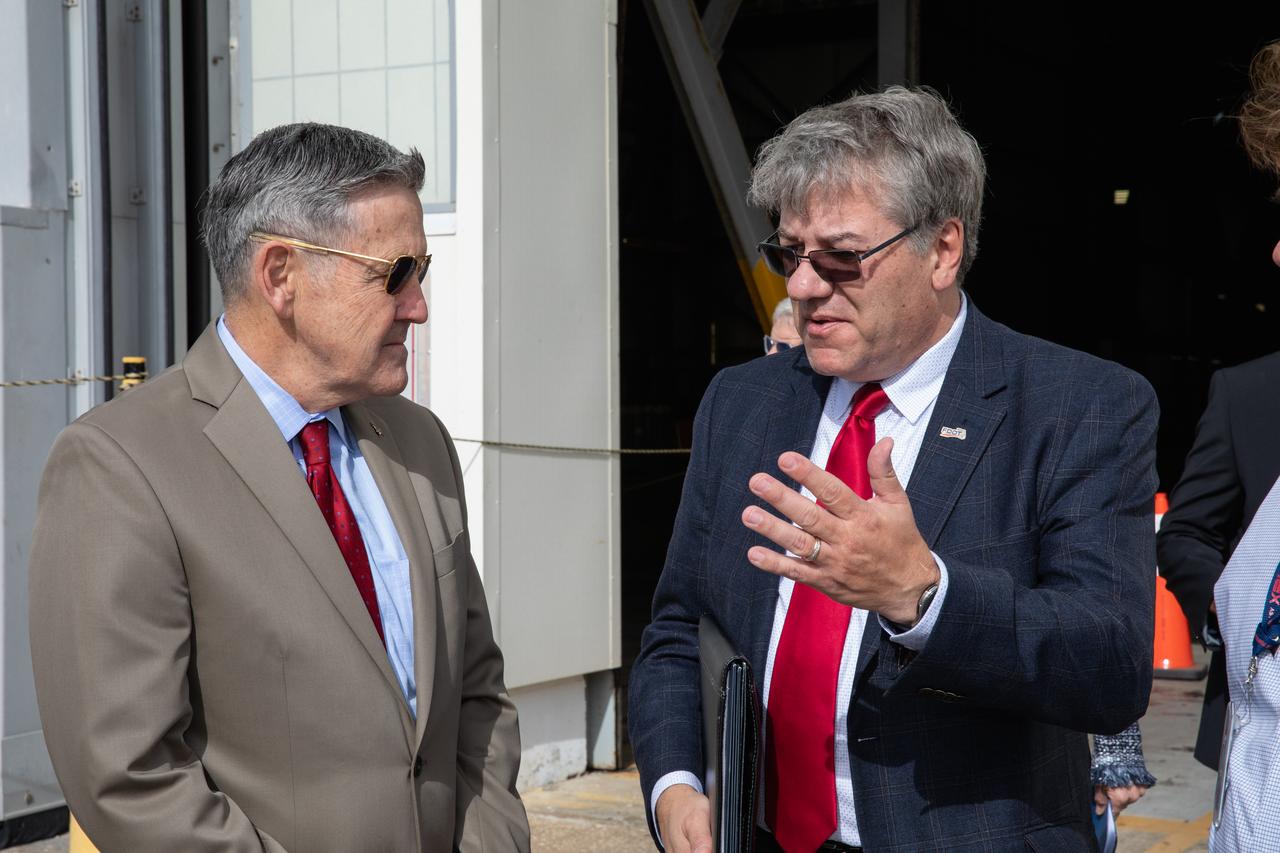
Kennedy Space Center Director Bob Cabana, left, talks with Florida Department of Transportation Secretary Kevin Thibault during a ceremony on Jan. 10, 2020, to recognize the Vehicle Assembly Building with the National Historic Civil Engineering Landmark award. The Florida Section American Society of Civil Engineers nominated the historic building and bestowed the award. The VAB is the first building at Kennedy Space Center to earn this distinction. At the time of its completion, the 129-million-cubic-foot structure was the largest building in the world. Originally designed and built to accommodate the Saturn V/Apollo used in Project Apollo, the VAB was later modified for its role in the Space Shuttle Program.
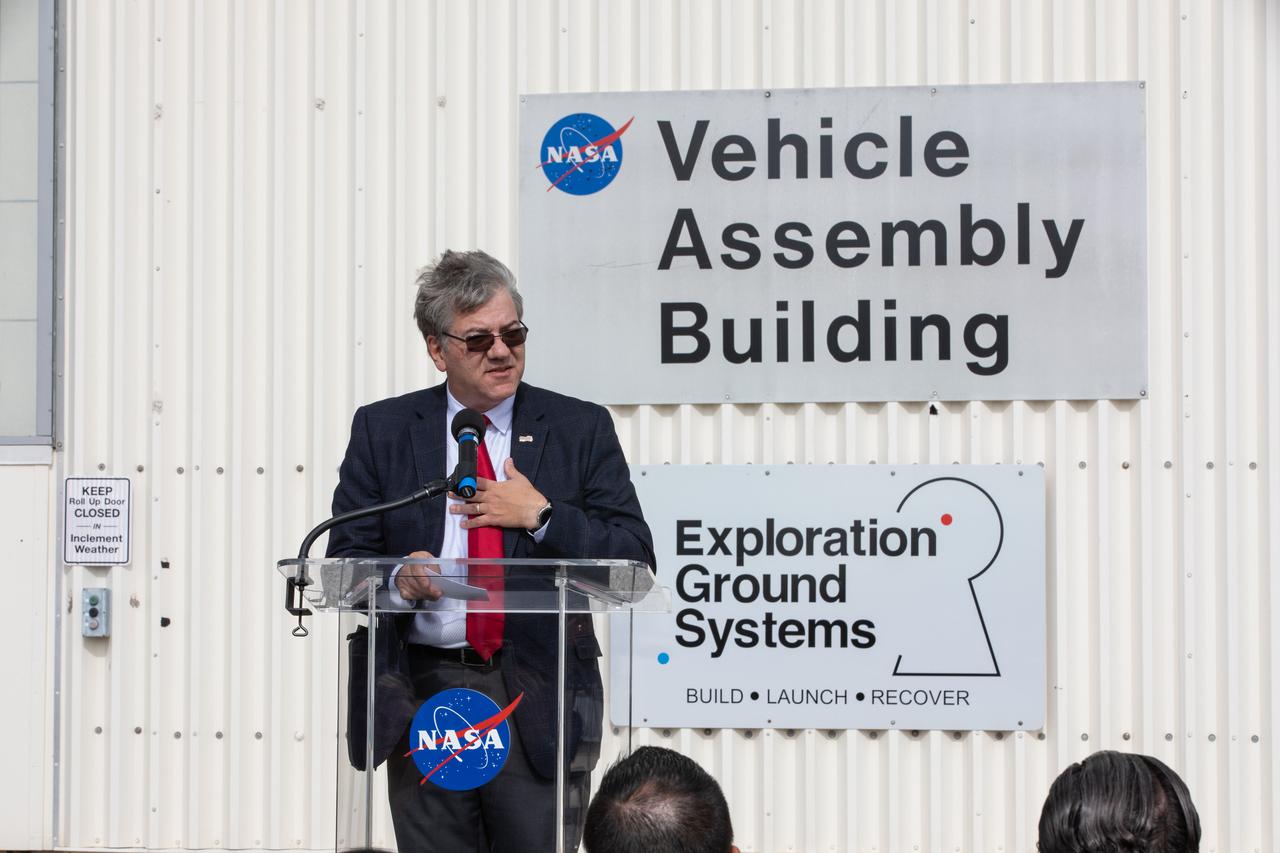
Florida Department of Transportation Secretary Kevin Thibault speaks to attendees during a ceremony on Jan. 10, 2020, to recognize the Vehicle Assembly Building with the National Historic Civil Engineering Landmark award. The Florida Section American Society of Civil Engineers nominated the historic building and bestowed the award. The VAB is the first building at Kennedy Space Center to earn this distinction. At the time of its completion, the 129-million-cubic-foot structure was the largest building in the world. Originally designed and built to accommodate the Saturn V/Apollo used in Project Apollo, the VAB was later modified for its role in the Space Shuttle Program.
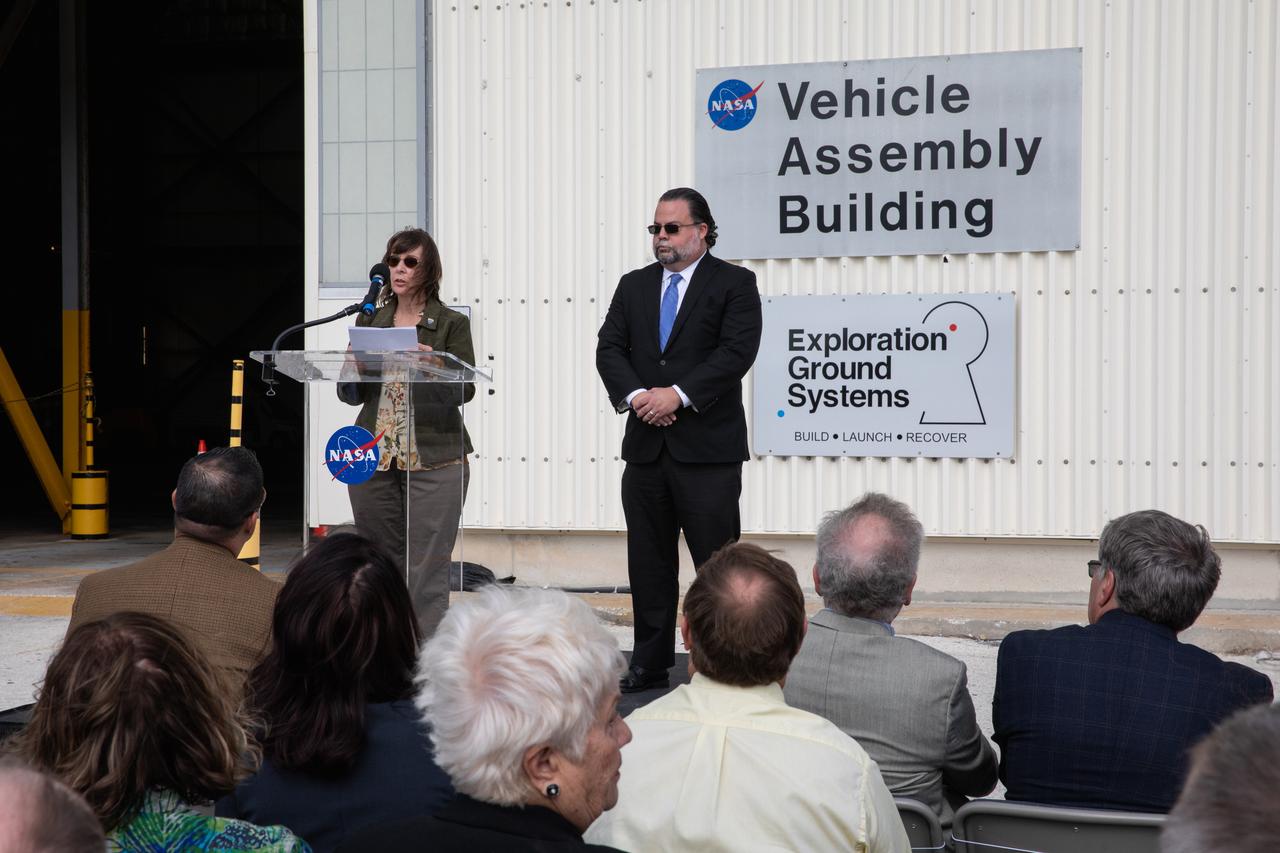
Carol Stevens, History and Heritage Committee member with the American Society of Civil Engineers (ASCE), speaks to attendees during a ceremony on Jan. 10, 2020, to recognize the Vehicle Assembly Building with the National Historic Civil Engineering Landmark award. At right is Peter Moore, ASCE Region 5 director. The Florida Section ASCE nominated the historic building and bestowed the award. The VAB is the first building at Kennedy Space Center to earn this distinction. At the time of its completion, the 129-million-cubic-foot structure was the largest building in the world. Originally designed and built to accommodate the Saturn V/Apollo used in Project Apollo, the VAB was later modified for its role in the Space Shuttle Program.
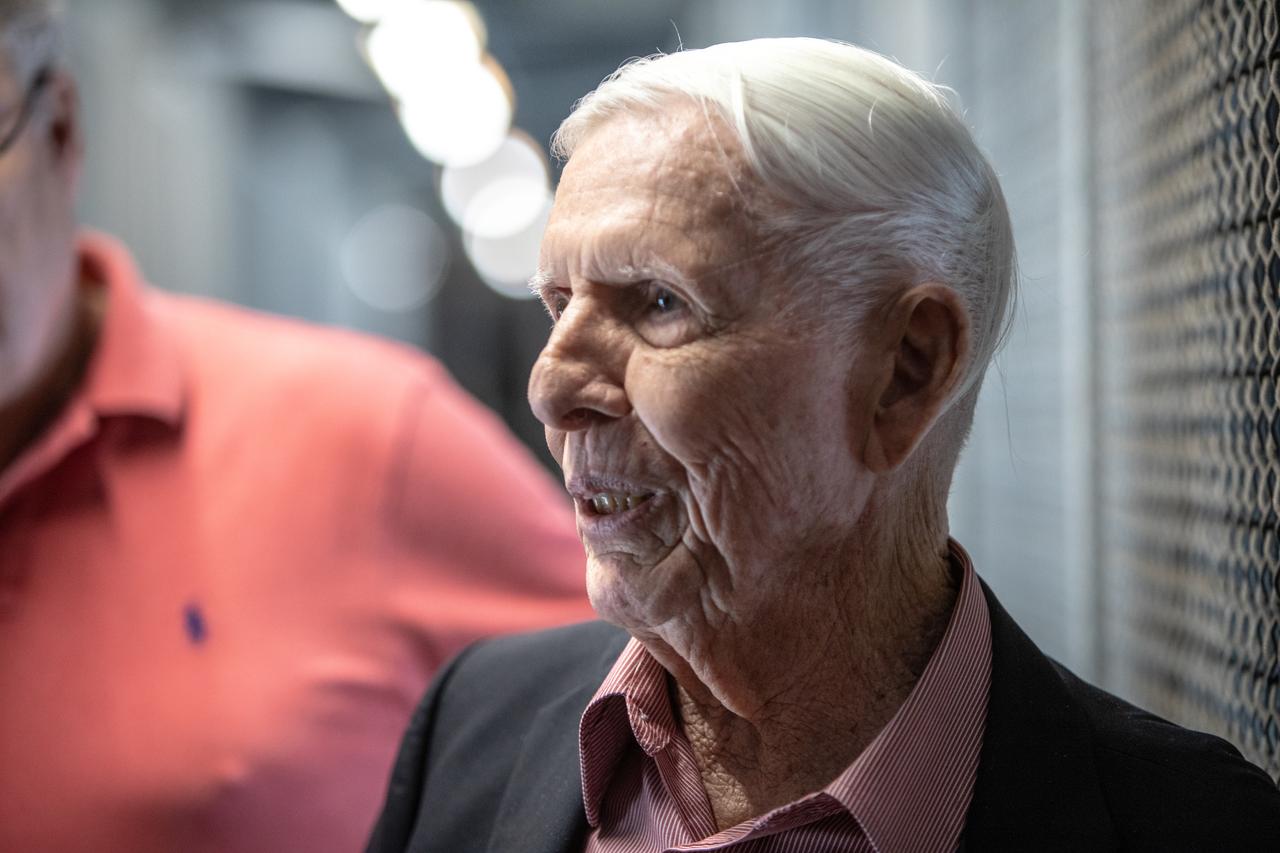
Phil Moyer, original project lead for the Vehicle Assembly Building (VAB), tours the Vehicle Assembly Building on Nov. 22, 2019 at NASA’s Kennedy Space Center in Florida. The VAB was recognized with the National Historic Civil Engineering Landmark award by the Florida Section American Society of Civil Engineers during a ceremony on Jan. 10, 2020. The VAB is the first building at Kennedy Space Center to earn this distinction. At the time of its completion, the 129-million-cubic-foot structure was the largest building in the world. Originally designed and built to accommodate the Saturn V/Apollo used in Project Apollo, the VAB was later modified for its role in the Space Shuttle Program.
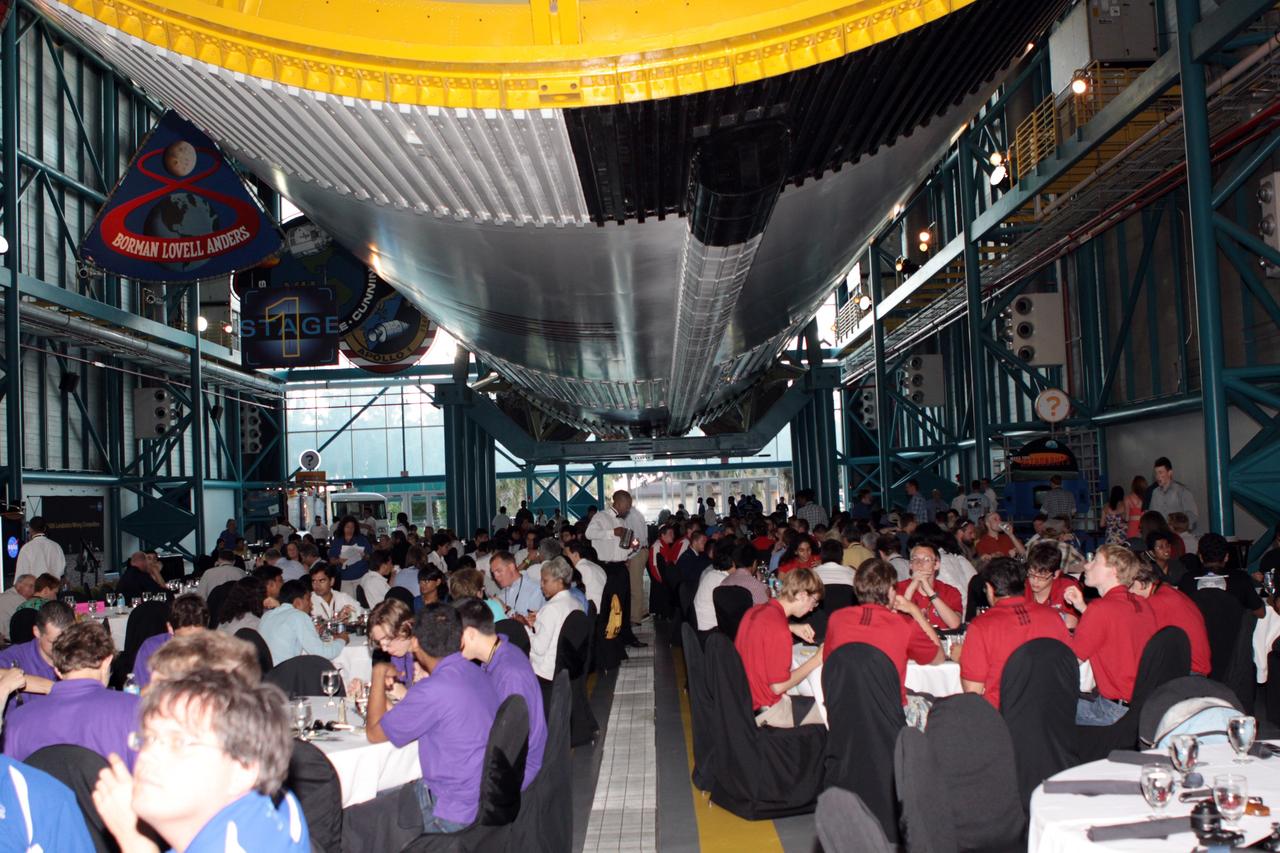
CAPE CANAVERAL, Fla. - Teams taking part in NASA's Lunabotics Mining Competition gather inside the Apollo/Saturn V Center at Kennedy Space Center Visitor Complex in Florida for the awards ceremony at the end of the event. They are seated beneath the first stage of the Saturn V rocket that carried astronauts to the moon. The competition challenged university students to build machines that could collect soil such as the material found on the moon. Working inside the Caterpillar LunArena, the robotic craft dug soil that simulated lunar material. The event was judged by a machine's abilities to collect the soil, its design and operation, size, dust tolerance and its level of autonomy. Photo credit: NASA/Jim Grossmann
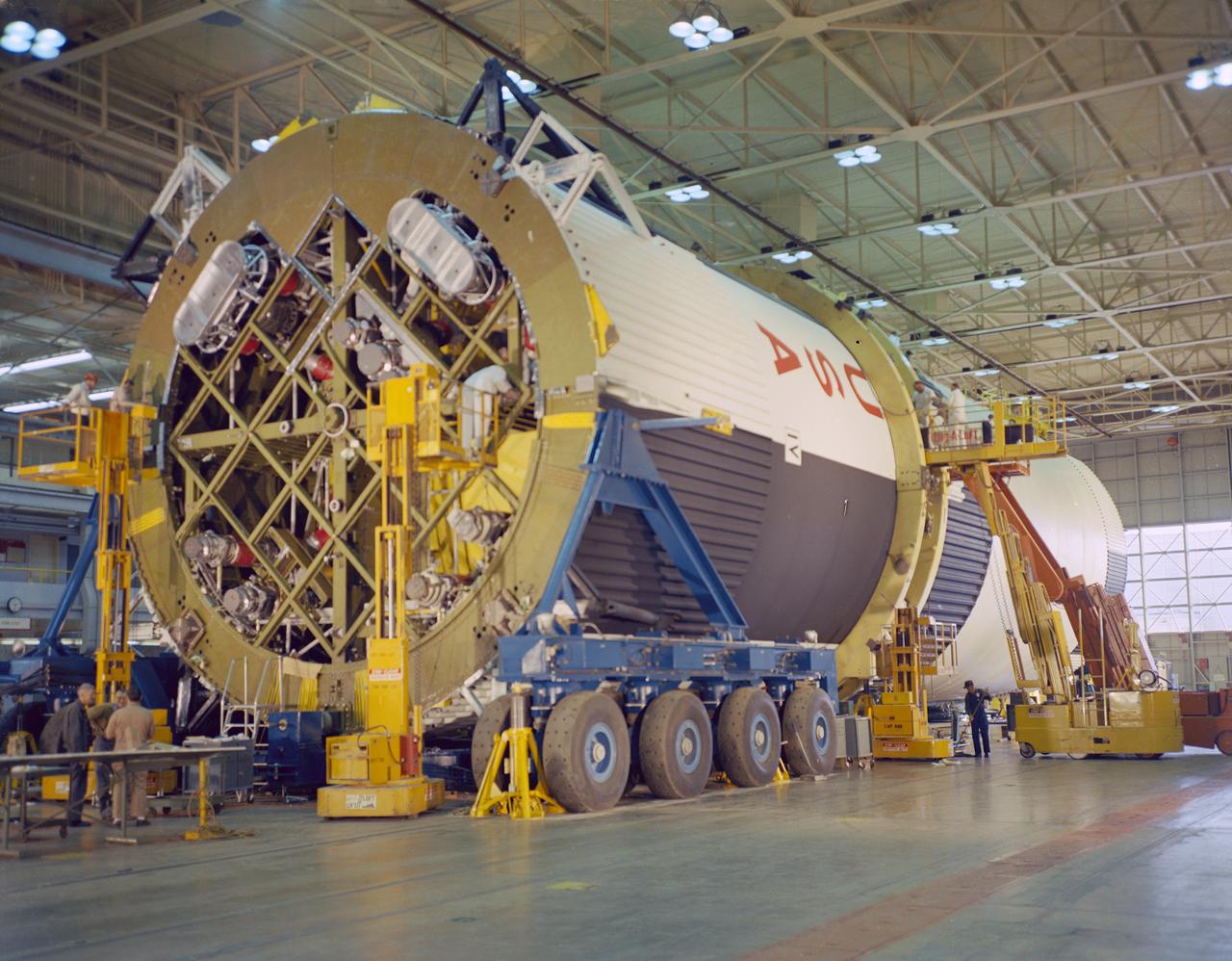
At the Marshall Space Flight Center (MSFC), the fuel tank assembly for the Saturn V S-IC-T (static test stage) fuel tank assembly is mated to the liquid oxygen (LOX) tank in building 4705. This stage underwent numerous static firings at the newly-built S-IC Static Test Stand at the MSFC west test area. The S-IC (first) stage used five F-1 engines that produced a total thrust of 7,500,000 pounds as each engine produced 1,500,000 pounds of thrust. The S-IC stage lifted the Saturn V vehicle and Apollo spacecraft from the launch pad.
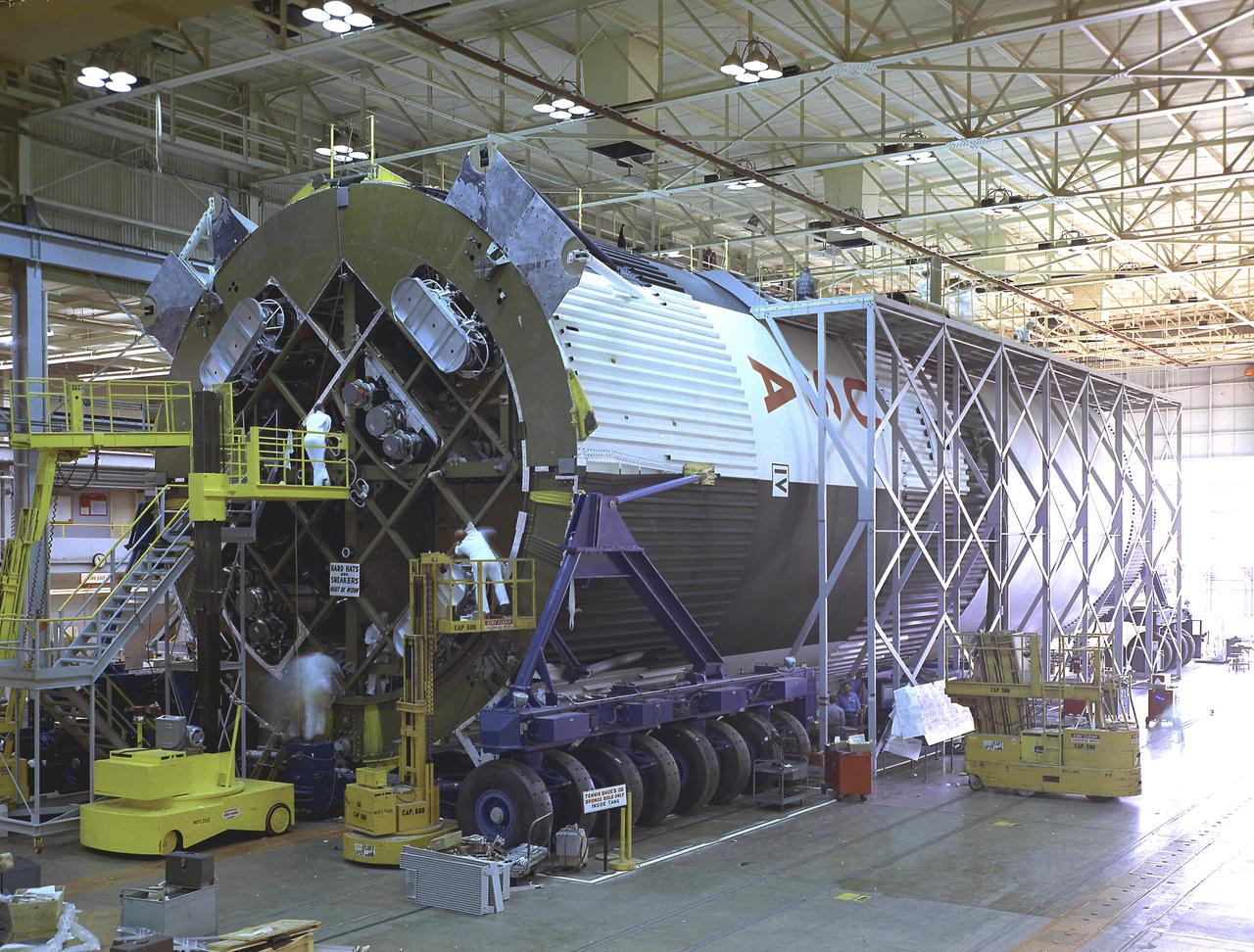
Pictured is the Saturn V S-IC-T stage (static testing stage) being assembled in the horizontal assembly station at the Marshall Space Flight Center (MSFC), building 4705. This stage underwent numerous static firings at the newly-built S-IC Static Test Stand at the MSFC west test area. The S-IC (first) stage used five F-1 engines that produced a total thrust of 7,500,000 pounds as each engine produced 1,500,000 pounds of thrust. The S-IC stage lifted the Saturn V vehicle and Apollo spacecraft from the launch pad.
Dick Bergmann, at right, original lead designer for the Vehicle Assembly Building, stands on the roof of the iconic facility during a tour on Nov. 22, 2019 at NASA’s Kennedy Space Center in Florida. The VAB was recognized with the National Historic Civil Engineering Landmark award by the Florida Section American Society of Civil Engineers during a ceremony on Jan. 10, 2020. The VAB is the first building at Kennedy Space Center to earn this distinction. At the time of its completion, the 129-million-cubic-foot structure was the largest building in the world. Originally designed and built to accommodate the Saturn V/Apollo used in Project Apollo, the VAB was later modified for its role in the Space Shuttle Program.
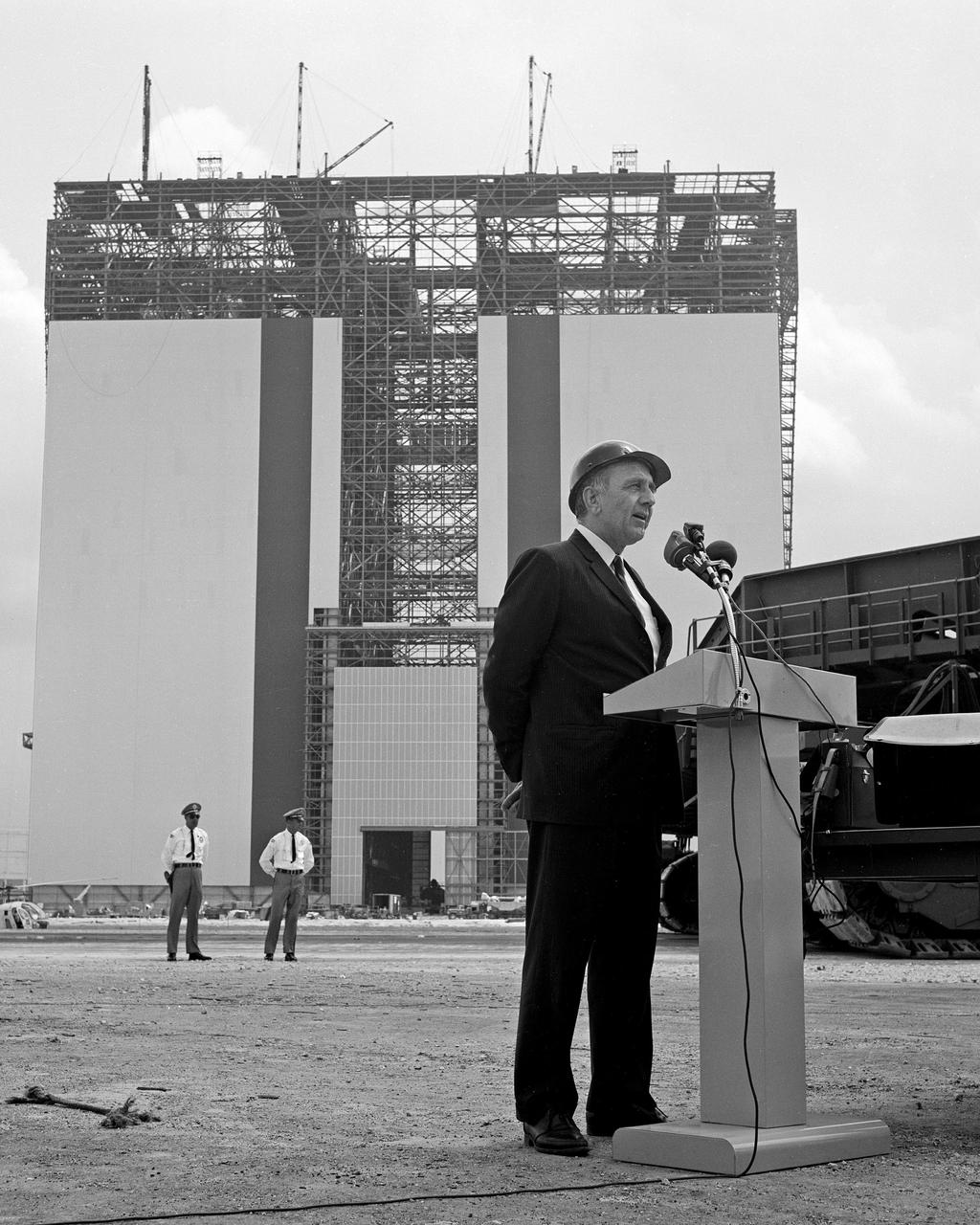
CAPE KENNEDY, Fla. -- At the Kennedy Space Center in Florida, Dr. Kurt H. Debus, center director, speaks at the "topping off" ceremonies for the Vehicle Assembly Building. A crawler-transporter is seen at the right. One of the largest buildings in the world, the 129 million cubic foot structure will be used to prepare the Apollo Saturn V launch vehicles for missions to land astronauts on the moon. Photo Credit: NASA
CAPE CANAVERAL, Fla. – The first stage of the Apollo 10 Saturn V space vehicle is hoisted above the transfer aisle in preparation for erection on a mobile launcher within High Bay 2 of the Vehicle Assembly Building. The erection of the 138-foot-long stage marked the first use of mobile launcher 3 and high bay 2. Apollo 10 will be piloted by astronauts Thomas Stafford, John Young and Eugene Cernan. In the foreground are the mated command, service and lunar modules the latter enclosed within the adapter for the Apollo 9 flight of James McDivitt, David Scott and Russel Schweickart. Photo credit: NASA
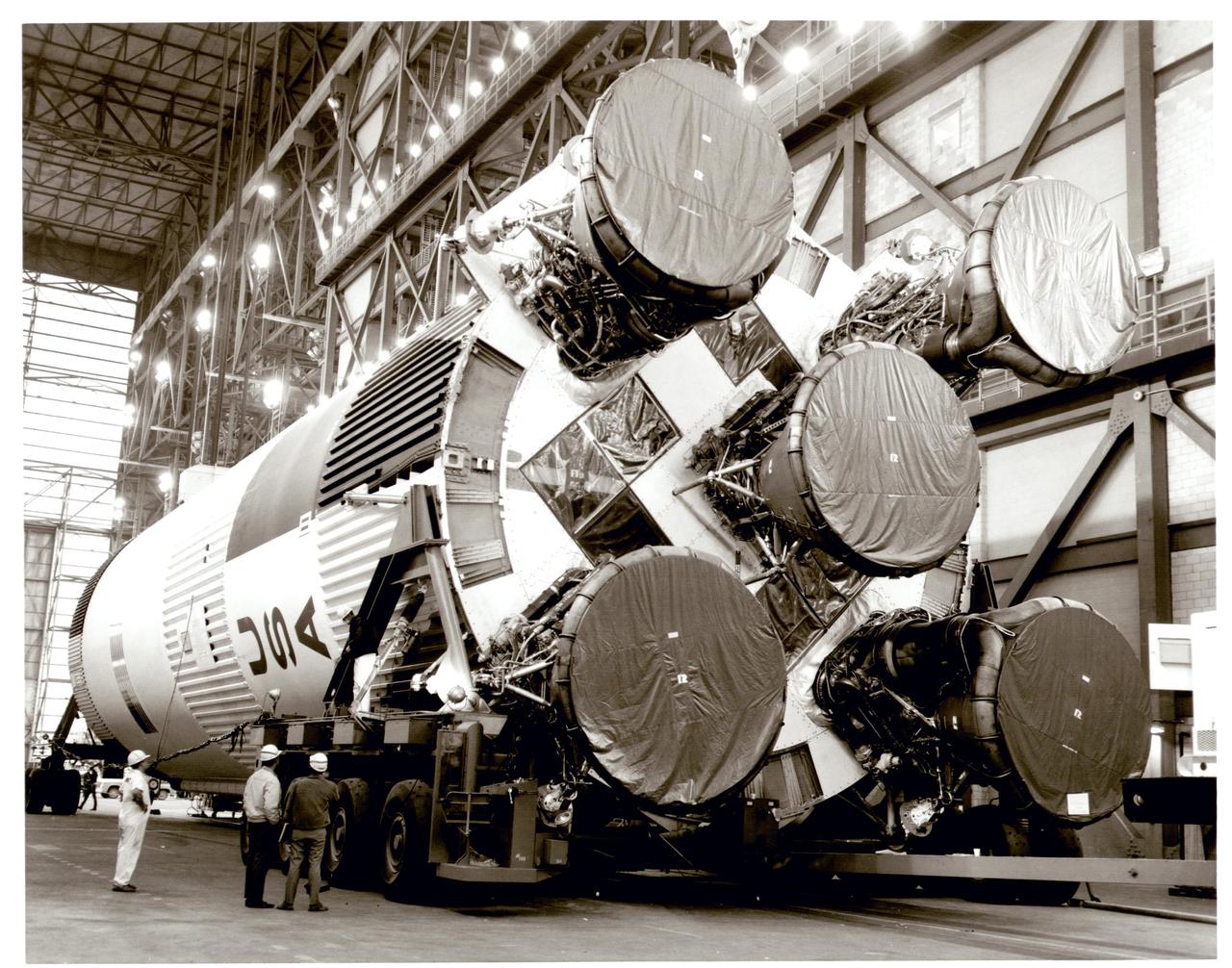
Teams attach the S-1C (first stage) booster for the Apollo 11 Saturn V rocket to cranes in preparation for lifting and stacking on its mobile launcher inside the Vehicle Assembly Building at NASA’s Kennedy Space Center in Florida in February 1969. The booster is 138 feet tall, 33 feet in diameter, and produces 7.5 million pounds of thrust from its five powerful engines. Apollo 11 was the first flight that landed humans on the Moon under the Apollo Program. The mission launched on July 16, 1969, and members of the crew included Commander Neil A. Armstrong, Command Module Pilot Michael Collins, and Lunar Module Pilot Edwin “Buzz” Aldrin.
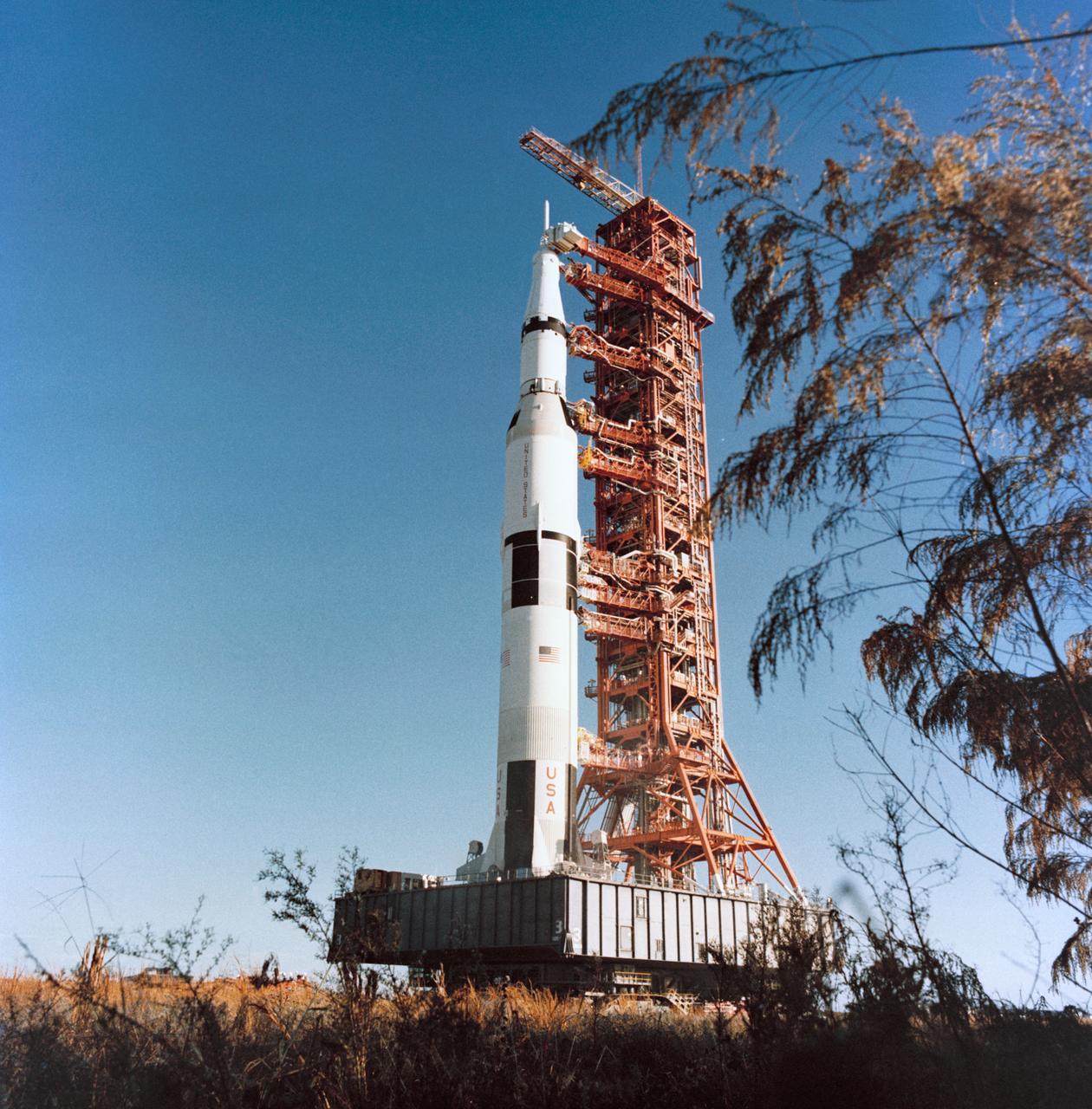
S72-19794 (13 Dec. 1971) --- A ground-level view showing the tall Apollo 16 (Spacecraft 113/Lunar Module 11/Saturn 511) space vehicle at the Kennedy Space Center's (KSC) Launch Complex 39 being moved from the Vehicle Assembly Building (VAB) toward Pad A. The Saturn V stack and its mobile launch tower are atop a huge crawler-transporter. The prime crew men of the scheduled Apollo 16 lunar landing mission are astronauts John W. Young, Apollo 16 lunar landing mission are astronauts John W. Young, commander; Thomas K. Mattingly II, command module pilot; and Charles M. Duke Jr., lunar module pilot.
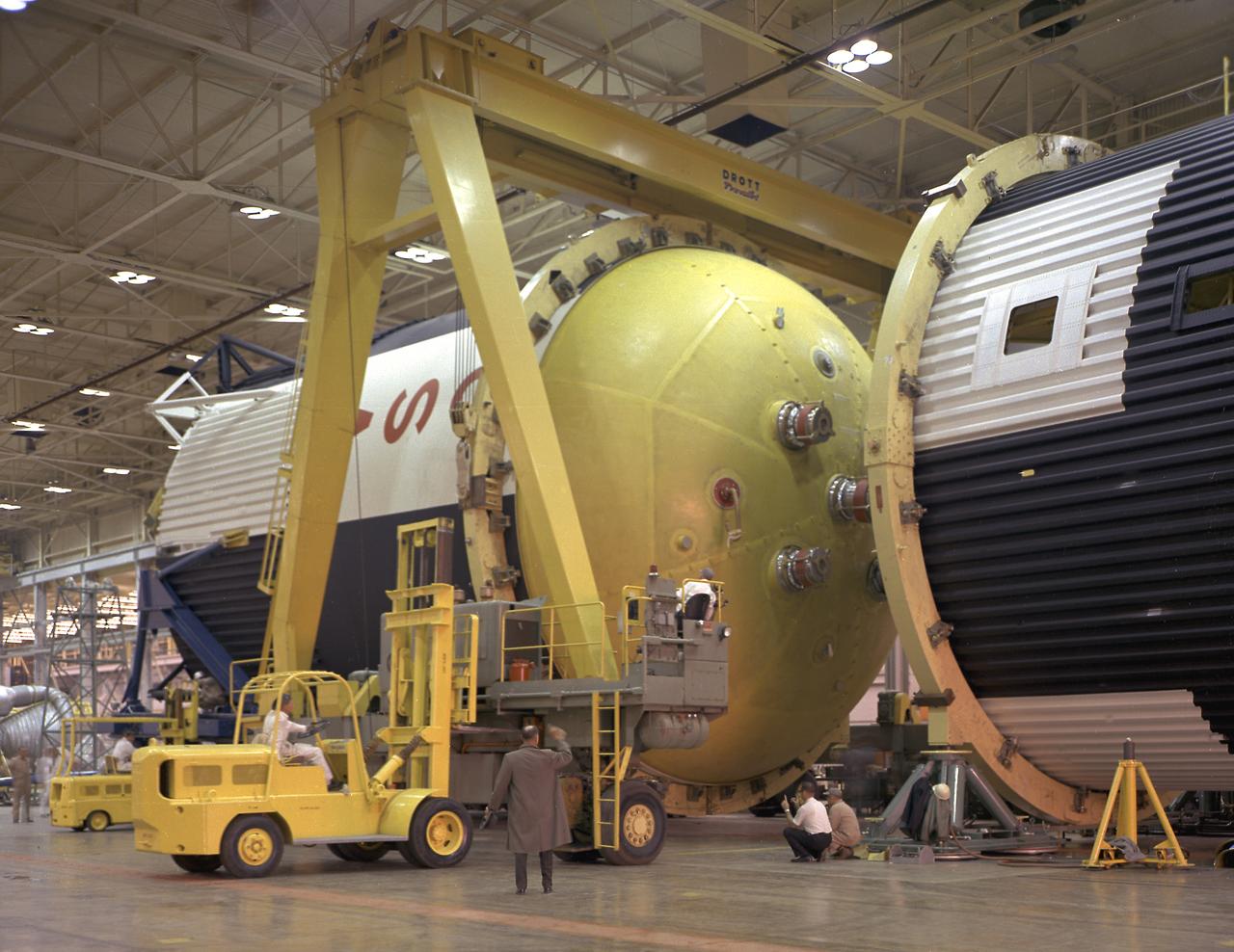
This photograph shows how the fuel tank assembly and the liquid oxygen tank for the Saturn V S-IC (first) stage are placed side by side prior to commencement of the mating of the two stages in the Marshall Space Flight Center, building 4705. The fuel tank carried kerosene as its fuel. The S-IC stage used five F-1 engines, that used kerosene and liquid oxygen as propellant and each engine provided 1,500,000 pounds of thrust. This stage lifted the entire vehicle and Apollo spacecraft from the launch pad.
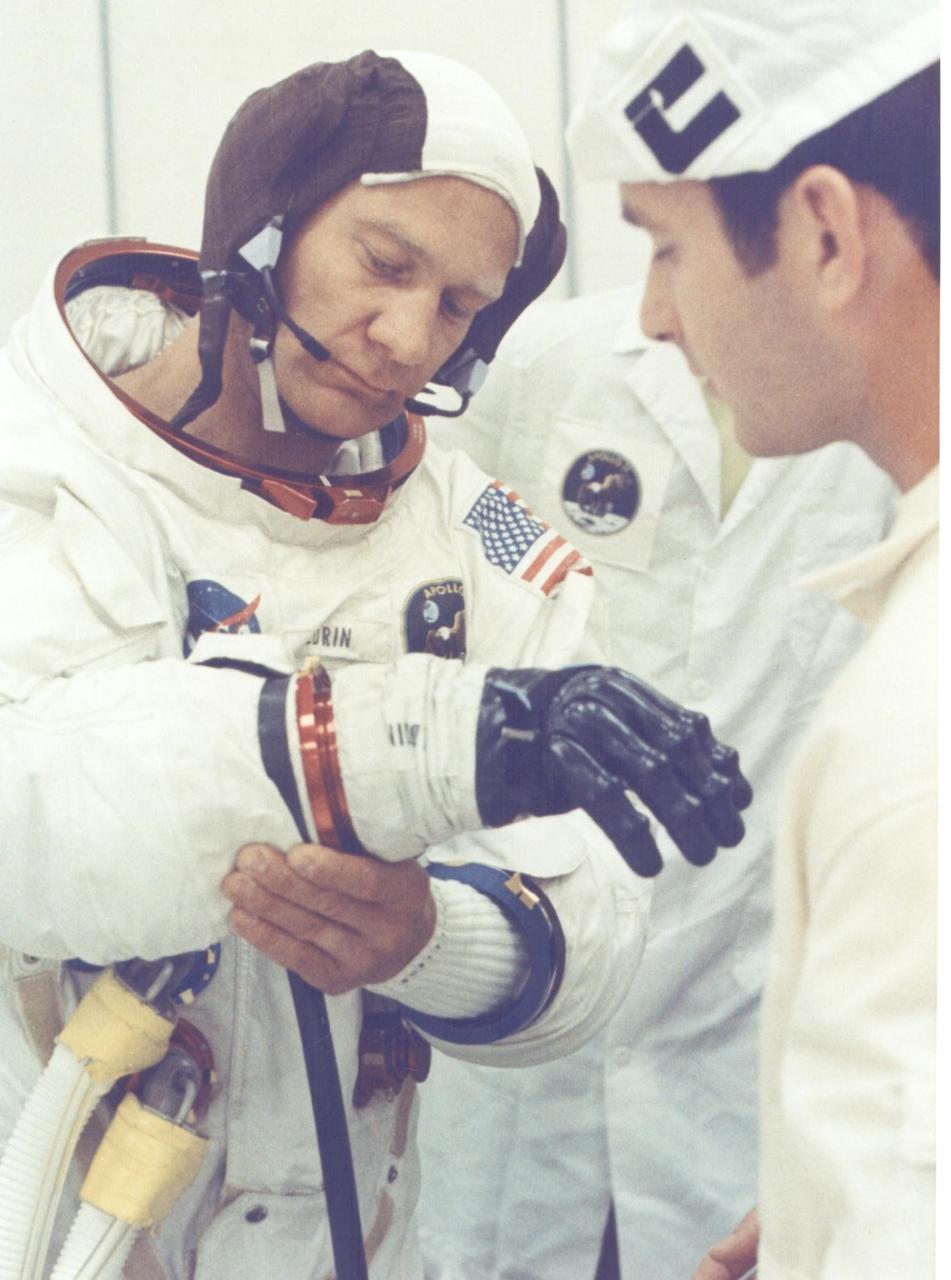
KENNEDY SPACE CENTER, FLA. - Apollo 11 astronaut Edwin E. Aldrin Jr. is being assisted by a spacesuit technician during suiting operations in the Manned Spacecraft Operations Building prior to the astronauts' departure to Launch Pad 39A. The three astronauts, Edwin E. Aldrin Jr., Neil A Armstrong and Michael Collins, will then board the Saturn V launch vehicle, scheduled for a 9:32 a.m. EDT liftoff for the first manned lunar landing mission.
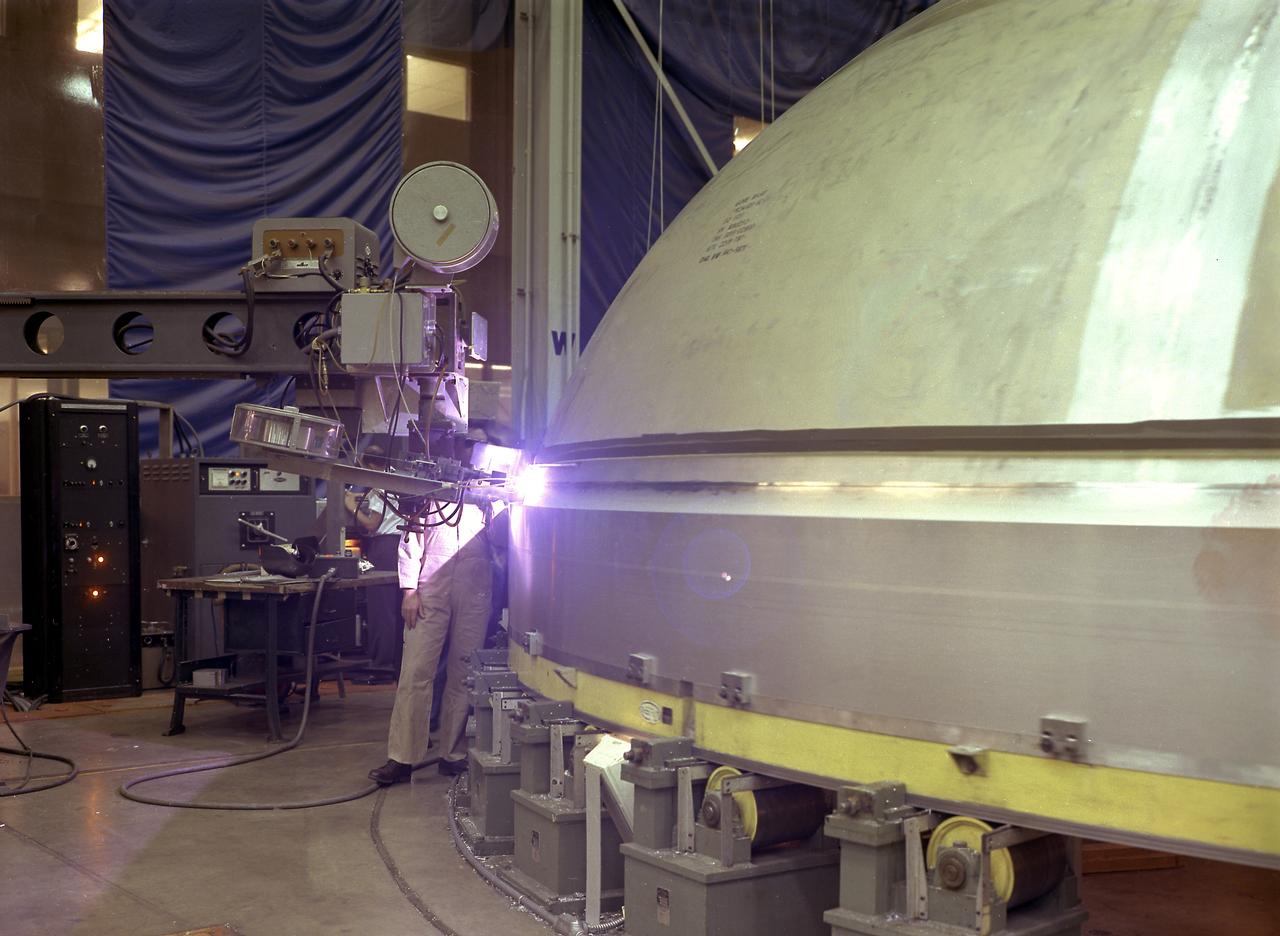
A technician is pictured at the Marshall Space Flight Center welding the Y-ring to the S-IC stage bulkhead and the fuel tank for the Saturn V SA-502 launch vehicle (Apollo 6 mission) in building 4705. The size of the S-IC required a special rig known as the Y-ring to join the tank wall cylinders and domes together. The Y-ring was designed to eliminate lap joints where the tank domes, wall, and adjoining structure (such as the intertank segment) came together.
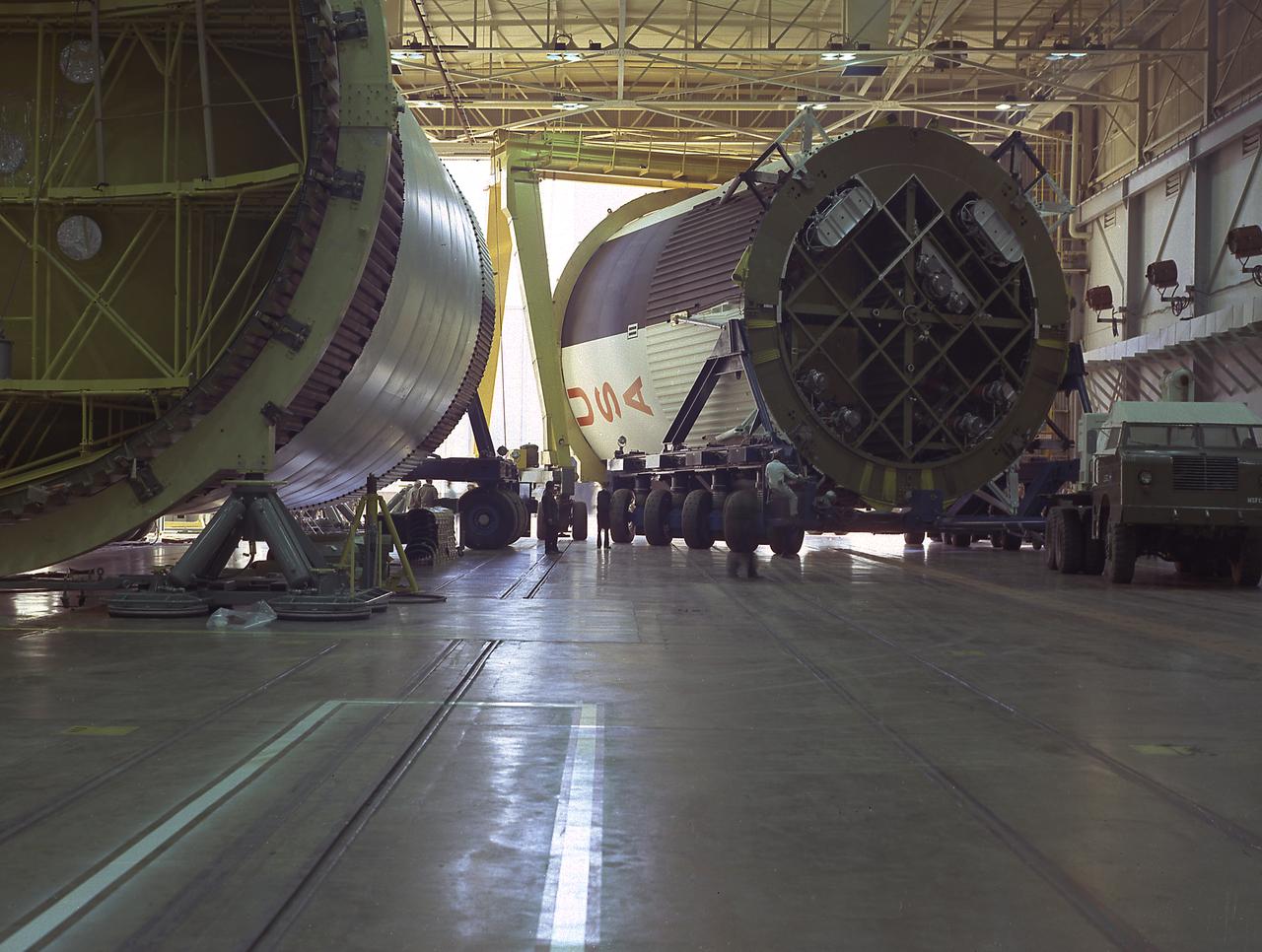
The fuel tank assembly for the Saturn V S-IC (first) stage arrived at the Marshall Space Flight Center, building 4707, for mating to the liquid oxygen tank. The fuel tank carried kerosene as its fuel. The S-IC stage used five F-1 engines, that used kerosene and liquid oxygen as propellant and each engine provided 1,500,000 pounds of thrust. This stage lifted the entire vehicle and Apollo spacecraft from the launch pad.
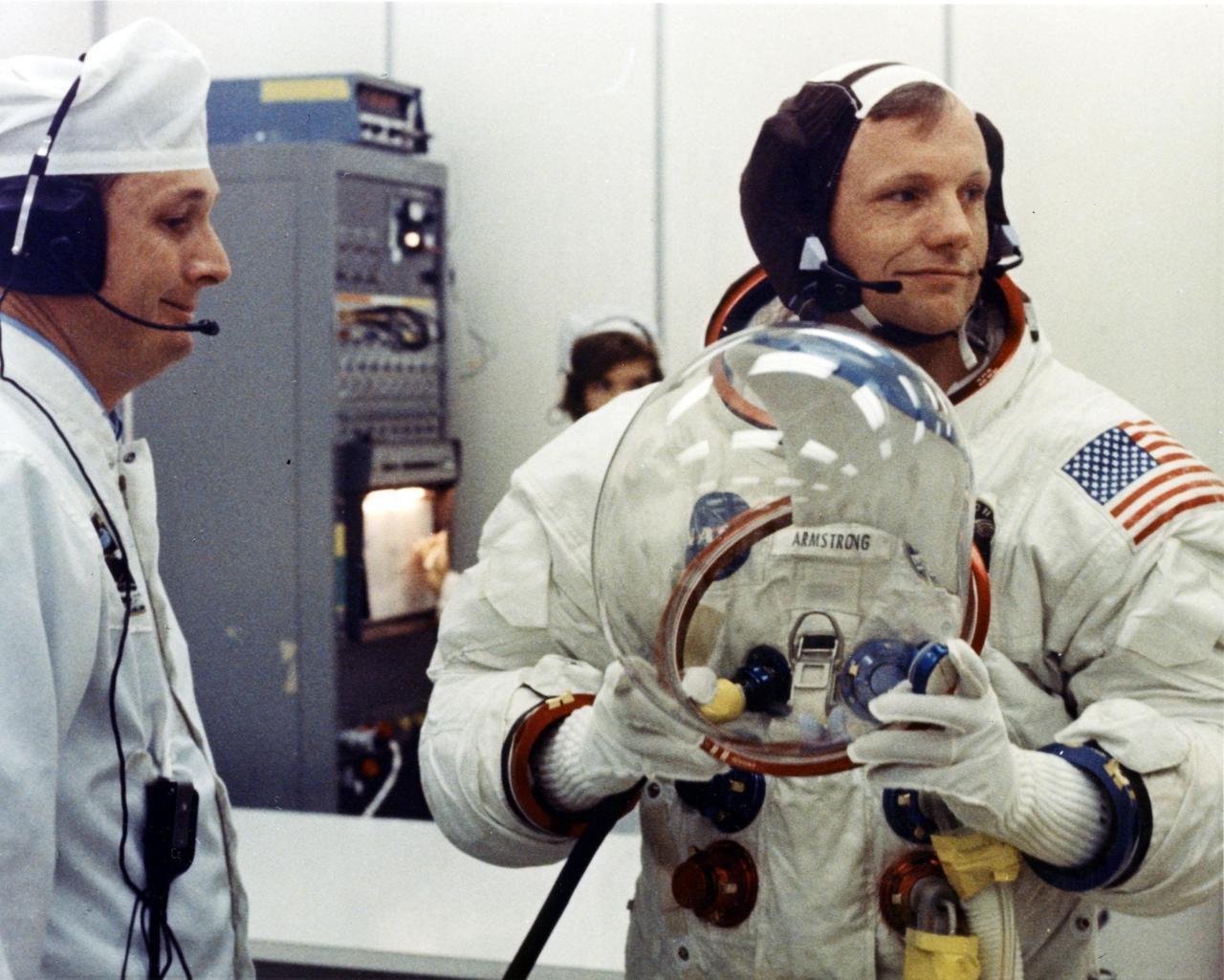
Apollo 11 Commander Neil Armstrong prepares to put on his helmet with the assistance of a spacesuit technician during suiting operations in the Manned Spacecraft Operations Building (MSOB) prior to the astronauts' departure to Launch Pad 39A. The three astronauts, Edwin E. Aldrin Jr., Neil A Armstrong and Michael Collins, will then board the Saturn V launch vehicle, scheduled for a 9:32 a.m. EDT liftoff, for the first manned lunar landing mission
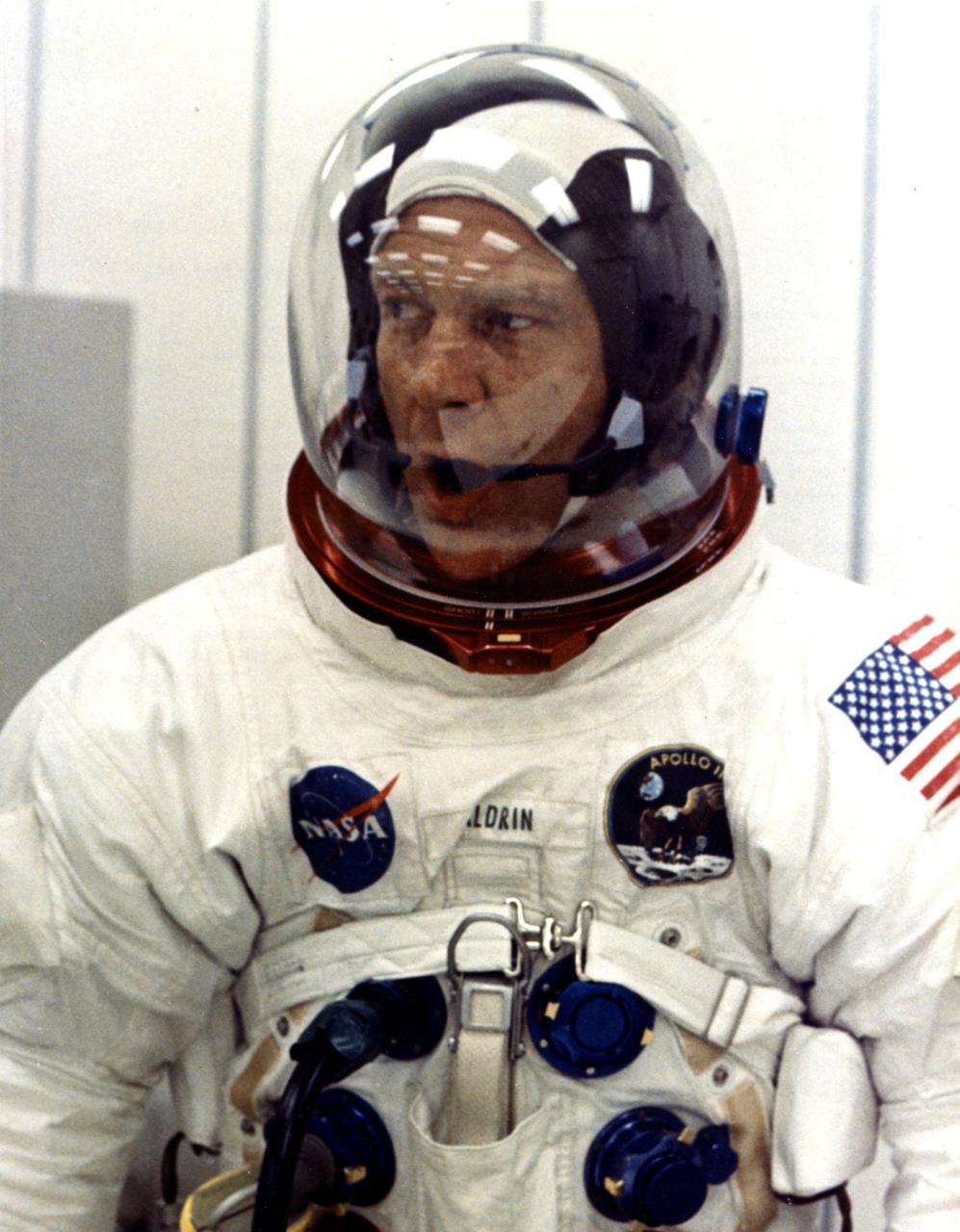
KENNEDY SPACE CENTER, FLA. -- Apollo 11 astronaut Edwin E. Aldrin Jr. appears to be relaxed during suiting operations in the Manned Spacecraft Operations Building (MSOB) prior to the astronauts' departure to Launch Pad 39A. The three astronauts, Edwin E. Aldrin Jr., Neil A. Armstrong and Michael Collins, will then board the Saturn V launch vehicle, scheduled for a 9:32 a.m. EDT liftoff, for the first manned lunar landing mission
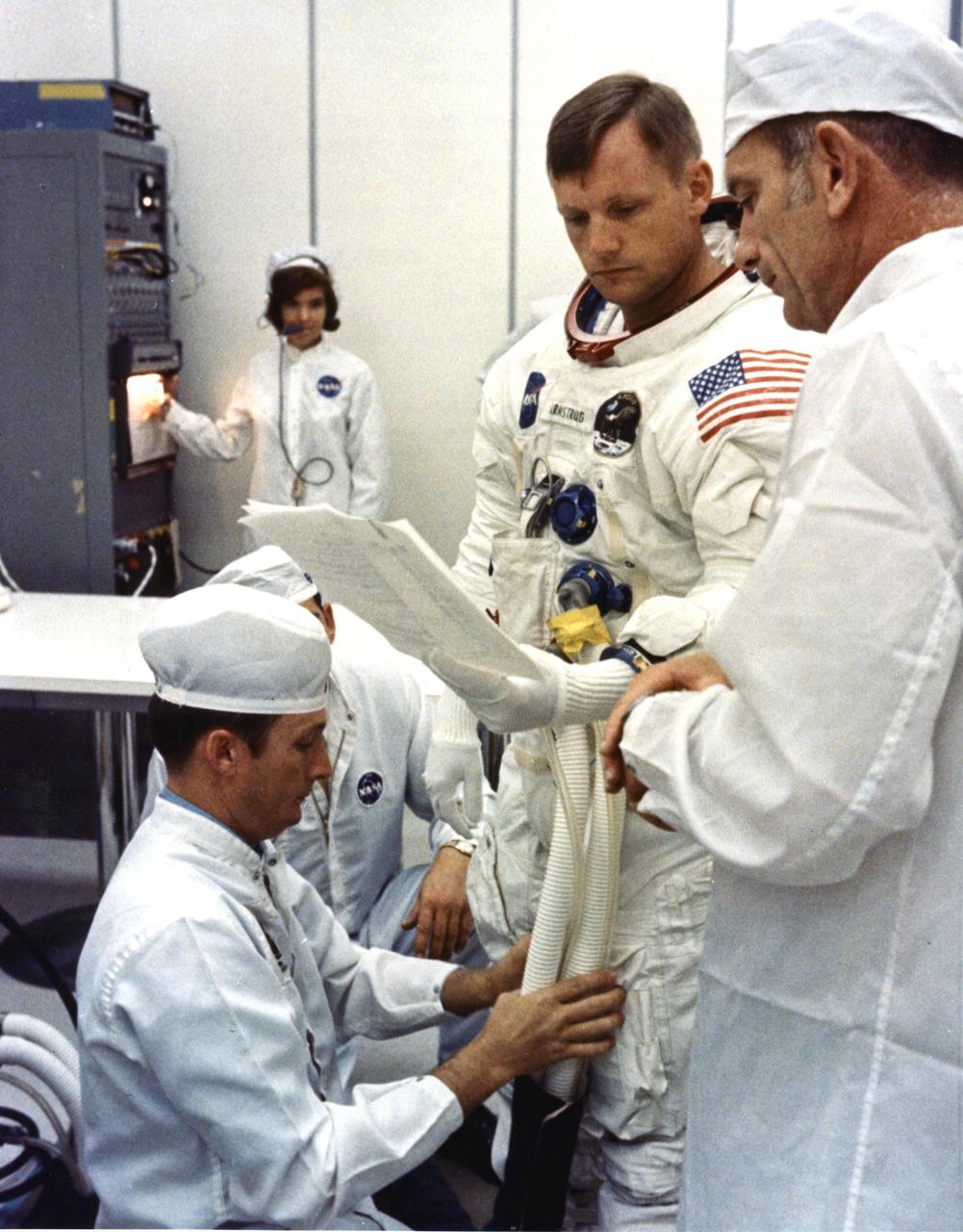
Apollo 11 Commander Neil Armstrong is looking over flight plans while being assisted by a spacesuit technician during suiting operations in the Manned Spacecraft Operations Building (MSOB) prior to the astronauts' departure to Launch Pad 39A. The three astronauts, Edwin E. Aldrin Jr., Neil A. Armstrong and Michael Collins will then board the Saturn V launch vehicle, scheduled for a 9:32 a.m. EDT liftoff, for the first manned lunar landing mission
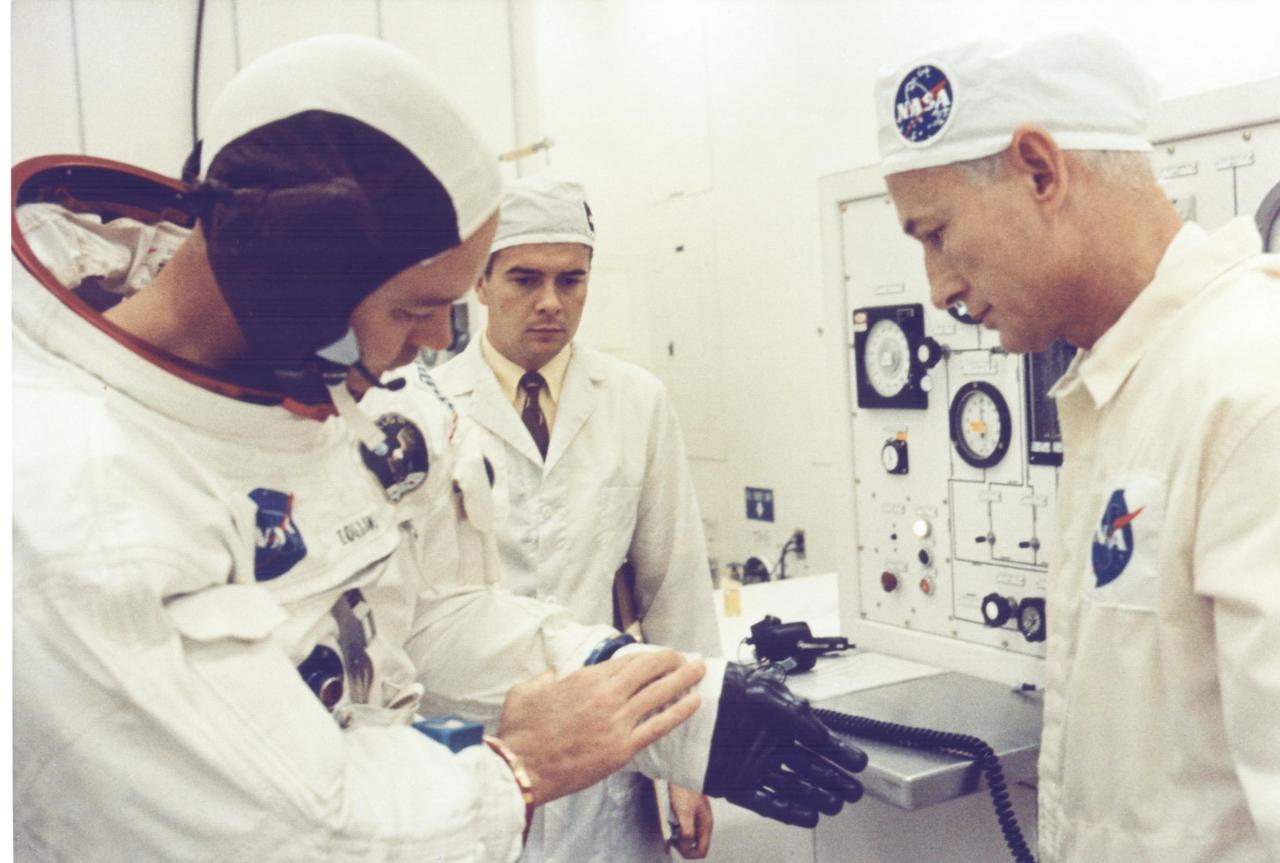
KENNEDY SPACE CENTER, FLA. - Apollo 11 Command Module Pilot Michael Collins appears to be explaining a point about his spacesuit glove to technician Joe Schmitt during suiting operations in the Manned Spacecraft Operations Building prior to the astronauts' departure to Launch Pad 39A. The three astronauts, Edwin E. Aldrin Jr., Neil A. Armstrong and Michael Collins will then board the Saturn V launch vehicle, scheduled for a 9:32 a.m. EDT liftoff for the first manned lunar landing.
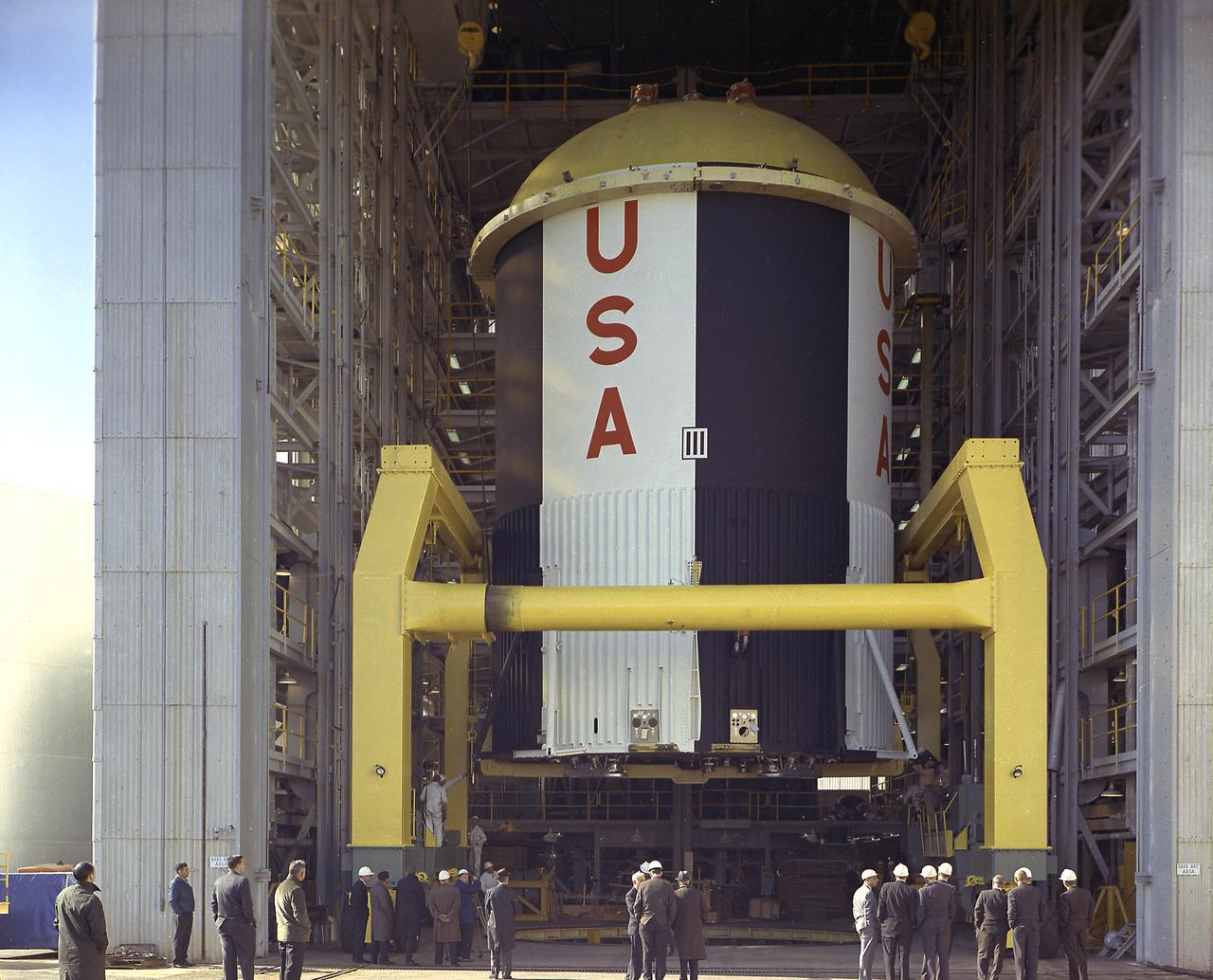
The fuel tank assembly of the Saturn V S-IC (first) stage supported with the aid of a C frame on the transporter was readied to be transported to the Marshall Space Flight Center, building 4705. The fuel tank carried kerosene (RP-1) as its fuel. The S-IC stage utilized five F-1 engines that used kerosene and liquid oxygen as propellant and each engine provided 1,500,000 pounds of thrust. This stage lifted the entire vehicle and Apollo spacecraft from the launch pad.
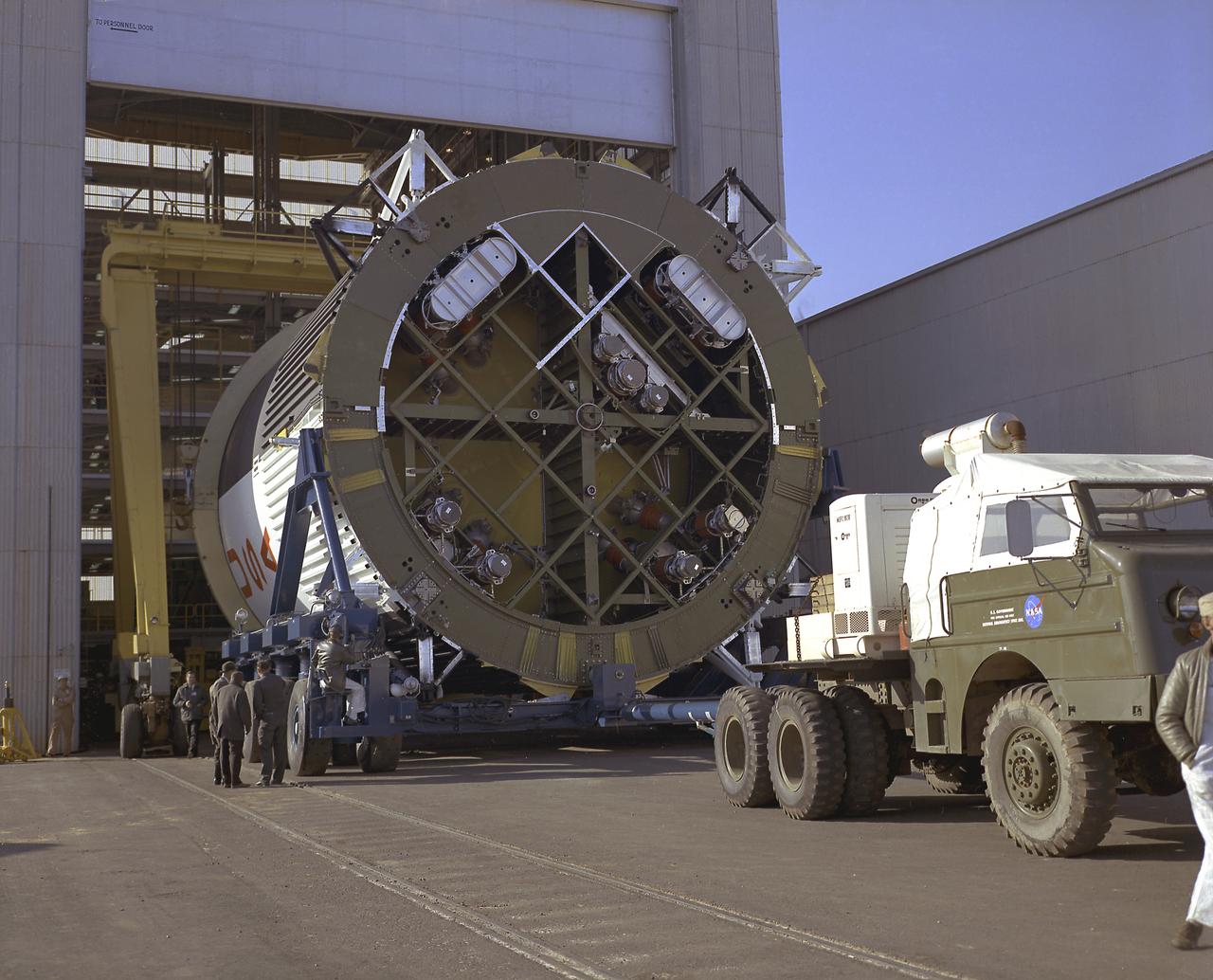
This photograph shows the fuel tank assembly for the Saturn V S-IC (first) stage being transported to the Marshall Space Flight Center, building 4705 for mating to the liquid oxygen (LOX) tank. The fuel tank carried kerosene (RP-1) as its fuel. The S-IC stage used five F-1 engines, that used kerosene and liquid oxygen as propellant and each engine provided 1,500,000 pounds of thrust. This stage lifted the entire vehicle and Apollo spacecraft from the launch pad.
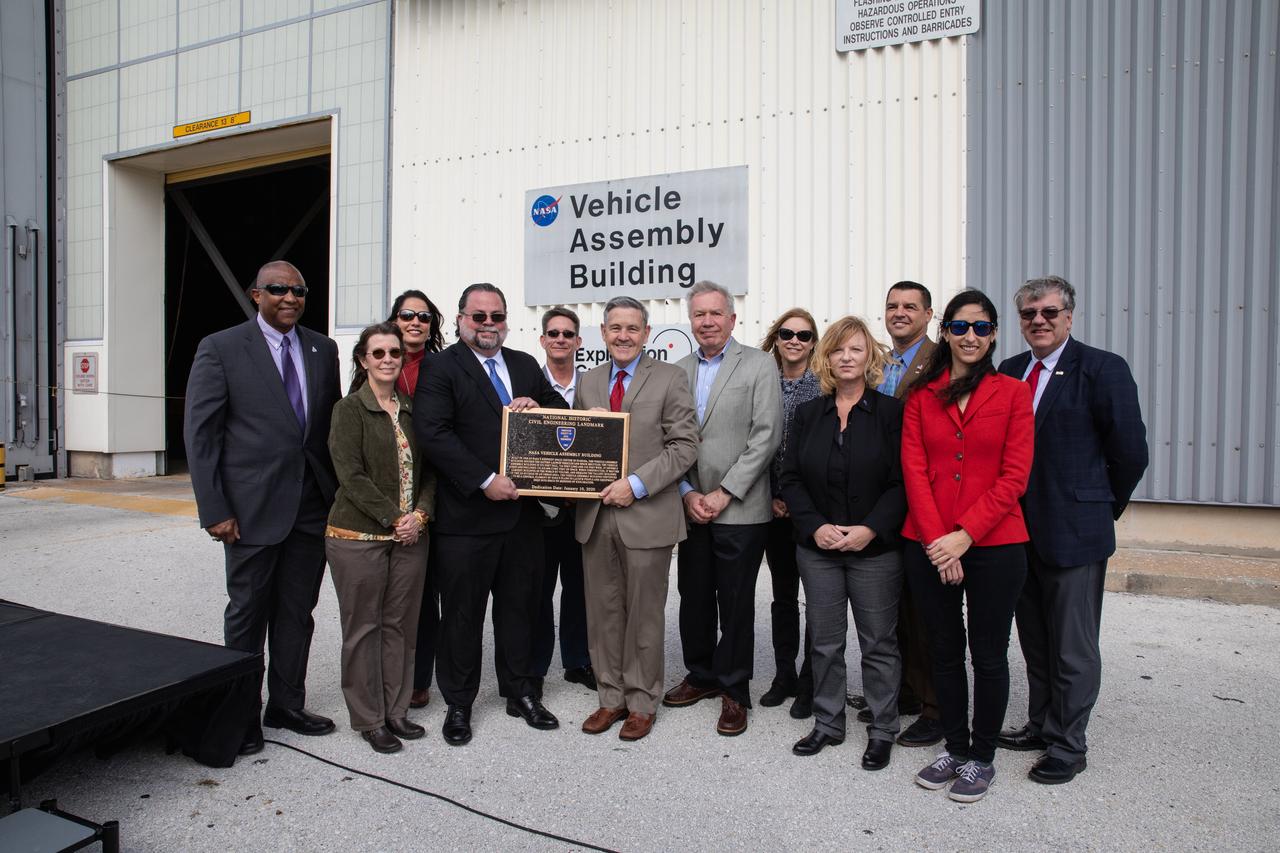
Kennedy Space Center Director Bob Cabana, center, accepts the National Historic Civil Engineering Landmark award from the Florida Section American Society of Civil Engineers (ASCE) for the Vehicle Assembly Building during a ceremony in front of the iconic facility on Jan. 10, 2020. Holding the award with Cabana is Peter Moore, ASCE Region 5 director. At far left is Kelvin Manning, associate director, technical. The ASCE nominated the historic building and bestowed the award. The VAB is the first building at Kennedy Space Center to earn this distinction. At the time of its completion, the 129-million-cubic-foot structure was the largest building in the world. Originally designed and built to accommodate the Saturn V/Apollo used in Project Apollo, the VAB was later modified for its role in the Space Shuttle Program.
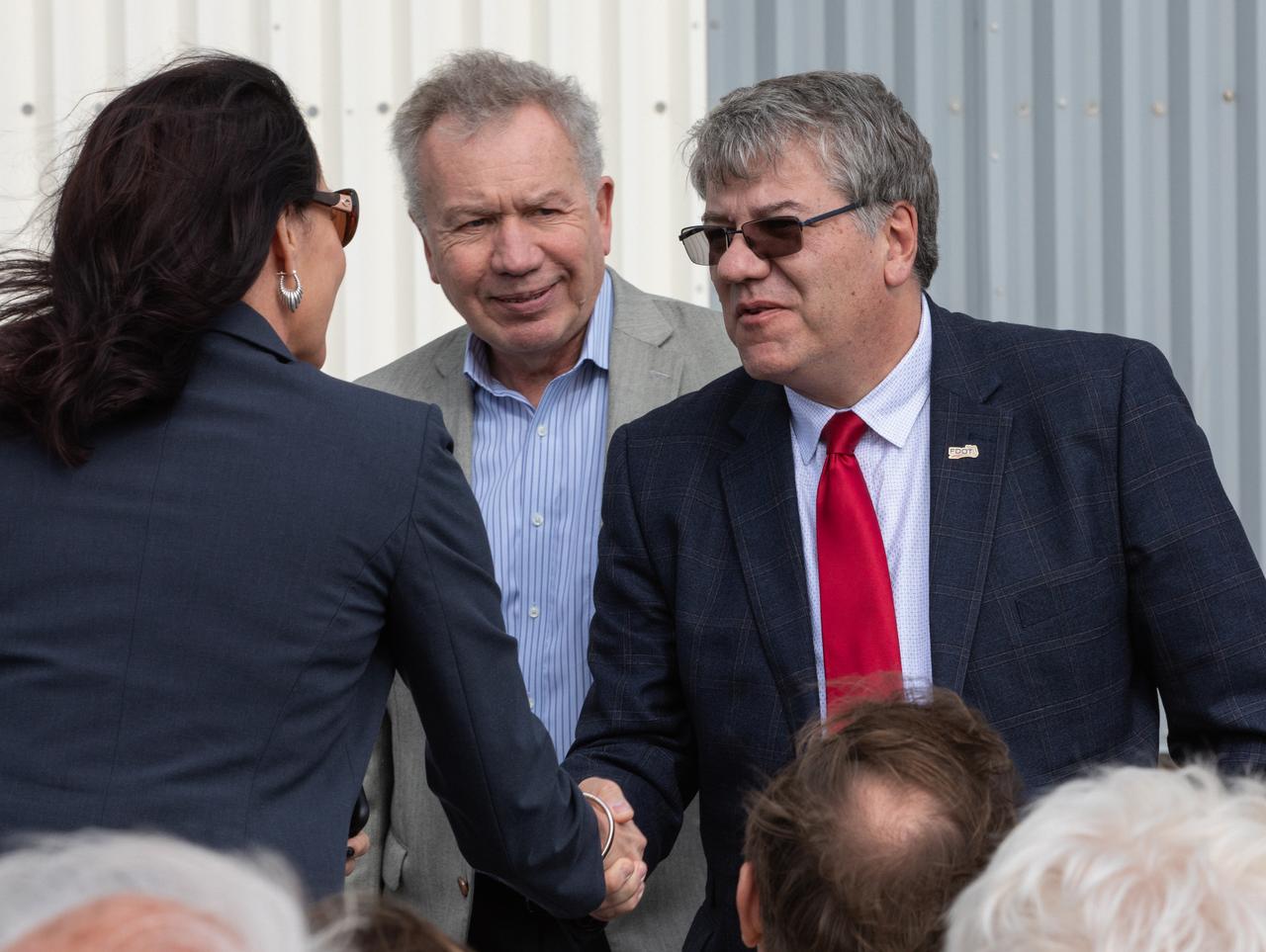
Florida Department of Transportation Secretary Kevin Thibault shakes hands with an attendee during a ceremony on Jan. 10, 2020, to recognize the Vehicle Assembly Building with the National Historic Civil Engineering Landmark award. The Florida Section American Society of Civil Engineers (ASCE) nominated the historic building and bestowed the award. Standing next to Thibault is Glenn Bell, ASCE Society of Structural Engineering Institute president. The VAB is the first building at Kennedy Space Center to earn this distinction. At the time of its completion, the 129-million-cubic-foot structure was the largest building in the world. Originally designed and built to accommodate the Saturn V/Apollo used in Project Apollo, the VAB was later modified for its role in the Space Shuttle Program.
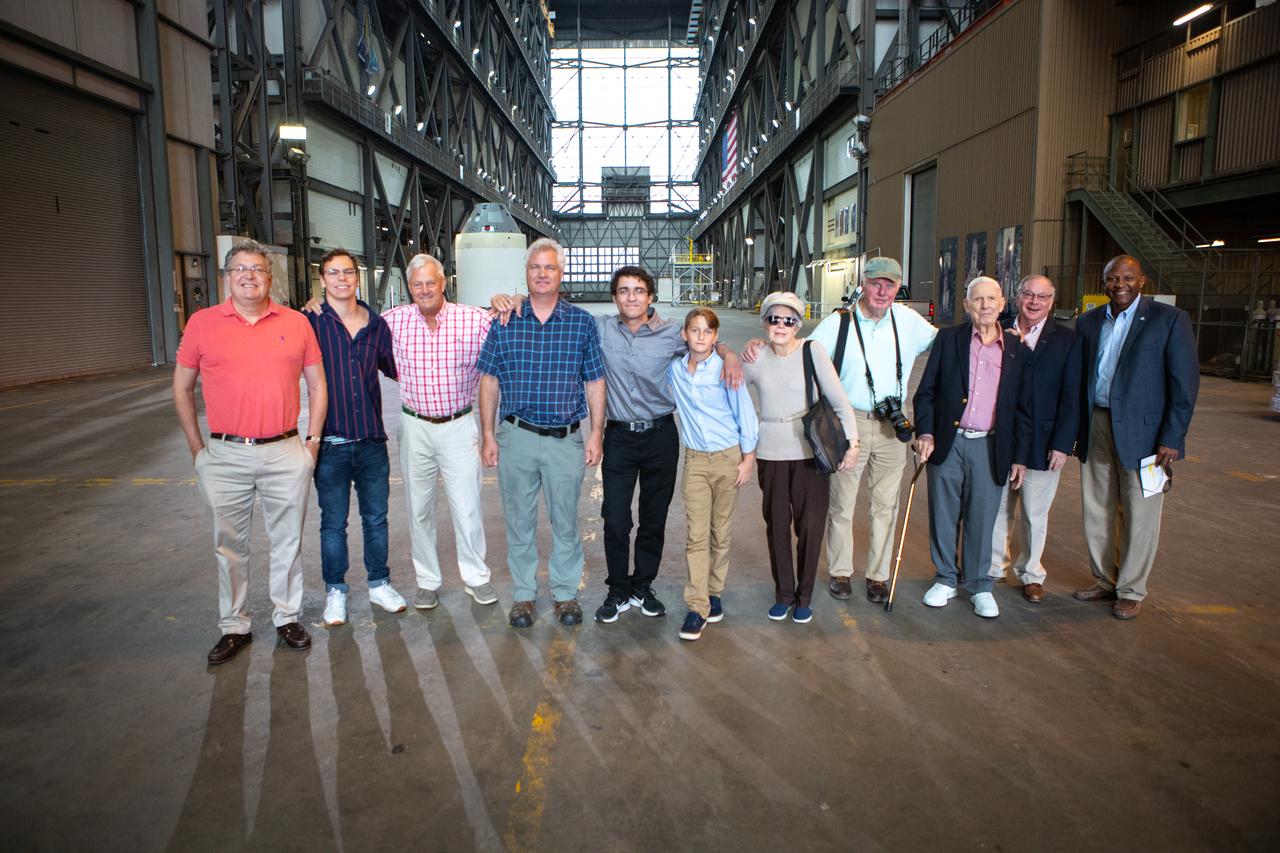
Phil Moyer, third from right, original project lead for the Vehicle Assembly Building (VAB); and Dick Bergmann, fourth from right, original lead designer for the VAB, tour the iconic facility with the families of the original architect on Nov. 22, 2019 at NASA’s Kennedy Space Center in Florida. At far right is Kelvin Manning, Kennedy’s associate director, technical. The Florida Section American Society of Civil Engineers bestowed the historic building with its National Historic Civil Engineering Landmark award during a ceremony on Jan. 10, 2020. The VAB is the first building at Kennedy Space Center to earn this distinction. At the time of its completion, the 129-million-cubic-foot structure was the largest building in the world. Originally designed and built to accommodate the Saturn V/Apollo used in Project Apollo, the VAB was later modified for its role in the Space Shuttle Program.
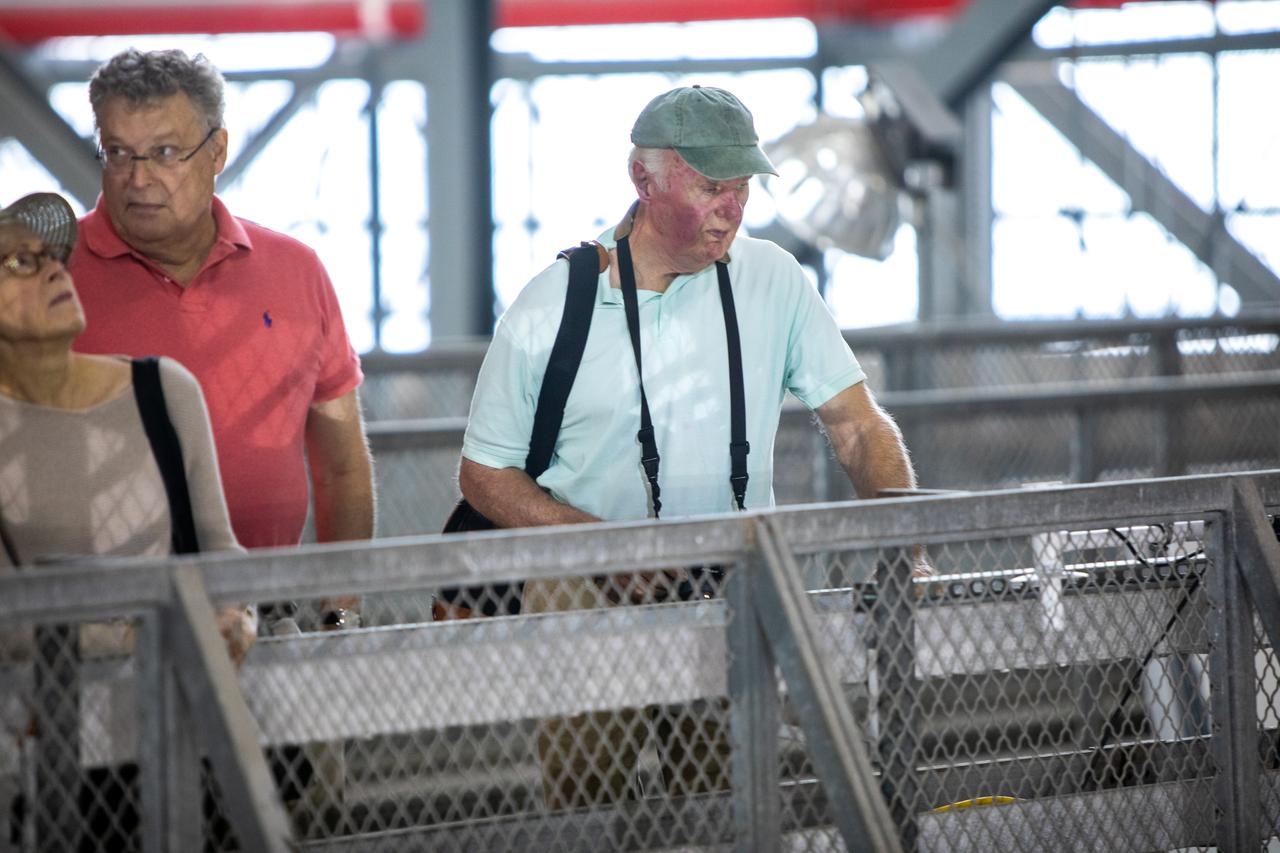
Dick Bergmann, at right, original lead designer for the Vehicle Assembly Building, tours the iconic facility on Nov. 22, 2019 at NASA’s Kennedy Space Center in Florida. Vehicle Assembly Building with the National Historic Civil Engineering Landmark award. The Florida Section American Society of Civil Engineers bestowed its National Historic Civil Engineering Landmark award during a ceremony on Jan. 10, 2020. The VAB is the first building at Kennedy Space Center to earn this distinction. At the time of its completion, the 129-million-cubic-foot structure was the largest building in the world. Originally designed and built to accommodate the Saturn V/Apollo used in Project Apollo, the VAB was later modified for its role in the Space Shuttle Program.
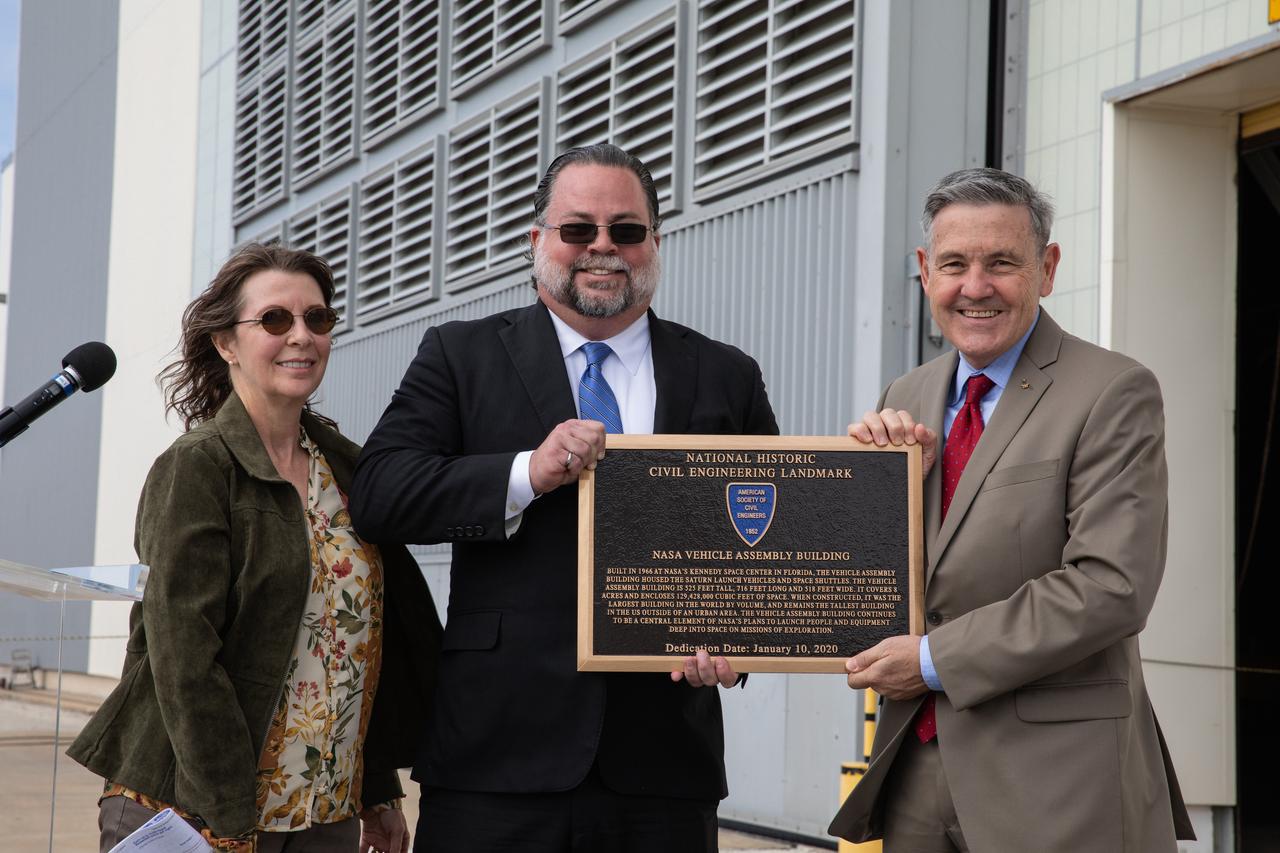
Kennedy Space Center Director Bob Cabana, far right, accepts the National Historic Civil Engineering Landmark award from the Florida Section American Society of Civil Engineers (ASCE) for the Vehicle Assembly Building during a ceremony in front of the iconic facility on Jan. 10, 2020. Next to Cabana, from left are Carol Stevens, ASCE Society of History and Heritage Committee member; and Peter Moore, ASCE Region 5 director. The ASCE nominated the historic building and bestowed the award. The VAB is the first building at Kennedy Space Center to earn this distinction. At the time of its completion, the 129-million-cubic-foot structure was the largest building in the world. Originally designed and built to accommodate the Saturn V/Apollo used in Project Apollo, the VAB was later modified for its role in the Space Shuttle Program.
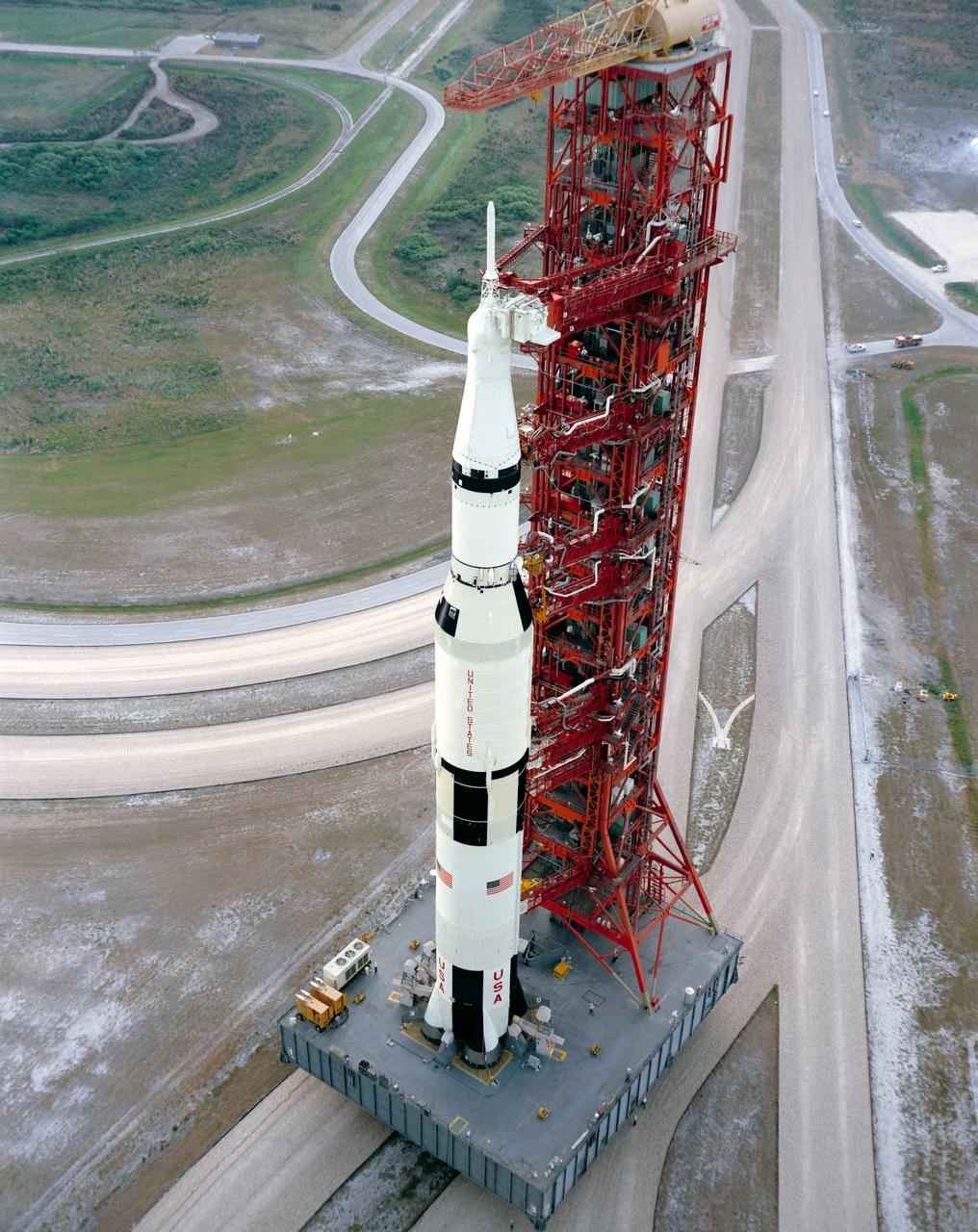
S71-33781 (11 May 1971) --- High angle view showing the Apollo 15 (Spacecraft 112/Lunar Module 10/Saturn 510) space vehicle on the way from the Vehicle Assembly Building (VAB) to Pad A, Launch Complex 39, Kennedy Space Center (KSC). The Saturn V stack and its mobile launch tower are atop a huge crawler-transporter. Apollo 15 is scheduled as the fourth manned lunar landing mission by the National Aeronautics and Space Administration (NASA). The crew men will be astronauts David R. Scott, commander; Alfred M. Worden, command module pilot; and James B. Irwin, lunar module pilot. While astronauts Scott and Irwin descend in the Lunar Module (LM) to explore the moon, astronaut Worden will remain with the Command and Service Modules (CSM) in lunar orbit.
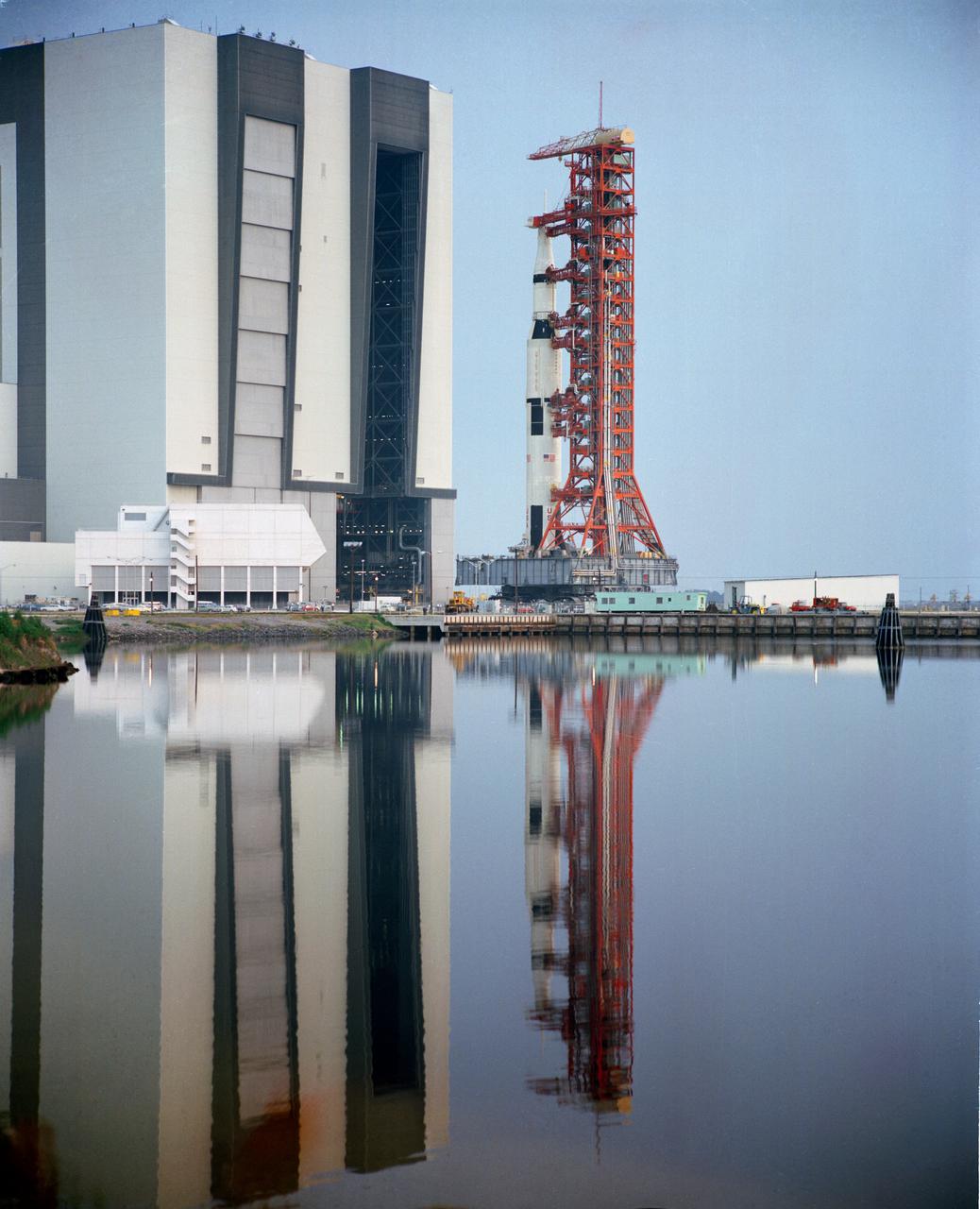
S71-33786 (11 May 1971) --- The 363-feet tall Apollo (Spacecraft 112/Lunar Module 10/Saturn 510) space vehicle which leaves the Vehicle Assembly Building (VAB) to Pad A, Launch Complex 39, Kennedy Space Center (KSC). The Saturn V stack and its mobile launch tower are atop a huge crawler-transporter. Apollo 15 is scheduled as the fourth manned lunar landing mission by the National Aeronautics and Space Administration (NASA) and is scheduled to lift off on July 26, 1971. The crew men will be astronauts David R. Scott, commander; Alfred M. Worden, command module pilot; and James B. Irwin, lunar module pilot. While astronaut Scott and Irwin will descend in the Lunar Module (LM) to explore the moon, astronaut Worden will remain with the Command and Service Modules (CSM) in lunar orbit.
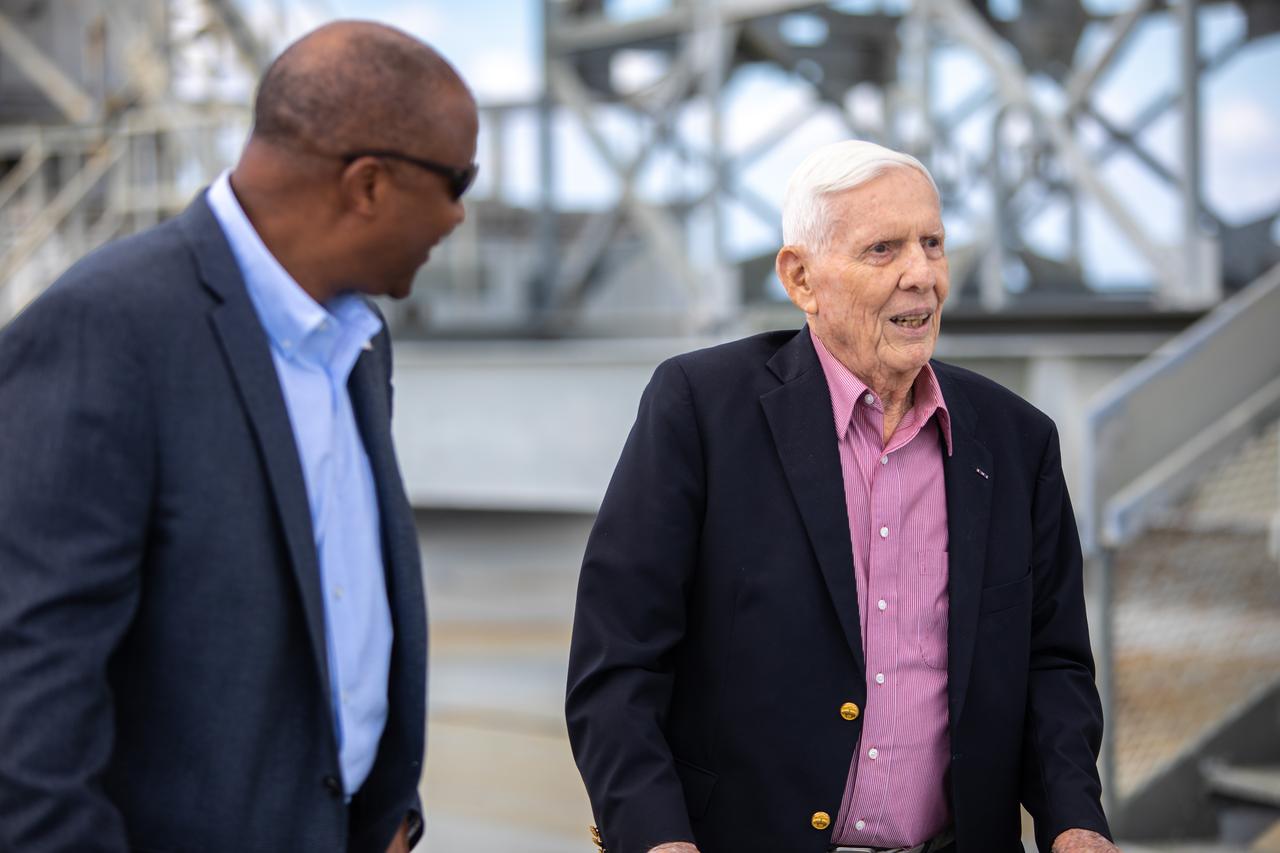
Phil Moyer, at right, original project lead for the Vehicle Assembly Building (VAB), tours the iconic facility on Nov. 22, 2019 at NASA’s Kennedy Space Center in Florida. At left is Kelvin Manning, Kennedy’s associate director, technical. The VAB was recognized with the National Historic Civil Engineering Landmark award by the Florida Section American Society of Civil Engineers during a ceremony on Jan. 10, 2020. The VAB is the first building at Kennedy Space Center to earn this distinction. At the time of its completion, the 129-million-cubic-foot structure was the largest building in the world. Originally designed and built to accommodate the Saturn V/Apollo used in Project Apollo, the VAB was later modified for its role in the Space Shuttle Program.
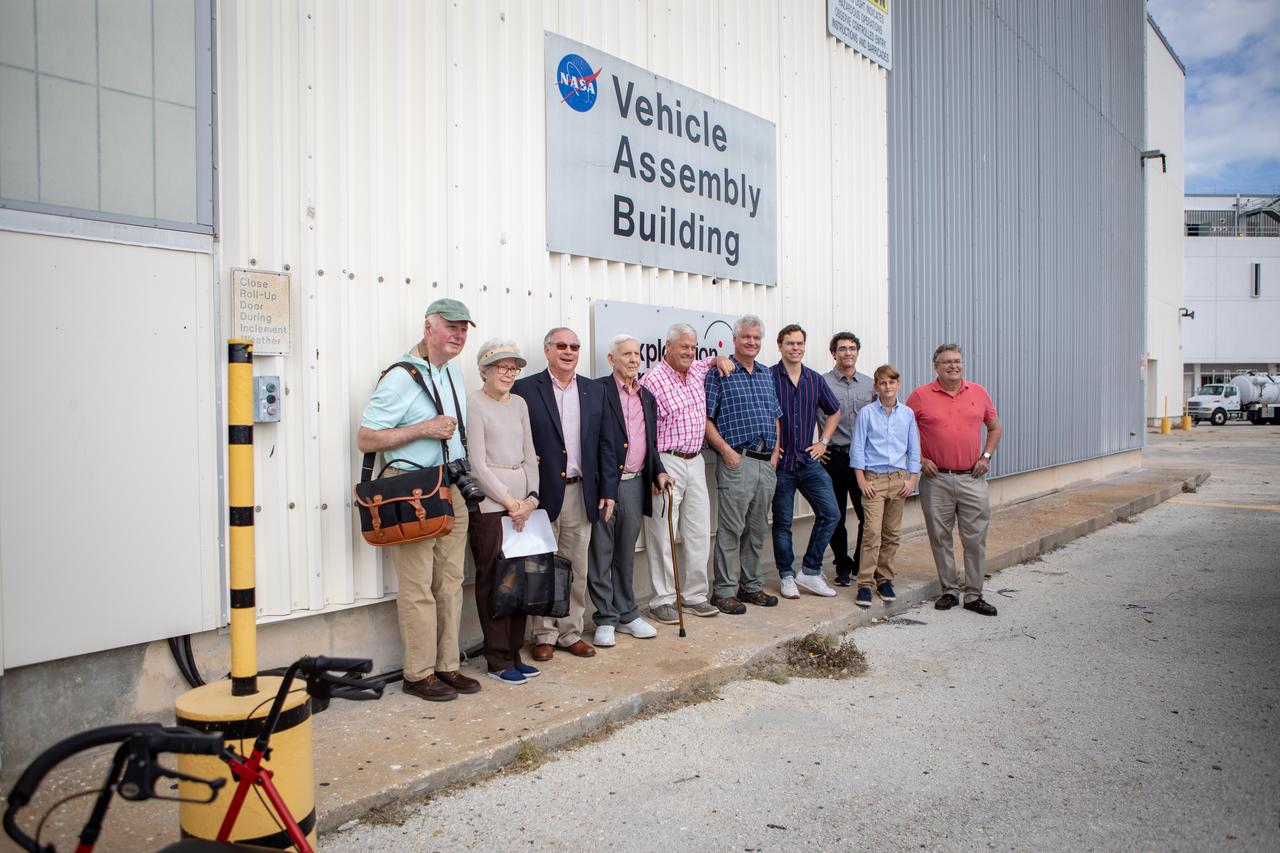
Dick Bergmann, far left, original lead designer for the Vehicle Assembly Building (VAB); and Phil Moyer, fourth from left, original project lead for the VAB, tour the iconic facility at Kennedy Space Center in Florida with descendants of Max Urbahn, the original architect, on Nov. 22, 2019. The Florida Section American Society of Civil Engineers bestowed its National Historic Civil Engineering Landmark award to the facility. The VAB is the first building at Kennedy Space Center to earn this distinction. At the time of its completion, the 129-million-cubic-foot structure was the largest building in the world. Originally designed and built to accommodate the Saturn V/Apollo used in Project Apollo, the VAB was later modified for its role in the Space Shuttle Program.
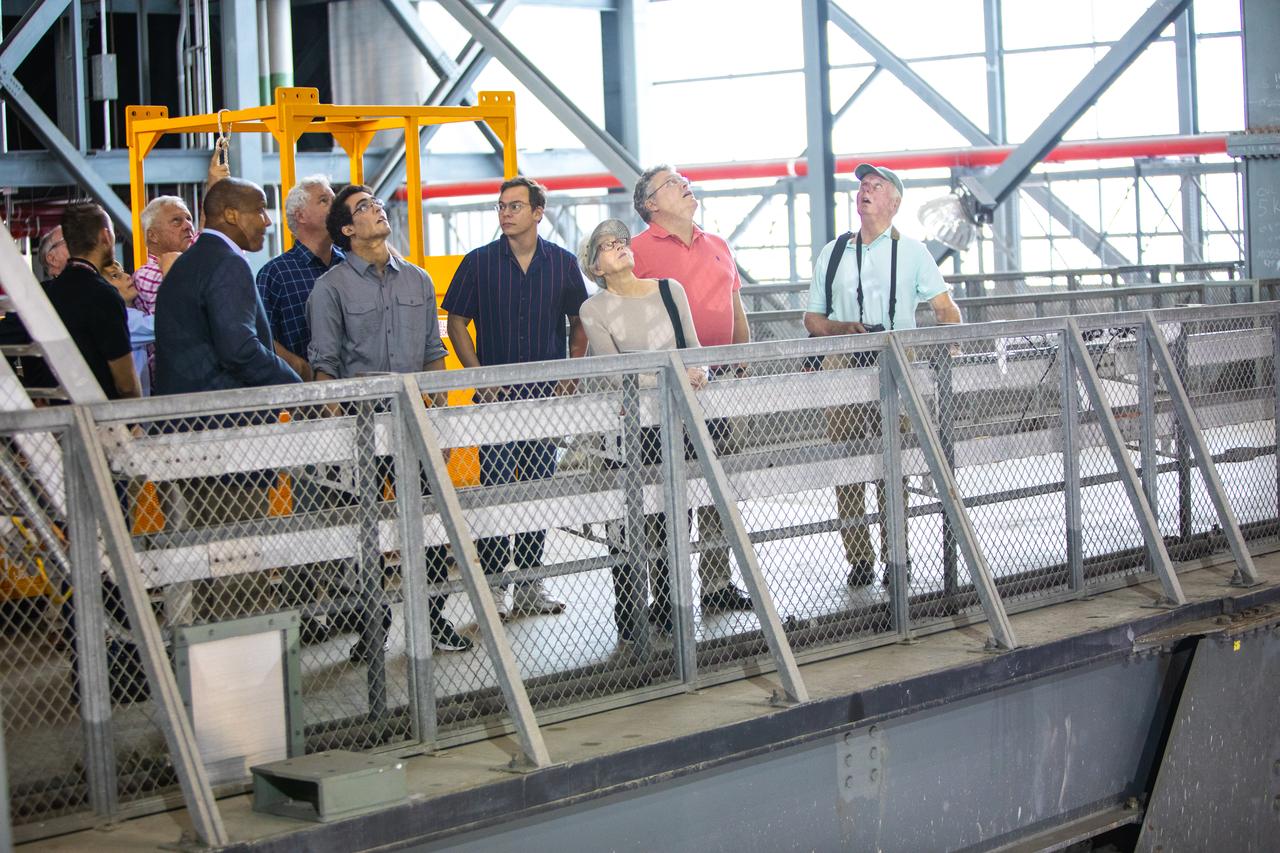
Family members of the original Vehicle Assembly Building (VAB) architect tour the iconic facility on Nov. 22, 2019 at NASA’s Kennedy Space Center in Florida. Among the visitors are Dick Bergmann, far right, original lead designer for the VAB. In view, far left, is Kelvin Manning, Kennedy’s associate director, technical. The Florida Section American Society of Civil Engineers bestowed its National Historic Civil Engineering Landmark award to the facility. The VAB is the first building at Kennedy Space Center to earn this distinction. At the time of its completion, the 129-million-cubic-foot structure was the largest building in the world. Originally designed and built to accommodate the Saturn V/Apollo used in Project Apollo, the VAB was later modified for its role in the Space Shuttle Program.
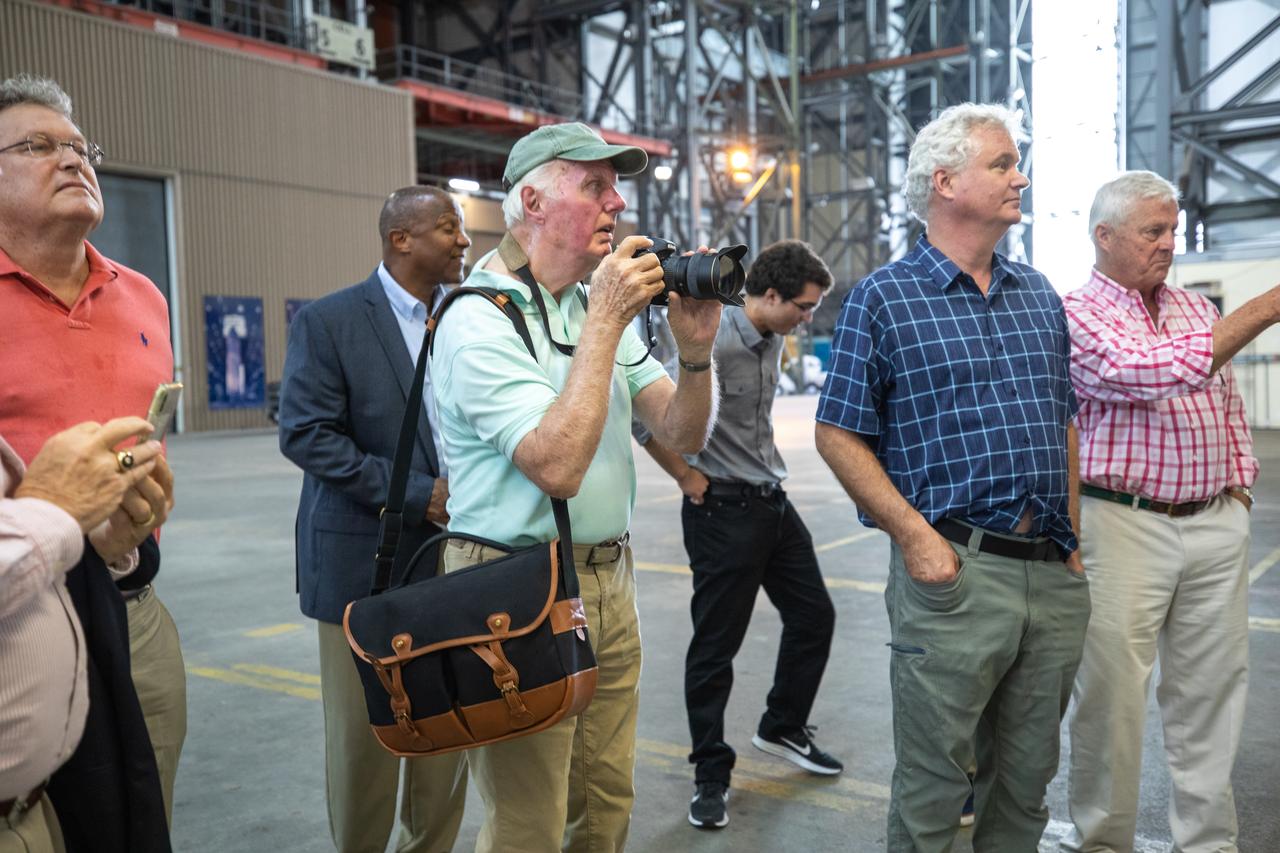
Dick Bergmann, far left in front, original lead designer for the Vehicle Assembly Building (VAB), tours the iconic facility at Kennedy Space Center in Florida with descendants of Max Urbahn, the original architect, on Nov. 22, 2019. Behind Bergmann is Kelvin Manning, Kennedy associate director, technical. The Florida Section American Society of Civil Engineers bestowed its National Historic Civil Engineering Landmark award to the facility. The VAB is the first building at Kennedy Space Center to earn this distinction. At the time of its completion, the 129-million-cubic-foot structure was the largest building in the world. Originally designed and built to accommodate the Saturn V/Apollo used in Project Apollo, the VAB was later modified for its role in the Space Shuttle Program.
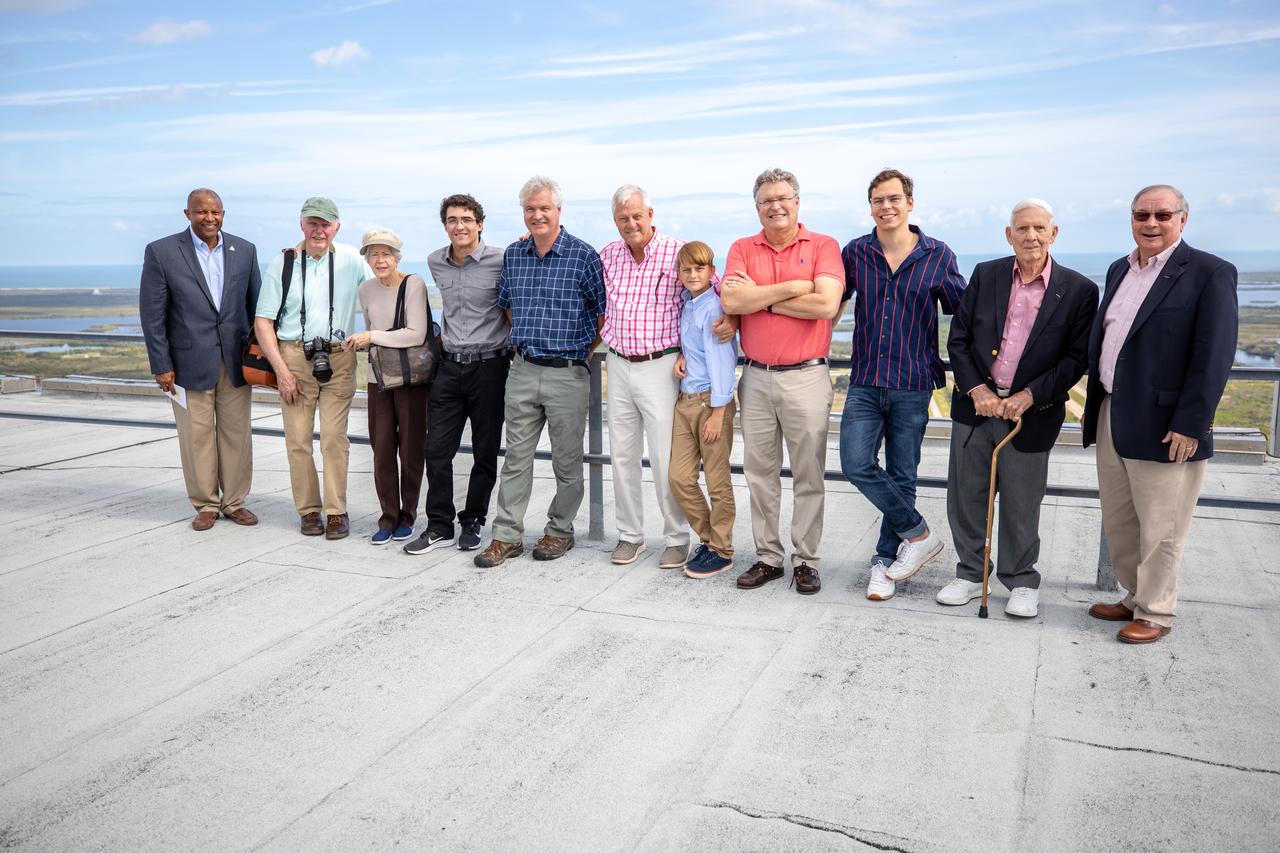
Dick Bergmann, second from left, original lead designer for the Vehicle Assembly Building (VAB), and Phil Moyer, second from right, original project lead, are on the roof of the VAB during a tour of Kennedy Space Center in Florida with descendants of Max Urbahn, the original architect, on Nov. 22, 2019. At far left is Kelvin Manning, Kennedy associate director, technical. The Florida Section American Society of Civil Engineers bestowed its National Historic Civil Engineering Landmark award to the facility. The VAB is the first building at Kennedy Space Center to earn this distinction. At the time of its completion, the 129-million-cubic-foot structure was the largest building in the world. Originally designed and built to accommodate the Saturn V/Apollo used in Project Apollo, the VAB was later modified for its role in the Space Shuttle Program.

Family members of the original Vehicle Assembly Building (VAB) architect ride in an elevator during a tour of the iconic facility on Nov. 22, 2019 at NASA’s Kennedy Space Center in Florida. Among the visitors are Phil Moyer, in front, original project lead for the VAB; and Dick Bergmann, in the light green shirt, original lead designer for the VAB. The Florida Section American Society of Civil Engineers bestowed its National Historic Civil Engineering Landmark award to the facility. The VAB is the first building at Kennedy Space Center to earn this distinction. At the time of its completion, the 129-million-cubic-foot structure was the largest building in the world. Originally designed and built to accommodate the Saturn V/Apollo used in Project Apollo, the VAB was later modified for its role in the Space Shuttle Program.
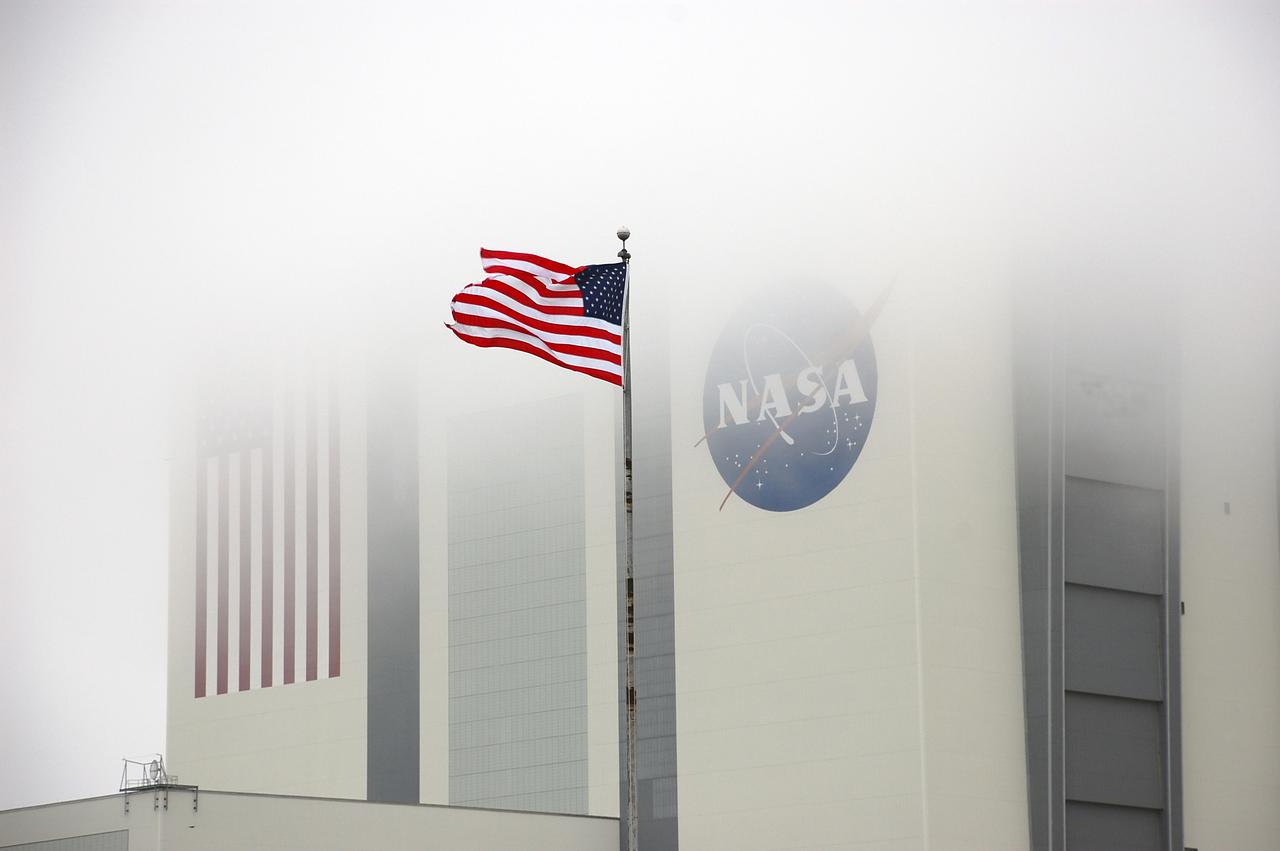
CAPE CANAVERAL, Fla. – At NASA's Kennedy Space Center in Florida, a U.S. flag flies proud near the 525-foot-tall Vehicle Assembly Building, obscured in the fog. The massive building, once used to process Apollo Saturn V rockets and space shuttles for launch, is undergoing a transformation to prepare it to support NASA's next-generation rocket, the Space Launch System, or SLS, as well as myriad commercial rockets under development. To learn more about the SLS, visit http:__www.nasa.gov_exploration_systems_sls_. For more on NASA's Commercial Crew Program, visit http:__www.nasa.gov_exploration_commercial_crew_. Photo credit: NASA_Ben Smegelsky
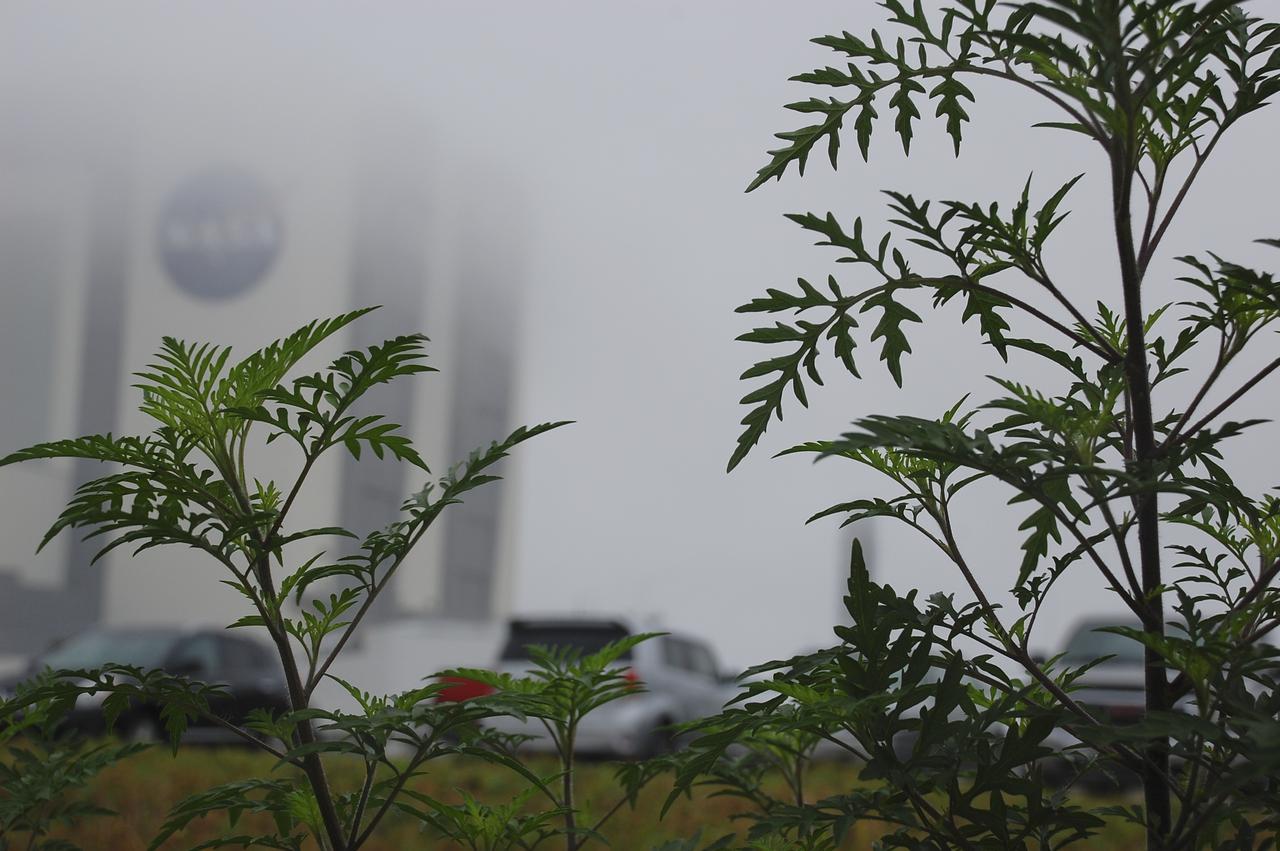
CAPE CANAVERAL, Fla. – At NASA's Kennedy Space Center in Florida, the 525-foot-tall Vehicle Assembly Building is obscured in the fog. The massive building, once used to process Apollo Saturn V rockets and space shuttles for launch, is undergoing a transformation to prepare it to support NASA's next-generation rocket, the Space Launch System, or SLS, as well as myriad commercial rockets under development. To learn more about the SLS, visit http:__www.nasa.gov_exploration_systems_sls_. For more on NASA's Commercial Crew Program, visit http:__www.nasa.gov_exploration_commercial_crew_. Photo credit: NASA_Ben Smegelsky
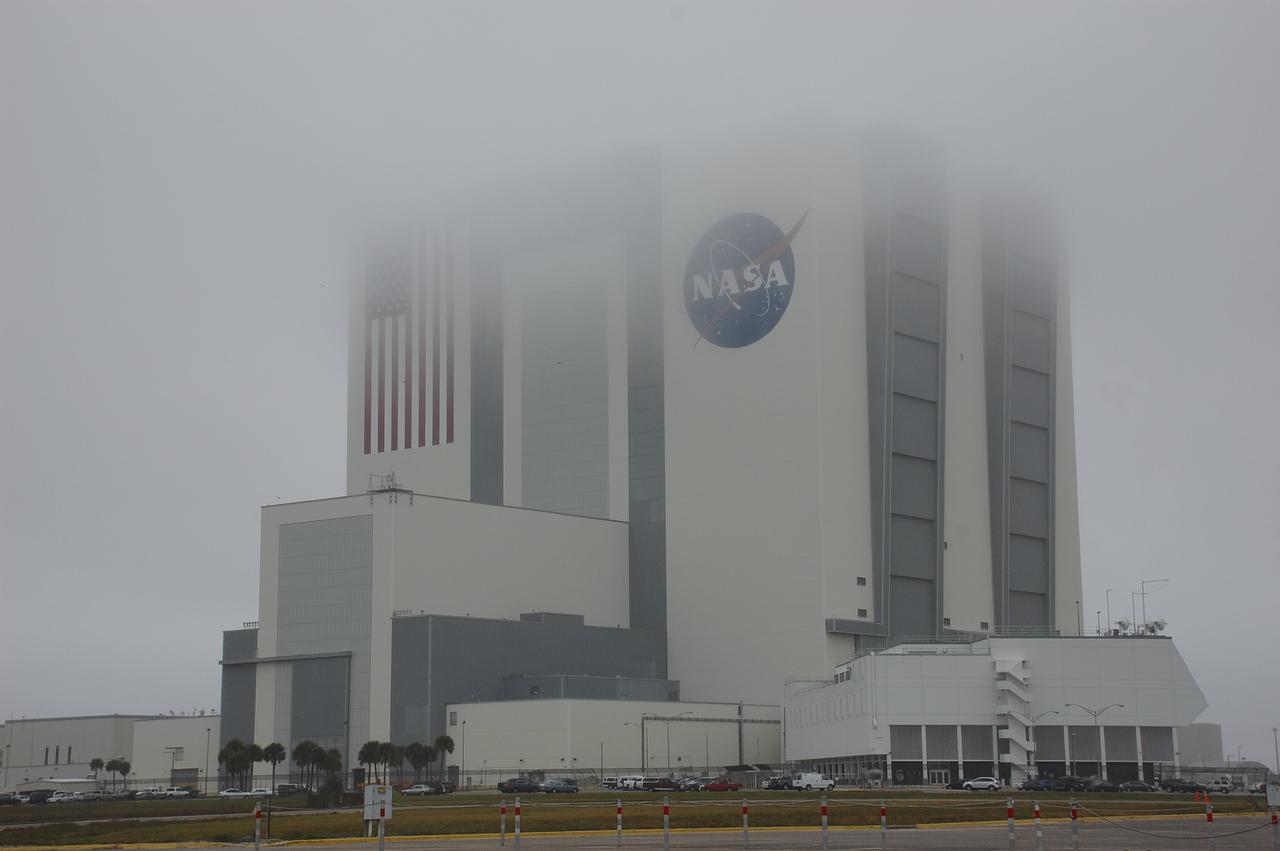
CAPE CANAVERAL, Fla. – Fog envelopes the top of the 525-foot-tall Vehicle Assembly Building at NASA's Kennedy Space Center in Florida. The massive building, once used to process Apollo Saturn V rockets and space shuttles for launch, is undergoing a transformation to prepare it to support NASA's next-generation rocket, the Space Launch System, or SLS, as well as myriad commercial rockets under development. To learn more about the SLS, visit http:__www.nasa.gov_exploration_systems_sls_. For more on NASA's Commercial Crew Program, visit http:__www.nasa.gov_exploration_commercial_crew_. Photo credit: NASA_Ben Smegelsky
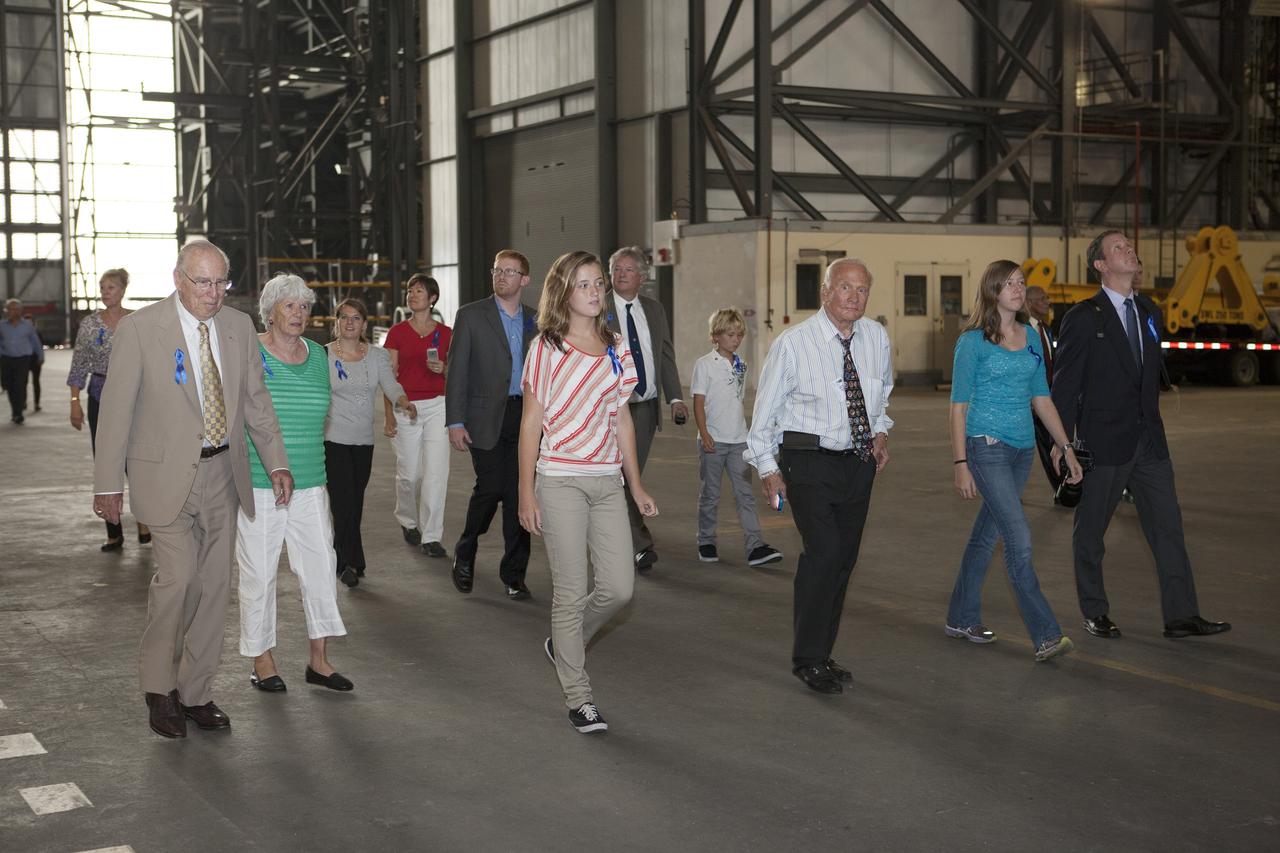
CAPE CANAVERAL, Fla. -- Apollo astronauts and their families tour the Vehicle Assembly Building, the facility in which Apollo's Saturn V rockets were processed at NASA's Kennedy Space Center in Florida. The tour followed a ceremony renaming the refurbished Operations and Checkout Building for Apollo 11 astronaut Neil Armstrong, the first person to set foot on the moon. Leading the way through the transfer aisle, from left, are Apollo astronaut Jim Lovell, Neil's former wife Janet, Neil's granddaughter Lily, and Apollo 11 moonwalker Buzz Aldrin. The ceremony was part of NASA's 45th anniversary celebration of the Apollo 11 moon landing. As the world watched, Neil Armstrong and Buzz Aldrin landed in the moon's Sea of Tranquility on July 20, 1969, aboard the lunar module Eagle. Meanwhile, crewmate Michael Collins orbited above in the command module Columbia. For more, visit http://www.nasa.gov/press/2014/july/nasa-honors-historic-first-moon-landing-eyes-first-mars-mission. Photo credit: NASA/Kim Shiflett