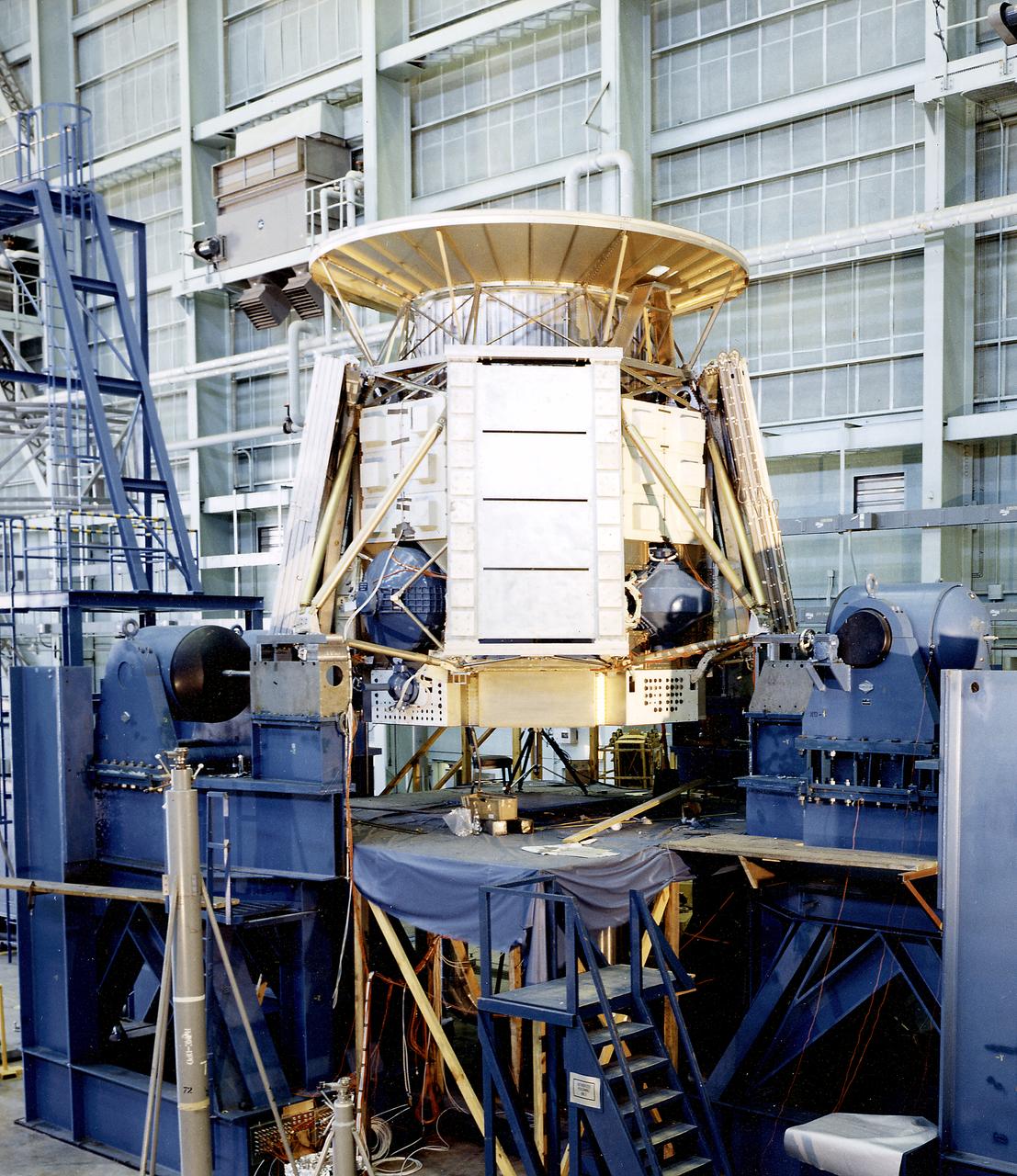
The Apollo Telescope Mount (ATM), one of four major components comprising the Skylab, was designed and developed by the Marshall Space Flight Center. In this image, the ATM is shown undergoing horizontal vibration testing in a vibration test unit.
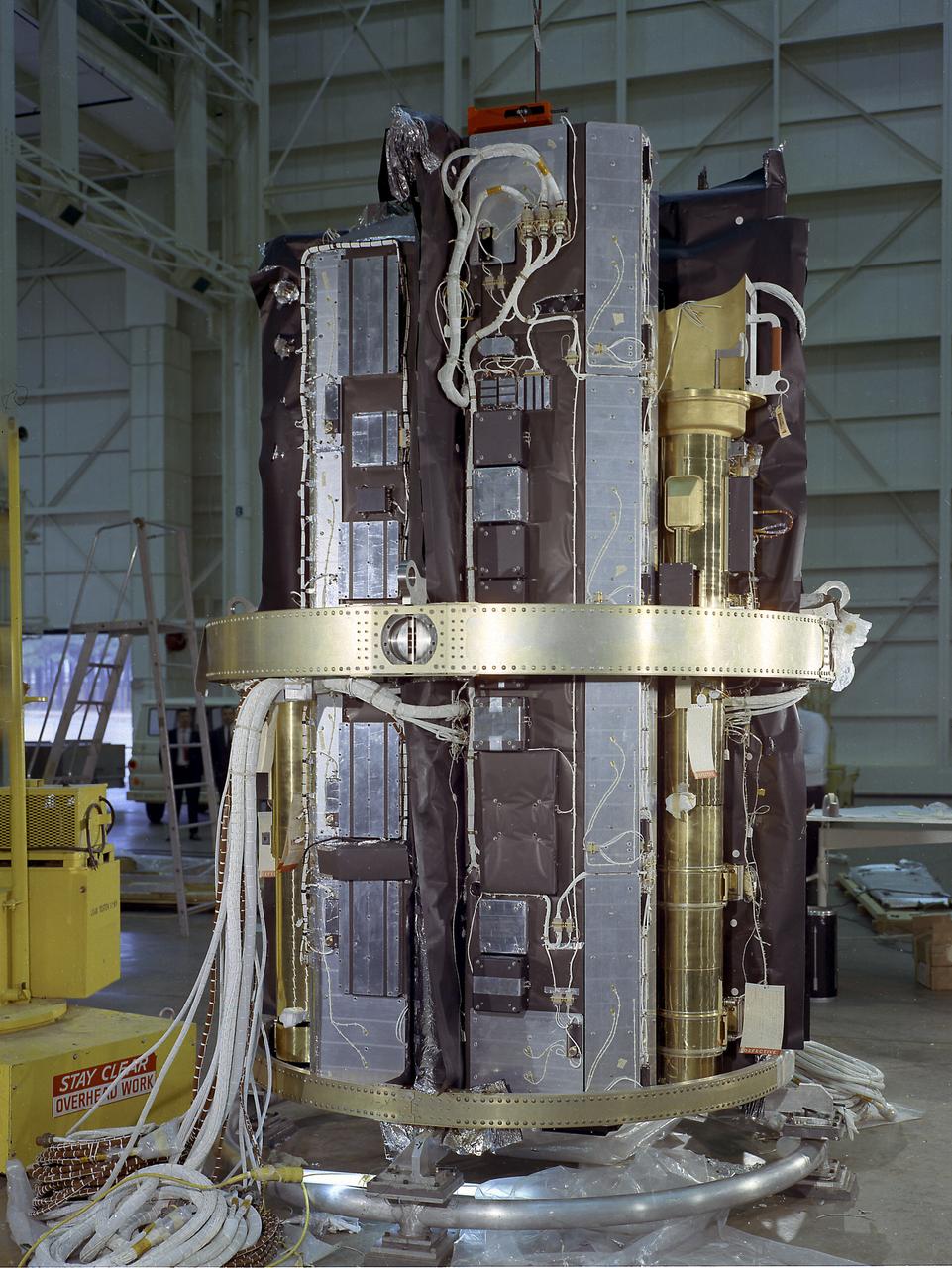
The Apollo Telescope Mount (ATM), designed and developed by the Marshall Space Flight Center, served as the primary scientific instrument unit aboard the Skylab. The ATM contained eight complex astronomical instruments designed to observe the Sun over a wide spectrum from visible light to x-rays. This image shows the ATM spar assembly. All solar telescopes, the fine Sun sensors, and some auxiliary systems are mounted on the spar, a cruciform lightweight perforated metal mounting panel that divides the 10-foot long canister lengthwise into four equal compartments. The spar assembly was nested inside a cylindrical canister that fit into the rack, a complex frame, and was protected by the solar shield.
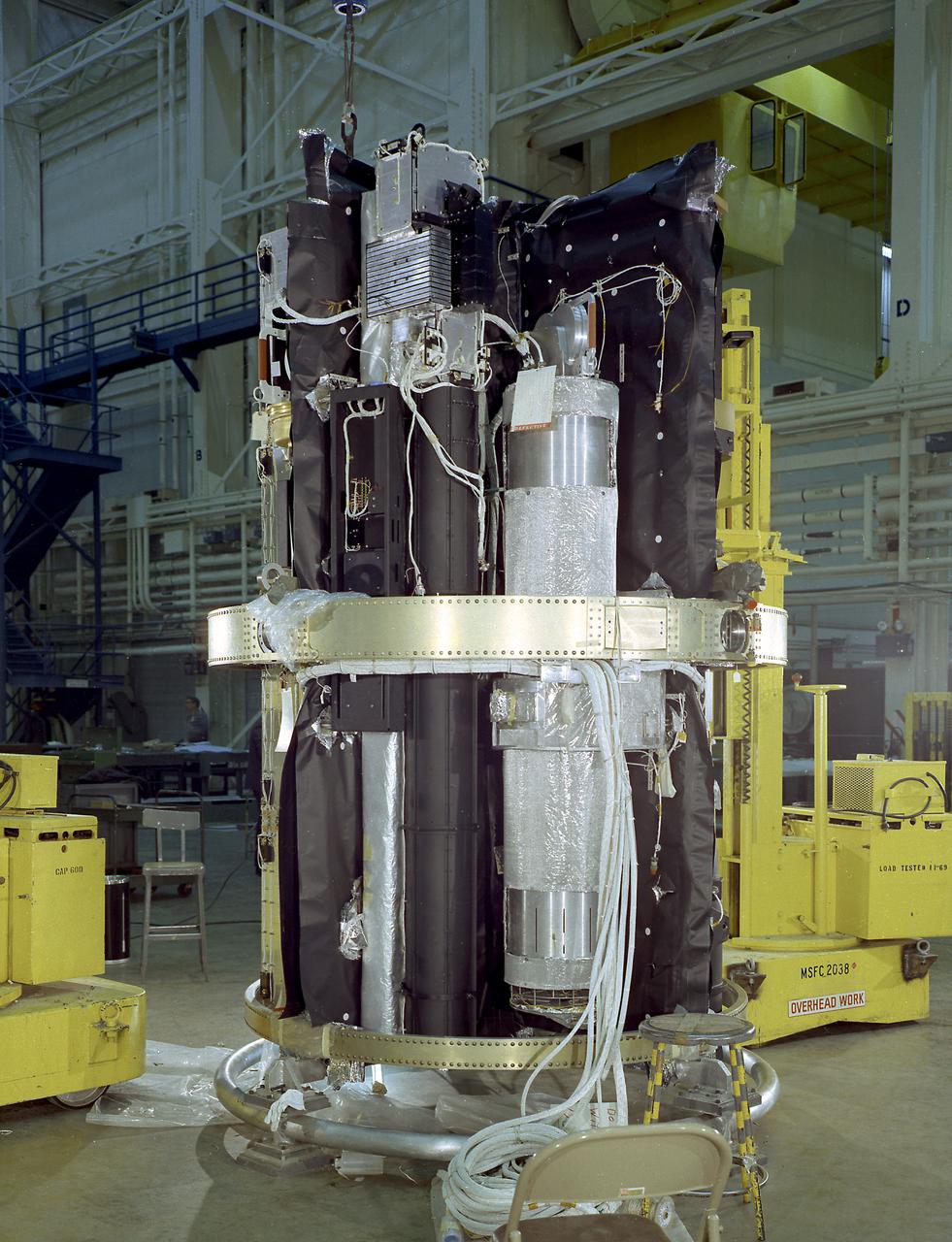
The Apollo Telescope Mount (ATM), designed and developed by the Marshall Space Flight Center, served as the primary scientific instrument unit aboard the Skylab. The ATM contained eight complex astronomical instruments designed to observe the Sun over a wide spectrum from visible light to x-rays. This image shows the ATM spar assembly. All solar telescopes, the fine Sun sensors, and some auxiliary systems are mounted on the spar, a cruciform lightweight perforated metal mounting panel that divides the 10-foot long canister lengthwise into four equal compartments. The spar assembly was nested inside a cylindrical canister that fit into the rack, a complex frame, and was protected by the solar shield.

This chart details Skylab's X-Ray Spectrographic Telescope, an Apollo Telescope Mount facility. It was designed to sequentially photograph solar flares and other active regions in the x-ray spectrum. The Marshall Flight Center had program management responsibility for the development of Skylab hardware and experiments.
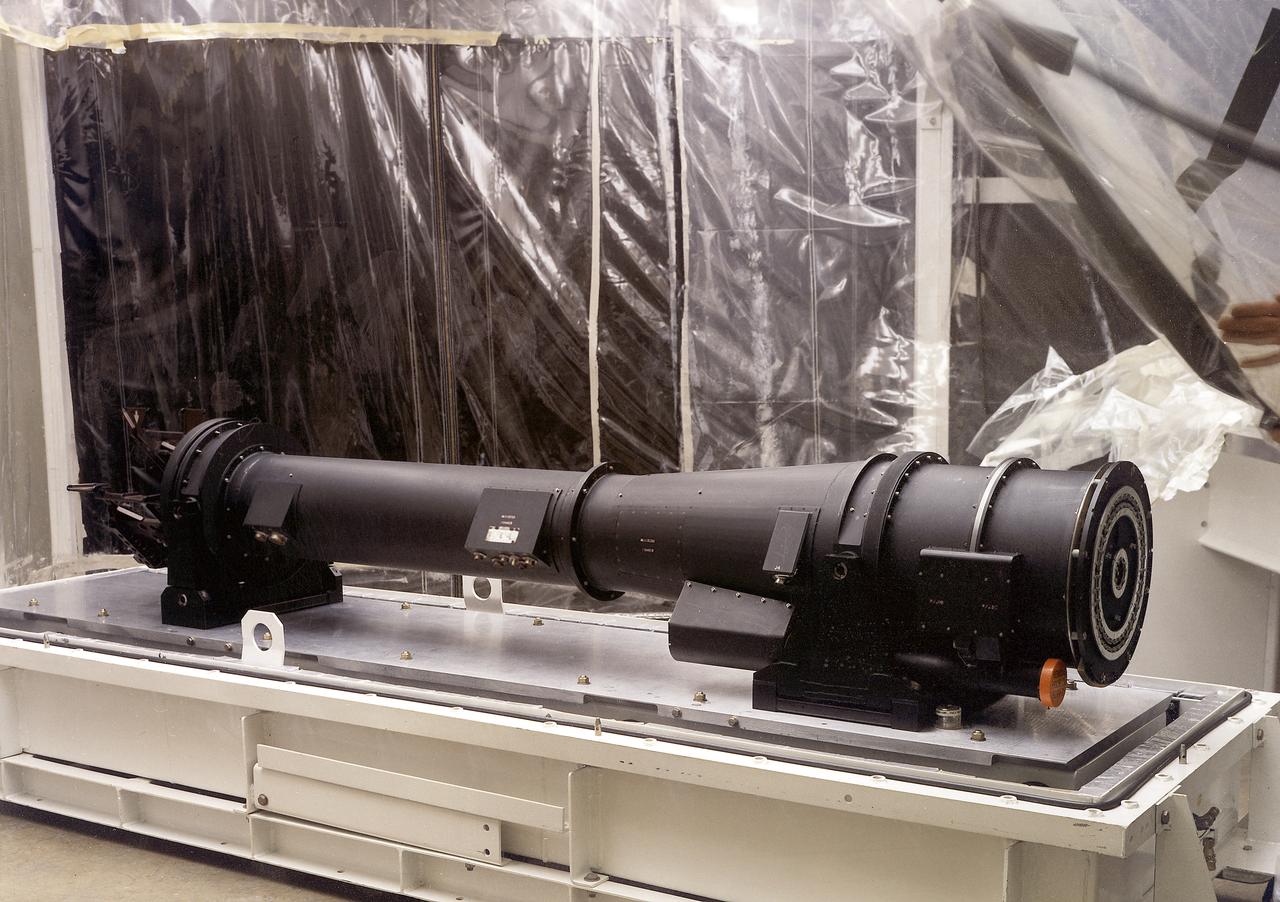
This photograph details Skylab's X-Ray Spectrographic Telescope, an Apollo Telescope Mount facility. It was designed to sequentially photograph solar flares and other active regions in x-ray spectrum. The Marshall Space Flight Center had program management responsibility for the development of Skylab hardware and experiments.
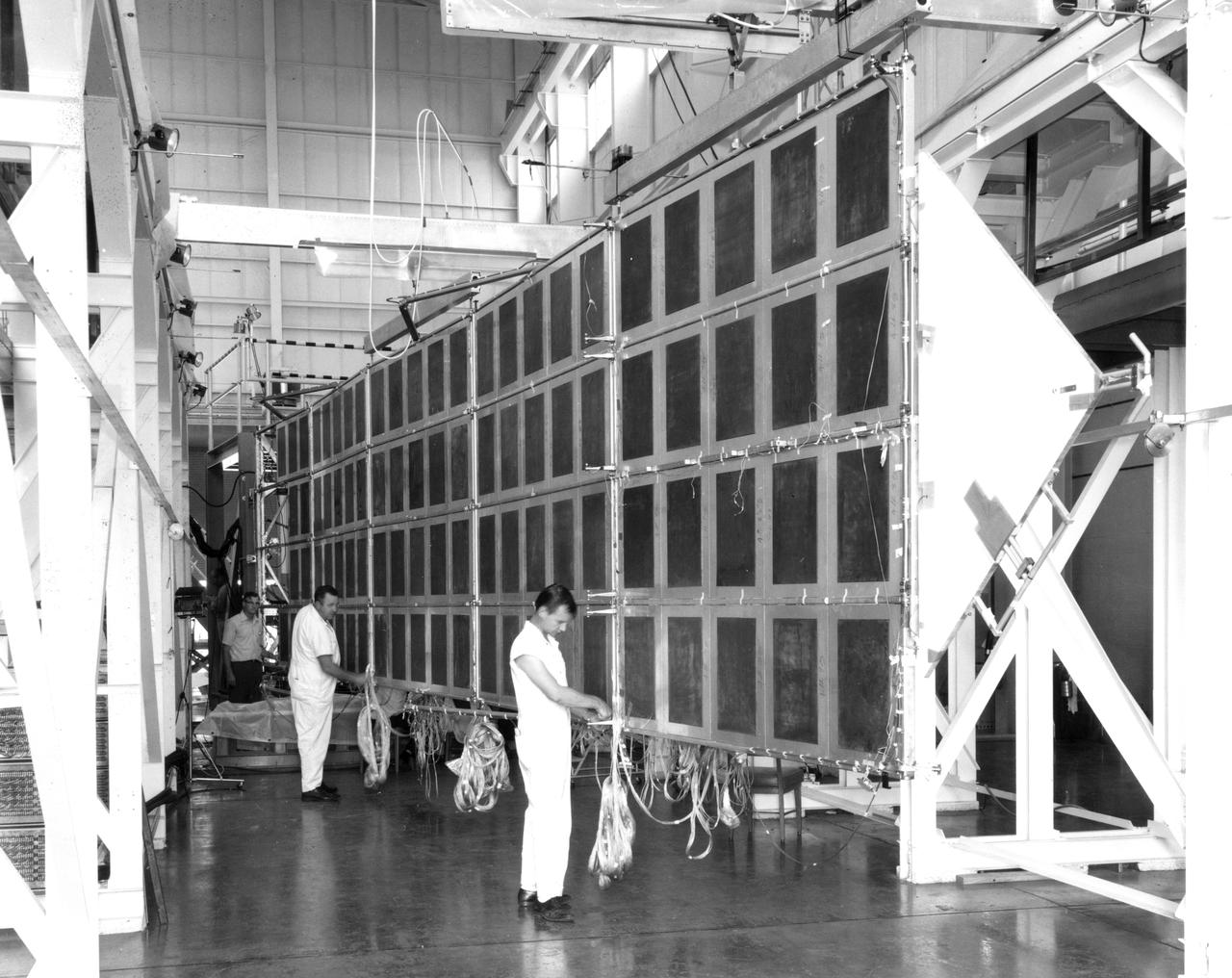
Technicians at NASA’s Marshall Space Flight Center check the wiring on a mechanical test article of the Apollo Telescope Mount (ATM) solar array. Four such arrays were joined in a cross to provide electric power for the ATM in Earth orbit. The deployment mechanism for extending the wing to the fully open position had just been tested when this photograph was taken. The array was suspended from beams riding on air bearings to closely simulate the weightless conditions under which it would be deployed in space. The wings are folded against the sides of the ATM for launch and are deployed by a scissors mechanism in Earth’s orbit.
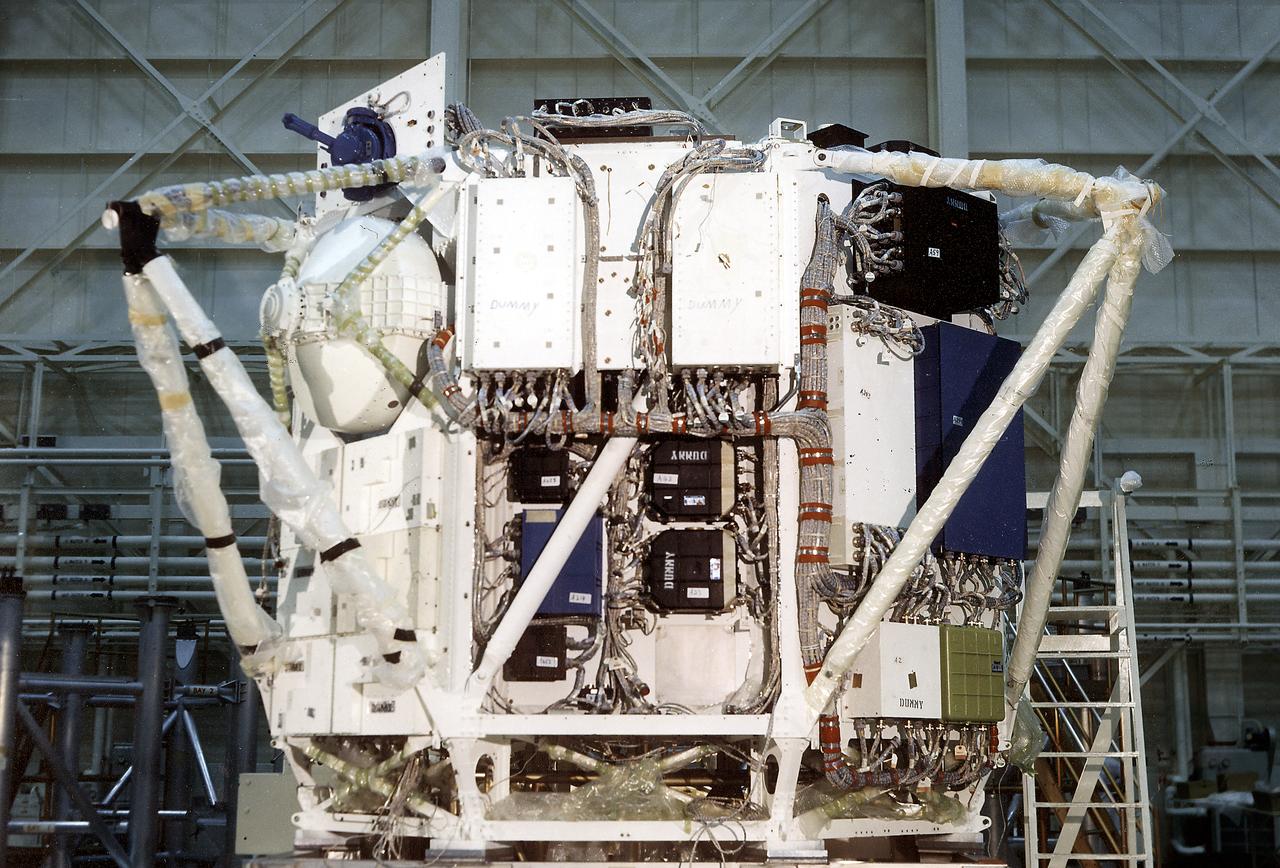
The Apollo Telescope Mount (ATM) was designed and developed by the Marshall Space Flight Center and served as the primary scientific instrument unit aboard Skylab (1973-1979). The ATM consisted of eight scientific instruments as well as a number of smaller experiments. This is a photograph of the assembly of an ATM flight unit rack. The flight unit rack was an octagonal shaped complex outer frame that housed the canister containing the solar instruments.
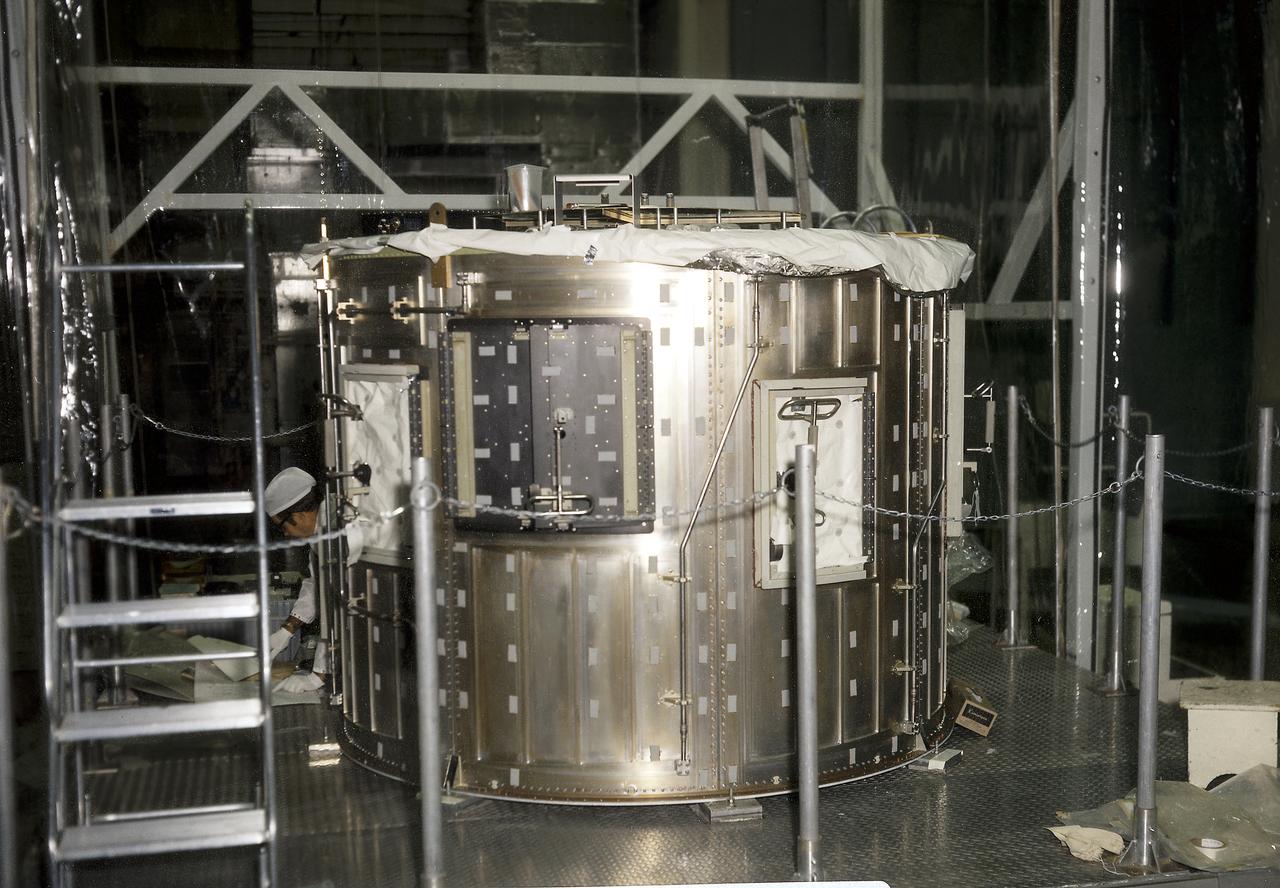
The Apollo Telescope Mount (ATM) was designed and developed by the Marshall Space Flight Center (MSFC) and served as the primary scientific instrument unit aboard Skylab (1973-1979). The ATM consisted of eight scientific instruments as well as a number of smaller experiments. This image is of the ATM flight unit sun end canister in MSFC's building 4755.
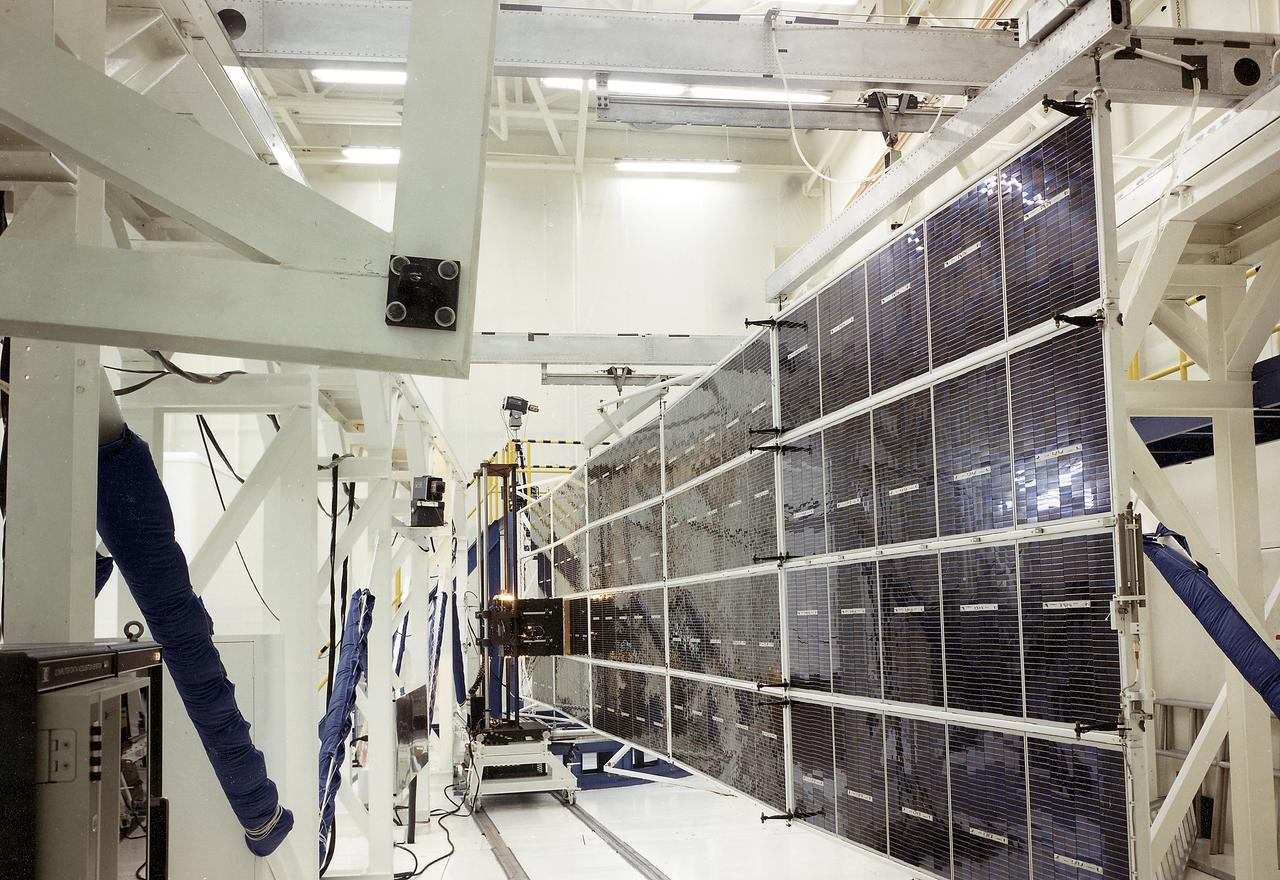
The Apollo Telescope Mount (ATM), one of four major components comprising Skylab, was designed and developed by the Marshall Space Flight Center. Power to operate the ATM's instruments and experiments was collected by four solar arrays, capable of producing up to 1.1 kilowatts of electricity. This is a photograph of the ATM Solar Array flight unit deployed for illumination testing.
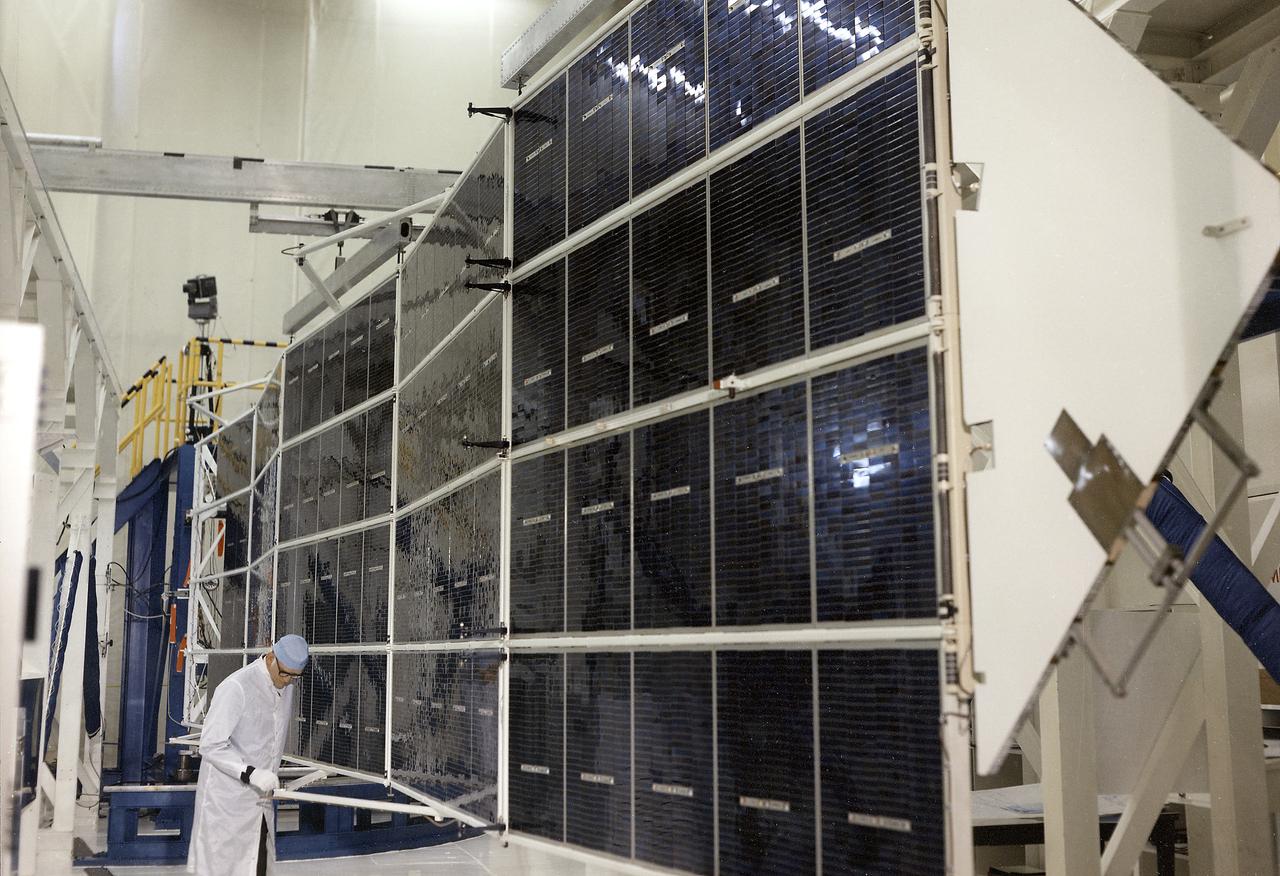
The Apollo Telescope Mount (ATM), one of four major components comprising Skylab, was designed and developed by the Marshall Space Flight Center. Power to operate the ATM's instruments and experiments was collected by four solar arrays, capable of producing up to 1.1 kilowatts of electricity. This is a photograph of the ATM Solar Array flight unit 1 in the deployed position.
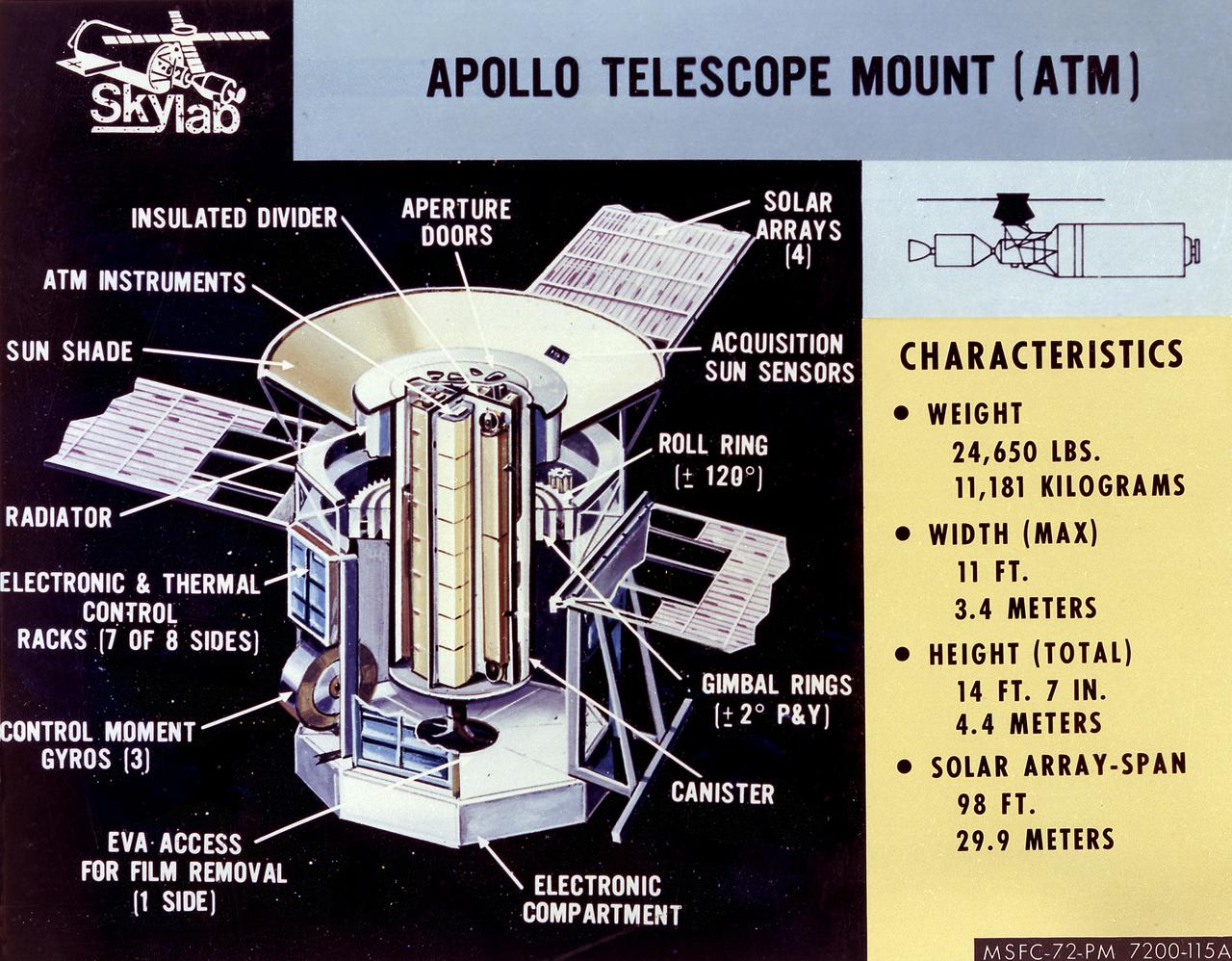
The Apollo Telescope Mount (ATM) served as the first marned astronomical observatory in space. It was designed for solar research from Earth orbit aboard the Skylab. This image is a cutaway illustration of the ATM canister with callouts and characteristics. The ATM was designed and developed by the Marshall Space Flight Center.
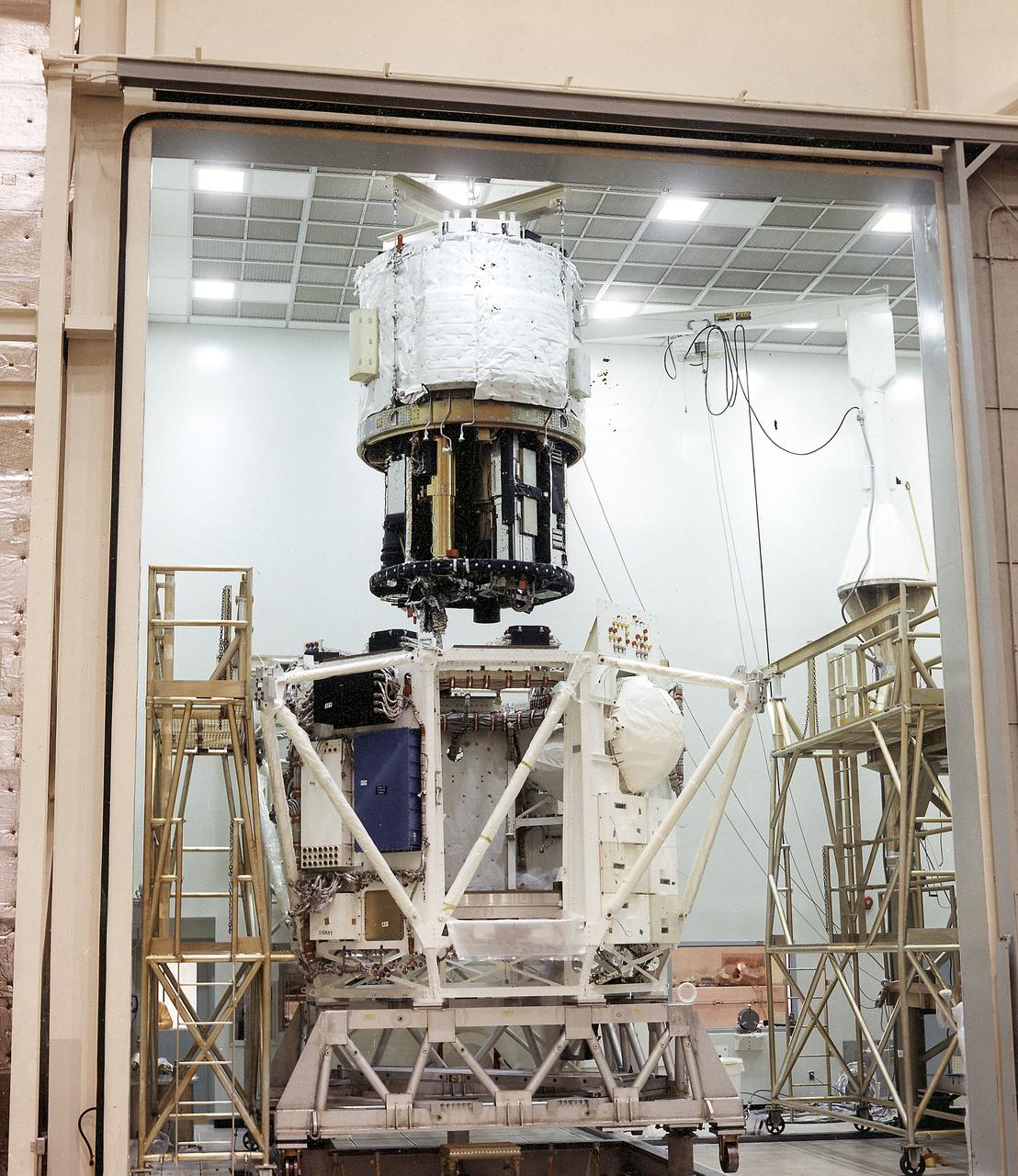
The Apollo Telescope Mount (ATM) was designed and developed by the Marshall Space Flight Center and served as the primary scientific instrument unit aboard Skylab (1973-1979). This photograph shows the spar unit, which housed major solar instruments, being lowered into the rack, the outer octagonal complex frame of the ATM flight unit.
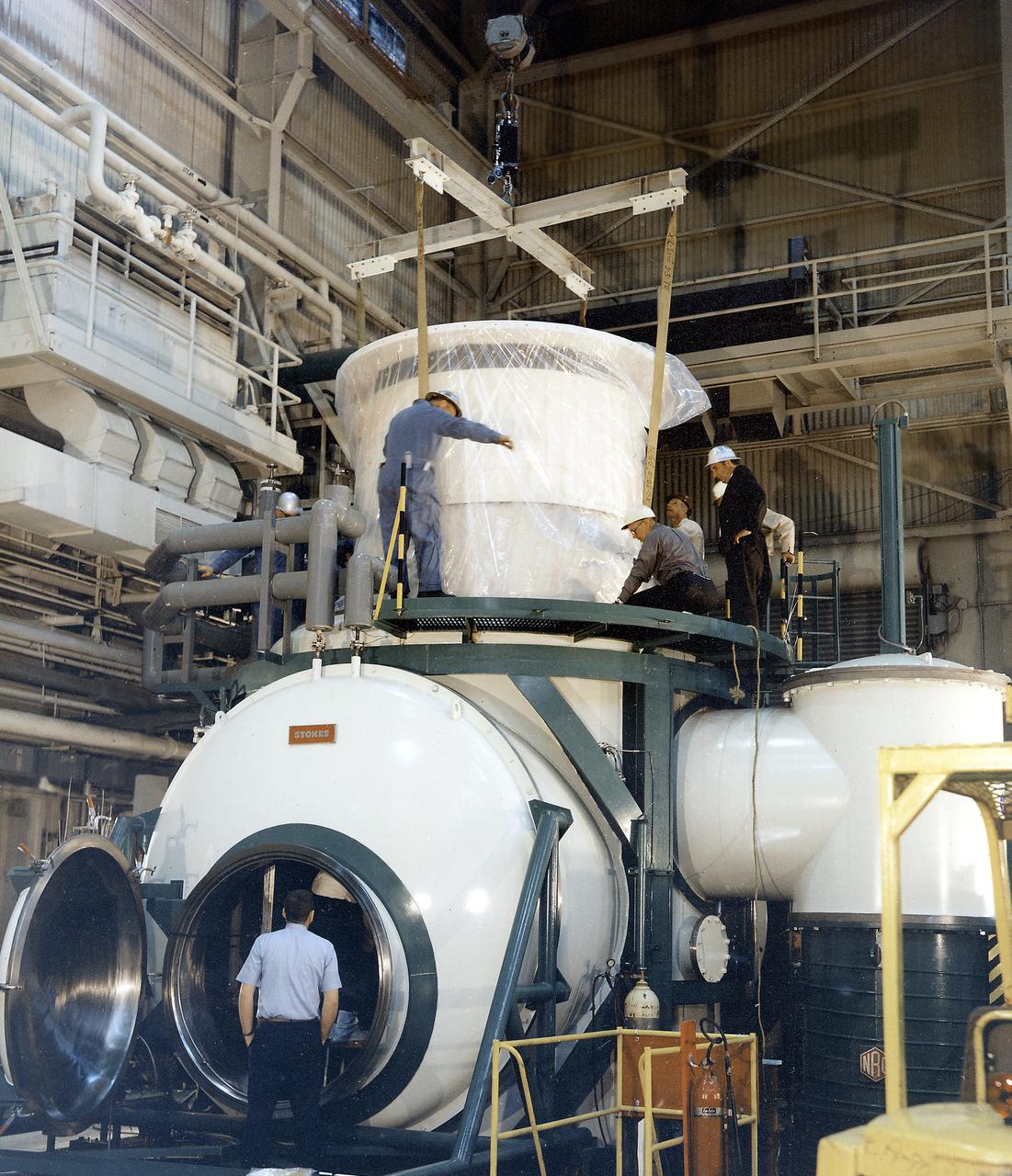
The Apollo Telescope Mount (ATM) was designed and developed by the Marshall Space Flight Center (MSFC) and served as the primary scientific instrument unit aboard Skylab (1973-1979). The ATM consisted of eight scientific instruments as well as a number of smaller experiments. In this image, the thermal unit, that controlled the temperature stability of the ATM, is being installed into a vacuum chamber.
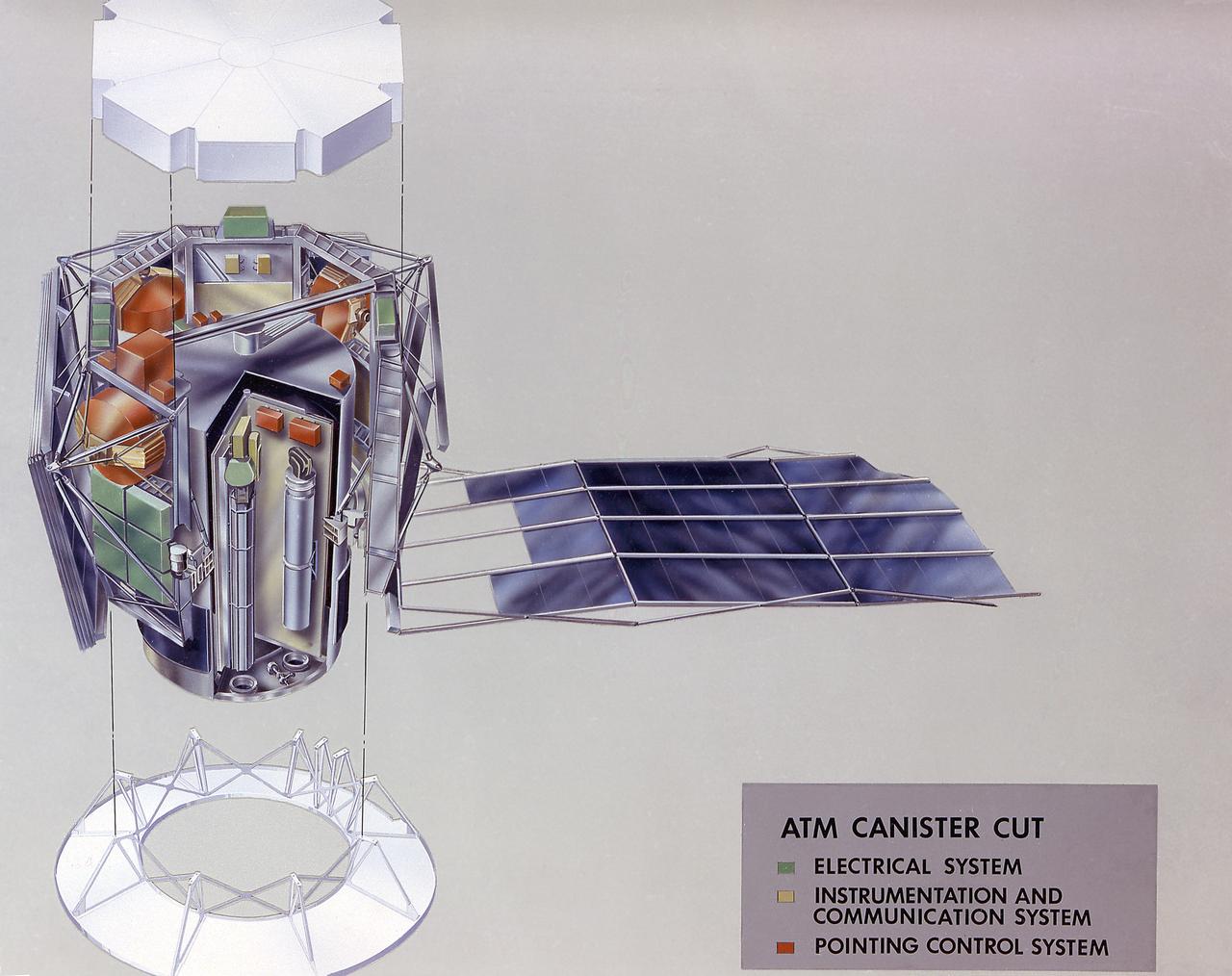
The Apollo Telescope Mount (ATM) served as the first marned astronomical observatory in space. It was designed for solar research from Earth orbit aboard the Skylab. This image is a cutaway illustration of the ATM canister. The ATM was designed and developed by the Marshall Space Flight Center.
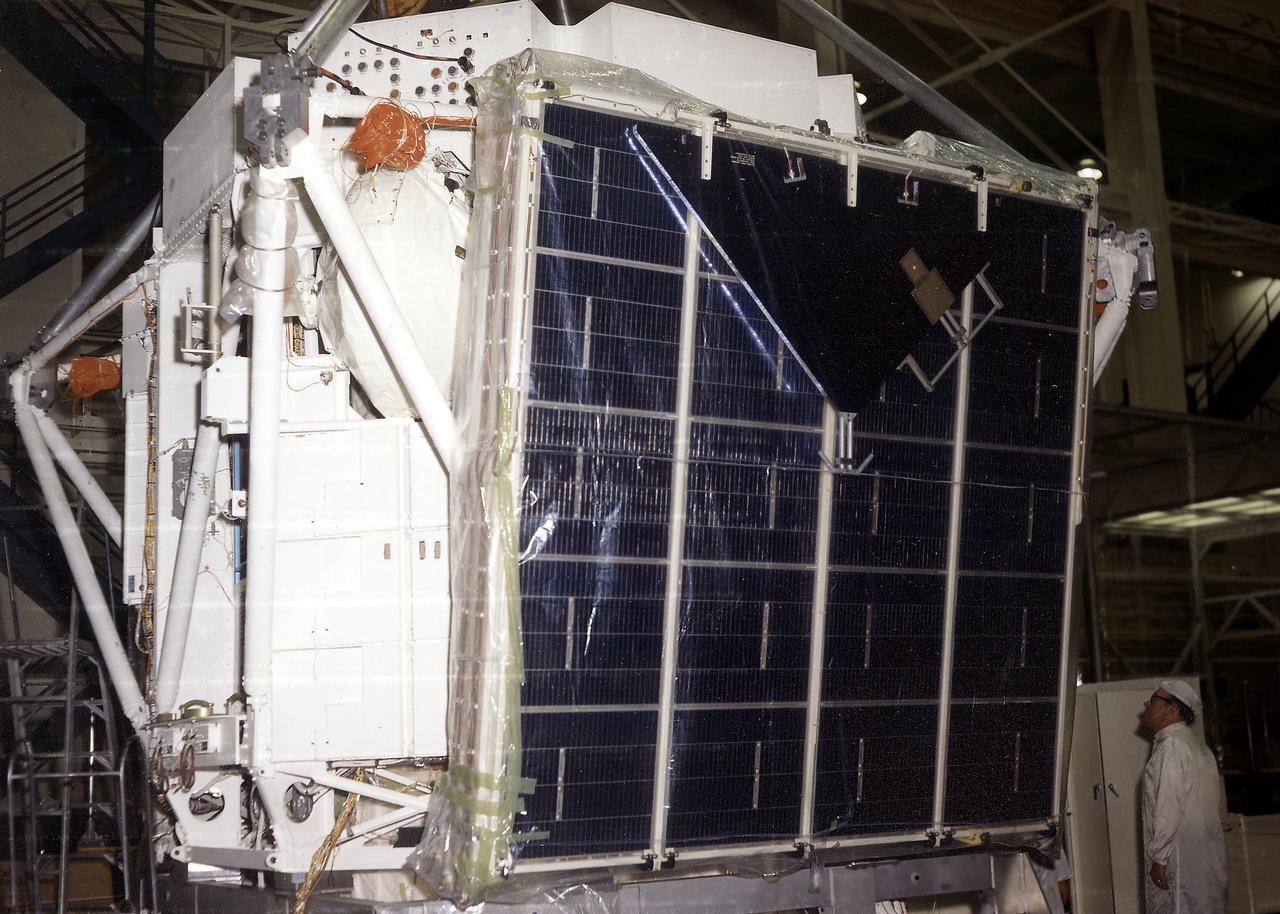
The Apollo Telescope Mount (ATM) was one of four major components of Skylab (1973-1979) that were designed and developed at the Marshall Space Flight Center. In this picture, an ATM solar wing prototype is shown during assembly. A total of four solar wings were required to provide power to the ATM.
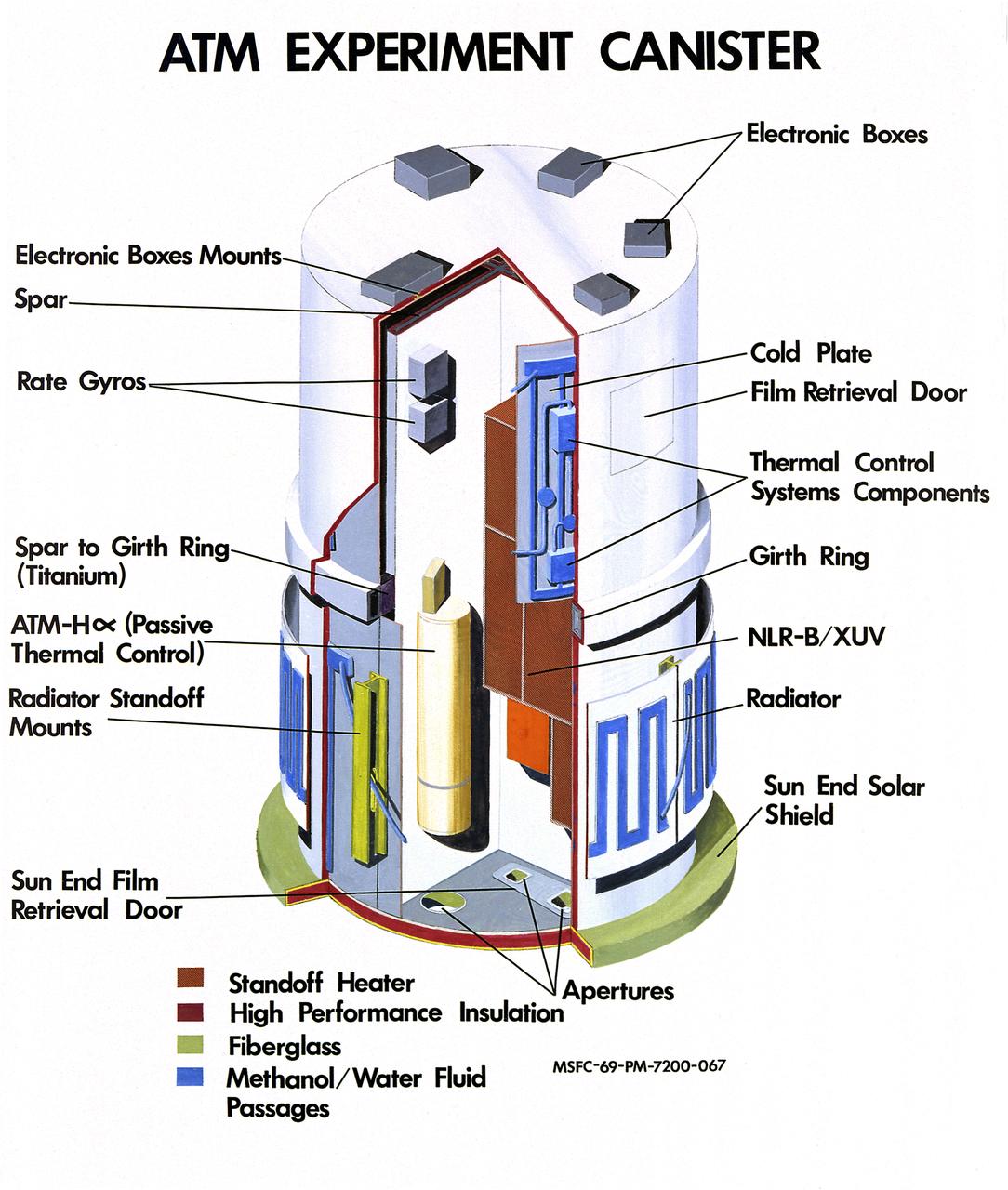
The Apollo Telescope Mount (ATM) served as the first marned astronomical observatory in space. It was designed for solar research from Earth orbit aboard the Skylab. This image is a cutaway illustration of the ATM canister with callouts. The ATM was designed and developed by the Marshall Space Flight Center.
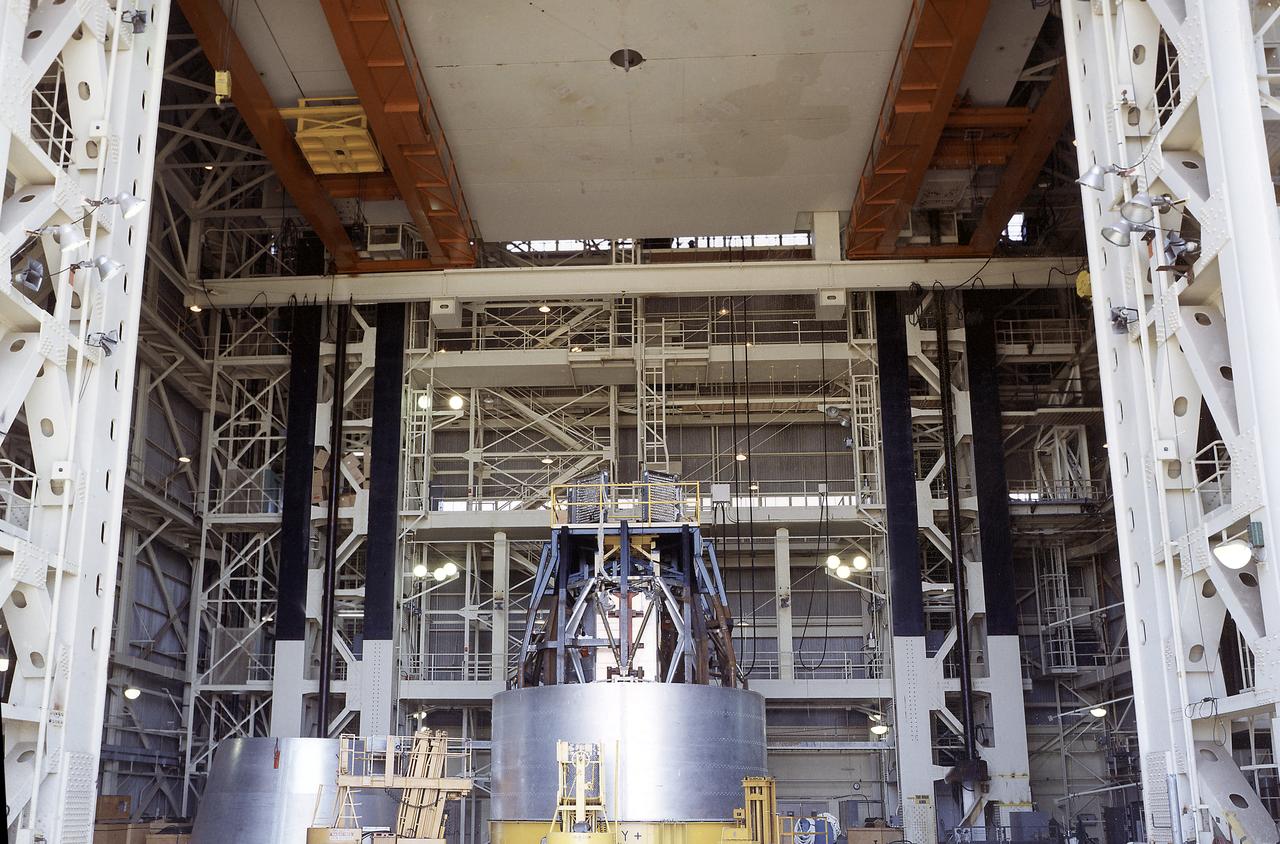
The Apollo Telescope Mount (ATM) was one of four major components of Skylab that were designed and constructed under the management of the Marshall Space Flight Center (MSFC). In this photograph, an ATM is seen sitting inside the MSFC's Structural Load Test Arnex where the main structural elements were simulated under launch conditions.

This spectacular view is a color-enhanced ultraviolet exposure of a colossal eruption, photographed during the Skylab-4 mission by the Apollo Telescope Mount facility on December 19, 1973. This giant prominence, one of the mightiest in 25 years, sparned a third of a million miles into space, roughly the distance between Earth and the Moon.

Scientist-Astronaut Owen K. Garriott, science pilot of the Skylab 3 mission, is stationed at the Apollo Telescope Mount (ATM) console in the Multiple Docking Adapter of the Skylab space station in Earth orbit. From this console the astronauts actively control the ATM solar physics telescope.
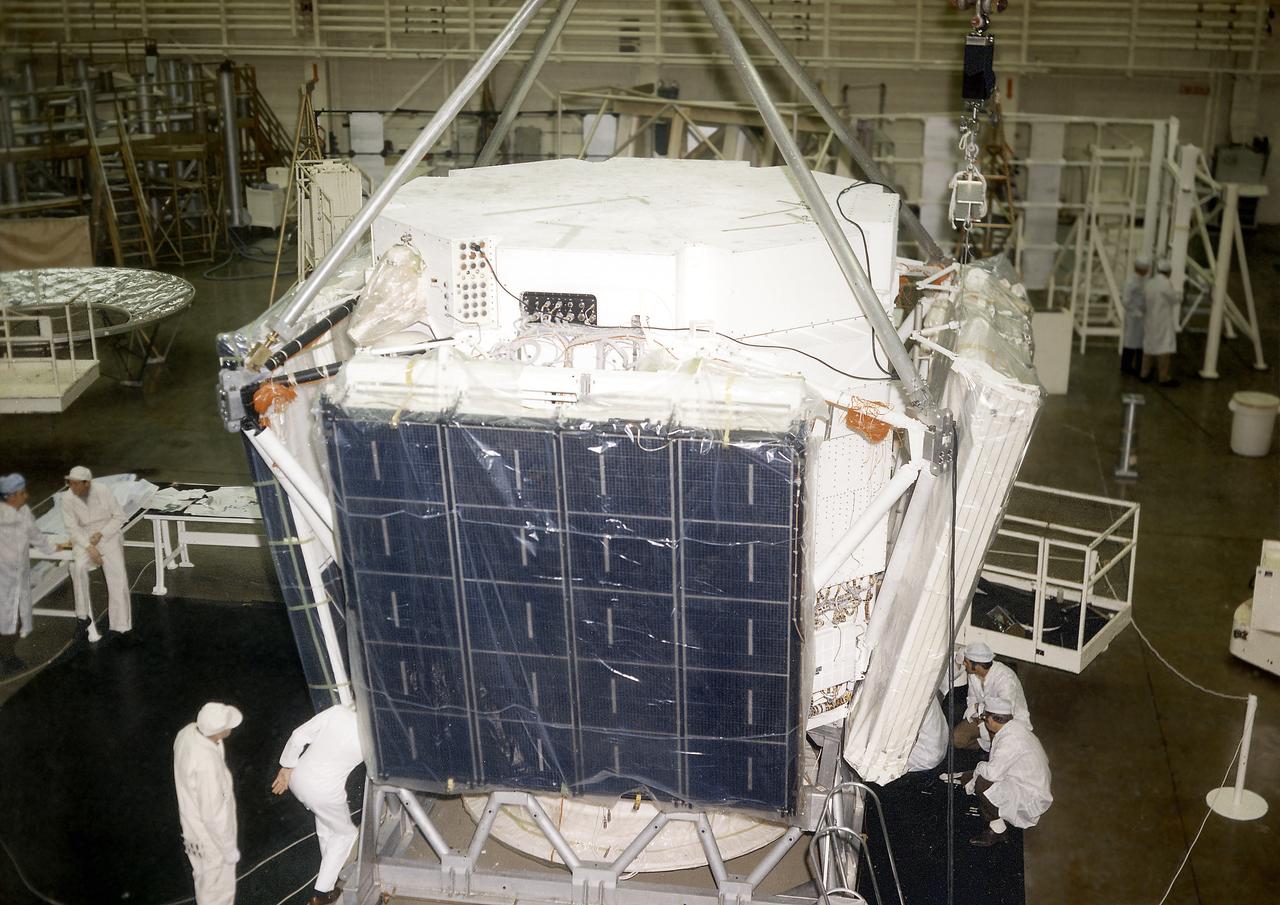
The Apollo Telescope Mount (ATM) was designed and developed by the Marshall Space Flight Center and served as the primary scientific instrument unit aboard Skylab (1973-1979). The ATM consisted of eight scientific instruments as well as a number of smaller experiments. In this image, the set of four large solar cell arrays, which could produce up to as much as 1.1 kilowatts of electric power, are being installed on an ATM prototype.
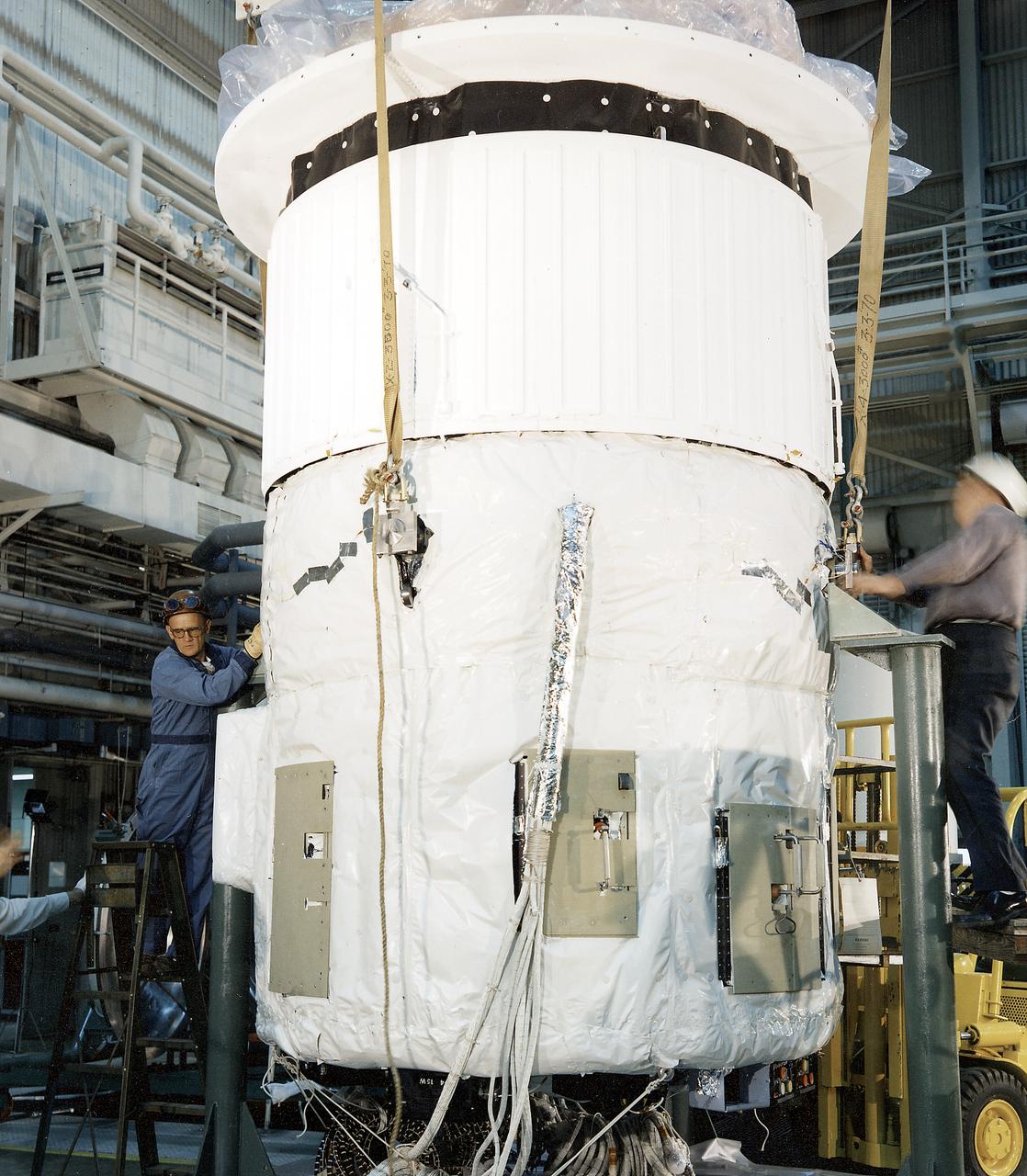
The Apollo Telescope Mount (ATM) was designed and developed by the Marshall Space Flight Center (MSFC) and served as the primary scientific instrument unit aboard Skylab (1973-1979). The ATM consisted of eight scientific instruments as well as a number of smaller experiments. This image is of the ATM thermal unit being tested in MSFC's building 4619. The thermal unit consisted of an active fluid-cooling system of water and methanol that was circulated to radiators on the outside of the canister. The thermal unit provided temperature stability to the ultrahigh resolution optical instruments that were part of the ATM.
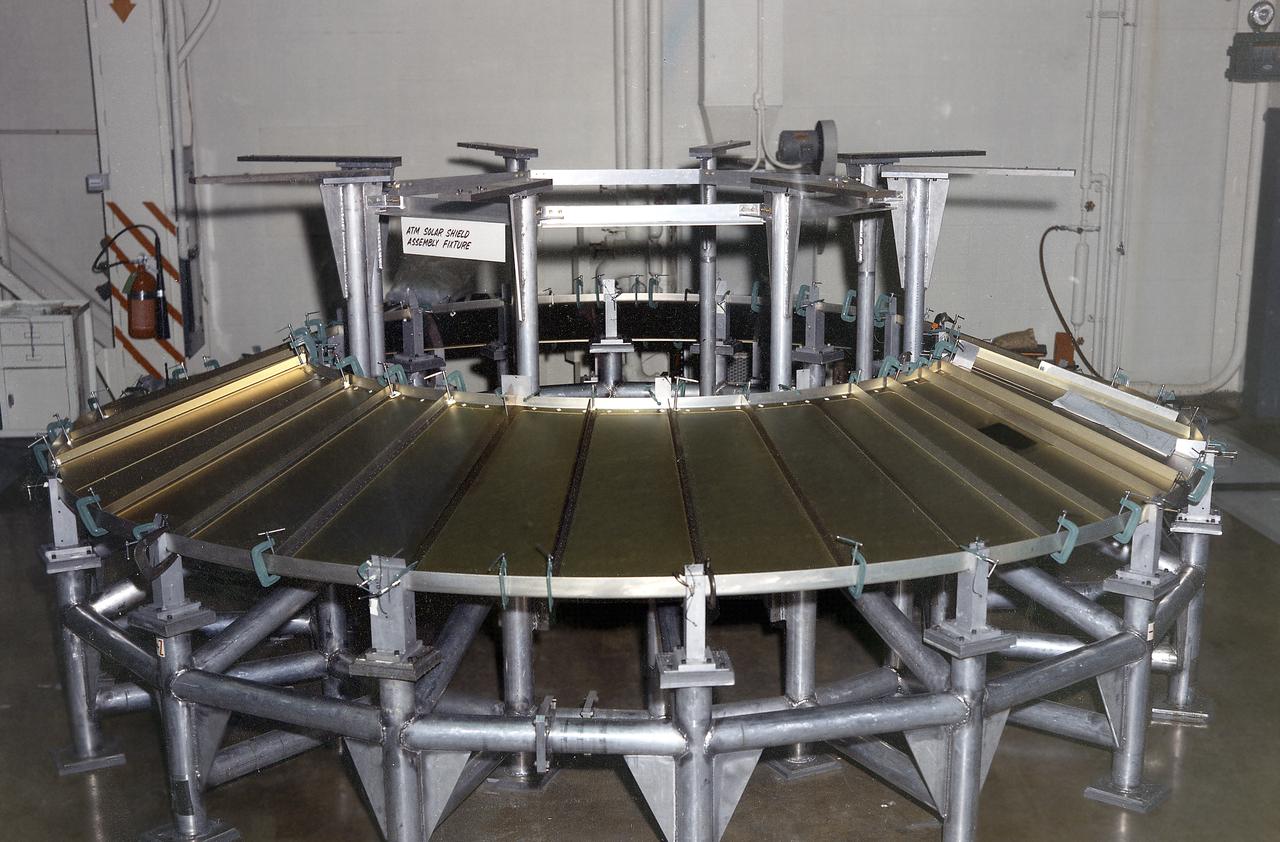
The Apollo Telescope Mount (ATM) was designed and developed by the Marshall Space Flight Center and served as the primary scientific instrument unit aboard Skylab (1973-1979). The ATM consisted of eight scientific instruments as well as a number of smaller experiments. One scientific instrument was the ATM solar shield that formed the base for the rack/frame instrument and the instrument canister. The solar shield contained aperture doors for each instrument to protect against solar radiation and space contamination.
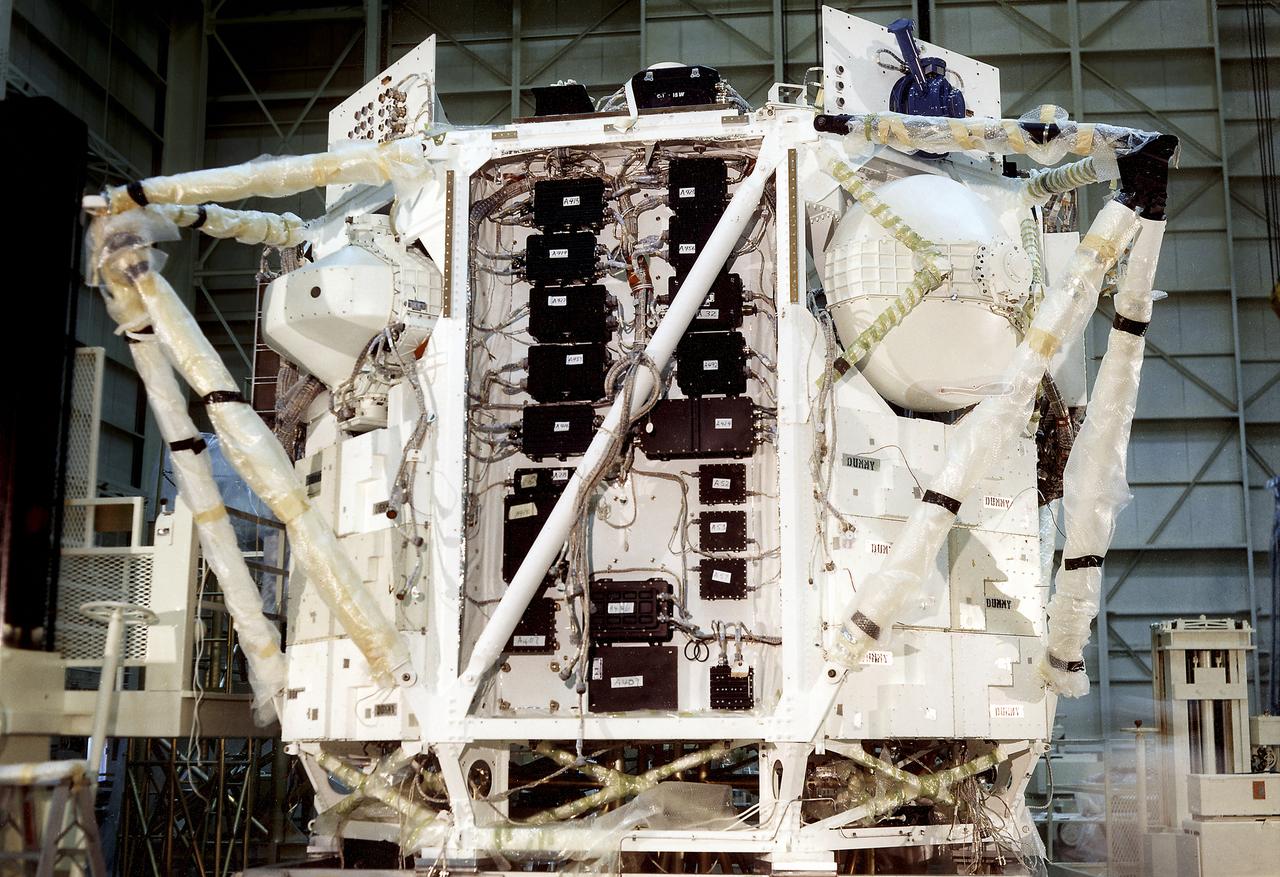
The Apollo Telescope Mount (ATM) was designed and developed by the Marshall Space Flight Center and served as the primary scientific instrument unit aboard Skylab (1973-1979). The ATM consisted of eight scientific instruments as well as a number of smaller experiments. This is a photograph of the assembly of an ATM flight unit rack. The flight unit rack was an octagonal shaped complex outer frame that housed the canister containing the solar instruments.

The Apollo Telescope Mount (ATM) was designed and developed by the Marshall Space Flight Center and served as the primary scientific instrument unit aboard Skylab (1973-1979). The ATM consisted of eight scientific instruments as well as a number of smaller experiments. This is a photograph of the assembly of an ATM flight unit rack. The flight unit rack was an octagonal shaped complex outer frame that housed the canister containing the solar instruments.
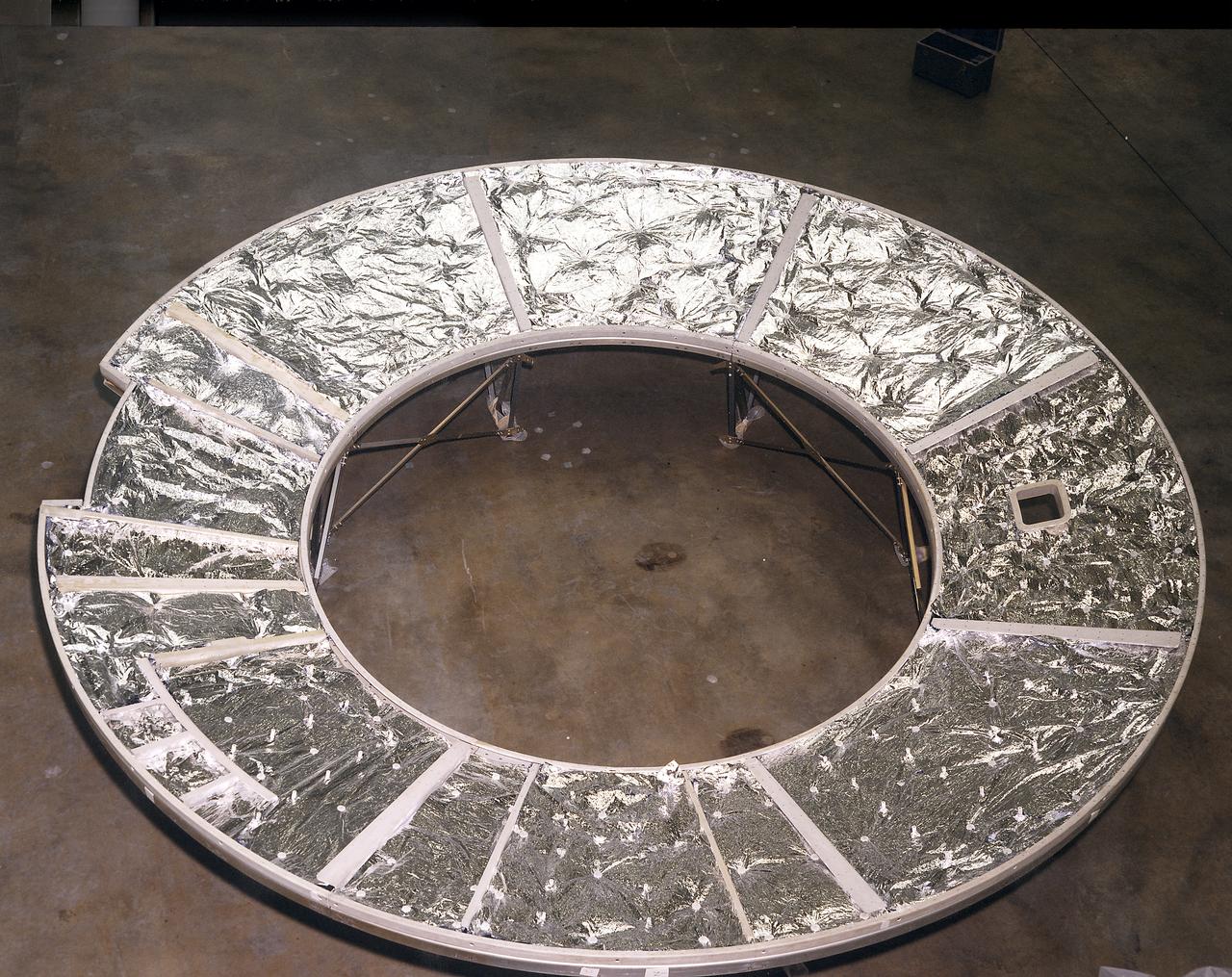
The Apollo Telescope Mount (ATM) was designed and constructed at the Marshall Space Flight Center and served as the primary scientific instrument unit aboard Skylab. The ATM consisted of eight scientific instruments as well as a number of smaller experiments. This photograph shows the flight unit solar shield for the ATM that formed the base for the rack, a complex frame, and the canister that contained the instruments.
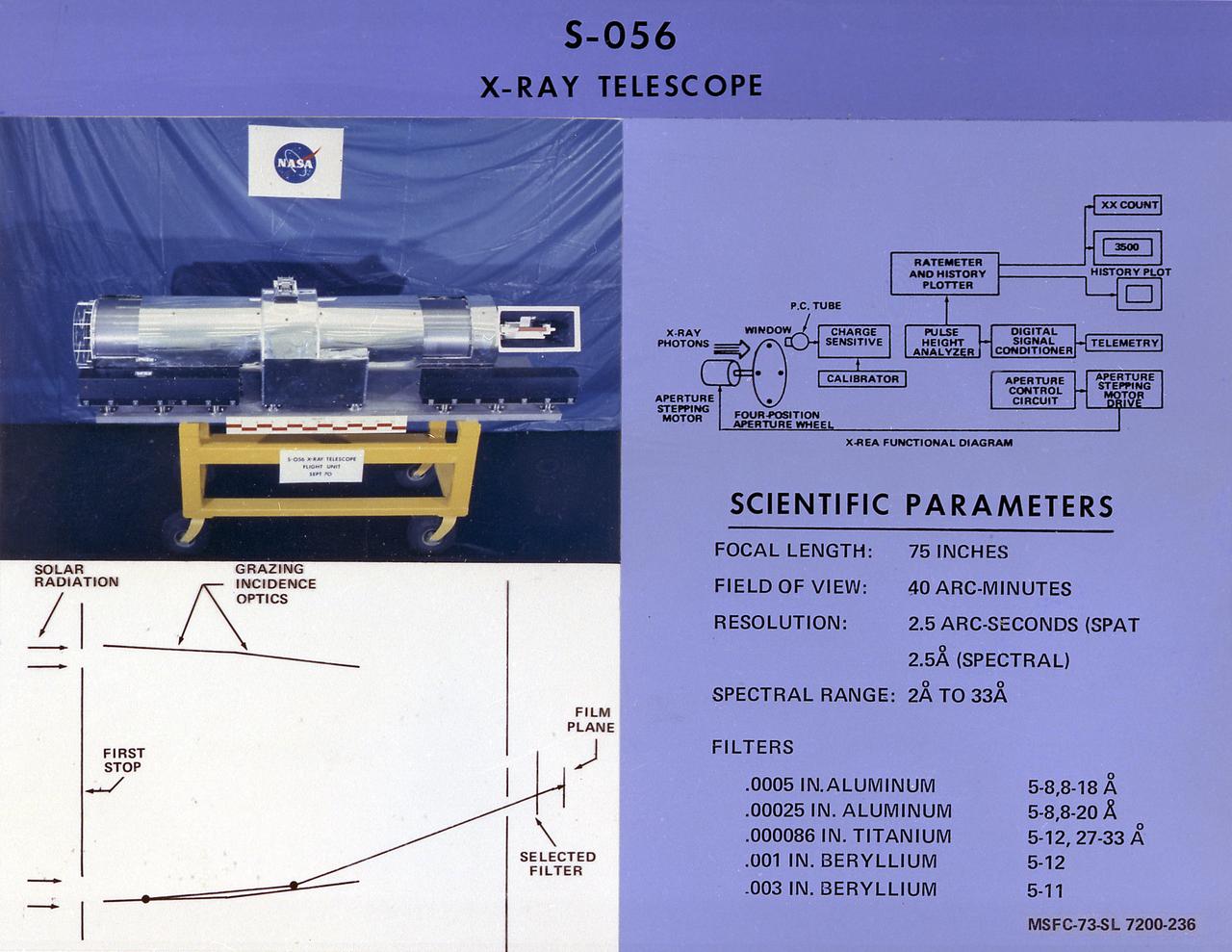
This chart details Skylab's Dual X-Ray Telescopes, one of eight Apollo Telescope Mount facilities. It was designed to gather solar radiation data in the x-ray region of the solar spectrum and provide information on physical processes within the solar atmosphere. In support of the two primary telescopes, auxiliary instruments provided a continuous record of the total x-ray flux in two bands. A flare detector was also provided at the control console as an aid to astronauts for monitoring solar activity. The Marshall Space Flight Center had program management responsibility for the development of Skylab hardware and experiments.
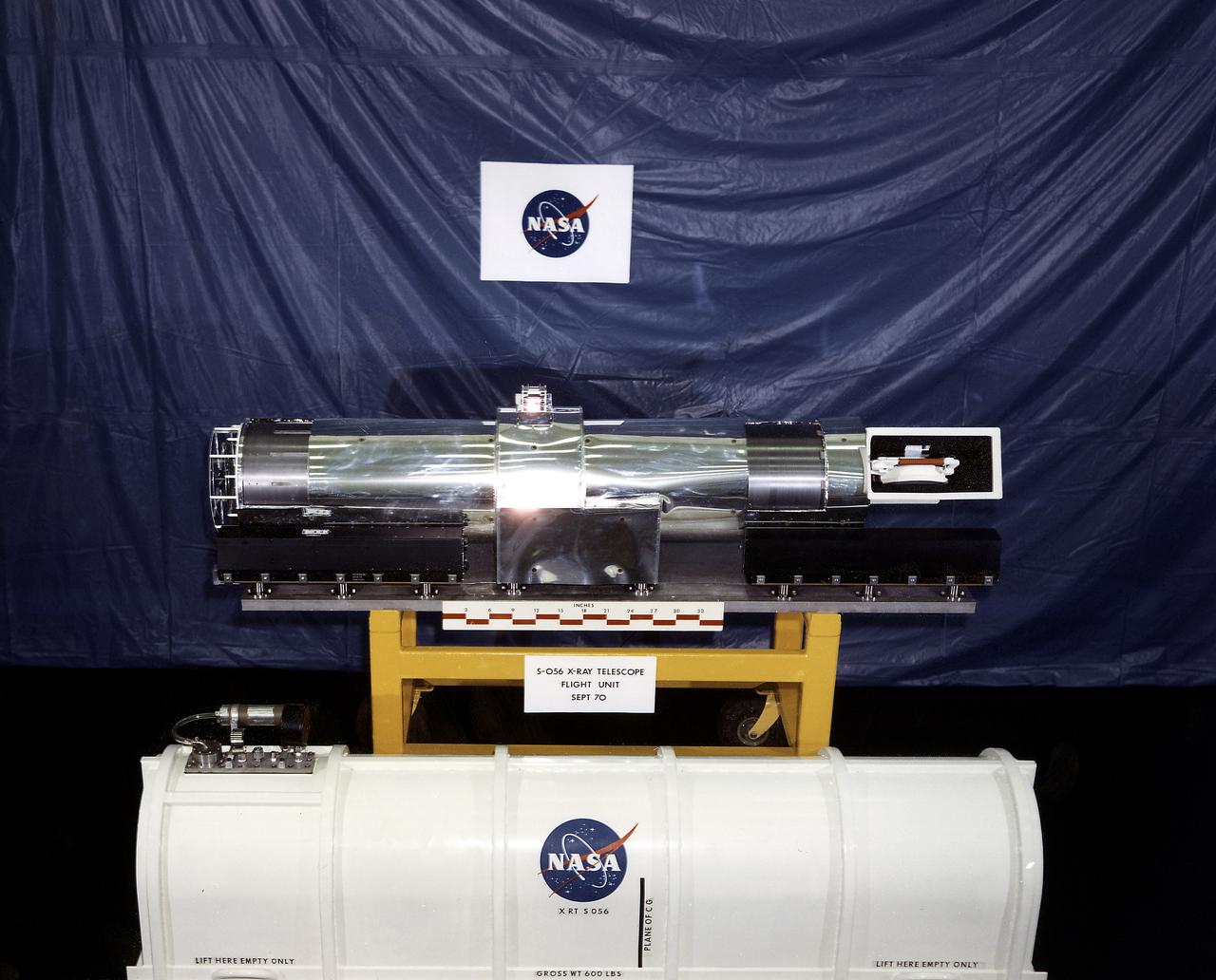
This 1970 photograph shows Skylab's Dual X-Ray Telescopes, an Apollo Telescope Mount facility. It was designed to gather solar radiation data in the x-ray region of the solar spectrum and provide information on physical processes within the solar atmosphere. In support of the two primary telescopes, auxiliary instruments provided a continuous record of the total x-ray flux in two bands. A flare detector was also provided at the control console as an aid to astronauts for monitoring solar activity. The Marshall Space Flight Center had program management responsibility for the development of Skylab hardware and experiments.
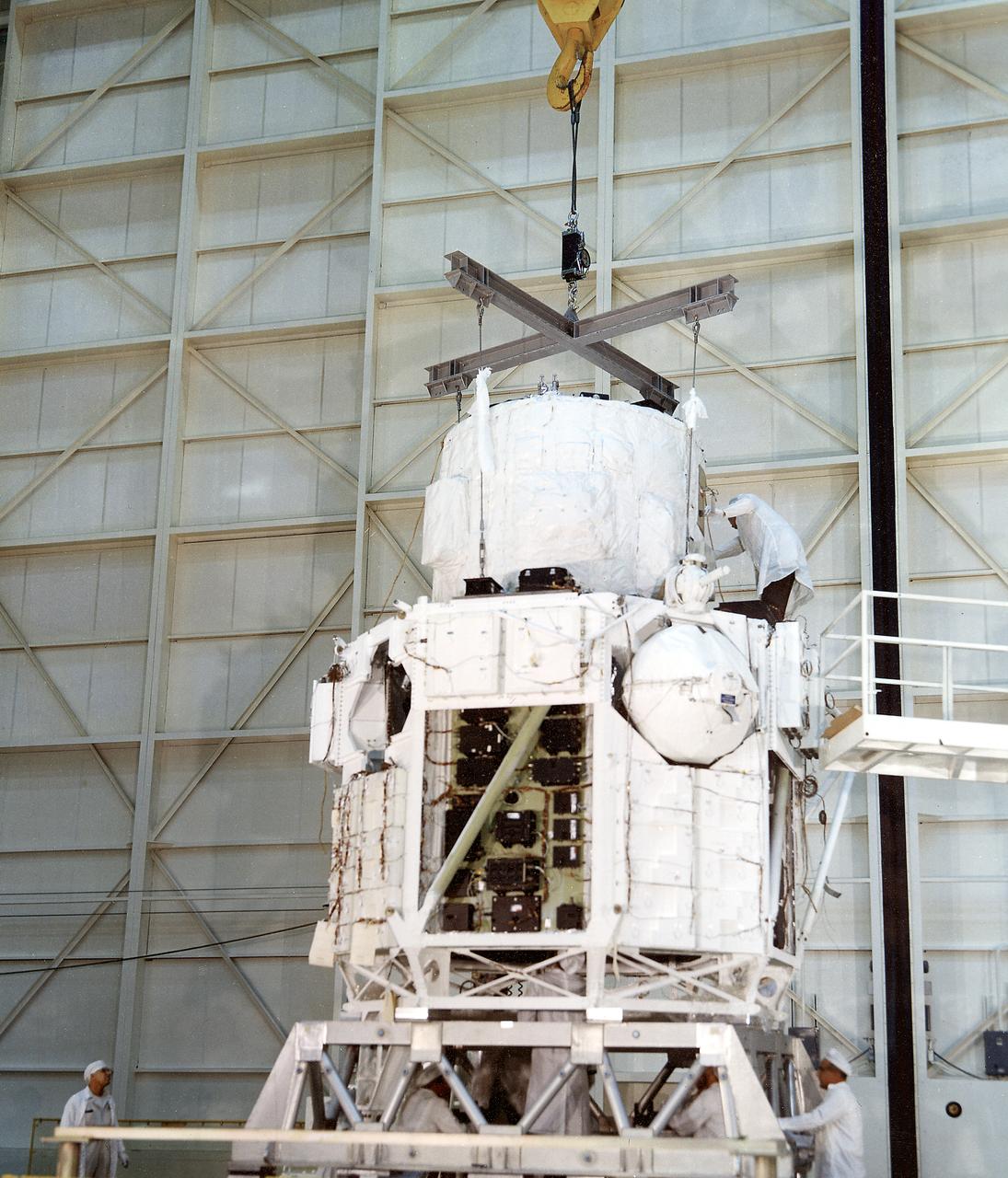
The Apollo Telescope Mount (ATM) was designed and developed by the Marshall Space Flight Center and served as the primary scientific instrument unit aboard Skylab (1973-1979). The ATM consisted of eight scientific instruments as well as a number of smaller experiments. In this image, the ATM canister, housing the solar instruments, is mated to the thermal rack that provided thermal stability.
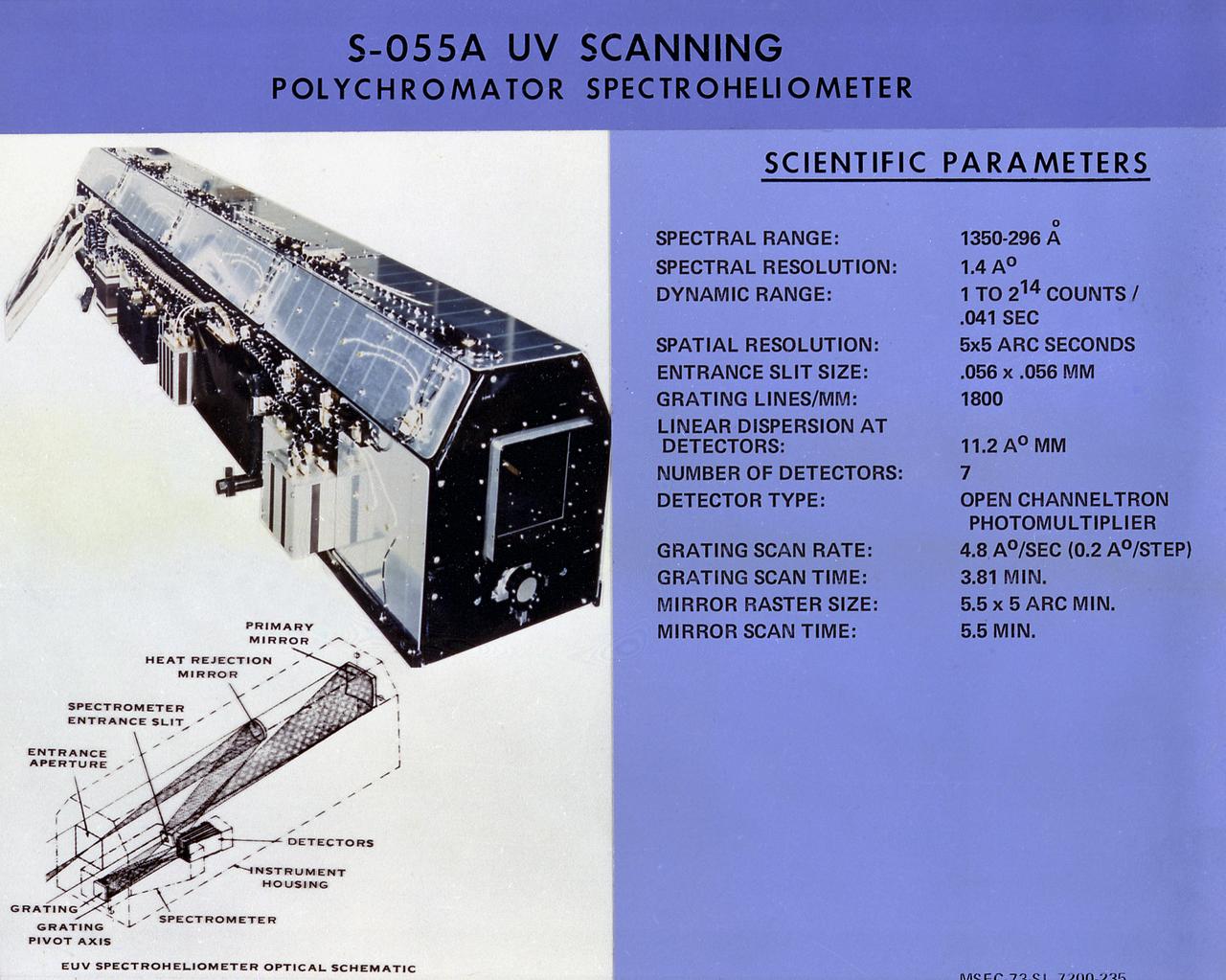
This chart describes scientific parameters of the Skylab Ultraviolet (UV) Scanning Polychromator Spectroheliometer, one the eight Apollo Telescope Mount facilities. It was designed to observe and provide temporal changes in UV radiation emitted by the Sun's chromosphere and lower corona. The Marshall Space Flight Center had program management responsibility for the development of skylab hardware and experiments.
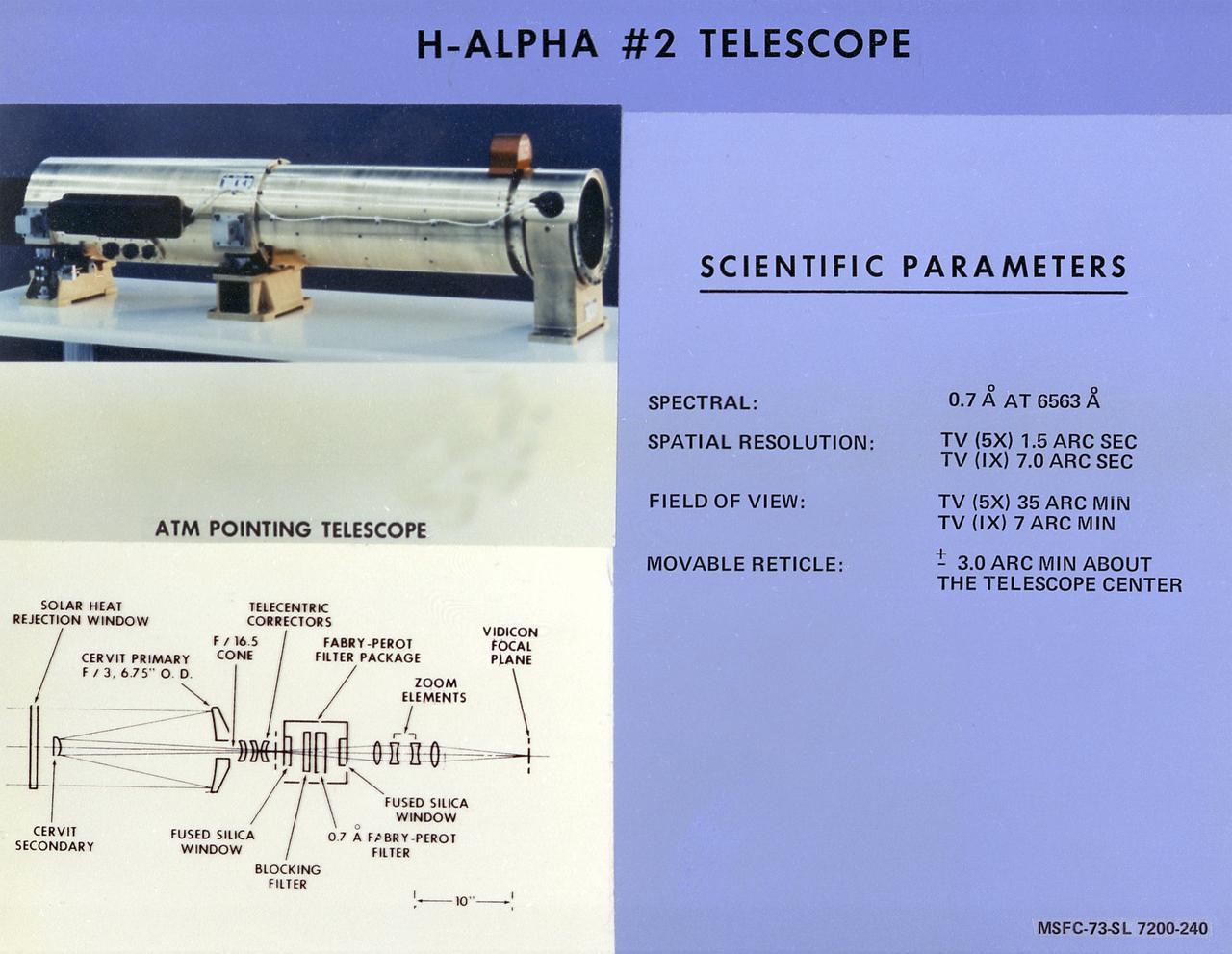
This chart describes the Hydrogen-Alpha (H-Alpha) #2 Telescope, one of eight major solar study facilities on the Skylab Apollo Telescope Mount (ATM). There were two H-Alpha telescopes on the ATM that were used primarily to point the ATM and keep a continuous photographic record during solar observation periods. Both telescopes gave the Skylab astronauts a real-time picture of the Sun in the red light of the H-Alpha spectrum through a closed-circuit television. The H-Alpha #1 telescope provided simultaneous photographic and ultraviolet (UV) pictures, while the #2 telescope operated only in the TV mode. The Marshall Space Flight Center was responsible for development of the H-Alpha Telescopes.
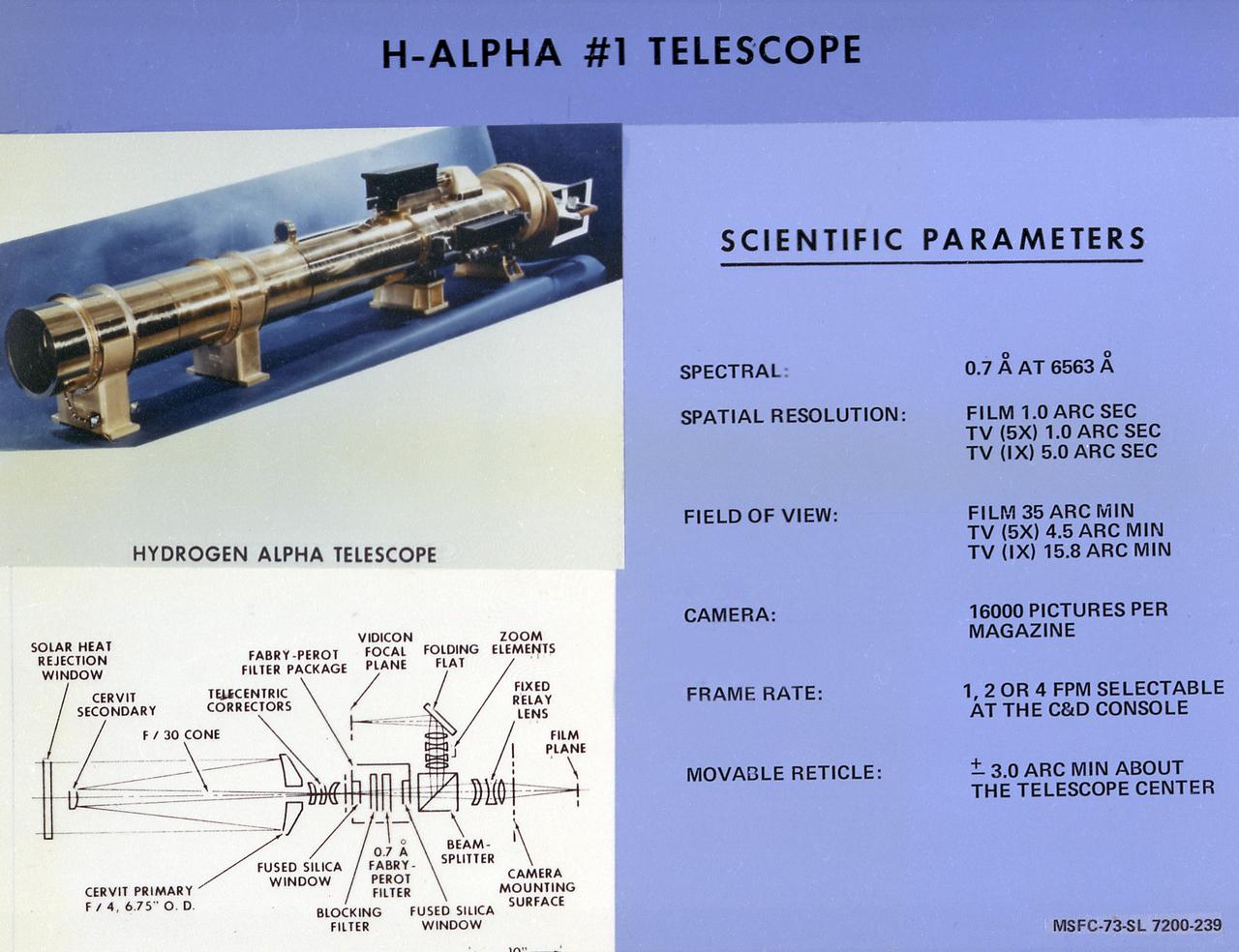
This chart describes the Hydrogen-Alpha (H-Alpha) #1 Telescope, one of eight major solar study facilities on the Skylab Apollo Telescope Mount (ATM). There were two H-Alpha telescopes on the ATM that were used primarily to point the ATM and keep a continuous photographic record during the solar observation periods. Both telescopes gave the Skylab astronauts a real-time picture of the Sun in the red light of the H-Alpha spectrum through a closed-circuit television. The H-Alpha #1 Telescope provided simultaneous photographic and ultraviolet (UV) pictures, while the #2 Telescope operated only in the TV mode. The Marshall Space Flight Center was responsible for development of the H-Alpha Telescopes.
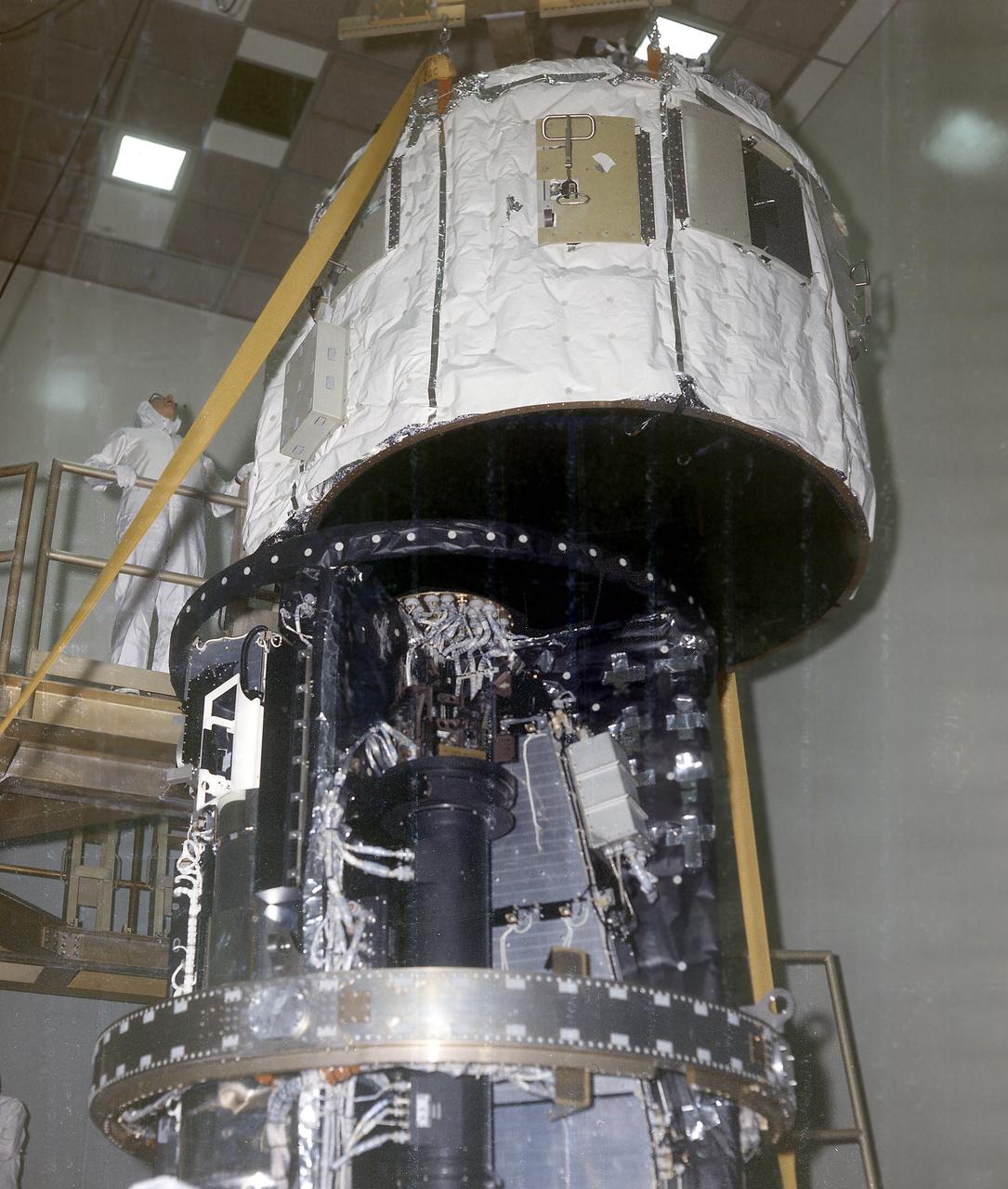
The final version of the Marshall Space Flight Center managed Skylab consisted of four primary parts. One component was the Apollo Telescope Mount (ATM) that housed the first marned scientific telescopes in space. This picture is a view of the ATM spar, which contained the scientific instruments, as the multiple docking adapter (MDA) canister end is lowered over it. The MDA served to link the major parts of Skylab together.
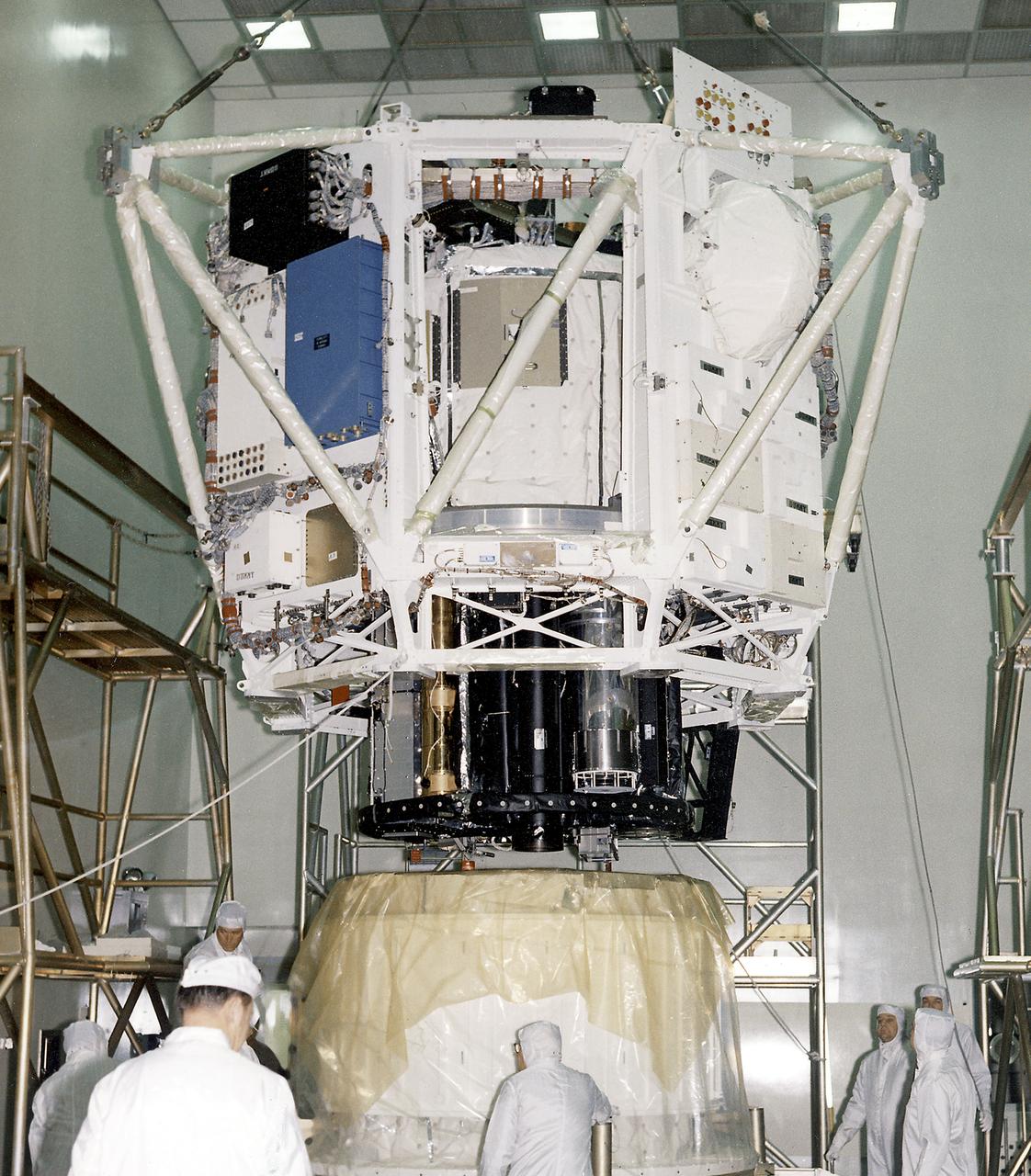
The Apollo Telescope Mount (ATM), designed and developed by the Marshall Space Flight Center, was one of four major components comprising the Skylab. The ATM housed the first marned scientific telescopes in space. In this photograph, the ATM sun end canister, housing the solar instruments, is being moved to a clean room prior to being mated with the remaining components of the ATM unit.
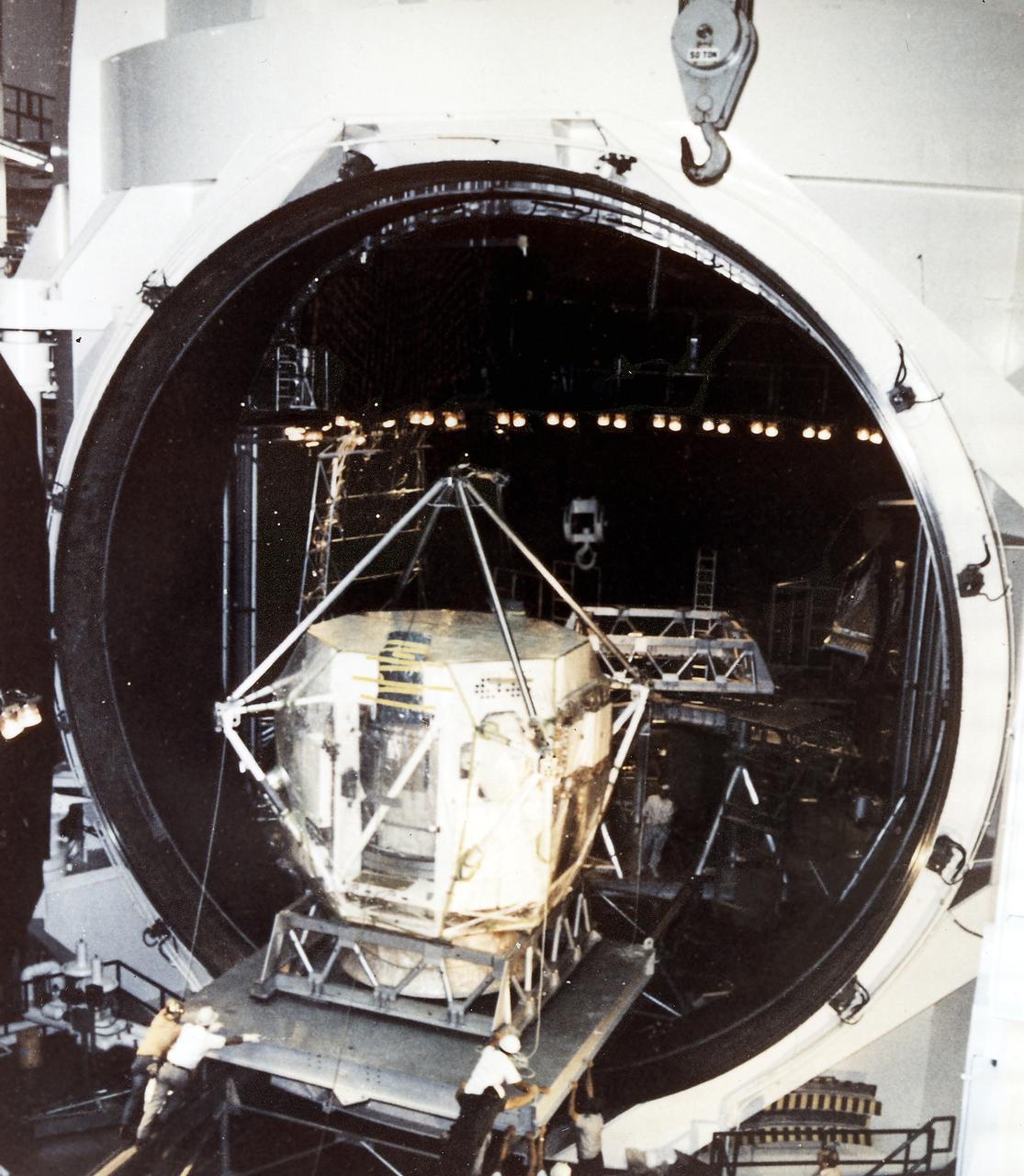
The Apollo Telescope Mount (ATM), designed and developed by the Marshall Space Flight Center, was one of four major components comprising the Skylab. The ATM housed the first marned scientific telescopes in space. In this photograph, taken at the Manned Spacecraft Center (later renamed the Johnson Space Center), an ATM prototype can be seen in a thermal vacuum chamber that tested the unit's ability to withstand the environment of space.
This 1973 chart details Skylab's Ultraviolet (UV) Spectrograph, an Apollo Telescope Mount instrument. Its telescope, with camera and TV capability, photographed the Sun in selected ultraviolet wavelengths. The spectrograph was used to record the spectrum of UV emissions, such as flares or filaments, from a small individual feature on the solar disc. Real-time TV was used by the crew to monitor performance of the telescope, transmit to the ground and record. The exposed films were retrieved by astronaut extravehicular activities. The Marshall Space Flight Center had program management responsibility for the development of the Skylab hardware and experiments.
This 1970 photograph shows the Skylab's Ultraviolet (UV) Spectrograph, an Apollo Telescope Mount instrument. Its telescope, with camera and TV capability, photographed the Sun in selected ultraviolet wavelengths. The spectrograph was used to record the spectrum of UV emissions, such as flares or filaments, from a small individual feature on the solar disc. Real-time TV was used by the crew to monitor the performance of the telescope, transmit to the ground, and record. The exposed films were retrieved by astronaut extravehicular activities. The Marshall Space Flight Center had program management responsibility for the development of the Skylab hardware and experiments.
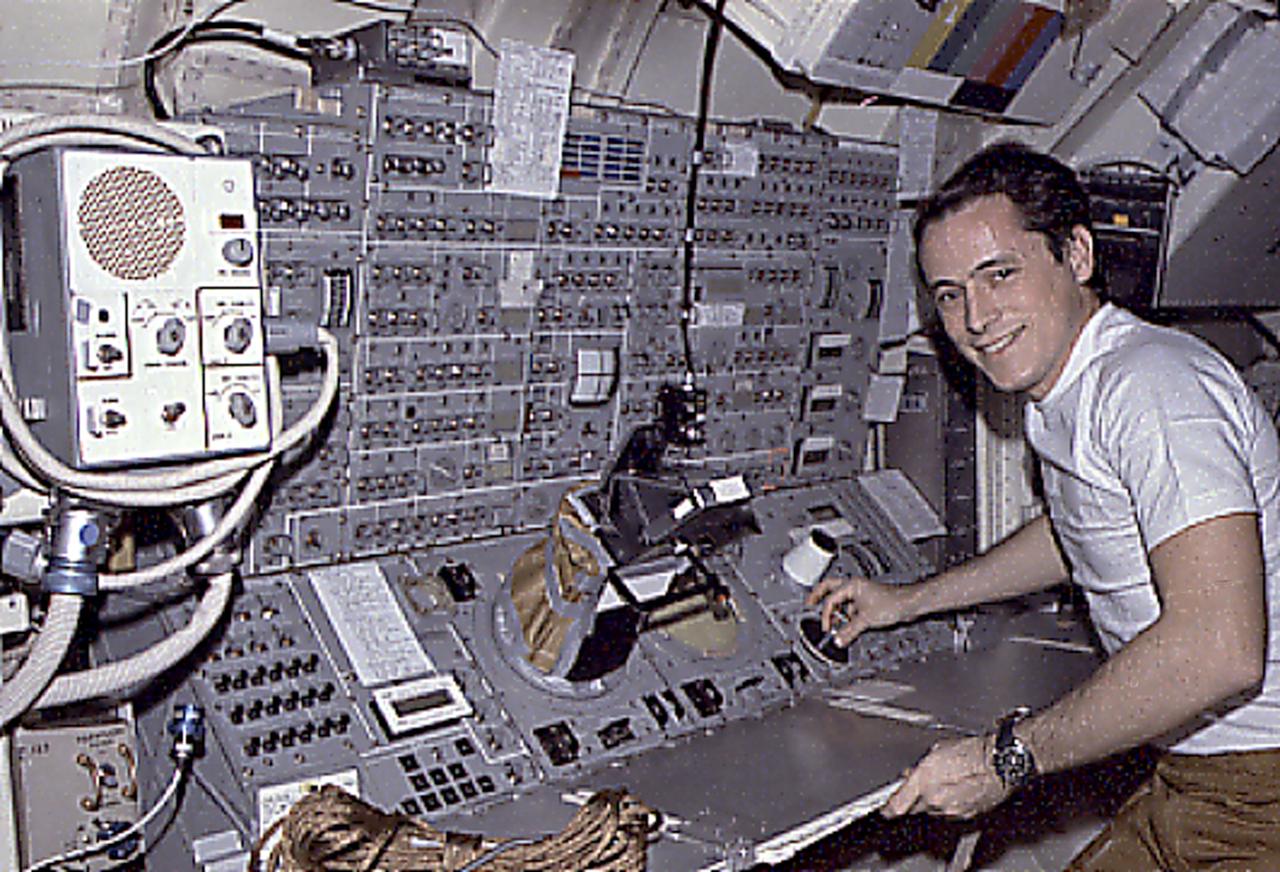
This Skylab-4 mission onboard photograph shows Astronaut Ed Gibson at the complex control and display console for the Apollo Telescope Mount solar telescopes located in the Skylab Multiple Docking Adapter. Astronauts watched the Sun, and photographed and recorded the solar activities, such as the birth of a solar flare.
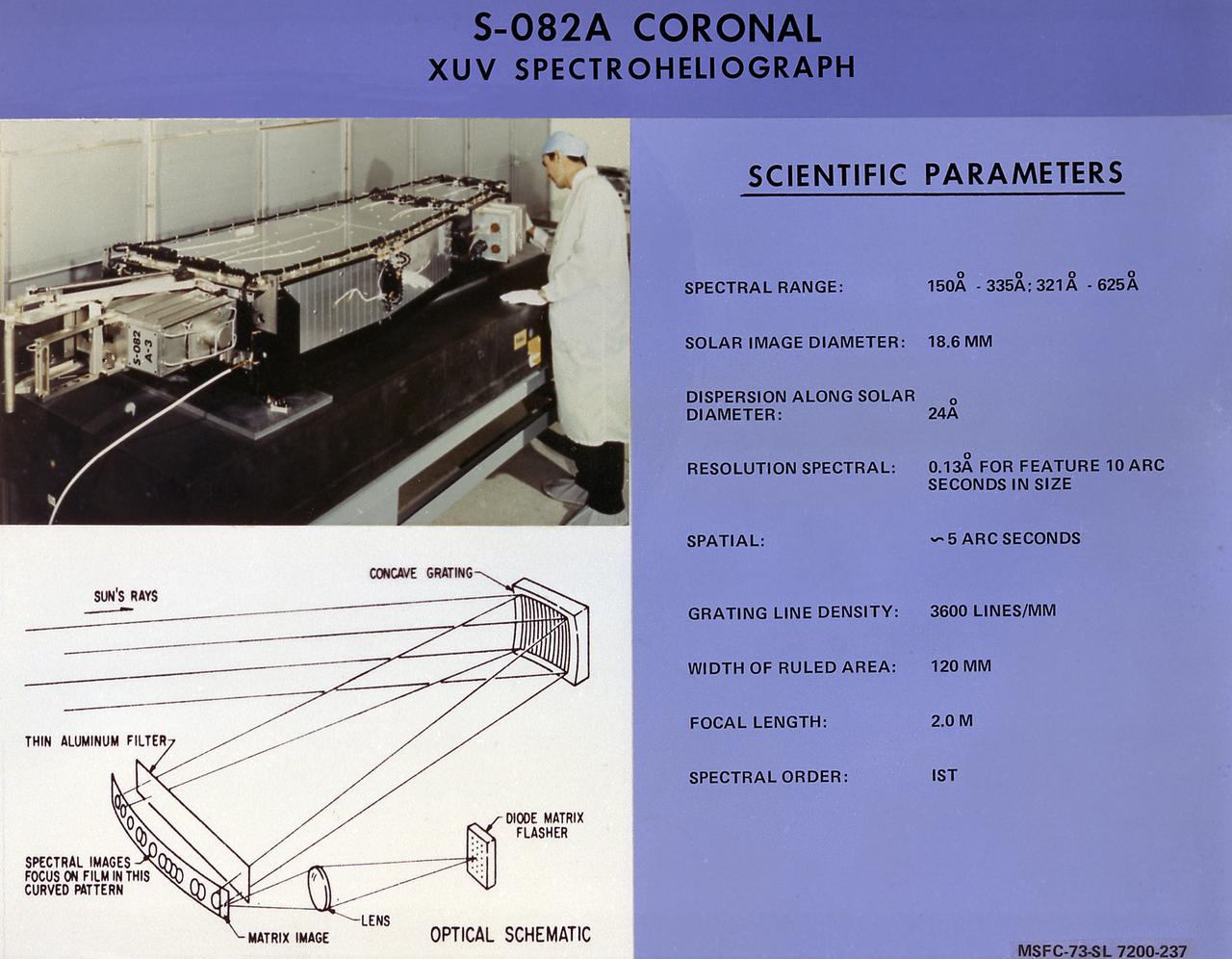
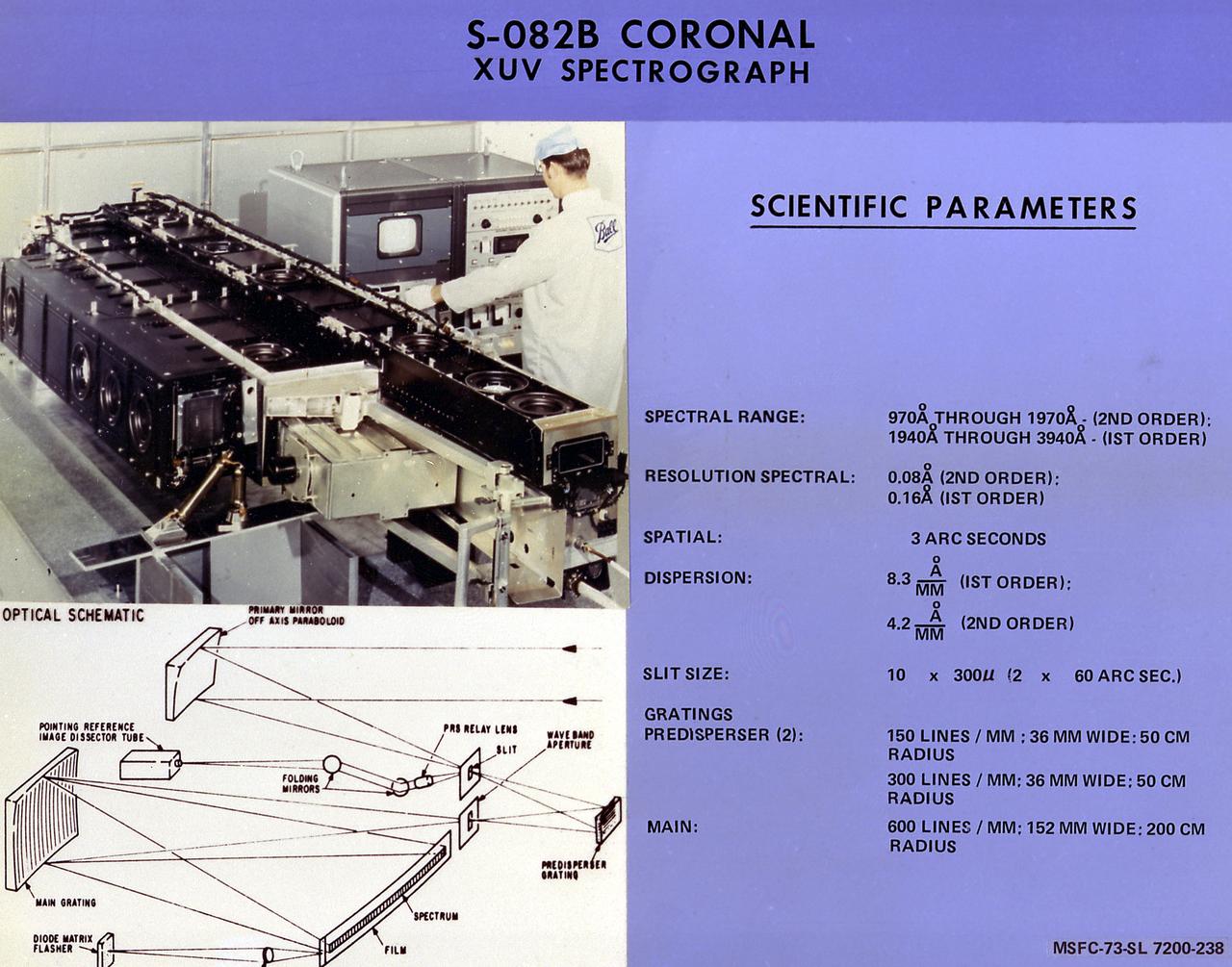
This chart describes Skylab's Extreme Ultraviolet (XUV) Coronal Spectroheliograph, one of the eight Apollo Telescope Mount facilities. It was designed to sequentially photograph the solar chromosphere and corona in selected ultraviolet wavelengths . The instrument also obtained information about composition, temperature, energy conversion and transfer, and plasma processes of the chromosphere and lower corona. The Marshall Space Flight Center had program management responsibility for the development of Skylab hardware and experiments.

This 1970 photograph shows the flight unit for Skylab's White Light Coronagraph, an Apollo Telescope Mount (ATM) facility that photographed the solar corona in the visible light spectrum. A TV camera in the instrument provided real-time pictures of the occulted Sun to the astronauts at the control console and also transmitted the images to the ground. The Marshall Space Flight Center had program management responsibility for the development of Skylab hardware and experiments.
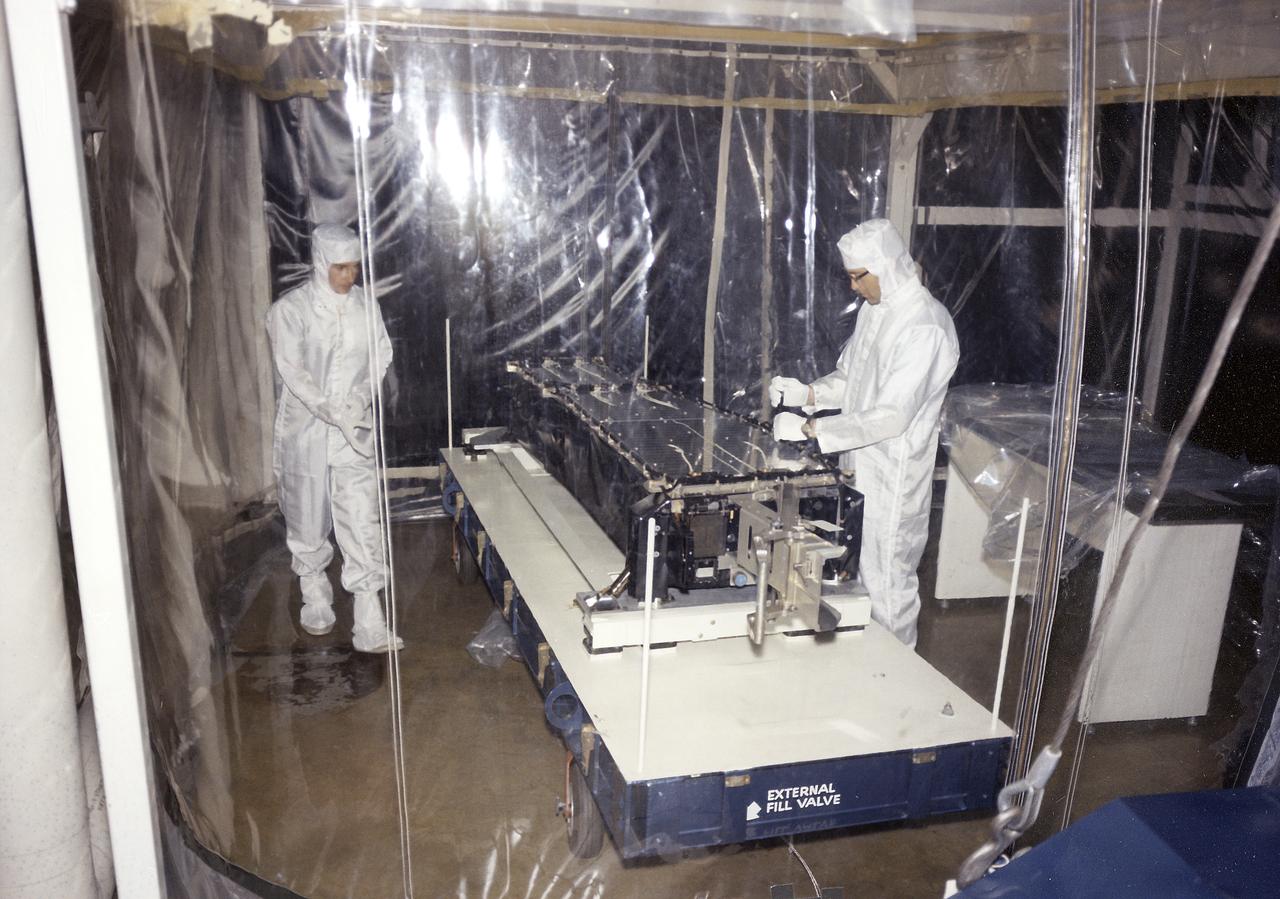
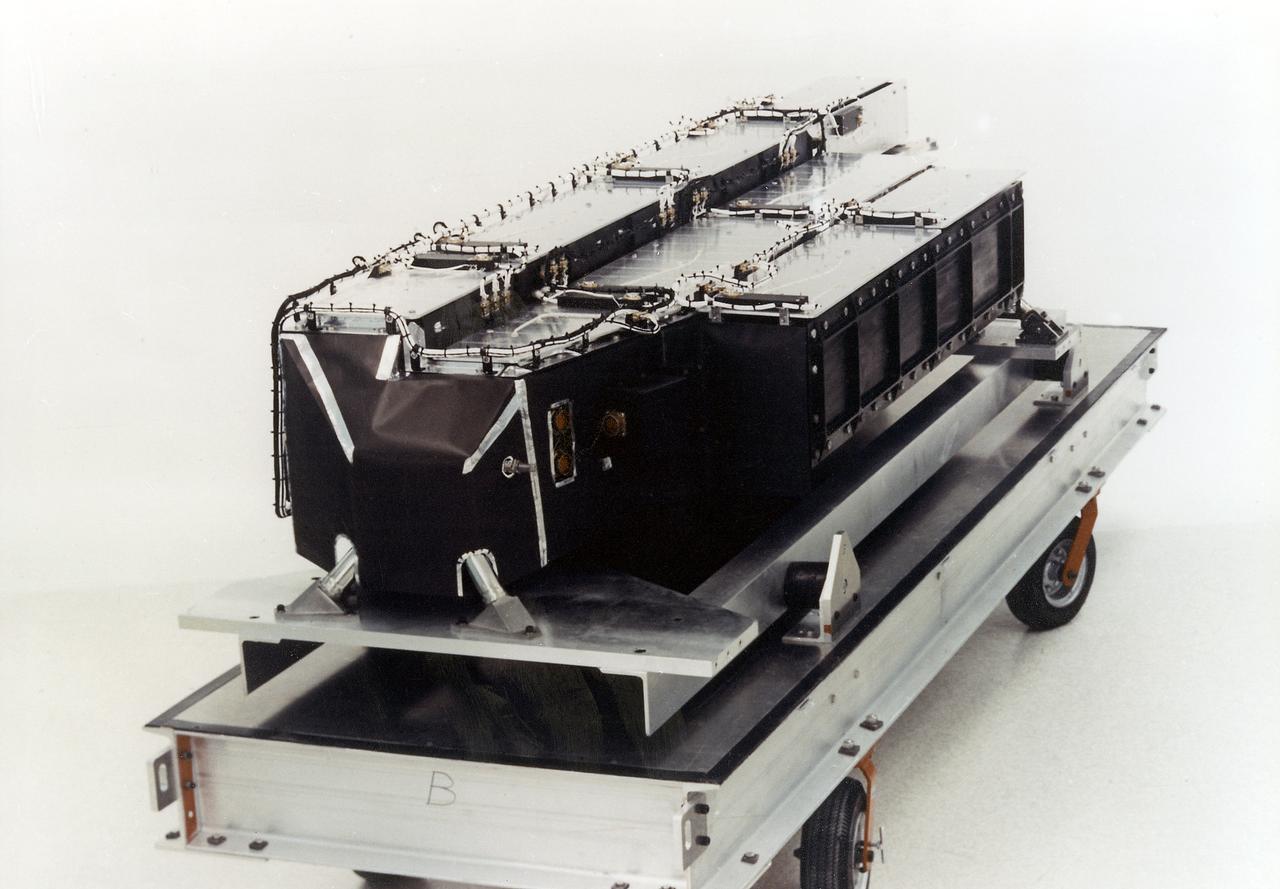
This photograph shows Skylab's Extreme Ultraviolet (XUV) Spectroheliograph during an acceptance test and checkout procedures in April 1971. The unit was an Apollo Telescope Mount (ATM) instrument designed to sequentially photograph the solar chromosphere and corona in selected ultraviolet wavelengths. The instrument also obtained information about composition, temperature, energy conversion and transfer, and plasma processes of the chromosphere and lower corona. The Marshall Space Flight Center had program management responsibility for the development of Skylab hardware and experiments.

S73-32837 (10 Sept. 1973) --- Scientist-astronaut Edward G. Gibson, seated, and astronaut William R. Pogue discuss a mission procedure at the Apollo Telescope Mount (ATM) display and control panel mock-up in the one-G trainer for the Multiple Docking Adapter (MDA) at Johnson Space Center. Photo credit: NASA
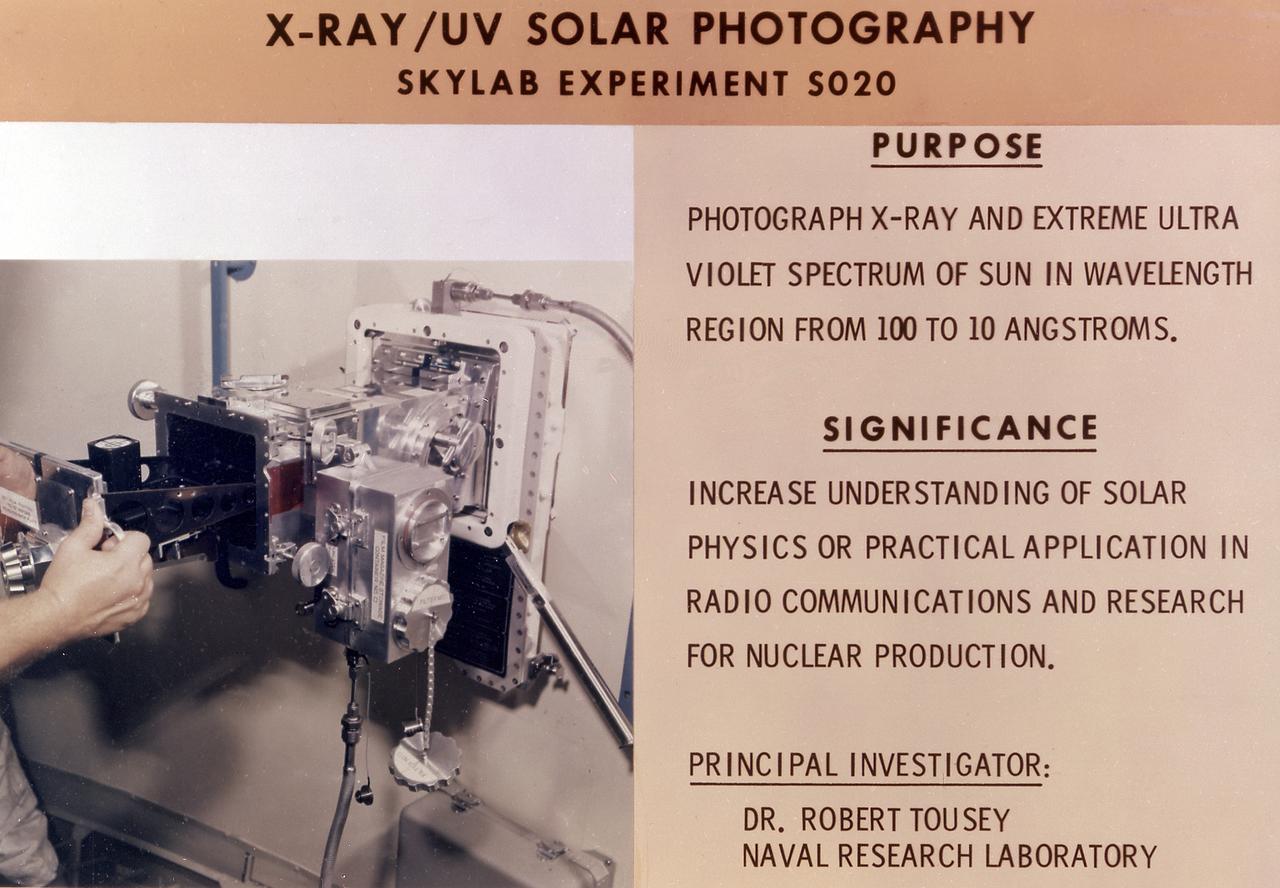
This chart details Skylab's Ultraviolet (UV) X-Ray Solar Photography experiment (S020) in an Apollo Telescope Mount facility. It was designed to photograph normal and explosive areas within the solar atmosphere in the UV and x-ray spectra. The Marshall Space Flight Center had program management responsibility for the development of Skylab hardware and experiments.
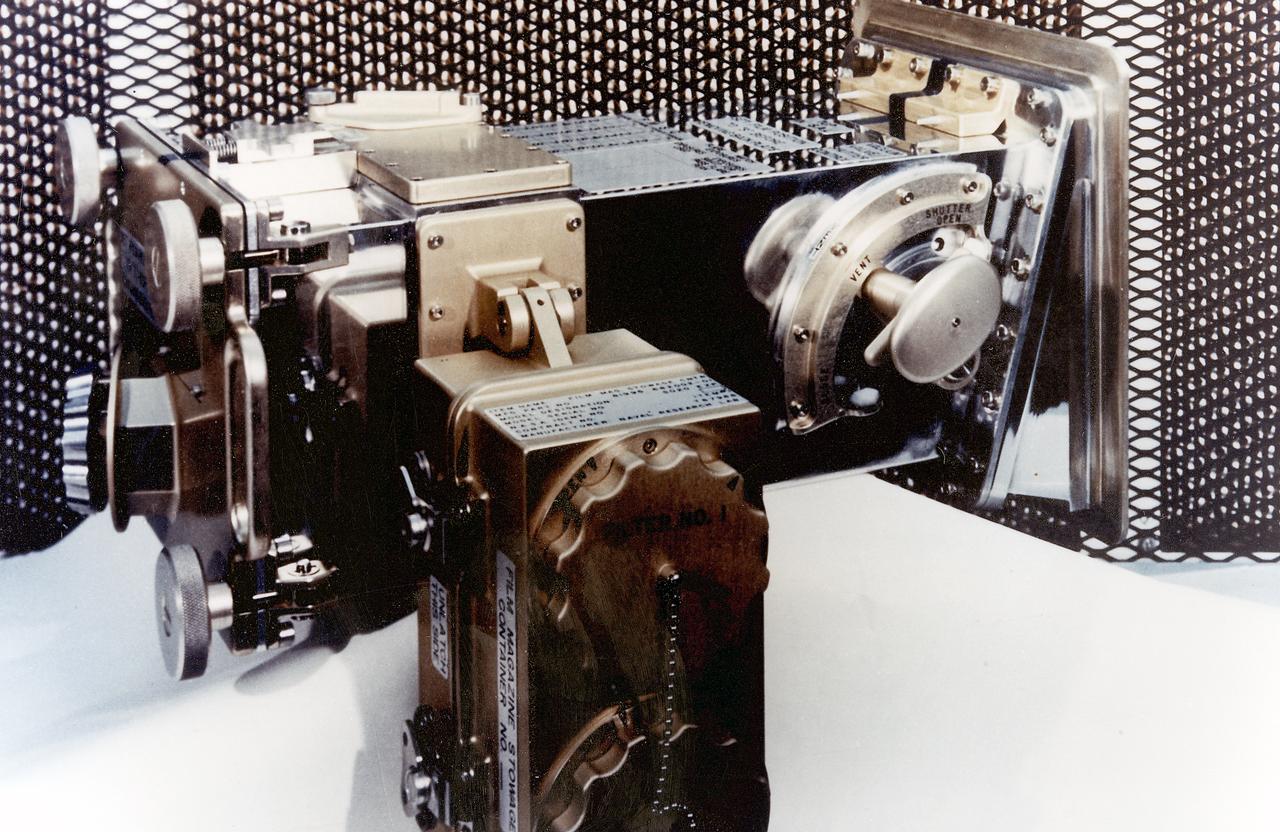
This 1970 photograph shows Skylab's Ultraviolet (UV)/X-Ray Solar Photography instrument, an Apollo Telescope Mount (ATM) facility designed to photograph normal and explosive areas in the solar atmosphere in the x-ray and UV spectra. The Marshall Space Flight Center had program management responsibility for the development of Skylab hardware and experiments.
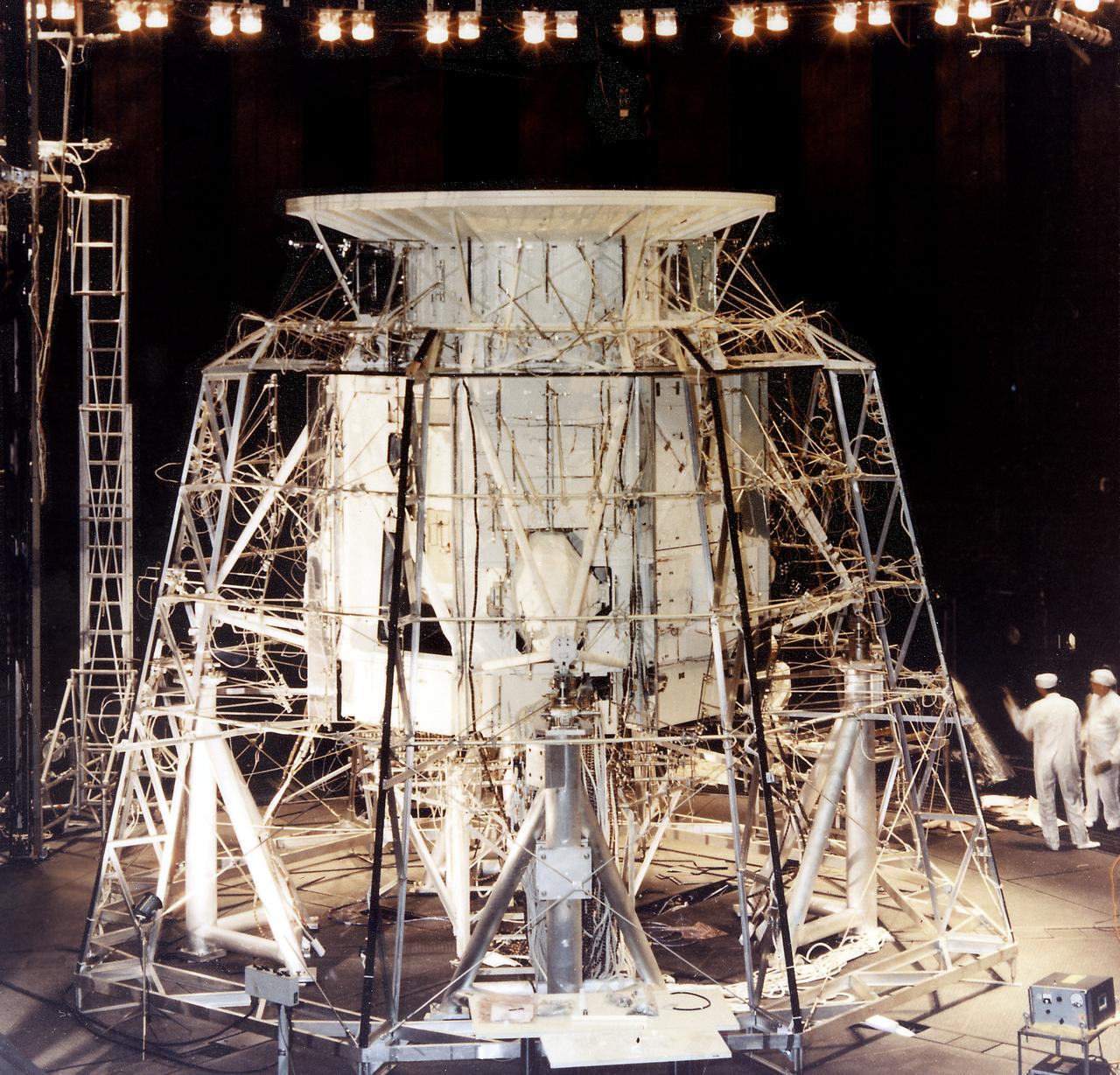
The Apollo Telescope Mount (ATM), designed and developed by the Marshall Space Flight Center, was one of four major components comprising the Skylab (1973-1979). The ATM housed the first manned scientific telescope in space. This photograph is of the ATM thermal systems unit undergoing testing in the Space Environment Simulation Laboratory of the Manned Spacecraft Center (MSC). The ATM thermal systems unit was used to control the temperatures of space instrument's subsystems during a mission. The MSC was renamed the Johnson Space Center (JSC) in early 1973.
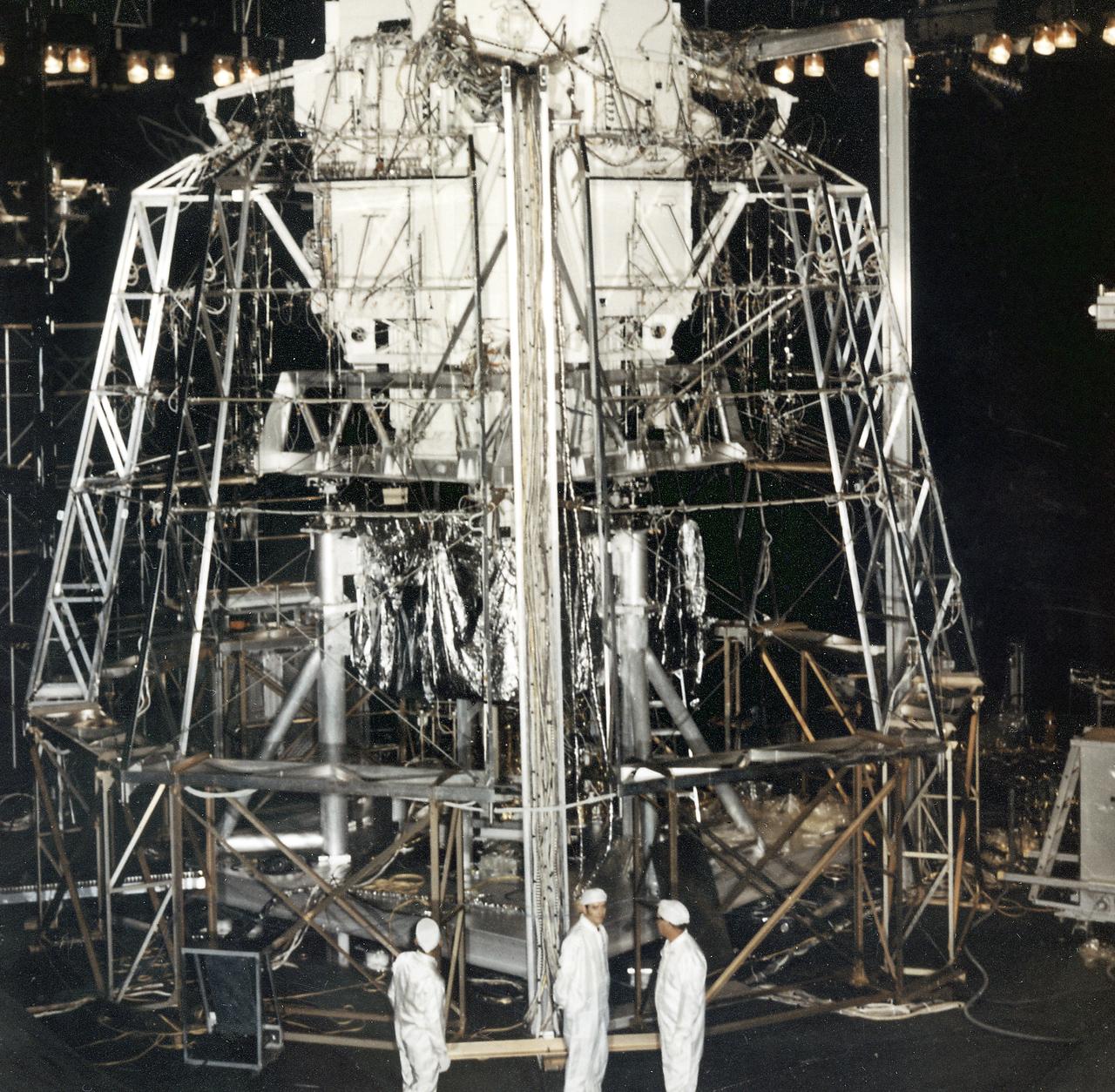
The Apollo Telescope Mount (ATM), designed and developed by the Marshall Space Flight Center, was one of four major components comprising the Skylab (1973-1979). The ATM housed the first manned scientific telescope in space. This photograph shows the ATM rigged for altitude and space simulation tests at the Space Environment Simulation Laboratory of the Manned Spacecraft Center (MSC). The MSC was renamed the Johnson Space Center (JSC) in early 1973.
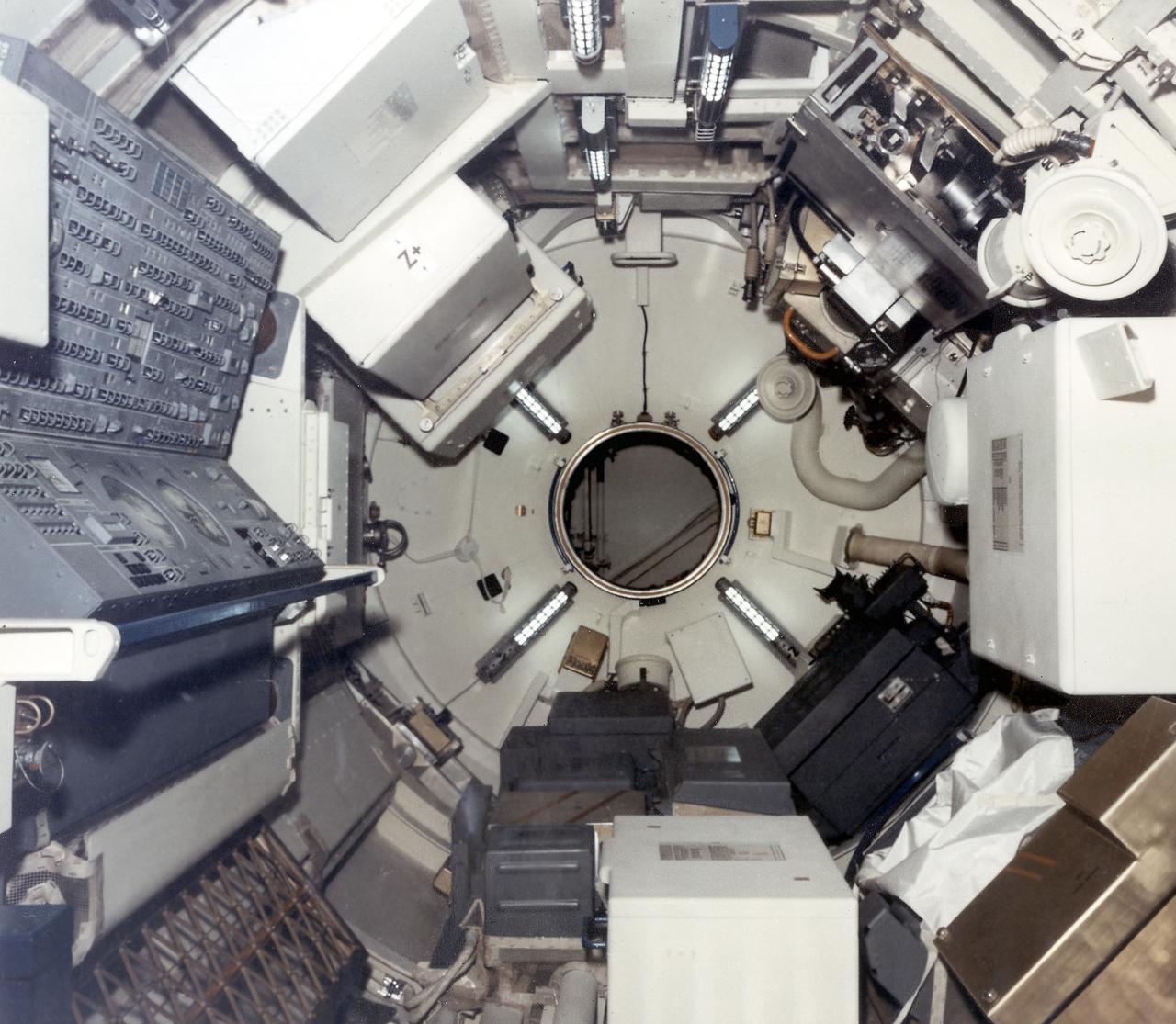
This interior photograph of Skylab's multiple docking adapter (MDA) flight article, then undergoing outfitting at the Martin Marietta Corporation's Space Center facility in Denver, Colorado, shows the forward cone area and docking turnel (center) that attached to the Apollo Command Module. Designed and manufactured by the Marshall Space Flight Center, the MDA housed the control units for the Apollo Telescope Mount (ATM), Earth Resources Experiment Package (EREP), and Zero-Gravity Materials Processing Facility and provided a docking port for the Apollo Command Module.
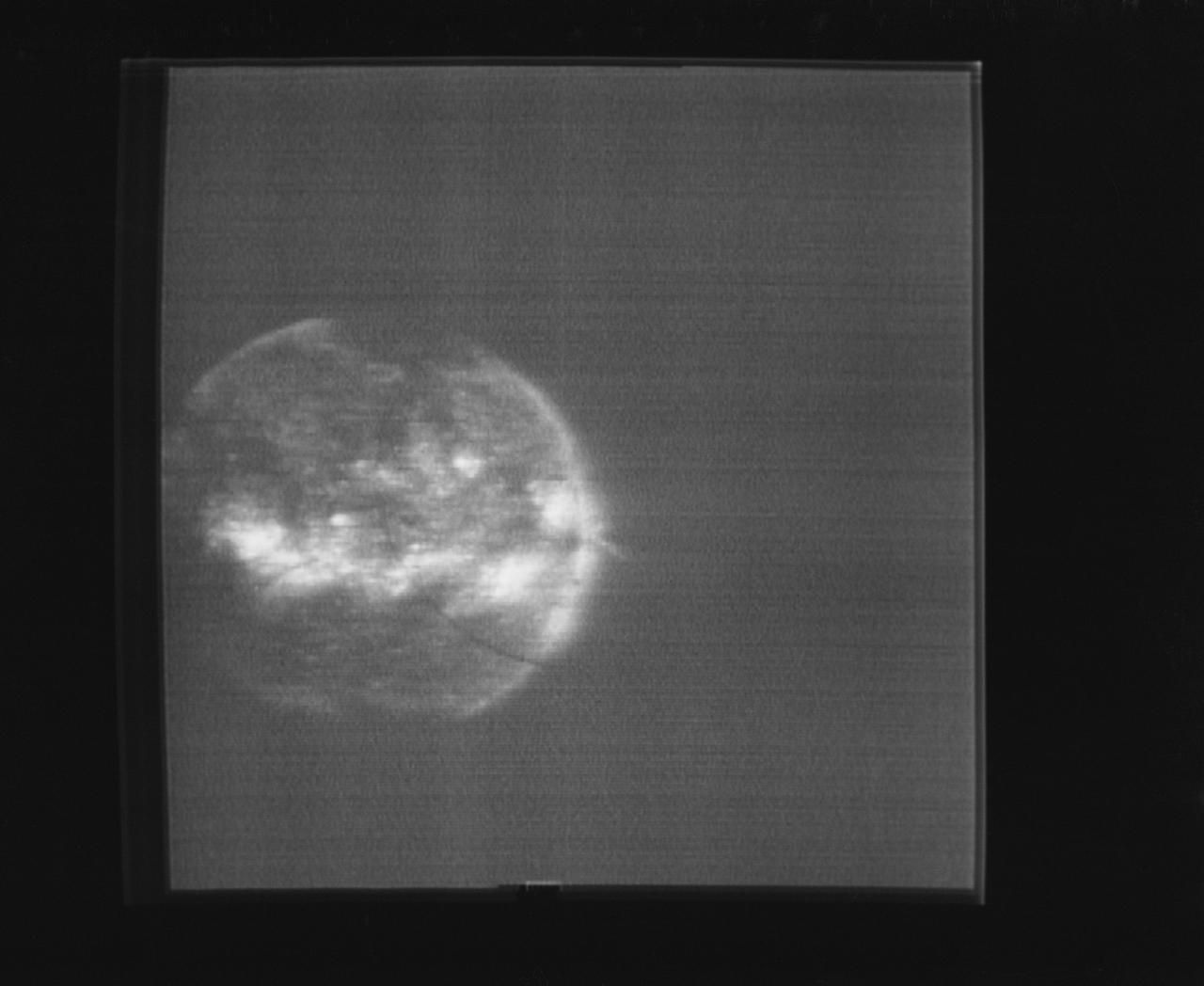
S74-15696 (1974) --- The solar disk photographed through the Skylab S082 Ultraviolet Spectrograph/Heliograph can be seen in this reproduction taken from a television tranmission made by a TV camera aboard the Skylab space station in Earth orbit. The S082 experiment is located in the Apollo Telescope Mount. This spectroheliogram shows specific emission features greatly enhanced over photographs of the solar disk in white light. Photo credit: NASA
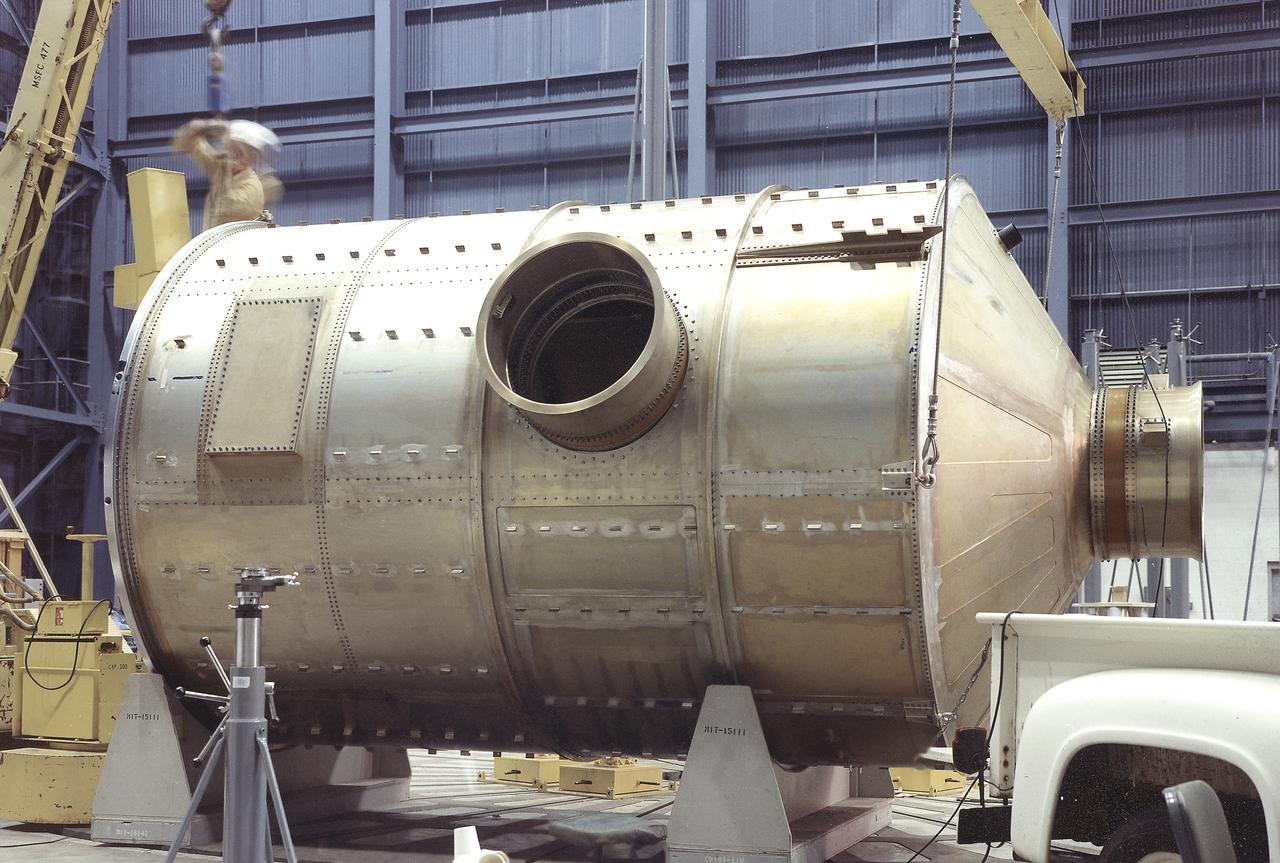
At Marshall Space Flight Center, Skylab's Multiple Docking Adapter (MDA) flight article undergoes center-of-gravity testing. Developed and fabricated by MSFC, the MDA housed the control units for the Apollo Telescope Mount (ATM), Earth Resources Experiment Package (EREP), and the Zero-Gravity Material Processing Facility and provided a docking port for the Apollo Command Module.
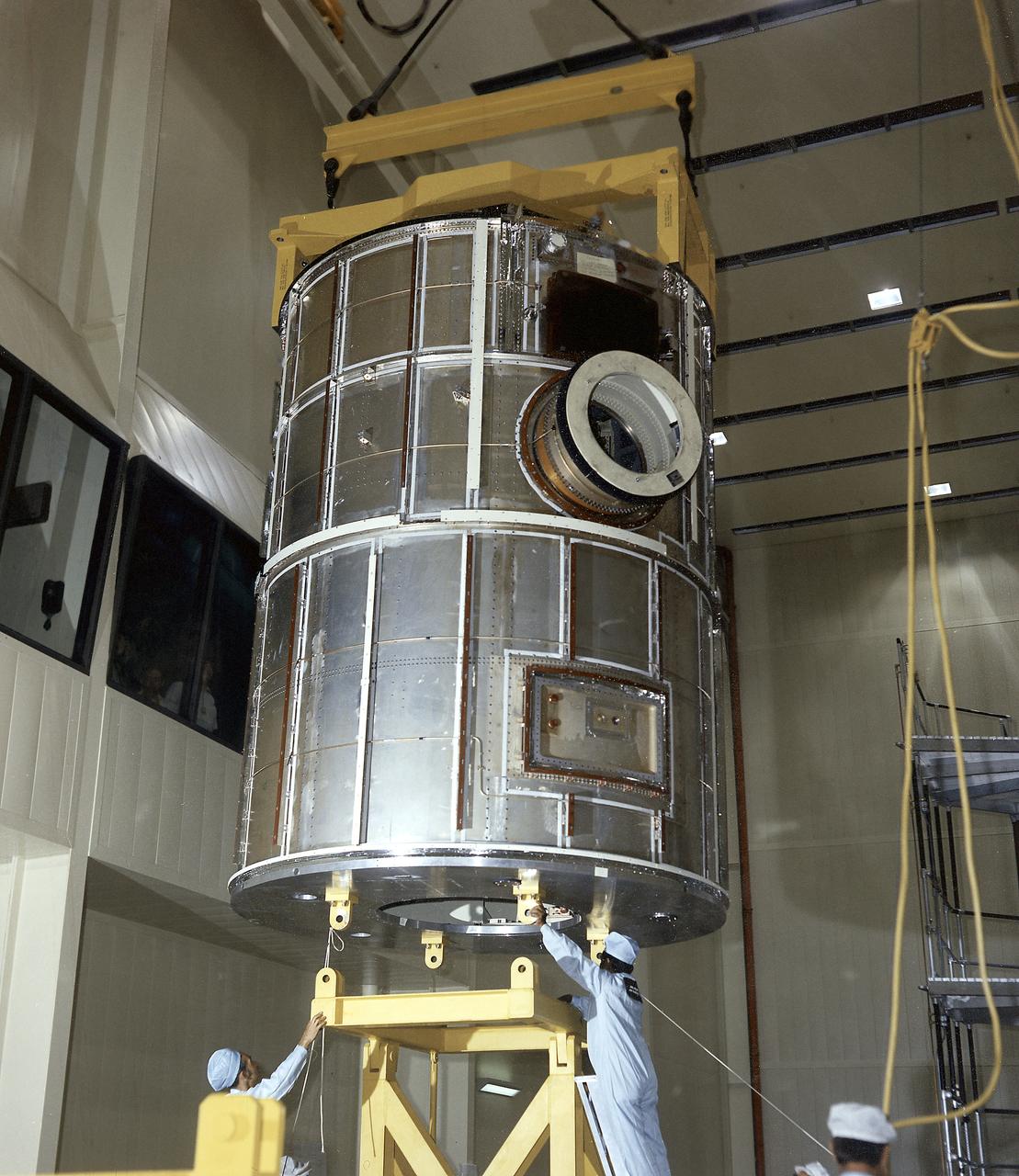
Workmen at the Martin Marietta Corporation's Space Center in Denver, Colorado, position Skylab's Multiple Docking Adapter (MDA) flight article in the horizontal transportation fixture. Designed and manufactured by the Marshall Space Flight Center and outfitted by Martin Marietta, the MDA housed the control units for the Apollo Telescope Mount (ATM), Earth Resources Experiment Package (EREP), and Zero-Gravity Materials Processing Facility and provided a docking port for the Apollo Command Module.
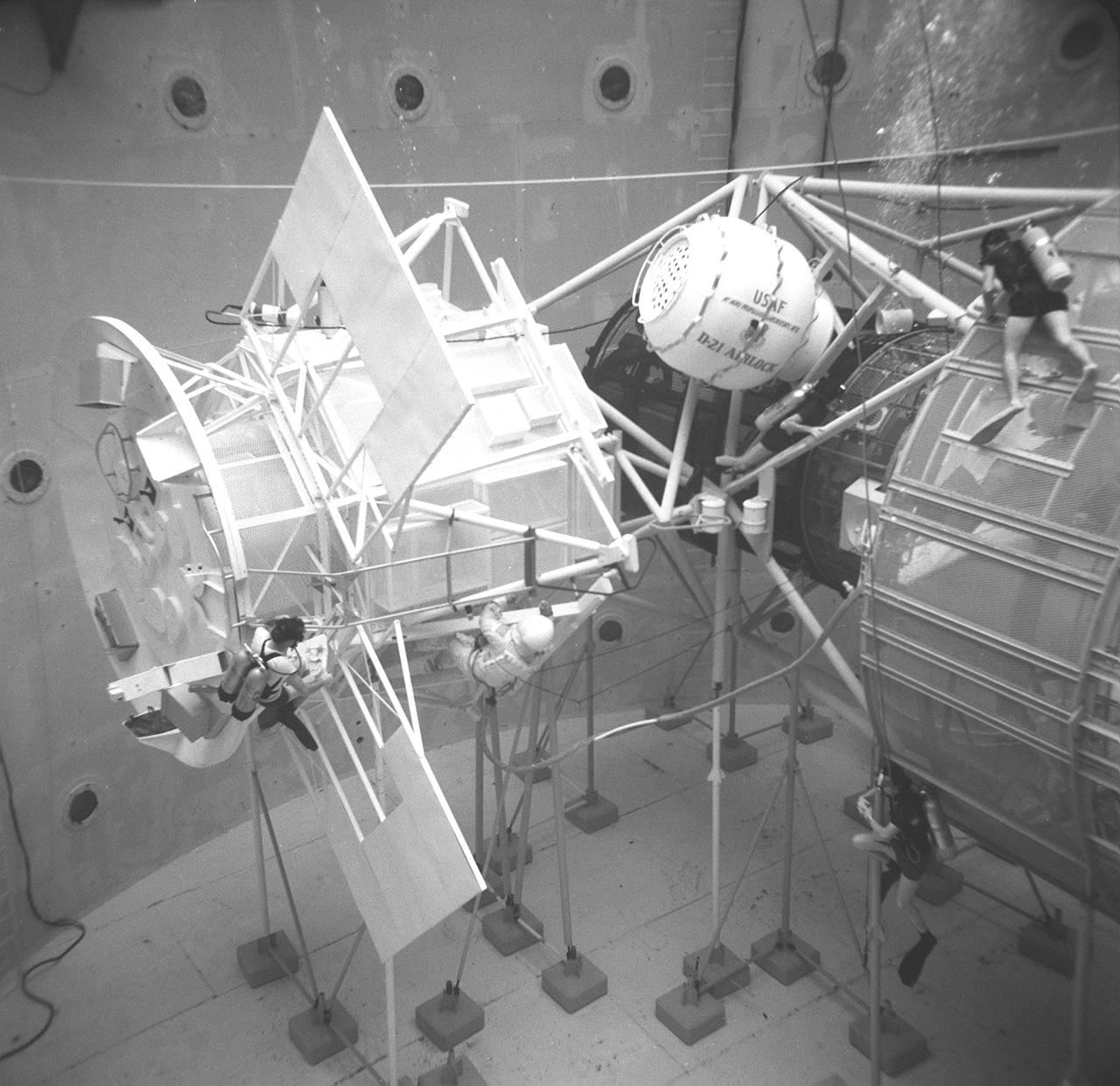
After the end of the Apollo missions, NASA's next adventure into space was the marned spaceflight of Skylab. Using an S-IVB stage of the Saturn V launch vehicle, Skylab was a two-story orbiting laboratory, one floor being living quarters and the other a work room. The objectives of Skylab were to enrich our scientific knowledge of the Earth, the Sun, the stars, and cosmic space; to study the effects of weightlessness on living organisms, including man; to study the effects of the processing and manufacturing of materials utilizing the absence of gravity; and to conduct Earth resource observations. At the Marshall Space Flight Center (MSFC), astronauts and engineers spent hundreds of hours in an MSFC Neutral Buoyancy Simulator (NBS) rehearsing procedures to be used during the Skylab mission, developing techniques, and detecting and correcting potential problems. The NBS was a 40-foot deep water tank that simulated the weightlessness environment of space. This photograph shows astronaut Ed Gibbon (a prime crew member of the Skylab-4 mission) during the neutral buoyancy Skylab extravehicular activity training at the Apollo Telescope Mount (ATM) mockup. One of Skylab's major components, the ATM was the most powerful astronomical observatory ever put into orbit to date.
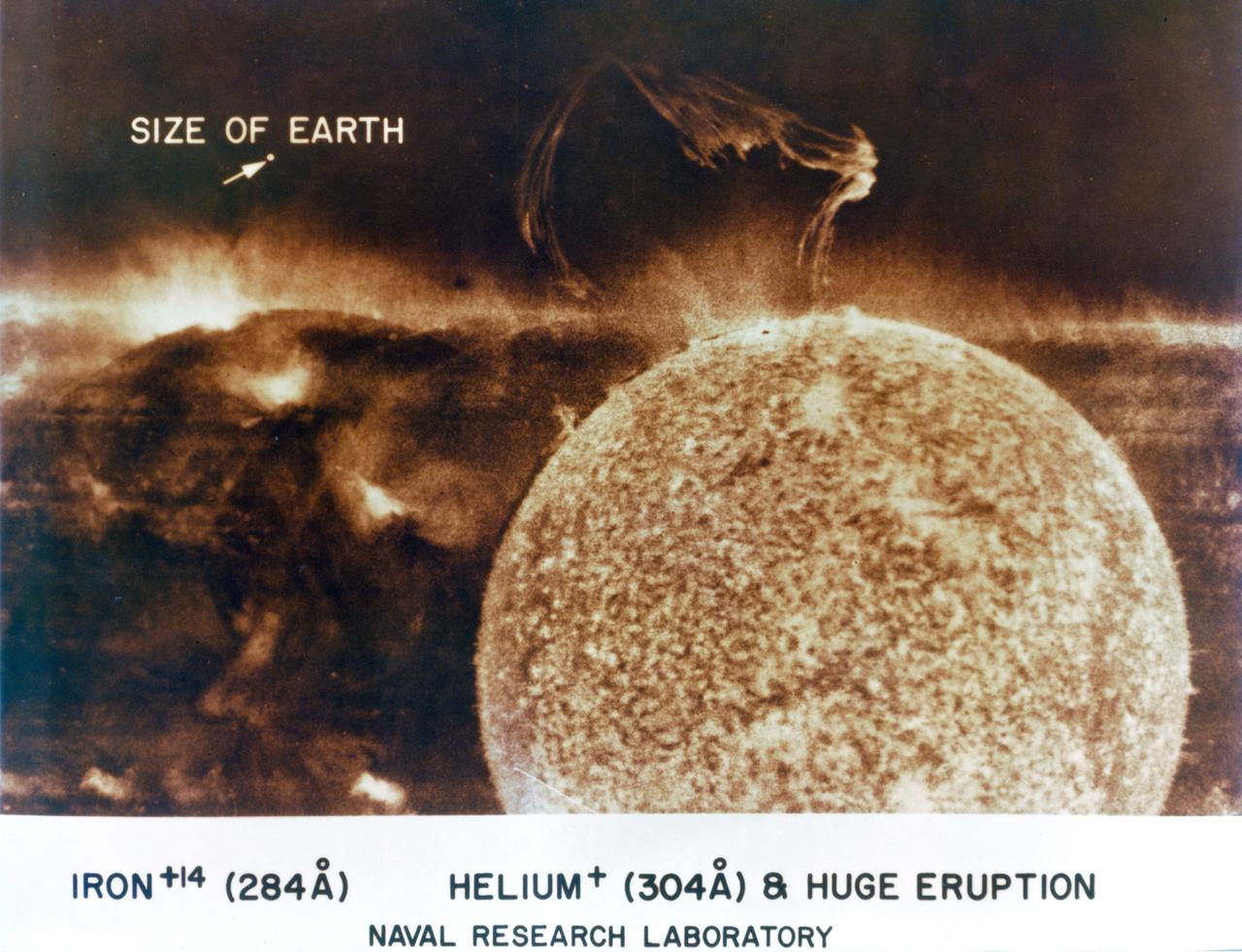
S74-15583 (July 1973) --- A huge solar eruption can be seen in this Spectroheliogram obtained during the Skylab 3 mission by the Extreme Ultraviolet Spectrograph/Spectroheliograph SO82A Experiment aboard the Skylab space station in Earth orbit. SO82 is one of the Apollo Telescope Mount experiments. The SO82 "A" instrument covers the wavelength region from 150-650 angstroms (EUV regions). The magnitude of the eruption can be visualized by comparing it with the small white dot that represents the size of Earth. This photograph reveals for the first time that helium erupting from the sun can stay together to altitudes of up to 500,000 miles. After being ejected from the sun, the gas clouds seem to have come to a standstill, as though blocked by an unseen wall. Some materials appear to have been directed back toward the sun as a rain, distinguished by fine threads. At present it is a challenge to explain this mystery--what forces expelled these huge clouds, then blocked its further progress, yet allowed the cloud to maintain its threads. Both magnetic fields and gravity must play a part, but these curious forms seem to defy explanation based on magnetic and gravitational fields alone. The EUV spectroheliograph was designed and constructed by the U.S. Naval Research Laboratory and the Ball Brothers Research Corporation under the direction of Dr. R. Tousey, the principal investigator for this NASA experiment. On the left may be seen the sun's image in emission from iron atoms which have lost 14 electrons by collision in the sun's million-degree coronal plasma gas. Photo credit: NASA
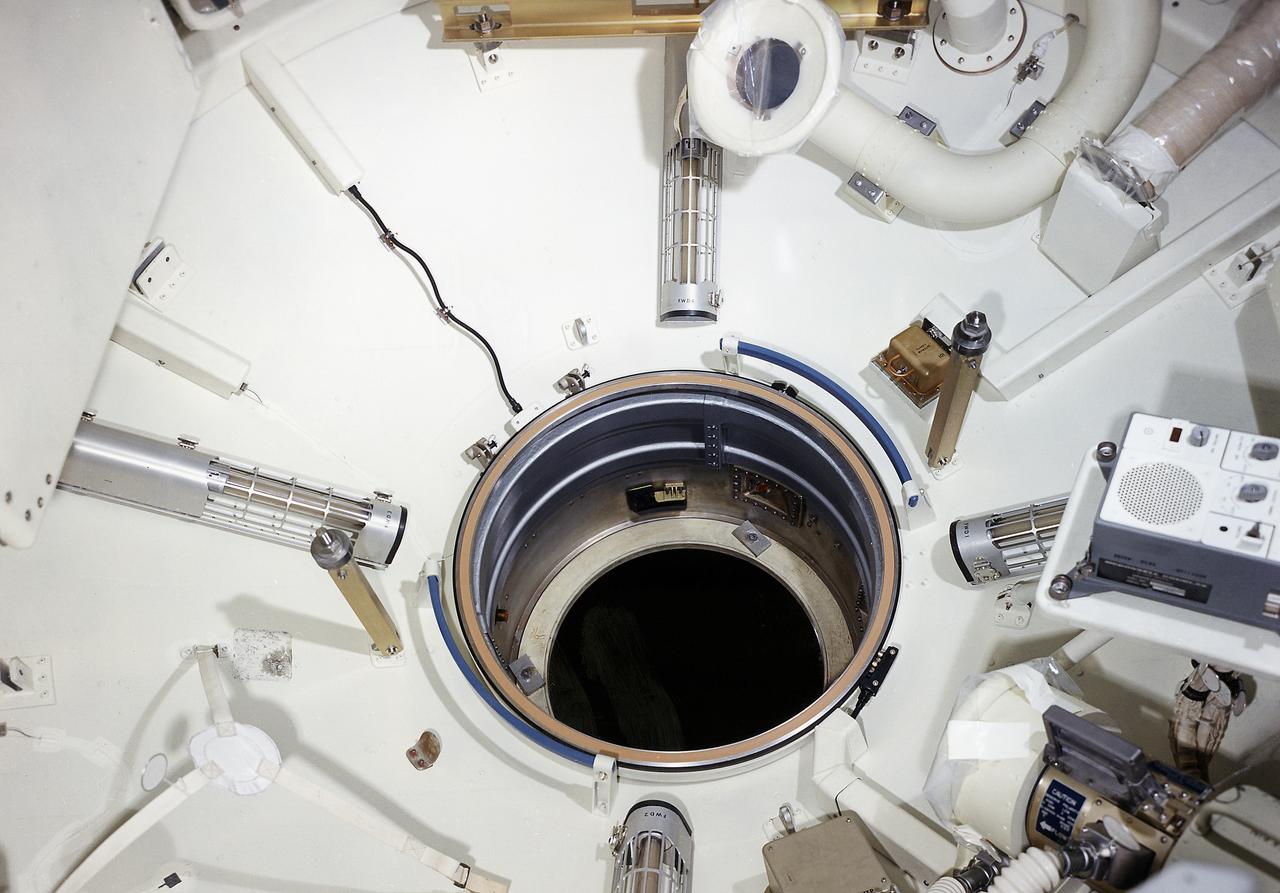
This August 1971 interior photograph of Skylab's Multiple Docking Adapter (MDA) flight article, undergoing outfitting at the Martin-Marietta Corporation's Space Center facility in Denver, Colorado, shows the forward cone area and docking tunnel (center) that attached to the Apollo Command Module. Designed and manufactured by the Marshall Space Flight Center, the MDA housed the control units for the Apollo Telescope Mount, Earth Resources Experiment Package, and Zero-Gravity Materials Processing Facility and provided a docking port for the Apollo Command Module.
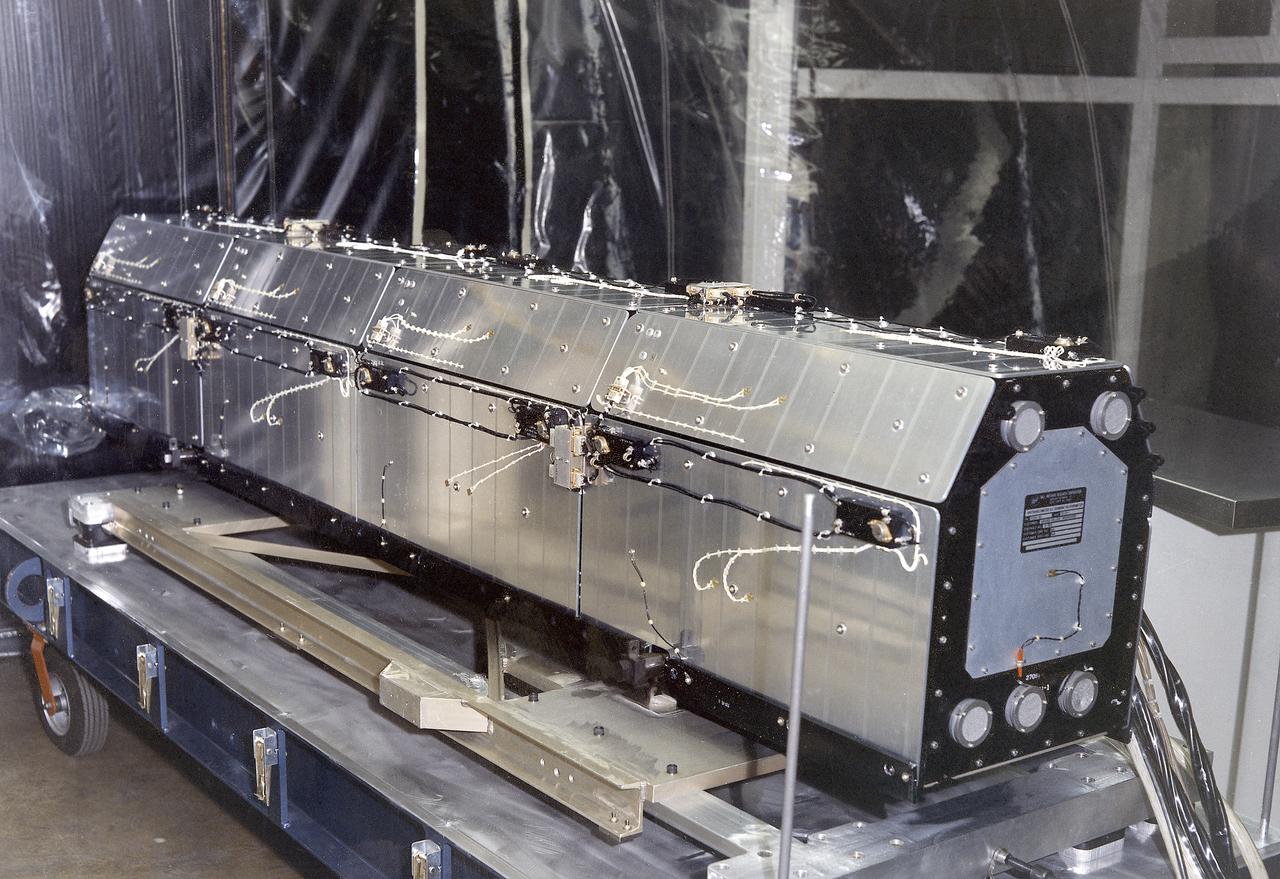
This 1970 photograph shows the flight unit for Skylab's Ultraviolet (UV) Scarning Polychromator Spectroheliometer, an Apollo Telescope Mount (ATM) facility. It was designed to observe temporal changes in UV radiation emitted by the Sun's chromosphere and lower corona. The Marshall Space Flight Center had program management responsibility for the development of Skylab hardware and experiments.
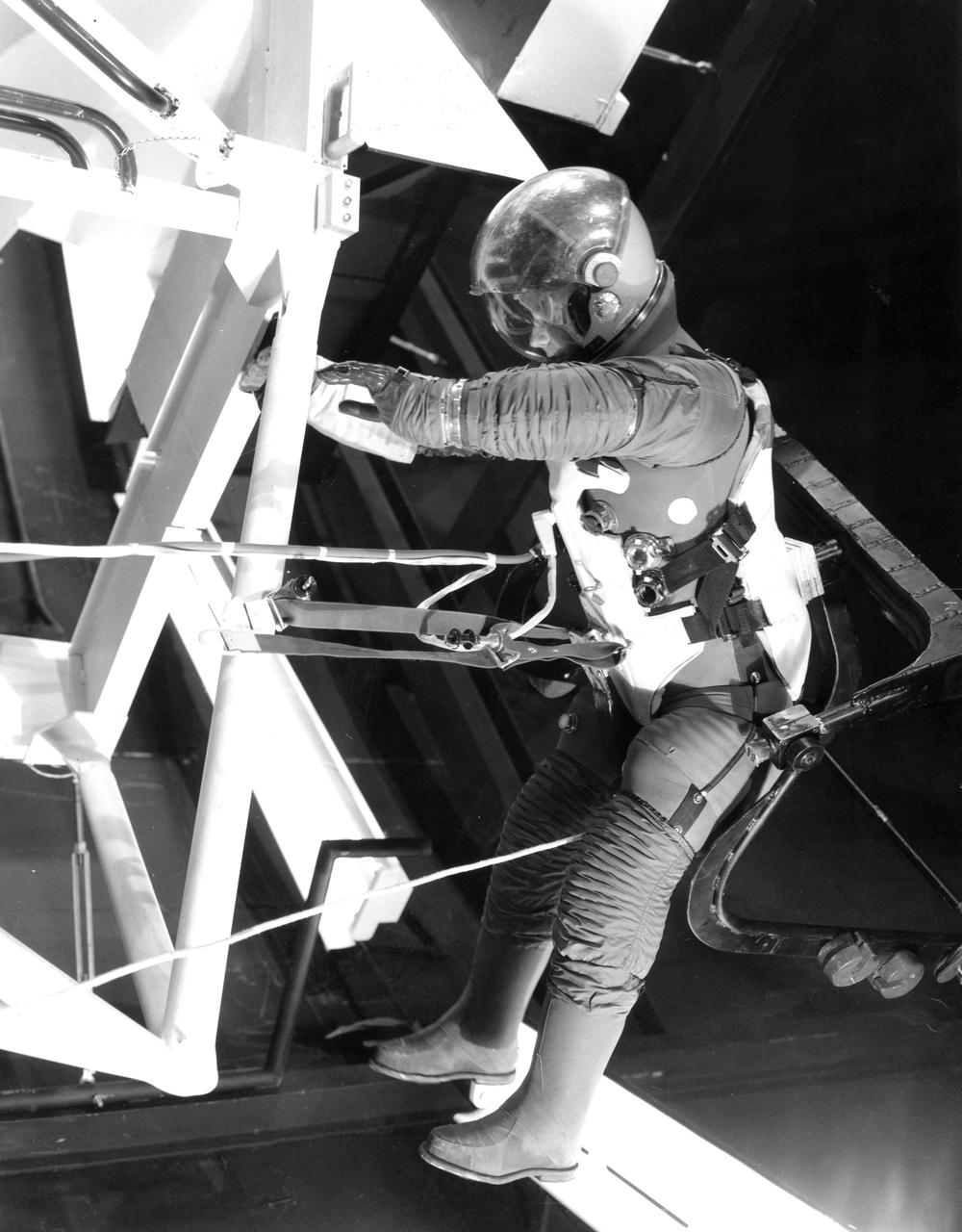
An astronaut wearing a pressurized space suit performed a work task while suspended in a “zero-gravity” simulator known as the Neutral Buoyancy Simulator (NBS) at Marshall Space Flight Center. This particular task was one of many performed by astronauts while checking out the mockup for the Apollo Telescope Mount.
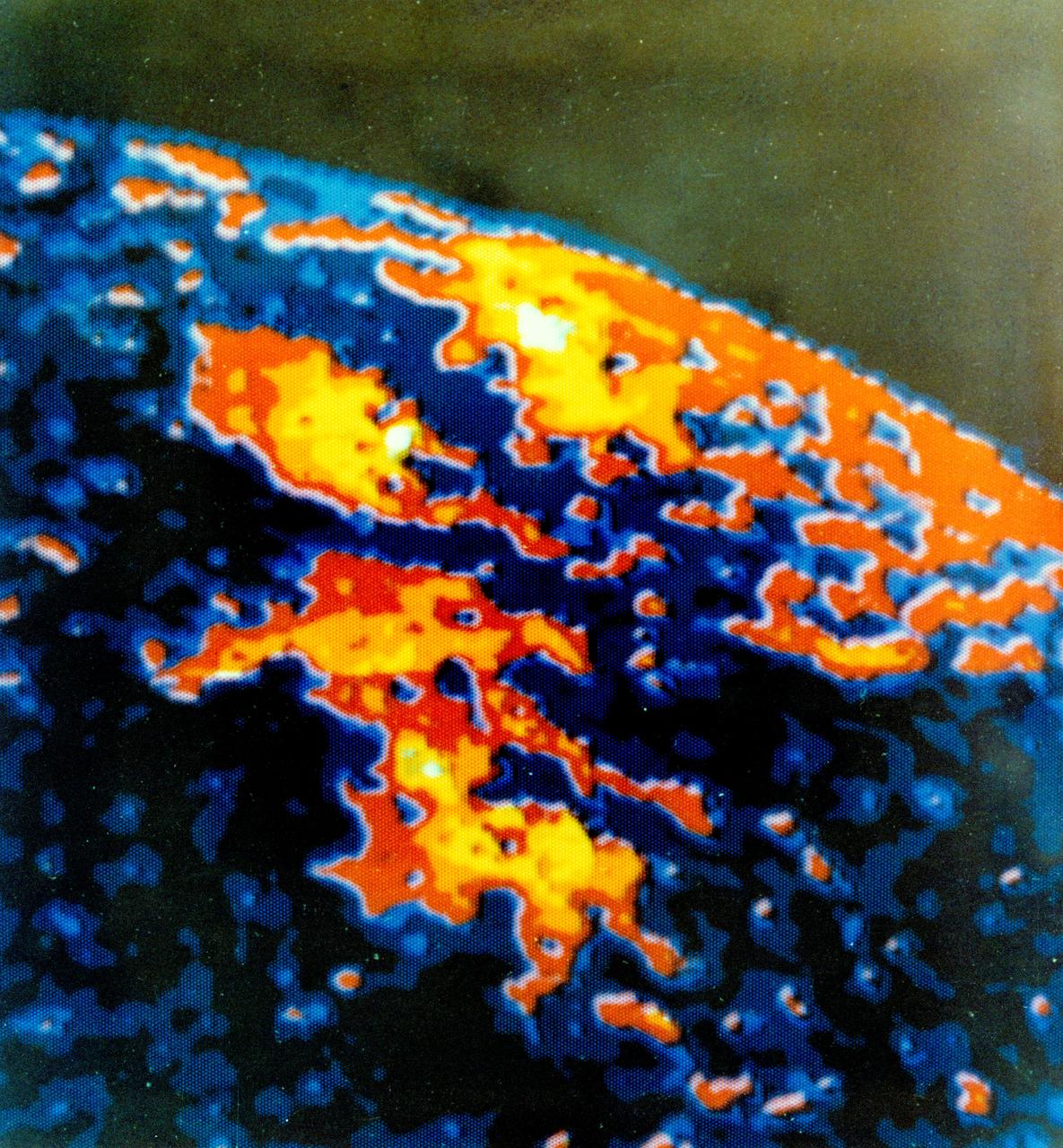
S74-21921 (For release 1974) --- Sun photographed by Apollo Telescope Mount through spectroheliometer at a wavelength of 625.3 angstroms. The black areas are the surface of the sun; the reds, yellows and whites are the corona some 70,000 kilometers above the surface. Photo credit: NASA
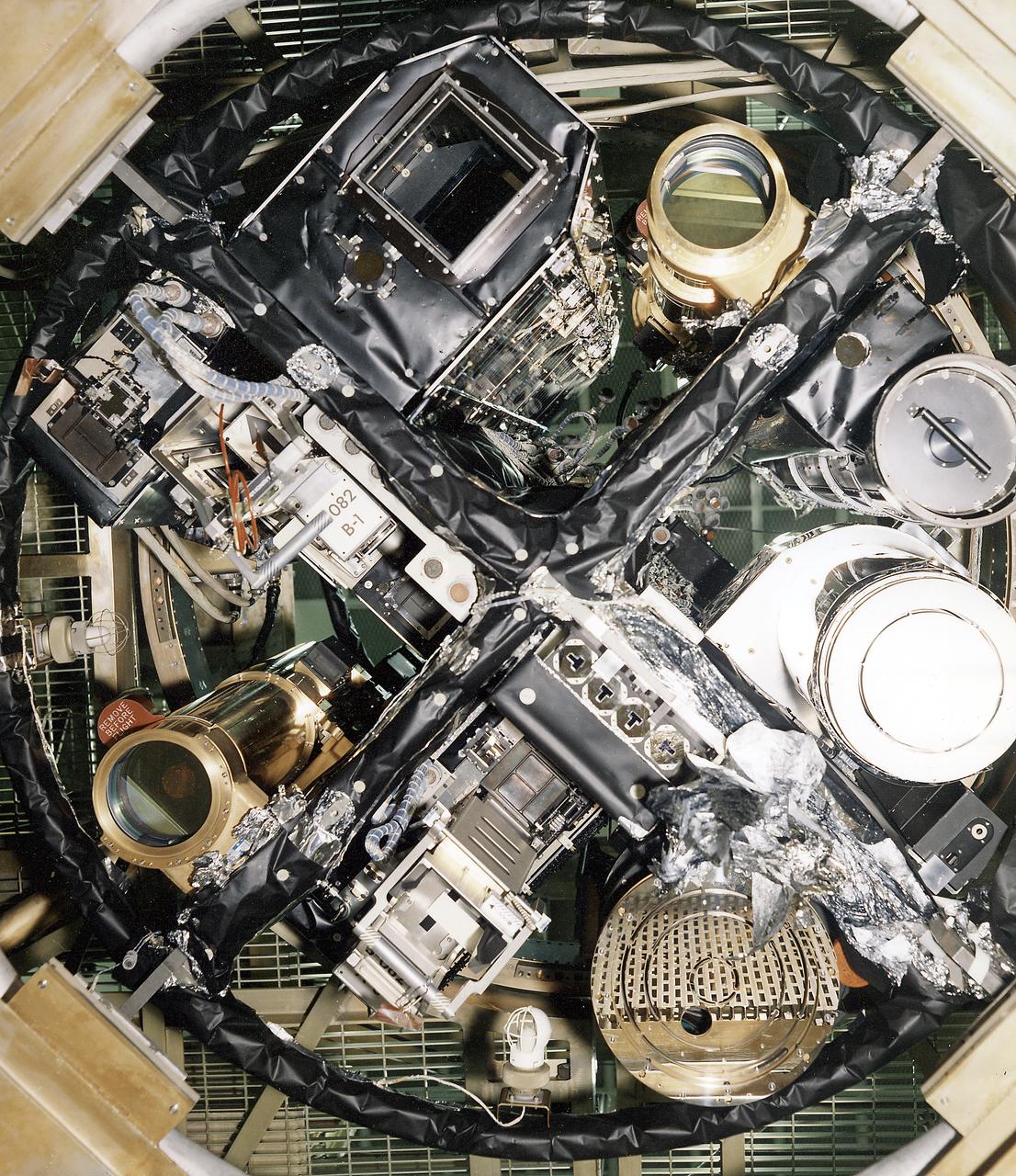
The Apollo Telescope Mount (ATM) was designed and developed by the Marshall Space Flight Center and served as the primary scientific instrument unit aboard Skylab (1973-1979). The ATM contained eight complex astronomical instruments designed to observe the Sun over a wide spectrum from visible light to x-rays. This image depicts the sun end and spar of the ATM flight unit showing individual telescopes. All solar telescopes, the fine Sun sensors, and some auxiliary systems are mounted on the spar, a cruciform lightweight perforated metal mounting panel that divides the canister lengthwise into four equal compartments. The spar assembly was nested inside a cylindrical canister that fit into a complex frame named the rack, and was protected by the solar shield.
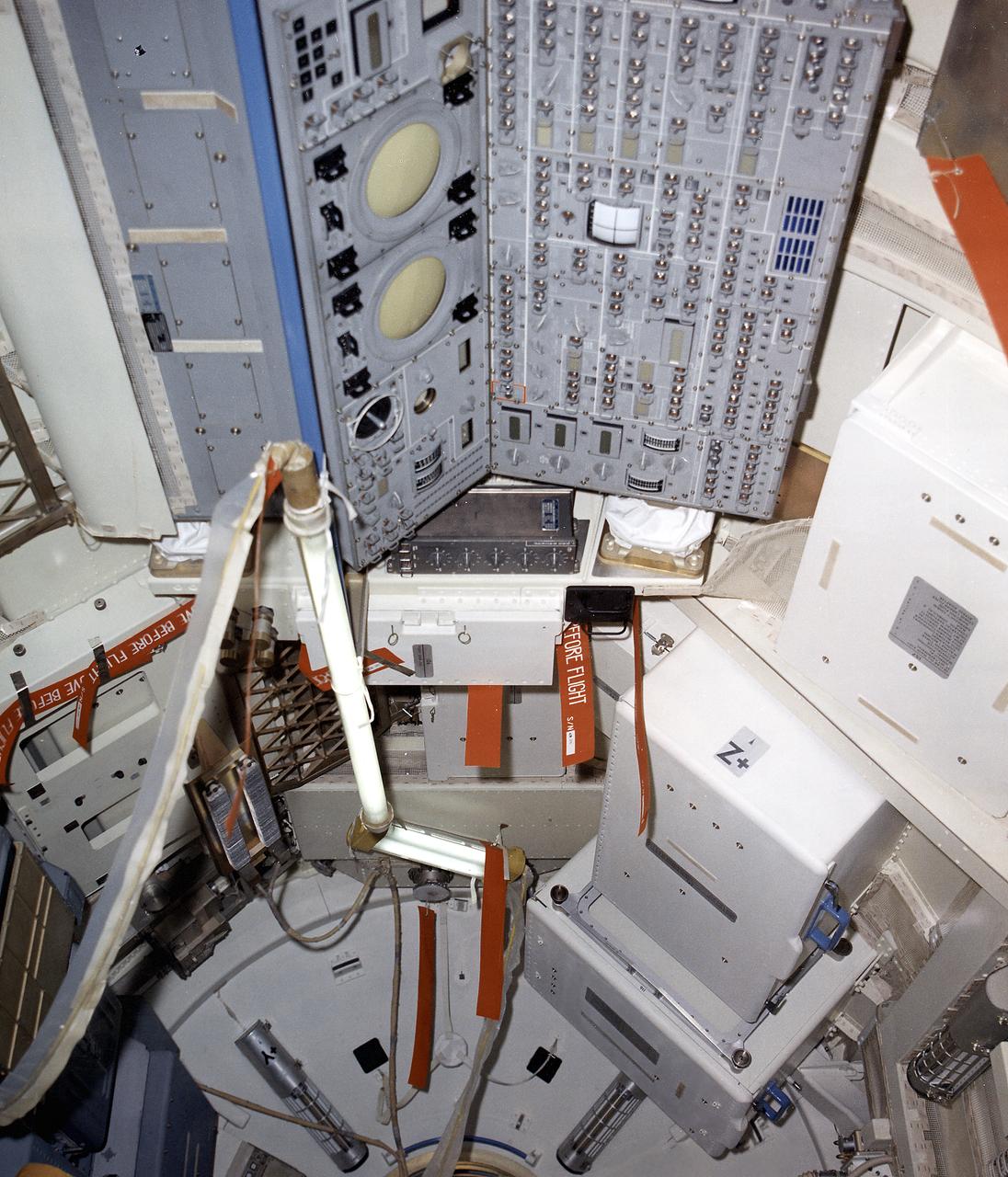
This December 1971 photograph shows the internal configuration of Skylab's Multiple Docking Adapter (MDA) as it appeared during the Crew Compartment and Function Review at the Martin-Marietta Corporation's Space Center facility in Denver, Colorado. At left is the control and display console for the Apollo Telescope Mount. Designed and manufactured by the Marshall Space Flight Center, the MDA housed a number of experiment control and stowage units and provided a docking port for the Apollo Command Module.
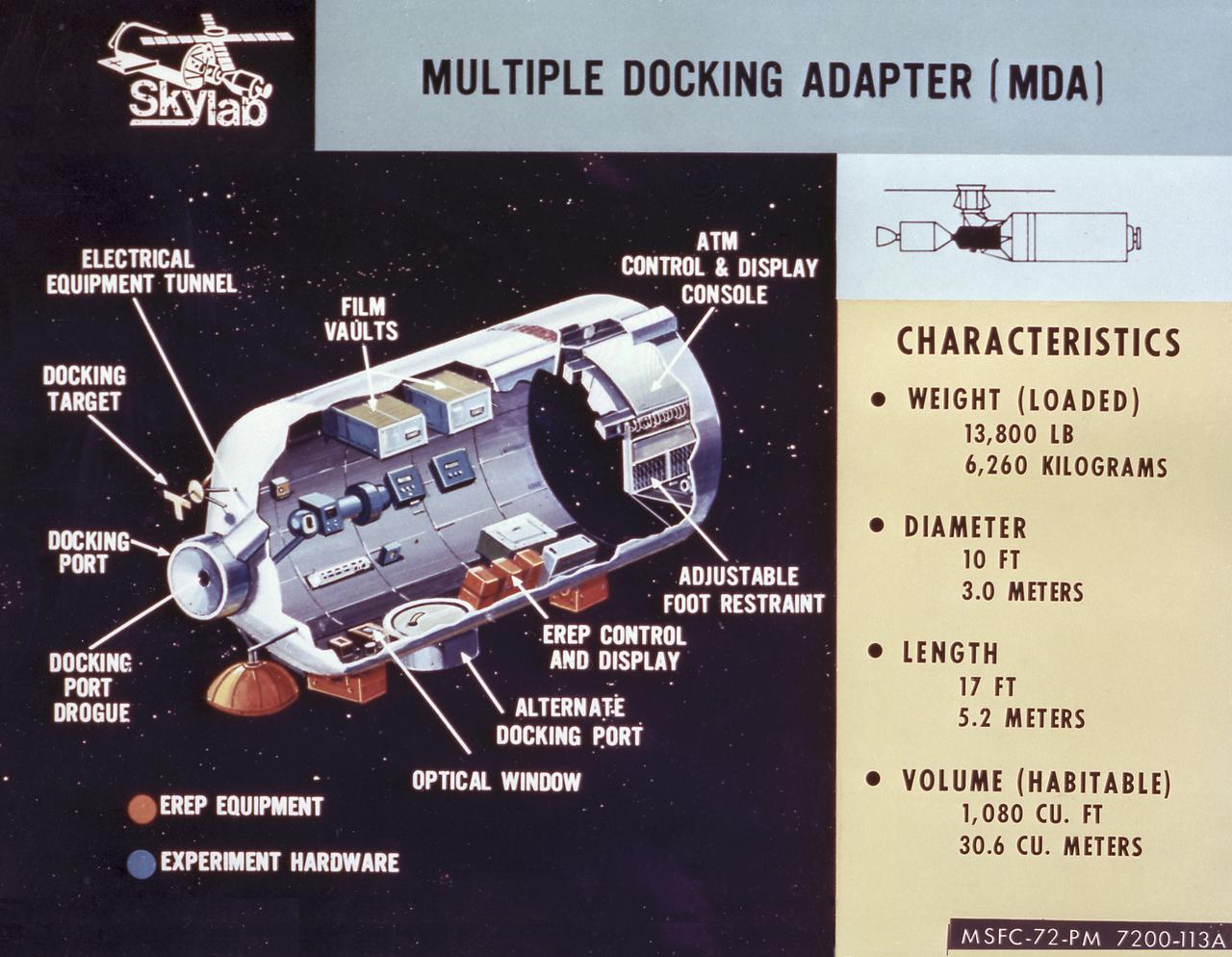
This cutaway drawing details the major characteristics of the Skylab Multiple Docking Adapter (MDA). The MDA, built under the direction of the Marshall Space Flight Center, housed the control units for the Apollo Telescope Mount (ATM), Earth Resources Experiment Package (EREP), and Zero-Gravity Materials Processing Facility, and provided a docking port for the Apollo Command Module (CM).
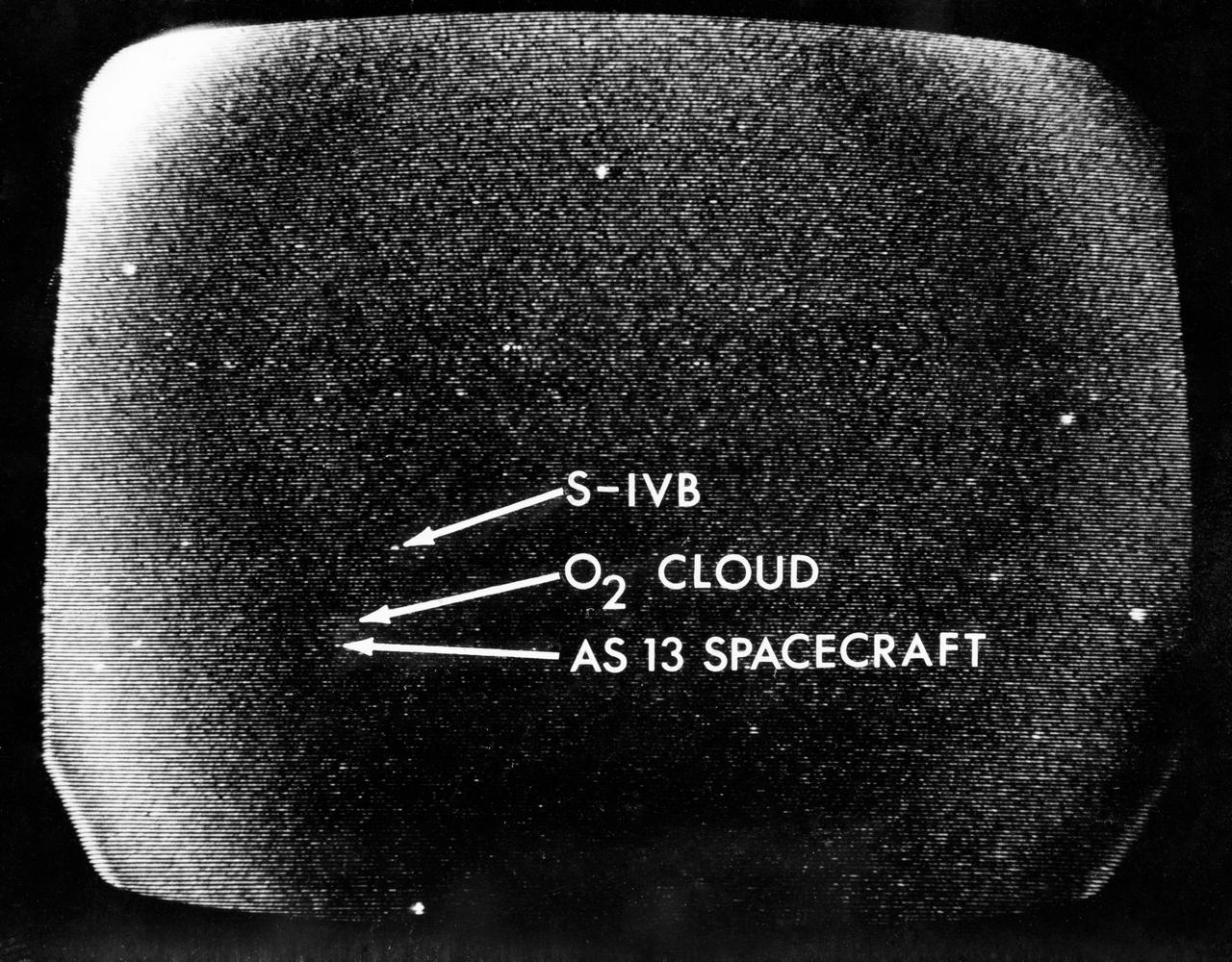
S70-34857 (13 April 1970) --- A telescopic photograph showing the Apollo 13 spacecraft in trans-lunar trajectory in the distant sky. Arrows point to the spacecraft, to the oxygen cloud, and to the expended Saturn V third stage. Apollo 13 was tracked at the Manned Spacecraft Center (MSC) using a 16 inch Schmidt-Cassegrain telescope with an IO television camera with an S-20 type IO tube, mounted in place of the eyepiece. The TV camera information is stored first on a data disc and played back on a viewing monitor from which this photograph was taken.
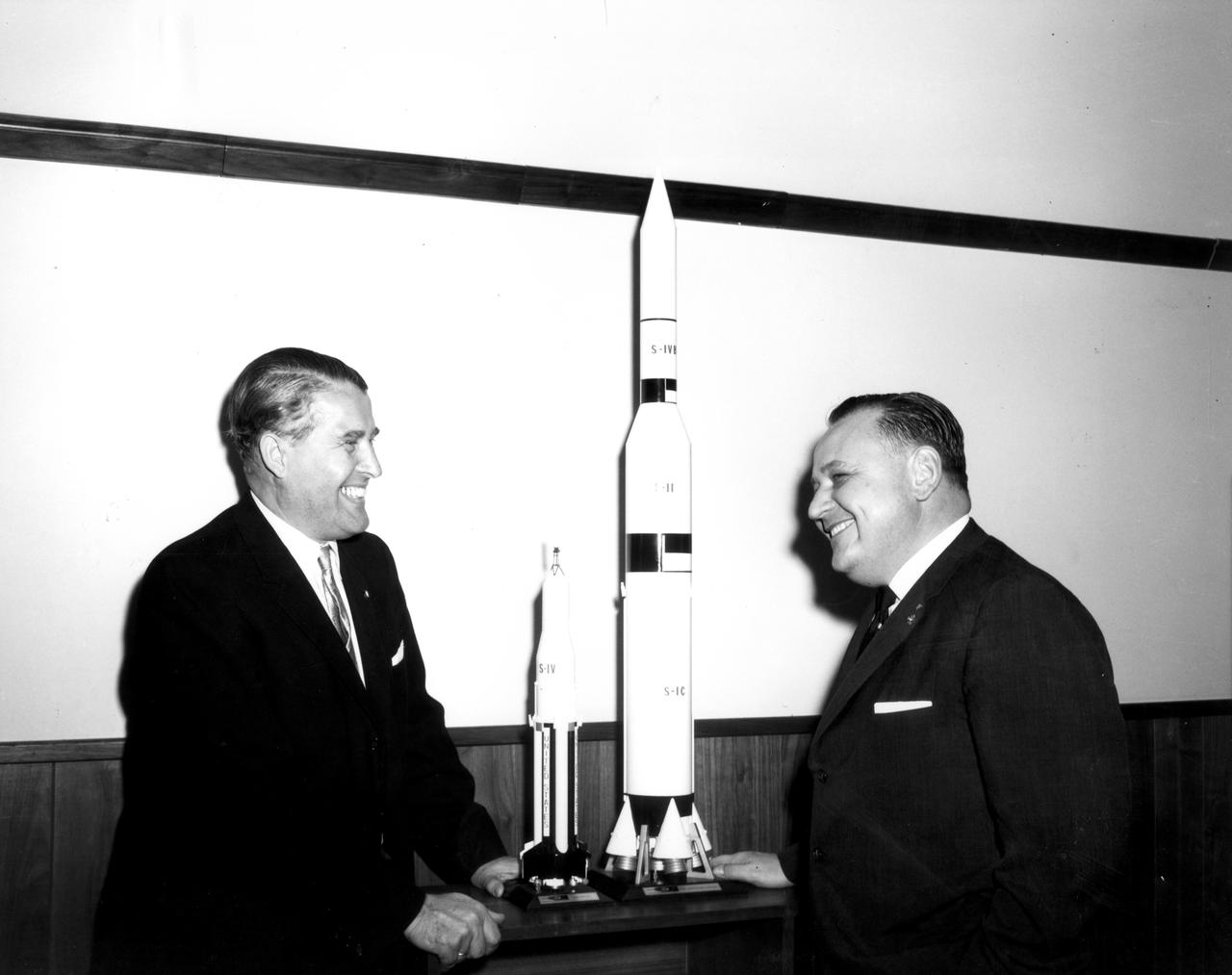
The members of the House Committee on Science and Astronautics visited the Marshall Space Flight Center (MSFC) on March 9, 1962 to gather firsthand information of the nation’s space exploration program. The congressional group was composed of members of the Subcommittee on Manned Space Flight. The subcommittee was briefed on MSFC’s manned space efforts earlier in the day and then inspected mockups of the Saturn I Workshop and the Apollo Telescope Mount, two projects developed by MSFC for the post-Apollo program. In this photograph, MSFC Director, Dr. Wernher von Braun and Richard L. Roudebush, Republican representative of Indiana, discuss Apollo models.
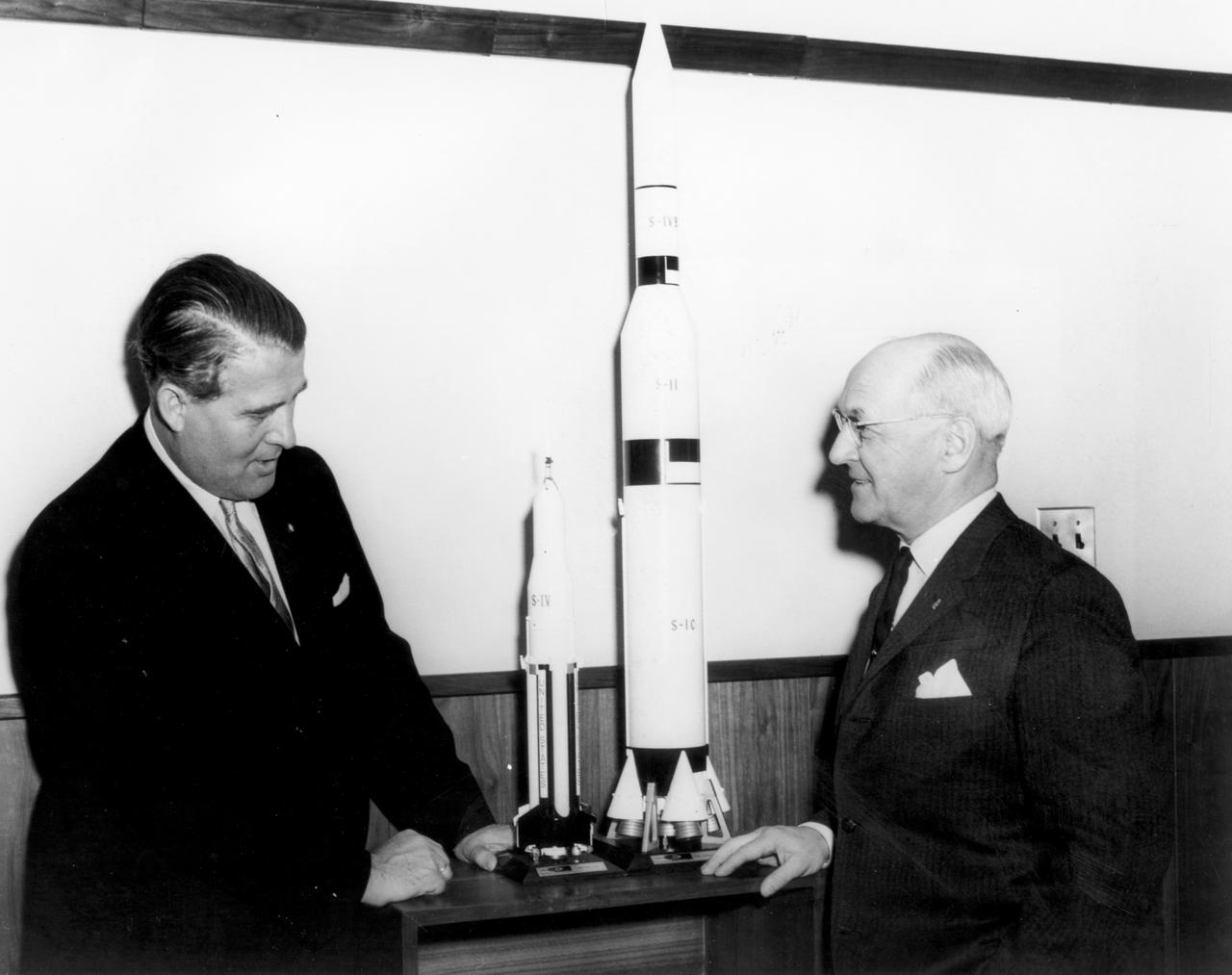
The members of the House Committee on Science and Astronautics visited the Marshall Space Flight Center (MSFC) on March 9, 1962 to gather firsthand information of the nation’s space exploration program. The congressional group was composed of members of the Subcommittee on Manned Space Flight. The subcommittee was briefed on MSFC’s manned space efforts earlier in the day and then inspected mockups of the Saturn I Workshop and the Apollo Telescope Mount, two projects developed by MSFC for the post-Apollo program. In this photograph, MSFC Director, Dr. Wernher von Braun and R. Walter Riehlman, Republican representative of New York, discuss Apollo models.
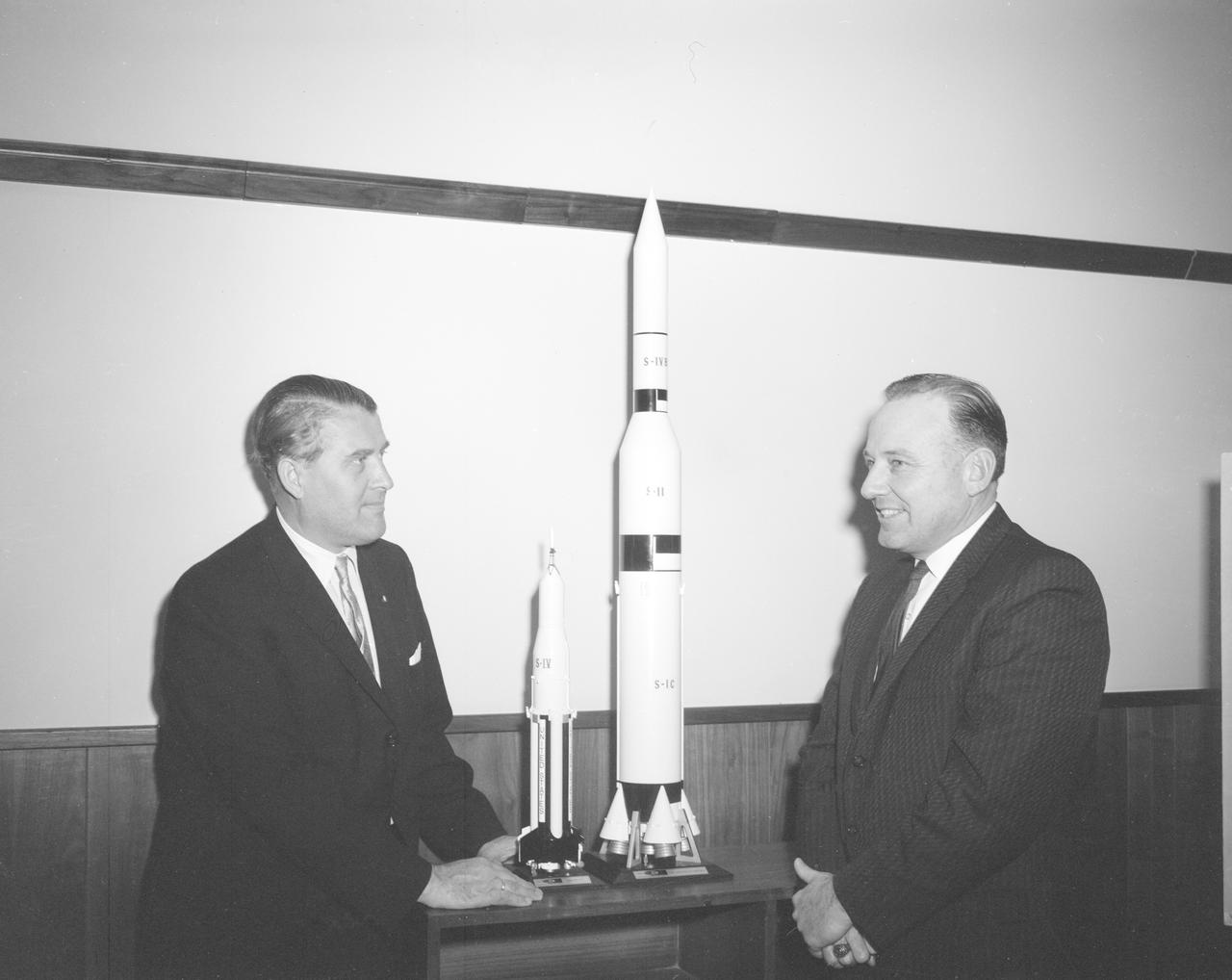
The members of the House Committee on Science and Astronautics visited the Marshall Space Flight Center (MSFC) on March 9, 1962 to gather firsthand information of the nation’s space exploration program. The congressional group was composed of members of the Subcommittee on Manned Space Flight. The subcommittee was briefed on MSFC’s manned space efforts earlier in the day and then inspected mockups of the Saturn I Workshop and the Apollo Telescope Mount, two projects developed by MSFC for the post-Apollo program. In this photograph, MSFC Director, Dr. Wernher von Braun and Joe Waggoner, Democratic representative of Louisiana, discuss Apollo models.
S73-33161 (24 Aug. 1973) --- Astronaut Jack R. Lousma, Skylab 3 pilot, hooks up a 23-foot, two-inch connecting cable for the rate gyro six pack during extravehicular activity (EVA) on Aug. 24, 1973, as seen in this photographic reproduction taken from a color television transmission made by a TV camera aboard the Skylab space station in Earth orbit. The rate gyros were mounted inside the Multiple Docking Adapter opposite the Apollo Telescope Mount control and display console. Photo credit: NASA
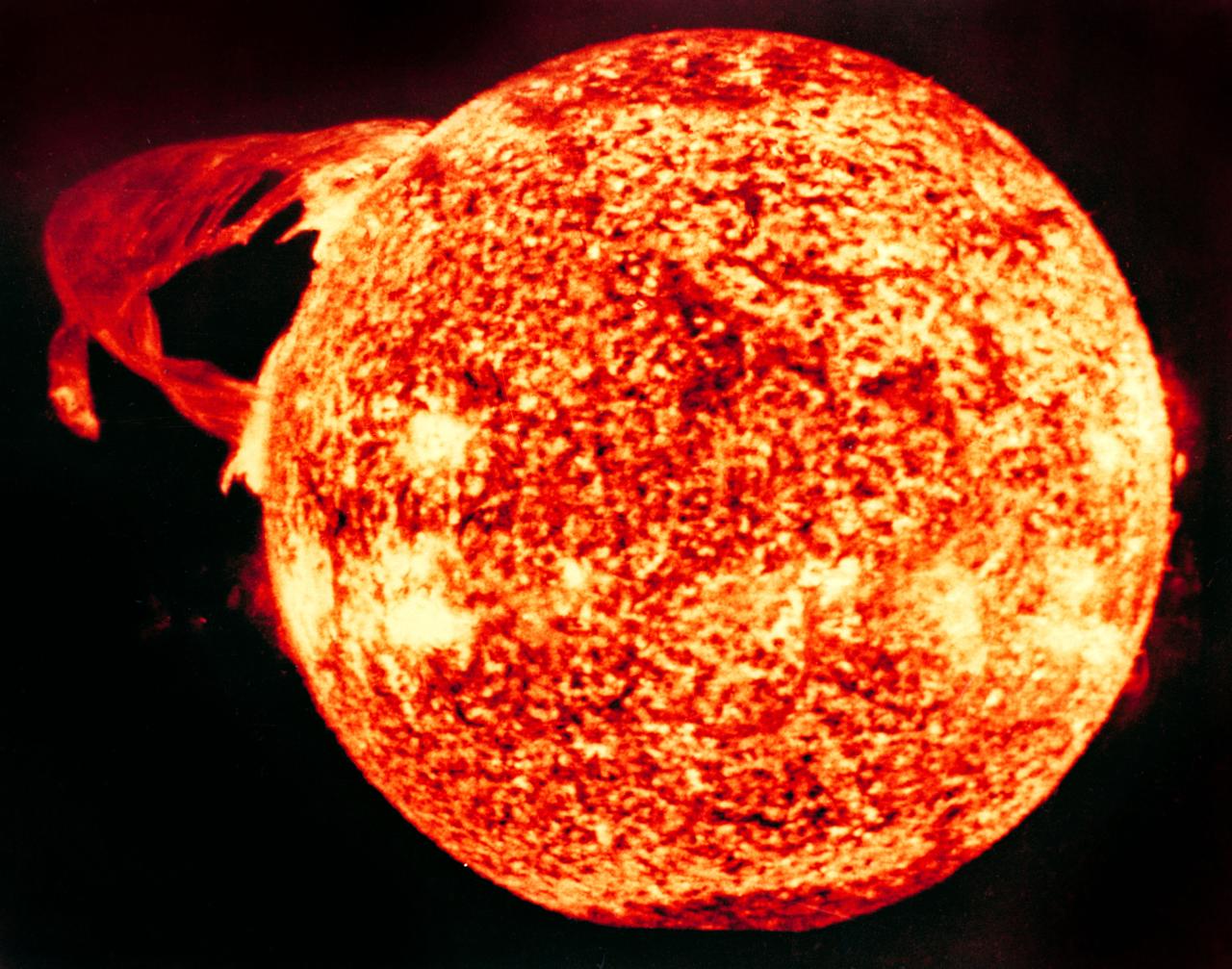
S74-23458 (19 Dec. 1973) --- This photograph of the sun, taken on Dec. 19, 1973, during the third and final manned Skylab mission (Skylab 4), shows one of the most spectacular solar flares ever recorded, spanning more than 588,000 kilometers (365,000 miles) across the solar surface. The last picture, taken some 17 hours earlier, showed this feature as a large quiescent prominence on the eastern side of the sun. The flare gives the distinct impression of a twisted sheet of gas in the process of unwinding itself. Skylab photographs such quiescent features erupt from the sun. In this photograph the solar poles are distinguished by a relative absence of supergranulation network, and a much darker tone than the central portions of the disk. Several active regions are seen on the eastern side of the disk. The photograph was taken in the light of ionized helium by the extreme ultraviolet spectroheliograph instrument of the United States Naval Research Laboratory. Photo credit: NASA
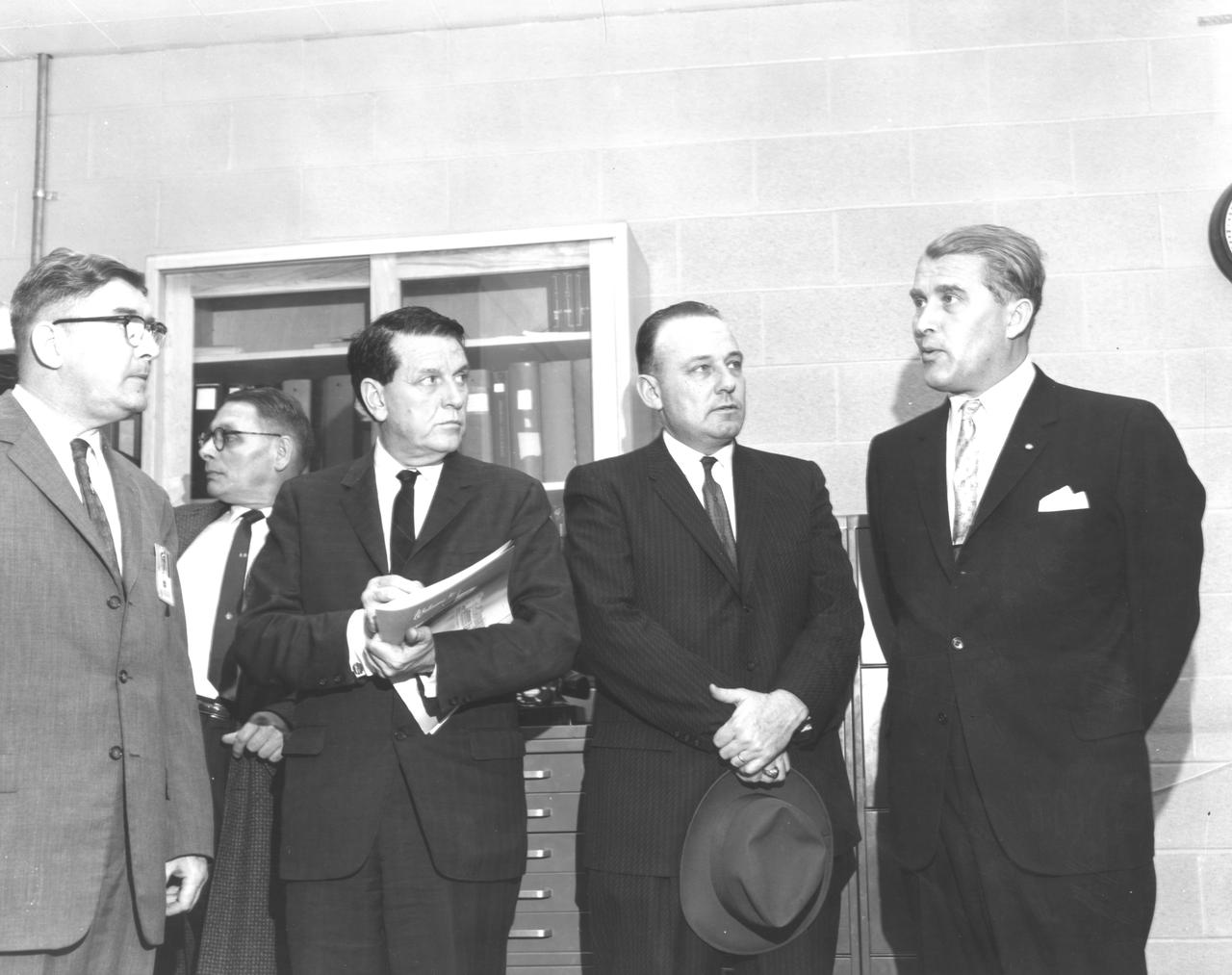
The members of the House Committee on Science and Astronautics visited the Marshall Space Flight Center (MSFC) on March 9, 1962 to gather firsthand information of the nation's space exploration program. The congressional group was composed of members of the Subcommittee on Manned Space Flight. They were briefed on MSFC's manned space efforts earlier in the day and then inspected mockups of the Saturn I Workshop and the Apollo Telescope Mount, two projects developed by MSFC for the post-Apollo program. Pictured left-to-right are Dieter Grau, MSFC; Konrad Dannenberg, MSFC; James G. Fulton, Republican representative for Pennsylvania; Joe Waggoner, Democratic representative for Louisiana; and Dr. Wernher von Braun, Director of MSFC.
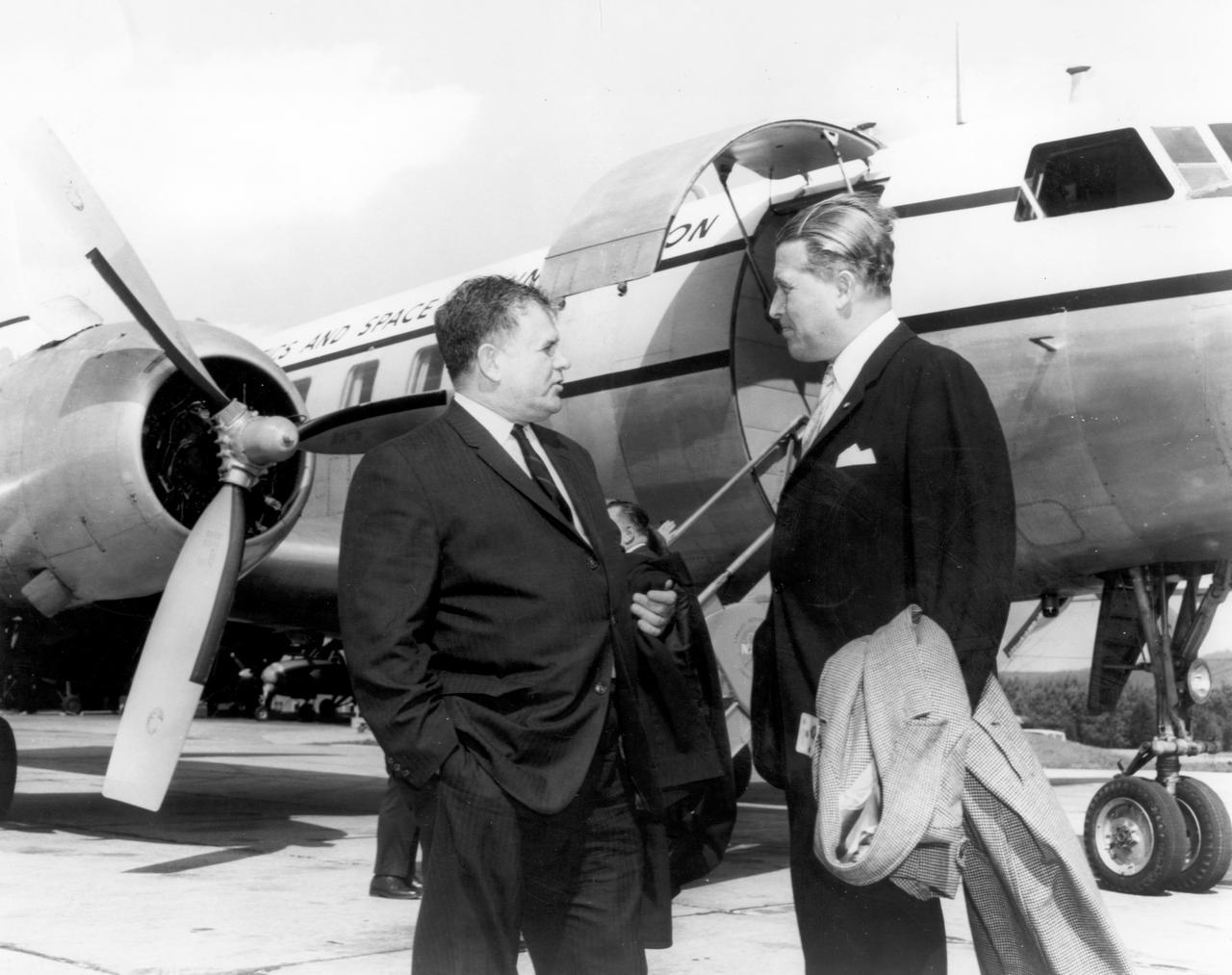
The members of the House Committee on Science and Astronautics visited the Marshall Space Flight Center (MSFC) on March 9, 1962 to gather firsthand information of the nation’s space exploration program. The congressional group was composed of members of the Subcommittee on Manned Space Flight. The subcommittee was briefed on MSFC’s manned space efforts earlier in the day and then inspected mockups of the Saturn I Workshop and the Apollo Telescope Mount, two projects developed by MSFC for the post-Apollo program. In this photograph, MSFC Director, Dr. Wernher von Braun, bids farewell to Texas Democratic Representative Olin E. Teague before departure at the Redstone Arsenal Airstrip.

S73-25140 (16 April 1973) --- A ground-level view of Pad A, Launch Complex 39, Kennedy Space Center, Florida, showing the 341-feet tall Skylab 1/Saturn V space vehicle on the pad soon after being rolled out from the Vehicle Assembly Building (VAB). The vehicle is composed of the Saturn V first (S-1C) stage, the Apollo Telescope Mount (ATM), the Multiple Docking Adapter (MDA), the Airlock Module (AM), and the Orbital Workshop (OWS). Photo credit: NASA
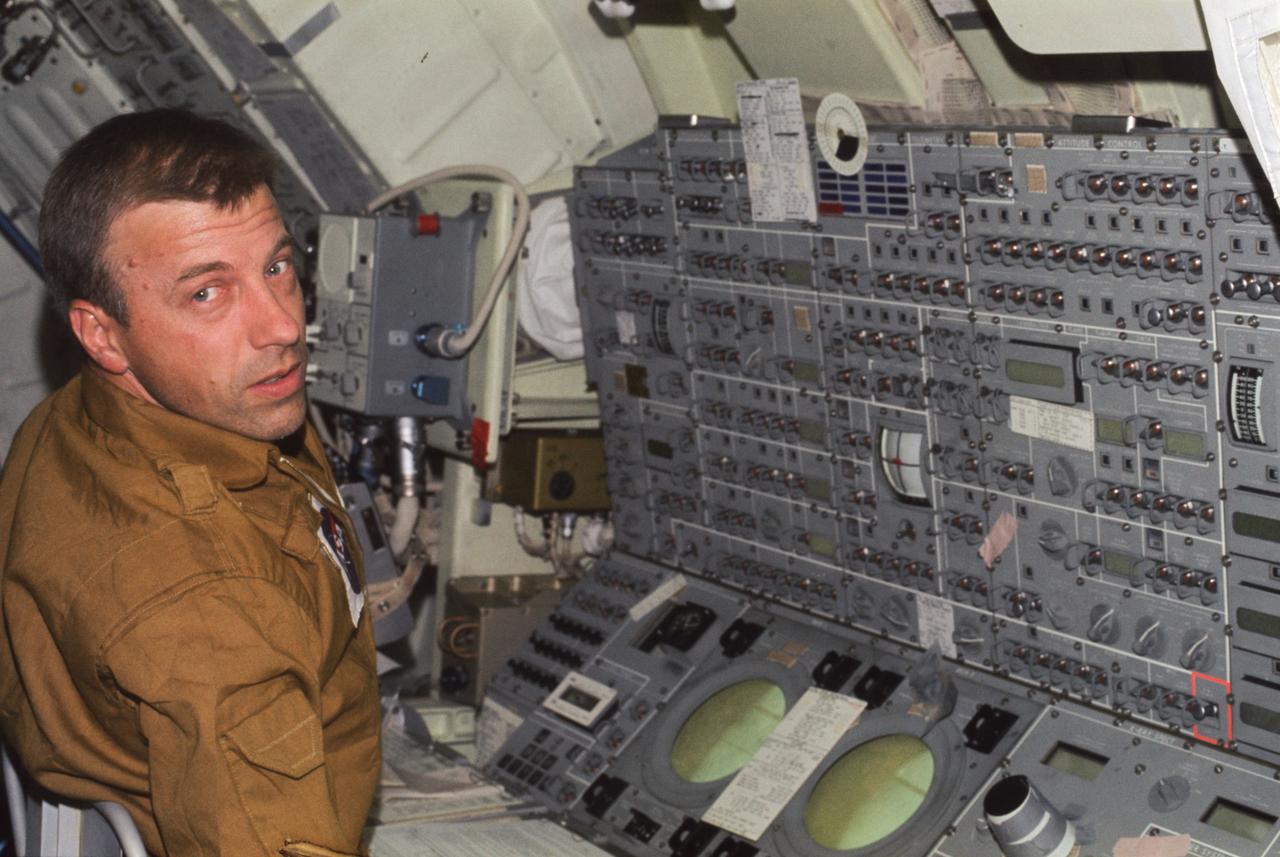
SL2-X9-747 (June 1973) --- Astronaut Paul J. Weitz, Skylab 2 pilot, mans the control and display console of the Apollo Telescope Mount (ATM) in this onboard view photographed in Earth orbit. The ATM C&D console is located in the Multiple Docking Adapter (MDA) of the Skylab 1/2 space station. Weitz, along with astronaut Charles Conrad Jr., commander, and scientist-astronaut Joseph P. Kerwin, science pilot, went on to successfully complete a 28-day mission in Earth orbit. Photo credit: NASA
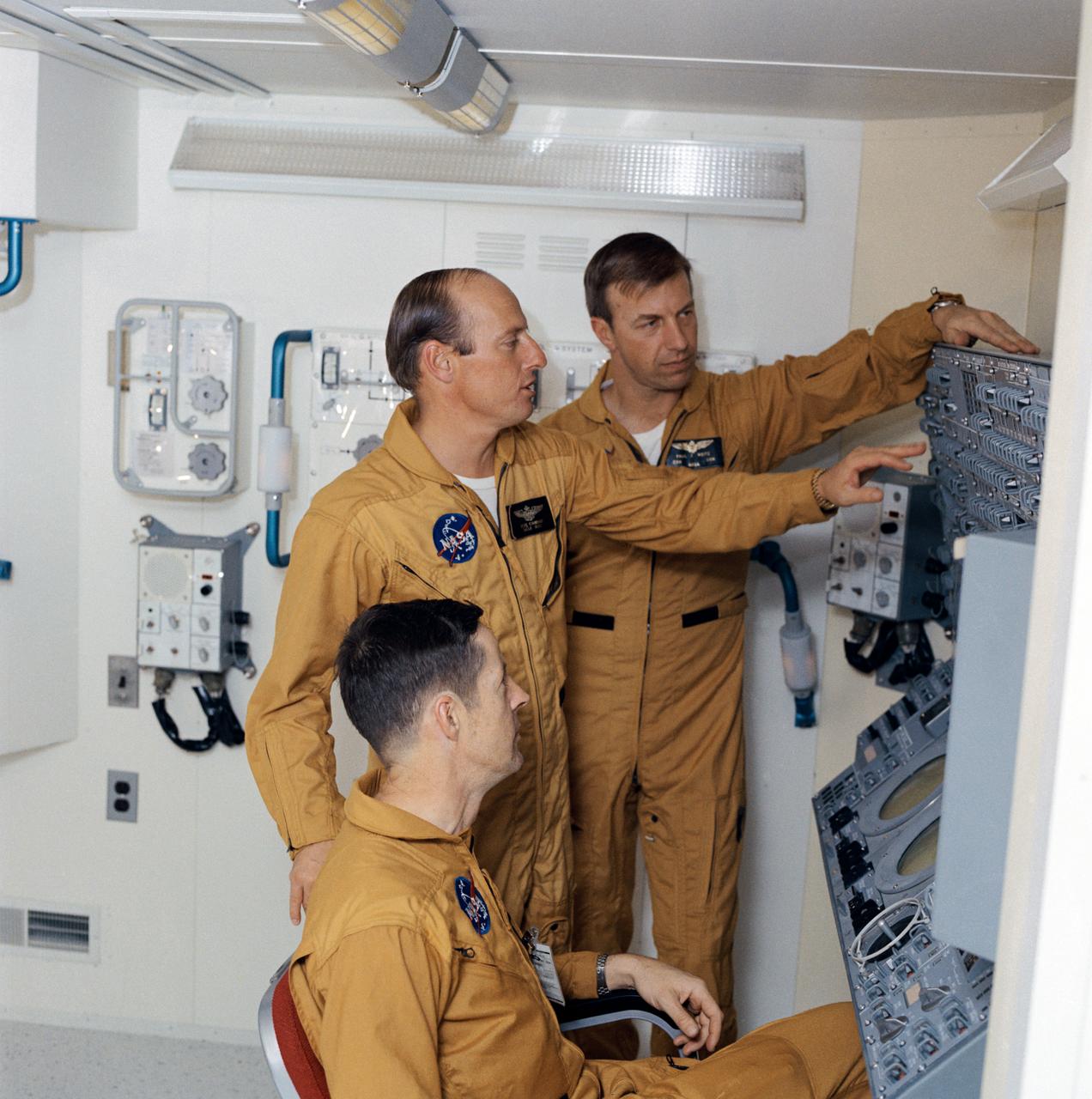
S72-17509 (19 Jan. 1972) --- These three men are the crewmen for the first manned Skylab mission. They are astronaut Charles Conrad Jr., commander, standing left; scientist-astronaut Joseph P. Kerwin, seated; and astronaut Paul J. Weitz, pilot. They were photographed and interviewed during an "open house" press day in the realistic atmosphere of the Multiple Docking Adapter (MDA) trainer in the Mission Simulation and Training Facility at the Manned Spacecraft Center (MSC). The control and display panel for the Apollo Telescope Mount (ATM) is at right. Photo credit: NASA
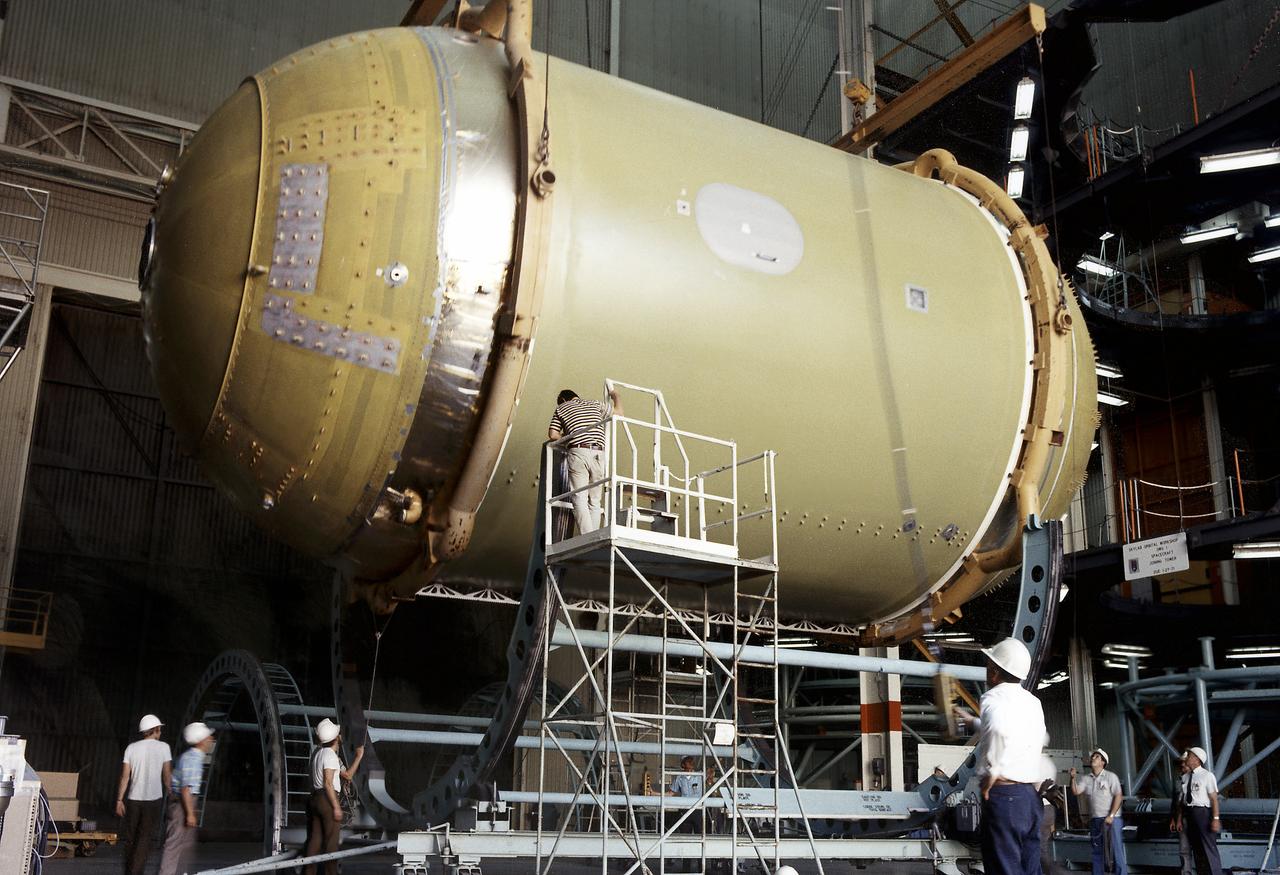
This photographs shows technicians positioning the Skylab Orbital Workshop (OWS) on a rotating work dolly during the assembly phase of the OWS at the McDornell Douglas facility in California. The OWS was the living and working quarters for the astronauts. The Marshall Space Flight Center (MSFC) had responsibility for developing and integrating most of the major components of the Skylab: the Orbital Workshop (OWS), Airlock Module (AM), Multiple Docking Adapter (MDA), Apollo Telescope Mount (ATM), Payload Shroud (PS), and most of the experiments.
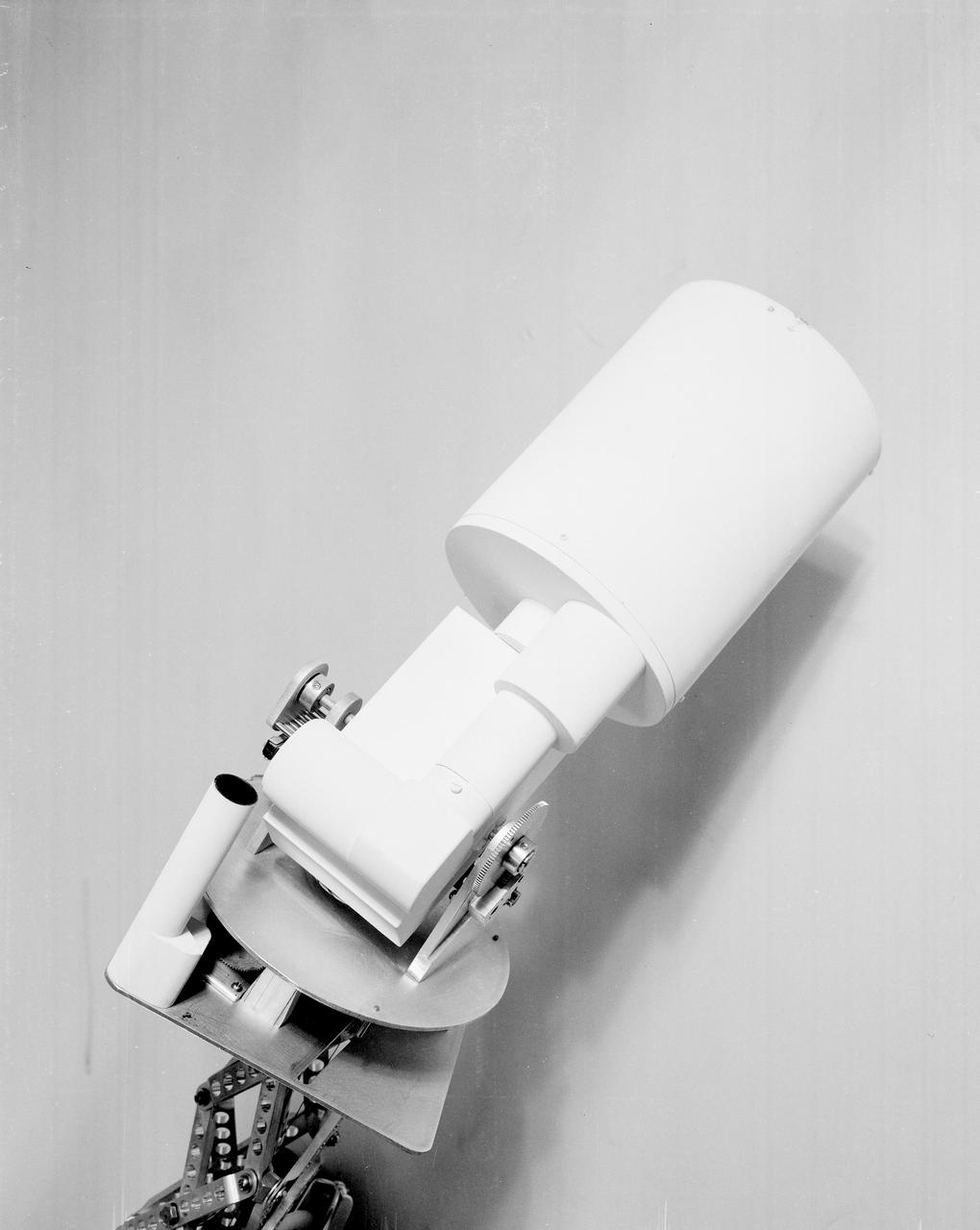
The Apollo Telescope Mount (ATM), designed and developed by the Marshall Space Flight Center, served as the primary scientific instrument unit aboard the Skylab. The ATM contained eight complex astronomical instruments designed to observe the Sun over a wide spectrum from visible light to x-rays. This photo depicts a mockup of the ATM contamination monitor camera and photometer.
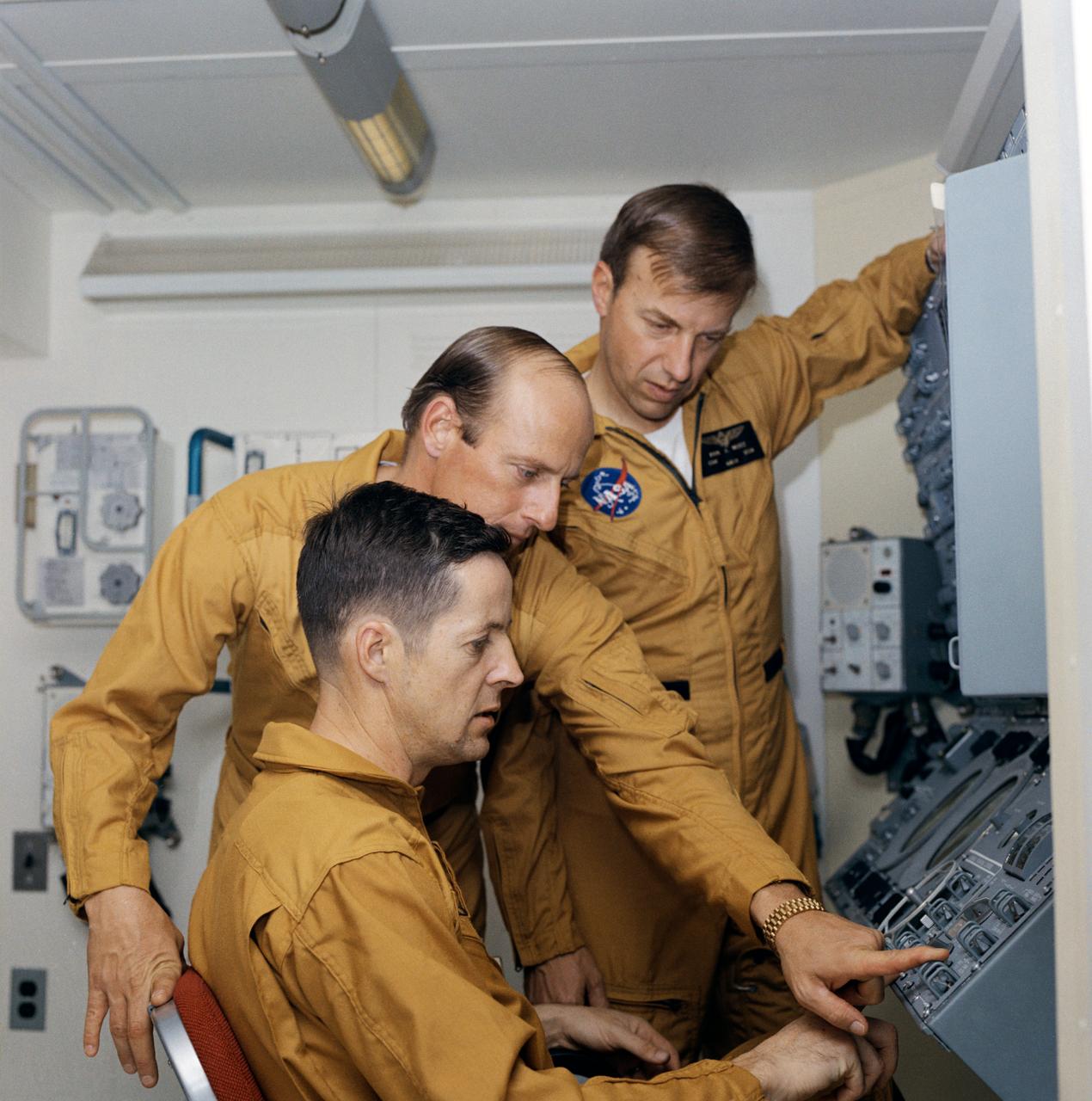
S72-17512 (19 Jan. 1972) --- These three men are the crewmen for the first manned Skylab mission. They are astronaut Charles Conrad Jr., commander, standing left; scientist-astronaut Joseph P. Kerwin, seated; and astronaut Paul J. Weitz, pilot. They were photographed and interviewed during an "open house" press day in the realistic atmosphere of the Multiple Docking Adapter (MDA) trainer in the Mission Simulation and Training Facility at the Manned Spacecraft Center (MSC). The control and display panel for the Apollo Telescope Mount (ATM) is at right. Photo credit: NASA
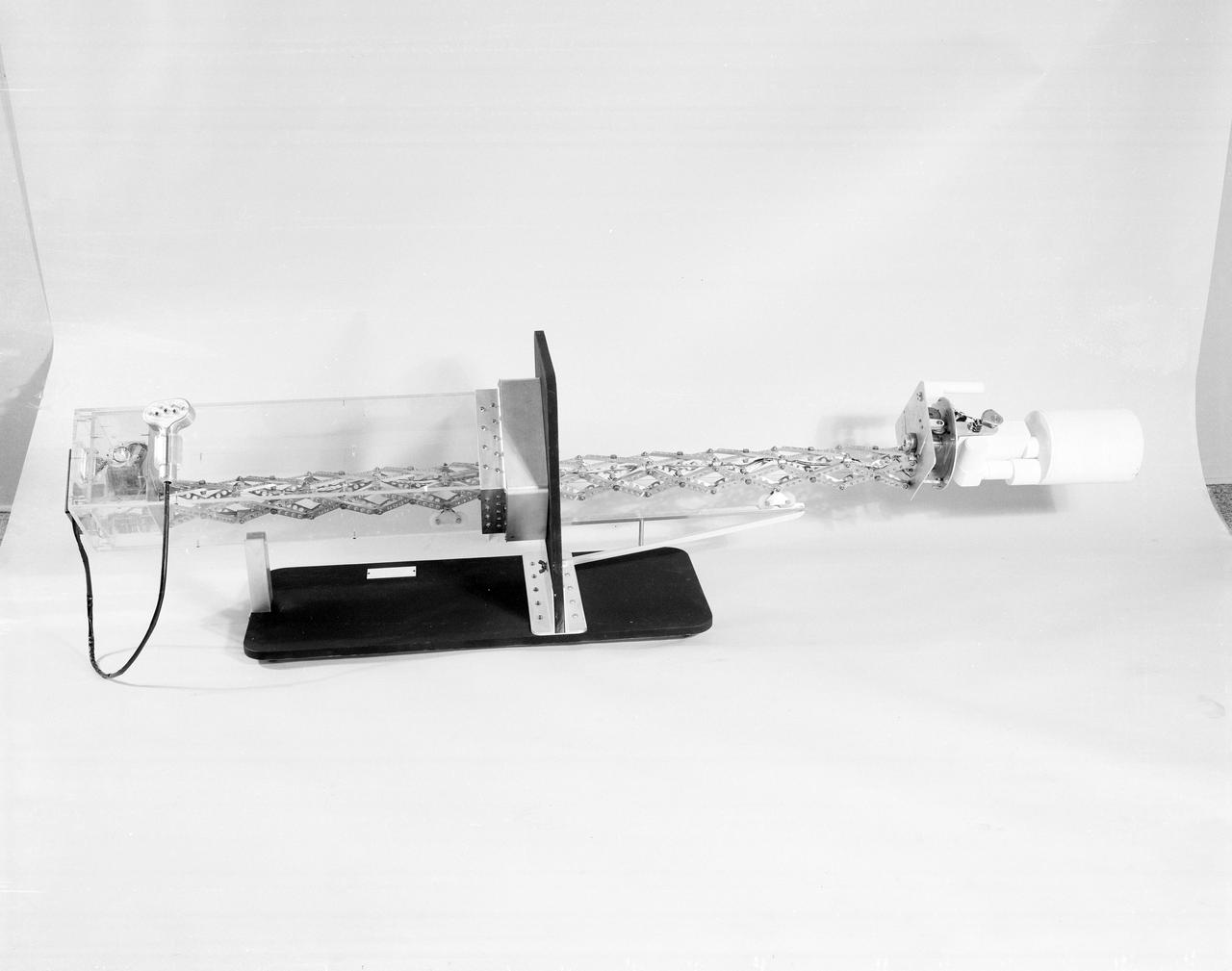
The Apollo Telescope Mount (ATM), designed and developed by the Marshall Space Flight Center, served as the primary scientific instrument unit aboard the Skylab. The ATM contained eight complex astronomical instruments designed to observe the Sun over a wide spectrum from visible light to x-rays. This photo depicts a side view is of a fully extended ATM contamination monitor mockup.
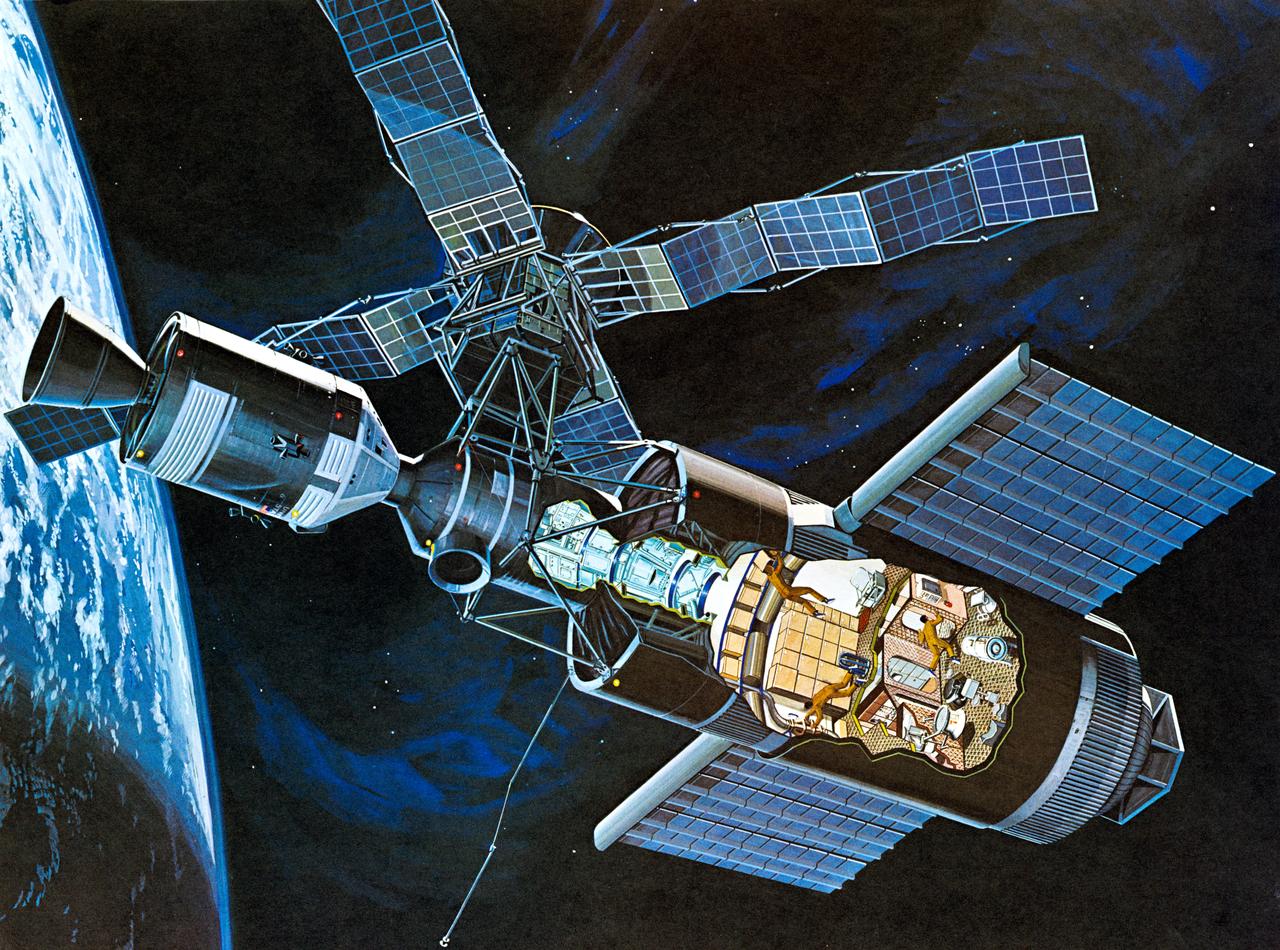
S71-52192 (1971) --- An artist's concept of the Skylab space station cluster in Earth's orbit. The cutaway view shows astronaut activity in the Orbital Workshop (OWS). The Skylab cluster is composed of the OWS, Airlock Module (AM), Multiple Docking Adapter (MDA), Apollo Telescope Mount (ATM), and the Command and Service Module (CSM). Photo credit: NASA
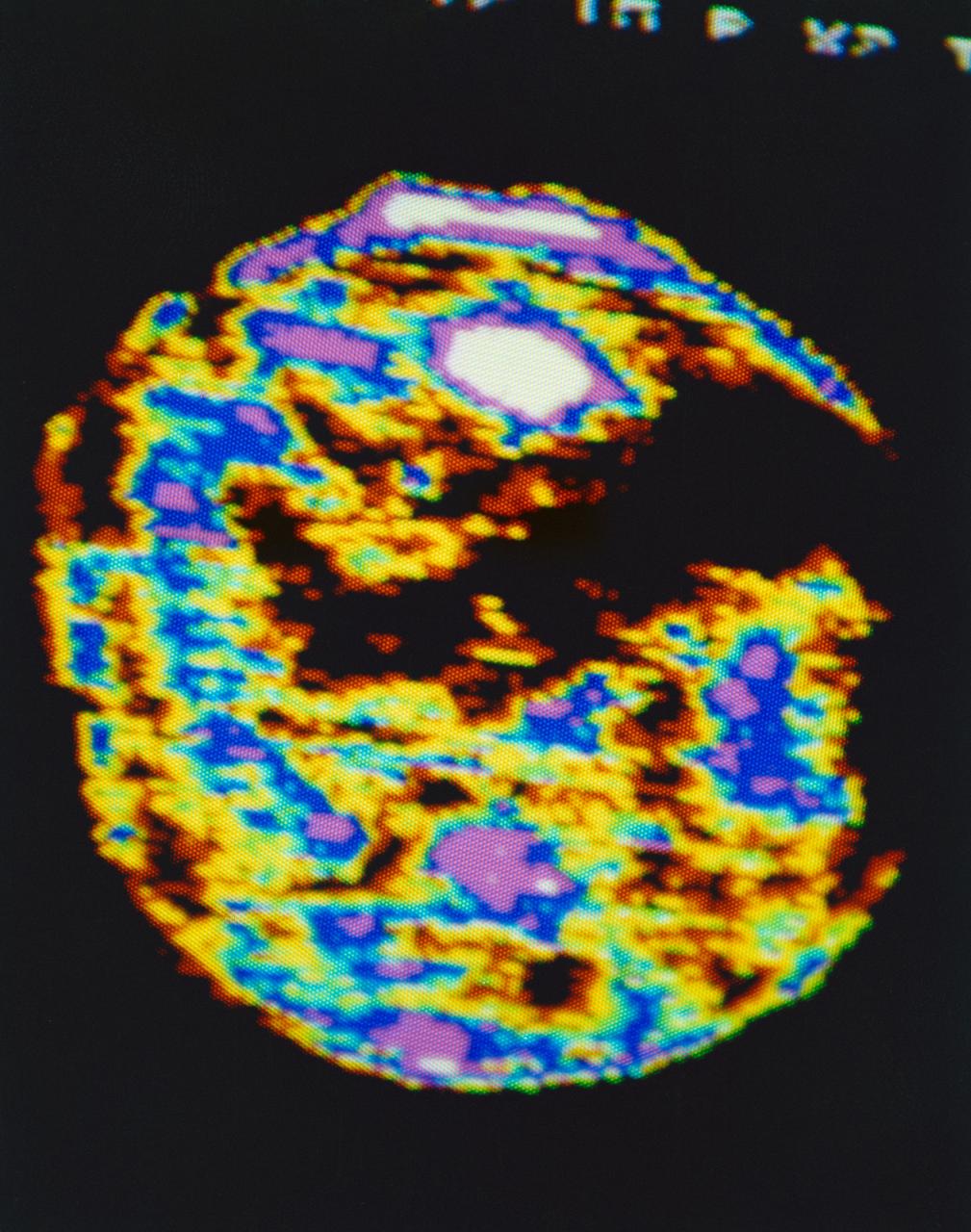
S73-32883 (20 Aug. 1973) --- This false color isophote, processed from an Aug. 20, 1973 television transmission of Apollo Telescope Mount (ATM) experiments from Skylab 3, dramatically reveals a significant change in the coronal hole as compared to the previous day. Solar rotation accounts for the new location of the coronal hole. Photo credit: NASA
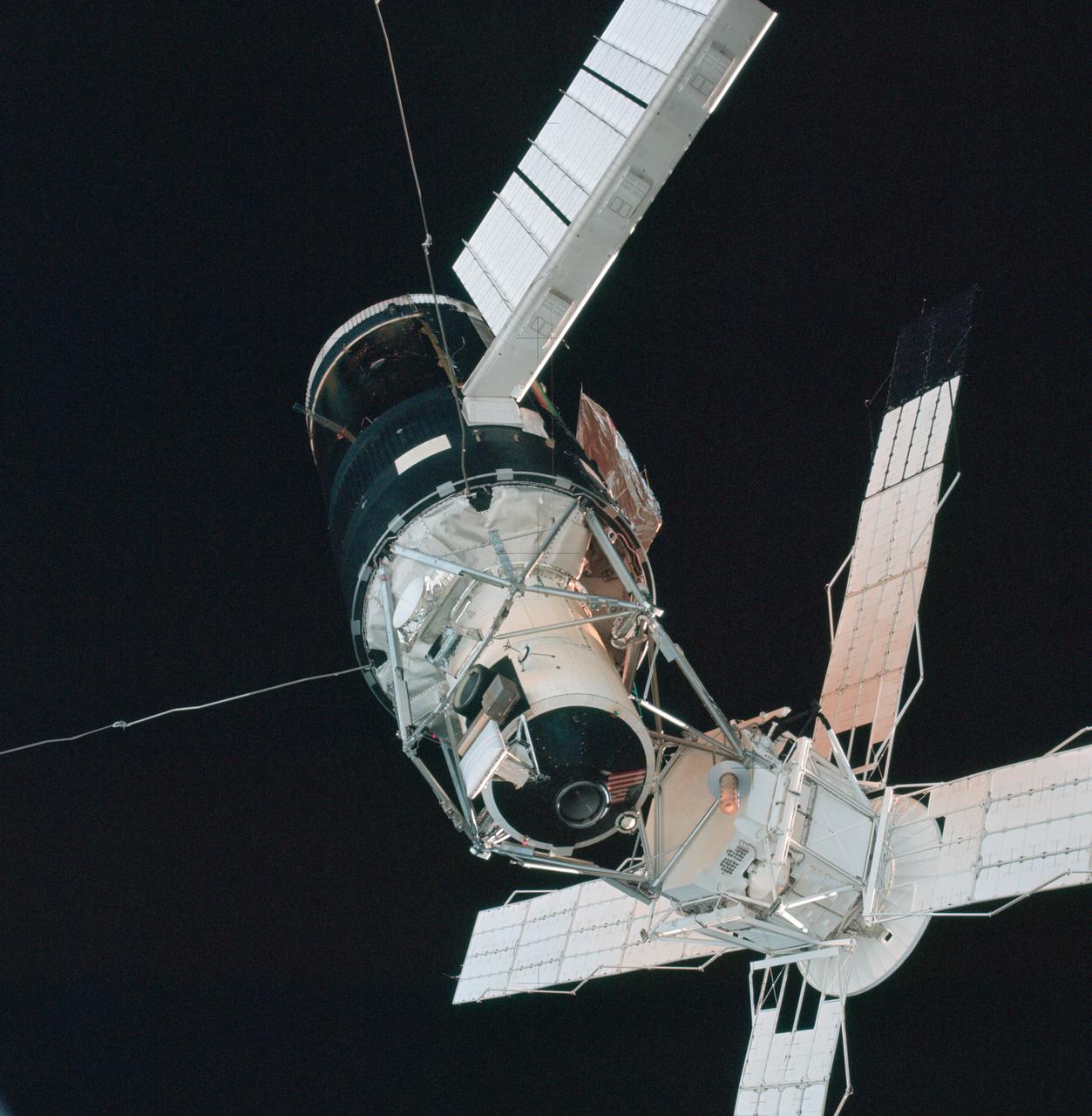
A close-up view of the Skylab space station cluster photographed against a black sky background from the Skylab 3 command module during the "fly around" inspection prior to docking. Note the one solar array system wing on the Orbital Workshop (OWS) which was successfully deployed during EVA on the first manned Skylab mission. The primary docking part at the forward end of the Multiple Docking Adapter (MDA) is visible below the Apollo Telescope Mount (ATM).
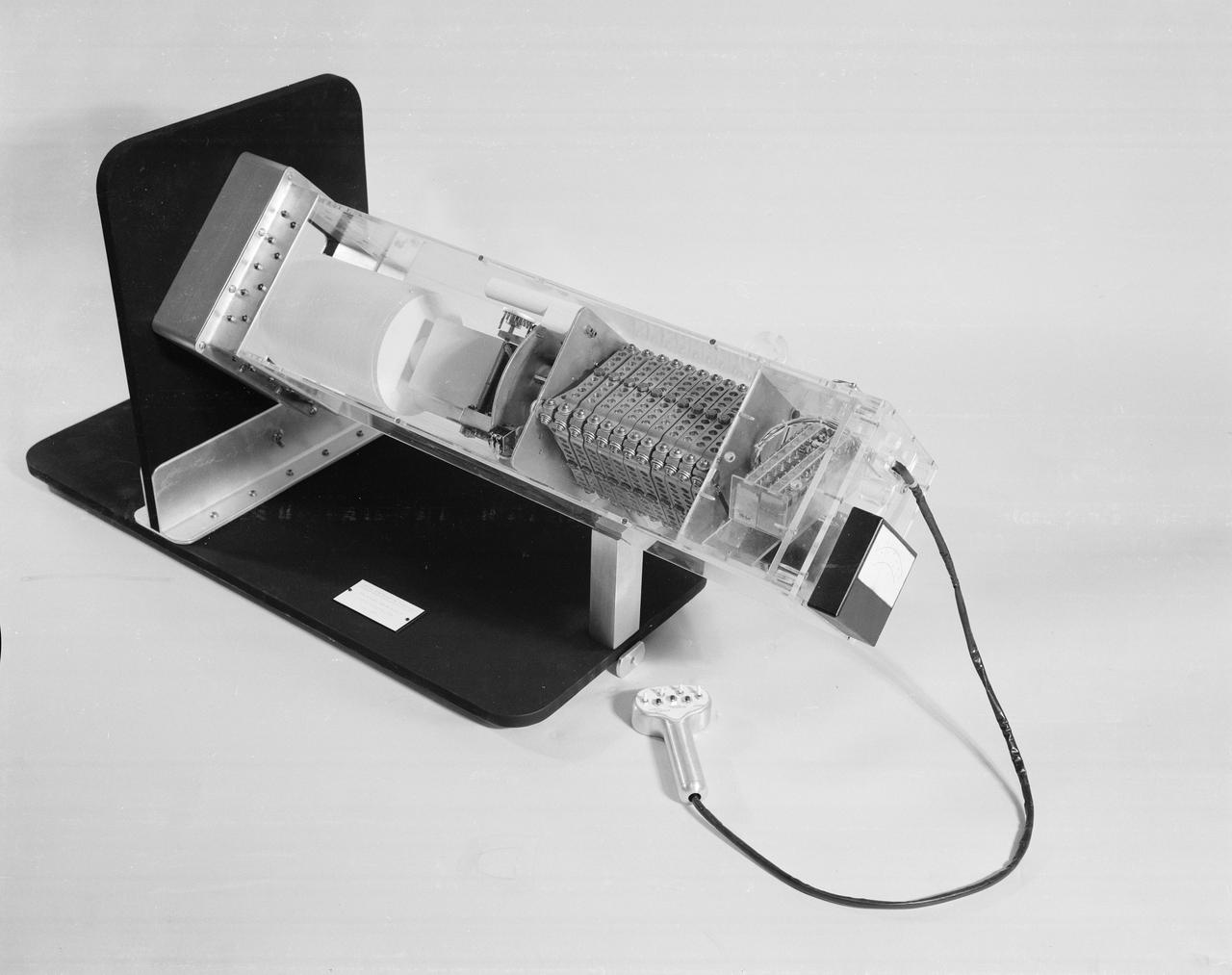
The Apollo Telescope Mount (ATM), designed and developed by the Marshall Space Flight Center, served as the primary scientific instrument unit aboard the Skylab. The ATM contained eight complex astronomical instruments designed to observe the Sun over a wide spectrum from visible light to x-rays. This angle view is of an ATM contamination monitor meter mockup.
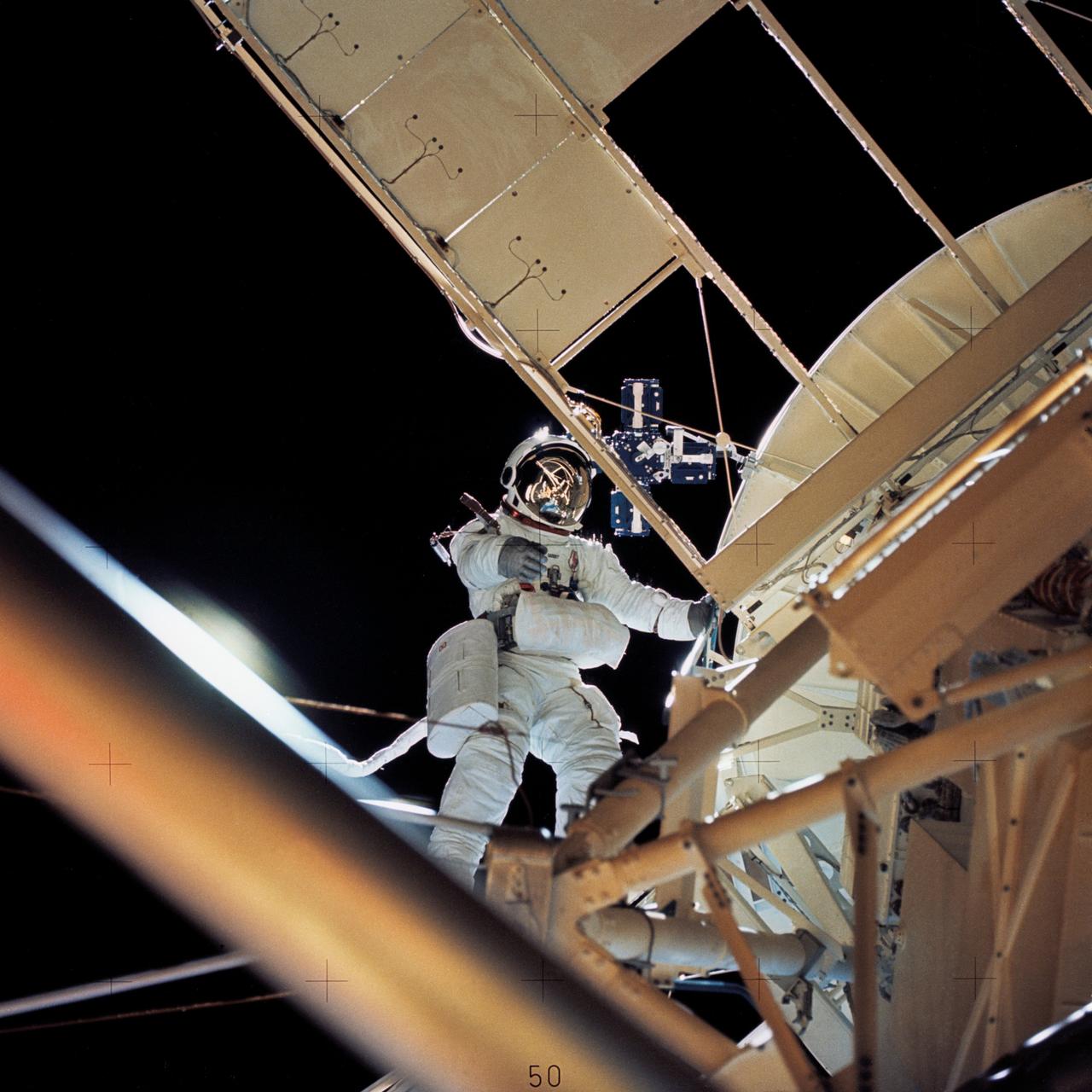
SL3-115-1837 (August 1973) --- Astronaut Owen K. Garriott, Skylab 3 science pilot, retrieves an imagery experiment from the Apollo Telescope Mount (ATM) attached to the Skylab in Earth orbit. Garriott’s was a special extravehicular activity (EVA) to remove from the attached ATM/orbiting observatory magazines which will be returned to Earth when the second manning of the Skylab space station has been completed. Photo credit: NASA
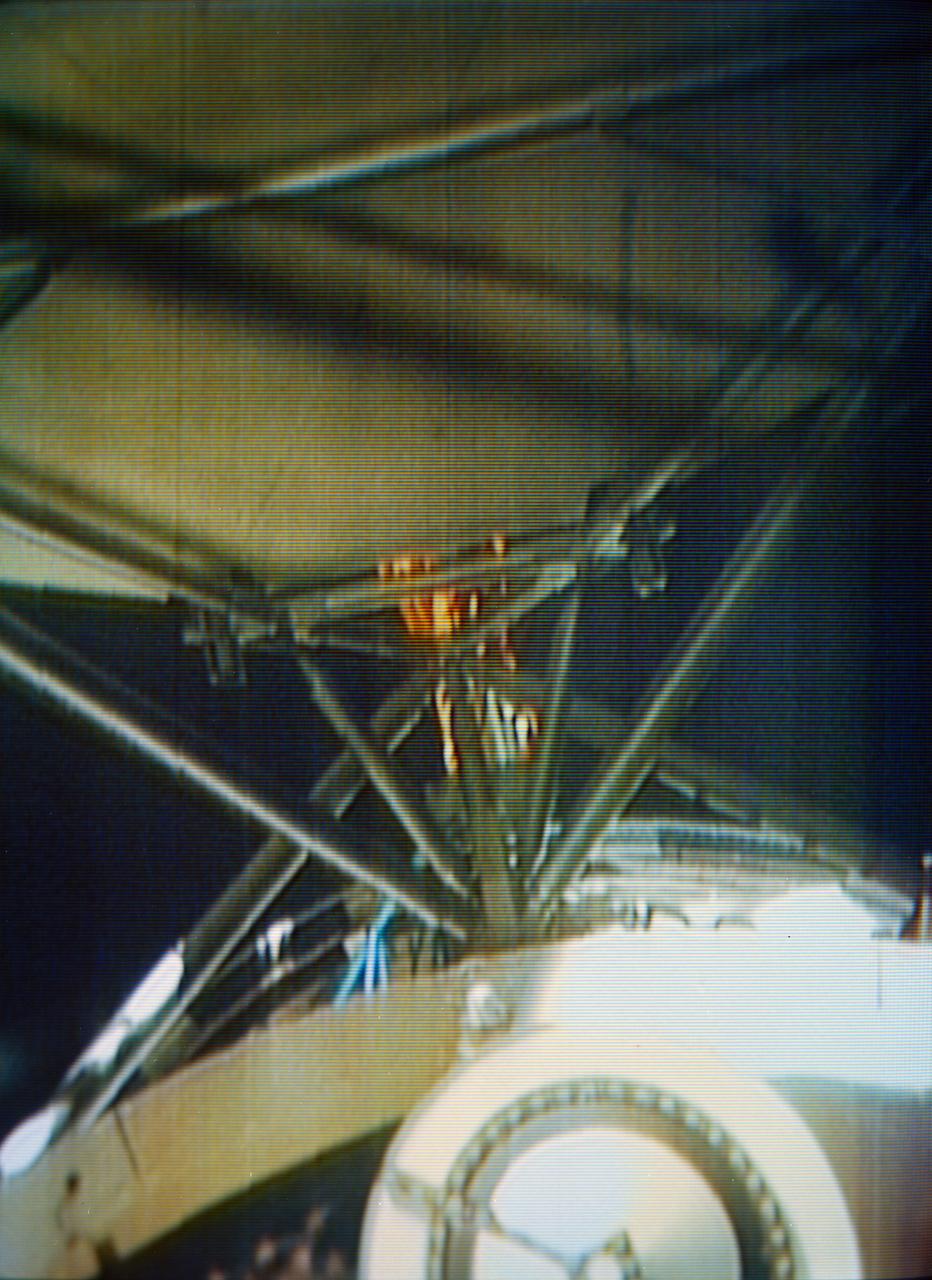
S73-26775 (26 May 1973) --- The deployment of the "parasol" solar shield, a sunshade to help cool the overheated Orbital Workshop of the Skylab 1 space station cluster in Earth orbit, can be seen in the reproduction taken from a color television transmission made by a TV camera aboard the space station. The camera is in the Command Module; and the view is looking through the truss of the Apollo Telescope Mount. The sunshade is only partially deployed in this picture. Photo credit: NASA
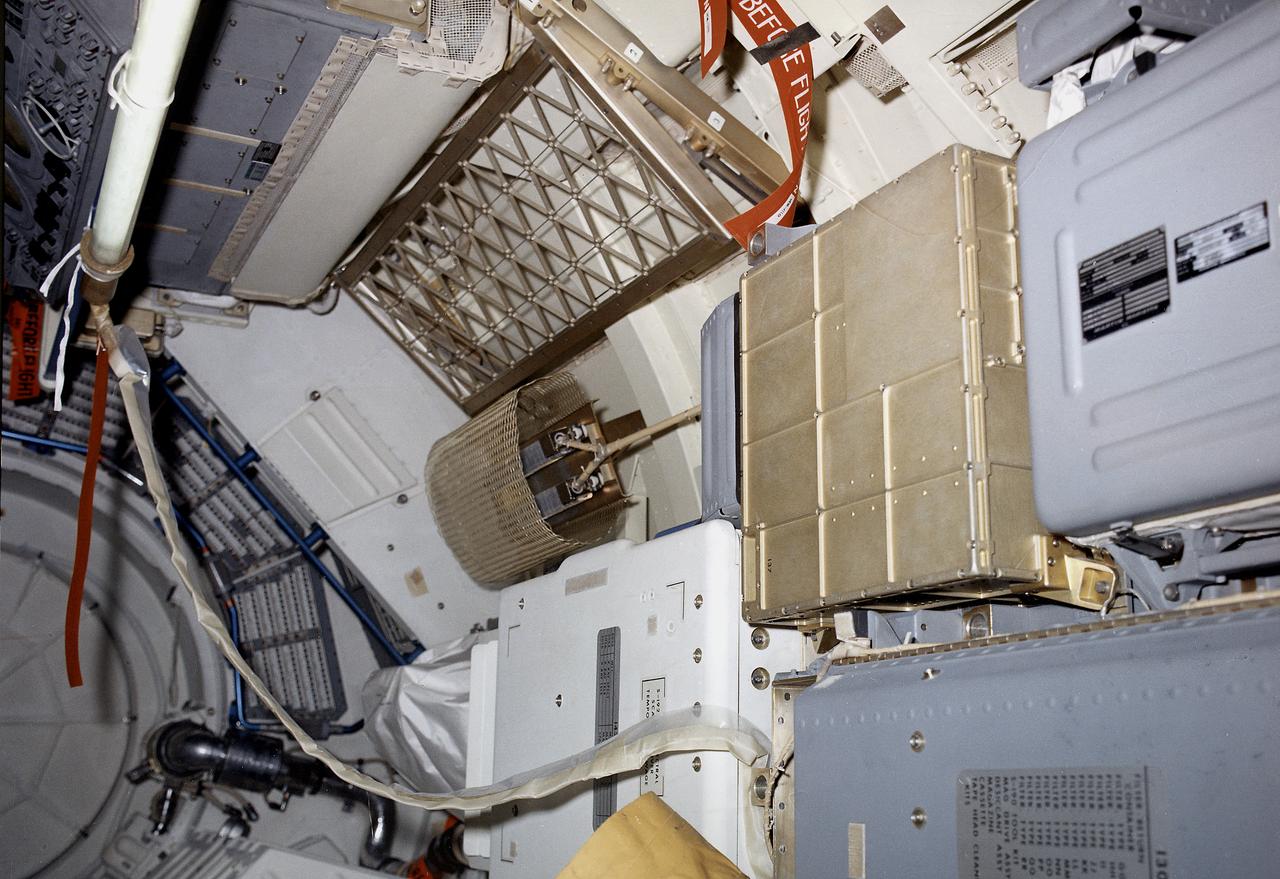
The Multiple Docking Adapter (MDA), designed and constructed under the direction of the Marshall Space Flight Center, was one of four principal sections comprising Skylab. The MDA provided the means by which the Command and Service Modules attached to the Skylab, enabling the crews to enter and work in it. Also included in the MDA was a control and display console for the Apollo Telescope Mount. This image shows an interior view of the MDA.
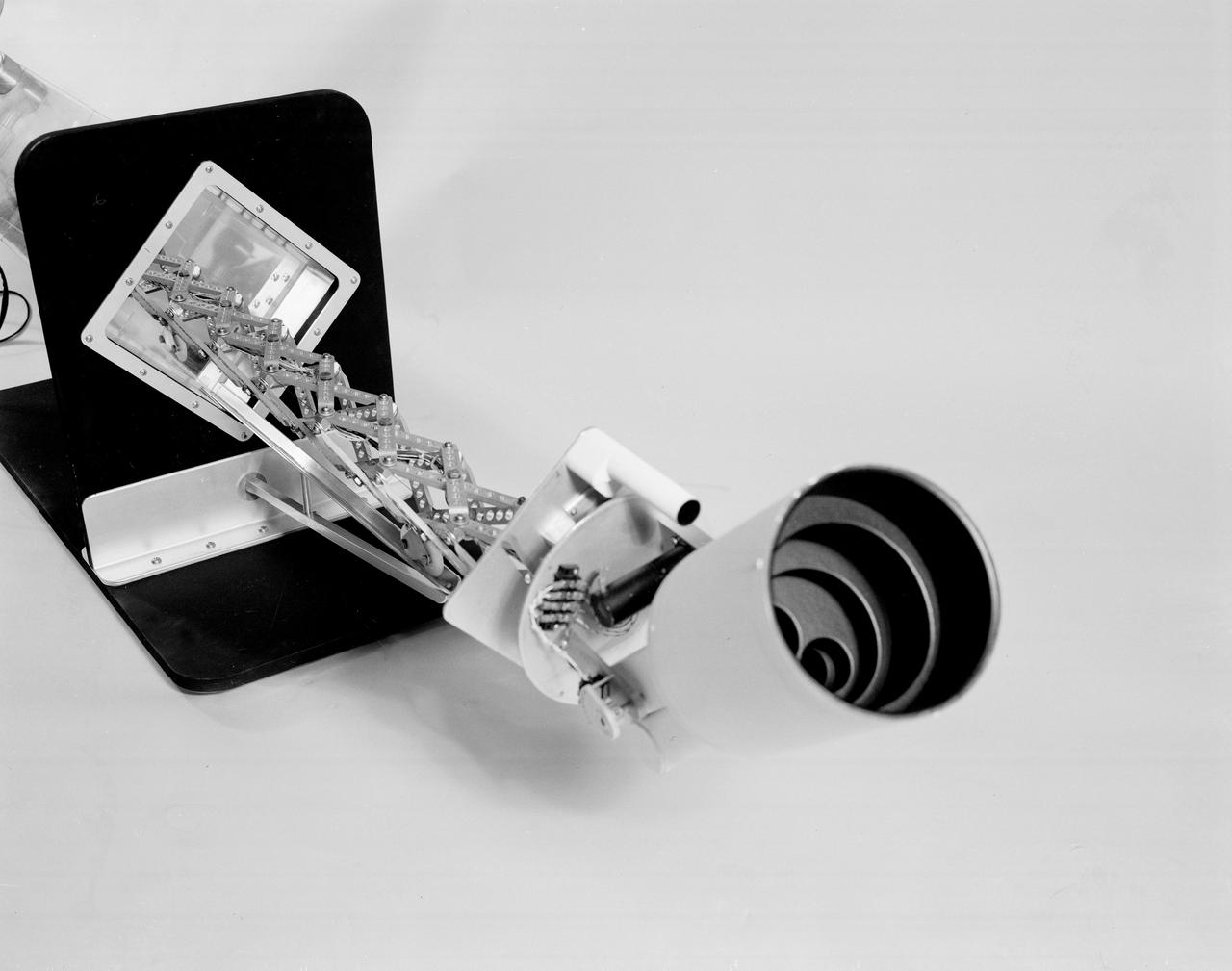
The Apollo Telescope Mount (ATM), designed and developed by the Marshall Space Flight Center, served as the primary scientific instrument unit aboard the Skylab. The ATM contained eight complex astronomical instruments designed to observe the Sun over a wide spectrum from visible light to x-rays. This photo of the ATM contamination monitor mockup offers an extended view of the sunshield interior.
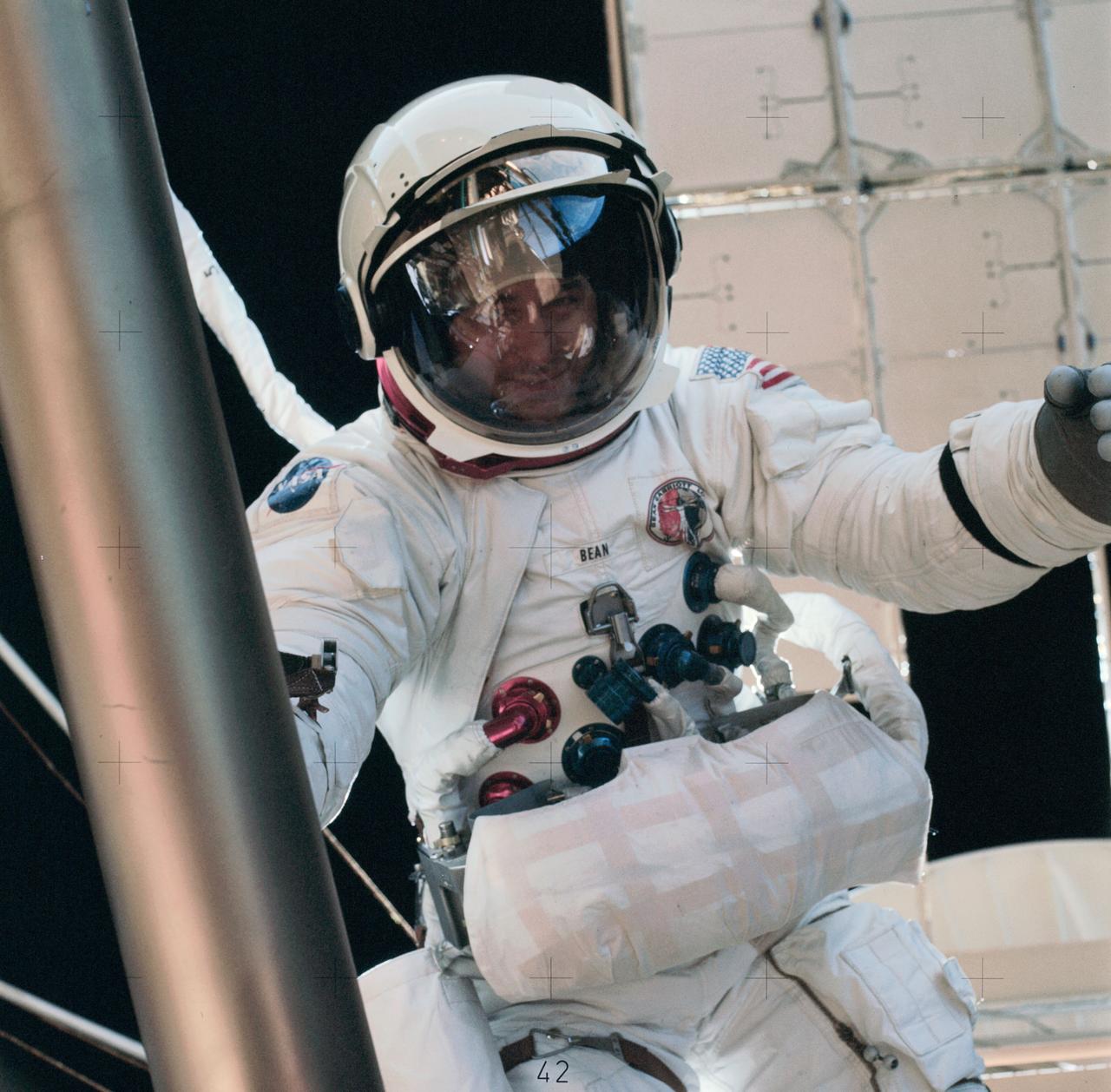
SL3-122-2612 (6 Aug. 1973) --- Astronaut Alan L. Bean, Skylab 3 commander, participates in the final Skylab 3 extravehicular activity (EVA), during which a variety of tasks were performed. Here, Bean is near the Apollo Telescope Mount (ATM) during final film change out for the giant telescope facility. Astronaut Owen K. Garriott, who took the picture, is reflected in Bean's helmet visor. The reflected Earth disk in Bean's visor is so clear that the Red Sea and Nile River area can delineated. Photo credit: NASA

SL3-122-2611 (22 Sept. 1973) --- Astronaut Alan L. Bean, Skylab 3 commander, participates in the final extravehicular activity (EVA) for that mission, during which a variety of tasks were performed. Here, Bean is near the Apollo Telescope Mount (ATM) during final film change out for the giant telescope facility. Astronaut Owen K. Garriott, who took the picture, is reflected in Bean's helmet visor. The reflected Earth disk in Bean's visor is so clear that the Red Sea and Nile River area can delineated. Photo credit: NASA
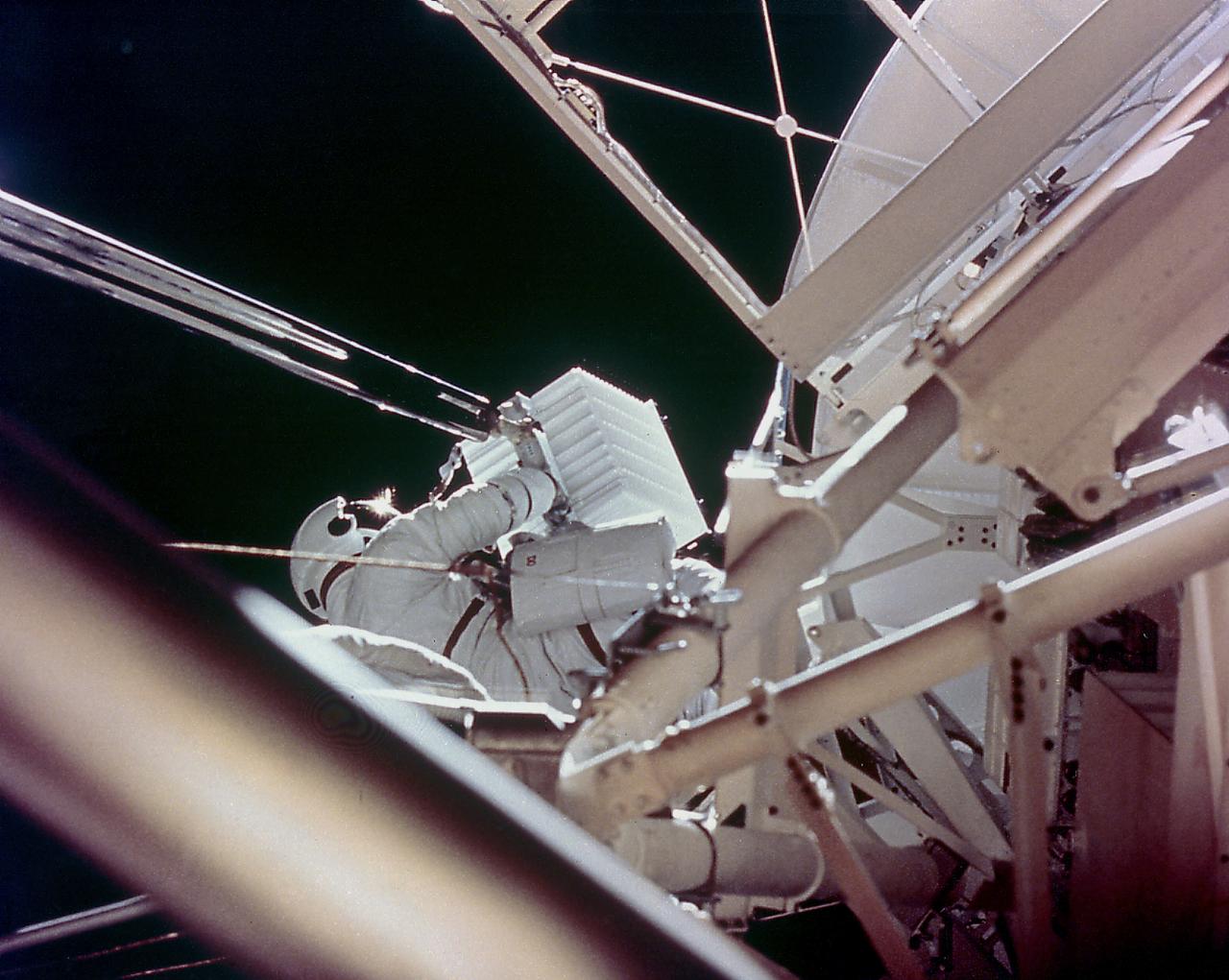
This onboard photograph depicts Astronaut Owen Garriott atop the Apollo Telescope Mount, removing a film magazine (white box) from one of Skylab's solar telescopes during an Extravehicular Activity (EVA) in the second marned Skylab mission (Skylab-3). A long boom transported it back into the waiting hands of another crew member at the airlock door below. During the operation, Garriott, film, boom, and Skylab were 435 kilometers high and speeding around the Earth at 29,000 kilometers per/hour. Because they moved together with no wind resistance, there was little sense of motion.
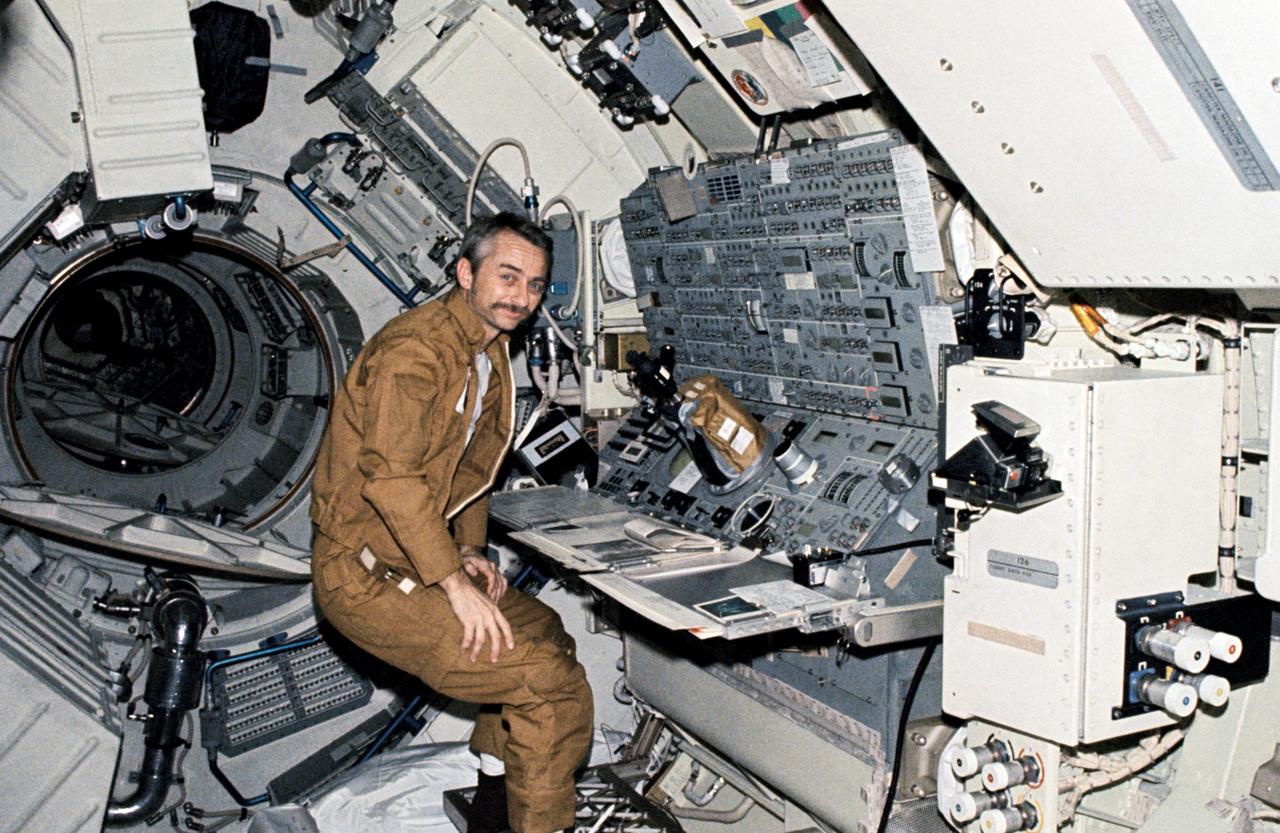
SL3-108-1288 (July-Sept. 1973) --- Astronaut Owen K. Garriott, science pilot of the Skylab 3 mission, is stationed at the Apollo Telescope Mount (ATM) console in the Multiple Docking Adapter (MDA) of the Skylab space station in Earth orbit. This picture was taken with a handheld 35mm Nikon camera. Astronauts Garriott, Alan L. Bean and Jack R. Lousma remained with the Skylab space station cluster in orbit for 59 days conducting numerous medical, scientific and technological experiments. In orbit the MDA functions as a major experiment control center for solar observations. From this console the astronauts actively control the ATM solar physics telescopes. Photo credit: NASA
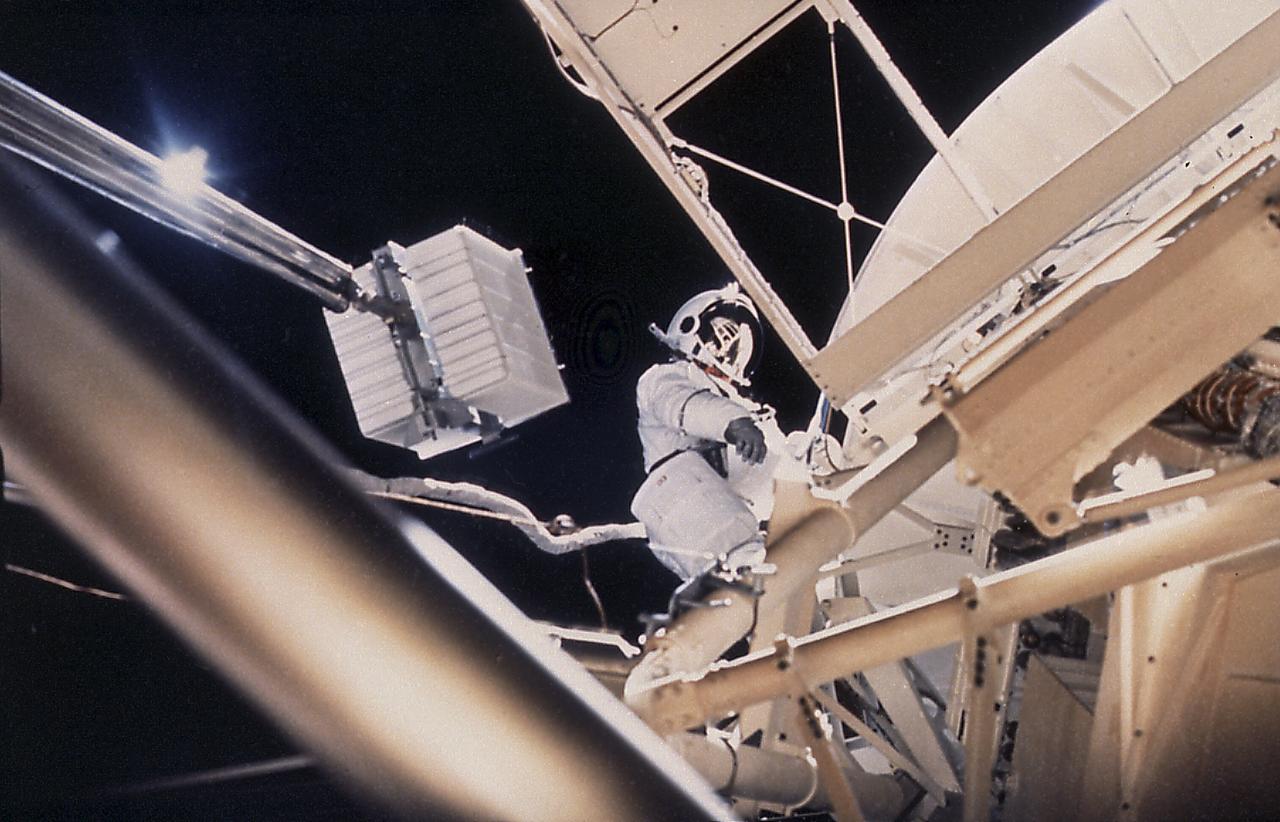
This onboard photograph depicts Astronaut Owen Garriott atop the Apollo Telescope Mount, removing a film magazine (white box) from one of Skylab's solar telescopes during an Extravehicular Activity (EVA) in the second marned Skylab mission (Skylab-3). A long boom transported it back into the waiting hands of another crew member at the airlock door below. During the operation, Garriott, film, boom, and Skylab were 435 kilometers high and speeding around the Earth at 29,000 kilometers per/hour. Because they moved together with no wind resistance, there was little sense of motion.
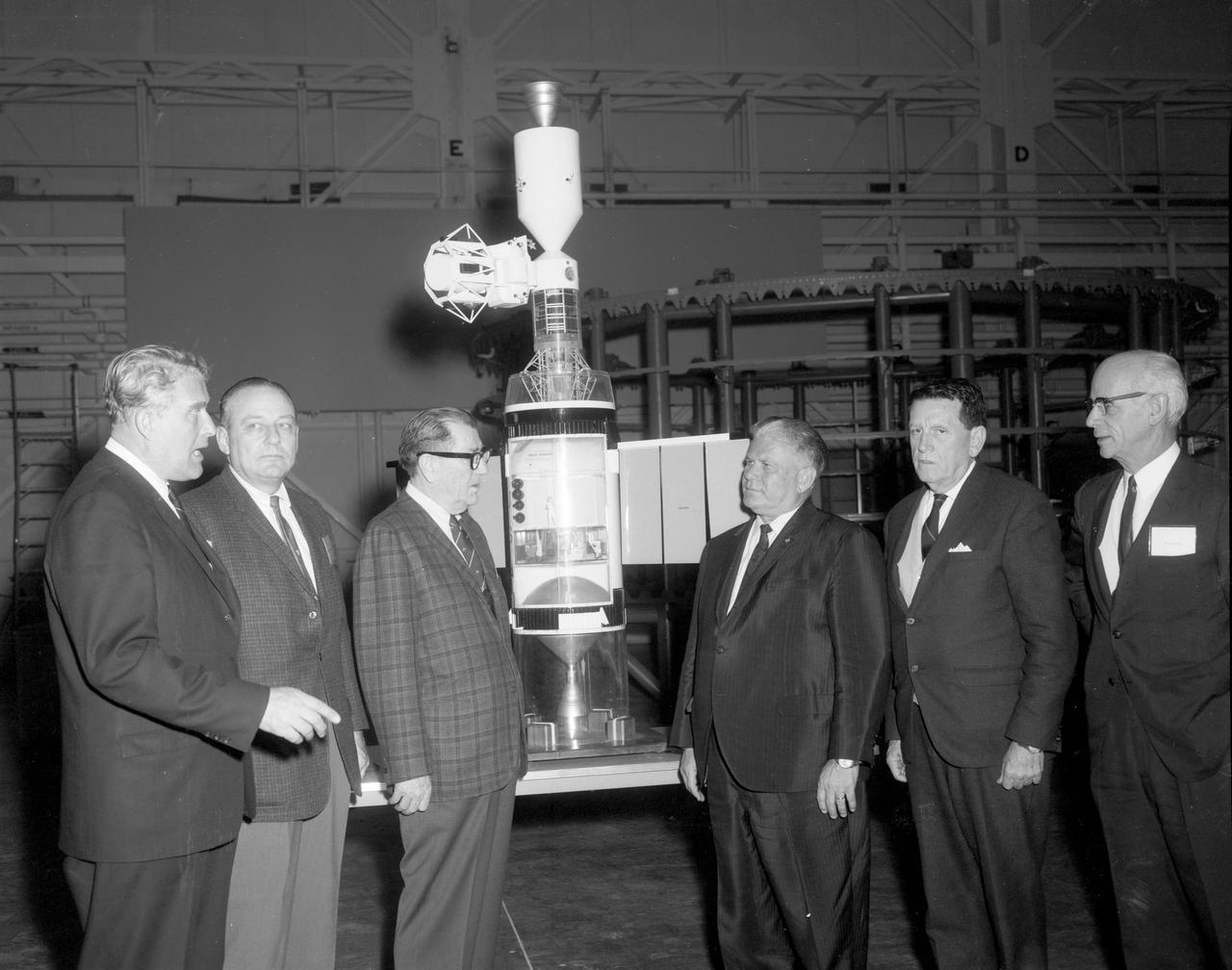
The members of the House Committee on Science and Astronautics visited the Marshall Space Flight Center (MSFC) on March 9, 1962 to gather firsthand information of the nation’s space exploration program. The congressional group was composed of members of the Subcommittee on Manned Space Flight. Standing at the Apollo Applications Program Cluster Model in building 4745 are (left-to-right): Dr. Wernher von Braun, MSFC; Congressman Joe D. Waggoner, Democratic representative of Louisiana; Congressman Earle Cabell, Democratic representative of Texas; Subcommittee Chairman Olin E. Teague, Democratic representative of Texas; Congressman James G. Fulton, Republican representative of Pennsylvania; and Dr. Ernst Stuhlinger, associate MSFC director for science. The subcommittee was briefed on MSFC’s manned space efforts earlier in the day and then inspected mockups of the Saturn I Workshop and the Apollo Telescope Mount, two projects developed by MSFC for the post-Apollo program.
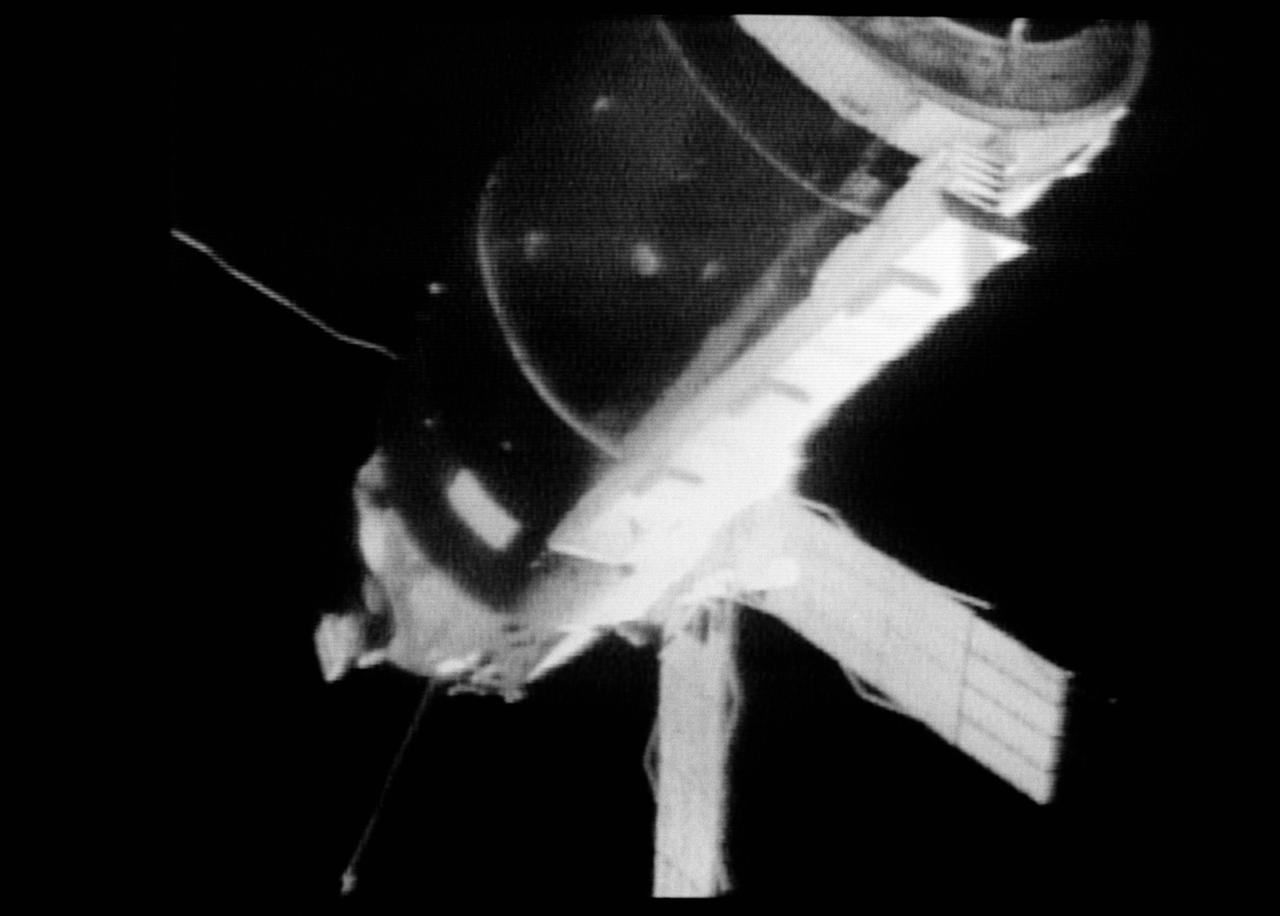
S73-27182 (25 May 1973) --- A close-up view of the Skylab 1 space station cluster can be seen in this reproduction taken from a color television transmission made by a TV camera aboard the Skylab 2 Command Module during its "fly around" inspection of the cluster. This view has been enhanced. At left center the damaged solar array system wing on the Orbital Workshop (OWS) appears to be partly folded. In their preliminary inspection the crewmen noted that portions of the micrometeoroid shield had slid back underneath the OWS solar wing. Solar panels on the Apollo Telescope Mount extend out at the top center. Photo credit: NASA

S73-32839 (10 Sept. 1973) --- Scientist-astronaut Edward G. Gibson, science pilot for the third manned Skylab mission (Skylab 4), enters a notation in a manual while seated at the control and display panel for the Apollo Telescope Mount (ATM) during simulations inside the one-G trainer for the Multiple Docking Adapter (MDA) at the Johnson Space Center (JSC). Dr. Gibson will be joined by astronauts Gerald P. Carr, commander, and William R. Pogue, pilot, when the Skylab 4 mission begins in November 1973. Photo credit: NASA
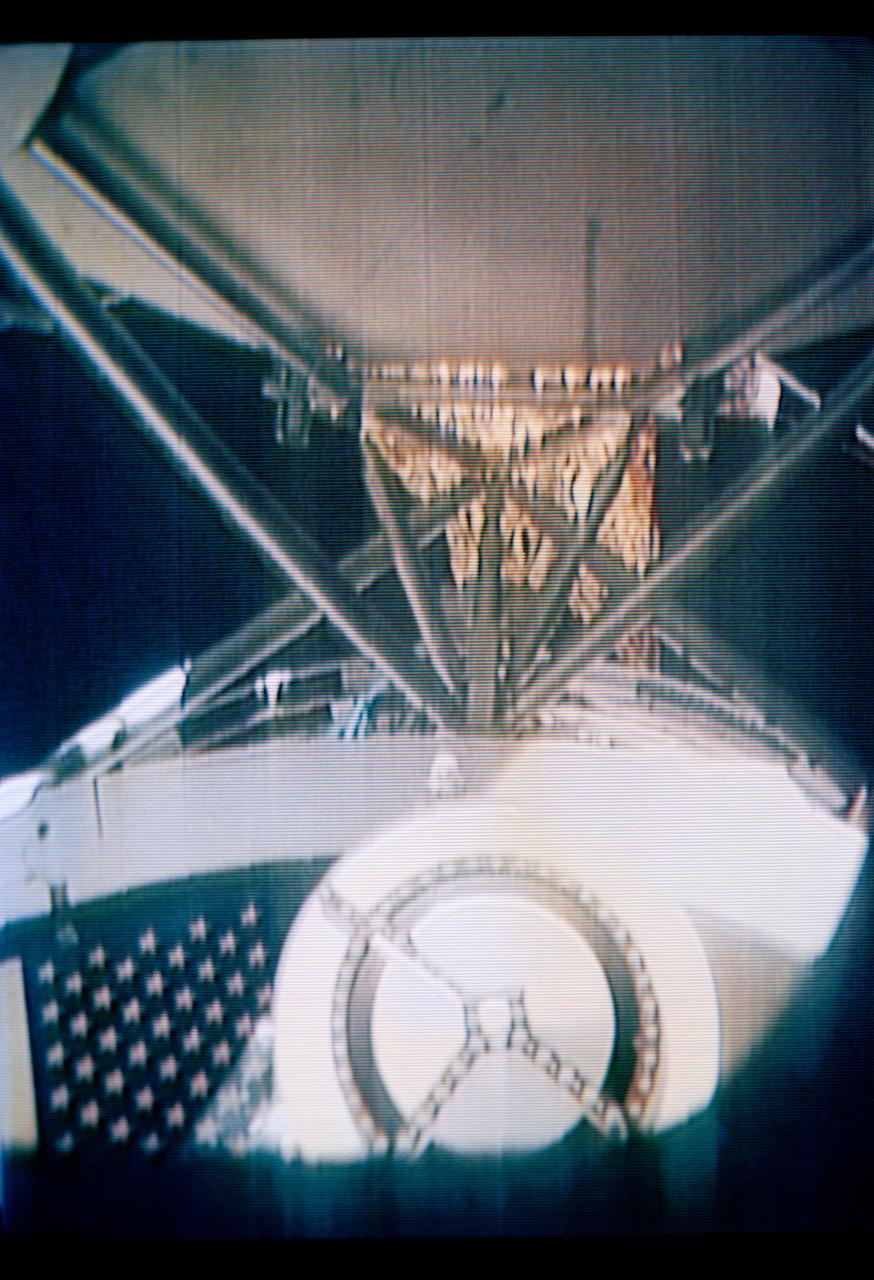
S73-26773 (26 May 1973) --- The deployment of the ?parasol? solar shield, a sunshade to help cool the overheated Orbital Workshop of the Skylab 1 space station cluster in Earth orbit, can be seen in the reproduction taken from a color television transmission made by a TV camera aboard the space station. The camera is in the Command Module; and the view is looking through the truss of the Apollo Telescope Mount. The sunshade is only partially deployed in this picture. The solar shield was pushed up through the OWS solar scientific airlock. The canopy of the ?parasol? measures 24 feet by 22 feet. Photo credit: NASA
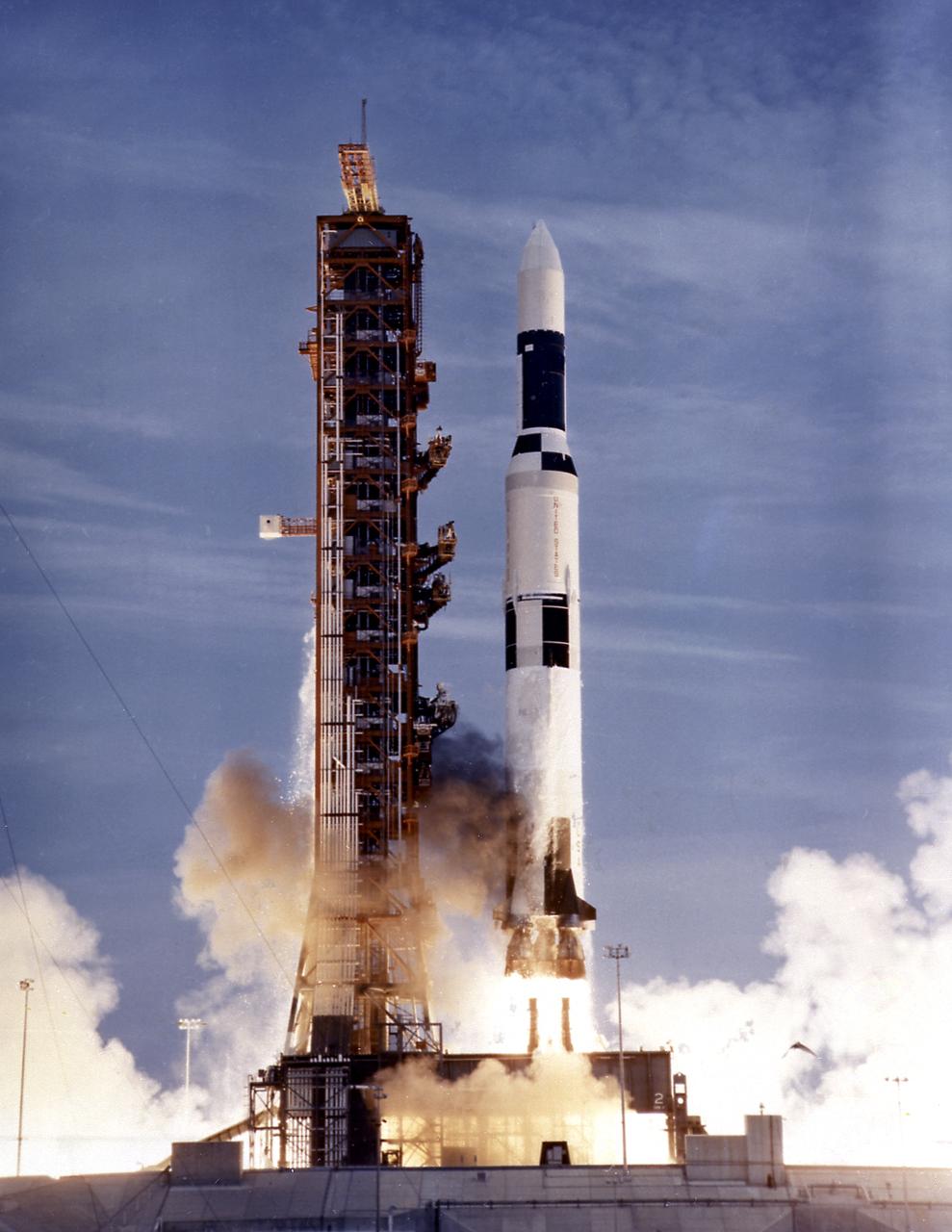
This photograph shows the launch of the SA-513, a modified unmarned two-stage Saturn V vehicle for the Skylab-1 mission, which placed the Skylab cluster into the Earth orbit on May 14, 1973. The initial step in the Skylab mission was the launch of a two-stage Saturn V booster, consisting of the S-IC first stage and the S-II second stage, from Launch Complex 39A at the Kennedy Space Center in Florida. Its payload was the unmanned Skylab, which consisted of the Orbital Workshop, the Airlock Module, the Multiple Docking Adapter, the Apollo Telescope Mount and an Instrument Unit.
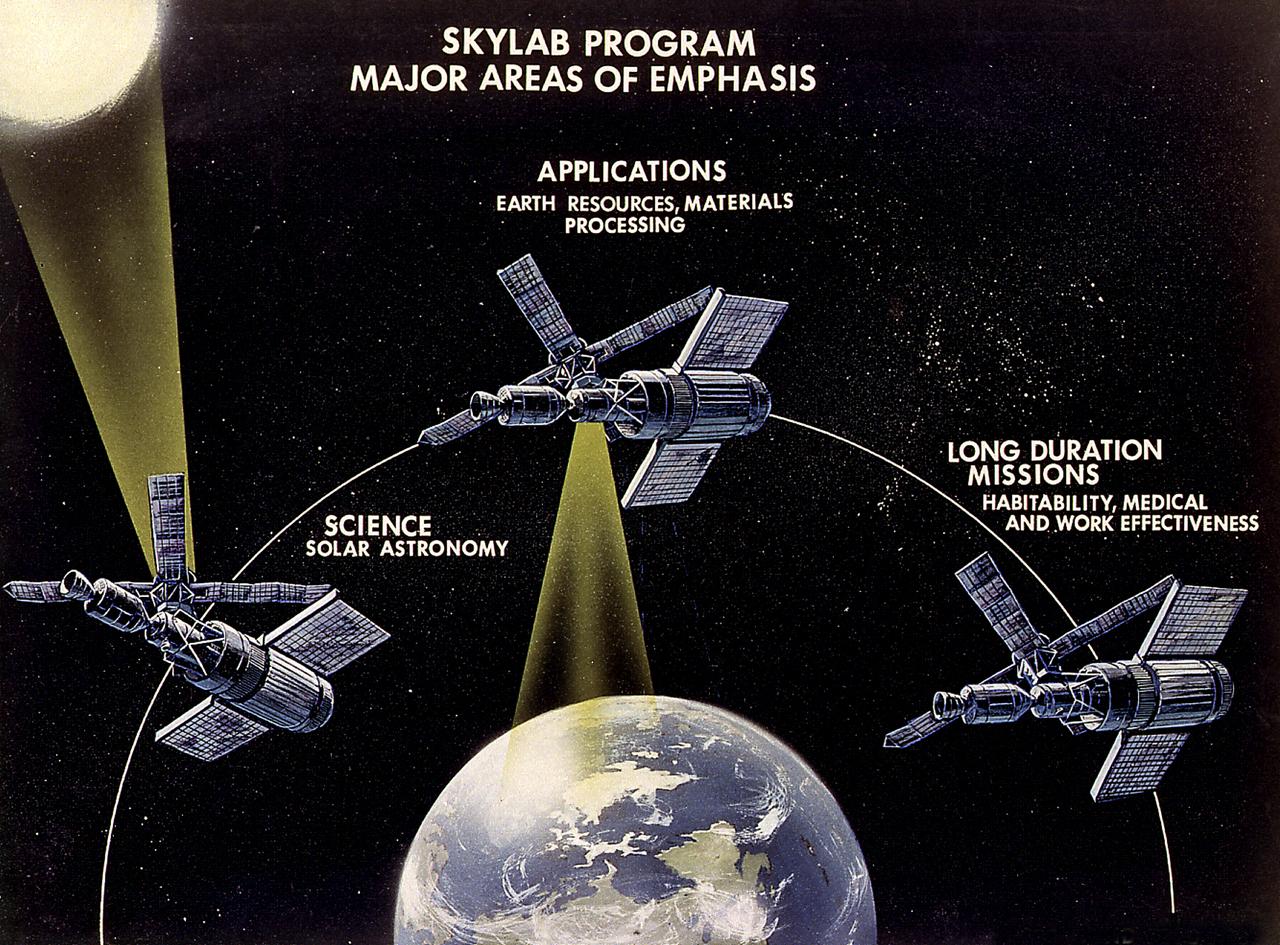
This image illustrates major areas of emphasis of the Skylab Program. In an early effort to extend the use of Apollo for further applications, NASA established the Apollo Applications Program (AAP) in August of 1965. The AAP was to include long duration Earth orbital missions during which astronauts would carry out scientific, technological, and engineering experiments in space by utilizing modified Saturn launch vehicles and the Apollo spacecraft. Established in 1970, the Skylab Program was the forerurner of the AAP. The goals of the Skylab were to enrich our scientific knowledge of the Earth, the Sun, the stars, and cosmic space; to study the effects of weightlessness on living organisms, including man; to study the effects of the processing and manufacturing of materials utilizing the absence of gravity; and to conduct Earth resource observations. The Skylab also conducted 19 selected experiments submitted by high school students. Skylab's 3 different 3-man crews spent up to 84 days in Earth orbit. The Marshall Space Flight Center (MSFC) had responsibility for developing and integrating most of the major components of the Skylab: the Orbital Workshop (OWS), Airlock Module (AM), Multiple Docking Adapter (MDA), Apollo Telescope Mount (ATM), Payload Shroud (PS), and most of the experiments. MSFC was also responsible for providing the Saturn IB launch vehicles for three Apollo spacecraft and crews and a Saturn V launch vehicle for the Skylab.
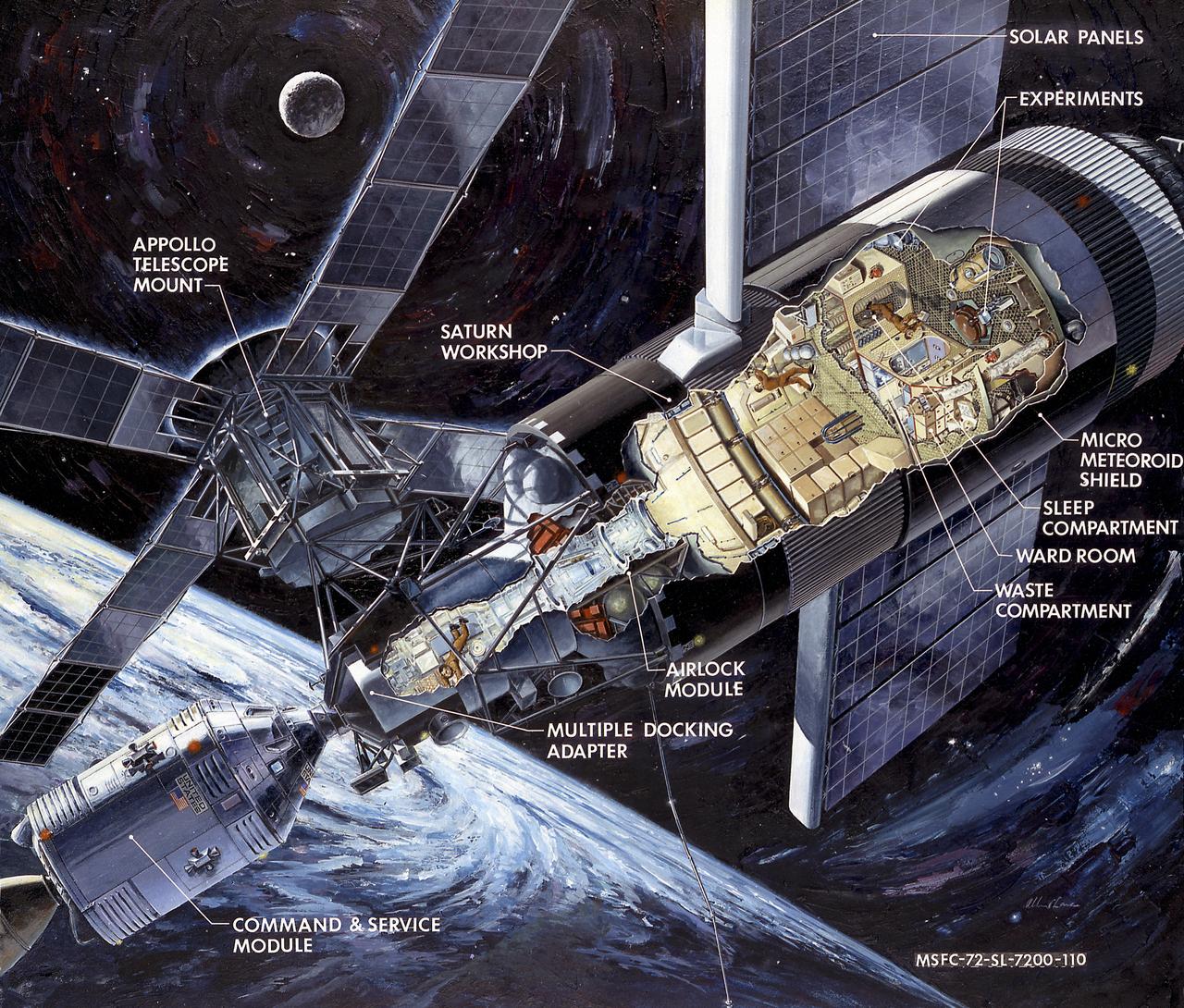
This artist's concept is a cutaway illustration of the Skylab with the Command/Service Module being docked to the Multiple Docking Adapter. In an early effort to extend the use of Apollo for further applications, NASA established the Apollo Applications Program (AAP) in August of 1965. The AAP was to include long duration Earth orbital missions during which astronauts would carry out scientific, technological, and engineering experiments in space by utilizing modified Saturn launch vehicles and the Apollo spacecraft. Established in 1970, the Skylab Program was the forerurner of the AAP. The goals of the Skylab were to enrich our scientific knowledge of the Earth, the Sun, the stars, and cosmic space; to study the effects of weightlessness on living organisms, including man; to study the effects of the processing and manufacturing of materials utilizing the absence of gravity; and to conduct Earth resource observations. The Skylab also conducted 19 selected experiments submitted by high school students. Skylab's 3 different 3-man crews spent up to 84 days in Earth orbit. The Marshall Space Flight Center (MSFC) had responsibility for developing and integrating most of the major components of the Skylab: the Orbital Workshop (OWS), Airlock Module (AM), Multiple Docking Adapter (MDA), Apollo Telescope Mount (ATM), Payload Shroud (PS), and most of the experiments. MSFC was also responsible for providing the Saturn IB launch vehicles for three Apollo spacecraft and crews and a Saturn V launch vehicle for the Skylab.
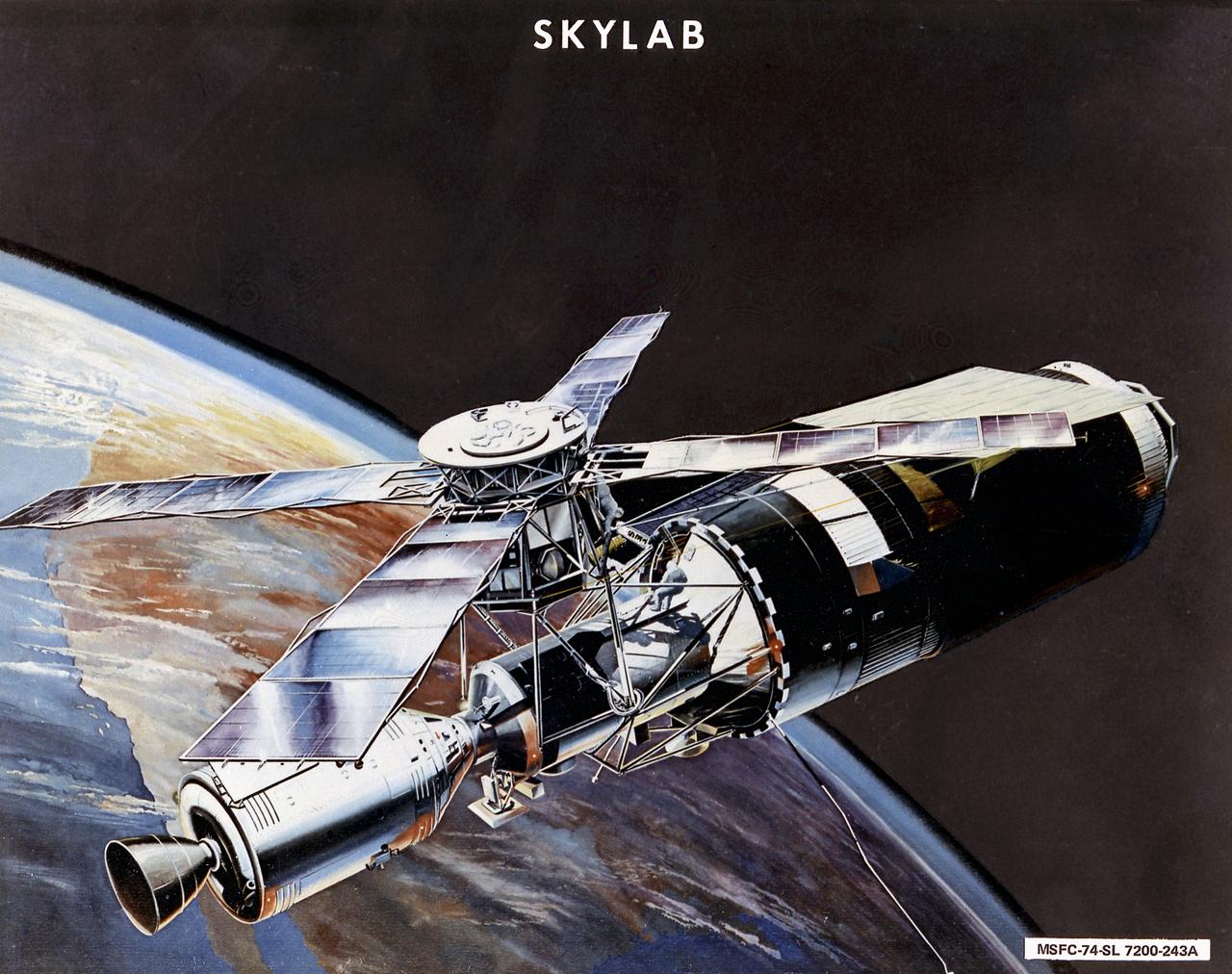
This image is an artist's concept of the Skylab in orbit. In an early effort to extend the use of Apollo for further applications, NASA established the Apollo Applications Program (AAP) in August of 1965. The AAP was to include long duration Earth orbital missions during which astronauts would carry out scientific, technological, and engineering experiments in space by utilizing modified Saturn launch vehicles and the Apollo spacecraft. Established in 1970, the Skylab program was the forerurner of the AAP. The goals of the Skylab were to enrich our scientific knowledge of the Earth, the Sun, the stars, and cosmic space; to study the effects of weightlessness on living organisms, including man; to study the effects of the processing and manufacturing of materials utilizing the absence of gravity; and to conduct Earth resource observations. The Skylab also conducted 19 selected experiments submitted by high school students. Skylab's 3 different 3-man crews spent up to 84 days in Earth orbit. The Marshall Space Flight Center (MSFC) had responsibility for developing and integrating most of the major components of the Skylab: the Orbital Workshop (OWS), Airlock Module (AM), Multiple Docking Adapter (MDA), Apollo Telescope Mount (ATM), Payload Shroud (PS), and most of the experiments. MSFC was also responsible for providing the Saturn IB launch vehicles for three Apollo spacecraft and crews and a Saturn V launch vehicle for the Skylab.
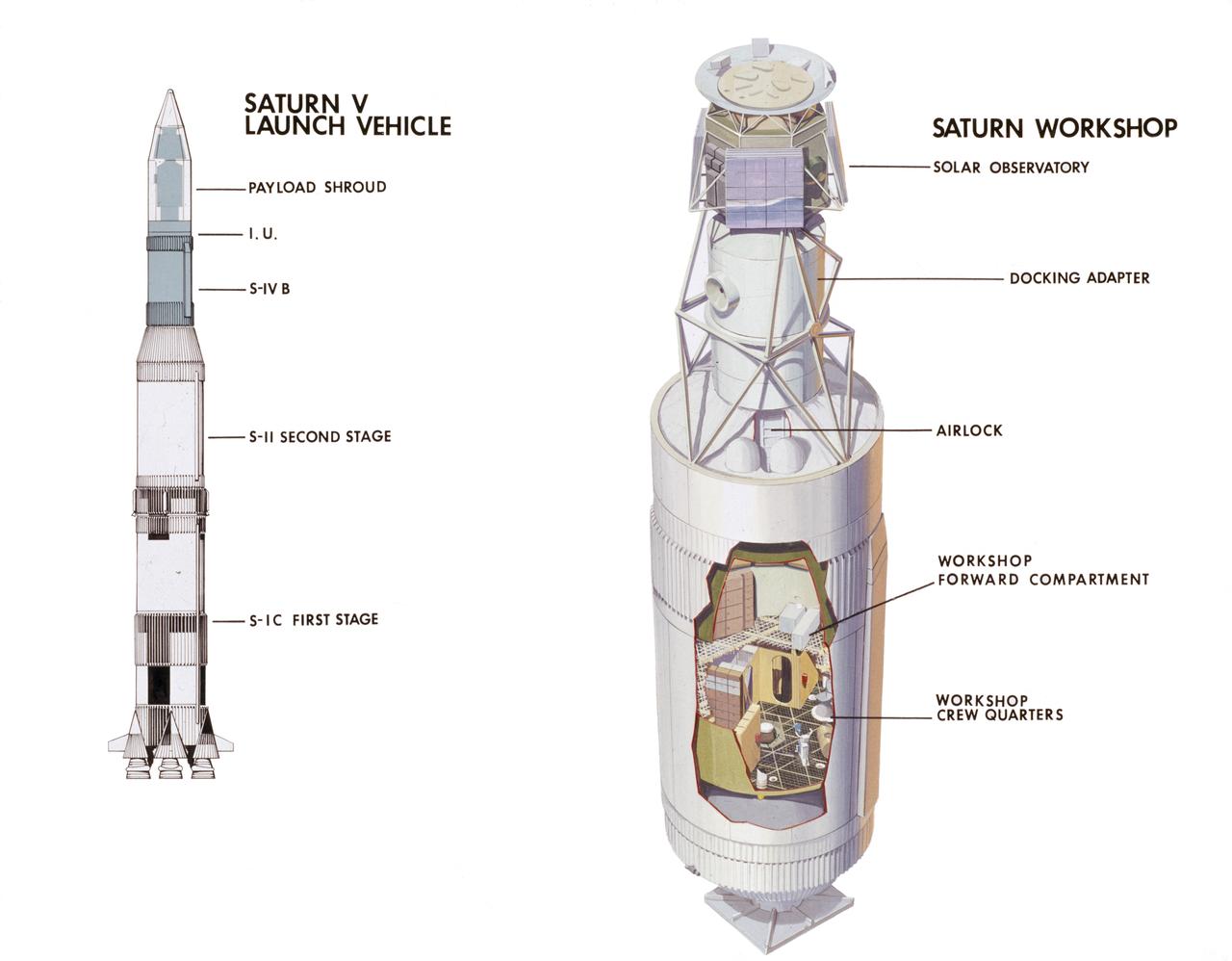
This cutaway drawing illustrates major Skylab components in launch configuration on top of the Saturn V. In an early effort to extend the use of Apollo for further applications, NASA established the Apollo Applications Program (AAP) in August of 1965. The AAP was to include long duration Earth orbital missions during which astronauts would carry out scientific, technological, and engineering experiments in space by utilizing modified Saturn launch vehicles and the Apollo spacecraft. Established in 1970, the Skylab Program was the forerurner of the AAP. The goals of the Skylab were to enrich our scientific knowledge of the Earth, the Sun, the stars, and cosmic space; to study the effects of weightlessness on living organisms, including man; to study the effects of the processing and manufacturing of materials utilizing the absence of gravity; and to conduct Earth resource observations. The Skylab also conducted 19 selected experiments submitted by high school students. Skylab's 3 different 3-man crews spent up to 84 days in Earth orbit. The Marshall Space Flight Center (MSFC) had responsibility for developing and integrating most of the major components of the Skylab: the Orbital Workshop (OWS), Airlock Module (AM), Multiple Docking Adapter (MDA), Apollo Telescope Mount (ATM), Payload Shroud (PS), and most of the experiments. MSFC was also responsible for providing the Saturn IB launch vehicles for three Apollo spacecraft and crews and a Saturn V launch vehicle for the Skylab.
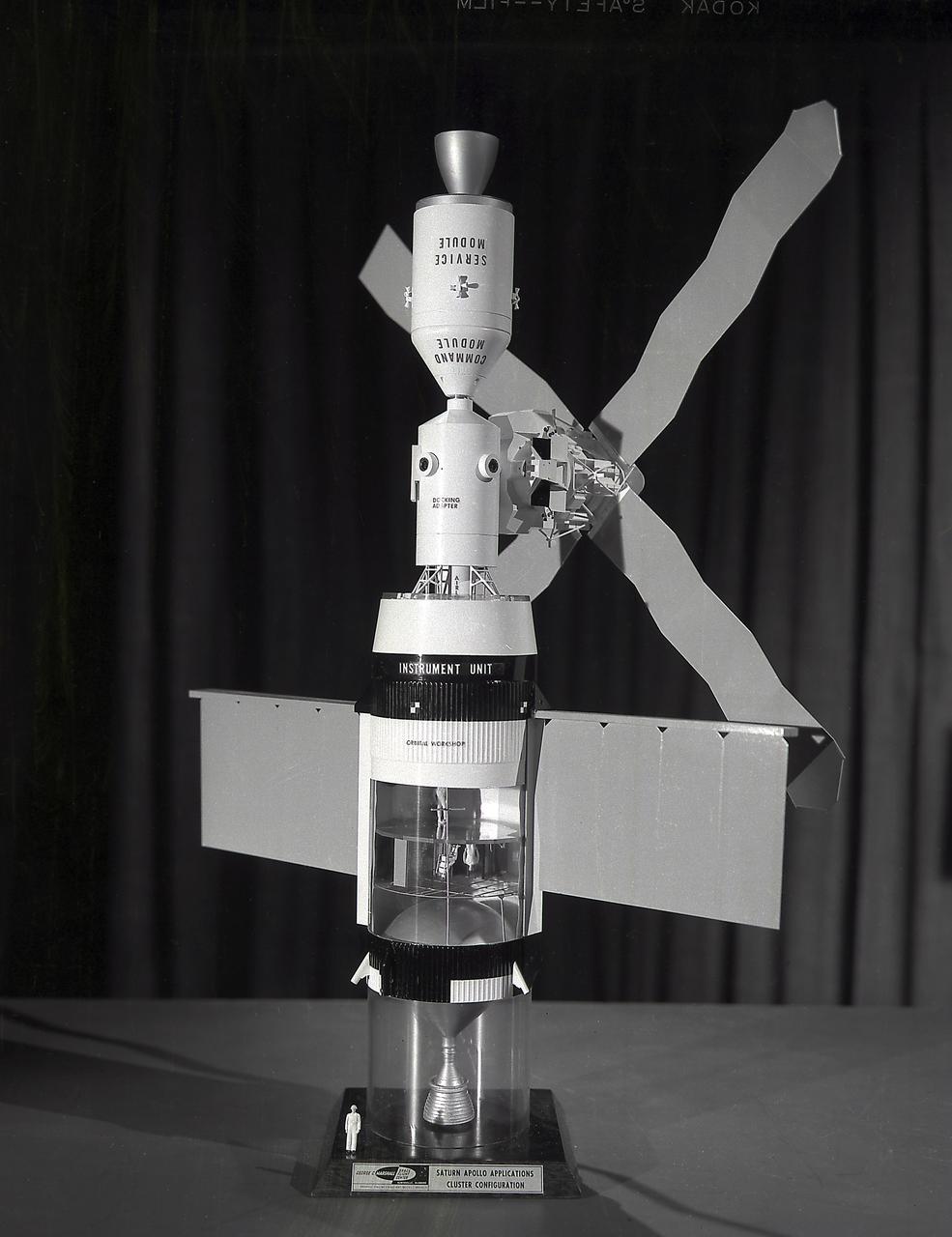
This photograph is of a model of the Skylab with the Command/Service Module being docked. In an early effort to extend the use of Apollo for further applications, NASA established the Apollo Applications Program (AAP) in August of 1965. The AAP was to include long duration Earth orbital missions during which astronauts would carry out scientific, technological, and engineering experiments in space by utilizing modified Saturn launch vehicles and the Apollo spacecraft. Established in 1970, the Skylab Program was the forerurner of the AAP. The goals of the Skylab were to enrich our scientific knowledge of the Earth, the Sun, the stars, and cosmic space; to study the effects of weightlessness on living organisms, including man; to study the effects of the processing and manufacturing of materials utilizing the absence of gravity; and to conduct Earth resource observations. The Skylab also conducted 19 selected experiments submitted by high school students. Skylab's 3 different 3-man crews spent up to 84 days in Earth orbit. The Marshall Space Flight Center (MSFC) had responsibility for developing and integrating most of the major components of the Skylab: the Orbital Workshop (OWS), Airlock Module (AM), Multiple Docking Adapter (MDA), Apollo Telescope Mount (ATM), Payload Shroud (PS), and most of the experiments. MSFC was also responsible for providing the Saturn IB launch vehicles for three Apollo spacecraft and crews and a Saturn V launch vehicle for the Skylab.
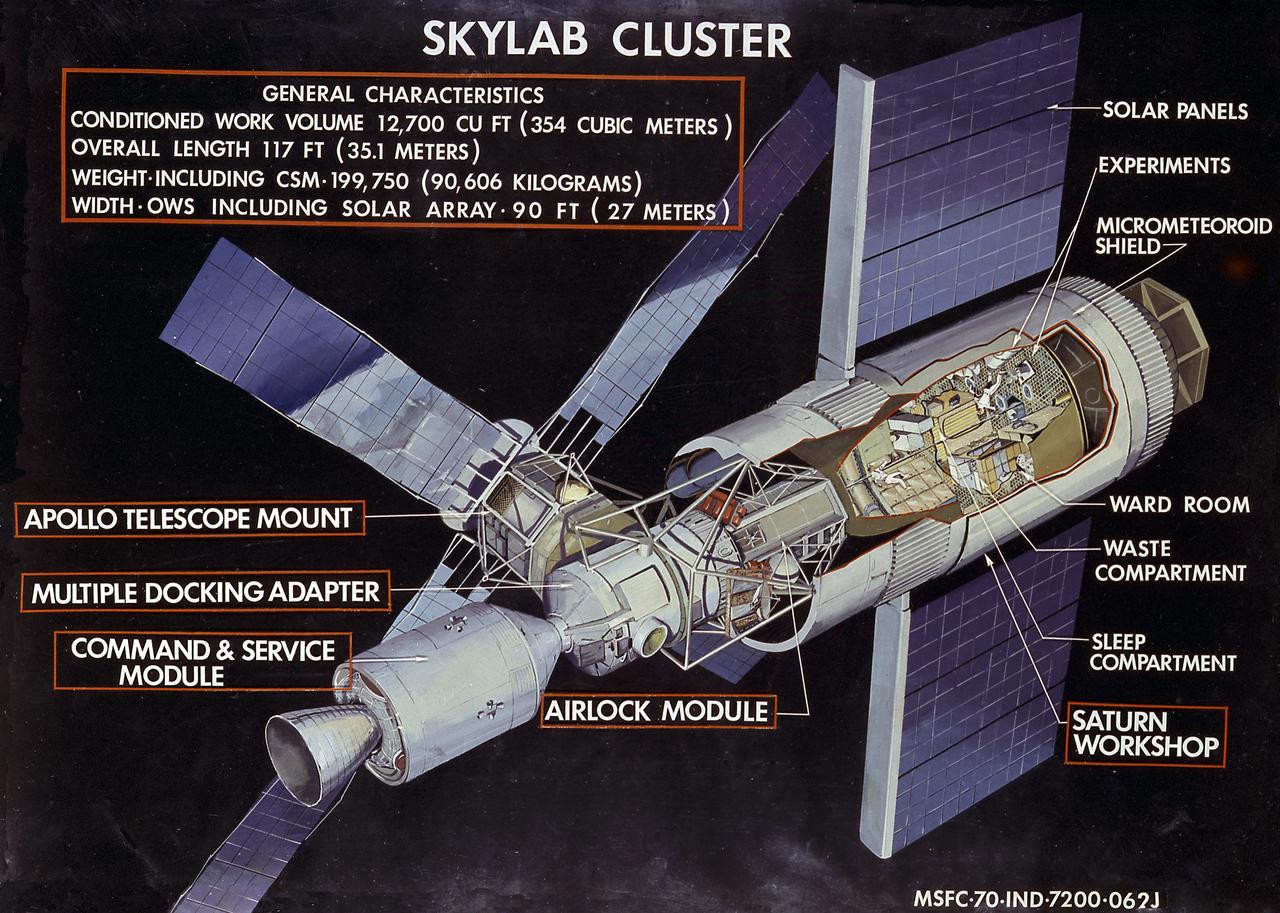
This illustration shows general characteristics of the Skylab with callouts of its major components. In an early effort to extend the use of Apollo for further applications, NASA established the Apollo Applications Program (AAP) in August of 1965. The AAP was to include long duration Earth orbital missions during which astronauts would carry out scientific, technological, and engineering experiments in space by utilizing modified Saturn launch vehicles and the Apollo spacecraft. Established in 1970, the Skylab Program was the forerurner of the AAP. The goals of the Skylab were to enrich our scientific knowledge of the Earth, the Sun, the stars, and cosmic space; to study the effects of weightlessness on living organisms, including man; to study the effects of the processing and manufacturing of materials utilizing the absence of gravity; and to conduct Earth resource observations. The Skylab also conducted 19 selected experiments submitted by high school students. Skylab's 3 different 3-man crews spent up to 84 days in Earth orbit. The Marshall Space Flight Center (MSFC) had responsibility for developing and integrating most of the major components of the Skylab: the Orbital Workshop (OWS), Airlock Module (AM), Multiple Docking Adapter (MDA), Apollo Telescope Mount (ATM), Payload Shroud (PS), and most of the experiments. MSFC was also responsible for providing the Saturn IB launch vehicles for three Apollo spacecraft and crews and a Saturn V launch vehicle for the Skylab.
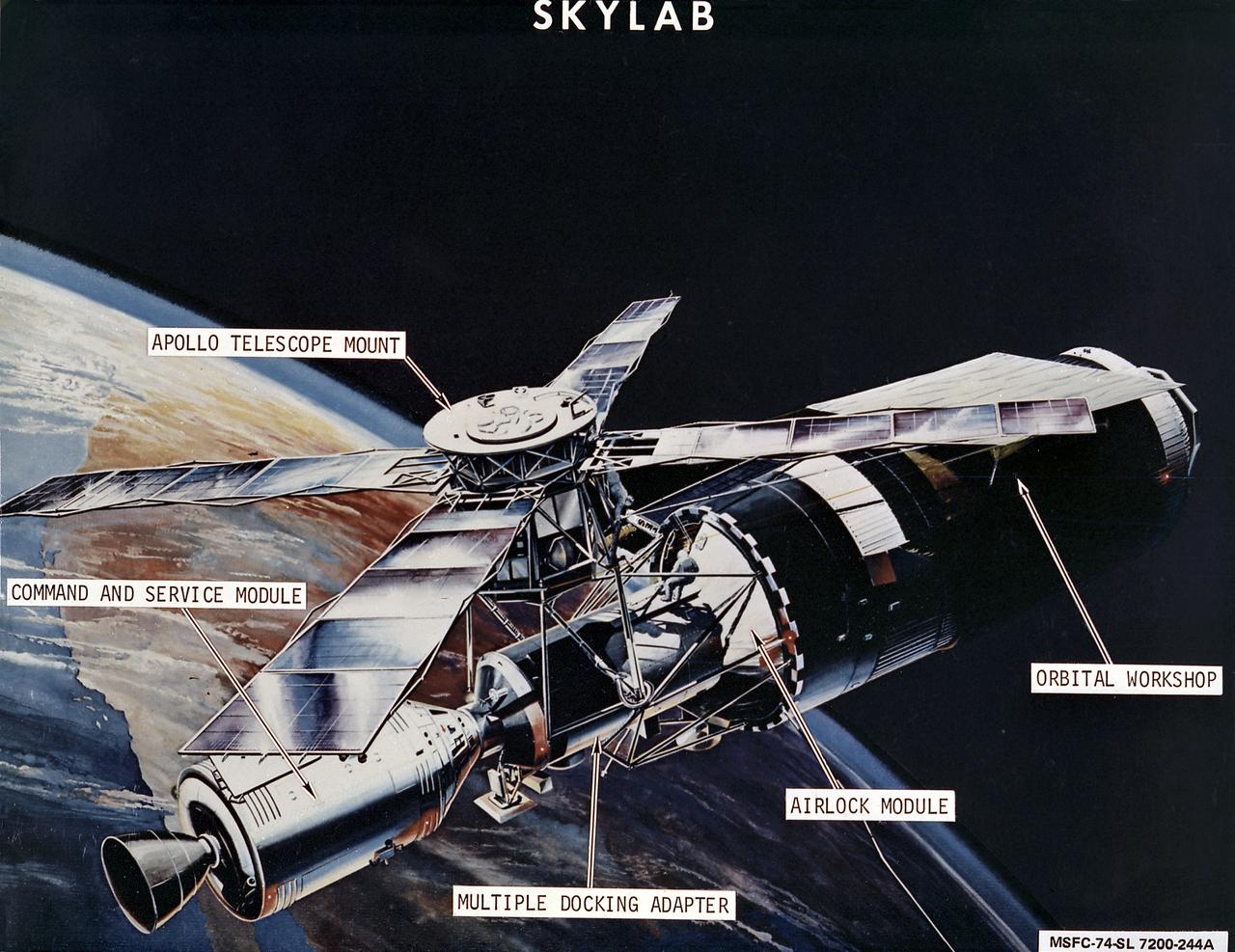
This image is an artist's concept of the Skylab in orbit with callouts of its major components. In an early effort to extend the use of Apollo for further applications, NASA established the Apollo Applications Program (AAP) in August of 1965. The AAP was to include long duration Earth orbital missions during which astronauts would carry out scientific, technological, and engineering experiments in space by utilizing modified Saturn launch vehicles and the Apollo spacecraft. Established in 1970, the Skylab Program was the forerurner of the AAP. The goals of the Skylab were to enrich our scientific knowledge of the Earth, the Sun, the stars, and cosmic space; to study the effects of weightlessness on living organisms, including man; to study the effects of the processing and manufacturing of materials utilizing the absence of gravity; and to conduct Earth resource observations. The Skylab also conducted 19 selected experiments submitted by high school students. Skylab's 3 different 3-man crews spent up to 84 days in Earth orbit. The Marshall Space Flight Center (MSFC) had responsibility for developing and integrating most of the major components of the Skylab: the Orbital Workshop (OWS), Airlock Module (AM), Multiple Docking Adapter (MDA), Apollo Telescope Mount (ATM), Payload Shroud (PS), and most of the experiments. MSFC was also responsible for providing the Saturn IB launch vehicles for three Apollo spacecraft and crews and a Saturn V launch vehicle for the Skylab.
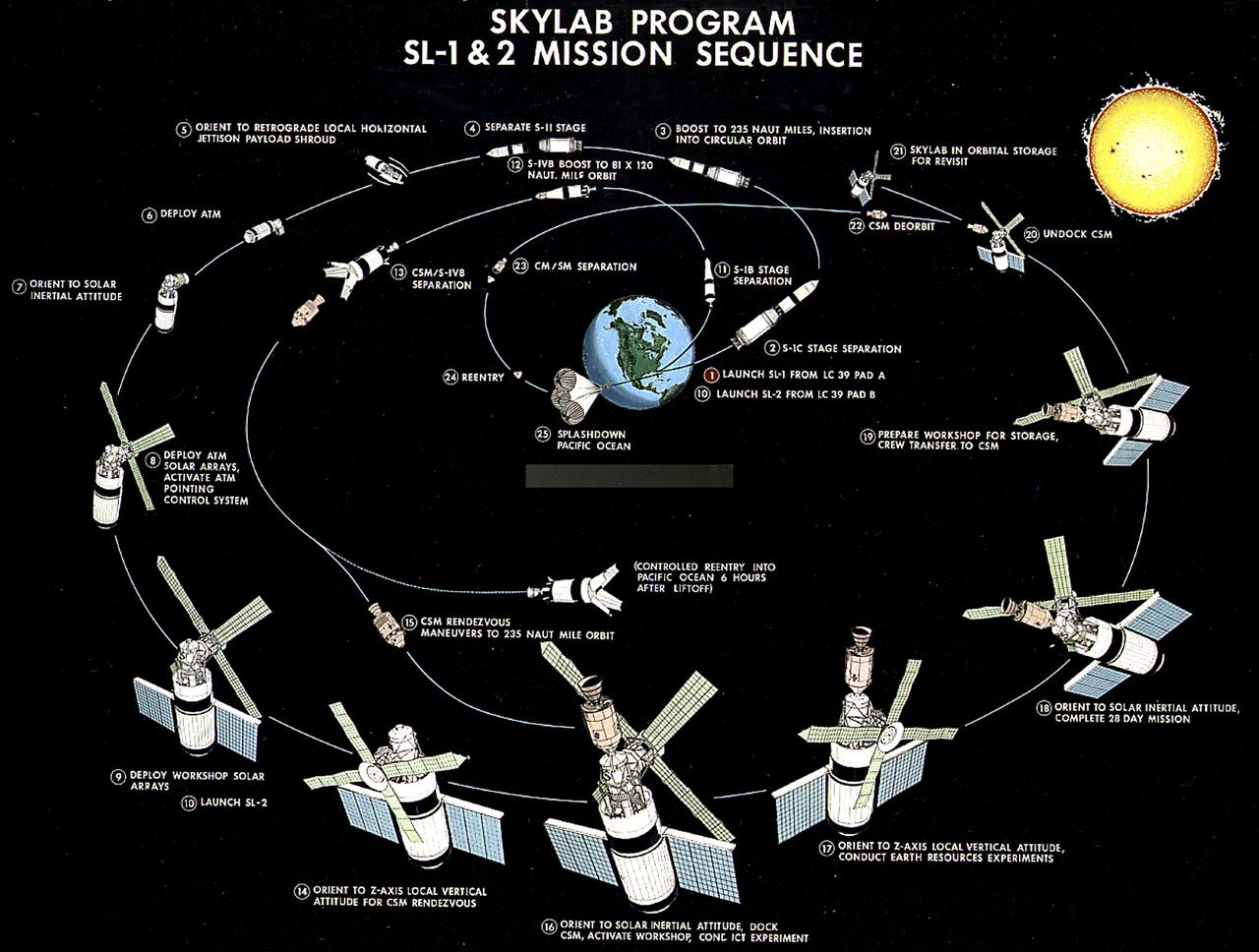
This illustration depicts the Skylab-1 and Skylab-2 mission sequence. The goals of the Skylab were to enrich our scientific knowledge of the Earth, the Sun, the stars, and cosmic space; to study the effects of weightlessness on living organisms, including man; to study the effects of the processing and manufacturing of materials utilizing the absence of gravity; and to conduct Earth resource observations. The Skylab also conducted 19 selected experiments submitted by high school students. Skylab's 3 different 3-man crews spent up to 84 days in Earth orbit. The Marshall Space Flight Center (MSFC) had responsibility for developing and integrating most of the major components of the Skylab: the Orbital Workshop (OWS), Airlock Module (AM), Multiple Docking Adapter (MDA), Apollo Telescope Mount (ATM), Payload Shroud (PS), and most of the experiments. MSFC was also responsible for providing the Saturn IB launch vehicles for three Apollo spacecraft and crews and a Saturn V launch vehicle for the Skylab.
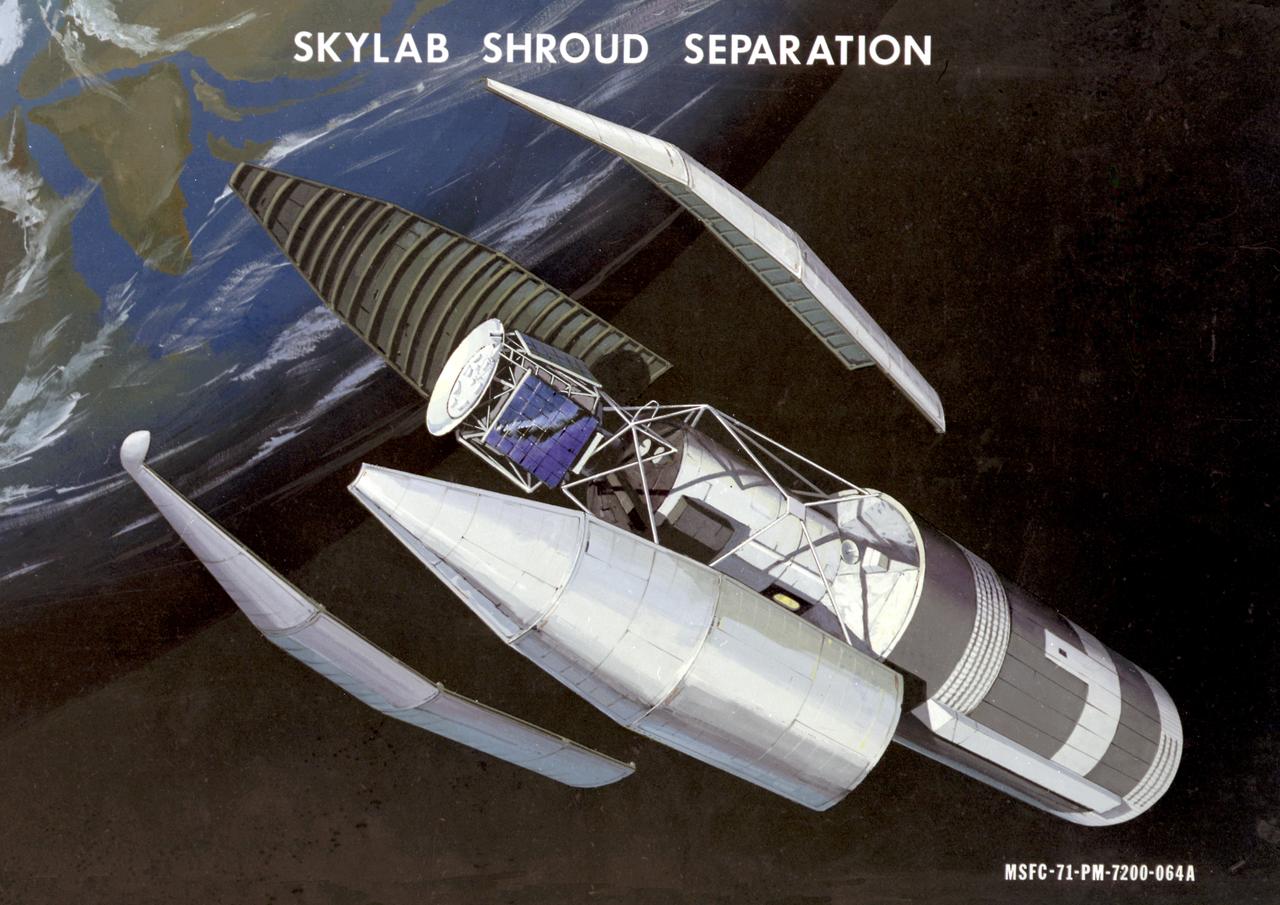
This artist's concept depicts the separation of the Skylab payload shroud. The payload shroud was both an environmental shield and an aerodynamic fairing. Attached to the forward end of the fixed airlock shroud, it protected the airlock, the docking adapter, and the solar observatory before and during launch. It also provided structural support for the solar observatory in the launch configuration. The payload shroud was jettisoned once Skylab reached orbit after separation of the S-II second stage of the Saturn V vehicle. Five major assemblies clustered together made up the orbiting space station called Skylab. The largest of these was the orbital workshop, that housed the crew quarters and a major experiment area. The airlock module, attached to the forward end of the workshop, enabled crewmembers to make excursions outside Skylab. The docking adapter, attached to the forward end of the airlock module, provided the docking port for the Apollo command and service module. The Apollo Telescope Mount was the first marned astronomical observatory designed for solar research from Earth orbit.