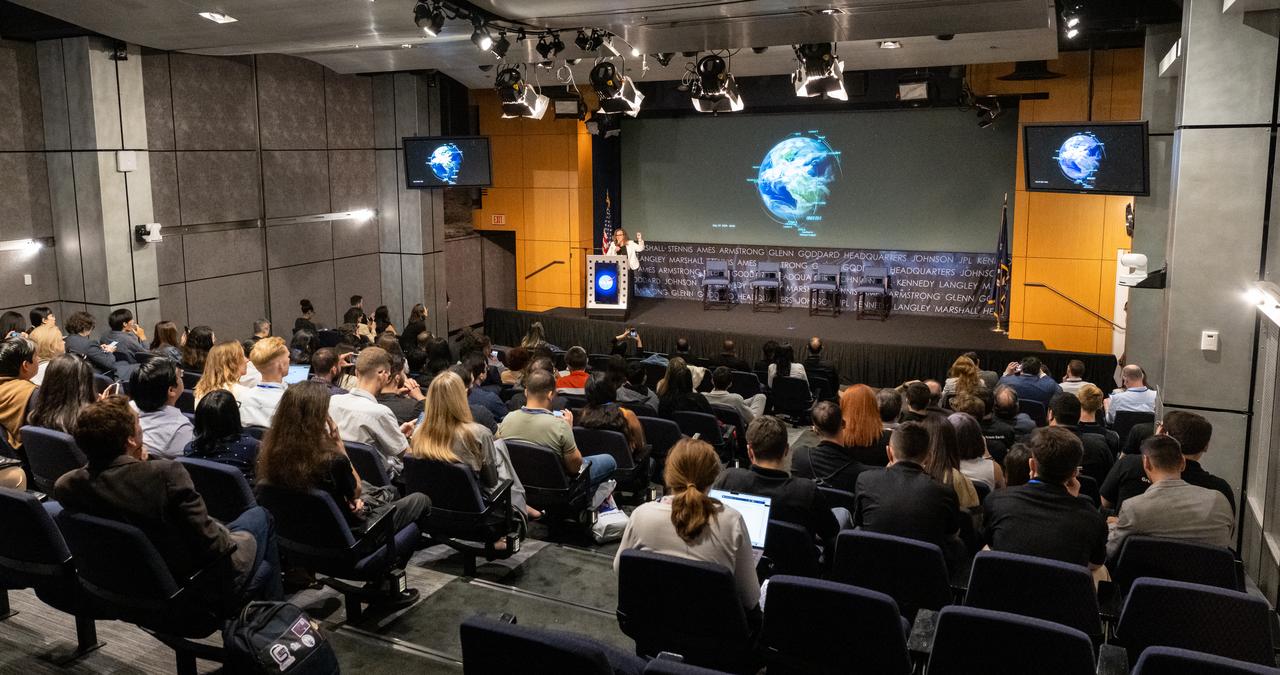
NASA Earth Science Division Director Karen St. Germain delivers remarks during a gathering of NASA Space Apps Challenge Global Winners and Local Leads from around the world Wednesday, June 5, 2024, at the Mary W. Jackson NASA Headquarters building in Washington. Photo Credit: (NASA/Keegan Barber)
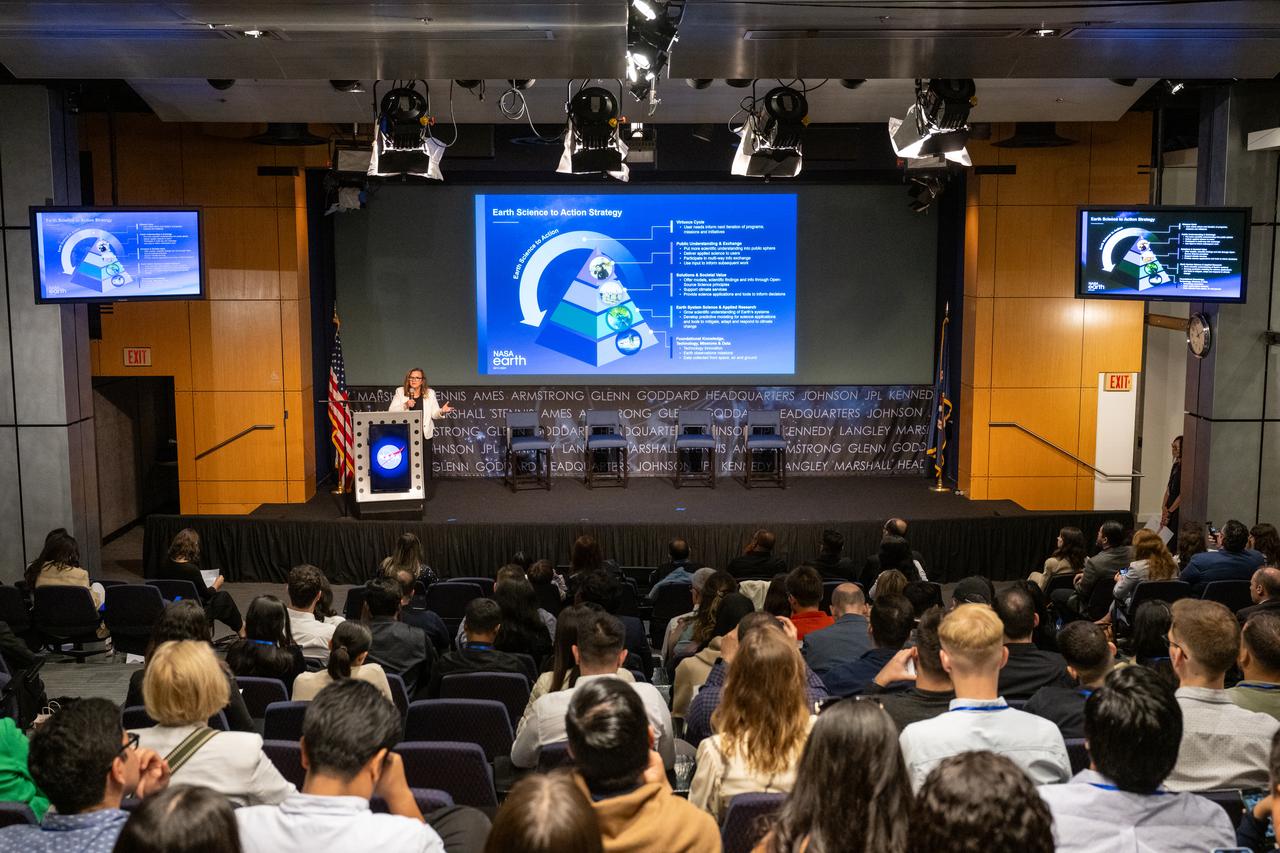
NASA Earth Science Division Director Karen St. Germain delivers remarks during a gathering of NASA Space Apps Challenge Global Winners and Local Leads from around the world Wednesday, June 5, 2024, at the Mary W. Jackson NASA Headquarters building in Washington. Photo Credit: (NASA/Keegan Barber)
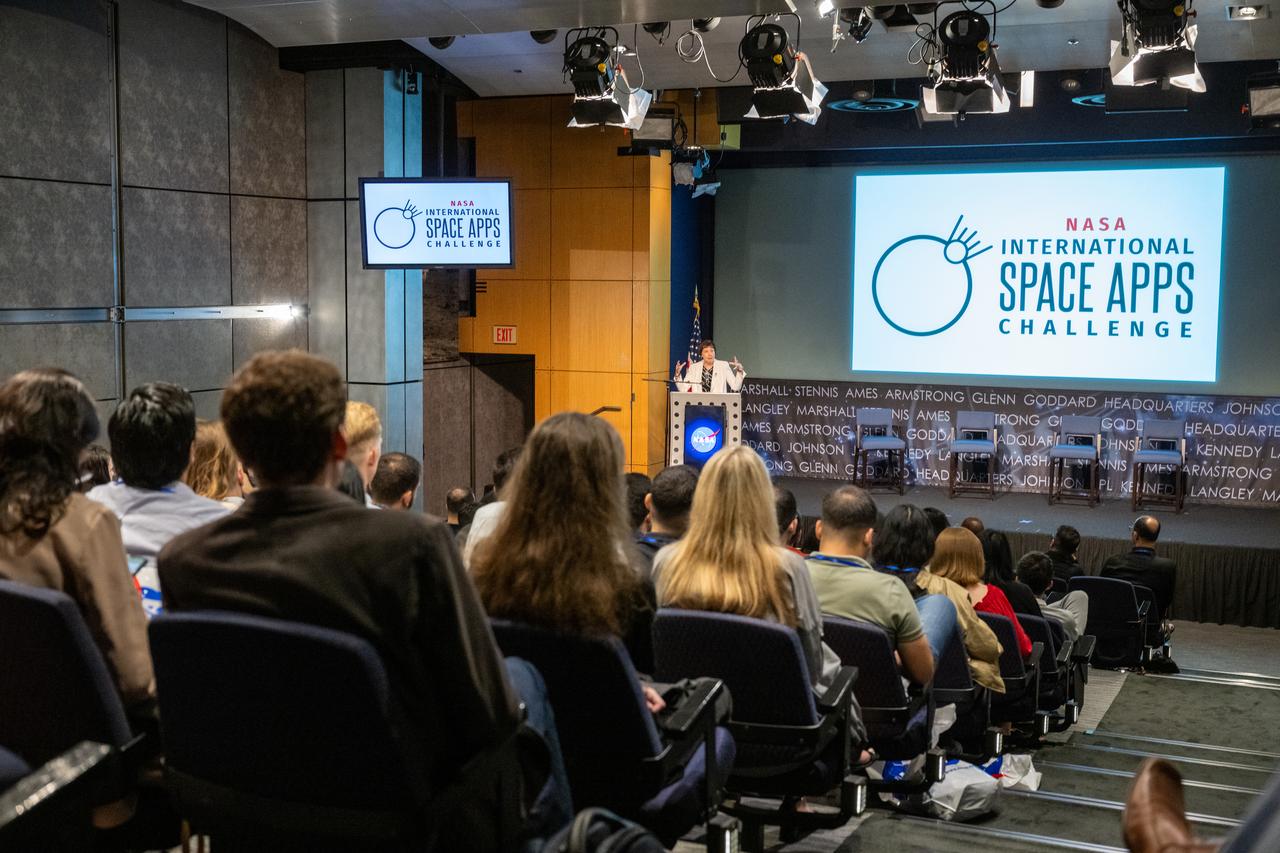
NASA Earth Science Division Associate Administrator Nicola Fox delivers remarks during a gathering of NASA Space Apps Challenge Global Winners and Local Leads from around the world Wednesday, June 5, 2024, at the Mary W. Jackson NASA Headquarters building in Washington. Photo Credit: (NASA/Keegan Barber)
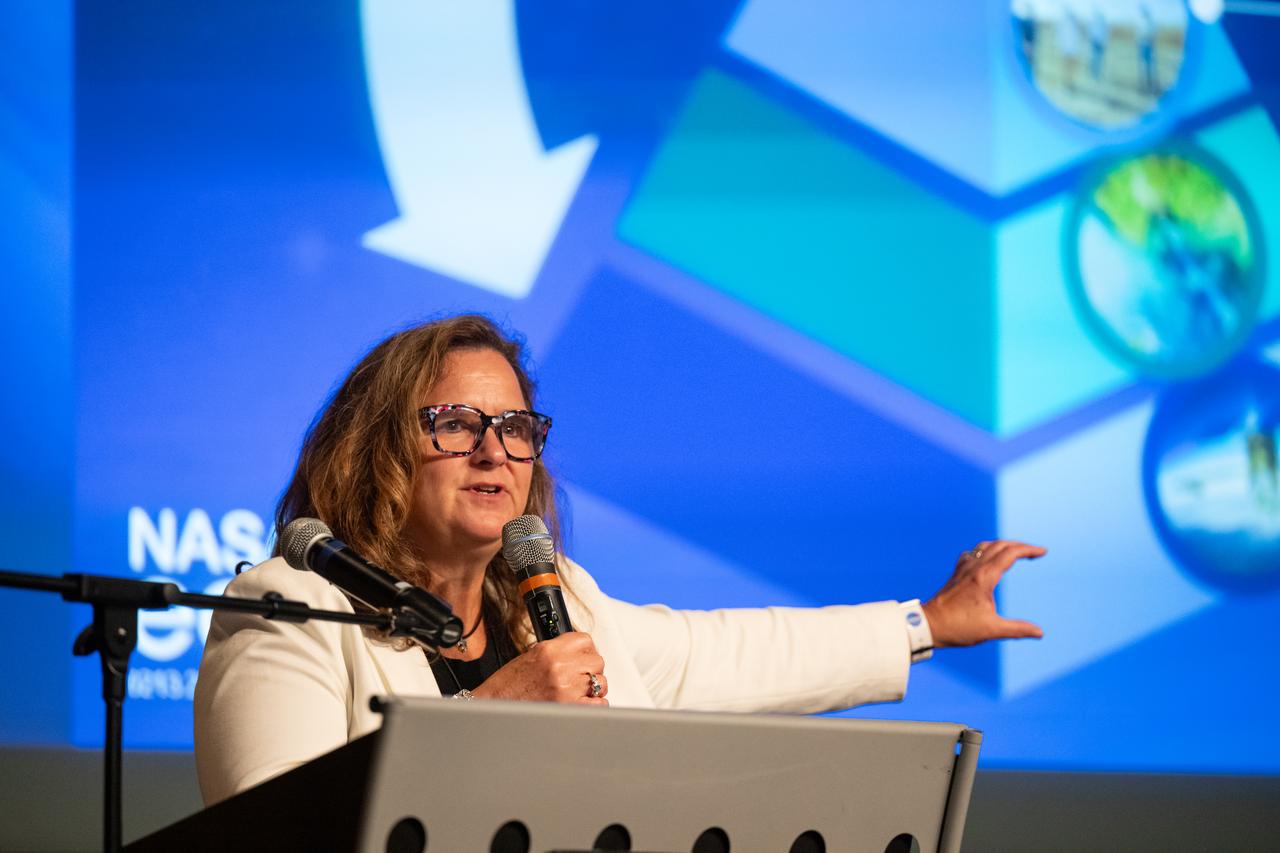
NASA Earth Science Division Director Karen St. Germain delivers remarks during a gathering of NASA Space Apps Challenge Global Winners and Local Leads from around the world Wednesday, June 5, 2024, at the Mary W. Jackson NASA Headquarters building in Washington. Photo Credit: (NASA/Keegan Barber)
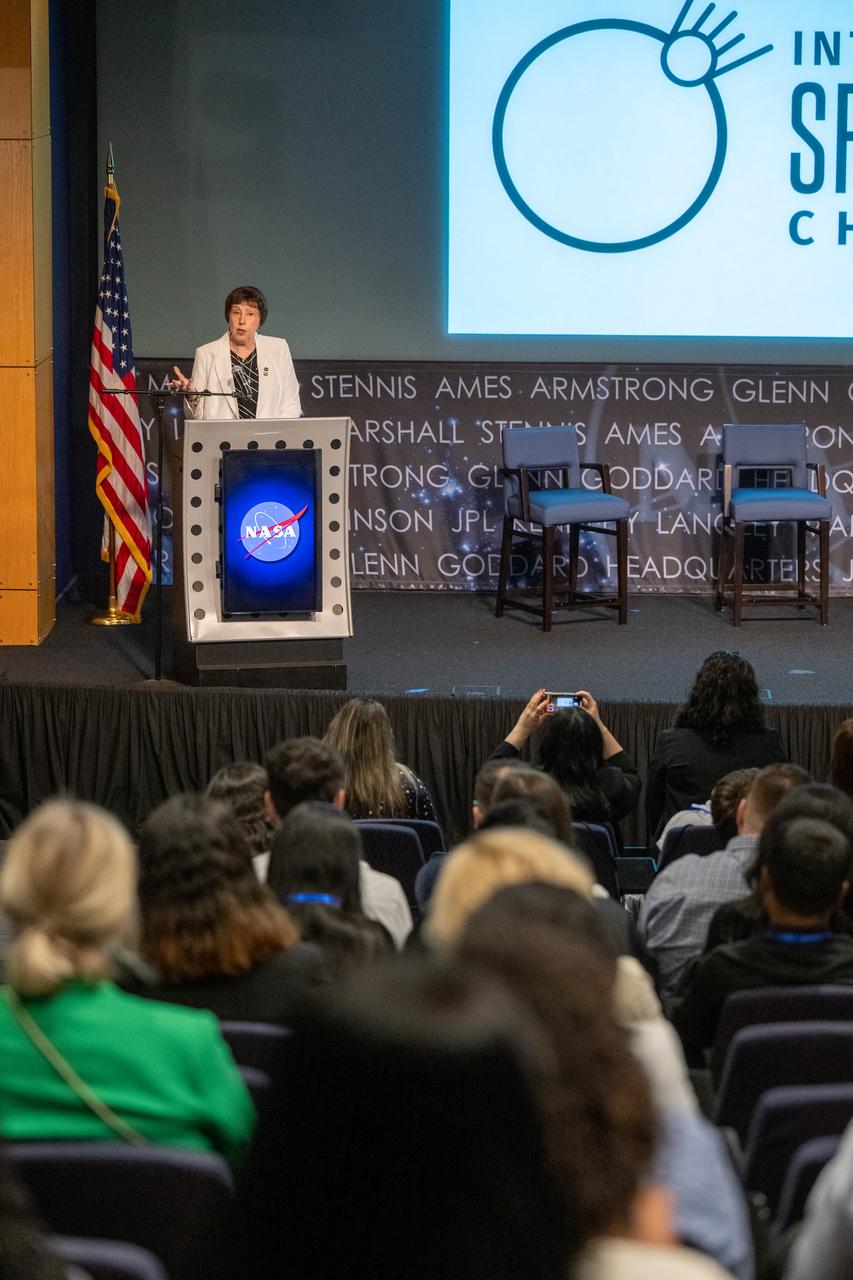
NASA Earth Science Division Associate Administrator Nicola Fox delivers remarks during a gathering of NASA Space Apps Challenge Global Winners and Local Leads from around the world Wednesday, June 5, 2024, at the Mary W. Jackson NASA Headquarters building in Washington. Photo Credit: (NASA/Keegan Barber)
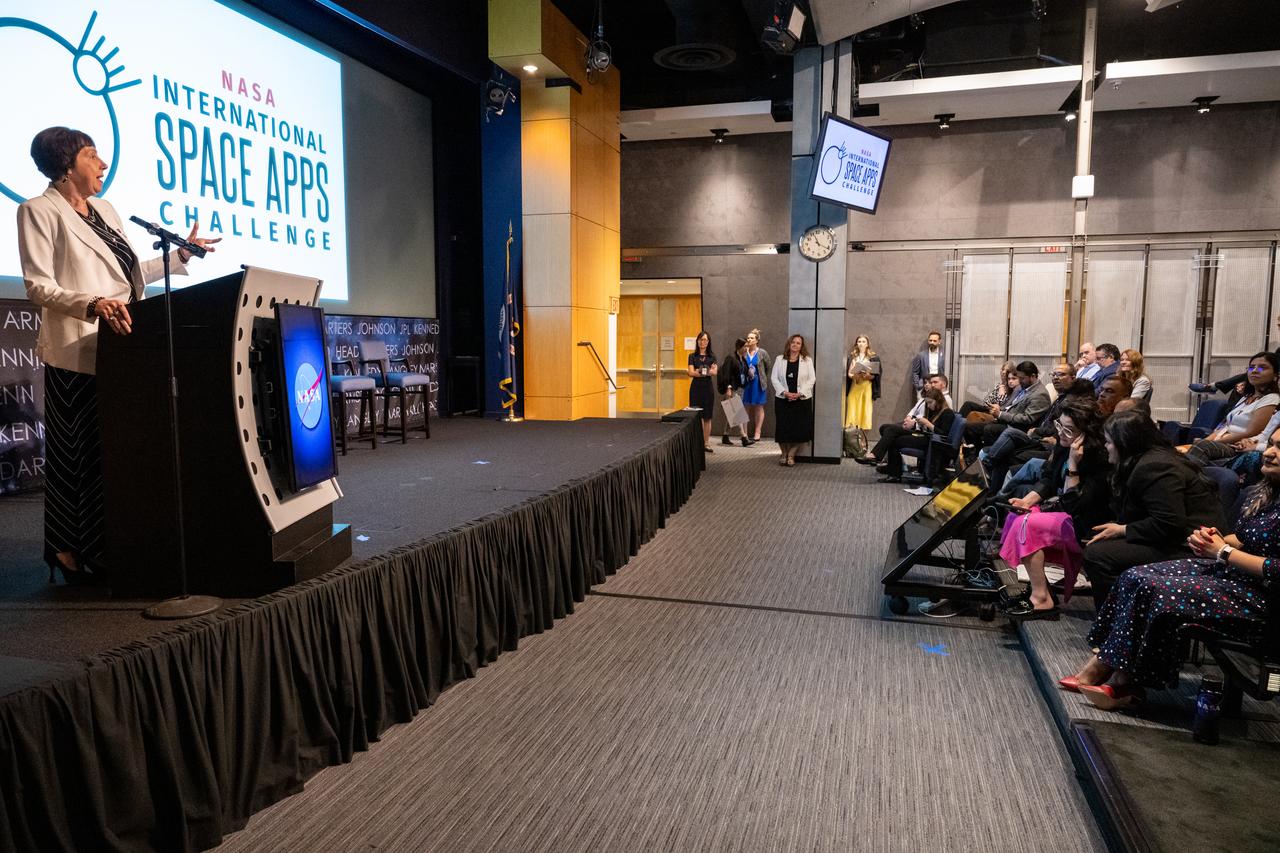
NASA Earth Science Division Associate Administrator Nicola Fox delivers remarks during a gathering of NASA Space Apps Challenge Global Winners and Local Leads from around the world Wednesday, June 5, 2024, at the Mary W. Jackson NASA Headquarters building in Washington. Photo Credit: (NASA/Keegan Barber)
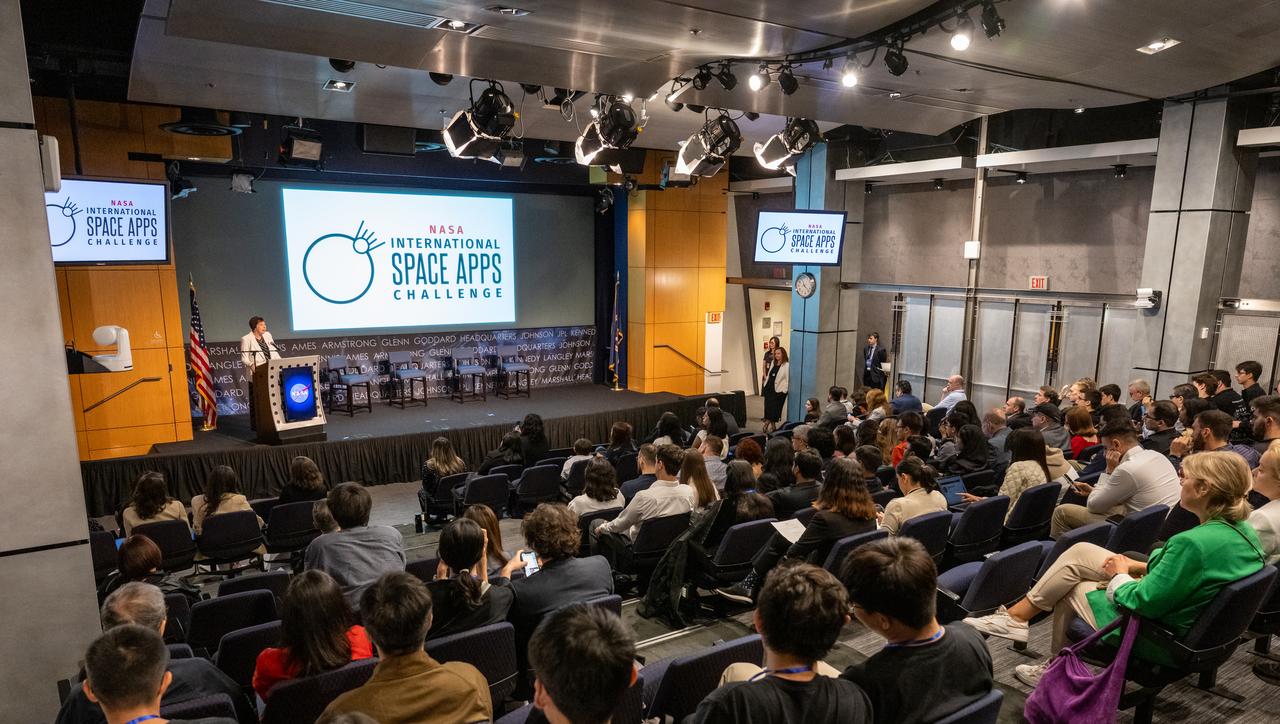
NASA Earth Science Division Associate Administrator Nicola Fox delivers remarks during a gathering of NASA Space Apps Challenge Global Winners and Local Leads from around the world Wednesday, June 5, 2024, at the Mary W. Jackson NASA Headquarters building in Washington. Photo Credit: (NASA/Keegan Barber)
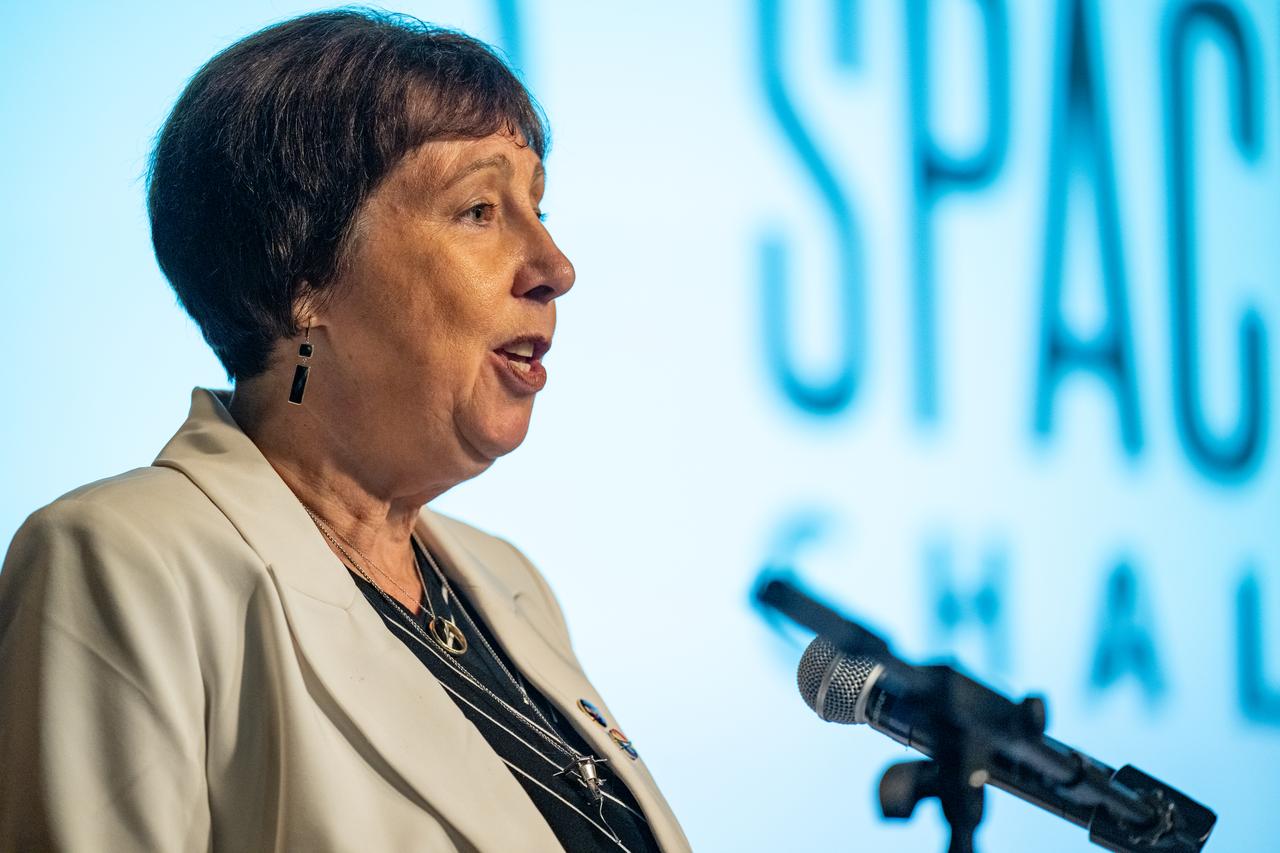
NASA Earth Science Division Associate Administrator Nicola Fox delivers remarks during a gathering of NASA Space Apps Challenge Global Winners and Local Leads from around the world Wednesday, June 5, 2024, at the Mary W. Jackson NASA Headquarters building in Washington. Photo Credit: (NASA/Keegan Barber)
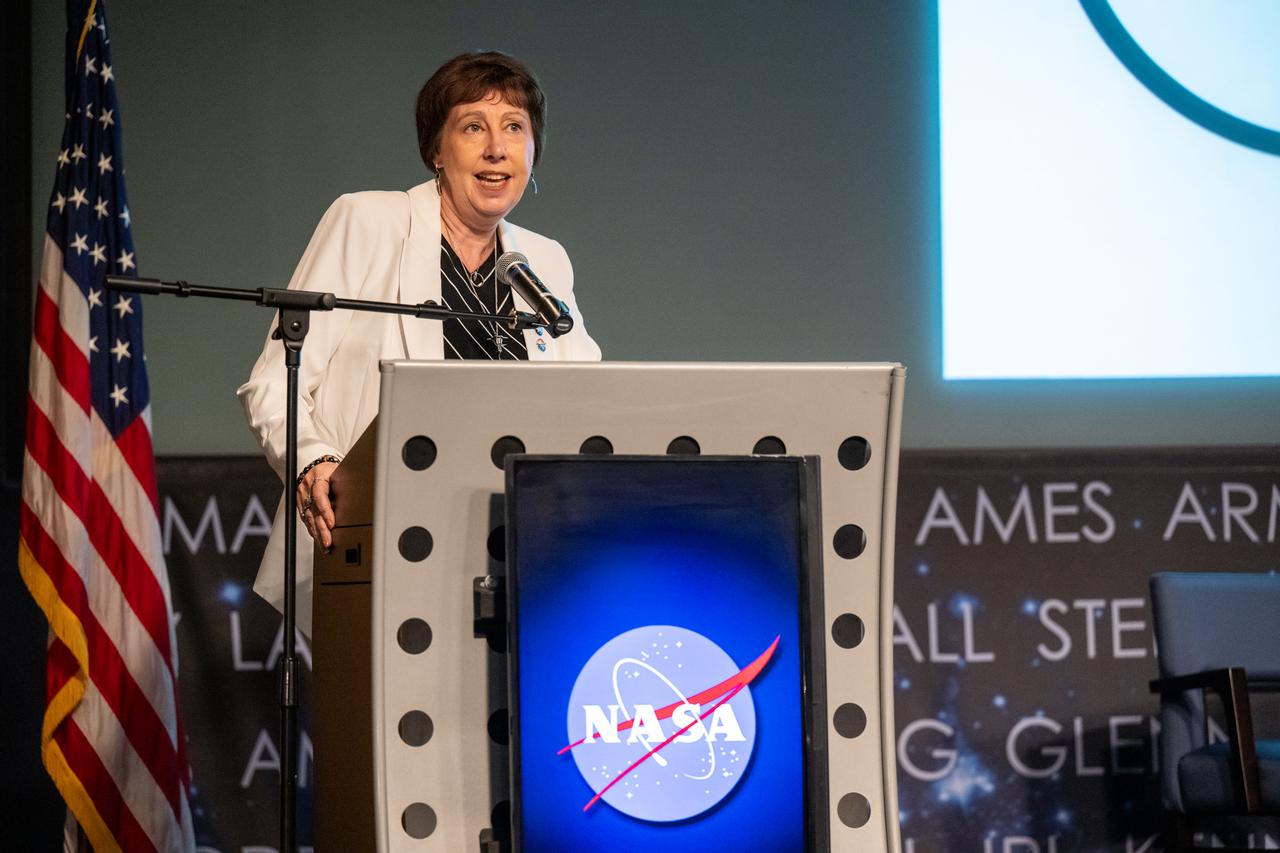
NASA Earth Science Division Associate Administrator Nicola Fox delivers remarks during a gathering of NASA Space Apps Challenge Global Winners and Local Leads from around the world Wednesday, June 5, 2024, at the Mary W. Jackson NASA Headquarters building in Washington. Photo Credit: (NASA/Keegan Barber)
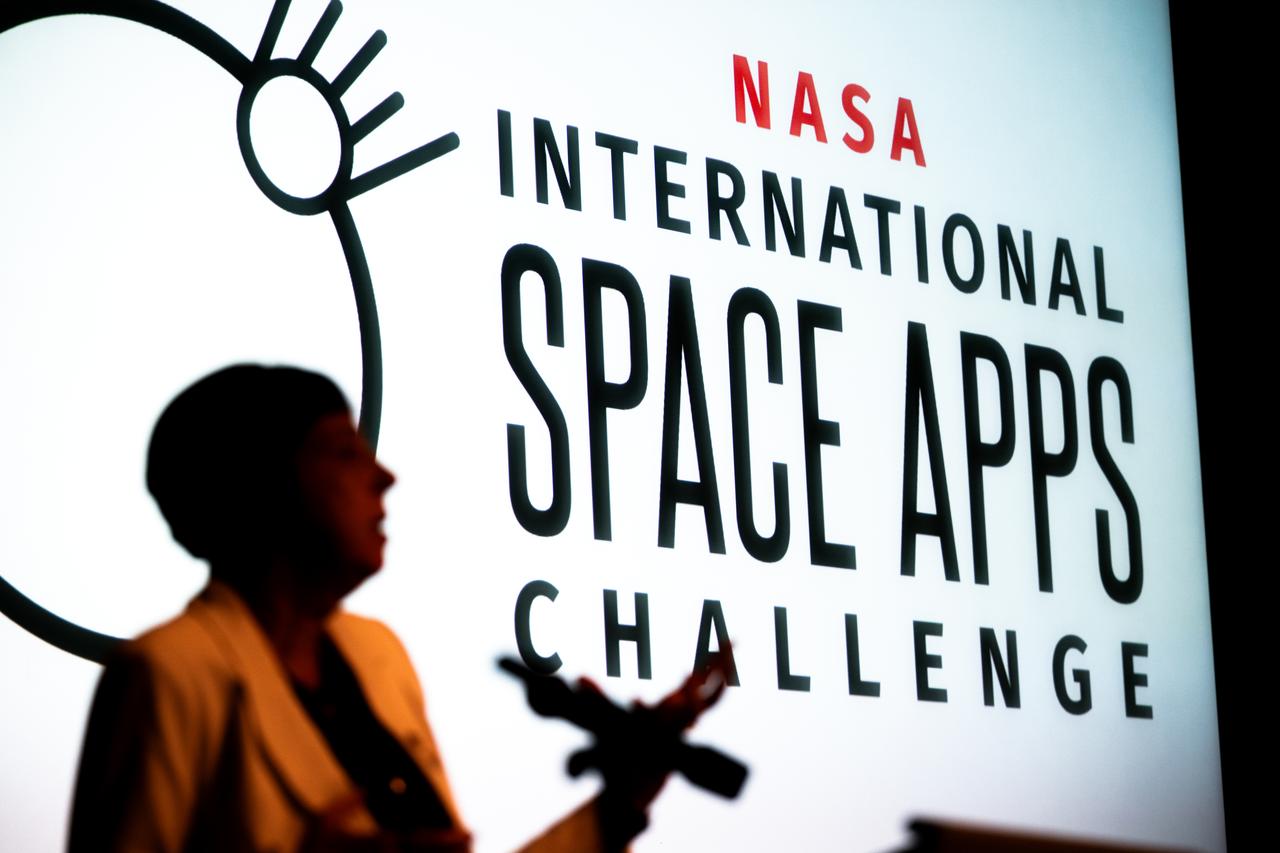
NASA Earth Science Division Associate Administrator Nicola Fox delivers remarks during a gathering of NASA Space Apps Challenge Global Winners and Local Leads from around the world Wednesday, June 5, 2024, at the Mary W. Jackson NASA Headquarters building in Washington. Photo Credit: (NASA/Keegan Barber)
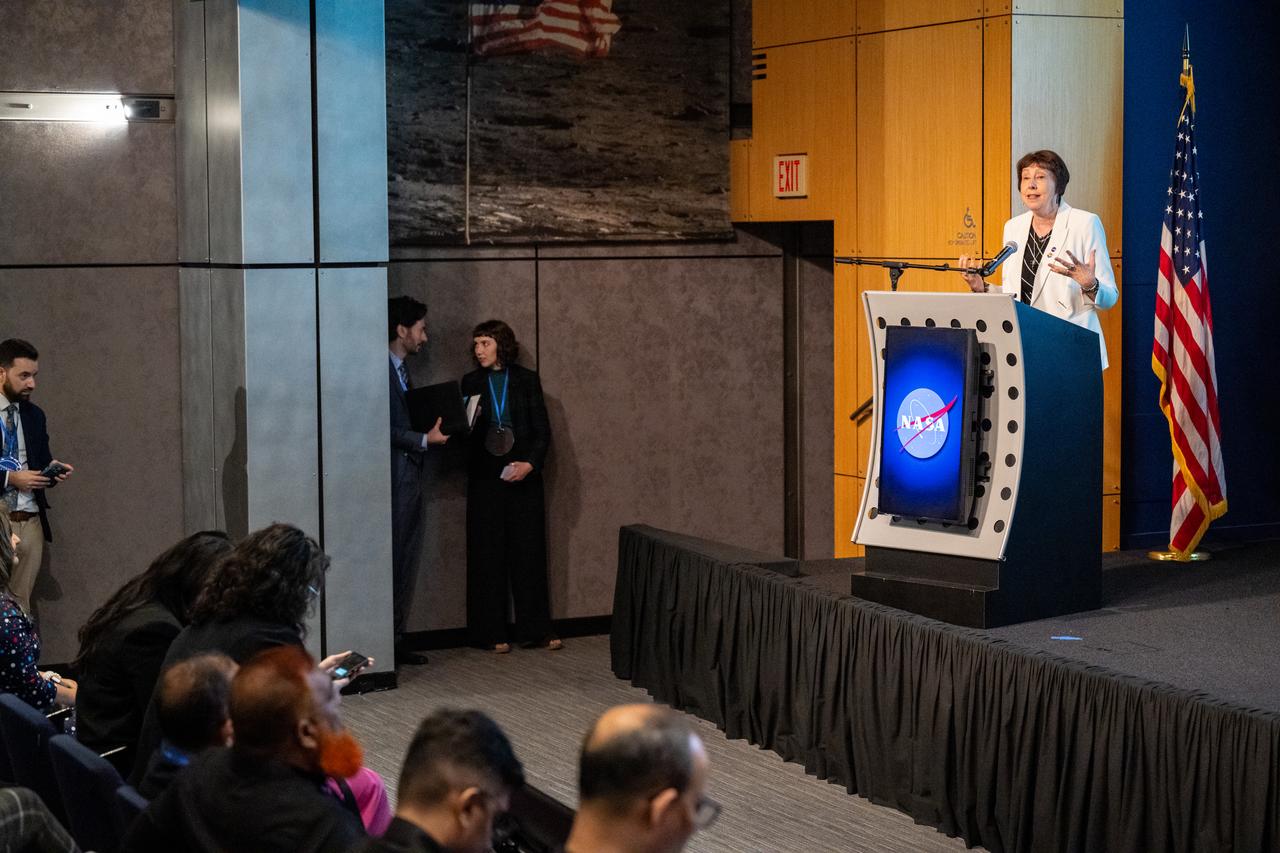
NASA Earth Science Division Associate Administrator Nicola Fox delivers remarks during a gathering of NASA Space Apps Challenge Global Winners and Local Leads from around the world Wednesday, June 5, 2024, at the Mary W. Jackson NASA Headquarters building in Washington. Photo Credit: (NASA/Keegan Barber)
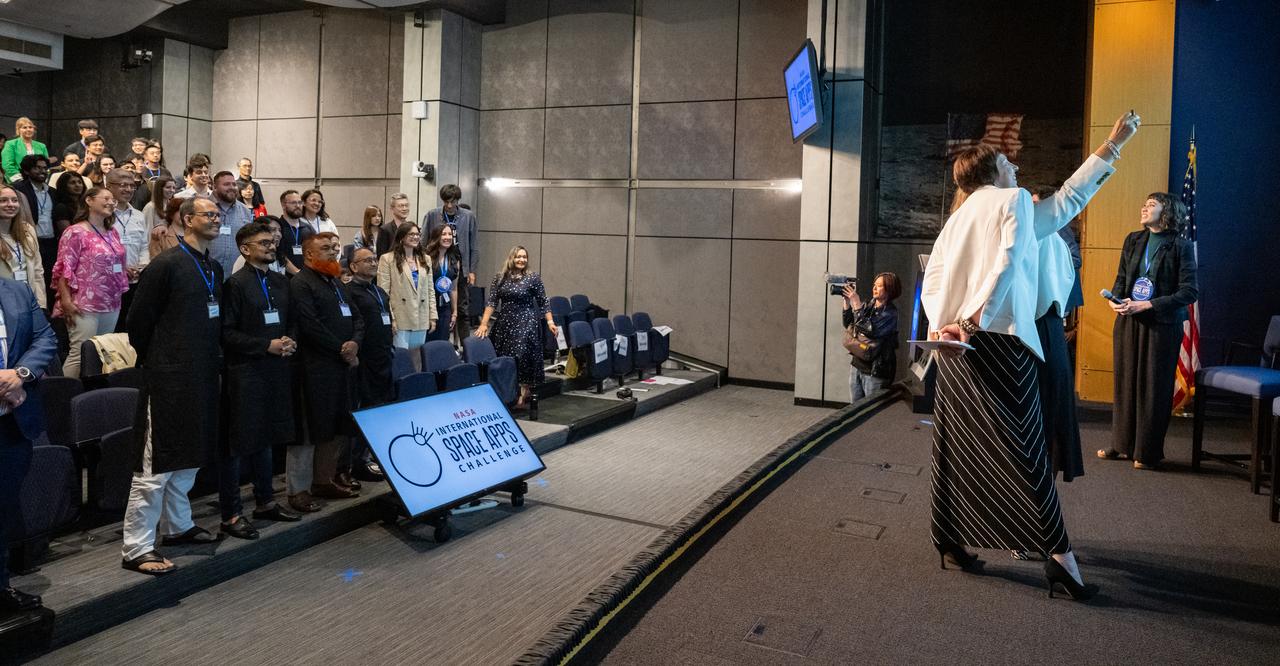
NASA Earth Science Division Director Karen St. Germain and NASA Earth Science Division Associate Administrator Nicola Fox pose for a selfie with guests during a gathering of NASA Space Apps Challenge Global Winners and Local Leads from around the world Wednesday, June 5, 2024, at the Mary W. Jackson NASA Headquarters building in Washington. Photo Credit: (NASA/Keegan Barber)
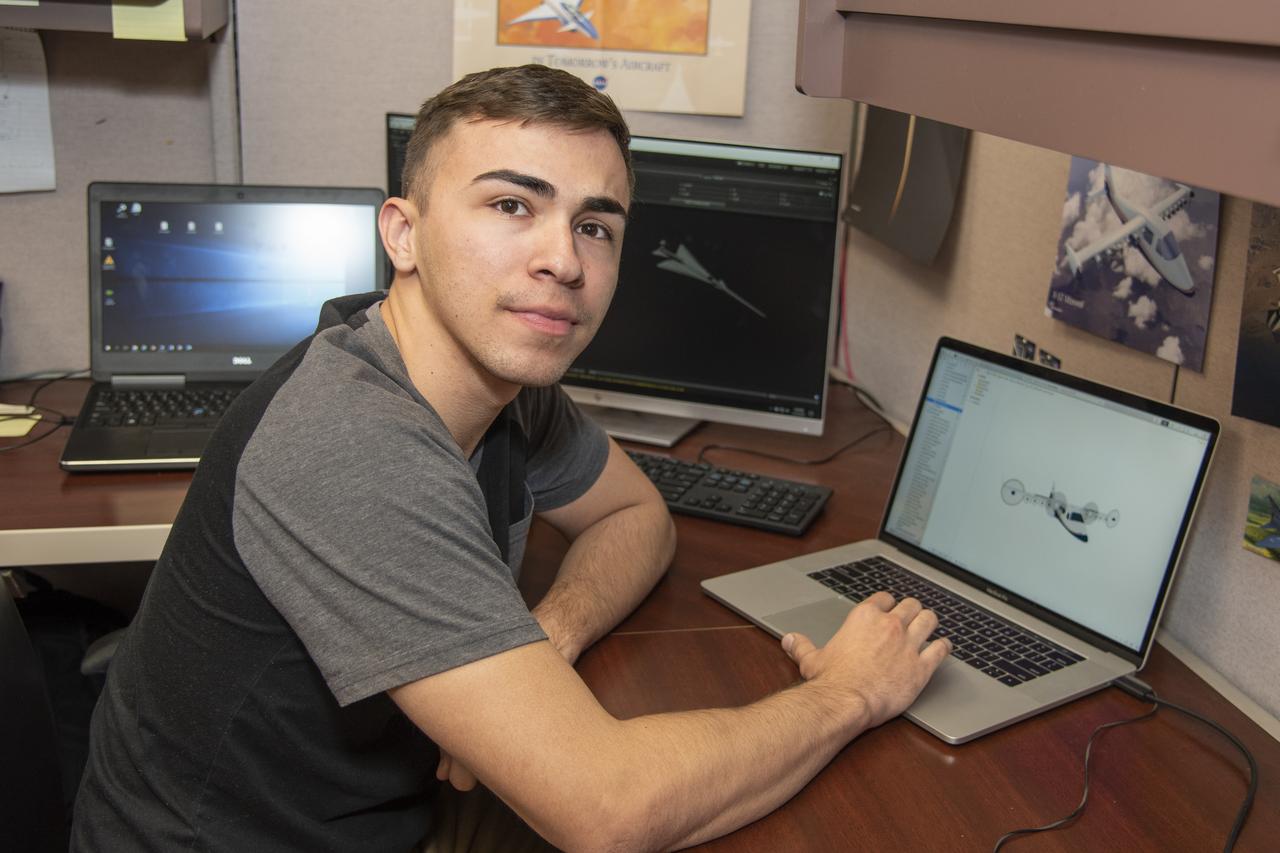
Christopher Morales, spring and summer 2019 intern, works to produce the first iOS version of the app
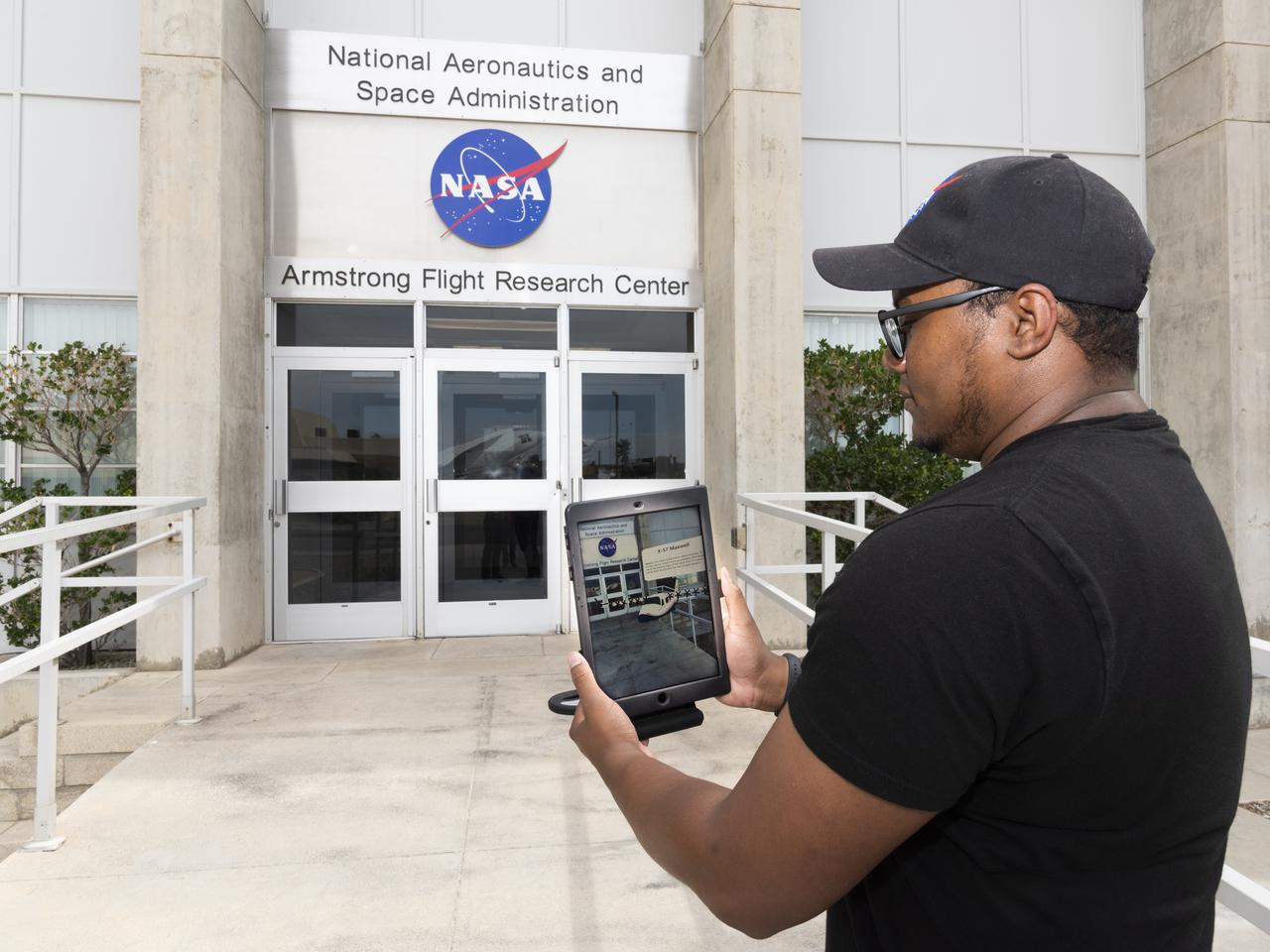
Daniel Williams, intern, shows what the app looks like while in use with the 3D model of the X-57 Maxwell displayed on the screen.
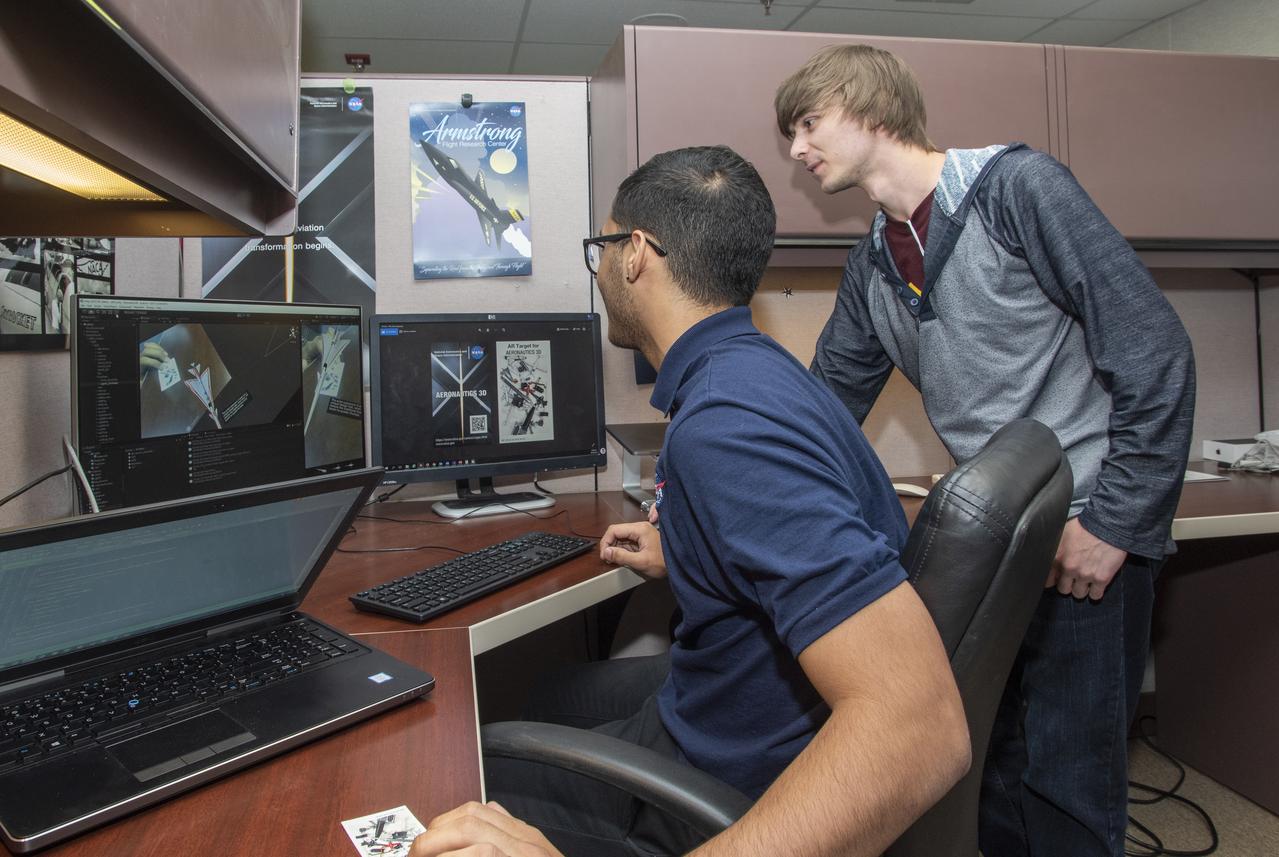
Kendrick Morales, left, and Alexander Passofaro, right, work together to transition the software for the Aeronautics AR app from being target image dependent to deleting the target image.
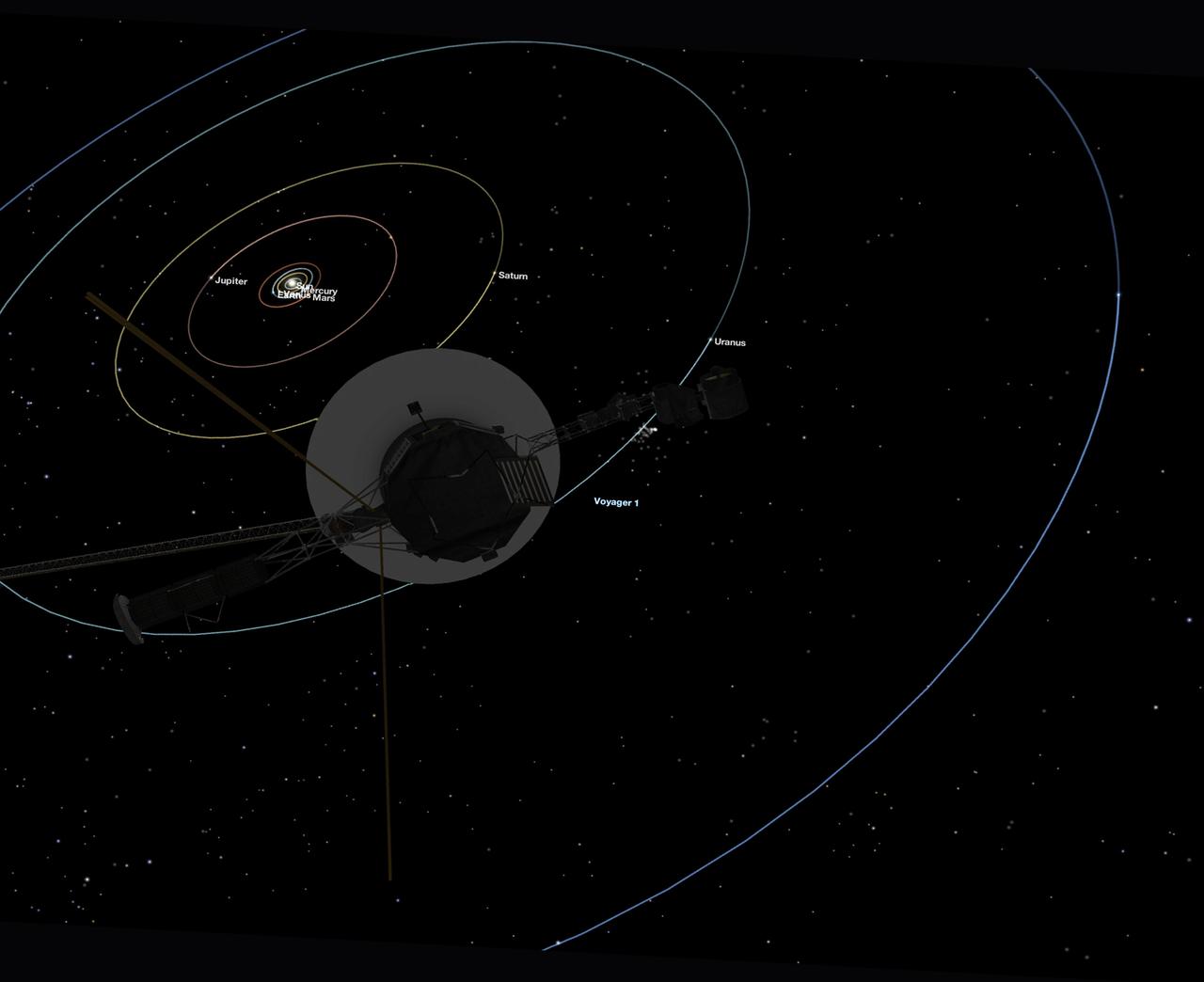
This simulated view, made using NASA's Eyes on the Solar System app, approximates Voyager 1's perspective when it took its final series of images known as the "Family Portrait of the Solar System," including the "Pale Blue Dot" image. https://photojournal.jpl.nasa.gov/catalog/PIA23681
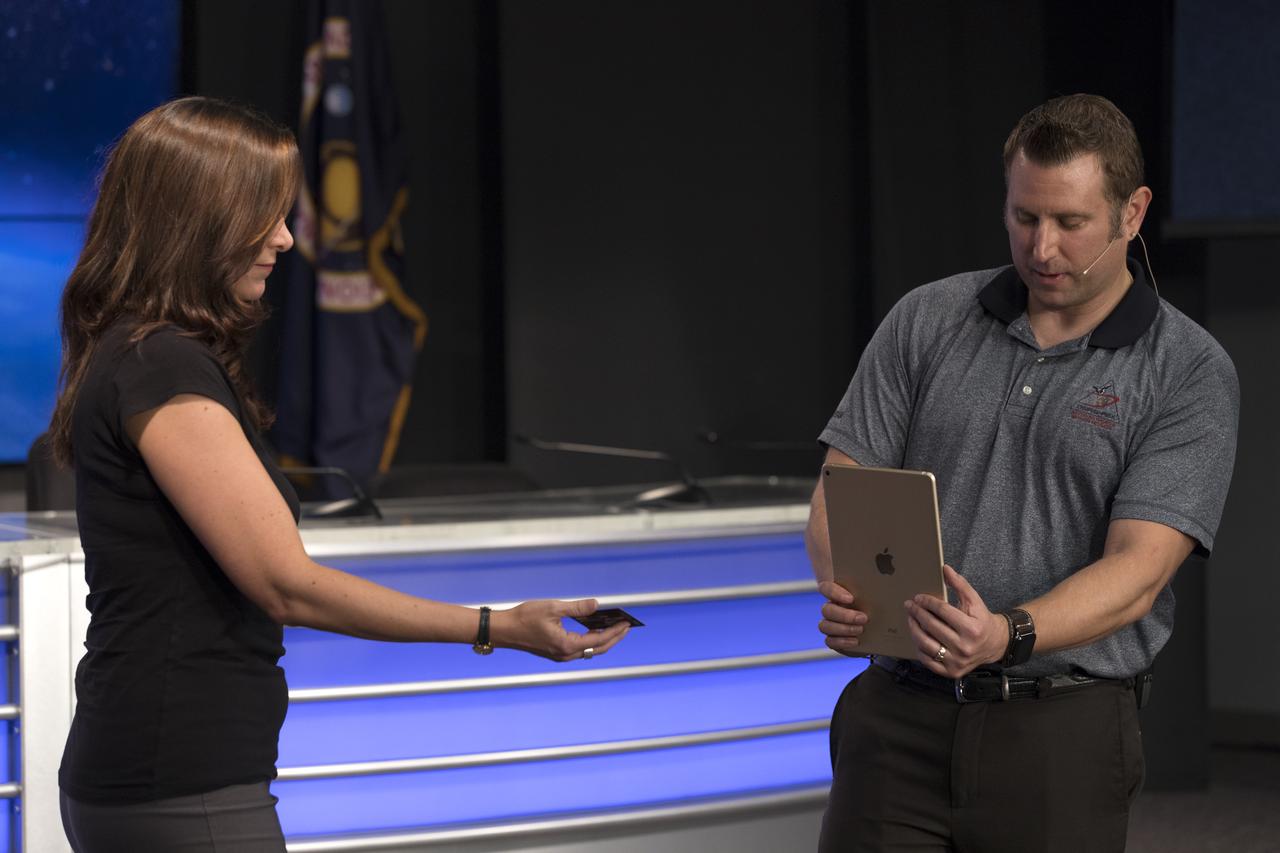
Skip Owen of NASA Launch Services, right, is demonstrating an app that can run on a mobile device such as a smartphone or tablet computer. The app is depicting the launch of the TDRS-M satellite on an Atlas V rocket. The demonstration took place during a briefing focused on preparations to launch NASA's Tracking and Data Relay Satellite, TDRS-M. The latest spacecraft destined for the agency's constellation of communications satellites, TDRS-M will allow nearly continuous contact with orbiting spacecraft ranging from the International Space Station and Hubble Space Telescope to the array of scientific observatories. Liftoff atop a United Launch Alliance Atlas V rocket is scheduled to take place from Space Launch Complex 41 at Cape Canaveral Air Force Station at 8:03 a.m. EDT Aug. 18.
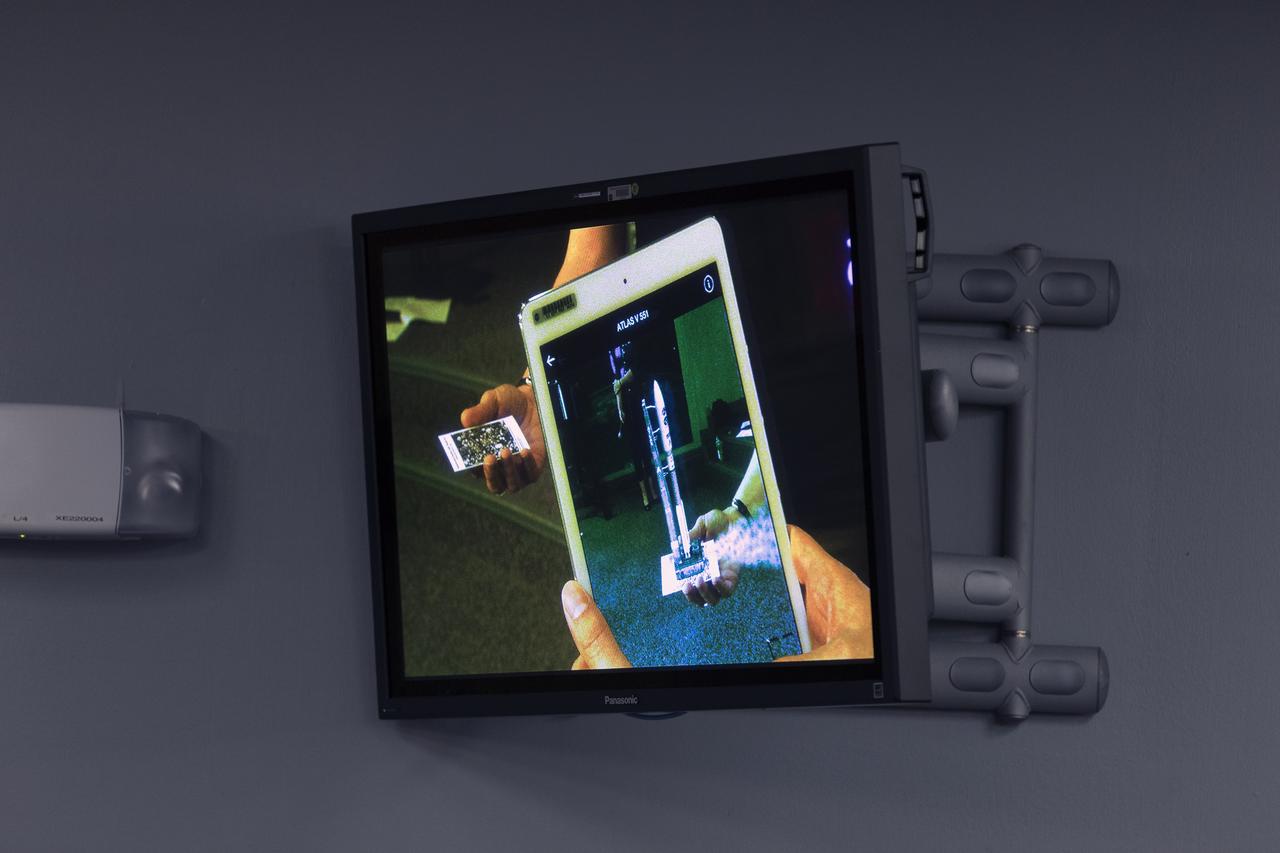
An app is demonstrated that can run on a mobile device such as a smartphone or tablet computer. The app is depicting the launch of the TDRS-M satellite on an Atlas V rocket. The demonstration took place during a briefing focused on preparations to launch NASA's Tracking and Data Relay Satellite, TDRS-M. The latest spacecraft destined for the agency's constellation of communications satellites, TDRS-M will allow nearly continuous contact with orbiting spacecraft ranging from the International Space Station and Hubble Space Telescope to the array of scientific observatories. Liftoff atop a United Launch Alliance Atlas V rocket is scheduled to take place from Space Launch Complex 41 at Cape Canaveral Air Force Station at 8:03 a.m. EDT Aug. 18.
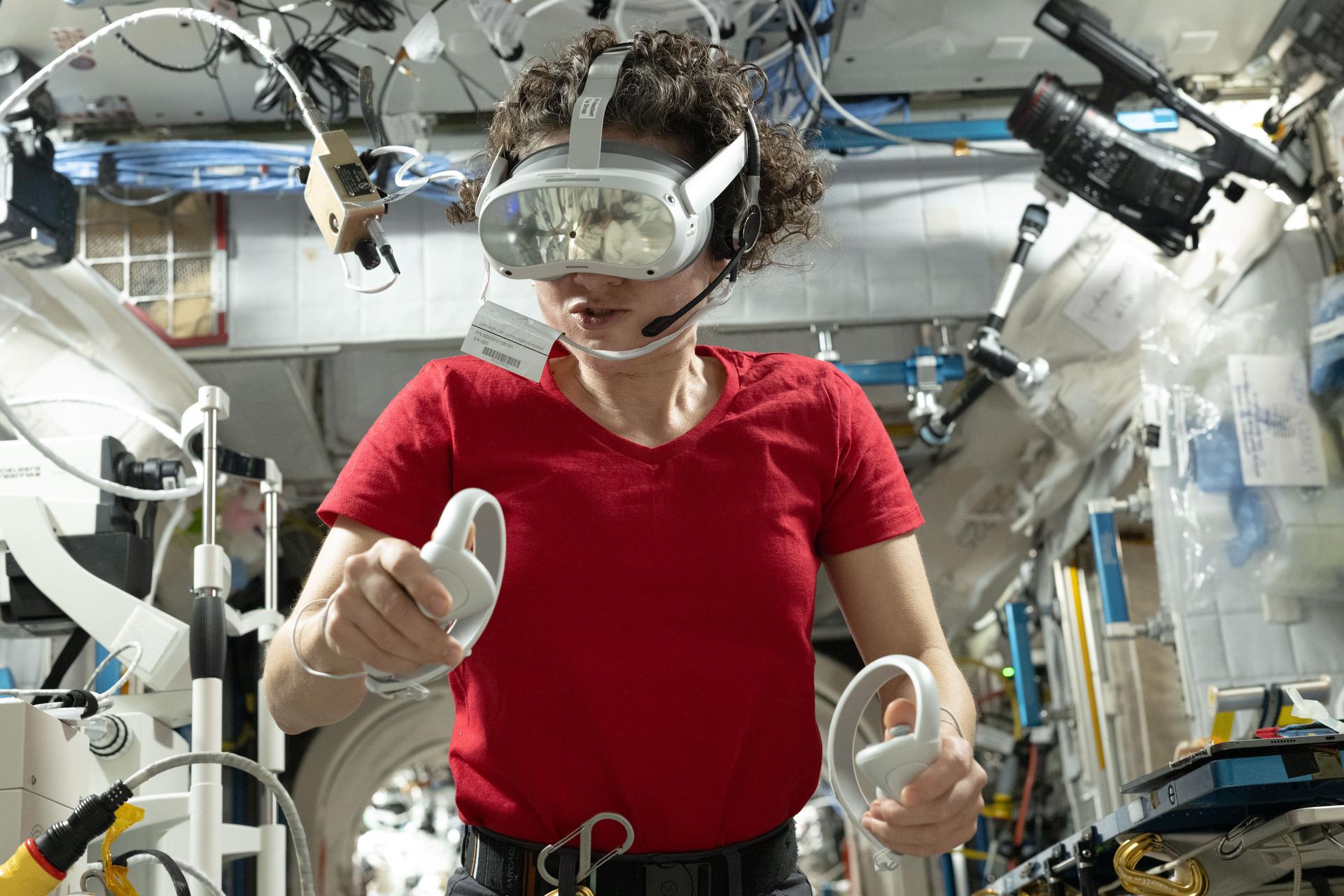
iss075e0000195 (July 29, 2026) --- NASA astronaut and Expedition 75 commander Jessica Meir wears a set of virtual reality goggles, also called the Nevada Screening Vision System, for a test that measures visual function using a series of vision screening apps testing visual acuity, contrast sensitivity, and more. Credit: NASA/Anil Menon
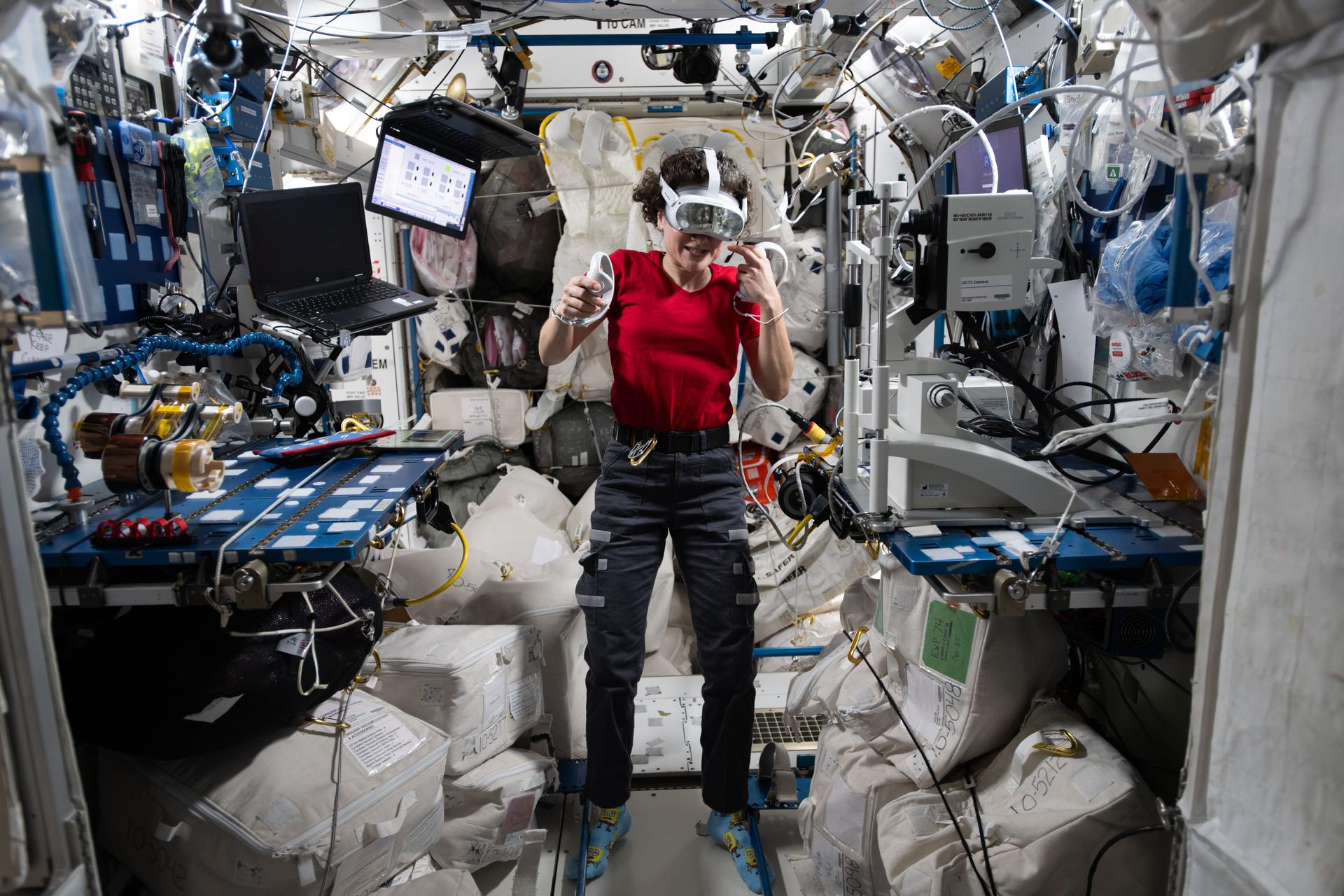
iss075e0000108 (July 29, 2026) --- NASA astronaut and Expedition 75 commander Jessica Meir wears a set of virtual reality goggles, also called the Nevada Screening Vision System, for a test that measures visual function using a series of vision screening apps testing visual acuity, contrast sensitivity, and more. Credit: NASA/Jack Hathaway

Test of Unmanned Aircraft Systems Traffic Management (UTM) technical capability Level 2 (TCL2) at Reno-Stead Airport, Nevada. During the test, five drones simultaneously crossed paths, separated by altitude. Two drones flew beyond visual line-of-sight and three flew within line-of-sight of their operators. Engineer Joey Mercer reviews flight paths using the UAS traffic management research platform UTM coordinator app to verify and validate flight paths.
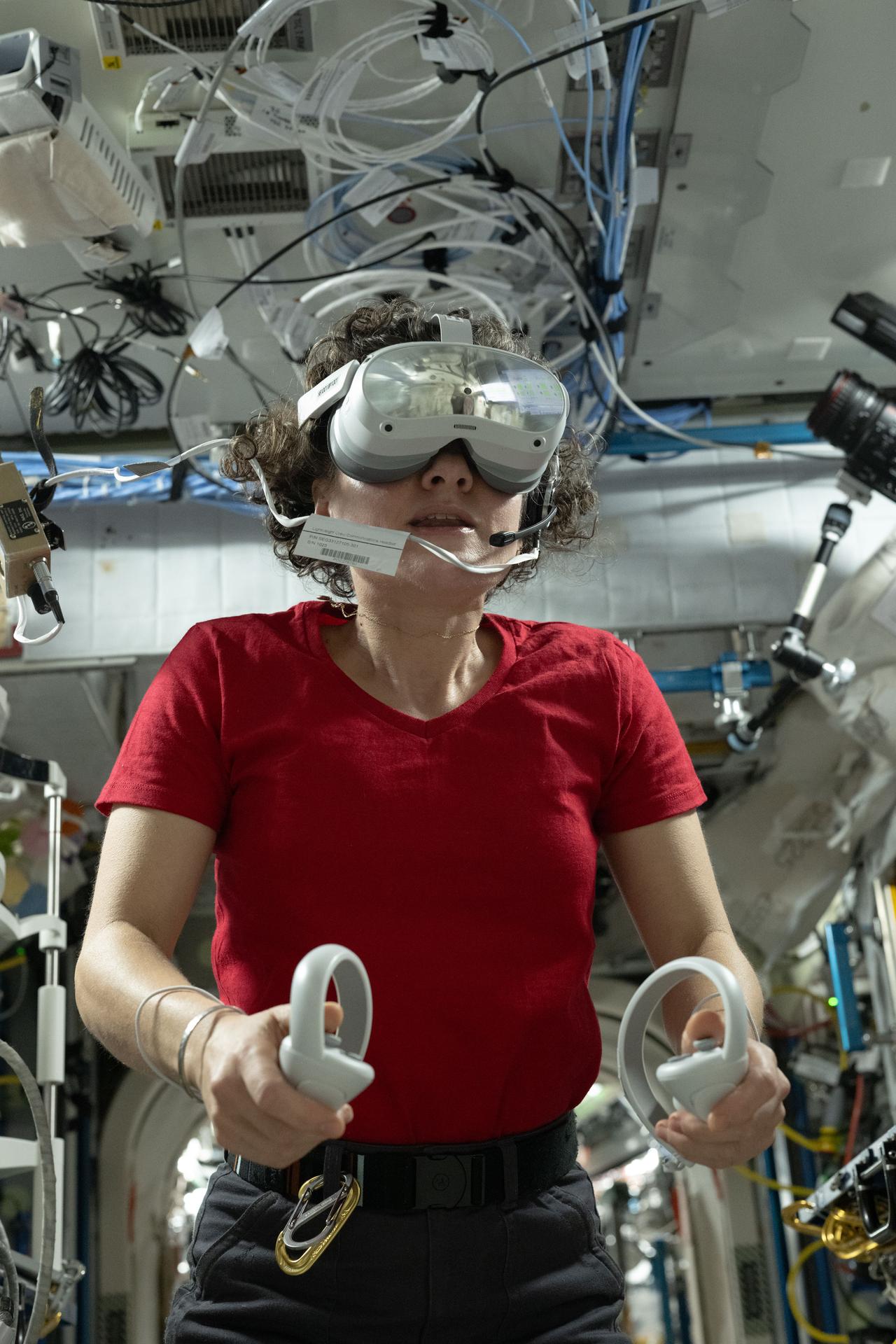
iss075e0000191 (July 29, 2026) --- NASA astronaut and Expedition 75 commander Jessica Meir wears a set of virtual reality goggles, also called the Nevada Screening Vision System, for a test that measures visual function using a series of vision screening apps testing visual acuity, contrast sensitivity, and more. Credit: NASA/Anil Menon
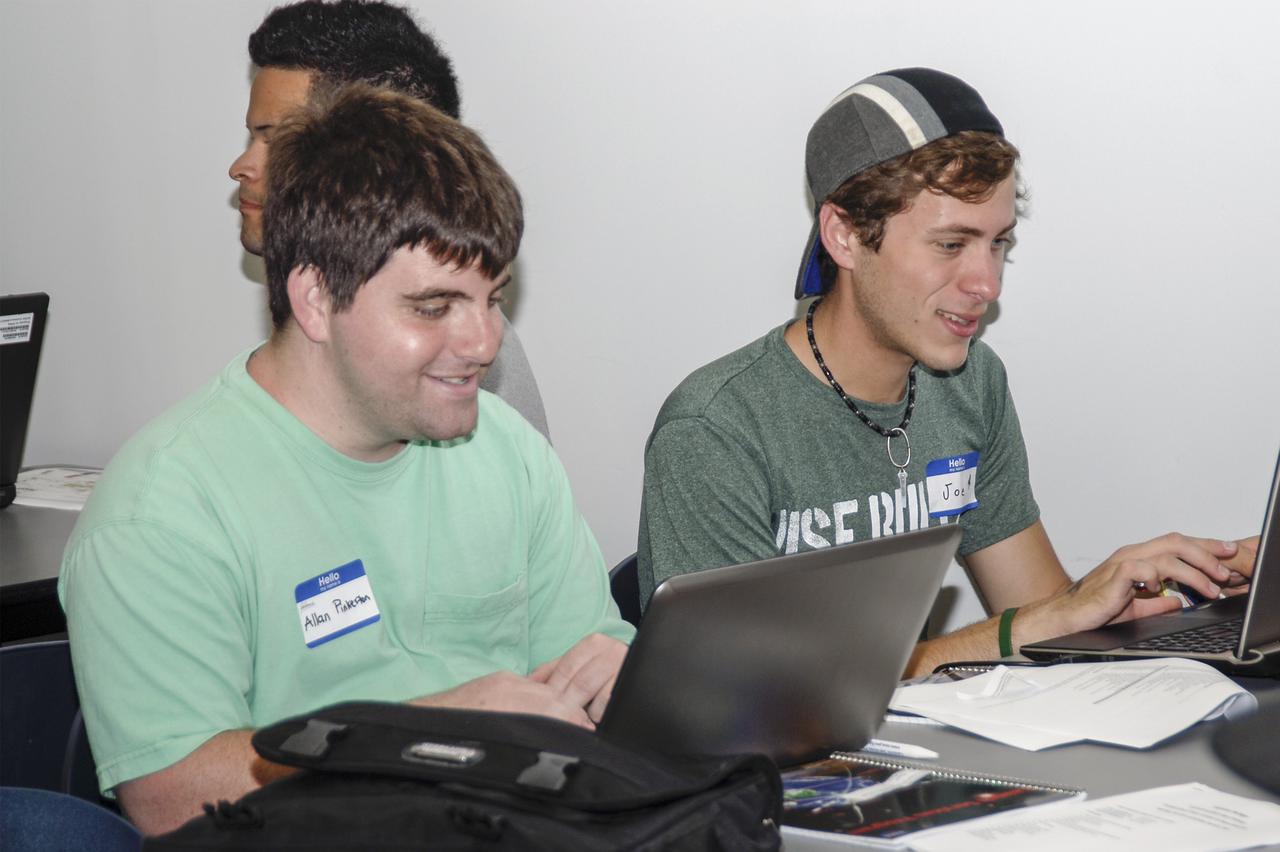
CAPE CANAVERAL, Fla. – Allan Pinkerton, at left, and Joey Vars, students from the University of South Florida at St. Petersburg, brainstorm ideas during the 2013 International Space Apps Challenge at the Center for Space Education at the Kennedy Space Center Visitor Complex in Florida. During the worldwide two-day challenge, more than 9,000 people and 484 organizations came together in 83 cities across 44 countries, as well as online, to develop new ways of solving challenges that NASA faces. At Kennedy, four teams brainstormed ideas with subject matter experts and others and worked nearly 32 hours straight to present their concepts to a panel of three technical and non-technical judges. Challenges tackled at Kennedy were: Deployable Greenhouse, Kennedy Space Center 2040, Seven Minutes of Science, and Moonville – Lunar Industry Game. Photo credit: NASA_Charisse Nahser
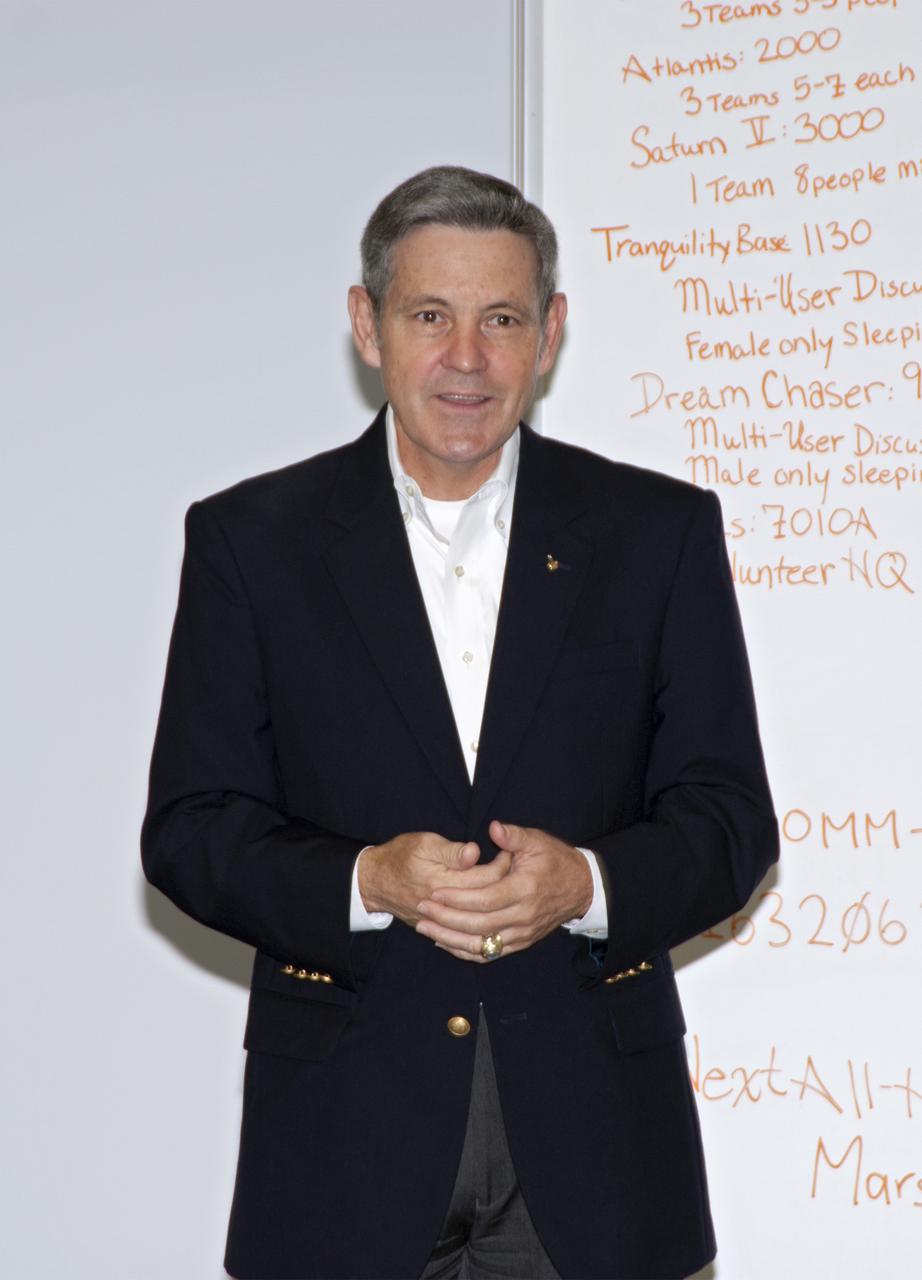
CAPE CANAVERAL, Fla. – Kennedy Space Center Director Bob Cabana speaks with participants of the 2013 International Space Apps Challenge, or ISAC, at The Astronaut Memorial Foundation’s Center for Space Education in Florida during a networking event. During the worldwide two-day challenge, more than 9,000 people and 484 organizations came together in 83 cities across 44 countries, as well as online, to develop new ways of solving challenges that NASA faces. At Kennedy, four teams brainstormed ideas with subject matter experts and others and worked nearly 32 hours straight to present their concepts to a panel of three technical and non-technical judges. Challenges tackled at Kennedy were: Deployable Greenhouse, Kennedy Space Center 2040, Seven Minutes of Science, and Moonville – Lunar Industry Game. Photo credit: NASA_Charisse Nahser
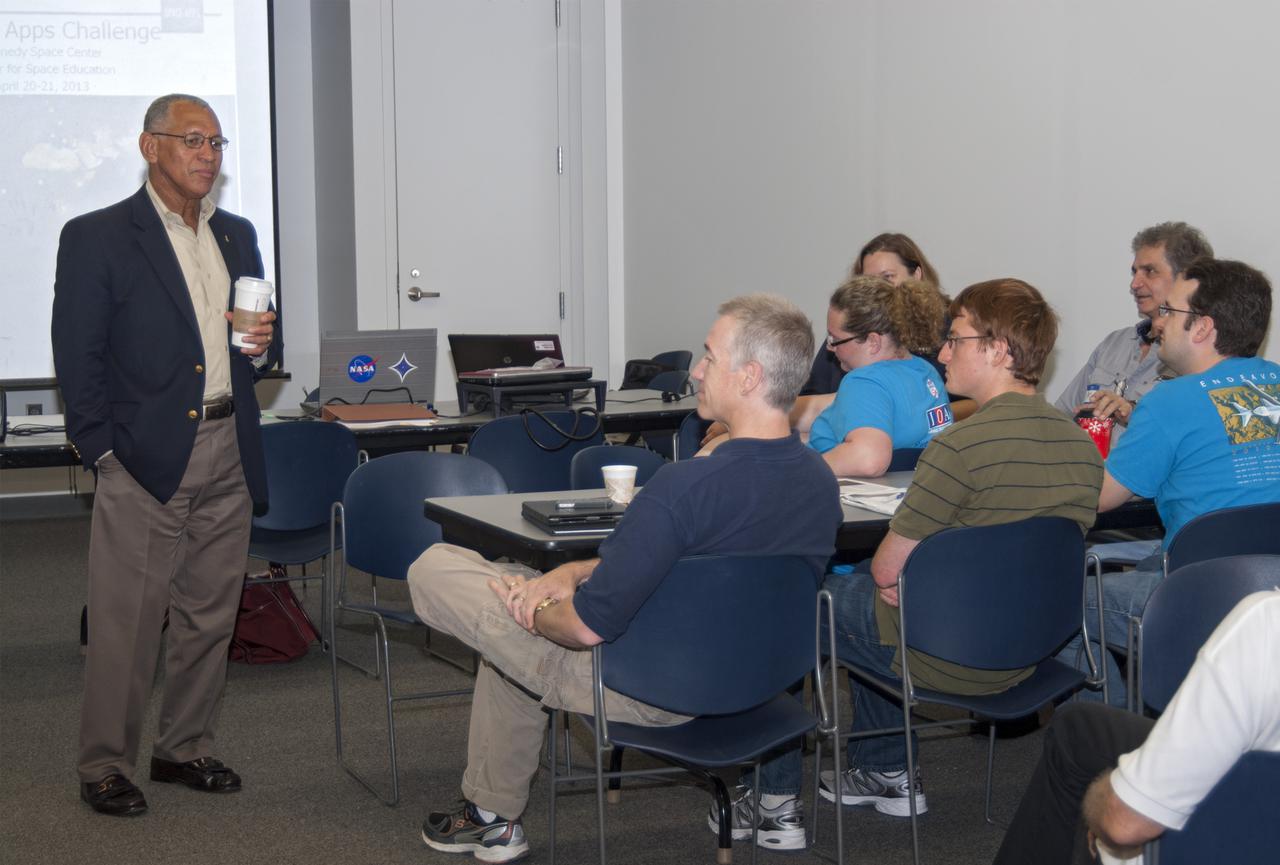
CAPE CANAVERAL, Fla. – NASA Administrator Charlie Bolden speaks with participants of the 2013 International Space Apps Challenge, or ISAC, at The Astronaut Memorial Foundation’s Center for Space Education in Florida during a networking event. During the worldwide two-day challenge, more than 9,000 people and 484 organizations came together in 83 cities across 44 countries, as well as online, to develop new ways of solving challenges that NASA faces. At Kennedy, four teams brainstormed ideas with subject matter experts and others and worked nearly 32 hours straight to present their concepts to a panel of three technical and non-technical judges. Challenges tackled at Kennedy were: Deployable Greenhouse, Kennedy Space Center 2040, Seven Minutes of Science, and Moonville – Lunar Industry Game. Photo credit: NASA_Charisse Nahser
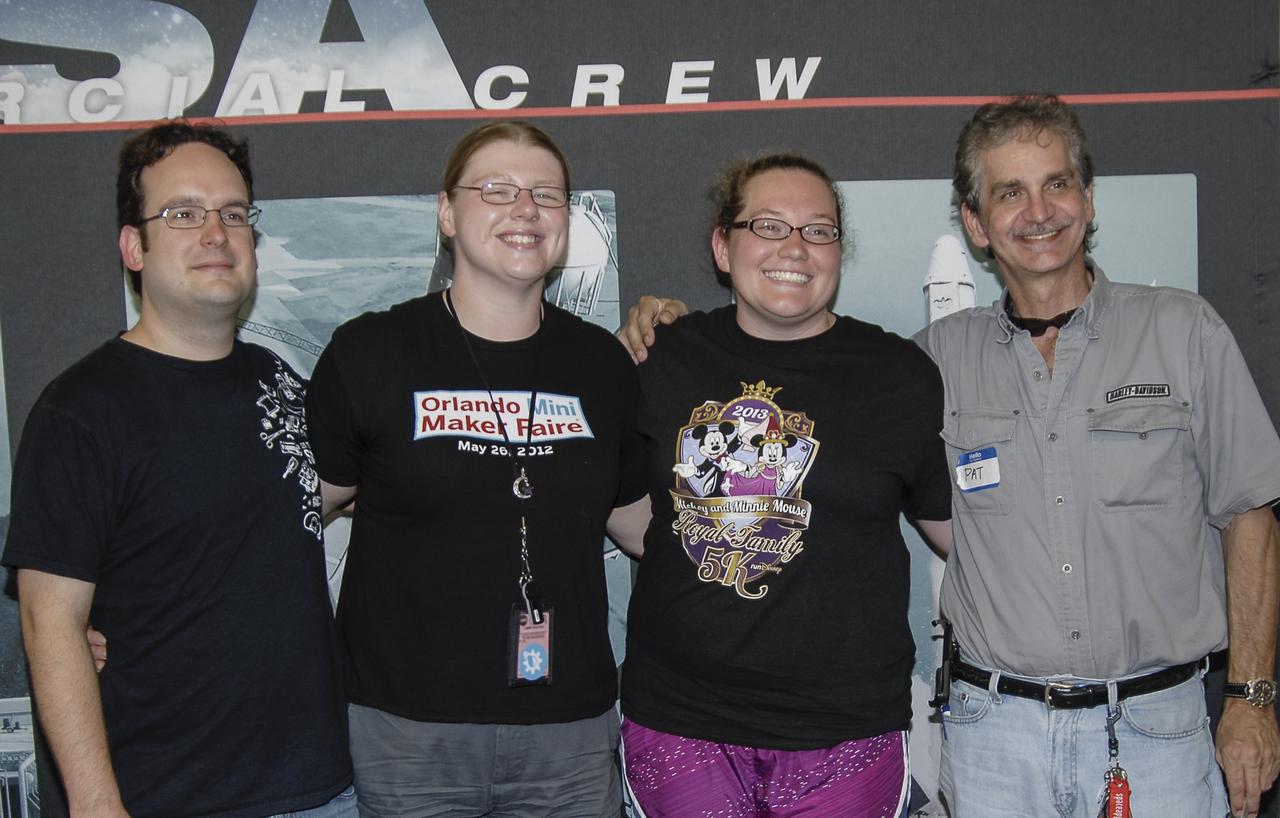
CAPE CANAVERAL, Fla. – Space enthusiasts Mike King, at left, Jamie Szafran, Jessica King and Pat Starace, were first-place winners from Kennedy Space Center during the 2013 International Space Apps Challenge held at the Center for Space Education at the Kennedy Space Center Visitor Complex in Florida. During the worldwide two-day challenge, more than 9,000 people and 484 organizations came together in 83 cities across 44 countries, as well as online, to develop new ways of solving challenges that NASA faces. At Kennedy, four teams brainstormed ideas with subject matter experts and others and worked nearly 32 hours straight to present their concepts to a panel of three technical and non-technical judges. Challenges tackled at Kennedy were: Deployable Greenhouse, Kennedy Space Center 2040, Seven Minutes of Science, and Moonville – Lunar Industry Game. Photo credit: NASA_Charisse Nahser
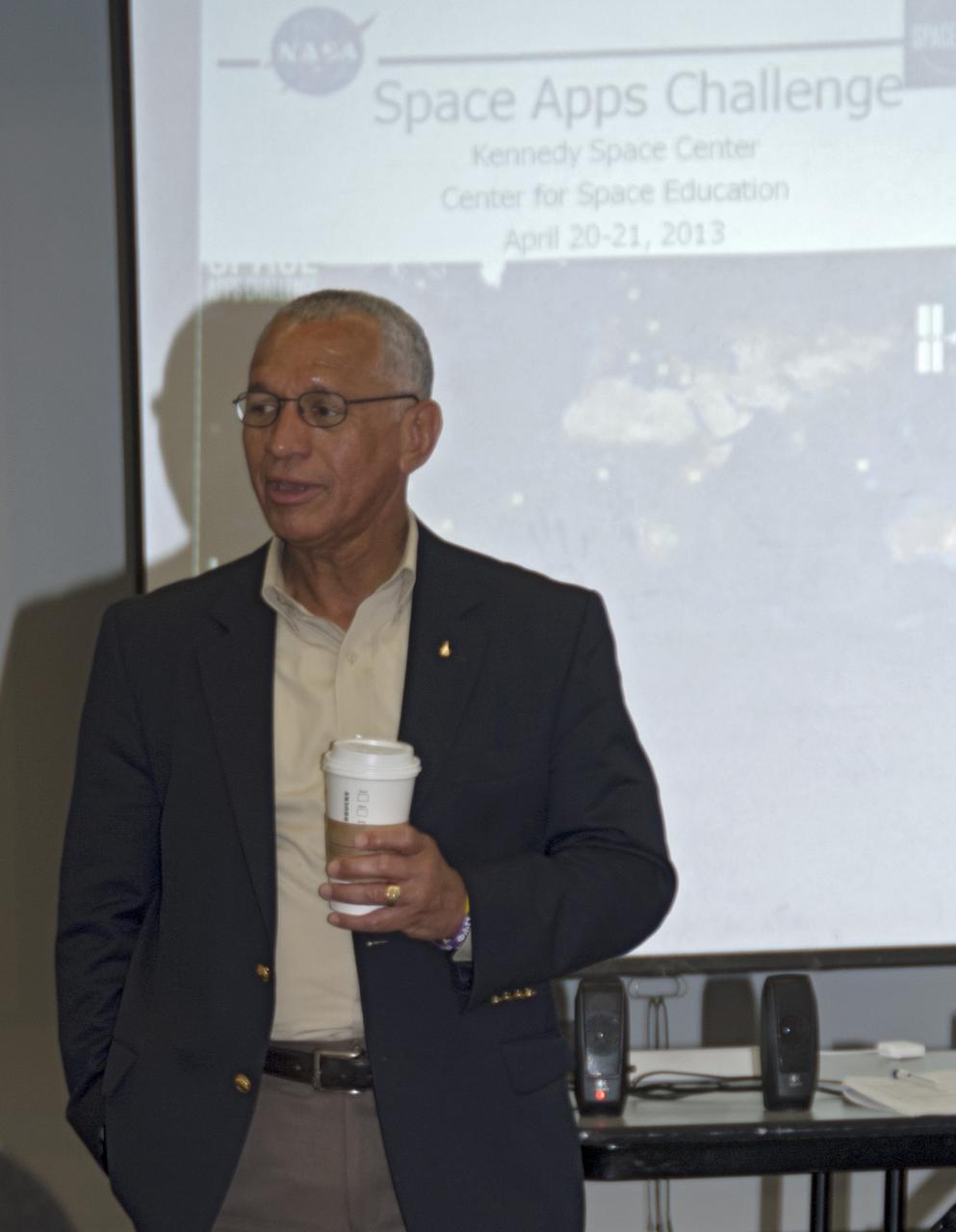
CAPE CANAVERAL, Fla. – NASA Administrator Charlie Bolden speaks with participants of the 2013 International Space Apps Challenge, or ISAC, at The Astronaut Memorial Foundation’s Center for Space Education in Florida during a networking event. During the worldwide two-day challenge, more than 9,000 people and 484 organizations came together in 83 cities across 44 countries, as well as online, to develop new ways of solving challenges that NASA faces. At Kennedy, four teams brainstormed ideas with subject matter experts and others and worked nearly 32 hours straight to present their concepts to a panel of three technical and non-technical judges. Challenges tackled at Kennedy were: Deployable Greenhouse, Kennedy Space Center 2040, Seven Minutes of Science, and Moonville – Lunar Industry Game. Photo credit: NASA_Charisse Nahser
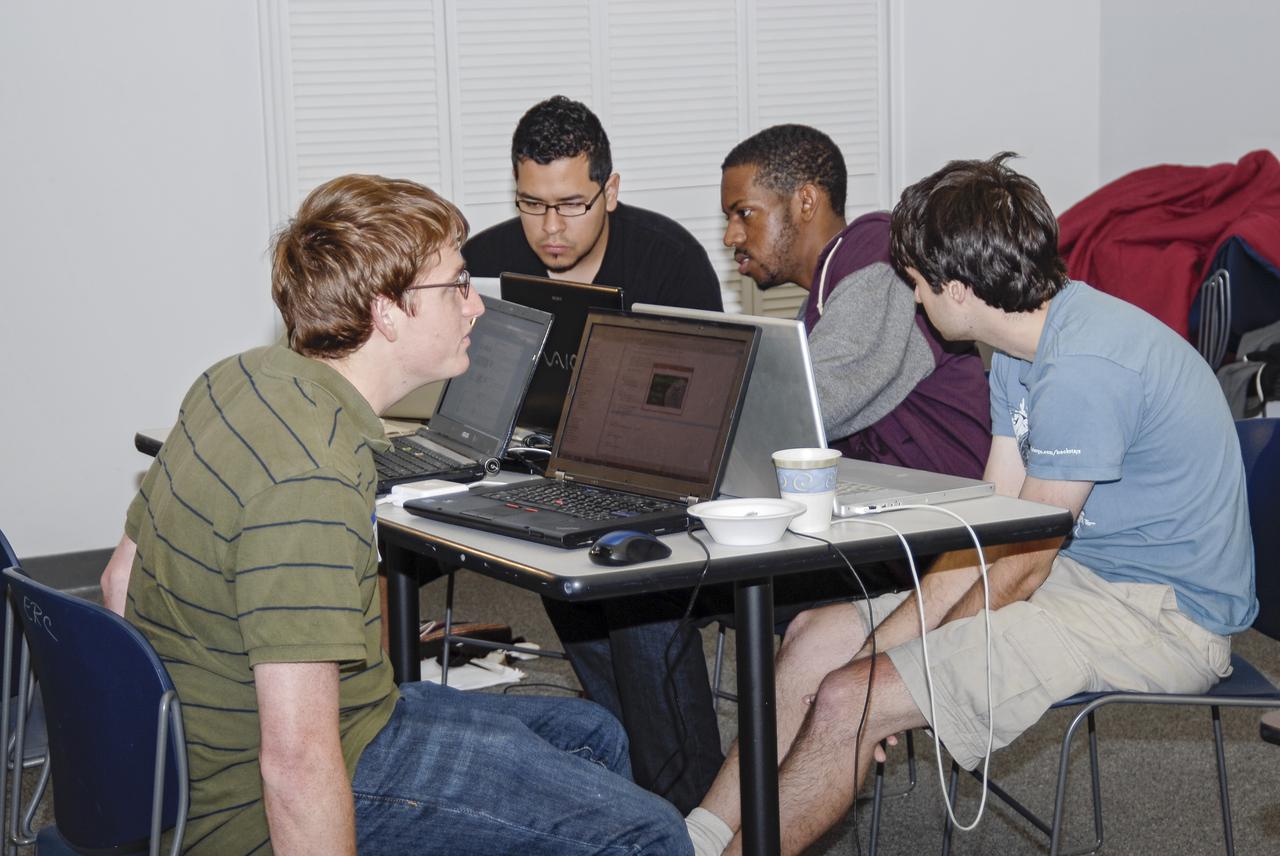
CAPE CANAVERAL, Fla. – Students from the University of Florida, University of Central Florida and the University of Puerto Rico brainstorm ideas during the 2013 International Space Apps Challenge, or ISAC, at The Astronaut Memorial Foundation’s Center for Space Education in Florida. During the worldwide two-day challenge, more than 9,000 people and 484 organizations came together in 83 cities across 44 countries, as well as online, to develop new ways of solving challenges that NASA faces. At Kennedy, four teams brainstormed ideas with subject matter experts and others and worked nearly 32 hours straight to present their concepts to a panel of three technical and non-technical judges. Challenges tackled at Kennedy were: Deployable Greenhouse, Kennedy Space Center 2040, Seven Minutes of Science, and Moonville – Lunar Industry Game. Photo credit: NASA_Charisse Nahser
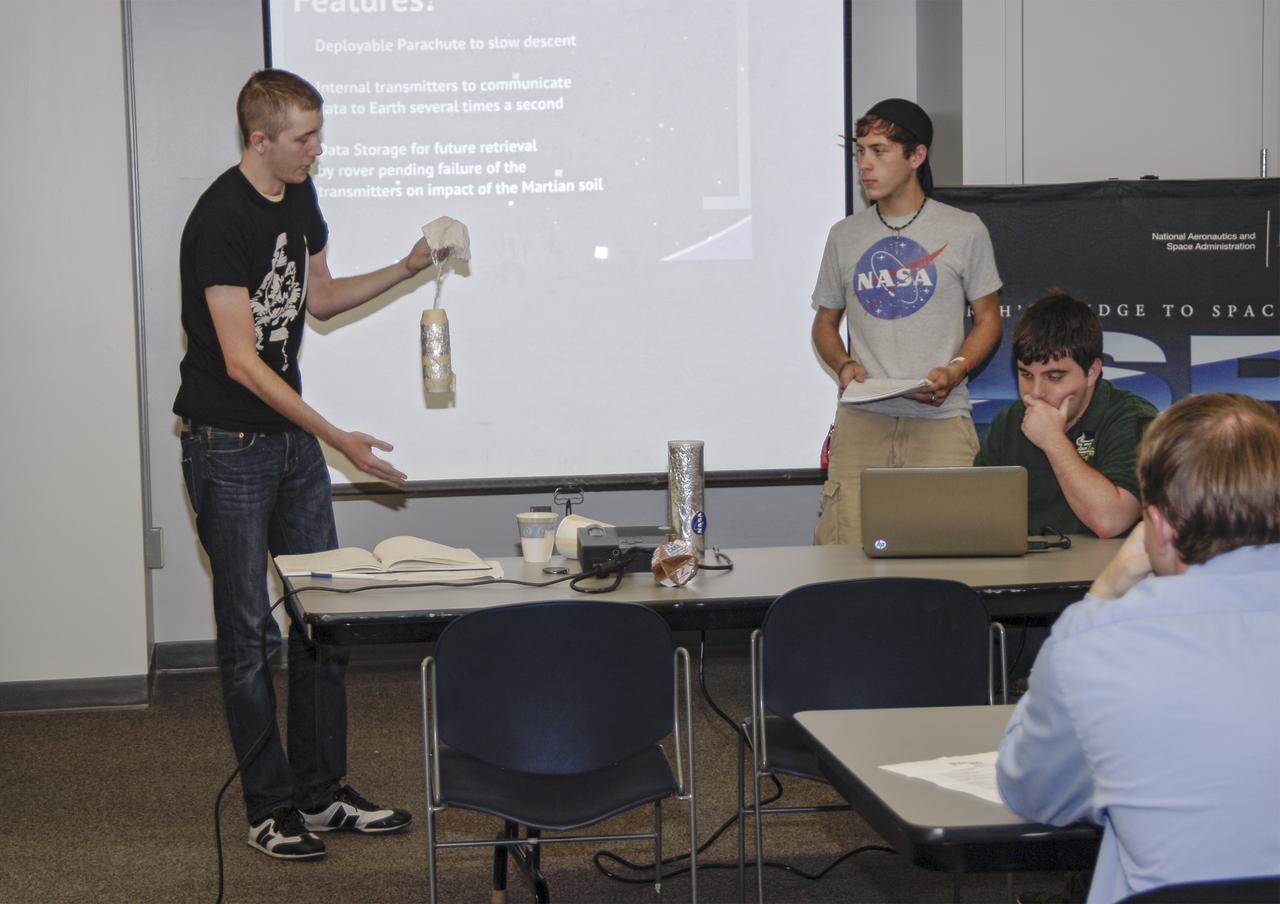
CAPE CANAVERAL, Fla. – Michael Strittmatter, at left, Joey Vars and Allan Pinkerton, all students at the University of South Florida St. Petersburg, present their ideas to a panel of technical and non-technical judges during the 2013 International Space Apps Challenge at The Astronaut Memorial Foundation’s Center for Space Education in Florida. During the worldwide two-day challenge, more than 9,000 people and 484 organizations came together in 83 cities across 44 countries, as well as online, to develop new ways of solving challenges that NASA faces. At Kennedy, four teams brainstormed ideas with subject matter experts and others and worked nearly 32 hours straight to present their concepts to a panel of three technical and non-technical judges. Challenges tackled at Kennedy were: Deployable Greenhouse, Kennedy Space Center 2040, Seven Minutes of Science, and Moonville – Lunar Industry Game. Photo credit: NASA_Charisse Nahser
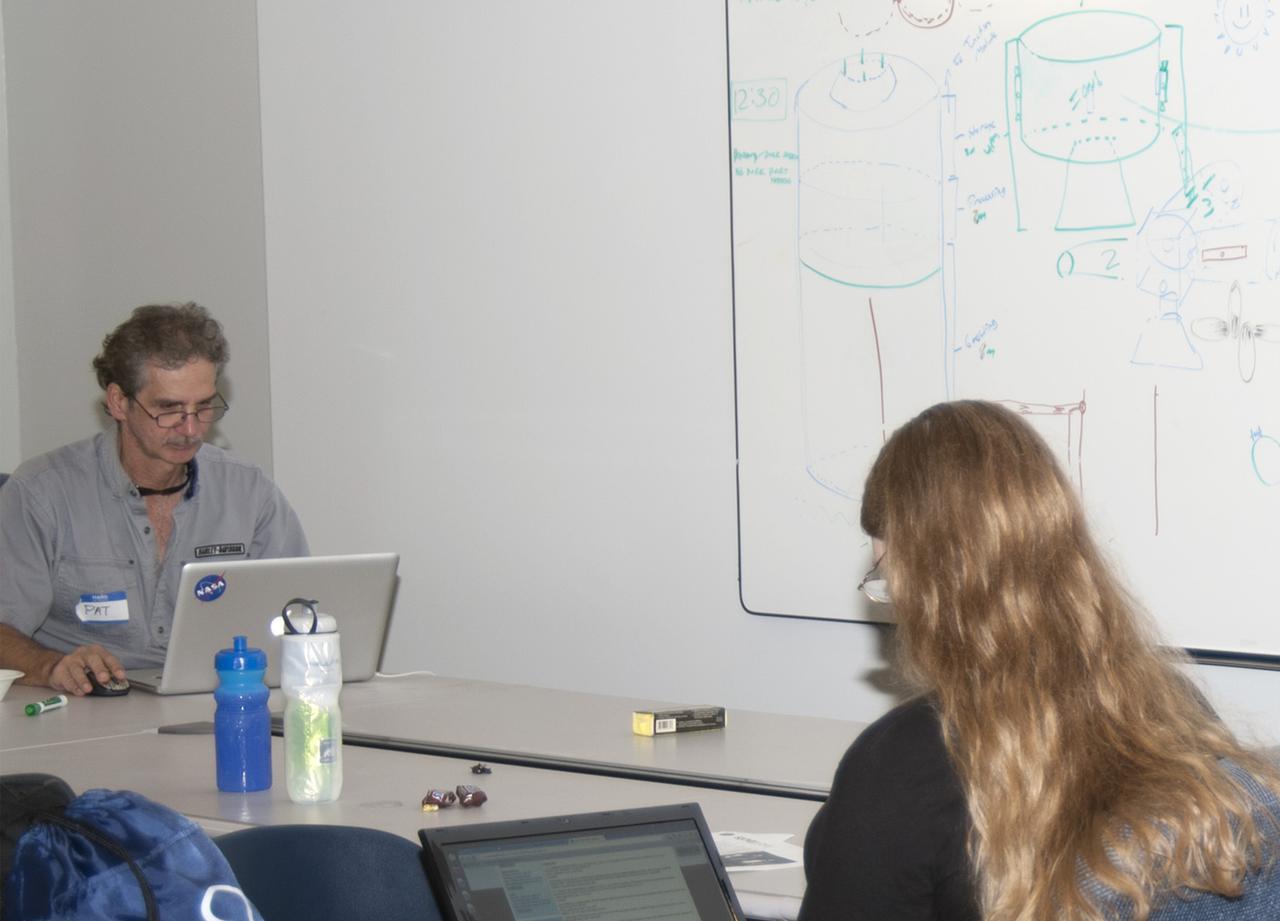
CAPE CANAVERAL, Fla. – Pat Starace, at left, from Orlando, and Kennedy Space Center engineer Jamie Szafran brainstorm ideas on deployable greenhouses during the 2013 International Space Apps Challenge, or ISAC, at The Astronaut Memorial Foundation’s Center for Space Education in Florida. During the worldwide two-day challenge, more than 9,000 people and 484 organizations came together in 83 cities across 44 countries, as well as online, to develop new ways of solving challenges that NASA faces. At Kennedy, four teams brainstormed ideas with subject matter experts and others and worked nearly 32 hours straight to present their concepts to a panel of three technical and non-technical judges. Challenges tackled at Kennedy were: Deployable Greenhouse, Kennedy Space Center 2040, Seven Minutes of Science, and Moonville – Lunar Industry Game. Photo credit: NASA_Charisse Nahser
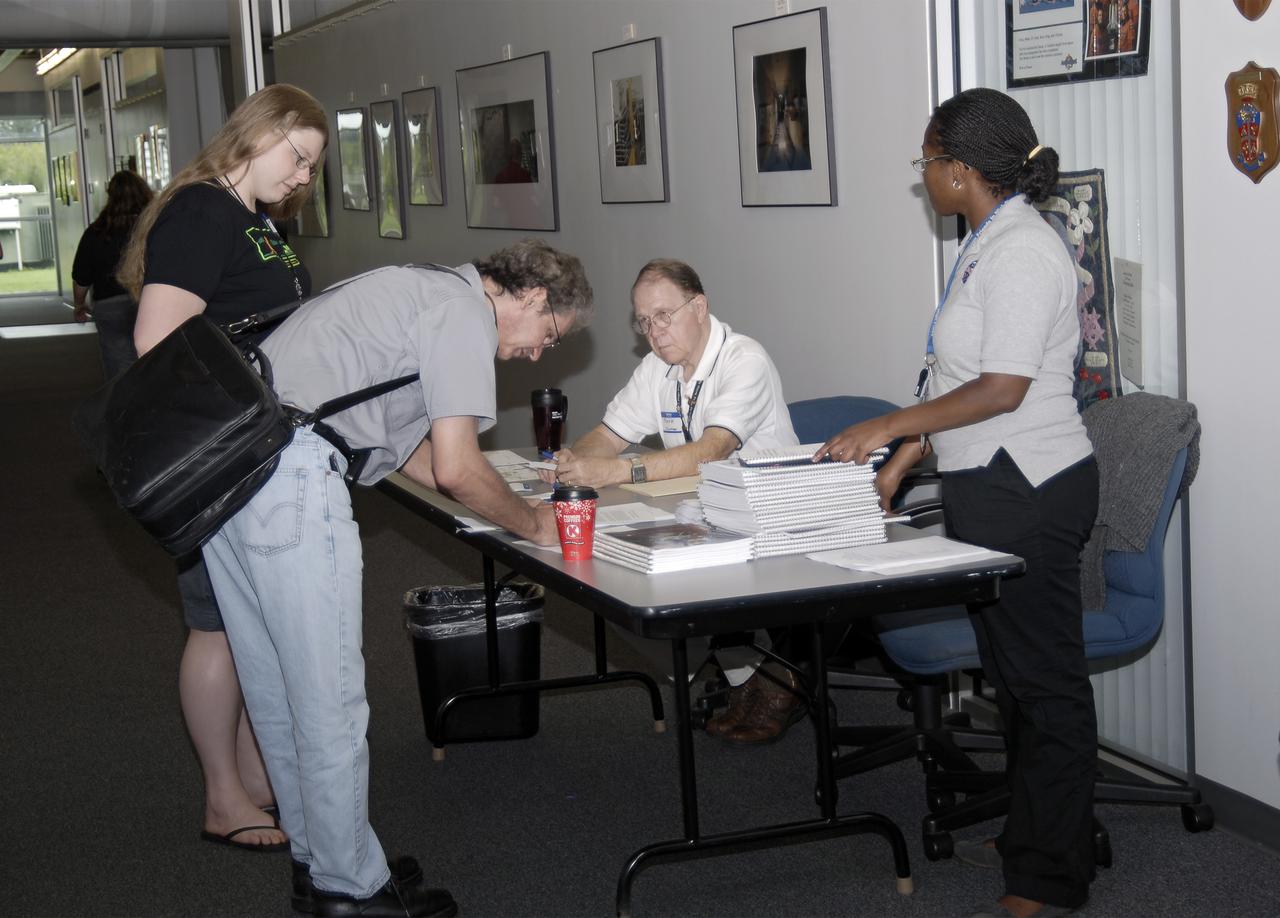
CAPE CANAVERAL, Fla. – Participants sign in at the Center for Space Education at the Kennedy Space Center Visitor Complex in Florida for the 2013 International Space Apps Challenge. . During the worldwide two-day challenge, more than 9,000 people and 484 organizations came together in 83 cities across 44 countries, as well as online, to develop new ways of solving challenges that NASA faces. At Kennedy, four teams brainstormed ideas with subject matter experts and others and worked nearly 32 hours straight to present their concepts to a panel of three technical and non-technical judges. Challenges tackled at Kennedy were: Deployable Greenhouse, Kennedy Space Center 2040, Seven Minutes of Science, and Moonville – Lunar Industry Game. Photo credit: NASA_Charisse Nahser
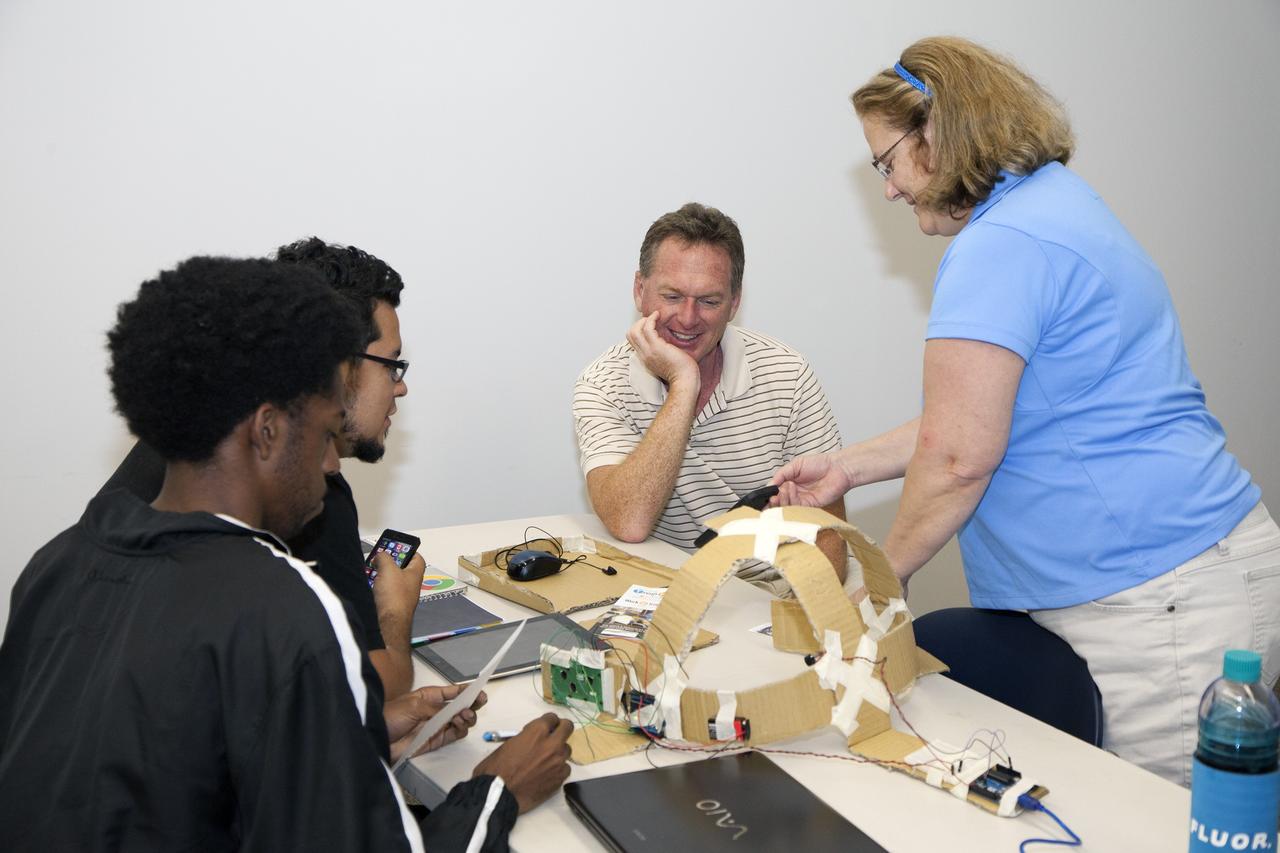
CAPE CANAVERAL, Fla. - SpaceWear team members Keith Hargett, left, and Alejandro Velasco demonstrate their entry in the International Space Apps Challenge to NASA Ground Systems Development and Operation Program Manager Michael Bolger and NASA's Lisa Singleton in the Center for Space Education at the Kennedy Space Center Visitor Complex in Florida. Kennedy Space Center hosted one of the over 90 locations around the world where participants congregated for the attempt to design innovative solutions for global challenges over a 48-hour period. This year's development marathon focused on five NASA mission areas: Asteroids, Earth Watch, Human Spaceflight, Robotics, and Technology in Space. Three of this year’s challenges were developed by KSC employees: Space Wearables: Fashion Designer to Astronauts, Growing Food for a Martian Table, and Asteroid Prospector. The winners selected in 2014 at Kennedy were Astronaut Resource Managing System, or ARMS, for Best Use of Data and SpaceWear for Best Use of Hardware. ARMS also took the People's Choice Award. For more information, visit https://2014.spaceappschallenge.org. Photo credit: NASA/Daniel Casper
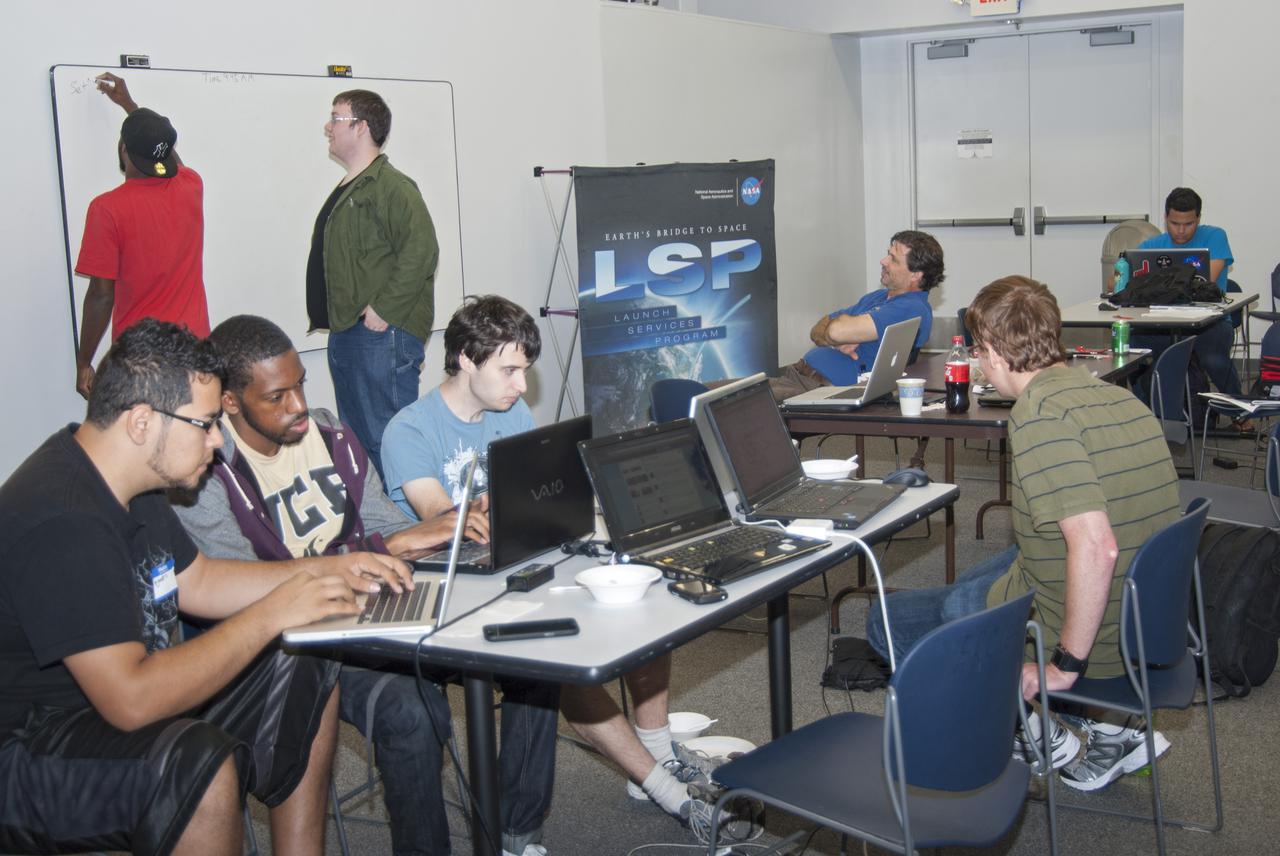
CAPE CANAVERAL, Fla. – Students from the University of Florida, the University of Central Florida, the University of Puerto Rico and private citizens brainstorm ideas during the 2013 International Space Apps Challenge, or ISAC, at The Astronaut Memorial Foundation’s Center for Space Education in Florida. Seated near the Launch Services Program poster is NASA subject matter expert Dr. Phil Metzger from Kennedy Space Center’s Swampworks Laboratory. During the worldwide two-day challenge, more than 9,000 people and 484 organizations came together in 83 cities across 44 countries, as well as online, to develop new ways of solving challenges that NASA faces. At Kennedy, four teams brainstormed ideas with subject matter experts and others and worked nearly 32 hours straight to present their concepts to a panel of three technical and non-technical judges. Challenges tackled at Kennedy were: Deployable Greenhouse, Kennedy Space Center 2040, Seven Minutes of Science, and Moonville – Lunar Industry Game. Photo credit: NASA_Charisse Nahser
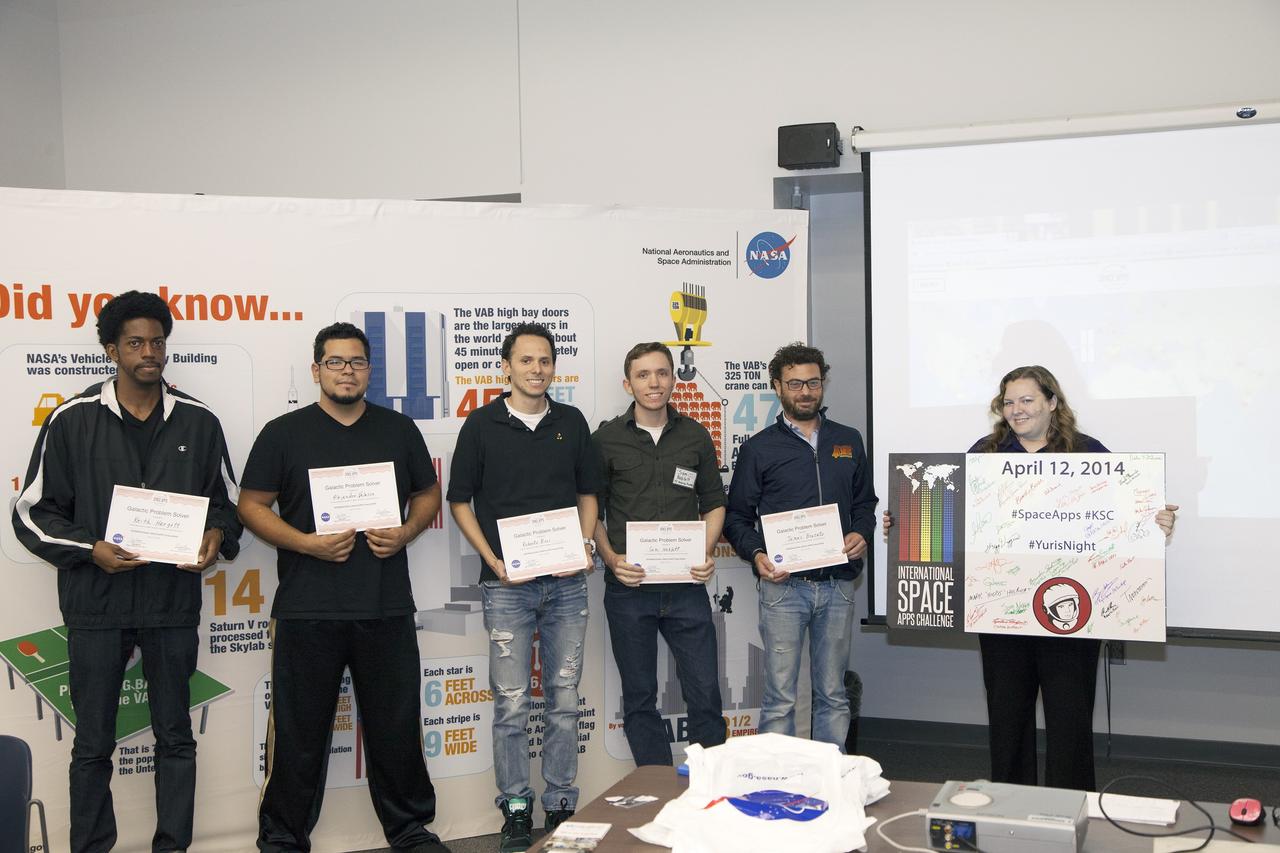
CAPE CANAVERAL, Fla. - Members of the winning teams in the International Space Apps Challenge display their Galactic Problem Solver certificates. From left are SpaceWear team members Keith Hargett and Alejandro Velasco, and Astronaut Resource Managing System team members Roberto Ricci, Sam Neblett, and James Brucato. Caley Burke, the NASA event organizer lead, is at right. Kennedy Space Center hosted one of the over 90 locations around the world where participants congregated for the attempt to design innovative solutions for global challenges over a 48-hour period. This year's development marathon focused on five NASA mission areas: Asteroids, Earth Watch, Human Spaceflight, Robotics, and Technology in Space. Three of this year’s challenges were developed by KSC employees: Space Wearables: Fashion Designer to Astronauts, Growing Food for a Martian Table, and Asteroid Prospector. The winners selected in 2014 at Kennedy were Astronaut Resource Managing System, or ARMS, for Best Use of Data and SpaceWear for Best Use of Hardware. ARMS also took the People's Choice Award. For more information, visit https://2014.spaceappschallenge.org. Photo credit: NASA/Daniel Casper
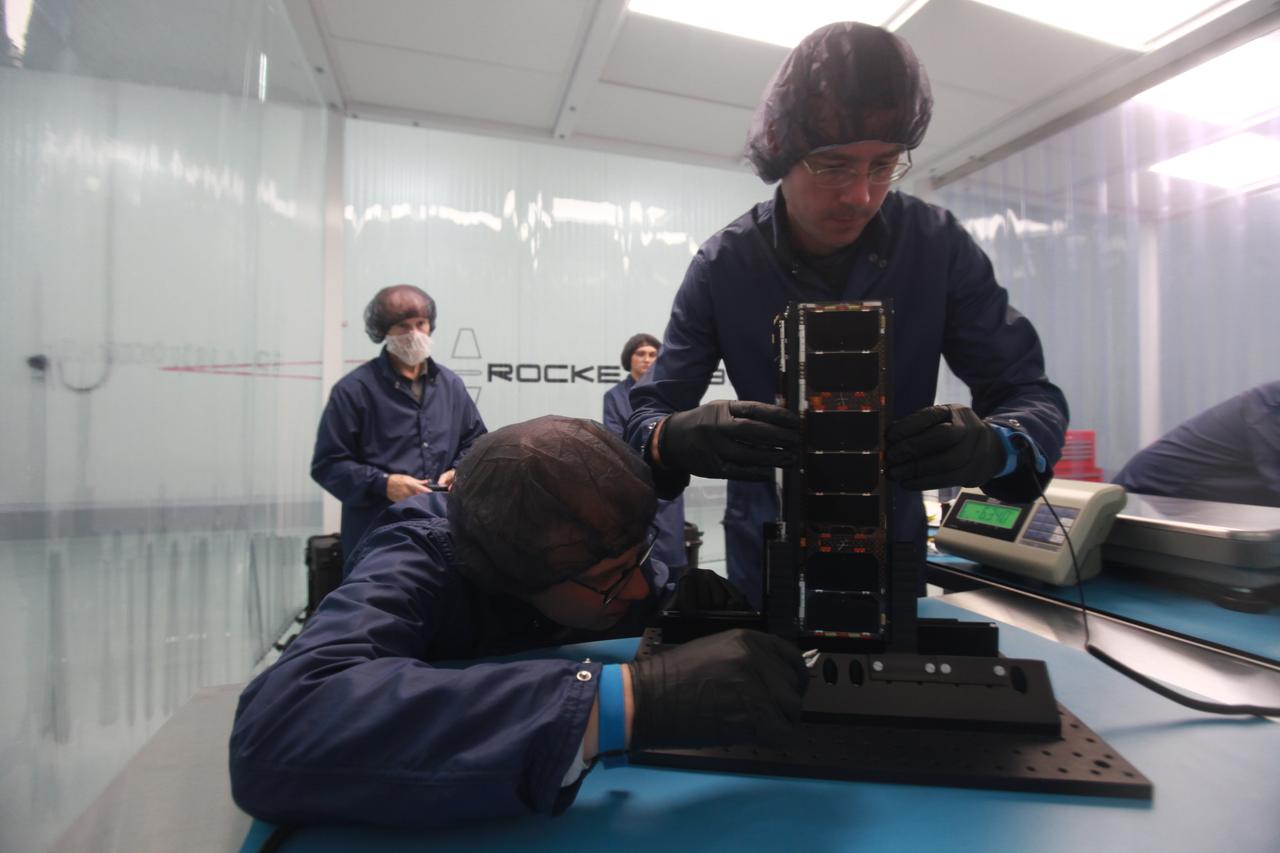
Project DaVinci is a student-led team at North Idaho STEM Charter Academy. Their spacecraft, the DaVinci satellite, has been constructed with the intent to connect with students worldwide to help reignite a passion for space. When launched, the DaVinci satellite will begin broadcasting messages across the globe using amateur radio uplink and downlink frequencies. Students in nearly every country will be able to receive these messages using a USB receiver dongle, open source software, and a yagi antenna in locations where the signal may be weaker. All messages will be education-related, and messages received will be in Morse Code requiring students to download a translating app or to translate it themselves. The DaVinci satellite will use the internet as a redundancy communication channel while in orbit. It is one of the few CubeSat to have a GlobalStar modem onboard, and will allow team members to upload digital messages to internet through the satellite. DaVinci satellite has an onboard Arducam as well, and will provide photos of Earth from its position in orbit. These pictures can be retrieved by the team using the GlobalStar modem and its corresponding server. To Learn more about the DaVinci satellite, visit www.projectdavincicubesat.org/
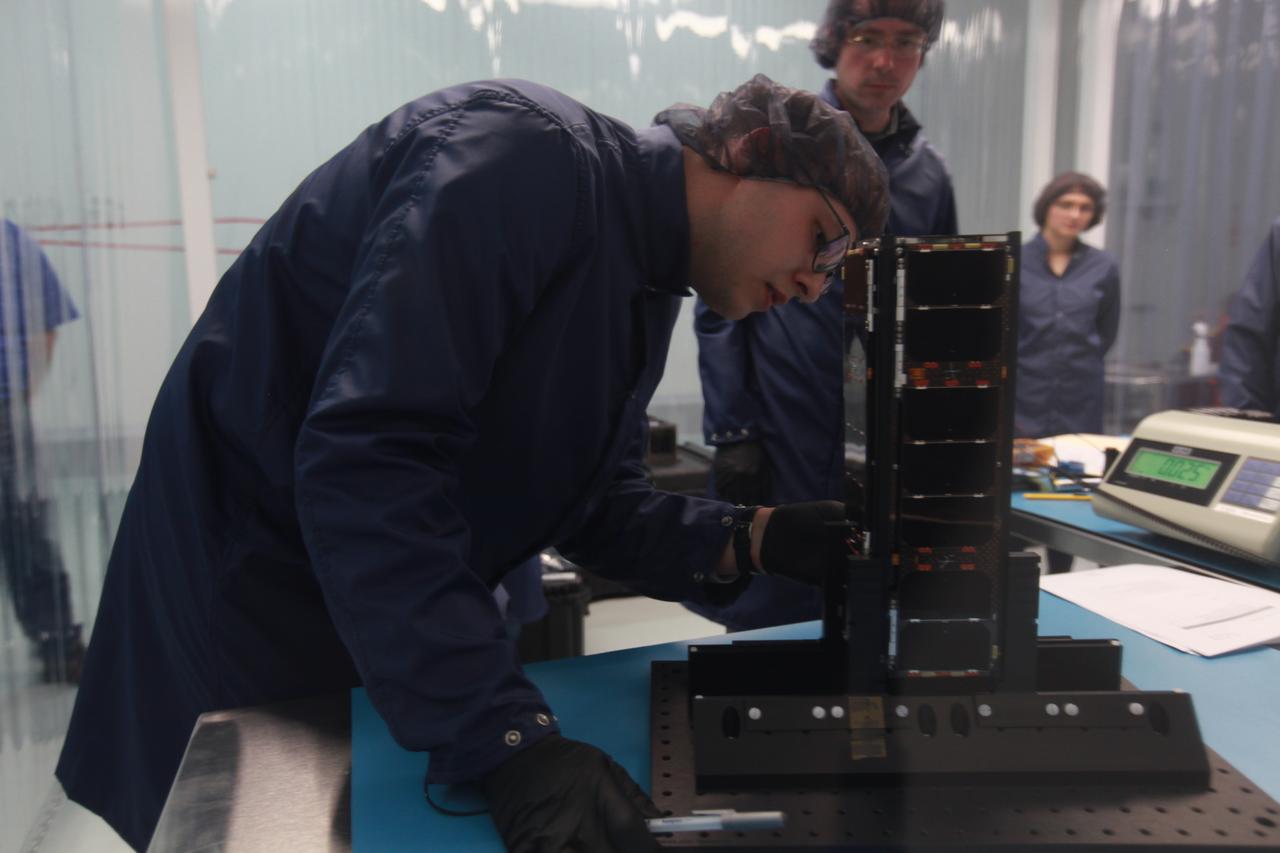
Project DaVinci is a student-led team at North Idaho STEM Charter Academy. Their spacecraft, the DaVinci satellite, has been constructed with the intent to connect with students worldwide to help reignite a passion for space. When launched, the DaVinci satellite will begin broadcasting messages across the globe using amateur radio uplink and downlink frequencies. Students in nearly every country will be able to receive these messages using a USB receiver dongle, open source software, and a yagi antenna in locations where the signal may be weaker. All messages will be education-related, and messages received will be in Morse Code requiring students to download a translating app or to translate it themselves. The DaVinci satellite will use the internet as a redundancy communication channel while in orbit. It is one of the few CubeSat to have a GlobalStar modem onboard, and will allow team members to upload digital messages to internet through the satellite. DaVinci satellite has an onboard Arducam as well, and will provide photos of Earth from its position in orbit. These pictures can be retrieved by the team using the GlobalStar modem and its corresponding server. To Learn more about the DaVinci satellite, visit www.projectdavincicubesat.org/
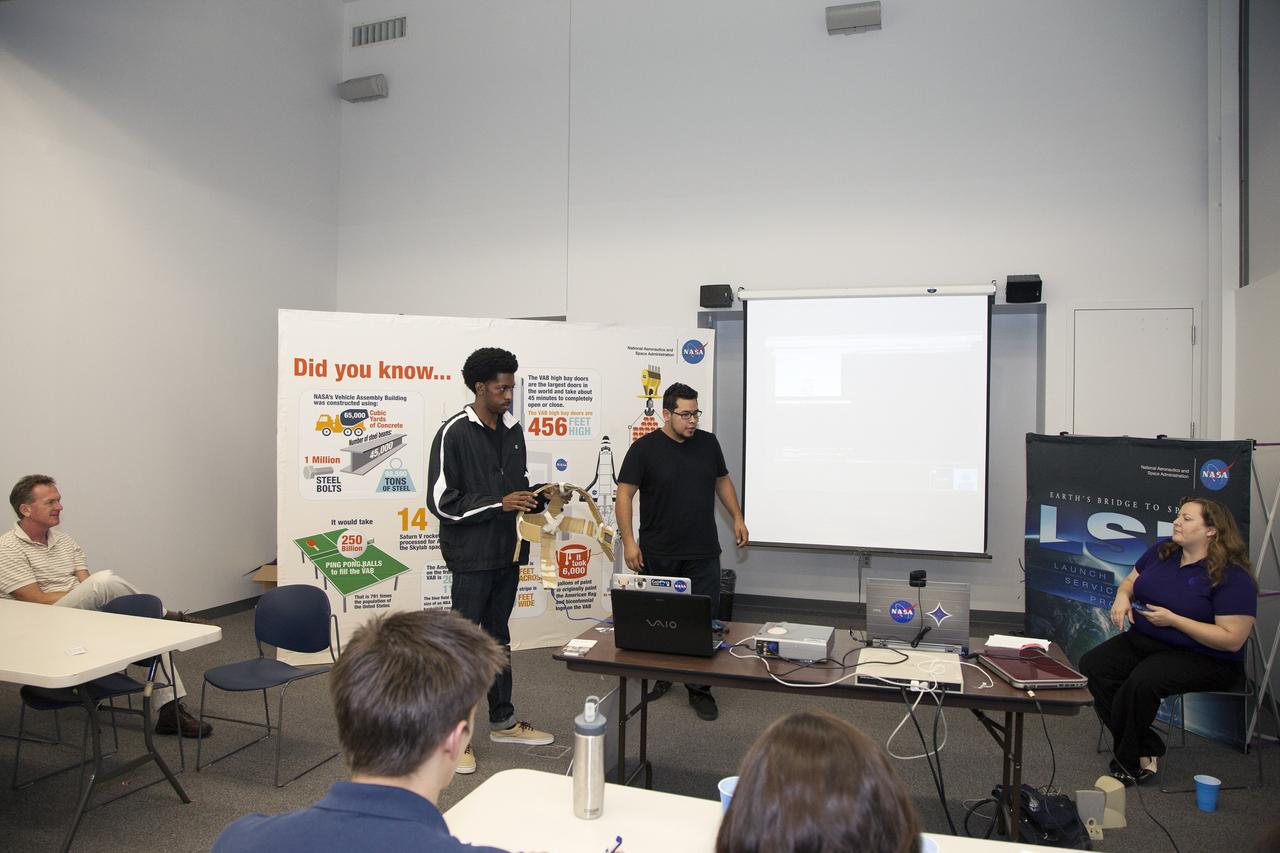
CAPE CANAVERAL, Fla. - SpaceWear team members Keith Hargett, left, and Alejandro Velasco explain their entry in the International Space Apps Challenge to an audience in the Center for Space Education at the Kennedy Space Center Visitor Complex in Florida. In the audience at left is NASA Ground Systems Development and Operations Program Manager Michael Bolger. Caley Burke, the NASA event organizer lead, is at right. Kennedy Space Center hosted one of the over 90 locations around the world where participants congregated for the attempt to design innovative solutions for global challenges over a 48-hour period. This year's development marathon focused on five NASA mission areas: Asteroids, Earth Watch, Human Spaceflight, Robotics, and Technology in Space. Three of this year’s challenges were developed by KSC employees: Space Wearables: Fashion Designer to Astronauts, Growing Food for a Martian Table, and Asteroid Prospector. The winners selected in 2014 at Kennedy were Astronaut Resource Managing System, or ARMS, for Best Use of Data and SpaceWear for Best Use of Hardware. ARMS also took the People's Choice Award. For more information, visit https://2014.spaceappschallenge.org. Photo credit: NASA/Daniel Casper
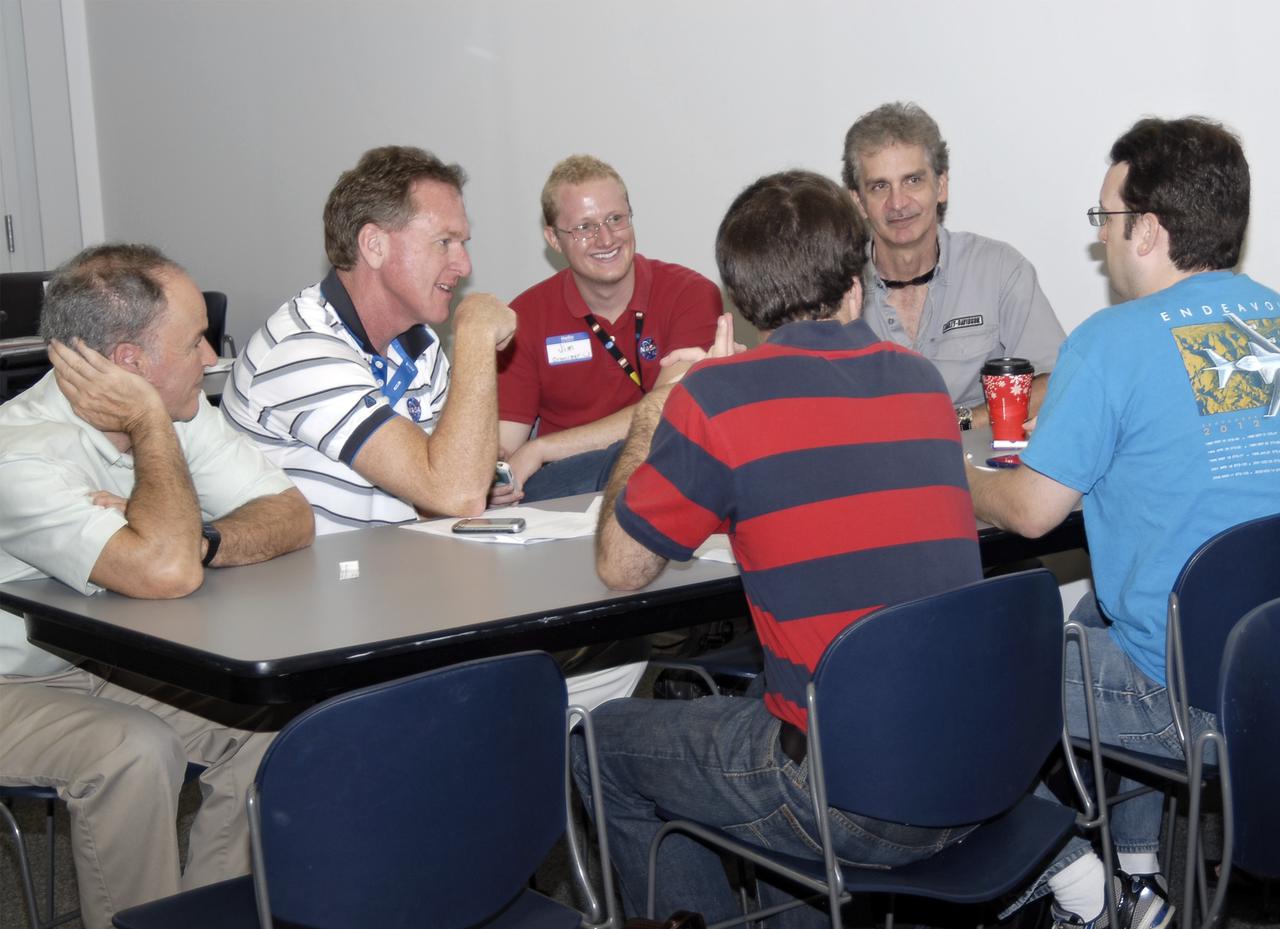
CAPE CANAVERAL, Fla. – Subject matter experts, event volunteers and participants discuss ideas during the 2013 International Space Apps Challenge at the Center for Space Education at the Kennedy Space Center Visitor Complex in Florida. From left, are Dr. Ray Wheeler, NASA subject matter expert Mike Bolger, Kennedy’s Information Technology director Jim Wood, event volunteer challenge participants Pat Starace and Mike King from Orlando and David Thorpe in Kennedy’s Center Planning and Development Directorate. During the worldwide two-day challenge, more than 9,000 people and 484 organizations came together in 83 cities across 44 countries, as well as online, to develop new ways of solving challenges that NASA faces. At Kennedy, four teams brainstormed ideas with subject matter experts and others and worked nearly 32 hours straight to present their concepts to a panel of three technical and non-technical judges. Challenges tackled at Kennedy were: Deployable Greenhouse, Kennedy Space Center 2040, Seven Minutes of Science, and Moonville – Lunar Industry Game. Photo credit: NASA_Charisse Nahser
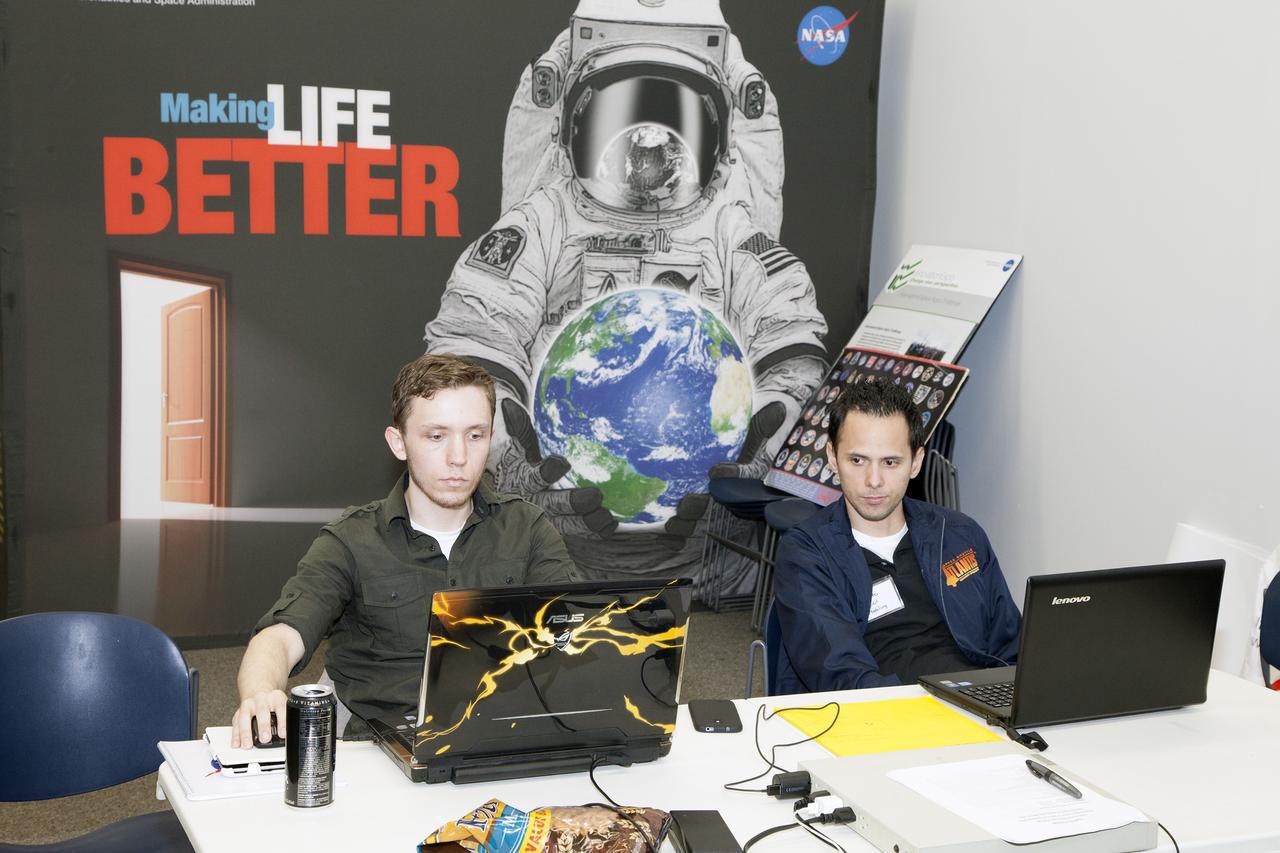
CAPE CANAVERAL, Fla. - Astronaut Resource Managing System team members Sam Neblett of KSC Technik Inc., left, and Roberto Ricci participate in the International Space Apps Challenge in the Center for Space Education at the Kennedy Space Center Visitor Complex in Florida. Kennedy Space Center hosted one of the over 90 locations around the world where participants congregated for the attempt to design innovative solutions for global challenges over a 48-hour period. This year's development marathon focused on five NASA mission areas: Asteroids, Earth Watch, Human Spaceflight, Robotics, and Technology in Space. Three of this year’s challenges were developed by KSC employees: Space Wearables: Fashion Designer to Astronauts, Growing Food for a Martian Table, and Asteroid Prospector. The winners selected in 2014 at Kennedy were Astronaut Resource Managing System, or ARMS, for Best Use of Data and SpaceWear for Best Use of Hardware. ARMS also took the People's Choice Award. For more information, visit https://2014.spaceappschallenge.org. Photo credit: NASA/Daniel Casper
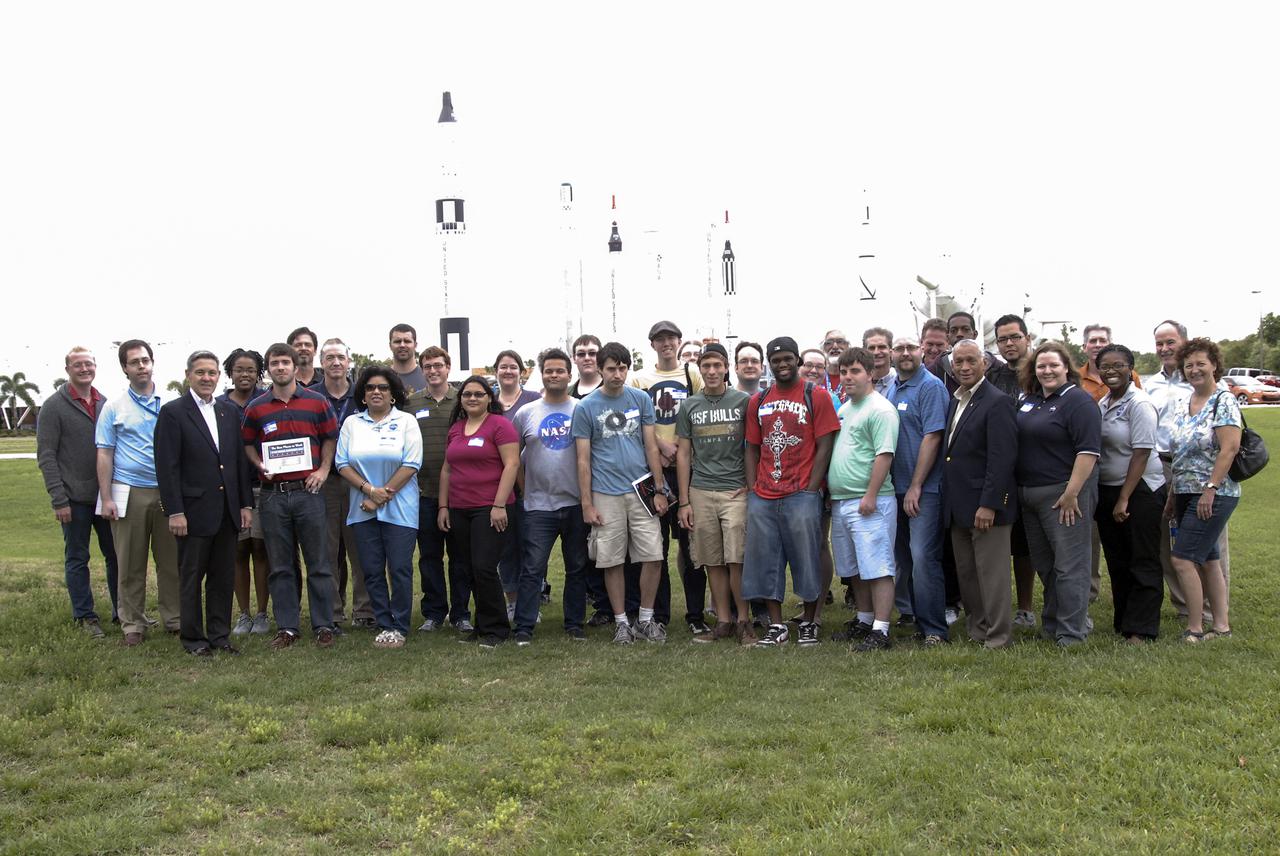
CAPE CANAVERAL, Fla. – Kennedy Space Center Director Bob Cabana, third from left, and NASA Administrator Charlie Bolden, fourth from right, gather with participants, subject matter experts and volunteers in front of the Rocket Garden at the Kennedy Space Center Visitor Complex in Florida during the 2013 International Space Apps Challenge. The group took a brief break before returning to The Astronaut Memorial Foundation’s Center for Space Education to continue working on their challenges. During the worldwide two-day challenge, more than 9,000 people and 484 organizations came together in 83 cities across 44 countries, as well as online, to develop new ways of solving challenges that NASA faces. At Kennedy, four teams brainstormed ideas with subject matter experts and others and worked nearly 32 hours straight to present their concepts to a panel of three technical and non-technical judges. Challenges tackled at Kennedy were: Deployable Greenhouse, Kennedy Space Center 2040, Seven Minutes of Science, and Moonville – Lunar Industry Game. Photo credit: NASA_Charisse Nahser
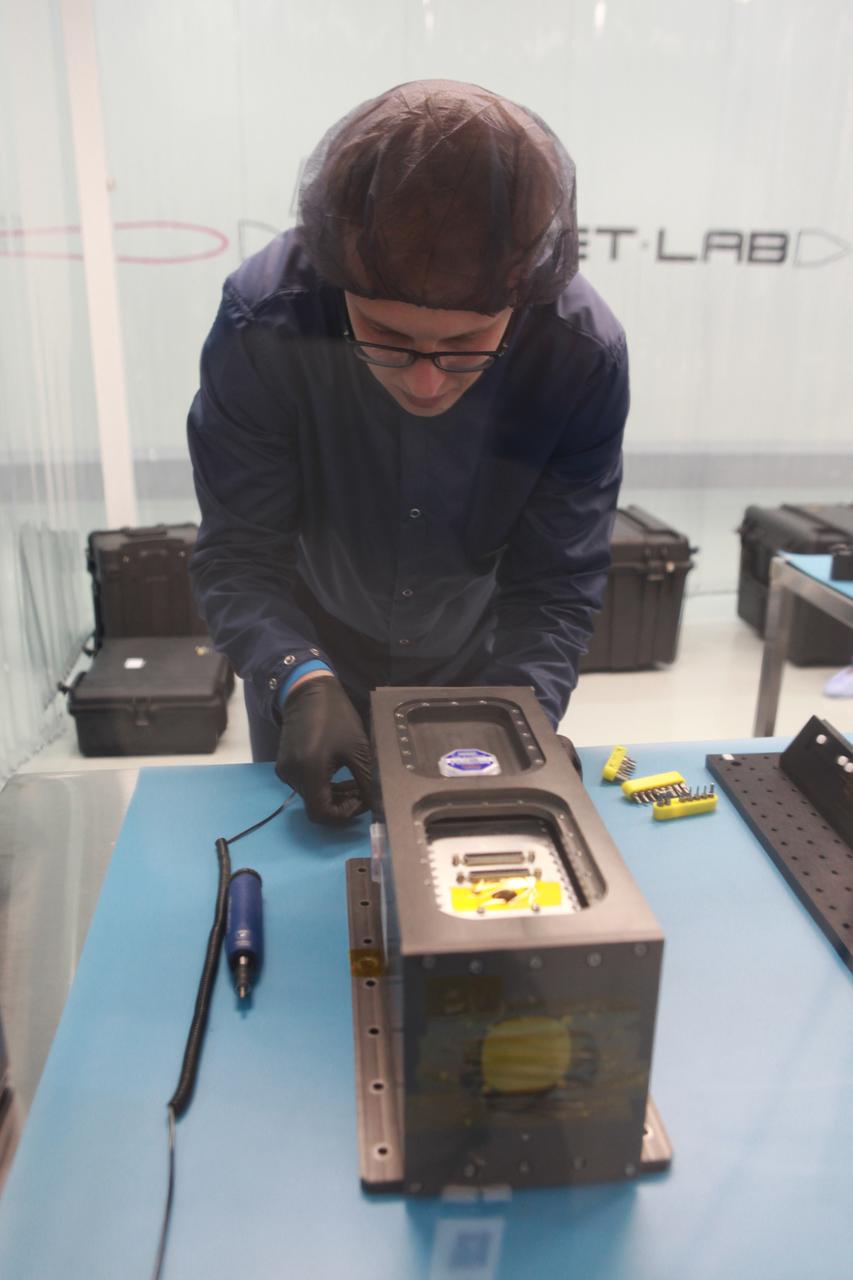
Project DaVinci is a student-led team at North Idaho STEM Charter Academy. Their spacecraft, the DaVinci satellite, has been constructed with the intent to connect with students worldwide to help reignite a passion for space. When launched, the DaVinci satellite will begin broadcasting messages across the globe using amateur radio uplink and downlink frequencies. Students in nearly every country will be able to receive these messages using a USB receiver dongle, open source software, and a yagi antenna in locations where the signal may be weaker. All messages will be education-related, and messages received will be in Morse Code requiring students to download a translating app or to translate it themselves. The DaVinci satellite will use the internet as a redundancy communication channel while in orbit. It is one of the few CubeSat to have a GlobalStar modem onboard, and will allow team members to upload digital messages to internet through the satellite. DaVinci satellite has an onboard Arducam as well, and will provide photos of Earth from its position in orbit. These pictures can be retrieved by the team using the GlobalStar modem and its corresponding server. To Learn more about the DaVinci satellite, visit www.projectdavincicubesat.org/
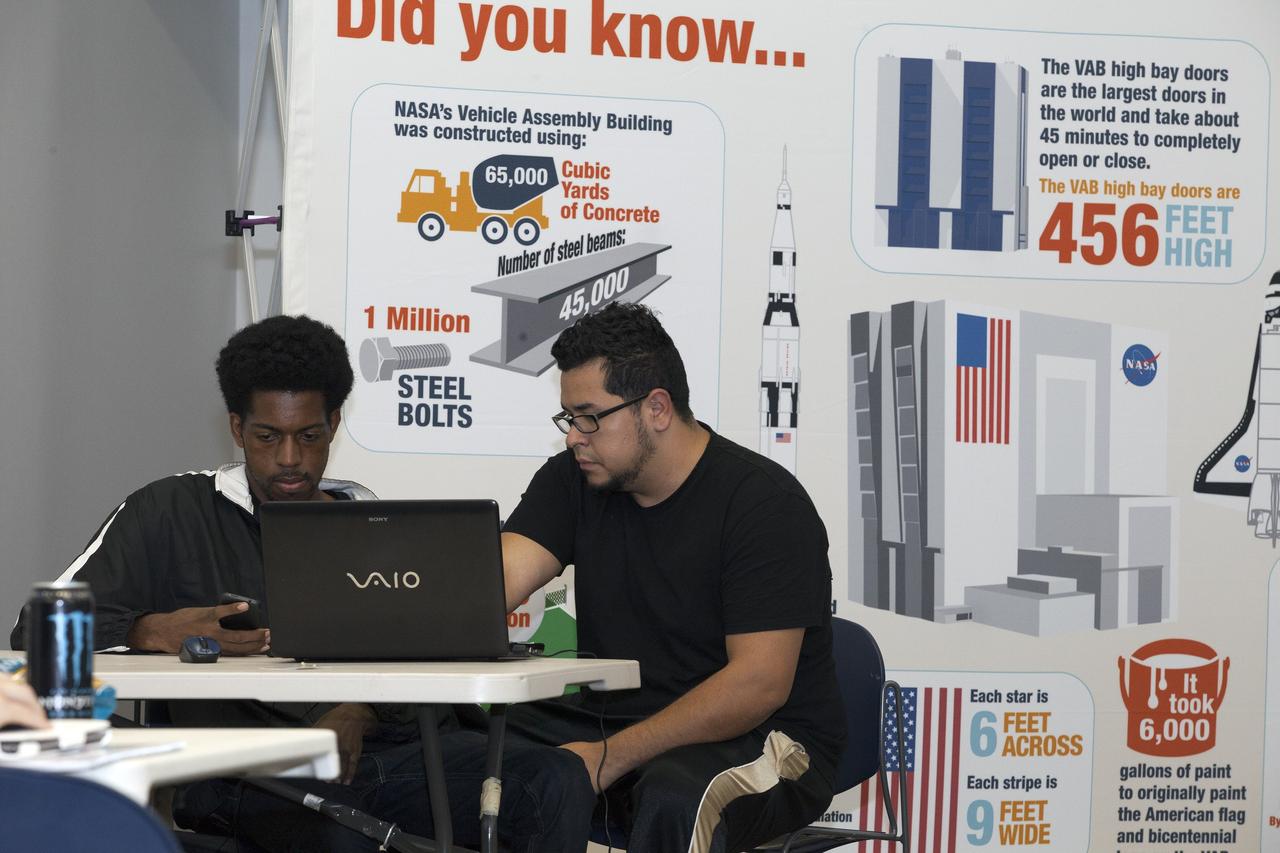
CAPE CANAVERAL, Fla. - SpaceWear team members Keith Hargett, left, and Alejandro Velasco participate in the International Space Apps Challenge in the Center for Space Education at the Kennedy Space Center Visitor Complex in Florida. Kennedy Space Center hosted one of the over 90 locations around the world where participants congregated for the attempt to design innovative solutions for global challenges over a 48-hour period. This year's development marathon focused on five NASA mission areas: Asteroids, Earth Watch, Human Spaceflight, Robotics, and Technology in Space. Three of this year’s challenges were developed by KSC employees: Space Wearables: Fashion Designer to Astronauts, Growing Food for a Martian Table, and Asteroid Prospector. The winners selected in 2014 at Kennedy were Astronaut Resource Managing System, or ARMS, for Best Use of Data and SpaceWear for Best Use of Hardware. ARMS also took the People's Choice Award. For more information, visit https://2014.spaceappschallenge.org. Photo credit: NASA/Daniel Casper
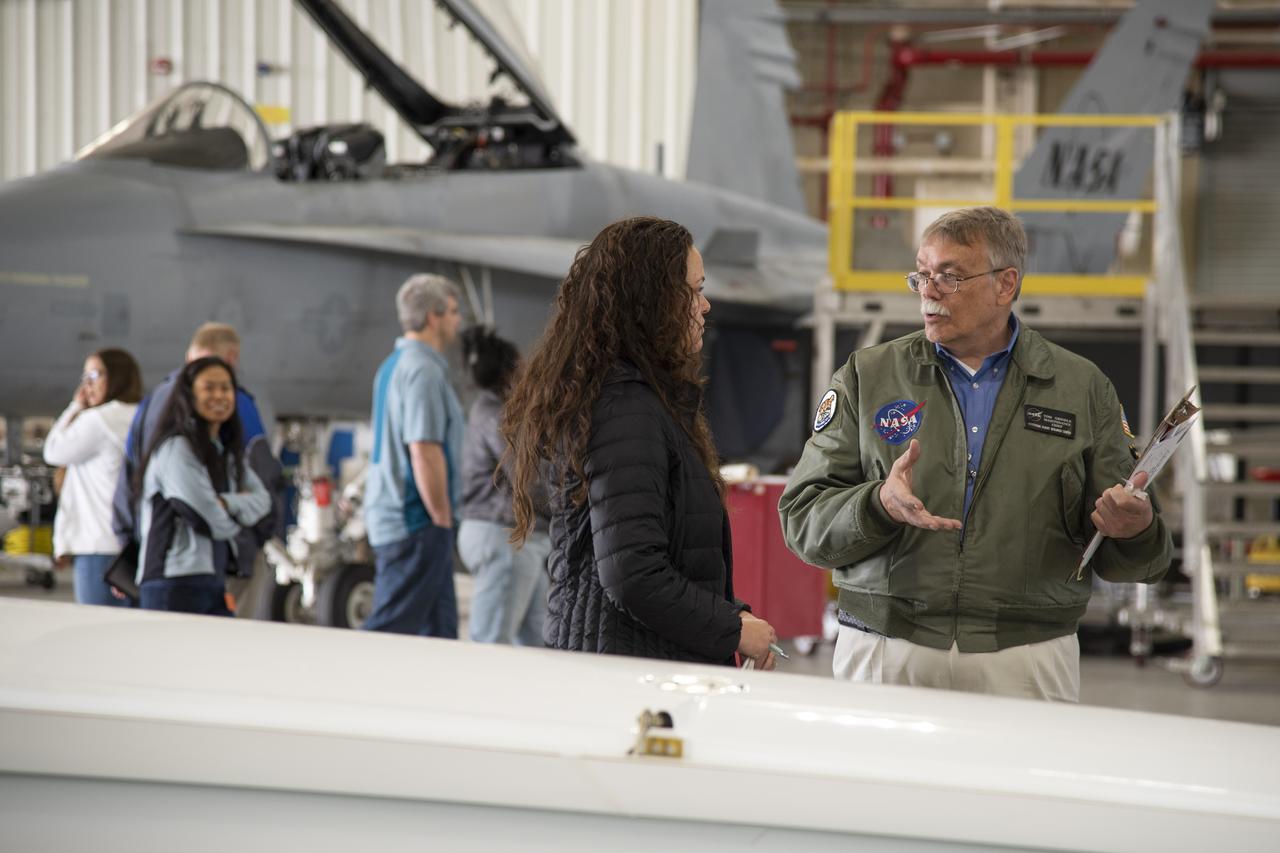
NASA Armstrong’s Chief of Maintenance, Tom Grindle, leads a tour inside the hangar with a group of teachers.
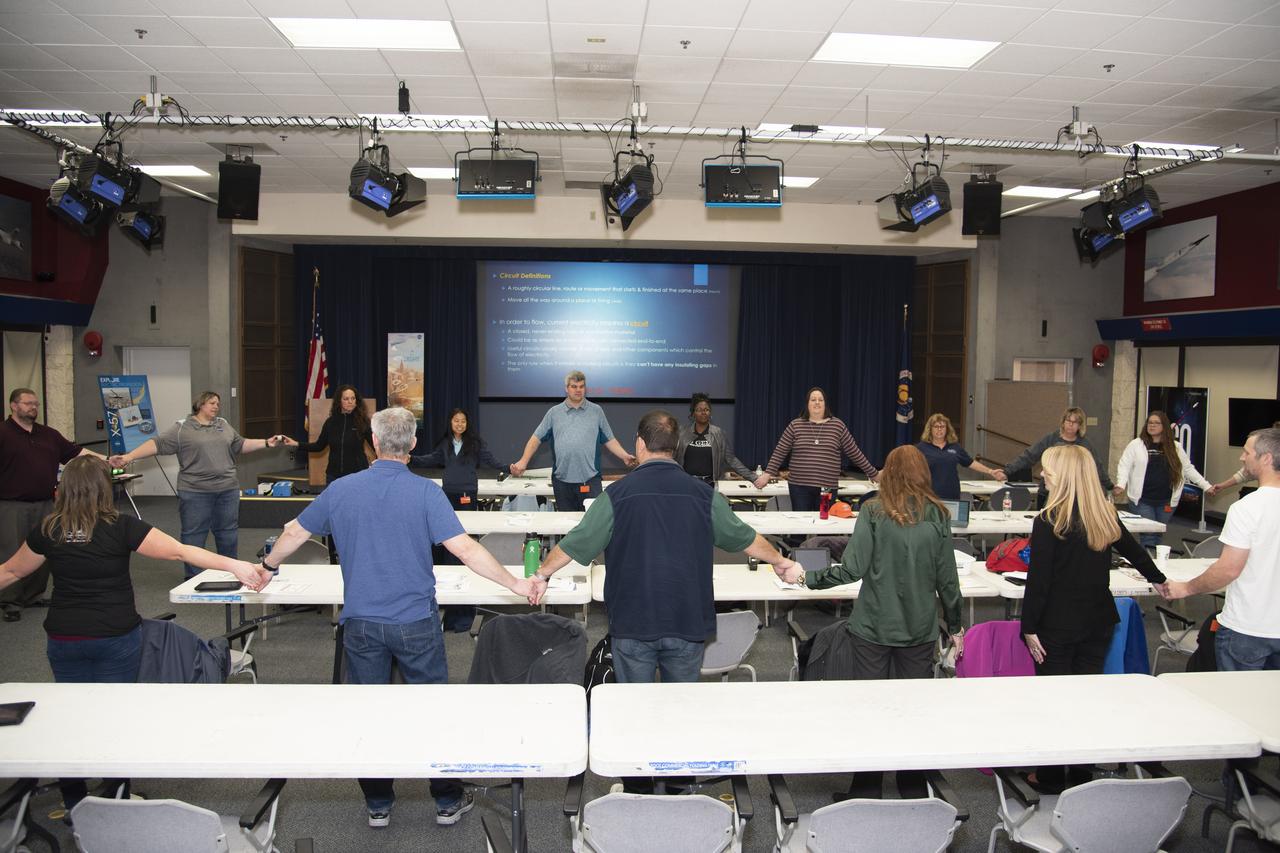
Barbara Buckner, NASA Armstrong's educator professional development specialist, leads a group exercise to form a human circuit to power an electric ball.
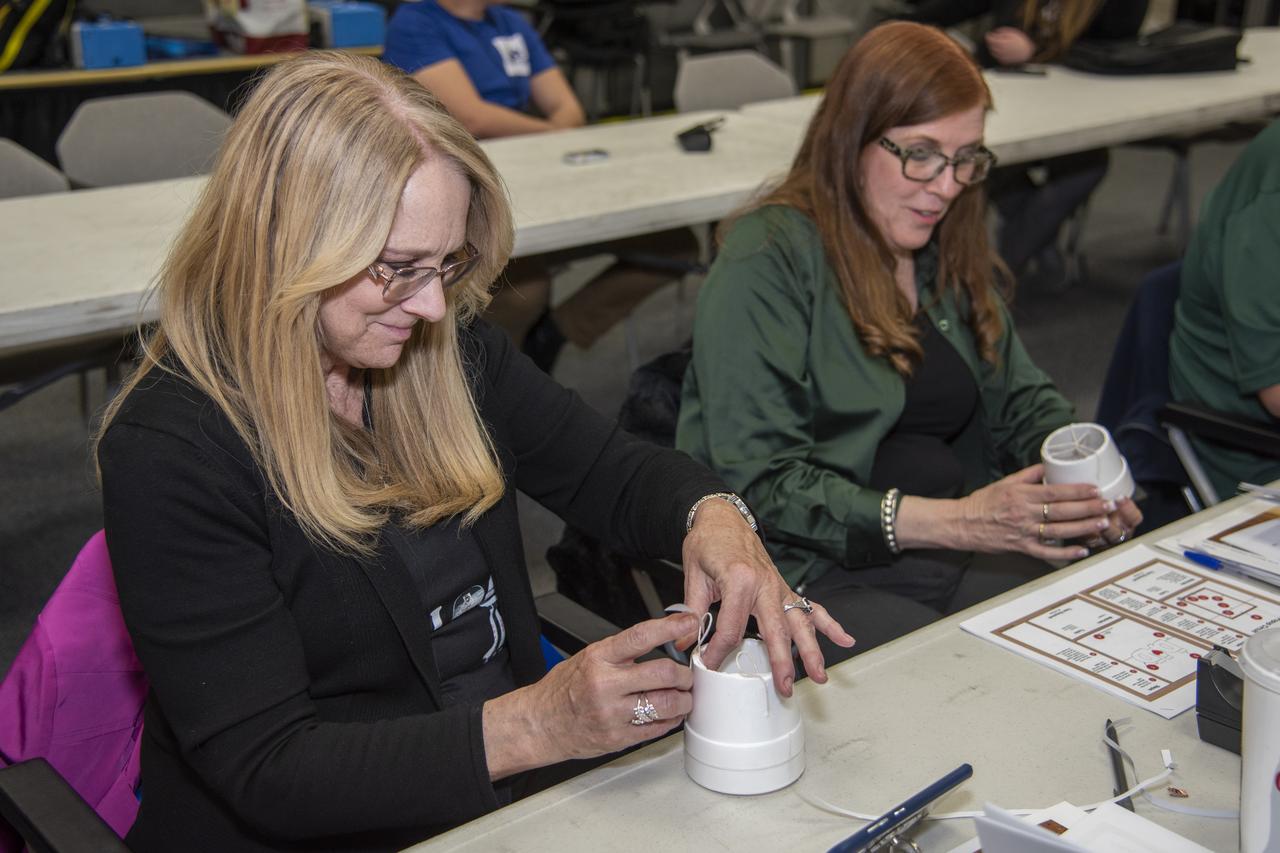
Teacher Kristen Deckner learns how to build a Remote Manipulator (Robotic) Arm during the Educational Technology Institute hosted by NASA Armstrong's Office of STEM Engagement.
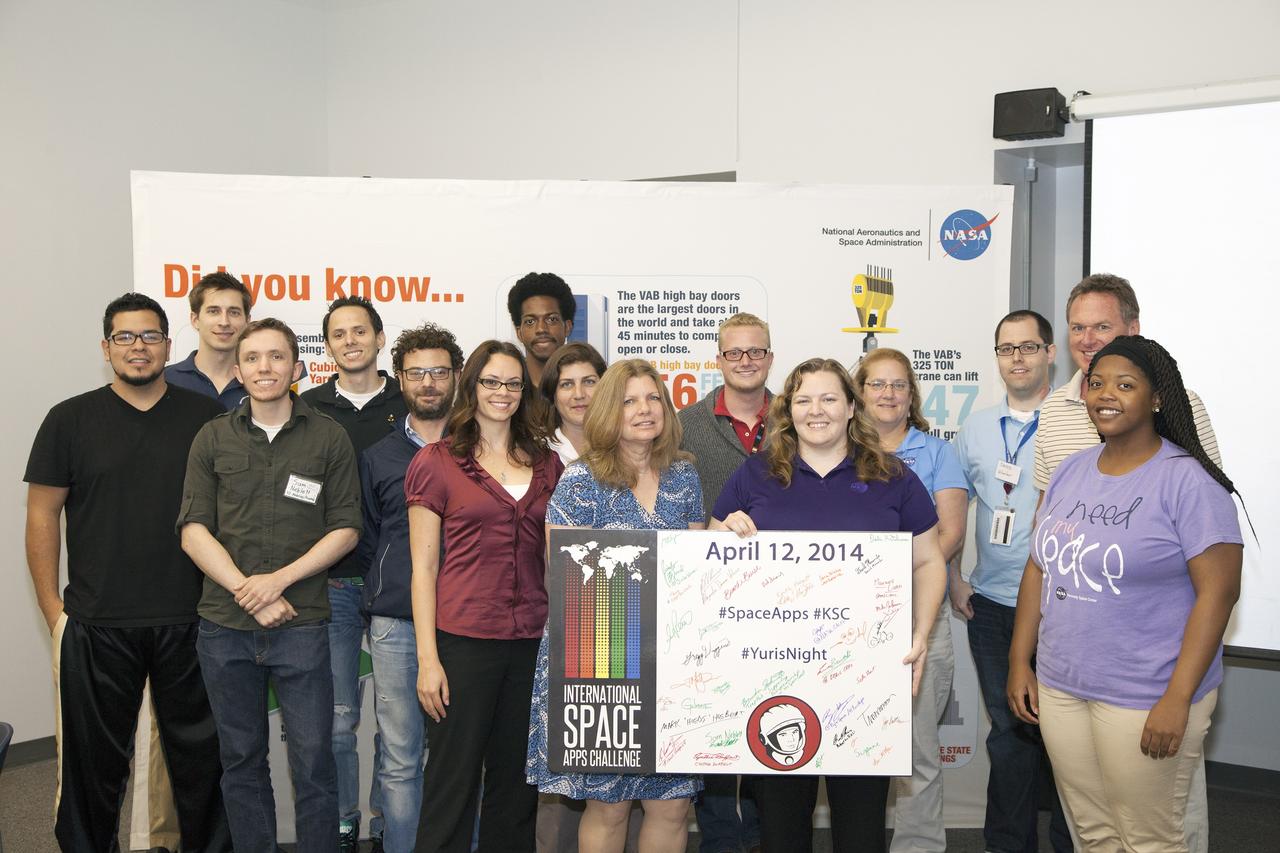
CAPE CANAVERAL, Fla. - Members of the winning Astronaut Resource Managing System and SpaceWear teams in the International Space Apps Challenge pose for a group portrait with the NASA volunteers, judges and event organizers. From left are Alejandro Velasco, NASA's Justin Treptow, Sam Neblett, Roberto Ricci, James Brucato, NASA's Suzanne Plantec, Keith Hargett, NASA's Cynthia Duffaut, NASA's Launa Maier, event organizer James Wood, event organizer lead Caley Burke, NASA's Lisa Singleton, event organizer David Miranda, NASA Ground Systems Development and Operation Program Manager Michael Bolger and NASA intern Brandi Burse. Kennedy Space Center hosted one of the over 90 locations around the world where participants congregated for the attempt to design innovative solutions for global challenges over a 48-hour period. This year's development marathon focused on five NASA mission areas: Asteroids, Earth Watch, Human Spaceflight, Robotics, and Technology in Space. Three of this year’s challenges were developed by KSC employees: Space Wearables: Fashion Designer to Astronauts, Growing Food for a Martian Table, and Asteroid Prospector. The winners selected in 2014 at Kennedy were Astronaut Resource Managing System, or ARMS, for Best Use of Data and SpaceWear for Best Use of Hardware. ARMS also took the People's Choice Award. For more information, visit https://2014.spaceappschallenge.org. Photo credit: NASA/Daniel Casper