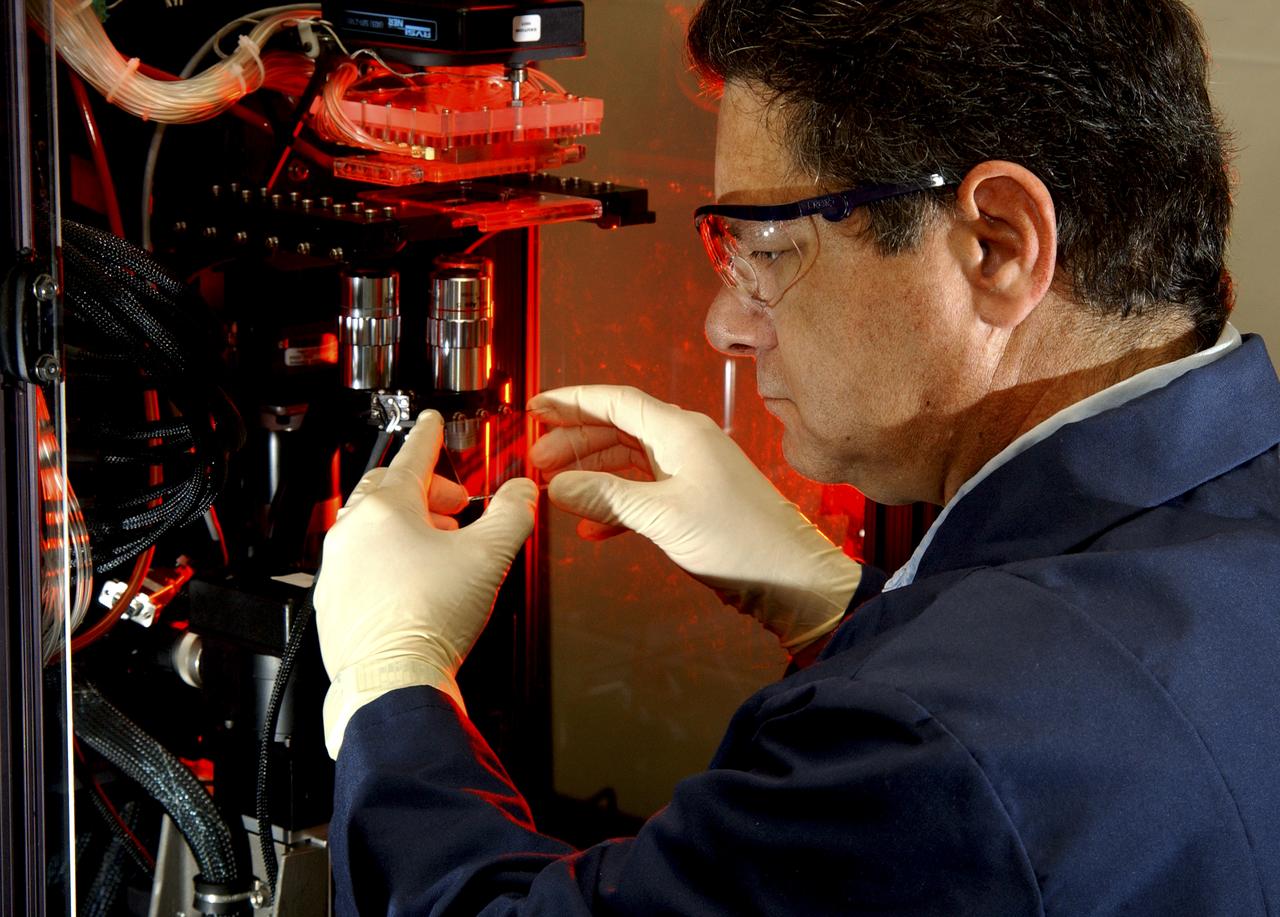
Andy Jenkins, an engineer for the Lab on a Chip Applications Development program, helped build the Applications Development Unit (ADU-25), a one-of-a-kind facility for controlling and analyzing processes on chips with extreme accuracy. Pressure is used to cause fluids to travel through network of fluid pathways, or micro-channels, embossed on the chips through a process similar to the one used to print circuits on computer chips. To make customized chips for various applications, NASA has an agreement with the U.S. Army's Micro devices and Micro fabrication Laboratory at Redstone Arsenal in Huntsville, Alabama, where NASA's Marshall Space Flight Center (MSFC) is located. The Marshall Center team is also collaborating with scientists at other NASA centers and at universities to develop custom chip designs for many applications, such as studying how fluidic systems work in spacecraft and identifying microbes in self-contained life support systems. Chips could even be designed for use on Earth, such as for detecting deadly microbes in heating and air systems. (NASA/MSFC/D.Stoffer)
Around Marshall
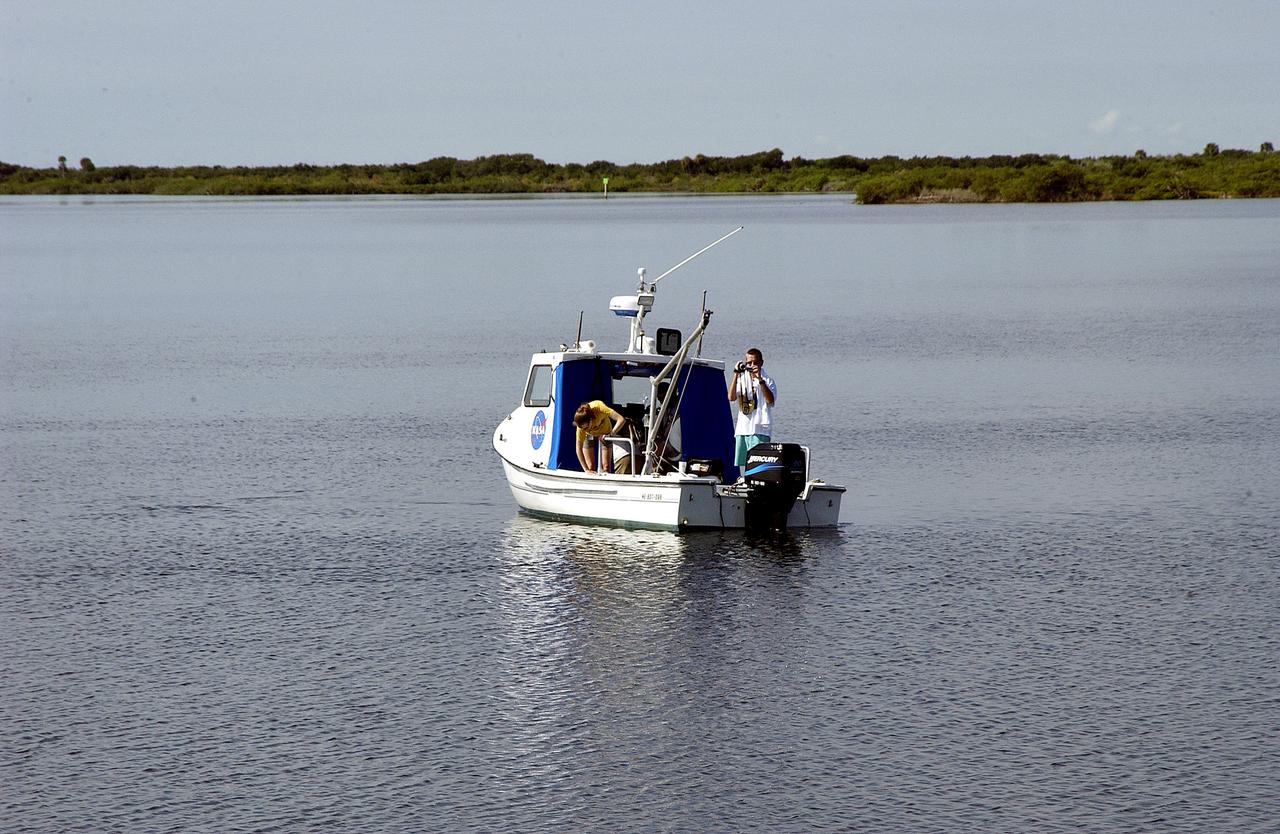
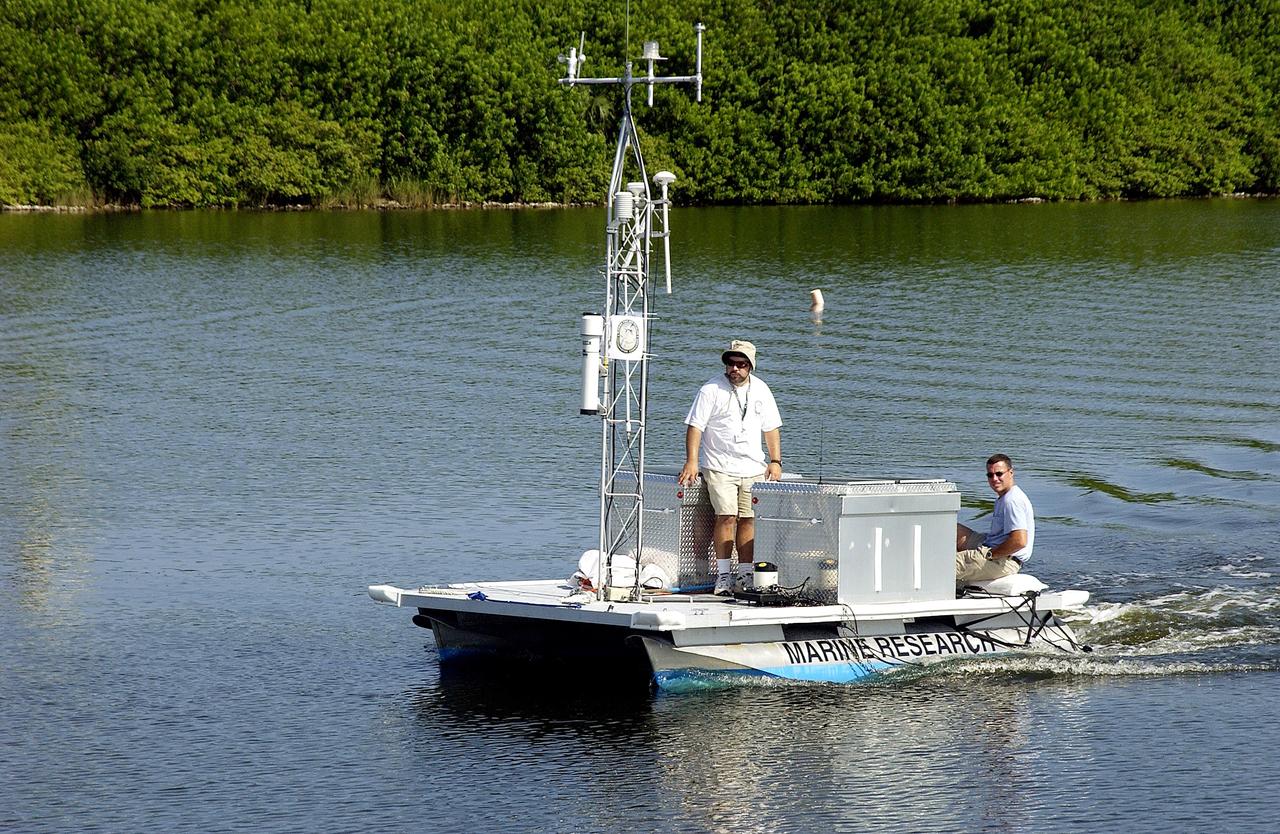
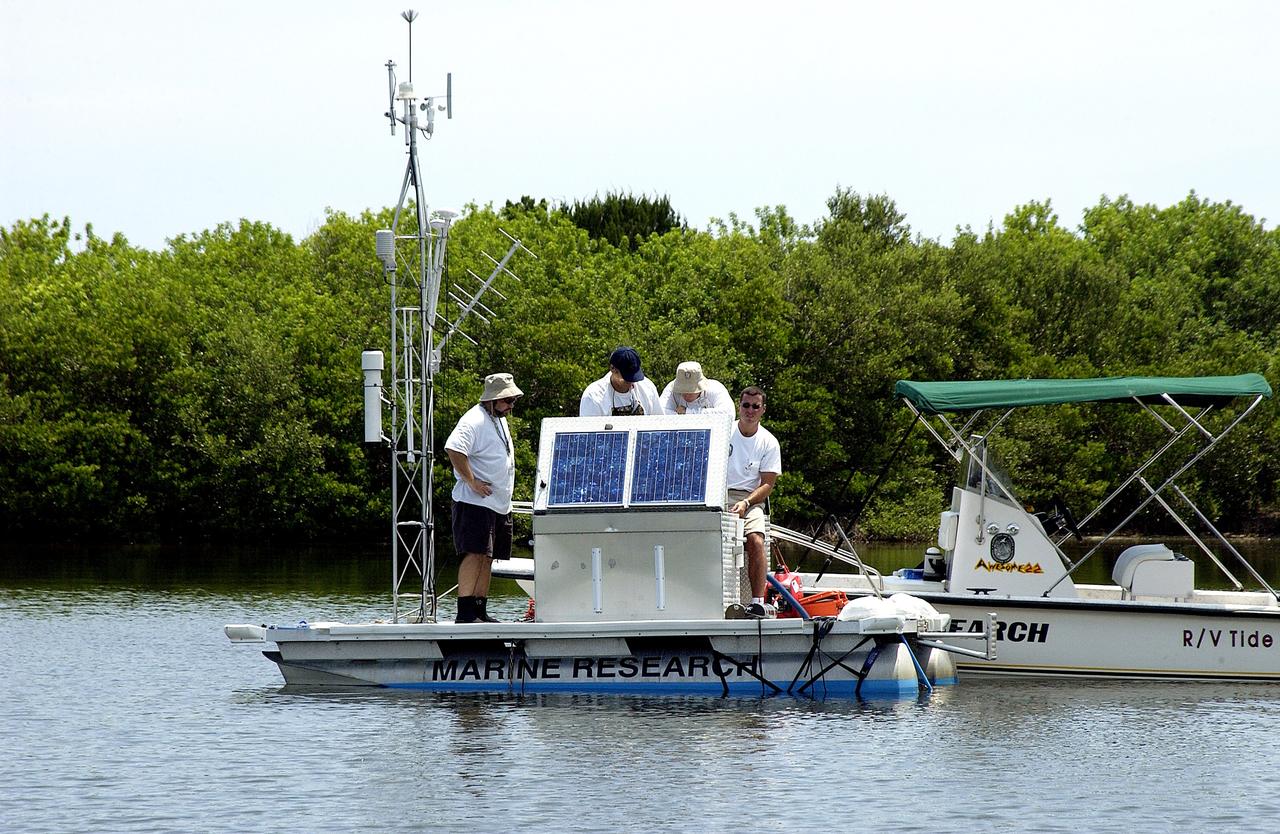
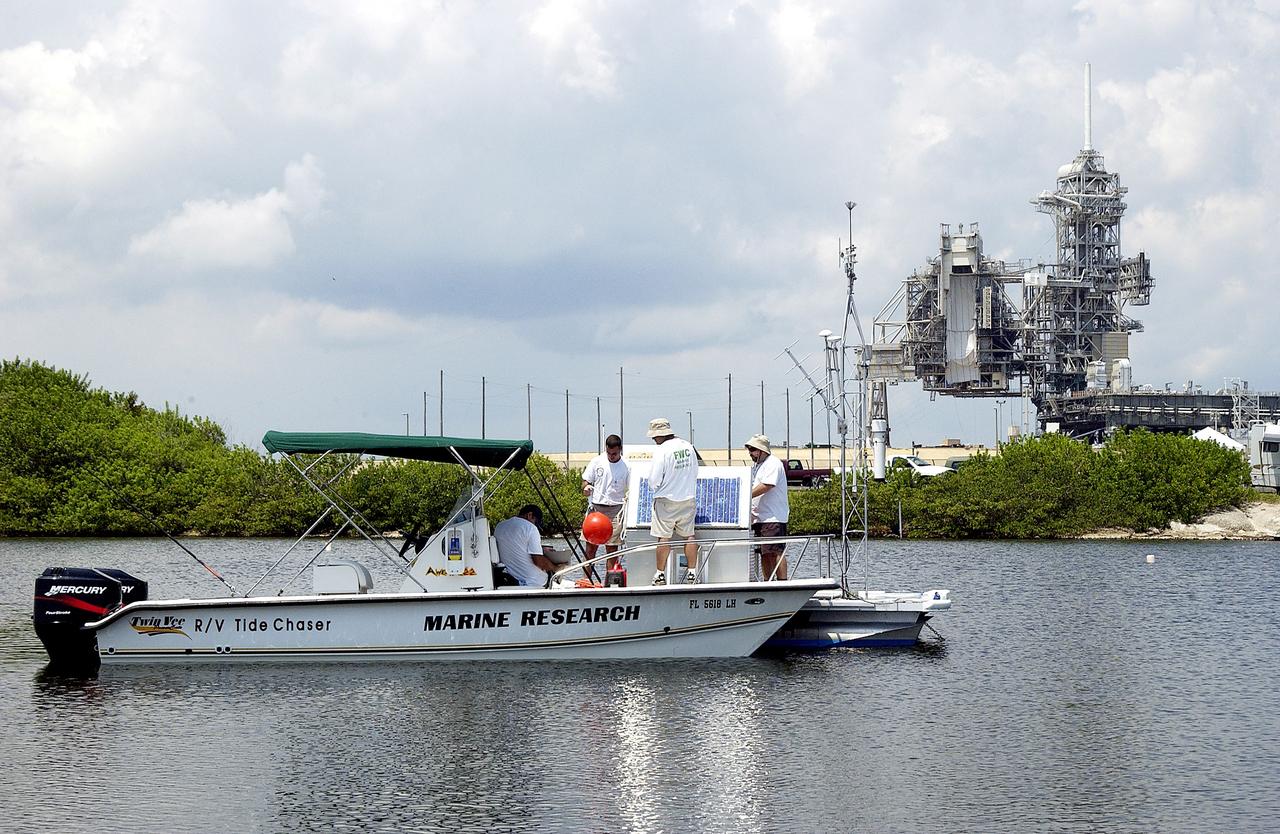
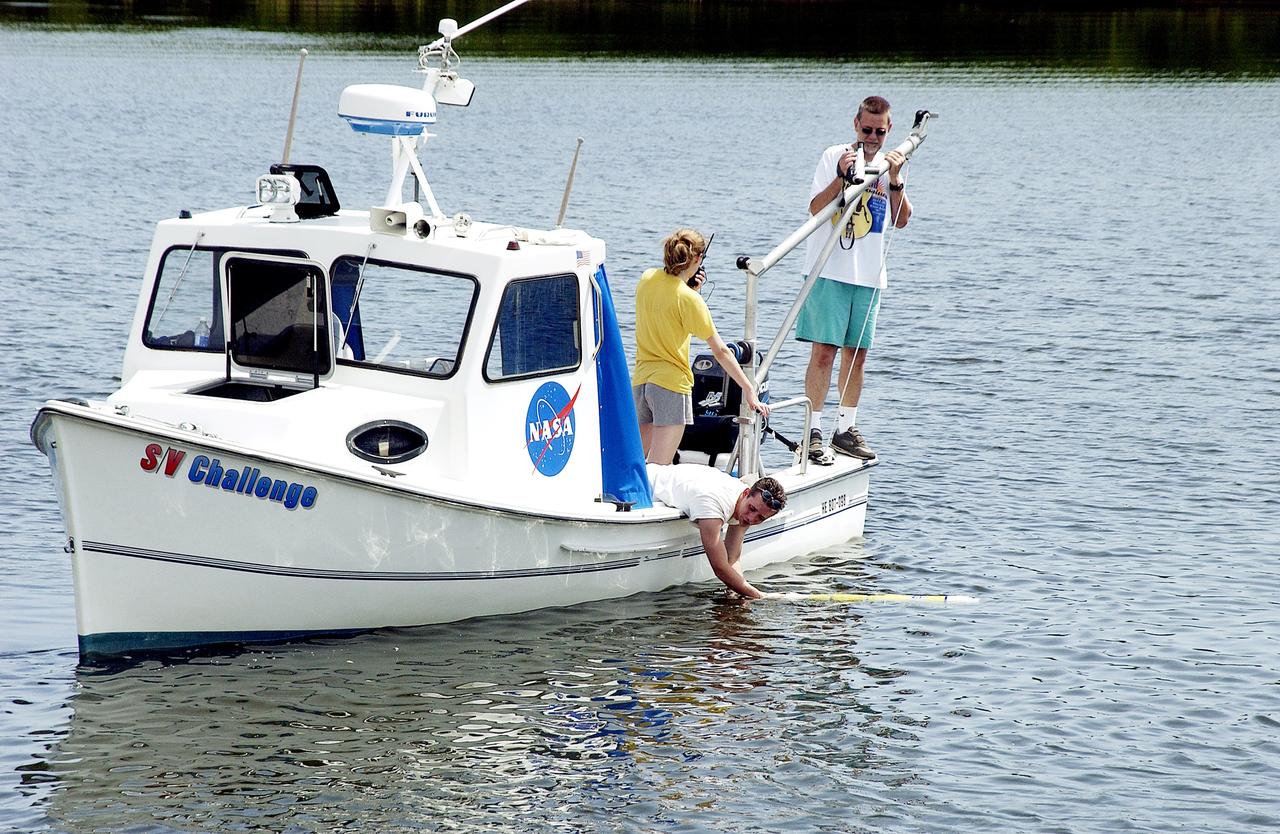
KENNEDY SPACE CENTER, FLA.  -  Researchers are positioned on one of the watercraft being utilized to conduct underwater acoustic research in the Launch Complex 39 turn basin.  Several government agencies, including NASA, NOAA, the Navy, the Coast Guard, and the Florida Fish and Wildlife Commission are involved in the testing. The research involves demonstrations of passive and active sensor technologies, with applications in fields ranging from marine biological research to homeland security. The work is also serving as a pilot project to assess the cooperation between the agencies involved. Equipment under development includes a passive acoustic monitor developed by NASA’s Jet Propulsion Laboratory, and mobile robotic sensors from the Navy’s Mobile Diving and Salvage Unit.
KENNEDY SPACE CENTER, FLA. - Researchers are positioned on one of the watercraft being utilized to conduct underwater acoustic research in the Launch Complex 39 turn basin. Several government agencies, including NASA, NOAA, the Navy, the Coast Guard, and the Florida Fish and Wildlife Commission are involved in the testing. The research involves demonstrations of passive and active sensor technologies, with applications in fields ranging from marine biological research to homeland security. The work is also serving as a pilot project to assess the cooperation between the agencies involved. Equipment under development includes a passive acoustic monitor developed by NASA’s Jet Propulsion Laboratory, and mobile robotic sensors from the Navy’s Mobile Diving and Salvage Unit.
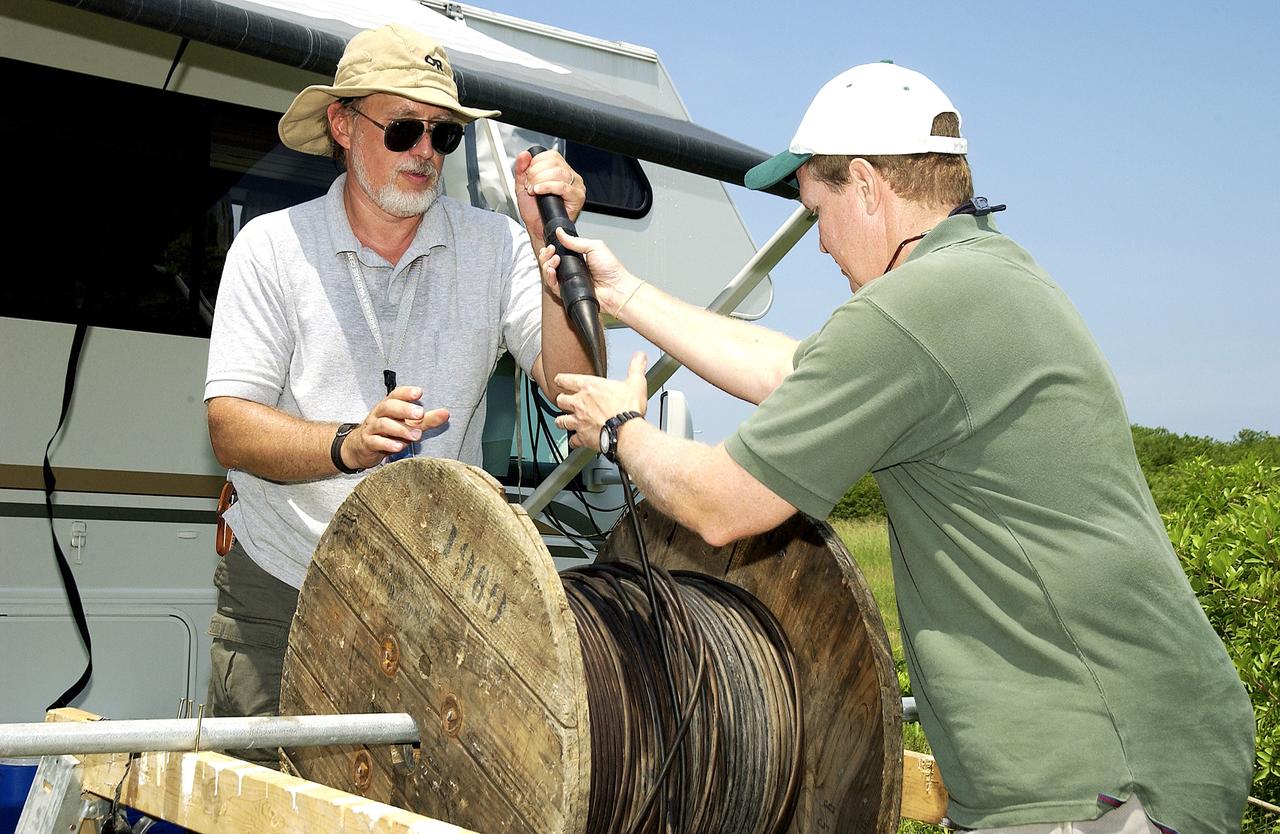
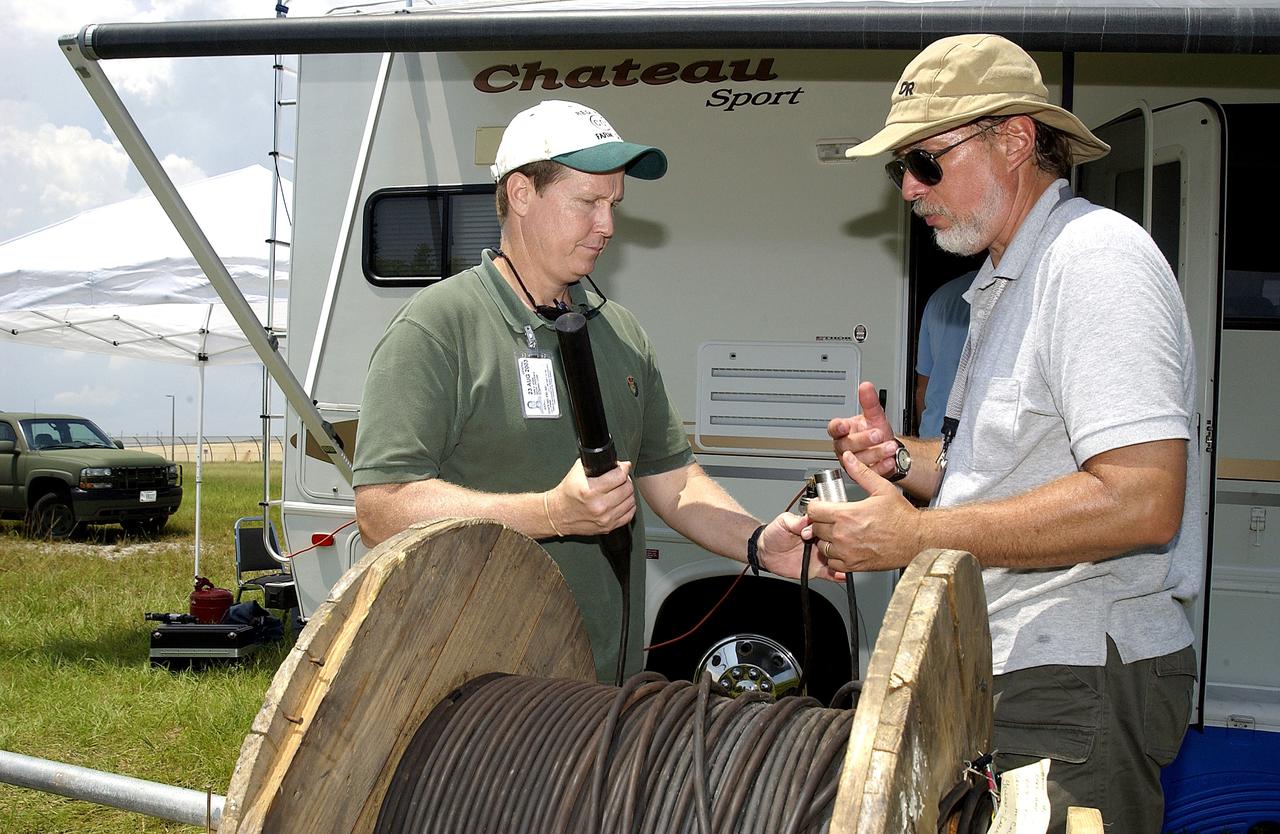
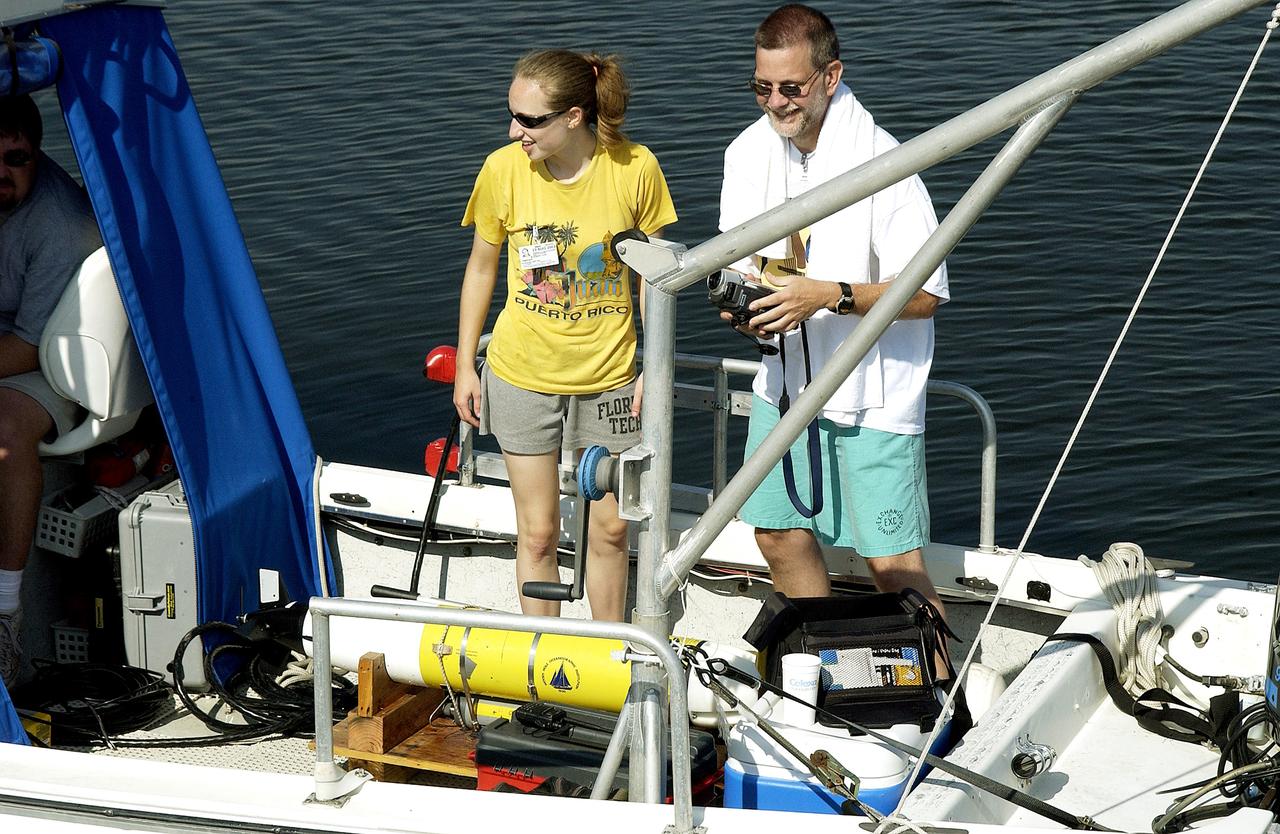
KENNEDY SPACE CENTER, FLA.  -  Research team members work with acoustic cable during underwater acoustic research being conducted in the Launch Complex 39 turn basin.  Several government agencies, including NASA, NOAA, the Navy, the Coast Guard, and the Florida Fish and Wildlife Commission are involved in the testing. The research involves demonstrations of passive and active sensor technologies, with applications in fields ranging from marine biological research to homeland security. The work is also serving as a pilot project to assess the cooperation between the agencies involved. Equipment under development includes a passive acoustic monitor developed by NASA’s Jet Propulsion Laboratory, and mobile robotic sensors from the Navy’s Mobile Diving and Salvage Unit.
KENNEDY SPACE CENTER, FLA. - Research team members work with acoustic cable during underwater acoustic research being conducted in the Launch Complex 39 turn basin. Several government agencies, including NASA, NOAA, the Navy, the Coast Guard, and the Florida Fish and Wildlife Commission are involved in the testing. The research involves demonstrations of passive and active sensor technologies, with applications in fields ranging from marine biological research to homeland security. The work is also serving as a pilot project to assess the cooperation between the agencies involved. Equipment under development includes a passive acoustic monitor developed by NASA’s Jet Propulsion Laboratory, and mobile robotic sensors from the Navy’s Mobile Diving and Salvage Unit.
KENNEDY SPACE CENTER, FLA.  -  Researchers are positioned on one of the watercraft being utilized to conduct underwater acoustic research in the Launch Complex 39 turn basin.  Several government agencies, including NASA, NOAA, the Navy, the Coast Guard, and the Florida Fish and Wildlife Commission are involved in the testing. The research involves demonstrations of passive and active sensor technologies, with applications in fields ranging from marine biological research to homeland security. The work is also serving as a pilot project to assess the cooperation between the agencies involved. Equipment under development includes a passive acoustic monitor developed by NASA’s Jet Propulsion Laboratory, and mobile robotic sensors from the Navy’s Mobile Diving and Salvage Unit.
KENNEDY SPACE CENTER, FLA. - Researchers are positioned on one of the watercraft being utilized to conduct underwater acoustic research in the Launch Complex 39 turn basin. Several government agencies, including NASA, NOAA, the Navy, the Coast Guard, and the Florida Fish and Wildlife Commission are involved in the testing. The research involves demonstrations of passive and active sensor technologies, with applications in fields ranging from marine biological research to homeland security. The work is also serving as a pilot project to assess the cooperation between the agencies involved. Equipment under development includes a passive acoustic monitor developed by NASA’s Jet Propulsion Laboratory, and mobile robotic sensors from the Navy’s Mobile Diving and Salvage Unit.
KENNEDY SPACE CENTER, FLA.  -  Researchers conduct underwater acoustic research in the Launch Complex 39 turn basin.  Several government agencies, including NASA, NOAA, the Navy, the Coast Guard, and the Florida Fish and Wildlife Commission are involved in the testing. The research involves demonstrations of passive and active sensor technologies, with applications in fields ranging from marine biological research to homeland security. The work is also serving as a pilot project to assess the cooperation between the agencies involved. Equipment under development includes a passive acoustic monitor developed by NASA’s Jet Propulsion Laboratory, and mobile robotic sensors from the Navy’s Mobile Diving and Salvage Unit.
KENNEDY SPACE CENTER, FLA. - Researchers conduct underwater acoustic research in the Launch Complex 39 turn basin. Several government agencies, including NASA, NOAA, the Navy, the Coast Guard, and the Florida Fish and Wildlife Commission are involved in the testing. The research involves demonstrations of passive and active sensor technologies, with applications in fields ranging from marine biological research to homeland security. The work is also serving as a pilot project to assess the cooperation between the agencies involved. Equipment under development includes a passive acoustic monitor developed by NASA’s Jet Propulsion Laboratory, and mobile robotic sensors from the Navy’s Mobile Diving and Salvage Unit.
KENNEDY SPACE CENTER, FLA.  -  Researchers utilize several types of watercraft to conduct underwater acoustic research in the Launch Complex 39 turn basin.  Several government agencies, including NASA, NOAA, the Navy, the Coast Guard, and the Florida Fish and Wildlife Commission are involved in the testing. The research involves demonstrations of passive and active sensor technologies, with applications in fields ranging from marine biological research to homeland security. The work is also serving as a pilot project to assess the cooperation between the agencies involved. Equipment under development includes a passive acoustic monitor developed by NASA’s Jet Propulsion Laboratory, and mobile robotic sensors from the Navy’s Mobile Diving and Salvage Unit.
KENNEDY SPACE CENTER, FLA. - Researchers utilize several types of watercraft to conduct underwater acoustic research in the Launch Complex 39 turn basin. Several government agencies, including NASA, NOAA, the Navy, the Coast Guard, and the Florida Fish and Wildlife Commission are involved in the testing. The research involves demonstrations of passive and active sensor technologies, with applications in fields ranging from marine biological research to homeland security. The work is also serving as a pilot project to assess the cooperation between the agencies involved. Equipment under development includes a passive acoustic monitor developed by NASA’s Jet Propulsion Laboratory, and mobile robotic sensors from the Navy’s Mobile Diving and Salvage Unit.
KENNEDY SPACE CENTER, FLA.  -  Research team members work with acoustic cable during underwater acoustic research being conducted in the Launch Complex 39 turn basin.  Several government agencies, including NASA, NOAA, the Navy, the Coast Guard, and the Florida Fish and Wildlife Commission are involved in the testing. The research involves demonstrations of passive and active sensor technologies, with applications in fields ranging from marine biological research to homeland security. The work is also serving as a pilot project to assess the cooperation between the agencies involved. Equipment under development includes a passive acoustic monitor developed by NASA’s Jet Propulsion Laboratory, and mobile robotic sensors from the Navy’s Mobile Diving and Salvage Unit.
KENNEDY SPACE CENTER, FLA. - Research team members work with acoustic cable during underwater acoustic research being conducted in the Launch Complex 39 turn basin. Several government agencies, including NASA, NOAA, the Navy, the Coast Guard, and the Florida Fish and Wildlife Commission are involved in the testing. The research involves demonstrations of passive and active sensor technologies, with applications in fields ranging from marine biological research to homeland security. The work is also serving as a pilot project to assess the cooperation between the agencies involved. Equipment under development includes a passive acoustic monitor developed by NASA’s Jet Propulsion Laboratory, and mobile robotic sensors from the Navy’s Mobile Diving and Salvage Unit.
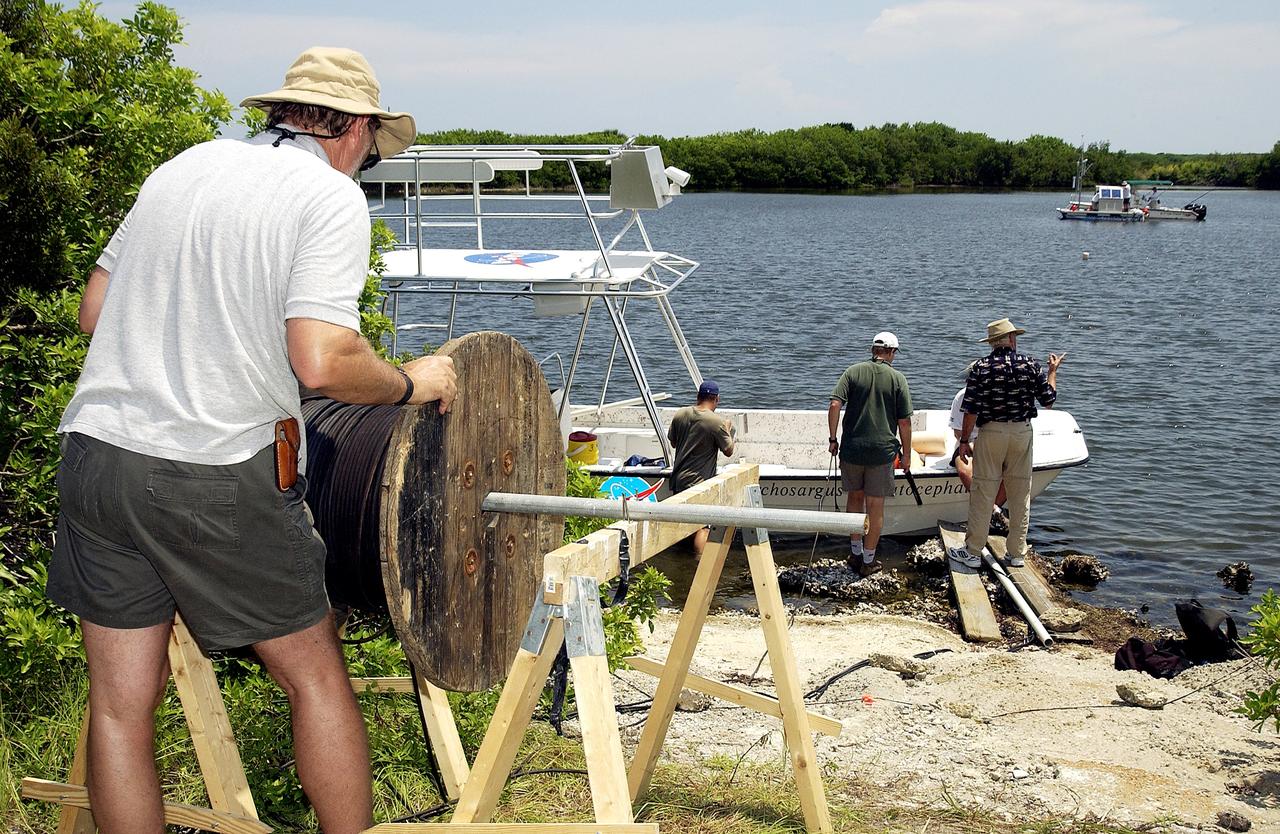
KENNEDY SPACE CENTER, FLA.  -  Research team members roll out acoustic cable to the water's edge during underwater acoustic research being conducted in the Launch Complex 39 turn basin.  Several government agencies, including NASA, NOAA, the Navy, the Coast Guard, and the Florida Fish and Wildlife Commission are involved in the testing. The research involves demonstrations of passive and active sensor technologies, with applications in fields ranging from marine biological research to homeland security. The work is also serving as a pilot project to assess the cooperation between the agencies involved. Equipment under development includes a passive acoustic monitor developed by NASA’s Jet Propulsion Laboratory, and mobile robotic sensors from the Navy’s Mobile Diving and Salvage Unit.
KENNEDY SPACE CENTER, FLA. - Research team members roll out acoustic cable to the water's edge during underwater acoustic research being conducted in the Launch Complex 39 turn basin. Several government agencies, including NASA, NOAA, the Navy, the Coast Guard, and the Florida Fish and Wildlife Commission are involved in the testing. The research involves demonstrations of passive and active sensor technologies, with applications in fields ranging from marine biological research to homeland security. The work is also serving as a pilot project to assess the cooperation between the agencies involved. Equipment under development includes a passive acoustic monitor developed by NASA’s Jet Propulsion Laboratory, and mobile robotic sensors from the Navy’s Mobile Diving and Salvage Unit.
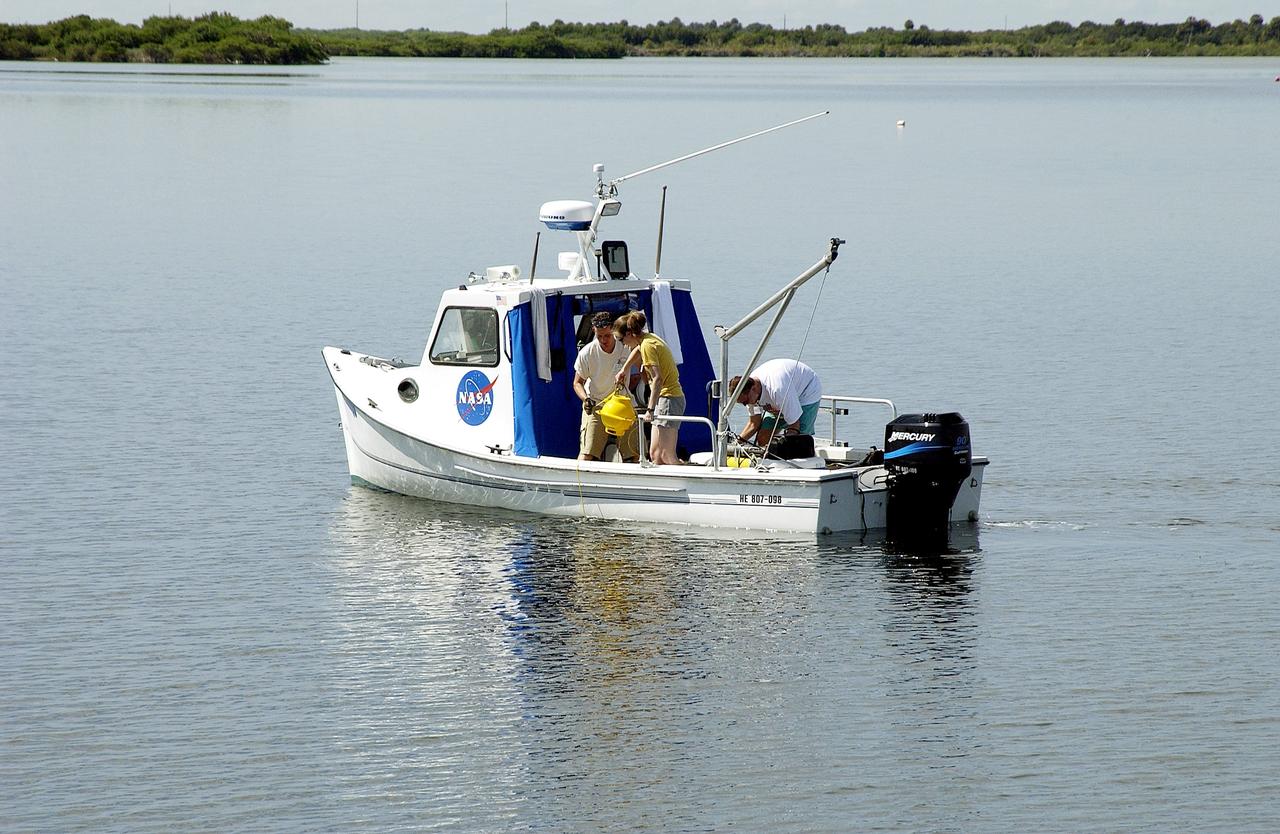
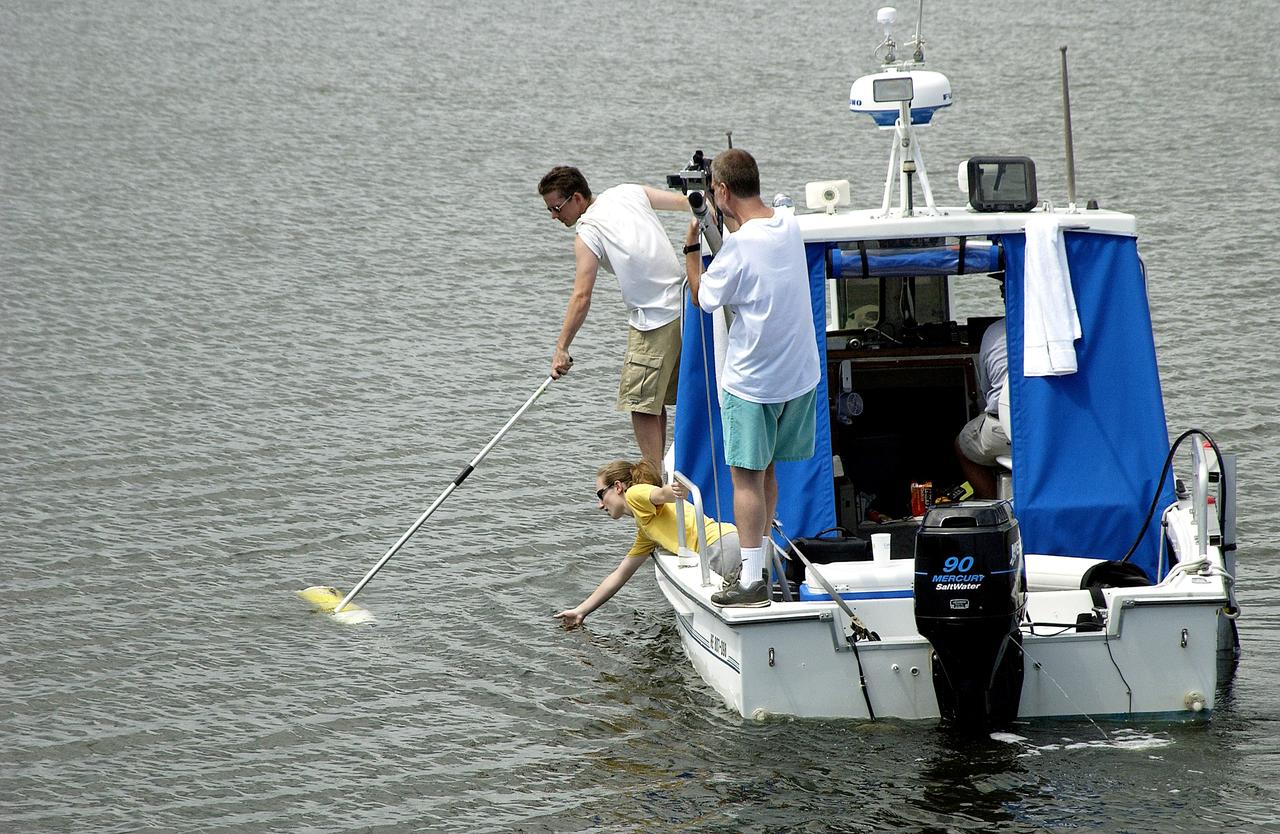
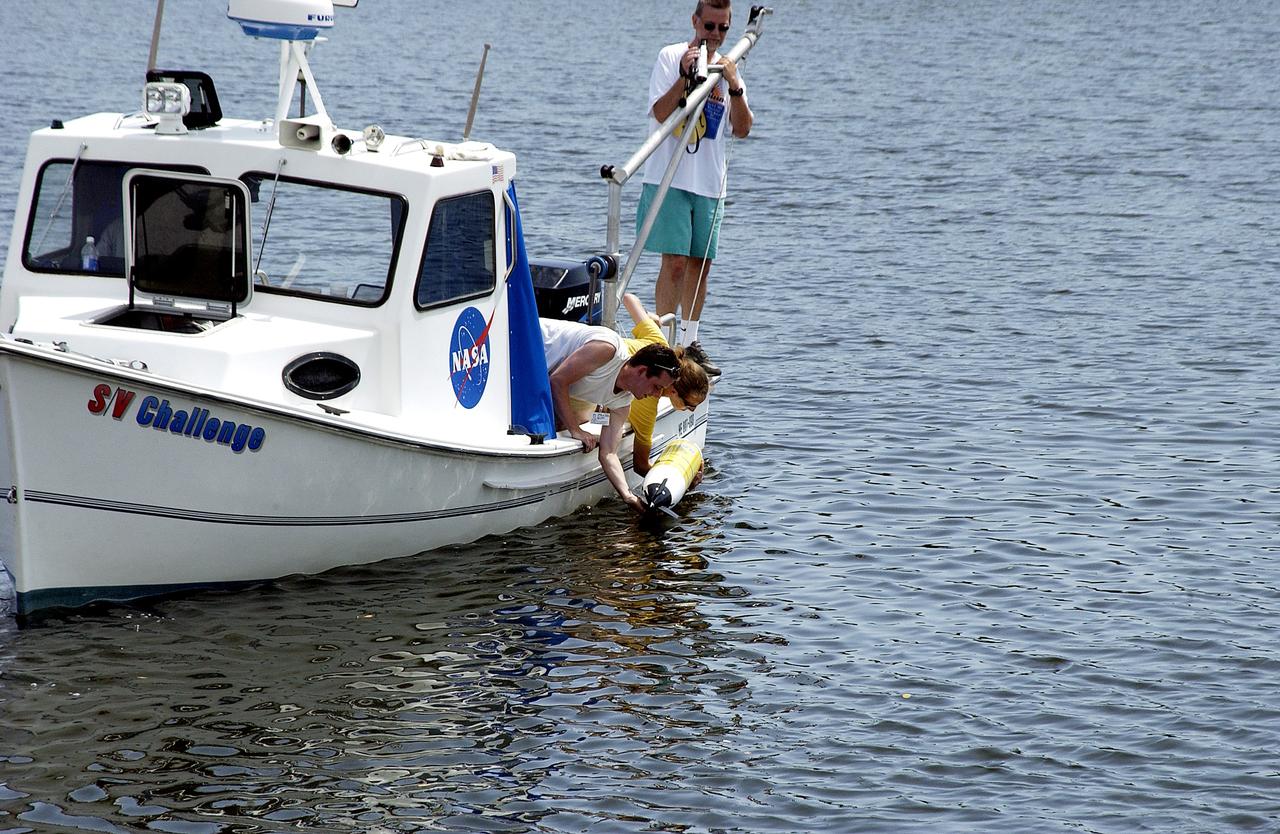
KENNEDY SPACE CENTER, FLA.  -  A research team member aboard one of the watercraft being utilized to conduct underwater acoustic research in the Launch Complex 39 turn basin releases some of the project's equipment into the water.  Several government agencies, including NASA, NOAA, the Navy, the Coast Guard, and the Florida Fish and Wildlife Commission are involved in the testing. The research involves demonstrations of passive and active sensor technologies, with applications in fields ranging from marine biological research to homeland security. The work is also serving as a pilot project to assess the cooperation between the agencies involved. Equipment under development includes a passive acoustic monitor developed by NASA’s Jet Propulsion Laboratory, and mobile robotic sensors from the Navy’s Mobile Diving and Salvage Unit.
KENNEDY SPACE CENTER, FLA. - A research team member aboard one of the watercraft being utilized to conduct underwater acoustic research in the Launch Complex 39 turn basin releases some of the project's equipment into the water. Several government agencies, including NASA, NOAA, the Navy, the Coast Guard, and the Florida Fish and Wildlife Commission are involved in the testing. The research involves demonstrations of passive and active sensor technologies, with applications in fields ranging from marine biological research to homeland security. The work is also serving as a pilot project to assess the cooperation between the agencies involved. Equipment under development includes a passive acoustic monitor developed by NASA’s Jet Propulsion Laboratory, and mobile robotic sensors from the Navy’s Mobile Diving and Salvage Unit.
KENNEDY SPACE CENTER, FLA.  -  Research team members aboard one of the watercraft being utilized to conduct underwater acoustic research in the Launch Complex 39 turn basin secure some of the project's equipment back into the vessel.  Several government agencies, including NASA, NOAA, the Navy, the Coast Guard, and the Florida Fish and Wildlife Commission are involved in the testing. The research involves demonstrations of passive and active sensor technologies, with applications in fields ranging from marine biological research to homeland security. The work is also serving as a pilot project to assess the cooperation between the agencies involved. Equipment under development includes a passive acoustic monitor developed by NASA’s Jet Propulsion Laboratory, and mobile robotic sensors from the Navy’s Mobile Diving and Salvage Unit.
KENNEDY SPACE CENTER, FLA. - Research team members aboard one of the watercraft being utilized to conduct underwater acoustic research in the Launch Complex 39 turn basin secure some of the project's equipment back into the vessel. Several government agencies, including NASA, NOAA, the Navy, the Coast Guard, and the Florida Fish and Wildlife Commission are involved in the testing. The research involves demonstrations of passive and active sensor technologies, with applications in fields ranging from marine biological research to homeland security. The work is also serving as a pilot project to assess the cooperation between the agencies involved. Equipment under development includes a passive acoustic monitor developed by NASA’s Jet Propulsion Laboratory, and mobile robotic sensors from the Navy’s Mobile Diving and Salvage Unit.
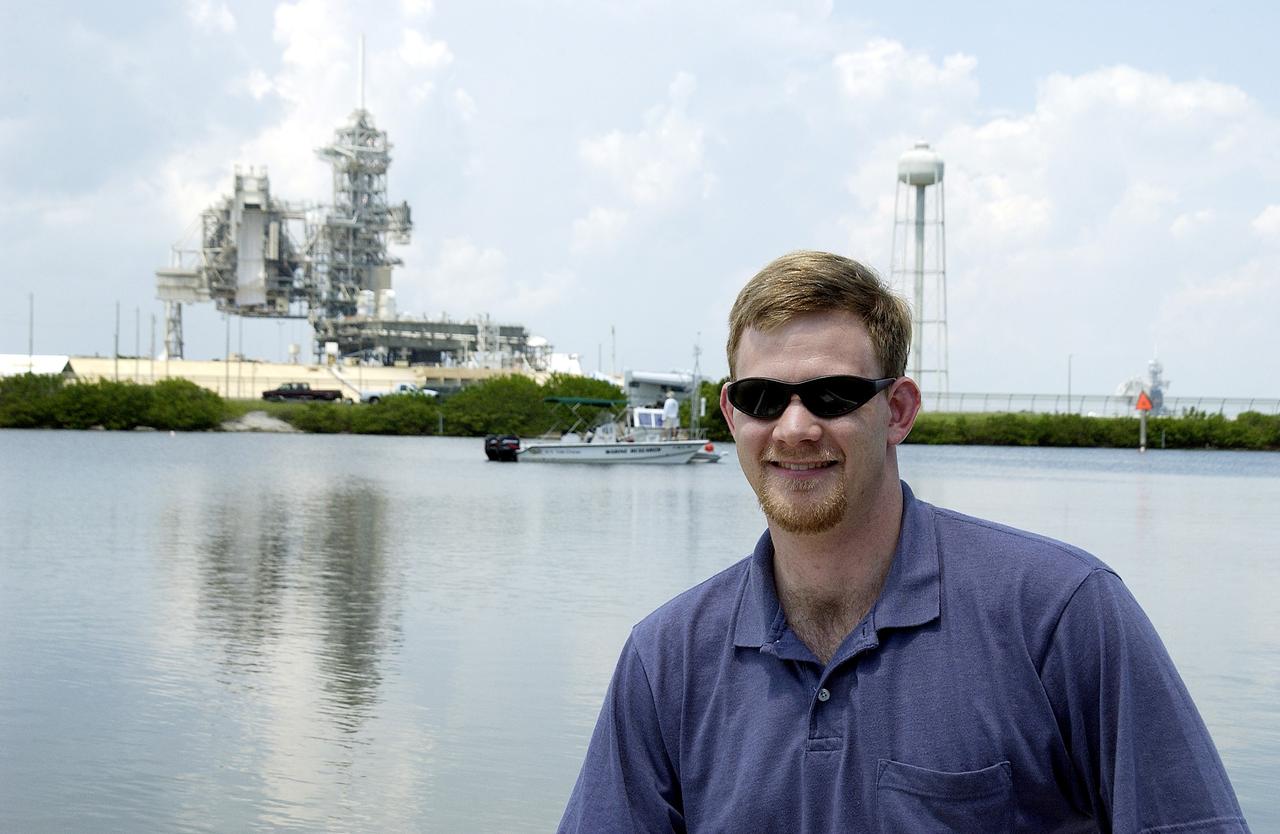
KENNEDY SPACE CENTER, FLA.  -  Justin Manley, of the National Oceanic and Atmospheric Administration, is a member of the research team conducting underwater acoustic research in the Launch Complex 39 turn basin near Launch Pad 39A.  Several government agencies, including NASA, NOAA, the Navy, the Coast Guard, and the Florida Fish and Wildlife Commission are involved in the testing. The research involves demonstrations of passive and active sensor technologies, with applications in fields ranging from marine biological research to homeland security. The work is also serving as a pilot project to assess the cooperation between the agencies involved. Equipment under development includes a passive acoustic monitor developed by NASA’s Jet Propulsion Laboratory, and mobile robotic sensors from the Navy’s Mobile Diving and Salvage Unit.
KENNEDY SPACE CENTER, FLA. - Justin Manley, of the National Oceanic and Atmospheric Administration, is a member of the research team conducting underwater acoustic research in the Launch Complex 39 turn basin near Launch Pad 39A. Several government agencies, including NASA, NOAA, the Navy, the Coast Guard, and the Florida Fish and Wildlife Commission are involved in the testing. The research involves demonstrations of passive and active sensor technologies, with applications in fields ranging from marine biological research to homeland security. The work is also serving as a pilot project to assess the cooperation between the agencies involved. Equipment under development includes a passive acoustic monitor developed by NASA’s Jet Propulsion Laboratory, and mobile robotic sensors from the Navy’s Mobile Diving and Salvage Unit.
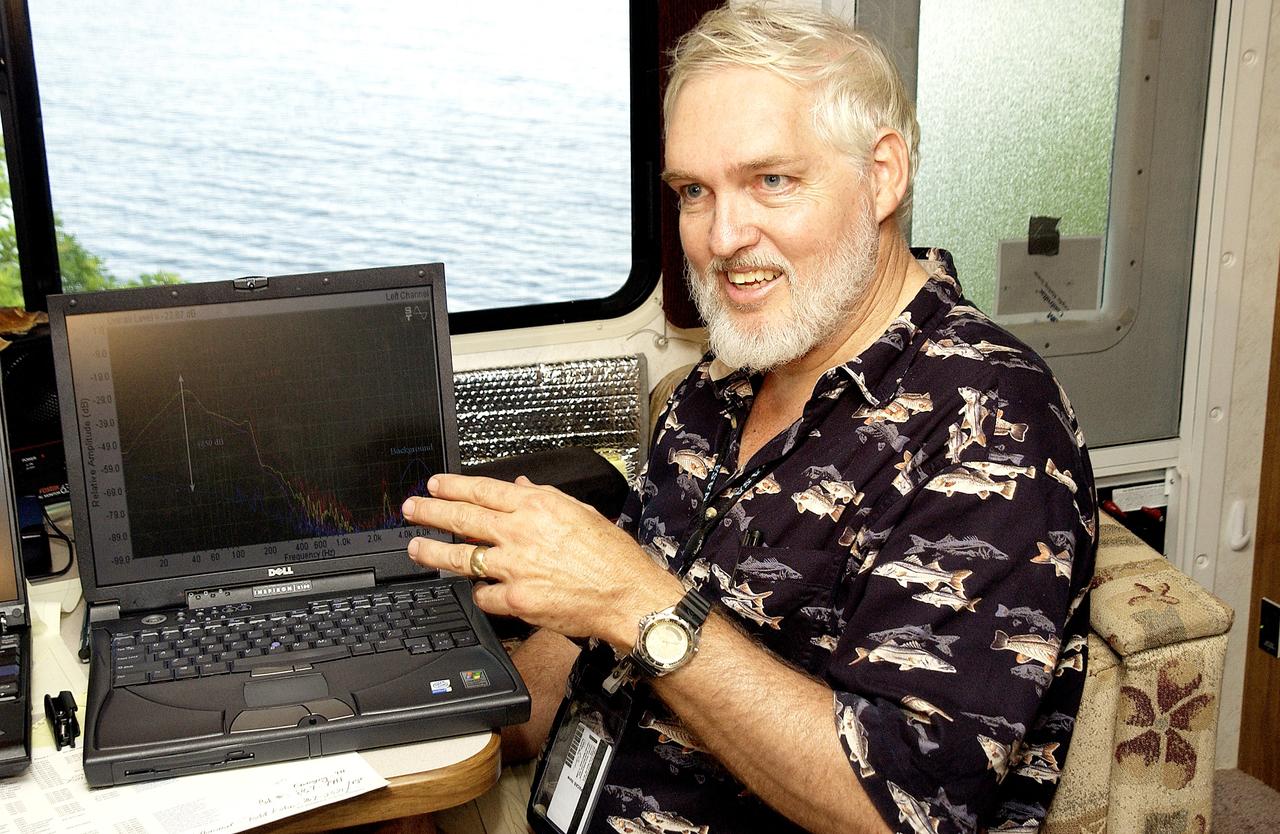
KENNEDY SPACE CENTER, FLA.  -  Dr. Grant Gilmore, Dynamac Corp., utilizes a laptop computer to explain aspects of the underwater acoustic research under way in the Launch Complex 39 turn basin.  Several government agencies, including NASA, NOAA, the Navy, the Coast Guard, and the Florida Fish and Wildlife Commission are involved in the testing. The research involves demonstrations of passive and active sensor technologies, with applications in fields ranging from marine biological research to homeland security. The work is also serving as a pilot project to assess the cooperation between the agencies involved. Equipment under development includes a passive acoustic monitor developed by NASA’s Jet Propulsion Laboratory, and mobile robotic sensors from the Navy’s Mobile Diving and Salvage Unit.
KENNEDY SPACE CENTER, FLA. - Dr. Grant Gilmore, Dynamac Corp., utilizes a laptop computer to explain aspects of the underwater acoustic research under way in the Launch Complex 39 turn basin. Several government agencies, including NASA, NOAA, the Navy, the Coast Guard, and the Florida Fish and Wildlife Commission are involved in the testing. The research involves demonstrations of passive and active sensor technologies, with applications in fields ranging from marine biological research to homeland security. The work is also serving as a pilot project to assess the cooperation between the agencies involved. Equipment under development includes a passive acoustic monitor developed by NASA’s Jet Propulsion Laboratory, and mobile robotic sensors from the Navy’s Mobile Diving and Salvage Unit.
KENNEDY SPACE CENTER, FLA.  -  Researchers utilize several types of watercraft to conduct underwater acoustic research in the Launch Complex 39 turn basin near Launch Pad 39A.  Several government agencies, including NASA, NOAA, the Navy, the Coast Guard, and the Florida Fish and Wildlife Commission are involved in the testing. The research involves demonstrations of passive and active sensor technologies, with applications in fields ranging from marine biological research to homeland security. The work is also serving as a pilot project to assess the cooperation between the agencies involved. Equipment under development includes a passive acoustic monitor developed by NASA’s Jet Propulsion Laboratory, and mobile robotic sensors from the Navy’s Mobile Diving and Salvage Unit.
KENNEDY SPACE CENTER, FLA. - Researchers utilize several types of watercraft to conduct underwater acoustic research in the Launch Complex 39 turn basin near Launch Pad 39A. Several government agencies, including NASA, NOAA, the Navy, the Coast Guard, and the Florida Fish and Wildlife Commission are involved in the testing. The research involves demonstrations of passive and active sensor technologies, with applications in fields ranging from marine biological research to homeland security. The work is also serving as a pilot project to assess the cooperation between the agencies involved. Equipment under development includes a passive acoustic monitor developed by NASA’s Jet Propulsion Laboratory, and mobile robotic sensors from the Navy’s Mobile Diving and Salvage Unit.
KENNEDY SPACE CENTER, FLA.  -  Research team members roll out acoustic cable to the water's edge as others stand by in a watercraft during underwater acoustic research being conducted in the Launch Complex 39 turn basin.  Several government agencies, including NASA, NOAA, the Navy, the Coast Guard, and the Florida Fish and Wildlife Commission are involved in the testing. The research involves demonstrations of passive and active sensor technologies, with applications in fields ranging from marine biological research to homeland security. The work is also serving as a pilot project to assess the cooperation between the agencies involved. Equipment under development includes a passive acoustic monitor developed by NASA’s Jet Propulsion Laboratory, and mobile robotic sensors from the Navy’s Mobile Diving and Salvage Unit.
KENNEDY SPACE CENTER, FLA. - Research team members roll out acoustic cable to the water's edge as others stand by in a watercraft during underwater acoustic research being conducted in the Launch Complex 39 turn basin. Several government agencies, including NASA, NOAA, the Navy, the Coast Guard, and the Florida Fish and Wildlife Commission are involved in the testing. The research involves demonstrations of passive and active sensor technologies, with applications in fields ranging from marine biological research to homeland security. The work is also serving as a pilot project to assess the cooperation between the agencies involved. Equipment under development includes a passive acoustic monitor developed by NASA’s Jet Propulsion Laboratory, and mobile robotic sensors from the Navy’s Mobile Diving and Salvage Unit.
KENNEDY SPACE CENTER, FLA.  -  Research team members aboard one of the watercraft being utilized to conduct underwater acoustic research in the Launch Complex 39 turn basin prepare to release some of the project's equipment into the water.  Several government agencies, including NASA, NOAA, the Navy, the Coast Guard, and the Florida Fish and Wildlife Commission are involved in the testing. The research involves demonstrations of passive and active sensor technologies, with applications in fields ranging from marine biological research to homeland security. The work is also serving as a pilot project to assess the cooperation between the agencies involved. Equipment under development includes a passive acoustic monitor developed by NASA’s Jet Propulsion Laboratory, and mobile robotic sensors from the Navy’s Mobile Diving and Salvage Unit.
KENNEDY SPACE CENTER, FLA. - Research team members aboard one of the watercraft being utilized to conduct underwater acoustic research in the Launch Complex 39 turn basin prepare to release some of the project's equipment into the water. Several government agencies, including NASA, NOAA, the Navy, the Coast Guard, and the Florida Fish and Wildlife Commission are involved in the testing. The research involves demonstrations of passive and active sensor technologies, with applications in fields ranging from marine biological research to homeland security. The work is also serving as a pilot project to assess the cooperation between the agencies involved. Equipment under development includes a passive acoustic monitor developed by NASA’s Jet Propulsion Laboratory, and mobile robotic sensors from the Navy’s Mobile Diving and Salvage Unit.
KENNEDY SPACE CENTER, FLA.  -  Research team members aboard one of the watercraft being utilized to conduct underwater acoustic research in the Launch Complex 39 turn basin release some of the project's equipment into the water.  Several government agencies, including NASA, NOAA, the Navy, the Coast Guard, and the Florida Fish and Wildlife Commission are involved in the testing. The research involves demonstrations of passive and active sensor technologies, with applications in fields ranging from marine biological research to homeland security. The work is also serving as a pilot project to assess the cooperation between the agencies involved. Equipment under development includes a passive acoustic monitor developed by NASA’s Jet Propulsion Laboratory, and mobile robotic sensors from the Navy’s Mobile Diving and Salvage Unit.
KENNEDY SPACE CENTER, FLA. - Research team members aboard one of the watercraft being utilized to conduct underwater acoustic research in the Launch Complex 39 turn basin release some of the project's equipment into the water. Several government agencies, including NASA, NOAA, the Navy, the Coast Guard, and the Florida Fish and Wildlife Commission are involved in the testing. The research involves demonstrations of passive and active sensor technologies, with applications in fields ranging from marine biological research to homeland security. The work is also serving as a pilot project to assess the cooperation between the agencies involved. Equipment under development includes a passive acoustic monitor developed by NASA’s Jet Propulsion Laboratory, and mobile robotic sensors from the Navy’s Mobile Diving and Salvage Unit.
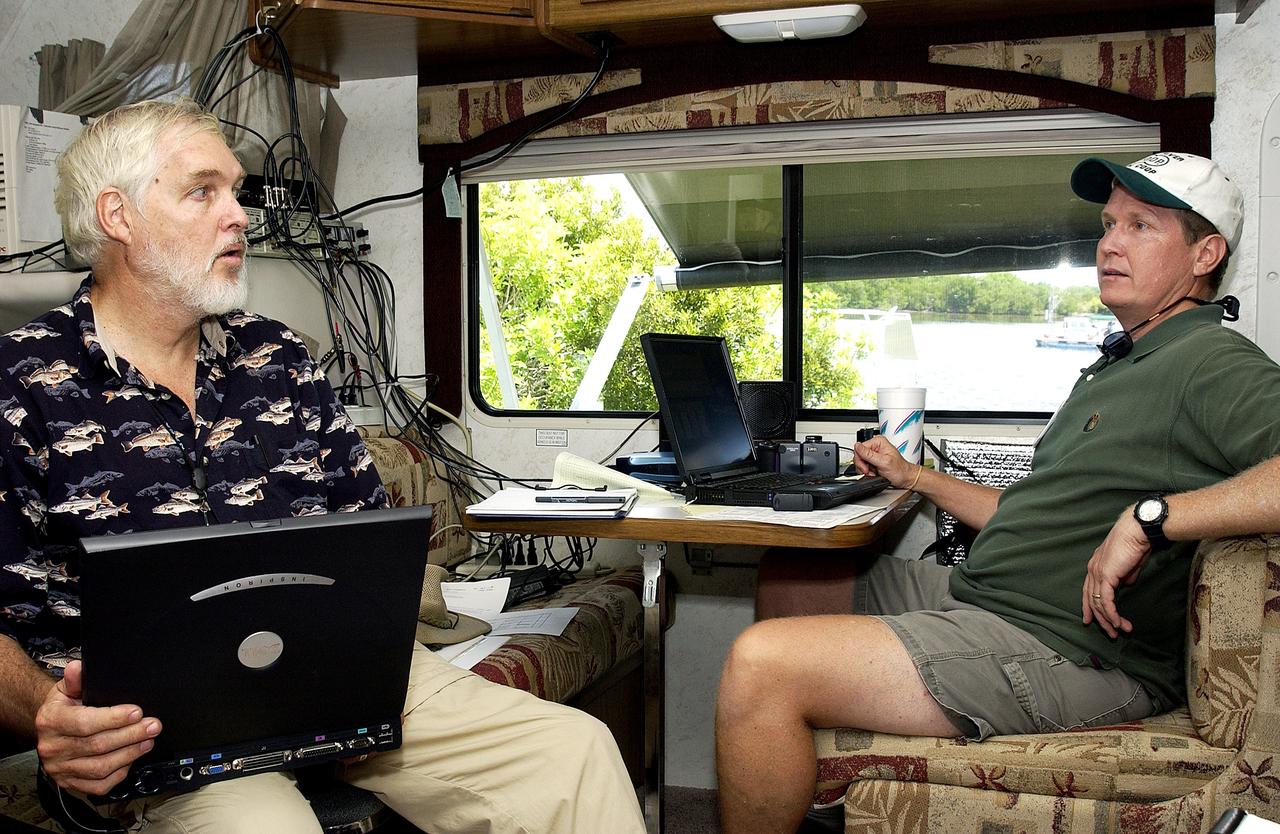
KENNEDY SPACE CENTER, FLA.  -  Dr. Grant Gilmore (left), Dynamac Corp., talks to another member of the research team conducting underwater acoustic research in the Launch Complex 39 turn basin.  Several government agencies, including NASA, NOAA, the Navy, the Coast Guard, and the Florida Fish and Wildlife Commission are involved in the testing. The research involves demonstrations of passive and active sensor technologies, with applications in fields ranging from marine biological research to homeland security. The work is also serving as a pilot project to assess the cooperation between the agencies involved. Equipment under development includes a passive acoustic monitor developed by NASA’s Jet Propulsion Laboratory, and mobile robotic sensors from the Navy’s Mobile Diving and Salvage Unit.
KENNEDY SPACE CENTER, FLA. - Dr. Grant Gilmore (left), Dynamac Corp., talks to another member of the research team conducting underwater acoustic research in the Launch Complex 39 turn basin. Several government agencies, including NASA, NOAA, the Navy, the Coast Guard, and the Florida Fish and Wildlife Commission are involved in the testing. The research involves demonstrations of passive and active sensor technologies, with applications in fields ranging from marine biological research to homeland security. The work is also serving as a pilot project to assess the cooperation between the agencies involved. Equipment under development includes a passive acoustic monitor developed by NASA’s Jet Propulsion Laboratory, and mobile robotic sensors from the Navy’s Mobile Diving and Salvage Unit.
KENNEDY SPACE CENTER, FLA.  -  Research team members aboard one of the watercraft being utilized to conduct underwater acoustic research in the Launch Complex 39 turn basin retrieve some of the project's equipment from the water.  Several government agencies, including NASA, NOAA, the Navy, the Coast Guard, and the Florida Fish and Wildlife Commission are involved in the testing. The research involves demonstrations of passive and active sensor technologies, with applications in fields ranging from marine biological research to homeland security. The work is also serving as a pilot project to assess the cooperation between the agencies involved. Equipment under development includes a passive acoustic monitor developed by NASA’s Jet Propulsion Laboratory, and mobile robotic sensors from the Navy’s Mobile Diving and Salvage Unit.
KENNEDY SPACE CENTER, FLA. - Research team members aboard one of the watercraft being utilized to conduct underwater acoustic research in the Launch Complex 39 turn basin retrieve some of the project's equipment from the water. Several government agencies, including NASA, NOAA, the Navy, the Coast Guard, and the Florida Fish and Wildlife Commission are involved in the testing. The research involves demonstrations of passive and active sensor technologies, with applications in fields ranging from marine biological research to homeland security. The work is also serving as a pilot project to assess the cooperation between the agencies involved. Equipment under development includes a passive acoustic monitor developed by NASA’s Jet Propulsion Laboratory, and mobile robotic sensors from the Navy’s Mobile Diving and Salvage Unit.
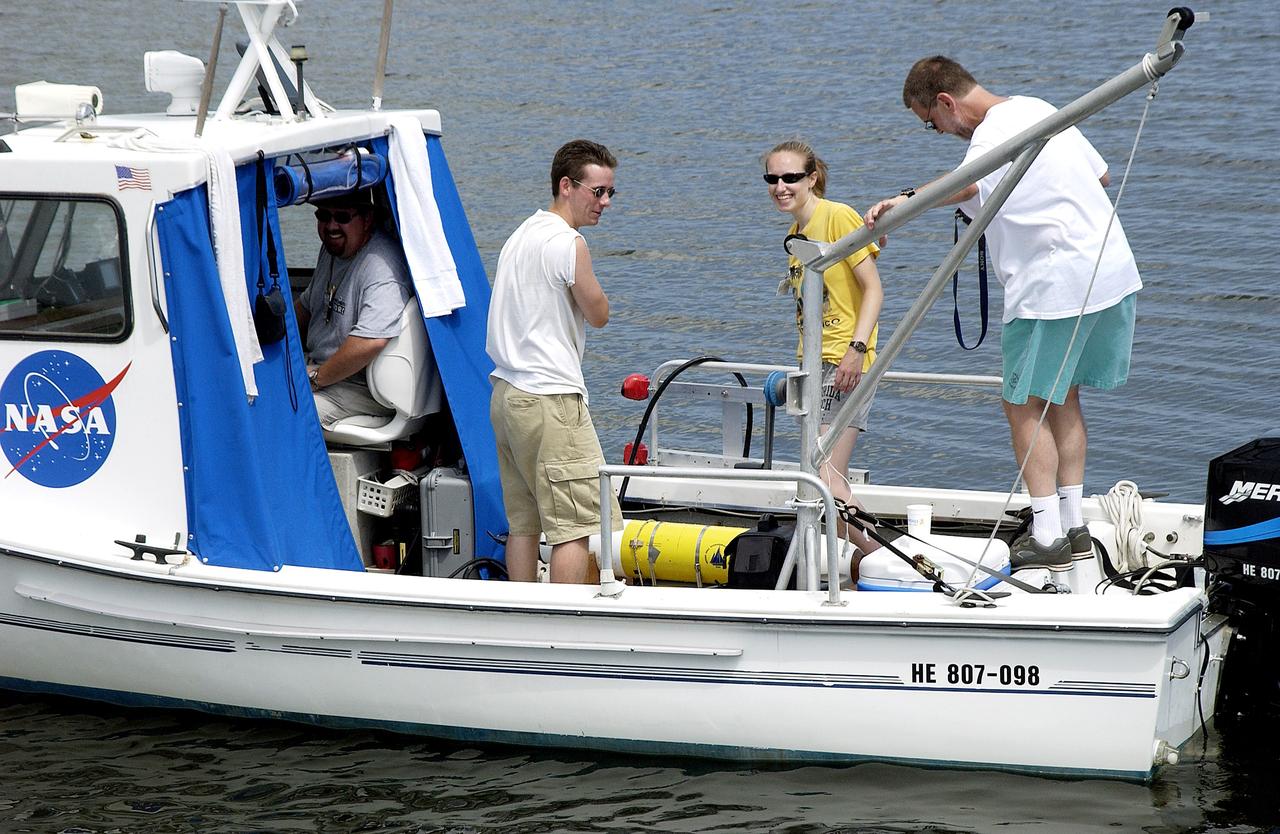
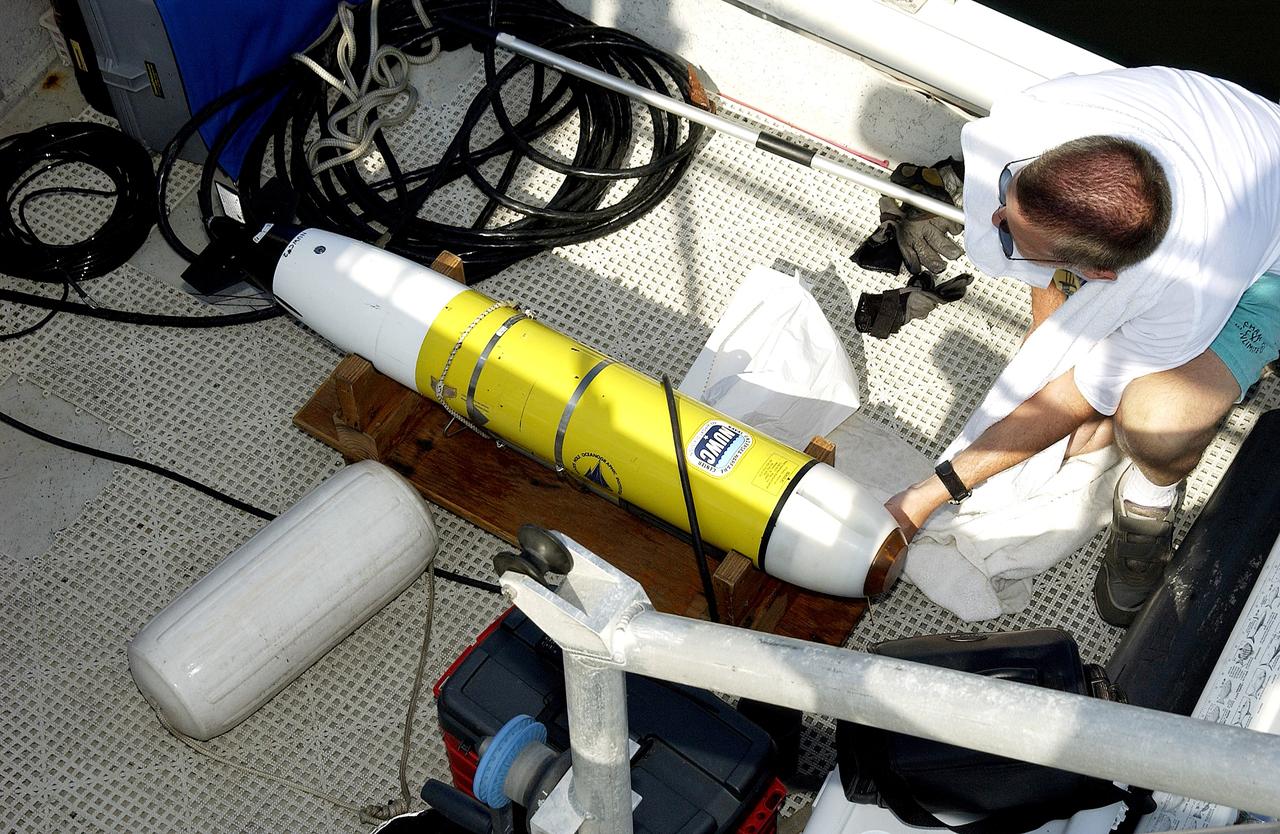
KENNEDY SPACE CENTER, FLA.  -  A research team member aboard one of the watercraft being utilized to conduct underwater acoustic research in the Launch Complex 39 turn basin prepares some of the project's equipment for placement in the water.  Several government agencies, including NASA, NOAA, the Navy, the Coast Guard, and the Florida Fish and Wildlife Commission are involved in the testing. The research involves demonstrations of passive and active sensor technologies, with applications in fields ranging from marine biological research to homeland security. The work is also serving as a pilot project to assess the cooperation between the agencies involved. Equipment under development includes a passive acoustic monitor developed by NASA’s Jet Propulsion Laboratory, and mobile robotic sensors from the Navy’s Mobile Diving and Salvage Unit.
KENNEDY SPACE CENTER, FLA. - A research team member aboard one of the watercraft being utilized to conduct underwater acoustic research in the Launch Complex 39 turn basin prepares some of the project's equipment for placement in the water. Several government agencies, including NASA, NOAA, the Navy, the Coast Guard, and the Florida Fish and Wildlife Commission are involved in the testing. The research involves demonstrations of passive and active sensor technologies, with applications in fields ranging from marine biological research to homeland security. The work is also serving as a pilot project to assess the cooperation between the agencies involved. Equipment under development includes a passive acoustic monitor developed by NASA’s Jet Propulsion Laboratory, and mobile robotic sensors from the Navy’s Mobile Diving and Salvage Unit.
KENNEDY SPACE CENTER, FLA.  -  Research team members take their places on one of the watercraft being utilized to conduct underwater acoustic research in the Launch Complex 39 turn basin.  Several government agencies, including NASA, NOAA, the Navy, the Coast Guard, and the Florida Fish and Wildlife Commission are involved in the testing. The research involves demonstrations of passive and active sensor technologies, with applications in fields ranging from marine biological research to homeland security. The work is also serving as a pilot project to assess the cooperation between the agencies involved. Equipment under development includes a passive acoustic monitor developed by NASA’s Jet Propulsion Laboratory, and mobile robotic sensors from the Navy’s Mobile Diving and Salvage Unit.
KENNEDY SPACE CENTER, FLA. - Research team members take their places on one of the watercraft being utilized to conduct underwater acoustic research in the Launch Complex 39 turn basin. Several government agencies, including NASA, NOAA, the Navy, the Coast Guard, and the Florida Fish and Wildlife Commission are involved in the testing. The research involves demonstrations of passive and active sensor technologies, with applications in fields ranging from marine biological research to homeland security. The work is also serving as a pilot project to assess the cooperation between the agencies involved. Equipment under development includes a passive acoustic monitor developed by NASA’s Jet Propulsion Laboratory, and mobile robotic sensors from the Navy’s Mobile Diving and Salvage Unit.
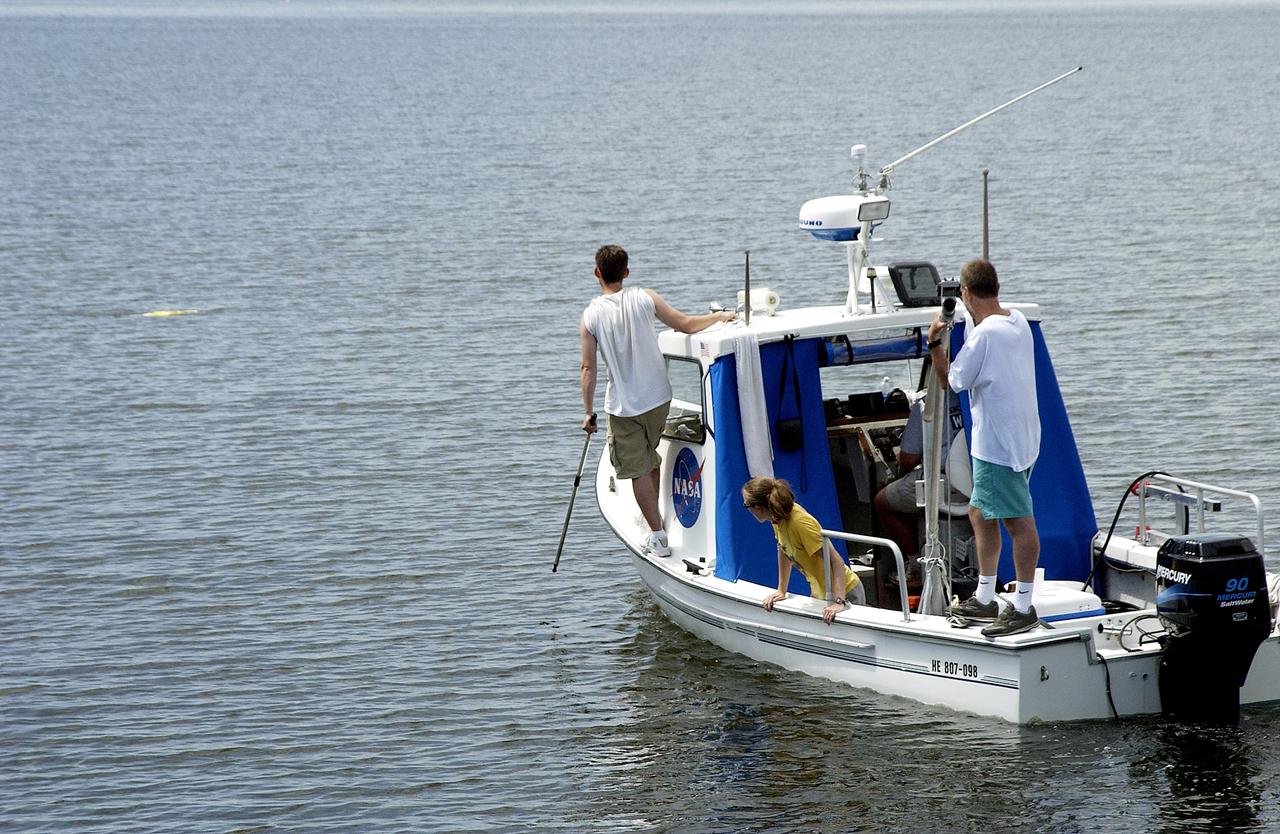
KENNEDY SPACE CENTER, FLA.  -  Research team members aboard one of the watercraft being utilized to conduct underwater acoustic research in the Launch Complex 39 turn basin monitor some of the project's equipment just released into the water.  Several government agencies, including NASA, NOAA, the Navy, the Coast Guard, and the Florida Fish and Wildlife Commission are involved in the testing. The research involves demonstrations of passive and active sensor technologies, with applications in fields ranging from marine biological research to homeland security. The work is also serving as a pilot project to assess the cooperation between the agencies involved. Equipment under development includes a passive acoustic monitor developed by NASA’s Jet Propulsion Laboratory, and mobile robotic sensors from the Navy’s Mobile Diving and Salvage Unit.
KENNEDY SPACE CENTER, FLA. - Research team members aboard one of the watercraft being utilized to conduct underwater acoustic research in the Launch Complex 39 turn basin monitor some of the project's equipment just released into the water. Several government agencies, including NASA, NOAA, the Navy, the Coast Guard, and the Florida Fish and Wildlife Commission are involved in the testing. The research involves demonstrations of passive and active sensor technologies, with applications in fields ranging from marine biological research to homeland security. The work is also serving as a pilot project to assess the cooperation between the agencies involved. Equipment under development includes a passive acoustic monitor developed by NASA’s Jet Propulsion Laboratory, and mobile robotic sensors from the Navy’s Mobile Diving and Salvage Unit.
KENNEDY SPACE CENTER, FLA.  -  A research team member aboard one of the watercraft being utilized to conduct underwater acoustic research in the Launch Complex 39 turn basin lifts some of the project's equipment from the water.  Several government agencies, including NASA, NOAA, the Navy, the Coast Guard, and the Florida Fish and Wildlife Commission are involved in the testing. The research involves demonstrations of passive and active sensor technologies, with applications in fields ranging from marine biological research to homeland security. The work is also serving as a pilot project to assess the cooperation between the agencies involved. Equipment under development includes a passive acoustic monitor developed by NASA’s Jet Propulsion Laboratory, and mobile robotic sensors from the Navy’s Mobile Diving and Salvage Unit.
KENNEDY SPACE CENTER, FLA. - A research team member aboard one of the watercraft being utilized to conduct underwater acoustic research in the Launch Complex 39 turn basin lifts some of the project's equipment from the water. Several government agencies, including NASA, NOAA, the Navy, the Coast Guard, and the Florida Fish and Wildlife Commission are involved in the testing. The research involves demonstrations of passive and active sensor technologies, with applications in fields ranging from marine biological research to homeland security. The work is also serving as a pilot project to assess the cooperation between the agencies involved. Equipment under development includes a passive acoustic monitor developed by NASA’s Jet Propulsion Laboratory, and mobile robotic sensors from the Navy’s Mobile Diving and Salvage Unit.
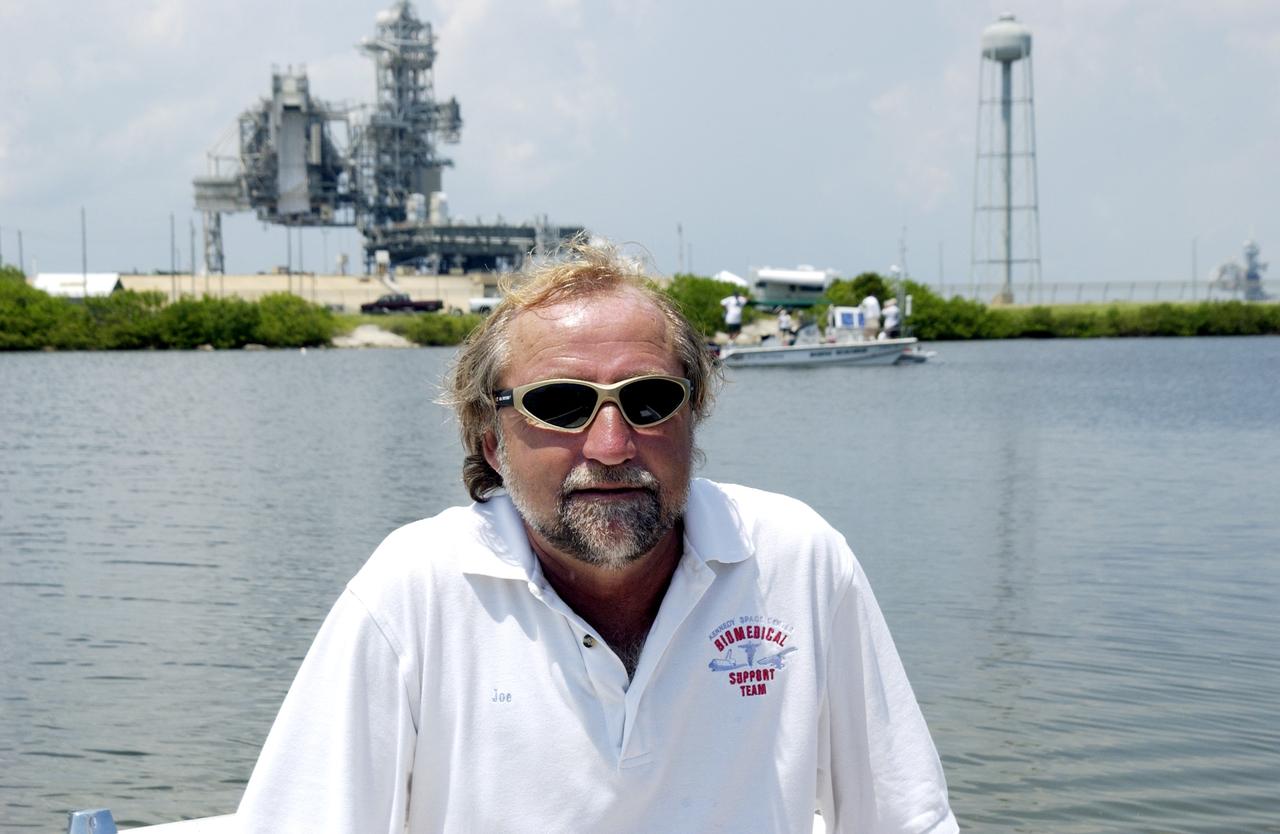
KENNEDY SPACE CENTER, FLA.  -  Joe Bartoszek, NASA, is a member of the research team conducting underwater acoustic research in the Launch Complex 39 turn basin near Launch Pad 39A.  Several government agencies, including NASA, NOAA, the Navy, the Coast Guard, and the Florida Fish and Wildlife Commission are involved in the testing. The research involves demonstrations of passive and active sensor technologies, with applications in fields ranging from marine biological research to homeland security. The work is also serving as a pilot project to assess the cooperation between the agencies involved. Equipment under development includes a passive acoustic monitor developed by NASA’s Jet Propulsion Laboratory, and mobile robotic sensors from the Navy’s Mobile Diving and Salvage Unit.
KENNEDY SPACE CENTER, FLA. - Joe Bartoszek, NASA, is a member of the research team conducting underwater acoustic research in the Launch Complex 39 turn basin near Launch Pad 39A. Several government agencies, including NASA, NOAA, the Navy, the Coast Guard, and the Florida Fish and Wildlife Commission are involved in the testing. The research involves demonstrations of passive and active sensor technologies, with applications in fields ranging from marine biological research to homeland security. The work is also serving as a pilot project to assess the cooperation between the agencies involved. Equipment under development includes a passive acoustic monitor developed by NASA’s Jet Propulsion Laboratory, and mobile robotic sensors from the Navy’s Mobile Diving and Salvage Unit.
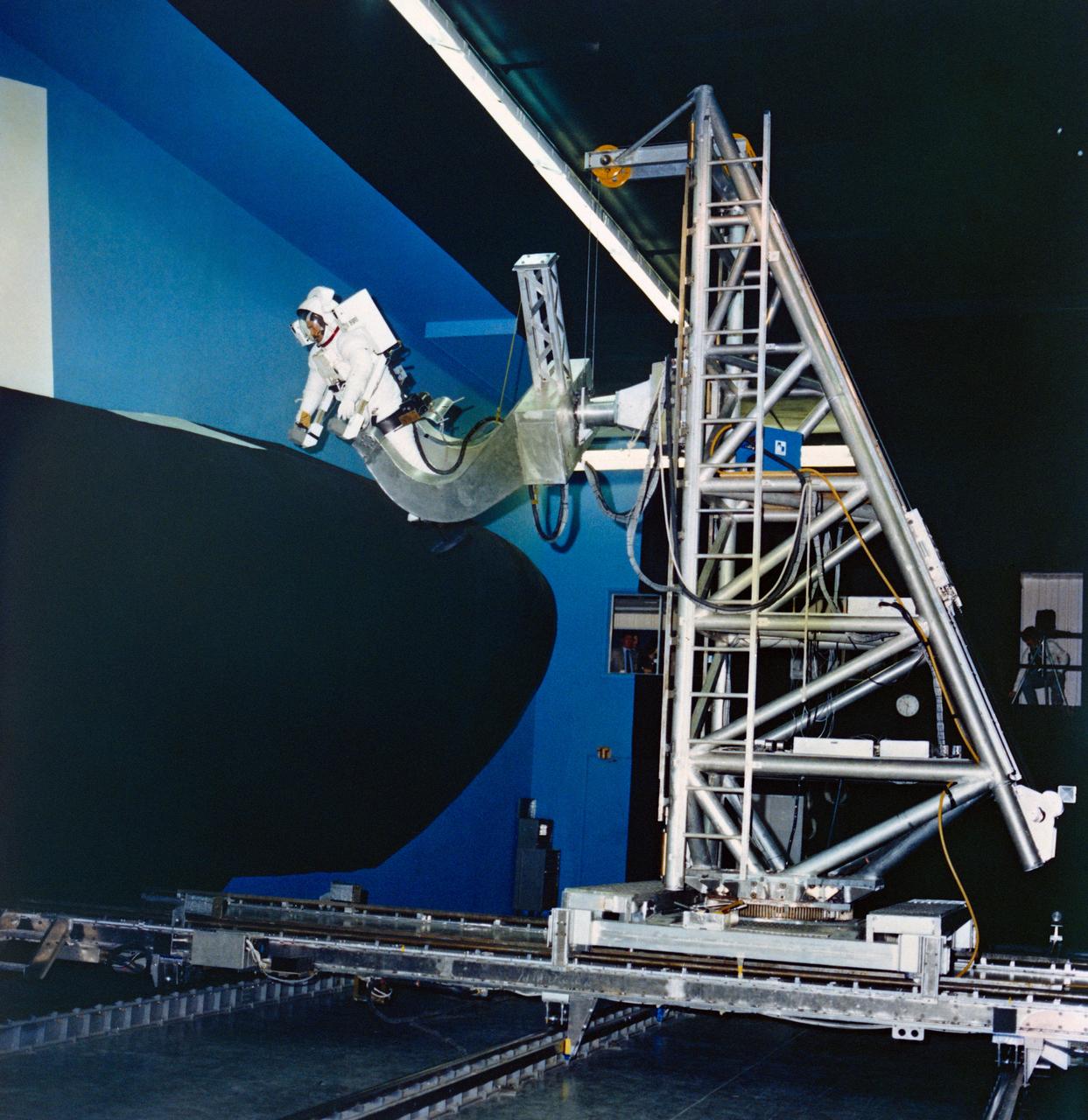
S80-36889 (24 July 1980) ---  Astronaut Bruce McCandless II uses a simulator at Martin Marietta?s space center near Denver to develop flight techniques for a backpack propulsion unit that will be used on Space Shuttle flights.  The manned maneuvering unit (MMU) training simulator allows astronauts to "fly missions" against a full scale mockup of a portion of the orbiter vehicle.  Controls of the simulator are like those of the actual MMU.  Manipulating them allows the astronaut to move in three straight-line directions and in pitch, yaw and roll.  One possible application of the MMU is for an extravehicular activity chore to repair damaged tiles on the vehicle.  McCandless is wearing an extravehicular mobility unit (EMU).
MMU development at the Martin Marietta plant in Denver, Colorado
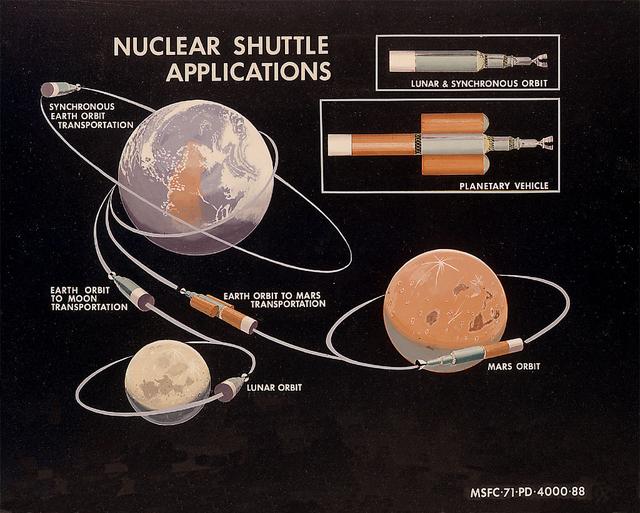
In this 1971 artist's concept, the Nuclear Shuttle is shown in various space-based applications. As envisioned by Marshall Space Flight Center Program Development persornel, the Nuclear Shuttle would deliver payloads to geosychronous Earth orbits or lunar orbits then return to low Earth orbit for refueling. A cluster of Nuclear Shuttle units could form the basis for planetary missions.
Early Program Development
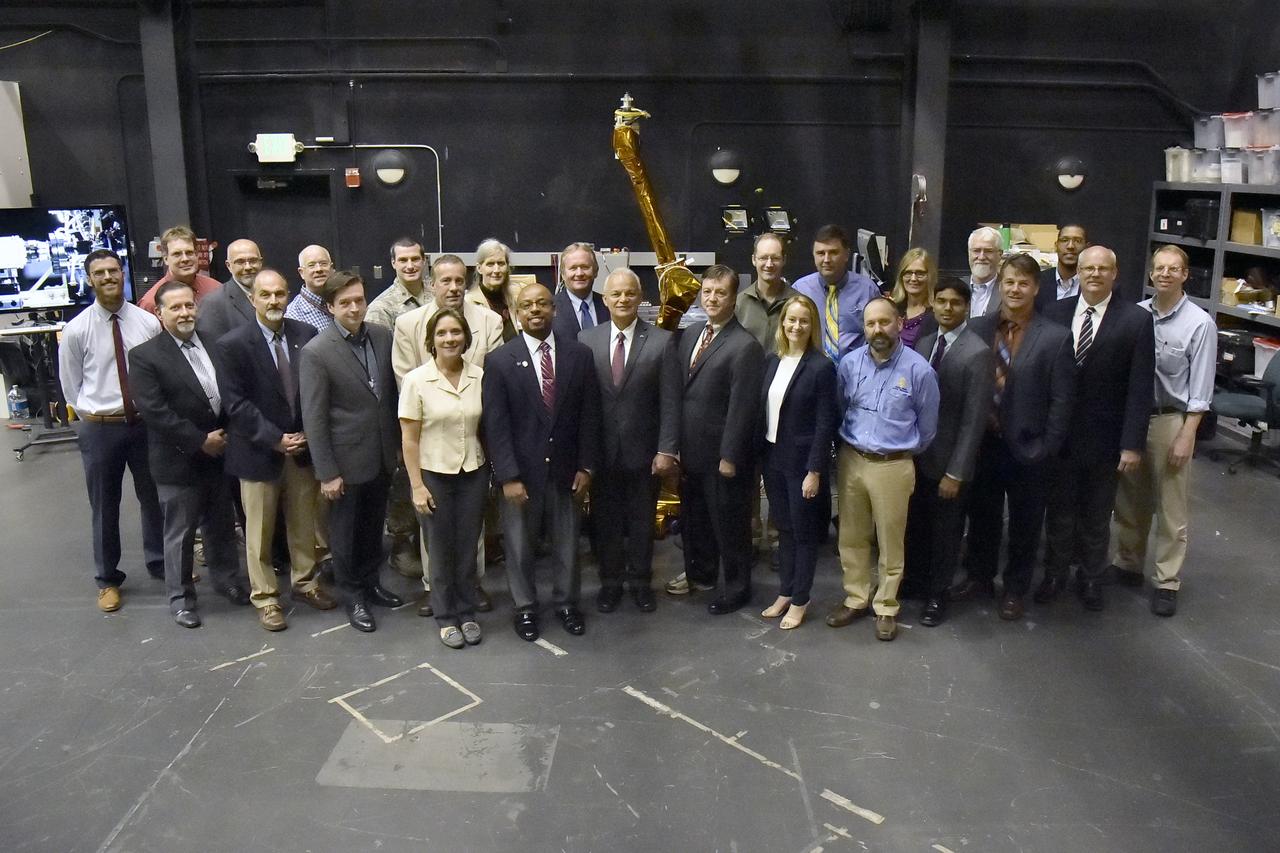
WASHINGTON, D.C.---S&T Partnership Forum In-Space Assembly Technical Interchange Meeting-On September 6th 2017, many of the United States government experts on In-Space Assembly met at the U.S. Naval Research Lab to discuss both technology development and in-space applications that would advance national capabilities in this area.  Expertise from NASA, USAF, NRO, DARPA and NRL met in this meeting which was coordinated by the NASA Headquarters, Office of the Chief Technologist.  This technical interchange meeting was the second meeting of the members of this Science and Technology Partnership Forum.
Members of the S&T Partnership Forum Meet for an In-Space Assembly Technical Interchange Meeting on September 6th, 2017
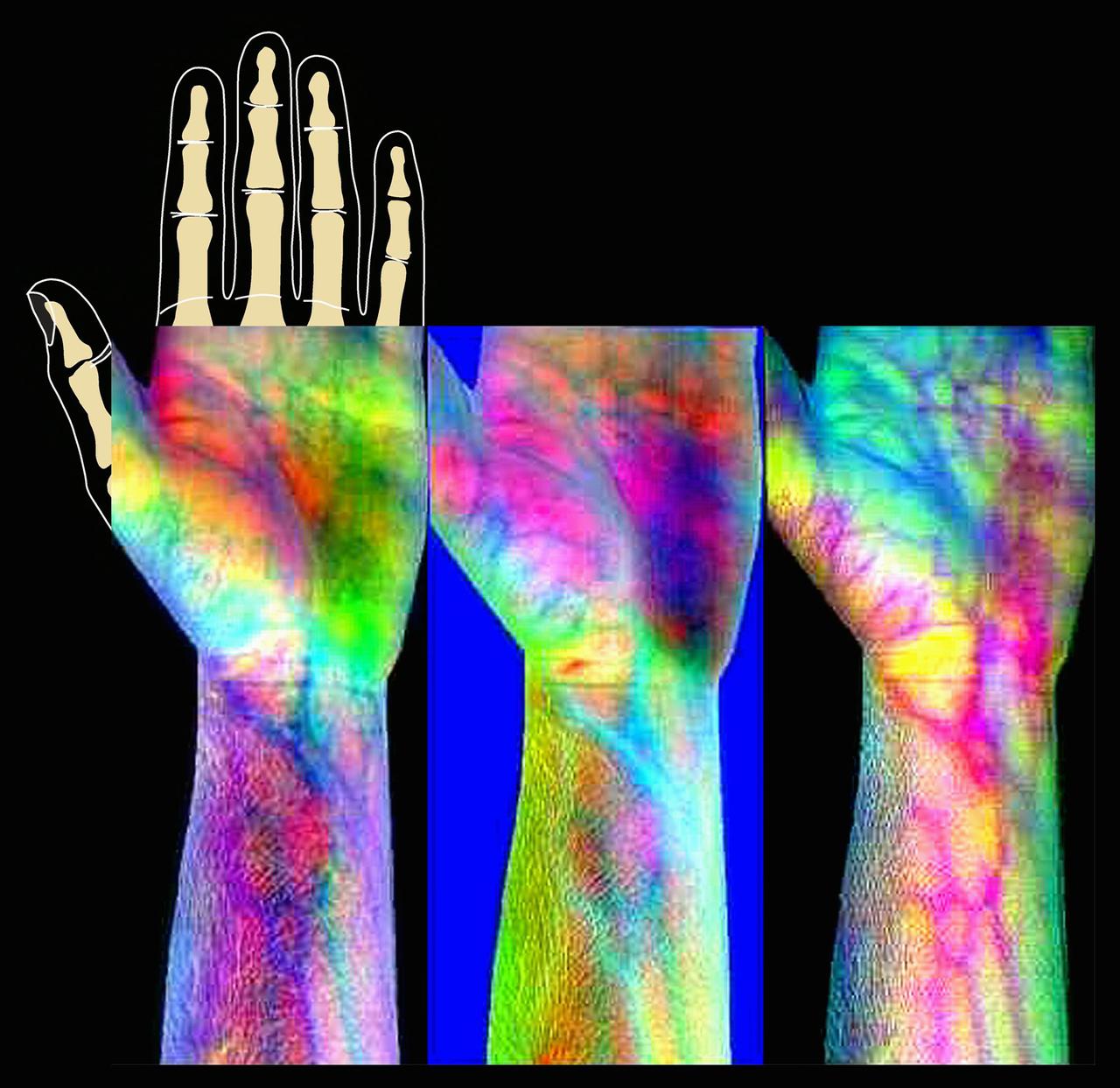
ProVision Technologies, a NASA research partnership center at Sternis Space Center in Mississippi, has developed a new hyperspectral imaging (HSI) system that is much smaller than the original large units used aboard remote sensing aircraft and satellites. The new apparatus is about the size of a breadbox. Health-related applications of HSI include non-invasive analysis of human skin to characterize wounds and wound healing rates (especially important for space travelers who heal more slowly), determining if burns are first-, second-, or third degree (rather than painful punch biopsies). The work is sponsored under NASA's Space Product Development (SPD) program.
Biotechnology
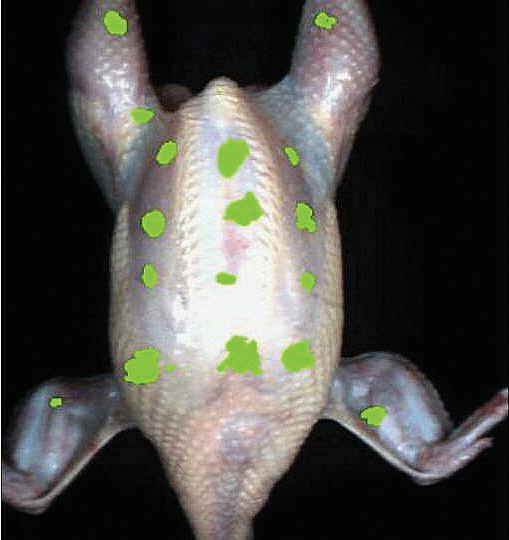
ProVision Technologies, a NASA research partnership center at Sternis Space Center in Mississippi, has developed a new hyperspectral imaging (HSI) system that is much smaller than the original large units used aboard remote sensing aircraft and satellites. The new apparatus is about the size of a breadbox. Health-related applications of HSI include scanning chickens during processing to help prevent contaminated food from getting to the table. ProVision is working with Sanderson Farms of Mississippi and the U.S. Department of Agriculture. ProVision has a record in its spectral library of the unique spectral signature of fecal contamination, so chickens can be scanned and those with a positive reading can be separated. HSI sensors can also determine the quantity of surface contamination. Research in this application is quite advanced, and ProVision is working on a licensing agreement for the technology. The potential for future use of this equipment in food processing and food safety is enormous.
Biotechnology
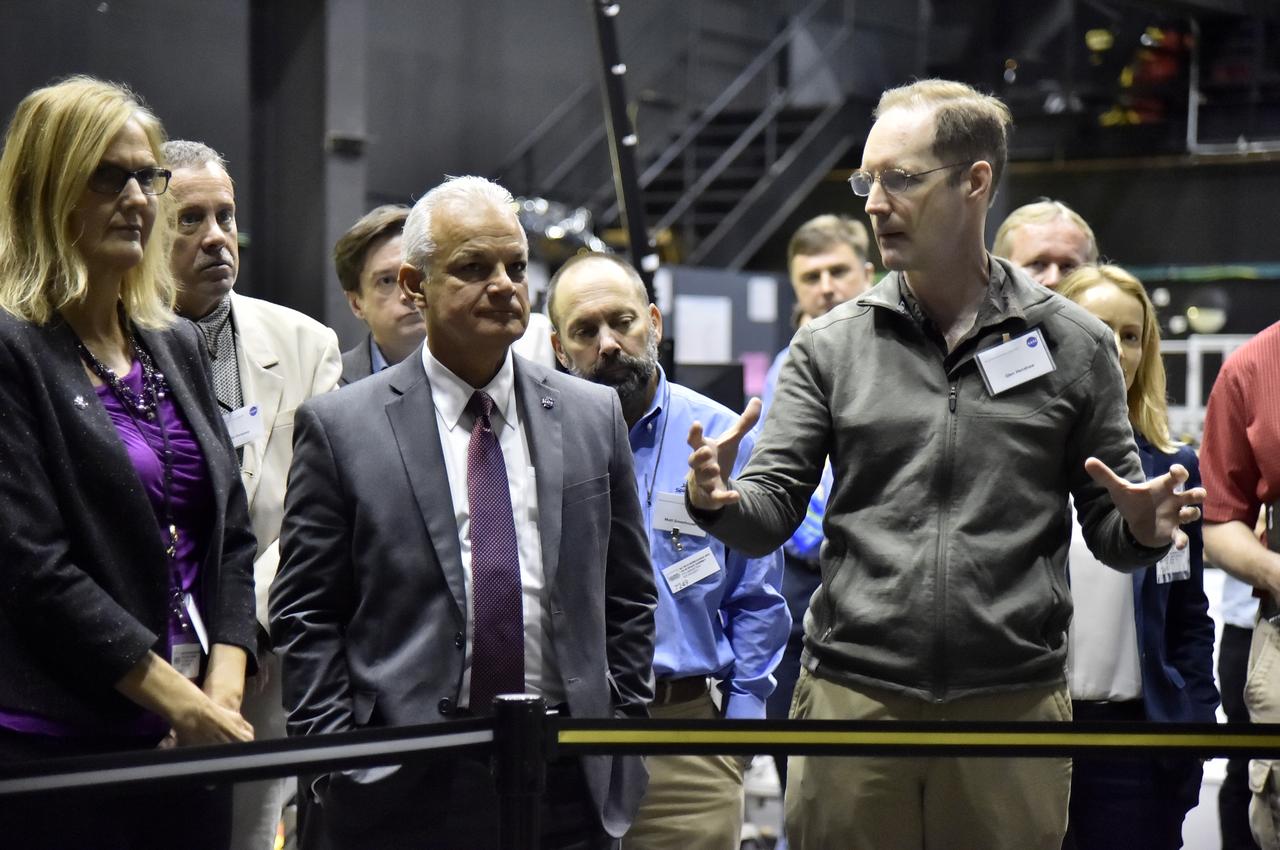
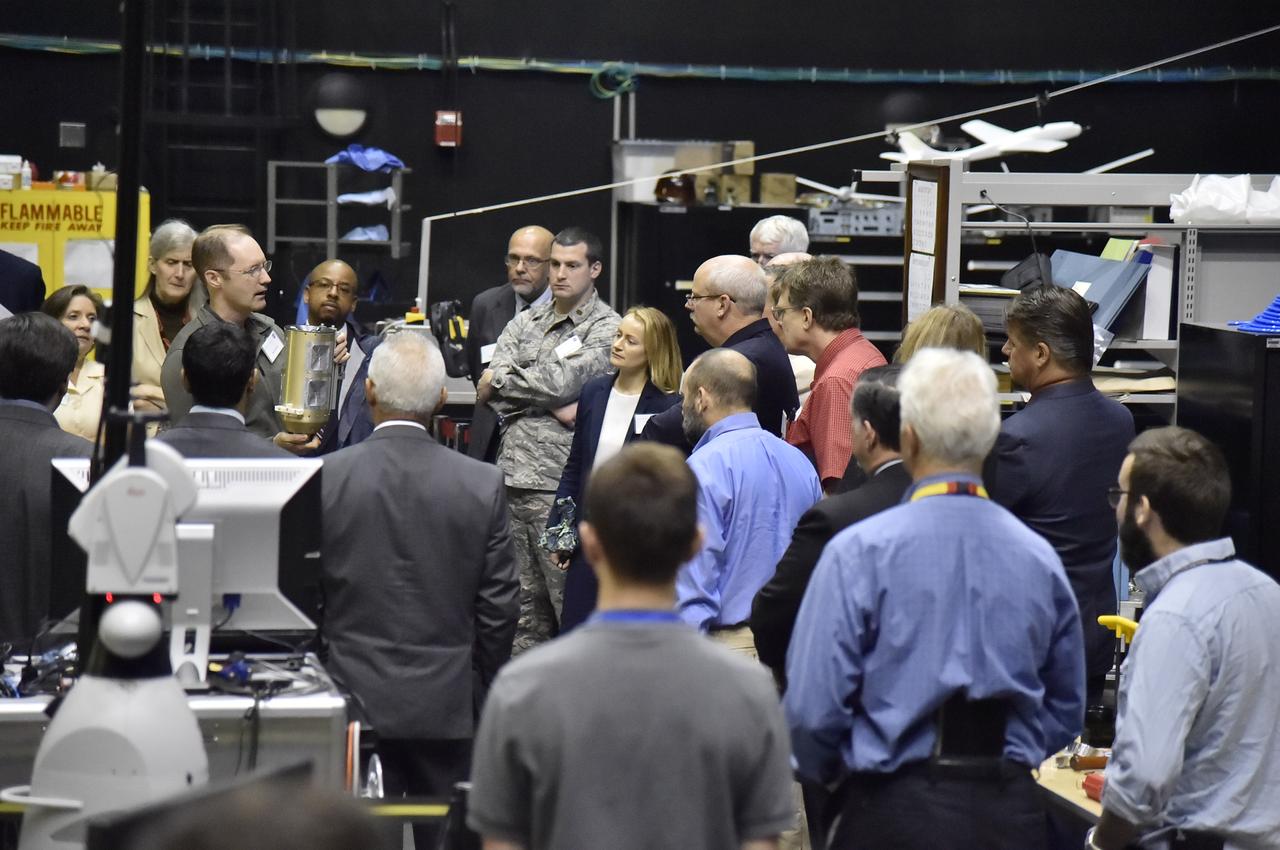
WASHINGTON, D.C.---S&T Partnership Forum In-Space Assembly Technical Interchange Meeting-On September 6th 2017, many of the United States government experts on In-Space Assembly met at the U.S. Naval Research Lab to discuss both technology development and in-space applications that would advance national capabilities in this area.  Expertise from NASA, USAF, NRO, DARPA and NRL met in this meeting which was coordinated by the NASA Headquarters, Office of the Chief Technologist.  This technical interchange meeting was the second meeting of the members of this Science and Technology Partnership Forum. Glen Henshaw of Code 8231 talks to the group in the Space Robotics Lab.
Members of the Science and Technology Partnership Forum Listen to a Presentation about In-Space Assembly and Satellite Servicing
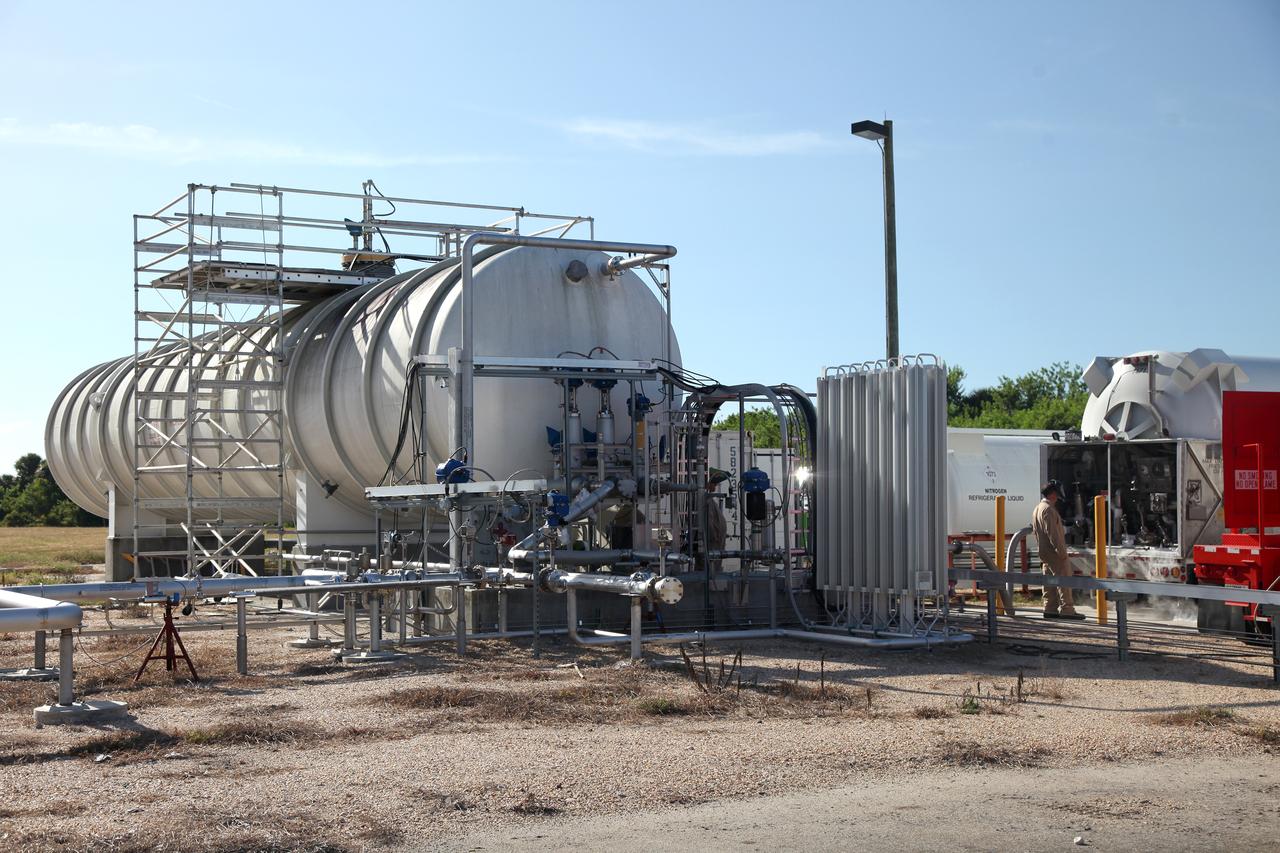
Engineers complete a test of the Ground Operations Demo Unit for liquid hydrogen at NASA's Kennedy Space Center in Florida. The system includes a 33,000 gallon liquid hydrogen storage tank with an internal cold heat exchanger supplied from a cryogenic refrigerator. The primary goal of the testing is to achieve a liquid hydrogen zero boil-off capability. The system was designed, installed and tested by a team of civil servants and contractors from the center's Cryogenic Test Laboratory, with support from engineers at NASA's Glenn Research Center in Cleveland and Stennis Space Center in Mississippi. It may be applicable for use by the Ground Systems Development and Operations Program at Launch Pad 39B.
Liquid Hydrogen Fill
WASHINGTON, D.C.---S&T Partnership Forum In-Space Assembly Technical Interchange Meeting-On September 6th 2017, many of the United States government experts on In-Space Assembly met at the U.S. Naval Research Lab to discuss both technology development and in-space applications that would advance national capabilities in this area.  Expertise from NASA, USAF, NRO, DARPA and NRL met in this meeting which was coordinated by the NASA Headquarters, Office of the Chief Technologist.  This technical interchange meeting was the second meeting of the members of this Science and Technology Partnership Forum. Glen Henshaw of Code 8231 talks to the group in the Space Robotics Lab.
Glen Henshaw Briefs NASA Chief and Deputy Chief Technologists at the In-Space Assembly Technical Interchange Meeting on September 6, 2017
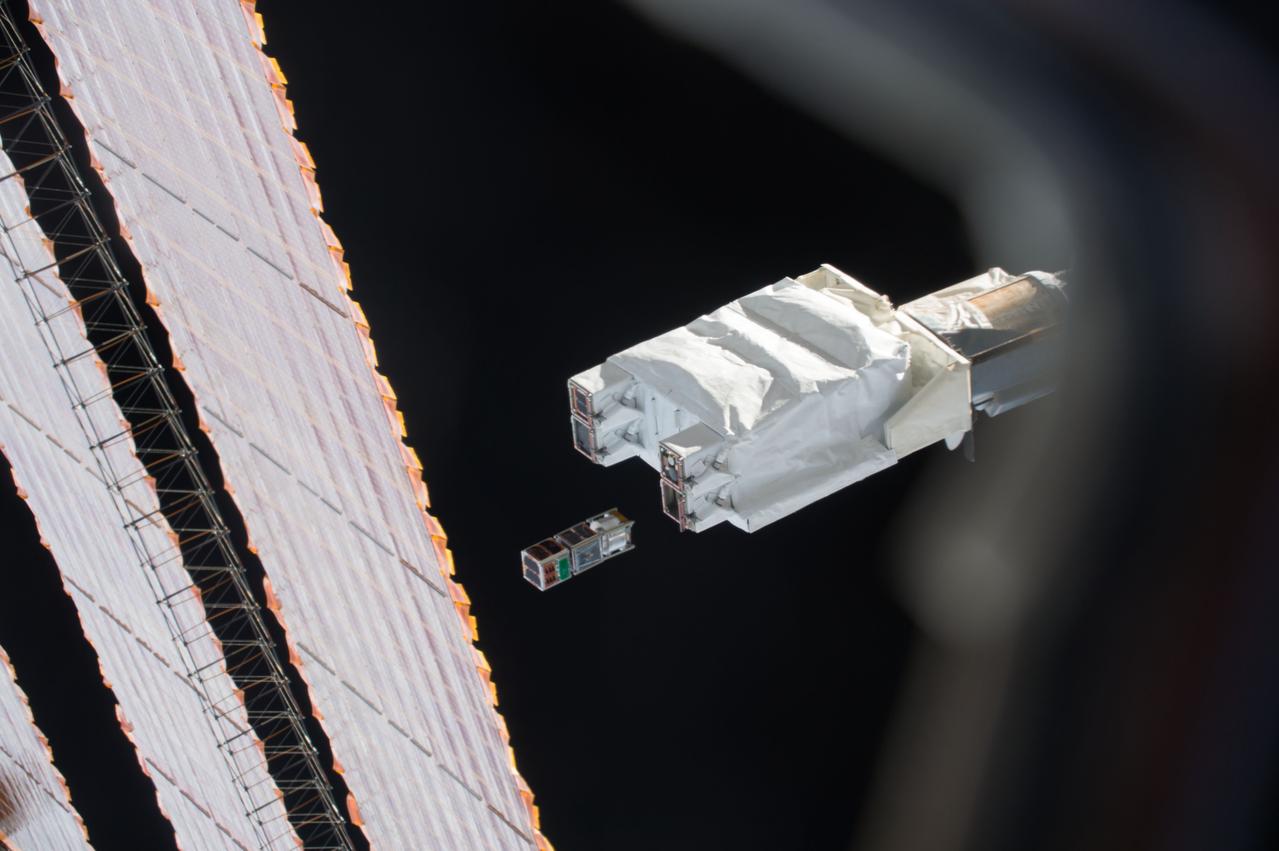
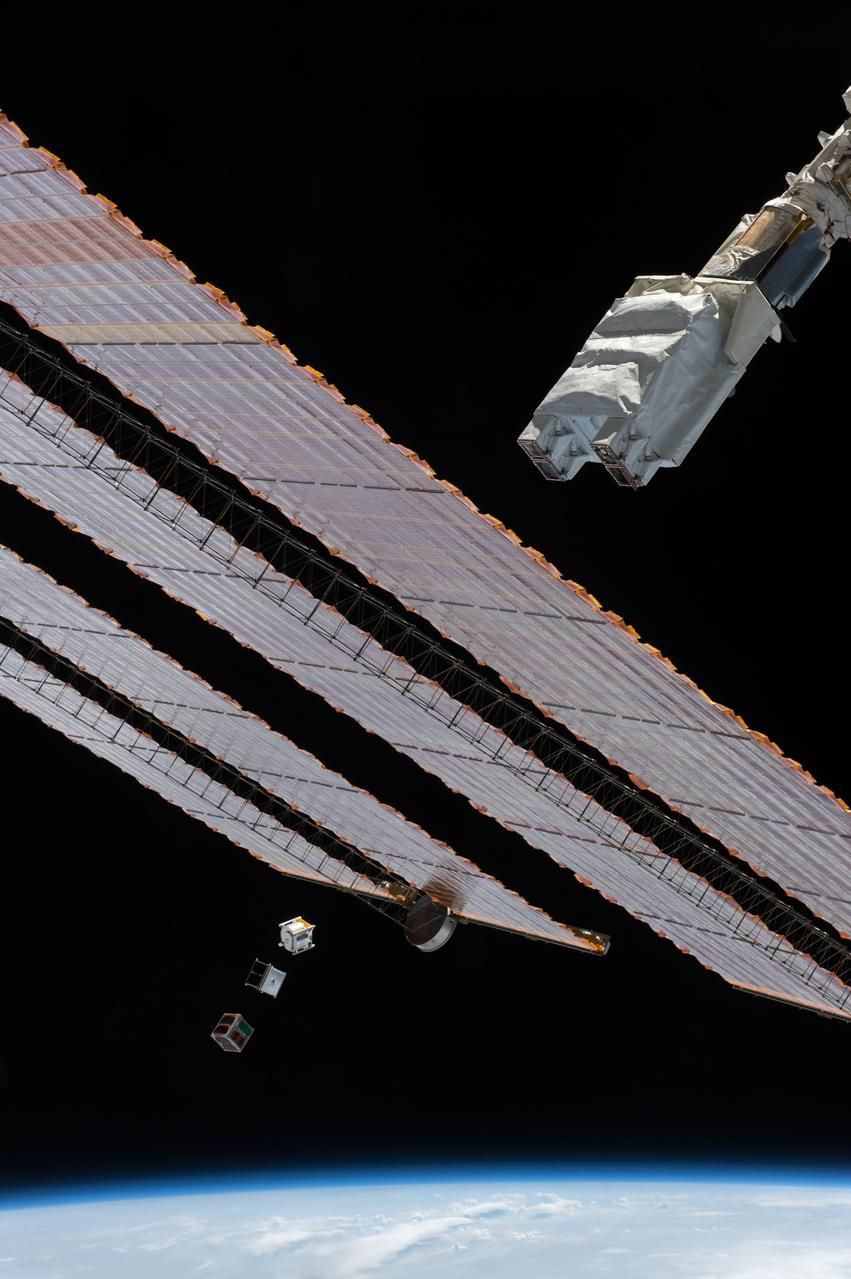
iss050e031198 (1/17/2017) --- Photo documentation of the Japanese-Small Satellite Orbital Deployer-6 (J-SSOD-6) deployment of the ITF-2, Waseda-SAT3 and Freedom CubeSats. The Imagine The Future-2 (ITF-2) CubeSat mission supports amateur radio networking by testing a micro engineered 1/20 wavelength small antenna. The WASEDA SAT-3 is a CubeSat developed by Waseda University aiming to test an ultra-light drag chute for accelerated deorbit. An LCD projector shows images on the chute with imagery sent back to Earth via an onboard camera. FREEDOM is a 1 Unit (1U) CubeSat developed by the Nakashimada Engineering Works and the Tohoku University to demonstrate a deployable deorbit device “DOM” for application in future missions for space debris mitigation.
J-SSOD-6 Deployment
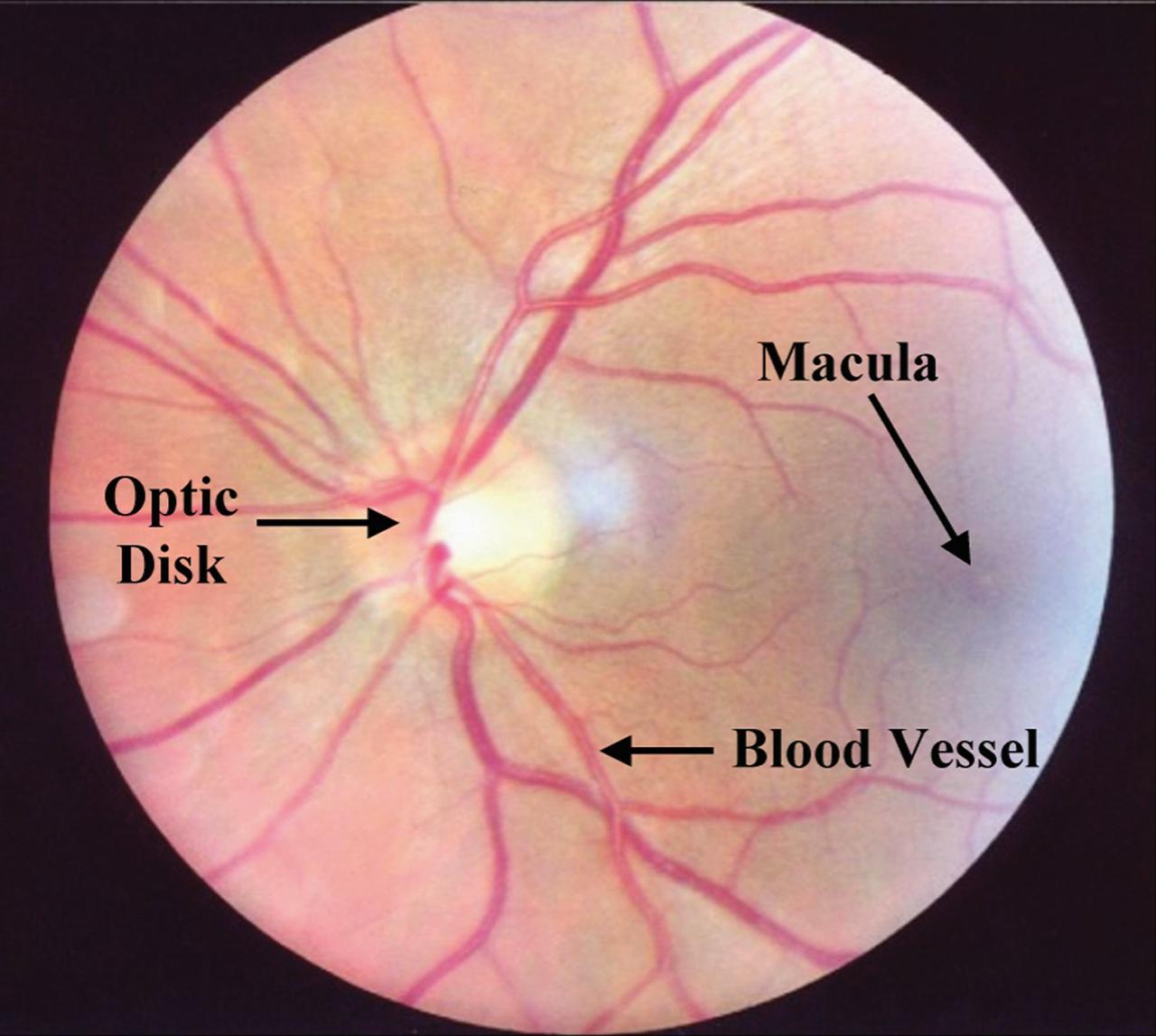
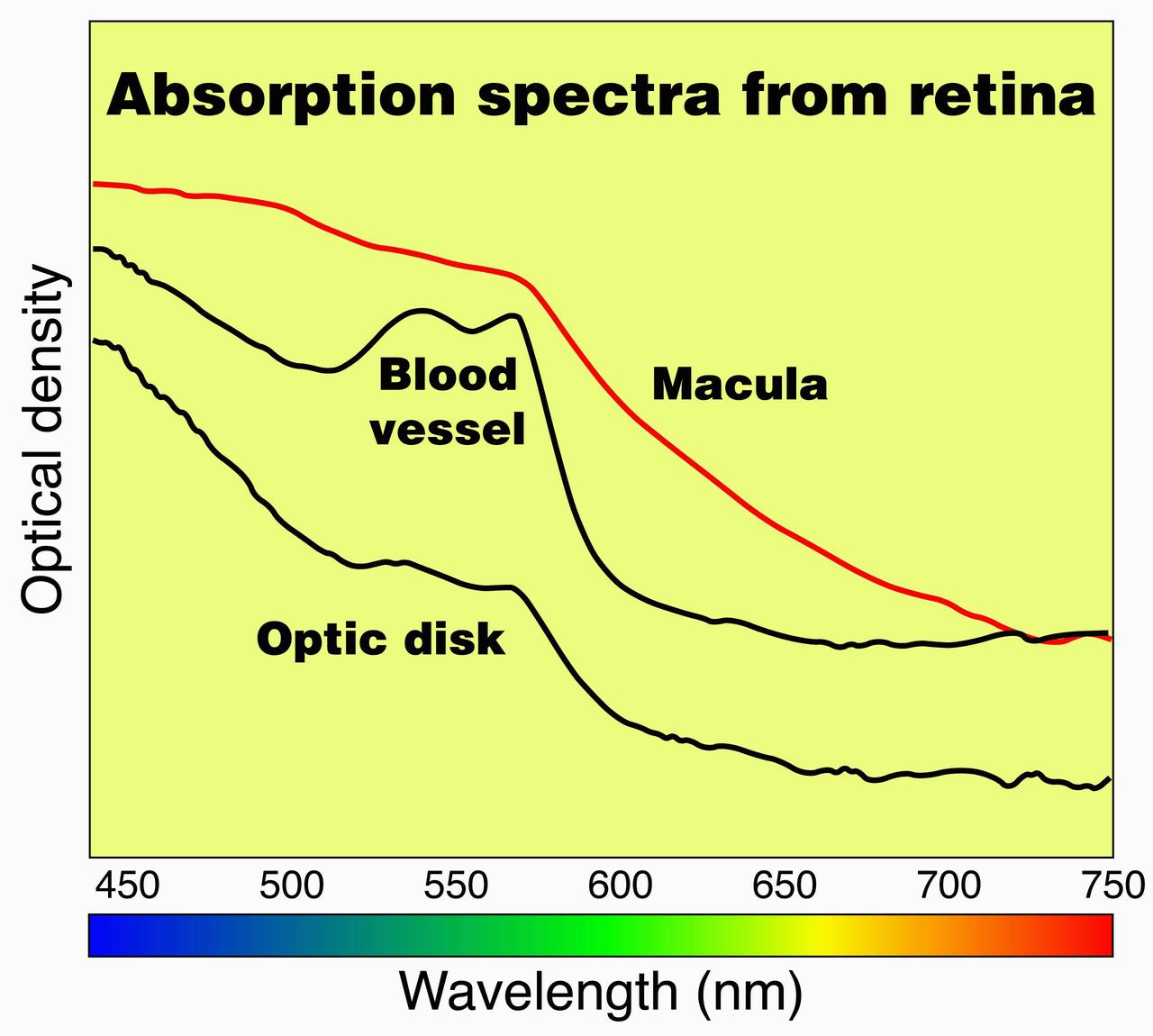
ProVision Technologies, a NASA commercial space center at Sternis Space Center in Mississippi, has developed a new hyperspectral imaging (HSI) system that is much smaller than the original large units used aboard remote sensing aircraft and satellites. The new apparatus is about the size of a breadbox. HSI may be useful to ophthalmologists to study and diagnose eye health, both on Earth and in space, by examining the back of the eye to determine oxygen and blood flow quickly and without any invasion. ProVision's hyperspectral imaging system can scan the human eye and produce a graph showing optical density or light absorption, which can then be compared to a graph from a normal eye. Scans of the macula, optic disk or optic nerve head, and blood vessels can be used to detect anomalies and identify diseases in this delicate and important organ. ProVision has already developed a relationship with the University of Alabama at Birmingham, but is still on the lookout for a commercial partner in this application.
Biotechnology
ProVision Technologies, a NASA research partnership center at Sternis Space Center in Mississippi, has developed a new hyperspectral imaging (HSI) system that is much smaller than the original large units used aboard remote sensing aircraft and satellites. The new apparatus is about the size of a breadbox. HSI may be useful to ophthalmologists to study and diagnose eye health, both on Earth and in space, by examining the back of the eye to determine oxygen and blood flow quickly and without any invasion. ProVision's hyperspectral imaging system can scan the human eye and produce a graph showing optical density or light absorption, which can then be compared to a graph from a normal eye. Scans of the macula, optic disk or optic nerve head, and blood vessels can be used to detect anomalies and identify diseases in this delicate and important organ. ProVision has already developed a relationship with the University of Alabama at Birmingham, but is still on the lookout for a commercial partner in this application.
Biotechnology
iss050e032565 (1/17/2017) --- Photo documentation of the Japanese-Small Satellite Orbital Deployer-6 (J-SSOD-6) deployment of the ITF-2, Waseda-SAT3 and Freedom CubeSats. The  Imagine The Future-2 (ITF-2) CubeSat mission supports amateur radio networking by testing a micro engineered 1/20 wavelength small antenna. The WASEDA SAT-3 is a CubeSat developed by Waseda University aiming to test an ultra-light drag chute for accelerated deorbit. An LCD projector shows images on the chute with imagery sent back to Earth via an onboard camera. FREEDOM is a 1 Unit (1U) CubeSat developed by the Nakashimada Engineering Works and the Tohoku University to demonstrate a deployable deorbit device “DOM” for application in future missions for space debris mitigation.
J-SSOD-6 Deployment
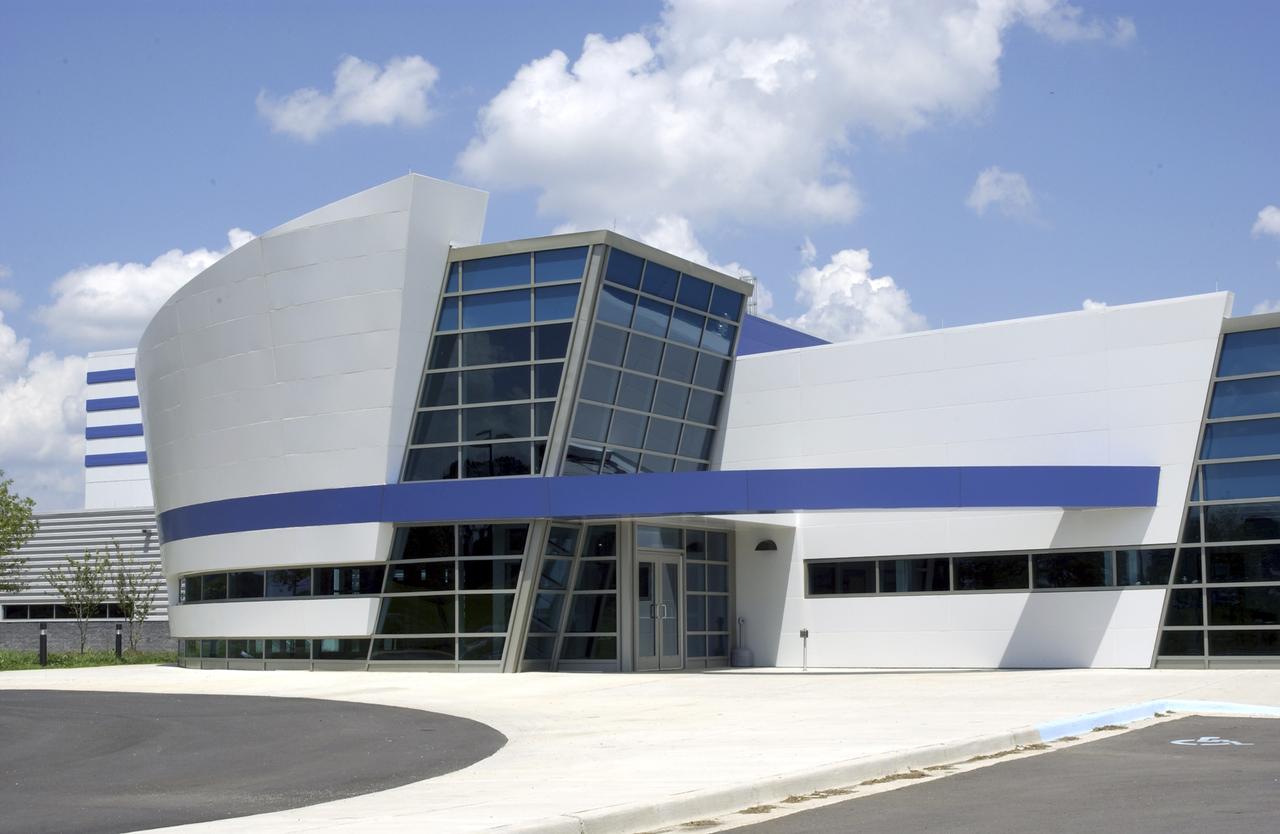
The grand opening of NASA’s new, world-class laboratory for research into future space transportation technologies located at the Marshall Space Flight Center (MSFC) in Huntsville, Alabama, took place in July 2004. The state-of-the-art Propulsion Research Laboratory (PRL) serves as a leading national resource for advanced space propulsion research. Its purpose is to conduct research that will lead to the creation and development of innovative propulsion technologies for space exploration. The facility is the epicenter of the effort to move the U.S. space program beyond the confines of conventional chemical propulsion into an era of greatly improved access to space and rapid transit throughout the solar system. The laboratory is designed to accommodate researchers from across the United States, including scientists and engineers from NASA, the Department of Defense, the Department of Energy, universities, and industry. The facility, with 66,000 square feet of useable laboratory space, features a high degree of experimental capability. Its flexibility allows it to address a broad range of propulsion technologies and concepts, such as plasma, electromagnetic, thermodynamic, and propellant propulsion. An important area of emphasis is the development and utilization of advanced energy sources, including highly energetic chemical reactions, solar energy, and processes based on fission, fusion, and antimatter. The Propulsion Research Laboratory is vital for developing the advanced propulsion technologies needed to open up the space frontier, and  sets the stage of research that could revolutionize space transportation for a broad range of applications.
Around Marshall
A new, world-class laboratory for research into future space transportation technologies is under construction at the Marshall Space Flight Center (MSFC) in Huntsville, AL. The state-of-the-art Propulsion Research Laboratory will serve as a leading national resource for advanced space propulsion research. Its purpose is to conduct research that will lead to the creation and development of irnovative propulsion technologies for space exploration. The facility will be the epicenter of the effort to move the U.S. space program beyond the confines of conventional chemical propulsion into an era of greatly improved access to space and rapid transit throughout the solar system. The Laboratory is designed to accommodate researchers from across the United States, including scientists and engineers from NASA, the Department of Defense, the Department of Energy, universities, and industry. The facility, with 66,000 square feet of useable laboratory space, will feature a high degree of experimental capability. Its flexibility will allow it to address a broad range of propulsion technologies and concepts, such as plasma, electromagnetic, thermodynamic, and propellantless propulsion. An important area of emphasis will be development and utilization of advanced energy sources, including highly energetic chemical reactions, solar energy, and processes based on fission, fusion, and antimatter. The Propulsion Research Laboratory is vital for developing the advanced propulsion technologies needed to open up the space frontier, and will set the stage of research that could revolutionize space transportation for a broad range of applications.
Research Technology
The grand opening of NASA’s new, world-class laboratory for research into future space transportation technologies located at the Marshall Space Flight Center (MSFC) in Huntsville, Alabama, took place in July 2004. The state-of-the-art Propulsion Research Laboratory (PRL) serves as a leading national resource for advanced space propulsion research. Its purpose is to conduct research that will lead to the creation and development of innovative propulsion technologies for space exploration. The facility is the epicenter of the effort to move the U.S. space program beyond the confines of conventional chemical propulsion into an era of greatly improved access to space and rapid transit throughout the solar system. The laboratory is designed to accommodate researchers from across the United States, including scientists and engineers from NASA, the Department of Defense, the Department of Energy, universities, and industry. The facility, with 66,000 square feet of useable laboratory space, features a high degree of experimental capability. Its flexibility allows it to address a broad range of propulsion technologies and concepts, such as plasma, electromagnetic, thermodynamic, and propellant propulsion. An important area of emphasis is the development and utilization of advanced energy sources, including highly energetic chemical reactions, solar energy, and processes based on fission, fusion, and antimatter. The Propulsion Research Laboratory is vital for developing the advanced propulsion technologies needed to open up the space frontier, and  sets the stage of research that could revolutionize space transportation for a broad range of applications.
Around Marshall
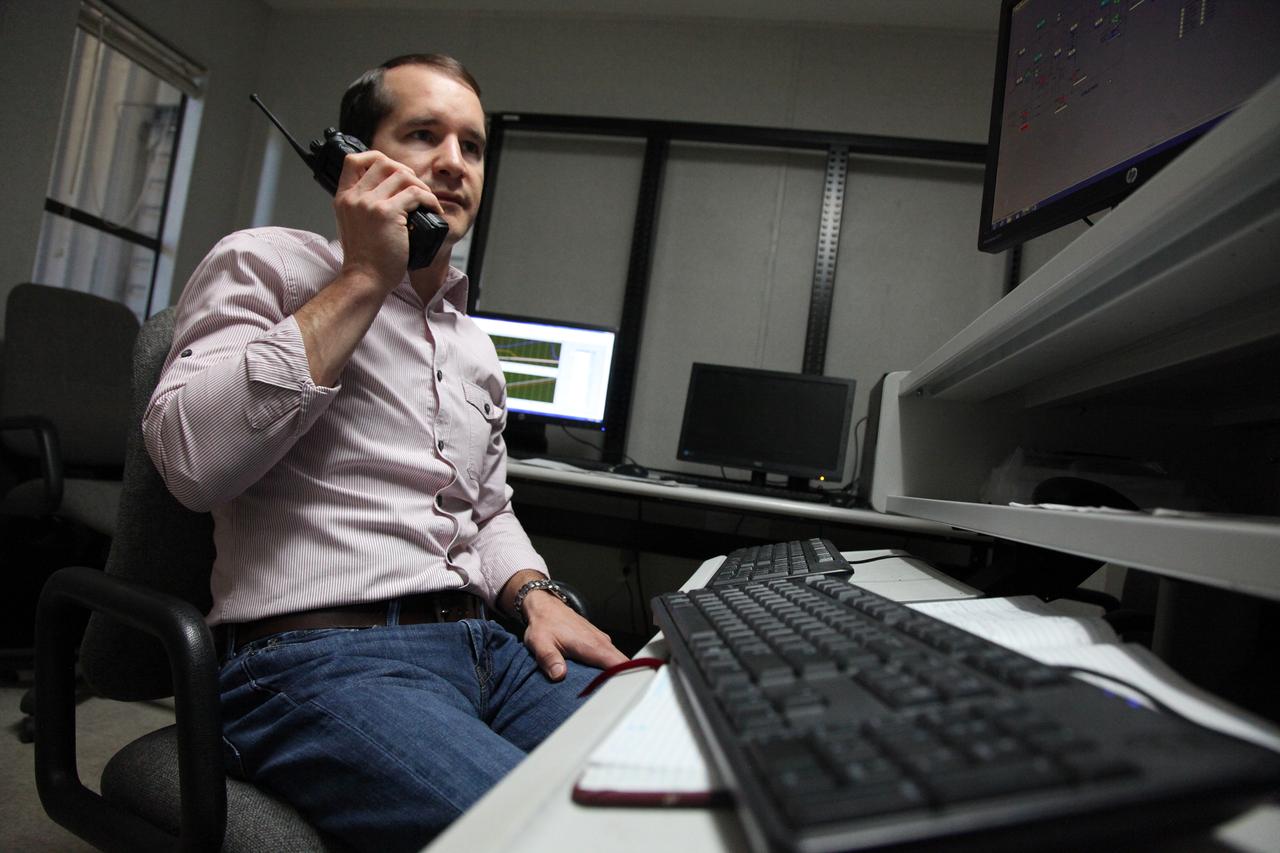
Inside a control building at NASA's Kennedy Space Center in Florida, Adam Swinger, cryogenic research engineer in the Exploration Research and Technology Directorate, communicates with team members during a test of the Ground Operations Demo Unit for liquid hydrogen. The system includes a 33,000 gallon liquid hydrogen storage tank with an internal cold heat exchanger supplied from a cryogenic refrigerator. The primary goal of the testing is to achieve a liquid hydrogen zero boil-off capability. The system was designed, installed and tested by a team of civil servants and contractors from the center's Cryogenic Test Laboratory, with support from engineers at NASA's Glenn Research Center in Cleveland and Stennis Space Center in Mississippi. It may be applicable for use by the Ground Systems Development and Operations Program at Launch Pad 39B.
Liquid Hydrogen Fill
Technicians with Praxair pressurize the hydrogen trailer before offloading liquid hydrogen during a test of the Ground Operations Demo Unit for liquid hydrogen at NASA's Kennedy Space Center in Florida. The system includes a 33,000 gallon liquid hydrogen storage tank with an internal cold heat exchanger supplied from a cryogenic refrigerator. The primary goal of the testing is to achieve a liquid hydrogen zero boil-off capability. The system was designed, installed and tested by a team of civil servants and contractors from the center's Cryogenic Test Laboratory, with support from engineers at NASA's Glenn Research Center in Cleveland and Stennis Space Center in Mississippi. It may be applicable for use by the Ground Systems Development and Operations Program at Launch Pad 39B.
Liquid Hydrogen Fill
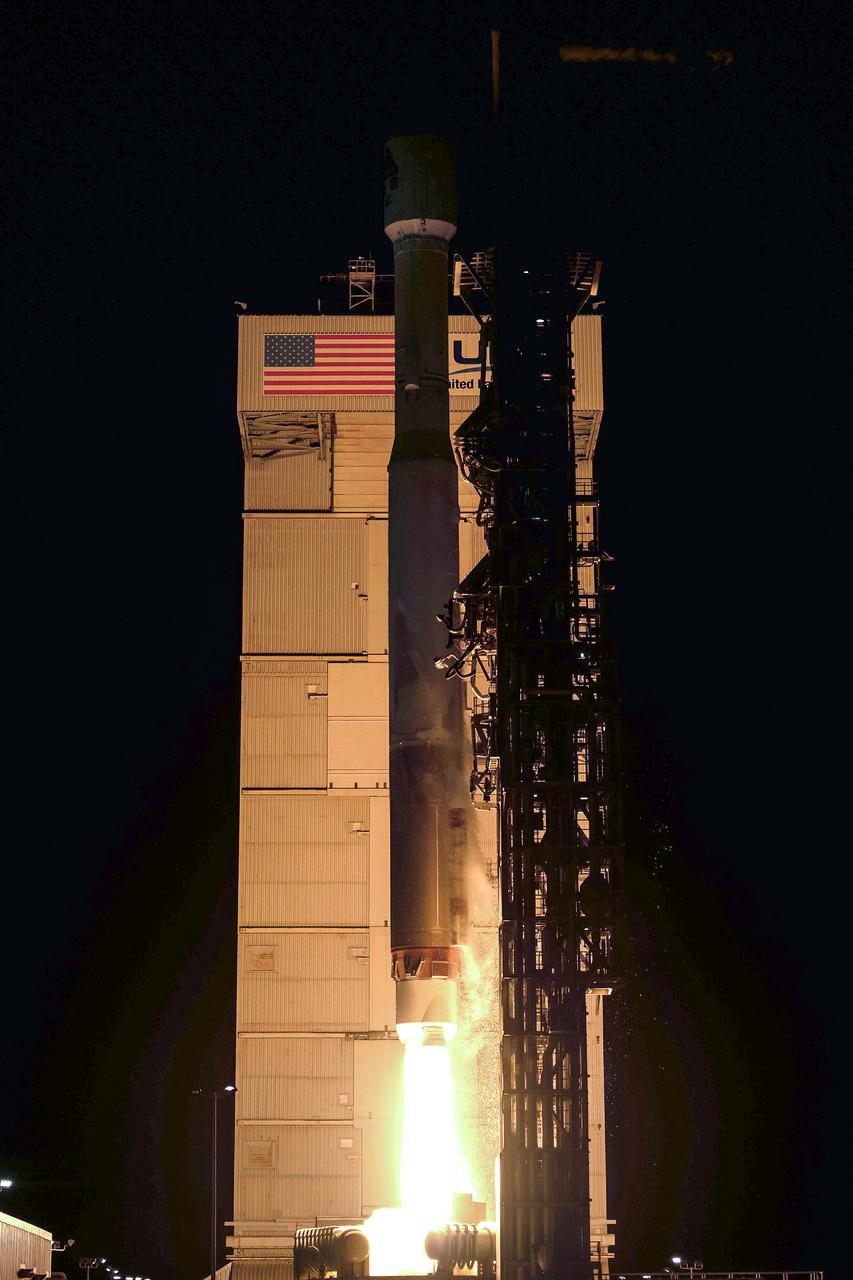
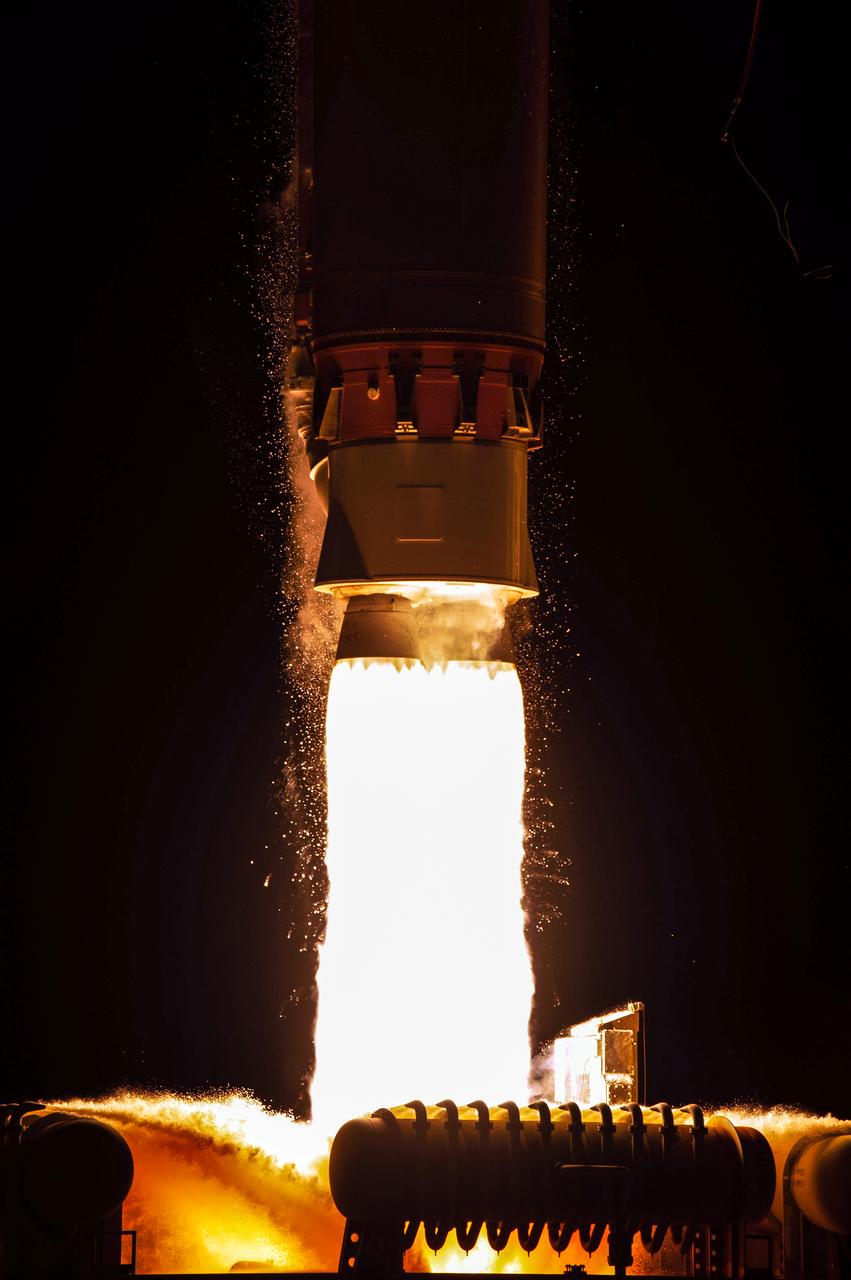
A United Launch Alliance Atlas V 401 rocket lifts off from Space Launch Complex 3 at Vandenberg Space Force Base in California on Nov. 10 carrying the National Oceanic and Atmospheric Administration’s (NOAA) Joint Polar Satellite System-2 (JPSS-2) and NASA’s Low-Earth Orbit Flight Test of an Inflatable Decelerator (LOFTID) technology demonstration. Liftoff was at 2:25 a.m. PDT. JPSS-2 is the third satellite in the polar satellite series and is expected to capture data to improve weather forecasts, helping scientists predict and prepare for extreme weather events and climate change. After JPSS-2 safely reaches orbit, LOFTID will follow a re-entry trajectory from low-Earth orbit to demonstrate the inflatable heat shield’s ability to slow down and survive re-entry. LOFTID is a partnership with ULA and is dedicated to the memory of Bernard Kutter, one of the company’s engineers who played a key role in developing the technology. LOFTID will demonstrate how the inflatable aeroshell, or heat shield, can slow down and survive re-entry in conditions relevant to many potential applications, whether landing humans on Mars, new missions to Venus and Titan, or returning heavier payloads and samples from low-Earth orbit.
JPSS-2/LOFTID Liftoff
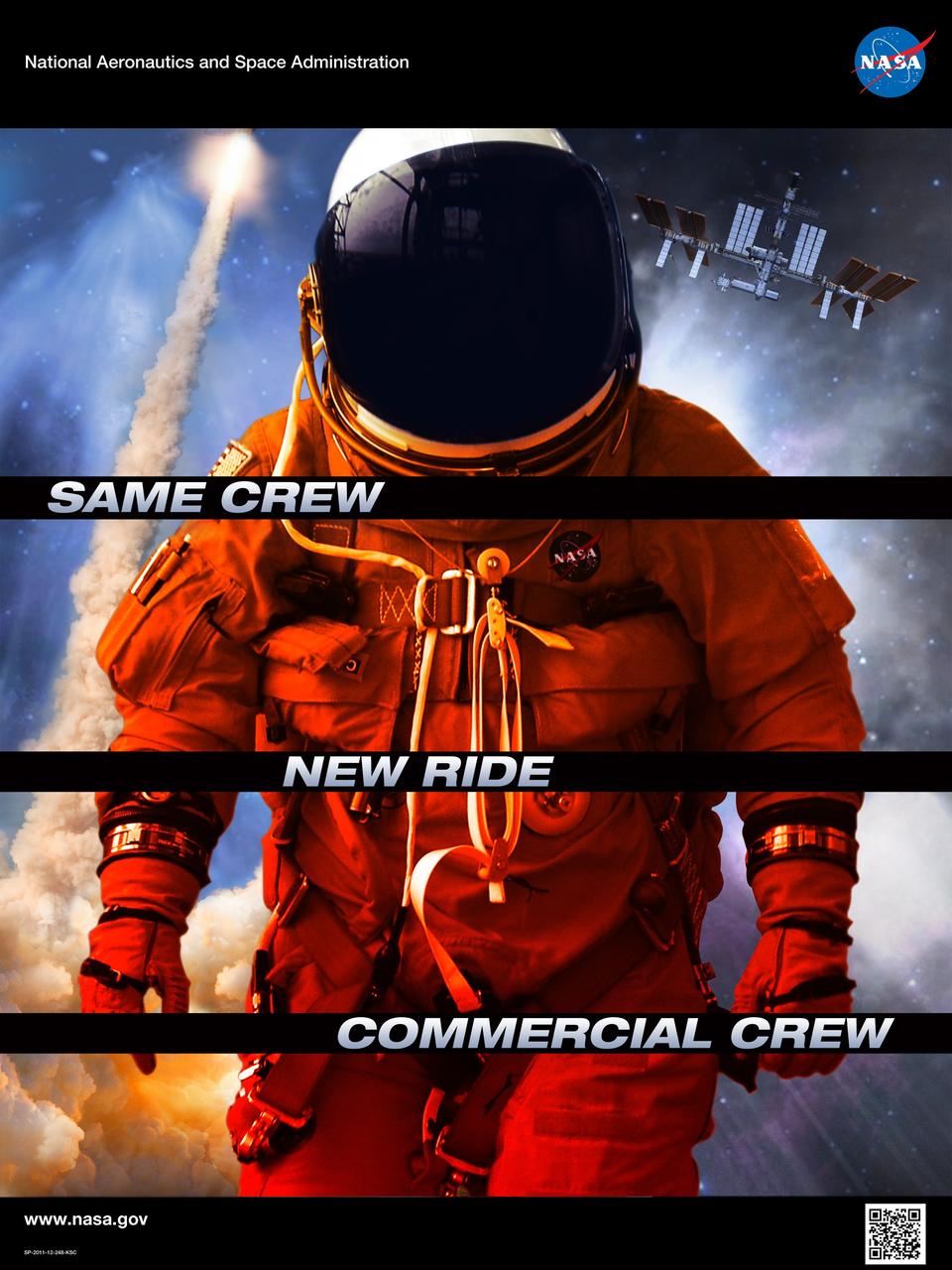
CAPE CANAVERAL, Fla. -- This is a printable version of NASA's "Same Crew, New Ride" poster depicting an artist's conception of NASA's Commercial Crew Program CCP. The poster features a NASA astronaut in the foreground with a vehicle launching toward the International Space Station in the background. CCP is investing in the aerospace industry and helping multiple companies design and develop crew transportation systems that could be capable of flying to the space station and other low Earth orbit destinations. The program is meant to accelerate a United States-led capability to the station where critical scientific work is being performed for use in applications here on Earth. CCP is expected to drive down the cost of space travel as well as open up space to more people than ever before by balancing industry’s own innovative capabilities with NASA's 50 years of human spaceflight experience. For more information, visit www.nasa.gov/commercialcrew. Poster designed by Kennedy Space Center Graphics Department/Greg Lee. Credit: NASA
KSC-2012-1804
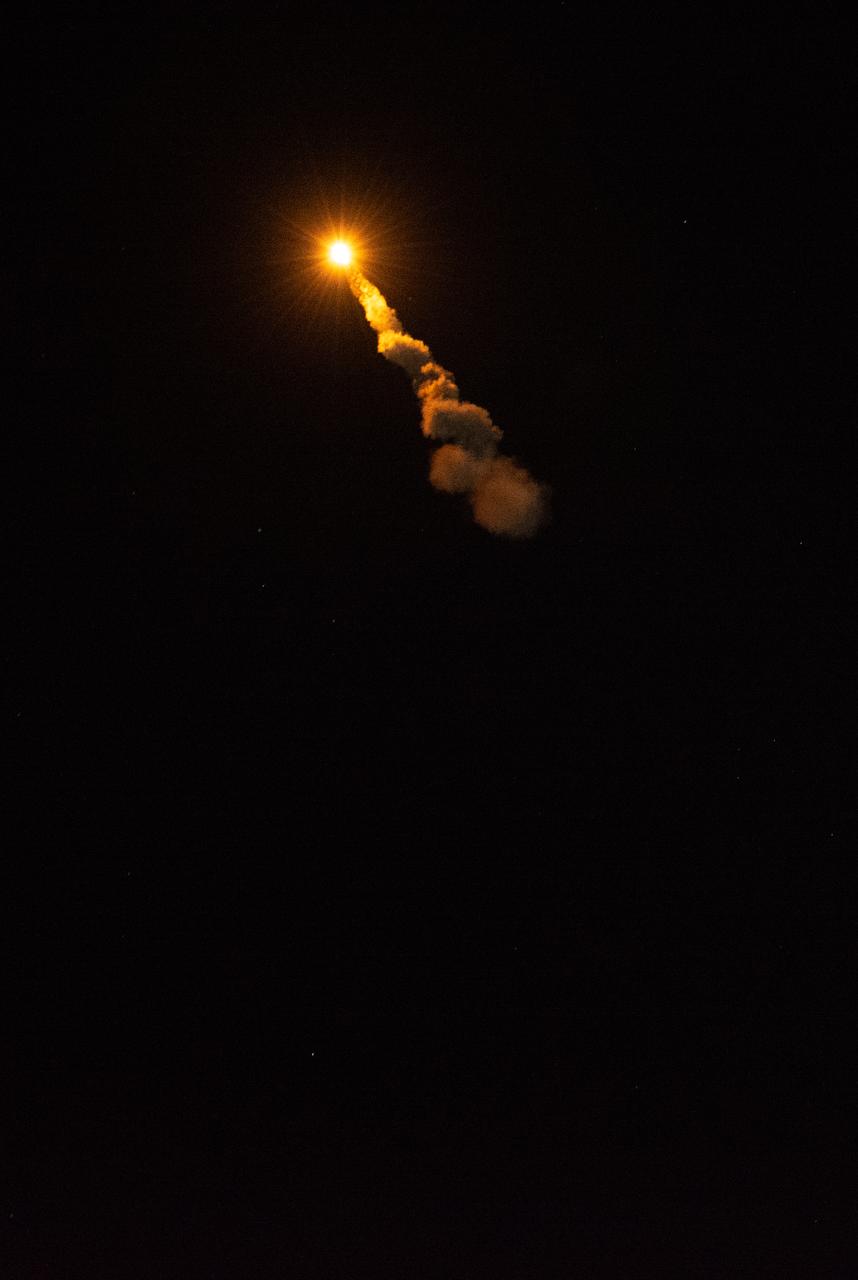
A United launch Alliance Atlas V 401 rocket soars upward after liftoff from Space Launch Complex 3 at Vandenberg Space Force Base in California on Nov. 10, carrying the National Oceanic and Atmospheric Administration’s (NOAA) Joint Polar Satellite System-2 (JPSS-2) and NASA’s Low-Earth Orbit Flight Test of an Inflatable Decelerator (LOFTID) technology demonstration. Launch was at 1:49 a.m. PST. JPSS-2 is the third satellite in the polar satellite series and is expected to capture data to improve weather forecasts, helping scientists predict and prepare for extreme weather events and climate change. After JPSS-2 safely reaches orbit, LOFTID will follow a re-entry trajectory from low-Earth orbit to demonstrate the inflatable heat shield’s ability to slow down and survive re-entry. LOFTID is a partnership with ULA and is dedicated to the memory of Bernard Kutter, one of the company’s engineers who played a key role in developing the technology. LOFTID will demonstrate how the inflatable aeroshell, or heat shield, can slow down and survive re-entry in conditions relevant to many potential applications, whether landing humans on Mars, new missions to Venus and Titan, or returning heavier payloads and samples from low-Earth orbit.
JPSS-2/LOFTID Liftoff
A United Launch Alliance Atlas V 401 rocket lifts off from Space Launch Complex 3 at Vandenberg Space Force Base in California on Nov. 10 carrying the National Oceanic and Atmospheric Administration’s (NOAA) Joint Polar Satellite System-2 (JPSS-2) and NASA’s Low-Earth Orbit Flight Test of an Inflatable Decelerator (LOFTID) technology demonstration. Liftoff was at 2:25 a.m. PDT. JPSS-2 is the third satellite in the polar satellite series and is expected to capture data to improve weather forecasts, helping scientists predict and prepare for extreme weather events and climate change. After JPSS-2 safely reaches orbit, LOFTID will follow a re-entry trajectory from low-Earth orbit to demonstrate the inflatable heat shield’s ability to slow down and survive re-entry. LOFTID is a partnership with ULA and is dedicated to the memory of Bernard Kutter, one of the company’s engineers who played a key role in developing the technology. LOFTID will demonstrate how the inflatable aeroshell, or heat shield, can slow down and survive re-entry in conditions relevant to many potential applications, whether landing humans on Mars, new missions to Venus and Titan, or returning heavier payloads and samples from low-Earth orbit.
JPSS-2/LOFTID Liftoff
A new, world-class laboratory for research into future space transportation technologies is under construction at the Marshall Space Flight Center (MSFC) in Huntsville, AL. The state-of-the-art Propulsion Research Laboratory will serve as a leading national resource for advanced space propulsion research. Its purpose is to conduct research that will lead to the creation and development of irnovative propulsion technologies for space exploration. The facility will be the epicenter of the effort to move the U.S. space program beyond the confines of conventional chemical propulsion into an era of greatly improved access to space and rapid transit throughout the solar system. The Laboratory is designed to accommodate researchers from across the United States, including scientists and engineers from NASA, the Department of Defense, the Department of Energy, universities, and industry. The facility, with 66,000 square feet of useable laboratory space, will feature a high degree of experimental capability. Its flexibility will allow it to address a broad range of propulsion technologies and concepts, such as plasma, electromagnetic, thermodynamic, and propellantless propulsion. An important area of emphasis will be development and utilization of advanced energy sources, including highly energetic chemical reactions, solar energy, and processes based on fission, fusion, and antimatter. The Propulsion Research Laboratory is vital for developing the advanced propulsion technologies needed to open up the space frontier, and will set the stage of research that could revolutionize space transportation for a broad range of applications. This photo depicts construction workers taking part in a tree topping ceremony as the the final height of the laboratory is framed. The ceremony is an old German custom of paying homage to the trees that gave their lives in preparation of the building site.
Around Marshall
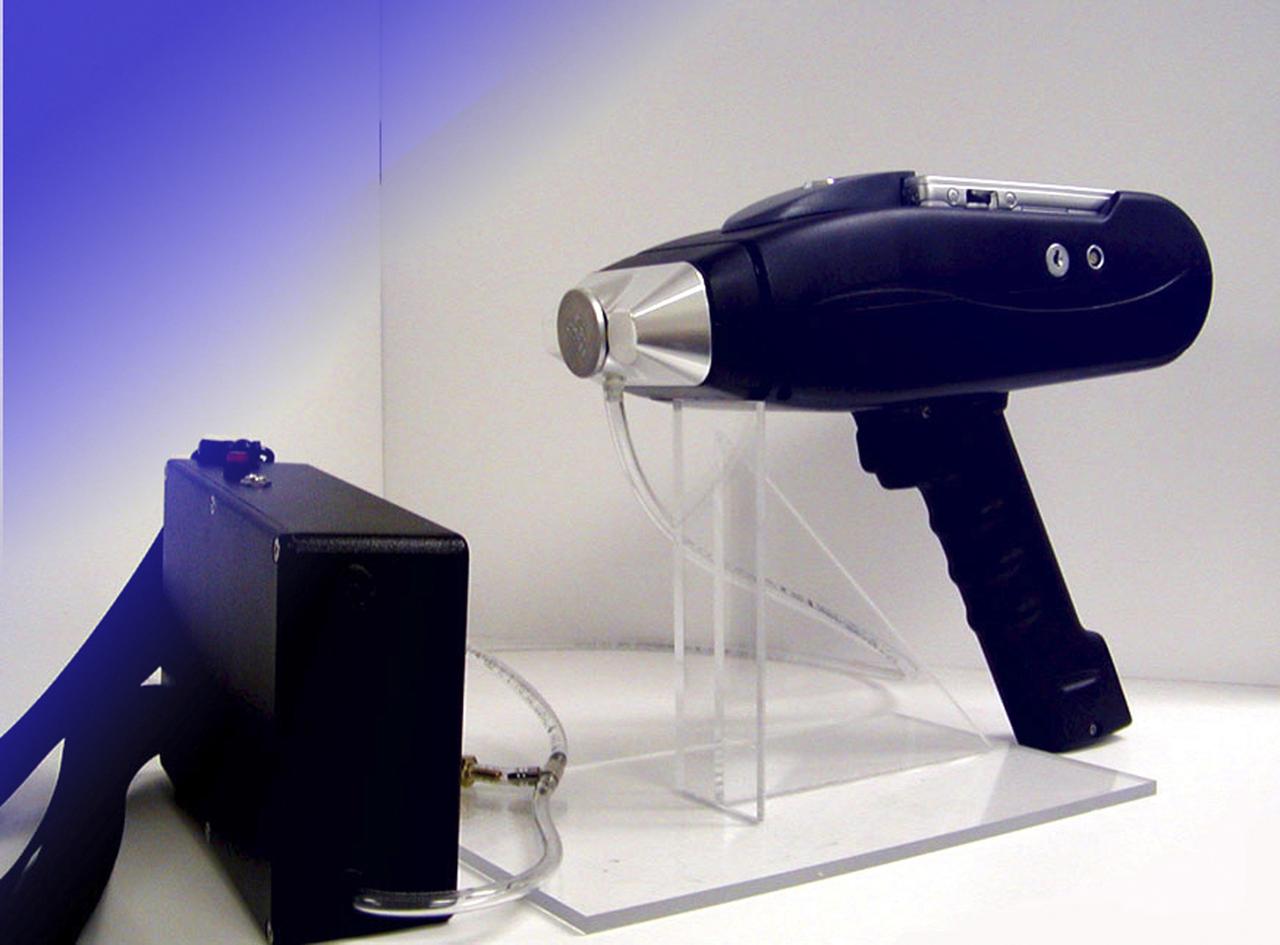
Marshall Space Flight Center engineers have teamed with KeyMaster Technologies, Kennewick, Washington, to develop a portable vacuum analyzer that performs on-the-spot chemical analyses under field conditions, a task previously only possible in a chemical laboratory. The new capability is important not only to the aerospace industry, but holds potential for broad applications in any industry that depends on materials analysis, such as the automotive and pharmaceutical industries. Weighing in at a mere 4 pounds, the newly developed handheld vacuum X-ray fluorescent analyzer can identify and characterize a wide range of elements, and is capable of detecting chemical elements with low atomic numbers, such as sodium, aluminum and silicon. It is the only handheld product on the market with that capability. Aluminum alloy verification is of particular interest to NASA because vast amounts of high-strength aluminum alloys are used in the Space Shuttle propulsion system such as the External Tank, Main Engine, and Solid Rocket Boosters. This capability promises to be a boom to the aerospace community because of unique requirements, for instance, the need to analyze Space Shuttle propulsion systems on the launch pad. Those systems provide the awe-inspiring rocket power that propels the Space Shuttle from Earth into orbit in mere minutes. The scanner development also marks a major improvement in the quality assurance field, because screws, nuts, bolts, fasteners, and other items can now be evaluated upon receipt and rejected if found to be substandard. The same holds true for aluminum weld rods.  The ability to validate the integrity of raw materials and partially finished products before adding value to them in the manufacturing process will be of benefit not only to businesses, but also to the consumer, who will have access to a higher value product at a cheaper price. Three vacuum X-ray scanners are already being used in the Space Shuttle Program. The External Tank Project Office is using one for aluminum alloy analysis, while a Marshall contractor is evaluating alloys with another unit purchased for the Space Shuttle Main Engine Office. The Reusable Solid Rocket Motor Project Office has obtained a scanner that is being used to test hardware and analyze materials.
Benefit from NASA
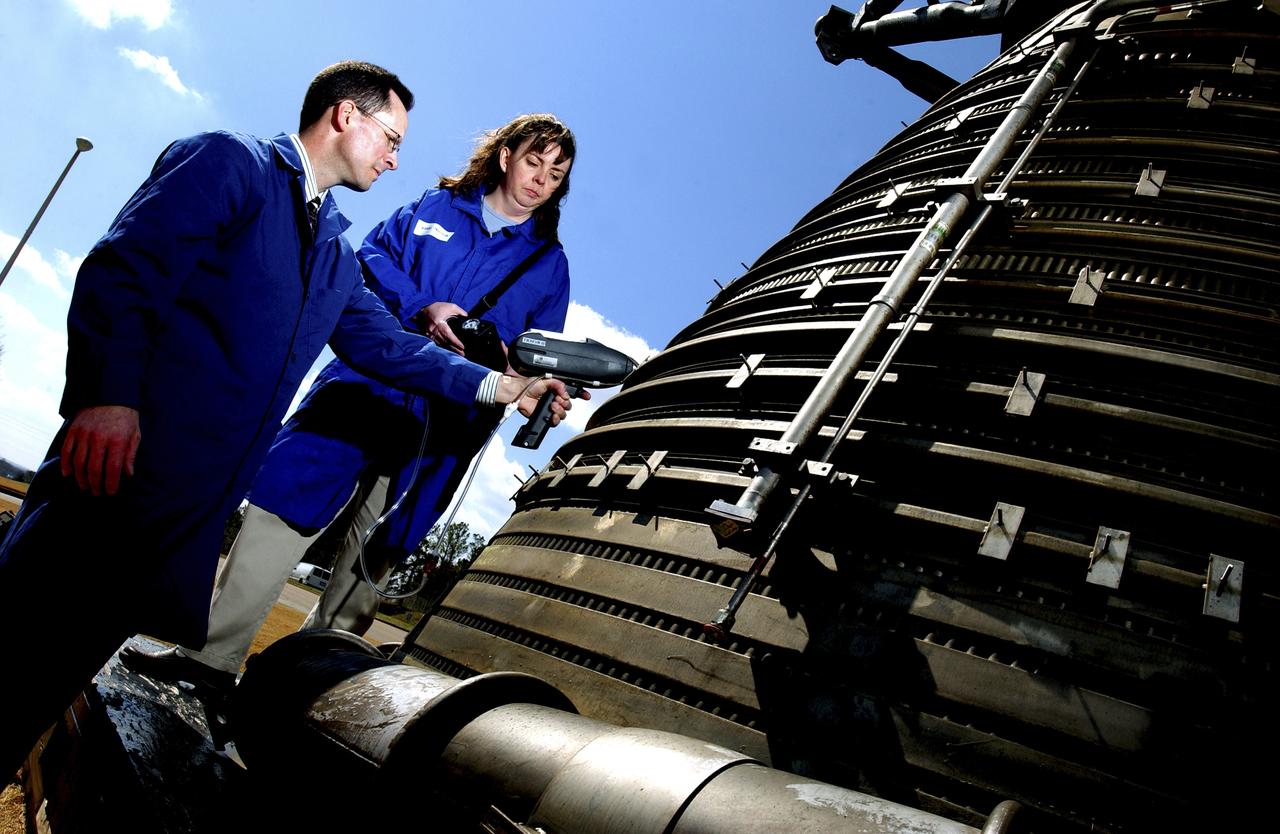
Teamed with KeyMaster Technologies, Kennewick, Washington, the Marshall Space Flight Center engineers have developed a portable vacuum analyzer that performs on-the-spot chemical analyses under field conditions— a task previously only possible in a chemical laboratory. The new capability is important not only to the aerospace industry, but holds potential for broad applications in any industry that depends on materials analysis, such as the automotive and pharmaceutical industries. Weighing in at a mere 4 pounds, the newly developed handheld vacuum X-ray fluorescent analyzer can identify and characterize a wide range of elements, and is capable of detecting chemical elements with low atomic numbers, such as sodium, aluminum and silicon. It is the only handheld product on the market with that capability. Aluminum alloy verification is of particular interest to NASA because vast amounts of high-strength aluminum alloys are used in the Space Shuttle propulsion system such as the External Tank, Main Engine, and Solid Rocket Boosters. This capability promises to be a boom to the aerospace community because of unique requirements, for instance, the need to analyze Space Shuttle propulsion systems on the launch pad. Those systems provide the awe-inspiring rocket power that propels the Space Shuttle from Earth into orbit in mere minutes. The scanner development also marks a major improvement in the quality assurance field, because screws, nuts, bolts, fasteners, and other items can now be evaluated upon receipt and rejected if found to be substandard. The same holds true for aluminum weld rods.  The ability to validate the integrity of raw materials and partially finished products before adding value to them in the manufacturing process will be of benefit not only to businesses, but also to the consumer, who will have access to a higher value product at a cheaper price. Three vacuum X-ray scanners are already being used in the Space Shuttle Program. The External Tank Project Office is using one for aluminum alloy analysis, while a Marshall contractor is evaluating alloys with another unit purchased for the Space Shuttle Main Engine Office. The Reusable Solid Rocket Motor Project Office has obtained a scanner that is being used to test hardware and analyze materials. In this photograph, Richard Booth, Marshall Engineering Directorate, and Wanda Hudson, ATK Thiokol, use an enhanced vacuum X-ray fluorescent scanner to analyze materials  in an F-1 engine, which was used to boost the Saturn V rocket from Earth’s orbit that carried astronauts to the moon in the 1960s.
Benefit from NASA
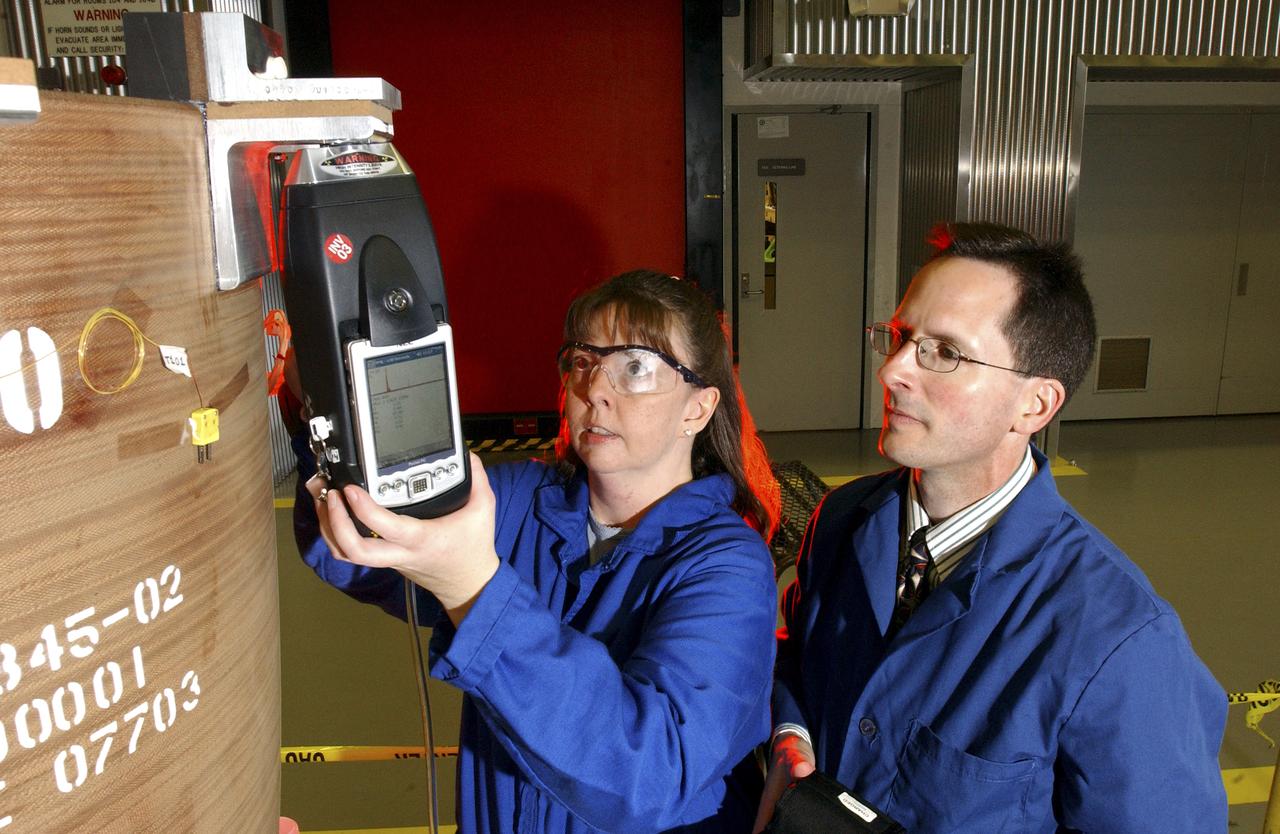
Teamed with KeyMaster Technologies, Kennewick, Washington, the Marshall Space Flight Center engineers have developed a portable vacuum analyzer that performs on-the-spot chemical analyses under field conditions— a task previously only possible in a chemical laboratory. The new capability is important not only to the aerospace industry, but holds potential for broad applications in any industry that depends on materials analysis, such as the automotive and pharmaceutical industries. Weighing in at a mere 4 pounds, the newly developed handheld vacuum X-ray fluorescent analyzer can identify and characterize a wide range of elements, and is capable of detecting chemical elements with low atomic numbers, such as sodium, aluminum and silicon. It is the only handheld product on the market with that capability. Aluminum alloy verification is of particular interest to NASA because vast amounts of high-strength aluminum alloys are used in the Space Shuttle propulsion system such as the External Tank, Main Engine, and Solid Rocket Boosters. This capability promises to be a boom to the aerospace community because of unique requirements, for instance, the need to analyze Space Shuttle propulsion systems on the launch pad. Those systems provide the awe-inspiring rocket power that propels the Space Shuttle from Earth into orbit in mere minutes. The scanner development also marks a major improvement in the quality assurance field, because screws, nuts, bolts, fasteners, and other items can now be evaluated upon receipt and rejected if found to be substandard. The same holds true for aluminum weld rods.  The ability to validate the integrity of raw materials and partially finished products before adding value to them in the manufacturing process will be of benefit not only to businesses, but also to the consumer, who will have access to a higher value product at a cheaper price. Three vacuum X-ray scanners are already being used in the Space Shuttle Program. The External Tank Project Office is using one for aluminum alloy analysis, while a Marshall contractor is evaluating alloys with another unit purchased for the Space Shuttle Main Engine Office. The Reusable Solid Rocket Motor Project Office has obtained a scanner that is being used to test hardware and analyze materials. In this photograph, Wanda Hudson, left, ATK Thiokol, and Richard Booth, Marshall Engineering Directorate, use an enhanced vacuum X-ray fluorescent scanner to evaluate Reusable Solid Rocket Motor hardware.
Benefit from NASA
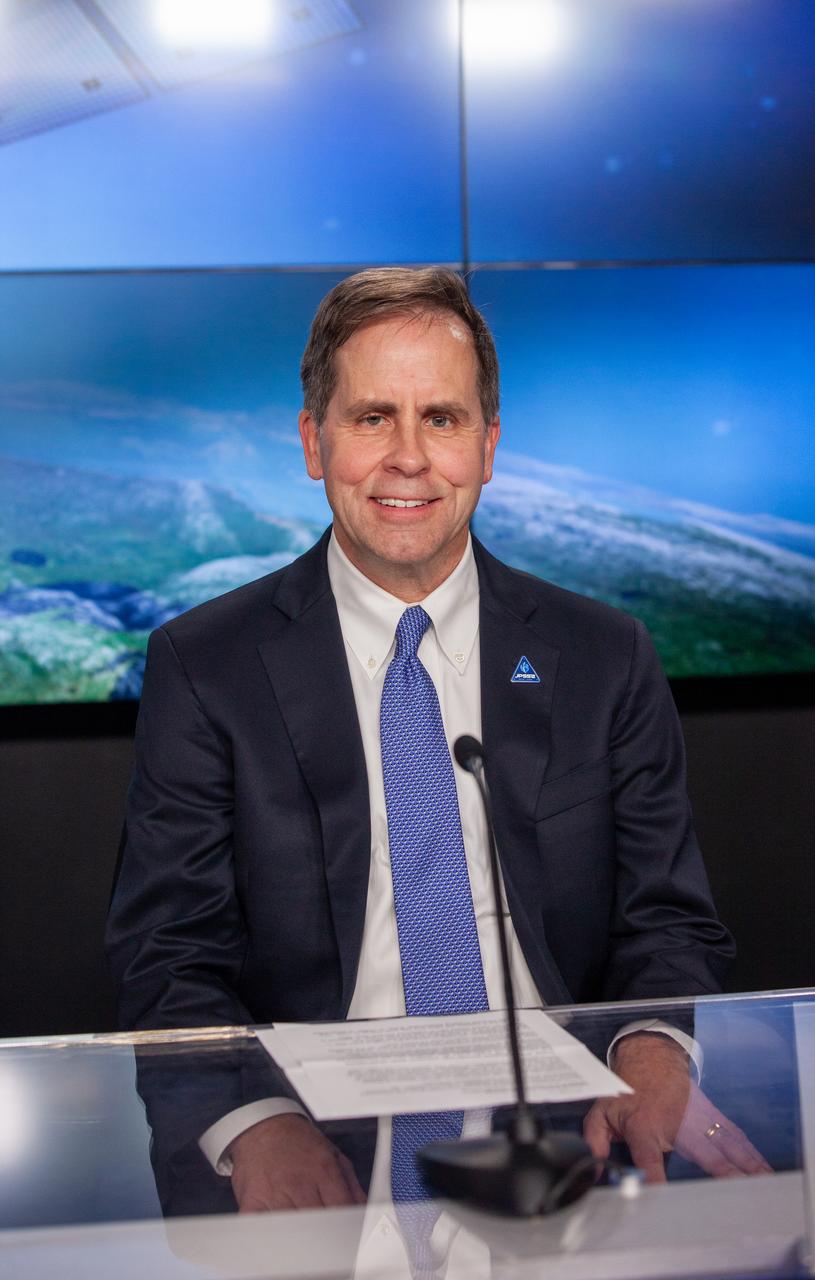
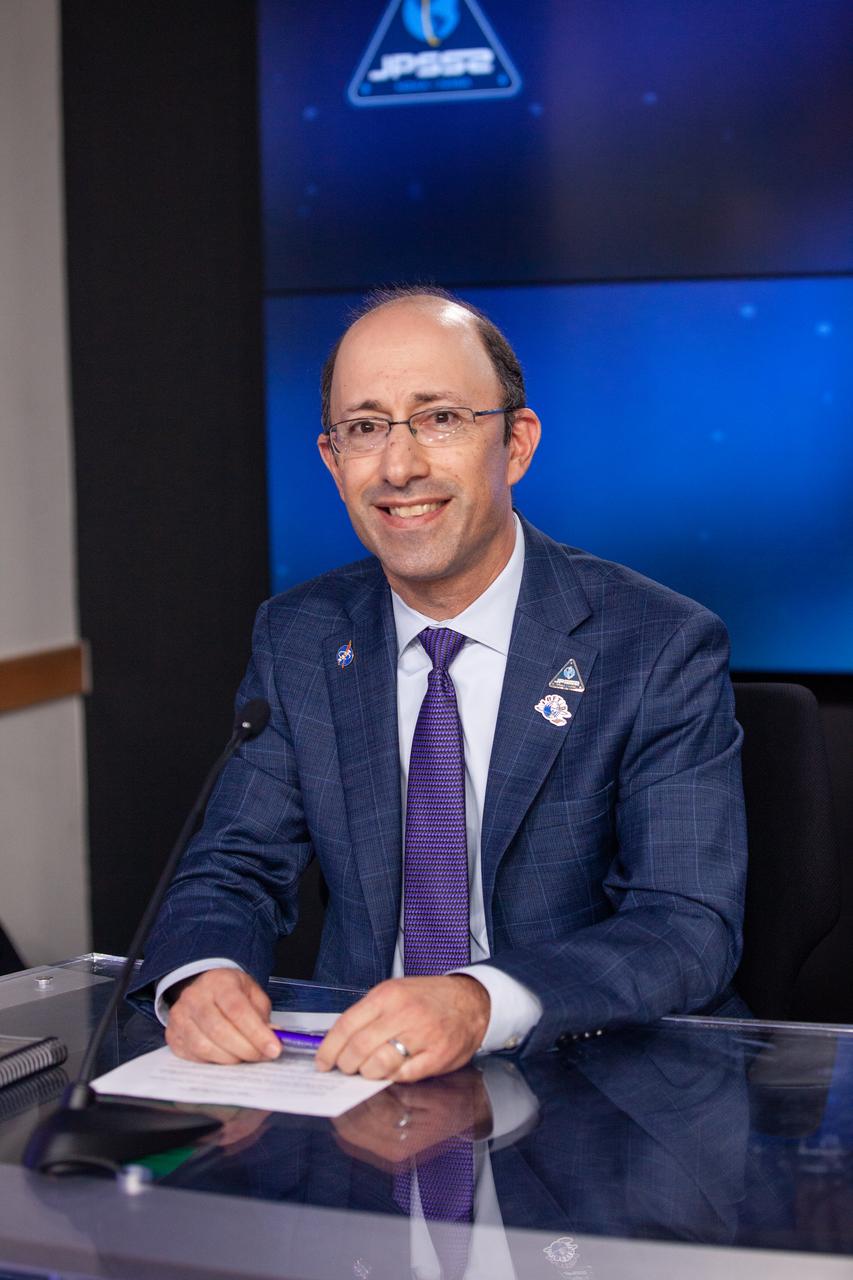
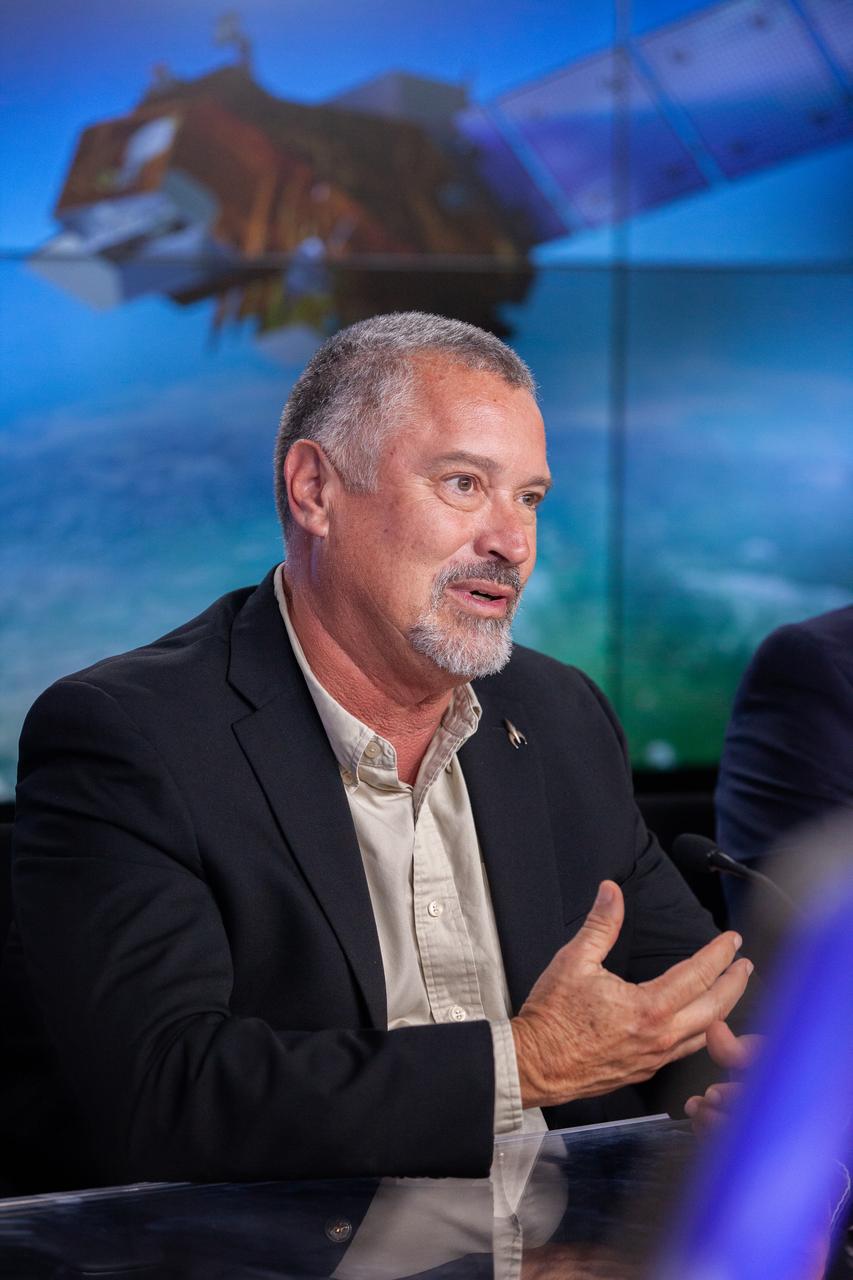
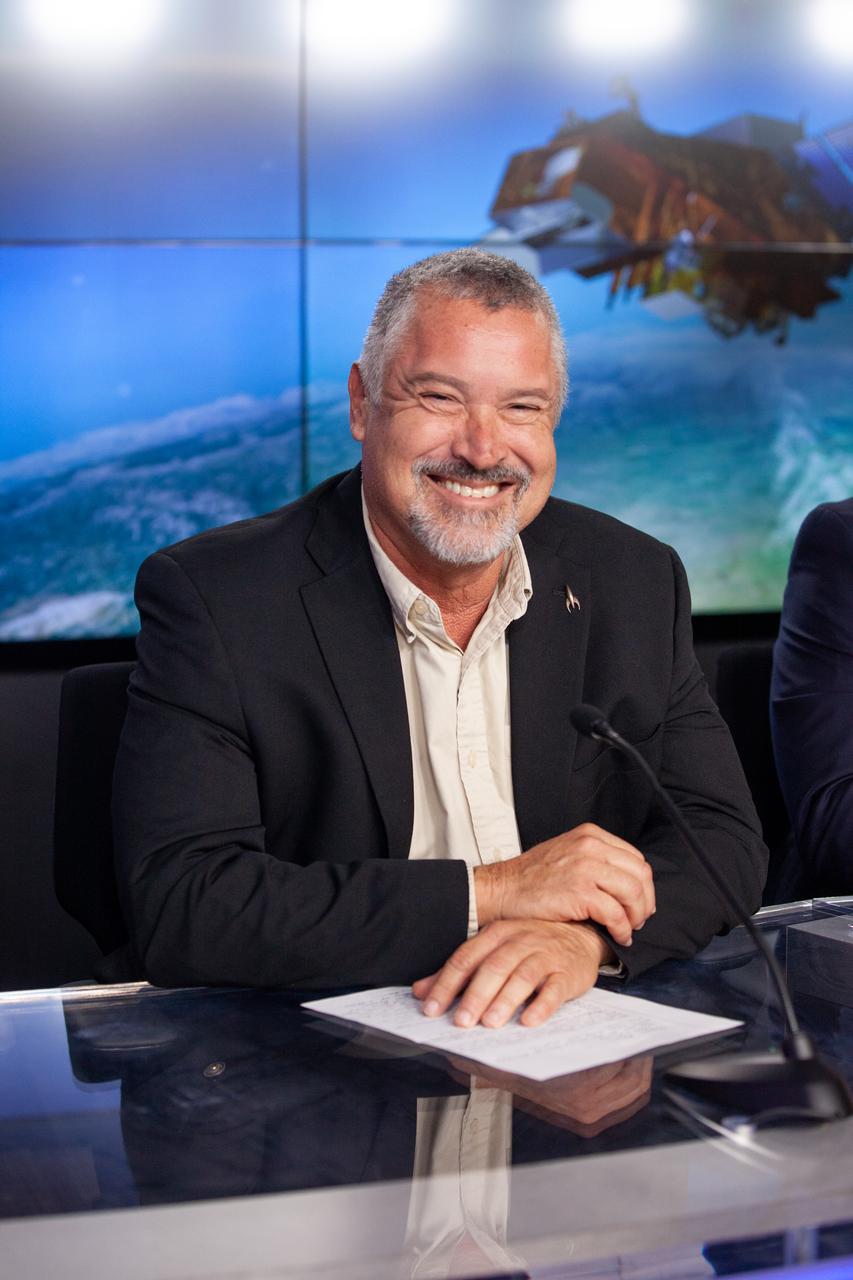
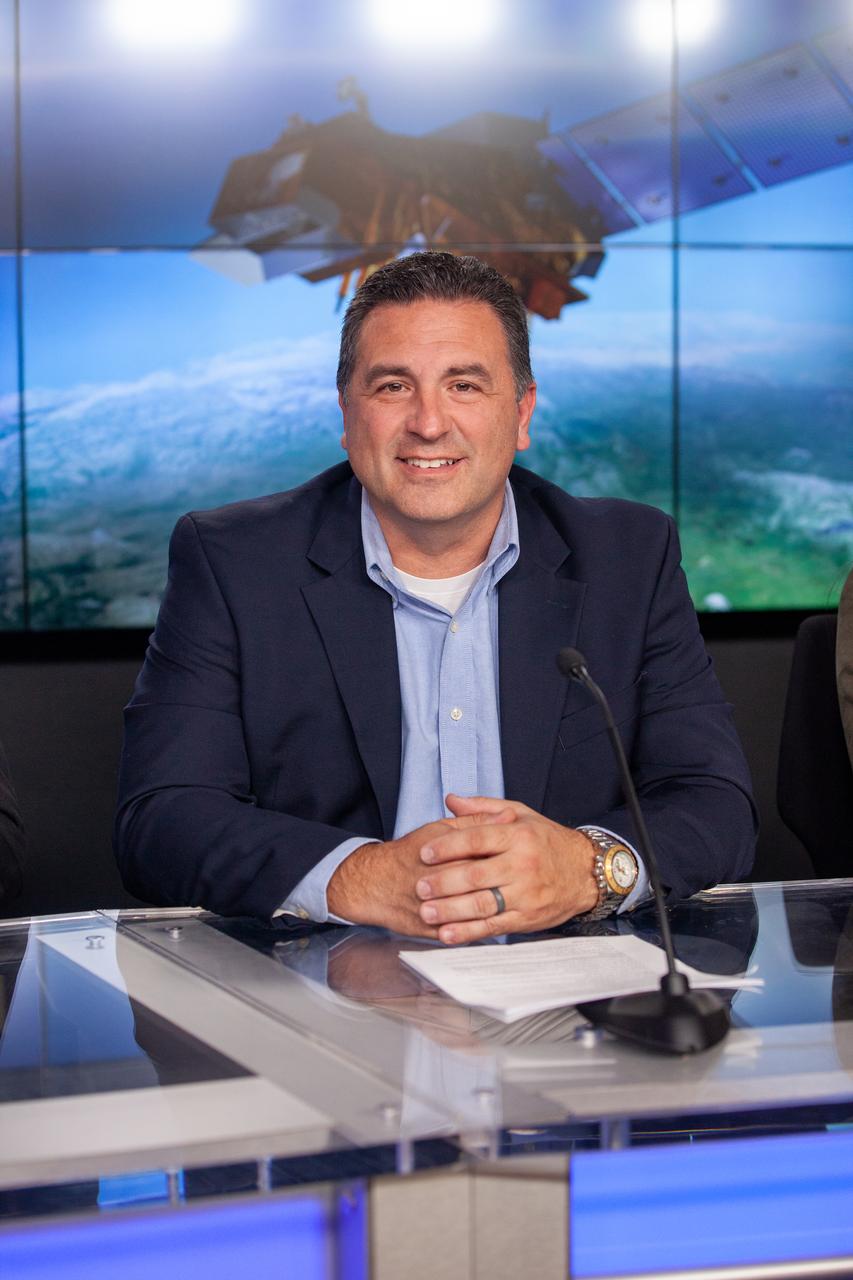
Omar Baez, launch director, NASA’s Launch Services Program, participates in a prelaunch news conference for the National Oceanic and Atmospheric Administration’s (NOAA) Joint Polar Satellite System-2 (JPSS-2) and NASA Low-Earth Orbit Flight Test of an Inflatable Decelerator (LOFTID) technology demonstration at Vandenberg Space Force Base in California on Oct. 28, 2022. JPSS-2 is the third satellite in the polar satellite series and is expected to capture data to improve weather forecasts, helping scientists predict and prepare for extreme weather events and climate change. JPSS-2 is scheduled to launch at 2:25 a.m. PDT Tuesday, Nov. 1, on a United Launch Alliance (ULA) Atlas V 401 rocket from Space Launch Complex 3 at Vandenberg Space Force Base in California. Launching with JPSS-2 is NASA’s LOFTID technology demonstration. After JPSS-2 safely reaches orbit, LOFTID will follow a re-entry trajectory from low-Earth orbit to demonstrate the inflatable heat shield’s ability to slow down and survive re-entry. LOFTID is a partnership with ULA and is dedicated to the memory of Bernard Kutter, one of the company’s engineers who played a key role in developing the technology. LOFTID will demonstrate how the inflatable aeroshell, or heat shield, can slow down and survive re-entry in conditions relevant to many potential applications, whether landing humans on Mars, new missions to Venus and Titan, or returning heavier payloads and samples from low-Earth orbit.
JPSS-2/LOFTID Prelaunch News Conference
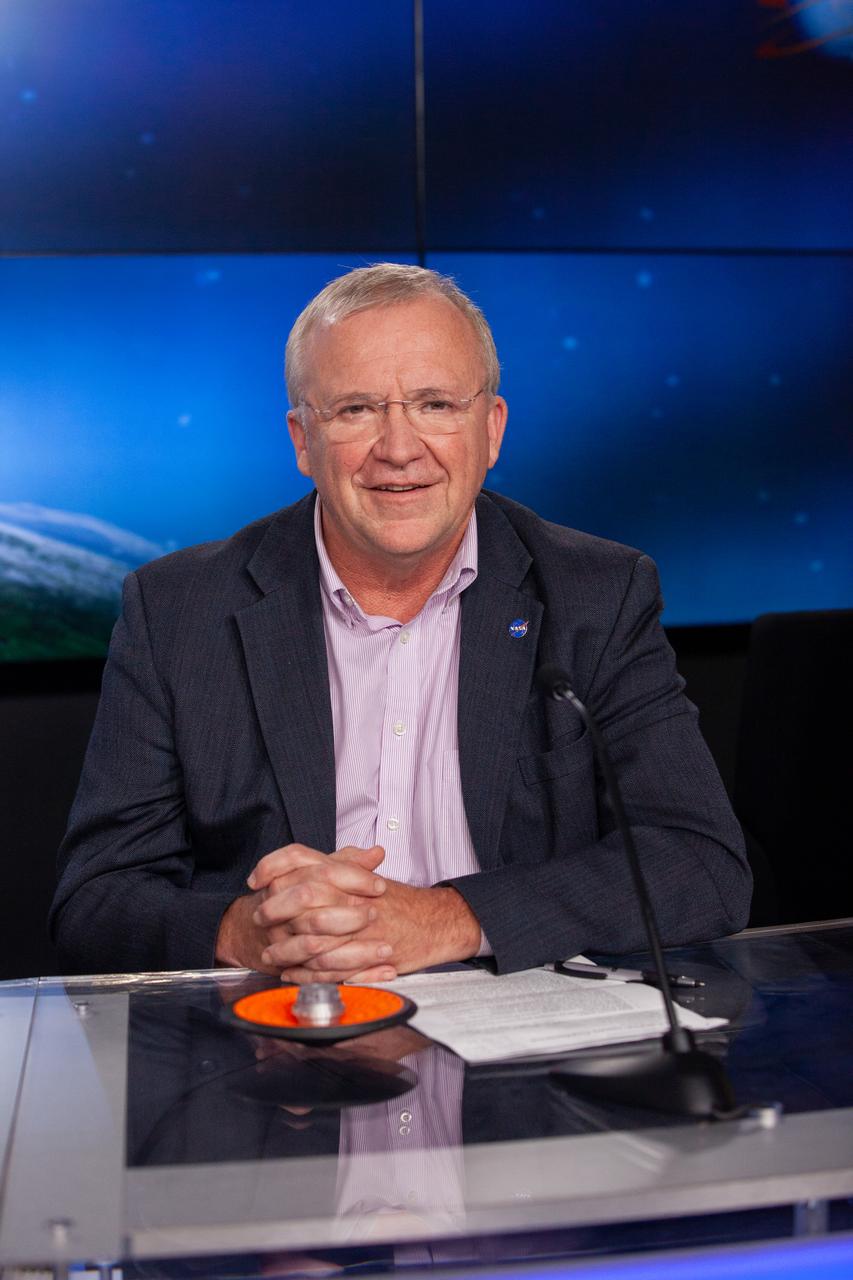
Jim Reuter, associate administrator for NASA’s Space Technology Mission Directorate, participates in a prelaunch news conference for the National Oceanic and Atmospheric Administration’s (NOAA) Joint Polar Satellite System-2 (JPSS-2) and NASA Low-Earth Orbit Flight Test of an Inflatable Decelerator (LOFTID) technology demonstration at Vandenberg Space Force Base in California on Oct. 28, 2022. JPSS-2 is the third satellite in the polar satellite series and is expected to capture data to improve weather forecasts, helping scientists predict and prepare for extreme weather events and climate change. JPSS-2 is scheduled to launch at 2:25 a.m. PDT Tuesday, Nov. 1, on a United Launch Alliance (ULA) Atlas V 401 rocket from Space Launch Complex 3 at Vandenberg Space Force Base in California. Launching with JPSS-2 is NASA’s LOFTID technology demonstration. After JPSS-2 safely reaches orbit, LOFTID will follow a re-entry trajectory from low-Earth orbit to demonstrate the inflatable heat shield’s ability to slow down and survive re-entry. LOFTID is a partnership with ULA and is dedicated to the memory of Bernard Kutter, one of the company’s engineers who played a key role in developing the technology. LOFTID will demonstrate how the inflatable aeroshell, or heat shield, can slow down and survive re-entry in conditions relevant to many potential applications, whether landing humans on Mars, new missions to Venus and Titan, or returning heavier payloads and samples from low-Earth orbit.
JPSS-2/LOFTID Prelaunch News Conference
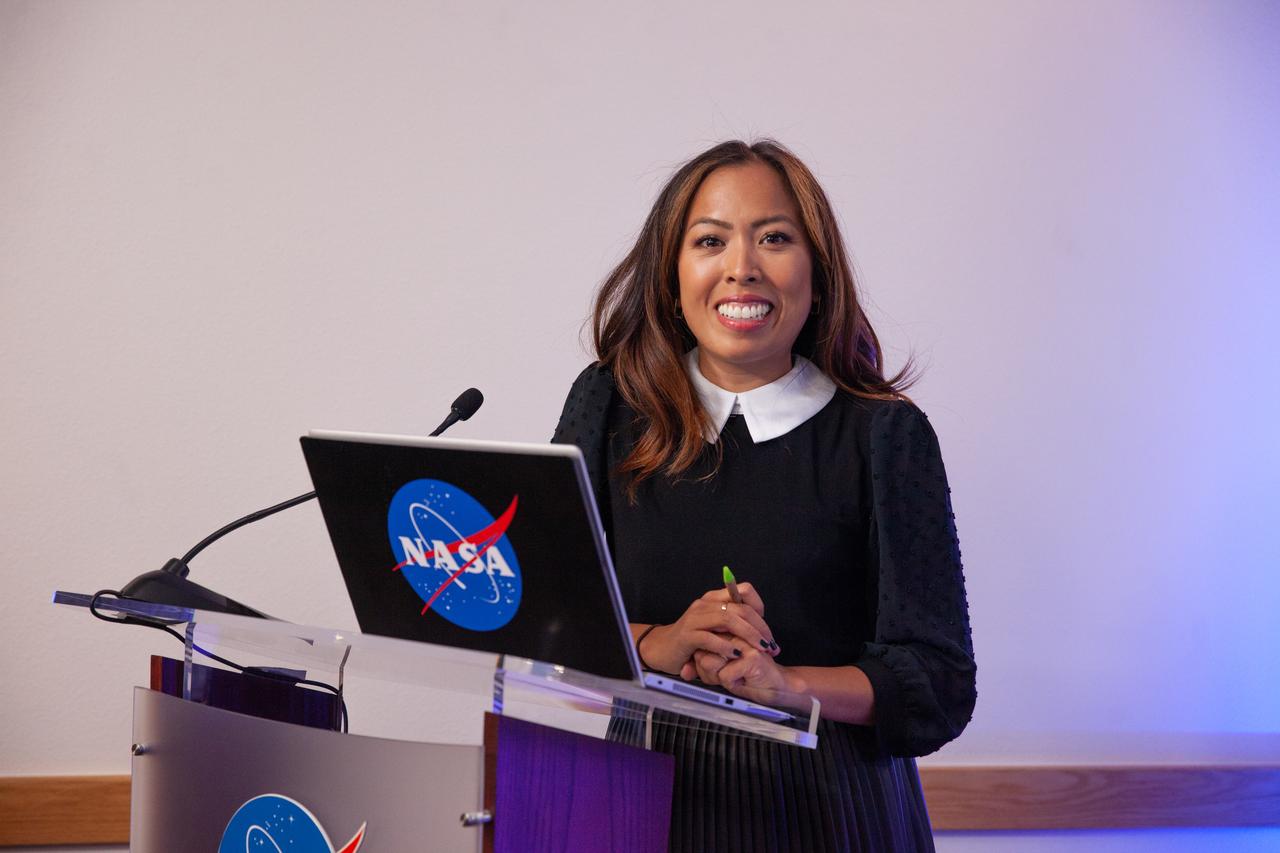
Megan Cruz, NASA Communications, moderates a prelaunch news conference for the National Oceanic and Atmospheric Administration’s (NOAA) Joint Polar Satellite System-2 (JPSS-2) and NASA Low-Earth Orbit Flight Test of an Inflatable Decelerator (LOFTID) technology demonstration at Vandenberg Space Force Base in California on Oct. 28, 2022. JPSS-2 is the third satellite in the polar satellite series and is expected to capture data to improve weather forecasts, helping scientists predict and prepare for extreme weather events and climate change. JPSS-2 is scheduled to launch at 2:25 a.m. PDT Tuesday, Nov. 1, on a United Launch Alliance (ULA) Atlas V 401 rocket from Space Launch Complex 3 at Vandenberg Space Force Base in California. Launching with JPSS-2 is NASA’s LOFTID technology demonstration. After JPSS-2 safely reaches orbit, LOFTID will follow a re-entry trajectory from low-Earth orbit to demonstrate the inflatable heat shield’s ability to slow down and survive re-entry. LOFTID is a partnership with ULA and is dedicated to the memory of Bernard Kutter, one of the company’s engineers who played a key role in developing the technology. LOFTID will demonstrate how the inflatable aeroshell, or heat shield, can slow down and survive re-entry in conditions relevant to many potential applications, whether landing humans on Mars, new missions to Venus and Titan, or returning heavier payloads and samples from low-Earth orbit.
JPSS-2/LOFTID Prelaunch News Conference
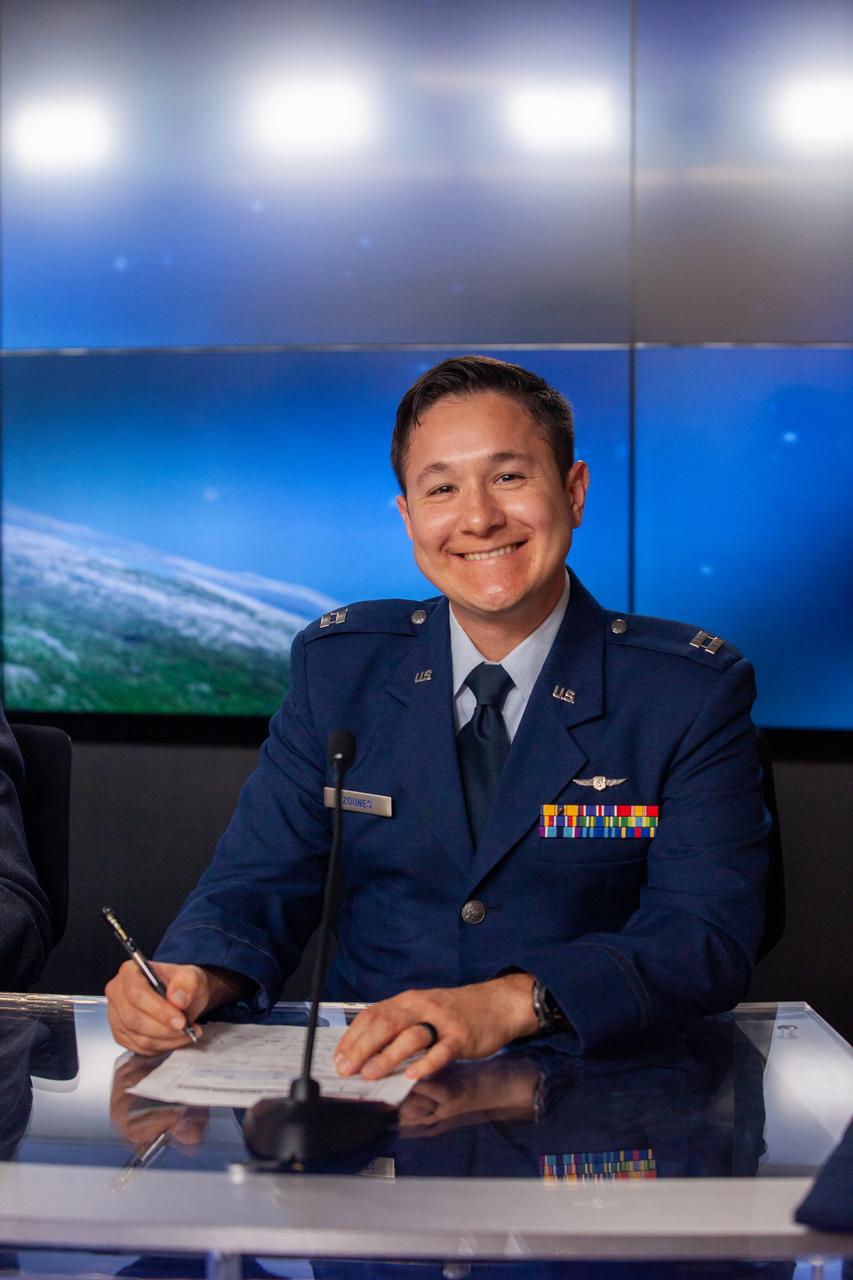
Capt. Zack Zounes, launch weather officer, U.S. Space Force, participates in a prelaunch news conference for the National Oceanic and Atmospheric Administration’s (NOAA) Joint Polar Satellite System-2 (JPSS-2) and NASA Low-Earth Orbit Flight Test of an Inflatable Decelerator (LOFTID) technology demonstration at Vandenberg Space Force Base in California on Oct. 28, 2022. JPSS-2 is the third satellite in the polar satellite series and is expected to capture data to improve weather forecasts, helping scientists predict and prepare for extreme weather events and climate change. JPSS-2 is scheduled to launch at 2:25 a.m. PDT Tuesday, Nov. 1, on a United Launch Alliance (ULA) Atlas V 401 rocket from Space Launch Complex 3 at Vandenberg Space Force Base in California. Launching with JPSS-2 is NASA’s LOFTID technology demonstration. After JPSS-2 safely reaches orbit, LOFTID will follow a re-entry trajectory from low-Earth orbit to demonstrate the inflatable heat shield’s ability to slow down and survive re-entry. LOFTID is a partnership with ULA and is dedicated to the memory of Bernard Kutter, one of the company’s engineers who played a key role in developing the technology. LOFTID will demonstrate how the inflatable aeroshell, or heat shield, can slow down and survive re-entry in conditions relevant to many potential applications, whether landing humans on Mars, new missions to Venus and Titan, or returning heavier payloads and samples from low-Earth orbit.
JPSS-2/LOFTID Prelaunch News Conference
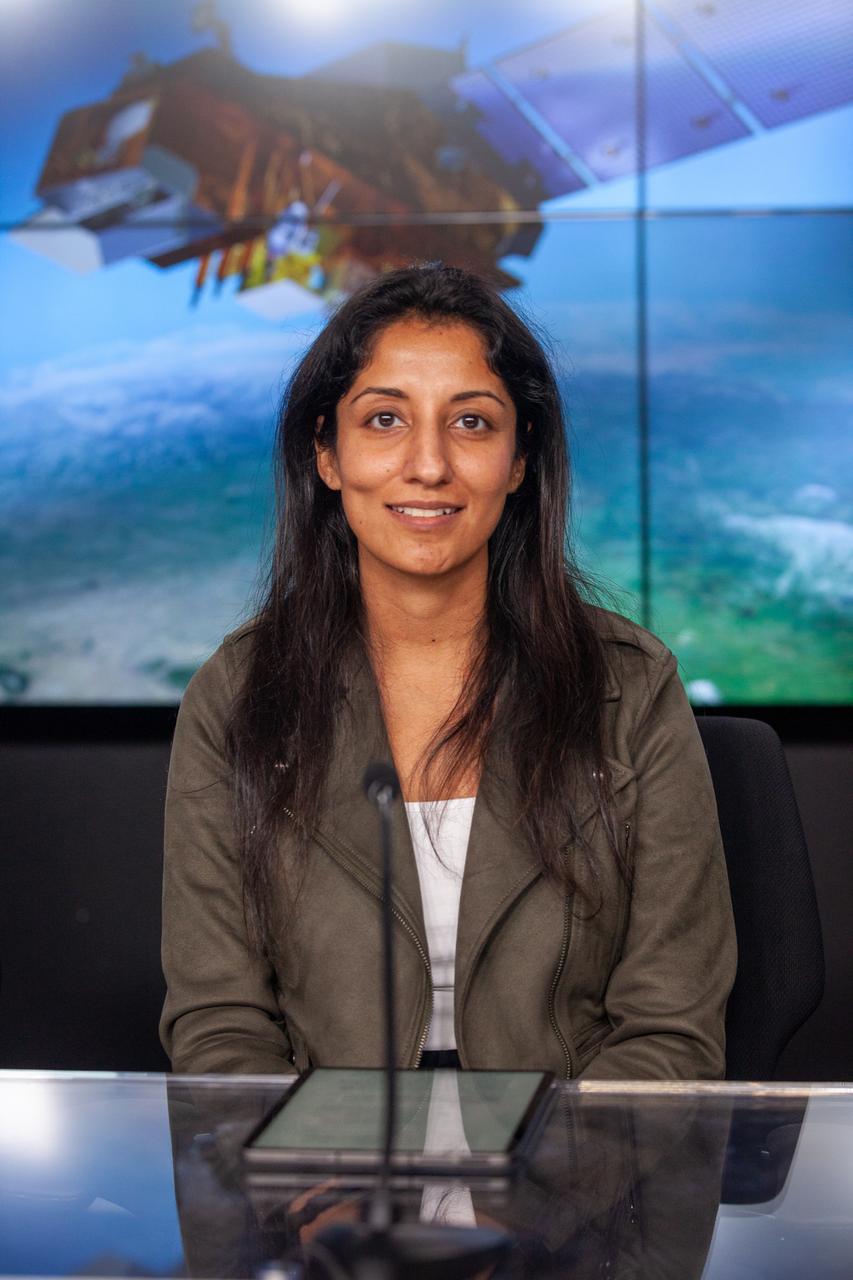
Tim Walsh, director, NOAA’s JPSS Program Office, NOAA, participates in a prelaunch news conference for the National Oceanic and Atmospheric Administration’s (NOAA) Joint Polar Satellite System-2 (JPSS-2) and NASA Low-Earth Orbit Flight Test of an Inflatable Decelerator (LOFTID) technology demonstration at Vandenberg Space Force Base in California on Oct. 28, 2022. JPSS-2 is the third satellite in the polar satellite series and is expected to capture data to improve weather forecasts, helping scientists predict and prepare for extreme weather events and climate change. JPSS-2 is scheduled to launch at 2:25 a.m. PDT Tuesday, Nov. 1, on a United Launch Alliance (ULA) Atlas V 401 rocket from Space Launch Complex 3 at Vandenberg Space Force Base in California. Launching with JPSS-2 is NASA’s LOFTID technology demonstration. After JPSS-2 safely reaches orbit, LOFTID will follow a re-entry trajectory from low-Earth orbit to demonstrate the inflatable heat shield’s ability to slow down and survive re-entry. LOFTID is a partnership with ULA and is dedicated to the memory of Bernard Kutter, one of the company’s engineers who played a key role in developing the technology. LOFTID will demonstrate how the inflatable aeroshell, or heat shield, can slow down and survive re-entry in conditions relevant to many potential applications, whether landing humans on Mars, new missions to Venus and Titan, or returning heavier payloads and samples from low-Earth orbit.
JPSS-2/LOFTID Prelaunch News Conference
John Gagosian, director, NASA’s Joint Agency Satellite Division, participates in a prelaunch news conference for the National Oceanic and Atmospheric Administration’s (NOAA) Joint Polar Satellite System-2 (JPSS-2) and NASA Low-Earth Orbit Flight Test of an Inflatable Decelerator (LOFTID) technology demonstration at Vandenberg Space Force Base in California on Oct. 28, 2022. JPSS-2 is the third satellite in the polar satellite series and is expected to capture data to improve weather forecasts, helping scientists predict and prepare for extreme weather events and climate change. JPSS-2 is scheduled to launch at 2:25 a.m. PDT Tuesday, Nov. 1, on a United Launch Alliance (ULA) Atlas V 401 rocket from Space Launch Complex 3 at Vandenberg Space Force Base in California. Launching with JPSS-2 is NASA’s LOFTID technology demonstration. After JPSS-2 safely reaches orbit, LOFTID will follow a re-entry trajectory from low-Earth orbit to demonstrate the inflatable heat shield’s ability to slow down and survive re-entry. LOFTID is a partnership with ULA and is dedicated to the memory of Bernard Kutter, one of the company’s engineers who played a key role in developing the technology. LOFTID will demonstrate how the inflatable aeroshell, or heat shield, can slow down and survive re-entry in conditions relevant to many potential applications, whether landing humans on Mars, new missions to Venus and Titan, or returning heavier payloads and samples from low-Earth orbit.
JPSS-2/LOFTID Prelaunch News Conference
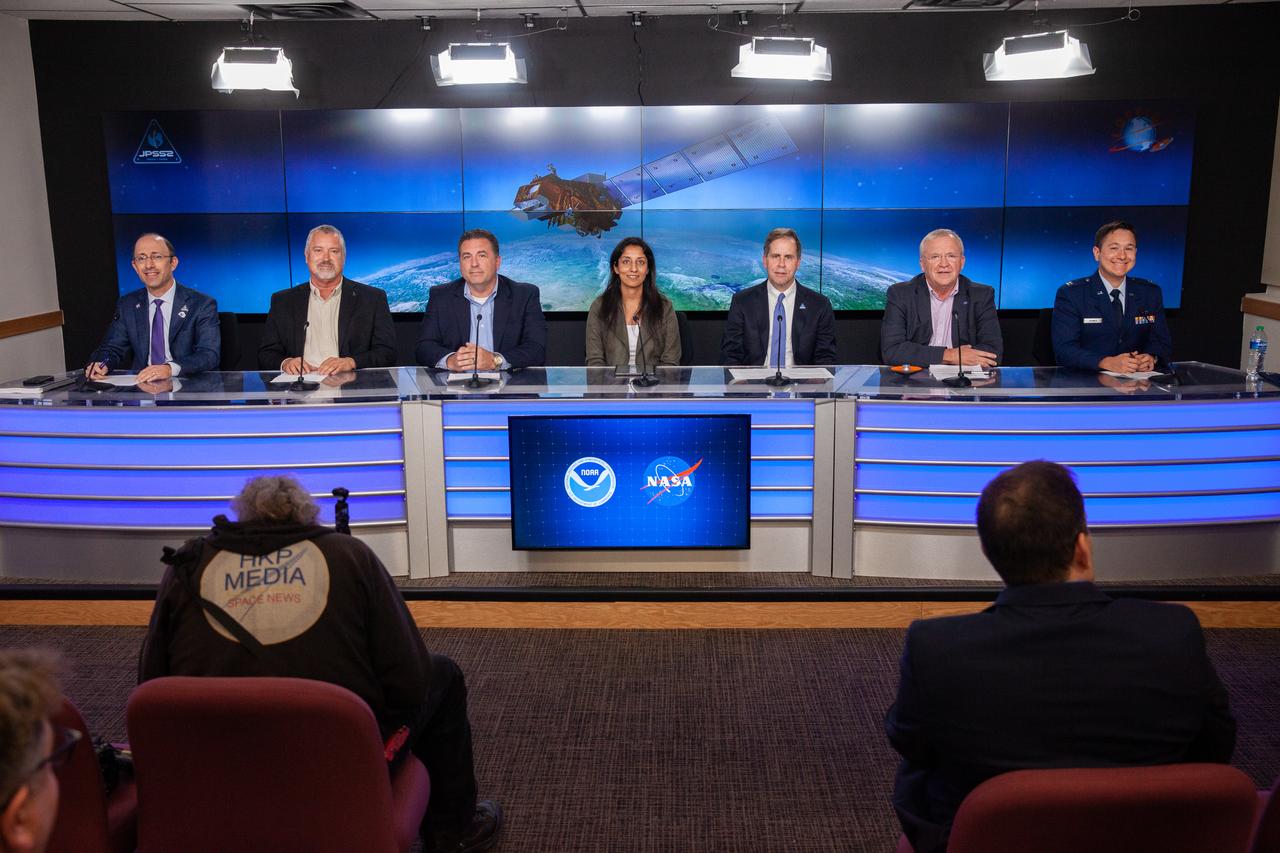
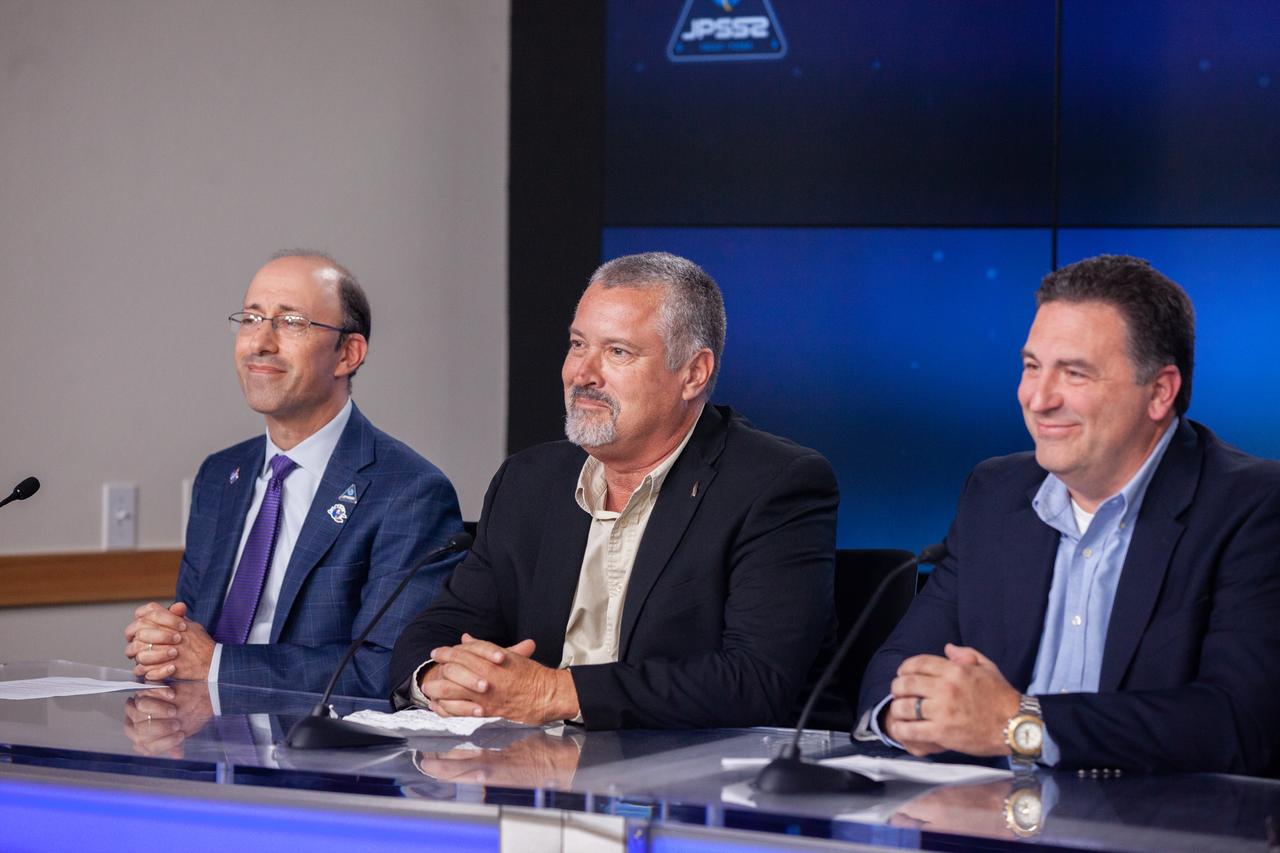
NASA held a prelaunch news conference for the National Oceanic and Atmospheric Administration’s (NOAA) Joint Polar Satellite System-2 (JPSS-2) and the agency’s Low-Earth Orbit Flight Test of an Inflatable Decelerator (LOFTID) technology demonstration at Vandenberg Space Force Base in California on Oct. 28, 2022. Participants from left are: Megan Cruz, NASA Communications; John Gagosian, director, NASA’s Joint Agency Satellite Division; Omar Baez, launch director, NASA’s Launch Services Program; Gary Wentz, vice president, Government and Commercial Programs, ULA; Irene Parker, deputy assistant administrator, NOAA Systems, National Environmental Satellite, Data, and Services; Tim Walsh, director, NOAA’s JPSS Program Office, NOAA; Jim Reuter, associate administrator for NASA’s Space Technology Mission Directorate; Capt. Zack Zounes, launch weather officer, U.S. Space Force. JPSS-2 is the third satellite in the polar satellite series and is expected to capture data to improve weather forecasts, helping scientists predict and prepare for extreme weather events and climate change. JPSS-2 is scheduled to launch at 2:25 a.m. PDT Tuesday, Nov. 1, on a United Launch Alliance (ULA) Atlas V 401 rocket from Space Launch Complex 3 at Vandenberg Space Force Base in California. Launching with JPSS-2 is NASA’s LOFTID technology demonstration. After JPSS-2 safely reaches orbit, LOFTID will follow a re-entry trajectory from low-Earth orbit to demonstrate the inflatable heat shield’s ability to slow down and survive re-entry. LOFTID is a partnership with ULA and is dedicated to the memory of Bernard Kutter, one of the company’s engineers who played a key role in developing the technology. LOFTID will demonstrate how the inflatable aeroshell, or heat shield, can slow down and survive re-entry in conditions relevant to many potential applications, whether landing humans on Mars, new missions to Venus and Titan, or returning heavier payloads and samples from low-Earth or
JPSS-2/LOFTID Prelaunch News Conference
NASA held a prelaunch news conference for the National Oceanic and Atmospheric Administration’s (NOAA) Joint Polar Satellite System-2 (JPSS-2) and the agency’s Low-Earth Orbit Flight Test of an Inflatable Decelerator (LOFTID) technology demonstration at Vandenberg Space Force Base in California on Oct. 28, 2022. Participants from left are: John Gagosian, director, NASA’s Joint Agency Satellite Division; Omar Baez, launch director, NASA’s Launch Services Program; Gary Wentz, vice president, Government and Commercial Programs, ULA. JPSS-2 is the third satellite in the polar satellite series and is expected to capture data to improve weather forecasts, helping scientists predict and prepare for extreme weather events and climate change. JPSS-2 is scheduled to launch at 2:25 a.m. PDT Tuesday, Nov. 1, on a United Launch Alliance (ULA) Atlas V 401 rocket from Space Launch Complex 3 at Vandenberg Space Force Base in California. Launching with JPSS-2 is NASA’s LOFTID technology demonstration. After JPSS-2 safely reaches orbit, LOFTID will follow a re-entry trajectory from low-Earth orbit to demonstrate the inflatable heat shield’s ability to slow down and survive re-entry. LOFTID is a partnership with ULA and is dedicated to the memory of Bernard Kutter, one of the company’s engineers who played a key role in developing the technology. LOFTID will demonstrate how the inflatable aeroshell, or heat shield, can slow down and survive re-entry in conditions relevant to many potential applications, whether landing humans on Mars, new missions to Venus and Titan, or returning heavier payloads and samples from low-Earth orbit.
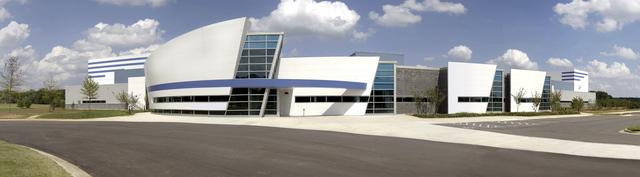
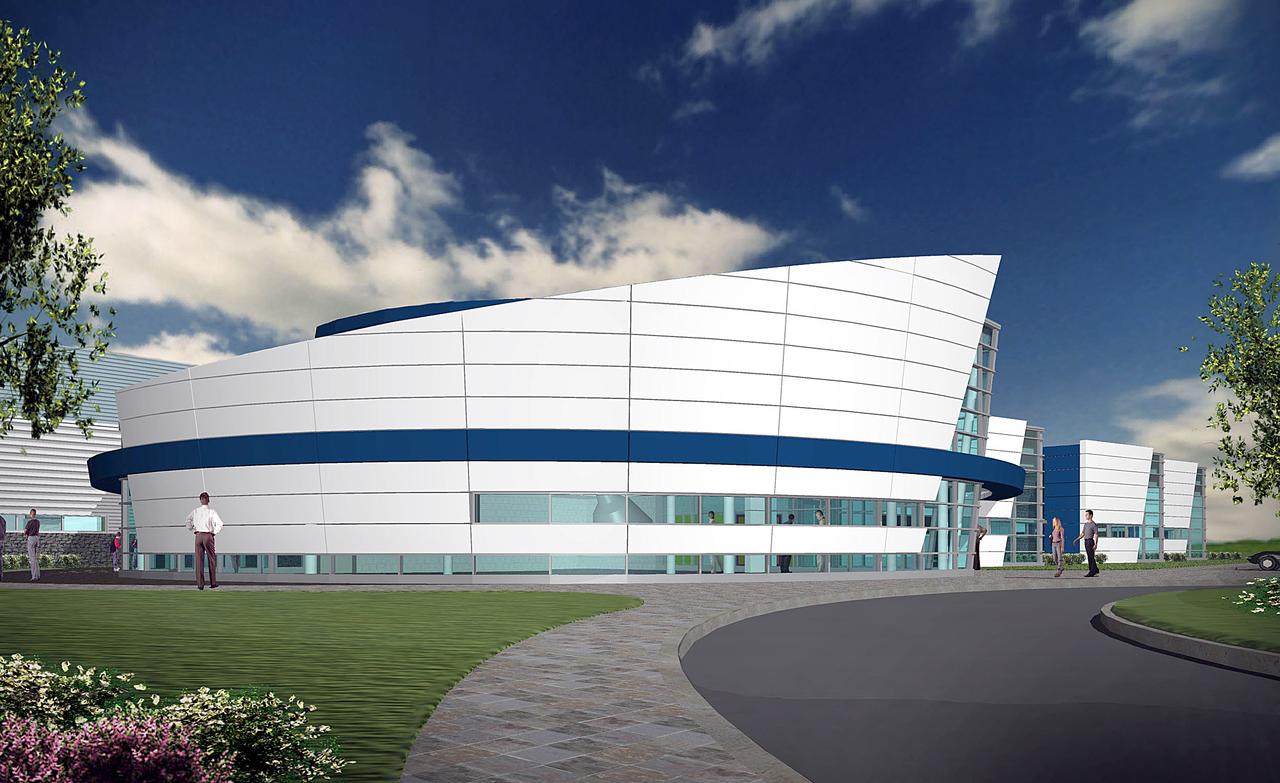
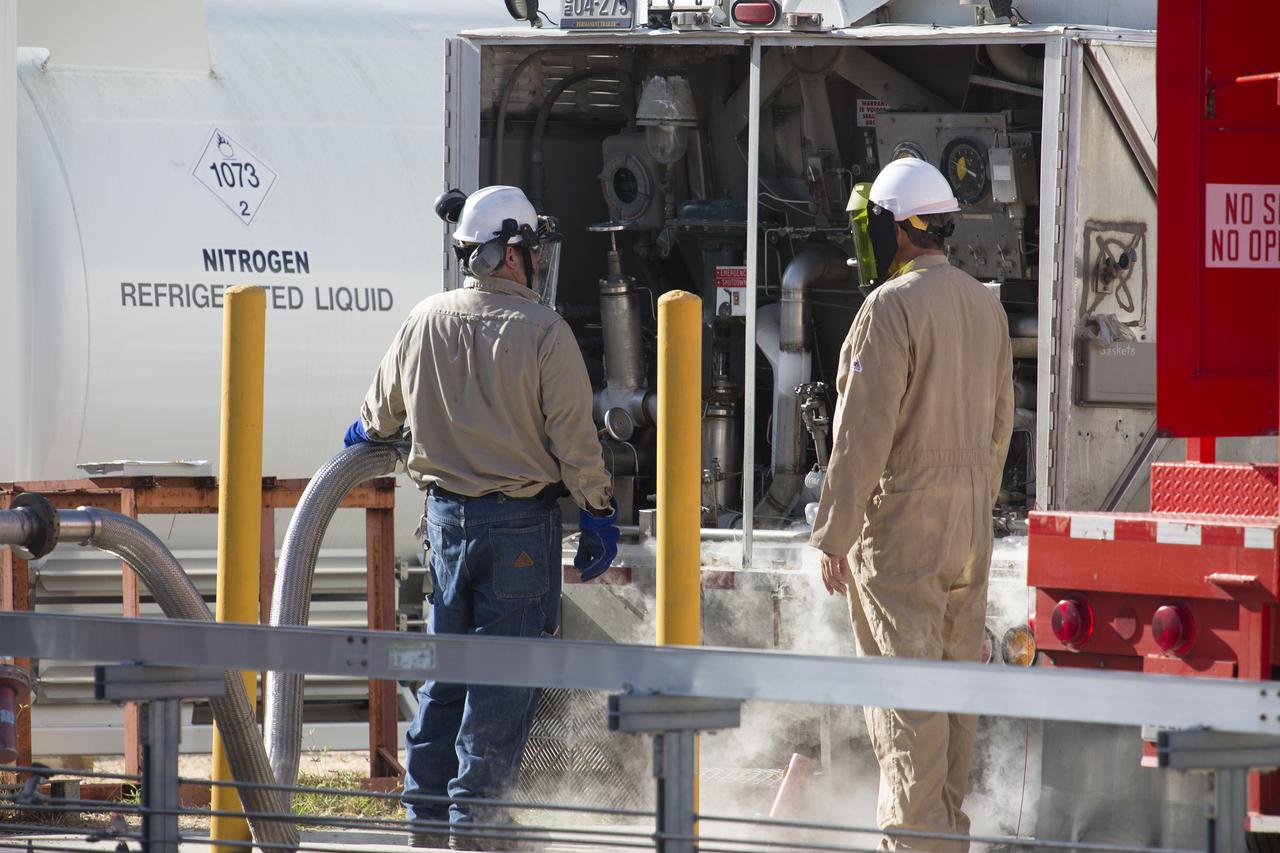
JPSS-2/LOFTID Prelaunch News Conference
Gary Wentz, vice president, Government and Commercial Programs, ULA, participates in a prelaunch news conference for the National Oceanic and Atmospheric Administration’s (NOAA) Joint Polar Satellite System-2 (JPSS-2) and NASA Low-Earth Orbit Flight Test of an Inflatable Decelerator (LOFTID) technology demonstration at Vandenberg Space Force Base in California on Oct. 28, 2022. JPSS-2 is the third satellite in the polar satellite series and is expected to capture data to improve weather forecasts, helping scientists predict and prepare for extreme weather events and climate change. JPSS-2 is scheduled to launch at 2:25 a.m. PDT Tuesday, Nov. 1, on a United Launch Alliance (ULA) Atlas V 401 rocket from Space Launch Complex 3 at Vandenberg Space Force Base in California. Launching with JPSS-2 is NASA’s LOFTID technology demonstration. After JPSS-2 safely reaches orbit, LOFTID will follow a re-entry trajectory from low-Earth orbit to demonstrate the inflatable heat shield’s ability to slow down and survive re-entry. LOFTID is a partnership with ULA and is dedicated to the memory of Bernard Kutter, one of the company’s engineers who played a key role in developing the technology. LOFTID will demonstrate how the inflatable aeroshell, or heat shield, can slow down and survive re-entry in conditions relevant to many potential applications, whether landing humans on Mars, new missions to Venus and Titan, or returning heavier payloads and samples from low-Earth orbit.
JPSS-2/LOFTID Prelaunch News Conference
Omar Baez, launch director, NASA’s Launch Services Program, participates in a prelaunch news conference for the National Oceanic and Atmospheric Administration’s (NOAA) Joint Polar Satellite System-2 (JPSS-2) and NASA Low-Earth Orbit Flight Test of an Inflatable Decelerator (LOFTID) technology demonstration at Vandenberg Space Force Base in California on Oct. 28, 2022. JPSS-2 is the third satellite in the polar satellite series and is expected to capture data to improve weather forecasts, helping scientists predict and prepare for extreme weather events and climate change. JPSS-2 is scheduled to launch at 2:25 a.m. PDT Tuesday, Nov. 1, on a United Launch Alliance (ULA) Atlas V 401 rocket from Space Launch Complex 3 at Vandenberg Space Force Base in California. Launching with JPSS-2 is NASA’s LOFTID technology demonstration. After JPSS-2 safely reaches orbit, LOFTID will follow a re-entry trajectory from low-Earth orbit to demonstrate the inflatable heat shield’s ability to slow down and survive re-entry. LOFTID is a partnership with ULA and is dedicated to the memory of Bernard Kutter, one of the company’s engineers who played a key role in developing the technology. LOFTID will demonstrate how the inflatable aeroshell, or heat shield, can slow down and survive re-entry in conditions relevant to many potential applications, whether landing humans on Mars, new missions to Venus and Titan, or returning heavier payloads and samples from low-Earth orbit.
JPSS-2/LOFTID Prelaunch News Conference
Irene Parker, deputy assistant administrator, NOAA Systems, National Environmental Satellite, Data, and Services, participates in a prelaunch news conference for the National Oceanic and Atmospheric Administration’s (NOAA) Joint Polar Satellite System-2 (JPSS-2) and NASA Low-Earth Orbit Flight Test of an Inflatable Decelerator (LOFTID) technology demonstration at Vandenberg Space Force Base in California on Oct. 28, 2022. JPSS-2 is the third satellite in the polar satellite series and is expected to capture data to improve weather forecasts, helping scientists predict and prepare for extreme weather events and climate change. JPSS-2 is scheduled to launch at 2:25 a.m. PDT Tuesday, Nov. 1, on a United Launch Alliance (ULA) Atlas V 401 rocket from Space Launch Complex 3 at Vandenberg Space Force Base in California. Launching with JPSS-2 is NASA’s LOFTID technology demonstration. After JPSS-2 safely reaches orbit, LOFTID will follow a re-entry trajectory from low-Earth orbit to demonstrate the inflatable heat shield’s ability to slow down and survive re-entry. LOFTID is a partnership with ULA and is dedicated to the memory of Bernard Kutter, one of the company’s engineers who played a key role in developing the technology. LOFTID will demonstrate how the inflatable aeroshell, or heat shield, can slow down and survive re-entry in conditions relevant to many potential applications, whether landing humans on Mars, new missions to Venus and Titan, or returning heavier payloads and samples from low-Earth orbit.
JPSS-2/LOFTID Prelaunch News Conference
NASA held a prelaunch news conference for the National Oceanic and Atmospheric Administration’s (NOAA) Joint Polar Satellite System-2 (JPSS-2) and the agency’s Low-Earth Orbit Flight Test of an Inflatable Decelerator (LOFTID) technology demonstration at Vandenberg Space Force Base in California on Oct. 28, 2022. Participants from left are: John Gagosian, director, NASA’s Joint Agency Satellite Division; Omar Baez, launch director, NASA’s Launch Services Program; Gary Wentz, vice president, Government and Commercial Programs, ULA; Irene Parker, deputy assistant administrator, NOAA Systems, National Environmental Satellite, Data, and Services; Tim Walsh, director, NOAA’s JPSS Program Office, NOAA; Jim Reuter, associate administrator for NASA’s Space Technology Mission Directorate; Capt. Zack Zounes, launch weather officer, U.S. Space Force. JPSS-2 is the third satellite in the polar satellite series and is expected to capture data to improve weather forecasts, helping scientists predict and prepare for extreme weather events and climate change. JPSS-2 is scheduled to launch at 2:25 a.m. PDT Tuesday, Nov. 1, on a United Launch Alliance (ULA) Atlas V 401 rocket from Space Launch Complex 3 at Vandenberg Space Force Base in California. Launching with JPSS-2 is NASA’s LOFTID technology demonstration. After JPSS-2 safely reaches orbit, LOFTID will follow a re-entry trajectory from low-Earth orbit to demonstrate the inflatable heat shield’s ability to slow down and survive re-entry. LOFTID is a partnership with ULA and is dedicated to the memory of Bernard Kutter, one of the company’s engineers who played a key role in developing the technology. LOFTID will demonstrate how the inflatable aeroshell, or heat shield, can slow down and survive re-entry in conditions relevant to many potential applications, whether landing humans on Mars, new missions to Venus and Titan, or returning heavier payloads and samples from low-Earth orbit.
JPSS-2/LOFTID Prelaunch News Conference