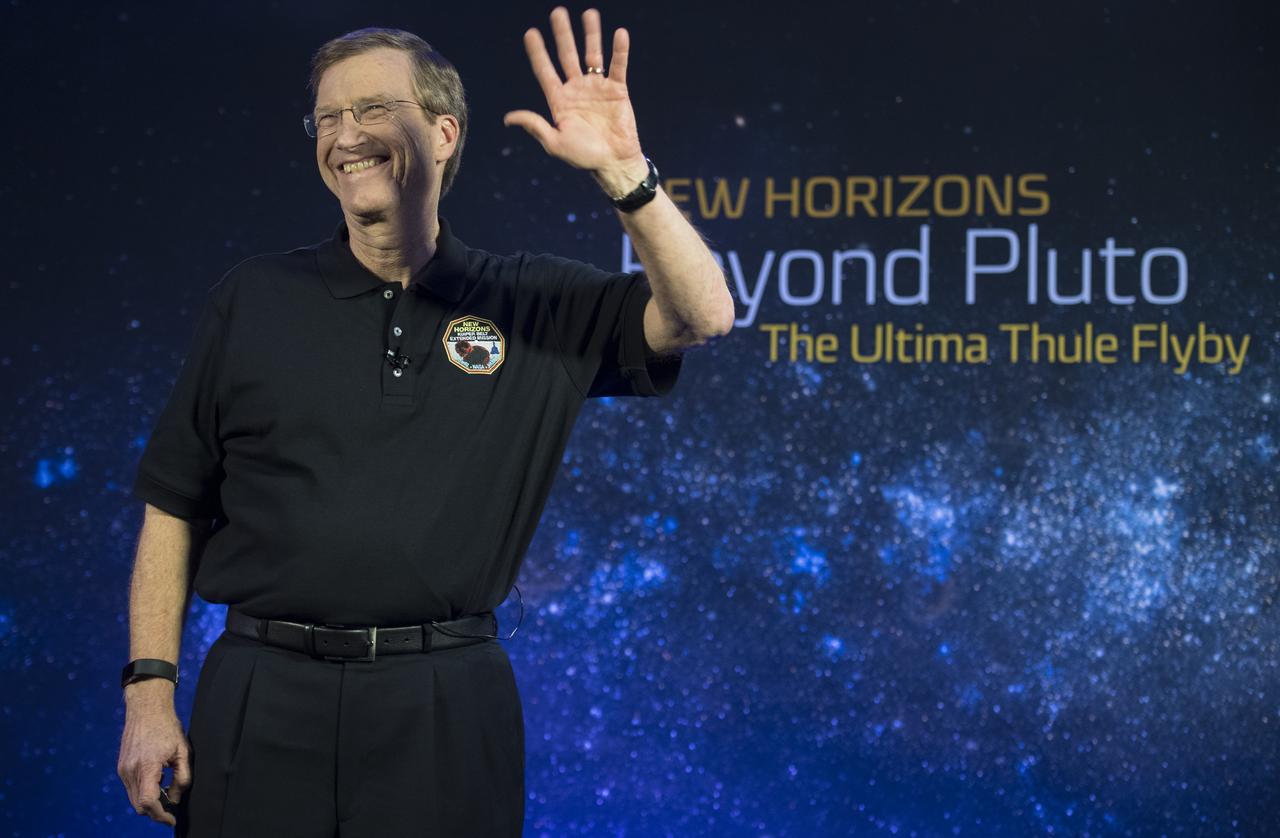
New Horizons project scientist Hal Weaver of the Johns Hopkins Applied Physics Laboratory speaks about the Kuiper Belt during an overview of the New Horizons Mission, Monday, Dec. 31, 2018 at Johns Hopkins University Applied Physics Laboratory (APL) in Laurel, Maryland. Photo Credit: (NASA/Joel Kowsky)
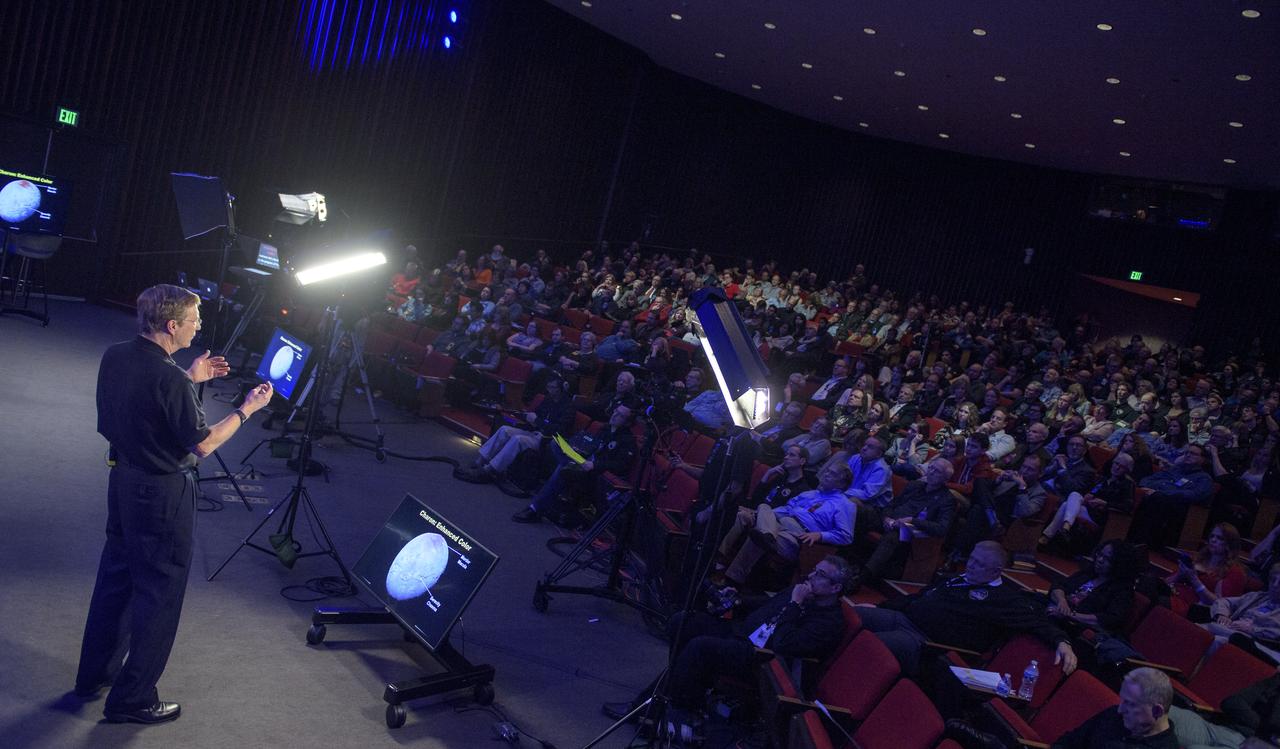
New Horizons project scientist Hal Weaver of the Johns Hopkins University Applied Physics Laboratory gives a talk titled "Pluto Flyby; Summer 2015", Monday, Dec. 31, 2018 at Johns Hopkins University Applied Physics Laboratory (APL) in Laurel, Maryland. Photo Credit: (NASA/Bill Ingalls)
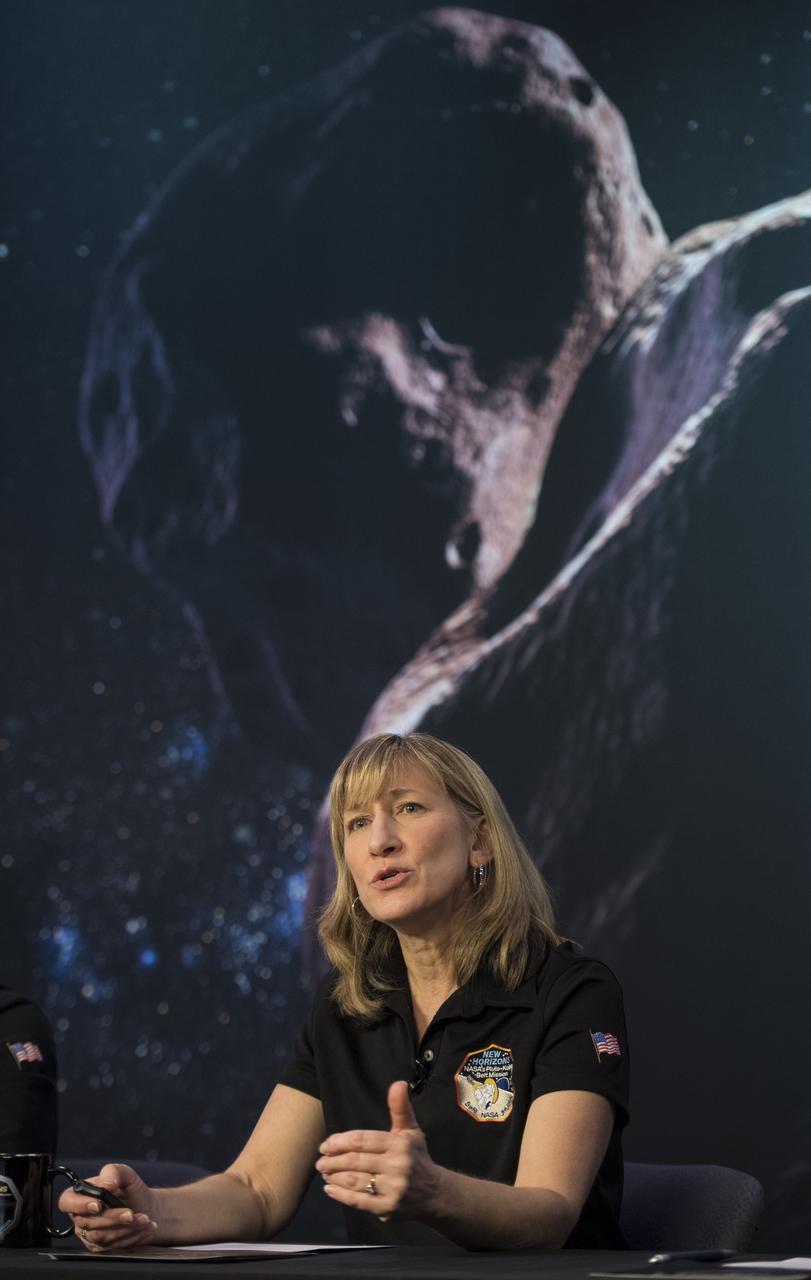
New Horizons project manager Helene Winters of the Johns Hopkins University Applied Physics Laboratory speaks at a press conference prior to the flyby of Ultima Thule by the New Horizons spacecraft, Monday, Dec. 31, 2018 at Johns Hopkins University Applied Physics Laboratory (APL) in Laurel, Maryland. Photo Credit: (NASA/Joel Kowsky)
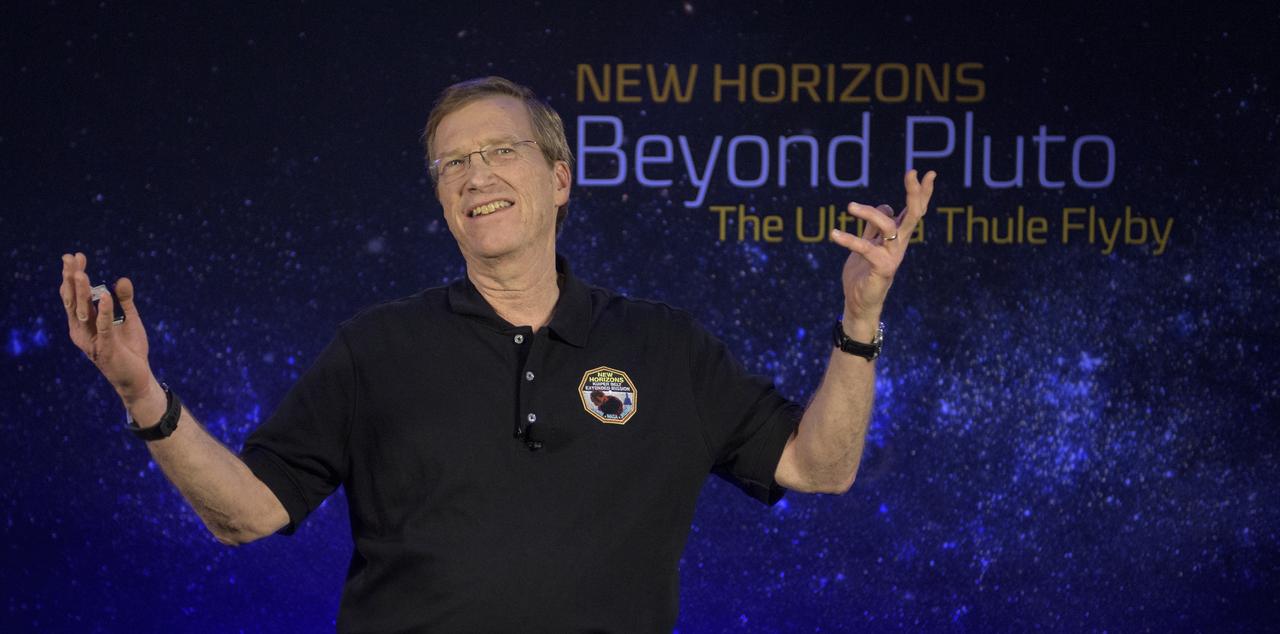
New Horizons project scientist Hal Weaver of the Johns Hopkins University Applied Physics Laboratory gives a talk titled "Pluto Flyby; Summer 2015", Monday, Dec. 31, 2018 at Johns Hopkins University Applied Physics Laboratory (APL) in Laurel, Maryland. Photo Credit: (NASA/Bill Ingalls)
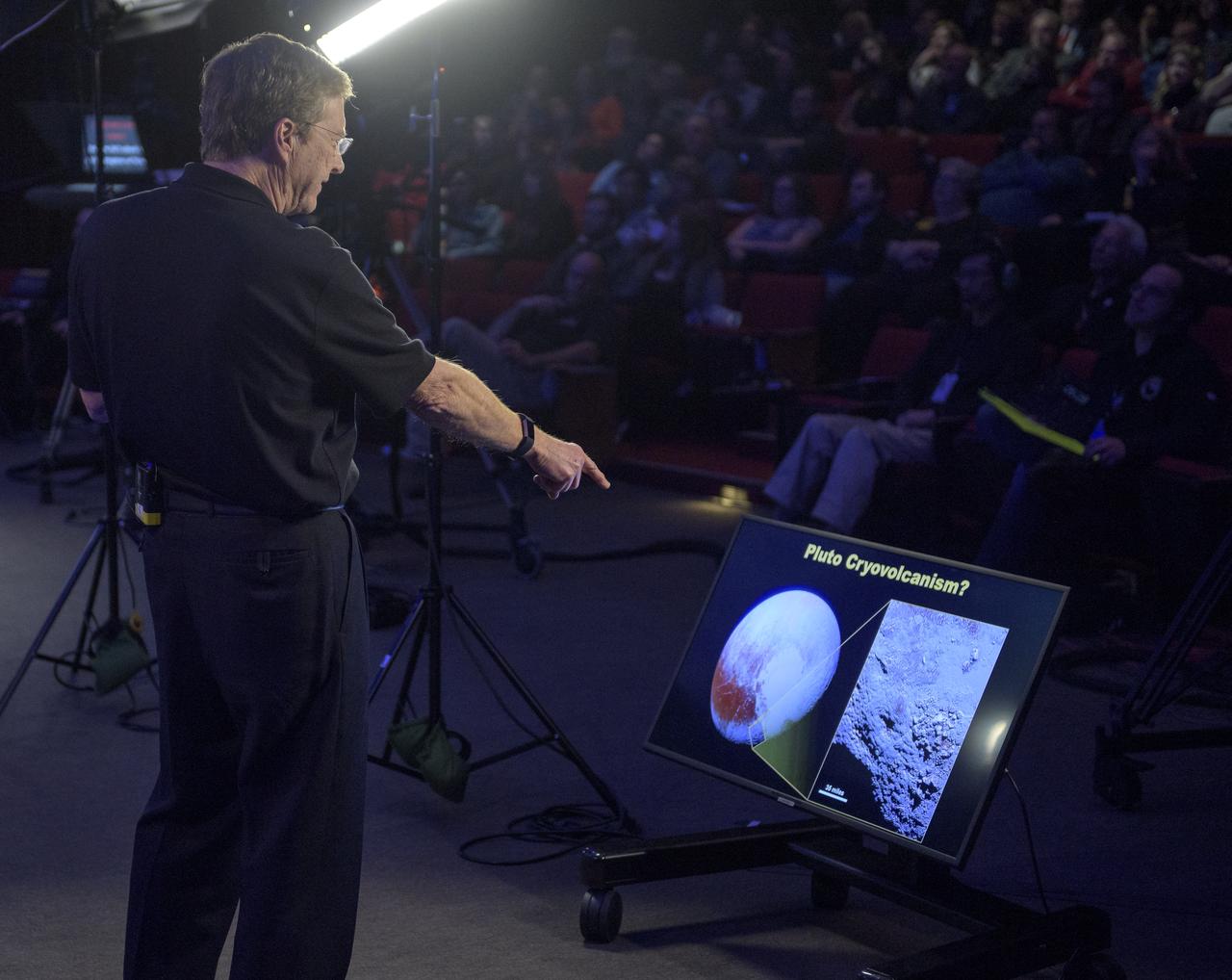
New Horizons project scientist Hal Weaver of the Johns Hopkins University Applied Physics Laboratory gives a talk titled "Pluto Flyby; Summer 2015", Monday, Dec. 31, 2018 at Johns Hopkins University Applied Physics Laboratory (APL) in Laurel, Maryland. Photo Credit: (NASA/Bill Ingalls)
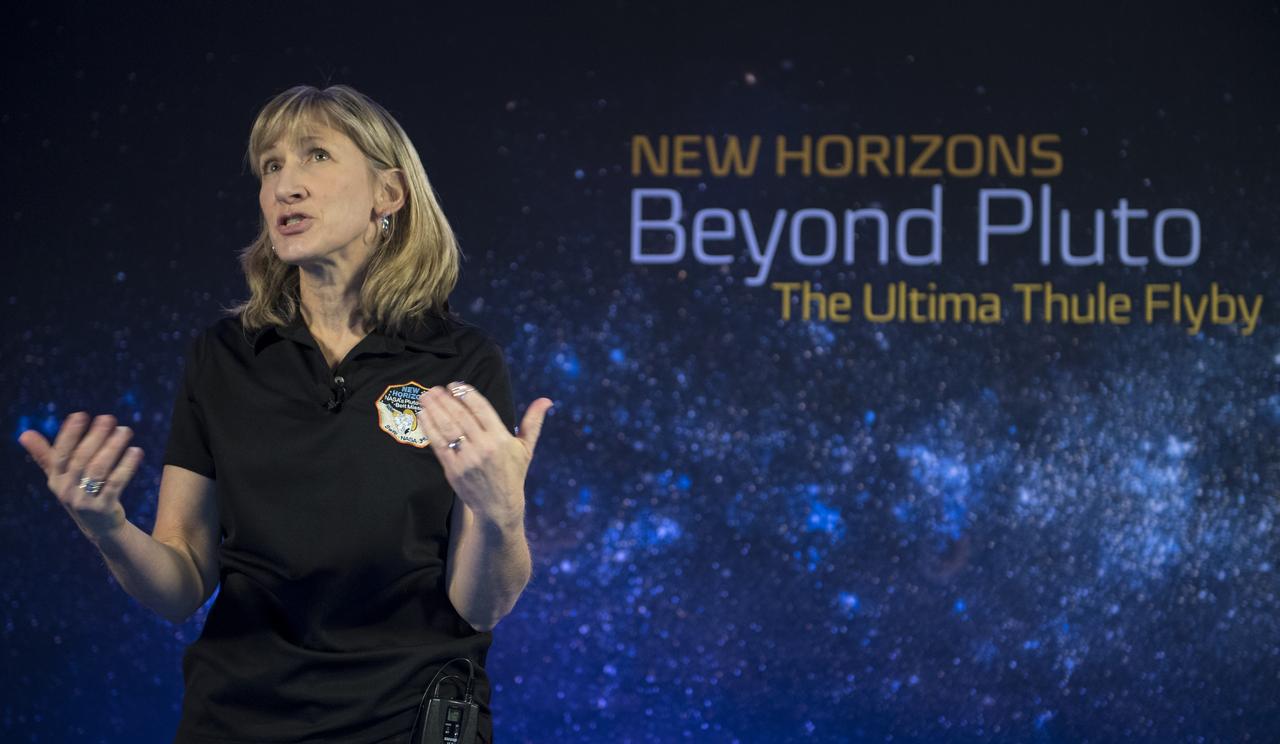
New Horizons project manager Helene Winters of the Johns Hopkins University Applied Physics Laboratory speaks during an overview of the New Horizons Mission, Monday, Dec. 31, 2018 at Johns Hopkins University Applied Physics Laboratory (APL) in Laurel, Maryland. Photo Credit: (NASA/Joel Kowsky)

New Horizons project scientist Hal Weaver of the Johns Hopkins Applied Physics Laboratory speaks about the Kuiper Belt during an overview of the New Horizons Mission, Monday, Dec. 31, 2018 at Johns Hopkins University Applied Physics Laboratory (APL) in Laurel, Maryland. Photo Credit: (NASA/Joel Kowsky)
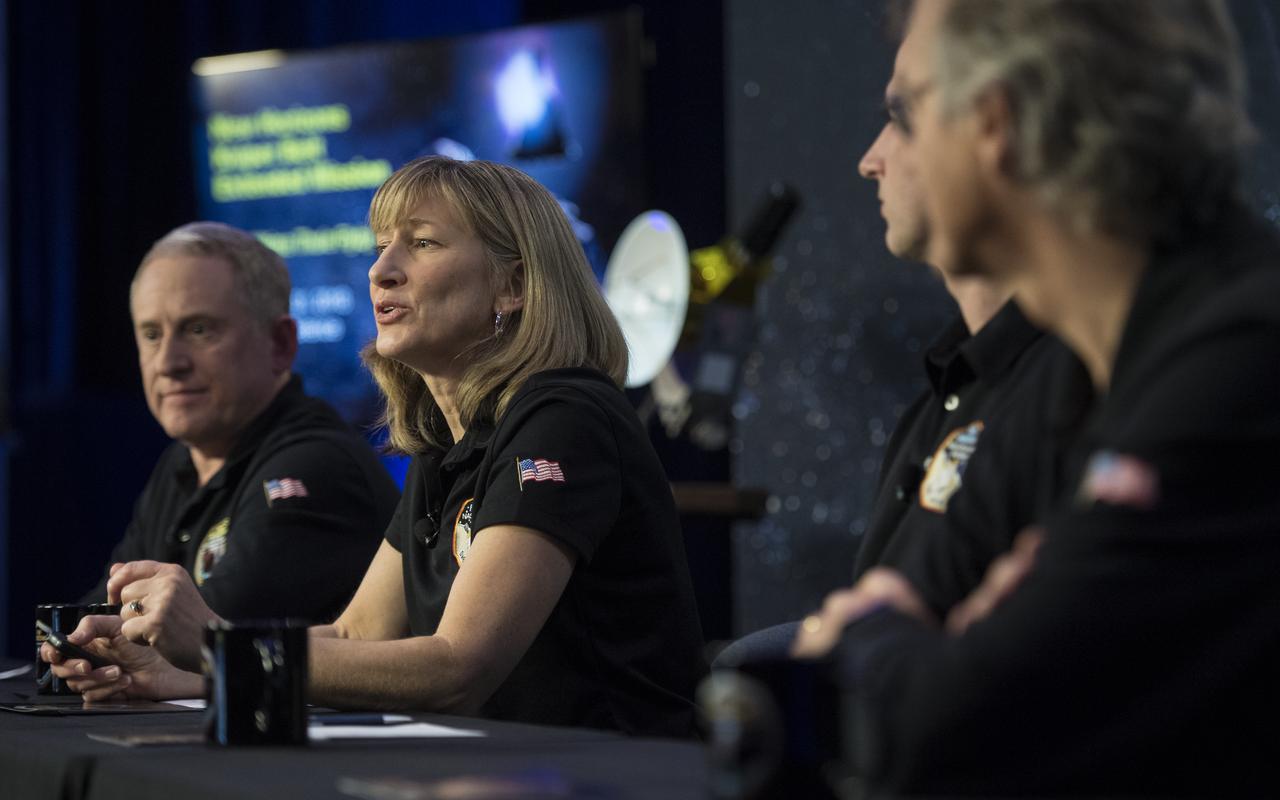
New Horizons project manager Helene Winters of the Johns Hopkins University Applied Physics Laboratory speaks at a press conference prior to the flyby of Ultima Thule by the New Horizons spacecraft, Monday, Dec. 31, 2018 at Johns Hopkins University Applied Physics Laboratory (APL) in Laurel, Maryland. Photo Credit: (NASA/Joel Kowsky)
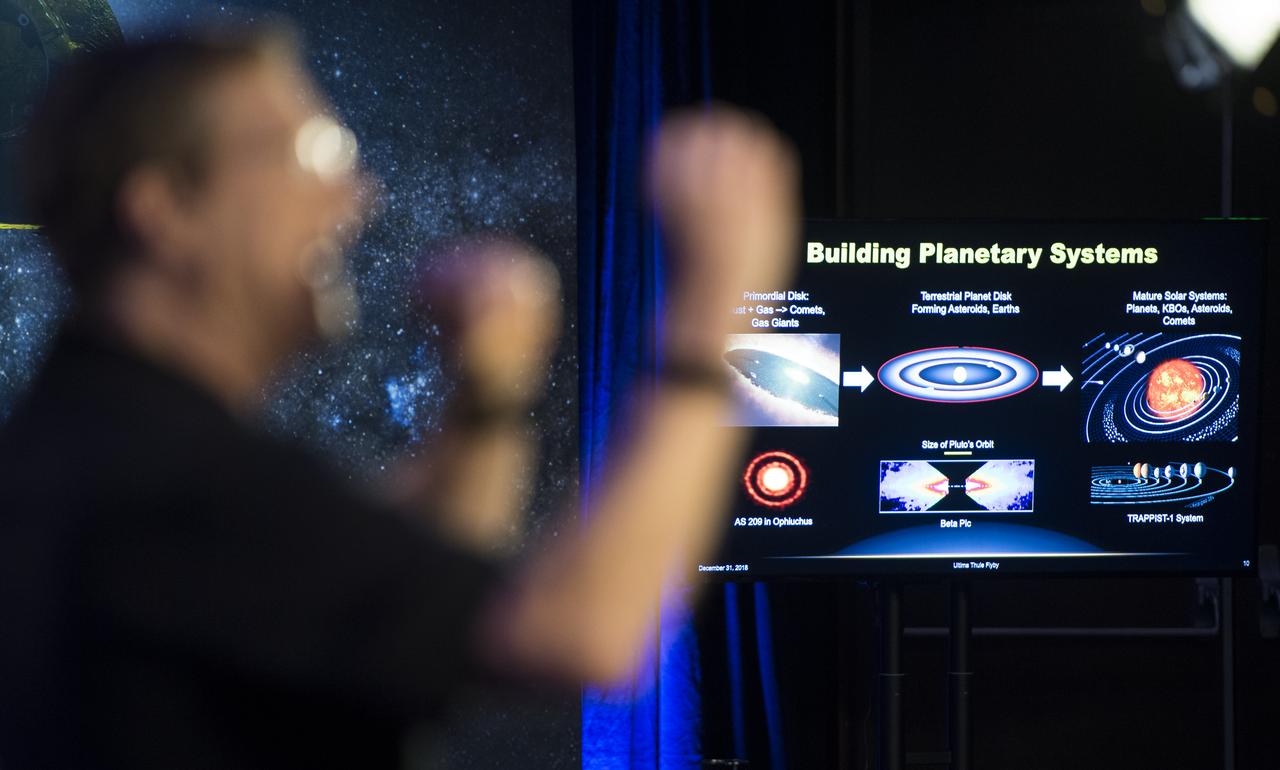
New Horizons project scientist Hal Weaver of the Johns Hopkins Applied Physics Laboratory speaks about the Kuiper Belt during an overview of the New Horizons Mission, Monday, Dec. 31, 2018 at Johns Hopkins University Applied Physics Laboratory (APL) in Laurel, Maryland. Photo Credit: (NASA/Joel Kowsky)
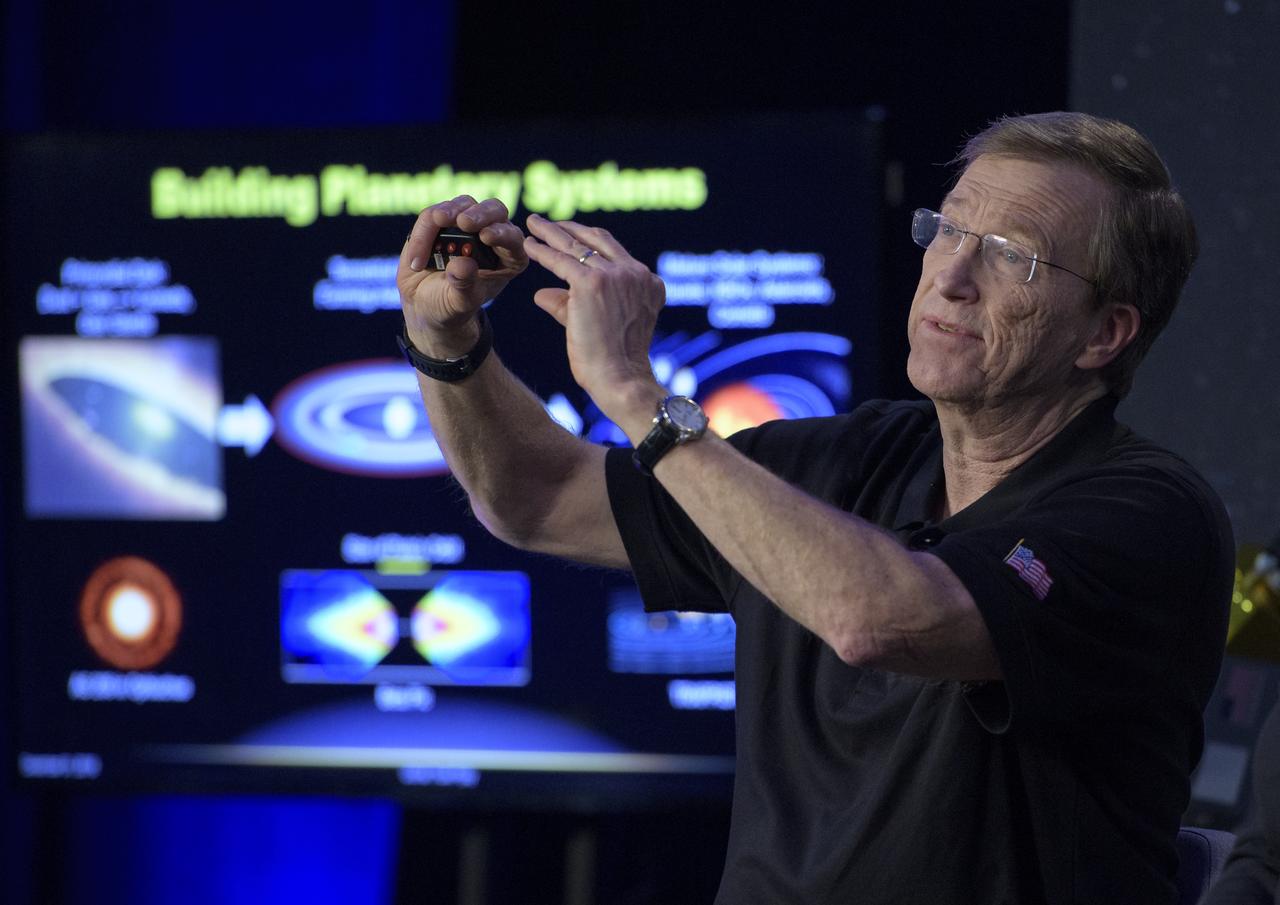
New Horizons project scientist Hal Weaver of the Johns Hopkins University Applied Physics Laboratory discusses what they hope to learn from the flyby of Ultima Thule, Monday, Dec. 31, 2018 at Johns Hopkins University Applied Physics Laboratory (APL) in Laurel, Maryland. Photo Credit: (NASA/Bill Ingalls)
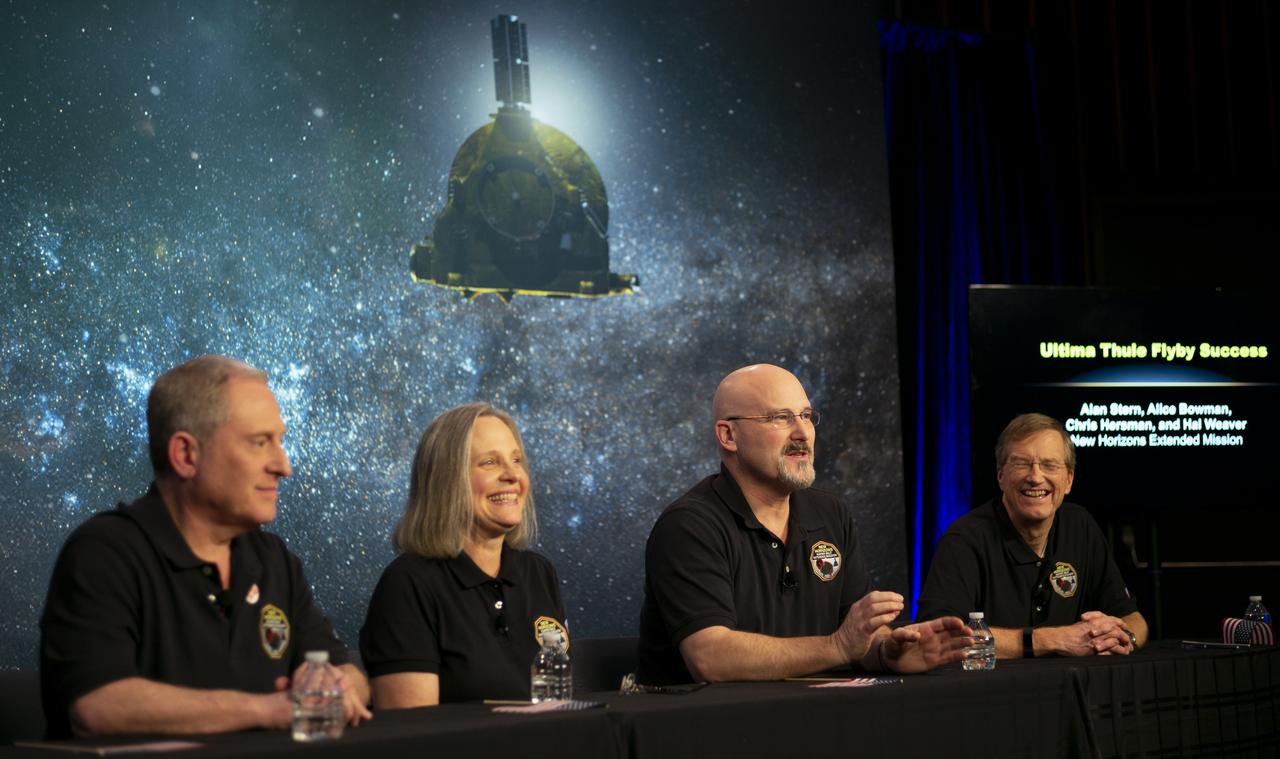
New Horizons principal investigator Alan Stern of the Southwest Research Institute (SwRI), Boulder, CO, left, New Horizons Mission Operations Manager Alice Bowman of the Johns Hopkins University Applied Physics Laboratory, second from left, New Horizons mission systems engineer Chris Hersman of the Johns Hopkins University Applied Physics Laboratory, second from right, and New Horizons project scientist Hal Weaver of the Johns Hopkins University Applied Physics Laboratory, right, participate in a press conference after the team received confirmation from the New Horizons spacecraft that it has completed the flyby of Ultima Thule, Tuesday, Jan. 1, 2019 at Johns Hopkins University Applied Physics Laboratory (APL) in Laurel, Maryland. Photo Credit: (NASA/Joel Kowsky)
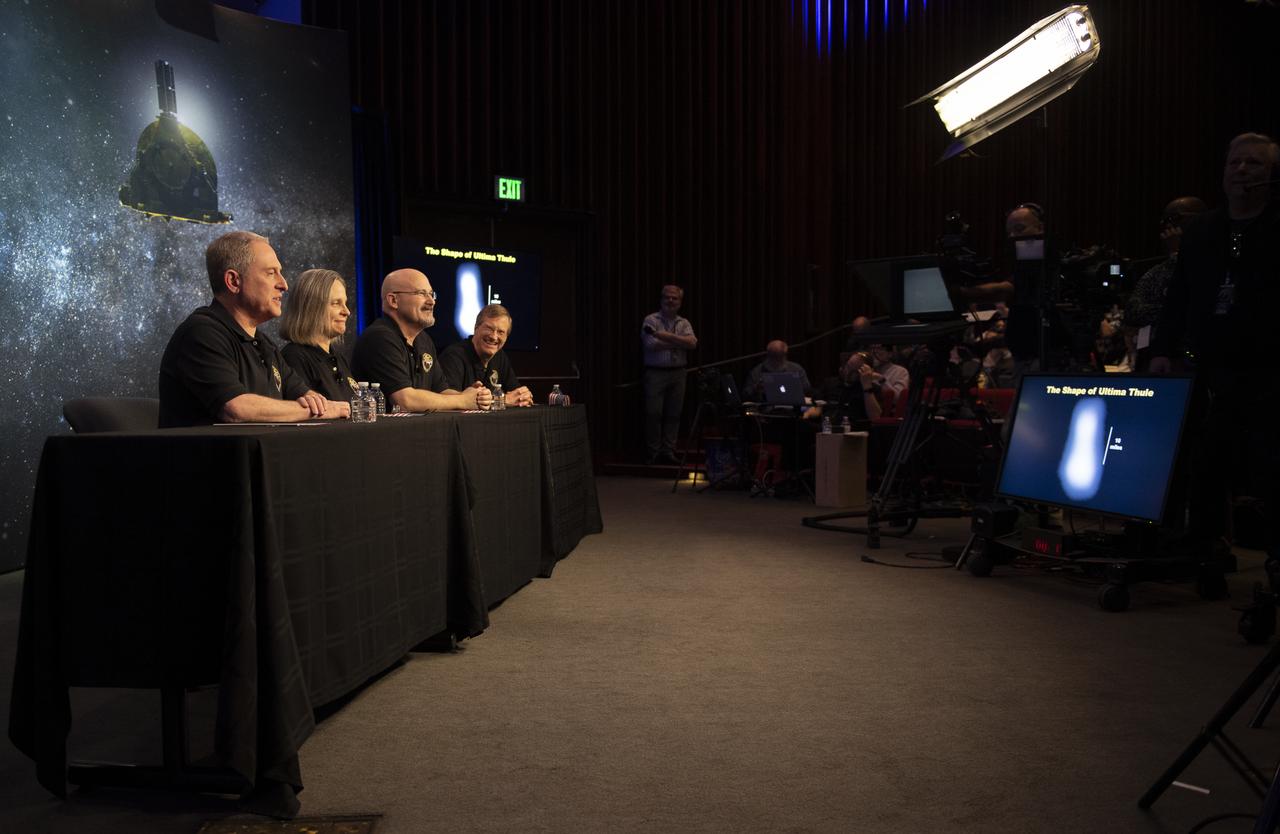
A new image of Ultima Thule is seen on a screen during a press conference after the team received confirmation from the New Horizons spacecraft that it has completed the flyby of Ultima Thule, Tuesday, Jan. 1, 2019 at Johns Hopkins University Applied Physics Laboratory (APL) in Laurel, Maryland. New Horizons principal investigator Alan Stern of the Southwest Research Institute (SwRI), Boulder, CO, New Horizons Mission Operations Manager Alice Bowman of the Johns Hopkins University Applied Physics Laboratory, New Horizons mission systems engineer Chris Hersman of the Johns Hopkins University Applied Physics Laboratory, and New Horizons project scientist Hal Weaver of the Johns Hopkins University Applied Physics Laboratory, spoke about the flyby and new pre-flyby information that was downlinked from the spacecraft. Photo Credit: (NASA/Joel Kowsky)
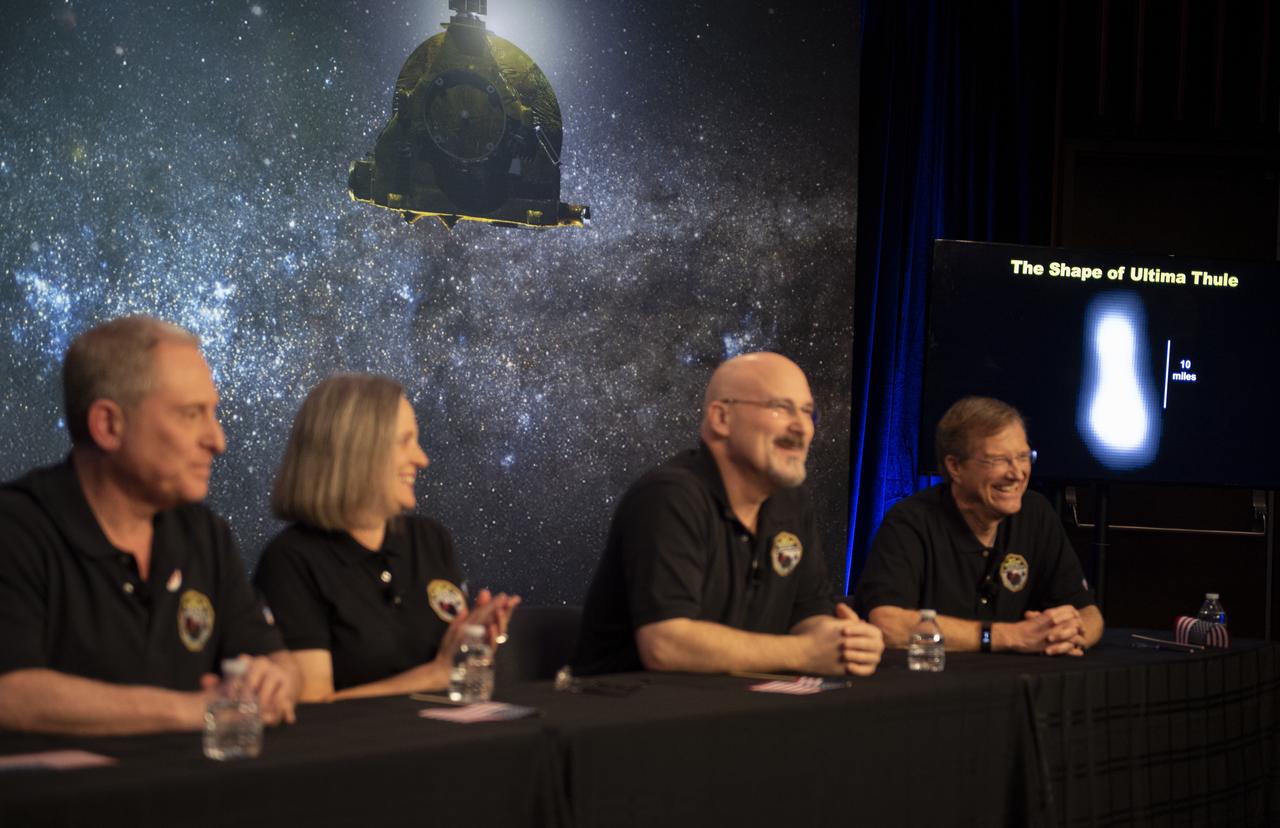
A new image of Ultima Thule is seen on a screen during a press conference after the team received confirmation from the New Horizons spacecraft that it has completed the flyby of Ultima Thule, Tuesday, Jan. 1, 2019 at Johns Hopkins University Applied Physics Laboratory (APL) in Laurel, Maryland. New Horizons principal investigator Alan Stern of the Southwest Research Institute (SwRI), Boulder, CO, New Horizons Mission Operations Manager Alice Bowman of the Johns Hopkins University Applied Physics Laboratory, New Horizons mission systems engineer Chris Hersman of the Johns Hopkins University Applied Physics Laboratory, and New Horizons project scientist Hal Weaver of the Johns Hopkins University Applied Physics Laboratory, spoke about the flyby and new pre-flyby information that was downlinked from the spacecraft. Photo Credit: (NASA/Joel Kowsky)
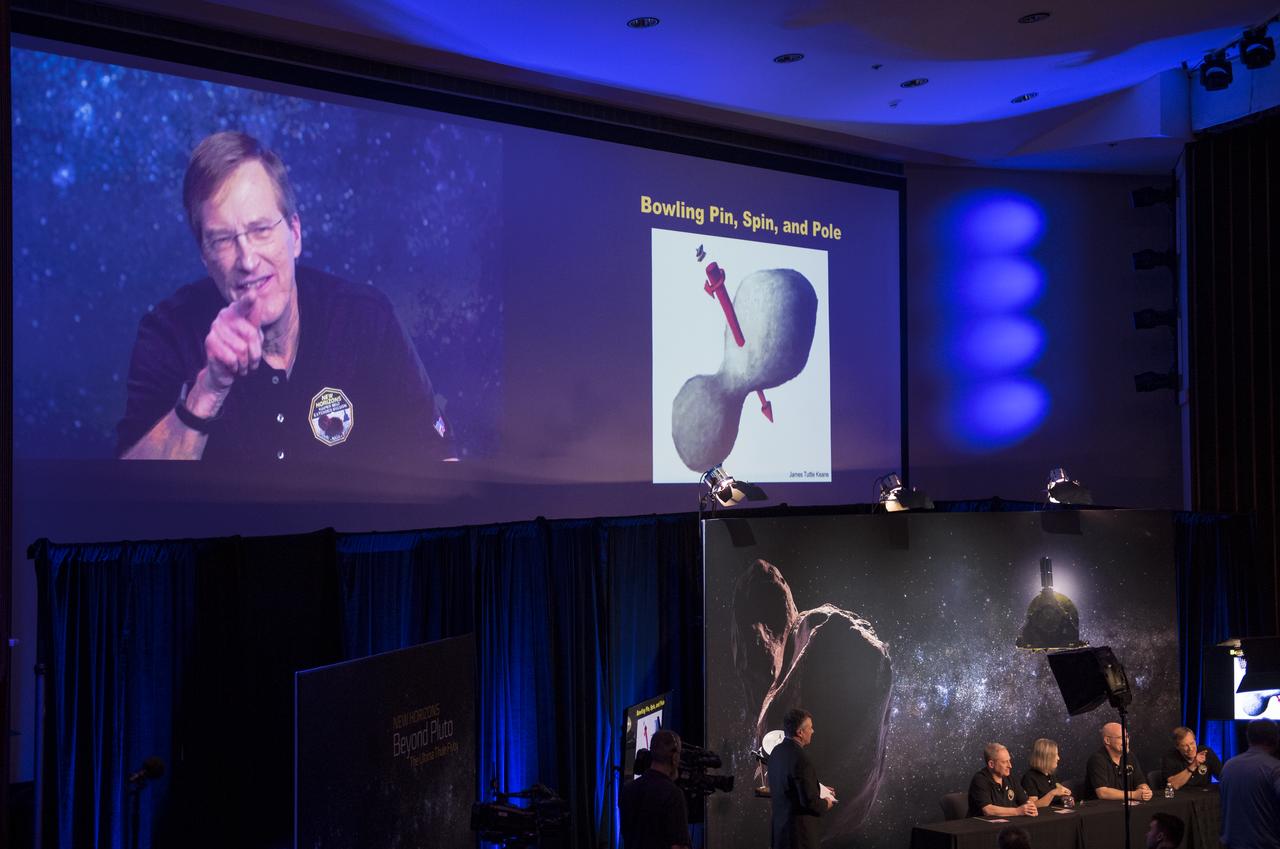
New Horizons project scientist Hal Weaver of the Johns Hopkins University Applied Physics Laboratory speaks about new data received from the New Horizons spacecraft during a press conference after the team received confirmation from the New Horizons spacecraft that it has completed the flyby of Ultima Thule, Tuesday, Jan. 1, 2019 at Johns Hopkins University Applied Physics Laboratory (APL) in Laurel, Maryland. Photo Credit: (NASA/Joel Kowsky)
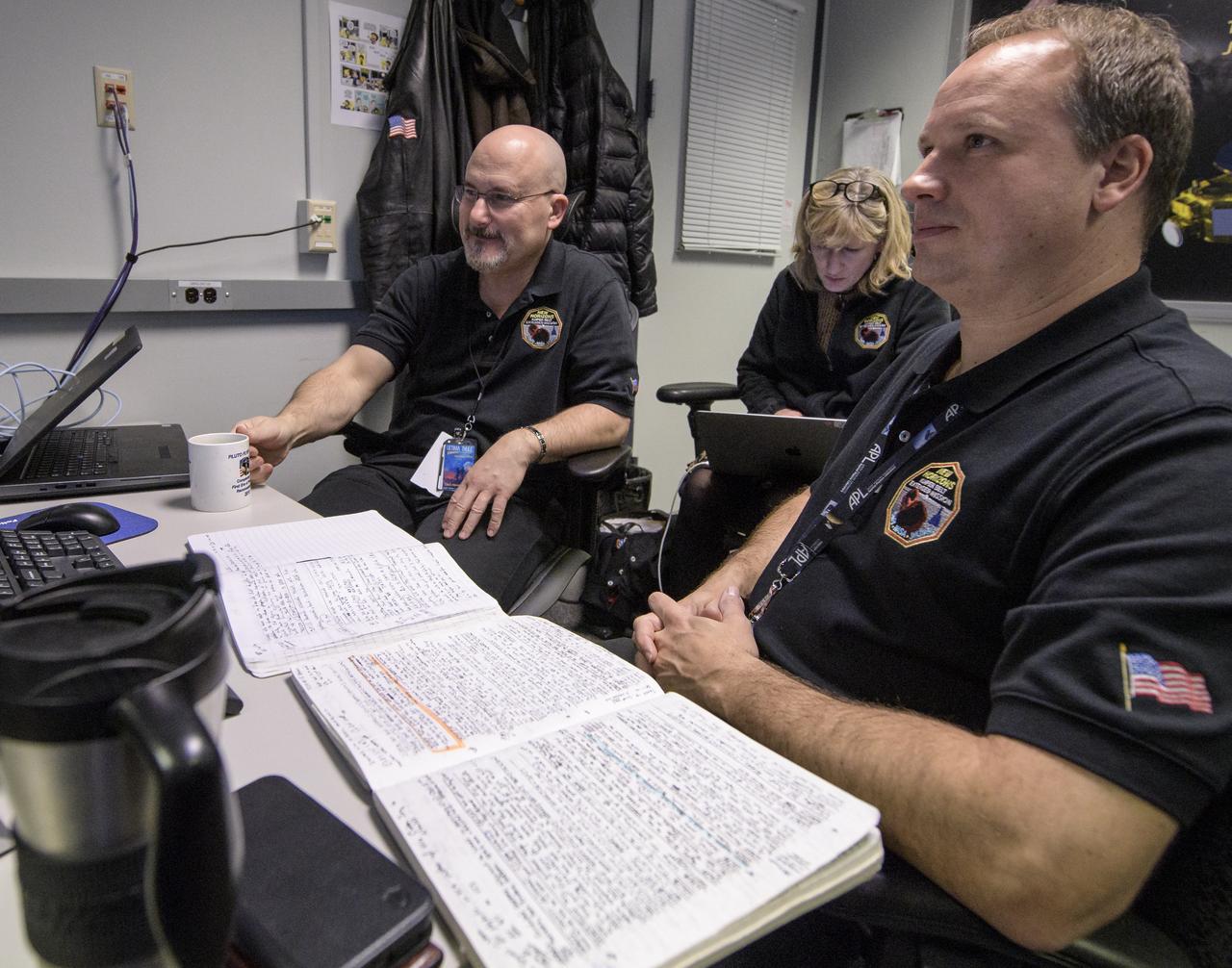
New Horizons Mission Systems Engineer Chris Hersman, left, New Horizons Project Manager Helene Winters, and New Horizons Deputy Mission Systems Engineer Gabe Rogers, right, all of the Johns Hopkins Applied Physics Laboratory, wait for a signal from the spacecraft that it is healthy and collected data during the flyby of Ultima Thule, Tuesday, Jan. 1, 2019 at the Mission Operations Center of the Johns Hopkins University Applied Physics Laboratory (APL) in Laurel, Maryland. Photo Credit: (NASA/Bill Ingalls)

New Horizons principal investigator Alan Stern of the Southwest Research Institute (SwRI), Boulder, CO and New Horizons project manager Helene Winters of the Johns Hopkins University Applied Physics Laboratory discuss the various teams have helped work on New Horizons, Monday, Dec. 31, 2018 at Johns Hopkins University Applied Physics Laboratory (APL) in Laurel, Maryland. Photo Credit: (NASA/Bill Ingalls)
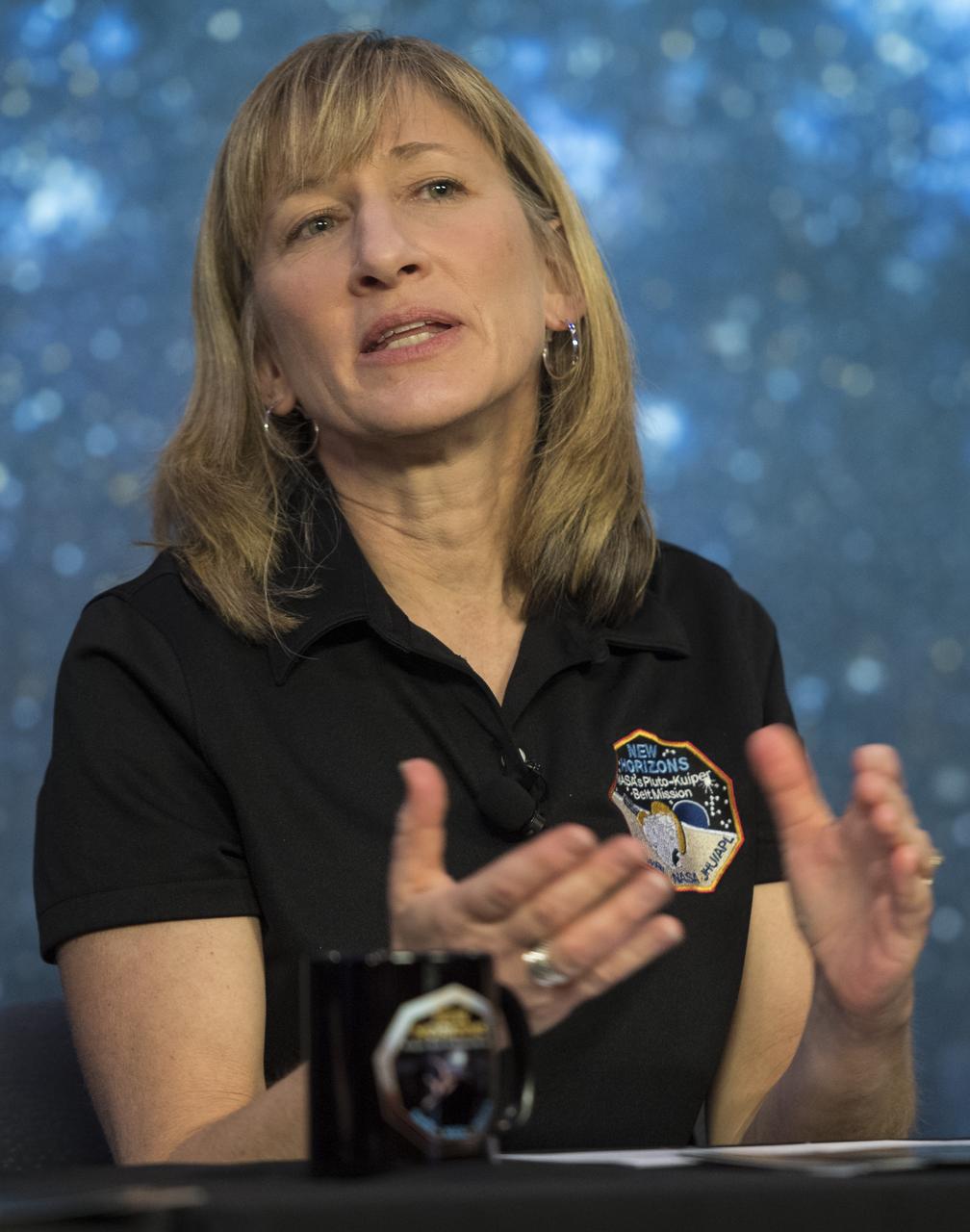
New Horizons project manager Helene Winters of the Johns Hopkins University Applied Physics Laboratory speaks during a press conference prior to the flyby of Ultima Thule by the New Horizons spacecraft, Monday, Dec. 31, 2018 at Johns Hopkins University Applied Physics Laboratory (APL) in Laurel, Maryland. Photo Credit: (NASA/Joel Kowsky)
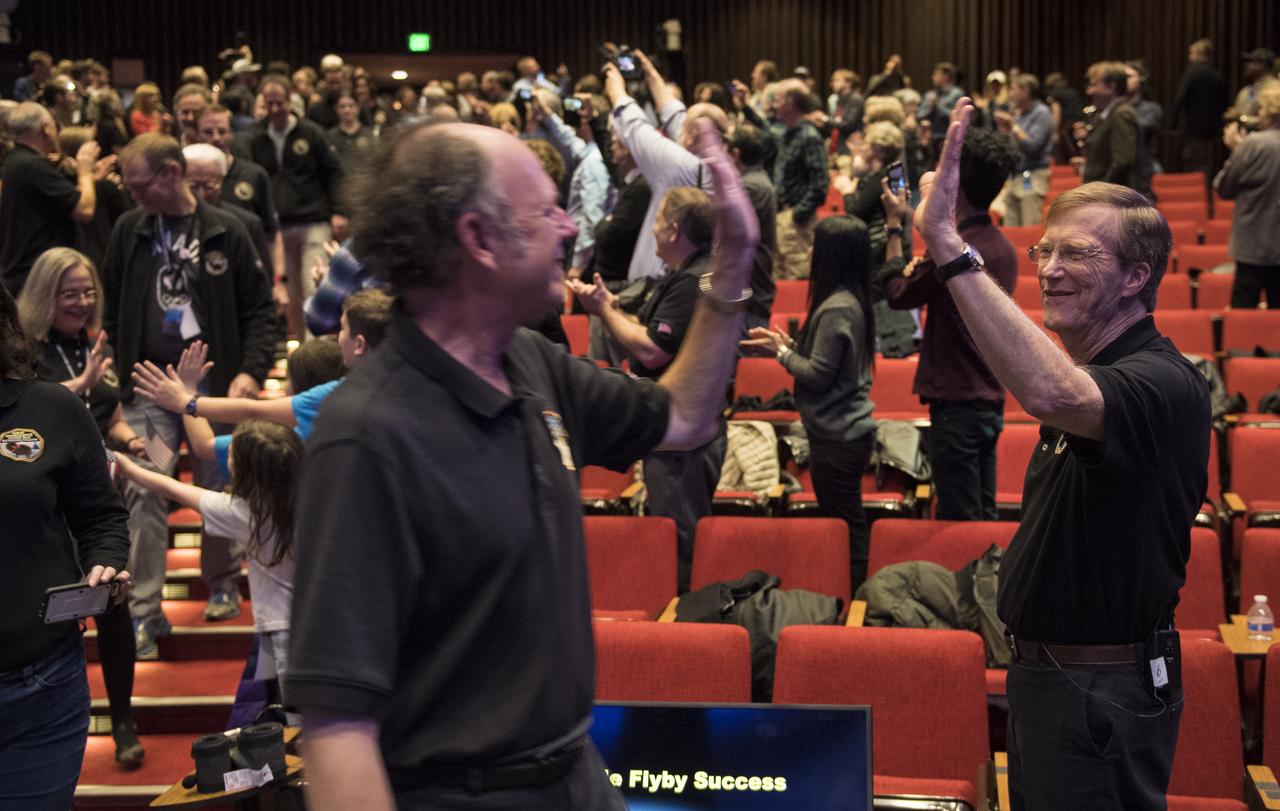
New Horizons project scientist Hal Weaver of the Johns Hopkins University Applied Physics Laboratory high-fives a New Horizons team member after the team received confirmation from the New Horizons spacecraft that it has completed the flyby of Ultima Thule, Tuesday, Jan. 1, 2019 at Johns Hopkins University Applied Physics Laboratory (APL) in Laurel, Maryland. Photo Credit: (NASA/Joel Kowsky)
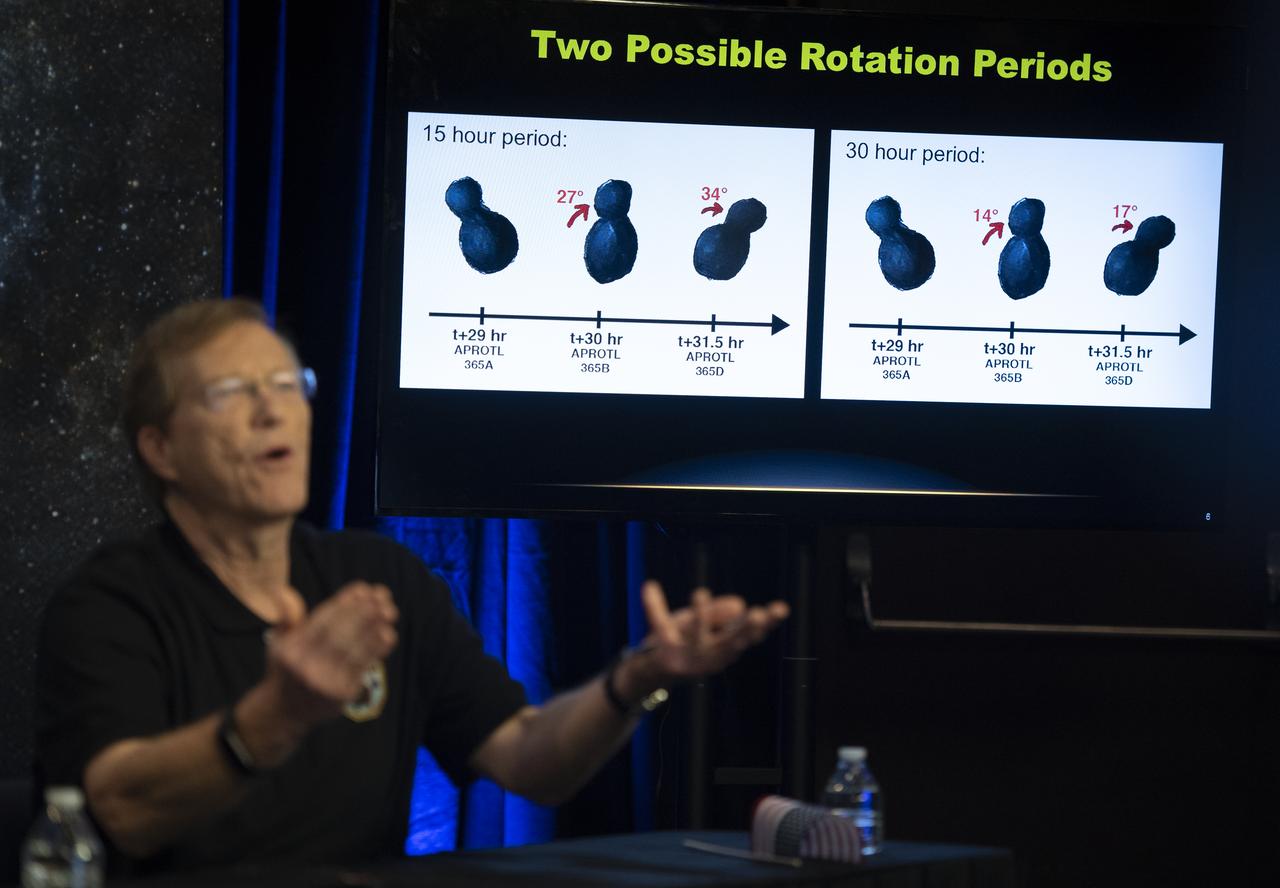
New Horizons project scientist Hal Weaver of the Johns Hopkins University Applied Physics Laboratory is seen during a press conference after the team received confirmation from the New Horizons spacecraft that it has completed the flyby of Ultima Thule, Tuesday, Jan. 1, 2019 at Johns Hopkins University Applied Physics Laboratory (APL) in Laurel, Maryland. Photo Credit: (NASA/Joel Kowsky)
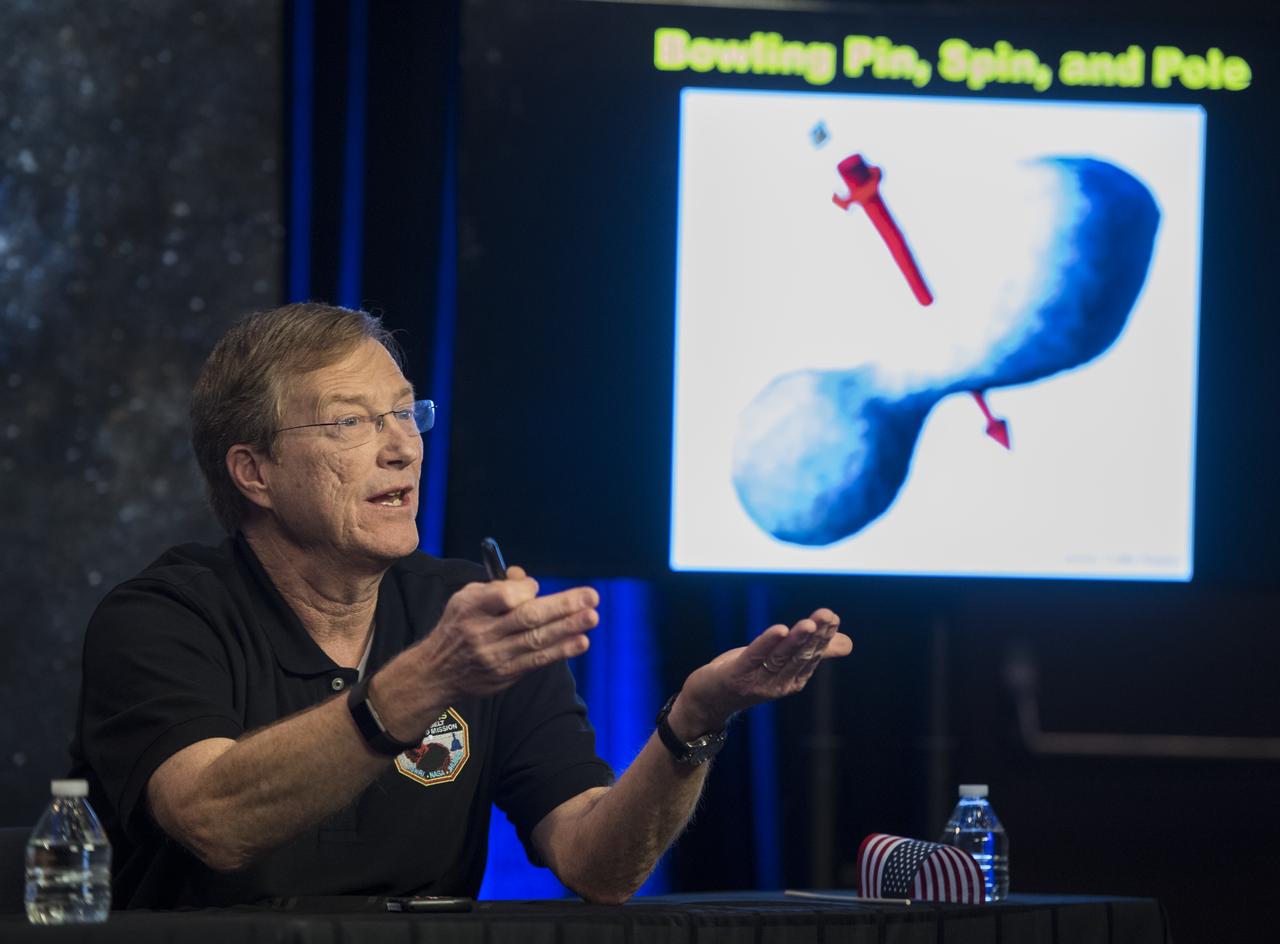
New Horizons project scientist Hal Weaver of the Johns Hopkins University Applied Physics Laboratory is seen during a press conference after the team received confirmation from the New Horizons spacecraft that it has completed the flyby of Ultima Thule, Tuesday, Jan. 1, 2019 at Johns Hopkins University Applied Physics Laboratory (APL) in Laurel, Maryland. Photo Credit: (NASA/Joel Kowsky)
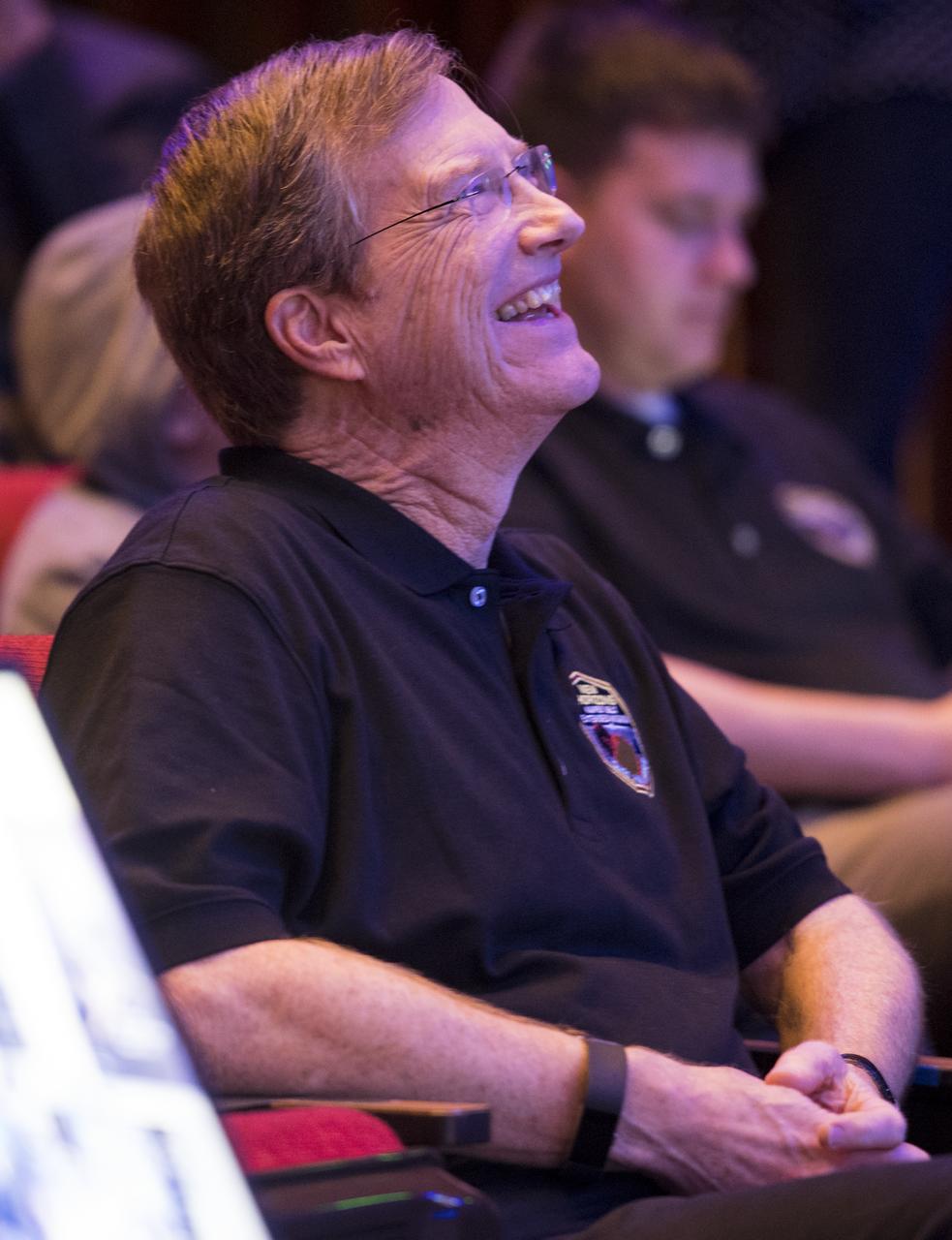
New Horizons project scientist Hal Weaver of the Johns Hopkins University Applied Physics Laboratory watches a live feed of the Mission Operations Center (MOC) as the team waits to receive confirmation from the spacecraft that it has completed the flyby of Ultima Thule, Tuesday, Jan. 1, 2019 at Johns Hopkins University Applied Physics Laboratory (APL) in Laurel, Maryland. Photo Credit: (NASA/Joel Kowsky)
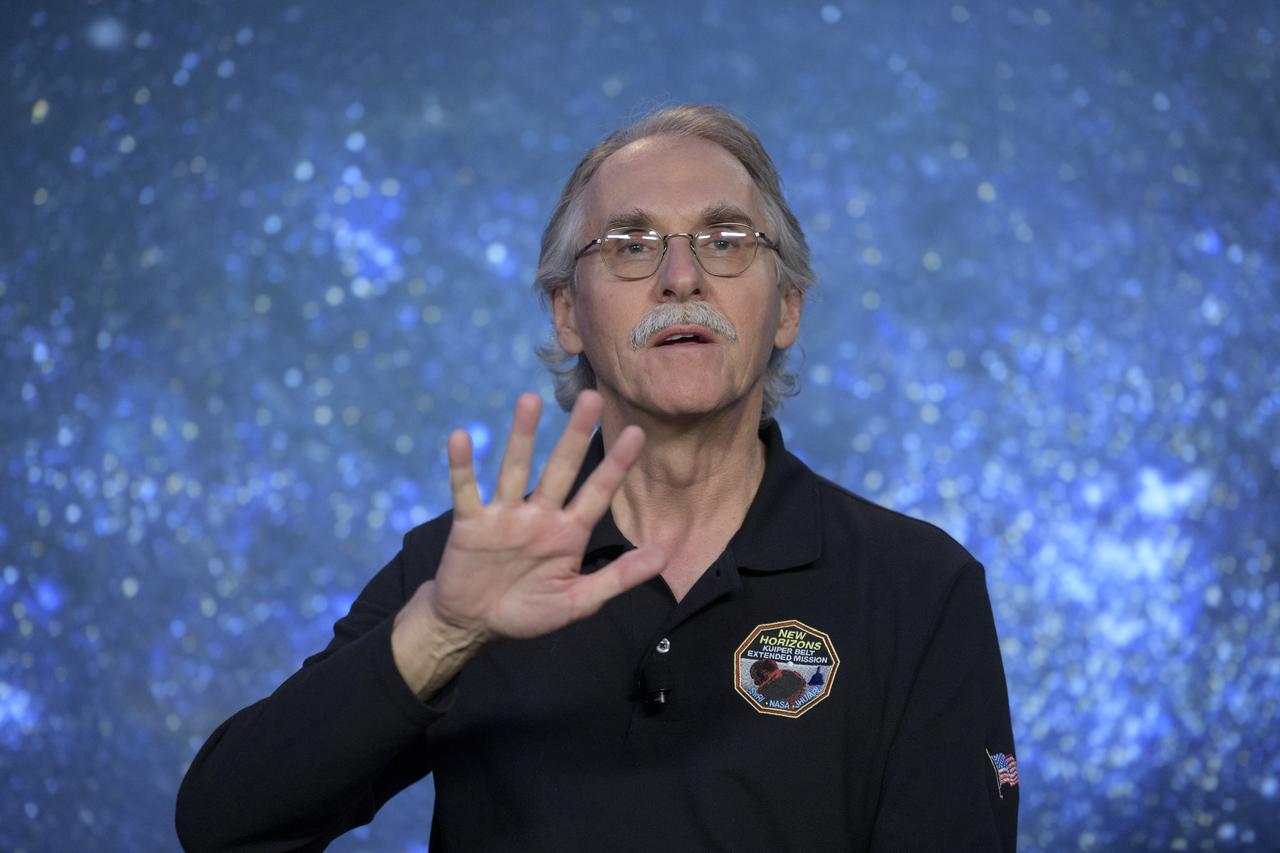
New Horizons deputy project scientist John Spencer of the Southwest Research Institute (SwRI), Boulder, CO discusses what they hope to learn from the flyby of Ultima Thule, Monday, Dec. 31, 2018 at Johns Hopkins University Applied Physics Laboratory (APL) in Laurel, Maryland. Photo Credit: (NASA/Bill Ingalls)
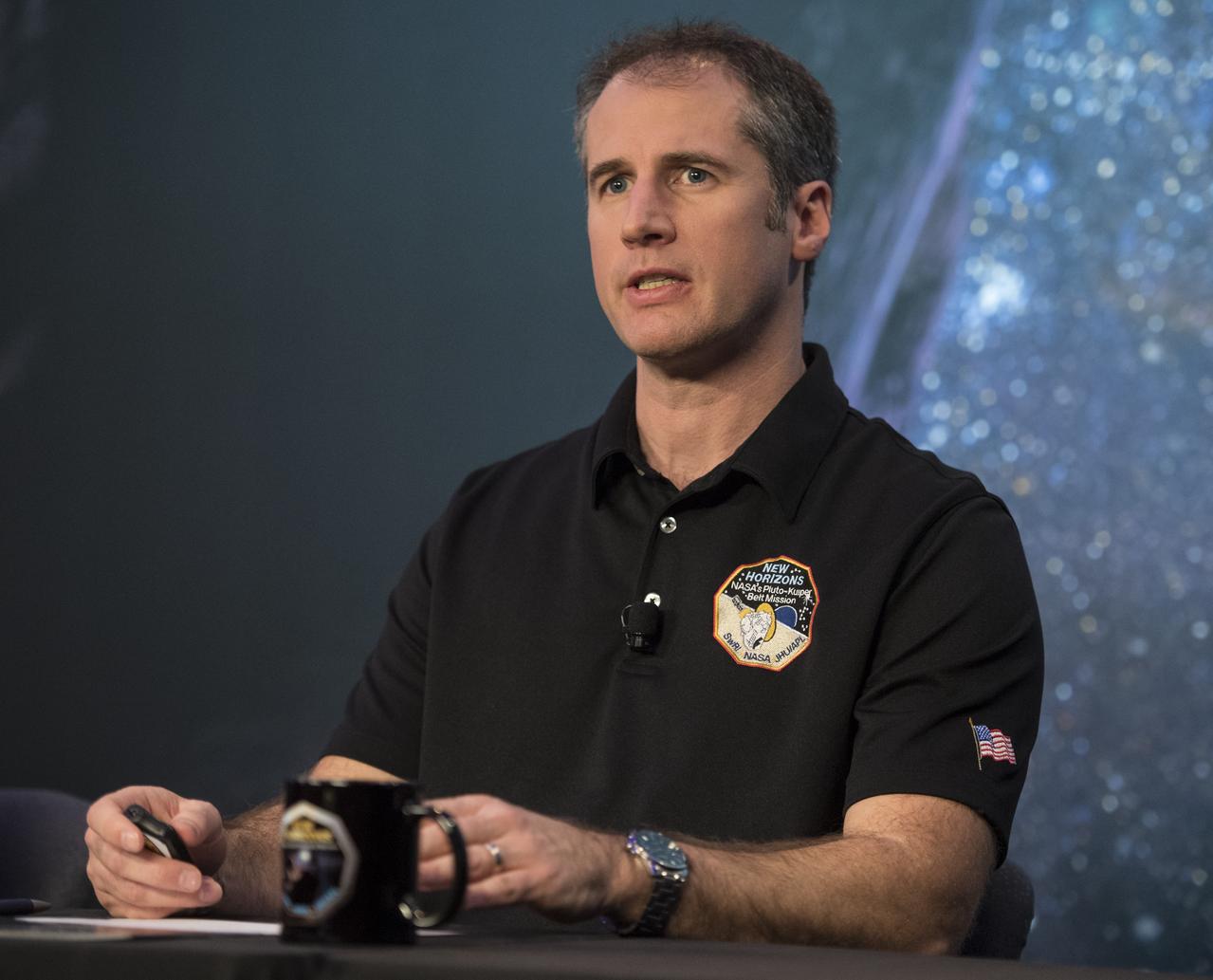
Fred Pelletier, lead of the project navigation team at KinetX Inc. in Simi Valley, California, speaks at a press conference prior to the flyby of Ultima Thule by the New Horizons spacecraft, Monday, Dec. 31, 2018 at Johns Hopkins University Applied Physics Laboratory (APL) in Laurel, Maryland. Photo Credit: (NASA/Joel Kowsky)
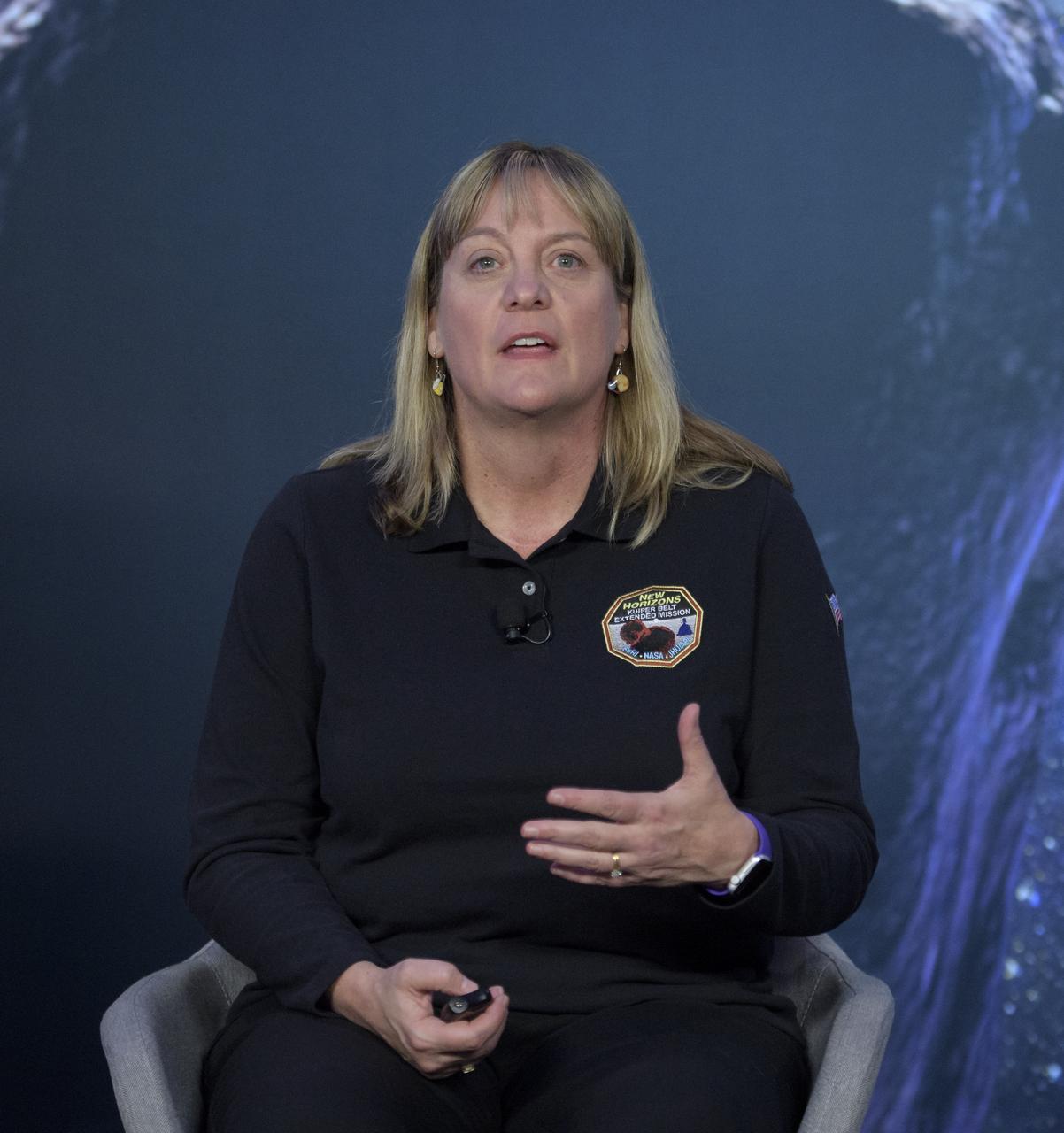
New Horizons deputy project scientist Cathy Olkin of the Southwest Research Institute (SwRI), Boulder, CO discusses what they hope to learn from the flyby of Ultima Thule, Monday, Dec. 31, 2018 at Johns Hopkins University Applied Physics Laboratory (APL) in Laurel, Maryland. Photo Credit: (NASA/Bill Ingalls)
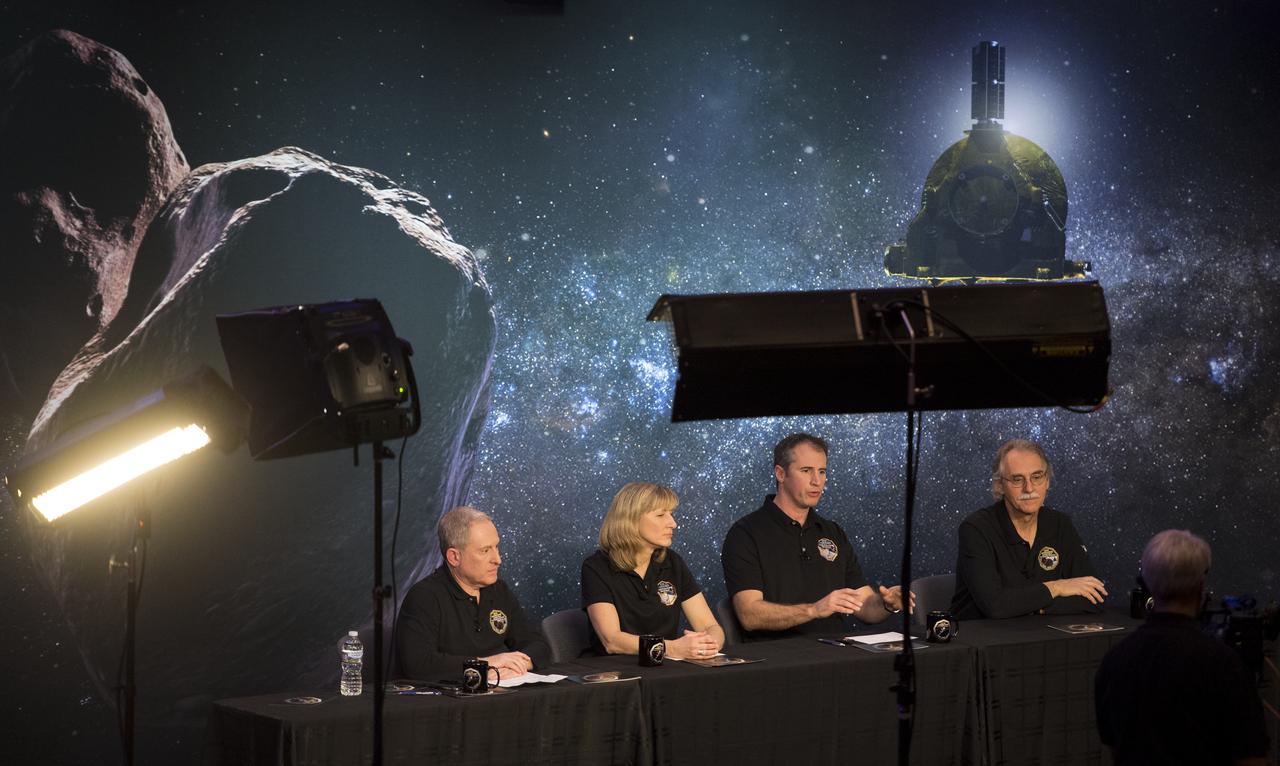
New Horizons principal investigator Alan Stern of the Southwest Research Institute (SwRI), Boulder, CO, left, New Horizons project manager Helene Winters of the Johns Hopkins University Applied Physics Laboratory, second from left, Fred Pelletier, lead of the project navigation team at KinetX Inc. in Simi Valley, California, second from right, and New Horizons co-investigator John Spencer of the Southwest Research Institute (SwRI), Boulder, CO, right, are seen during a press conference prior to the flyby of Ultima Thule by the New Horizons spacecraft, Monday, Dec. 31, 2018 at Johns Hopkins University Applied Physics Laboratory (APL) in Laurel, Maryland. Photo Credit: (NASA/Joel Kowsky)
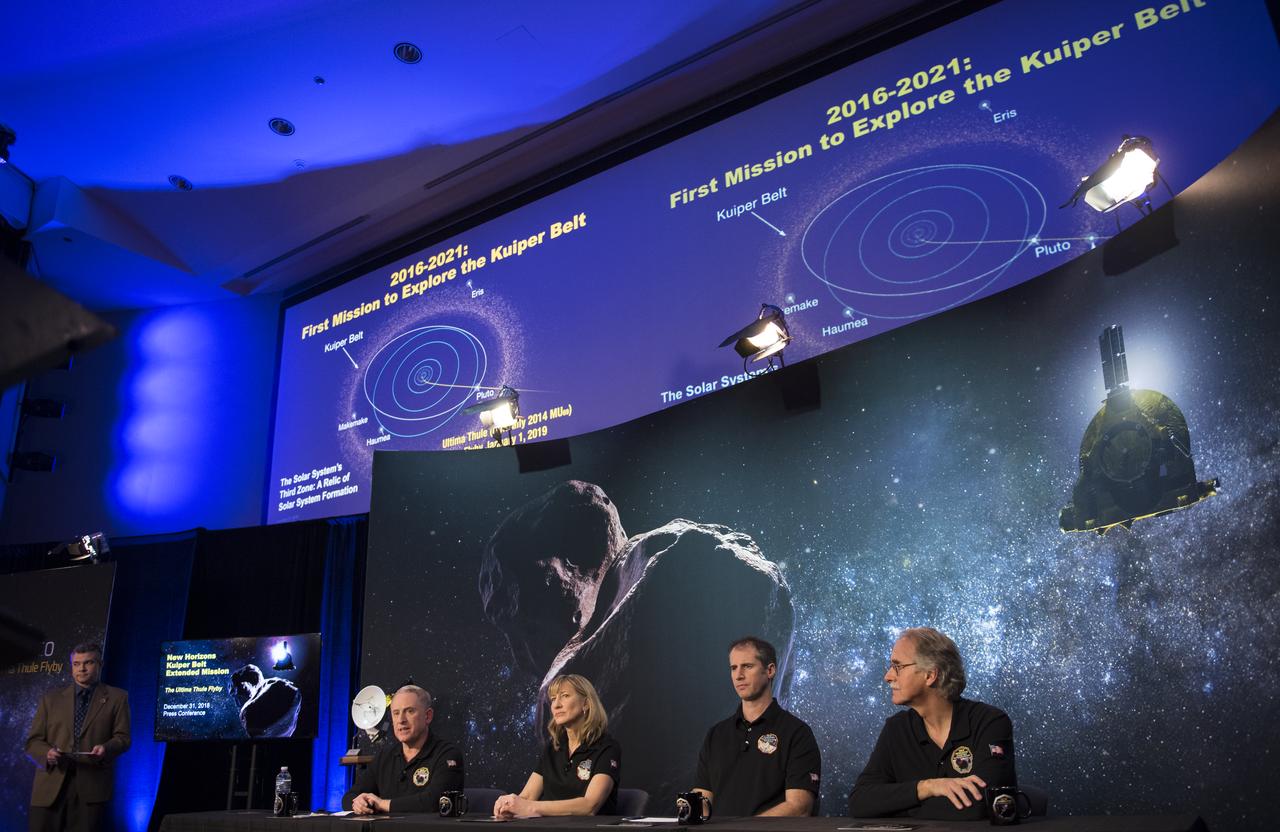
New Horizons principal investigator Alan Stern of the Southwest Research Institute (SwRI), Boulder, CO, left, New Horizons project manager Helene Winters of the Johns Hopkins University Applied Physics Laboratory, second from left, Fred Pelletier, lead of the project navigation team at KinetX Inc. in Simi Valley, California, second from right, and New Horizons co-investigator John Spencer of the Southwest Research Institute (SwRI), Boulder, CO, right, are seen during a press conference prior to the flyby of Ultima Thule by the New Horizons spacecraft, Monday, Dec. 31, 2018 at Johns Hopkins University Applied Physics Laboratory (APL) in Laurel, Maryland. Photo Credit: (NASA/Joel Kowsky)

In the Kennedy Space Center's Operations and Support Building II, Thursday, Aug. 9, 2018, members of the media participate in a prelaunch mission briefing on NASA's Parker Solar Probe. Moderating the science briefing are Karen Fox, far left, Goddard Space Flight Center; and Dwaye Brown, far right, NASA Communications. Briefers are Andy Driesman, Parker Solar Probe project manager, Johns Hopkins Applied Physics Laboratory; Nicky Fox, Parker Solar Probe project scientist, Johns Hopkins Applied Physics Laboratory; and Thomas Zurbuchen, associate administrator for NASA's Science Mission Directorate in Washington. The Parker Solar Probe will lift off on a United Launch Alliance Delta IV Heavy rocket from Space Launch Complex 37 at Cape Canaveral Air Force Station in Florida. The spacecraft was built by Applied Physics Laboratory of Johns Hopkins University in Laurel, Maryland. The mission will perform the closest-ever observations of a star when it travels through the Sun's atmosphere, called the corona. The probe will rely on measurements and imaging to revolutionize our understanding of the corona and the Sun-Earth connection.
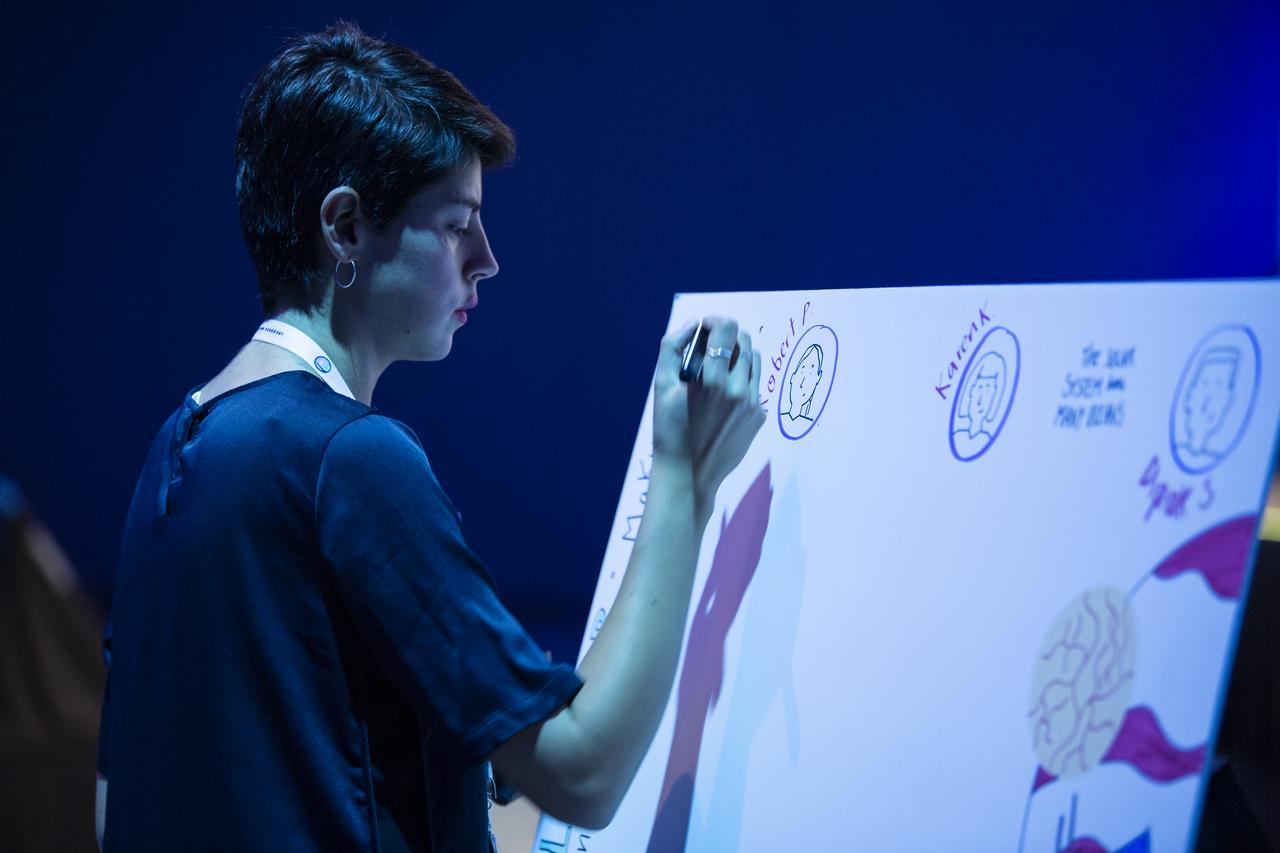
An artist illustrates a panel discussion titled, “Europa Clipper: Making a Mission to Understand Our Place in the Universe,” with panelists Robert Pappalardo, Europa Clipper Project Scientist, NASA Jet Propulsion Laboratory (JPL); Karen Kirby, Europa Clipper Deputy Project System Engineer, Applied Physics Laboratory (APL); Jennifer Dooley, Europa Clipper Project Systems Engineer, JPL; Thomas Magner, Manager, APL; and Bill Nye, Chief Executive Officer, The Planetary Society, during the 70th International Astronautical Congress, Wednesday, Oct. 23, 2019 at the Walter E. Washington Convention Center in Washington. Photo credit: (NASA/Aubrey Gemignani)
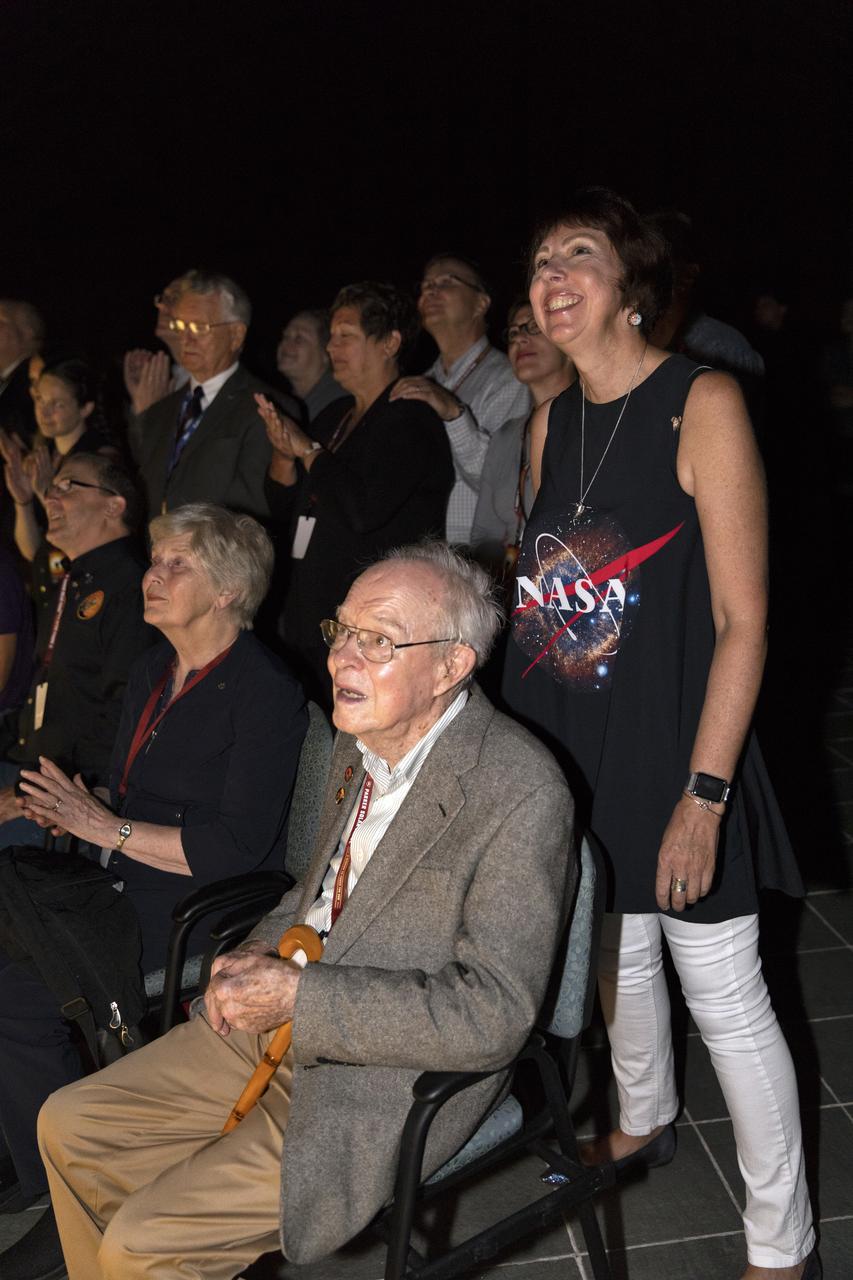
Dr. Eugene Parker (seated in the foreground), a pioneer in heliophysics and S. Chandrasekhar distinguished service professor emeritus for the Department of Astronomy and Astrophysics at the University of Chicago, watches the launch of NASA's Parker Solar Probe. This is the first agency mission named for a living person. Standing behind Parker is Nicky Fox, Parker Solar Probe project scientist at Johns Hopkins Applied Physics Laboratory. The liftoff took place at 3:31 a.m. EDT on Sunday, Aug. 12, 2018. The spacecraft was built by the Johns Hopkins University Applied Physics Laboratory in Laurel, Maryland. The mission will perform the closest-ever observations of a star when it travels through the Sun's atmosphere, called the corona. The probe will rely on measurements and imaging to revolutionize our understanding of the corona and the Sun-Earth connection.
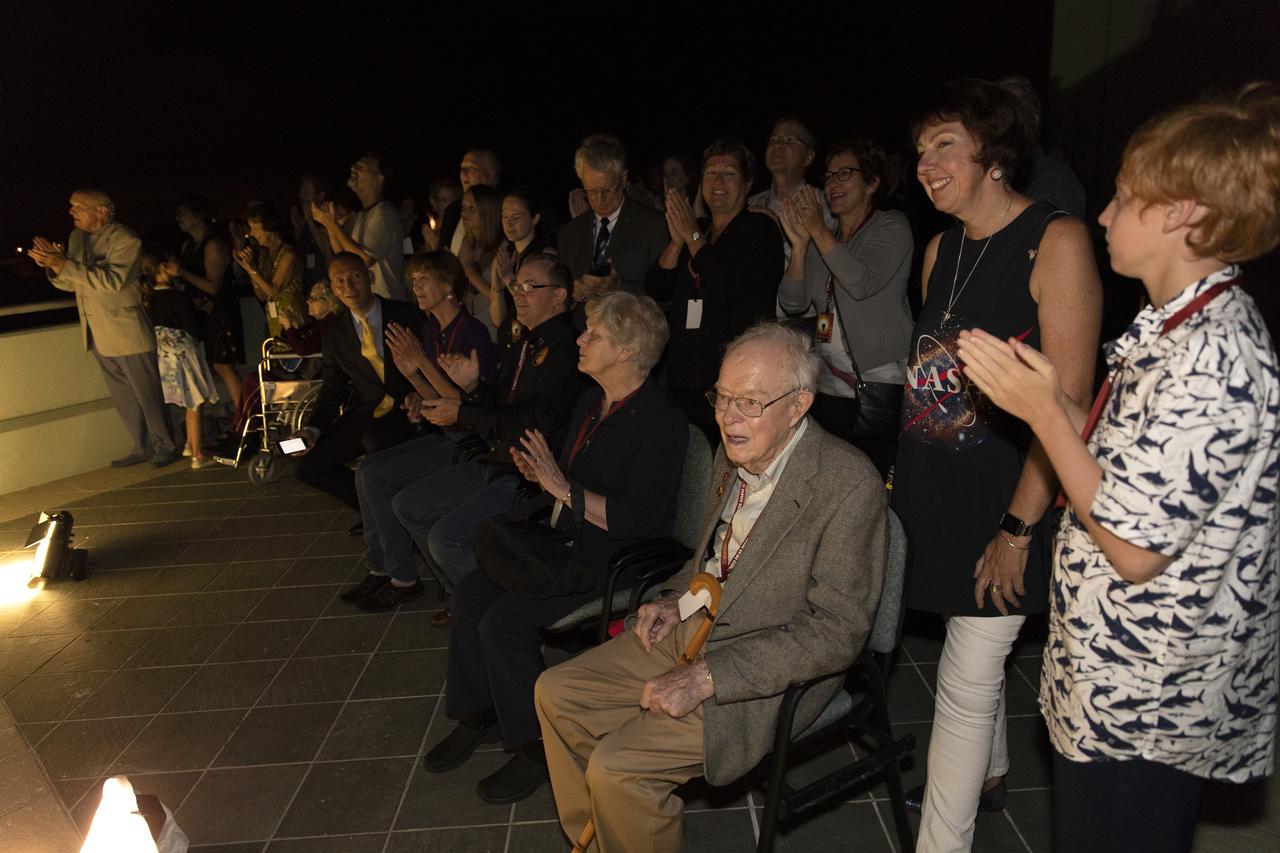
Dr. Eugene Parker (seated in the foreground), a pioneer in heliophysics and S. Chandrasekhar distinguished service professor emeritus for the Department of Astronomy and Astrophysics at the University of Chicago, watches the launch of NASA's Parker Solar Probe. This is the first agency mission named for a living person. Standing behind Parker is Nicky Fox, Parker Solar Probe project scientist at Johns Hopkins Applied Physics Laboratory. The liftoff took place at 3:31 a.m. EDT on Sunday, Aug. 12, 2018. The spacecraft was built by the Johns Hopkins University Applied Physics Laboratory in Laurel, Maryland. The mission will perform the closest-ever observations of a star when it travels through the Sun's atmosphere, called the corona. The probe will rely on measurements and imaging to revolutionize our understanding of the corona and the Sun-Earth connection.
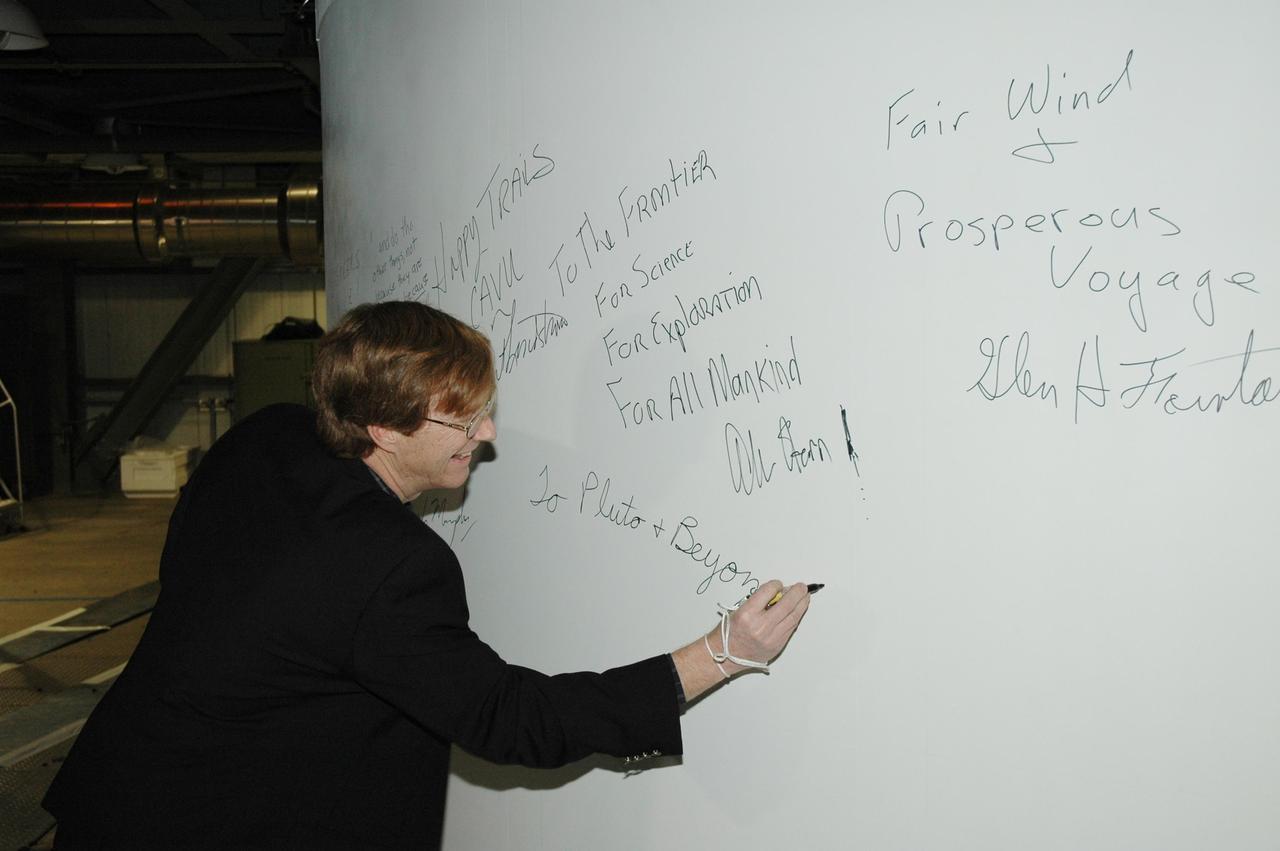
KENNEDY SPACE CENTER, FLA. - In the Vertical Integration Facility on Launch Complex 41, Cape Canaveral Air Force Station, Hal Weaver, New Horizons project scientist with the Johns Hopkins University Applied Physics Laboratory, signs the fairing enclosing the New Horizons spacecraft. The fairing protects the spacecraft during launch and flight through the atmosphere. Once out of the atmosphere, the fairing is jettisoned. The compact 1,060-pound New Horizons probe carries seven scientific instruments that will characterize the global geology and geomorphology of Pluto and its moon Charon, map their surface compositions and temperatures, and examine Pluto's complex atmosphere. New Horizons is the first mission in NASA's New Frontiers program of medium-class planetary missions. The spacecraft, designed for NASA by the Johns Hopkins University Applied Physics Laboratory in Laurel, Md., will fly by Pluto and Charon as early as summer 2015.
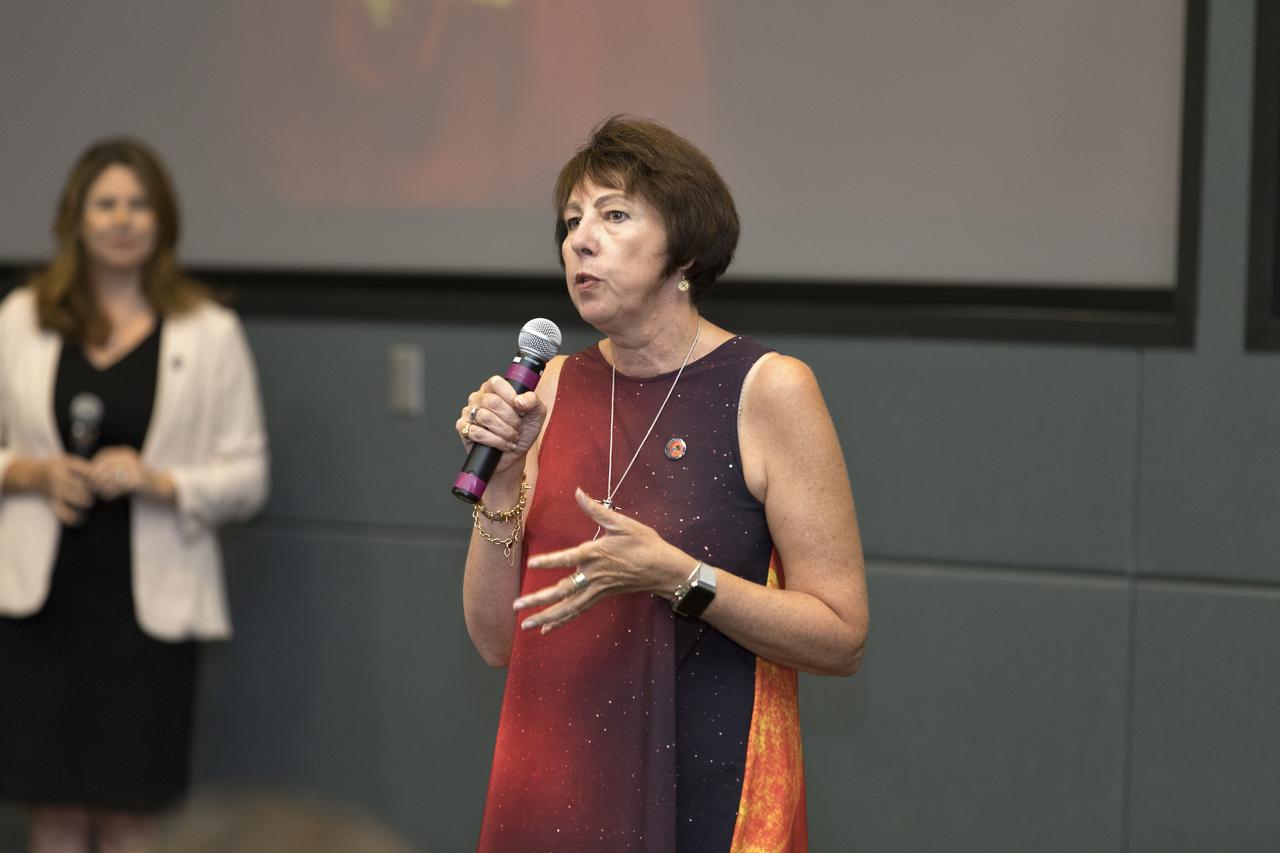
In the Kennedy Space Center's Operations and Support Building II, Thursday, Aug. 9, 2018, members of the media participate in a prelaunch mission briefing on NASA's Parker Solar Probe. Speaking to the media is Nicky Fox, Parker Solar Probe project scientist, Johnson Hopkins Applied Physics Laboratory. The Parker Solar Probe will lift off on a United Launch Alliance Delta IV Heavy rocket from Space Launch Complex 37 at Cape Canaveral Air Force Station in Florida. The spacecraft was built by Applied Physics Laboratory of Johns Hopkins University in Laurel, Maryland. The mission will perform the closest-ever observations of a star when it travels through the Sun's atmosphere, called the corona. The probe will rely on measurements and imaging to revolutionize our understanding of the corona and the Sun-Earth connection.
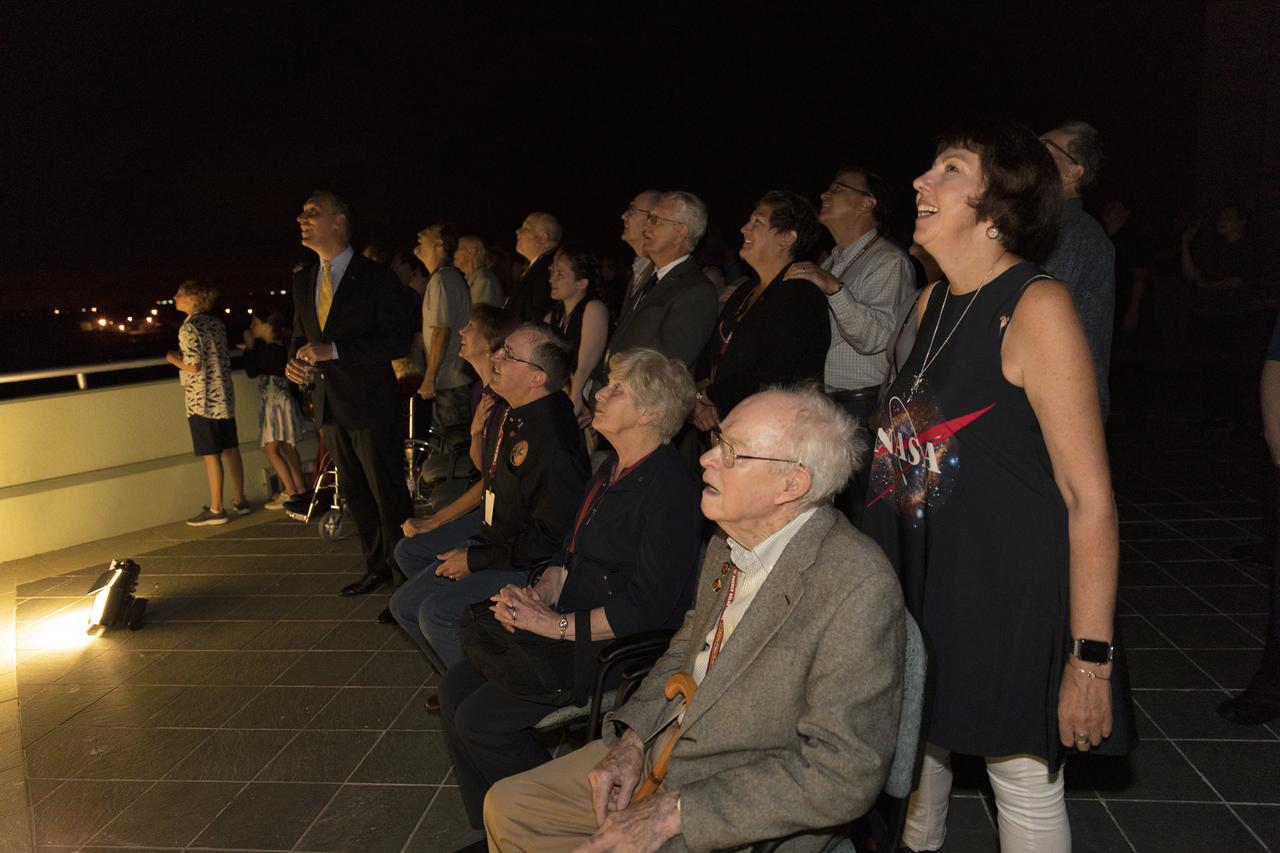
Dr. Eugene Parker (seated in the foreground), a pioneer in heliophysics and S. Chandrasekhar distinguished service professor emeritus for the Department of Astronomy and Astrophysics at the University of Chicago, watches the launch of NASA's Parker Solar Probe. This is the first agency mission named for a living person. Standing behind Parker is Nicky Fox, Parker Solar Probe project scientist at Johns Hopkins Applied Physics Laboratory. The liftoff took place at 3:31 a.m. EDT on Sunday, Aug. 12, 2018. The spacecraft was built by the Johns Hopkins University Applied Physics Laboratory in Laurel, Maryland. The mission will perform the closest-ever observations of a star when it travels through the Sun's atmosphere, called the corona. The probe will rely on measurements and imaging to revolutionize our understanding of the corona and the Sun-Earth connection.

In the Kennedy Space Center’s Press Site auditorium, on Friday, July 20, 2018, Nicky Fox, project scientist with the Johns Hopkins University Applied Physics Laboratory, speaks to members of the media during a prelaunch mission briefing for the Parker Solar Probe mission. The Parker Solar Probe will lift off on a United Launch Alliance Delta IV Heavy rocket from Space Launch Complex 37 at Cape Canaveral Air Force Station in Florida. The spacecraft was built by Applied Physics Laboratory of Johns Hopkins University in Laurel in Maryland. The mission will perform the closest-ever observations of a star when it travels through the Sun's atmosphere, called the corona. The probe will rely on measurements and imaging to revolutionize understanding of the corona and the Sun-Earth connection.
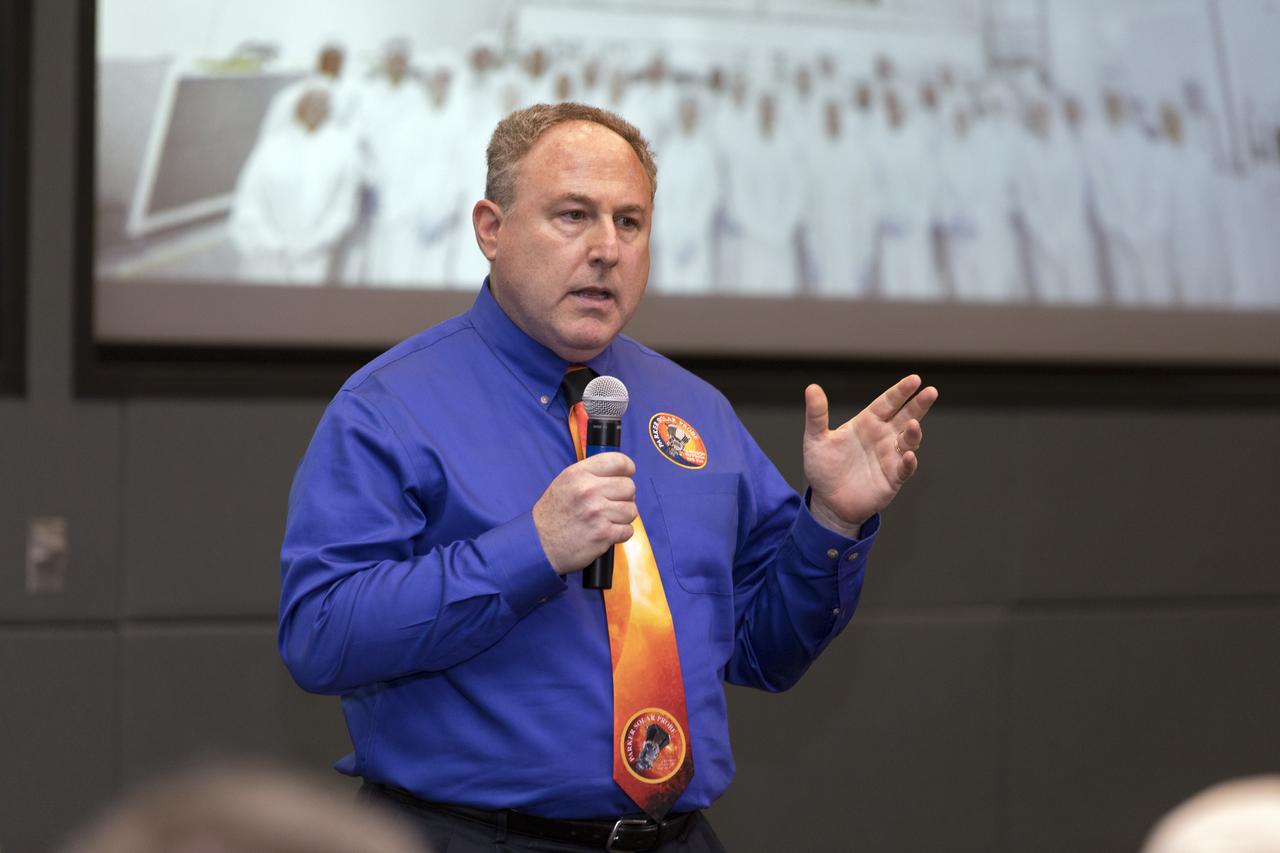
In the Kennedy Space Center's Operations and Support Building II, Thursday, Aug. 9, 2018, members of the media participate in a prelaunch mission briefing on NASA's Parker Solar Probe. Speaking to the media is Andy Driesman, Parker Solar Proble project manager, Johns Hopkins Applied Physics Laboratory. The Parker Solar Probe will lift off on a United Launch Alliance Delta IV Heavy rocket from Space Launch Complex 37 at Cape Canaveral Air Force Station in Florida. The spacecraft was built by Applied Physics Laboratory of Johns Hopkins University in Laurel, Maryland. The mission will perform the closest-ever observations of a star when it travels through the Sun's atmosphere, called the corona. The probe will rely on measurements and imaging to revolutionize our understanding of the corona and the Sun-Earth connection.
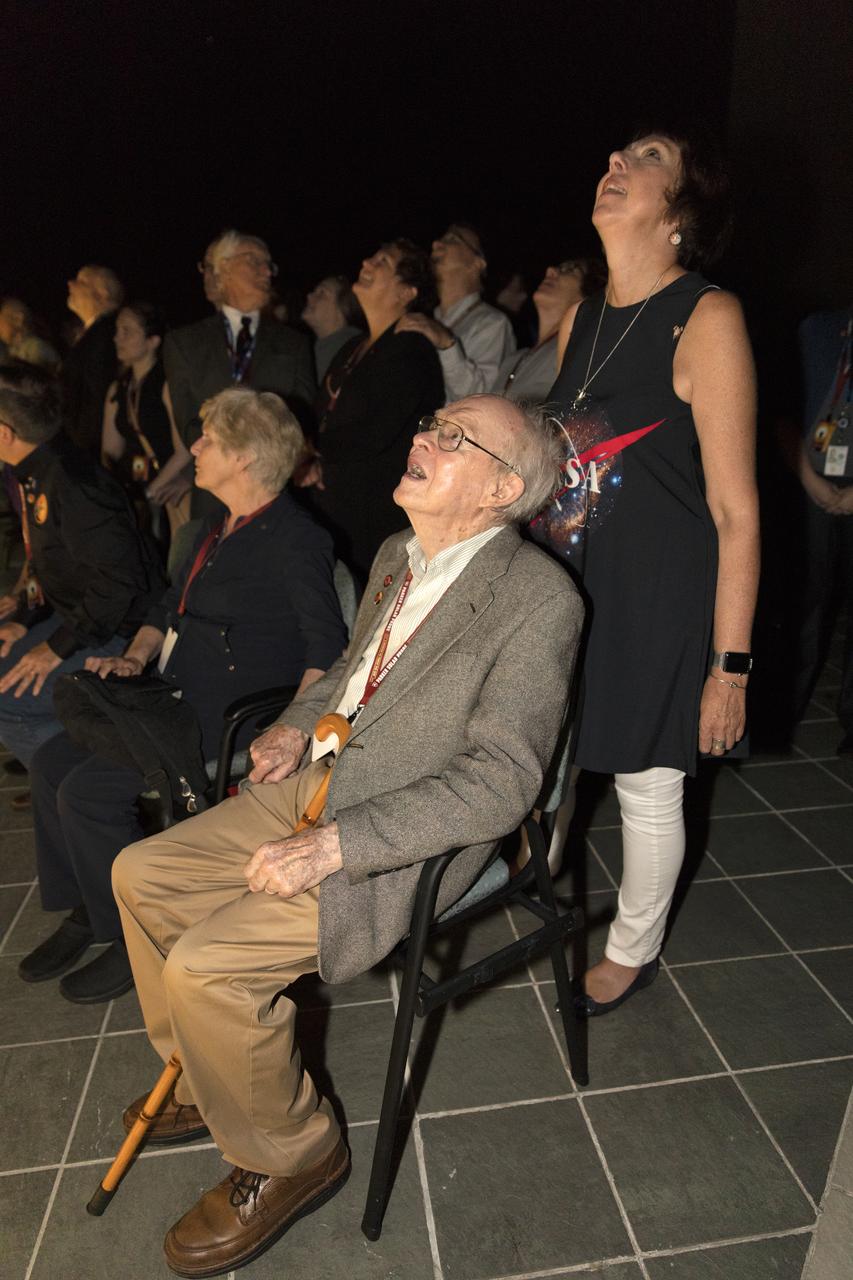
Dr. Eugene Parker (seated in the foreground), a pioneer in heliophysics and S. Chandrasekhar distinguished service professor emeritus for the Department of Astronomy and Astrophysics at the University of Chicago, watches the launch of NASA's Parker Solar Probe. This is the first agency mission named for a living person. Standing behind Parker is Nicky Fox, Parker Solar Probe project scientist at Johns Hopkins Applied Physics Laboratory. The liftoff took place at 3:31 a.m. EDT on Sunday, Aug. 12, 2018. The spacecraft was built by the Johns Hopkins University Applied Physics Laboratory in Laurel, Maryland. The mission will perform the closest-ever observations of a star when it travels through the Sun's atmosphere, called the corona. The probe will rely on measurements and imaging to revolutionize our understanding of the corona and the Sun-Earth connection.
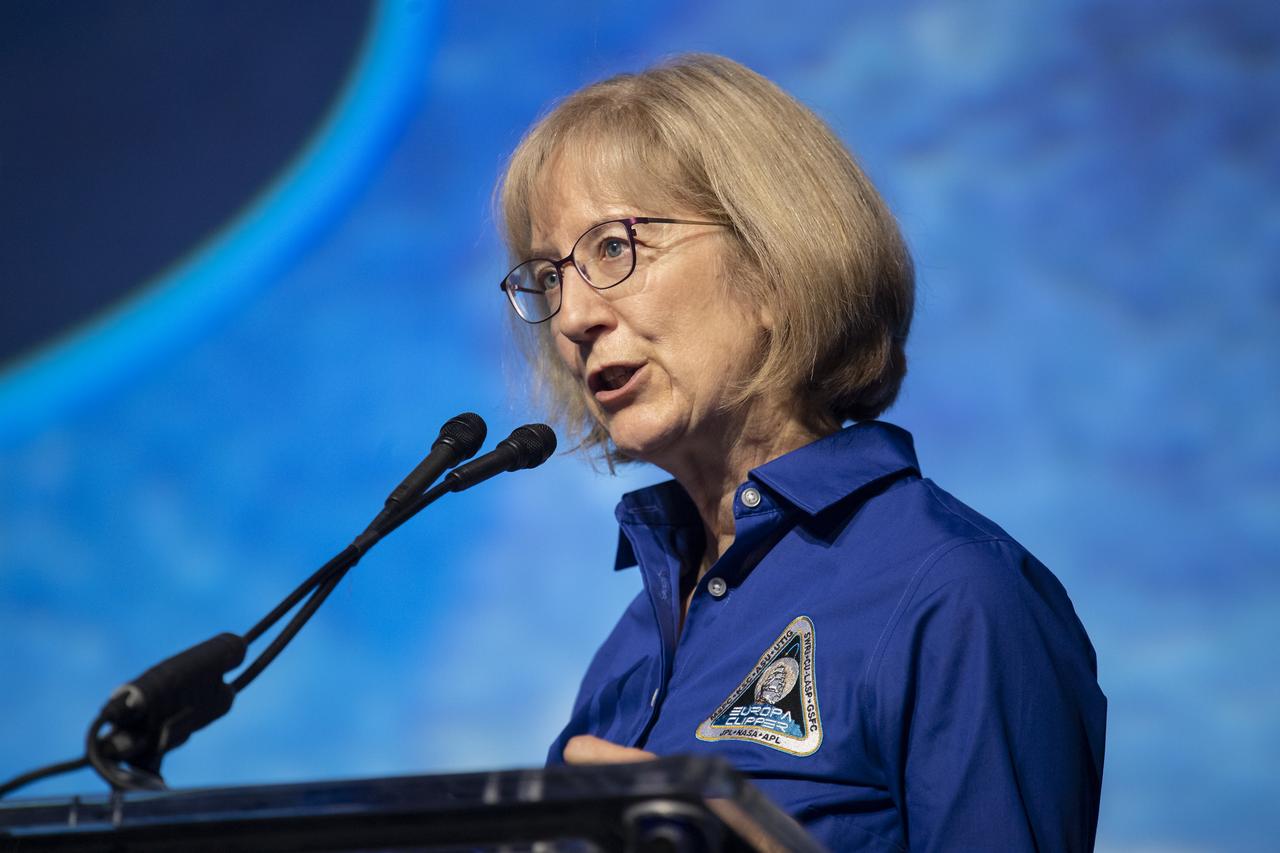
Karen Kirby, Europa Clipper Deputy Project System Engineer, Applied Physics Laboratory (APL), speaks during a session titled, “Europa Clipper: Making a Mission to Understand Our Place in the Universe” at the 70th International Astronautical Congress, Wednesday, Oct. 23, 2019 at the Walter E. Washington Convention Center in Washington. Photo credit: (NASA/Aubrey Gemignani)
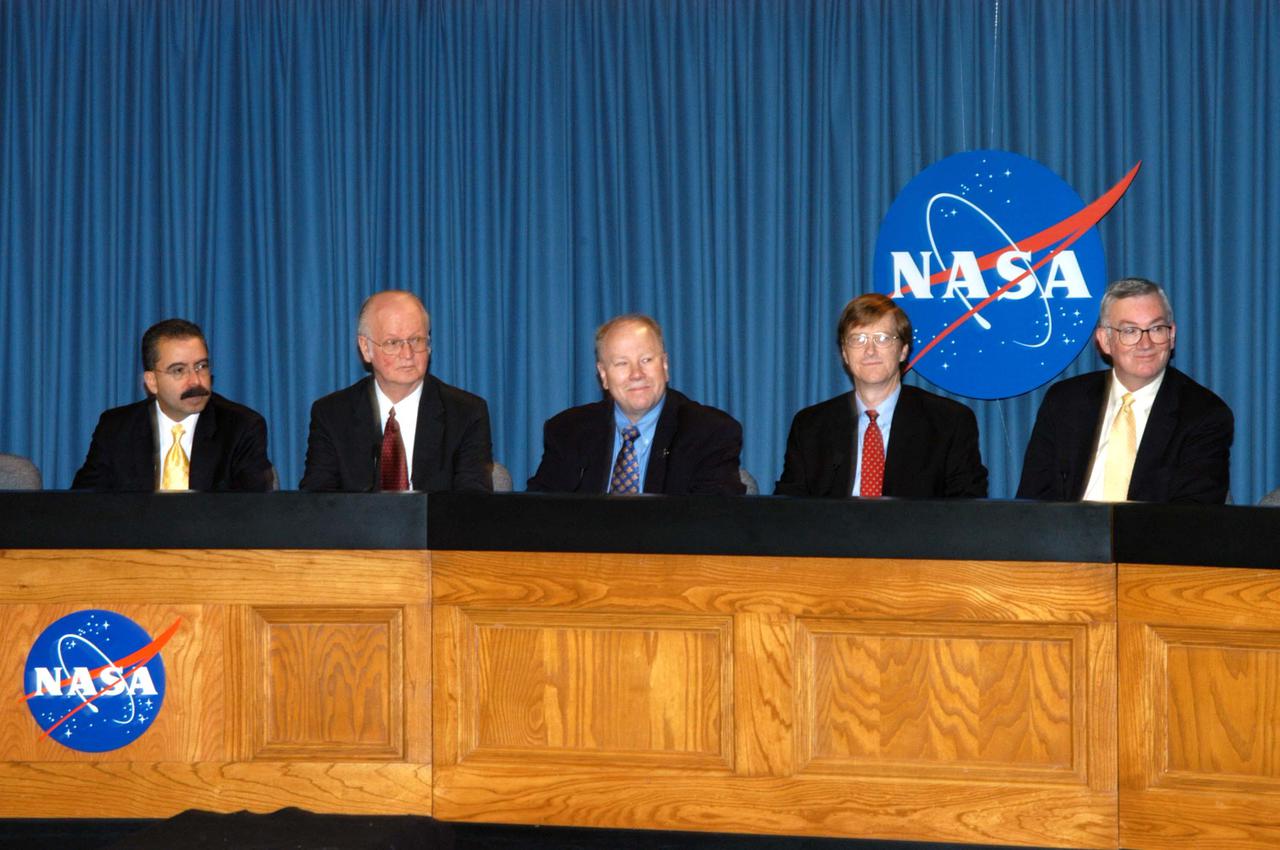
KENNEDY SPACE CENTER, FLA. - Representatives of NASA’s New Horizons Mission to Pluto are ready to answer questions during a press briefing on the Draft environmental Impact Statement at NASA’s Kennedy Space Center. From left are Orlando Figueroa, deputy association administrator for Programs, Science Mission Directorate; Earl Wahlquist, associate director for Space and Defense Power Systems, Department of Energy, in Germantown, Md.; Kurt Lindstrom, New Horizons Program executive, with NASA; Hal Weaver, New Horizons Project scientist, Johns Hopkins University Applied Physics Laboratory in Laurel, Md.; and Glen Fountain, New Horizons Project manager, also with Johns Hopkins University Applied Physics Laboratory. The spacecraft will explore Pluto, its moon Charon, and possibly one or more objects within the Kuiper Belt. New Horizons is planned for launch during a window from Jan. 11 to Feb. 14, 2006, on an Atlas V 551 booster with a Star 48B third stage. It will proceed to a Jupiter gravity assist between Feb. 25 and March 2, 2007, if launched during the first 23 days of the launch window. (If it is launched during the last 12 days of the launch window it will have a direct-to-Pluto trajectory. There is a backup launch opportunity in February 2007.)
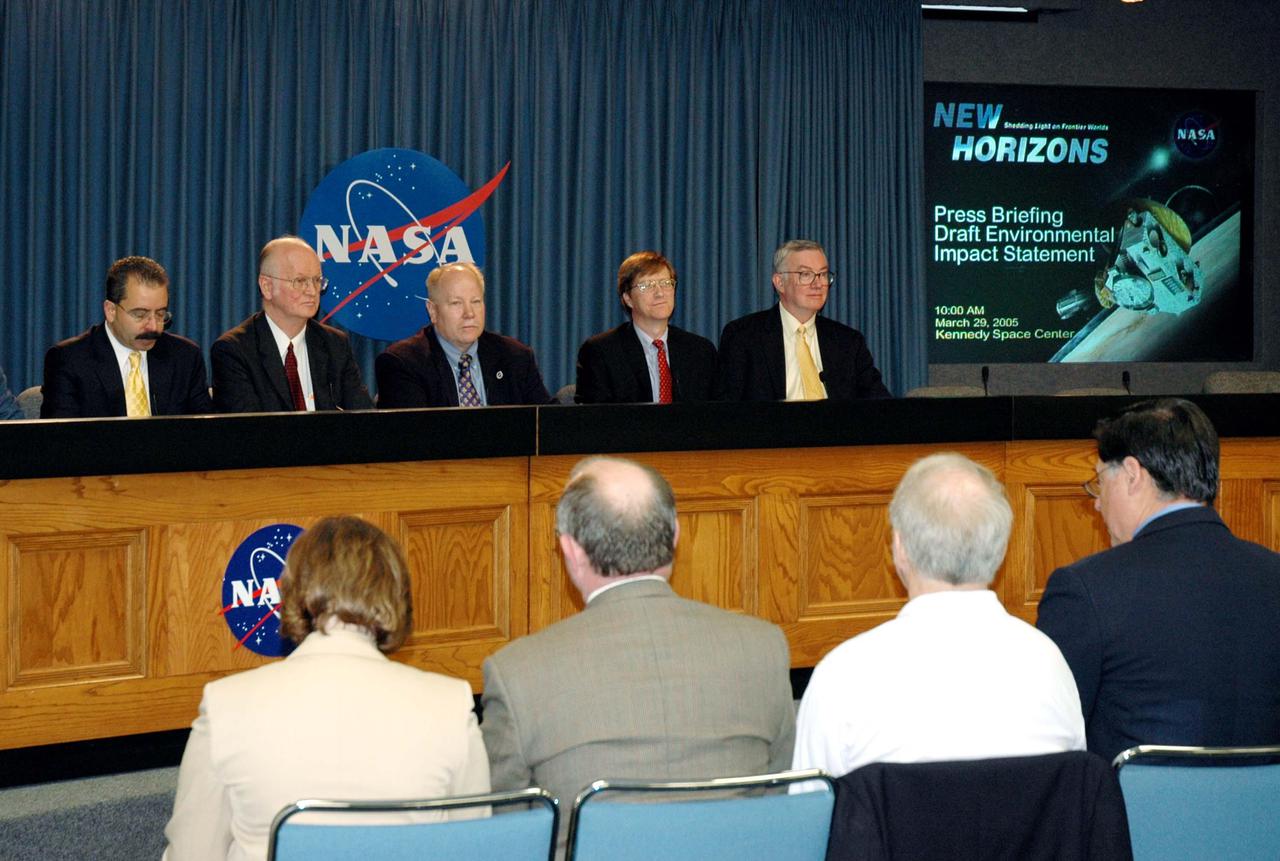
KENNEDY SPACE CENTER, FLA. - Representatives of NASA’s New Horizons Mission to Pluto discuss the mission during a press briefing on the Draft environmental Impact Statement at NASA’s Kennedy Space Center. From left are Orlando Figueroa, deputy association administrator for Programs, Science Mission Directorate; Earl Wahlquist, associate director for Space and Defense Power Systems, Department of Energy, in Germantown, Md.; Kurt Lindstrom, New Horizons Program executive, with NASA; Hal Weaver, New Horizons Project scientist, Johns Hopkins University Applied Physics Laboratory in Laurel, Md.; and Glen Fountain, New Horizons Project manager, also with Johns Hopkins University Applied Physics Laboratory. The spacecraft will explore Pluto, its moon Charon, and possibly one or more objects within the Kuiper Belt. New Horizons is planned for launch during a window from Jan. 11 to Feb. 14, 2006, on an Atlas V 551 booster with a Star 48B third stage. It will proceed to a Jupiter gravity assist between Feb. 25 and March 2, 2007, if launched during the first 23 days of the launch window. (If it is launched during the last 12 days of the launch window it will have a direct-to-Pluto trajectory. There is a backup launch opportunity in February 2007.)
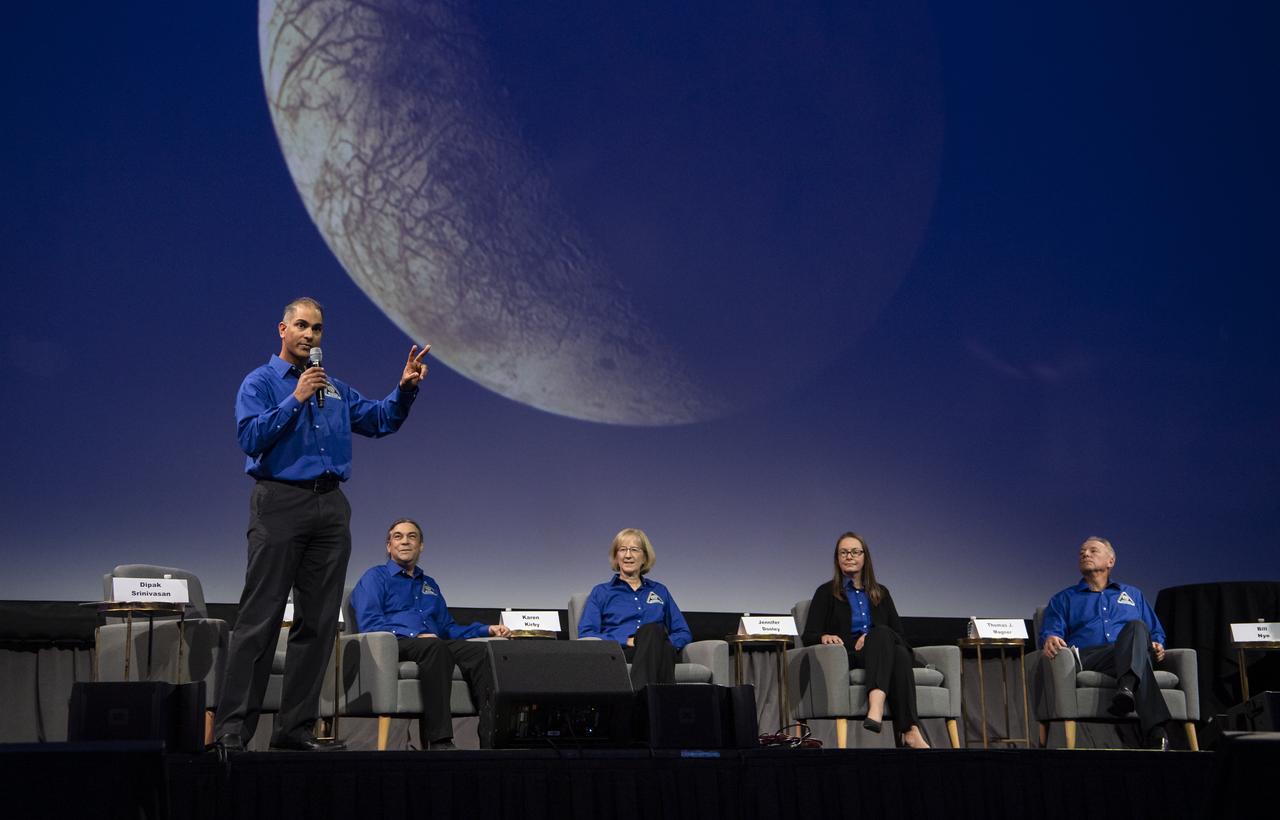
Dipak Srinivasan, Europa Clipper Telecommunications Manager, Johns Hopkins University, Applied Physics Laboratory (APL) moderates a panel titled, “Europa Clipper: Making a Mission to Understand Our Place in the Universe” with panelists, from left to right, Robert Pappalardo, Europa Clipper Project Scientist, NASA Jet Propulsion Laboratory (JPL); Karen Kirby, Europa Clipper Deputy Project System Engineer, APL; Jennifer Dooley, Europa Clipper Project Systems Engineer, JPL; Thomas Magner, Manager, APL; and Bill Nye, Chief Executive Officer, The Planetary Society, during the 70th International Astronautical Congress, Wednesday, Oct. 23, 2019 at the Walter E. Washington Convention Center in Washington. Photo credit: (NASA/Aubrey Gemignani)
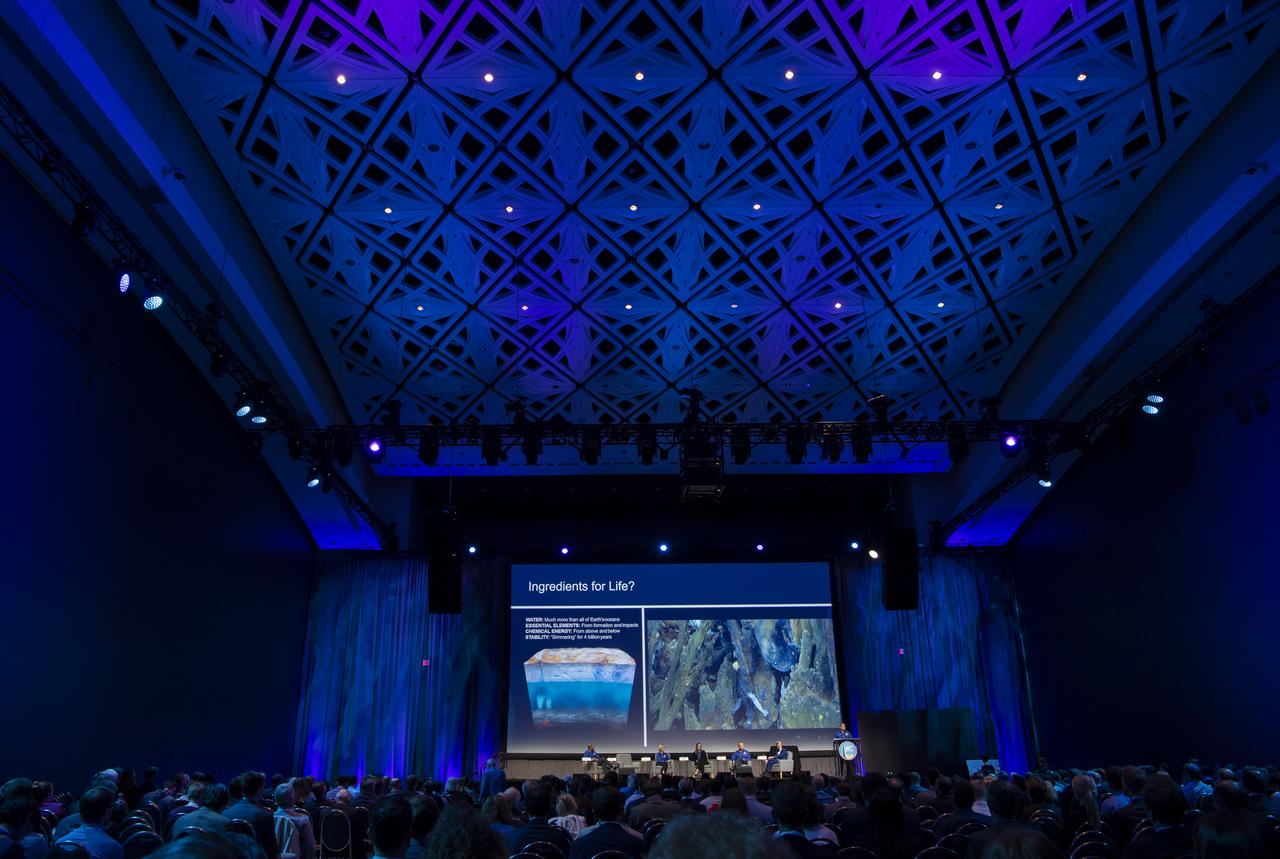
Dipak Srinivasan, Europa Clipper Telecommunications Manager, Johns Hopkins University, Applied Physics Laboratory (APL), left, moderates a panel titled, “Europa Clipper: Making a Mission to Understand Our Place in the Universe” with panelists, from left to right, Robert Pappalardo, Europa Clipper Project Scientist, NASA Jet Propulsion Laboratory (JPL); Karen Kirby, Europa Clipper Deputy Project System Engineer, APL; Jennifer Dooley, Europa Clipper Project Systems Engineer, JPL; Thomas Magner, Manager, APL; and Bill Nye, Chief Executive Officer, The Planetary Society, during the 70th International Astronautical Congress, Wednesday, Oct. 23, 2019 at the Walter E. Washington Convention Center in Washington. Photo credit: (NASA/Aubrey Gemignani)
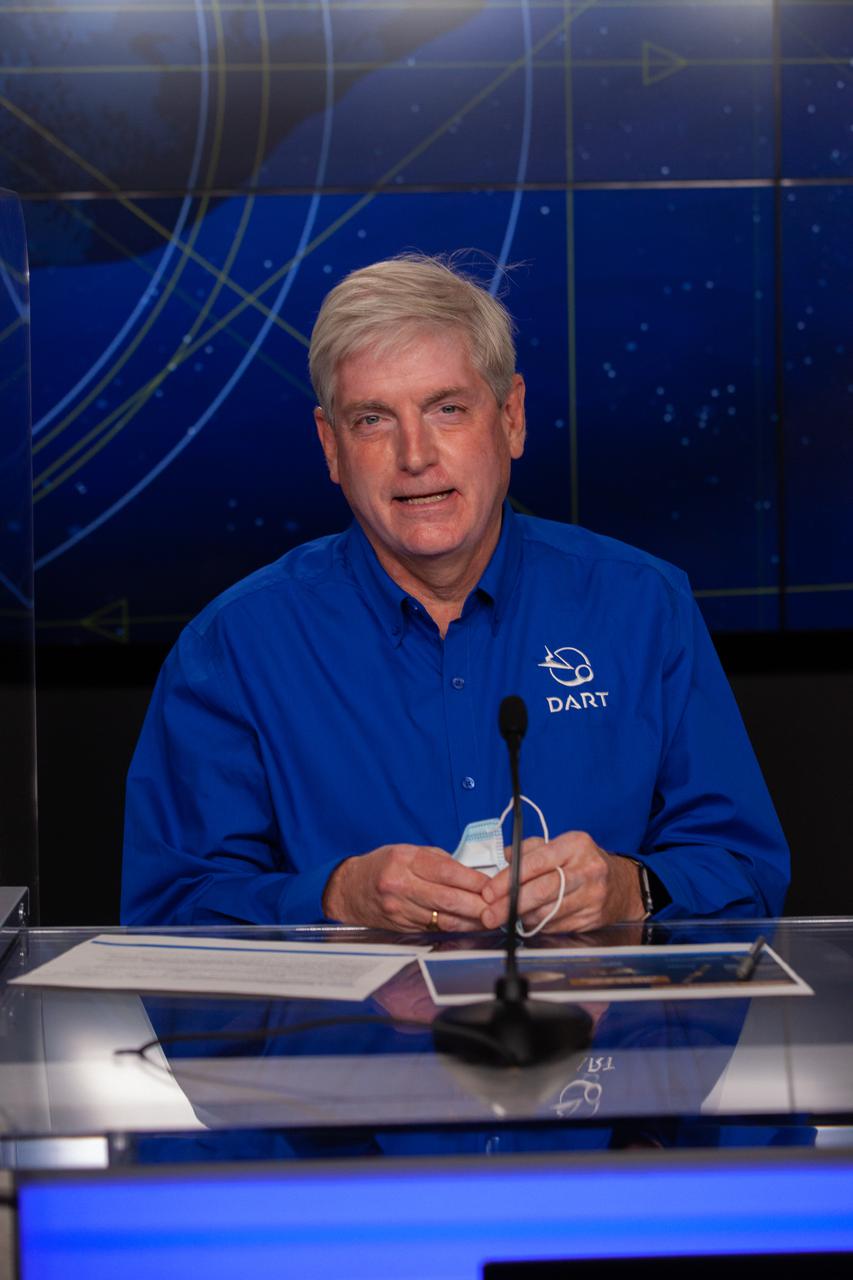
Ed Reynolds, Double Asteroid Redirection Test (DART) project manager for Johns Hopkins Applied Physics Laboratory, participates in a prelaunch news conference for NASA’s DART mission at Vandenberg Space Force Base in California on Nov. 22, 2021. DART is the first mission to test technologies for preventing an impact of Earth by a hazardous asteroid. The mission is scheduled to launch no earlier than 1:21 a.m. EST Wednesday, Nov. 24 (10:21 p.m. PST Tuesday, Nov. 23), aboard a SpaceX Falcon 9 rocket from Vandenberg. NASA's Launch Services Program based at Kennedy Space Center in Florida, America's multi-user spaceport, is managing the launch.
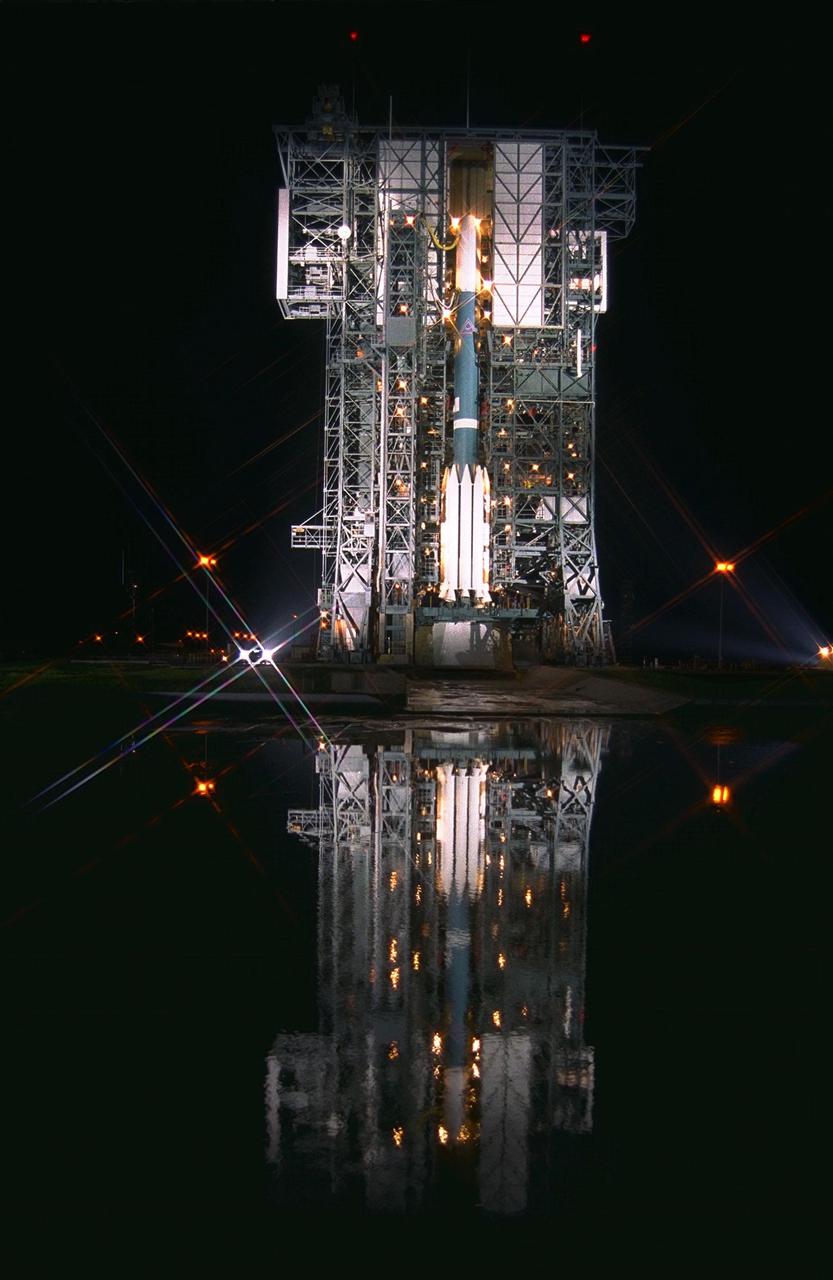
After launch tower retraction, the Boeing Delta II expendable launch vehicle carrying the Advanced Composition Explorer (ACE) undergoes final preparations for liftoff in the predawn hours of Aug. 24, 1997, at Launch Complex 17A, Cape Canaveral Air Station. This is the second Delta launch under the Boeing name and the first from Cape Canaveral. ACE with its combination of nine sensors and instruments will investigate the origin and evolution of solar phenomenon, the formation of solar corona, solar flares and acceleration of the solar wind. ACE was built for NASA by the Johns Hopkins Applied Physics Laboratory and is managed by the Explorer Project Office at NASA’s Goddard Space Flight Center. The lead scientific institution is the California Institute of Technology
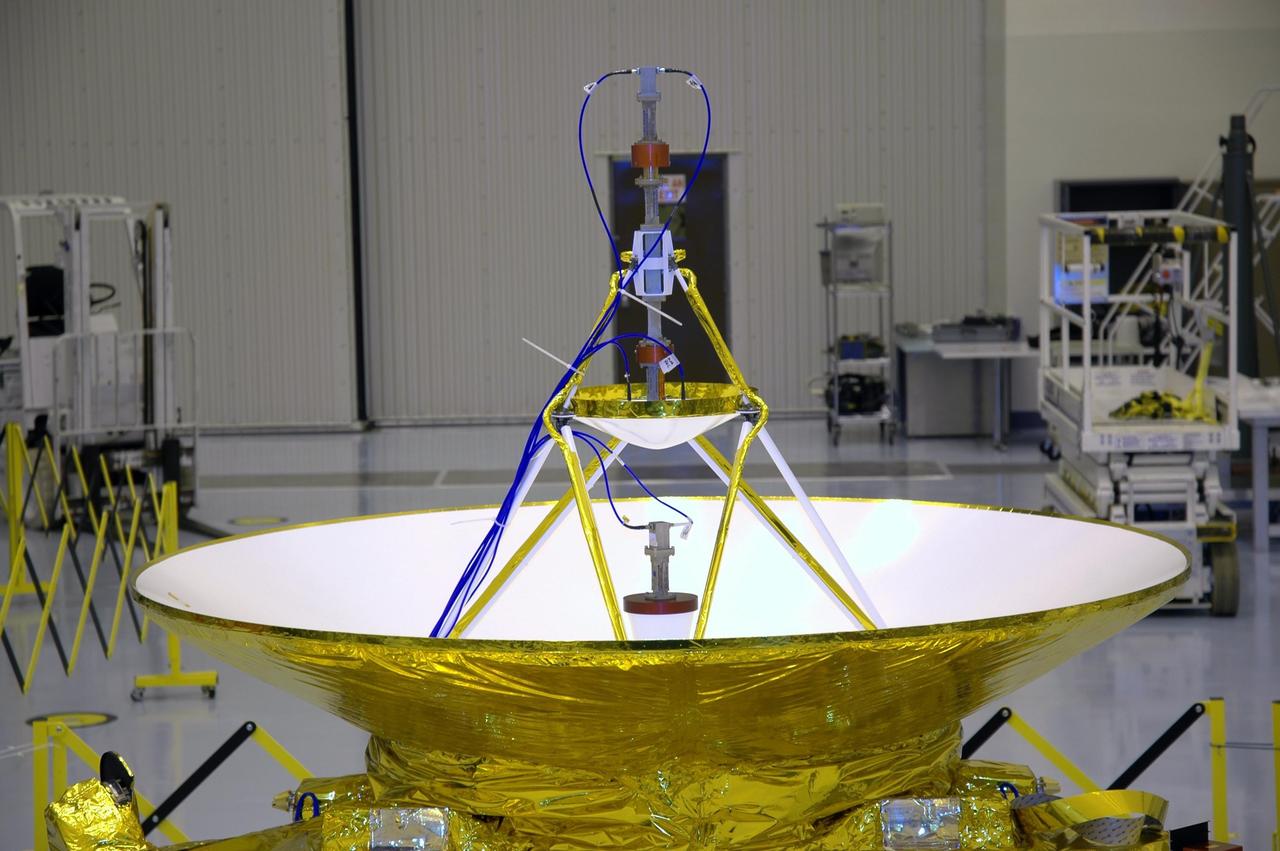
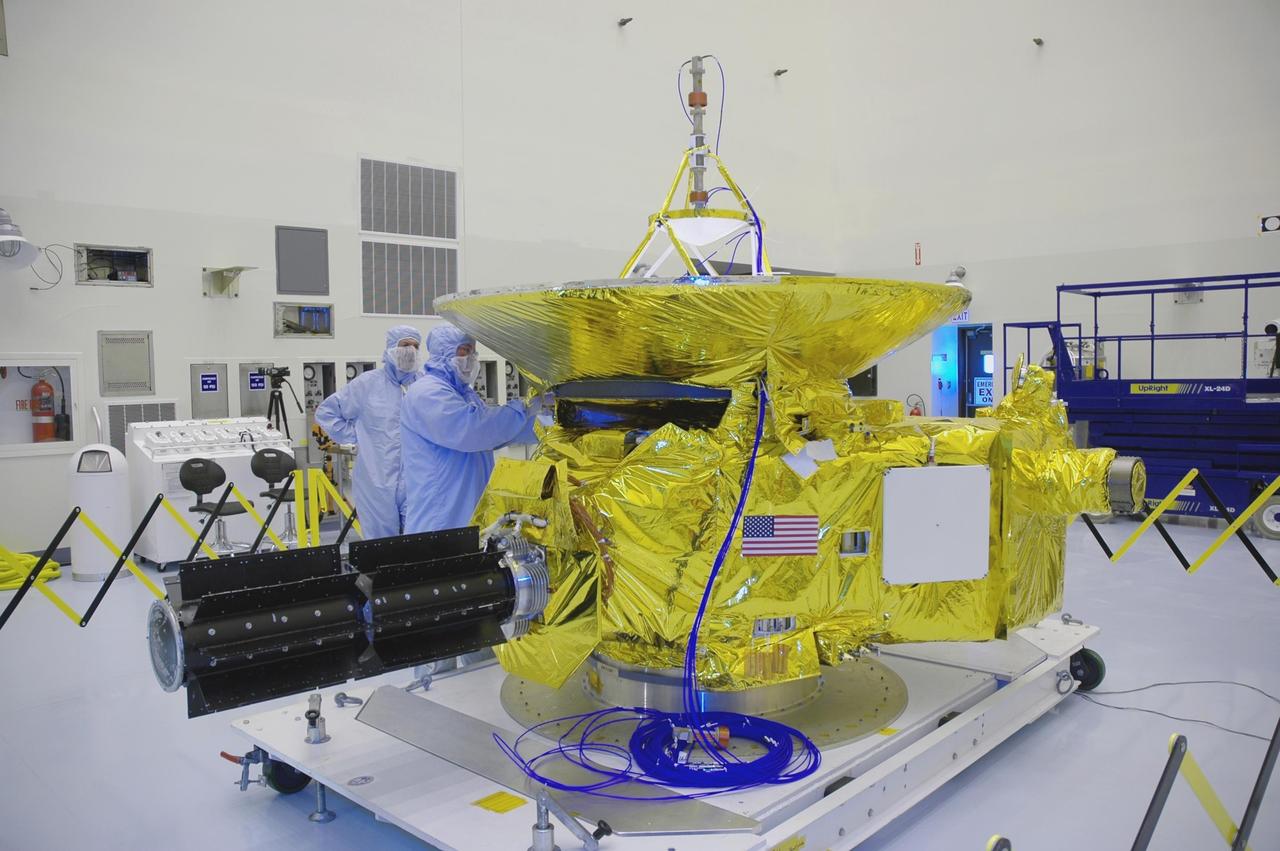
KENNEDY SPACE CENTER, FLA. - In the clean room at KSC’s Payload Hazardous Servicing Facility is NASA’s New Horizons spacecraft that is scheduled to be launched to Pluto and its moon Charon in January 2006. Seen here is the Radio Science Experiment (REX) that will measure atmospheric composition and temperature. The spacecraft is being prepared for a media event. Photographers and reporters will be able to photograph the New Horizons spacecraft and talk with project management and test team members from NASA and the Johns Hopkins University Applied Physics Laboratory. Carrying seven scientific instruments, the compact 1,060-pound New Horizons probe will characterize the global geology and geomorphology of Pluto and its moon Charon, map their surface compositions and temperatures, and examine Pluto's complex atmosphere. After that, flybys of Kuiper Belt objects from even farther in the solar system may be undertaken in an extended mission. New Horizons is the first mission in NASA's New Frontiers program of medium-class planetary missions. The spacecraft, designed for NASA by the Johns Hopkins University Applied Physics Laboratory in Laurel, Md., will fly by Pluto and Charon as early as summer 2015.
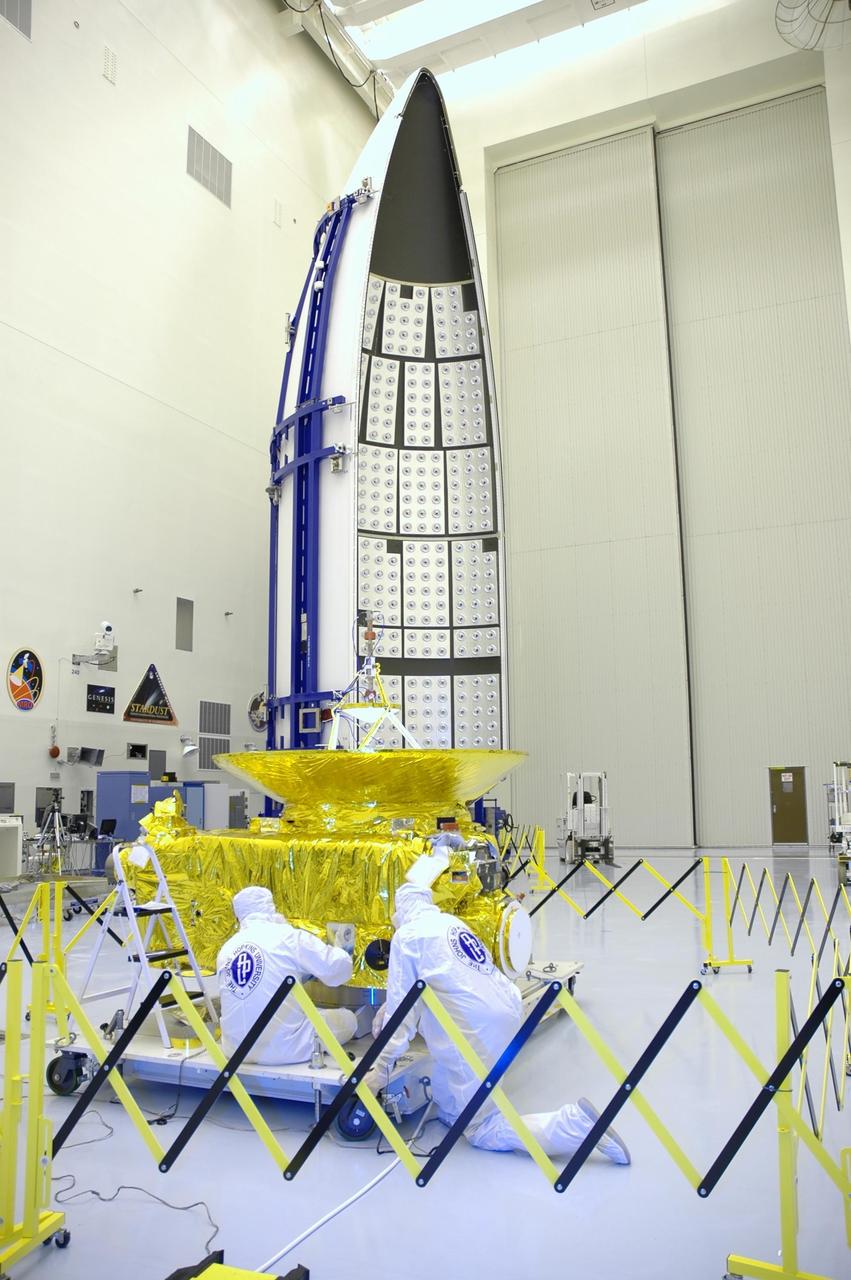
KENNEDY SPACE CENTER, FLA. - In the clean room at KSC’s Payload Hazardous Servicing Facility, technicians prepare the New Horizons spacecraft for a media event. Photographers and reporters will be able to photograph the New Horizons spacecraft and talk with project management and test team members from NASA and the Johns Hopkins University Applied Physics Laboratory. Seen behind the spacecraft is one half of the fairing that will enclose it for launch, scheduled for January 2006. Carrying seven scientific instruments, the compact 1,060-pound New Horizons probe will characterize the global geology and geomorphology of Pluto and its moon Charon, map their surface compositions and temperatures, and examine Pluto's complex atmosphere. After that, flybys of Kuiper Belt objects from even farther in the solar system may be undertaken in an extended mission. New Horizons is the first mission in NASA's New Frontiers program of medium-class planetary missions. The spacecraft, designed for NASA by the Johns Hopkins University Applied Physics Laboratory in Laurel, Md., will fly by Pluto and Charon as early as summer 2015.
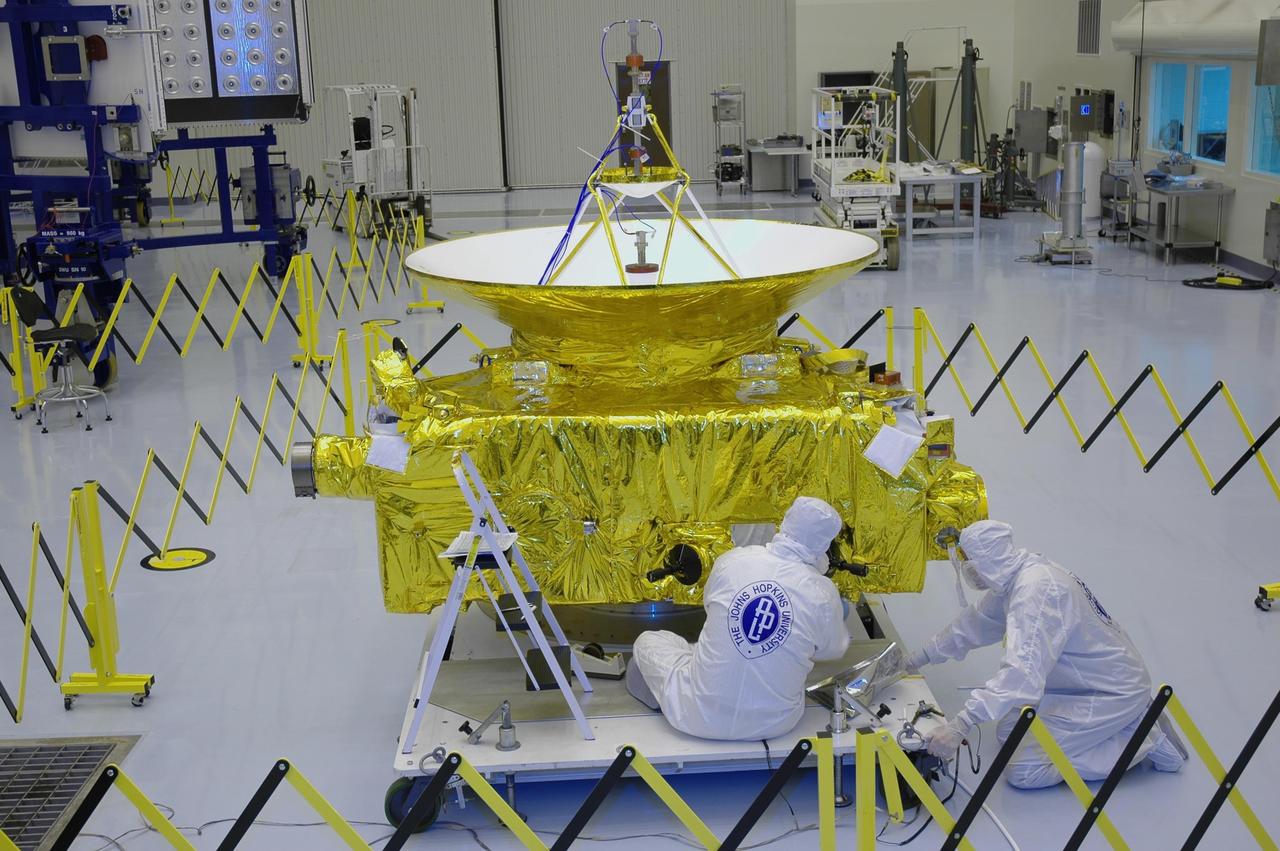
KENNEDY SPACE CENTER, FLA. - In the clean room at KSC’s Payload Hazardous Servicing Facility, the New Horizons spacecraft is being prepared for a media event. Photographers and reporters will be able to photograph the New Horizons spacecraft and talk with project management and test team members from NASA and the Johns Hopkins University Applied Physics Laboratory. Seen behind the spacecraft is one half of the fairing that will enclose it for launch, scheduled for January 2006. Carrying seven scientific instruments, the compact 1,060-pound New Horizons probe will characterize the global geology and geomorphology of Pluto and its moon Charon, map their surface compositions and temperatures, and examine Pluto's complex atmosphere. After that, flybys of Kuiper Belt objects from even farther in the solar system may be undertaken in an extended mission. New Horizons is the first mission in NASA's New Frontiers program of medium-class planetary missions. The spacecraft, designed for NASA by the Johns Hopkins University Applied Physics Laboratory in Laurel, Md., will fly by Pluto and Charon as early as summer 2015.

In the Kennedy Space Center's Operations and Support Building II, Thursday, Aug. 9, 2018, members of the news and social media participate in a prelaunch mission briefing on NASA's Parker Solar Probe. Briefing participants from left are: Nicky Fox, Parker Solar Probe project scientist at Johns Hopkins Applied Physics Laboratory, Dr. Eugene Parker, a pioneer in heliophysics and S. Chandrasekhar distinguished service professor emeritus for the Department of Astronomy and Astrophysics at the University of Chicago, Thomas Zurbuchen, associate administrator for NASA’s Science Mission Directorate in Washington. This is the first NASA mission named for a living person. The Parker Solar Probe is designed to provide key observations on his groundbreaking theories about the Sun. Lift off atop a United Launch Alliance Delta IV Heavy rocket will take place from Space Launch Complex 37 at Cape Canaveral Air Force Station in Florida. The spacecraft was built by Applied Physics Laboratory of Johns Hopkins University in Laurel, Maryland. The mission will perform the closest-ever observations of a star when it travels through the Sun's atmosphere, called the corona. The probe will rely on measurements and imaging to revolutionize our understanding of the corona and the Sun-Earth connection.
KENNEDY SPACE CENTER, FLA. - In the clean room at KSC’s Payload Hazardous Servicing Facility, technicians prepare the New Horizons spacecraft for a media event. Photographers and reporters will be able to photograph the New Horizons spacecraft and talk with project management and test team members from NASA and the Johns Hopkins University Applied Physics Laboratory. Seen behind the spacecraft is one half of the fairing that will enclose it for launch, scheduled for January 2006. Carrying seven scientific instruments, the compact 1,060-pound New Horizons probe will characterize the global geology and geomorphology of Pluto and its moon Charon, map their surface compositions and temperatures, and examine Pluto's complex atmosphere. After that, flybys of Kuiper Belt objects from even farther in the solar system may be undertaken in an extended mission. New Horizons is the first mission in NASA's New Frontiers program of medium-class planetary missions. The spacecraft, designed for NASA by the Johns Hopkins University Applied Physics Laboratory in Laurel, Md., will fly by Pluto and Charon as early as summer 2015.
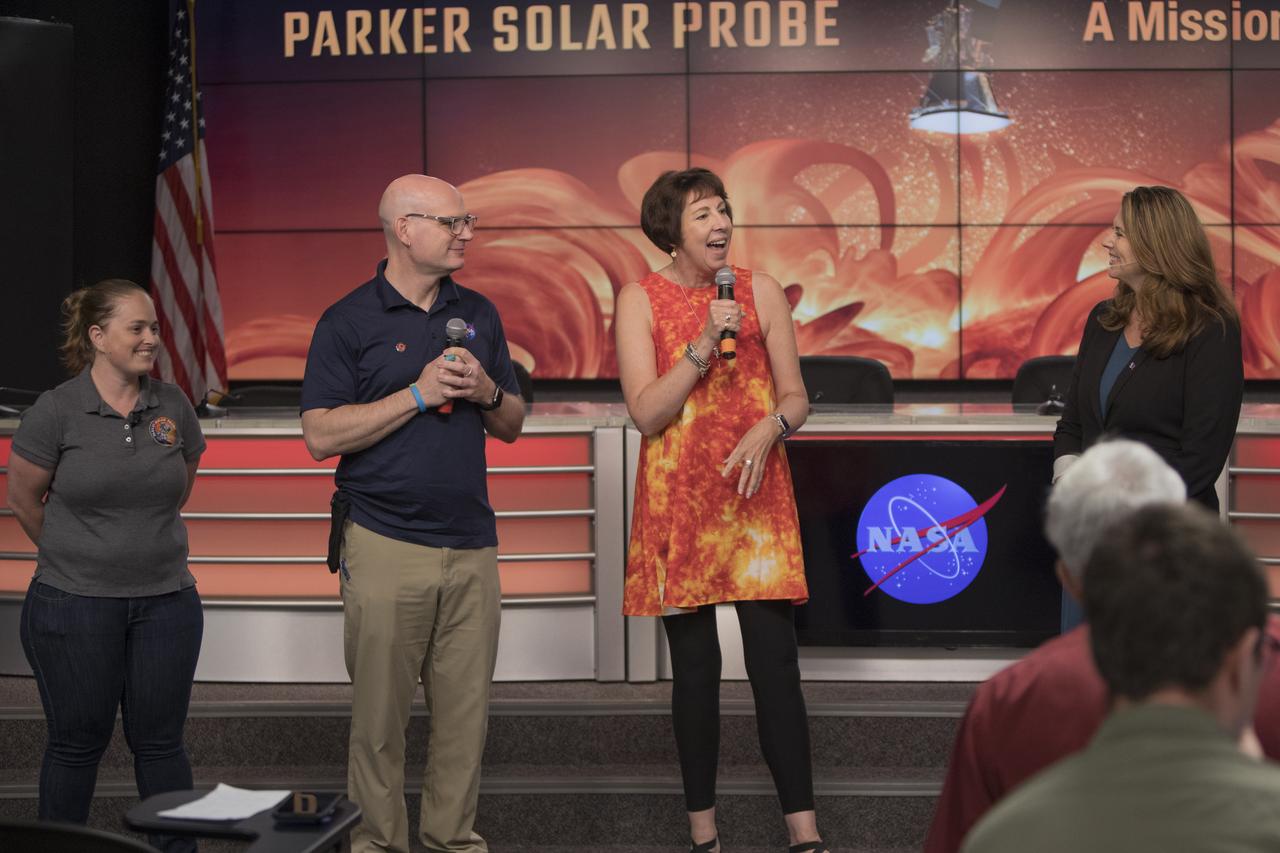
In the Kennedy Space Center’s Press Site auditorium, on Friday, July 20, 2018, agency and mission leaders speak to members of the media during a prelaunch briefing for the Parker Solar Probe mission. From left are: Betsy Congdon, Thermal Protection System engineer with Johns Hopkins Applied Physics Laboratory, Alex Young, solar scientist at NASA's Goddard Space Flight Center in Greenbelt, Maryland, Nicky Fox, project scientist with the Johns Hopkins University APL, and Karen Fox of NASA Communications. The Parker Solar Probe will lift off on a United Launch Alliance Delta IV Heavy rocket from Space Launch Complex 37 at Cape Canaveral Air Force Station in Florida. The spacecraft was built by Applied Physics Laboratory of Johns Hopkins University in Laurel in Maryland. The mission will perform the closest-ever observations of a star when it travels through the Sun's atmosphere, called the corona. The probe will rely on measurements and imaging to revolutionize understanding of the corona and the Sun-Earth connection.
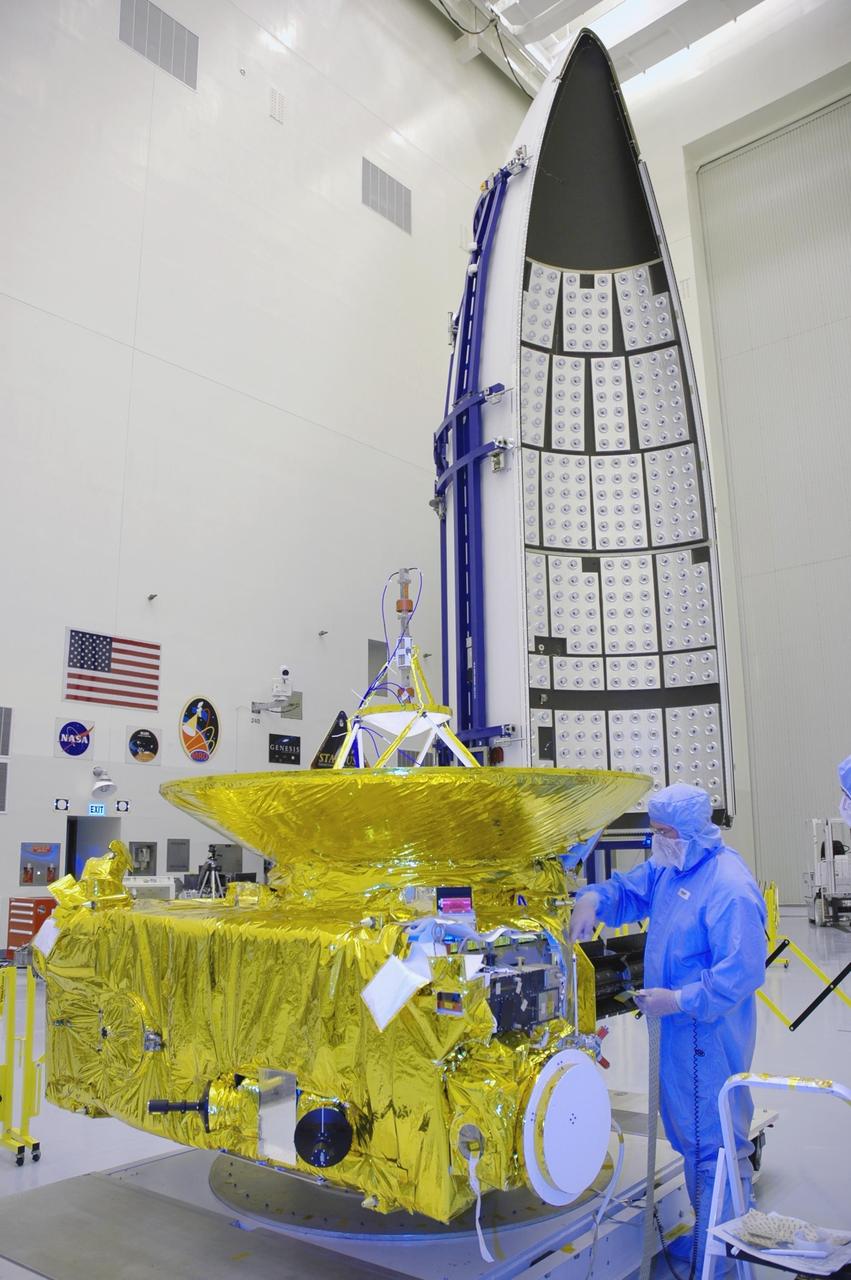
KENNEDY SPACE CENTER, FLA. - In the clean room at KSC’s Payload Hazardous Servicing Facility, the New Horizons spacecraft is prepared for a media event. Photographers and reporters will be able to photograph the New Horizons spacecraft and talk with project management and test team members from NASA and the Johns Hopkins University Applied Physics Laboratory. Seen behind the spacecraft is one half of the fairing that will enclose it for launch, scheduled for January 2006. Carrying seven scientific instruments, the compact 1,060-pound New Horizons probe will characterize the global geology and geomorphology of Pluto and its moon Charon, map their surface compositions and temperatures, and examine Pluto's complex atmosphere. After that, flybys of Kuiper Belt objects from even farther in the solar system may be undertaken in an extended mission. New Horizons is the first mission in NASA's New Frontiers program of medium-class planetary missions. The spacecraft, designed for NASA by the Johns Hopkins University Applied Physics Laboratory in Laurel, Md., will fly by Pluto and Charon as early as summer 2015.
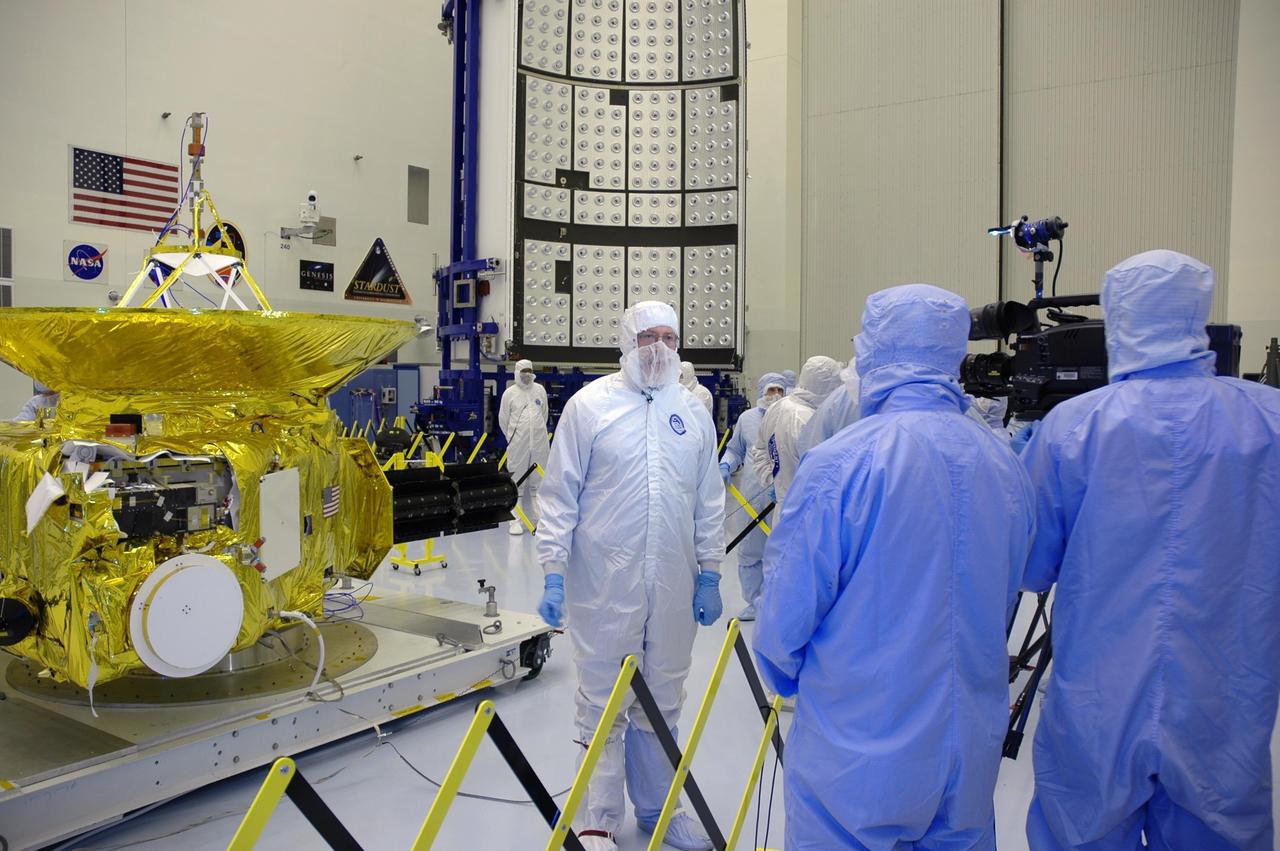
KENNEDY SPACE CENTER, FLA. - In the clean room at KSC’s Payload Hazardous Servicing Facility, the media (also dressed in clean room suits) learn about NASA’s New Horizons spacecraft (at left) from New Horizons Mission Systems Engineer David Kusnierkiewicz, in the center. Behind Kusnierkiewicz is one half of the fairing that will enclose the spacecraft for launch, scheduled for January 2006. The media event brought photographers and reporters to the site to talk with project management and test team members from NASA and the Johns Hopkins University Applied Physics Laboratory. Carrying seven scientific instruments, the compact 1,060-pound New Horizons probe will characterize the global geology and geomorphology of Pluto and its moon Charon, map their surface compositions and temperatures, and examine Pluto's complex atmosphere. After that, flybys of Kuiper Belt objects from even farther in the solar system may be undertaken in an extended mission. New Horizons is the first mission in NASA's New Frontiers program of medium-class planetary missions. The spacecraft, designed for NASA by the Johns Hopkins University Applied Physics Laboratory in Laurel, Md., will fly by Pluto and Charon as early as summer 2015.
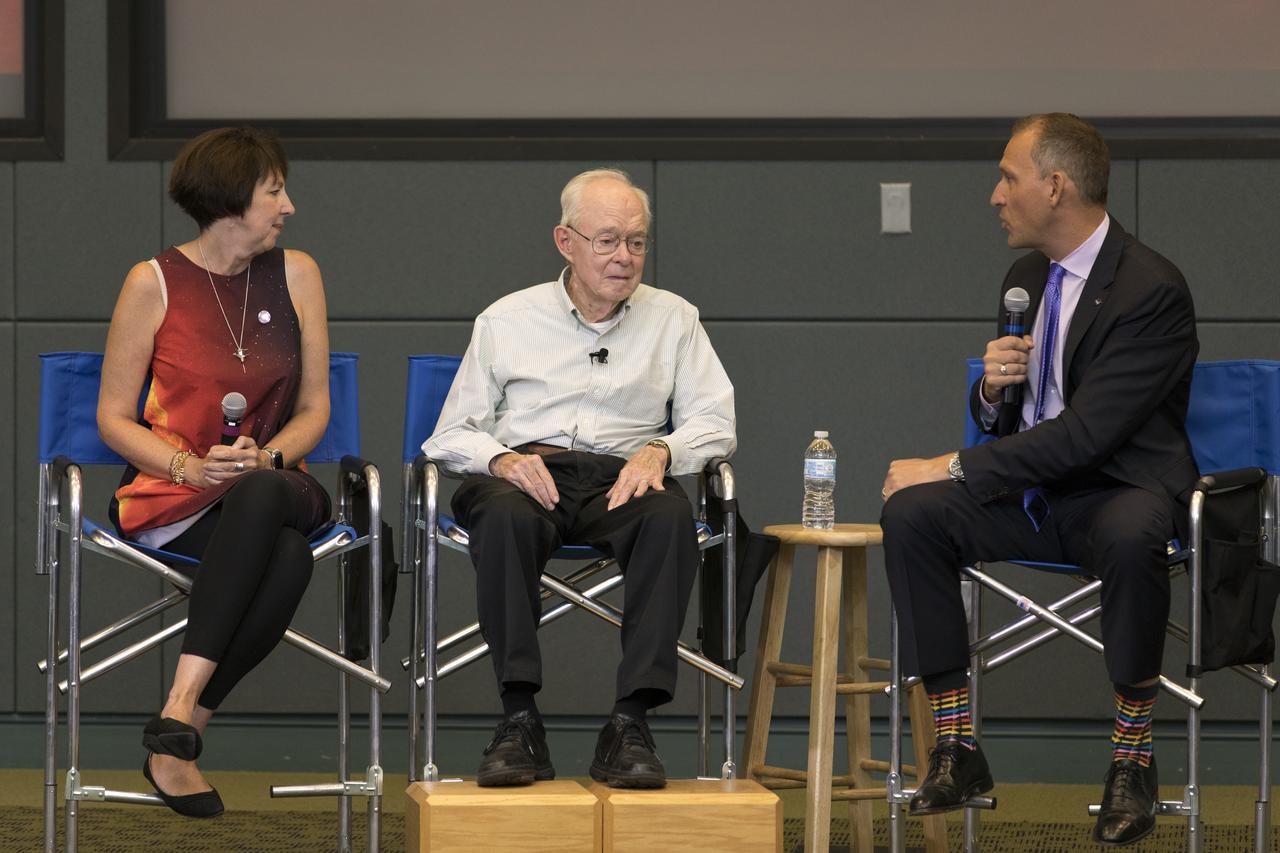
In the Kennedy Space Center's Operations and Support Building II, Thursday, Aug. 9, 2018, members of the news and social media participate in a prelaunch mission briefing on NASA's Parker Solar Probe. Briefing participants from left are: Nicky Fox, Parker Solar Probe project scientist at Johns Hopkins Applied Physics Laboratory, Dr. Eugene Parker, a pioneer in heliophysics and S. Chandrasekhar distinguished service professor emeritus for the Department of Astronomy and Astrophysics at the University of Chicago, Thomas Zurbuchen, associate administrator for NASA’s Science Mission Directorate in Washington. This is the first NASA mission named for a living person. The Parker Solar Probe is designed to provide key observations on his groundbreaking theories about the Sun. Lift off atop a United Launch Alliance Delta IV Heavy rocket will take place from Space Launch Complex 37 at Cape Canaveral Air Force Station in Florida. The spacecraft was built by Applied Physics Laboratory of Johns Hopkins University in Laurel, Maryland. The mission will perform the closest-ever observations of a star when it travels through the Sun's atmosphere, called the corona. The probe will rely on measurements and imaging to revolutionize our understanding of the corona and the Sun-Earth connection.
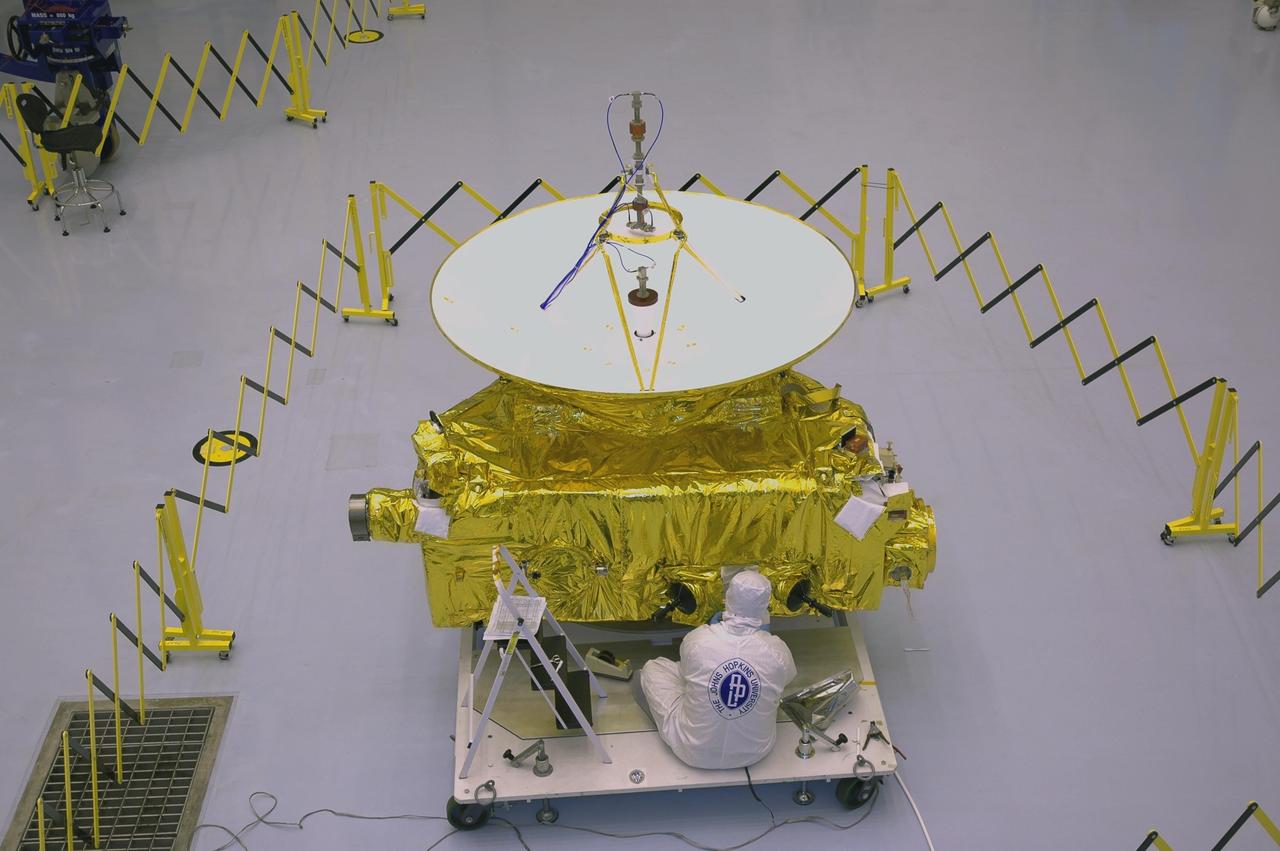
KENNEDY SPACE CENTER, FLA. - In the clean room at KSC’s Payload Hazardous Servicing Facility, the New Horizons spacecraft is ready for a media event. Photographers and reporters will be able to photograph the New Horizons spacecraft and talk with project management and test team members from NASA and the Johns Hopkins University Applied Physics Laboratory. Seen behind the spacecraft is one half of the fairing that will enclose it for launch, scheduled for January 2006. Carrying seven scientific instruments, the compact 1,060-pound New Horizons probe will characterize the global geology and geomorphology of Pluto and its moon Charon, map their surface compositions and temperatures, and examine Pluto's complex atmosphere. After that, flybys of Kuiper Belt objects from even farther in the solar system may be undertaken in an extended mission. New Horizons is the first mission in NASA's New Frontiers program of medium-class planetary missions. The spacecraft, designed for NASA by the Johns Hopkins University Applied Physics Laboratory in Laurel, Md., will fly by Pluto and Charon as early as summer 2015.
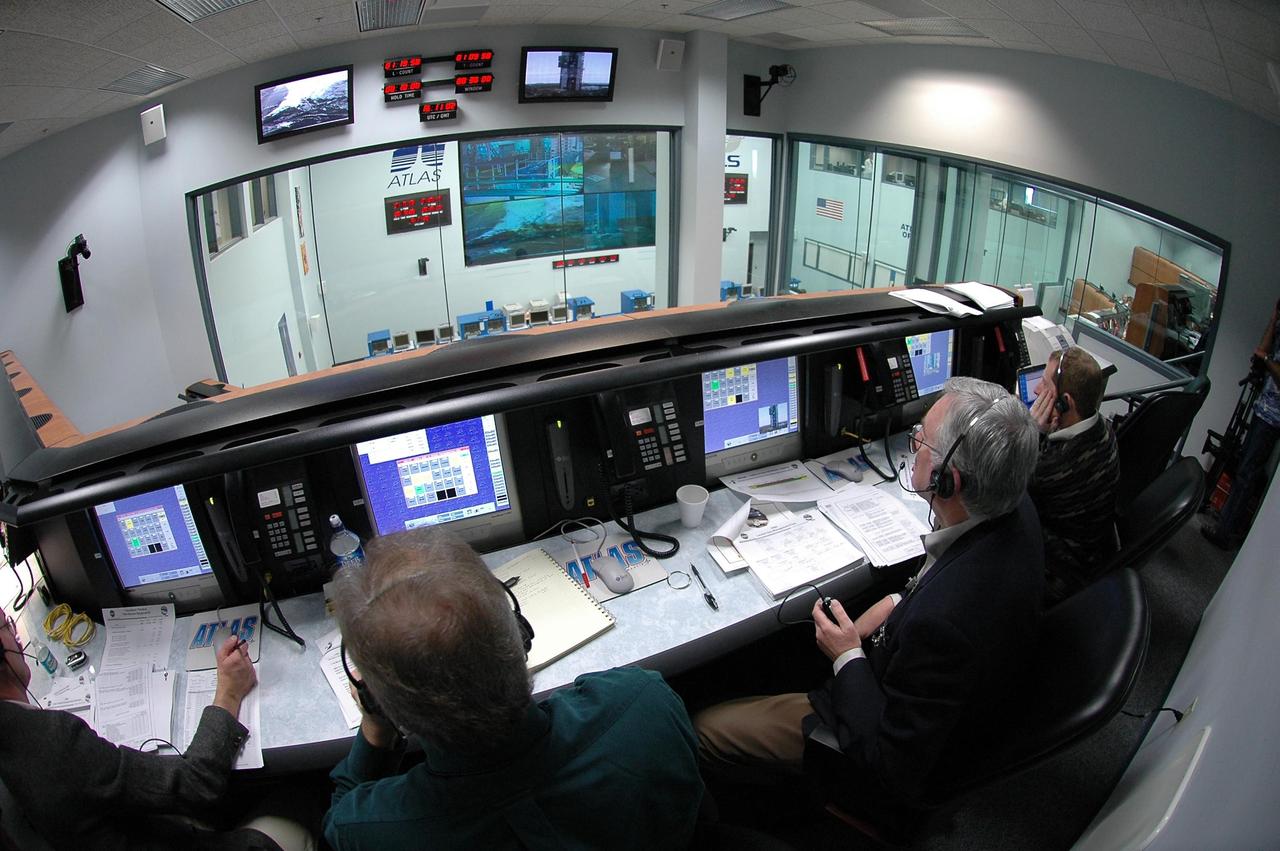
KENNEDY SPACE CENTER, FLA. - At their consoles in the Atlas V Spaceflight Operations Center on Cape Canaveral Air Force Station, members of the New Horizons team take part in a dress rehearsal for the launch scheduled in mid-January. Seen here (left to right) are David Kusnierkiewicz, New Horizons mission system engineer; Glen Fountain, Applied Physics Lab project manager; and Alan Stern, principal investigator from Southwest Research Institute. New Horizons carries seven scientific instruments that will characterize the global geology and geomorphology of Pluto and its moon Charon, map their surface compositions and temperatures, and examine Pluto's complex atmosphere. After that, flybys of Kuiper Belt objects from even farther in the solar system may be undertaken in an extended mission. New Horizons is the first mission in NASA's New Frontiers program of medium-class planetary missions. The spacecraft, designed for NASA by the Johns Hopkins University Applied Physics Laboratory in Laurel, Md., will launch aboard a Lockheed Martin Atlas V rocket and fly by Pluto and Charon as early as summer 2015.
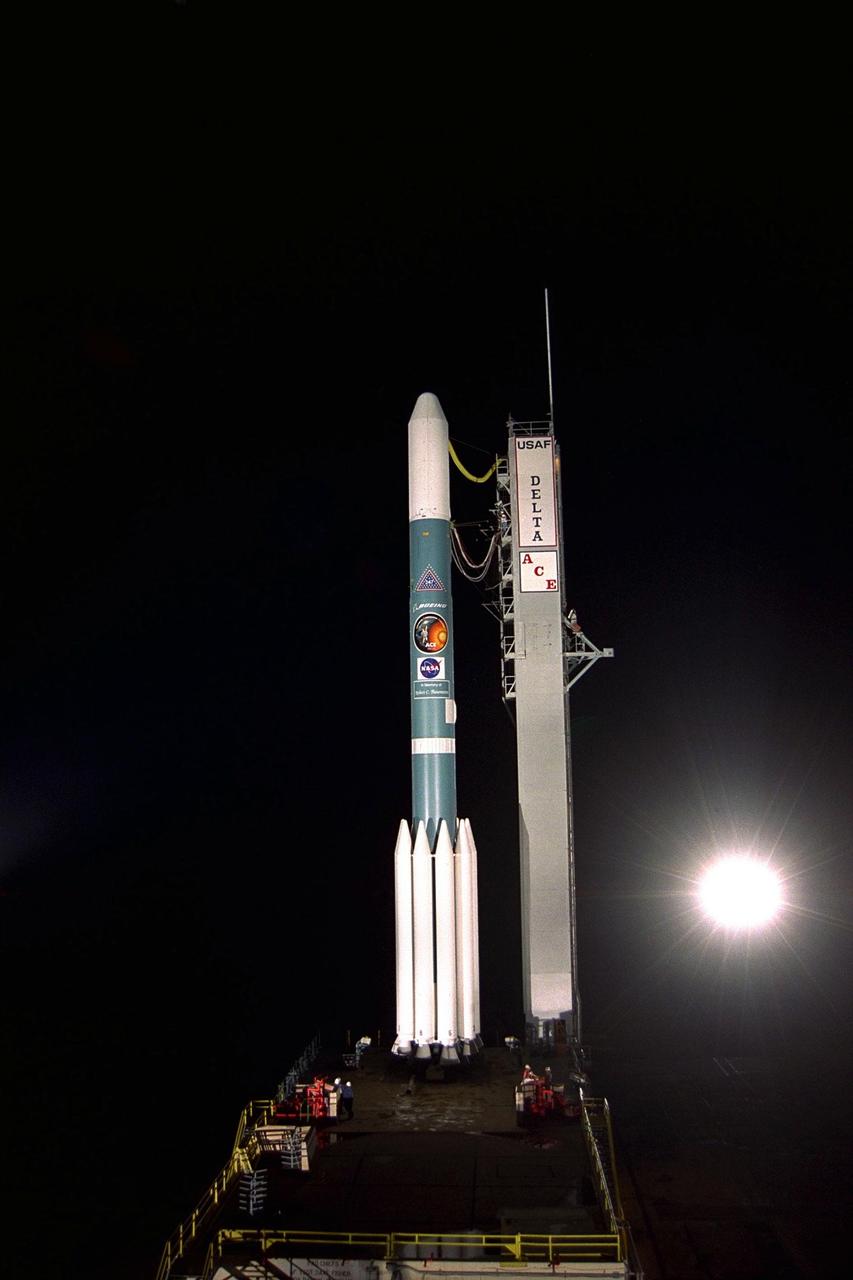
The Boeing Delta II expendable launch vehicle carrying the Advanced Composition Explorer (ACE) undergoes final preparations for liftoff in the predawn hours of Aug. 25, 1997, at Launch Complex 17A, Cape Canaveral Air Station. This is the second Delta launch under the Boeing name and the first from Cape Canaveral. The first launch attempt on Aug. 24 was scrubbed by Air Force range safety personnel because two commercial fishing vessels were within the Delta’s launch danger area. ACE with its combination of nine sensors and instruments will investigate the origin and evolution of solar phenomenon, the formation of solar corona, solar flares and acceleration of the solar wind. ACE was built for NASA by the Johns Hopkins Applied Physics Laboratory and is managed by the Explorer Project Office at NASA’s Goddard Space Flight Center. The lead scientific institution is the California Institute of Technology

CAPE CANAVERAL, Fla. – Richard Fitzgerald, Radiation Belt Storm Probes, or RBSP, project manager at Johns Hopkins Applied Physics Laboratory? in Laurel, M.D., participates in a postlaunch news conference at NASA Kennedy Space Center’s Press Site in Florida. The RBSP spacecraft launched atop a United Launch Alliance, or ULA, Atlas V rocket at 4:05 a.m. EDT from Space Launch Complex 41 at Cape Canaveral Air Force Station. RBSP will explore changes in Earth's space environment caused by the sun -- known as "space weather" -- that can disable satellites, create power-grid failures and disrupt GPS service. The mission also will provide data on the fundamental radiation and particle acceleration processes throughout the universe. For more information on RBSP, visit http://www.nasa.gov/rbsp. Photo credit: NASA/Jim Grossmann

CAPE CANAVERAL, Fla. - Nicky Fox, Radiation Belt Storm Probes, or RBSP, deputy project scientist at Johns Hopkins Applied Physics Laboratory in Laurel, M.D., participates in a postlaunch news conference at NASA Kennedy Space Center’s Press Site in Florida. The RBSP spacecraft launched atop a United Launch Alliance, or ULA, Atlas V rocket at 4:05 a.m. EDT from Space Launch Complex 41 at Cape Canaveral Air Force Station. RBSP will explore changes in Earth's space environment caused by the sun -- known as "space weather" -- that can disable satellites, create power-grid failures and disrupt GPS service. The mission also will provide data on the fundamental radiation and particle acceleration processes throughout the universe. For more information on RBSP, visit http://www.nasa.gov/rbsp. Photo credit: NASA/Jim Grossmann
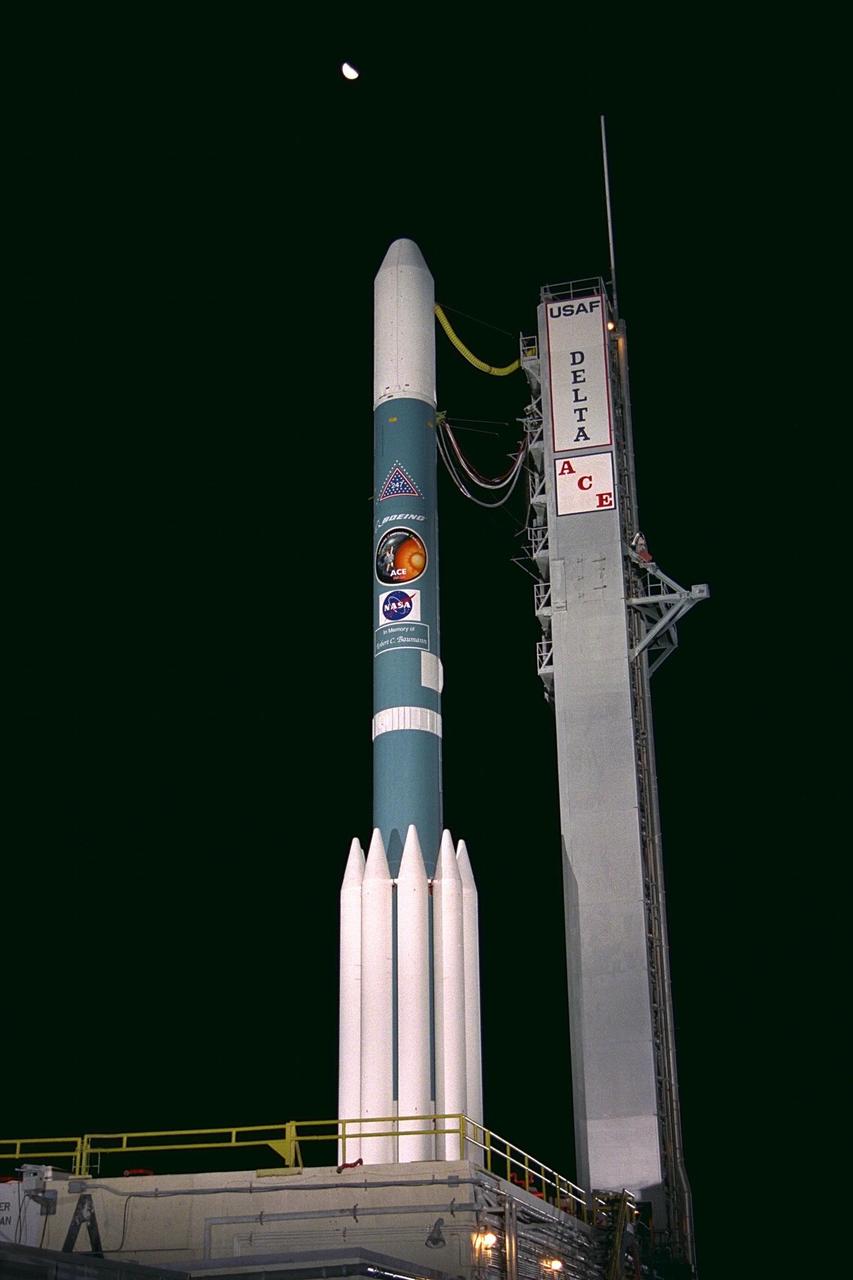
The Boeing Delta II expendable launch vehicle carrying the Advanced Composition Explorer (ACE) undergoes final preparations for liftoff in the predawn hours of Aug. 25, 1997, at Launch Complex 17A, Cape Canaveral Air Station. This is the second Delta launch under the Boeing name and the first from Cape Canaveral. The first launch attempt on Aug. 24 was scrubbed by Air Force range safety personnel because two commercial fishing vessels were within the Delta’s launch danger area. ACE with its combination of nine sensors and instruments will investigate the origin and evolution of solar phenomenon, the formation of solar corona, solar flares and acceleration of the solar wind. ACE was built for NASA by the Johns Hopkins Applied Physics Laboratory and is managed by the Explorer Project Office at NASA’s Goddard Space Flight Center. The lead scientific institution is the California Institute of Technology
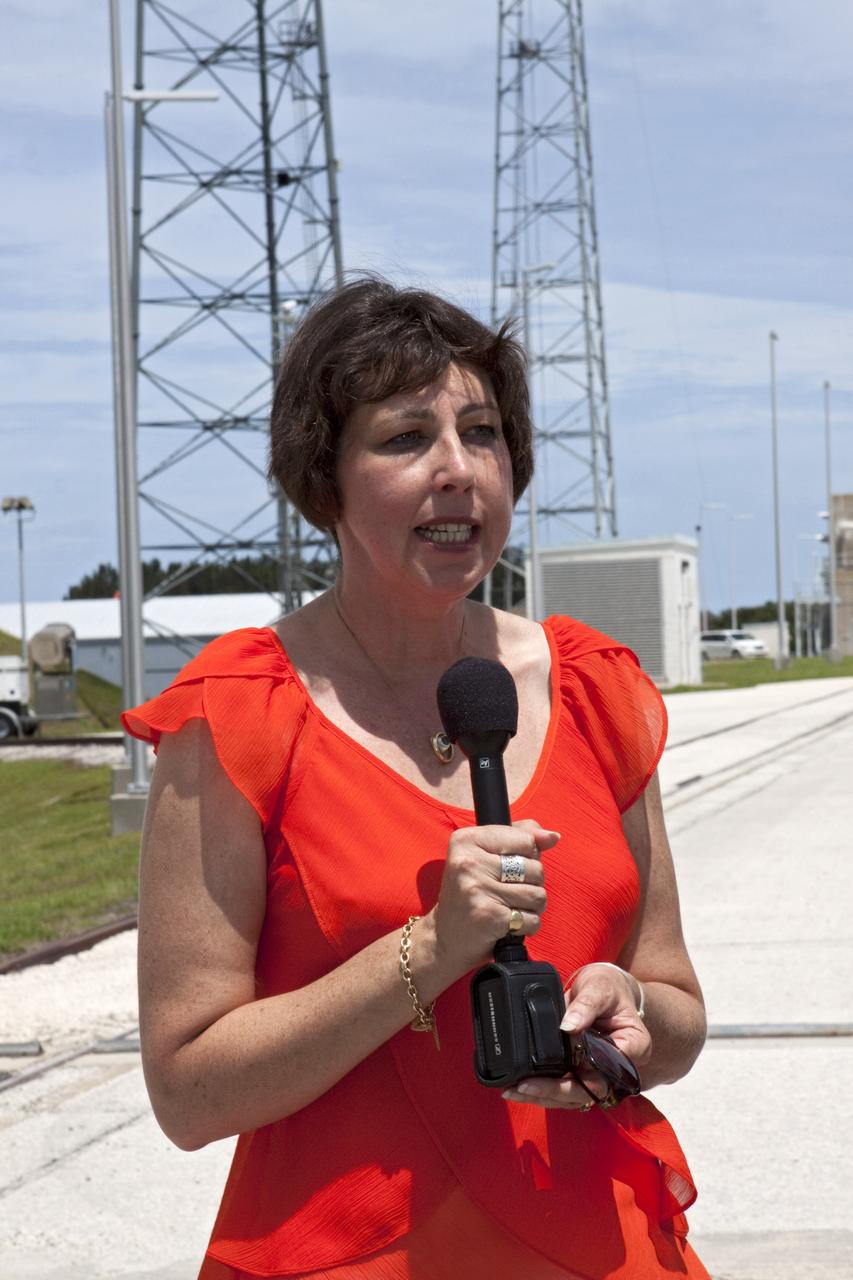
CAPE CANAVERAL, Fla. - Dr. Nicky Fox, deputy RBSP project scientist for the Applied Physics Laboratory at Johns Hopkins University, addresses news media at Space Launch Complex-41 at Cape Canaveral Air Force Station in Florida. At the pad, a United Launch Alliance, or ULA, Atlas V rocket is being prepared for launch of the Radiation Belt Storm Probes, or RBSP, satellites. The presentation took place during NASA Administrator Charles Bolden's tour of the facility. Bolden took a few dozen members of the news media on a tour of the space agency's Kennedy Space Center and adjacent Cape Canaveral Air Force Station on Aug. 23, 2012 to show the progress being made for future government and commercial space endeavors that will begin from Florida's Space Coast. For more information, visit: http://www.nasa.gov/centers/kennedy/news/kennedy-bolden-tour.html Photo credit: NASA/Kim Shiflett

CAPE CANAVERAL, Fla. – A postlaunch news conference is held at NASA Kennedy Space Center’s Press Site in Florida following the launch of the Radiation Belt Storm Probes, or RBSP, mission atop a United Launch Alliance, or ULA, Atlas V rocket at 4:05 a.m. EDT from Space Launch Complex 41 at Cape Canaveral Air Force Station. From left, are Richard Fitzgerald, RBSP project manager at Johns Hopkins Applied Physics Laboratory? in Laurel, M.D., Michael Luther, deputy associate administrator of NASA's Science Mission Directorate? at NASA Headquarters?, and Nicky Fox, RBSP deputy project scientist at Johns Hopkins. RBSP will explore changes in Earth's space environment caused by the sun -- known as "space weather" -- that can disable satellites, create power-grid failures and disrupt GPS service. The mission also will provide data on the fundamental radiation and particle acceleration processes throughout the universe. For more information on RBSP, visit http://www.nasa.gov/rbsp. Photo credit: NASA/Jim Grossmann
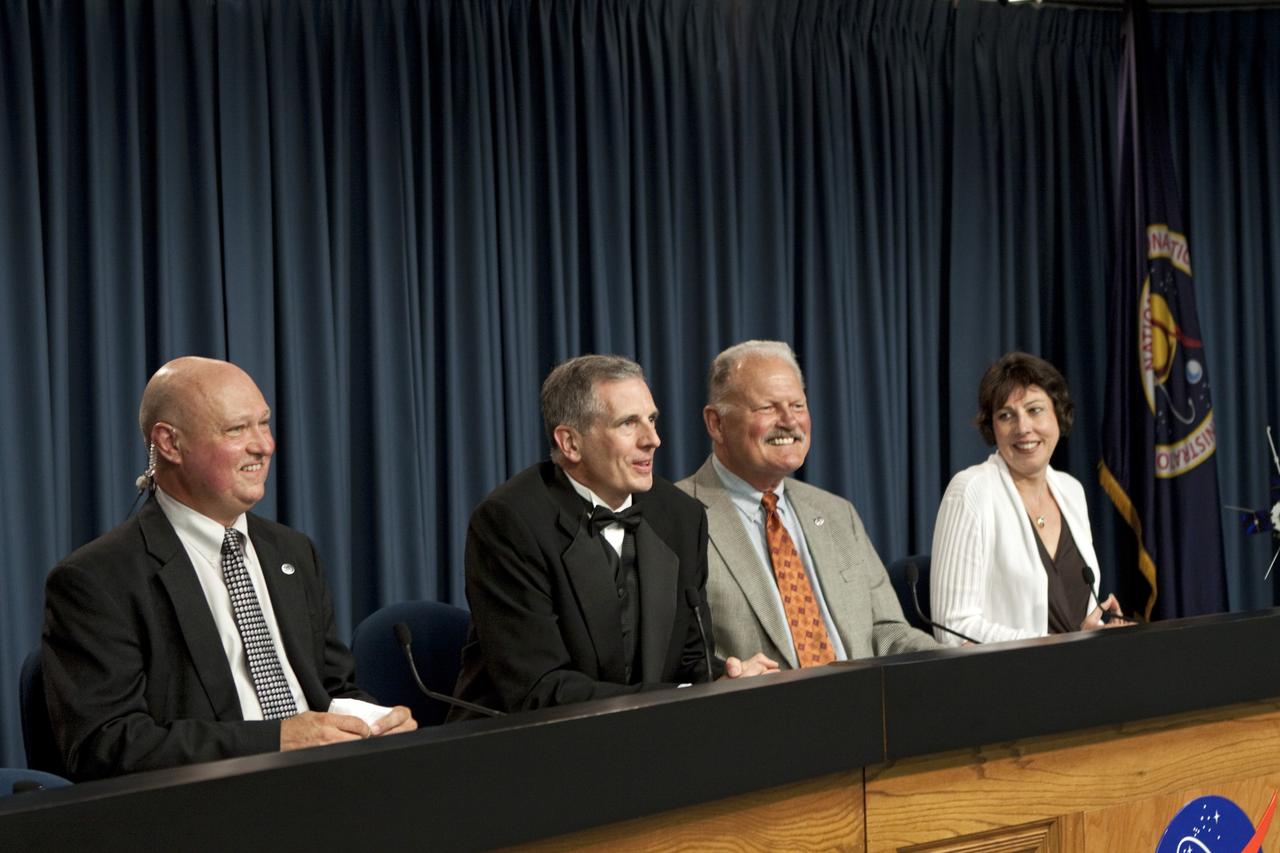
CAPE CANAVERAL, Fla. – A postlaunch news conference is held at NASA Kennedy Space Center’s Press Site in Florida following the launch of the Radiation Belt Storm Probes, or RBSP, mission atop a United Launch Alliance, or ULA, Atlas V rocket at 4:05 a.m. EDT from Space Launch Complex 41 at Cape Canaveral Air Force Station. From left, are Mike Curie of NASA Kennedy Public Affairs, Richard Fitzgerald, RBSP project manager at Johns Hopkins Applied Physics Laboratory? in Laurel, M.D., Michael Luther, deputy associate administrator of NASA's Science Mission Directorate? at NASA Headquarters?, and Nicky Fox, RBSP deputy project scientist at Johns Hopkins. RBSP will explore changes in Earth's space environment caused by the sun -- known as "space weather" -- that can disable satellites, create power-grid failures and disrupt GPS service. The mission also will provide data on the fundamental radiation and particle acceleration processes throughout the universe. For more information on RBSP, visit http://www.nasa.gov/rbsp. Photo credit: NASA/Jim Grossmann
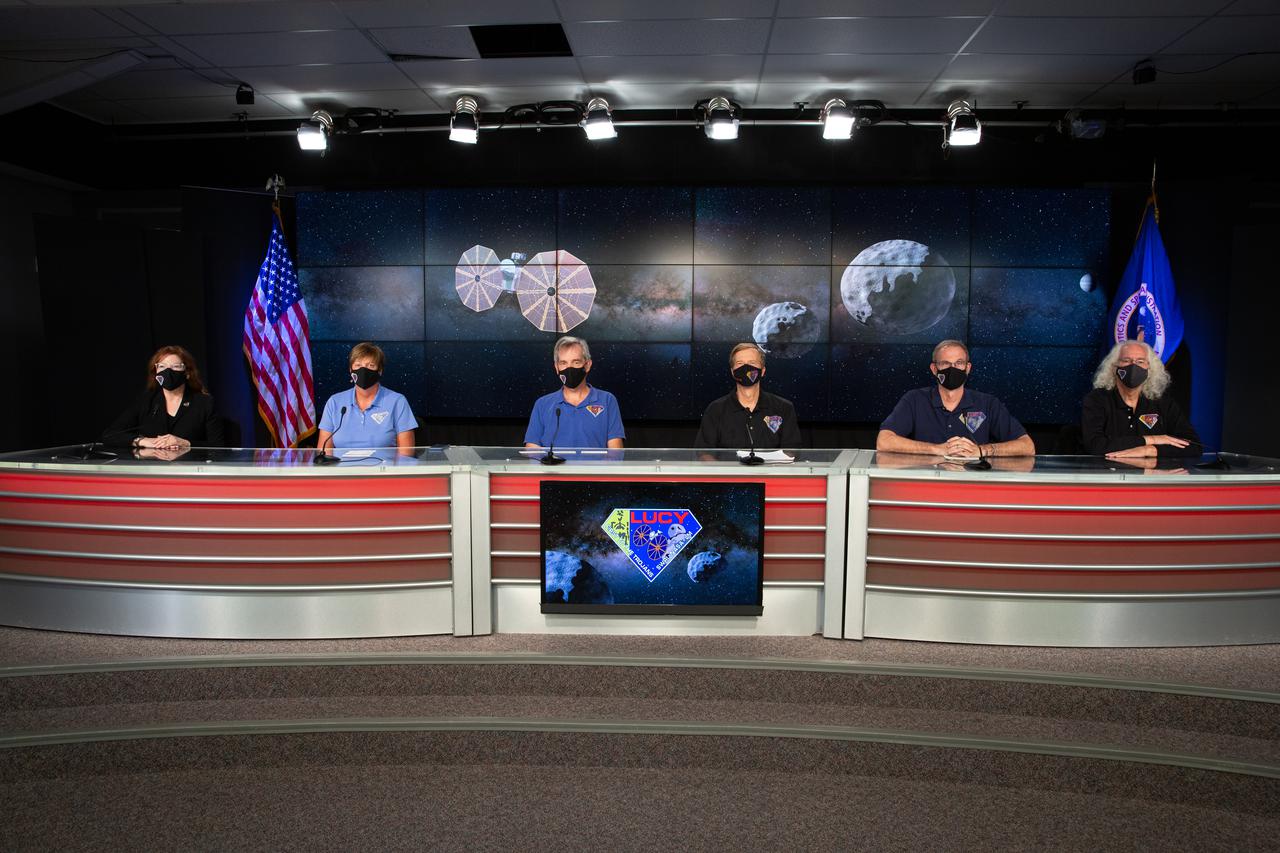
A science briefing for the Lucy mission is held inside the TV Auditorium at NASA’s Kennedy Space Center in Florida on Oct. 14, 2021. Participants included, from left to right, Adriana Ocampo, Lucy Program Executive, NASA Headquarters; Cathy Olkin, Lucy Deputy Principal Investigator, Southwest Research Institute; Keith Noll, Lucy Project Scientist at NASA’s Goddard Space Flight Center; Hal Weaver, L'LORRI Instrument Principal Investigator, Johns Hopkins Applied Physics Laboratory; Phil Christensen, L'TES Instrument Principal Investigator, Arizona State University; and Dennis Reuter, L’Ralph Instrument Principal Investigator at NASA’s Goddard Space Flight Center. Lucy is scheduled to launch at 5:34 a.m. EDT Saturday, Oct. 16, on a United Launch Alliance Atlas V 401 rocket from Space Launch Complex 41 at Cape Canaveral Space Force Station. NASA’s Launch Services Program, based at Kennedy, is managing the launch. Lucy is the first space mission to study the Trojan asteroids, which hold vital clues to the formation of our solar system.
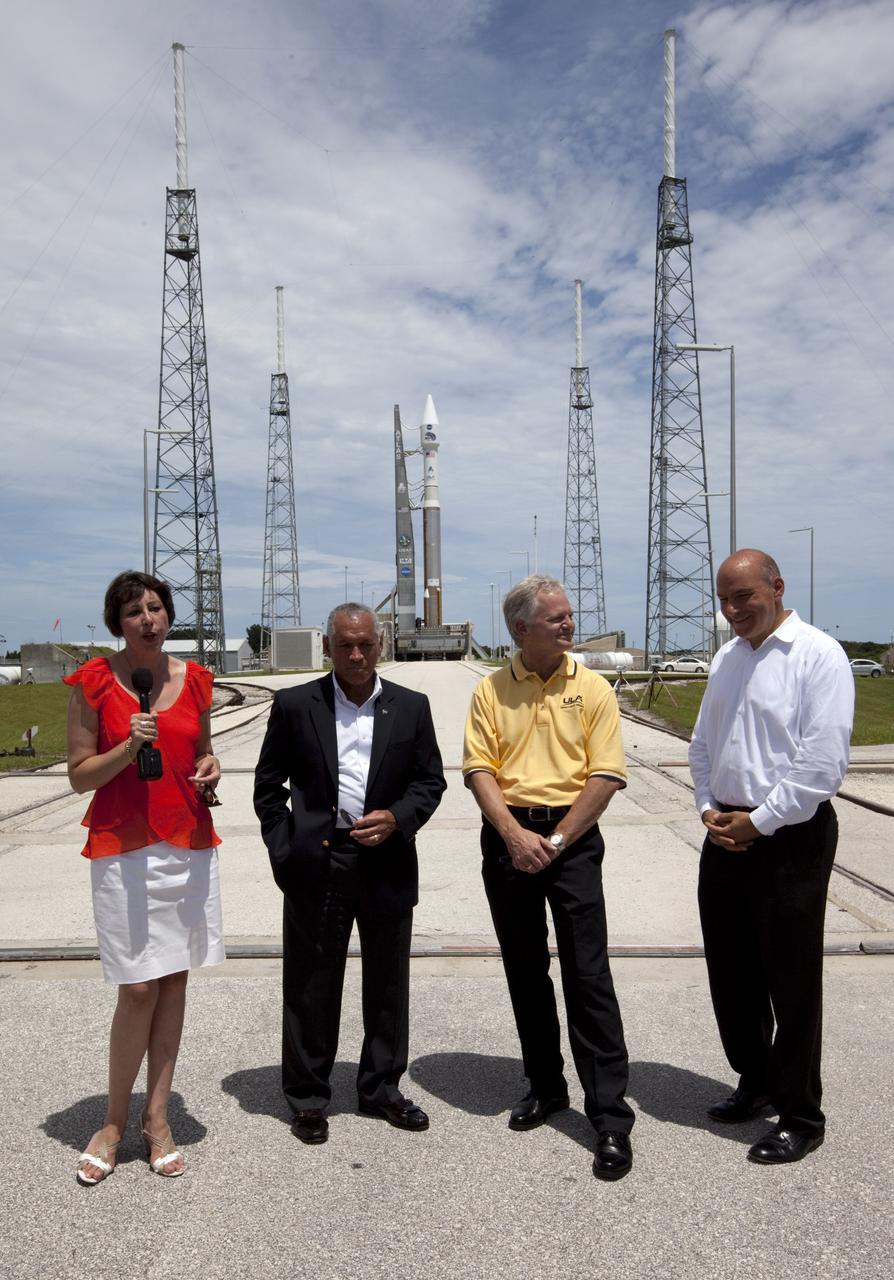
CAPE CANAVERAL, Fla. - Dr. Nicky Fox, deputy RBSP project scientist for the Applied Physics Laboratory at Johns Hopkins University, addresses news media at Space Launch Complex-41 at Cape Canaveral Air Force Station in Florida. At the pad, a United Launch Alliance, or ULA, Atlas V rocket is being prepared for launch of the Radiation Belt Storm Probes, or RBSP, satellites. Speaking to members of the media are, from the left, Fox, NASA Administrator Charles Bolden, James Sponnick, ULA vice president of Mission Operations and NASA Chief Scientist Waleed Abdalati. Bolden took a few dozen members of the news media on a tour of the space agency's Kennedy Space Center and adjacent Cape Canaveral Air Force Station on Aug. 23, 2012 to show the progress being made for future government and commercial space endeavors that will begin from Florida's Space Coast. For more information, visit: http://www.nasa.gov/centers/kennedy/news/kennedy-bolden-tour.html Photo credit: NASA/Kim Shiflett
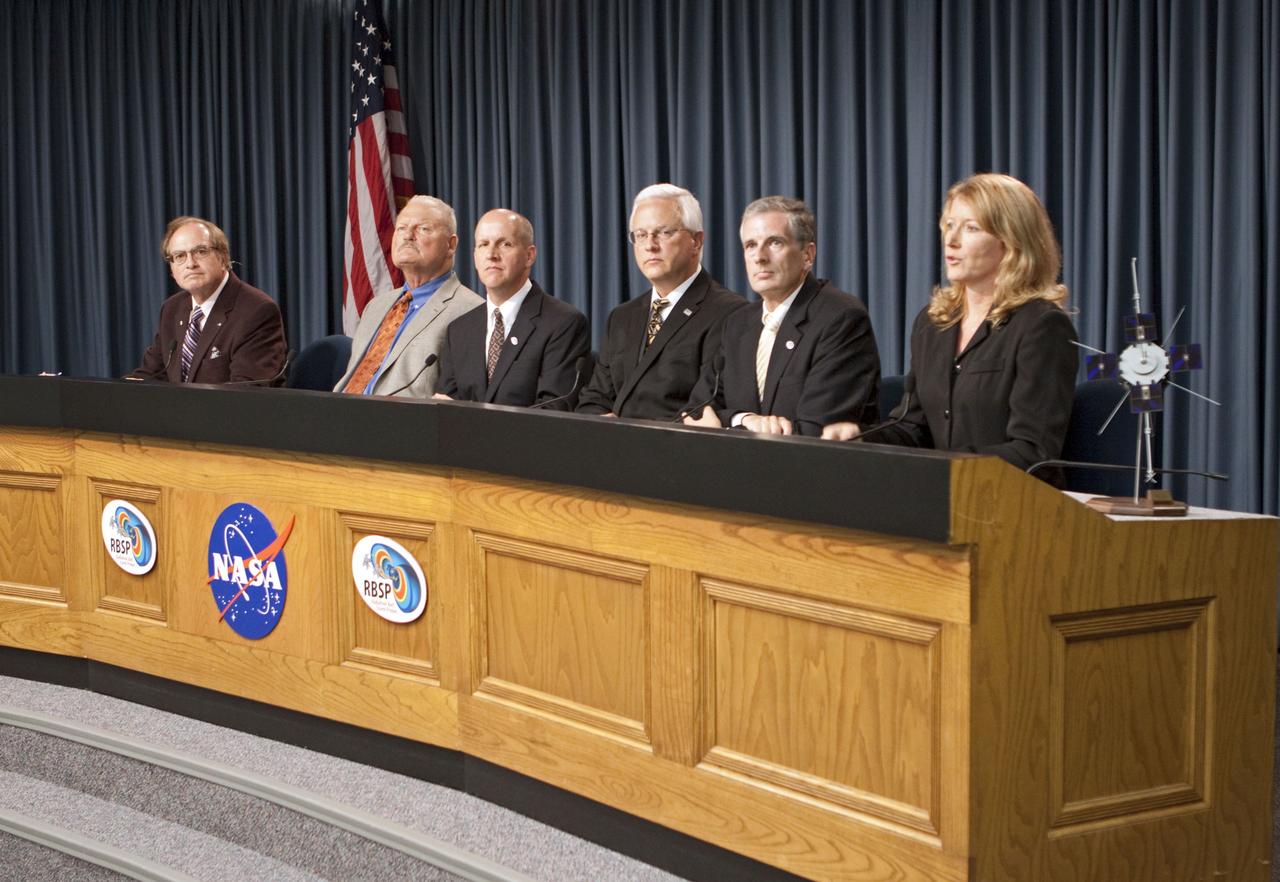
CAPE CANAVERAL, Fla. - A prelaunch news conference was held at NASA Kennedy Space Center’s Press Site in Florida for the Radiation Belt Storm Probes, or RBSP, mission. From left, are George Diller, public affairs specialist and news conference moderator, Michael Luther, deputy associate administrator for programs in NASA’s Science Mission Directorate, Tim Dunn, NASA launch director at Kennedy, Vernon Thorp, program manager, NASA missions, United Launch Alliance, Richard Fitzgerald, RBSP project manager at Johns Hopkins Applied Physics Laboratory in Laurel, Md., and Kathy Winters, launch weather officer with the 45th Weather Squadron at Cape Canaveral Air Force Station in Florida. NASA’s RBSP mission will help us understand the sun’s influence on Earth and near-Earth space by studying the Earth’s radiation belts on various scales of space and time. RBSP will begin its mission of exploration of Earth’s Van Allen radiation belts and the extremes of space weather after its launch aboard an Atlas V rocket. Launch is targeted for Aug. 24. For more information, visit http://www.nasa.gov/rbsp. Photo credit: NASA/Glenn Benson
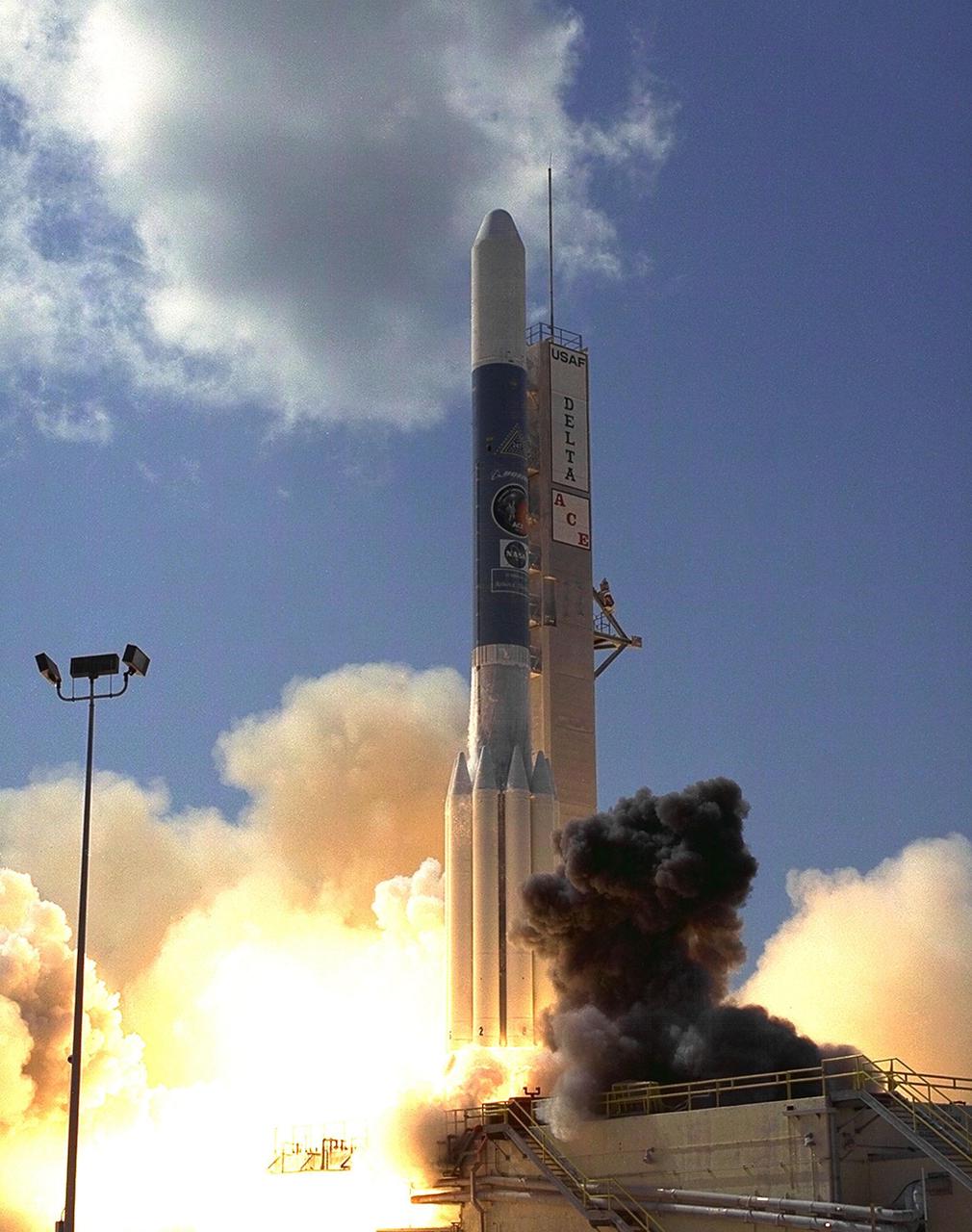
A Boeing Delta II expendable launch vehicle lifts off with NASA’s Advanced Composition Explorer (ACE) observatory at 10:39 a.m. EDT, on Aug. 25, 1997, from Launch Complex 17A, Cape Canaveral Air Station. This is the second Delta launch under the Boeing name and the first from Cape Canaveral. Launch was scrubbed one day by Air Force range safety personnel because two commercial fishing vessels were within the Delta’s launch danger area. The ACE spacecraft will study low-energy particles of solar origin and high-energy galactic particles on its one-million-mile journey. The collecting power of instruments aboard ACE is 10 to 1,000 times greater than anything previously flown to collect similar data by NASA. Study of these energetic particles may contribute to our understanding of the formation and evolution of the solar system. ACE has a two-year minimum mission lifetime and a goal of five years of service. ACE was built for NASA by the Johns Hopkins Applied Physics Laboratory and is managed by the Explorer Project Office at NASA's Goddard Space Flight Center. The lead scientific institution is the California Institute of Technology (Caltech) in Pasadena, Calif
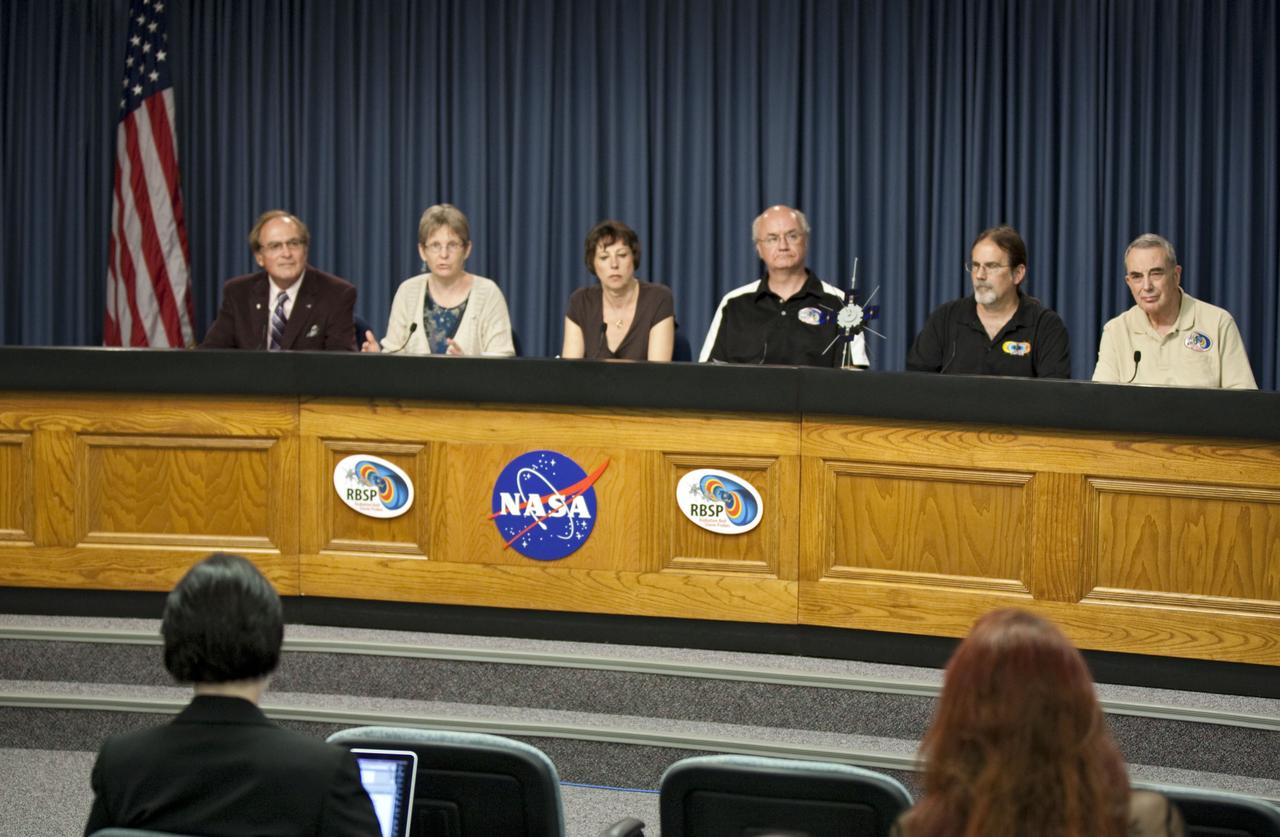
CAPE CANAVERAL, Fla. - A mission science briefing was held at NASA Kennedy Space Center’s Press Site in Florida for the Radiation Belt Storm Probes, or RBSP, mission. From left, are George Diller, public affairs specialist and news conference moderator, Mona Kessel, RBSP program scientist from NASA Headquarters in Washington, Nicola Fox, RBSP deputy project scientist at Johns Hopkins Applied Physics Laboratory in Laurel, Md., Craig Kletzing, principal investigator from the University of Iowa, Harlan Spence, principal investigator from the University of New Hampshire, and Lou Lanzerotti, principal investigator from the New Jersey Institute of Technology. NASA’s RBSP mission will help us understand the sun’s influence on Earth and near-Earth space by studying the Earth’s radiation belts on various scales of space and time. RBSP will begin its mission of exploration of Earth’s Van Allen radiation belts and the extremes of space weather after its launch aboard an Atlas V rocket. Launch is targeted for Aug. 24. For more information, visit http://www.nasa.gov/rbsp. Photo credit: NASA/Glenn Benson
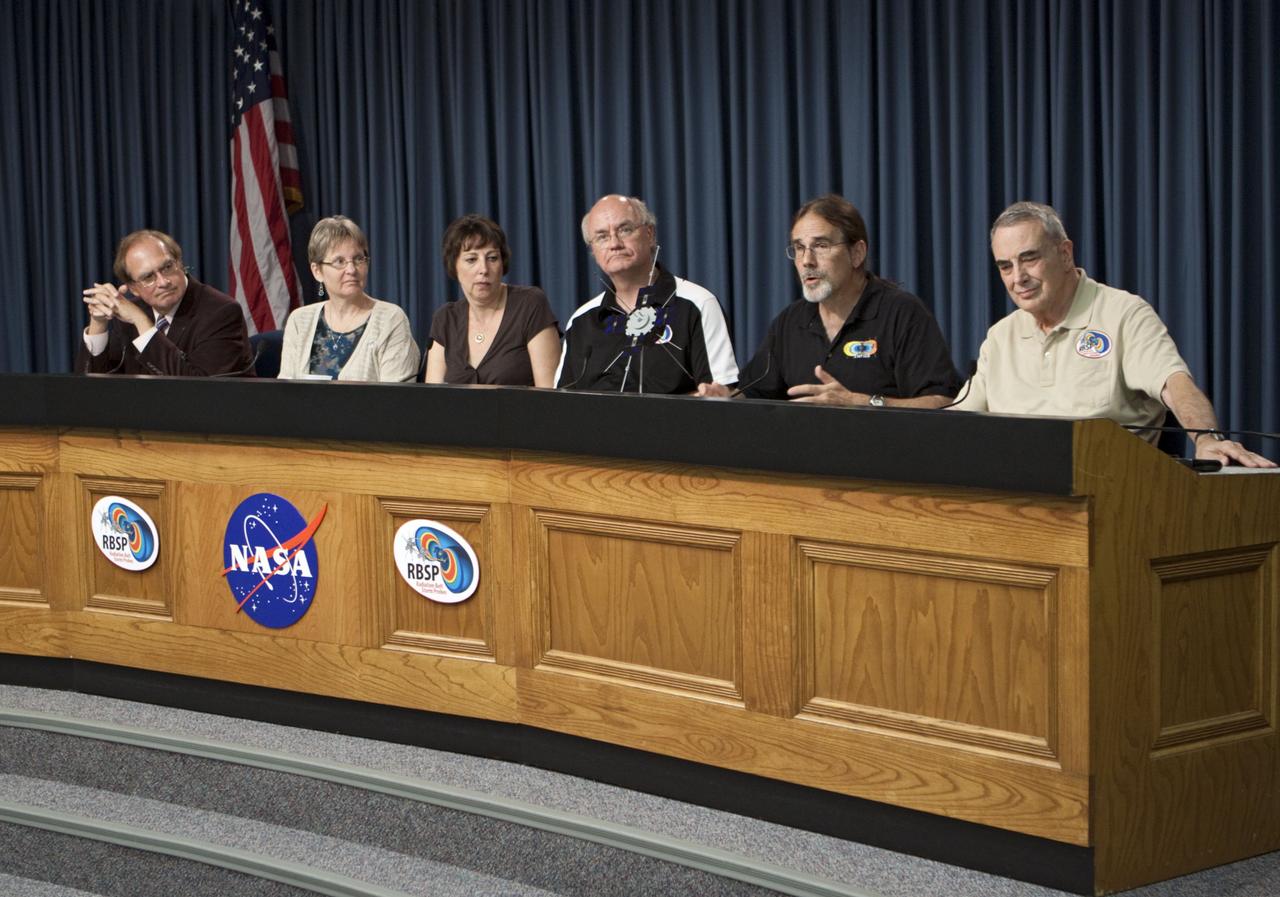
CAPE CANAVERAL, Fla. - A mission science briefing was held at NASA Kennedy Space Center’s Press Site in Florida for the Radiation Belt Storm Probes, or RBSP, mission. From left, are George Diller, public affairs specialist and news conference moderator, Mona Kessel, RBSP program scientist from NASA Headquarters in Washington, Nicola Fox, RBSP deputy project scientist at Johns Hopkins Applied Physics Laboratory in Laurel, Md., Craig Kletzing, principal investigator from the University of Iowa, Harlan Spence, principal investigator from the University of New Hampshire, and Lou Lanzerotti, principal investigator from the New Jersey Institute of Technology. NASA’s RBSP mission will help us understand the sun’s influence on Earth and near-Earth space by studying the Earth’s radiation belts on various scales of space and time. RBSP will begin its mission of exploration of Earth’s Van Allen radiation belts and the extremes of space weather after its launch aboard an Atlas V rocket. Launch is targeted for Aug. 24. For more information, visit http://www.nasa.gov/rbsp. Photo credit: NASA/Glenn Benson
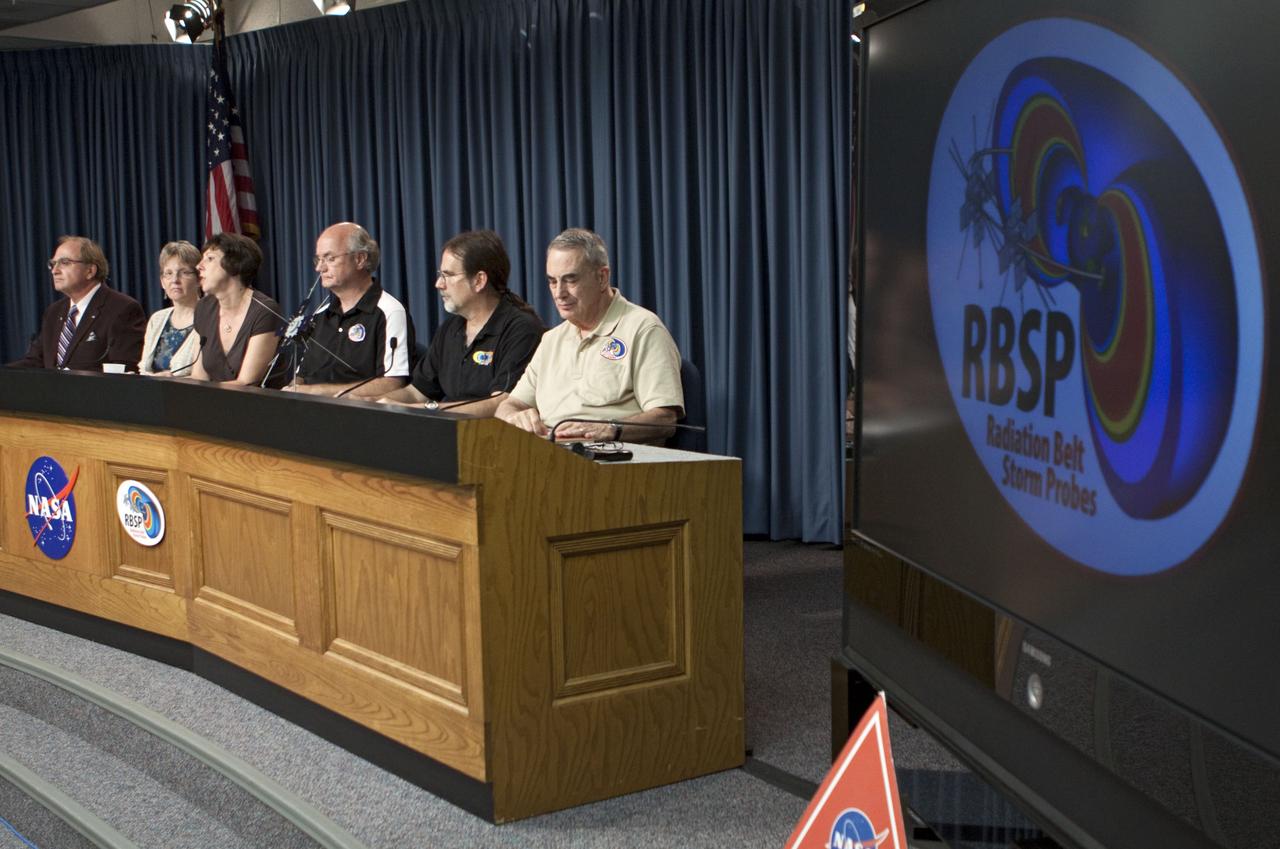
CAPE CANAVERAL, Fla. - A mission science briefing was held at NASA Kennedy Space Center’s Press Site in Florida for the Radiation Belt Storm Probes, or RBSP, mission. From left, are George Diller, public affairs specialist and news conference moderator, Mona Kessel, RBSP program scientist from NASA Headquarters in Washington, Nicola Fox, RBSP deputy project scientist at Johns Hopkins Applied Physics Laboratory in Laurel, Md., Craig Kletzing, principal investigator from the University of Iowa, Harlan Spence, principal investigator from the University of New Hampshire, and Lou Lanzerotti, principal investigator from the New Jersey Institute of Technology. NASA’s RBSP mission will help us understand the sun’s influence on Earth and near-Earth space by studying the Earth’s radiation belts on various scales of space and time. RBSP will begin its mission of exploration of Earth’s Van Allen radiation belts and the extremes of space weather after its launch aboard an Atlas V rocket. Launch is targeted for Aug. 24. For more information, visit http://www.nasa.gov/rbsp. Photo credit: NASA/Glenn Benson
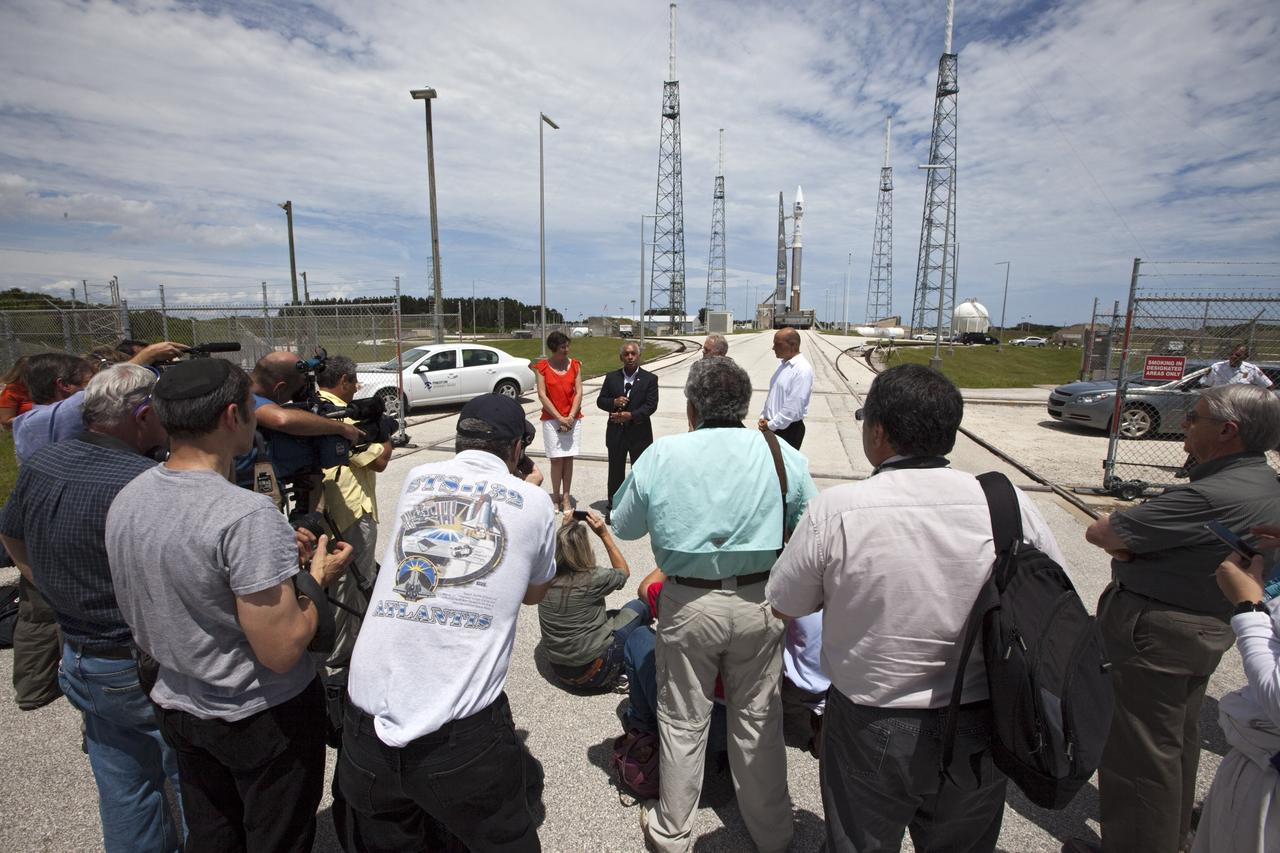
CAPE CANAVERAL, Fla. - NASA Administrator Charles Bolden, second from the left, addresses news media at Space Launch Complex-41 at Cape Canaveral Air Force Station in Florida. At the pad, a United Launch Alliance, or ULA, Atlas V rocket is being prepared for launch of the Radiation Belt Storm Probes, or RBSP, satellites. Speaking to members of the media are, from the left, Dr. Nicky Fox, deputy RBSP project scientist for the Applied Physics Laboratory at Johns Hopkins University, Bolden, James Sponnick, ULA vice president of Mission Operations and NASA Chief Scientist Waleed Abdalati. Bolden took a few dozen members of the news media on a tour of the space agency's Kennedy Space Center and adjacent Cape Canaveral Air Force Station on Aug. 23, 2012 to show the progress being made for future government and commercial space endeavors that will begin from Florida's Space Coast. For more information, visit: http://www.nasa.gov/centers/kennedy/news/kennedy-bolden-tour.html Photo credit: NASA/Kim Shiflett

Photographers and other onlookers watch as a Boeing Delta II expendable launch vehicle lifts off with NASA’s Advanced Composition Explorer (ACE) observatory at 10:39 a.m. EDT, on Aug. 25, 1997, from Launch Complex 17A, Cape Canaveral Air Station. This is the second Delta launch under the Boeing name and the first from Cape Canaveral. Liftoff had been scheduled for Aug. 24, but was scrubbed one day by Air Force range safety personnel because two commercial fishing vessels were within the Delta’s launch danger area. The ACE spacecraft will study low-energy particles of solar origin and high-energy galactic particles on its one-million-mile journey. The collecting power of instruments aboard ACE is 10 to 1,000 times greater than anything previously flown to collect similar data by NASA. Study of these energetic particles may contribute to our understanding of the formation and evolution of the solar system. ACE has a two-year minimum mission lifetime and a goal of five years of service. ACE was built for NASA by the Johns Hopkins Applied Physics Laboratory and is managed by the Explorer Project Office at NASA's Goddard Space Flight Center. The lead scientific institution is the California Institute of Technology (Caltech) in Pasadena, Calif
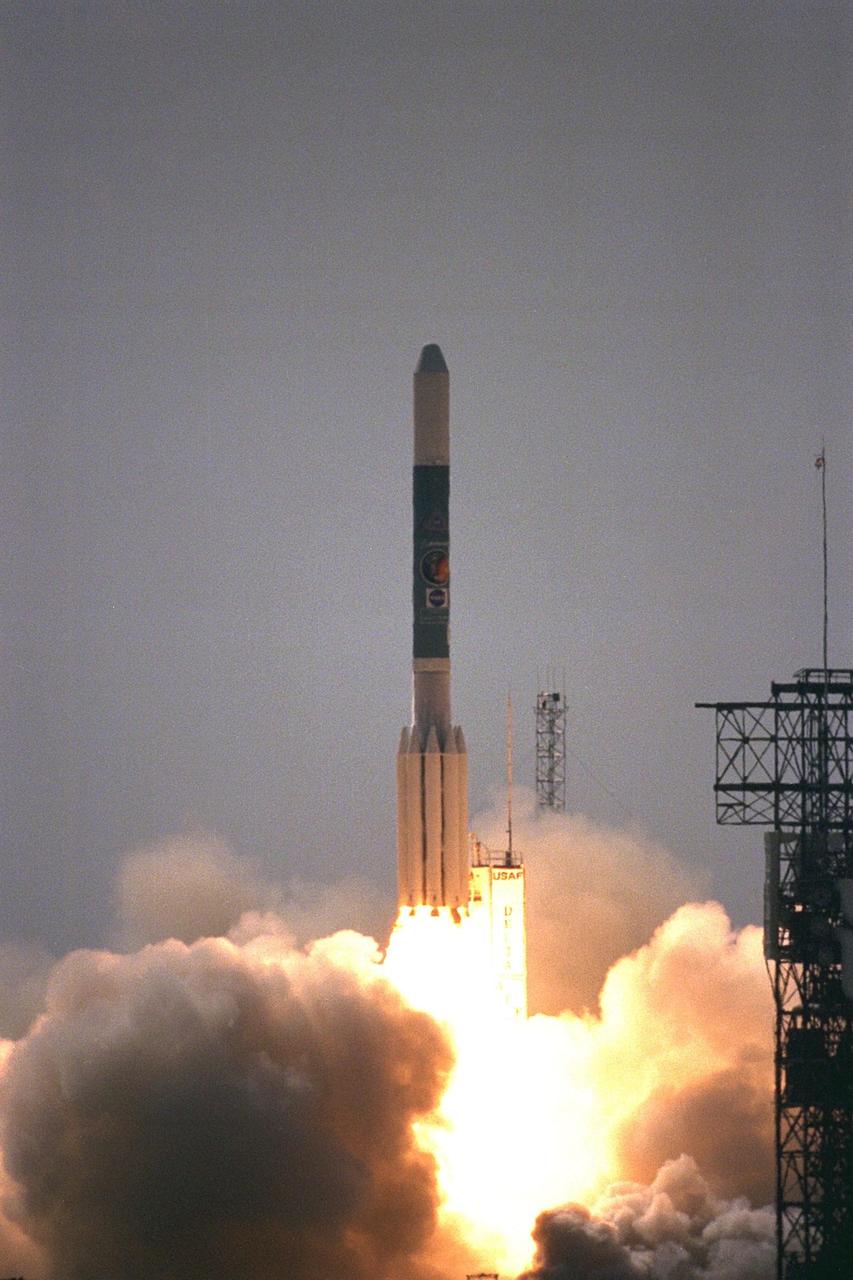
A Boeing Delta II expendable launch vehicle lifts off with NASA’s Advanced Composition Explorer (ACE) observatory at 10:39 a.m. EDT, on Aug. 25, 1997, from Launch Complex 17A, Cape Canaveral Air Station. This is the second Delta launch under the Boeing name and the first from Cape Canaveral. Launch was scrubbed one day by Air Force range safety personnel because two commercial fishing vessels were within the Delta’s launch danger area. The ACE spacecraft will study low-energy particles of solar origin and high-energy galactic particles on its one-million-mile journey. The collecting power of instruments aboard ACE is 10 to 1,000 times greater than anything previously flown to collect similar data by NASA. Study of these energetic particles may contribute to our understanding of the formation and evolution of the solar system. ACE has a two-year minimum mission lifetime and a goal of five years of service. ACE was built for NASA by the Johns Hopkins Applied Physics Laboratory and is managed by the Explorer Project Office at NASA's Goddard Space Flight Center. The lead scientific institution is the California Institute of Technology (Caltech) in Pasadena, Calif
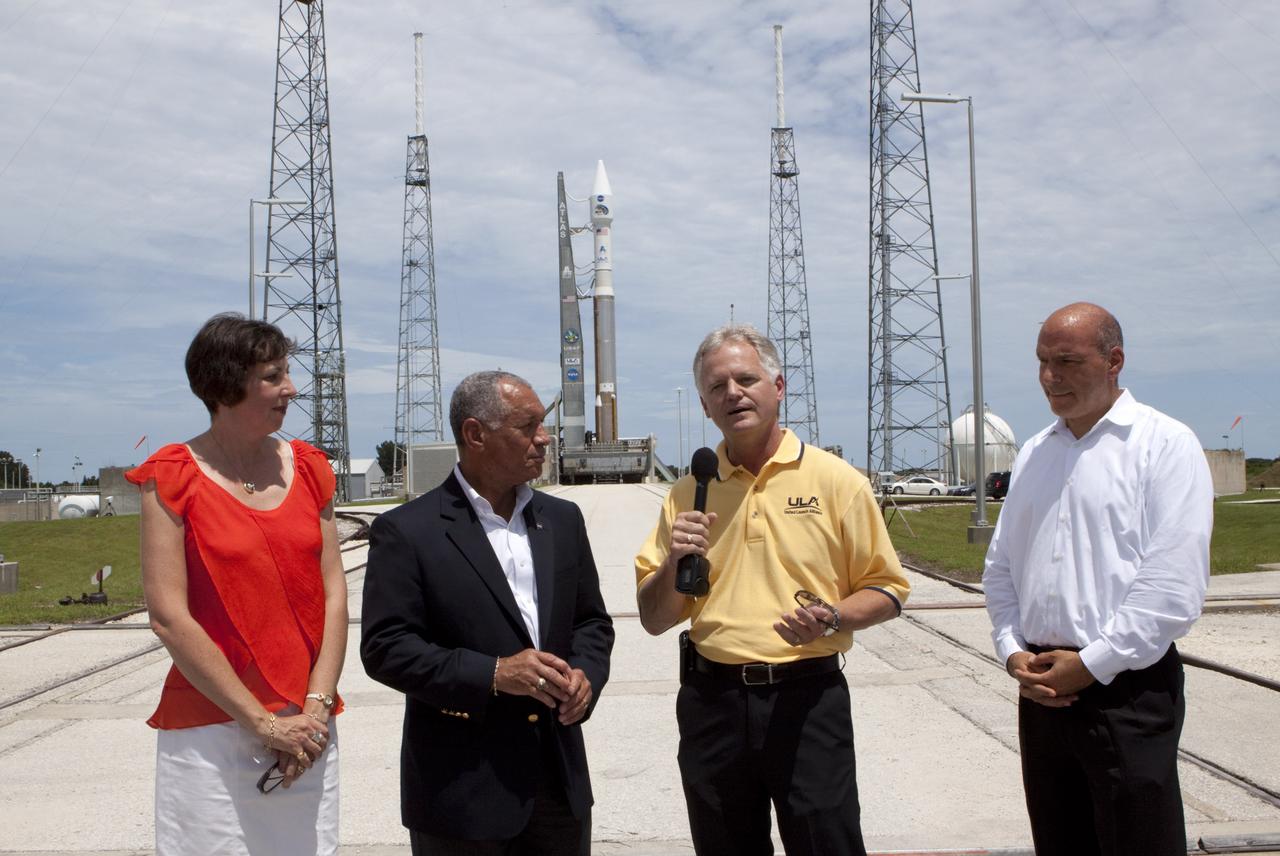
CAPE CANAVERAL, Fla. - United Launch Alliance, or ULA, Vice President of Mission Operations James Sponnick addresses news media at Space Launch Complex-41 at Cape Canaveral Air Force Station in Florida. At the pad, a ULA Atlas V rocket is being prepared for launch of the Radiation Belt Storm Probes, or RBSP, satellites. Speaking to members of the media are, from the left, Dr. Nicky Fox, deputy RBSP project scientist for the Applied Physics Laboratory at Johns Hopkins University, NASA Administrator Charles Bolden, Sponnick and NASA Chief Scientist Waleed Abdalati. Bolden took a few dozen members of the news media on a tour of the space agency's Kennedy Space Center and adjacent Cape Canaveral Air Force Station on Aug. 23, 2012 to show the progress being made for future government and commercial space endeavors that will begin from Florida's Space Coast. For more information, visit: http://www.nasa.gov/centers/kennedy/news/kennedy-bolden-tour.html Photo credit: NASA/Kim Shiflett
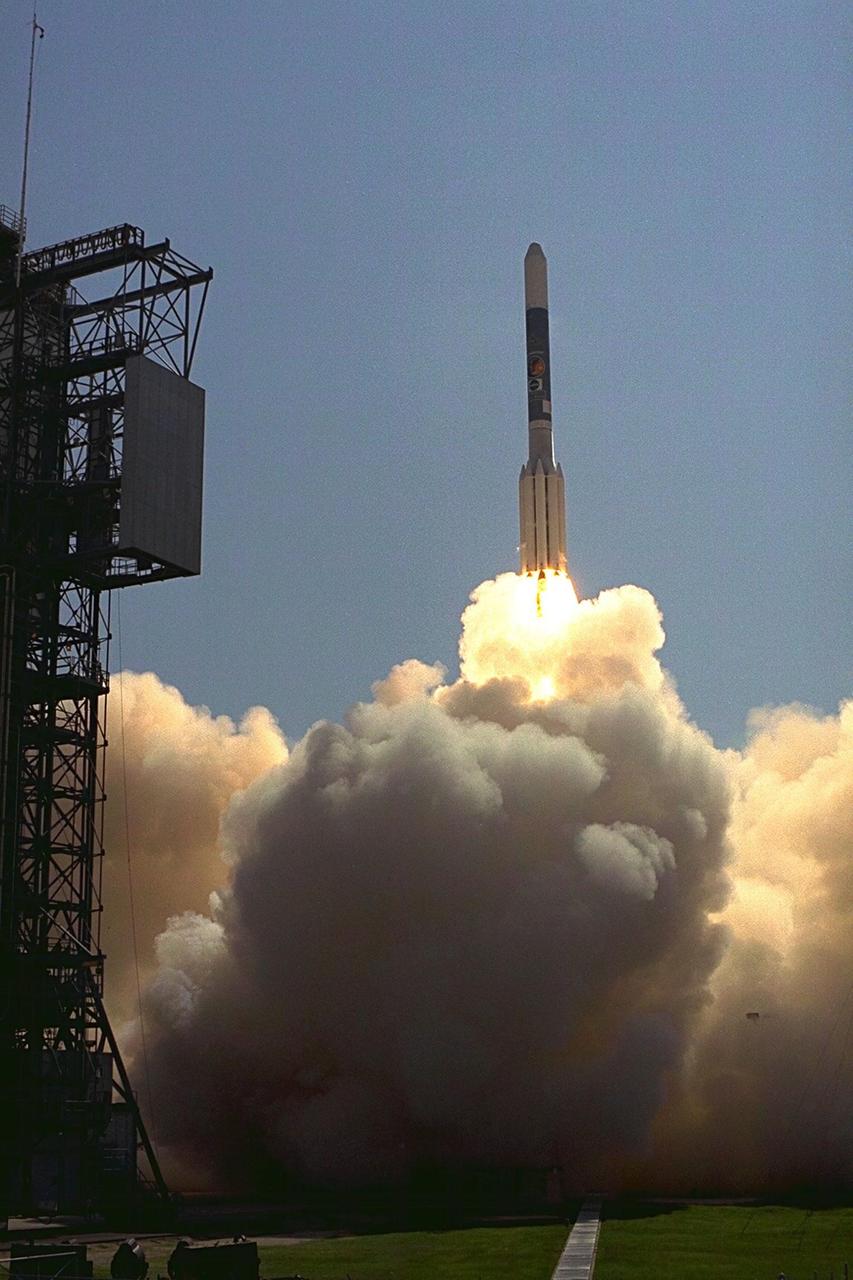
A Boeing Delta II expendable launch vehicle lifts off with NASA’s Advanced Composition Explorer (ACE) observatory at 10:39 a.m. EDT, on Aug. 25, 1997, from Launch Complex 17A, Cape Canaveral Air Station. This is the second Delta launch under the Boeing name and the first from Cape Canaveral. Launch was scrubbed one day by Air Force range safety personnel because two commercial fishing vessels were within the Delta’s launch danger area. The ACE spacecraft will study low-energy particles of solar origin and high-energy galactic particles on its one-million-mile journey. The collecting power of instruments aboard ACE is 10 to 1,000 times greater than anything previously flown to collect similar data by NASA. Study of these energetic particles may contribute to our understanding of the formation and evolution of the solar system. ACE has a two-year minimum mission lifetime and a goal of five years of service. ACE was built for NASA by the Johns Hopkins Applied Physics Laboratory and is managed by the Explorer Project Office at NASA's Goddard Space Flight Center. The lead scientific institution is the California Institute of Technology (Caltech) in Pasadena, Calif
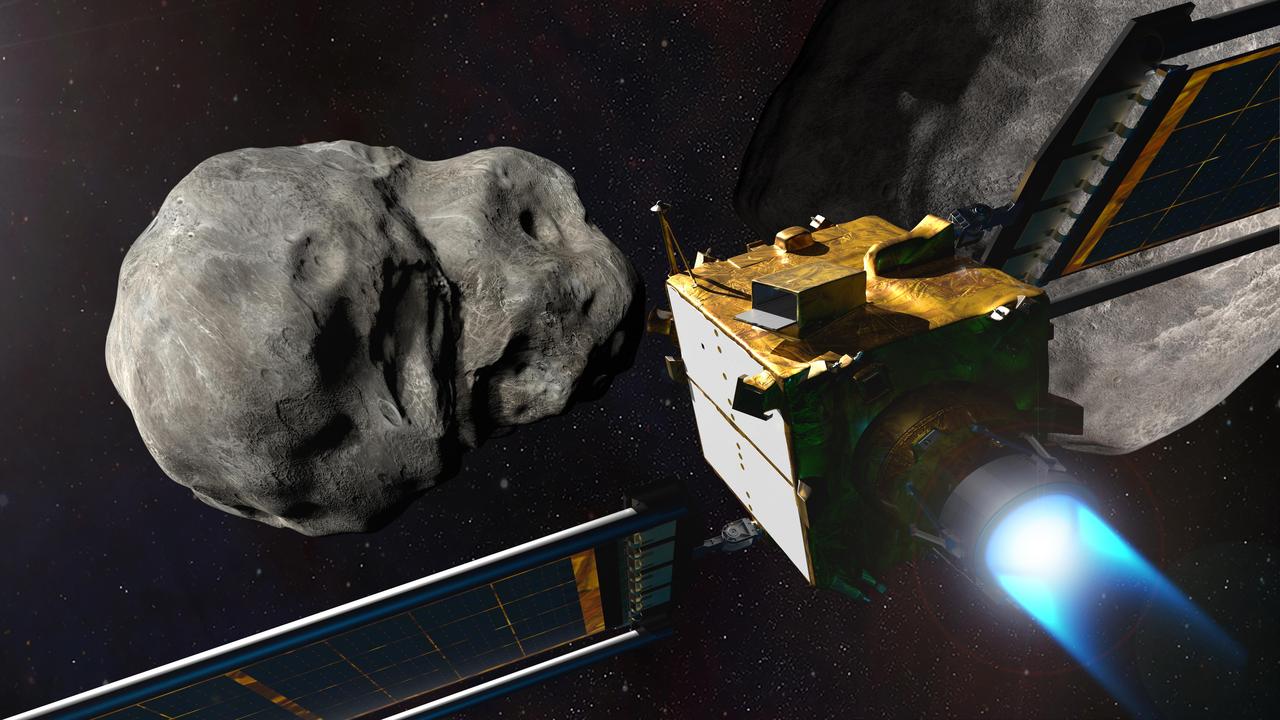
This illustration depicts NASA's Double Asteroid Redirection Test (DART) spacecraft prior to impact at the Didymos binary asteroid system. DART's target asteroid is the moonlet Dimorphos, which orbits the larger asteroid Didymos; the pair are not a threat to Earth. This asteroid system will be a testing ground to see if intentionally crashing a spacecraft into an asteroid is an effective way to change its course, should an Earth-threatening asteroid be discovered in the future. The Johns Hopkins Applied Physics Laboratory in Laurel, Maryland, manages the DART mission for NASA's Planetary Defense Coordination Office as a project of the agency's Planetary Missions Program Office. DART is the world's first planetary defense test mission, intentionally executing a kinetic impact into Dimorphos to slightly change its motion in space. While the asteroid does not pose any threat to Earth, the DART mission will demonstrate that a spacecraft can autonomously navigate to a kinetic impact on a relatively small asteroid and prove this is a viable technique to deflect an asteroid on a collision course with Earth if one is ever discovered. DART will reach its target on Sept. 26, 2022. https://photojournal.jpl.nasa.gov/catalog/PIA25329
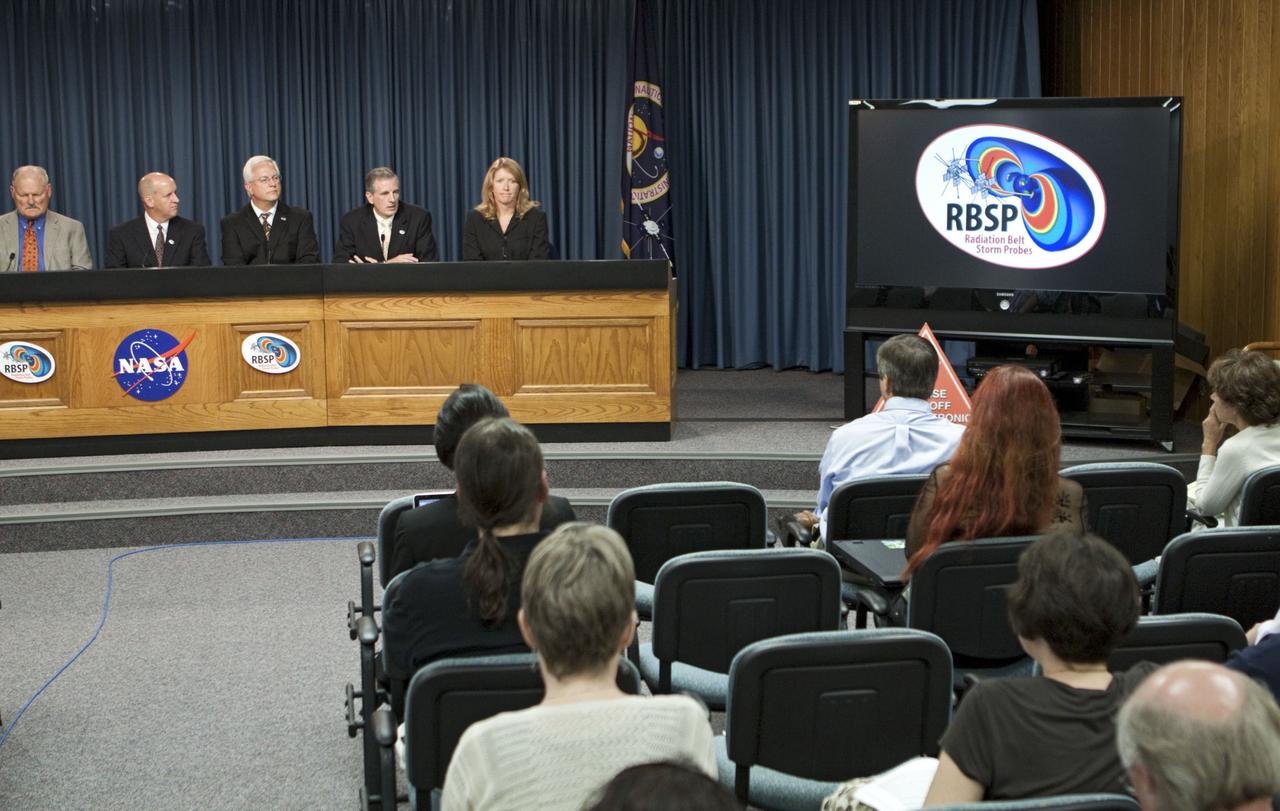
CAPE CANAVERAL, Fla. -- A prelaunch news conference is held at NASA Kennedy Space Center’s Press Site in Florida for the Radiation Belt Storm Probes, or RBSP, mission. From left are Michael Luther, deputy associate administrator for programs in NASA’s Science Mission Directorate, Tim Dunn, NASA launch director at Kennedy, Vernon Thorp, program manager, NASA missions, United Launch Alliance, Richard Fitzgerald, RBSP project manager at Johns Hopkins Applied Physics Laboratory in Laurel, Md., and Kathy Winters, launch weather officer with the 45th Weather Squadron at Cape Canaveral Air Force Station in Florida. NASA’s RBSP mission will help us understand the sun’s influence on Earth and near-Earth space by studying the Earth’s radiation belts on various scales of space and time. RBSP will begin its mission of exploration of Earth’s Van Allen radiation belts and the extremes of space weather after its launch aboard an Atlas V rocket. Launch is targeted for Aug. 24. For more information, visit http://www.nasa.gov/rbsp. Photo credit: NASA/Glenn Benson
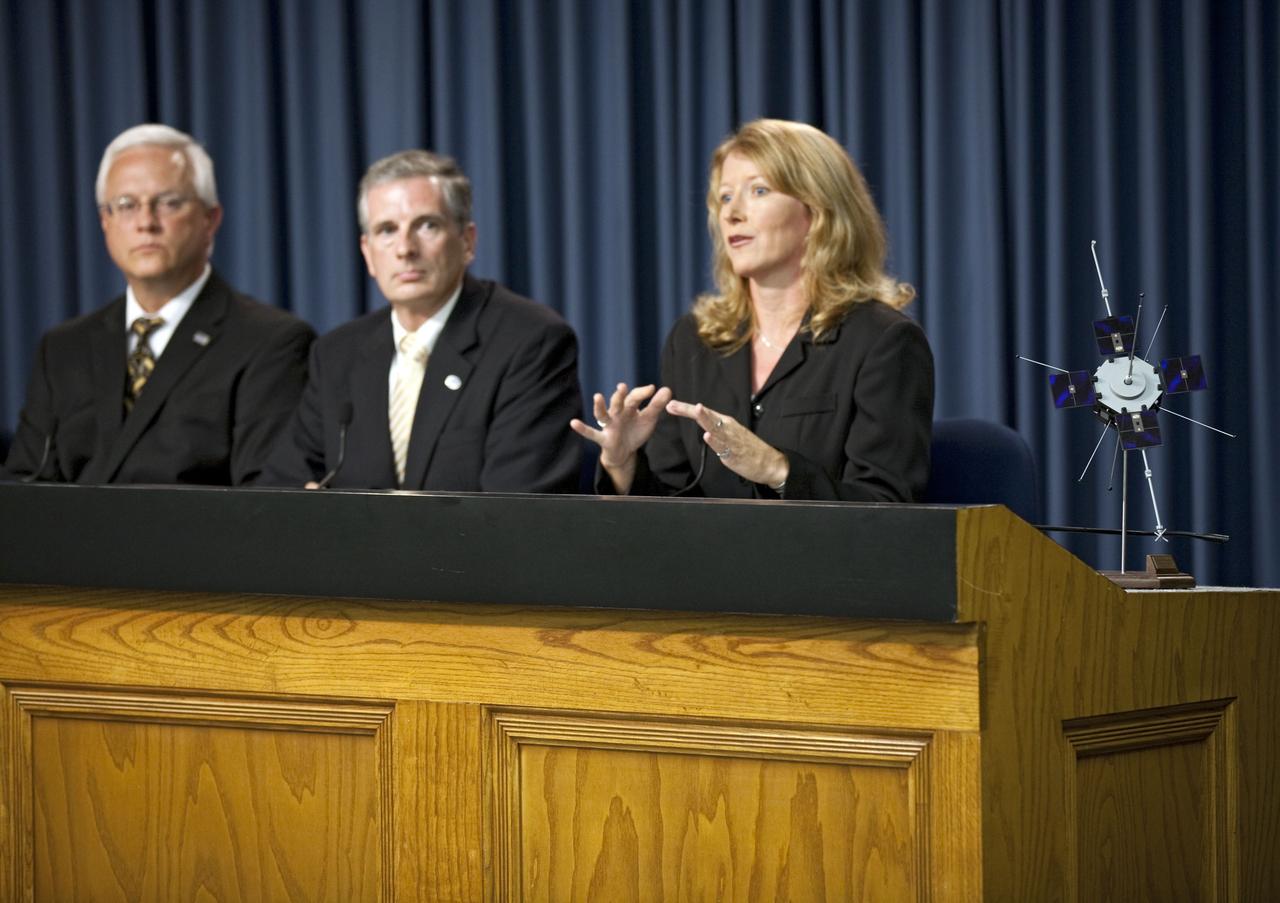
CAPE CANAVERAL, Fla. - At NASA Kennedy Space Center’s Press Site in Florida, Kathy Winters, launch weather officer with the 45th Weather Squadron at Cape Canaveral Air Force Station, answers a question during a prelaunch news conference held for the Radiation Belt Storm Probes, or RBSP, mission. To her left, are Vernon Thorp, United Launch Alliance program manager, NASA missions, and Richard Fitzgerald, RBSP project manager at Johns Hopkins Applied Physics Laboratory in Laurel, Md. NASA’s RBSP mission will help us understand the sun’s influence on Earth and near-Earth space by studying the Earth’s radiation belts on various scales of space and time. RBSP will begin its mission of exploration of Earth’s Van Allen radiation belts and the extremes of space weather after its launch aboard an Atlas V rocket. Launch is targeted for Aug. 24. For more information, visit http://www.nasa.gov/rbsp. Photo credit: NASA/Glenn Benson
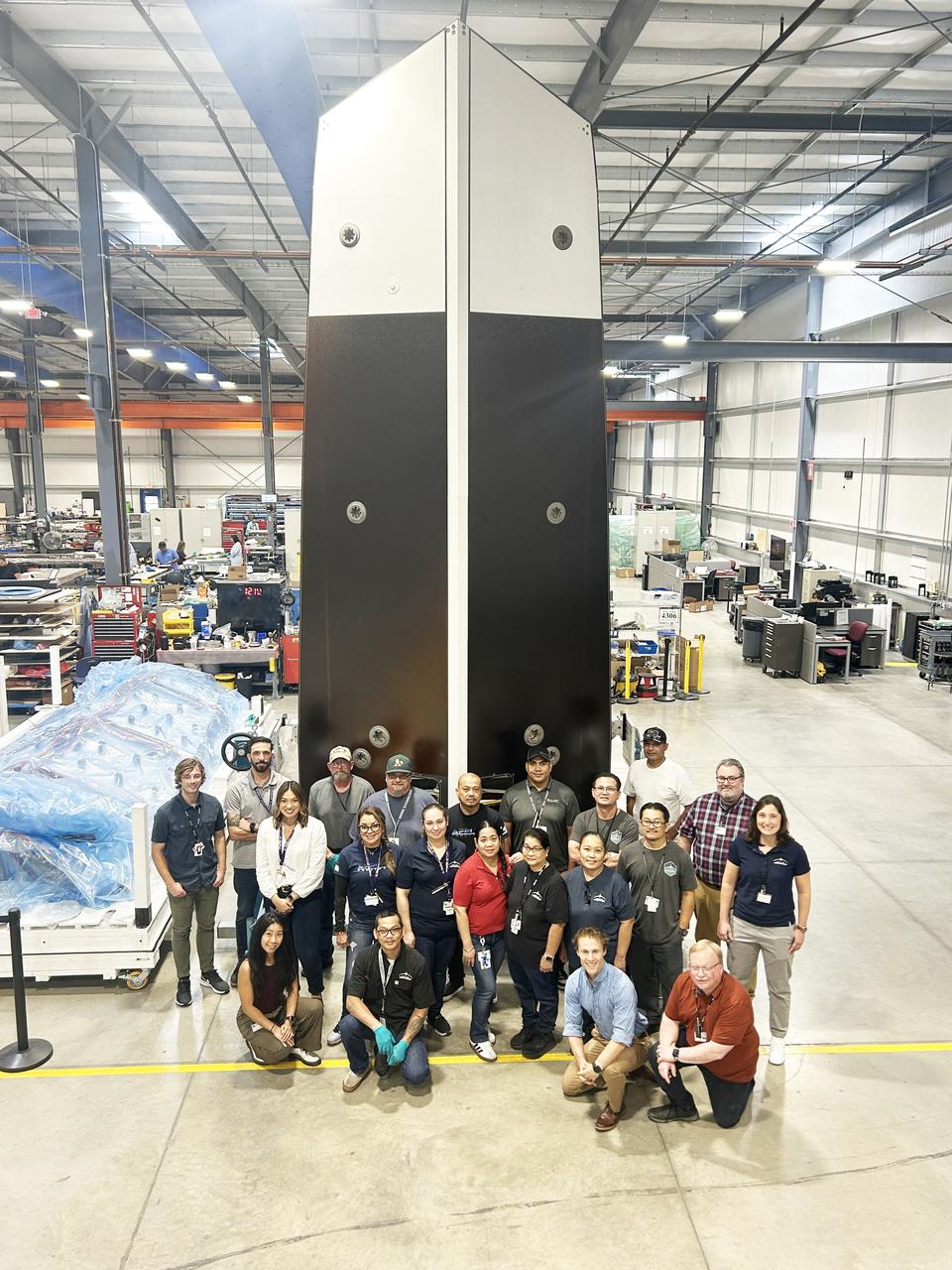
The sunshade for NASA’s Near-Earth Object (NEO) Surveyor mission towers above a fixture at supplier Applied Aerospace in Stockton, California, in September 2025. Standing at over 20 feet (6 meters) high, the sunshade is the largest component of spacecraft. The structure was next shipped to BAE Systems in Boulder, Colorado, for a “fit check” with the spacecraft bus. For scale, technicians and engineers from the project in front of the sunshade. The sunshade’s Sun-facing surface (visible here) will next be fitted with solar panels that will generate power for the spacecraft after launch. The spacecraft’s instrument enclosure, which houses the telescope and sensitive infrared cameras, will be located behind the sunshade, allowing the spacecraft to detect and track near-Earth objects that would otherwise be hidden by the Sun’s glare. Targeting launch in late 2027, the NEO Surveyor mission is led by Professor Amy Mainzer at the University of California, Los Angeles for NASA’s Planetary Defense Coordination Office and is being managed by the agency’s Jet Propulsion Laboratory in Southern California for the Planetary Missions Program Office at NASA’s Marshall Space Flight Center in Huntsville, Alabama. BAE Systems and the Space Dynamics Laboratory in Logan, Utah, and Teledyne are among the companies that were contracted to build the spacecraft and its instrumentation. The Laboratory for Atmospheric and Space Physics at the University of Colorado Boulder will support operations, and IPAC at Caltech in Pasadena, California, is responsible for producing some of the mission’s data products. Caltech manages JPL for NASA. More information about NEO Surveyor is available at: https://science.nasa.gov/mission/neo-surveyor/
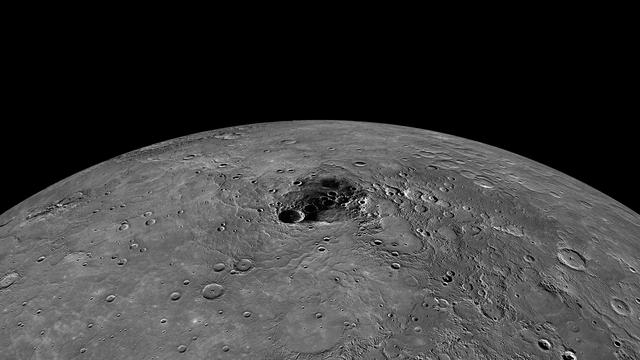
Tune in to NASA's News Conference today, November 29, 2012, at 2 p.m. EST for new findings about Mercury's polar regions. <a href="http://www.nasa.gov/multimedia/nasatv/index.html" rel="nofollow">www.nasa.gov/multimedia/nasatv/index.html</a> Due to its nearly vertical spin axis, Mercury's north pole is never fully sunlit. If it were, it might look something like this image, which is an orthographic projection of a global mosaic. The dark area towards the center of the image contains the north pole. The MESSENGER spacecraft is the first ever to orbit the planet Mercury, and the spacecraft's seven scientific instruments and radio science investigation are unraveling the history and evolution of the Solar System's innermost planet. Visit the Why Mercury? section of this website to learn more about the key science questions that the MESSENGER mission is addressing. During the one-year primary mission, MESSENGER acquired 88,746 images and extensive other data sets. MESSENGER is now in a yearlong extended mission, during which plans call for the acquisition of more than 80,000 additional images to support MESSENGER's science goals. Credit: NASA/Johns Hopkins University Applied Physics Laboratory/Carnegie Institution of Washington <b><a href="http://www.nasa.gov/audience/formedia/features/MP_Photo_Guidelines.html" rel="nofollow">NASA image use policy.</a></b> <b><a href="http://www.nasa.gov/centers/goddard/home/index.html" rel="nofollow">NASA Goddard Space Flight Center</a></b> enables NASA’s mission through four scientific endeavors: Earth Science, Heliophysics, Solar System Exploration, and Astrophysics. Goddard plays a leading role in NASA’s accomplishments by contributing compelling scientific knowledge to advance the Agency’s mission. <b>Follow us on <a href="http://twitter.com/NASA_GoddardPix" rel="nofollow">Twitter</a></b> <b>Like us on <a href="http://www.facebook.com/pages/Greenbelt-MD/NASA-Goddard/395013845897?ref=tsd" rel="nofollow">Facebook</a></b> <b>Find us on <a href="http://instagram.com/nasagoddard?vm=grid" rel="nofollow">Instagram</a></b>
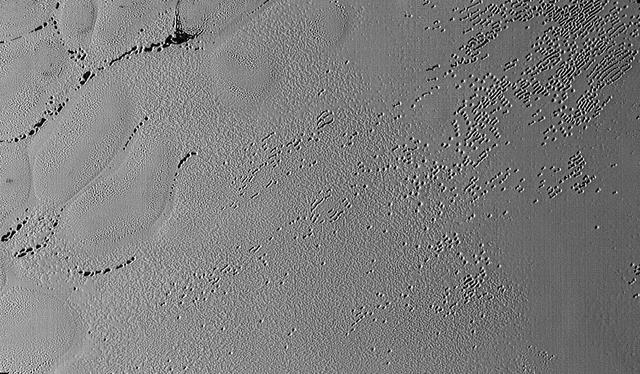
This image was taken by the Long Range Reconnaissance Imager (LORRI) on NASA's New Horizons spacecraft shortly before closest approach to Pluto on July 14, 2015; it resolves details as small as 270 yards (250 meters). The scene shown is about 130 miles (210 kilometers) across. The sun illuminates the scene from the left, and north is to the upper left. Credits: NASA/JHUAPL/SwRI It seems that the more we see of Pluto, the more fascinating it gets. With its prominent heart-shaped feature, icy mountains, and “snakeskin” terrain, Pluto has already surprised New Horizons scientists with the variety and complexity of its surface features. Now this latest image, from the heart of Pluto’s heart feature, show the plains’ enigmatic cellular pattern (at left) as well as unusual clusters of small pits and troughs (from lower left to upper right). Scientists believe that this area, informally known as Sputnik Planum, is composed of volatile ices such as solid nitrogen. They theorize that the pits and troughs – typically hundreds of meters across and tens of meters deep – are possibly formed by sublimation or evaporation of these ices. However, the reasons for the striking shapes and alignments of these features are a mystery. Adding to the intrigue is that even at this resolution, no impact craters are seen, testifying to the extreme geologic youth of Sputnik Planum. “Pluto is weird, in a good way,” said Hal Weaver, New Horizons project scientist with Johns Hopkins Applied Physics Laboratory in Laurel, Maryland. “The pits, and the way they’re aligned, provide clues about the ice flow and the exchange of volatiles between the surface and atmosphere, and the science team is working hard to understand what physical processes are at play here.” <b><a href="http://www.nasa.gov/audience/formedia/features/MP_Photo_Guidelines.html" rel="nofollow">NASA image use policy.</a></b> <b><a href="http://www.nasa.gov/centers/goddard/home/index.html" rel="nofollow">NASA Goddard Space Flight Center</a></b> enables NASA’s mission through four scientific endeavors: Earth Science, Heliophysics, Solar System Exploration, and Astrophysics. Goddard plays a leading role in NASA’s accomplishments by contributing compelling scientific knowledge to advance the Agency’s mission. <b>Follow us on <a href="http://twitter.com/NASAGoddardPix" rel="nofollow">Twitter</a></b> <b>Like us on <a href="http://www.facebook.com/pages/Greenbelt-MD/NASA-Goddard/395013845897?ref=tsd" rel="nofollow">Facebook</a></b> <b>Find us on <a href="http://instagrid.me/nasagoddard/?vm=grid" rel="nofollow">Instagram</a></b>
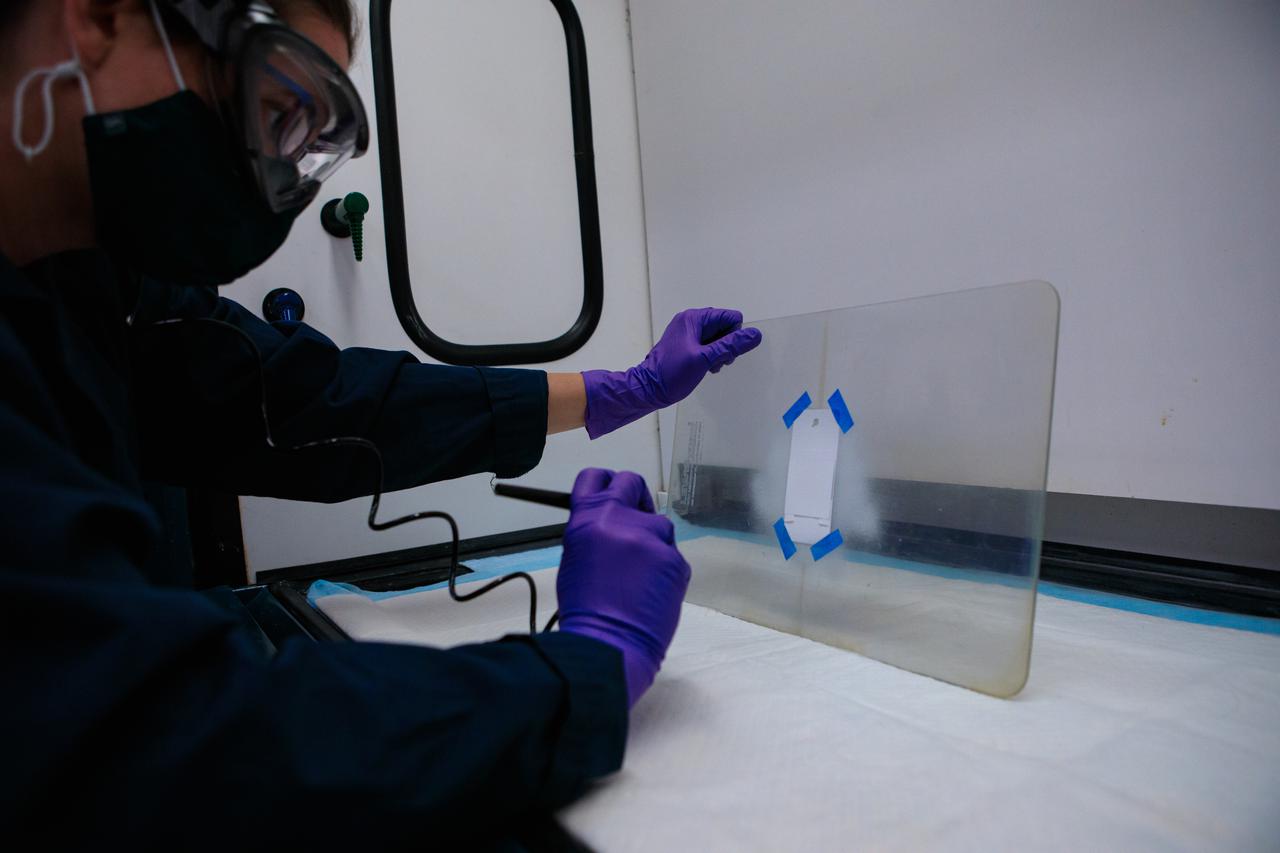
Inside a laboratory at the Neil Armstrong Operations and Checkout Building at NASA’s Kennedy Space Center in Florida, research scientist Sarah Snyder applies a selective surface coating to an Electrodynamic Dust Shield (EDS) on March 31, 2021. This is one of several concurrent activities preparing dust shield samples for testing in space. Dust mitigation technologies could one day be applied to diminish dust hazards on lunar surface systems such as cameras, solar panels, spacesuits, and instrumentation, enabling sustainable exploration of the Moon under the Artemis program.
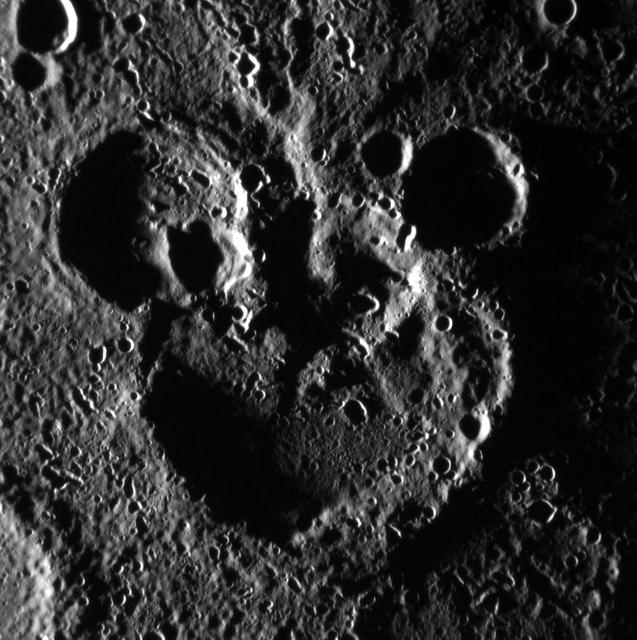
NASA image acquired: June 03, 2012 This scene is to the northwest of the recently named crater Magritte, in Mercury's south. The image is not map projected; the larger crater actually sits to the north of the two smaller ones. The shadowing helps define the striking "Mickey Mouse" resemblance, created by the accumulation of craters over Mercury's long geologic history. This image was acquired as part of MDIS's high-incidence-angle base map. The high-incidence-angle base map is a major mapping activity in MESSENGER's extended mission and complements the surface morphology base map of MESSENGER's primary mission that was acquired under generally more moderate incidence angles. High incidence angles, achieved when the Sun is near the horizon, result in long shadows that accentuate the small-scale topography of geologic features. The high-incidence-angle base map is being acquired with an average resolution of 200 meters/pixel. The MESSENGER spacecraft is the first ever to orbit the planet Mercury, and the spacecraft's seven scientific instruments and radio science investigation are unraveling the history and evolution of the Solar System's innermost planet. Visit the Why Mercury? section of this website to learn more about the key science questions that the MESSENGER mission is addressing. During the one-year primary mission, MESSENGER acquired 88,746 images and extensive other data sets. MESSENGER is now in a yearlong extended mission, during which plans call for the acquisition of more than 80,000 additional images to support MESSENGER's science goals. Credit: NASA/Johns Hopkins University Applied Physics Laboratory/Carnegie Institution of Washington <b><a href="http://www.nasa.gov/audience/formedia/features/MP_Photo_Guidelines.html" rel="nofollow">NASA image use policy.</a></b> <b><a href="http://www.nasa.gov/centers/goddard/home/index.html" rel="nofollow">NASA Goddard Space Flight Center</a></b> enables NASA’s mission through four scientific endeavors: Earth Science, Heliophysics, Solar System Exploration, and Astrophysics. Goddard plays a leading role in NASA’s accomplishments by contributing compelling scientific knowledge to advance the Agency’s mission. <b>Follow us on <a href="http://twitter.com/NASAGoddardPix" rel="nofollow">Twitter</a></b> <b>Like us on <a href="http://www.facebook.com/pages/Greenbelt-MD/NASA-Goddard/395013845897?ref=tsd" rel="nofollow">Facebook</a></b> <b>Find us on <a href="http://instagrid.me/nasagoddard/?vm=grid" rel="nofollow">Instagram</a></b>