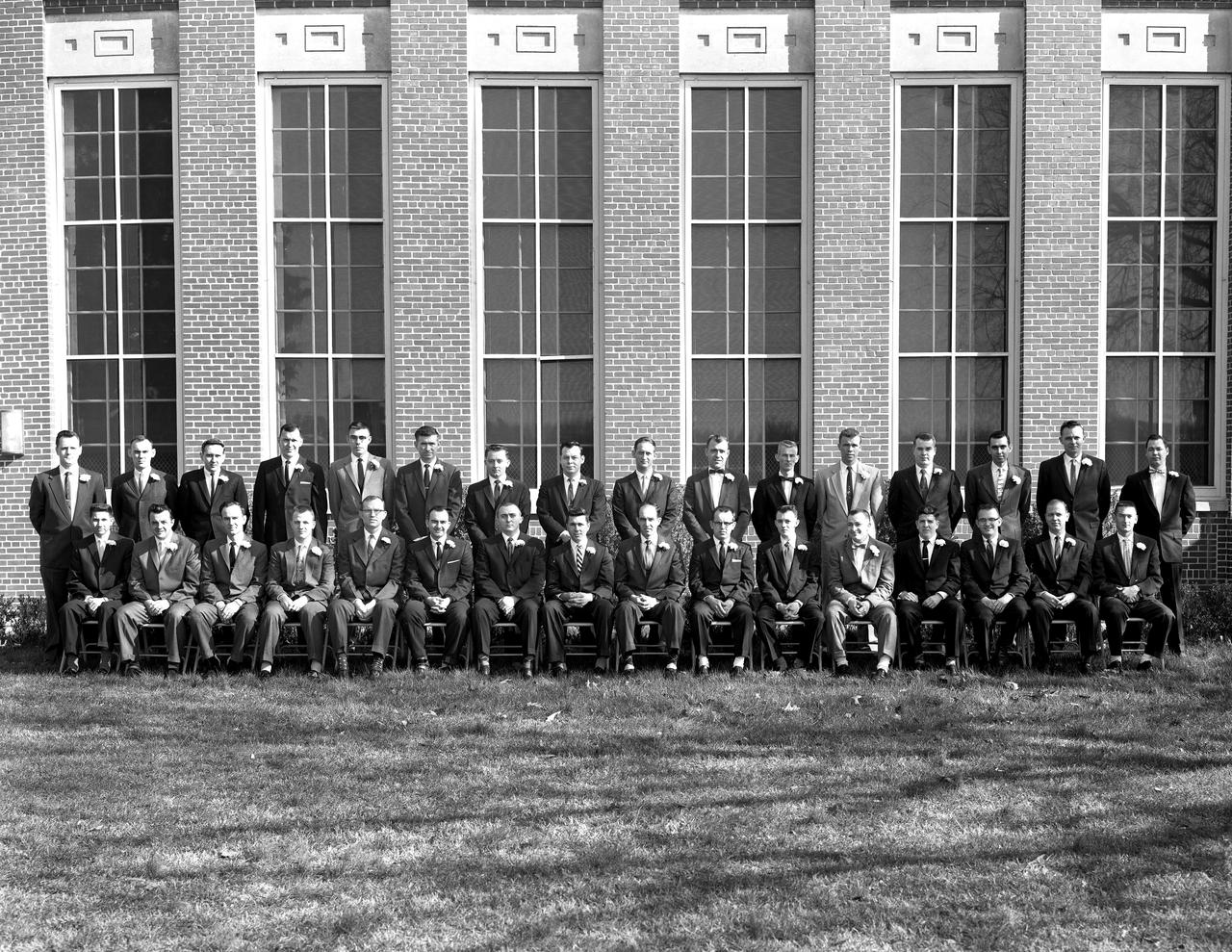
Apprentice Class Graduates: 32 Apprentice Greaduates: Ivan E. Albertson, Colossie N. Batts, Billy W. Beasley, John H. Belveal, Ernest R. Dunnigan, Durwood W. Davis, Charles E. Drummond, John R.Ellingsworth, Jr., Hugh D. Fitzgerald, Ernest A. Gurganus, Joseph R. Guy, William C. Henley,Jr., Richard N. Hill, Hiram R. Hogge, Jr., James D. Holt, James L. Hudgins, Robert F. Macklin, Roy W. Mason, Clyde J. May,Roger N. Messier, William C. Moughon, William S. Pillow, Wayne R. Posey, Mark E. Price, John W. Schwartz, Herbert F. Shackleford, John W. Simpson,John B. Slight, Cecil W. Stephens, Richard K. Stoops, John W. Sundy, Dave, E. Williams.
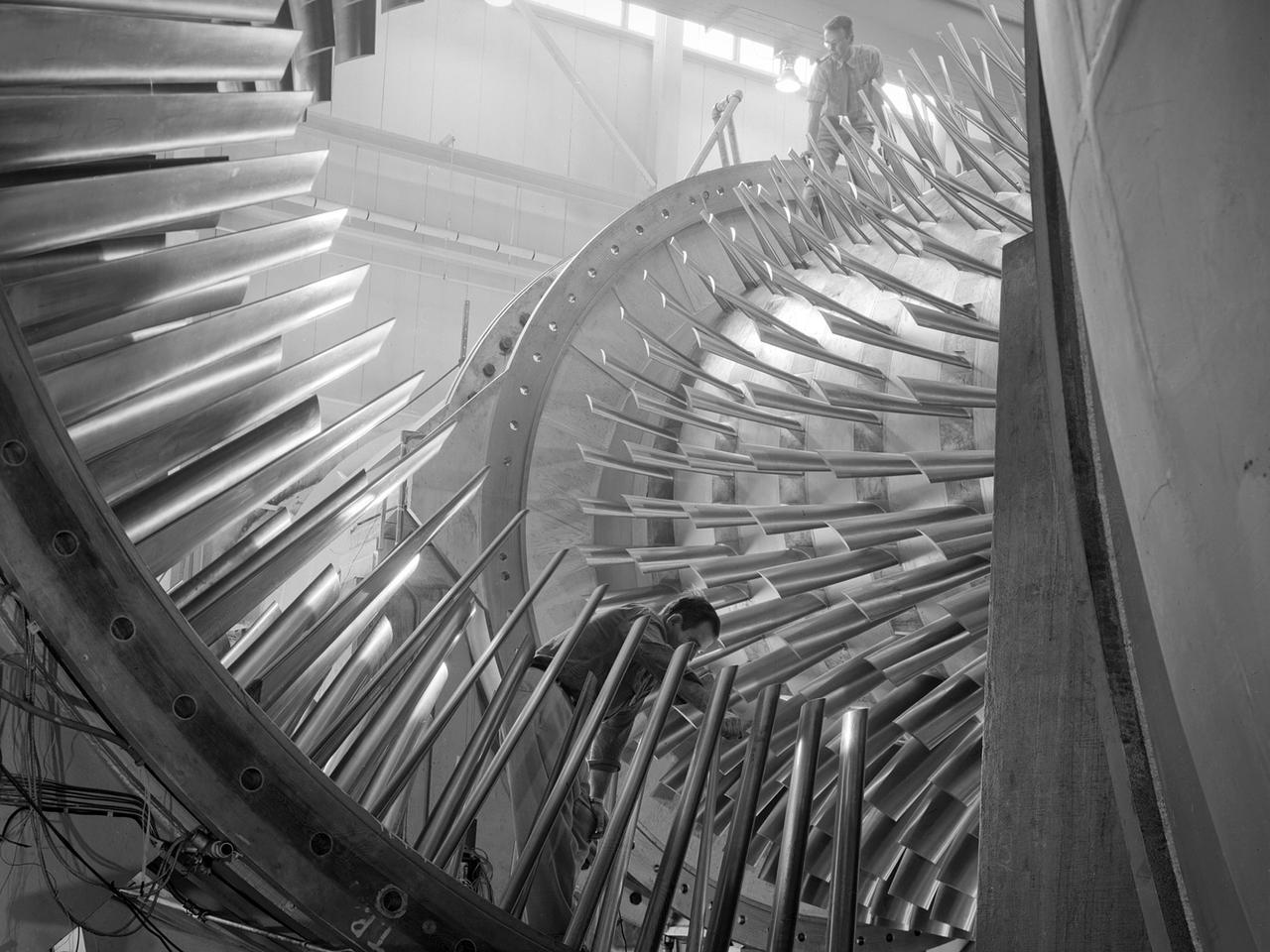
An apprentice at the National Advisory Committee for Aeronautics (NACA) Lewis Flight Propulsion Laboratory shown training on the altitude supply air systems in the Engine Research Building. An ongoing four-year apprentice program was established at the laboratory in 1949 to facilitate the close interaction of the lab’s engineers, mechanics, technicians, and scientists. The apprentice school covered a variety of trades including aircraft mechanic, electronics instrumentation, machinist, and altitude systems mechanic, seen in this photograph. The apprentices rotated through the various shops and facilities to provide them with a well-rounded understanding of the work at the lab. The specialized skills required meant that NACA apprentices were held to a higher standard than those in industry. They had to pass written civil service exams before entering the program. Previous experience with mechanical model airplanes, radio transmission, six months of work experience, or one year of trade school was required. The Lewis program was certified by both the Department of Labor and the State of Ohio. One hundred fifty of the 2,000 hours of annual training were spent in the classroom. The remainder was devoted to study of models and hands-on work in the facilities. Examinations were coupled with evaluation by supervisors in the shops. The apprentices were promoted through a series of grades until they reached journeyman status. Those who excelled in the Apprentice Program would be considered for a separate five-year engineering draftsman program.
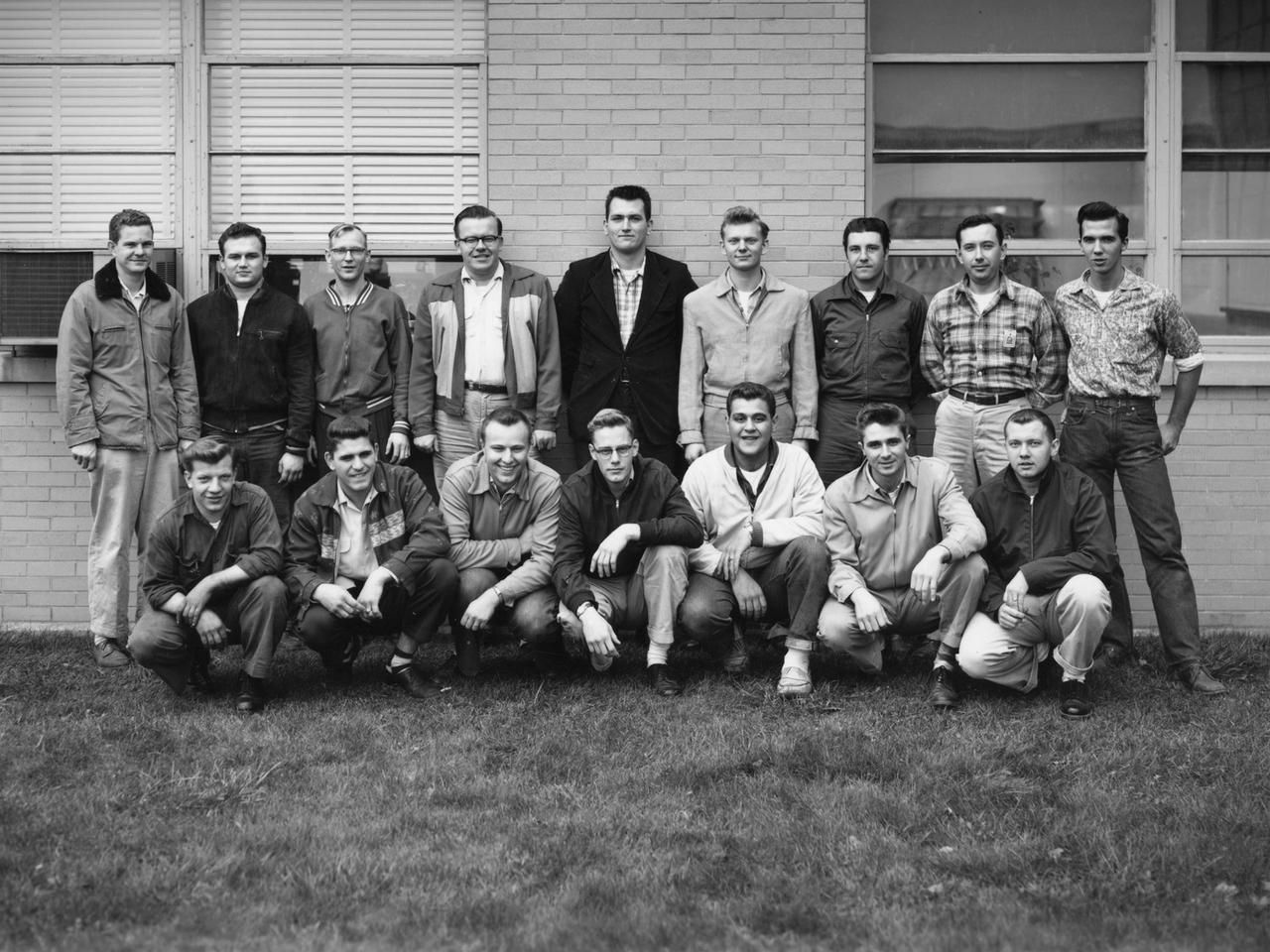
A group of apprentices takes a break from their studies to pose for a photograph at the National Advisory Committee for Aeronautics (NACA) Lewis Flight Propulsion Laboratory. To facilitate the close interaction of the lab’s engineers, mechanics, technicians, and scientists, Lewis Director Ray Sharp established a four-year apprentice program to train craftsmen on a particular trade and basic scientific principles. The apprentice school covered a variety of trades, from aircraft mechanic to electronic instrumentation, machinist, and altitude systems mechanic. The school was established in 1942, but faltered when over 90 percent of its students entered the military. After World War II, 40 of the original members returned to the NACA lab. In some cases they were bumped to journeymen positions because of training received in the military. The honorary first class in 1949 had only 15 graduates, but the number steadily increased to 45 with the next class in 1952 and to 110 in 1957. There were over 600 graduates by 1969, and the program remained strong for decades. Many of the laboratory’s future managers began their careers as apprentices. The program, which was certified by both the Department of Labor and the State of Ohio, included classroom lectures, the study of models, and hands-on work. The apprentices rotated through the various shops and facilities to provide them with a well-rounded understanding of the work at the lab.

The 1969 class of graduating apprentices pose for a group photograph during a rehearsal ceremony at the National Aeronautics and Space Administration (NASA) Lewis Research Center. The 35 men completed four years of classroom and hands-on training in various aerospace research trades. Center Director Bruce Lundin and President of Cuyahoga Community College Dr. Bernard Silk addressed the graduates at the ceremony. The Ohio State Apprenticeship Council officially accredited them as journeymen. The journeymen specialized in one of the following fields: aerospace laboratory mechanic, aerospace service operator, experimental electronic equipment mechanic, experimental facilities electrician, experimental metal modelmaker, experimental metal worker, research equipment mechanic, research instrumentation mechanic, or utilities mechanic.
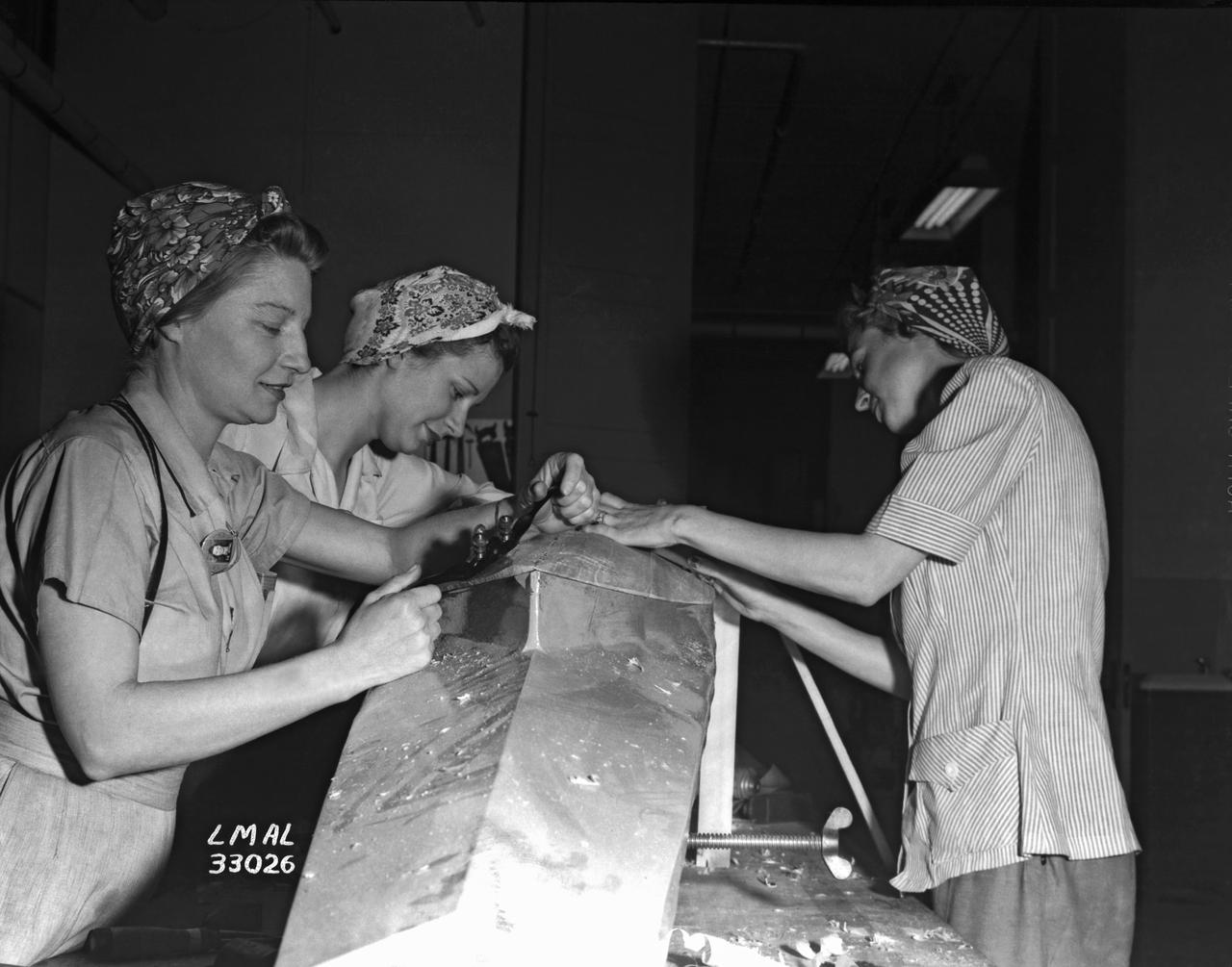
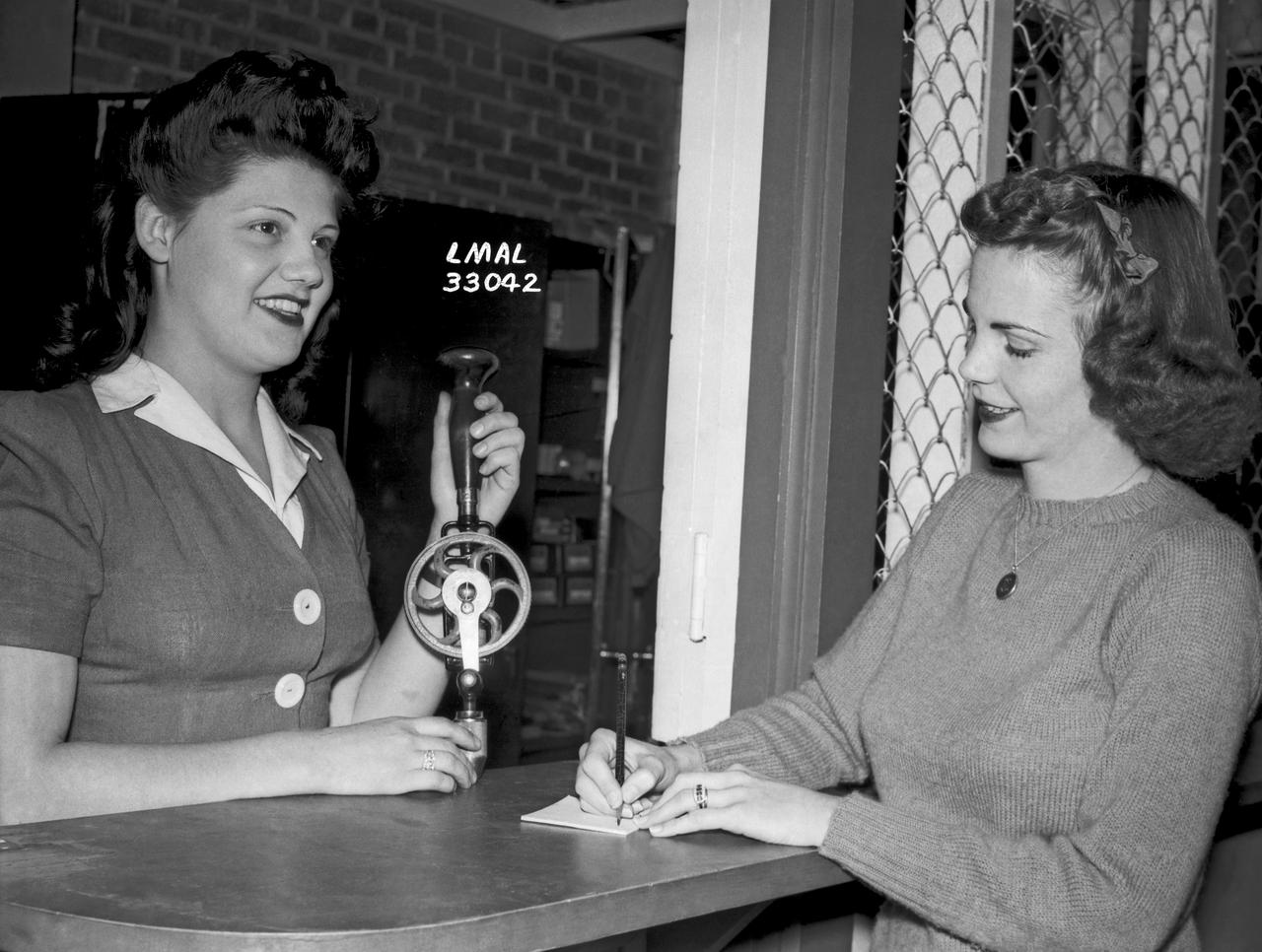
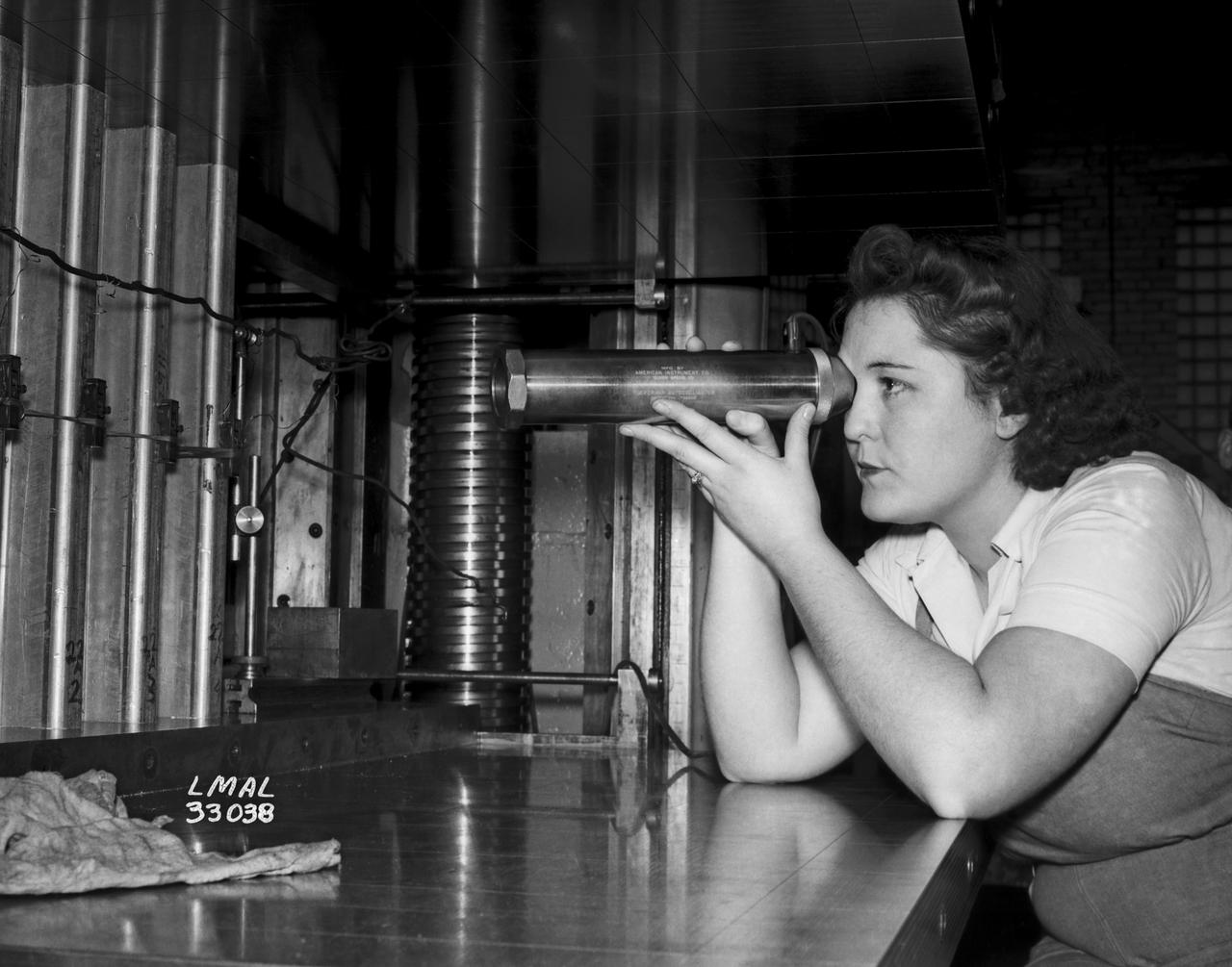
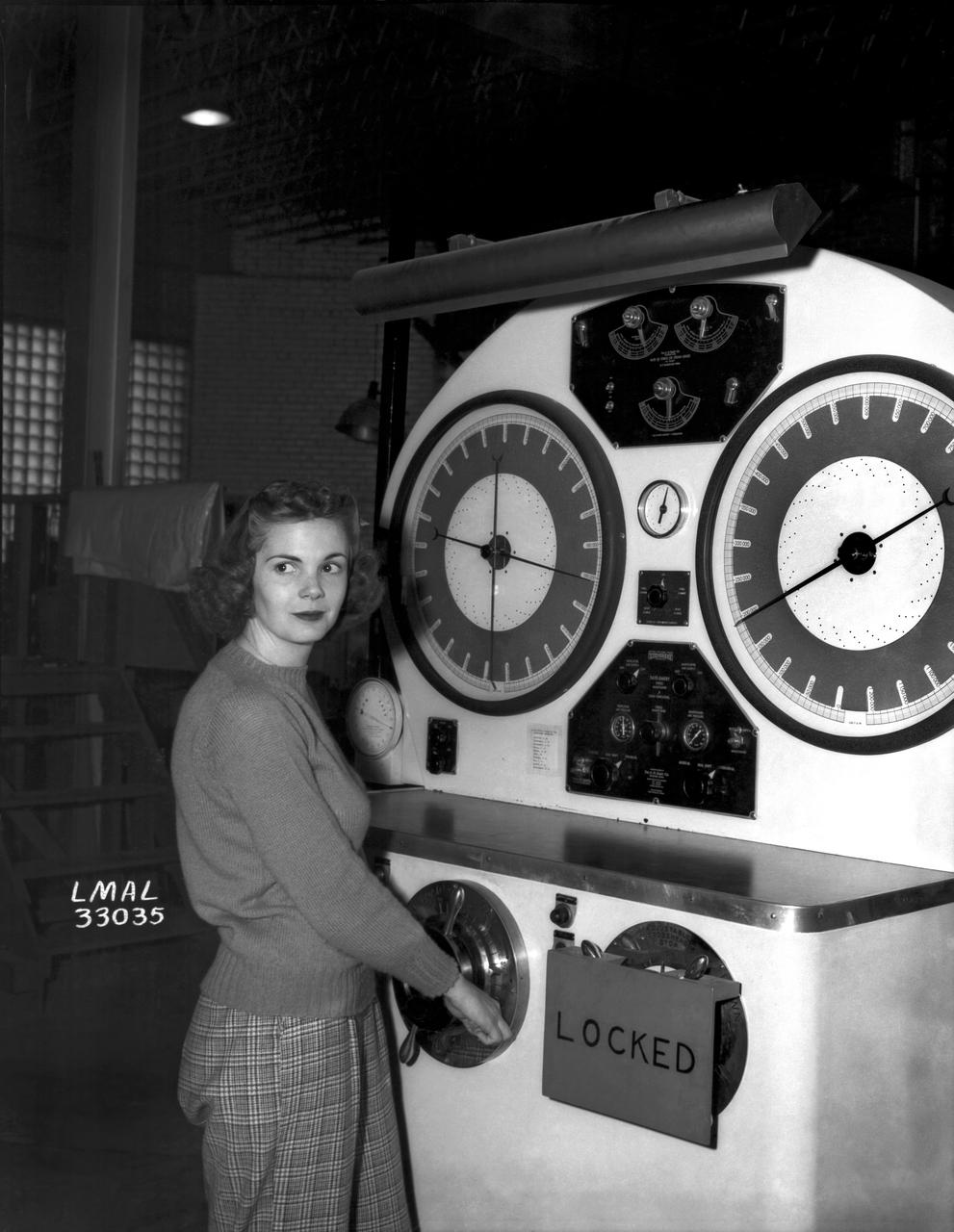
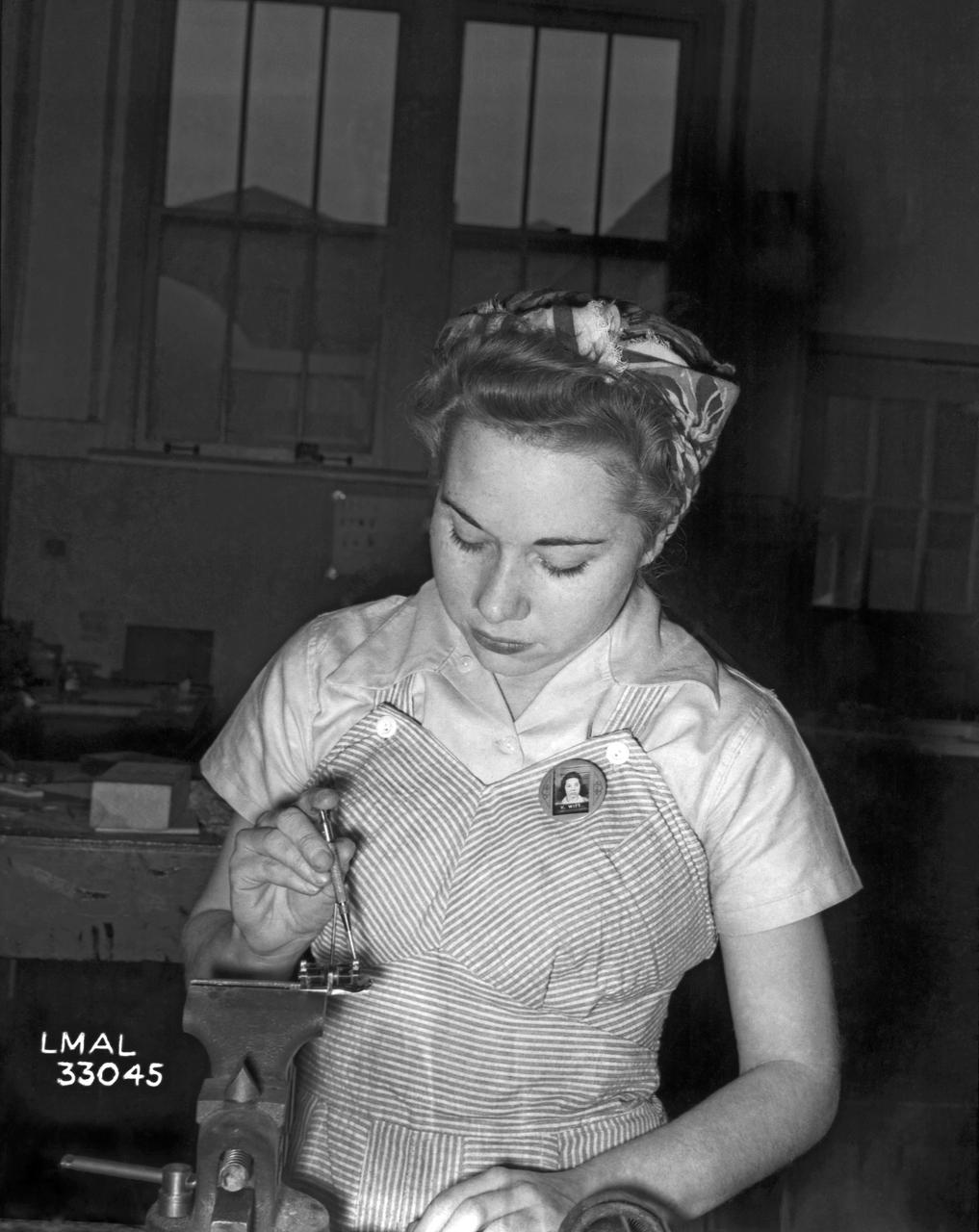
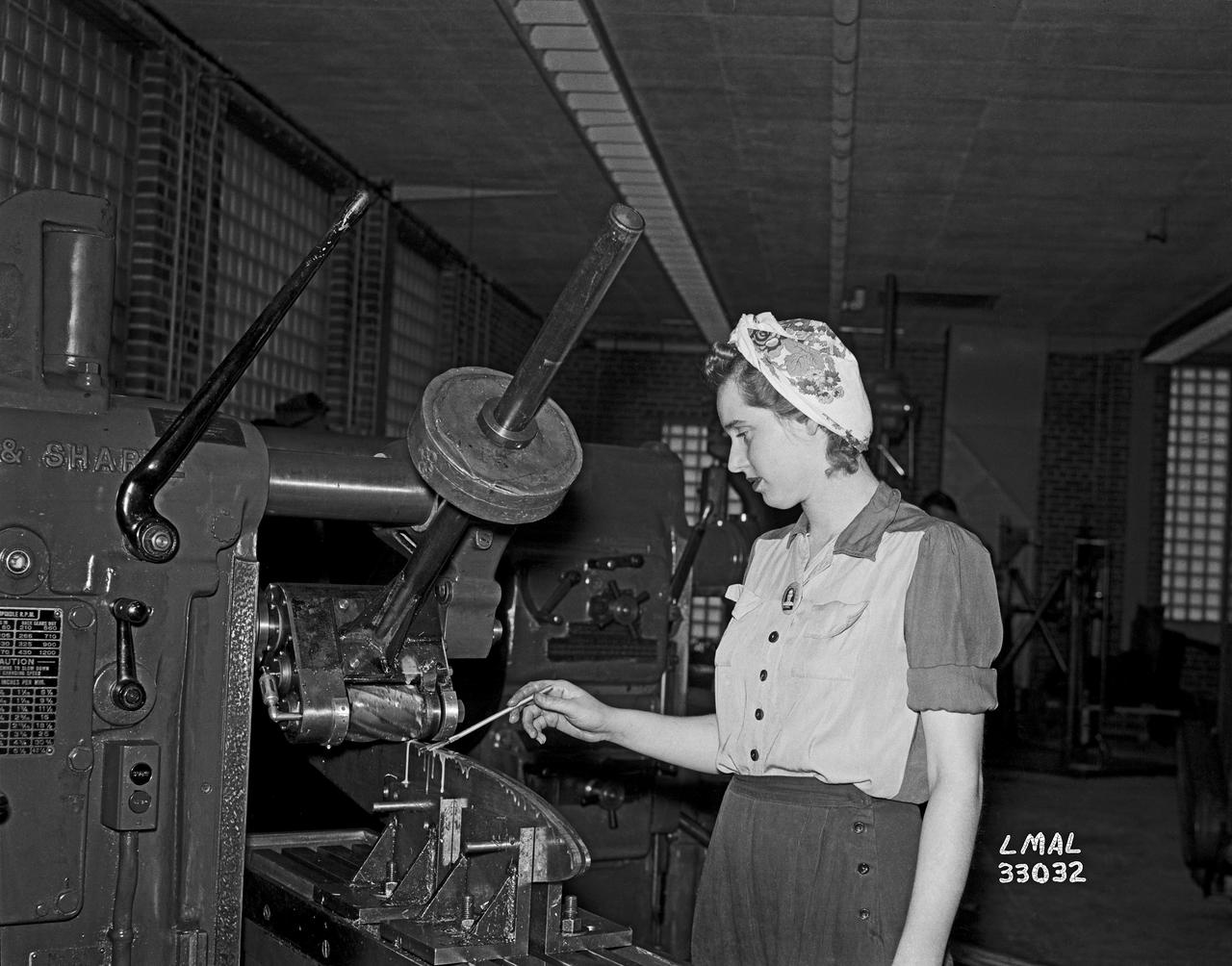
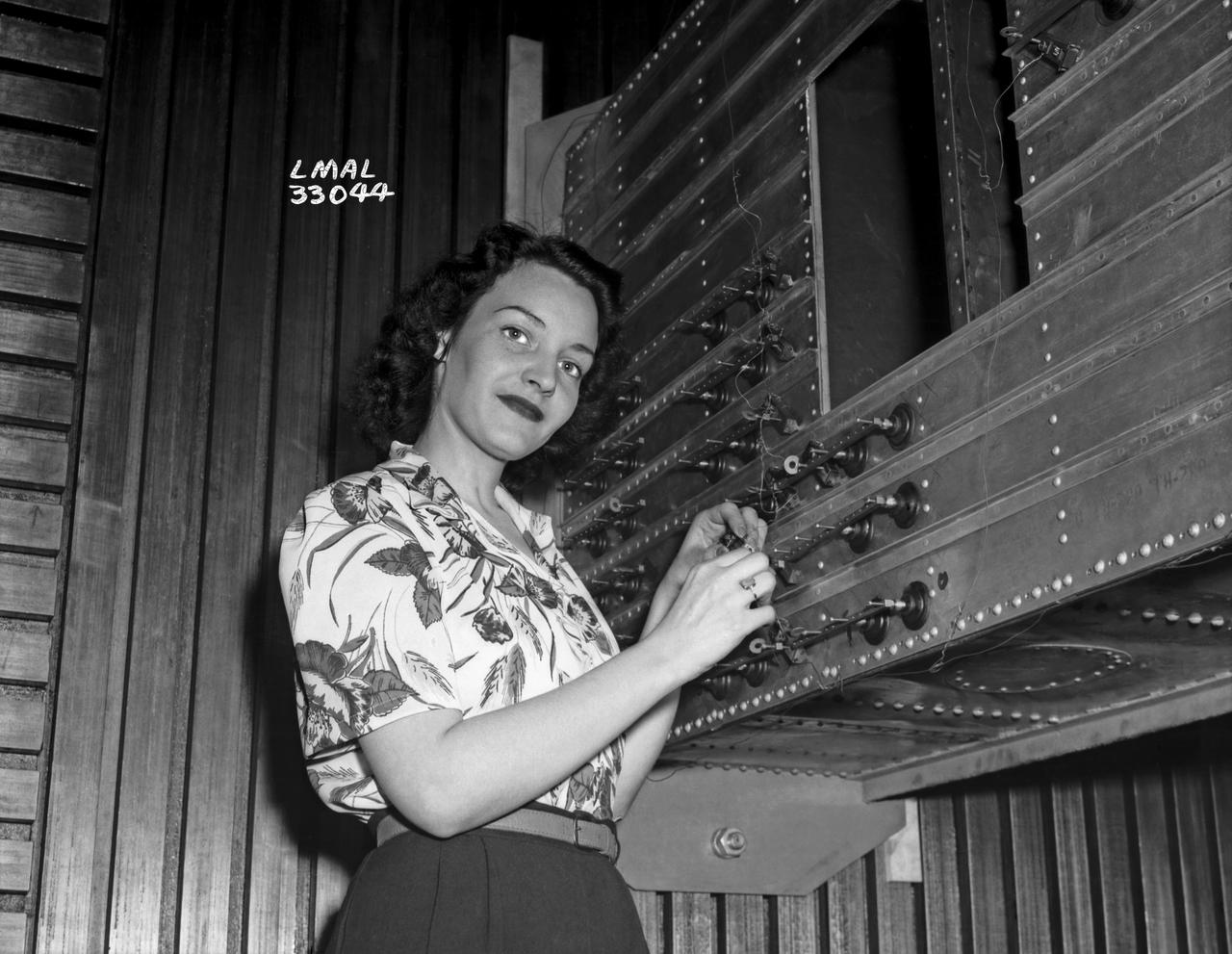
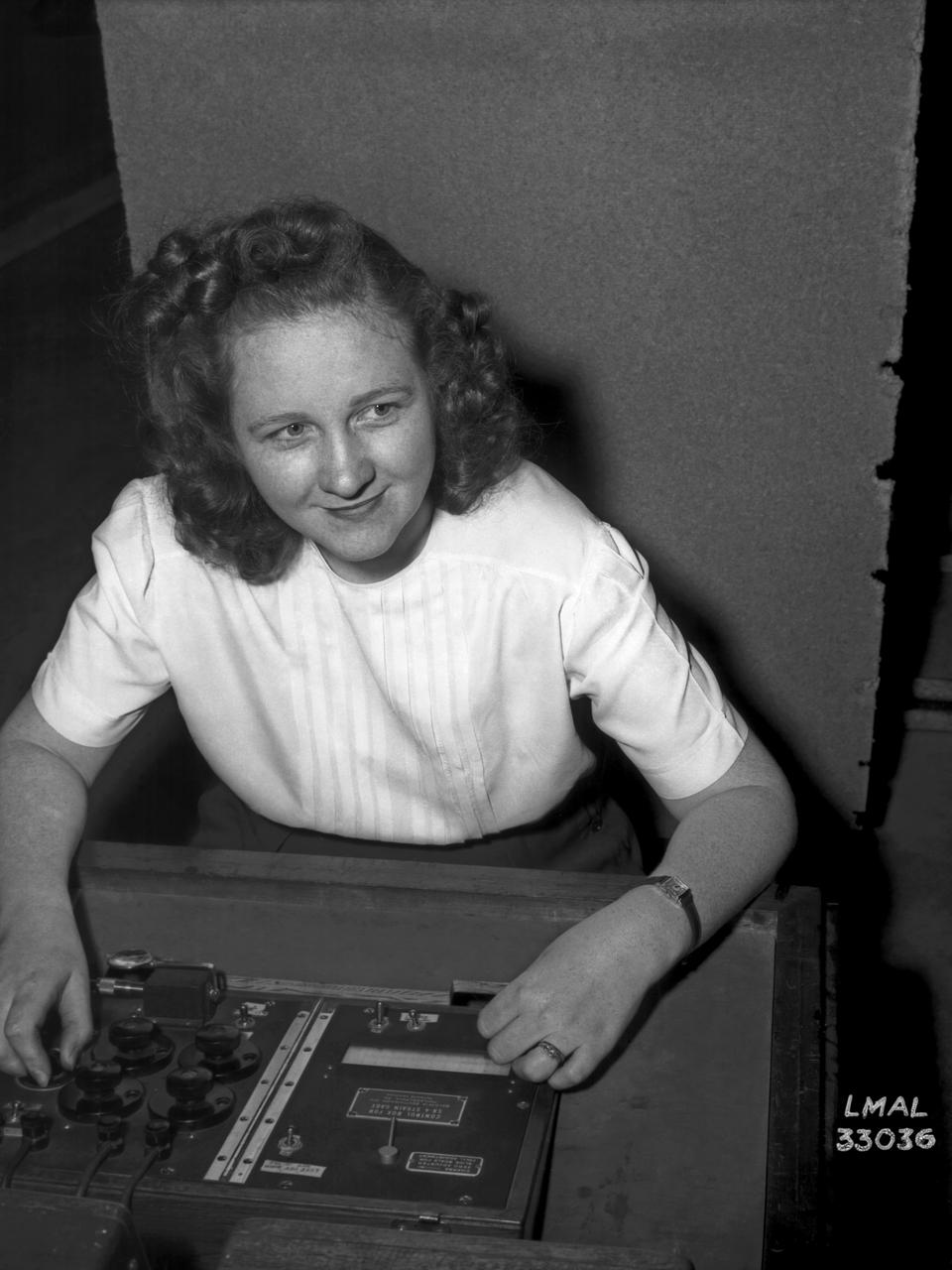
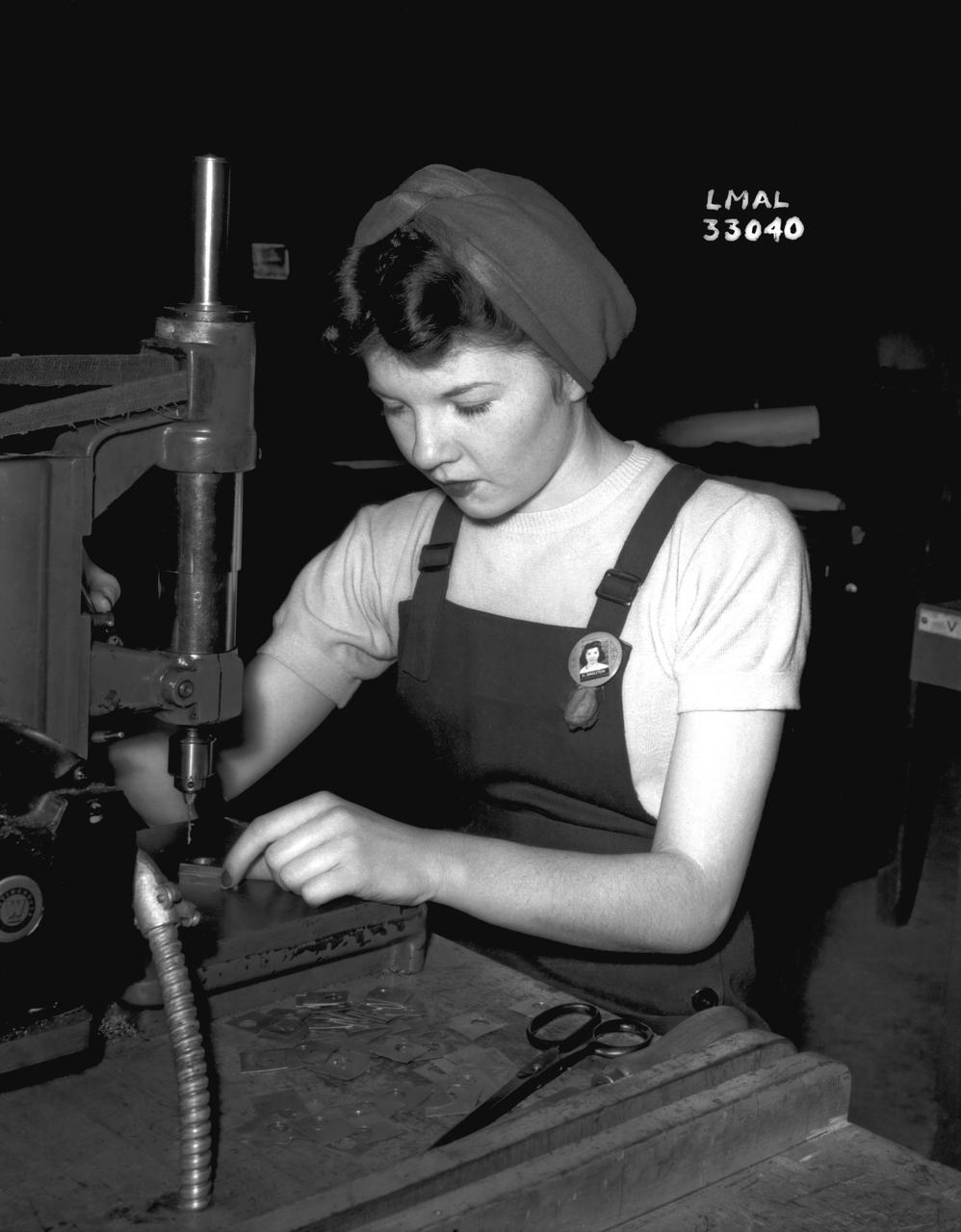
Women Adequately Filling Posts in NACA Laboratory: Nearly 200 women are employed at the Langley Laboratory of the National Advisory Committee for Aeronautics in a limited capacity as mechanics’ helpers and minor laboratory aids on the jobs formerly handled by men, according to E.H. Derring, of the Aerodynamics Division. Many phases of the operations of various wind tunnels at the laboratory are now handled by women with experienced male supervision. Mr. Derring said, pointing out that the reading of the data indicated on wind tunnel instruments during a test is done in a large measure by women. In addition to reading the instruments and computing and integrating engineering test data obtained from tunnel investigations, the minor laboratory aides assist in the preparation of aircraft models preliminary to testing. Women employees who will serve in the Aerodynamics Division of the Laboratory attend an orientation class for two weeks, during which they receive instruction on phases of the work they will do and their aptitudes for different types of work are evaluated in order that they may be properly placed. More than 100 women are employed in minor laboratory apprentices, performing mechanical work heretofore done by men. These women are employed in the various shops of the laboratory. Women in the woodworking shops are taught to operate 15 different machines in carrying out their assignments. Norfolk new paper article from 1943 by Lee Dickinson.
Women Adequately Filling Posts in NACA Laboratory: Nearly 200 women are employed at the Langley Laboratory of the National Advisory Committee for Aeronautics in a limited capacity as mechanics’ helpers and minor laboratory aids on the jobs formerly handled by men, according to E.H. Derring, of the Aerodynamics Division. Many phases of the operations of various wind tunnels at the laboratory are now handled by women with experienced male supervision. Mr. Derring said, pointing out that the reading of the data indicated on wind tunnel instruments during a test is done in a large measure by women. In addition to reading the instruments and computing and integrating engineering test data obtained from tunnel investigations, the minor laboratory aides assist in the preparation of aircraft models preliminary to testing. Women employees who will serve in the Aerodynamics Division of the Laboratory attend an orientation class for two weeks, during which they receive instruction on phases of the work they will do and their aptitudes for different types of work are evaluated in order that they may be properly placed. More than 100 women are employed in minor laboratory apprentices, performing mechanical work heretofore done by men. These women are employed in the various shops of the laboratory. Women in the woodworking shops are taught to operate 15 different machines in carrying out their assignments. Norfolk new paper article from 1943 by Lee Dickinson.
Women Adequately Filling Posts in NACA Laboratory: Nearly 200 women are employed at the Langley Laboratory of the National Advisory Committee for Aeronautics in a limited capacity as mechanics’ helpers and minor laboratory aids on the jobs formerly handled by men, according to E.H. Derring, of the Aerodynamics Division. Many phases of the operations of various wind tunnels at the laboratory are now handled by women with experienced male supervision. Mr. Derring said, pointing out that the reading of the data indicated on wind tunnel instruments during a test is done in a large measure by women. In addition to reading the instruments and computing and integrating engineering test data obtained from tunnel investigations, the minor laboratory aides assist in the preparation of aircraft models preliminary to testing. Women employees who will serve in the Aerodynamics Division of the Laboratory attend an orientation class for two weeks, during which they receive instruction on phases of the work they will do and their aptitudes for different types of work are evaluated in order that they may be properly placed. More than 100 women are employed in minor laboratory apprentices, performing mechanical work heretofore done by men. These women are employed in the various shops of the laboratory. Women in the woodworking shops are taught to operate 15 different machines in carrying out their assignments. Norfolk new paper article from 1943 by Lee Dickinson.
Women Adequately Filling Posts in NACA Laboratory: Nearly 200 women are employed at the Langley Laboratory of the National Advisory Committee for Aeronautics in a limited capacity as mechanics’ helpers and minor laboratory aids on the jobs formerly handled by men, according to E.H. Derring, of the Aerodynamics Division. Many phases of the operations of various wind tunnels at the laboratory are now handled by women with experienced male supervision. Mr. Derring said, pointing out that the reading of the data indicated on wind tunnel instruments during a test is done in a large measure by women. In addition to reading the instruments and computing and integrating engineering test data obtained from tunnel investigations, the minor laboratory aides assist in the preparation of aircraft models preliminary to testing. Women employees who will serve in the Aerodynamics Division of the Laboratory attend an orientation class for two weeks, during which they receive instruction on phases of the work they will do and their aptitudes for different types of work are evaluated in order that they may be properly placed. More than 100 women are employed in minor laboratory apprentices, performing mechanical work heretofore done by men. These women are employed in the various shops of the laboratory. Women in the woodworking shops are taught to operate 15 different machines in carrying out their assignments. Norfolk new paper article from 1943 by Lee Dickinson.
Women Adequately Filling Posts in NACA Laboratory: Nearly 200 women are employed at the Langley Laboratory of the National Advisory Committee for Aeronautics in a limited capacity as mechanics’ helpers and minor laboratory aids on the jobs formerly handled by men, according to E.H. Derring, of the Aerodynamics Division. Many phases of the operations of various wind tunnels at the laboratory are now handled by women with experienced male supervision. Mr. Derring said, pointing out that the reading of the data indicated on wind tunnel instruments during a test is done in a large measure by women. In addition to reading the instruments and computing and integrating engineering test data obtained from tunnel investigations, the minor laboratory aides assist in the preparation of aircraft models preliminary to testing. Women employees who will serve in the Aerodynamics Division of the Laboratory attend an orientation class for two weeks, during which they receive instruction on phases of the work they will do and their aptitudes for different types of work are evaluated in order that they may be properly placed. More than 100 women are employed in minor laboratory apprentices, performing mechanical work heretofore done by men. These women are employed in the various shops of the laboratory. Women in the woodworking shops are taught to operate 15 different machines in carrying out their assignments. Norfolk new paper article from 1943 by Lee Dickinson.
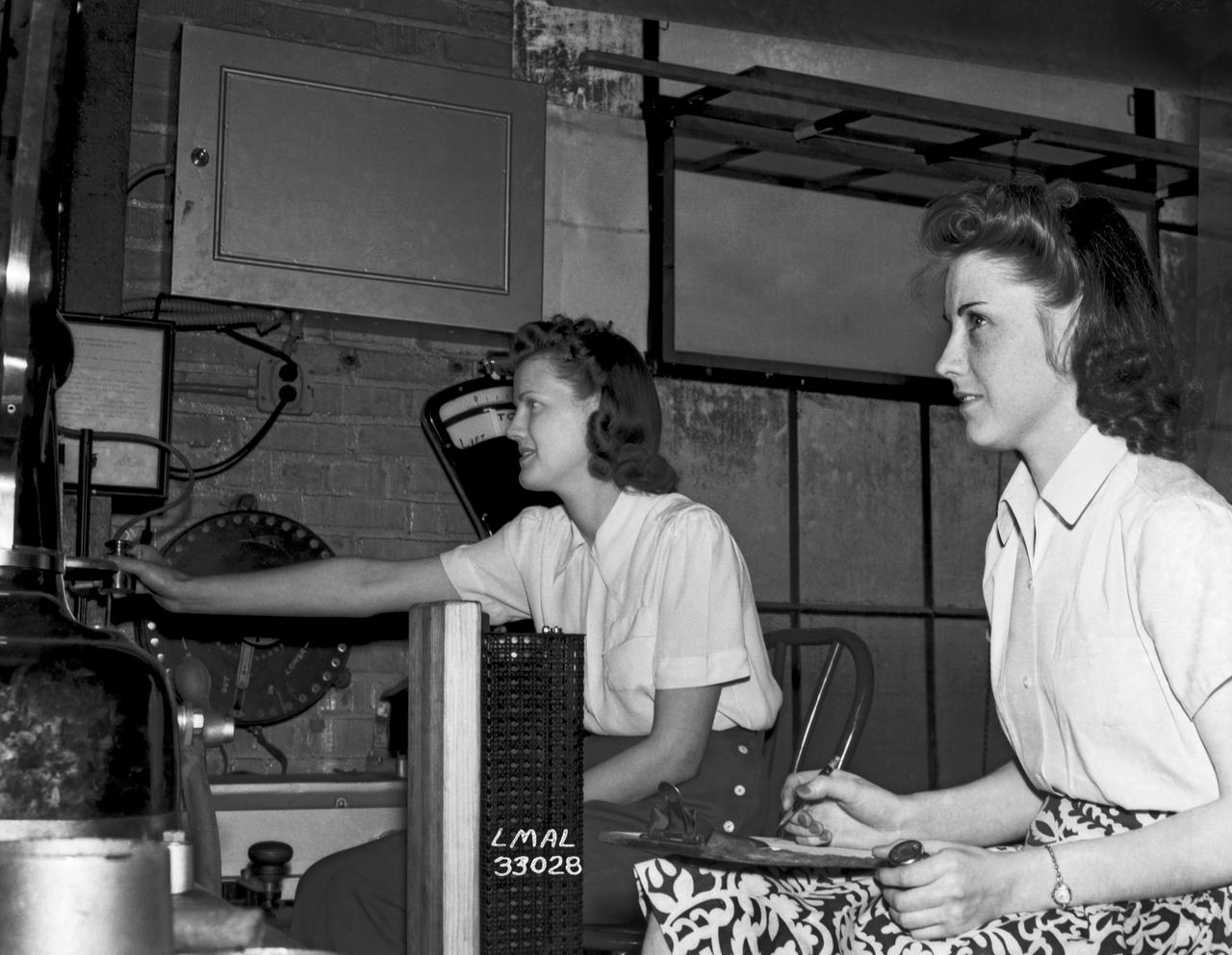
Women Adequately Filling Posts in NACA Laboratory: Nearly 200 women are employed at the Langley Laboratory of the National Advisory Committee for Aeronautics in a limited capacity as mechanics’ helpers and minor laboratory aids on the jobs formerly handled by men, according to E.H. Derring, of the Aerodynamics Division. Many phases of the operations of various wind tunnels at the laboratory are now handled by women with experienced male supervision. Mr. Derring said, pointing out that the reading of the data indicated on wind tunnel instruments during a test is done in a large measure by women. In addition to reading the instruments and computing and integrating engineering test data obtained from tunnel investigations, the minor laboratory aides assist in the preparation of aircraft models preliminary to testing. Women employees who will serve in the Aerodynamics Division of the Laboratory attend an orientation class for two weeks, during which they receive instruction on phases of the work they will do and their aptitudes for different types of work are evaluated in order that they may be properly placed. More than 100 women are employed in minor laboratory apprentices, performing mechanical work heretofore done by men. These women are employed in the various shops of the laboratory. Women in the woodworking shops are taught to operate 15 different machines in carrying out their assignments. Norfolk new paper article from 1943 by Lee Dickinson.
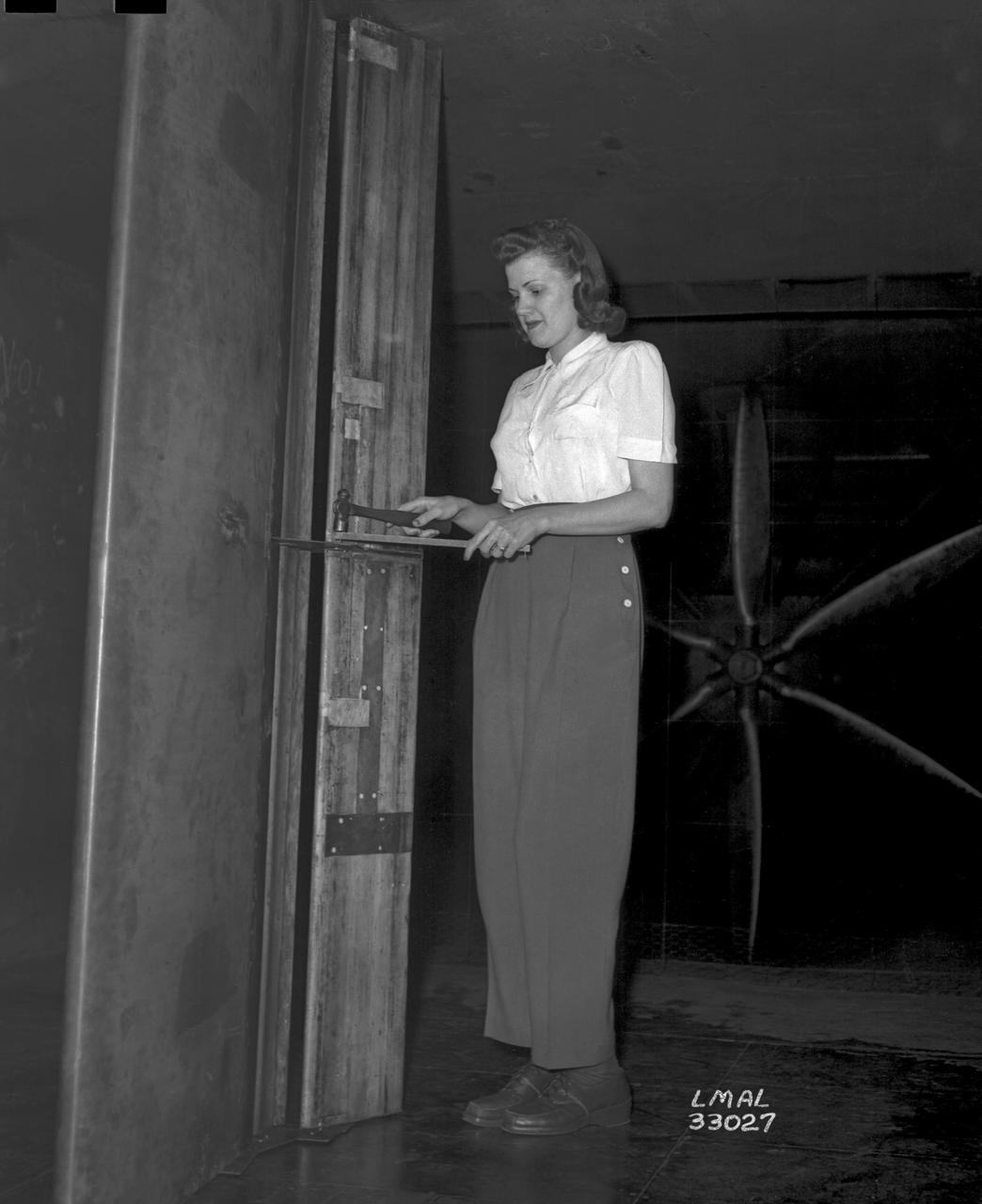
Women Adequately Filling Posts in NACA Laboratory: Nearly 200 women are employed at the Langley Laboratory of the National Advisory Committee for Aeronautics in a limited capacity as mechanics’ helpers and minor laboratory aids on the jobs formerly handled by men, according to E.H. Derring, of the Aerodynamics Division. Many phases of the operations of various wind tunnels at the laboratory are now handled by women with experienced male supervision. Mr. Derring said, pointing out that the reading of the data indicated on wind tunnel instruments during a test is done in a large measure by women. In addition to reading the instruments and computing and integrating engineering test data obtained from tunnel investigations, the minor laboratory aides assist in the preparation of aircraft models preliminary to testing. Women employees who will serve in the Aerodynamics Division of the Laboratory attend an orientation class for two weeks, during which they receive instruction on phases of the work they will do and their aptitudes for different types of work are evaluated in order that they may be properly placed. More than 100 women are employed in minor laboratory apprentices, performing mechanical work heretofore done by men. These women are employed in the various shops of the laboratory. Women in the woodworking shops are taught to operate 15 different machines in carrying out their assignments. Norfolk new paper article from 1943 by Lee Dickinson.
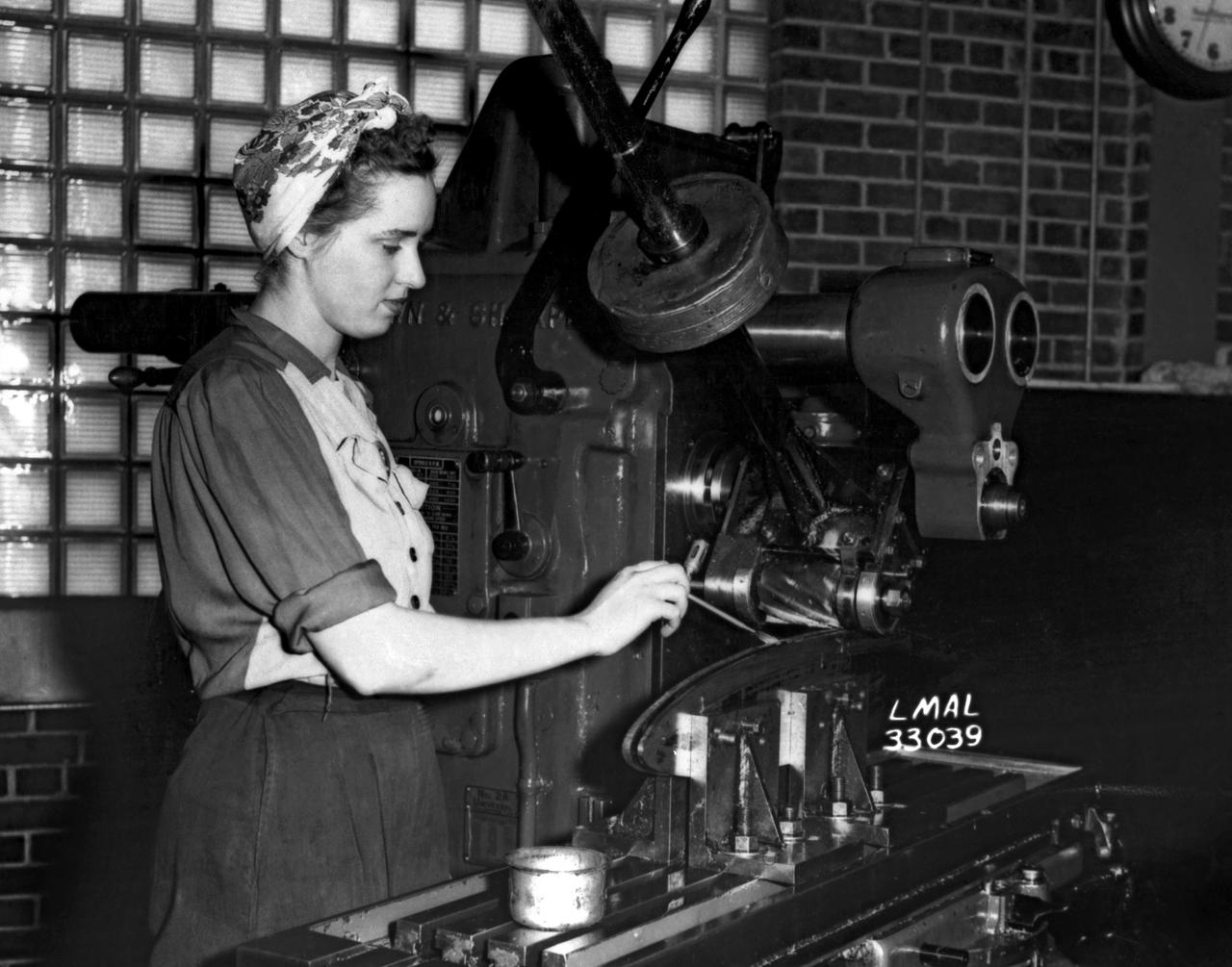
Women Adequately Filling Posts in NACA Laboratory: Nearly 200 women are employed at the Langley Laboratory of the National Advisory Committee for Aeronautics in a limited capacity as mechanics’ helpers and minor laboratory aids on the jobs formerly handled by men, according to E.H. Derring, of the Aerodynamics Division. Many phases of the operations of various wind tunnels at the laboratory are now handled by women with experienced male supervision. Mr. Derring said, pointing out that the reading of the data indicated on wind tunnel instruments during a test is done in a large measure by women. In addition to reading the instruments and computing and integrating engineering test data obtained from tunnel investigations, the minor laboratory aides assist in the preparation of aircraft models preliminary to testing. Women employees who will serve in the Aerodynamics Division of the Laboratory attend an orientation class for two weeks, during which they receive instruction on phases of the work they will do and their aptitudes for different types of work are evaluated in order that they may be properly placed. More than 100 women are employed in minor laboratory apprentices, performing mechanical work heretofore done by men. These women are employed in the various shops of the laboratory. Women in the woodworking shops are taught to operate 15 different machines in carrying out their assignments. Norfolk new paper article from 1943 by Lee Dickinson.
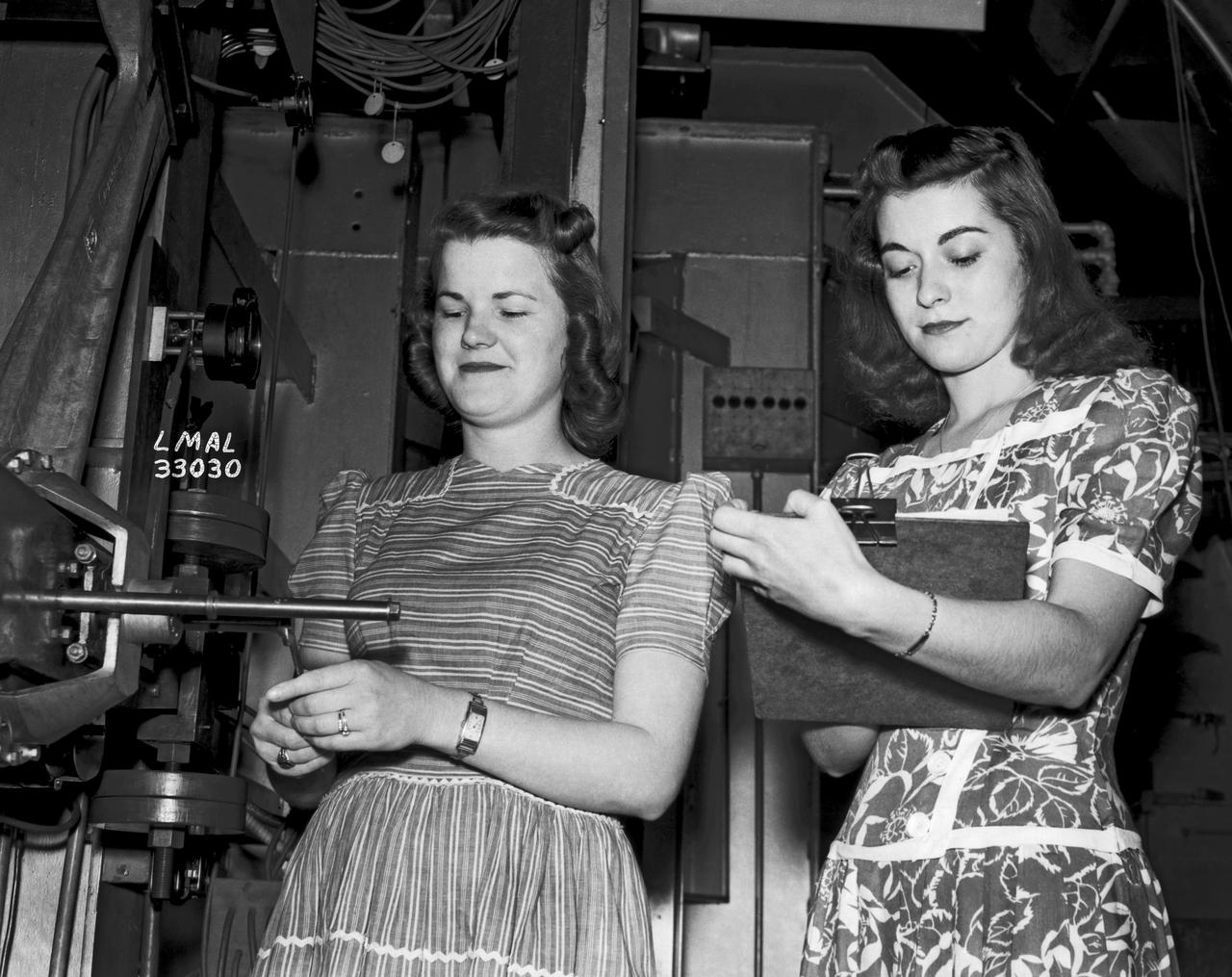
Women Adequately Filling Posts in NACA Laboratory: Nearly 200 women are employed at the Langley Laboratory of the National Advisory Committee for Aeronautics in a limited capacity as mechanics’ helpers and minor laboratory aids on the jobs formerly handled by men, according to E.H. Derring, of the Aerodynamics Division. Many phases of the operations of various wind tunnels at the laboratory are now handled by women with experienced male supervision. Mr. Derring said, pointing out that the reading of the data indicated on wind tunnel instruments during a test is done in a large measure by women. In addition to reading the instruments and computing and integrating engineering test data obtained from tunnel investigations, the minor laboratory aides assist in the preparation of aircraft models preliminary to testing. Women employees who will serve in the Aerodynamics Division of the Laboratory attend an orientation class for two weeks, during which they receive instruction on phases of the work they will do and their aptitudes for different types of work are evaluated in order that they may be properly placed. More than 100 women are employed in minor laboratory apprentices, performing mechanical work heretofore done by men. These women are employed in the various shops of the laboratory. Women in the woodworking shops are taught to operate 15 different machines in carrying out their assignments. Norfolk new paper article from 1943 by Lee Dickinson.
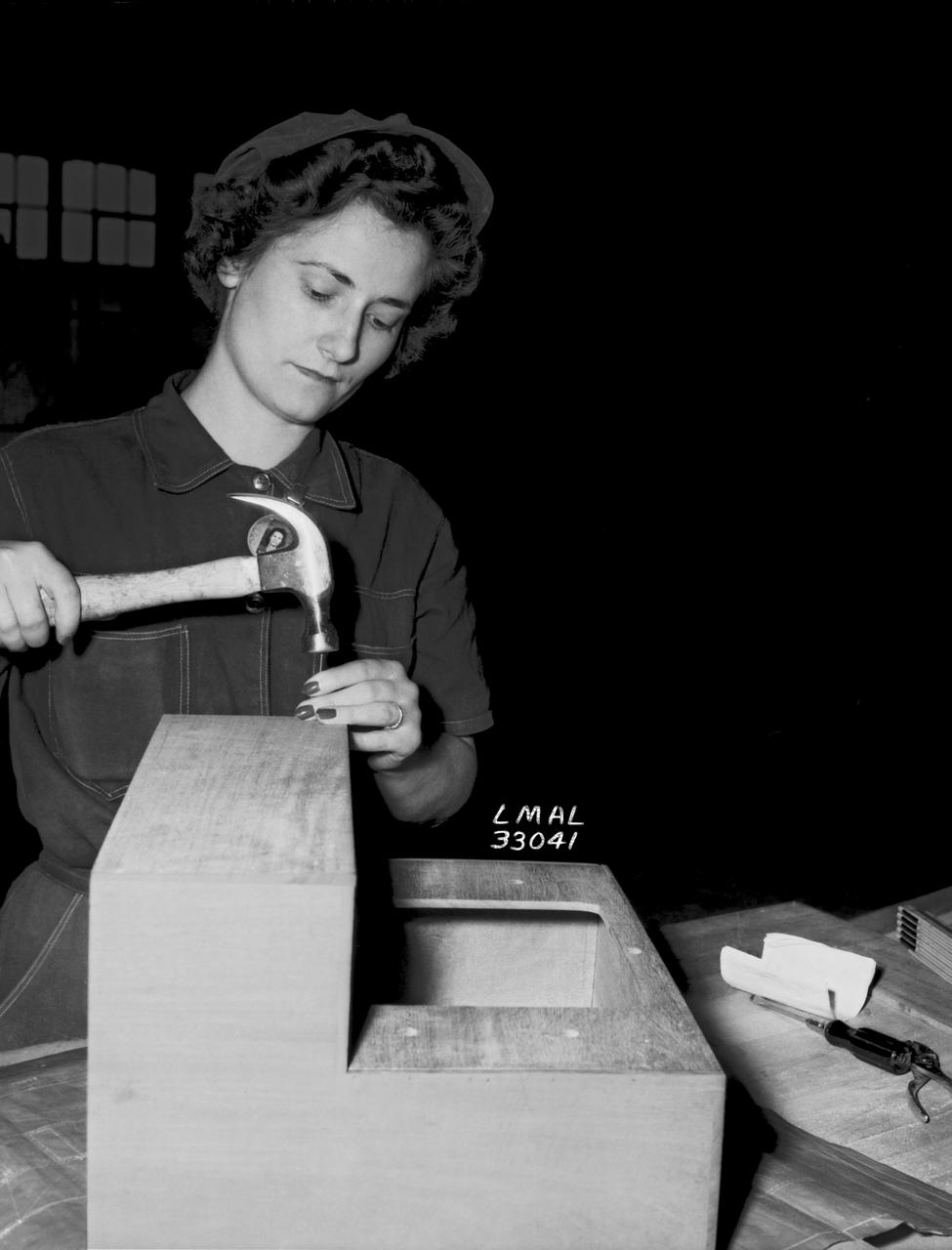
Women Adequately Filling Posts in NACA Laboratory: Nearly 200 women are employed at the Langley Laboratory of the National Advisory Committee for Aeronautics in a limited capacity as mechanics’ helpers and minor laboratory aids on the jobs formerly handled by men, according to E.H. Derring, of the Aerodynamics Division. Many phases of the operations of various wind tunnels at the laboratory are now handled by women with experienced male supervision. Mr. Derring said, pointing out that the reading of the data indicated on wind tunnel instruments during a test is done in a large measure by women. In addition to reading the instruments and computing and integrating engineering test data obtained from tunnel investigations, the minor laboratory aides assist in the preparation of aircraft models preliminary to testing. Women employees who will serve in the Aerodynamics Division of the Laboratory attend an orientation class for two weeks, during which they receive instruction on phases of the work they will do and their aptitudes for different types of work are evaluated in order that they may be properly placed. More than 100 women are employed in minor laboratory apprentices, performing mechanical work heretofore done by men. These women are employed in the various shops of the laboratory. Women in the woodworking shops are taught to operate 15 different machines in carrying out their assignments. Norfolk new paper article from 1943 by Lee Dickinson.

A mechanic and apprentice work on a wooden impeller in the Fabrication Shop at the NACA Lewis Flight Propulsion Laboratory. The 260-person Fabrication Division created almost all of the equipment and models used at the laboratory. The Technical Services Building, referred to as the “Fab Shop”, contained a number of specialized shops in the 1940s and 1950s. These included a Machine Shop, Sheet Metal Shop, Wood and Pattern Shop, Instrument Shop, Thermocouple Shop, Heat Treating Shop, Metallurgical Laboratory, and Fabrication Office. The Machine Shop fabricated research equipment not commercially available. During World War II these technicians produced high-speed cameras for combustion research, impellers and other supercharger components, and key equipment for the lab’s first supersonic wind tunnel. The Wood and Pattern Shop created everything from control panels and cabinets to aircraft model molds for sheet metal work. The Sheet Metal Shop had the ability to work with 0.01 to 4-inches thick steel plates. The Instrument Shop specialized in miniature parts and instrumentation, while the Thermocouple Shop standardized the installation of pitot tubes and thermocouples. The Metallurgical Laboratory contained a control lab for the Heat Treating Shop and a service lab for the NACA Lewis research divisions. The Heat Treating Shop heated metal parts to optimize their physical properties and contained a Precision Castings Foundry to manufacture equipment made of heat resisting alloys.
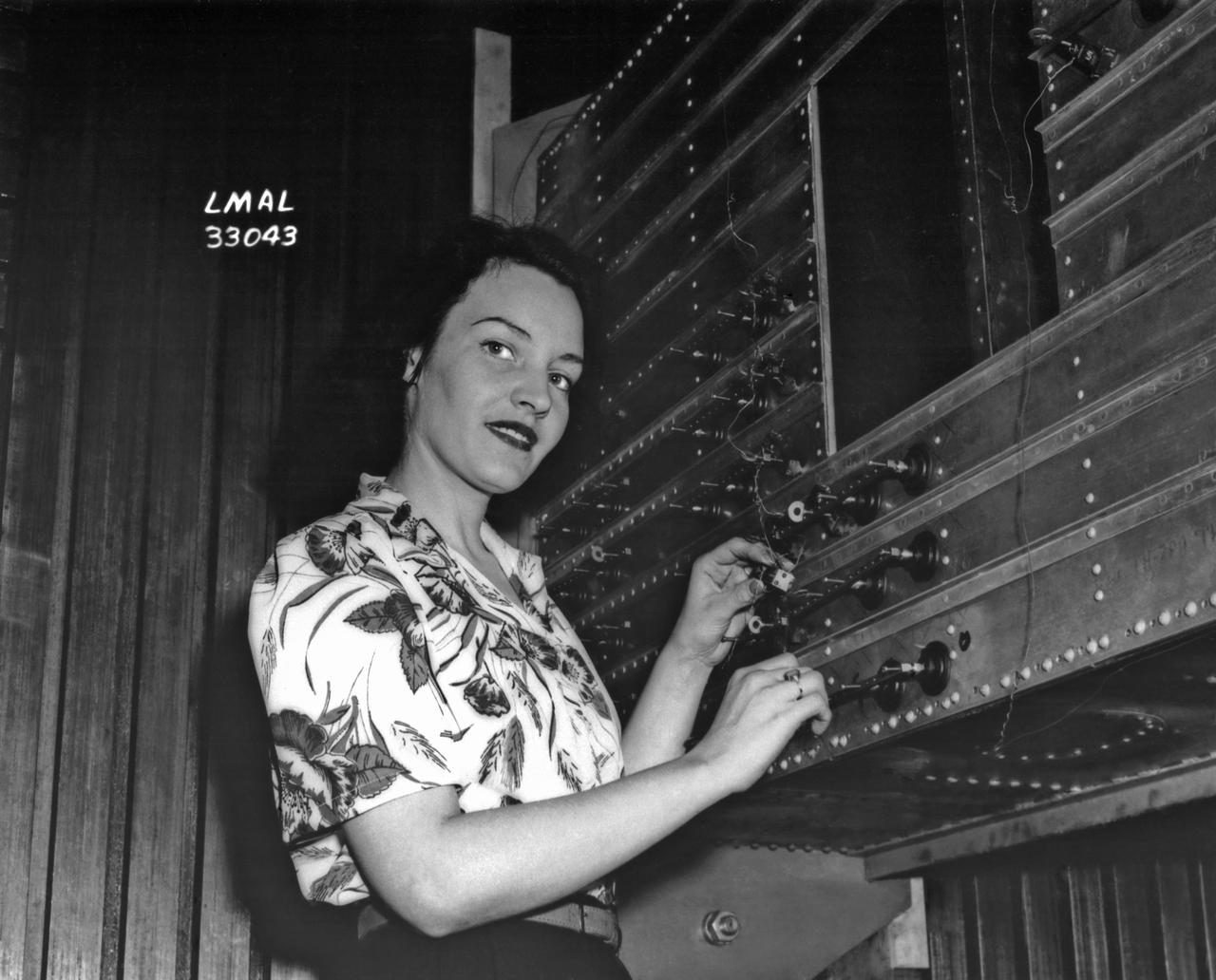
Women Adequately Filling Posts in NACA Laboratory: Nearly 200 women are employed at the Langley Laboratory of the National Advisory Committee for Aeronautics in a limited capacity as mechanics’ helpers and minor laboratory aids on the jobs formerly handled by men, according to E.H. Derring, of the Aerodynamics Division. Many phases of the operations of various wind tunnels at the laboratory are now handled by women with experienced male supervision. Mr. Derring said, pointing out that the reading of the data indicated on wind tunnel instruments during a test is done in a large measure by women. In addition to reading the instruments and computing and integrating engineering test data obtained from tunnel investigations, the minor laboratory aides assist in the preparation of aircraft models preliminary to testing. Women employees who will serve in the Aerodynamics Division of the Laboratory attend an orientation class for two weeks, during which they receive instruction on phases of the work they will do and their aptitudes for different types of work are evaluated in order that they may be properly placed. More than 100 women are employed in minor laboratory apprentices, performing mechanical work heretofore done by men. These women are employed in the various shops of the laboratory. Women in the woodworking shops are taught to operate 15 different machines in carrying out their assignments. Norfolk new paper article from 1943 by Lee Dickinson.
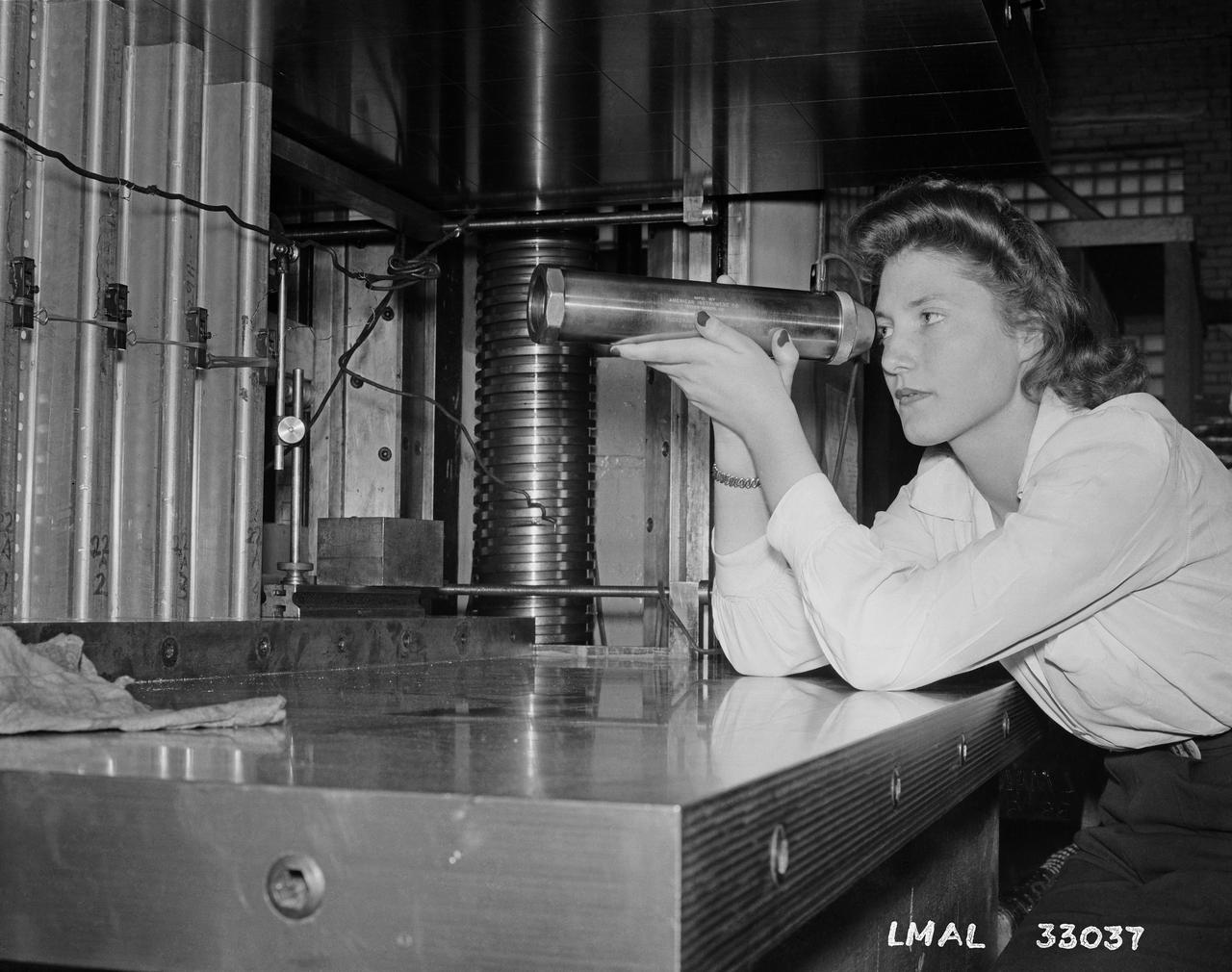
Women Adequately Filling Posts in NACA Laboratory: Nearly 200 women are employed at the Langley Laboratory of the National Advisory Committee for Aeronautics in a limited capacity as mechanics’ helpers and minor laboratory aids on the jobs formerly handled by men, according to E.H. Derring, of the Aerodynamics Division. Many phases of the operations of various wind tunnels at the laboratory are now handled by women with experienced male supervision. Mr. Derring said, pointing out that the reading of the data indicated on wind tunnel instruments during a test is done in a large measure by women. In addition to reading the instruments and computing and integrating engineering test data obtained from tunnel investigations, the minor laboratory aides assist in the preparation of aircraft models preliminary to testing. Women employees who will serve in the Aerodynamics Division of the Laboratory attend an orientation class for two weeks, during which they receive instruction on phases of the work they will do and their aptitudes for different types of work are evaluated in order that they may be properly placed. More than 100 women are employed in minor laboratory apprentices, performing mechanical work heretofore done by men. These women are employed in the various shops of the laboratory. Women in the woodworking shops are taught to operate 15 different machines in carrying out their assignments. Norfolk new paper article from 1943 by Lee Dickinson.
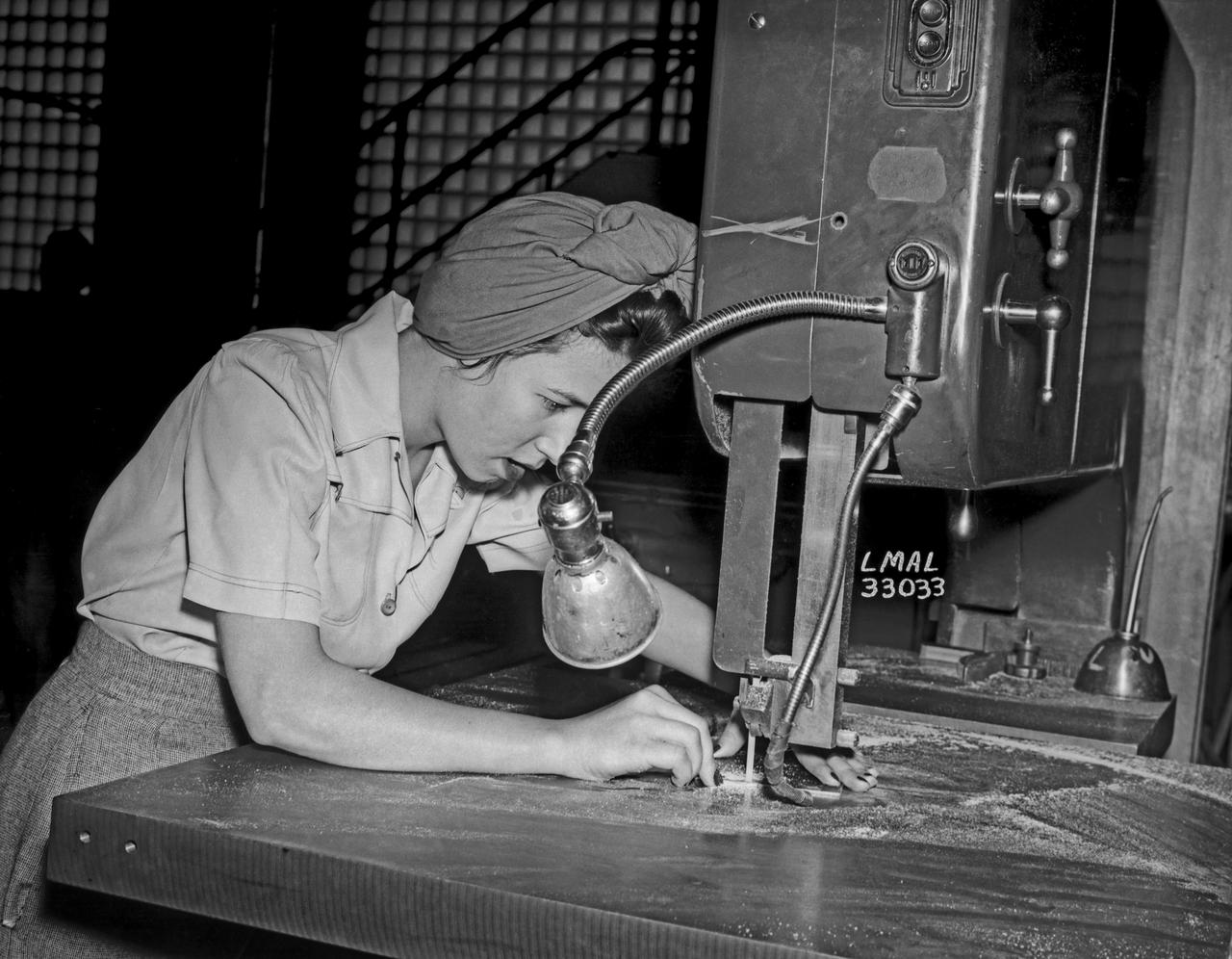
Women Adequately Filling Posts in NACA Laboratory: Nearly 200 women are employed at the Langley Laboratory of the National Advisory Committee for Aeronautics in a limited capacity as mechanics’ helpers and minor laboratory aids on the jobs formerly handled by men, according to E.H. Derring, of the Aerodynamics Division. Many phases of the operations of various wind tunnels at the laboratory are now handled by women with experienced male supervision. Mr. Derring said, pointing out that the reading of the data indicated on wind tunnel instruments during a test is done in a large measure by women. In addition to reading the instruments and computing and integrating engineering test data obtained from tunnel investigations, the minor laboratory aides assist in the preparation of aircraft models preliminary to testing. Women employees who will serve in the Aerodynamics Division of the Laboratory attend an orientation class for two weeks, during which they receive instruction on phases of the work they will do and their aptitudes for different types of work are evaluated in order that they may be properly placed. More than 100 women are employed in minor laboratory apprentices, performing mechanical work heretofore done by men. These women are employed in the various shops of the laboratory. Women in the woodworking shops are taught to operate 15 different machines in carrying out their assignments. Norfolk new paper article from 1943 by Lee Dickinson.
Women Adequately Filling Posts in NACA Laboratory: Nearly 200 women are employed at the Langley Laboratory of the National Advisory Committee for Aeronautics in a limited capacity as mechanics’ helpers and minor laboratory aids on the jobs formerly handled by men, according to E.H. Derring, of the Aerodynamics Division. Many phases of the operations of various wind tunnels at the laboratory are now handled by women with experienced male supervision. Mr. Derring said, pointing out that the reading of the data indicated on wind tunnel instruments during a test is done in a large measure by women. In addition to reading the instruments and computing and integrating engineering test data obtained from tunnel investigations, the minor laboratory aides assist in the preparation of aircraft models preliminary to testing. Women employees who will serve in the Aerodynamics Division of the Laboratory attend an orientation class for two weeks, during which they receive instruction on phases of the work they will do and their aptitudes for different types of work are evaluated in order that they may be properly placed. More than 100 women are employed in minor laboratory apprentices, performing mechanical work heretofore done by men. These women are employed in the various shops of the laboratory. Women in the woodworking shops are taught to operate 15 different machines in carrying out their assignments. Norfolk new paper article from 1943 by Lee Dickinson.
Women Adequately Filling Posts in NACA Laboratory: Nearly 200 women are employed at the Langley Laboratory of the National Advisory Committee for Aeronautics in a limited capacity as mechanics’ helpers and minor laboratory aids on the jobs formerly handled by men, according to E.H. Derring, of the Aerodynamics Division. Many phases of the operations of various wind tunnels at the laboratory are now handled by women with experienced male supervision. Mr. Derring said, pointing out that the reading of the data indicated on wind tunnel instruments during a test is done in a large measure by women. In addition to reading the instruments and computing and integrating engineering test data obtained from tunnel investigations, the minor laboratory aides assist in the preparation of aircraft models preliminary to testing. Women employees who will serve in the Aerodynamics Division of the Laboratory attend an orientation class for two weeks, during which they receive instruction on phases of the work they will do and their aptitudes for different types of work are evaluated in order that they may be properly placed. More than 100 women are employed in minor laboratory apprentices, performing mechanical work heretofore done by men. These women are employed in the various shops of the laboratory. Women in the woodworking shops are taught to operate 15 different machines in carrying out their assignments. Norfolk new paper article from 1943 by Lee Dickinson.
Women Adequately Filling Posts in NACA Laboratory: Nearly 200 women are employed at the Langley Laboratory of the National Advisory Committee for Aeronautics in a limited capacity as mechanics’ helpers and minor laboratory aids on the jobs formerly handled by men, according to E.H. Derring, of the Aerodynamics Division. Many phases of the operations of various wind tunnels at the laboratory are now handled by women with experienced male supervision. Mr. Derring said, pointing out that the reading of the data indicated on wind tunnel instruments during a test is done in a large measure by women. In addition to reading the instruments and computing and integrating engineering test data obtained from tunnel investigations, the minor laboratory aides assist in the preparation of aircraft models preliminary to testing. Women employees who will serve in the Aerodynamics Division of the Laboratory attend an orientation class for two weeks, during which they receive instruction on phases of the work they will do and their aptitudes for different types of work are evaluated in order that they may be properly placed. More than 100 women are employed in minor laboratory apprentices, performing mechanical work heretofore done by men. These women are employed in the various shops of the laboratory. Women in the woodworking shops are taught to operate 15 different machines in carrying out their assignments. Norfolk new paper article from 1943 by Lee Dickinson.
Women Adequately Filling Posts in NACA Laboratory: Nearly 200 women are employed at the Langley Laboratory of the National Advisory Committee for Aeronautics in a limited capacity as mechanics’ helpers and minor laboratory aids on the jobs formerly handled by men, according to E.H. Derring, of the Aerodynamics Division. Many phases of the operations of various wind tunnels at the laboratory are now handled by women with experienced male supervision. Mr. Derring said, pointing out that the reading of the data indicated on wind tunnel instruments during a test is done in a large measure by women. In addition to reading the instruments and computing and integrating engineering test data obtained from tunnel investigations, the minor laboratory aides assist in the preparation of aircraft models preliminary to testing. Women employees who will serve in the Aerodynamics Division of the Laboratory attend an orientation class for two weeks, during which they receive instruction on phases of the work they will do and their aptitudes for different types of work are evaluated in order that they may be properly placed. More than 100 women are employed in minor laboratory apprentices, performing mechanical work heretofore done by men. These women are employed in the various shops of the laboratory. Women in the woodworking shops are taught to operate 15 different machines in carrying out their assignments. Norfolk new paper article from 1943 by Lee Dickinson.

Women Adequately Filling Posts in NACA Laboratory: Nearly 200 women are employed at the Langley Laboratory of the National Advisory Committee for Aeronautics in a limited capacity as mechanics’ helpers and minor laboratory aids on the jobs formerly handled by men, according to E.H. Derring, of the Aerodynamics Division. Many phases of the operations of various wind tunnels at the laboratory are now handled by women with experienced male supervision. Mr. Derring said, pointing out that the reading of the data indicated on wind tunnel instruments during a test is done in a large measure by women. In addition to reading the instruments and computing and integrating engineering test data obtained from tunnel investigations, the minor laboratory aides assist in the preparation of aircraft models preliminary to testing. Women employees who will serve in the Aerodynamics Division of the Laboratory attend an orientation class for two weeks, during which they receive instruction on phases of the work they will do and their aptitudes for different types of work are evaluated in order that they may be properly placed. More than 100 women are employed in minor laboratory apprentices, performing mechanical work heretofore done by men. These women are employed in the various shops of the laboratory. Women in the woodworking shops are taught to operate 15 different machines in carrying out their assignments. Norfolk new paper article from 1943 by Lee Dickinson.
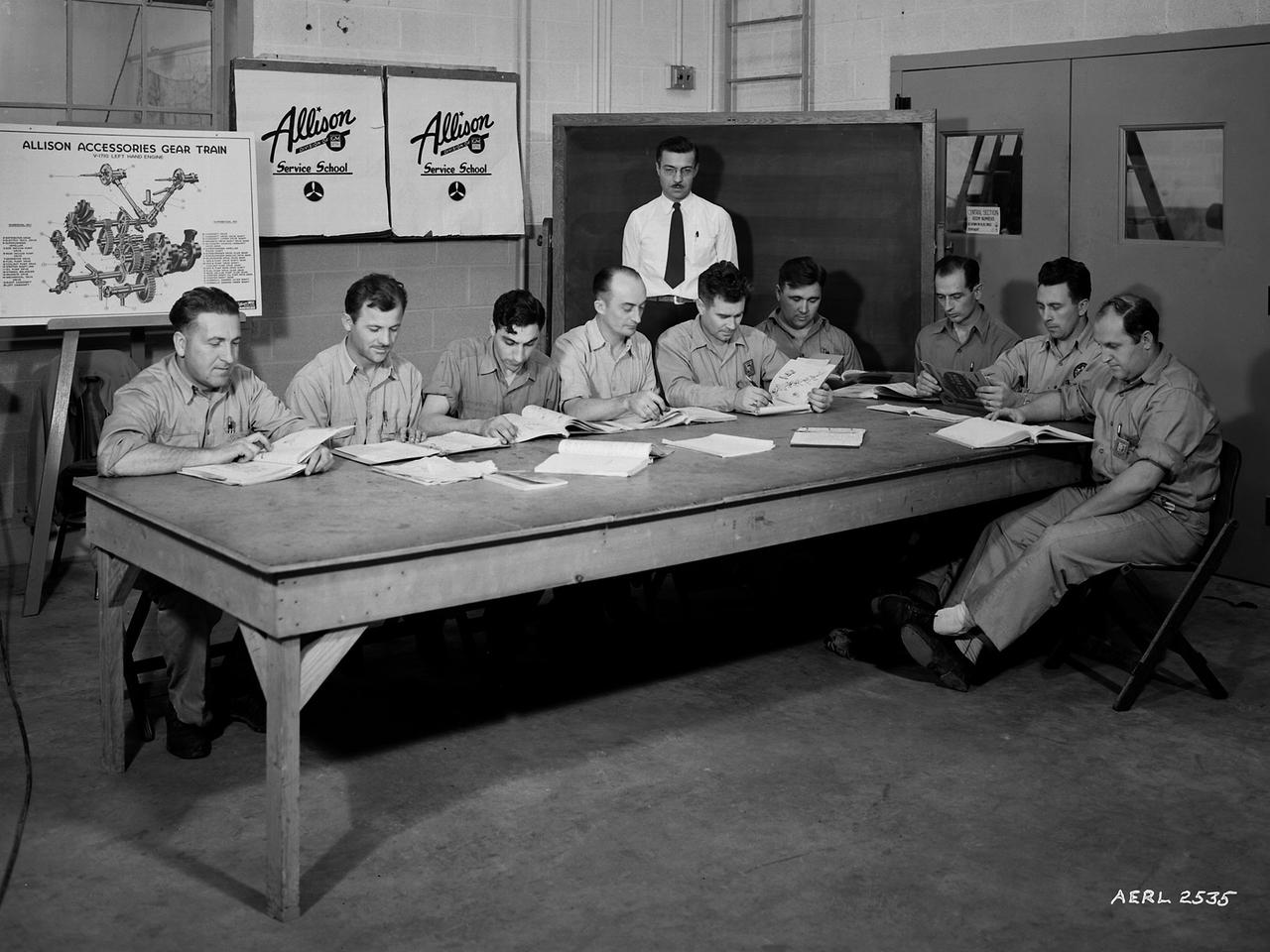
The Allison Engine Company's A.G. Covell instructs mechanics from various divisions at the National Advisory Committee for Aeronautics (NACA) Aircraft Engine Research Laboratory on the operation of the Allison Basic Engine. The military had asked that the laboratory undertake an extensive program to improve the performance of the Allison V–1710 engine. The V–1710 was the only liquid-cooled engine used during World War II, and the military counted on it to power several types of fighter aircraft. The NACA instituted an Apprentice Program during the war to educate future mechanics, technicians, and electricians. The program was suspended for a number of years due to the increasing rates of military service by its participants. The laboratory continued its in-house education during the war, however, by offering a number of classes to its employees and lectures for the research staff. The classes and lectures were usually taught by fellow members of the staff, but occasionally external experts were brought in. The students in the Allison class in the Engine Research Building were taught how to completely disassemble and reassemble the engine components and systems. From left to right are Don Vining, Ed Cudlin, Gus DiNovo, George Larsen, Charles Diggs, Martin Lipes, Harley Roberts, Martin Berwaldt and John Dempsey. A.G. Covell is standing.
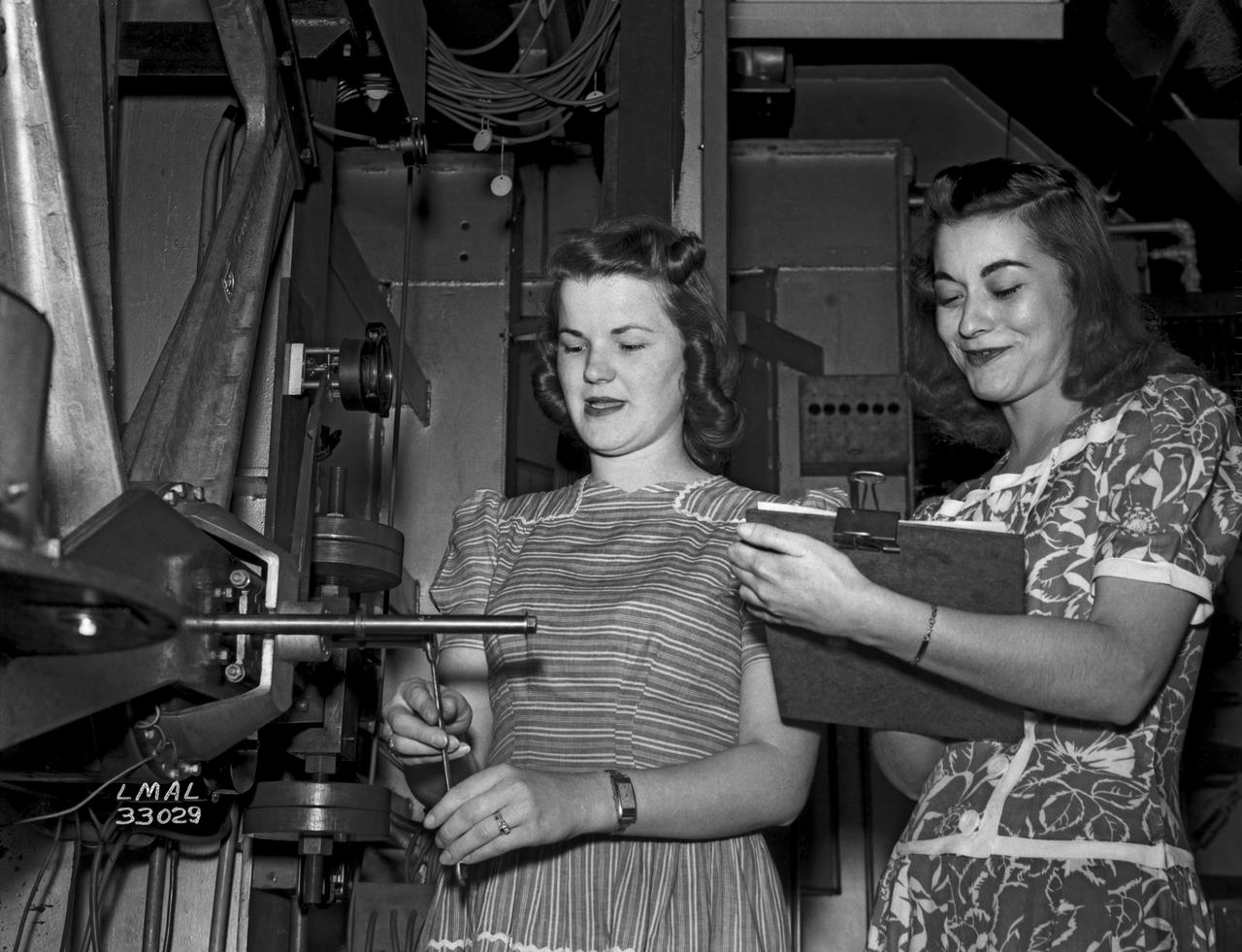
Women Adequately Filling Posts in NACA Laboratory: Nearly 200 women are employed at the Langley Laboratory of the National Advisory Committee for Aeronautics in a limited capacity as mechanics’ helpers and minor laboratory aids on the jobs formerly handled by men, according to E.H. Derring, of the Aerodynamics Division. Many phases of the operations of various wind tunnels at the laboratory are now handled by women with experienced male supervision. Mr. Derring said, pointing out that the reading of the data indicated on wind tunnel instruments during a test is done in a large measure by women. In addition to reading the instruments and computing and integrating engineering test data obtained from tunnel investigations, the minor laboratory aides assist in the preparation of aircraft models preliminary to testing. Women employees who will serve in the Aerodynamics Division of the Laboratory attend an orientation class for two weeks, during which they receive instruction on phases of the work they will do and their aptitudes for different types of work are evaluated in order that they may be properly placed. More than 100 women are employed in minor laboratory apprentices, performing mechanical work heretofore done by men. These women are employed in the various shops of the laboratory. Women in the woodworking shops are taught to operate 15 different machines in carrying out their assignments. Norfolk new paper article from 1943 by Lee Dickinson.
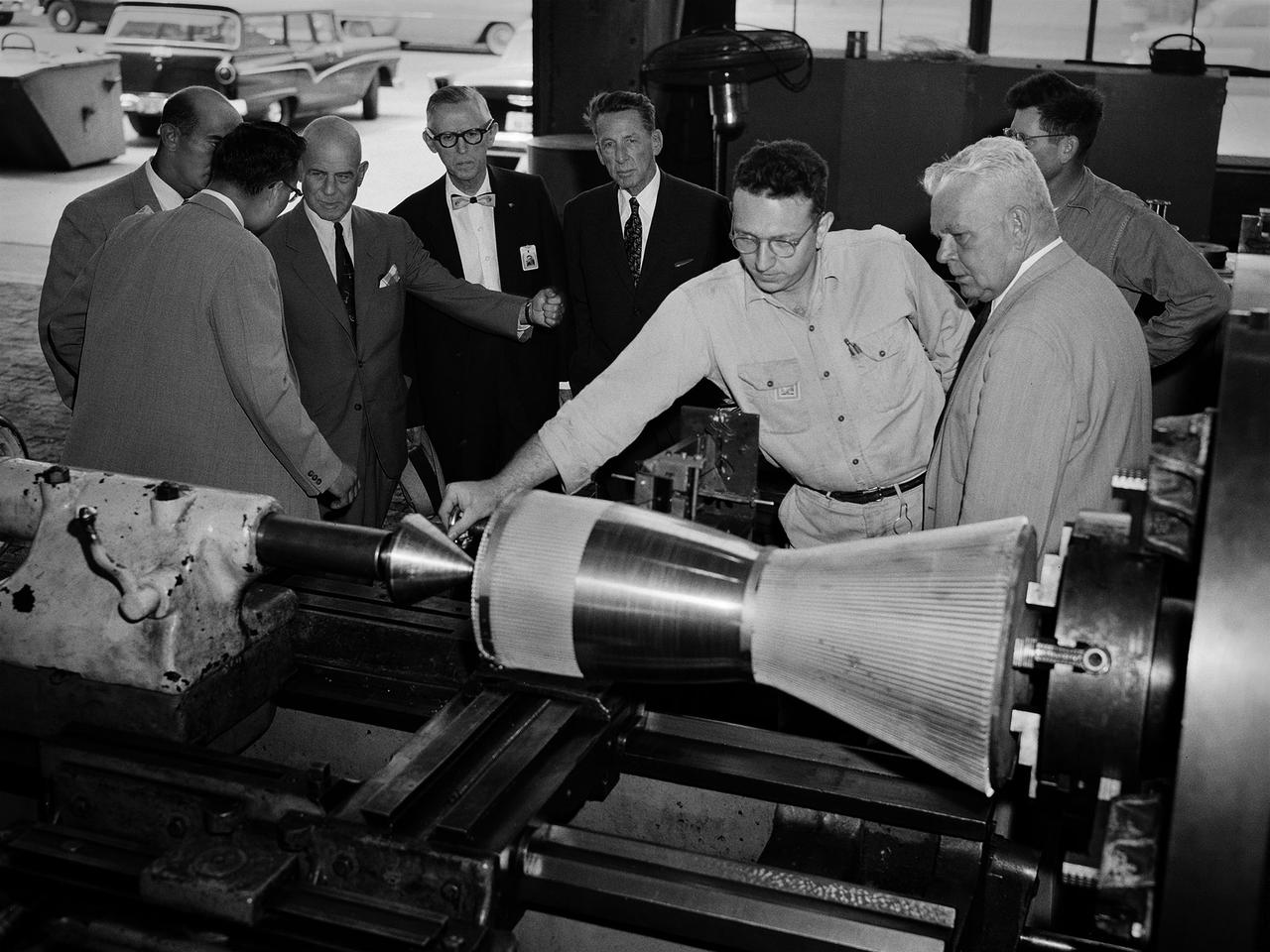
National Advisory Committee for Aeronautics (NACA) Chairman James Doolittle and Thompson Products Chairman of the Board Frederick Crawford receive a tour of the Lewis Flight Propulsion Laboratory during the last few months of the NACA. Lewis mechanic Leonard Tesar demonstrates the machining of a 20,000-pound thrust rocket engine for the group in the Fabrication Shop. From left to right, Associate Director Eugene Manganiello, researcher Edward Baehr, Doolittle, NACA Executive Secretary John Victory, Crawford, Tesar, Lewis Director Raymond Sharp, and mechanic Curtis Strawn. Doolittle began his career as a test pilot and air racer. In 1942 he famously flew a B-25 Mitchell on a daring raid over Tokyo. Doolittle also worked with the aviation industry on the development of aircraft fuels and instrumentation. After the war he served as vice president of Shell Oil and as a key government advisor. In this capacity he also served on the NACA’s Executive Committee for a number of years and served as its Chairman in 1957 and 1958. Tesar was a supervisor at the Sheet Metal Shop in the Fabrication Building. He joined the laboratory in 1948 and enrolled in their Apprentice Program. He graduated from the school three years later as an aviation metalsmith. The Fabrication Branch created a wide variety of hardware for the laboratory’s research projects. Requests from research divisions ranged from sheetmetal manufacturing for aircraft to fabrication of rocket engines. Tesar retired in 1982 after 37 years of service.