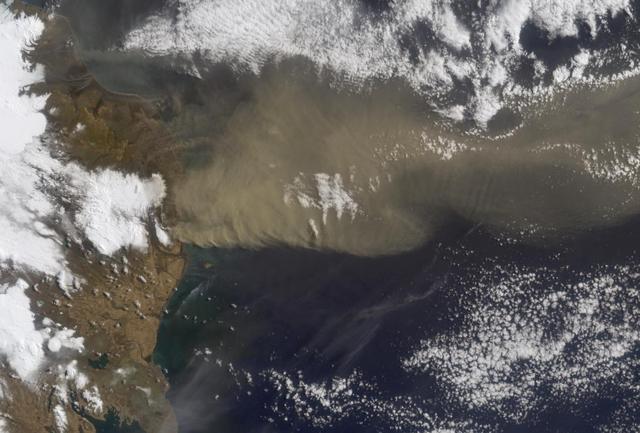
NASA Terra satellite flew directly over Iceland on April 19, 2010 and captured this image of the Eyjafjallajökull volcano and its erupting ash plume. 3D glasses are necessary to view this image.
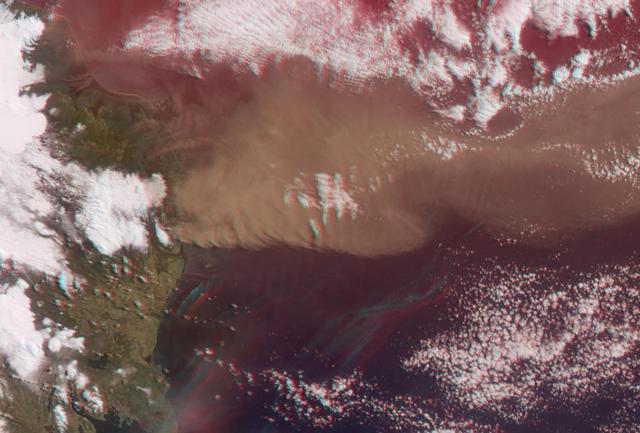
NASA Terra satellite flew directly over Iceland on April 19, 2010, to capture this stereo anaglyph generated from the nadir and 46-degree forward-viewing cameras of the Eyjafjallajökull volcano and its erupting ash plume. 3D glasses are necessary to vie
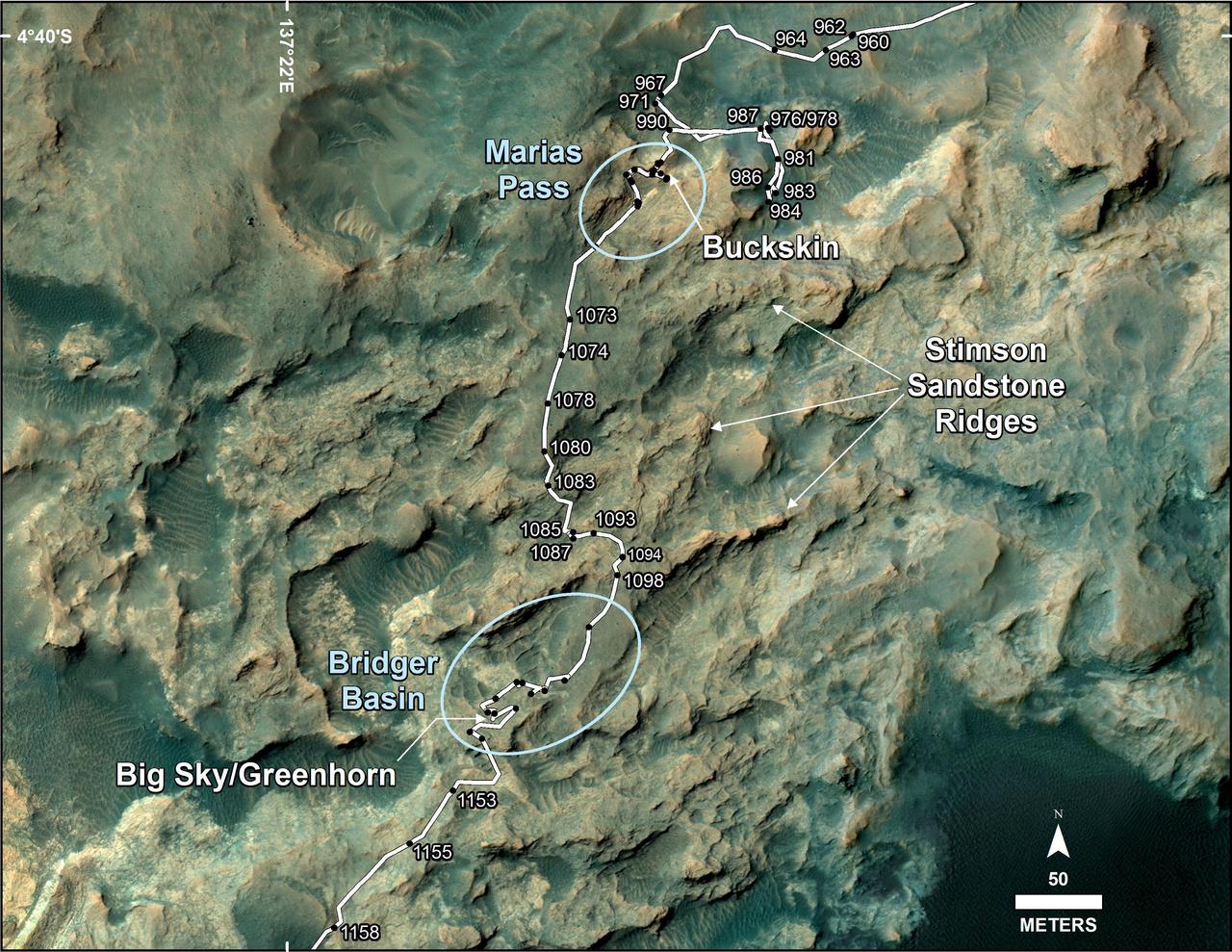
This map shows the route on lower Mount Sharp that NASA Curiosity followed between April 19, 2015, and Nov. 5, 2015.
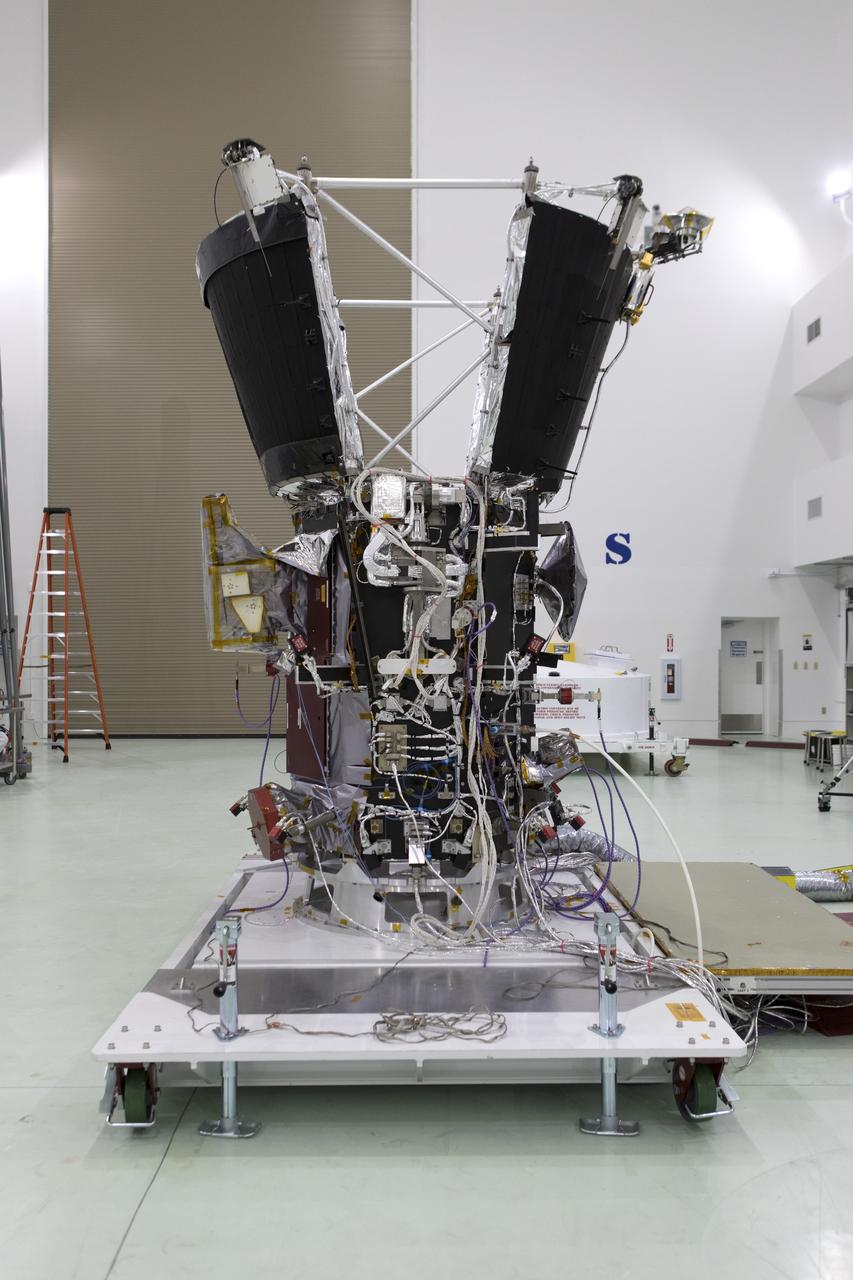
Antenna's on NASA's Parker Solar Probe are deployed for testing at the Astrotech processing facility in Titusville, Florida, near NASA's Kennedy Space Center on Thursday, April 19, 2018. The Parker Solar Probe will launch on a United Launch Alliance Delta IV Heavy rocket from Space Launch Complex 37 at Cape Canaveral Air Force Station in Florida no earlier than Aug. 4, 2018. The mission will perform the closest-ever observations of a star when it travels through the Sun's atmosphere, called the corona. The probe will rely on measurements and imaging to revolutionize our understanding of the corona and the Sun-Earth connection.

Antenna's on NASA's Parker Solar Probe are deployed for testing at the Astrotech processing facility in Titusville, Florida, near NASA's Kennedy Space Center on Thursday, April 19, 2018. The Parker Solar Probe will launch on a United Launch Alliance Delta IV Heavy rocket from Space Launch Complex 37 at Cape Canaveral Air Force Station in Florida no earlier than Aug. 4, 2018. The mission will perform the closest-ever observations of a star when it travels through the Sun's atmosphere, called the corona. The probe will rely on measurements and imaging to revolutionize our understanding of the corona and the Sun-Earth connection.
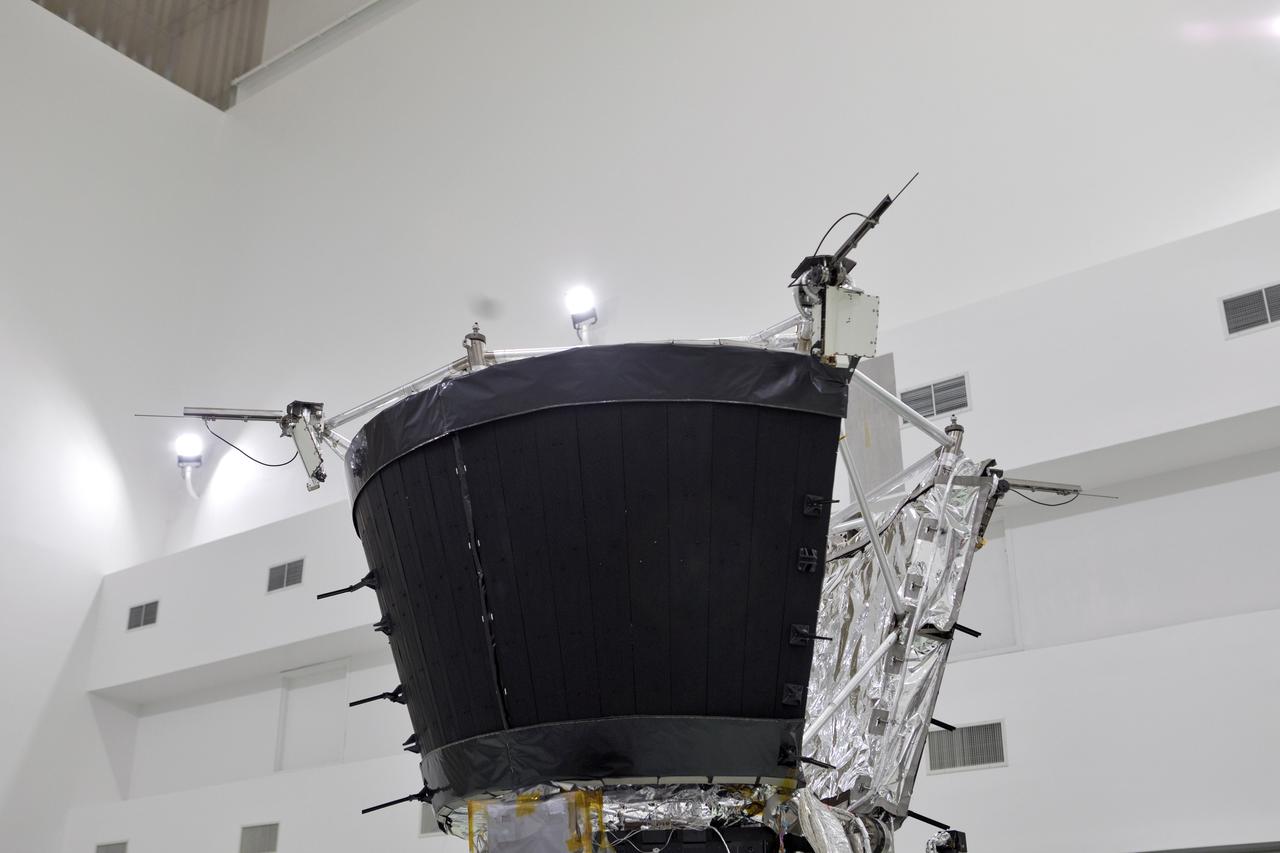
Antenna's on NASA's Parker Solar Probe are deployed for testing at the Astrotech processing facility in Titusville, Florida, near NASA's Kennedy Space Center on Thursday, April 19, 2018. The Parker Solar Probe will launch on a United Launch Alliance Delta IV Heavy rocket from Space Launch Complex 37 at Cape Canaveral Air Force Station in Florida no earlier than Aug. 4, 2018. The mission will perform the closest-ever observations of a star when it travels through the Sun's atmosphere, called the corona. The probe will rely on measurements and imaging to revolutionize our understanding of the corona and the Sun-Earth connection.
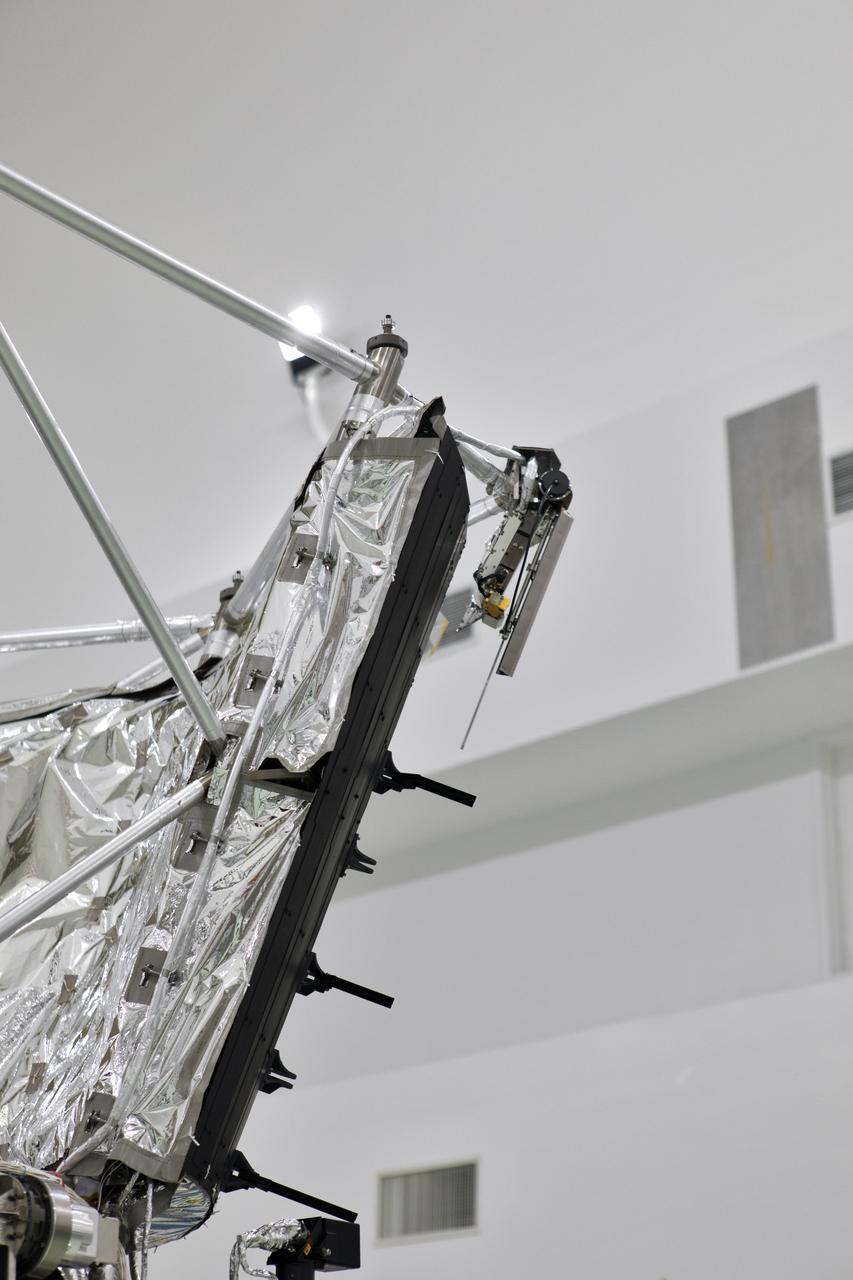
Antenna's on NASA's Parker Solar Probe are deployed for testing at the Astrotech processing facility in Titusville, Florida, near NASA's Kennedy Space Center on Thursday, April 19, 2018. The Parker Solar Probe will launch on a United Launch Alliance Delta IV Heavy rocket from Space Launch Complex 37 at Cape Canaveral Air Force Station in Florida no earlier than Aug. 4, 2018. The mission will perform the closest-ever observations of a star when it travels through the Sun's atmosphere, called the corona. The probe will rely on measurements and imaging to revolutionize our understanding of the corona and the Sun-Earth connection.

Antenna's on NASA's Parker Solar Probe are deployed for testing at the Astrotech processing facility in Titusville, Florida, near NASA's Kennedy Space Center on Thursday, April 19, 2018. The Parker Solar Probe will launch on a United Launch Alliance Delta IV Heavy rocket from Space Launch Complex 37 at Cape Canaveral Air Force Station in Florida no earlier than Aug. 4, 2018. The mission will perform the closest-ever observations of a star when it travels through the Sun's atmosphere, called the corona. The probe will rely on measurements and imaging to revolutionize our understanding of the corona and the Sun-Earth connection.

NASA Mars Odyssey spacecraft took this portrait of the Earth and its companion Moon. It was taken at a distance of 3,563,735 kilometers more than 2 million miles on April 19, 2001 as the 2001 Mars Odyssey spacecraft left the Earth.
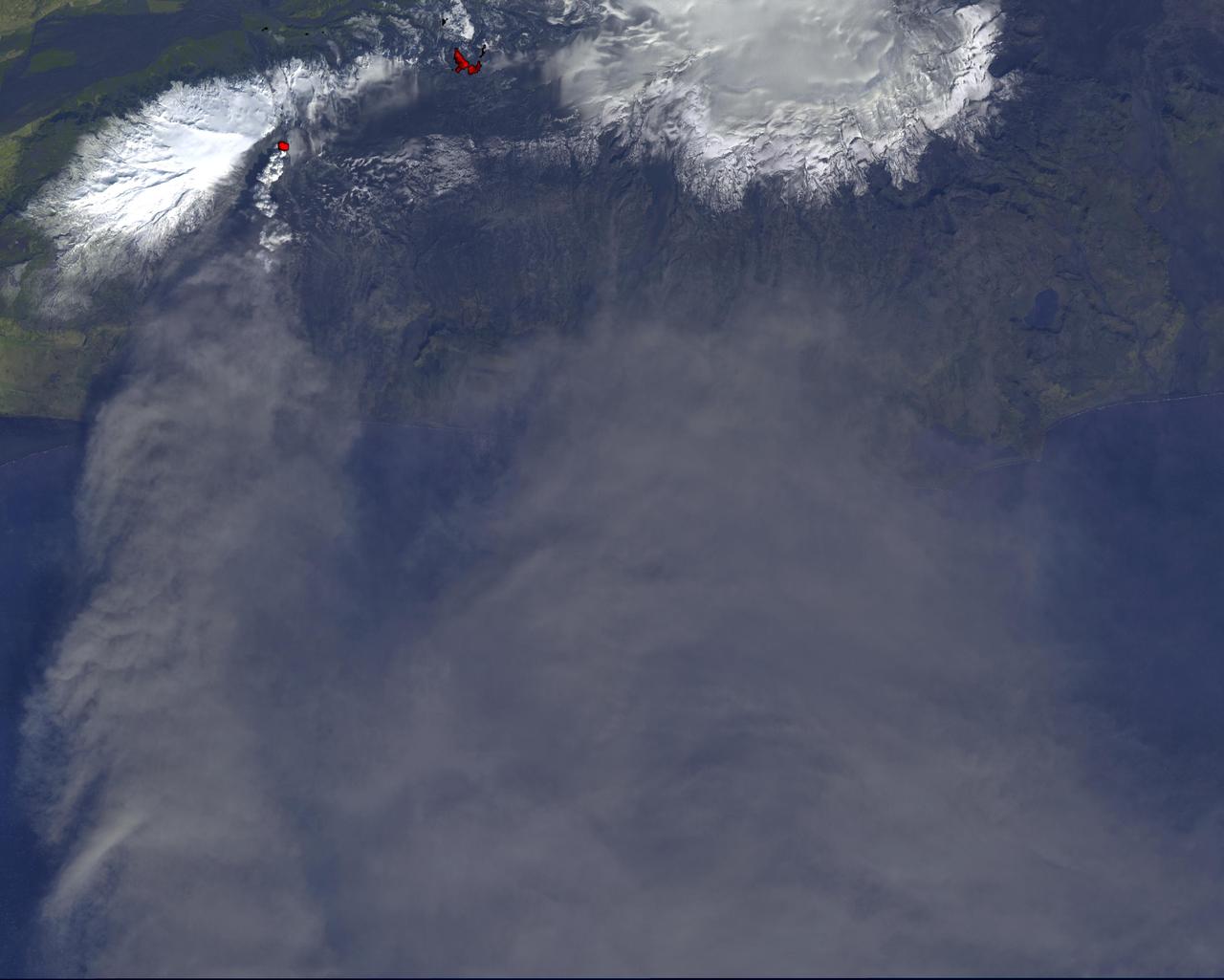
On Monday, April 19, 2010, the Advanced Spaceborne Thermal Emission and Reflection Radiometer ASTER instrument onboard NASA Terra spacecraft obtained this image of the continuing eruption of Iceland Eyjafjallajökull volcano.
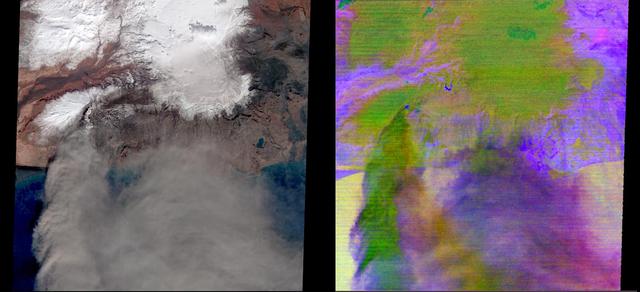
This image from NASA Terra spacecraft shows the ash plume of Iceland Eyjafyallajökull Volcano on April 19, 2010. The eruption plume and drifting veil of ash appear to be homogeneous.
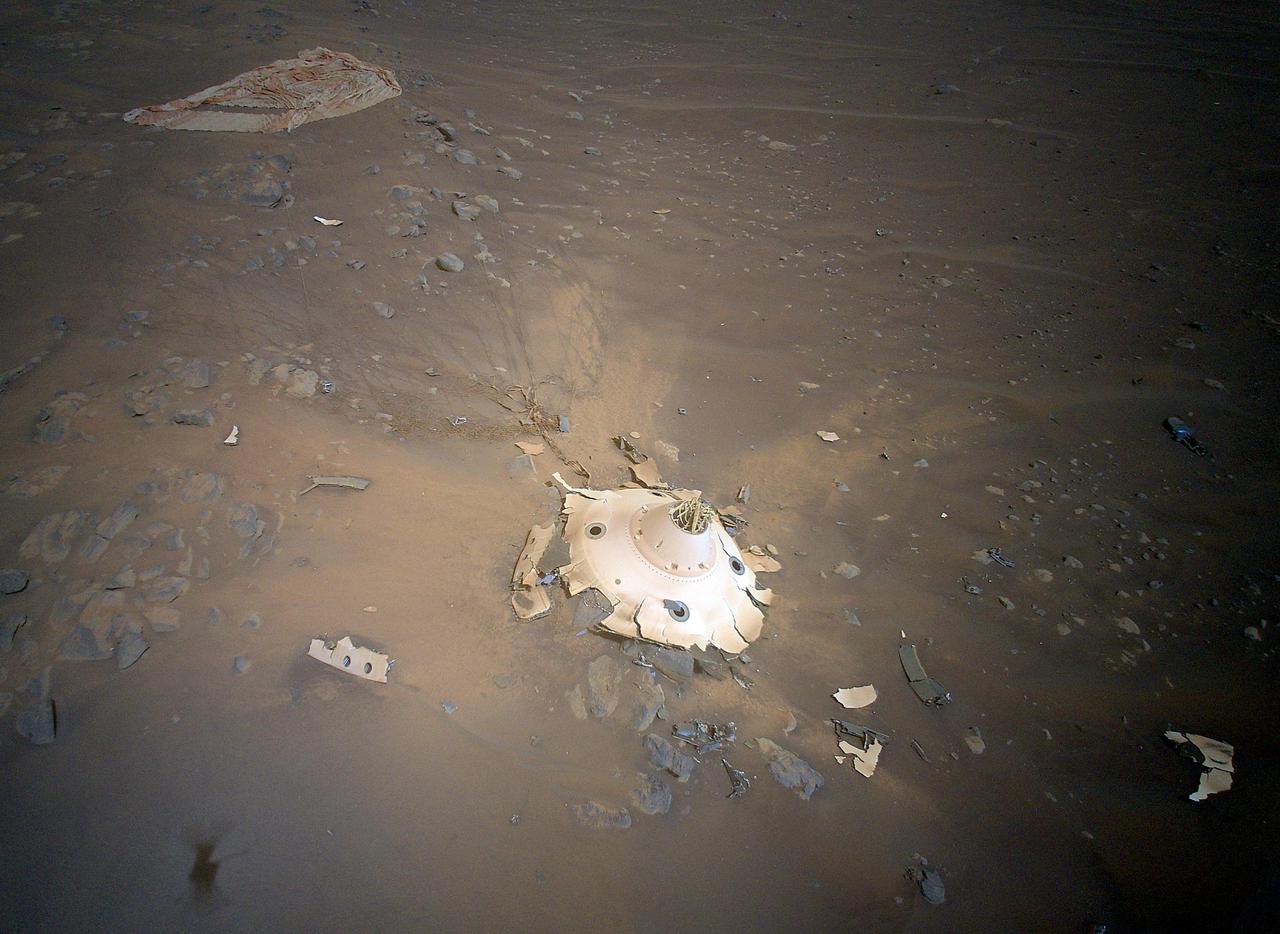
This image of Perseverance's backshell sitting upright on the surface of Jezero Crater was collected from an altitude of 26 feet (8 meters) by NASA's Ingenuity Mars Helicopter during its 26th flight at Mars on April 19, 2022. Engineers working on the Mars Sample Return program requested images be taken from an aerial perspective of the components because they may provide insight into the components' performance during the rover's entry, descent, and landing on Feb. 18, 2021. The tangle of cables seen streaming out from the top of the backshell, and coated with Martian dust on the surface, are high-strength suspension lines that connect the backshell to Perseverance's supersonic parachute (upper left). The backshell and parachute helped protect the rover in deep space and during its fiery descent toward the Martian surface. https://photojournal.jpl.nasa.gov/catalog/PIA25219
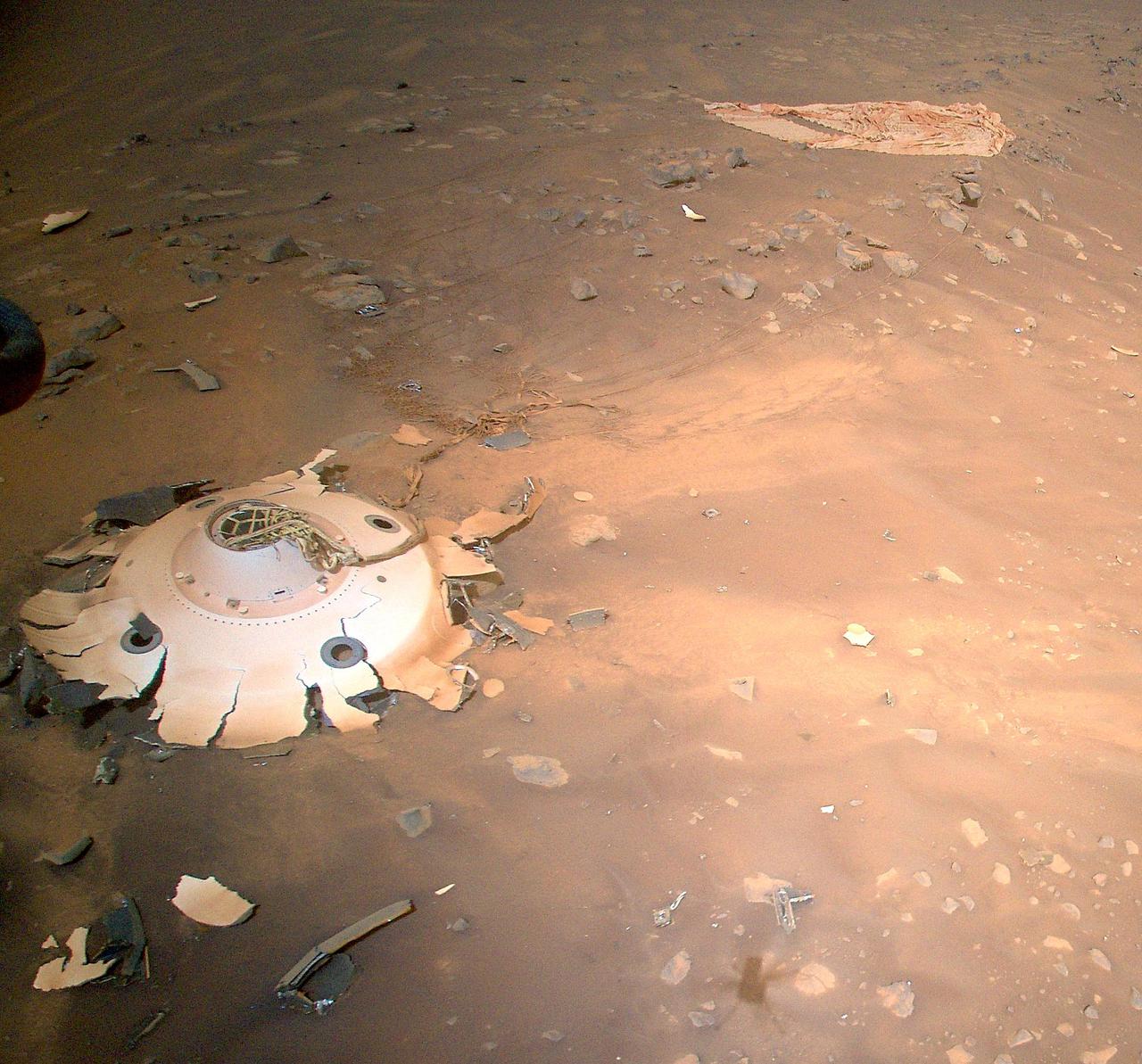
This image of Perseverance's backshell and parachute was collected from an altitude of 26 feet (8 meters) by the NASA's Ingenuity Mars Helicopter during its 26th flight on Mars on April 19, 2022. The parachute and cone-shaped backshell protected the rover during its fiery descent toward the Martian surface on Feb. 18, 2021. Engineers working on the Mars Sample Return program requested images be taken of the components from an aerial perspective because they may provide insight into the components' performance during the rover's entry, descent, and landing. https://photojournal.jpl.nasa.gov/catalog/PIA25217
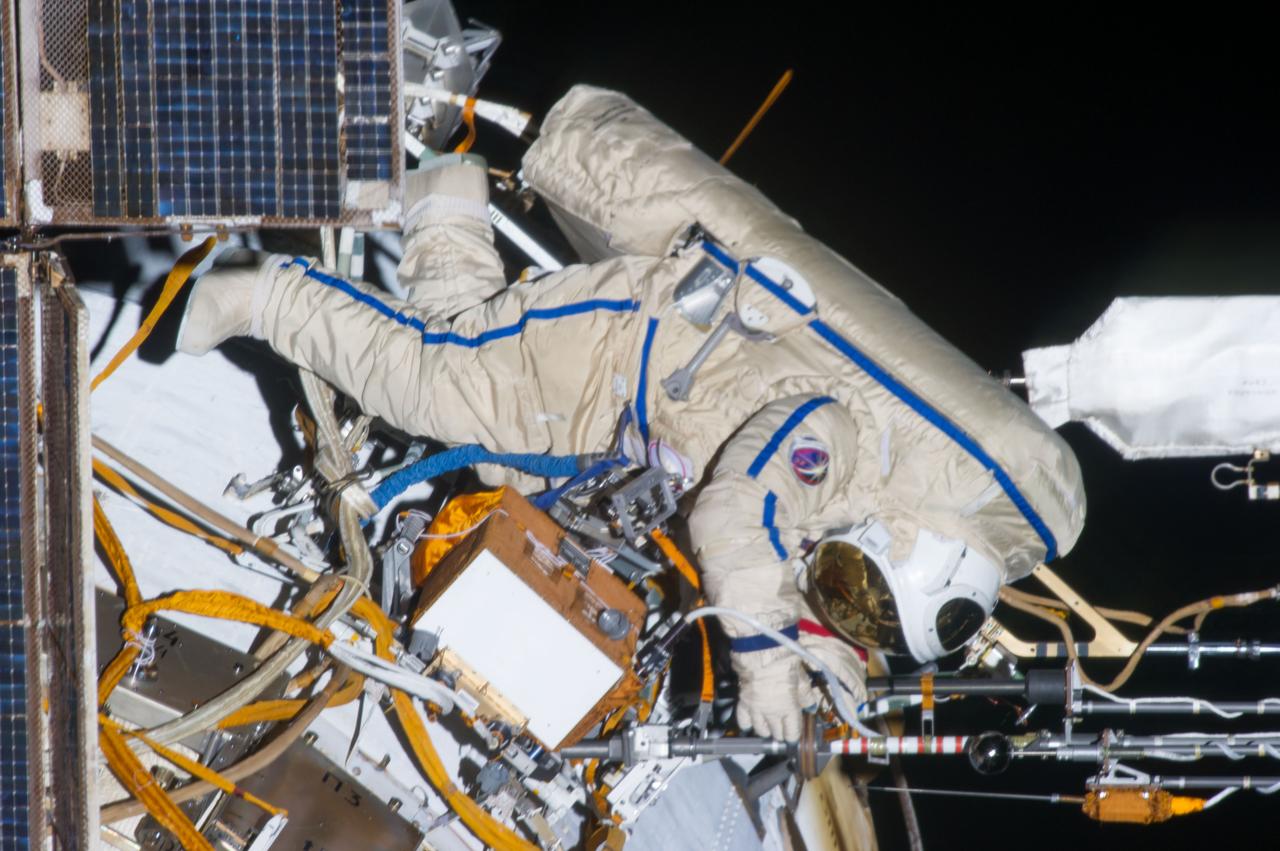
ISS035-E-027782 (19 April 2013) --- Expedition 35 Russian cosmonaut Pavel Vinogradov translates outside the International Space Station on April 19, 2013, during the first spacewalk of the Expedition 35 mission. Vinogradov and Roman Romanenko (out of frame) went on to spend about six hours upgrading the station's exterior hardware.
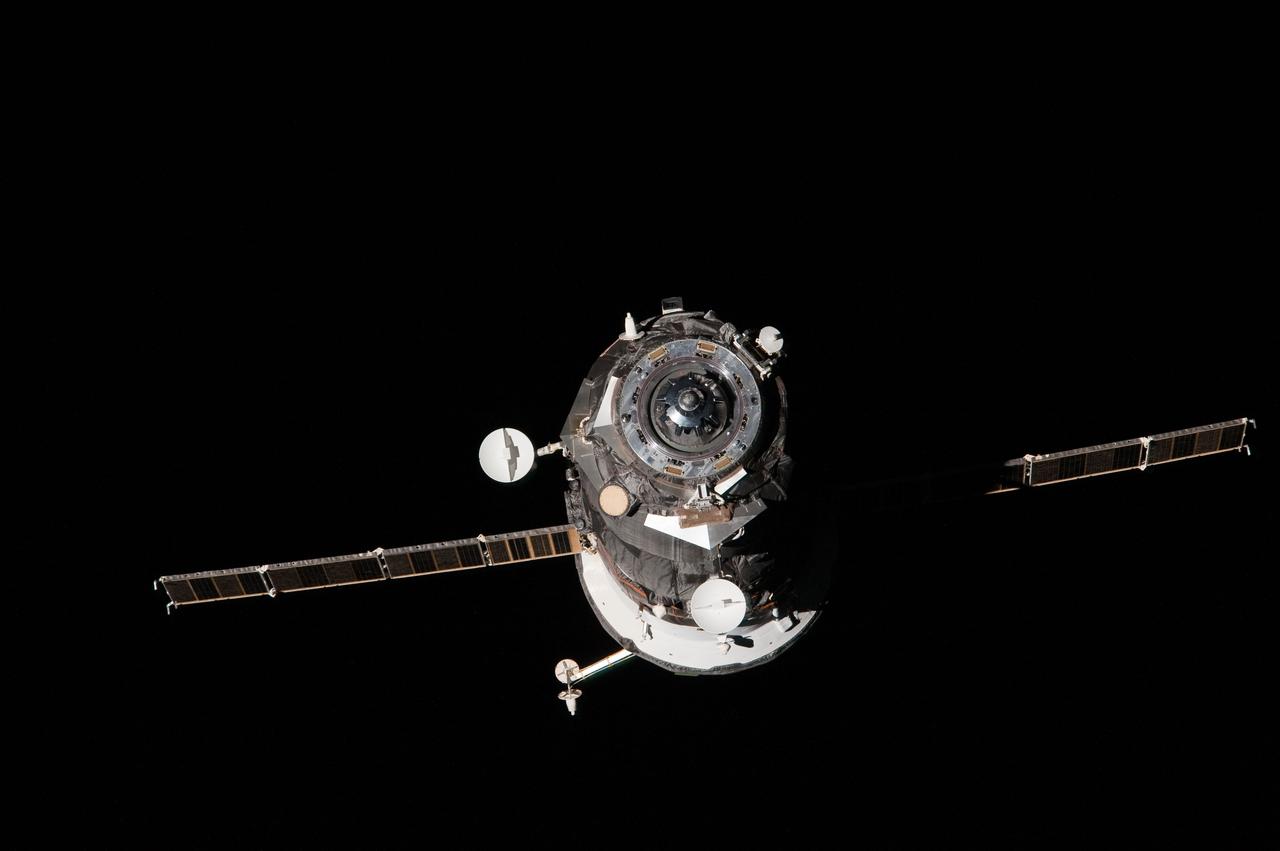
ISS030-E-238835 (19 April 2012) --- The trash-filled ISS Progress 46 spacecraft departs from the International Space Station on April 19, 2012. Russian flight controllers will command the Progress 46 for several days of tests, and then send it to burn up in Earth’s atmosphere over the Pacific Ocean.
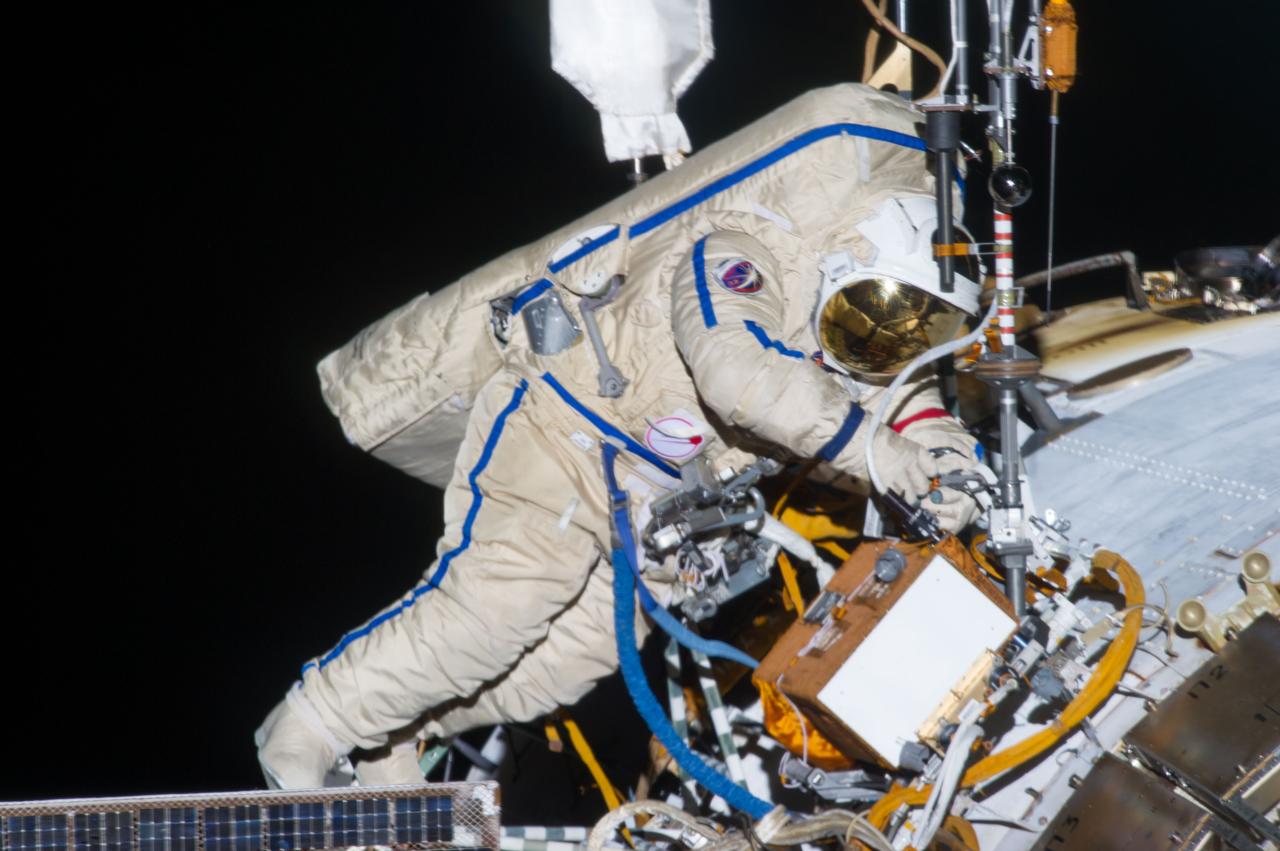
ISS035-E-027779 (19 April 2013) --- Expedition 35 Russian cosmonaut Pavel Vinogradov translates outside the International Space Station on April 19, 2013, during the first spacewalk of the Expedition 35 mission. Vinogradov and Roman Romanenko (out of frame) went on to spend about six hours upgrading the station's exterior hardware.
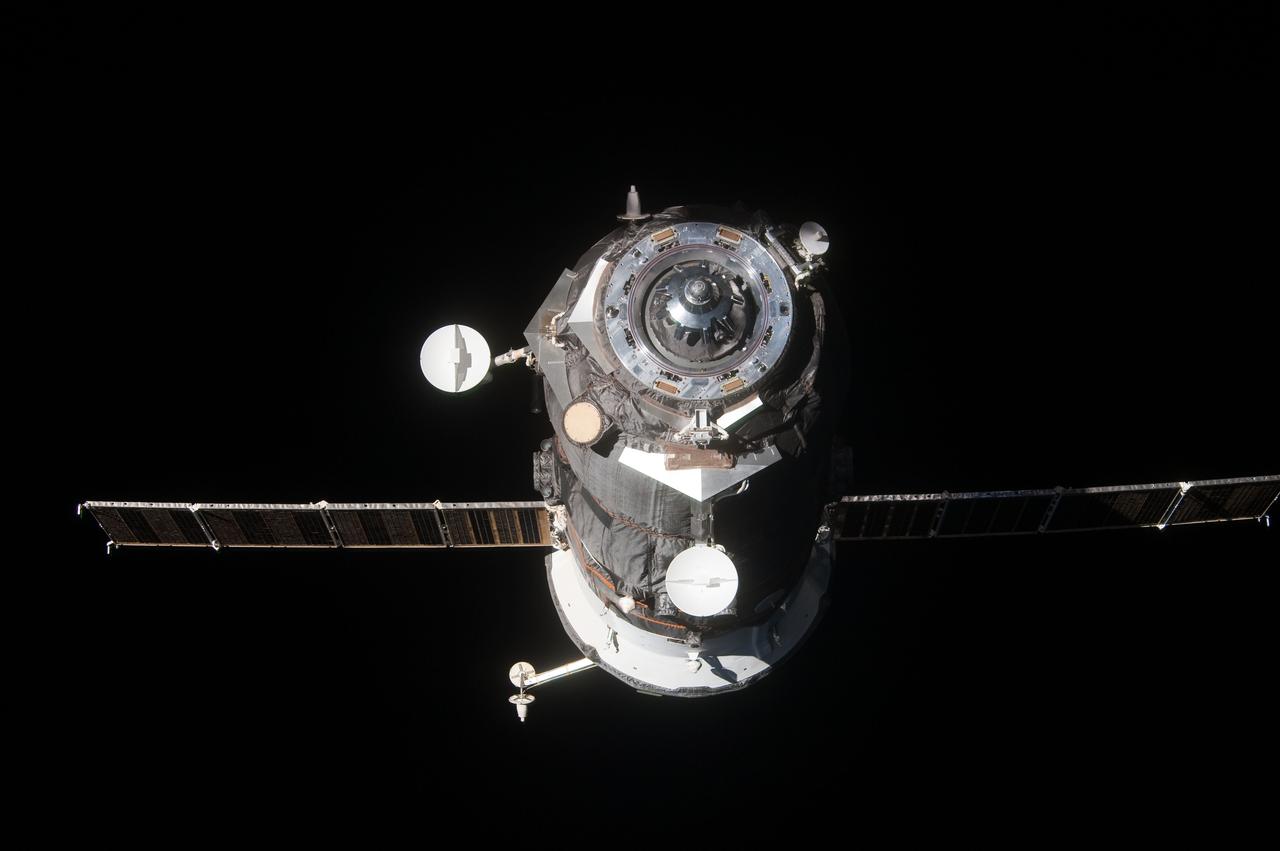
ISS030-E-238809 (19 April 2012) --- The trash-filled ISS Progress 46 spacecraft departs from the International Space Station on April 19, 2012. Russian flight controllers will command the Progress 46 for several days of tests, and then send it to burn up in Earth’s atmosphere over the Pacific Ocean.

ISS035-E-027782 (19 April 2013) --- Expedition 35 Russian cosmonaut Pavel Vinogradov translates outside the International Space Station on April 19, 2013, during the first spacewalk of the Expedition 35 mission. Vinogradov and Roman Romanenko (out of frame) went on to spend about six hours upgrading the station's exterior hardware.
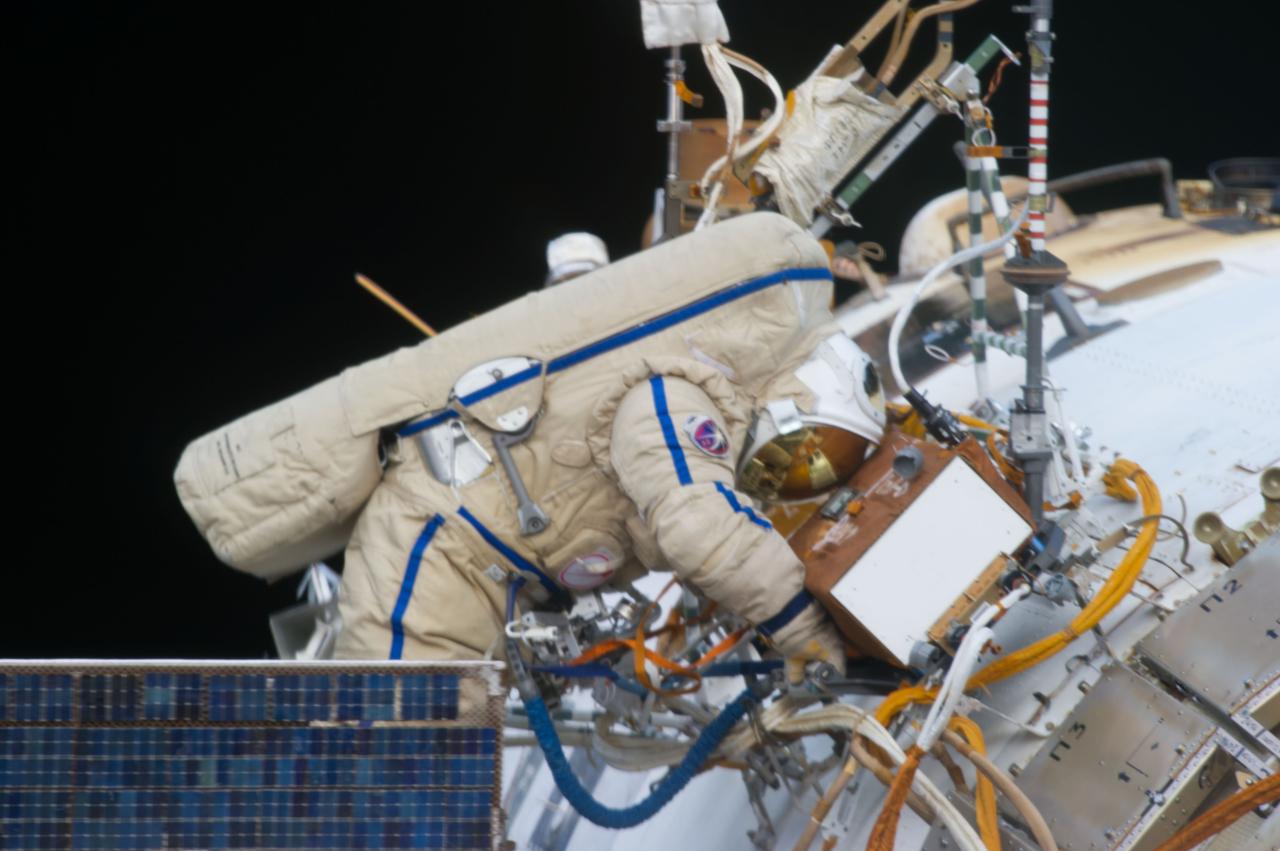
ISS035-E-027794 (19 April 2013) --- Expedition 35 Russian cosmonaut Pavel Vinogradov translates outside the International Space Station on April 19, 2013, during the first spacewalk of the Expedition 35 mission. Vinogradov and Roman Romanenko (out of frame) went on to spend about six hours upgrading the station's exterior hardware.
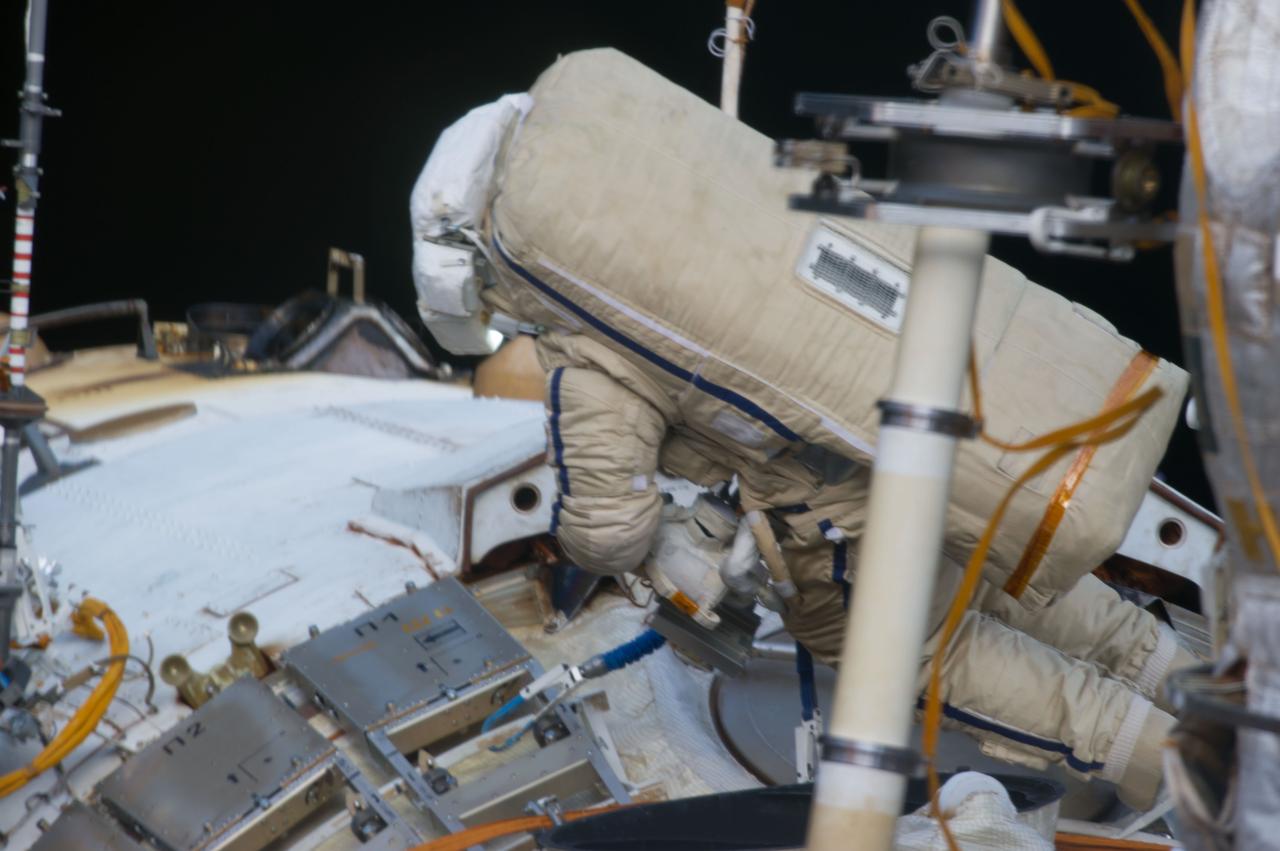
ISS035-E-027793 (19 April 2013) --- Expedition 35 Russian cosmonauts Roman Romanenko works outside the International Space Station on April 19, 2013, during the first spacewalk of the Expedition 35 mission. Romanenko and fellow cosmonaut Pavel Vinogradov went on to spend about six hours upgrading the station's exterior hardware.
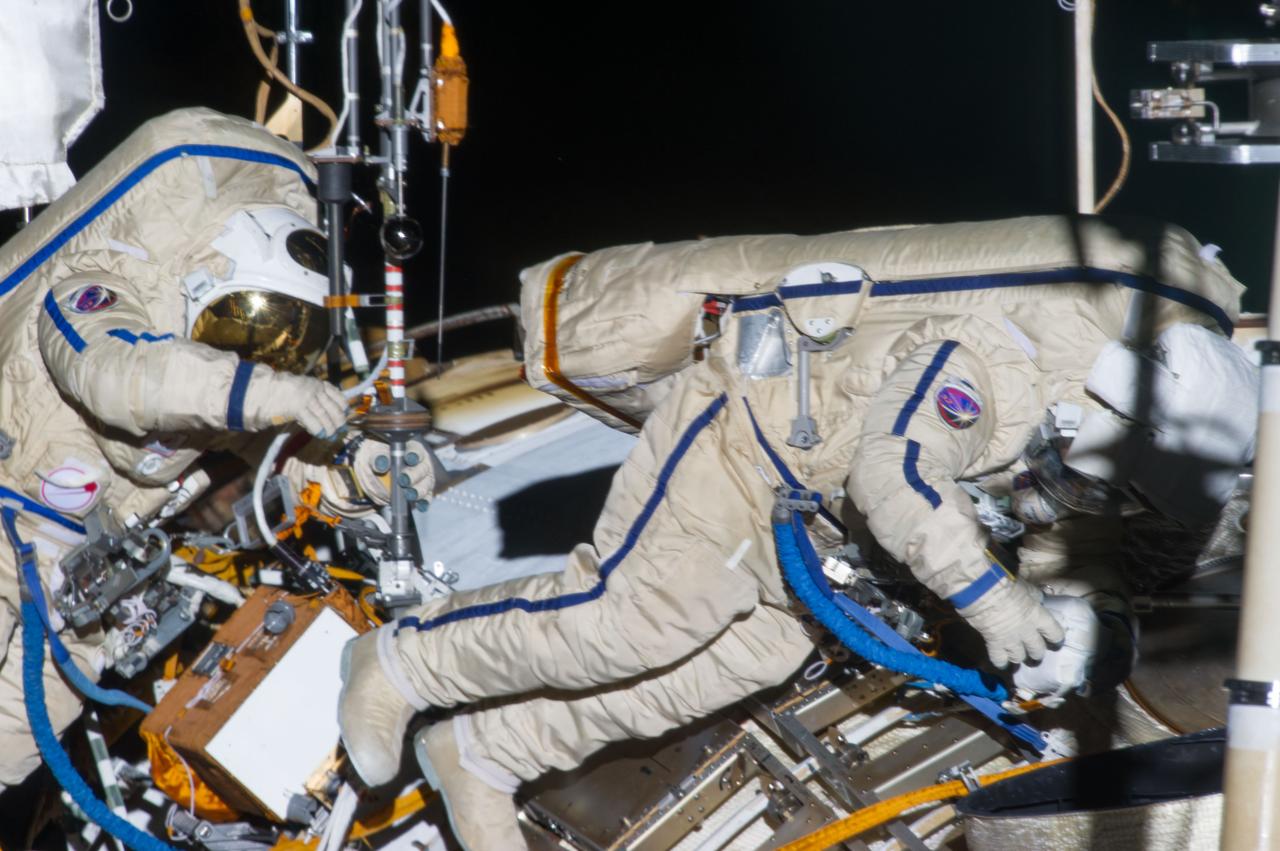
ISS035-E-027778 (19 April 2013) --- Expedition 35 Russian cosmonauts Pavel Vinogradov (left) and Roman Romanenko work outside the International Space Station on April 19, 2013, during the first spacewalk of the Expedition 35 mission. Vinogradov and Romanenko went on to spend about six hours upgrading the station's exterior hardware.
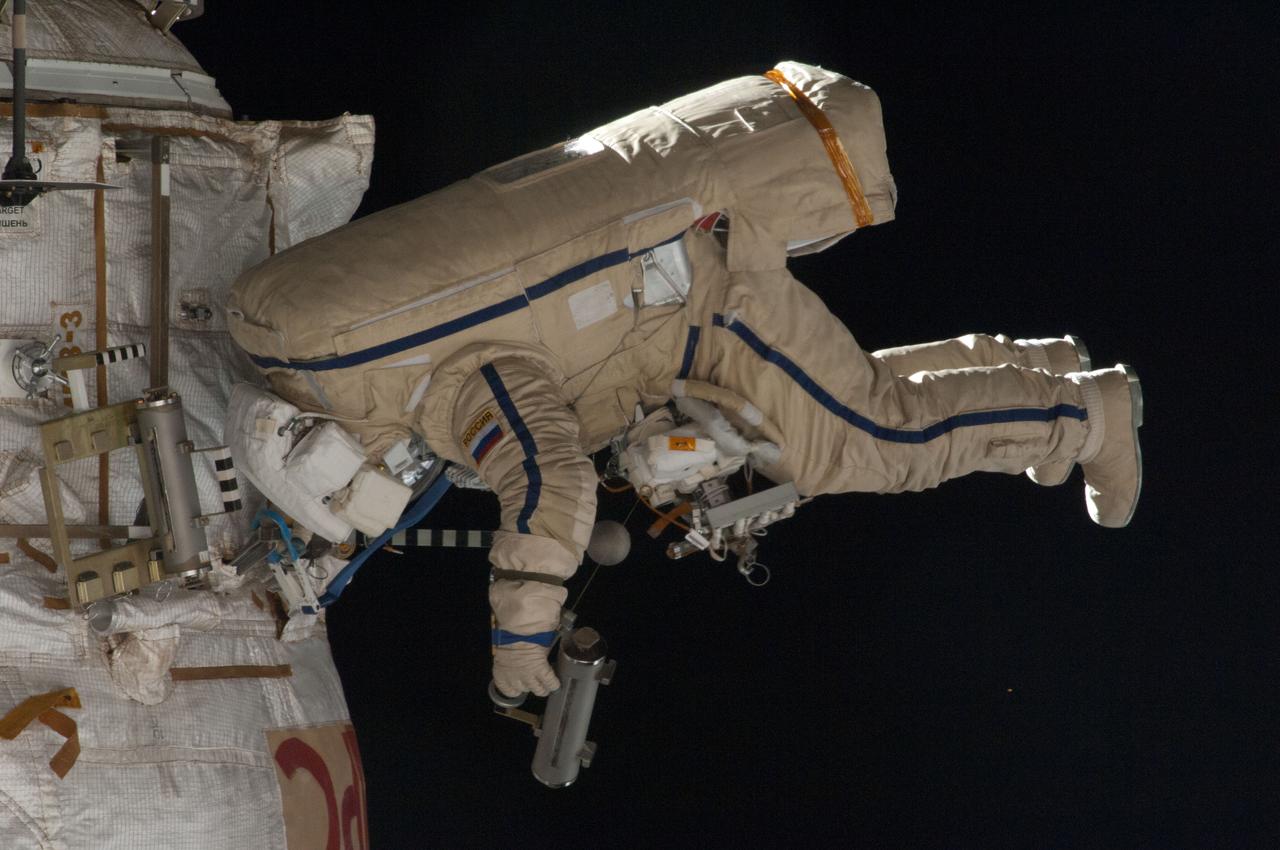
ISS035-E-023978 (19 April 2013) --- Expedition 35 Russian cosmonaut Roman Romanenko translates outside the International Space Station on April 19, 2013, during the first spacewalk of the Expedition 35 mission. Romanenko and Pavel Vinogradov (out of frame) went on to spend about six hours upgrading the station’s exterior hardware.

ISS030-E-238823 (19 April 2012) --- The trash-filled ISS Progress 46 spacecraft departs from the International Space Station on April 19, 2012. Russian flight controllers will command the Progress 46 for several days of tests, and then send it to burn up in Earth’s atmosphere over the Pacific Ocean.
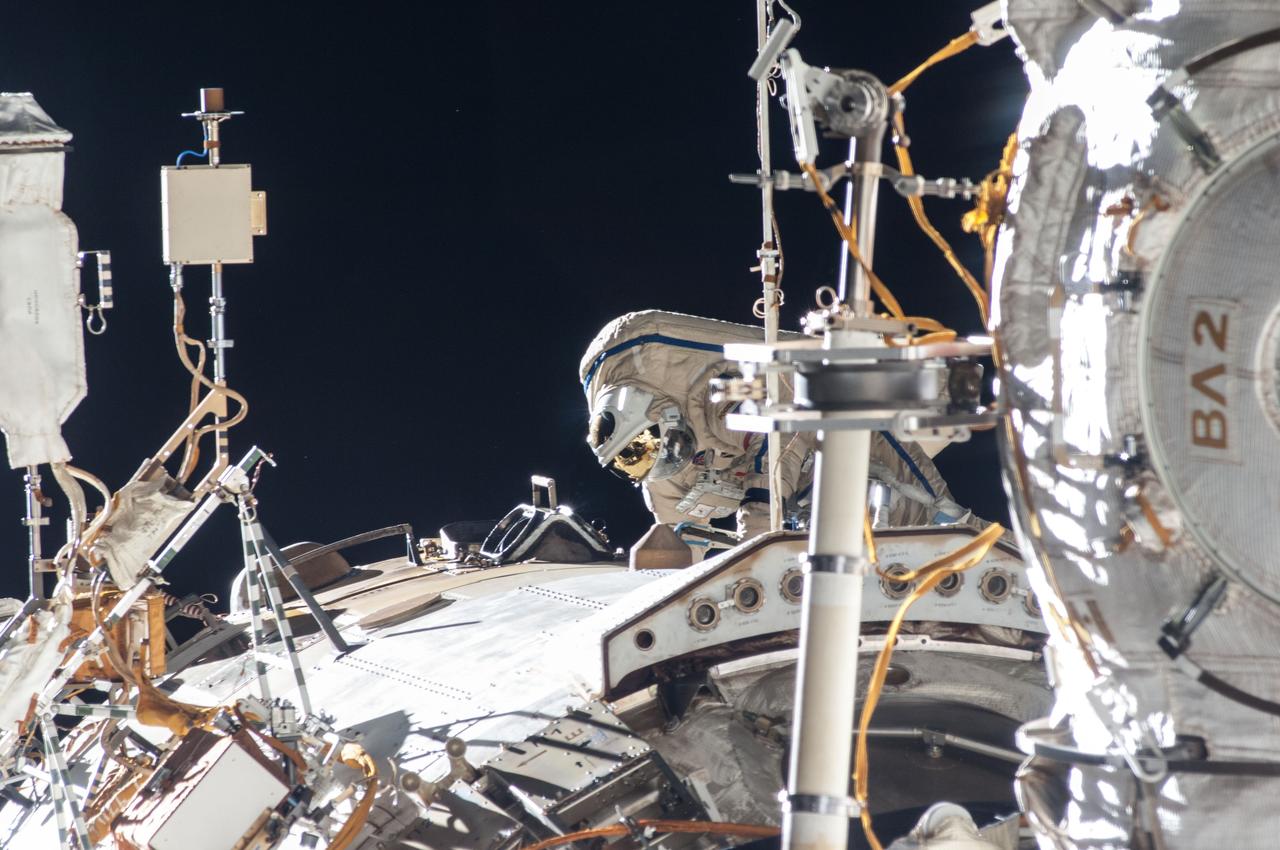
ISS035-E-032026 (19 April 2013) --- Expedition 35 Russian cosmonaut Pavel Vinogradov translates outside the International Space Station on April 19, 2013, during the first spacewalk of the Expedition 35 mission. Vinogradov and Roman Romanenko (out of frame) went on to spend about six hours upgrading the station's exterior hardware.
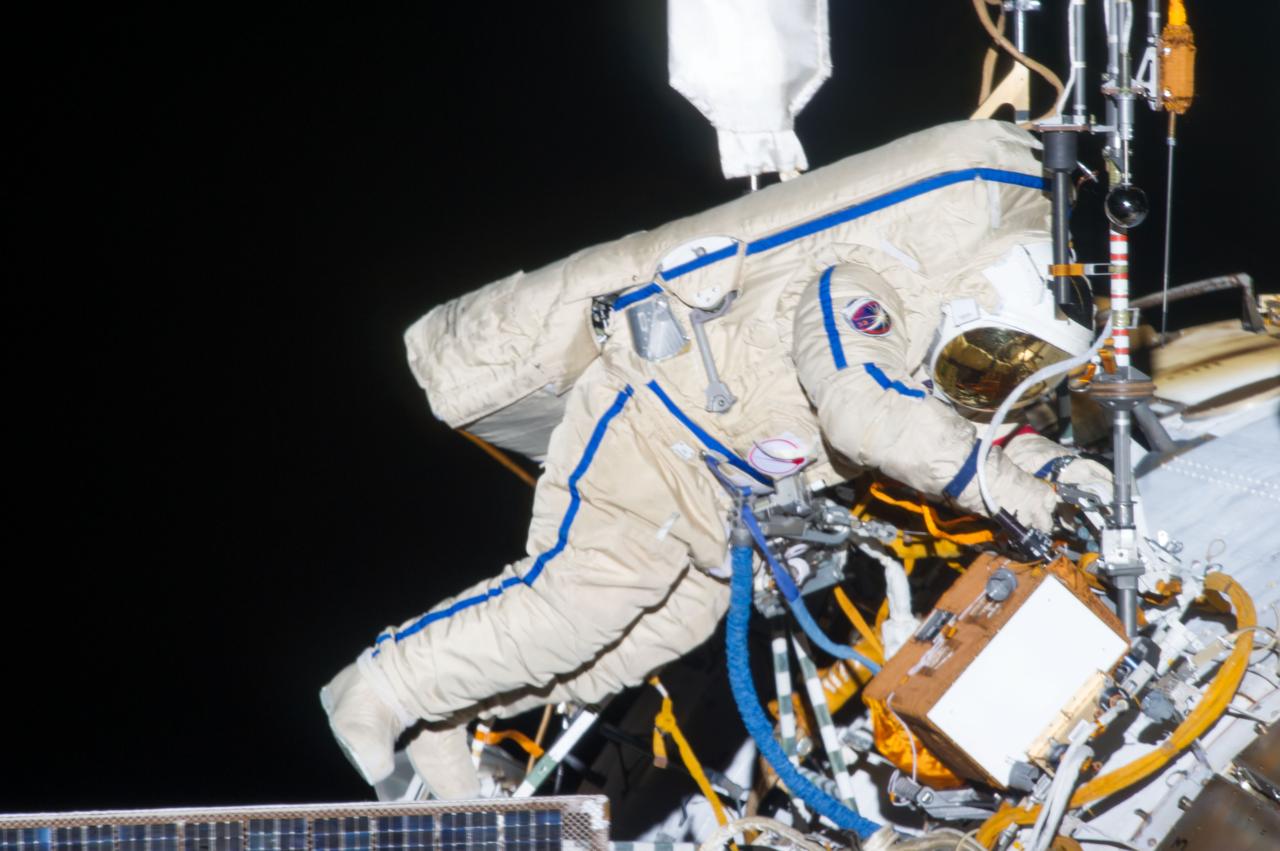
ISS035-E-023978 (19 April 2013) --- Expedition 35 Russian cosmonaut Pavel Vinogradov translates outside the International Space Station on April 19, 2013, during the first spacewalk of the Expedition 35 mission. Vinogradov and Roman Romanenko (out of frame) went on to spend about six hours upgrading the station's exterior hardware.
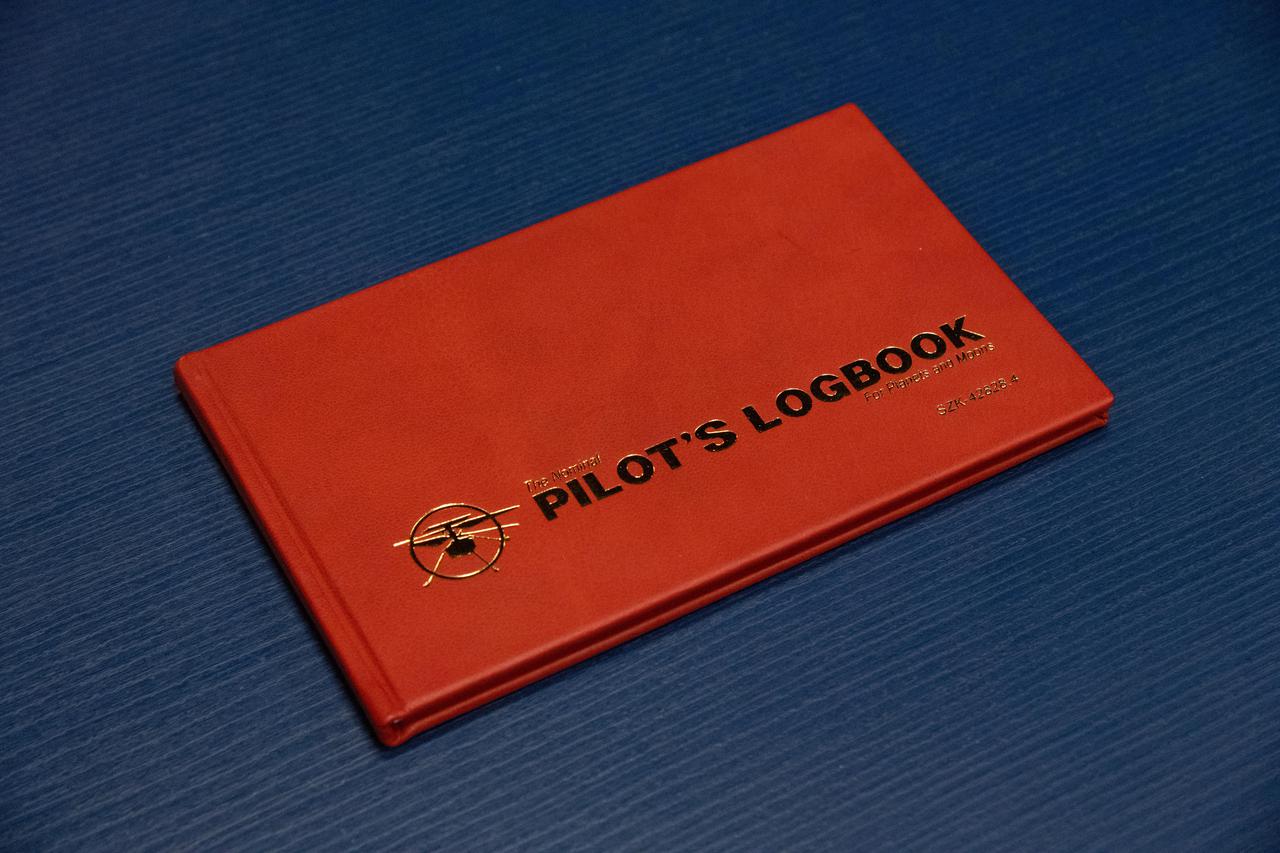
This image of the official pilot's logbook for the Ingenuity Mars Helicopter flights — the "Nominal Pilot's Logbook for Planets and Moons" — was taken at NASA's Jet Propulsion Laboratory in Southern California on April 19, 2021, the day of Ingenuity's first historic flight. Pilot logbooks are used by aviators to provide a record of their flights, including current and accumulated flight time, number and locations of takeoffs and landings, as well as unique operating conditions and certifications. https://photojournal.jpl.nasa.gov/catalog/PIA24440
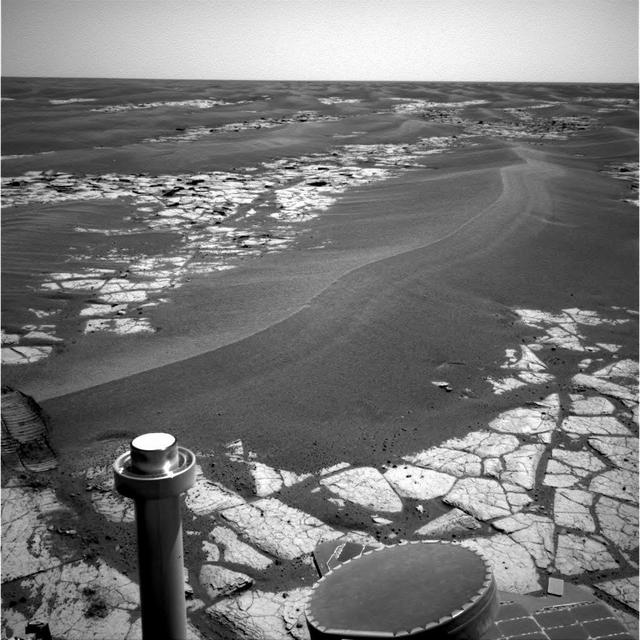
NASA's Mars Exploration Rover Opportunity continues to cut southward across a plain marked by large sand ripples and a pavement of outcrop rock. The ripple in the center of the image shows a distinct pattern of banding, which the science team hopes to investigate more closely during the trek through this terrain. The banding and other features have inspired a hypothesis that Meridiani ripples are old features that are currently being eroded, and not transported, by wind. This navigation camera image was taken on Opportunity's sol 795, April 19, 2006. http://photojournal.jpl.nasa.gov/catalog/PIA08424
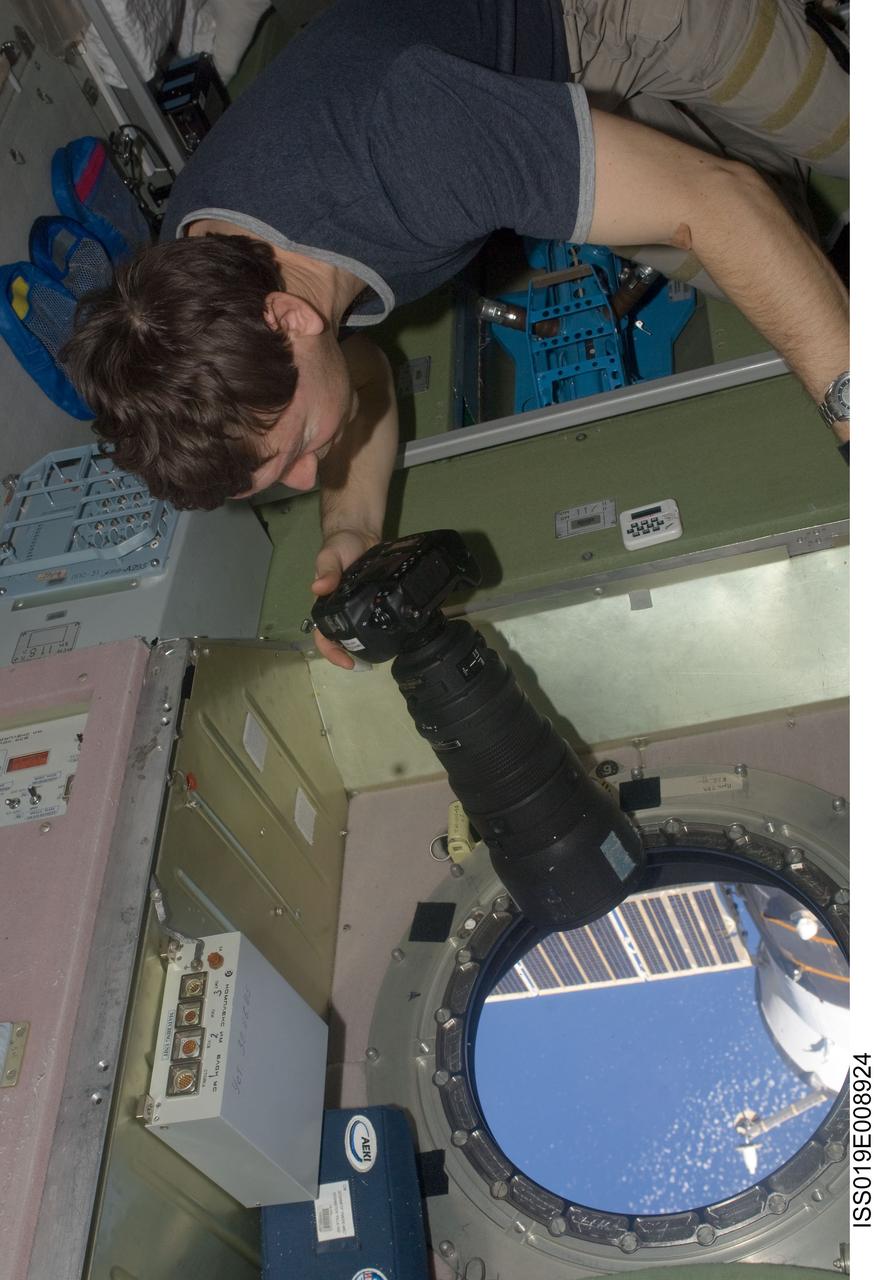
ISS019-E-008924 (19 April 2009) --- Astronaut Michael Barratt, Expedition 19/20 flight engineer, uses a still camera at a window in the Zvezda Service Module of the International Space Station.
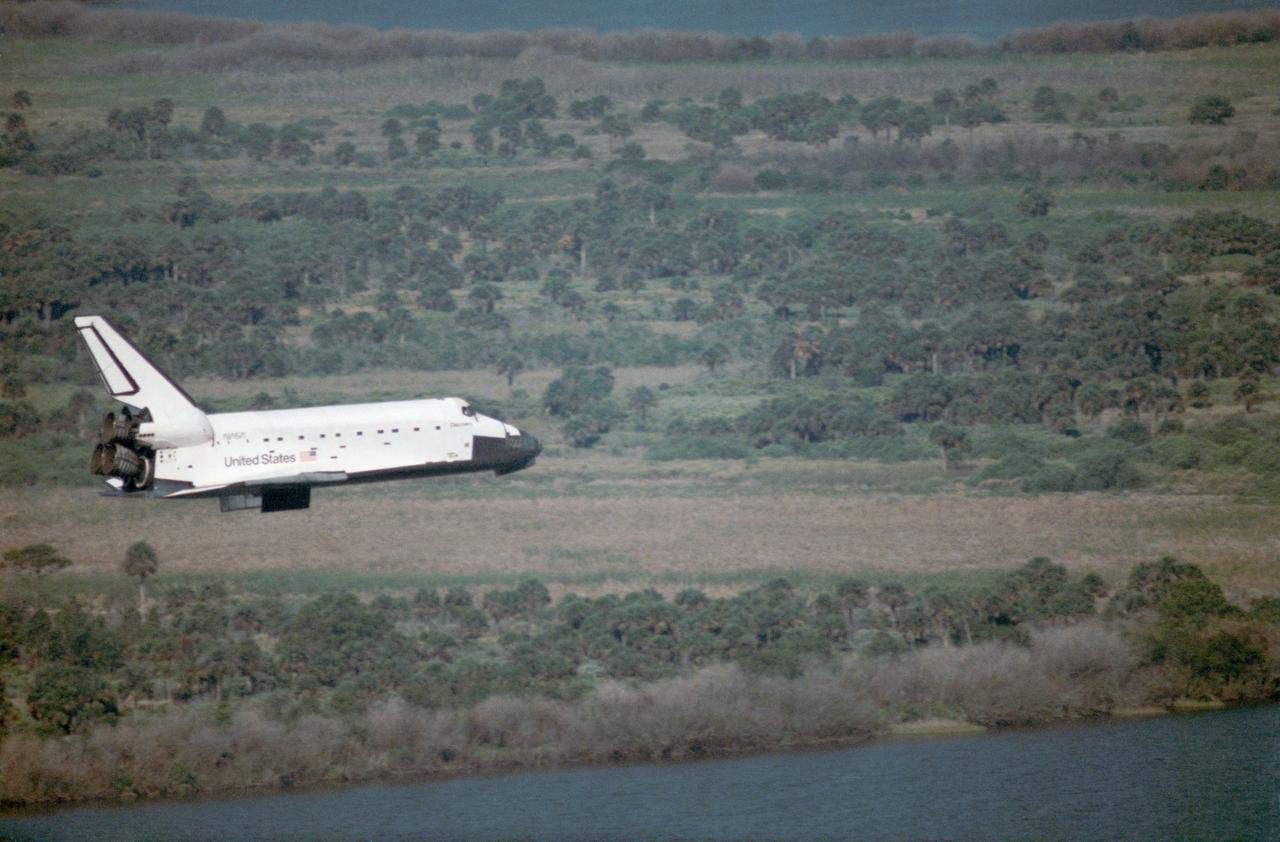
51D-9107 (19 April 1985) --- A side-looking, wide view of the Space Shuttle Discovery shows the vehicle on its final phase following a full week in space. The Discovery and its seven-member crew arrived at KSC's landing facility at 8:54:29 a.m. (EST), April 19, 1985. Launch was at 8:59 a.m. (EST) on April 12.
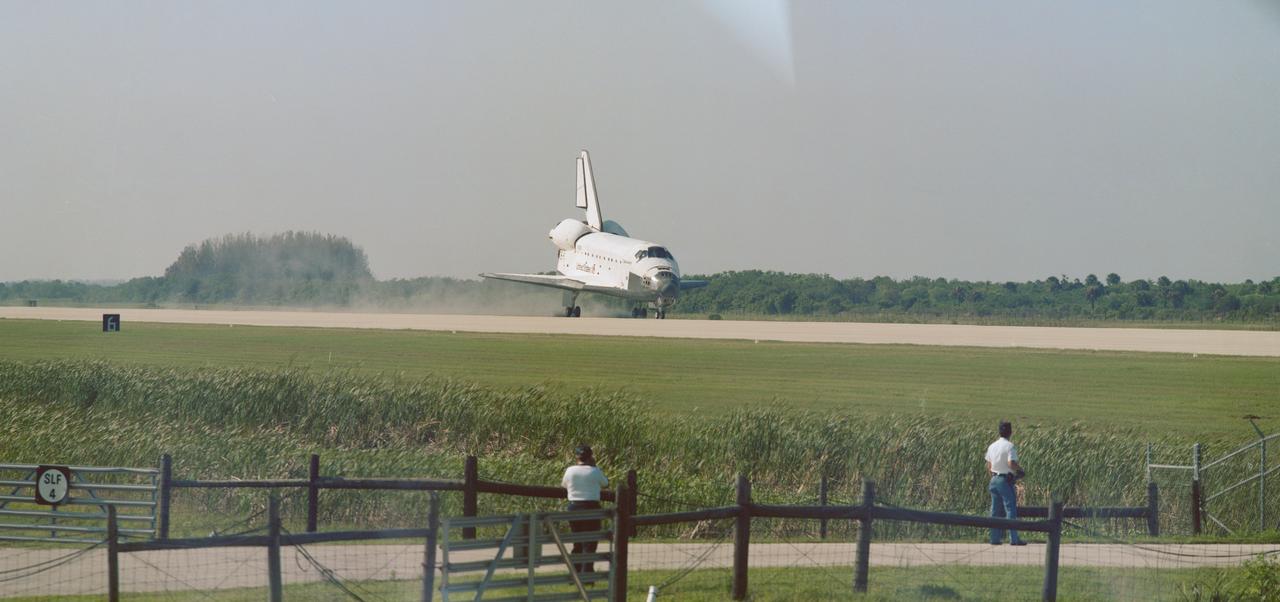
51D-9108 (19 April 1985) --- After a week in space the Space Shuttle Discovery completes Mission 51-D near the point where the flight began on April 12. Inside are seven crewmembers, who because of some unforeseen events on the flight, spent two addtionial days than called for in the original flight plan. Landing occurred at 8:54:29 a.m. (EST), April 19, 1985.
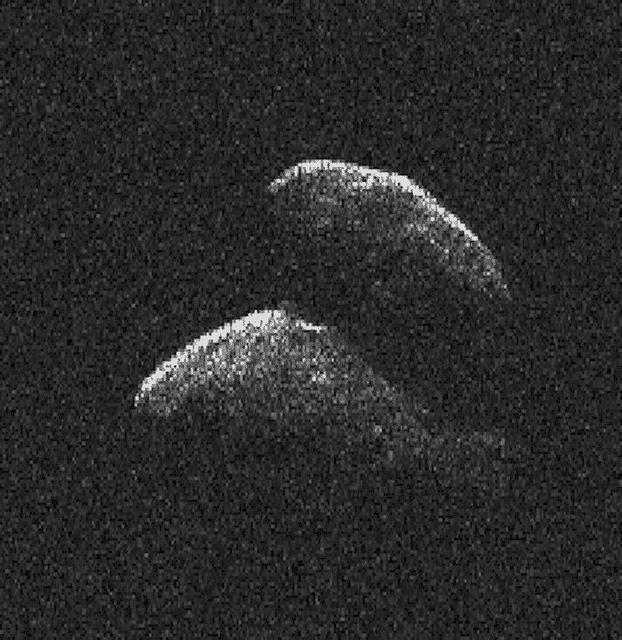
This frame from a movie of asteroid 2014 JO25 was generated using radar data collected by NASA 230-foot-wide 70-meter Deep Space Network antenna at Goldstone, California on April 19, 2017. When the observations began 2014 JO25 was 1.53 million miles (2.47 million kilometers) from Earth. By the time the observations concluded, the asteroid was 1.61 million miles (2.59 million kilometers) away. The asteroid has a contact binary structure -- two lobes connected by a neck-like region. The largest of the asteroid's two lobes is estimated to be 2,000 feet (610 meters) across. Asteroid 2014 JO25 approached to within 1.1 million miles (1.8 million kilometers) of Earth on April 19. There are no future flybys by 2014 JO25 as close as this one for more than 400 years. The resolution of the radar images is about 25 feet (7.5 meters) per pixel. 154 images were used to create a movie. The movie can be seen at. https://photojournal.jpl.nasa.gov/catalog/PIA21597
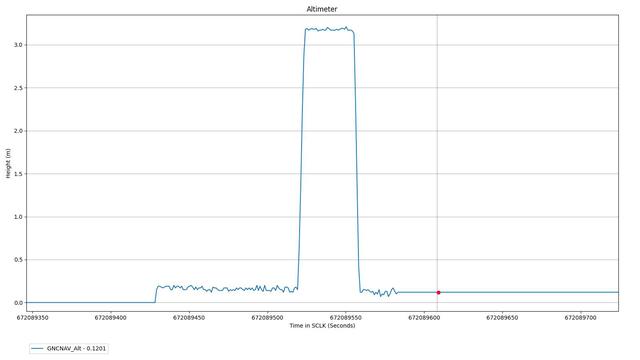
This altimeter chart shows data from the first flight of NASA's Ingenuity Mars Helicopter, which occurred on April 19, 2021. The Ingenuity Mars Helicopter was built by JPL, which also manages this technology demonstration project for NASA Headquarters. It is supported by NASA's Science Mission Directorate, Aeronautics Research Mission Directorate, and Space Technology Mission Directorate. NASA's Ames Research Center and Langley Research Center provided significant flight performance analysis and technical assistance during Ingenuity's development. A key objective for Perseverance's mission on Mars is astrobiology, including the search for signs of ancient microbial life. The rover will characterize the planet's geology and past climate, pave the way for human exploration of the Red Planet, and be the first mission to collect and cache Martian rock and regolith (broken rock and dust). Subsequent NASA missions, in cooperation with ESA (European Space Agency), would send spacecraft to Mars to collect these sealed samples from the surface and return them to Earth for in-depth analysis. The Mars 2020 Perseverance mission is part of NASA's Moon to Mars exploration approach, which includes Artemis missions to the Moon that will help prepare for human exploration of the Red Planet. https://photojournal.jpl.nasa.gov/catalog/PIA24587
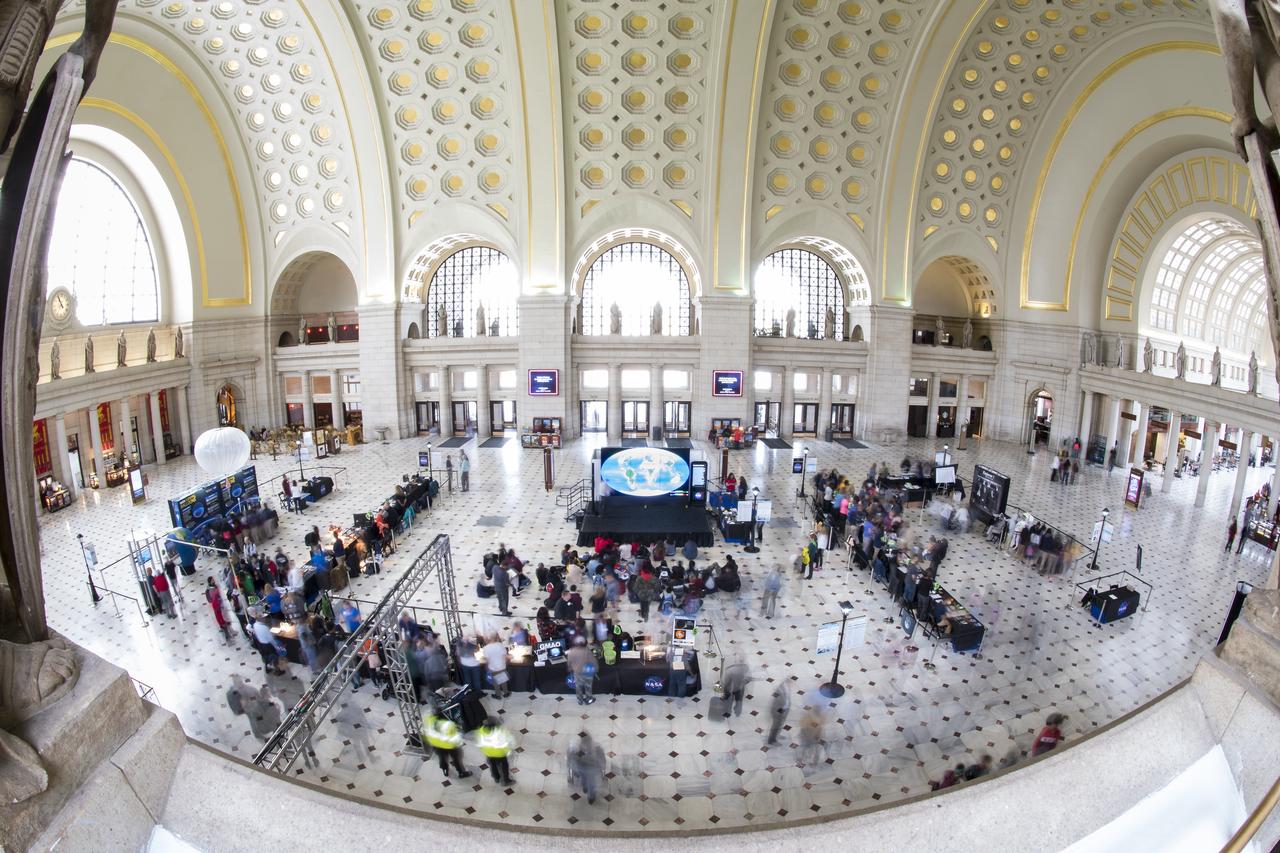
A view of the exhibits at NASA's Earth Day event on Thursday, April 19, 2018 at Union Station in Washington, D.C. Photo Credit: (NASA/Aubrey Gemignani)
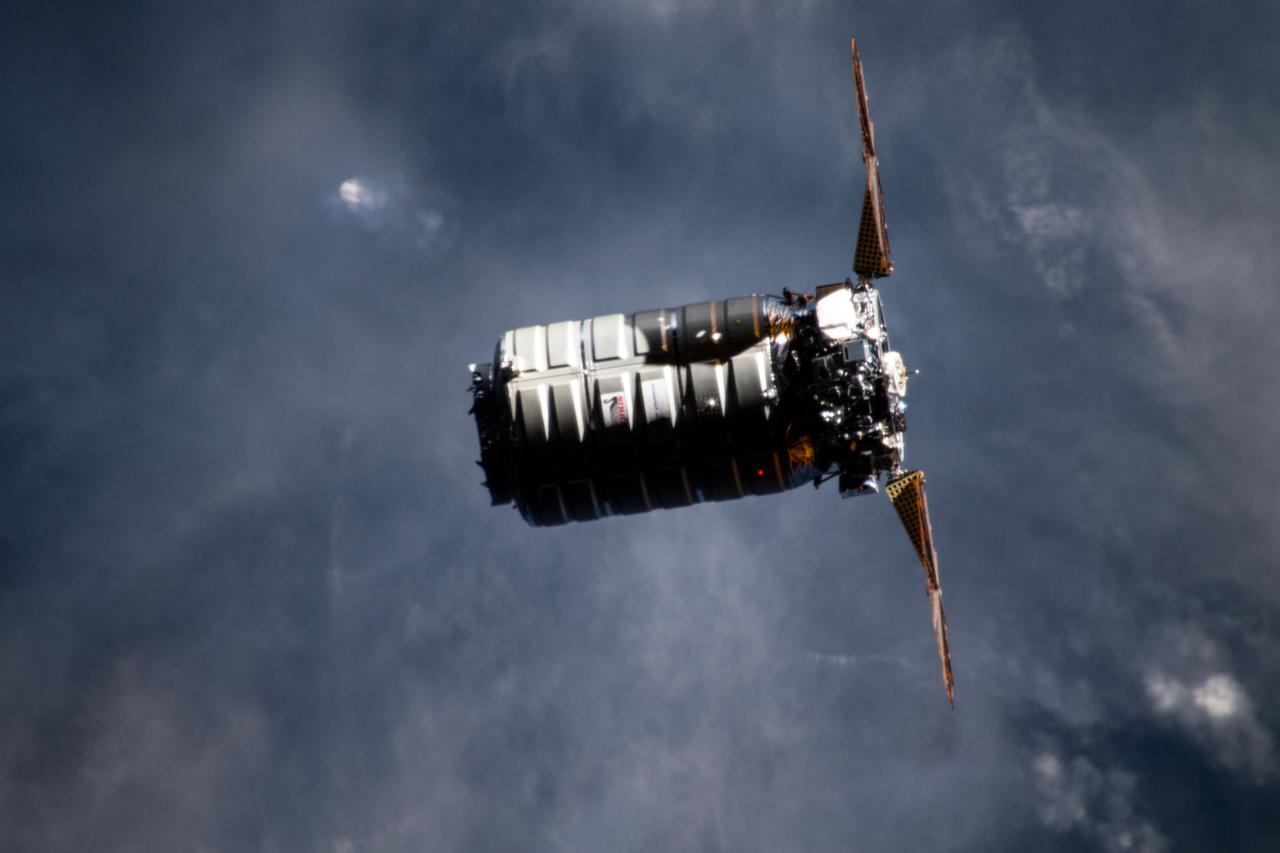
iss059e025388 (April 19, 2019) --- Northrop Grumman's Cygnus space freighter approaches the International Space Station 254 miles above the Philippines.
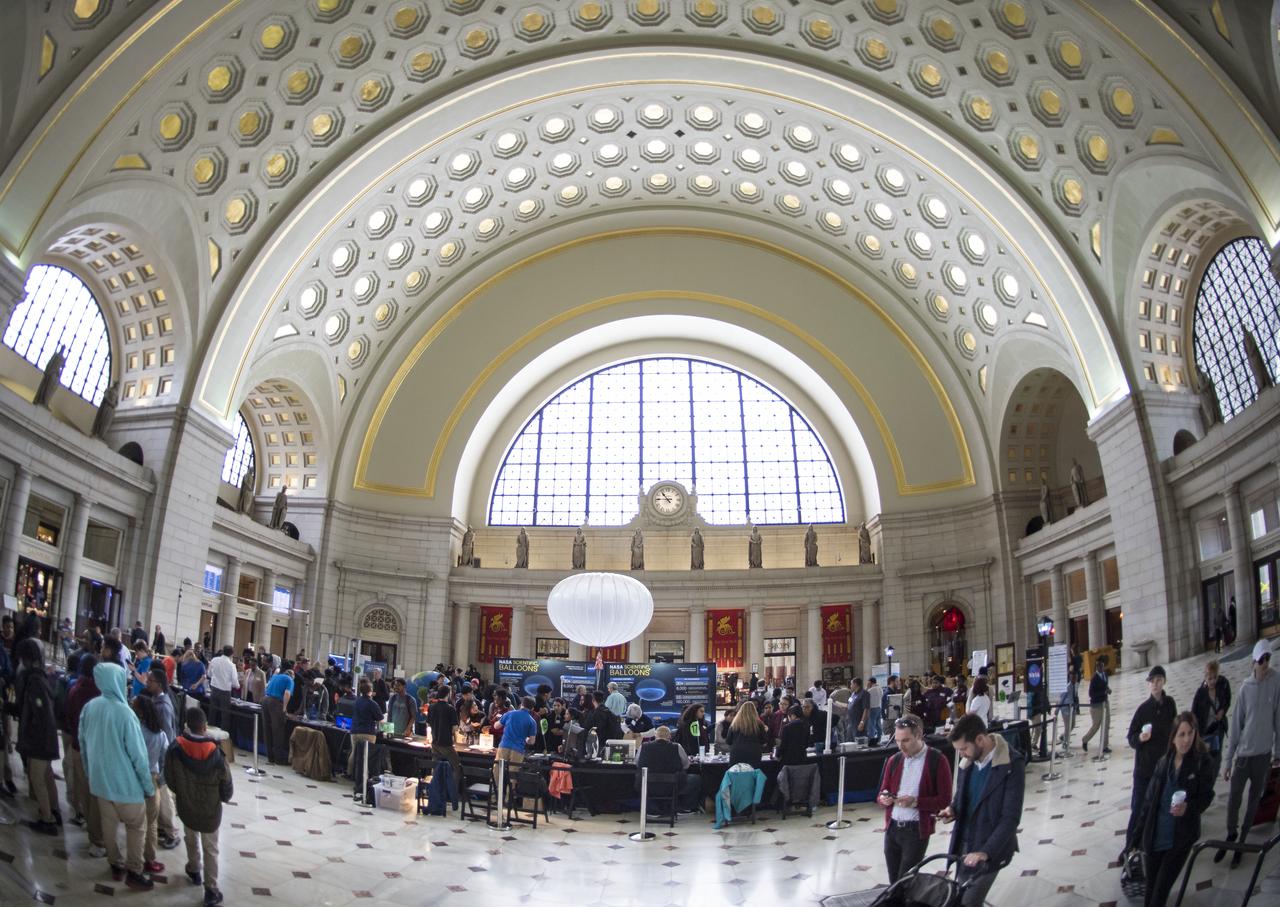
A view of the exhibits at NASA's Earth Day event on Thursday, April 19, 2018 at Union Station in Washington, D.C. Photo Credit: (NASA/Aubrey Gemignani)
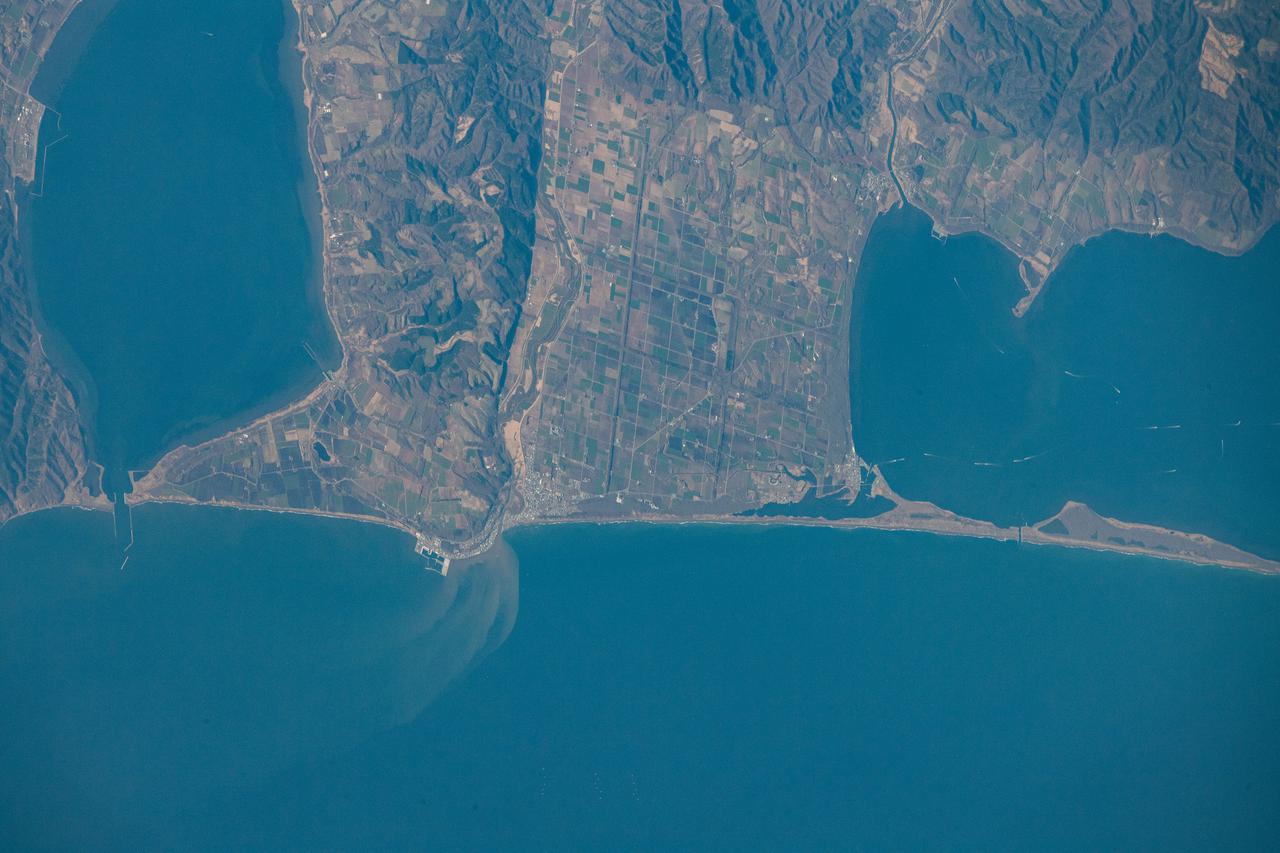
iss065e001029 (April 19, 2021) --- The coast of Kitami on Japan's island of Hokkaido is pictured from the International Space Station as it orbited 265 miles above the North Pacific.
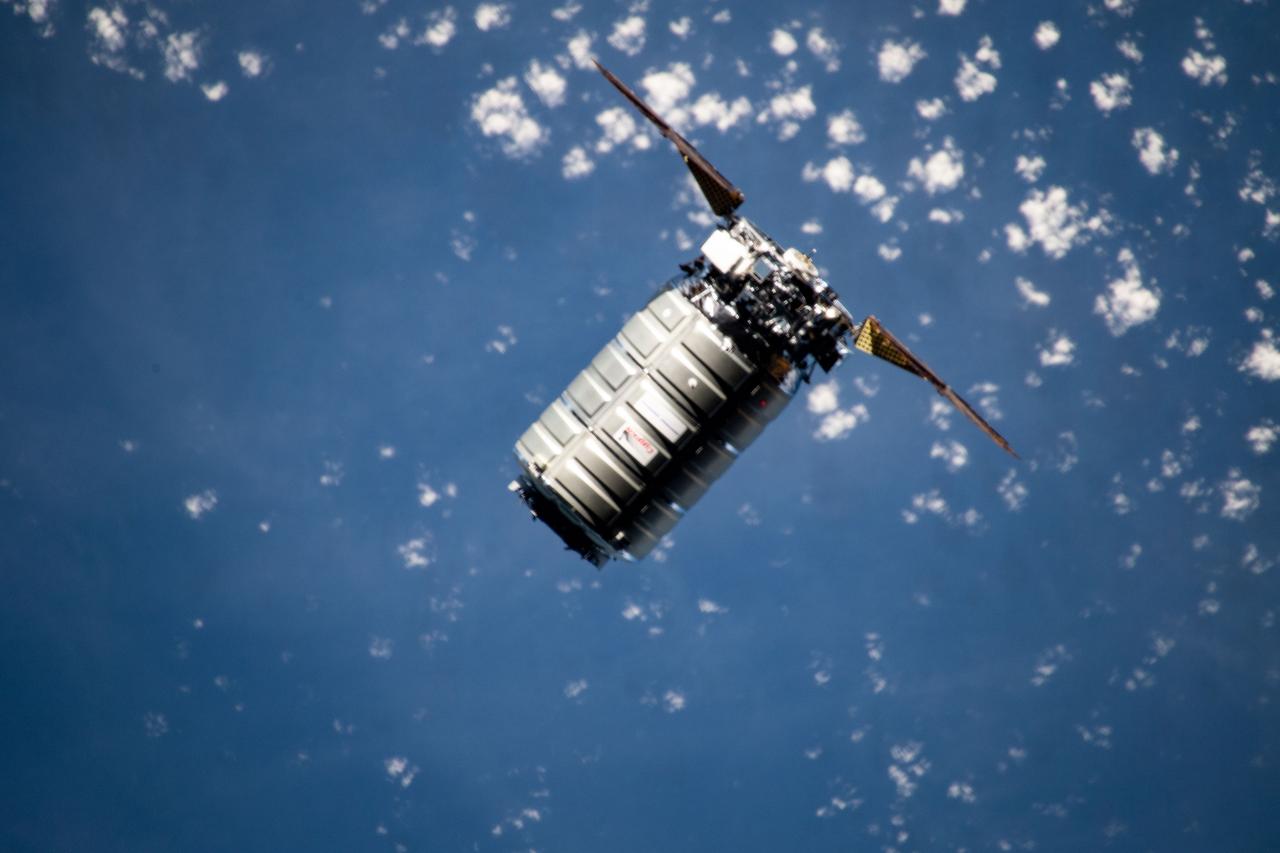
iss059e025366 (April 19, 2019) --- Northrop Grumman's Cygnus space freighter approaches the International Space Station 254 miles above the South China Sea.

Expedition 9 Commander Gennady Padalka, right, and Flight Engineer and NASA Science Officer Mike Fincke check each other's suits, Monday, April 19, 2004, prior to departing for the launch pad for their liftoff to the International Space Station April 19, 2004 from the Baikonur Cosmodrome in Baikonur, Kazakhstan. Padalka and Fincke launched with European Space Agency Astronaut Andre Kuipers of the Netherlands, who will spend 9 days on the Station, while Padalka and Fincke will remain on board until October. Photo Credit: (NASA/Bill Ingalls)
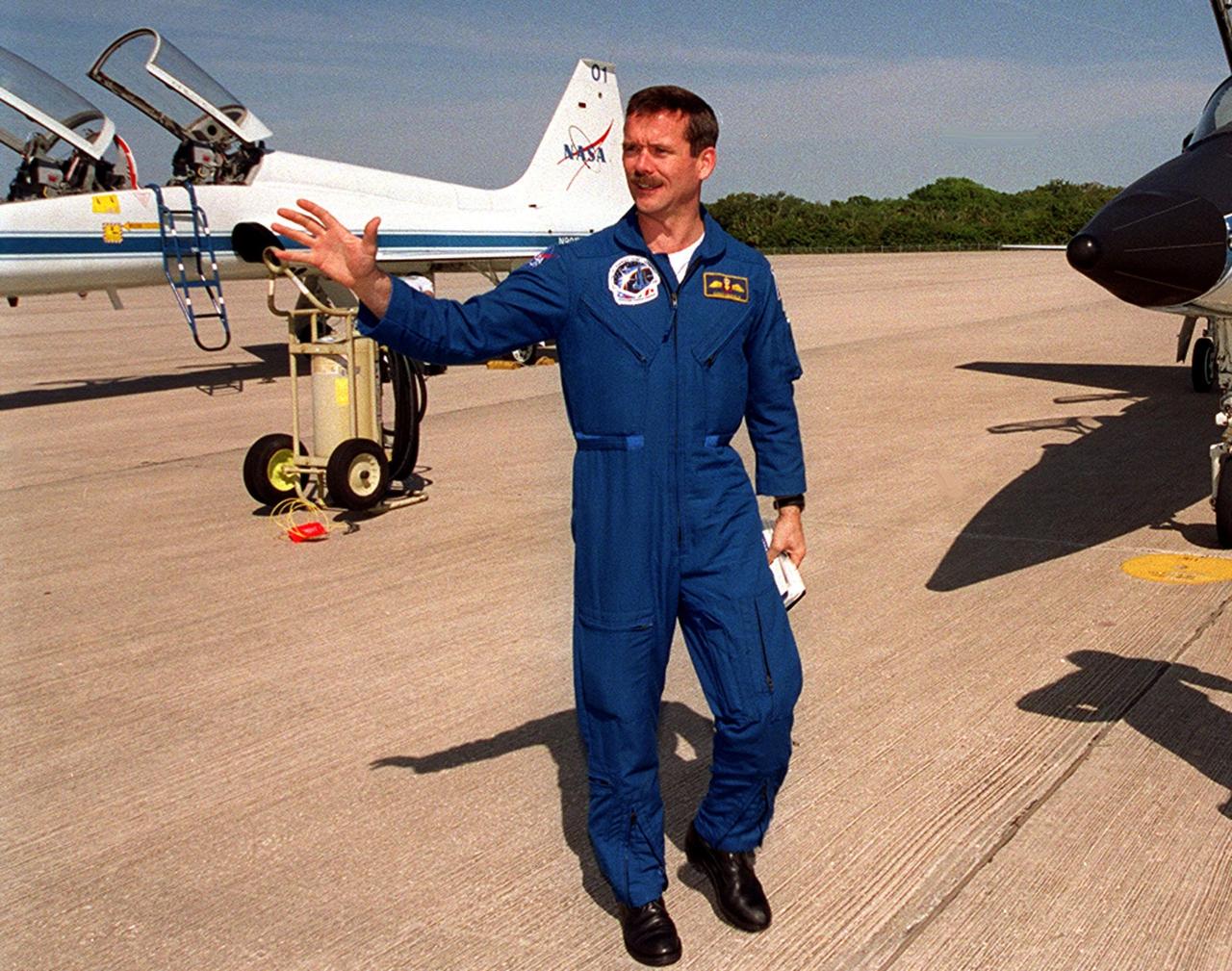
STS-100 Mission Specialist Chris A. Hadfield, who is with the Canadian Space Agency, waves to media after arriving at the KSC Shuttle Landing Facility for launch April 19. The 11-day mission to the International Space Station will deliver and integrate the Spacelab Logistics Pallet/Launch Deployment Assembly, which includes the Space Station Remote Manipulator system and the UHF Antenna, and the Multi-Purpose Logistics Module Raffaello. Liftoff on mission STS-100 is scheduled at 2:41 p.m. EDT April 19
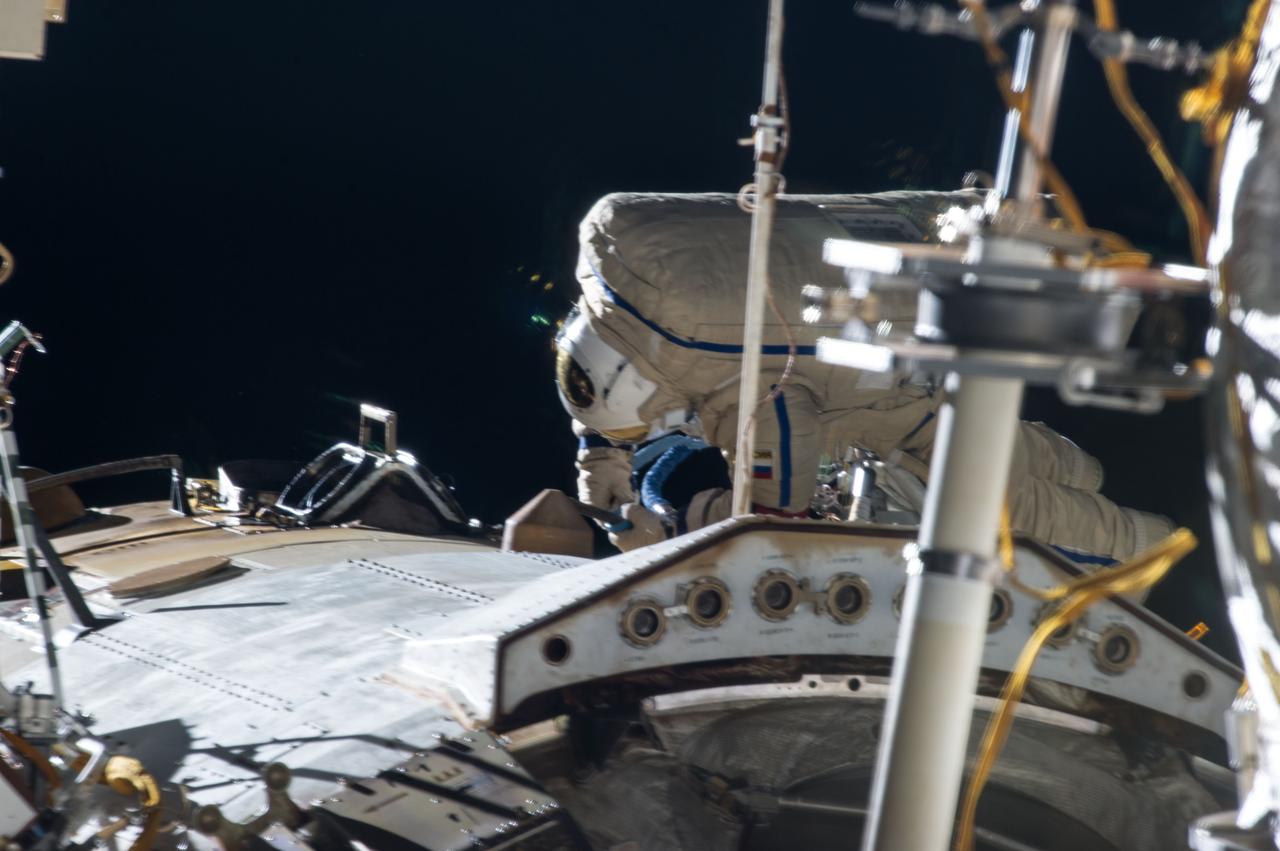
ISS035-E-024813 (19 April 2013) --- Expedition 35 Russian cosmonaut Pavel Vinogradov translates outside the International Space Station on April 19, 2013, during the first spacewalk of the Expedition 35 mission. Vinogradov and fellow cosmonaut Roman Romanenko (out of frame) went on to spend about six hours upgrading the station?s exterior hardware.
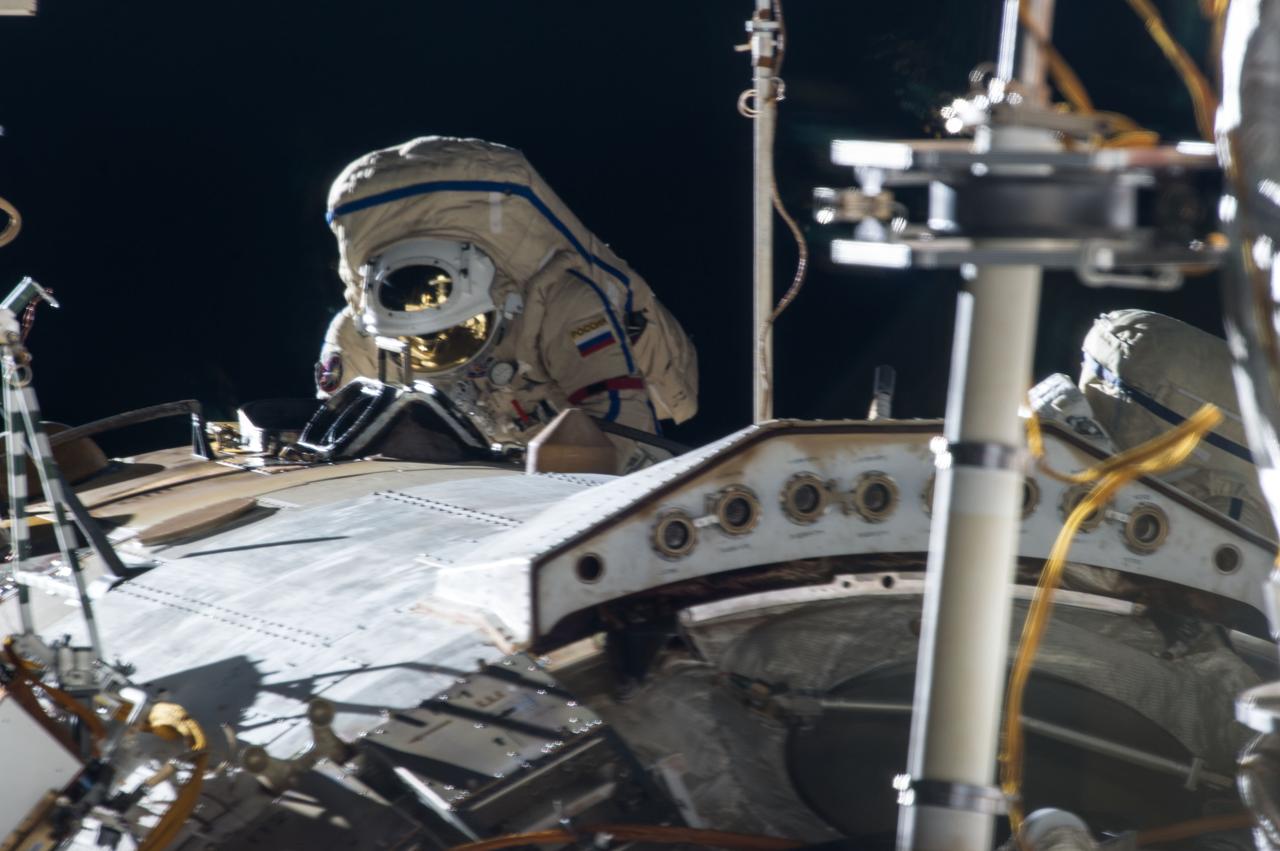
ISS035-E-024806 (19 April 2013) --- Expedition 35 Russian cosmonaut Pavel Vinogradov translates outside the International Space Station on April 19, 2013, during the first spacewalk of the Expedition 35 mission. Vinogradov and fellow cosmonaut Roman Romanenko (out of frame) went on to spend about six hours upgrading the station?s exterior hardware.
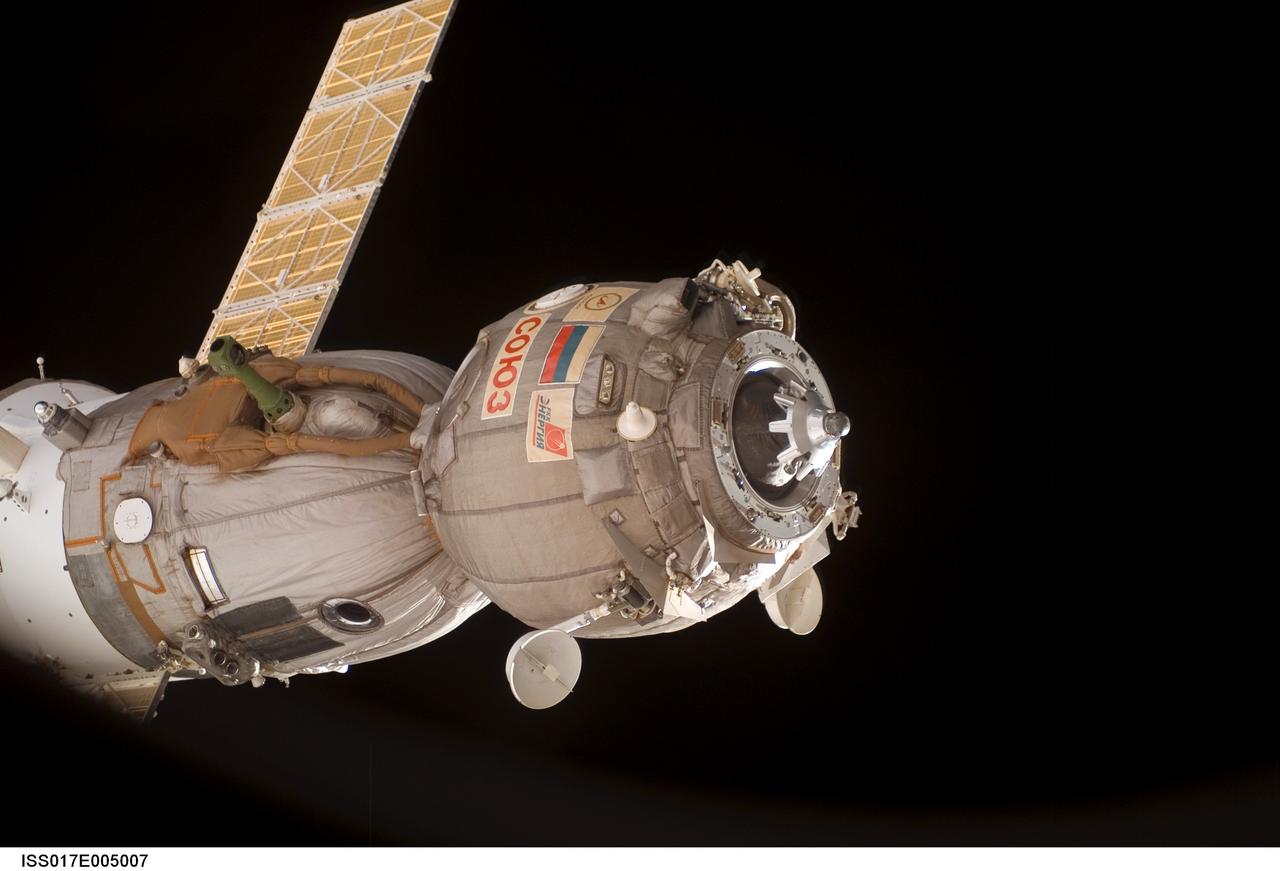
ISS017-E-005007 (19 April 2008) --- Backdropped by the blackness of space, the Soyuz TMA-11 spacecraft departs from the International Space Station carrying NASA astronaut Peggy Whitson, Expedition 16 commander; Russian Federal Space Agency cosmonaut Yuri Malenchenko, flight engineer and Soyuz commander; and South Korean spaceflight participant So-yeon Yi. Undocking occurred at 1:06 a.m. (EDT) on April 19, 2008.
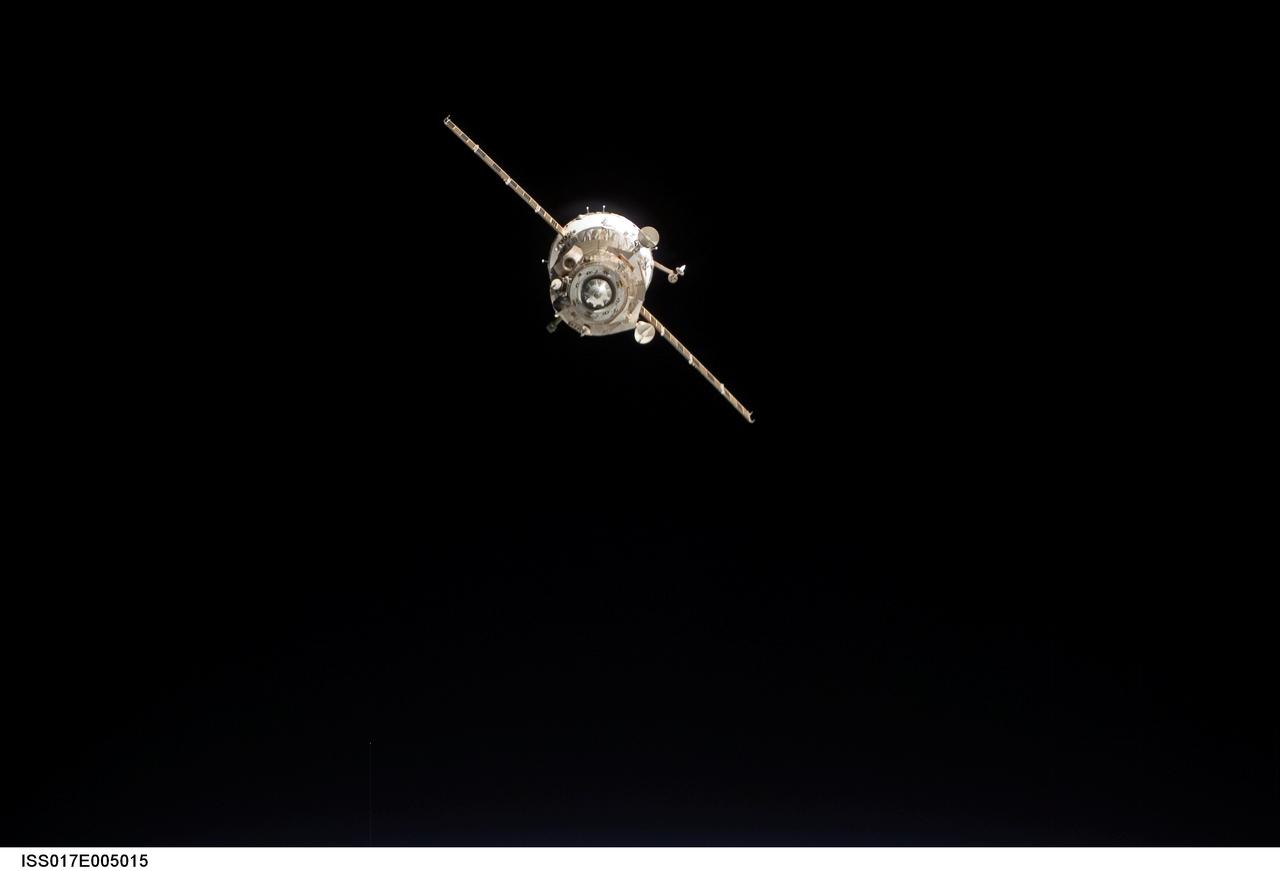
ISS017-E-005015 (19 April 2008) --- Backdropped by the blackness of space, the Soyuz TMA-11 spacecraft departs from the International Space Station carrying NASA astronaut Peggy Whitson, Expedition 16 commander; Russian Federal Space Agency cosmonaut Yuri Malenchenko, flight engineer and Soyuz commander; and South Korean spaceflight participant So-yeon Yi. Undocking occurred at 1:06 a.m. (EDT) on April 19, 2008.
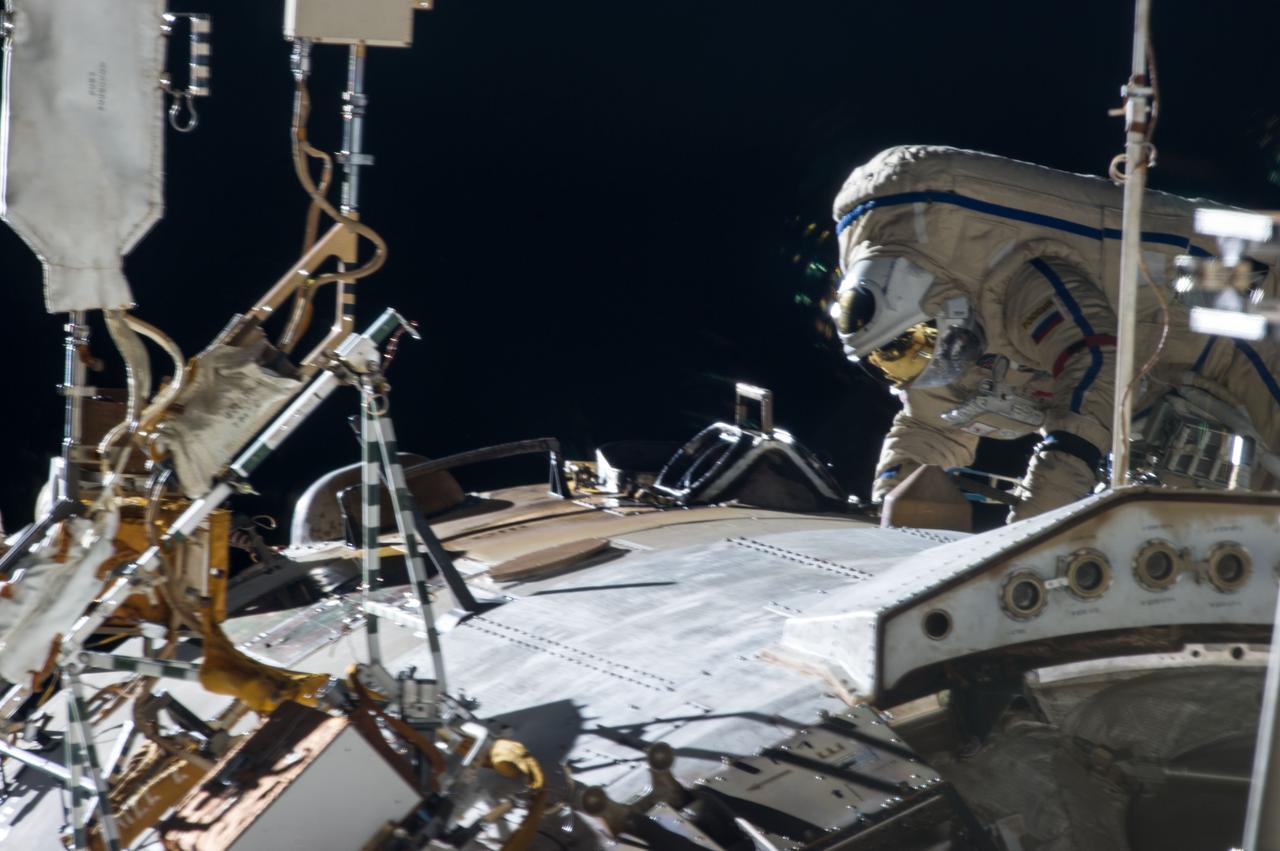
ISS035-E-024811 (19 April 2013) --- Expedition 35 Russian cosmonaut Pavel Vinogradov translates outside the International Space Station on April 19, 2013, during the first spacewalk of the Expedition 35 mission. Vinogradov and fellow cosmonaut Roman Romanenko (out of frame) went on to spend about six hours upgrading the station?s exterior hardware.
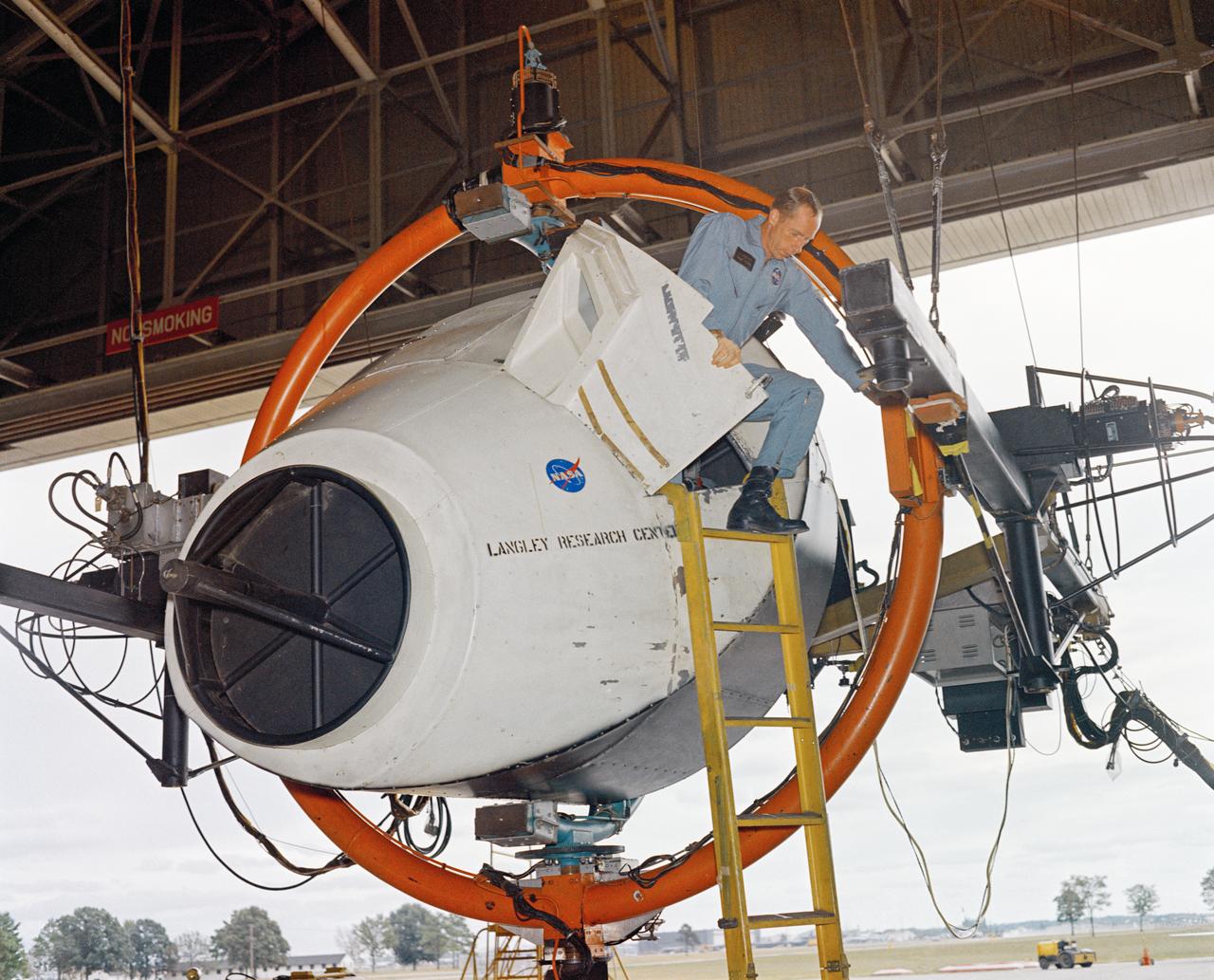
Astronauts Stuart A. Roosa, and Alfred M. Worden training a tRendezvous Docking Simulator NASA Langley. Worden was one of the 19 astronauts selected by NASA in April 1966. He served as a member of the astronaut support crew for the Apollo 9 flight and as backup command module pilot for the Apollo 12 flight. Colonel Roosa was one of the 19 astronauts selected by NASA in April 1966. He was a member of the astronaut support crew for the Apollo 9 flight.
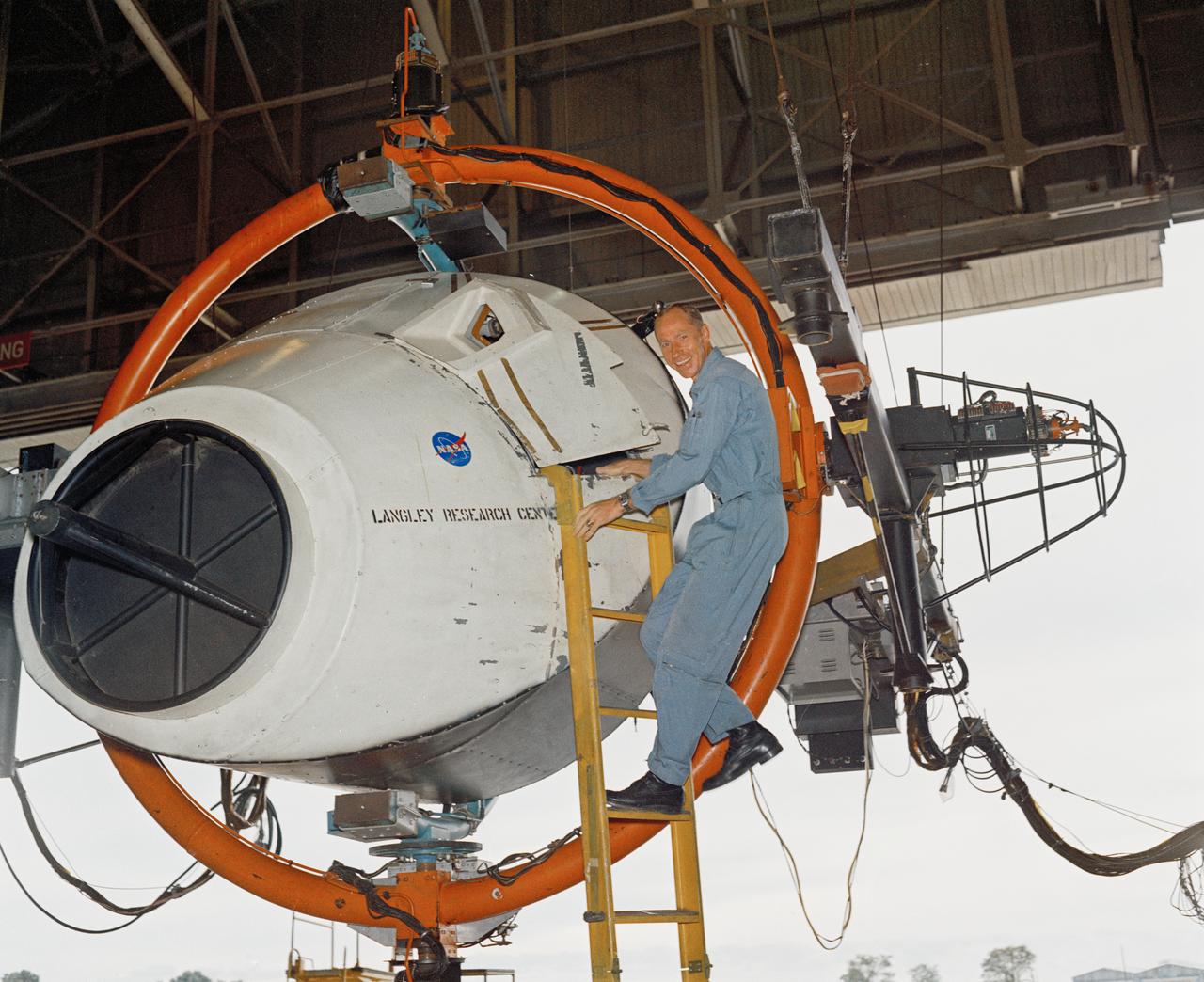
Astronauts Stuart A. Roosa, and Alfred M. Worden training a tRendezvous Docking Simulator NASA Langley. Worden was one of the 19 astronauts selected by NASA in April 1966. He served as a member of the astronaut support crew for the Apollo 9 flight and as backup command module pilot for the Apollo 12 flight. Colonel Roosa was one of the 19 astronauts selected by NASA in April 1966. He was a member of the astronaut support crew for the Apollo 9 flight.
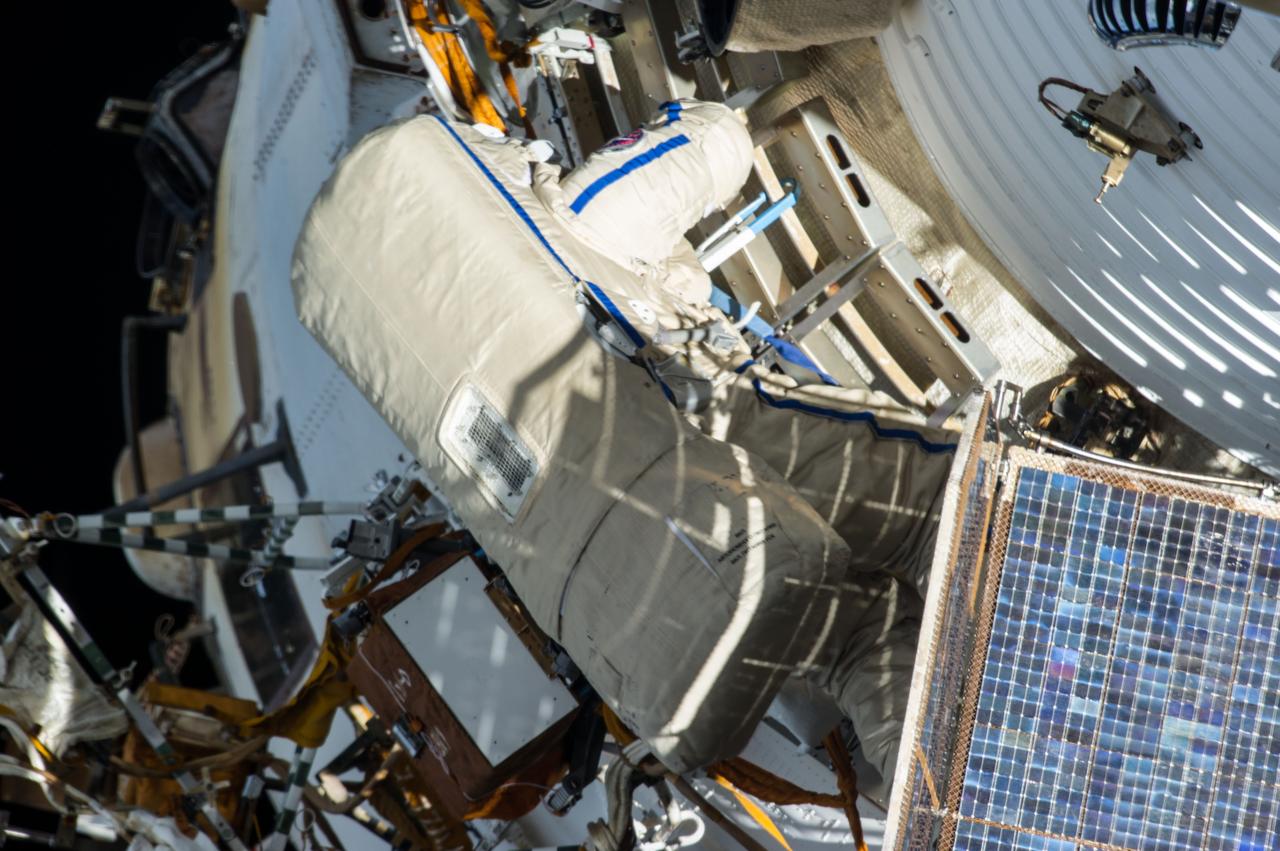
ISS035-E-024731 (19 April 2013) --- Expedition 35 Russian cosmonaut Roman Romanenko translates outside the International Space Station on April 19, 2013, during the first spacewalk of the Expedition 35 mission. Romanenko and Pavel Vinogradov (out of frame) went on to spend about six hours upgrading the station?s exterior hardware.

ISS35-E-024812 (19 April 2013) --- Expedition 35 Russian cosmonaut Pavel Vinogradov translates outside the International Space Station on April 19, 2013, during the first spacewalk of the Expedition 35 mission. Vinogradov and fellow cosmonaut Roman Romanenko (out of frame) went on to spend about six hours upgrading the station?s exterior hardware.
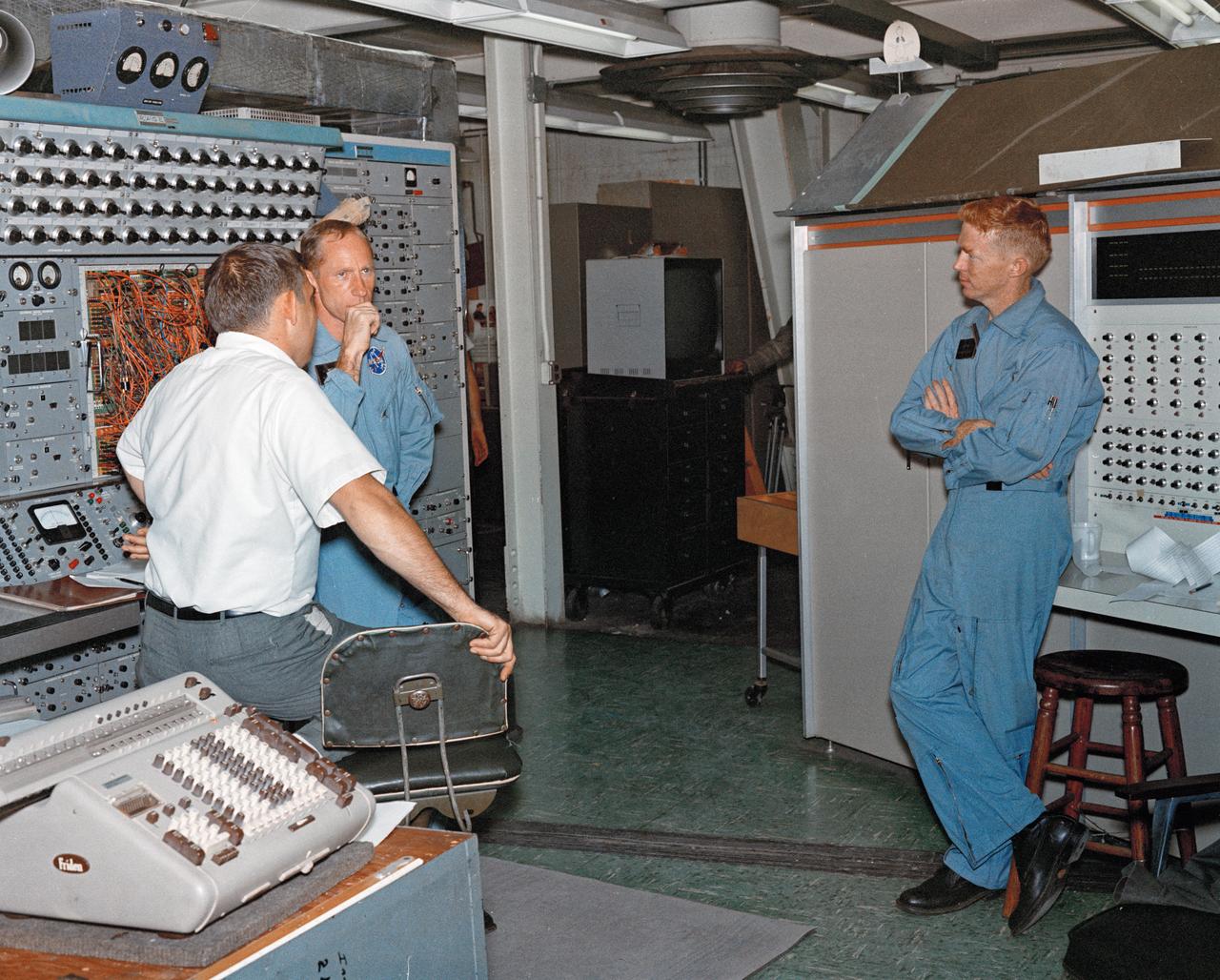
Astronauts Stuart A. Roosa, and Alfred M. Worden training a tRendezvous Docking Simulator NASA Langley. Worden was one of the 19 astronauts selected by NASA in April 1966. He served as a member of the astronaut support crew for the Apollo 9 flight and as backup command module pilot for the Apollo 12 flight. Colonel Roosa was one of the 19 astronauts selected by NASA in April 1966. He was a member of the astronaut support crew for the Apollo 9 flight.
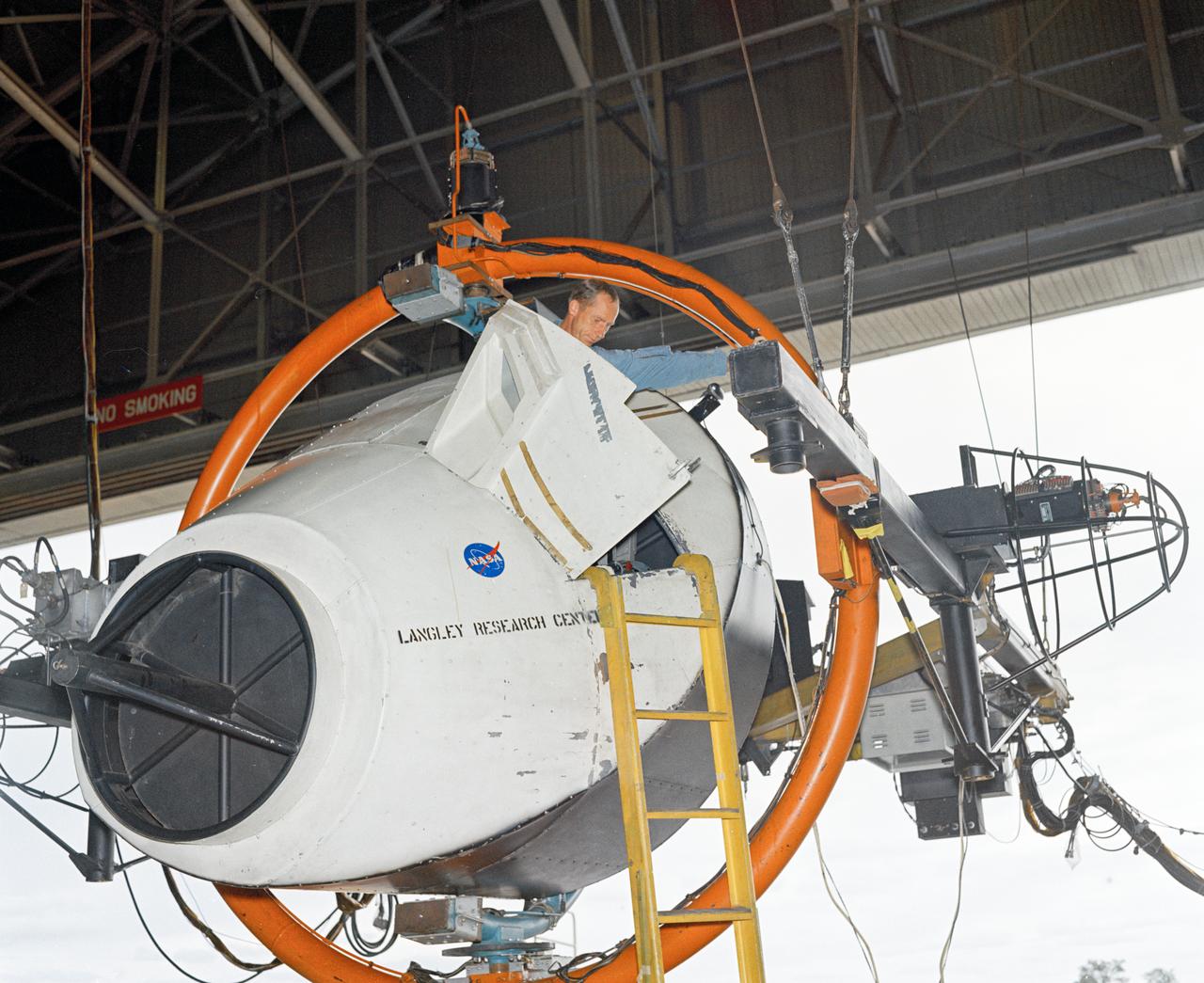
Astronauts Stuart A. Roosa, and Alfred M. Worden training a tRendezvous Docking Simulator NASA Langley. Worden was one of the 19 astronauts selected by NASA in April 1966. He served as a member of the astronaut support crew for the Apollo 9 flight and as backup command module pilot for the Apollo 12 flight. Colonel Roosa was one of the 19 astronauts selected by NASA in April 1966. He was a member of the astronaut support crew for the Apollo 9 flight.
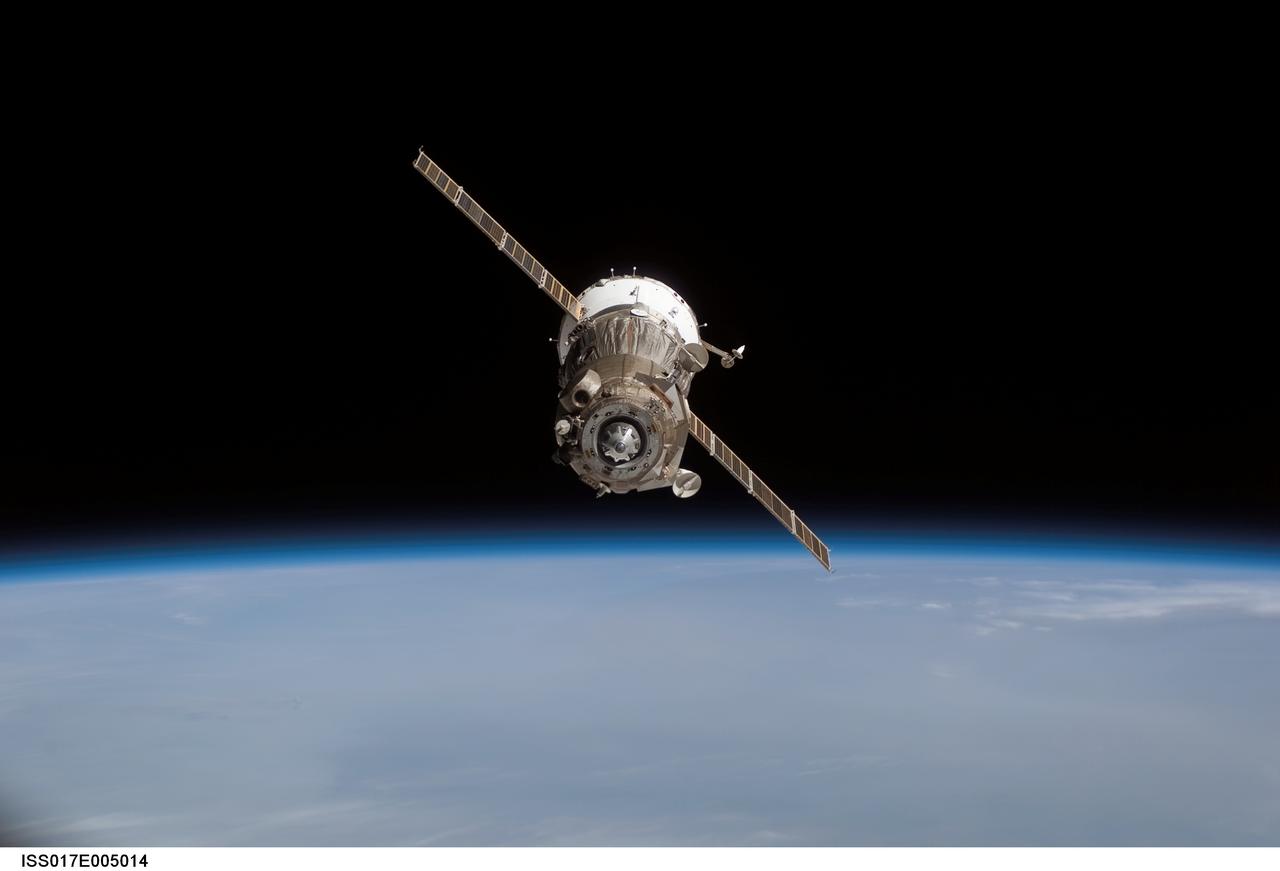
ISS017-E-005014 (19 April 2008) --- Backdropped by the blackness of space and Earth's horizon, the Soyuz TMA-11 spacecraft departs from the International Space Station carrying NASA astronaut Peggy Whitson, Expedition 16 commander; Russian Federal Space Agency cosmonaut Yuri Malenchenko, flight engineer and Soyuz commander; and South Korean spaceflight participant So-yeon Yi. Undocking occurred at 1:06 a.m. (EDT) on April 19, 2008.
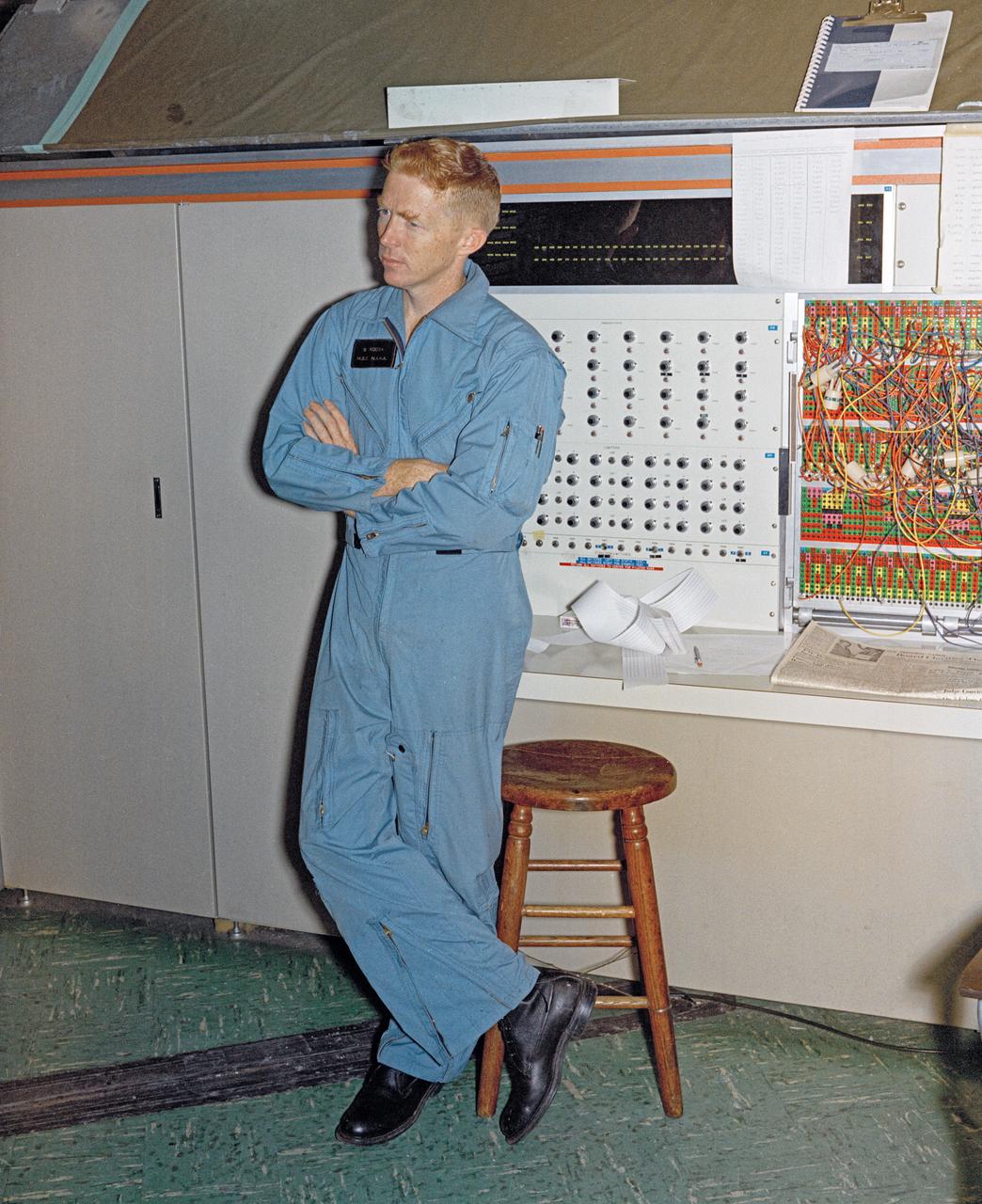
Astronauts Stuart A. Roosa, and Alfred M. Worden training a tRendezvous Docking Simulator NASA Langley. Worden was one of the 19 astronauts selected by NASA in April 1966. He served as a member of the astronaut support crew for the Apollo 9 flight and as backup command module pilot for the Apollo 12 flight. Colonel Roosa was one of the 19 astronauts selected by NASA in April 1966. He was a member of the astronaut support crew for the Apollo 9 flight.
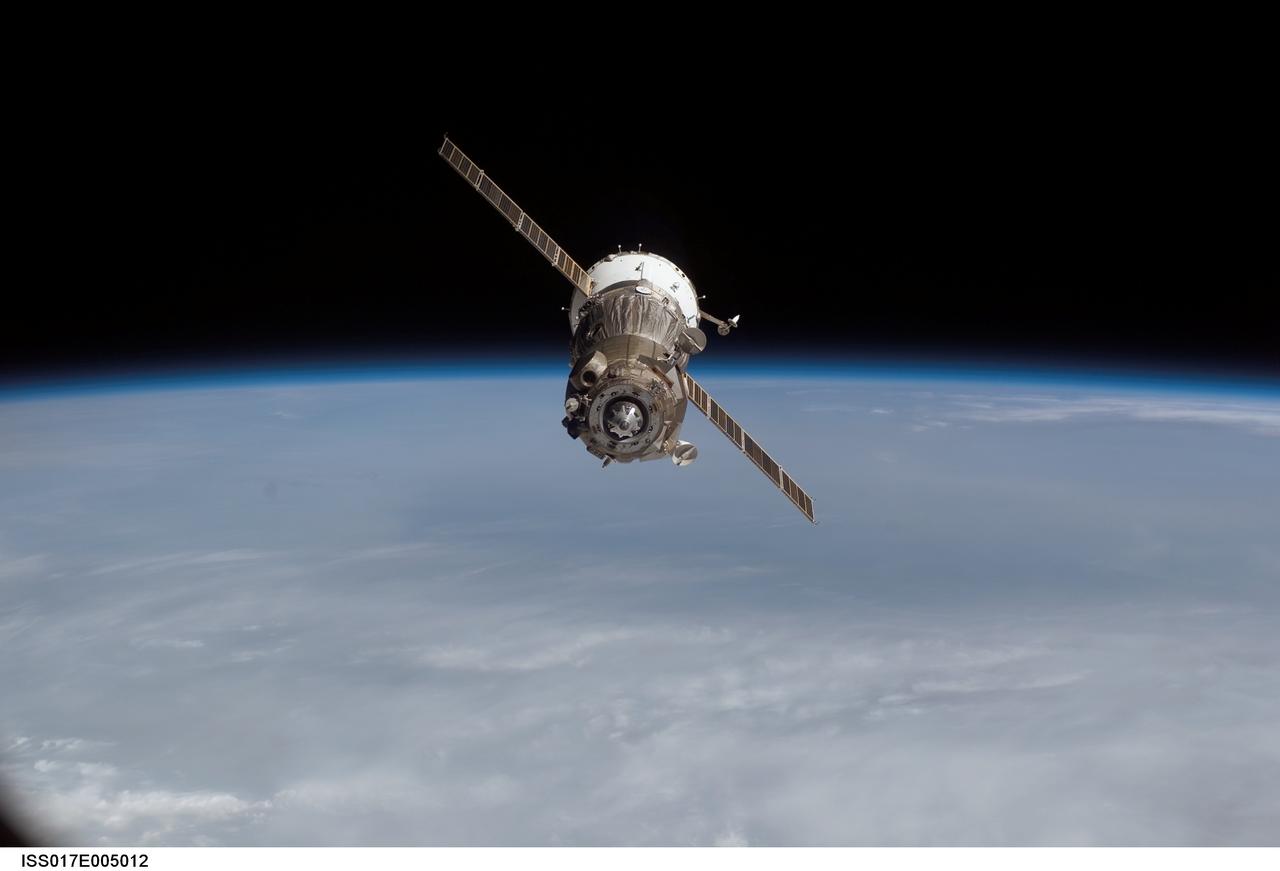
ISS017-E-005012 (19 April 2008) --- Backdropped by the blackness of space and Earth's horizon, the Soyuz TMA-11 spacecraft departs from the International Space Station carrying NASA astronaut Peggy Whitson, Expedition 16 commander; Russian Federal Space Agency cosmonaut Yuri Malenchenko, flight engineer and Soyuz commander; and South Korean spaceflight participant So-yeon Yi. Undocking occurred at 1:06 a.m. (EDT) on April 19, 2008.
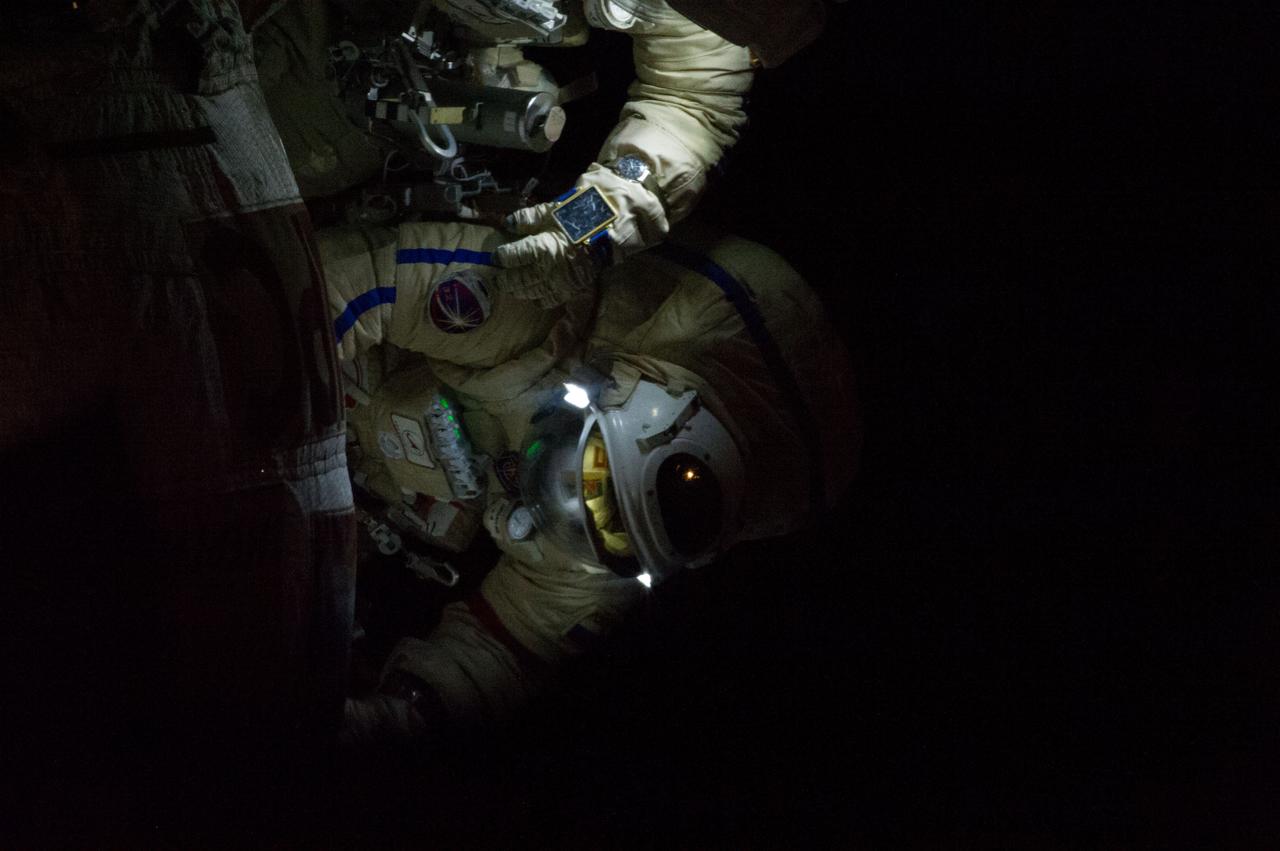
ISS035-E-027831 (19 April 2013) --- Surrounded by darkness, Expedition 35 Russian cosmonaut Pavel Vinogradov translates outside the International Space Station on April 19, 2013, during the first spacewalk of the Expedition 35 mission. Vinogradov and fellow cosmonaut Roman Romanenko (out of frame) went on to spend about six hours upgrading the station's exterior hardware.
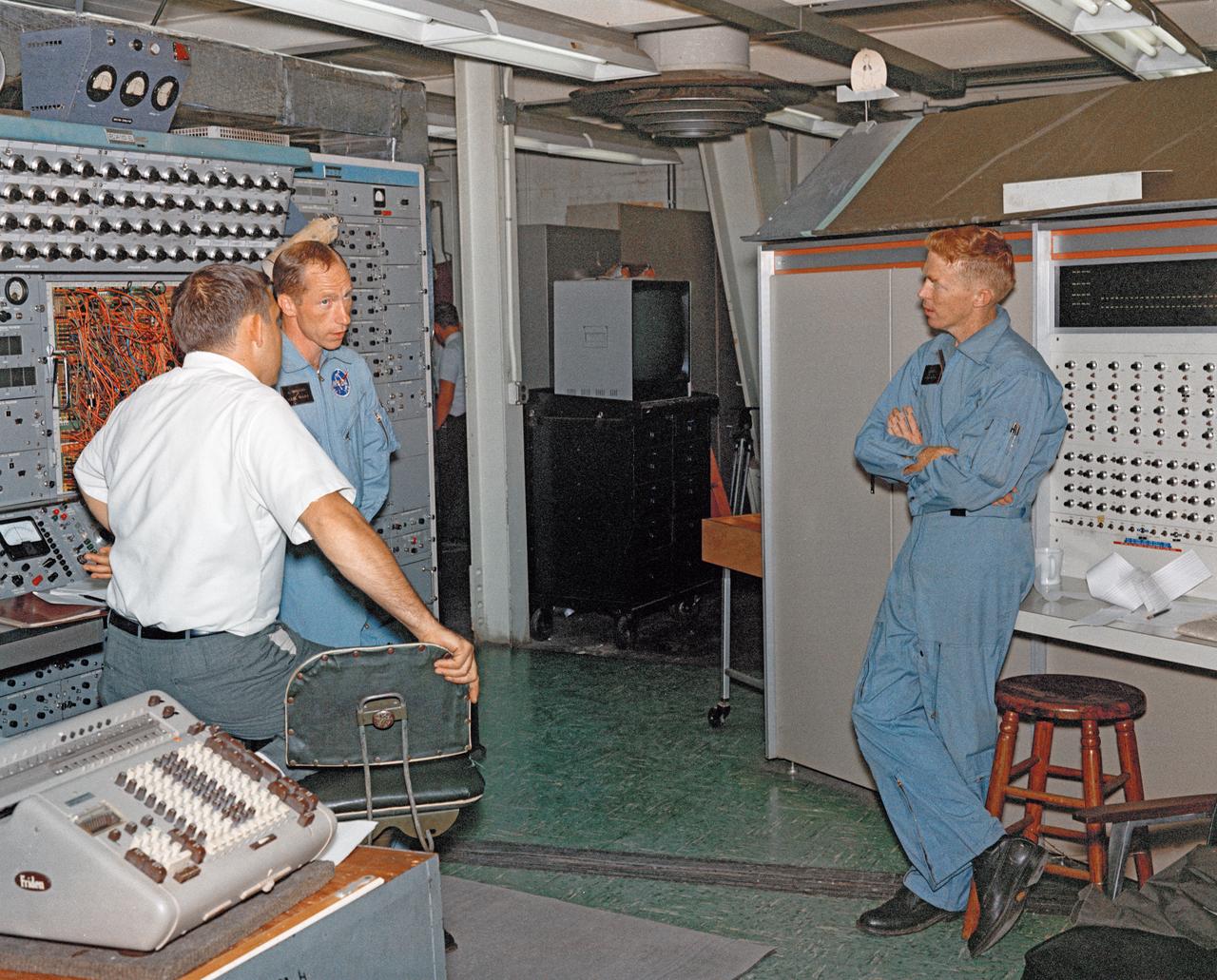
Astronauts Stuart A. Roosa, and Alfred M. Worden training a tRendezvous Docking Simulator NASA Langley. Worden was one of the 19 astronauts selected by NASA in April 1966. He served as a member of the astronaut support crew for the Apollo 9 flight and as backup command module pilot for the Apollo 12 flight. Colonel Roosa was one of the 19 astronauts selected by NASA in April 1966. He was a member of the astronaut support crew for the Apollo 9 flight.
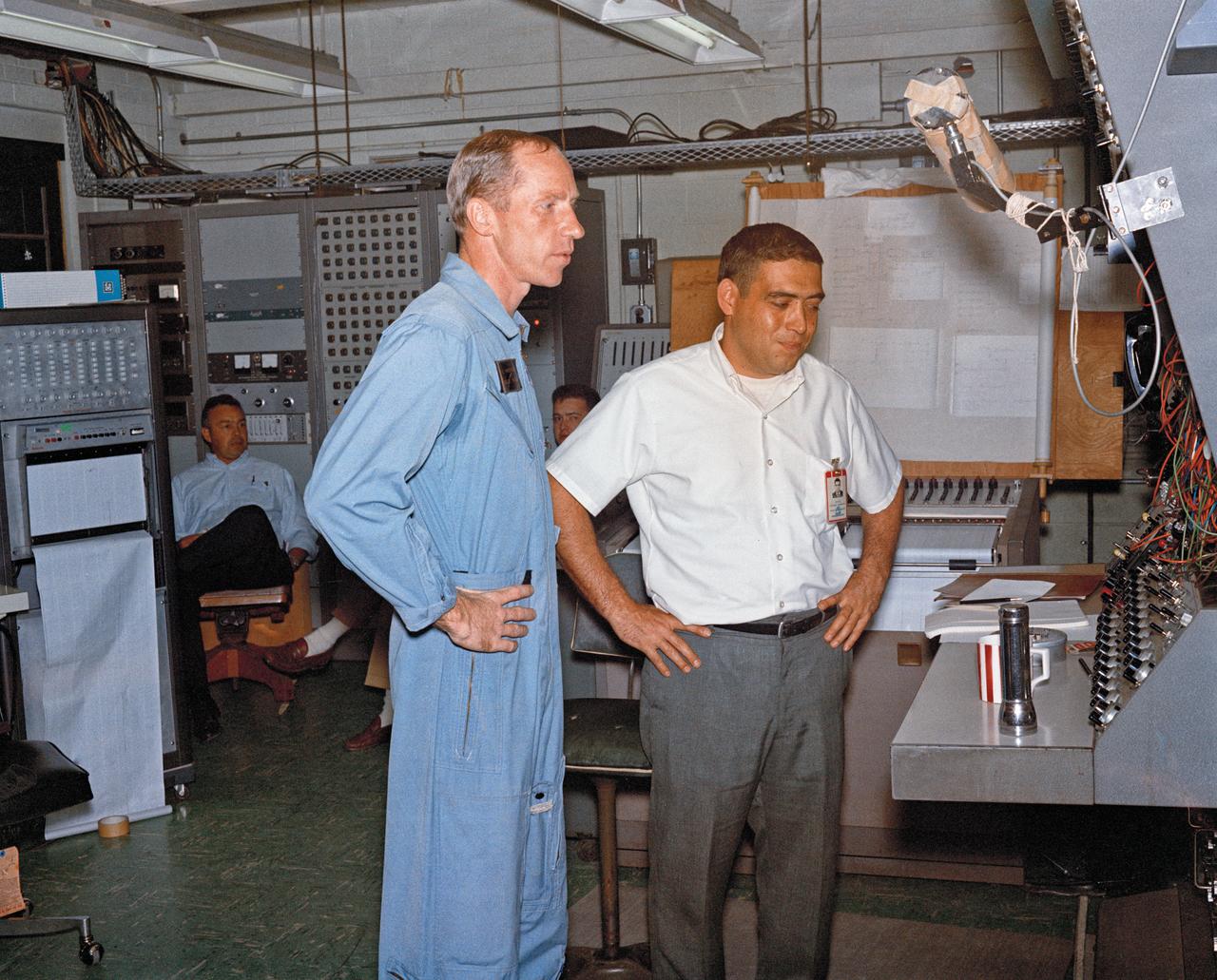
Astronauts Stuart A. Roosa, and Alfred M. Worden training a tRendezvous Docking Simulator NASA Langley. Worden was one of the 19 astronauts selected by NASA in April 1966. He served as a member of the astronaut support crew for the Apollo 9 flight and as backup command module pilot for the Apollo 12 flight. Colonel Roosa was one of the 19 astronauts selected by NASA in April 1966. He was a member of the astronaut support crew for the Apollo 9 flight.
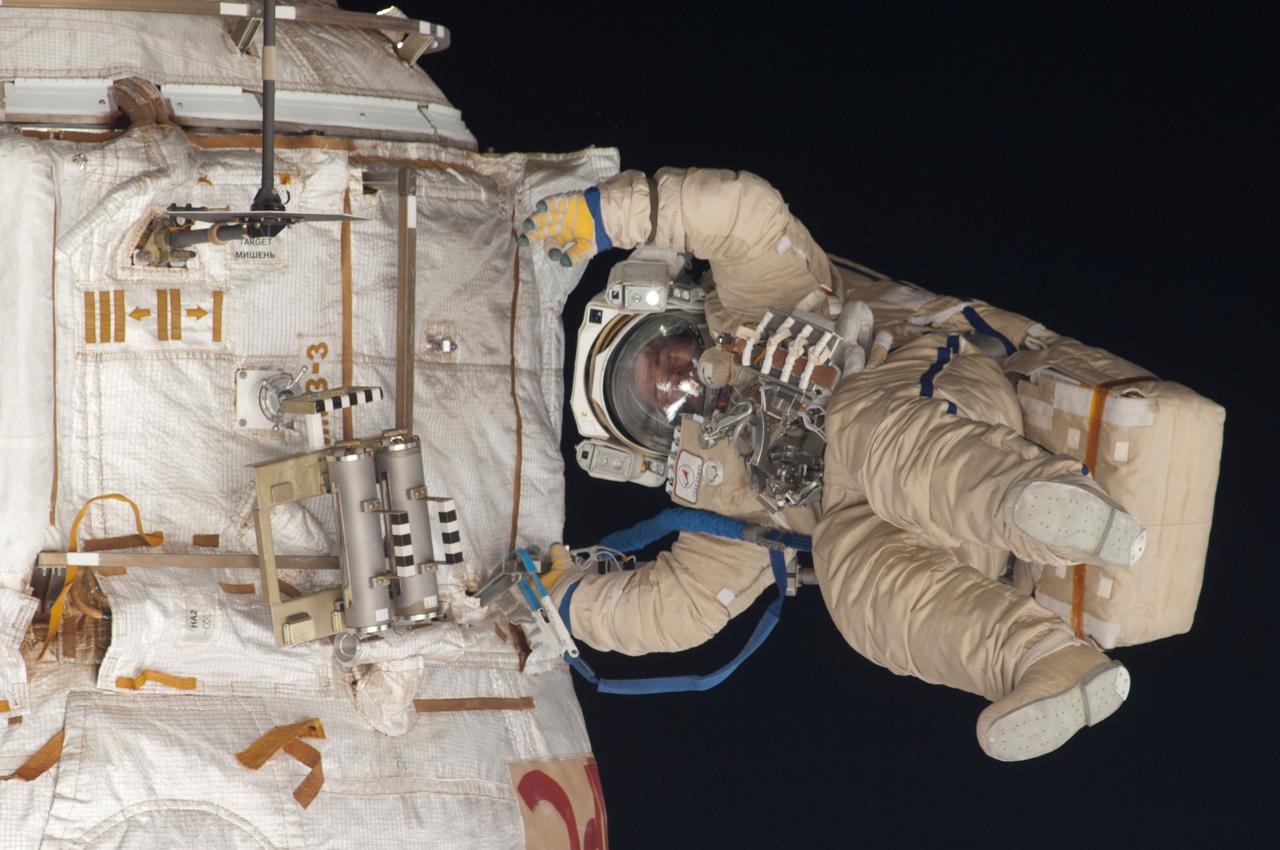
ISS035-E-023968 (19 April 2013) --- Expedition 35 Russian cosmonaut Roman Romanenko translates outside the International Space Station on April 19, 2013, during the first spacewalk of the Expedition 35 mission. Romanenko and Pavel Vinogradov (out of frame) went on to spend about six hours upgrading the station?s exterior hardware.
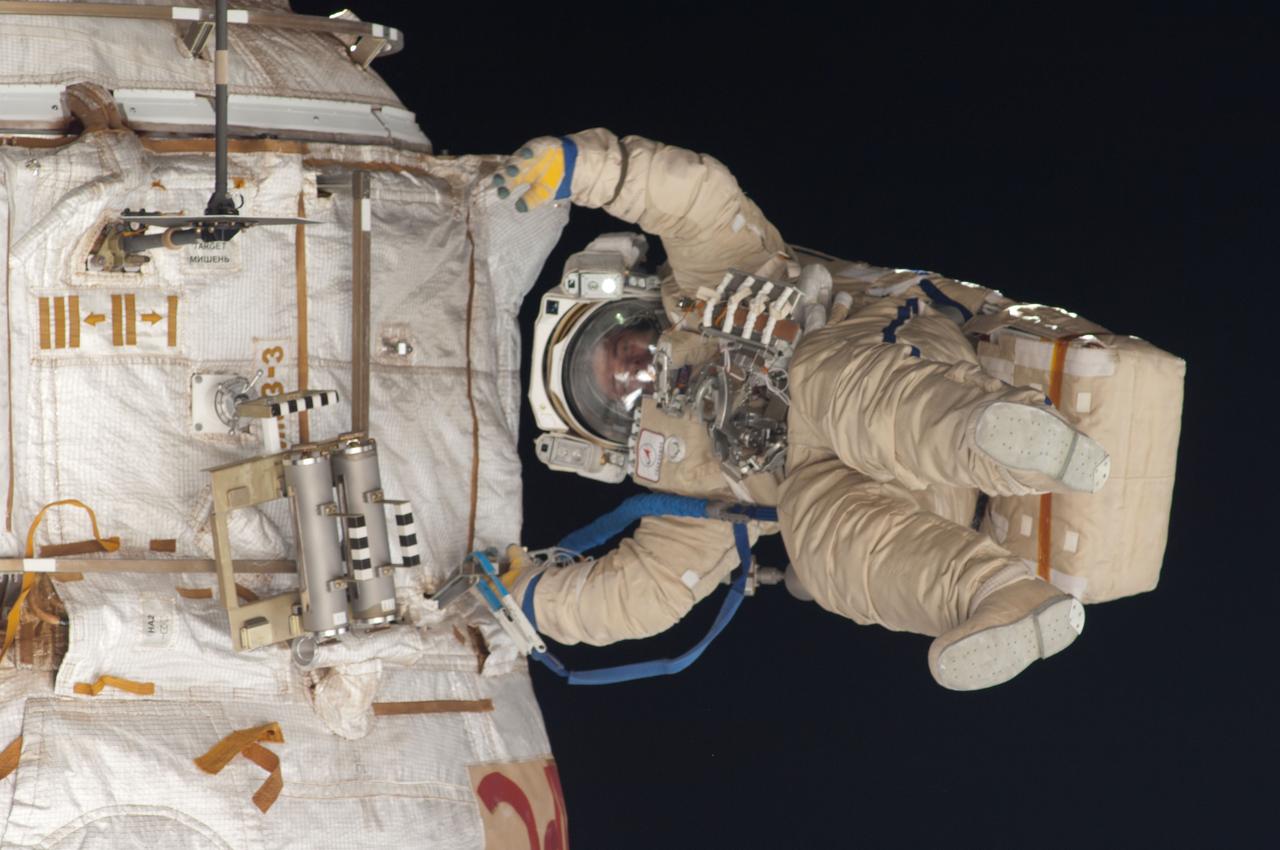
ISS035-E-023969 (19 April 2013) --- Expedition 35 Russian cosmonaut Roman Romanenko translates outside the International Space Station on April 19, 2013, during the first spacewalk of the Expedition 35 mission. Romanenko and Pavel Vinogradov (out of frame) went on to spend about six hours upgrading the station?s exterior hardware.
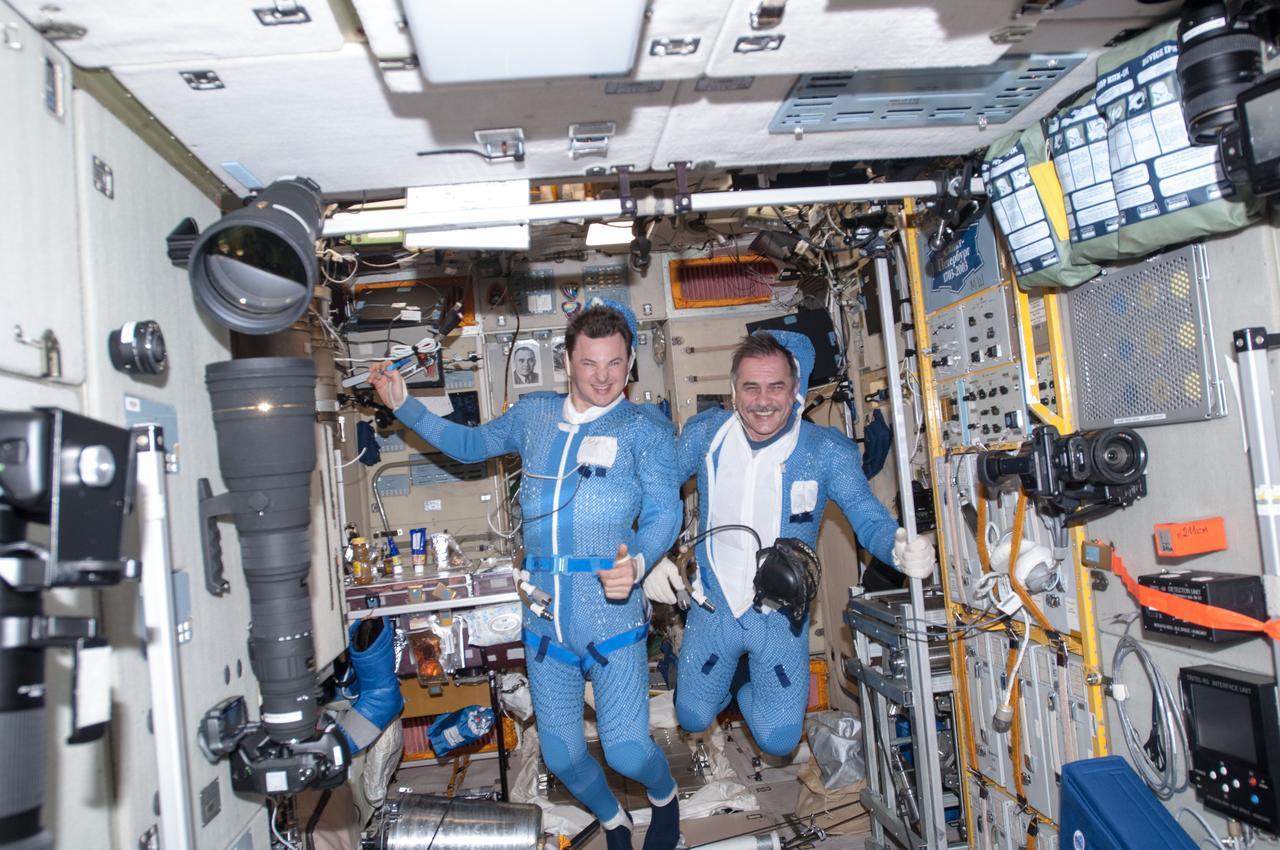
ISS035-E-024131 (19 April 2013) --- Russian cosmonauts Roman Romanenko (left) and Pavel Vinogradov, Expedition 35 flight engineers, are seen in the Zvezda service module aboard the International Space Station prior to an April 19 space walk. The two, wearing thermal undergarments, have yet to don their Orlan spacesuits used for the extravehicular activity.
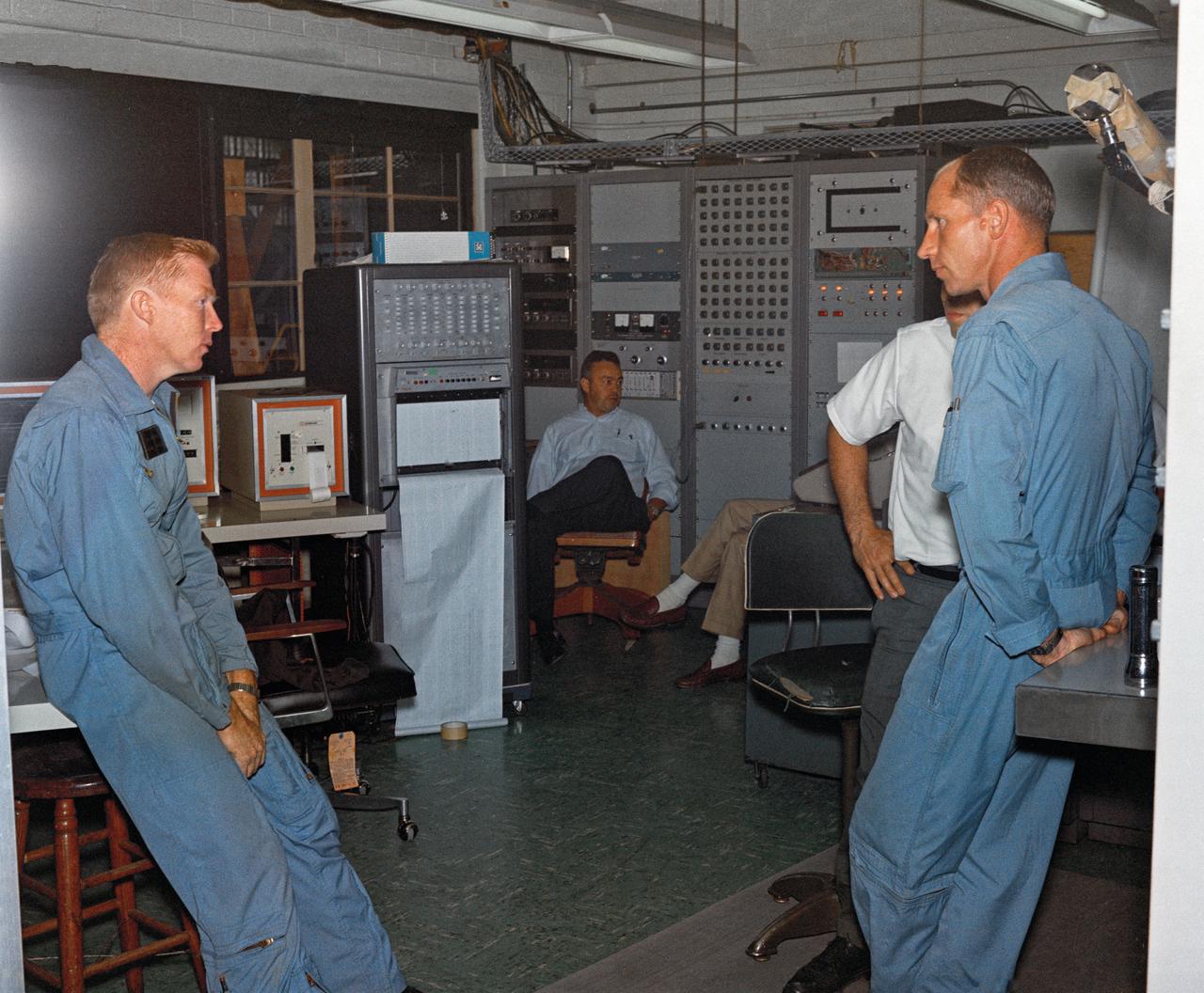
Astronauts Stuart A. Roosa, and Alfred M. Worden training a tRendezvous Docking Simulator NASA Langley. Worden was one of the 19 astronauts selected by NASA in April 1966. He served as a member of the astronaut support crew for the Apollo 9 flight and as backup command module pilot for the Apollo 12 flight. Colonel Roosa was one of the 19 astronauts selected by NASA in April 1966. He was a member of the astronaut support crew for the Apollo 9 flight.
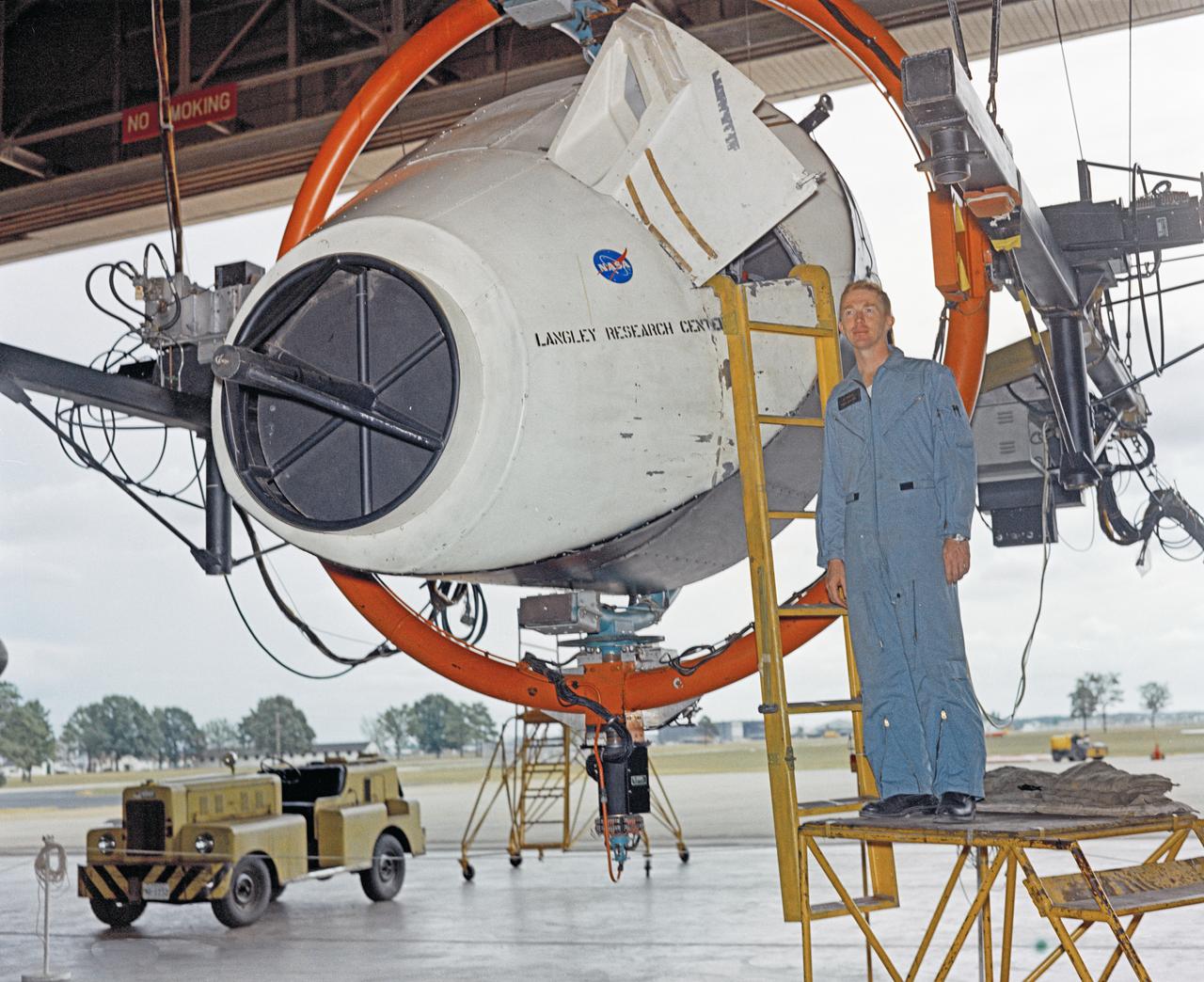
Astronauts Stuart A. Roosa, and Alfred M. Worden training a tRendezvous Docking Simulator NASA Langley. Worden was one of the 19 astronauts selected by NASA in April 1966. He served as a member of the astronaut support crew for the Apollo 9 flight and as backup command module pilot for the Apollo 12 flight. Colonel Roosa was one of the 19 astronauts selected by NASA in April 1966. He was a member of the astronaut support crew for the Apollo 9 flight.
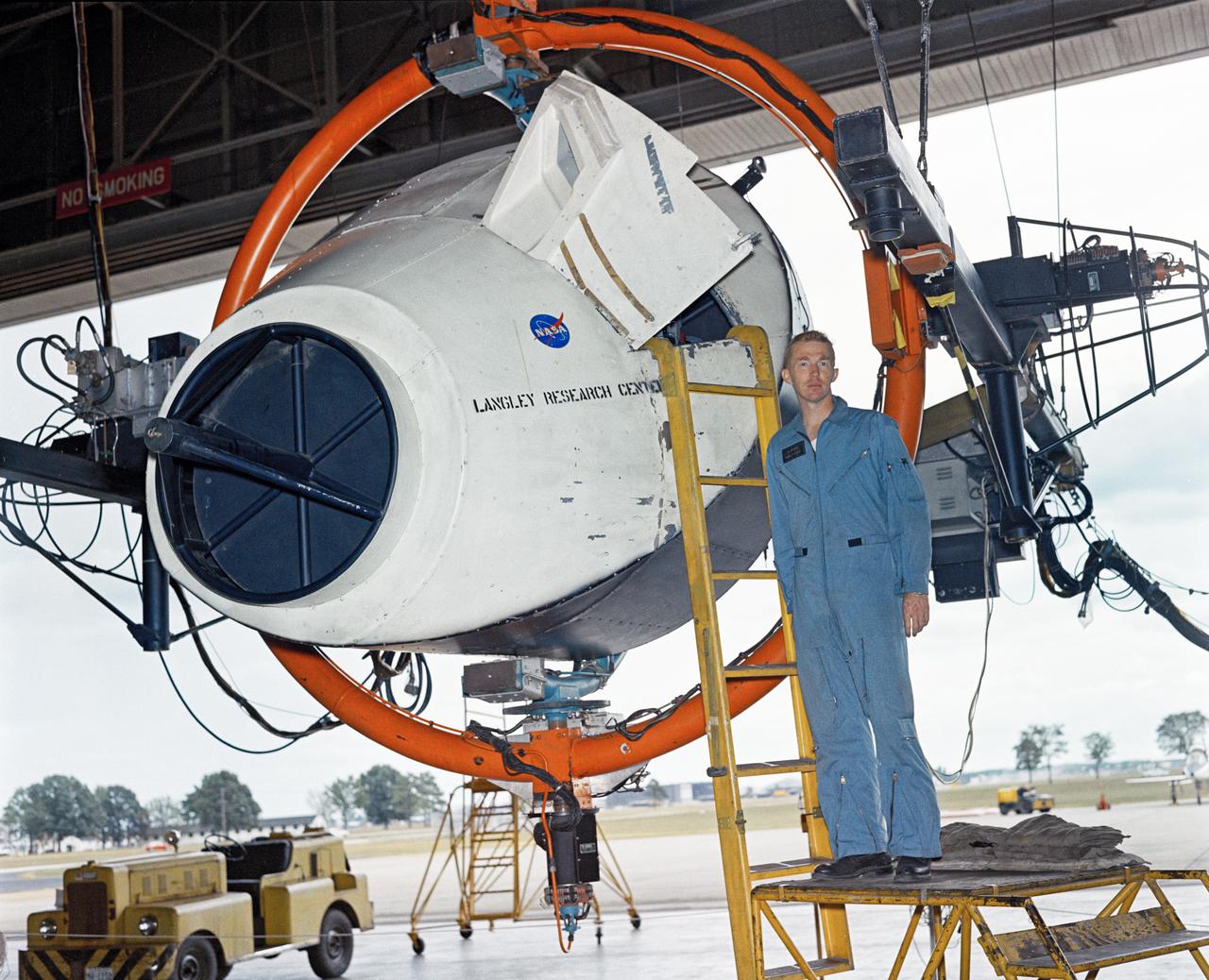
Astronauts Stuart A. Roosa, and Alfred M. Worden training a tRendezvous Docking Simulator NASA Langley. Worden was one of the 19 astronauts selected by NASA in April 1966. He served as a member of the astronaut support crew for the Apollo 9 flight and as backup command module pilot for the Apollo 12 flight. Colonel Roosa was one of the 19 astronauts selected by NASA in April 1966. He was a member of the astronaut support crew for the Apollo 9 flight.
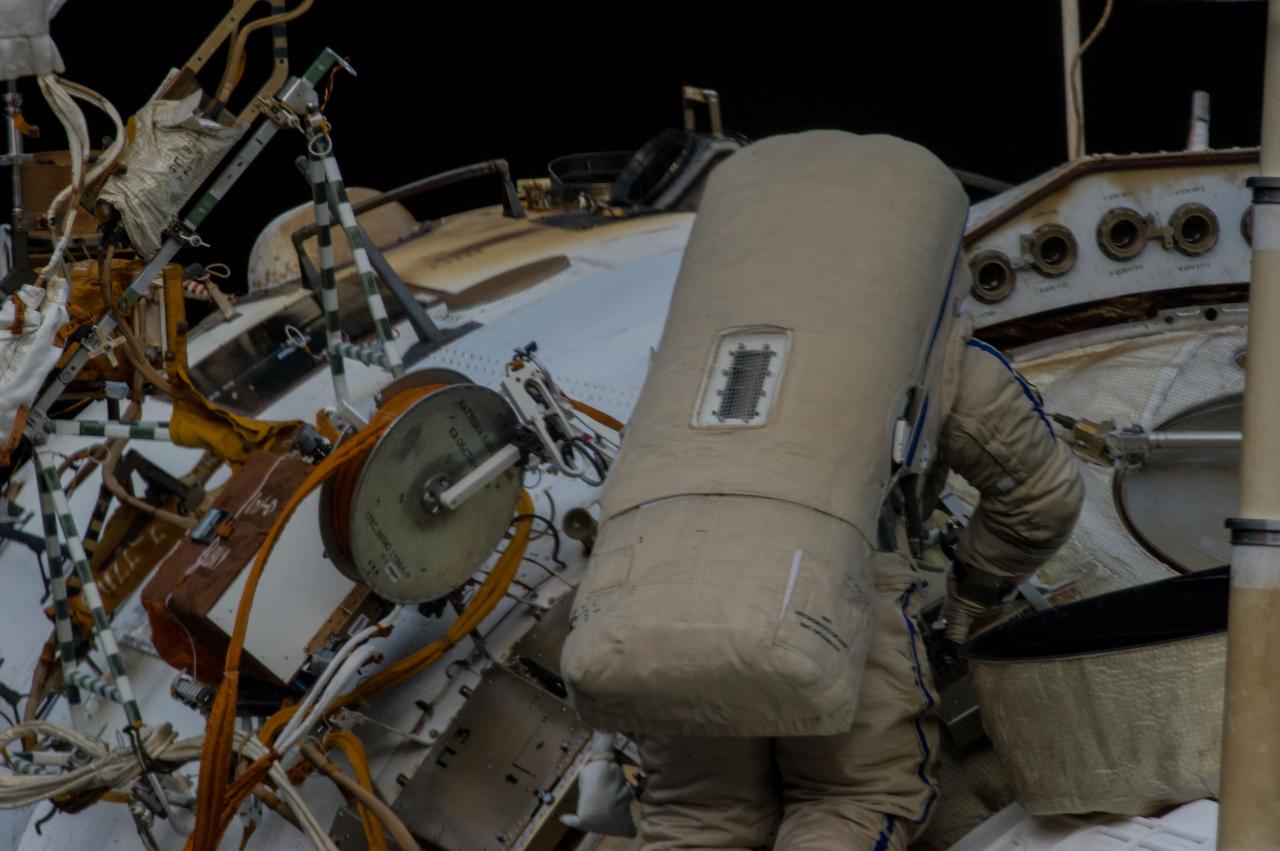
ISS035-E-024725 (19 April 2013) --- Expedition 35 Russian cosmonaut Roman Romanenko translates outside the International Space Station on April 19, 2013, during the first spacewalk of the Expedition 35 mission. Romanenko and Pavel Vinogradov (out of frame) went on to spend about six hours upgrading the station?s exterior hardware.
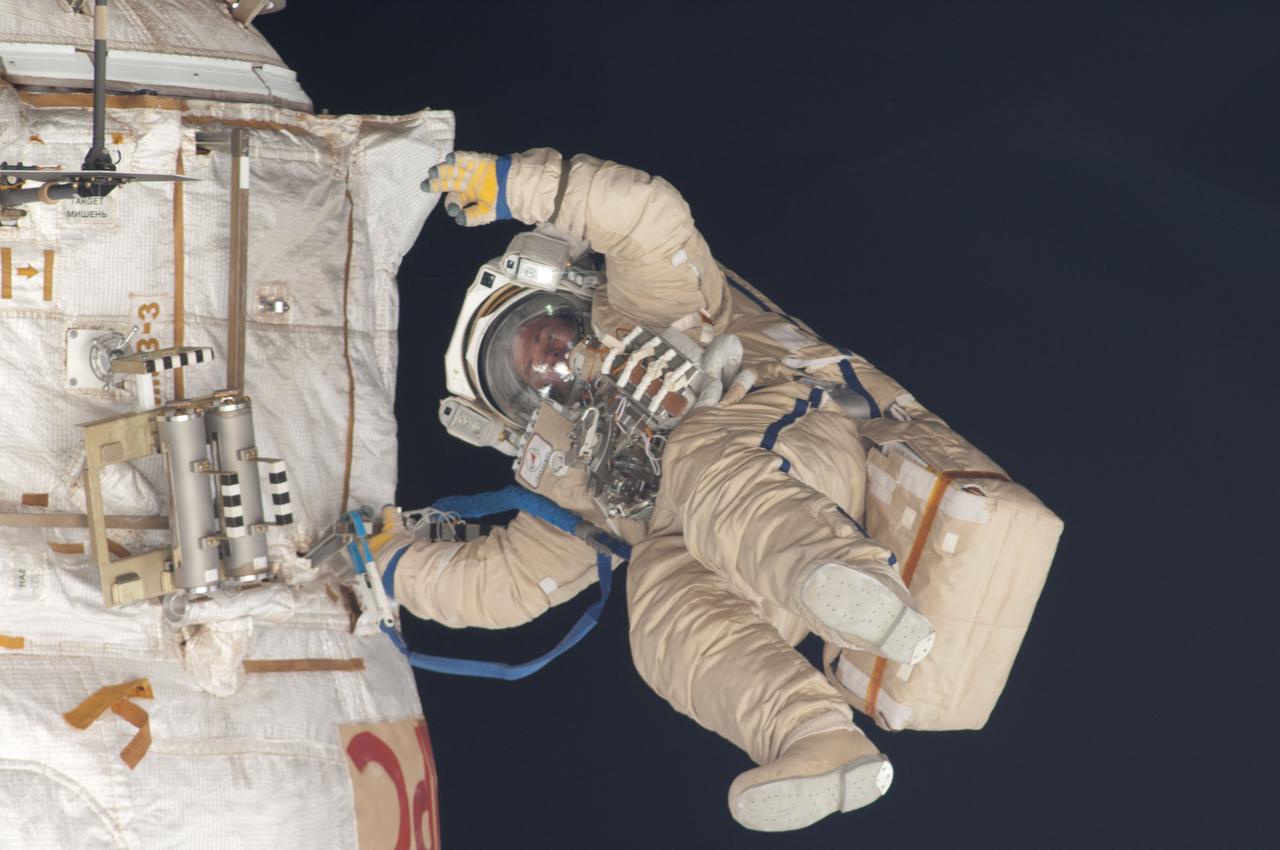
ISS035-E-023966 (19 April 2013) --- Expedition 35 Russian cosmonaut Roman Romanenko translates outside the International Space Station on April 19, 2013, during the first spacewalk of the Expedition 35 mission. Romanenko and Pavel Vinogradov (out of frame) went on to spend about six hours upgrading the station?s exterior hardware.
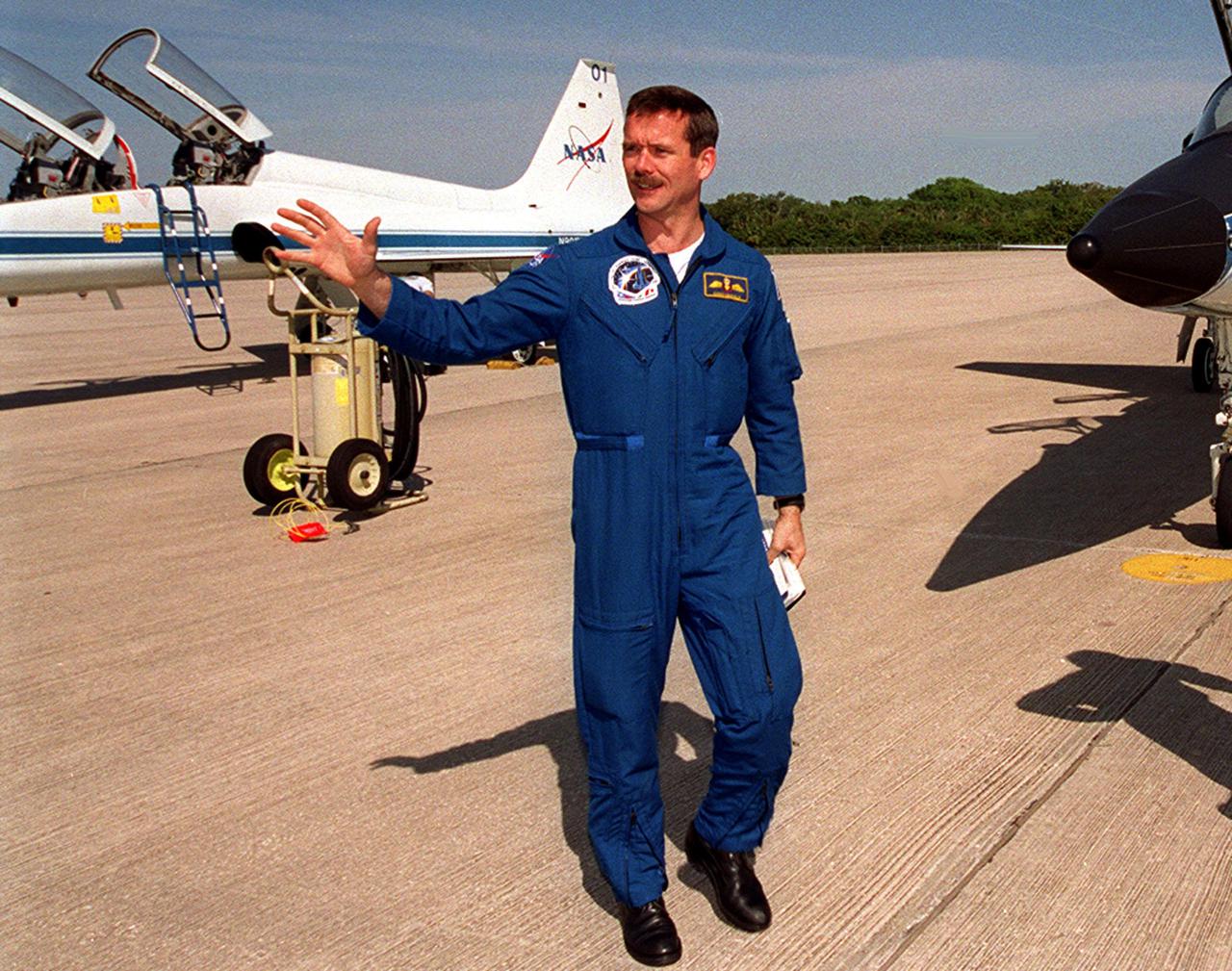
STS-100 Mission Specialist Chris A. Hadfield, who is with the Canadian Space Agency, waves to media after arriving at the KSC Shuttle Landing Facility for launch April 19. The 11-day mission to the International Space Station will deliver and integrate the Spacelab Logistics Pallet_Launch Deployment Assembly, which includes the Space Station Remote Manipulator system and the UHF Antenna, and the Multi-Purpose Logistics Module Raffaello. Liftoff on mission STS-100 is scheduled at 2:41 p.m. EDT April 19
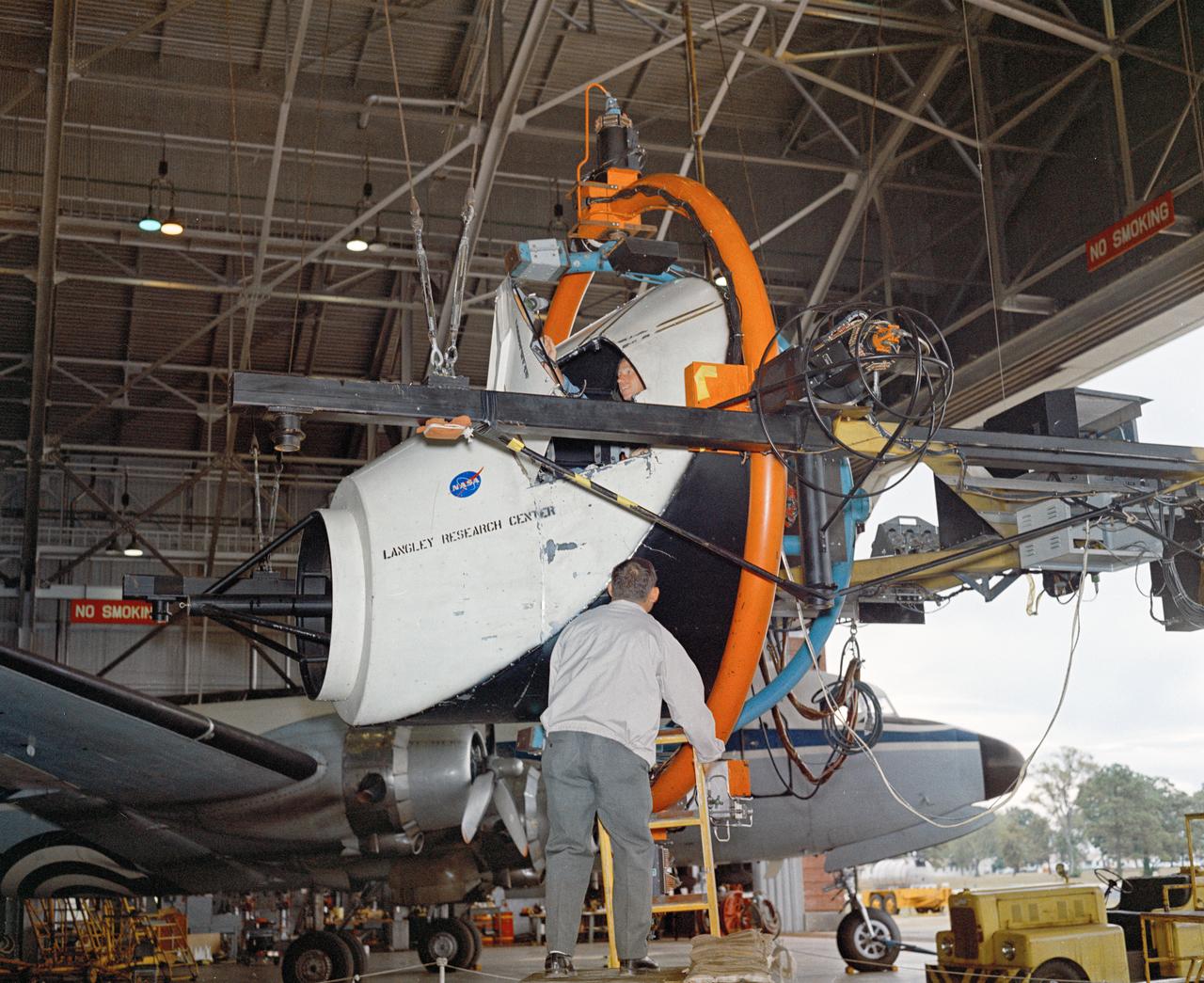
Astronauts Stuart A. Roosa, and Alfred M. Worden training a tRendezvous Docking Simulator NASA Langley. Worden was one of the 19 astronauts selected by NASA in April 1966. He served as a member of the astronaut support crew for the Apollo 9 flight and as backup command module pilot for the Apollo 12 flight. Colonel Roosa was one of the 19 astronauts selected by NASA in April 1966. He was a member of the astronaut support crew for the Apollo 9 flight.
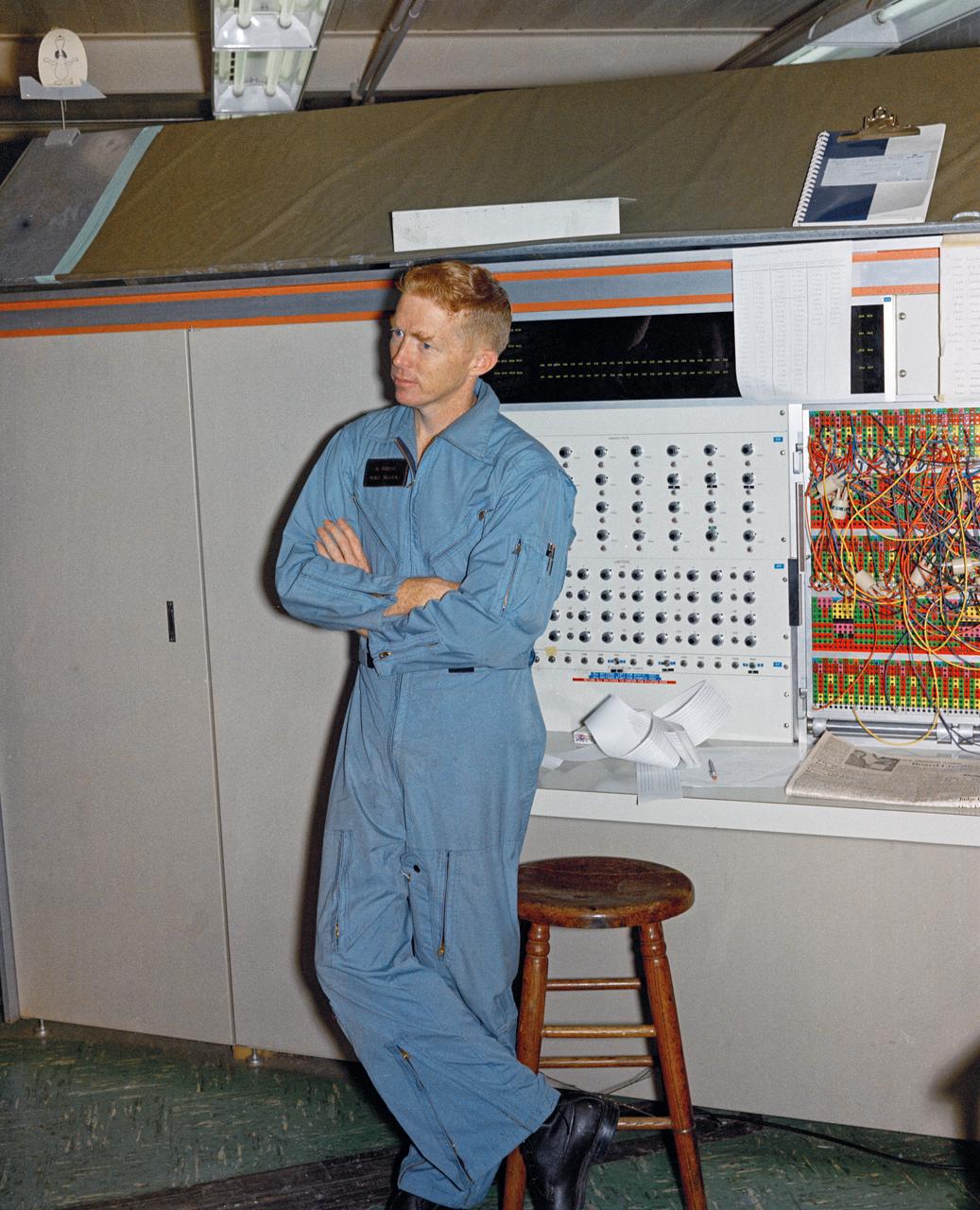
Astronauts Stuart A. Roosa, and Alfred M. Worden training a tRendezvous Docking Simulator NASA Langley. Worden was one of the 19 astronauts selected by NASA in April 1966. He served as a member of the astronaut support crew for the Apollo 9 flight and as backup command module pilot for the Apollo 12 flight. Colonel Roosa was one of the 19 astronauts selected by NASA in April 1966. He was a member of the astronaut support crew for the Apollo 9 flight.
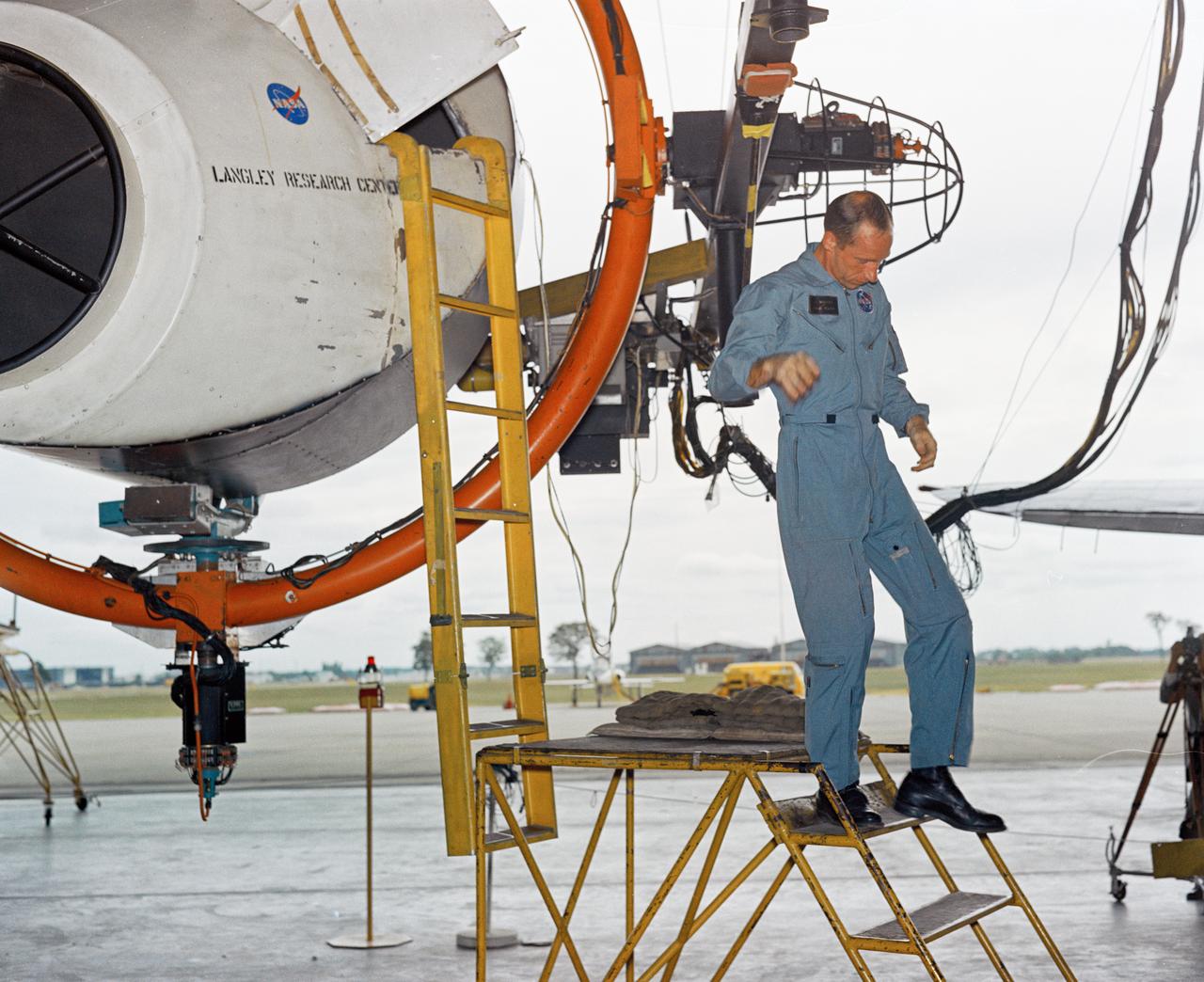
Astronauts Stuart A. Roosa, and Alfred M. Worden training a tRendezvous Docking Simulator NASA Langley. Worden was one of the 19 astronauts selected by NASA in April 1966. He served as a member of the astronaut support crew for the Apollo 9 flight and as backup command module pilot for the Apollo 12 flight. Colonel Roosa was one of the 19 astronauts selected by NASA in April 1966. He was a member of the astronaut support crew for the Apollo 9 flight.
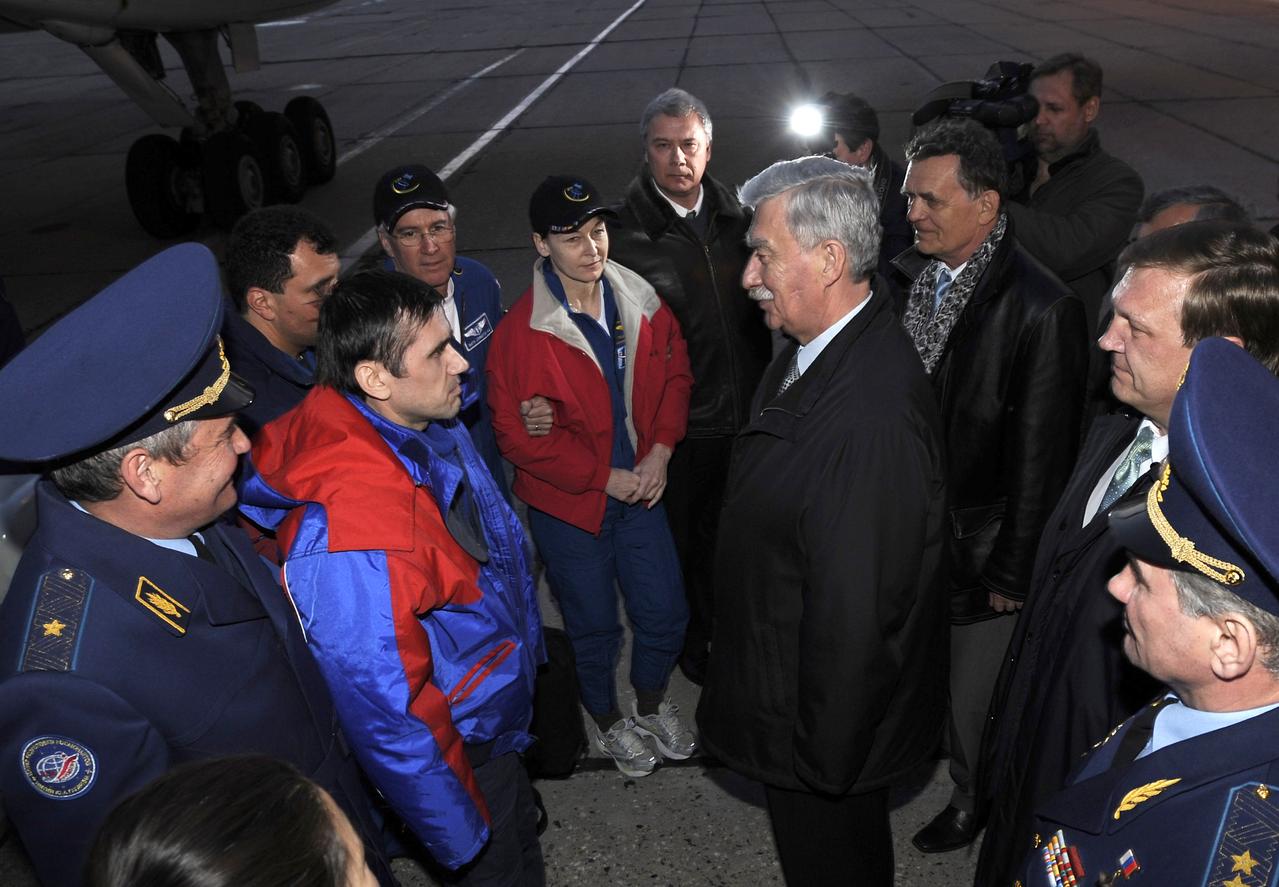
Expedition 16 Flight Engineer and Soyuz Commander Yuri Malenchenko, second from left, and Expedition 16 Commander Peggy Whitson meet with Russian officials at the foot of the airplane steps after they arrived at Chkalovsky Airport near Star City, Russia, Friday, April 19, 2008. Whitson, Malechenko and Yi landed their Soyuz TMA-11 spacecraft on April 19, 2008 in central Kazakhstan to complete 192 days in space for Whitson and Malenchenko and 11 days in orbit for Yi. Photo Credit: (NASA/Bill Ingalls)
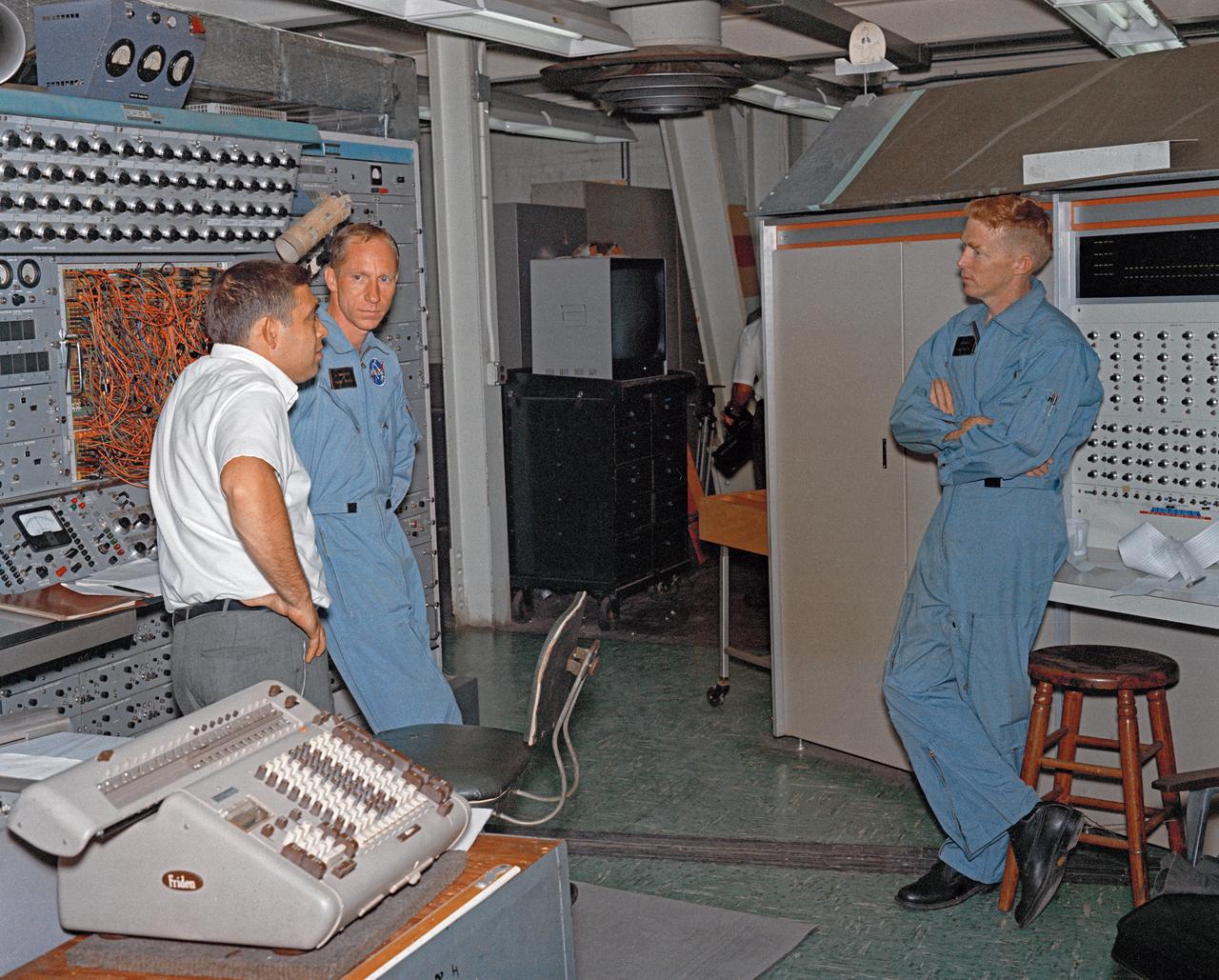
Astronauts Stuart A. Roosa, and Alfred M. Worden training a tRendezvous Docking Simulator NASA Langley. Worden was one of the 19 astronauts selected by NASA in April 1966. He served as a member of the astronaut support crew for the Apollo 9 flight and as backup command module pilot for the Apollo 12 flight. Colonel Roosa was one of the 19 astronauts selected by NASA in April 1966. He was a member of the astronaut support crew for the Apollo 9 flight.
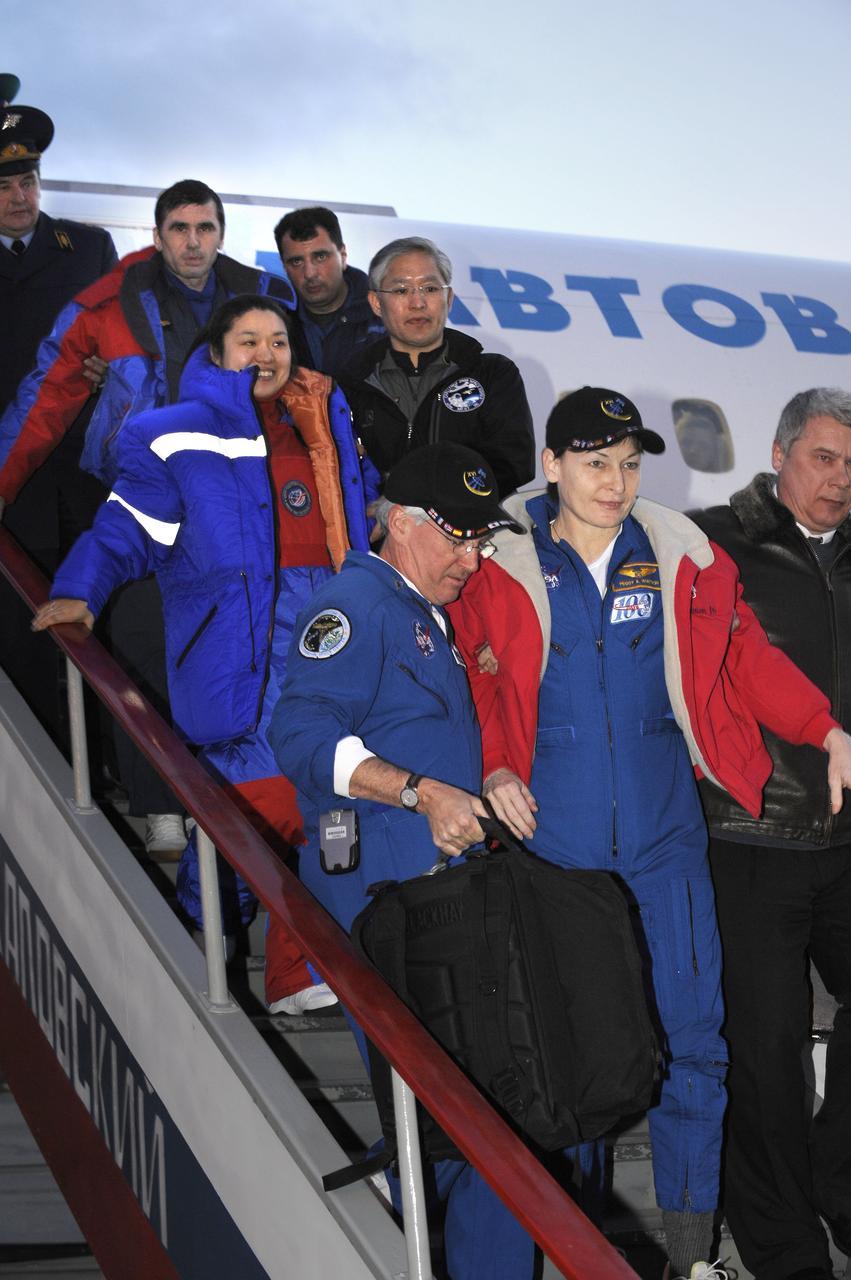
Expedition 16 Commander Peggy Whitson, bottom, South Korean spaceflight participant So-yeon Yi and Flight Engineer and Soyuz Commander Yuri Malenchenko, top, walk down the airplane steps as they arrive at Chkalovsky Airport near Star City, Russia, Friday, April 19, 2008. Whitson, Malechenko and Yi landed their Soyuz TMA-11 spacecraft on April 19, 2008 in central Kazakhstan to complete 192 days in space for Whitson and Malenchenko and 11 days in orbit for Yi. Photo Credit: (NASA/Bill Ingalls)
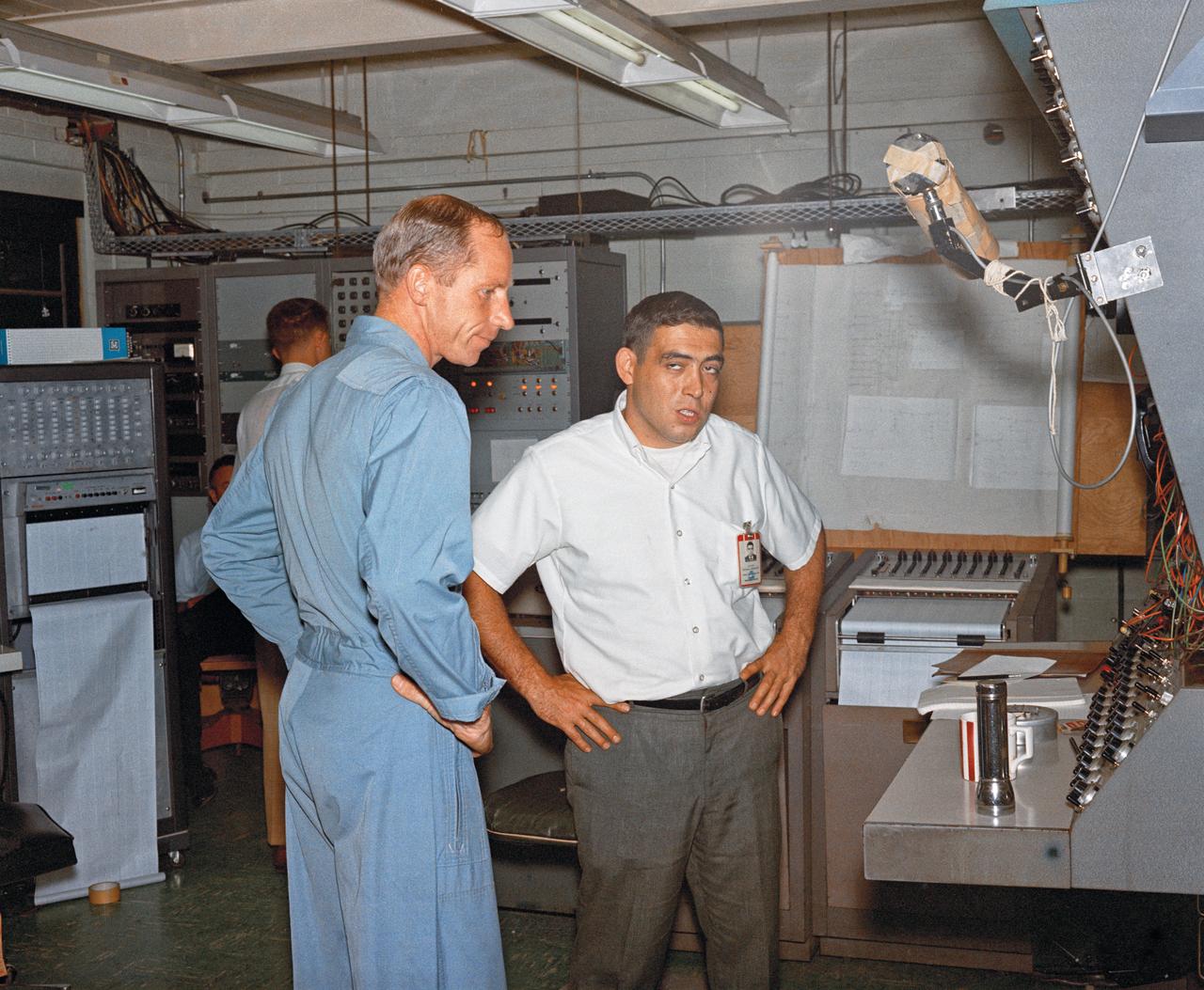
Astronauts Stuart A. Roosa, and Alfred M. Worden training a tRendezvous Docking Simulator NASA Langley. Worden was one of the 19 astronauts selected by NASA in April 1966. He served as a member of the astronaut support crew for the Apollo 9 flight and as backup command module pilot for the Apollo 12 flight. Colonel Roosa was one of the 19 astronauts selected by NASA in April 1966. He was a member of the astronaut support crew for the Apollo 9 flight.
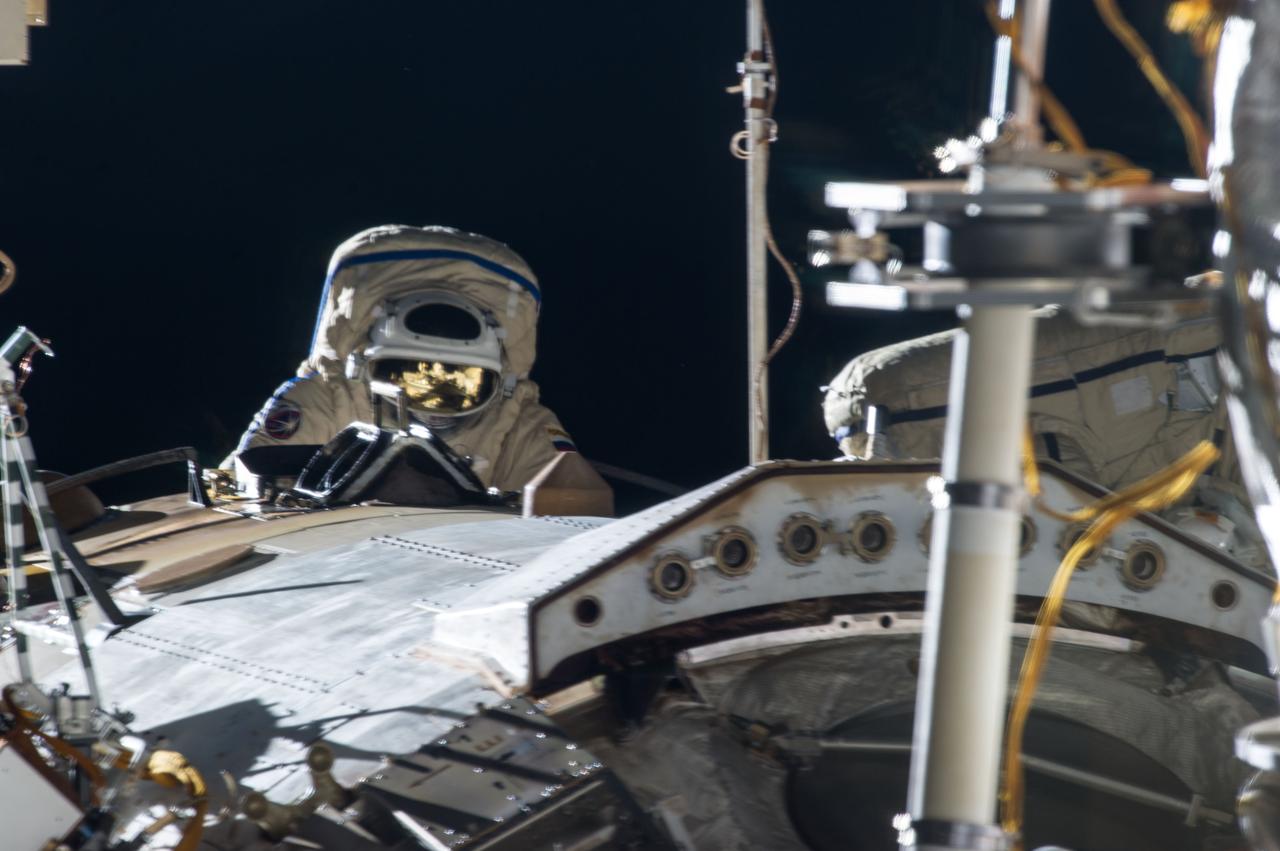
ISS035-E-024800 (19 April 2013) --- Expedition 35 Russian cosmonaut Pavel Vinogradov translates outside the International Space Station on April 19, 2013, during the first spacewalk of the Expedition 35 mission. Vinogradov and fellow cosmonaut Roman Romanenko (out of frame) went on to spend about six hours upgrading the station?s exterior hardware.
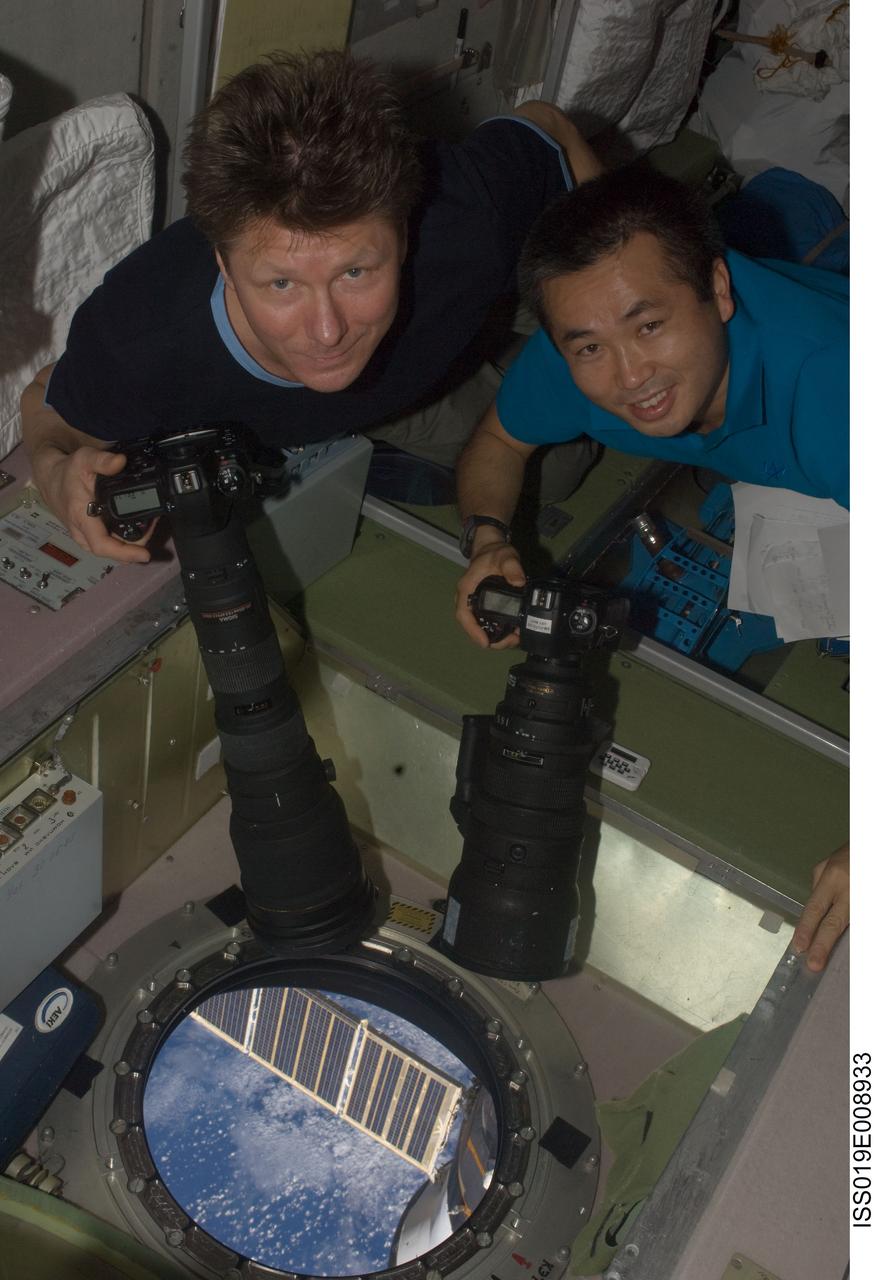
ISS019-E-008933 (19 April 2009) --- Cosmonaut Padalka Gennady (left), Expedition 19/20 commander; and Japan Aerospace Exploration Agency (JAXA) astronaut Koichi Wakata, flight engineer, use still cameras at a window in the Zvezda Service Module of the International Space Station.
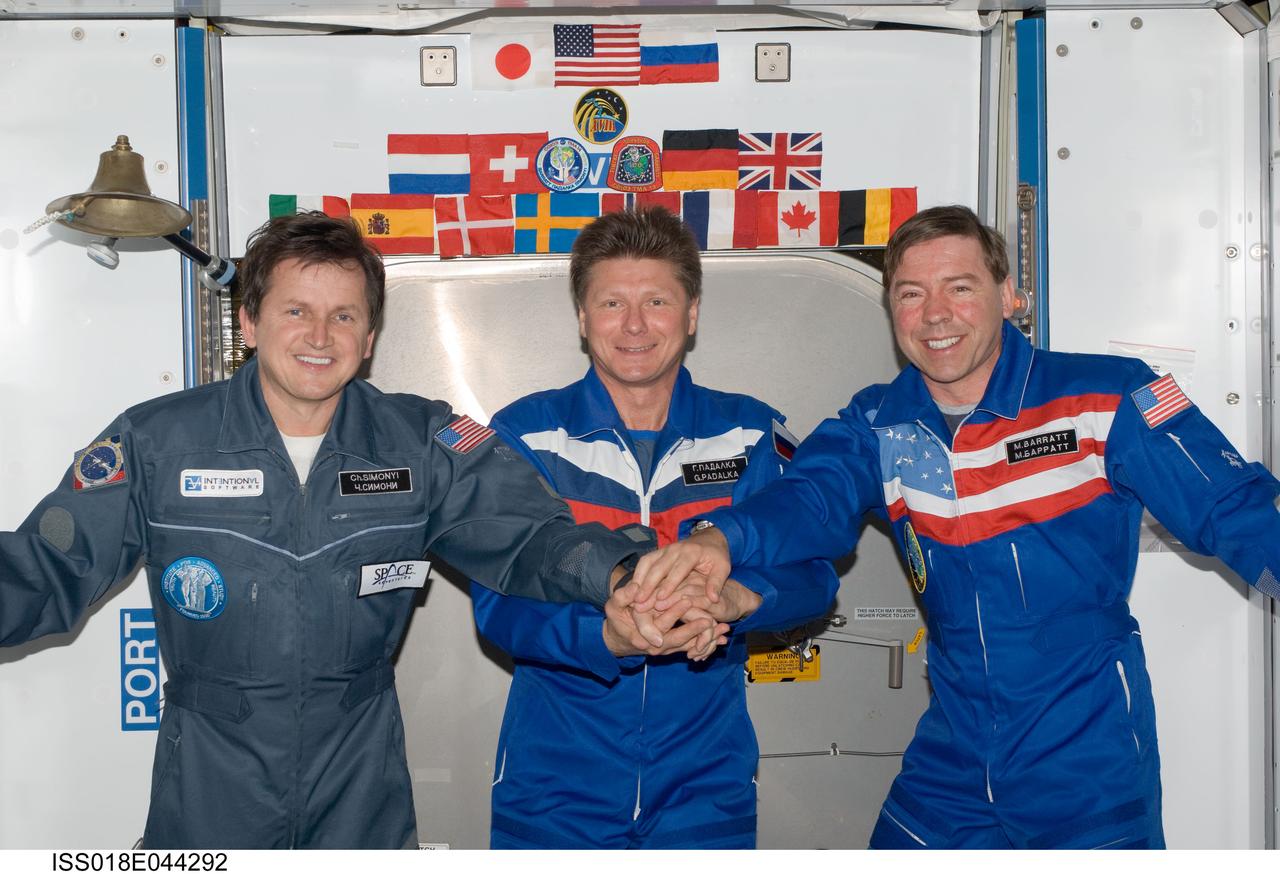
ISS018-E-044292 (1 April 2009) --- Cosmonaut Gennady Padalka (center), Expedition 19 commander; NASA astronaut Michael Barratt (right), Expedition 19 flight engineer; and U.S. spaceflight participant Charles Simonyi pose for a photo in the Harmony node of the International Space Station.
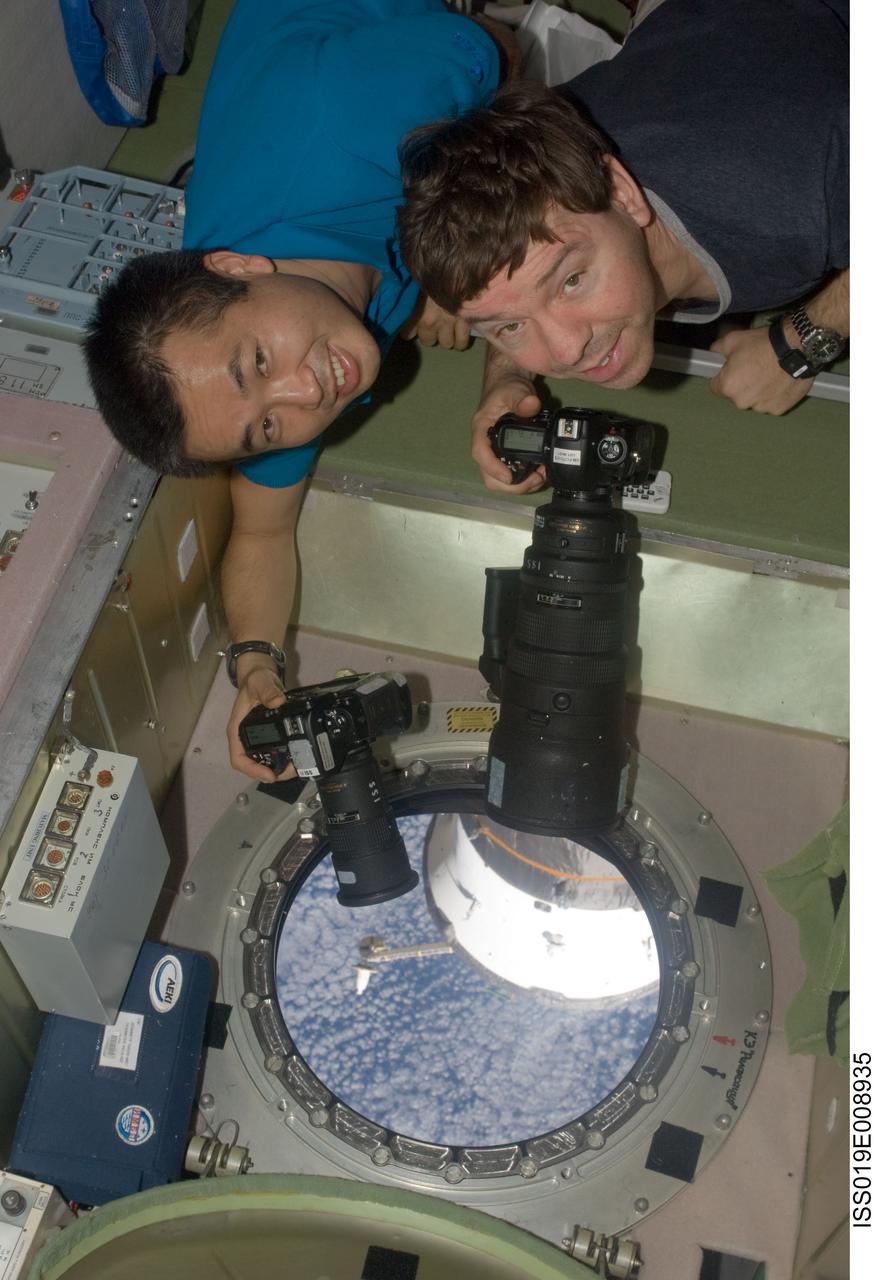
ISS019-E-008935 (19 April 2009) --- Japan Aerospace Exploration Agency (JAXA) astronaut Koichi Wakata (left) and NASA astronaut Michael Barratt, both Expedition 19/20 flight engineers, use still cameras at a window in the Zvezda Service Module of the International Space Station.
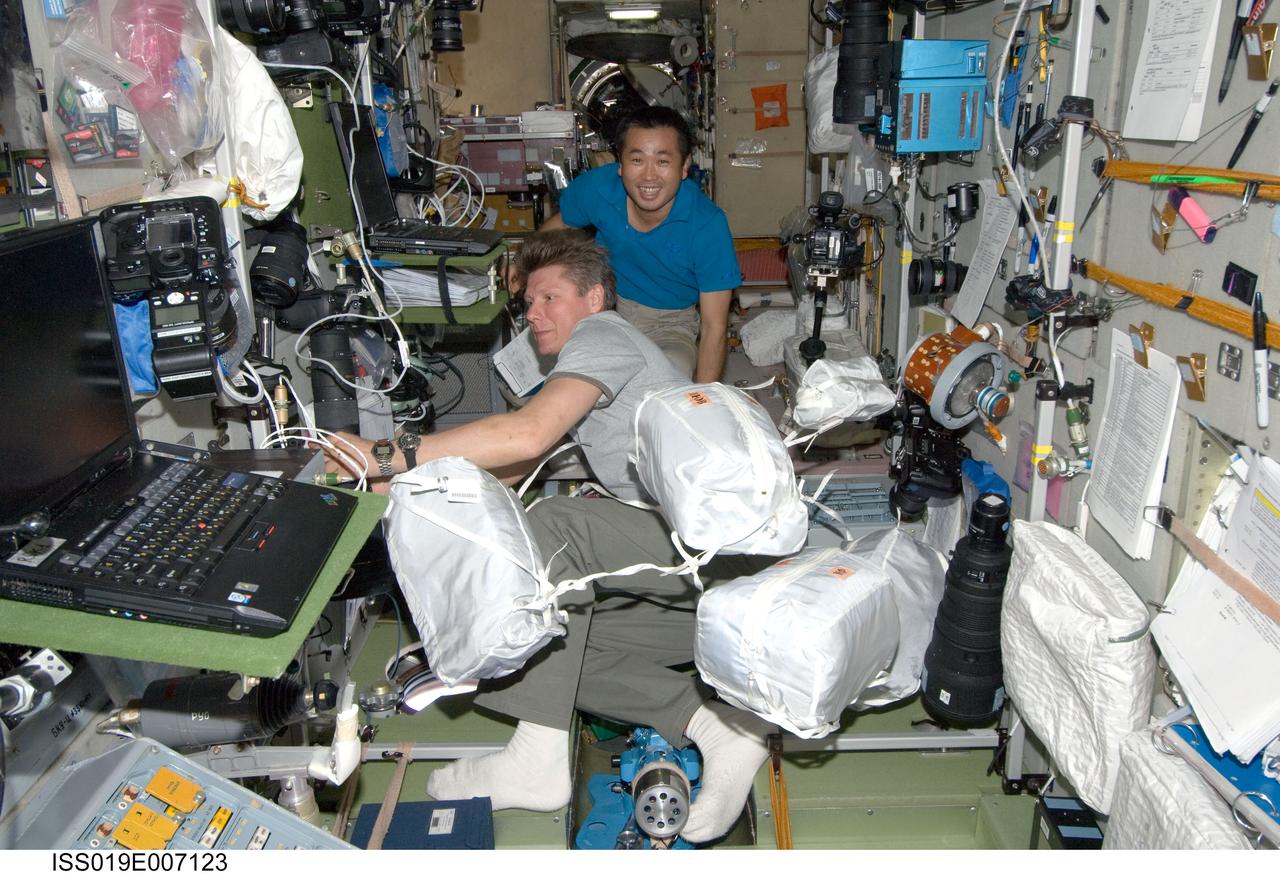
ISS019-E-007123 (12 April 2009) --- Cosmonaut Gennady Padalka (foreground), Expedition 19/20 commander; and Japan Aerospace Exploration Agency (JAXA) astronaut Koichi Wakata, Expedition 19/20 flight engineer, work in the Zvezda Service Module of the International Space Station.
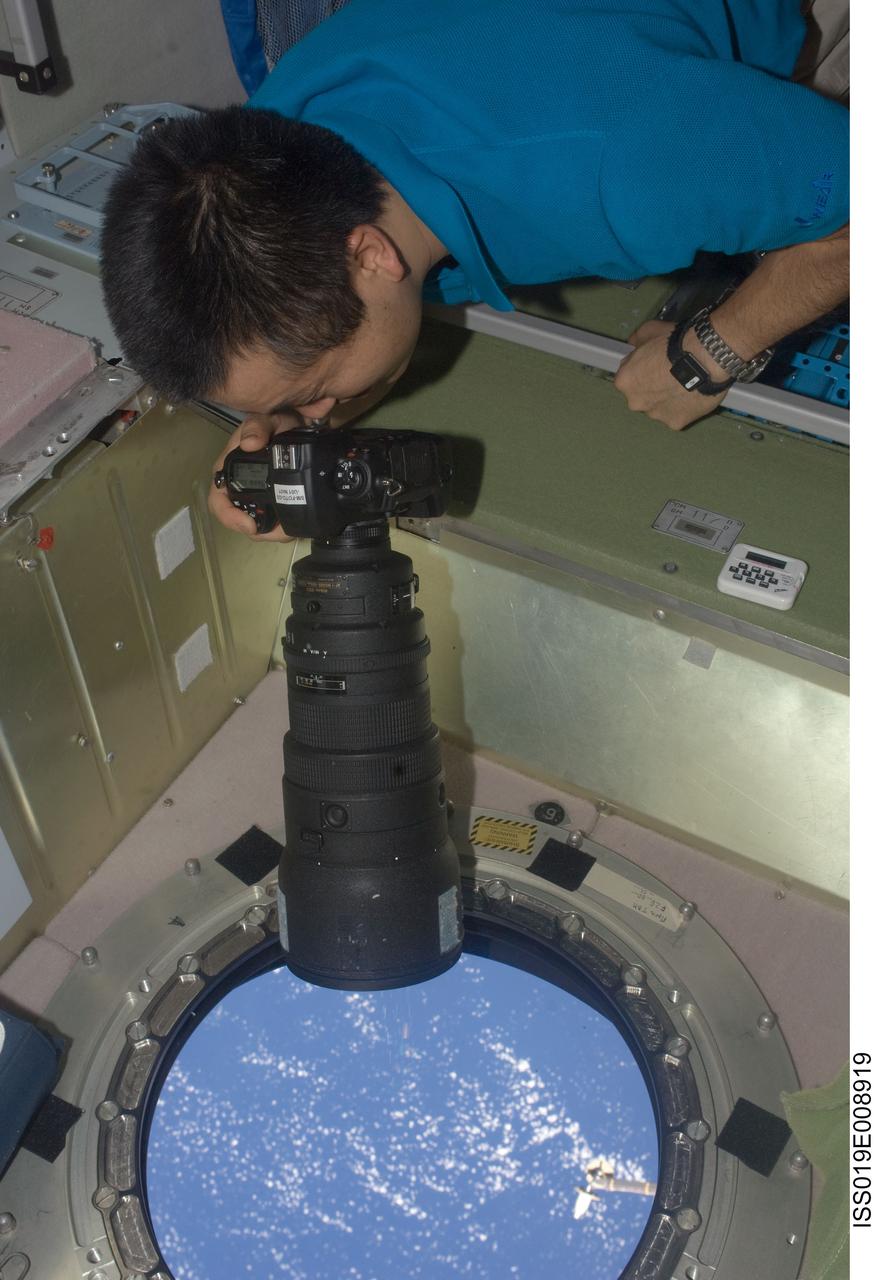
ISS019-E-008919 (19 April 2009) --- Japan Aerospace Exploration Agency (JAXA) astronaut Koichi Wakata, Expedition 19/20 flight engineer, uses a still camera at a window in the Zvezda Service Module of the International Space Station.
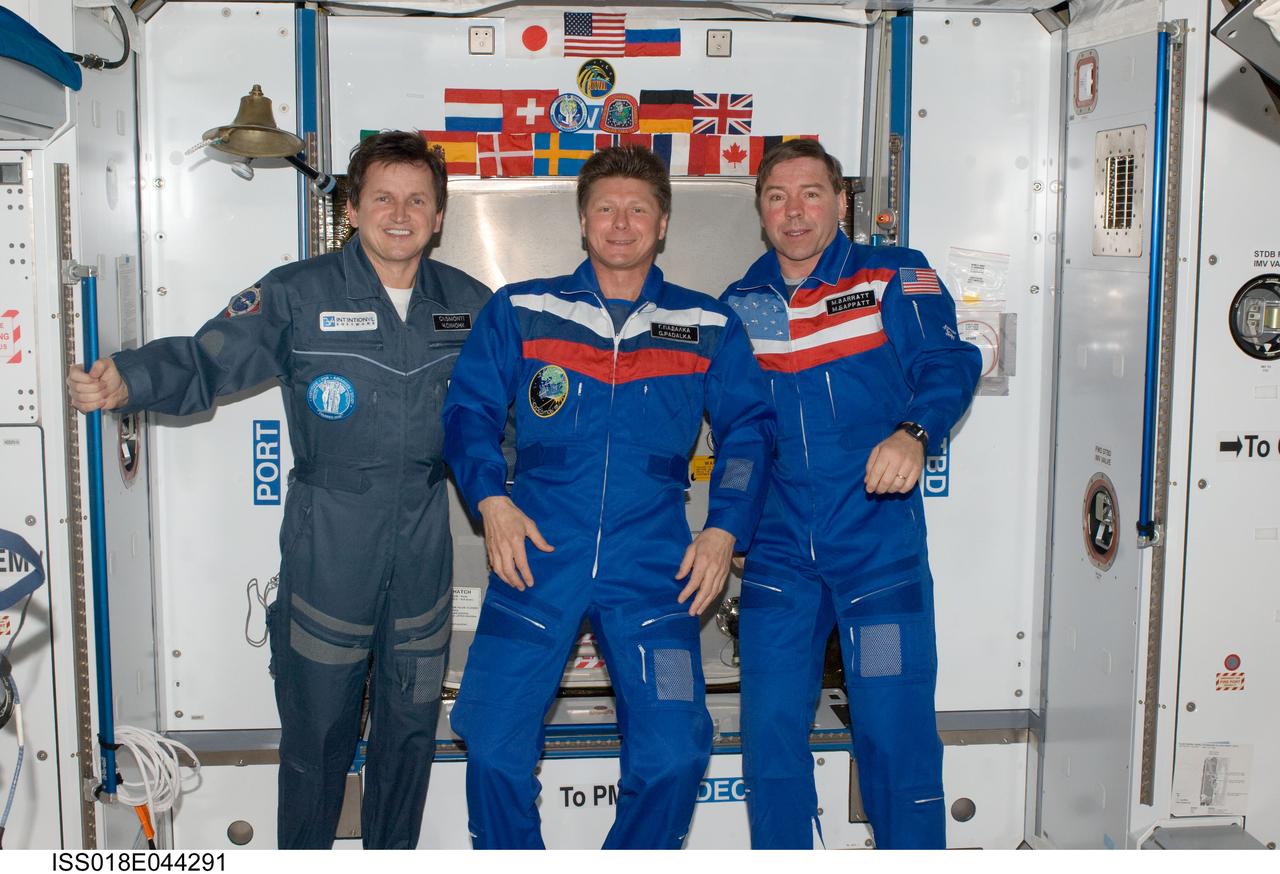
ISS018-E-044291 (1 April 2009) --- Cosmonaut Gennady Padalka (center), Expedition 19 commander; NASA astronaut Michael Barratt (right), Expedition 19 flight engineer; and U.S. spaceflight participant Charles Simonyi pose for a photo in the Harmony node of the International Space Station.
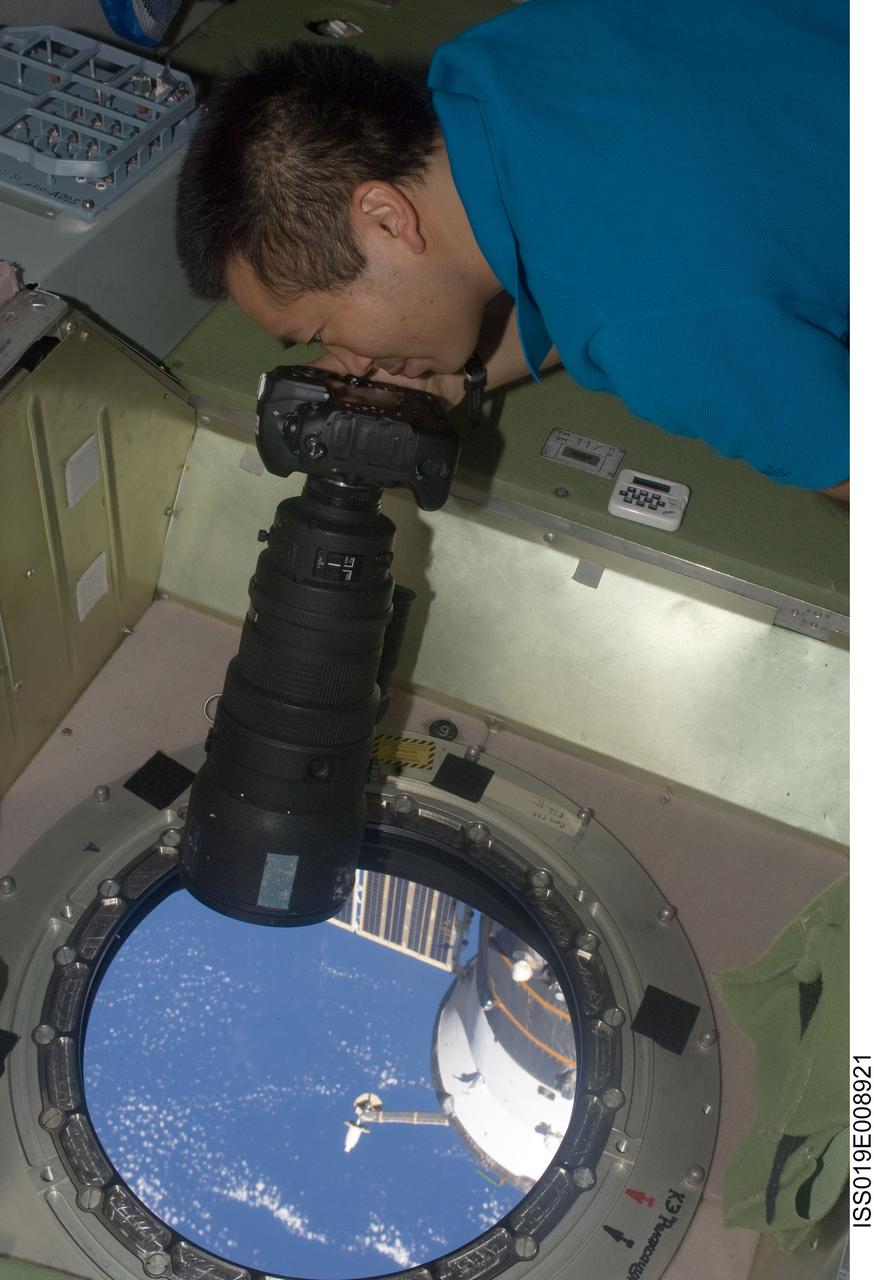
ISS019-E-008921 (19 April 2009) --- Japan Aerospace Exploration Agency (JAXA) astronaut Koichi Wakata, Expedition 19/20 flight engineer, uses a still camera at a window in the Zvezda Service Module of the International Space Station.
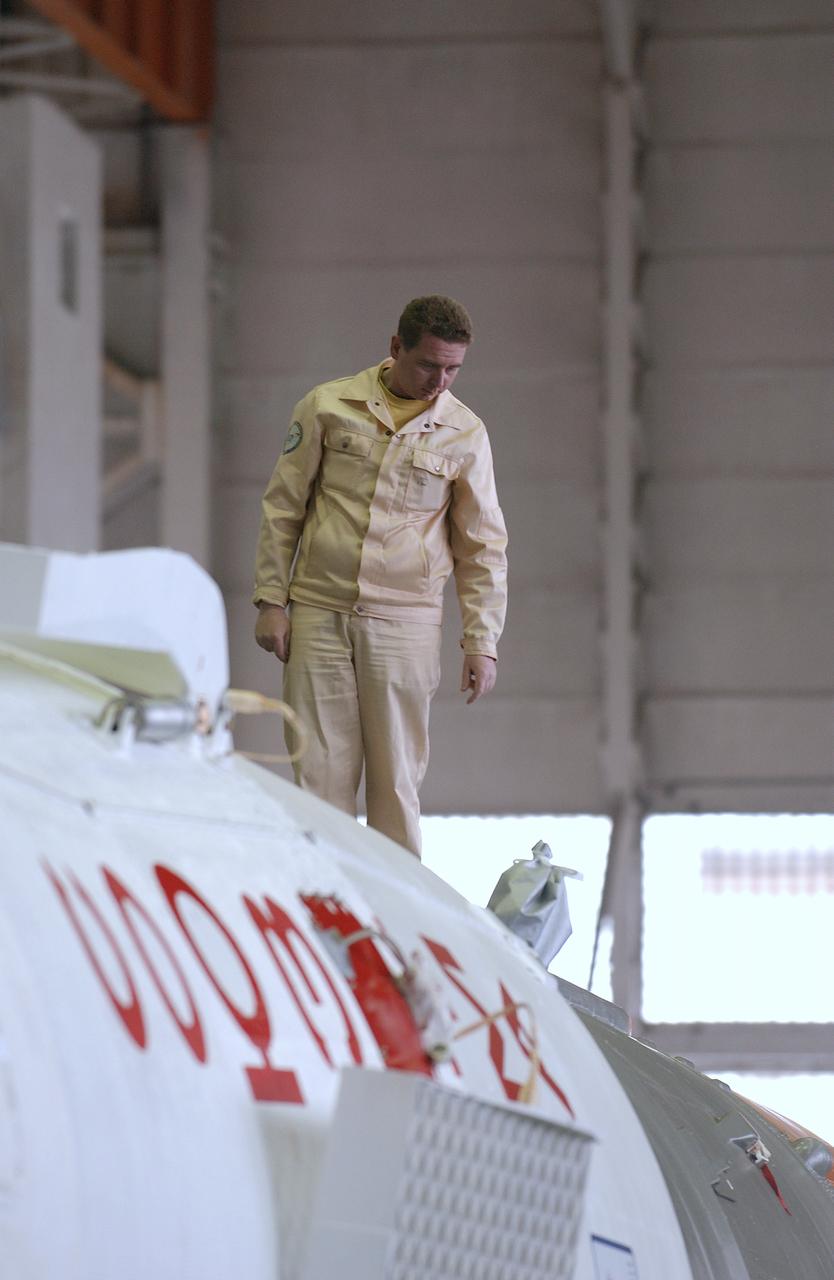
Engineers at the Baikonur Cosmodrome prepare to mate the Soyuz TMA-4 capsule with its booster rocket in preparation for a launch on April 19 of the Expedition 9 crew and a European astronaut to the International Space Station, Friday, April 16, 2004 in Baikonur, Kazakhstan. Photo Credit: (NASA/Bill Ingalls)
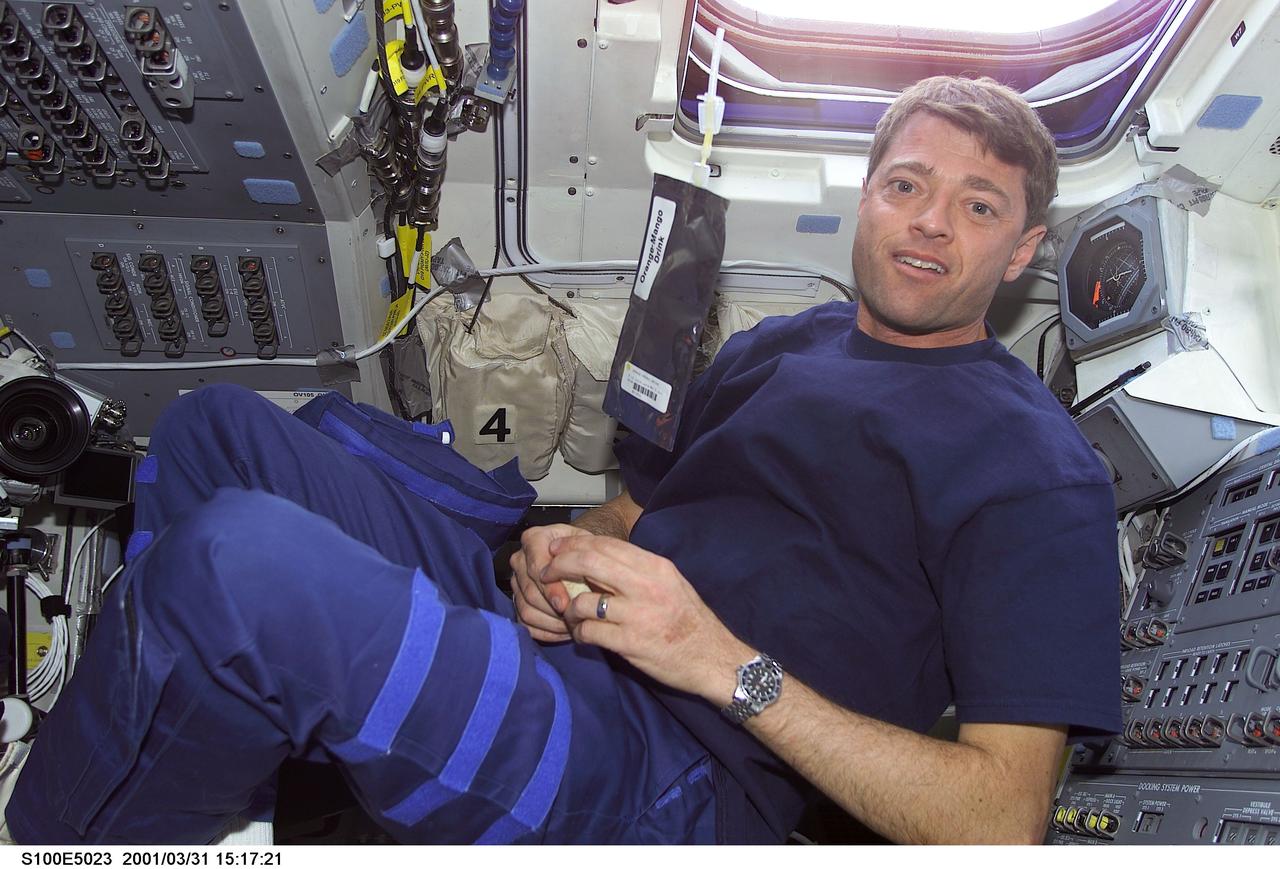
S100-E-5023 (20 April 2001) --- Astronaut Jeffrey S. Ashby, pilot, is pictured on Endeavour's flight deck as the shuttle steadily makes its way toward the International Space Station (ISS) following an April 19 launch. This image was recorded by a fellow crew member using a digital still camera.
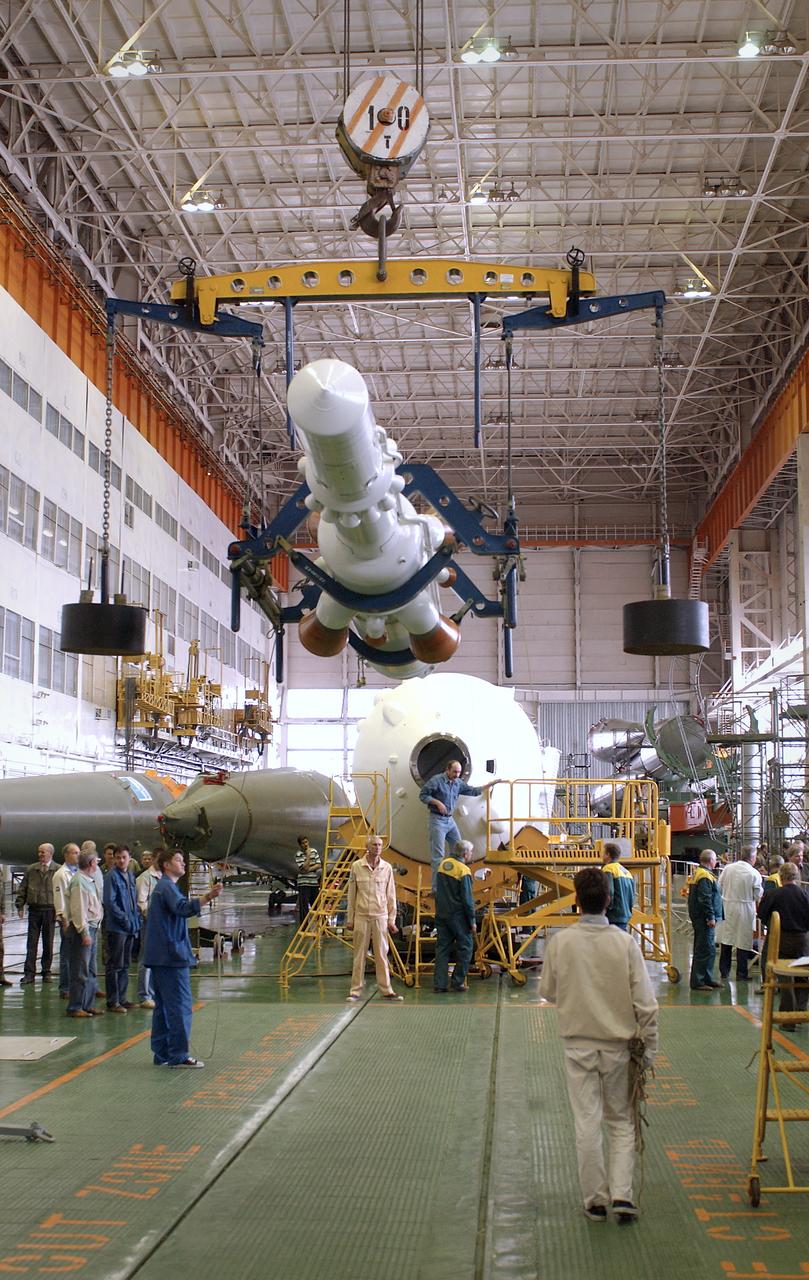
Engineers at the Baikonur Cosmodrome prepare to mate the Soyuz TMA-4 capsule with its booster rocket in preparation for a launch on April 19 of the Expedition 9 crew and a European astronaut to the International Space Station, Friday, April 16, 2004 in Baikonur, Kazakhstan. Photo Credit: (NASA/Bill Ingalls)
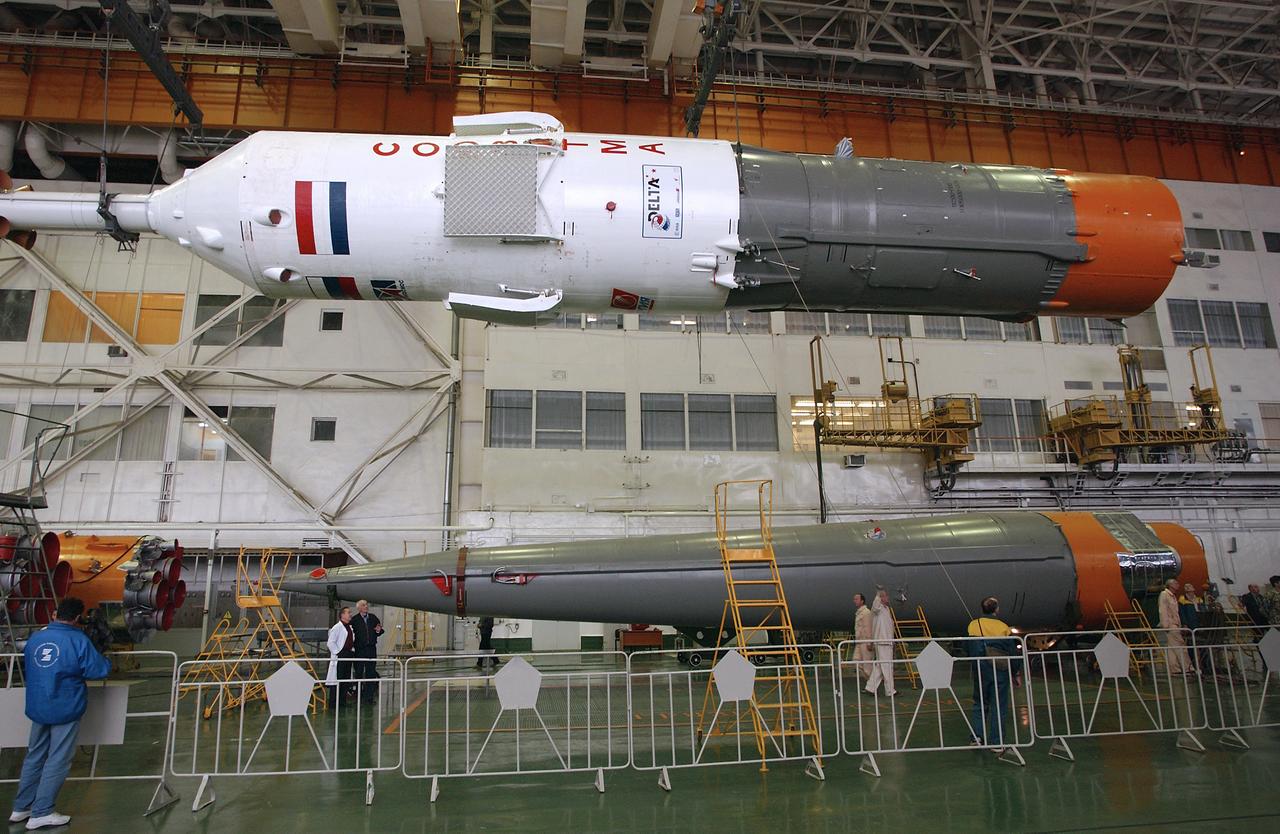
Engineers at the Baikonur Cosmodrome prepare to mate the Soyuz TMA-4 capsule with its booster rocket in preparation for a launch on April 19 of the Expedition 9 crew and a European astronaut to the International Space Station, Friday, April 16, 2004 in Baikonur, Kazakhstan. Photo Credit: (NASA/Bill Ingalls)
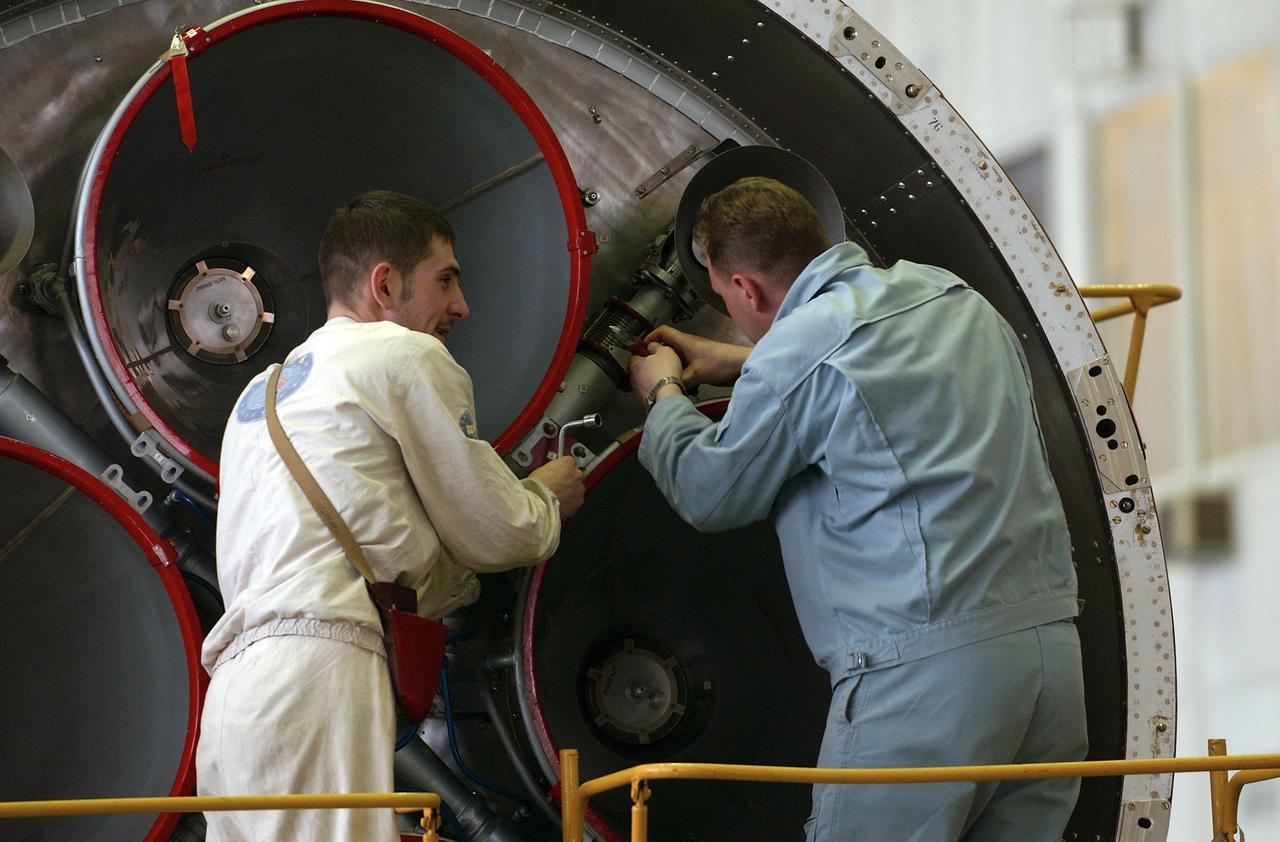
Engineers at the Baikonur Cosmodrome prepare to mate the Soyuz TMA-4 capsule with its booster rocket in preparation for a launch on April 19 of the Expedition 9 crew and a European astronaut to the International Space Station, Friday, April 16, 2004 in Baikonur, Kazakhstan. Photo Credit: (NASA/Bill Ingalls)
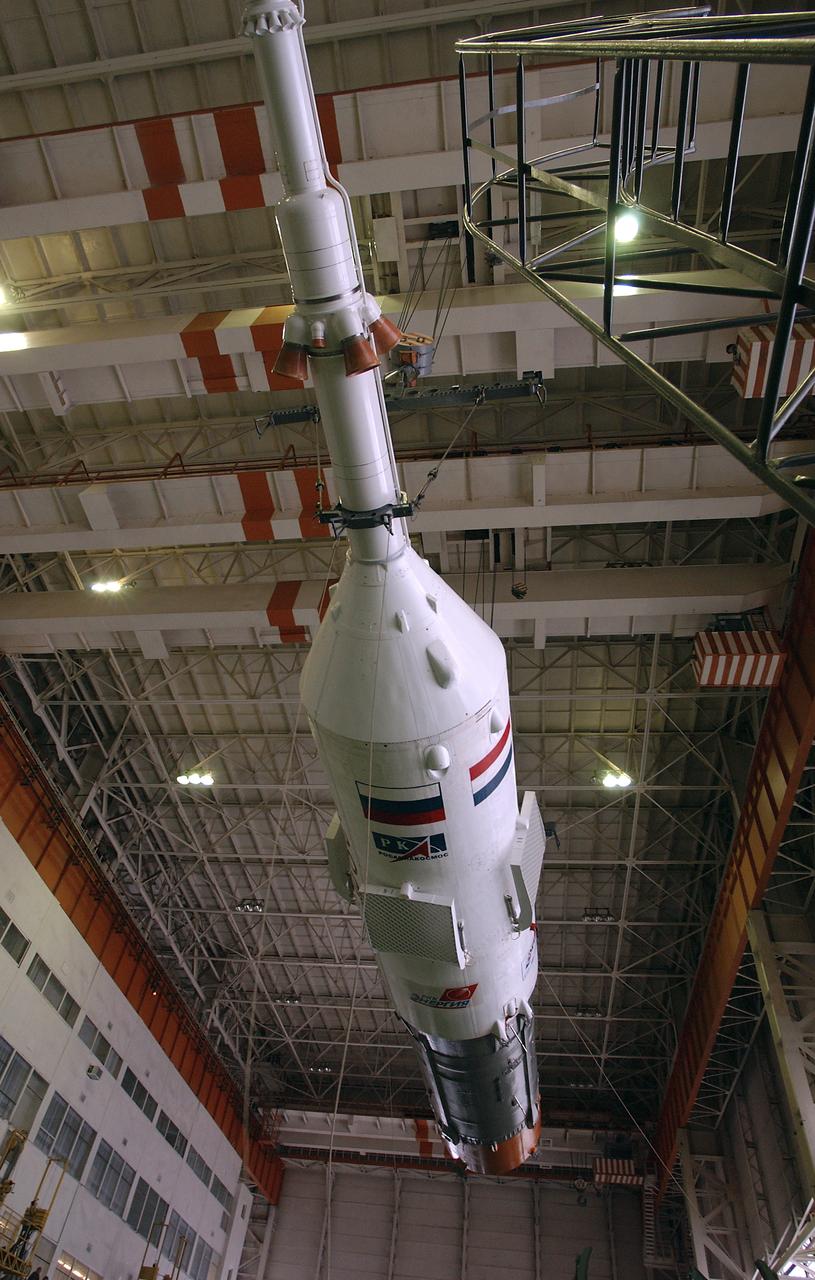
The Soyuz TMA-4 capsule is prepared for mating with its booster rocket at the Baikonur Cosmodrome in preparation for a launch on April 19 of the Expedition 9 crew and a European astronaut to the International Space Station, Friday, April 16, 2004 in Baikonur, Kazakhstan. Photo Credit: (NASA/Bill Ingalls)
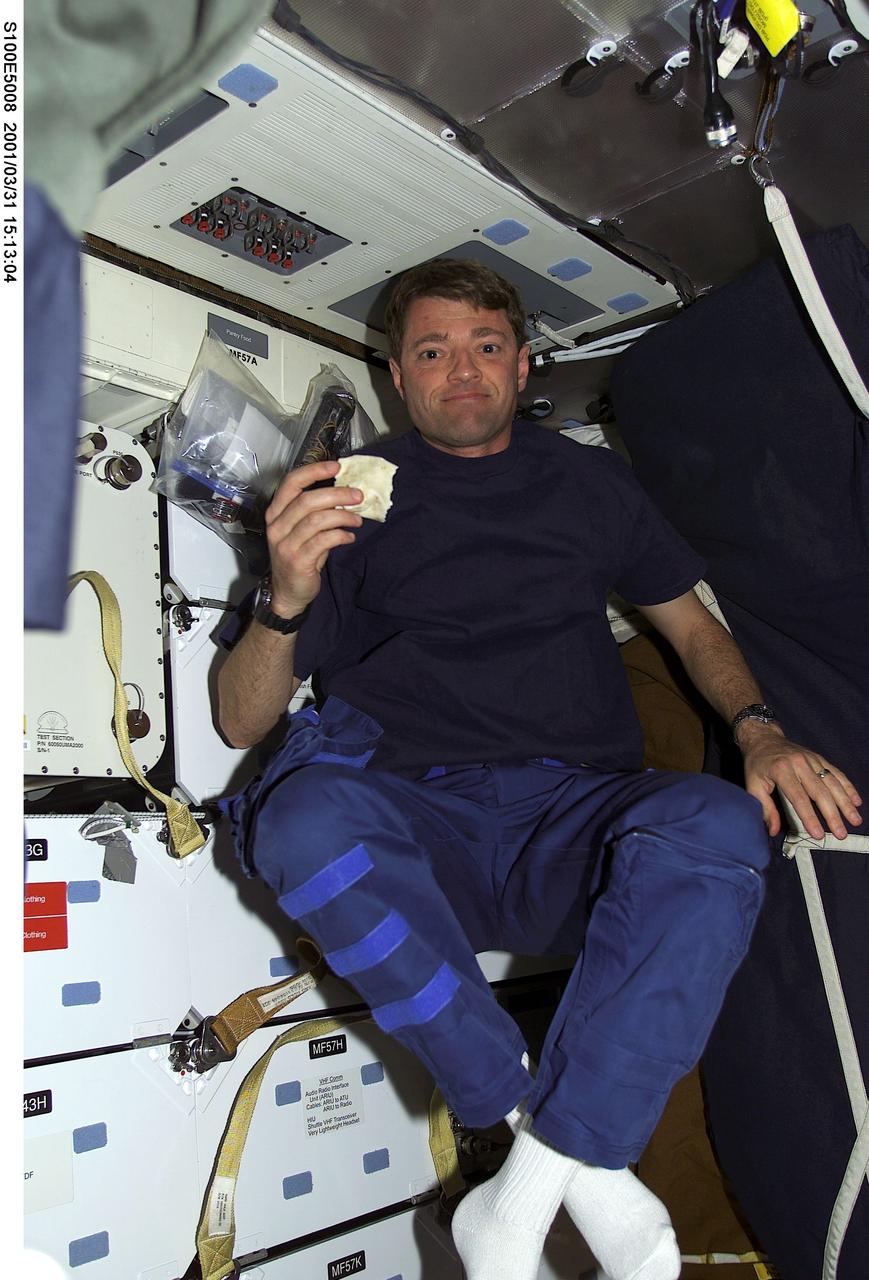
S100-E-5008 (20 April 2001) --- Astronaut Jeffrey S. Ashby, pilot, is pictured on Endeavour's middeck as the shuttle steadily makes its way toward the International Space Station (ISS) following an April 19 launch. This image was recorded by a fellow crew member using a digital still camera.
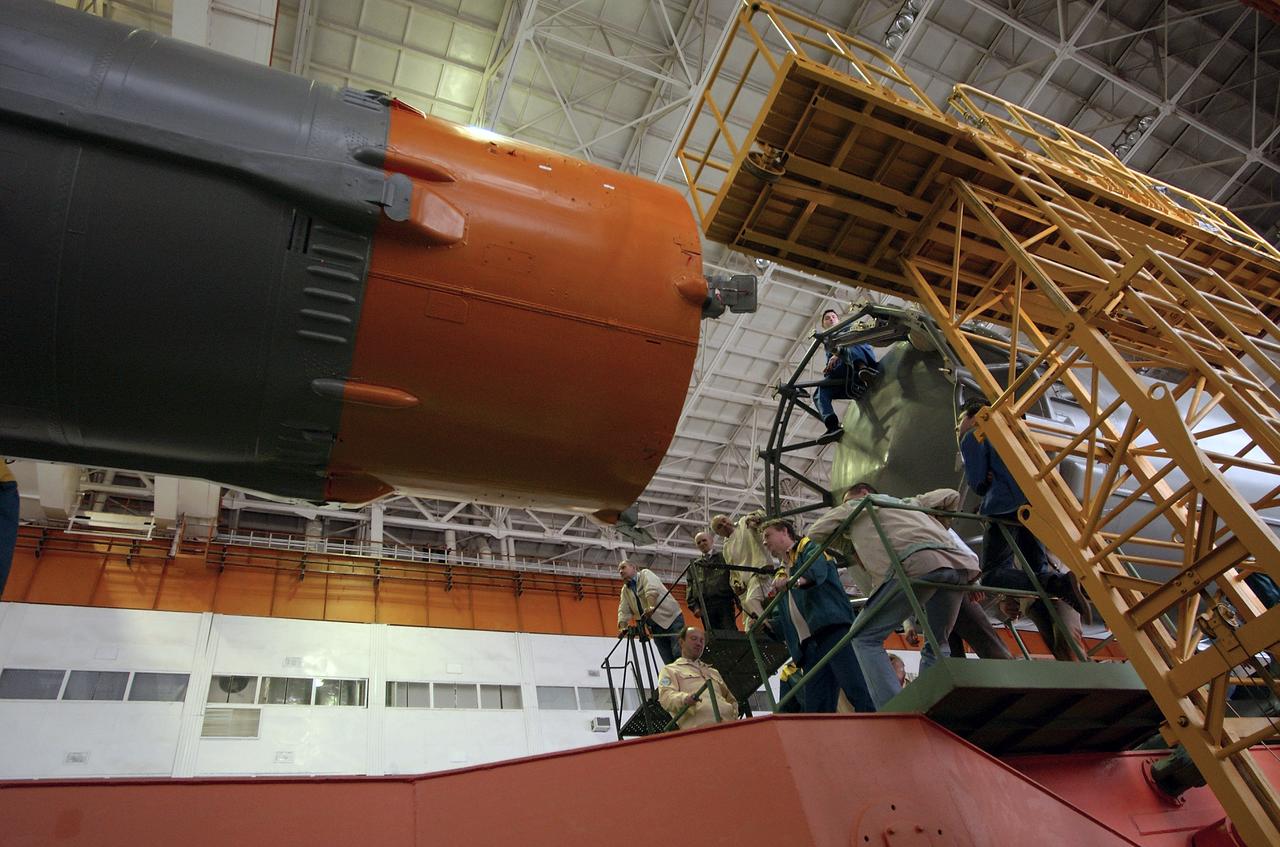
Engineers at the Baikonur Cosmodrome mate the Soyuz TMA-4 capsule with its booster rocket in preparation for a launch on April 19 of the Expedition 9 crew and a European astronaut to the International Space Station, Friday, April 16, 2004 in Baikonur, Kazakhstan. Photo Credit: (NASA/Bill Ingalls)
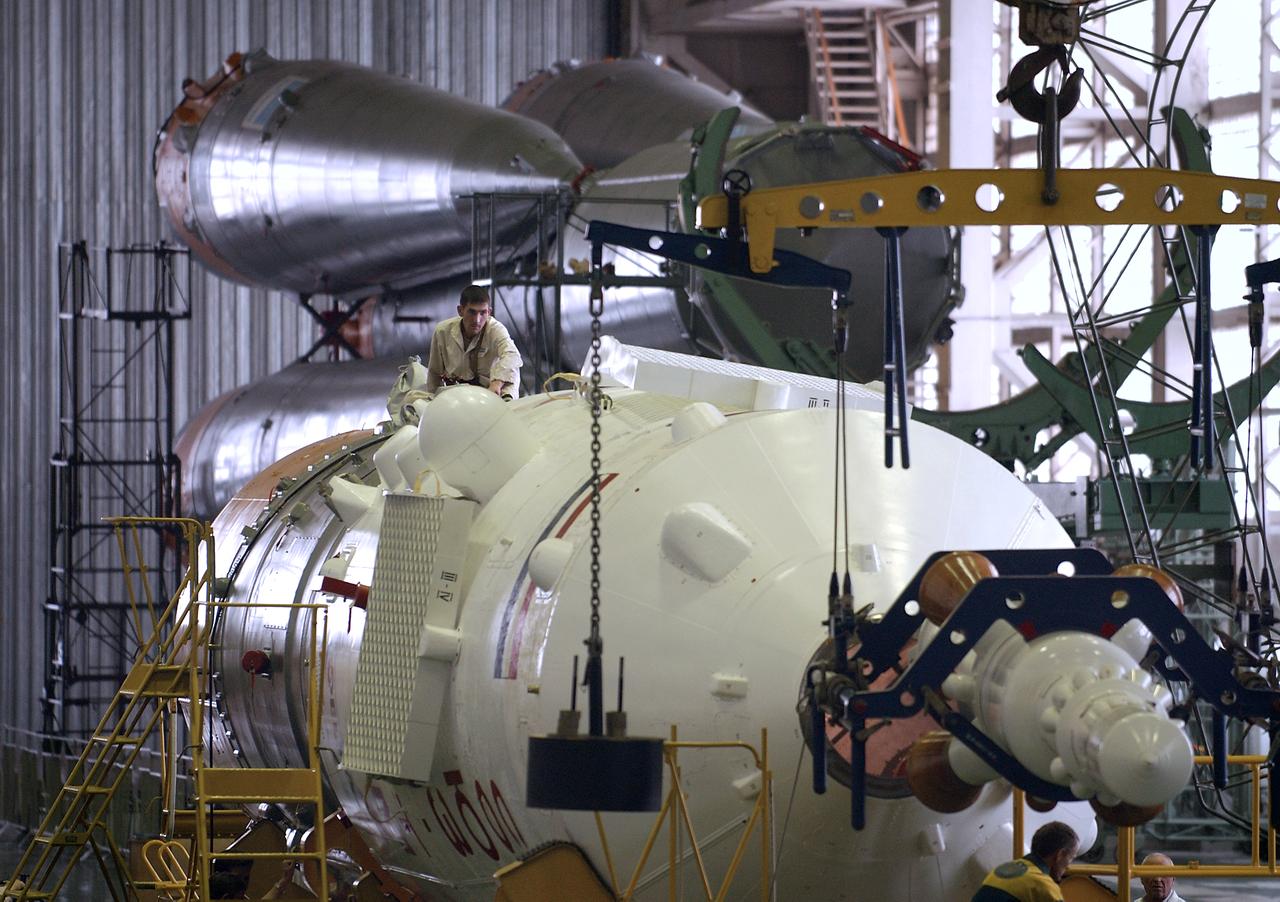
Engineers at the Baikonur Cosmodrome prepare to mate the Soyuz TMA-4 capsule with its booster rocket in preparation for a launch on April 19 of the Expedition 9 crew and a European astronaut to the International Space Station, Friday, April 16, 2004 in Baikonur, Kazakhstan. Photo Credit: (NASA/Bill Ingalls)
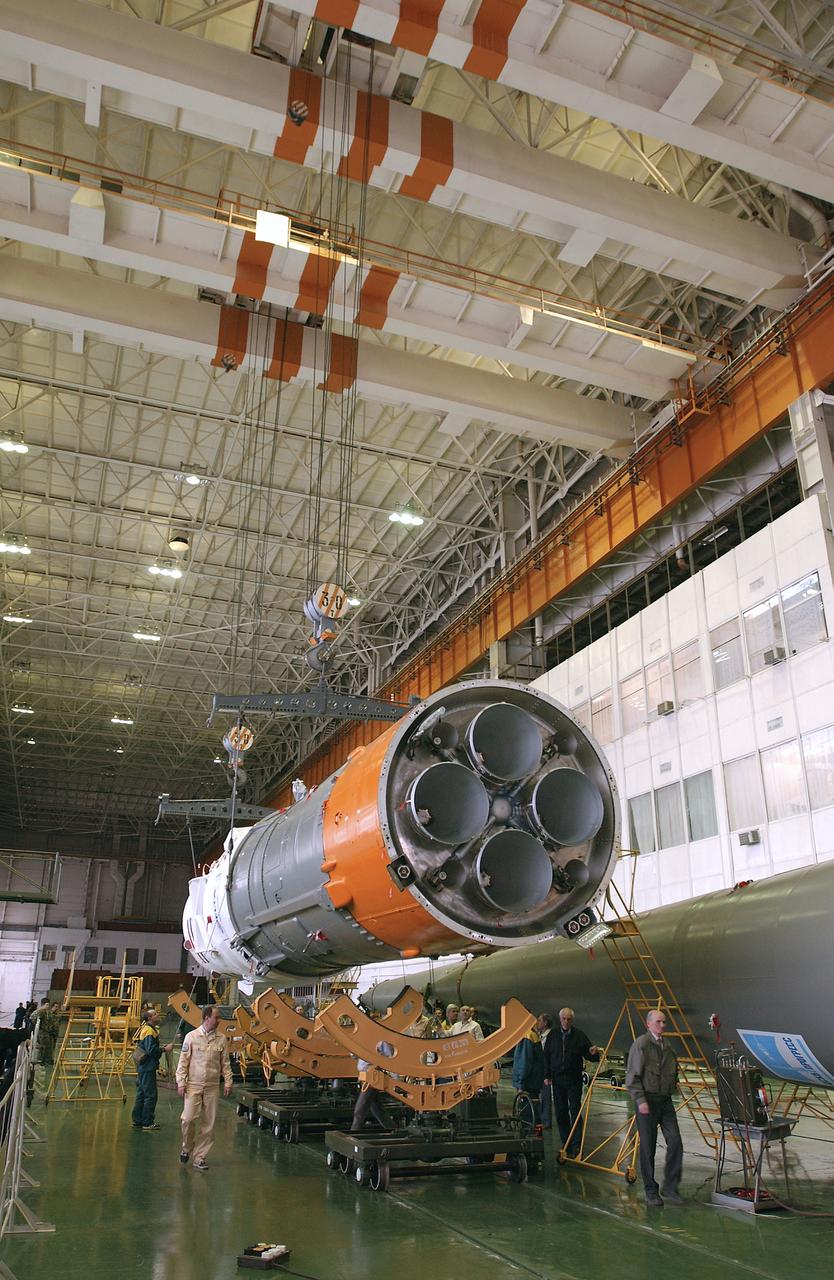
Engineers at the Baikonur Cosmodrome prepare to mate the Soyuz TMA-4 capsule with its booster rocket in preparation for a launch on April 19 of the Expedition 9 crew and a European astronaut to the International Space Station, Friday, April 16, 2004 in Baikonur, Kazakhstan. Photo Credit: (NASA/Bill Ingalls)
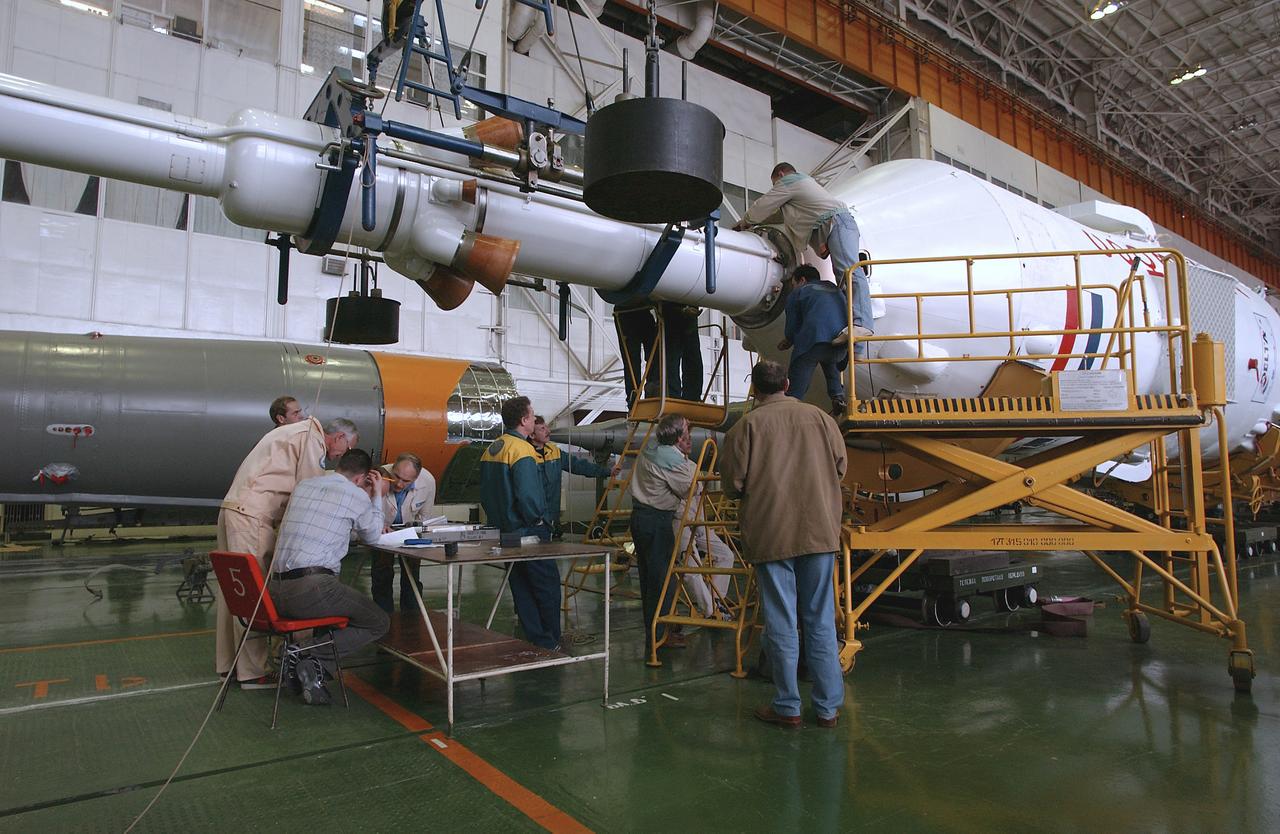
Engineers at the Baikonur Cosmodrome prepare to mate the Soyuz TMA-4 capsule with its booster rocket in preparation for a launch on April 19 of the Expedition 9 crew and a European astronaut to the International Space Station, Friday, April 16, 2004 in Baikonur, Kazakhstan. Photo Credit: (NASA/Bill Ingalls)
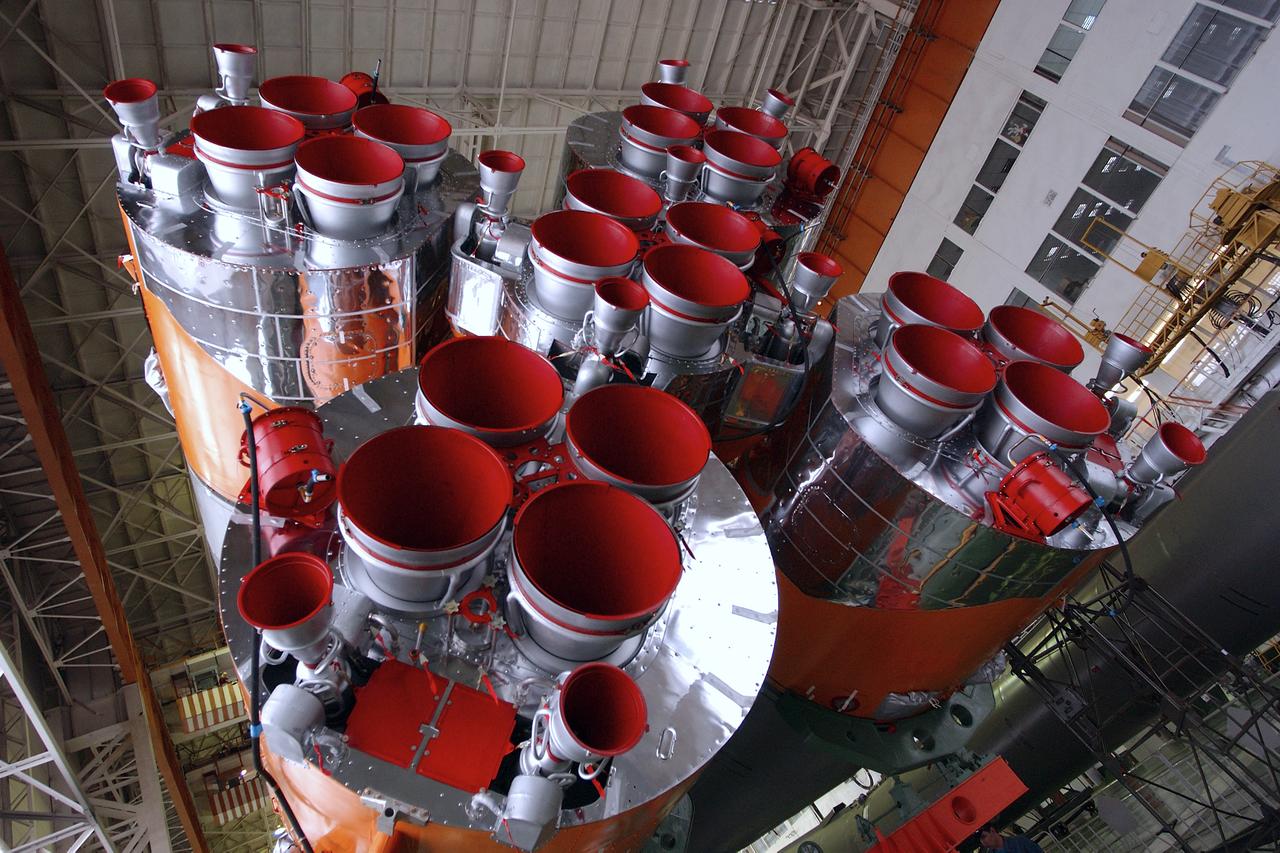
A view of the Soyuz rocket engines after engineers at the Baikonur Cosmodrome mated the Soyuz TMA-4 capsule with its booster rocket in preparation for a launch on April 19 of the Expedition 9 crew and a European astronaut to the International Space Station, Friday, April 16, 2004 in Baikonur, Kazakhstan. Photo Credit: (NASA/Bill Ingalls)
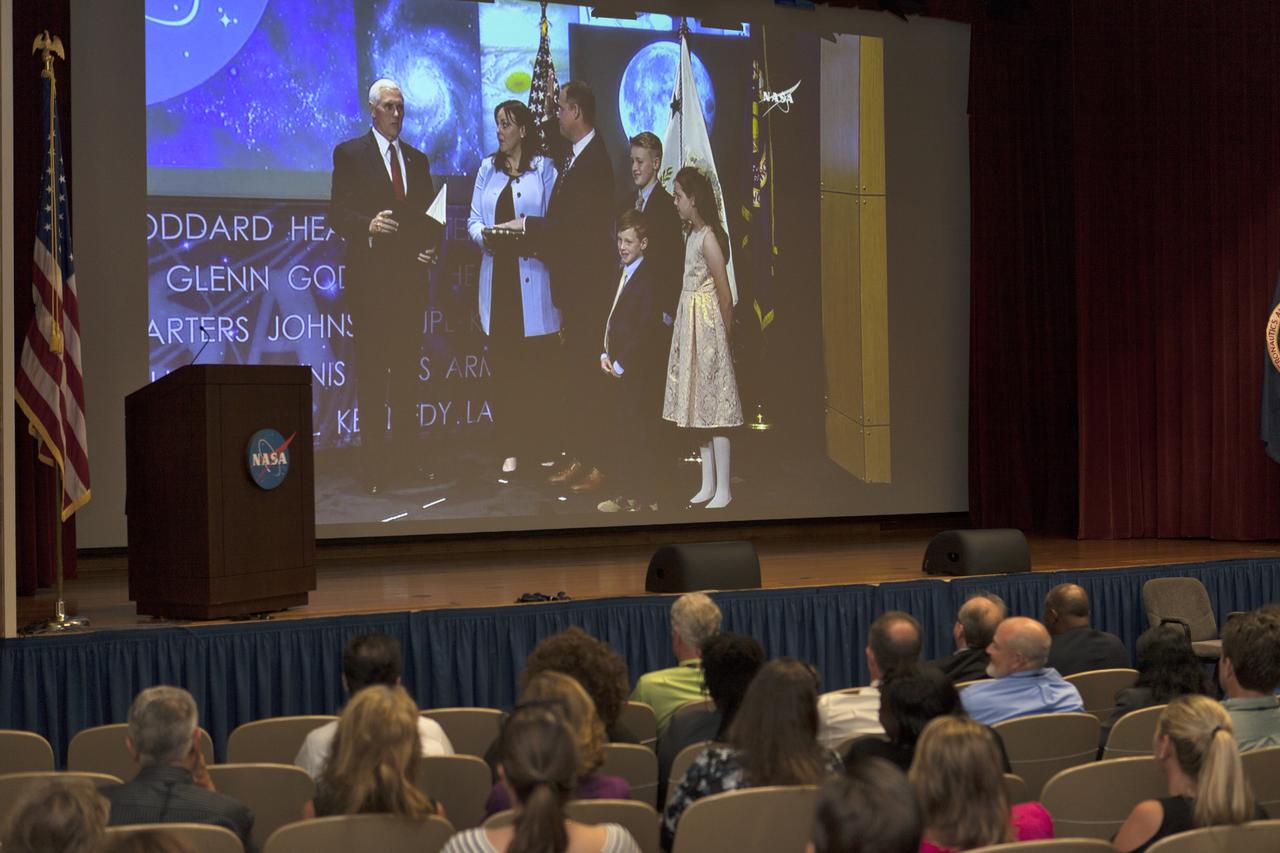
In the Training Auditorium at NASA's Kennedy Space Center in Florida, employees watch as Vice President Mike Pence, left, swears in Jim Bridenstine as the 13th NASA Administrator as Bridenstine's family watches on April 23, 2018, at NASA Headquarters in Washington. Bridenstine was confirmed by the U.S. Senate on April 19.
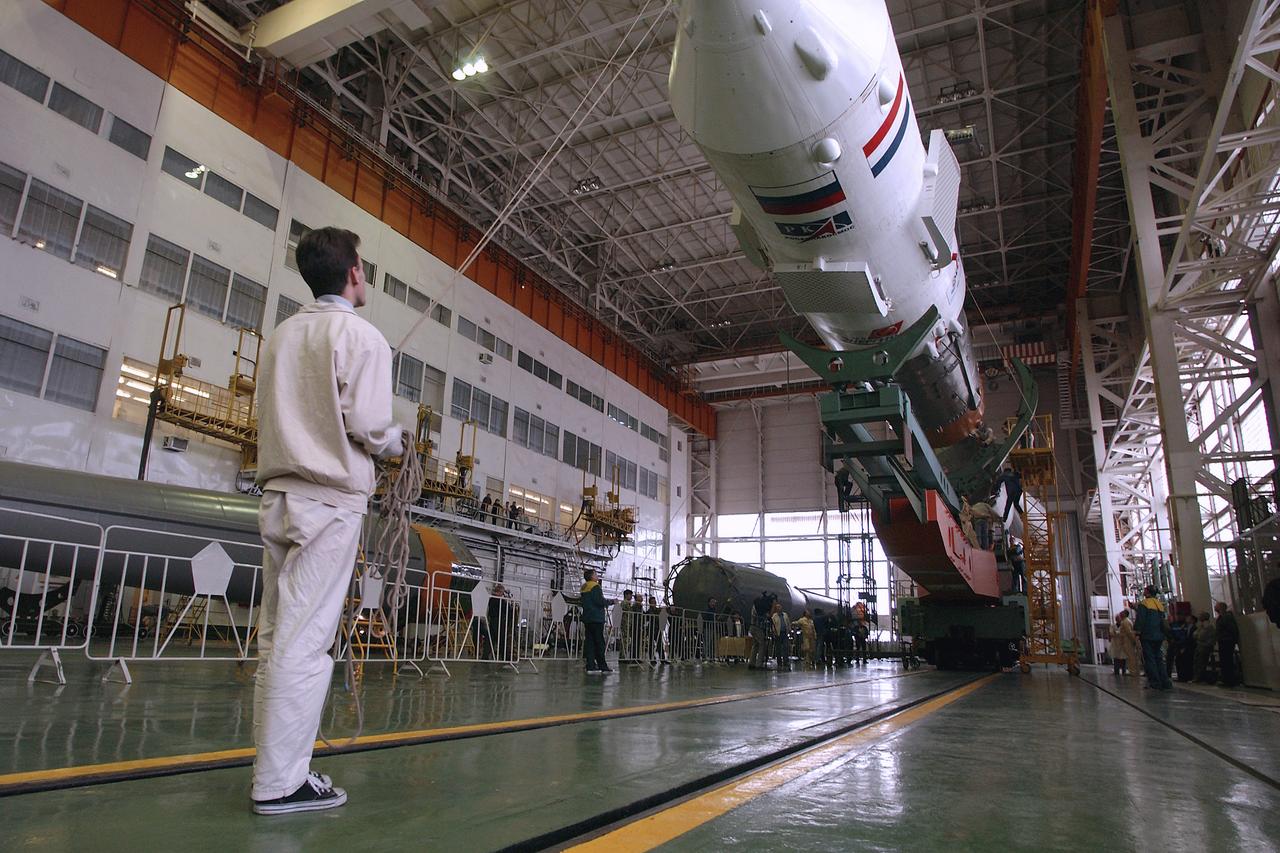
A technician at the Baikonur Cosmodrome walks with the Soyuz capsule as it is prepared to mate with its booster rocket in preparation for the April 19 launch of the Expedition 9 crew and a European astronaut to the International Space Station, Friday, April 16, 2008, in Baikonur, Kazakhstan. Photo Credit: (NASA/Bill Ingalls)
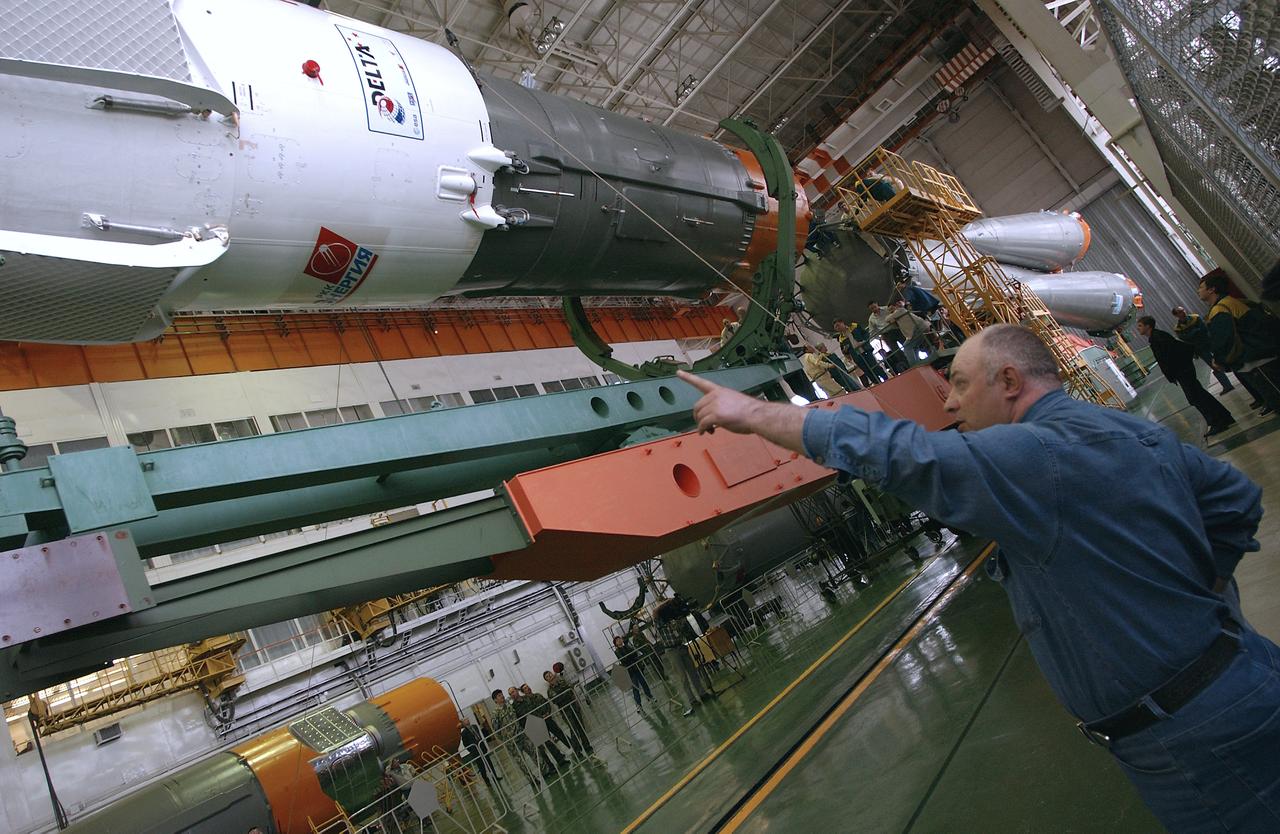
Engineers at the Baikonur Cosmodrome prepare to mate the Soyuz TMA-4 capsule with its booster rocket in preparation for a launch on April 19 of the Expedition 9 crew and a European astronaut to the International Space Station, Friday, April 16, 2004 in Baikonur, Kazakhstan. Photo Credit: (NASA/Bill Ingalls)
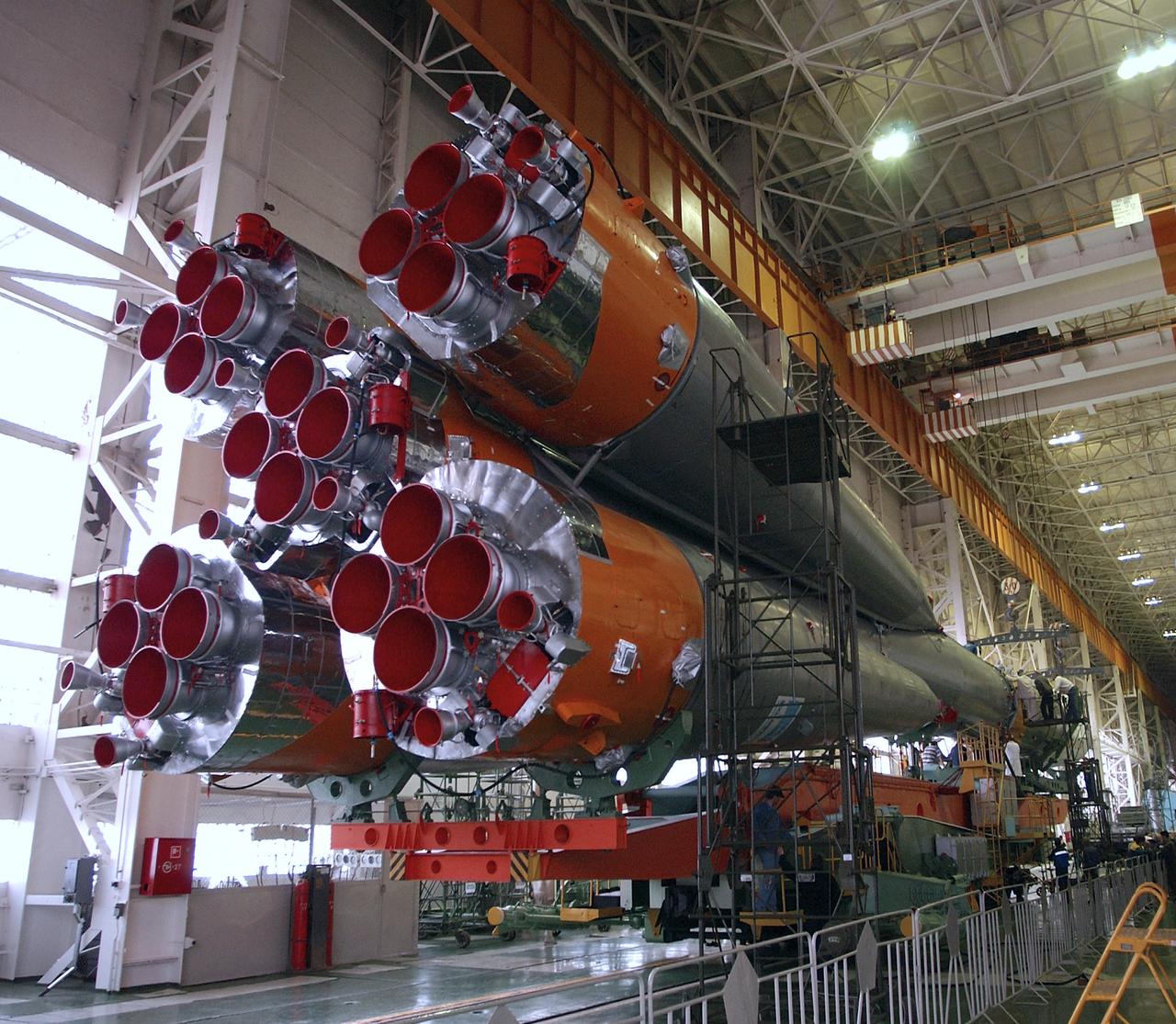
A view of the Soyuz rocket engines after engineers at the Baikonur Cosmodrome mated the Soyuz TMA-4 capsule with its booster rocket in preparation for a launch on April 19 of the Expedition 9 crew and a European astronaut to the International Space Station, Friday, April 16, 2004 in Baikonur, Kazakhstan. Photo Credit: (NASA/Bill Ingalls)
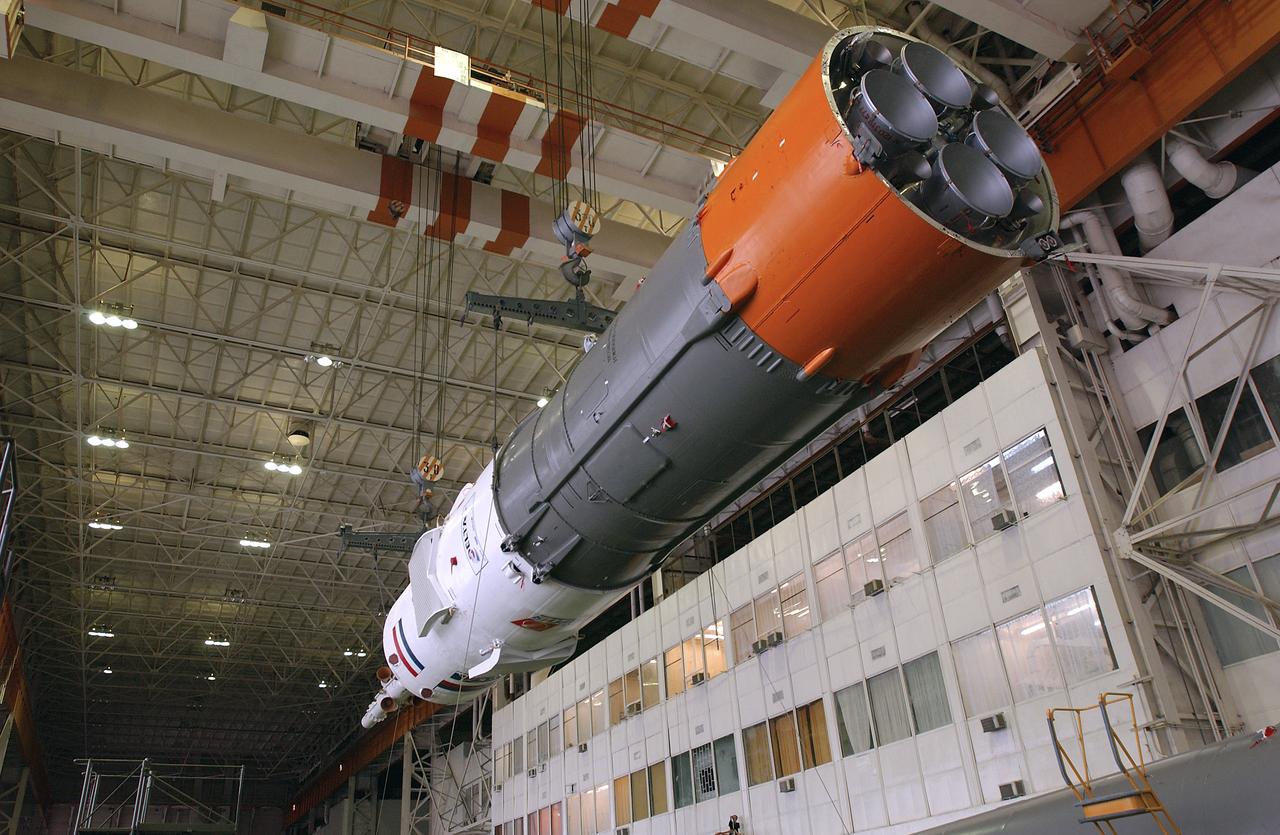
The Soyuz TMA-4 capsule is prepared for mating with its booster rocket at the Baikonur Cosmodrome in preparation for a launch on April 19 of the Expedition 9 crew and a European astronaut to the International Space Station, Friday, April 16, 2004 in Baikonur, Kazakhstan. Photo Credit: (NASA/Bill Ingalls)
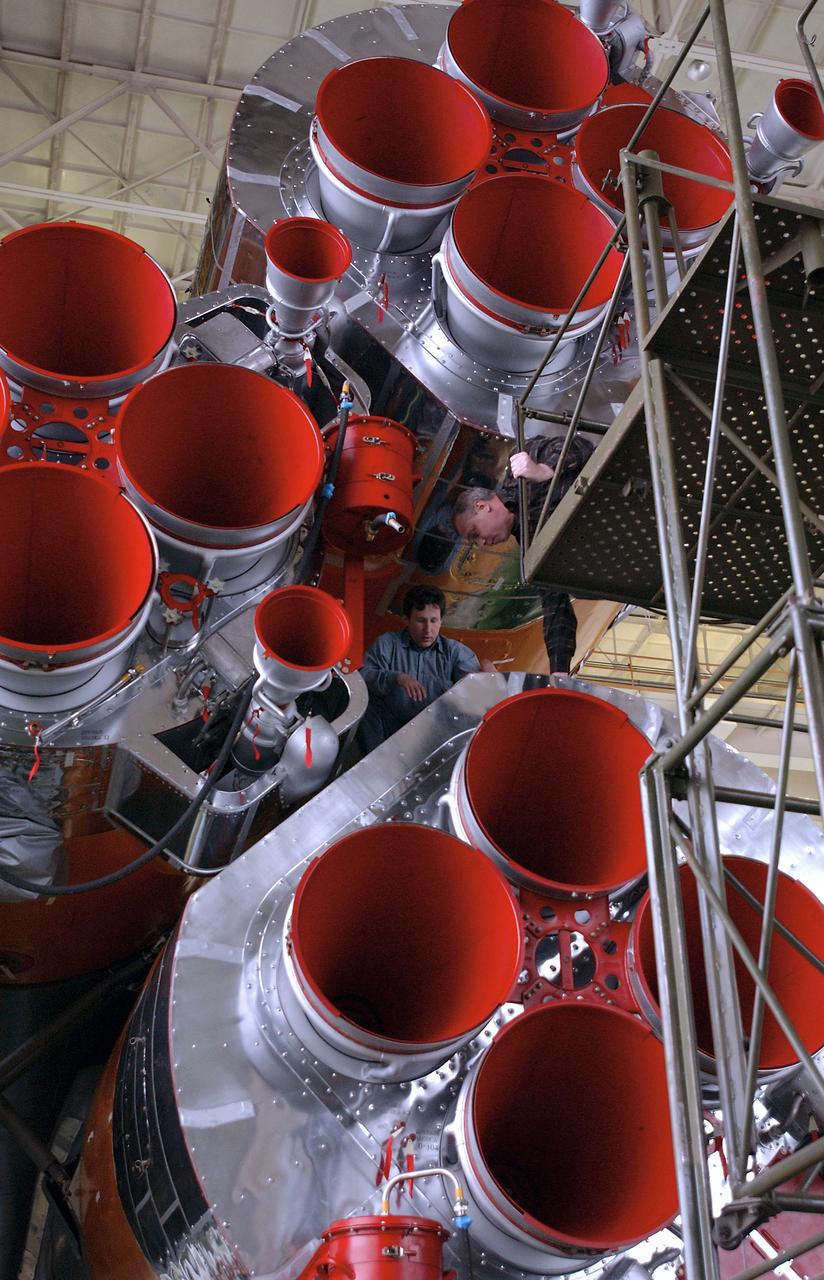
Engineers at the Baikonur Cosmodrome In Kazakhstan work on the aft end of the booster rocket after mating it with the Soyuz TMA-4 capsule in preparation for a launch on April 19 of the Expedition 9 crew and a European astronaut to the International Space Station, Friday, April 16, 2004 in Baikonur, Kazakhstan. Photo Credit: (NASA/Bill Ingalls)
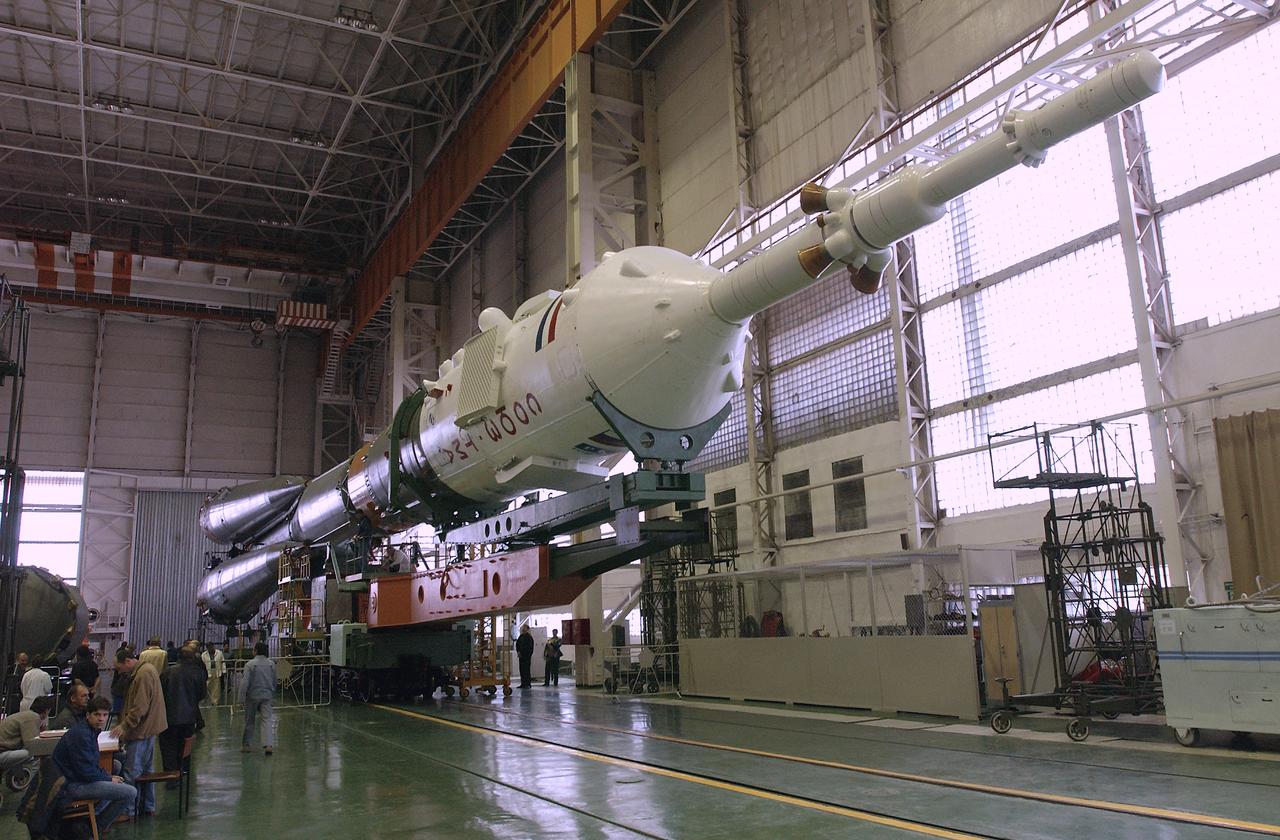
Engineers at the Baikonur Cosmodrome mated the Soyuz TMA-4 capsule with its booster rocket in preparation for a launch on April 19 of the Expedition 9 crew and a European astronaut to the International Space Station, Friday, April 16, 2004 in Baikonur, Kazakhstan. Photo Credit: (NASA/Bill Ingalls)
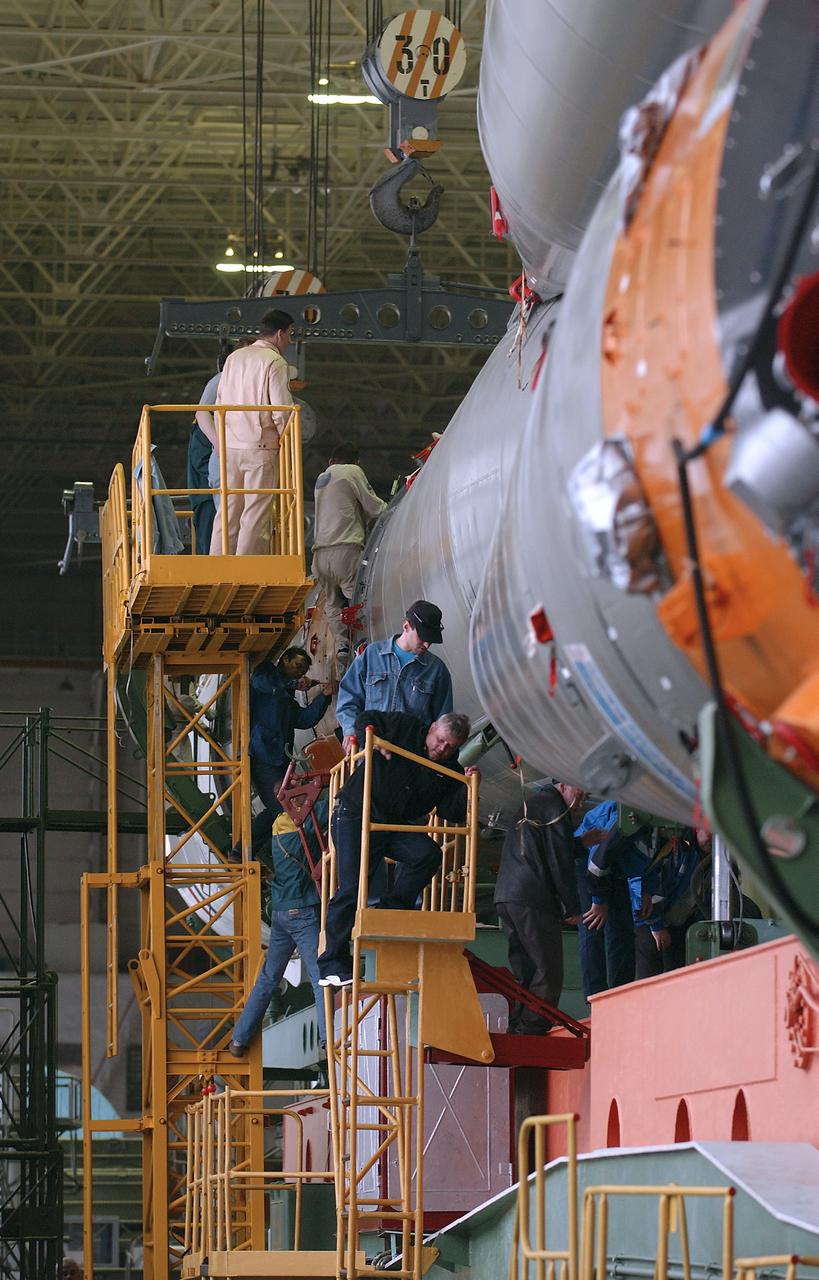
Engineers at the Baikonur Cosmodrome mated the Soyuz TMA-4 capsule with its booster rocket in preparation for a launch on April 19 of the Expedition 9 crew and a European astronaut to the International Space Station, Friday, April 16, 2004 in Baikonur, Kazakhstan. Photo Credit: (NASA/Bill Ingalls)