Defrosting Gully Aprons
Gully Apron in Crater
Lobate Apron in Deuteronilus Mensae
South Polar Cap Erosion and Aprons
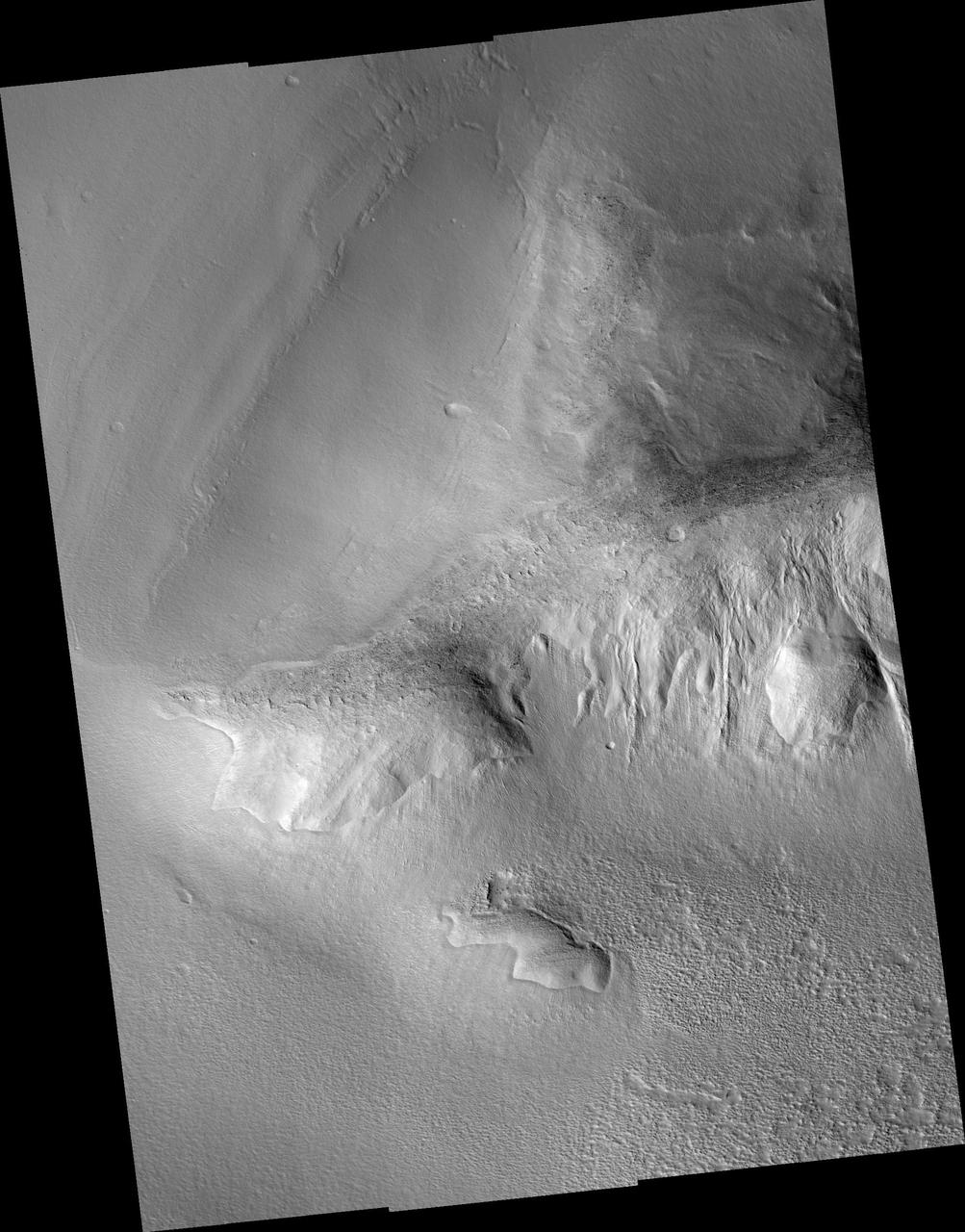
Lobate Debris Apron in Tempe Terra/Mareotis Fossae
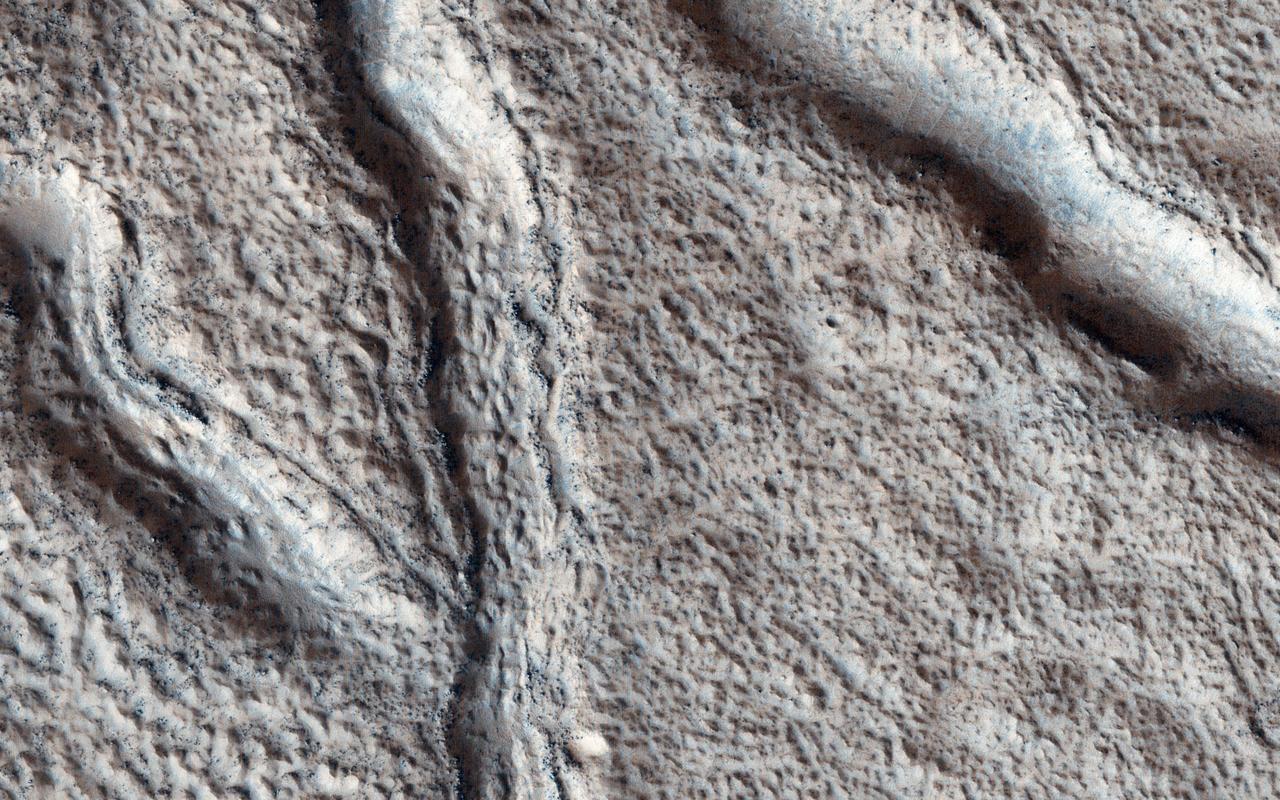
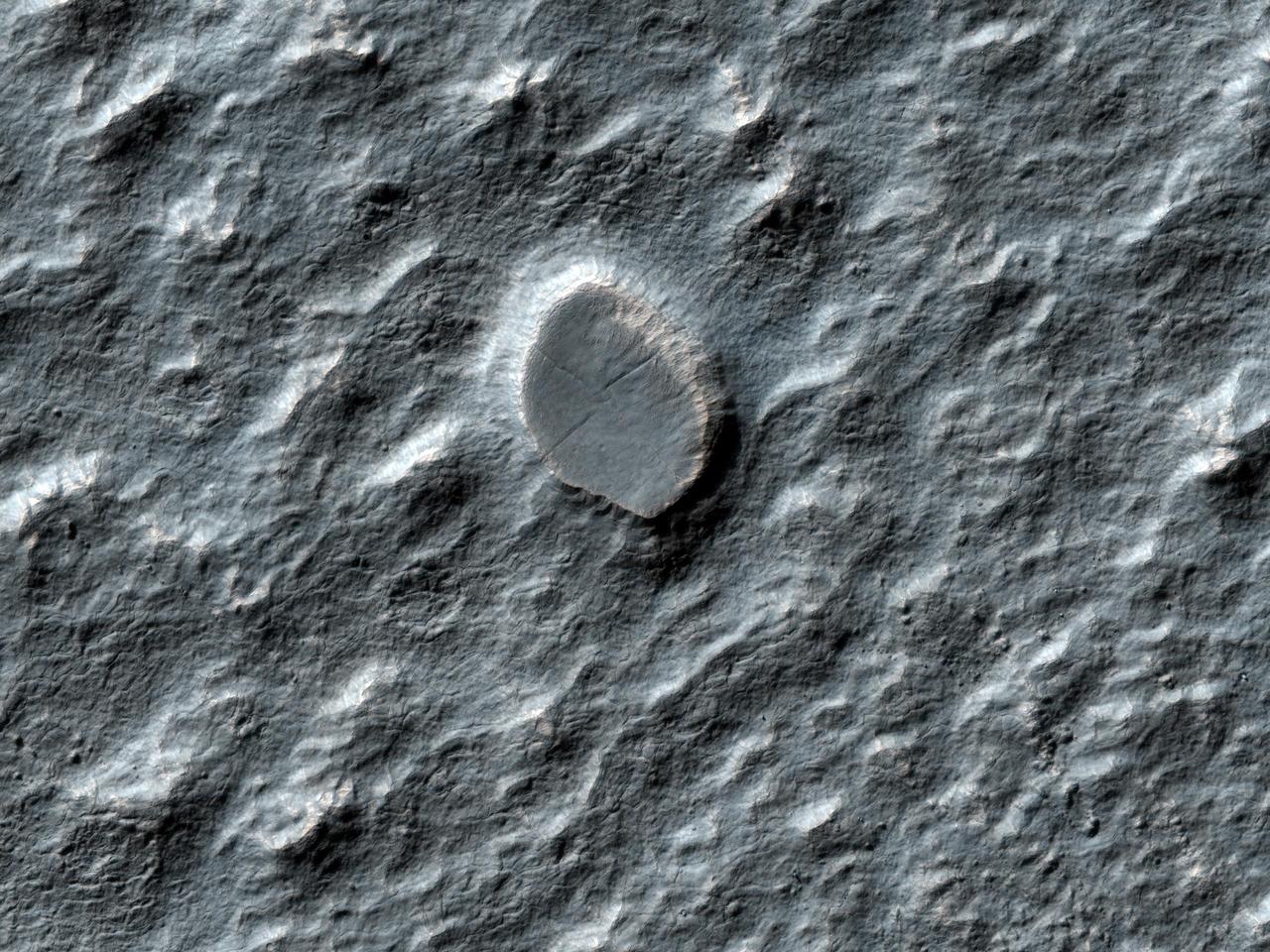
This observation from NASA Mars Reconnaissance Orbiter shows the nature of large fissures in a smooth apron around a mound in the Phlegra region. The apron could be (or could have been) ice-rich, so one possibility is that the fissures are related to ice loss. Based on radar data from MRO combined with studies of the region's geology from other orbiters, scientists think that extensive glaciers covered this region several hundred million years ago. http://photojournal.jpl.nasa.gov/catalog/PIA19307
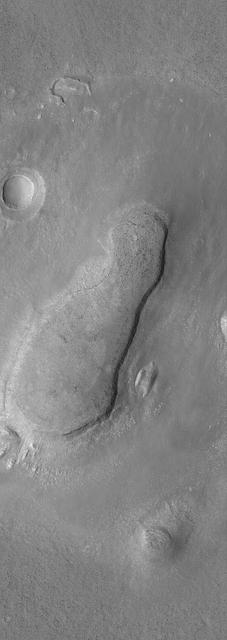
This MOC image shows a mesa and an impact grater just east of Phlegra Montes. The mesa is the eroded remnant of a once more extensive terrain. An apron of material surrounds the mesa
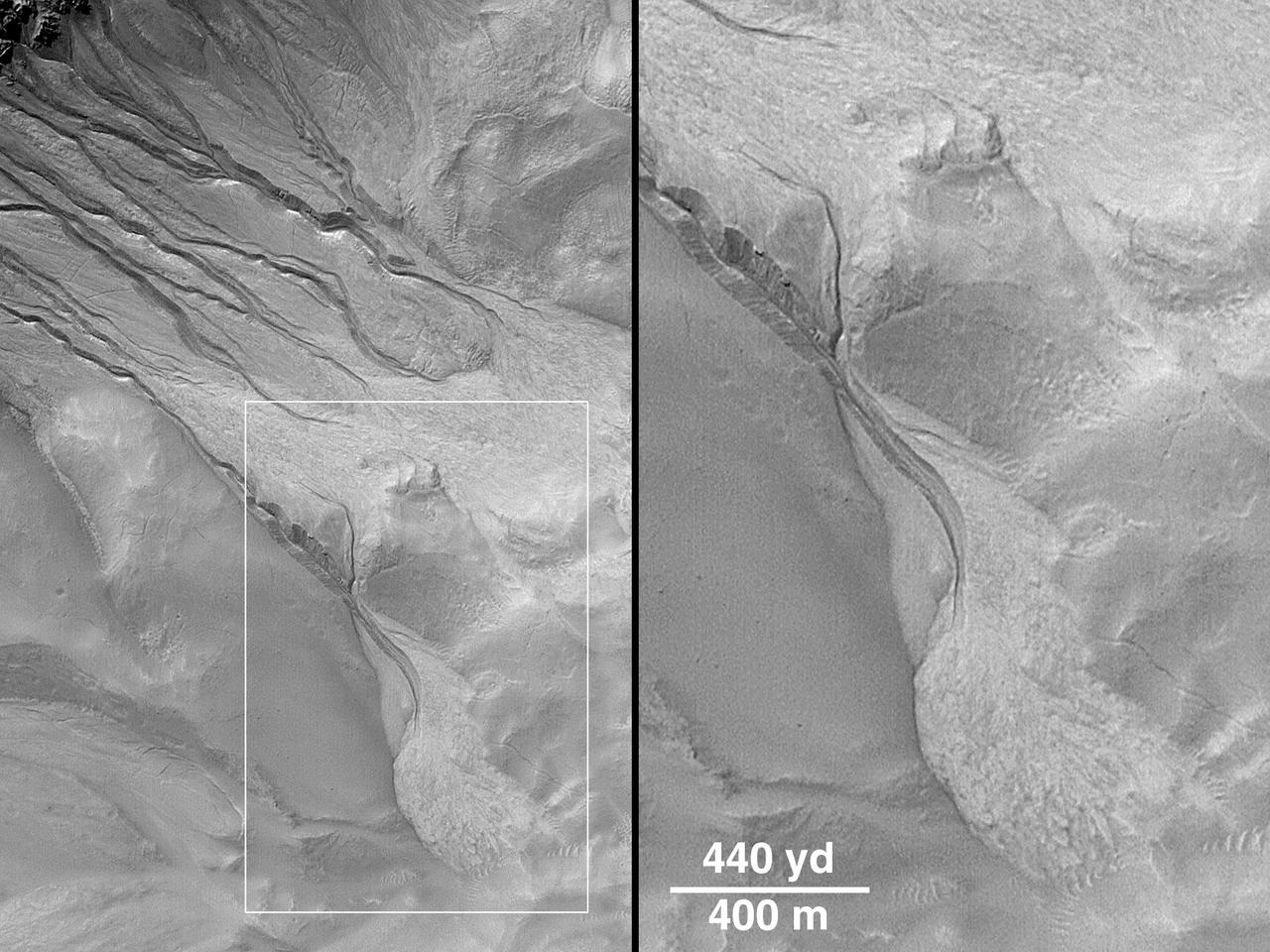
Evidence for Recent Liquid Water on Mars: Channels and Aprons in East Gorgonum Crater
This image from NASA Mars Reconnaissance Orbiter shows a swath of a debris apron east of Hellas Basin. Features like this are often found surrounding isolated mountains in this area. Original release date March 3, 2010.
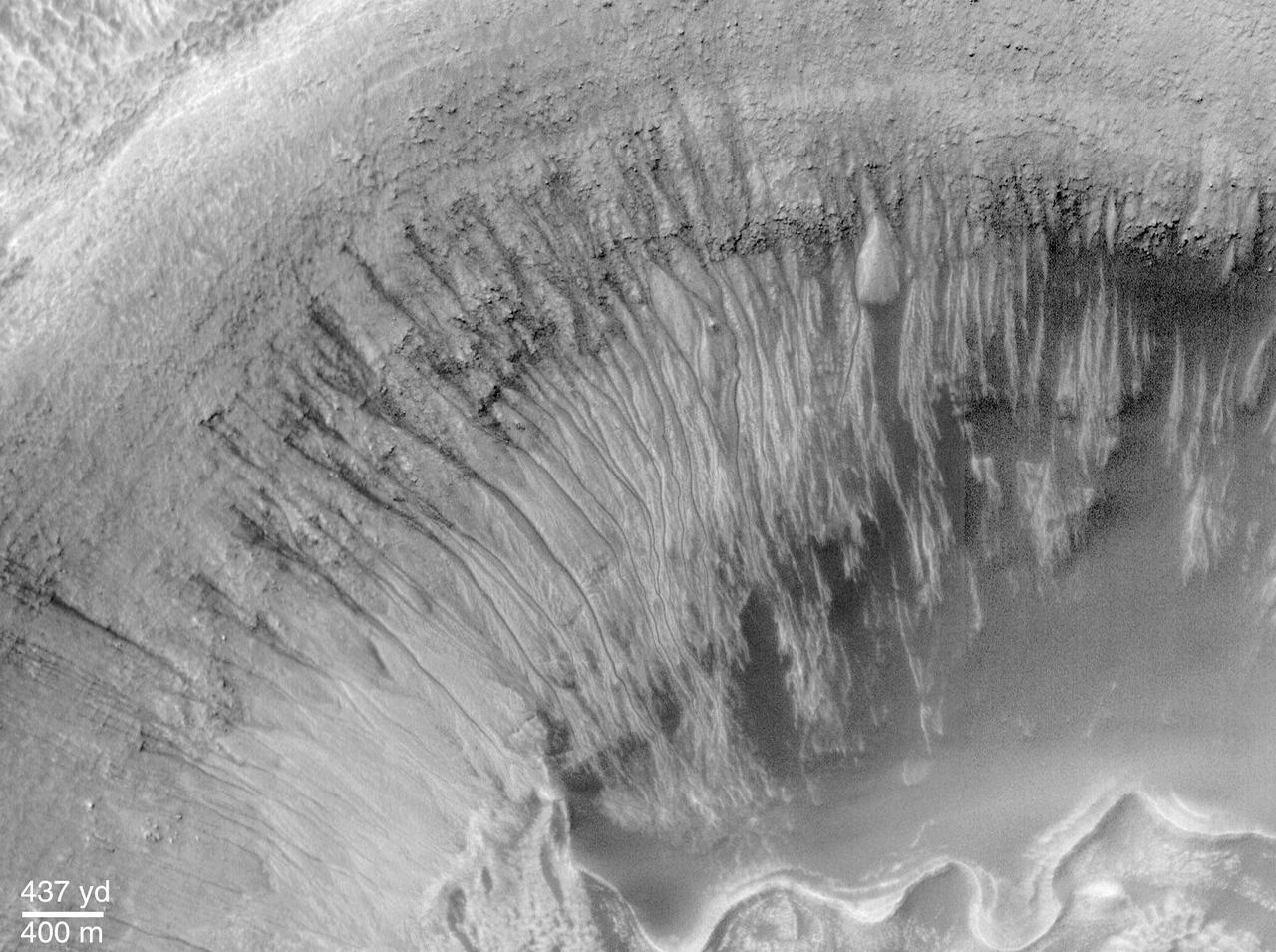
Evidence for Recent Liquid Water on Mars: Channeled Aprons in a Small Crater within Newton Crater
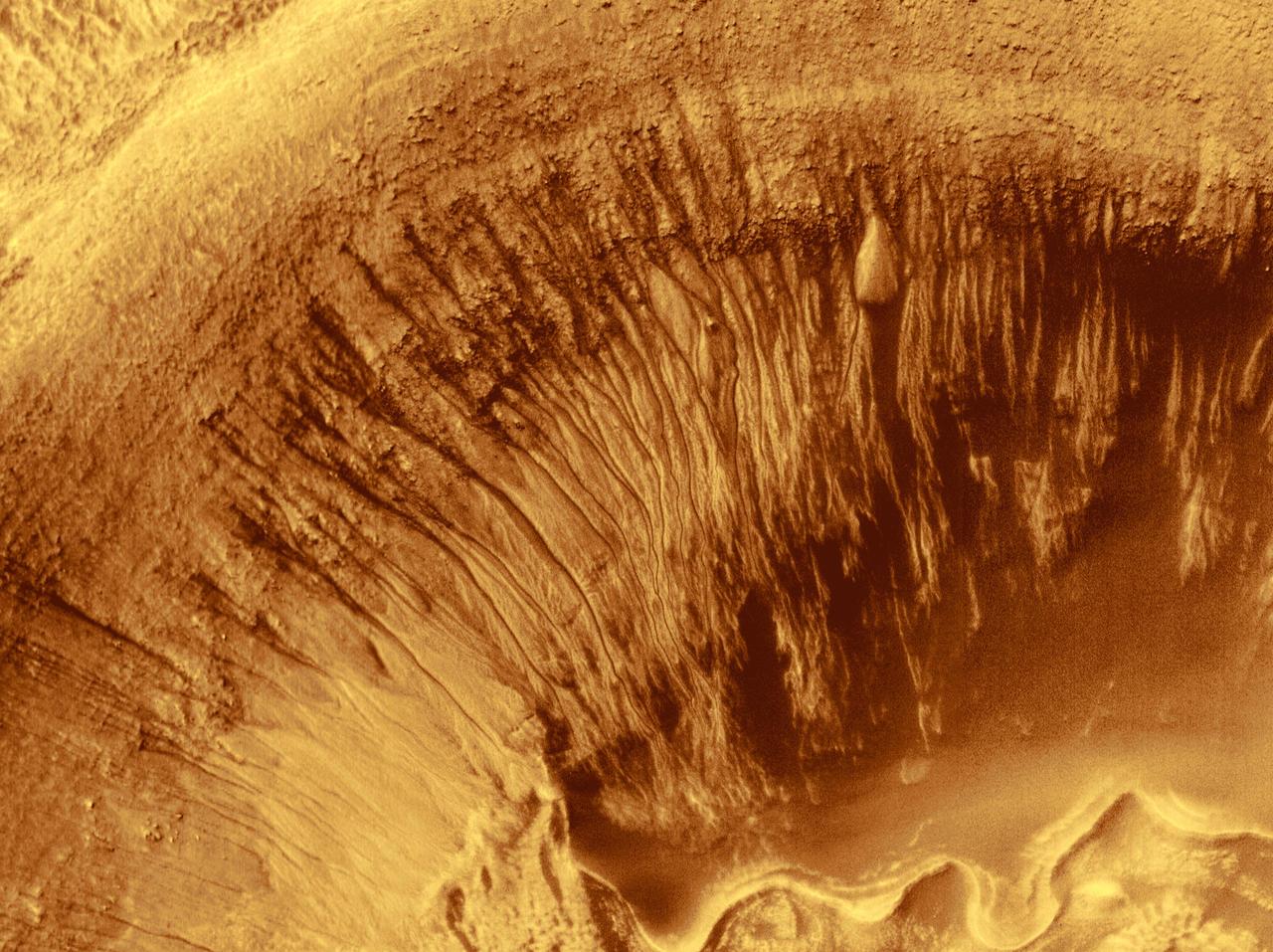
Evidence for Recent Liquid Water on Mars: Channeled Aprons in a Small Crater within Newton Crater

A NASA F/A-18 sits on the apron at NASA's Armstrong Flight Research Center in Edwards, California, prior to a supersonic research flight.

Lockheed S-3B Viking, N601NA at Sunrise on the Glenn Research Center Hangar Apron

NASA, Lockheed Martin S-3B Viking Aircraft #N601NA on Hangar Apron
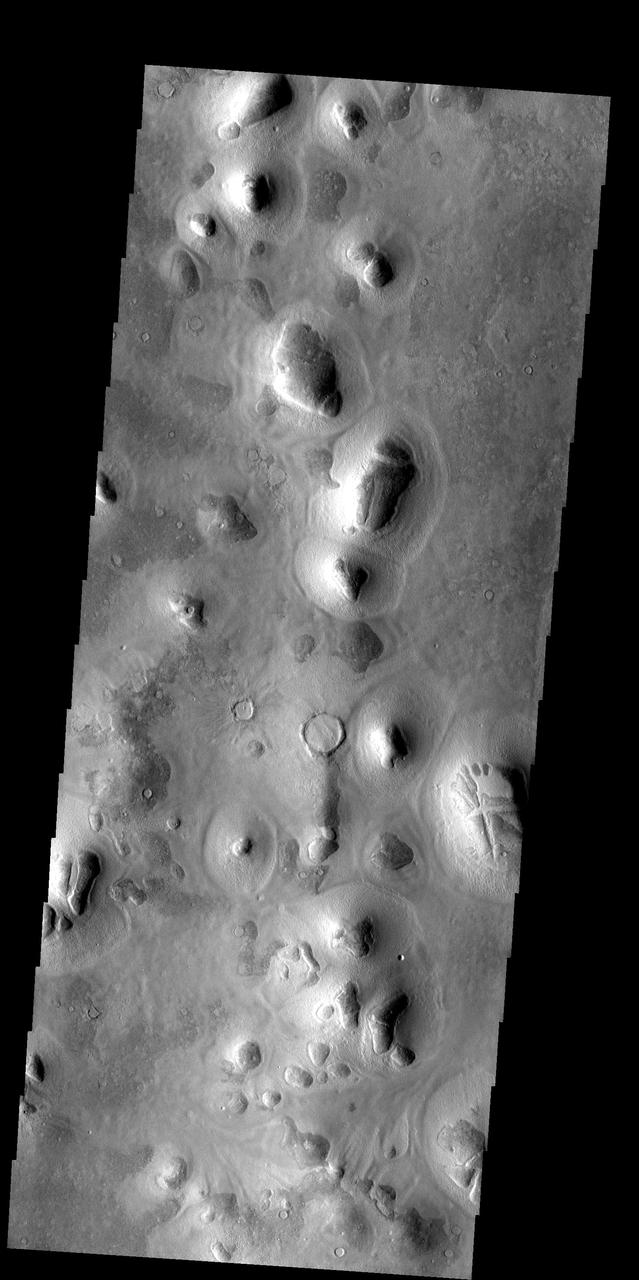
These small hills and surrounding debris aprons are called Phlegra Montes
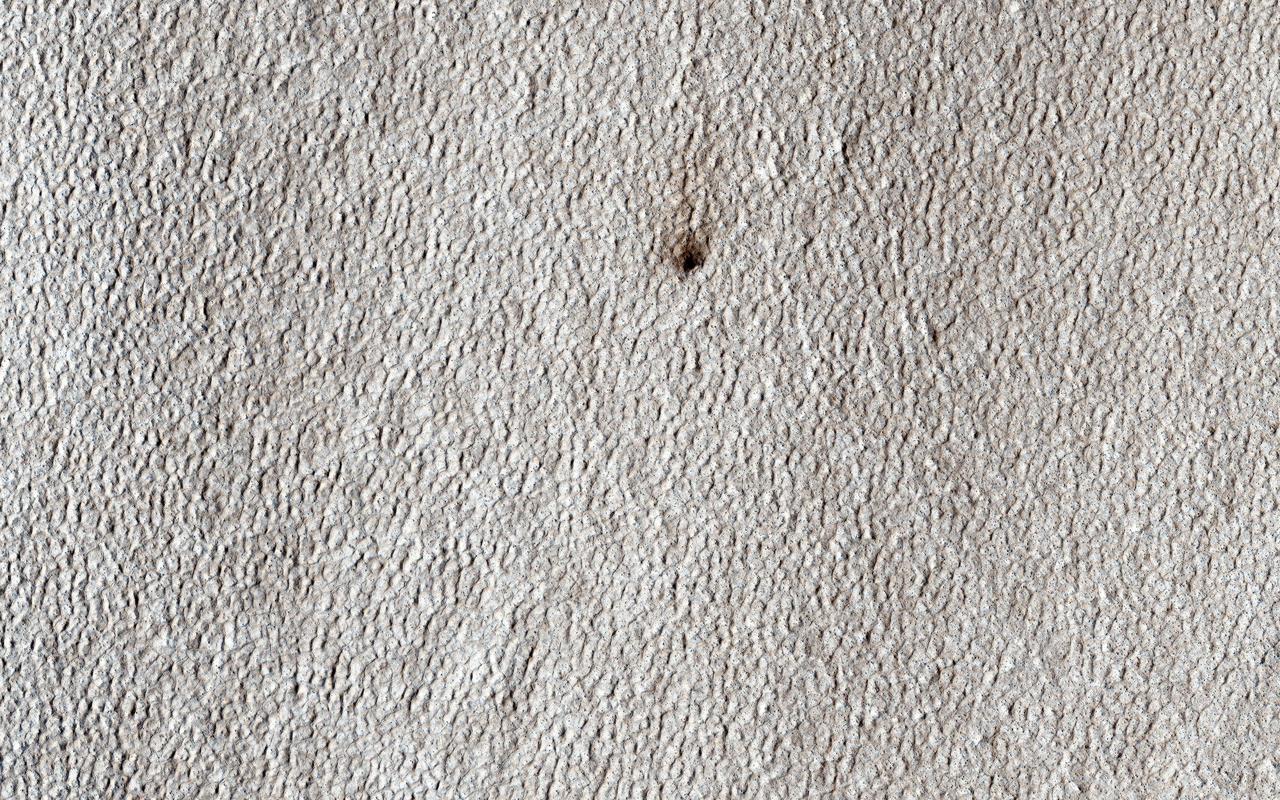
This image was targeted for NASA Mars Reconnaissance Orbiter spacecraft to look at a candidate new crater on a lobate apron. Such aprons are often ice-rich, but the crater shows no bright material that would indicate ice.
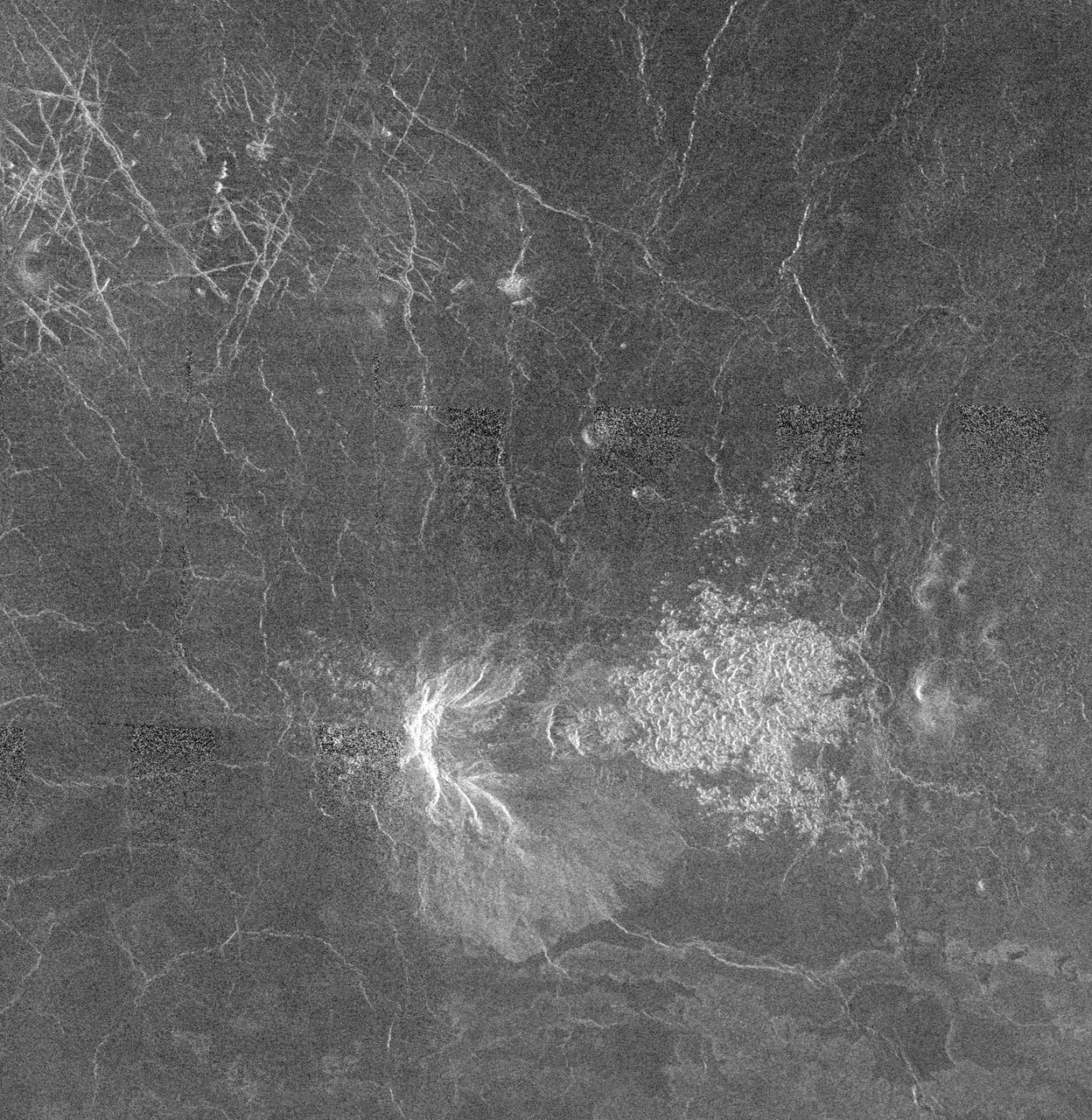
This is full-resolution mosaic from NASA Magellan spacecraft. The bright feature, slightly south of center is interpreted to be a volcano with a large apron of blocky debris to its right and some smaller aprons to its left. http://photojournal.jpl.nasa.gov/catalog/PIA00264
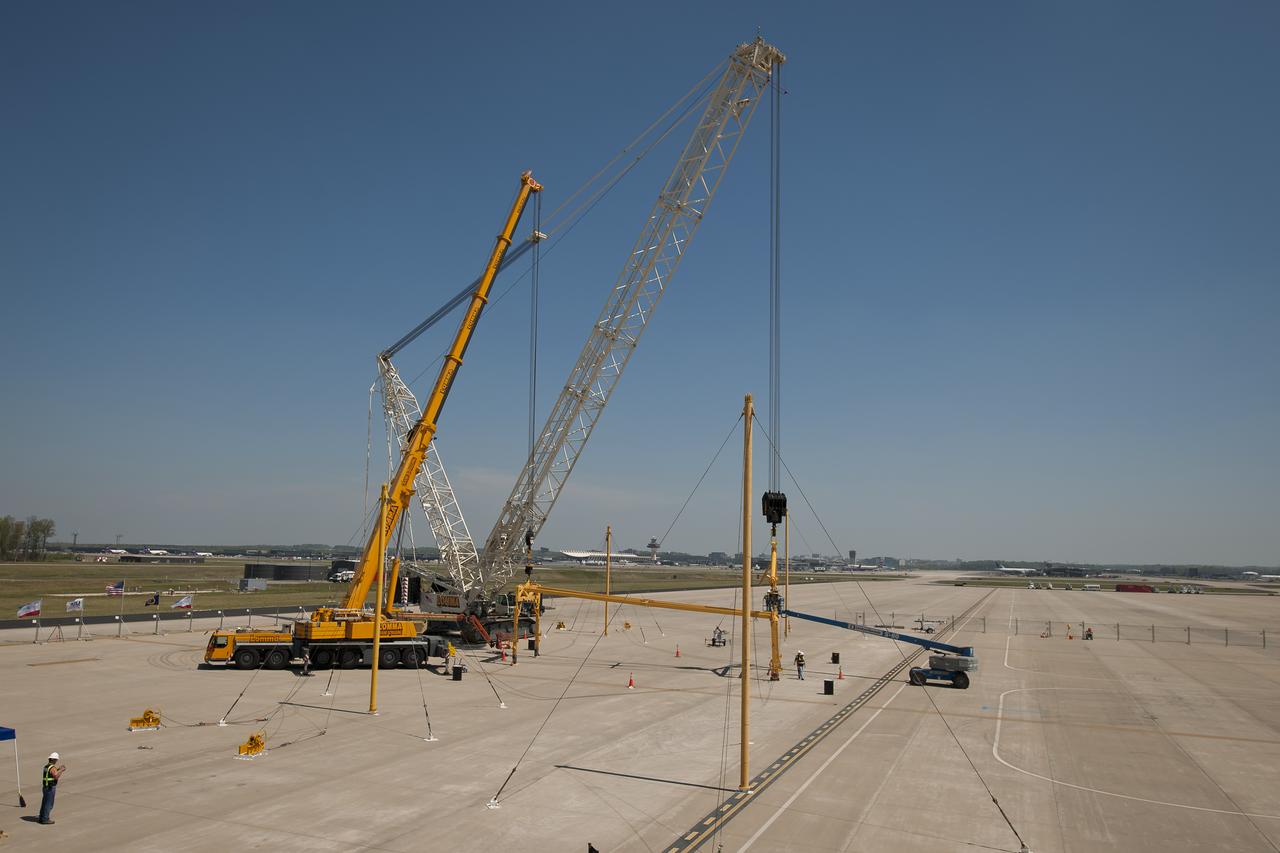
Workers use two cranes to position the sling that will be used to demate the space shuttle Discovery, Monday, April 16, 2012, at the Apron W area of Washington Dulles international Airport in Sterling, Va. The sling will be used to demate the space shuttle Discovery from the 747 Shuttle Carrier Aircraft (SCA) once it arrives. Discovery, the first orbiter retired from NASA’s shuttle fleet, completed 39 missions, spent 365 days in space, orbited the Earth 5,830 times, and traveled 148,221,675 miles. NASA will transfer Discovery to the National Air and Space Museum to begin its new mission to commemorate past achievements in space and to educate and inspire future generations of explorers. Photo Credit: (NASA/Bill Ingalls)
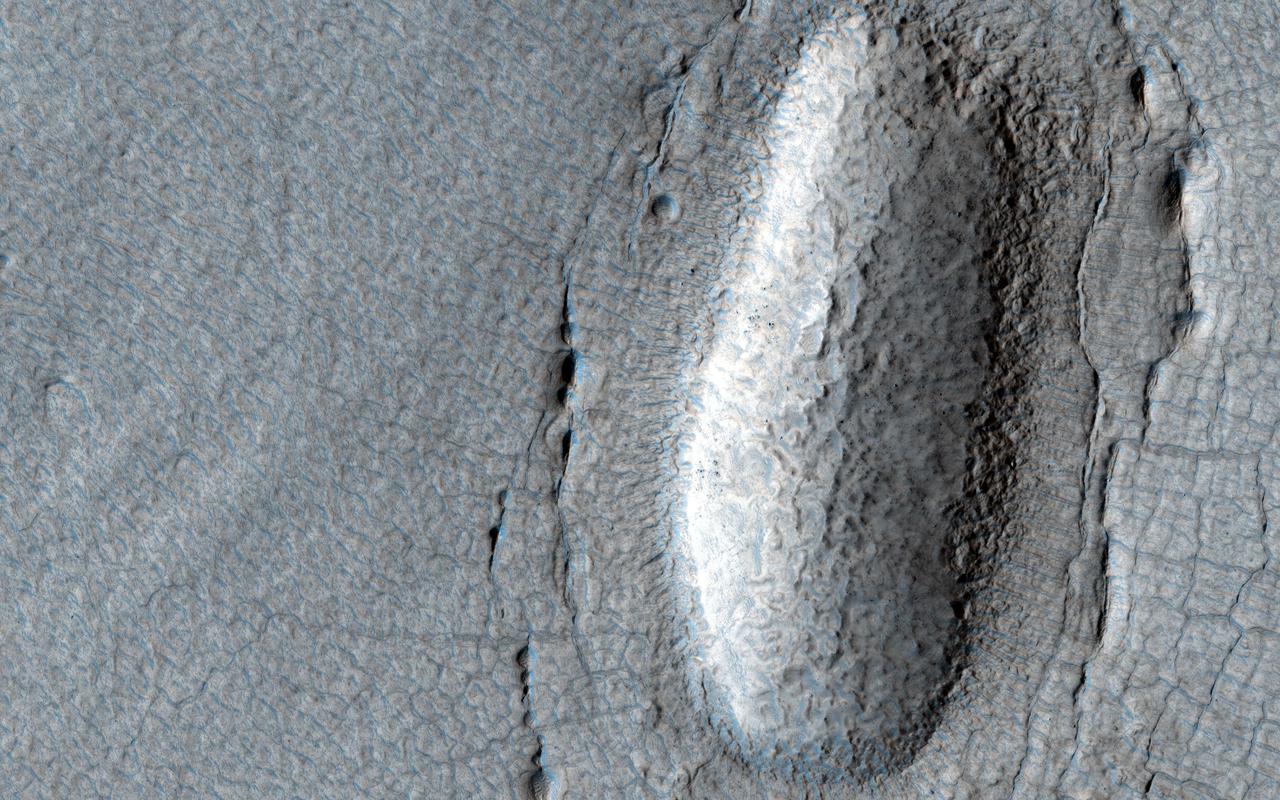
This observation shows a lobe-shaped debris apron emanating from a massif (shown in the upper left of the image) in the Protonilus Mensae region in the Northern Hemisphere of Mars. These aprons are composed of nearly pure water ice with a layer of debris on the surface protecting the ice from sublimation (going directly from a solid to gaseous state). This image shows different terrain types on the apron that indicate the presence and flow of ice, from smoother polygonal terrain closer to the massif, to rougher, patterned ground commonly called "brain terrain." Also visible on the apron are a series of linear pits. These pits might form from material collapsing into subsurface voids after buried ice has sublimated. https://photojournal.jpl.nasa.gov/catalog/PIA25084
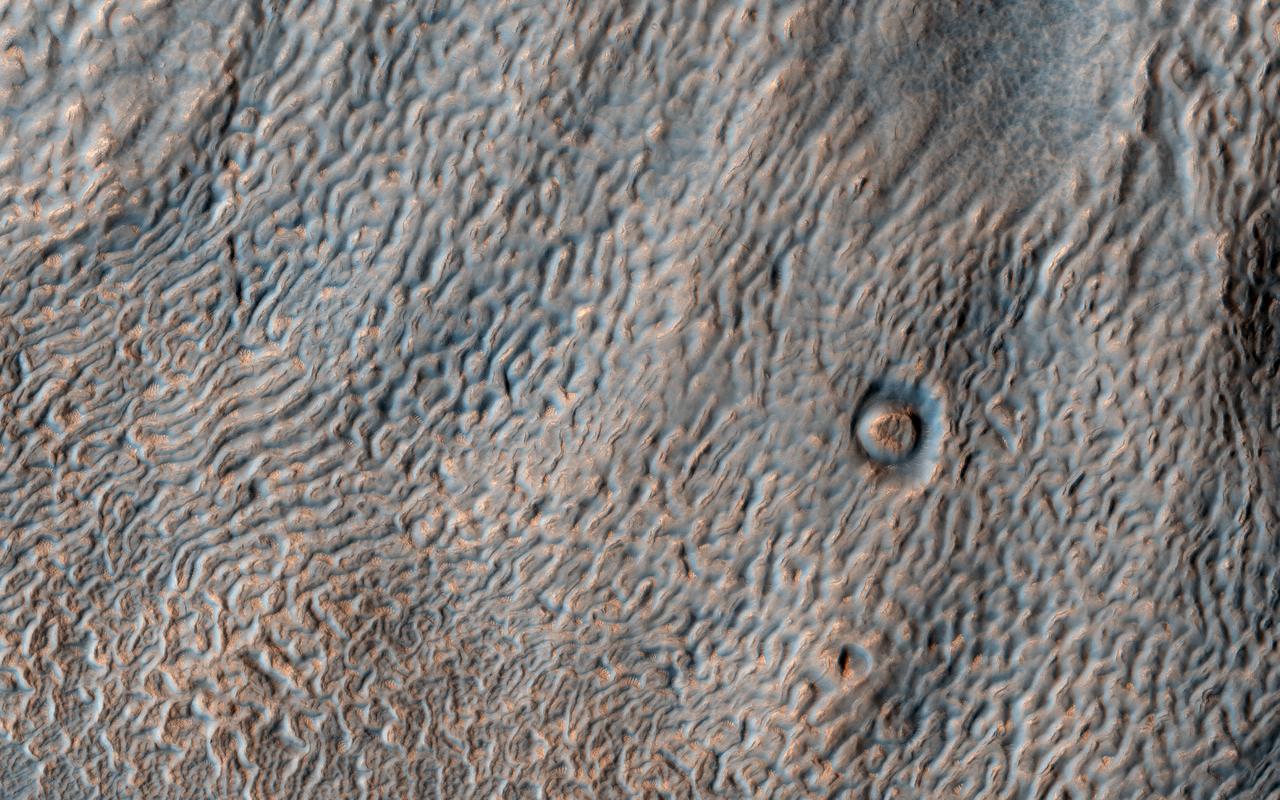
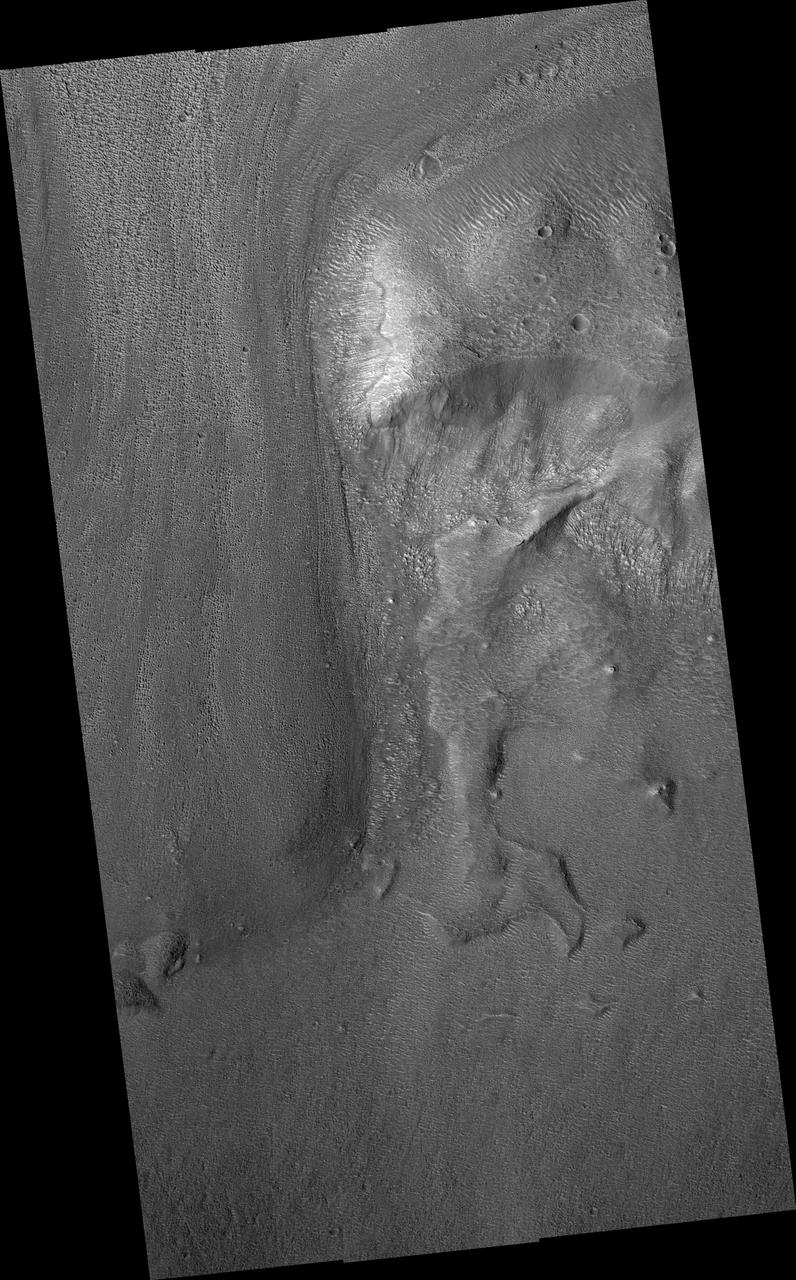
This enhanced color image from NASA's Mars Reconnaissance Orbiter shows the surface of a lobate debris apron in the Deuteronilus Mensae region of Mars, on the boundary between the Northern plains and Southern lowlands. These lobe-shaped formations commonly emanate from mesas in this region and have pitted, lineated textures that suggest the flow of water ice. Results from the SHARAD (SHAllow RADar) instrument on MRO indicate that lobate debris aprons in Deuteronilus Mensae, similar to those visible here, are composed of material dominated by ice and are interpreted to be potential debris-covered glaciers or rock glaciers. These debris apron surfaces are also covered by an ice-rich deposit that we’ve observed draping over entire regions in the mid-latitudes of Mars. It is this mantling deposit that filled in the crater, with its subsequent removal around the outer margins, probably due to differential sublimation of the ice. The same textures in the center of the crater are like those of the surrounding terrain. https://photojournal.jpl.nasa.gov/catalog/PIA21955
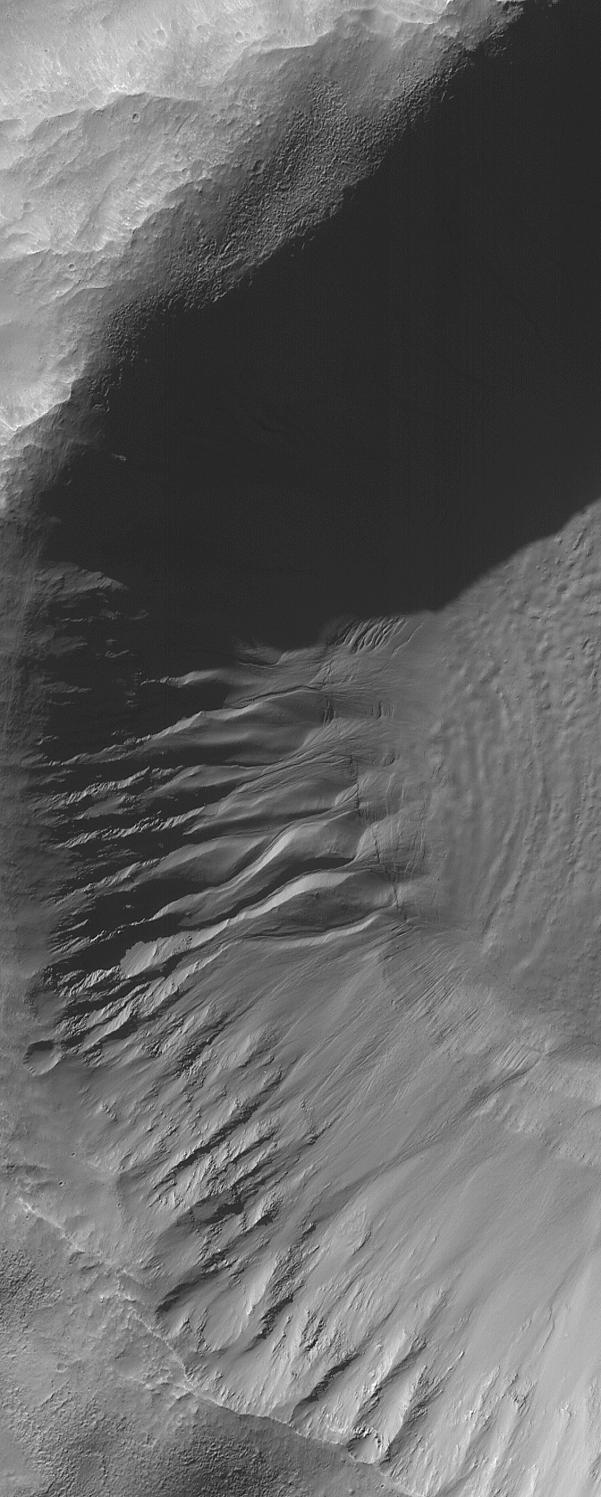
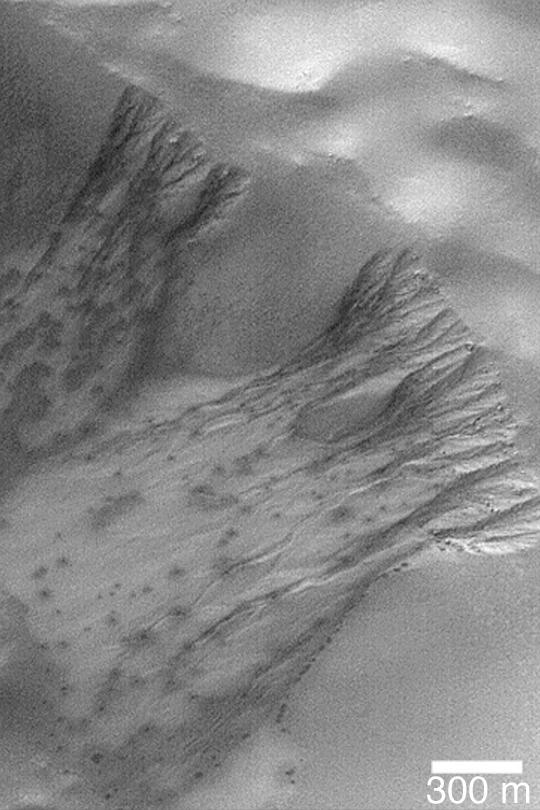
This MOC image shows gullies and cracked and stressed gully apron deposits in a south mid-latitude crater. Gullies can also be seen in the deep shadow on the north wall of the crater
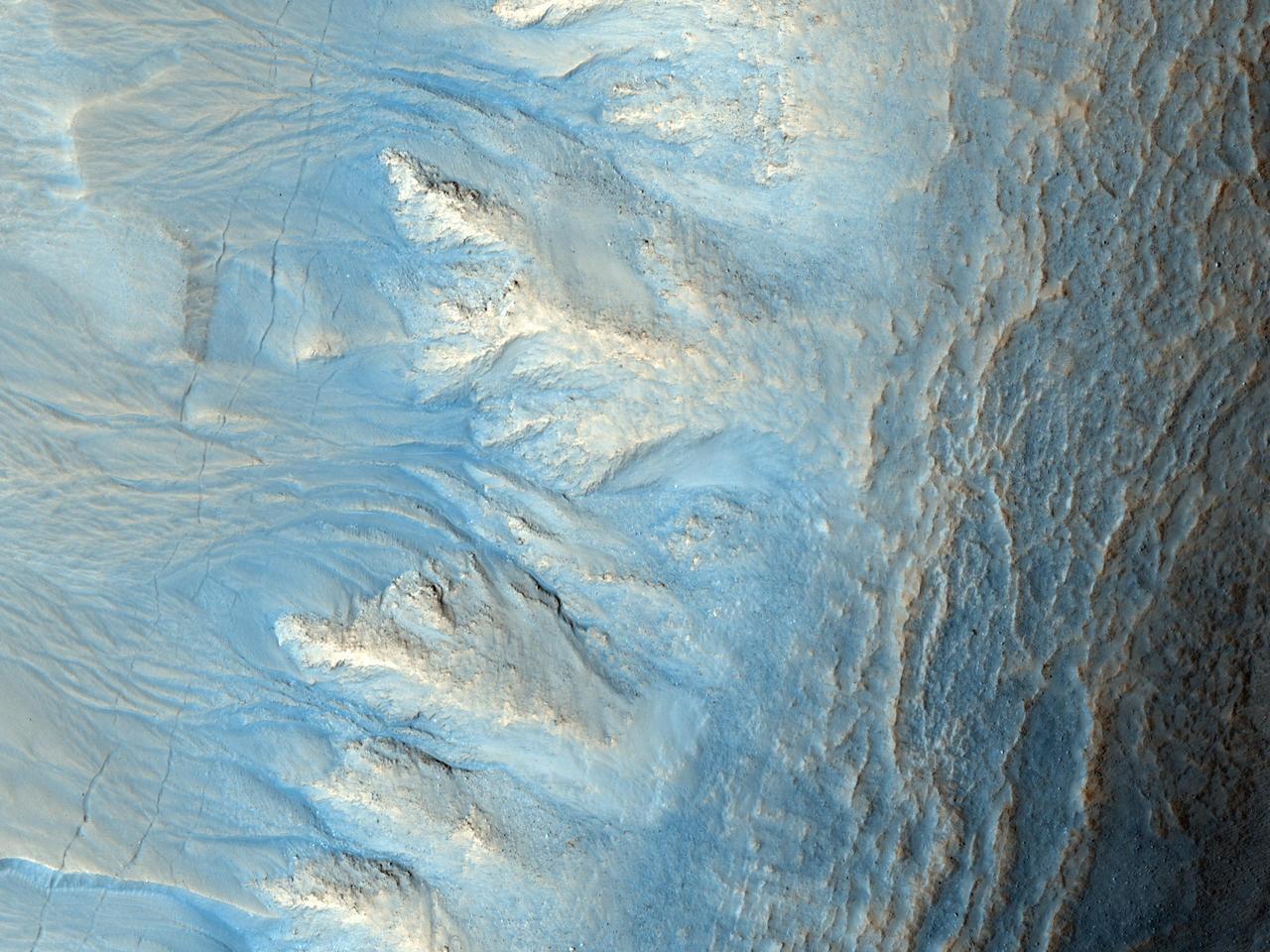
This image from NASA Mars Reconnaissance Orbiter shows the west-facing side of an impact crater in the mid-latitudes of Mars northern hemisphere. This crater has gullies along its walls that are composed of alcoves, channels and debris aprons.
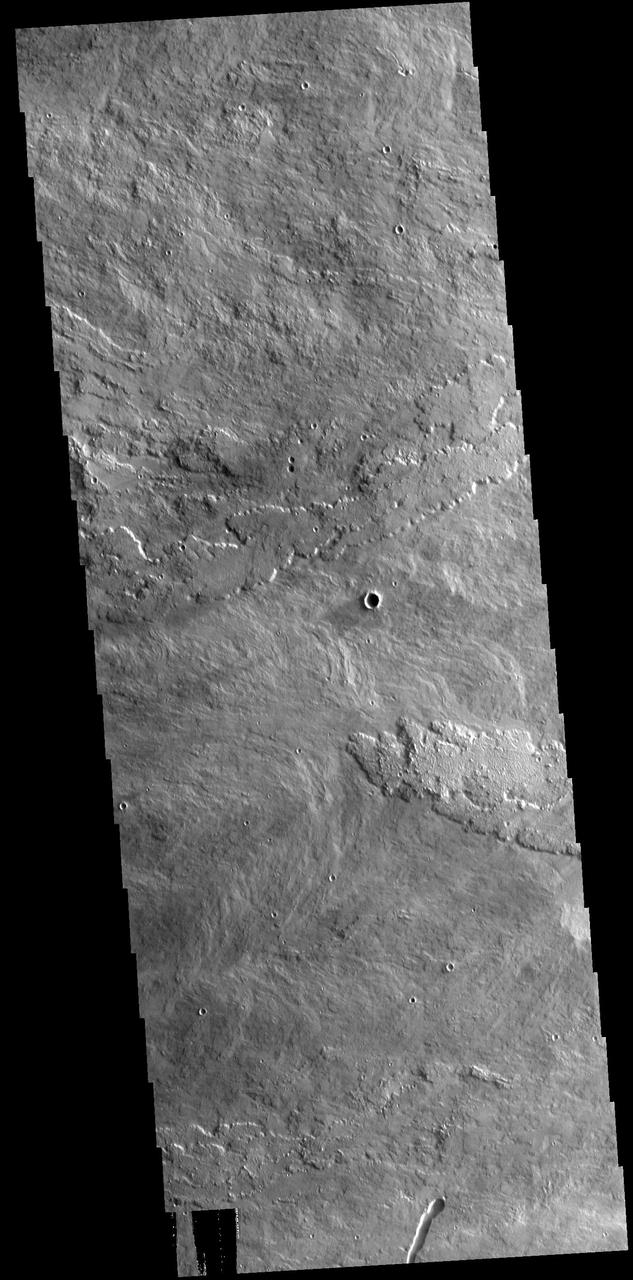
Arsia Mons is the southermost of the large aligned Tharsis volcanoes. Flows originating at Arsia Mons cover a vast region. The flows in this VIS image are part of the SW flow apron of Arsia Mons. The Tharsis trend runs NE/SW thru the centers of the volcanoes creating regions of greater tectonic and volcanic activities along this trend. Orbit Number: 77895 Latitude: -11.9896 Longitude: 236.892 Instrument: VIS Captured: 2019-07-07 04:22 https://photojournal.jpl.nasa.gov/catalog/PIA23395
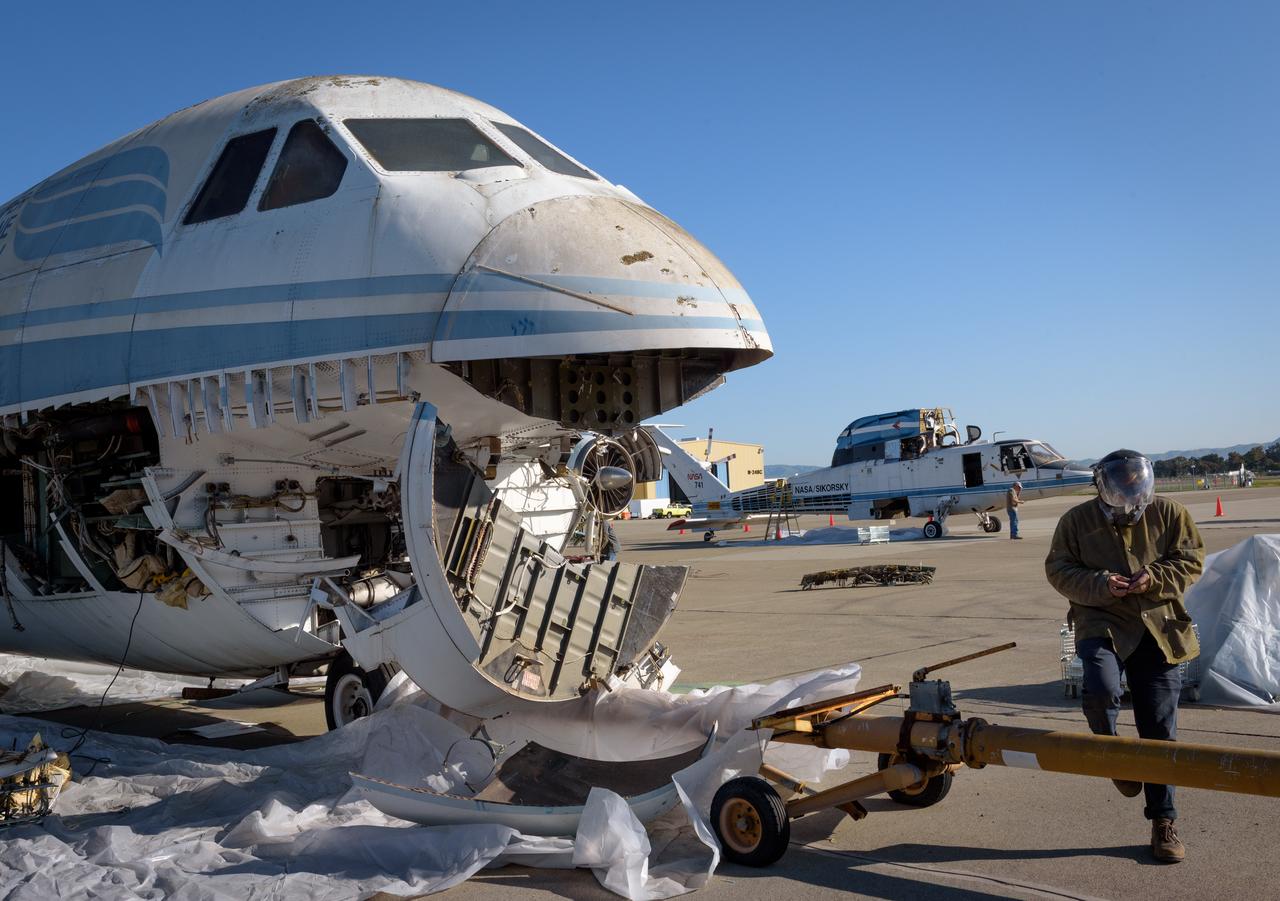
Aircraft demolition of the modified C-141 Kuiper Airborne Observatory, (KAO) (NASA-714), on the N211 apron at Moffett Field, California.
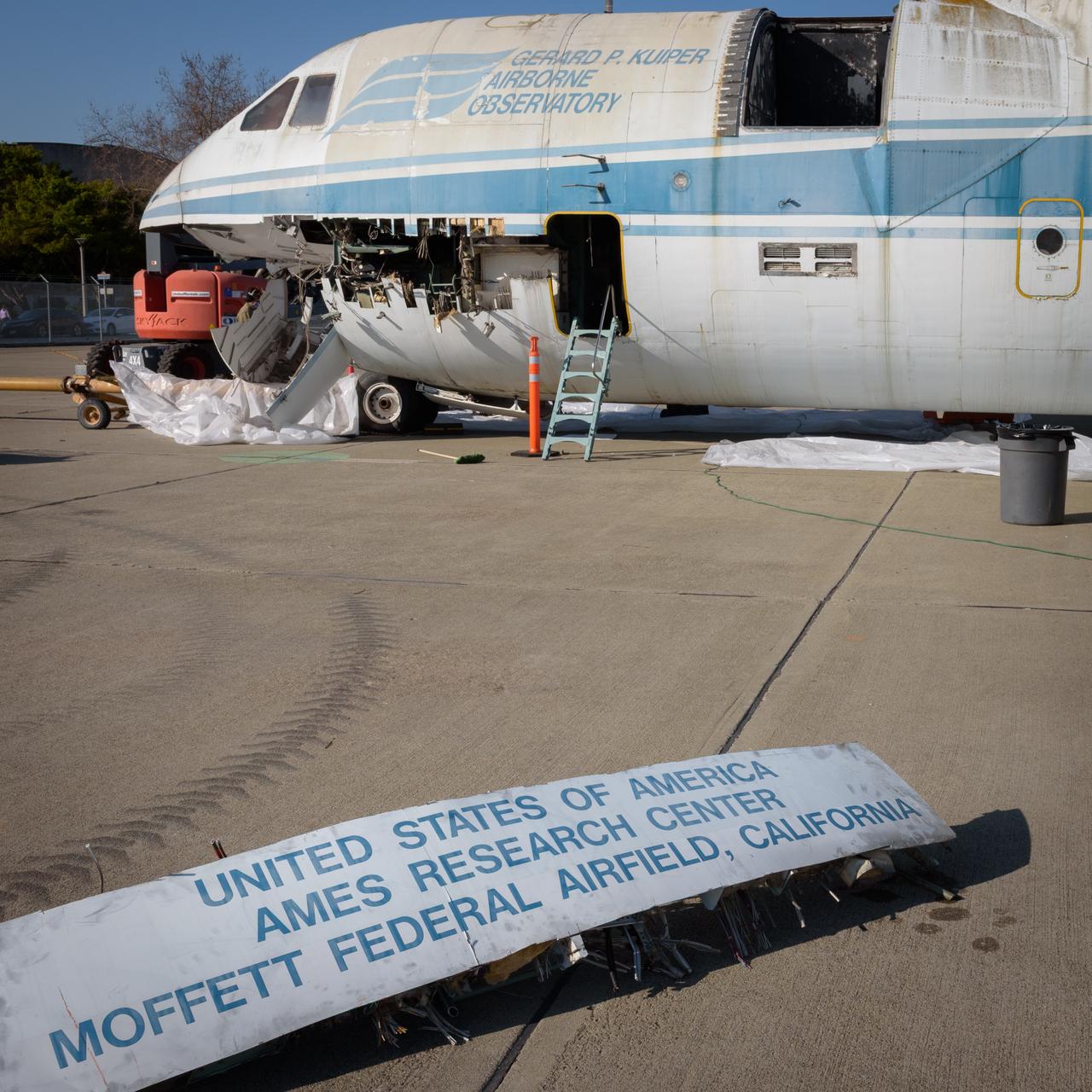
Aircraft demolition of the modified C-141 Kuiper Airborne Observatory, (KAO) (NASA-714), on the N211 apron at Moffett Field, California.
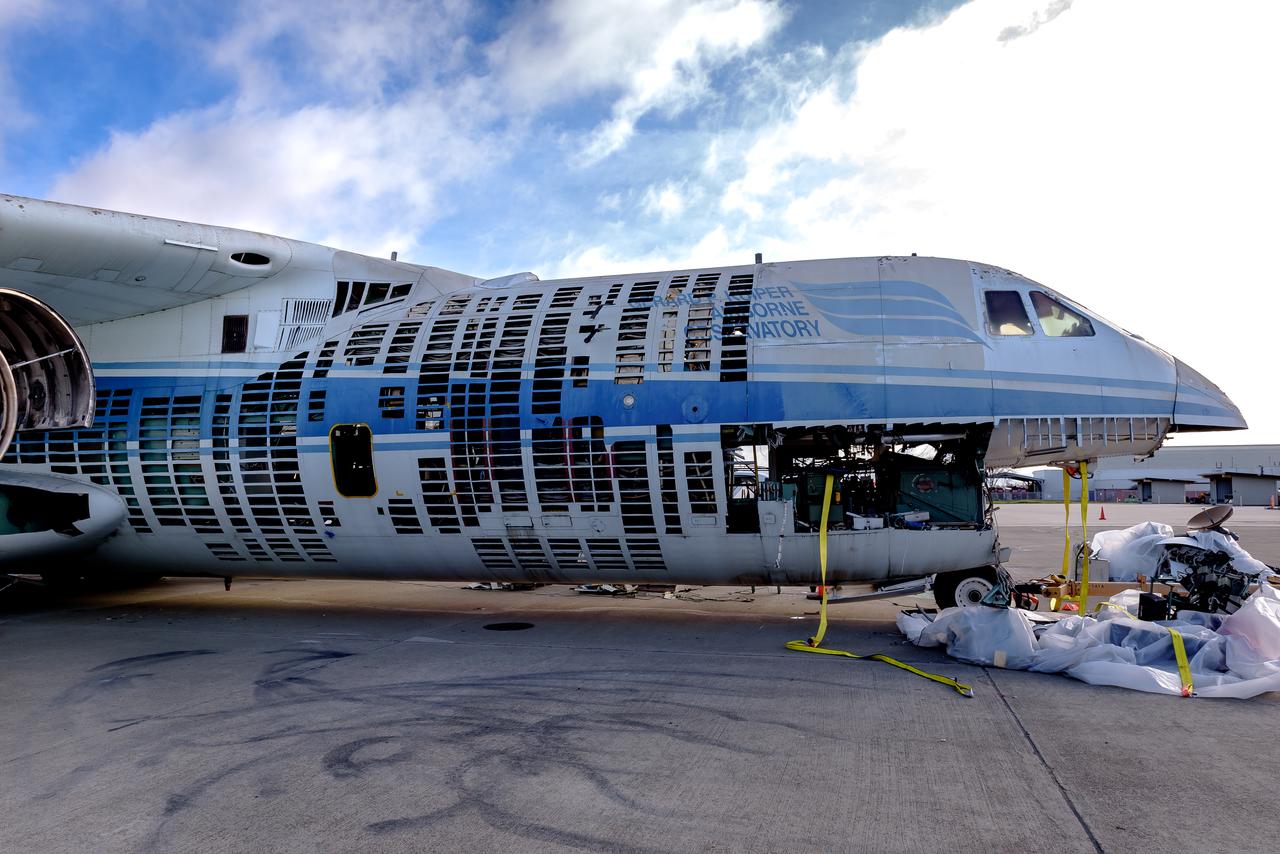
The modified C-141 Kuiper Airborne Observatory, (KAO) (NASA-714), is demolished on the N211 apron at Moffett Field, California.
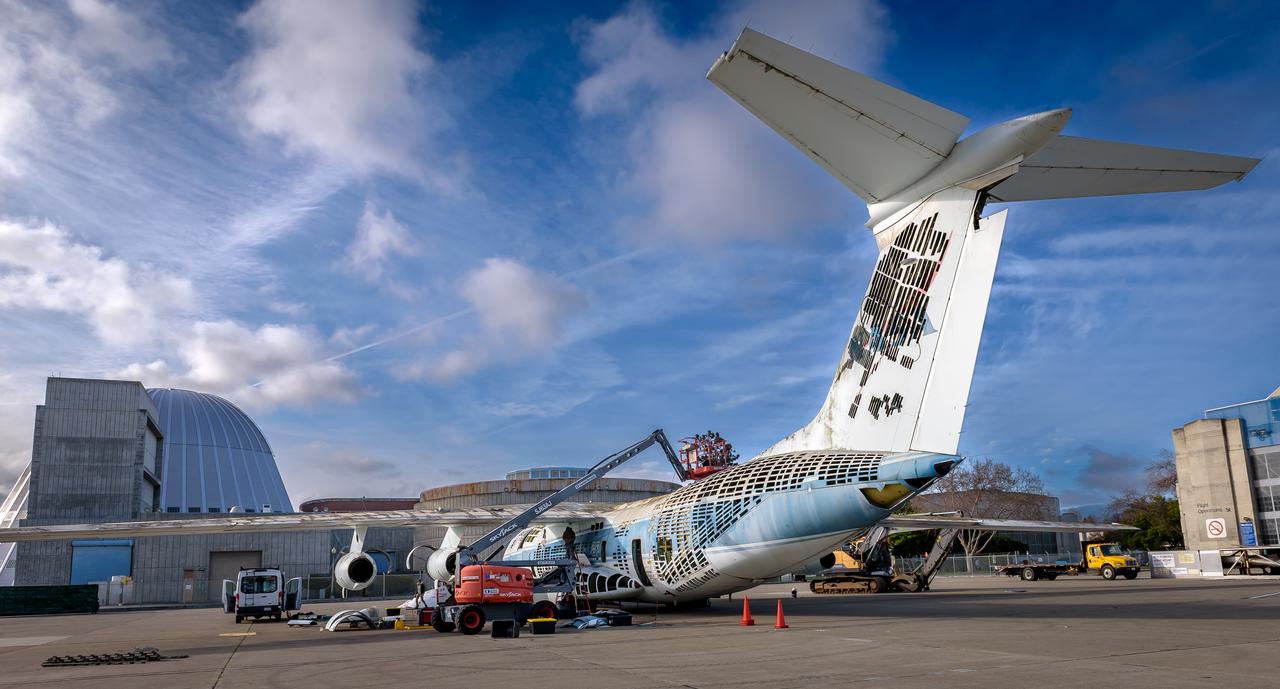
The modified C-141 Kuiper Airborne Observatory, (KAO) (NASA-714), is demolished on the N211 apron at Moffett Field, California.
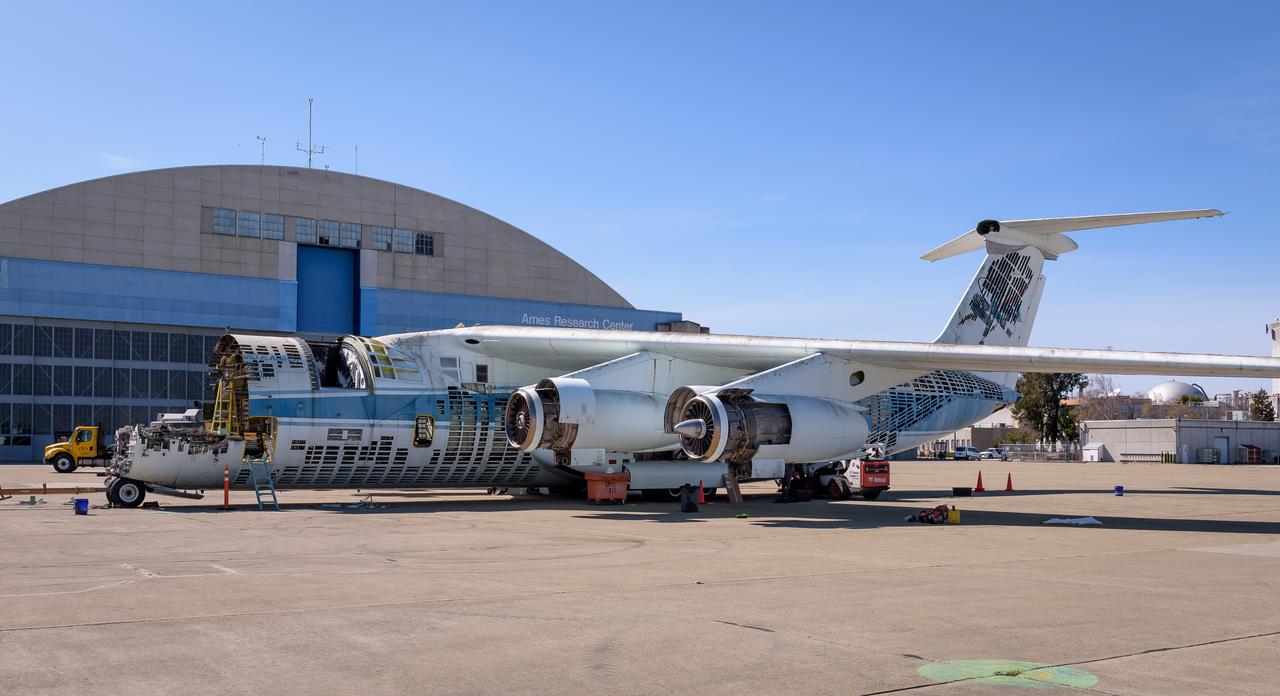
The modified C-141 Kuiper Airborne Observatory, (KAO) (NASA-714), is demolished on the N211 apron at Moffett Field, California.

Demolition of the modified C-141 Kuiper Airborne Observatory, (KAO) (NASA-714), on the N211 apron at Moffett Field, California.
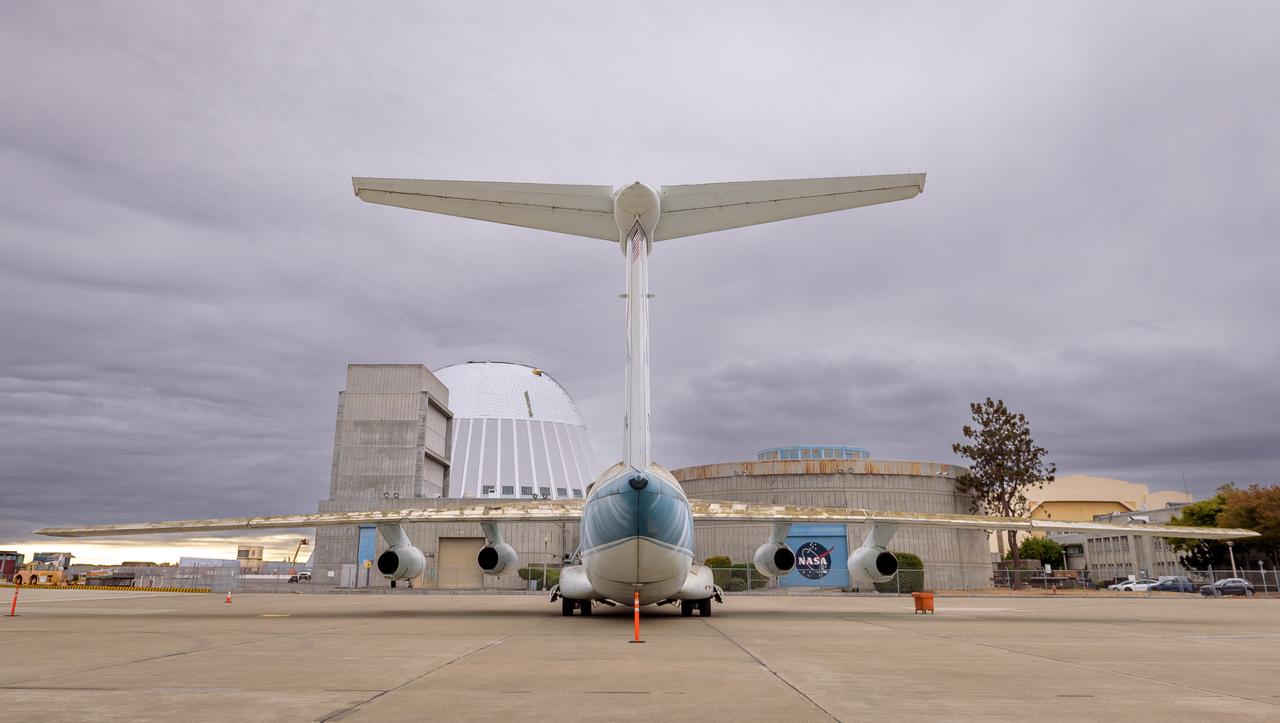
Rear view of the modified C-141 Kuiper Airborne Observatory, (KAO) (NASA-714), on the N211 apron at Moffett Field, California.
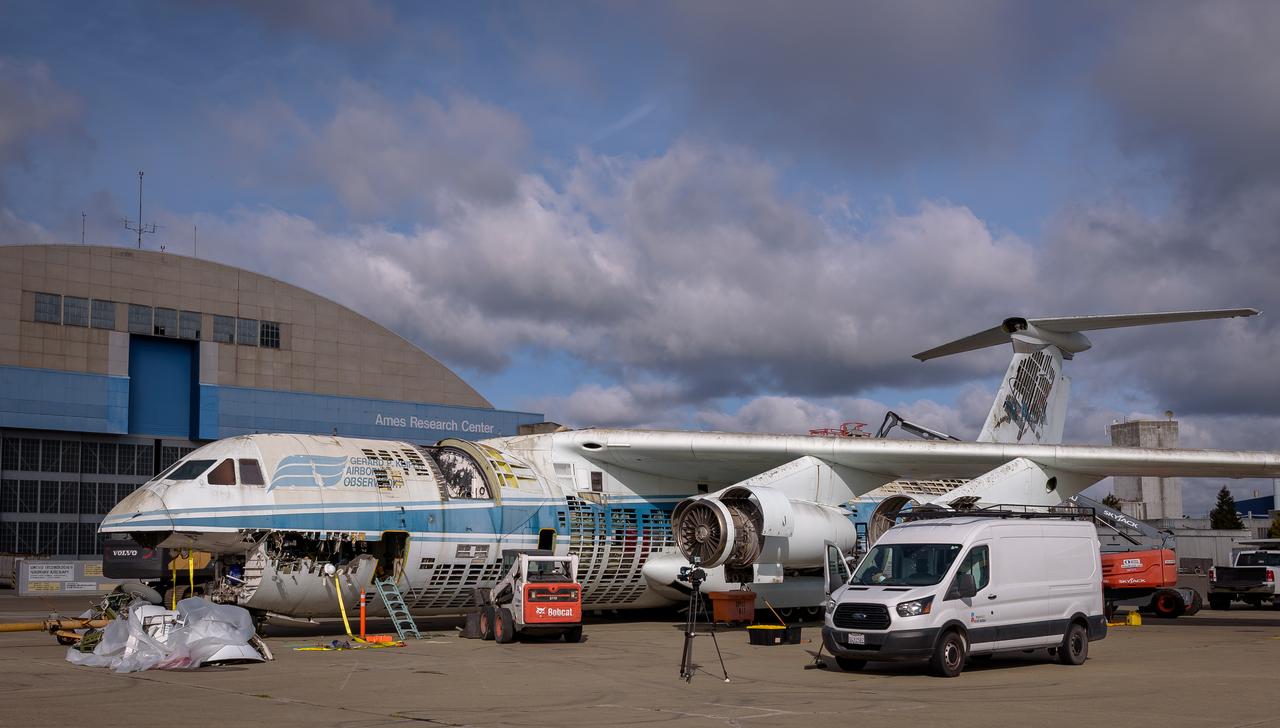
The modified C-141 Kuiper Airborne Observatory, (KAO) (NASA-714), is demolished on the N211 apron at Moffett Field, California.
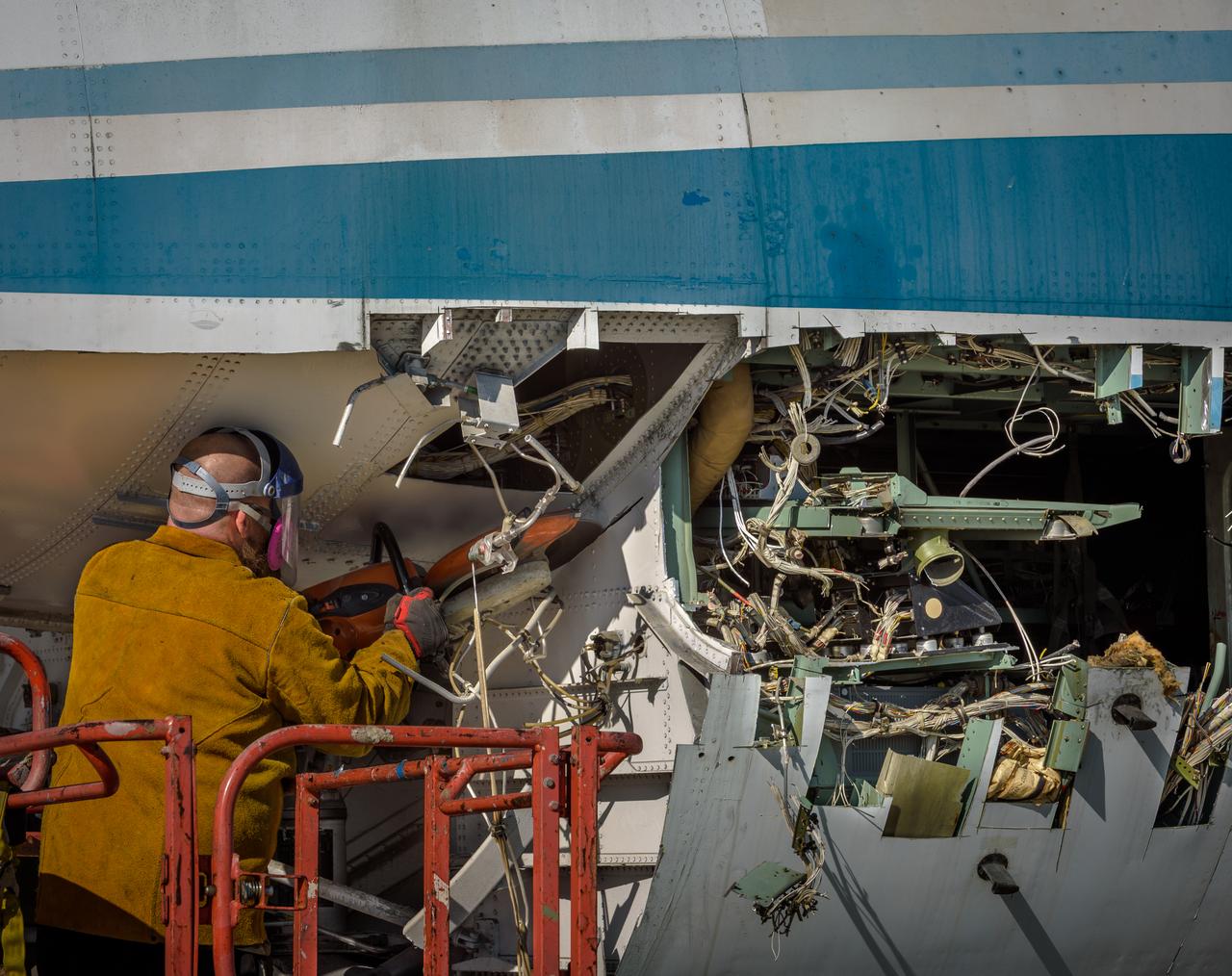
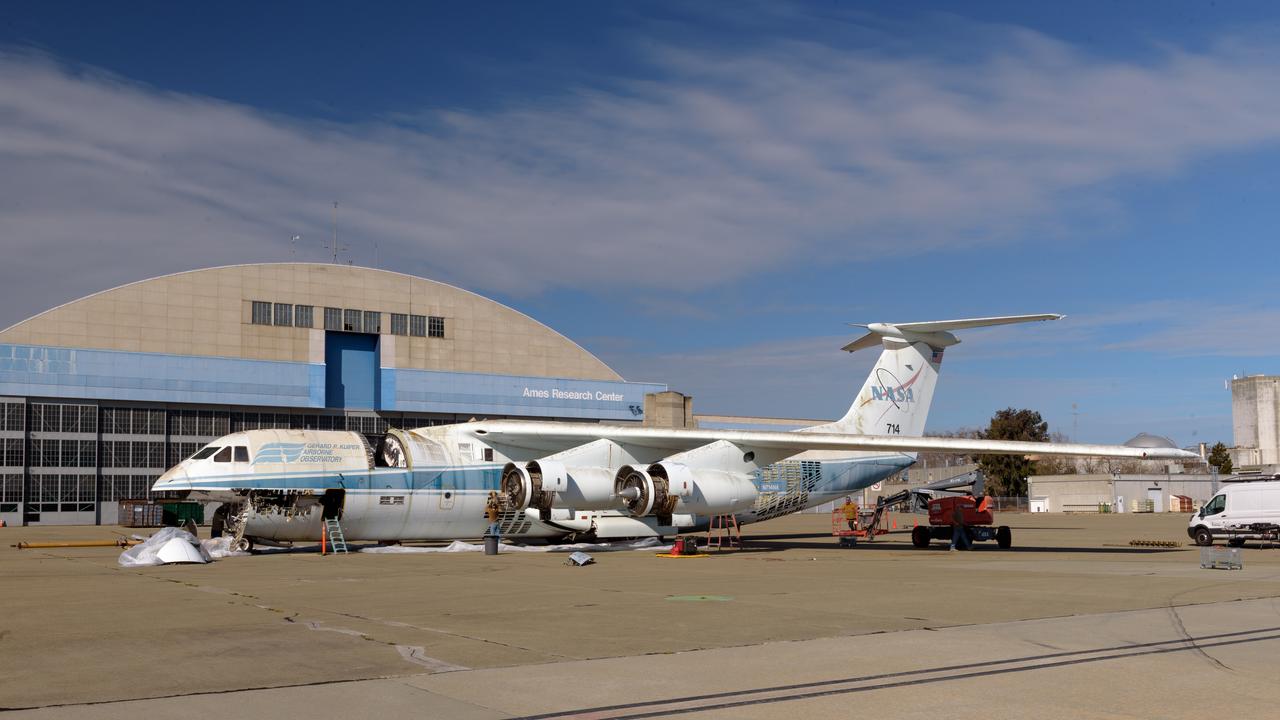
The cockpit of the modified C-141 Kuiper Airborne Observatory, (KAO) (NASA-714), is separated from the airframe on the N211 apron at Moffett Field, California.
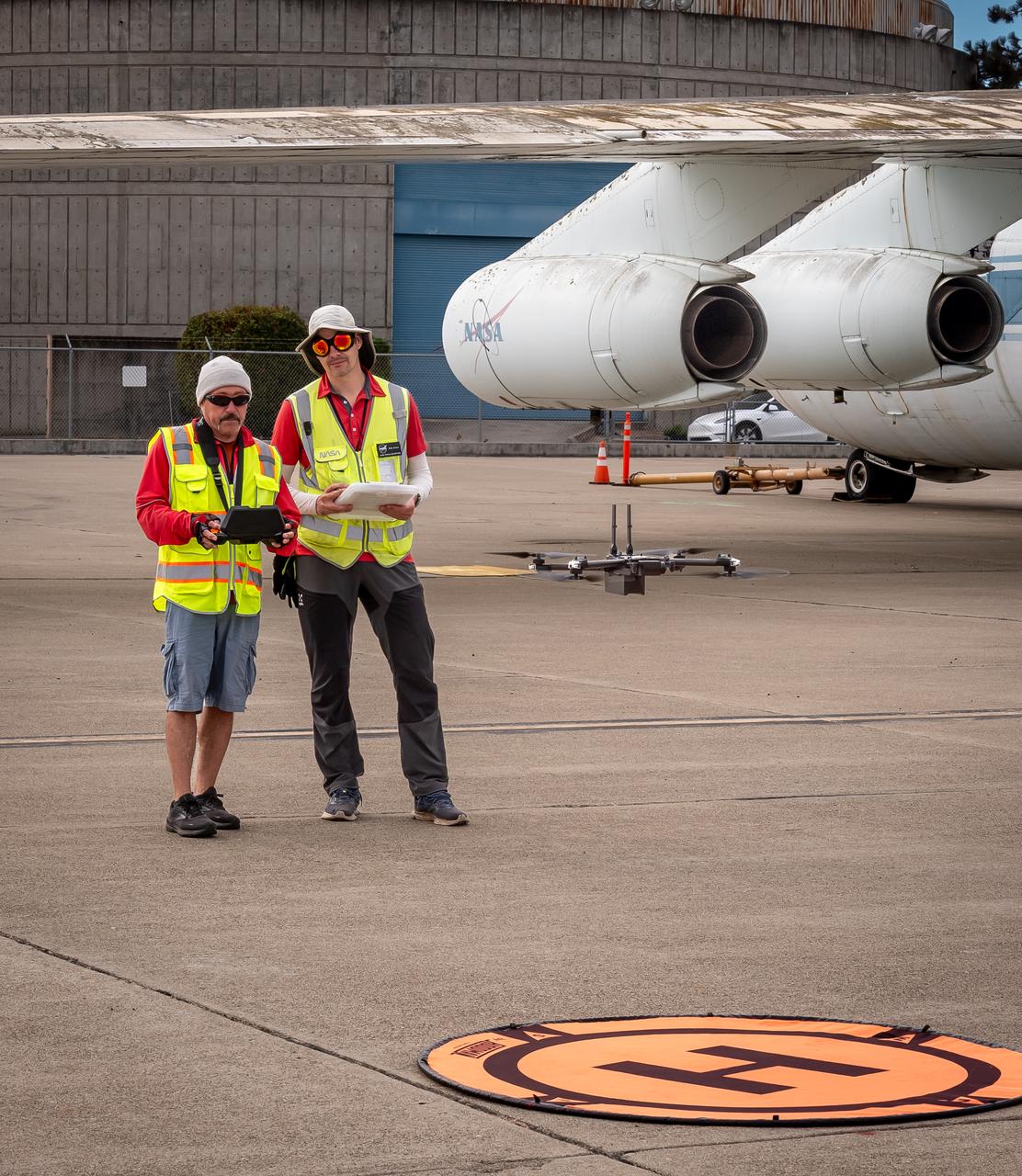
Richard Kolyer, left, with Jonas Jonsson guide the drone to land behind the modified C-141 Kuiper Airborne Observatory, (KAO) (NASA-714), on the N211 apron.
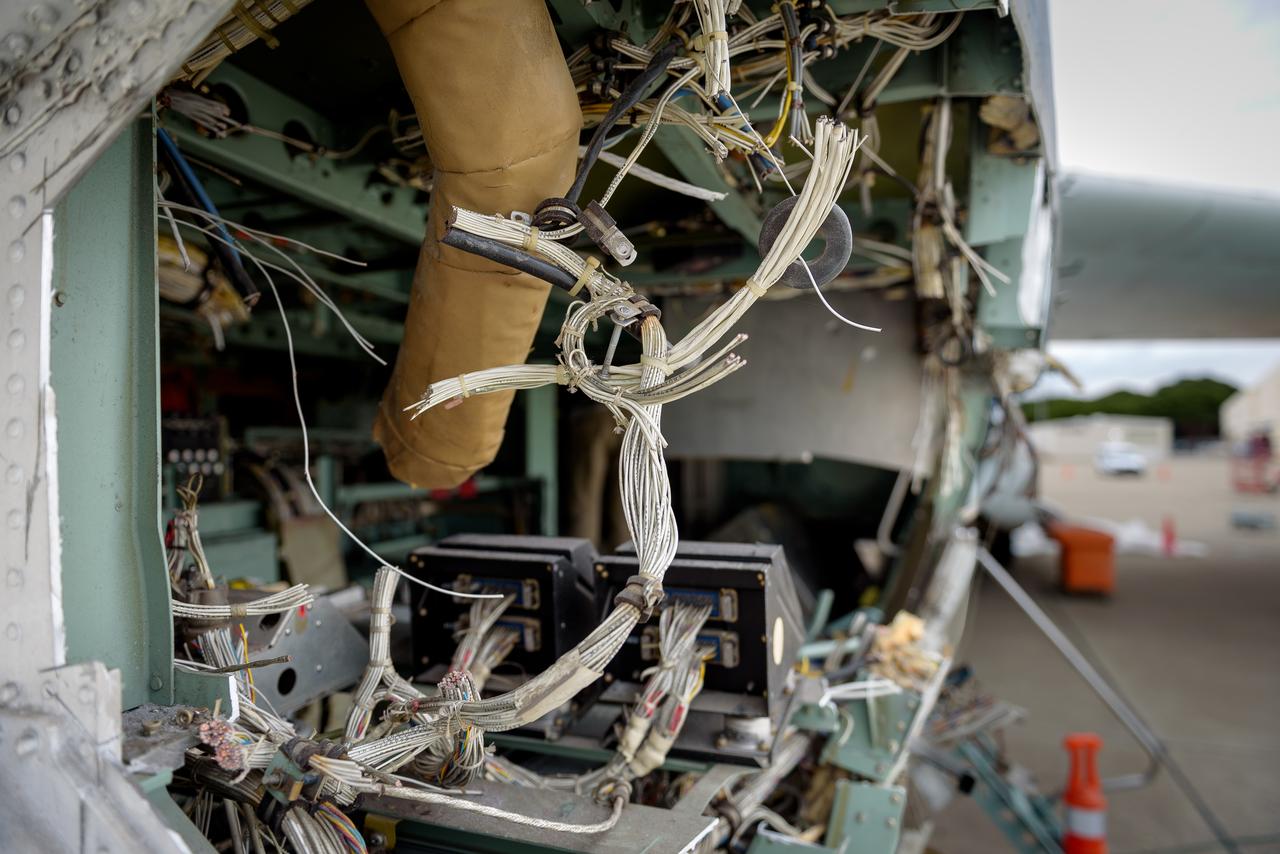
Cables in the modified C-141 Kuiper Airborne Observatory, (KAO) (NASA-714), severed prior to removing the cockpit on the N211 apron at Moffett Field, California.

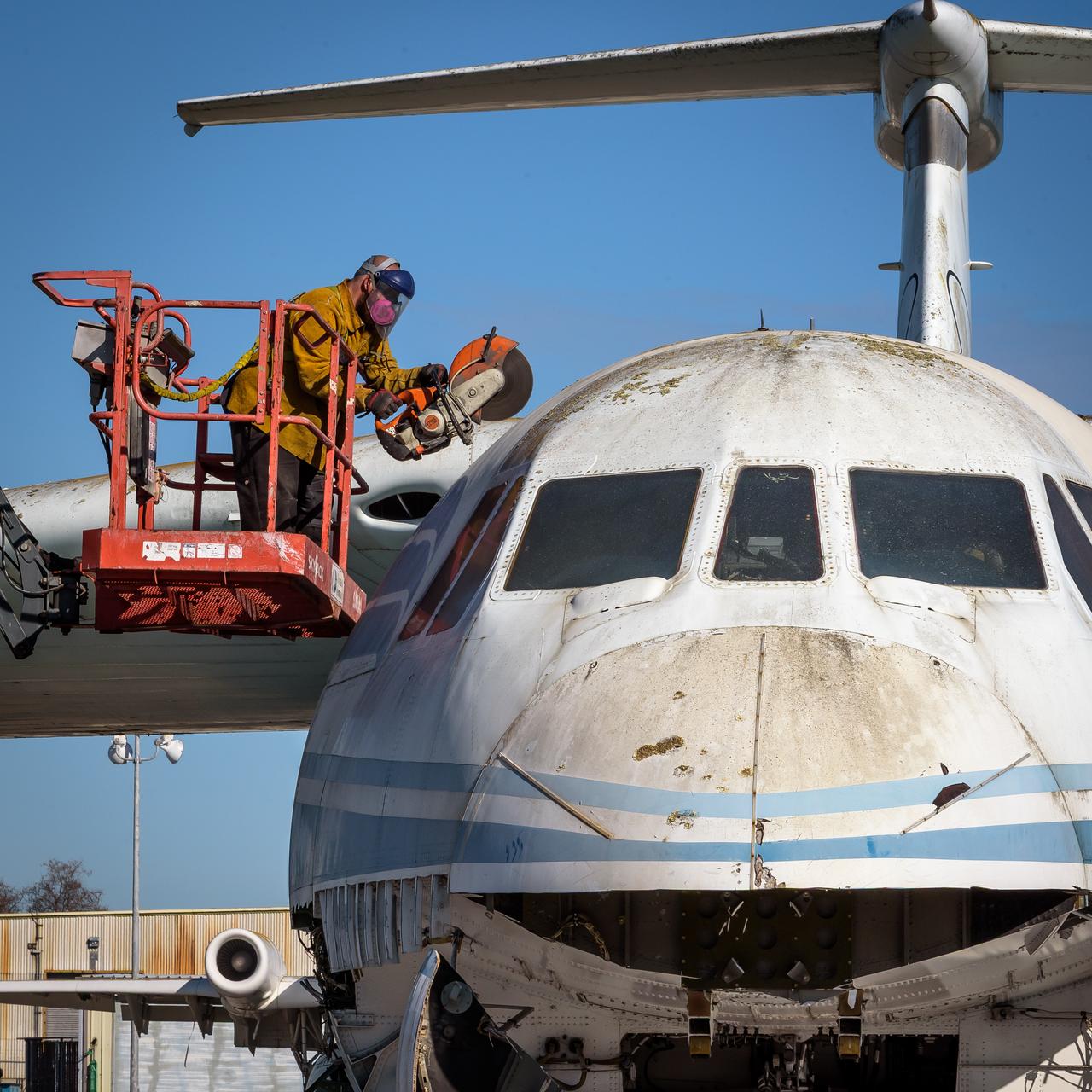
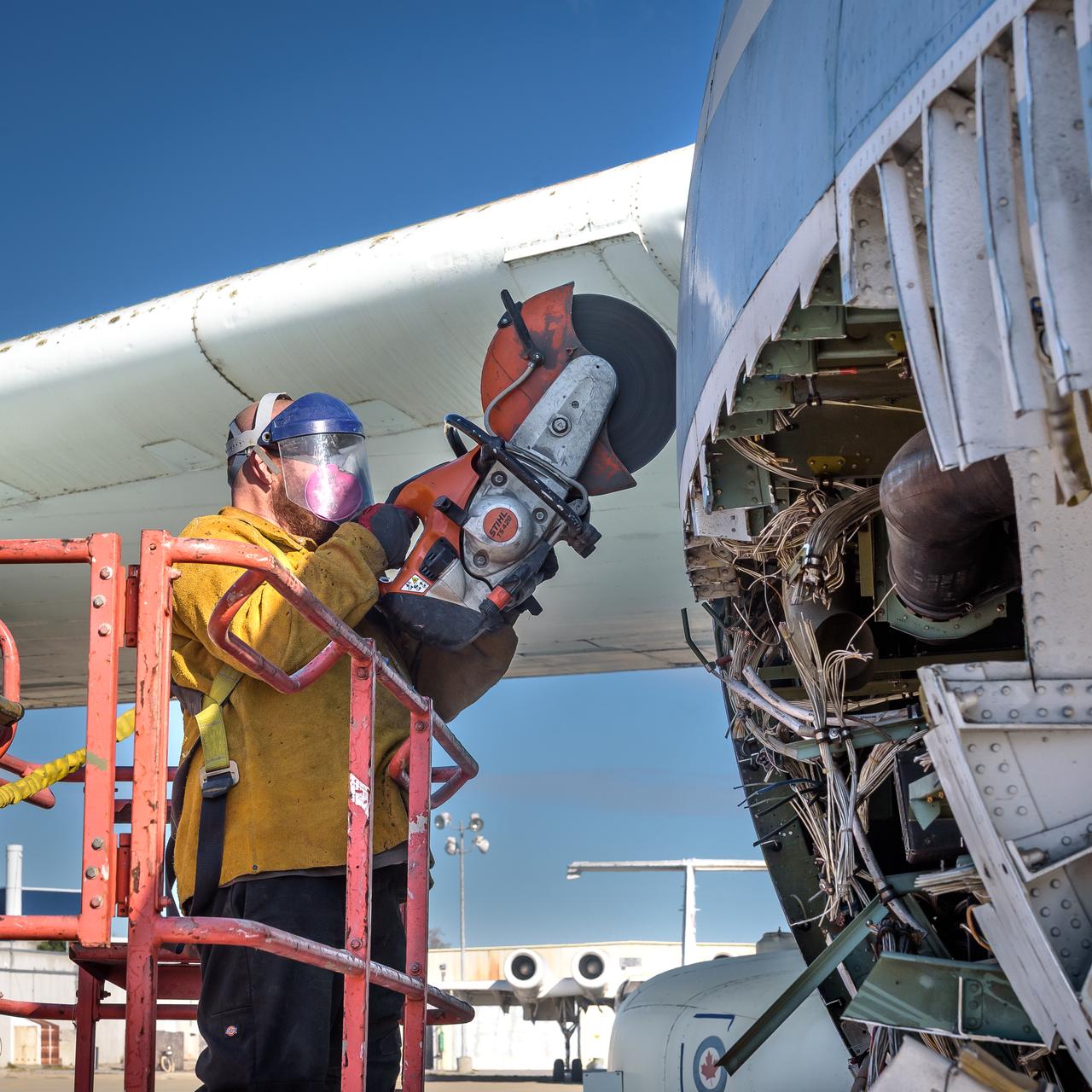
Removing the skin from the airframe of the modified C-141 Kuiper Airborne Observatory, (KAO) (NASA-714), on the N211 apron at Moffett Field, California.
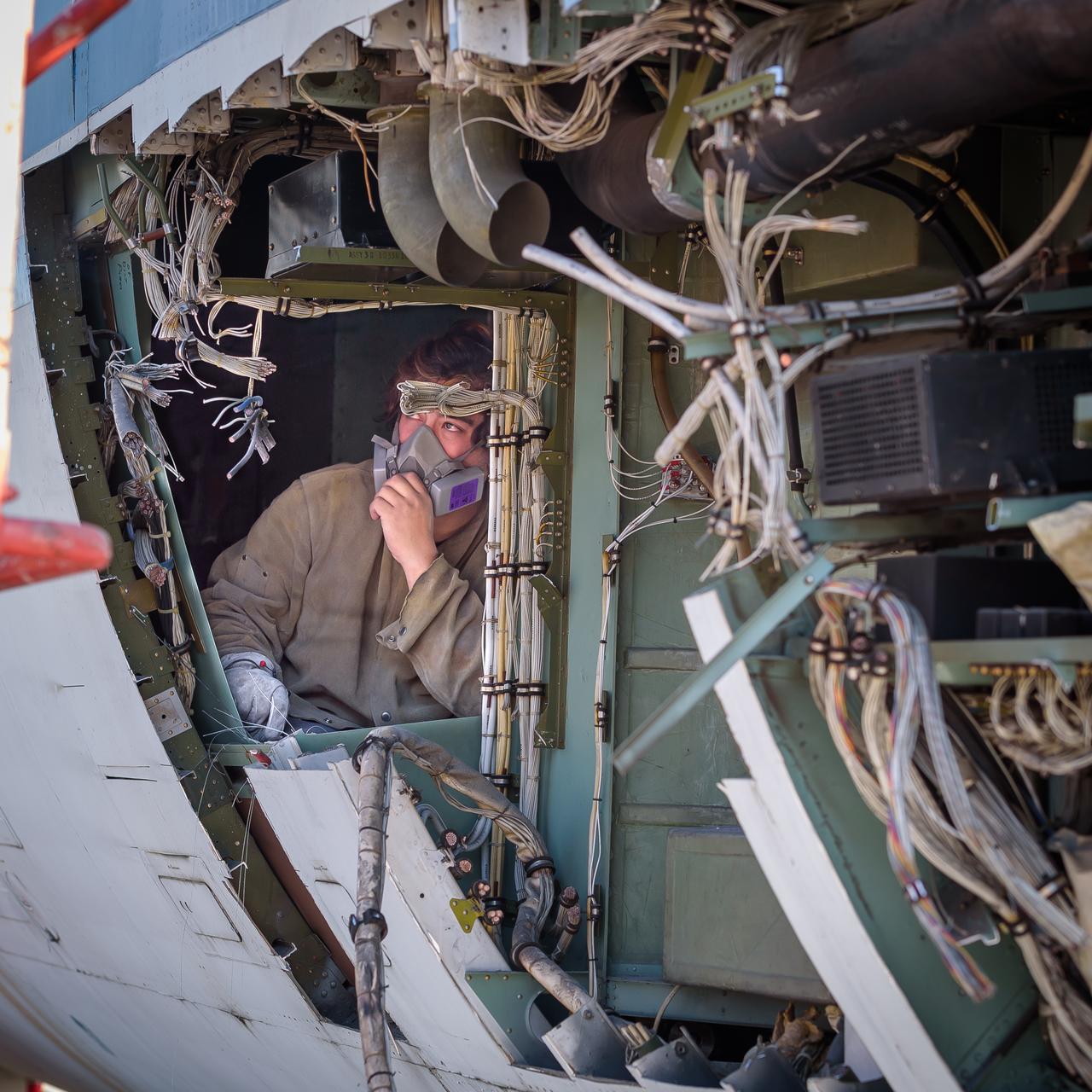
Cables in the modified C-141 Kuiper Airborne Observatory, (KAO) (NASA-714), severed prior to removing the cockpit on the N211 apron at Moffett Field, California.
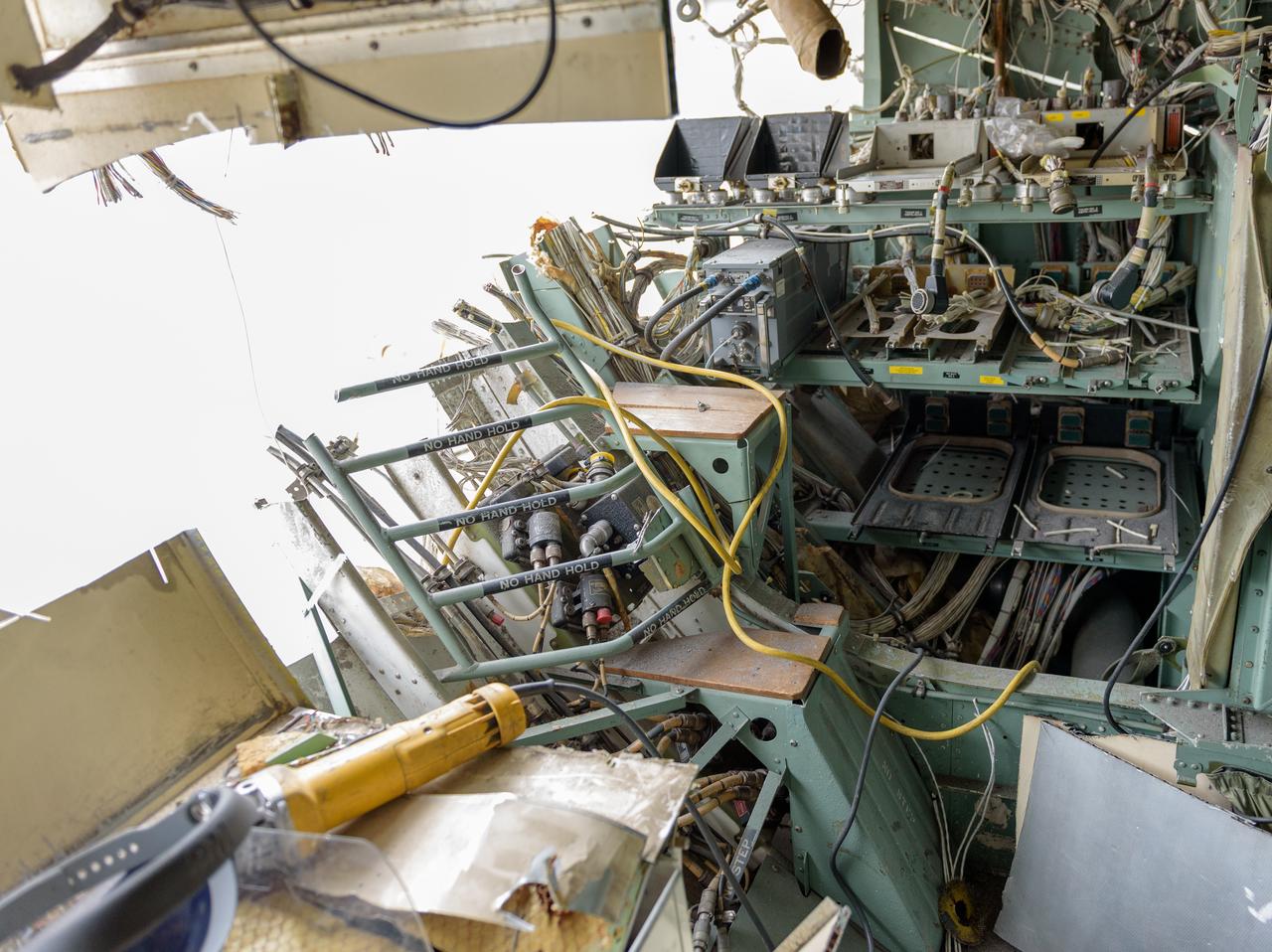
Cables in the modified C-141 Kuiper Airborne Observatory, (KAO) (NASA-714), severed prior to removing the cockpit on the N211 apron at Moffett Field, California.
The cockpit of the modified C-141 Kuiper Airborne Observatory, (KAO) (NASA-714), is separated from the airframe on the N211 apron at Moffett Field, California.
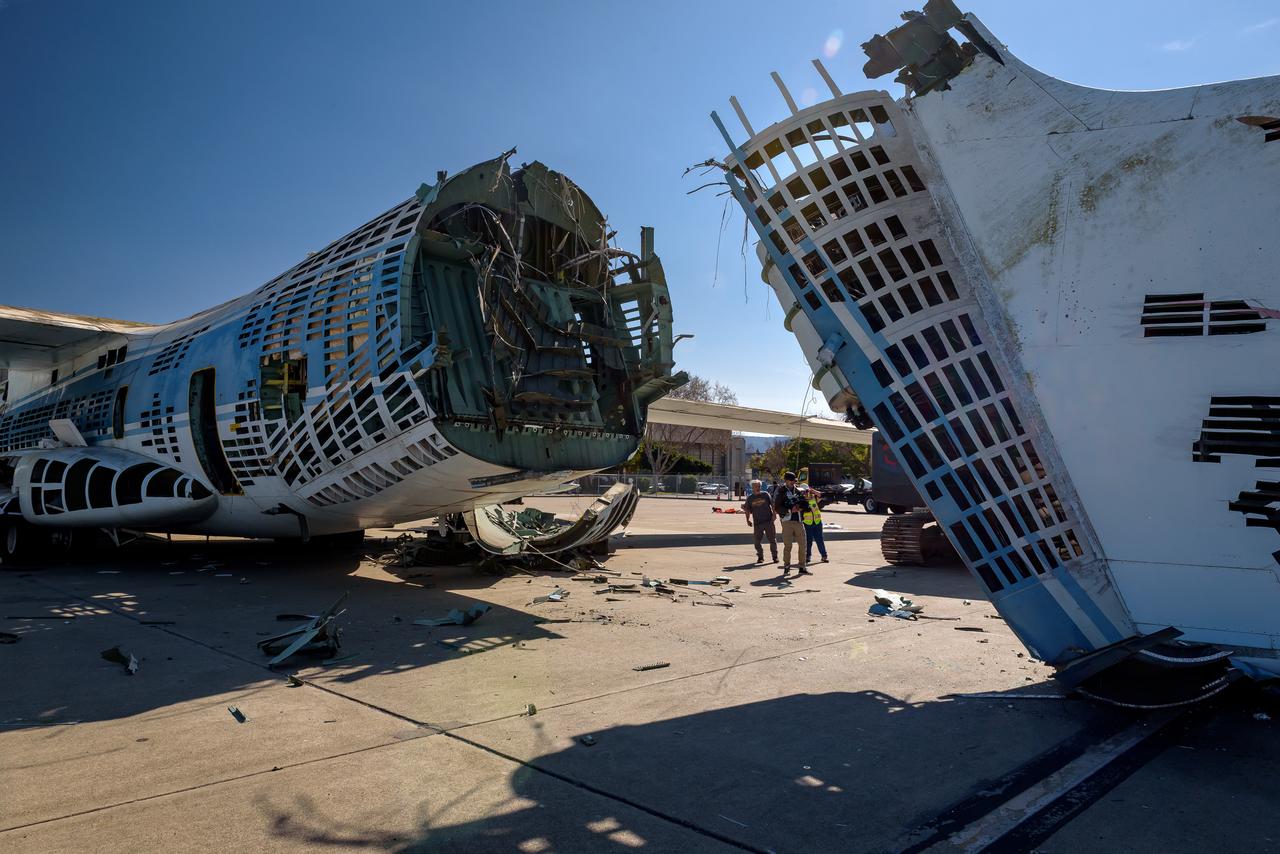
The tail section of the modified C-141 Kuiper Airborne Observatory, (KAO) (NASA-714), severed from the fuselage on the N211 apron of Moffett Field, California.
Removing the skin from the airframe of the modified C-141 Kuiper Airborne Observatory, (KAO) (NASA-714), on the N211 apron at Moffett Field, California.

The cockpit of the modified C-141 Kuiper Airborne Observatory, (KAO) (NASA-714), is separated from the airframe on the N211 apron at Moffett Field, California.
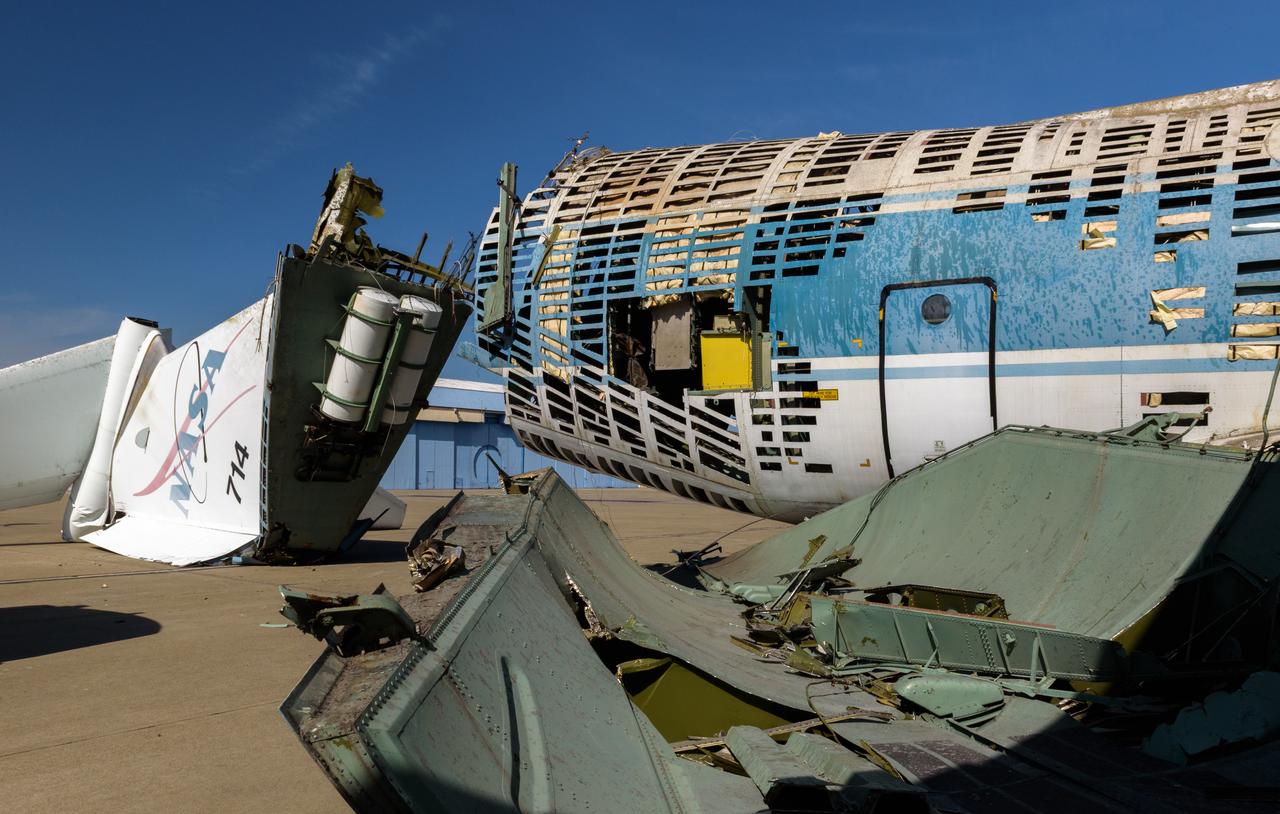
The tail section of the modified C-141 Kuiper Airborne Observatory, (KAO) (NASA-714), severed from the fuselage on the N211 apron of Moffett Field, California.
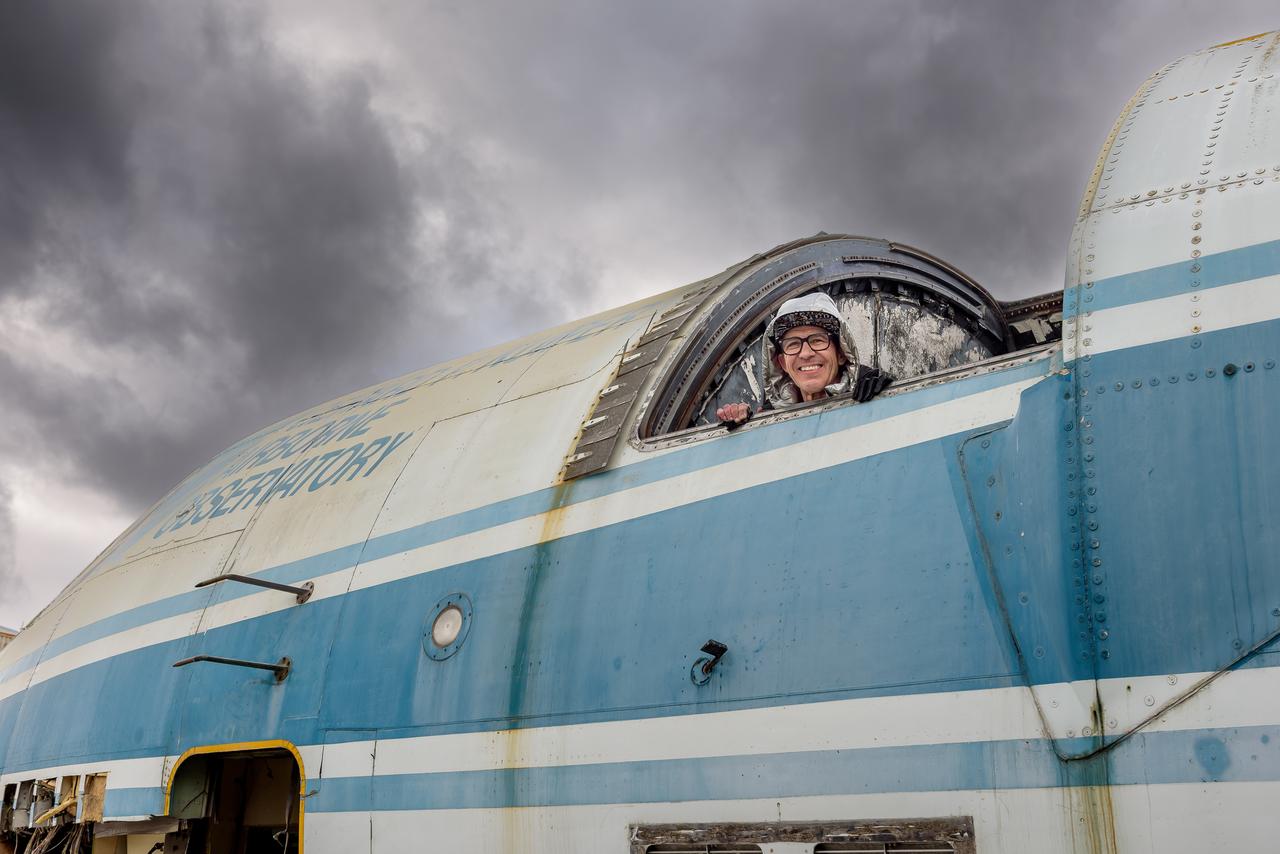
Monty Miranda in the telescope reticle during the demolition of the modified C-141 Kuiper Airborne Observatory, (KAO) (NASA-714), on the N211 apron at Moffett Field, California.
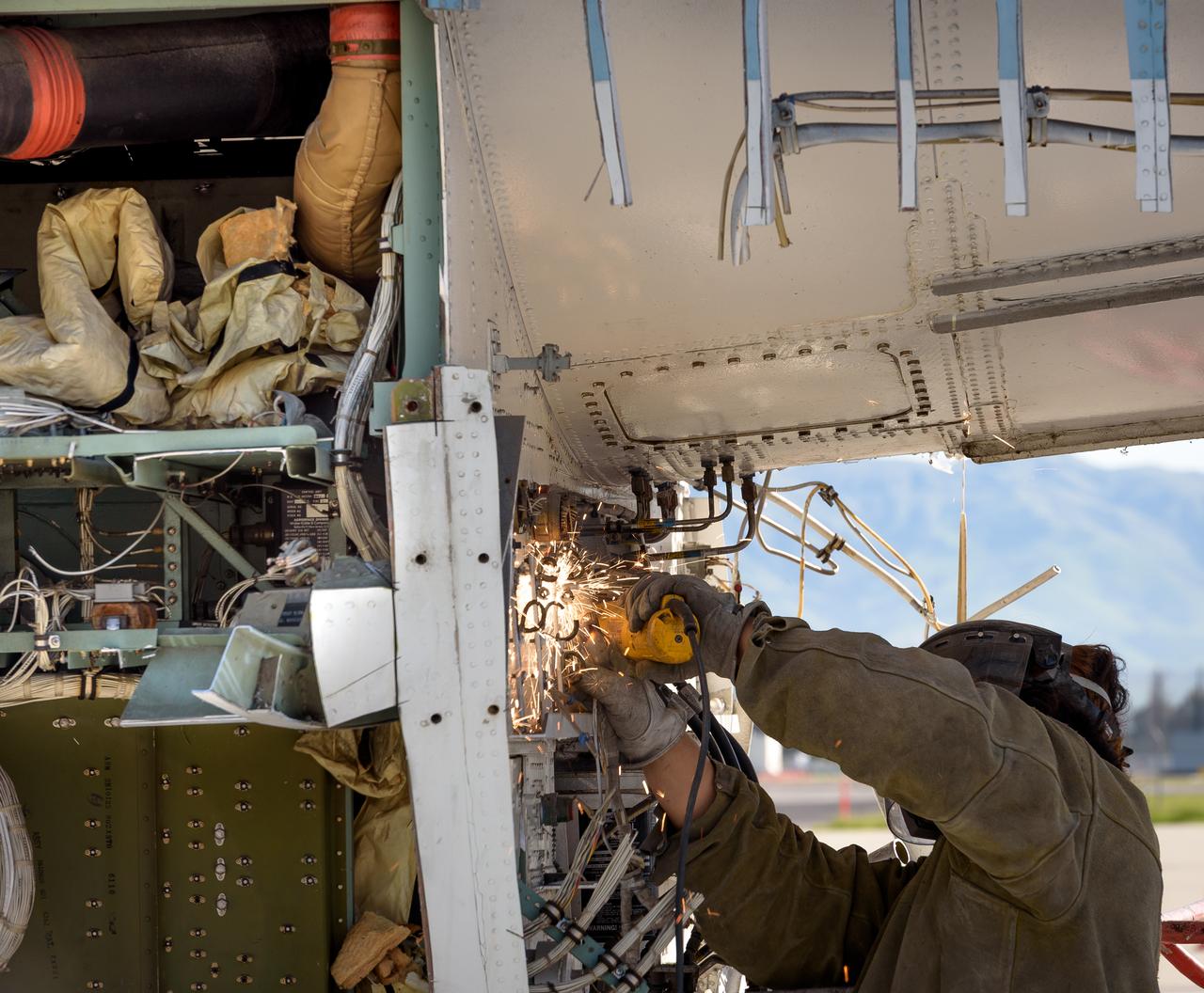
The cockpit of the modified C-141 Kuiper Airborne Observatory, (KAO) (NASA-714), is separated from the airframe on the N211 apron at Moffett Field, California.
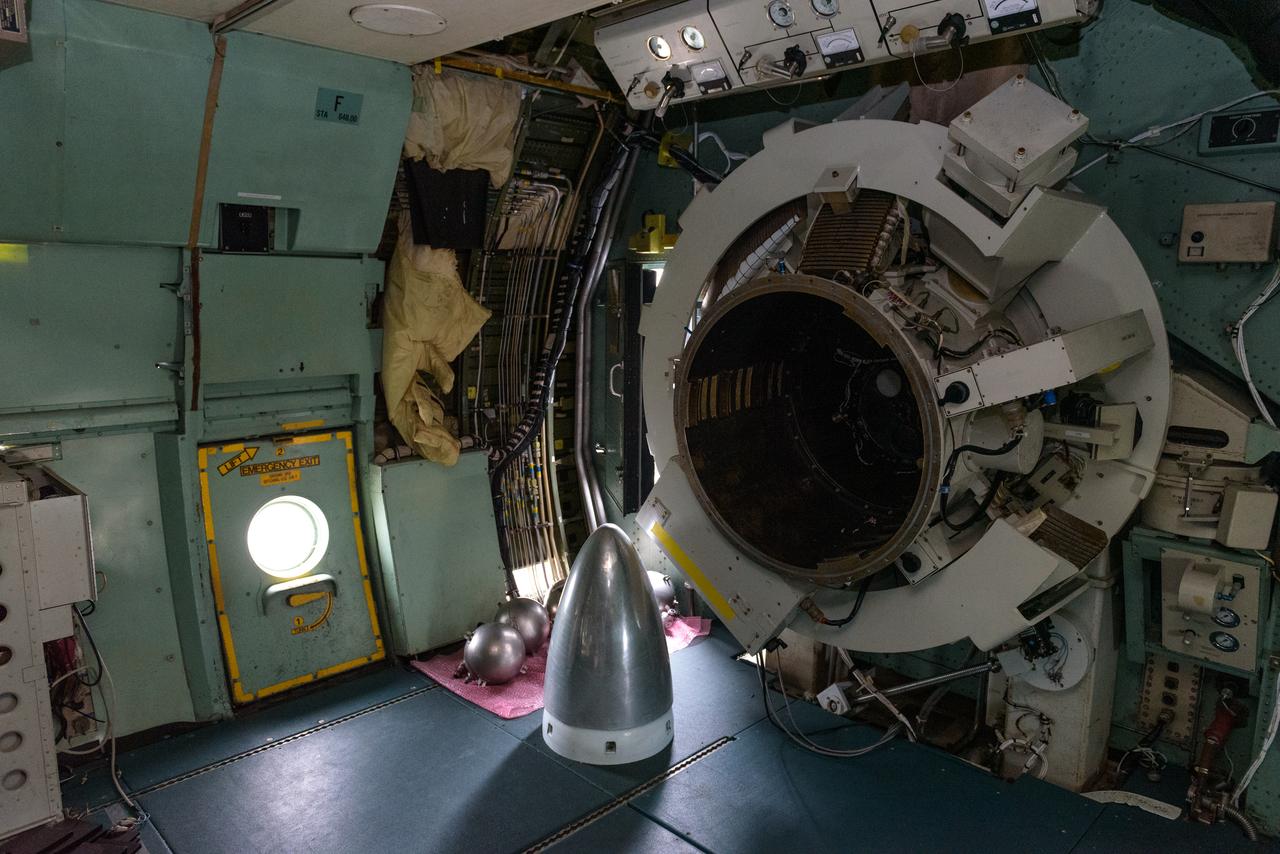
The telescope mount in the modified C-141 Kuiper Airborne Observatory, (KAO) (NASA-714), during its demolition on the N211 apron at Moffett Field, California.
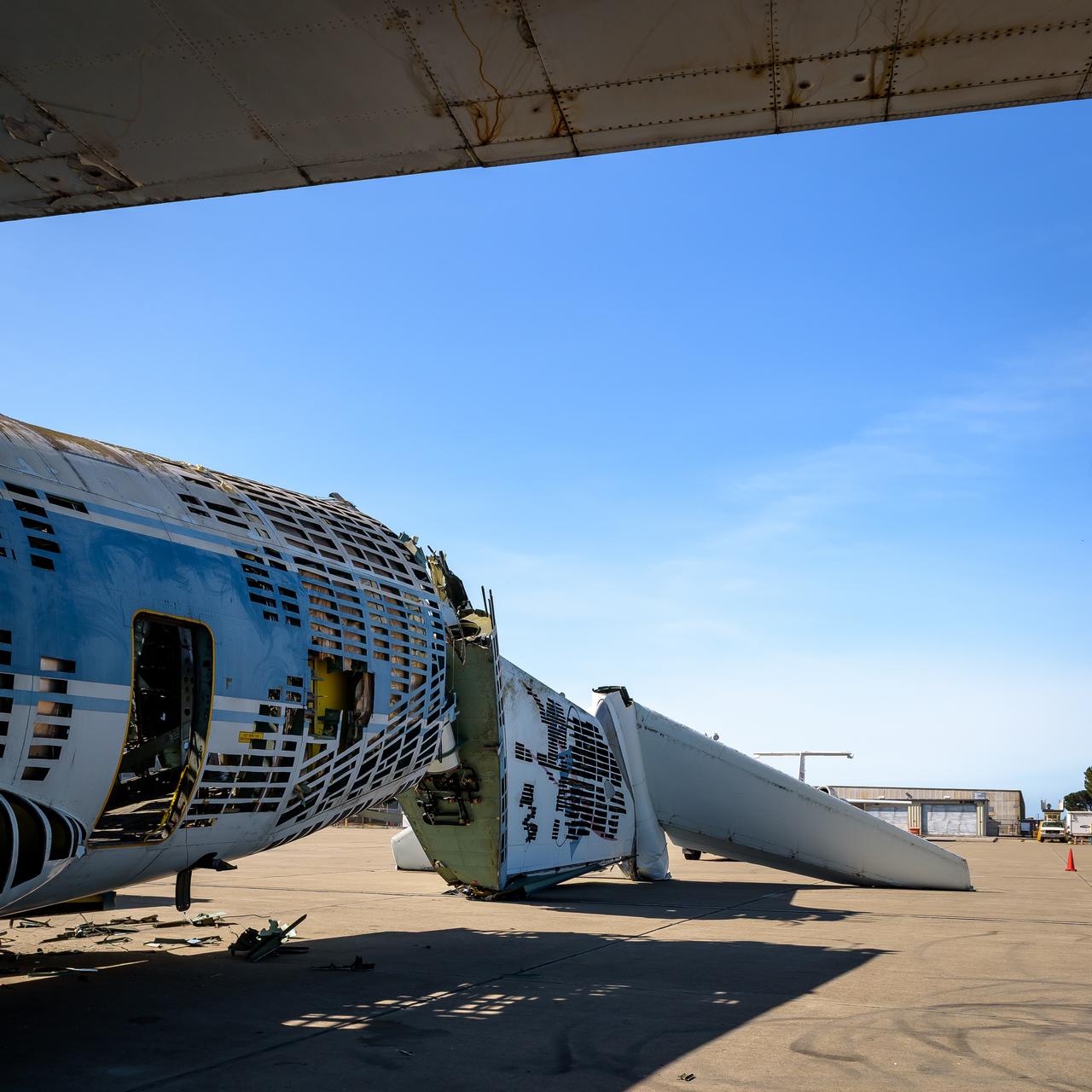
The tail section of the modified C-141 Kuiper Airborne Observatory, (KAO) (NASA-714), severed from the fuselage on the N211 apron of Moffett Field, California.
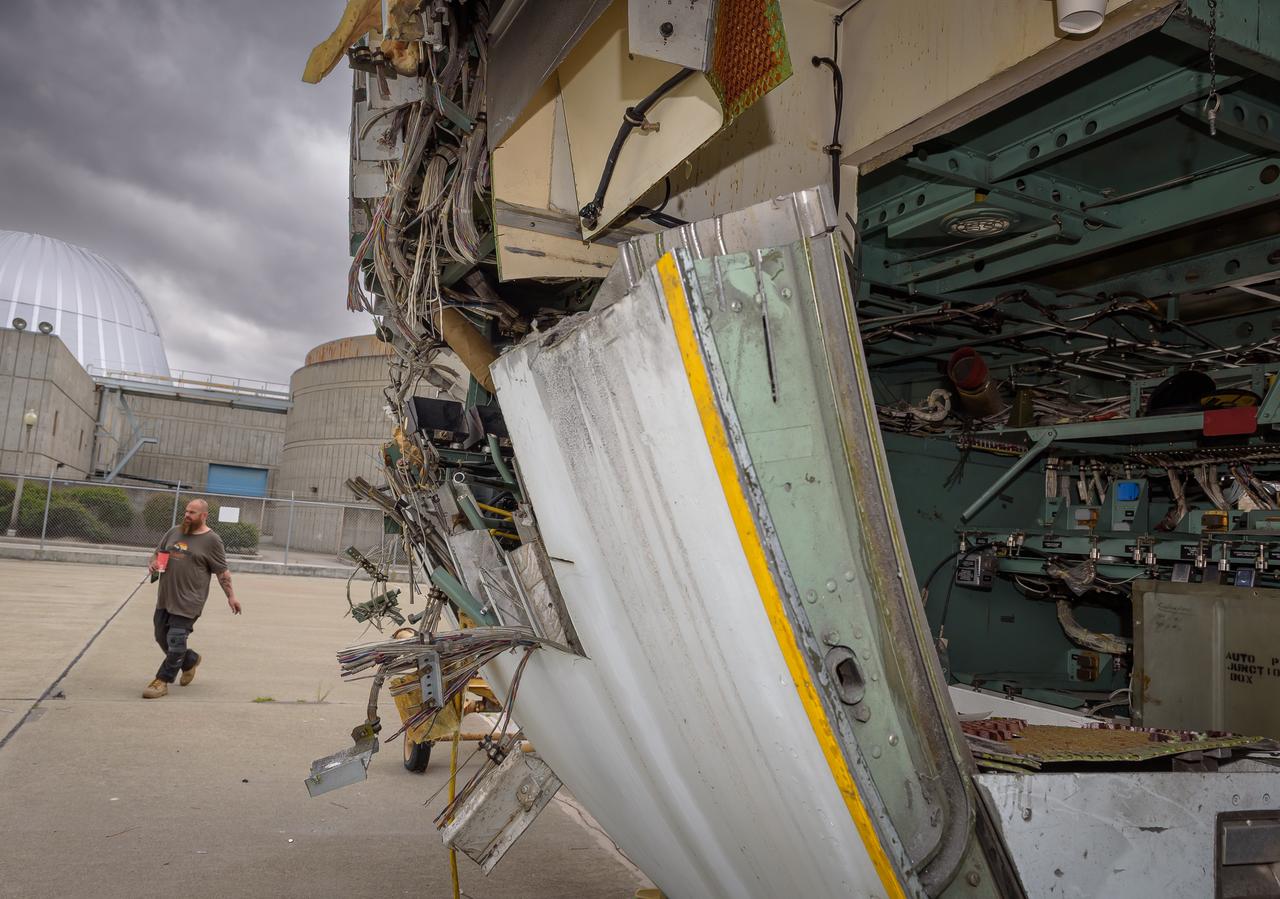
Cables in the modified C-141 Kuiper Airborne Observatory, (KAO) (NASA-714), severed prior to removing the cockpit on the N211 apron at Moffett Field, California.

Cables in the modified C-141 Kuiper Airborne Observatory, (KAO) (NASA-714), severed prior to removing the cockpit on the N211 apron at Moffett Field, California.

The tail section of the modified C-141 Kuiper Airborne Observatory, (KAO) (NASA-714), severed from the fuselage on the N211 apron of Moffett Field, California.
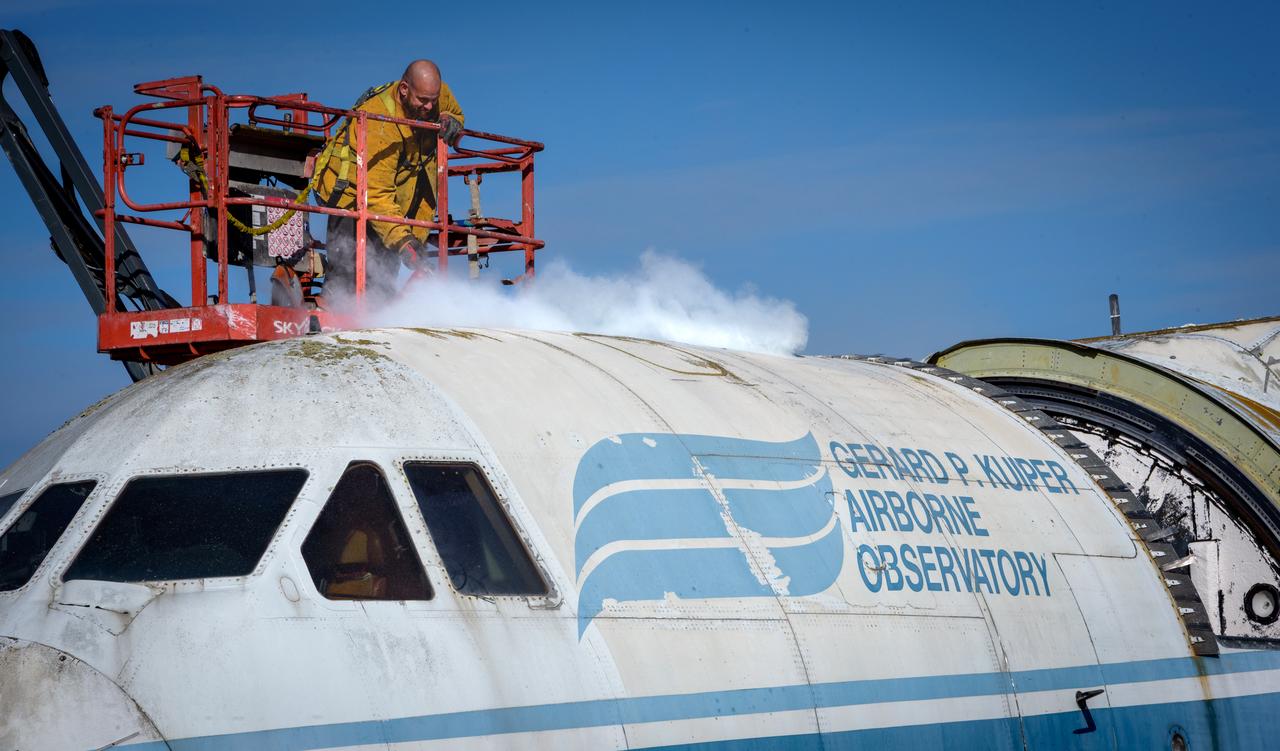
The cockpit of the modified C-141 Kuiper Airborne Observatory, (KAO) (NASA-714), is separated from the airframe on the N211 apron at Moffett Field, California.
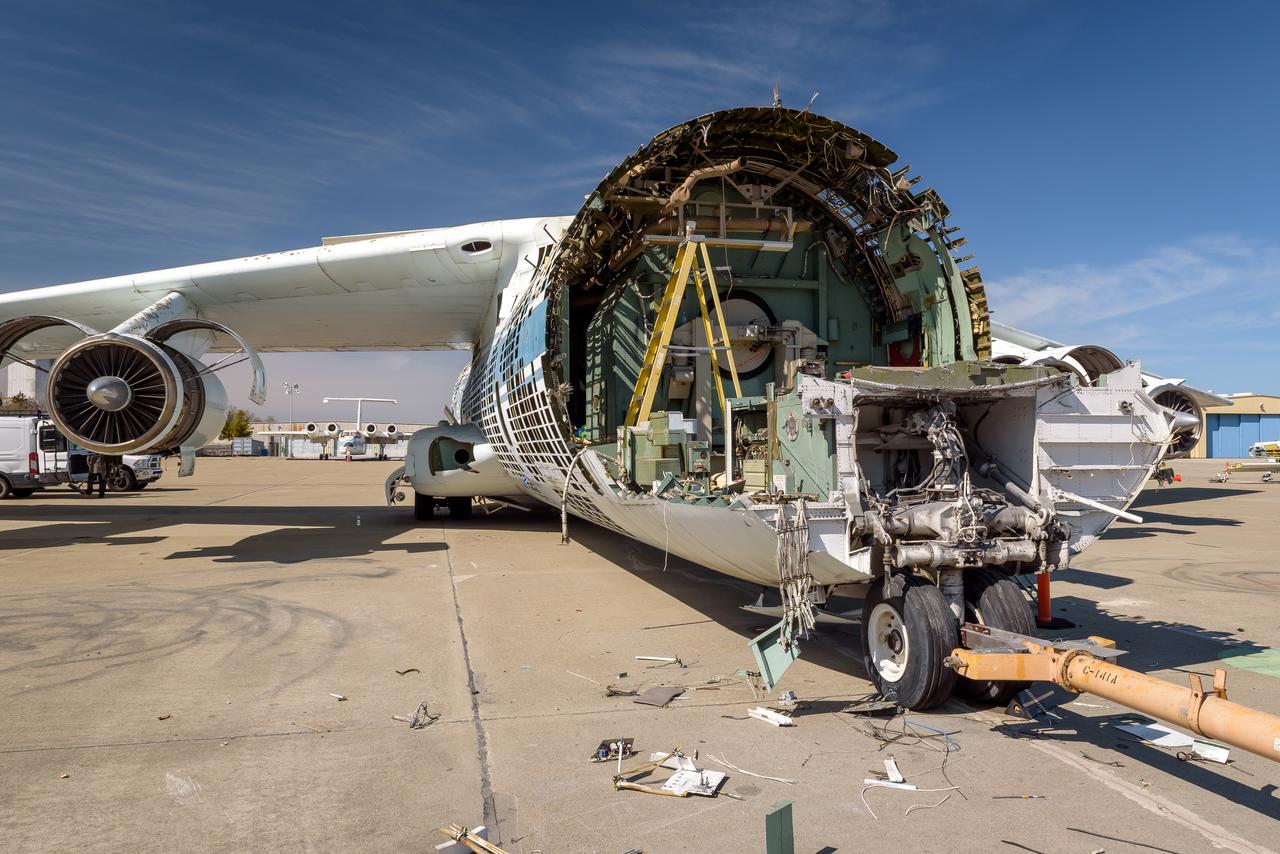
Forward view of the modified C-141 Kuiper Airborne Observatory, (KAO) (NASA-714), after the cockpit is removed on the N211 apron at Moffett Field, California.
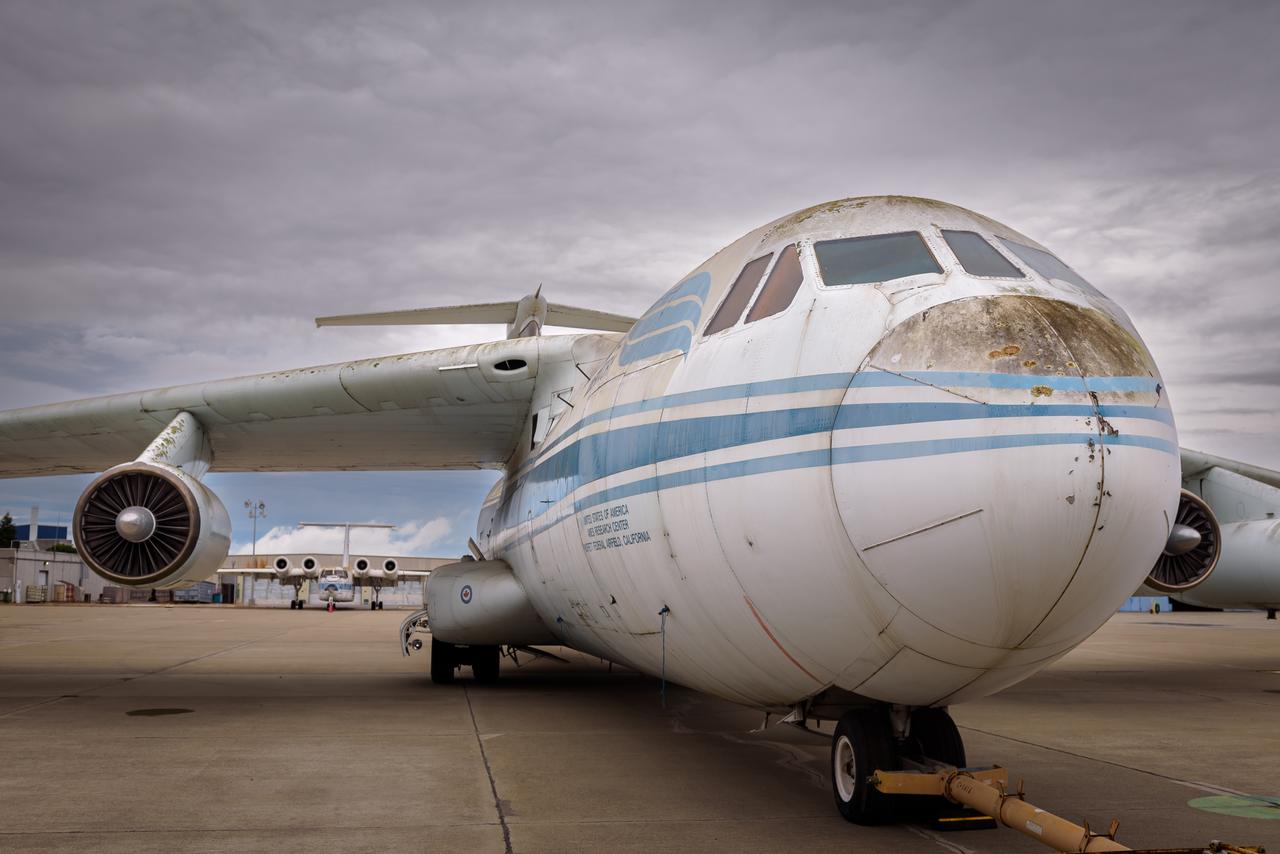
Close-up front view of the modified C-141 Kuiper Airborne Observatory, (KAO) (NASA-714), on the N211 apron at Moffett Field, California.

Cables in the modified C-141 Kuiper Airborne Observatory, (KAO) (NASA-714), severed prior to removing the cockpit on the N211 apron at Moffett Field, California.
The cockpit of the modified C-141 Kuiper Airborne Observatory, (KAO) (NASA-714), is separated from the airframe on the N211 apron at Moffett Field, California.
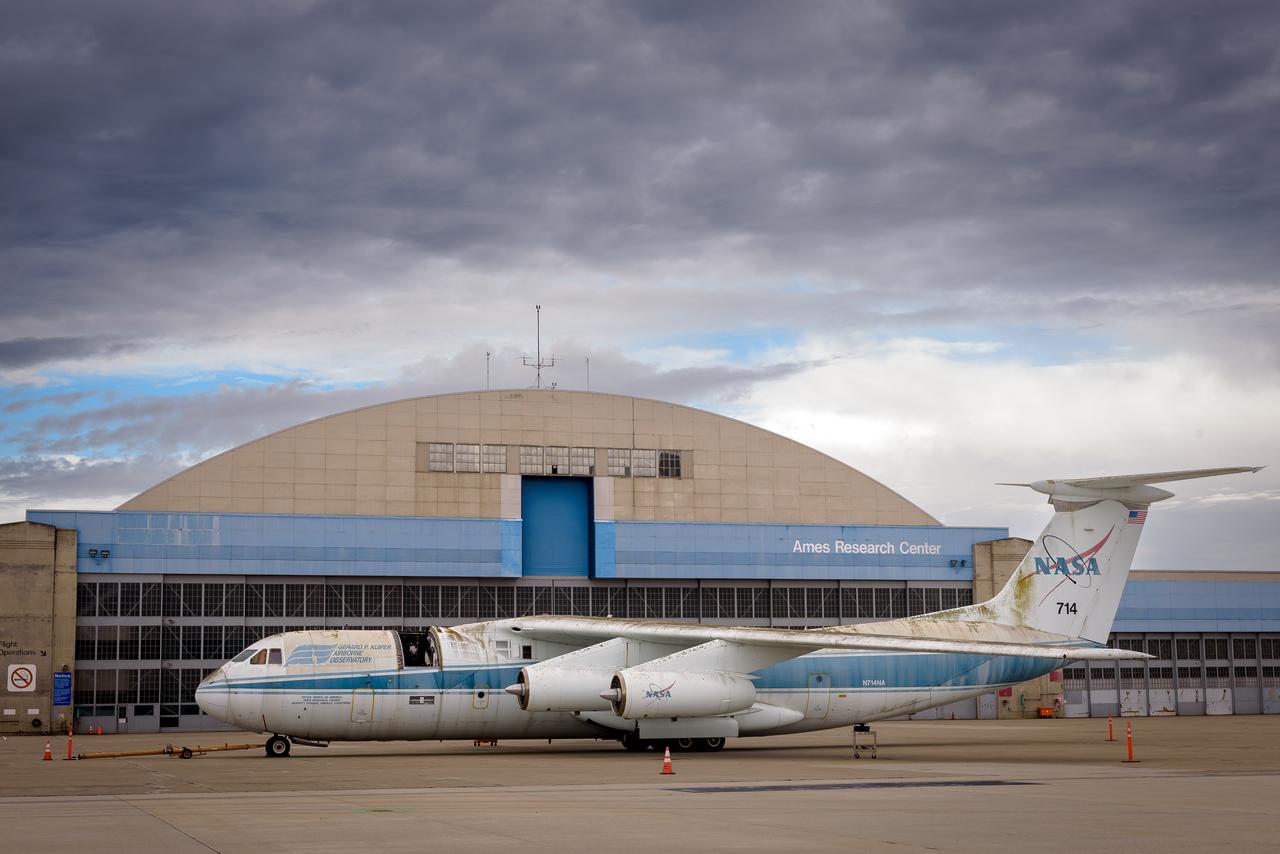
Profile view of the modified C-141 Kuiper Airborne Observatory, (KAO) (NASA-714), with the telescope aperture open on the N211 apron at Moffett Field, California.
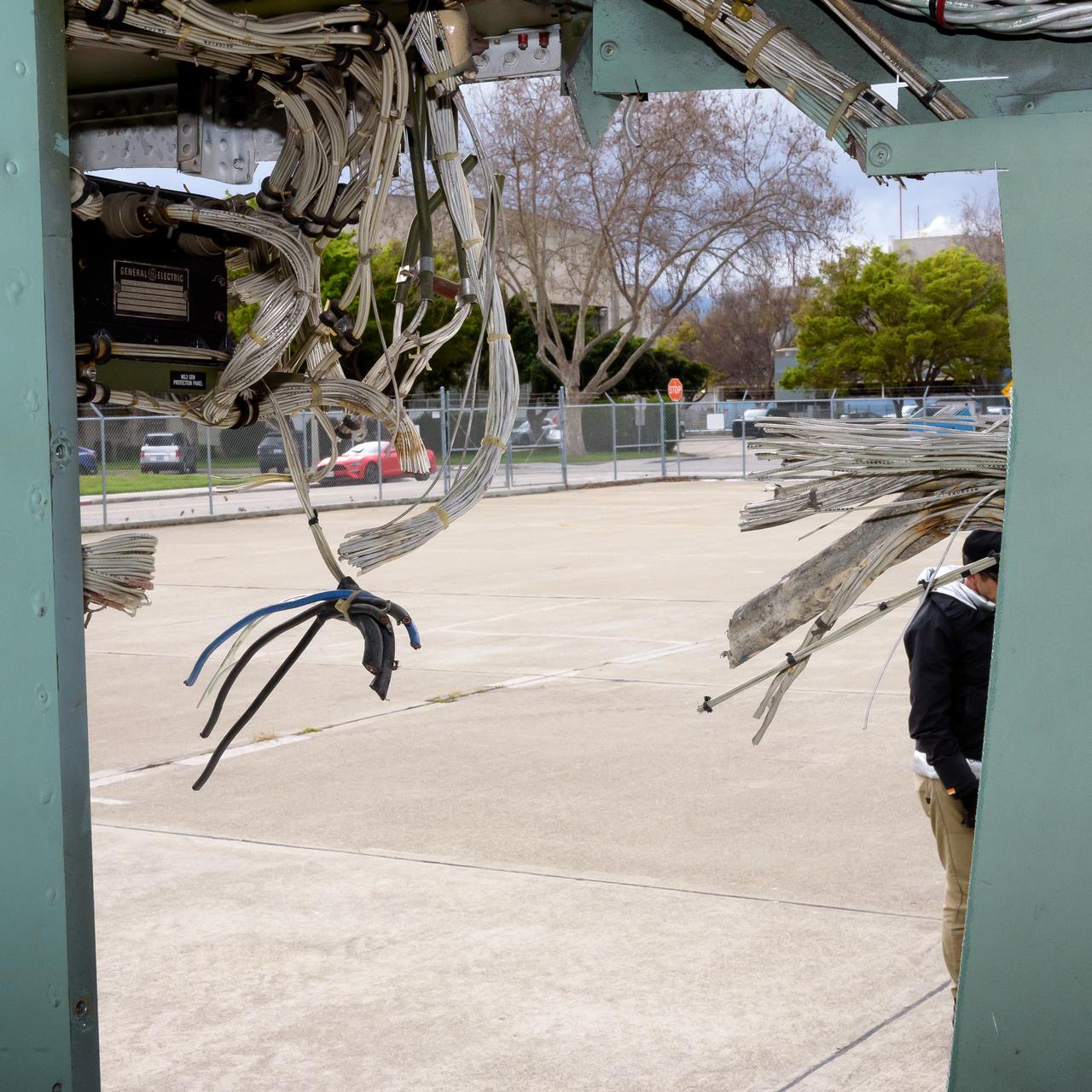
Cables in the modified C-141 Kuiper Airborne Observatory, (KAO) (NASA-714), severed prior to removing the cockpit on the N211 apron at Moffett Field, California.
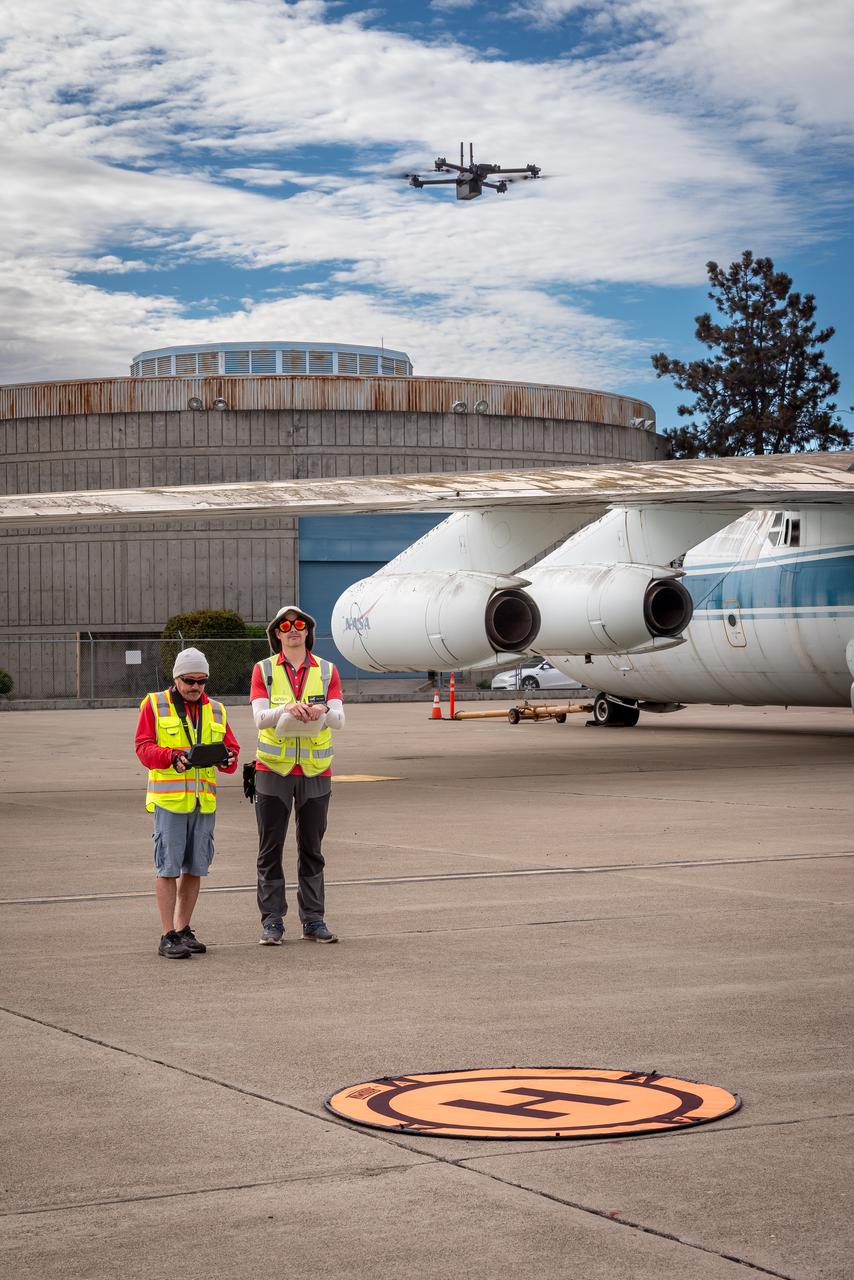
Richard Kolyer, left, with Jonas Jonsson guide the drone to land behind the modified C-141 Kuiper Airborne Observatory, (KAO) (NASA-714), on the N211 apron.
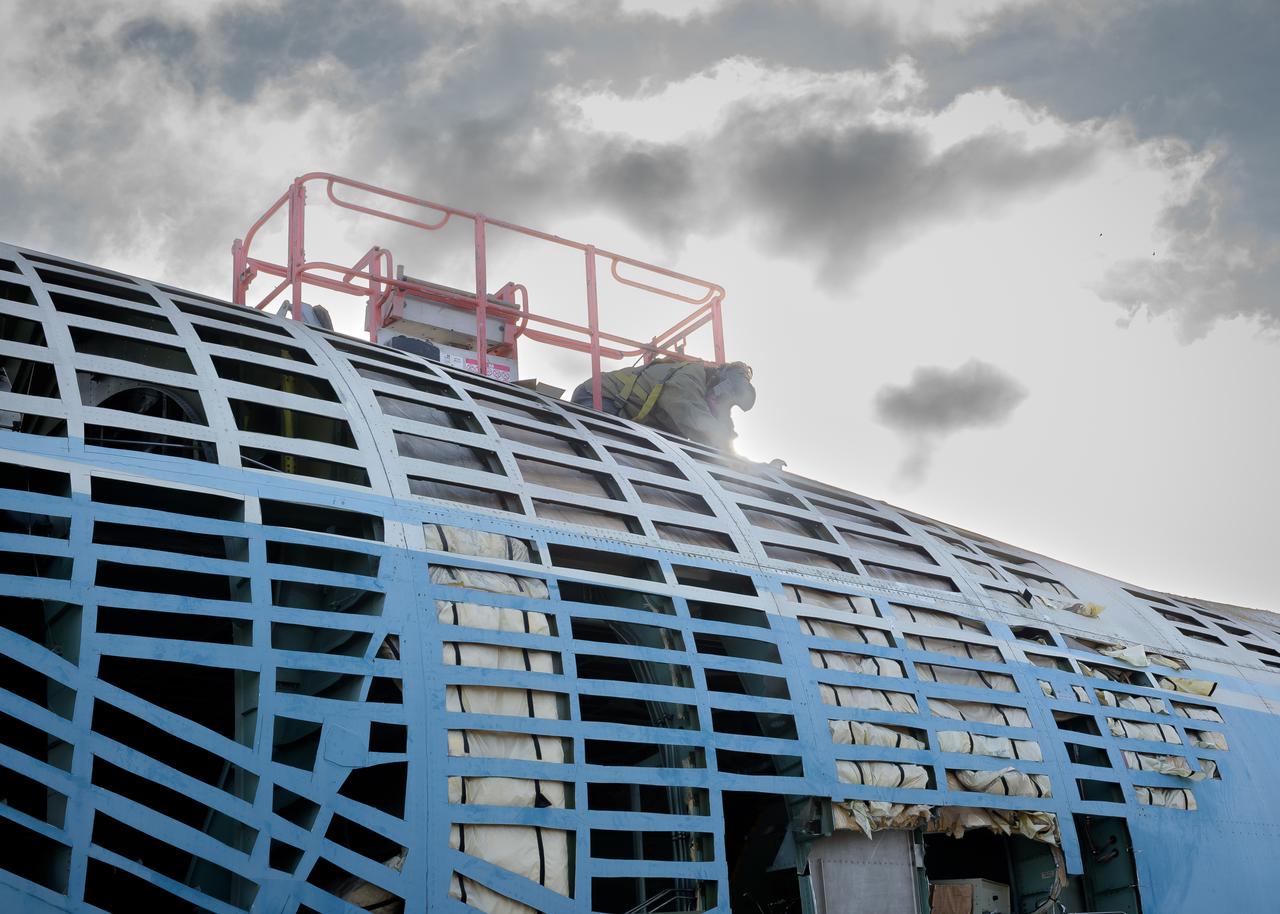
Removing the skin from the airframe of the modified C-141 Kuiper Airborne Observatory, (KAO) (NASA-714), on the N211 apron at Moffett Field, California.
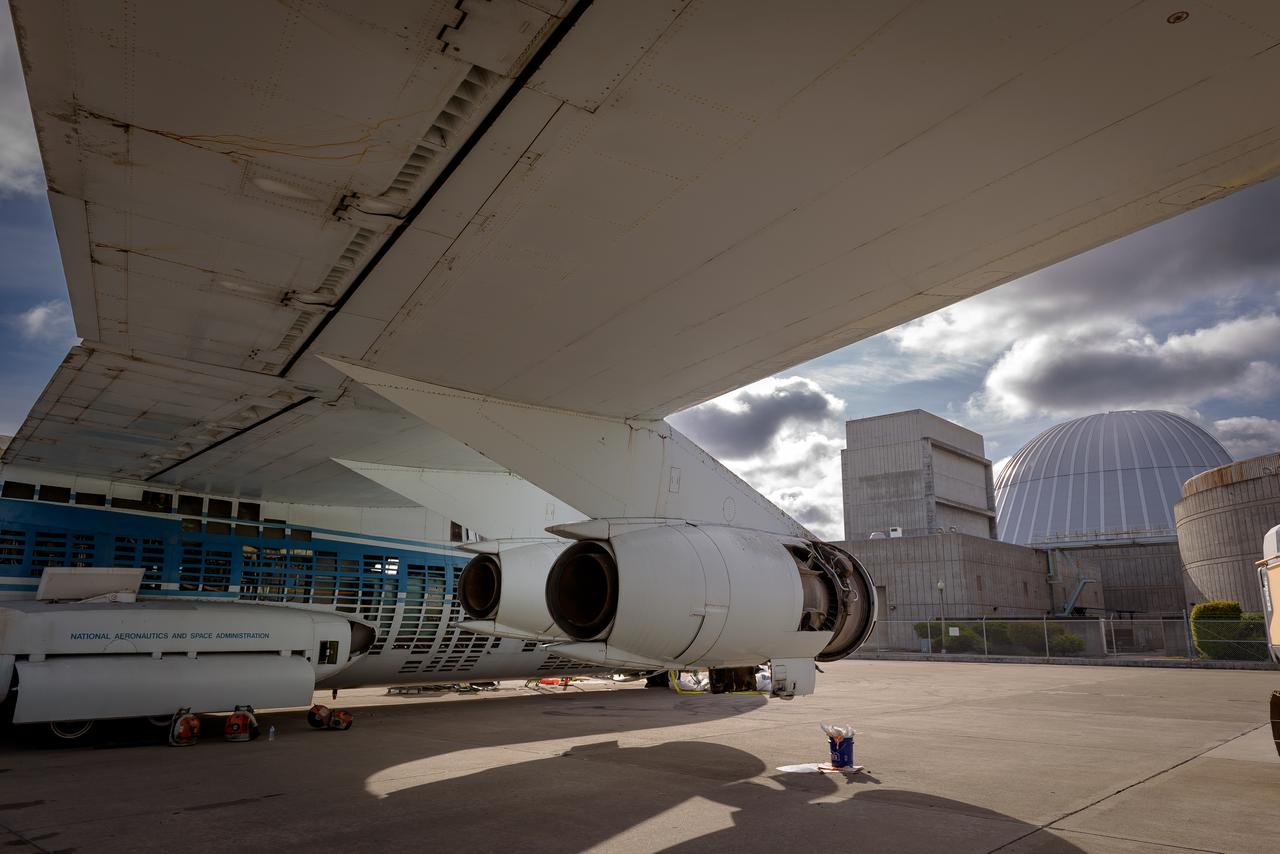
Removing the skin from the airframe of the modified C-141 Kuiper Airborne Observatory, (KAO) (NASA-714), on the N211 apron at Moffett Field, California.
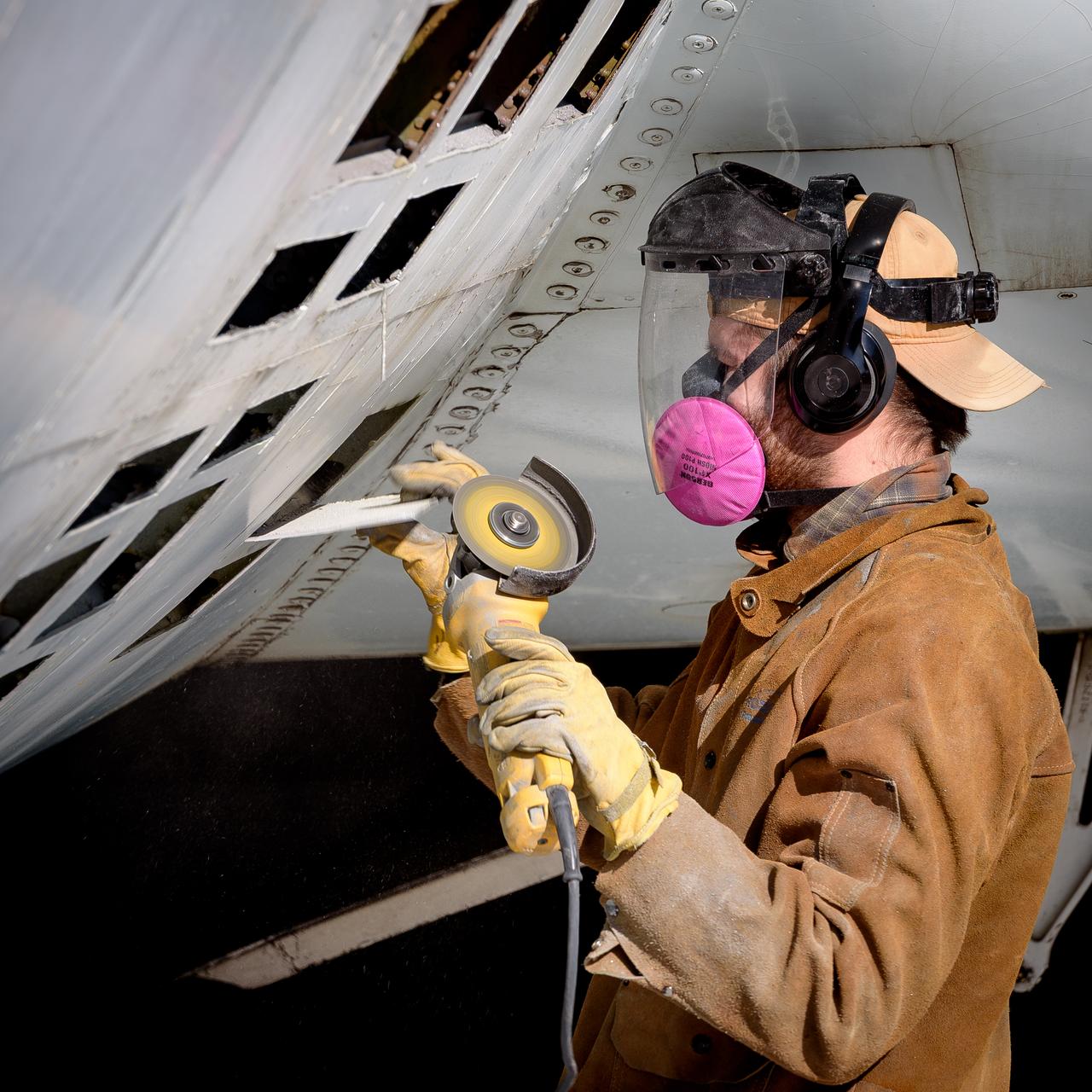
The skin is removed from the airframe of the modified C-141 Kuiper Airborne Observatory, (KAO) (NASA-714), on the N211 apron at Moffett Field, California.
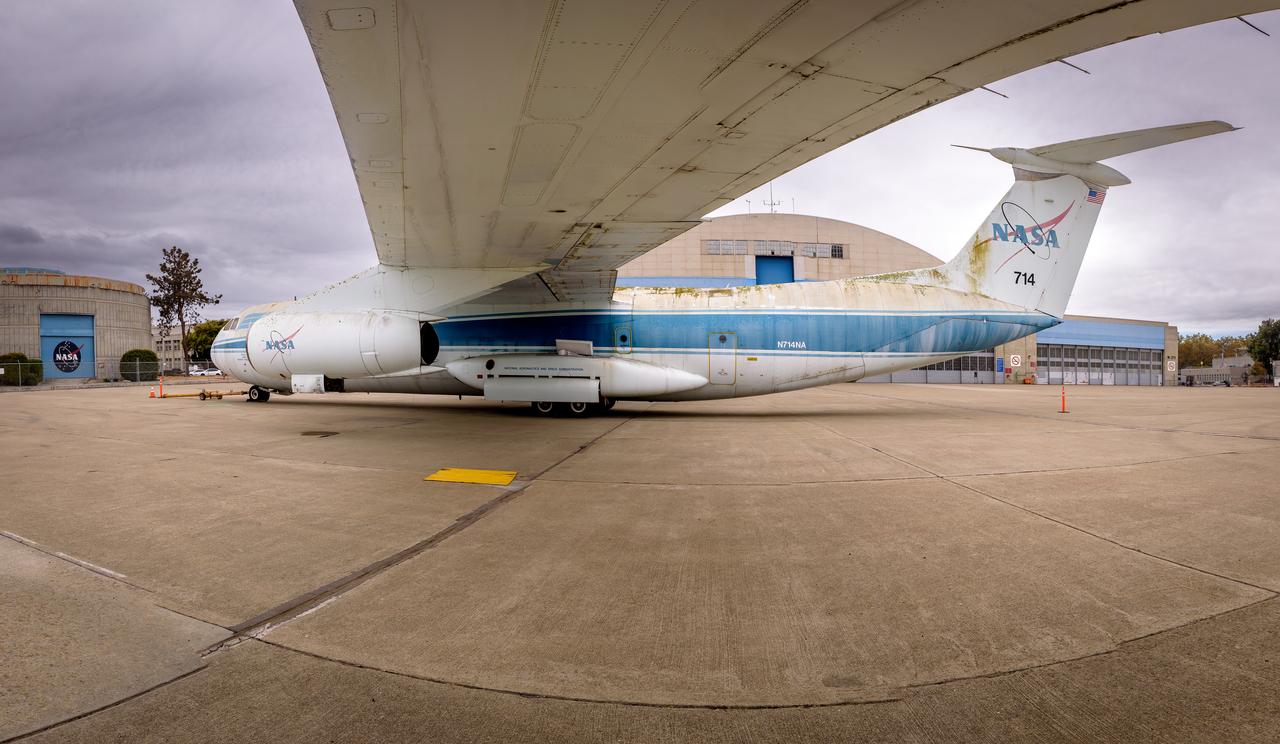
Photo composite (11 frames) of the modified C-141 Kuiper Airborne Observatory, (KAO) (NASA-714), beneath the wing on the N211 apron at Moffett Field, California.
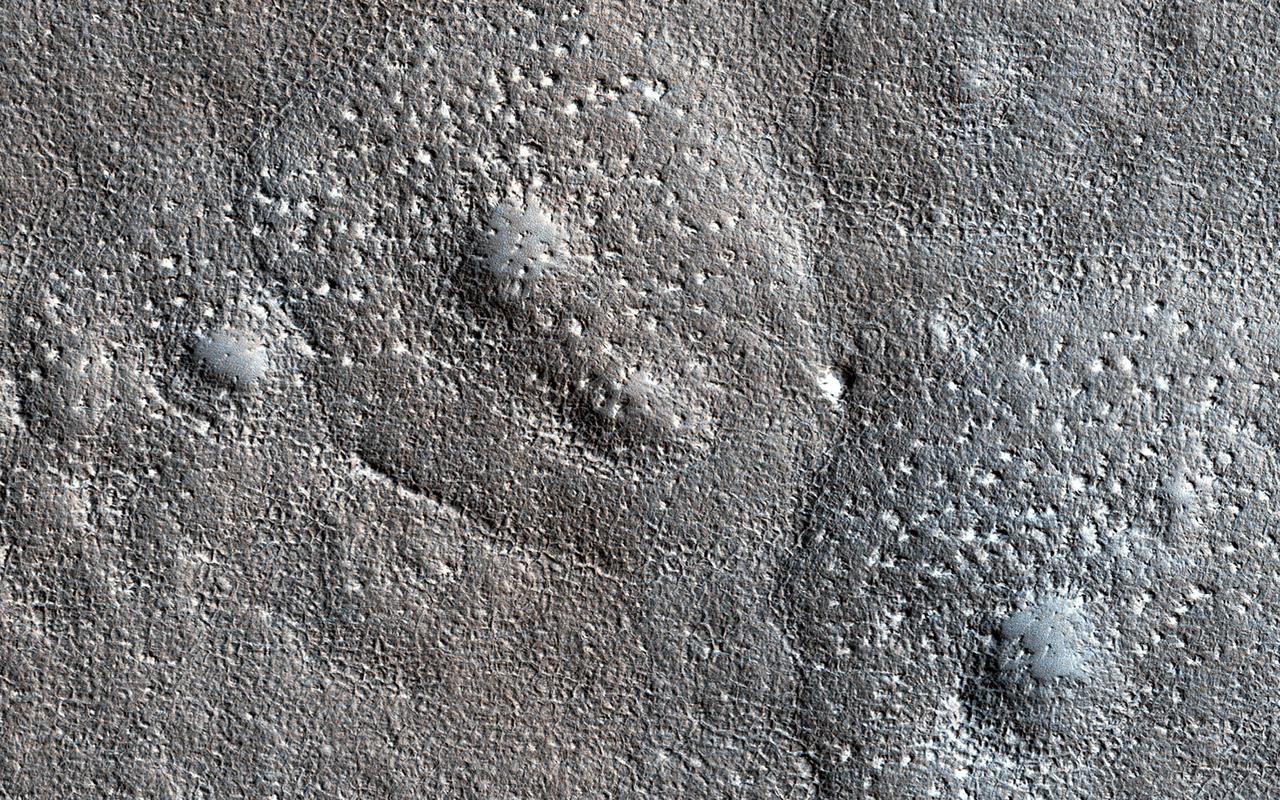
Expanded craters on Mars are thought to occur when the upper slopes of an impact crater in an ice-rich target sublimate (going directly from a solid to a gaseous state). The vaporizing ice makes the walls retreat while the lower slopes are armored by dust and debris, resulting in a funnel-shaped formation. The expanded craters in this image have an unusually bumpy texture in the outer apron where the sublimation occurred. The bumps are too large to be boulders. This suggests that the ice had concentrations of other material. https://photojournal.jpl.nasa.gov/catalog/PIA25900

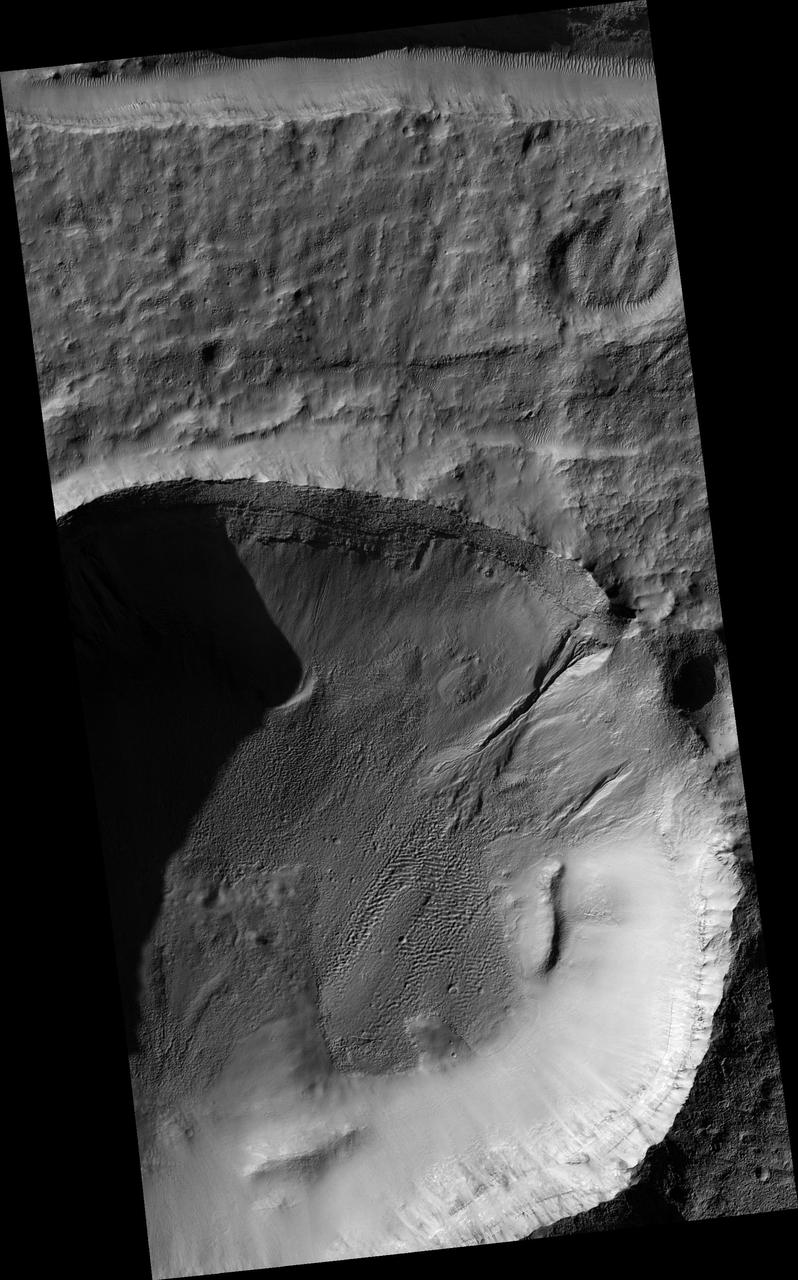
Gullies probably formed along the bouldery layers in the upper slopes of this unnamed crater within the last few million years. Gullies eroded these crater slopes and transported sediment downslope forming debris aprons multiple times. These older apron surfaces were cut by numerous fractures running perpendicular to the slope. Subsequent episodes of gully activity eroded through these fractures and deposited new aprons. On the floor of the crater are ridges with bouldery layers. These ridges may mark the furthest extent of glaciers that predate much of the original gully activity. Bright flows continue to form in these gullies seasonally. In the upper gully regions, long shadows cast by jagged outcrops allow scientists to determine the heights and depths of landforms by measuring the length of the shadows cast by the ridges onto the gully floor. https://photojournal.jpl.nasa.gov/catalog/PIA23020
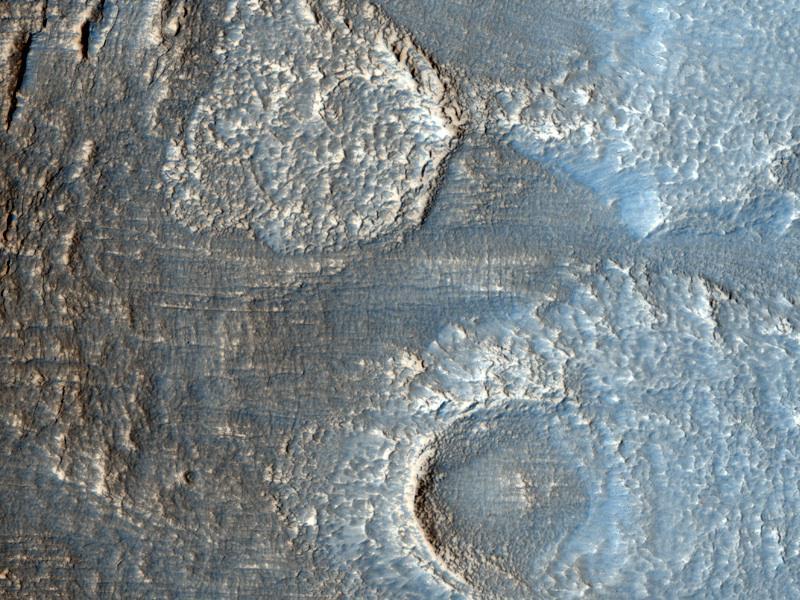
The terrain in this image from NASA Mars Reconnaissance Orbiter lies in the Deuteronilus Mensae region along the highland-lowland dichotomy boundary in the northern hemisphere of Mars.

This well-preserved impact crater in Tyrrhena Terra, northeast of Hellas Planitia, is approximately 6 kilometers in diameter as seen by NASA Mars Reconnaissance Orbiter.
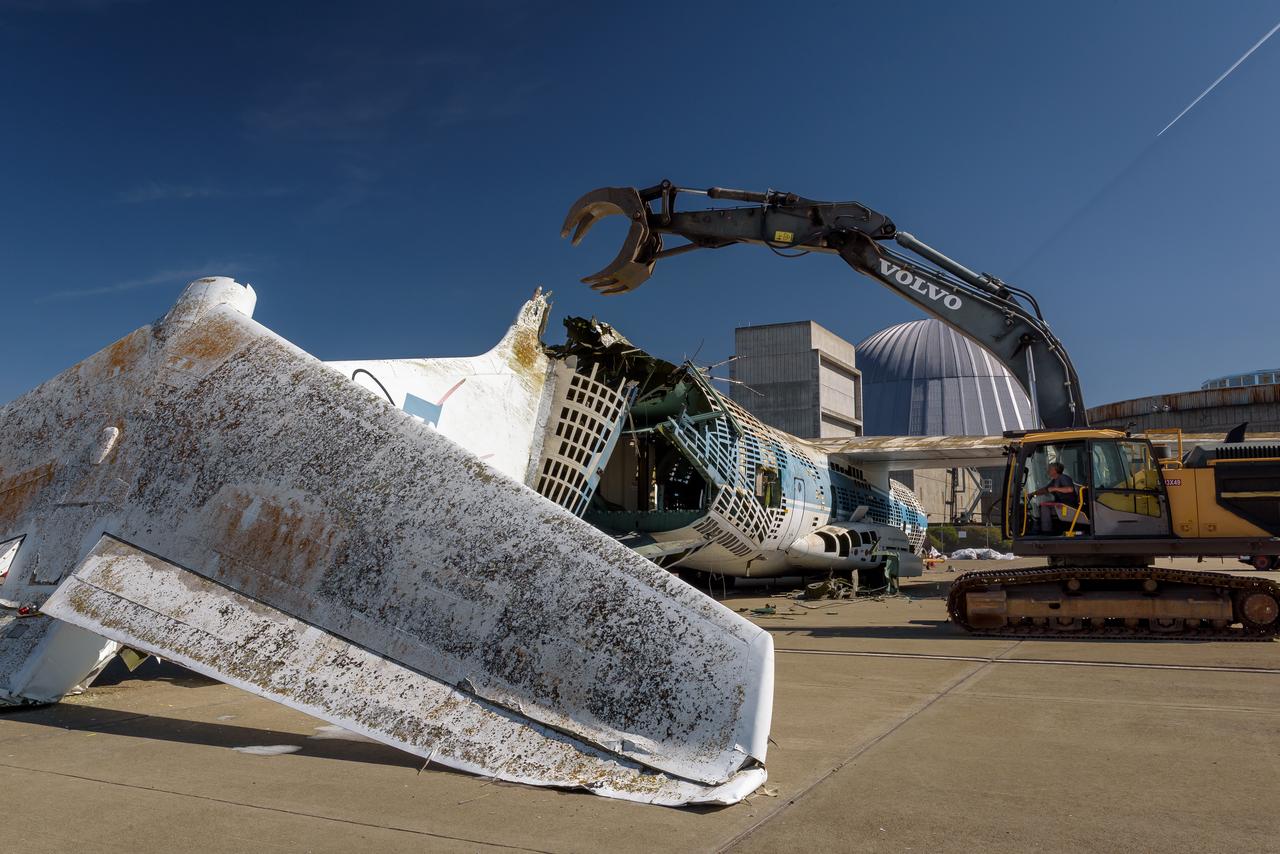
A Volvo Crawler Excavator severs the airframe, separating the tail section from the fuselage, of the modified C-141 Kuiper Airborne Observatory, (KAO) (NASA-714), on the N211 apron of Moffett Field, California.
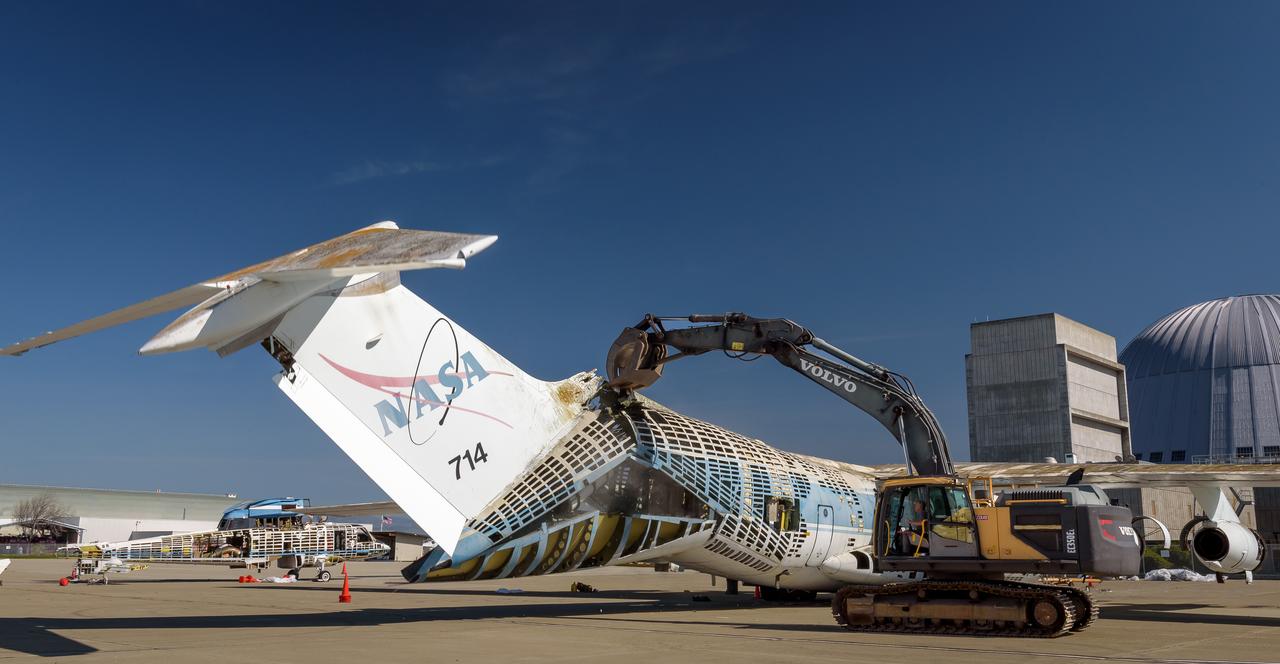
A Volvo Crawler Excavator severs the airframe, separating the tail section from the fuselage, of the modified C-141 Kuiper Airborne Observatory, (KAO) (NASA-714), on the N211 apron of Moffett Field, California.

Close-up view of the tail section of the modified C-141 Kuiper Airborne Observatory, (KAO) (NASA-714), during its demolition on the N211 apron at Moffett Field, California.
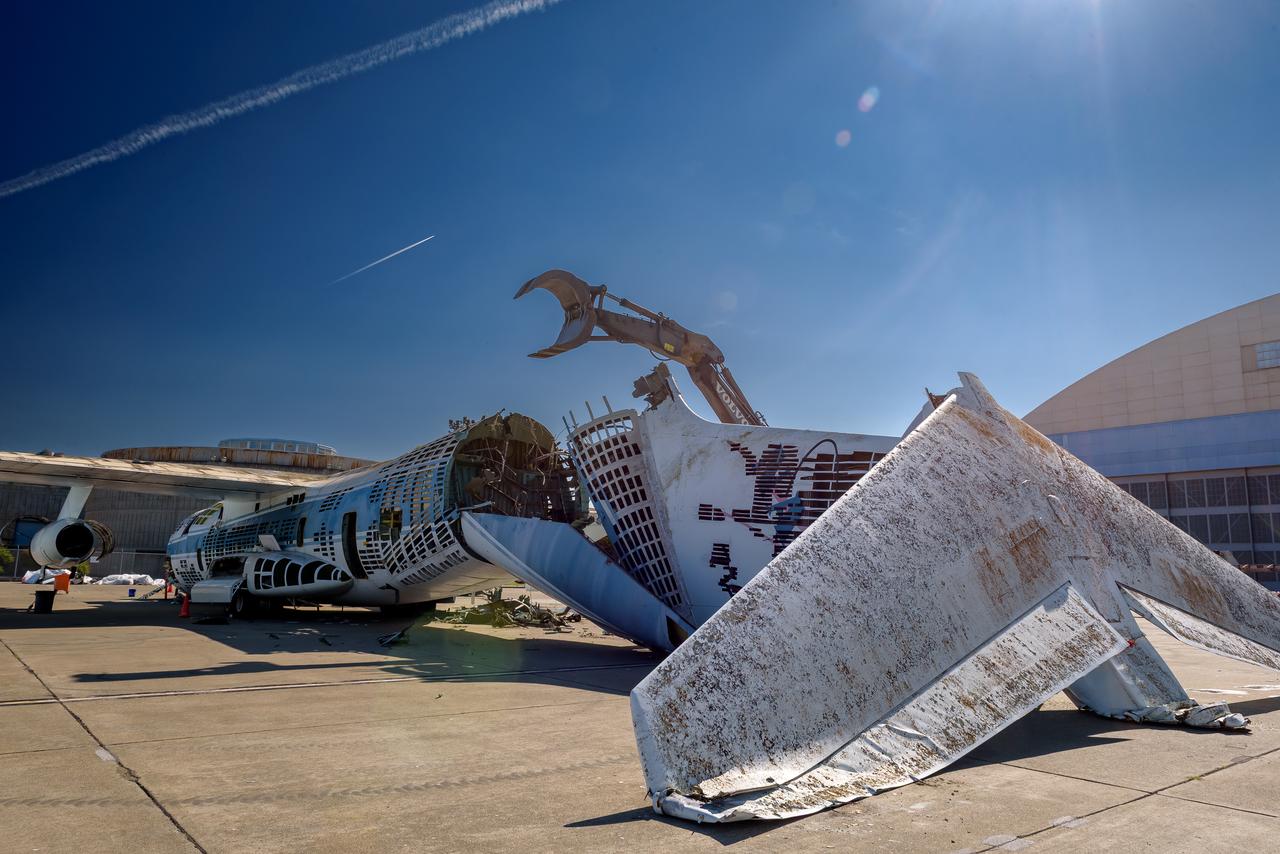
A Volvo Crawler Excavator severs the airframe, separating the tail section from the fuselage, of the modified C-141 Kuiper Airborne Observatory, (KAO) (NASA-714), on the N211 apron of Moffett Field, California.
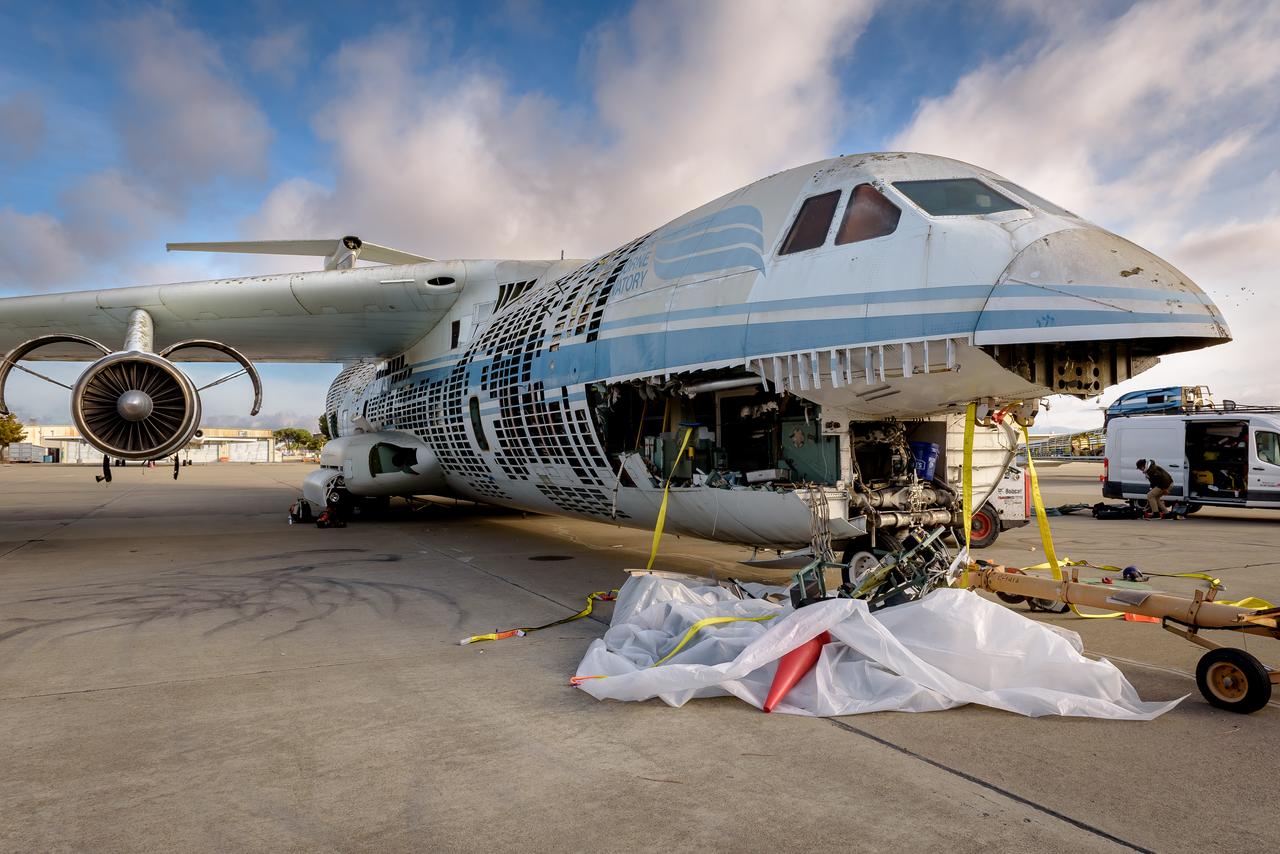
Yellow straps are threaded through the airframe of the modified C-141 Kuiper Airborne Observatory, (KAO) (NASA-714), before removing the cockpit on the N211 apron at Moffett Field, California.
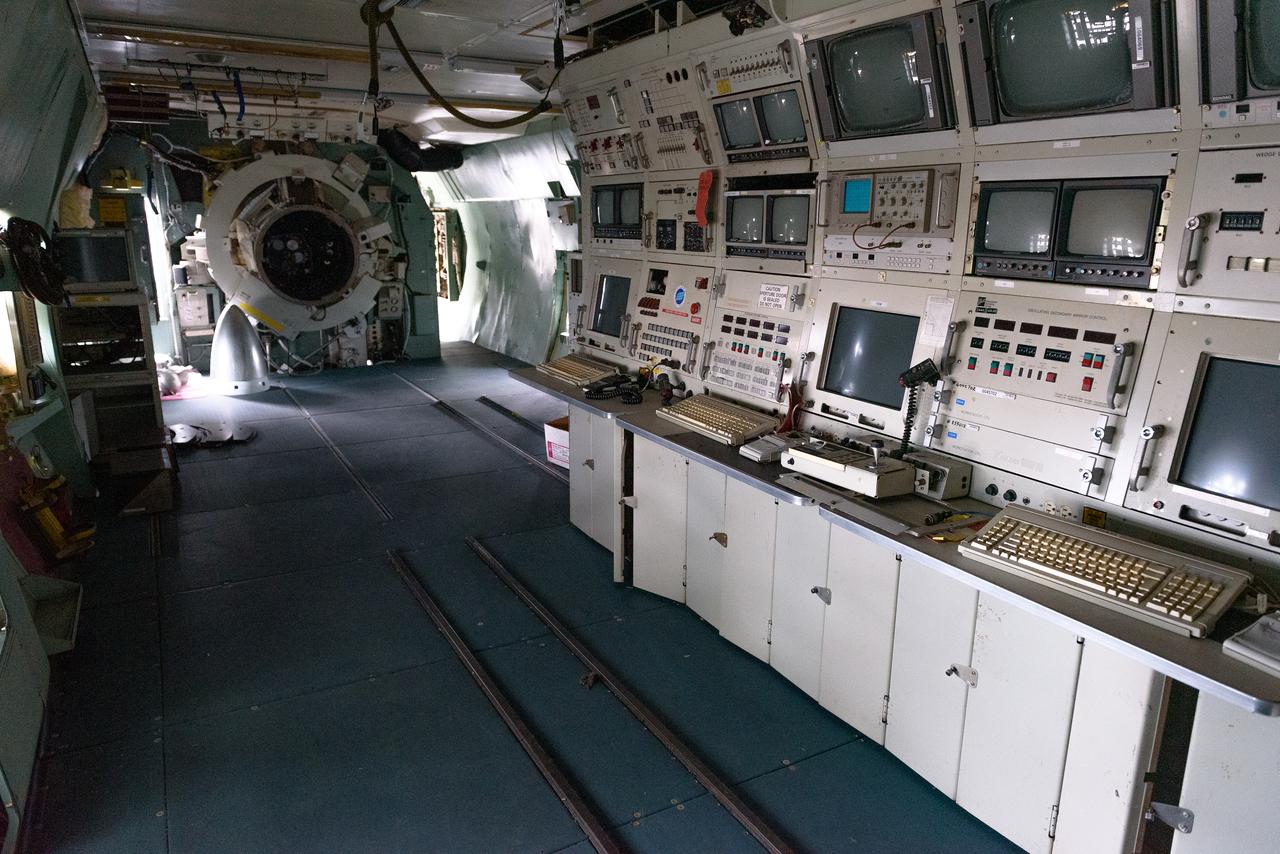
Daylight shines through the airframe of the fuselage onto the mission director’s and telescope operator’s workstations of the modified C-141 Kuiper Airborne Observatory, (KAO) (NASA-714), during its demolition on the N211 apron at Moffett Field, California.
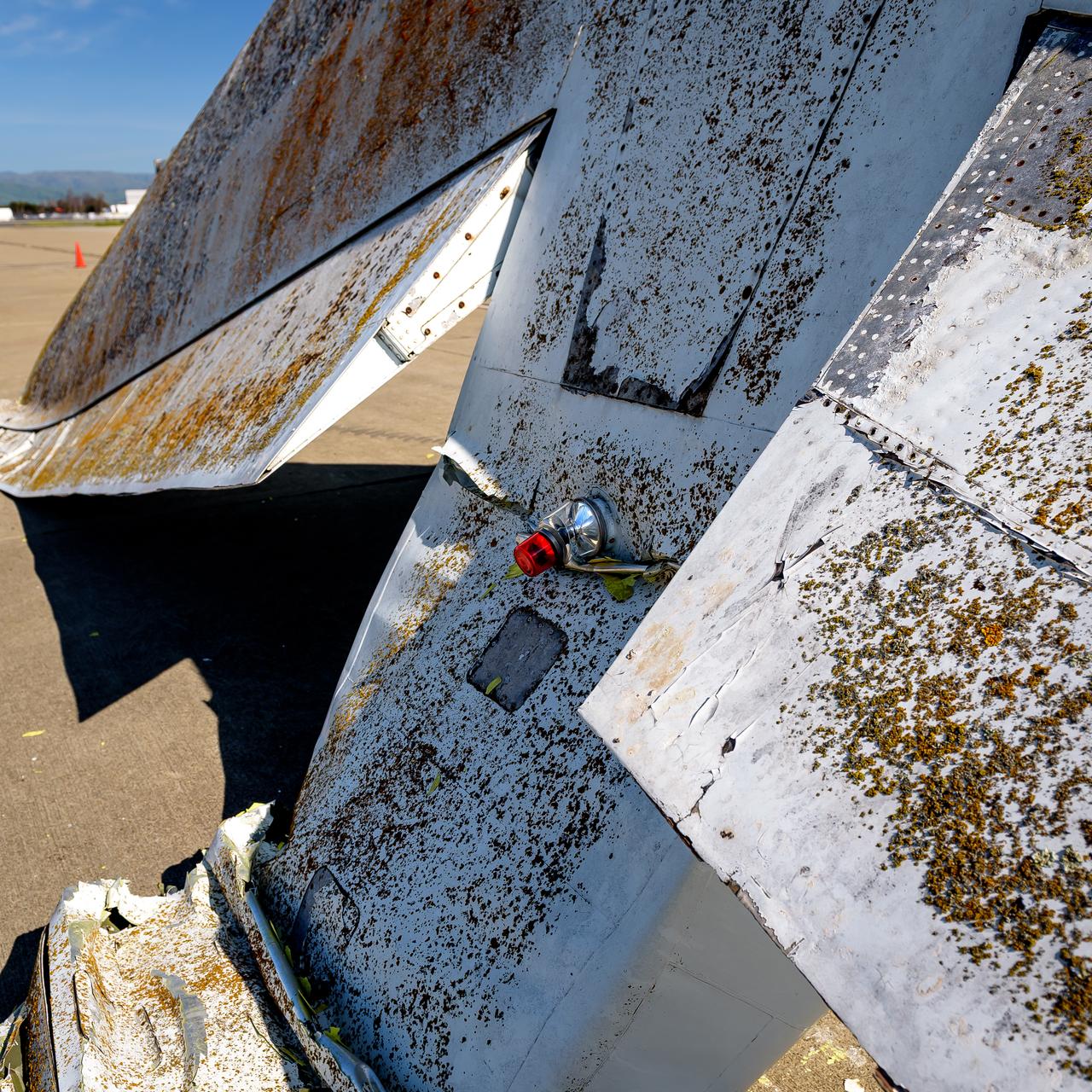
Close-up view of the tail section of the modified C-141 Kuiper Airborne Observatory, (KAO) (NASA-714), severed from the fuselage on the N211 apron at Moffett Field, California.
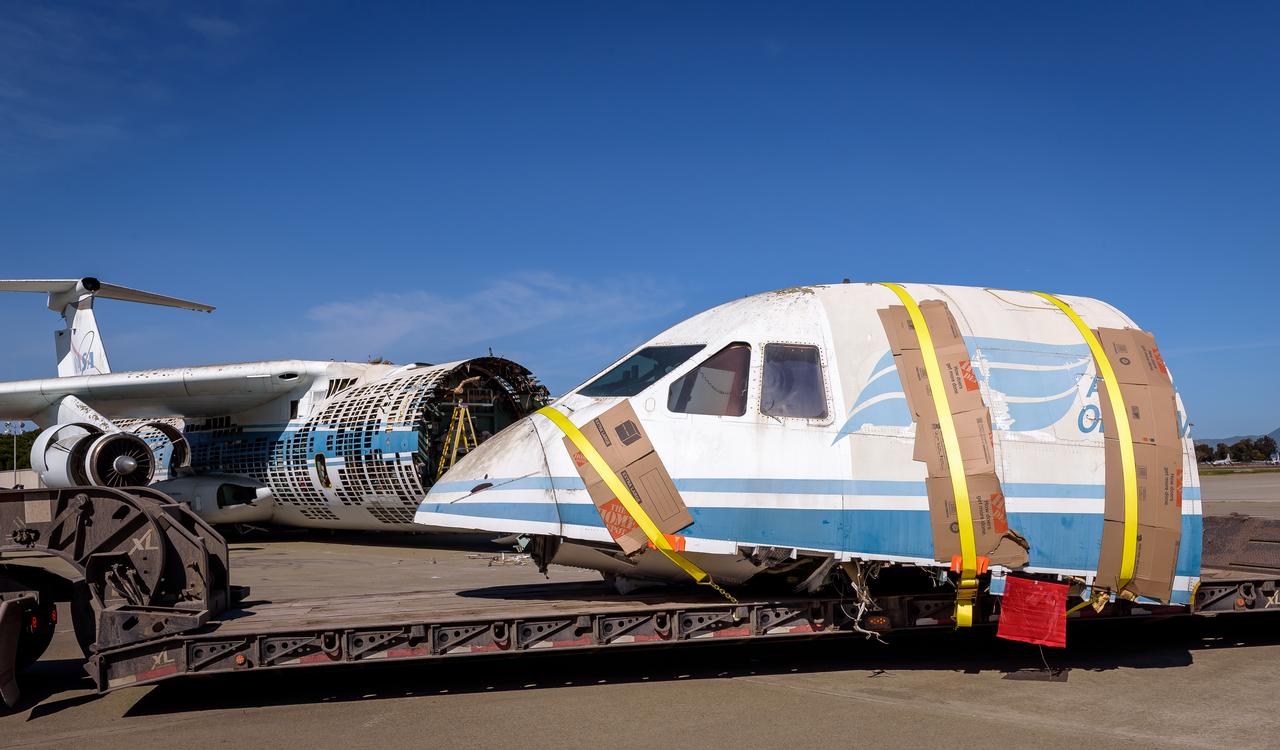
Yellow straps fasten the cockpit of the modified C-141 Kuiper Airborne Observatory, (KAO) (NASA-714), to the trailer that carries it off the N211 apron at Moffett Field, California.
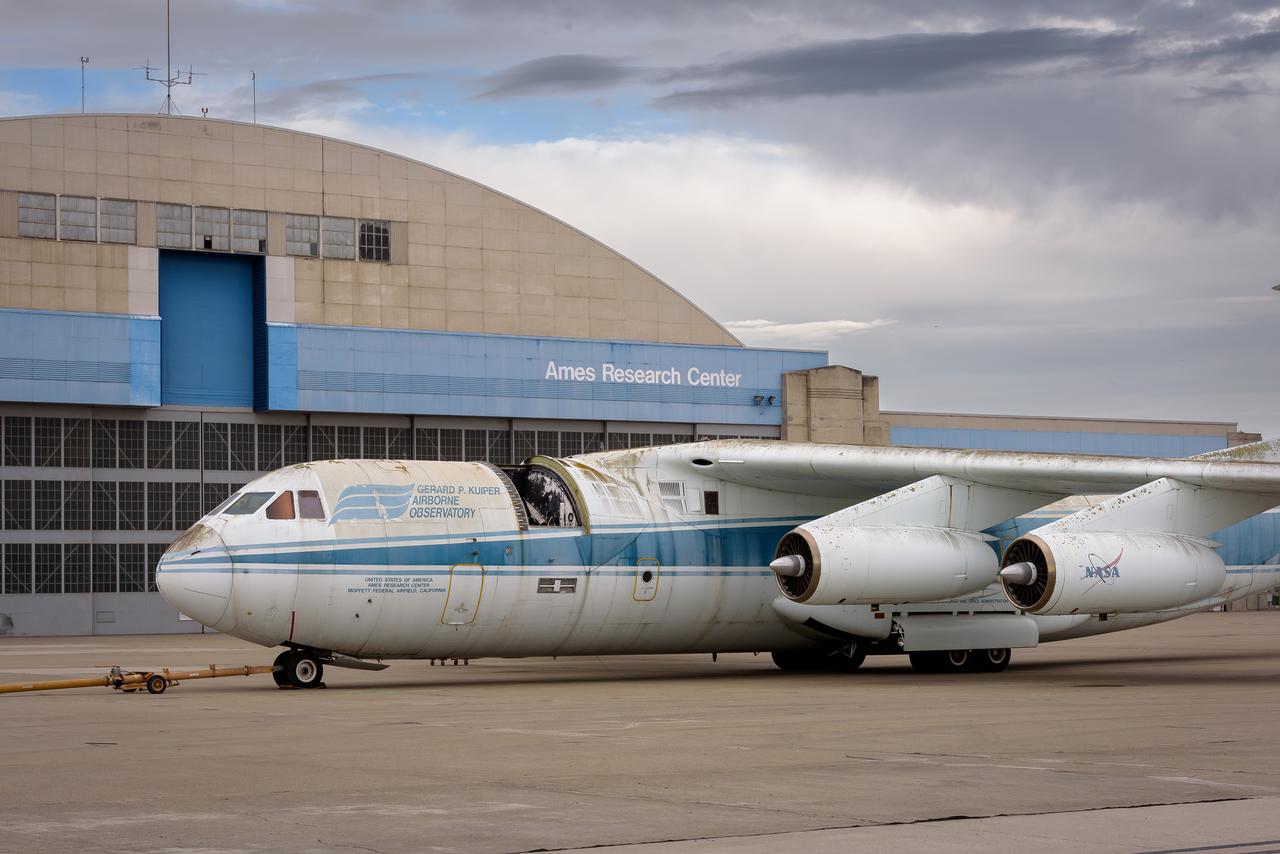
Three-quarter front view of the modified C-141 Kuiper Airborne Observatory, (KAO) (NASA-714), with the telescope aperture open on the N211 apron at Moffett Field, California.
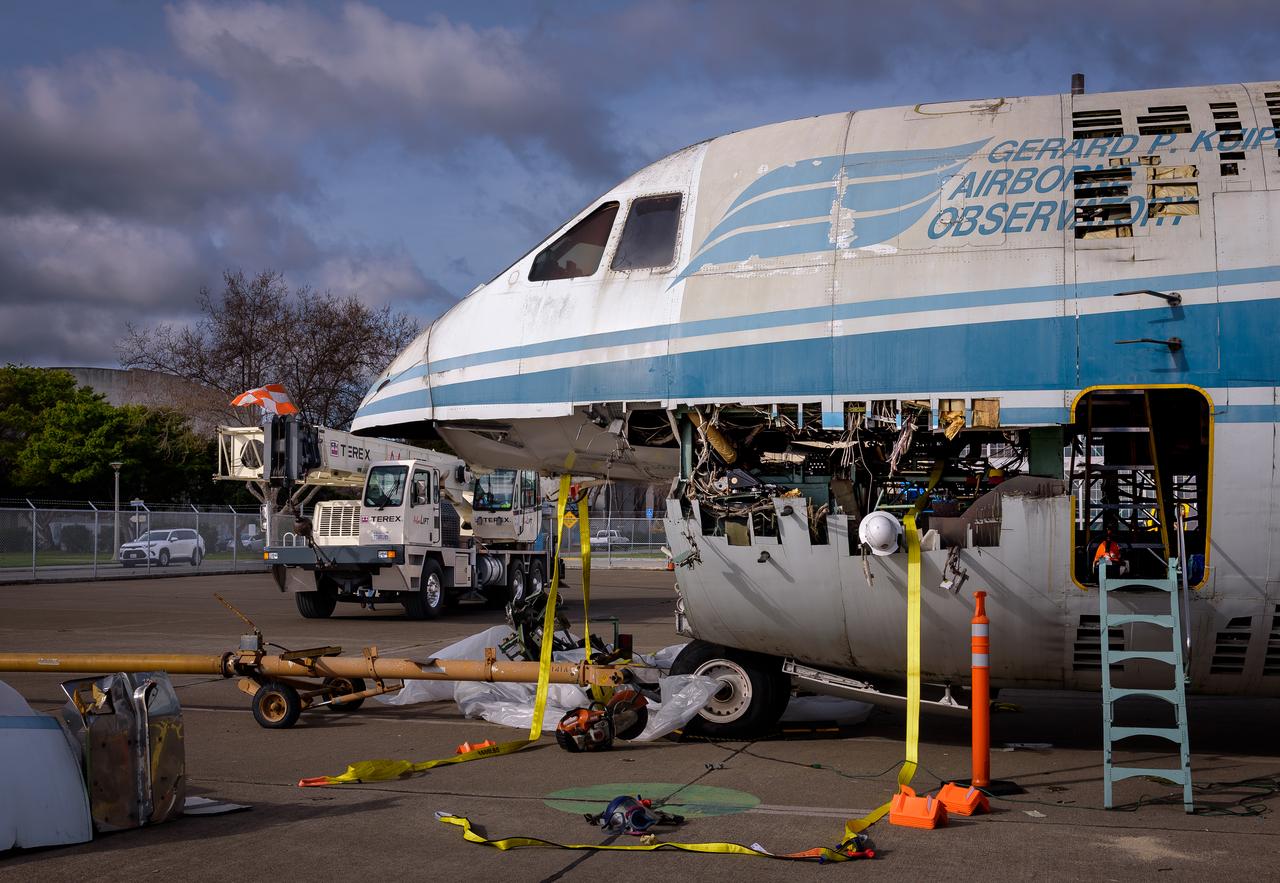
Yellow straps are threaded through the airframe of the modified C-141 Kuiper Airborne Observatory, (KAO) (NASA-714), before removing the cockpit on the N211 apron at Moffett Field, California.

A Volvo Crawler Excavator severs the airframe, separating the tail section from the fuselage, of the modified C-141 Kuiper Airborne Observatory, (KAO) (NASA-714), on the N211 apron of Moffett Field, California.
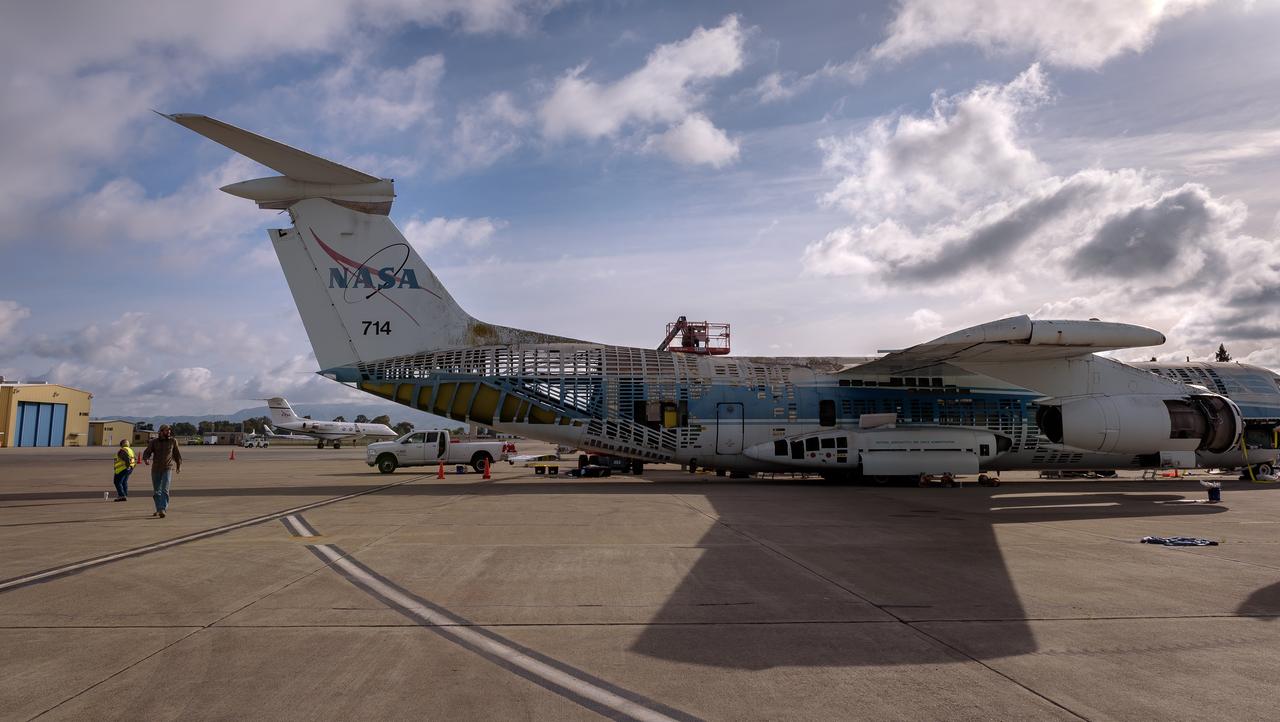
Daylight shines through the airframe during the demolition of the modified C-141 Kuiper Airborne Observatory, (KAO) (NASA-714), tail section on the N211 apron at Moffett Field, California.
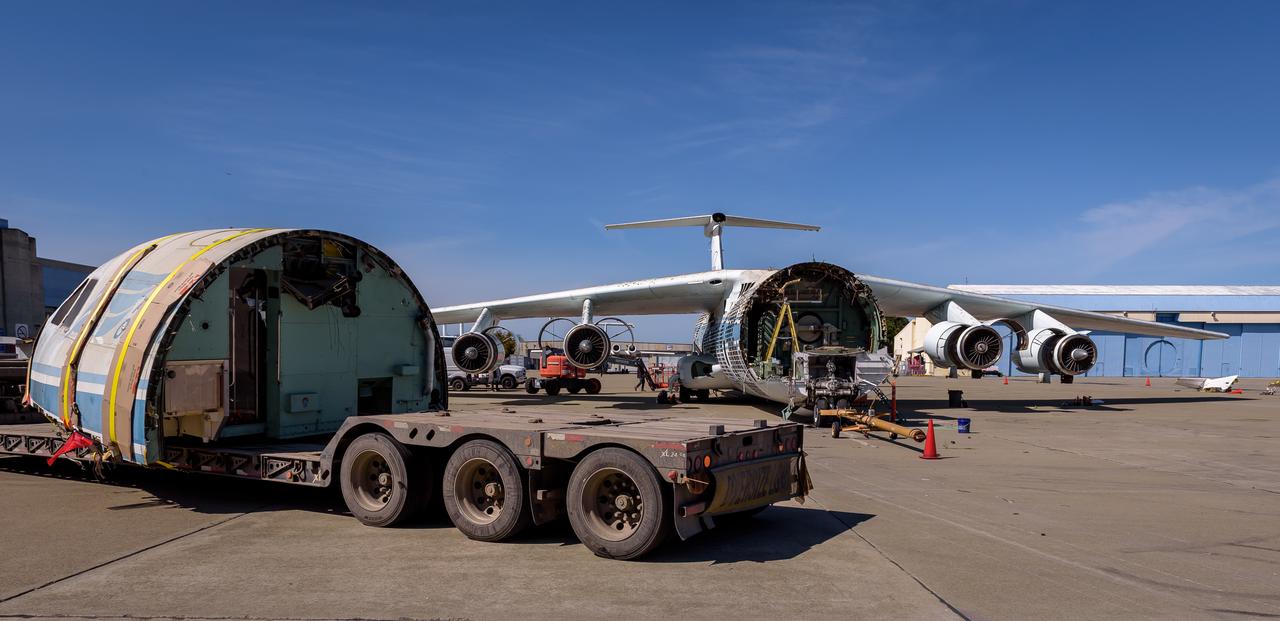
Yellow straps fasten the cockpit of the modified C-141 Kuiper Airborne Observatory, (KAO) (NASA-714), to the trailer that carries it off the N211 apron at Moffett Field, California.
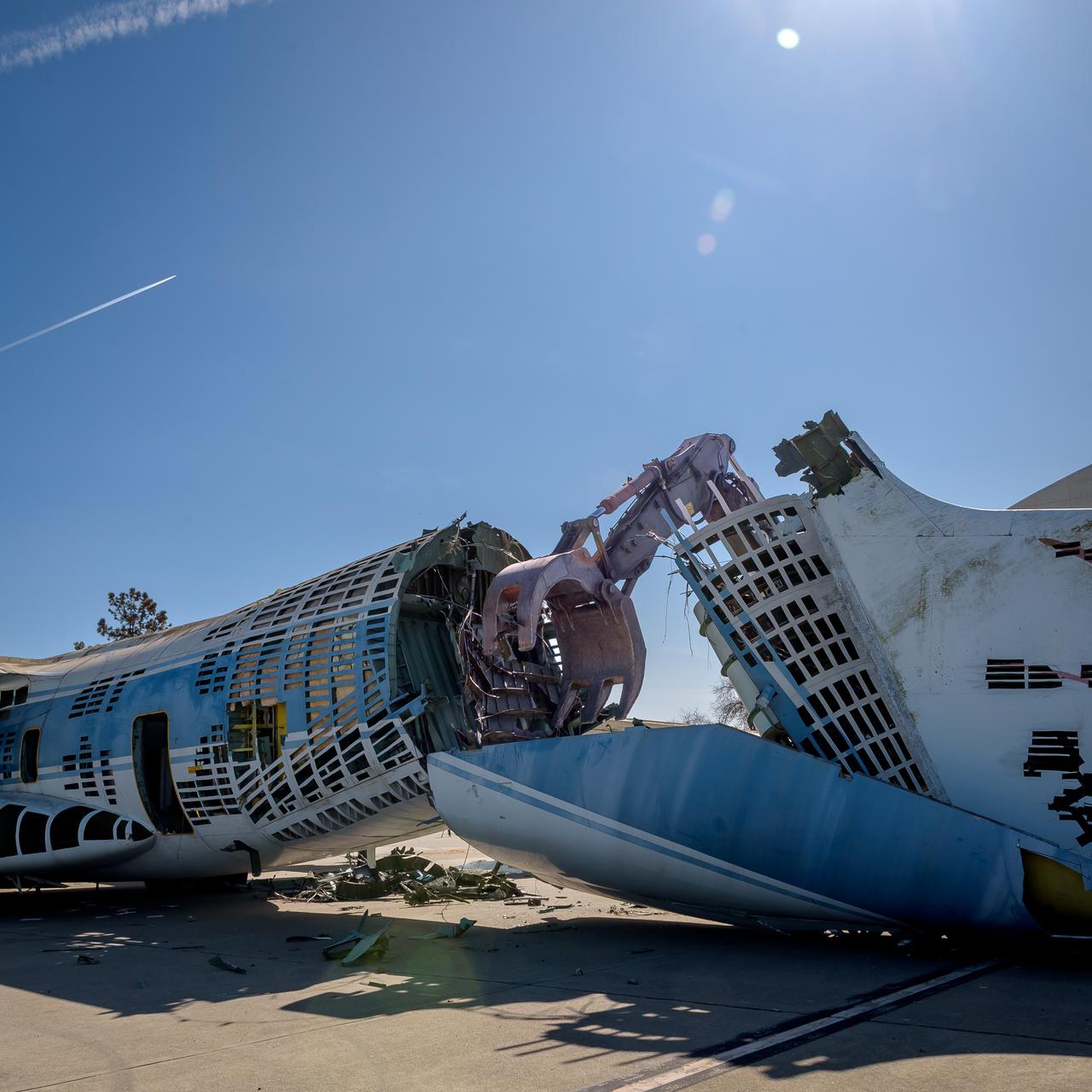
A Volvo Crawler Excavator severs the airframe, separating the tail section from the fuselage, of the modified C-141 Kuiper Airborne Observatory, (KAO) (NASA-714), on the N211 apron of Moffett Field, California.
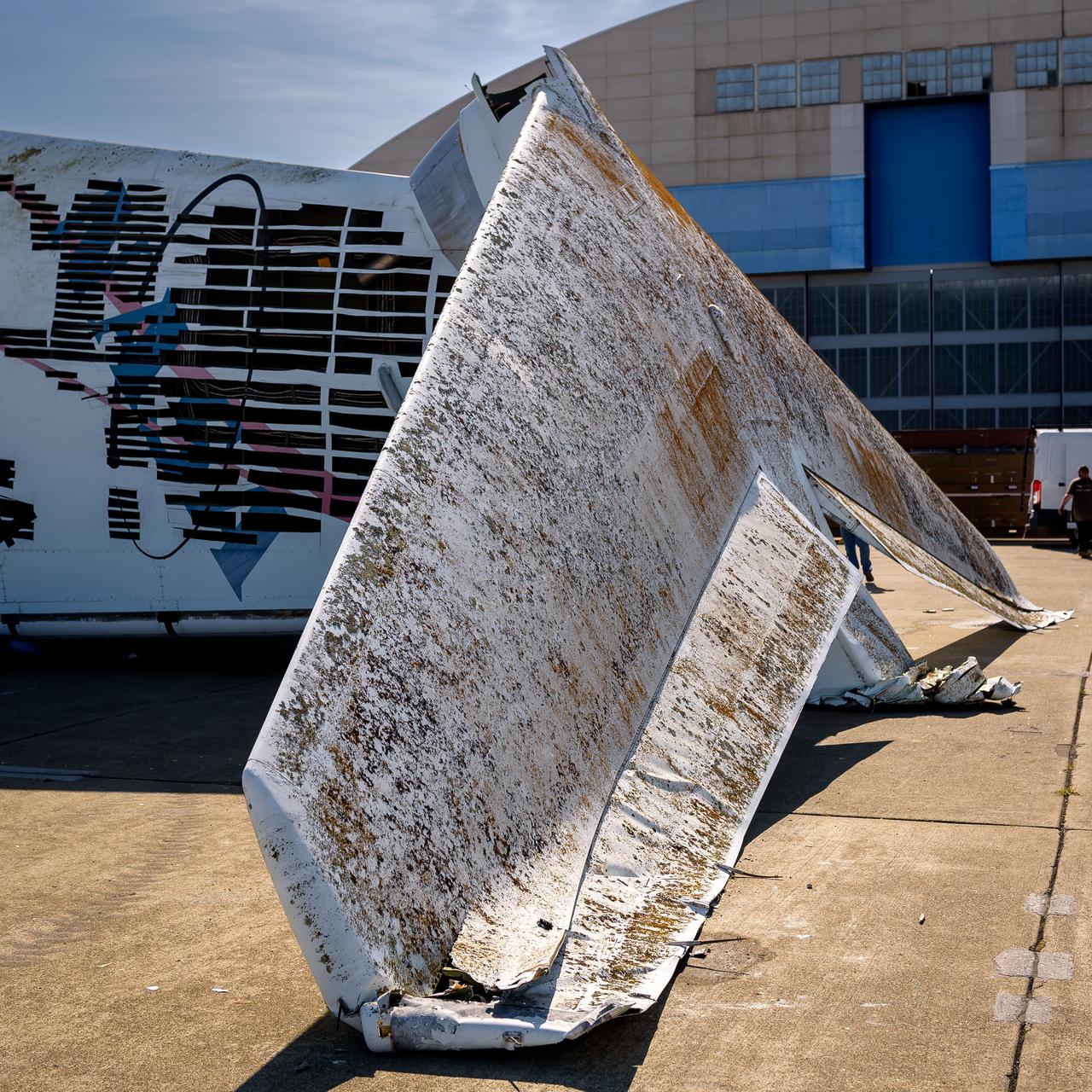
Close-up view of the tail section of the modified C-141 Kuiper Airborne Observatory, (KAO) (NASA-714), severed from the fuselage on the N211 apron at Moffett Field, California.
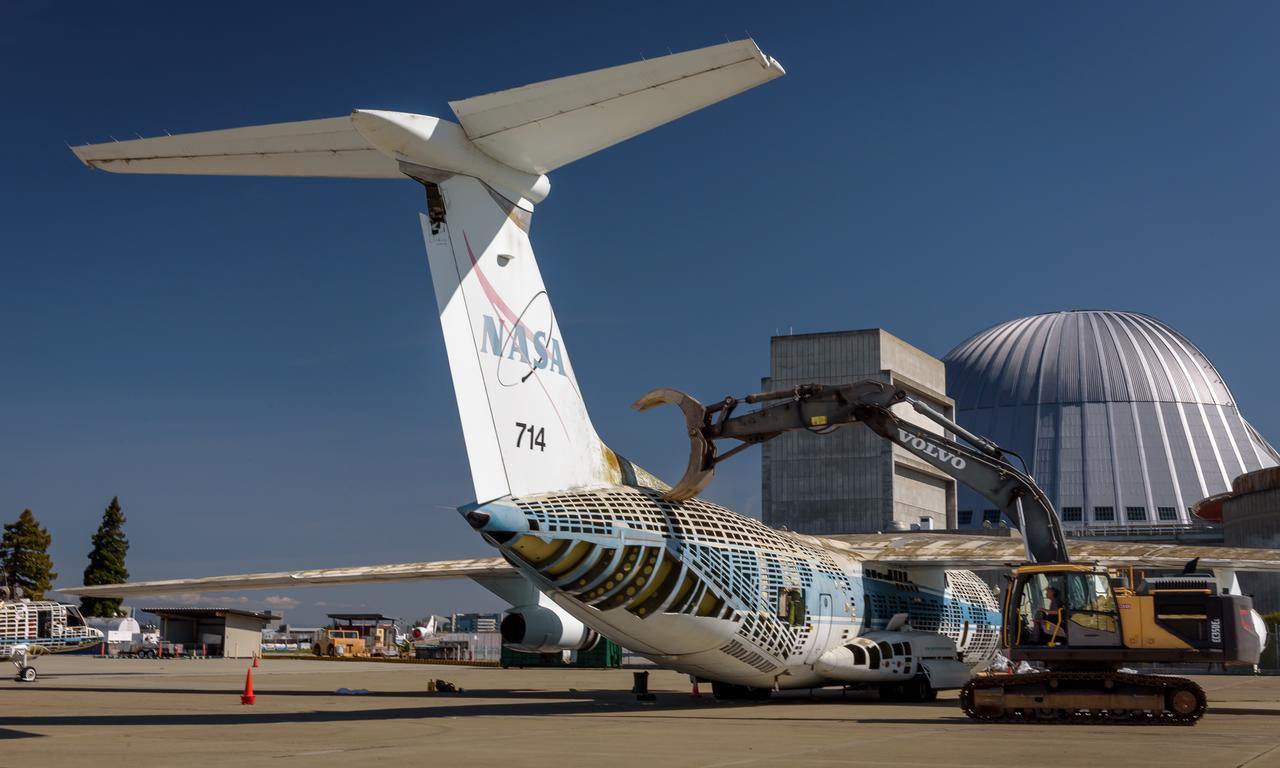
A Volvo Crawler Excavator severs the airframe, separating the tail section from the fuselage, of the modified C-141 Kuiper Airborne Observatory, (KAO) (NASA-714), on the N211 apron of Moffett Field, California.

Yellow straps are threaded through the airframe of the modified C-141 Kuiper Airborne Observatory, (KAO) (NASA-714), before removing the cockpit on the N211 apron at Moffett Field, California.
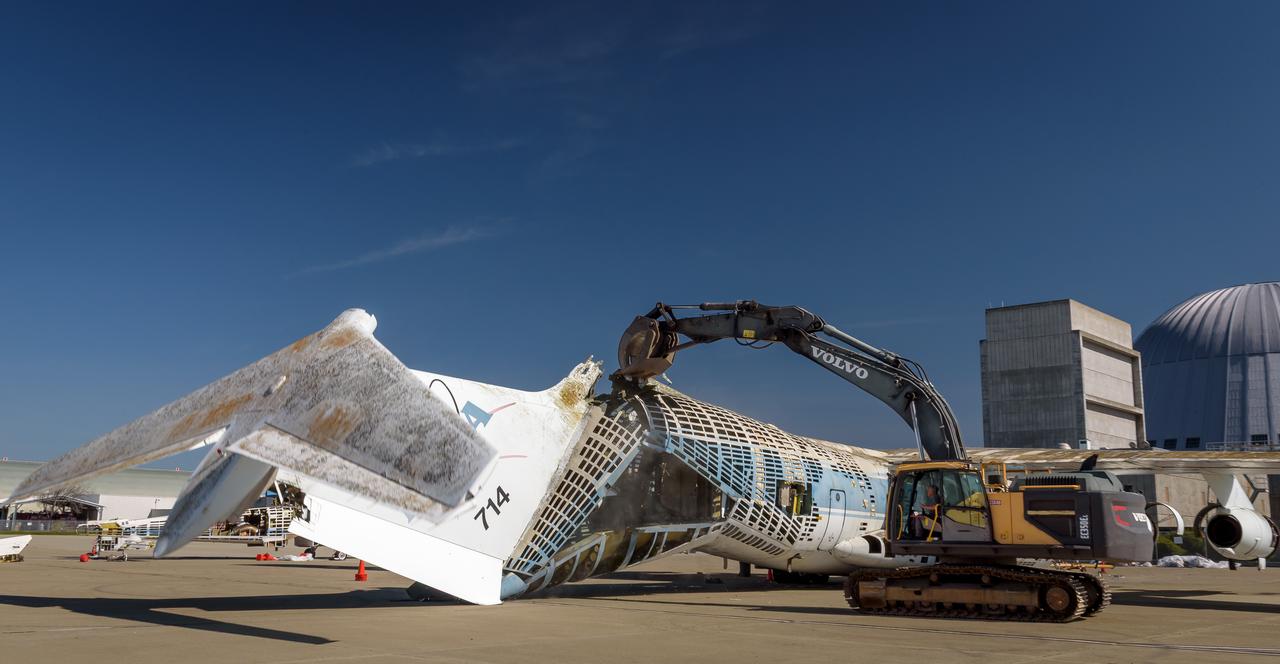
A Volvo Crawler Excavator severs the airframe, separating the tail section from the fuselage, of the modified C-141 Kuiper Airborne Observatory, (KAO) (NASA-714), on the N211 apron of Moffett Field, California.
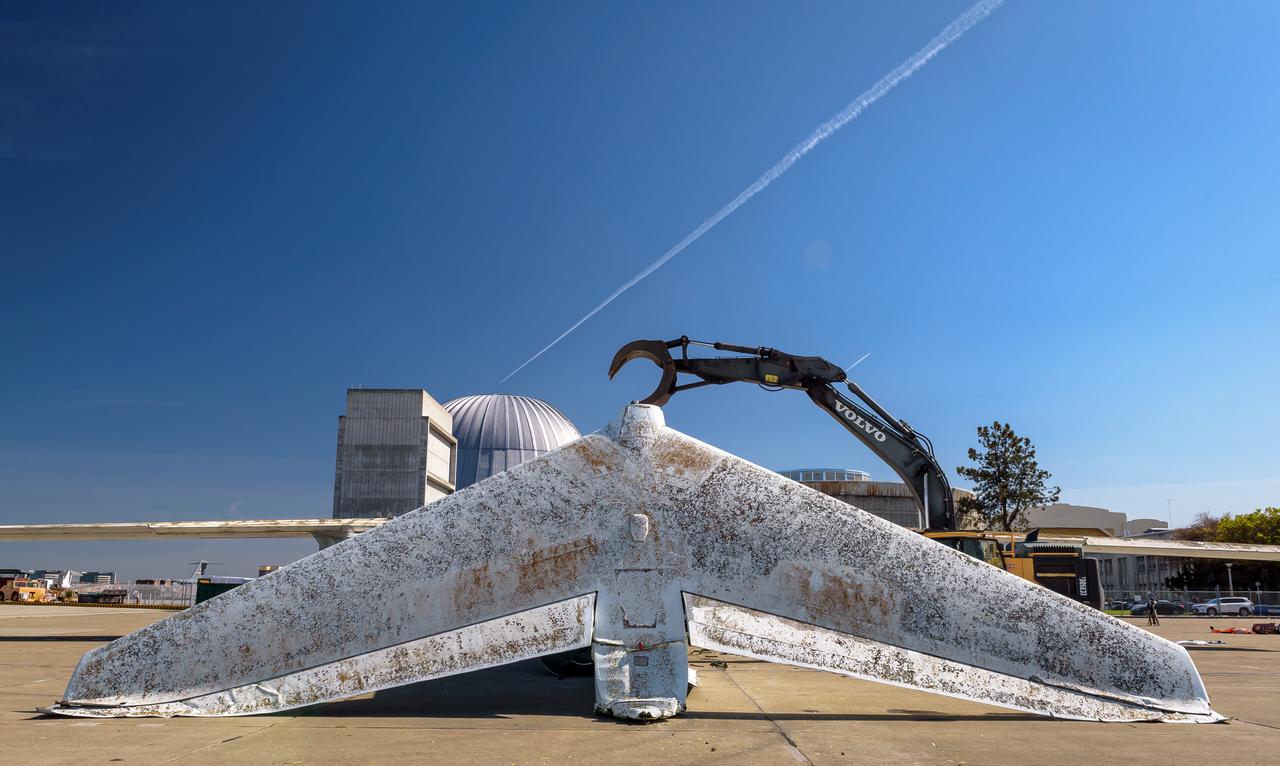
A Volvo Crawler Excavator severs the airframe, separating the tail section from the fuselage, of the modified C-141 Kuiper Airborne Observatory, (KAO) (NASA-714), on the N211 apron of Moffett Field, California.
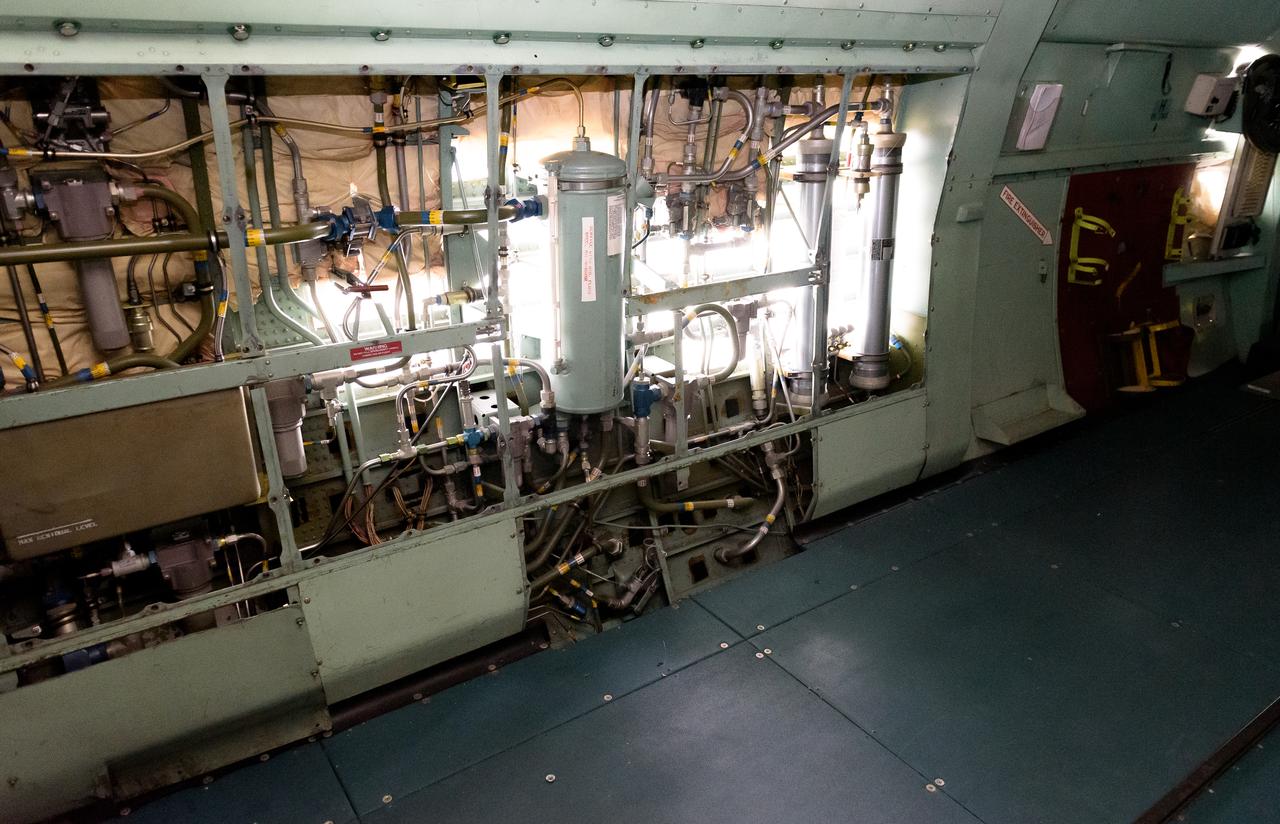
Daylight shines through the airframe of the modified C-141 Kuiper Airborne Observatory, (KAO) (NASA-714), fuselage during its demolition on the N211 apron at Moffett Field, California
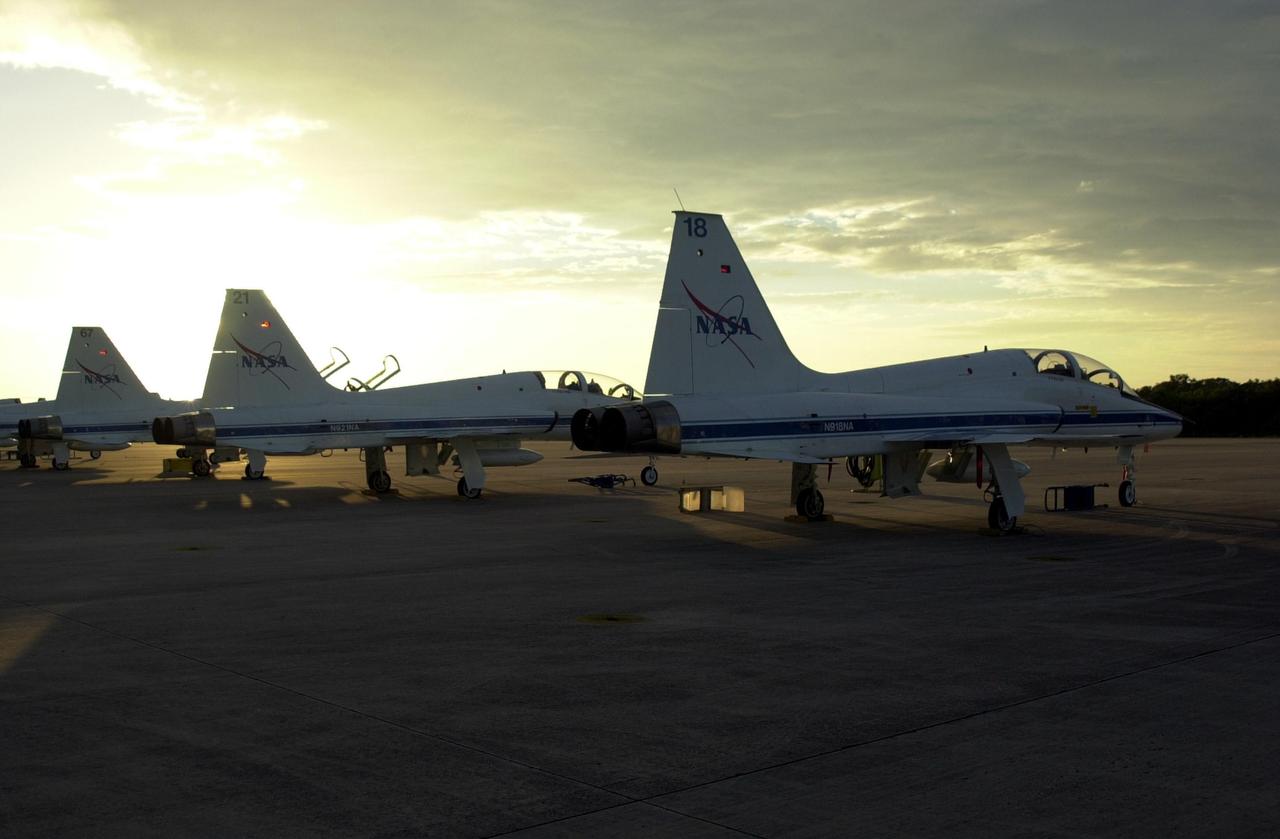
KENNEDY SPACE CENTER, FLA. -- At sunset after the arrival of the STS-112 crew, a row of T-38 jet aircraft are lined up on parking apron of the KSC Shuttle Landing Facility.
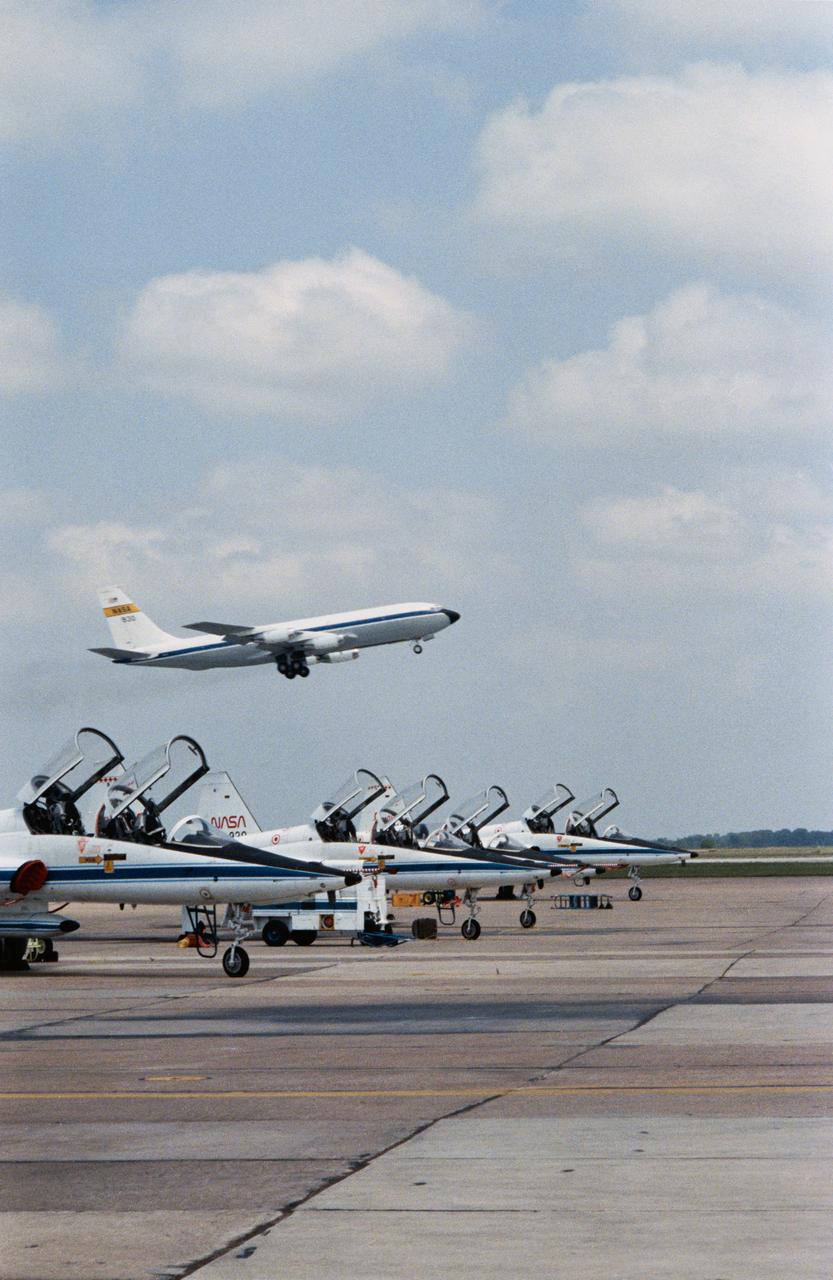
JSC/NASA aircraft operations at Ellington Field. T-38 aircraft are lined up on the parking apron. The KC-135 (NASA 930) Weightless environment trainer is taking off in the middle ground.
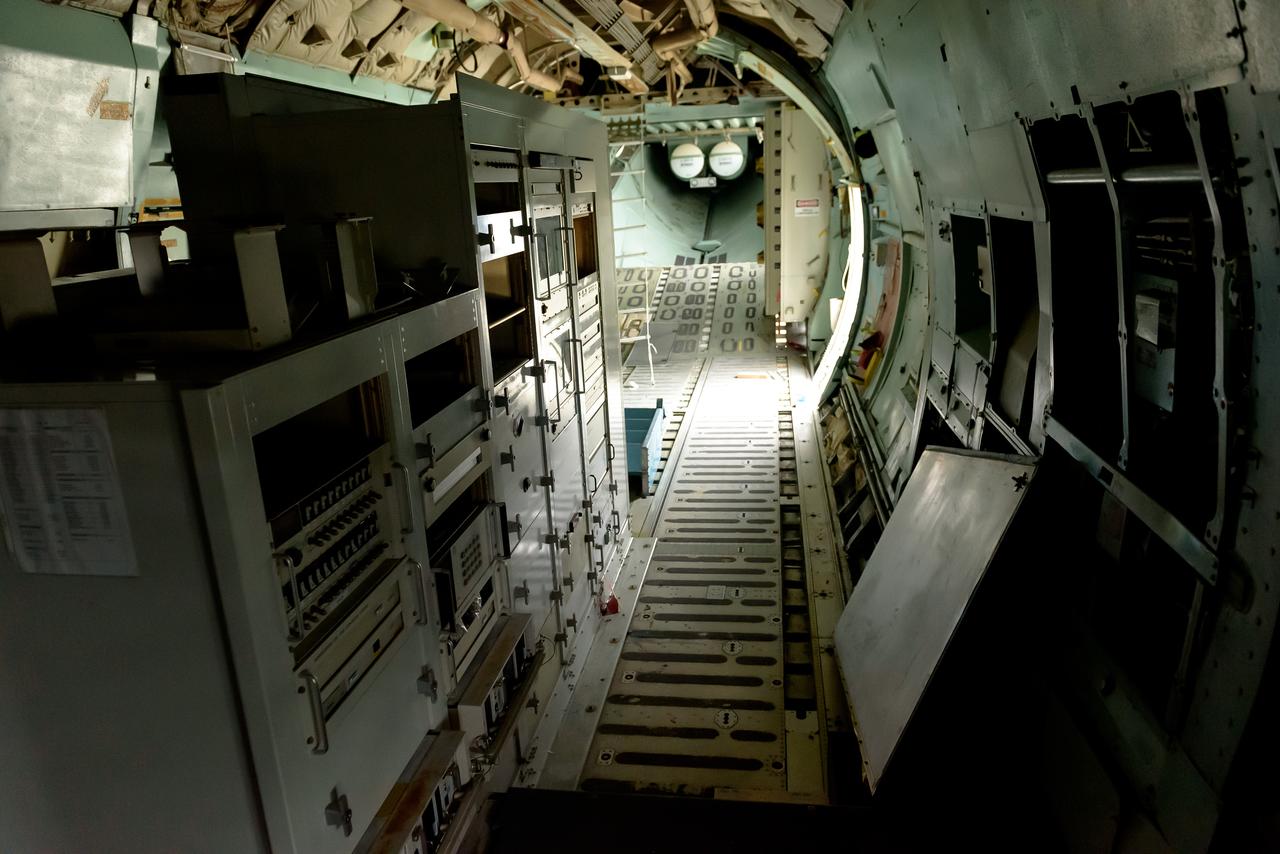
Daylight shines through the airframe of the modified C-141 Kuiper Airborne Observatory, (KAO) (NASA-714), fuselage during its demolition on the N211 apron at Moffett Field, California
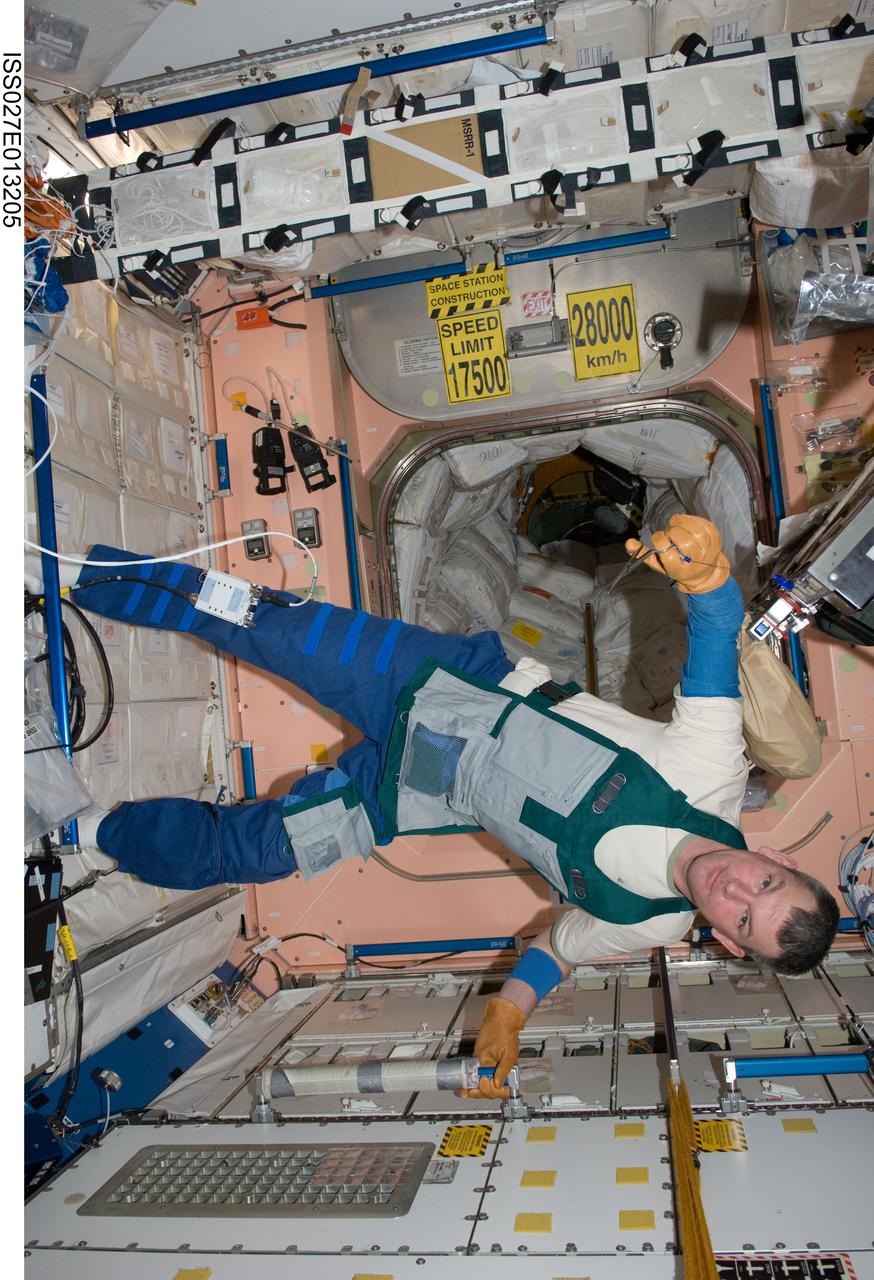
ISS027-E-013205 (15 April 2011) --- Russian cosmonaut Alexander Samokutyaev, Expedition 27 flight engineer, wearing in a work apron, is pictured in the Unity node of the International Space Station.
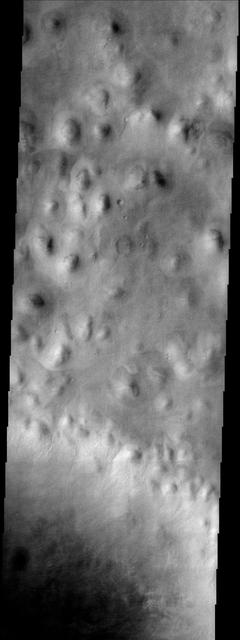
Hills abound in this portion of Mars imaged by NASA Mars Odyssey that shows the Vastitas Borealis region of the high northern plains. These hills are part of Scandia Colles. Note that some of the hills have aprons surrounding them. The northern part of Milankovic crater is visible in the lower portion of this image. http://photojournal.jpl.nasa.gov/catalog/PIA04035
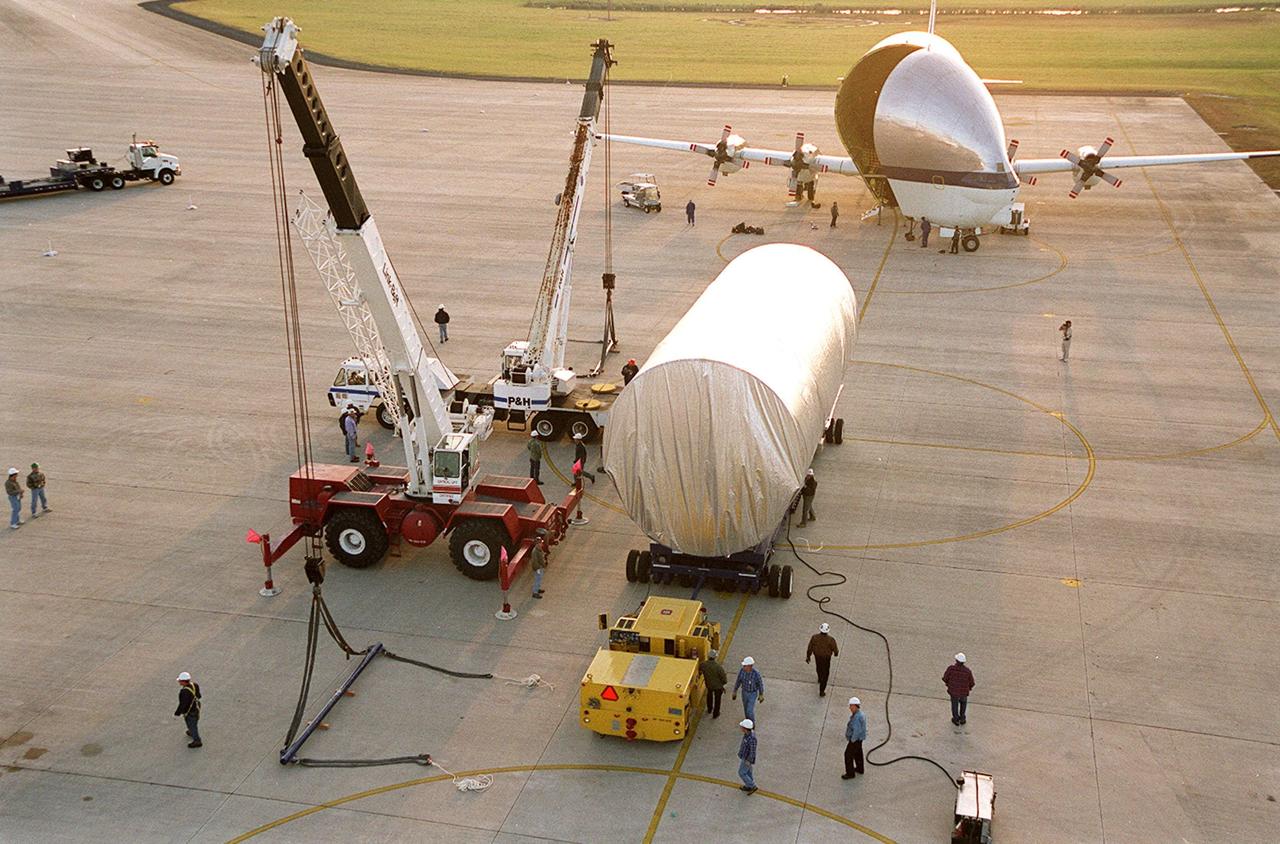
The Integrated Truss Structure S3 waits on the parking apron of the Shuttle Landing Facility after being offloaded from the Super Guppy aircraft in the background. The truss will be moved to a transporter and taken to the Operations and Checkout Building. The second starboard truss segment of the International Space Station, the S3 truss is scheduled to be added to the Station in April 2003
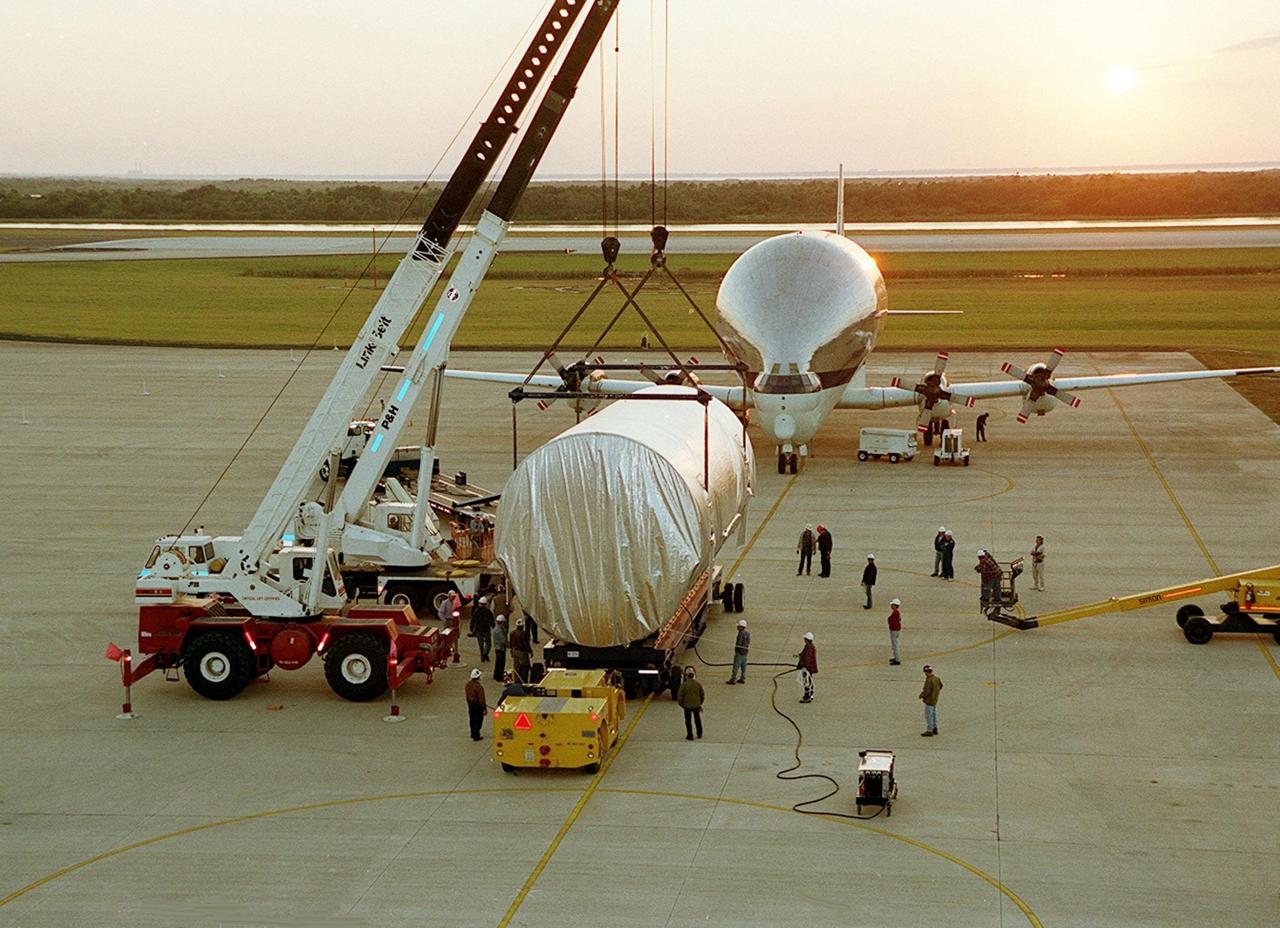
On the parking apron of the Shuttle Landing Facility, workers check the overhead cranes that will move the Integrated Truss Structure S3 to a transporter. The truss will be taken to the Operations and Checkout Building. The second starboard truss segment of the International Space Station, the S3 truss is scheduled to be added to the Station in April 2003
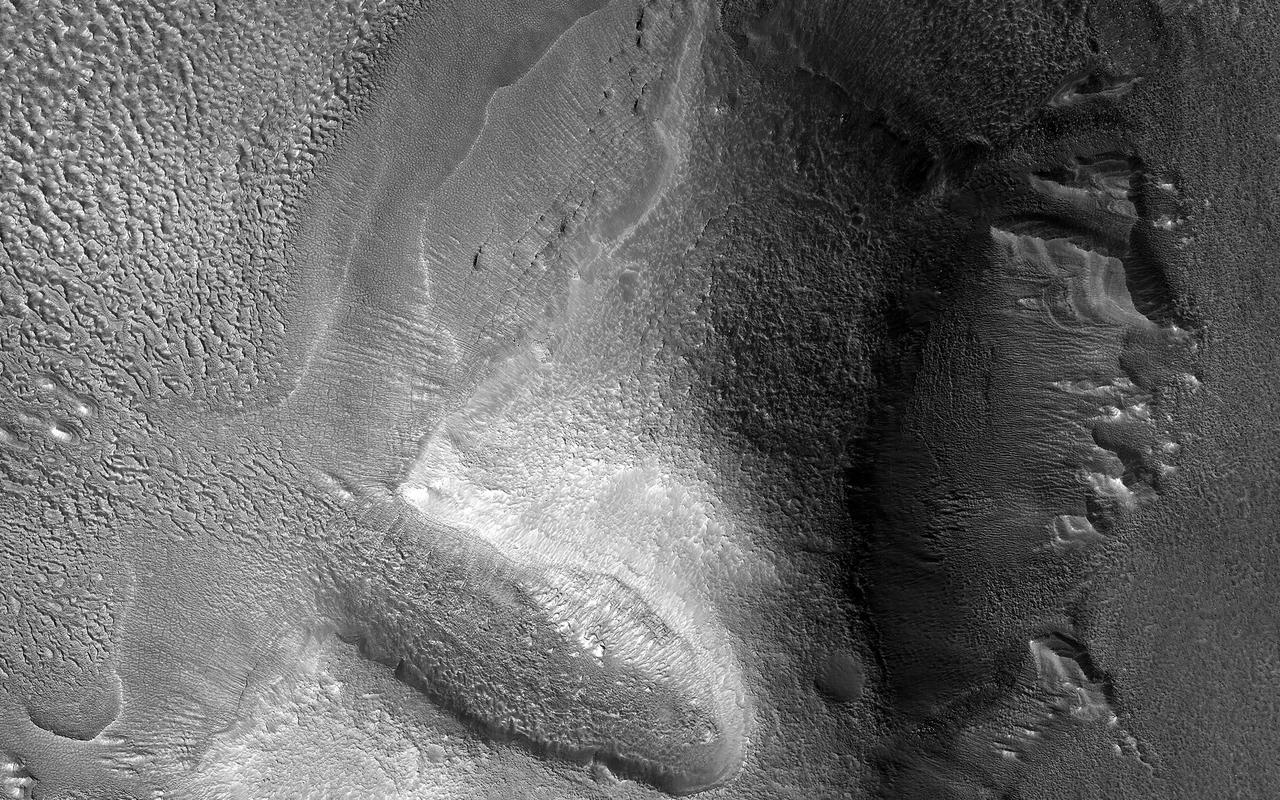
Lobate debris aprons (LDA) are commonly found surrounding dissected plateaus in the Deuteronilus Mensae region of Mars. They have been interpreted as debris-covered glaciers and radar data have shown their interiors to be composed of pure ice. The mound in this image is slightly removed from most of the other plateaus, and the LDA surrounding it is highly degraded. The sharp scarps on the western and eastern sides of the mound indicate that a great deal of the ice once found in these landforms has since sublimated away, leaving behind these collapsed debris cliffs. https://photojournal.jpl.nasa.gov/catalog/PIA24464
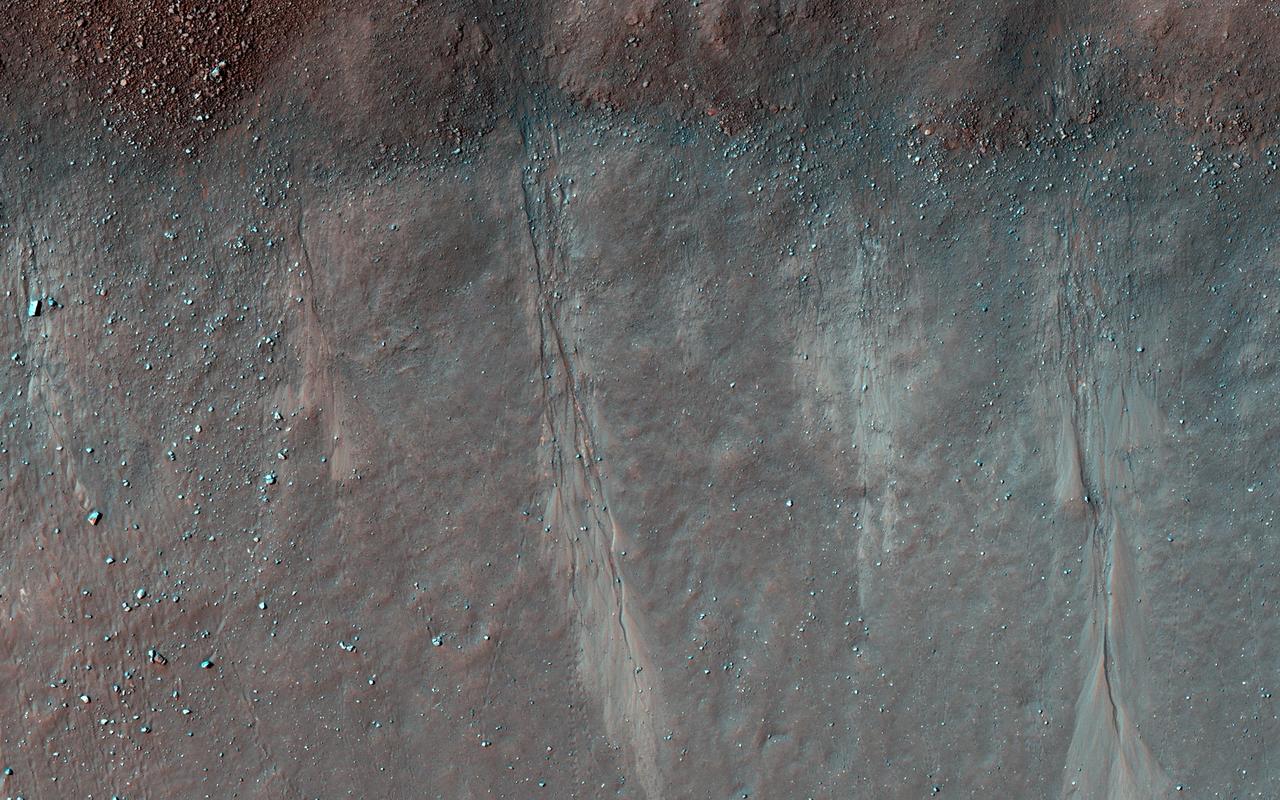
The formation of gullies on Martian slopes is still under debate. Potential mechanisms include the melting of surface water ice, groundwater outbursts, or dry mass wasting processes (landslides). This image shows several shallow gully channels with associated debris aprons emanating from a buried layer on the interior of a crater wall. Also visible are many boulders of varying sizes along the wall, with several exhibiting clear tracks from their journey downslope. These tracks can be used to better understand the mass wasting environment on the hill slope and whether there is any connection between the boulders and the gullies. https://photojournal.jpl.nasa.gov/catalog/PIA25554
![This image from NASA's Mars Reconnaissance Orbiter (MRO) shows blocks of layered terrain within the Olympus Mons aureole. The aureole is a giant apron of chaotic material around the volcano, perhaps formed by enormous landslides off the flanks of the giant volcano. These blocks of layered material have been eroded by the wind into the scenic landscape we see here. The map is projected here at a scale of 25 centimeters (9.8 inches) per pixel. [The original image scale is 28.3 centimeters (11.1 inches) per pixel (with 1 x 1 binning); objects on the order of 85 centimeters (33.5 inches) across are resolved.] North is up. https://photojournal.jpl.nasa.gov/catalog/PIA22181](https://images-assets.nasa.gov/image/PIA22181/PIA22181~medium.jpg)
This image from NASA's Mars Reconnaissance Orbiter (MRO) shows blocks of layered terrain within the Olympus Mons aureole. The aureole is a giant apron of chaotic material around the volcano, perhaps formed by enormous landslides off the flanks of the giant volcano. These blocks of layered material have been eroded by the wind into the scenic landscape we see here. The map is projected here at a scale of 25 centimeters (9.8 inches) per pixel. [The original image scale is 28.3 centimeters (11.1 inches) per pixel (with 1 x 1 binning); objects on the order of 85 centimeters (33.5 inches) across are resolved.] North is up. https://photojournal.jpl.nasa.gov/catalog/PIA22181
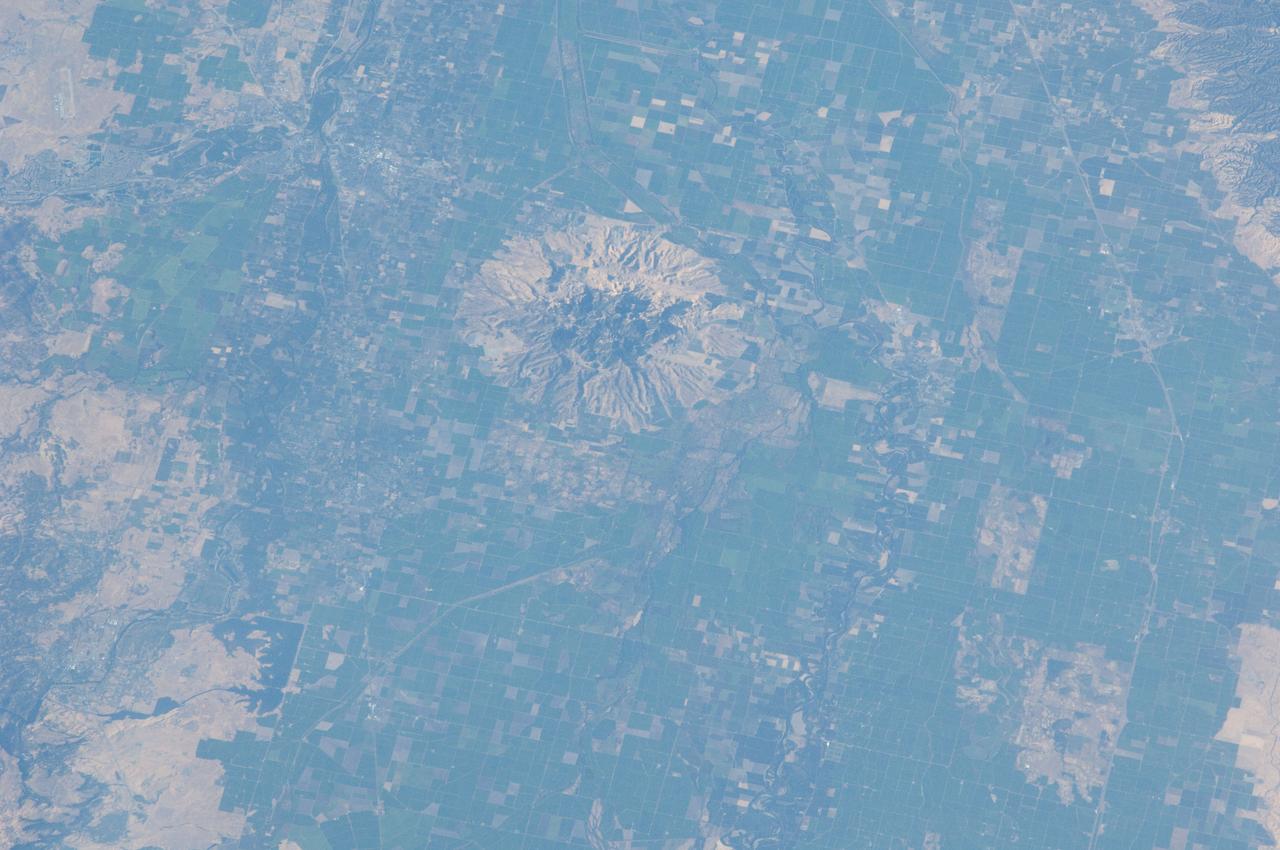
ISS032-E-010482 (29 July 2012) --- Sutter Buttes in California are featured in this image photographed by an Expedition 32 crew member on the International Space Station. Sometimes called the ?smallest mountain range in the world?, the Sutter Buttes rise almost 610 meters above the surrounding flat agricultural fields of the Great Valley of central California. Scientists believe the Sutter Buttes are remnants of a volcano that was active approximately 1.6 ? 1.4 million years ago during the Pleistocene Epoch. The central core of the Buttes is characterized by lava domes?piles of viscous lava that erupted onto the surface, building higher with each successive layer. Today, these lava domes form the high central hills of the Buttes; shadows cast by the hills are visible at center. Surrounding the central core is an apron of fragmental material created by occasional eruptions of the lava domes ? this apron extends roughly 18 kilometers east-west and 16 kilometers north-south. The volcanic material was transported outwards from the central core during eruptions by hot gasses (pyroclastic flows) or by cooler water-driven flows (lahars). Later stream erosion of the debris apron is evident from the radial drainage pattern surrounding the central core. A third geomorphic region of valleys known as the ?moat? is present between the core and the debris apron, and was formed from erosion of older, exposed sedimentary rocks that underlie the volcanic rocks. The Sutter Buttes present a striking visual contrast with the surrounding green agricultural fields?here mostly rice, with some sunflower, winter wheat, tomato, and almonds?of the Great Valley. Urban areas such as Yuba City, CA (located 18 kilometers to the southeast) appear as light to dark gray stippled regions. Sacramento, CA (not shown) is located approximately 80 kilometers to the south-southeast. The image appears slightly distorted (oblique) due to the viewing angle from the space station.
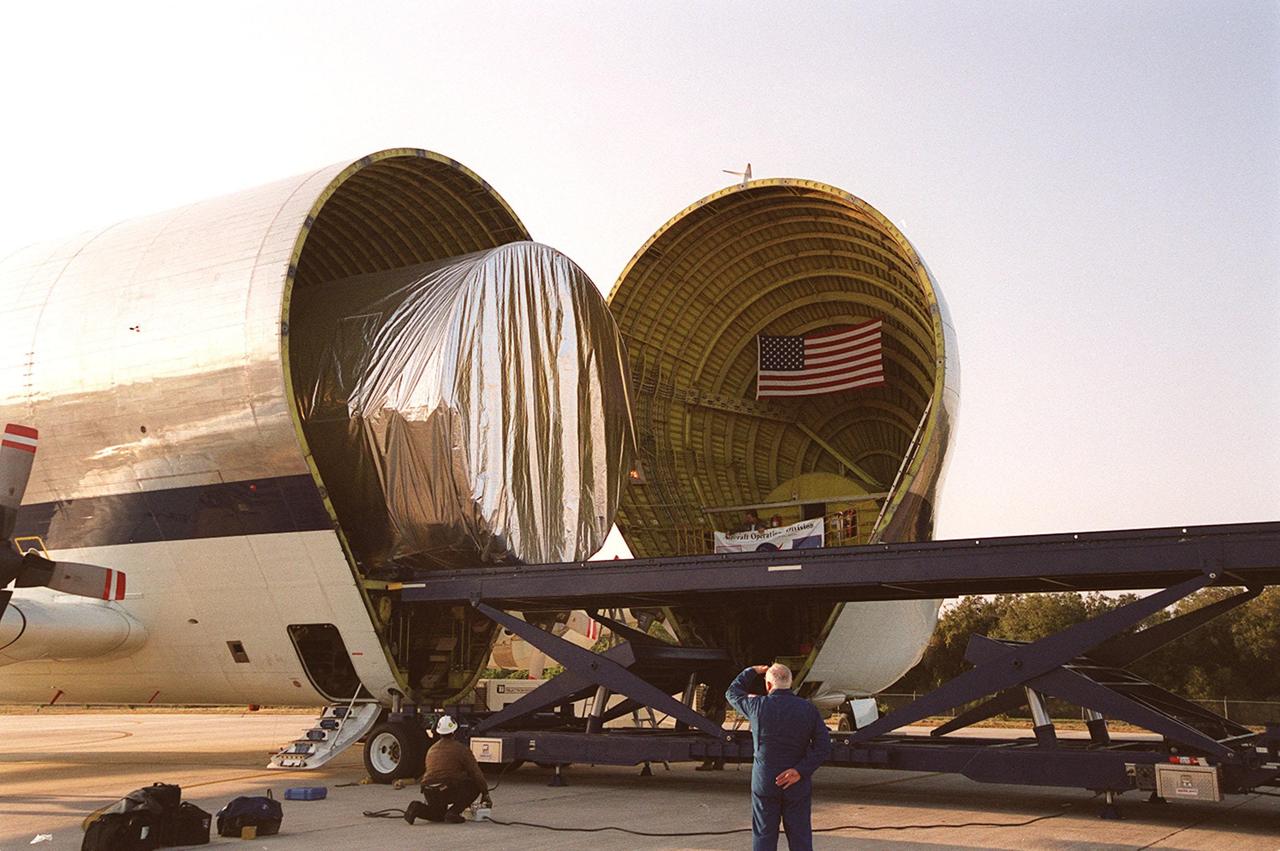
On the parking apron of the KSC Shuttle Landing Facility, the Integrated Truss Structure S3 moves out from inside the Super Guppy aircraft that brought it to KSC from Tulsa, Okla. After offloading, the S3 will be transported to the Operations and Checkout Building. The second starboard truss segment of the International Space Station, the S3 truss is scheduled to be added to the Station in April 2003
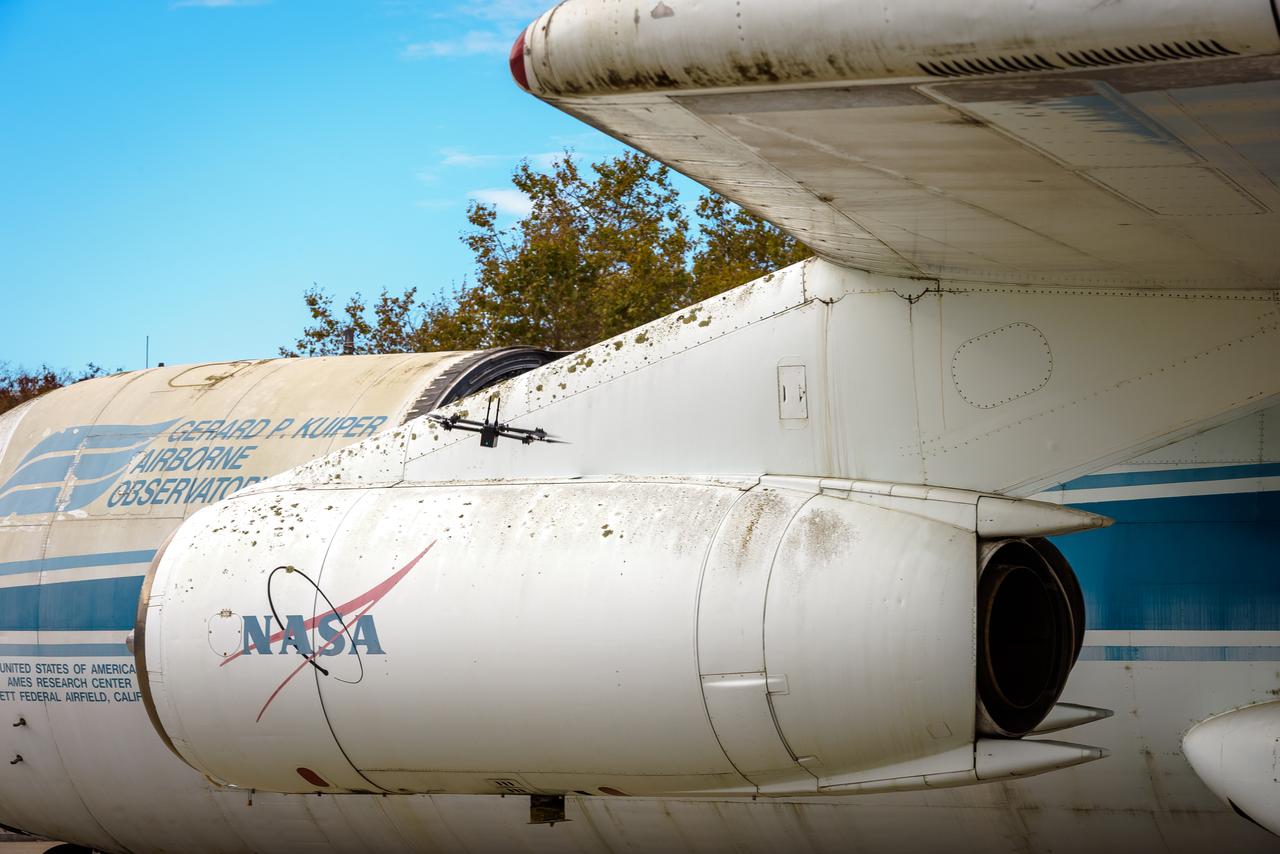
The drone follows an autonomously defined path around the modified C-141 Kuiper Airborne Observatory, (KAO) (NASA-714), on the N211 apron. The drone photographs the aircraft with a visible and infrared camera which are processed using a photogrammetry software package called Pix4D that converts them into a 3D model. Scanning the aircraft is the first phase of documenting the aircraft demolition as well as an opportunity to train pilots to operate the Pix4D software.
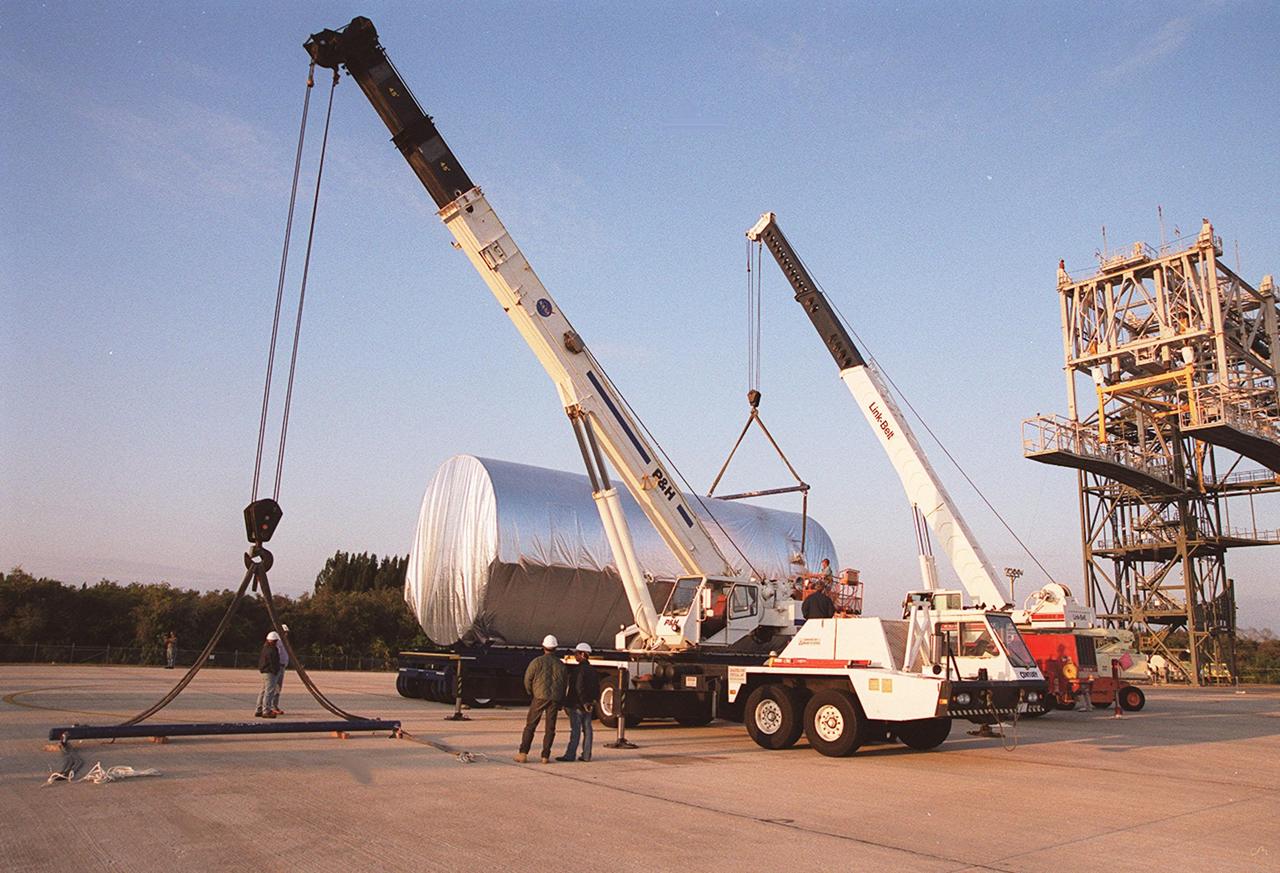
Cranes move toward the Integrated Truss Structure S3 as it sits on the parking apron of the Shuttle Landing Facility after being offloaded from the Super Guppy aircraft. The truss will be moved to a transporter and taken to the Operations and Checkout Building. The second starboard truss segment of the International Space Station, the S3 truss is scheduled to be added to the Station in April 2003
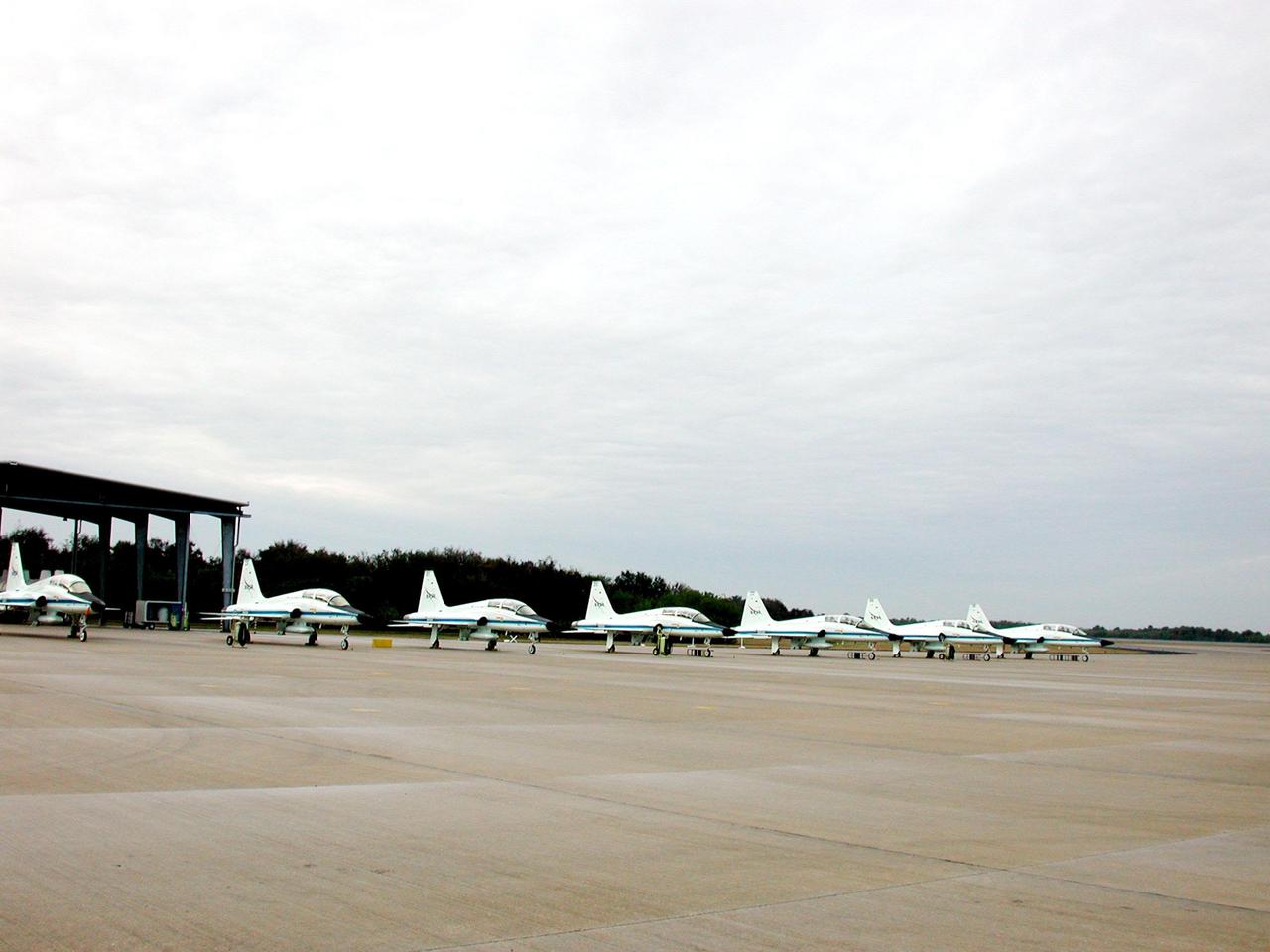
KENNEDY SPACE CENTER, FLA. -- At the Shuttle Landing Facility, T-38 jet training aircraft are lined up on the parking apron. T-38s are typically used by astronauts to travel between Johnson Space Center, Houston, and Kennedy Space Center. The STS-98 crew recently arrived aboard the jets to prepare for their launch Feb. 7 to the International Space Station. The seventh construction flight to the Space Station, it will carry the U.S. Laboratory Destiny, a key module for space experiments