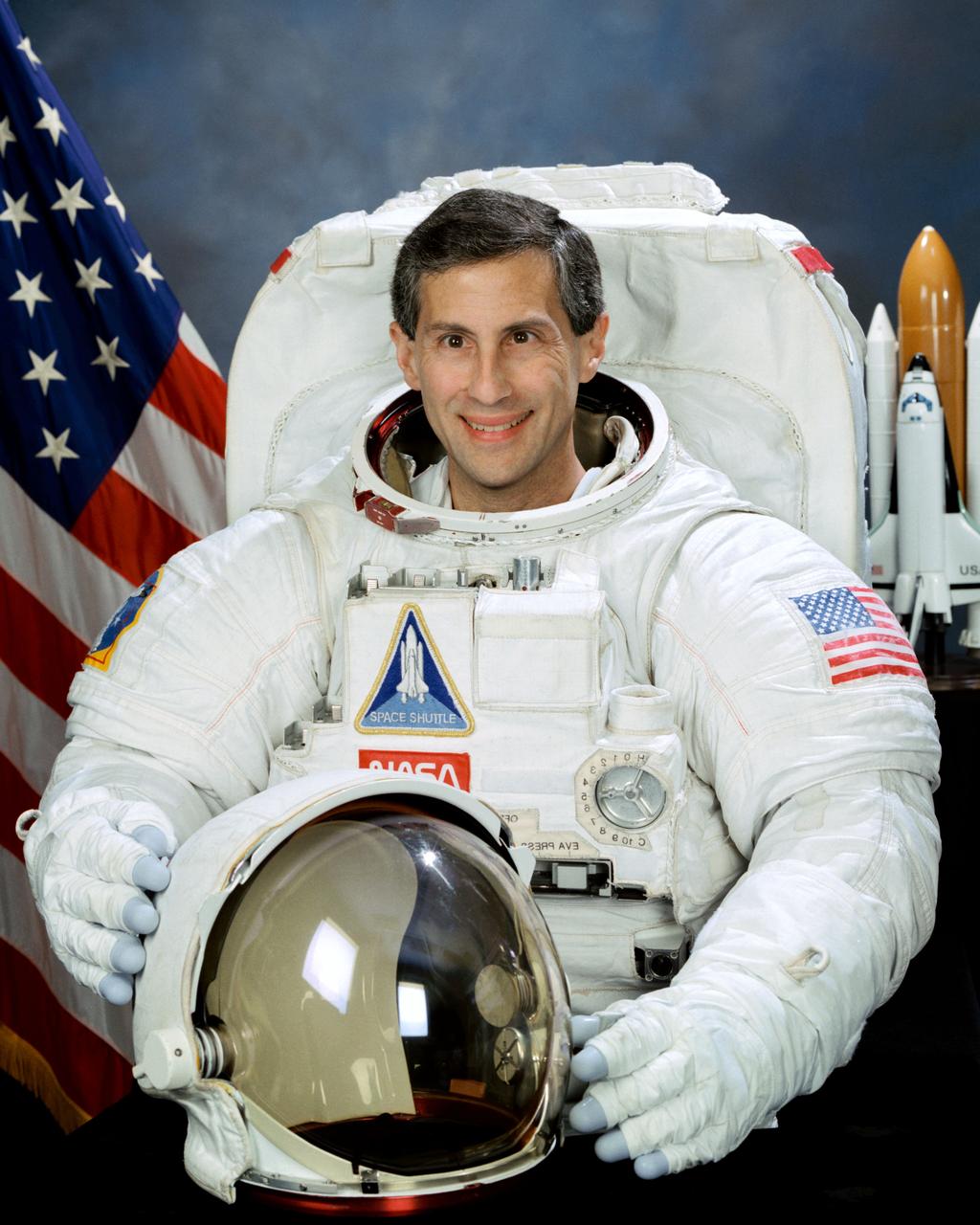
S95-10987 (1995) --- Astronaut Jerome "Jay" Apt.
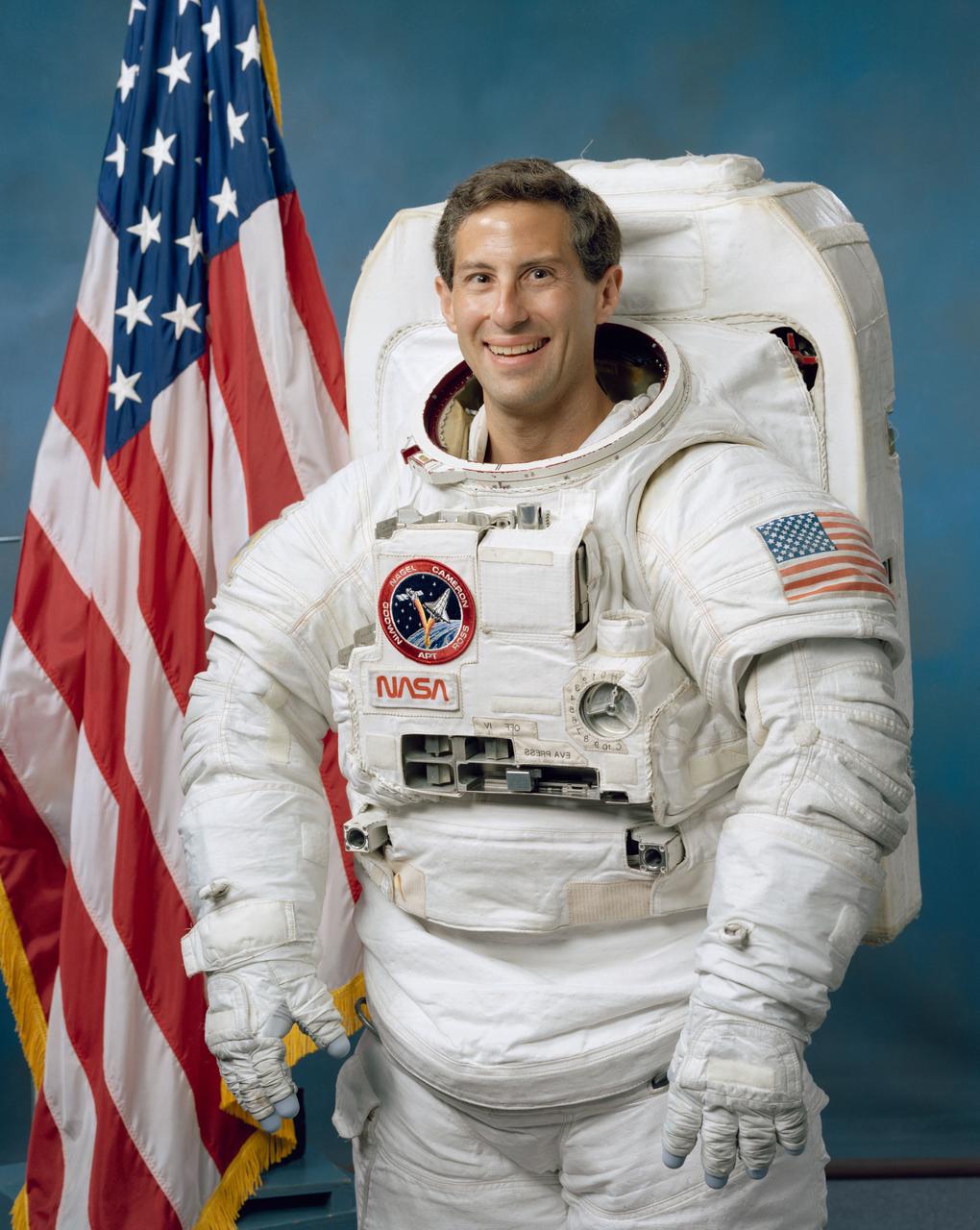
S90-42988 (October 1990) --- Astronaut Jerome (Jay) Apt.
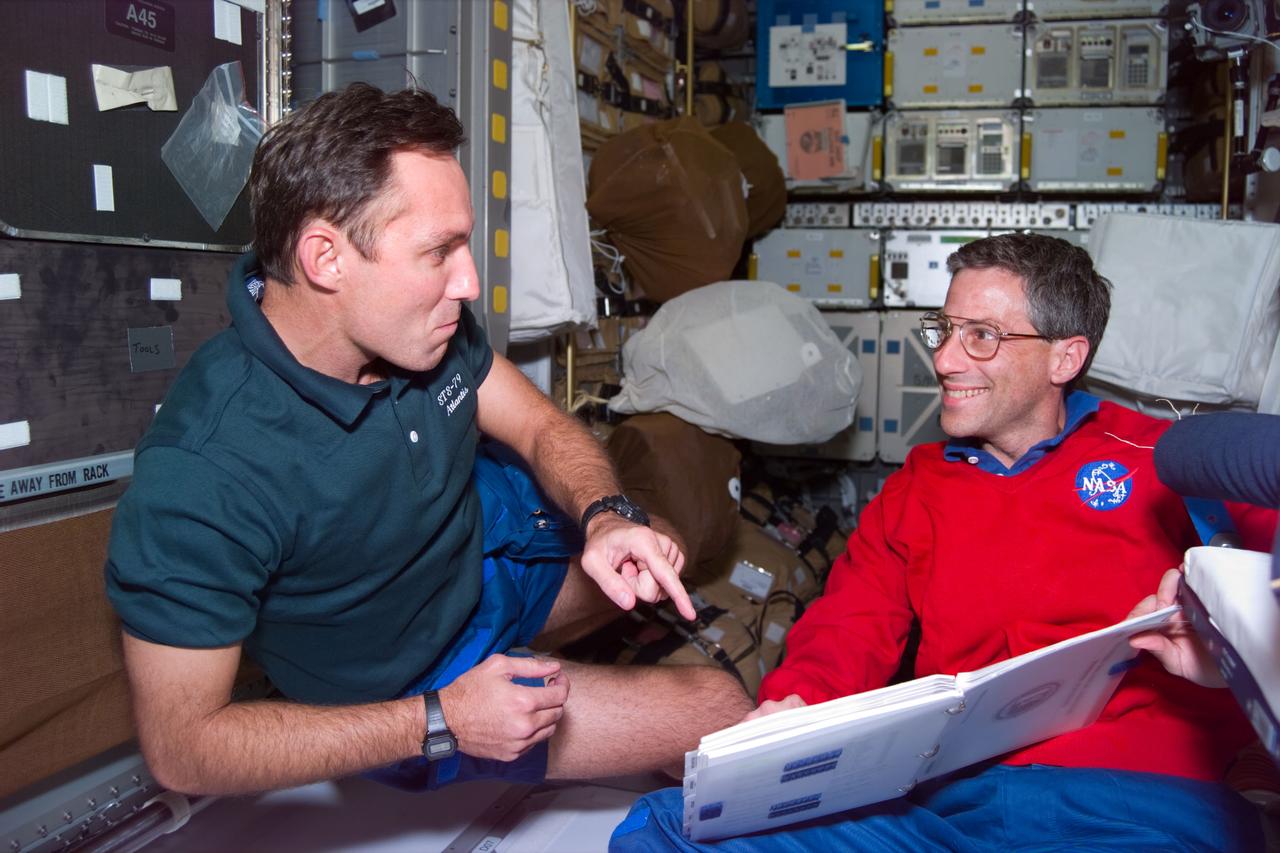
STS79-E-5007 (17 September 1996) --- Astronauts Carl E. Walz and Jerome (Jay) Apt, mission specialists, report to Spacehab Module for early mission experimentation on the first full day of STS-79 operations, on Flight Day 2.
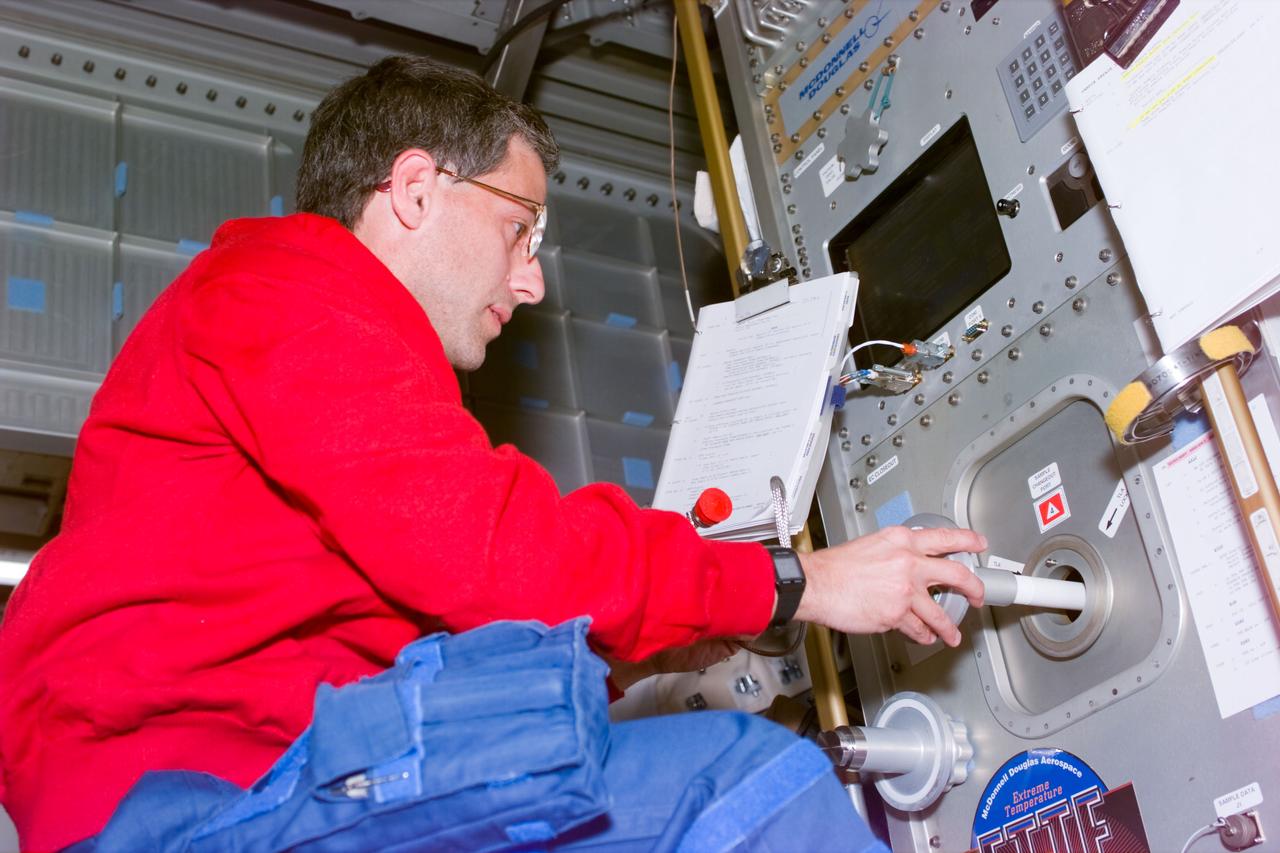
STS79-E-5019 (17 September 1996) --- Astronaut Jerome (Jay) Apt inserts experiment into Extreme Temperature Translation Furnace (ETTF) furnace, onboard the Space Shuttle Atlantis, on Flight Day 2.
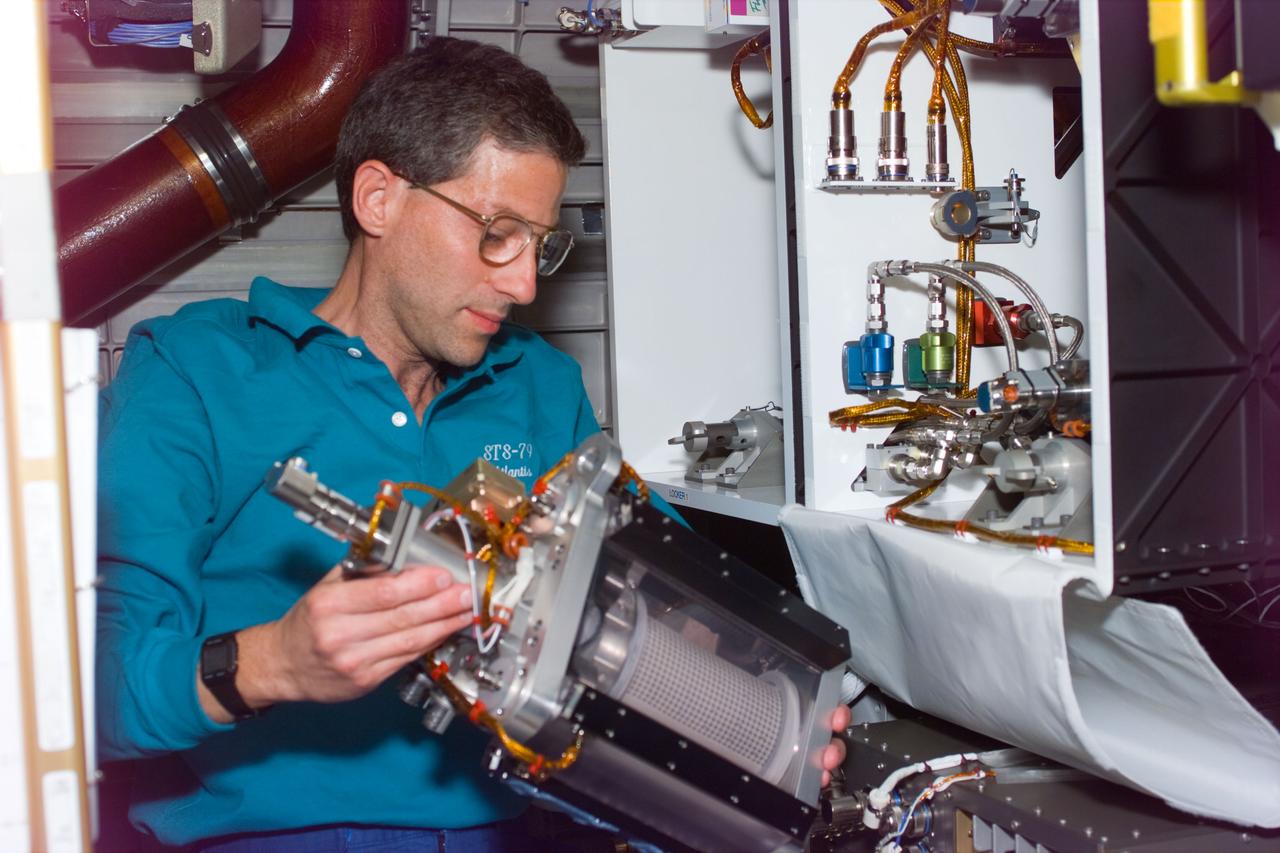
STS79-E-5042 (18 September 1996) --- Astronaut Jerome (Jay) Apt performs In-Flight Maintenance (IFM) on Active Rack Isolation System (ARIS) experiment, on Flight Day 3.
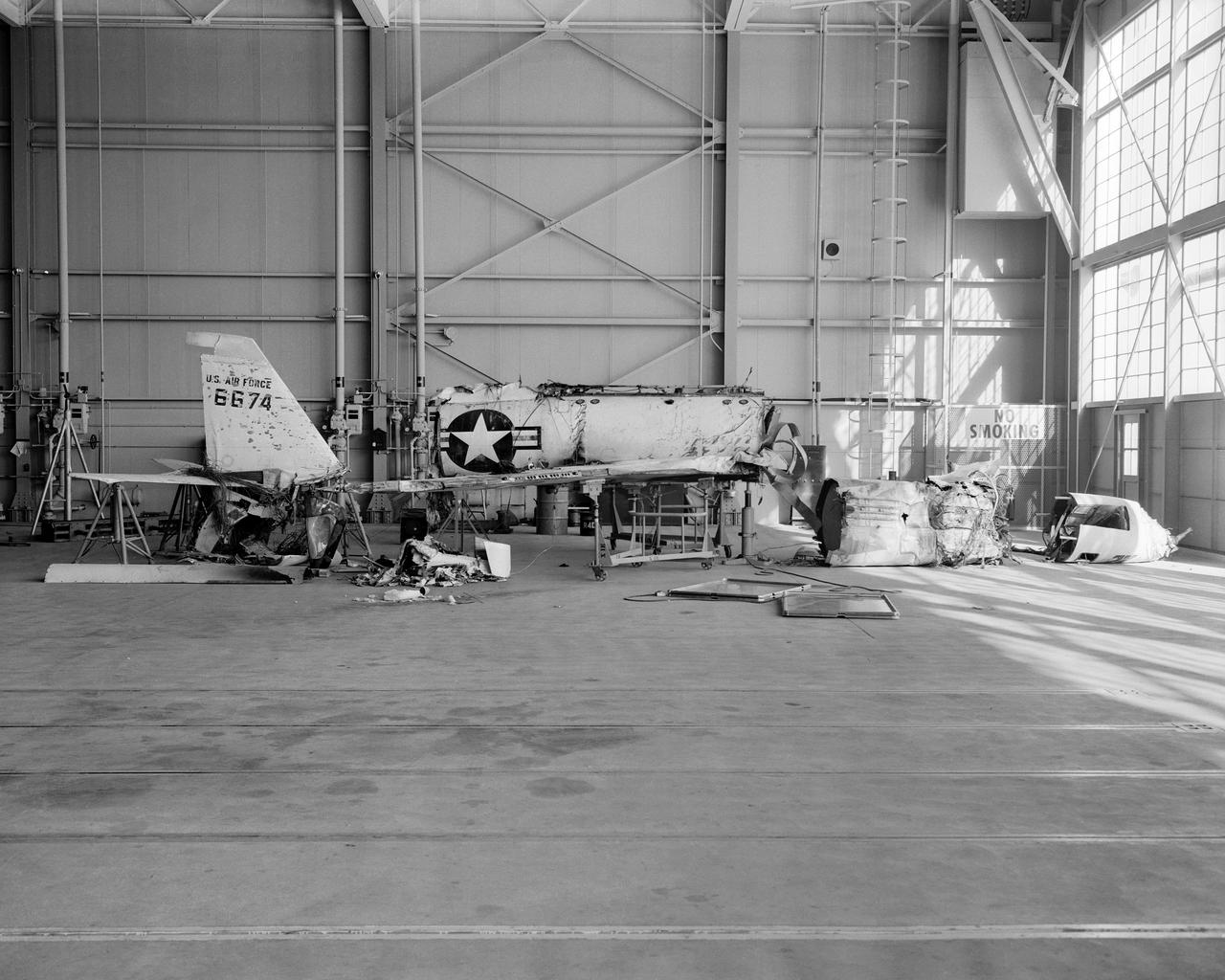
The X-2, initially an Air Force program, was scheduled to be transferred to the civilian National Advisory Committee for Aeronautics (NACA) for scientific research. The Air Force delayed turning the aircraft over to the NACA in the hope of attaining Mach 3 in the airplane. The service requested and received a two-month extension to qualify another Air Force test pilot, Capt. Miburn "Mel" Apt, in the X-2 and attempt to exceed Mach 3. After several ground briefings in the simulator, Apt (with no previous rocket plane experience) made his flight on 27 September 1956. Apt raced away from the B-50 under full power, quickly outdistancing the F-100 chase planes. At high altitude, he nosed over, accelerating rapidly. The X-2 reached Mach 3.2 (2,094 mph) at 65,000 feet. Apt became the first man to fly more than three times the speed of sound. Still above Mach 3, he began an abrupt turn back to Edwards. This maneuver proved fatal as the X-2 began a series of diverging rolls and tumbled out of control. Apt tried to regain control of the aircraft. Unable to do so, Apt separated the escape capsule. Too late, he attempted to bail out and was killed when the capsule impacted on the Edwards bombing range. The rest of the X-2 crashed five miles away. The wreckage of the X-2 rocket plane was later taken to NACA's High Speed Flight Station for analysis following the crash.
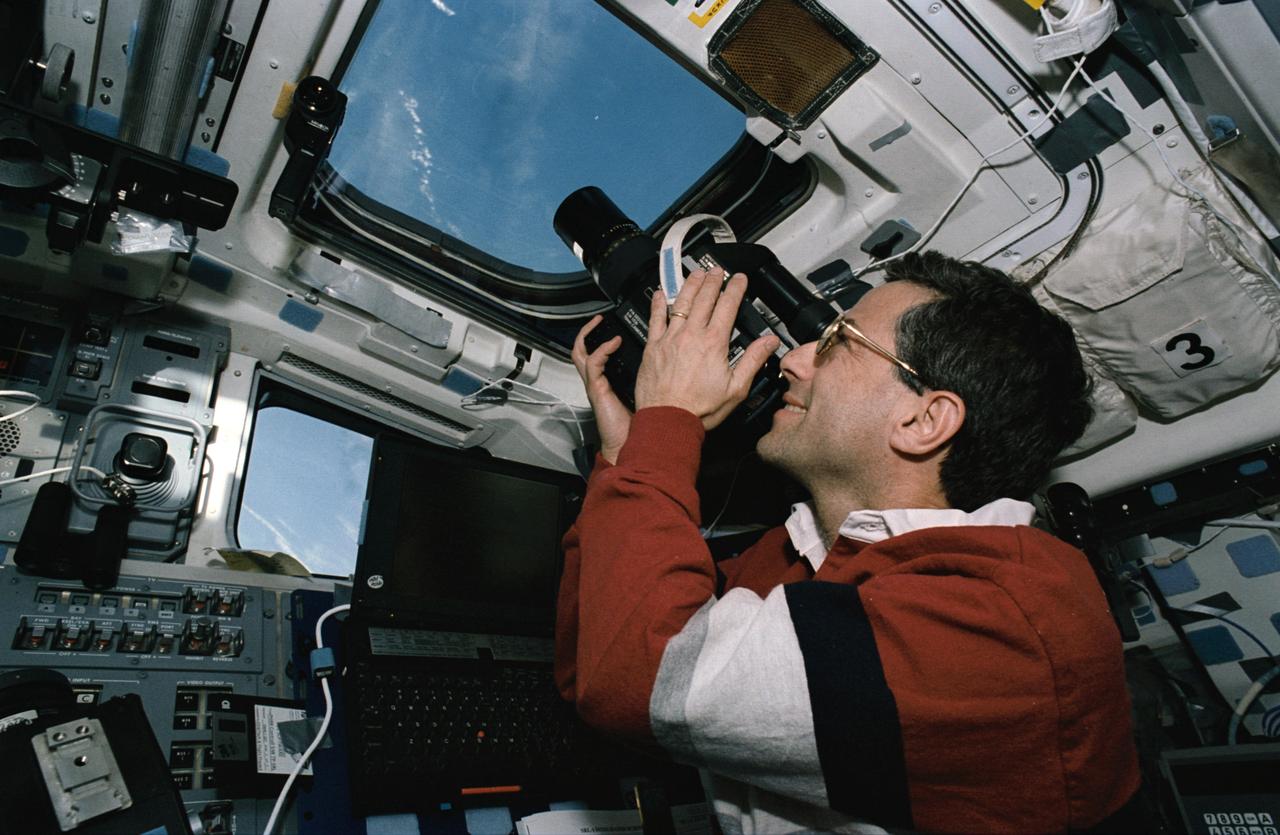
STS059-46-025 (9-20 April 1994) --- On the Space Shuttle Endeavour's aft flight deck astronaut Jerome (Jay) Apt, mission specialist, uses a handheld 70mm Hasselblad camera to record still scenes of Earth. Apt, the commander of Endeavour's Blue Shift, joined five other NASA astronauts for a week and a half in space in support of the Space Radar Laboratory/STS-59 mission.
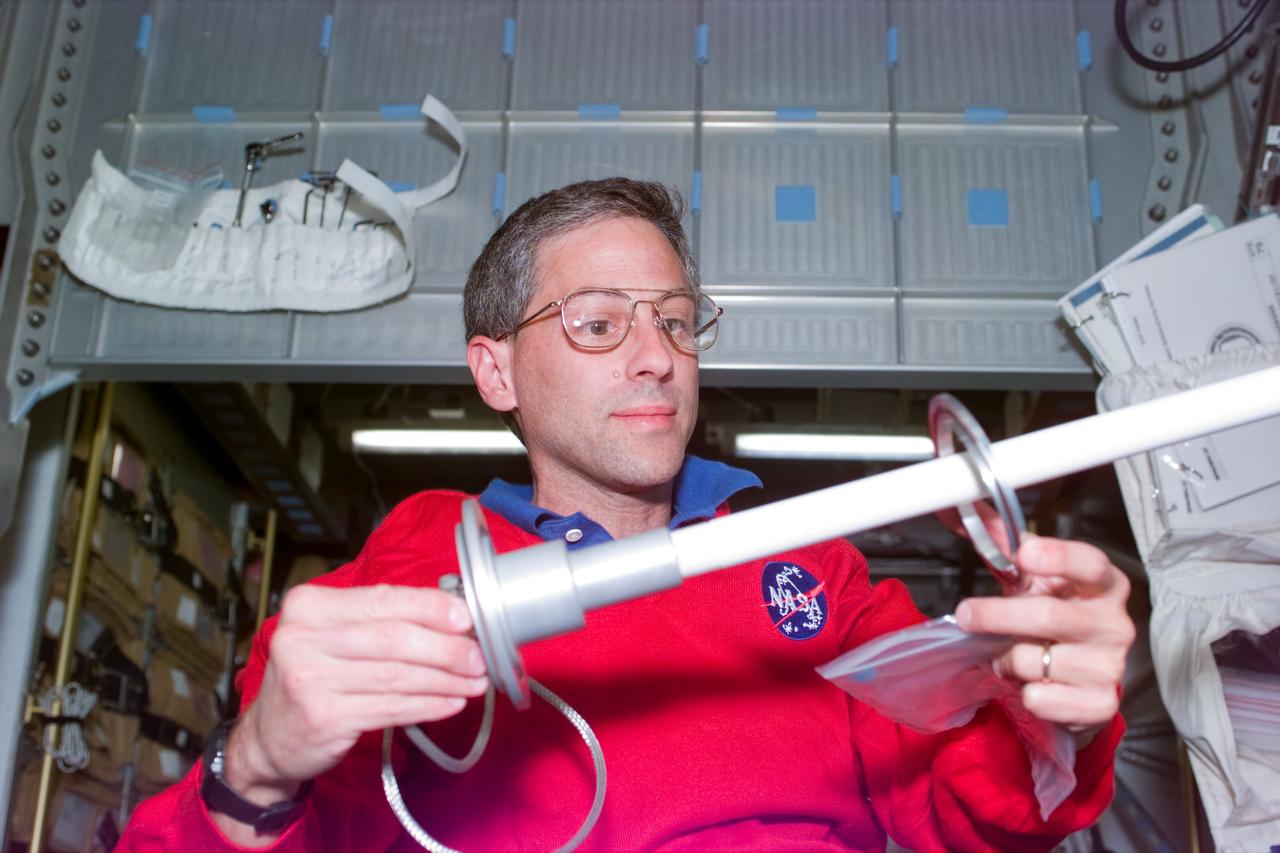
STS79-E-5018 (17 September 1996) --- Astronaut Jerome (Jay) Apt prepares experiment, a rod-like device for insertion into Extreme Temperature Translation Furnace (ETTF) in STS-79-E-5019, during early mission chores aboard Spacehab in the Space Shuttle Atlantis cargo bay, on Flight Day 2.
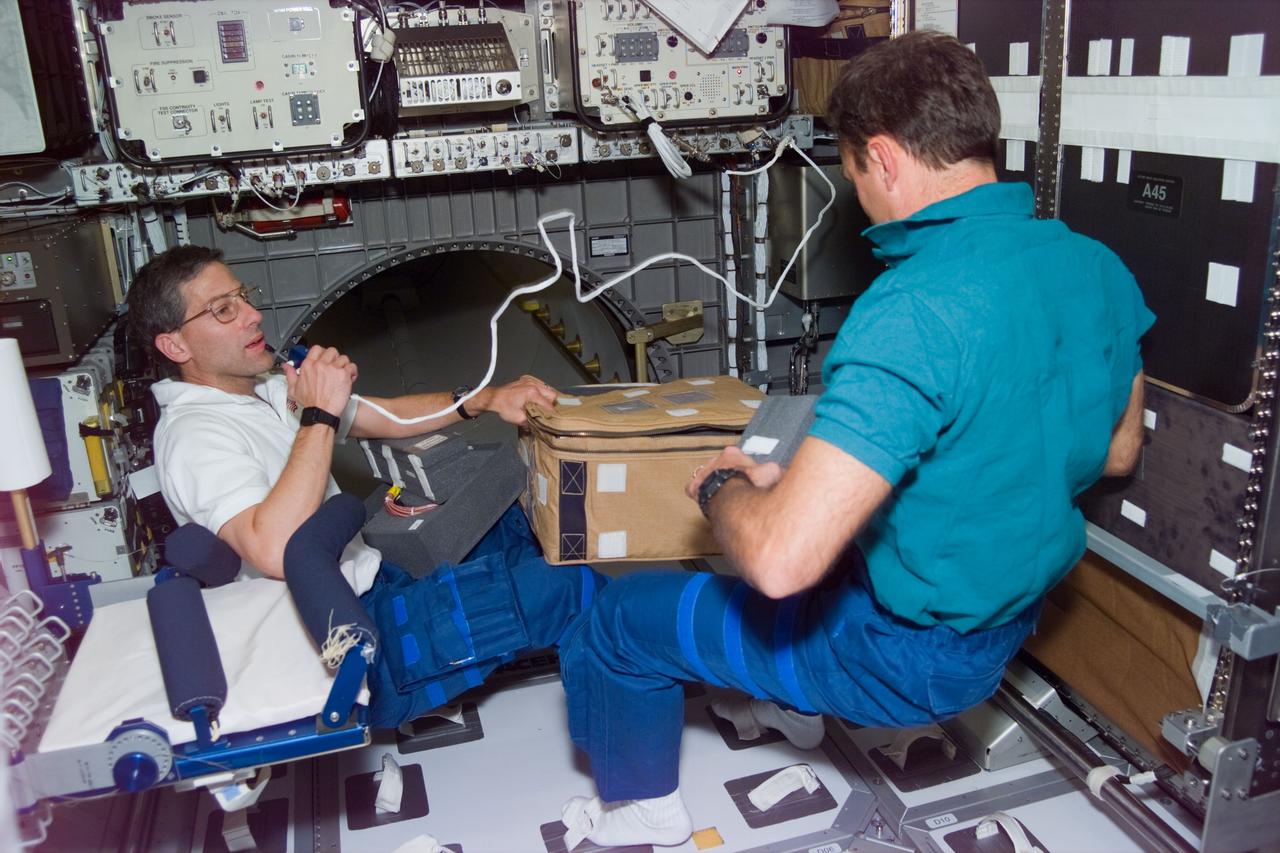
STS79-E-5268 (22 September 1996) --- Astronauts Jerome (Jay) Apt and Thomas D. Akers seal up a transfer stowage bag on the floor at the front end of the Spacehab Module, during Flight Day 7, onboard the Space Shuttle Atlantis.
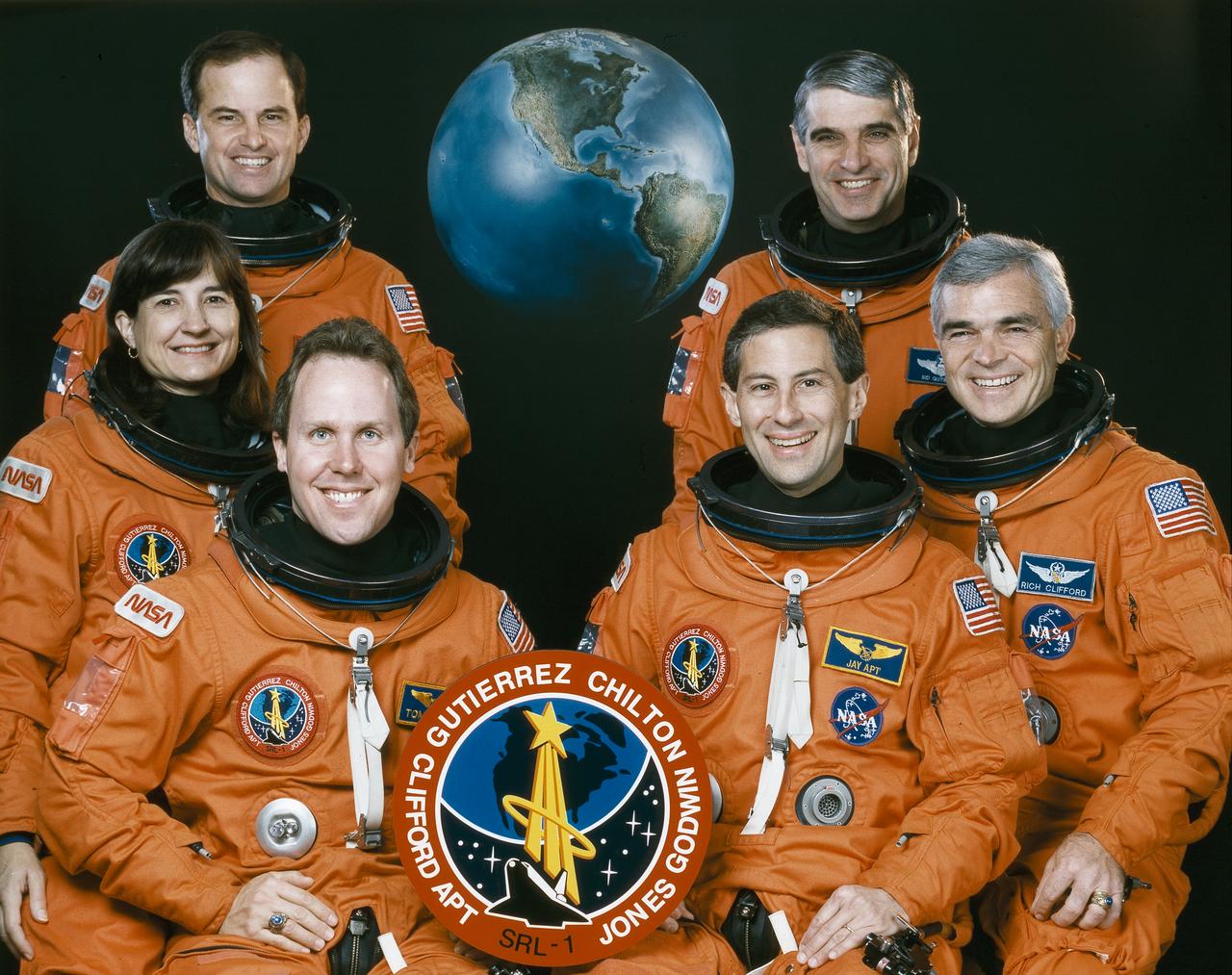
Astronauts included in the STS-59 crew portrait include (standing in rear, left to right) Kevin P. Chilton, pilot; and Sidney M. Gutierrez, commander. Seated left to right are Linda M. Godwin, payload commander; and mission specialists Thomas D. Jones, Jay Apt, and Michael R. Clifford. Launched aboard the Space Shuttle Endeavour on April 9, 1994 at 7:05:00 am (EDT), the STS-59 mission deployed the Space Radar Laboratory (SRL-1).
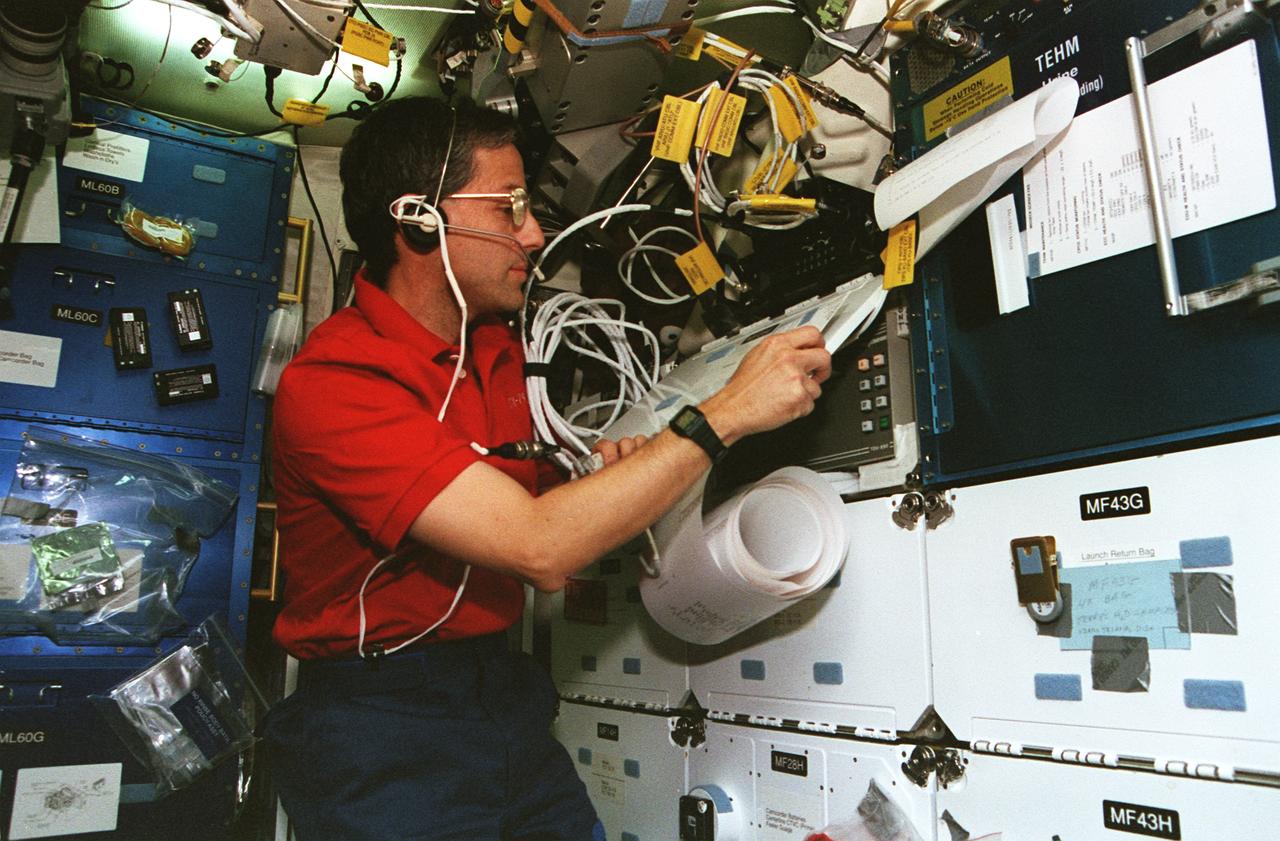
STS079-365-004 (16-26 Sept. 1996) --- During off-duty time, Jerome (Jay) Apt, a licensed amateur radio operator, talks to ground contacts via the Shuttle Amateur Radio Experiment (SAREX). The radio was also used for communications between the Space Shuttle Atlantis and Russia's Mir Space Station during docking and undocking activities. This photograph is one of fifteen 35mm frames (along with four 70mm frames) of still photography documenting the activities of NASA's STS-79 mission, which began with a September 16, 1996, liftoff from Launch Pad 39A the Kennedy Space Center (KSC) and ended with a landing at KSC on September 26, 1996. Onboard for the launch were astronauts William F. Readdy, commander; Terrence W. Wilcutt, pilot; John E. Blaha, Apt, Thomas D. Akers and Carl E. Walz, all mission specialists. On flight day 4, the crew docked with Mir. Shannon W. Lucid, who had spent six months aboard Mir, switched cosmonaut guest researcher roles with Blaha. The latter joined fellow Mir-22 crew members Valeri G. Korzun, commander, and Aleksandr Y. Kaleri, flight engineer.
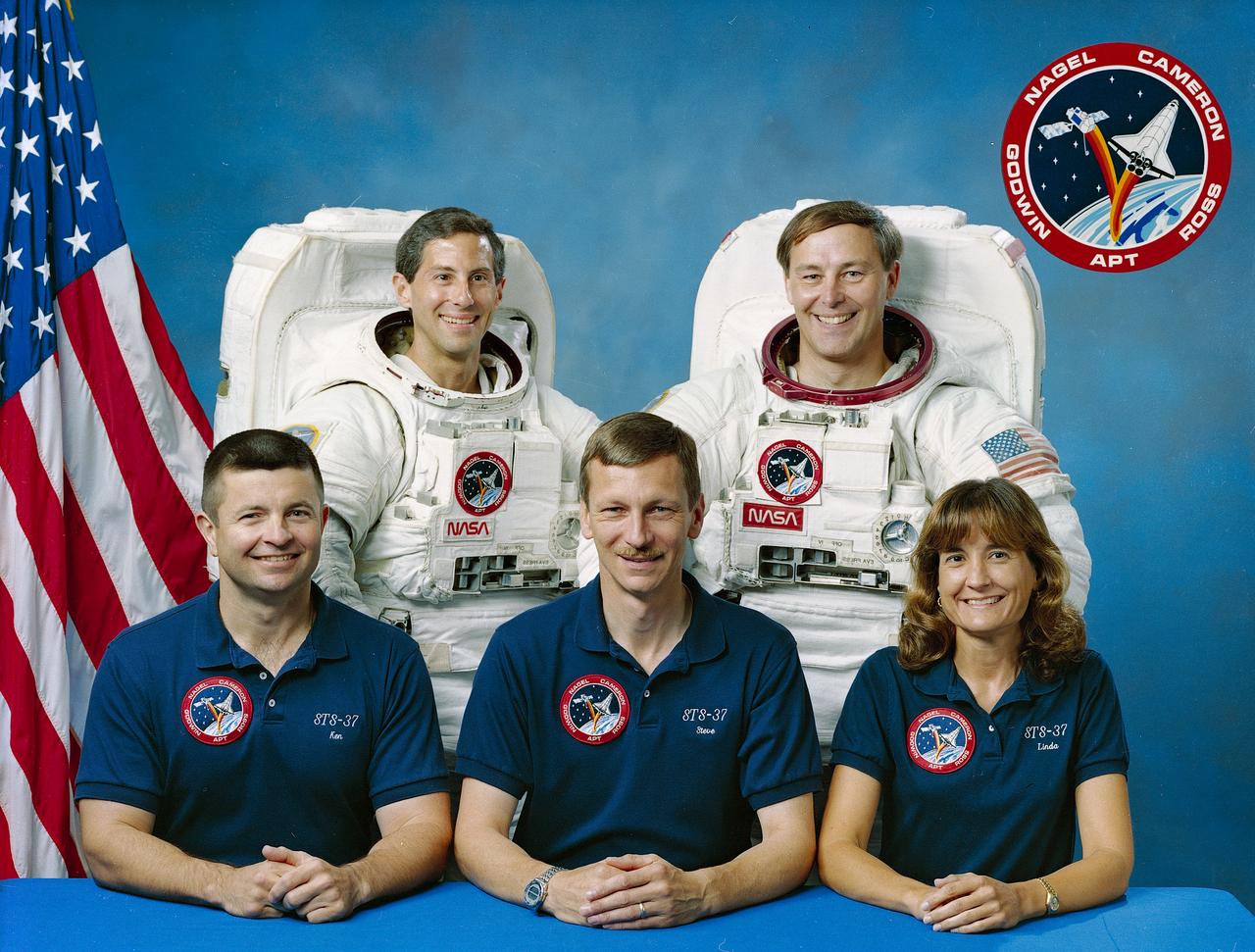
This is the STS-37 Crew portrait. Pictured from left to right are Kenneth D. (Ken) Cameron, pilot; Jay Apt, mission specialist; Steven R. Nagel, commander; and Jerry L. Ross and Linda M. Godwin, mission specialists. Launched aboard the Space Shuttle Atlantis on April 5, 1991 at 9:22:44am (EST), the crew’s major objective was the deployment of the Gamma Ray Observatory (GRO). Included in the observatory were the Burst and Transient Source Experiment (BATSE); the Imaging Compton Telescope (COMPTEL); the Energetic Gamma Ray Experiment Telescope (EGRET); and the Oriented Scintillation Spectrometer Telescope (OSSEE).
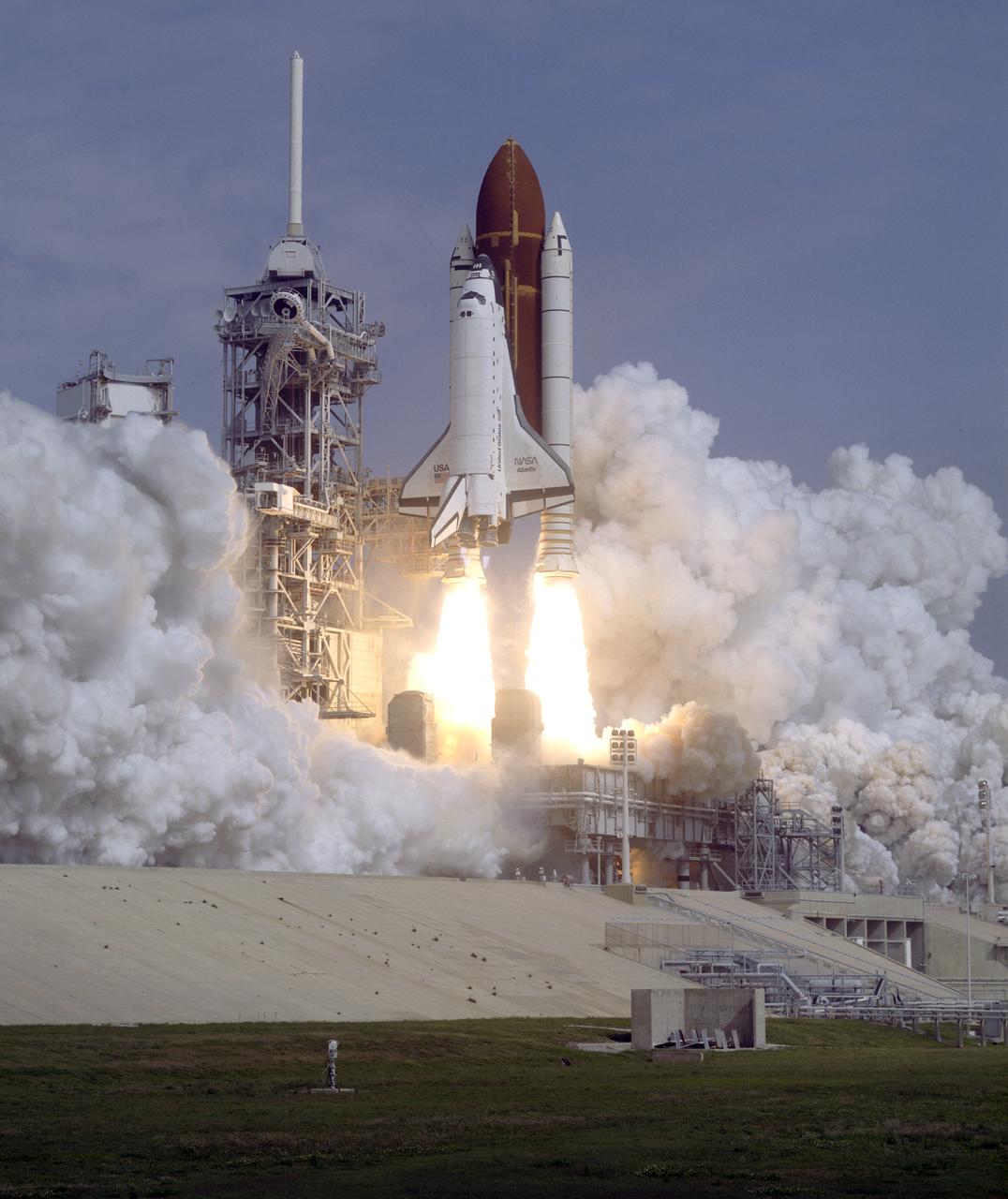
Aboard the Space Shuttle Atlantis, the STS-37 mission launched April 5, 1991 from launch pad 39B at the Kennedy Space Center in Florida, and landed back on Earth April 11, 1991. The 39th shuttle mission included crew members: Steven R. Nagel, commander; Kenneth D. Cameron, pilot; Jerry L,. Ross, mission specialist 1; Jay Apt, mission specialist 2; and Linda M. Godwin, mission specialist 3. The primary payload for the mission was the Gamma Ray Observatory (GRO). The GRO included the Burst and Transient Experiment (BATSE); the Imaging Compton Telescope (COMPTEL); the Energetic Gamma Ray Experiment Telescope (EGRET); and the Oriented Scintillation Spectrometer Experiment (OSSEE). Secondary payloads included Crew and Equipment Translation Aids (CETA); the Ascent Particle Monitor (APM); the Shuttle Amateur Radio Experiment II (SAREXII), the Protein Crystal Growth (PCG); the Bioserve Instrumentation Technology Associates Materials Dispersion Apparatus (BIMDA); Radiation Monitoring Equipment III (RMEIII); and Air Force Maui Optical Site (AMOS).
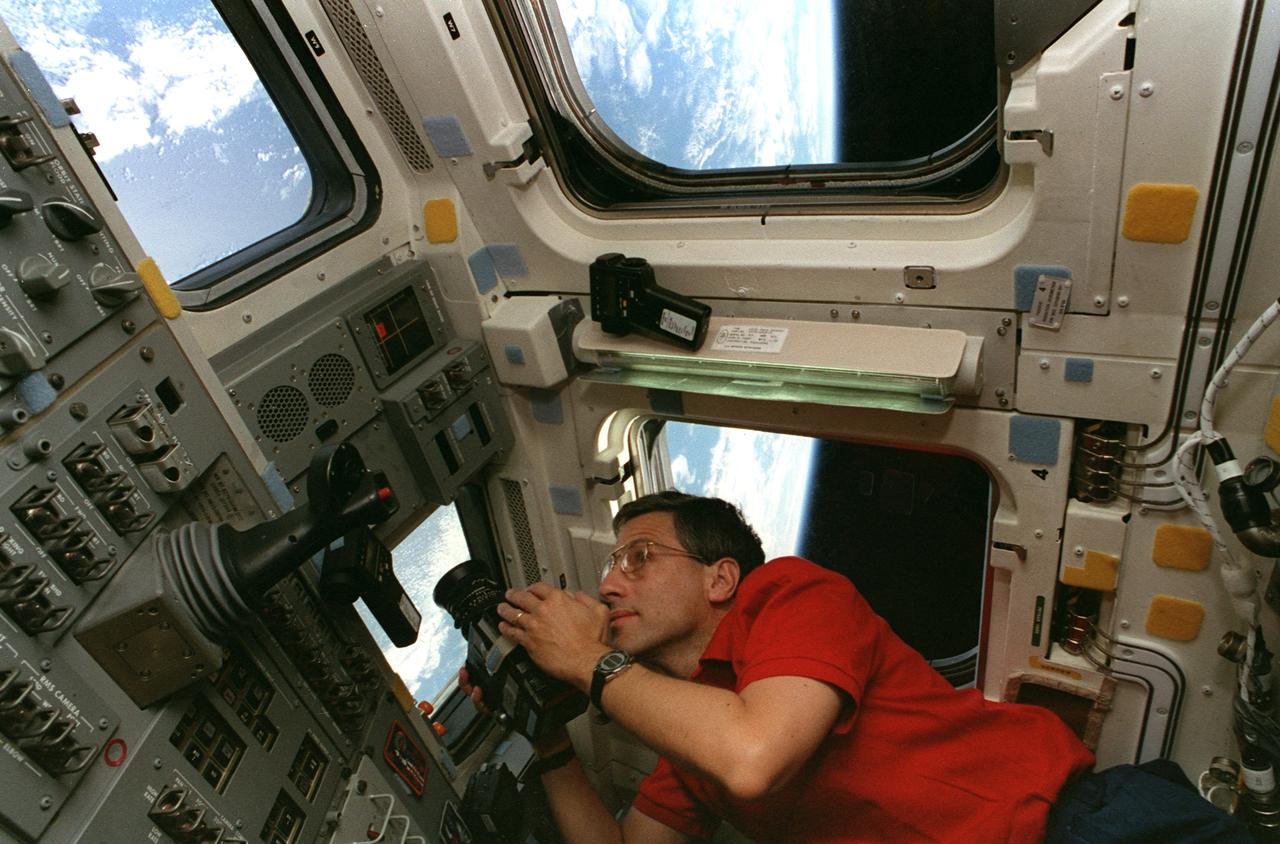
STS079-341-036 (16-26 Sept. 1996) --- Following the space shuttle Atlantis' separation from the Russian Mir Space Station, astronaut Jerome (Jay) Apt, mission specialist, eyeballs a photographic target on Earth prior to capturing it on film with a handheld 70mm camera from the aft flight deck. Scientists at the Johnson Space Center (JSC), who helped to plan the various target sites, will later analyze the film in their Houston laboratories.
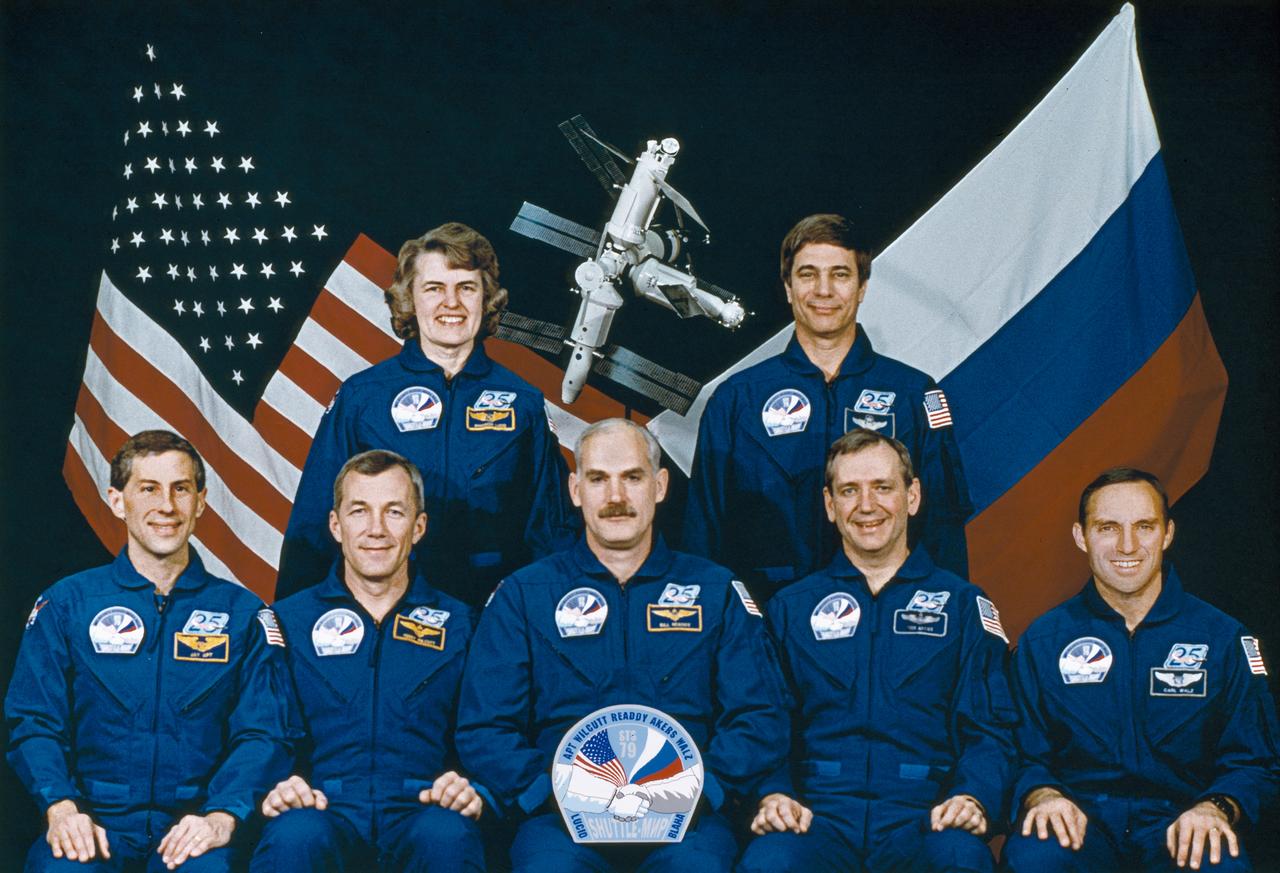
The crew assigned to the STS-79 mission included (seated front left to right) Jerome (Jay) Apt, mission specialist; Terrence W. Wilcutt, pilot; William F. Readdy, commander; Thomas D. Akers, and Carl E. Walz, both mission specialists. On the back row (left to right) are mission specialists Shannon W. Lucid, and John E. Blaha. Launched aboard the Space Shuttle Atlantis on September 16, 1996 at 4:54:49 am (EDT), the STS-79 mission marked the fourth U.S. Space Shuttle-Russian Space Station Mir docking, the second flight of the SPACEHAB module in support of Shuttle-Mir activities and the first flight of the SPACEHAB Double Module Configuration.
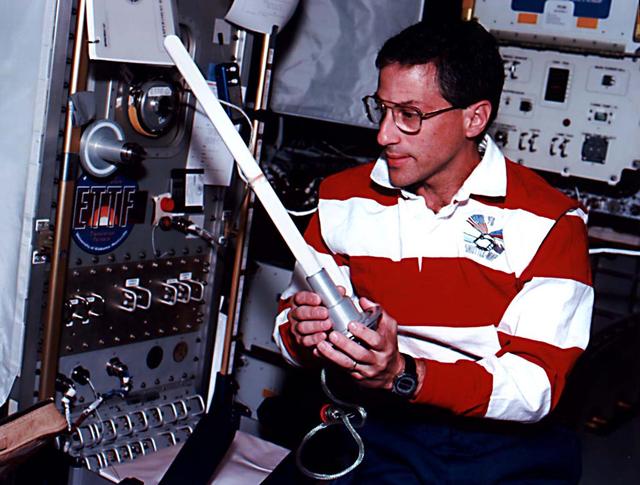
Astronaut Jerome Apt works at the Extreme Temperature Translation Furnace.
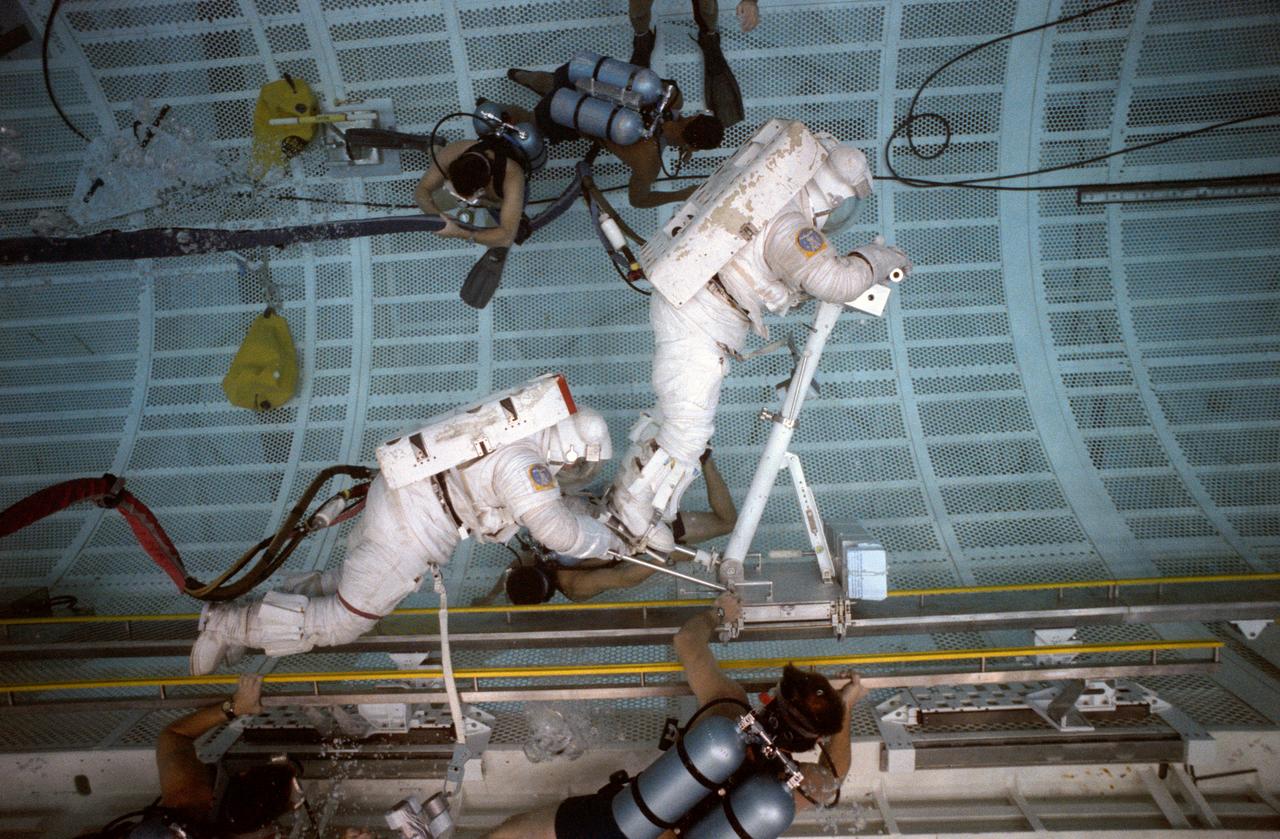
S89-46985 (October 1989) --- Astronauts Jerry L Ross and Jerome (Jay) Apt, STS-37 mission specialists, practice a spacewalk they will perform on that flight. The experiment uses an electrically powered version of the Crew and Equipment Translation Aid (CETA), a type of railroad handcart planned as a spacewalker's transportation system along the truss of Space Station Freedom. Apt is pulling Ross along to test the cart's ability to carry a person plus cargo.
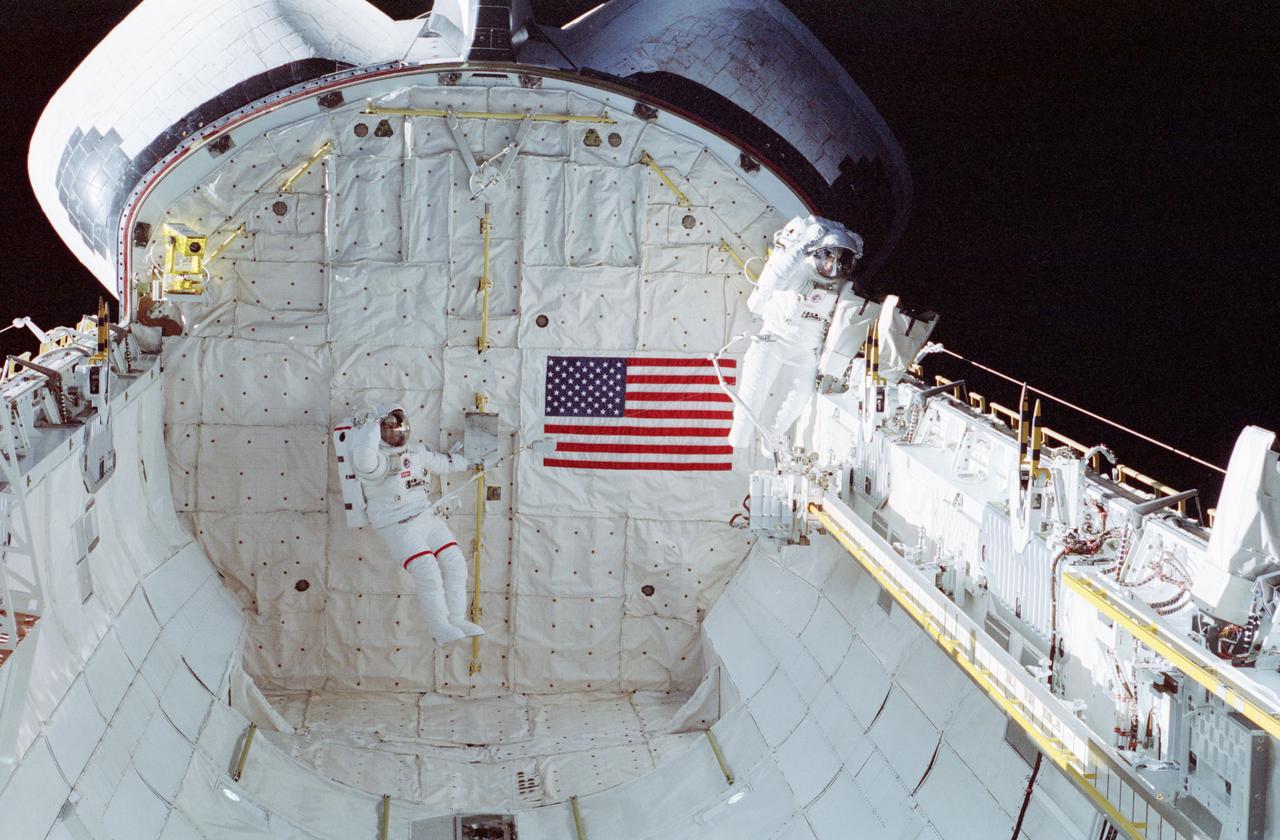
During their STS-37 extravehicular activity (EVA), Mission Specialist (MS) Jerry L. Ross (left) and MS Jerome Apt, in the aft section of Atlantis', Orbiter Vehicle (OV) 104's, payload bay (PLB), turn and wave to their fellow crewmembers who are overseeing the activity from inside the crew compartment. Ross is tethered to the guidewire running along the PLB port side. Apt has reached the end of the Crew and Equipment Translation Aid (CETA) deployable track via the manual hand over hand cart.
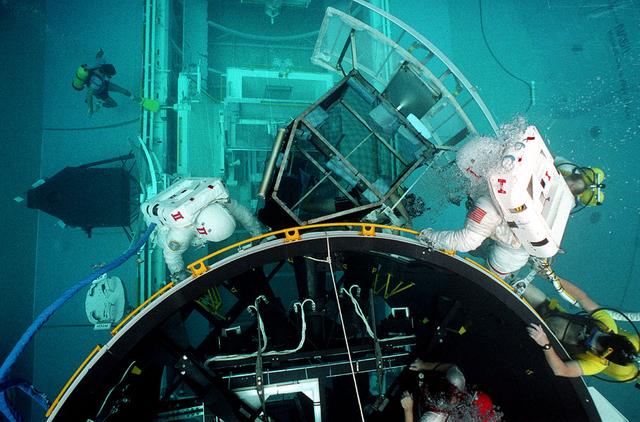
Astronauts Jim Voss and Jay Apt perform check-out procedures on a Hubble Space Telescope mock-up while working in the Marshall Space Flight Center's Neutral Buoyancy Simulator (NBS).
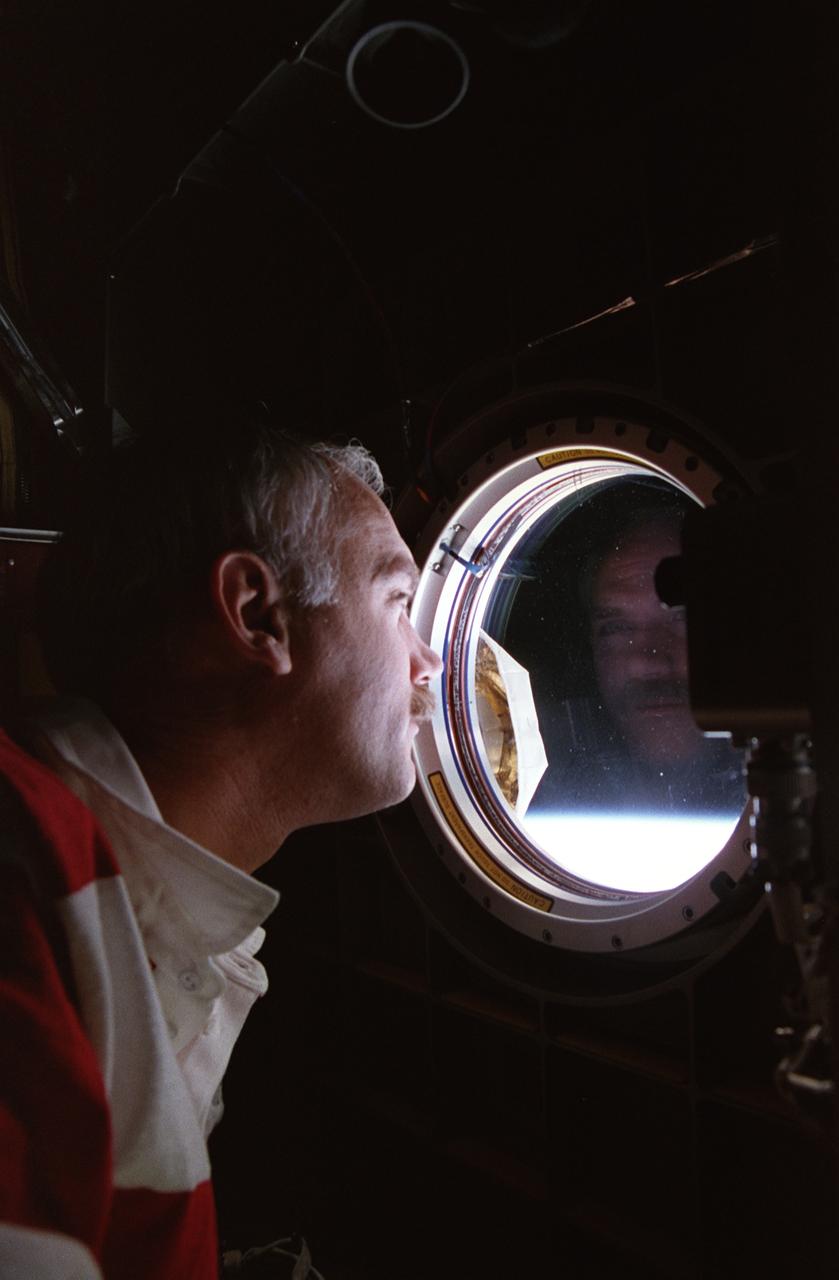
STS079-346-022 (16-26 Sept. 1996) --- Astronaut William F. Readdy, mission commander, looks at the night sky and Earth's horizon through a viewing port in the Spacehab Module in the space shuttle Atlantis' cargo bay. The double module version of Spacehab was flying for the first time.
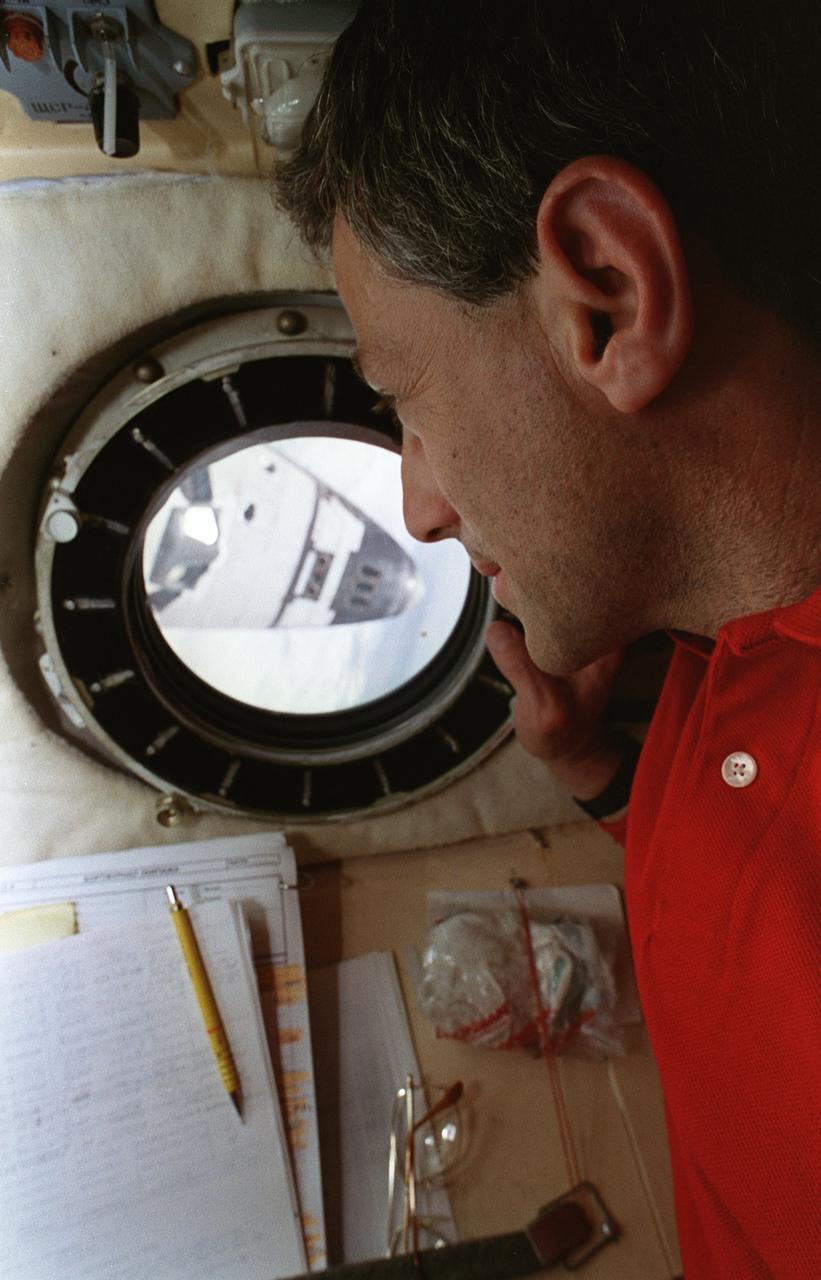
STS079-335-025 (16-26 Sept. 1996) --- Astronaut Jerome (Jay) Apt, in the flight engineer's cabin aboard Russia's Mir Space Station, appears nose to nose with the space shuttle Atlantis as he peers through a viewing port at the forward section of the Orbiter while the two spacecraft were docked in Earth-orbit.
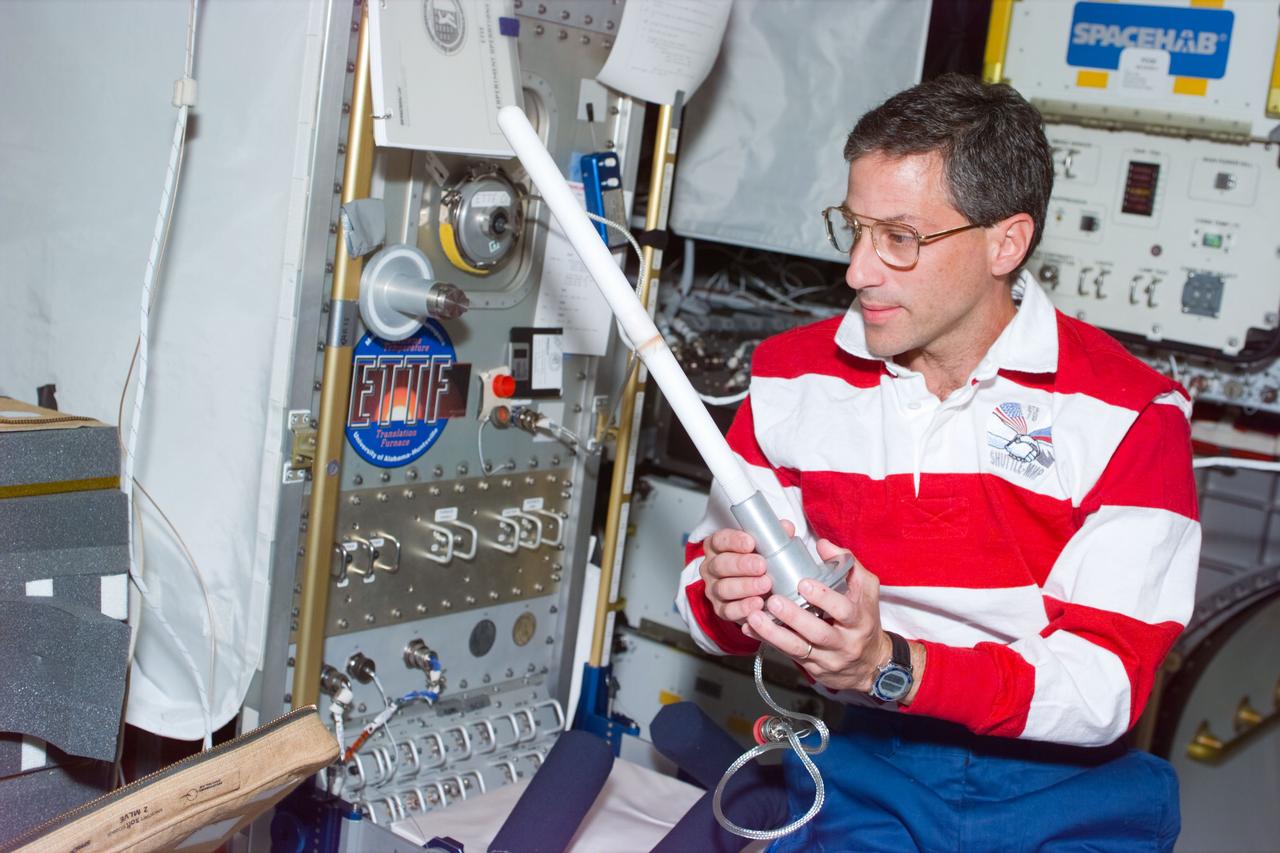
STS79-E-5275 (16 - 26 September 1996) --- Aboard the Spacehab double module in the Space Shuttle Atlantis' cargo bay, astronaut Jerome (Jay) Apt, mission specialist, checks a sample from the Extreme Temperature Translation Furnace (ETTF) experiment. The photograph was taken with the Electronic Still Camera (ESC).
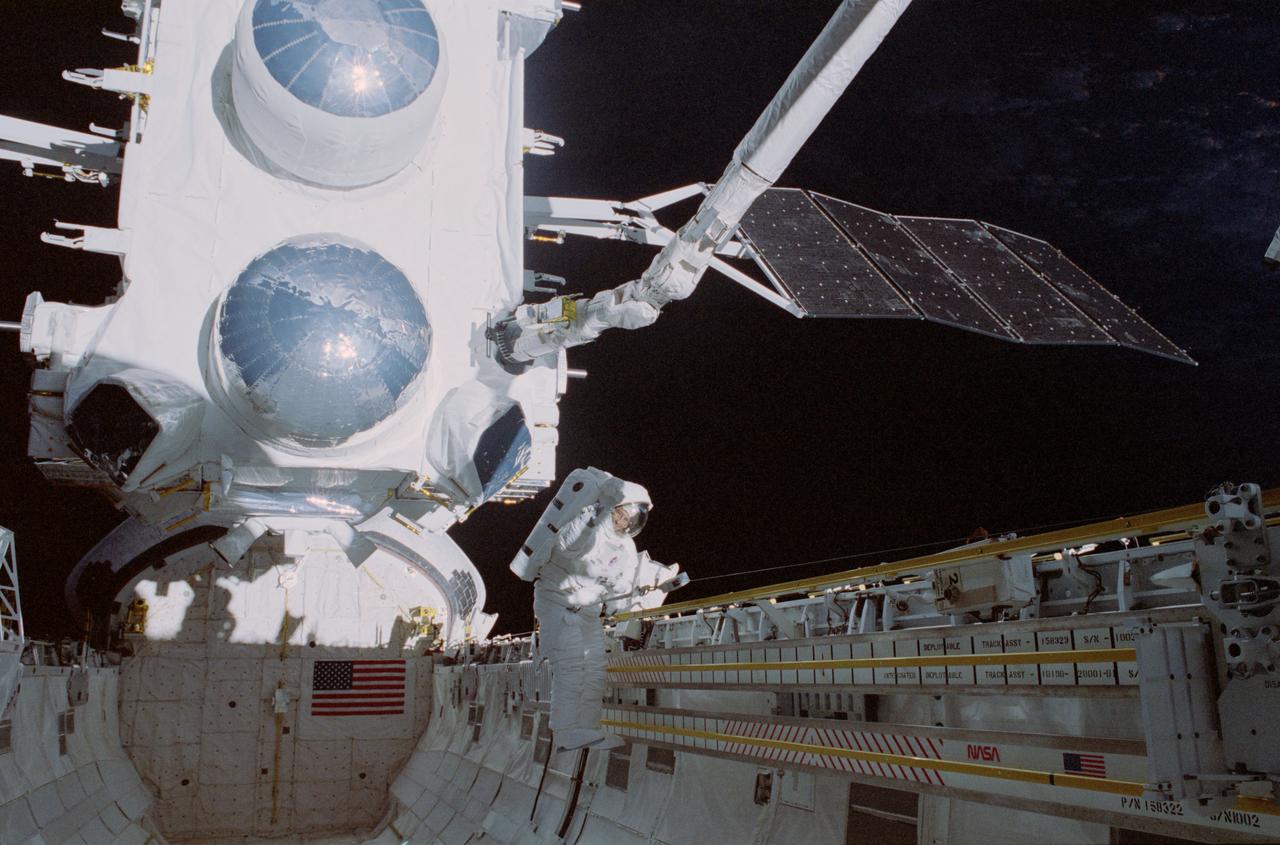
Photographic documentation showing activities in the payload bay of the orbiter Atlantis during STS-37. View include: Gamma Ray Observatory (GRO) on end of Remote Manipulator System (RMS), with Mission Specialist Jay Apt below on the port side of the payload bay.
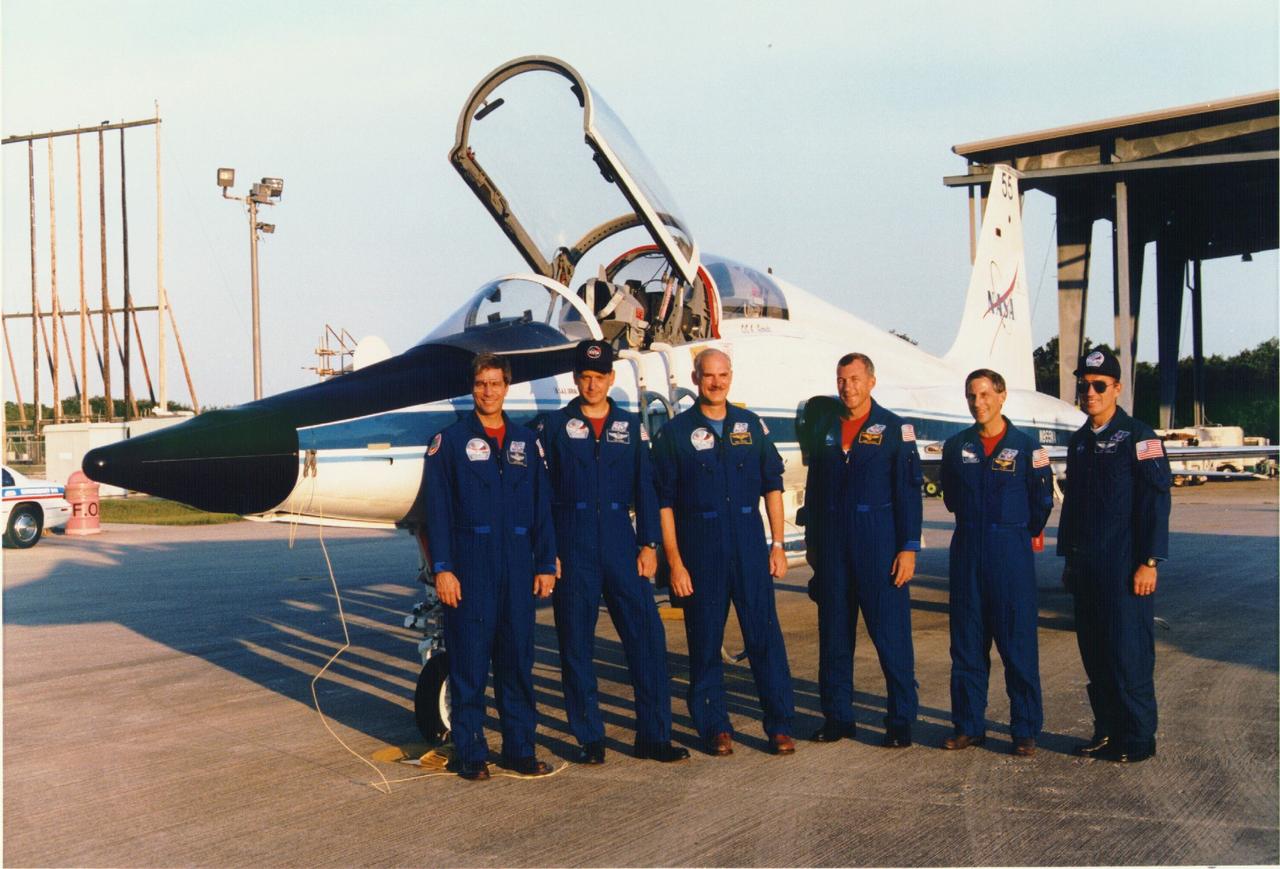
KENNEDY SPACE CENTER, FLA. - The STS-79 astronauts arrive at KSC's Shuttle Landing Facility in their T-38 aircraft from Johnson Space Center in Houston. From left are Mission Specialists John E. Blaha and Tom Akers; Commander William F. Readdy; PIlot Terrence W. Wilcutt; and Mission Specialists Jay Apt and Carl E. Walz. The astronauts are at KSC for the Terminal Countdown Demonstration Test, a dress rehearsal for launch. They are scheduled to lift off around Sept. 12 on Mission STS-79, the fourth docking between the U.S. Shuttle and Russian Space Station Mir.
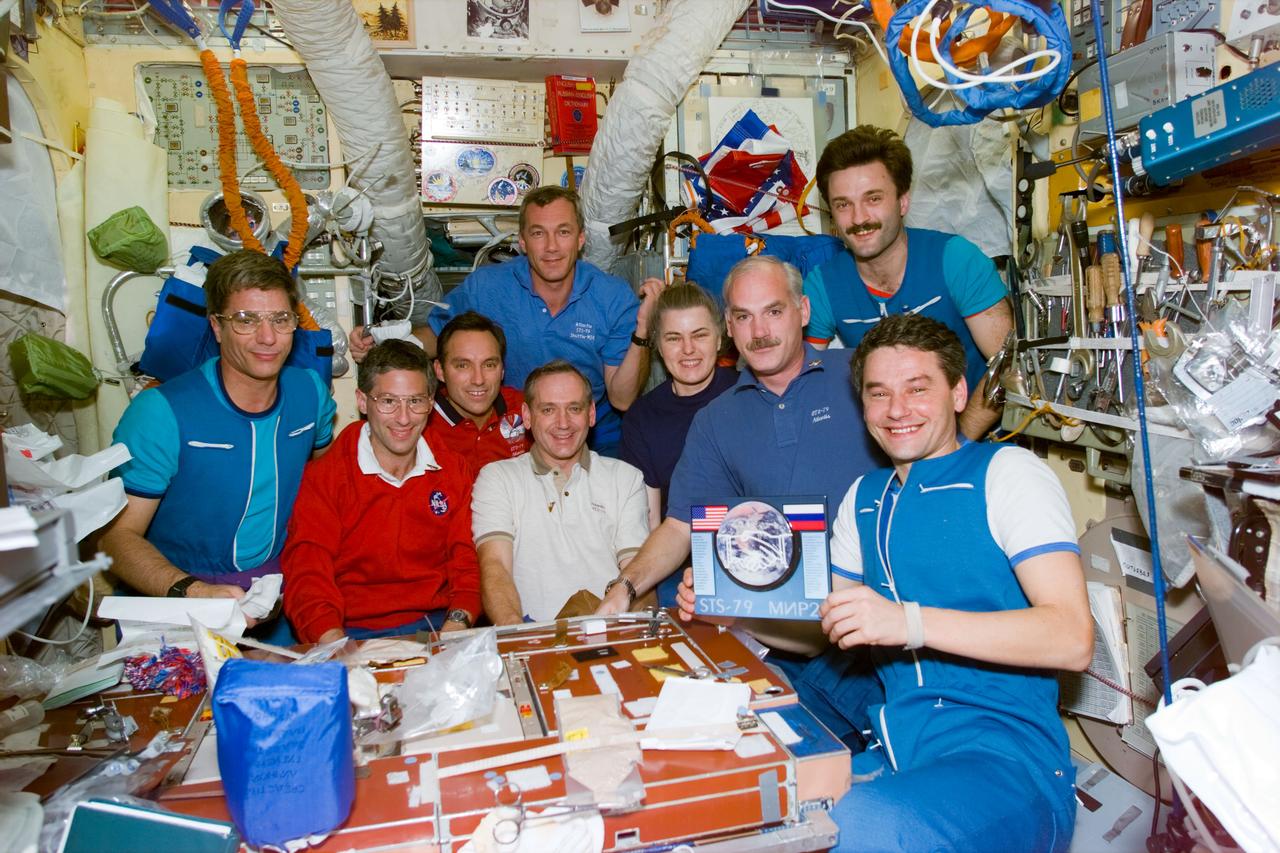
STS79-E-5180 (20 September 1996) --- The entire crews of STS-79 and Mir-22 are shown during a gift exchange ceremony aboard Russia's Mir Space Station's Base Block, during Flight Day 5. Front row, from the left, John E. Blaha, Jerome (Jay) Apt, Carl E. Walz, Thomas D. Akers, Shannon W. Lucid, William F. Readdy and Valeri G. Korzun. Back row: Terrence W. Wilcutt and Aleksandr Y. Kaleri.

STS037-18-032 (7 April 1991) --- Astronaut Jerry L. Ross, mission specialist, peers into Space Shuttle Atlantis' cabin and is photographed by a fellow crew member using a 35mm camera. Ross was in the space shuttle's cargo bay to join astronaut Jerome (Jay) Apt in accomplishing a repair task on the Gamma Ray Observatory (GRO), seen in left frame. The two had been called upon to manually extend the high-gain antenna on GRO.
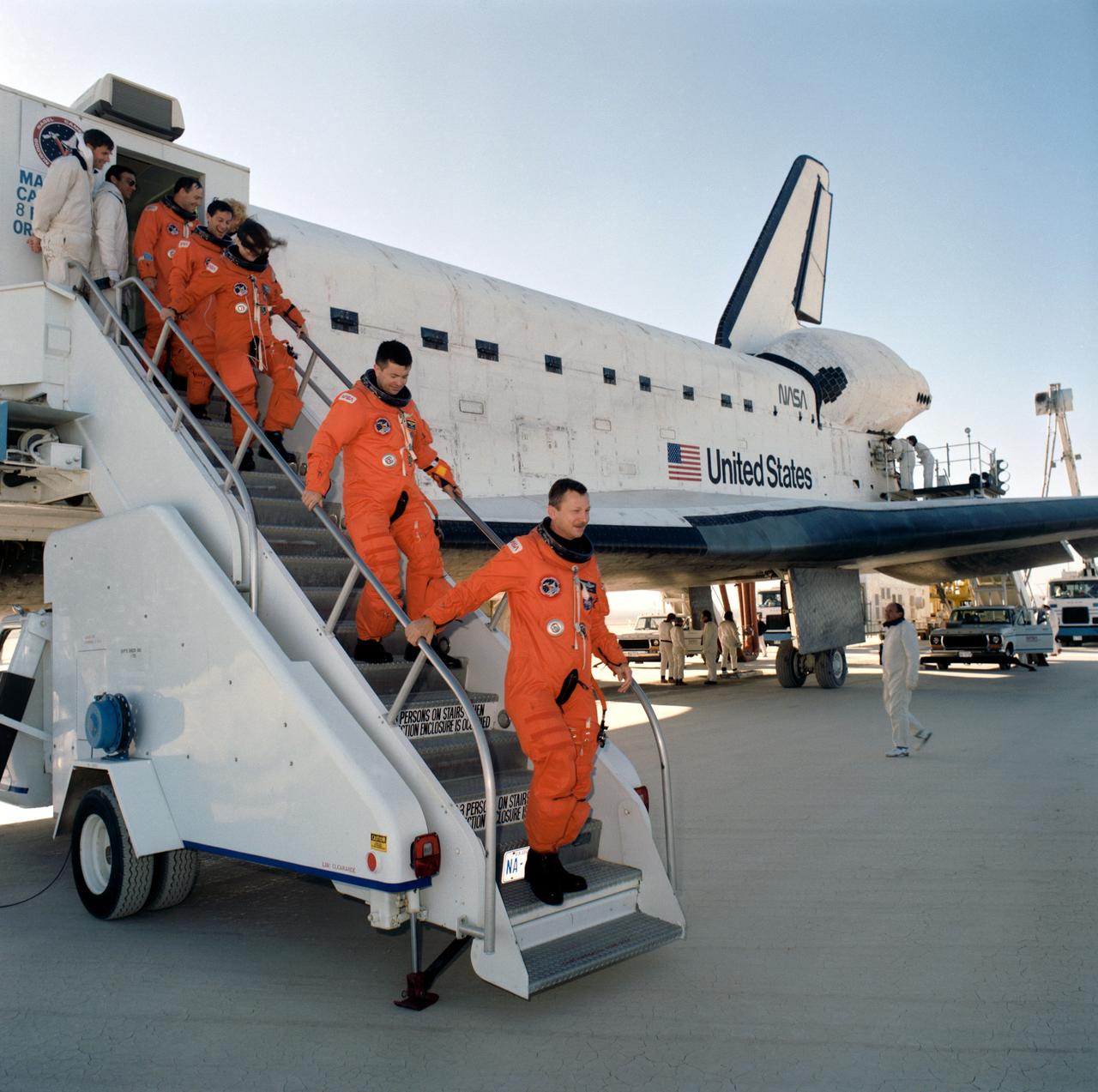
STS037-S-087 (11 April 1991) --- STS-37 crewmembers egress Atlantis via mobile stairway after landing on runway 33 dry lake bed at Edwards Air Force Base. Leading the crewmembers down the stairway is mission commander Steven R. Nagel. He is followed by pilot Kenneth D. Cameron, Mission Specialists Linda M. Godwin, Jerome Apt and Jerry L. Ross.
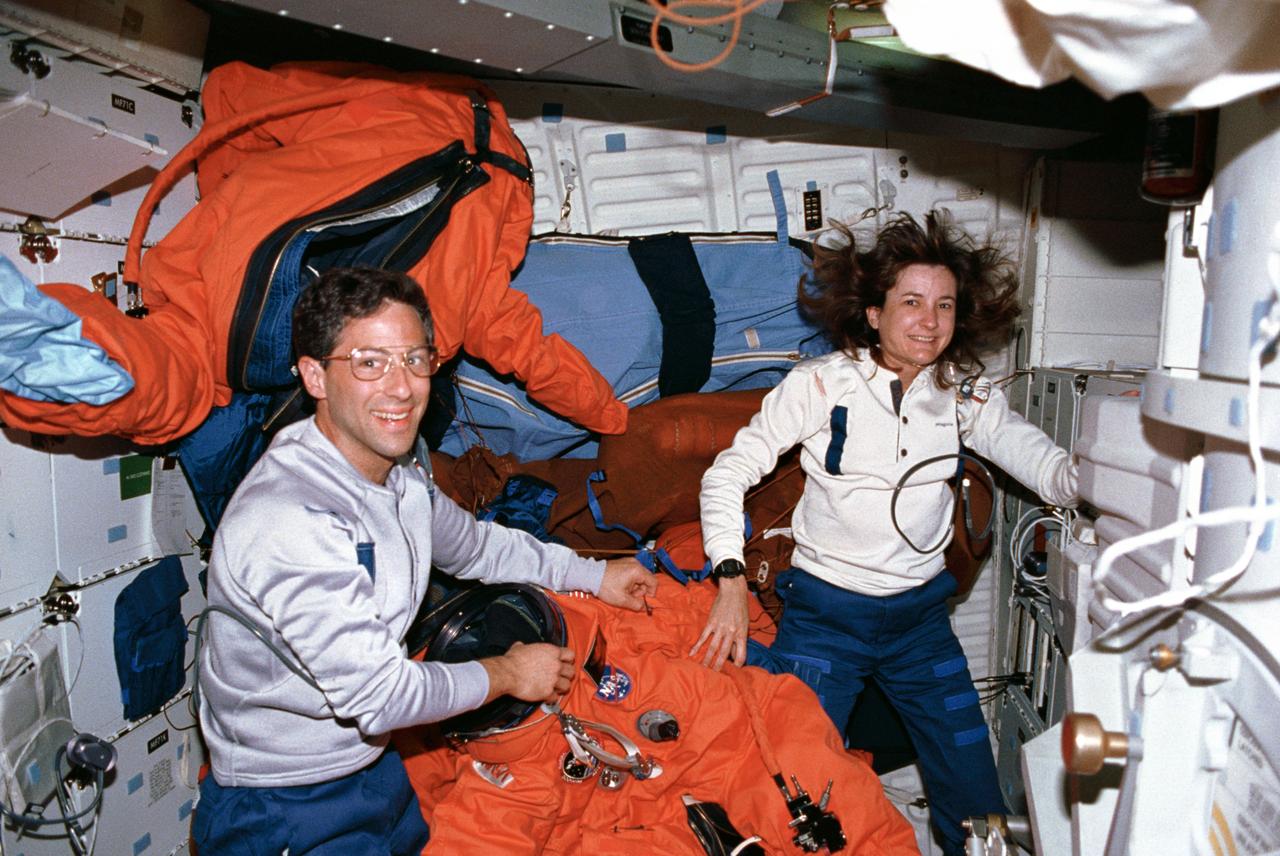
STS037-45-012 (10 April 1991) --- Astronauts Linda M. Godwin and Jerome (Jay) Apt sort out the special partial-pressure garments for landing (and ascent) as the end of their mission in space approaches. The suits are stored on the Space Shuttle Atlantis' mid-deck. The scene was photographed with a 35mm camera. This was one of the visuals used by the crew members during their April 19 Post Flight Press Conference (PFPC) at the Johnson Space Center (JSC).
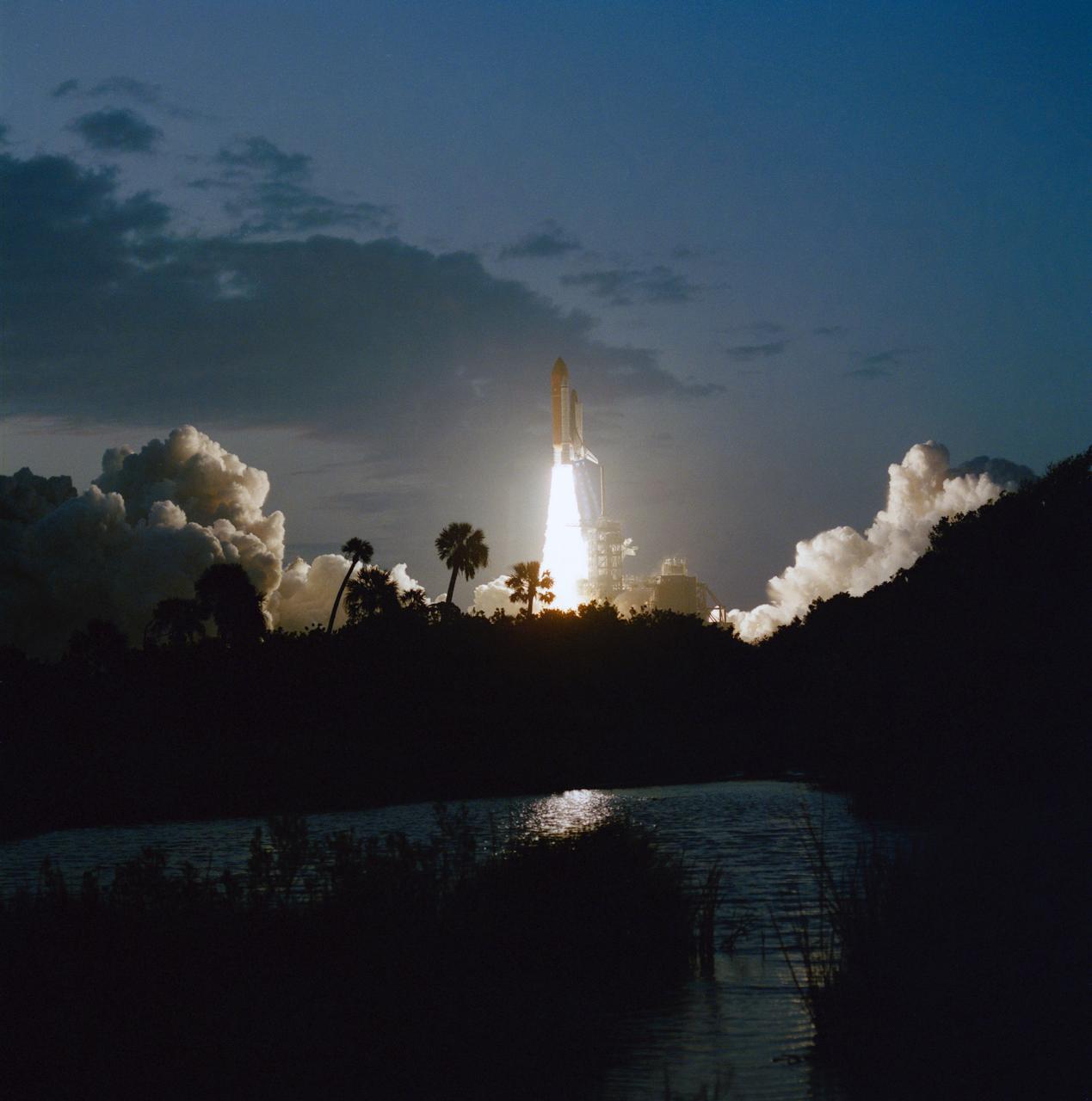
STS059-S-034 (9 April 1994) --- The liftoff of the Space Shuttle Endeavour is backdropped against a dawn sky at the Kennedy Space Center (KSC) as six NASA astronauts head for a week and a half in Earth orbit. Liftoff occurred at 7:05 a.m. (EDT), April 9, 1994. Onboard for the Space Radar Laboratory (SRL-1) mission were astronauts Sidney M. Gutierrez, Kevin P. Chilton, Jerome (Jay) Apt, Linda M. Godwin, Michael R. U. (Rich) Clifford and Thomas D. Jones.
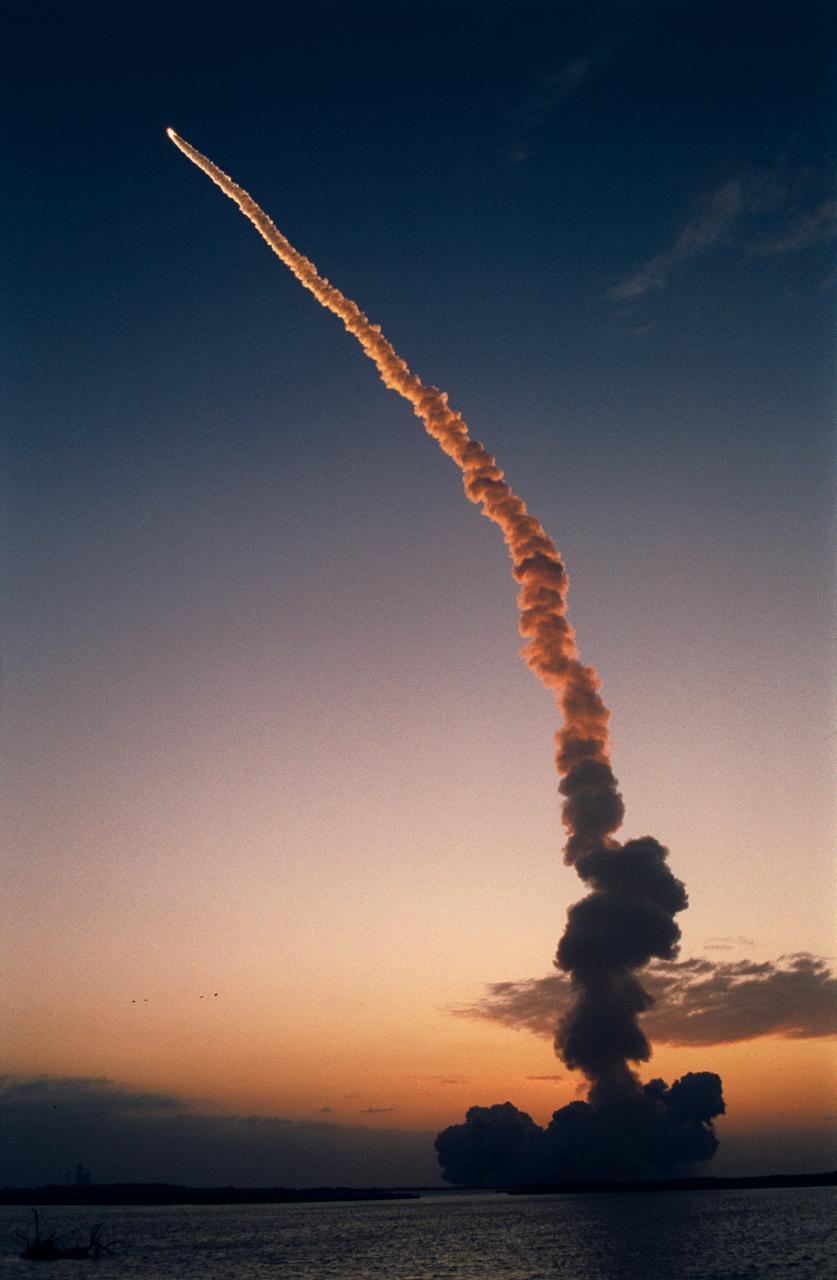
STS059-S-109 (9 April 1994) --- The Space Shuttle Endeavour heads for its sixth mission in space. Liftoff occurred at 7:05 a.m. (EDT), April 9, 1994. Onboard were astronauts Sidney M. Gutierrez, Kevin P. Chilton, Linda M. Godwin, Jerome (Jay) Apt, Michael R. (Rich) Clifford and Thomas D. Jones. The photograph was taken by Karen Dillon of San Jose, California, who observed the liftoff from the NASA causeway.
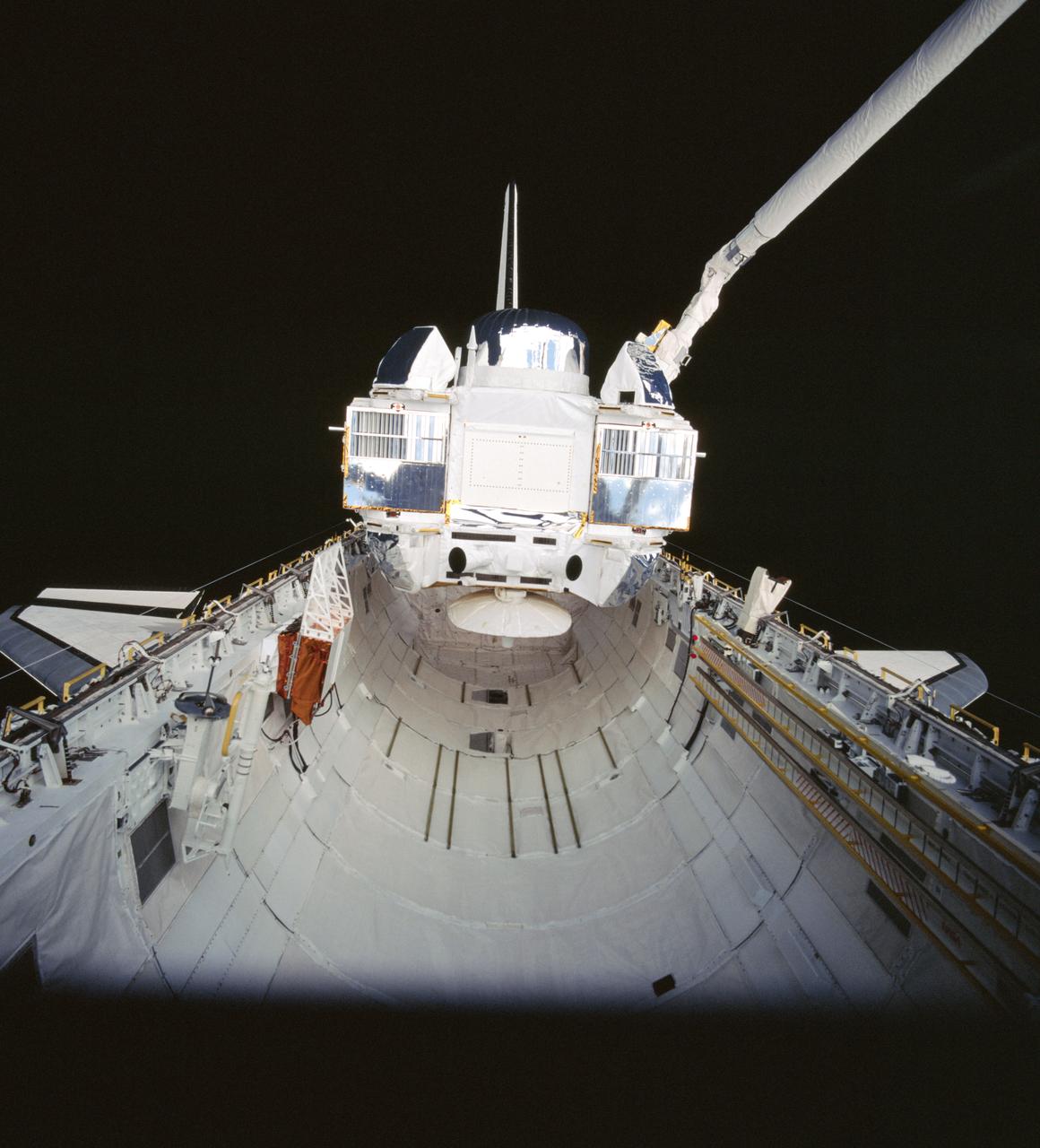
STS037-99-031 (7 April 1991) --- The Gamma Ray Observatory (GRO) is still in the grasp of Atlantis' remote manipulator system (RMS) in this 70mm scene, photographed from inside the crew cabin. A special extravehicular activity (EVA) was required by astronauts Jerry L. Ross and Jerome (Jay) Apt to manually extend the high-gain antenna on GRO. The solar array panels are not yet deployed in this scene. The five-member crew capped off a busy Flight Day 3 by releasing the heavy payload.
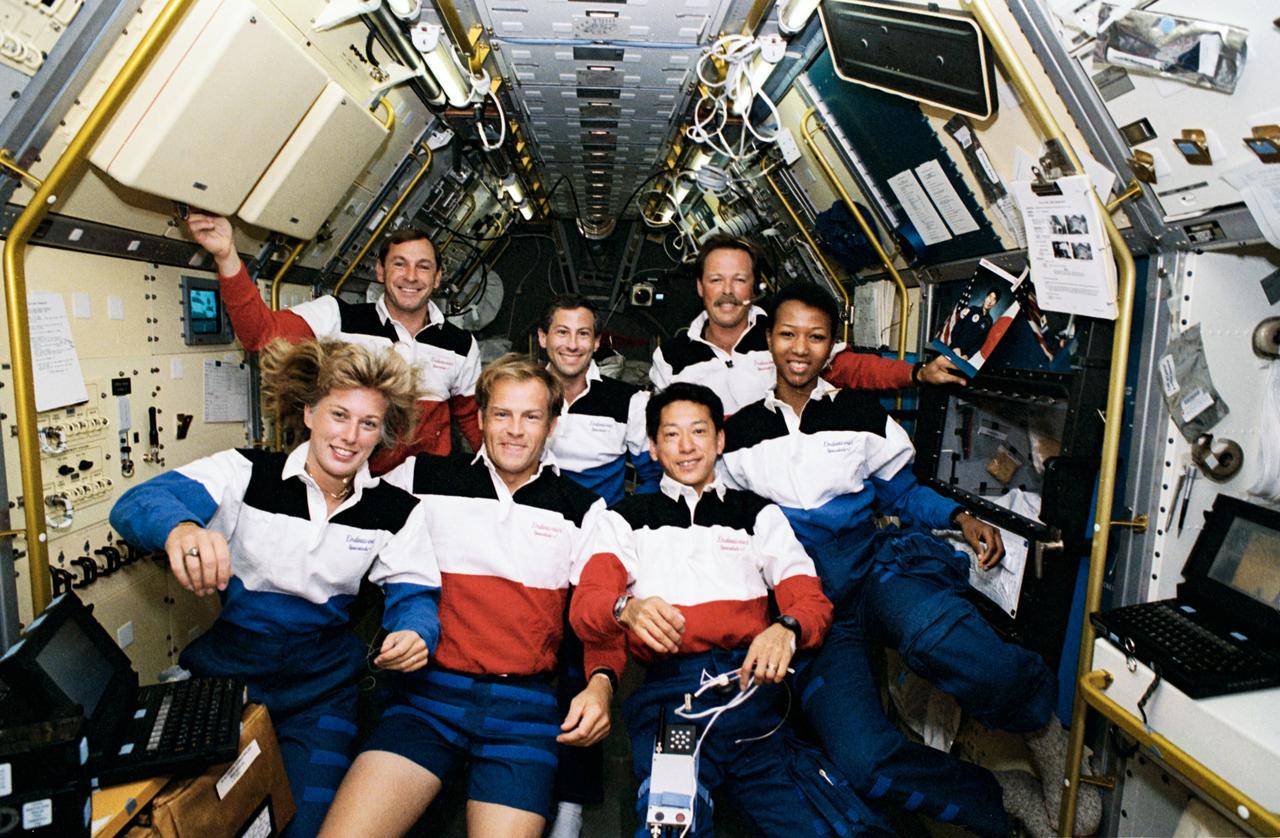
STS047-12-002 (12 - 20 Sept 1992) --- The crew members assemble for their traditional in-flight portrait in this 35mm frame photographed in the Science Module aboard the Earth-orbiting Space Shuttle Endeavour. Left to right (front) are N. Jan Davis, Mark C. Lee and Mamoru Mohri; and (rear) Curtis L. Brown, Jr., Jerome (Jay) Apt, Robert L. Gibson and Mae C. Jemison. The seven spent eight days in space in support of the Spacelab-J mission.
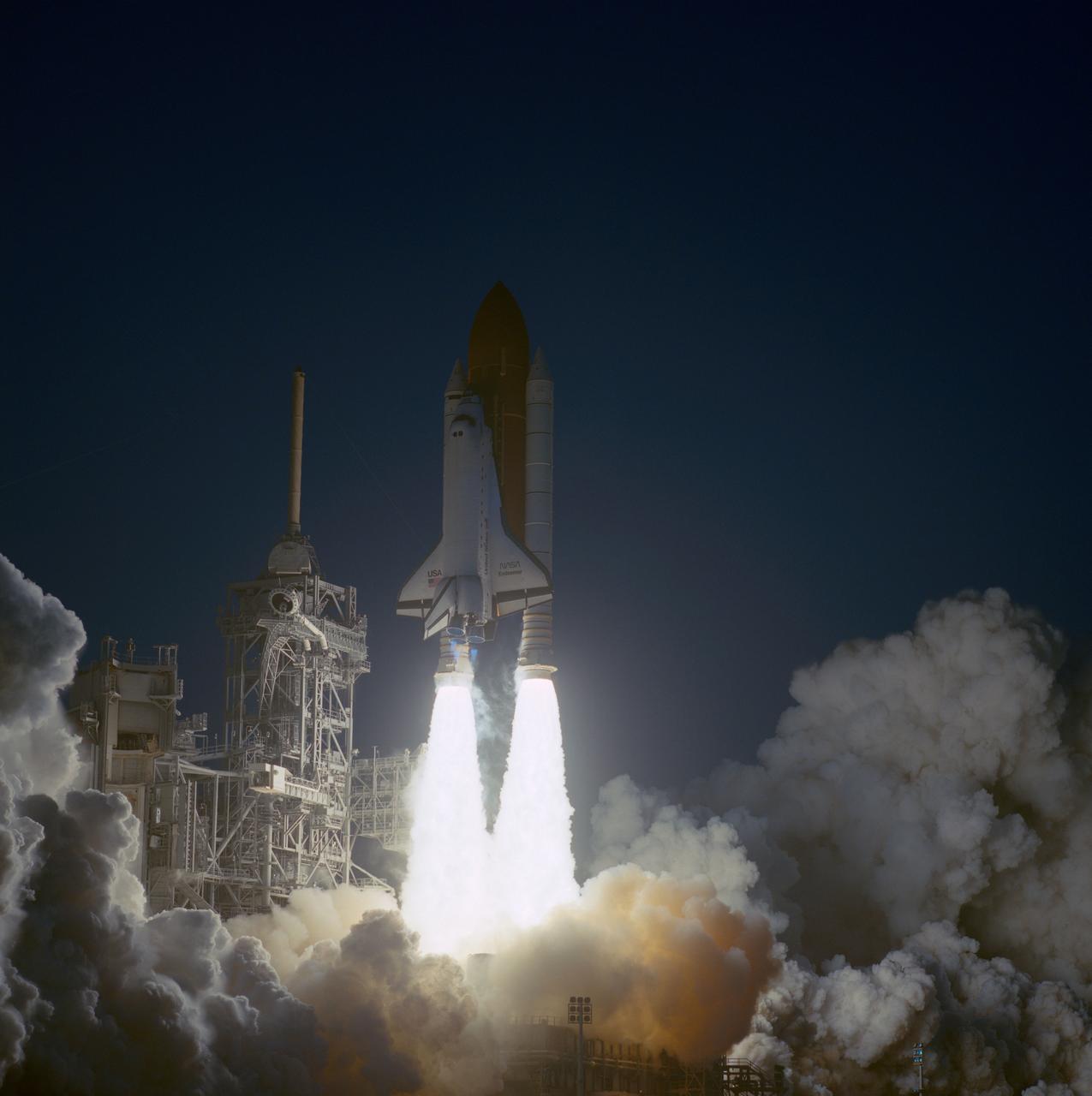
STS059-S-037 (9 April 1994) --- The liftoff of the Space Shuttle Endeavour is backdropped against a dawn sky at the Kennedy Space Center (KSC) as six NASA astronauts head for a week and a half in Earth orbit. Liftoff occurred at 7:05 a.m. (EDT), April 9, 1994. Onboard for the Space Radar Laboratory (SRL-1) mission were astronauts Sidney M. Gutierrez, Kevin P. Chilton, Jerome (Jay) Apt, Linda M. Godwin, Michael R.U. (Rich) Clifford and Thomas D. Jones.
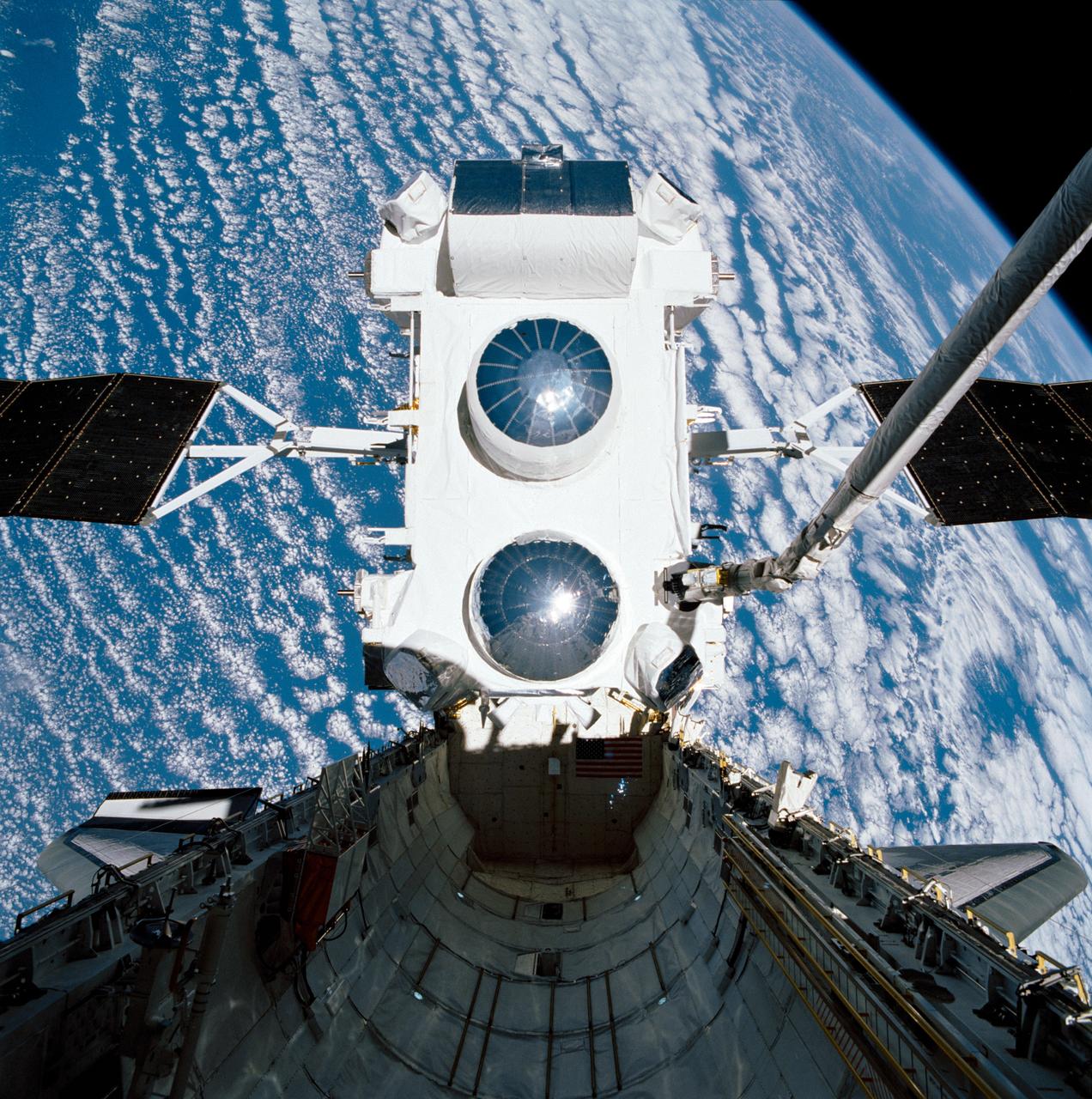
STS037-99-098 (7 April 1991) --- Backdropped against clouds over water, the Gamma Ray Observatory (GRO) is still in the grasp of the Space Shuttle Atlantis' Remote Manipulator System (RMS) in this 70mm scene. A special Extravehicular Activity (EVA) was required by astronauts Jerry L. Ross and Jerome (Jay) Apt to manually extend the high-gain antenna on GRO. The five-member crew capped off a busy Flight Day 3 by releasing the heavy payload.
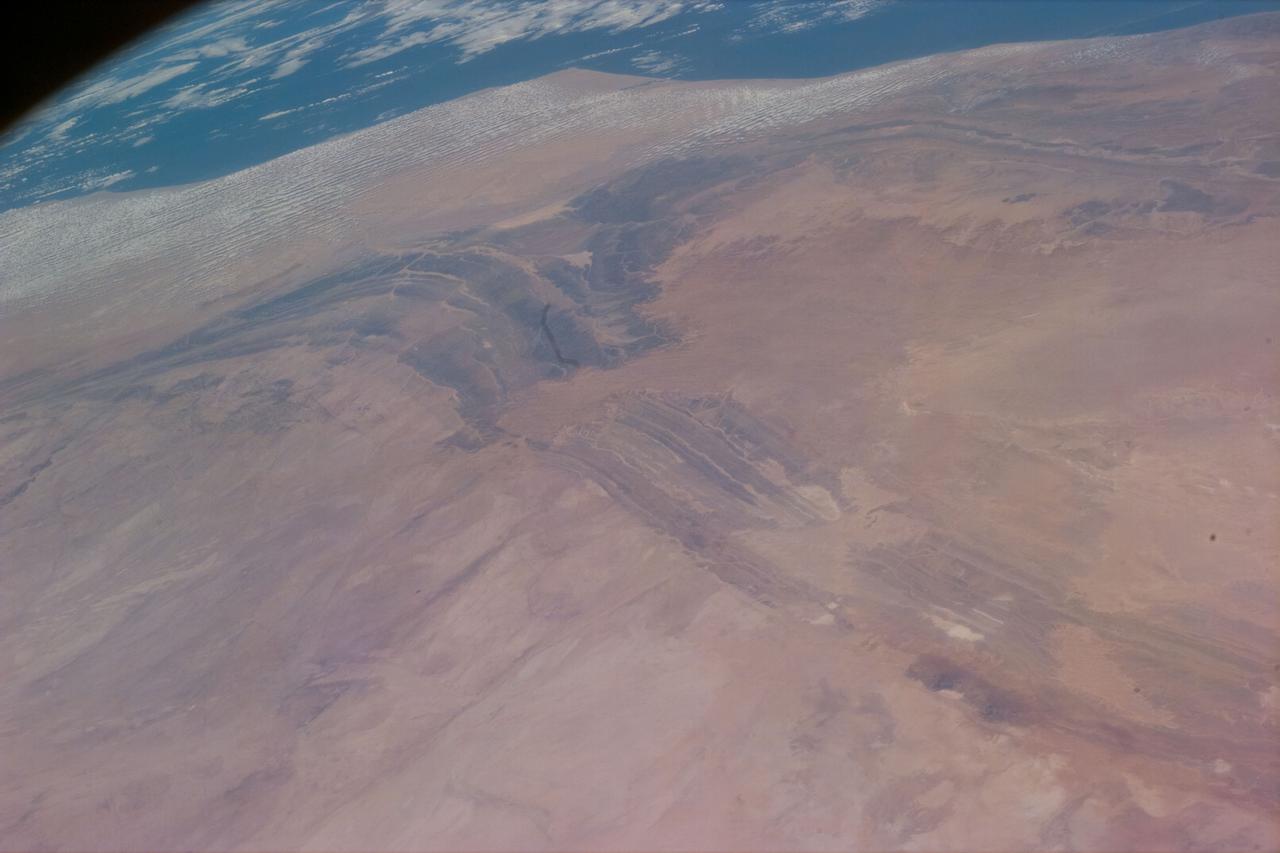
STS79-E-5385 (16 - 26 September 1996) --- The Atlas Mountains, as seen from the Space Shuttle Atlantis, apparently have not changed much in 35 years of Earth observations from space as testified by astronaut Jerome (Jay) Apt, who took this picture with an Electronic Still Camera (ESC). Astronaut John Glenn on NASA's MA-6 mission, took the first image of this area from space.
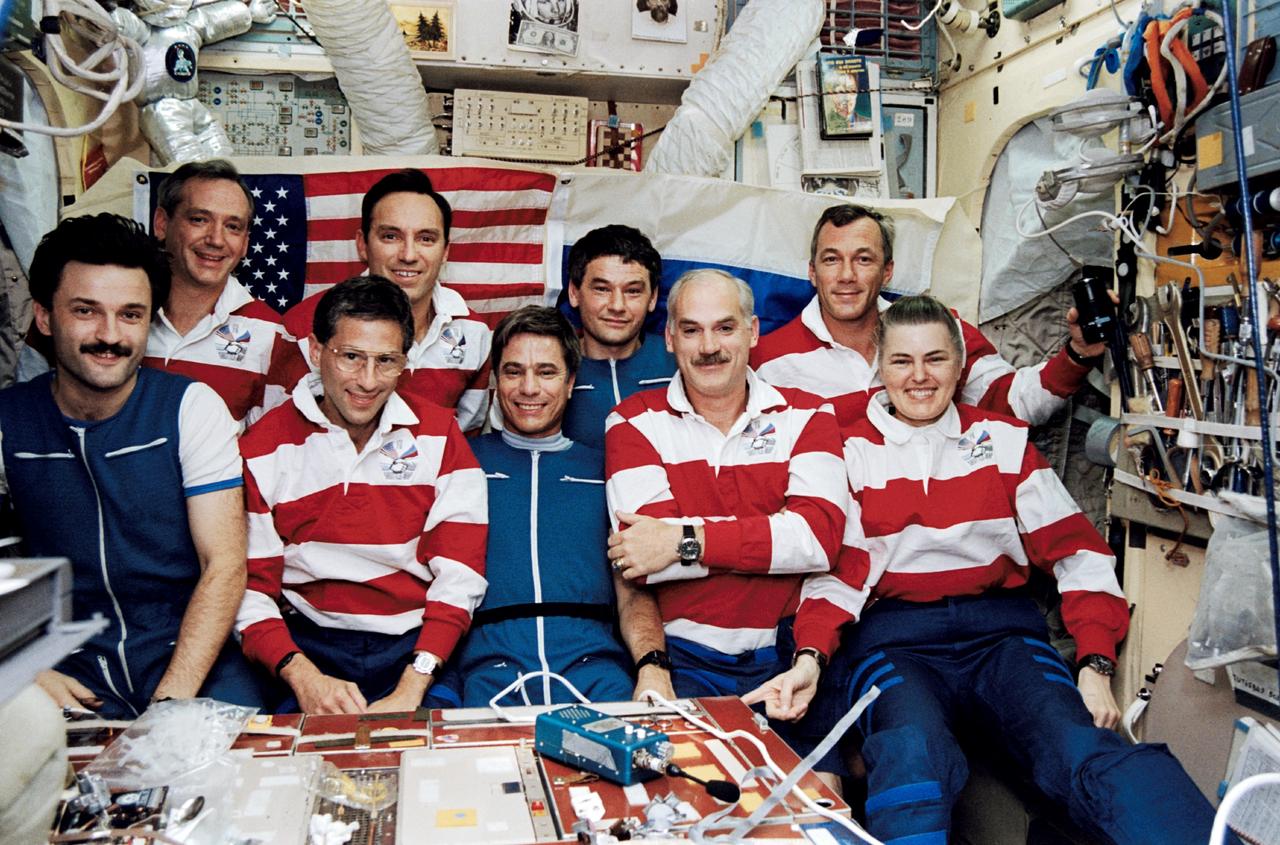
STS079-349-022 (16-26 Sept. 1996) --- The traditional inflight crew portrait, taken in Russia's Mir Space Station base block. Front row, left to right, Aleksandr Y. Kaleri, Jerome (Jay) Apt, John E. Blaha, William F. Readdy and Shannon W. Lucid. Back row, left to right, Thomas D. Akers, Carl E. Walz, Valeri G. Korzun and Terrence W. Wilcutt. This photograph is one of fifteen 35mm frames (along with four 70mm frames) of still photography documenting the activities of NASA's STS-79 mission, which began with a September 16, 1996, liftoff from Launch Pad 39A the Kennedy Space Center (KSC) and ended with a landing at KSC on September 26, 1996. Onboard for the launch were astronauts Readdy, commander; Wilcutt, pilot; Blaha, Apt, Akers and Walz, all mission specialists. On flight day 4, the crew docked with the Mir Space Station. Lucid, who had spent six months aboard Mir, switched cosmonaut guest researcher roles with Blaha. The latter joined fellow Mir-22 crewmembers Korzun, commander, and Kaleri, flight engineer.
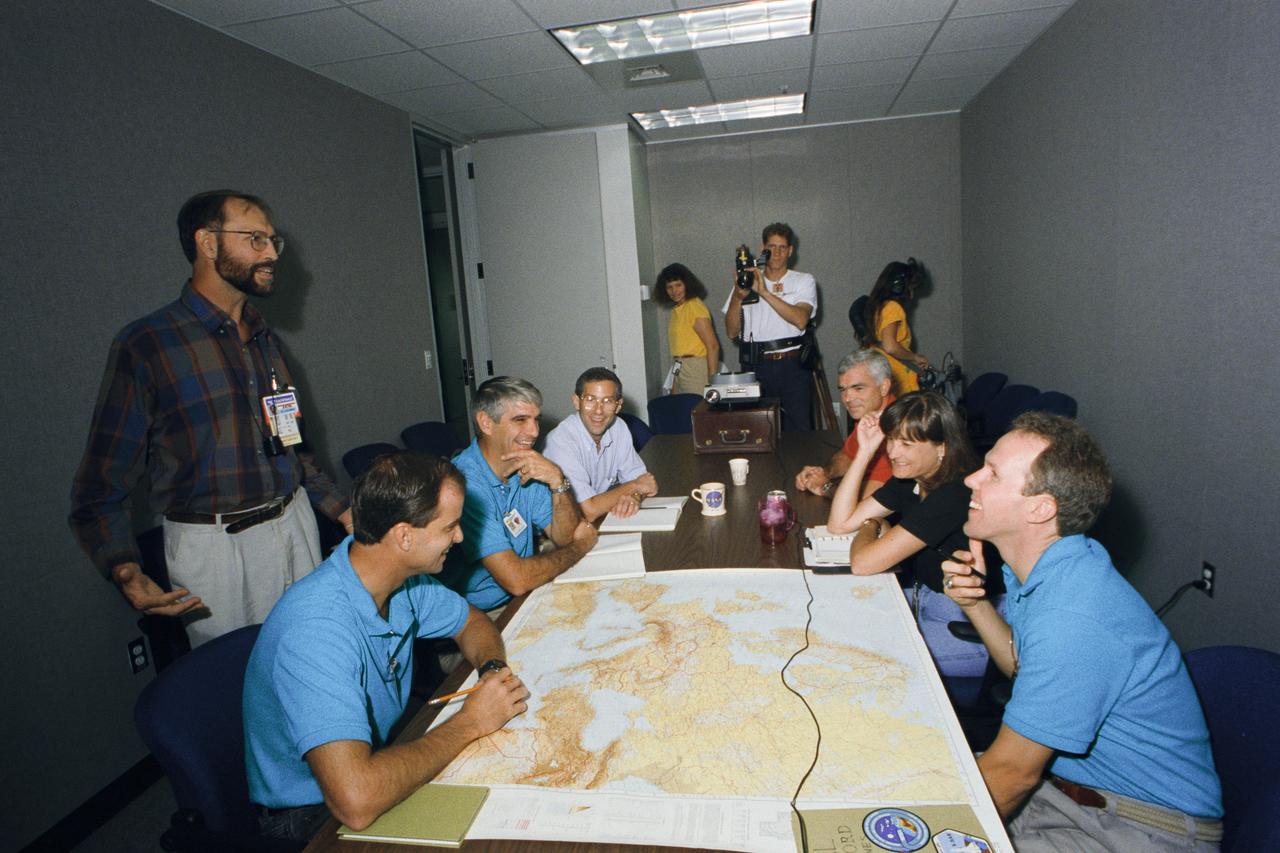
S93-42727 (26 Aug 1993) --- The six astronauts in training for the STS-59 mission are given some onboard Earth observations tips by Justin Wilkinson (standing, foreground) of the Space Shuttle Earth Observations Project (SSEOP) group. Astronaut Sidney M. Gutierrez, mission commander, is at center on the left side of the table. Others, left to right, are astronauts Kevin P. Chilton, pilot; Jerome (Jay) Apt and Michael R.U. (Rich) Clifford, both mission specialists; Linda M. Godwin, payload commander; and Thomas D. Jones, mission specialist.
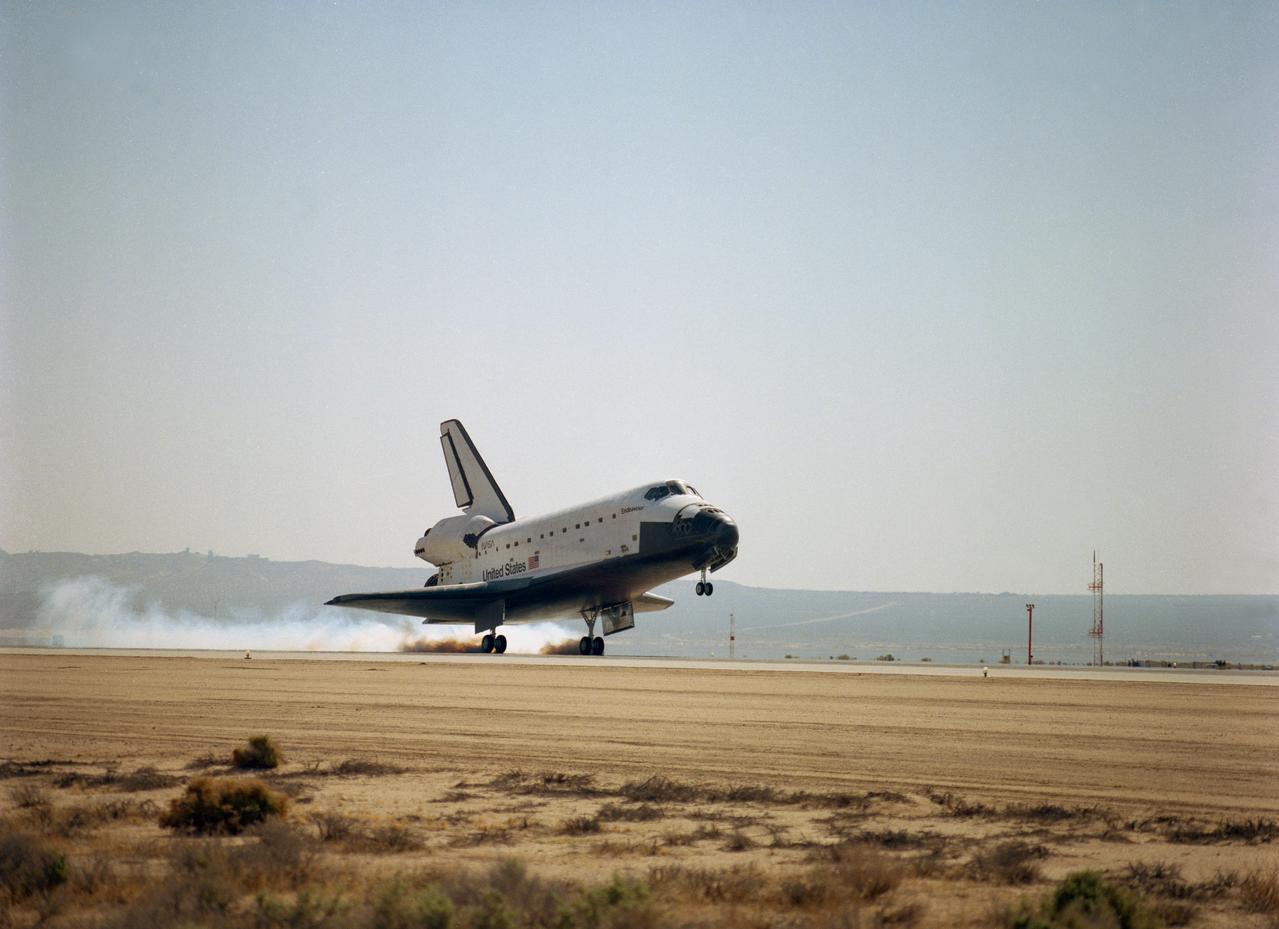
STS059-S-107 (20 April 1994) --- The main landing gear of the Space Shuttle Endeavour touches down at Edwards Air Force Base to complete the 11-day STS-59/SRL-1 mission. Landing occurred at 9:54 a.m. (PDT), April 20, 1994. Mission duration was 11 days, 5 hours, 49 minutes. Guiding Endeavour to a landing was astronaut Sidney M. Gutierrez, STS-59 commander. His crew was Kevin P. Chilton, Linda M. Godwin, Jerome (Jay) Apt, Michael R. (Rich) Clifford and Thomas D. Jones.
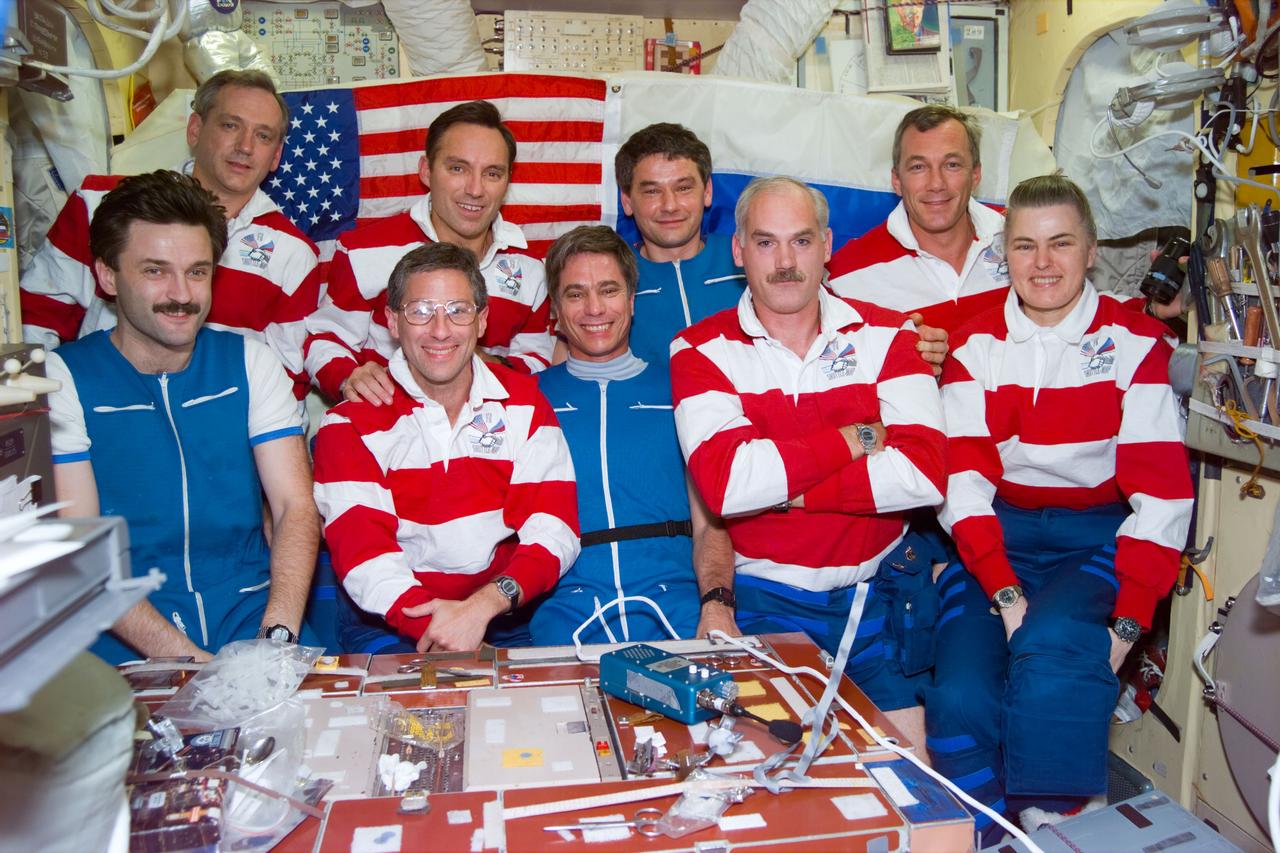
STS79-E-5289 (23 September 1996) --- Crew members of STS-79 and Mir-22 pose for final group portrait aboard Russia's Mir Space Station's Core Module before going separate ways in Earth-orbit, during Flight Day 8. Front row, left to right, are Aleksandr Y. Kaleri, Jerome (Jay) Apt, William F. Readdy and Shannon W. Lucid. On the back row are, left to right, Thomas D. Akers, Carl E. Walz, Valeri G. Korzun and Terrence W. Wilcutt. Note Blaha, the new cosmonaut researcher for Mir-22, is now wearing the uniform of that crew and Lucid's garment is uniform with the STS-79 astronauts.
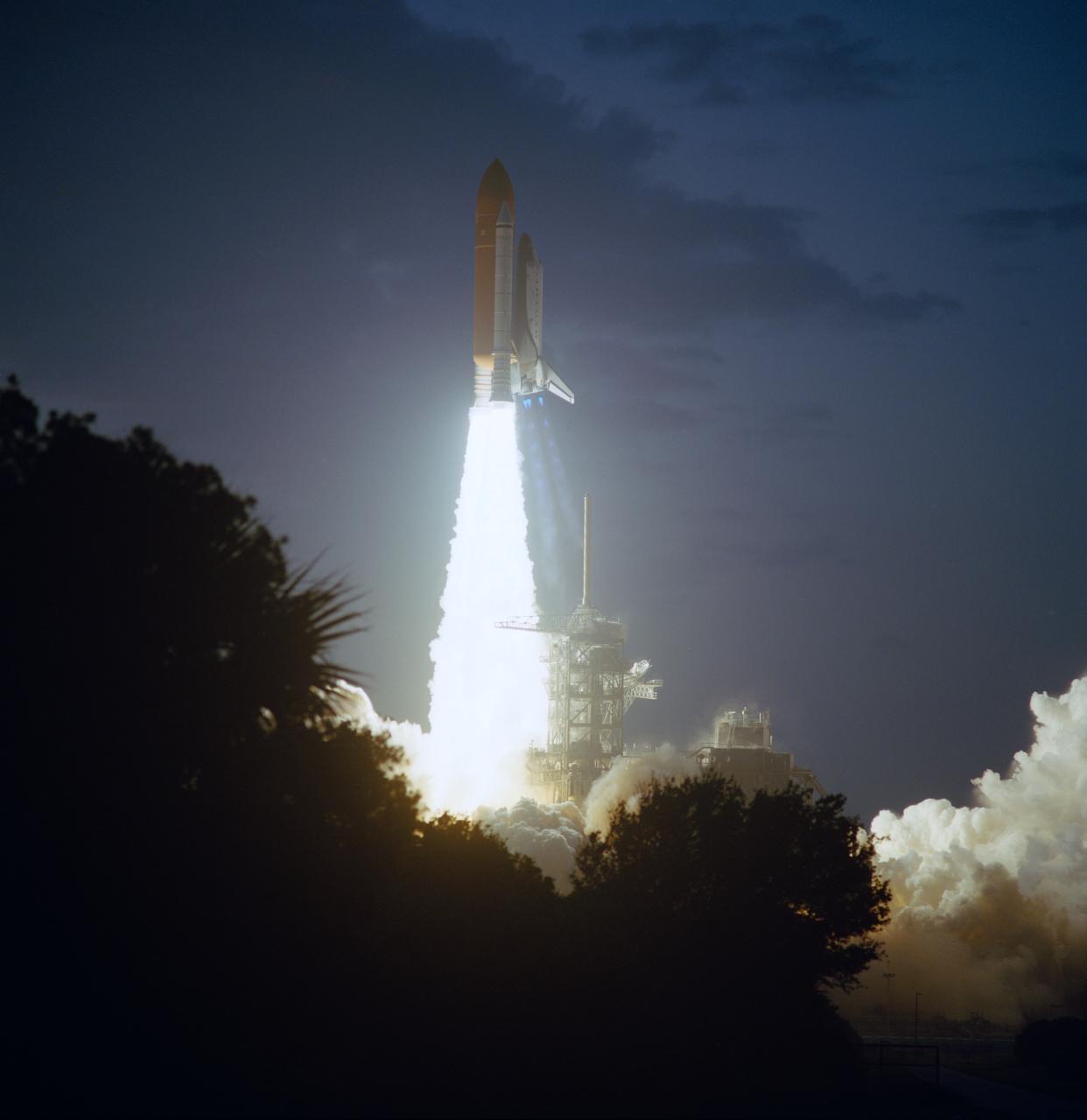
STS059-S-036 (9 April 1994) --- The liftoff of the Space Shuttle Endeavour is backdropped against a dawn sky at the Kennedy Space Center (KSC) as six NASA astronauts head for a week and a half in Earth orbit. The morning sky allows for a contrasting backdrop for the diamond shock effect of the thrust from Endeavour's main engines. Liftoff occurred at 7:05 a.m. (EDT), April 9, 1994. Onboard for the Space Radar Laboratory (SRL-1) mission were astronauts Sidney M. Gutierrez, Kevin P. Chilton, Jerome (Jay) Apt, Linda M. Godwin, Michael R. U. (Rich) Clifford and Thomas D. Jones.
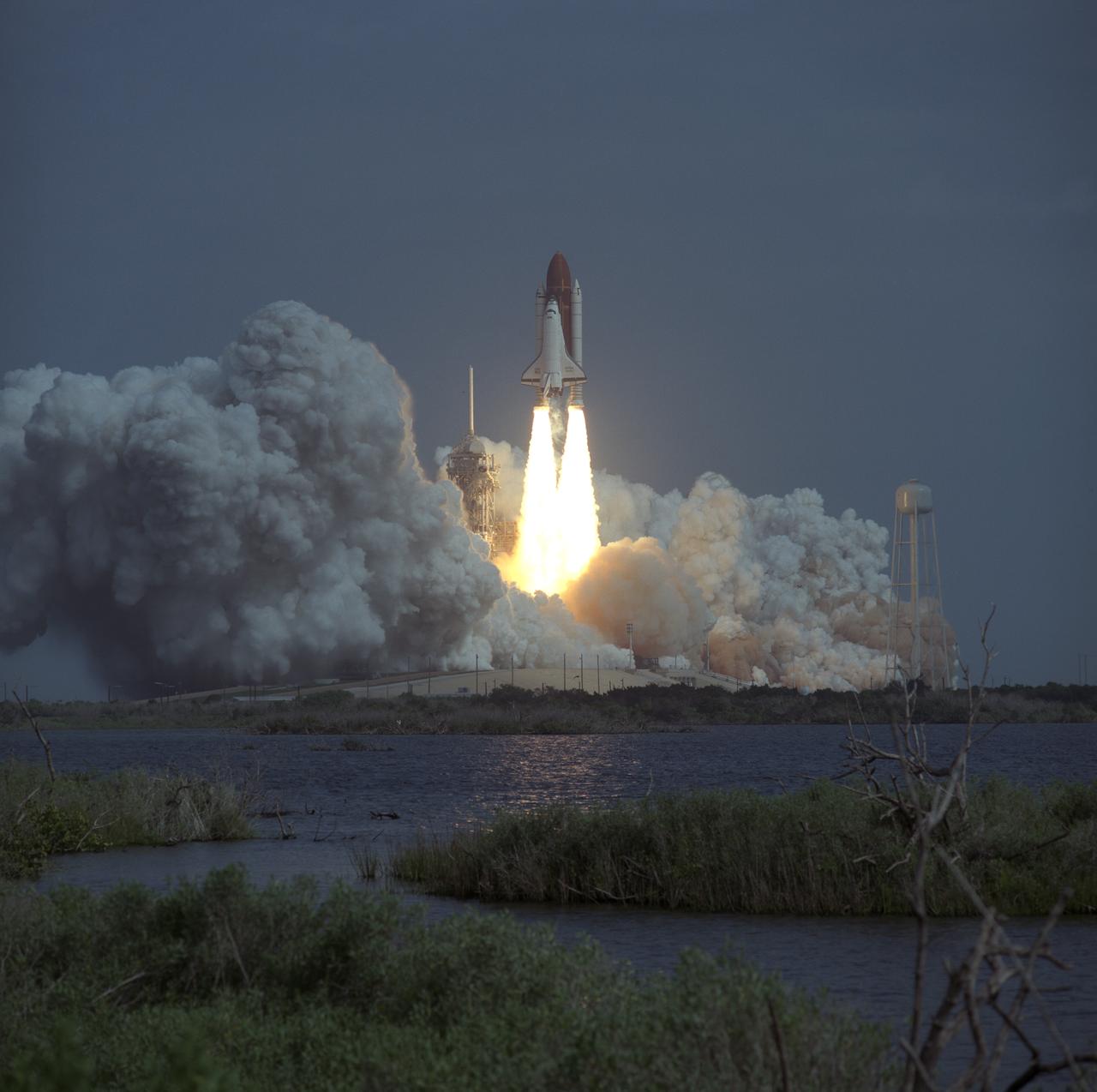
Launched aboard the Space Shuttle Atlantis on April 5, 1991 at 9:22:44am (EST), the STS-37 mission hurtles toward space. Her crew included Steven R. Nagel, commander; Kenneth D. (Ken) Cameron, pilot; and Jay Apt, Jerry L. Ross, and Linda M. Godwin, all mission specialists. The crew’s major objective was the deployment of the Gamma Ray Observatory (GRO). Included in the observatory were the Burst and Transient Source Experiment (BATSE); the Imaging Compton Telescope (COMPTEL); the Energetic Gamma Ray Experiment Telescope (EGRET); and the Oriented Scintillation Spectrometer Telescope (OSSEE).
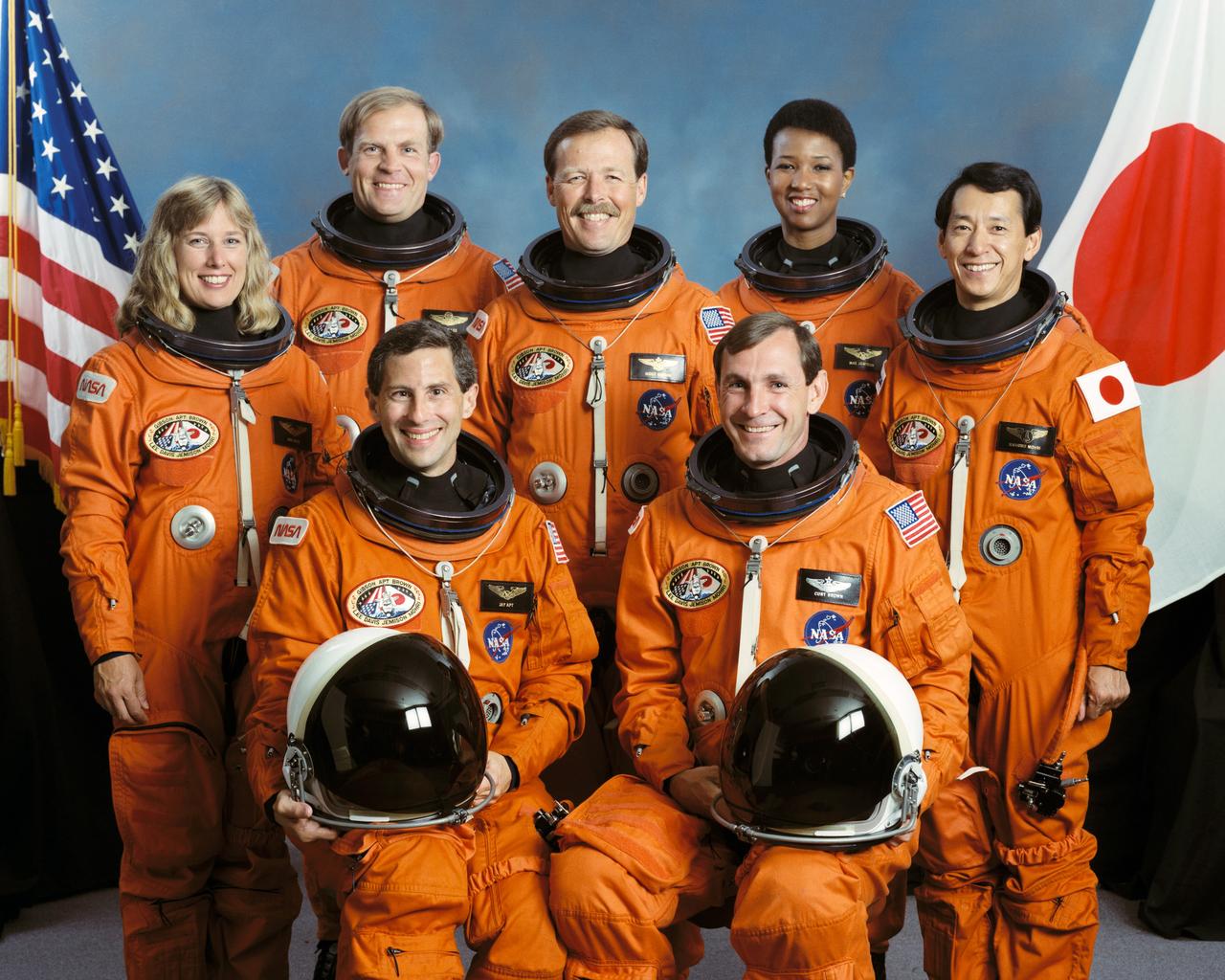
STS047-S-002 (June 1992) --- These seven crew members are currently in training for the STS-47/Spacelab J mission scheduled for later this year. Pictured are (left to right, front) Jerome (Jay) Apt, mission specialist; Curtis L. Brown, pilot; and (left to right, rear) N. Jan Davis, mission specialist; Mark C. Lee, payload commander; Robert L. Gibson, mission commander; Mae C. Jemison, mission specialist; and Mamoru Mohri, payload specialist, representing the National Space Development Agency of Japan (NASDA). This is the Space Shuttle Endeavour's second scheduled mission.
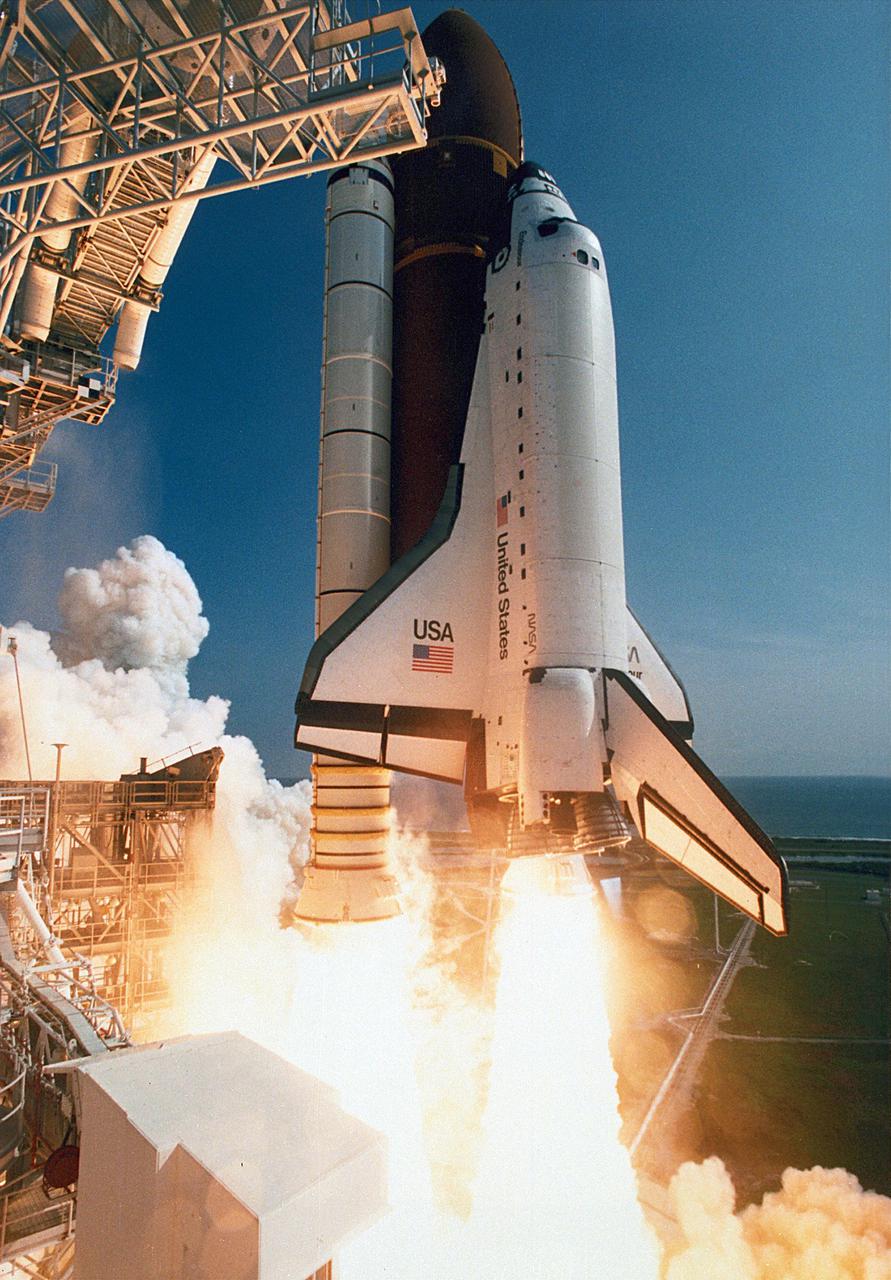
KENNEDY SPACE CENTER, FLA. -- The Space Shuttle Endeavour thunders past the uppermost reaches of the Fixed Service Structure at Launch Pad 39B after an on-schedule liftoff at 10:23:00 a.m. EDT, Sept. 12. Primary payload for the planned seven-day mission STS-47 is the Spacelab-J science laboratory. Mission Commander is Robert L. 'Hoot' Gibson; the Pilot, Curtis L. Brown Jr.; Payload Commander, Mark C. Lee; Mission Specialists, N. Jan Davis and Jay Apt; Science Mission Specialist, Dr. Mae C. Jamison; and Payload Specialist Mamoru Mohri.
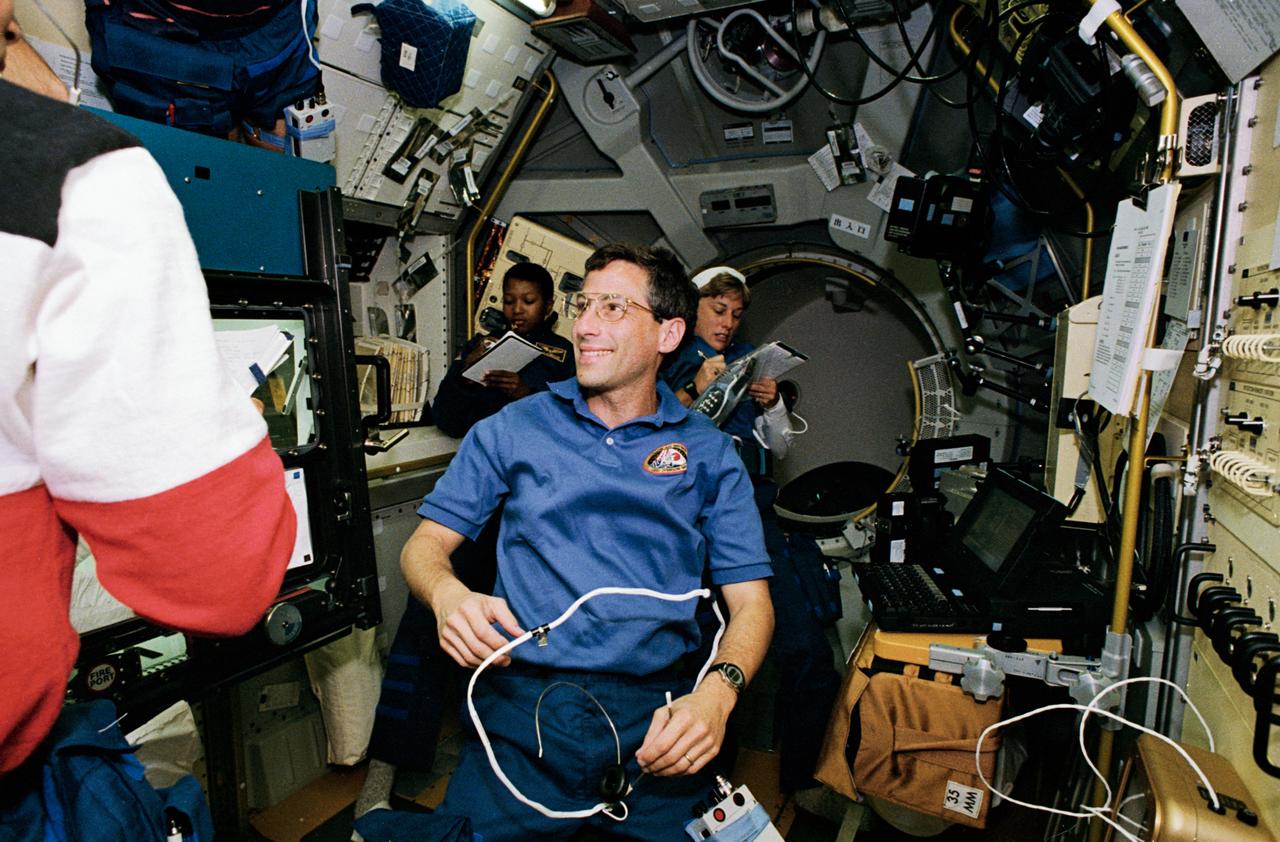
STS047-05-019 (12 - 20 Sept 1992) --- Astronaut Jerome (Jay) Apt, mission specialist, responds to a crew mate's query during a shift change in the Spacelab-J Science Module aboard the Earth-orbiting Space Shuttle Endeavour. Others pictured, left to right, are astronauts Mark C. Lee (immediate foreground, partially out of frame), payload commander; Mae C. Jemison and N. Jan Davis, mission specialists. The four joined two other NASA astronauts and a Japanese payload specialist for eight days aboard Endeavour in support of the joint Japanese-American effort.
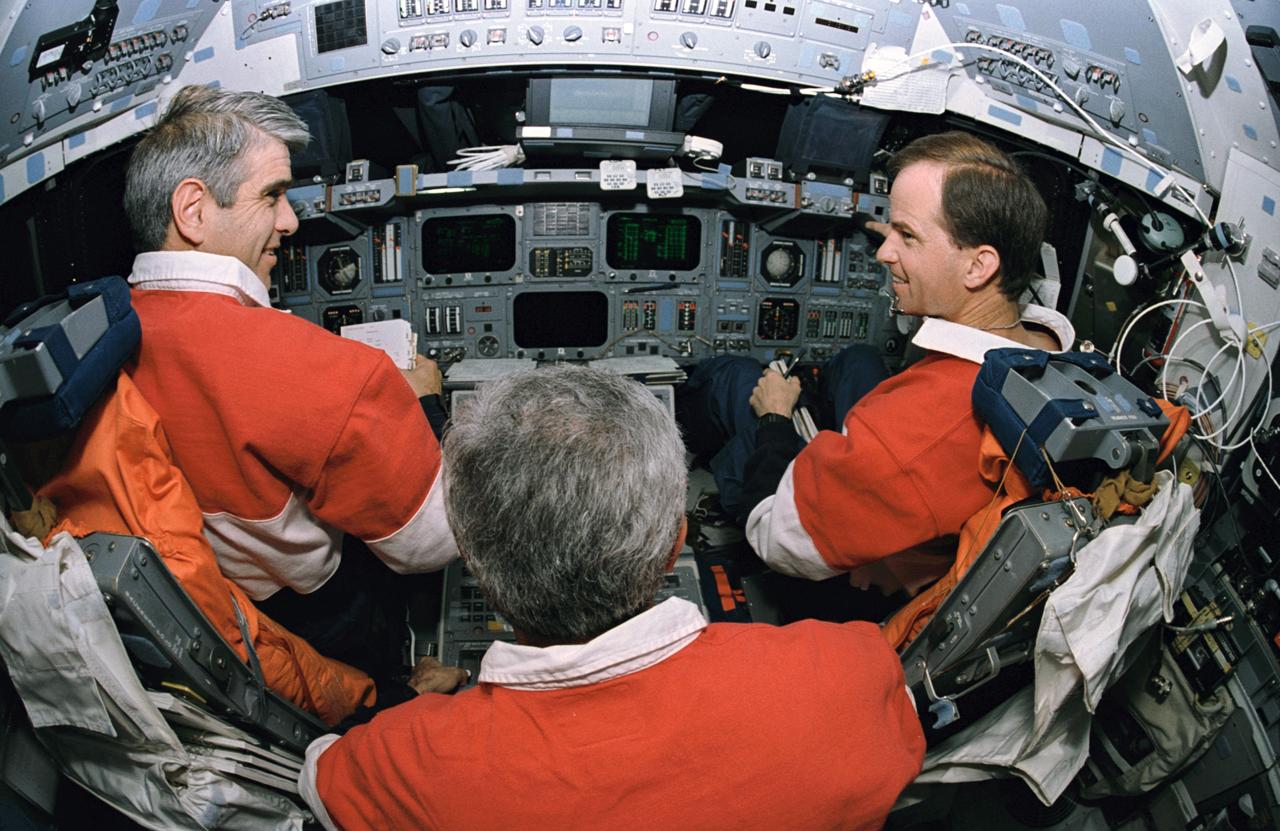
STS059-12-035 (9-20 April 1994) --- A 16mm lens on a 35mm camera provides a "fish-eye" effect for this rare scene on the Space Shuttle Endeavour's flight deck during checkout of the spacecraft's flight control systems. Astronauts Sidney M. Gutierrez (left) and Kevin P. Chilton (right) man the commander and pilot stations, respectively. Astronaut Michael R. (Rich) Clifford, the flight engineer, is seated behind the two. Not pictured are astronauts Linda M. Godwin, payload commander, and Jerome (Jay) Apt and Thomas D. Jones, both mission specialists.
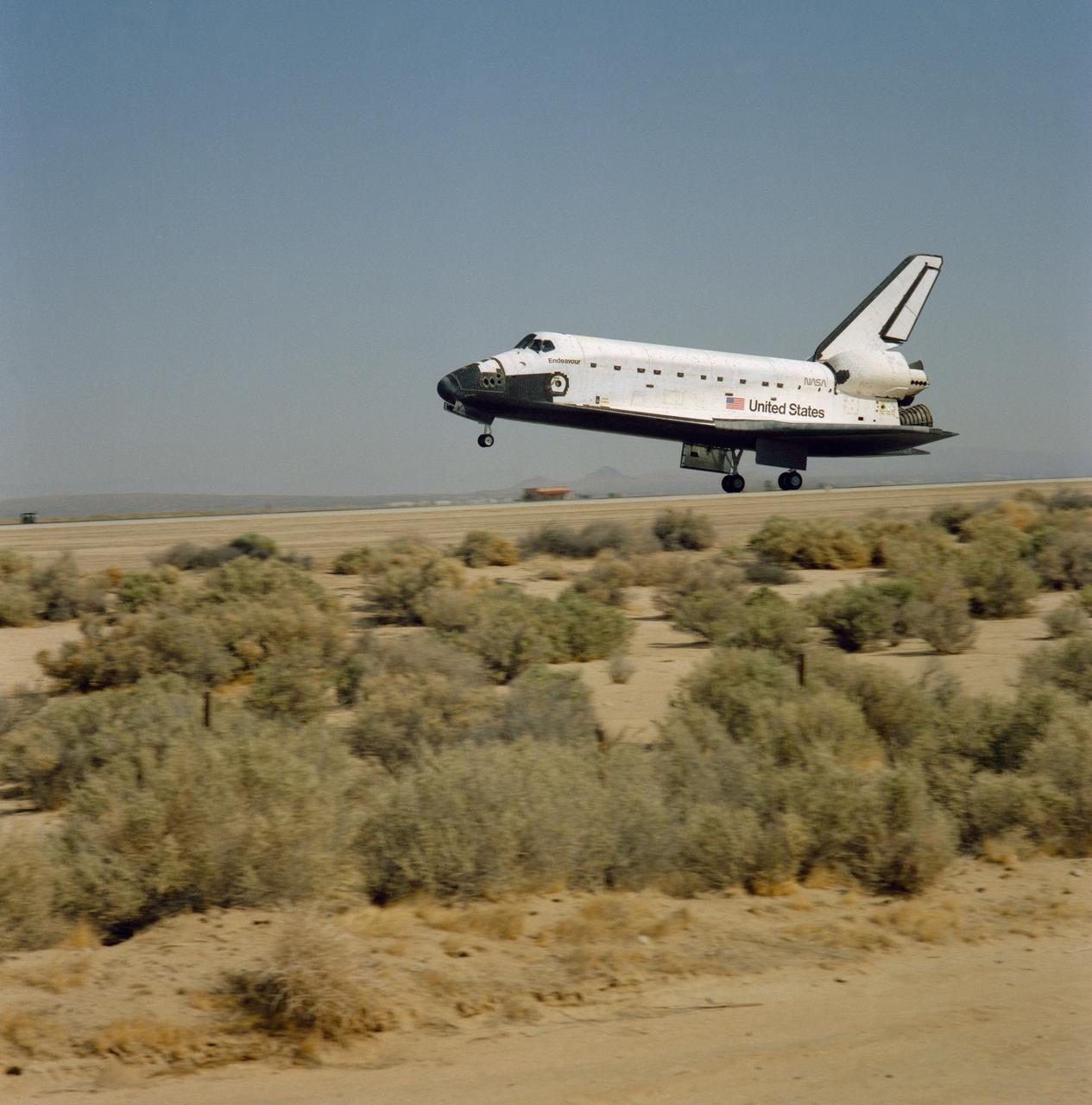
STS059-S-108 (20 April 1994) --- The main landing gear of the Space Shuttle Endeavour touches down at Edwards Air Force Base to complete the 11-day STS-59/SRL-1 mission. Landing occurred at 9:54 a.m. (PDT), April 20, 1994. Mission duration was 11 days, 5 hours, 49 minutes. Guiding Endeavour to a landing was astronaut Sidney M. Gutierrez, STS-59 commander. His crew was Kevin P. Chilton, Linda M. Godwin, Jerome (Jay) Apt, Michael R. (Rich) Clifford and Thomas D. Jones.
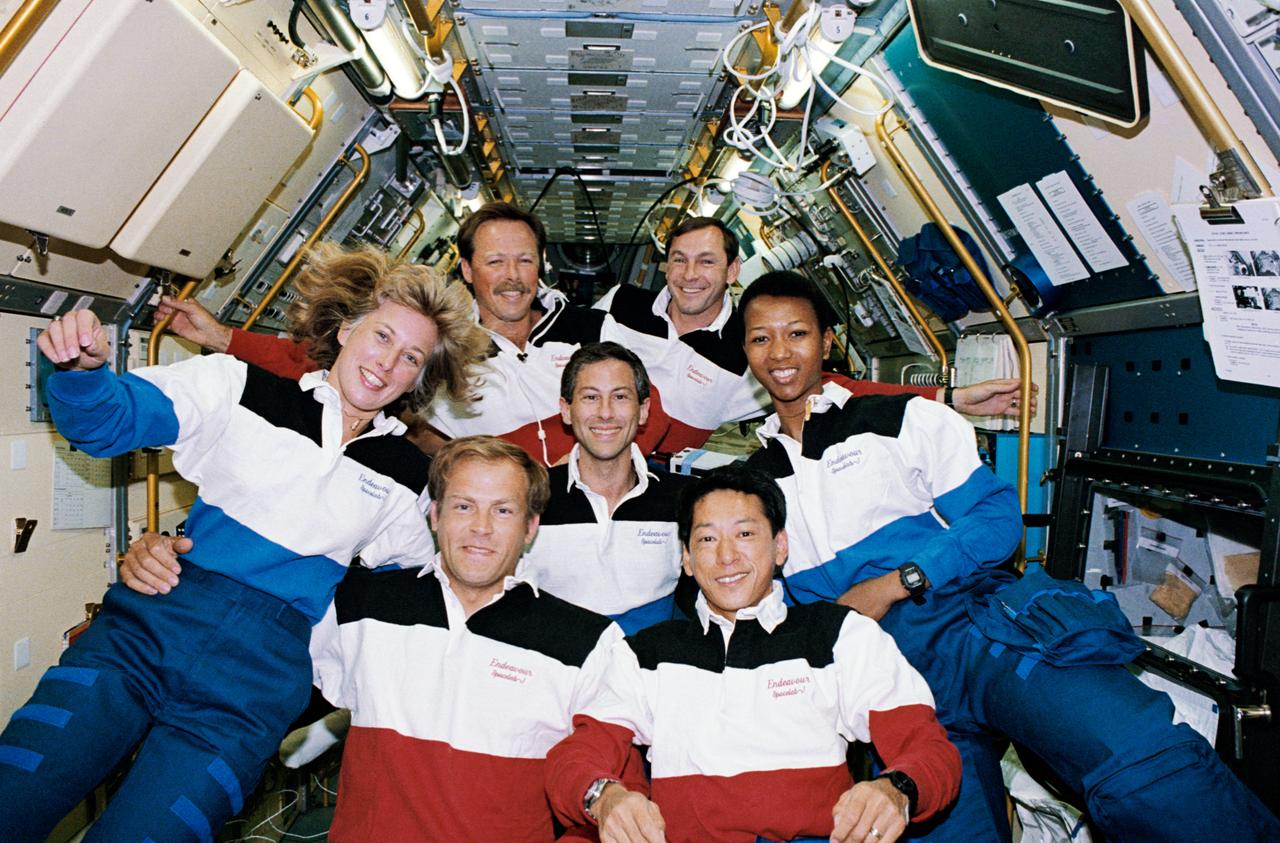
STS047-09-009 (12 - 20 Sept 1992) --- The seven crew members sharing eight days of research in support of Spacelab-J pose for the traditional inflight portrait in the Science Module. Pictured, left to right, back row, are Robert L. Gibson, mission commander; and Curtis L. Brown, Jr., pilot; middle row, N. Jan Davis, Jerome (Jay) Apt and Mae C. Jemison, all mission specialists; and front row, Mark C. Lee, payload commander, and Mamoru Mohri, payload specialist representing Japan's National Space Development Agency (NASDA).
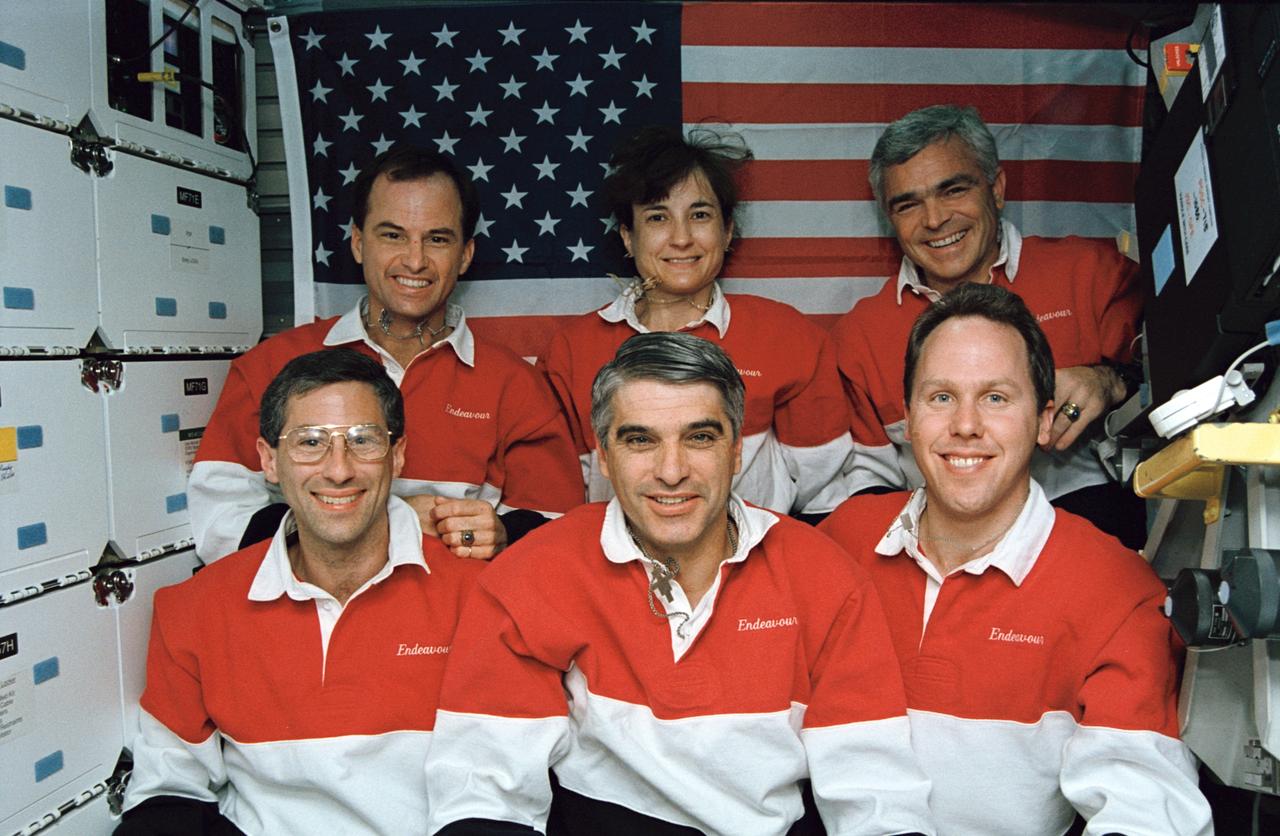
STS059-44-004 (9-20 April 1994) --- This middeck scene aboard the Space Shuttle Endeavour caught all six STS-59 crew members in a rare group shot. Astronaut Sidney M. Gutierrez, mission commander (front center) is flanked by astronauts Jerome (Jay) Apt and Thomas D. Jones, both mission specialists. On the back row are (left to right) astronaut Kevin P. Chilton, pilot; Linda M. Godwin, payload commander; and Michael R. (Rich) Clifford, mission specialist. Most of the week and a half was divided into two work shifts for the crew members.
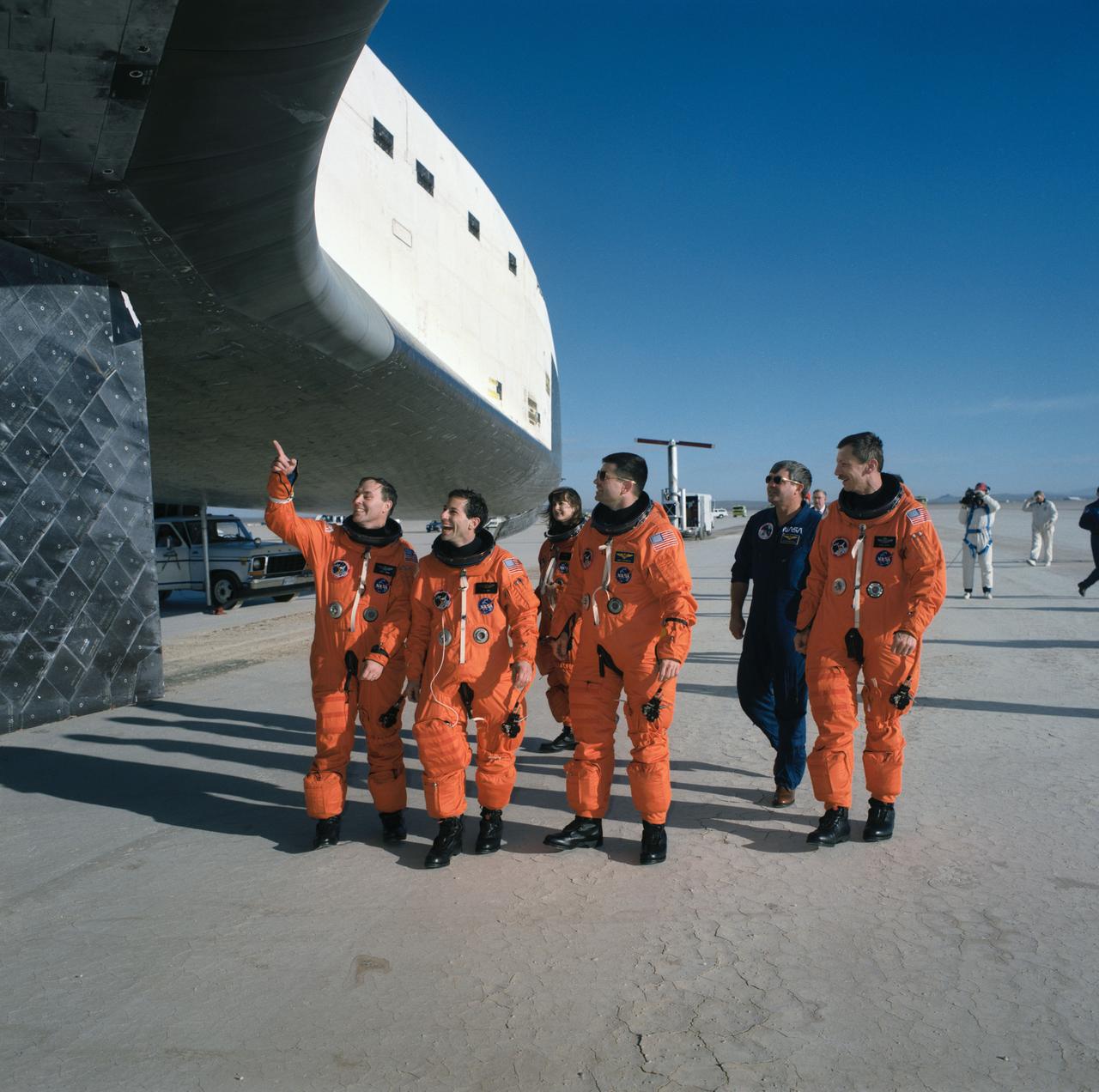
STS037-S-085 (11 April 1991) --- Following their egress from the Space Shuttle Atlantis at Edwards Air Force Base the STS-37 astronauts survey their "home" for the past six days. Pictured, left to right, are astronauts Jerry L. Ross, Jerome J. Apt, Linda M. Godwin, Kenneth D. Cameron, Daniel C. Brandenstein and Steven R. Nagel, mission commander. Brandenstein, chief of the Astronaut Office at JSC, flew the Shuttle training aircraft and took photographs during Atlantis's landing. Complete wheel stop occurred at 6:56:26 (PDT), April 11, 1991.
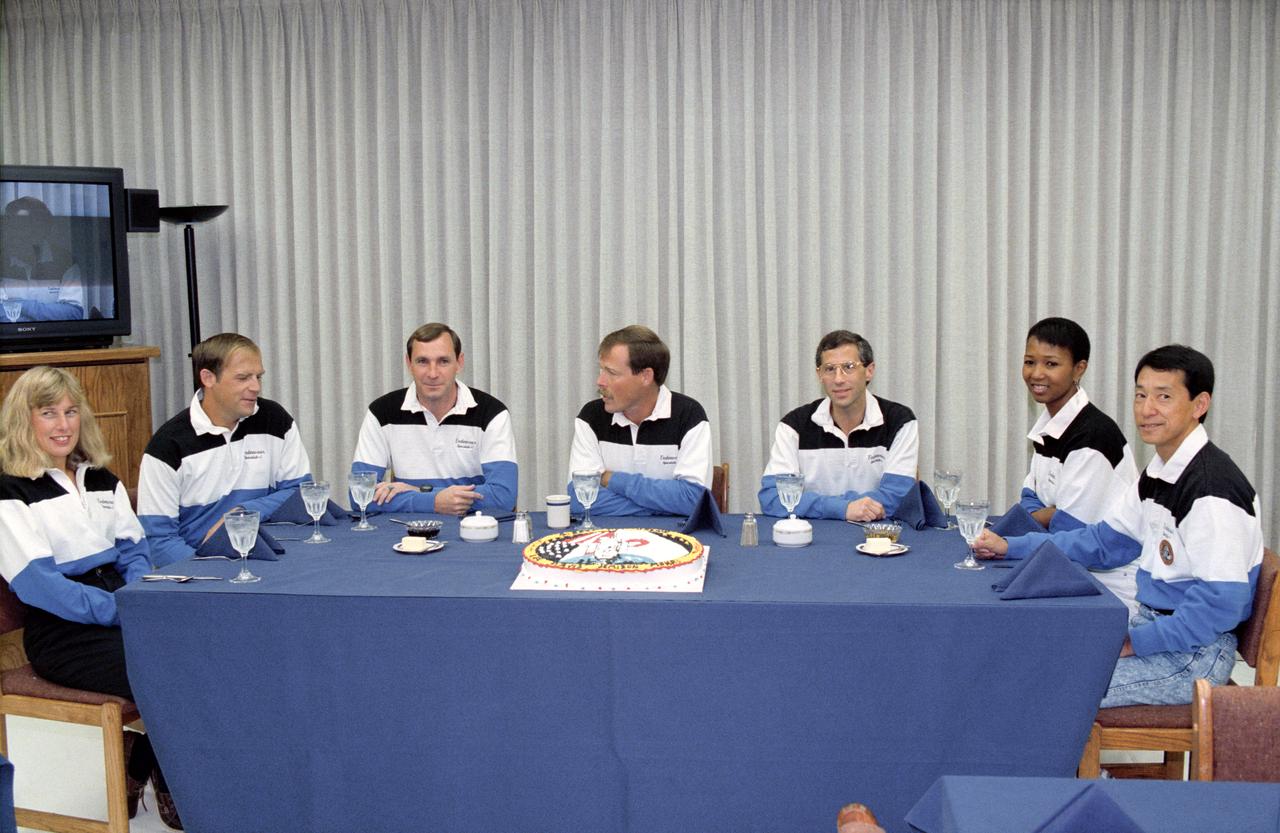
STS047-S-037 (12 Sept 1992) --- The seven crewmembers who will be aboard for Endeavour's second trip into space are about to have a light breakfast prior to the pre-launch suiting up process in the Operations and Checkout Building. Left to right are astronauts N. Jan Davis, Mark C. Lee, Curtis L. Brown Jr., Robert L. Gibson, Jerome (Jay) Apt and Mae C. Jemison; and payload specialist Mamoru Mohri, representing the National Space Development Agency (NASDA) of Japan. This mission will be devoted to support of the Spacelab-J mission, a joint effort between Japan and the United States. Launch occurred at 10:23:00:0680 a.m. (EDT), September 12, 1992.
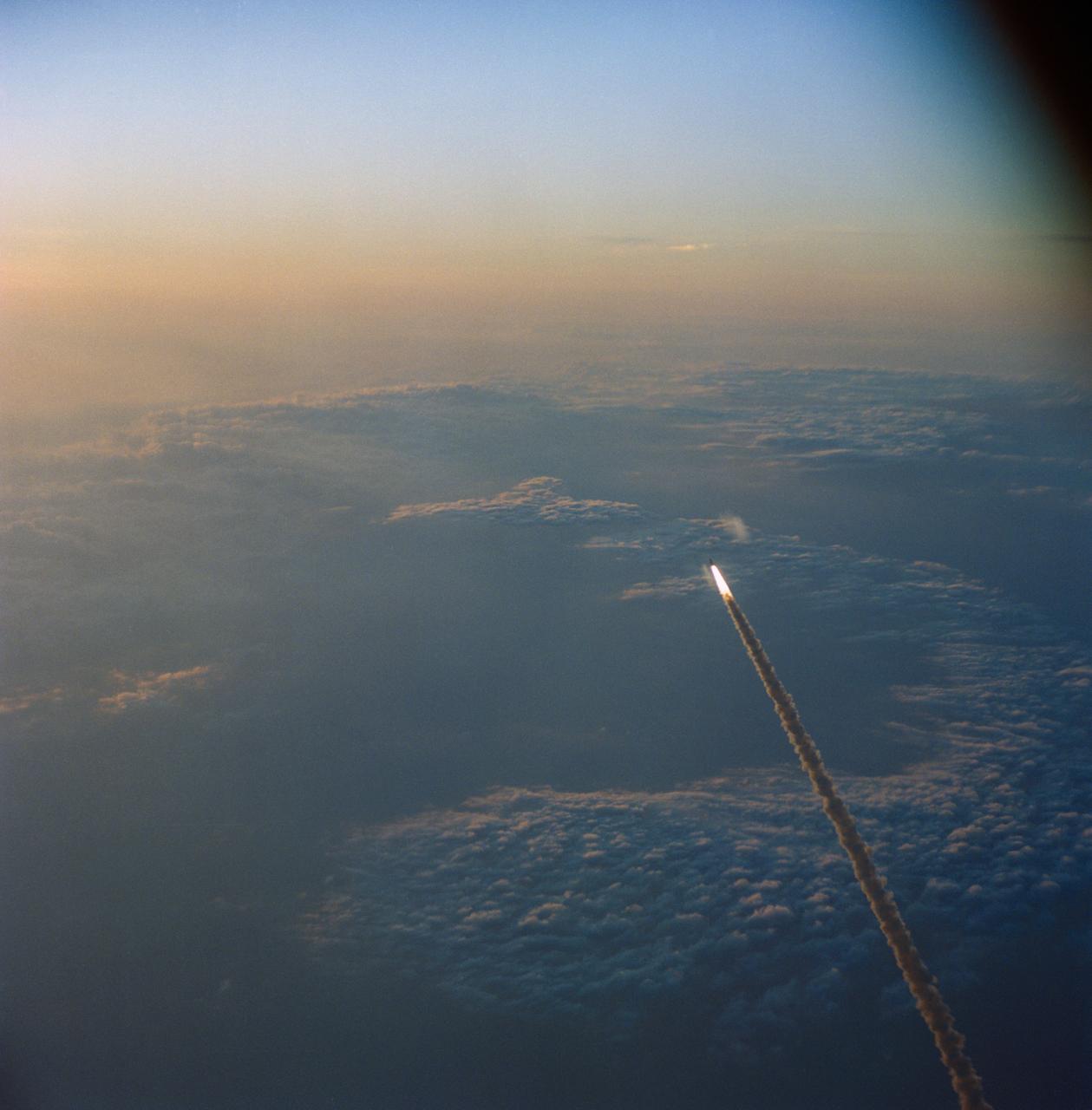
STS059-S-066 (9 April 1994) --- The liftoff of the Space Shuttle Endeavour is backdropped against clouds at the Kennedy Space Center (KSC) as six NASA astronauts head for a week and a half in Earth orbit. Liftoff occurred at 7:05 a.m. (EDT), April 9, 1994. The air-to-air view was photographed from the Shuttle Training Aircraft (STA) piloted by astronaut Robert L. Gibson. Onboard for the Space Radar Laboratory (SRL-1) mission were astronauts Sidney M. Gutierrez, Kevin P. Chilton, Jerome (Jay) Apt, Linda M. Godwin, Michael (Rich) Clifford and Thomas D. Jones.
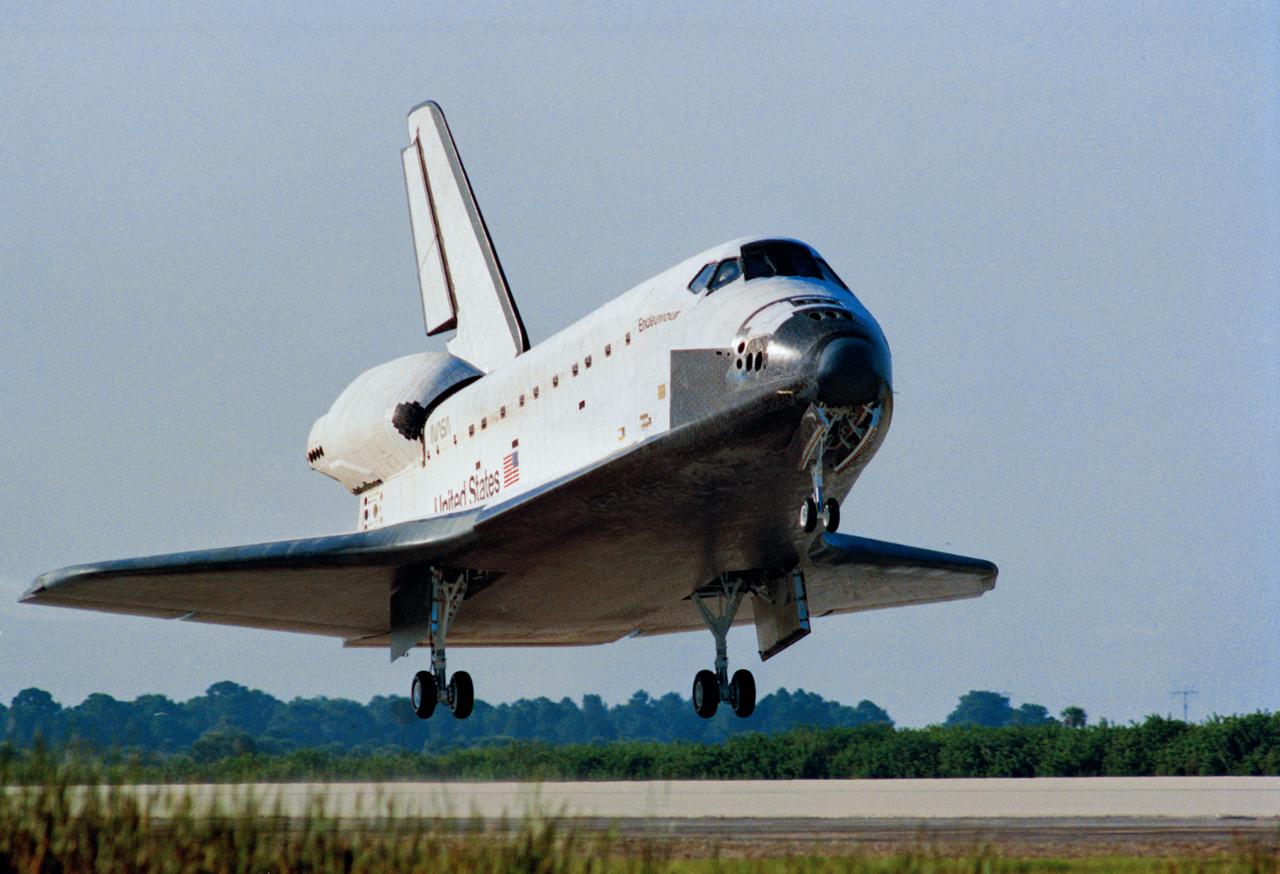
STS047-S-116 (20 Sept 1992) --- The Space Shuttle Endeavour prepares to land on the Kennedy Space Center's Shuttle landing facility runway. The successful landing marked the completion of an eight-day Earth-orbital mission for the orbiter, its seven-member crew and the Spacelab-J payload. Landing occurred at 8:53 a.m. (EDT), September 20, 1992. Onboard the spacecraft were astronauts Robert L. Gibson, Curtis L. Brown Jr., Mark C. Lee, Jerome (Jay) Apt, N. Jan Davis and Mae C. Jemison, along with Japanese payload specialist Dr. Mamoru Mohri.
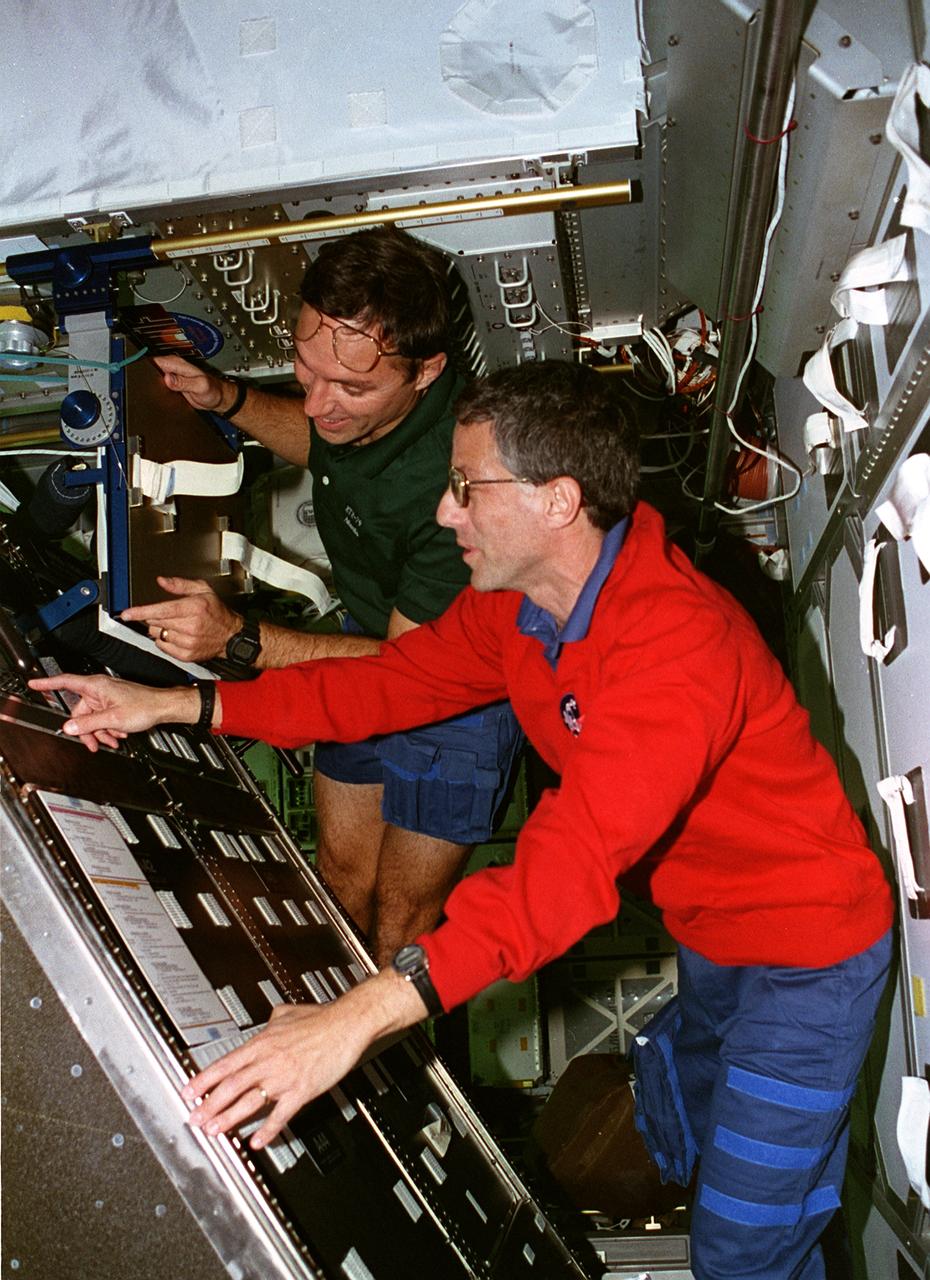
STS079-302-006 (16-26 Sept. 1996) --- Astronauts Jerome (Jay) Apt (right) and Carl E. Walz, both mission specialists, tilt the Active Rack Isolation System (ARIS) hardware which was included on this flight to evaluate conditions and hardware requirements for the International Space Station (ISS). The ARIS is designed to isolate certain experiments from major disturbances that are expected to be found on the ISS, such as vibrations caused by the movement of mechanisms and crew members and the operation of equipment. STS-79 was chosen for the inclusion of the experiment because the Shuttle-Mir complex more closely approximates the acceleration environment of the ISS.
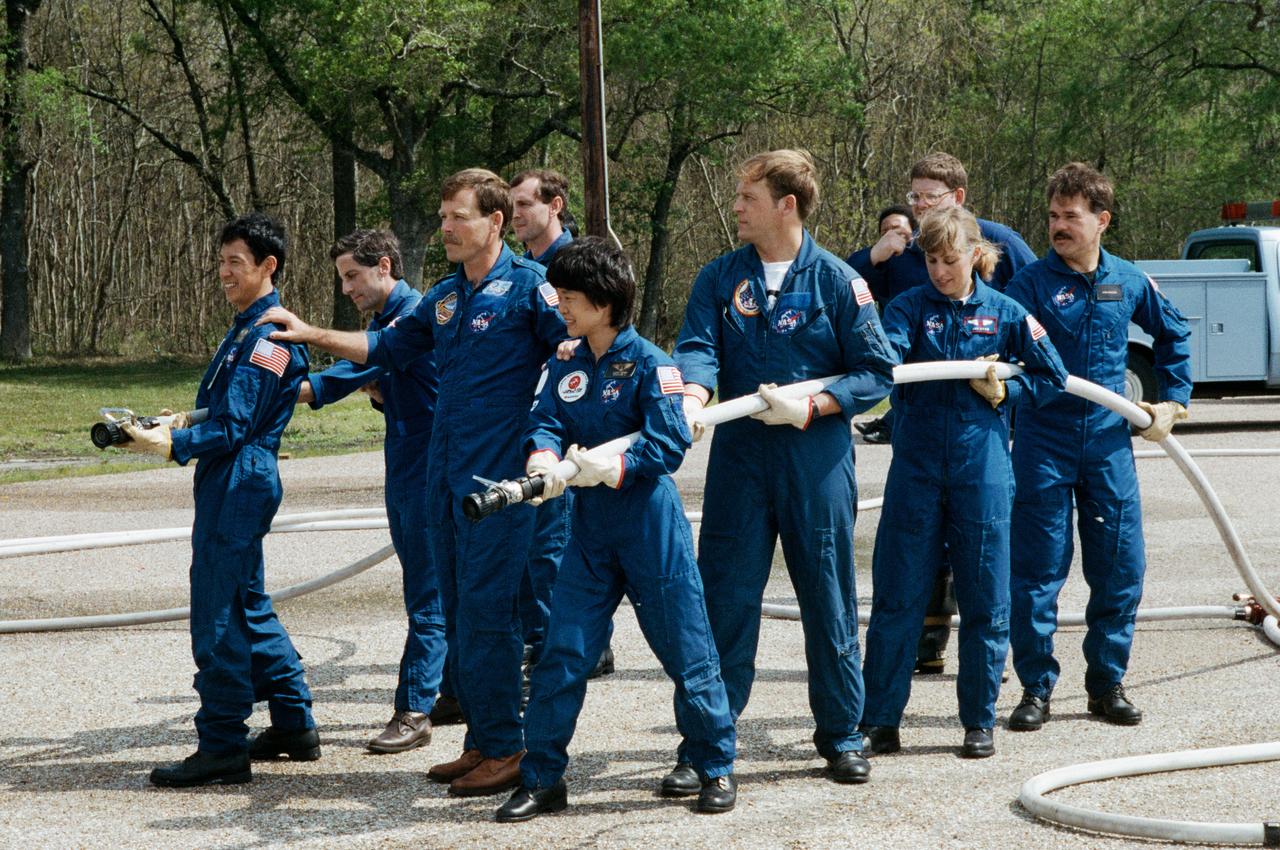
STS-47 Endeavour, Orbiter Vehicle (OV) 105, crewmembers led by Commander Robert L. Gibson (center) prepare to extinguish a blaze in JSC's Fire Training Pit. Lined up along the water hoses are: (on left) Payload Specialist Mamoru Mohri, holding the hose nozzle, followed by Mission Specialist (MS) Jerome Apt, and Pilot Curtis L. Brown, Jr; and (on right) backup Payload Specialist Chiaki Naito-Mukai, holding the hose nozzle, followed by MS and Payload Commander (PLC) Mark C. Lee, MS N. Jan Davis, and backup Payload Specialist Stan Koszelak. A veteran fire fighter and the instructor, positioned between the two hoses, looks on. Mohri and Mukai represent Japan's National Space Development Agency (NASDA). The Fire Training Pit is located across from the Gilruth Center Bldg 207.
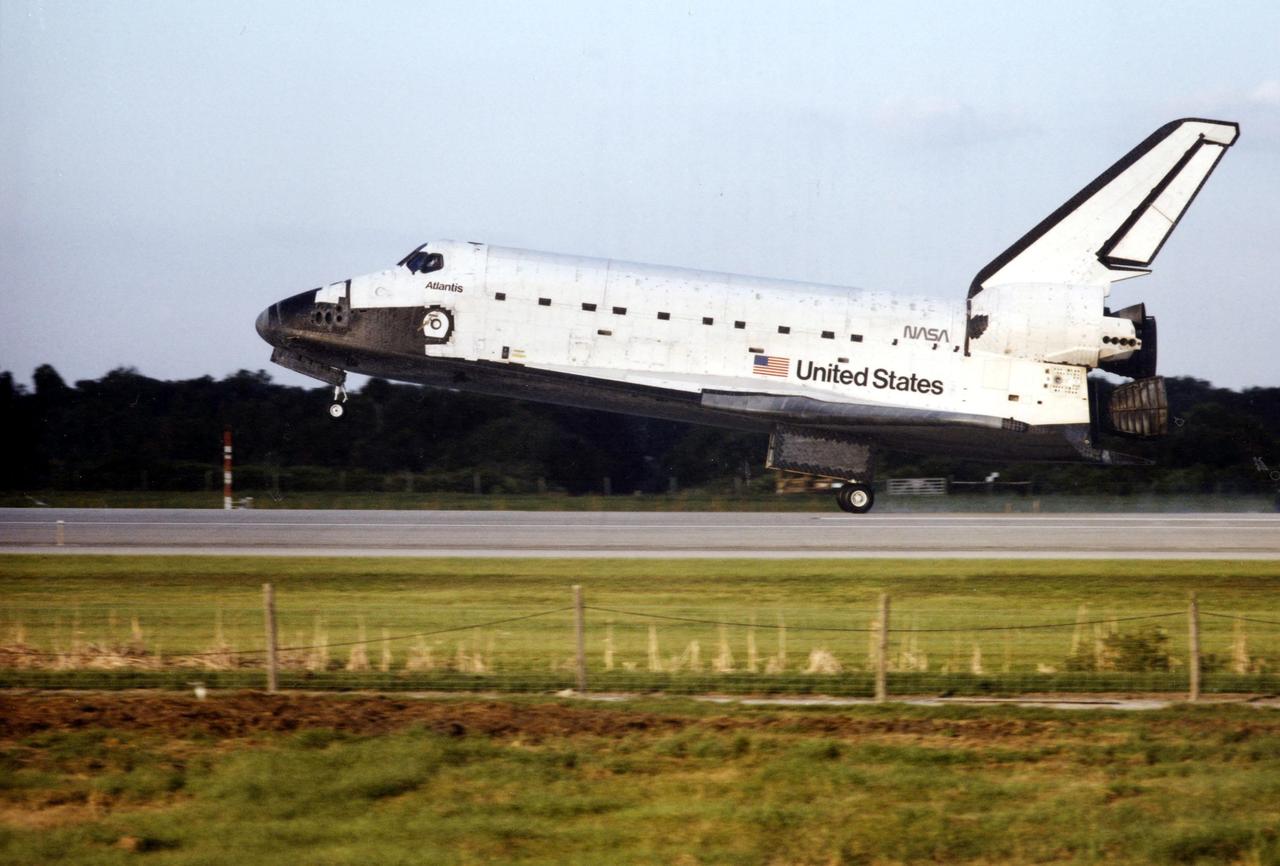
KENNEDY SPACE CENTER, FLA. -- The STS-79 mission comes to a successful conclusion as the orbiter Atlantis touches down on Runway 15 of KSC's Shuttle Landing Facility at 8:13:15 a.m. EDT, September 26. On board is U.S. astronaut Shannon W. Lucid, who has been living and working on the Russian Space Station Mir for about six months. Lucid has spent 188 days in space from launch aboard Atlantis in March to her return today, establishing a U.S. record for long-duration spaceflight as well as representing the longest spaceflight for a woman. Succeeding Lucid on Mir is U.S. astronaut John E. Blaha, who embarked to Mir with the STS-79 crew. The commander of Mission STS-79 is William F. Readdy; Terrence W. Wilcutt is the pilot, and the three mission specialists are Jay Apt, Thomas D. Akers and Carl E. Walz
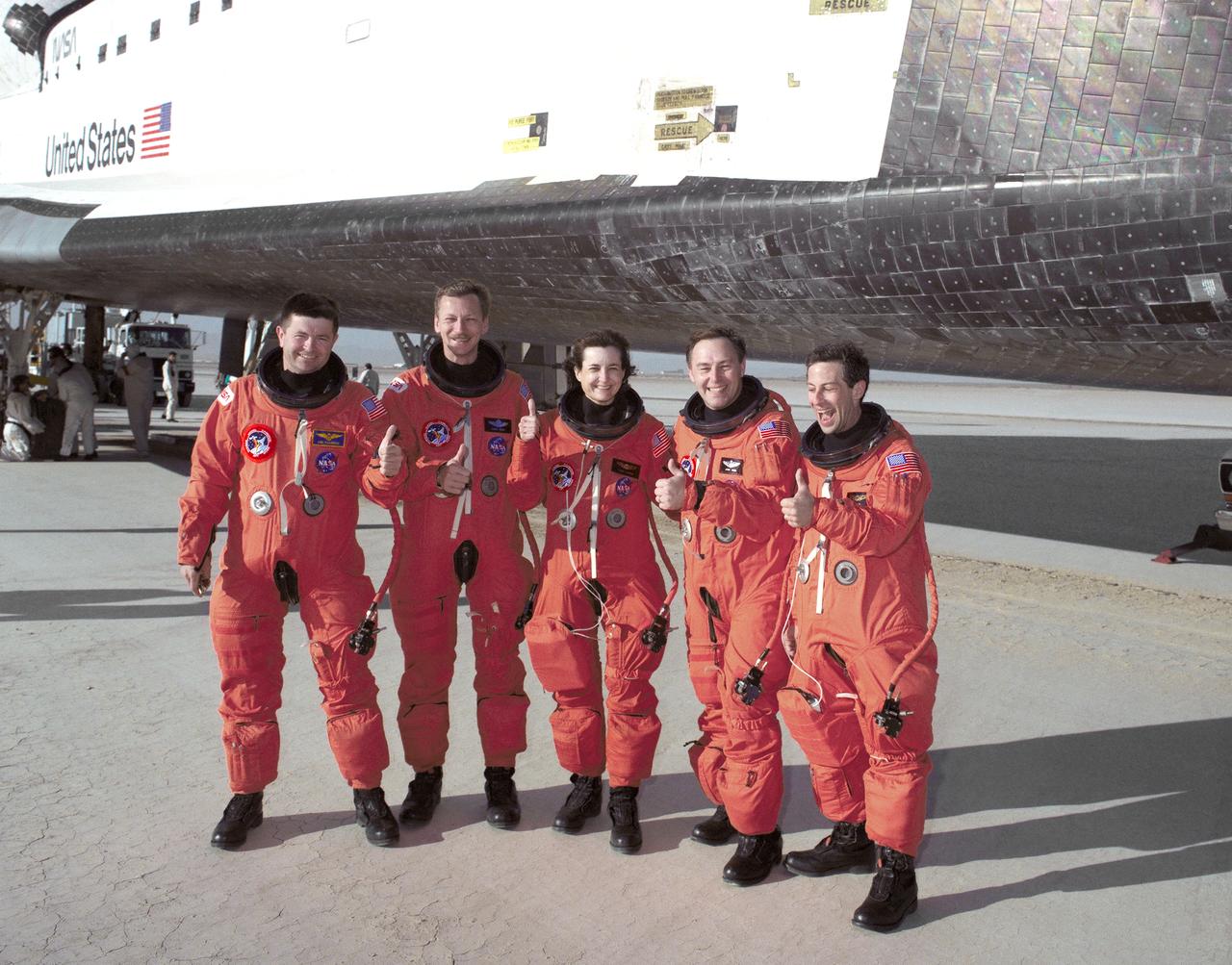
The crew of the Space Shuttle Atlantis gives the "all's well" thumb's-up sign after leaving the 100-ton orbiter following their landing at 6:55 a.m. (PDT), 11 April 1991, at NASA's Ames Dryden Flight Research Facility (later redesignated Dryden Flight Research Center), Edwards, California, to conclude mission STS-37. They are, from left, Kenneth D. Cameron, pilot; Steven R. Nagel, mission commander; and mission specialists Linda M. Godwin, Jerry L. Ross, and Jay Apt. During the mission,which began with launch April 5 at Kennedy Space Center, Florida, the crew deployed the Gamma Ray Observatory. Ross and Jay also carried out two spacewalks, one to deploy an antenna on the Gamma Ray Observatory and the other to test equipment and mobility techniques for the construction of the future Space Station. The planned five-day mission was extended one day because of high winds at Edwards.
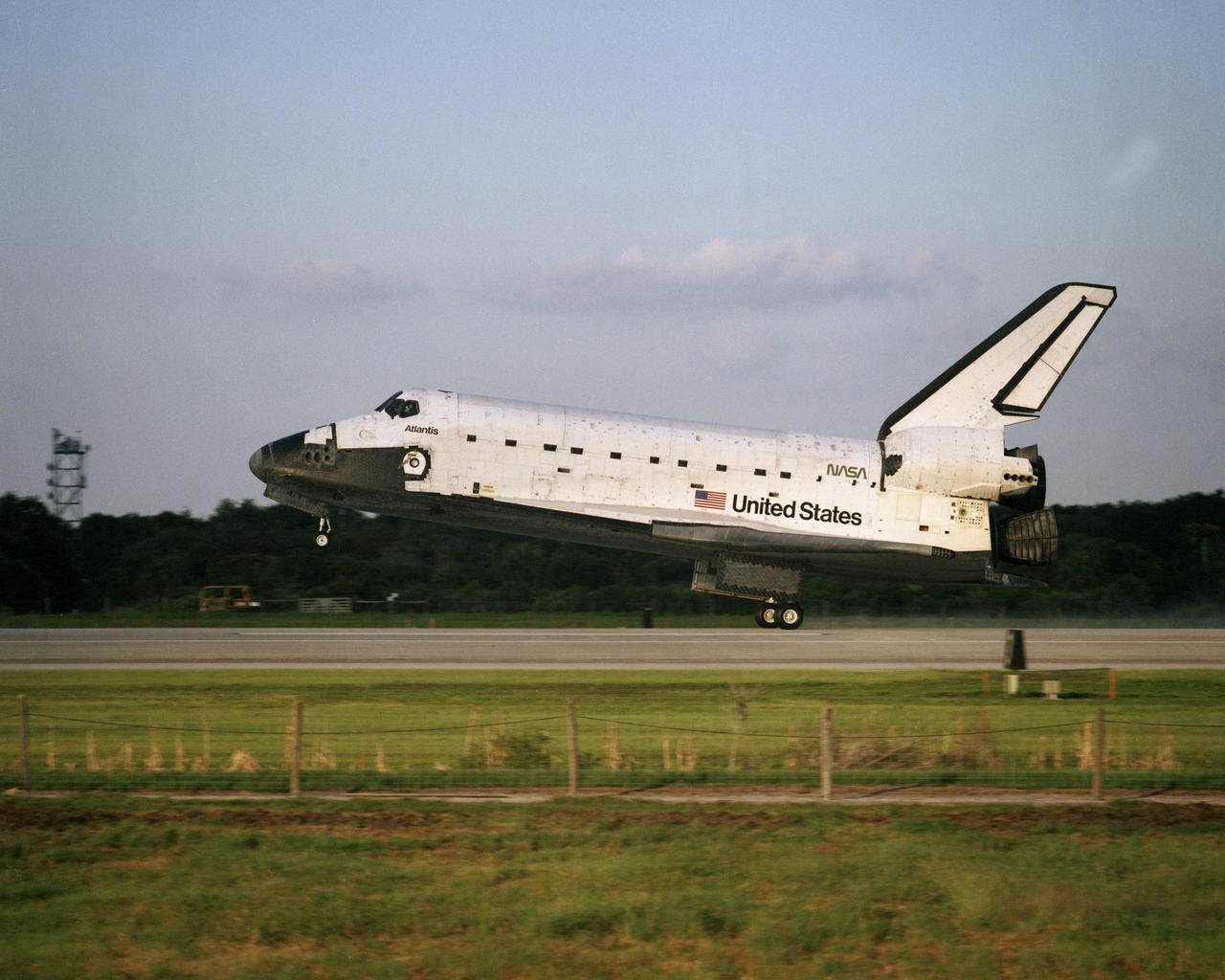
STS079-S-022 (26 Sept. 1996) --- The main landing gear of the space shuttle Atlantis touches down on Runway 15 at the Shuttle Landing Facility (SLF) at the Kennedy Space Center (KSC), bringing an end to the successful ten-day mission. Landing occurred at 8:13:15 a.m. (EDT), Sept. 26, 1996. The touchdown marked the end of 188 days in space for astronaut Shannon W. Lucid, following her in-space exchange with astronaut John E. Blaha, who is now aboard Russia's Mir Space Station. Returning along with Lucid were her STS-79 crew mates - astronauts William F. Readdy, commander; Terrence W. Wilcutt, pilot; and Thomas D. Akers, Jerome (Jay) Apt and Carl E. Walz, mission specialists.
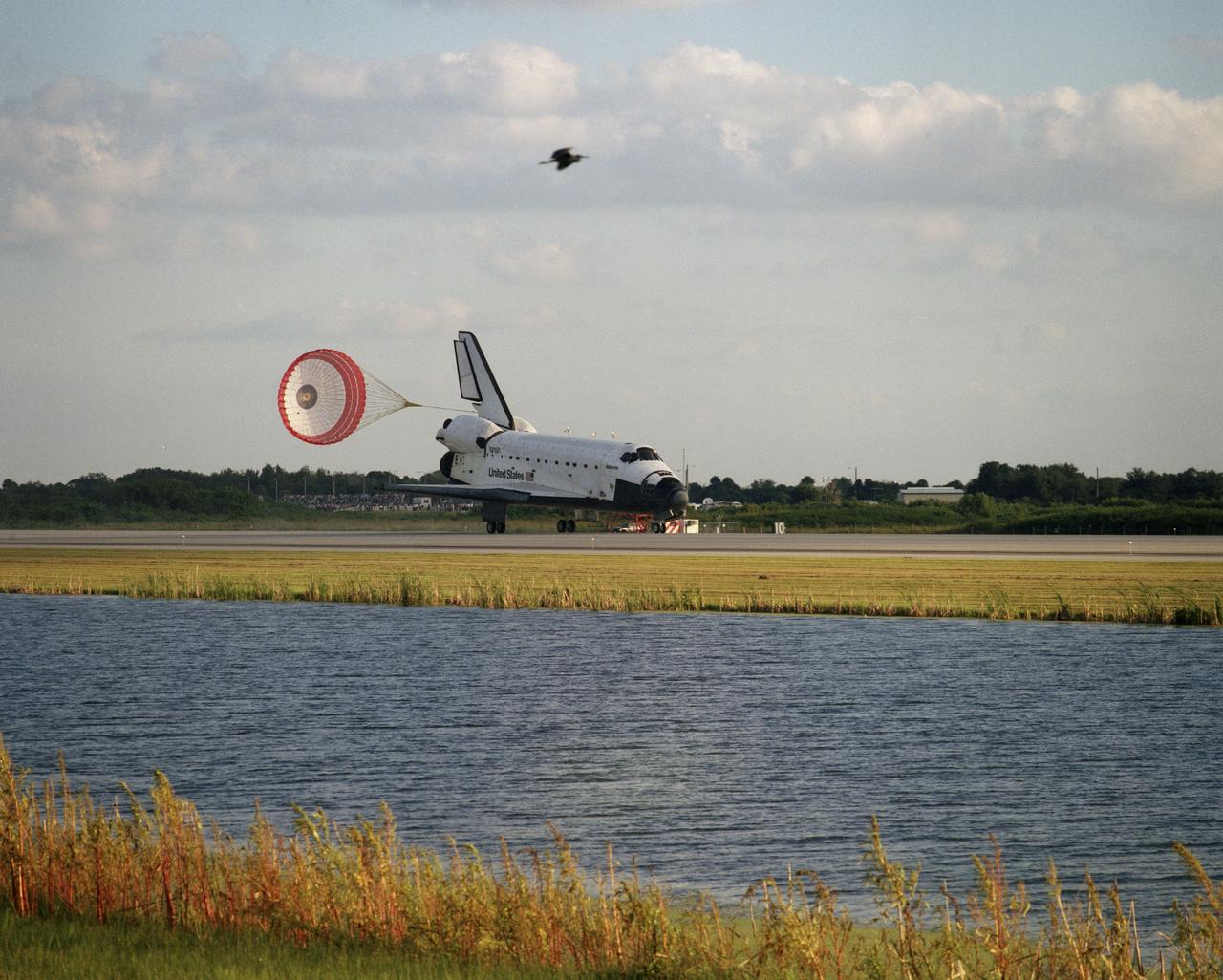
STS079-S-021 (26 Sept. 1996) --- The drag chute on the space shuttle Atlantis is fully deployed as the orbiter rolls down Runway 15 at the Shuttle Landing Facility (SLF) at the Kennedy Space Center (KSC), bringing an end to the successful ten-day mission. Landing occurred at 8:13:15 a.m. (EDT), Sept. 26, 1996. The touchdown marked the end of 188 days in space for astronaut Shannon W. Lucid, following her in-space exchange with astronaut John E. Blaha, who is now aboard Russia's Mir Space Station. Returning along with Lucid were her STS-79 crew mates - astronauts William F. Readdy, commander; Terrence W. Wilcutt, pilot; and Thomas D. Akers, Jerome (Jay) Apt and Carl E. Walz, mission specialists.
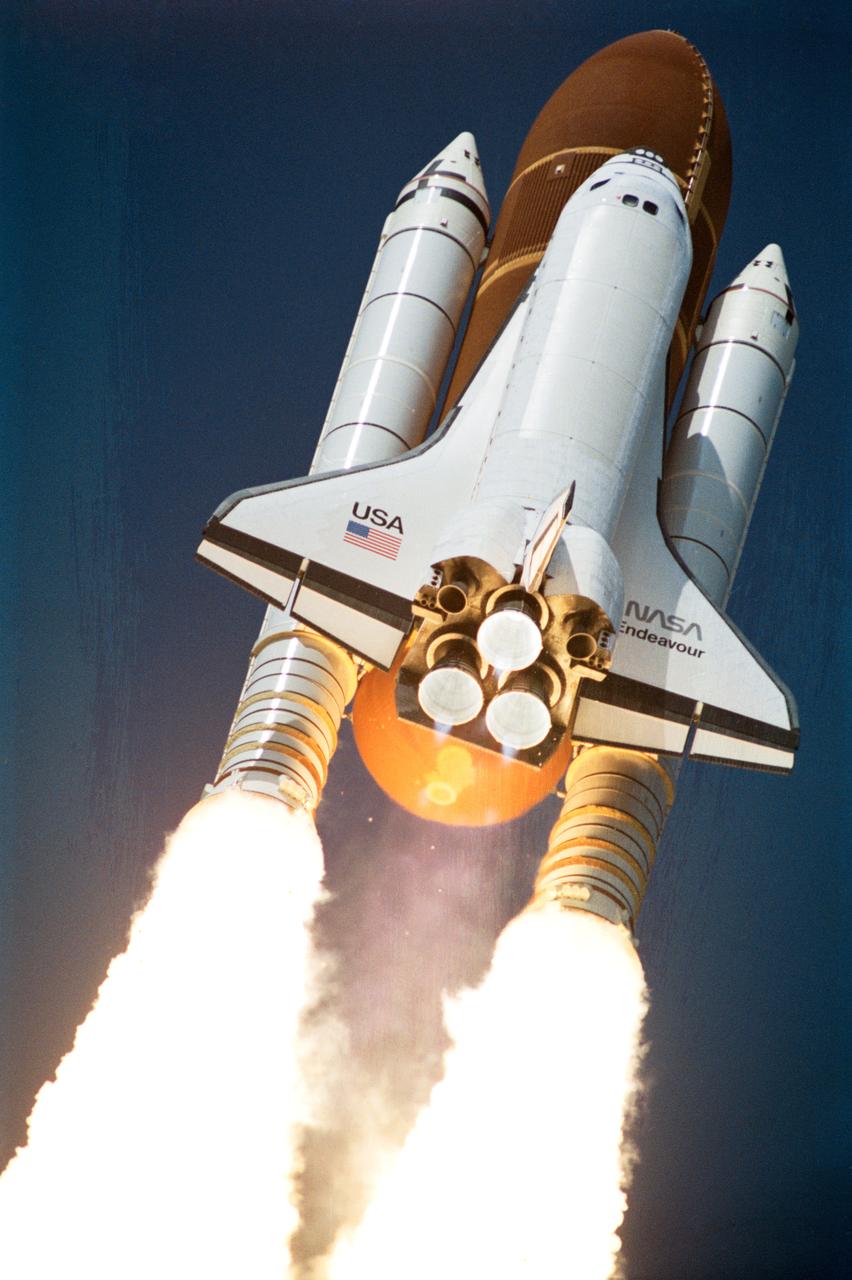
STS047-S-039 (12 Sept 1992) --- A 35mm camera was used to record this low-angle view of the STS-47 launch. With a crew of six NASA astronauts and a Japanese payload specialist onboard, the Space Shuttle Endeavour was heading for its second trip into space. This mission will be devoted to support of the Spacelab-J mission, a joint effort between Japan and the United States. Launch occurred at 10:23:00:0680 a.m. (EDT), September 12, 1992. Onboard were astronauts Robert L. Gibson, mission commander; Curtis L. Brown Jr., pilot; Mark C. Lee, payload commander; and Jerome (Jay) Apt, Mae C. Jemison and N. Jan Davis, mission specialists; along with payload specialist Mamoru Mohri, representing the National Space Development Agency (NASDA) of Japan.
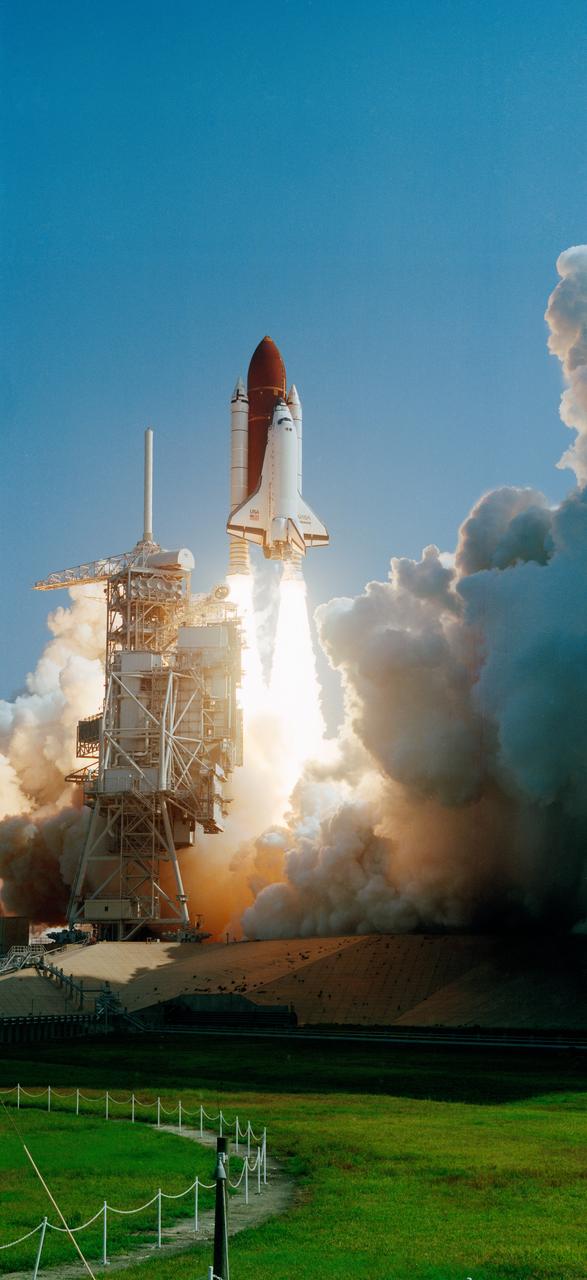
STS047-S-021 (12 Sept 1992) --- With a crew of six NASA astronauts and a Japanese payload specialist onboard, the Space Shuttle Endeavour heads for its second trip into space. This trip will be devoted to support of the Spacelab-J mission, a joint effort between Japan and the United States. Launch occurred at 10:23:00:0680 a.m. (EDT), September 12, 1992. Onboard were astronauts Robert L. Gibson, mission commander; Curtis L. Brown Jr., pilot; Mark C. Lee, payload commander; and Jerome (Jay) Apt, Mae C. Jemison and N. Jan Davis, mission specialists, along with payload specialist Mamoru Mohri, representing the National Space Development Agency of Japan.
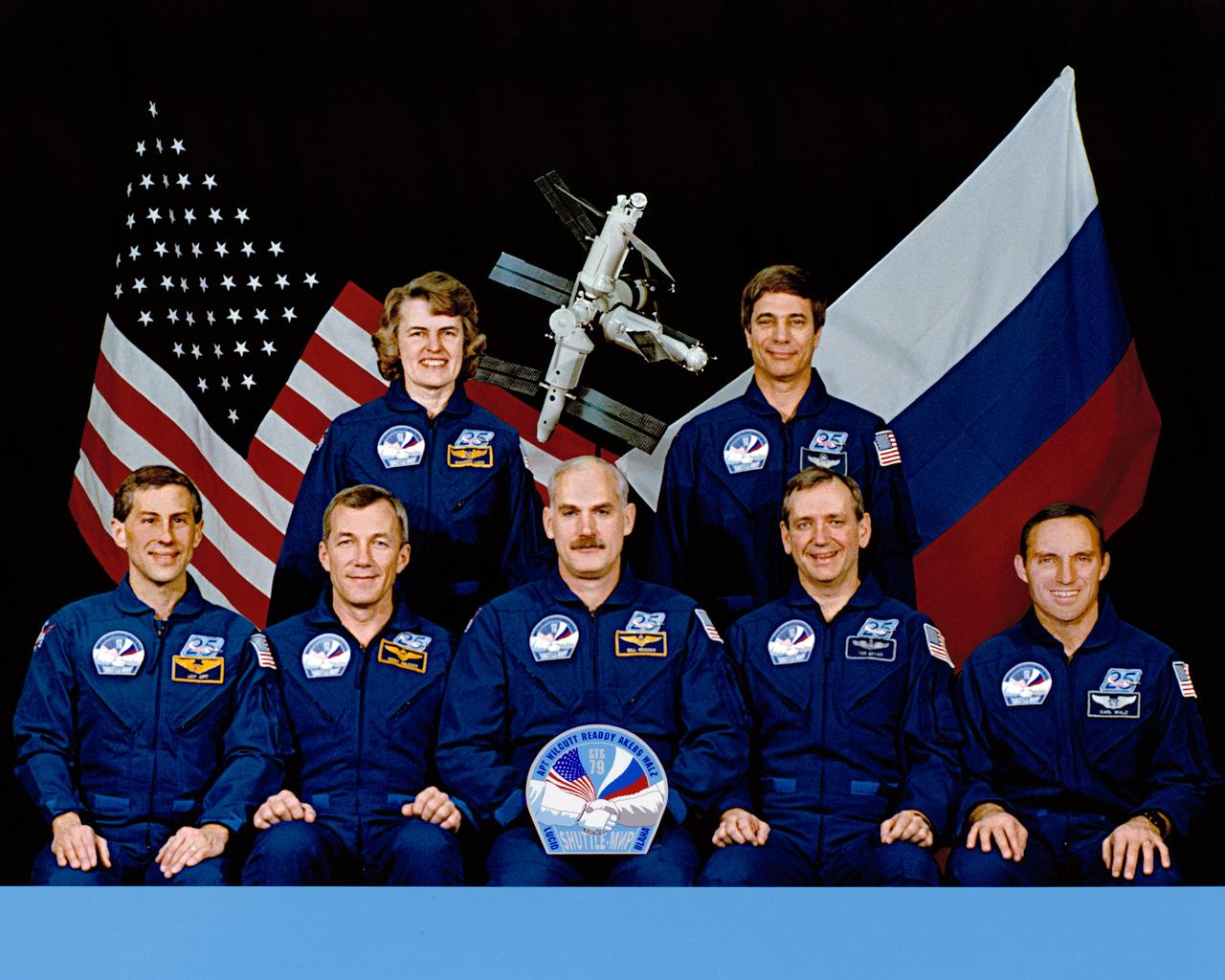
STS079-S-002 (May 1996) --- In various venues, these seven astronauts have been in training for several months for the different phases of the STS-79 mission scheduled for launch in August, 1996. Front row, left to right, are astronauts Jerome (Jay) Apt, mission specialist; Terrence W. Wilcutt, pilot; William F. Readdy, mission commander; Thomas D. Akers and Carl E. Walz, both mission specialists. On the back row are astronauts Shannon W. Lucid and John E. Blaha, both mission specialists. Lucid is currently aboard Russia’s Mir Space Station, having been delivered there by the Space Shuttle Atlantis crew of STS-76 in March, 1996. She will return to Earth with this crew, while Blaha will launch with this crew and remain onboard Mir for a subsequent tour of duty as a cosmonaut guest researcher.
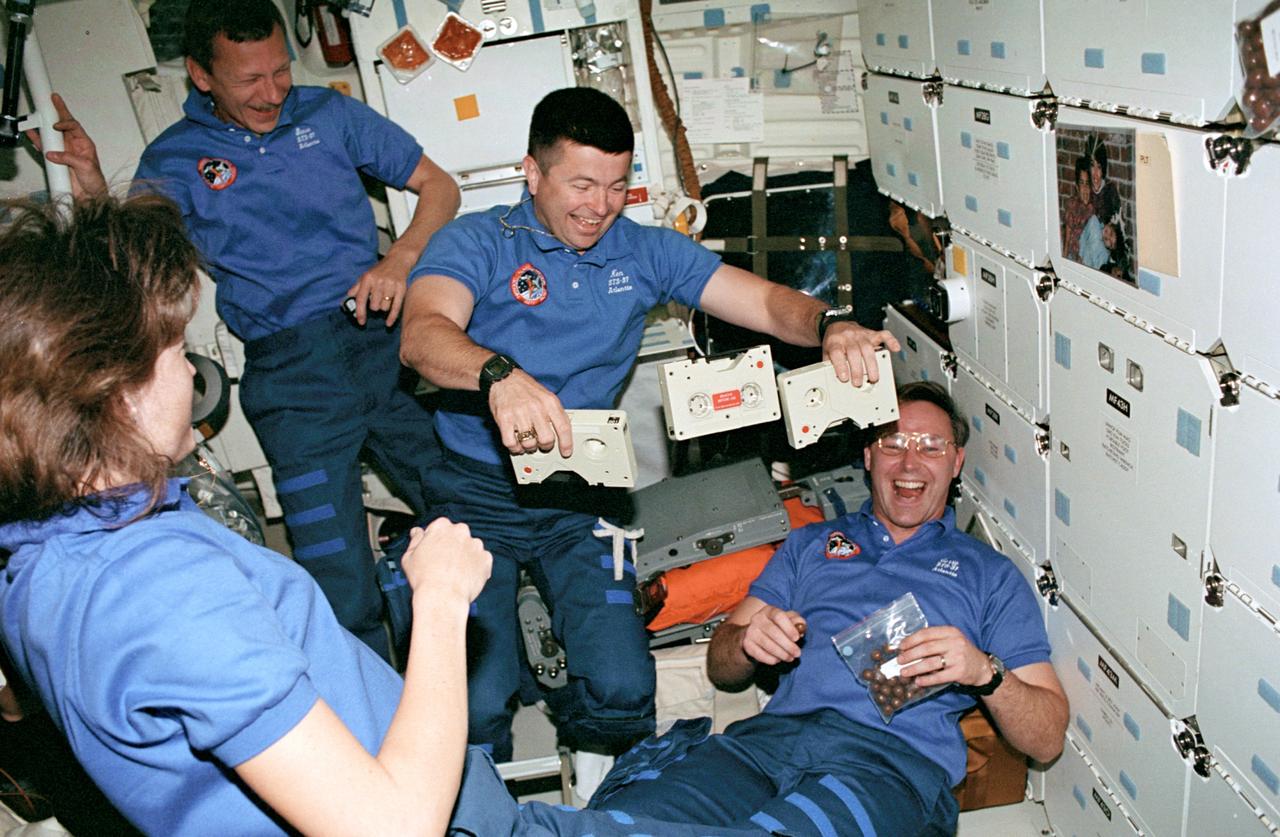
STS037-54-004 (5-11 April 1991) --- Four crew members have fun with weightlessness on the Space Shuttle Atlantis' middeck. Astronaut Kenneth D. Cameron, pilot, performs a "quick hands" feat with three tape cassettes -- obviously a feat much more difficult on Earth. Looking on, left to right, are astronauts Linda M. Godwin, mission specialist; Steven R. Nagel, mission commander; and Jerry L. Ross, mission specialist. Ross later used the microgravity environment to have some fun with the bag of malted milk balls in his hands. This 35mm frame was exposed by astronaut Jerome (Jay) Apt, mission specialist. This was one of the visuals used by the crew members during their April 19 Post Flight Press Conference (PFPC) at the Johnson Space Center (JSC).
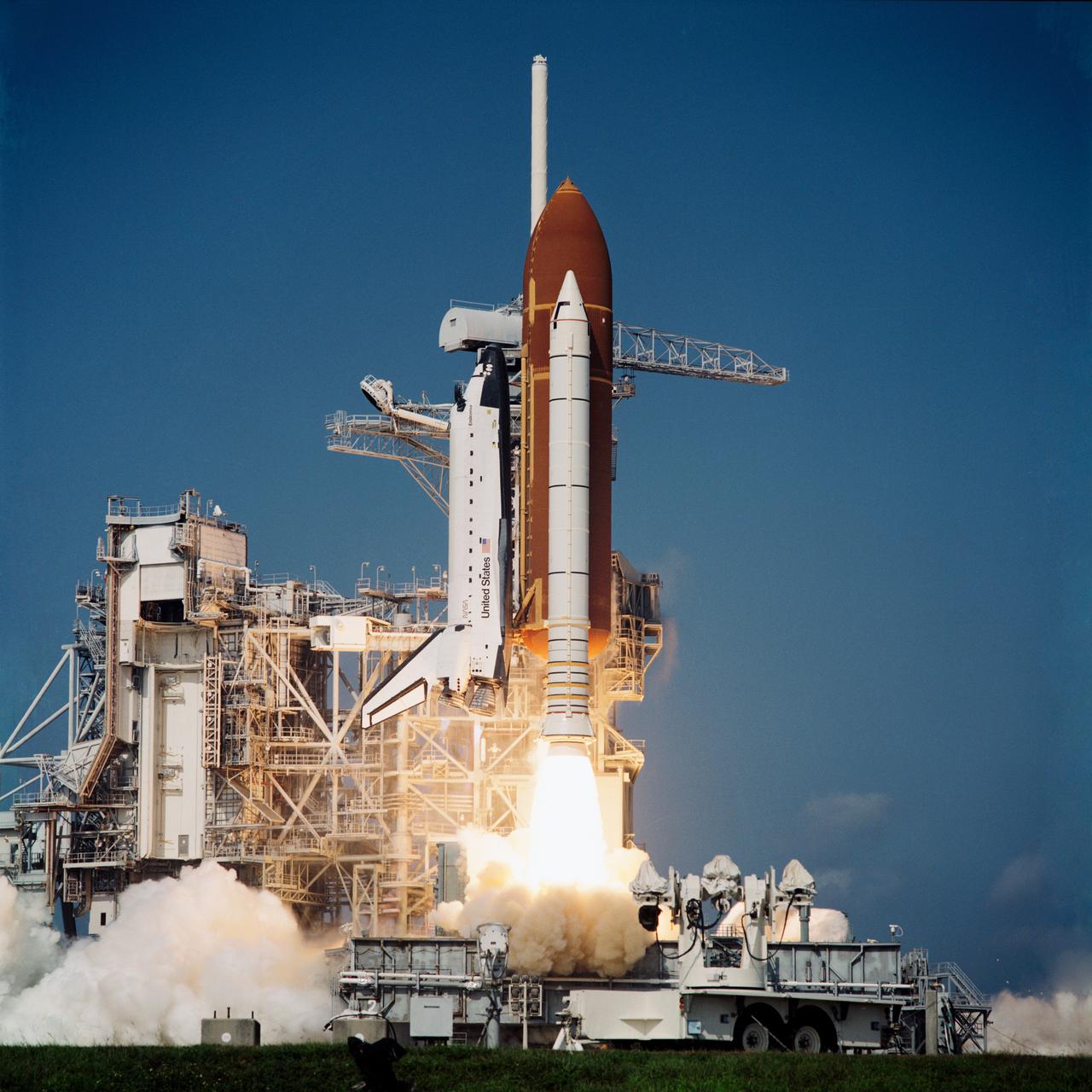
STS047-S-019 (12 Sept 1992) --- With a crew of six NASA astronauts and a Japanese payload specialist onboard, the Space Shuttle Endeavour heads for its second trip into space. This trip will be devoted to support of the Spacelab-J mission, a joint effort between Japan and the United States. Launch occurred at 10:23:00:0680 a.m. (EDT), September 12, 1992. Onboard were astronauts Robert L. Gibson, mission commander; Curtis L. Brown Jr., pilot; Mark C. Lee, payload commander; and Jerome (Jay) Apt, Mae C. Jemison and N. Jan Davis, mission specialists; along with payload specialist Mamoru Mohri, representing the National Space Development Agency of Japan.
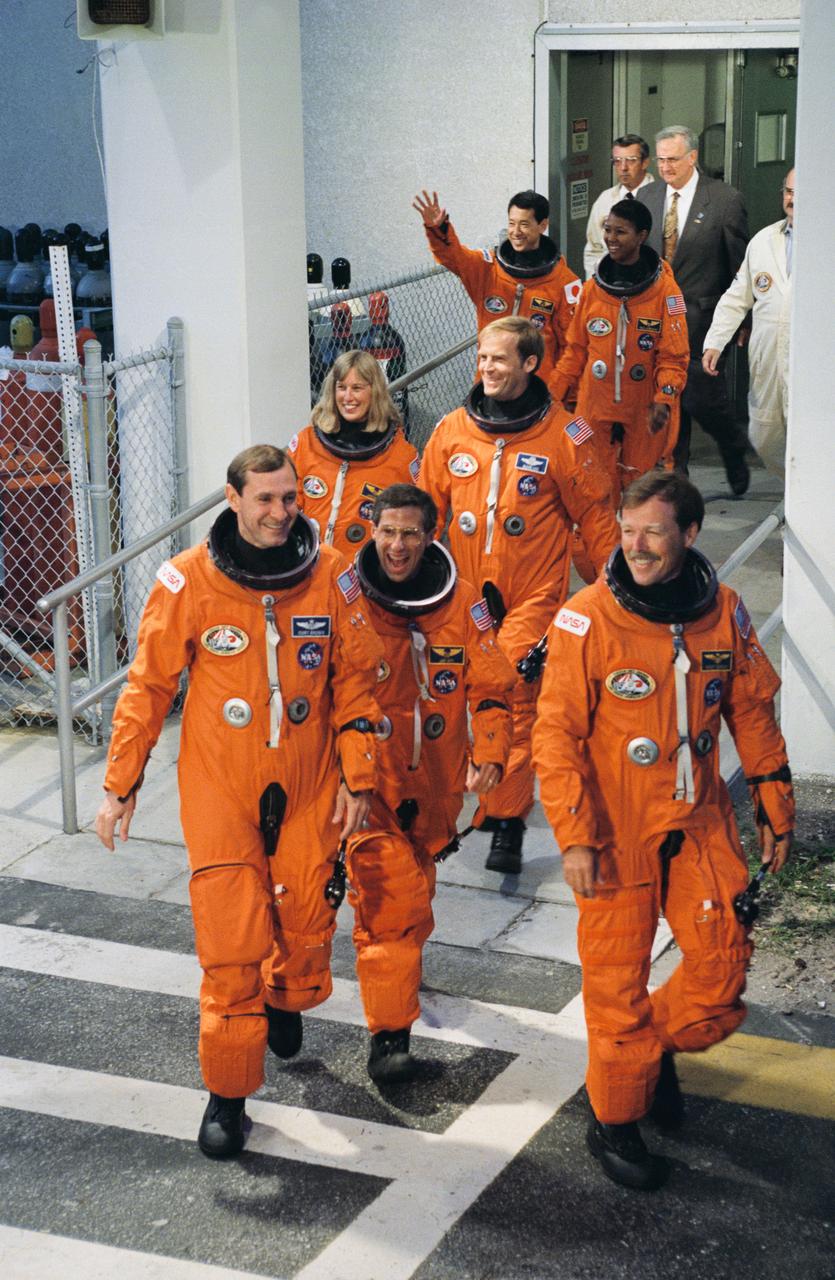
STS047-S-038 (12 Sept 1992) --- The seven crewmembers who will be aboard for Endeavour's second trip into space leave the Operations and Checkout Building to board a van headed for Launch Complex 39. This mission will be devoted to support of the Spacelab-J mission, a joint effort between Japan and the United States. Launch occurred at 10:23:00:0680 a.m. (EDT), September 12, 1992. Onboard were astronauts Robert L. Gibson, mission commander; Curtis L. Brown Jr., pilot; Mark C. Lee, payload commander; and Jerome (Jay) Apt, Mae C. Jemison and N. Jan Davis, mission specialists; along with payload specialist Mamoru Mohri, representing the National Space Development Agency (NASDA) of Japan.
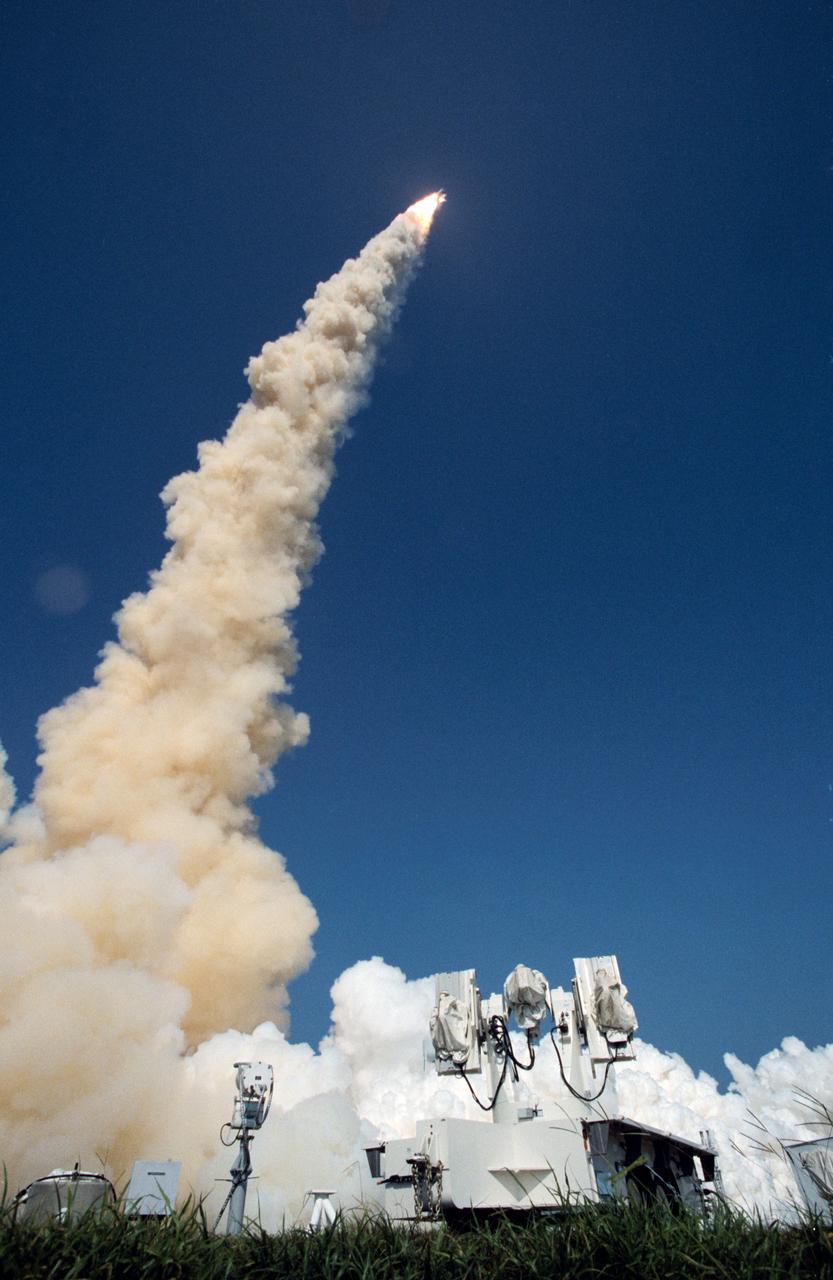
STS047-S-040 (12 Sept 1992) --- A 35mm camera was used to record this distant, low-angle view of the STS-47 launch. With a crew of six NASA astronauts and a Japanese payload specialist onboard, the Space Shuttle Endeavour was heading for its second trip into space. This mission is devoted to support of the Spacelab-J mission, a joint effort between Japan and the United States. Launch occurred at 10:23:00:0680 a.m. (EDT), September 12, 1992. Onboard were astronauts Robert L. Gibson, mission commander; Curtis L. Brown Jr., pilot; Mark C. Lee, payload commander; and Jerome (Jay) Apt, Mae C. Jemison and N. Jan Davis, mission specialists; along with payload specialist Mamoru Mohri, representing the National Space Development Agency (NASDA) of Japan.
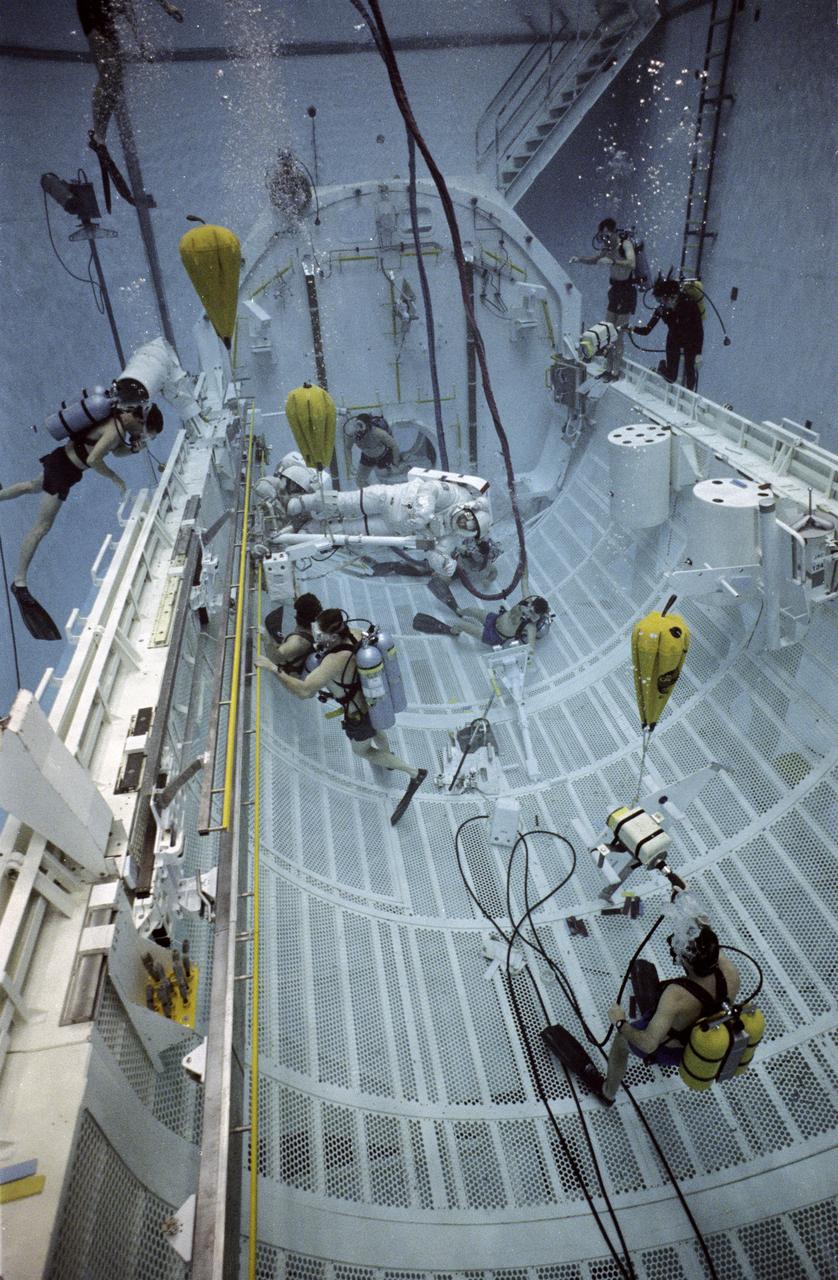
STS-37 Atlantis, Orbiter Vehicle (OV) 104, Mission Specialist (MS) Jerry L. Ross generates electrical power using hand pedals to move crew and equipment translation aid (CETA) cart along a rail during underwater session in JSC's Weightless Environment Training Facility (WETF) Bldg 29. Wearing an extravehicular mobility unit (EMU), Ross operates CETA electrical cart as MS Jerome Apt holds onto the back of the cart. The two crewmembers are practicing a extravehicular activity (EVA) spacewalk they will perform in OV-104's payload bay during STS-37. CETA is a type of railroad hand cart planned as a spacewalker's transportation system along the truss of Space Station Freedom (SSF). SCUBA divers monitor astronauts' underwater activity.
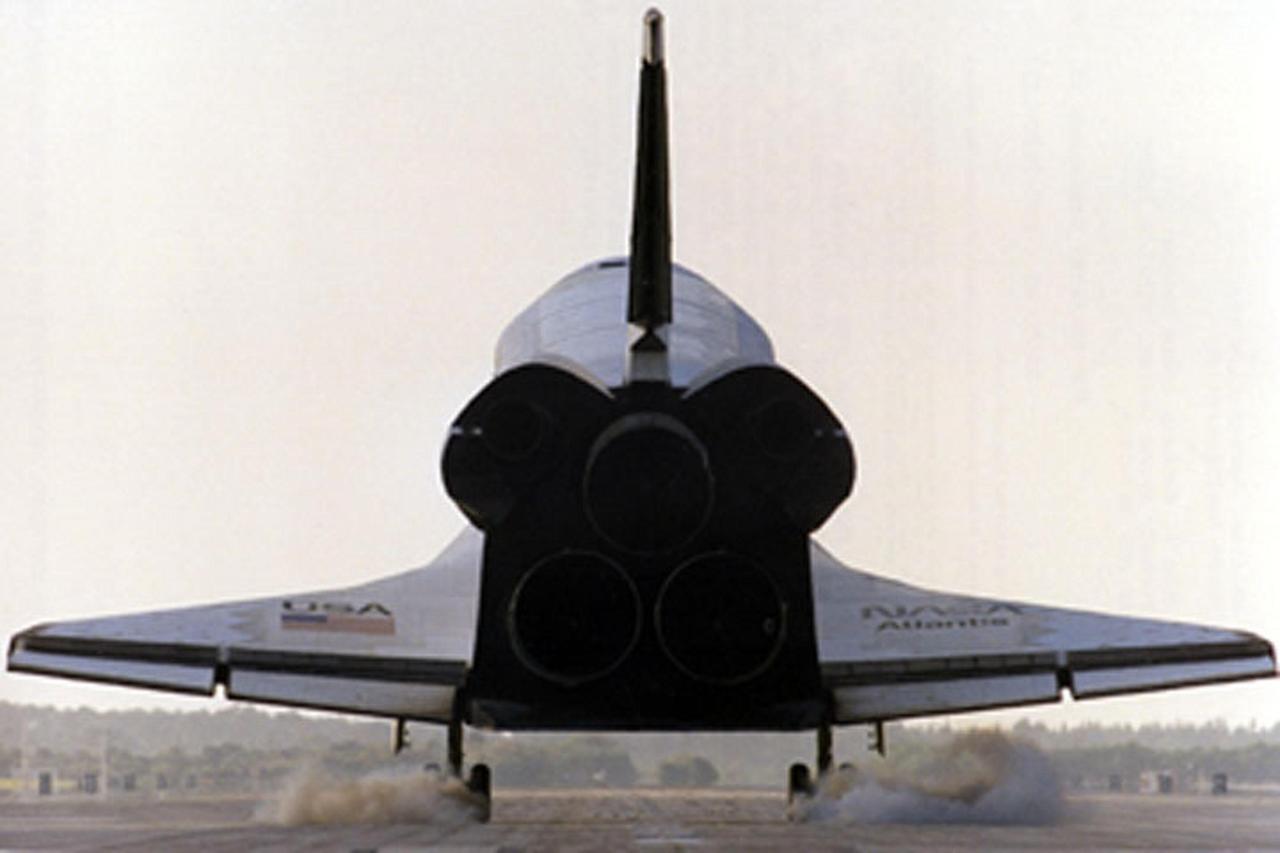
KENNEDY SPACE CENTER, FLA. -- The STS-79 mission comes to a successful conclusion as the orbiter Atlantis touches down on Runway 15 of KSC's Shuttle Landing Facility at 8:13:15 a.m. EDT, September 26. On board is U.S. astronaut Shannon W. Lucid, who has been living and working on the Russian Space Station Mir for about six months. Lucid has spent 188 days in space from launch aboard Atlantis in March to her return today, establishing a U.S. record for long-duration spaceflight as well as representing the longest spaceflight for a woman. Succeeding Lucid on Mir is U.S. astronaut John E. Blaha, who embarked to Mir with the STS-79 crew. The commander of Mission STS-79 is William F. Readdy; Terrence W. Wilcutt is the pilot, and the three mission specialists are Jay Apt, Thomas D. Akers and Carl E. Walz.
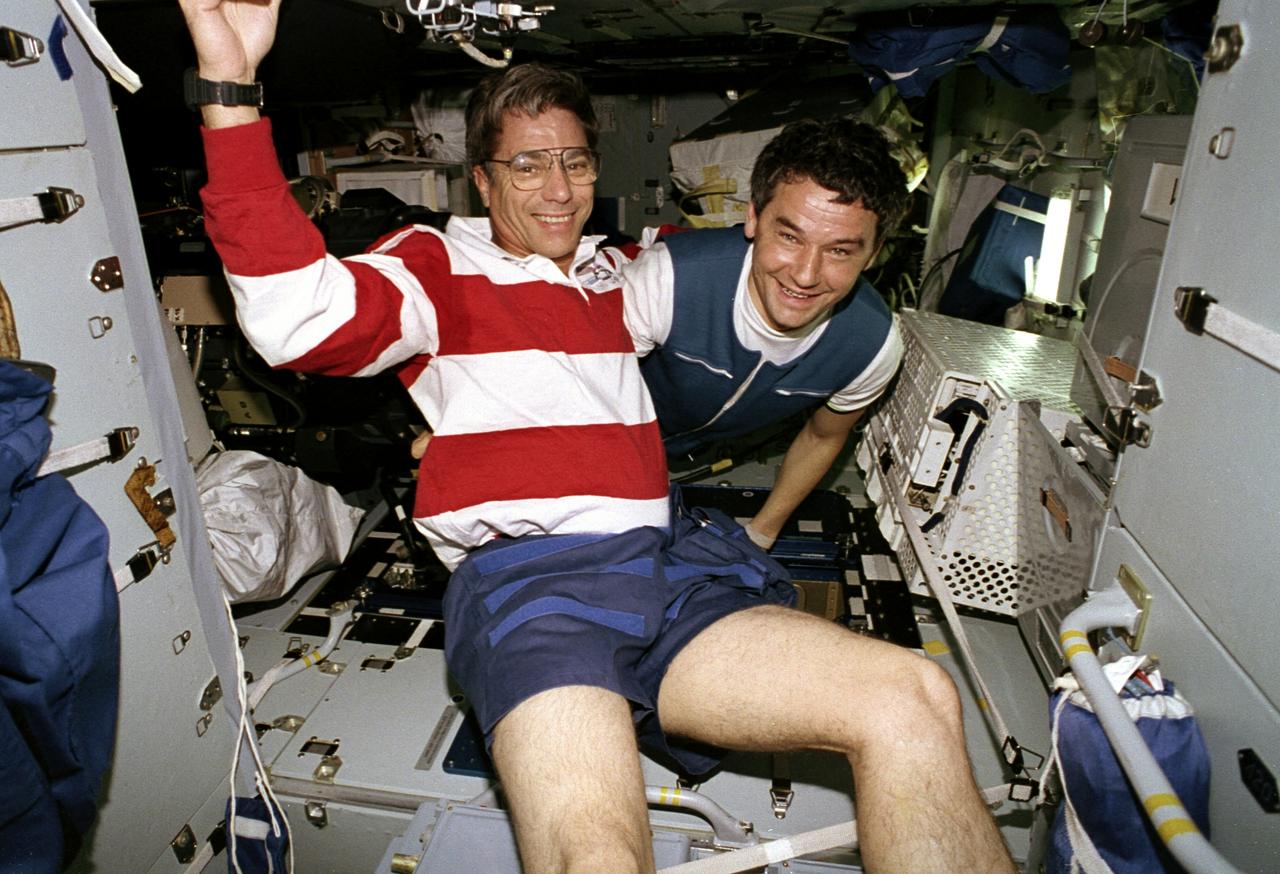
STS079-350-028 (16-26 Sept. 1996) --- Aboard Russian Mir Space Station's Spektr Module, astronaut John E. Blaha, now a cosmonaut guest researcher, visits with Valeri G. Korzun, his mission commander for Mir-22. This photograph is one of fifteen 35mm frames (along with four 70mm frames) of still photography documenting the activities of NASA's STS-79 mission, which began with a Sept. 16, 1996, liftoff from Launch Pad 39A the Kennedy Space Center (KSC) and ended with a landing at KSC on September 26, 1996. Onboard for the launch were astronauts William F. Readdy, commander; Terrence W. Wilcutt, pilot; Blaha, Jerome (Jay) Apt, Thomas D. Akers and Carl E. Walz, all mission specialists. On flight day 4, the crew docked with Mir. Shannon W. Lucid, who had spent six months aboard Mir, switched cosmonaut guest researcher roles with Blaha. The latter joined fellow Mir-22 crewmembers Korzun, and Aleksandr Y. Kaleri, flight engineer.
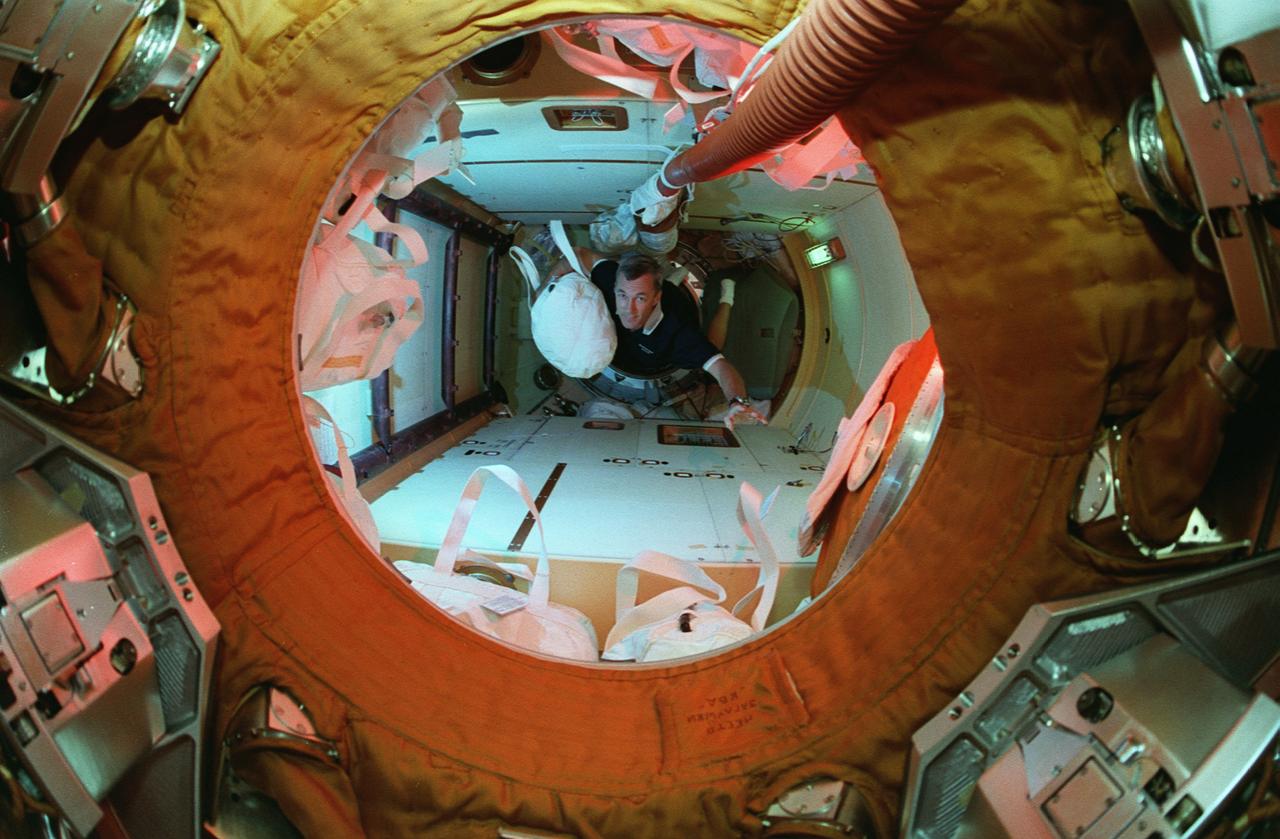
STS079-335-001 (16-26 Sept. 1996) --- Astronaut Terrence W. Wilcutt traverses into Russia's Mir Space Station Kristall Module toting a water bag from the Space Shuttle Atlantis to be used on Mir. This photograph is one of fifteen 35mm frames (along with four 70mm frames) of still photography documenting the activities of NASA's STS-79 mission, which began with a Sept. 16, 1996, liftoff from Launch Pad 39A the Kennedy Space Center (KSC) and ended with a landing at KSC on September 26, 1996. Onboard for the launch were astronauts William F. Readdy, commander; Wilcutt, pilot; John E. Blaha, Jerome (Jay) Apt, Thomas D. Akers and Carl E. Walz, all mission specialists. On flight day 4, the crew docked with Mir. Shannon W. Lucid, who had spent six months aboard Mir, switched cosmonaut guest researcher roles with Blaha. The latter joined fellow Mir-22 crewmembers Valeri G. Korzun, commander, and Aleksandr Y. Kaleri, flight engineer.
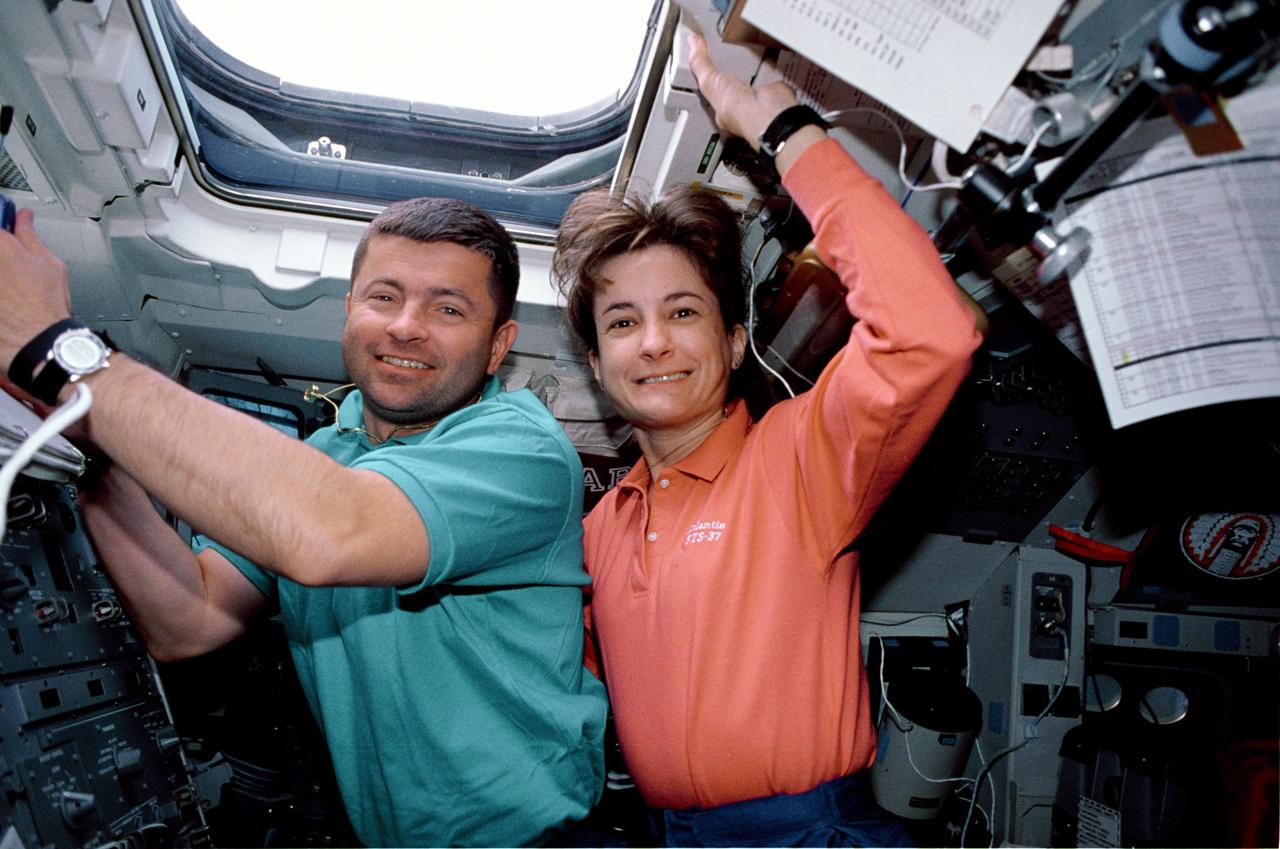
STS037-33-031 (5-11 April 1991) --- Astronauts Kenneth D. Cameron, STS-37 pilot, and Linda M. Godwin, mission specialist, take advantage of a well-lighted crew cabin to pose for an in-space portrait on the Space Shuttle Atlantis' aft flight deck. The two shared duties controlling the Remote Manipulator System (RMS) during operations involving the release of the Gamma Ray Observatory (GRO) and the Extravehicular Activity (EVA) of astronauts Jerry L. Ross and Jerome (Jay) Apt. The overhead window seen here and nearby eye-level windows (out of frame at left) are in a busy location on Shuttle missions, as they are used for payload surveys, Earth observation operations, astronomical studies and other purposes. Note the temporarily stowed large format still photo camera at lower right corner. This photo was made with a 35mm camera. This was one of the visuals used by the crew members during their April 19 Post Flight Press Conference (PFPC) at the Johnson Space Center (JSC).
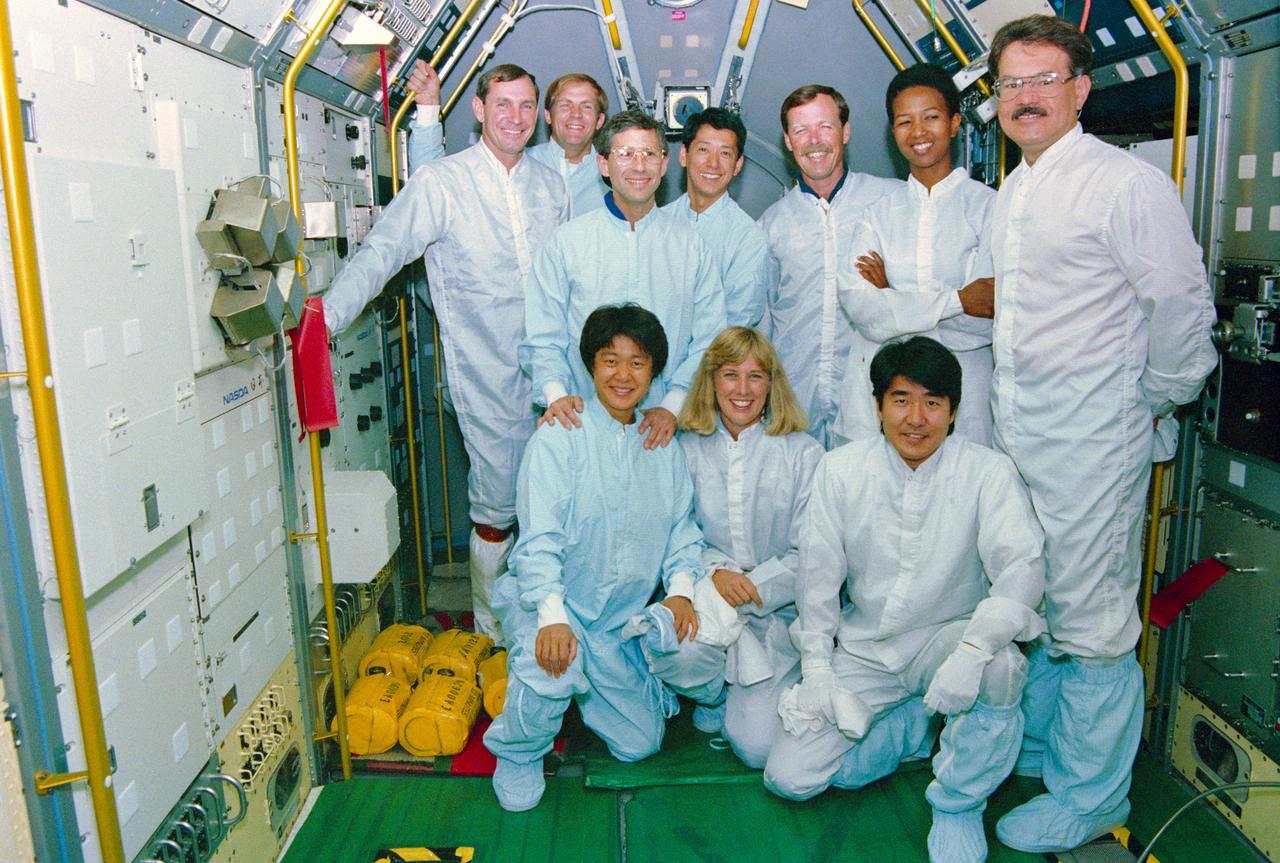
S92-44303 --- STS-47 Endeavour, Orbiter Vehicle (OV) 105, crew members and back-up payload specialists, wearing clean suits, pose for a group portrait in the Spacelab Japan (SLJ) module. The team is at the Kennedy Space Center's (KSC's) Orbiter Processing Facility (OPF) to inspect SLJ configuration and OV-105 preparations. Kneeling, from left, are back-up Payload Specialist Chiaki Naito-Mukai; Mission Specialist N. Jan Davis; and backup Payload Specialist Takao Doi. Standing, from the left, are Pilot Curtis L. Brown,Jr; Payload Commander Mark C. Lee; Jerome Apt; Payload Specialist Mamoru Mohri; Commander Robert L. Gibson; Mae C. Jemison; and back-up Payload Specialist Stanely L. Koszelak. Mohri, Mukai, and Doi represent the National Space Development Agency of Japan (NASDA). View provided by KSC with alternate KSC number KSC-92PC-1647. Photo credit: NASA

STS079-813-023 (16-26 Sept. 1996) --- The docked Russian Mir Space Station is partially visible through the Spacehab viewing port, onboard the space shuttle Atlantis. This photograph is one of four 70mm frames (along with fifteen 35mm frames) of still photography documenting the activities of NASA's STS-79 mission, which began with a Sept. 16, 1996, liftoff from Launch Pad 39A the Kennedy Space Center (KSC) and ended with a landing at KSC on Sept. 26, 1996. Onboard for the launch were astronauts William F. Readdy, commander; Terrence W. Wilcutt, pilot; John E. Blaha, Jerome (Jay) Apt, Thomas D. Akers and Carl E. Walz, all mission specialists. On flight day 4, the crew docked with the Mir Space Station. Shannon W. Lucid, who had spent six months aboard Mir, switched cosmonaut guest researcher roles with Blaha. The latter joined fellow Mir-22 crewmembers Valeri G. Korzun, commander, and Aleksandr Y. Kaleri, flight engineer.
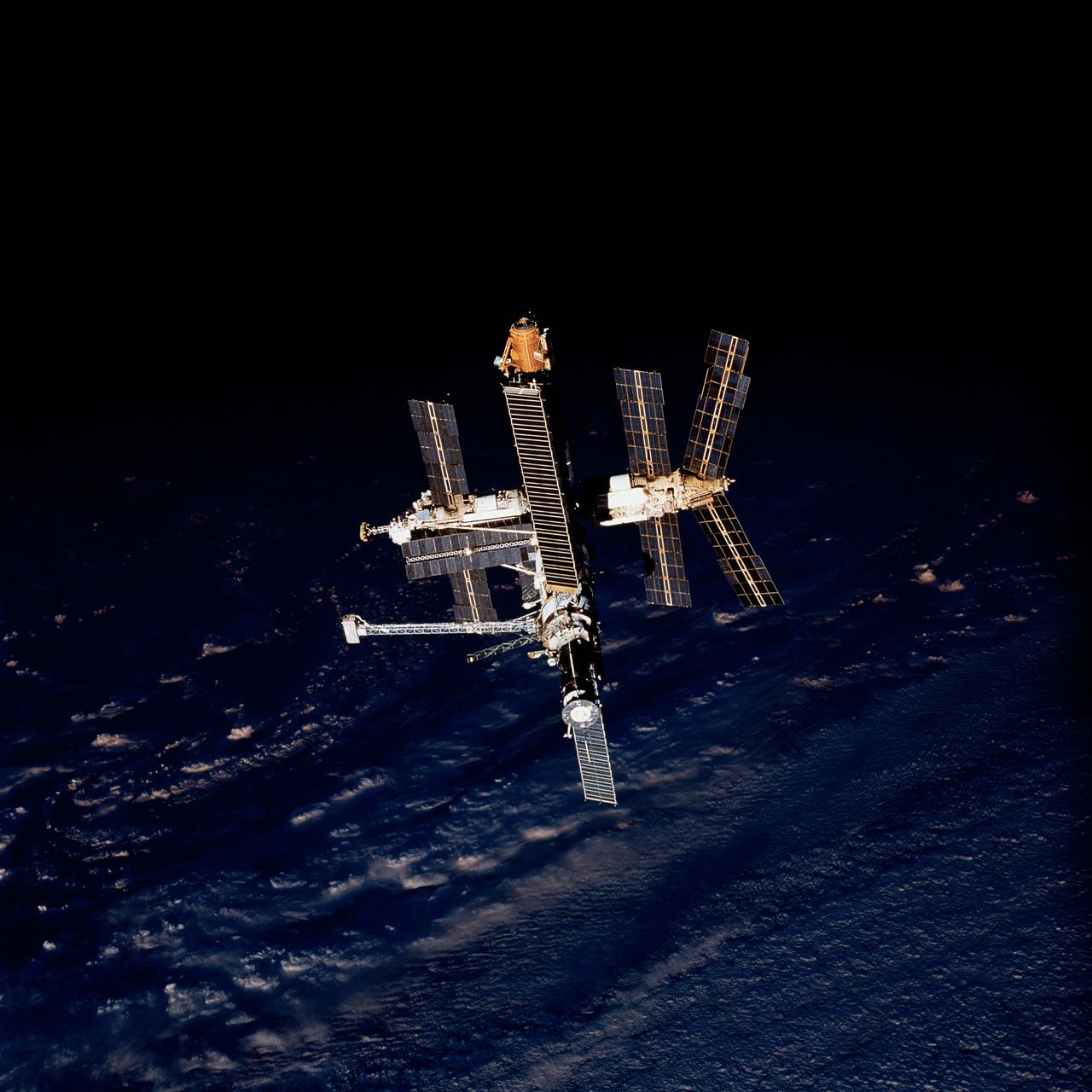
STS079-821-036 (16-26 Sept. 1996) --- Following the Space Shuttle Atlantis - Russian Mir Space Station undocking activities, a crew member captured this 70mm frame of Mir as the two crews shared their final common sunset scene. This photograph is one of four 70mm frames (along with fifteen 35mm frames) of still photography documenting the activities of NASA's STS-79 mission, which began with a September 16, 1996, liftoff from Launch Pad 39A the Kennedy Space Center (KSC) and ended with a landing at KSC on September 26, 1996. Onboard for the launch were astronauts William F. Readdy, commander; Terrence W. Wilcutt, pilot; John E. Blaha, Jerome (Jay) Apt, Thomas D. Akers and Carl E. Walz, all mission specialists. On flight day 4, the crew docked with Mir. Shannon W. Lucid, who had spent six months aboard Mir, switched cosmonaut guest researcher roles with Blaha. The latter joined fellow Mir-22 crew members Valeri G. Korzun, commander, and Aleksandr Y. Kaleri, flight engineer.
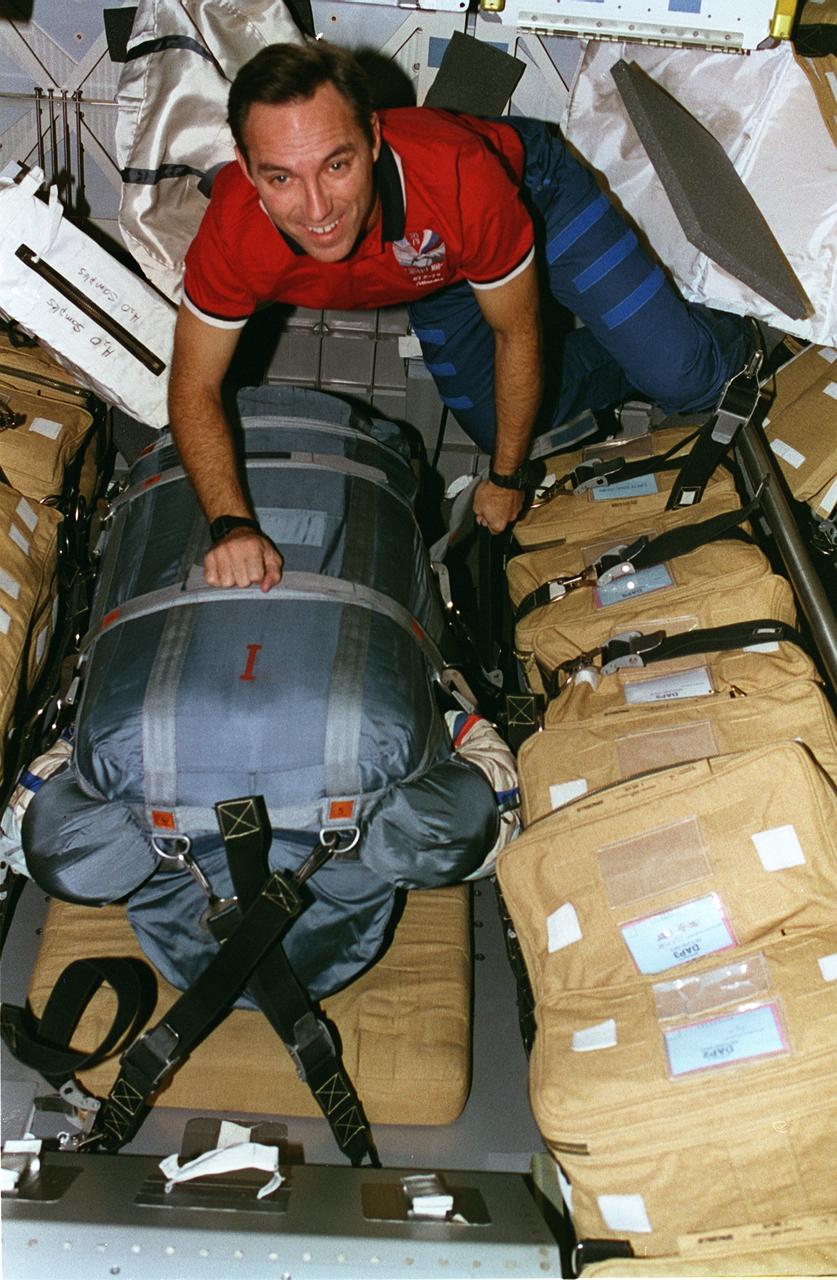
STS079-304-001 (16 Sept. 1996)--- Astronaut Carl E. Walz totes a bag carrying a space suit used by the cosmonauts. At the completion of the STS-79 mission, the suit was brought back to Earth for analysis. This photograph is one of fifteen 35mm frames (along with four 70mm frames) of still photography documenting the activities of NASA's STS-79 mission, which began with a September 16, 1996, liftoff from Launch Pad 39A the Kennedy Space Center (KSC) and ended with a landing at KSC on September 26, 1996. Onboard for the launch were astronauts William F. Readdy, commander; Terrence W. Wilcutt, pilot; John E. Blaha, Jerome (Jay) Apt, Thomas D. Akers and Walz, all mission specialists. On flight day 4, the crew docked with Russia's Mir Space Station. Shannon W. Lucid, who had spent six months aboard Mir, switched cosmonaut guest researcher roles with Blaha. The latter joined fellow Mir-22 crew members Valeri G. Korzun, commander, and Aleksandr Y. Kaleri, flight engineer.

STS079-358-027 (16-26 September 1996) --- Astronaut William F. Readdy looks over a checklist at the commander's station on the Space Shuttle Atlantis' flight deck. Among his many other duties as mission commander, Readdy controlled the Orbiter during a series of maneuvers associated with the docking and undocking operations with Russia's Mir Space Station. This photograph is one of fifteen 35mm frames (along with four 70mm frames) of still photography documenting the activities of NASA's STS-79 mission, which began with a September 16, 1996, liftoff from Launch Pad 39A the Kennedy Space Center (KSC) and ended with a landing at KSC on September 26, 1996. Onboard for the launch were astronauts Readdy; Terrence W. Wilcutt, pilot; John E. Blaha, Jerome (Jay) Apt, Thomas D. Akers and Carl E. Walz, all mission specialists. On flight day 4, the crew docked with Russia's Mir Space Station. Shannon W. Lucid, who had spent six months aboard Mir, switched cosmonaut guest researcher roles with Blaha. The latter joined fellow Mir-22 crewmembers Valeri G. Korzun, commander, and Aleksandr Y. Kaleri, flight engineer.

STS079-817-034 (16-26 Sept. 1996) --- The Russian Mir Space Station is backdropped over a storm in the Roaring 40's near Heard Island in the south Indian Ocean. This photograph is one of four 70mm frames (along with fifteen 35mm frames) of still photography documenting the activities of NASA's STS-79 mission, which began with a Sept. 16, 1996, liftoff from Launch Pad 39A the Kennedy Space Center (KSC) and ended with a landing at KSC on Sept. 26, 1996. Onboard for the launch were astronauts William F. Readdy, commander; Terrence W. Wilcutt, pilot; John E. Blaha, Jerome (Jay) Apt, Thomas D. Akers and Carl E. Walz, all mission specialists. On flight day 4, the crew docked with Russia's Mir Space Station. Shannon W. Lucid, who had spent six months aboard Mir, switched cosmonaut guest researcher roles with Blaha. The latter joined fellow Mir-22 crewmembers Valeri G. Korzun, commander, and Aleksandr Y. Kaleri, flight engineer.
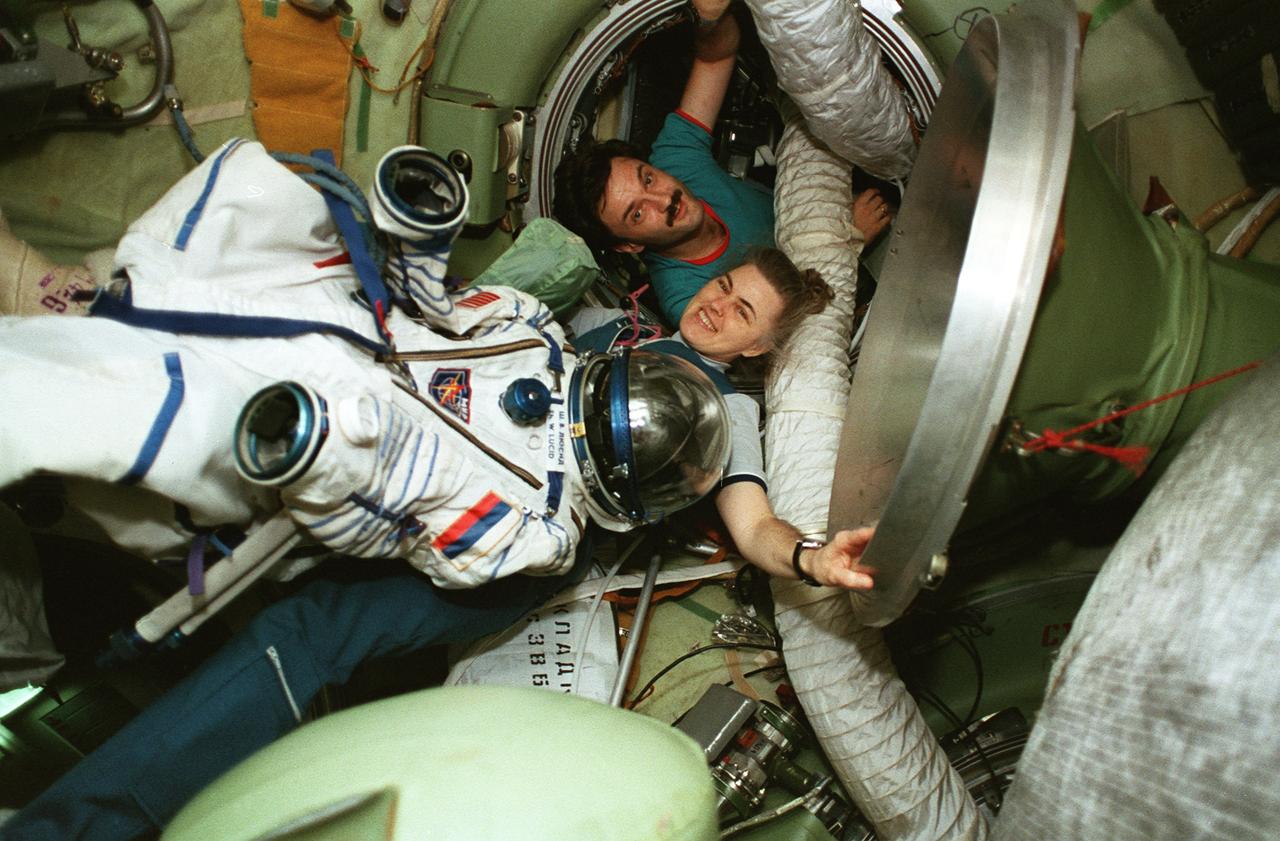
STS079-354-011 (16-26 Sept. 1996) --- Astronaut Shannon W. Lucid with cosmonaut Aleksandr Y. Kaleri prepare to move Lucid's cosmonaut space suit from Russia's Mir Space Station to the Space Shuttle Atlantis. This photograph is one of fifteen 35mm frames (along with four 70mm frames) of still photography documenting the activities of NASA's STS-79 mission, which began with a Sept. 16, 1996, liftoff from Launch Pad 39A the Kennedy Space Center (KSC) and ended with a landing at KSC on Sept. 26, 1996. Onboard for the launch were astronauts William F. Readdy, commander; Terrence W. Wilcutt, pilot; John E. Blaha, Jerome (Jay) Apt, Thomas D. Akers and Carl E. Walz, all mission specialists. On flight day 4, the crew docked with Mir. Lucid, who had spent six months aboard Mir, switched cosmonaut guest researcher roles with Blaha. The latter joined fellow Mir-22 crewmembers Valeri G. Korzun, commander, and Kaleri, flight engineer.
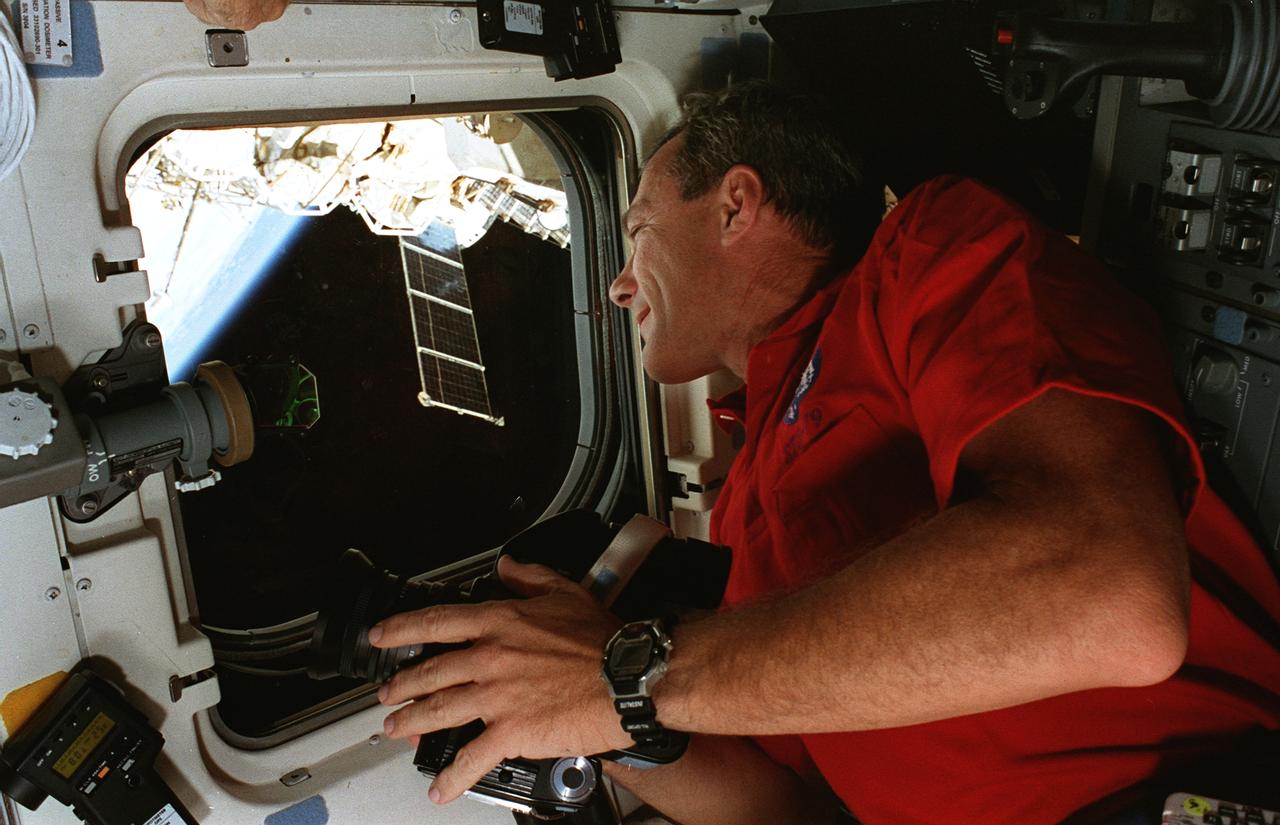
STS079-353-007 (16-26 Sept. 1996) --- Astronaut Terrence W. Wilcutt, on the Space Shuttle Atlantis' aft flight deck, takes pictures of Earth for study by Earth observations scientists at the Johnson Space Center (JSC). Several components of the docked Russia's Mir Space Station can be seen in the background. This photograph is one of fifteen 35mm frames (along with four 70mm frames) of still photography documenting the activities of NASA's STS-79 mission, which began with a September 16, 1996, liftoff from Launch Pad 39A the Kennedy Space Center (KSC) and ended with a landing at KSC on September 26, 1996. Onboard for the launch were astronauts William F. Readdy, commander; Wilcutt, pilot; John E. Blaha, Jerome (Jay) Apt, Thomas D. Akers and Carl E. Walz, all mission specialists. On flight day 4, the crew docked with Russia's Mir Space Station. Shannon W. Lucid, who had spent six months aboard Mir, switched cosmonaut guest researcher roles with Blaha. The latter joined fellow Mir-22 crew members Valeri G. Korzun, commander, and Aleksandr Y. Kaleri, flight engineer.
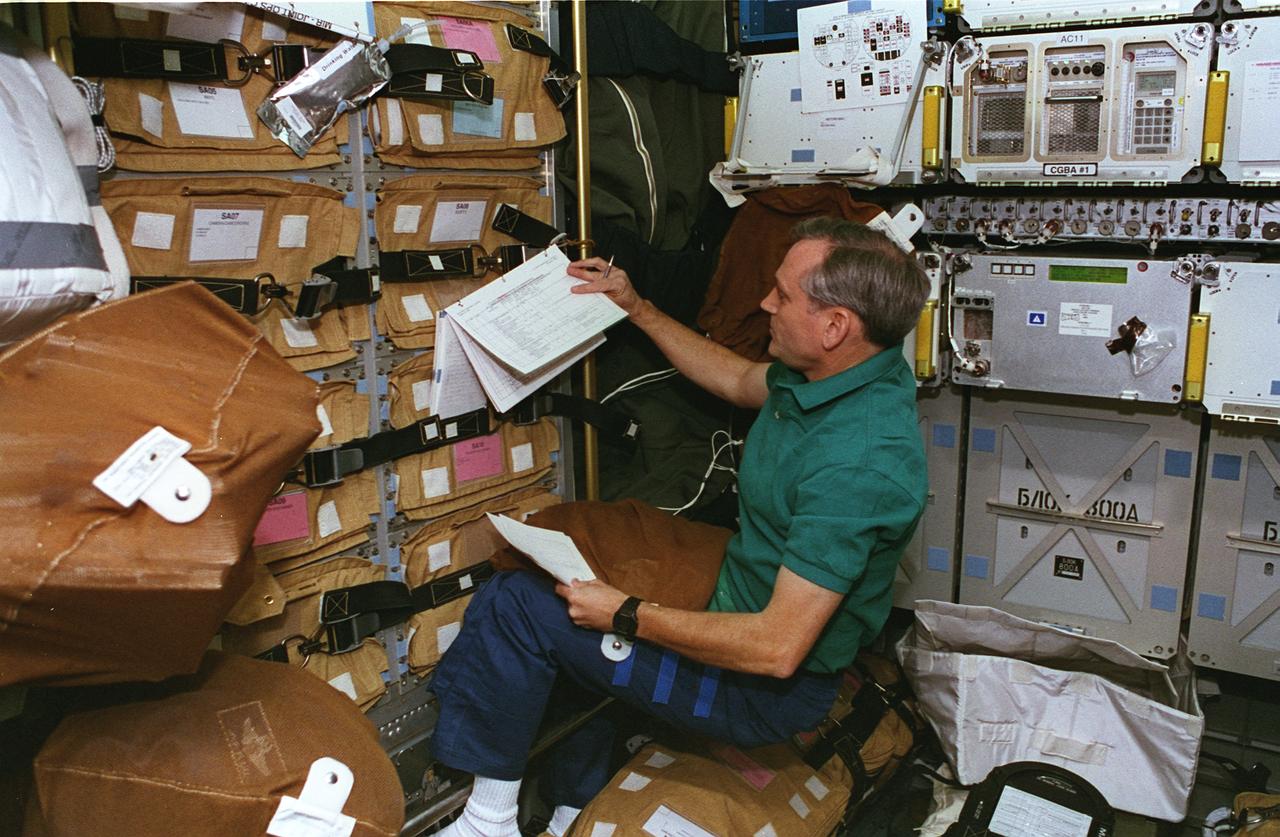
STS079-309-022 (16-26 Sept. 1996) --- Astronaut Thomas D. Akers, in the Spacehab, goes over an inventory of supplies which will be transferred to the Russia's Mir Space Station. This photograph is one of fifteen 35mm frames (along with four 70mm frames) of still photography documenting the activities of NASA's STS-79 mission, which began with a September 16, 1996, liftoff from Launch Pad 39A the Kennedy Space Center (KSC) and ended with a landing at KSC on September 26, 1996. Onboard for the launch were astronauts William F. Readdy, commander; Terrence W. Wilcutt, pilot; John E. Blaha, Jerome (Jay) Apt, Akers and Carl E. Walz, all mission specialists. On flight day 4, the crew docked with the Mir Space Station. Shannon W. Lucid, who had spent six months aboard Mir, switched cosmonaut guest researcher roles with Blaha. The latter joined fellow Mir-22 crew members Valeri G. Korzun, commander, and Aleksandr Y. Kaleri, flight engineer.
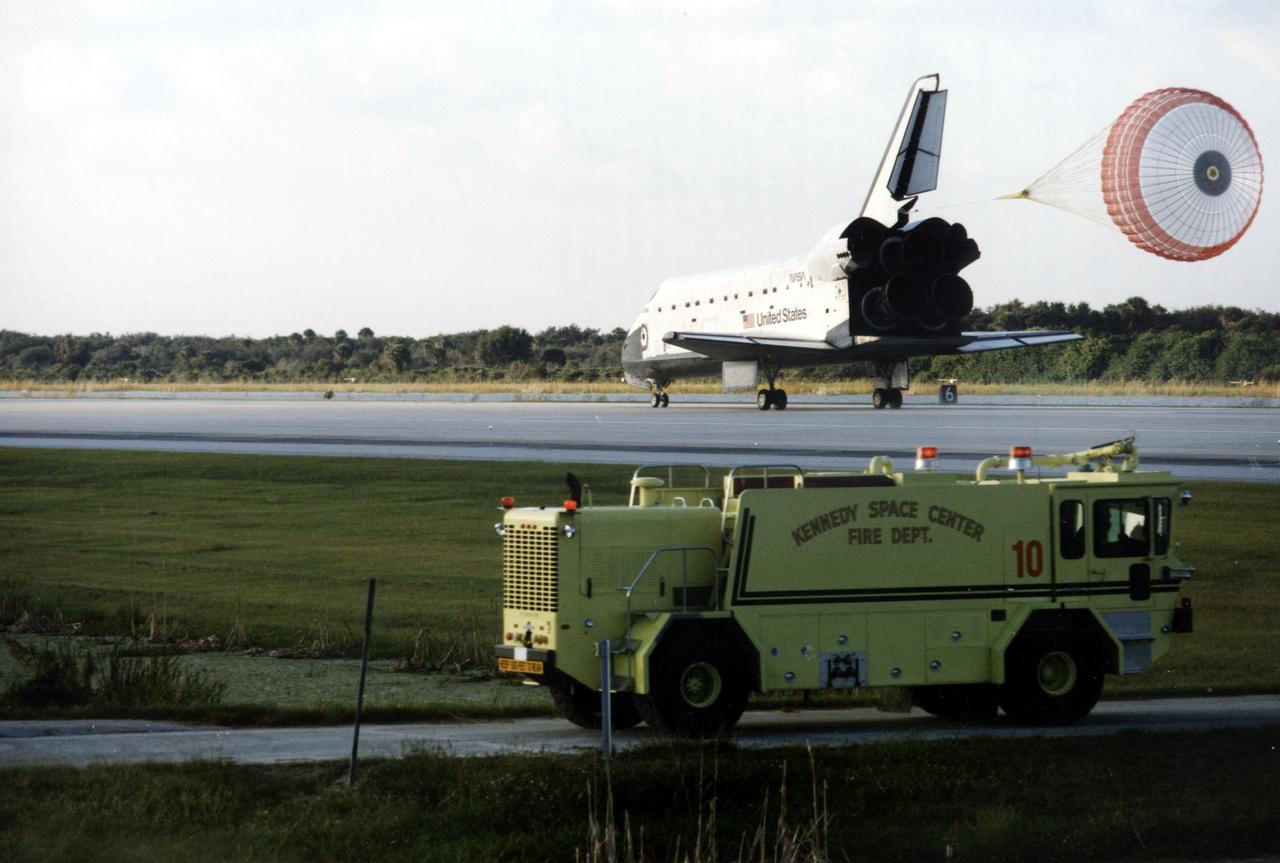
KENNEDY SPACE CENTER, FLA. -- A KSC fire truck stands on alert as the STS-79 Space Shuttle Atlantis hurtles down Runway 15 of KSC's Shuttle Landing Facility, its drag chute billowing behind it. Atlantis touched down at 8:13:15 a.m. EDT, September 26. On board is U.S. astronaut Shannon W. Lucid, who has been living and working on the Russian Space Station Mir for about six months. Lucid has spent 188 days in space from launch aboard Atlantis in March to her return today, establishing a U.S. record for long-duration spaceflight as well as representing the longest spaceflight for a woman. Succeeding Lucid on Mir is U.S. astronaut John E. Blaha, who embarked to Mir with the STS-79 crew. The commander of Mission STS-79 is William F. Readdy; Terrence W. Wilcutt is the pilot, and the three mission specialists are Jay Apt, Thomas D. Akers and Carl E. Walz
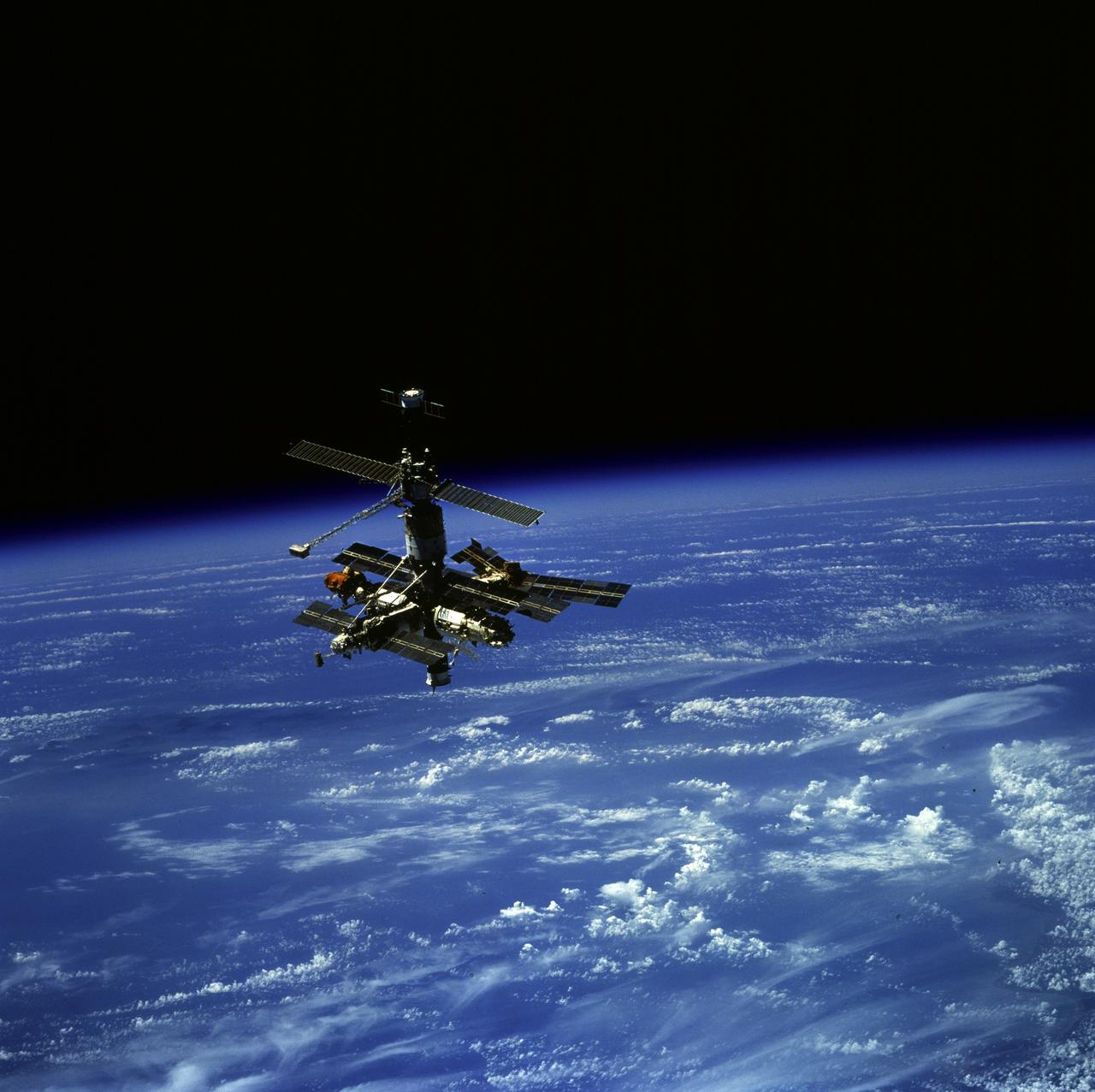
STS079-810-028 (24 Sept. 1996) --- Russia's Mir Space Station, backdropped over Earth's horizon, was photographed by one of the STS-79 crew members aboard the space shuttle Atlantis as it performed its final fly around following undocking operations. The STS-79 flight began with a Sept. 16, 1996, liftoff from Launch Pad 39A at the Kennedy Space Center and ended with a landing at KSC on Sept. 26, 1996. Onboard for the launch were astronauts William F. Readdy, commander; Terrence W. Wilcutt, pilot; John E. Blaha, Jerome (Jay) Apt, Thomas D. Akers and Carl E. Walz, all mission specialists. On flight day four, the crew docked with Mir. Shannon W. Lucid, who had spent six months aboard Mir, switched cosmonaut guest researcher roles with Blaha. The latter joined fellow Mir-22 crew members Valeri G. Korzun, commander, and Aleksandr Y. Kaleri, flight engineer. Photo credit: NASA
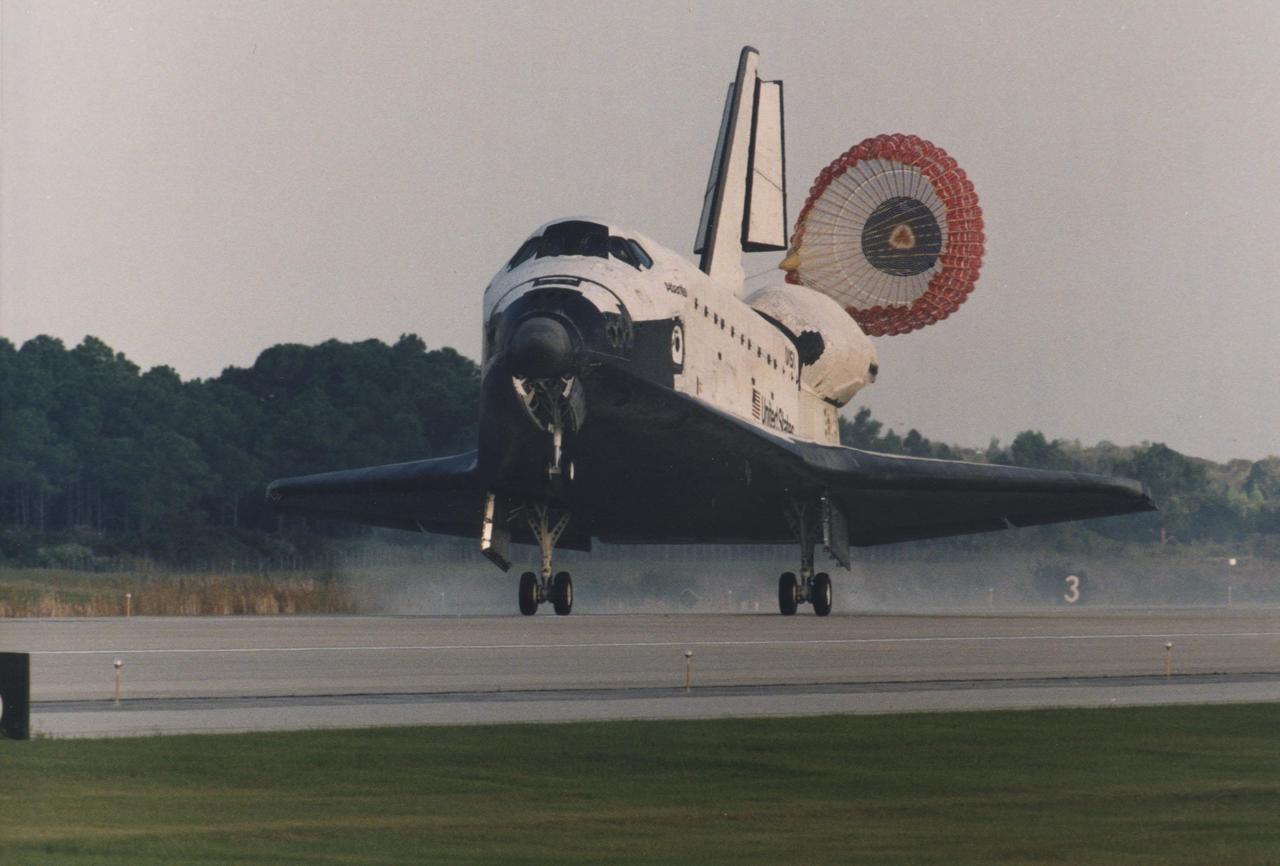
KENNEDY SPACE CENTER, FLA. -- The drag chute is deployed as the orbiter Atlantis swoops down on Runway 15 of KSC's Shuttle Landing Facility at 8:13:15 a.m. EDT, September 26, bringing to a successful conclusion U.S. astronaut Shannon Lucid's record- setting, 188-day stay in space. Lucid's approximately six-month stay aboard the Russian Space Station Mir establishes a new U.S. record for long-duration spaceflight and also is the longest for a woman, surpassing Russian cosmonaut Elena Kondakovaþs 169-day stay on Mir. Lucid returns to Earth with the flight crew of Mission STS-79: Commander William F. Readdy; Pilot Terrence W. Wilcutt; and Mission Specialists Thomas D. Akers, Jay Apt and Carl E. Walz. Succeeding her aboard Mir for an approximately four-month stay is fellow veteran astronaut John E. Blaha, who traveled to the station with the STS-79 flight crew. The STS-79 mission is part of the NASA/Mir program which is now into the Phase 1B portion, consisting of nine Shuttle-Mir dockings and seven long-duration flights of U.S. astronauts aboard the Russian space station between early 1996 and late 1998
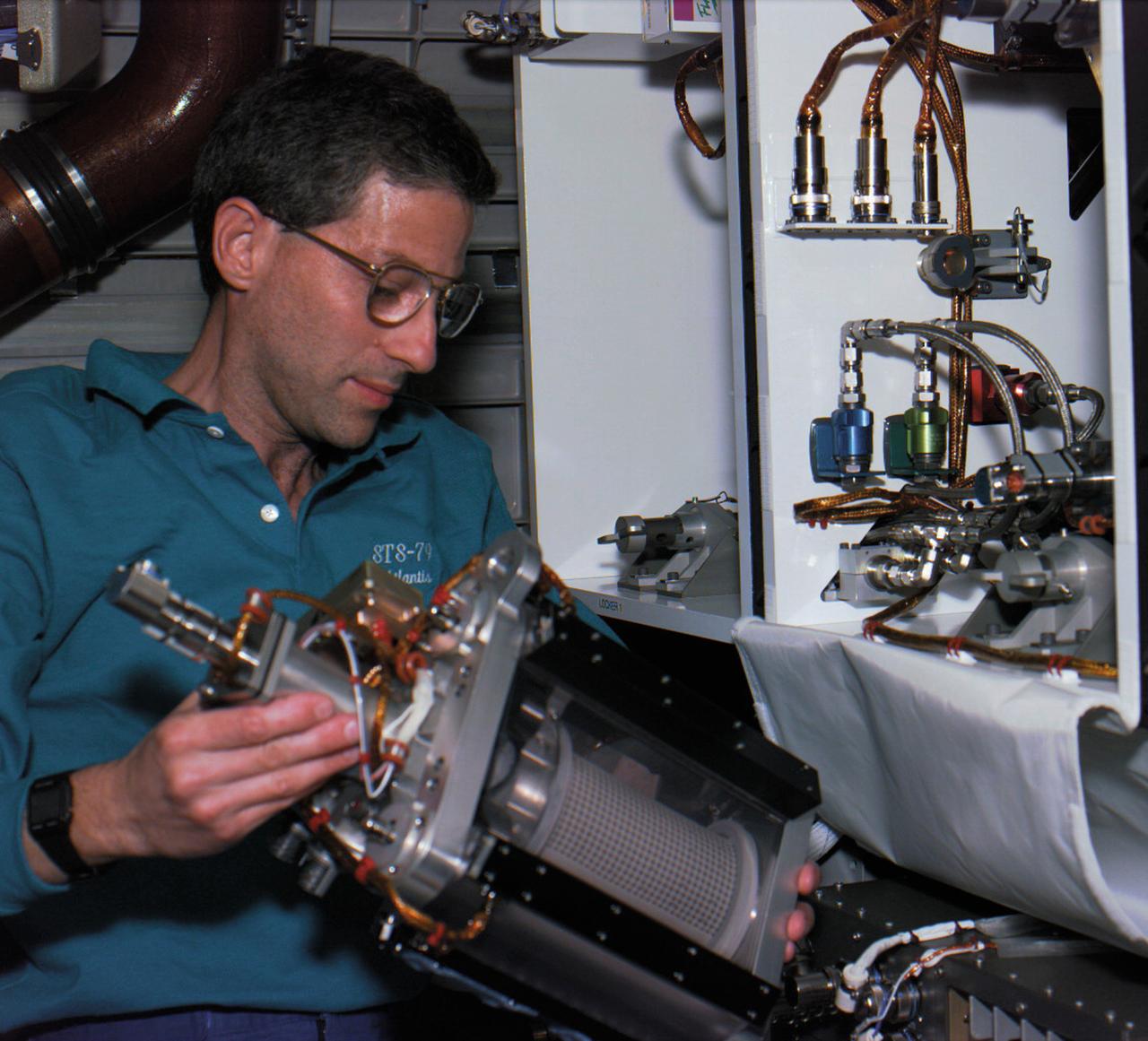
Astronaut Jay Apt installs Mechanics of Granular Materials (MGM0 test cell on STS-79. Sand and soil grains have faces that can cause friction as they roll and slide against each other, or even cause sticking and form small voids between grains. This complex behavior can cause soil to behave like a liquid under certain conditions such as earthquakes or when powders are handled in industrial processes. MGM experiments aboard the Space Shuttle use the microgravity of space to simulate this behavior under conditions that carnot be achieved in laboratory tests on Earth. MGM is shedding light on the behavior of fine-grain materials under low effective stresses. Applications include earthquake engineering, granular flow technologies (such as powder feed systems for pharmaceuticals and fertilizers), and terrestrial and planetary geology. Nine MGM specimens have flown on two Space Shuttle flights. Another three are scheduled to fly on STS-107. The principal investigator is Stein Sture of the University of Colorado at Boulder. (Credit: NASA/John Space Center).
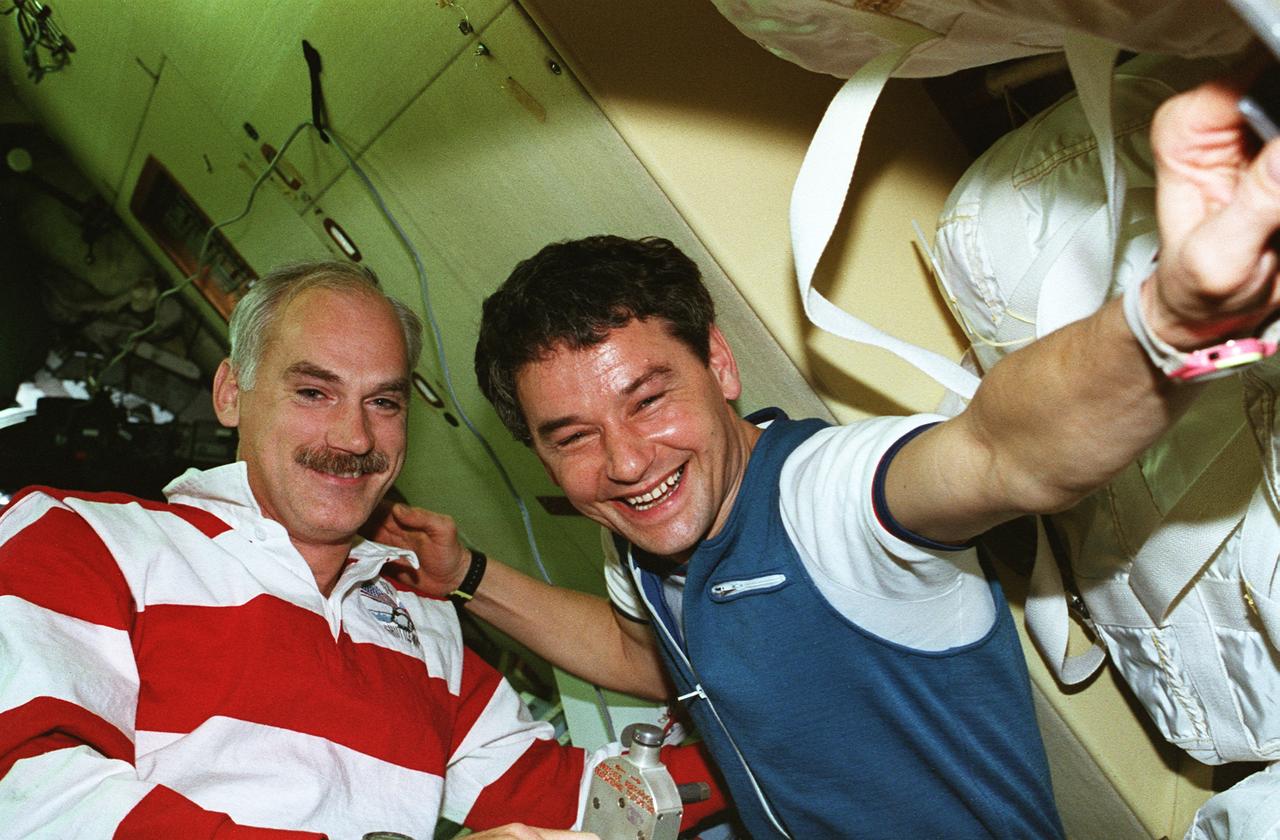
STS079-347-033 (16-26 Sept. 1996) --- Valeri G. Korzun and William F. Readdy, commanders, for Mir-22 and STS-79, respectively, reunite in the Docking Module (DM). The two have shared training experience in both Russia and the United States. This photograph is one of fifteen 35mm frames (along with four 70mm frames) of still photography documenting the activities of NASA's STS-79 mission, which began with a September 16, 1996, liftoff from Launch Pad 39A the Kennedy Space Center (KSC) and ended with a landing at KSC on September 26, 1996. Onboard for the launch were astronauts Readdy; Terrence W. Wilcutt, pilot; John E. Blaha, Jerome (Jay) Apt, Thomas D. Akers and Carl E. Walz, all mission specialists. On flight day 4, the crew docked with Russia's Mir Space Station. Shannon W. Lucid, who had spent six months aboard Mir, switched cosmonaut guest researcher roles with Blaha. The latter joined fellow Mir-22 crewmembers Korzun, and Aleksandr Y. Kaleri, flight engineer.
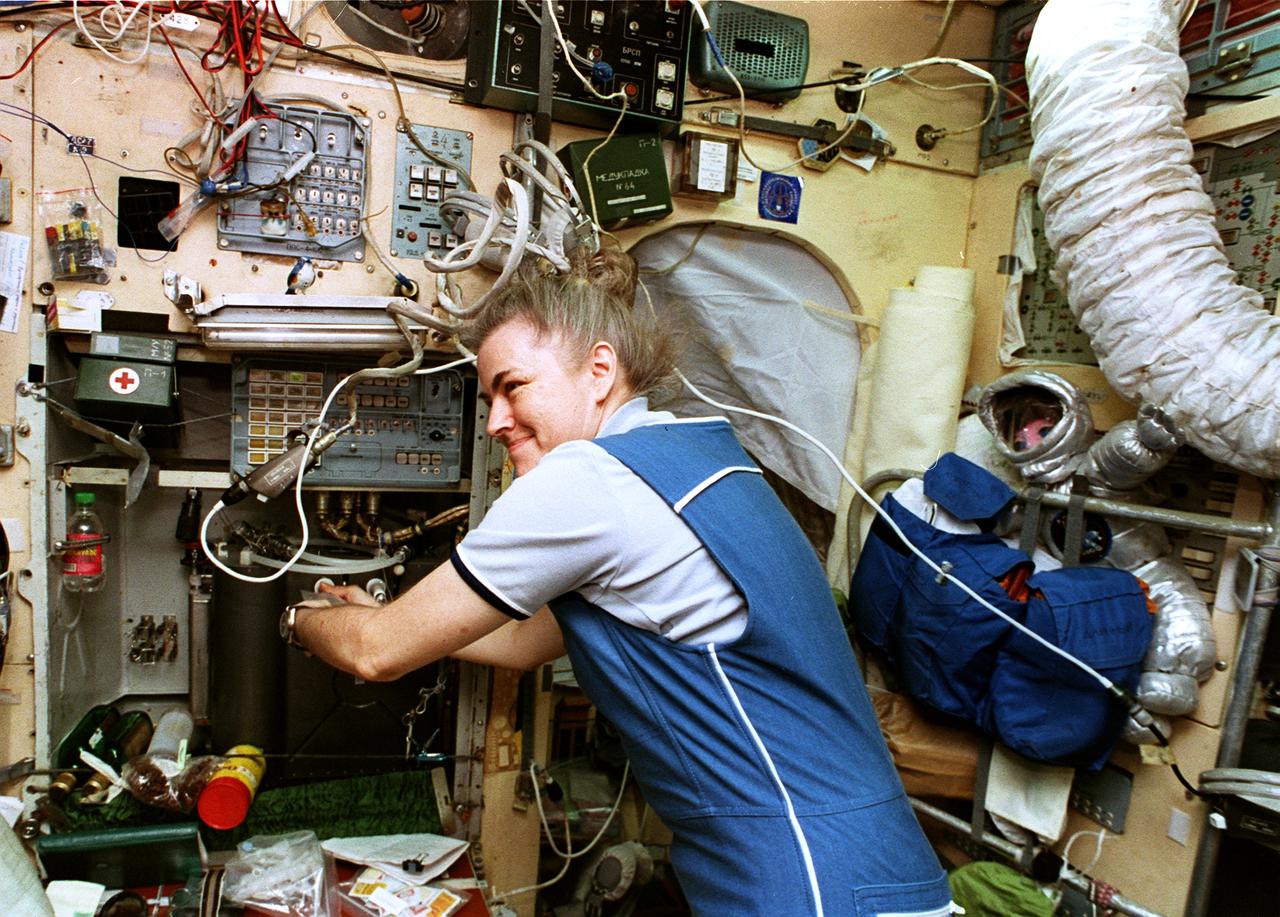
STS079-354-001 (16-26 Sept. 1996) --- Astronaut Shannon W. Lucid gets a beverage at the galley on Russia's Mir Space Station Base Block. This photograph is one of fifteen 35mm frames (along with four 70mm frames) of still photography documenting the activities of NASA's STS-79 mission, which began with a September 16, 1996, liftoff from Launch Pad 39A the Kennedy Space Center (KSC) and ended with a landing at KSC on September 26, 1996. Onboard for the launch were astronauts William F. Readdy, commander; Terrence W. Wilcutt, pilot; John E. Blaha, Jerome (Jay) Apt, Thomas D. Akers and Carl E. Walz, all mission specialists. On flight day 4, the crew docked with Mir. Lucid, who had spent six months aboard Mir, switched cosmonaut guest researcher roles with Blaha. The latter joined fellow Mir-22 crew members Valeri G. Korzun, commander, and Aleksandr Y. Kaleri, flight engineer.
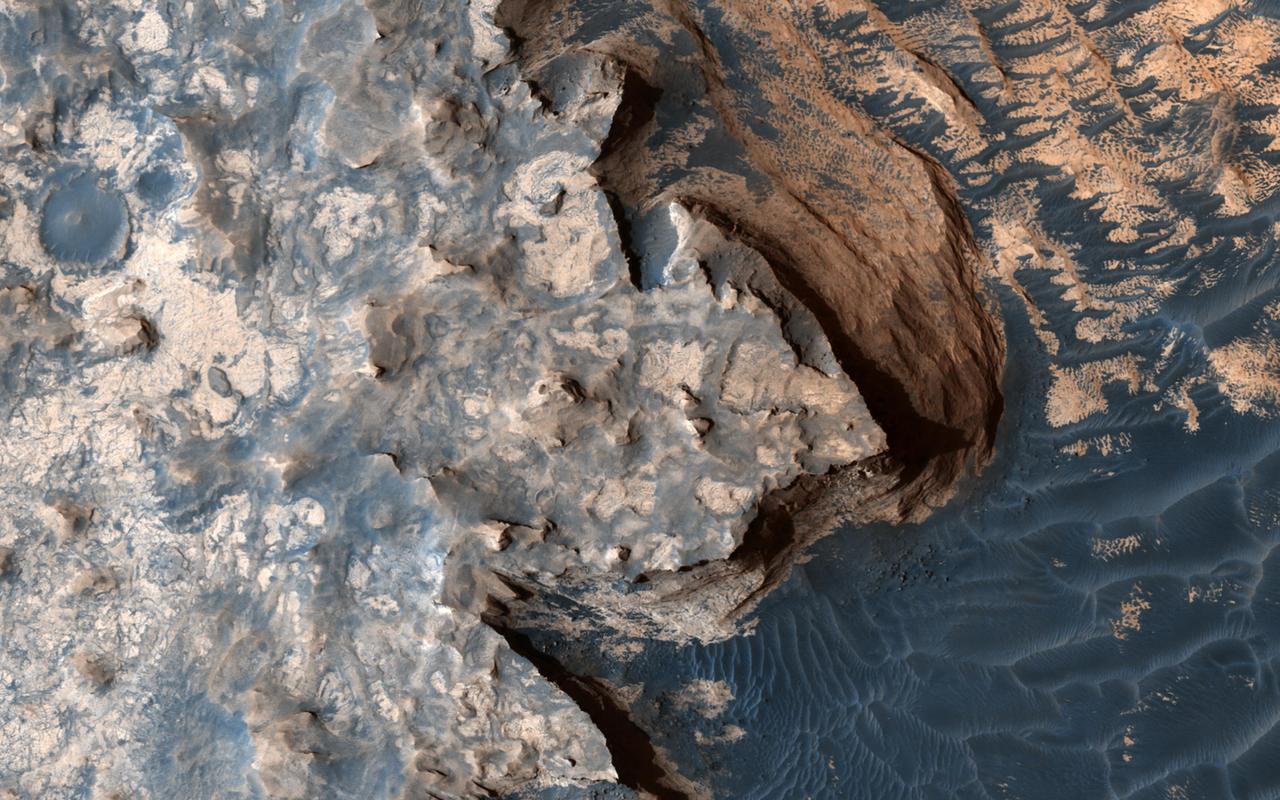
This image from NASA's Mars Reconnaissance Orbiter is reminiscent of the rugged and open terrain of a stark shore-line, perhaps of an island nation, such as the British Isles. A close-up in enhanced color produces a striking effect, giving the impression of a cloud-covered cliff edge with foamy waves crashing against it. The reality is that the surface of Mars is much dryer than our imaginations might want to suggest. This is only a tiny part of a much larger structure; an inverted crater -- a crater that has been infilled by material that is more resistant to erosion than the rocks around it -- surrounded by bluish basaltic dunes. The edge of these elevated light-toned deposits are degraded, irregular and cliff-forming. Dunes visible below the cliff, give the impression of an ocean surface, complete with foam capped waves crashing against the "shore line," demonstrating the abstract similarity between the nature of a turbulent ocean and a Martian dune field. Meridiani Planum has an overall smooth terrain, which starkly contrasts with the more common boulder- and crater-laden landscapes observed over much of the rest of Mars. This makes it relatively younger in character than many other areas of the planet. Meridiani is one of the Mars Exploration Rover landing sites, and, is known for its layers and sediments. The orbital detection of hematite was one of the main reasons for sending Opportunity to this area. Salt-bearing rocks -- also called sulphates -- were observed in the very first image from Opportunity, so perhaps it's apt that this HiRISE image reminds us of the turmoil and rugged beauty of a cliff-face, a coastline, being worn down by a relentless sea. https://photojournal.jpl.nasa.gov/catalog/PIA21760