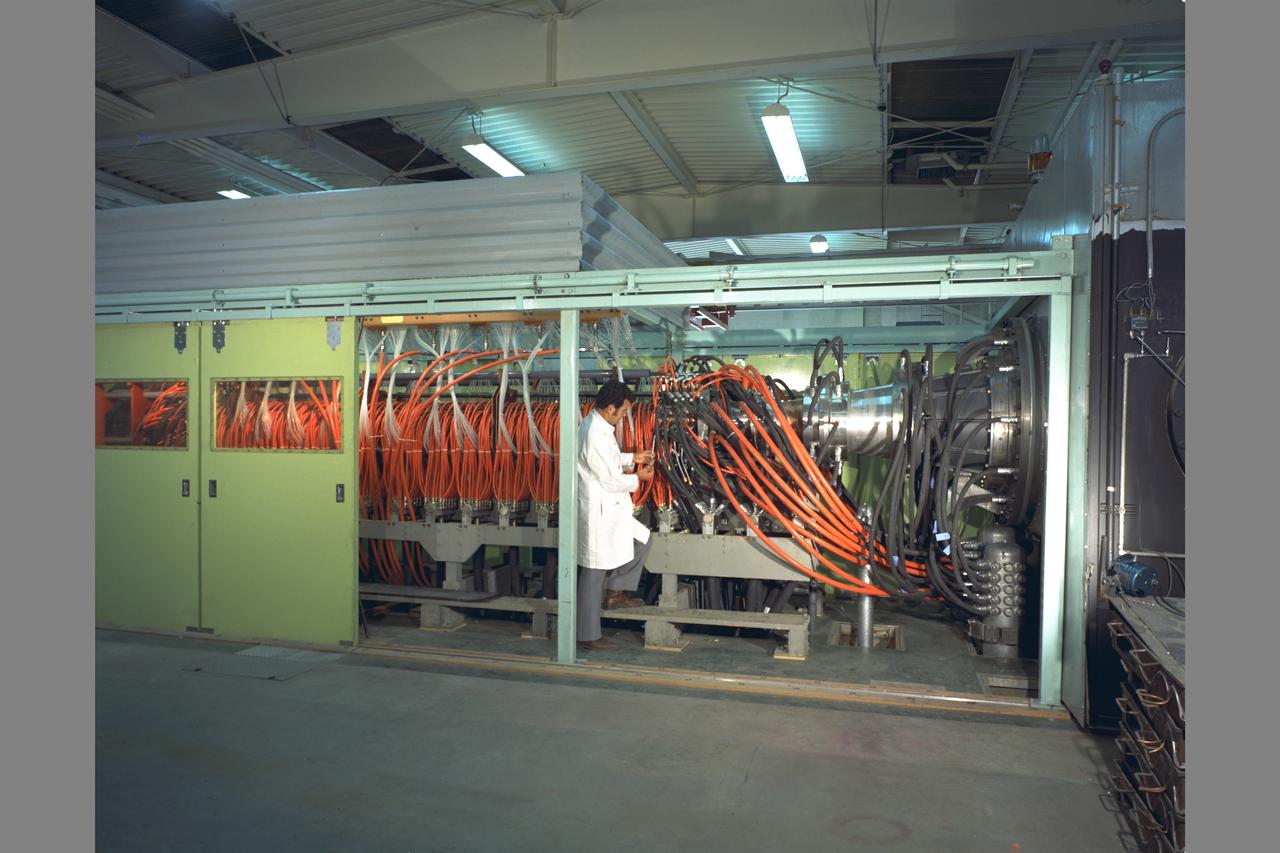
N-238 Ames 60mw Arc Heater
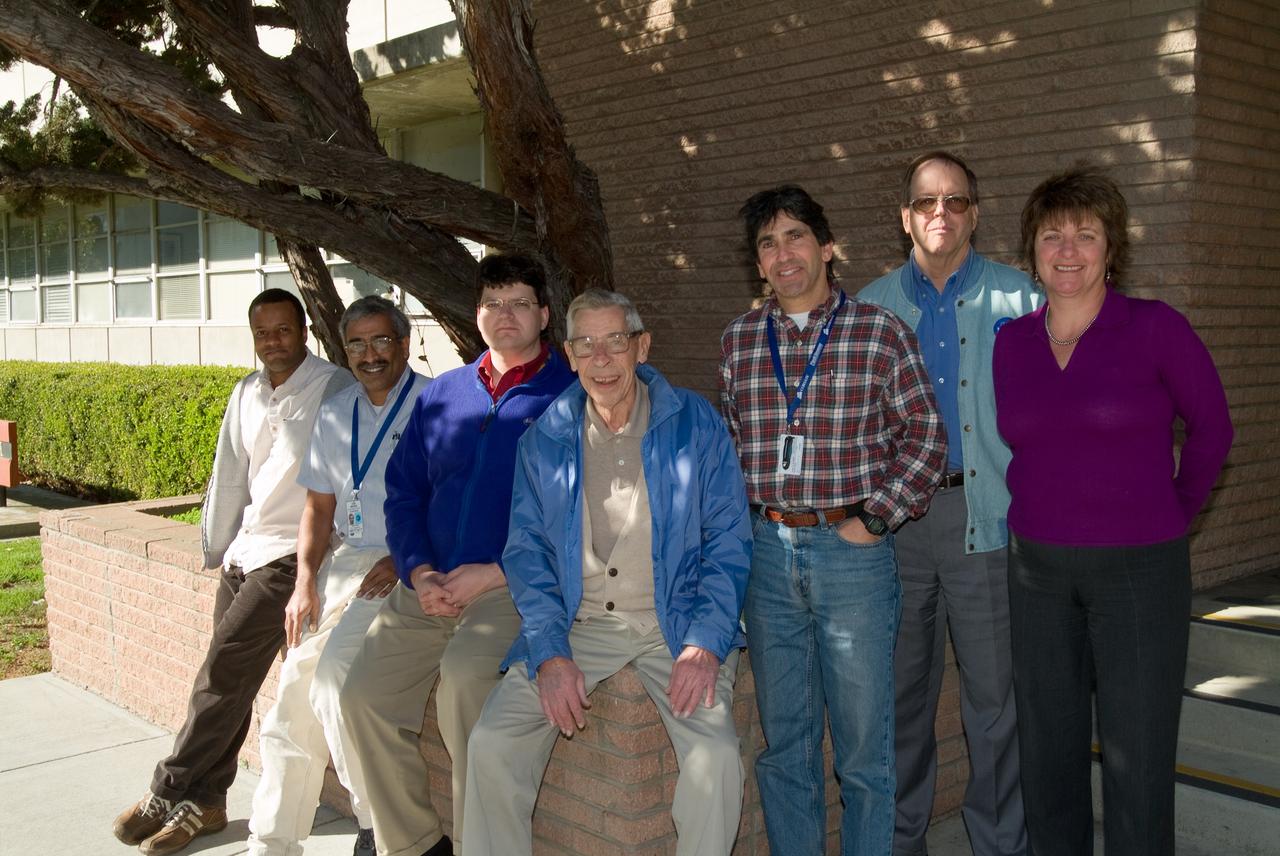
Dr. Alfred Eggers returns for a visit to Ames and the arc jet with (left to right); Ryan Mcdaniel, Dinesh Rabhu, Joe Olejnizak, Alfred Eggers, Jeff Brown, Joe Hartman, Sylvia Johnson.
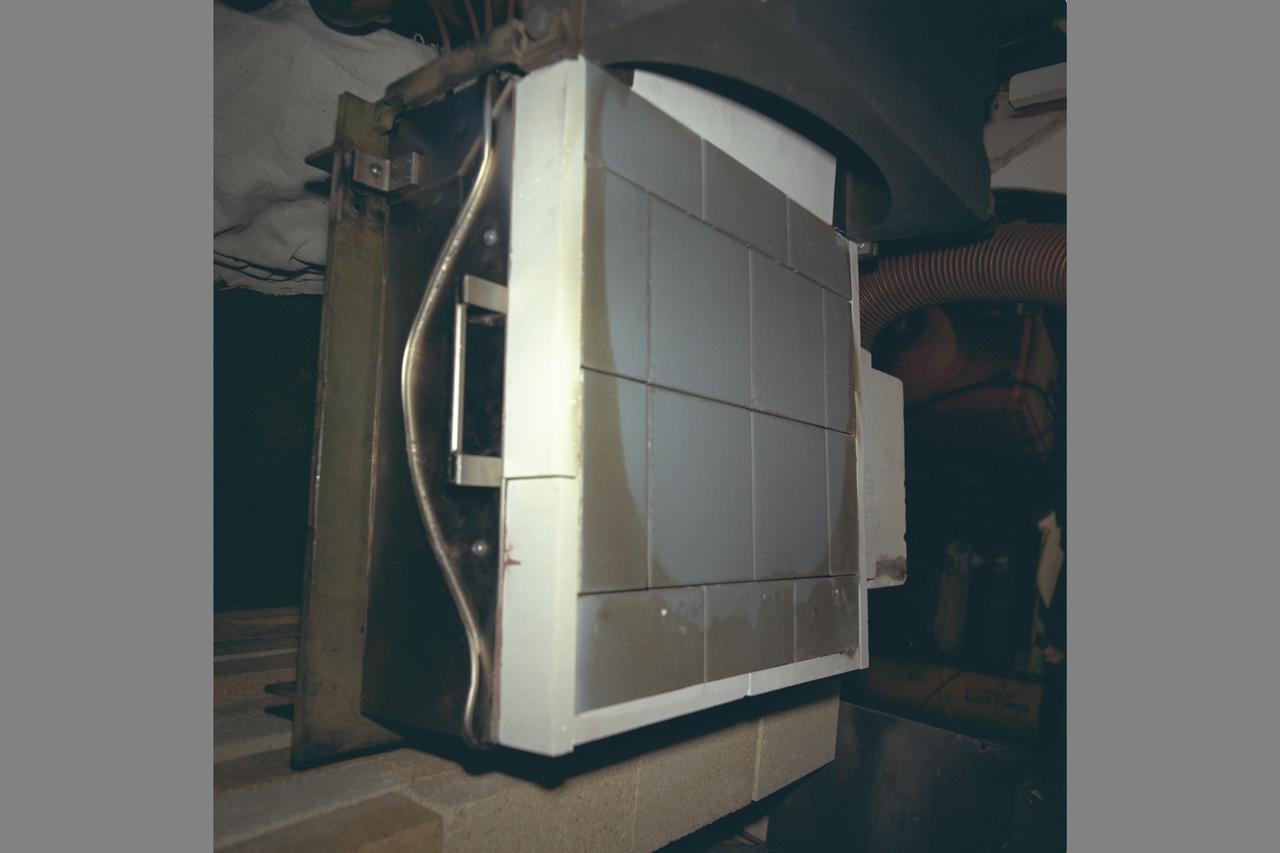
Space Shuttle Tile Thermal Protection System testing in Ames Arc Jet facilities
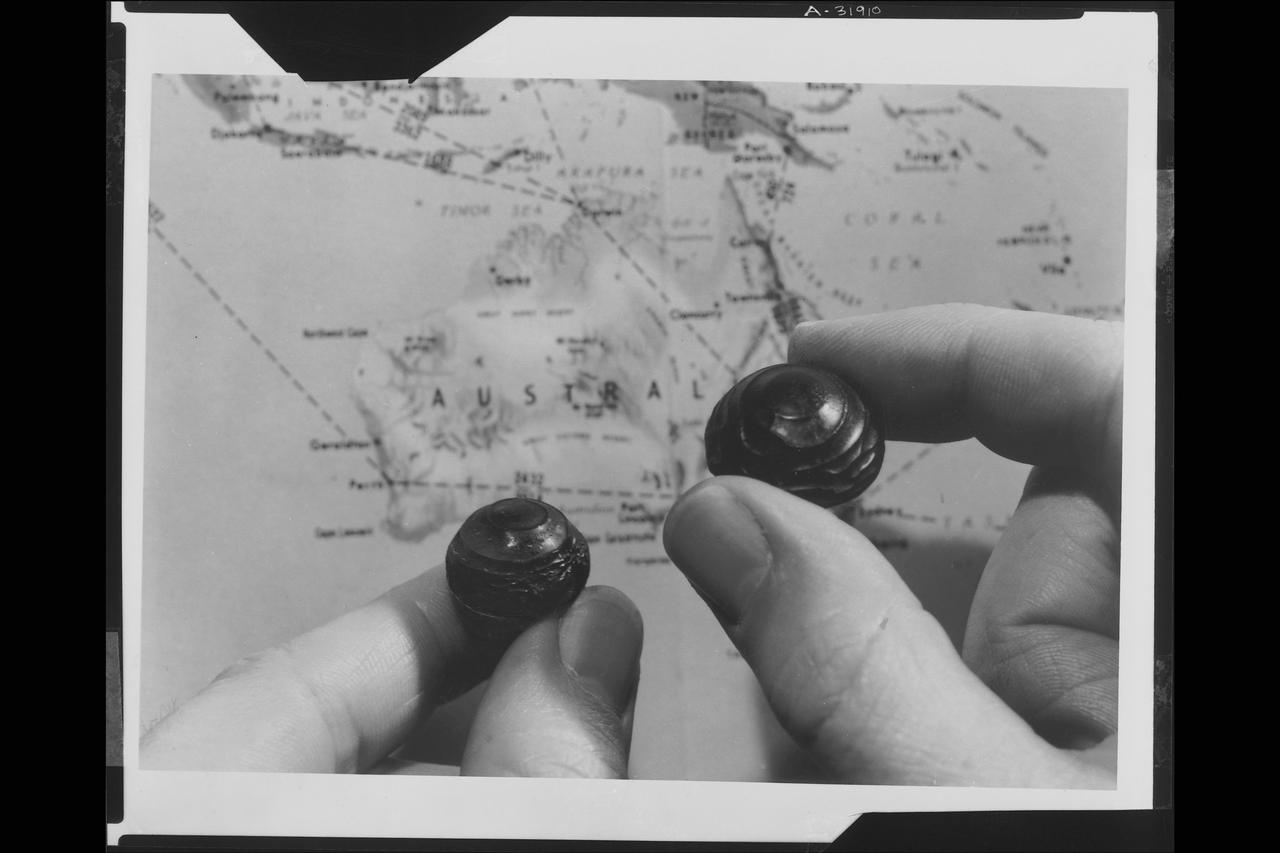
Dr. Dean R. Chapman a Ames Research Center scientists studing tektits, holding a simulated tektite created in the Ames arc jet facility (left) and authentic Australian tektite over a map of Australia.

ASTRONAUT STEVE ROBINSON & @ COMUMBIA IN N-258 W/RTF (Return to Flight) TEAMS Arc Jet Facilities with Frank Hue and other personnel.
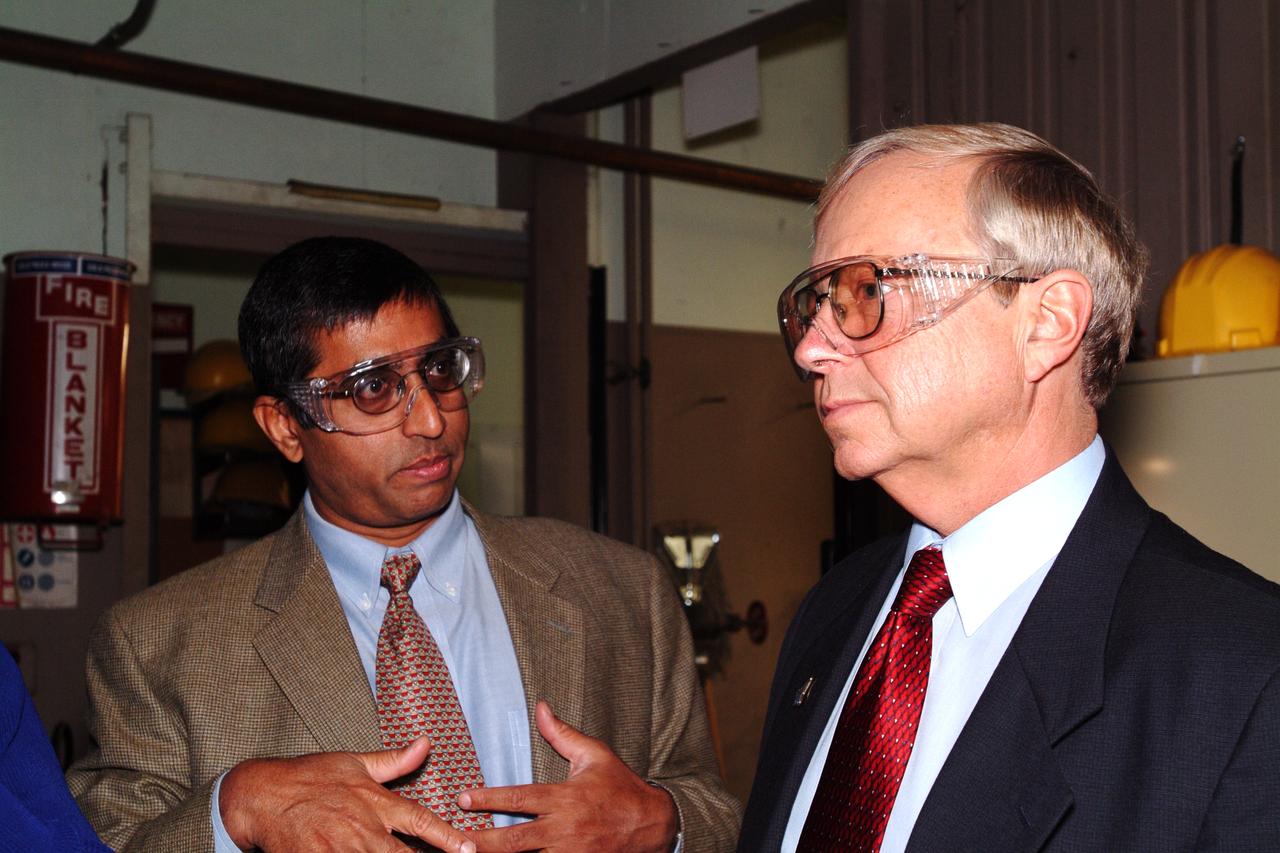
NASA Space Science Advisory Committee Chairman Ed Wiler (r) visit to Ames Research Center: on tour of the Arc Jet Facility with Ethiraj 'Raj' Venkatapathy presenting

NASA Space Science Advisory Committee Chairman Ed Wiler (c) visit to Ames Research Center: on tour of the Arc Jet Facility with G. Scott Hubbard, Raj Venkatapathy and entourage.
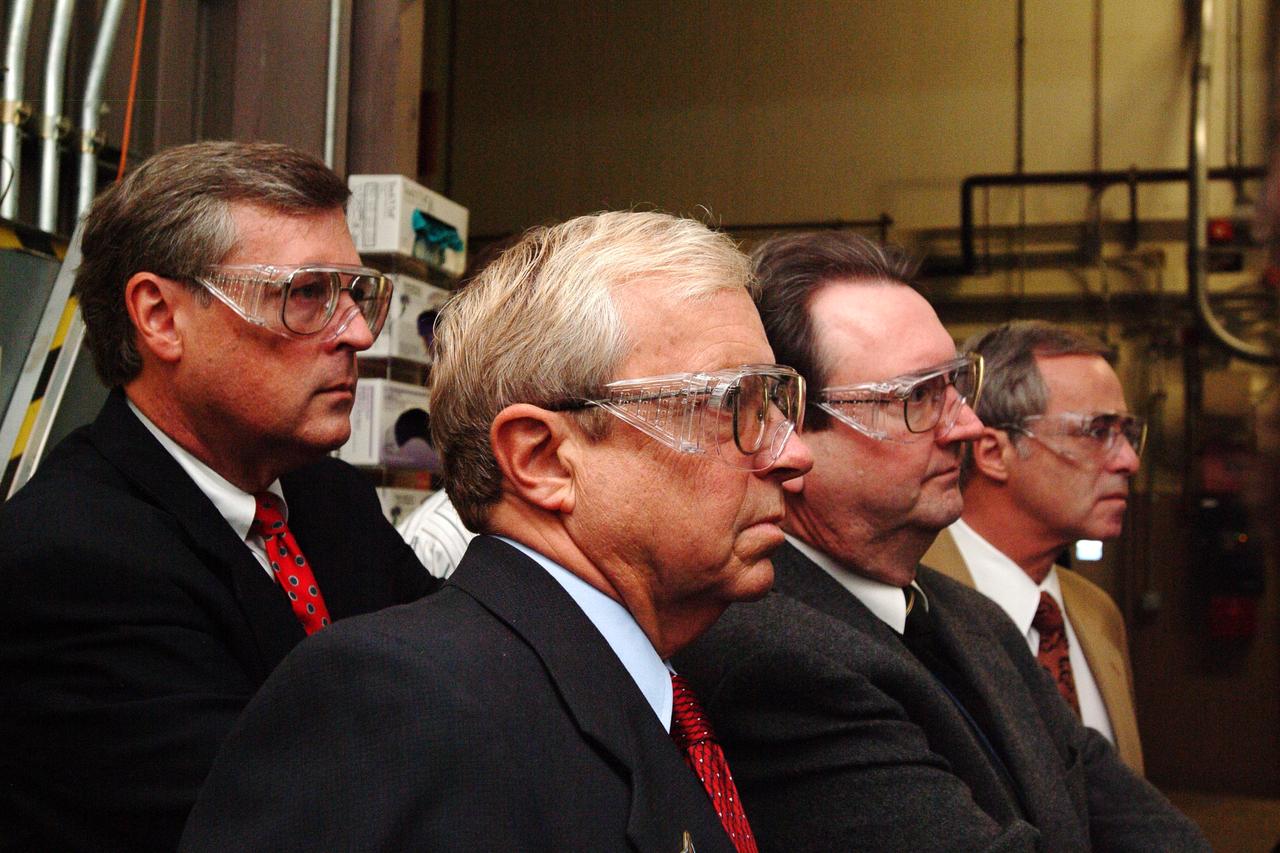
NASA Space Science Advisory Committee Chairman Ed Wiler (r) visit to Ames Research Center: on tour of the Arc Jet Facility with G. Scott Hubbard, Raj Venkatapathy and entourage.
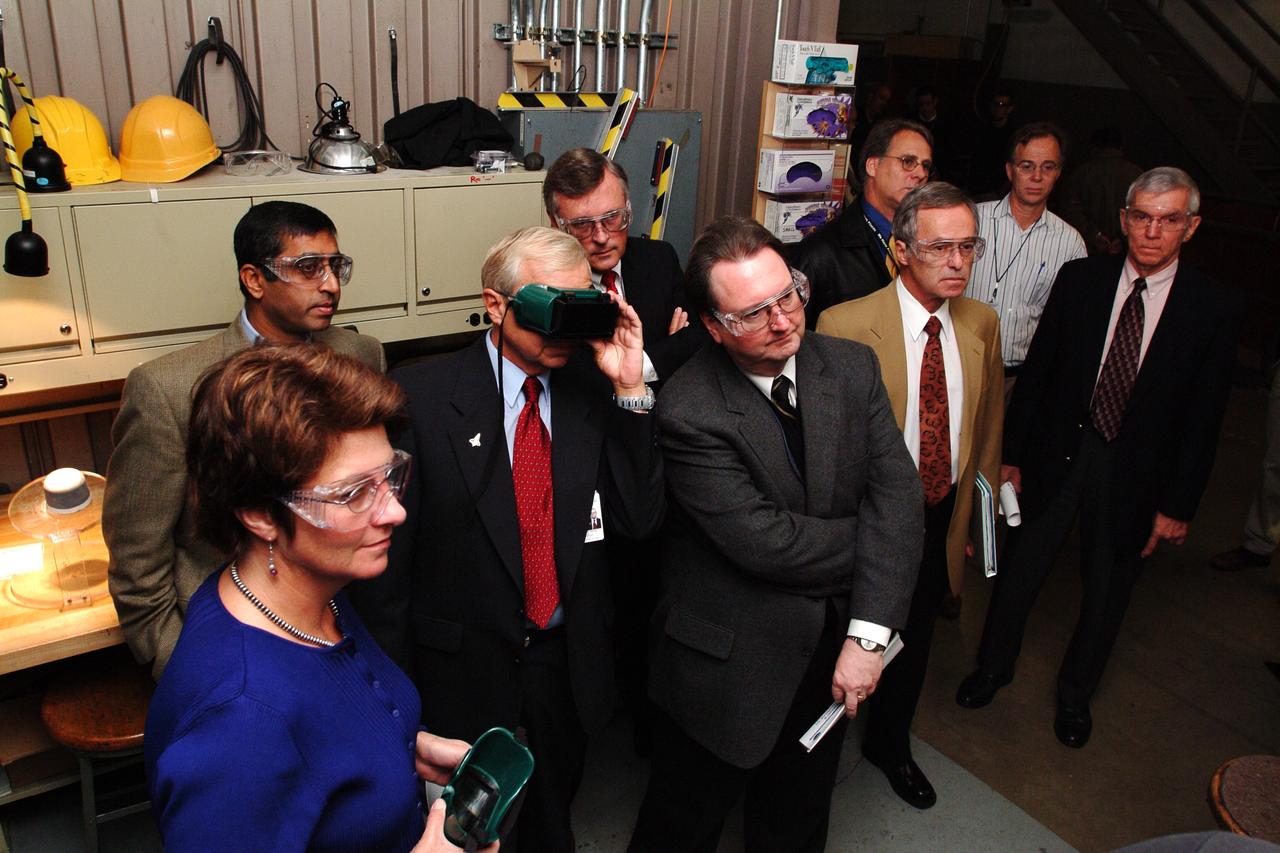
NASA Space Science Advisory Committee Chairman Ed Wiler (r) visit to Ames Research Center: on tour of the Arc Jet Facility with G. Scott Hubbard, Raj Venkatapathy and entourage
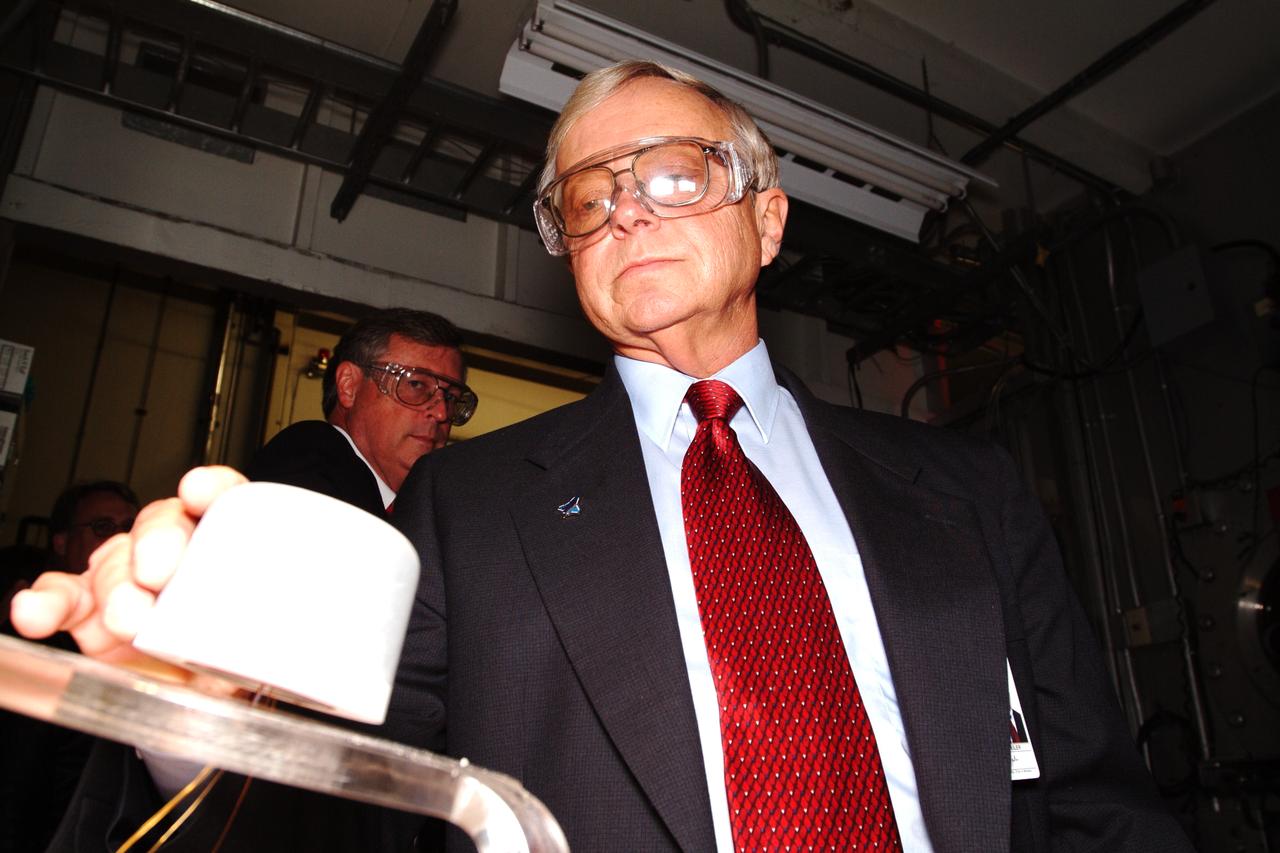
NASA Space Science Advisory Committee Chairman Ed Wiler visit to Ames Research Center: checks out test material while on tour of the Arc Jet Facility
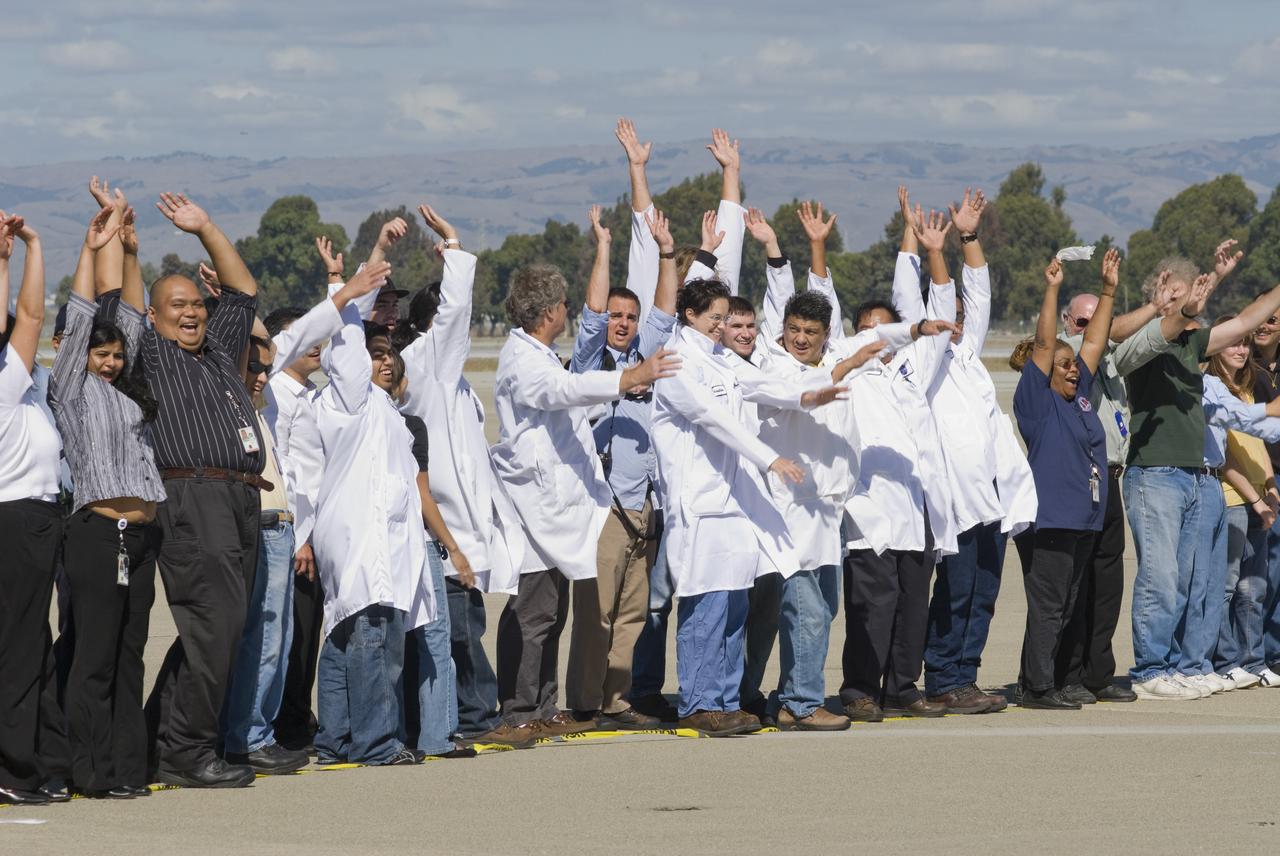
Ames 70_year picture day on Flight line. Arc Jet crew.
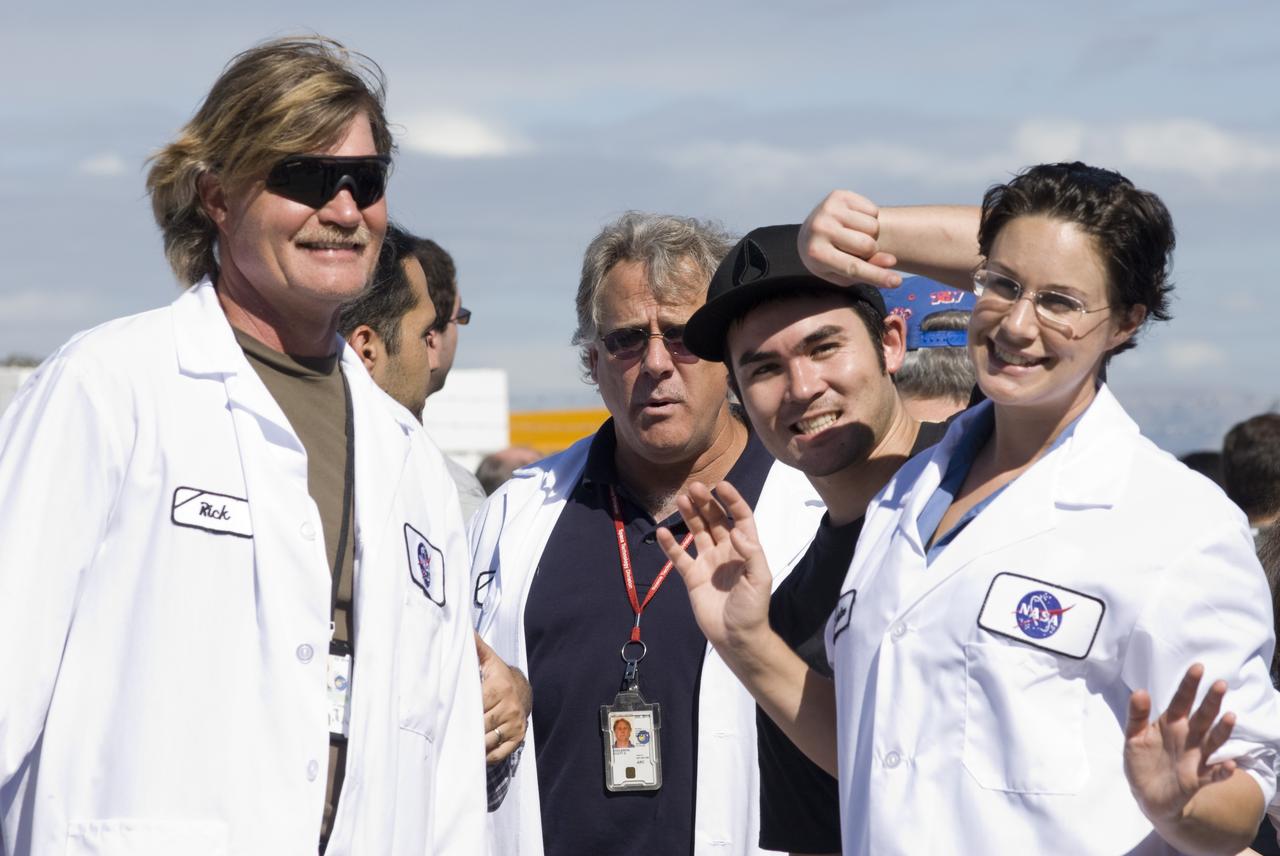
Ames 70_year picture day on Flight line. Arc Jet crew.
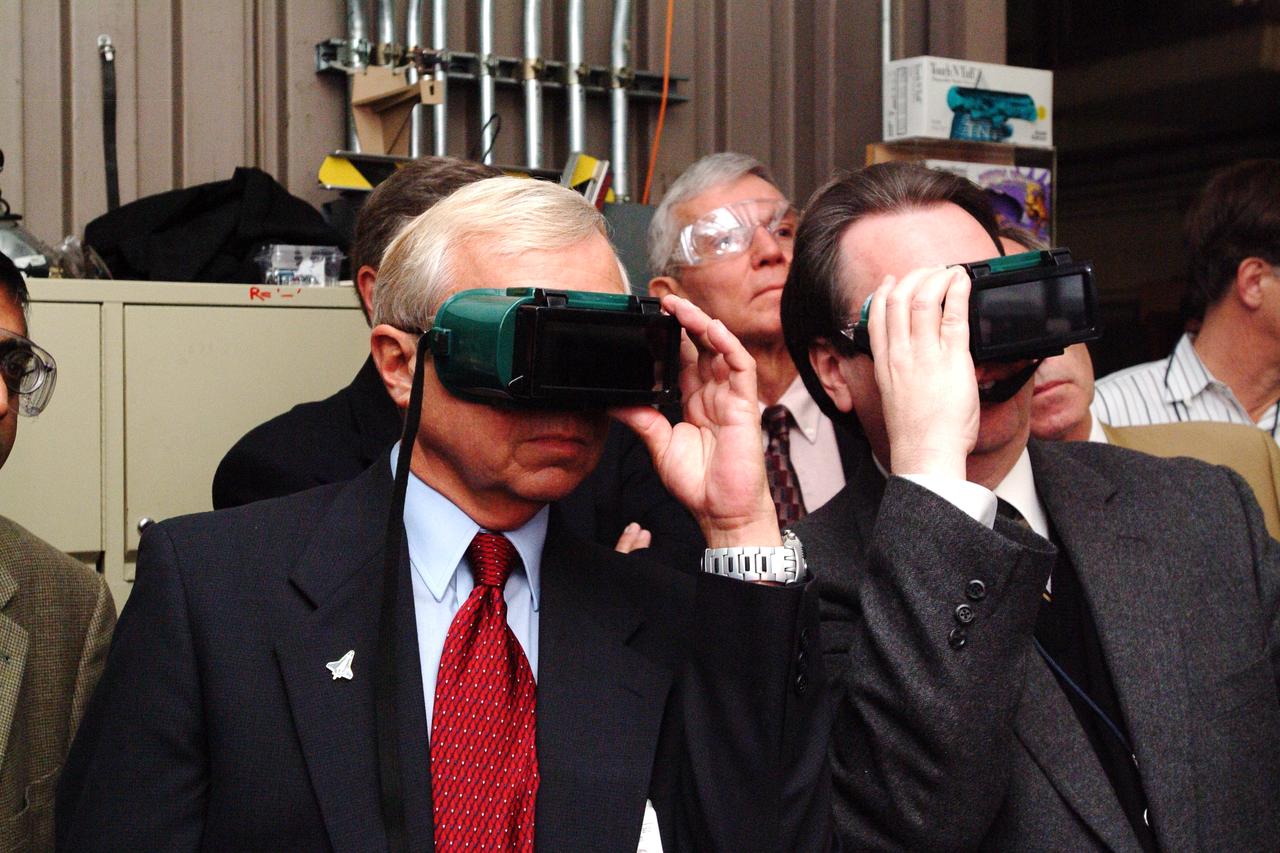
NASA Space Science Advisory Committee Chairman Ed Wiler (r) visit to Ames Research Center: on tour of the Arc Jet Facility with G. Scott Hubbard, Raj Venkatapathy and entourage. Wiler and Hubbard use special viewing glasses to observe a test run of Thermal Protection Materials.
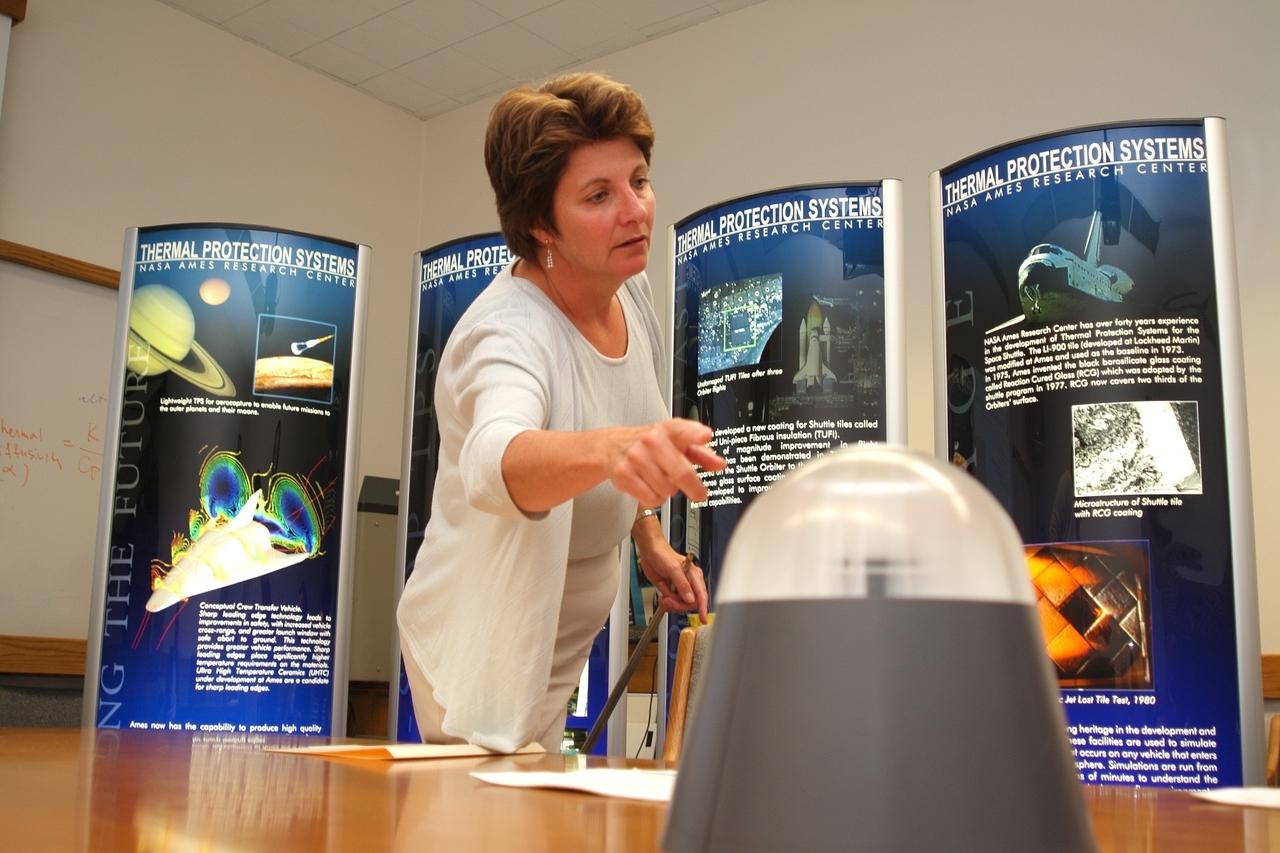
U. S. Congressman Culbertson, Texas and Mr John Webb, Webb & Associates visit and tour Ames Research Center with Center Director G. Scott Hubbard (pre-tour briefing at the Thermal Protection Facility - Arc Jet by Sylvia Johnson)
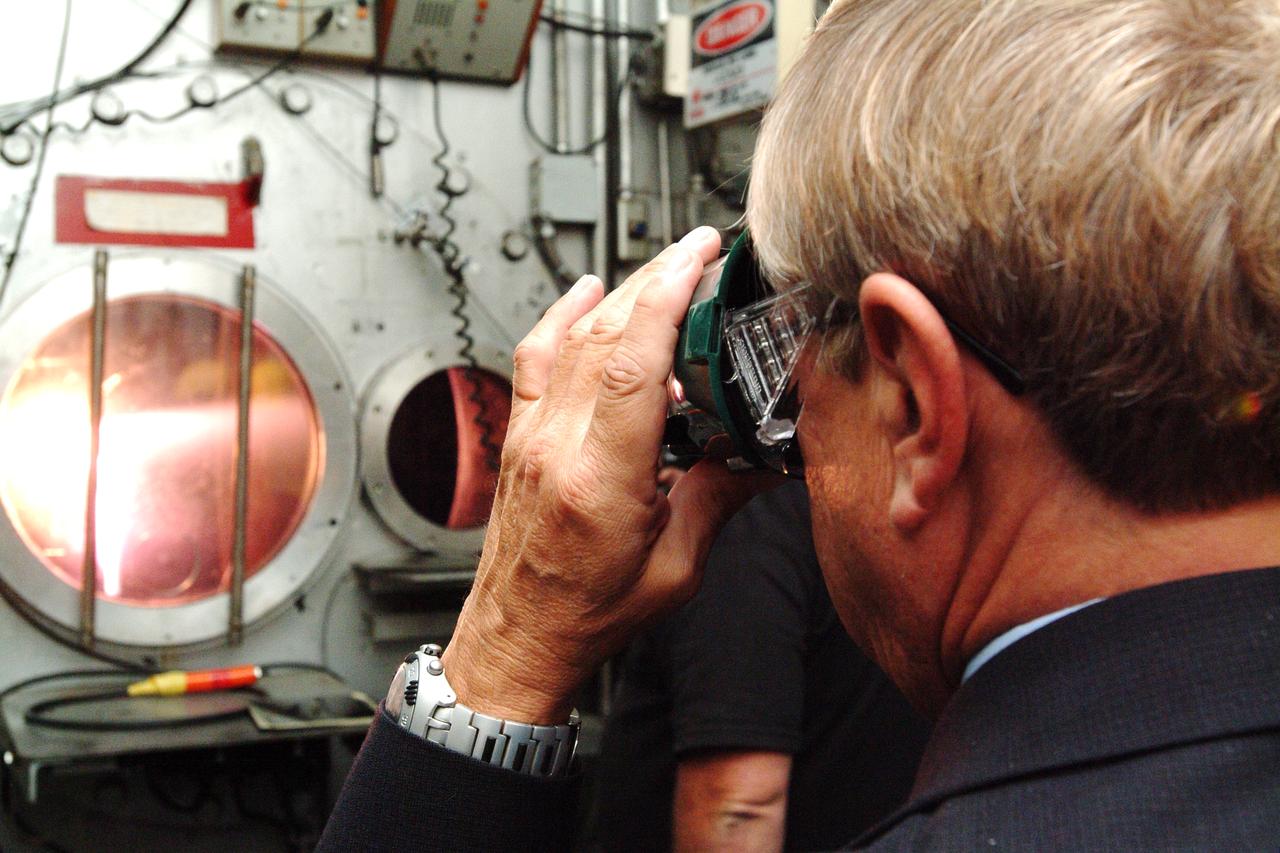
NASA Space Science Advisory Committee Chairman Ed Wiler (r) visit to Ames Research Center: while on tour of the Arc Jet Facility with G. Scott Hubbard, Raj Venkatapathy and entourage. Wiler uses special viewing glasses to observe a test run of Thermal Protection Materials.
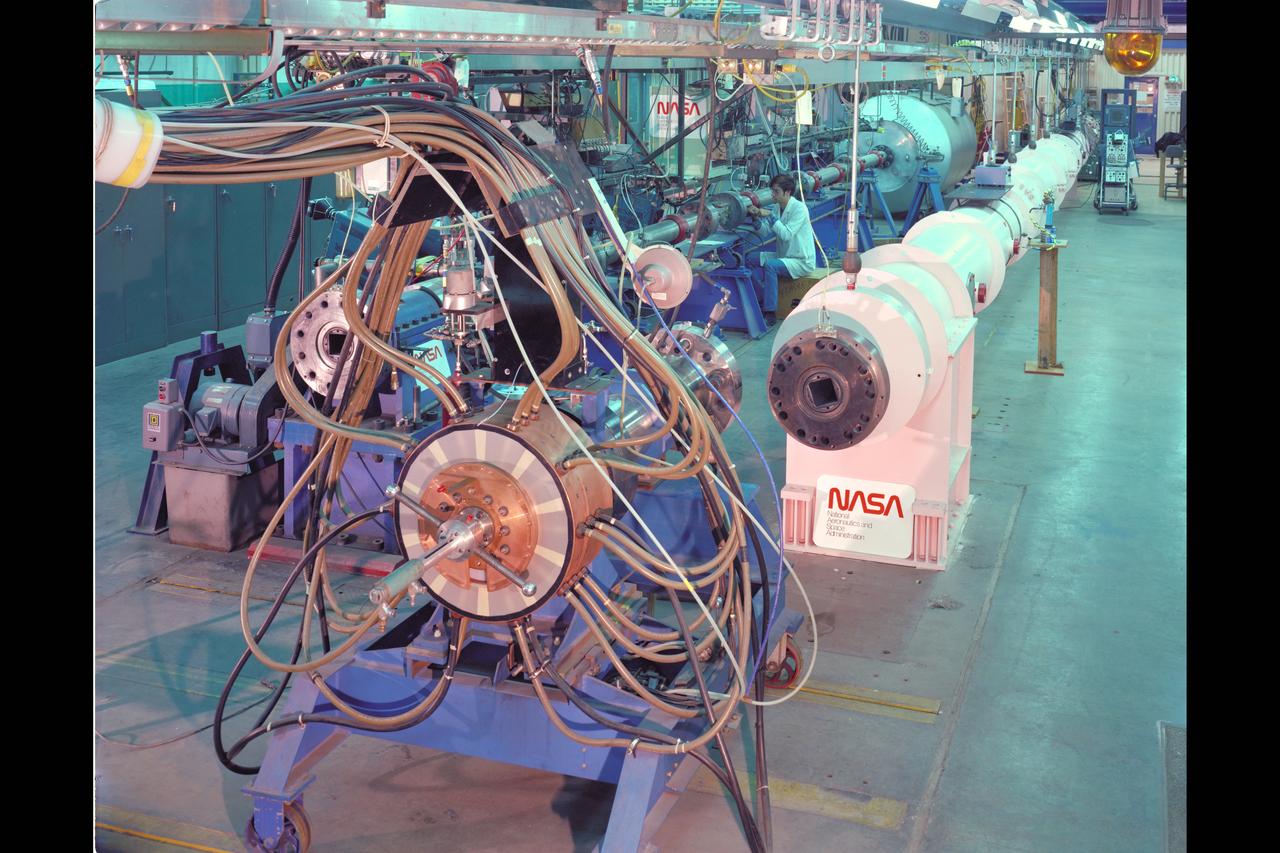
4' and 24' Shock Tubes - Electric Arc Shock Tube Facililty N-229 (East) The facility is used to investigate the effects of radiation and ionization during outer planetary entries as well as for air-blast simualtion which requires the strongest possible shock generation in air at loadings of 1 atm or greater.
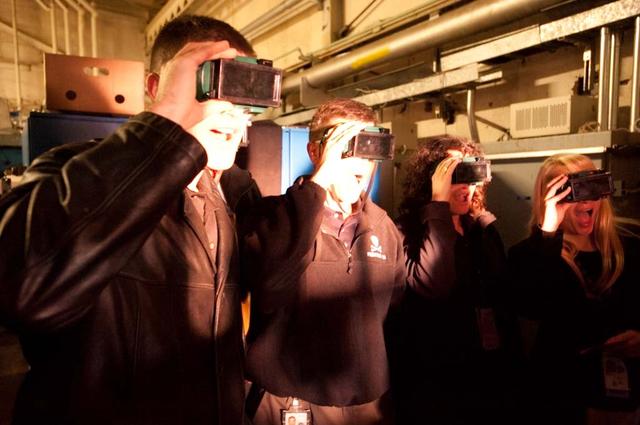
The 14 member 2009 class of NASA astronauts, Japan Aerospace Explortion Agency (JAXA) astronauts and Canadian Space Agency astronauts visit the Arc Jet Facilities at Ames Research Center. Jeremy Hansen, Gregory 'Reid' Wiseman, Serna Aunon, Kathleen (Kate) Rubins watch the test artical burn durning a test run.
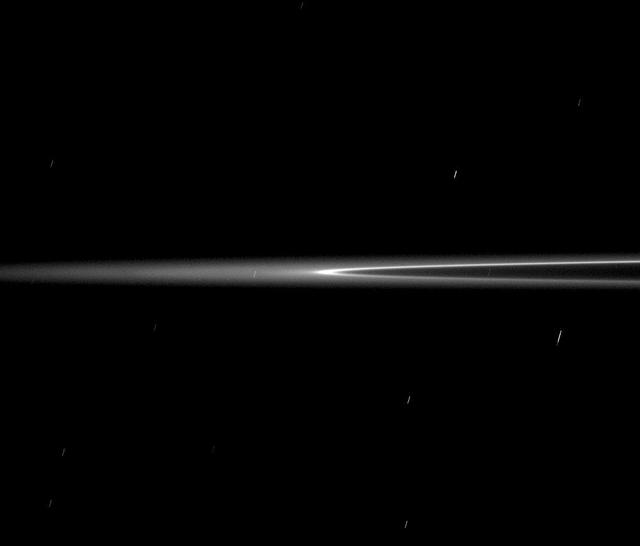
Arc in Motion
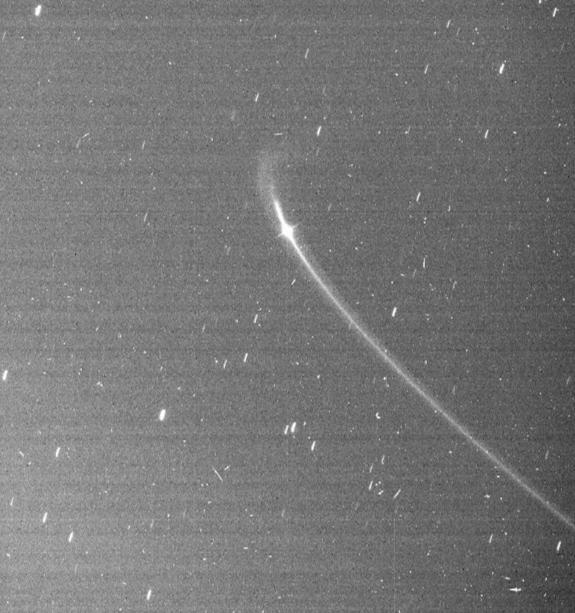
The Anthe Arc
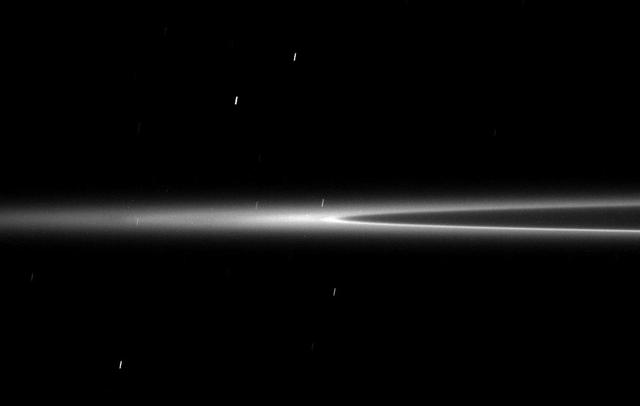
Lost Arc
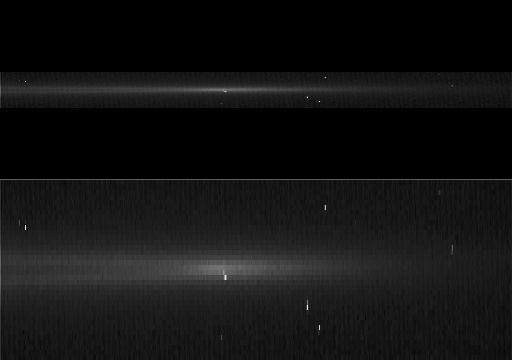
Persistent Arc
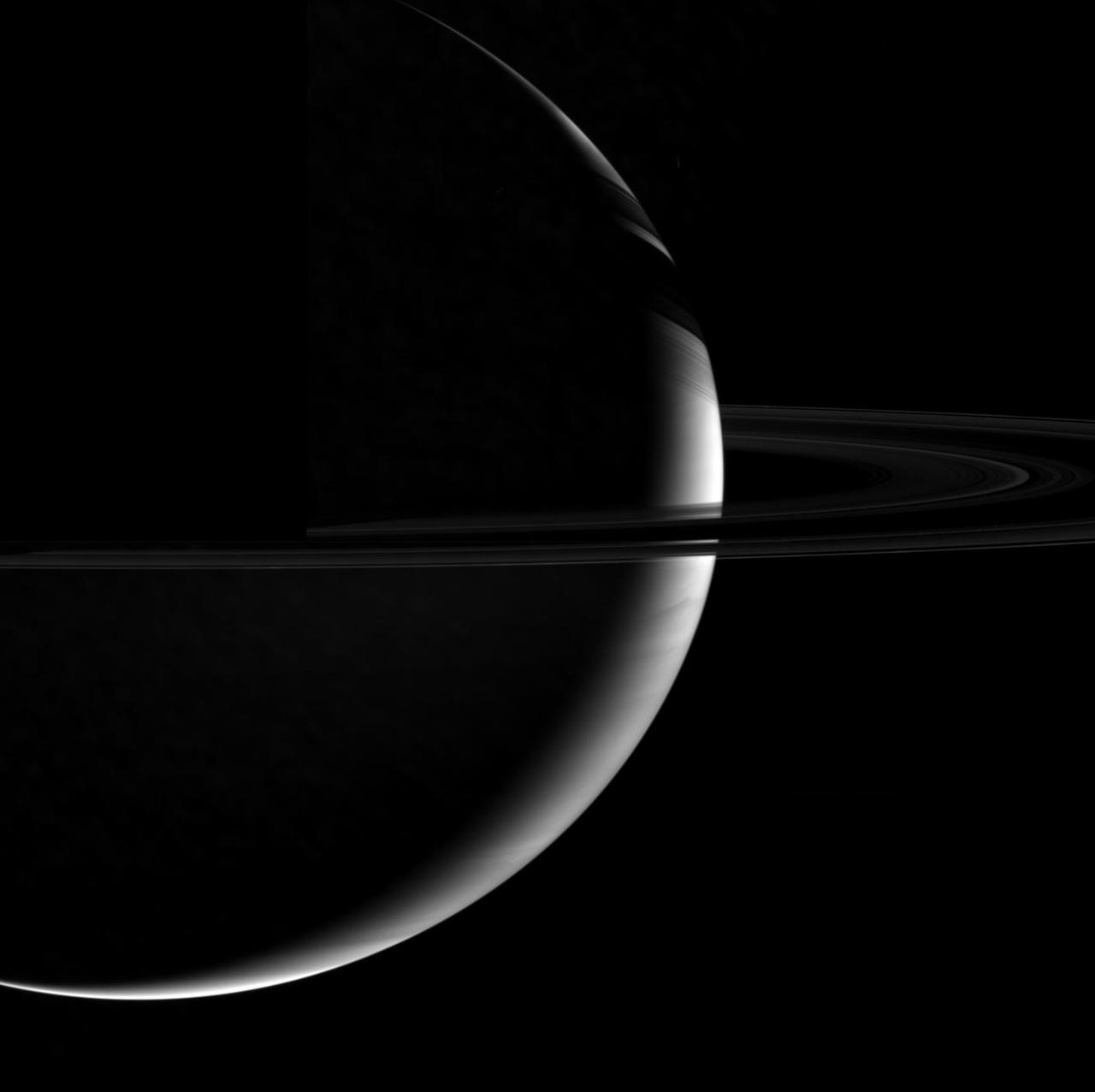
Arc and Crescent
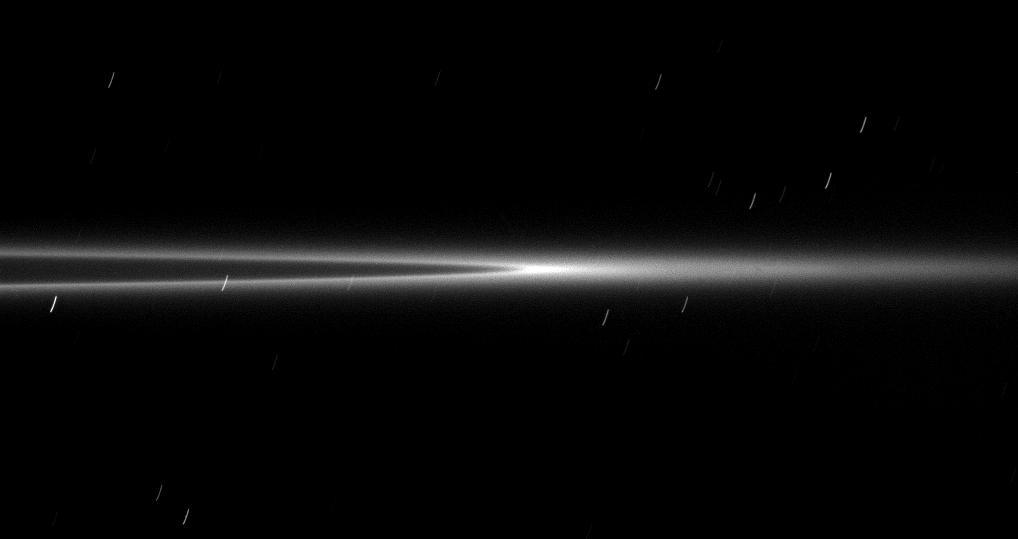
Arc On-Edge

A test block of Avcoat undergoes heat pulse testing inside an arc jet test chamber at NASA’s Ames Research Center in California. The test article, configured with both permeable (upper) and non-permeable (lower) Avcoat sections for comparison, helped to confirm understanding of the root cause of the loss of charred Avcoat material that engineers saw on the Orion spacecraft after the Artemis I test flight beyond the Moon.
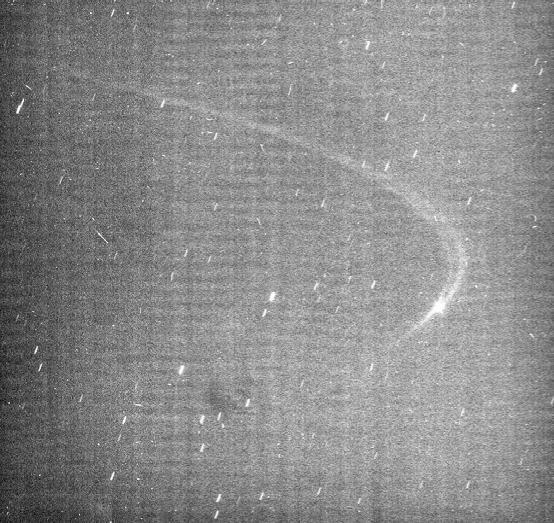
Anthe Faint Arc
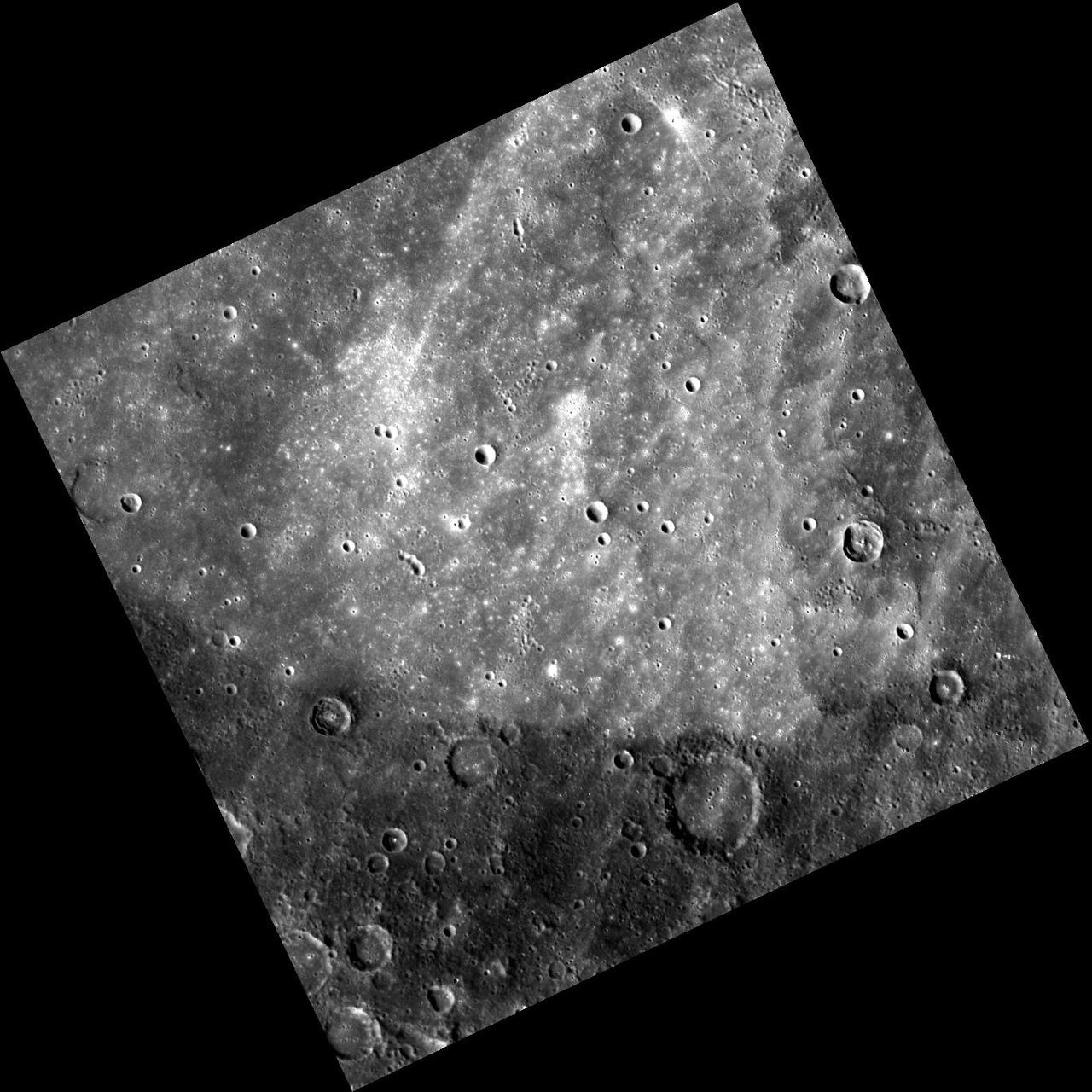
An Angular Albedo Arc
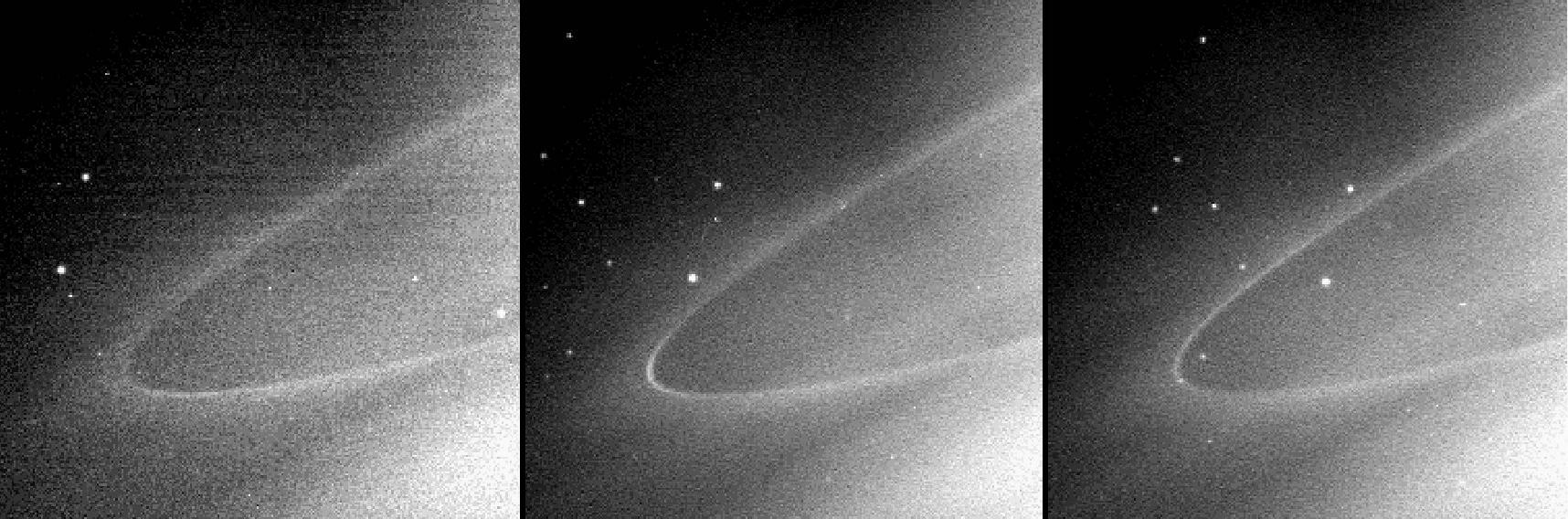
Arc in the Tenuous G Ring
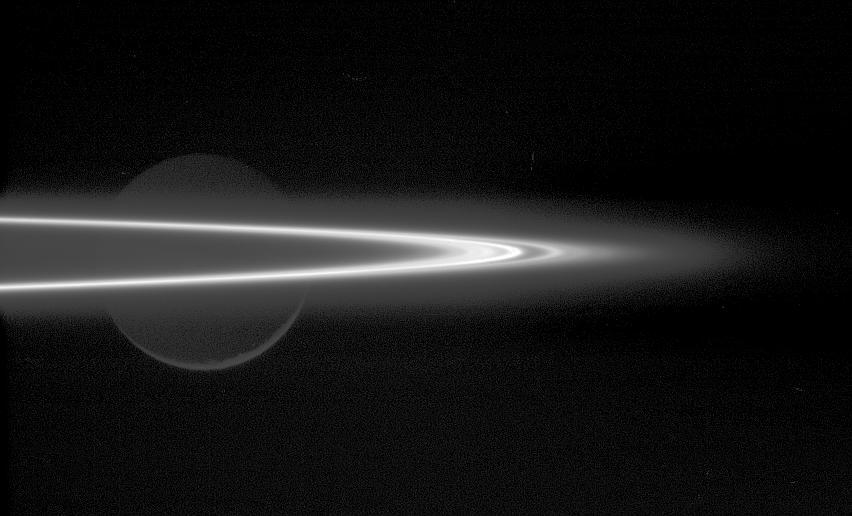
Bright Arc of Ice
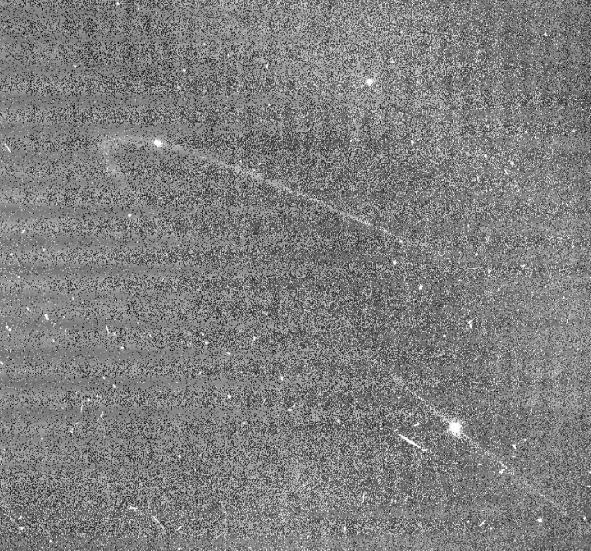
Anthe and Methone Arcs
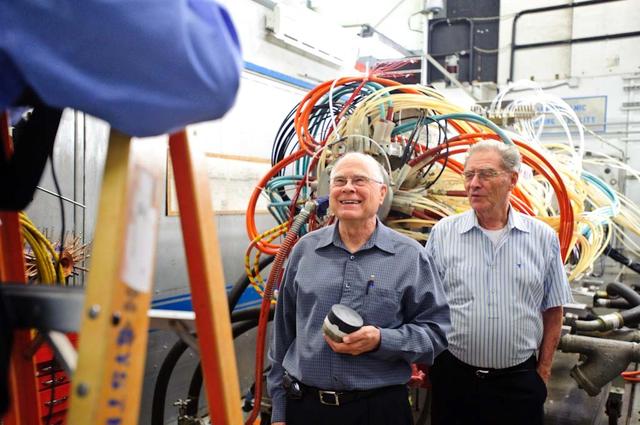
Dr William 'Bill' Borucki, NASA Ames Scientist on the Kepler Mission and John W. 'Jack' Boyd, NASA Ames Historian at the Ames Arc Jet Complex, Aerodynamic Heating Facility talking with a Mercury News photographer about the Kepler Mission and the 40th Anniversary of the Apollo 11 Mission.
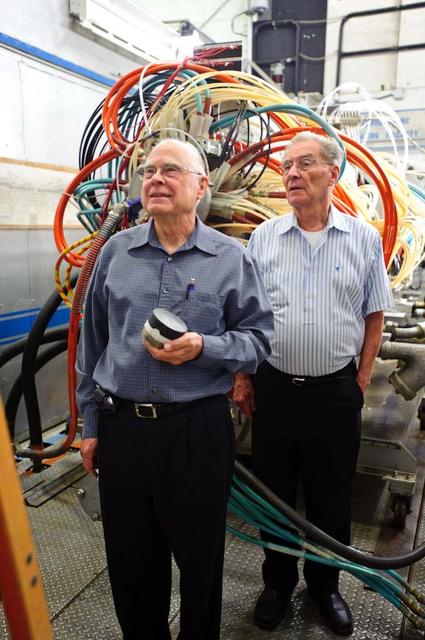
Dr William 'Bill' Borucki, NASA Ames Scientist on the Kepler Mission and John W. 'Jack' Boyd, NASA Ames Historian at the Ames Arc Jet Complex, Aerodynamic Heating Facility talking with a Mercury News photographer about the Kepler Mission and the 40th Anniversary of the Apollo 11 Mission.

P-34578 BW One of two new ring arcs, or partial rings, discovered by Voyager 2, is faintly visible just outside the orbit of the Neptunian moon 1989N4.The 155-second exposure taken by the spacecraft's narrow-angle camera shows the glare of an overexposed Neptune to the right of the moon and ring arc. The two bright streaks below the moon and ring arc are stars. The ring arc is approximately 50,000 kilometers (30,000 miles) long. The second ring arc, not apparent here, is about 10,000 kilometers (6,000 miles) long and is assoiciated with moon 1989N3. The ring arc, along with 1989N4, orbits about 62,000 kilometers (38,000 miles) from the planet's cloud tops. Astronomers long suspected the existence of such an irregular ring system around Neptune. Data from repeated ground-based observations hinted at the existence of irregular strands of partial rings orbiting Neptune. Voyager's photographs of the ring arcs are the first photographic evidence that such a ring system exists. Voyager scientists said the ring arcs may be comprised of debris associated with the nearby moons, or may be the remnants of moons that have been torn apart or ground down through collisions. Close-up studies of the ring arcs by Voyager 2 will help determine their composition.

Spring comes to Ames Research Center, an employee walks among the blossoming trees.

Spring comes to Ames Research Center. Kathy Reda walks among the blossoming trees.
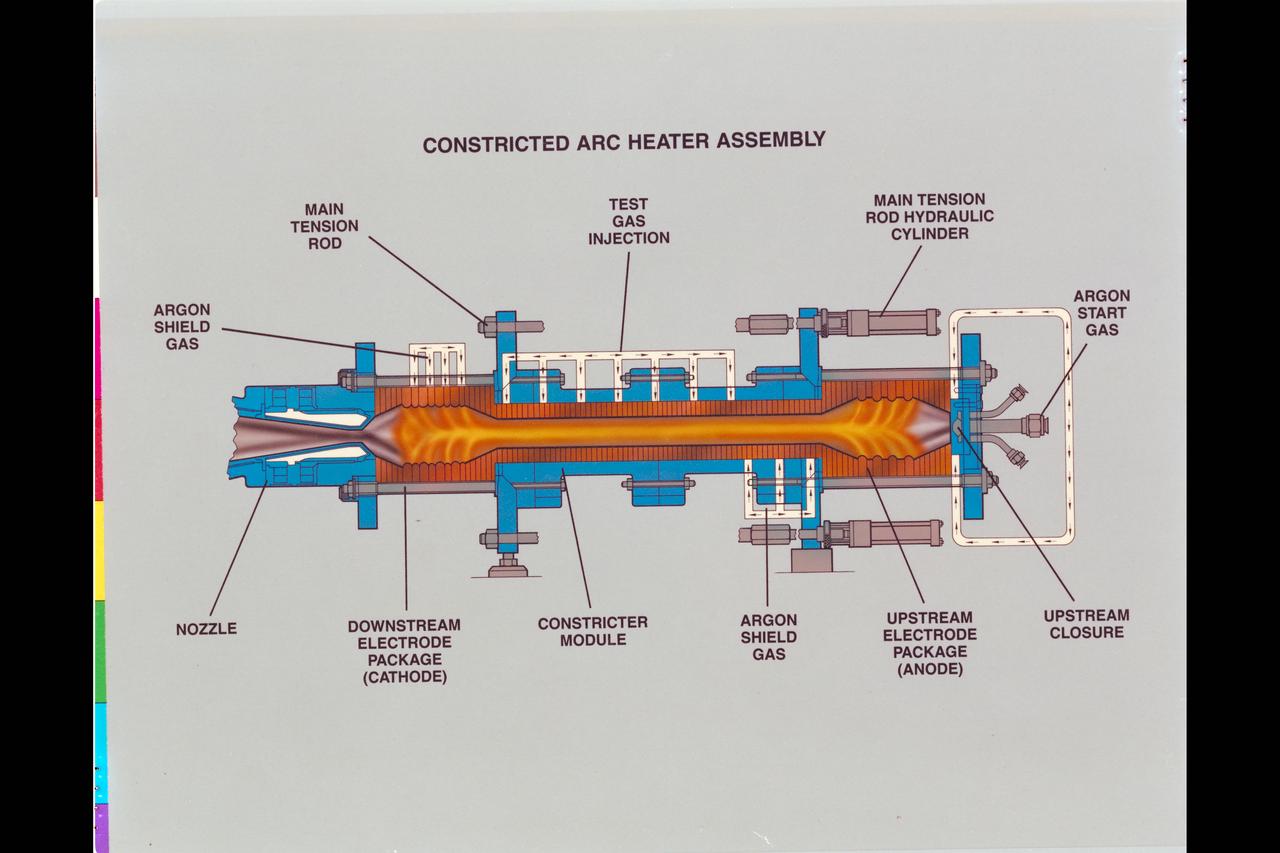
Artwork Constricted Arc Heater Assembly
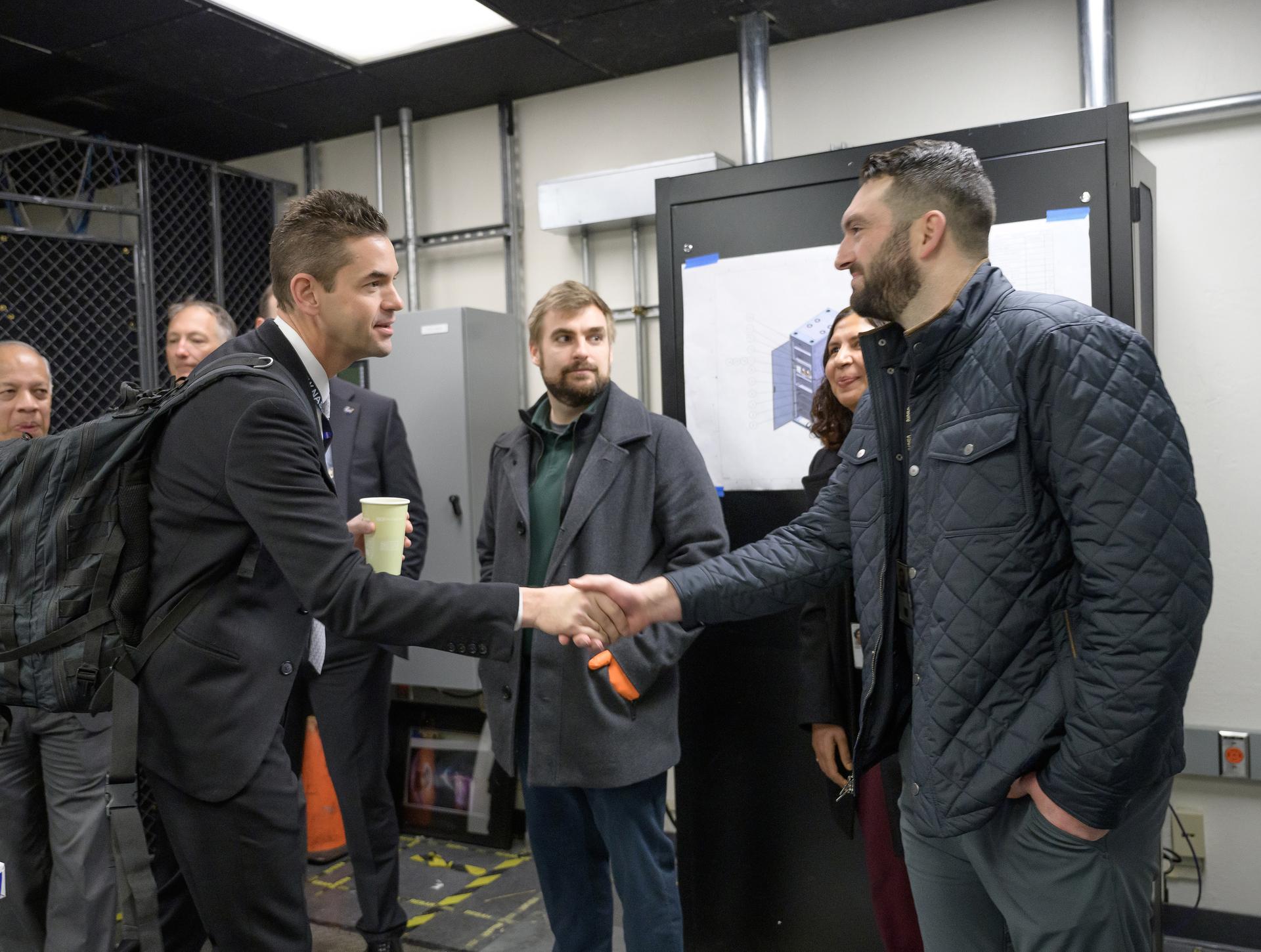
NASA Administrator Jared Isaacman visits the Arc Jet facility in N238.
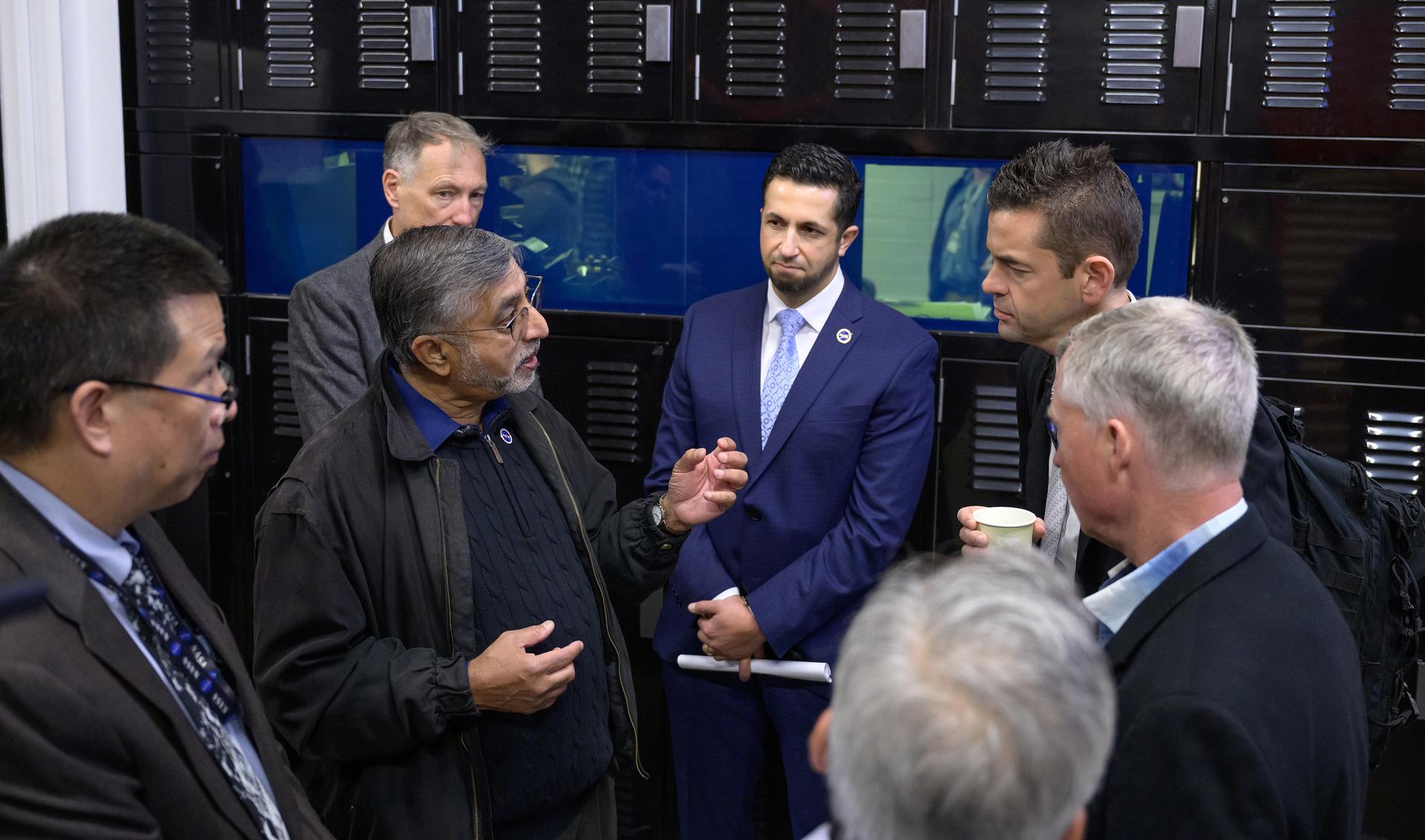
NASA Administrator Jared Isaacman visits the Arc Jet facility in N238.
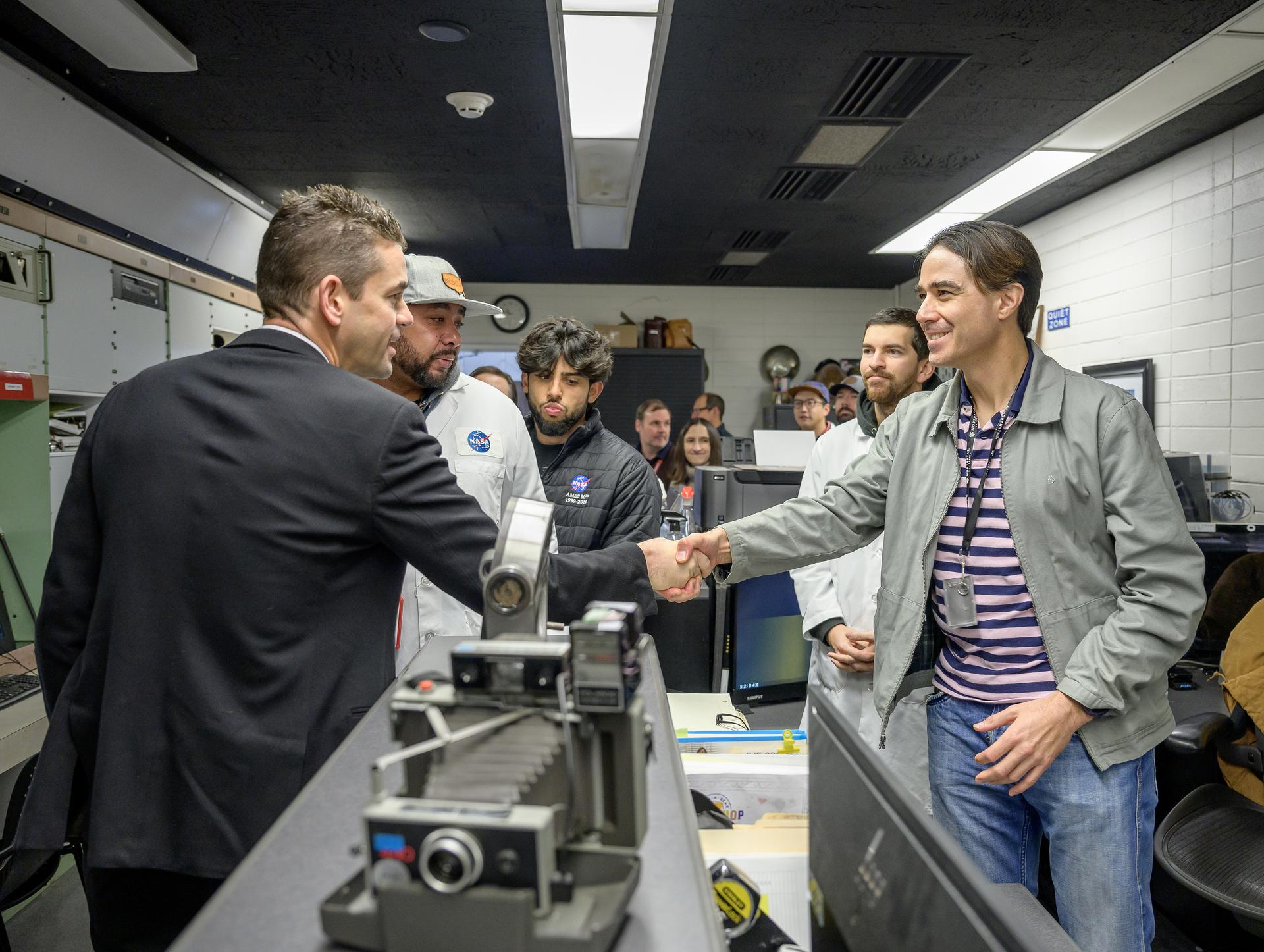
NASA Administrator Jared Isaacman visits the Arc Jet facility in N238.
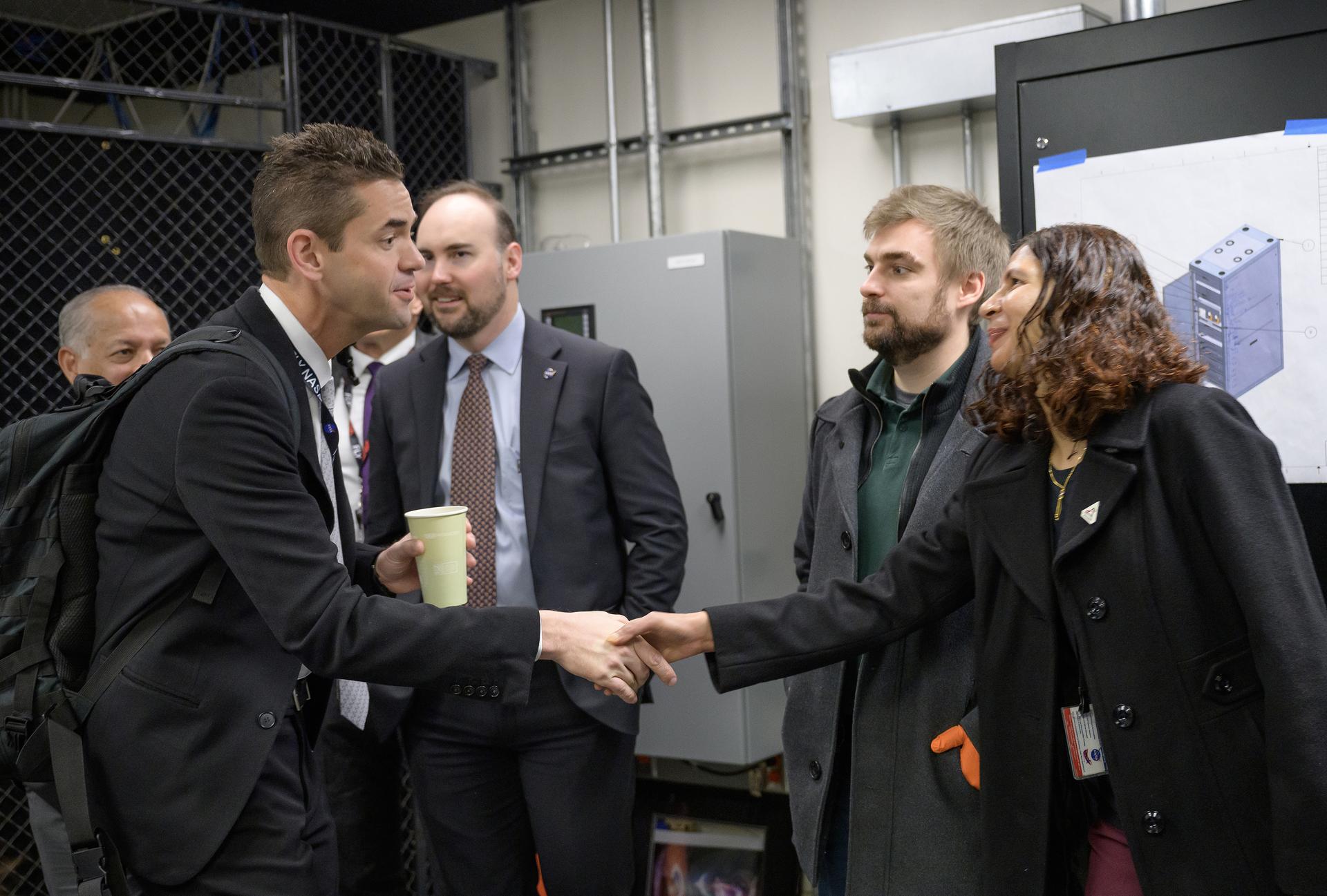
NASA Administrator Jared Isaacman visits the Arc Jet facility in N238.
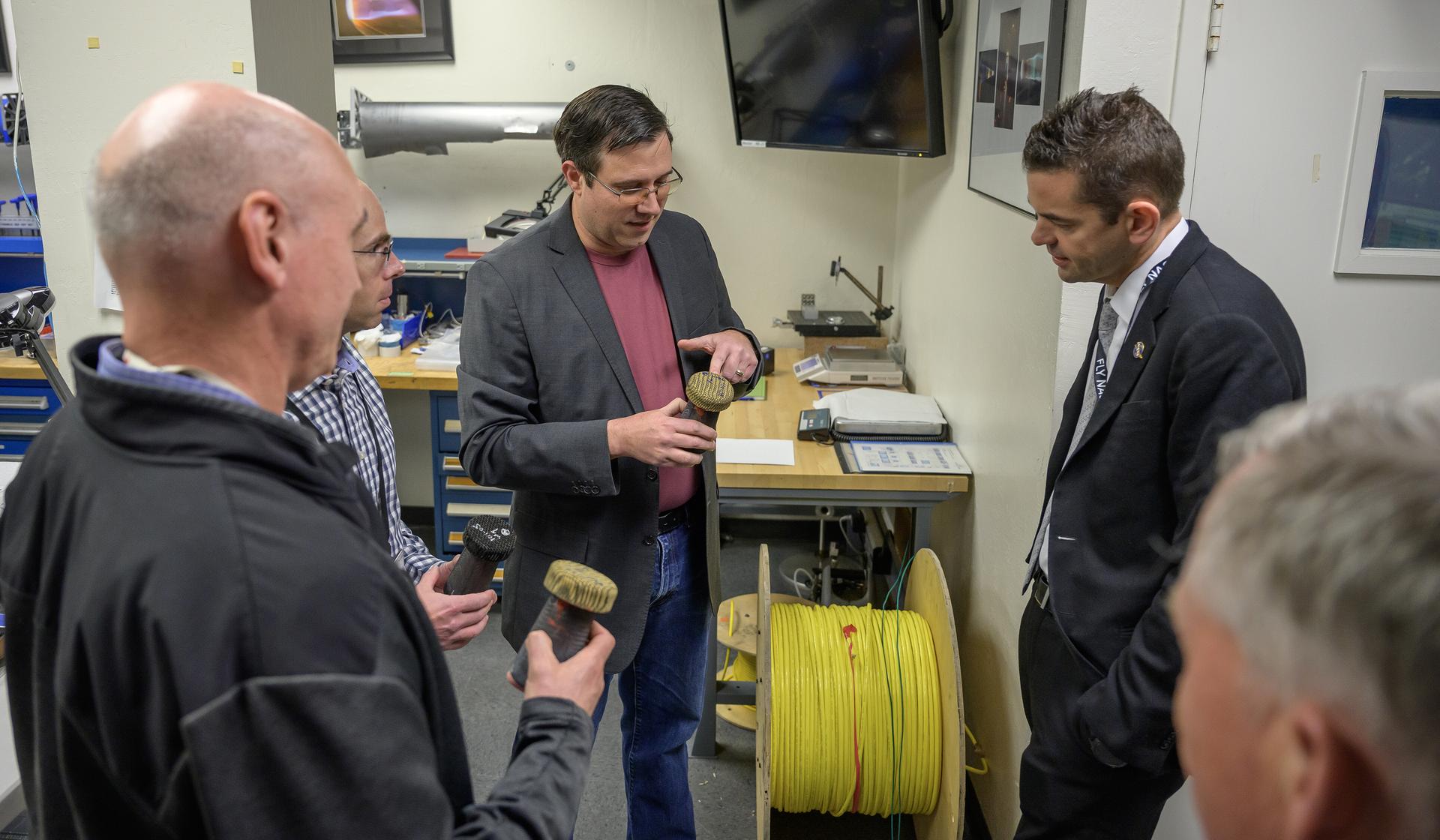
NASA Administrator Jared Isaacman visits the Arc Jet facility in N238.

Spring comes to Ames Research Center, trees are blossoming, and the resident Mallard ducks are out and about.
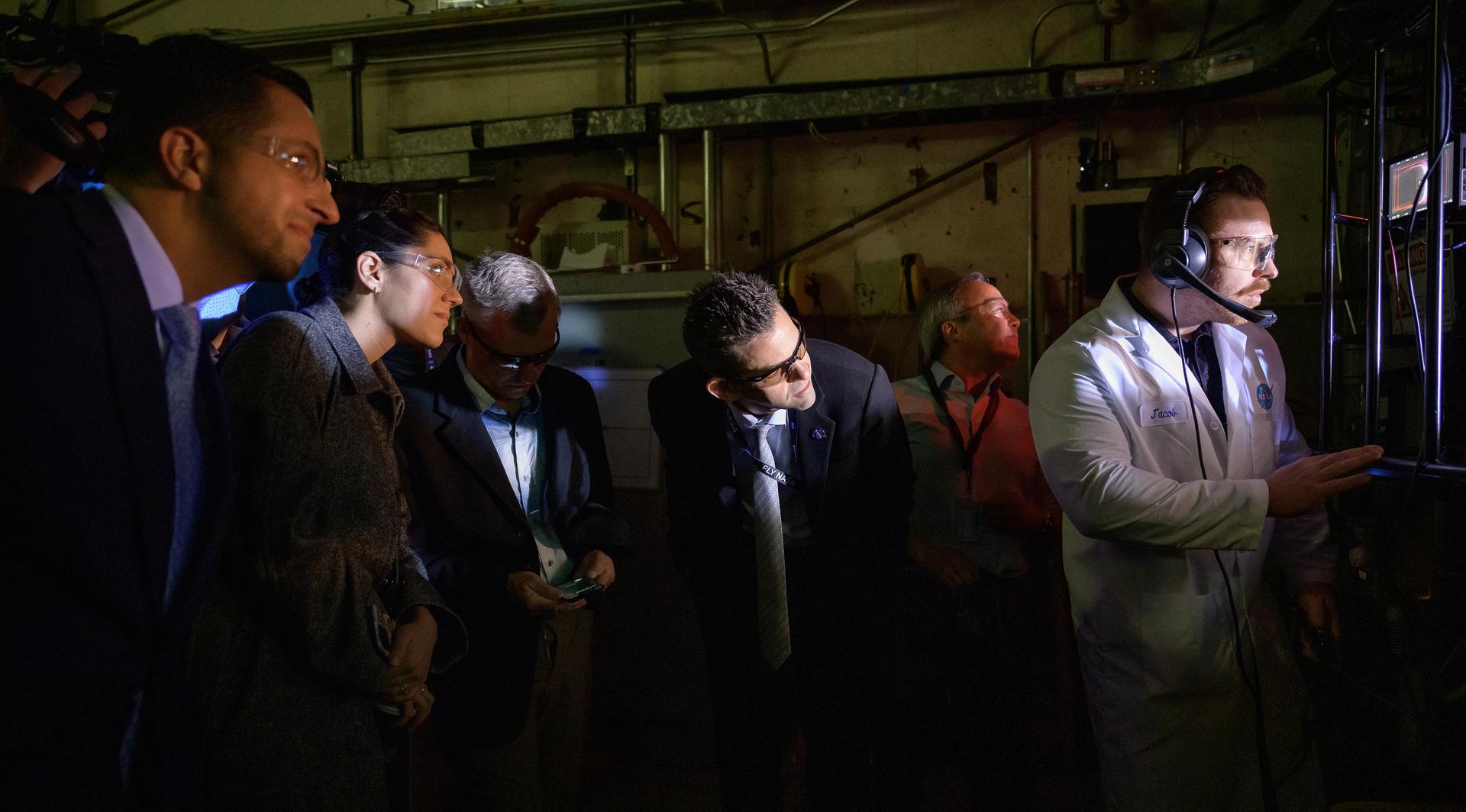
NASA Administrator Jared Isaacman views a test run in the Arc Jet facility in N238.
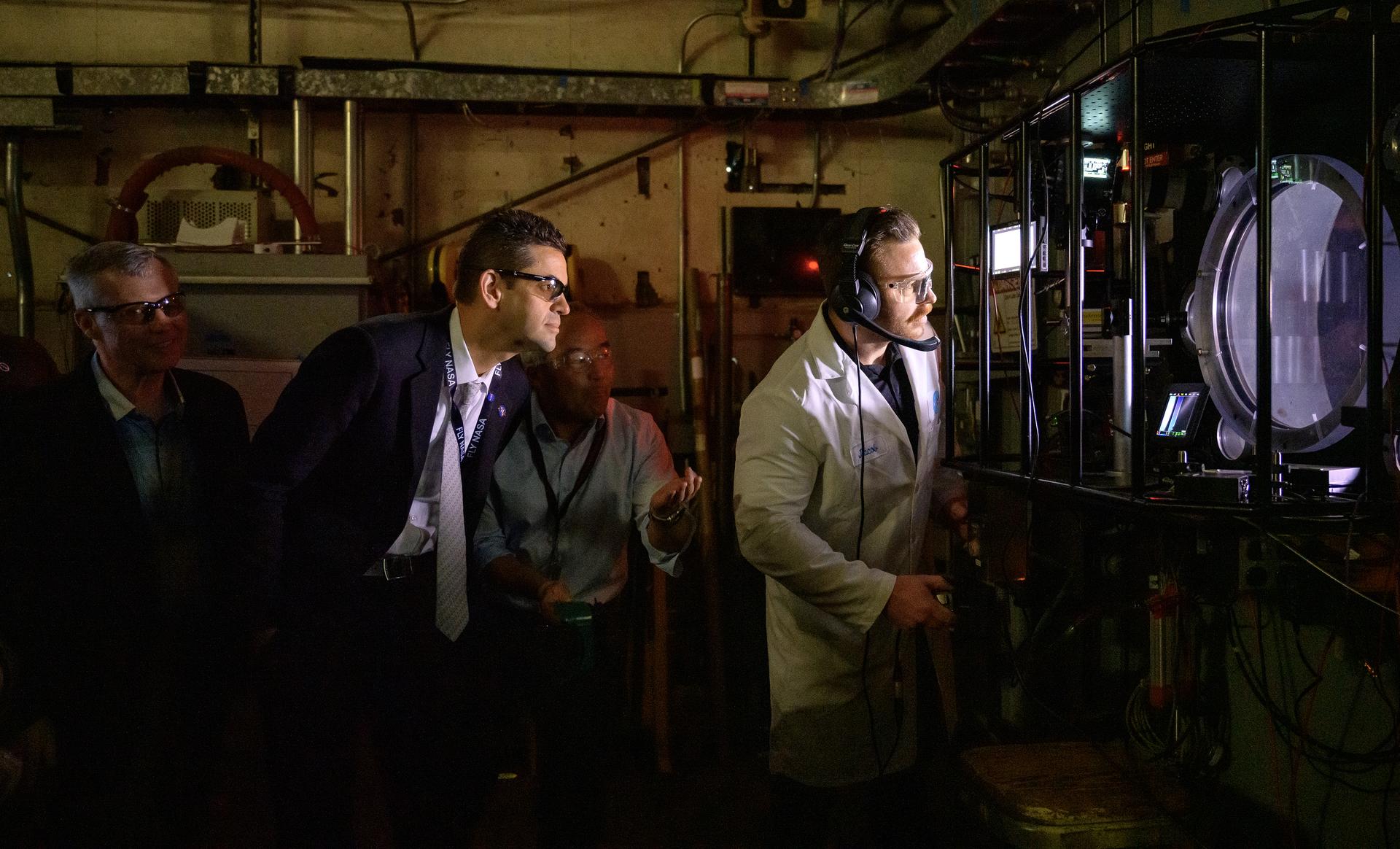
NASA Administrator Jared Isaacman views a test run in the Arc Jet facility in N238.
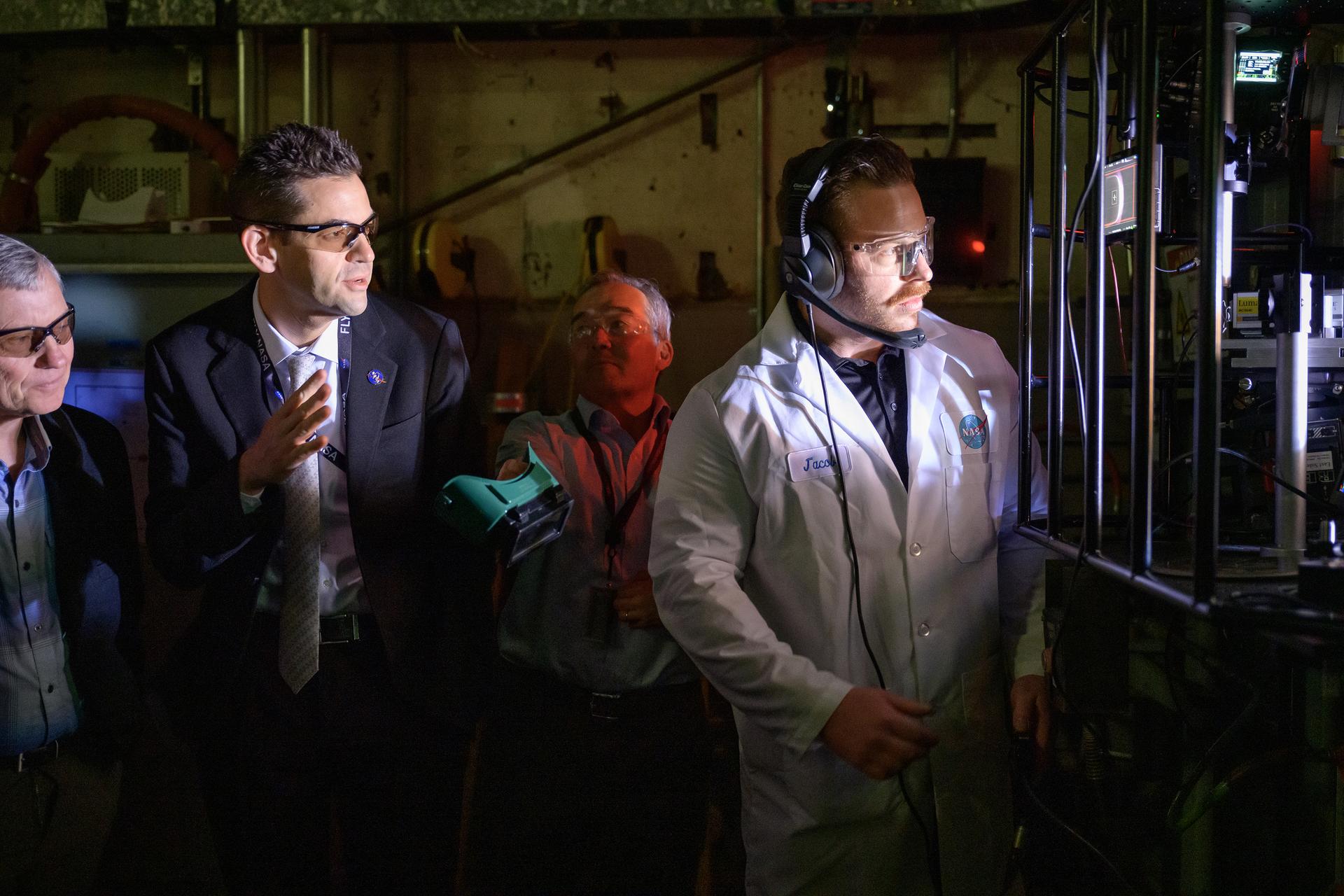
NASA Administrator Jared Isaacman views a test run in the Arc Jet facility in N238.
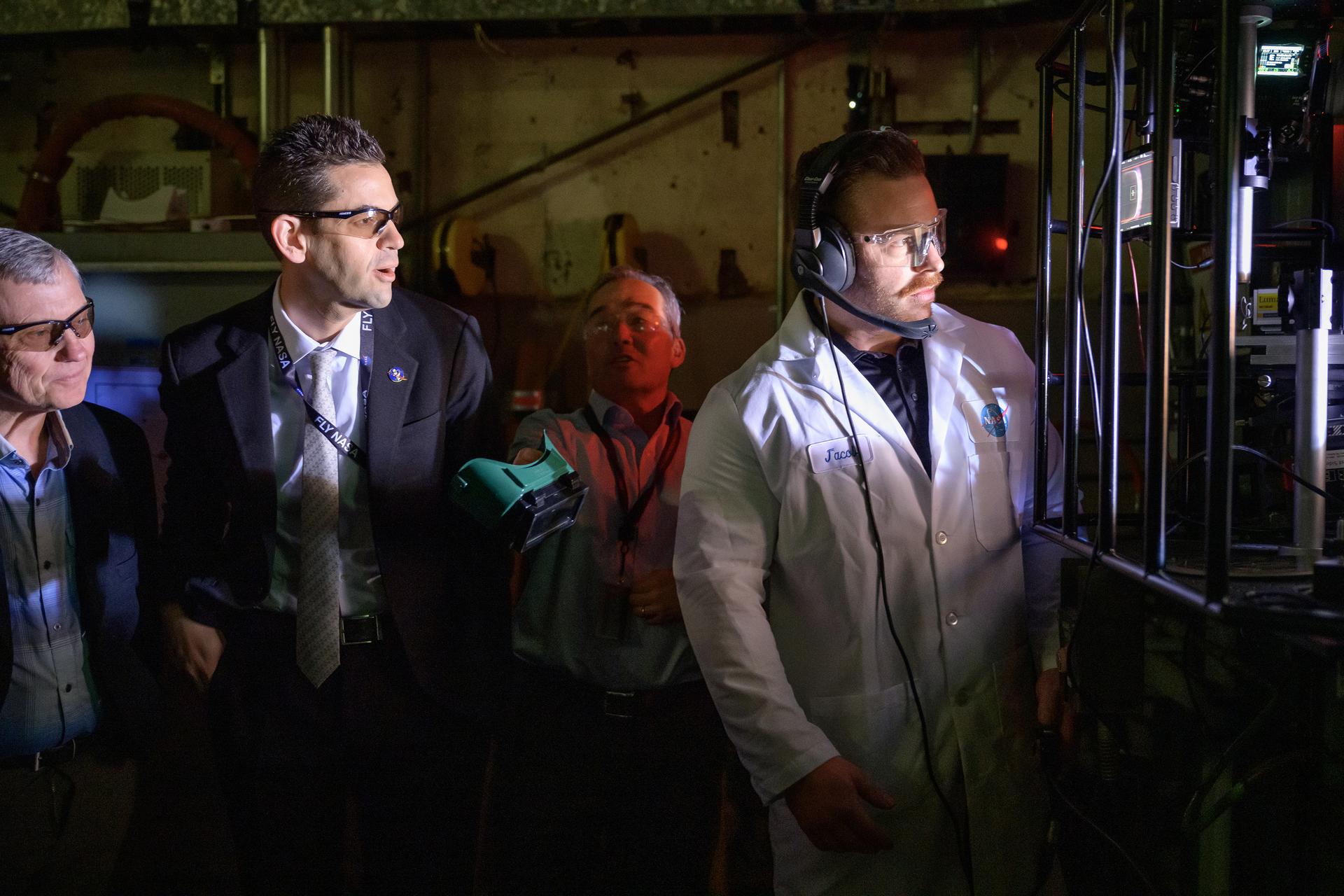
NASA Administrator Jared Isaacman views a test run in the Arc Jet facility in N238.
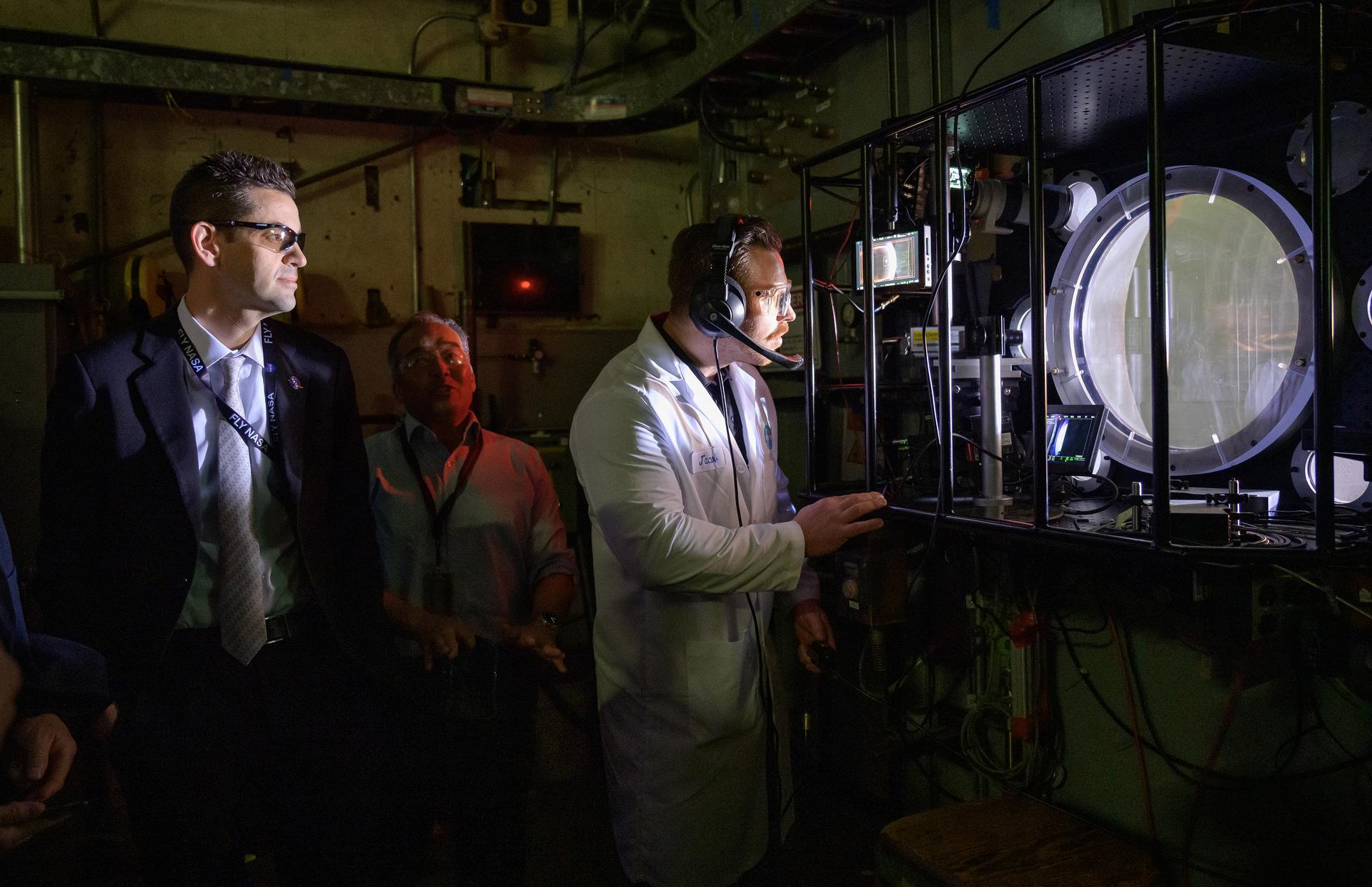
NASA Administrator Jared Isaacman views a test run in the Arc Jet facility in N238.
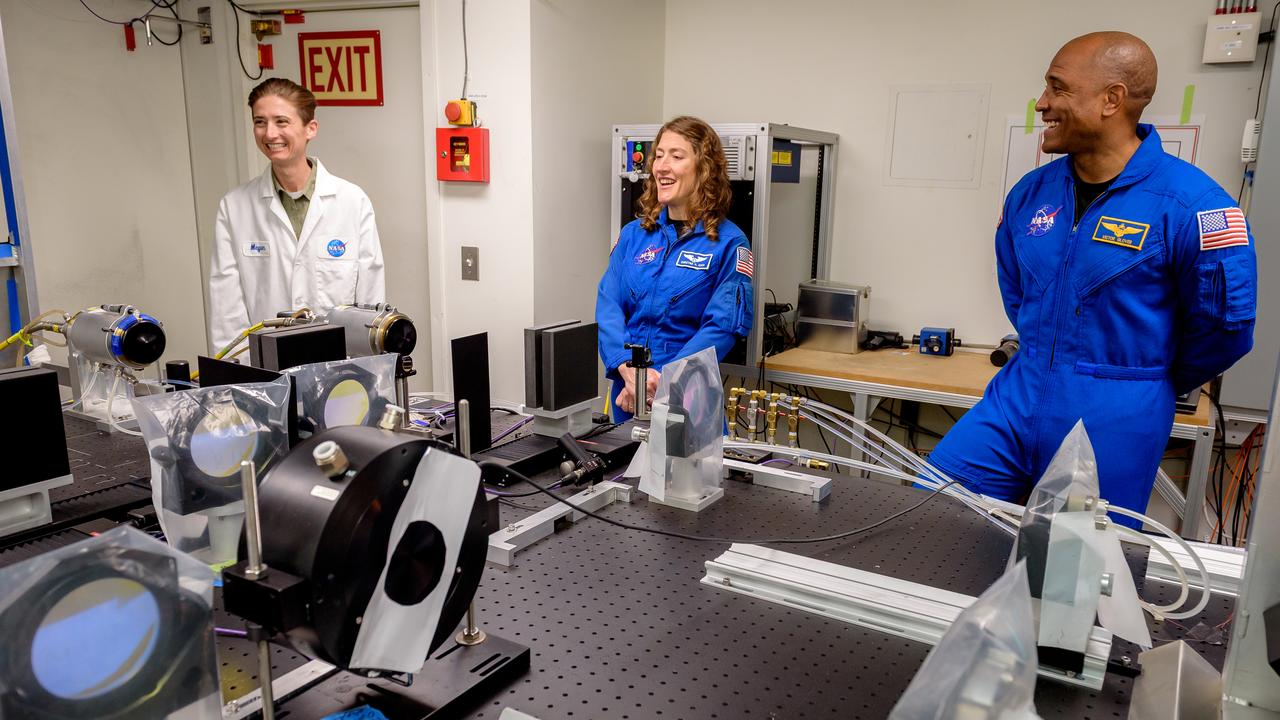
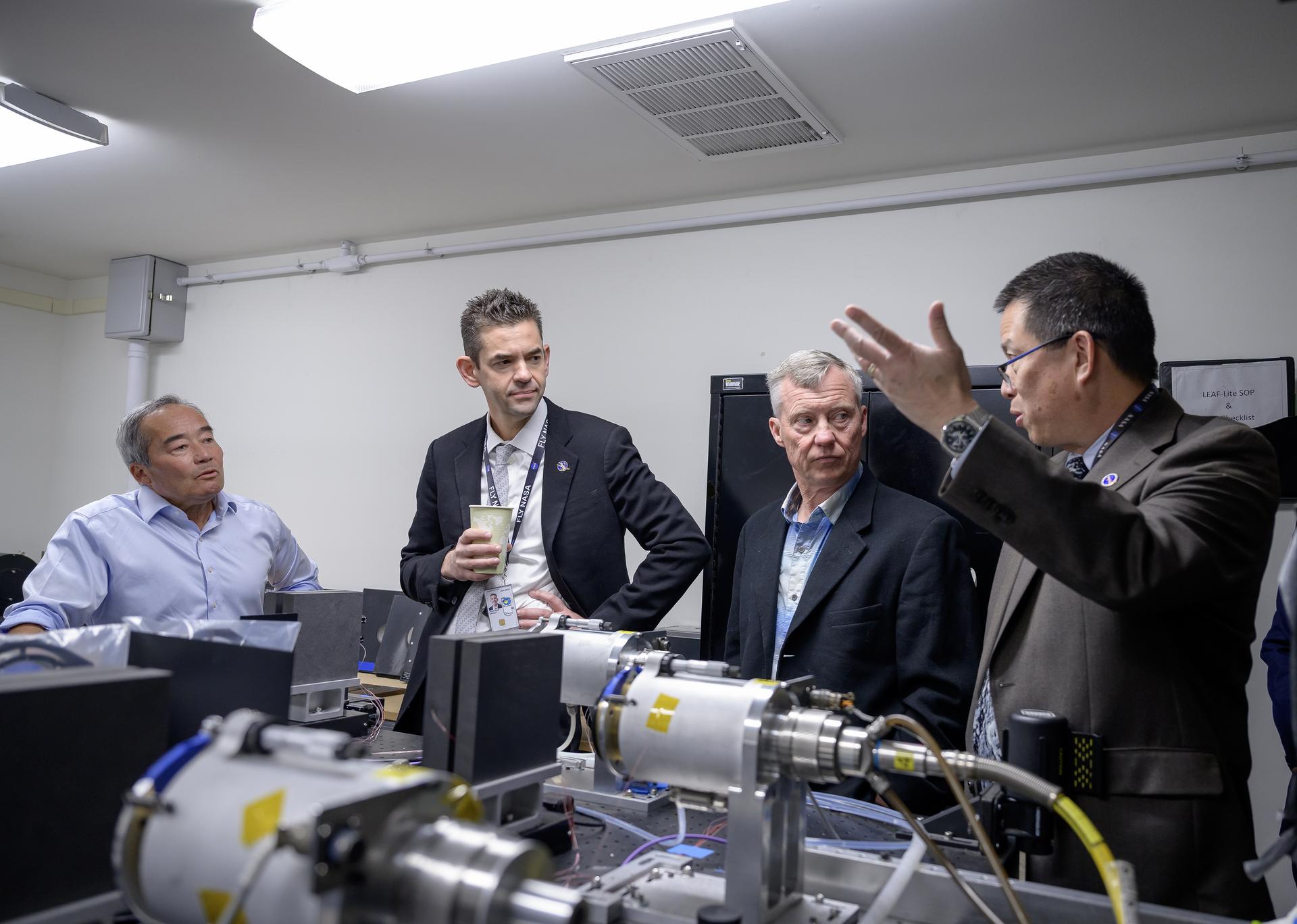
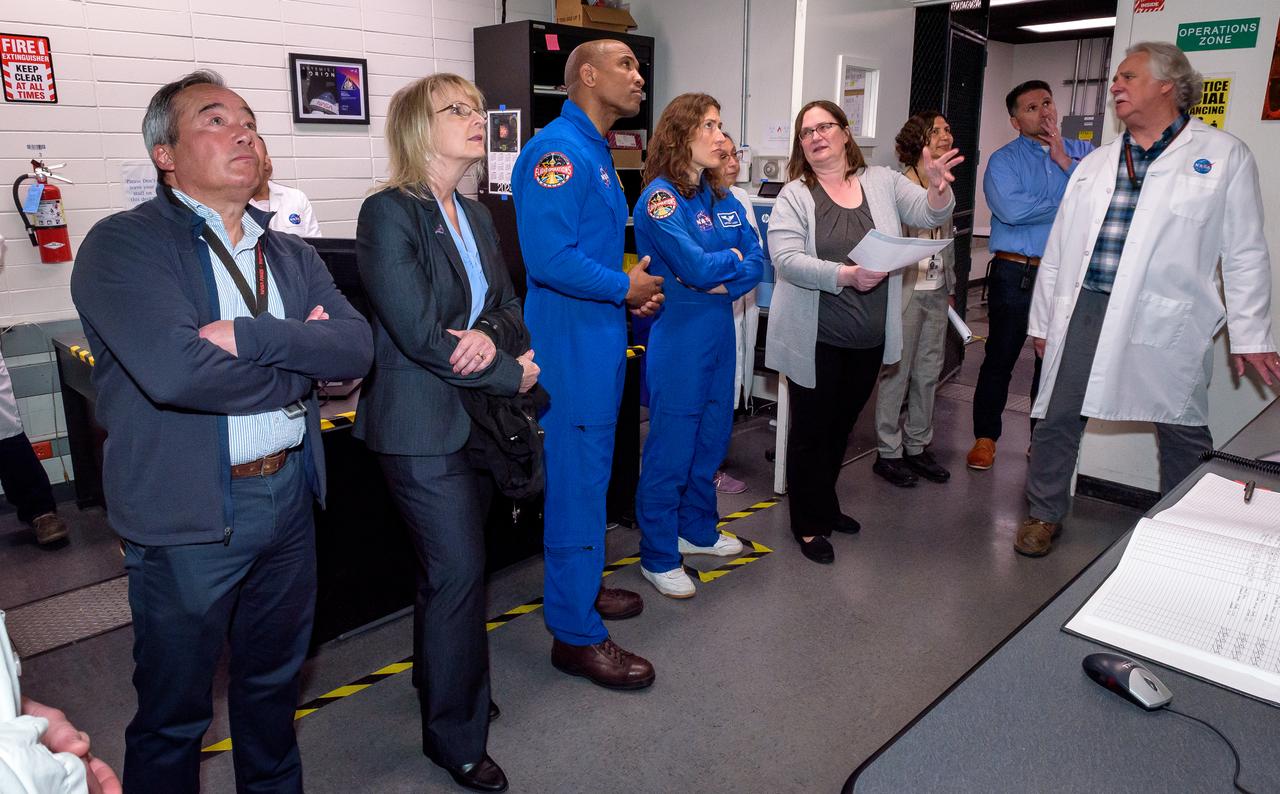
Megan MacDonald, left, leads NASA astronauts Christina Koch and Victor J. Glover, right, on a tour of the Laser Enhanced Arc Jet Facility (LEAF) laboratory, in N238. The LEAF laser augments the hypersonic shock heating experienced by a test sample during an arc jet test and provides improved test simulation quality by supplying an intense source of optical heating while the arc jet flow provides shock-driven convective heating.
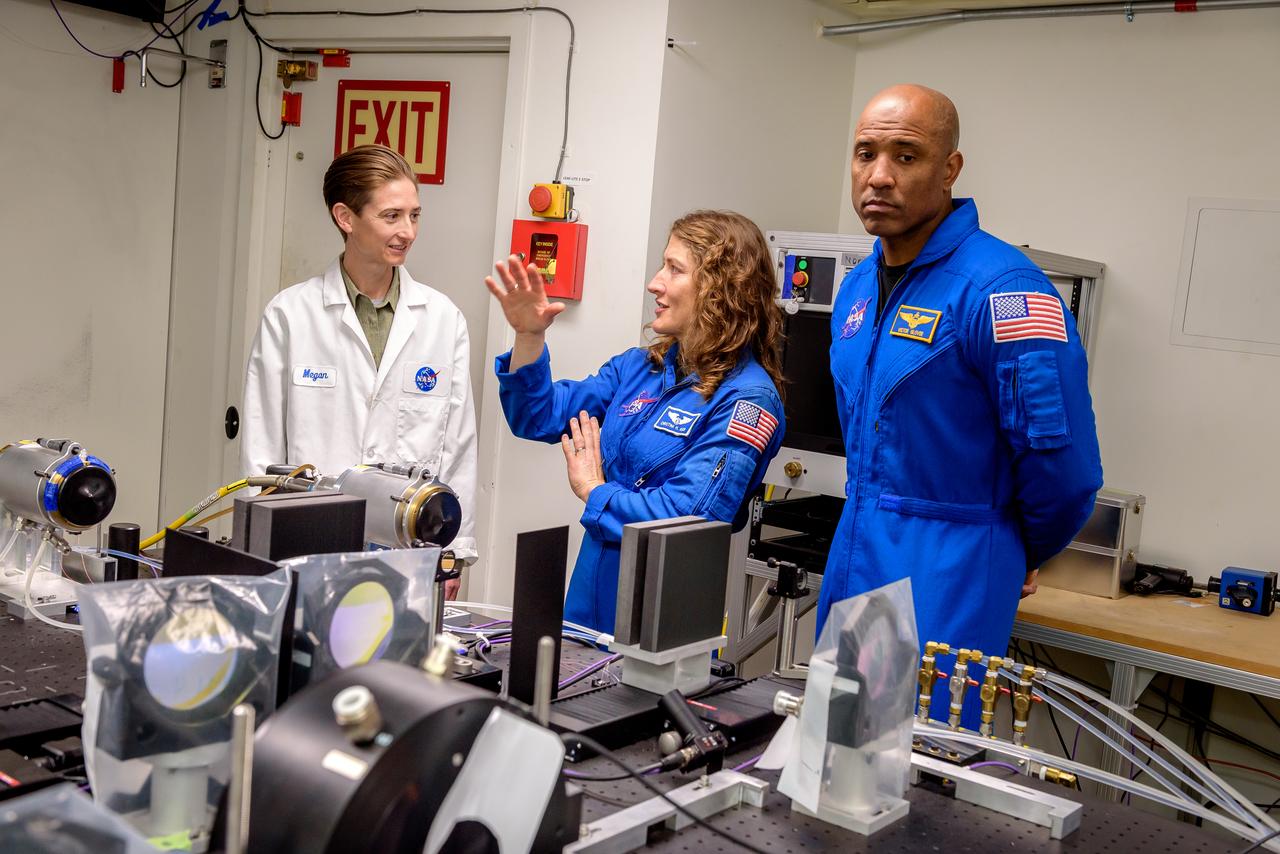
Megan MacDonald, left, leads NASA astronauts Christina Koch and Victor J. Glover, right, on a tour of the Laser Enhanced Arc Jet Facility (LEAF) laboratory, in N238. The LEAF laser augments the hypersonic shock heating experienced by a test sample during an arc jet test and provides improved test simulation quality by supplying an intense source of optical heating while the arc jet flow provides shock-driven convective heating.
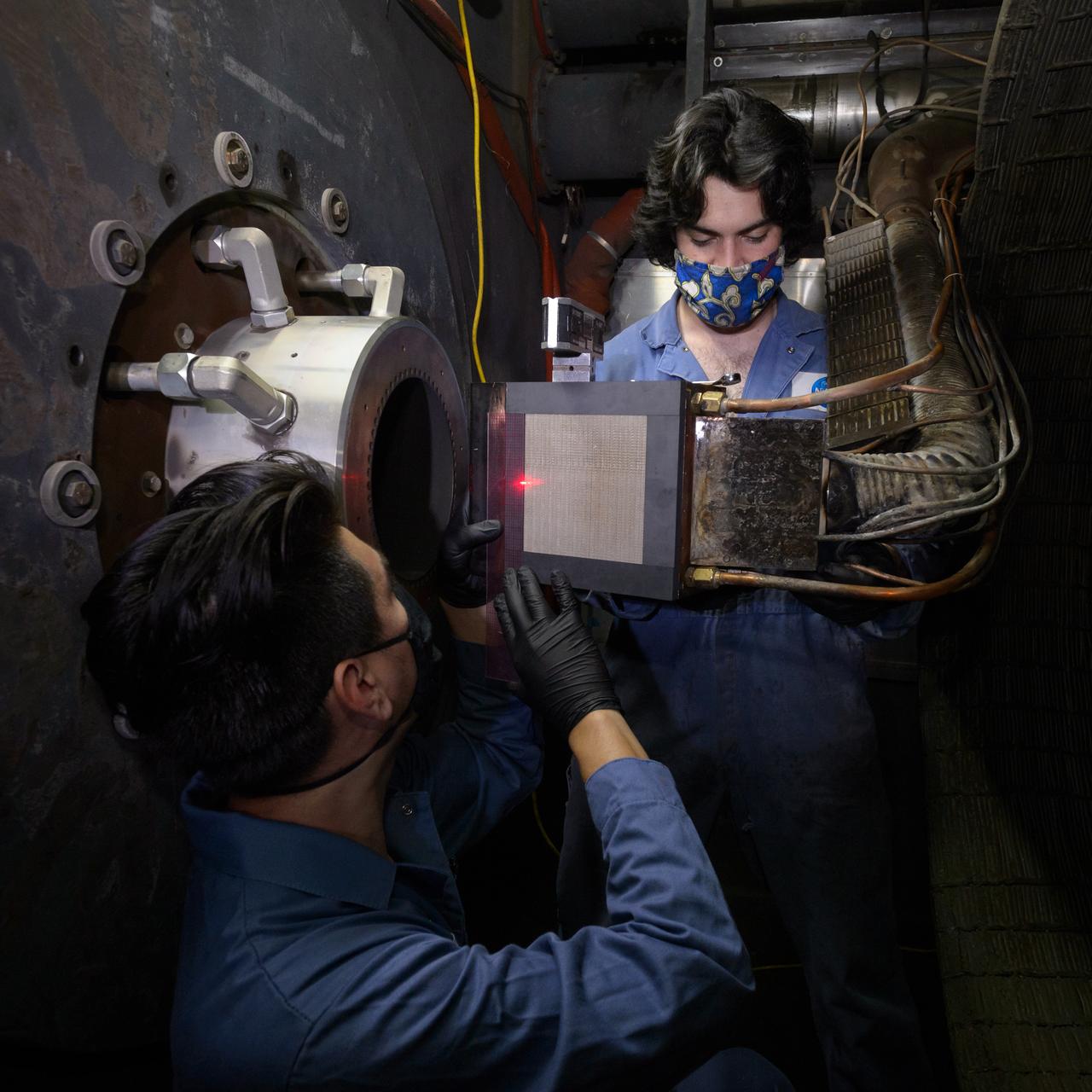
Engineering technicians Pedro Solano, left, and Aaron Poulin, right, verify alignment of an Orion heat shield test article in the Arc Jet Interaction Heating Facility, or IHF, test section. This test of Orion’s heat shield using a combination of the IHF and the Laser Enhanced Arc Jet Facility, or LEAF-Lite, capabilities will certify the heat shield for the Artemis I and Artemis II missions. This is also the first time the heat shield is tested in an environment combining the two forms of heating, radiant and convective, the spacecraft will experience on entering Earth’s atmosphere.
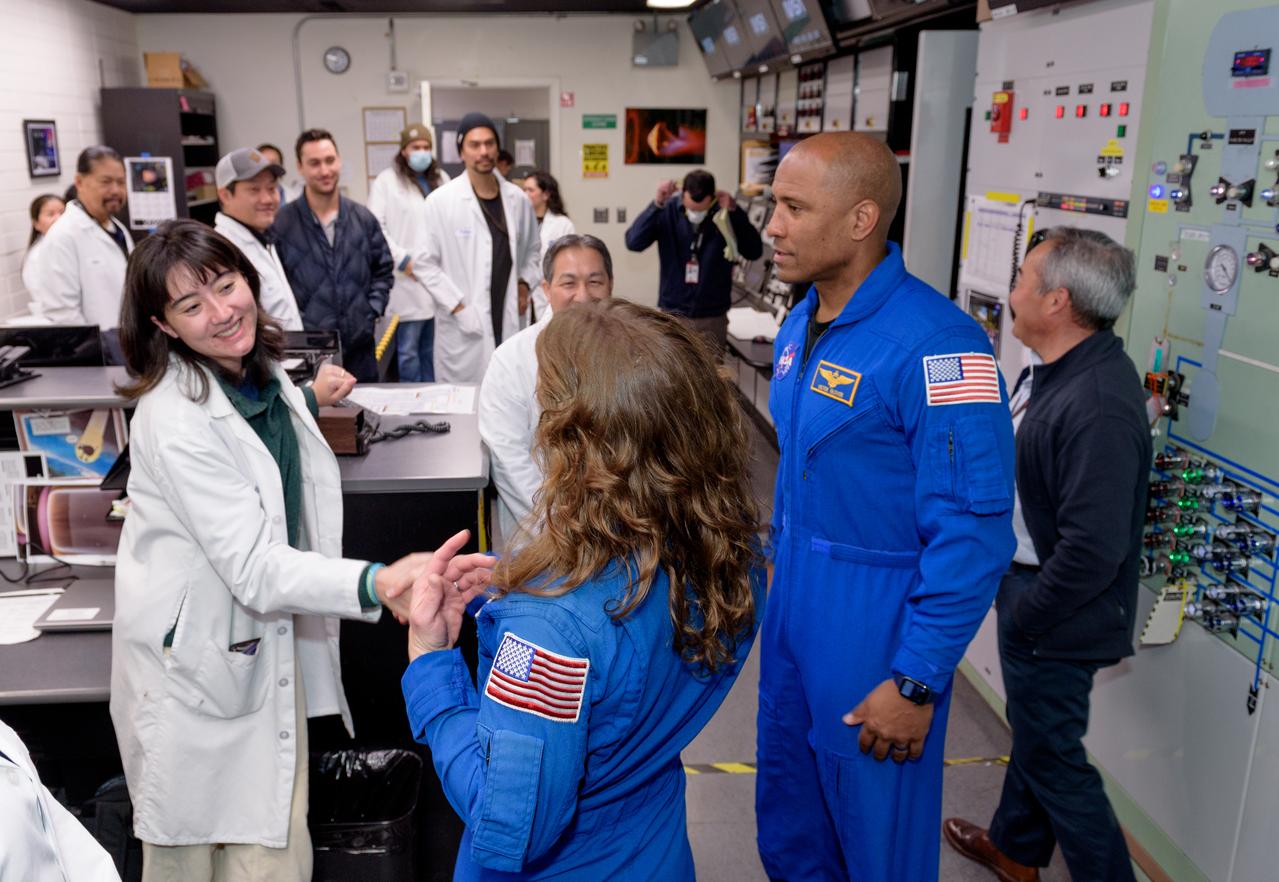
Amelia Kinsella, left, meets NASA astronauts Christina Koch and Victor J. Glover in the Ames Arc Jet control room for the Interaction Heating Facility (IHF), N238, where operators run the Arc Jet and review test data in real time.
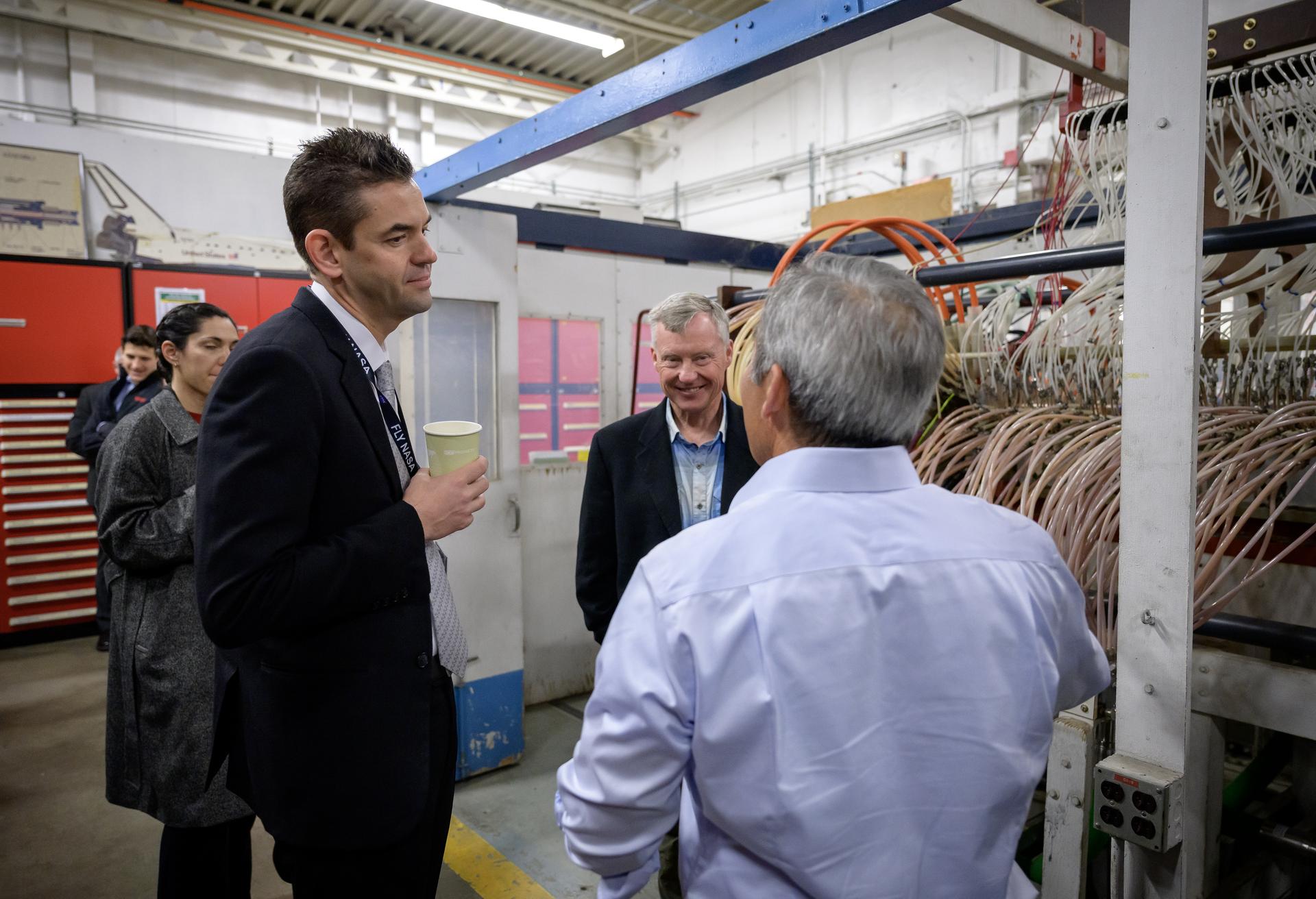
NASA Administrator Jared Isaacman speaks with Dr. George Raiche, Associate Director for Exploration Technology Infrastructure during his visit to the Arc Jet facility in N238.
NASA Administrator Jared Isaacman visits the Arc Jet facility in N238.
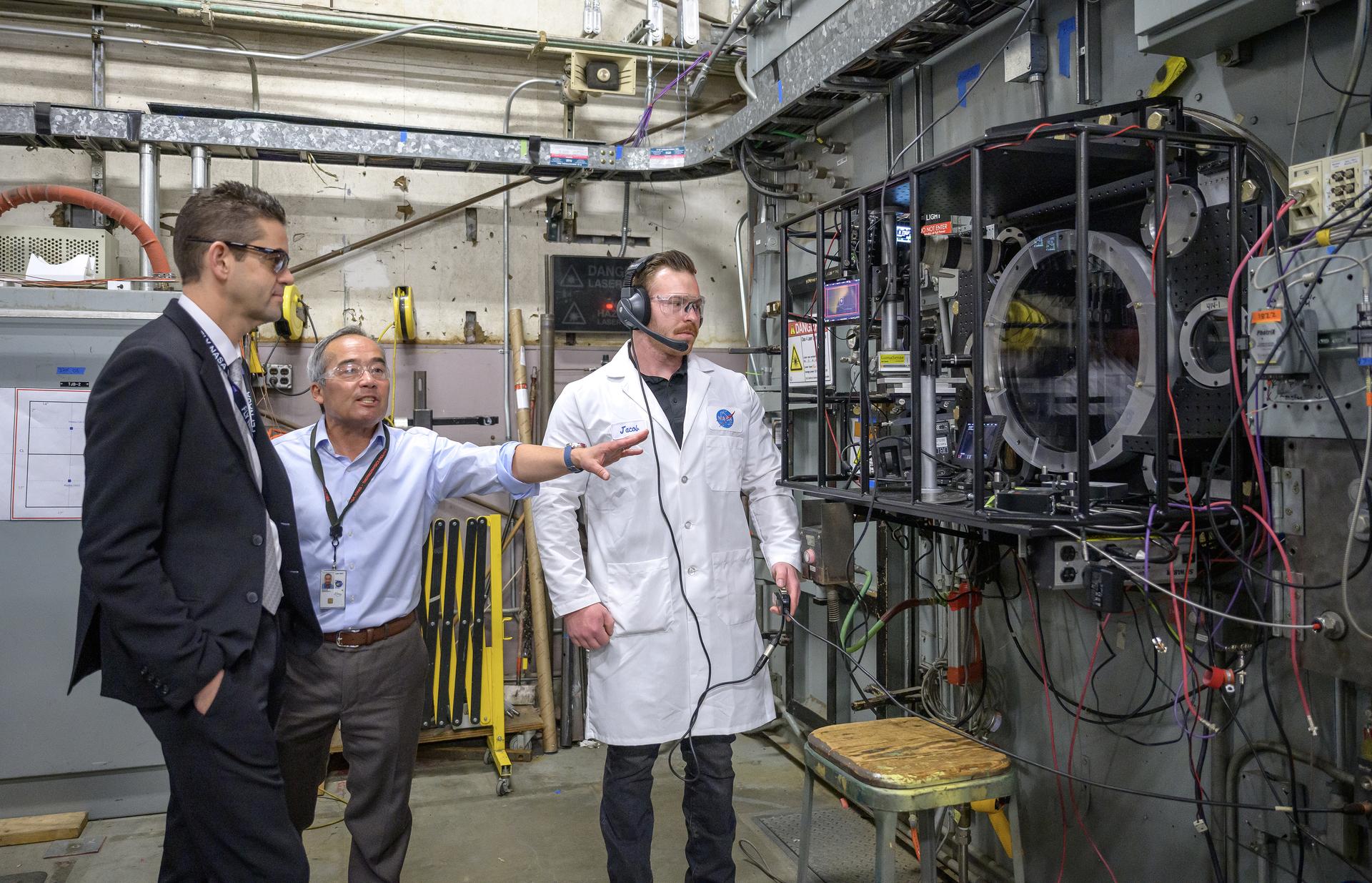
NASA Administrator Jared Isaacman visits the Arc Jet facility in N238.
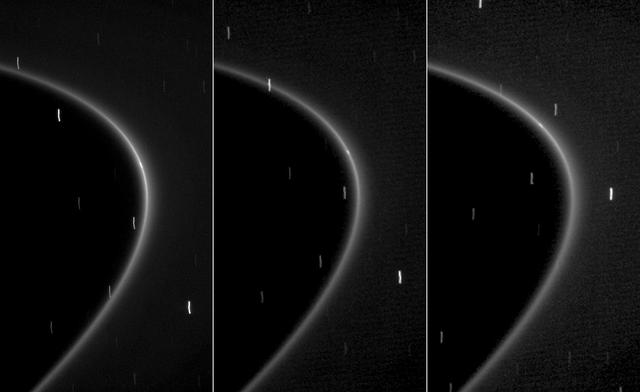
Tiny Moonlet Within G Ring Arc
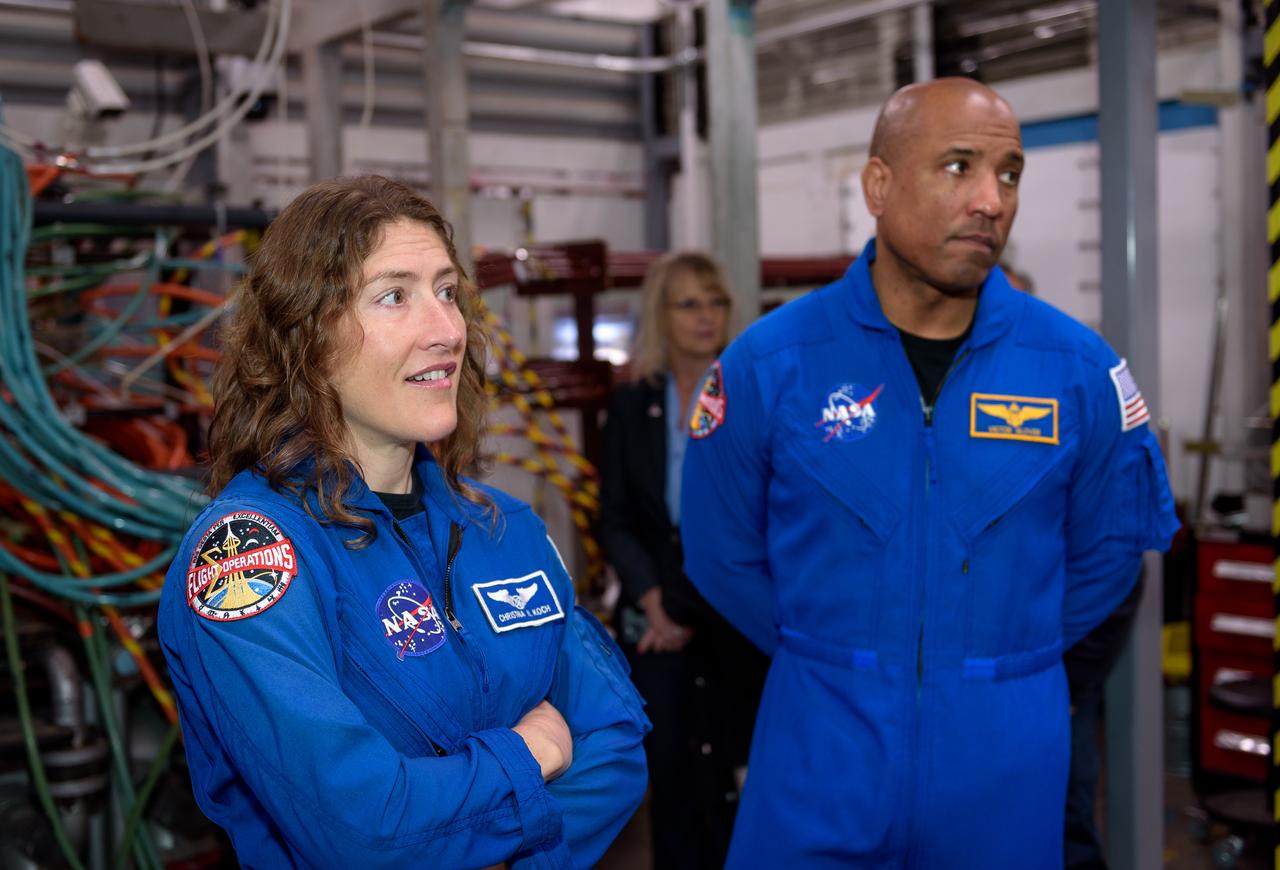
NASA astronauts Victor J. Glover and Christina Koch tour the Ames Arc Jet Complex, N238.

Range : 8.6 million kilometers (5.3 million miles) The Voyager took this 61 second exposure through the clear filter with the narrow angle camera of Neptune. The Voyager cameras were programmed to make a systematic search for faint ring arcs and new satellites. The bright upper corner of the image is due to a residual image from a previous long exposure of the planet. The portion of the arc visible here is approximately 35 degrees in longitudinal extent, making it approximately 38,000 kilometers (24,000 miles) in length, and is broken up into three segments separated from each other by approximately 5 degrees. The trailing edge is at the upper right and has an abrupt end while the leading edge seems to fade into the background more gradually. This arc orbits very close to one of the newly discovered Neptune satellites, 1989N4. Close-up studies of this ring arc will be carried out in the coming days which will give higher spatial resolution at different lighting angles. (JPL Ref: P-34617)
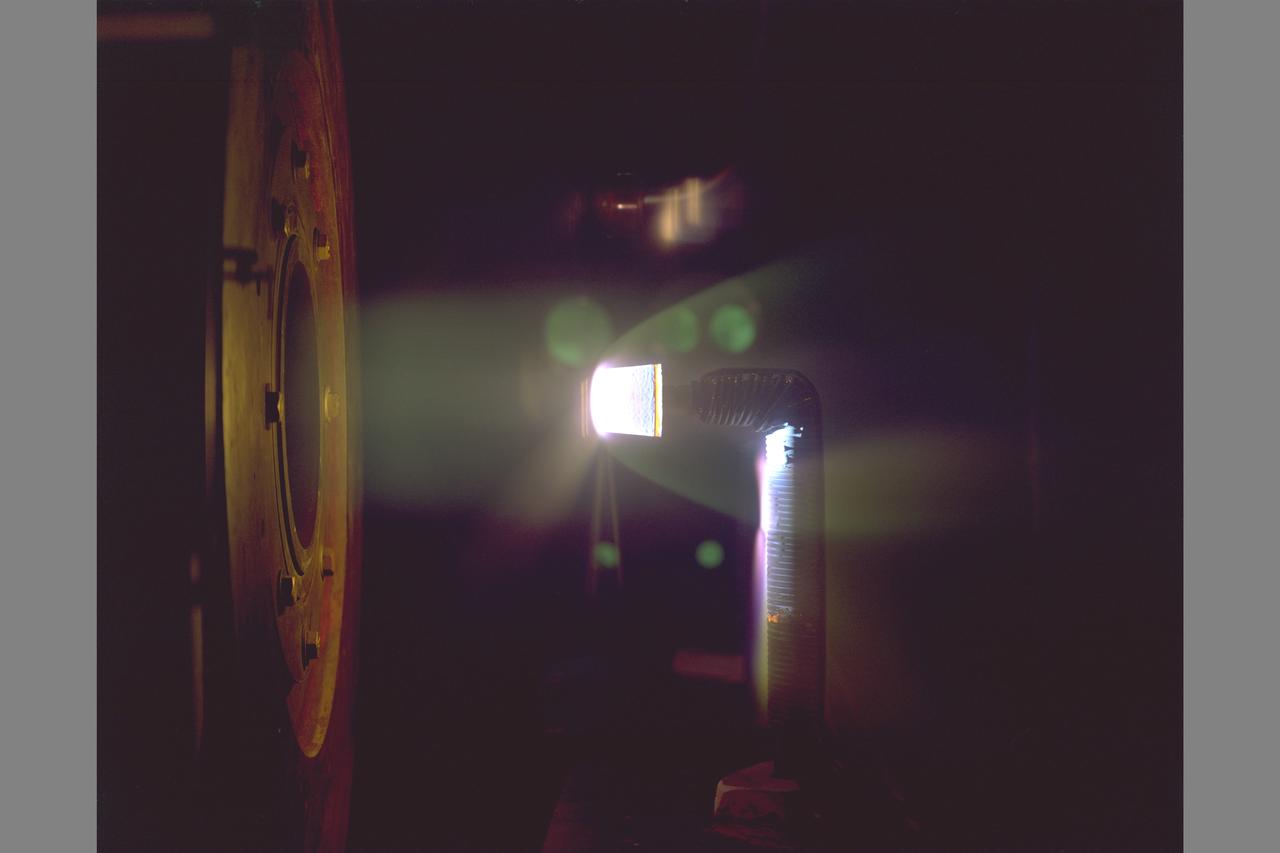
Advanced Space Shuttle TPS (Thermal Protection System) Plasma Stream during run in Arc Heater Facility
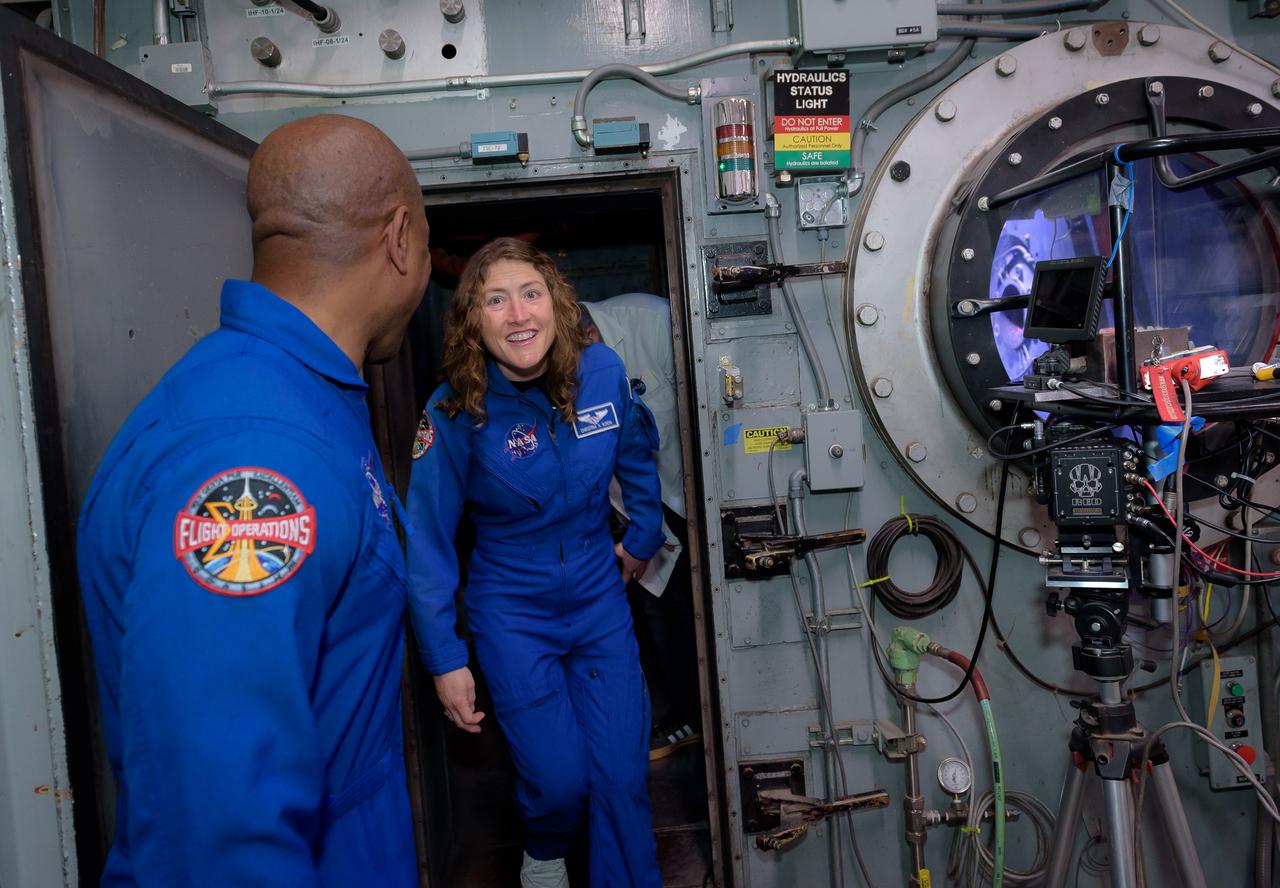
NASA astronaut Christina Koch exits the vacuum test chamber for the Interaction Heating Facility (IHF) of the Ames Arc Jet Complex, N238, following Victor J. Glover, left. During a test, a TPS test sample is suspended in the hypersonic flow produced by IHF’s arc heater. The shock heating produced by the interaction between the hypersonic flow and the stationary test sample simulates the heating and other forces the spacecraft will encounter during atmospheric hypersonic entry.
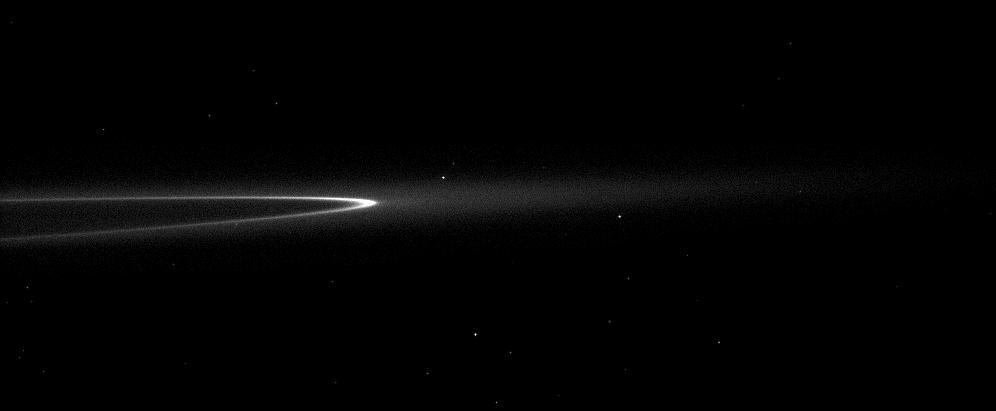
In this image taken by NASA Cassini spacecraft, the bright arc in Saturn faint G ring contains a little something special. Although it cant be seen here, the tiny moonlet Aegaeon orbits within the bright arc.
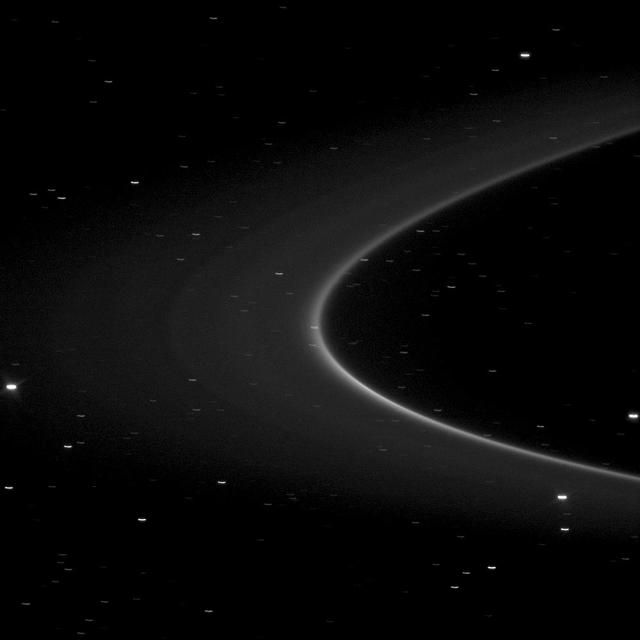
NASA Cassini spacecraft image holds an unseen treasure orbiting within the bright arc of Saturn G ring: the tiny moonlet Aegaeon. Too small to be seen here, it is thought to be the source of the debris forming the bright arc in the lower right.
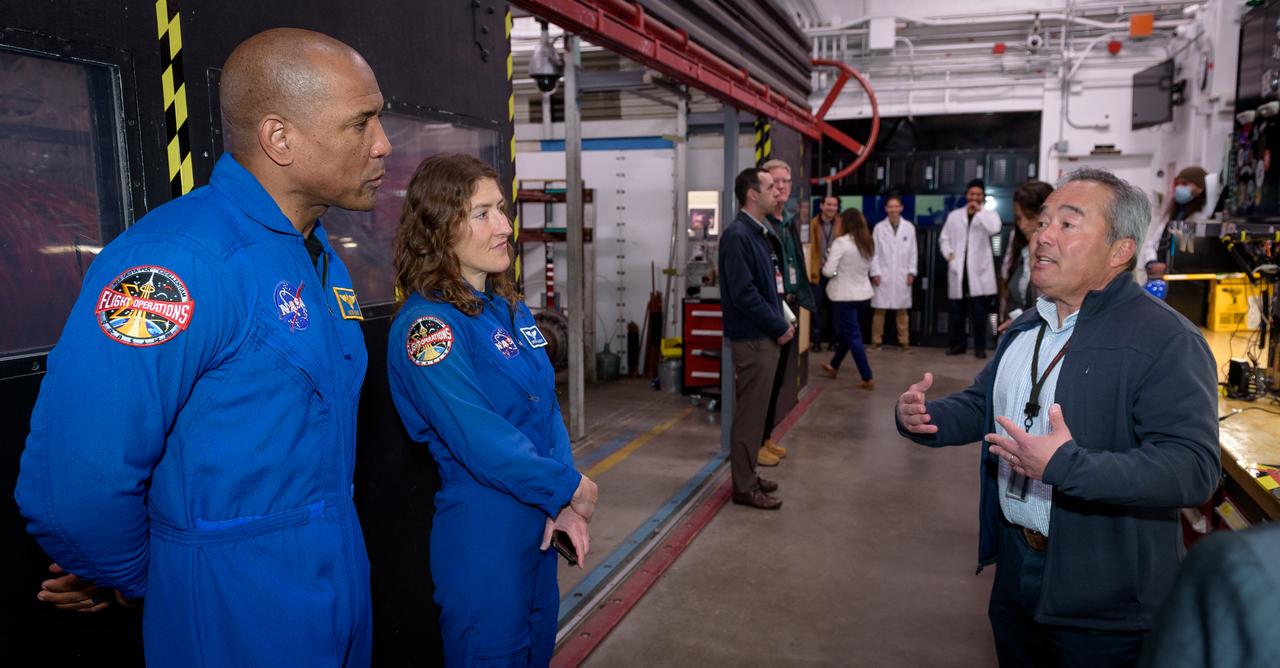
Thermophysics Facilities Branch Chief George Raiche, right, leads NASA astronauts Victor J. Glover, left, and Christina Koch through the Arc Jet Complex in N238.
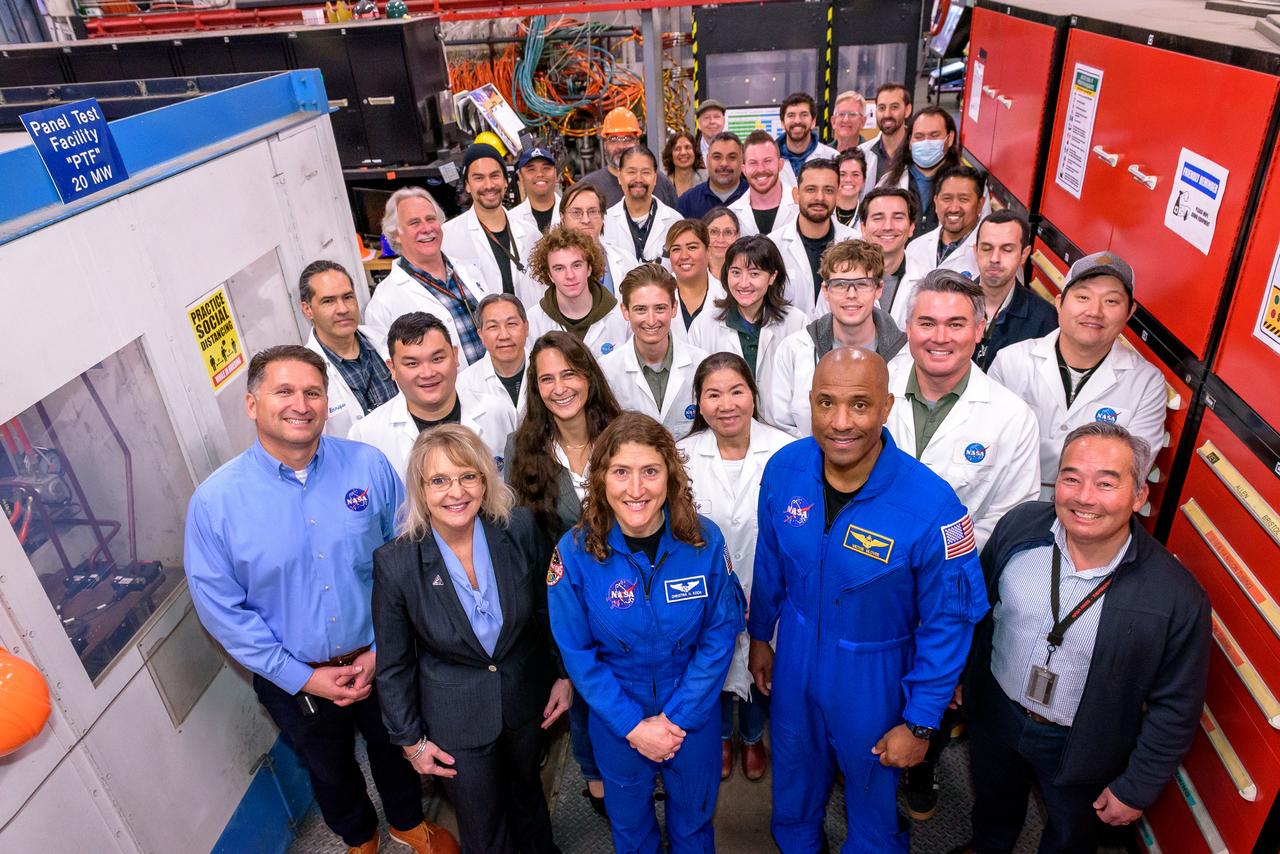
Group photo of the Orion astronauts with the staff of the Ames Arc Jet Complex in N238. Front row: Luis Saucedo, left, Debbie Korth, Christina Koch, Victor J. Glover, and George Raiche, right.
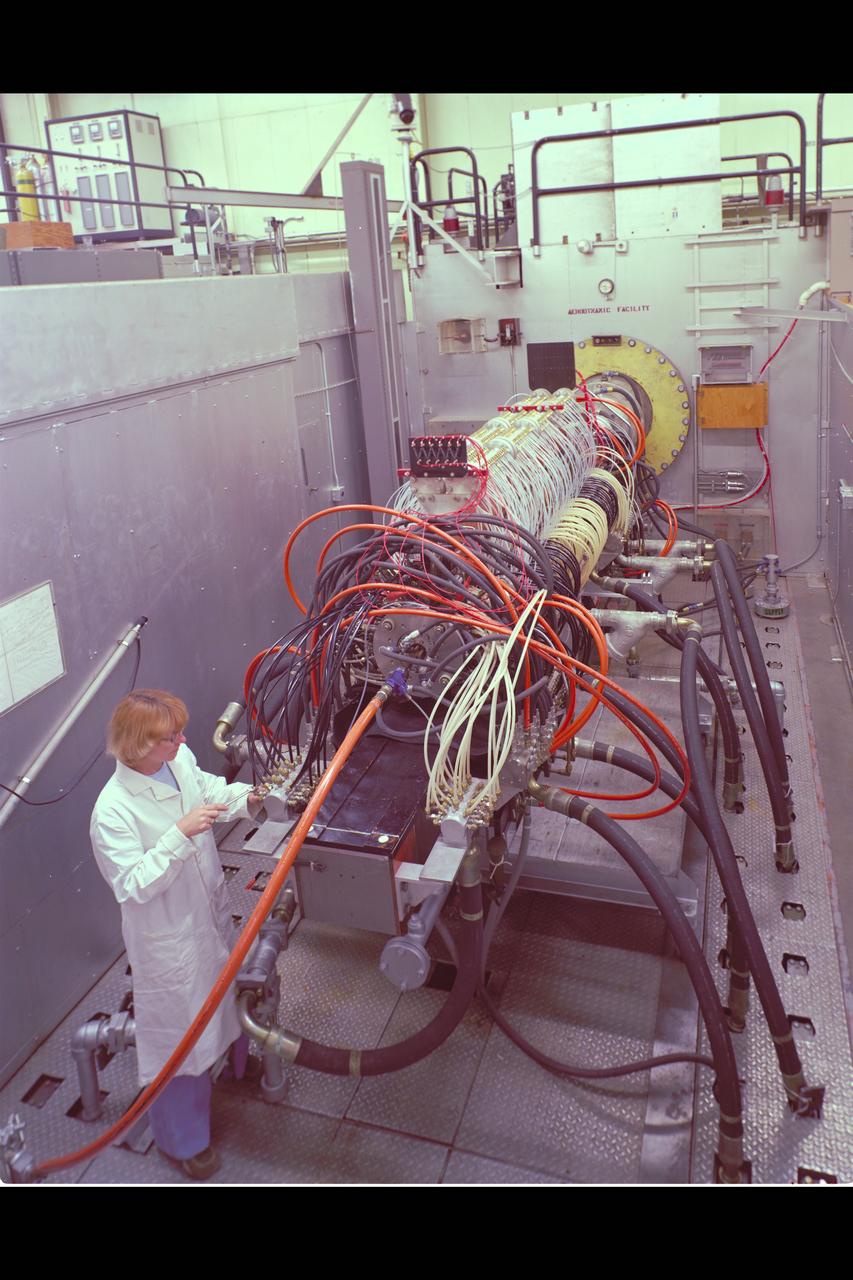
N-238 60MW Aerodynamic Heating Facility outside of test section with Jean Brian (Arc heater, high pressure water manifold, & water cooled 8' conical nozzle)
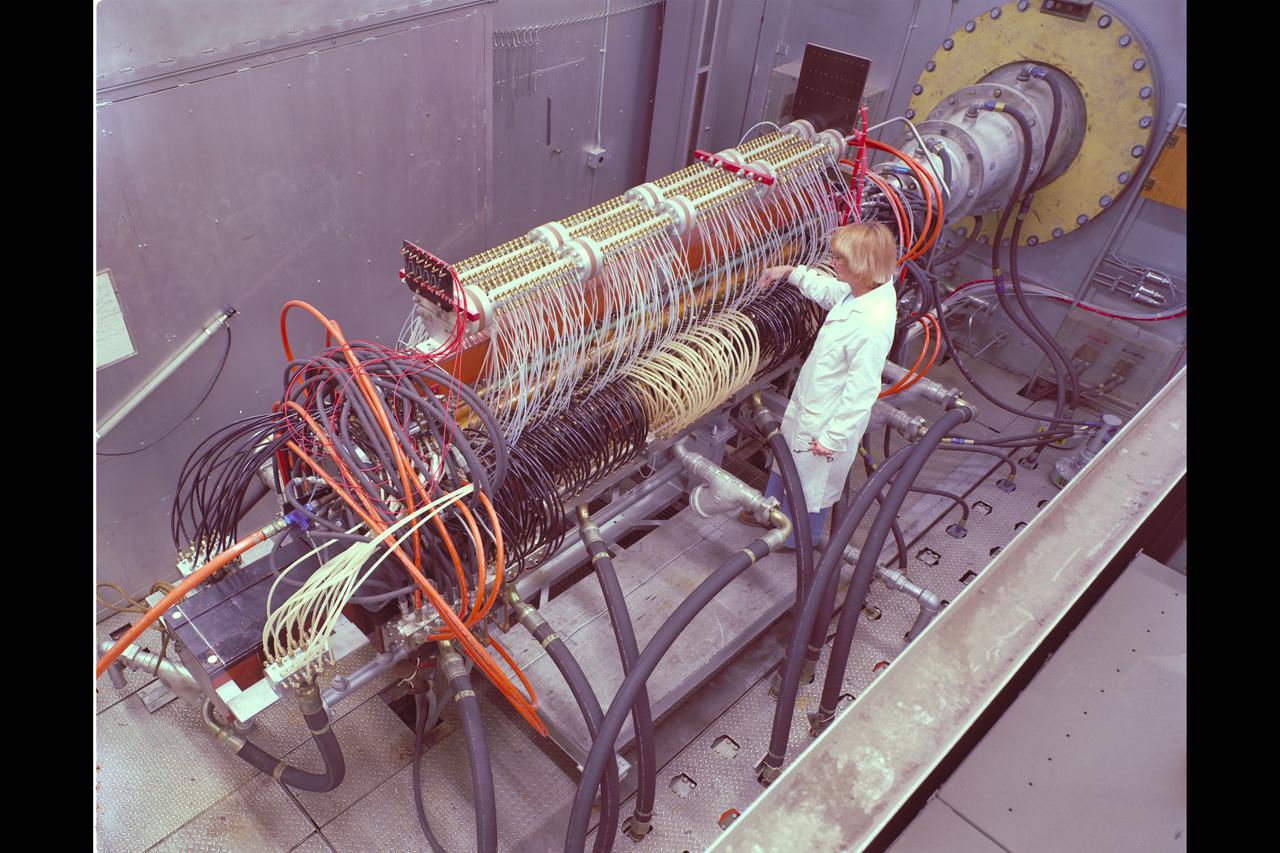
N-238 60MW Aerodynamic Heating Facility outside of test section with Jean Brian (Arc heater, high pressure water manifold, & water cooled 8' conical nozzle)
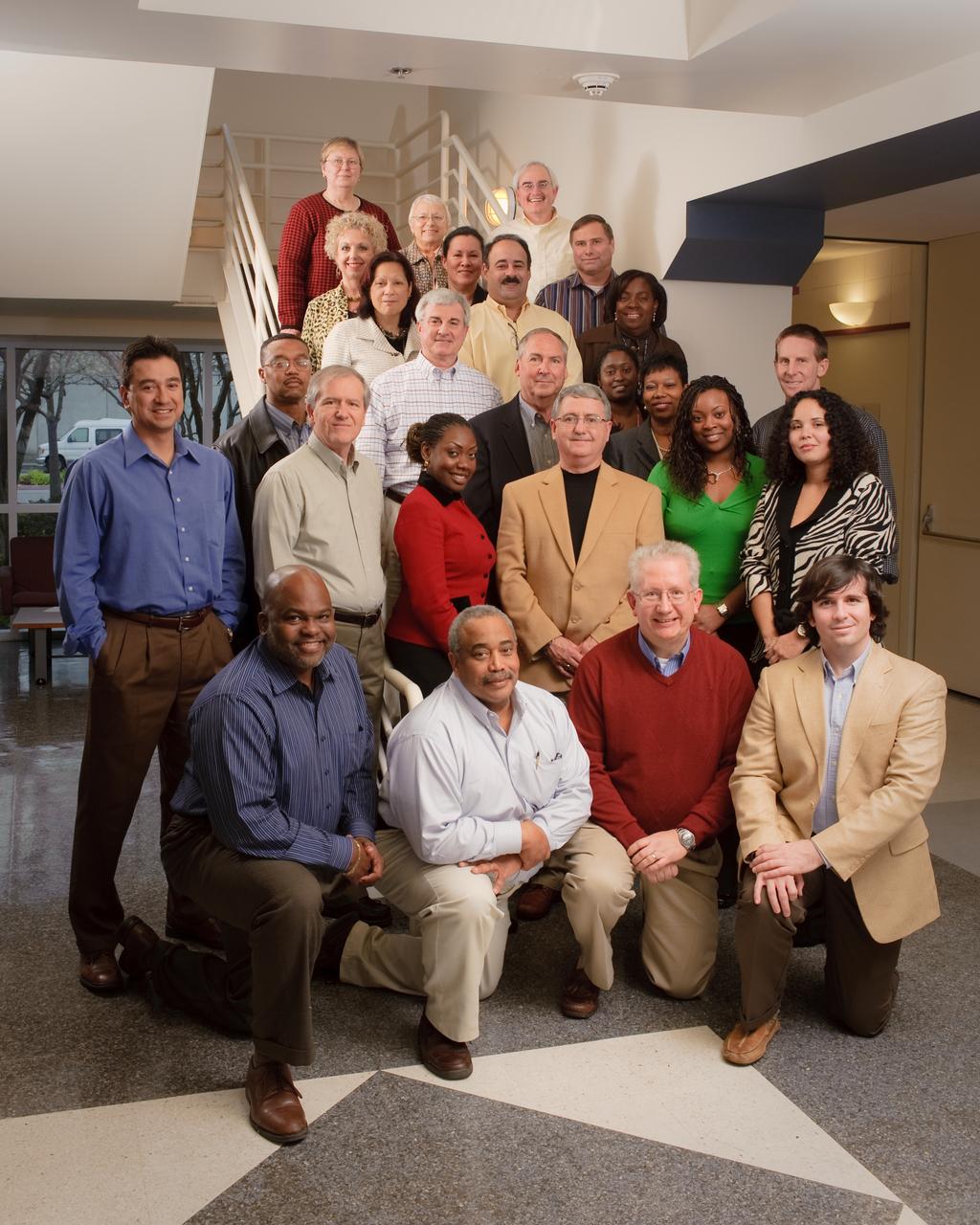
Small Business Council meeting hosed by NASA Ames Research Center: Naeemah Lee, H.Q., Cheryl Harrison, JSC, Gil DelVaile, GSRC, Mary Helen Ruiz, JPL, David Grove, HQ, John Cecconi, NSSC, Sandra Morris, HQ/OP, Michelle Stracener, SSC, Randy Manning, LaRC, Vernon Vann, LaRC, David Brock, MSFC, Ben Henson, MSFC, Larry Third, KSC, Robert Medina, DFRC, Christine Munroe, ARC, Lupe M. Velasquez, ARC, Monica F. Craft, JSC (?), Angel Castillo, NMO, Timothy C Pierce, GRC, Charles Williams, JSC, Jennifer Perez, GSFC, Rosa Acevedo, GSFC, Glenn A Delgado, HQ/Assoc Admin for Small Business, Tabisa Tepfer, HQ/OSBP/MORIAssoc, Richard Mann, HQ/OSBP
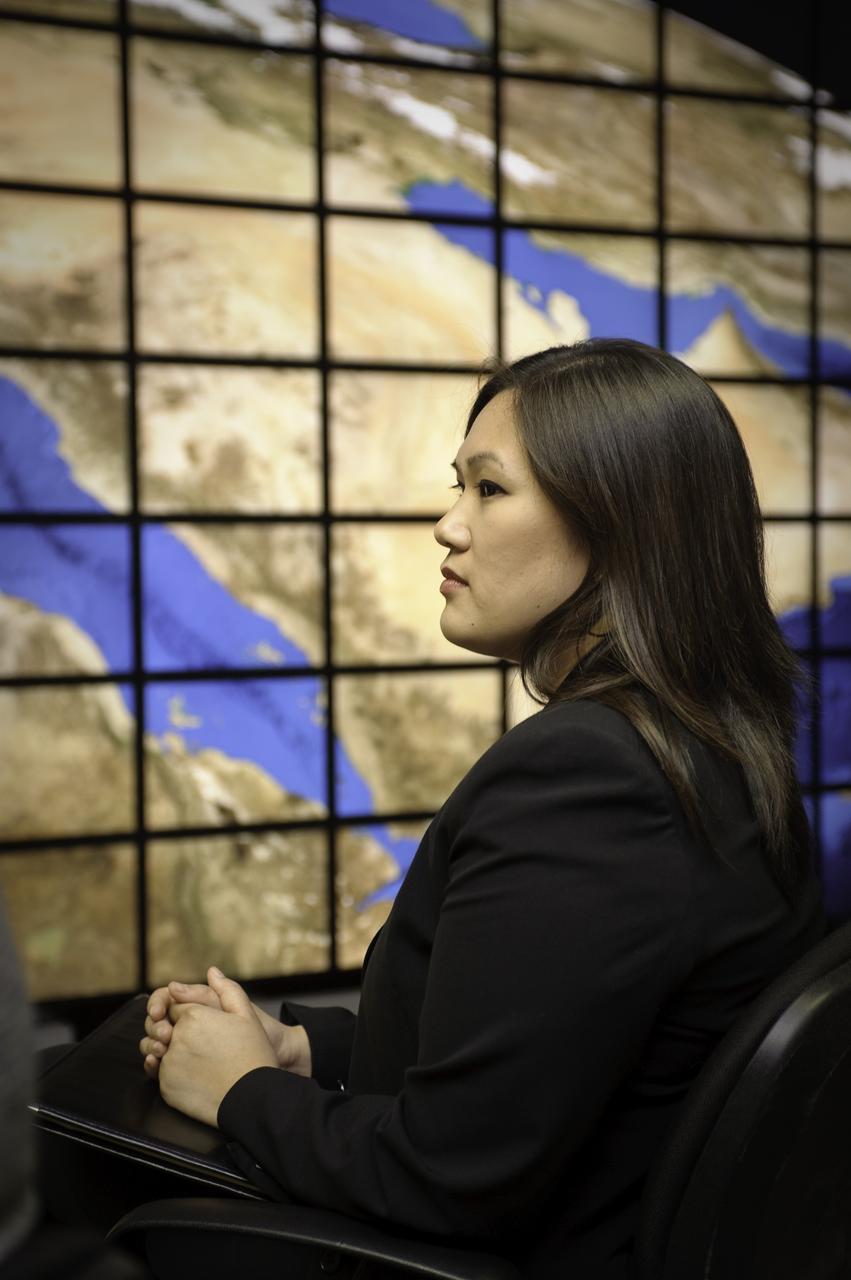
U.S. Senator Diane Feinstein of California staffer Christine Epres visits NASA Ames Research Center, Moffett Field, Calif.
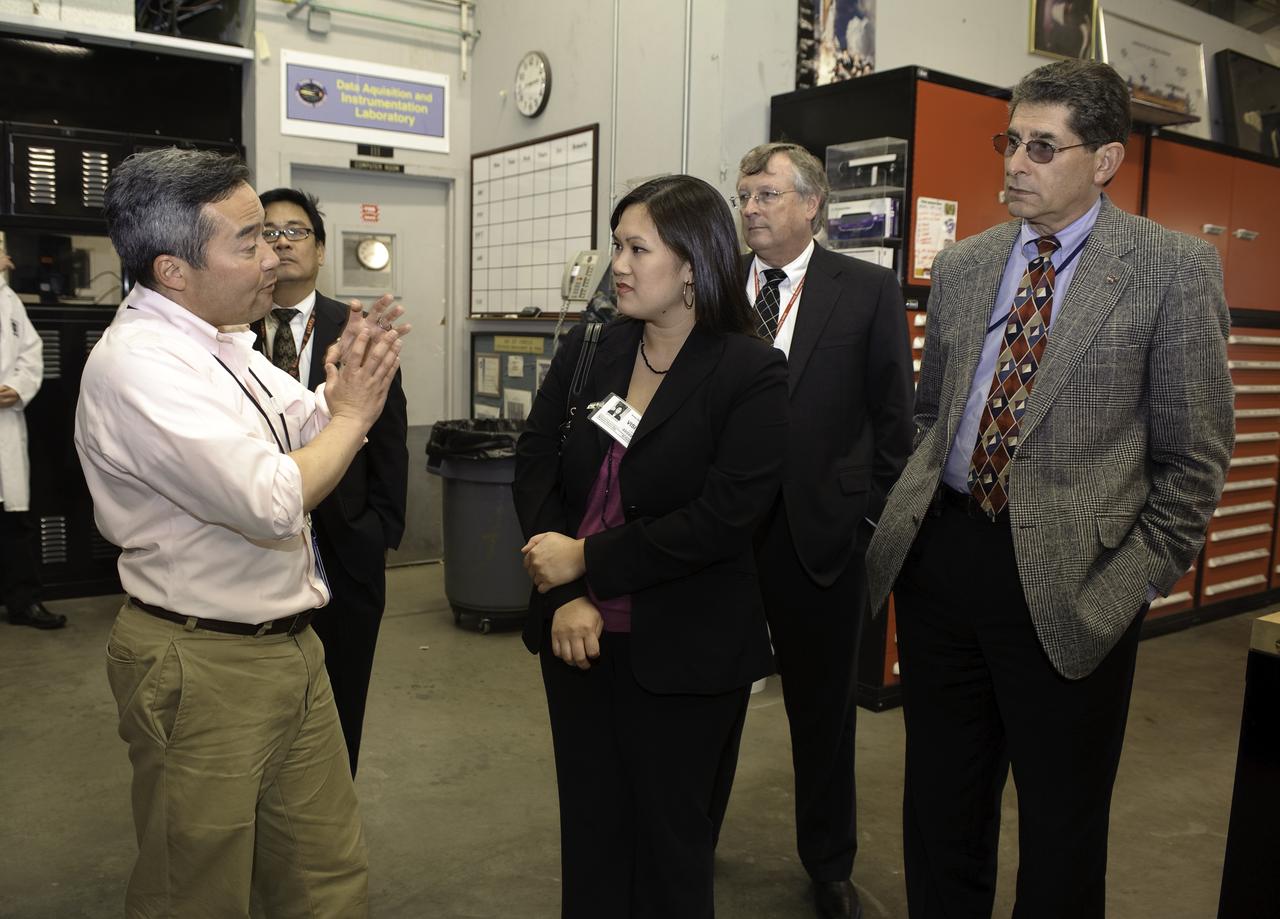
U.S. Senator Diane Feinstein of California staffer Christine Epres visits NASA Ames Research Center, Moffett Field, Calif.
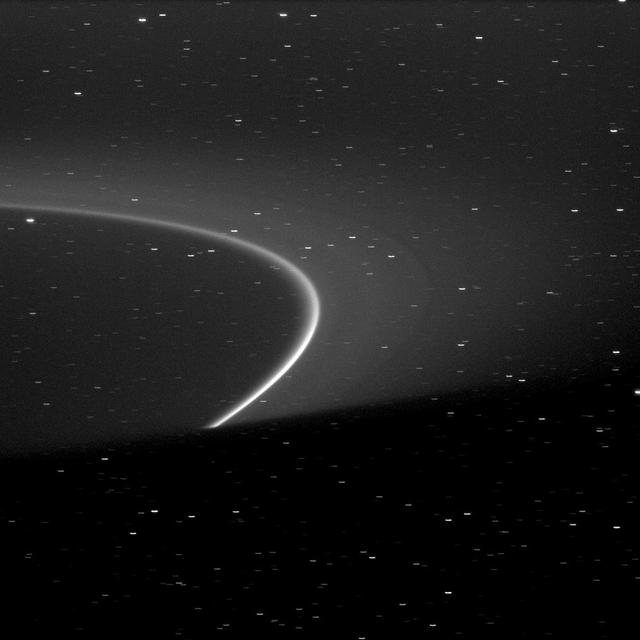
The bright arc within Saturn G ring is shown truncated by the shadow of the planet at the bottom of this image captured by NASA Cassini spacecraft.
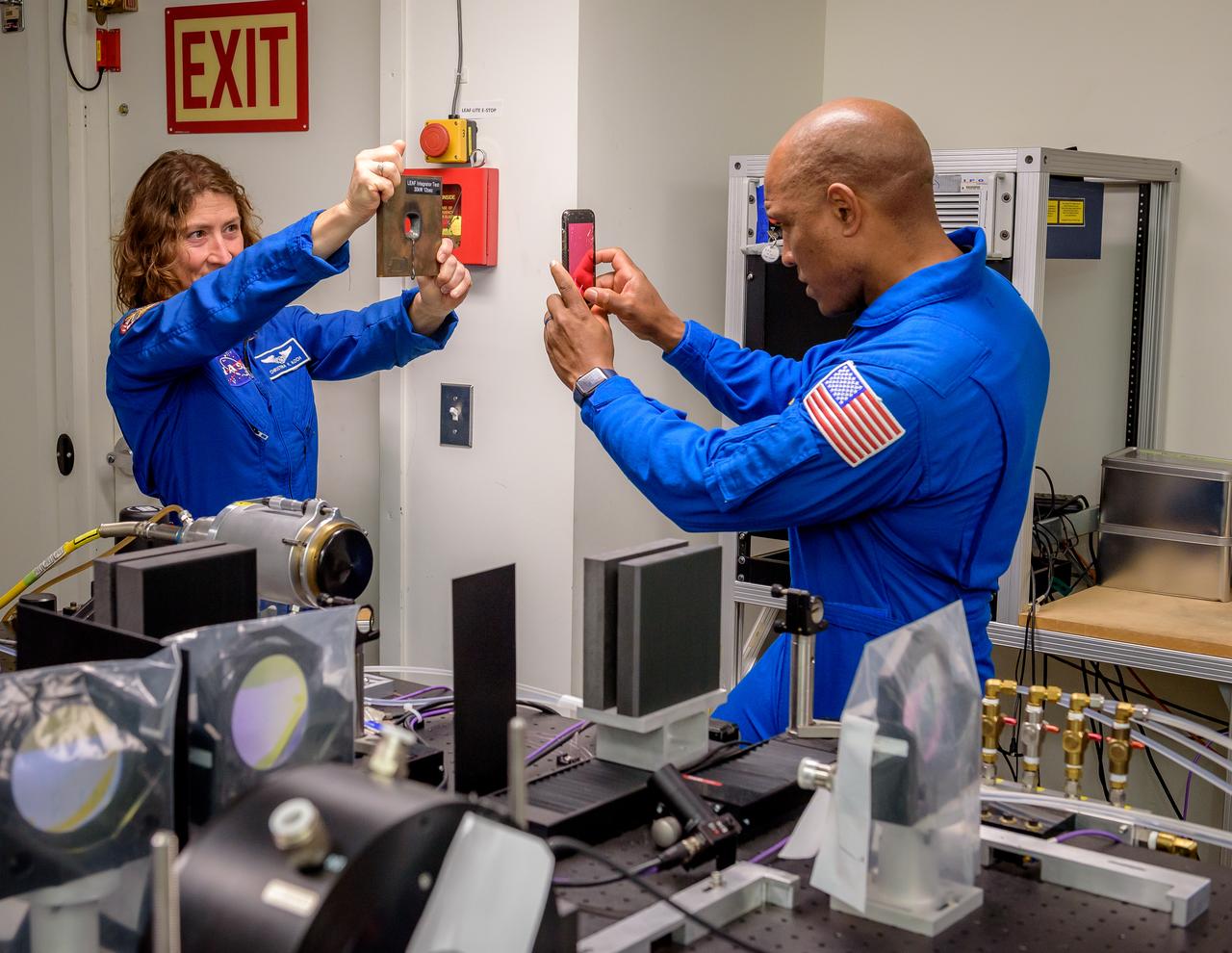
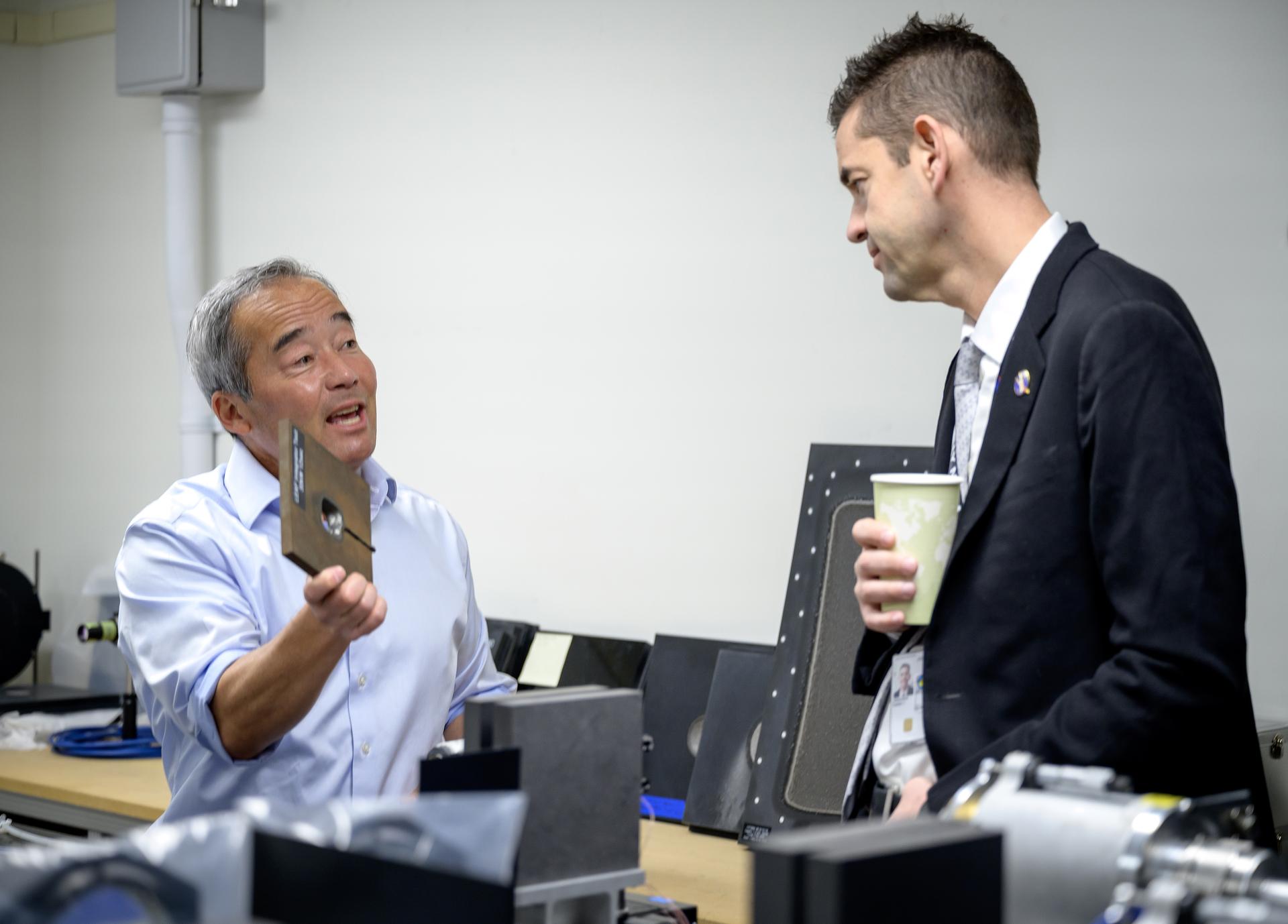
NASA Astronaut Christina Koch, left, holds a test sample for Victor J. Glover to photograph. The sample is a half-inch steel plate with a hole that was drilled by a 12-second burst from a 30kW laser in the Laser Enhanced Arc Jet Facility (LEAF) laboratory, N238.
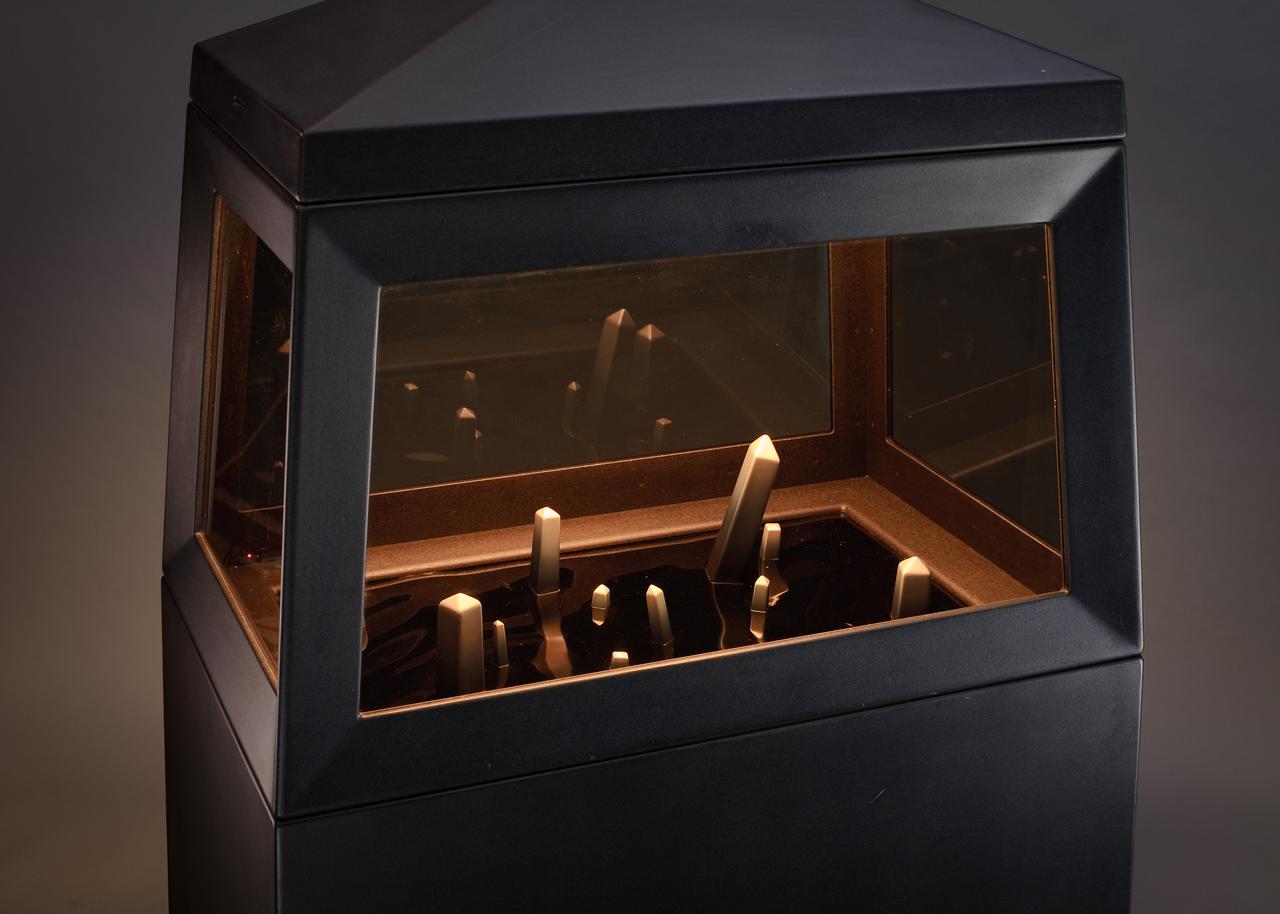
ARC Sculpture by Peter Gutkin 'Nice Ice in New York' circa 1970's. This sculputre was donated to Ames Research Center by the artist. Peter Gutkin has designed special interiors, exhibits, and display furniture for Ames since 1979. He currently maintains an office in San Francisco, CA.

NASA Officials gather at Ames Research Center to discuss Spaceship development progress. Constellation is developing the Orion spacecraft and Ares rockets to support an American return to the moon by 2020. Speaker James Reuther, ARC, leader of the Advanced Development Thermal rotection Systems (heat shield) project for the Orion Crew Exploration Vehicle

NASA Officials gather at Ames Research Center to discuss Spaceship development progress. Constellation is developing the Orion spacecraft and Ares rockets to support an American return to the moon by 2020. Speaker James Reuther, ARC, leader of the Advanced Development Thermal rotection Systems (heat shield) project for the Orion Crew Exploration Vehicle
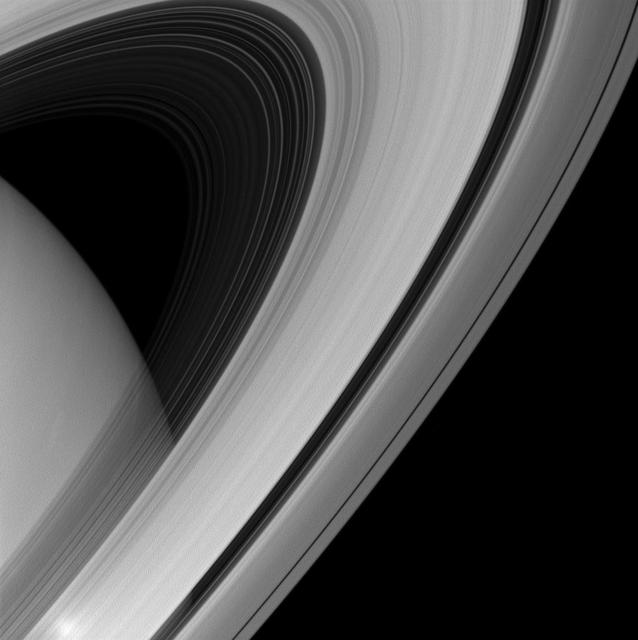
Saturn rings appear to form a majestic arc over the planet in this image from NASA Cassini spacecraft.
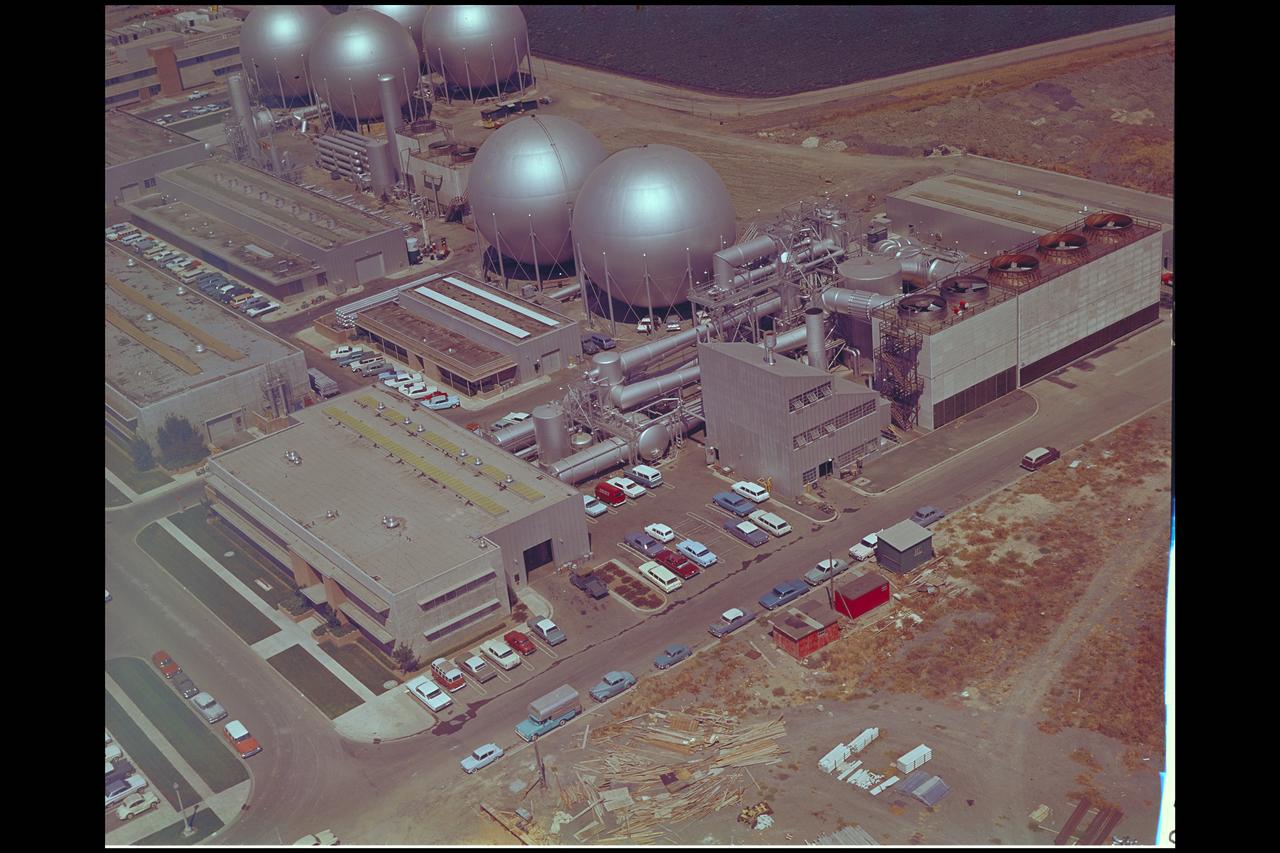
Aerial view of Gasdynamics facility in 1964 and the 20 inch helium tunnel Part of the Thermal Protection Laboratory used to research materials for heat shield applications and for aerodynamic heating and materials studies of vehicles in planetary atmospheres. This laboratory is comprised of five separate facilities: an Aerodynamic Heating Tunnel, a Heat Transfer Tunnel, two Supersonic Turbulent Ducts, and a High-Power CO2 Gasdynamic Laser. All these facilities are driven by arc-heaters, with the exception of the large, combustion-type laser. The arc-heated facilities are powered by a 20 Megawatt DC power supply. Their effluent gas stream (test gases; Air, N2, He, CO2 and mixtures; flow rates from 0.05 to 5.0 lbs/sec) discharges into a five-stage stream-ejector-driven vacuum system. The vacuum system and power supply are common to the test faciities in building N-238. All of the facilities have high pressure water available at flow rates up to 4, 000 gals/min. The data obtained from these facilities are recorded on magnetic tape or oscillographs. All forms of data can be handled whether from thermo-couples, pressure cells, pyrometers, or radiometers, etc. in addition, closed circuit T. V. monitors and various film cameras are available. (operational since 1962)
Thermophysics Facilities Branch Chief George Raiche, left, Orion Deputy Program Manager Debbie Korth, NASA astronauts Victor J. Glover, Christina Koch, Kristina A. Skokova, Parul Agrawal, Luis Saucedo, and Scott Eddlemon watch a video presentation in the Ames Arc Jet control room for the Interaction Heating Facility (IHF), N238.
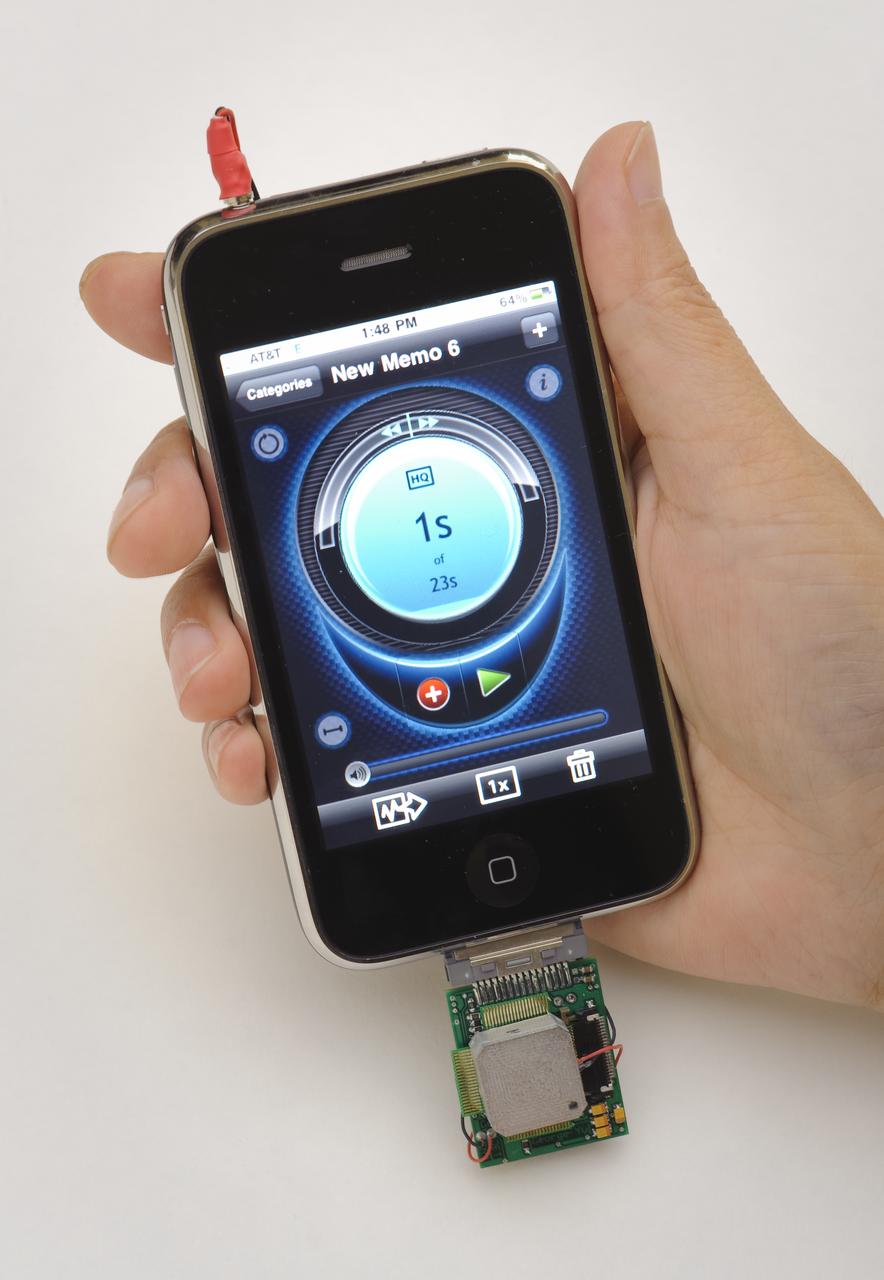
A Nanosensor Device for Cellphone Intergration and Chemical Sensing Network. iPhone with sensor chip, data aquisition board and sampling jet.(Note 4-4-2012:High Sensitive, Low Power and Compact Nano Sensors for Trache Chemical Detection' is the winner of the Government Invention of the Year Award 2012 (winning inventors Jing Li and Myya Meyyappan, NASA/ARC, and Yijiang Lu, University of California Santa Cruz. )

The Ames spirit of free and vigorous discussion; Left to right: Harv Lomax, Leonard Roberts and Harvey Allen during an award ceremony honoring R.T. Jones.

The Ames spirit of free and vigorous discussion; Left to right: R. T. Jones, Jack Nielsen, Hans Mark, Leonard Roberts and Harvey Allen during an award ceremony honoring R.T. Jones.
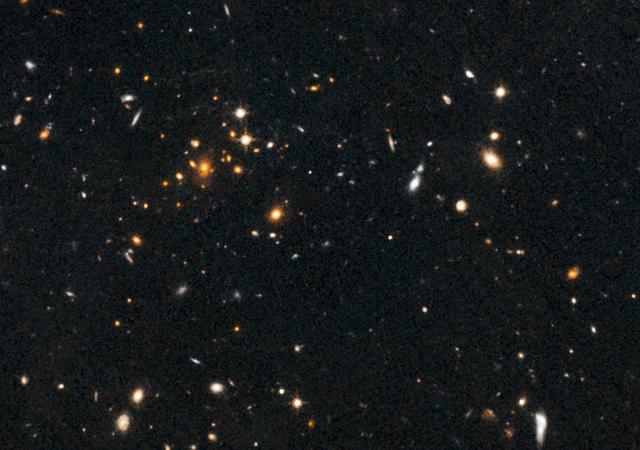
Astronomers using NASA Hubble Space Telescope have found a puzzling arc of light behind an extremely massive cluster of galaxies residing 10 billion light-years away.
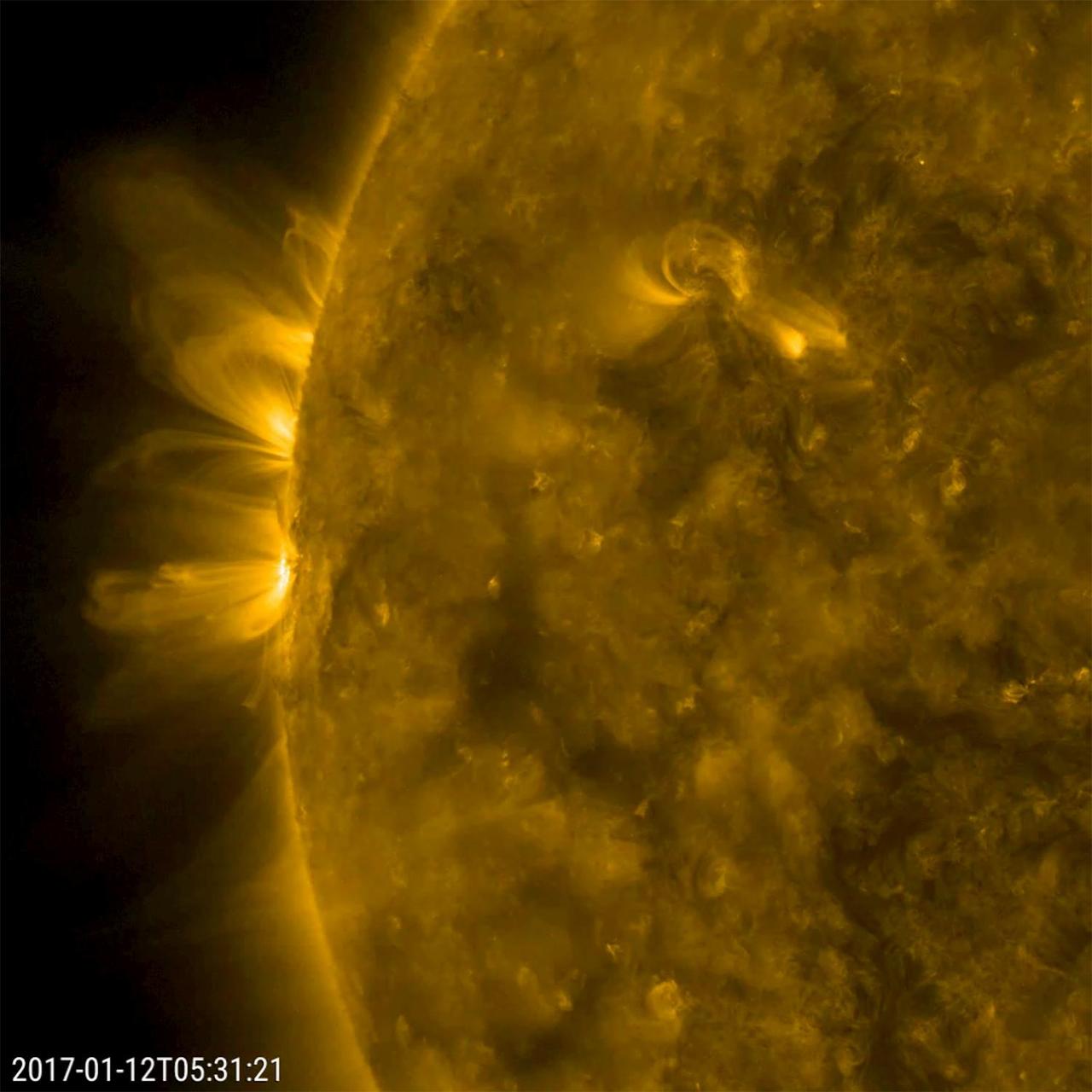
Magnetic arcs of plasma that spiraled above two active regions held their shape fairly well over 18 hours (Jan. 11-12, 2017). The charged plasma is being controlled the magnetic field lines of the active regions. The field lines become clearly visible when viewed in this wavelength of extreme ultraviolet light. Often the arches bend and twist more dynamically than the relatively stable ones seen here. Movies are available at http://photojournal.jpl.nasa.gov/catalog/PIA12327
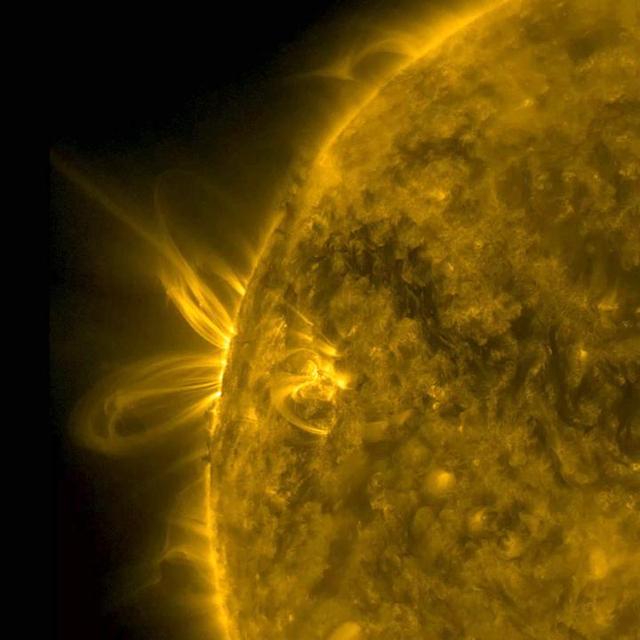
Several arcing loops rotated into view and swirled above an active region, which gave us a nice profile view of the action (June 26-27, 2016). The arcing plasma is tracing magnetic field lines extending out from the active region. Some darker matter also jiggled back and forth near the active region as well, pulled about by magnetic forces. At one point a lick of plasma pushed its way out from the region but quickly fell back into the sun. The images were taken in a wavelength of extreme ultraviolet light. Movies are also available at the Photojournal. http://photojournal.jpl.nasa.gov/catalog/PIA20882

P-34679 Range : 2 million km. ( 1.2 million miles ) In this Voyager 2, wide-angle image, the two main rings of Neptune can be clearly seen. In the lower part of the frame, the originally-announced ring arc, consisting of three distinct features, is visible. This feature covers about 35 degrees of longitude and has yet to be radially resolved in Voyager Images. from higher resolution images it is known that this region contains much more material than the diffuse belts seen elsewhere in its orbit, which seem to encircle the planet. This is consistent with the fact that ground-based observations of stellar occultations by the rings show them to be very broken and clumpy. The more sensitive, wide-angle camera is revealing more widely distributed but fainter material. Each of these rings of material lies just outside of the orbit of a newly discovered moon. One of these moons, 1989N2, may be seen in the upper right corner. The moon is streaked by its orbital motion, whereas the stars in the frame are less smeared. the dark area around the bright moon and star are artifacts of the processing required to bring out the faint rings.

P-34712 Range: 1.1 million kilometers (683,000 miles) This wide-angle Voyager 2 image, taken through the camera's clear filter, is the first to show Neptune's rings in detail. The two main rings, about 53,000 km (33,000 miles) and 63,000 km (39,000 miles) from Neptune, are 5 to 10 times brighter than in earlier images. The difference is due to lighting and viewing geometry. In approach images, the rings were seen in light scattered backward toward the spacecraft at a 15° phase angle. However, this image was taken at a 135° phase angle as Voyager left the planet. That geometry is ideal for detecting microscopic particles that forward scatter light preferentially. The fact that Neptune's rings are so much brighter at that angle means the particle-size distribution is quite different from most of Uranus' and Saturn's rings, which contain fewer dust-size grains. However, a few componenets of the Saturian and Uranian ring systems exhibit forward-scattering behavior: The F ring and the Encke Gap ringlet at Saturn and 1986U1R at Uranus. They are also narrow, clumpy ringlets with kinks, and are associated with nearby moonlets too small to detect directly. In this image, the main clumpy arc, composed of three features each about 6 to 8 degrees long, is clearly seen. Exposure time for this image was 111 seconds.

P-34707 Range: 720,000 kilometers (446,400 miles) The Voyager spacecraft took this picture after closest approach to Neptune using the clear filter of the wide-angle camera with an exposure time of 255 seconds. The view back towards Neptune at a phase angle of 135° found the two known rings to be five to ten times brighter than seen in backscattering during Voyager approach at a much lower phase angle. This brightness increase implies a large percentage of microscopic particles within the rings. Although the dominant arc-like clump of the outer ring is not seen here, the inner ring appears brighter than the outer ring at the longitudes seen in this image. A faint sheet of material is also revealed that extends from the faint ring at a radius of 53,200 kilometers (33,000 miles). A new and even fainter ring was also discovered in this image at about 41,000 kilometers (25,400 miles), seen running from the lower left corner to about one-third the way across the top of the frame. This ring is quite broad, about 2,500 kilometers (1,550 miles) in radial width. In contrast to the two previously discovered rings, this feature is quite diffuse and has no well defined radial boundaries.
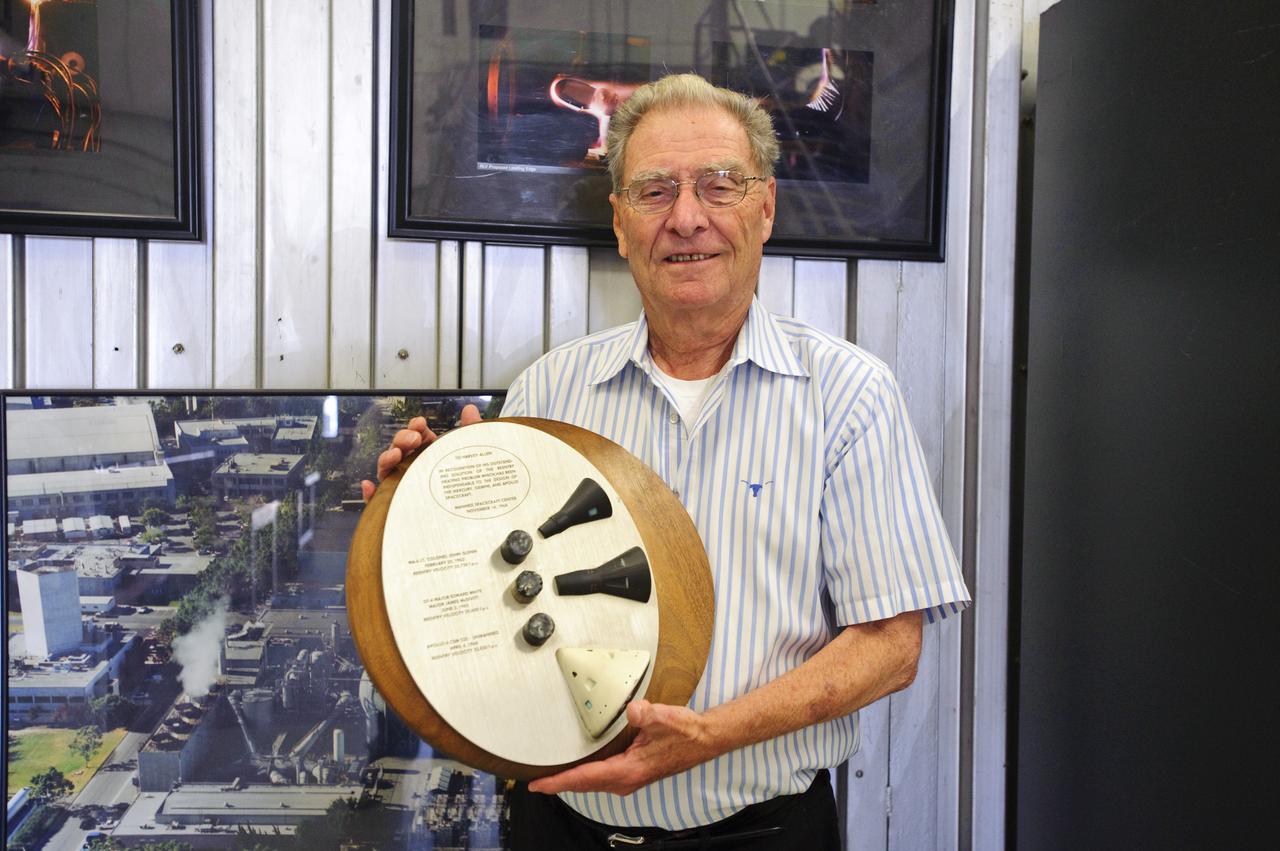
John W. 'Jack Boyd holds a plaque presented to Harvey Allen in recognition of his outstanding solution of the reentry heating problem which has been indispensable to the design of the Mercury, Gemini, and Apollo spacecraft (Manned Spacecraft Center, November 14, 1968) Plaque contains samples of tested materials and models of spacecraft.
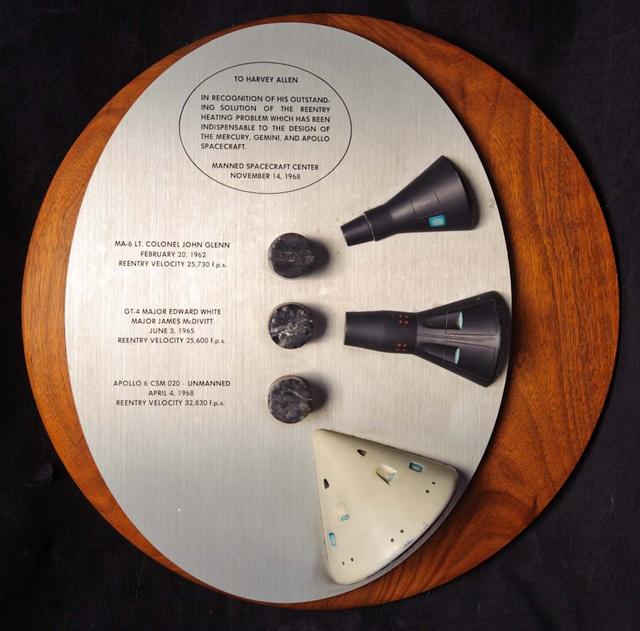
A plaque presented to Harvey Allen in recognition of his outstanding solution of the reentry heating problem which has been indispensable to the design of the Mercury, Gemini, and Apollo spacecraft (Manned Spacecraft Center, November 14, 1968) Plaque contains samples of tested materials and models of spacecraft.
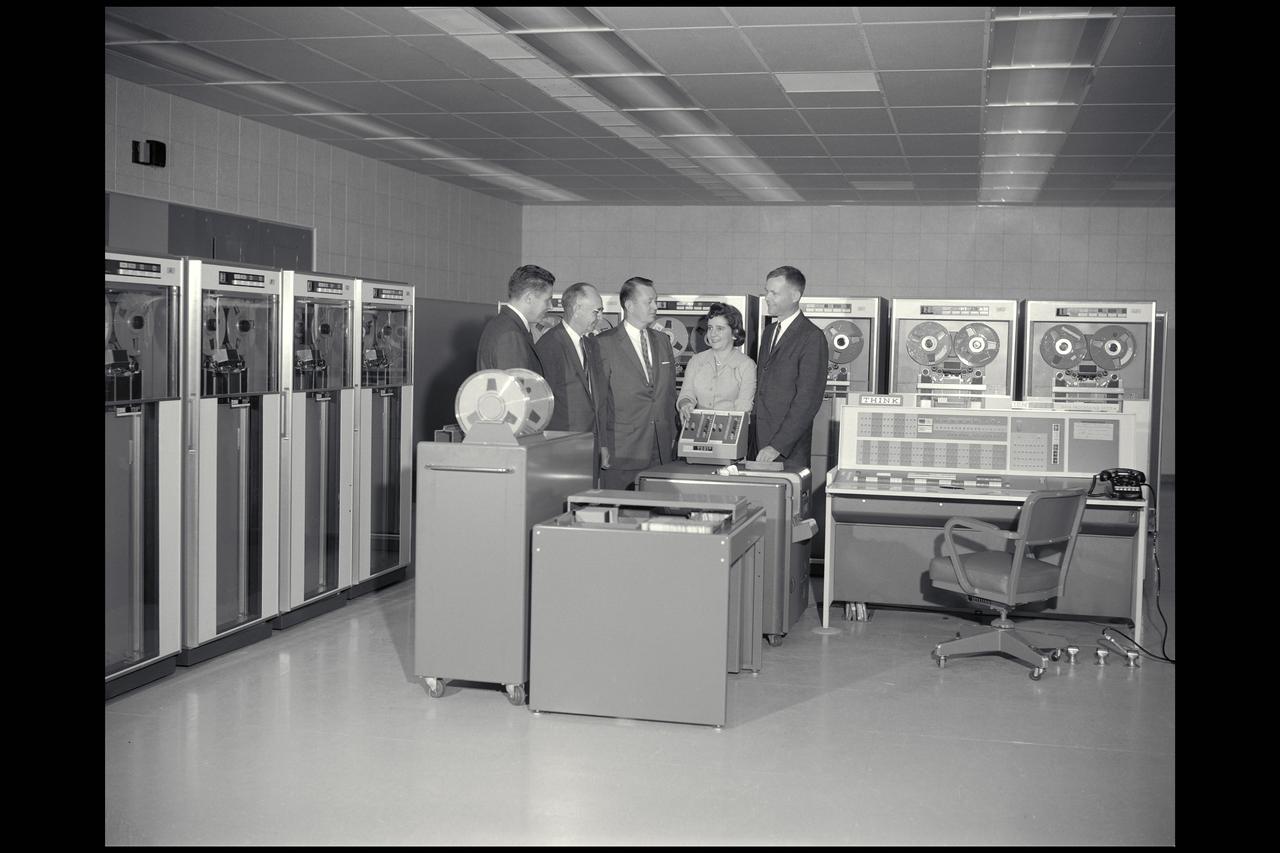
IBM 7090 computer and personnel: L-R: R Smith, IBM; Smith DeFrance, Ames; H Funk, IBM; Marcie Chartz Smith, Ames; D Swartz, IBM; discuss installation of computer at Ames.
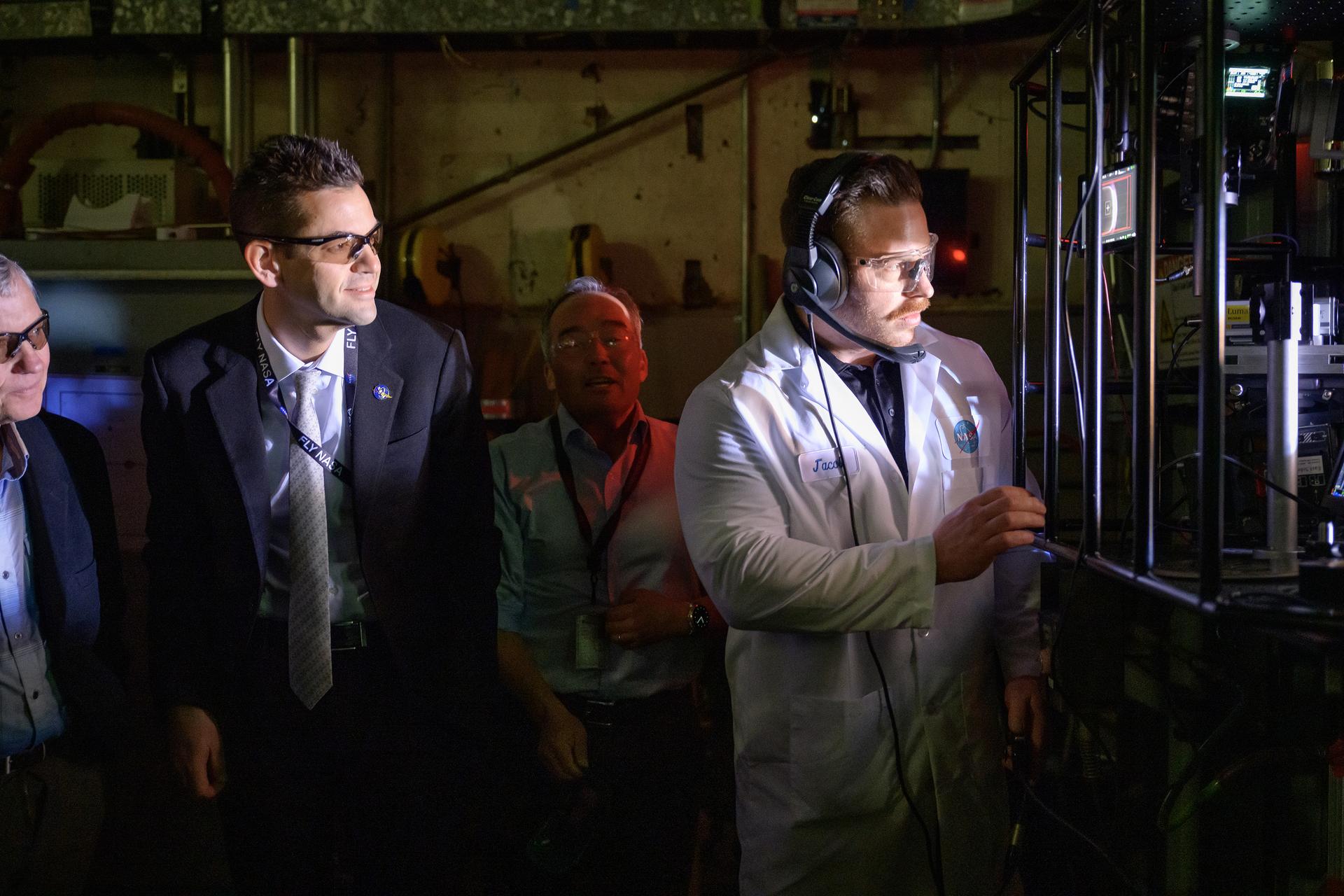
NASA Administrator Jared Isaacman views a test run in the Arc Jet facility in N238.
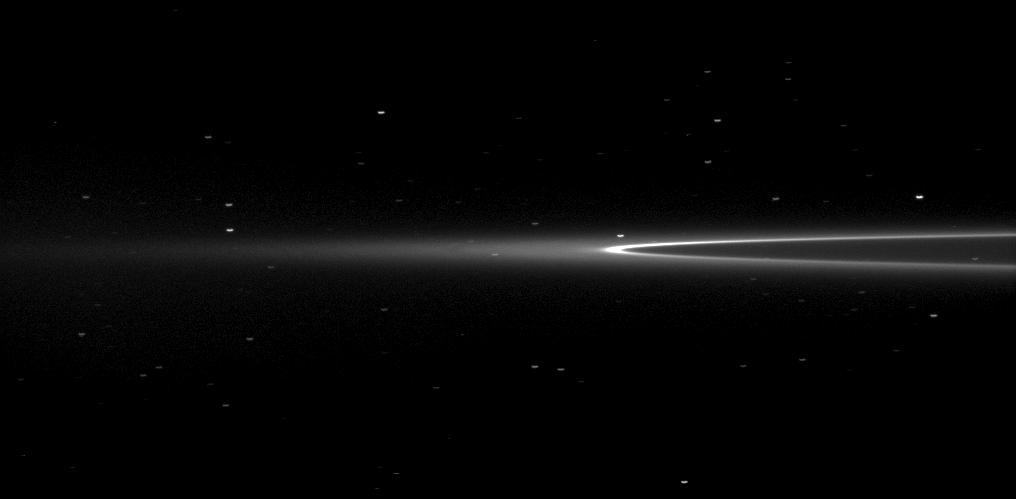
NASA Cassini spacecraft looks toward Saturn tiny moon Aegaeon within the G-ring arc. The moonlet Aegaeon formerly known as S/2008 S 1 cant be seen in this image, but it orbits in the bright arc of Saturn faint G ring shown here.
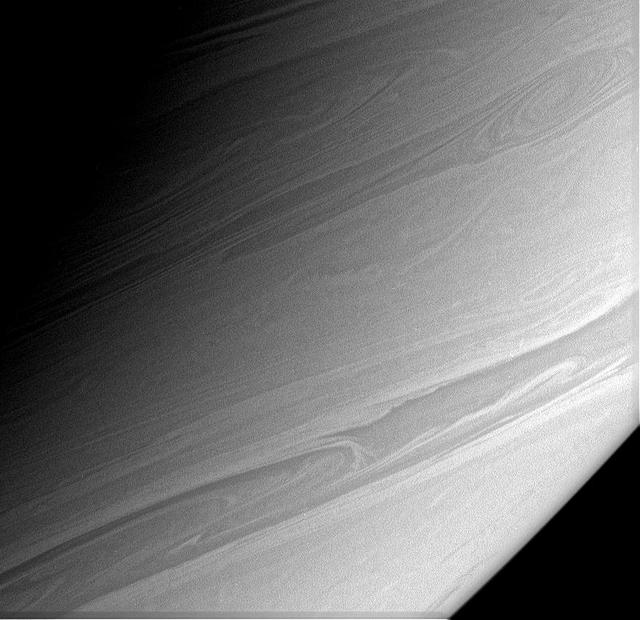
Long, thin streamers of cloud arc gracefully across this view of Saturn southerly latitudes
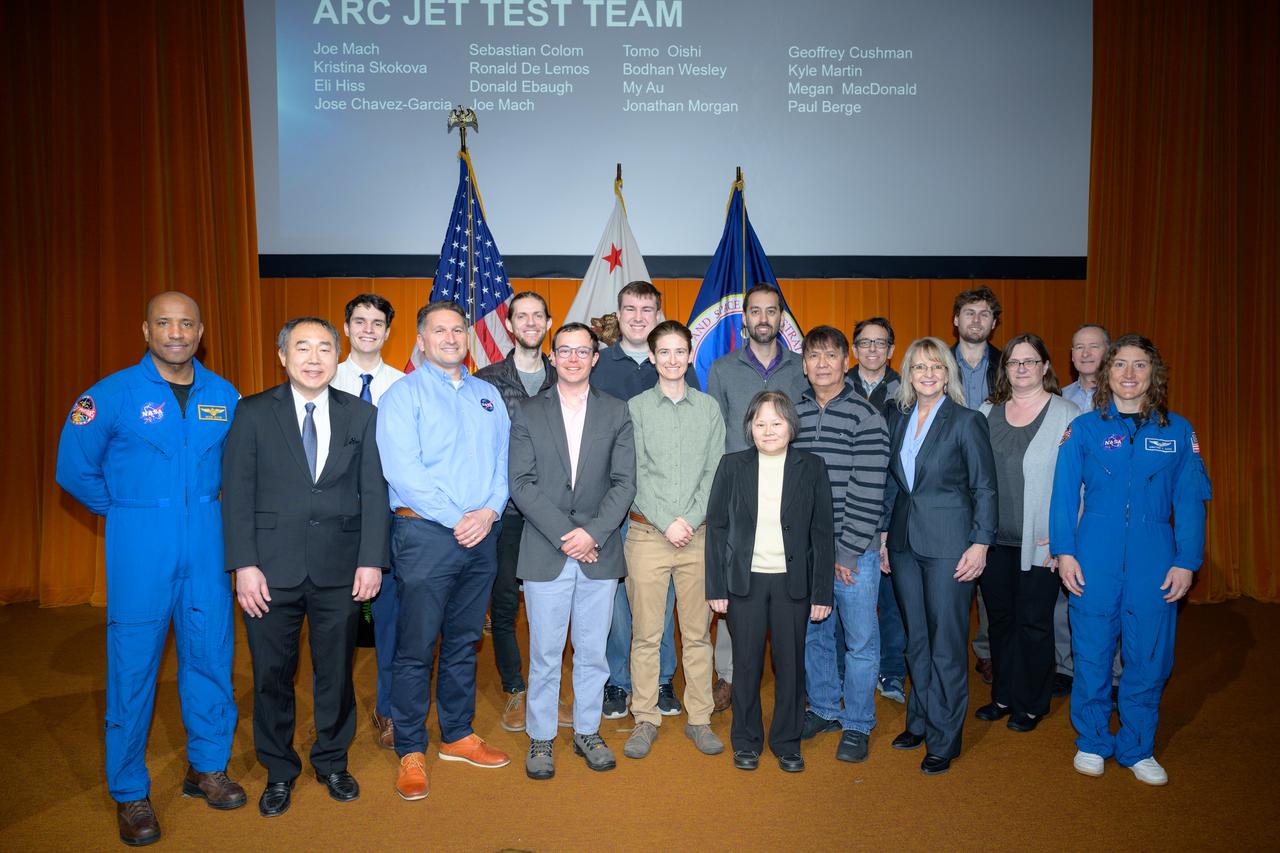
Artemis I Investigation Arc Jet Test team with NASA astronauts Victor J. Glover, left, and Christina Koch, right, in the N201 auditorium.
NASA Administrator Jared Isaacman speaks with Dr. George Raiche, Associate Director for Exploration Technology Infrastructure during his visit to the Arc Jet facility in N238.
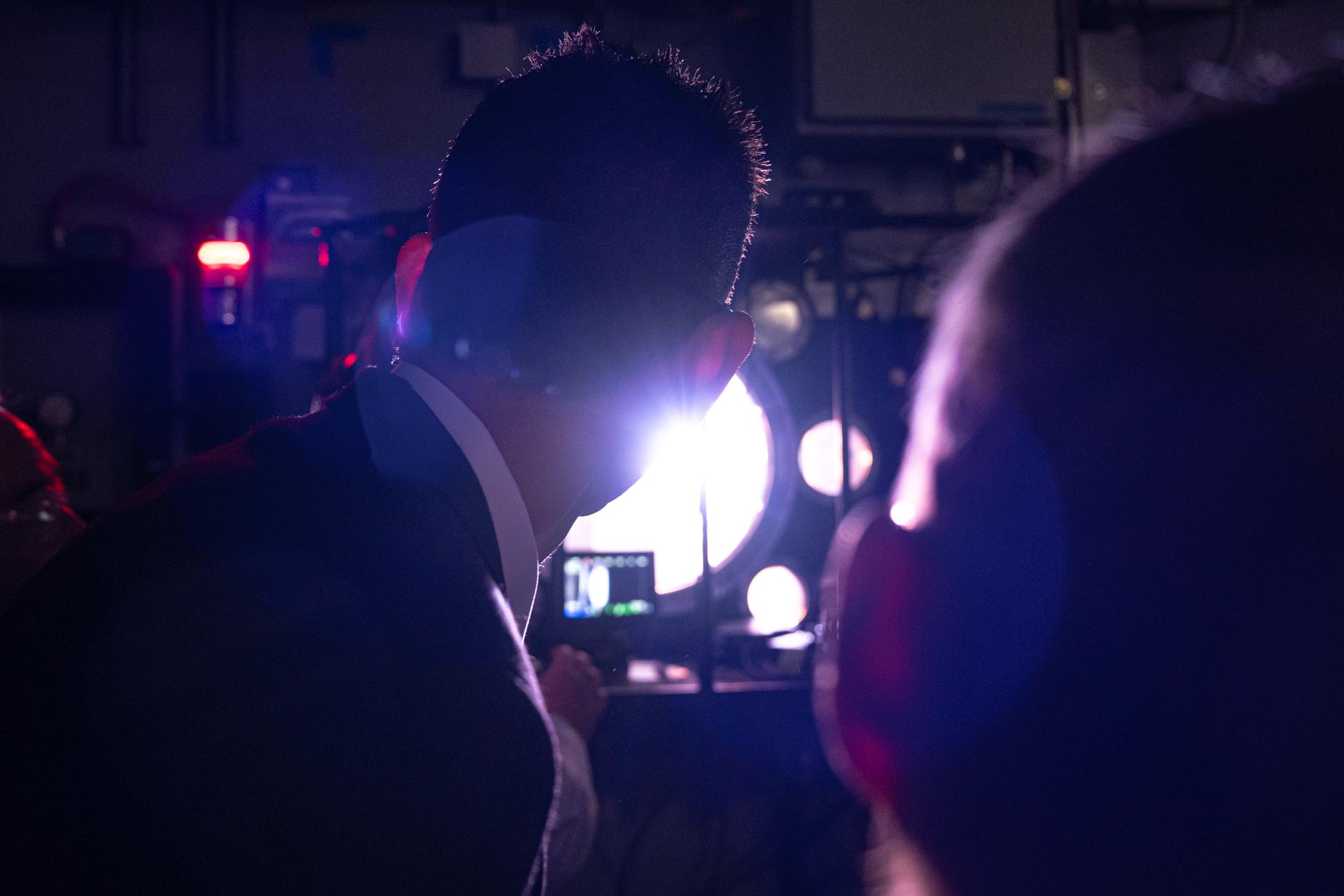
NASA Administrator Jared Isaacman views an arc jet test, Monday, Jan. 26, 2026, at NASA’s Ames Research Center in Mountain View, Calif. Ames marks the tenth stop in Isaacman’s roadshow to visit NASA facilities and engage directly with the agency’s workforce. Photo Credit: (NASA/John Kraus)
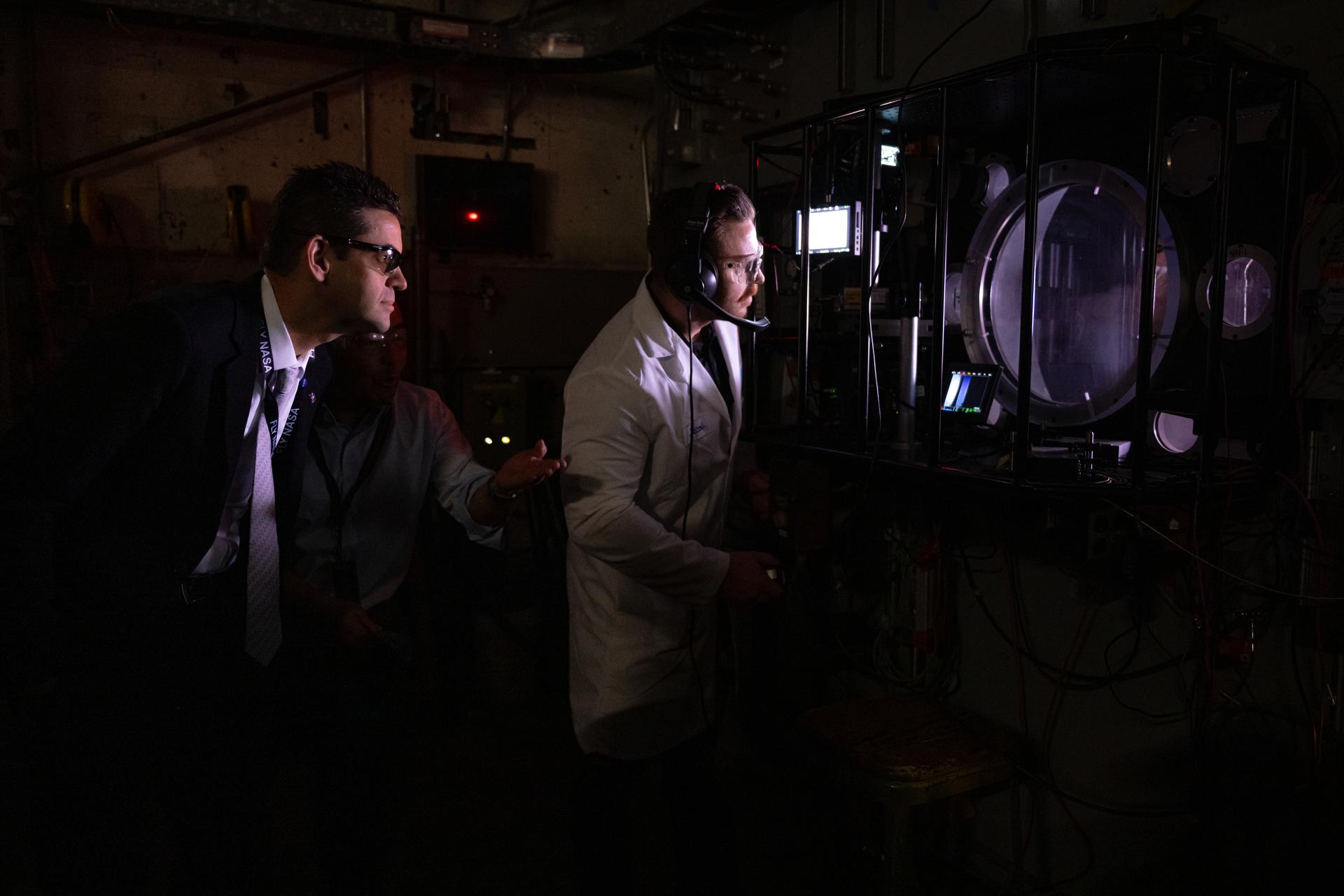
NASA Administrator Jared Isaacman, left, views an arc jet test, Monday, Jan. 26, 2026, at NASA’s Ames Research Center in Mountain View, Calif. Ames marks the tenth stop in Isaacman’s roadshow to visit NASA facilities and engage directly with the agency’s workforce. Photo Credit: (NASA/John Kraus)
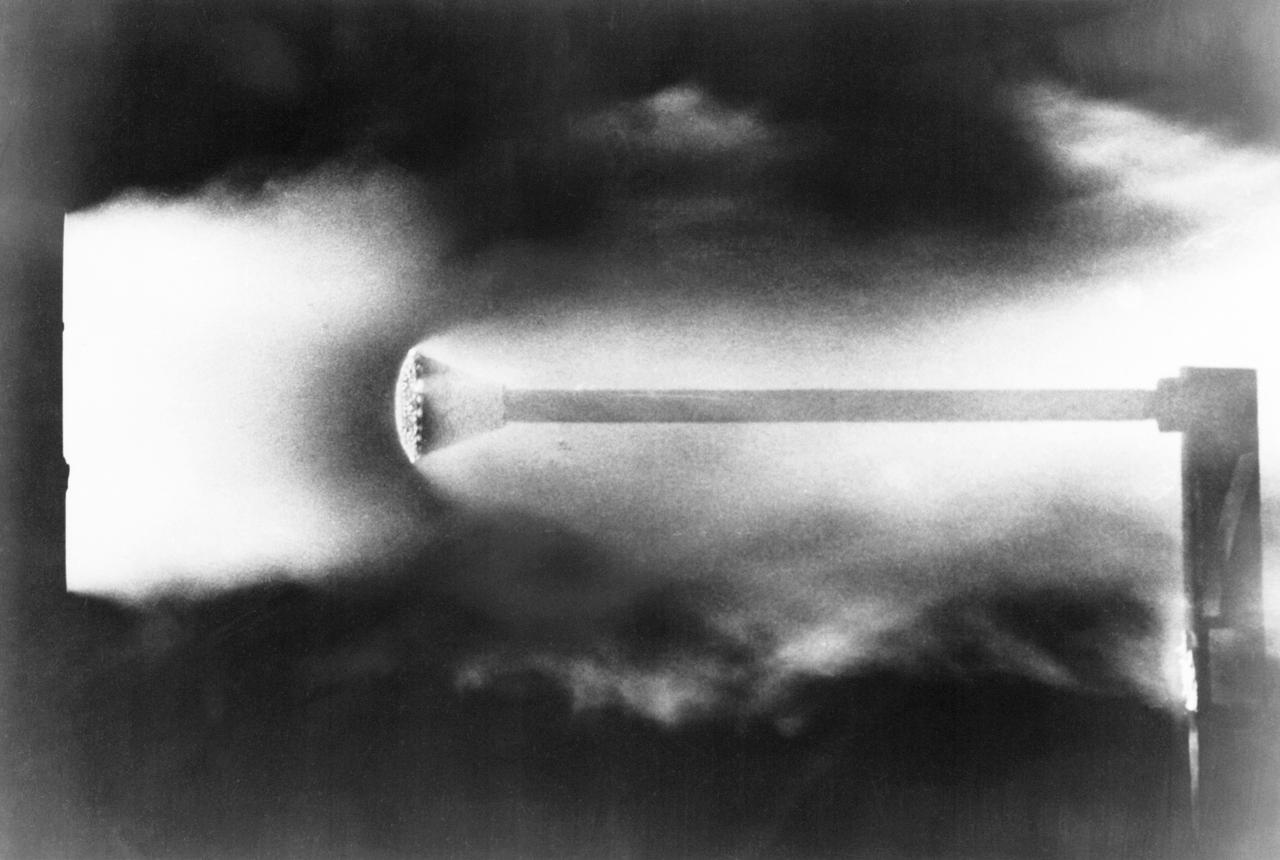
A hot jet research facility, used extensively in the design and development of the reentry heat shield on the Project Mercury spacecraft. The electrically-heated arc jet simulates the friction heating encountered by a space vehicle as it returns to the earth's atmosphere at high velocities. The arc jet was located in Langley's Structures Research Laboratory. It was capable of heating the air stream to about 9,000 degrees F. -- Published in Taken from an October 5, 1961 press release entitled: Hot Jet Research Facility used in Reentry Studies will be demonstrated at NASA Open House, October 7.
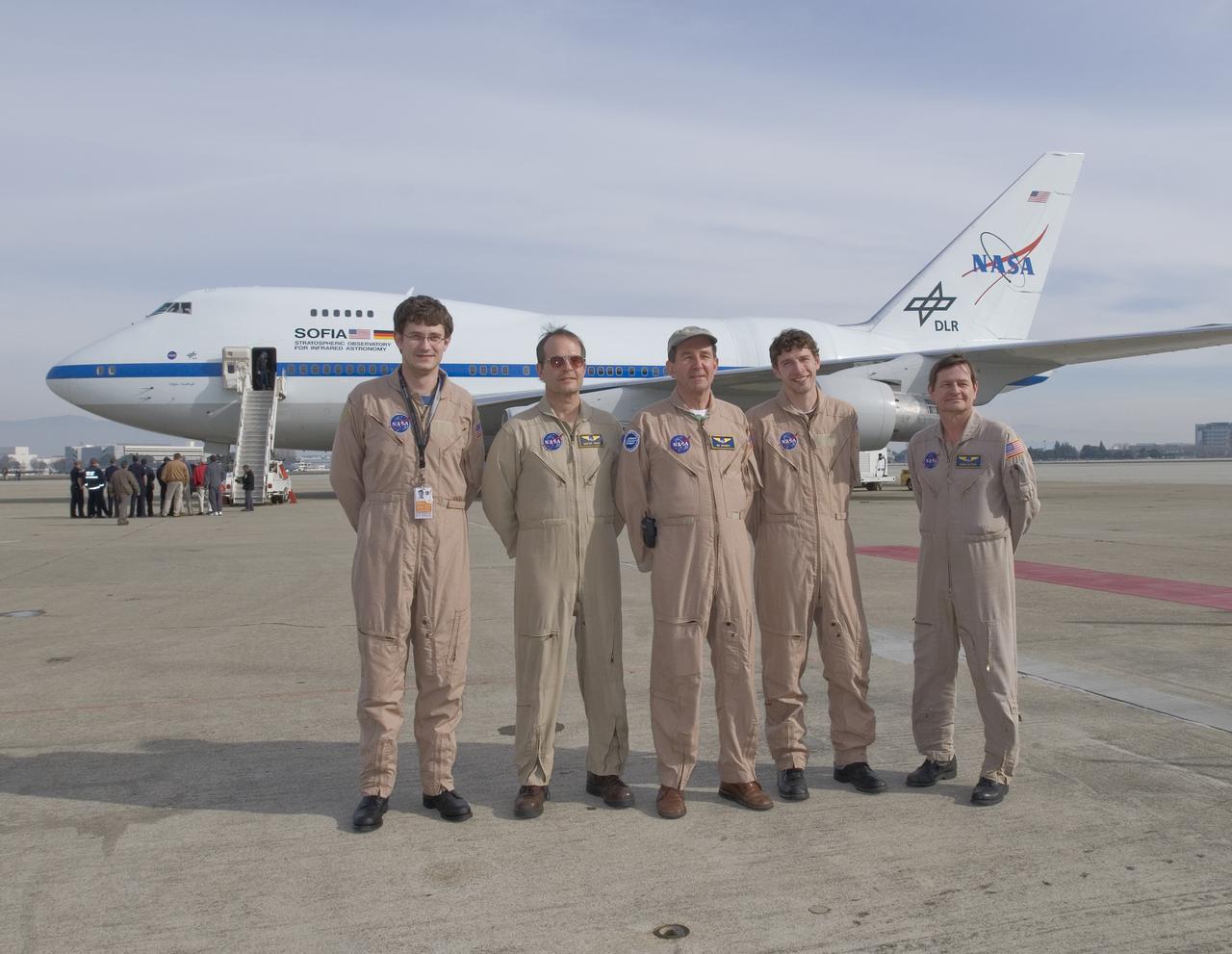
The flight crew of NASA's SOFIA airborne observatory and DLR telescope engineers who operated the system during its visit to NASA Ames Research Center on Jan. 14, 2008 included (from left), DLR telescope engineer Ulli Lampater, flight engineer Marty Trout, pilot Bill Brockett, telescope engineer Andres Reinacher and pilot Frank Batteas.
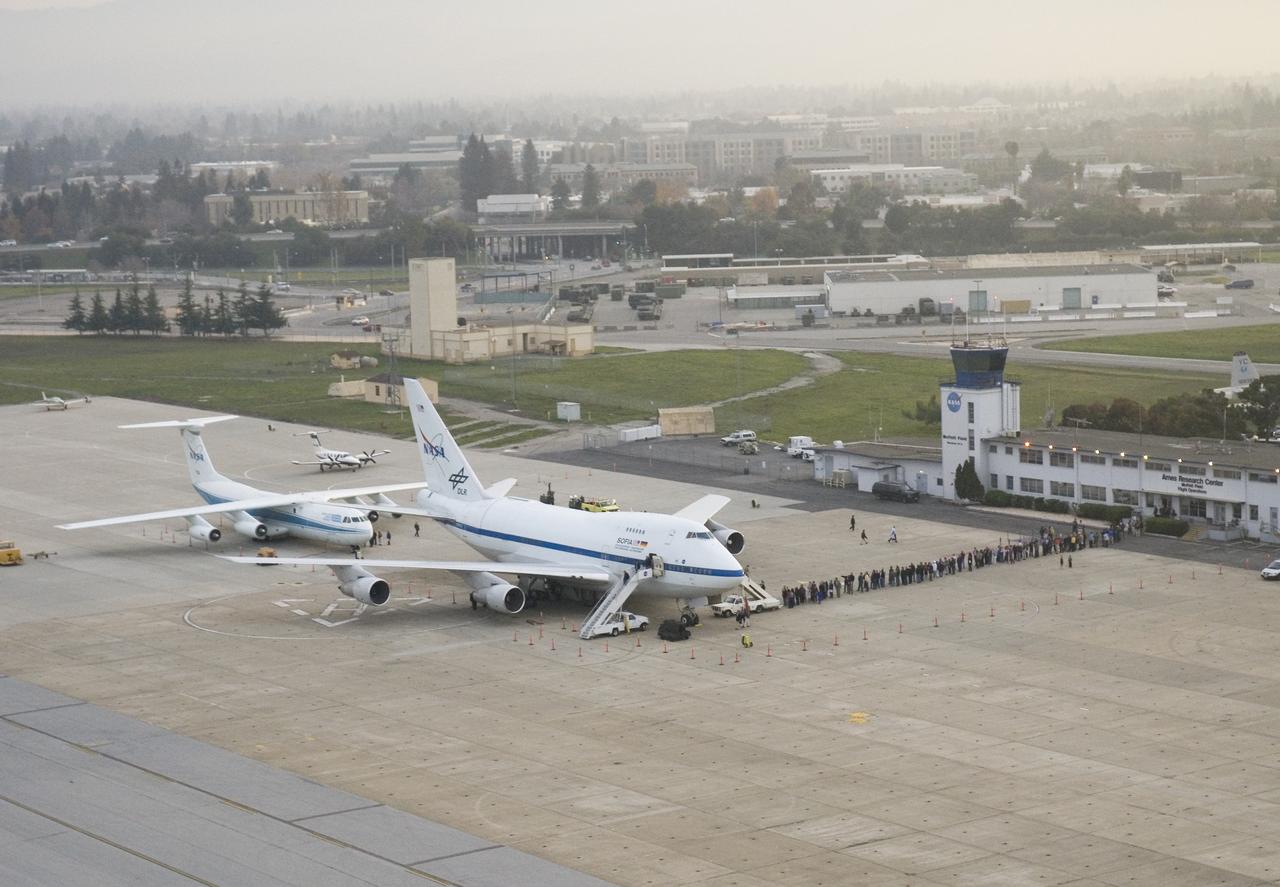
NASA's new SOFIA observatory shared the ramp with its predecessor, the now-retired Kuiper Airborne Observatory, during open house at NASA Ames Research Center.
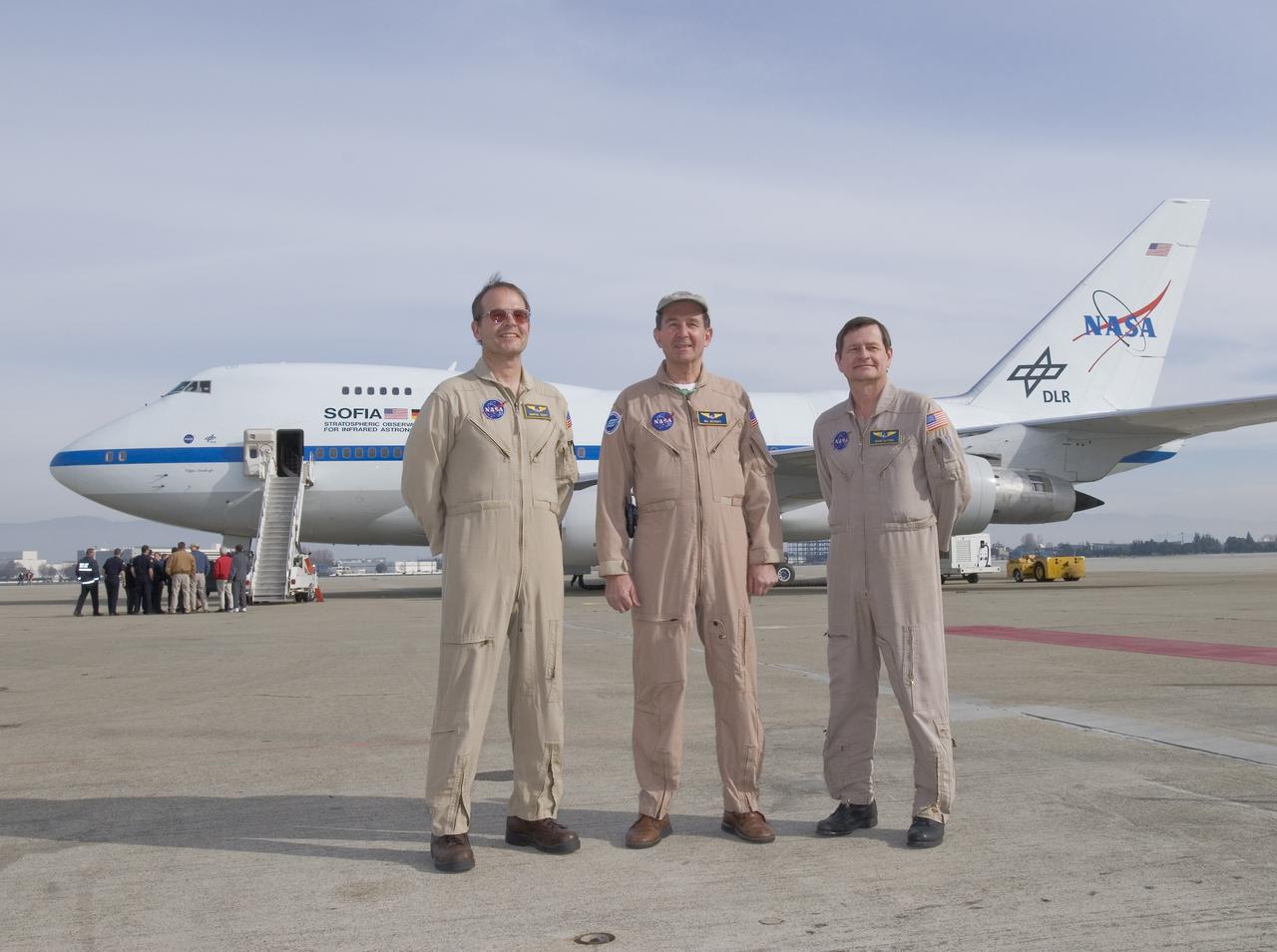
The flight crew of NASA's SOFIA airborne observatory includes (from left), flight engineer Marty Trout and pilots Bill Brockett and Frank Batteas.

NASA's Stratospheric Observatory for Infrared Astronomy touches down at Moffett Field, Calif., for its first visit to NASA Ames Research Center, Jan. 14, 2008.
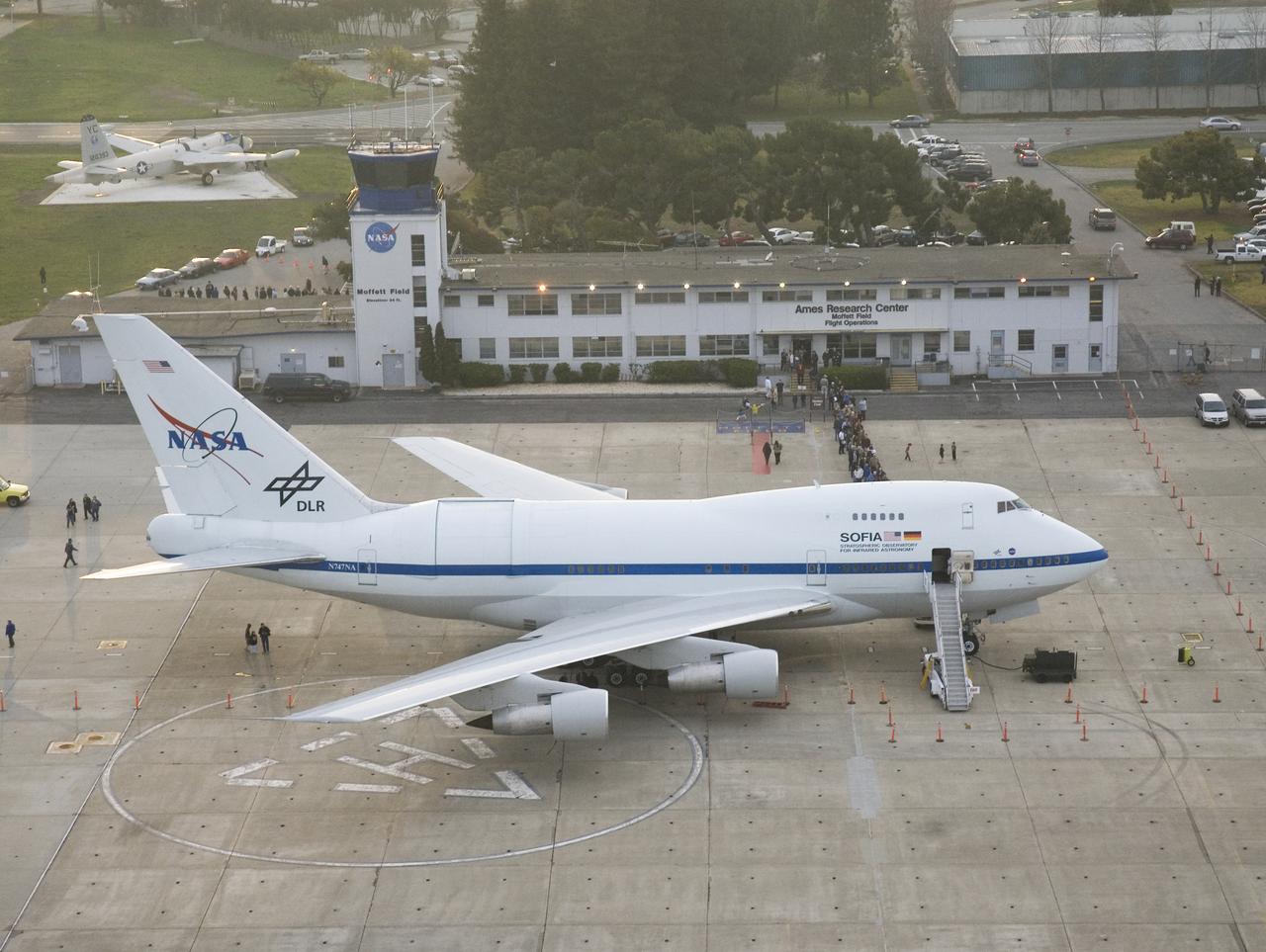
Thousands of NASA Ames employees and their families toured NASA's SOFIA flying observatory during its first visit to NASA Ames Research Center, Jan. 14, 2008.