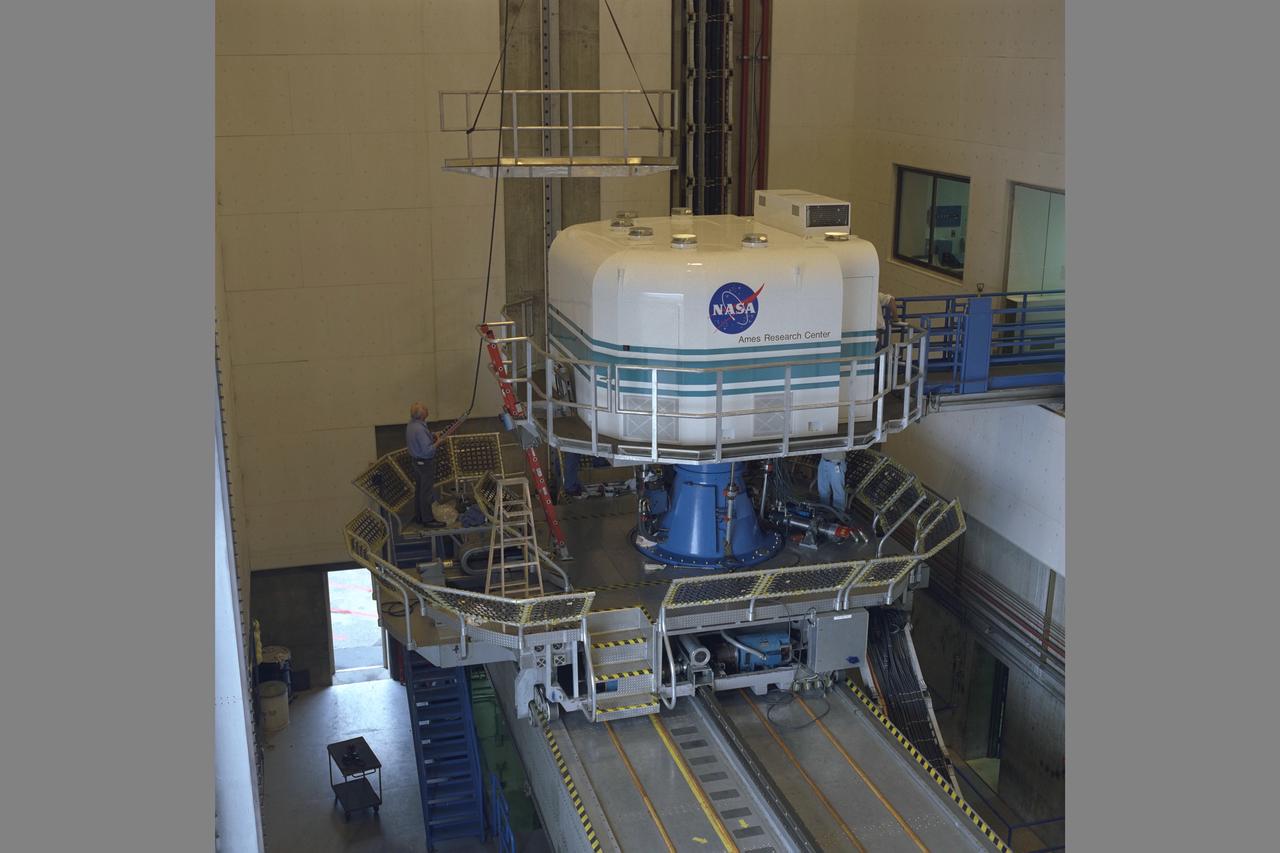
T-Cab Moving into VMS from I-Cab Fixed Base Area Using Trolly.
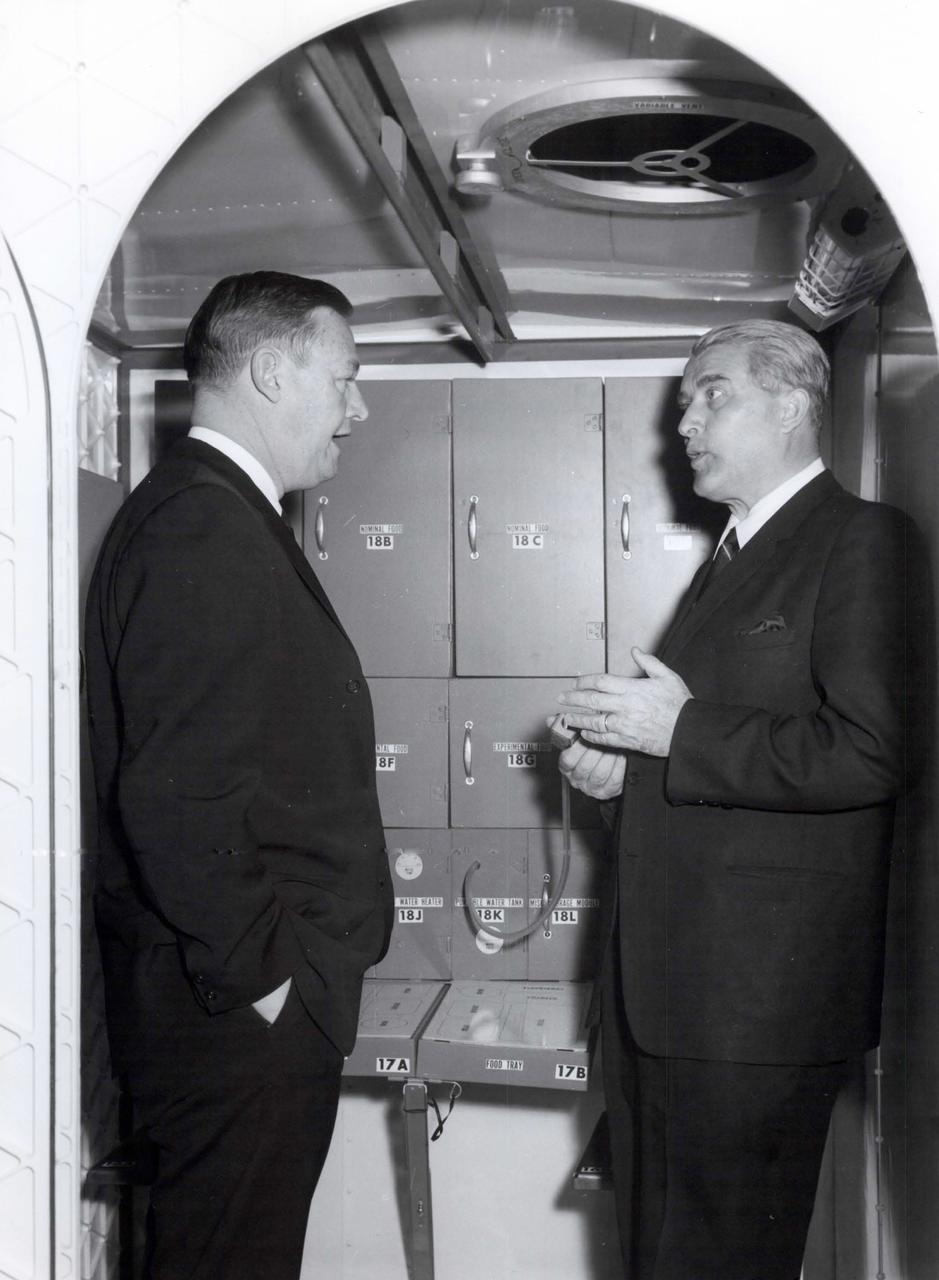
U.S. Representative Armistead Seldon (D.-Al) inspects the food preparation area of the Saturn I workshop mockup during a visit to the Marshall Space Flight Center. Explaining the operation of the food preparation area to the congressman is Dr. Wernher Von Braun, Marshall Space Flight Center director.
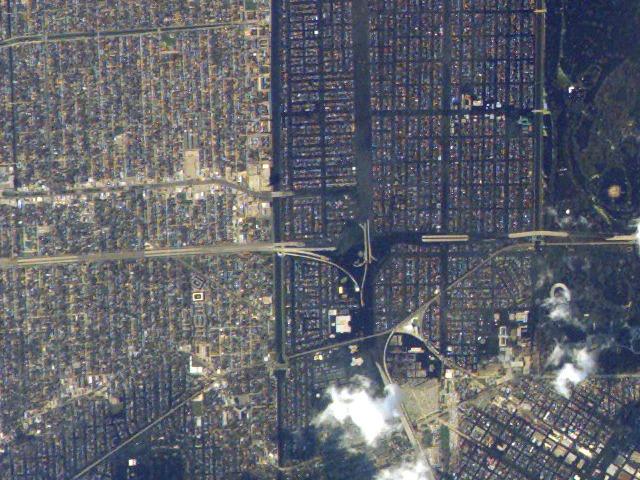
JSC2005e37990 (8 September 2005) --- Flooding of large sections of I-610 and the I-610/I-10 interchange (center) are visible to the east of the 17th Street Canal in this image acquired on September 8, 2005 from the International Space Station. Flooded regions are dark greenish brown, while dry areas are light brown to tan. North is to top of image, which was cropped from the digital still camera's original frame, ISS011-E-12527.
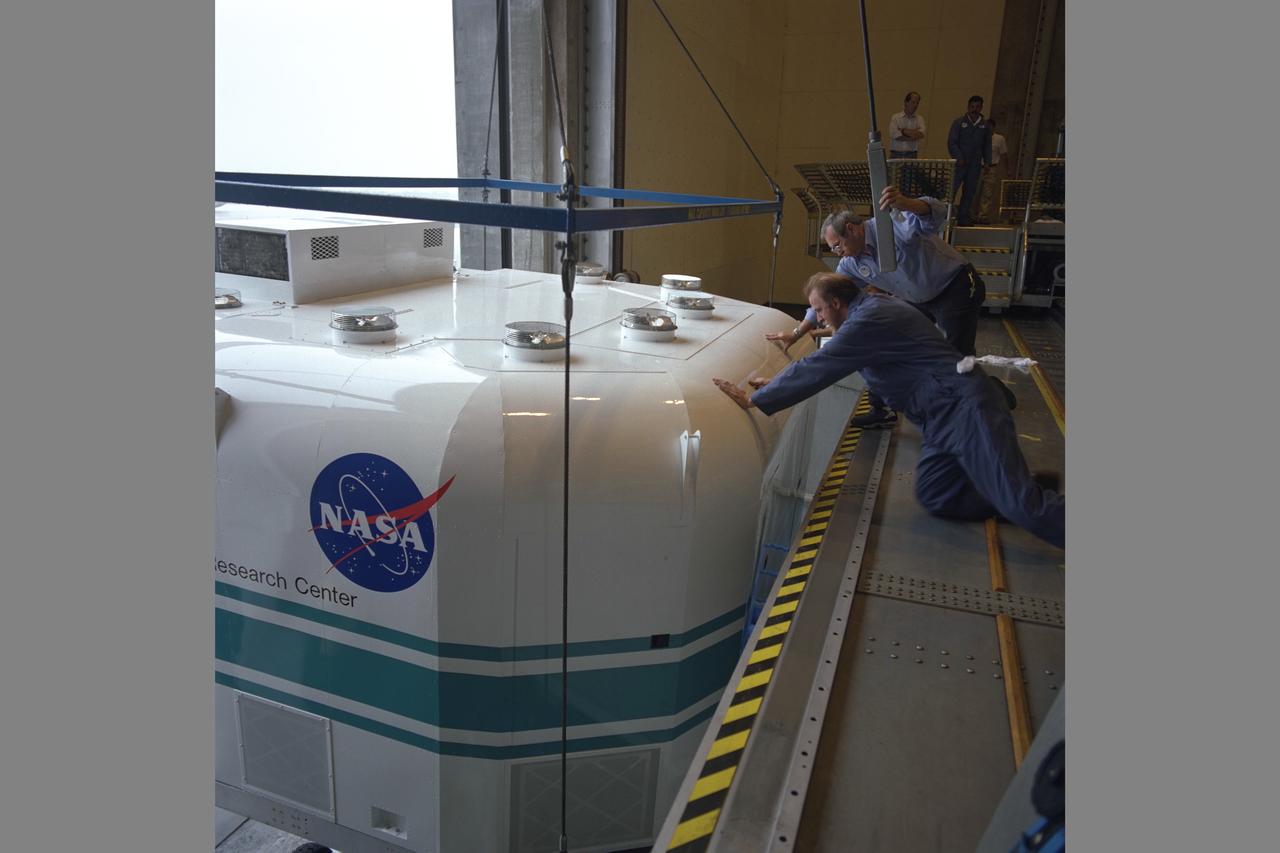
Tiltrotor Aircraft, Transport Aircraft T-Cab moving into NASA Ames Vertical Motion Simulaotor (VMS) from I-Cab Fixed Base Area in bldg. N-243 using trolly.
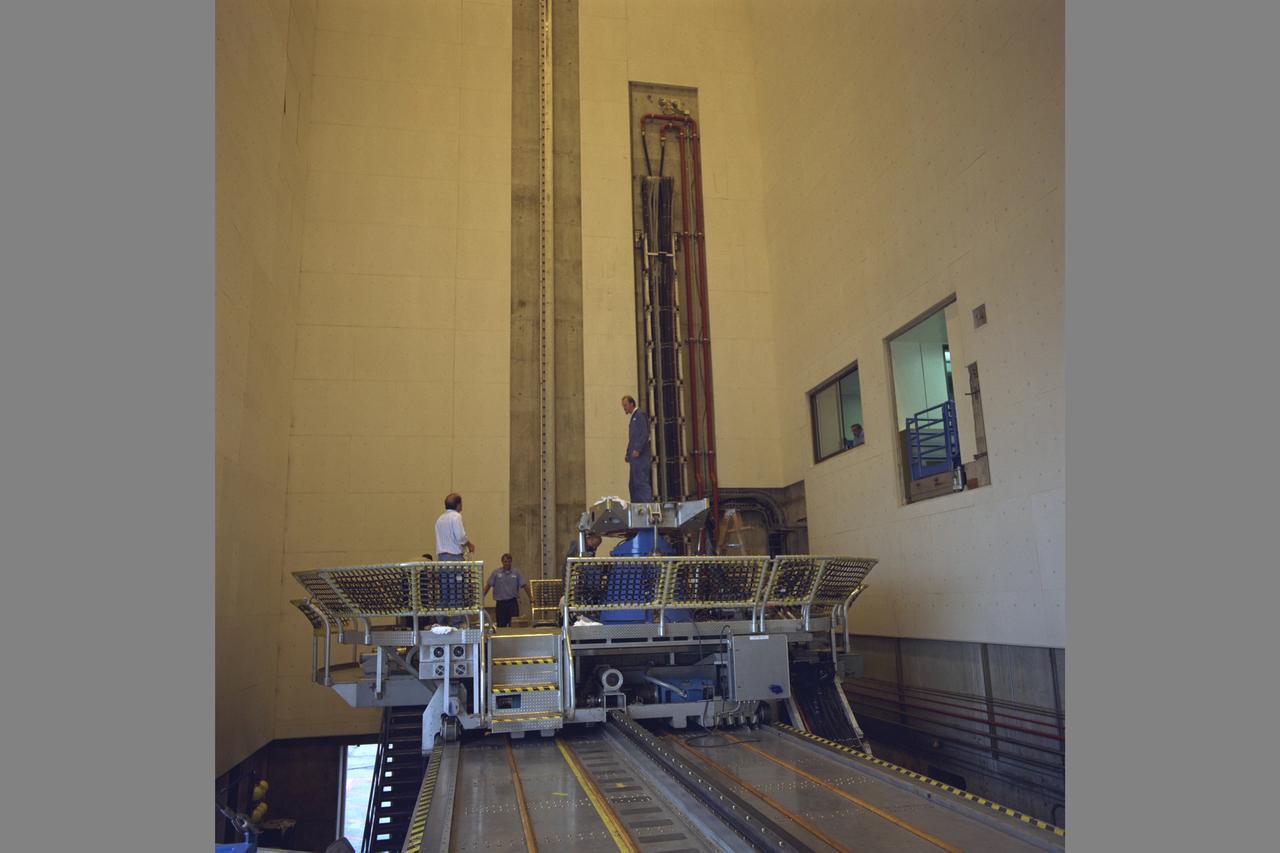
Tiltrotor Aircraft, Transport Aircraft T-Cab moving into NASA Ames Vertical Motion Simulaotor (VMS) from I-Cab Fixed Base Area in bldg. N-243 using trolly.
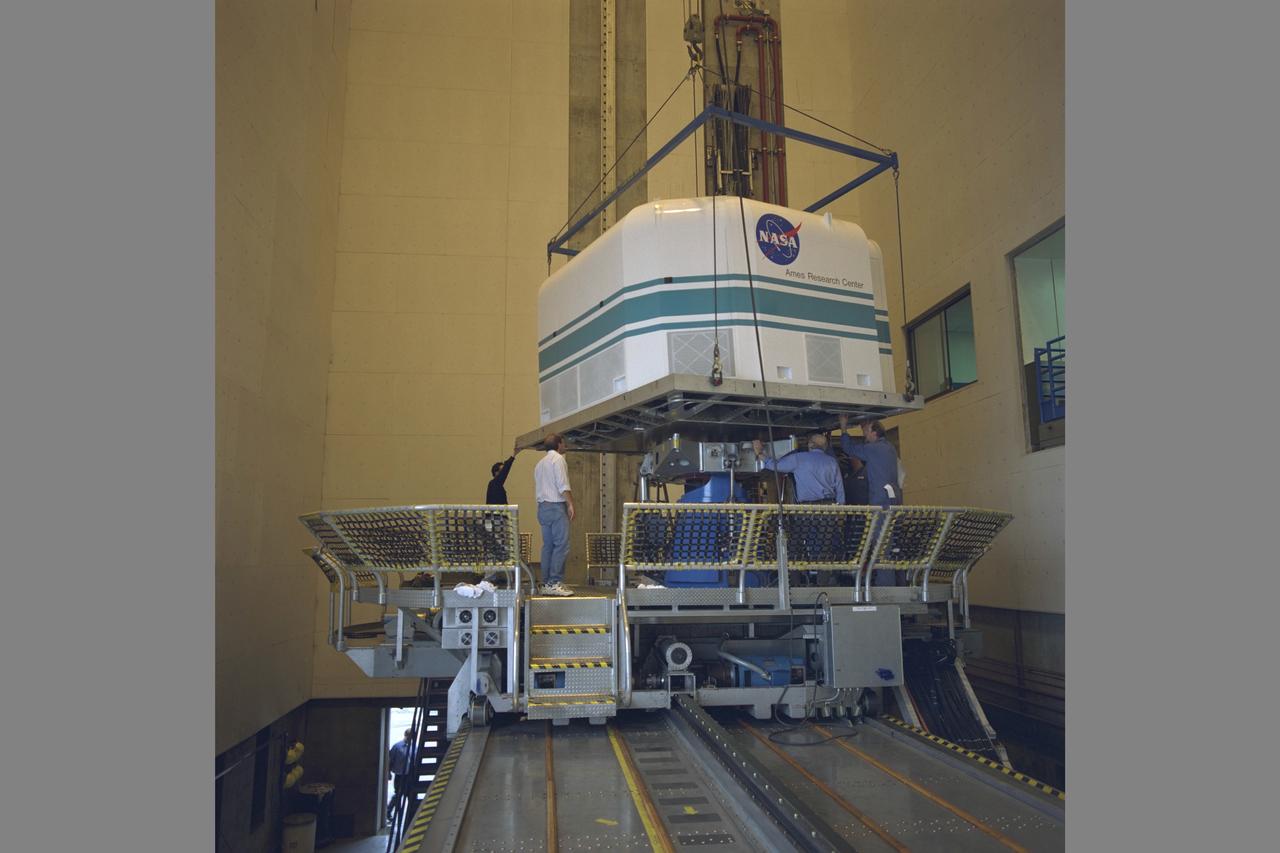
Tiltrotor Aircraft, Transport Aircraft T-Cab moving into NASA Ames Vertical Motion Simulaotor (VMS) from I-Cab Fixed Base Area in bldg. N-243 using trolly.
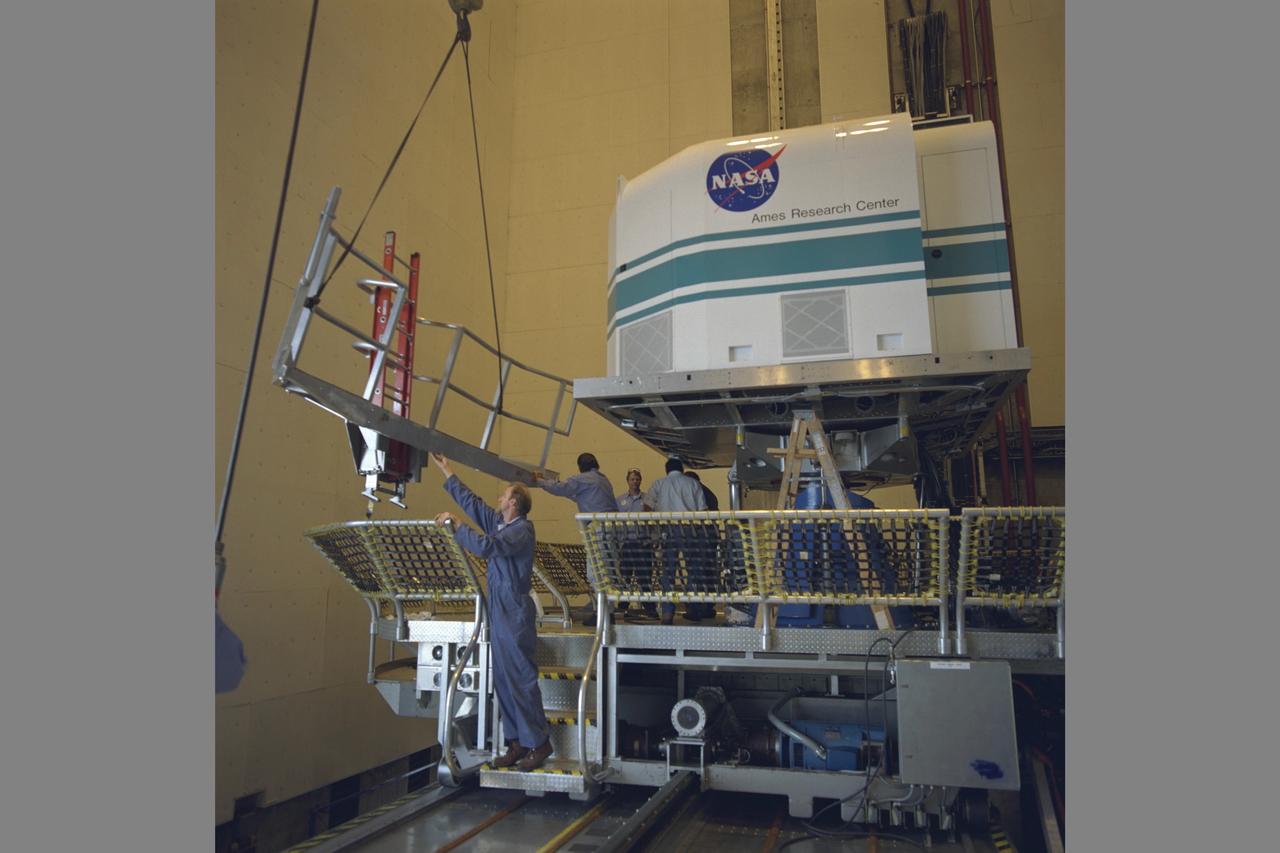
Tiltrotor Aircraft, Transport Aircraft T-Cab moving into NASA Ames Vertical Motion Simulaotor (VMS) from I-Cab Fixed Base Area in bldg. N-243 using trolly.
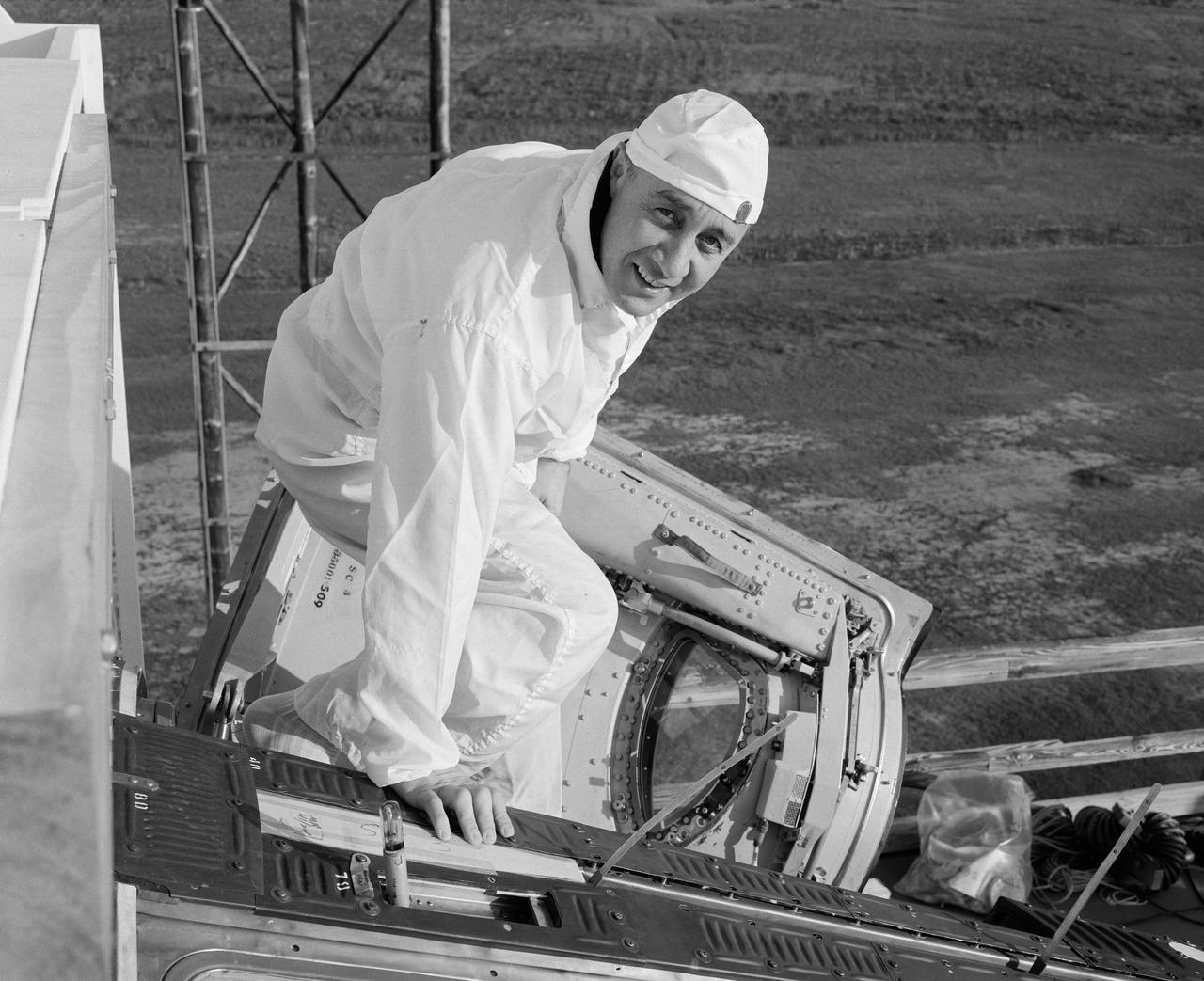
S65-13243 (6 Jan. 1965) --- Astronaut Virgil I. Grissom, Gemini-Titan 3 command pilot, is shown entering the Gemini-3 spacecraft for a communications test at the Merritt Island launch area.
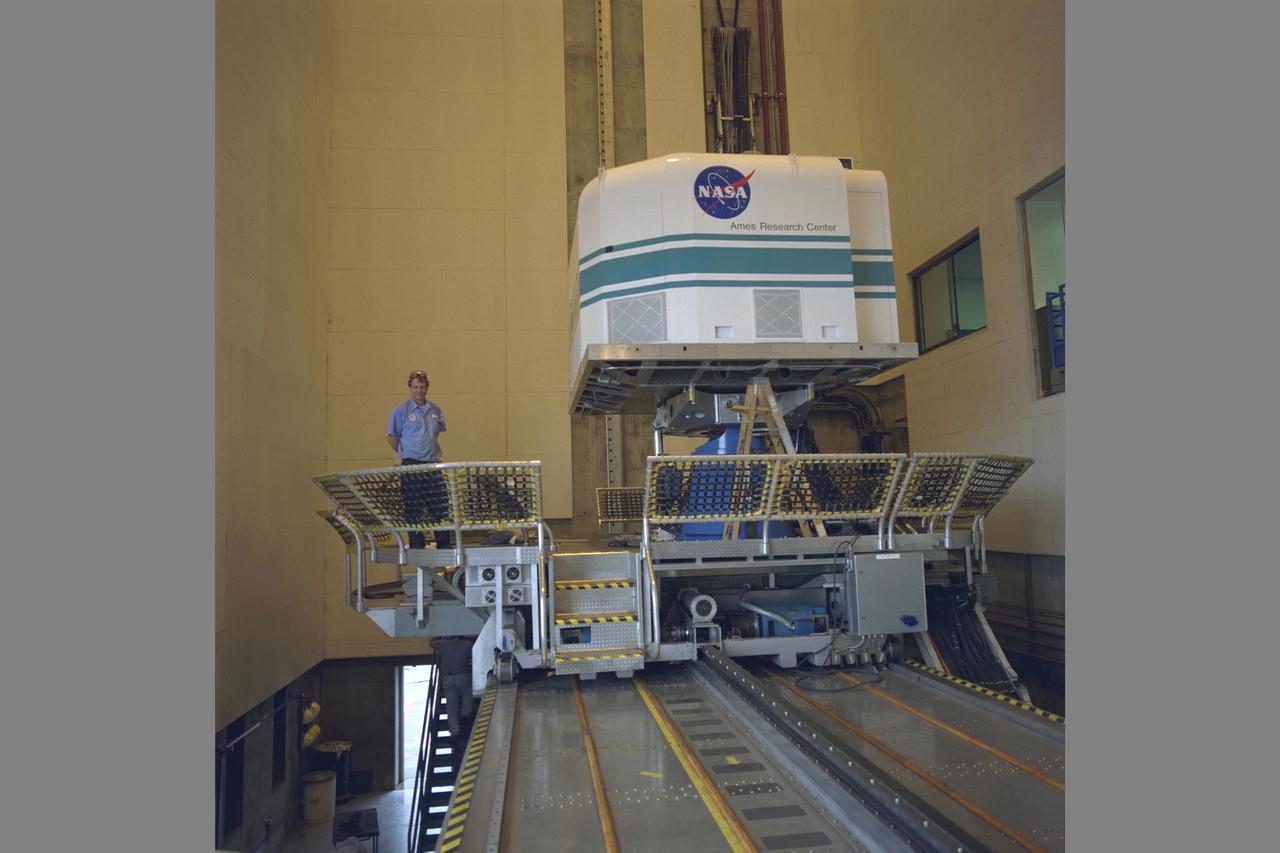
Tiltrotor Aircraft, Transport Aircraft T-Cab moving into NASA Ames Vertical Motion Simulaotor (VMS) from I-Cab Fixed Base Area in bldg. N-243 using trolly.
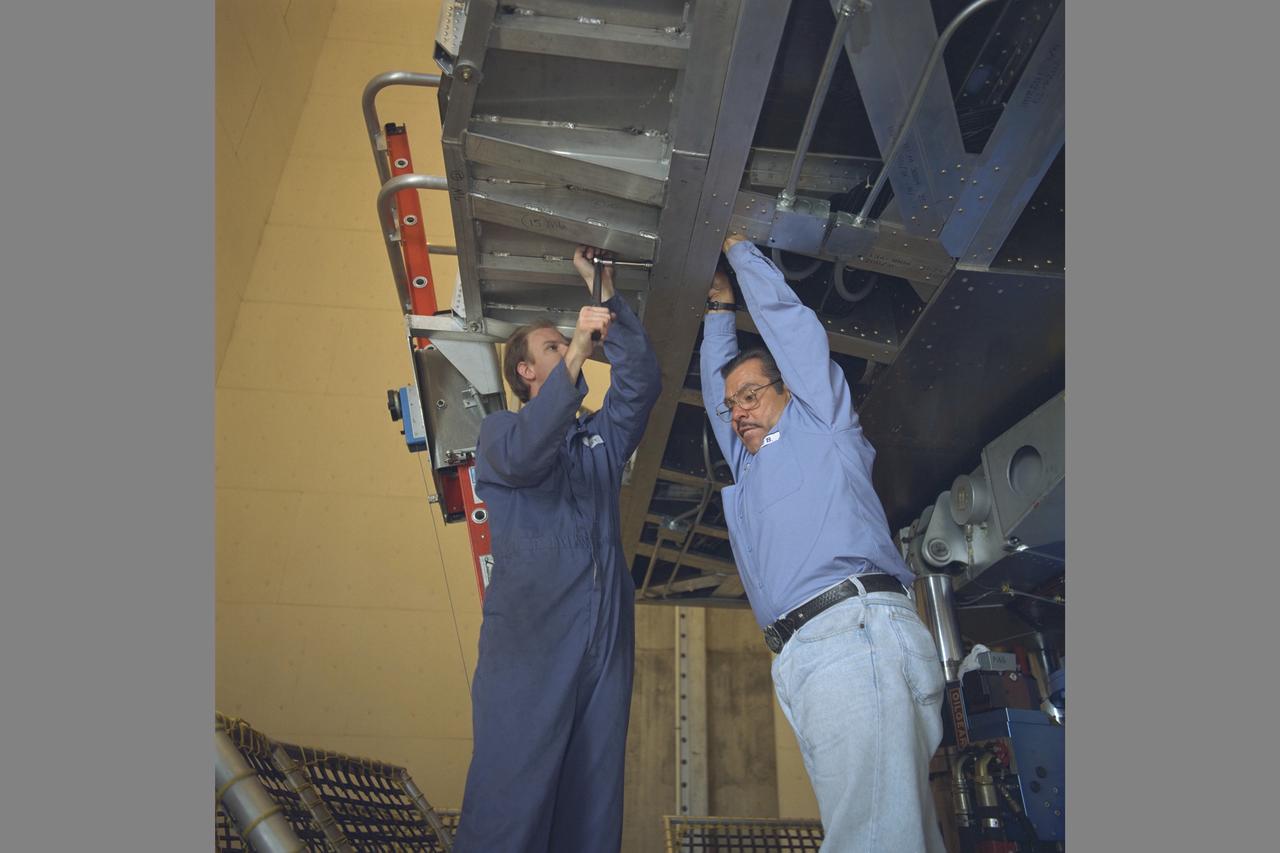
Tiltrotor Aircraft, Transport Aircraft T-Cab moving into NASA Ames Vertical Motion Simulaotor (VMS) from I-Cab Fixed Base Area in bldg. N-243 using trolly.
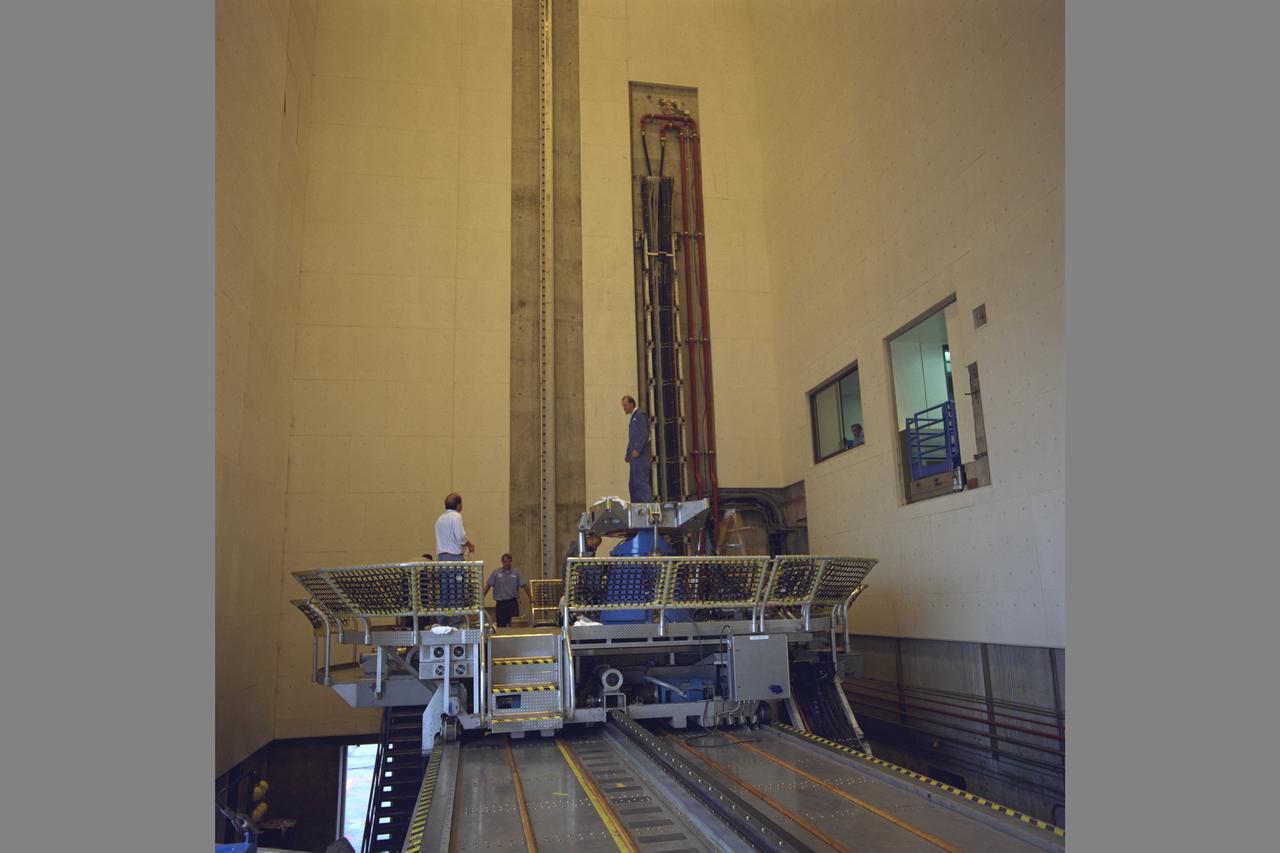
Tiltrotor Aircraft, Transport Aircraft T-Cab moving into NASA Ames Vertical Motion Simulaotor (VMS) from I-Cab Fixed Base Area in bldg. N-243 using trolly.
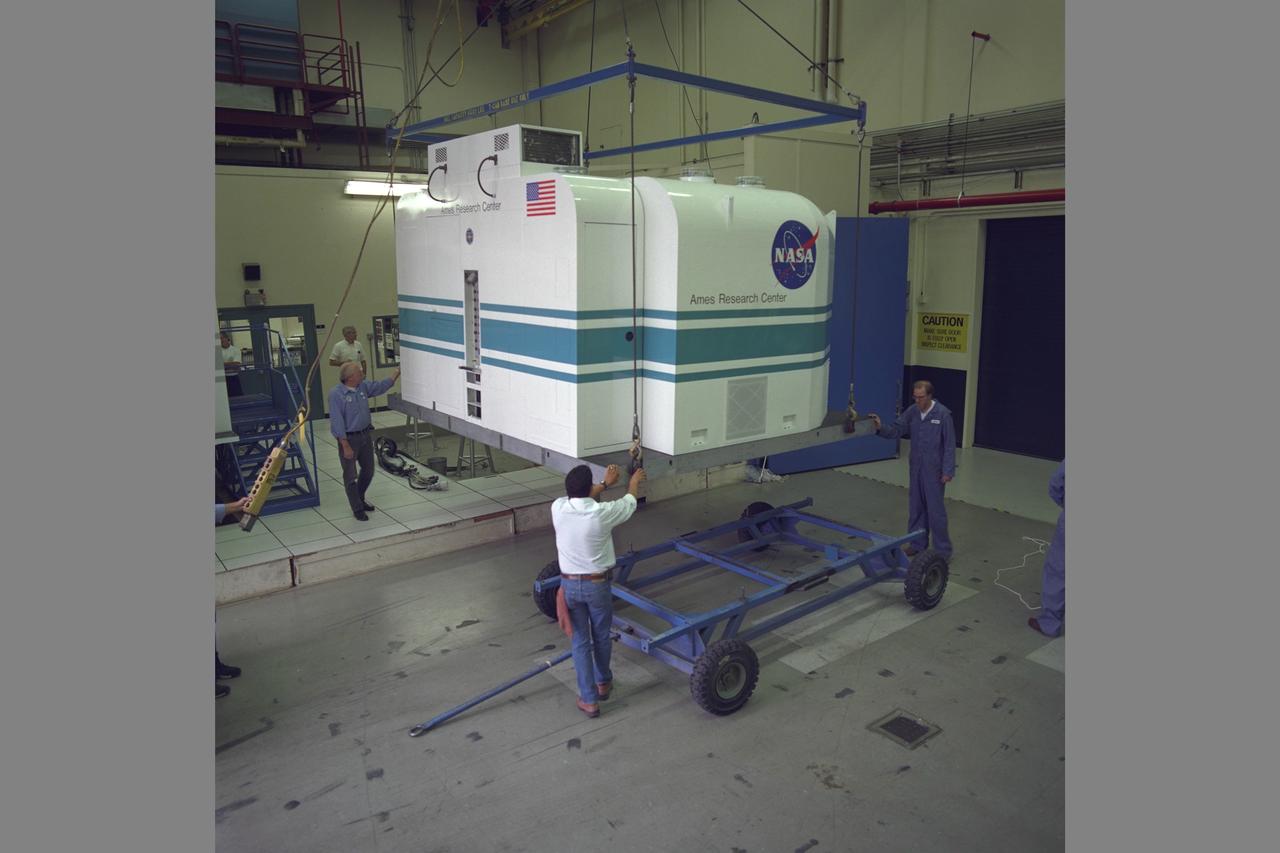
Tiltrotor Aircraft, Transport Aircraft T-Cab moving into NASA Ames Vertical Motion Simulaotor (VMS) from I-Cab Fixed Base Area in bldg. N-243 using trolly.

Tiltrotor Aircraft, Transport Aircraft T-Cab moving into NASA Ames Vertical Motion Simulaotor (VMS) from I-Cab Fixed Base Area in bldg. N-243 using trolly.
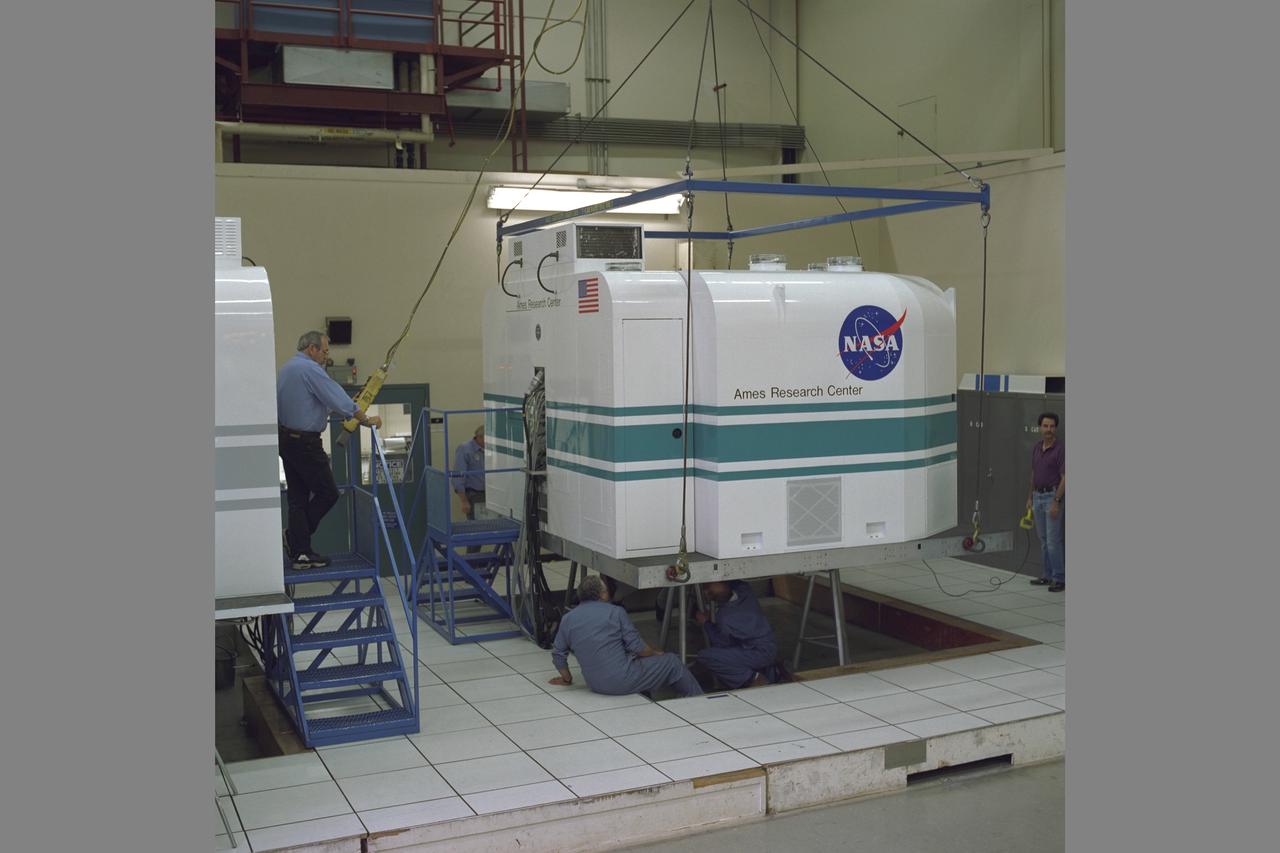
Tiltrotor Aircraft, Transport Aircraft T-Cab moving into NASA Ames Vertical Motion Simulaotor (VMS) from I-Cab Fixed Base Area in bldg. N-243 using trolly.
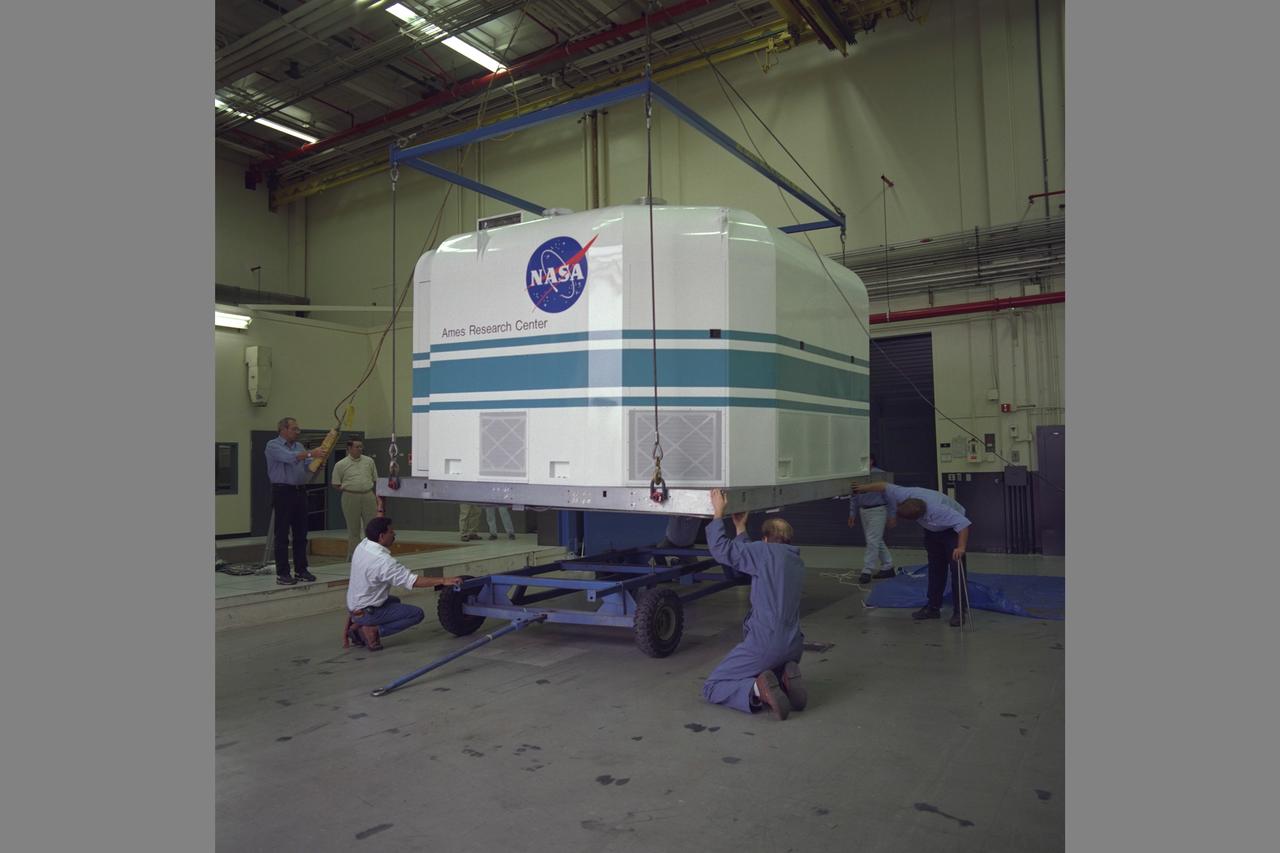
Tiltrotor Aircraft, Transport Aircraft T-Cab moving into NASA Ames Vertical Motion Simulaotor (VMS) from I-Cab Fixed Base Area in bldg. N-243 using trolly.
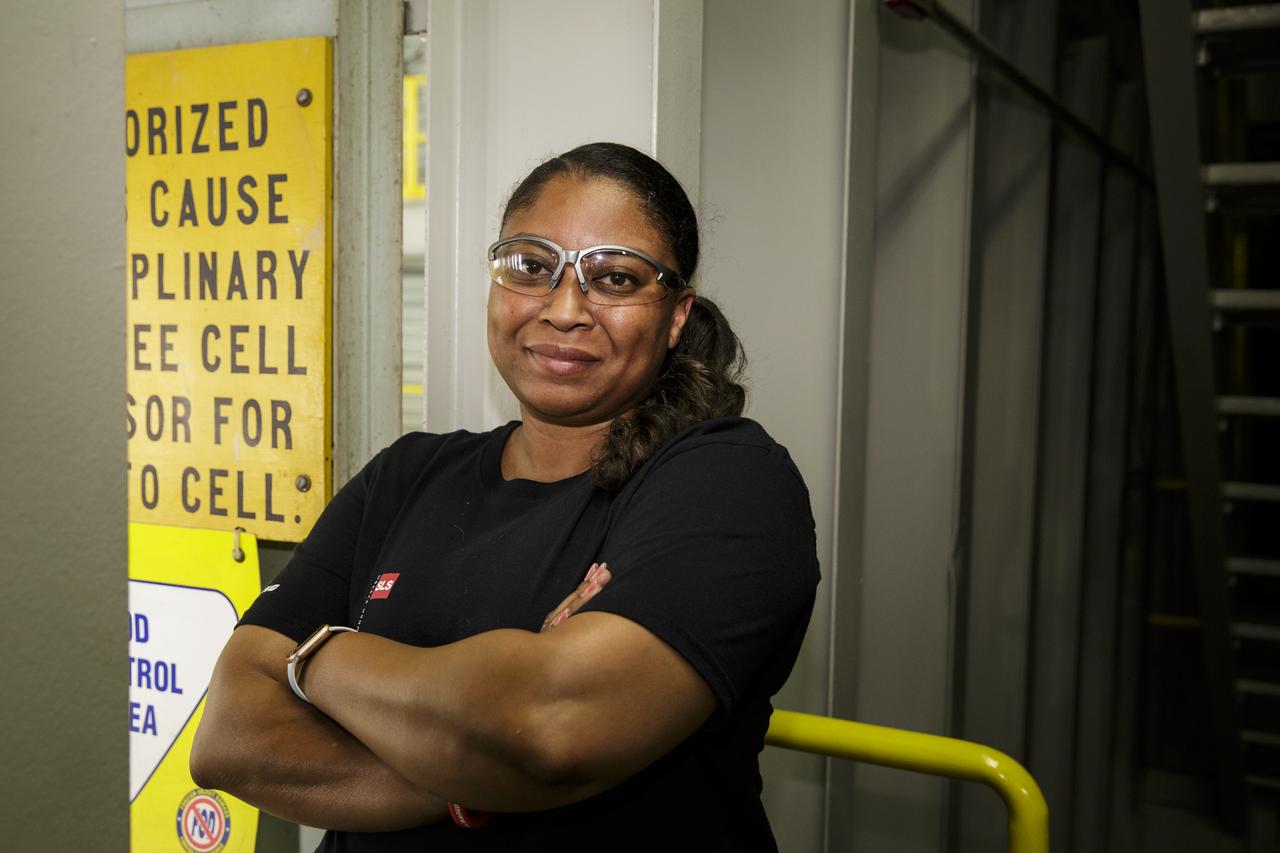
"On my first day, I felt like I did not belong. I felt like I was unqualified. That’s the thing: the people around here, I don’t know if it’s just the culture or the area where we are, but these people around here, they just encourage you: 'You can do it!' and 'Let me show you this, there’s nothing to it!' I mean, really, they forced me out of my element, even into where I am right now. I belong now. I definitely belong now. I don’t feel out of place. I feel like I have a better handle on things compared to when I was younger and easily intimidated. I feel like I belong now. "My goal right now is to find a need and fill it. That’s my thing. And that’s all through life. Any job, any position. That’s the goal. Find the need. Find what you’re good at. And you fill that need." Candis Hills, Facilities and Asset Management, Boeing, Friday, June 28, 2019 at Michoud Assembly Facility, New Orleans, LA. Photo Credit: (NASA/Aubrey Gemignani)
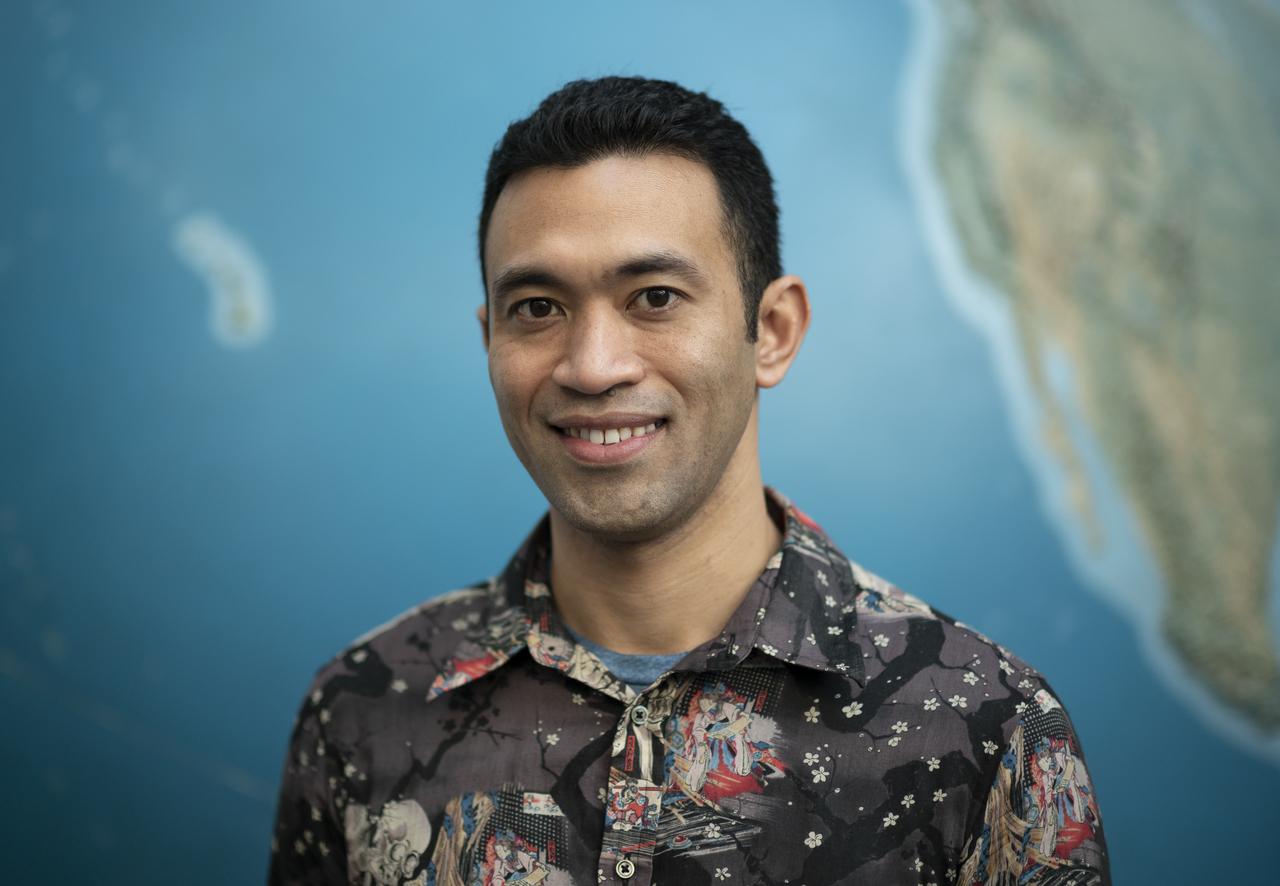
“Back home there’s a place called Mākua beach. It’s where I spent so much of my childhood. My grandfather had a little beachside camp area, and every day after school my dad and I would drive to the camp and visit my grandfather, and we’d go out fishing either on a rubber tube or a small fishing boat. There are so many memories of being with my dad and my grandfather and all of my calabash uncles there. My grandmother and my grandfather were both strongly connected to the beach. They actually both passed away on the beach, so that place has a special place in my heart. It’s a beautiful, beautiful quiet little pocket of sand and water, and every time I go back, I think of them and all of those memories. “The Hawaiians have been there for a thousand-plus years. And I have written documents that show my grandfather’s great-grandfather had an association with the area. It was a letter he wrote to a commission voicing his support for Native Hawaiian land rights in the valley. I love to go back every time I go home. Sometimes when it’s low tide, you can even find petroglyphs engraved on the rocks. There’s always something new to discover. “I know fishing is not as plentiful as it was before because of overfishing and likely other factors. Climate change is impacting a lot of coastal areas not just in Hawaii but also around the world, from erosion to coral bleaching. It’s powerful that we continue to learn how everyone and everything on Earth is interconnected. It’s what Native Hawaiians have long understood through our cosmology and approach to resource management. “That’s what makes communicating Earth science meaningful for me—knowing that indigenous Hawaiian wisdom and NASA research both point to the responsible management of and respect for the environment.” Samson Reiny, editor and senior outreach coordinator at NASA Earth Science News, Friday, Feb. 21, 2020, at NASA's Goddard Space Flight Center in Greenbelt, Md. Photo Credit: (NASA/Joel Kowsky)
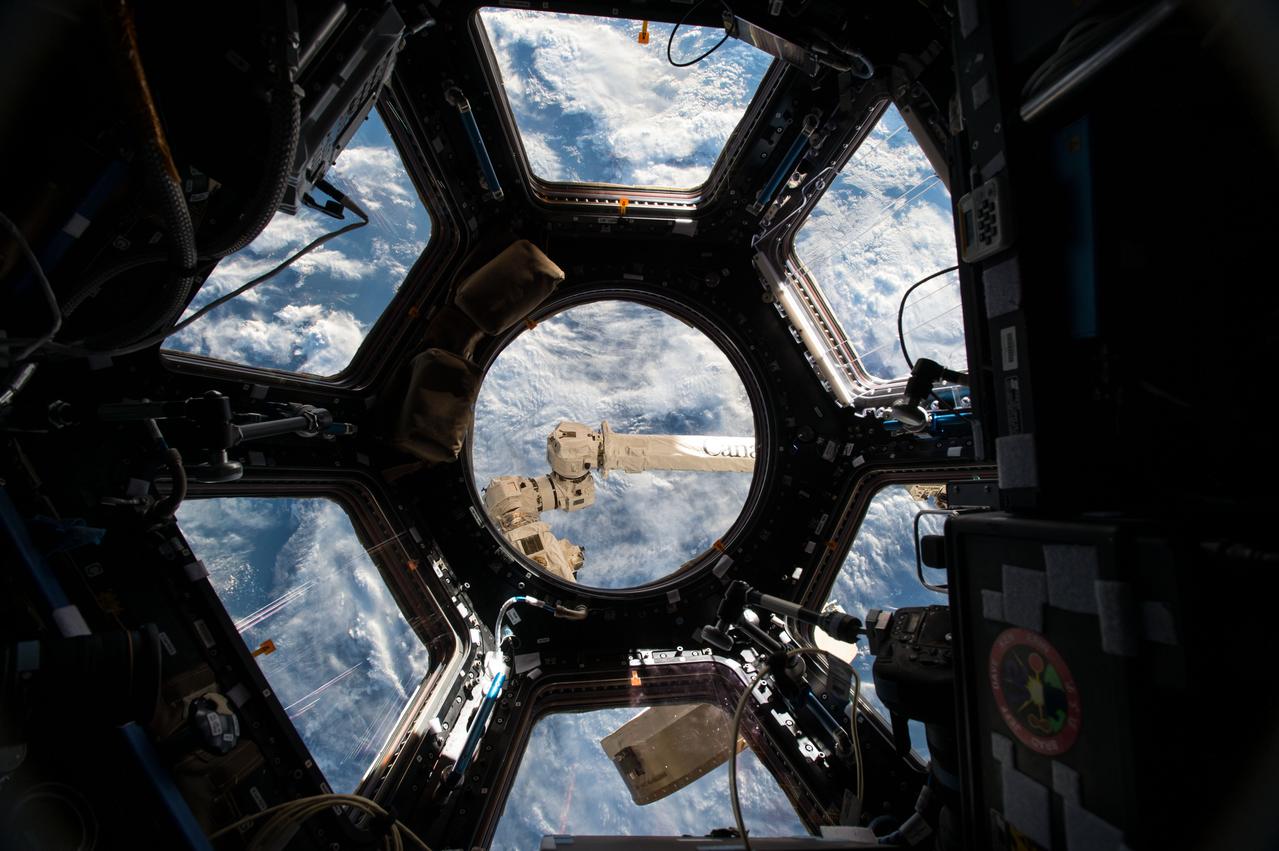
ISS043E284928 (06/04/215) --- NASA astronaut Scott Kelly on the International Space Station captured this interesting image in the stations Cupola, the 360 degree observation area and remote control location for grappling and docking and undocking spacecraft. Scott tweeted this comment with the image on June, 4, 2015: "Often when I look out the window I think we should call it Planet Water instead of Earth. Sadly mostly saltwater".
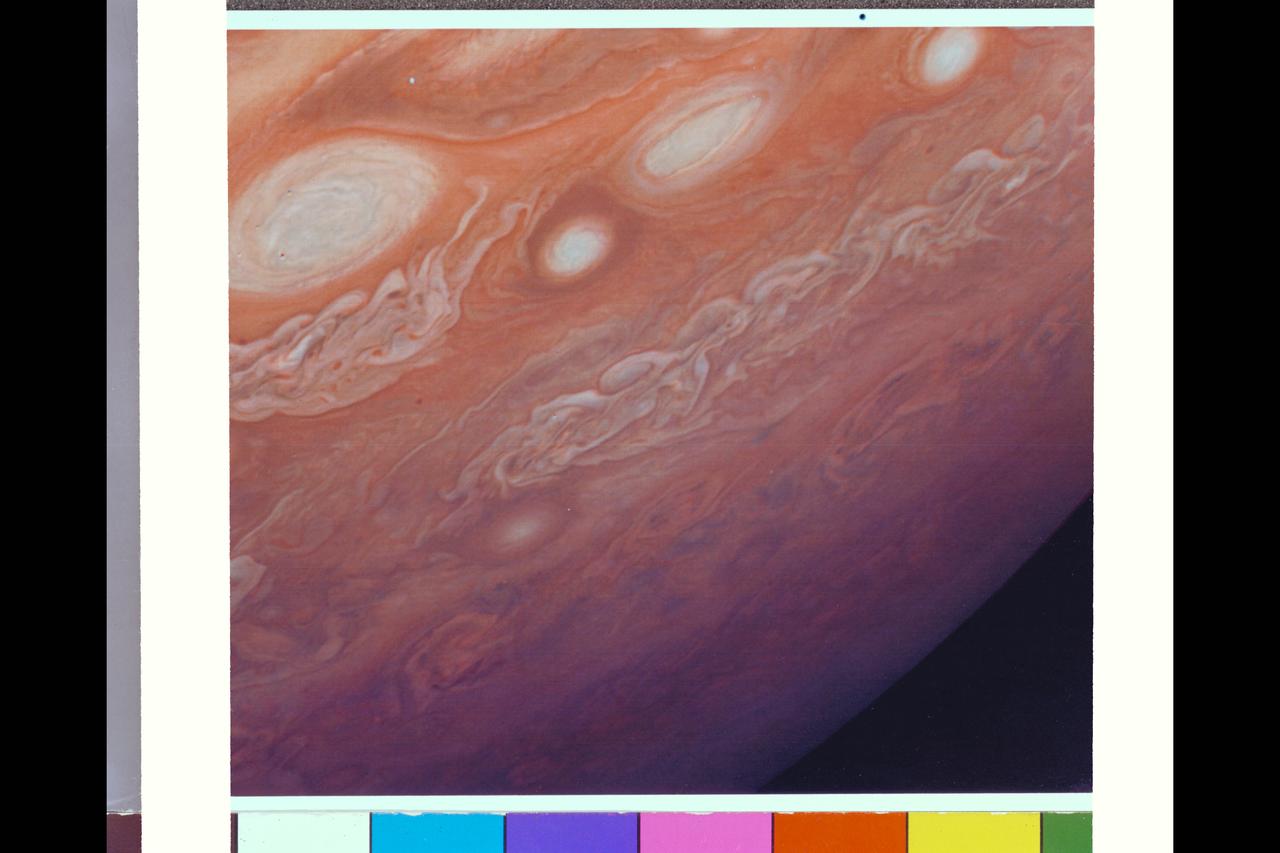
Range : 4.3 million km. ( 2.7 million miles ) This photograph taken from Voyager I, shows the area east of the Great Red Spot. The dark halo surrounding the bright spot, just to the right of the bright oval, is said by scientists to be, almost certainly, a five micron hot spot. This is a region of the atmosphere warmer than those around it. The dark halo may represent an area in which we are looking deeper into Jupiter's Atmosphere, although not yet completely understood.
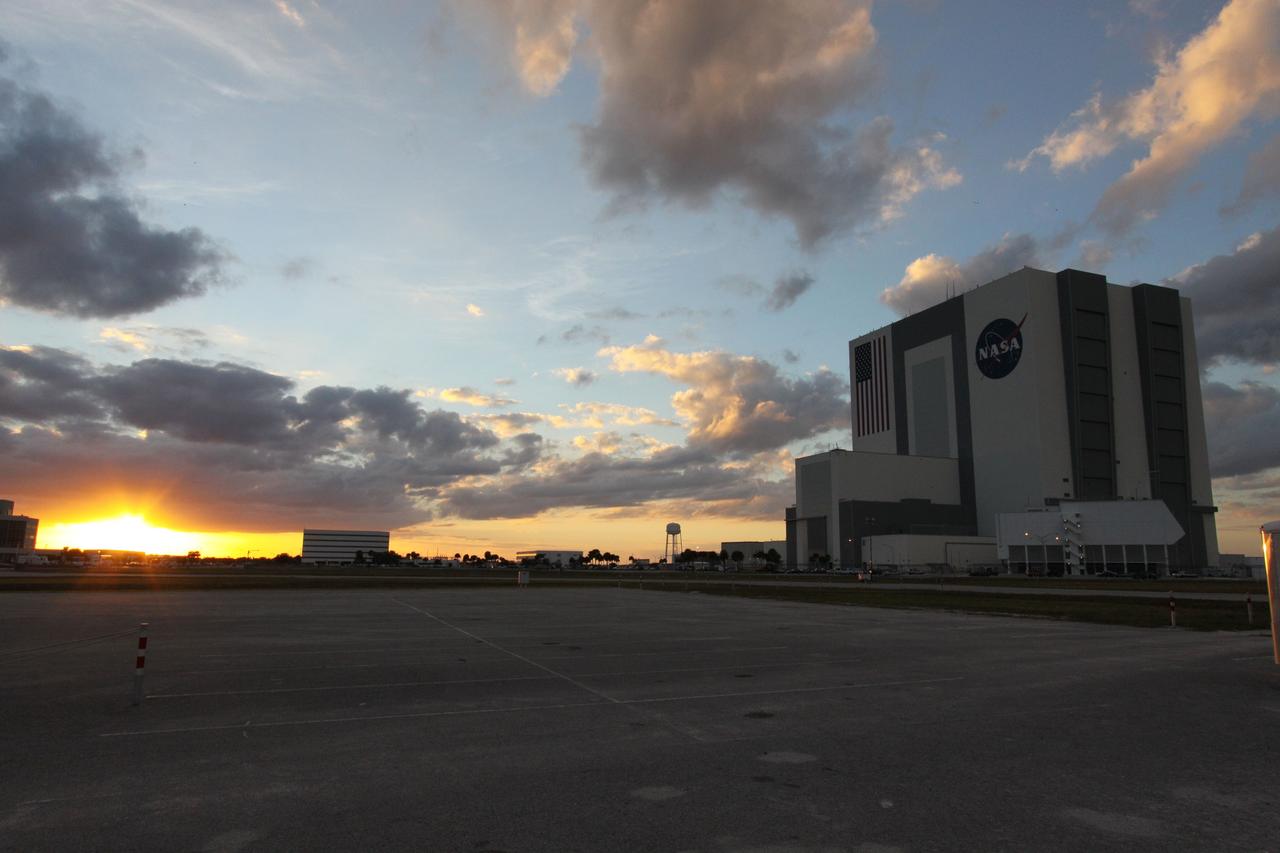
CAPE CANAVERAL, Fla. -- From the Press Site parking lot at NASA's Kennedy Space Center in Florida, the sun sets over the Launch Complex 39 area. At center, are the Operations Support Building I and Processing Control Center. At right, are the Vehicle Assembly Building and Launch Control Center. Photo credit: NASA/Troy Cryder
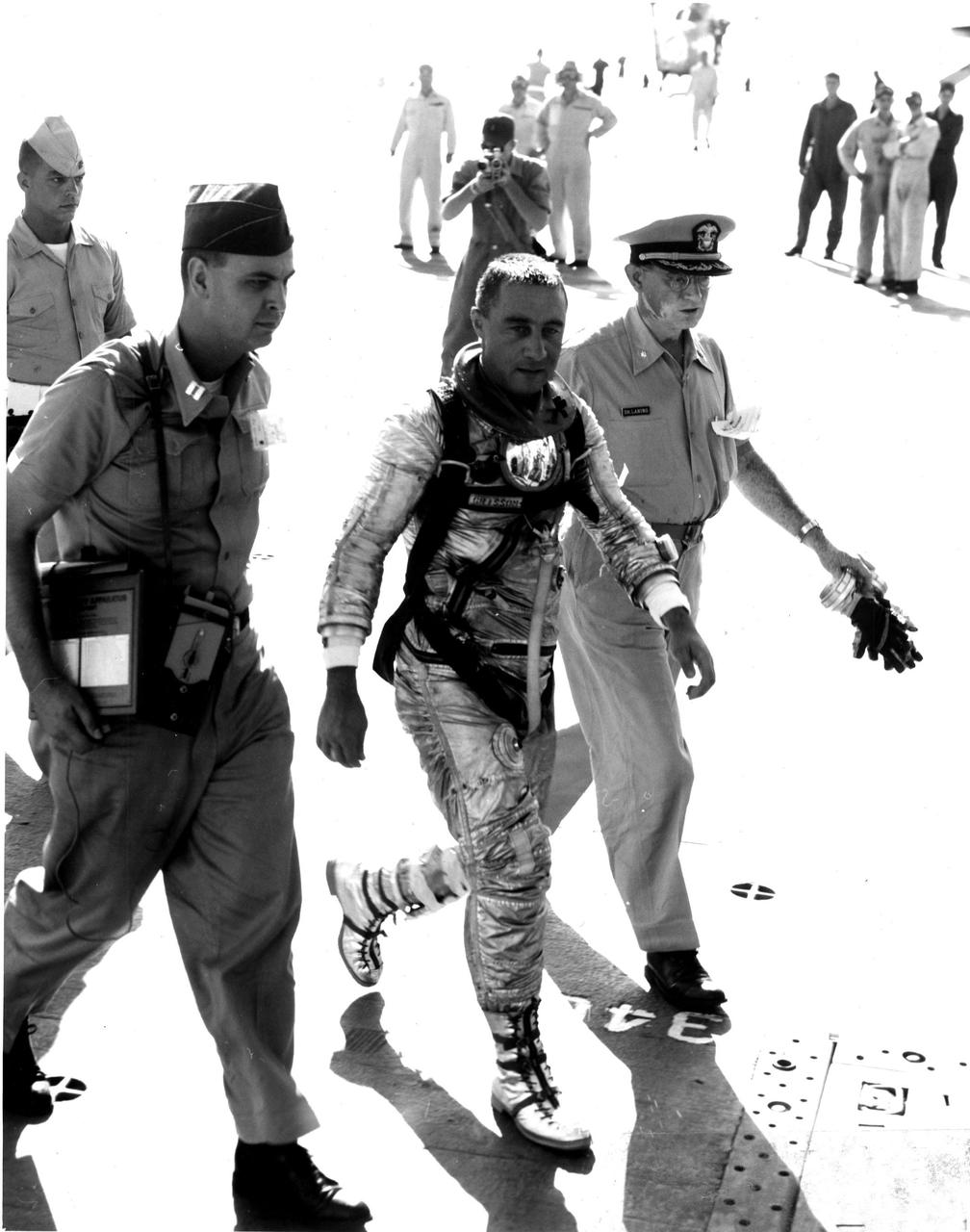
KENNEDY SPACE CENTER, FLA. -- Astronaut Virgil I. Grissom walks across the deck of the U.S.S. Randolph after being airlifted by helicopter from the Liberty Bell 7 impact area. 'Gus' Grissom was the second U.S. man in space. (NASA Photo)
/61-mr4-72(s)~medium.jpg)
KENNEDY SPACE CENTER, FLA. -- Astronaut Virgil I. Grissom, suited up and ready to climb into Liberty Bell 7 spacecraft, talks with backup astronaut John Glenn prior to insertion. The Mercury-Redstone 4 mission was scrubbed a few hours later due to unfavorable weather over the launch area. (NASA Photo)
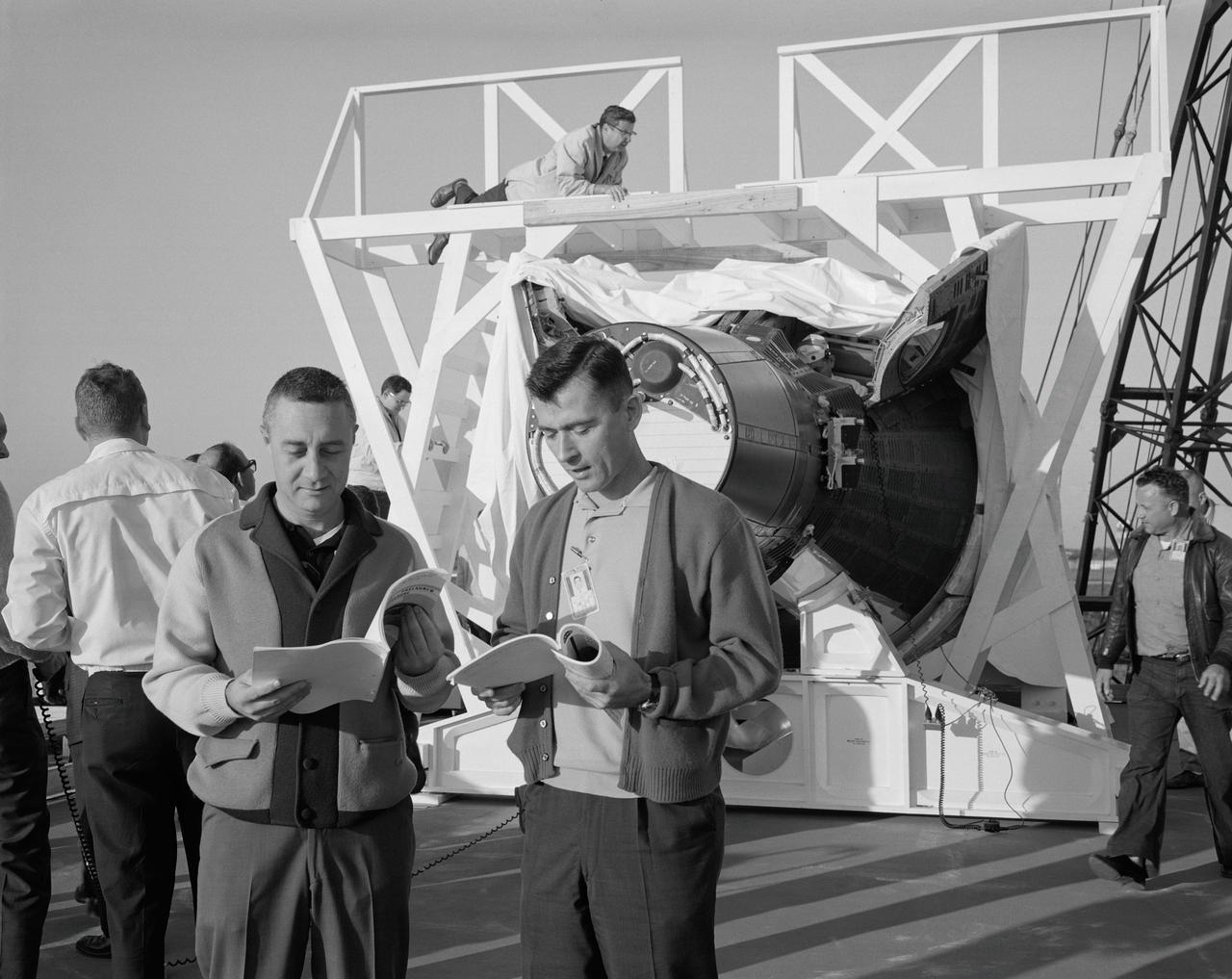
S65-13391 (6 Jan. 1965) --- Astronaut Virgil I. Grissom (left), Gemini-Titan 3 command pilot; and John W. Young, pilot, are shown discussing test plans prior to entering the Gemini-3 spacecraft for a communications test at the Merritt Island test area.
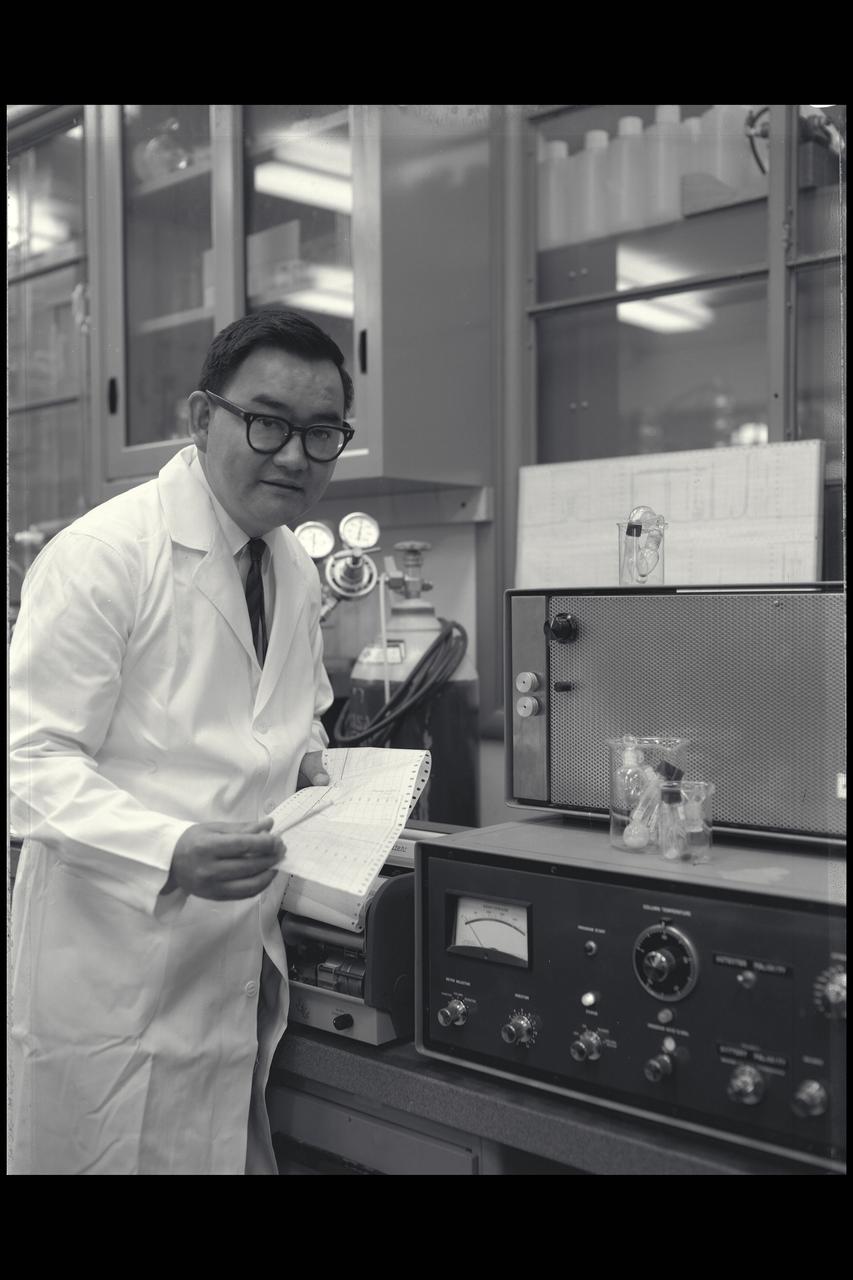
Vance I. Oyama at the Gas Chromatograph in Ames' life detection laboratory, Vance and his brother Jiro both pioneered new areas of life sciences research at Ames. Publication: Ames History; Atmosphere of Freedom; 60 yrs at NASA Ames NASA SP-2000-4314
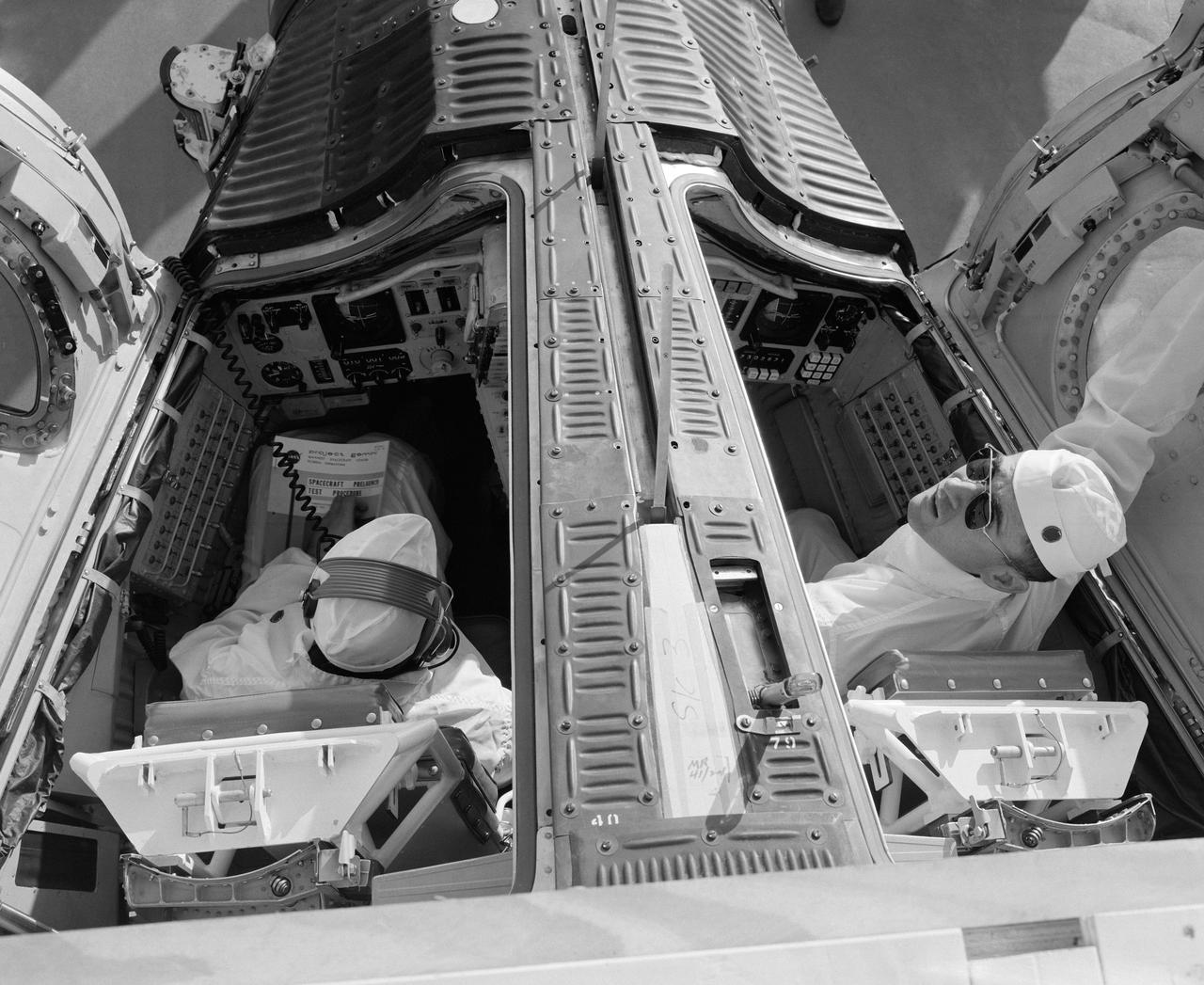
S65-13244 (6 Jan. 1965) --- The Gemini-Titan 3 prime crew, astronauts Virgil I. Grissom (left) and John W. Young, are shown in the Gemini-3 spacecraft during a communications test at the Merritt Island launch area.
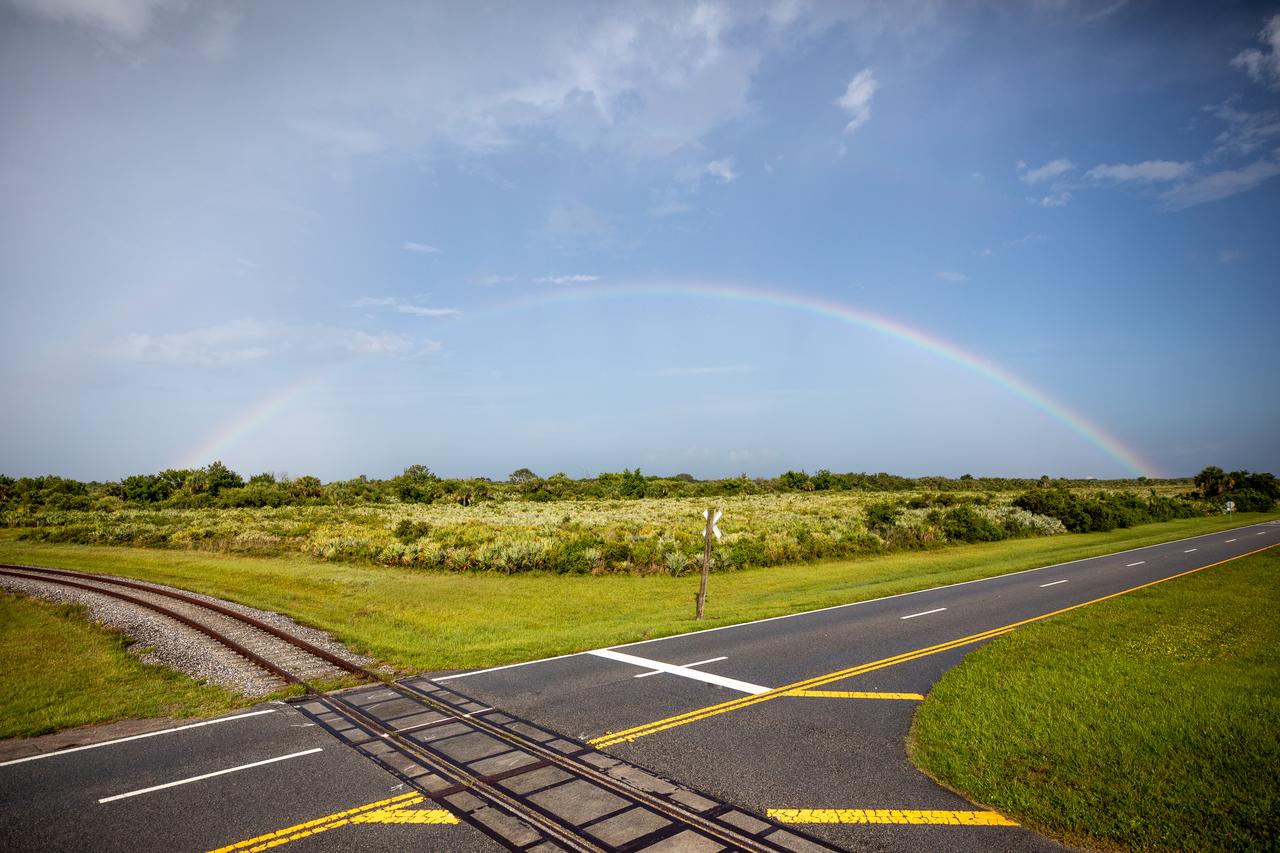
A full rainbow is in view over the Launch Complex 39B area at NASA’s Kennedy Space Center in Florida on June 12, 2022. The Artemis I Space Launch System and Orion spacecraft atop the mobile launcher were moved to Pad 39B atop the crawler-transport 2 for a prelaunch test called a wet dress rehearsal. Artemis I will be the first integrated test of the SLS and Orion spacecraft. In later missions, NASA will land the first woman and the first person of color on the surface of the Moon, paving the way for a long-term lunar presence and serving as a steppingstone on the way to Mars.
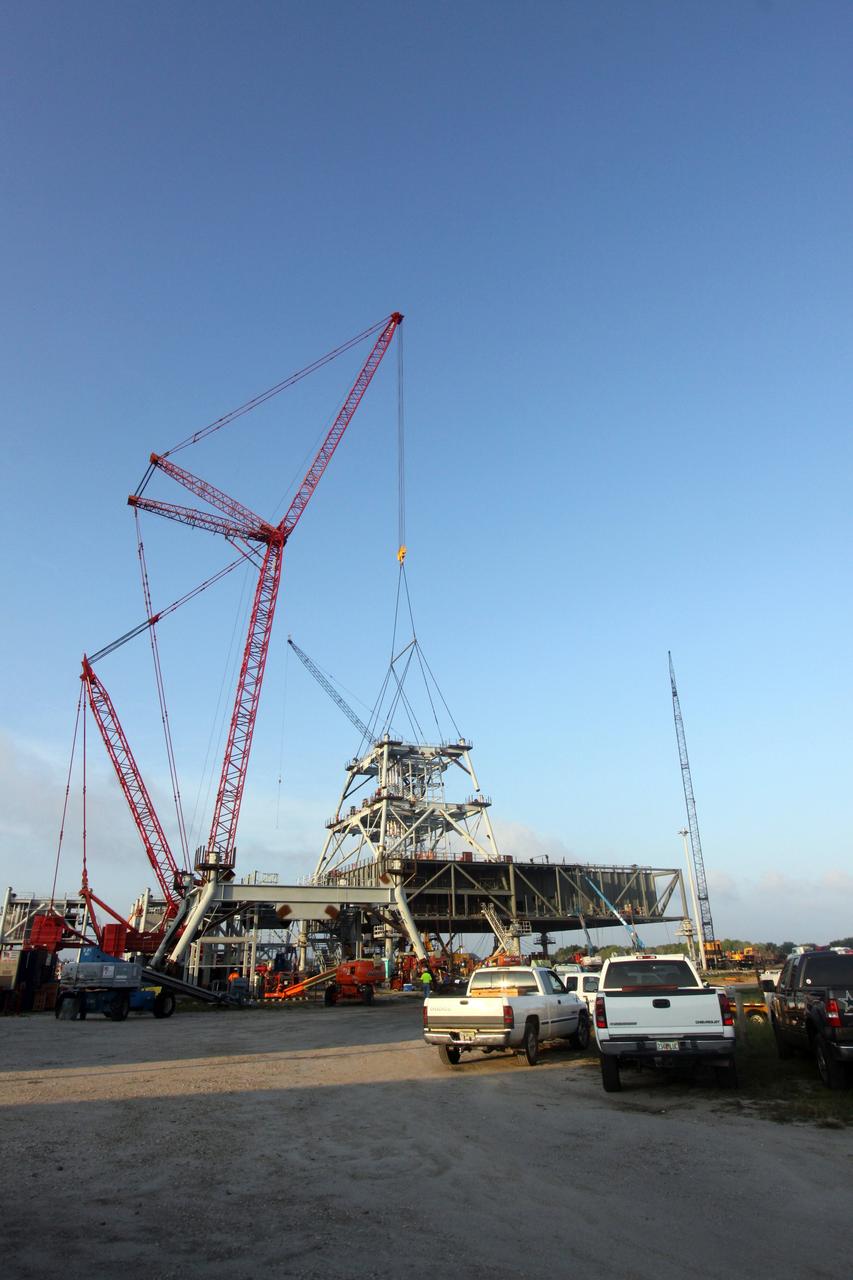
CAPE CANAVERAL, Fla. – At NASA's Kennedy Space Center in Florida, progress continues on the construction of a new mobile launcher, or ML, for the Constellation Program as a crane lifts the second section of the launcher's tower into place. Installation of the first section was on Sept. 24. The tower will have multiple platforms for personnel access and be approximately 345 feet tall. The launcher is being built at the mobile launcher park site area located north of Kennedy's Vehicle Assembly Building to support the Ares I rocket. The ML will provide a base to launch the Ares I which will transport the Orion crew exploration vehicle, its crew and cargo to low Earth orbit. The base is being made lighter than space shuttle mobile launcher platforms so the crawler-transporter can pick up the heavier load of the tower and taller rocket. For information on the Ares I, visit http://www.nasa.gov/ares. Photo credit: NASA/Jack Pfaller
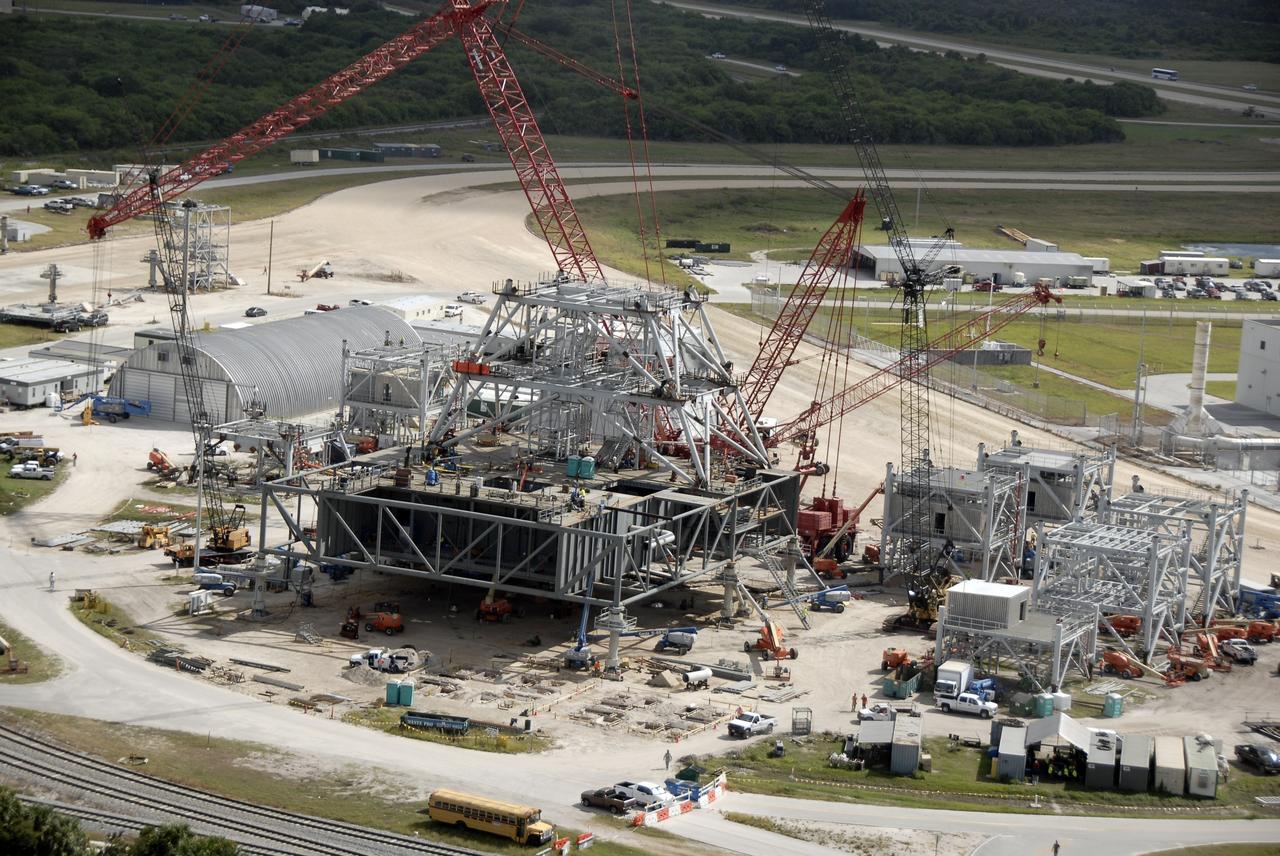
CAPE CANAVERAL, Fla. – At NASA's Kennedy Space Center in Florida, the airspace over the mobile launcher park site area is filled with the lumbering arms of multiple cranes, all doing their part in the construction of a new mobile launcher, or ML, for the Constellation Program. The launcher is being built at the site, north of Kennedy's Vehicle Assembly Building, to support the Ares I rocket. The launcher's tower will have multiple platforms for personnel access and be approximately 345 feet tall. The ML will provide a base to launch the Ares I which will transport the Orion crew exploration vehicle, its crew and cargo to low Earth orbit. The base is being made lighter than space shuttle mobile launcher platforms so the crawler-transporter can pick up the heavier load of the tower and taller rocket. For information on the Ares I, visit http://www.nasa.gov/ares. Photo credit: NASA/Kim Shiflett
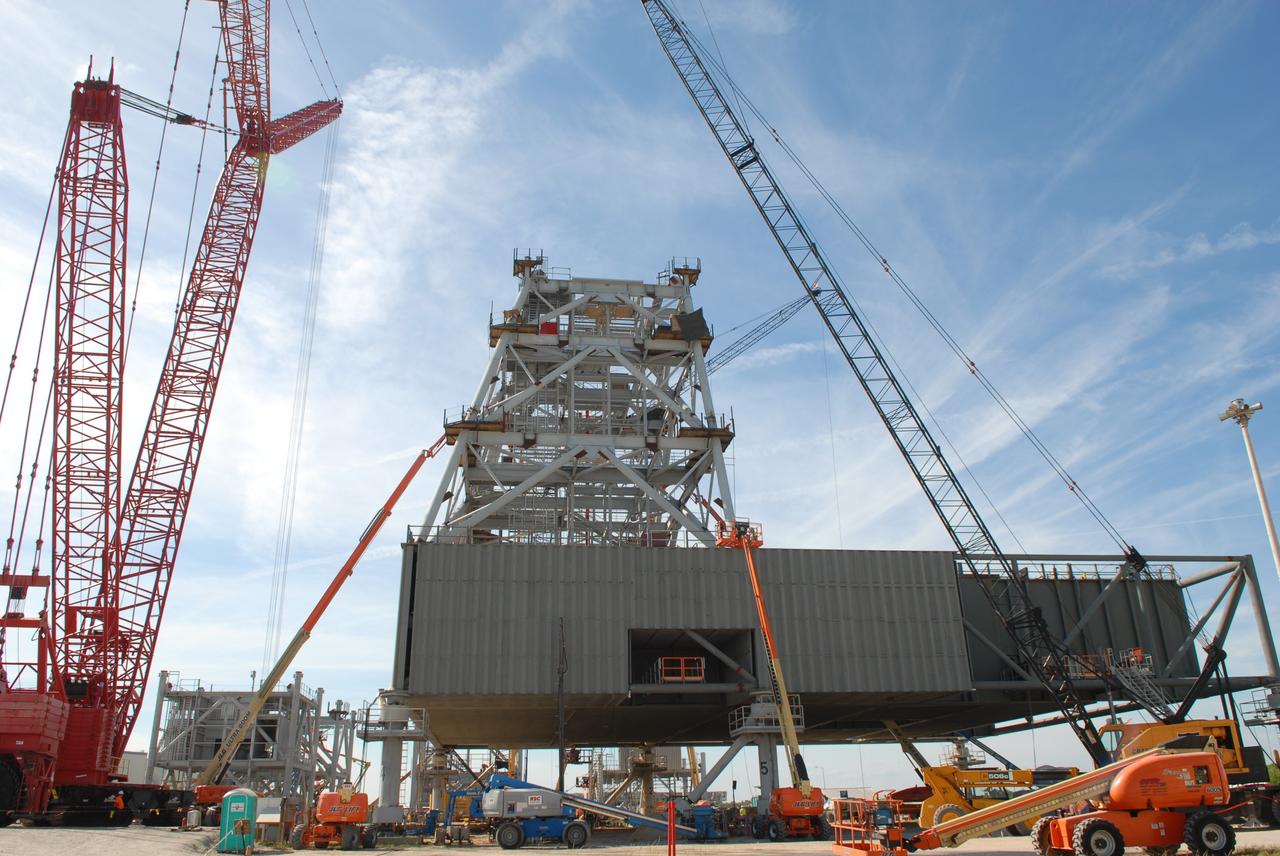
CAPE CANAVERAL, Fla. – At NASA's Kennedy Space Center in Florida, construction of the tower on a new mobile launcher, or ML, for the Constellation Program progresses. The ML's tower will have multiple platforms for personnel access and be approximately 345 feet tall. The launcher is being built at the mobile launcher park site area located north of Kennedy's Vehicle Assembly Building to support the Ares I rocket. The ML will provide a base to launch the Ares I, designed to transport the Orion crew exploration vehicle, its crew and cargo to low Earth orbit. The base is being made lighter than space shuttle mobile launcher platforms so the crawler-transporter can pick up the heavier load of the tower and taller rocket. For information on the Ares I, visit http://www.nasa.gov/ares. Photo credit: NASA/Jim Grossmann
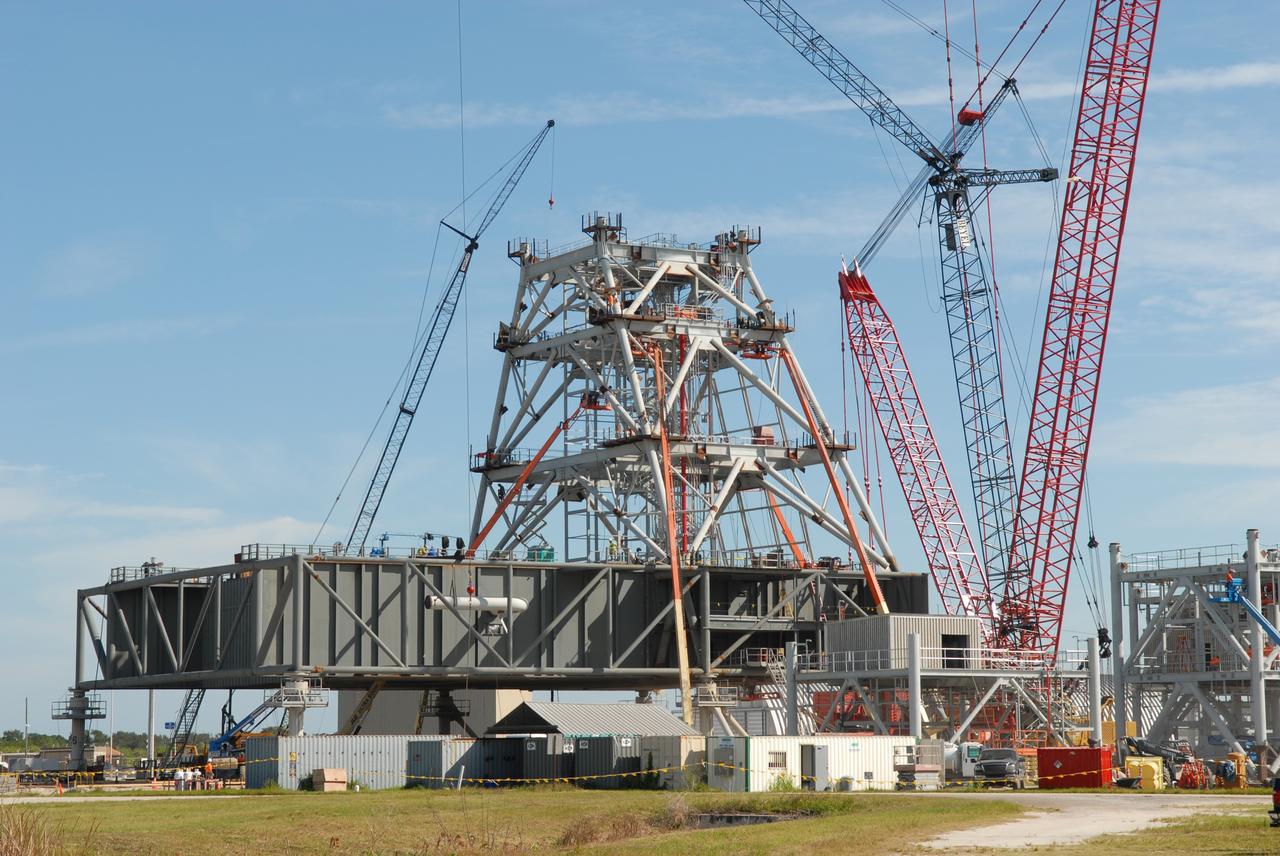
CAPE CANAVERAL, Fla. – At NASA's Kennedy Space Center in Florida, a new mobile launcher, or ML, under construction to support the Constellation Program is surrounded by cranes. The ML's tower will have multiple platforms for personnel access and be approximately 345 feet tall. The launcher is being built at the mobile launcher park site area located north of Kennedy's Vehicle Assembly Building to support the Ares I rocket. The ML will provide a base to launch the Ares I, designed to transport the Orion crew exploration vehicle, its crew and cargo to low Earth orbit. The base is being made lighter than space shuttle mobile launcher platforms so the crawler-transporter can pick up the heavier load of the tower and taller rocket. For information on the Ares I, visit http://www.nasa.gov/ares. Photo credit: NASA/Jim Grossmann
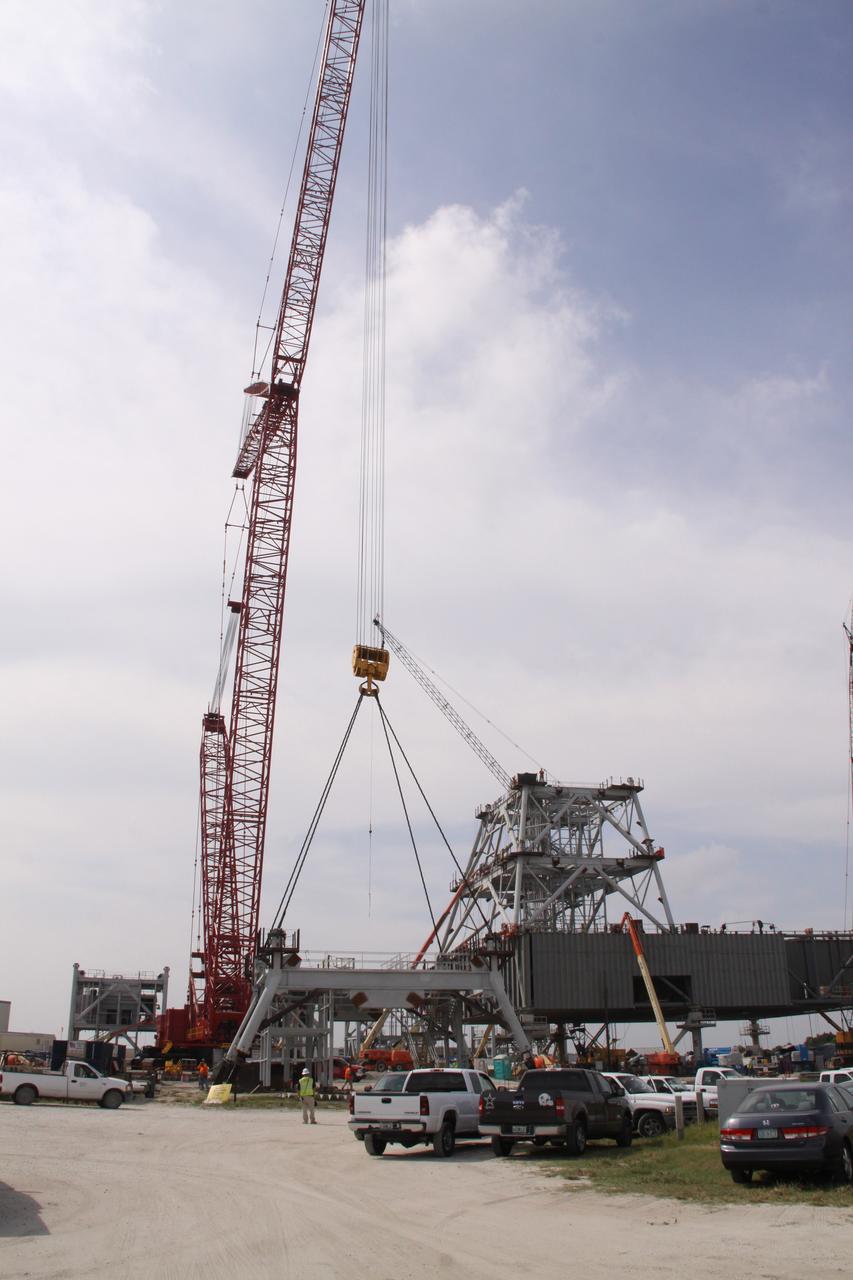
CAPE CANAVERAL, Fla. – At NASA's Kennedy Space Center in Florida, progress continues on the construction of a new mobile launcher, or ML, for the Constellation Program as a crane begins to lift the third section of the launcher's tower from the ground. Installation of the first section was on Sept. 24, and the second, on Oct. 15. The tower will have multiple platforms for personnel access and be approximately 345 feet tall. The launcher is being built at the mobile launcher park site area located north of Kennedy's Vehicle Assembly Building to support the Ares I rocket. The ML will provide a base to launch the Ares I, designed to transport the Orion crew exploration vehicle, its crew and cargo to low Earth orbit. The base is being made lighter than space shuttle mobile launcher platforms so the crawler-transporter can pick up the heavier load of the tower and taller rocket. For information on the Ares I, visit http://www.nasa.gov/ares. Photo credit: NASA/Jack Pfaller
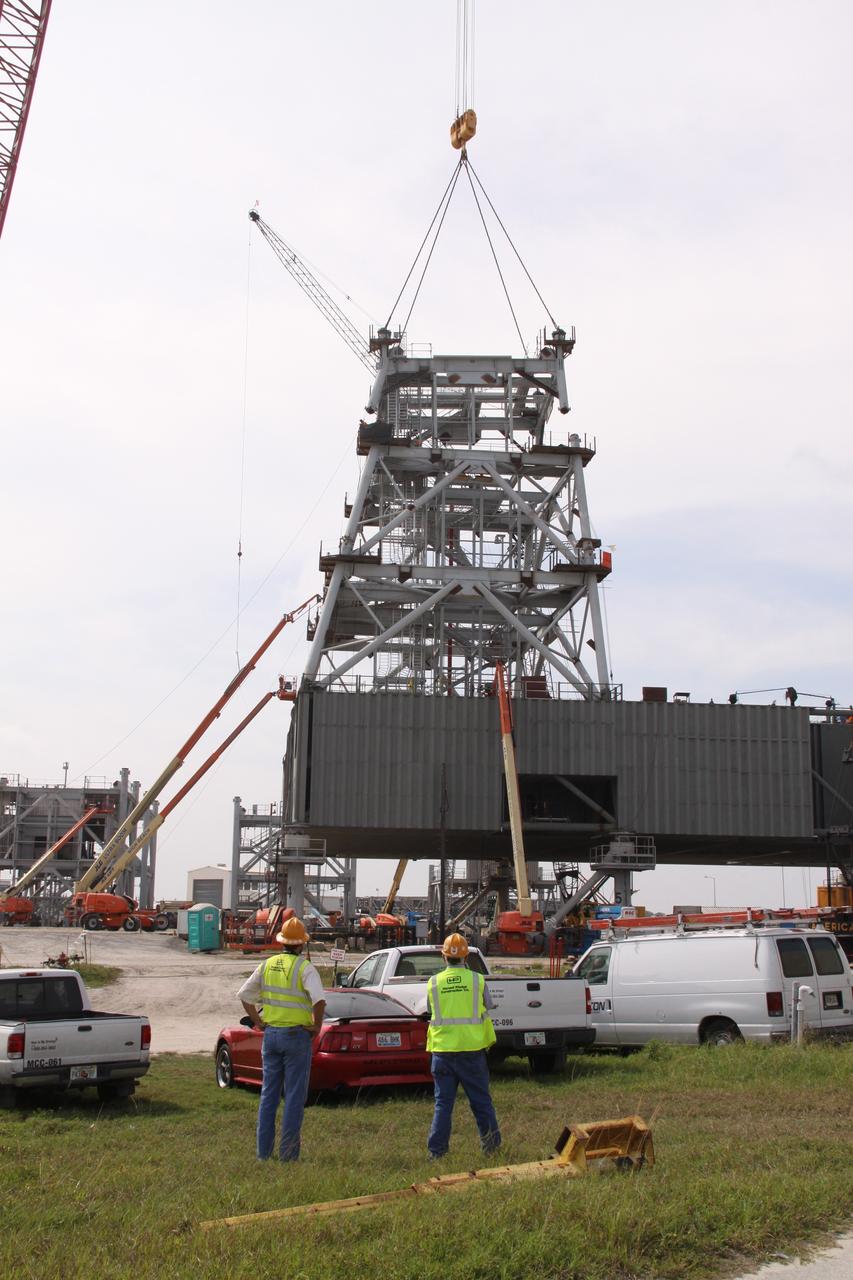
CAPE CANAVERAL, Fla. – At NASA's Kennedy Space Center in Florida, a crane lowers the third section of the tower for a new mobile launcher, or ML, for the Constellation Program into place atop the growing structure. Installation of the first section was on Sept. 24, and the second, on Oct. 15. The tower will have multiple platforms for personnel access and be approximately 345 feet tall. The launcher is being built at the mobile launcher park site area located north of Kennedy's Vehicle Assembly Building to support the Ares I rocket. The ML will provide a base to launch the Ares I, designed to transport the Orion crew exploration vehicle, its crew and cargo to low Earth orbit. The base is being made lighter than space shuttle mobile launcher platforms so the crawler-transporter can pick up the heavier load of the tower and taller rocket. For information on the Ares I, visit http://www.nasa.gov/ares. Photo credit: NASA/Jack Pfaller
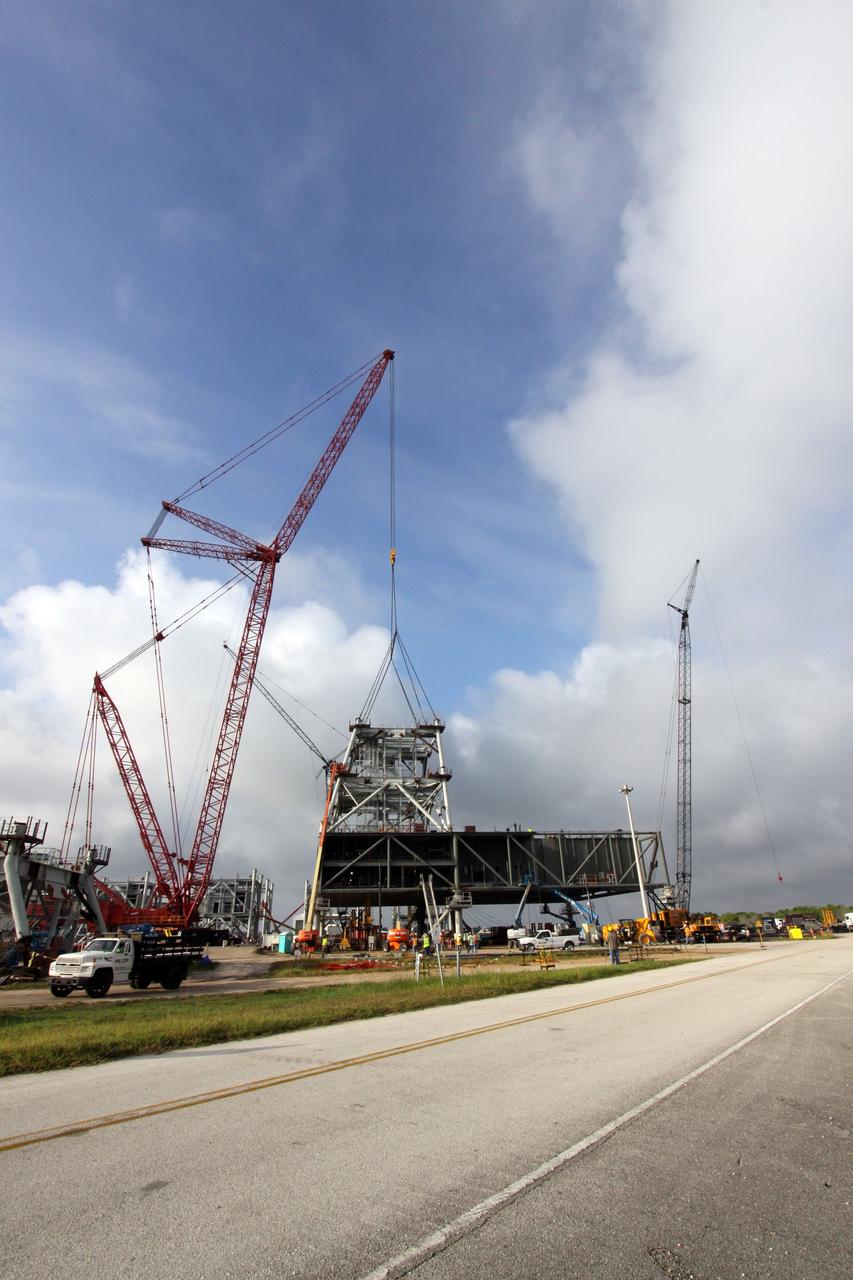
CAPE CANAVERAL, Fla. – At NASA's Kennedy Space Center in Florida, cranes support the placement of the second section of a tower for a new mobile launcher, or ML, for the Constellation Program onto the first. Installation of the first section was on Sept. 24. The tower will have multiple platforms for personnel access and be approximately 345 feet tall. The launcher is being built at the mobile launcher park site area located north of Kennedy's Vehicle Assembly Building to support the Ares I rocket. The ML will provide a base to launch the Ares I which will transport the Orion crew exploration vehicle, its crew and cargo to low Earth orbit. The base is being made lighter than space shuttle mobile launcher platforms so the crawler-transporter can pick up the heavier load of the tower and taller rocket. For information on the Ares I, visit http://www.nasa.gov/ares. Photo credit: NASA/Jack Pfaller
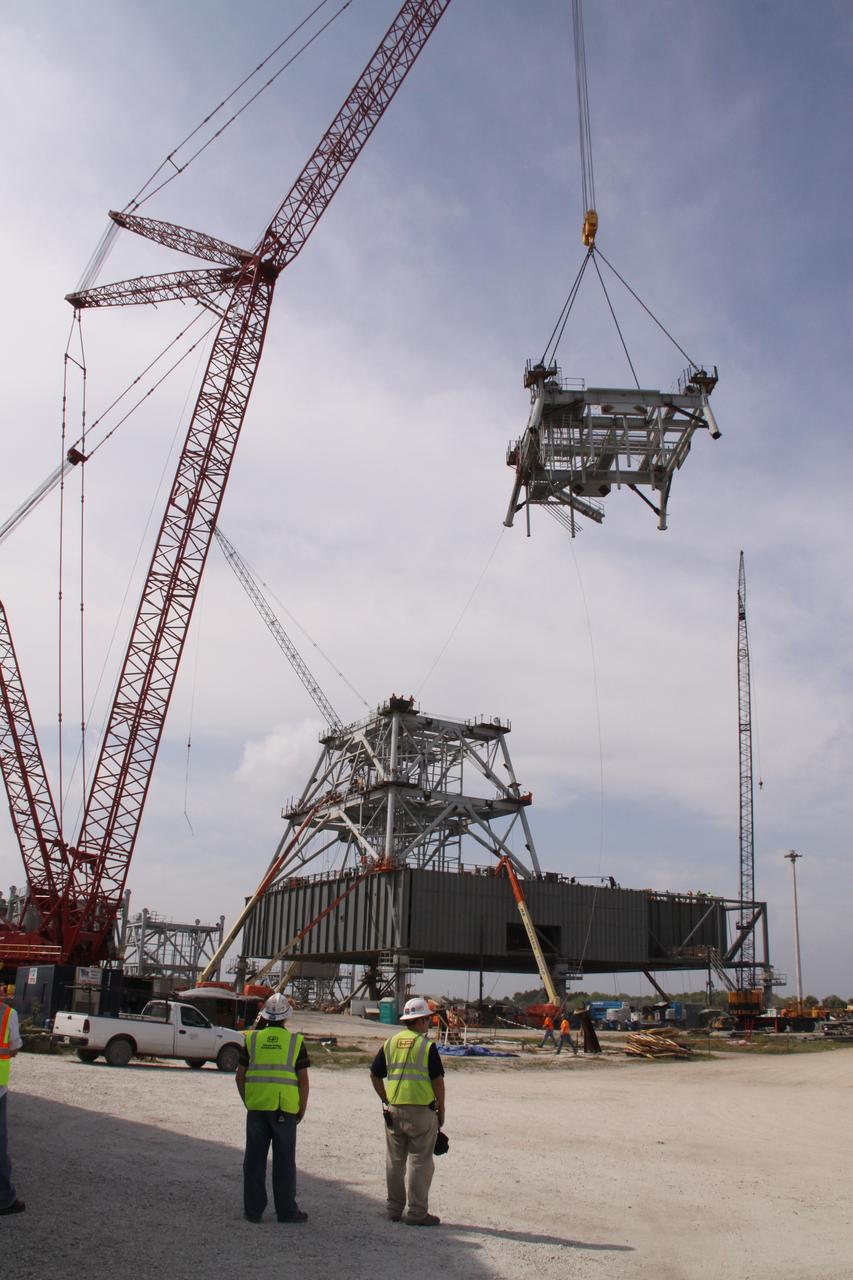
CAPE CANAVERAL, Fla. – At NASA's Kennedy Space Center in Florida, a crane lowers the third section of the tower for a new mobile launcher, or ML, for the Constellation Program toward the growing structure. Installation of the first section was on Sept. 24, and the second, on Oct. 15. The tower will have multiple platforms for personnel access and be approximately 345 feet tall. The launcher is being built at the mobile launcher park site area located north of Kennedy's Vehicle Assembly Building to support the Ares I rocket. The ML will provide a base to launch the Ares I, designed to transport the Orion crew exploration vehicle, its crew and cargo to low Earth orbit. The base is being made lighter than space shuttle mobile launcher platforms so the crawler-transporter can pick up the heavier load of the tower and taller rocket. For information on the Ares I, visit http://www.nasa.gov/ares. Photo credit: NASA/Jack Pfaller
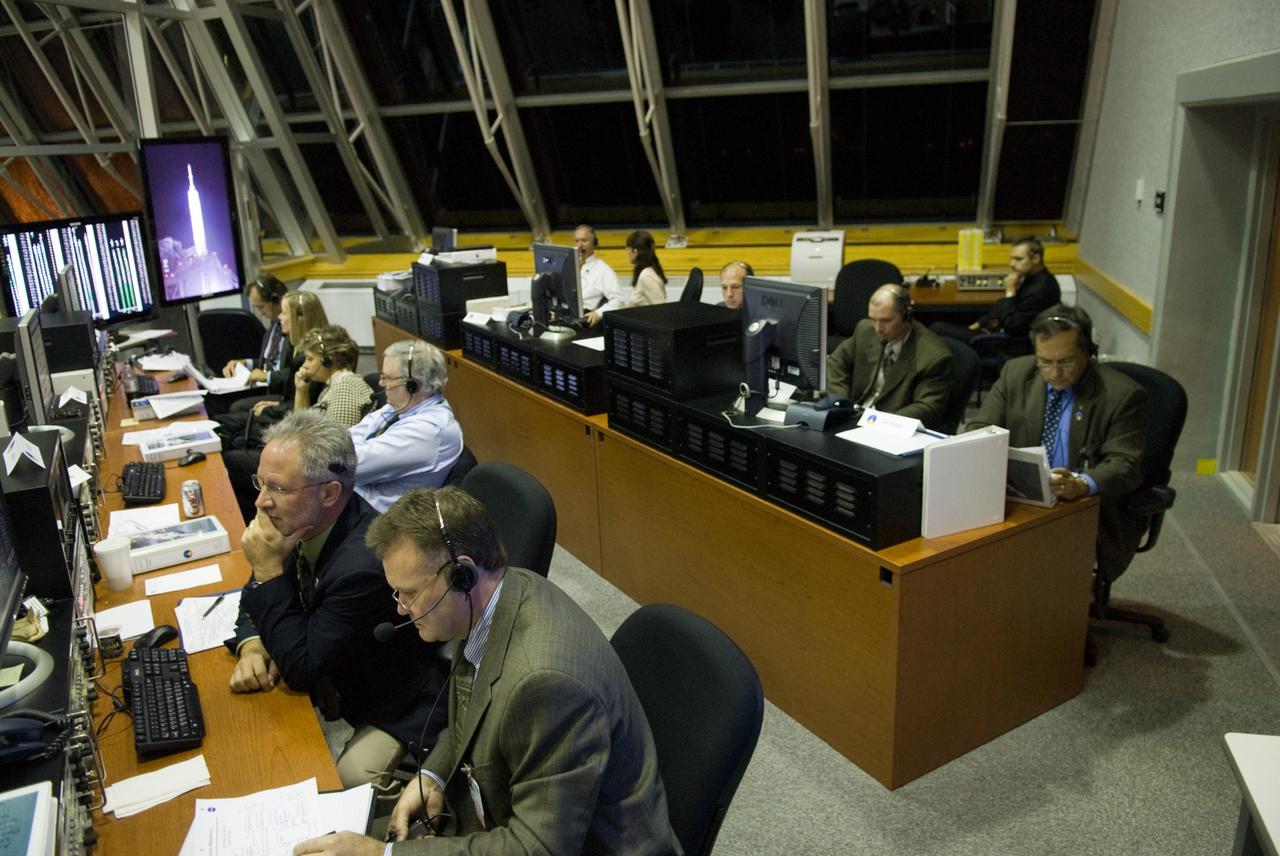
CAPE CANAVERAL, Fla. - The launch authority team for the Ares I-X flight test monitors the countdown from consoles in the Operations Management Room of the Young-Crippen Firing Room, a glass partitioned area overlooking the main floor, in the Launch Control Center at NASA's Kennedy Space Center in Florida. This will be the first launch from Kennedy's pads of a vehicle other than the space shuttle since the Apollo Program's Saturn rockets were retired. The parts used to make the Ares I-X booster flew on 30 different shuttle missions ranging from STS-29 in 1989 to STS-106 in 2000. The data returned from more than 700 sensors throughout the rocket will be used to refine the design of future launch vehicles and bring NASA one step closer to reaching its exploration goals. For information on the Ares I-X vehicle and flight test, visit http://www.nasa.gov/aresIX. Photo credit: NASA/Kim Shiflett
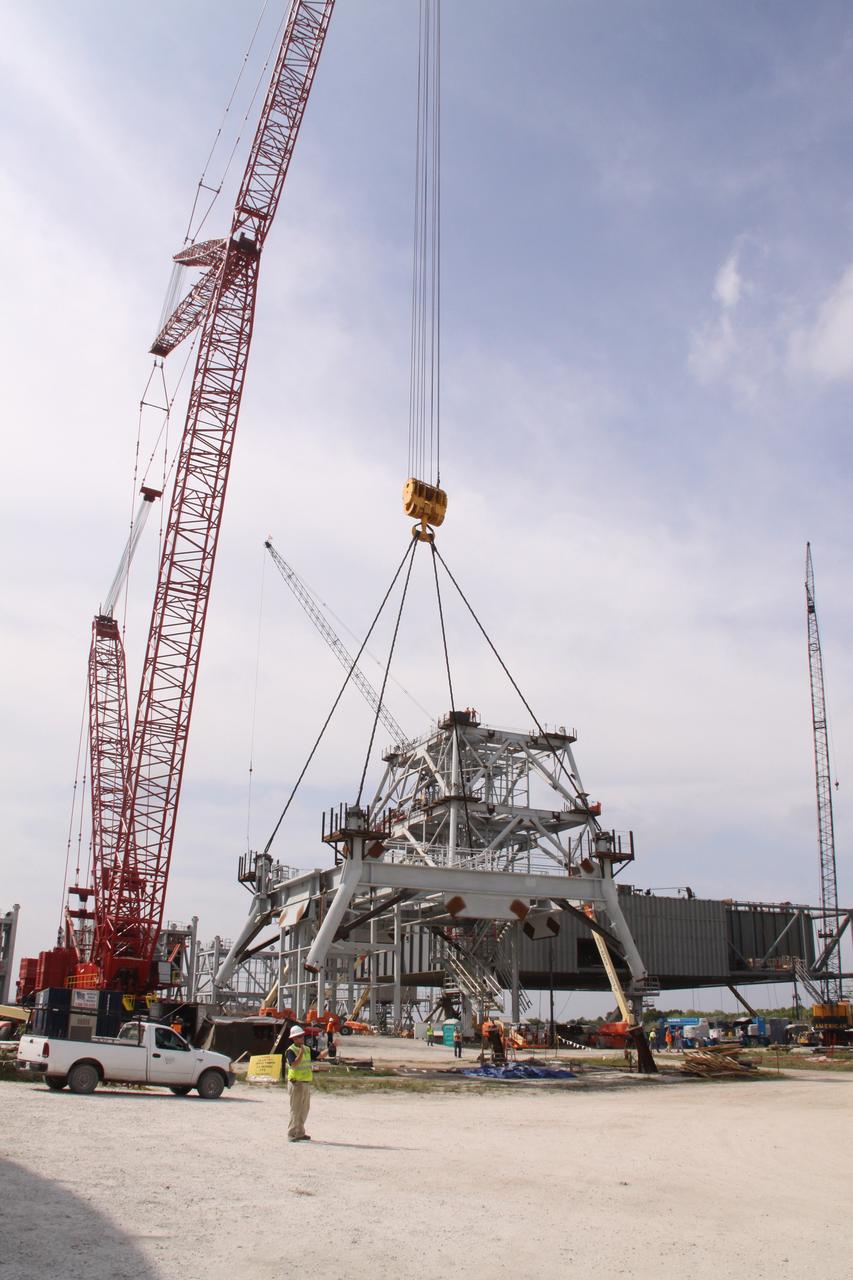
CAPE CANAVERAL, Fla. – At NASA's Kennedy Space Center in Florida, progress continues on the construction of a new mobile launcher, or ML, for the Constellation Program as a crane lifts the third section of the launcher's tower from the ground. Installation of the first section was on Sept. 24, and the second, on Oct. 15. The tower will have multiple platforms for personnel access and be approximately 345 feet tall. The launcher is being built at the mobile launcher park site area located north of Kennedy's Vehicle Assembly Building to support the Ares I rocket. The ML will provide a base to launch the Ares I, designed to transport the Orion crew exploration vehicle, its crew and cargo to low Earth orbit. The base is being made lighter than space shuttle mobile launcher platforms so the crawler-transporter can pick up the heavier load of the tower and taller rocket. For information on the Ares I, visit http://www.nasa.gov/ares. Photo credit: NASA/Jack Pfaller
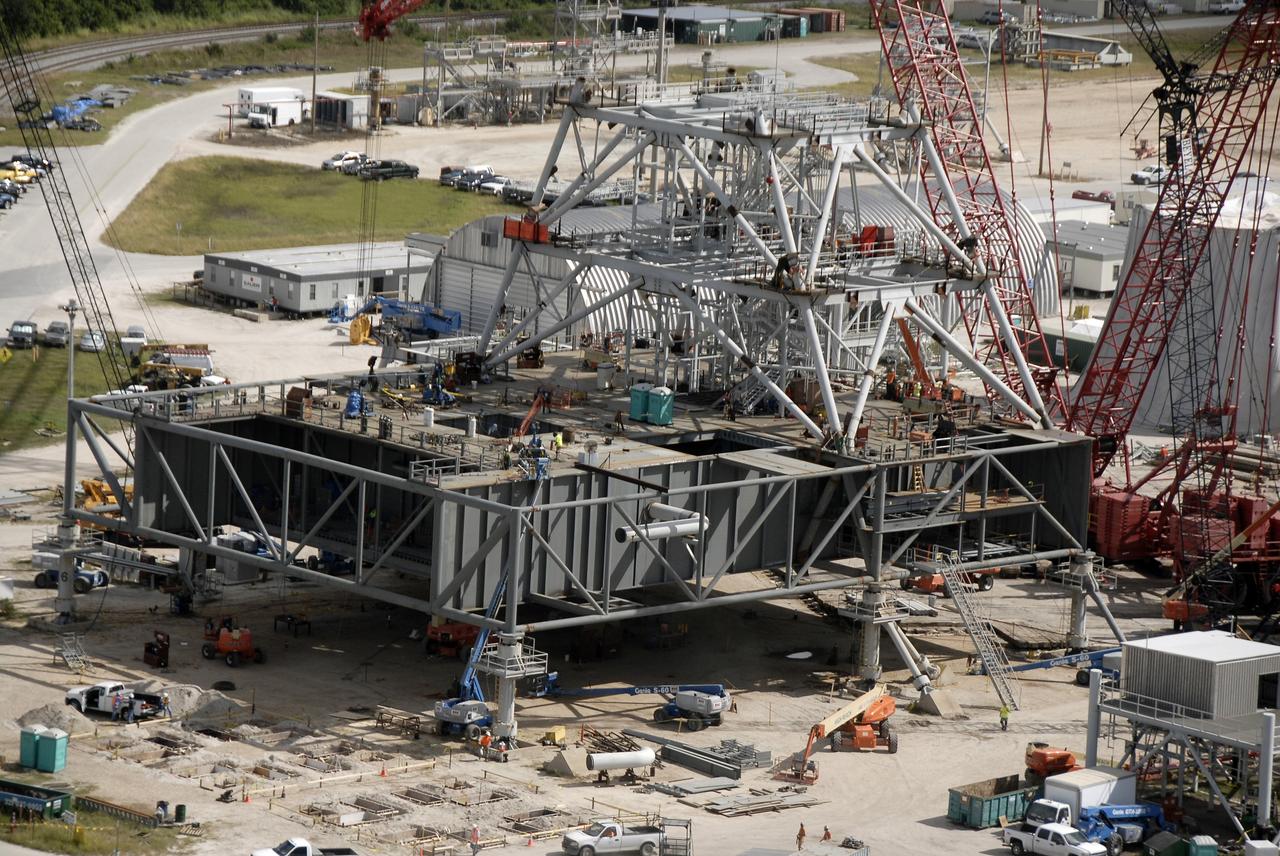
CAPE CANAVERAL, Fla. - At NASA's Kennedy Space Center in Florida, the mobile launcher park site area is buzzing with activity as workers construct a new mobile launcher, or ML, for the Constellation Program. The launcher is being built at the site, north of Kennedy's Vehicle Assembly Building, to support the Ares I rocket. The launcher's tower will have multiple platforms for personnel access and be approximately 345 feet tall. The ML will provide a base to launch the Ares I which will transport the Orion crew exploration vehicle, its crew and cargo to low Earth orbit. The base is being made lighter than space shuttle mobile launcher platforms so the crawler-transporter can pick up the heavier load of the tower and taller rocket. For information on the Ares I, visit http://www.nasa.gov/ares. Photo credit: NASA/Kim Shiflett
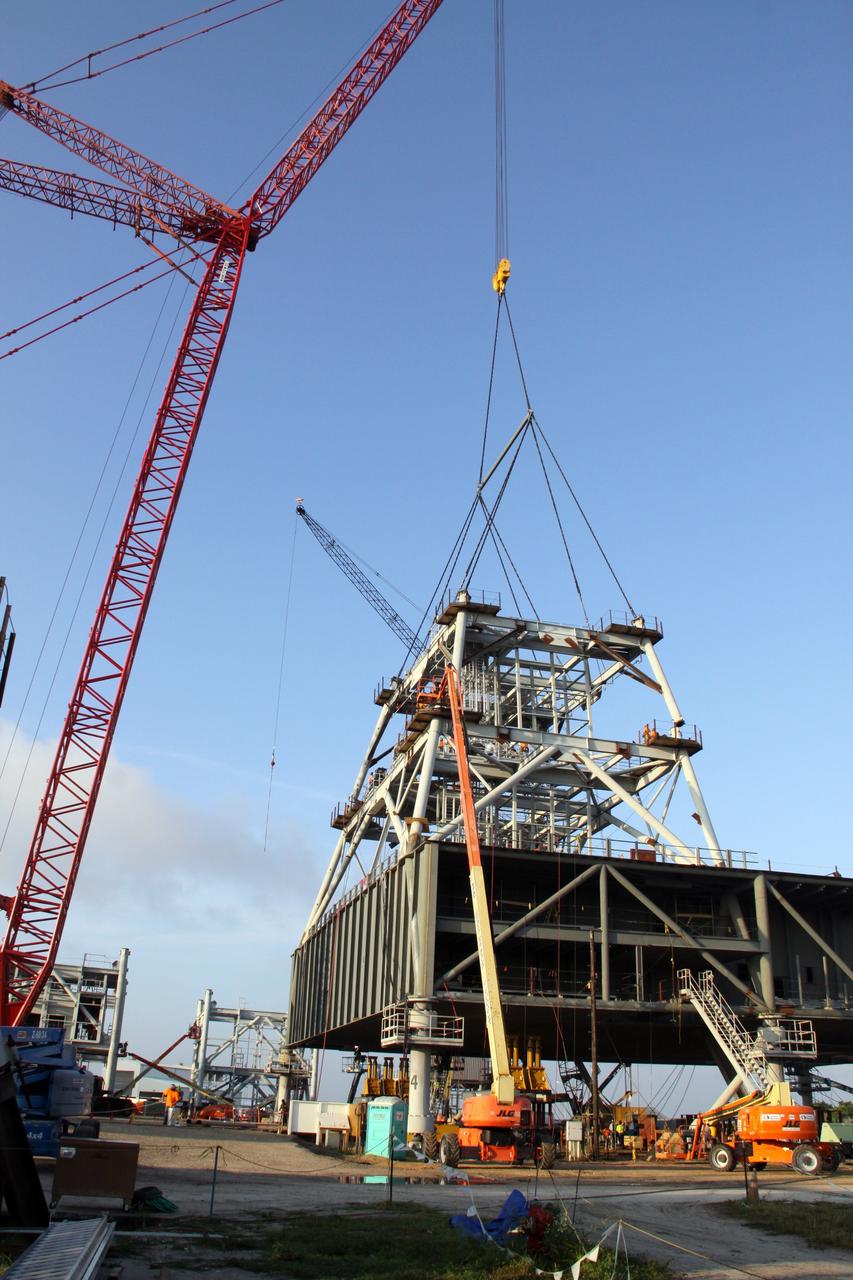
CAPE CANAVERAL, Fla. – At NASA's Kennedy Space Center in Florida, progress continues on the construction of a new mobile launcher, or ML, for the Constellation Program as a crane lowers the second section of the launcher's tower into place. Installation of the first section was on Sept. 24. The tower will have multiple platforms for personnel access and be approximately 345 feet tall. The launcher is being built at the mobile launcher park site area located north of Kennedy's Vehicle Assembly Building to support the Ares I rocket. The ML will provide a base to launch the Ares I which will transport the Orion crew exploration vehicle, its crew and cargo to low Earth orbit. The base is being made lighter than space shuttle mobile launcher platforms so the crawler-transporter can pick up the heavier load of the tower and taller rocket. For information on the Ares I, visit http://www.nasa.gov/ares. Photo credit: NASA/Jack Pfaller
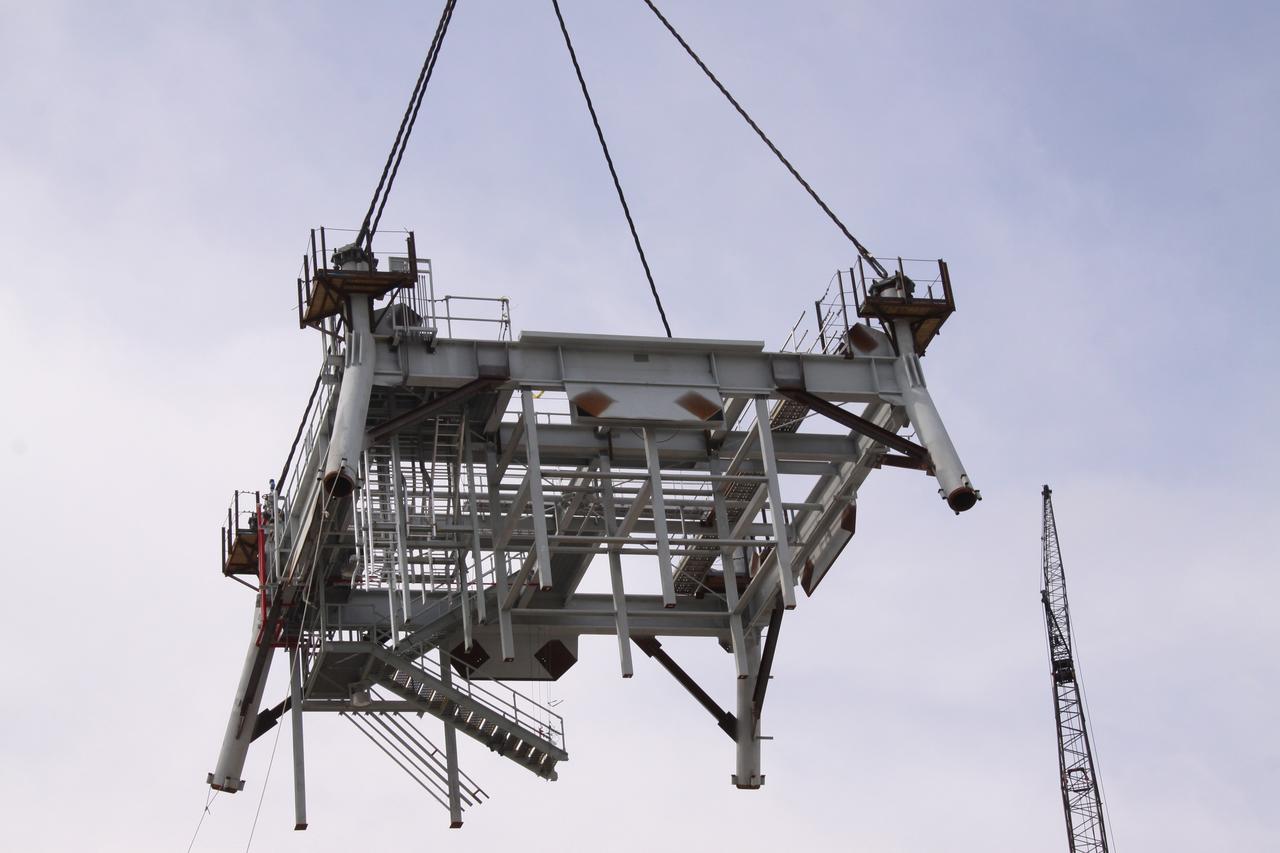
CAPE CANAVERAL, Fla. – At NASA's Kennedy Space Center in Florida, the third section of the tower for a new mobile launcher, or ML, for the Constellation Program is suspended by crane above the platform. Installation of the first section was on Sept. 24, and the second, on Oct. 15. The tower will have multiple platforms for personnel access and be approximately 345 feet tall. The launcher is being built at the mobile launcher park site area located north of Kennedy's Vehicle Assembly Building to support the Ares I rocket. The ML will provide a base to launch the Ares I, designed to transport the Orion crew exploration vehicle, its crew and cargo to low Earth orbit. The base is being made lighter than space shuttle mobile launcher platforms so the crawler-transporter can pick up the heavier load of the tower and taller rocket. For information on the Ares I, visit http://www.nasa.gov/ares. Photo credit: NASA/Jack Pfaller
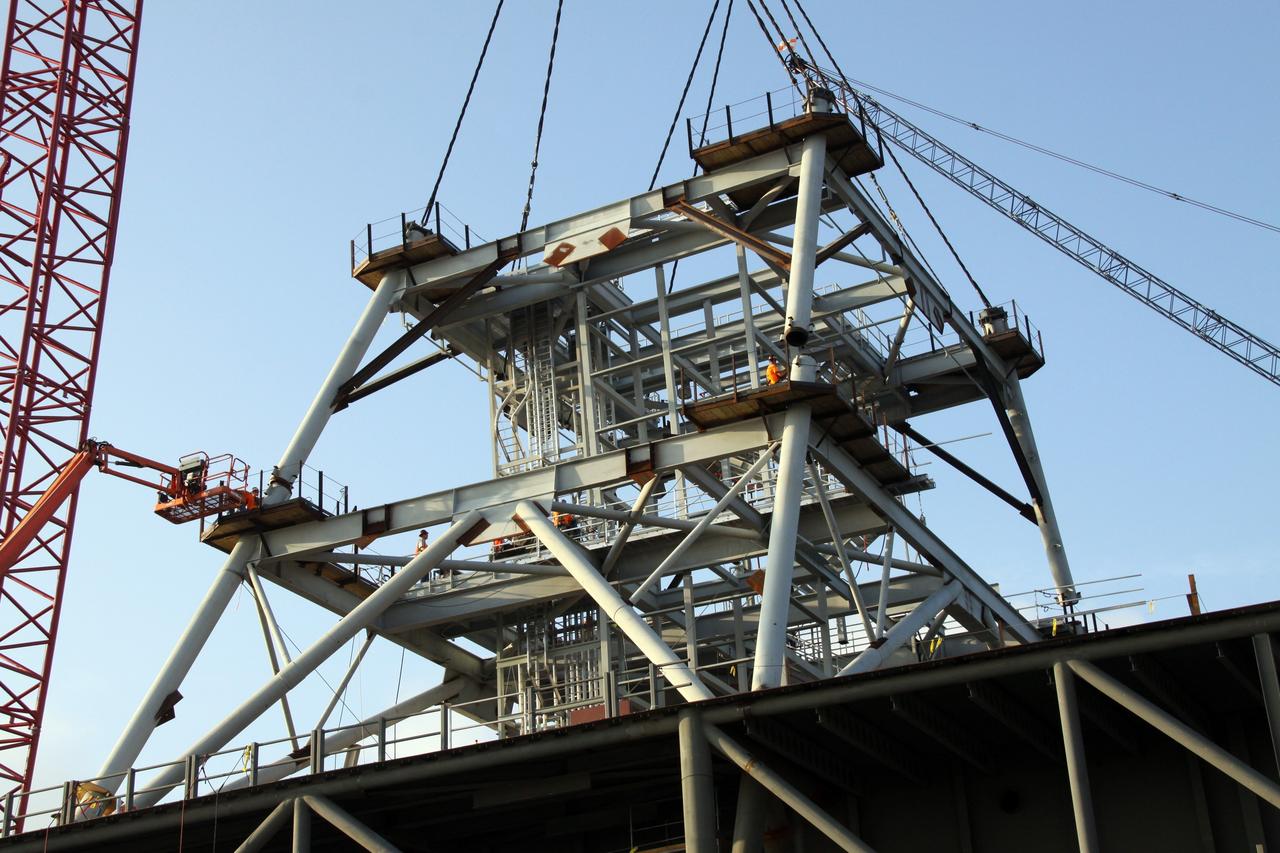
CAPE CANAVERAL, Fla. – At NASA's Kennedy Space Center in Florida, the second section of a tower for a new mobile launcher, or ML, for the Constellation Program is secured to the first. Installation of the first section was on Sept. 24. The tower will have multiple platforms for personnel access and be approximately 345 feet tall. The launcher is being built at the mobile launcher park site area located north of Kennedy's Vehicle Assembly Building to support the Ares I rocket. The ML will provide a base to launch the Ares I which will transport the Orion crew exploration vehicle, its crew and cargo to low Earth orbit. The base is being made lighter than space shuttle mobile launcher platforms so the crawler-transporter can pick up the heavier load of the tower and taller rocket. For information on the Ares I, visit http://www.nasa.gov/ares. Photo credit: NASA/Jack Pfaller
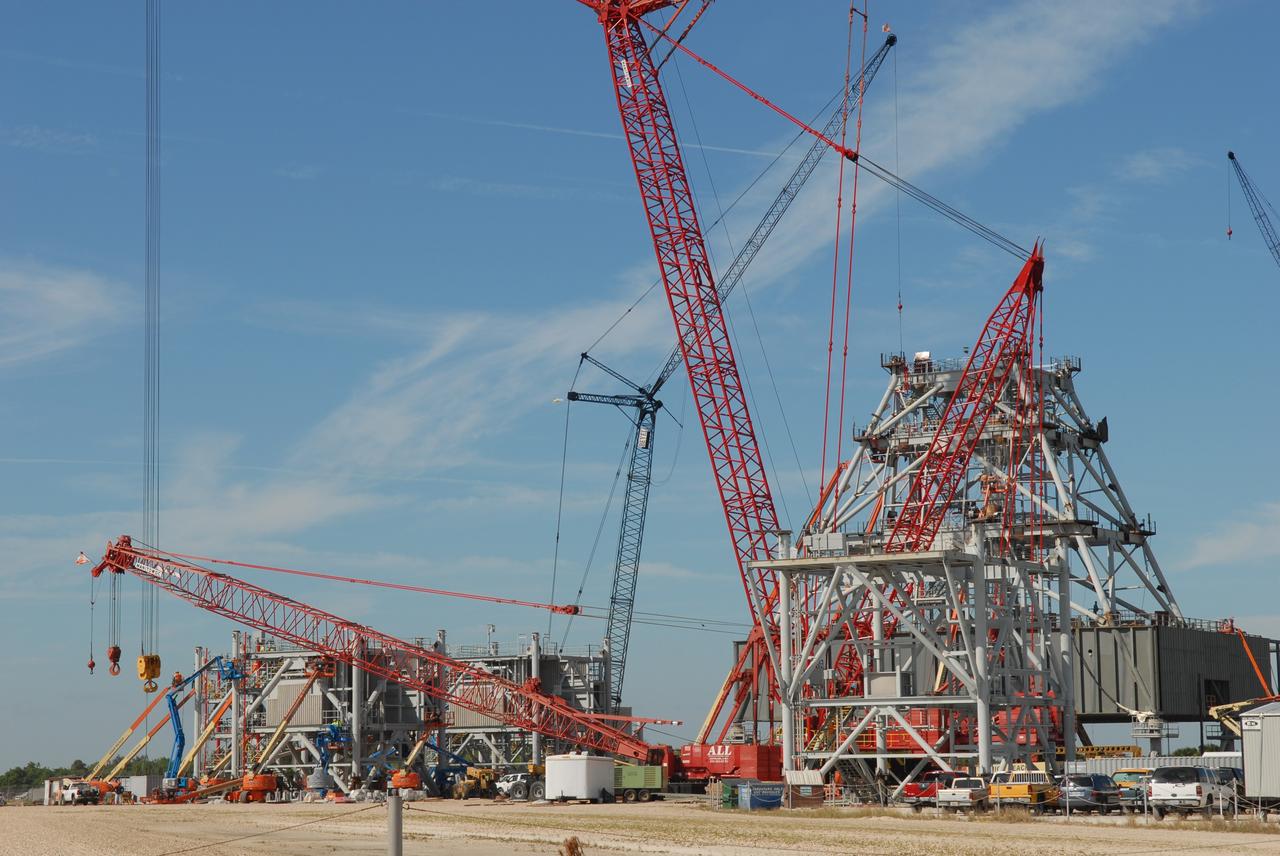
CAPE CANAVERAL, Fla. – At NASA's Kennedy Space Center in Florida, a bevy of cranes obscures the view of the tower on a new mobile launcher, or ML, under construction to support the Constellation Program. The ML's tower will have multiple platforms for personnel access and be approximately 345 feet tall. The launcher is being built at the mobile launcher park site area located north of Kennedy's Vehicle Assembly Building to support the Ares I rocket. The ML will provide a base to launch the Ares I, designed to transport the Orion crew exploration vehicle, its crew and cargo to low Earth orbit. The base is being made lighter than space shuttle mobile launcher platforms so the crawler-transporter can pick up the heavier load of the tower and taller rocket. For information on the Ares I, visit http://www.nasa.gov/ares. Photo credit: NASA/Jim Grossmann
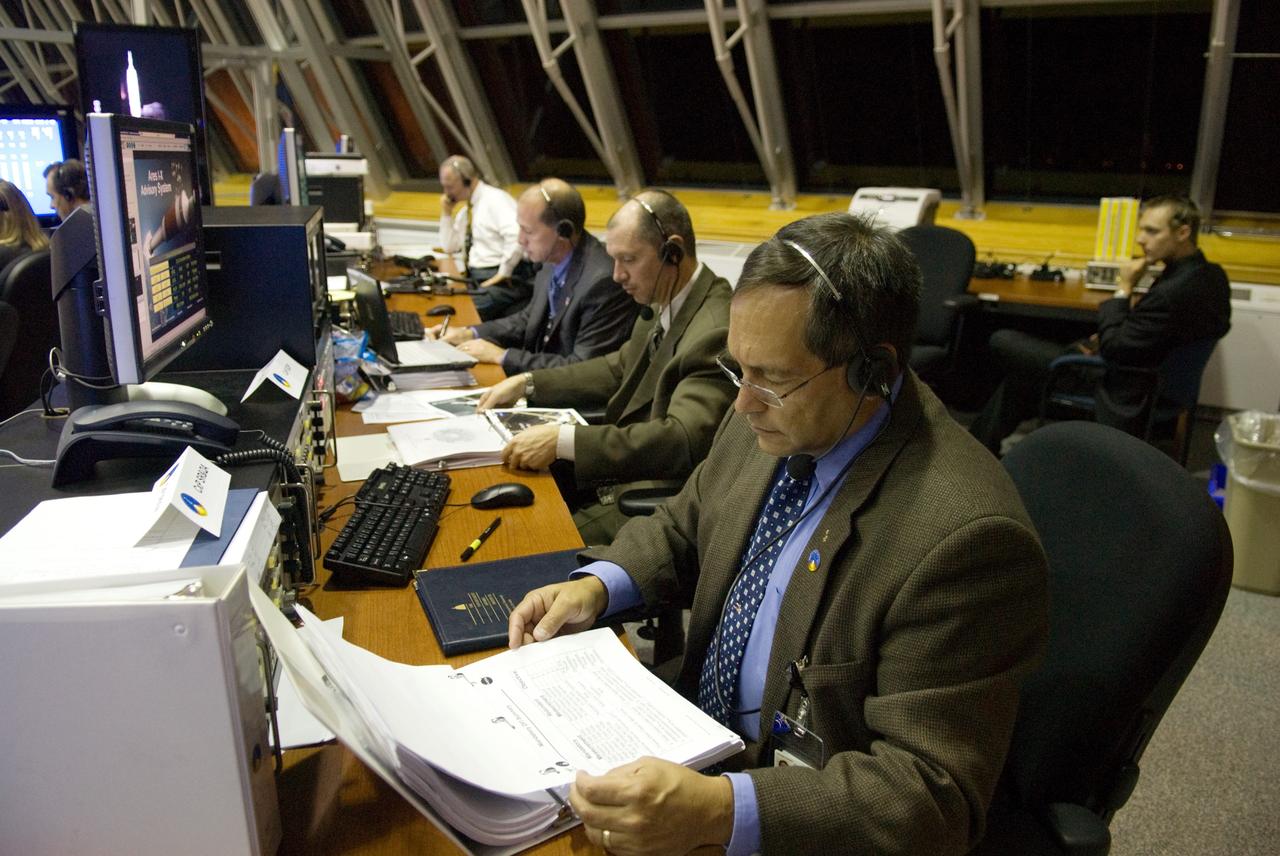
CAPE CANAVERAL, Fla. - The launch authority team for the Ares I-X flight test monitors the countdown from consoles in the Operations Management Room of the Young-Crippen Firing Room, a glass partitioned area overlooking the main floor, in the Launch Control Center at NASA's Kennedy Space Center in Florida. This will be the first launch from Kennedy's pads of a vehicle other than the space shuttle since the Apollo Program's Saturn rockets were retired. The parts used to make the Ares I-X booster flew on 30 different shuttle missions ranging from STS-29 in 1989 to STS-106 in 2000. The data returned from more than 700 sensors throughout the rocket will be used to refine the design of future launch vehicles and bring NASA one step closer to reaching its exploration goals. For information on the Ares I-X vehicle and flight test, visit http://www.nasa.gov/aresIX. Photo credit: NASA/Kim Shiflett
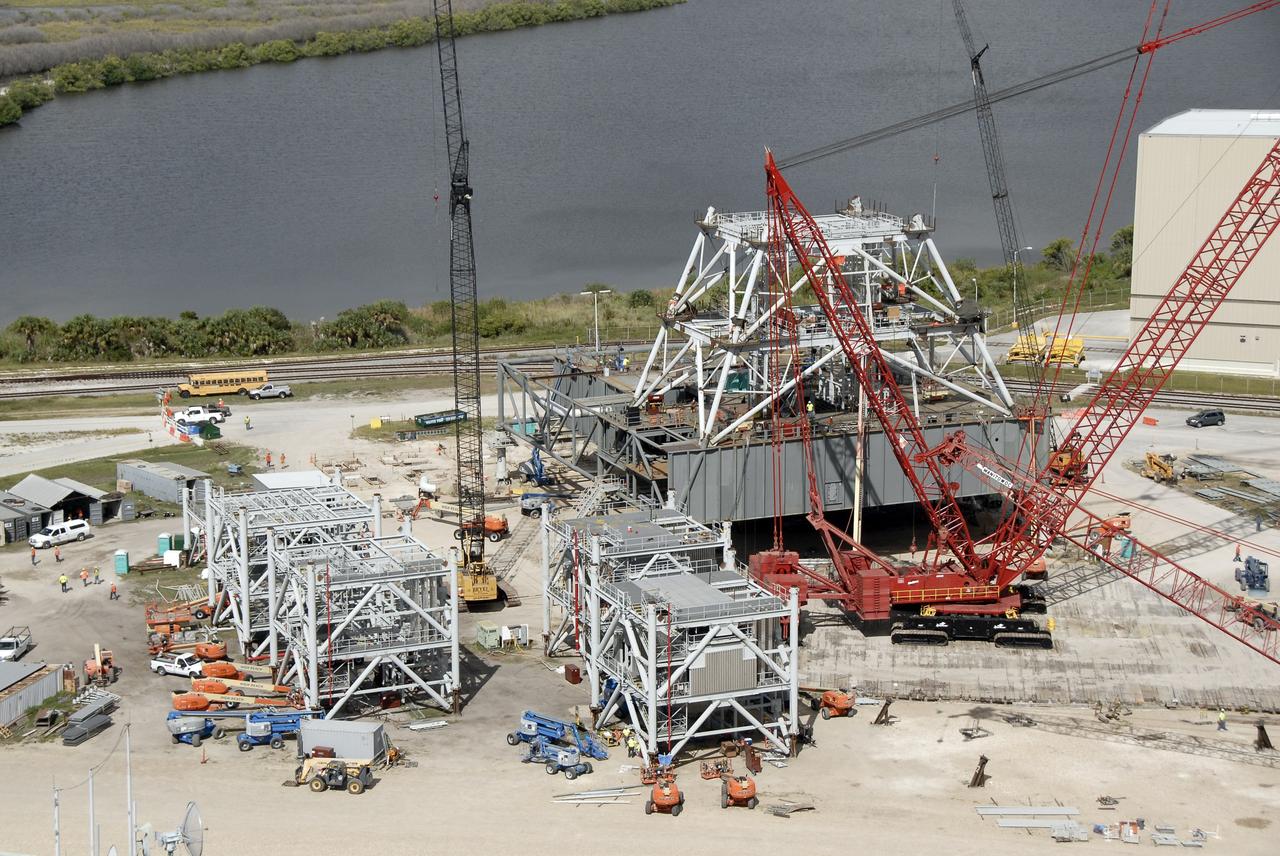
CAPE CANAVERAL, Fla. – At NASA's Kennedy Space Center in Florida, the second section of a tower for a new mobile launcher, or ML, for the Constellation Program has been secured to the first. The launcher is being built at the mobile launcher park site area, located north of Kennedy's Vehicle Assembly Building, to support the Ares I rocket. Installation of the first section was on Sept. 24. The tower will have multiple platforms for personnel access and be approximately 345 feet tall. The ML will provide a base to launch the Ares I which will transport the Orion crew exploration vehicle, its crew and cargo to low Earth orbit. The base is being made lighter than space shuttle mobile launcher platforms so the crawler-transporter can pick up the heavier load of the tower and taller rocket. For information on the Ares I, visit http://www.nasa.gov/ares. Photo credit: NASA/Kim Shiflett
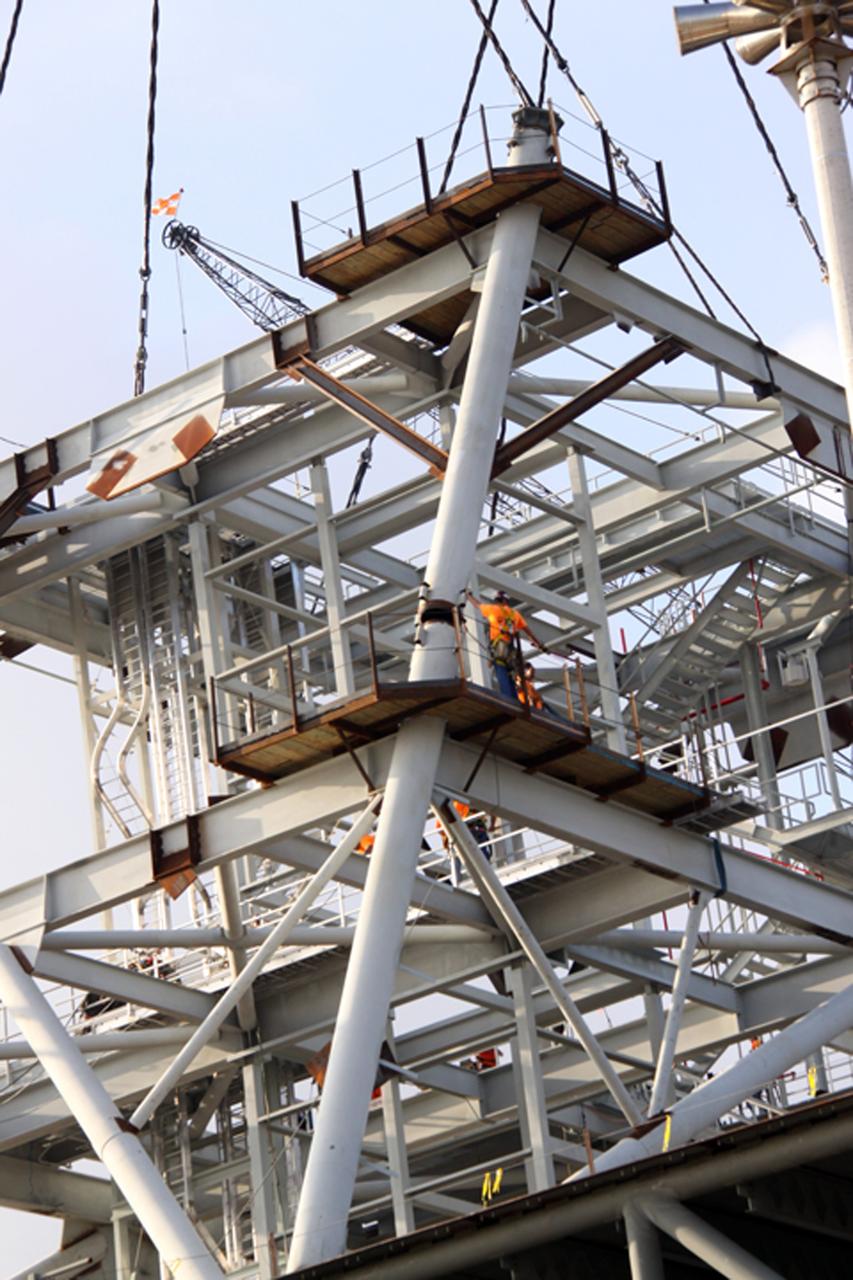
CAPE CANAVERAL, Fla. – At NASA's Kennedy Space Center in Florida, workers secure the second section of a tower for a new mobile launcher, or ML, for the Constellation Program to the first. Installation of the first section was on Sept. 24. The tower will have multiple platforms for personnel access and be approximately 345 feet tall. The launcher is being built at the mobile launcher park site area located north of Kennedy's Vehicle Assembly Building to support the Ares I rocket. The ML will provide a base to launch the Ares I which will transport the Orion crew exploration vehicle, its crew and cargo to low Earth orbit. The base is being made lighter than space shuttle mobile launcher platforms so the crawler-transporter can pick up the heavier load of the tower and taller rocket. For information on the Ares I, visit http://www.nasa.gov/ares. Photo credit: NASA/Jack Pfaller
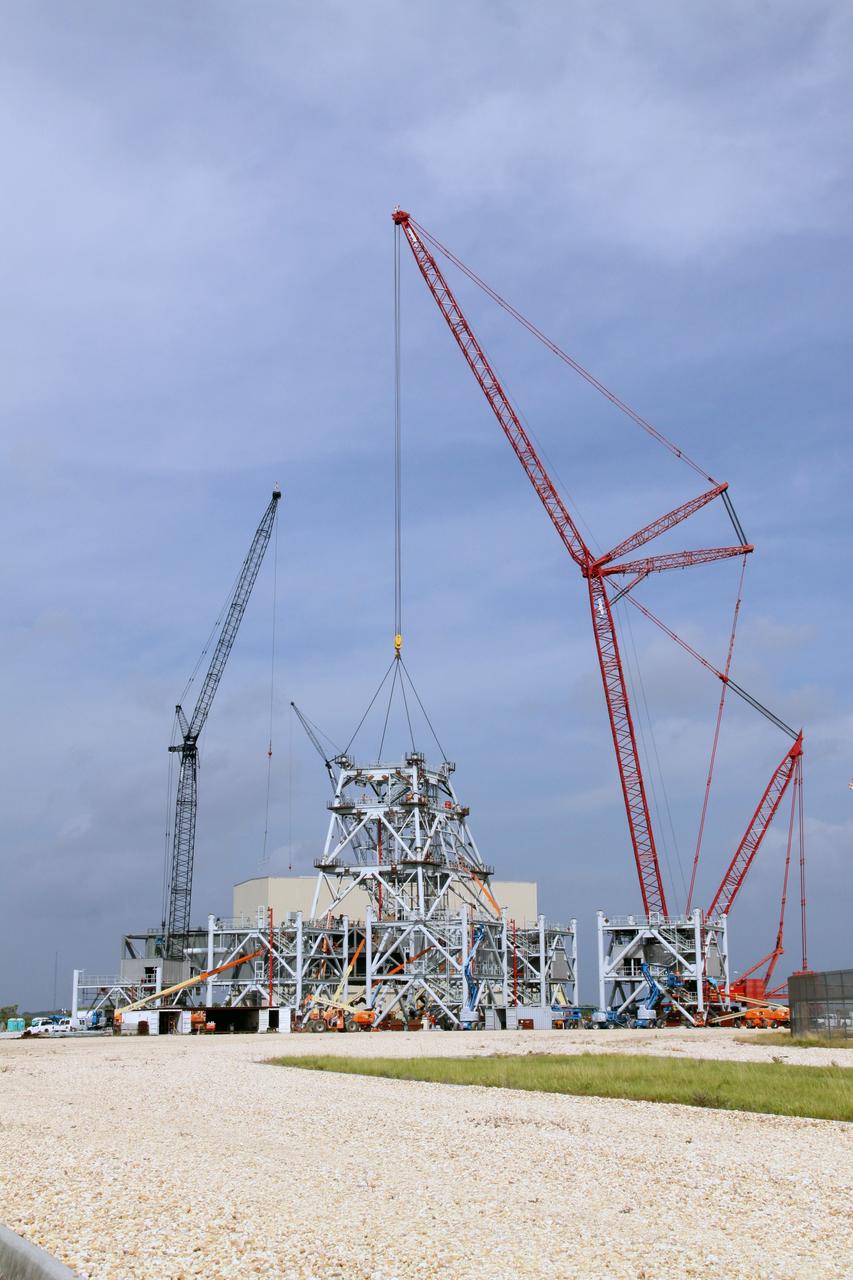
CAPE CANAVERAL, Fla. – At NASA's Kennedy Space Center in Florida, the tower on a new mobile launcher, or ML, for the Constellation Program increases in height as the third section is lowered onto the previously installed sections. Installation of the first section was on Sept. 24, and the second, on Oct. 15. The tower will have multiple platforms for personnel access and be approximately 345 feet tall. The launcher is being built at the mobile launcher park site area located north of Kennedy's Vehicle Assembly Building to support the Ares I rocket. The ML will provide a base to launch the Ares I, designed to transport the Orion crew exploration vehicle, its crew and cargo to low Earth orbit. The base is being made lighter than space shuttle mobile launcher platforms so the crawler-transporter can pick up the heavier load of the tower and taller rocket. For information on the Ares I, visit http://www.nasa.gov/ares. Photo credit: NASA/Jack Pfaller
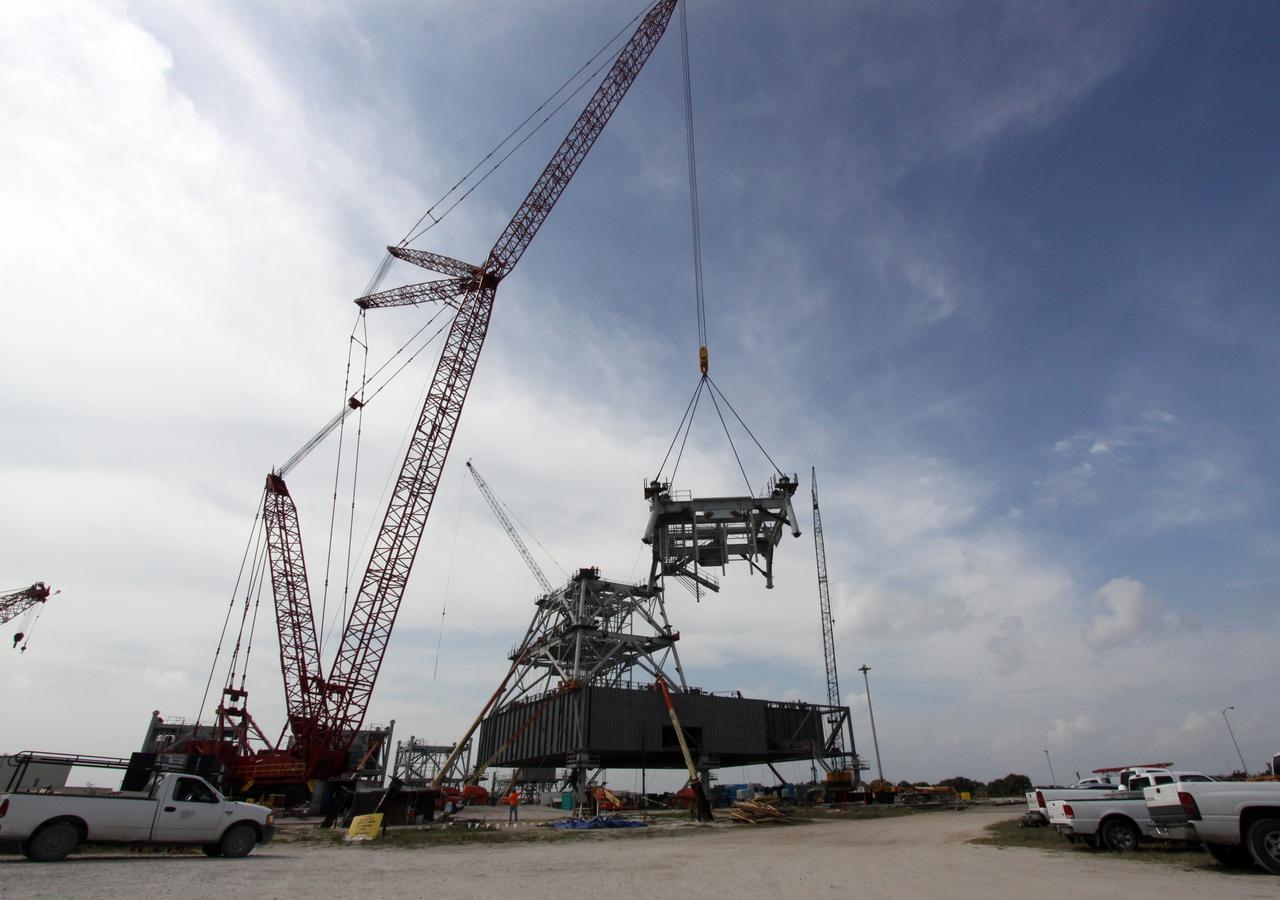
CAPE CANAVERAL, Fla. – At NASA's Kennedy Space Center in Florida, progress continues on the construction of a new mobile launcher, or ML, for the Constellation Program as a crane lifts the third section of the launcher's tower above the platform. Installation of the first section was on Sept. 24, and the second, on Oct. 15. The tower will have multiple platforms for personnel access and be approximately 345 feet tall. The launcher is being built at the mobile launcher park site area located north of Kennedy's Vehicle Assembly Building to support the Ares I rocket. The ML will provide a base to launch the Ares I, designed to transport the Orion crew exploration vehicle, its crew and cargo to low Earth orbit. The base is being made lighter than space shuttle mobile launcher platforms so the crawler-transporter can pick up the heavier load of the tower and taller rocket. For information on the Ares I, visit http://www.nasa.gov/ares. Photo credit: NASA/Jack Pfaller
![“I found it amazing that this world was covered in ice and had an ocean underneath. I was mapping this area on Europa called Conamara Chaos, where we believe that the surface is locally heated. Because of this, there are ginormous icebergs that broke off and floated around in this slushy ice, so I learned to map [that part of the surface]. Having my physics and math background and thinking about a world with a subsurface ocean, I was like, 'OK, this is a good marriage of fluid mechanics and heat transfer. Europa is a nice world to study that will combine my background with this new planetary science thing that I love.’ “What happened with Europa Clipper was I decided to do my dissertation topic on [the moon]. We'd seen images of these beautiful south polar plumes on Enceladus, these geyser-like plumes, but Europa is much bigger. It has much more water and receives much more tidal heating. Why didn't the Galileo spacecraft see plumes on Europa? Why don't we see geysers? “My dissertation focused on what it would take to have this geyser activity on Europa and for spacecraft cameras to image it. I remember defending my dissertation well but sitting there thinking, ‘People will think I'm a quack because we've never seen geysers on Europa.’ That was in May, and by December, Lorenz Roth's paper came out that Hubble may have detected geysers on Europa. That's when I was like, 'Oh yes, I might actually have a career!' “Shortly after that, the call came out for instrument proposals. Zibi Turtle [Principal Investigator for the Europa Imaging System] met me at a conference and said, 'We're writing a proposal for a camera for the Europa mission. Would you want to be on it?' At that point, I was a year out of my Ph.D. and was like, ‘Are you kidding me?’ Because that usually never happens. Usually, the people on these instrument teams are more senior. They've been around longer, so it’s very rare to be just finishing up your Ph.D. and someone asks you. I](https://images-assets.nasa.gov/image/NHQ202402070010/NHQ202402070010~medium.jpg)
“I found it amazing that this world was covered in ice and had an ocean underneath. I was mapping this area on Europa called Conamara Chaos, where we believe that the surface is locally heated. Because of this, there are ginormous icebergs that broke off and floated around in this slushy ice, so I learned to map [that part of the surface]. Having my physics and math background and thinking about a world with a subsurface ocean, I was like, 'OK, this is a good marriage of fluid mechanics and heat transfer. Europa is a nice world to study that will combine my background with this new planetary science thing that I love.’ “What happened with Europa Clipper was I decided to do my dissertation topic on [the moon]. We'd seen images of these beautiful south polar plumes on Enceladus, these geyser-like plumes, but Europa is much bigger. It has much more water and receives much more tidal heating. Why didn't the Galileo spacecraft see plumes on Europa? Why don't we see geysers? “My dissertation focused on what it would take to have this geyser activity on Europa and for spacecraft cameras to image it. I remember defending my dissertation well but sitting there thinking, ‘People will think I'm a quack because we've never seen geysers on Europa.’ That was in May, and by December, Lorenz Roth's paper came out that Hubble may have detected geysers on Europa. That's when I was like, 'Oh yes, I might actually have a career!' “Shortly after that, the call came out for instrument proposals. Zibi Turtle [Principal Investigator for the Europa Imaging System] met me at a conference and said, 'We're writing a proposal for a camera for the Europa mission. Would you want to be on it?' At that point, I was a year out of my Ph.D. and was like, ‘Are you kidding me?’ Because that usually never happens. Usually, the people on these instrument teams are more senior. They've been around longer, so it’s very rare to be just finishing up your Ph.D. and someone asks you. I
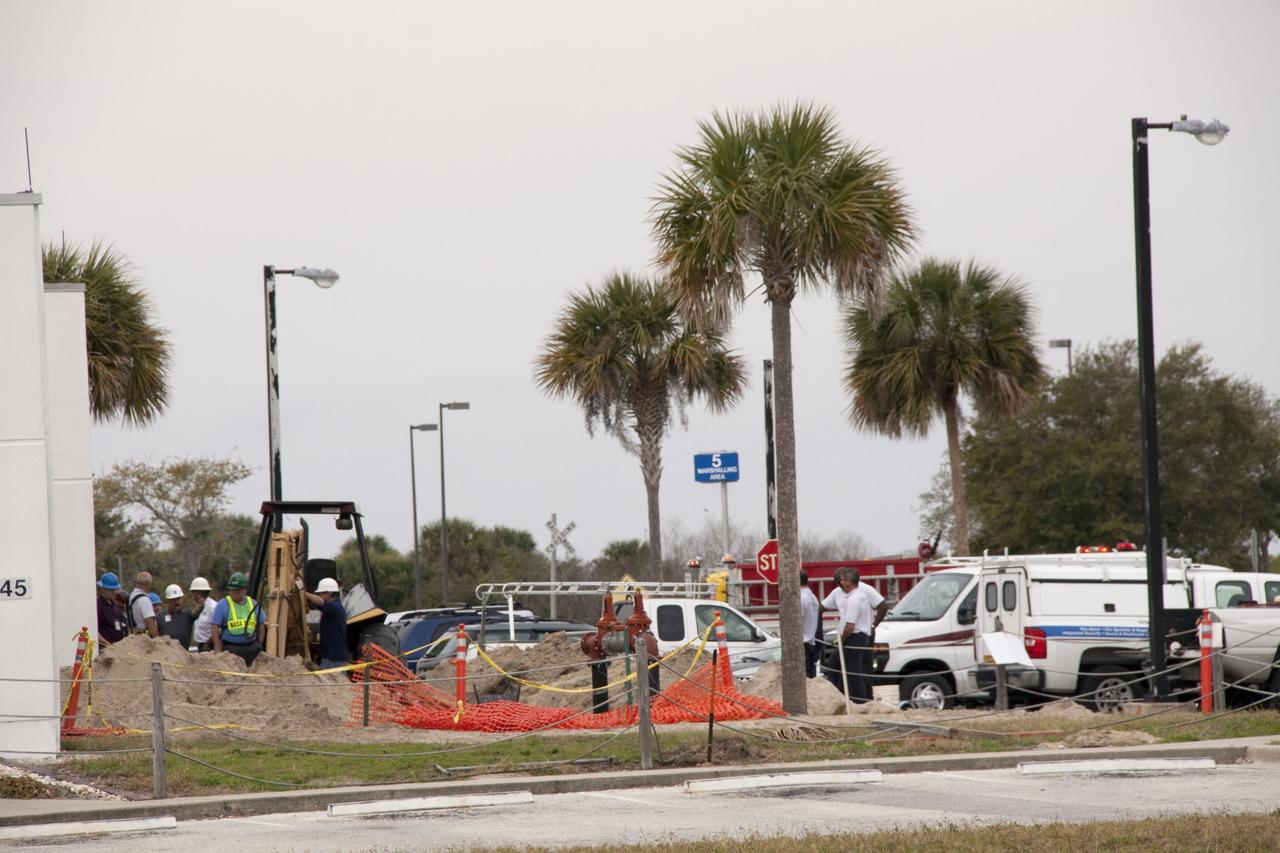
CAPE CANAVERAL, Fla. -- At NASA's Kennedy Space Center in Florida, a backhoe inadvertently struck a natural gas line in the area north of the Multi Function Facility (MFF), at around 8:40 a.m. EST. As a precaution, personnel were evacuated from Orbiter Processing Facilities 1 and 2, the MFF, Processing Control Center and the Operations Support Building (OSB) I. All traffic was blocked on the Saturn Causeway near the facilities. There were no injuries or damage to any facilities and personnel were allowed back into their buildings before mid-day and the roadway open to traffic. With the backhoe idle, workers assess the area where the break in the gas line occurred. Photo credit: NASA/Jack Pfaller
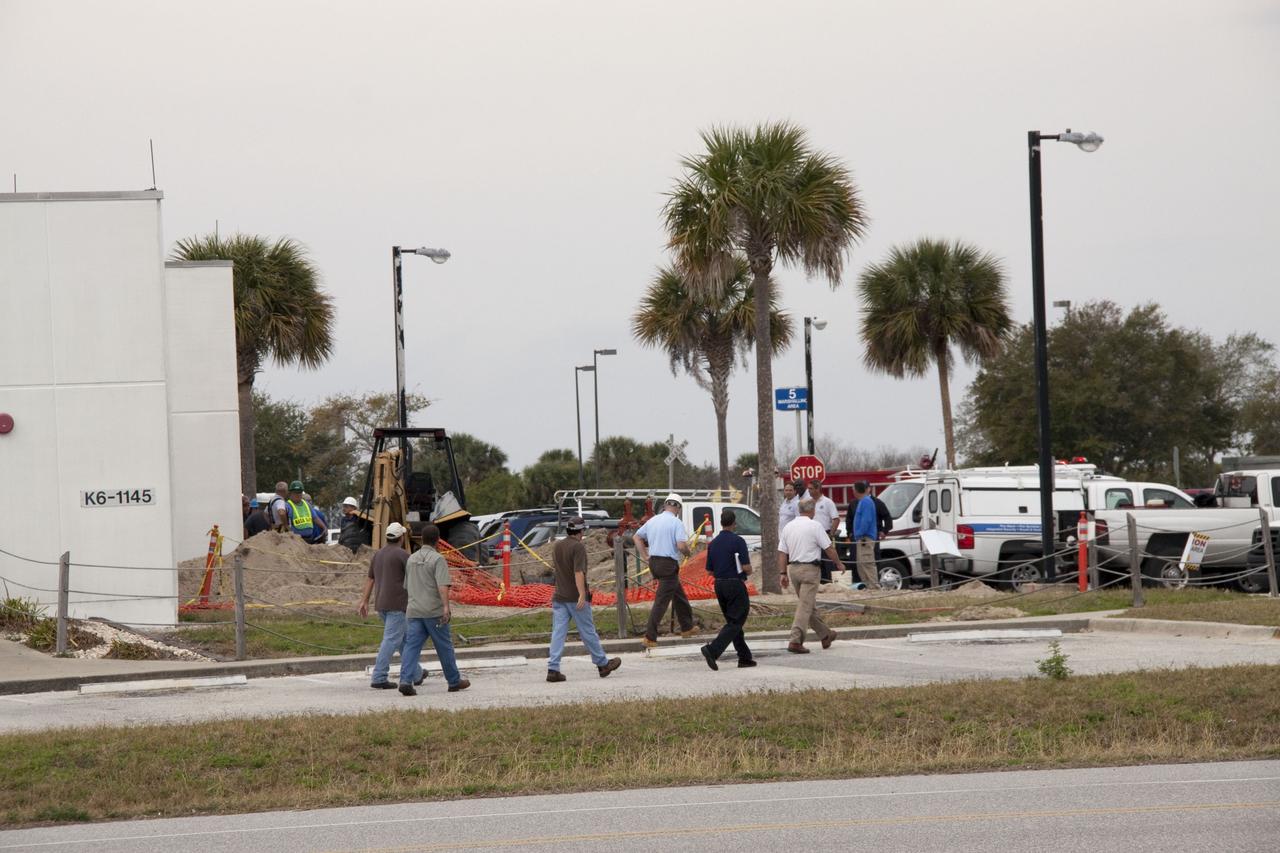
CAPE CANAVERAL, Fla. -- At NASA's Kennedy Space Center in Florida, a backhoe inadvertently struck a natural gas line in the area north of the Multi Function Facility (MFF), at around 8:40 a.m. EST. As a precaution, personnel were evacuated from Orbiter Processing Facilities 1 and 2, the MFF, Processing Control Center and the Operations Support Building (OSB) I. All traffic was blocked on the Saturn Causeway near the facilities. There were no injuries or damage to any facilities and personnel were allowed back into their buildings before mid-day and the roadway open to traffic. With the backhoe idle, workers assess the area where the break in the gas line occurred. Photo credit: NASA/Jack Pfaller

Oddly enough, an elongated coronal hole (the darker area near the center) seems to shape itself into a single, recognizable question mark over the period of one day (Dec. 21-22, 2017). Coronal holes are areas of open magnetic field that appear darker in extreme ultraviolet light, as is seen here. These holes are the source of streaming plasma that we call solar wind. While this exercise is akin to seeing shapes in clouds, it is fun to consider what the sun might be asking? Perhaps what the new year will bring? Guess what I am going to do next? Movies are available at https://photojournal.jpl.nasa.gov/catalog/PIA22197
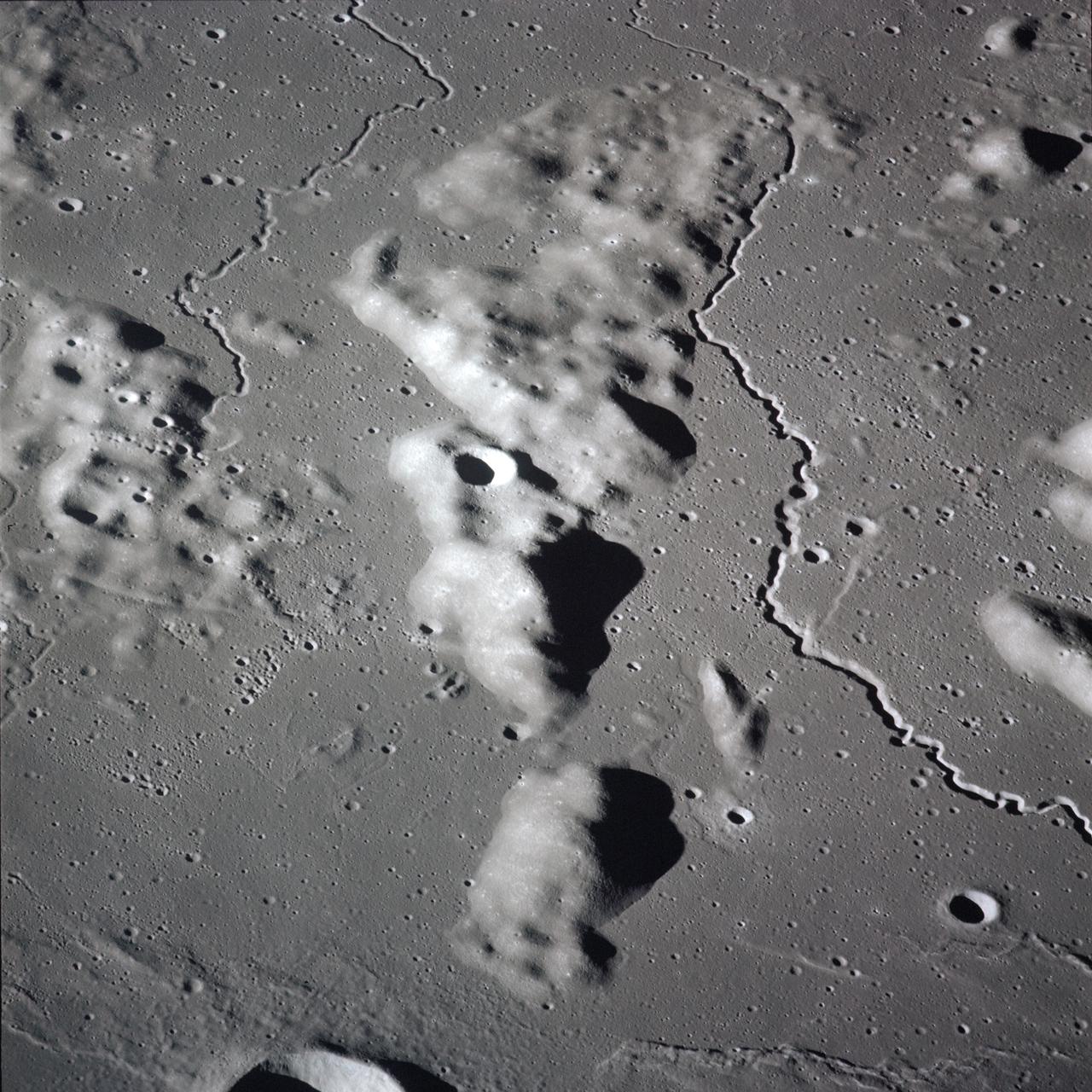
AS16-119-19161 (16-27 April 1972) --- The prominent rille feature running through the area is Herigonius I. The coordinates for the center of the area pictured are 14.7 degrees south latitude and 36.4 degrees west longitude. The photo was taken by the Apollo 16 astronauts from the Command and Service Modules (CSM) in lunar orbit. While astronauts John W. Young and Charles M. Duke Jr. descended in the Lunar Module (LM) "Orion" to explore the Descartes highlands region of the moon, astronaut Thomas K. (Ken) Mattingly II, remained with the CSM "Casper" in lunar orbit.
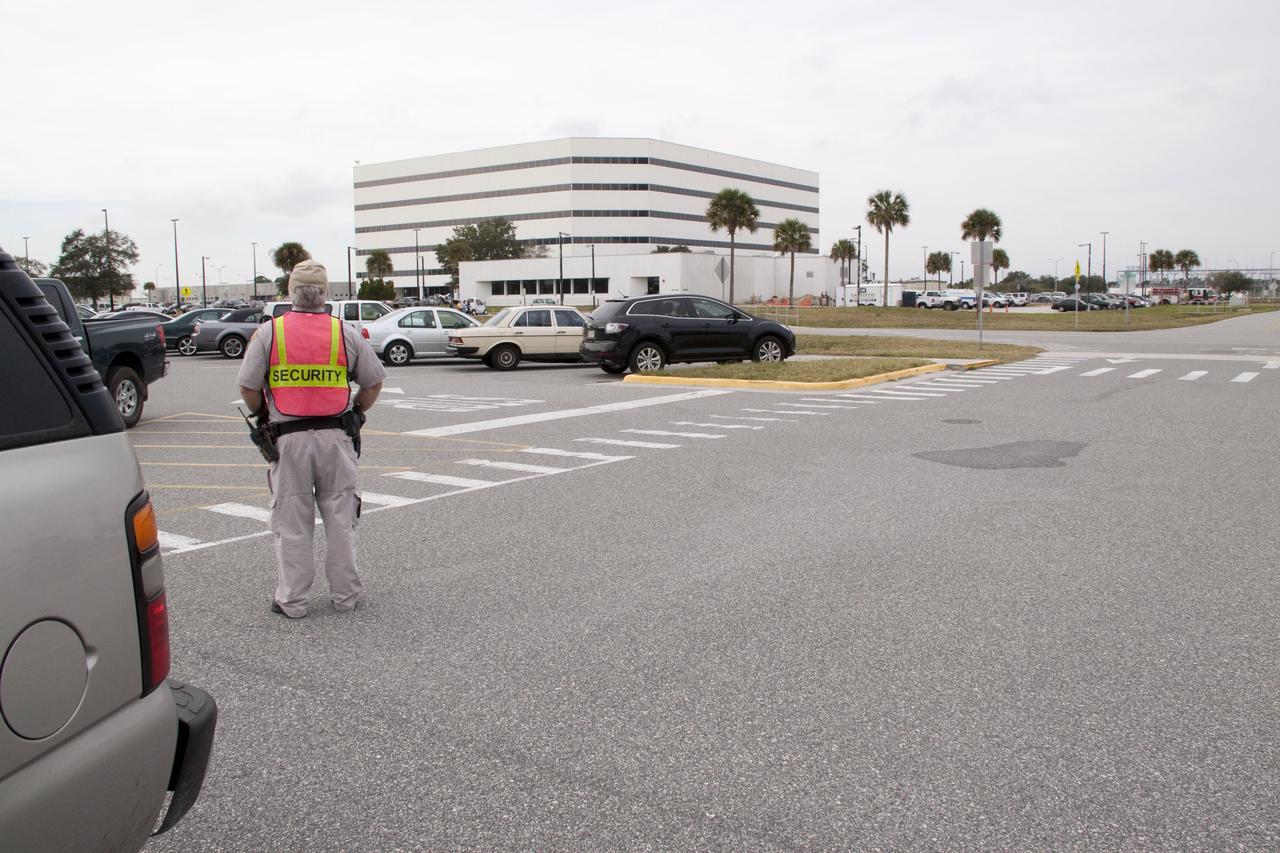
CAPE CANAVERAL, Fla. -- At NASA's Kennedy Space Center in Florida, a security officer monitors the area after a backhoe inadvertently struck a natural gas line at around 8:40 a.m. EST in the area north of the Multi Function Facility (MFF). As a precaution, personnel were evacuated from Orbiter Processing Facilities 1 and 2, the MFF, Processing Control Center and Operations Support Building (OSB) I. All traffic was blocked on the Saturn Causeway near the facilities. There were no injuries or damage to any facilities and personnel were allowed back into their buildings before mid-day and the roadway open to traffic. Photo credit: NASA/Jack Pfaller
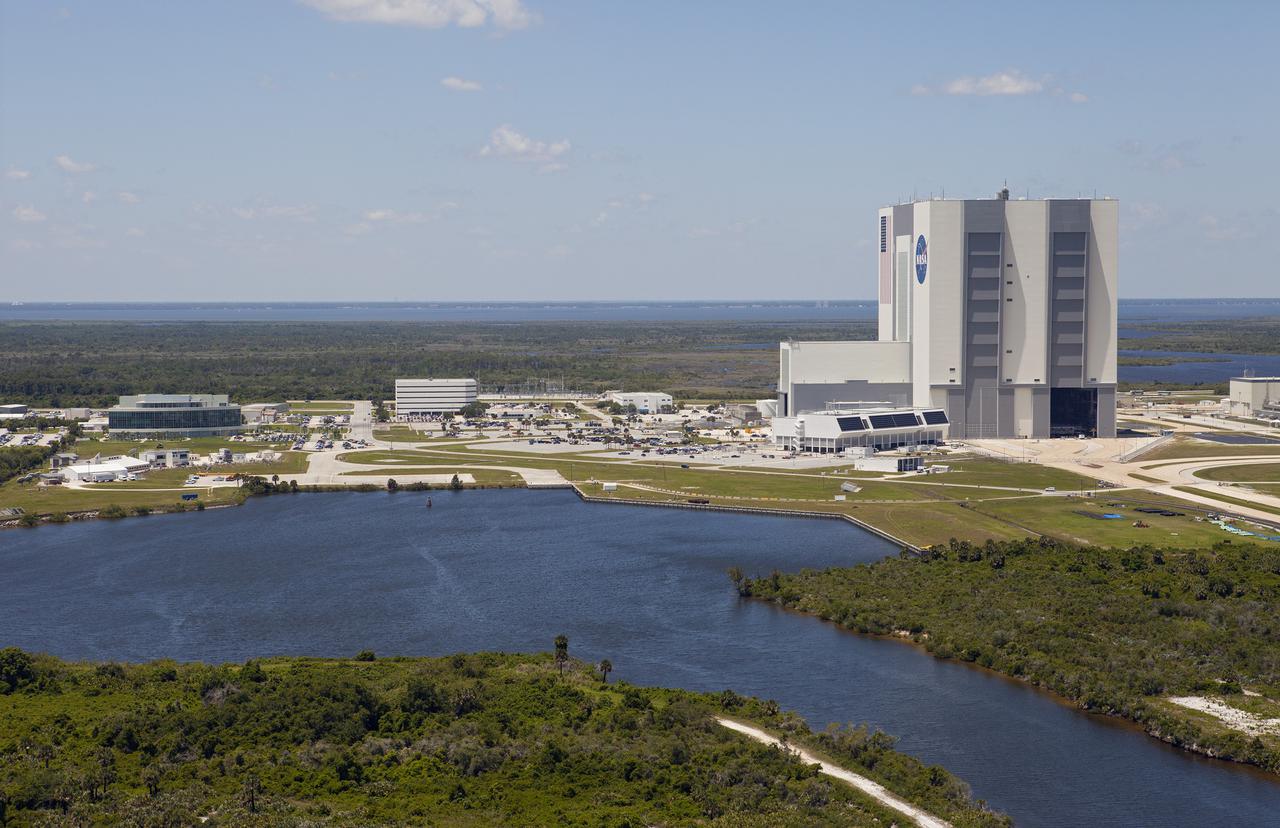
CAPE CANAVERAL, Fla. – An up close aerial view of the Vehicle Assembly Building and other facilities in the Launch Complex 39 area at NASA’s Kennedy Space Center in Florida. In front of the VAB is the Launch Control Center. To the left are the Operations Support Buildings I and II. Upgrades are underway at Pad B and other facilities in the Launch Complex 39 area. The Ground Systems Development and Operations, or GSDO, Program office at Kennedy is leading the center’s transformation from a historically government-only launch complex to a spaceport that can safely handle a variety of rockets and spacecraft, including NASA’s Space Launch System. For more information about GSDO, visit: http:__go.nasa.gov_groundsystems. Photo credit: NASA_Kim Shiflett
![“Some people [may say], 'You have too many cooks in the kitchen,’ but I think there's a line. It's good to have a lot of input because people bring many different perspectives that you would never even consider if you just pushed an idea forward with one person. This is especially true in the area we work in with digital [communications], which is changing so frequently; you constantly have to innovate, so including diverse voices and thoughts is important. “I'm an older sister, and I don't know if some of that [leadership style] comes from when we were kids, always making sure that I involved her. My sister had trouble pronouncing words when she was younger, so I was her translator, ensuring people could understand what she wanted or needed. And maybe that translated into who I am, making sure people have voices and are heard [at NASA]...I've achieved a lot that I didn't even know I wanted to accomplish because I couldn't have imagined this career progression for myself. “But now that I'm here, I would like to achieve more in terms of what NASA looks like internally, especially after getting involved with the NASA Science IDEA working group and diversity efforts. I would love to one, help people outside of NASA realize that they could work here and two, push people internally to the forefront so that they can be considered for higher-level things and progress.” NASA Science Mission Directorate Digital Manager Emily Furfaro poses for a portrait on Thursday, Aug. 22, 2024, at the Mary W. Jackson NASA Headquarters building in Washington. Photo Credit: (NASA/Keegan Barber)](https://images-assets.nasa.gov/image/NHQ202408220001/NHQ202408220001~medium.jpg)
“Some people [may say], 'You have too many cooks in the kitchen,’ but I think there's a line. It's good to have a lot of input because people bring many different perspectives that you would never even consider if you just pushed an idea forward with one person. This is especially true in the area we work in with digital [communications], which is changing so frequently; you constantly have to innovate, so including diverse voices and thoughts is important. “I'm an older sister, and I don't know if some of that [leadership style] comes from when we were kids, always making sure that I involved her. My sister had trouble pronouncing words when she was younger, so I was her translator, ensuring people could understand what she wanted or needed. And maybe that translated into who I am, making sure people have voices and are heard [at NASA]...I've achieved a lot that I didn't even know I wanted to accomplish because I couldn't have imagined this career progression for myself. “But now that I'm here, I would like to achieve more in terms of what NASA looks like internally, especially after getting involved with the NASA Science IDEA working group and diversity efforts. I would love to one, help people outside of NASA realize that they could work here and two, push people internally to the forefront so that they can be considered for higher-level things and progress.” NASA Science Mission Directorate Digital Manager Emily Furfaro poses for a portrait on Thursday, Aug. 22, 2024, at the Mary W. Jackson NASA Headquarters building in Washington. Photo Credit: (NASA/Keegan Barber)
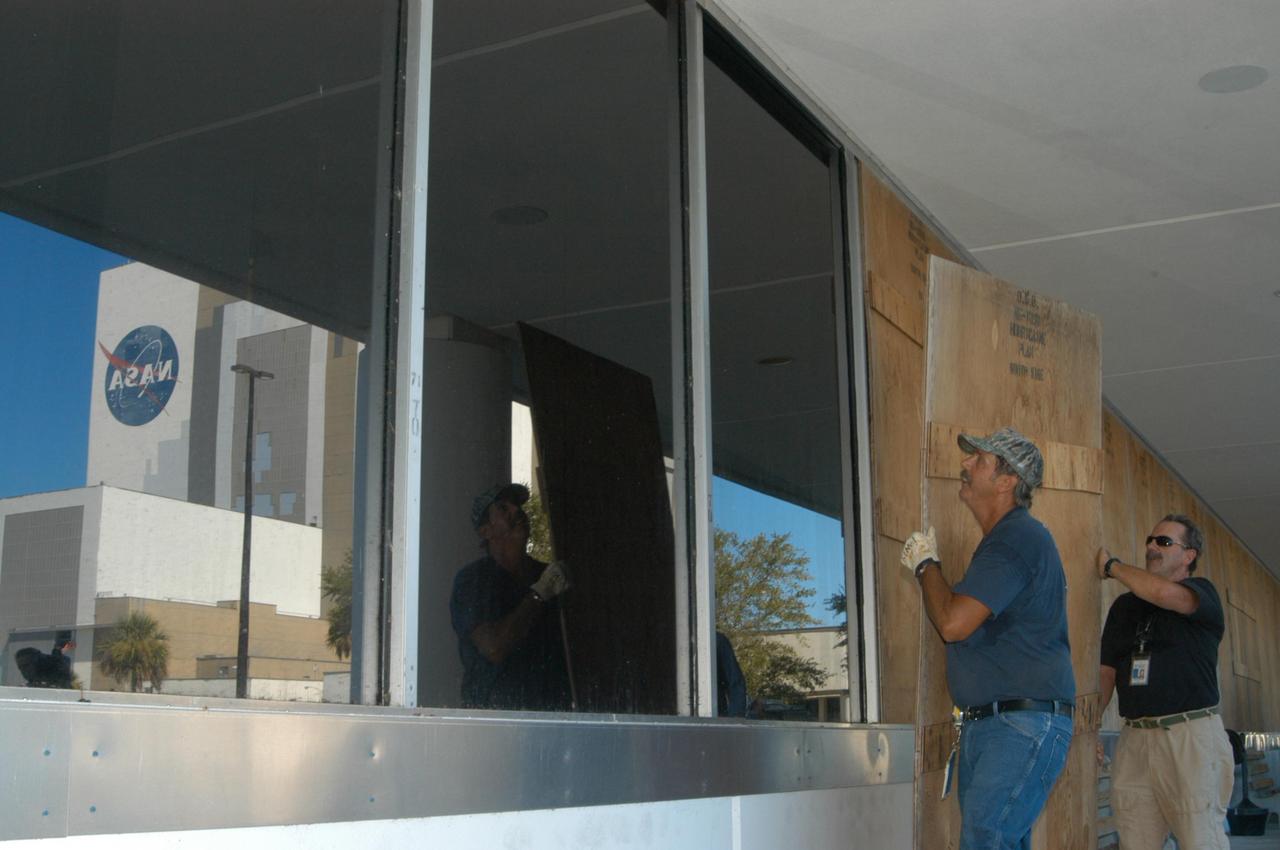
KENNEDY SPACE CENTER, FLA. - NASA's Kennedy Space Center has begun making preparations for the arrival of Tropical Storm Ernesto. Here workers are boarding up windows on the Operations and Support Building I in the Launch Complex 39 Area. The center has been in HURCON III status since Aug. 28, which means winds of 58 mph are expected within 48 hours. m. Photo credit: NASA/George Shelton
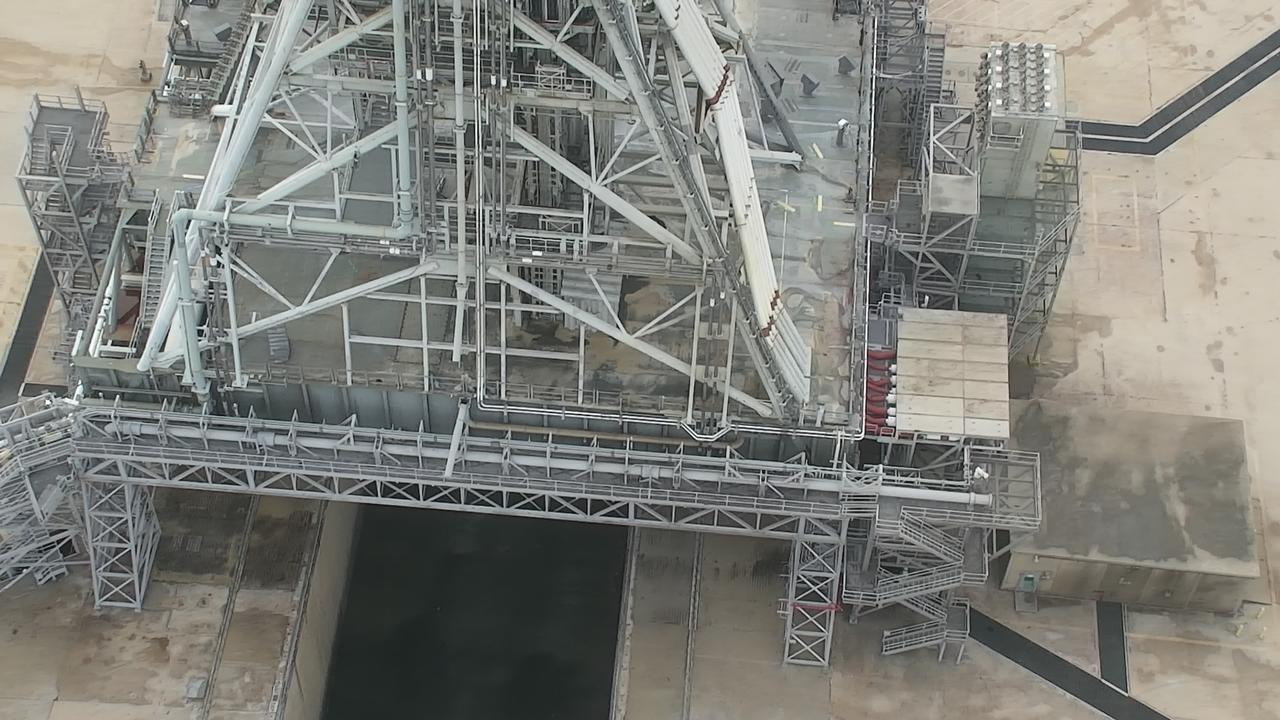
Following NASA’s successful Artemis I launch from Kennedy Space Center in Florida on Nov. 16, 2022, teams with the Exploration Ground Systems conducted a post-launch assessment for the ground systems, which began the day of launch and concluded Friday, Nov. 18. This enabled teams to inspect areas on the mobile launcher and identify specific damage and debris around the pad. Engineers have determined the overall mobile launcher and pad systems performed as designed during launch and are structurally sound.
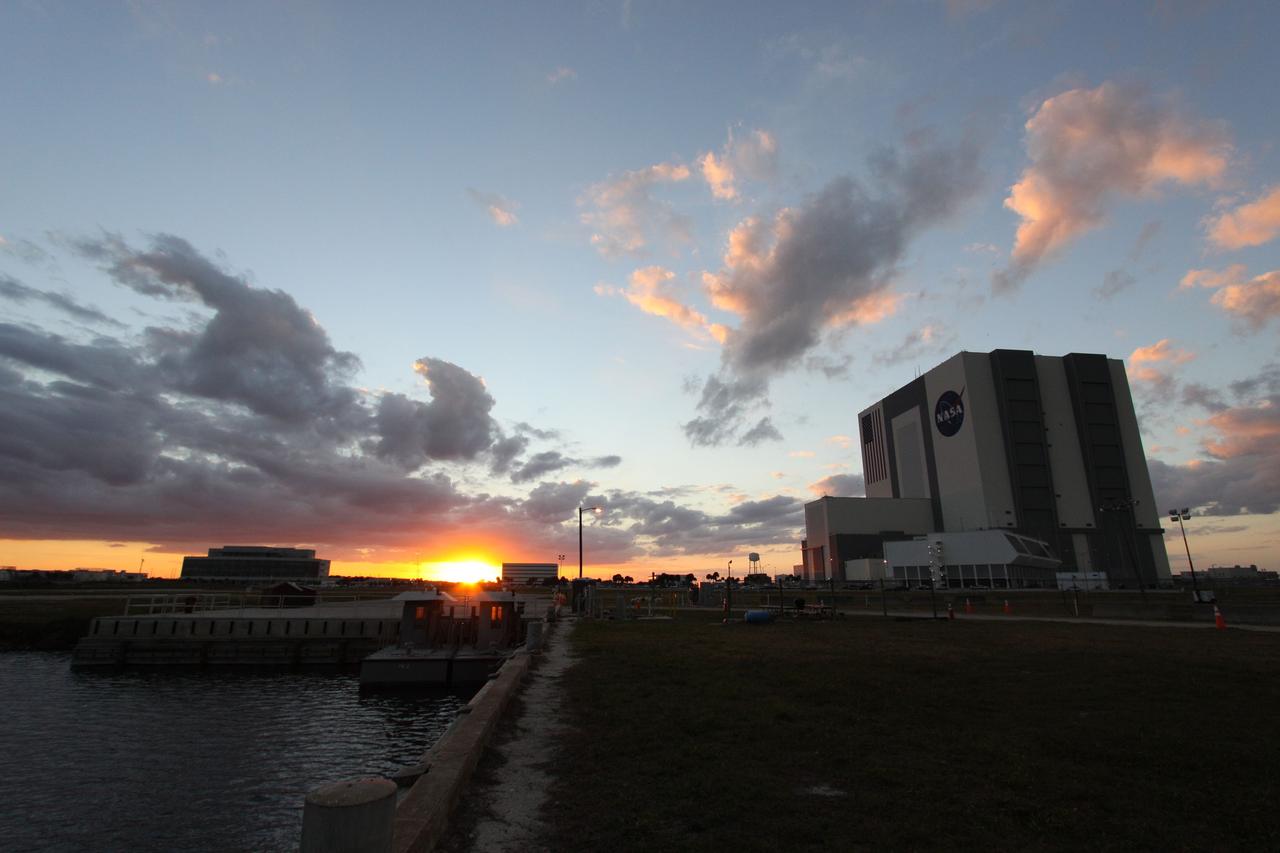
CAPE CANAVERAL, Fla. -- From the Turn Basin at NASA's Kennedy Space Center in Florida, the sun sets over the Launch Complex 39 area. The Operations Support Building II is at left, the Operations Support Building I is at center, and the mammoth Vehicle Assembly Building and Launch Control Center are to the right. Photo credit: NASA/Troy Cryder

Following NASA’s successful Artemis I launch from Kennedy Space Center in Florida on Nov. 16, 2022, teams with the Exploration Ground Systems conducted a post-launch assessment for the ground systems, which began the day of launch and concluded Friday, Nov. 18. This enabled teams to inspect areas on the mobile launcher and identify specific damage and debris around the pad. Engineers have determined the overall mobile launcher and pad systems performed as designed during launch and are structurally sound.
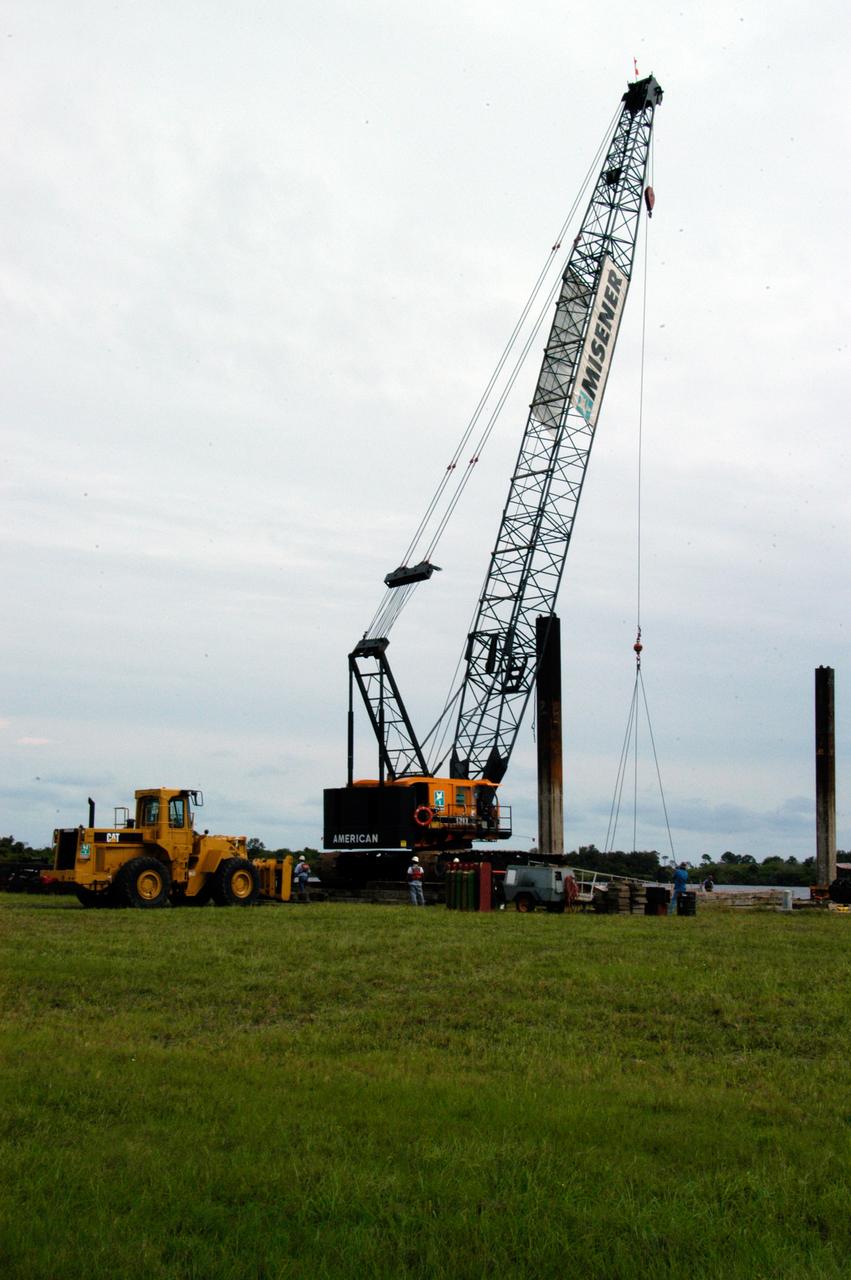
A large crawler crane arrives at the turn basin at the Launch Complex 39 Area on NASA's Kennedy Space Center. The crane with its 70-foot boom will be moved to Launch Pad 39B and used to construct a new lightning protection system for the Constellation Program and Ares/Orion launches. Pad B will be the site of the first Ares vehicle launch, including Ares I-X which is scheduled for April 2009.
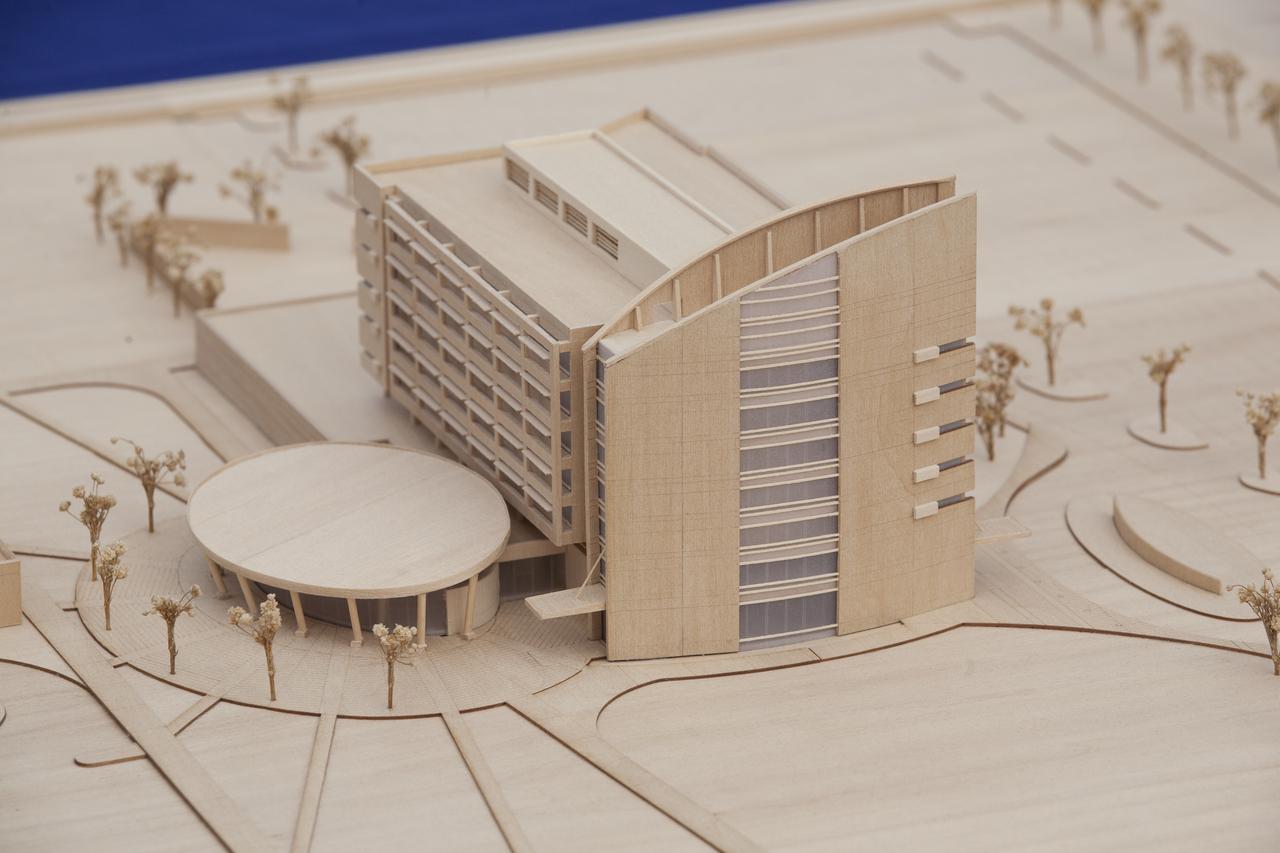
Groundbreaking for the new Central Campus will take place in the Industrial Area at NASA's Kennedy Space Center in Florida. A scale model of the new facility and landscaping is on display for the ceremony. Kennedy is transforming into a multi-user, 21st century spaceport supporting both commercial and government users and operations. Central Campus Phase I includes construction of a new Headquarters Building as one of the major components of the strategy. The new Headquarters Building will be a seven-story, 200,000-square-foot facility that will house about 500 NASA civil service and contractor employees.
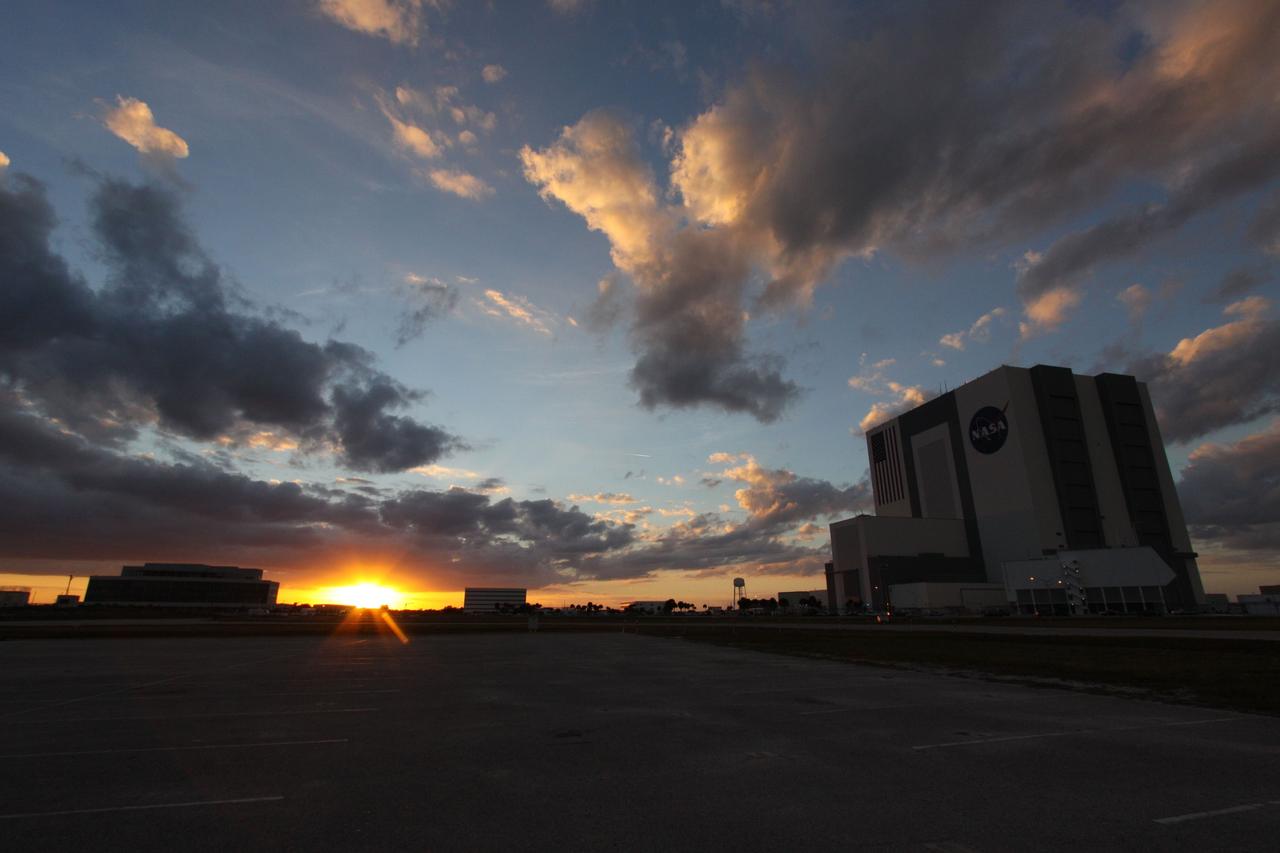
CAPE CANAVERAL, Fla. -- From the Press Site parking lot at NASA's Kennedy Space Center in Florida, the sun sets over the Launch Complex 39 area shadowing the Operations Support Building II, left, Operations Support Building I, Processing Control Center, Vehicle Assembly Building and Launch Control Center. Photo credit: NASA/Troy Cryder
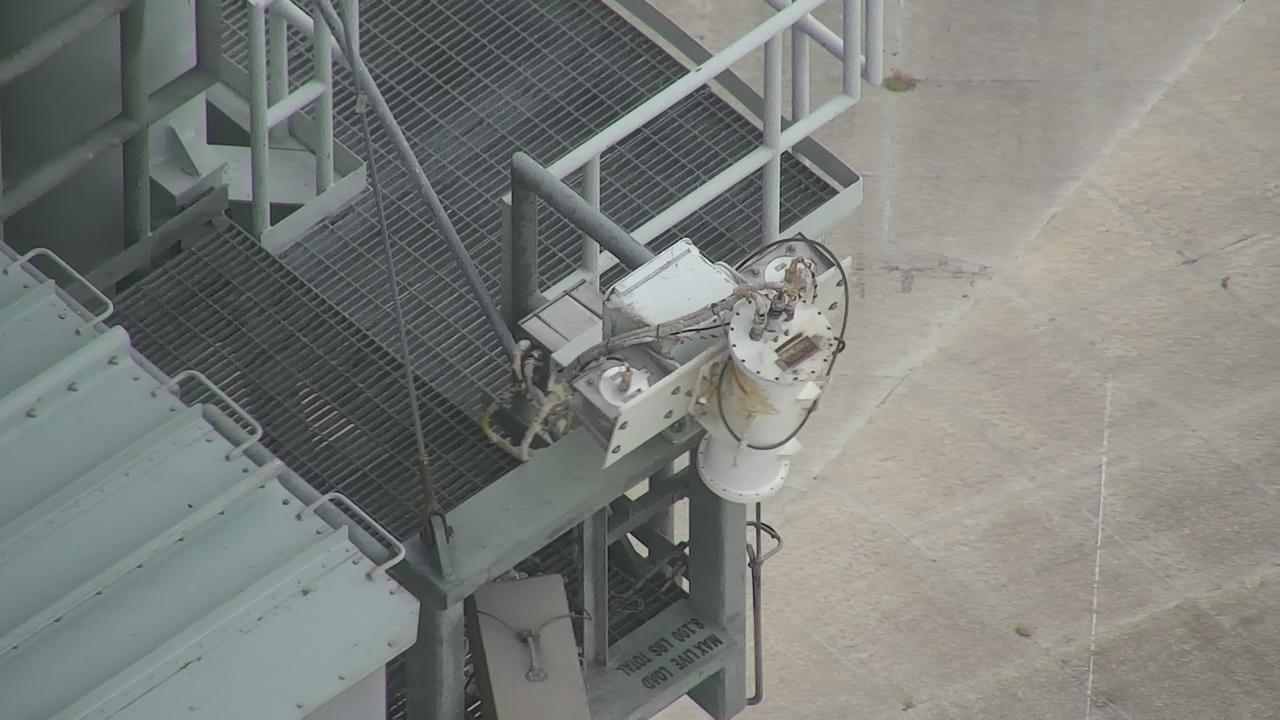
Following NASA’s successful Artemis I launch from Kennedy Space Center in Florida on Nov. 16, 2022, teams with the Exploration Ground Systems conducted a post-launch assessment for the ground systems, which began the day of launch and concluded Friday, Nov. 18. This enabled teams to inspect areas on the mobile launcher and identify specific damage and debris around the pad. Engineers have determined the overall mobile launcher and pad systems performed as designed during launch and are structurally sound.
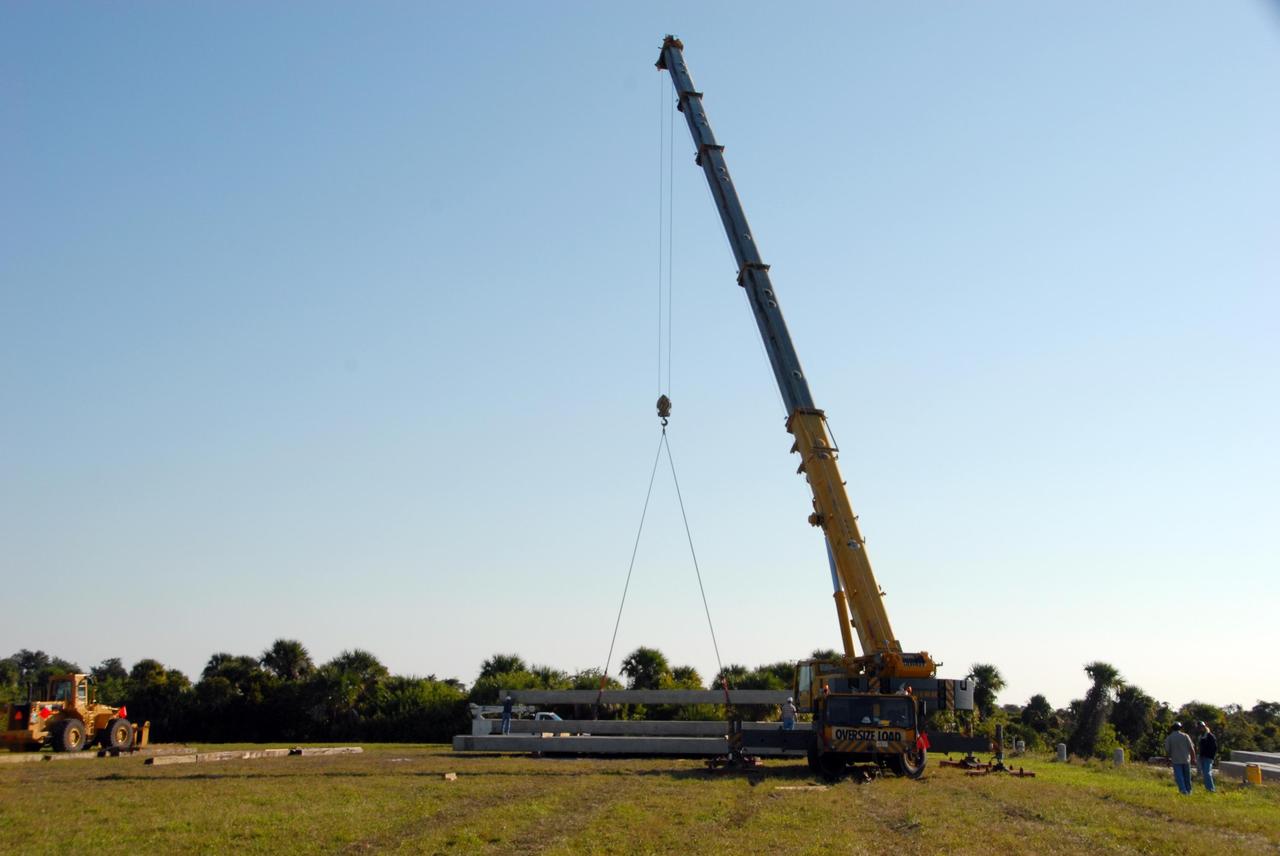
KENNEDY SPACE CENTER, FLA. -- In the Launch Complex 39 Area turn basin at NASA's Kennedy Space Center, the crane crawler moves pilings it lifted from the barge. The pilings will be used to help construct new lightning towers on Launch Pad 39B for the Constellation Program and Ares/Orion launches. Pad B will be the site of the first Ares vehicle launch, including Ares I-X which is scheduled for April 2009. Photo credit: NASA/George Shelton
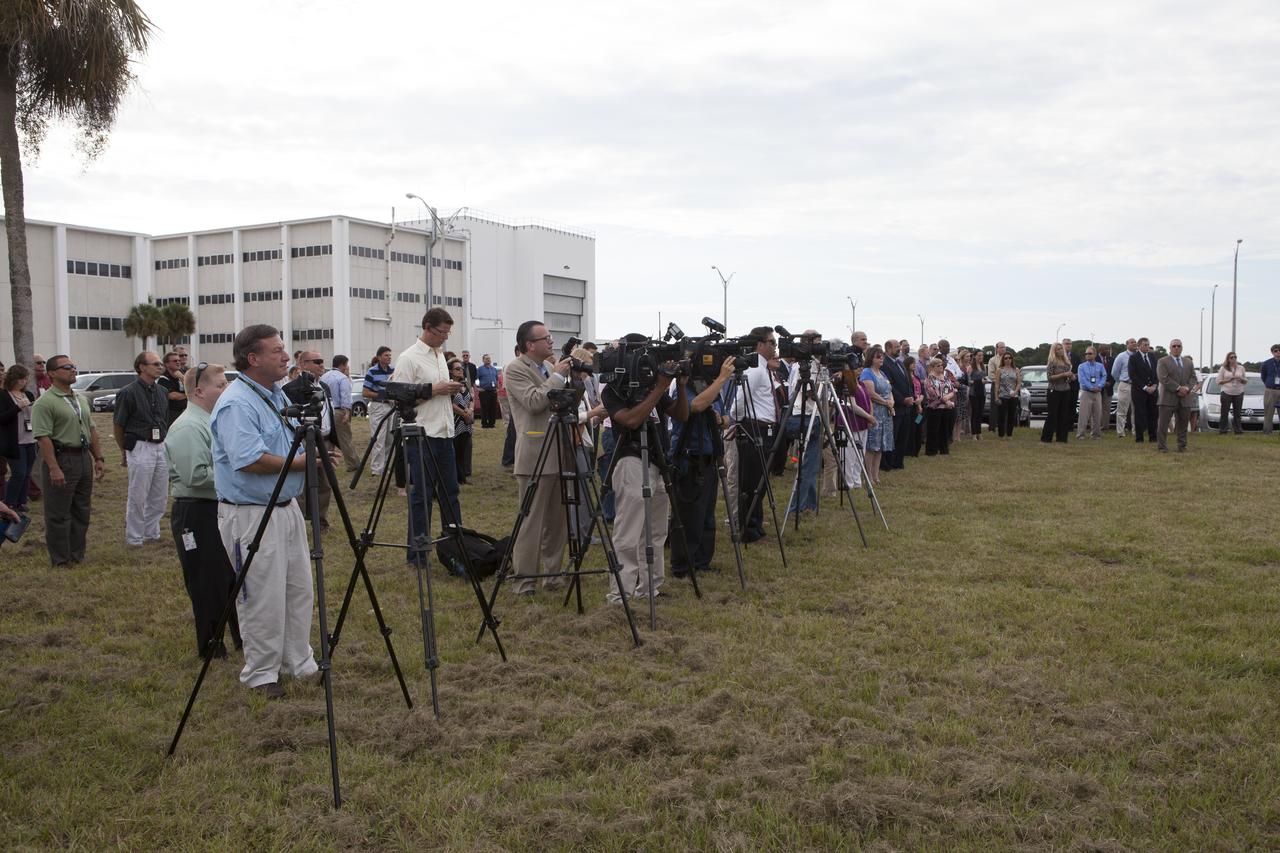
Groundbreaking for the new Central Campus took place in the Industrial Area at NASA's Kennedy Space Center in Florida. Members of the media and guests gathered for the groundbreaking ceremony. Kennedy is transforming into a multi-user, 21st century spaceport supporting both commercial and government users and operations. Central Campus Phase I includes construction of a new Headquarters Building as one of the major components of the strategy. The new Headquarters Building will be a seven-story, 200,000-square-foot facility that will house about 500 NASA civil service and contractor employees.
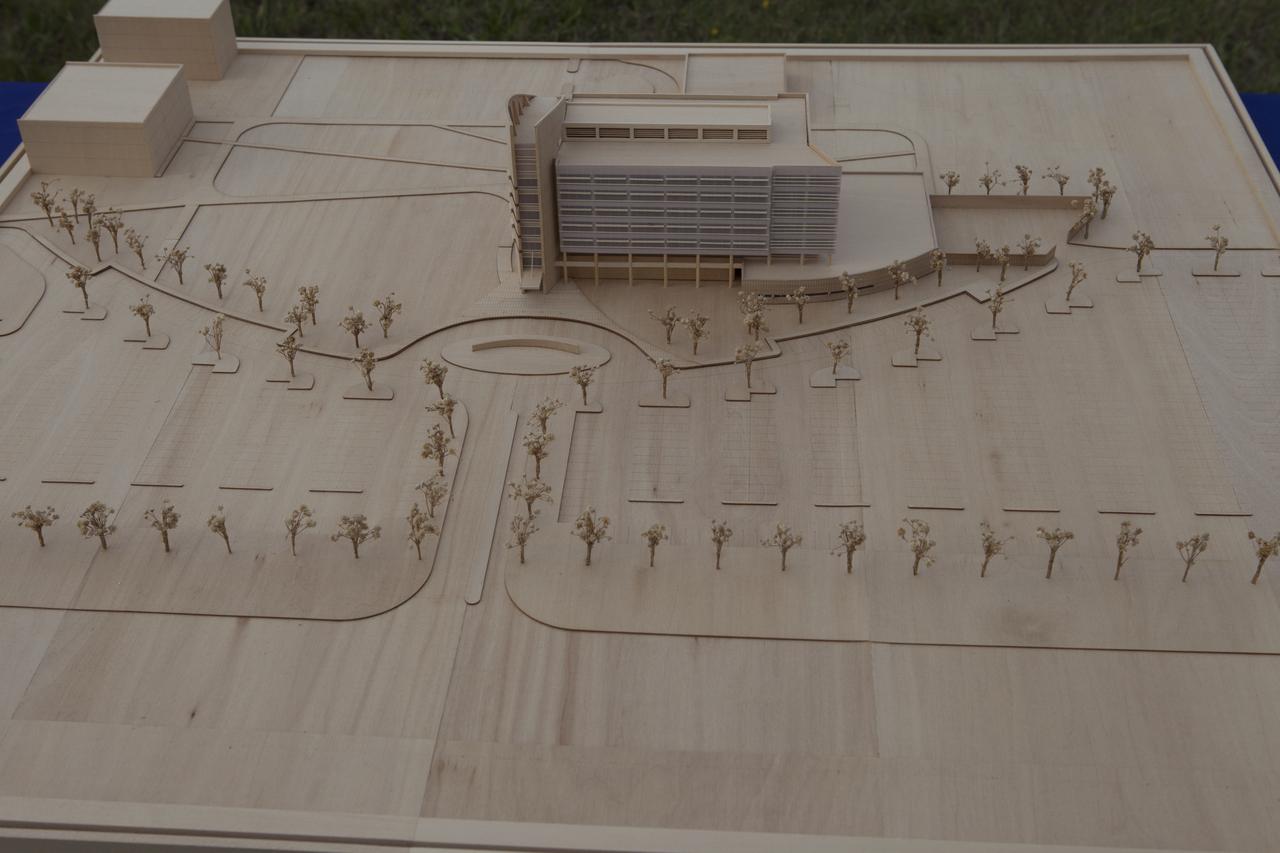
Groundbreaking for the new Central Campus will take place in the Industrial Area at NASA's Kennedy Space Center in Florida. A scale model of the new facility and landscaping is on display for the ceremony. Kennedy is transforming into a multi-user, 21st century spaceport supporting both commercial and government users and operations. Central Campus Phase I includes construction of a new Headquarters Building as one of the major components of the strategy. The new Headquarters Building will be a seven-story, 200,000-square-foot facility that will house about 500 NASA civil service and contractor employees.
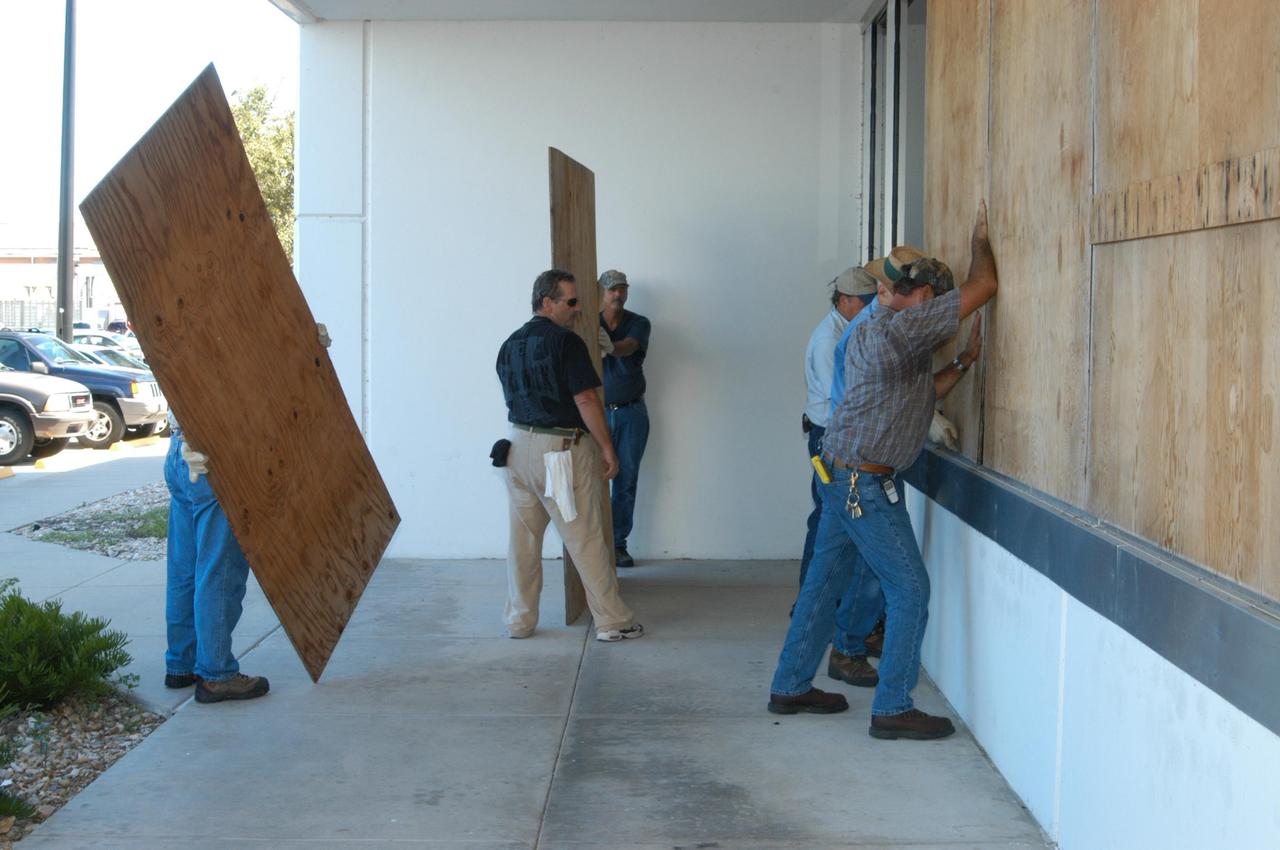
KENNEDY SPACE CENTER, FLA. - NASA's Kennedy Space Center has begun making preparations for the arrival of Tropical Storm Ernesto. Here workers are boarding up windows on the Operations and Support Building I in the Launch Complex 39 Area. The center has been in HURCON III status since Aug. 28, which means winds of 58 mph are expected within 48 hours. m. Photo credit: NASA/George Shelton
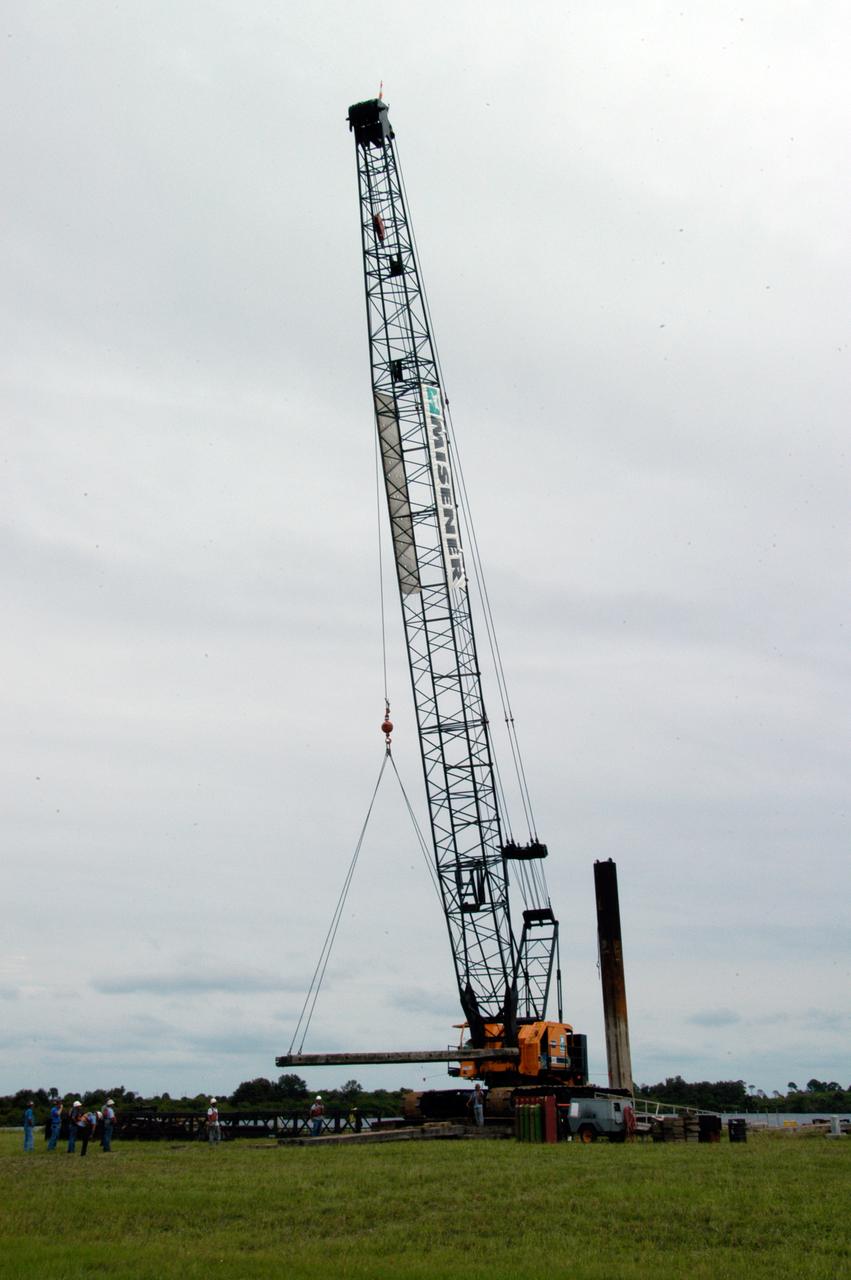
A large crawler crane arrives at the turn basin at the Launch Complex 39 Area on NASA's Kennedy Space Center. The crane with its 70-foot boom will be moved to Launch Pad 39B and used to construct a new lightning protection system for the Constellation Program and Ares/Orion launches. Pad B will be the site of the first Ares vehicle launch, including Ares I-X which is scheduled for April 2009.
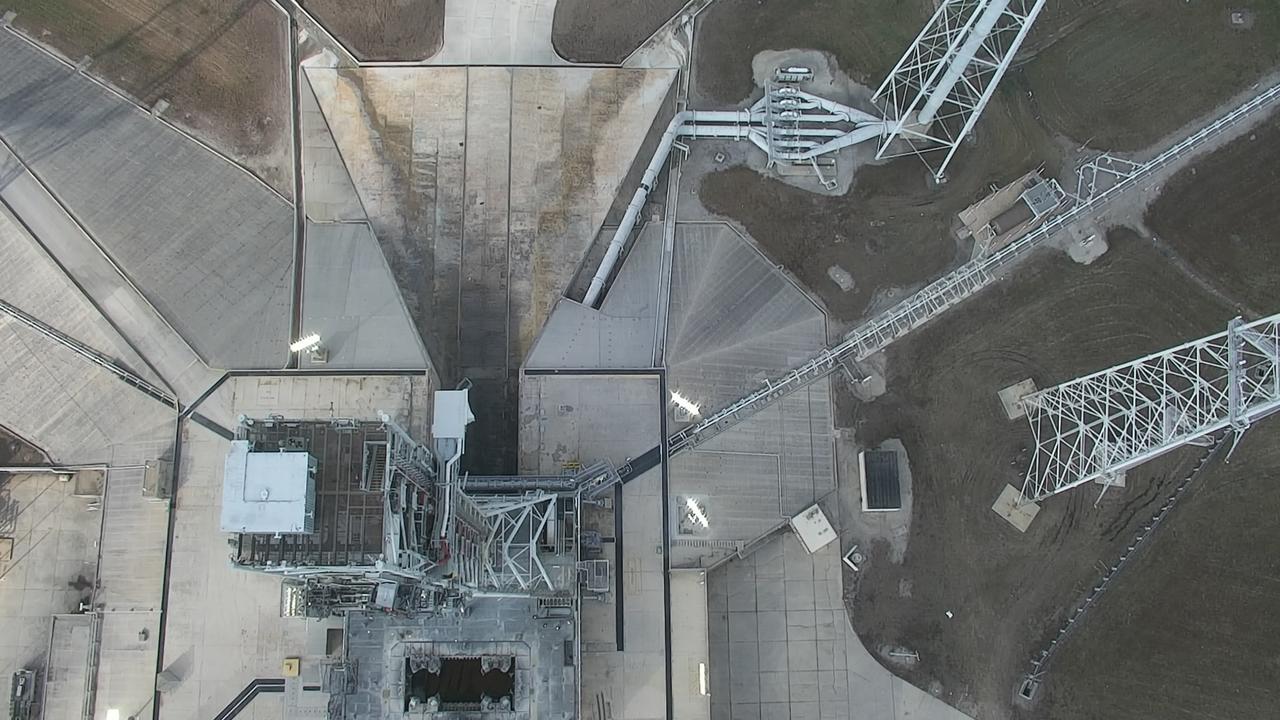
Following NASA’s successful Artemis I launch from Kennedy Space Center in Florida on Nov. 16, 2022, teams with the Exploration Ground Systems conducted a post-launch assessment for the ground systems, which began the day of launch and concluded Friday, Nov. 18. This enabled teams to inspect areas on the mobile launcher and identify specific damage and debris around the pad. Engineers have determined the overall mobile launcher and pad systems performed as designed during launch and are structurally sound.
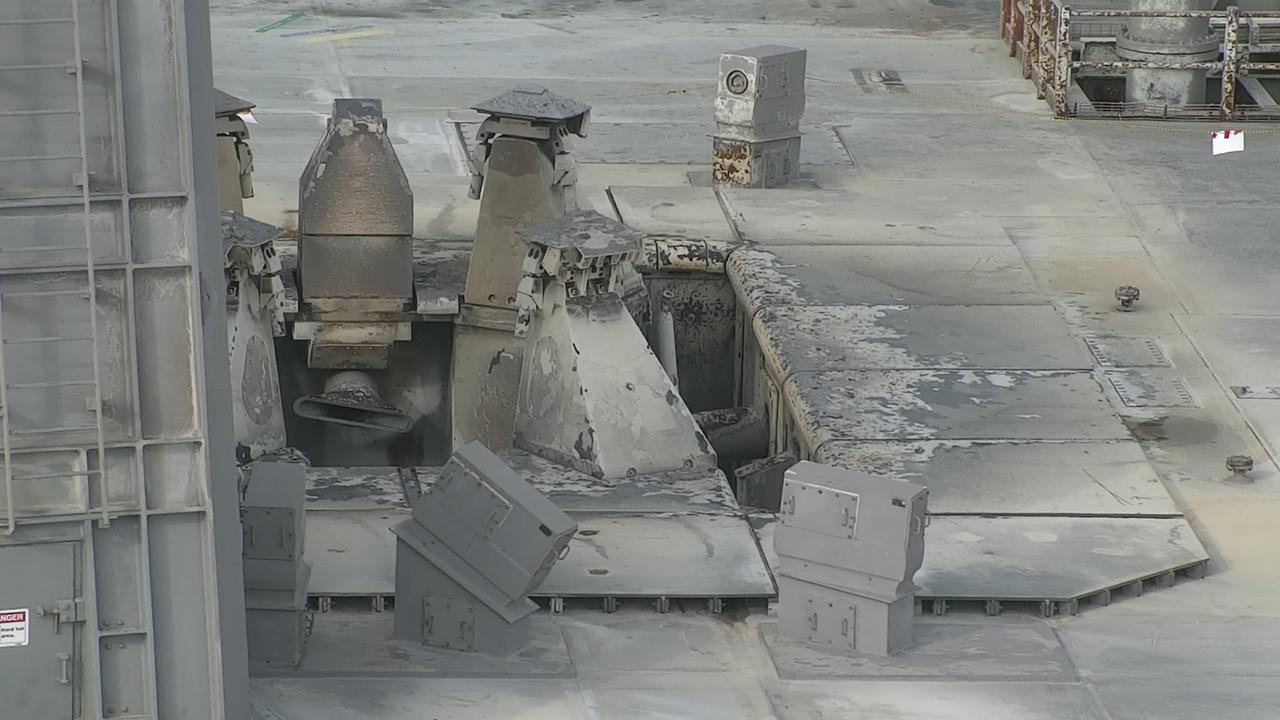
Following NASA’s successful Artemis I launch from Kennedy Space Center in Florida on Nov. 16, 2022, teams with the Exploration Ground Systems conducted a post-launch assessment for the ground systems, which began the day of launch and concluded Friday, Nov. 18. This enabled teams to inspect areas on the mobile launcher and identify specific damage and debris around the pad. Engineers have determined the overall mobile launcher and pad systems performed as designed during launch and are structurally sound.
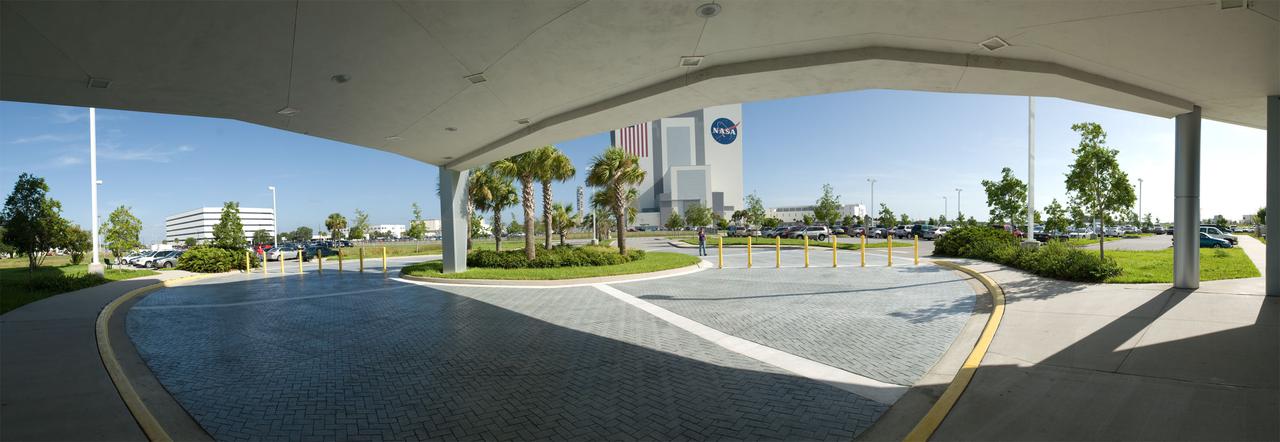
CAPE CANAVERAL, Fla. -- The panoramic view of the Vehicle Assembly Building, or VAB, at NASA's Kennedy Space Center in Florida is taken from under the porte cochere of the Operations Support Building, or OSB, II located in the Launch Complex 39 area. OSB I also is seen towards to the left of the VAB. To the right of the VAB in the distance, is the 4-story Launch Control Center. Photo credit: NASA_Frankie Martin
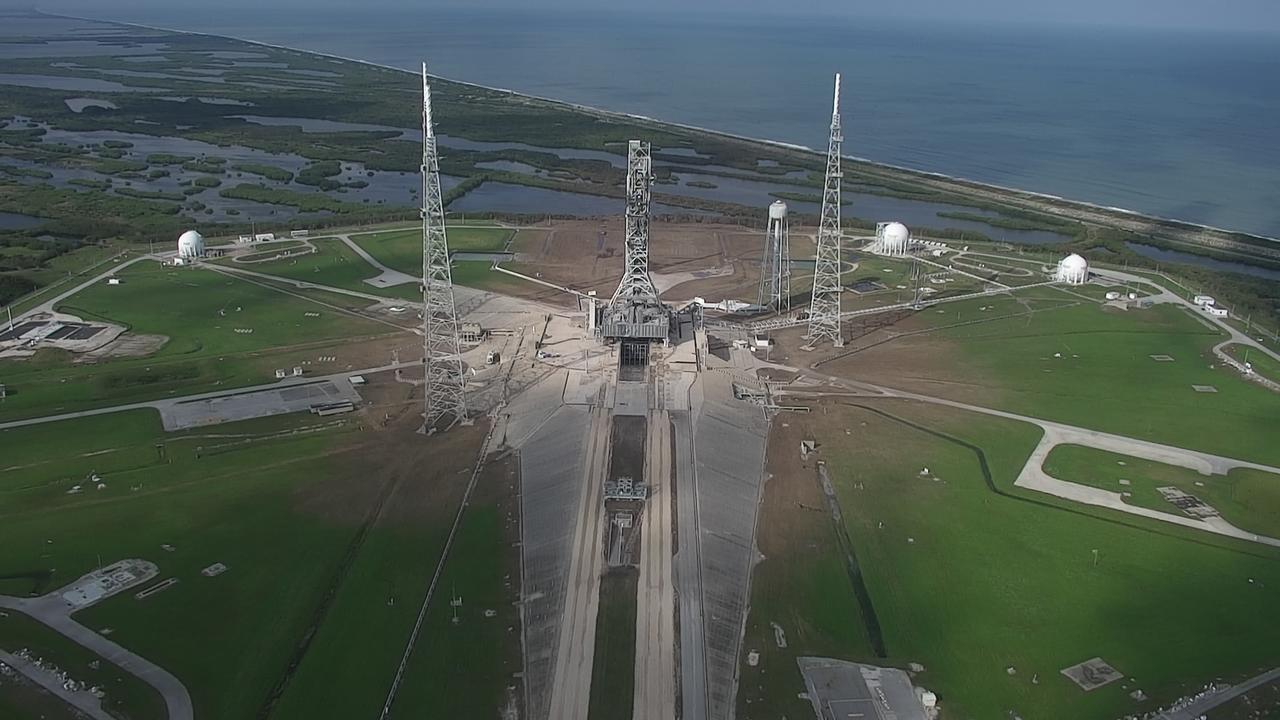
Following NASA’s successful Artemis I launch from Kennedy Space Center in Florida on Nov. 16, 2022, teams with the Exploration Ground Systems conducted a post-launch assessment for the ground systems, which began the day of launch and concluded Friday, Nov. 18. This enabled teams to inspect areas on the mobile launcher and identify specific damage and debris around the pad. Engineers have determined the overall mobile launcher and pad systems performed as designed during launch and are structurally sound.
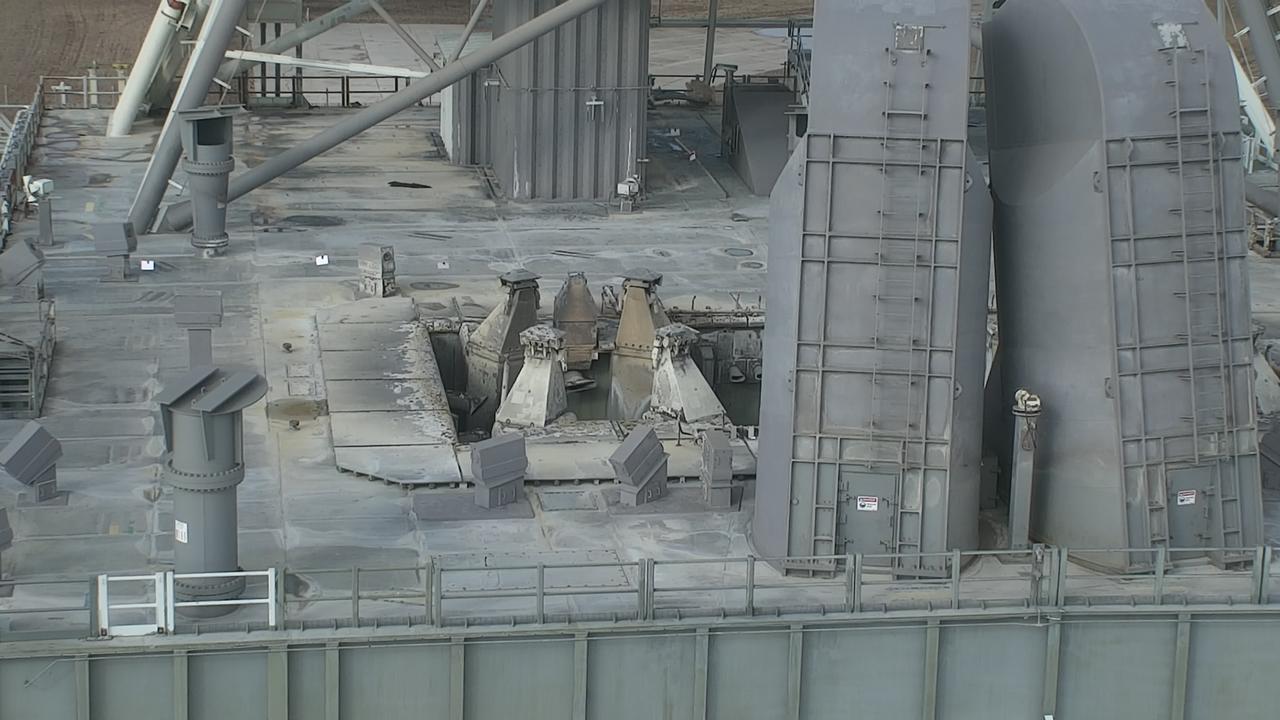
Following NASA’s successful Artemis I launch from Kennedy Space Center in Florida on Nov. 16, 2022, teams with the Exploration Ground Systems conducted a post-launch assessment for the ground systems, which began the day of launch and concluded Friday, Nov. 18. This enabled teams to inspect areas on the mobile launcher and identify specific damage and debris around the pad. Engineers have determined the overall mobile launcher and pad systems performed as designed during launch and are structurally sound.

Following NASA’s successful Artemis I launch from Kennedy Space Center in Florida on Nov. 16, 2022, teams with the Exploration Ground Systems conducted a post-launch assessment for the ground systems, which began the day of launch and concluded Friday, Nov. 18. This enabled teams to inspect areas on the mobile launcher and identify specific damage and debris around the pad. Engineers have determined the overall mobile launcher and pad systems performed as designed during launch and are structurally sound.
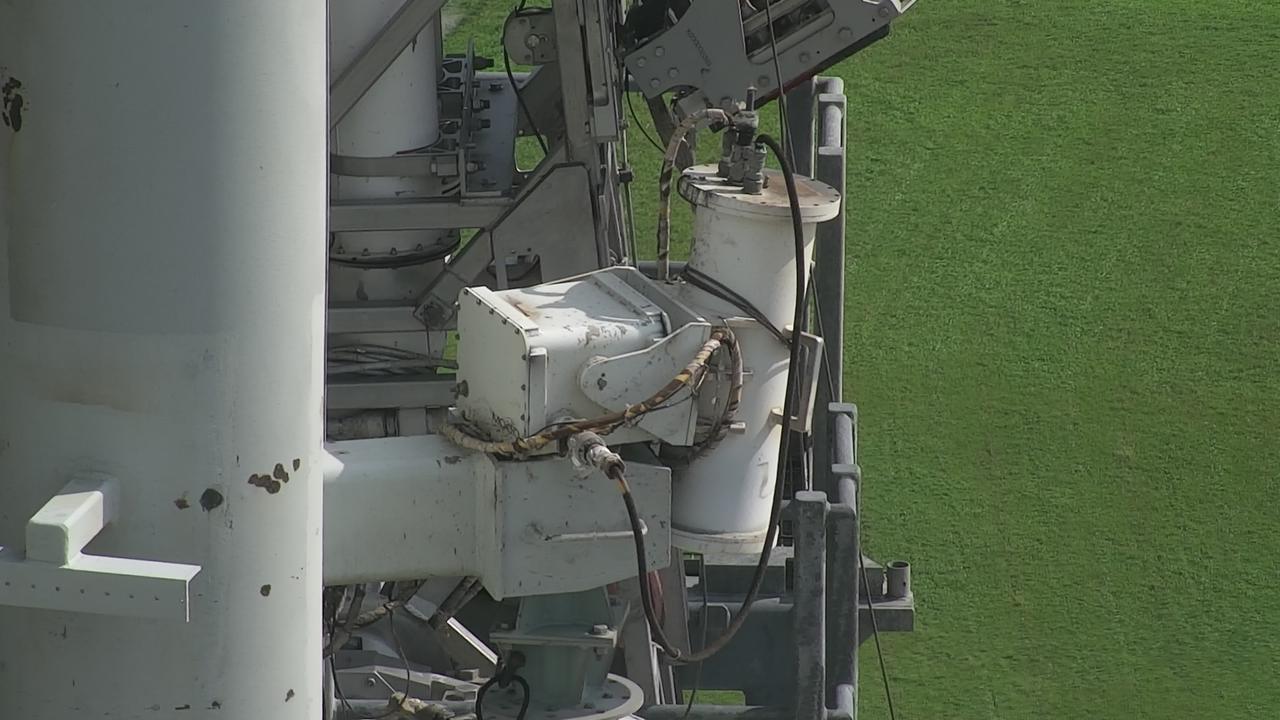
Following NASA’s successful Artemis I launch from Kennedy Space Center in Florida on Nov. 16, 2022, teams with the Exploration Ground Systems conducted a post-launch assessment for the ground systems, which began the day of launch and concluded Friday, Nov. 18. This enabled teams to inspect areas on the mobile launcher and identify specific damage and debris around the pad. Engineers have determined the overall mobile launcher and pad systems performed as designed during launch and are structurally sound.
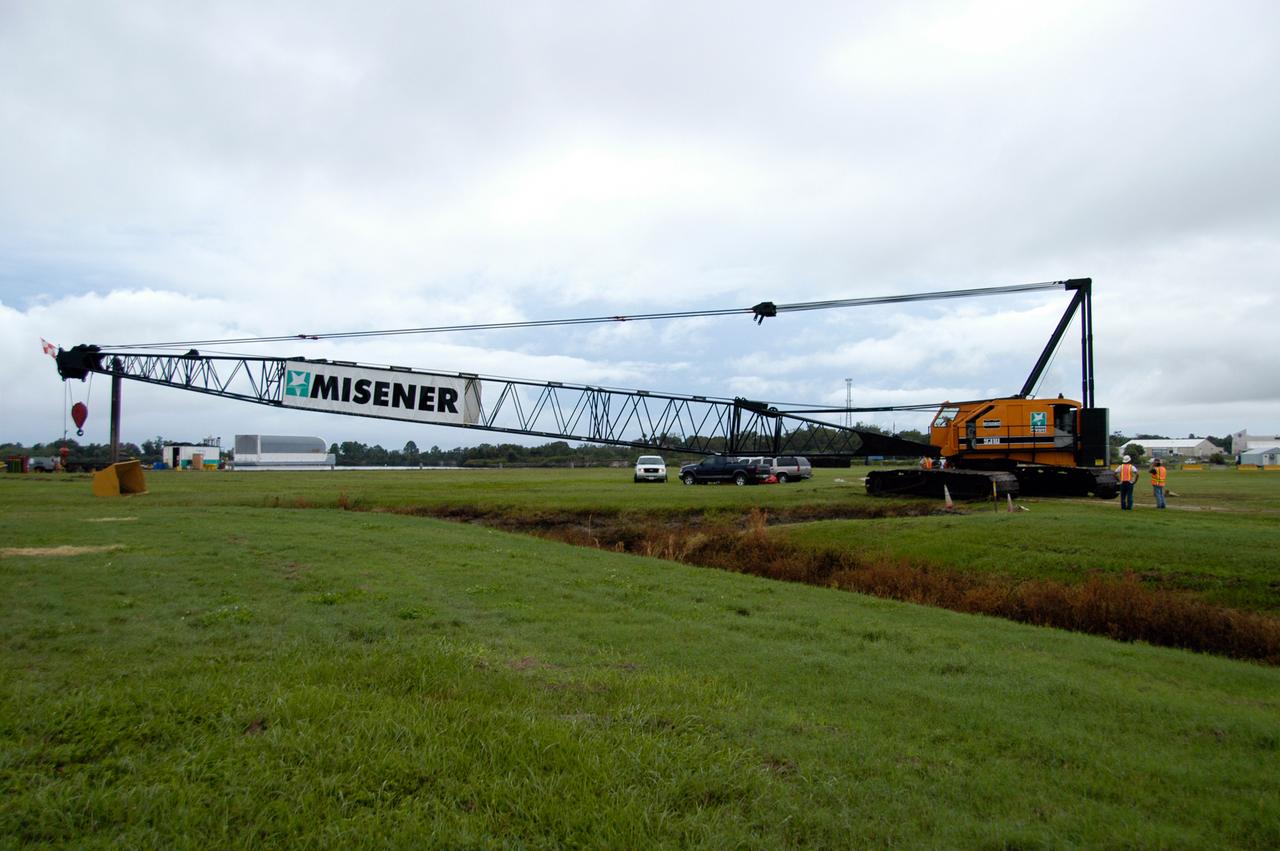
A large crawler crane begins moving away from the turn basin at the Launch Complex 39 Area on NASA's Kennedy Space Center. The crane with its 70-foot boom will be moved to Launch Pad 39B and used to construct a new lightning protection system for the Constellation Program and Ares/Orion launches. Pad B will be the site of the first Ares vehicle launch, including Ares I-X which is scheduled for April 2009.
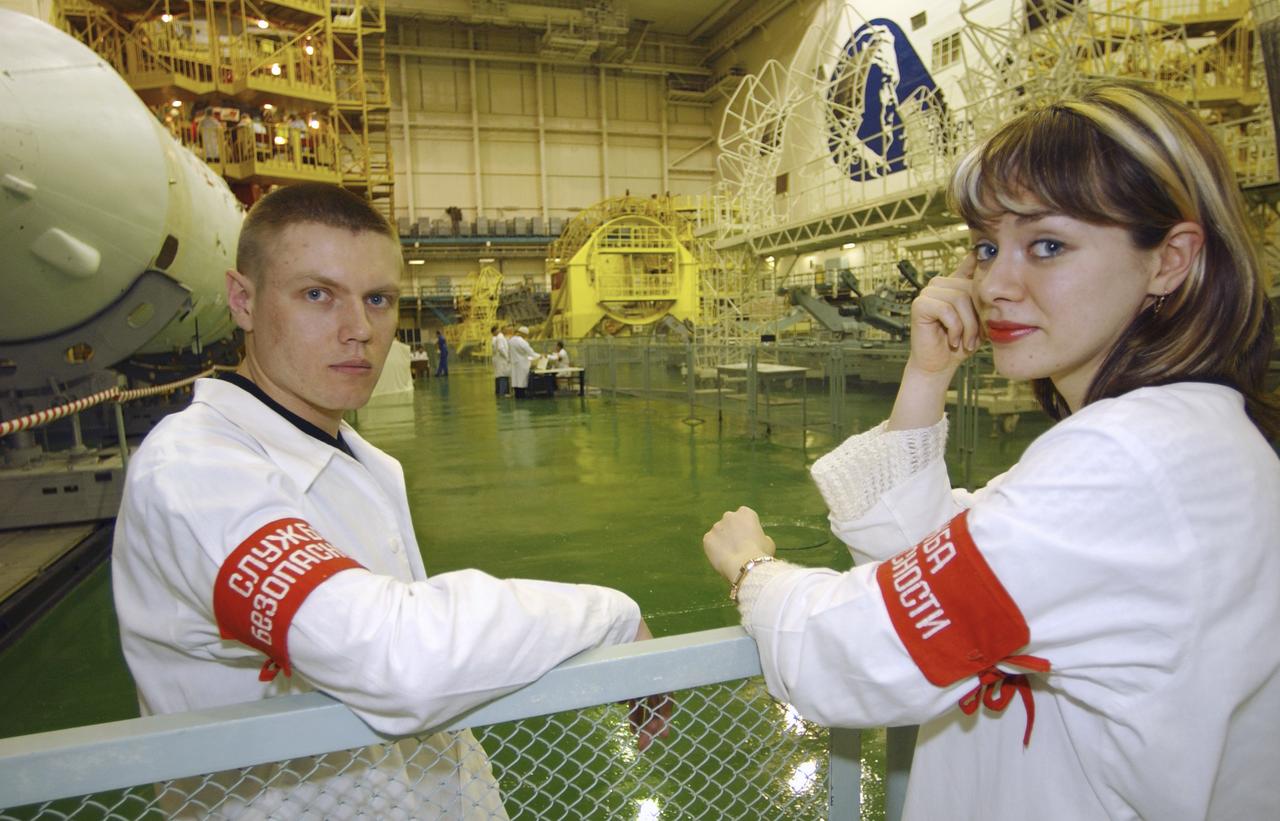
Employees monitor access to the Soyuz integration area at the Baikonur Cosmodrome, Building 254, Soyuz Integration Facility in Kazakhstan, Thursday, April 10, 2003. NASA International Space Station science officer and flight engineer for Expedition 7 astronaut Edward T. Lu and Expedition 7 commander cosmonaut Yuri I. Malenchenko had entered the Soyuz TMA-2 capsule for inspection and seat liner check. Photo Credit: (NASA/Bill Ingalls)
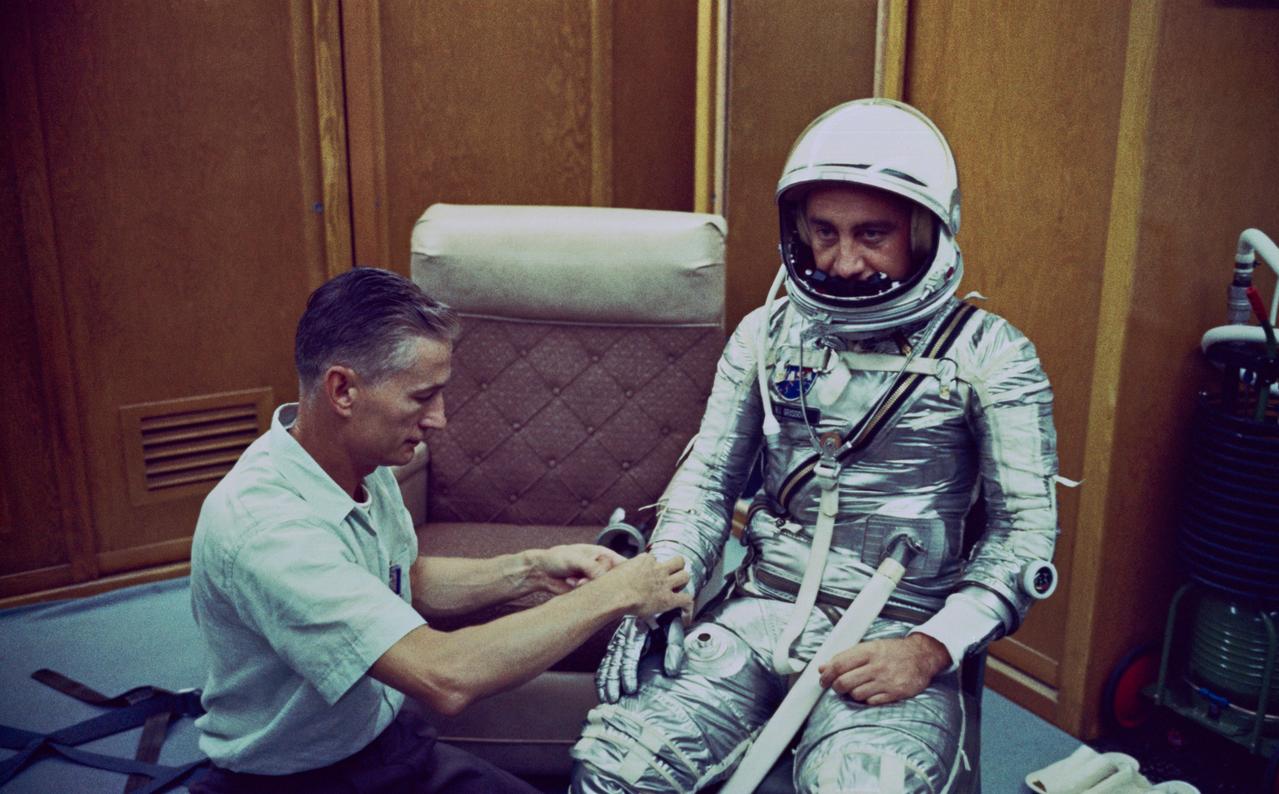
S88-55875 (19 July 1961) --- Donning a spacesuit for the Mercury-Redstone 4 (MR-4) mission, astronaut Virgil I. (Gus) Grissom chats with spaceflight equipment specialist Joe W. Schmitt in the personal equipment room of Hangar S at Cape Canaveral, Florida. Shortly after this photograph was taken, the launch was postponed two days due to unfavorable weather conditions in the area. Photo credit: NASA
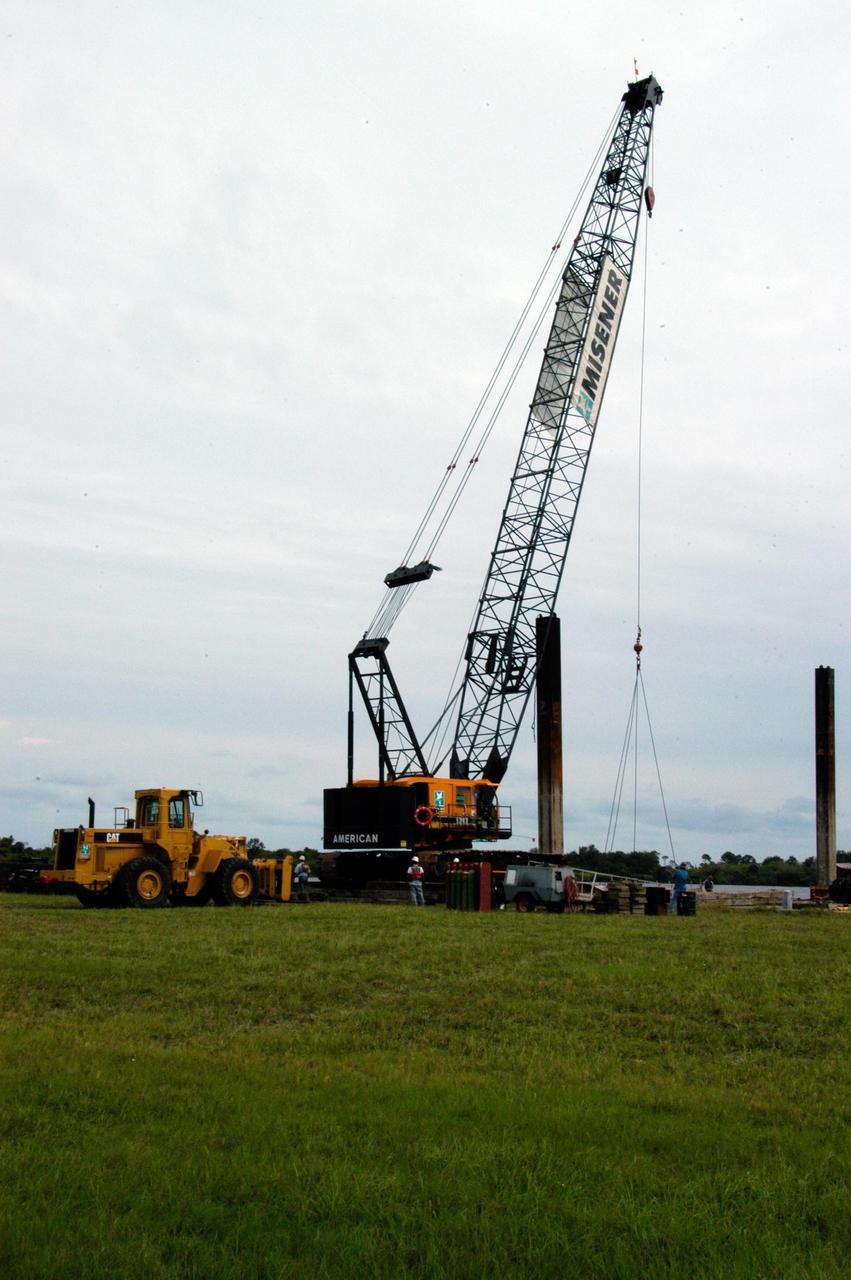
KENNEDY SPACE CENTER, FLA. -- A large crawler crane arrives at the turn basin at the Launch Complex 39 Area on NASA's Kennedy Space Center. The crane with its 70-foot boom will be moved to Launch Pad 39B and used to construct a new lightning protection system for the Constellation Program and Ares/Orion launches. Pad B will be the site of the first Ares vehicle launch, including Ares I-X which is scheduled for April 2009. Photo credit: NASA/George Shelton
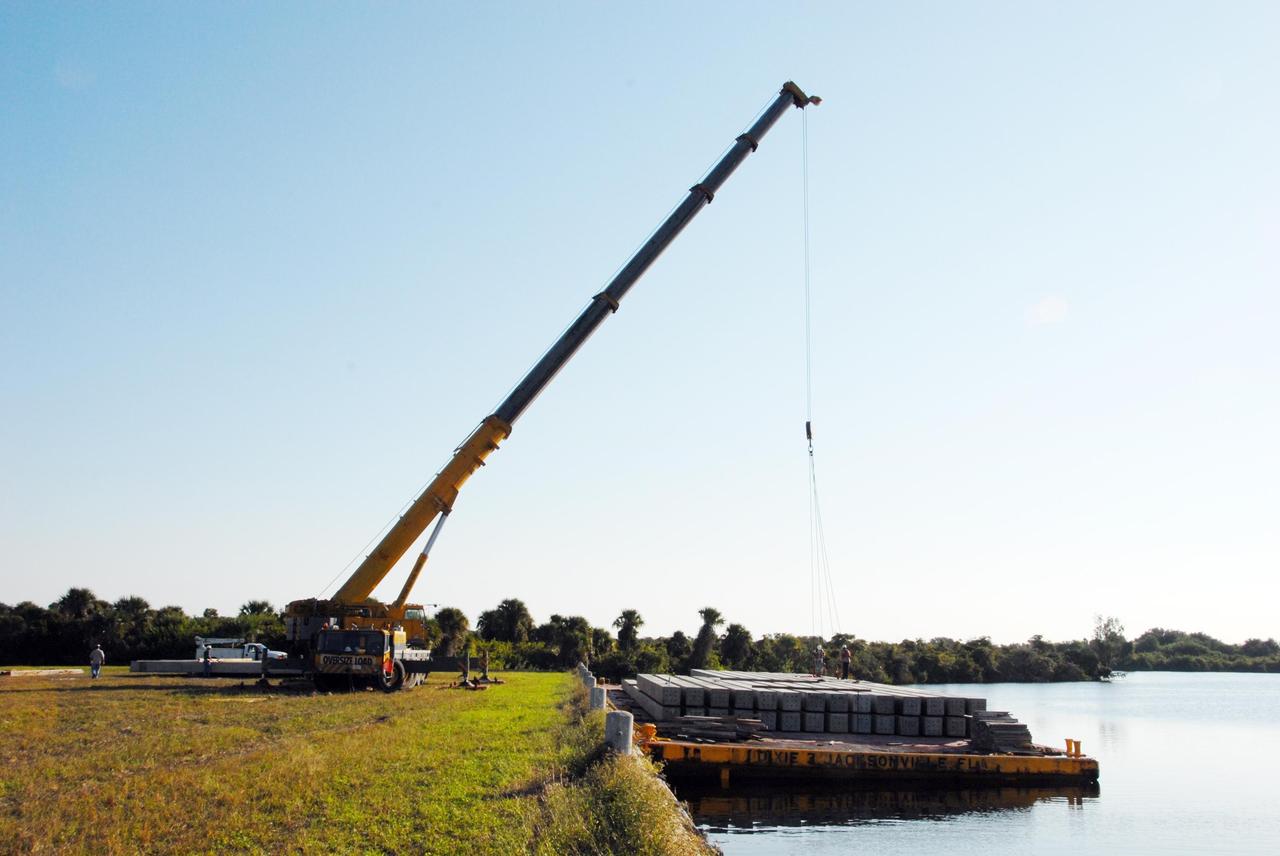
KENNEDY SPACE CENTER, FLA. -- In the Launch Complex 39 Area turn basin at NASA's Kennedy Space Center, the crane crawler is being used to lift pilings from a barge. The pilings will be used to help construct new lightning towers on Launch Pad 39B for the Constellation Program and Ares/Orion launches. Pad B will be the site of the first Ares vehicle launch, including Ares I-X which is scheduled for April 2009. Photo credit: NASA/George Shelton
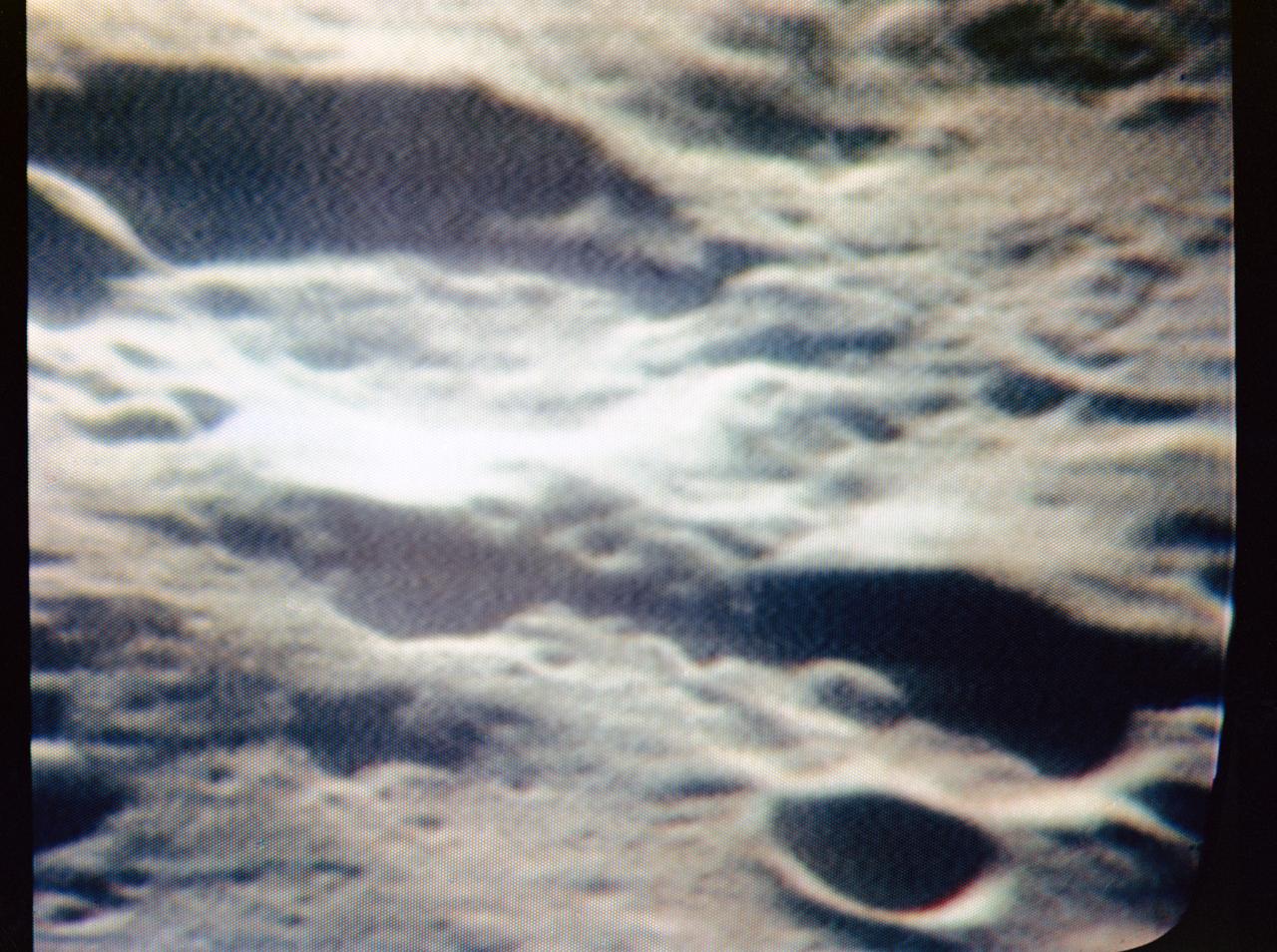
S69-34476 (21 May 1969) --- An oblique view of a group of craters just west of the Sea of Fertility (Mare Fecunditatis) on the lunar nearside is seen in this color reproduction taken from a telecast made by the color television aboard the Apollo 10 spacecraft as it orbited the moon. In this area are Gutenberg I, Capella A, Capella D, Capella E, and Capella M.
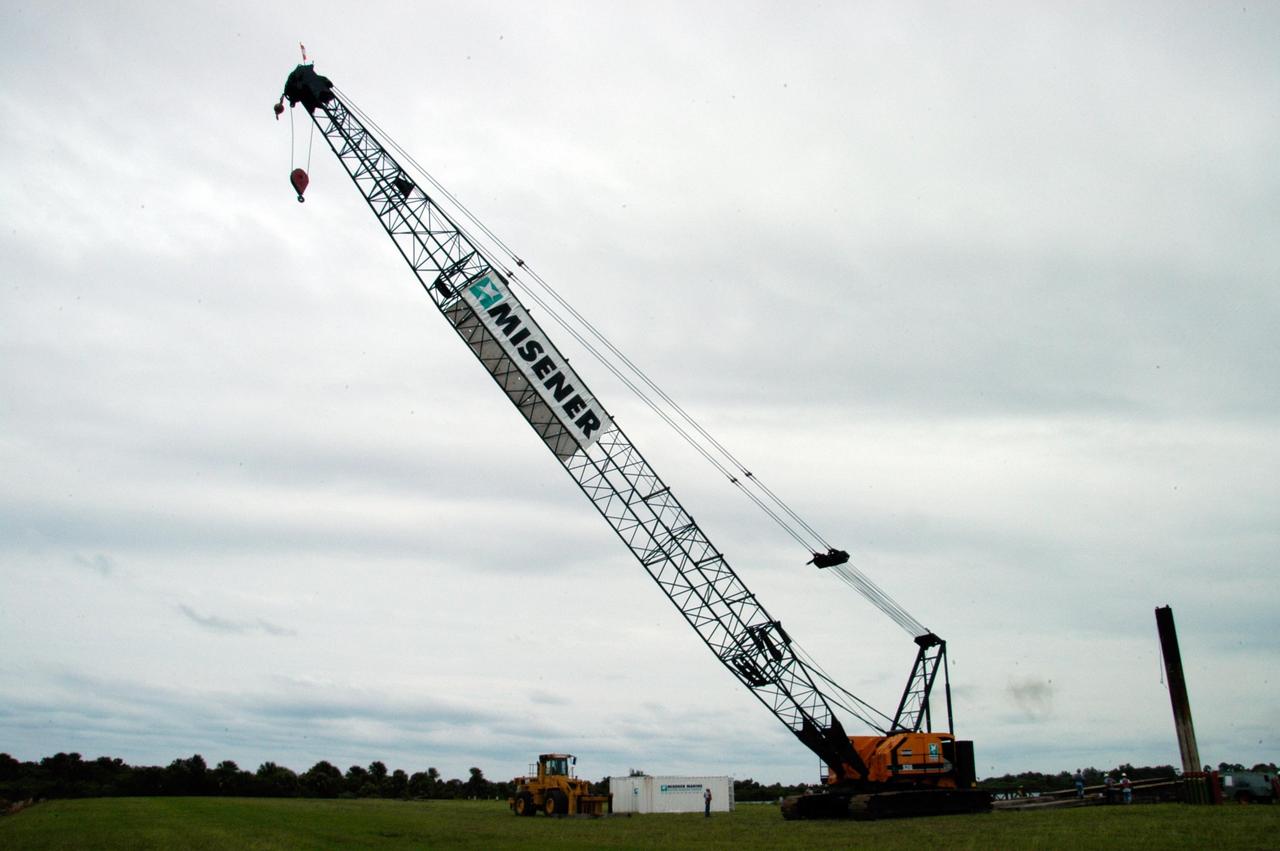
KENNEDY SPACE CENTER, FLA. -- A large crawler crane begins moving away from the turn basin at the Launch Complex 39 Area on NASA's Kennedy Space Center. The crane with its 70-foot boom will be moved to Launch Pad 39B and used to construct a new lightning protection system for the Constellation Program and Ares/Orion launches. Pad B will be the site of the first Ares vehicle launch, including Ares I-X which is scheduled for April 2009. Photo credit: NASA/George Shelton
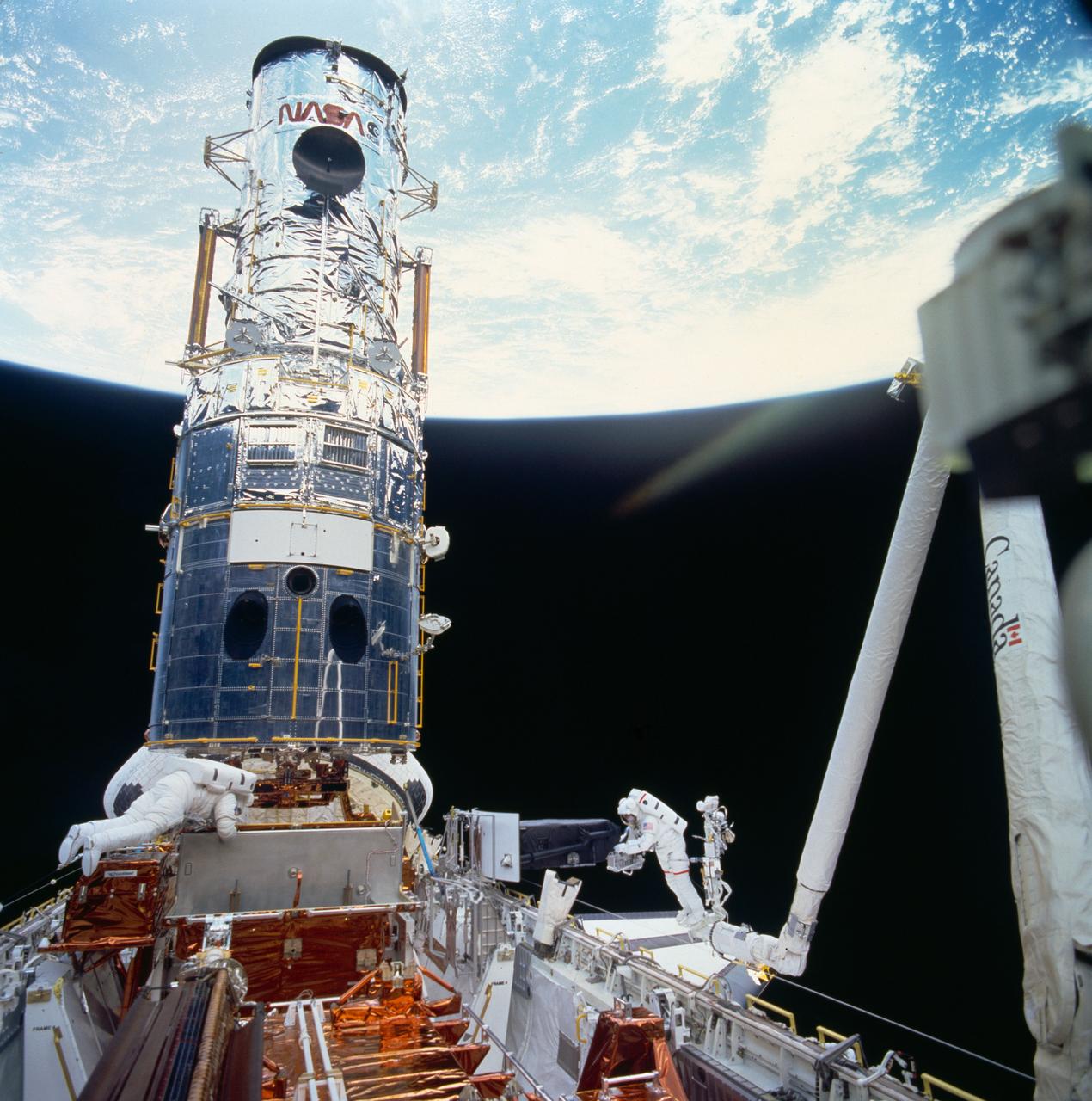
STS061-77-078 (7 Dec 1993) --- Astronaut Jeffrey A. Hoffman, anchored on the end of the Remote Manipulator System (RMS) arm, is pictured with the Wide Field/Planetary Camera (WF/PC I) during the third of five extravehicular activity?s (EVA). Astronauts Hoffman and F. Story Musgrave, seen near the stowage area for the WF/PC, had earlier installed the new camera (note white rectangle) on lower portion of telescope.
/61-mr4-55(s)~medium.jpg)
KENNEDY SPACE CENTER, FLA. -- Project Mercury Astronaut Virgil I. Grissom, primary pilot for the Mercury-Redstone 4 manned space flight known as Liberty Bell 7, gets an assist from suit specialist Joe W. Schmidt as he prepares for the Mercury-Redstone 4 manned space flight. The flight, the second manned shot in the Mercury program, was postponed because of bad weather in the launch area. (NASA Photo
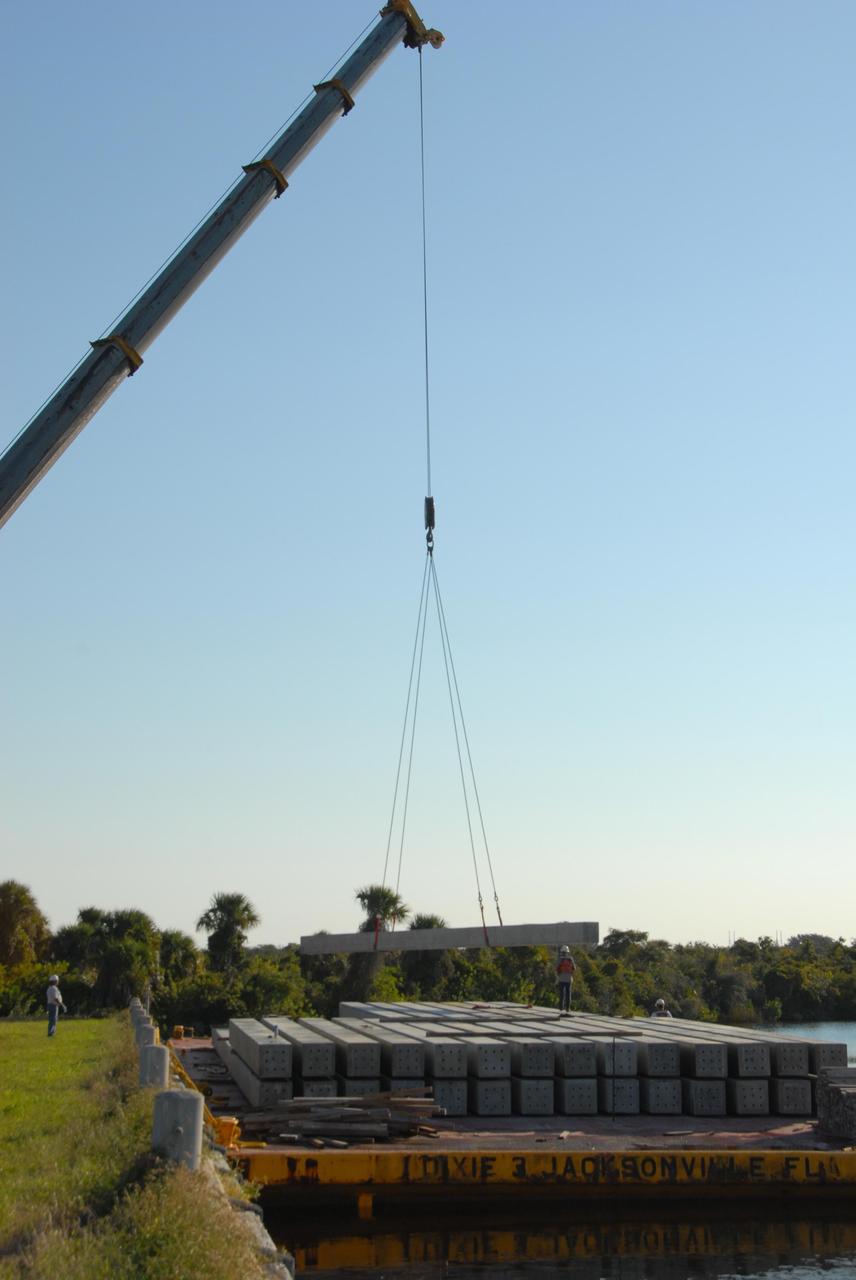
KENNEDY SPACE CENTER, FLA. -- In the Launch Complex 39 Area turn basin at NASA's Kennedy Space Center, the crane crawler begins lifting pilings from the barge. The pilings will be used to help construct new lightning towers on Launch Pad 39B for the Constellation Program and Ares/Orion launches. Pad B will be the site of the first Ares vehicle launch, including Ares I-X which is scheduled for April 2009. Photo credit: NASA/George Shelton
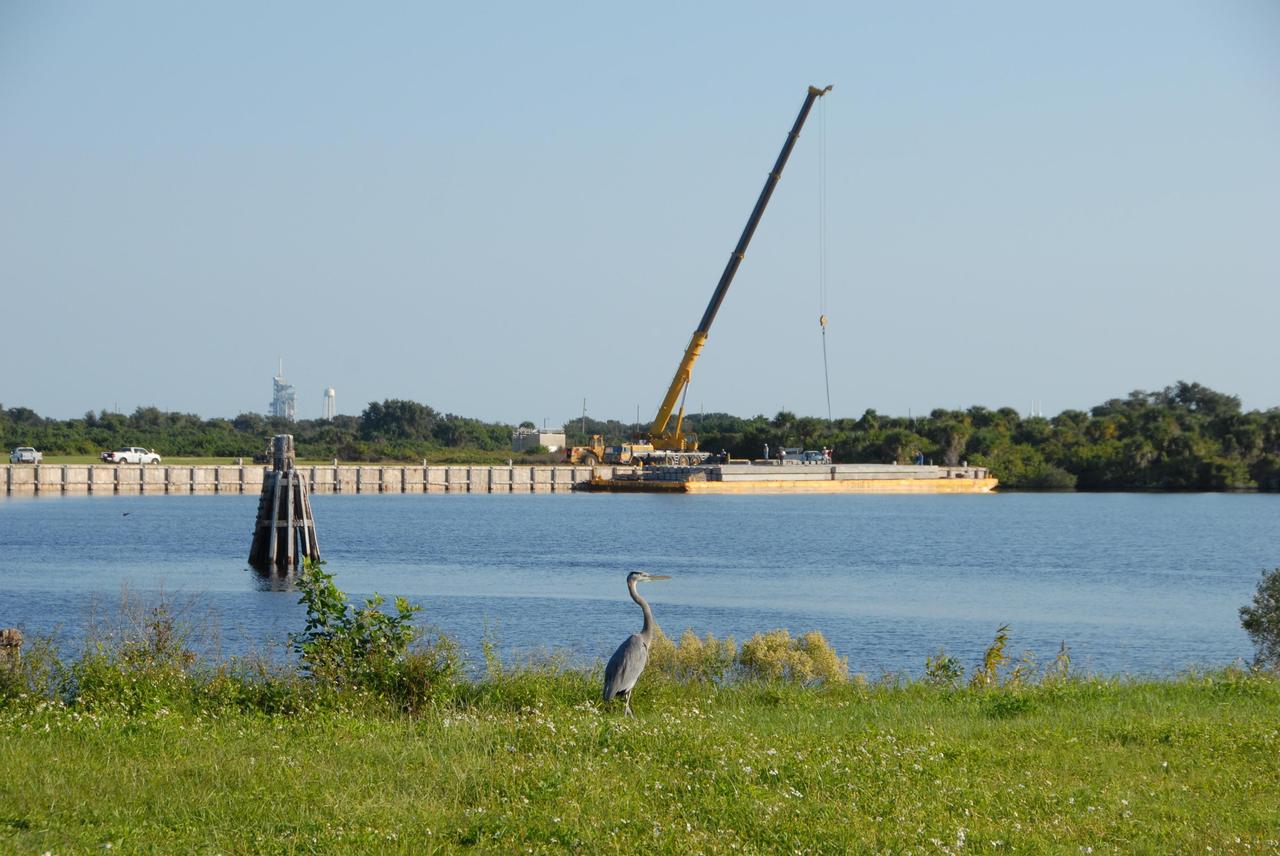
KENNEDY SPACE CENTER, FLA. -- In the Launch Complex 39 Area turn basin at NASA's Kennedy Space Center, the crane crawler is being used to lift pilings from a barge. The pilings will be used to help construct new lightning towers on Launch Pad 39B for the Constellation Program and Ares/Orion launches. Pad B will be the site of the first Ares vehicle launch, including Ares I-X which is scheduled for April 2009. Photo credit: NASA/George Shelton
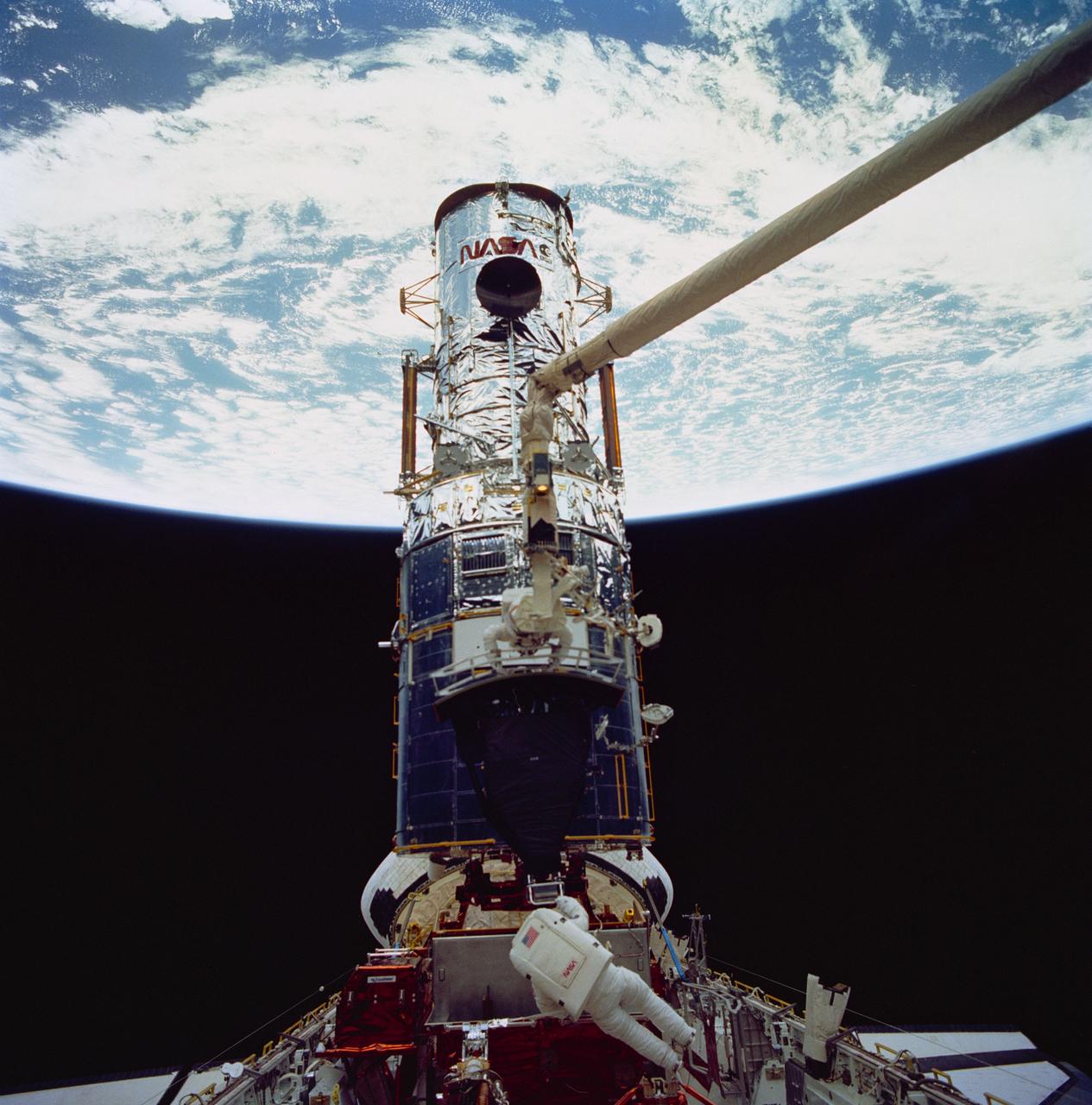
STS061-77-094 (7 Dec 1993) --- Astronaut Jeffrey A. Hoffman, anchored to the end of the Remote Manipulator System (RMS) arm, prepares to stow the Wide Field\Planetary Camera (WF\PC I) for the Hubble Space Telescope (HST), during their extravehicular activity (EVA). Astronaut F. Story Musgrave, stationed at the stowage area at bottom of frame, assists. WF/PC II is in place on the HST.
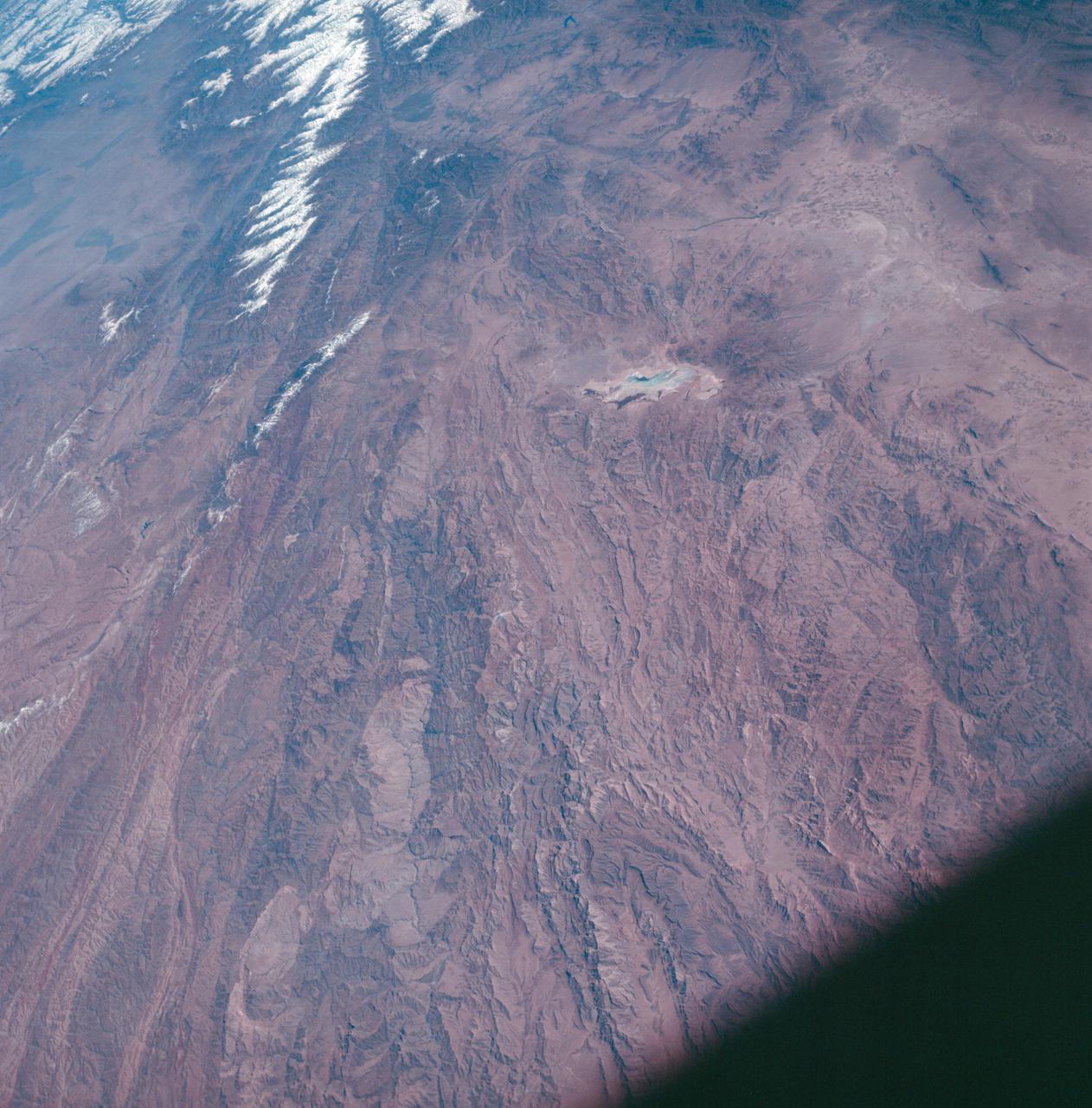
AS7-05-1667 (13 Oct. 1968) --- Kabul, Afghanistan area as seen from the Apollo 7 spacecraft during its 39th revolution of Earth. Photographed from an altitude of 127 nautical miles, at ground elapsed time of 61 hours and 20 minutes. Also, visible in picture are the Panjshir River and the Koh-i-Baba Mountains.
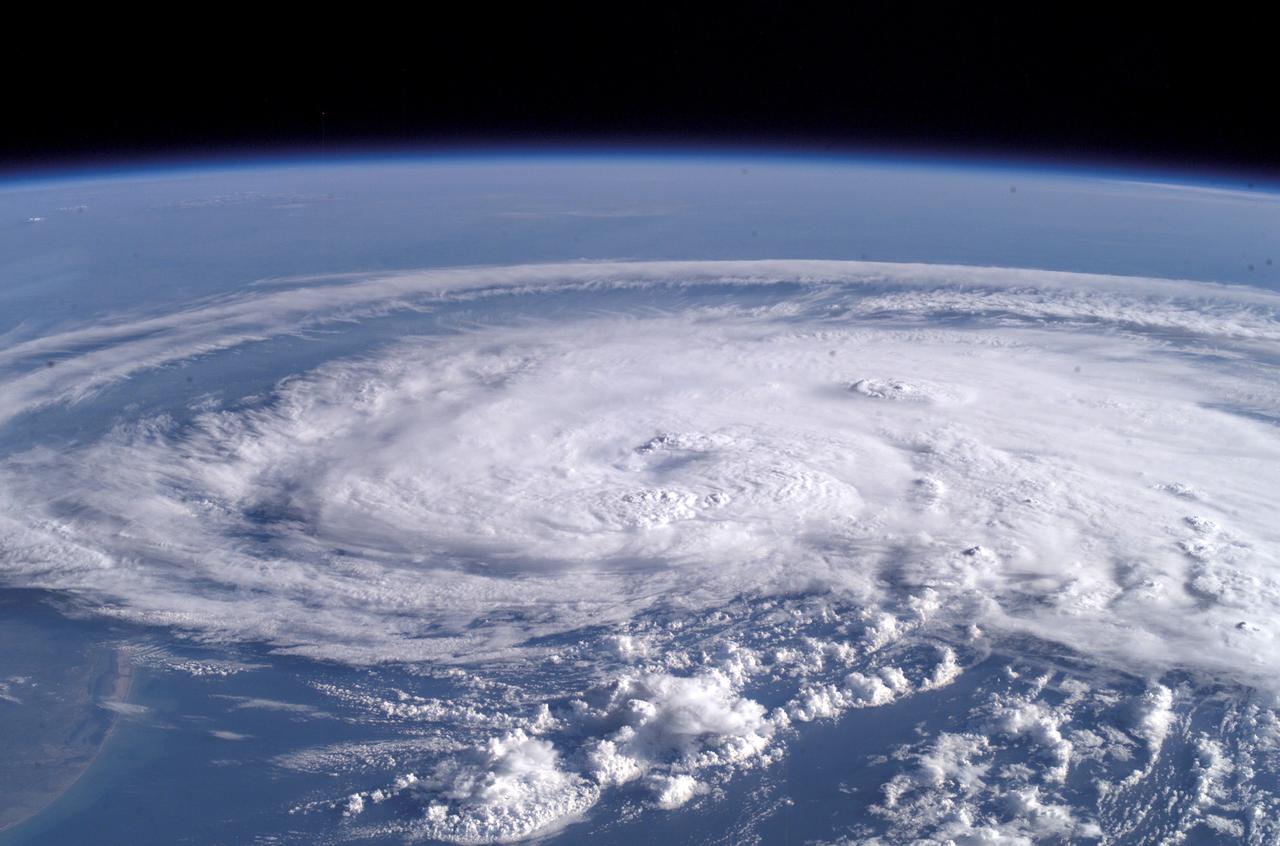
Aboard the International Space Station (ISS), Expedition Seven crew members, Cosmonaut Yuri I. Malenchenko, and Astronaut Edward T. Lu, had an outstanding opportunity to observe tropical storm Claudette as she turned into a hurricane and came ashore to their Houston home and other Texas areas. The storm produced winds of 80-85 mph gusting to 104 mph.
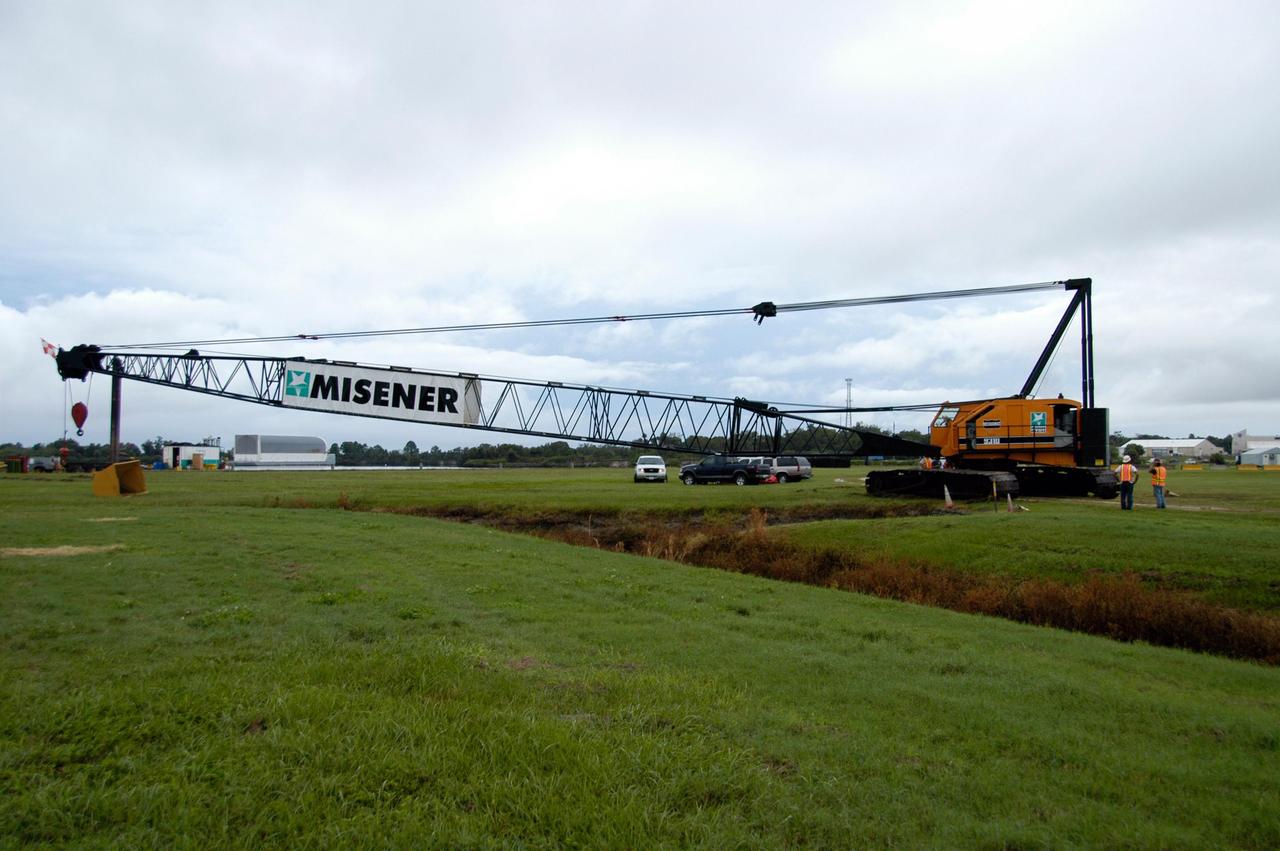
KENNEDY SPACE CENTER, FLA. -- A large crawler crane begins moving away from the turn basin at the Launch Complex 39 Area on NASA's Kennedy Space Center. The crane with its 70-foot boom will be moved to Launch Pad 39B and used to construct a new lightning protection system for the Constellation Program and Ares/Orion launches. Pad B will be the site of the first Ares vehicle launch, including Ares I-X which is scheduled for April 2009. Photo credit: NASA/George Shelton
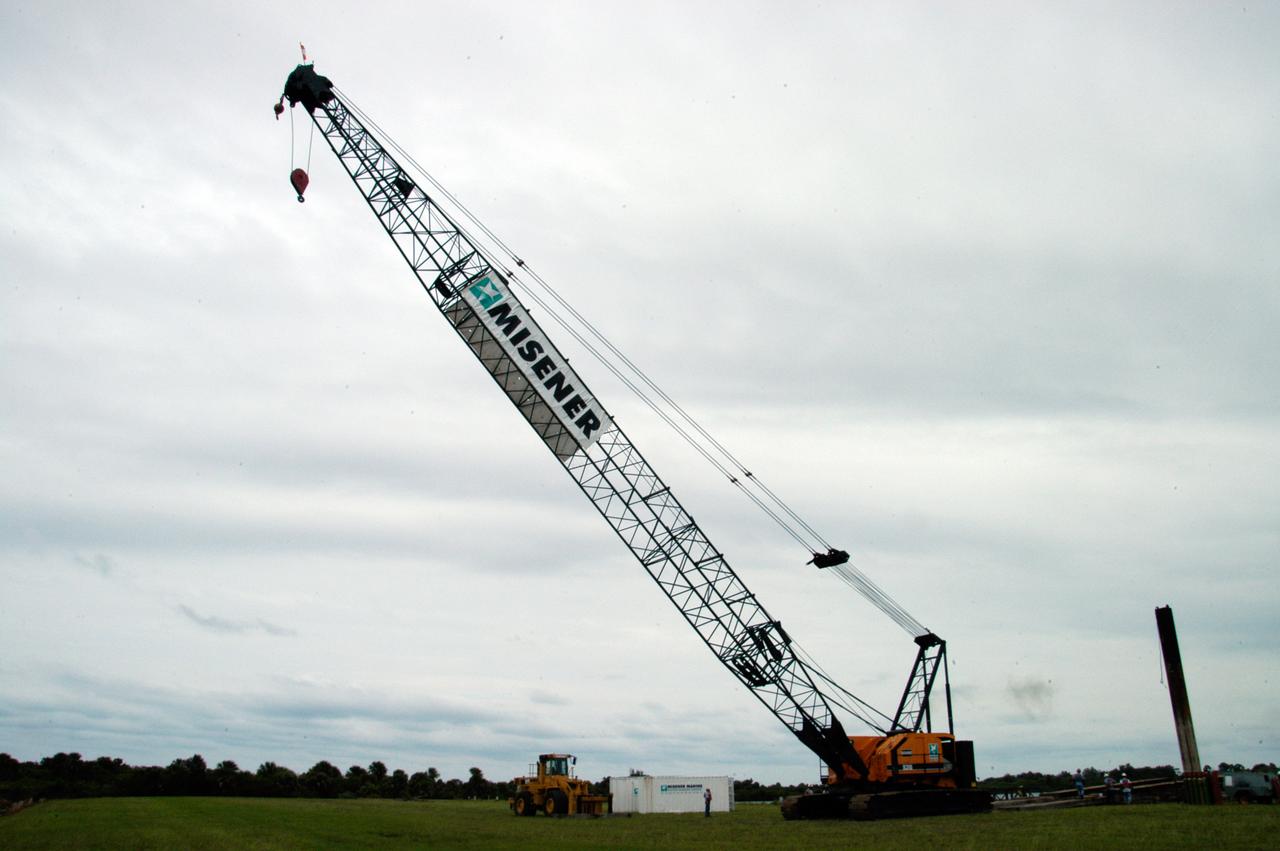
A large crawler crane begins moving away from the turn basin at the Launch Complex 39 Area on NASA's Kennedy Space Center. The crane with its 70-foot boom will be moved to Launch Pad 39B and used to construct a new lightning protection system for the Constellation Program and Ares/Orion launches. Pad B will be the site of the first Ares vehicle launch, including Ares I-X which is scheduled for April 2009.
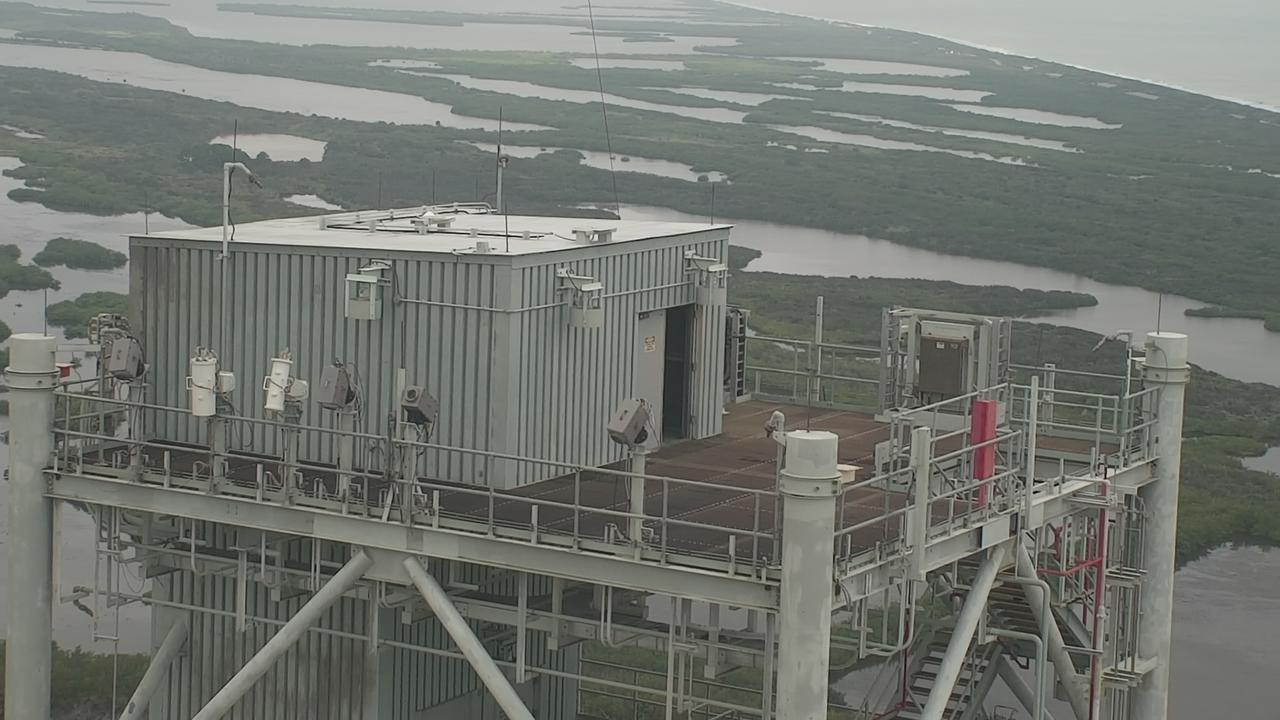
Following NASA’s successful Artemis I launch from Kennedy Space Center in Florida on Nov. 16, 2022, teams with the Exploration Ground Systems conducted a post-launch assessment for the ground systems, which began the day of launch and concluded Friday, Nov. 18. This enabled teams to inspect areas on the mobile launcher and identify specific damage and debris around the pad. Engineers have determined the overall mobile launcher and pad systems performed as designed during launch and are structurally sound.
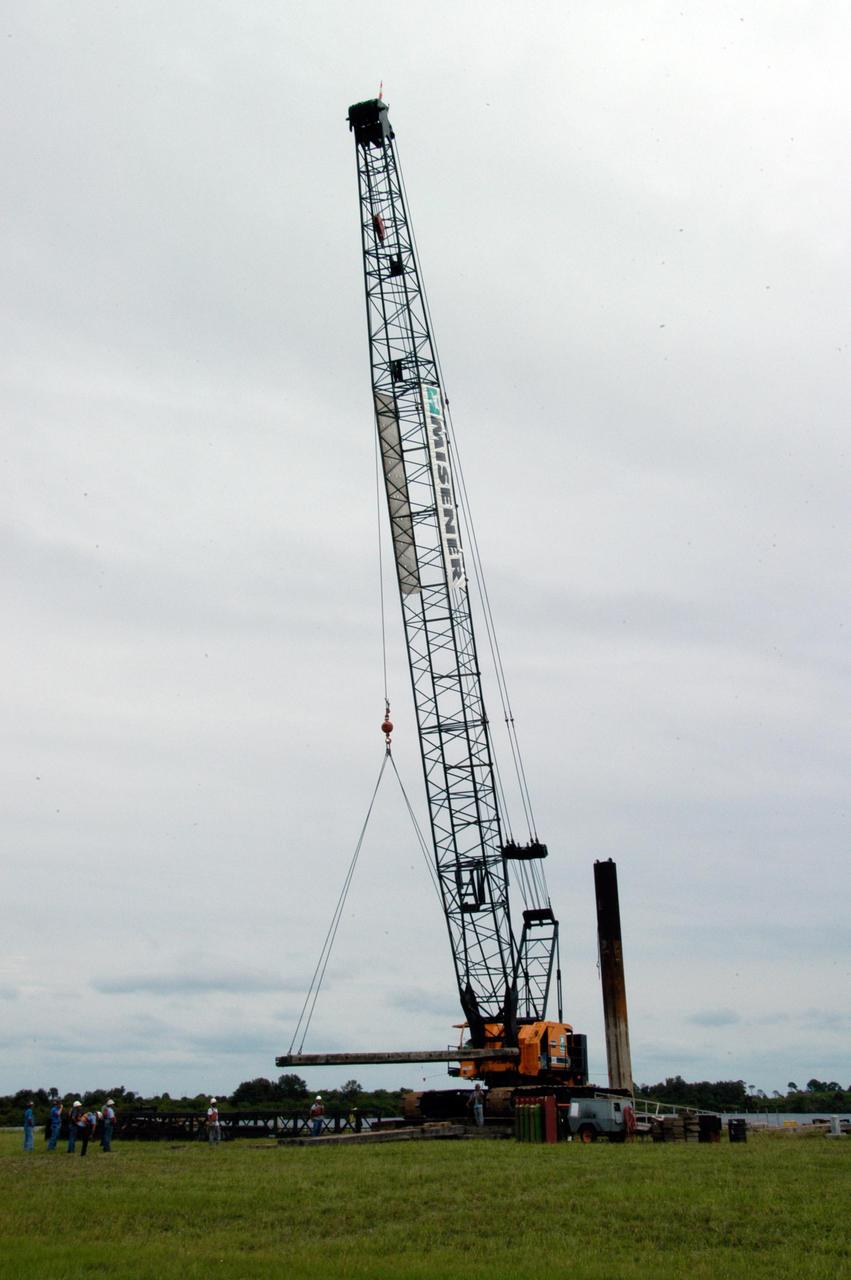
KENNEDY SPACE CENTER, FLA. -- A large crawler crane arrives at the turn basin at the Launch Complex 39 Area on NASA's Kennedy Space Center. The crane with its 70-foot boom will be moved to Launch Pad 39B and used to construct a new lightning protection system for the Constellation Program and Ares/Orion launches. Pad B will be the site of the first Ares vehicle launch, including Ares I-X which is scheduled for April 2009. Photo credit: NASA/George Shelton
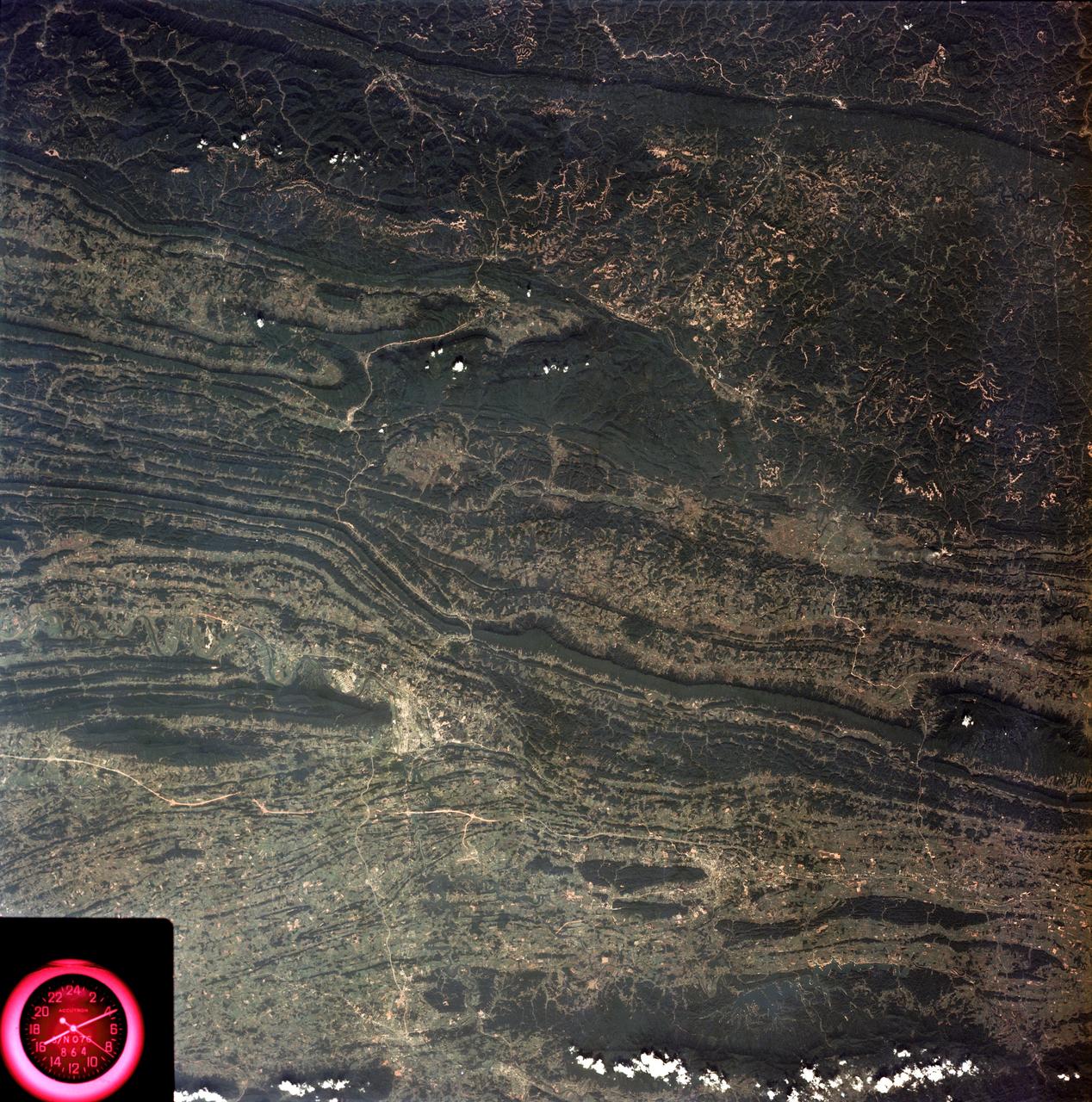
SL3-88-053 (July-September 1973) --- A near vertical view of the Tennessee-Virginia-Kentucky border area is seen in this Skylab 3 Earth Resources Experiments Package S190-B (five-inch Earth terrain camera) photograph taken from the Skylab space station in Earth orbit. The clock is in the most southerly corner of the picture. Interstate 81 under construction extends northeast-southwest across the bottom portion of the photograph. The larger urban area nearest the center of the picture is Kingsport, Tennessee. On the southern side of I-80 and east of Kingsport is the city of Bristol, Tennessee-Virginia. Johnson City, Tennessee is the urban area near the edge of the picture southeast of Kingsport. The Holston River, a tributary of the Tennessee River, meanders through the Kingsport area. The characteristic ridge and valley features in the Cumberland Plateau of Kentucky, Tennessee and Virginia are clearly visible. Forests (dark green) occur on the ridges and clearly outline the folded and faulted rock formations. The valleys (light) were formed in the softer rocks as a result of erosion. Agricultural areas are indicated by the characteristic rectangular patterns. Coal production is an important industry of this area; and it is mined by surface open pit operations. The irregular light areas in the Kentucky-Virginia border area are the strip mines which follow the contour of the land. Reclamation of the strip mine areas is aided through accurate knowledge of the mine and drainage systems. Dr. Ronald Brooks of the Wolf Research and Development Corporation can use this photograph in study of strip mine areas in the east central U.S. Federal agencies participating with NASA on the EREP project are the Departments of Agriculture, Commerce, Interior, the Environmental Protection Agency and the Corps of Engineers. All EREP photography is available to the public through the Department of Interior’s Earth Resources Observations Systems Data Center, Sioux Falls, South Dakota, 57198. Photo credit: NASA
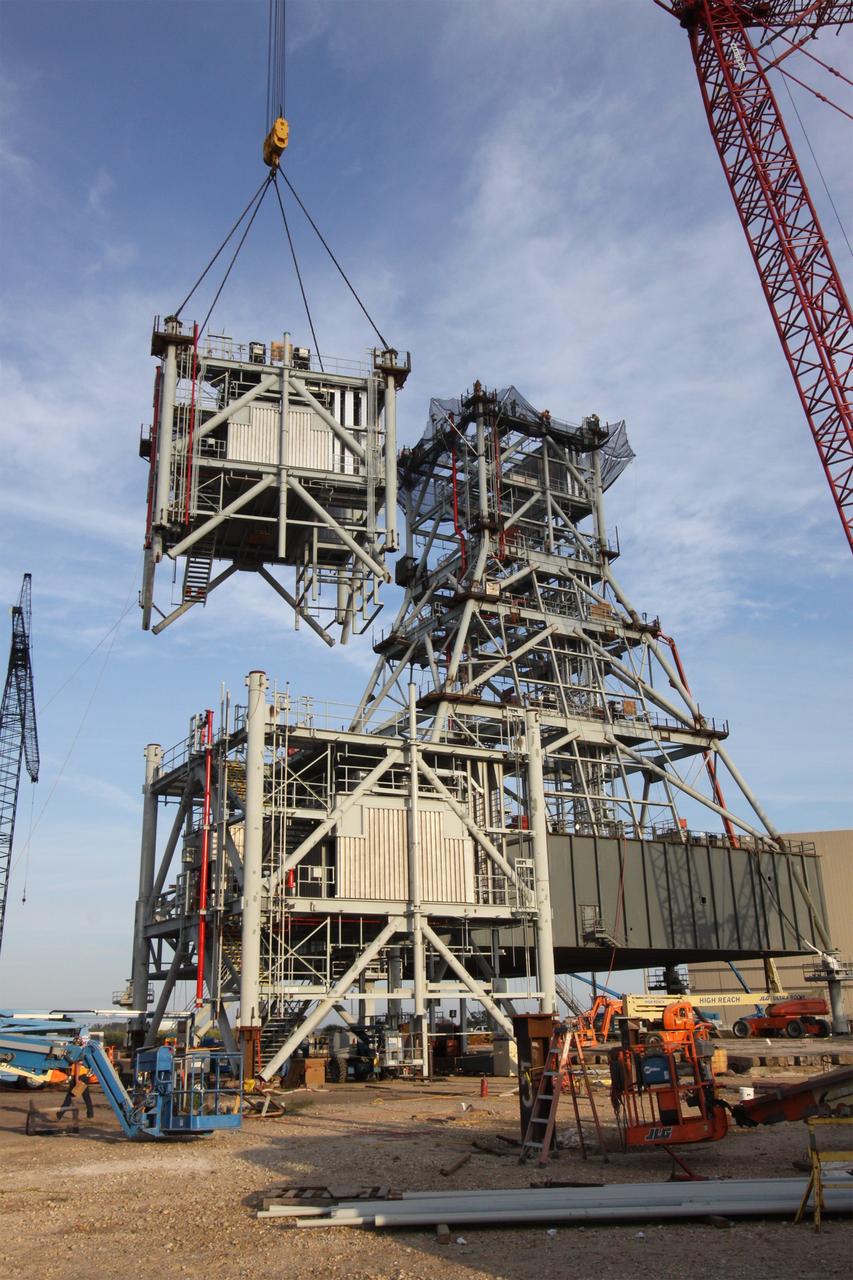
CAPE CANAVERAL, Fla. – At NASA's Kennedy Space Center in Florida, a crane lifts a fifth tower segment toward four segments already secured to a new mobile launcher, or ML, being constructed to support the Constellation Program. When completed, the tower will be approximately 345 feet tall and have multiple platforms for personnel access. The construction is under way at the mobile launcher park site area north of Kennedy's Vehicle Assembly Building. The launcher will provide a base to launch the Ares I rocket, designed to transport the Orion crew exploration vehicle, its crew and cargo to low Earth orbit. Its base is being made lighter than space shuttle mobile launcher platforms so the crawler-transporter can pick up the heavier load of the tower and taller rocket. For information on the Ares I, visit http://www.nasa.gov/ares. Photo credit: NASA/Jack Pfaller
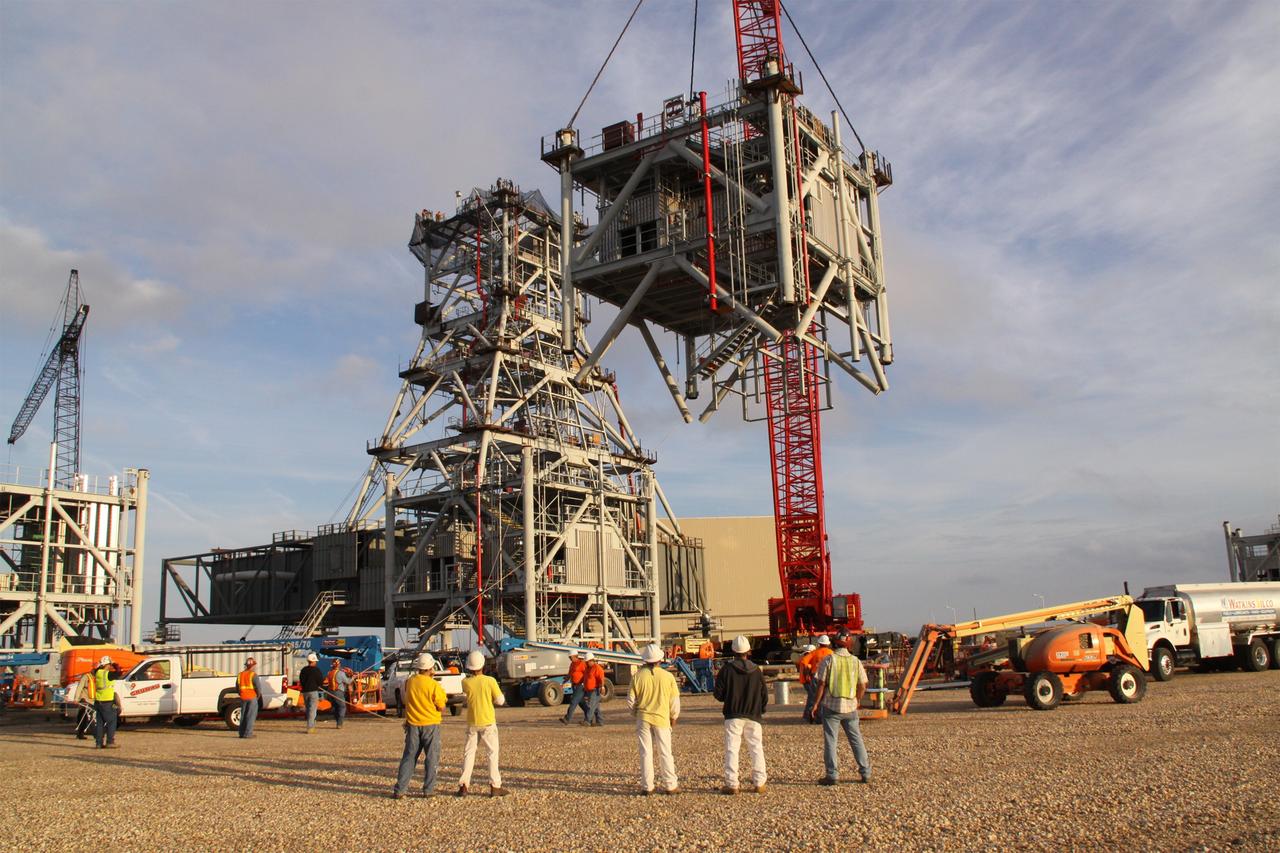
CAPE CANAVERAL, Fla. – At NASA's Kennedy Space Center in Florida, workers monitor the lift of the fifth segment of the tower of a new mobile launcher, or ML, being constructed to support the Constellation Program. When completed, the tower will be approximately 345 feet tall and have multiple platforms for personnel access. The construction is under way at the mobile launcher park site area north of Kennedy's Vehicle Assembly Building. The launcher will provide a base to launch the Ares I rocket, designed to transport the Orion crew exploration vehicle, its crew and cargo to low Earth orbit. Its base is being made lighter than space shuttle mobile launcher platforms so the crawler-transporter can pick up the heavier load of the tower and taller rocket. For information on the Ares I, visit http://www.nasa.gov/ares. Photo credit: NASA/Jack Pfaller
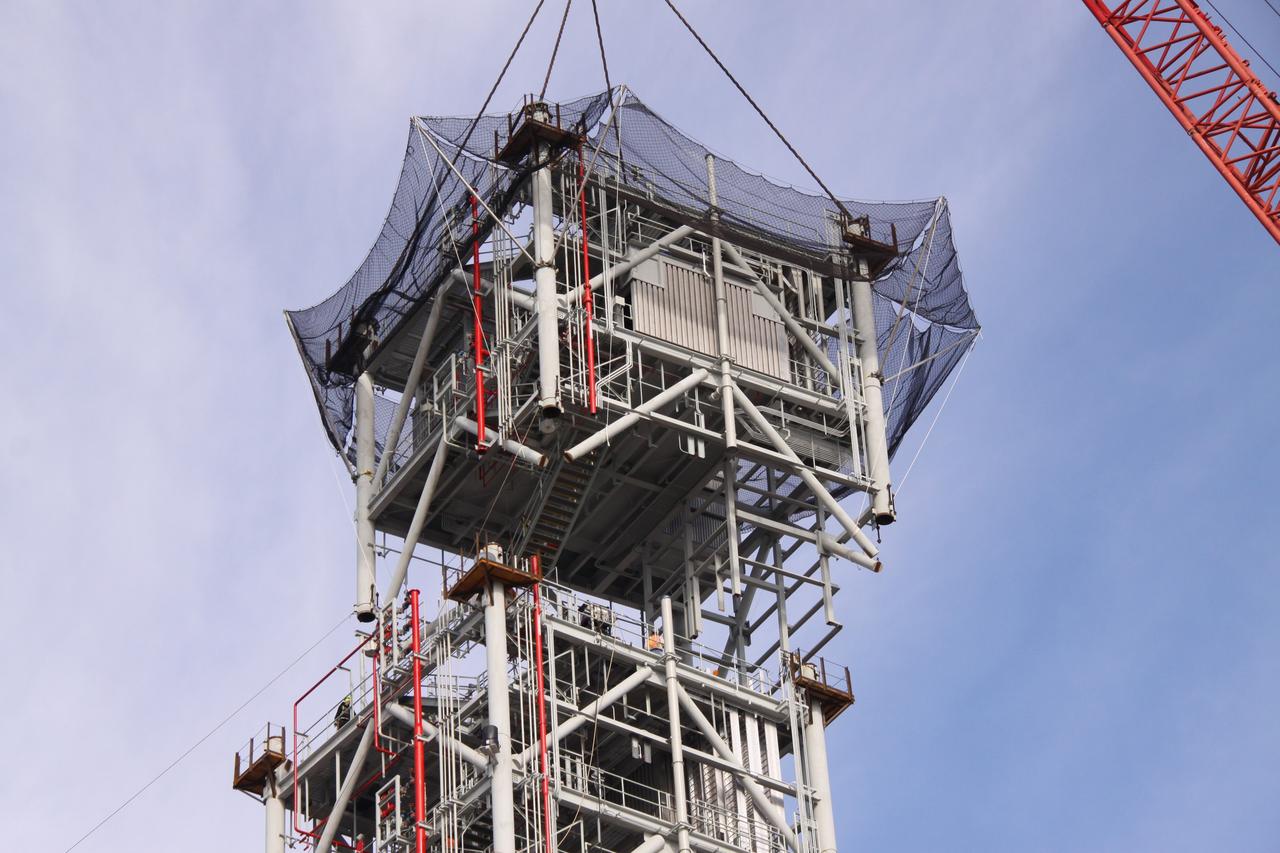
CAPE CANAVERAL, Fla. – At NASA's Kennedy Space Center in Florida, a crane gently lowers a seventh tower segment onto the six segments previously secured to a new mobile launcher, or ML, being constructed to support the Constellation Program. When completed, the tower will be approximately 345 feet tall and have multiple platforms for personnel access. The construction is under way at the mobile launcher park site area north of Kennedy's Vehicle Assembly Building. The launcher will provide a base to launch the Ares I rocket, designed to transport the Orion crew exploration vehicle, its crew and cargo to low Earth orbit. Its base is being made lighter than space shuttle mobile launcher platforms so the crawler-transporter can pick up the heavier load of the tower and taller rocket. For information on the Ares I, visit http://www.nasa.gov/ares. Photo credit: NASA/Jack Pfaller
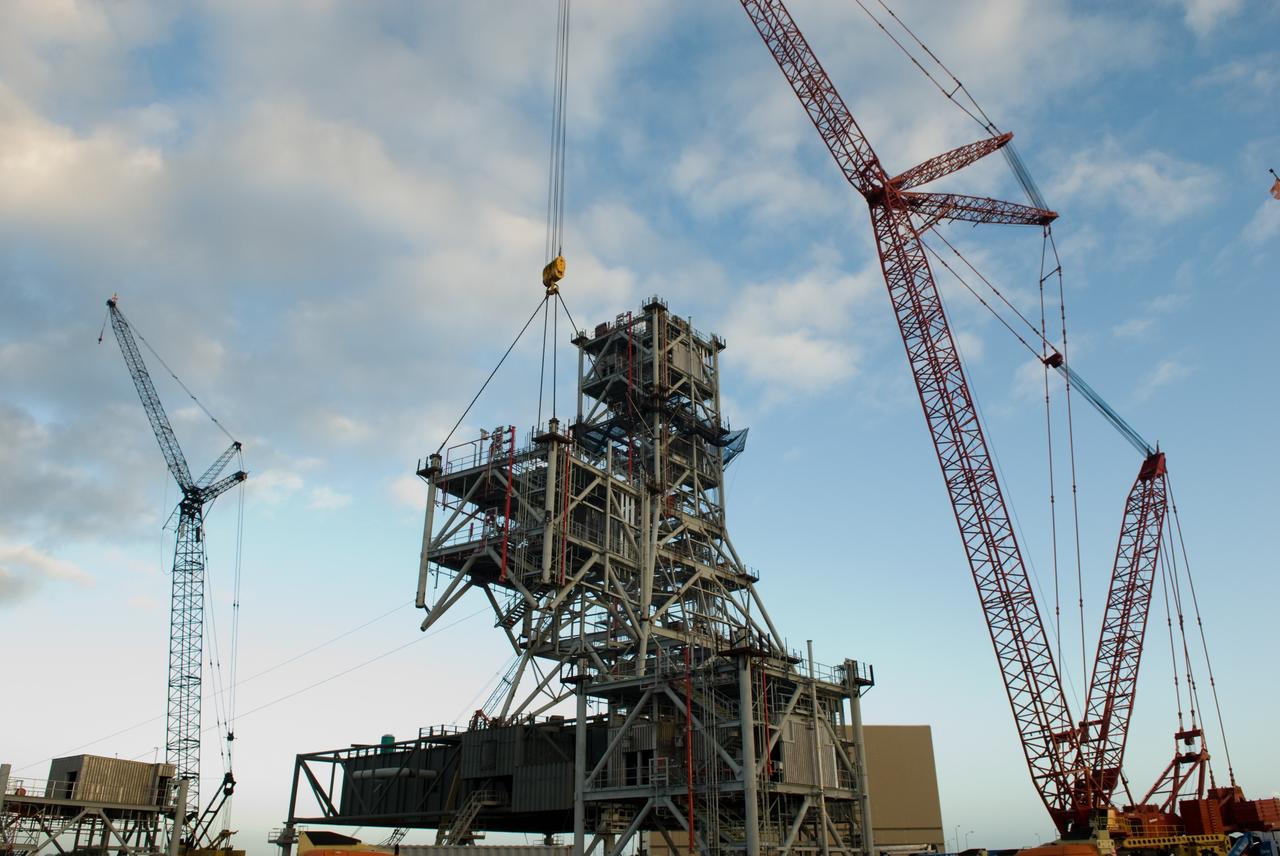
CAPE CANAVERAL, Fla. – At NASA's Kennedy Space Center in Florida, a crane lifts a sixth tower segment toward five segments already secured to a new mobile launcher, or ML, being constructed to support the Constellation Program. When completed, the tower will be approximately 345 feet tall and have multiple platforms for personnel access. The construction is under way at the mobile launcher park site area north of Kennedy's Vehicle Assembly Building. The launcher will provide a base to launch the Ares I rocket, designed to transport the Orion crew exploration vehicle, its crew and cargo to low Earth orbit. Its base is being made lighter than space shuttle mobile launcher platforms so the crawler-transporter can pick up the heavier load of the tower and taller rocket. For information on the Ares I, visit http://www.nasa.gov/ares. Photo credit: NASA/Jim Grossmann
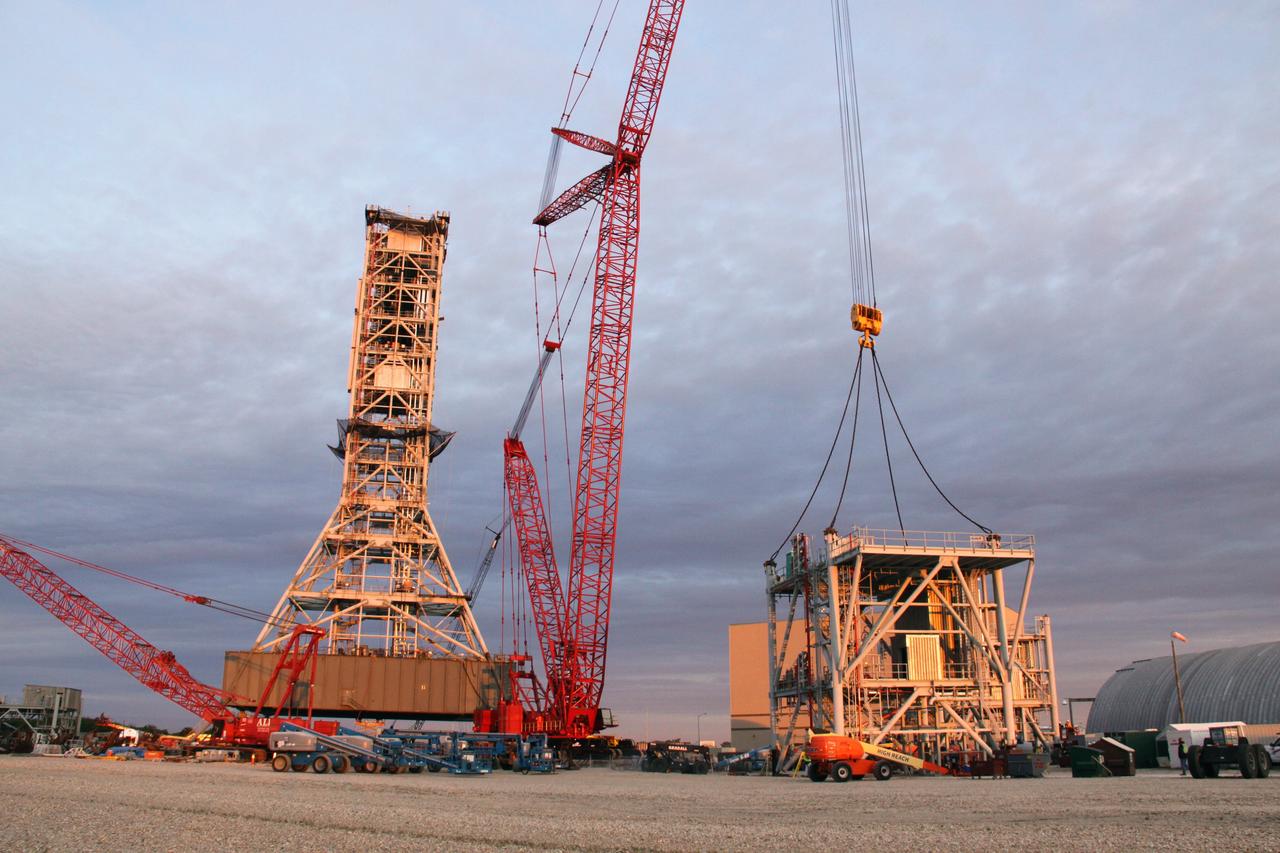
CAPE CANAVERAL, Fla. – Sunrise over NASA's Kennedy Space Center in Florida reveals preparations under way to install the eighth tower segment on a new mobile launcher, or ML, being constructed to support the Constellation Program. When completed, the tower will be approximately 345 feet tall and have multiple platforms for personnel access. The construction is under way at the mobile launcher park site area north of Kennedy's Vehicle Assembly Building. The launcher will provide a base to launch the Ares I rocket, designed to transport the Orion crew exploration vehicle, its crew and cargo to low Earth orbit. Its base is being made lighter than space shuttle mobile launcher platforms so the crawler-transporter can pick up the heavier load of the tower and taller rocket. For information on the Ares I, visit http://www.nasa.gov/ares. Photo credit: NASA/Troy Cryder
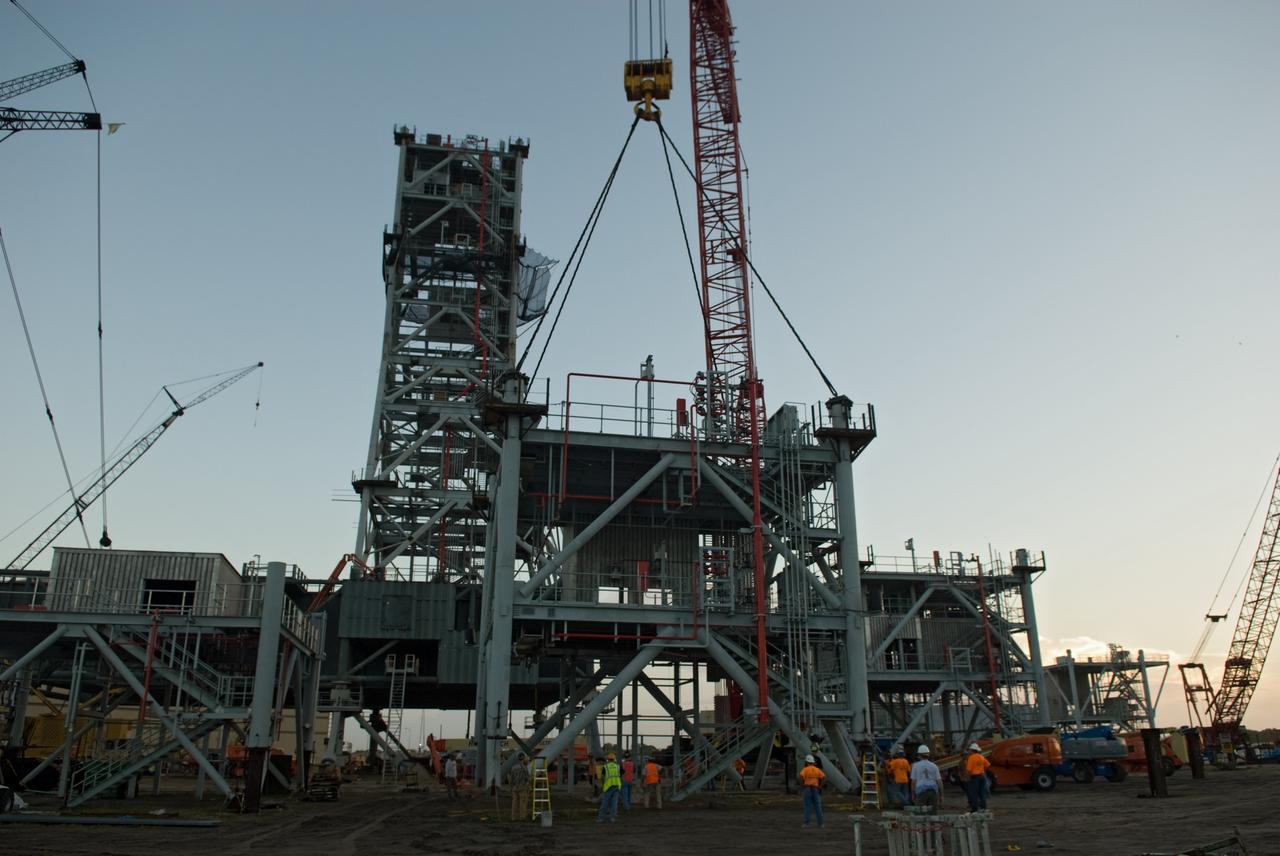
CAPE CANAVERAL, Fla. – At NASA's Kennedy Space Center in Florida, workers monitor the lift of the sixth segment of the tower of a new mobile launcher, or ML, being constructed to support the Constellation Program. When completed, the tower will be approximately 345 feet tall and have multiple platforms for personnel access. The construction is under way at the mobile launcher park site area north of Kennedy's Vehicle Assembly Building. The launcher will provide a base to launch the Ares I rocket, designed to transport the Orion crew exploration vehicle, its crew and cargo to low Earth orbit. Its base is being made lighter than space shuttle mobile launcher platforms so the crawler-transporter can pick up the heavier load of the tower and taller rocket. For information on the Ares I, visit http://www.nasa.gov/ares. Photo credit: NASA/Jim Grossmann
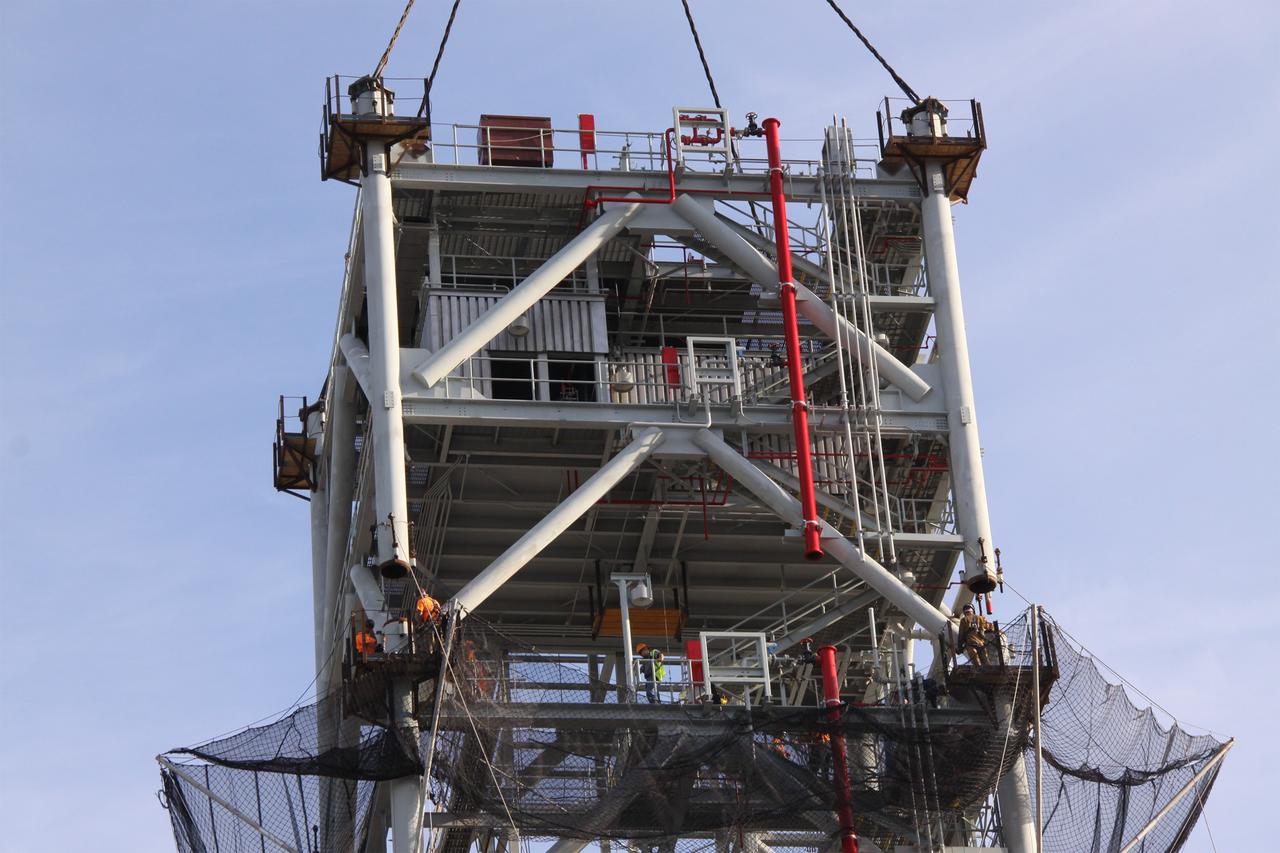
CAPE CANAVERAL, Fla. – At NASA's Kennedy Space Center in Florida, workers prepare to secure the fifth tower segment to the tower rising on a new mobile launcher, or ML, being constructed to support the Constellation Program. When completed, the tower will be approximately 345 feet tall and have multiple platforms for personnel access. The construction is under way at the mobile launcher park site area north of Kennedy's Vehicle Assembly Building. The launcher will provide a base to launch the Ares I rocket, designed to transport the Orion crew exploration vehicle, its crew and cargo to low Earth orbit. Its base is being made lighter than space shuttle mobile launcher platforms so the crawler-transporter can pick up the heavier load of the tower and taller rocket. For information on the Ares I, visit http://www.nasa.gov/ares. Photo credit: NASA/Jack Pfaller