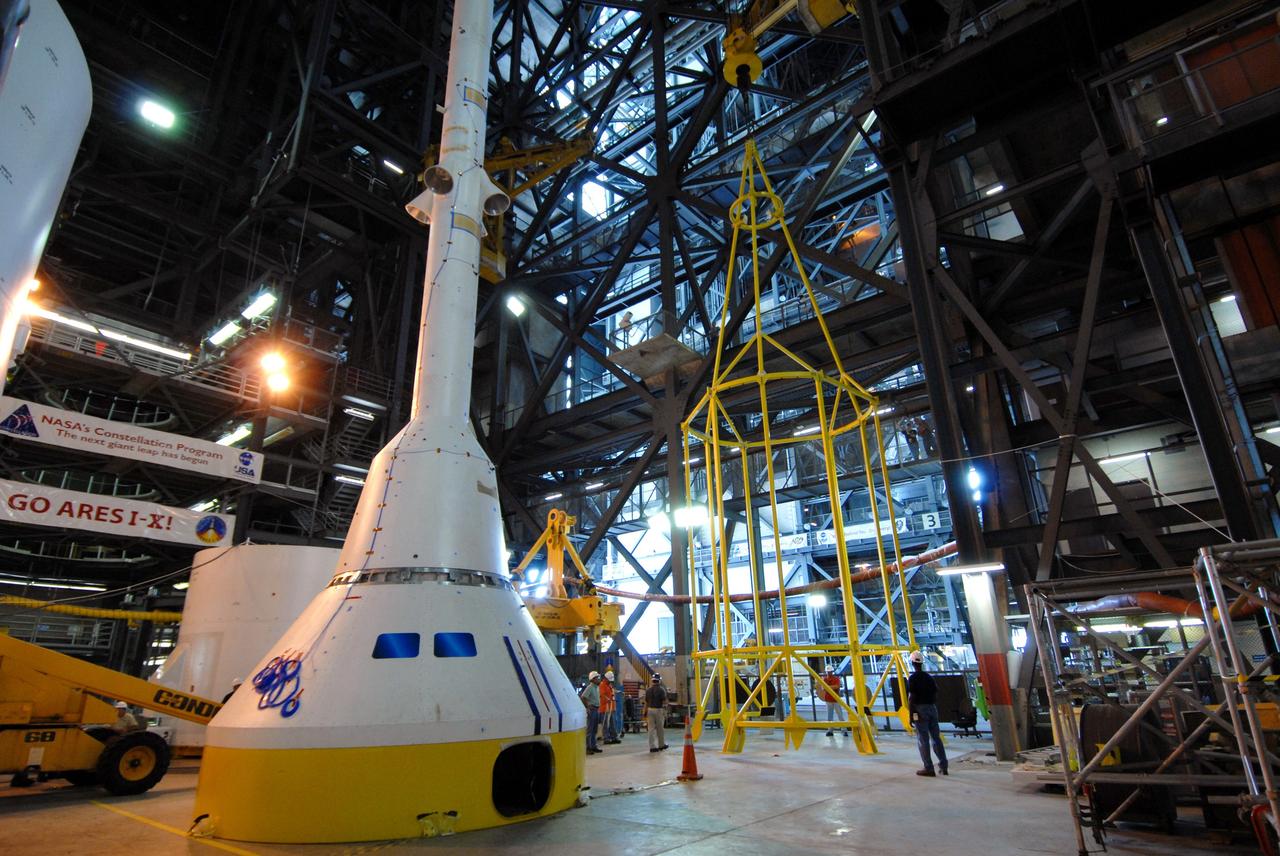
CAPE CANAVERAL, Fla. –– In High Bay 4 of the Vehicle Assembly Building at NASA's Kennedy Space Center in Florida, the yellow framework at center will undergo a fit check. Nicknamed the "birdcage," it is the lifting fixture that will have the ability to lift the Crew Module, or CM, and Launch Abort System, or LAS, assembly for the Ares I-X rocket. Ares I-X is the flight test for the Ares I. The I-X flight will provide NASA an early opportunity to test and prove hardware, facilities and ground operations associated with Ares I. The launch of the 327-foot-tall, full-scale Ares I-X is targeted for July 2009. Photo credit: NASA/Jack Pfaller
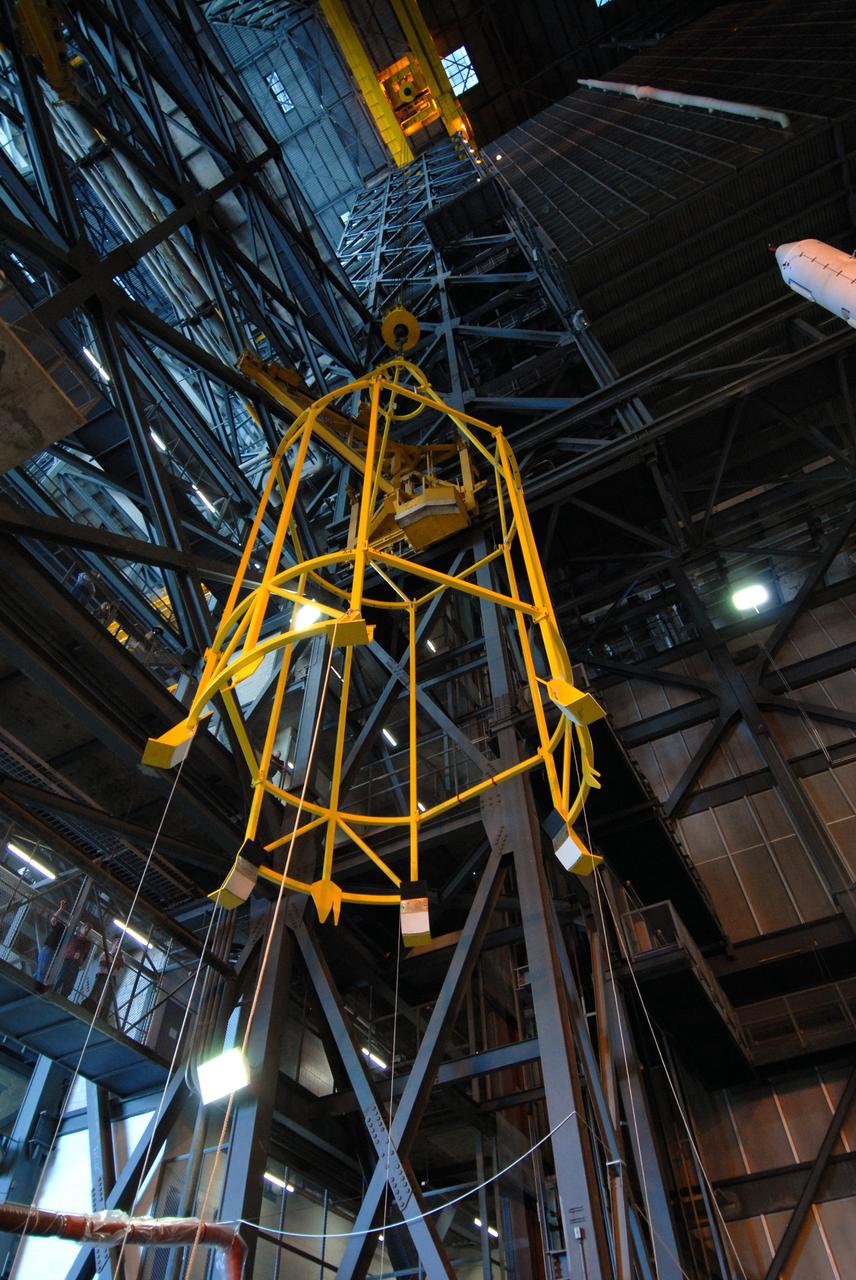
CAPE CANAVERAL, Fla. –– In High Bay 4 of the Vehicle Assembly Building at NASA's Kennedy Space Center in Florida, the yellow framework at left, nicknamed the "birdcage," is lifted high above the floor for a fit check with the Crew Module, or CM, and Launch Abort System, or LAS, assembly nearby for the Ares I-X rocket. Ares I-X is the flight test for the Ares I. The I-X flight will provide NASA an early opportunity to test and prove hardware, facilities and ground operations associated with Ares I. The launch of the 327-foot-tall, full-scale Ares I-X is targeted for July 2009. Photo credit: NASA/Jack Pfaller
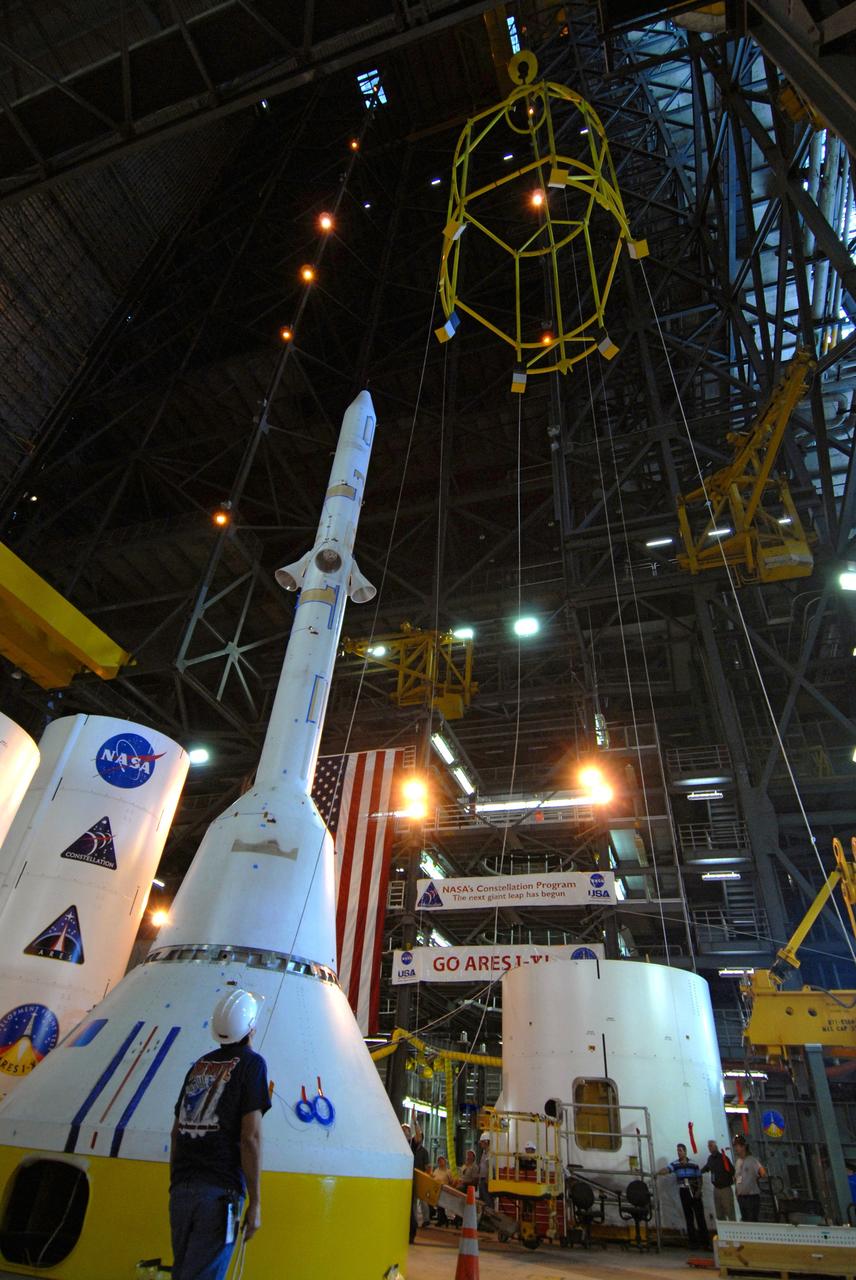
CAPE CANAVERAL, Fla. –– In High Bay 4 of the Vehicle Assembly Building at NASA's Kennedy Space Center in Florida, the yellow framework at top, nicknamed the "birdcage," is lifted high above the floor for a fit check with the Crew Module, or CM, and Launch Abort System, or LAS, assembly at lower left for the Ares I-X rocket. Ares I-X is the flight test for the Ares I. The I-X flight will provide NASA an early opportunity to test and prove hardware, facilities and ground operations associated with Ares I. The launch of the 327-foot-tall, full-scale Ares I-X is targeted for July 2009. Photo credit: NASA/Jack Pfaller
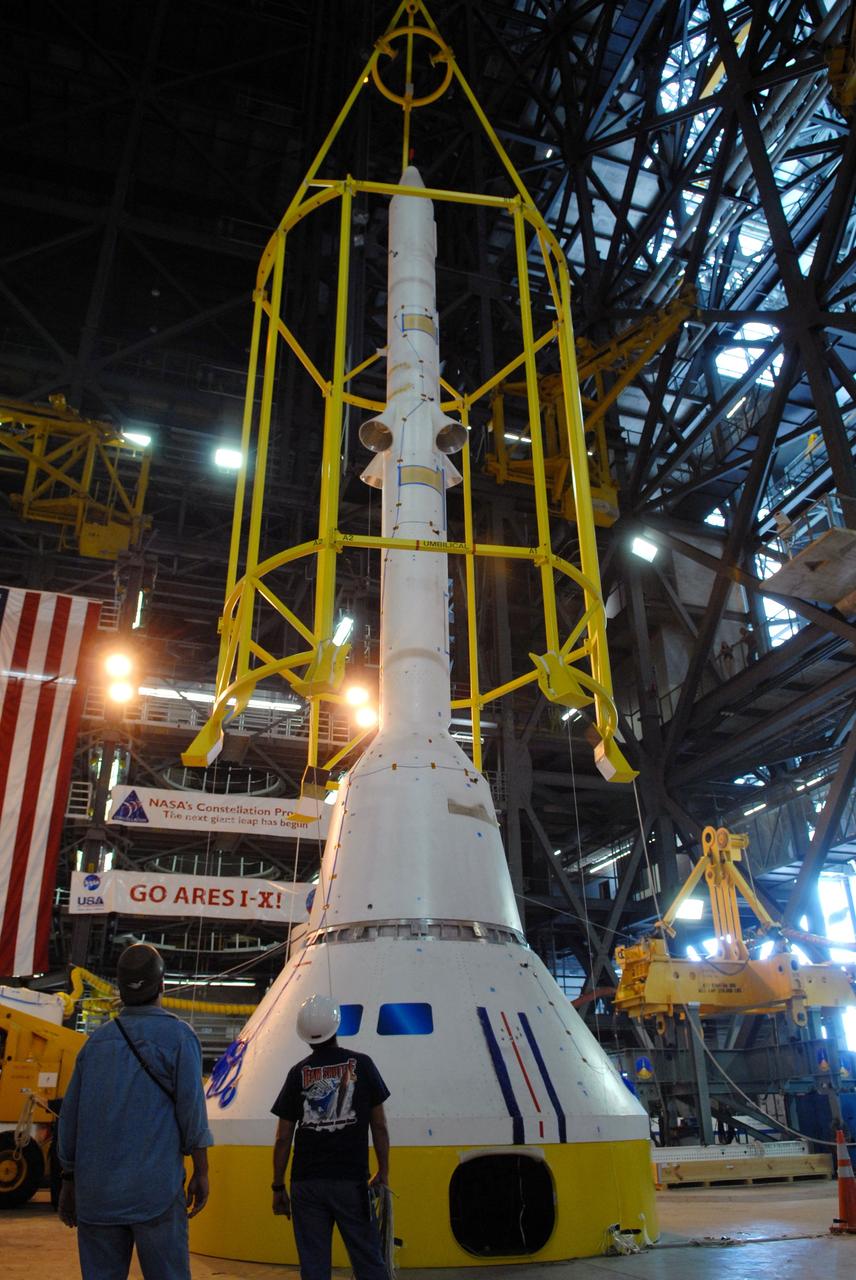
CAPE CANAVERAL, Fla. –– In High Bay 4 of the Vehicle Assembly Building at NASA's Kennedy Space Center in Florida, the yellow framework , nicknamed the "birdcage," is lowered over the Crew Module, or CM, and Launch Abort System, or LAS, assembly for a fit check. Ares I-X is the flight test for the Ares I. The I-X flight will provide NASA an early opportunity to test and prove hardware, facilities and ground operations associated with Ares I. The launch of the 327-foot-tall, full-scale Ares I-X is targeted for July 2009. Photo credit: NASA/Jack Pfaller
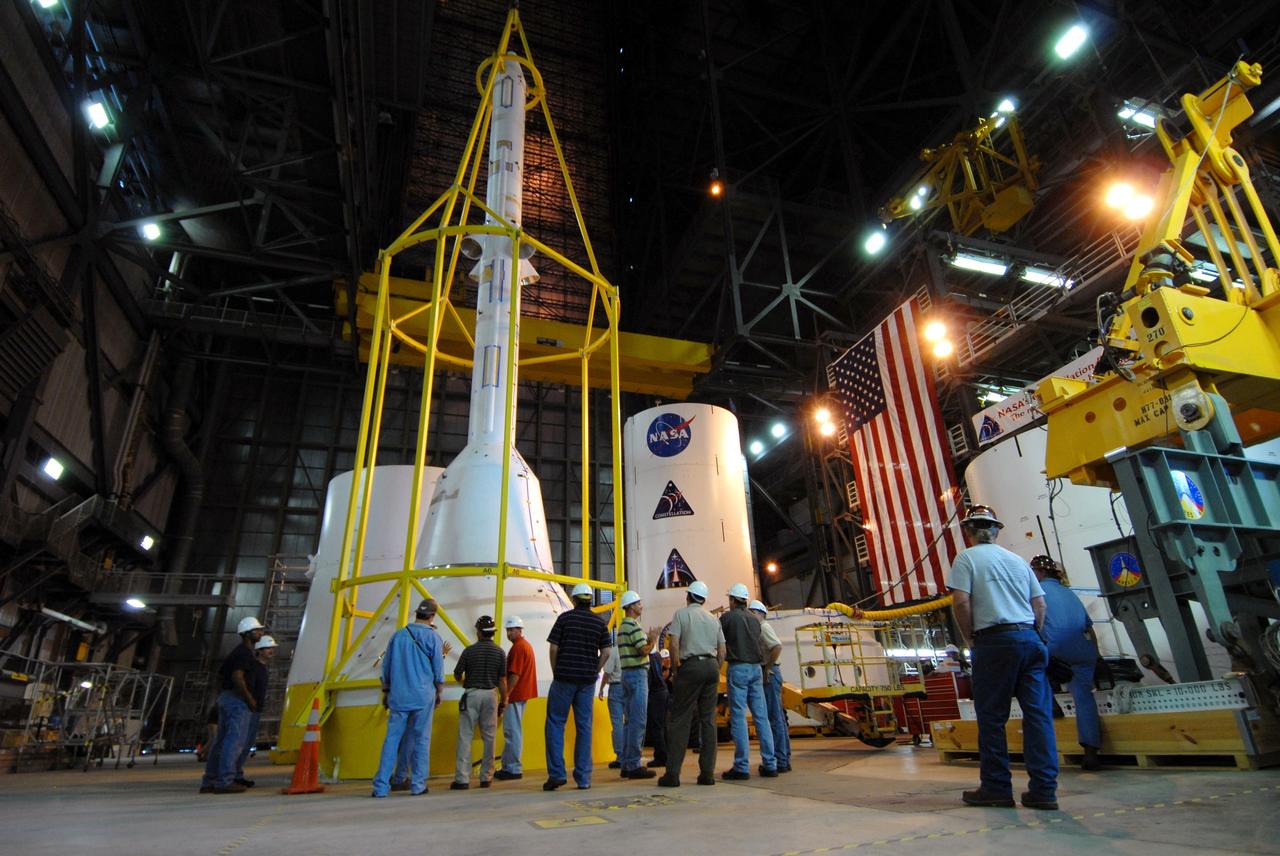
CAPE CANAVERAL, Fla. –– In High Bay 4 of the Vehicle Assembly Building at NASA's Kennedy Space Center in Florida, the yellow framework , nicknamed the "birdcage," is lowered over the Crew Module, or CM, and Launch Abort System, or LAS, assembly for a fit check. Ares I-X is the flight test for the Ares I. The I-X flight will provide NASA an early opportunity to test and prove hardware, facilities and ground operations associated with Ares I. The launch of the 327-foot-tall, full-scale Ares I-X is targeted for July 2009. Photo credit: NASA/Jack Pfaller
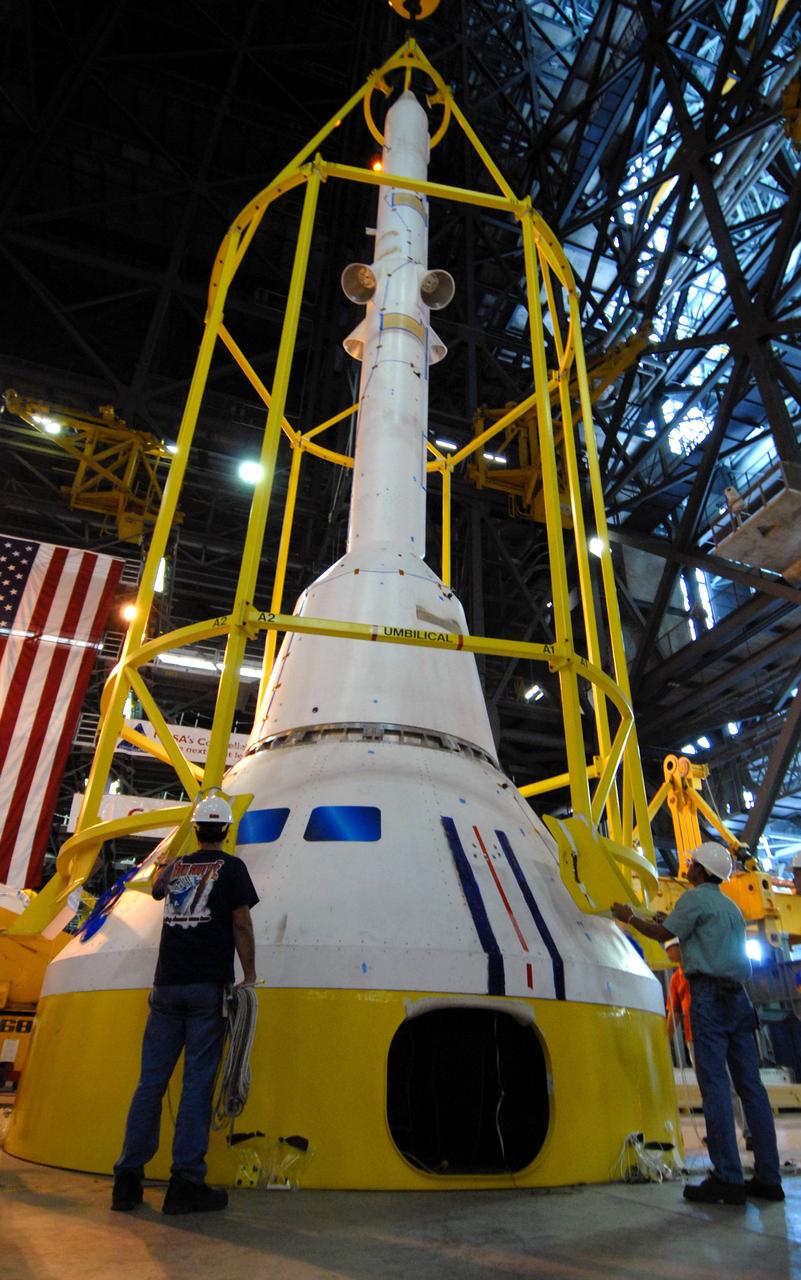
CAPE CANAVERAL, Fla. –– In High Bay 4 of the Vehicle Assembly Building at NASA's Kennedy Space Center in Florida, the yellow framework , nicknamed the "birdcage," is lowered over the Crew Module, or CM, and Launch Abort System, or LAS, assembly for a fit check. Ares I-X is the flight test for the Ares I. The I-X flight will provide NASA an early opportunity to test and prove hardware, facilities and ground operations associated with Ares I. The launch of the 327-foot-tall, full-scale Ares I-X is targeted for July 2009. Photo credit: NASA/Jack Pfaller
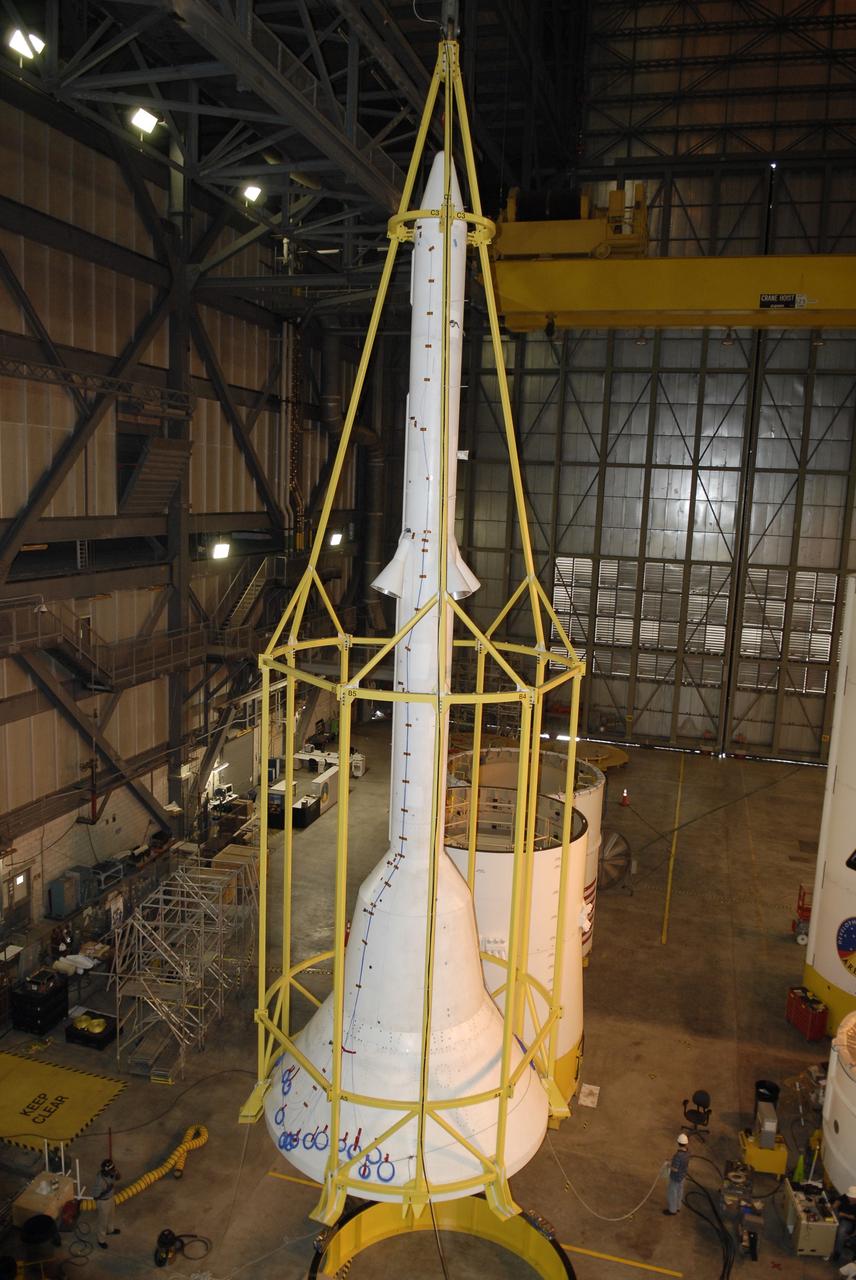
CAPE CANAVERAL, Fla. – In high bay 4 of the Vehicle Assembly Building at NASA's Kennedy Space Center in Florida, the framework known as the "birdcage" is placed over the Ares I-X simulator crew module-launch abort system, or CM-LAS. The birdcage will be used to lift the CM-LAS to mate the stack with the simulator service module-service adapter stack. Ares I-X is the flight test for the Ares I. The I-X flight will provide NASA an early opportunity to test and prove hardware, facilities and ground operations associated with Ares I. The launch of the 327-foot-tall, full-scale Ares I-X is targeted for August 2009. Photo credit: NASA/Kim Shiflett
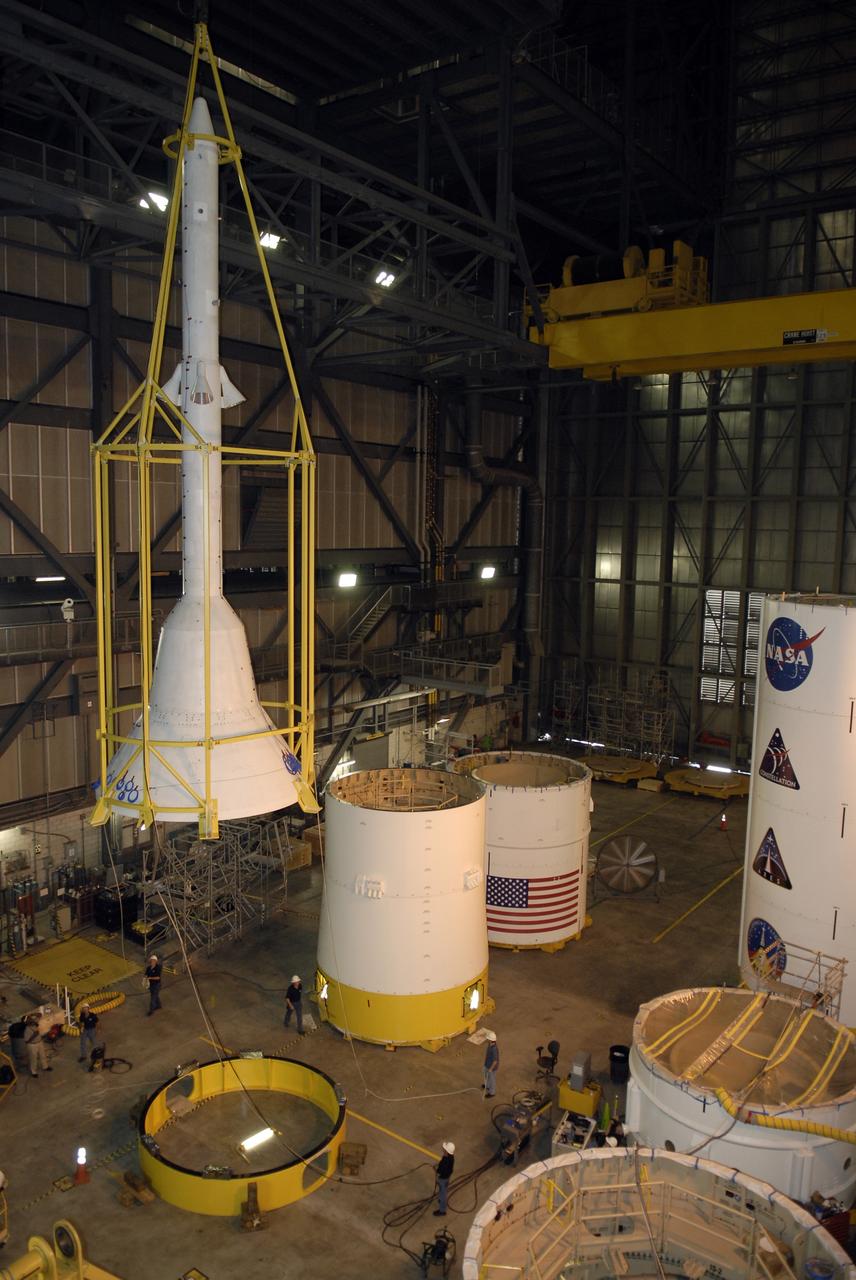
CAPE CANAVERAL, Fla. – In high bay 4 of the Vehicle Assembly Building at NASA's Kennedy Space Center in Florida, the framework known as the "birdcage" lifts the Ares I-X simulator crew module-launch abort system, or CM-LAS. The CM-LAS stack will be mated with the simulator service module-service adapter stack. Ares I-X is the flight test for the Ares I. The I-X flight will provide NASA an early opportunity to test and prove hardware, facilities and ground operations associated with Ares I. The launch of the 327-foot-tall, full-scale Ares I-X is targeted for August 2009. Photo credit: NASA/Kim Shiflett
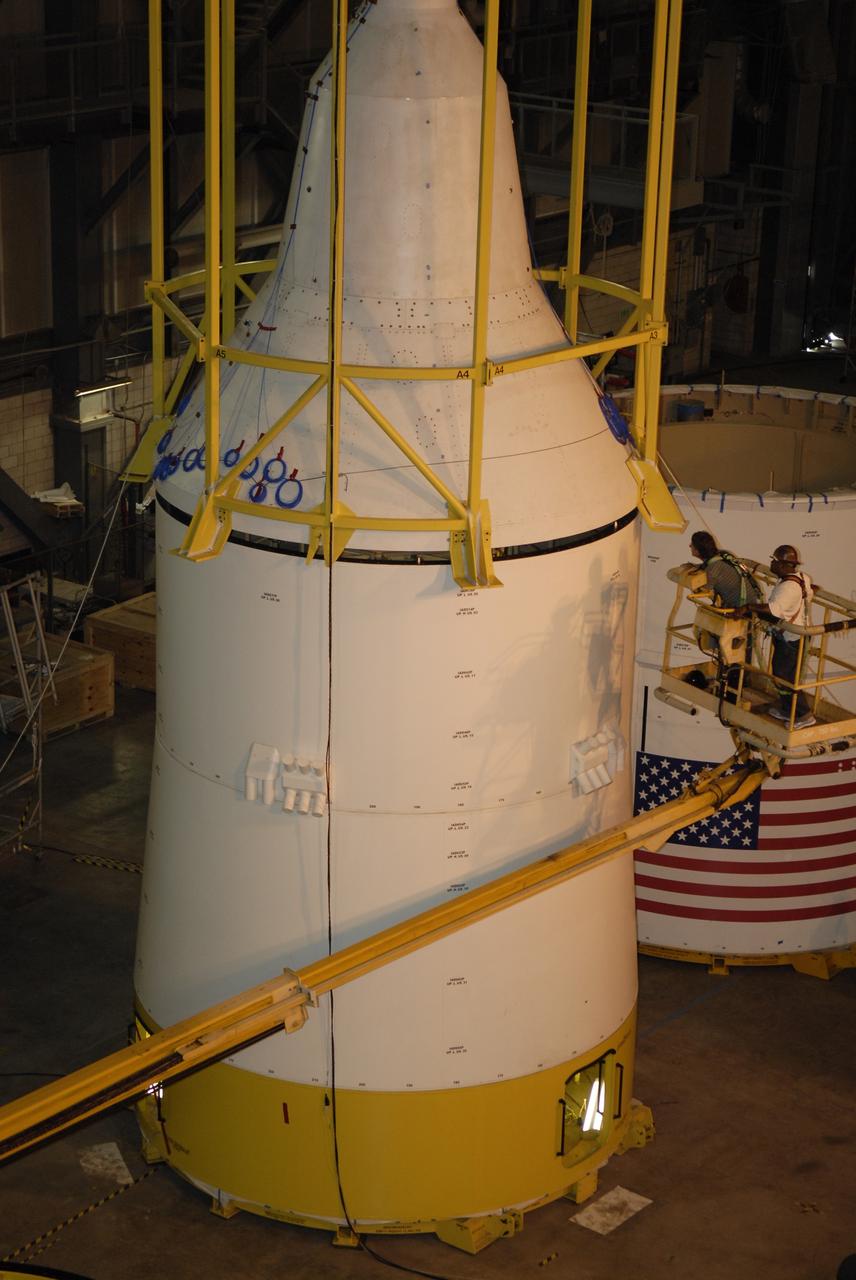
CAPE CANAVERAL, Fla. – In high bay 4 of the Vehicle Assembly Building at NASA's Kennedy Space Center in Florida, the framework known as the "birdcage" lowers the Ares I-X simulator crew module-launch abort system, or CM-LAS, onto the simulator service module-service adapter stack. Ares I-X is the flight test for the Ares I. The I-X flight will provide NASA an early opportunity to test and prove hardware, facilities and ground operations associated with Ares I. The launch of the 327-foot-tall, full-scale Ares I-X is targeted for August 2009. Photo credit: NASA/Kim Shiflett
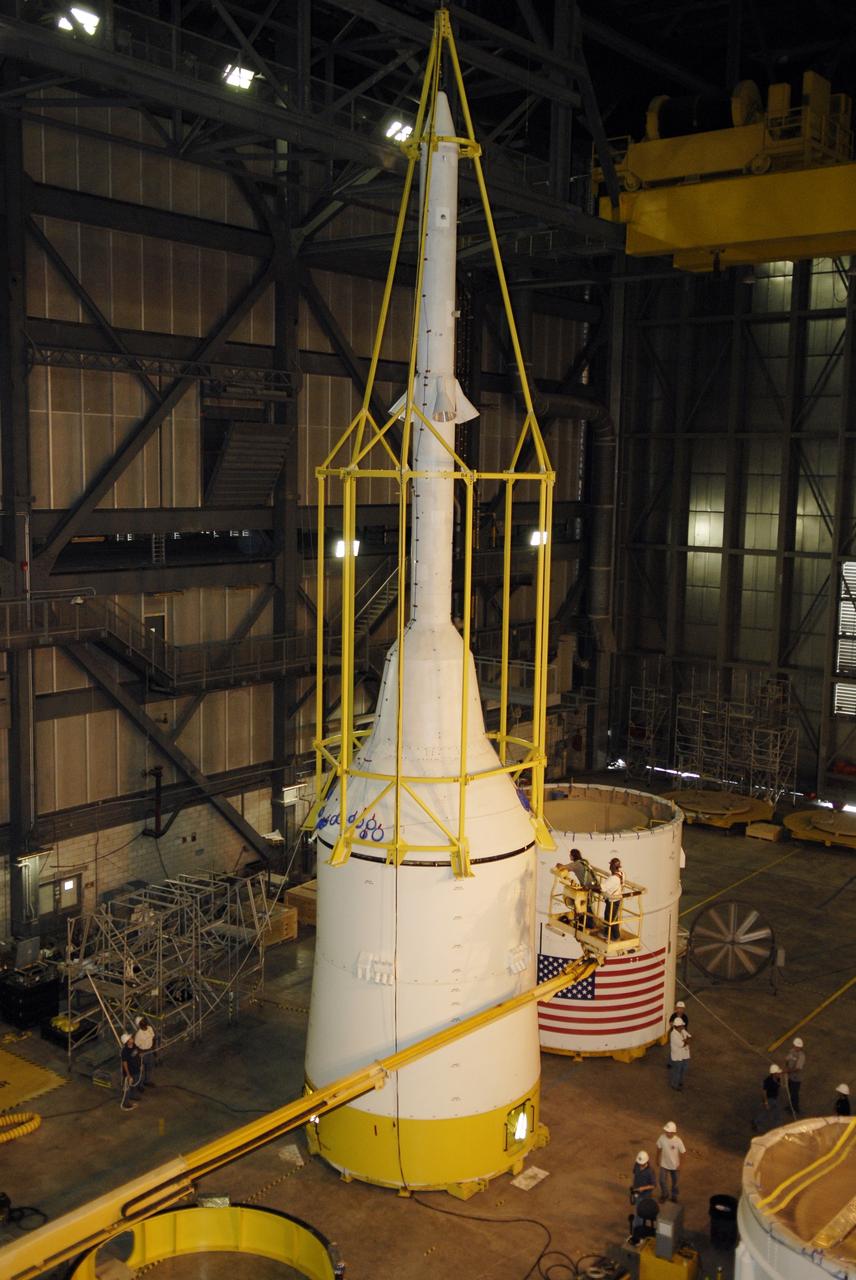
CAPE CANAVERAL, Fla. – In high bay 4 of the Vehicle Assembly Building at NASA's Kennedy Space Center in Florida, the framework known as the "birdcage" lowers the Ares I-X simulator crew module-launch abort system, or CM-LAS, onto the simulator service module-service adapter stack. Ares I-X is the flight test for the Ares I. The I-X flight will provide NASA an early opportunity to test and prove hardware, facilities and ground operations associated with Ares I. The launch of the 327-foot-tall, full-scale Ares I-X is targeted for August 2009. Photo credit: NASA/Kim Shiflett
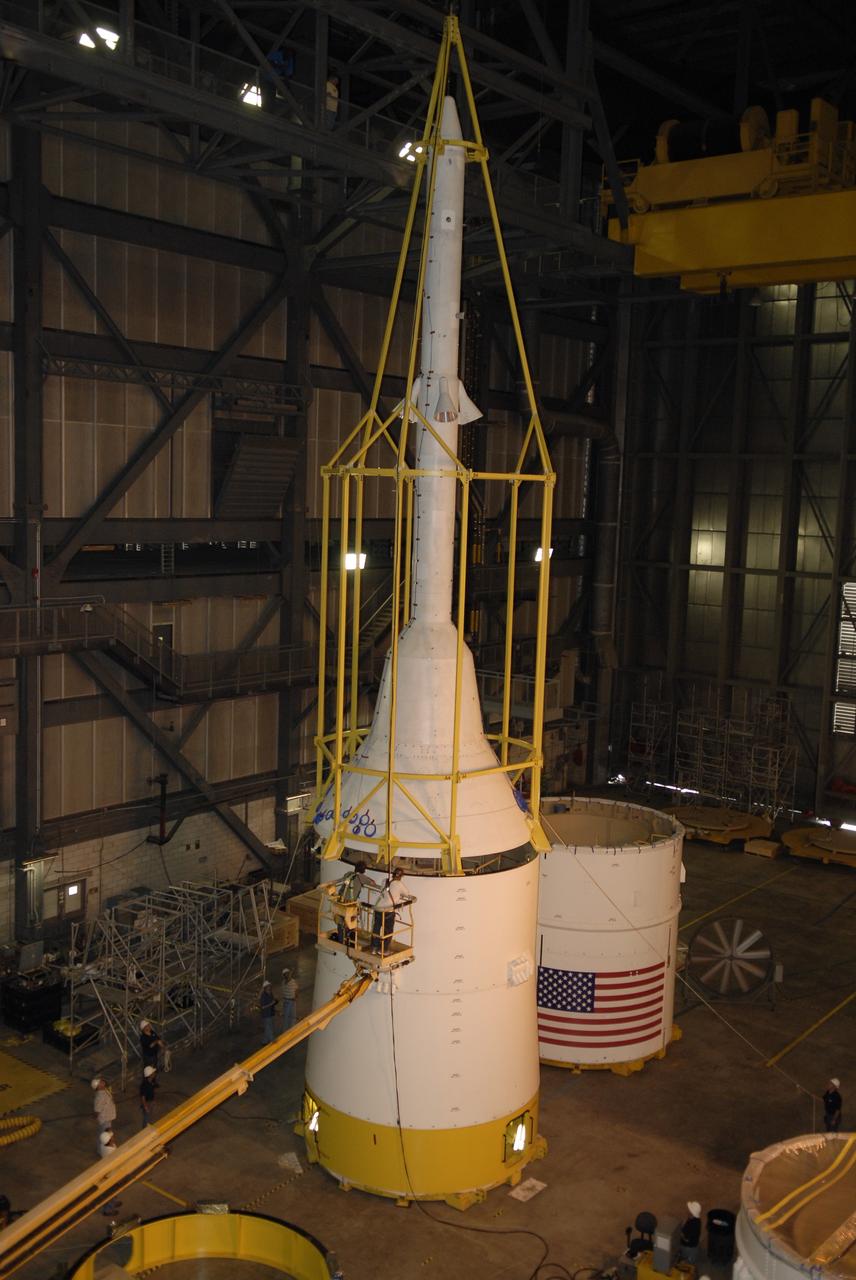
CAPE CANAVERAL, Fla. – In high bay 4 of the Vehicle Assembly Building at NASA's Kennedy Space Center in Florida, the framework known as the "birdcage" lowers the Ares I-X simulator crew module-launch abort system, or CM-LAS, onto the simulator service module-service adapter stack. Ares I-X is the flight test for the Ares I. The I-X flight will provide NASA an early opportunity to test and prove hardware, facilities and ground operations associated with Ares I. The launch of the 327-foot-tall, full-scale Ares I-X is targeted for August 2009. Photo credit: NASA/Kim Shiflett
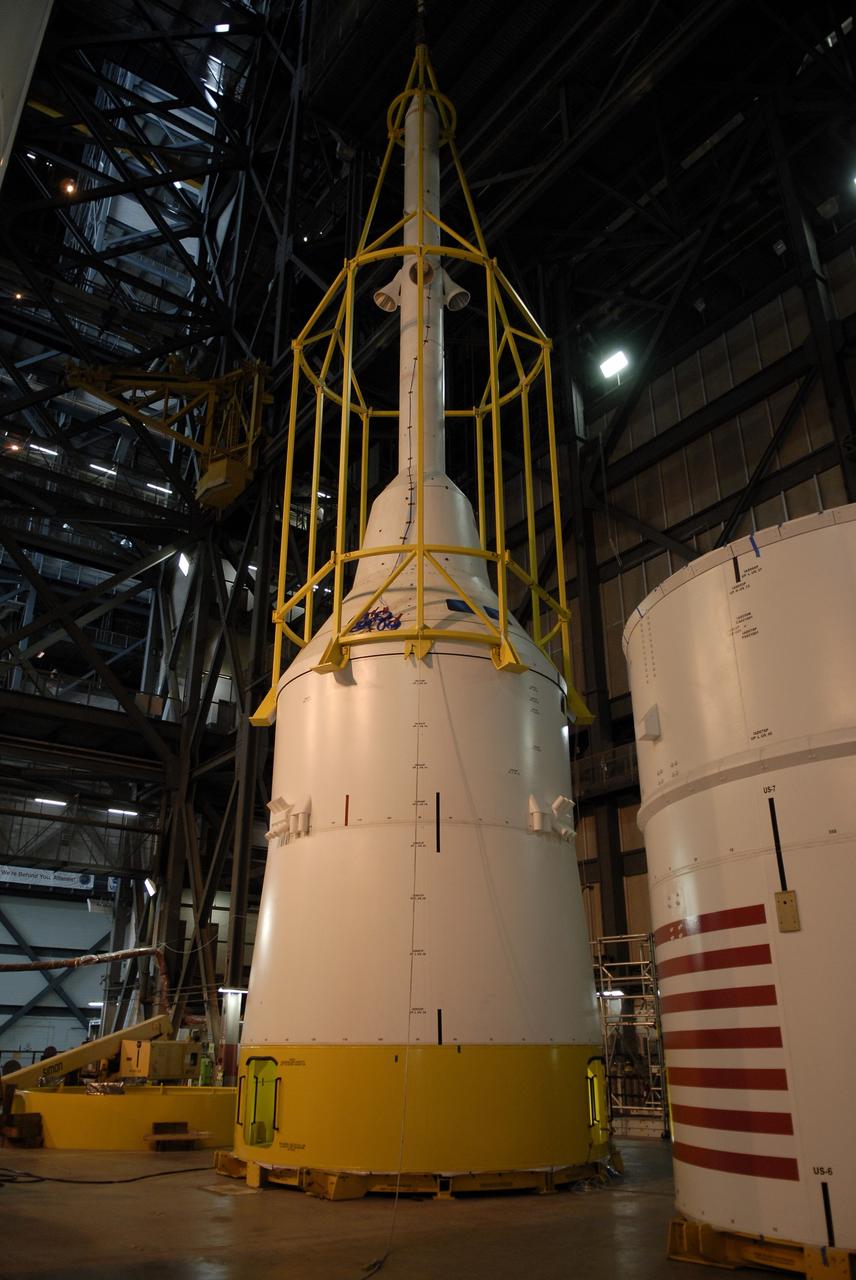
CAPE CANAVERAL, Fla. – In high bay 4 of the Vehicle Assembly Building at NASA's Kennedy Space Center in Florida, the framework known as the "birdcage" lowers the Ares I-X simulator crew module-launch abort system, or CM-LAS, onto the simulator service module-service adapter stack. Ares I-X is the flight test for the Ares I. The I-X flight will provide NASA an early opportunity to test and prove hardware, facilities and ground operations associated with Ares I. The launch of the 327-foot-tall, full-scale Ares I-X is targeted for August 2009. Photo credit: NASA/Kim Shiflett
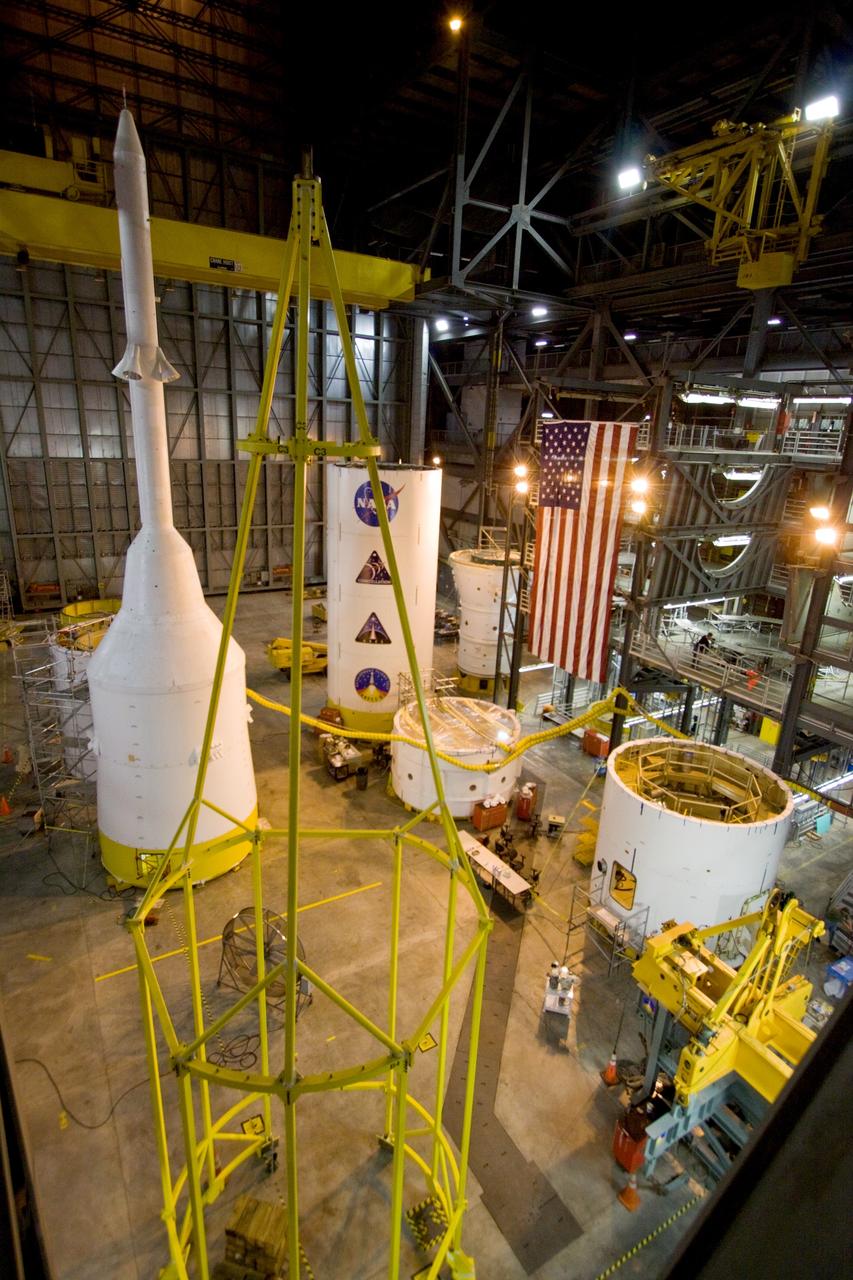
CAPE CANAVERAL, Fla. – Ares I-X segments and stacks are filling the floor of the Vehicle Assembly Building's High Bay 4 at NASA's Kennedy Space Center in Florida. At left in the background is the crew module-launch abort system, or CM-LAS, and simulator service module-service adapter stack. At left in front is the "birdcage," the special crane that will lift the stack. Not seen is the forward assembly that has joined the other segments. Ares I-X is the flight test vehicle for the Ares I, a component of the Constellation Program. Ares I is the essential core of a safe, reliable, cost-effective space transportation system that eventually will carry crewed missions back to the moon, on to Mars and out into the solar system. The launch of the Ares I-X flight test is targeted for August 2009. Photo credit: NASA/Jack Pfaller
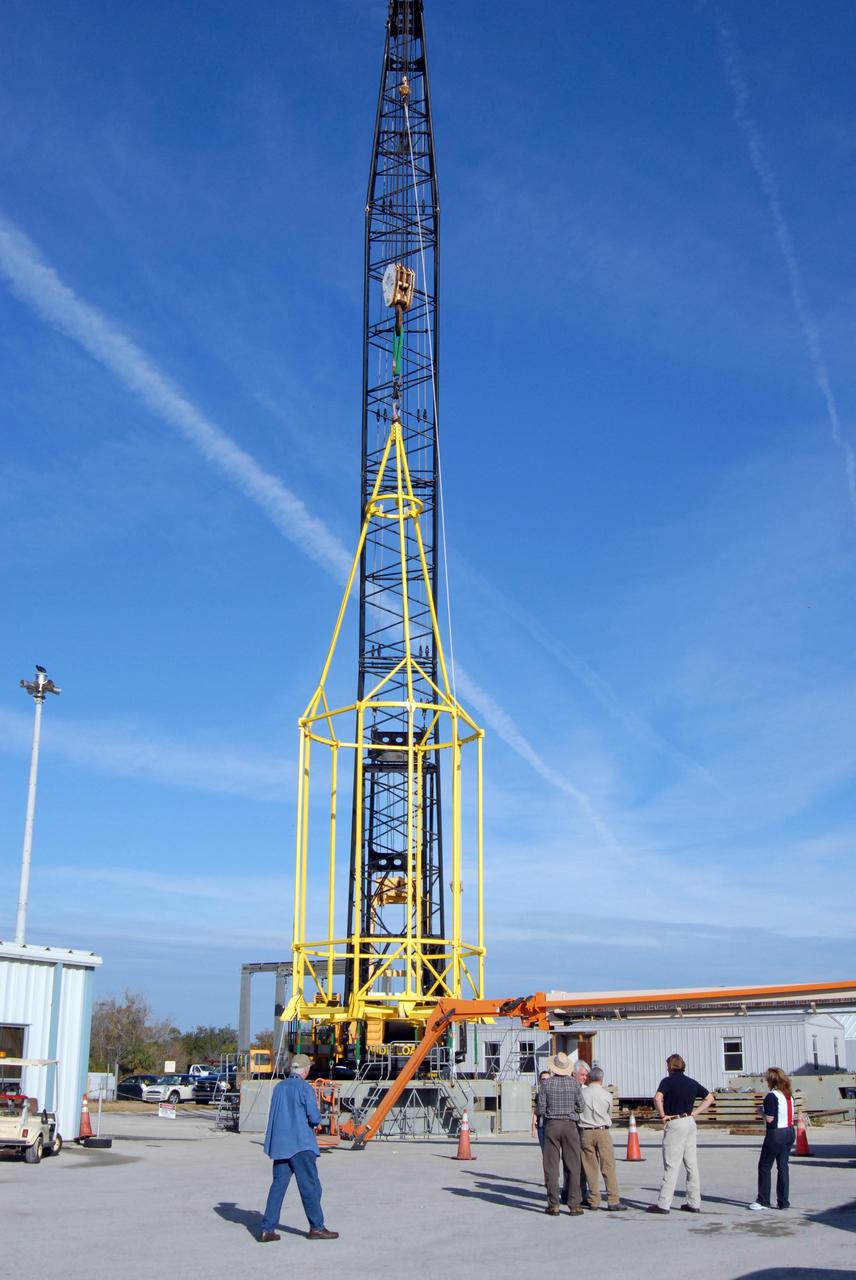
CAPE CANAVERAL, Fla. – The lifting fixture nicknamed the "Birdcage" is lifted by a crane to test the load capability. The Birdcage will be used to lift the Crew Module, or CM, and Launch Abort System, or LAS, assembly for the Ares I-X rocket and to stack and de-stack the assembly from the Service Module/Spacecraft Adapter assembly. It will also have the ability to lift and to stack and de-stack Stack-5 (all of the above components) from the Ares I-X in the Vehicle Assembly Building at NASA's Kennedy Space Center in Florida. Ares I-X is the test flight for the Ares I. The I-X flight will provide NASA an early opportunity to test and prove hardware, facilities and ground operations associated with Ares I. The launch of the 321-foot-tall, full-scale Ares I-X, targeted for July 2009, will be the first in a series of unpiloted rocket launches from Kennedy. When fully developed, the 16-foot diameter crew module will furnish living space and reentry protection for the astronauts, while their launch abort system will provide safe evacuation if a launch vehicle failure occurs. Photo credit: NASA/Jack Pfaller
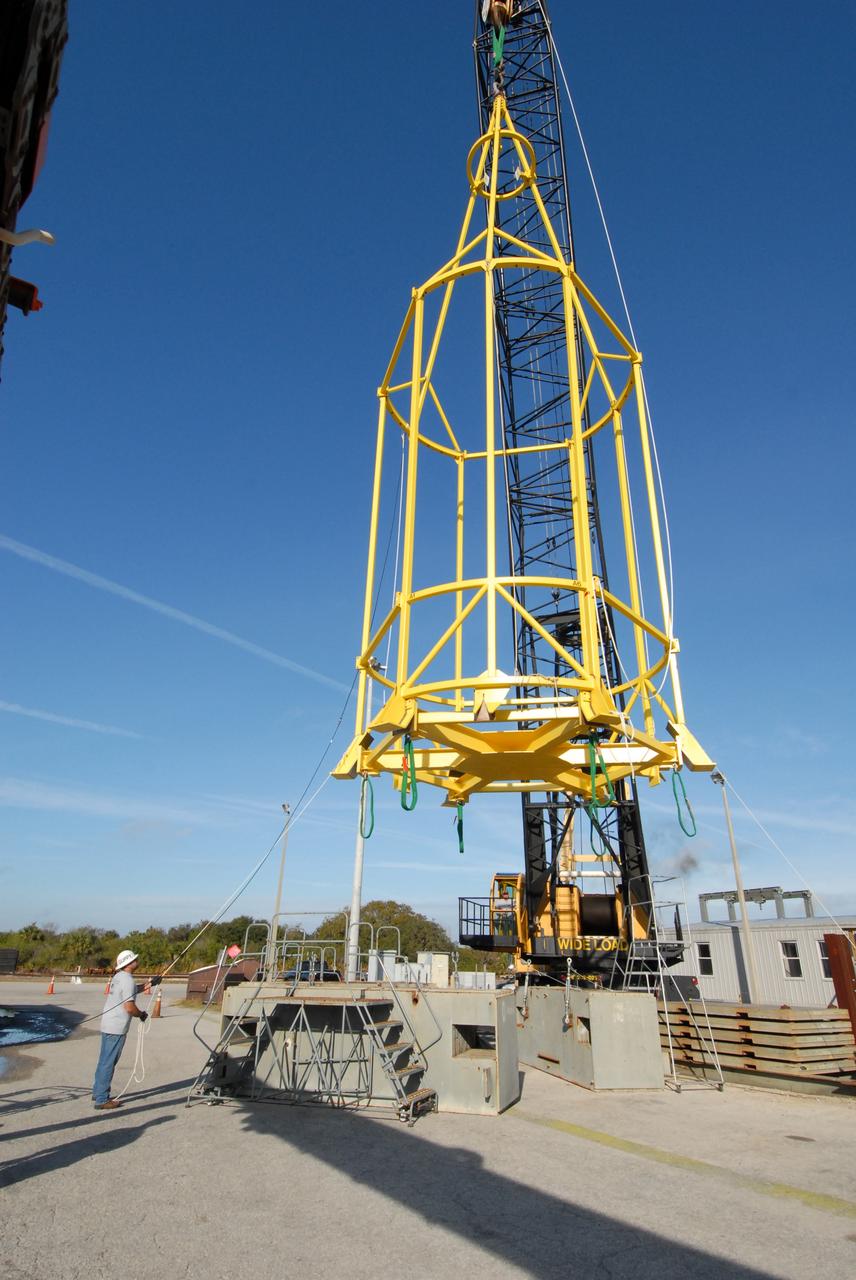
CAPE CANAVERAL, Fla. – The lifting fixture nicknamed the "Birdcage" is lifted by a crane to test the load capability. The Birdcage will be used to lift the Crew Module, or CM, and Launch Abort System, or LAS, assembly for the Ares I-X rocket and to stack and de-stack the assembly from the Service Module/Spacecraft Adapter assembly. It will also have the ability to lift and to stack and de-stack Stack-5 (all of the above components) from the Ares I-X in the Vehicle Assembly Building at NASA's Kennedy Space Center in Florida. Ares I-X is the test flight for the Ares I. The I-X flight will provide NASA an early opportunity to test and prove hardware, facilities and ground operations associated with Ares I. The launch of the 321-foot-tall, full-scale Ares I-X, targeted for July 2009, will be the first in a series of unpiloted rocket launches from Kennedy. When fully developed, the 16-foot diameter crew module will furnish living space and reentry protection for the astronauts, while their launch abort system will provide safe evacuation if a launch vehicle failure occurs. Photo credit: NASA/Jack Pfaller
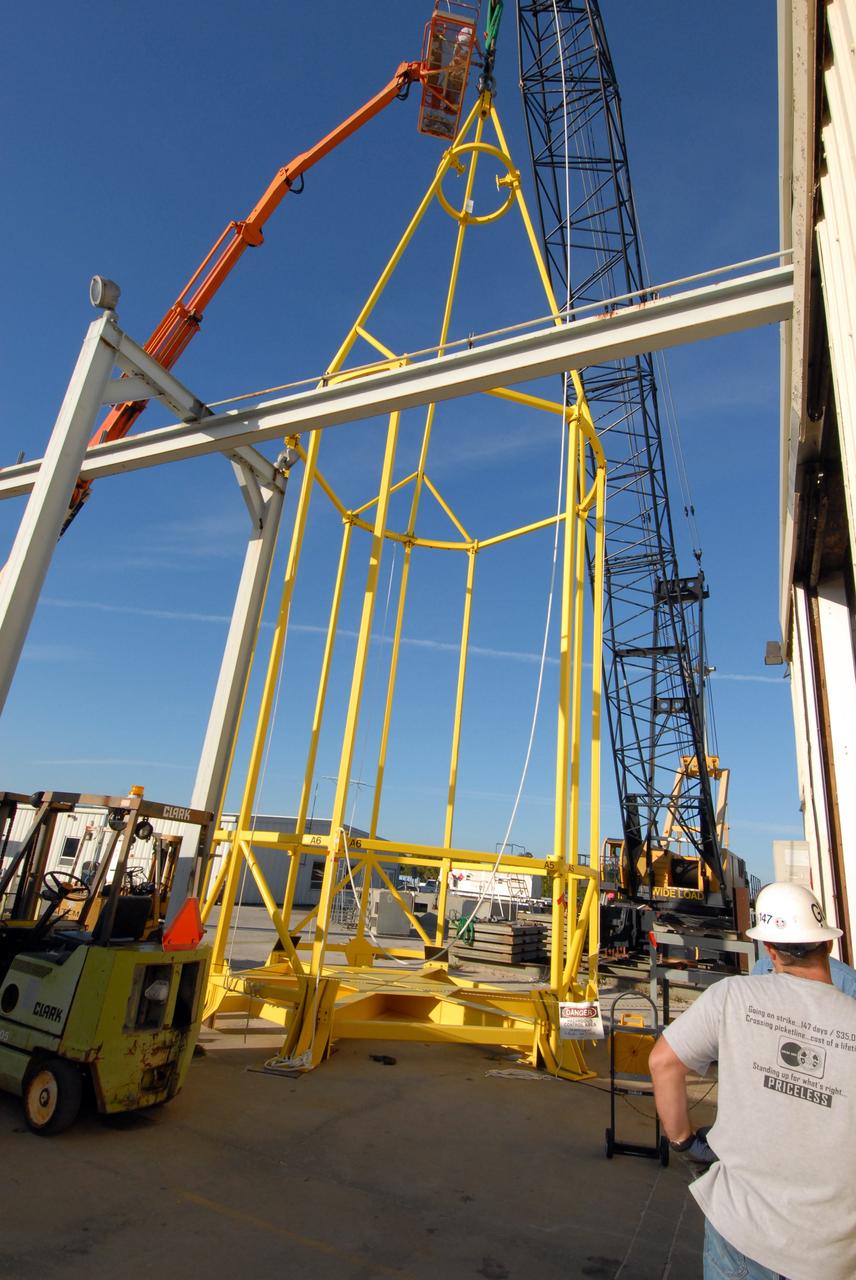
CAPE CANAVERAL, Fla. – The yellow framework seen here is the lifting fixture nicknamed the "Birdcage" that will have the ability to lift the Crew Module, or CM, and Launch Abort System, or LAS, assembly for the Ares I-X rocket and to stack and de-stack the assembly from the Service Module/Spacecraft Adapter assembly. It will also have the ability to lift and to stack and de-stack Stack-5 (all of the above components) from the Ares I-X in the Vehicle Assembly Building at NASA's Kennedy Space Center in Florida. Ares I-X is the test flight for the Ares I. The I-X flight will provide NASA an early opportunity to test and prove hardware, facilities and ground operations associated with Ares I. The launch of the 321-foot-tall, full-scale Ares I-X, targeted for July 2009, will be the first in a series of unpiloted rocket launches from Kennedy. When fully developed, the 16-foot diameter crew module will furnish living space and reentry protection for the astronauts, while their launch abort system will provide safe evacuation if a launch vehicle failure occurs. Photo credit: NASA/Jack Pfaller
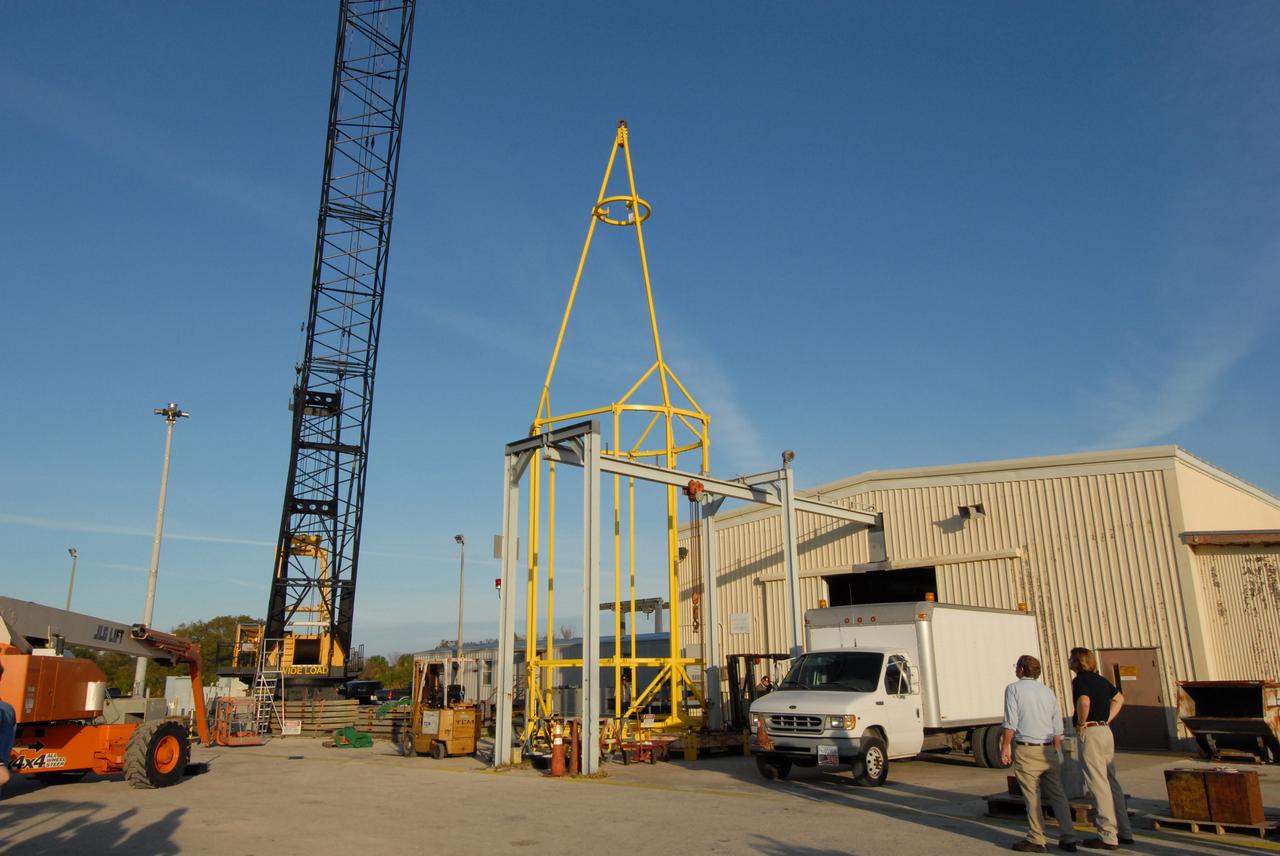
CAPE CANAVERAL, Fla. – The yellow framework at center is the lifting fixture nicknamed the "Birdcage" that will have the ability to lift the Crew Module, or CM, and Launch Abort System, or LAS, assembly for the Ares I-X rocket and to stack and de-stack the assembly from the Service Module/Spacecraft Adapter assembly. It will also have the ability to lift and to stack and de-stack Stack-5 (all of the above components) from the Ares I-X flight test vehicle in the Vehicle Assembly Building at NASA's Kennedy Space Center in Florida. Ares I-X is the test flight for the Ares I. The I-X flight will provide NASA an early opportunity to test and prove hardware, facilities and ground operations associated with Ares I. The launch of the 321-foot-tall, full-scale Ares I-X, targeted for July 2009, will be the first in a series of unpiloted rocket launches from Kennedy. When fully developed, the 16-foot diameter crew module will furnish living space and reentry protection for the astronauts, while their launch abort system will provide safe evacuation if a launch vehicle failure occurs. Photo credit: NASA/Jack Pfaller