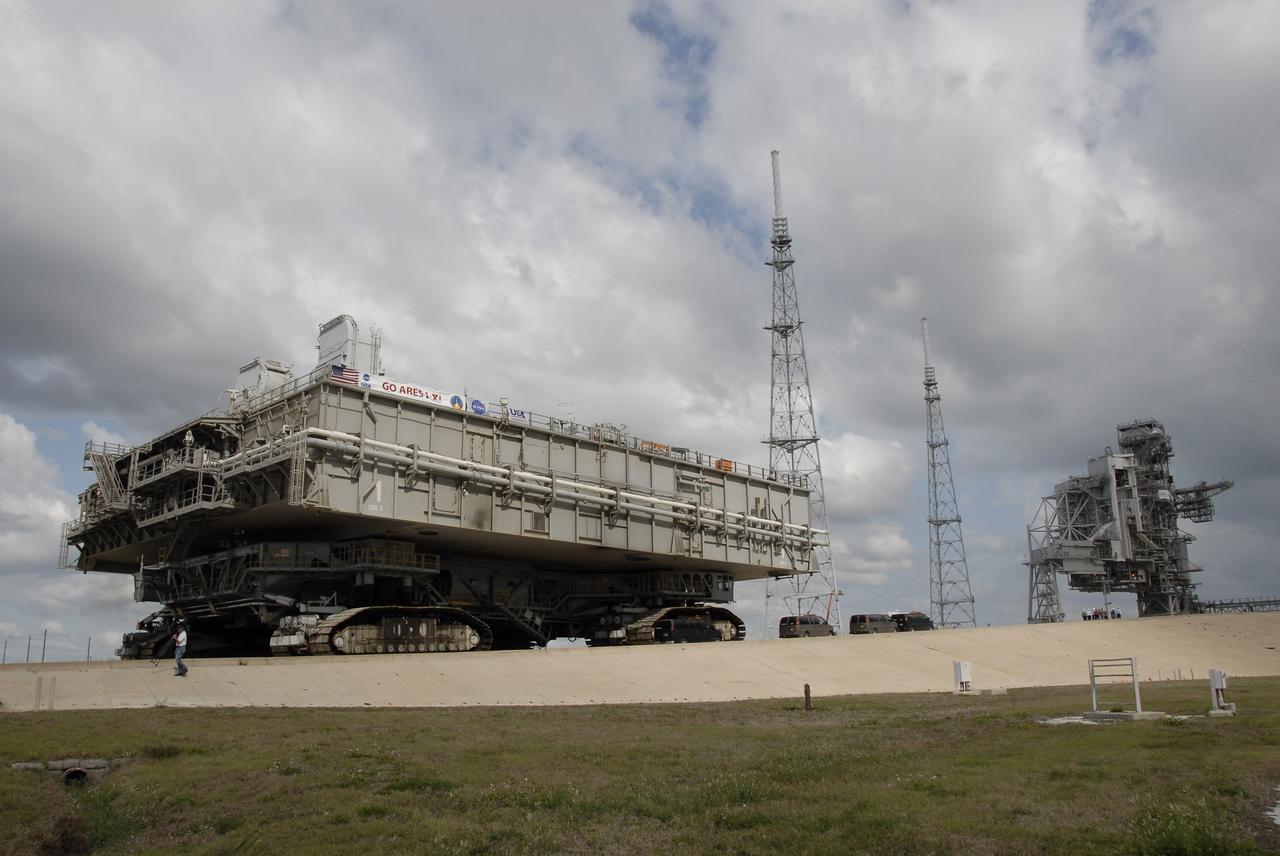
CAPE CANAVERAL, Fla. – Mobile Launcher Platform-1 is moving to Launch Pad 39B at NASA's Kennedy Space Center in Florida via the crawler-transporter underneath. The MLP has been handed over to the Constellation Program for its future use for the Ares I-X flight test in the summer of 2009. Seen around the service structures on the pad are the new 600-foot lightning towers and masts erected for the Ares launches. Ares I-X is the test vehicle for the Ares I, which is part of the Constellation Program to return men to the moon and beyond. Ground Control System hardware was installed in MLP-1 in December 2008. The MLP is being moved to the launch pad to check out the installed hardware with the Launch Control Center Firing Room 1 equipment, using the actual circuits that will be used when the fully stacked Ares I-X vehicle is rolled out later this year for launch. Following this testing, MLP-1 will be moved to the Vehicle Assembly Building's High Bay 3 to begin stacking, or assembling, Ares I-X. Photo credit: NASA/Kim Shiflett
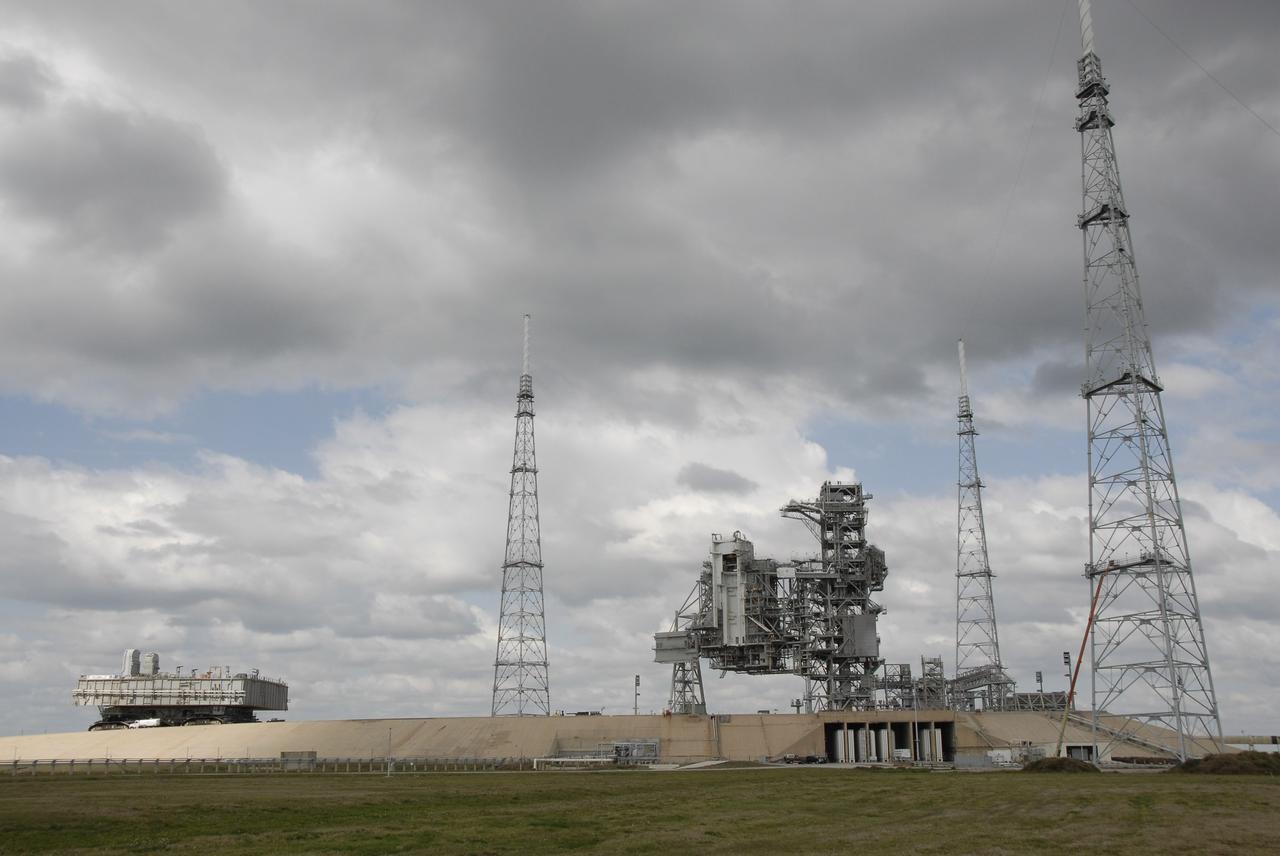
CAPE CANAVERAL, Fla. – Mobile Launcher Platform-1 nears the top of Launch Pad 39B at NASA's Kennedy Space Center in Florida via the crawler-transporter underneath. The MLP has been handed over to the Constellation Program for its future use for the Ares I-X flight test in the summer of 2009. Seen around the service structures on the pad are the new 600-foot lightning towers and masts erected for the Ares launches. Ares I-X is the test vehicle for the Ares I, which is part of the Constellation Program to return men to the moon and beyond. Ground Control System hardware was installed in MLP-1 in December 2008. The MLP is being moved to the launch pad to check out the installed hardware with the Launch Control Center Firing Room 1 equipment, using the actual circuits that will be used when the fully stacked Ares I-X vehicle is rolled out later this year for launch. Following this testing, MLP-1 will be moved to the Vehicle Assembly Building's High Bay 3 to begin stacking, or assembling, Ares I-X. Photo credit: NASA/Kim Shiflett
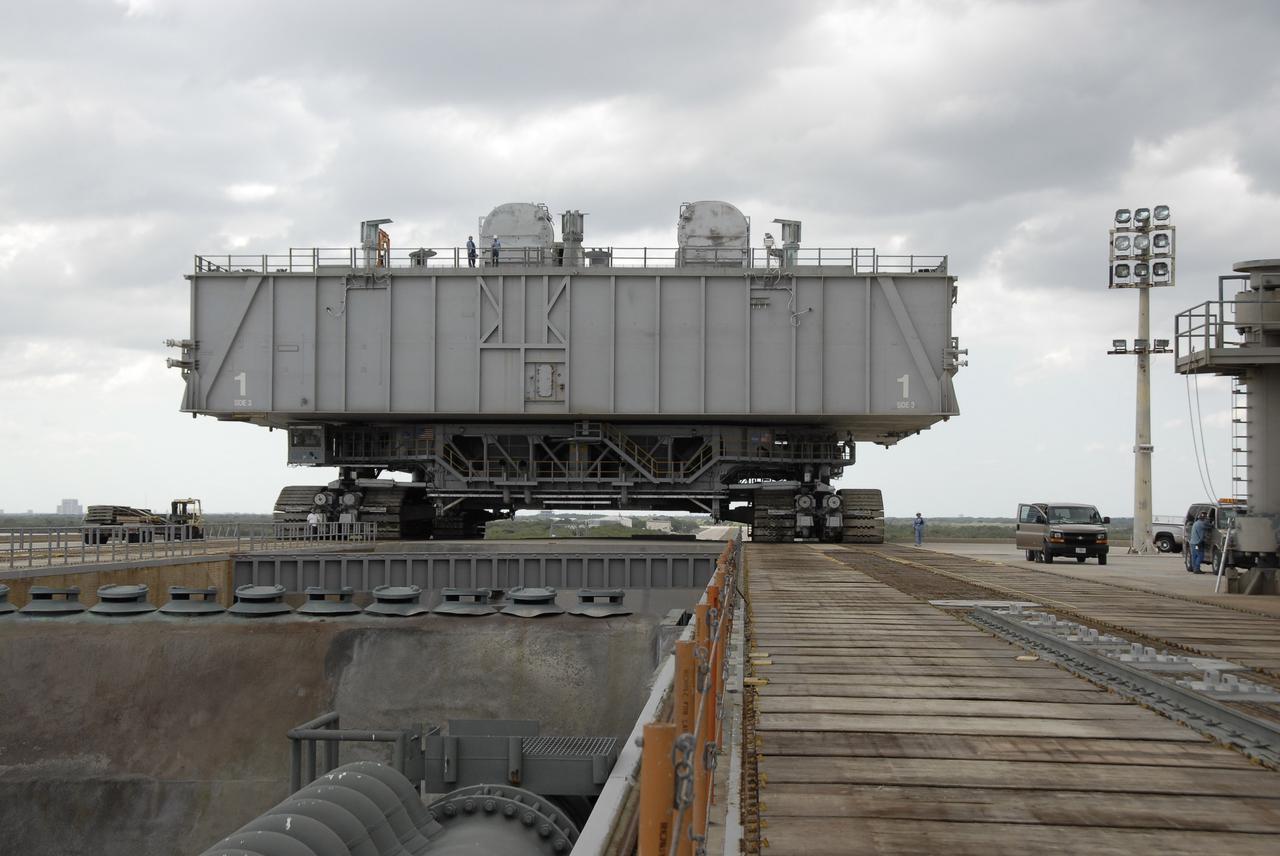
CAPE CANAVERAL, Fla. – Mobile Launcher Platform-1, on top of the crawler-transporter, nears the flame trench (lower left) on the top of Launch Pad 39B at NASA's Kennedy Space Center in Florida. The MLP has been handed over to the Constellation Program for its future use for the Ares I-X flight test in the summer of 2009. Ares I-X is the test vehicle for the Ares I, which is part of the Constellation Program to return men to the moon and beyond. Ground Control System hardware was installed in MLP-1 in December 2008. The MLP is being moved to the launch pad to check out the installed hardware with the Launch Control Center Firing Room 1 equipment, using the actual circuits that will be used when the fully stacked Ares I-X vehicle is rolled out later this year for launch. Following this testing, MLP-1 will be moved to the Vehicle Assembly Building's High Bay 3 to begin stacking, or assembling, Ares I-X. Photo credit: NASA/Kim Shiflett
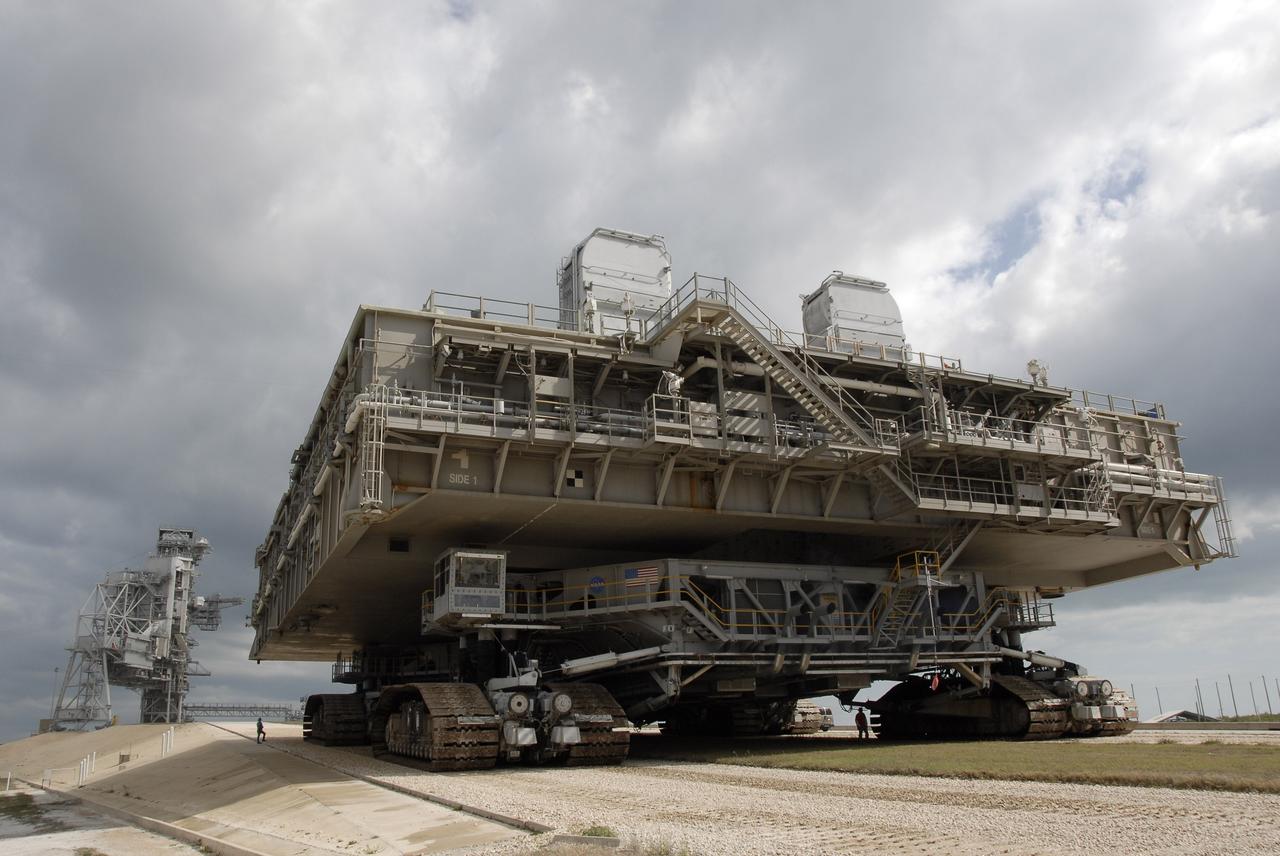
CAPE CANAVERAL, Fla. – Mobile Launcher Platform-1 is moving to Launch Pad 39B at NASA's Kennedy Space Center in Florida via the crawler-transporter underneath. The MLP has been handed over to the Constellation Program for its future use for the Ares I-X flight test in the summer of 2009. Ares I-X is the test vehicle for the Ares I, which is part of the Constellation Program to return men to the moon and beyond. Ground Control System hardware was installed in MLP-1 in December 2008. The MLP is being moved to the launch pad to check out the installed hardware with the Launch Control Center Firing Room 1 equipment, using the actual circuits that will be used when the fully stacked Ares I-X vehicle is rolled out later this year for launch. Following this testing, MLP-1 will be moved to the Vehicle Assembly Building's High Bay 3 to begin stacking, or assembling, Ares I-X. Photo credit: NASA/Kim Shiflett
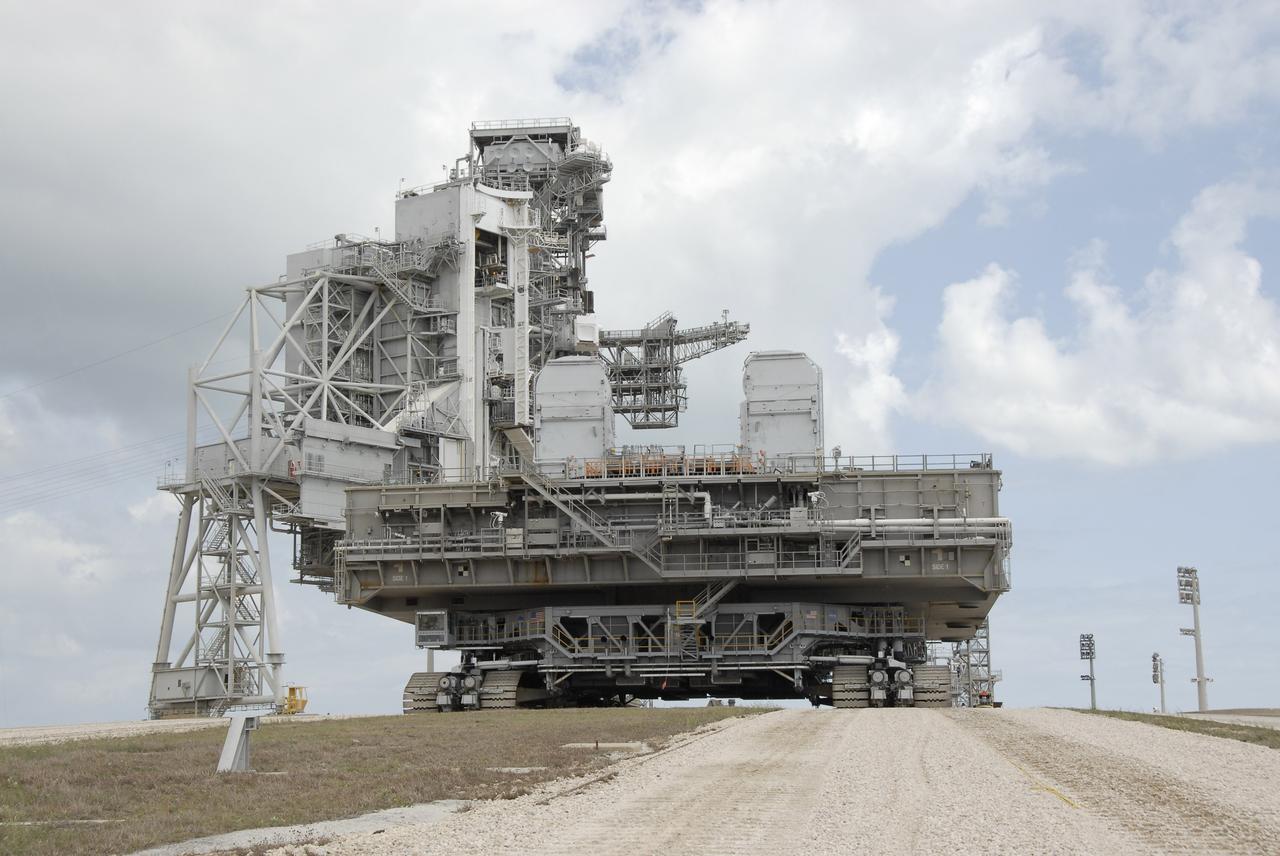
CAPE CANAVERAL, Fla. – Mobile Launcher Platform-1, on top of the crawler-transporter, reaches the top of Launch Pad 39B at NASA's Kennedy Space Center in Florida. The MLP has been handed over to the Constellation Program for its future use for the Ares I-X flight test in the summer of 2009. Ares I-X is the test vehicle for the Ares I, which is part of the Constellation Program to return men to the moon and beyond. Ground Control System hardware was installed in MLP-1 in December 2008. The MLP is being moved to the launch pad to check out the installed hardware with the Launch Control Center Firing Room 1 equipment, using the actual circuits that will be used when the fully stacked Ares I-X vehicle is rolled out later this year for launch. Following this testing, MLP-1 will be moved to the Vehicle Assembly Building's High Bay 3 to begin stacking, or assembling, Ares I-X. Photo credit: NASA/Kim Shiflett

CAPE CANAVERAL, Fla. – Mobile Launcher Platform-1 is moving to Launch Pad 39B at NASA's Kennedy Space Center in Florida via the crawler-transporter underneath. The MLP has been handed over to the Constellation Program for its future use for the Ares I-X flight test in the summer of 2009. Ares I-X is the test vehicle for the Ares I, which is part of the Constellation Program to return men to the moon and beyond. Ground Control System hardware was installed in MLP-1 in December 2008. The MLP is being moved to the launch pad to check out the installed hardware with the Launch Control Center Firing Room 1 equipment, using the actual circuits that will be used when the fully stacked Ares I-X vehicle is rolled out later this year for launch. Following this testing, MLP-1 will be moved to the Vehicle Assembly Building's High Bay 3 to begin stacking, or assembling, Ares I-X. Photo credit: NASA/Kim Shiflett
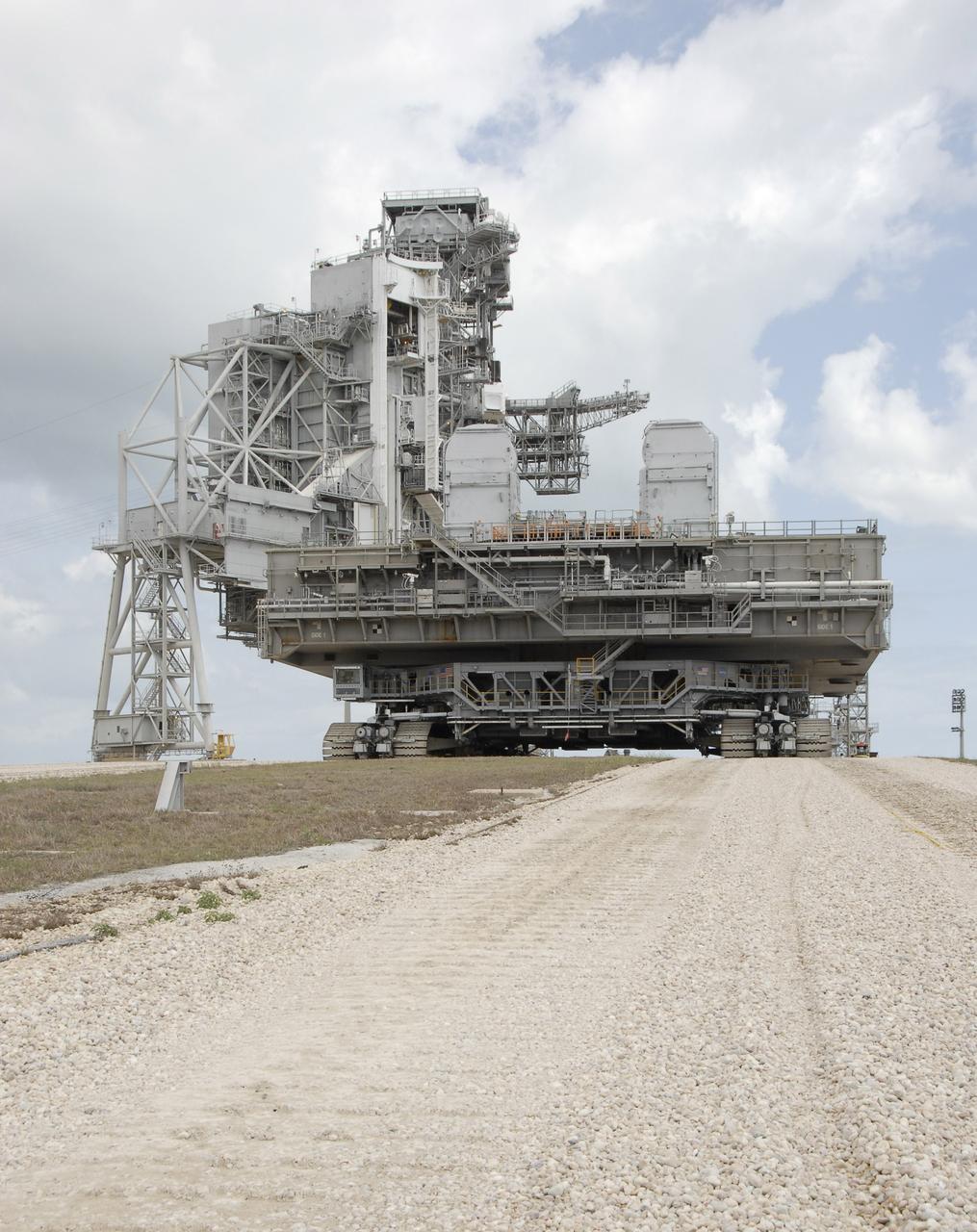
CAPE CANAVERAL, Fla. – Mobile Launcher Platform-1, on top of the crawler-transporter, reaches the top of Launch Pad 39B at NASA's Kennedy Space Center in Florida. The MLP has been handed over to the Constellation Program for its future use for the Ares I-X flight test in the summer of 2009. Ares I-X is the test vehicle for the Ares I, which is part of the Constellation Program to return men to the moon and beyond. Ground Control System hardware was installed in MLP-1 in December 2008. The MLP is being moved to the launch pad to check out the installed hardware with the Launch Control Center Firing Room 1 equipment, using the actual circuits that will be used when the fully stacked Ares I-X vehicle is rolled out later this year for launch. Following this testing, MLP-1 will be moved to the Vehicle Assembly Building's High Bay 3 to begin stacking, or assembling, Ares I-X. Photo credit: NASA/Kim Shiflett
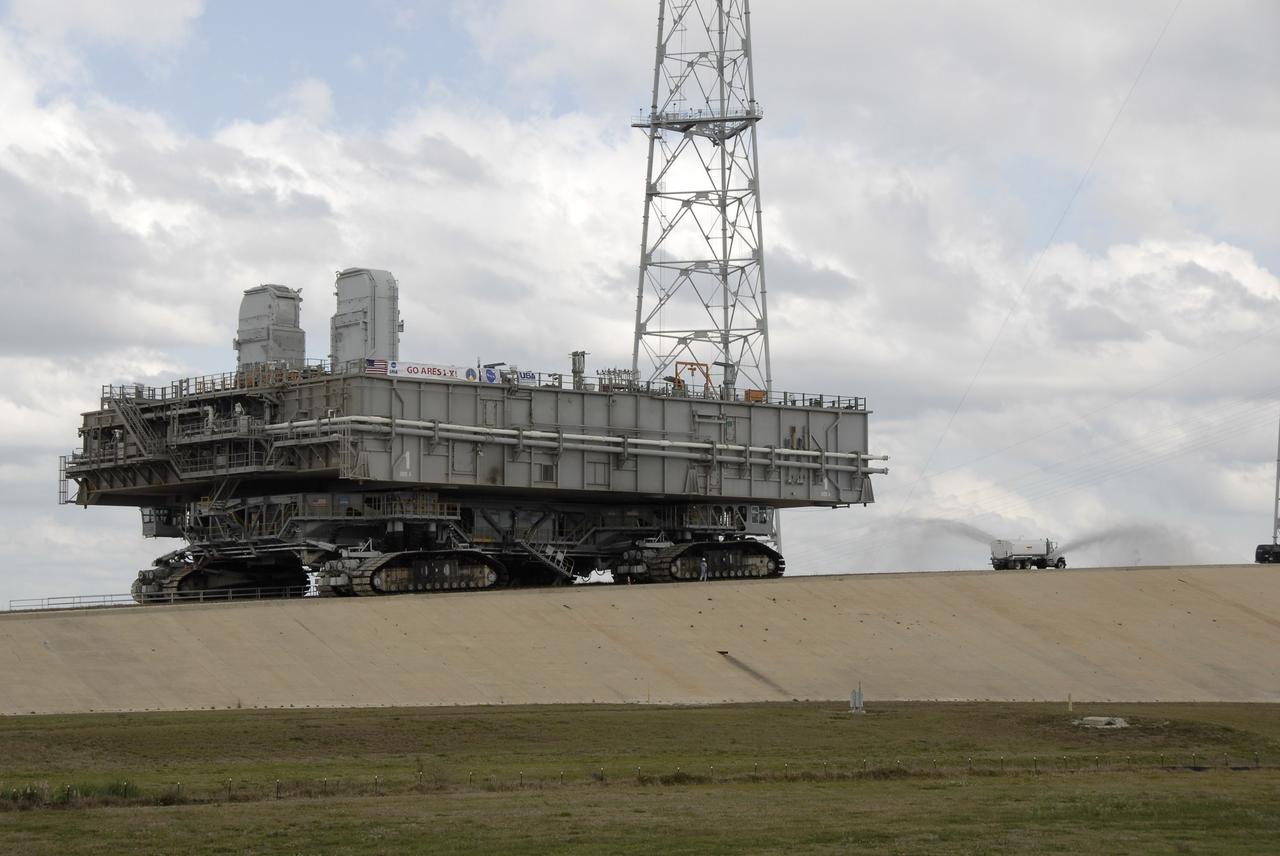
CAPE CANAVERAL, Fla. – Mobile Launcher Platform-1 nears the top of Launch Pad 39B at NASA's Kennedy Space Center in Florida via the crawler-transporter underneath. The MLP has been handed over to the Constellation Program for its future use for the Ares I-X flight test in the summer of 2009. Ares I-X is the test vehicle for the Ares I, which is part of the Constellation Program to return men to the moon and beyond. Ground Control System hardware was installed in MLP-1 in December 2008. The MLP is being moved to the launch pad to check out the installed hardware with the Launch Control Center Firing Room 1 equipment, using the actual circuits that will be used when the fully stacked Ares I-X vehicle is rolled out later this year for launch. Following this testing, MLP-1 will be moved to the Vehicle Assembly Building's High Bay 3 to begin stacking, or assembling, Ares I-X. Photo credit: NASA/Kim Shiflett
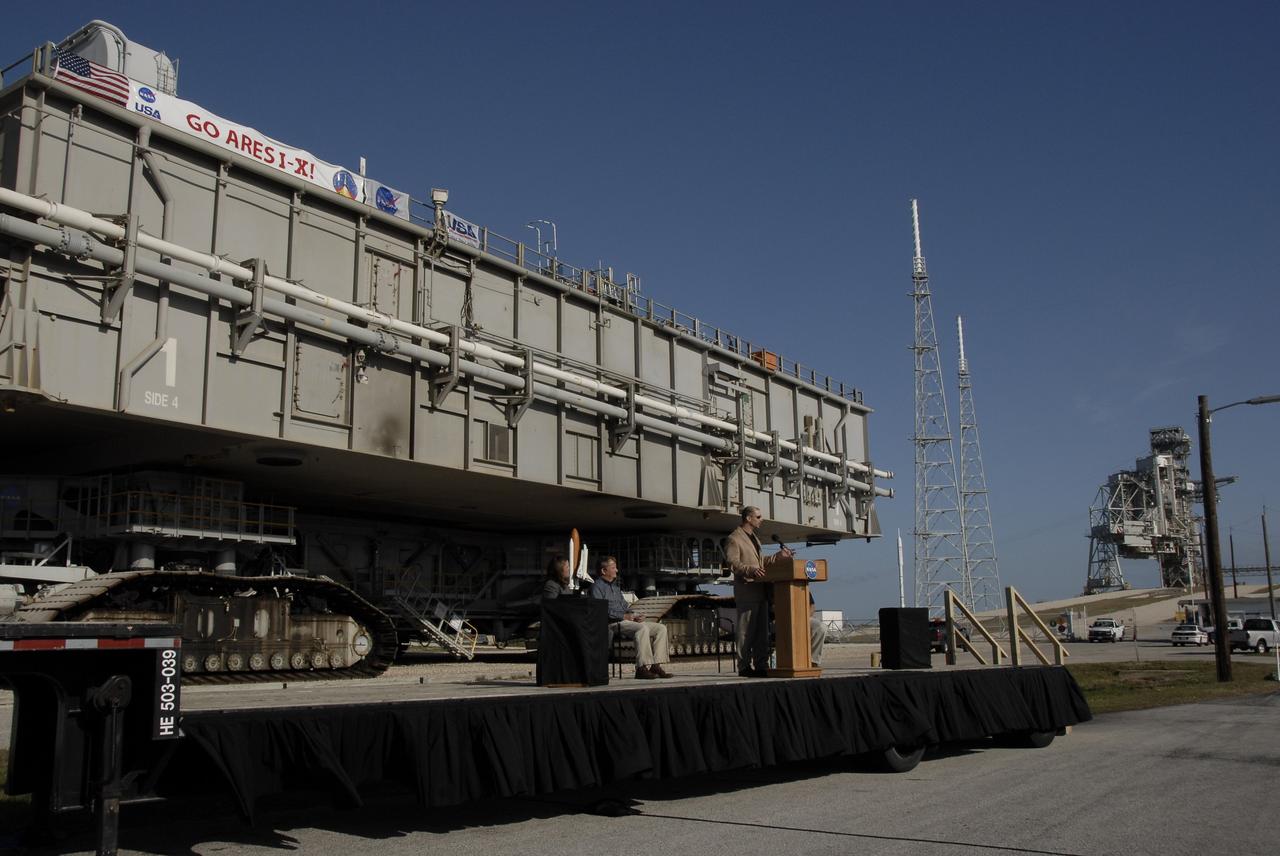
CAPE CANAVERAL, Fla. – Near Launch Pad 39B at NASA's Kennedy Space Center in Florida, Director of the Constellation Project Office Pepper E. Phillips speaks to employees and media during the handover ceremony for Mobile Launcher Platform-1. Marking the handover is the change of banner on the platform behind him. On the stage and also participating in the ceremony are Director of Launch Vehicle Processing Rita Willcoxon , Shuttle Launch Director Mike Leinbach, and Manager of MLP Operations with United Space Alliance Brett Raulerson. The platform is being transferred from NASA's Space Shuttle Program to the Constellation Program for the Ares I-X flight test targeted for this summer. Constructed in 1964, the mobile launchers used in Apollo/Saturn operations were modified for use in shuttle operations. With cranes, umbilical towers and swing arms removed, the mobile launchers were renamed Mobile Launcher Platforms, or MLPs. Photo credit: NASA/Kim Shiflett
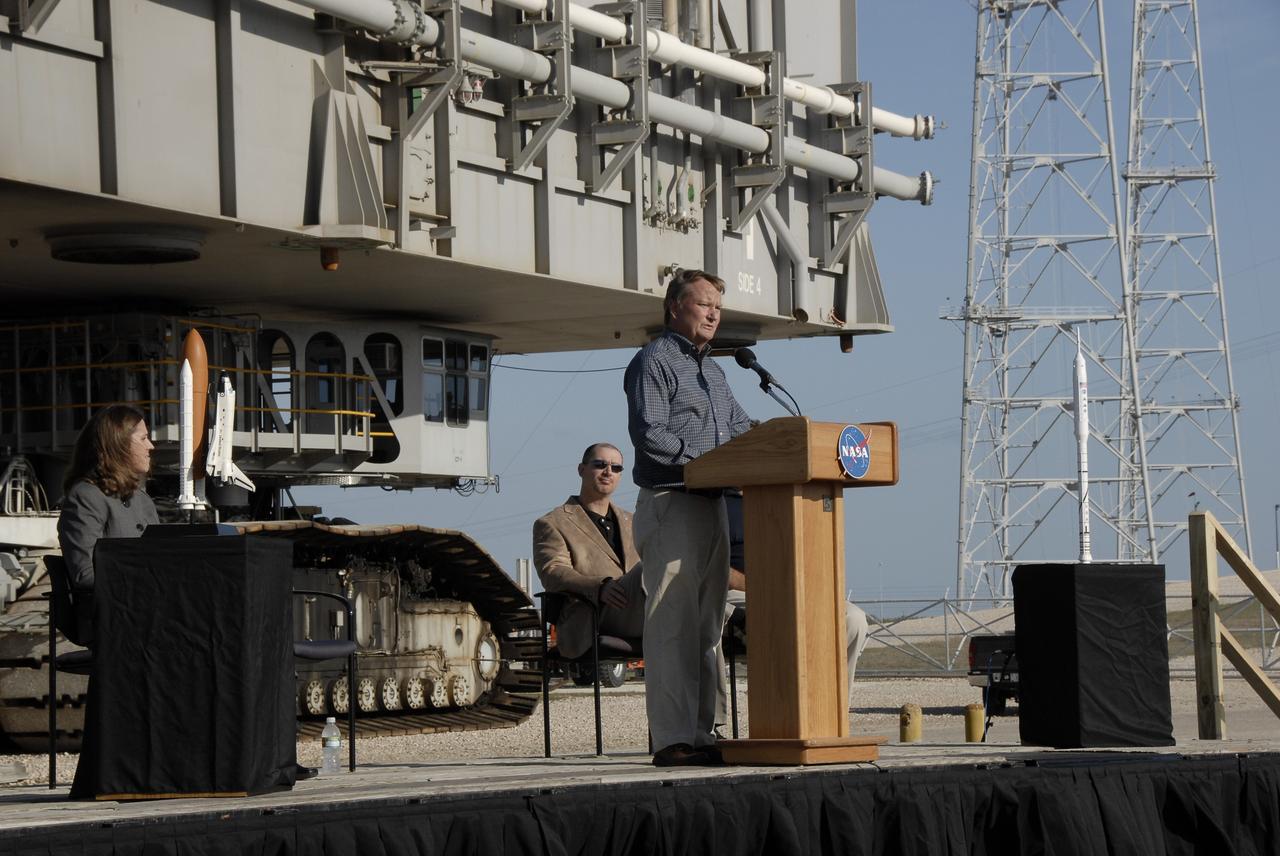
CAPE CANAVERAL, Fla. – Near Launch Pad 39B at NASA's Kennedy Space Center in Florida, Shuttle Launch Director Mike Leinbach speaks to the employees and media during the handover ceremony for Mobile Launcher Platform-1. The platform is being transferred from NASA's Space Shuttle Program to the Constellation Program for the Ares I-X flight test targeted for this summer. Also participating in the ceremony are (left) Rita Willcoxon, director of Launch Vehicle Processing at Kennedy, (right) Pepper E. Phillips, director of the Constellation Project Office, and (not visible) Brett Raulerson, manager of MLP Operations with United Space Alliance. Constructed in 1964, the mobile launchers used in Apollo/Saturn operations were modified for use in shuttle operations. With cranes, umbilical towers and swing arms removed, the mobile launchers were renamed Mobile Launcher Platforms, or MLPs. Photo credit: NASA/Kim Shiflett
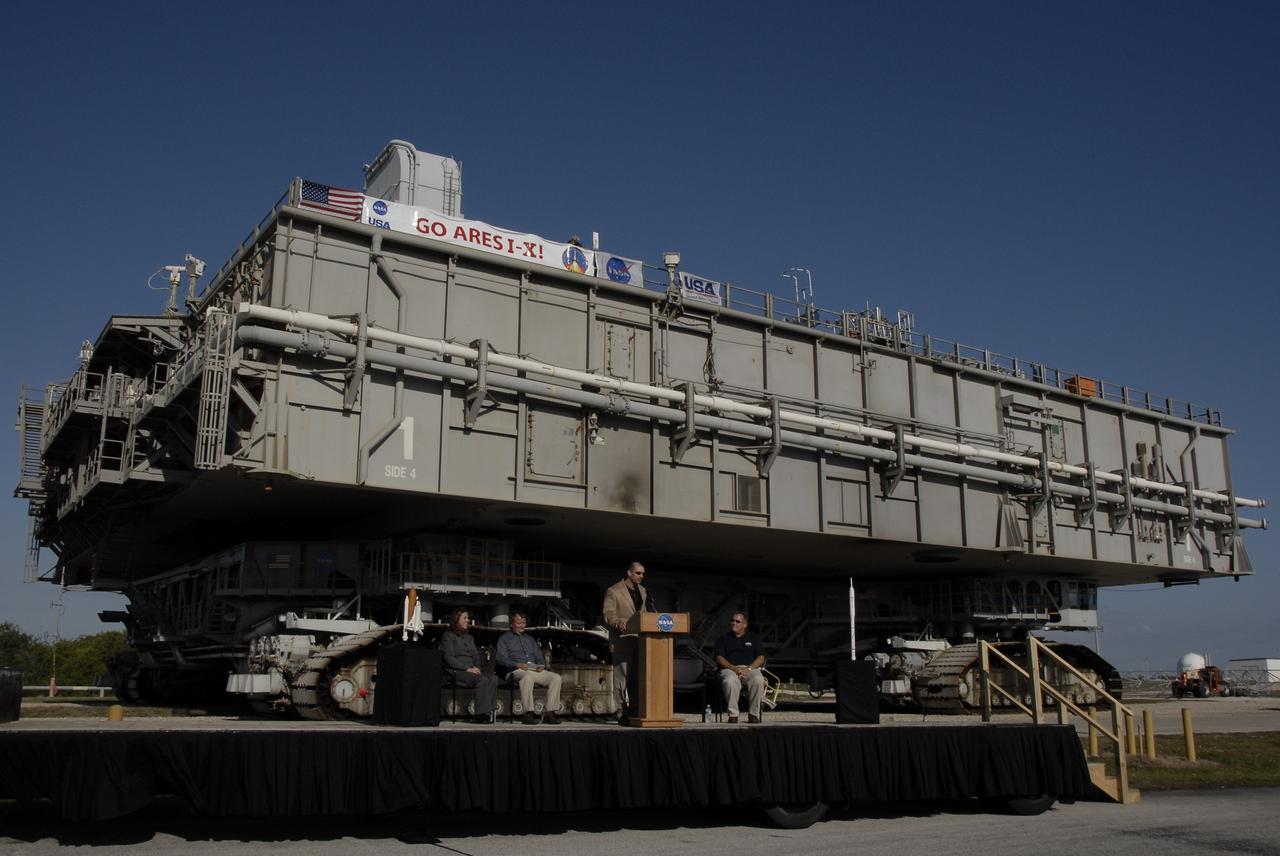
CAPE CANAVERAL, Fla. – Near Launch Pad 39B at NASA's Kennedy Space Center in Florida, Director of the Constellation Project Office Pepper E. Phillips speaks to employees and media during the handover ceremony for Mobile Launcher Platform-1. Marking the handover is the change of banner on the platform behind him. On the stage and also participating in the ceremony are Director of Launch Vehicle Processing Rita Willcoxon , Shuttle Launch Director Mike Leinbach, and Manager of MLP Operations with United Space Alliance Brett Raulerson. The platform is being transferred from NASA's Space Shuttle Program to the Constellation Program for the Ares I-X flight test targeted for this summer. Constructed in 1964, the mobile launchers used in Apollo/Saturn operations were modified for use in shuttle operations. With cranes, umbilical towers and swing arms removed, the mobile launchers were renamed Mobile Launcher Platforms, or MLPs. Photo credit: NASA/Kim Shiflett
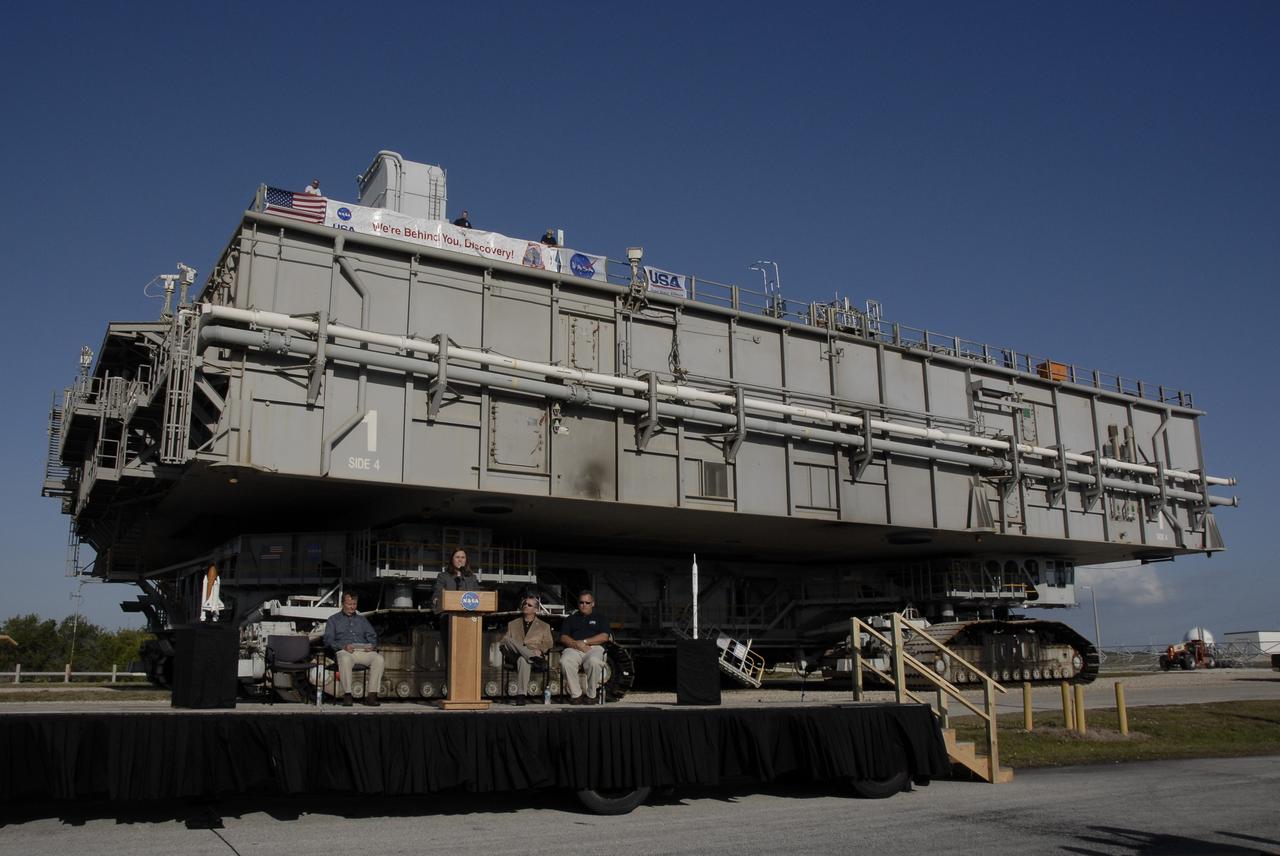
CAPE CANAVERAL, Fla. – NASA's Kennedy Space Center management host a ceremony near Launch Pad 39B to mark the handover of Mobile Launcher Platform-1 (behind them) from NASA's Space Shuttle Program to the Constellation Program for the Ares I-X flight test targeted for this summer. Seated are (left) Shuttle Launch Director Mike Leinbach and (right) Pepper E. Phillips, director of the Constellation Project Office, and Brett Raulerson, manager of MLP Operations with United Space Alliance. At the podium is Rita Willcoxon, director of Launch Vehicle Processing at Kennedy. Constructed in 1964, the mobile launchers used in Apollo/Saturn operations were modified for use in shuttle operations. With cranes, umbilical towers and swing arms removed, the mobile launchers were renamed Mobile Launcher Platforms, or MLPs. Photo credit: NASA/Kim Shiflett
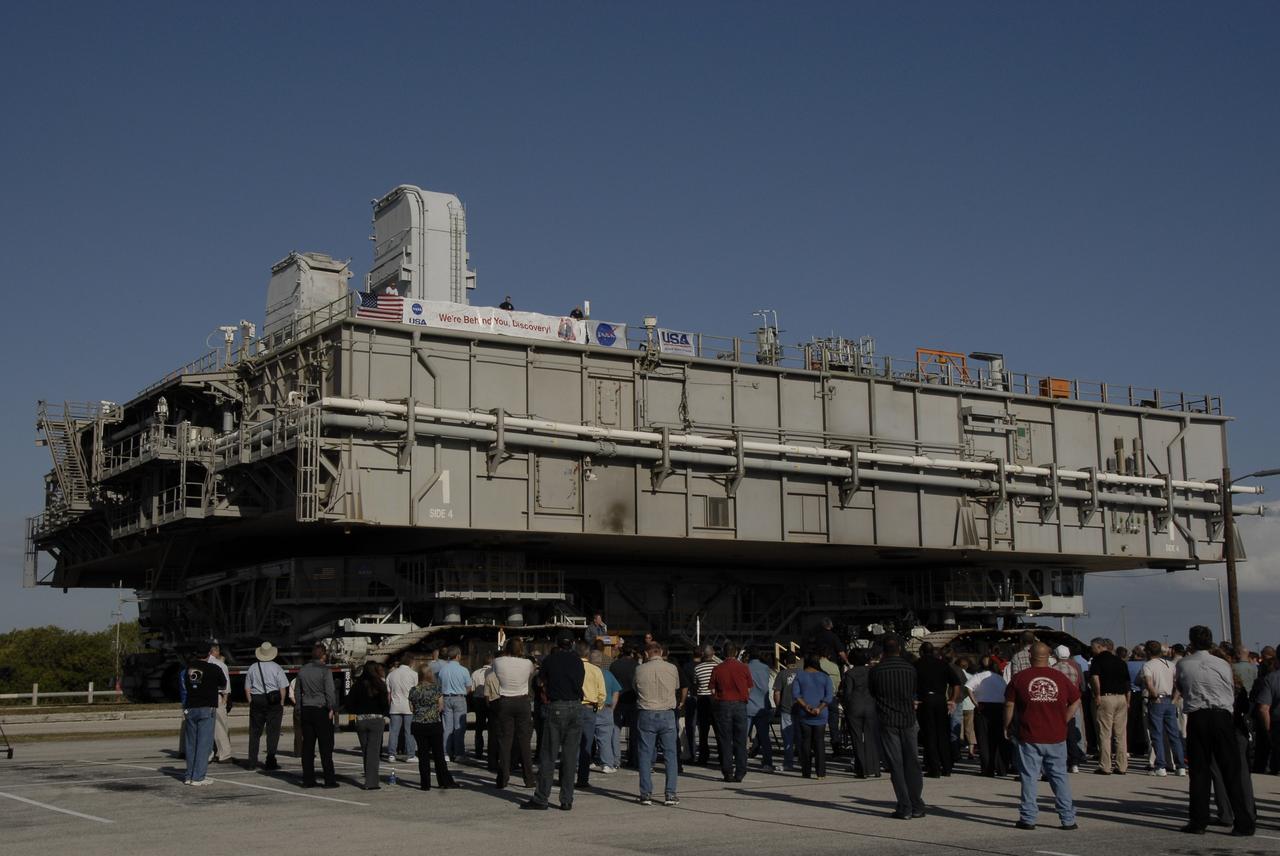
CAPE CANAVERAL, Fla. – Near Launch Pad 39B at NASA's Kennedy Space Center in Florida, employees and media gather listen to Shuttle Launch Director Mike Leinbach during the handover ceremony for Mobile Launcher Platform-1. The platform is being transferred from NASA's Space Shuttle Program to the Constellation Program for the Ares I-X flight test targeted for this summer. Also participating in the ceremony are Rita Willcoxon, director of Launch Vehicle Processing at Kennedy, Pepper E. Phillips, director of the Constellation Project Office, and Brett Raulerson, manager of MLP Operations with United Space Alliance. Constructed in 1964, the mobile launchers used in Apollo/Saturn operations were modified for use in shuttle operations. With cranes, umbilical towers and swing arms removed, the mobile launchers were renamed Mobile Launcher Platforms, or MLPs. Photo credit: NASA/Kim Shiflett
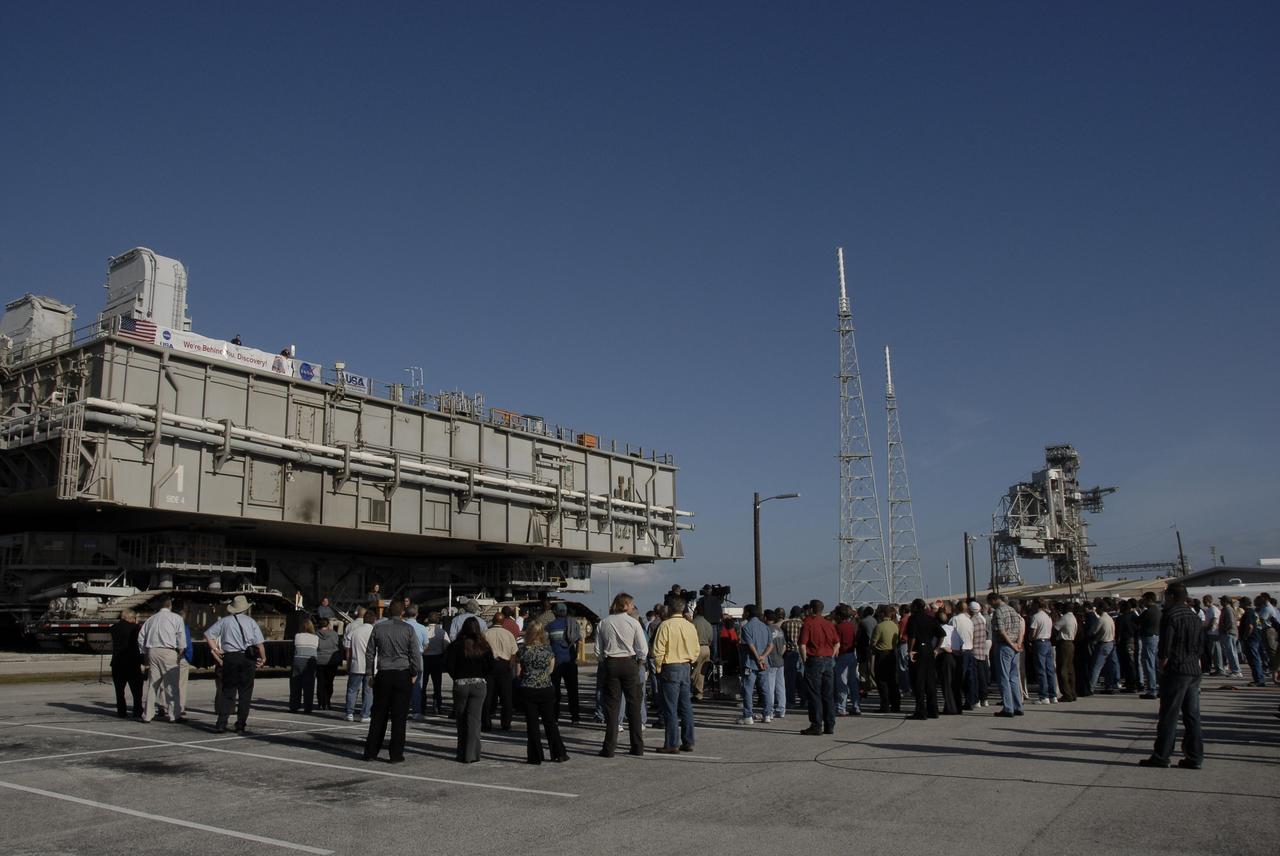
CAPE CANAVERAL, Fla. – – Employees and media gather near Launch Pad 39B at NASA's Kennedy Space Center in Florida for the handover ceremony for Mobile Launcher Platform-1, seen here. The platform is being transferred from NASA's Space Shuttle Program to the Constellation Program for the Ares I-X flight test targeted for this summer. Constructed in 1964, the mobile launchers used in Apollo/Saturn operations were modified for use in shuttle operations. With cranes, umbilical towers and swing arms removed, the mobile launchers were renamed Mobile Launcher Platforms, or MLPs. Photo credit: NASA/Kim Shiflett
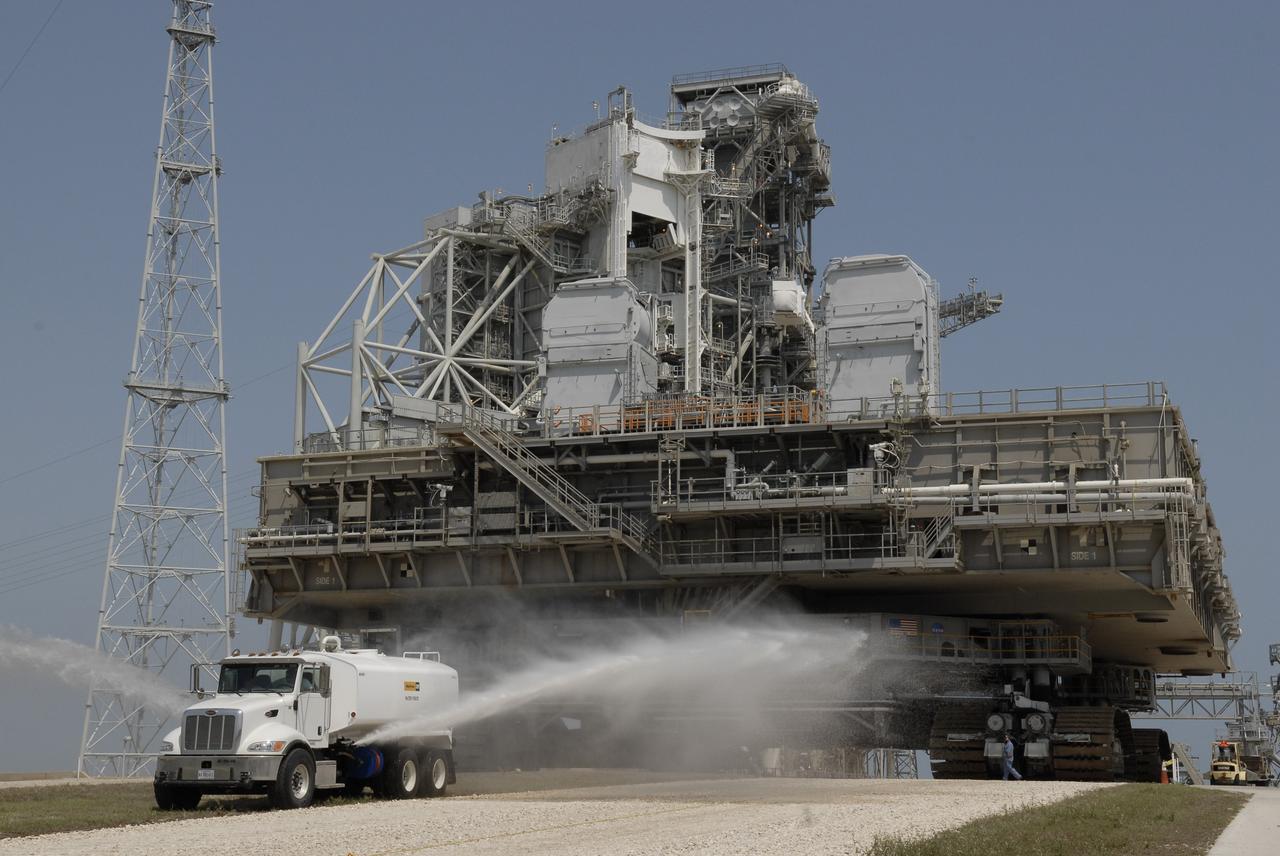
CAPE CANAVERAL, Fla. – At NASA's Kennedy Space Center in Florida, a water truck sprays the dry crawlerway in front of the crawler-transporter carrying the mobile launcher platform on top as it moves away from Kennedy's Launch pad 39B. The platform, turned over from the shuttle program to the Constellation Program last month, will be rolled into the Vehicle Assembly Building's High Bay 3 in preparation for the Ares I-X flight test this summer. Ares I-X is the test vehicle for the Ares I, which is part of the Constellation Program to return men to the moon and beyond. Ground Control System hardware was installed in MLP-1 in December 2008. The platform was moved to the launch pad to check out the installed hardware with the Launch Control Center Firing Room 1 equipment, using the actual circuits that will be used when the fully stacked Ares I-X vehicle is rolled out later this year for launch. Photo credit: NASA/Kim Shiflett
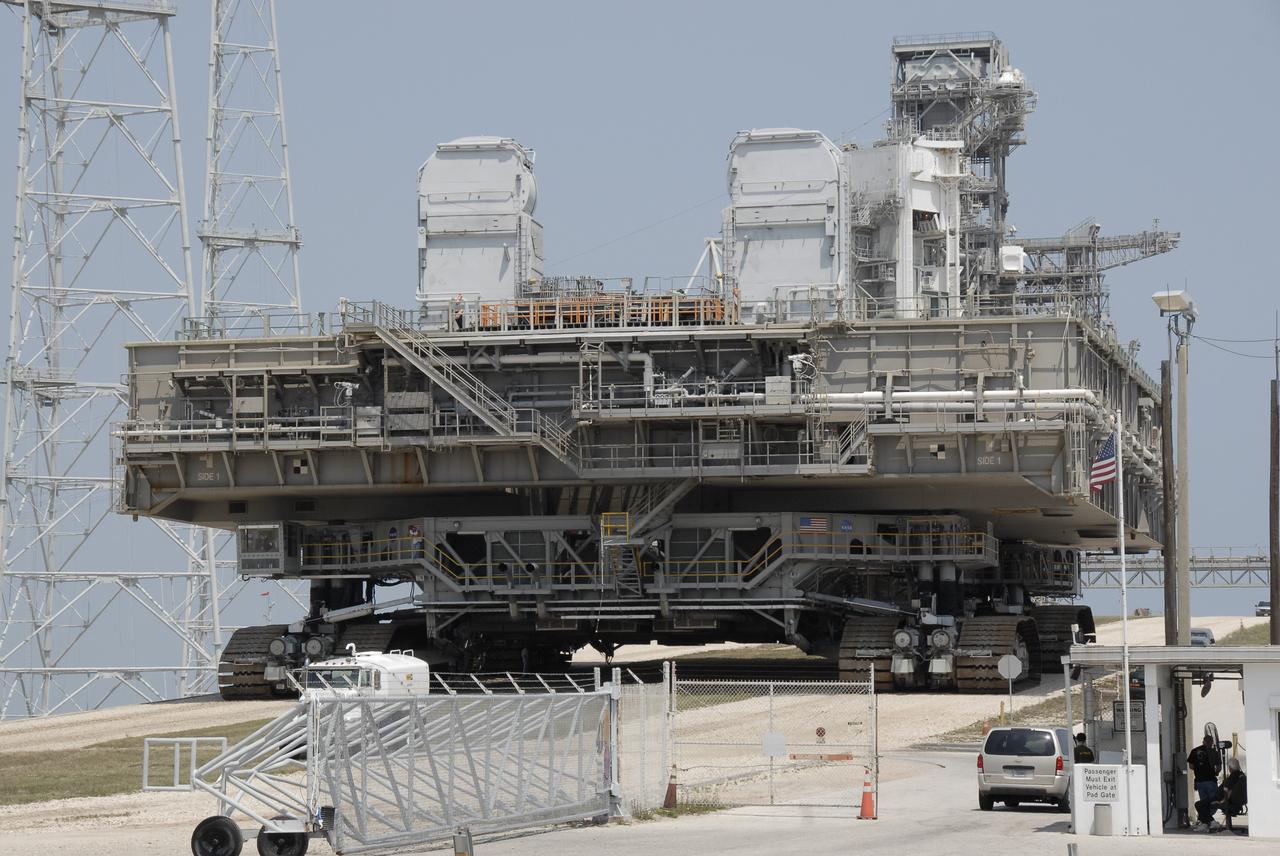
CAPE CANAVERAL, Fla. – At NASA's Kennedy Space Center in Florida, the mobile launcher platform that was turned over from the shuttle program to the Constellation Program last month moves off Kennedy's Launch Pad 39B via the crawler-transporter underneath. The platform will be rolled into the Vehicle Assembly Building's High Bay 3 in preparation for the Ares I-X flight test this summer. Ares I-X is the test vehicle for the Ares I, which is part of the Constellation Program to return men to the moon and beyond. Ground Control System hardware was installed in MLP-1 in December 2008. The platform was moved to the launch pad to check out the installed hardware with the Launch Control Center Firing Room 1 equipment, using the actual circuits that will be used when the fully stacked Ares I-X vehicle is rolled out later this year for launch. Photo credit: NASA/Kim Shiflett
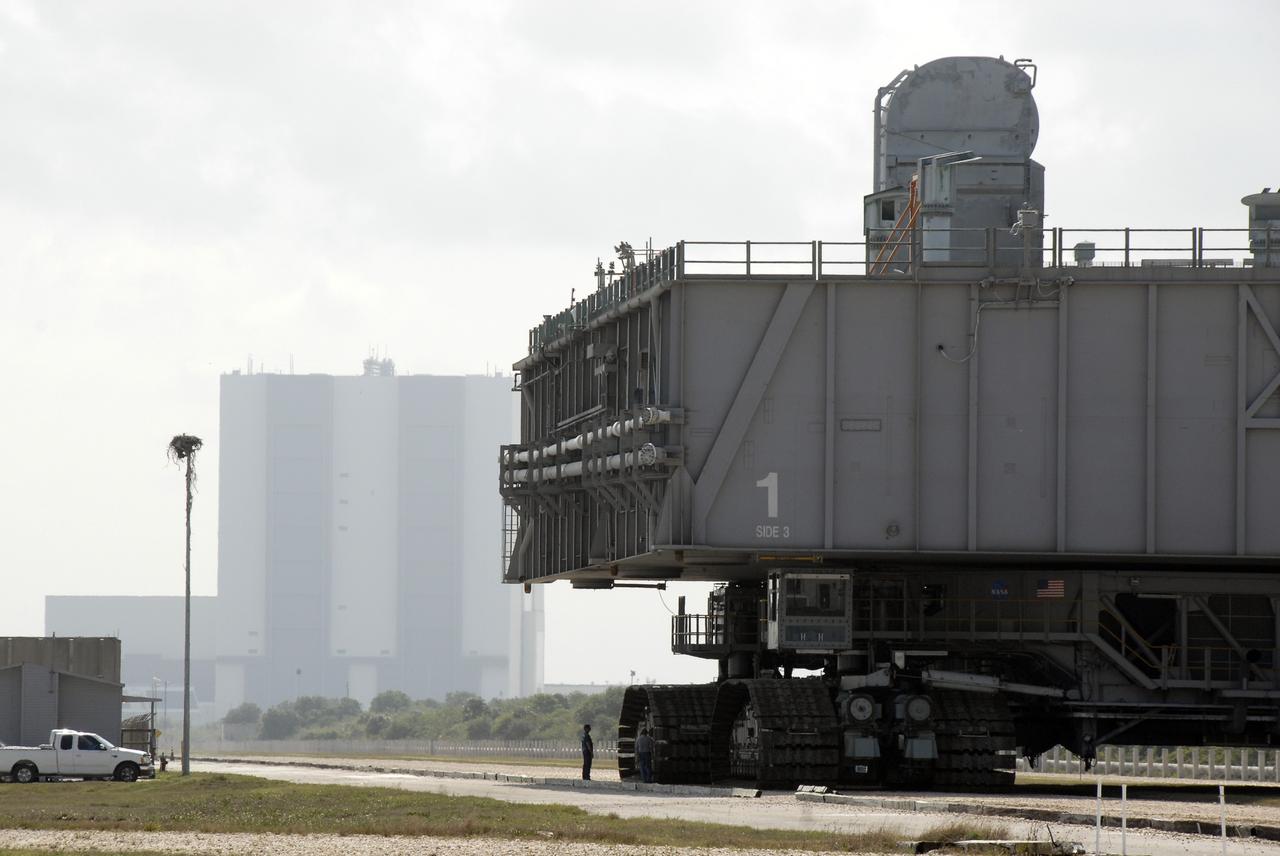
CAPE CANAVERAL, Fla. – A worker is dwarfed by the giant crawler-transporter and mobile launcher platform moving along the crawlerway toward the Vehicle Assembly Building. The platform will be rolled into the VAB's High Bay 3 in preparation for the Ares I-X flight test this summer. Ares I-X is the test vehicle for the Ares I, which is part of the Constellation Program to return men to the moon and beyond. Ground Control System hardware was installed in MLP-1 in December 2008. The platform was moved to the launch pad to check out the installed hardware with the Launch Control Center Firing Room 1 equipment, using the actual circuits that will be used when the fully stacked Ares I-X vehicle is rolled out later this year for launch. Photo credit: NASA/Kim Shiflett
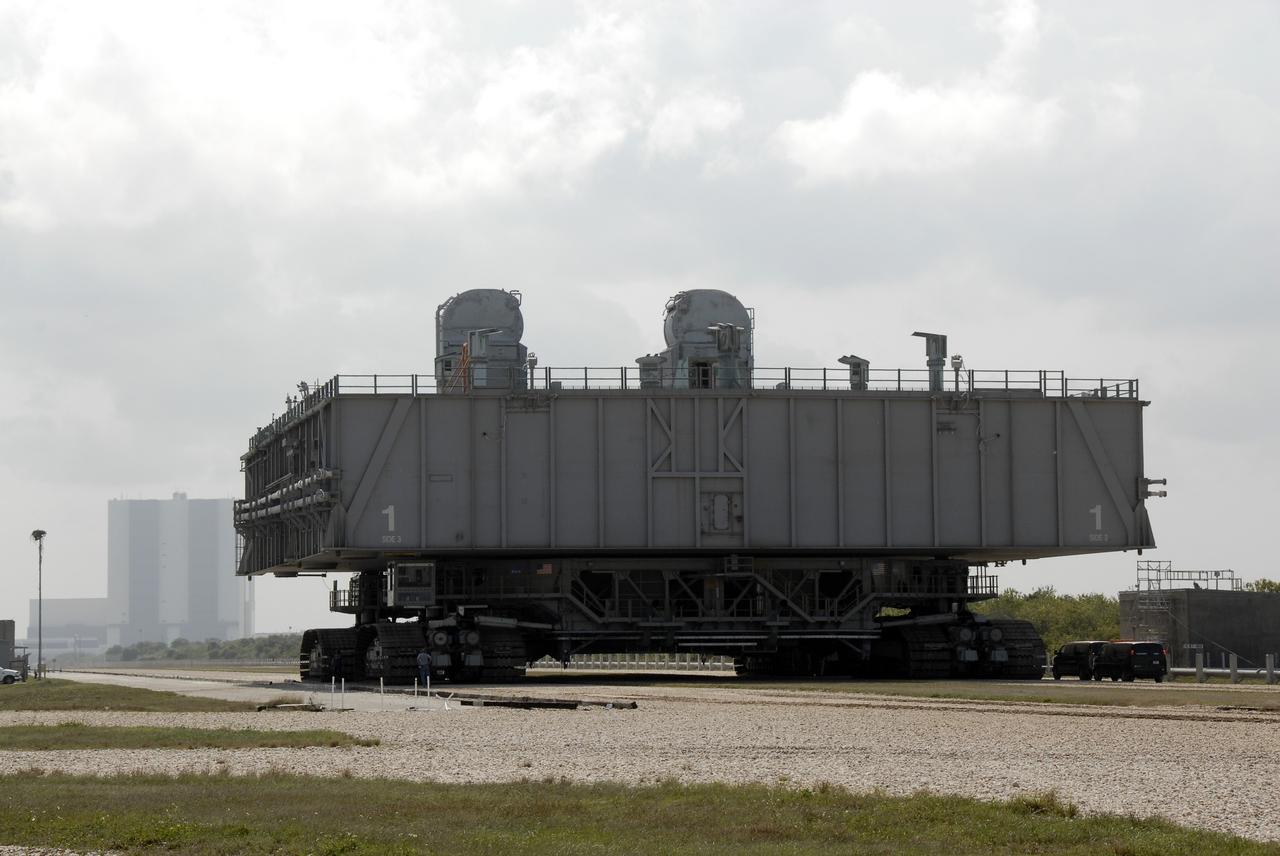
CAPE CANAVERAL, Fla. – At NASA's Kennedy Space Center in Florida, the mobile launcher platform that was turned over from the shuttle program to the Constellation Program last month moves along the crawlerway via the crawler-transporter underneath. In the background is the Vehicle Assembly Building. The platform will be rolled into the VAB's High Bay 3 in preparation for the Ares I-X flight test this summer. Ares I-X is the test vehicle for the Ares I, which is part of the Constellation Program to return men to the moon and beyond. Ground Control System hardware was installed in MLP-1 in December 2008. The platform was moved to the launch pad to check out the installed hardware with the Launch Control Center Firing Room 1 equipment, using the actual circuits that will be used when the fully stacked Ares I-X vehicle is rolled out later this year for launch. Photo credit: NASA/Kim Shiflett
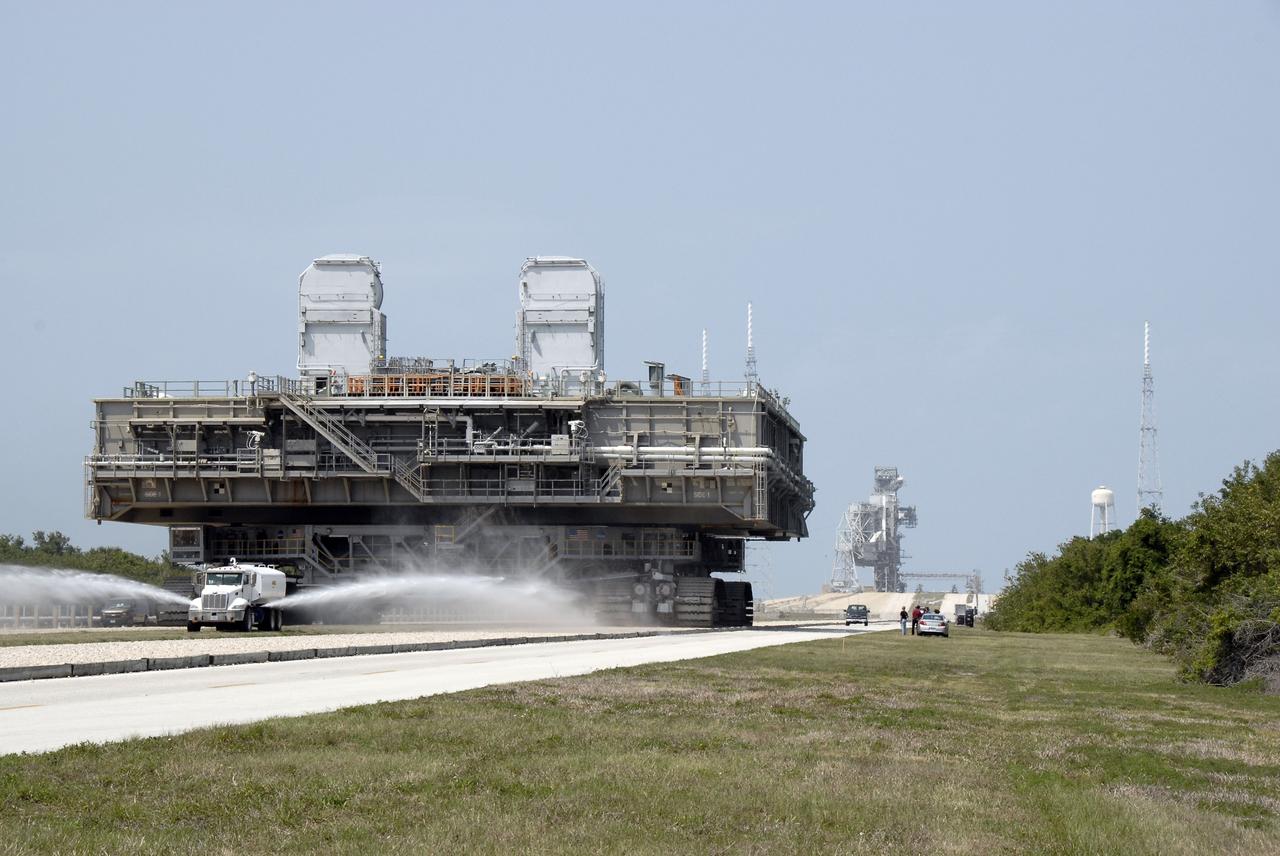
CAPE CANAVERAL, Fla. – At NASA's Kennedy Space Center in Florida, a water truck continues to spray the dry crawlerway in front of the crawler-transporter as it moves the mobile launcher platform on top away from Kennedy's Launch pad 39B. The platform, turned over from the shuttle program to the Constellation Program last month, will be rolled into the Vehicle Assembly Building's High Bay 3 in preparation for the Ares I-X flight test this summer. Ares I-X is the test vehicle for the Ares I, which is part of the Constellation Program to return men to the moon and beyond. Ground Control System hardware was installed in MLP-1 in December 2008. The platform was moved to the launch pad to check out the installed hardware with the Launch Control Center Firing Room 1 equipment, using the actual circuits that will be used when the fully stacked Ares I-X vehicle is rolled out later this year for launch. Photo credit: NASA/Kim Shiflett
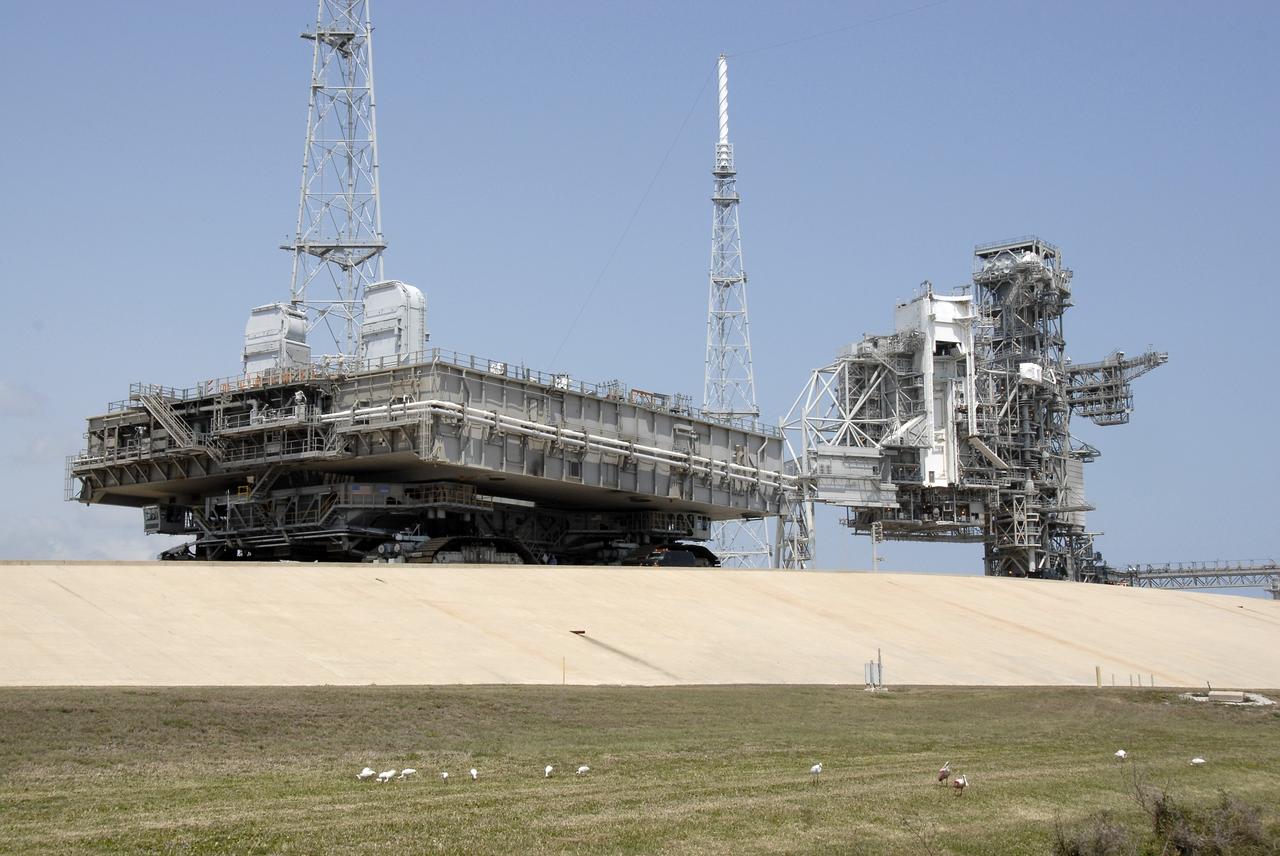
CAPE CANAVERAL, Fla. – At NASA's Kennedy Space Center in Florida, the mobile launcher platform that was turned over from the shuttle program to the Constellation Program last month is being moved from Kennedy's Launch Pad 39B via the crawler-transporter underneath. The platform will be rolled into the Vehicle Assembly Building's High Bay 3 in preparation for the Ares I-X flight test this summer. Ares I-X is the test vehicle for the Ares I, which is part of the Constellation Program to return men to the moon and beyond. Ground Control System hardware was installed in MLP-1 in December 2008. The platform was moved to the launch pad to check out the installed hardware with the Launch Control Center Firing Room 1 equipment, using the actual circuits that will be used when the fully stacked Ares I-X vehicle is rolled out later this year for launch. Photo credit: NASA/Kim Shiflett
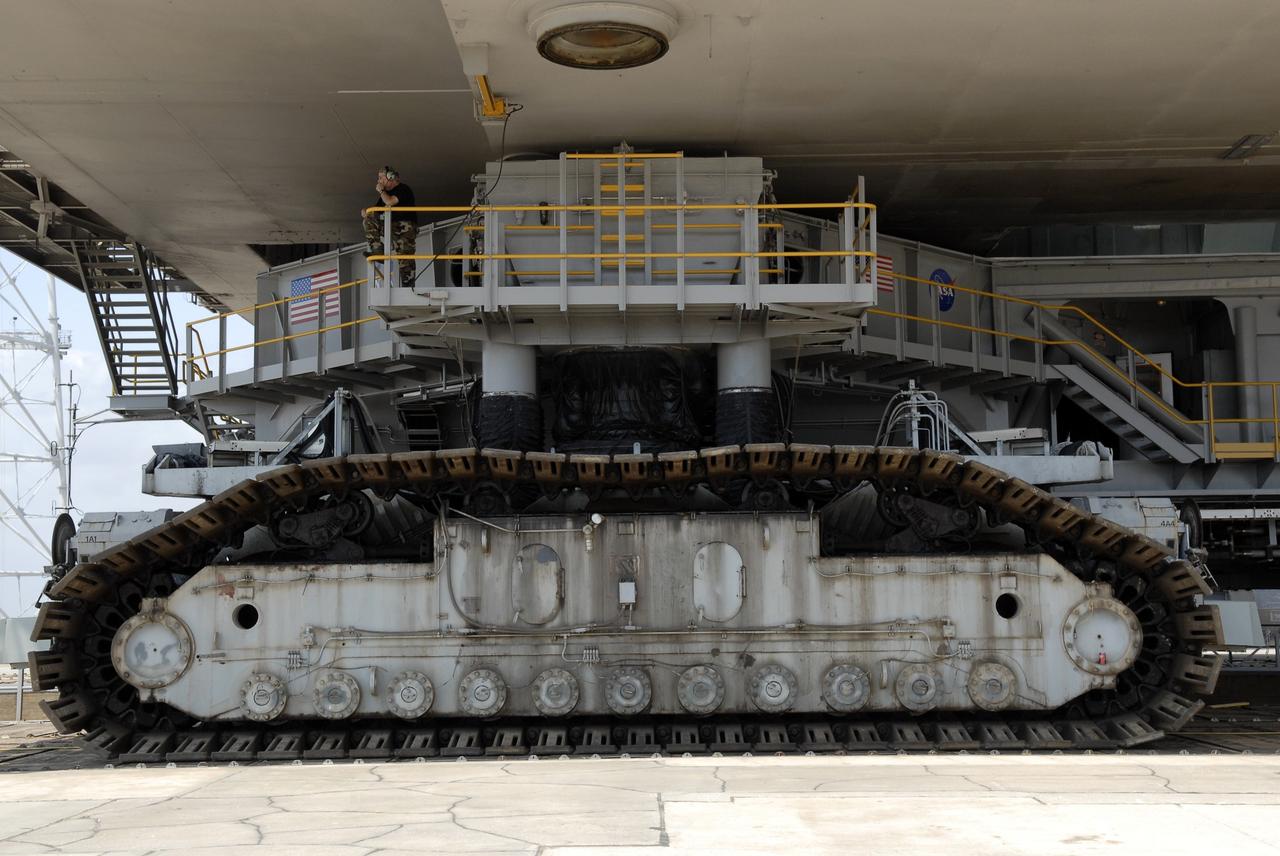
CAPE CANAVERAL, Fla. – At NASA's Kennedy Space Center in Florida, the crawler-transporter is underneath the mobile launcher platform to move it from Kennedy's Launch Pad 39B to the Vehicle Assembly Building's High Bay 3 in preparation for the Ares I-X flight test this summer. The platform was turned over from the shuttle program to the Constellation Program last month. Ares I-X is the test vehicle for the Ares I, which is part of the Constellation Program to return men to the moon and beyond. Ground Control System hardware was installed in MLP-1 in December 2008. The platform was moved to the launch pad to check out the installed hardware with the Launch Control Center Firing Room 1 equipment, using the actual circuits that will be used when the fully stacked Ares I-X vehicle is rolled out later this year for launch. Photo credit: NASA/Kim Shiflett
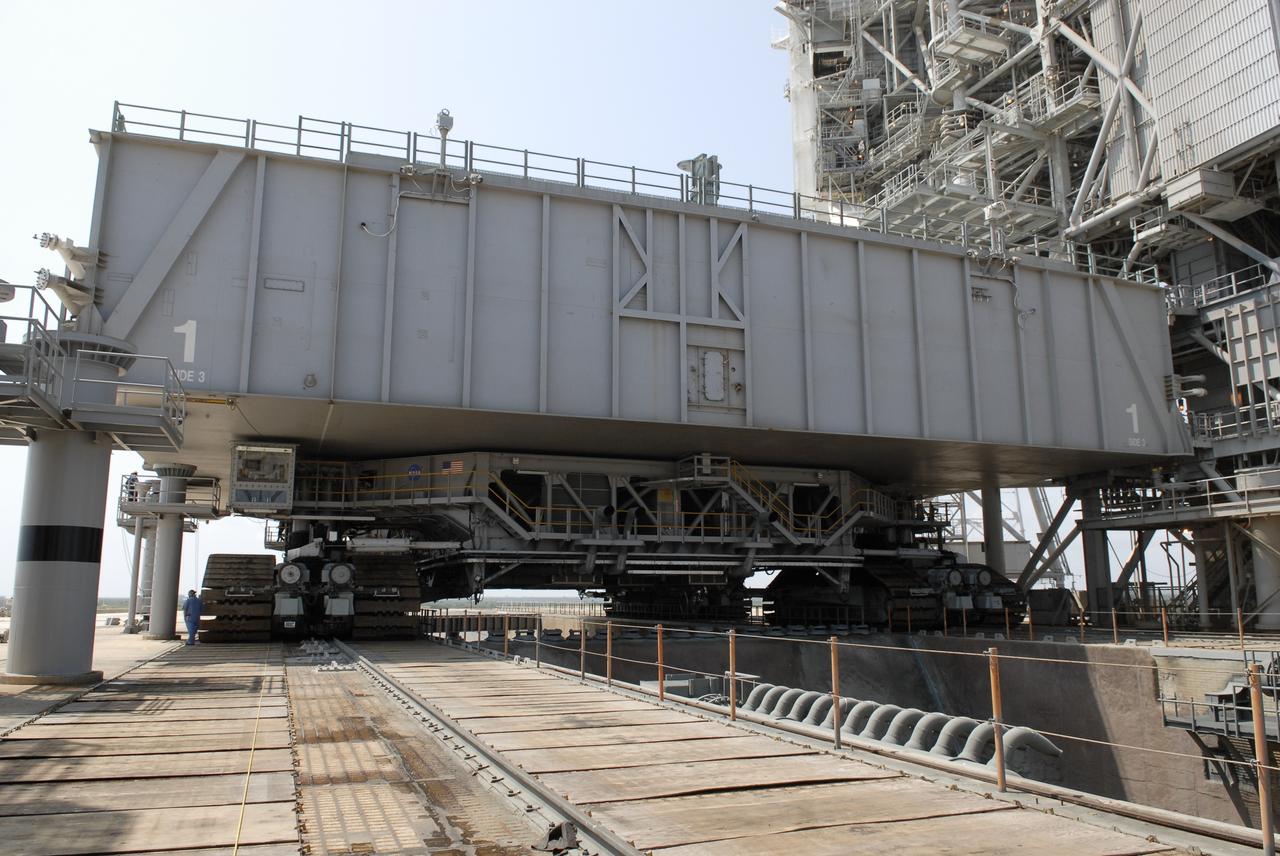
CAPE CANAVERAL, Fla. – At NASA's Kennedy Space Center in Florida, the mobile launcher platform that was turned over from the shuttle program to the Constellation Program last month is being moved from Kennedy's Launch Pad 39B via the crawler-transporter underneath. Here, the platform and crawler can be seen straddling the flame trench on the launch pad. The platform will be rolled into the Vehicle Assembly Building's High Bay 3 in preparation for the Ares I-X flight test this summer. Ares I-X is the test vehicle for the Ares I, which is part of the Constellation Program to return men to the moon and beyond. Ground Control System hardware was installed in MLP-1 in December 2008. The platform was moved to the launch pad to check out the installed hardware with the Launch Control Center Firing Room 1 equipment, using the actual circuits that will be used when the fully stacked Ares I-X vehicle is rolled out later this year for launch. Photo credit: NASA/Kim Shiflett
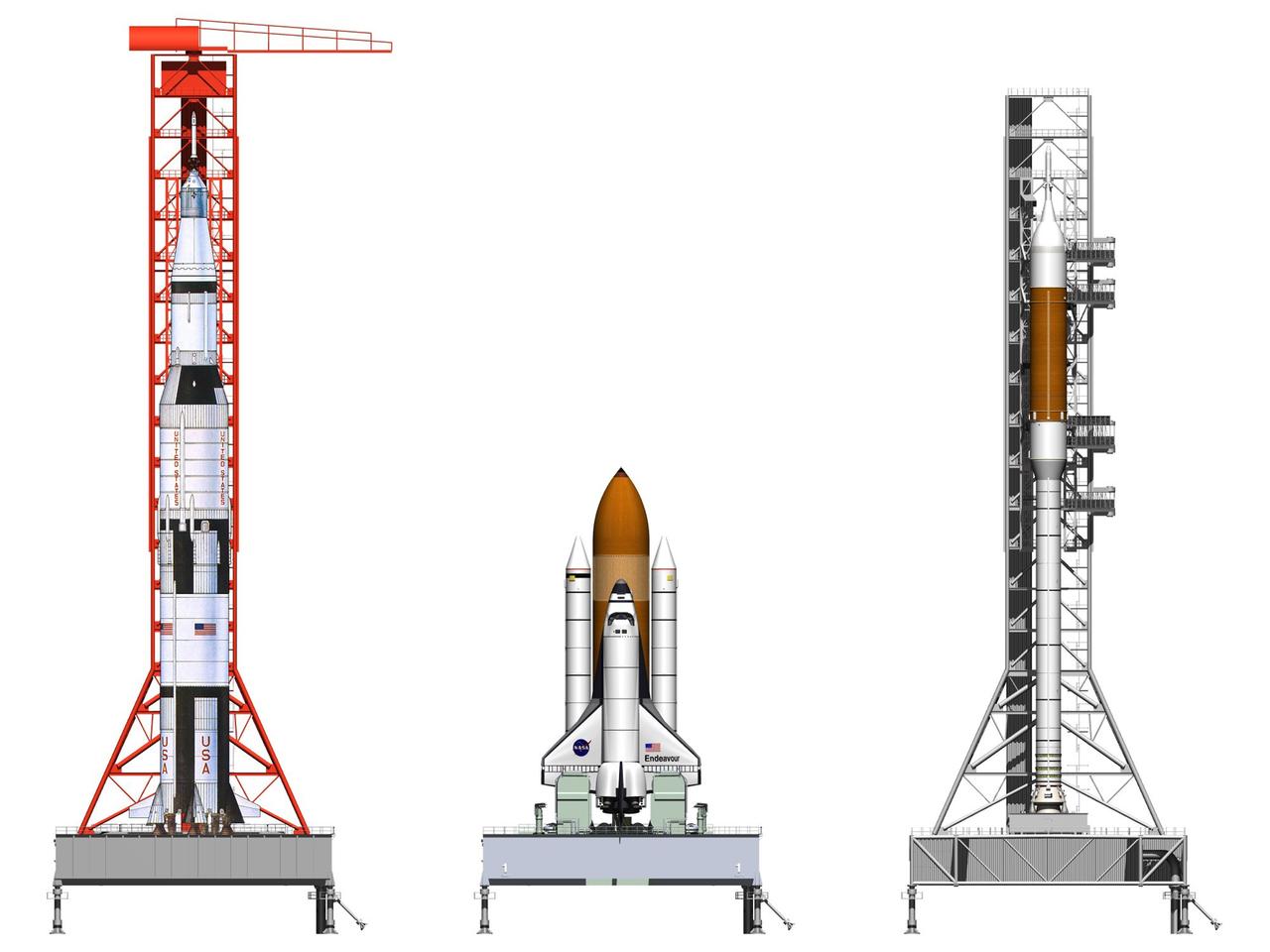
CAPE CANAVERAL, Fla. -- Artist's rendering of the Constellation Program's Ares V rocket on the mobile launcher platform (left) and the Ares I rocket on the platform (right) with the space shuttle in between for comparison. The tower of the mobile launcher will have multiple platforms for personnel access and will be approximately 390 feet tall. The tower will be used in the assembly, testing and servicing of the Ares rockets at Kennedy and will also transport the Ares rockets to the launch pad and provide ground support for launches.
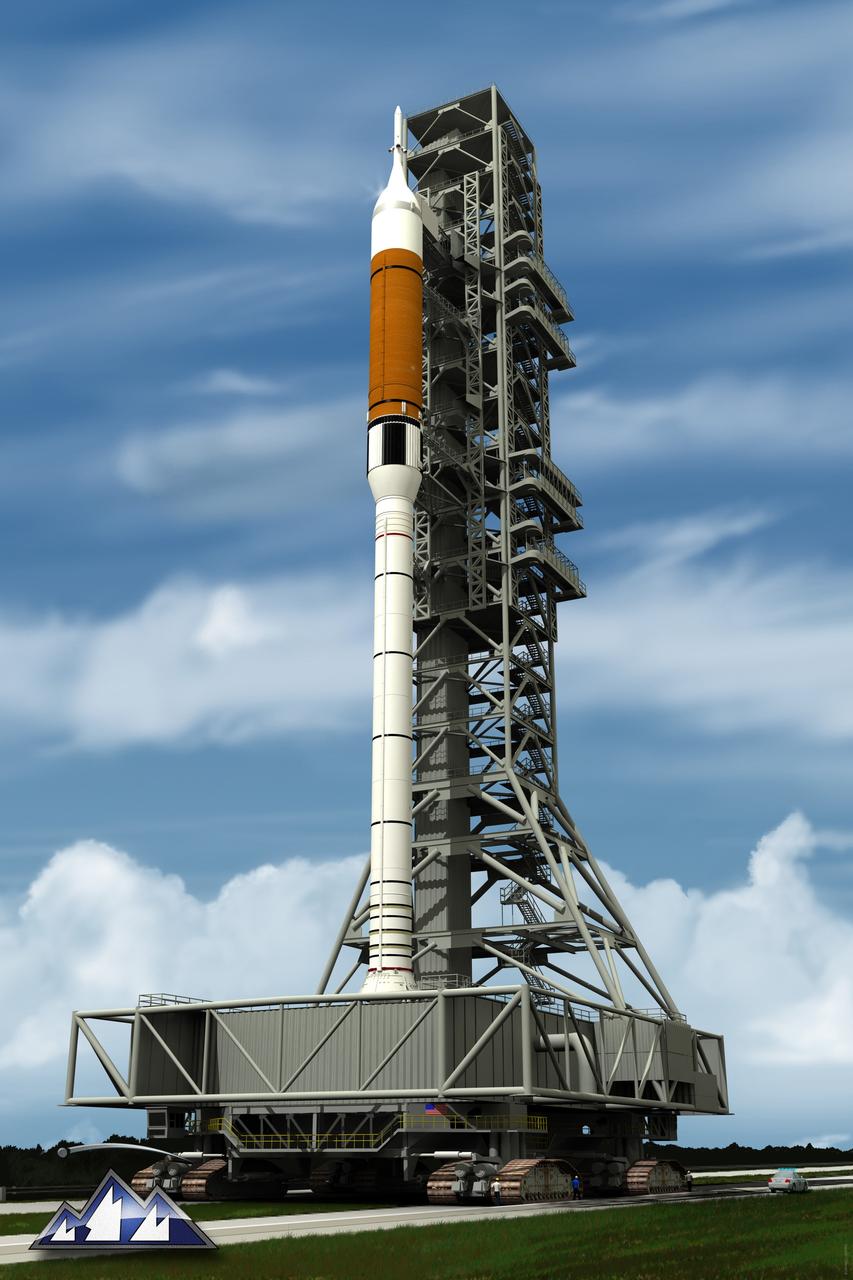
CAPE CANAVERAL, Fla. -- Artist's rendering of the Constellation Program's mobile launcher platform with an Ares I rocket attached. The tower of the mobile launcher will have multiple platforms for personnel access and will be approximately 390 feet tall. The tower will be used in the assembly, testing and servicing of the Ares rockets at Kennedy and will also transport the Ares rockets to the launch pad and provide ground support for launches.
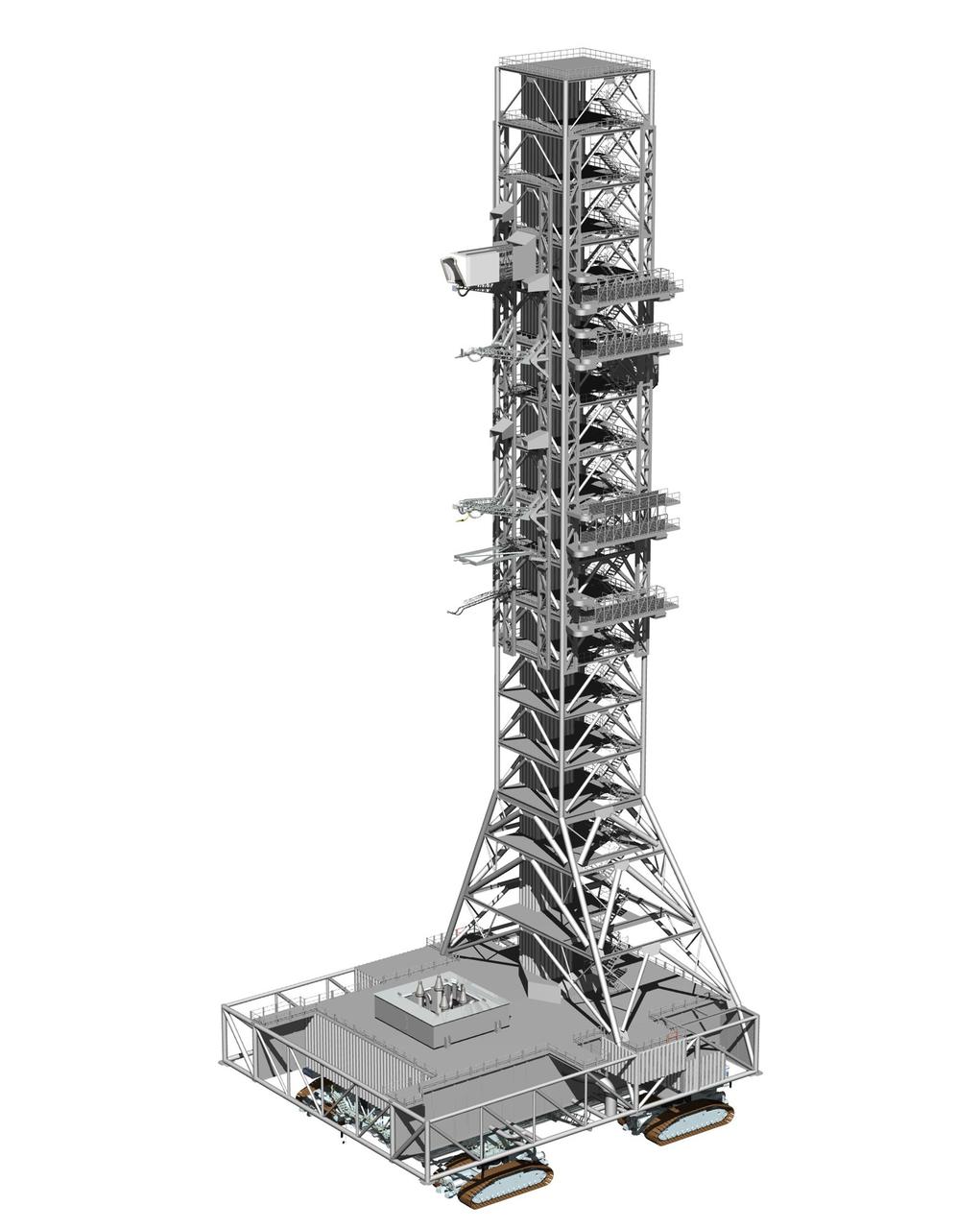
CAPE CANAVERAL, Fla. -- Artist's rendering of the empty Constellation Program's mobile launcher platform planned for the Ares I rocket. The tower of the mobile launcher will have multiple platforms for personnel access and will be approximately 390 feet tall. The tower will be used in the assembly, testing and servicing of the Ares rockets at Kennedy and will also transport the Ares rockets to the launch pad and provide ground support for launches.
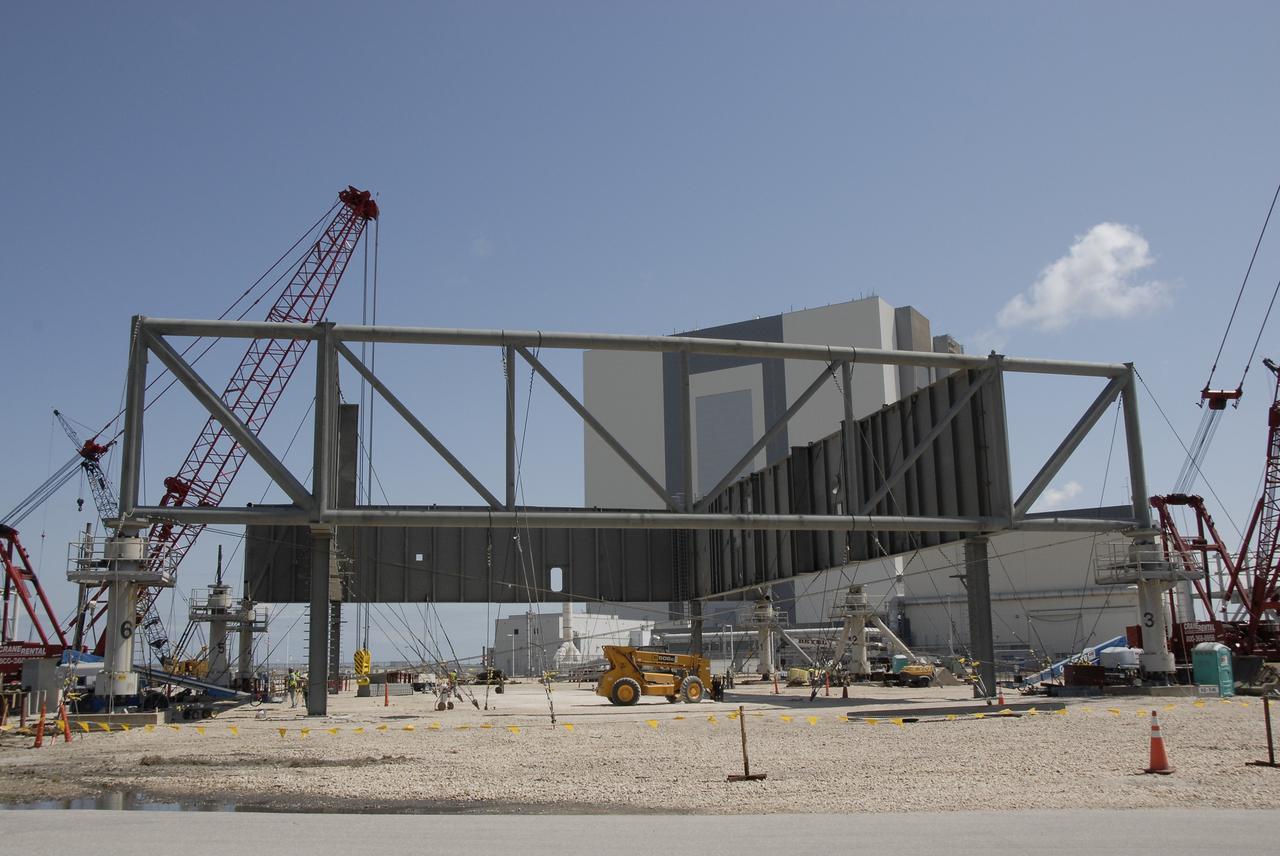
CAPE CANAVERAL, Fla. – At NASA's Kennedy Space Center in Florida, construction continues on a new mobile launcher for the Constellation Program. The new mobile launcher will be the base for the Ares rockets to launch the Orion crew exploration vehicle and the cargo vehicle. The base is being made lighter than space shuttle mobile launcher platforms so the crawler-transporter can pick up the added load of the 345-foot tower and taller rocket. When the structural portion of the new launcher is complete, umbilical lines, access arms, communications equipment and command/control equipment will be installed. Photo credit: NASA/Kim Shiflett
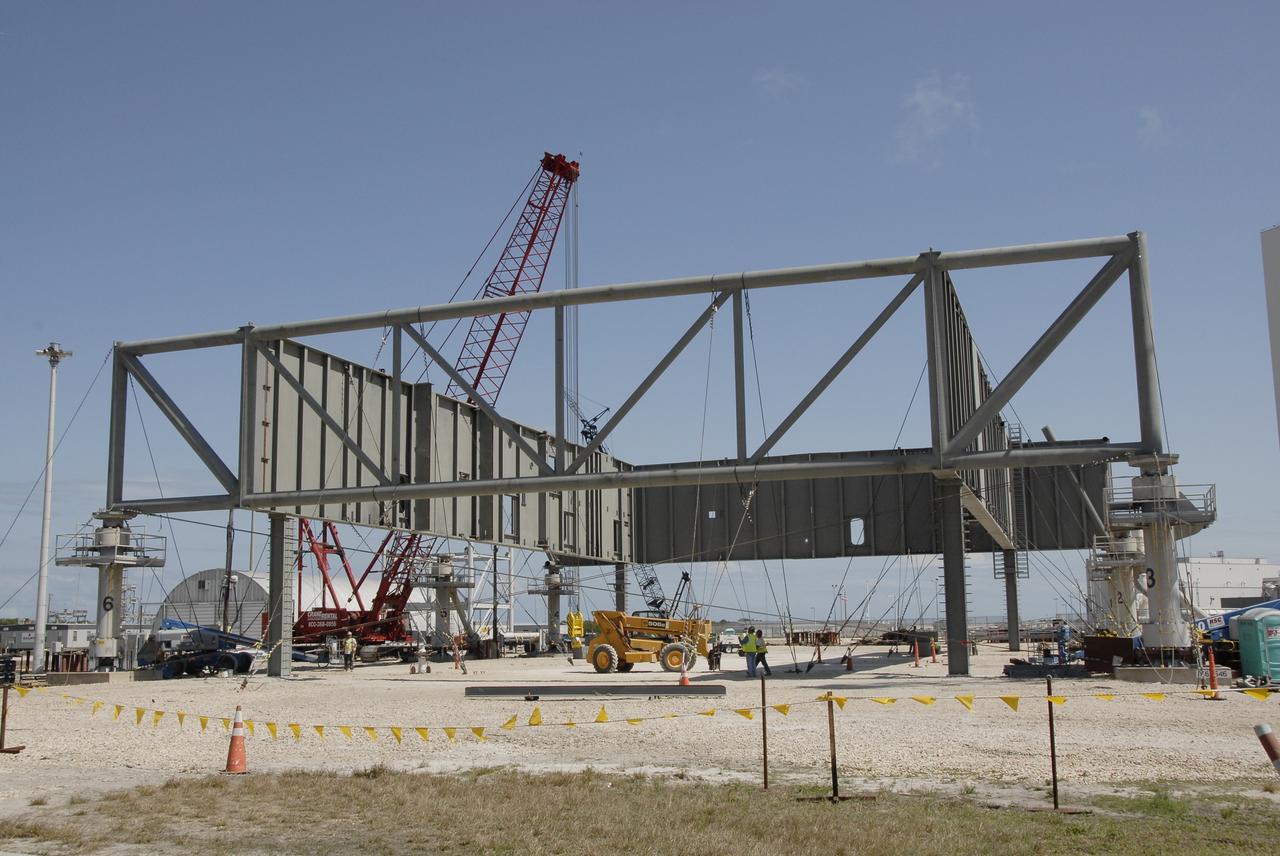
CAPE CANAVERAL, Fla. – At NASA's Kennedy Space Center in Florida, construction continues on a new mobile launcher for the Constellation Program. The new mobile launcher will be the base for the Ares rockets to launch the Orion crew exploration vehicle and the cargo vehicle. The base is being made lighter than space shuttle mobile launcher platforms so the crawler-transporter can pick up the added load of the 345-foot tower and taller rocket. When the structural portion of the new launcher is complete, umbilical lines, access arms, communications equipment and command/control equipment will be installed. Photo credit: NASA/Kim Shiflett
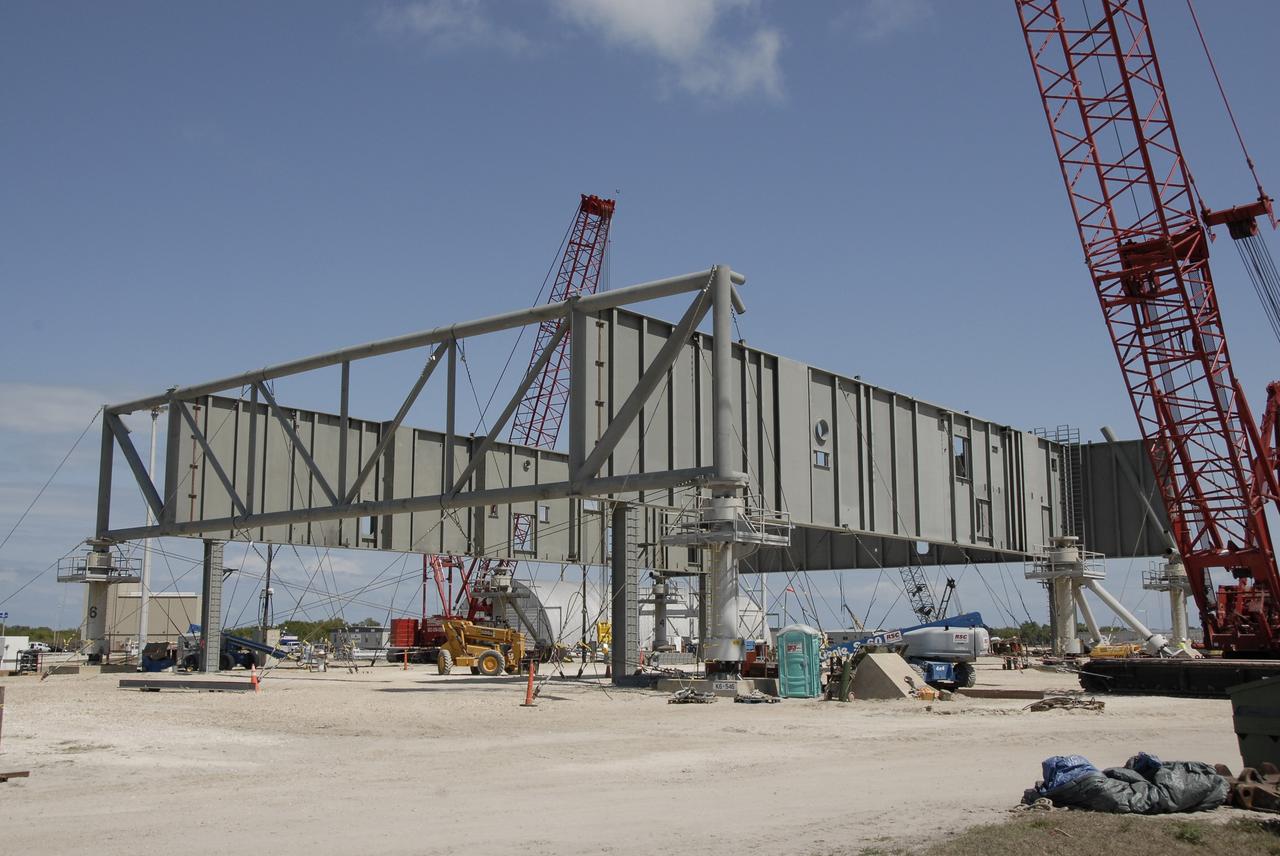
CAPE CANAVERAL, Fla. – At NASA's Kennedy Space Center in Florida, construction continues on a new mobile launcher for the Constellation Program. The new mobile launcher will be the base for the Ares rockets to launch the Orion crew exploration vehicle and the cargo vehicle. The base is being made lighter than space shuttle mobile launcher platforms so the crawler-transporter can pick up the added load of the 345-foot tower and taller rocket. When the structural portion of the new launcher is complete, umbilical lines, access arms, communications equipment and command/control equipment will be installed. Photo credit: NASA/Kim Shiflett

CAPE CANAVERAL, Fla. – At NASA's Kennedy Space Center in Florida, construction continues on a new mobile launcher for the Constellation Program. The new mobile launcher will be the base for the Ares rockets to launch the Orion crew exploration vehicle and the cargo vehicle. The base is being made lighter than space shuttle mobile launcher platforms so the crawler-transporter can pick up the added load of the 345-foot tower and taller rocket. When the structural portion of the new launcher is complete, umbilical lines, access arms, communications equipment and command/control equipment will be installed. Photo credit: NASA/Kim Shiflett
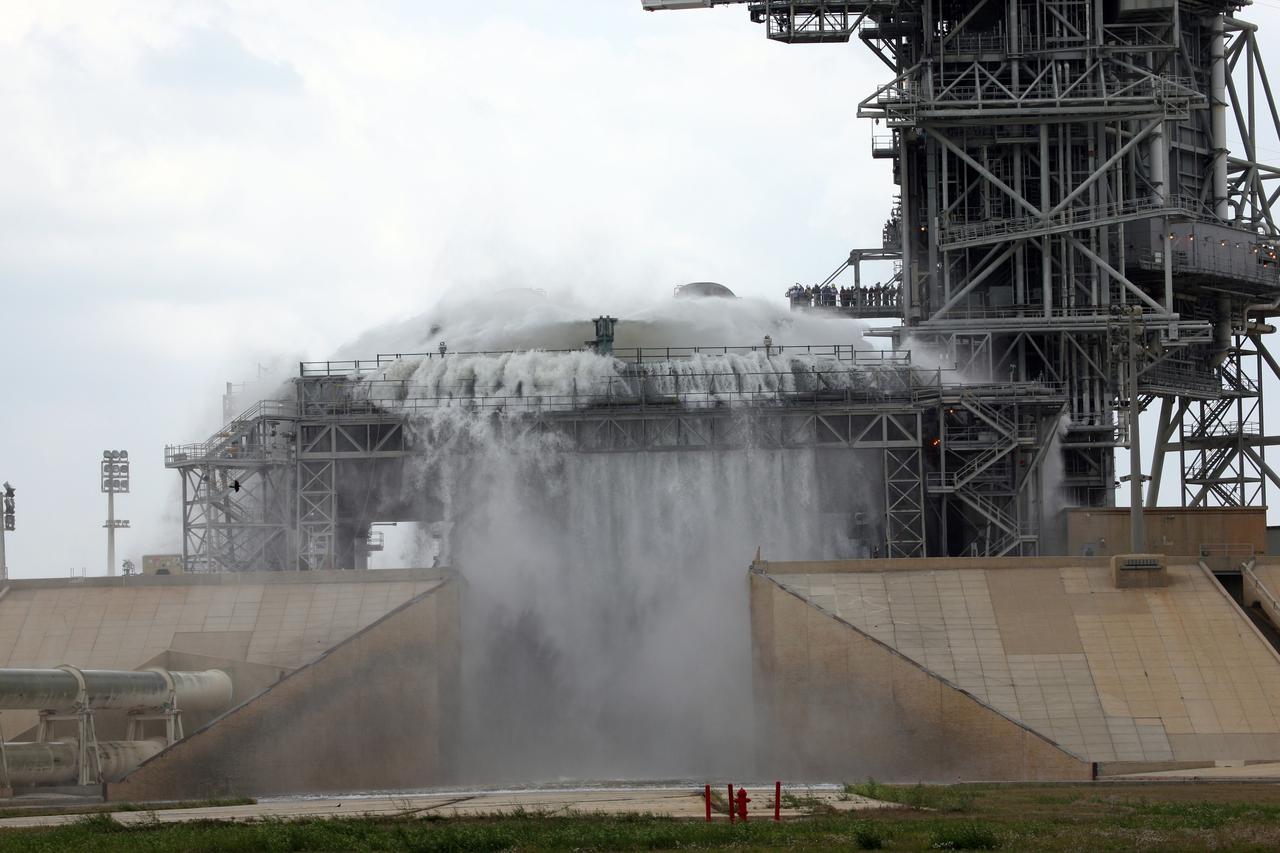
CAPE CANAVERAL, Fla. – Water cascades over the side of the mobile launcher platform on Launch Pad 39B at NASA's Kennedy Space Center in Florida. The sound suppression system is being tested on the platform. Pad 39B will be the site of the first Ares vehicle launch, including the Ares I-X flight test that is targeted for summer 2009. The mobile launcher platform was handed over to the Constellation Program and modified for the Ares I-X flight test. It is being tested before being moved to the Vehicle Assembly Building for assembly of the Ares I-X rocket. A sound suppression water system is in¬stalled on the pads to protect against damage by acoustical energy and rocket exhaust reflected from the flame trench and mobile launcher plat¬form during a launch. The sound suppression system includes an elevated 290-foot-high water tank with a capacity of 300,000 gallons. The water releases just prior to the ignition of the rocket and flows through 7-foot-diameter pipes for about 20 seconds. A torrent of water will flow onto the mobile launcher platform from six large quench nozzles, or “rainbirds,” mounted on its surface. The rainbirds are 12 feet high. The two in the center are 42 inches in diameter; the other four have a 30-inch diameter. Photo credit: NASA/Dimitri Gerondidakis
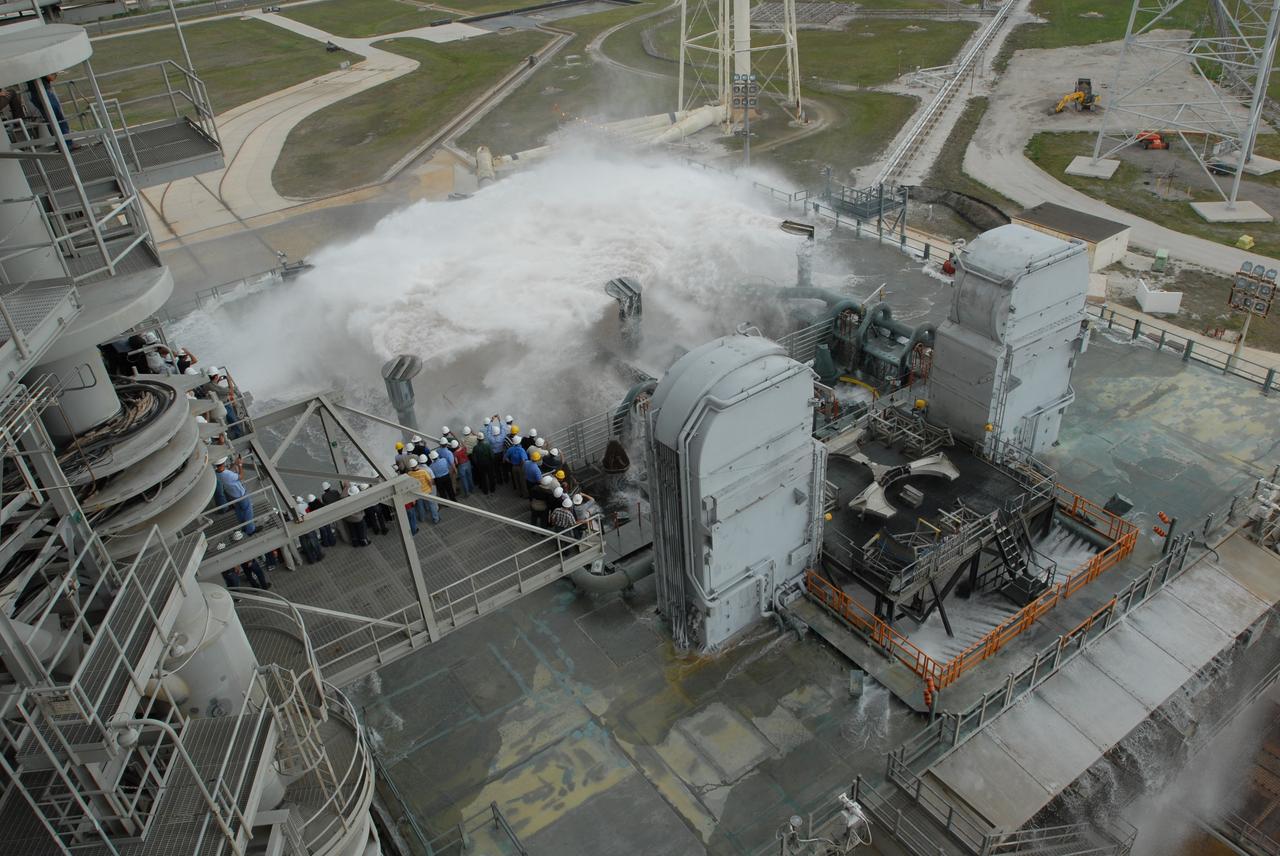
CAPE CANAVERAL, Fla. – The sound suppression system is tested on the mobile launcher platform on Launch Pad 39B at NASA's Kennedy Space Center in Florida. Pad 39B will be the site of the first Ares vehicle launch, including the Ares I-X flight test that is targeted for summer 2009. The mobile launcher platform was handed over to the Constellation Program and modified for the Ares I-X flight test. It is being tested before being moved to the Vehicle Assembly Building for assembly of the Ares I-X rocket. A sound suppression water system is in¬stalled on the pads to protect against damage by acoustical energy and rocket exhaust reflected from the flame trench and mobile launcher plat¬form during a launch. The sound suppression system includes an elevated 290-foot-high water tank with a capacity of 300,000 gallons. The water releases just prior to the ignition of the rocket and flows through 7-foot-diameter pipes for about 20 seconds. A torrent of water will flow onto the mobile launcher platform from six large quench nozzles, or “rainbirds,” mounted on its surface. The rainbirds are 12 feet high. The two in the center are 42 inches in diameter; the other four have a 30-inch diameter. Photo credit: NASA/Jim Grossmann
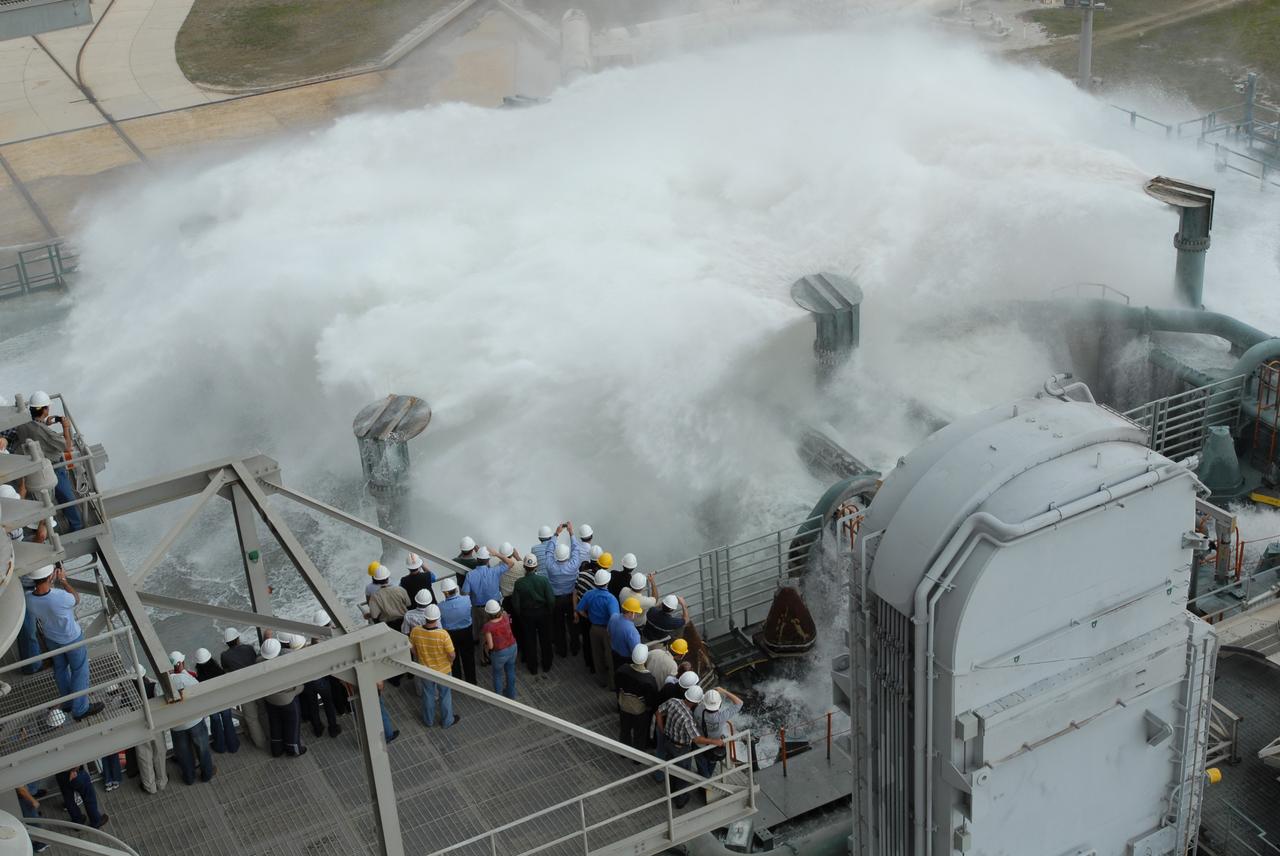
CAPE CANAVERAL, Fla. – The sound suppression system is tested on the mobile launcher platform on Launch Pad 39B at NASA's Kennedy Space Center in Florida. Pad 39B will be the site of the first Ares vehicle launch, including the Ares I-X flight test that is targeted for summer 2009. The mobile launcher platform was handed over to the Constellation Program and modified for the Ares I-X flight test. It is being tested before being moved to the Vehicle Assembly Building for assembly of the Ares I-X rocket. A sound suppression water system is in¬stalled on the pads to protect against damage by acoustical energy and rocket exhaust reflected from the flame trench and mobile launcher plat¬form during a launch. The sound suppression system includes an elevated 290-foot-high water tank with a capacity of 300,000 gallons. The water releases just prior to the ignition of the rocket and flows through 7-foot-diameter pipes for about 20 seconds. A torrent of water will flow onto the mobile launcher platform from six large quench nozzles, or “rainbirds,” mounted on its surface. The rainbirds are 12 feet high. The two in the center are 42 inches in diameter; the other four have a 30-inch diameter. Photo credit: NASA/Jim Grossmann
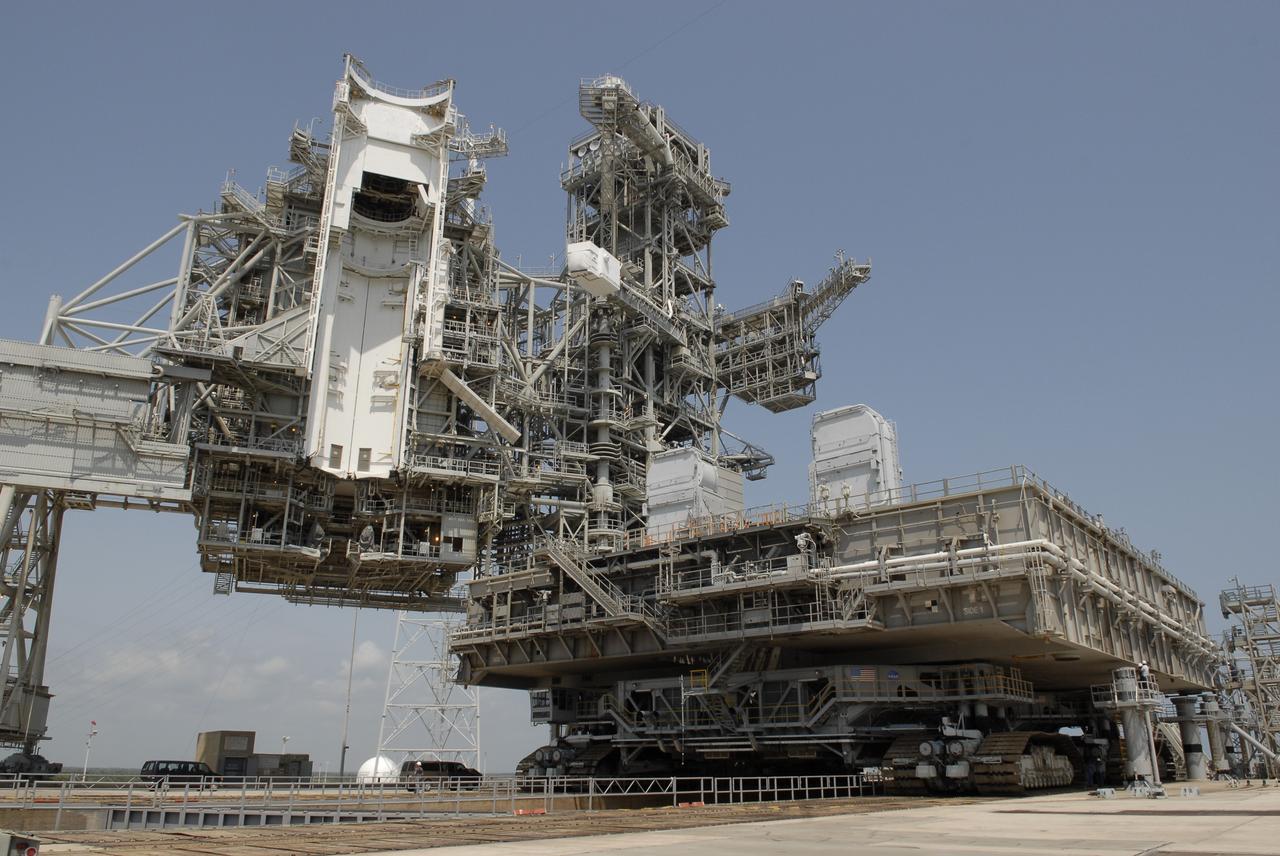
CAPE CANAVERAL, Fla. – At NASA's Kennedy Space Center in Florida, the mobile launcher platform that was turned over from the shuttle program to the Constellation Program last month is being moved from Kennedy's Launch Pad 39B via the crawler-transporter underneath. At left is seen the payload changeout room in the open rotating service structure. The platform will be rolled into the Vehicle Assembly Building's High Bay 3 in preparation for the Ares I-X flight test this summer. Ares I-X is the test vehicle for the Ares I, which is part of the Constellation Program to return men to the moon and beyond. Ground Control System hardware was installed in MLP-1 in December 2008. The platform was moved to the launch pad to check out the installed hardware with the Launch Control Center Firing Room 1 equipment, using the actual circuits that will be used when the fully stacked Ares I-X vehicle is rolled out later this year for launch. Photo credit: NASA/Kim Shiflett