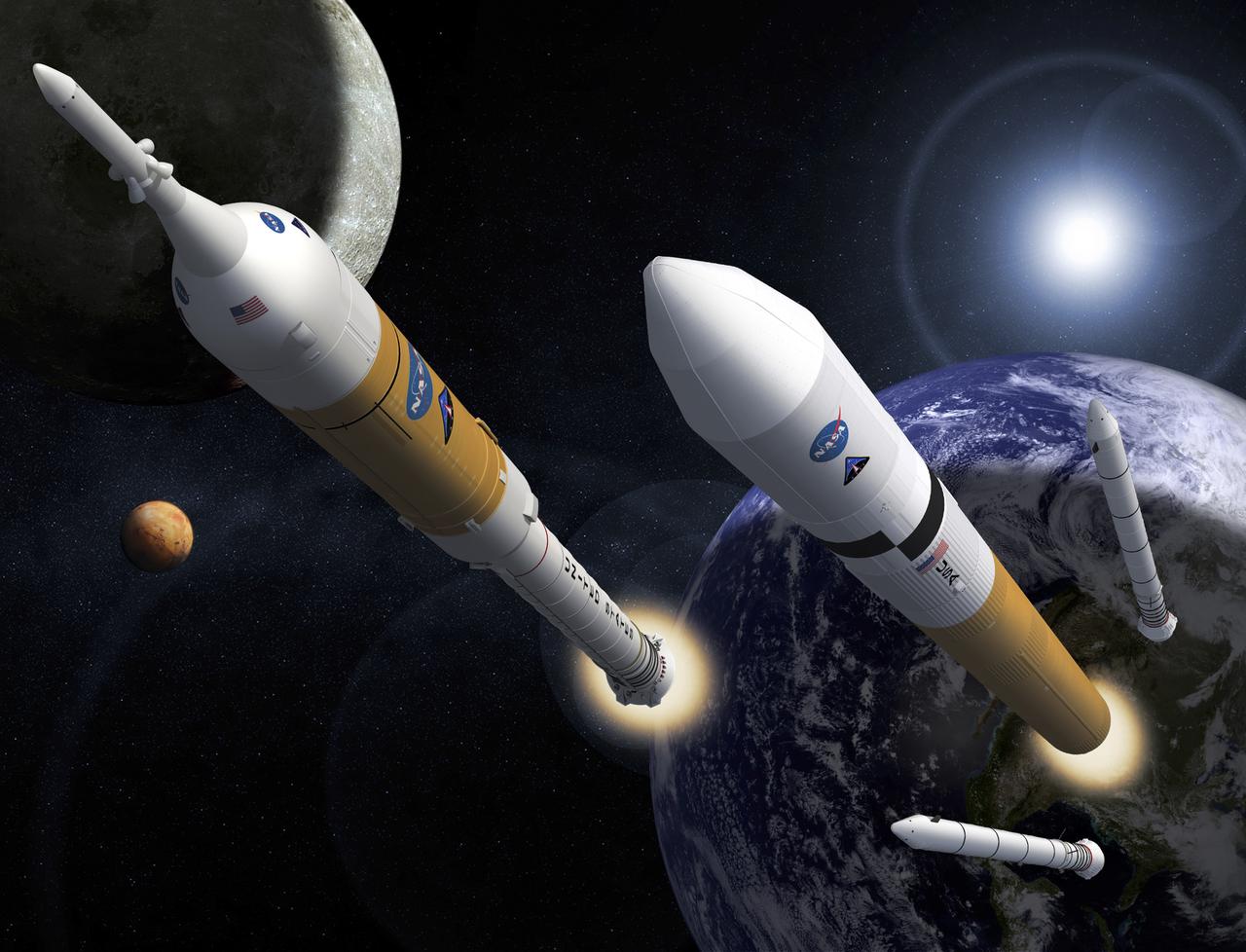
Shown is a concept illustration of the Ares I crew launch vehicle, left, and Ares V cargo launch vehicle. Ares I will carry the Orion Crew Exploration Vehicle to space. Ares V will serve as NASA's primary vehicle for delivery of large-scale hardware to space.

KENNEDY SPACE CENTER, FLA. -- Workers prepare a parachute for an upcoming test at the Parachute Refurbishment Facility. The first stage of the new Ares I rocket and Orion spacecraft will use parachutes to return to Earth. Current tests are being performed in Arizona to make sure the designs can safely handle their intended weight. Ares I is an in-line, two-stage rocket that will transport the Orion crew exploration vehicle to low-Earth orbit. The Ares I first stage will be a five-segment solid rocket booster based on the four-segment design used for the shuttle. As with the shuttle, this booster will fall away when spent, lowered by parachute into the Atlantic Ocean where it can be retrieved for re-use. Unlike the shuttle, the booster will be flying faster, at Mach 6, when its separation from the rest of Ares I occurs. Photo credit: NASA/Kim Shiflett

KENNEDY SPACE CENTER, FLA. -- Workers prepare a parachute for an upcoming test at the Parachute Refurbishment Facility. The first stage of the new Ares I rocket and Orion spacecraft will use parachutes to return to Earth. Current tests are being performed in Arizona to make sure the designs can safely handle their intended weight. Ares I is an in-line, two-stage rocket that will transport the Orion crew exploration vehicle to low-Earth orbit. The Ares I first stage will be a five-segment solid rocket booster based on the four-segment design used for the shuttle. As with the shuttle, this booster will fall away when spent, lowered by parachute into the Atlantic Ocean where it can be retrieved for re-use. Unlike the shuttle, the booster will be flying faster, at Mach 6, when its separation from the rest of Ares I occurs. Photo credit: NASA/Kim Shiflett
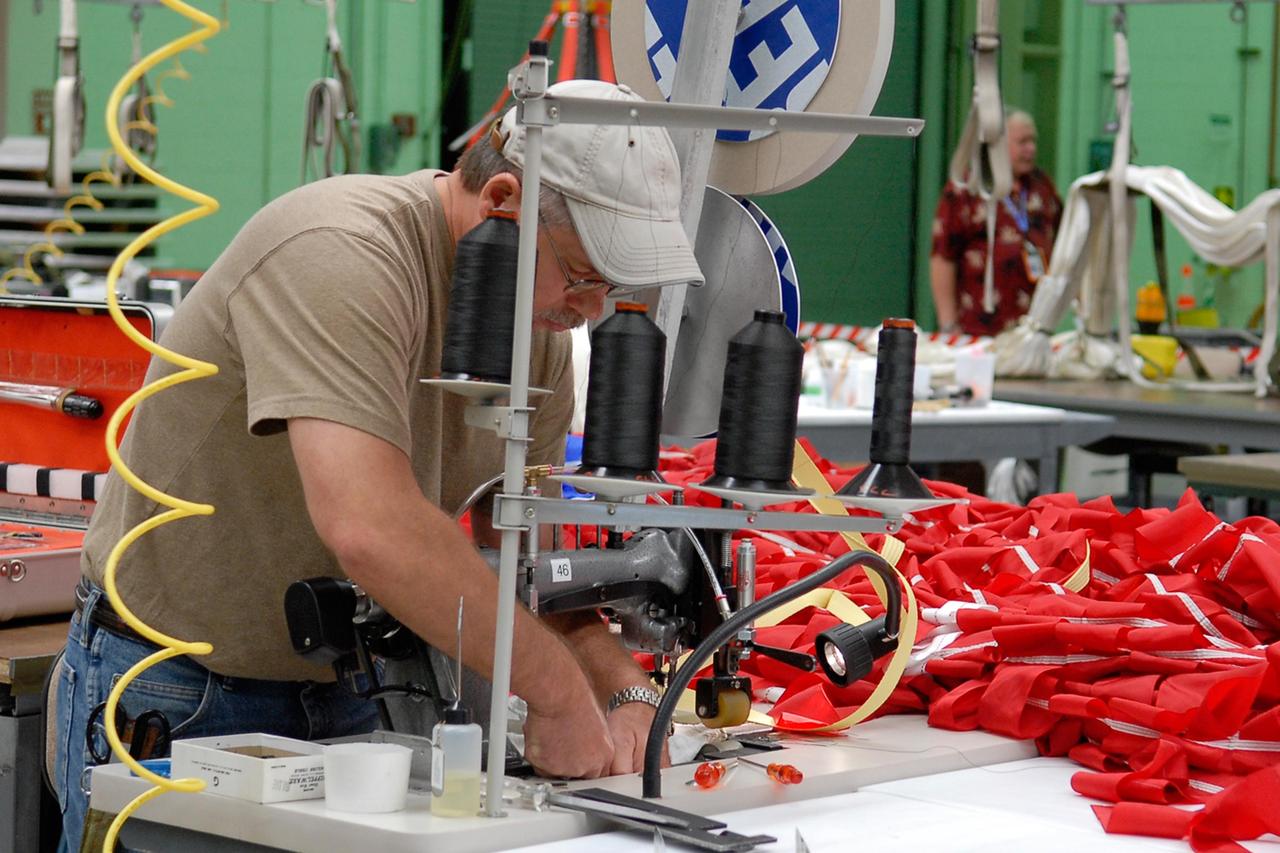
KENNEDY SPACE CENTER, FLA. -- A worker sews a parachute being prepared for an upcoming test at the Parachute Refurbishment Facility. The first stage of the new Ares I rocket and Orion spacecraft will use parachutes to return to Earth. Current tests are being performed in Arizona to make sure the designs can safely handle their intended weight. Ares I is an in-line, two-stage rocket that will transport the Orion crew exploration vehicle to low-Earth orbit. The Ares I first stage will be a five-segment solid rocket booster based on the four-segment design used for the shuttle. As with the shuttle, this booster will fall away when spent, lowered by parachute into the Atlantic Ocean where it can be retrieved for re-use. Unlike the shuttle, the booster will be flying faster, at Mach 6, when its separation from the rest of Ares I occurs. Photo credit: NASA/Kim Shiflett
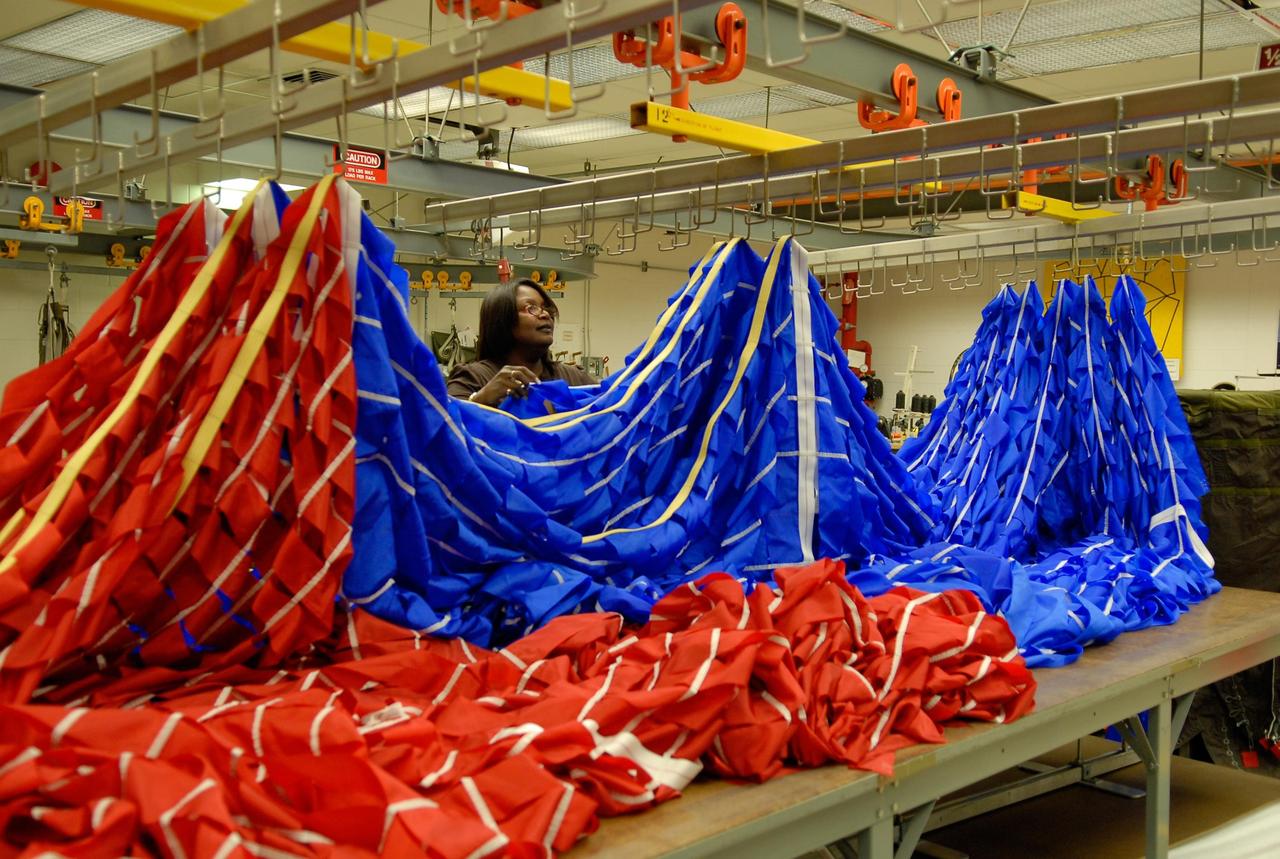
KENNEDY SPACE CENTER, FLA. -- A worker hangs portions of a parachute in preparation for an upcoming test at the Parachute Refurbishment Facility. The first stage of the new Ares I rocket and Orion spacecraft will use parachutes to return to Earth. Current tests are being performed in Arizona to make sure the designs can safely handle their intended weight. Ares I is an in-line, two-stage rocket that will transport the Orion crew exploration vehicle to low-Earth orbit. The Ares I first stage will be a five-segment solid rocket booster based on the four-segment design used for the shuttle. As with the shuttle, this booster will fall away when spent, lowered by parachute into the Atlantic Ocean where it can be retrieved for re-use. Unlike the shuttle, the booster will be flying faster, at Mach 6, when its separation from the rest of Ares I occurs. Photo credit: NASA/Kim Shiflett

KENNEDY SPACE CENTER, FLA. -- A worker prepares a parachute for an upcoming test at the Parachute Refurbishment Facility. The first stage of the new Ares I rocket and Orion spacecraft will use parachutes to return to Earth. Current tests are being performed in Arizona to make sure the designs can safely handle their intended weight. Ares I is an in-line, two-stage rocket that will transport the Orion crew exploration vehicle to low-Earth orbit. The Ares I first stage will be a five-segment solid rocket booster based on the four-segment design used for the shuttle. As with the shuttle, this booster will fall away when spent, lowered by parachute into the Atlantic Ocean where it can be retrieved for re-use. Unlike the shuttle, the booster will be flying faster, at Mach 6, when its separation from the rest of Ares I occurs. Photo credit: NASA/Kim Shiflett
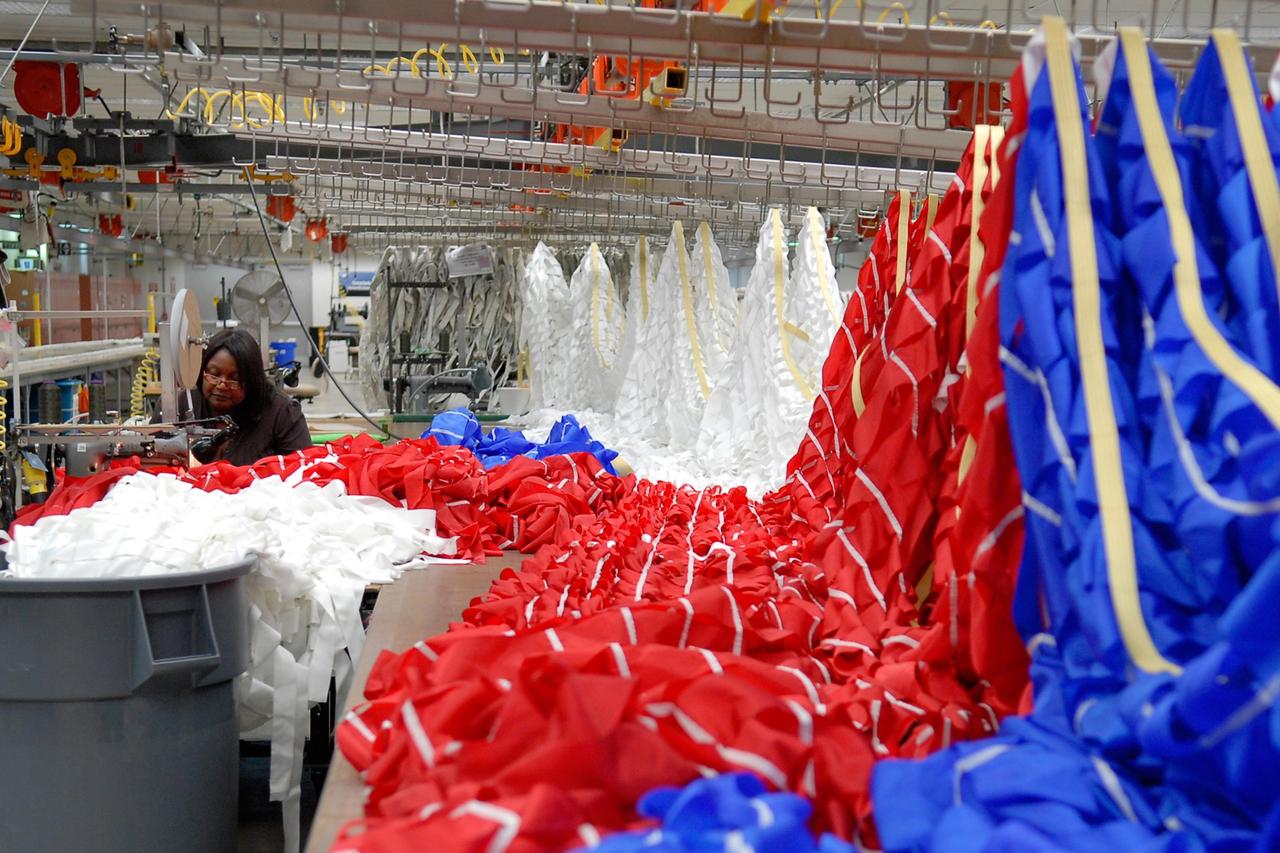
KENNEDY SPACE CENTER, FLA. -- A worker sews a parachute being prepared for an upcoming test at the Parachute Refurbishment Facility. The first stage of the new Ares I rocket and Orion spacecraft will use parachutes to return to Earth. Current tests are being performed in Arizona to make sure the designs can safely handle their intended weight. Ares I is an in-line, two-stage rocket that will transport the Orion crew exploration vehicle to low-Earth orbit. The Ares I first stage will be a five-segment solid rocket booster based on the four-segment design used for the shuttle. As with the shuttle, this booster will fall away when spent, lowered by parachute into the Atlantic Ocean where it can be retrieved for re-use. Unlike the shuttle, the booster will be flying faster, at Mach 6, when its separation from the rest of Ares I occurs. Photo credit: NASA/Kim Shiflett
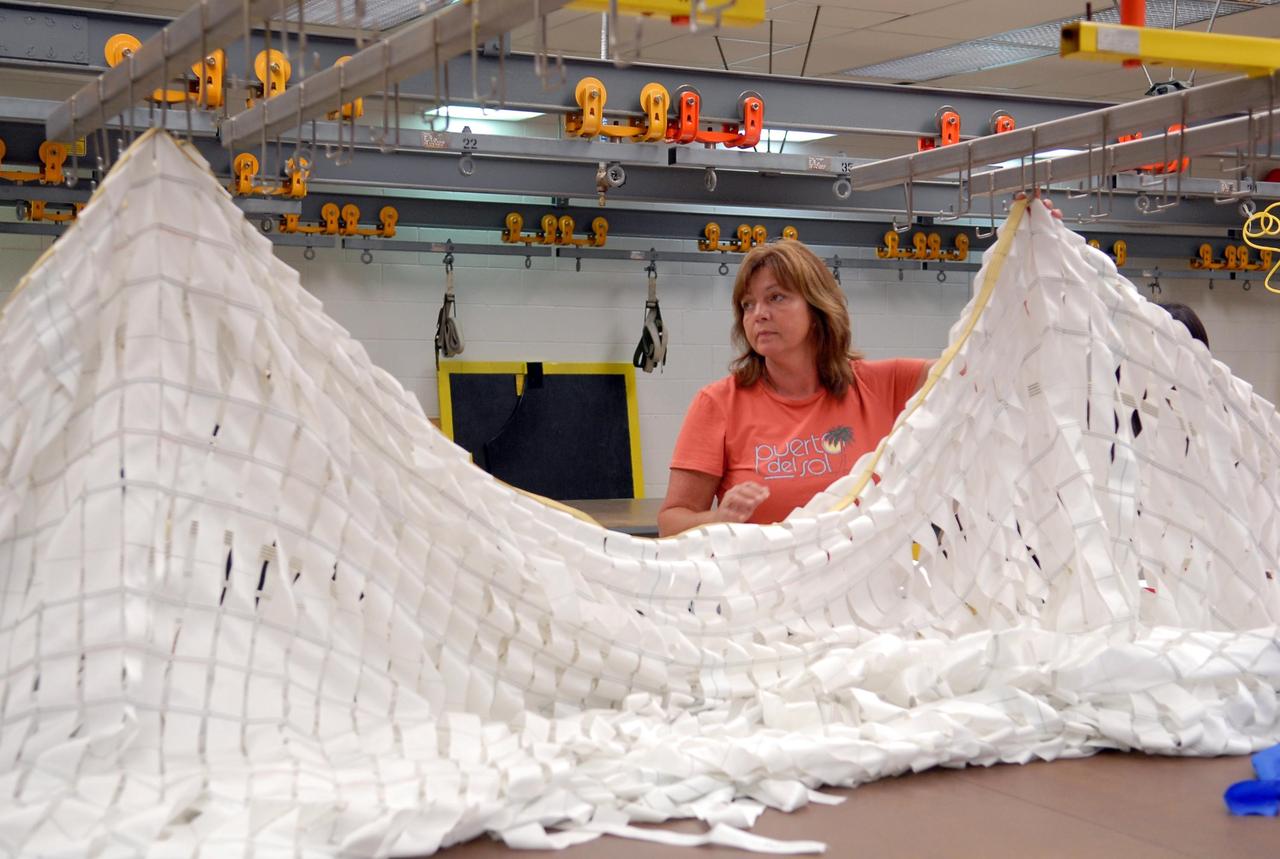
KENNEDY SPACE CENTER, FLA. -- A worker prepares a parachute for an upcoming test at the Parachute Refurbishment Facility. The first stage of the new Ares I rocket and Orion spacecraft will use parachutes to return to Earth. Current tests are being performed in Arizona to make sure the designs can safely handle their intended weight. Ares I is an in-line, two-stage rocket that will transport the Orion crew exploration vehicle to low-Earth orbit. The Ares I first stage will be a five-segment solid rocket booster based on the four-segment design used for the shuttle. As with the shuttle, this booster will fall away when spent, lowered by parachute into the Atlantic Ocean where it can be retrieved for re-use. Unlike the shuttle, the booster will be flying faster, at Mach 6, when its separation from the rest of Ares I occurs. Photo credit: NASA/Kim Shiflett
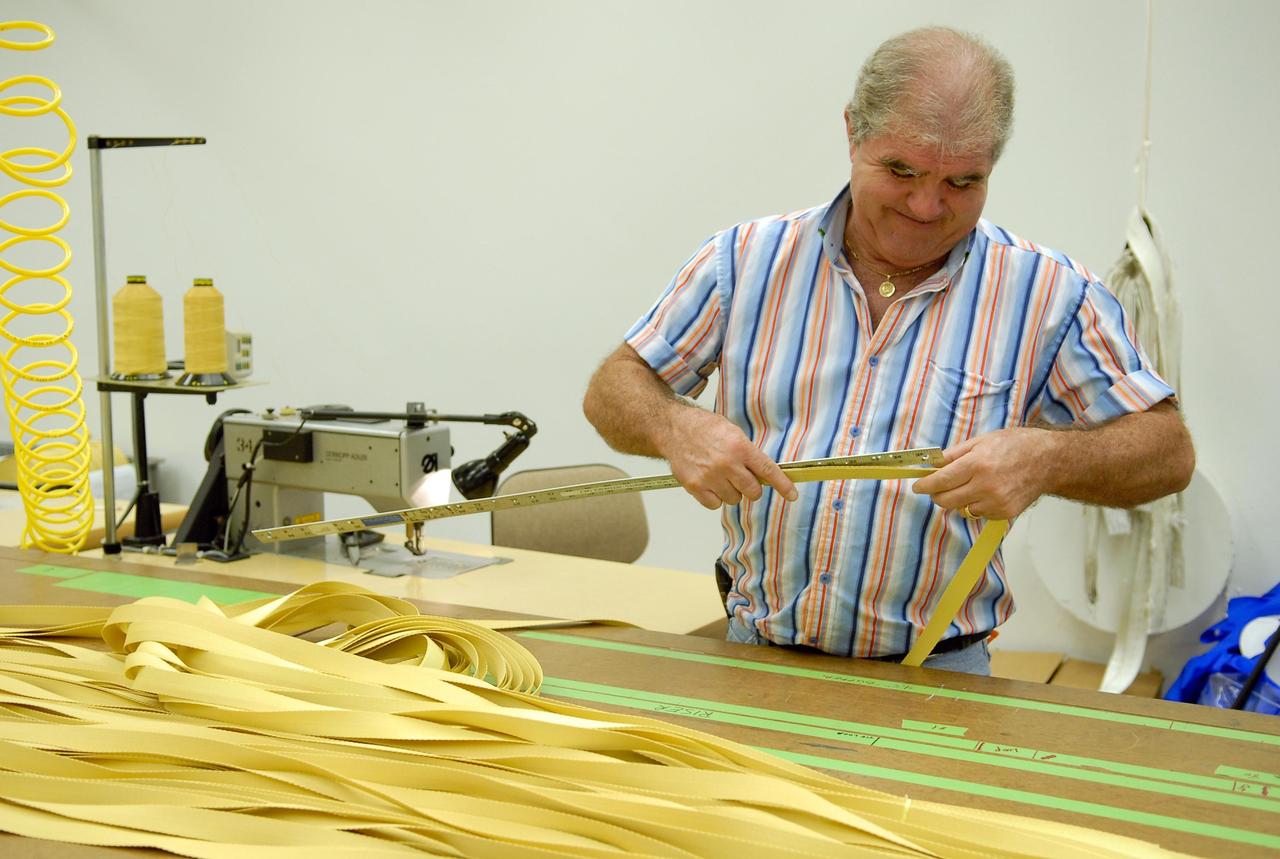
KENNEDY SPACE CENTER, FLA. -- A worker measures straps for parachutes being prepared for an upcoming test at the Parachute Refurbishment Facility. The first stage of the new Ares I rocket and Orion spacecraft will use parachutes to return to Earth. Current tests are being performed in Arizona to make sure the designs can safely handle their intended weight. Ares I is an in-line, two-stage rocket that will transport the Orion crew exploration vehicle to low-Earth orbit. The Ares I first stage will be a five-segment solid rocket booster based on the four-segment design used for the shuttle. As with the shuttle, this booster will fall away when spent, lowered by parachute into the Atlantic Ocean where it can be retrieved for re-use. Unlike the shuttle, the booster will be flying faster, at Mach 6, when its separation from the rest of Ares I occurs. Photo credit: NASA/Kim Shiflett
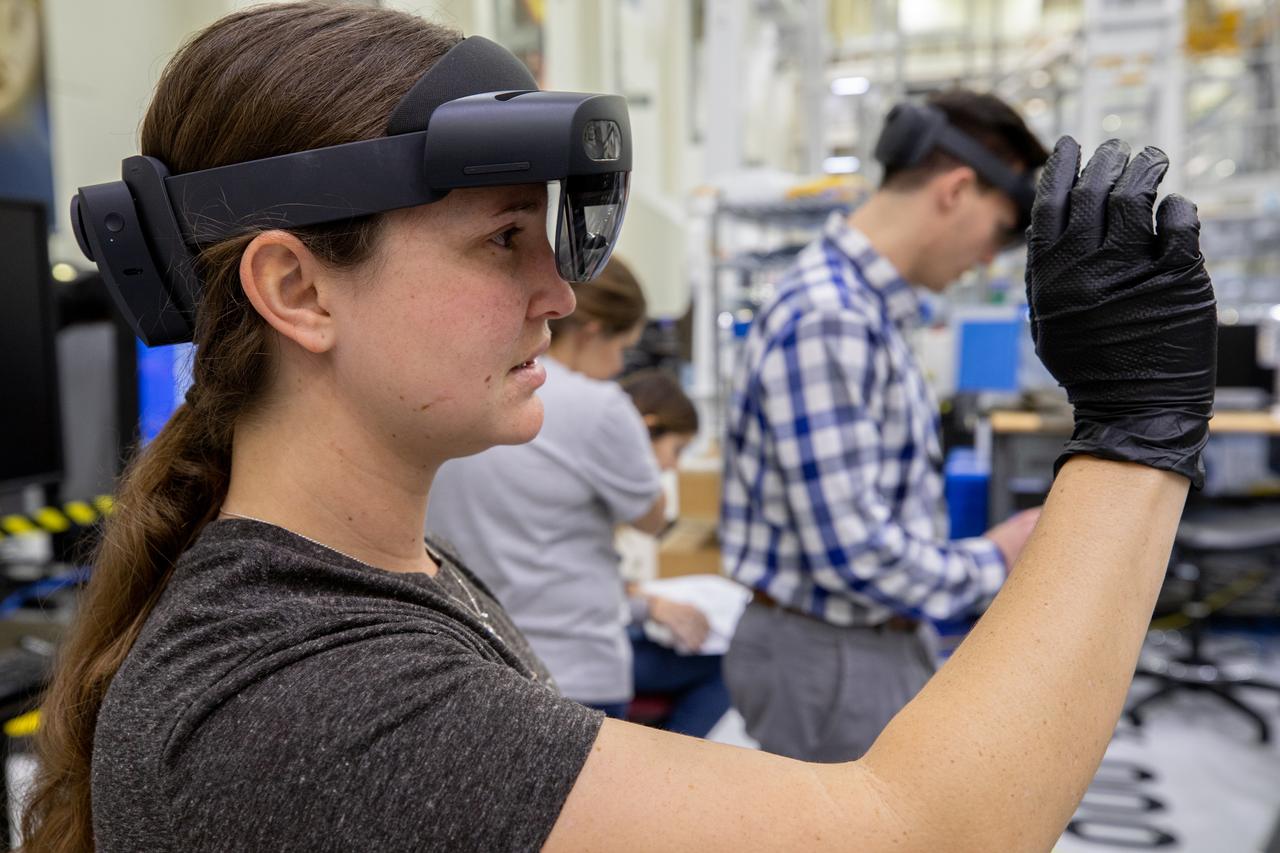
Mary Lakaszcyck, a technician with ASRC Federal Data Solutions, demonstrates a pair of augmented reality (AR) goggles inside the high bay of the Neil Armstrong Operations and Checkout Building at NASA’s Kennedy Space Center in Florida on Jan. 16, 2020. Orion manufacturer Lockheed Martin provided the goggles to technicians to help place tapes where components will be installed on the Orion crew module adapter for NASA’s Artemis II mission, the first crewed mission aboard the spacecraft. Using the AR goggles saves significant labor and time to complete tasks. Manufactured by Microsoft, the goggles, called HoloLens2, are the second version used by Lockheed.

Mary Lakaszcyck, a technician with ASRC Federal Data Solutions, demonstrates a pair of augmented reality (AR) goggles inside the high bay of the Neil Armstrong Operations and Checkout Building at NASA’s Kennedy Space Center in Florida on Jan. 16, 2020. Orion manufacturer Lockheed Martin provided the goggles to technicians to help place tapes where components will be installed on the Orion crew module adapter for NASA’s Artemis II mission, the first crewed mission aboard the spacecraft. Using the AR goggles saves significant labor and time to complete tasks. Manufactured by Microsoft, the goggles, called HoloLens2, are the second version used by Lockheed.
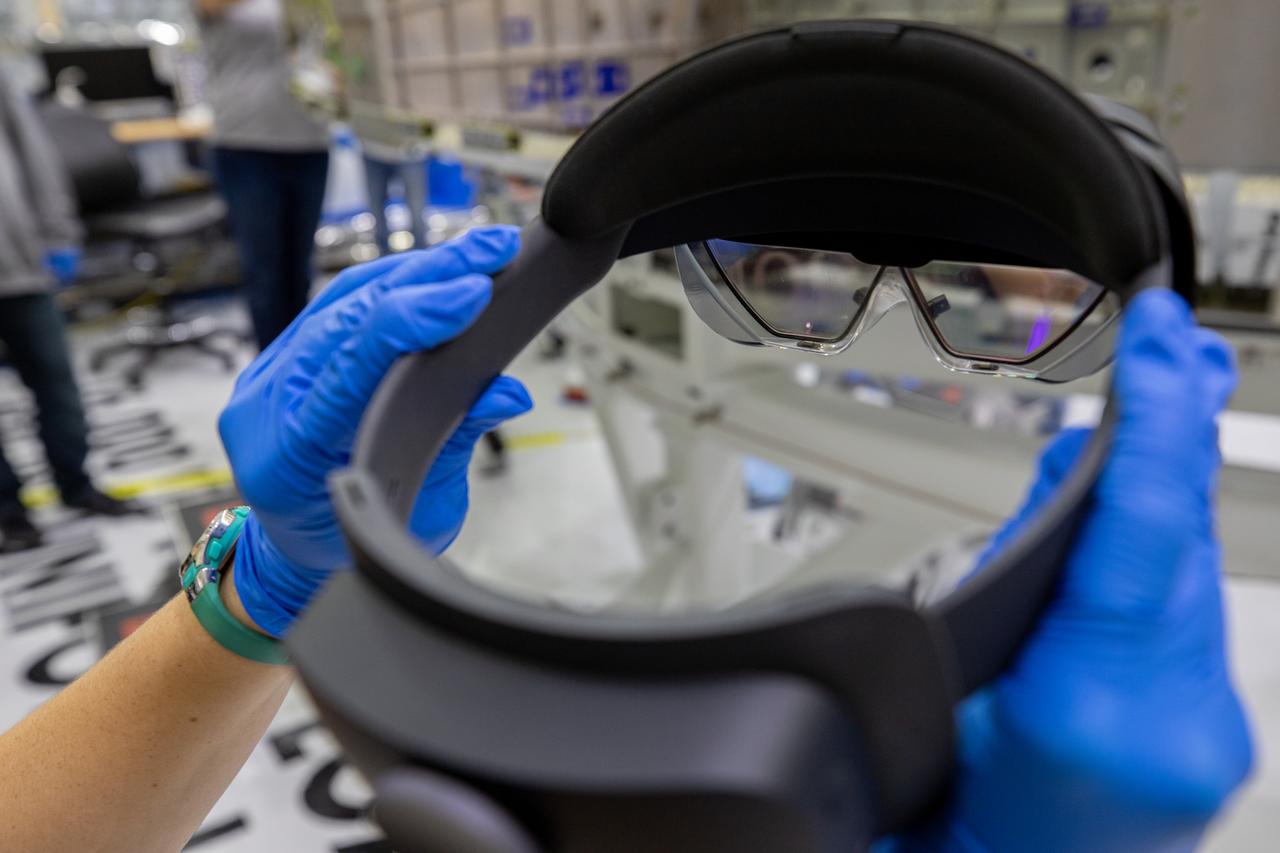
Mary Lakaszcyck, a technician with ASRC Federal Data Solutions, displays a pair of augmented reality (AR) goggles inside the high bay of the Neil Armstrong Operations and Checkout Building at NASA’s Kennedy Space Center in Florida on Jan. 16, 2020. Orion manufacturer Lockheed Martin provided the goggles to technicians to help place tapes where components will be installed on the Orion crew module adapter for NASA’s Artemis II mission, the first crewed mission aboard the spacecraft. Using the AR goggles saves significant labor and time to complete tasks. Manufactured by Microsoft, the goggles, called HoloLens2, are the second version used by Lockheed.

Mary Lakaszcyck, a technician with ASRC Federal Data Solutions, wears a pair of augmented reality (AR) goggles inside the high bay of the Neil Armstrong Operations and Checkout Building at NASA’s Kennedy Space Center in Florida on Jan. 16, 2020. Orion manufacturer Lockheed Martin provided the goggles to technicians to help place tapes where components will be installed on the Orion crew module adapter for NASA’s Artemis II mission, the first crewed mission aboard the spacecraft. Using the AR goggles saves significant labor and time to complete tasks. Manufactured by Microsoft, the goggles, called HoloLens2, are the second version used by Lockheed.

Mary Lakaszcyck, a technician with ASRC Federal Data Solutions, wears a pair of augmented reality (AR) goggles inside the high bay of the Neil Armstrong Operations and Checkout Building at NASA’s Kennedy Space Center in Florida on Jan. 16, 2020. Orion manufacturer Lockheed Martin provided the goggles to technicians to help place tapes where components will be installed on the Orion crew module adapter for NASA’s Artemis II mission, the first crewed mission aboard the spacecraft. Using the AR goggles saves significant labor and time to complete tasks. Manufactured by Microsoft, the goggles, called HoloLens2, are the second version used by Lockheed.

Mary Lakaszcyck, a technician with ASRC Federal Data Solutions, wears a pair of augmented reality (AR) goggles inside the high bay of the Neil Armstrong Operations and Checkout Building at NASA’s Kennedy Space Center in Florida on Jan. 16, 2020. Orion manufacturer Lockheed Martin provided the goggles to technicians to help place tapes where components will be installed on the Orion crew module adapter for NASA’s Artemis II mission, the first crewed mission aboard the spacecraft. Using the AR goggles saves significant labor and time to complete tasks. Manufactured by Microsoft, the goggles, called HoloLens2, are the second version used by Lockheed.
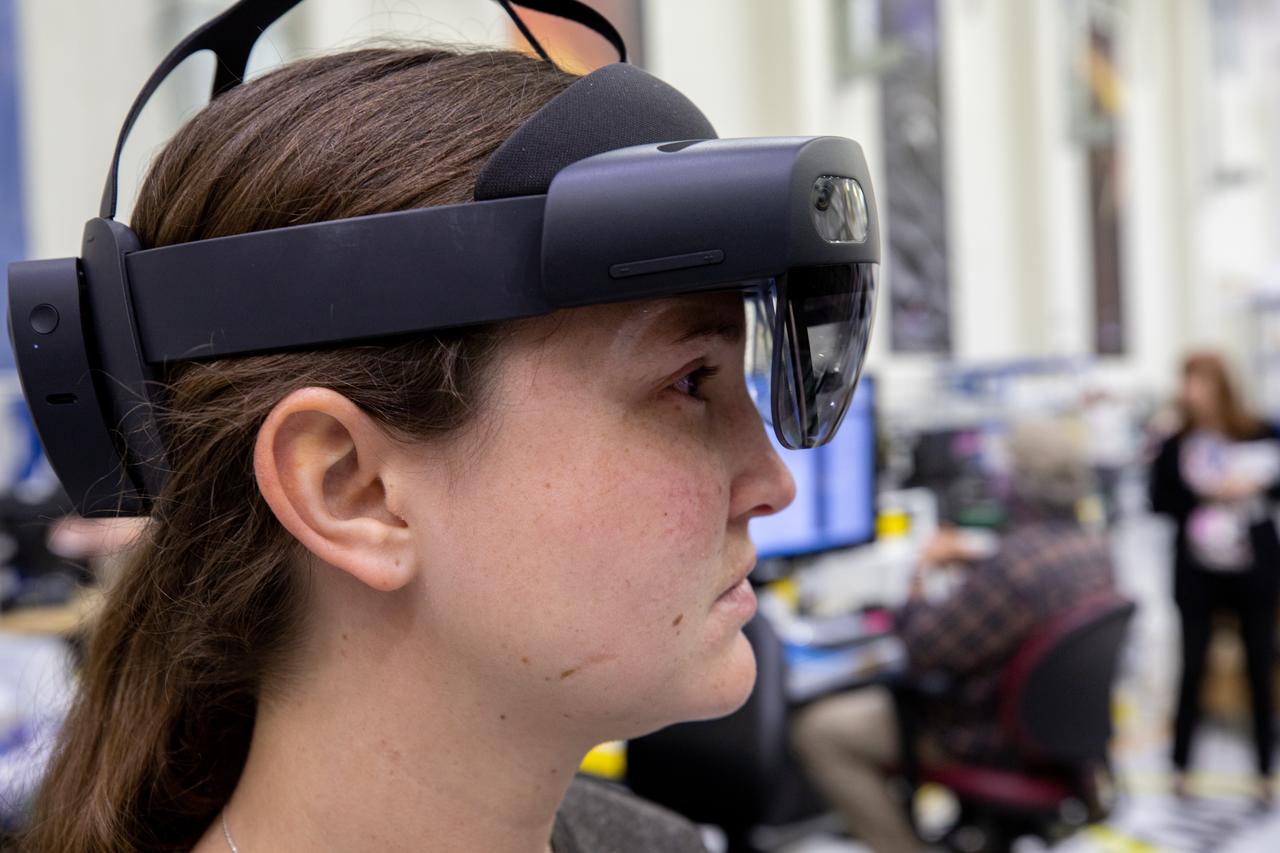
Mary Lakaszcyck, a technician with ASRC Federal Data Solutions, wears a pair of augmented reality (AR) goggles inside the high bay of the Neil Armstrong Operations and Checkout Building at NASA’s Kennedy Space Center in Florida on Jan. 16, 2020. Orion manufacturer Lockheed Martin provided the goggles to technicians to help place tapes where components will be installed on the Orion crew module adapter for NASA’s Artemis II mission, the first crewed mission aboard the spacecraft. Using the AR goggles saves significant labor and time to complete tasks. Manufactured by Microsoft, the goggles, called HoloLens2, are the second version used by Lockheed.
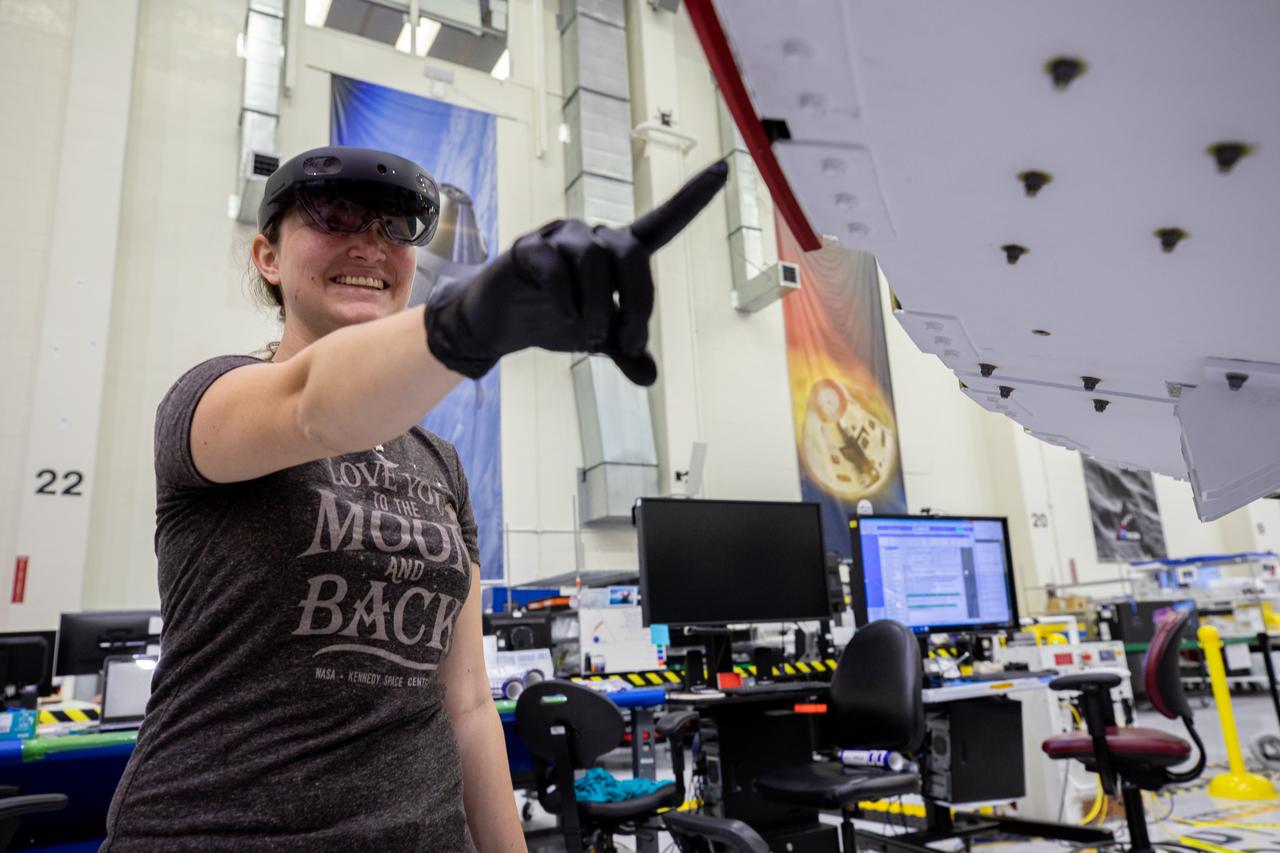
Mary Lakaszcyck, a technician with ASRC Federal Data Solutions, demonstrates a pair of augmented reality (AR) goggles inside the high bay of the Neil Armstrong Operations and Checkout Building at NASA’s Kennedy Space Center in Florida on Jan. 16, 2020. Orion manufacturer Lockheed Martin provided the goggles to technicians to help place tapes where components will be installed on the Orion crew module adapter for NASA’s Artemis II mission, the first crewed mission aboard the spacecraft. Using the AR goggles saves significant labor and time to complete tasks. Manufactured by Microsoft, the goggles, called HoloLens2, are the second version used by Lockheed.

Mary Lakaszcyck, a technician with ASRC Federal Data Solutions, wears a pair of augmented reality (AR) goggles inside the high bay of the Neil Armstrong Operations and Checkout Building at NASA’s Kennedy Space Center in Florida on Jan. 16, 2020. Orion manufacturer Lockheed Martin provided the goggles to technicians to help place tapes where components will be installed on the Orion crew module adapter for NASA’s Artemis II mission, the first crewed mission aboard the spacecraft. Using the AR goggles saves significant labor and time to complete tasks. Manufactured by Microsoft, the goggles, called HoloLens2, are the second version used by Lockheed.
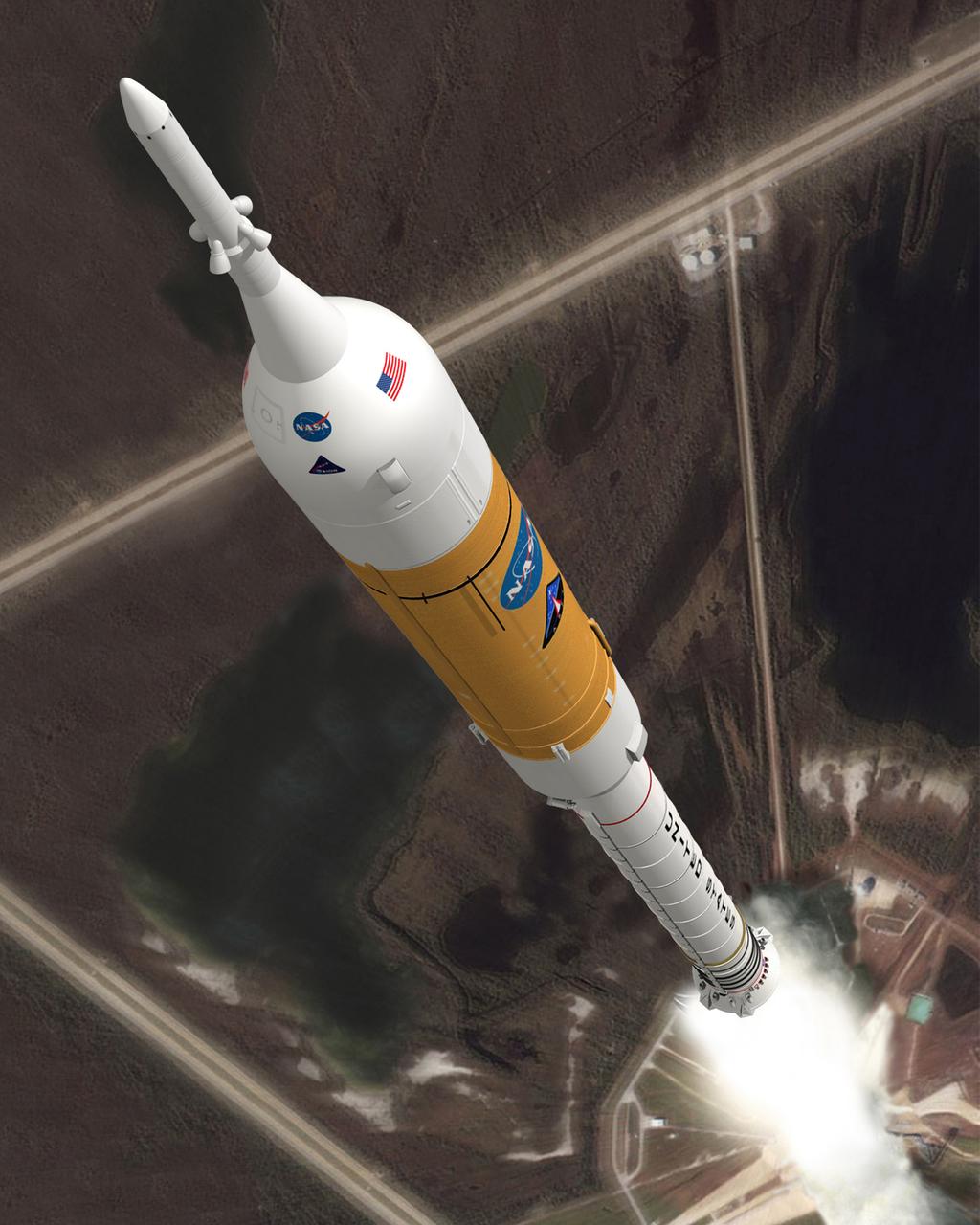
A CONCEPT IMAGE SHOWS THE ARES I CREW LAUNCH VEHICLE DURING ASCENT. ARES I IS AN IN-LINE, TWO-STAGE ROCKET CONFIGURATION TOPED BY THE ORION CREW EXPLORATION VEHICLE AND LAUNCH ABORT SYSTEM. THE ARES I FIRST STAGE IS A SINGLE, FIVE-SEGMENT REUSABLE SOLID ROCKET BOOSTER, DERIVED FROM THE SPACE SHUTTLE. ITS UPPER STAGE IS POWERED BY A J-2X ENGINE. ARES I WILL CARRY THE ORION WITH ITS CRW OF UP TO SIX ASTRONAUTS TO EARTH ORBIT.
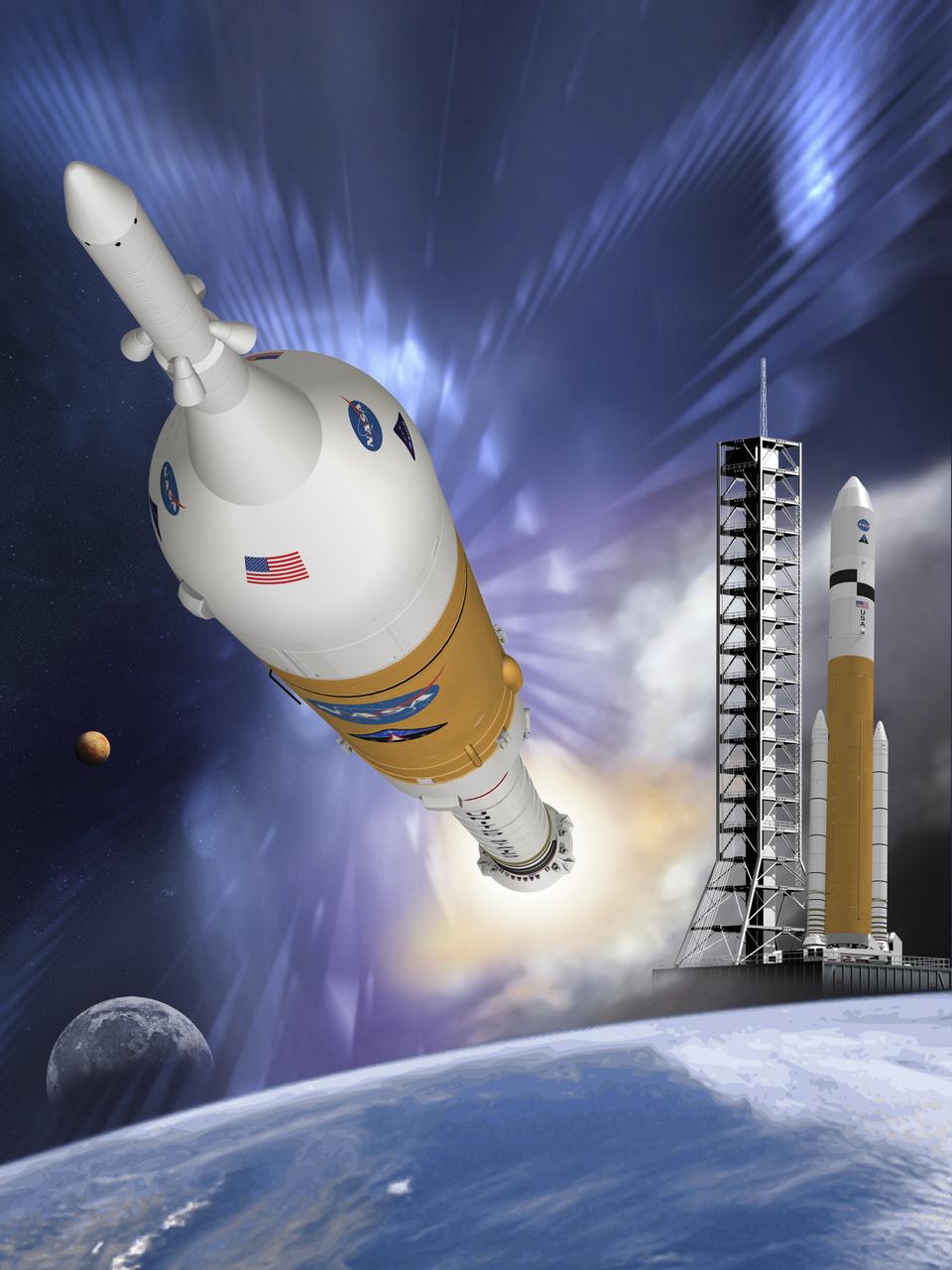
Shown is a concept illustration of the Ares I crew launch vehicle during launch and the Ares V cargo launch vehicle on the launch pad. Ares I will carry the Orion Crew Exploration Vehicle with an astronaut crew to Earth orbit. Ares V will deliver large-scale hardware to space. This includes the Altair Lunar Lander, materials for establishing an outpost on the moon, and the vehicles and hardware needed to extend a human presence beyond Earth orbit.
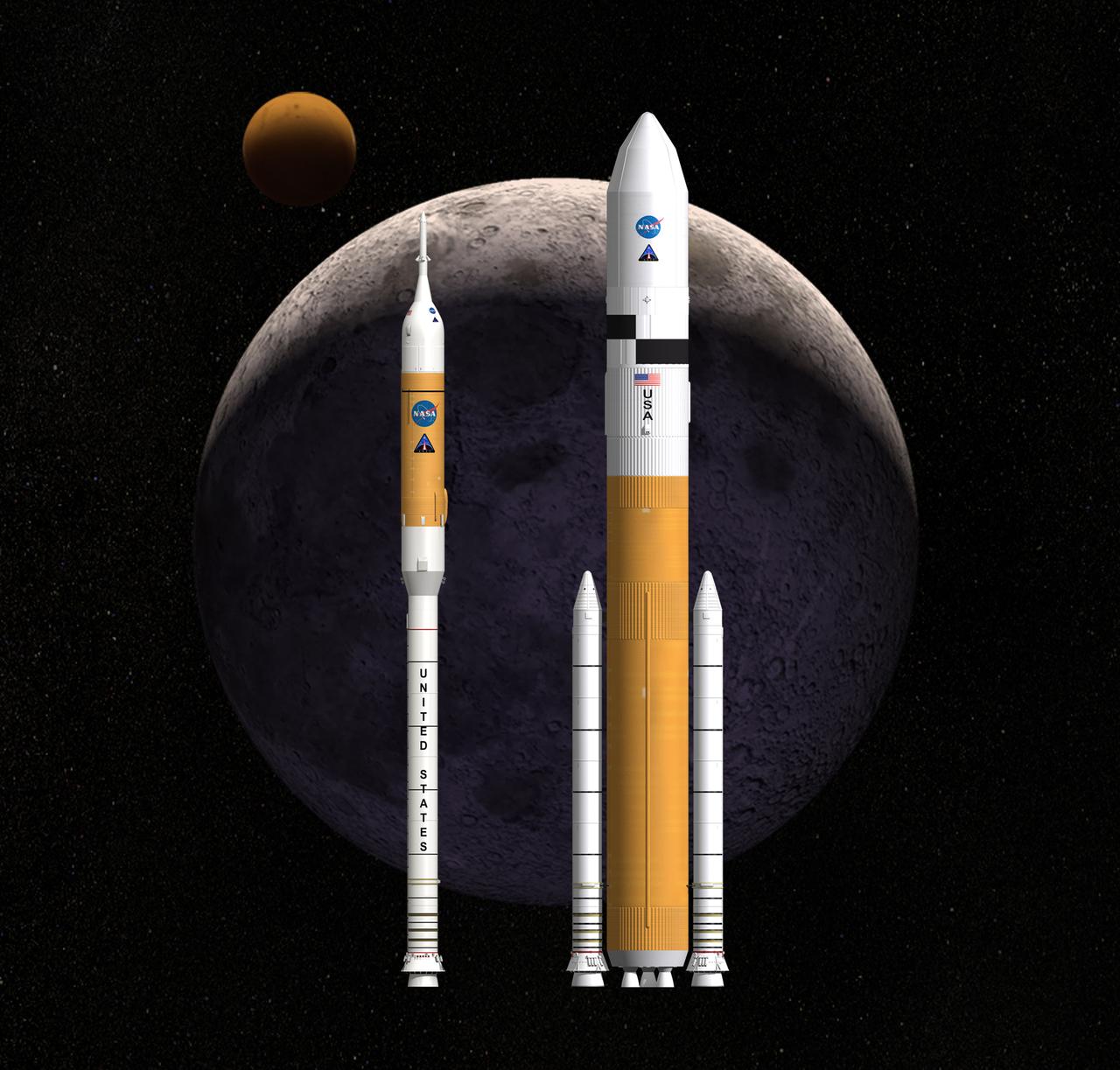
THIS CONCEPT IMAGE SHOWS NASA'S NEXT GENERATION LAUNCH VEHICLE SYSTEMS STANDING SIDE BY SIDE. ARES I, LEFT, IS THE CREW LAUNCH VEHICLE THAT WILL CARRY THE ORION CREW EXPLORATION VEHICLE TO SPACE. ARES V IS THE CARGO LAUNCH VEHICLE THAT WILL DELIVER LARGE SCALE HARDWARE, INCLUDING THE LUNAR LANDER, TO SPACE.
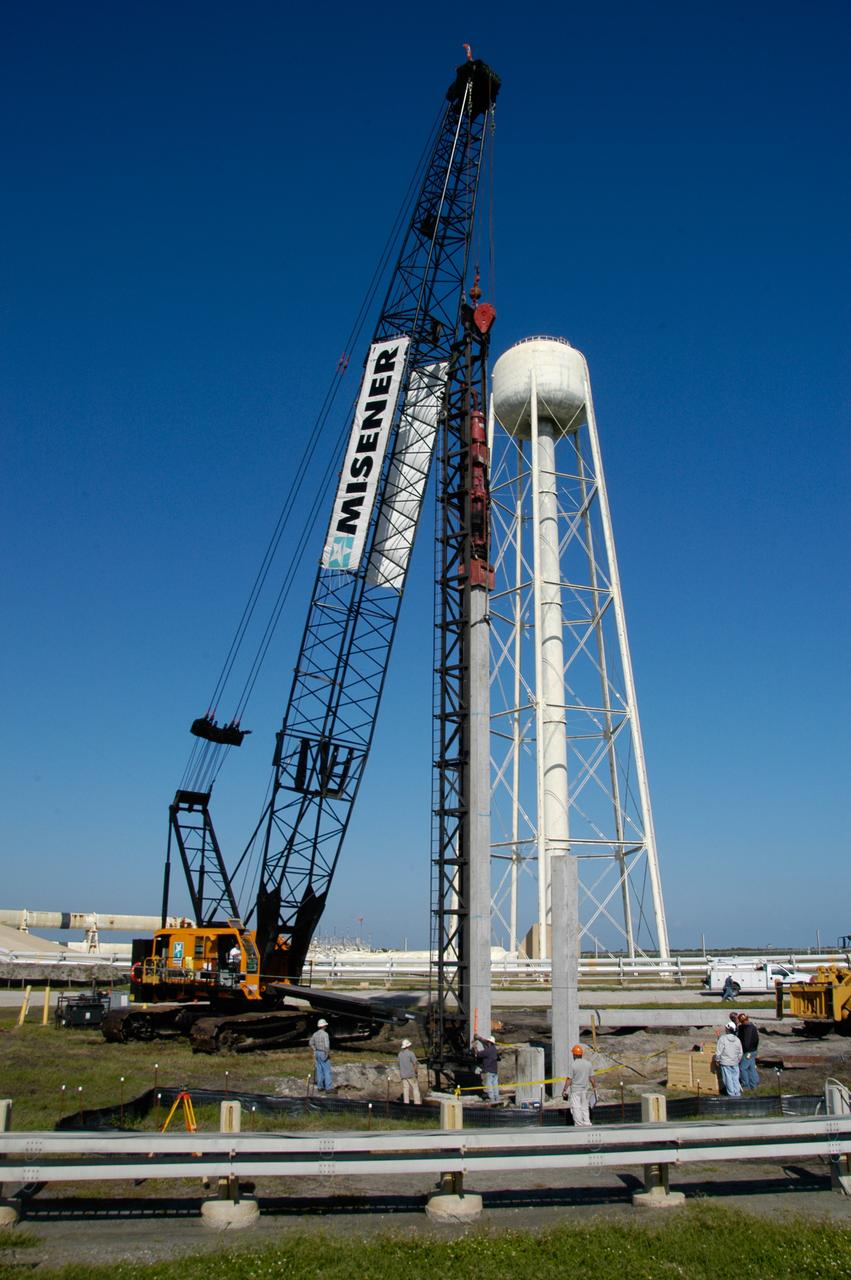
On Launch Pad 39B at NASA's Kennedy Space Center, the crane crawler puts a piling into place to be pounded into the ground to help construct lightning towers for the Constellation Program and Ares/Orion launches. Pad B will be the site of the first Ares vehicle launch, including Ares I-X which is scheduled for April 2009.

On Launch Pad 39B at NASA's Kennedy Space Center, the crane crawler lifts a piling off a truck. The piling will be pounded into the ground to help construct lightning towers for the Constellation Program and Ares/Orion launches. Pad B will be the site of the first Ares vehicle launch, including Ares I-X which is scheduled for April 2009.
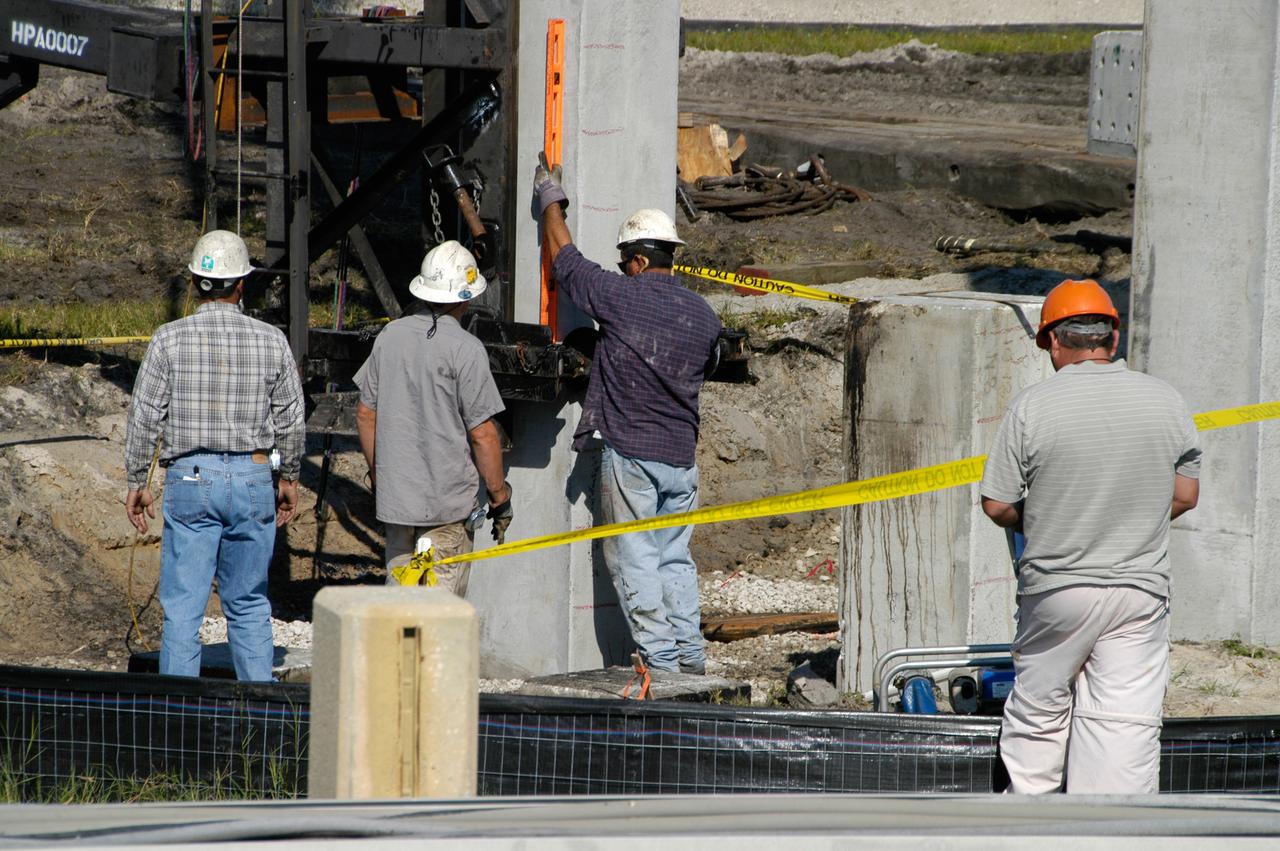
On Launch Pad 39B at NASA's Kennedy Space Center, workers measure the piling being pounded into the ground to help construct lightning towers for the Constellation Program and Ares/Orion launches. Pad B will be the site of the first Ares vehicle launch, including Ares I-X which is scheduled for April 2009.
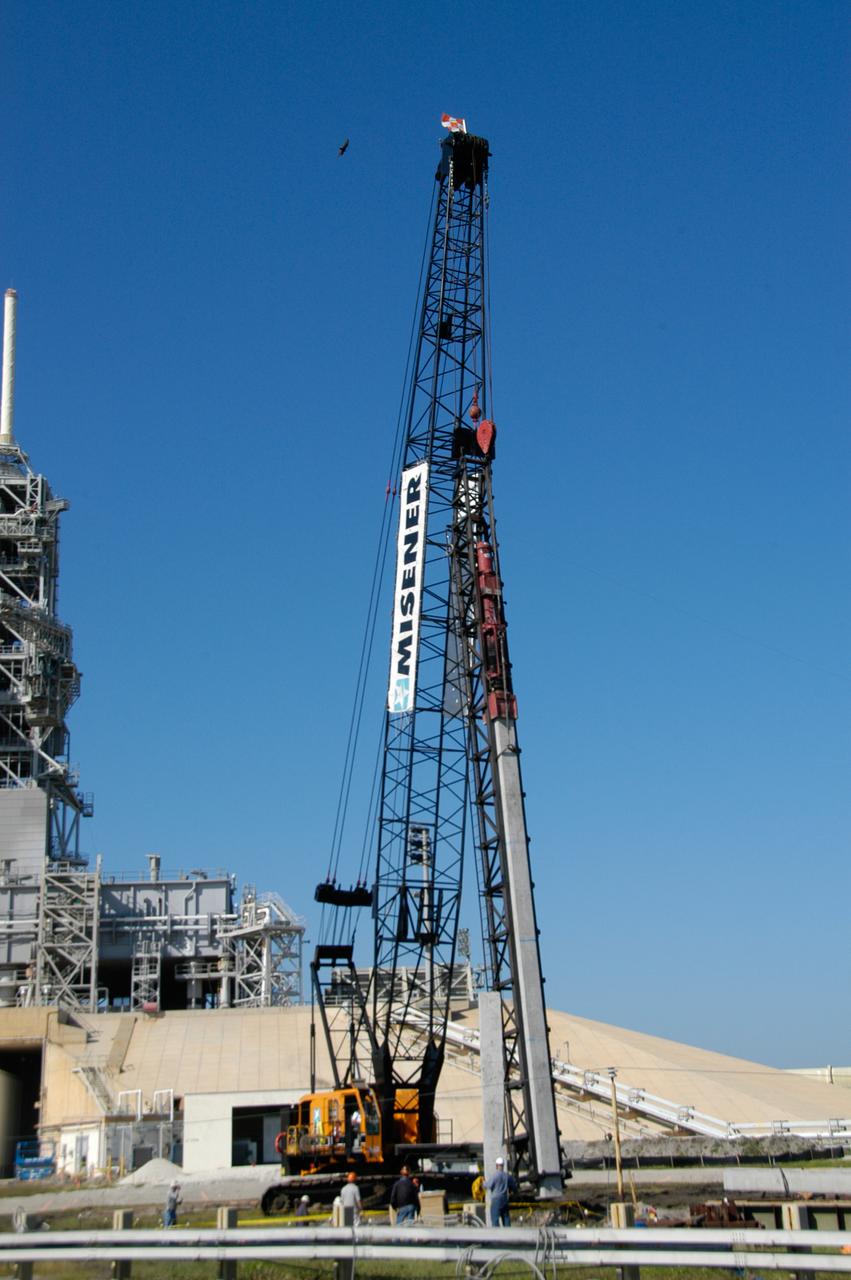
On Launch Pad 39B at NASA's Kennedy Space Center, the crane crawler lifts a piling into place to be pounded into the ground to help construct lightning towers for the Constellation Program and Ares/Orion launches. Pad B will be the site of the first Ares vehicle launch, including Ares I-X which is scheduled for April 2009.
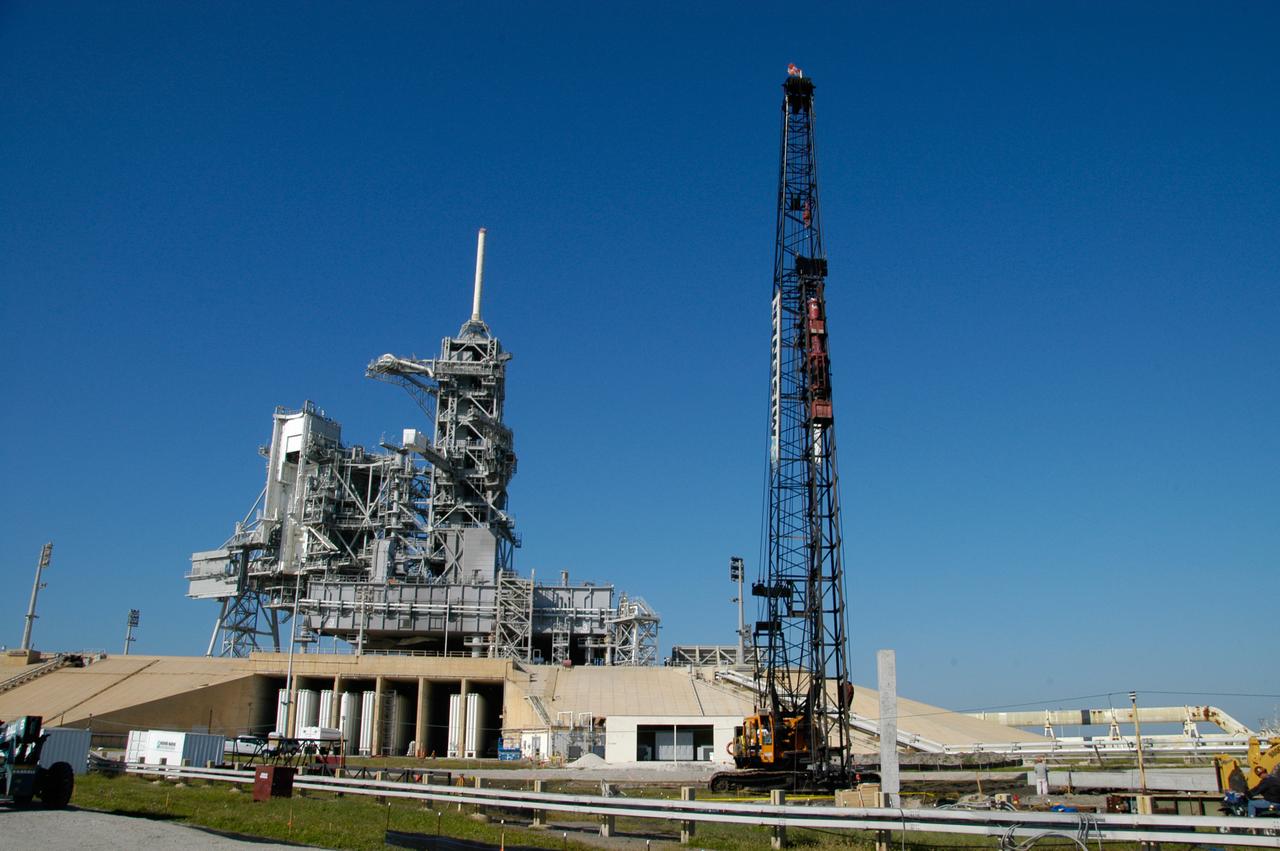
On Launch Pad 39B at NASA's Kennedy Space Center, pilings are being pounded into the ground to help construct lightning towers for the Constellation Program and Ares/Orion launches. Pad B will be the site of the first Ares vehicle launch, including Ares I-X which is scheduled for April 2009.
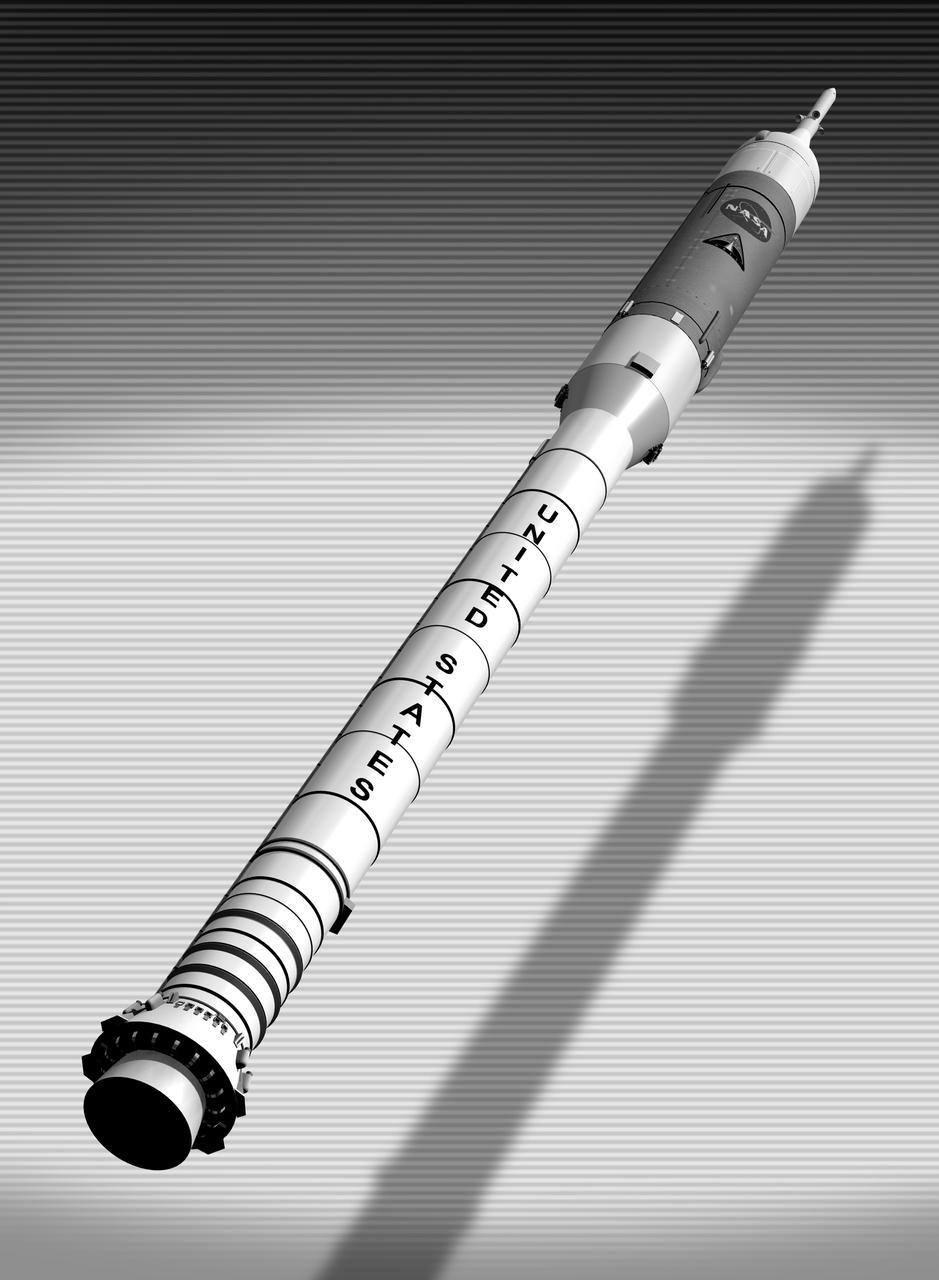
Shown is a concept illustration of Ares I which is an in-line, two-stage rocket that will transport the Orion Crew Exploration Vehicle to low earth orbit. Orion will accommodate as many as six astronauts. The first stage will consist of the five-segment solid rocket booster.
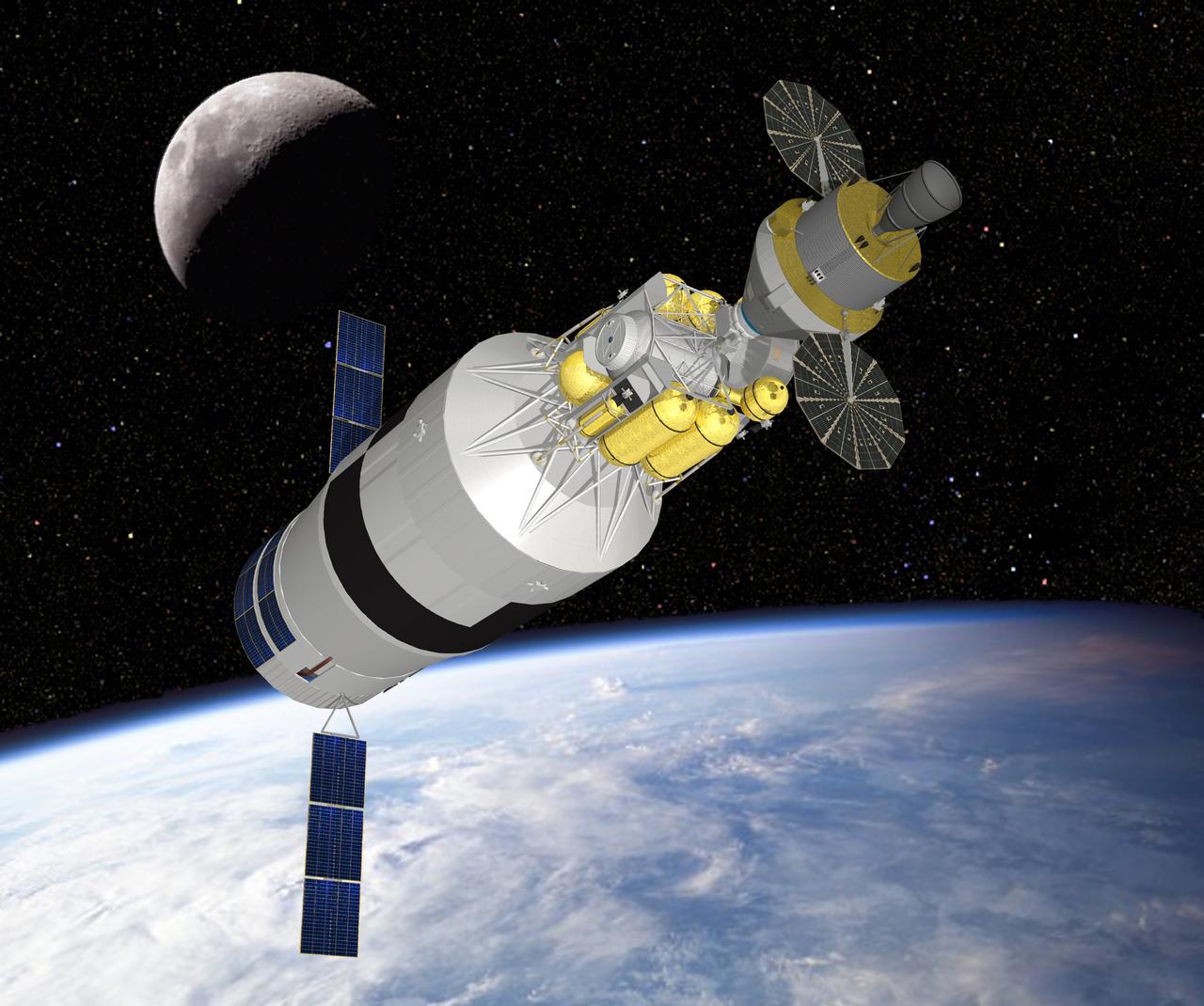
SHOWN IS A CONCEPT IMAGE OF THE ARES V EARTH DEPARTURE STAGE AND LUNAR SURFACE ACCESS MODULE DOCKED WITH THE ORION CREW EXPLORATION VEHICLE IN EARTH ORBIT. THE DEPARTURE STAGE, POWERED BY A J-2X ENGINE, IS NEEDED TO ESCAPE EARTH'S GRAVITY AND SEND THE CREW VEHICLE AND LUNAR MODULE ON THEIR JOURNEY TO THE MOON.
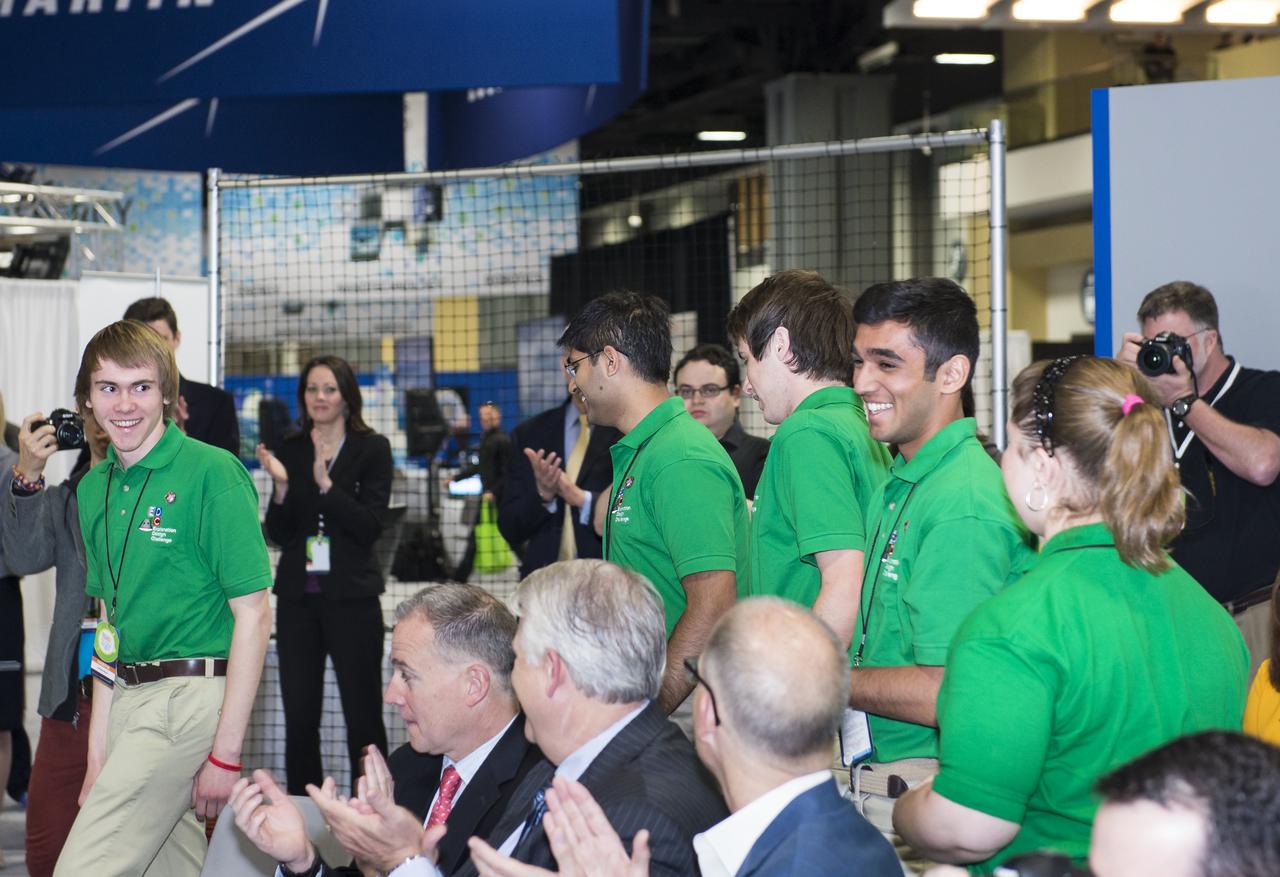
After announcing that Team ARES won the Exploration Design Challenge, NASA Administrator, Charles Bolden and CEO, Marillyn Hewson invite the team up to the stage to receive their award. The goal of the Exploration Design Challenge was for students to research and design ways to protect astronauts from space radiation.Team ARES's design will be built and flown aboard the Orion/EFT-1. The USA Science and Engineering Festival is taking place at the Washington Convention Center in Washington, DC on April 26 and 27, 2014. Photo Credit: (NASA/Aubrey Gemignani)
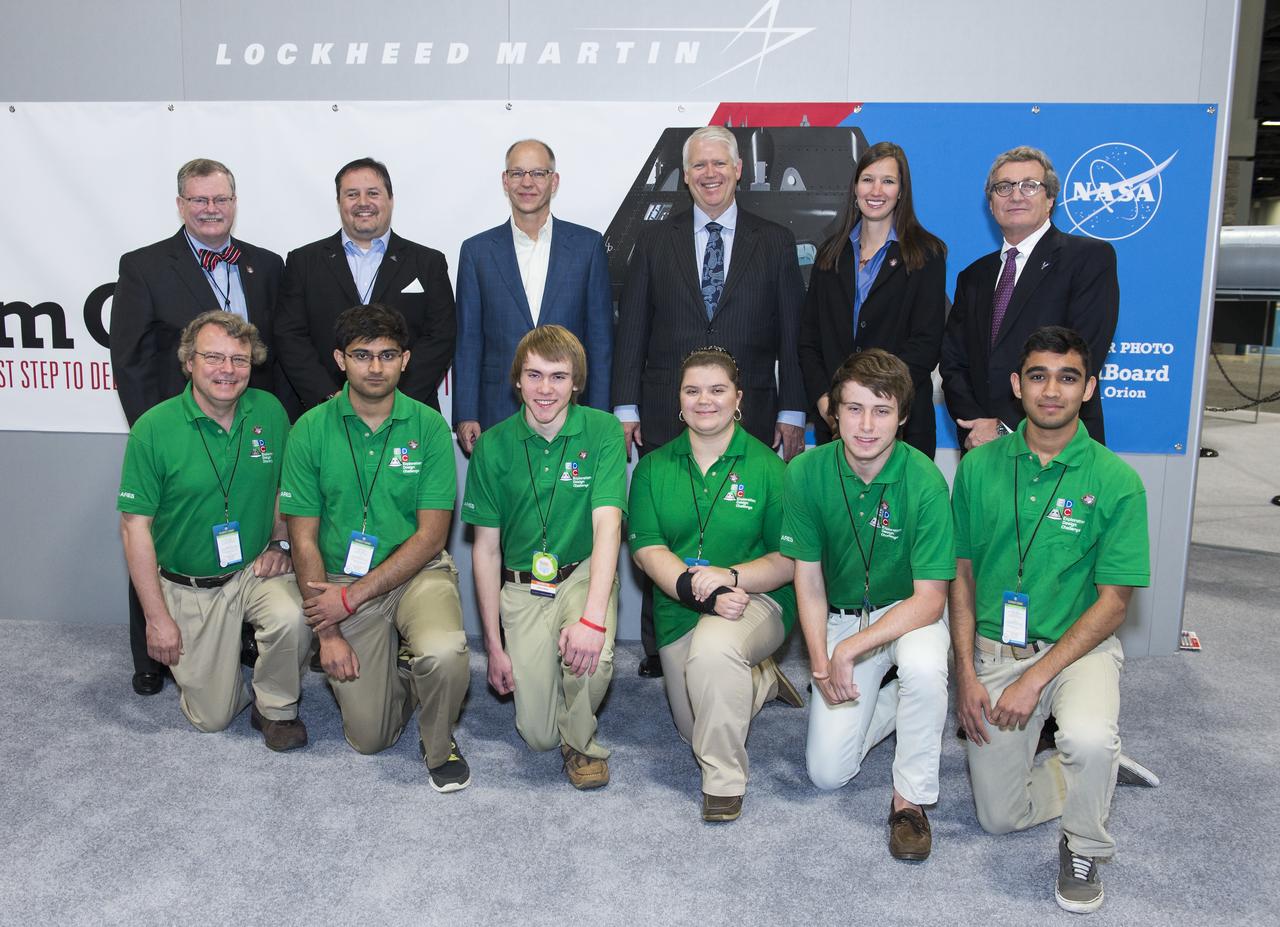
Sponsors of Team ARES pose for a group photo with the winning high school team in the Exploration Design Challenge. Team ARES from the Governors School for Science and Technology in Hampton, Va. won the challenge with their radiation shield design, which will be built and flown aboard the Orion/EFT-1. The award was announced at the USA Science and Engineering Festival on April 25, 2014 at the Washington Convention Center. Photo Credit: (NASA/Aubrey Gemignani)
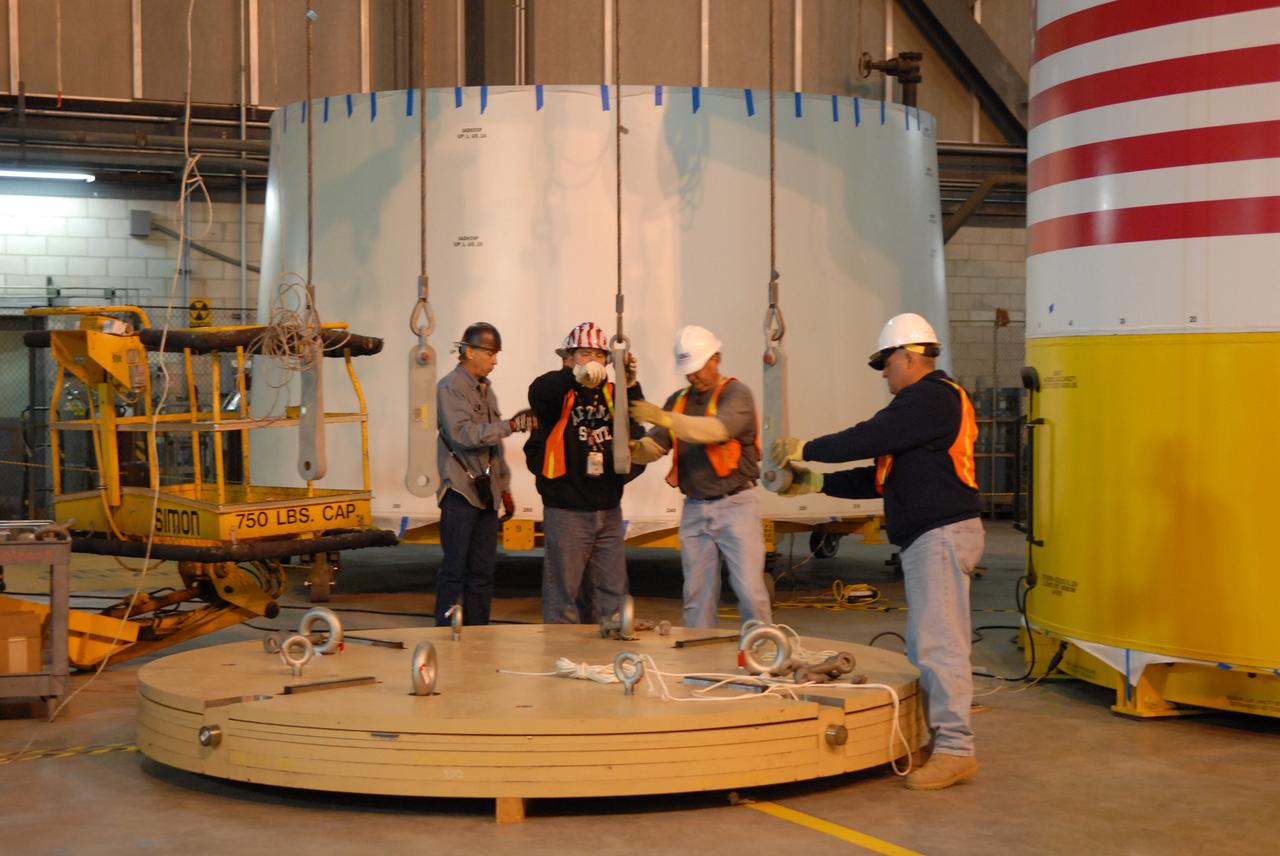
CAPE CANAVERAL, Fla. – In high bay 4 of the Vehicle Assembly Building at NASA's Kennedy Space Center in Florida, workers get ready to attach cables to the ballast for installation in the Ares I-X segments. These ballast assemblies will be installed in the upper stage 1 and 7 segments and will mimic the mass of the fuel. Their total weight is approximately 160,000 pounds. Ares I-X is the test vehicle for the Ares I, which is part of the Constellation Program to return men to the moon and beyond. Ares I is the essential core of a safe, reliable, cost-effective space transportation system that eventually will carry crewed missions back to the moon, on to Mars and out into the solar system. Ares I may also use its 25-ton payload capacity to deliver resources and supplies to the International Space Station, or to "park" payloads in orbit for retrieval by other spacecraft bound for the moon or other destinations. The Ares I-X is targeted for launch in July 2009. Photo credit: NASA/Dimitri Gerondidakis

CAPE CANAVERAL, Fla. – In high bay 4 of the Vehicle Assembly Building at NASA's Kennedy Space Center in Florida, a ballast assembly is lifted toward the Ares I-X segments for installation. These ballast assemblies will be installed in the upper stage 1 and 7 segments and will mimic the mass of the fuel. Their total weight is approximately 160,000 pounds. Ares I-X is the test vehicle for the Ares I, which is part of the Constellation Program to return men to the moon and beyond. Ares I is the essential core of a safe, reliable, cost-effective space transportation system that eventually will carry crewed missions back to the moon, on to Mars and out into the solar system. Ares I may also use its 25-ton payload capacity to deliver resources and supplies to the International Space Station, or to "park" payloads in orbit for retrieval by other spacecraft bound for the moon or other destinations. The Ares I-X is targeted for launch in July 2009. Photo credit: NASA/Dimitri Gerondidakis
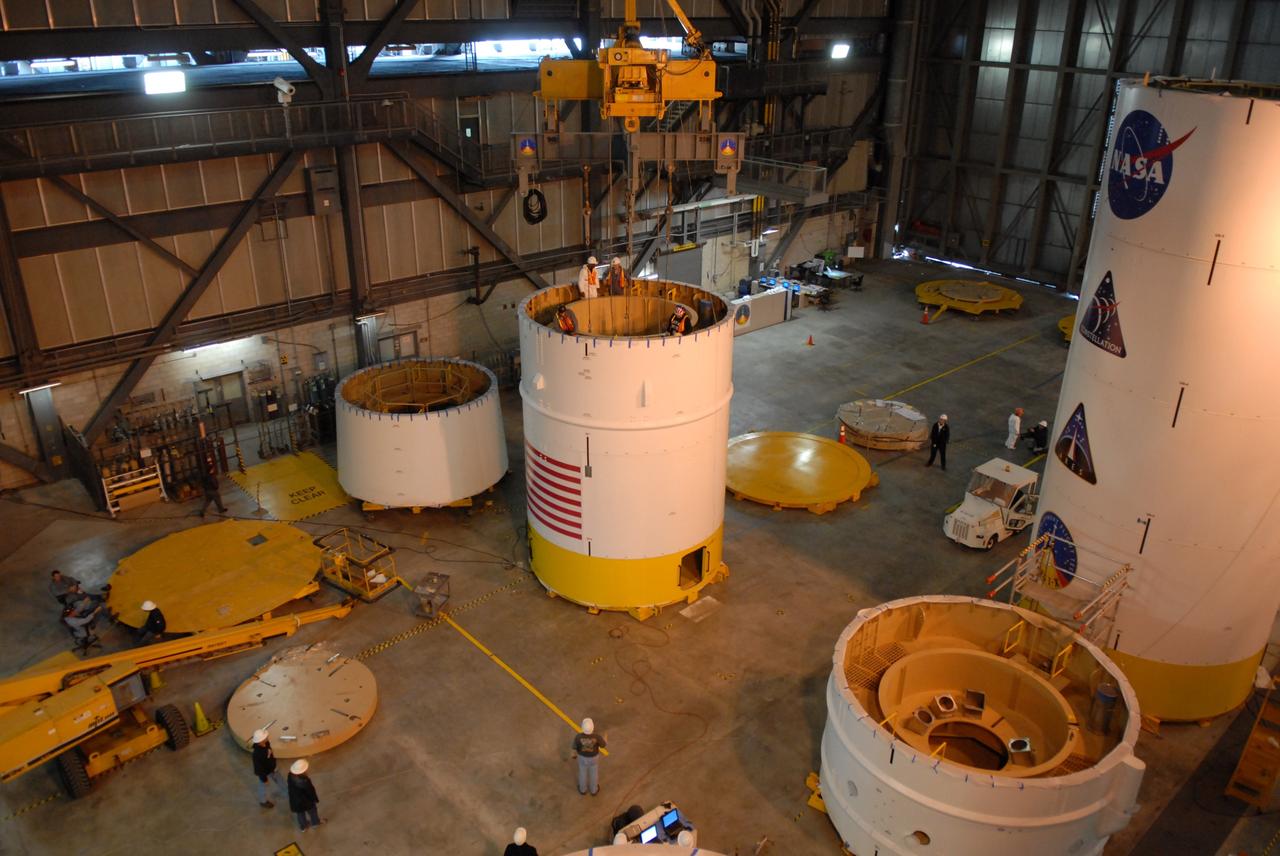
CAPE CANAVERAL, Fla. – In high bay 4 of the Vehicle Assembly Building at NASA's Kennedy Space Center in Florida, a ballast assembly is lowered into the Ares I-X segment 7 (at center). Ballast assemblies are being installed in the upper stage 1 and 7 segments and will mimic the mass of the fuel. Their total weight is approximately 160,000 pounds. Ares I-X is the test vehicle for the Ares I, which is part of the Constellation Program to return men to the moon and beyond. Ares I is the essential core of a safe, reliable, cost-effective space transportation system that eventually will carry crewed missions back to the moon, on to Mars and out into the solar system. Ares I may also use its 25-ton payload capacity to deliver resources and supplies to the International Space Station, or to "park" payloads in orbit for retrieval by other spacecraft bound for the moon or other destinations. The Ares I-X is targeted for launch in July 2009. Photo credit: NASA/Dimitri Gerondidakis
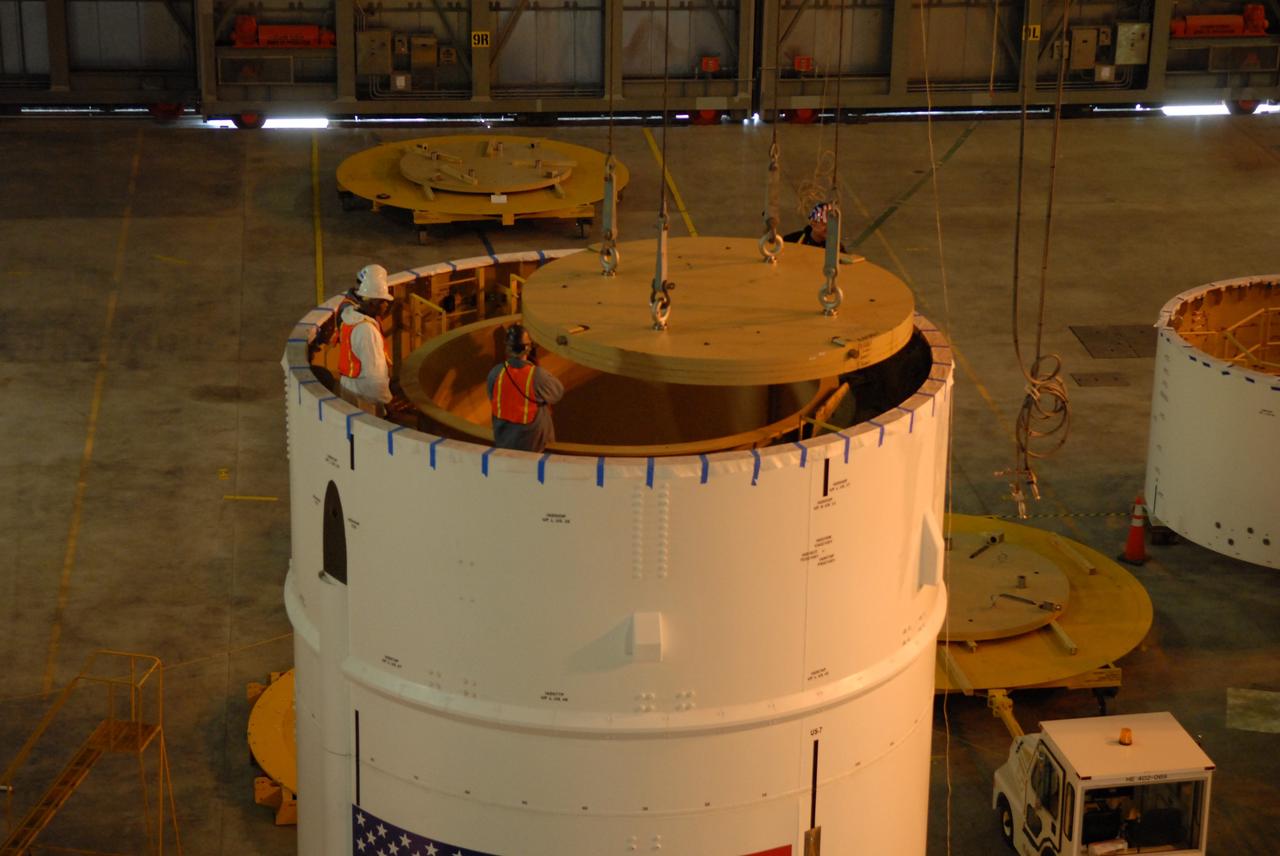
CAPE CANAVERAL, Fla. – In high bay 4 of the Vehicle Assembly Building at NASA's Kennedy Space Center in Florida, a ballast assembly is lowered into the Ares I-X segment 7. Ballast assemblies are being installed in the upper stage 1 and 7 segments and will mimic the mass of the fuel. Their total weight is approximately 160,000 pounds. Ares I-X is the test vehicle for the Ares I, which is part of the Constellation Program to return men to the moon and beyond. Ares I is the essential core of a safe, reliable, cost-effective space transportation system that eventually will carry crewed missions back to the moon, on to Mars and out into the solar system. Ares I may also use its 25-ton payload capacity to deliver resources and supplies to the International Space Station, or to "park" payloads in orbit for retrieval by other spacecraft bound for the moon or other destinations. The Ares I-X is targeted for launch in July 2009. Photo credit: NASA/Dimitri Gerondidakis
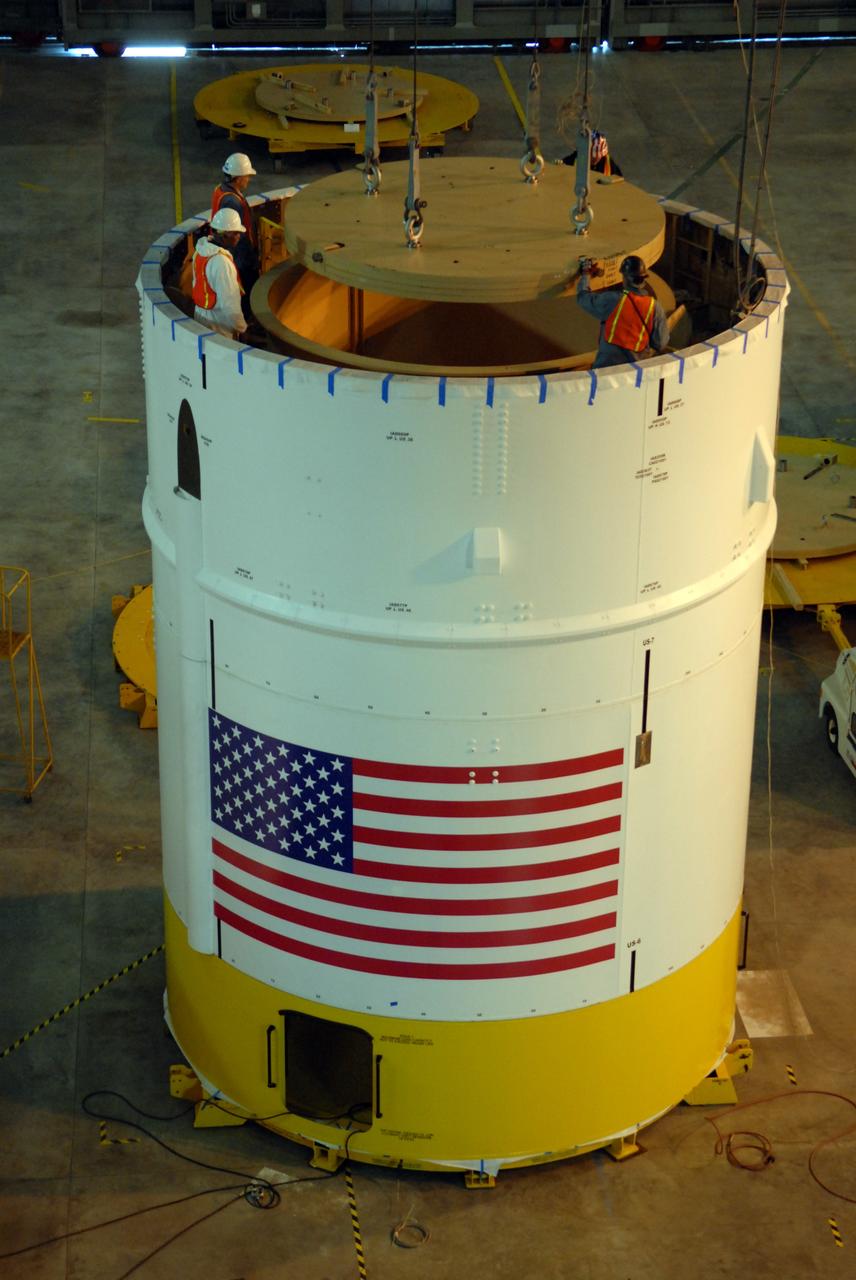
CAPE CANAVERAL, Fla. – In high bay 4 of the Vehicle Assembly Building at NASA's Kennedy Space Center in Florida, a ballast assembly is lowered into the Ares I-X segment 7. Ballast assemblies are being installed in the upper stage 1 and 7 segments and will mimic the mass of the fuel. Their total weight is approximately 160,000 pounds. Ares I-X is the test vehicle for the Ares I, which is part of the Constellation Program to return men to the moon and beyond. Ares I is the essential core of a safe, reliable, cost-effective space transportation system that eventually will carry crewed missions back to the moon, on to Mars and out into the solar system. Ares I may also use its 25-ton payload capacity to deliver resources and supplies to the International Space Station, or to "park" payloads in orbit for retrieval by other spacecraft bound for the moon or other destinations. The Ares I-X is targeted for launch in July 2009. Photo credit: NASA/Dimitri Gerondidakis
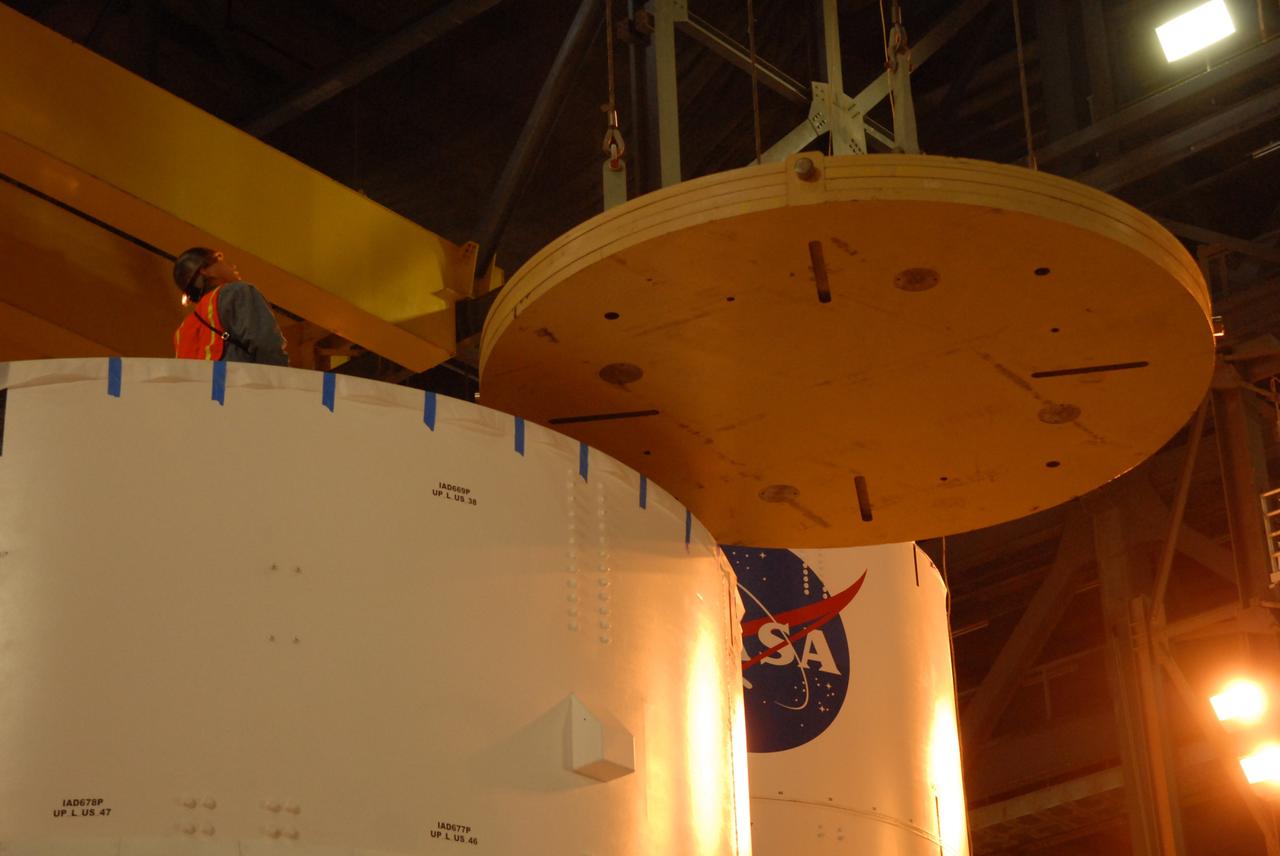
CAPE CANAVERAL, Fla. – In high bay 4 of the Vehicle Assembly Building at NASA's Kennedy Space Center in Florida, a ballast assembly is moved above the Ares I-X segment 7. Ballast assemblies will be installed in the upper stage 1 and 7 segments and will mimic the mass of the fuel. Their total weight is approximately 160,000 pounds. Ares I-X is the test vehicle for the Ares I, which is part of the Constellation Program to return men to the moon and beyond. Ares I is the essential core of a safe, reliable, cost-effective space transportation system that eventually will carry crewed missions back to the moon, on to Mars and out into the solar system. Ares I may also use its 25-ton payload capacity to deliver resources and supplies to the International Space Station, or to "park" payloads in orbit for retrieval by other spacecraft bound for the moon or other destinations. The Ares I-X is targeted for launch in July 2009. Photo credit: NASA/Dimitri Gerondidakis
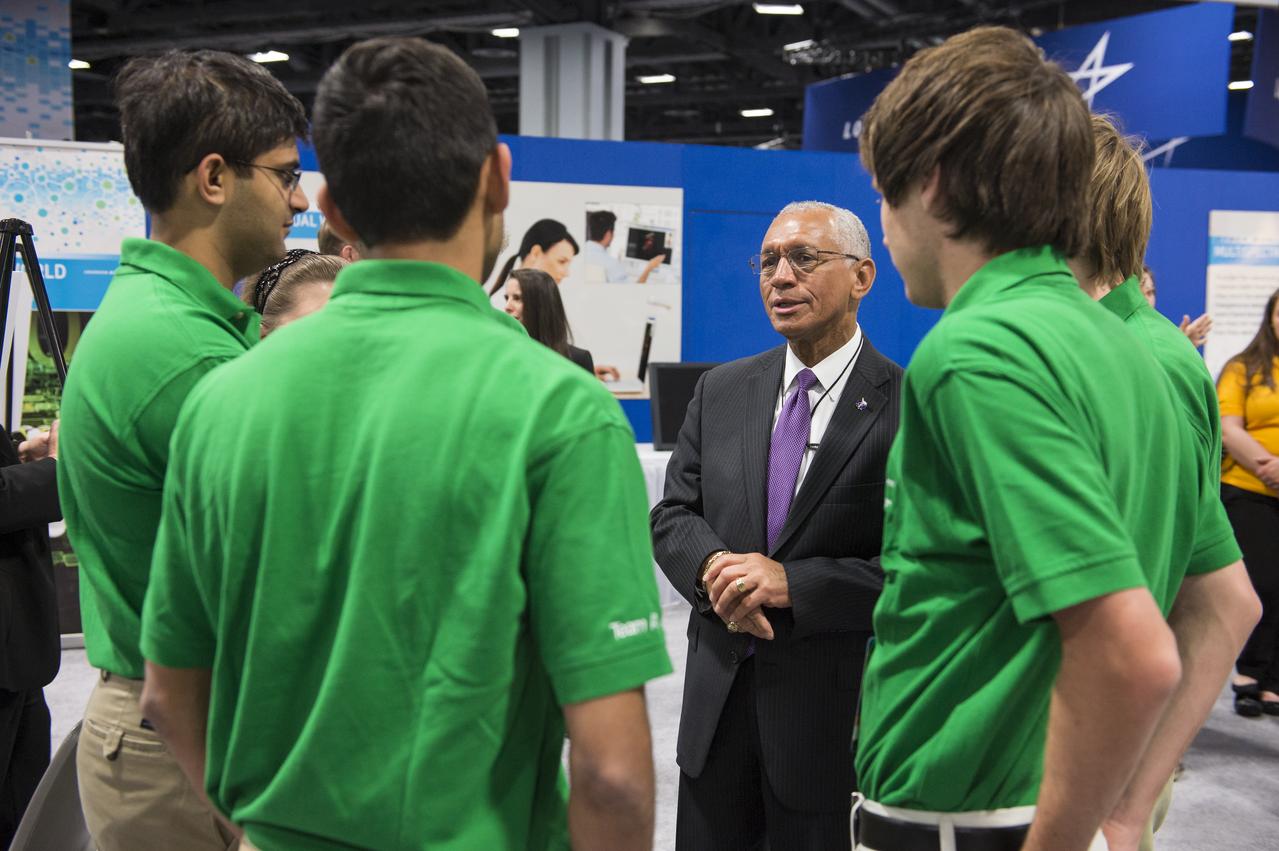
NASA’s Administrator, Charles Bolden speaks with the winning high school team in the Exploration Design Challenge prior to the award ceremony. Team ARES from the Governors School for Science and Technology in Hampton, Va. won the challenge with their radiation shield design, which will be built and flown aboard the Orion/EFT-1. The award was announced at the USA Science and Engineering Festival on April 25, 2014 at the Washington Convention Center. Photo Credit: (NASA/Aubrey Gemignani)
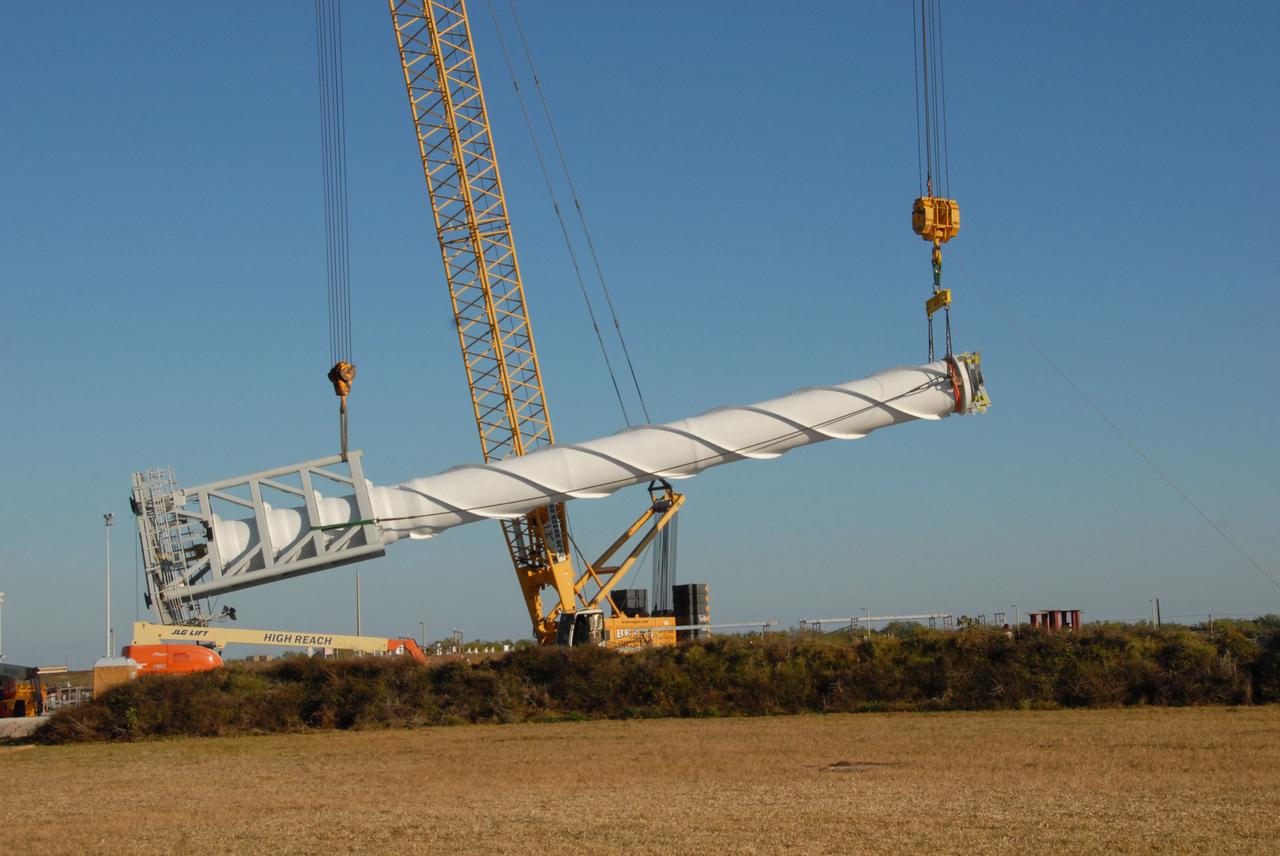
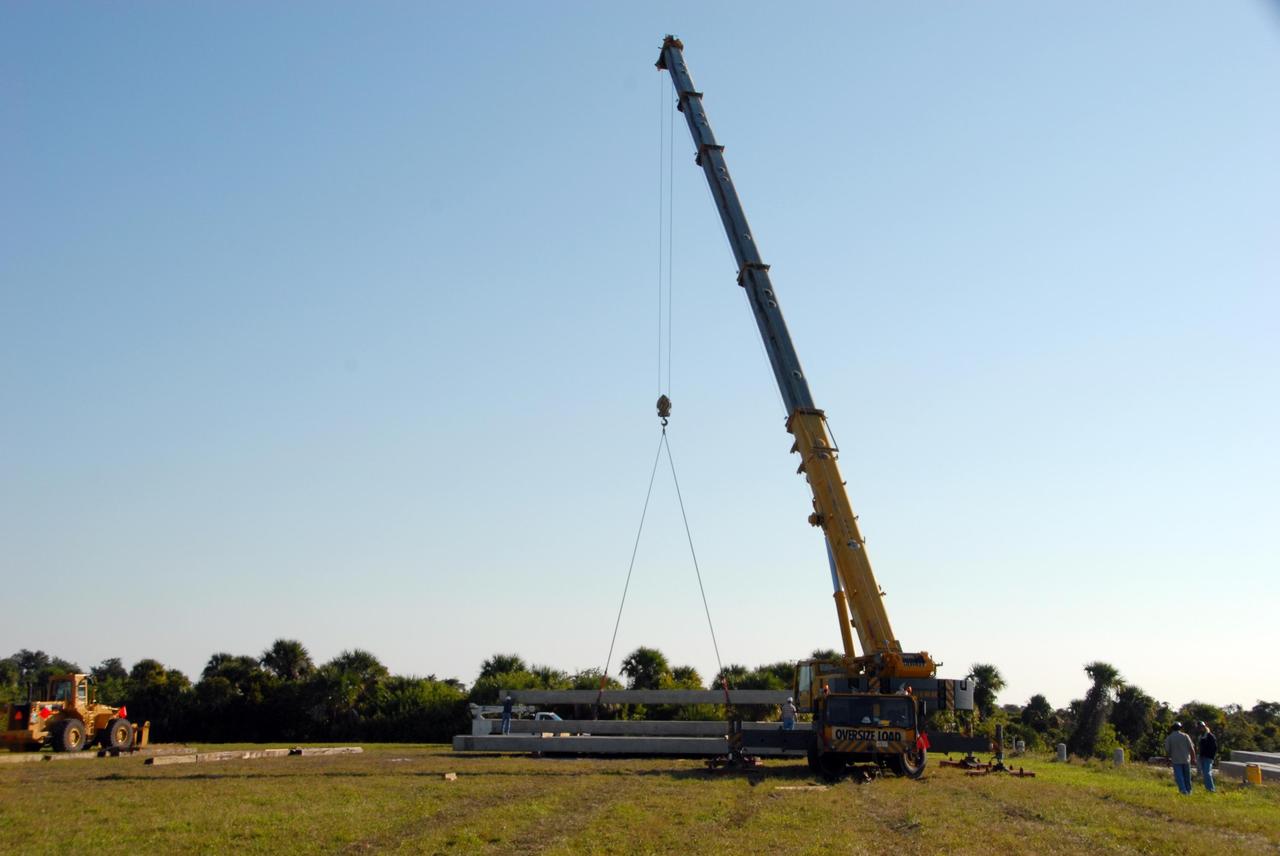
CAPE CANAVERAL, Fla. – On Launch Pad 39B at NASA's Kennedy Space Center in Florida, a crane lifts a 100-foot fiberglass lightning mast that will be placed on top of one of the 500-foot towers being constructed for the Constellation Program and Ares/Orion launches. This improved lightning protection system allows for the taller height of the Ares I rocket compared to the space shuttle. Pad 39B will be the site of the first Ares vehicle launch, including the Ares I-X test flight that is targeted for July 2009.
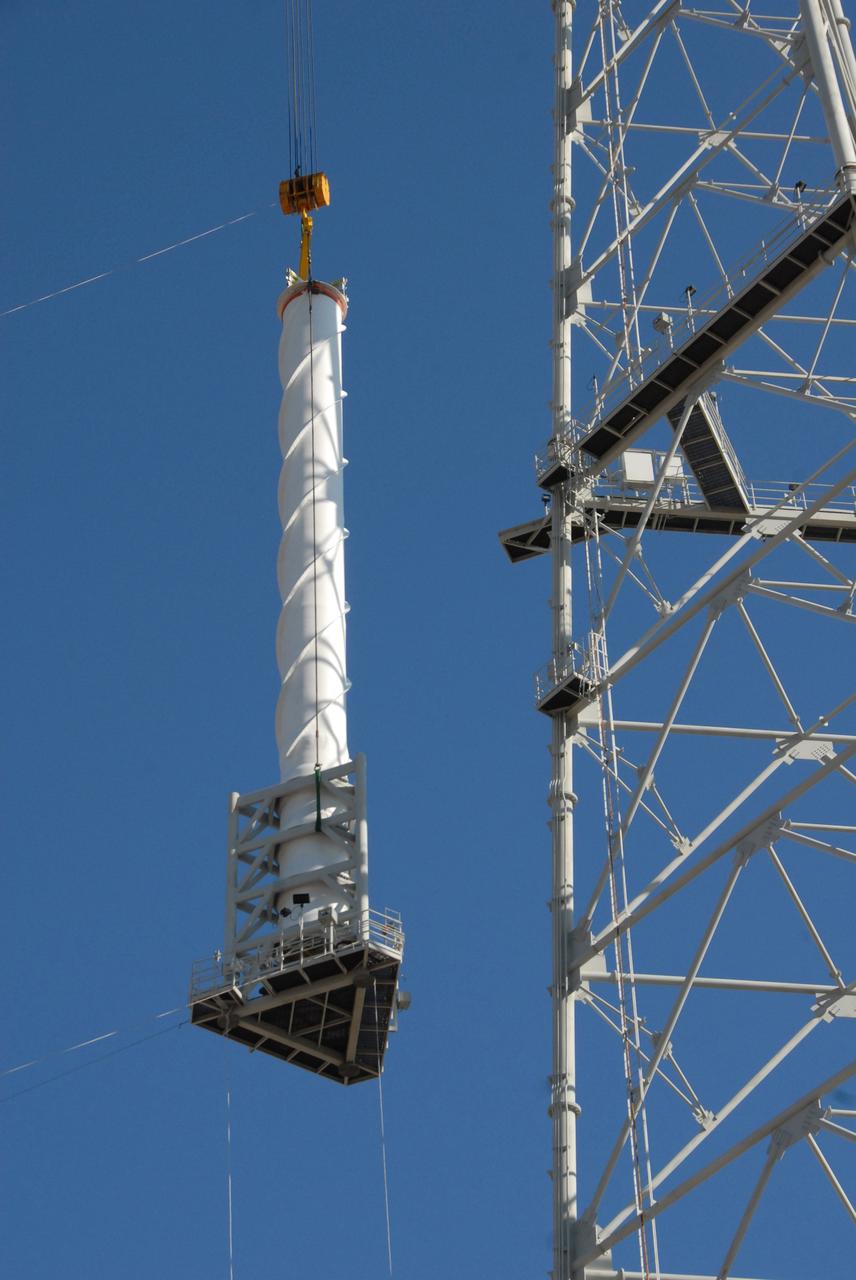
CAPE CANAVERAL, Fla. – On Launch Pad 39B at NASA's Kennedy Space Center in Florida, a crane lifts a 100-foot fiberglass lightning mast alongside the 500-foot tower where it will be installed. The tower is one of three being constructed for the Constellation Program and Ares/Orion launches. This improved lightning protection system allows for the taller height of the Ares I rocket compared to the space shuttle. Pad 39B will be the site of the first Ares vehicle launch, including the Ares I-X test flight that is targeted for July 2009.
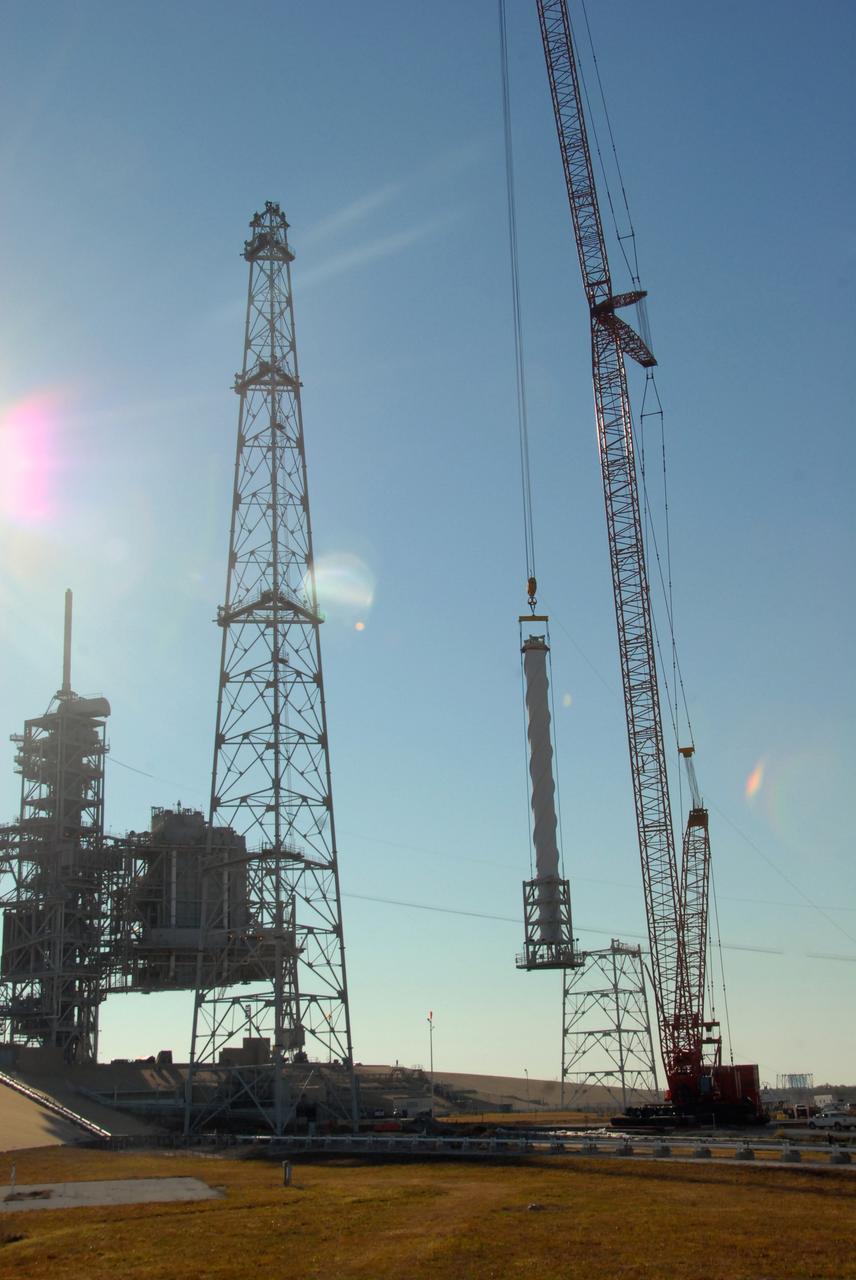
CAPE CANAVERAL, Fla. – On Launch Pad 39B at NASA's Kennedy Space Center in Florida, a crane begins lifting a 100-foot fiberglass lightning mast to place it on top of one of the 500-foot towers being constructed for the Constellation Program and Ares/Orion launches. This improved lightning protection system allows for the taller height of the Ares I rocket compared to the space shuttle. Pad 39B will be the site of the first Ares vehicle launch, including the Ares I-X test flight that is targeted for July 2009.
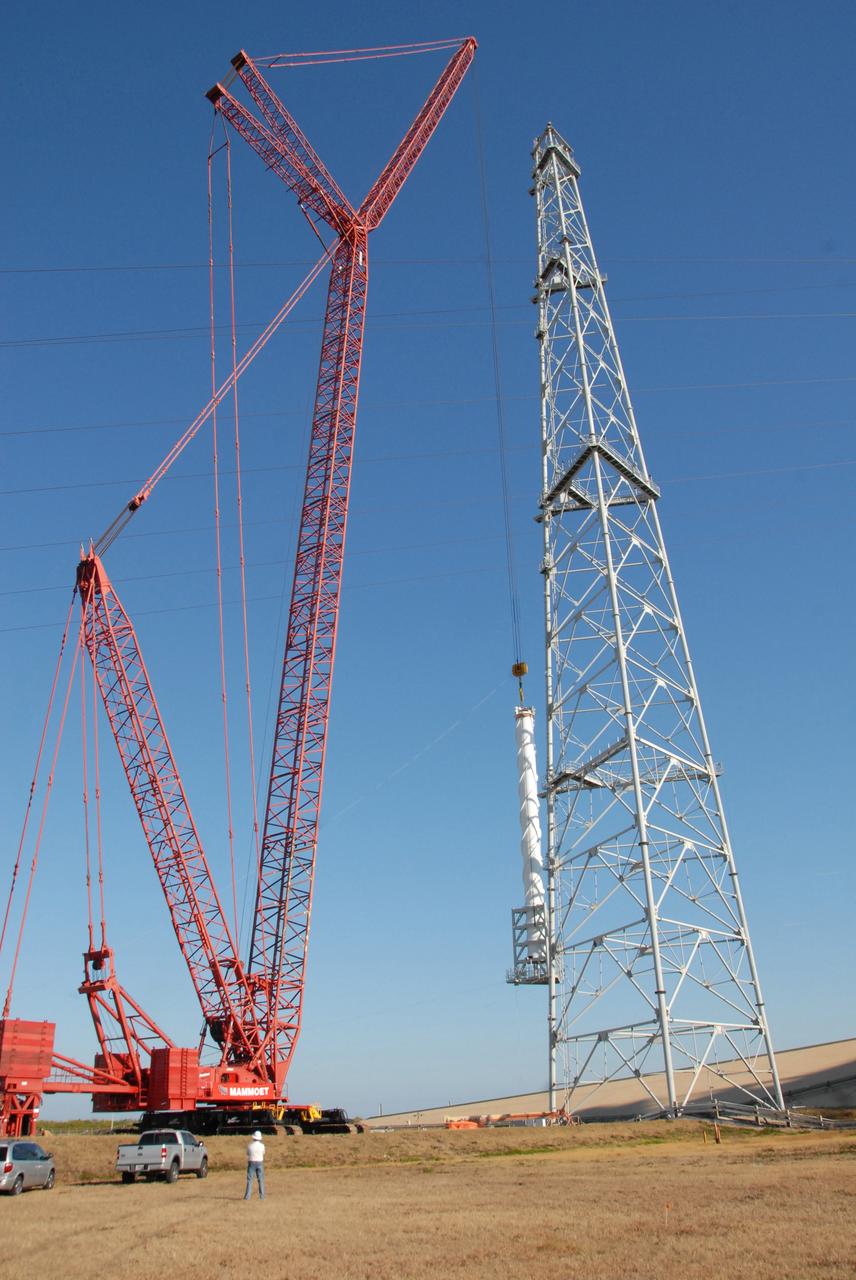
CAPE CANAVERAL, Fla. – On Launch Pad 39B at NASA's Kennedy Space Center in Florida, a crane begins lifting a 100-foot fiberglass lightning mast to place it on top of one of the 500-foot towers being constructed for the Constellation Program and Ares/Orion launches. This improved lightning protection system allows for the taller height of the Ares I rocket compared to the space shuttle. Pad 39B will be the site of the first Ares vehicle launch, including the Ares I-X test flight that is targeted for July 2009.
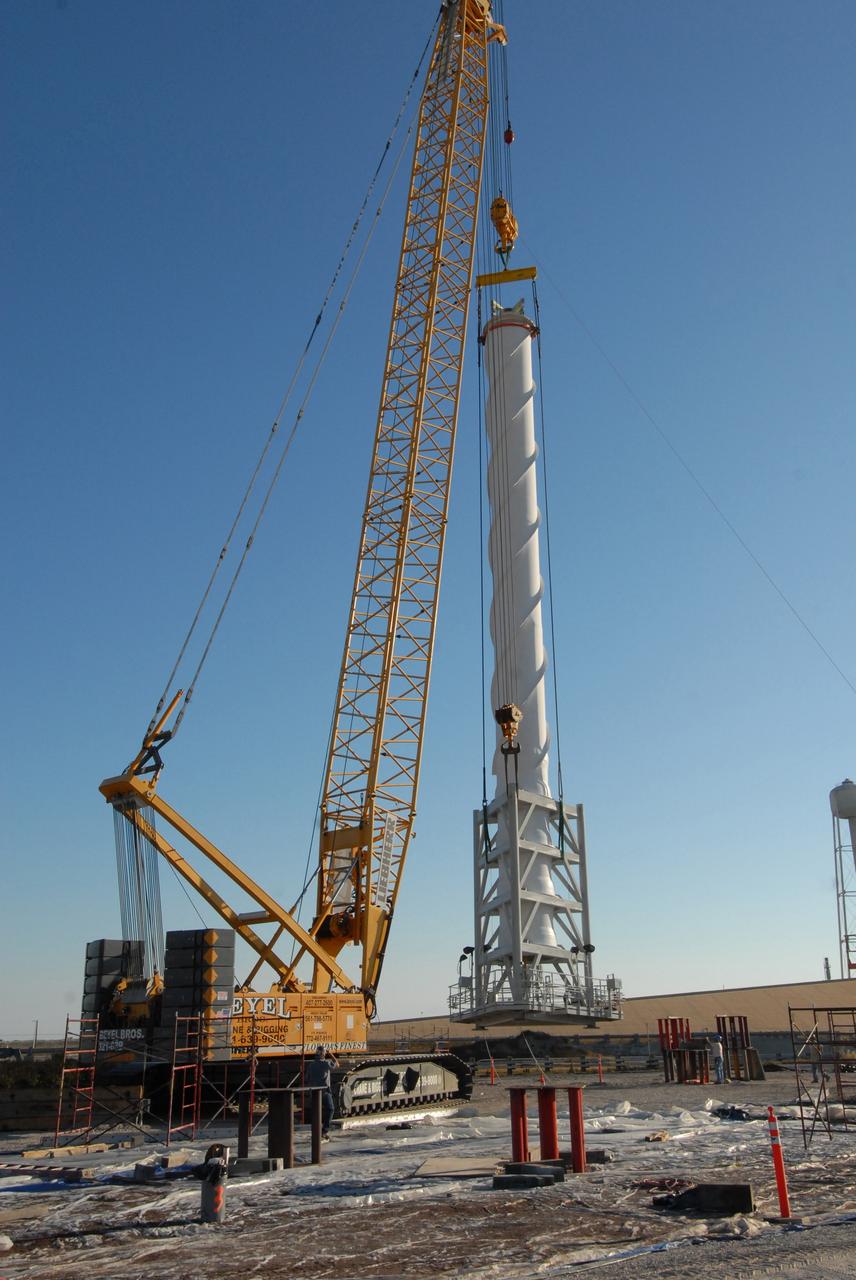
CAPE CANAVERAL, Fla. – On Launch Pad 39B at NASA's Kennedy Space Center in Florida, a crane holds a 100-foot fiberglass lightning mast that will be placed on top of one of the 500-foot towers being constructed for the Constellation Program and Ares/Orion launches. This improved lightning protection system allows for the taller height of the Ares I rocket compared to the space shuttle. Pad 39B will be the site of the first Ares vehicle launch, including the Ares I-X test flight that is targeted for July 2009.
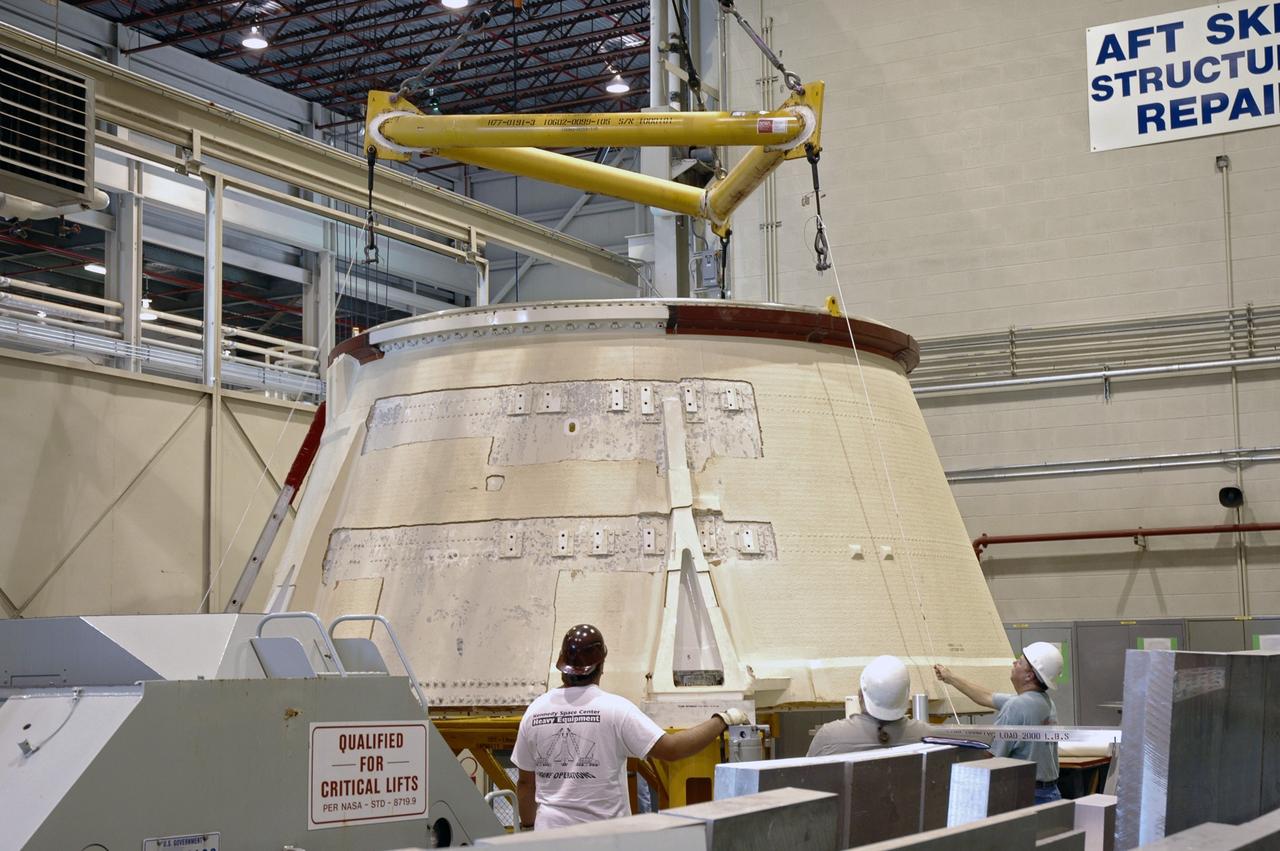
CAPE CANAVERAL, Fla. – In the Assembly and Refurbishment Facility at NASA's Kennedy Space Center, a crane is lowered over the aft skirt for the Ares 1-X rocket. The segment is being lifted into a machine shop work stand for drilling modifications. The modifications will prepare it for the installation of the auxiliary power unit controller, the reduced-rate gyro unit, the booster decelerator motors and the booster tumble motors. Ares I is an in-line, two-stage rocket that will transport the Orion crew exploration vehicle to low-Earth orbit. Ares I-X is a test rocket. The Ares I first stage will be a five-segment solid rocket booster based on the four-segment design used for the shuttle. Ares I’s fifth booster segment allows the launch vehicle to lift more weight and reach a higher altitude before the first stage separates from the upper stage, which ignites in midflight to propel the Orion spacecraft to Earth orbit. Photo credit: NASA/Jim Grossmann
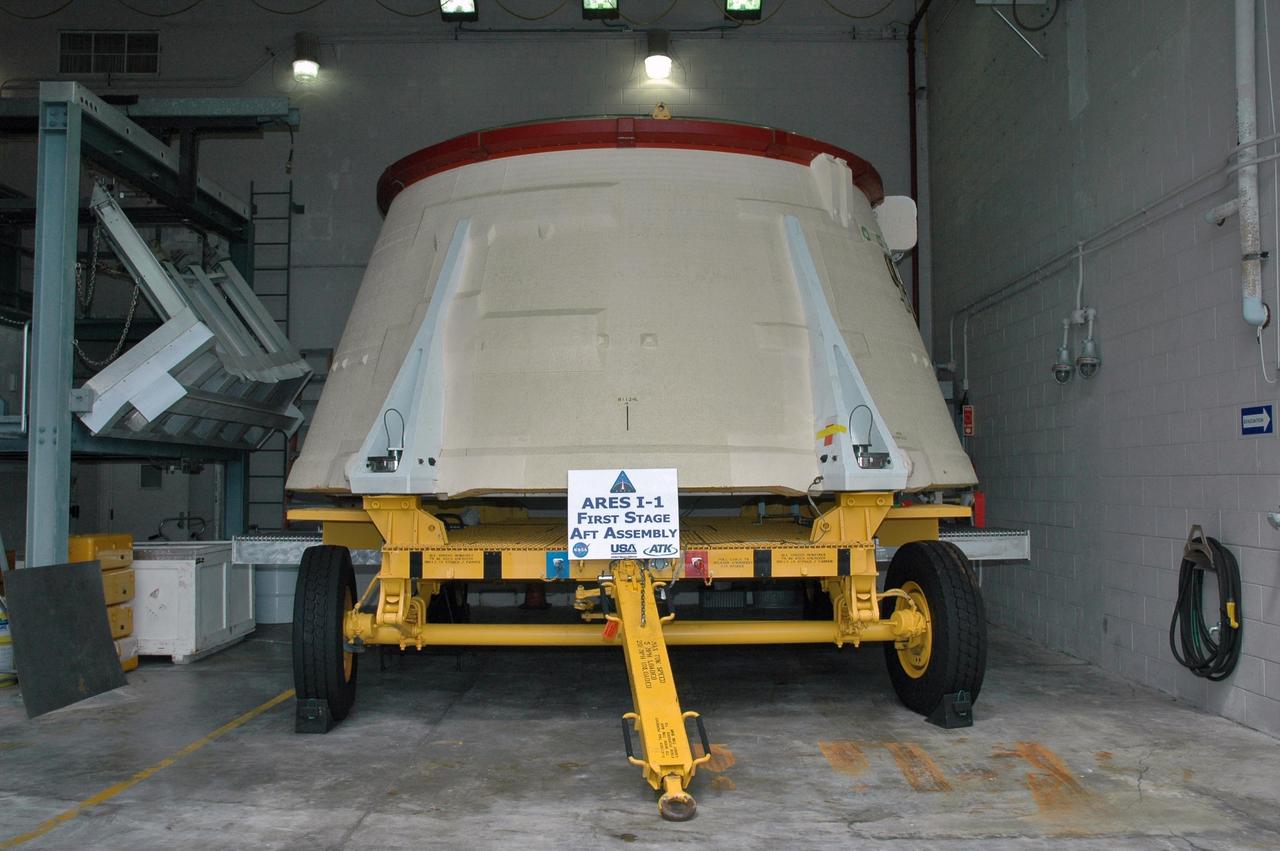
KENNEDY SPACE CENTER, FLA. - In the Assembly and Refurbishment Facility at NASA's Kennedy Space Center, the solid rocket booster aft skirt designated for use on the first stage of the ARES I-1 launch vehicle is being prepared for its first test flight. Ares I is the vehicle being developed for launch of the crew exploration vehicle (CEV), named Orion. Ares I-1 is currently targeted for launch from Launch Pad 39B in 2009 using the SRB first stage and a simulated second stage and simulated CEV. Ares I ascent tests and Ares I orbital tests will also take place at Kennedy at later dates. Photo credit: NASA/Jack Pfaller
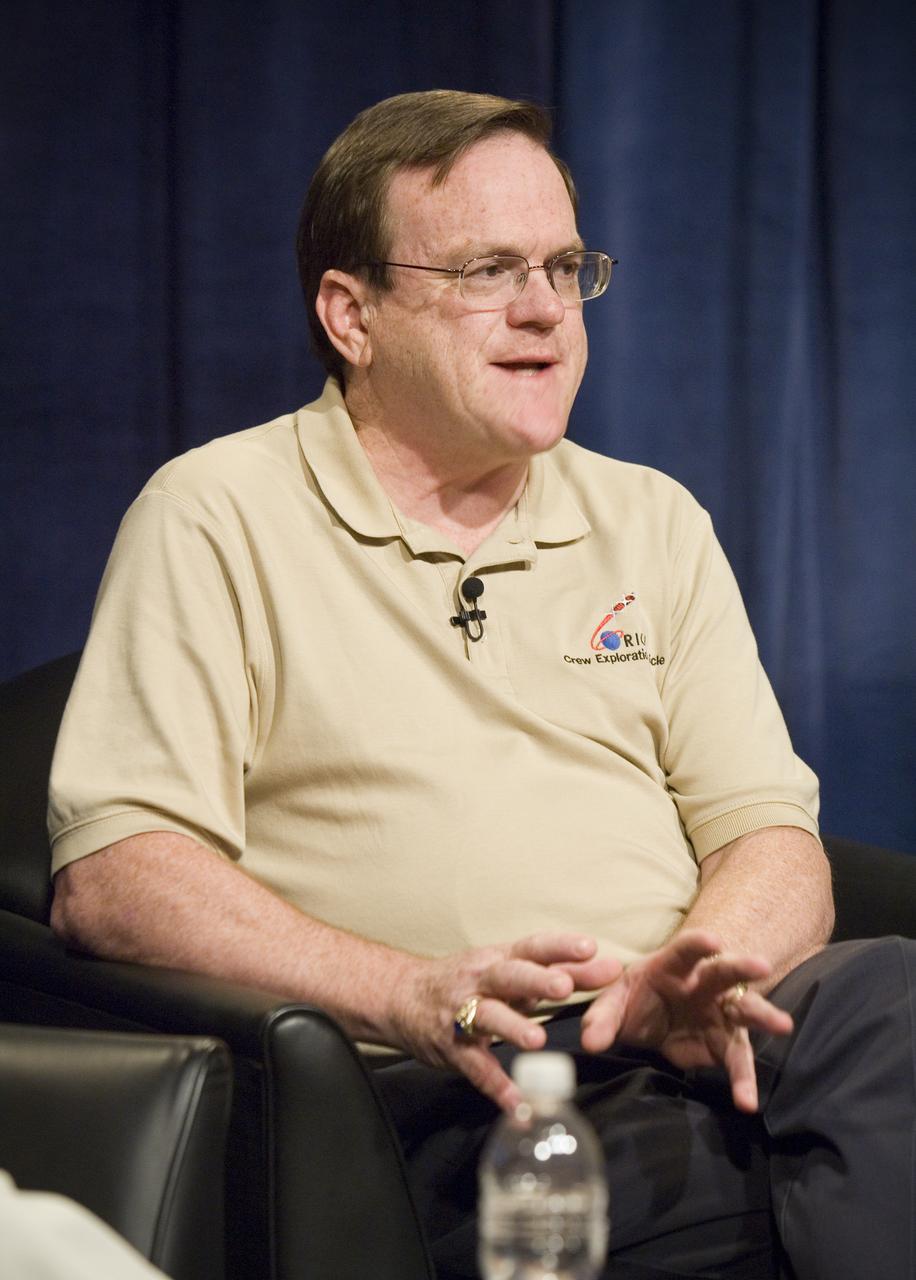
NASA Officials gather at Ames Research Center to discuss Spaceship development progress. Constellation is developing the Orion spacecraft and Ares rockets to support an American return to the moon by 2020. Speaker; Skip Hatfield, JSC Orion Project Manager
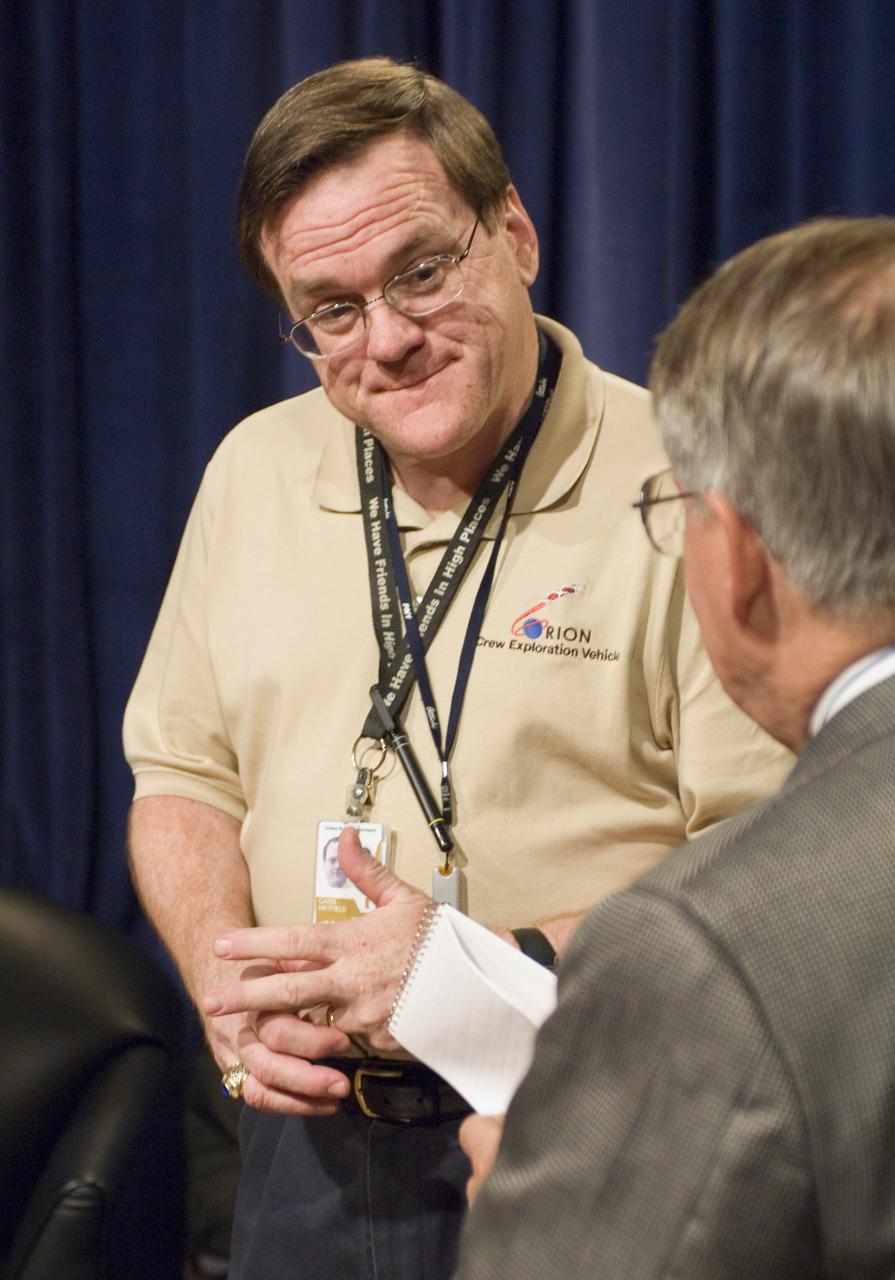
NASA Officials gather at Ames Research Center to discuss Spaceship development progress. Constellation is developing the Orion spacecraft and Ares rockets to support an American return to the moon by 2020. Speaker; Skip Hatfield, JSC Orion Project Manager
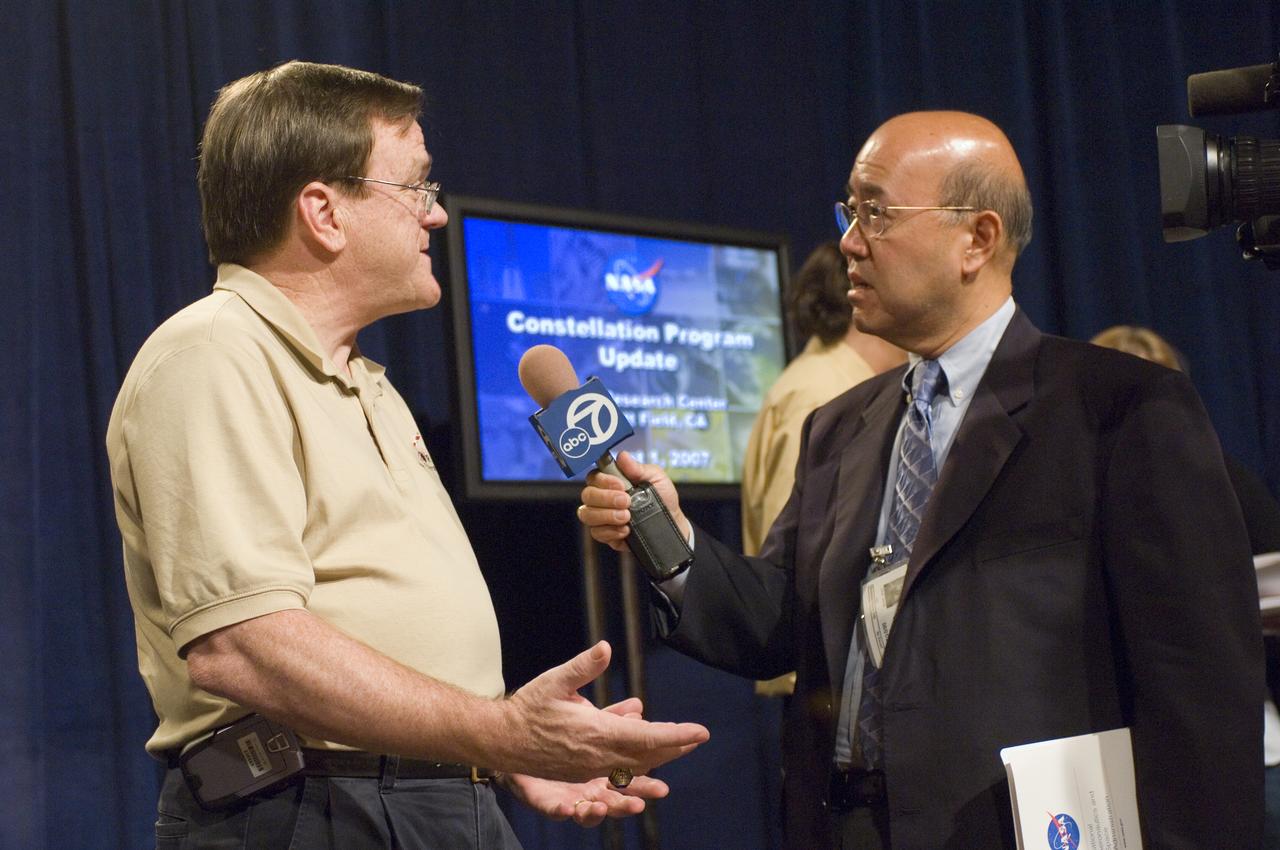
NASA Officials gather at Ames Research Center to discuss Spaceship development progress. Constellation is developing the Orion spacecraft and Ares rockets to support an American return to the moon by 2020. Speaker; Skip Hatfield, JSC Orion Project Manager
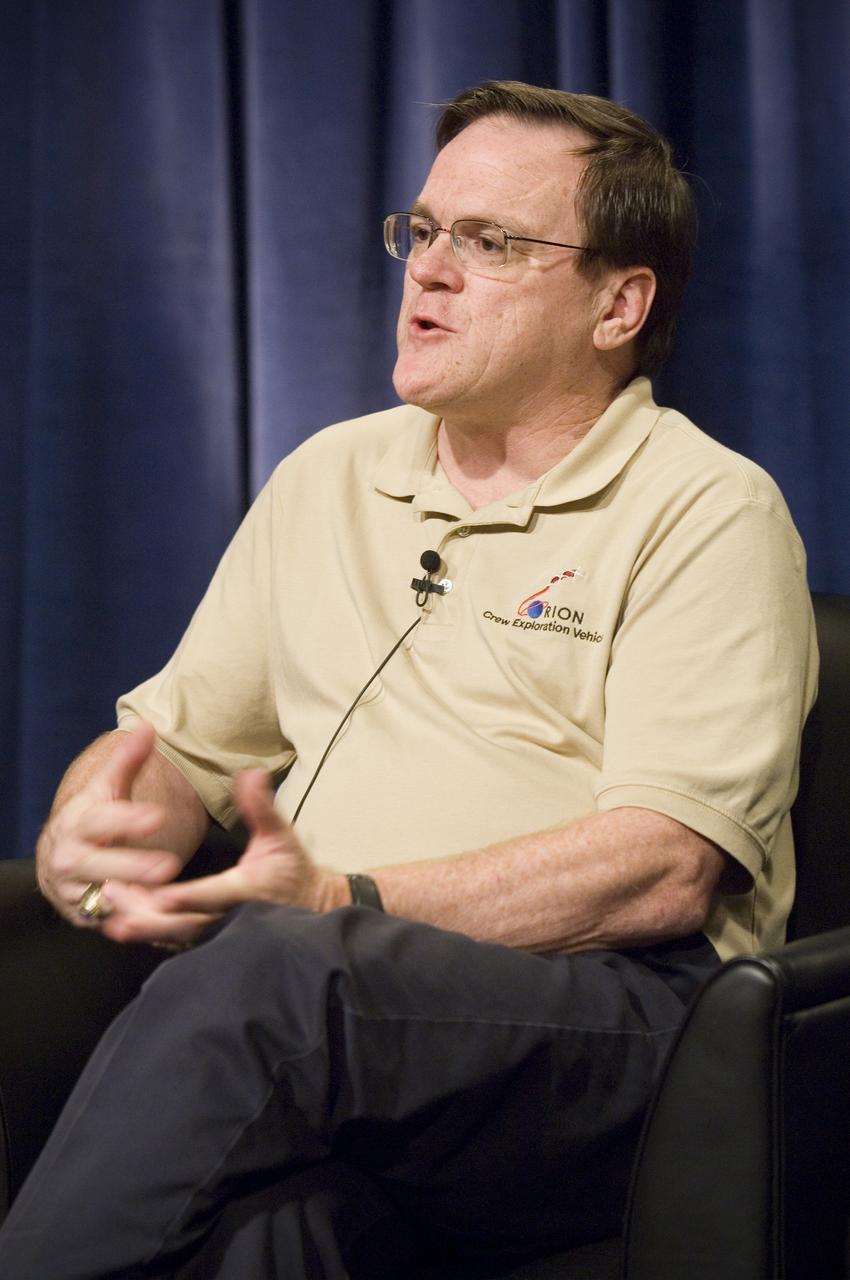
NASA Officials gather at Ames Research Center to discuss Spaceship development progress. Constellation is developing the Orion spacecraft and Ares rockets to support an American return to the moon by 2020. Speaker; Skip Hatfield, JSC Orion Project Manager

NASA Officials gather at Ames Research Center to discuss Spaceship development progress. Constellation is developing the Orion spacecraft and Ares rockets to support an American return to the moon by 2020. Speaker; Skip Hatfield, JSC Orion Project Manager
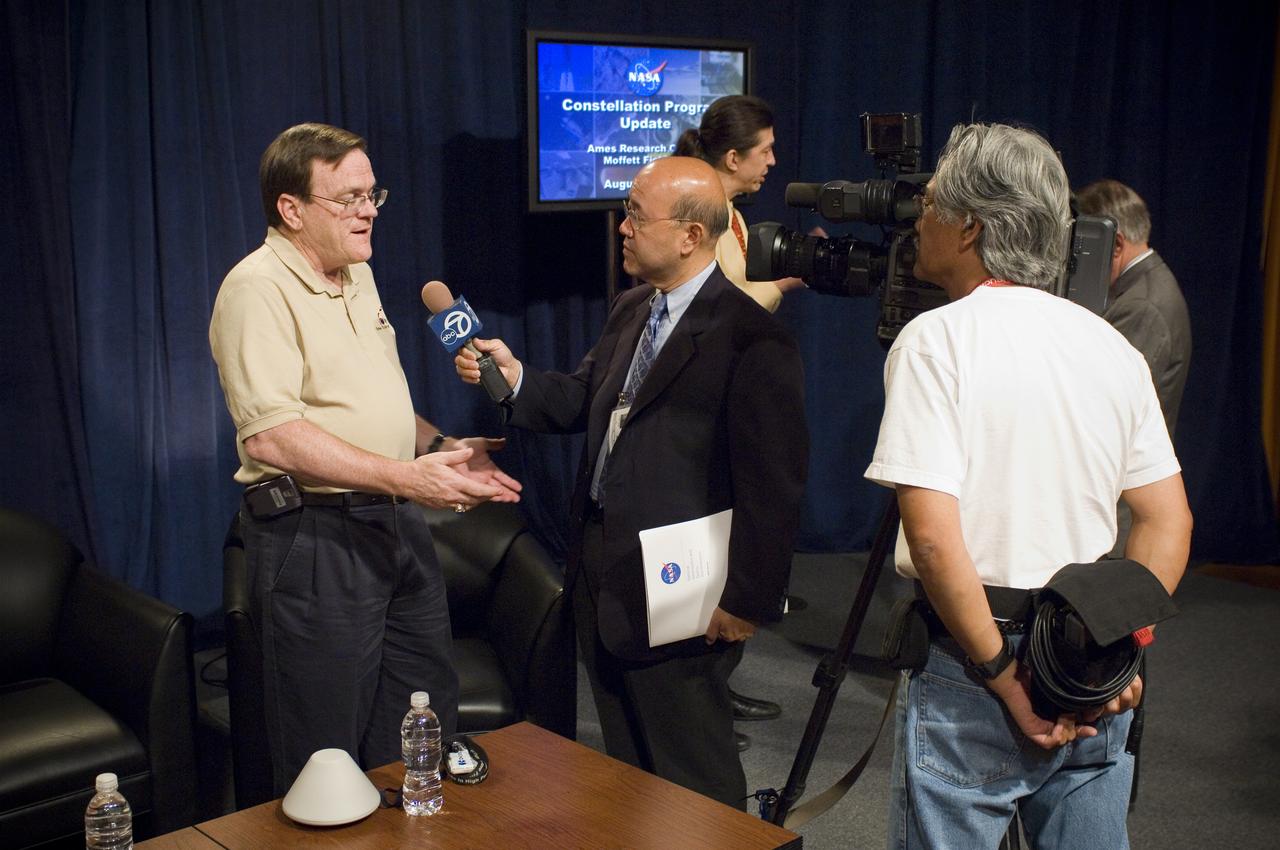
NASA Officials gather at Ames Research Center to discuss Spaceship development progress. Constellation is developing the Orion spacecraft and Ares rockets to support an American return to the moon by 2020. Speaker; Skip Hatfield, JSC Orion Project Manager
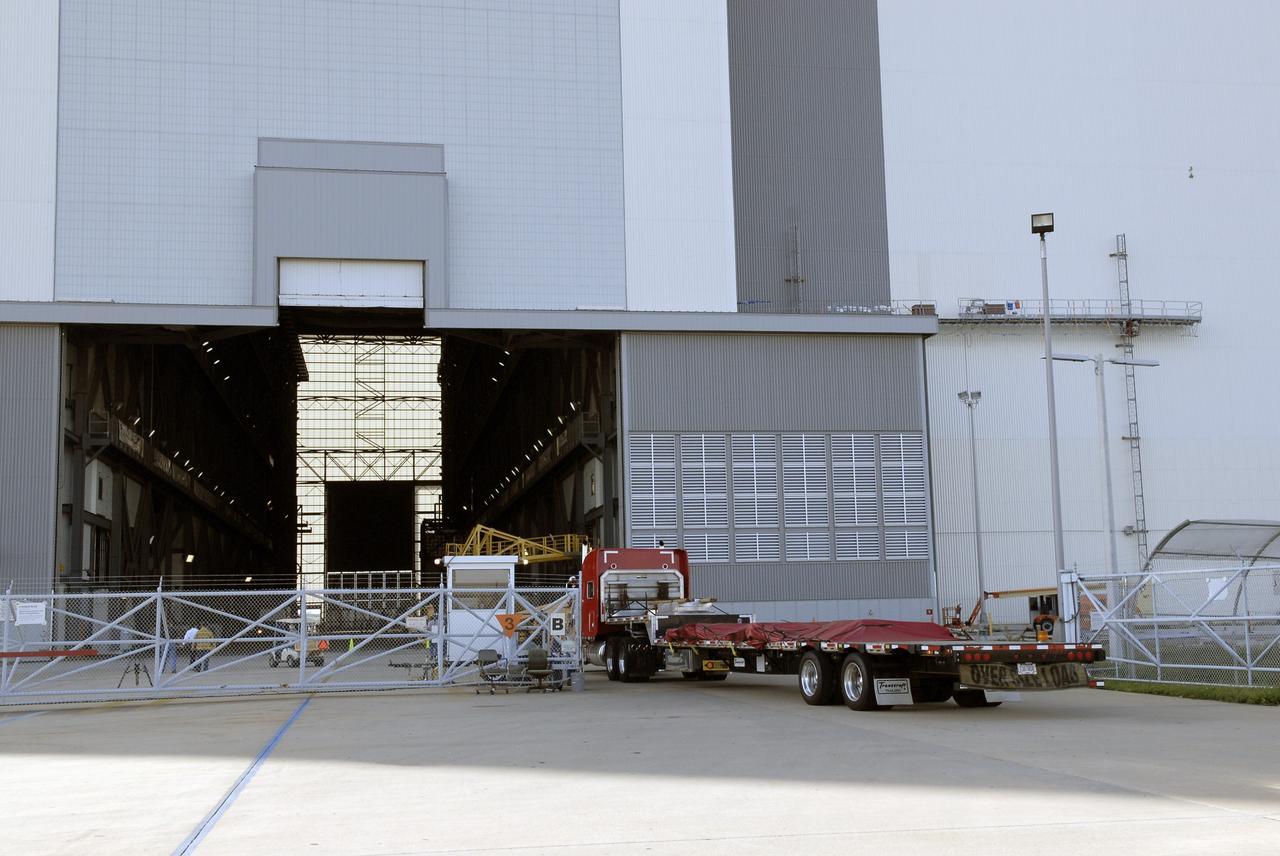
CAPE CANAVERAL, Fla. - One of five trucks transporting the Ares IX upper stage segments’ ballast assemblies arrives at the Vehicle Assembly Building at NASA’s Kennedy Space, part of the preparations for the test of the Ares IX rocket. These ballast assemblies will be installed in the upper stage 1 and 7 segments and will mimic the mass of the fuel. Their total weight is approximately 160,000 pounds. The test launch of the Ares IX in 2009 will be the first designed to determine the flight-worthiness of the Ares I rocket. Ares I is an in-line, two-stage rocket that will transport the Orion crew exploration vehicle to low-Earth orbit. The Ares I first stage will be a five-segment solid rocket booster based on the four-segment design used for the space shuttle. Ares I’s fifth booster segment allows the launch vehicle to lift more weight and reach a higher altitude before the first stage separates from the upper stage, which ignites in midflight to propel the Orion spacecraft to Earth orbit. Photo credit: NASA/Kim Shiflett
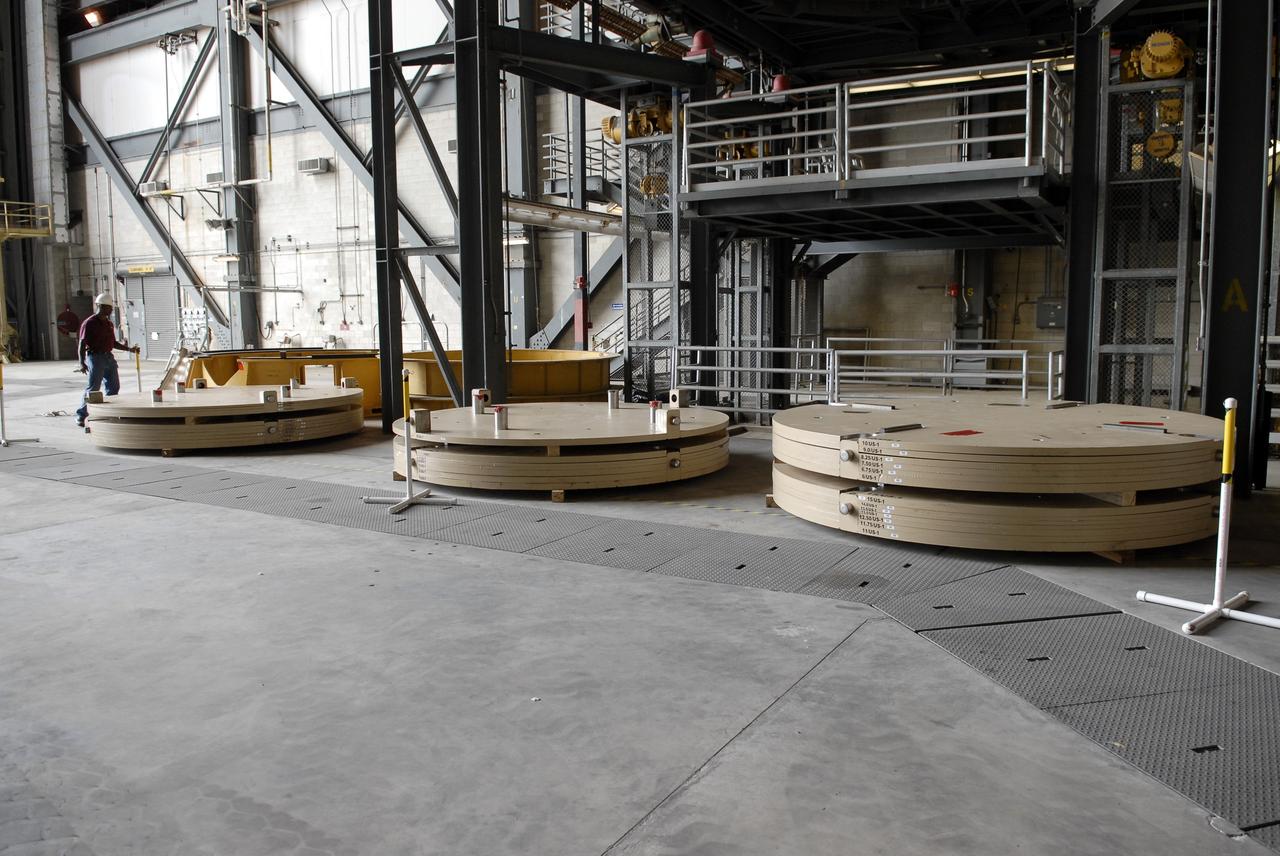
CAPE CANAVERAL, Fla. - Ares IX upper stage segments’ ballast assemblies are positioned along the floor of high bay 4 in the Vehicle Assembly Building at NASA’s Kennedy Space Center, part of the preparations for the test of the Ares IX rocket. These ballast assemblies will be installed in the upper stage 1 and 7 segments and will mimic the mass of the fuel. Their total weight is approximately 160,000 pounds. The test launch of the Ares IX in 2009 will be the first designed to determine the flight-worthiness of the Ares I rocket. Ares I is an in-line, two-stage rocket that will transport the Orion crew exploration vehicle to low-Earth orbit. The Ares I first stage will be a five-segment solid rocket booster based on the four-segment design used for the space shuttle. Ares I’s fifth booster segment allows the launch vehicle to lift more weight and reach a higher altitude before the first stage separates from the upper stage, which ignites in midflight to propel the Orion spacecraft to Earth orbit. Photo credit: NASA/Kim Shiflett
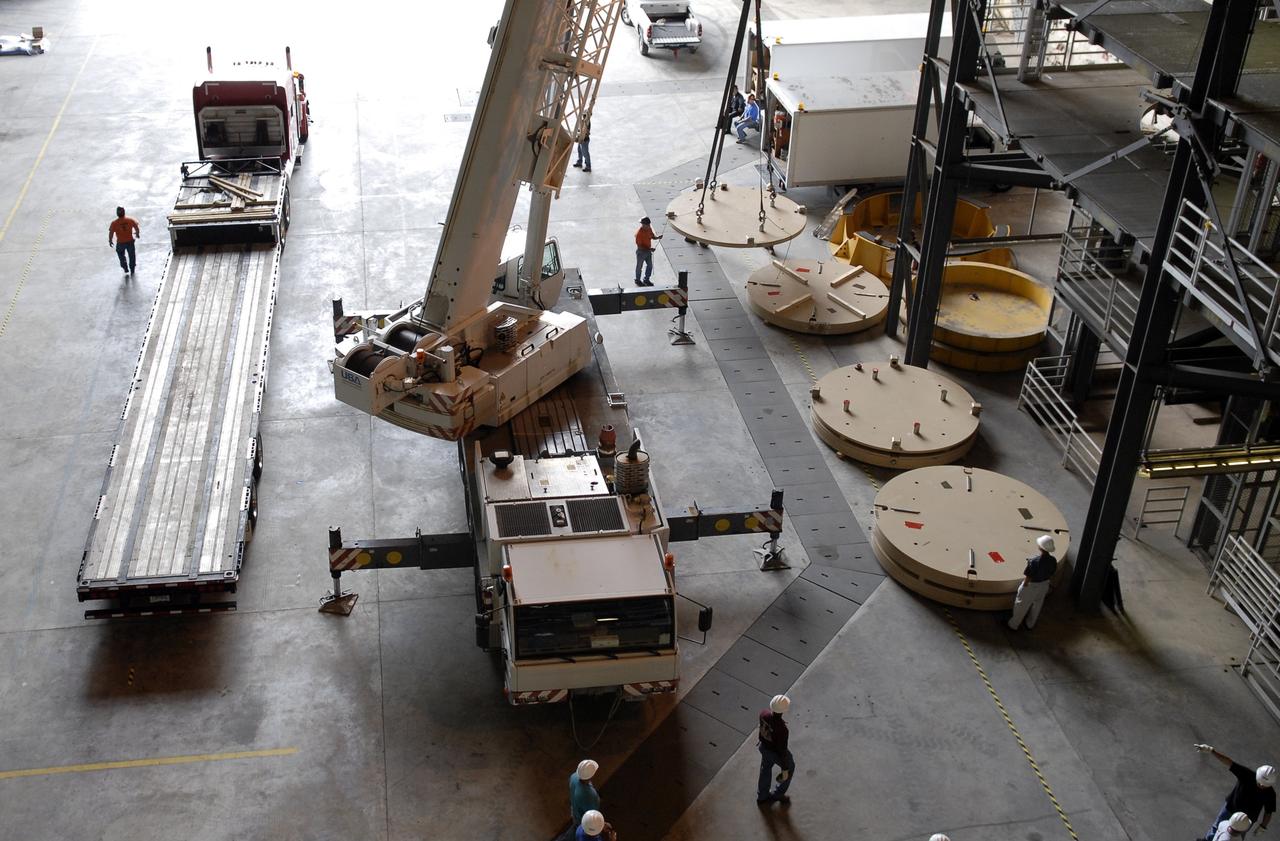
CAPE CANAVERAL, Fla. - Workers position Ares IX upper stage segments’ ballast assemblies along the floor of high bay 4 in the Vehicle Assembly Building at NASA’s Kennedy Space Center, part of the preparations for the test of the Ares IX rocket. These ballast assemblies will be installed in the upper stage 1 and 7 segments and will mimic the mass of the fuel. Their total weight is approximately 160,000 pounds. The test launch of the Ares IX in 2009 will be the first designed to determine the flight-worthiness of the Ares I rocket. Ares I is an in-line, two-stage rocket that will transport the Orion crew exploration vehicle to low-Earth orbit. The Ares I first stage will be a five-segment solid rocket booster based on the four-segment design used for the space shuttle. Ares I’s fifth booster segment allows the launch vehicle to lift more weight and reach a higher altitude before the first stage separates from the upper stage, which ignites in midflight to propel the Orion spacecraft to Earth orbit. Photo credit: NASA/Kim Shiflett
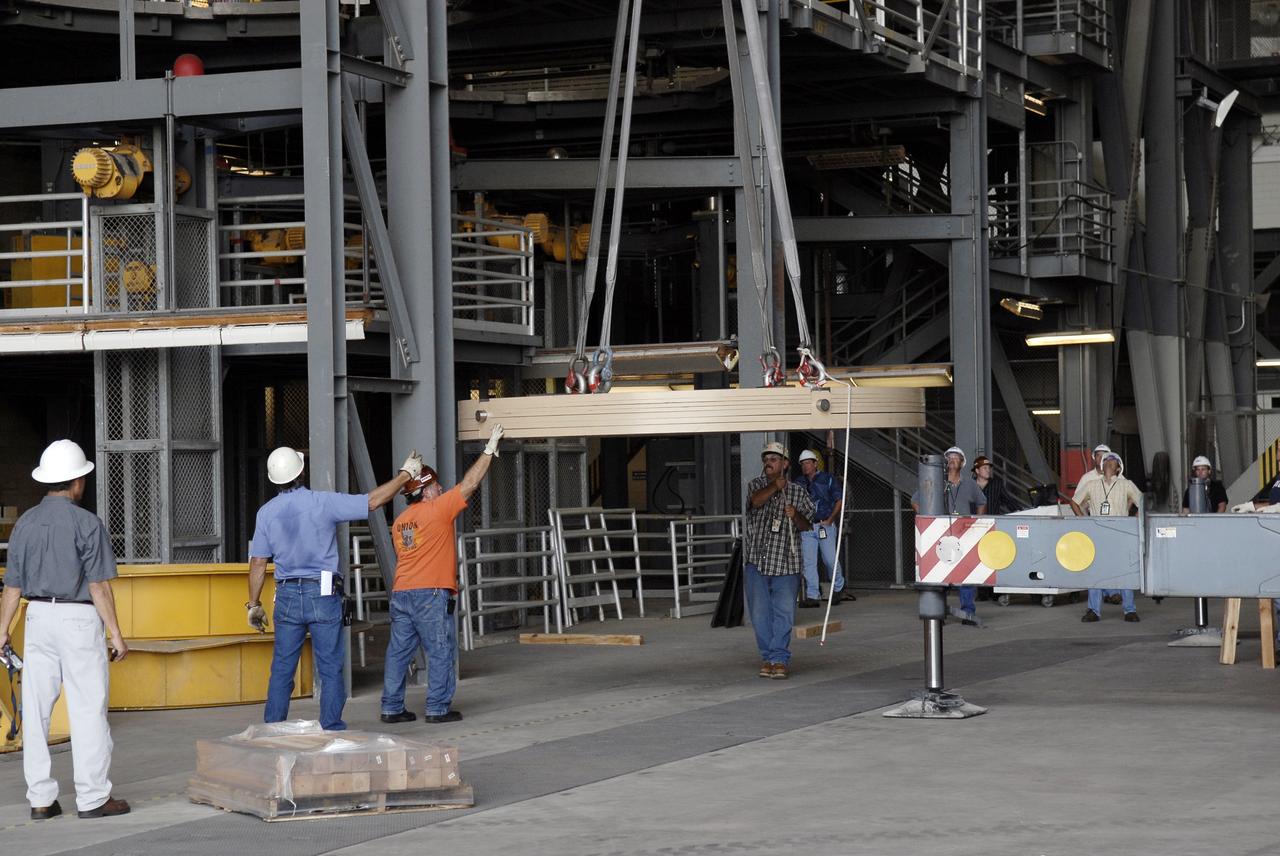
CAPE CANAVERAL, Fla. - Workers lift the Ares IX upper stage segments’ ballast assemblies off a truck in high bay 4 of the Vehicle Assembly Building at NASA’s Kennedy Space Center, part of the preparations for the test of the Ares IX rocket. These ballast assemblies will be installed in the upper stage 1 and 7 segments and will mimic the mass of the fuel. Their total weight is approximately 160,000 pounds. The test launch of the Ares IX in 2009 will be the first designed to determine the flight-worthiness of the Ares I rocket. Ares I is an in-line, two-stage rocket that will transport the Orion crew exploration vehicle to low-Earth orbit. The Ares I first stage will be a five-segment solid rocket booster based on the four-segment design used for the space shuttle. Ares I’s fifth booster segment allows the launch vehicle to lift more weight and reach a higher altitude before the first stage separates from the upper stage, which ignites in midflight to propel the Orion spacecraft to Earth orbit. Photo credit: NASA/Kim Shiflett
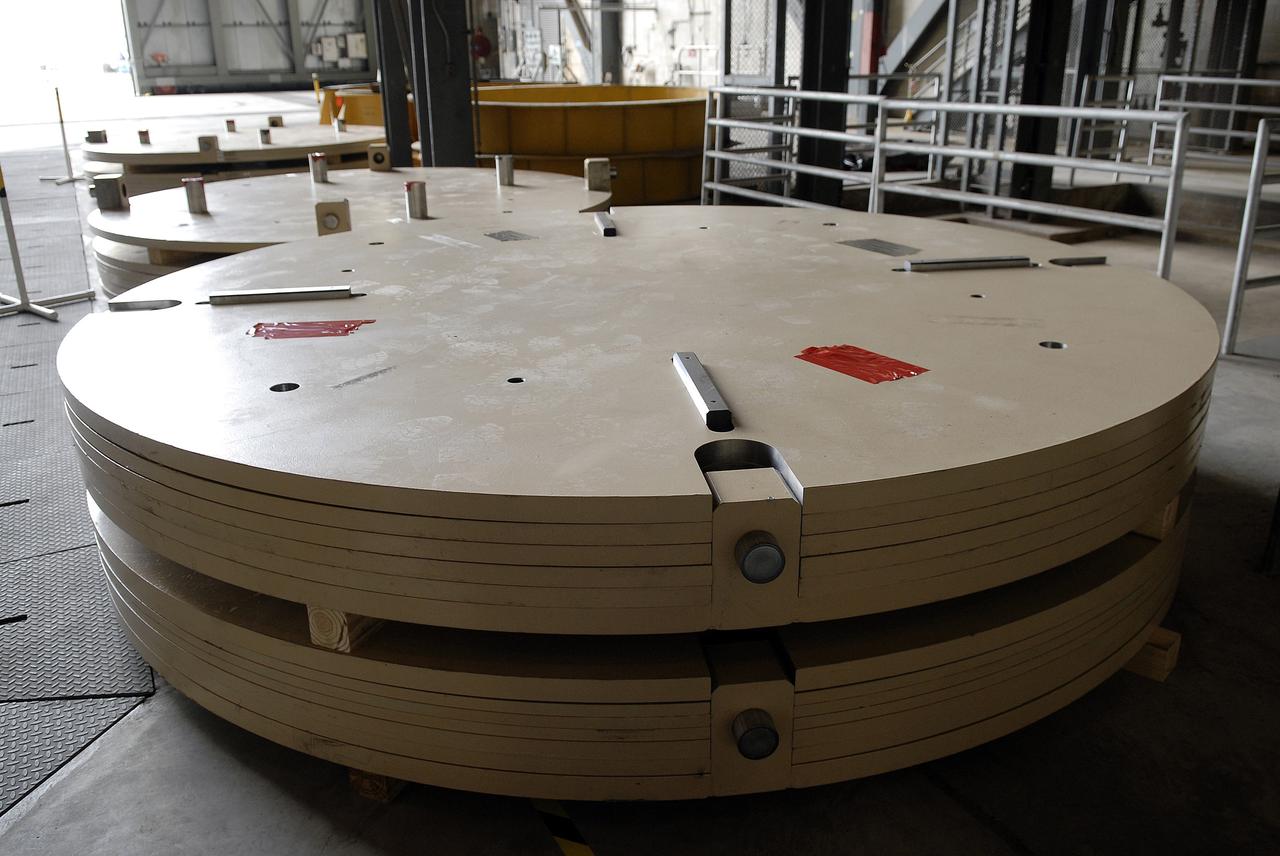
CAPE CANAVERAL, Fla. - The Ares IX upper stage segments’ ballast assemblies have arrived at NASA’s Kennedy Space Center and are positioned along the floor of high bay 4 in the Vehicle Assembly Building, part of the preparations for the test of the Ares IX rocket. These ballast assemblies will be installed in the upper stage 1 and 7 segments and will mimic the mass of the fuel. Their total weight is approximately 160,000 pounds. The test launch of the Ares IX in 2009 will be the first designed to determine the flight-worthiness of the Ares I rocket. Ares I is an in-line, two-stage rocket that will transport the Orion crew exploration vehicle to low-Earth orbit. The Ares I first stage will be a five-segment solid rocket booster based on the four-segment design used for the space shuttle. Ares I’s fifth booster segment allows the launch vehicle to lift more weight and reach a higher altitude before the first stage separates from the upper stage, which ignites in midflight to propel the Orion spacecraft to Earth orbit. Photo credit: NASA/Kim Shiflett
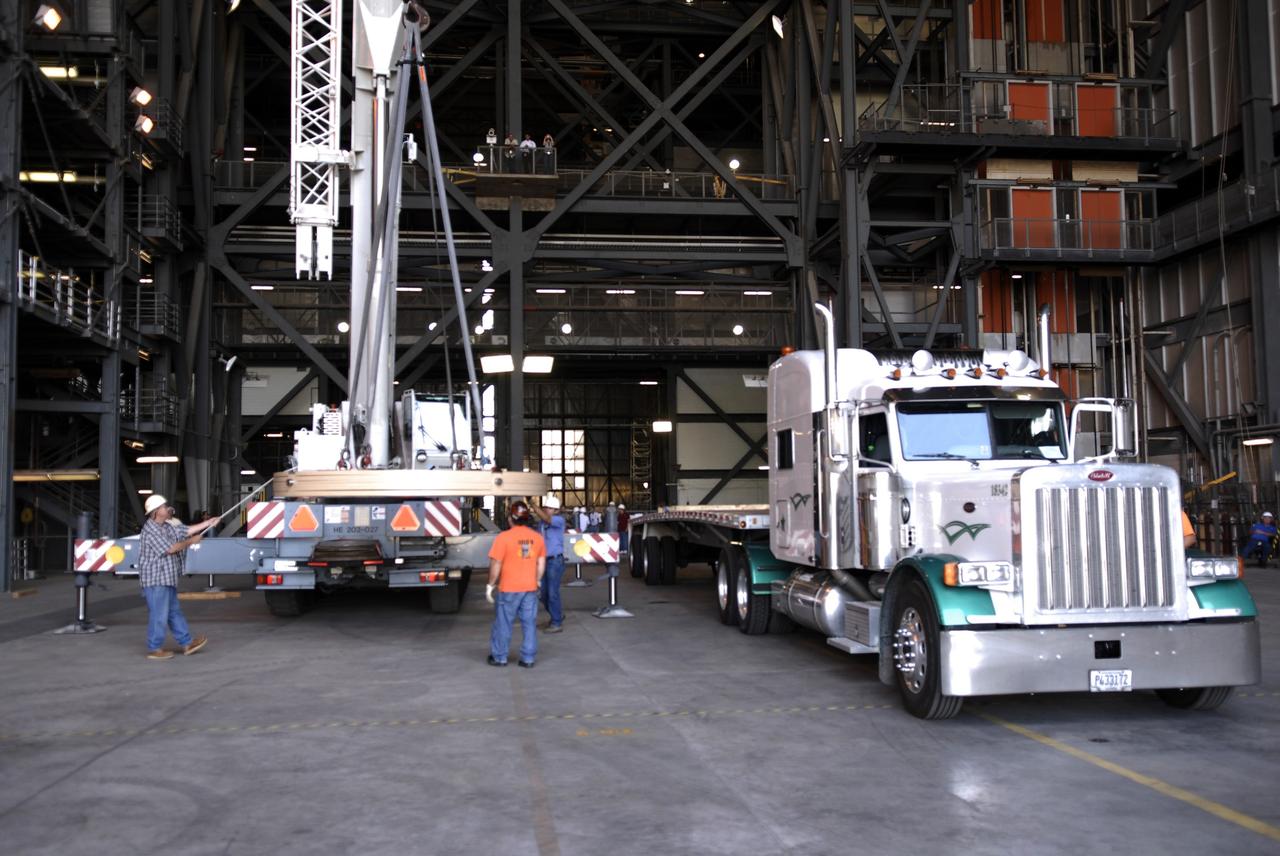
CAPE CANAVERAL, Fla. - The Ares IX upper stage segments’ ballast assemblies are offloaded from one of five trucks which delivered them to the Vehicle Assembly Building at NASA’s Kennedy Space Center, part of the preparations for the test of the Ares IX rocket. These ballast assemblies will be installed in the upper stage 1 and 7 segments and will mimic the mass of the fuel. Their total weight is approximately 160,000 pounds. The test launch of the Ares IX in 2009 will be the first designed to determine the flight-worthiness of the Ares I rocket. Ares I is an in-line, two-stage rocket that will transport the Orion crew exploration vehicle to low-Earth orbit. The Ares I first stage will be a five-segment solid rocket booster based on the four-segment design used for the space shuttle. Ares I’s fifth booster segment allows the launch vehicle to lift more weight and reach a higher altitude before the first stage separates from the upper stage, which ignites in midflight to propel the Orion spacecraft to Earth orbit. Photo credit: NASA/Kim Shiflett
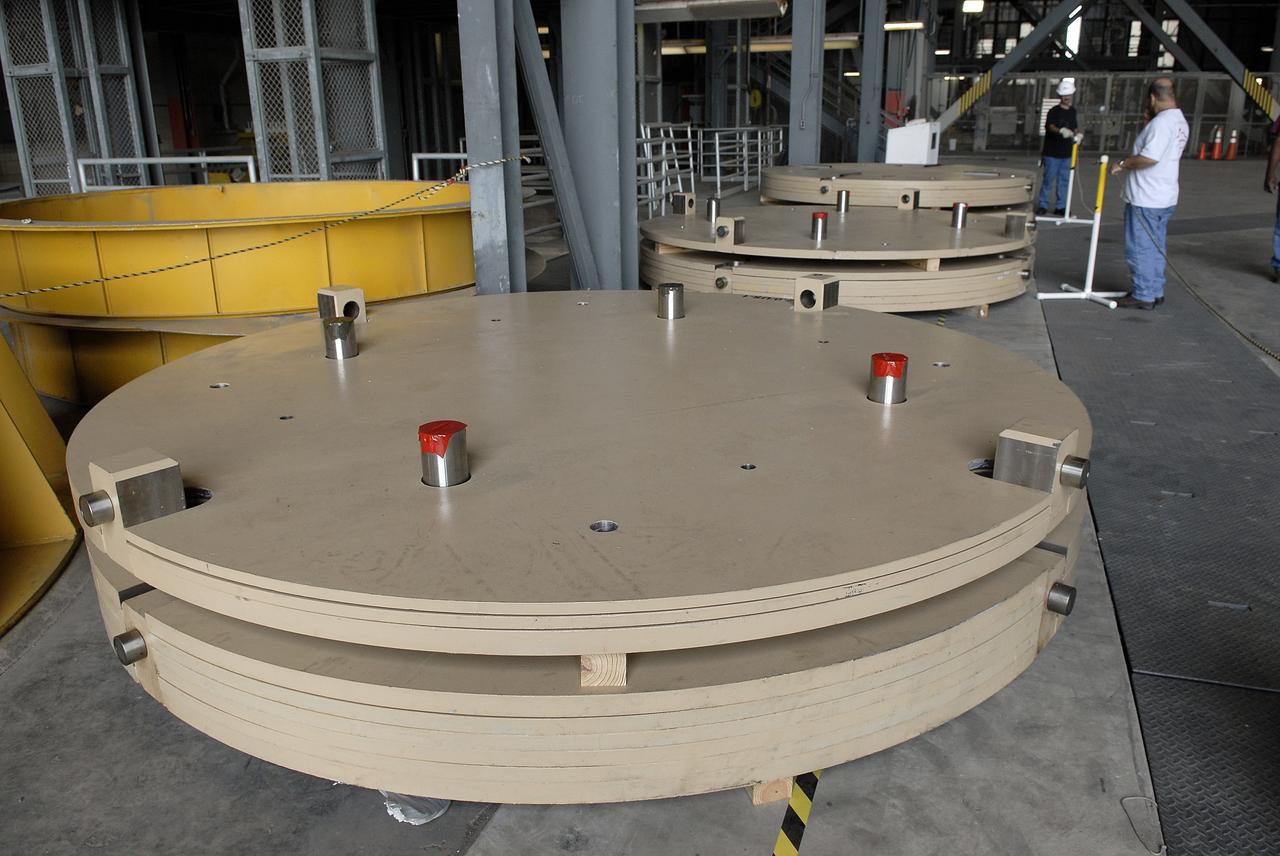
CAPE CANAVERAL, Fla. - The Ares IX upper stage segments’ ballast assemblies have arrived at NASA’s Kennedy Space Center and are positioned along the floor of high bay 4 in the Vehicle Assembly Building, part of the preparations for the test of the Ares IX rocket. These ballast assemblies will be installed in the upper stage 1 and 7 segments and will mimic the mass of the fuel. Their total weight is approximately 160,000 pounds. The test launch of the Ares IX in 2009 will be the first designed to determine the flight-worthiness of the Ares I rocket. Ares I is an in-line, two-stage rocket that will transport the Orion crew exploration vehicle to low-Earth orbit. The Ares I first stage will be a five-segment solid rocket booster based on the four-segment design used for the space shuttle. Ares I’s fifth booster segment allows the launch vehicle to lift more weight and reach a higher altitude before the first stage separates from the upper stage, which ignites in midflight to propel the Orion spacecraft to Earth orbit. Photo credit: NASA/Kim Shiflett
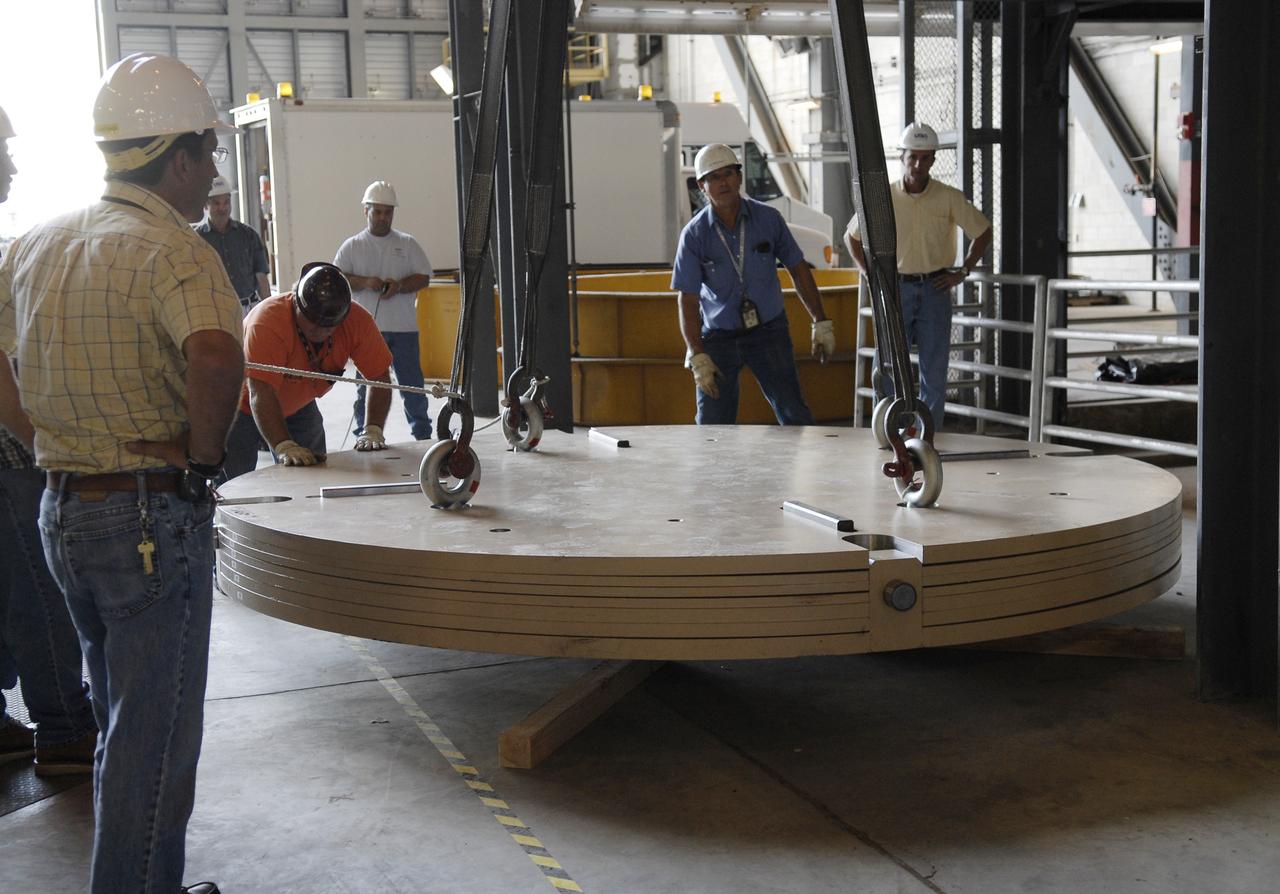
CAPE CANAVERAL, Fla. - Workers lower an Ares IX upper stage segments’ ballast assembly onto the floor of high bay 4 in the Vehicle Assembly Building at NASA’s Kennedy Space Center, part of the preparations for the test of the Ares IX rocket. These ballast assemblies will be installed in the upper stage 1 and 7 segments and will mimic the mass of the fuel. Their total weight is approximately 160,000 pounds. The test launch of the Ares IX in 2009 will be the first designed to determine the flight-worthiness of the Ares I rocket. Ares I is an in-line, two-stage rocket that will transport the Orion crew exploration vehicle to low-Earth orbit. The Ares I first stage will be a five-segment solid rocket booster based on the four-segment design used for the space shuttle. Ares I’s fifth booster segment allows the launch vehicle to lift more weight and reach a higher altitude before the first stage separates from the upper stage, which ignites in midflight to propel the Orion spacecraft to Earth orbit. Photo credit: NASA/Kim Shiflett
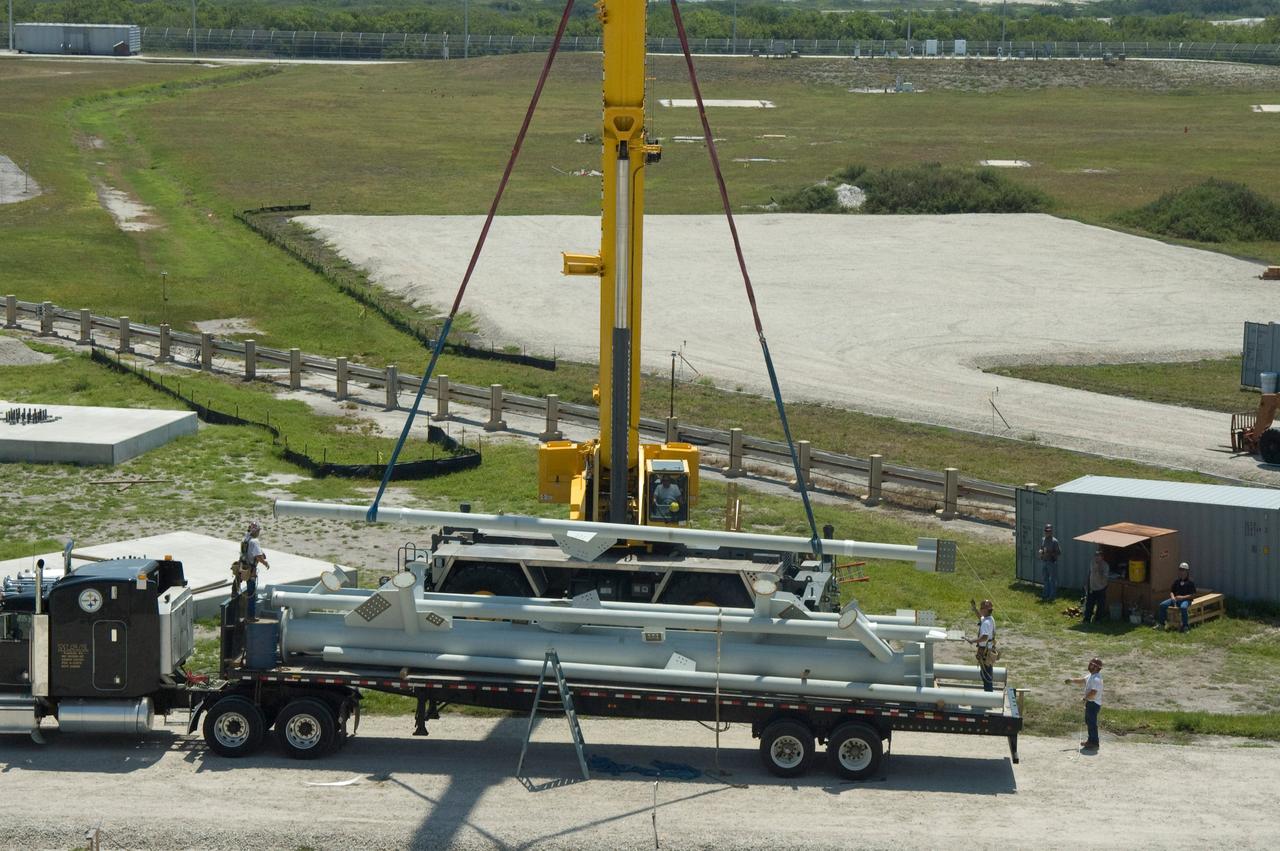
CAPE CANAVERAL, Fla. -- On Launch Pad 39B at NASA's Kennedy Space Center, a crane lifts part of the lightning mast to be erected on towers being built for the Constellation Program and Ares/Orion launches. Pad B will be the site of the first Ares vehicle launch, including Ares I-X which is scheduled for April 2009. Photo credit: NASA/Jim Grossmann
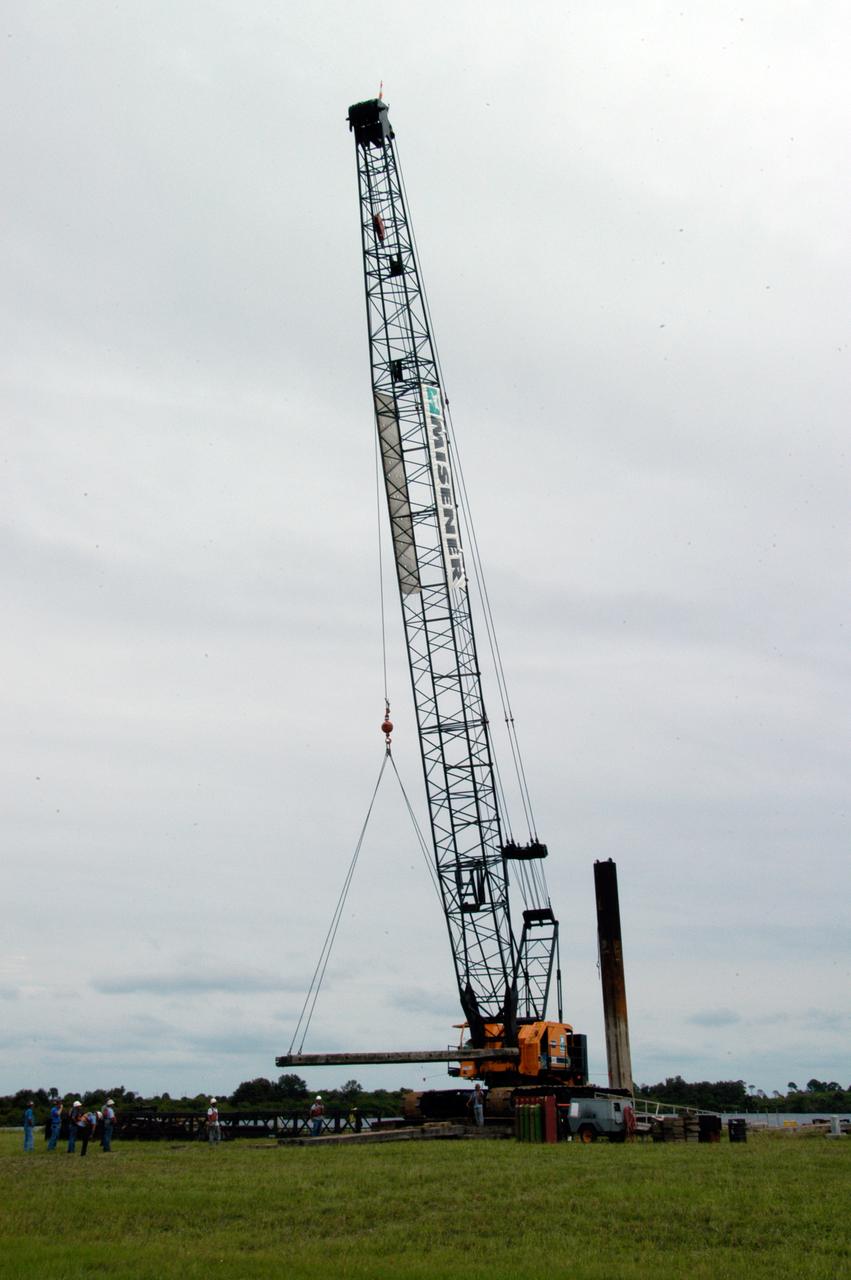
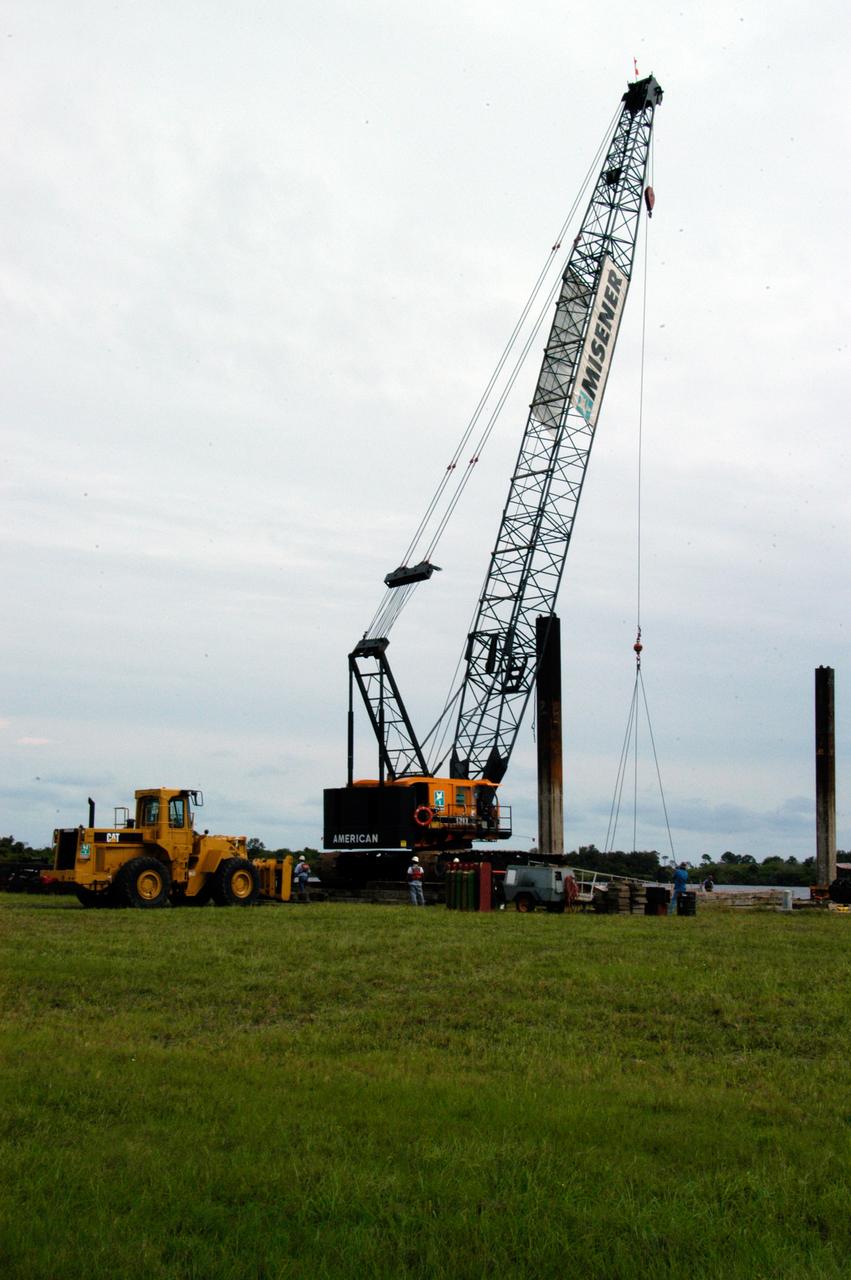
KENNEDY SPACE CENTER, FLA. -- In the Launch Complex 39 Area turn basin at NASA's Kennedy Space Center, the crane crawler moves pilings it lifted from the barge. The pilings will be used to help construct new lightning towers on Launch Pad 39B for the Constellation Program and Ares/Orion launches. Pad B will be the site of the first Ares vehicle launch, including Ares I-X which is scheduled for April 2009. Photo credit: NASA/George Shelton
A large crawler crane arrives at the turn basin at the Launch Complex 39 Area on NASA's Kennedy Space Center. The crane with its 70-foot boom will be moved to Launch Pad 39B and used to construct a new lightning protection system for the Constellation Program and Ares/Orion launches. Pad B will be the site of the first Ares vehicle launch, including Ares I-X which is scheduled for April 2009.
A large crawler crane arrives at the turn basin at the Launch Complex 39 Area on NASA's Kennedy Space Center. The crane with its 70-foot boom will be moved to Launch Pad 39B and used to construct a new lightning protection system for the Constellation Program and Ares/Orion launches. Pad B will be the site of the first Ares vehicle launch, including Ares I-X which is scheduled for April 2009.
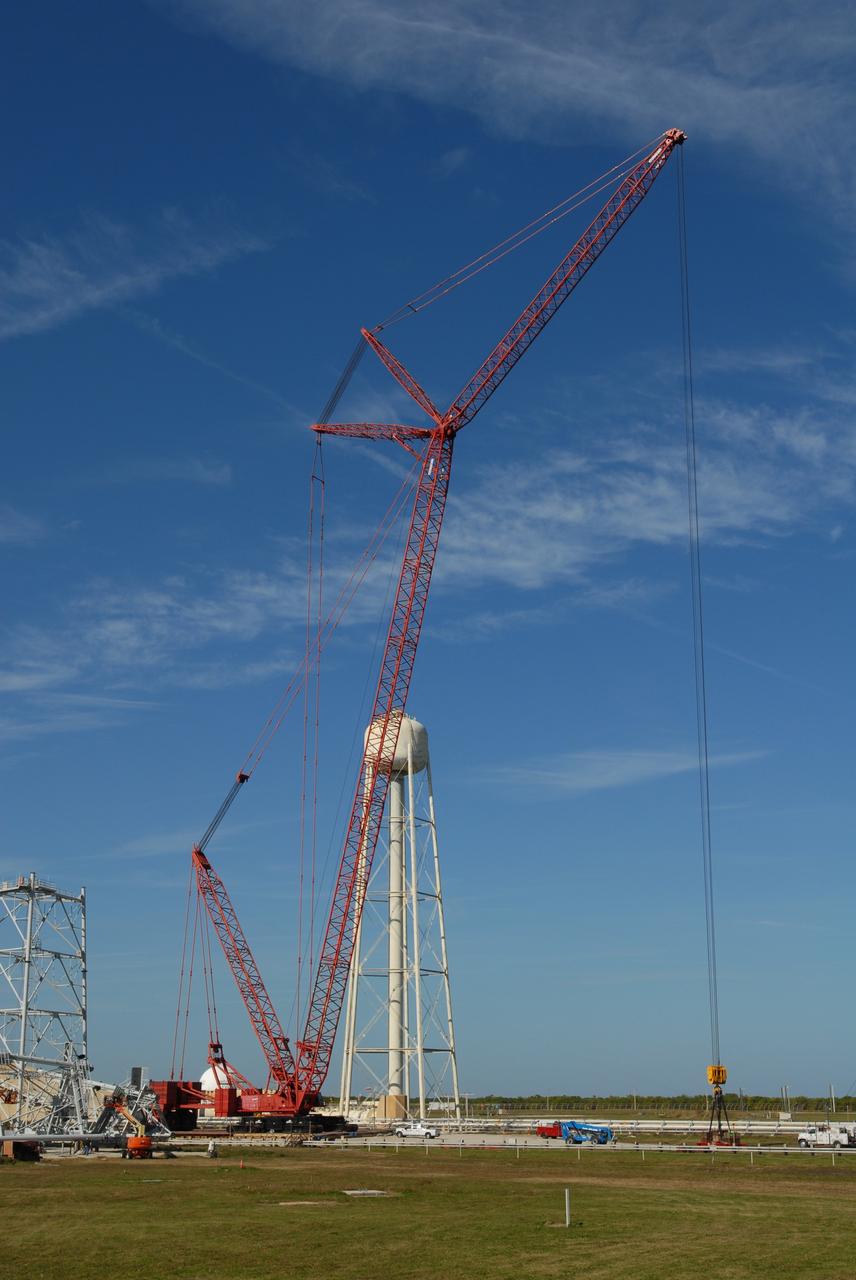
CAPE CANAVERAL, Fla. -- On Launch Pad 39B at NASA's Kennedy Space Center in Florida, a load test is conducted on a giant crane. The crane will aid in construction of lightning towers that will hold catenary wires as part of the new lightning protection system for the Constellation Program and Ares/Orion launches. One of the towers under construction is at far left. Pad 39B will be the site of the first Ares vehicle launch, including the Ares I-X test flight that is targeted for July 2009. Photo credit: NASA/Jim Grossmann
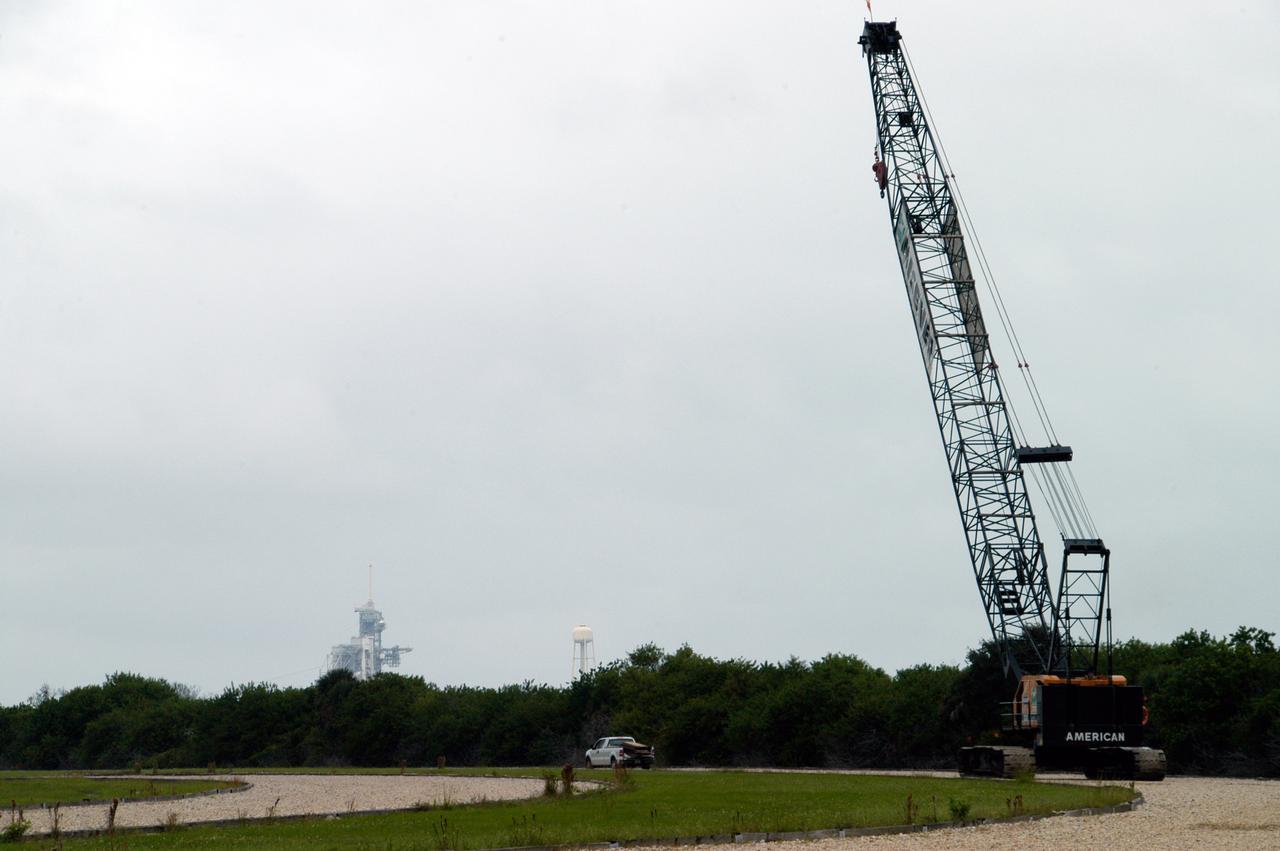
A large crawler crane traveling long one of the crawlerway tracks makes the turn toward Launch Pad 39B. The crane with its 70-foot boom will be used to construct a new lightning protection system for the Constellation Program and Ares/Orion launches. Pad B will be the site of the first Ares vehicle launch, including Ares I-X which is scheduled for April 2009.
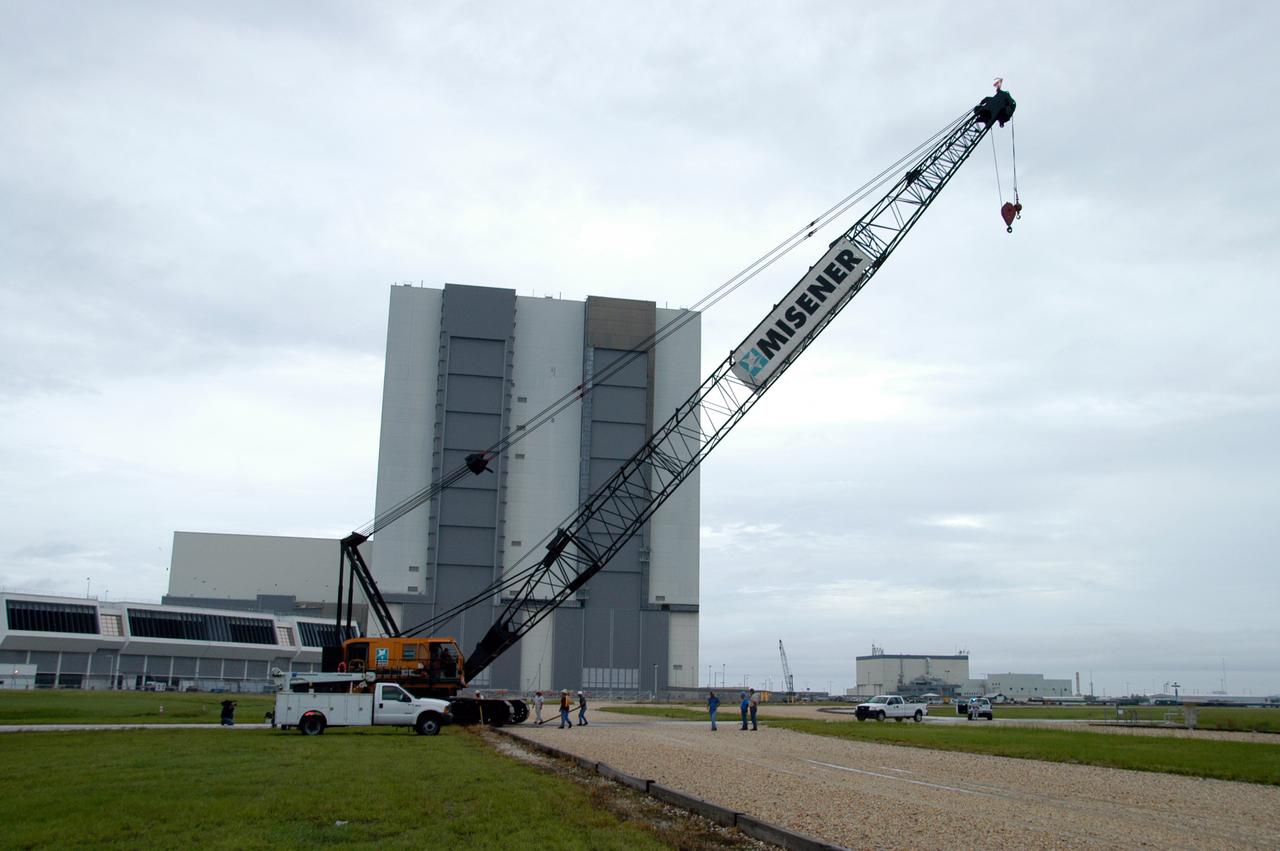
A large crawler crane moves past the Vehicle Assembly Building on its way to Launch Pad 39B. The crane with its 70-foot boom will be used to construct a new lightning protection system for the Constellation Program and Ares/Orion launches. Pad B will be the site of the first Ares vehicle launch, including Ares I-X which is scheduled for April 2009.
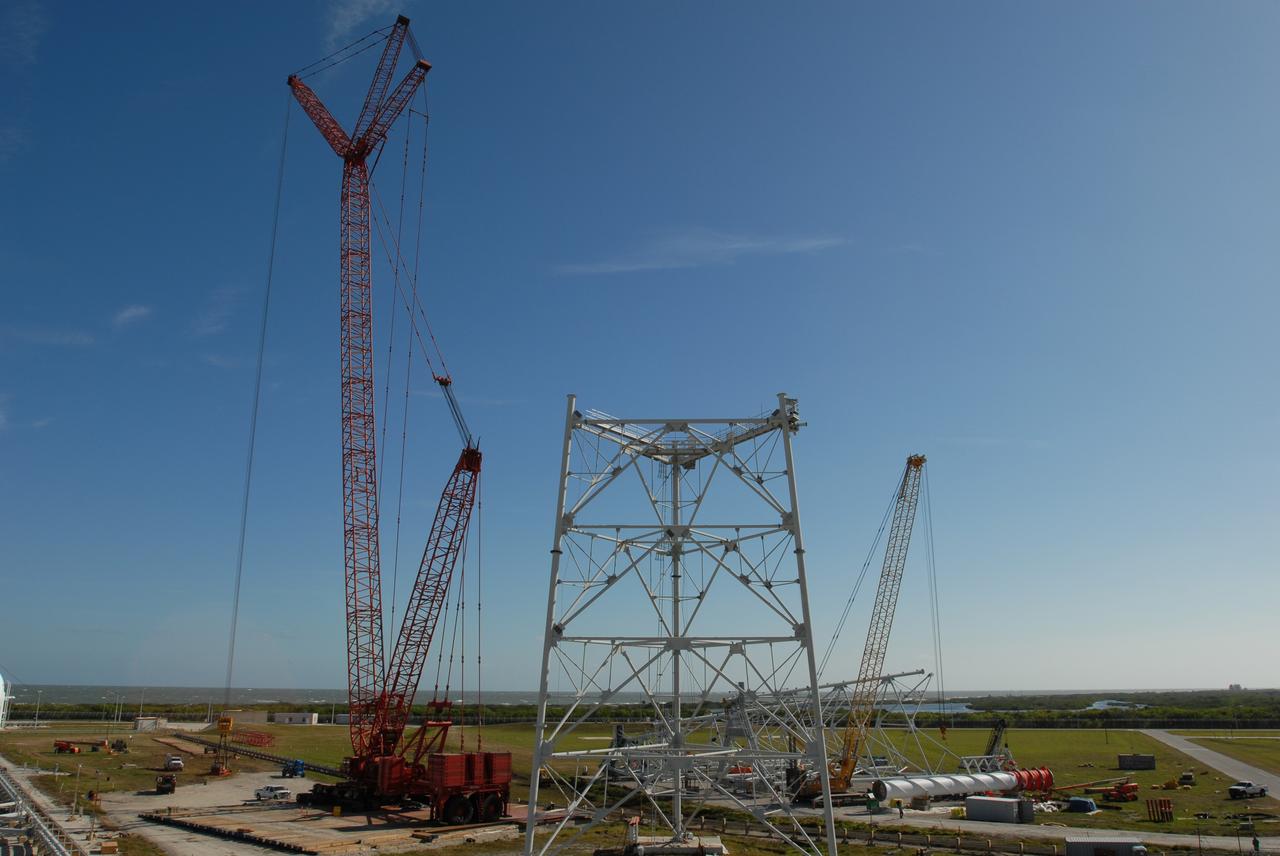
CAPE CANAVERAL, Fla. -- On Launch Pad 39B at NASA's Kennedy Space Center in Florida, a load test is conducted on a giant crane. The crane will aid in construction of lightning towers that will hold catenary wires as part of the new lightning protection system for the Constellation Program and Ares/Orion launches. One of the towers under construction is in the foreground. Pad 39B will be the site of the first Ares vehicle launch, including the Ares I-X test flight that is targeted for July 2009. Photo credit: NASA/Jim Grossmann
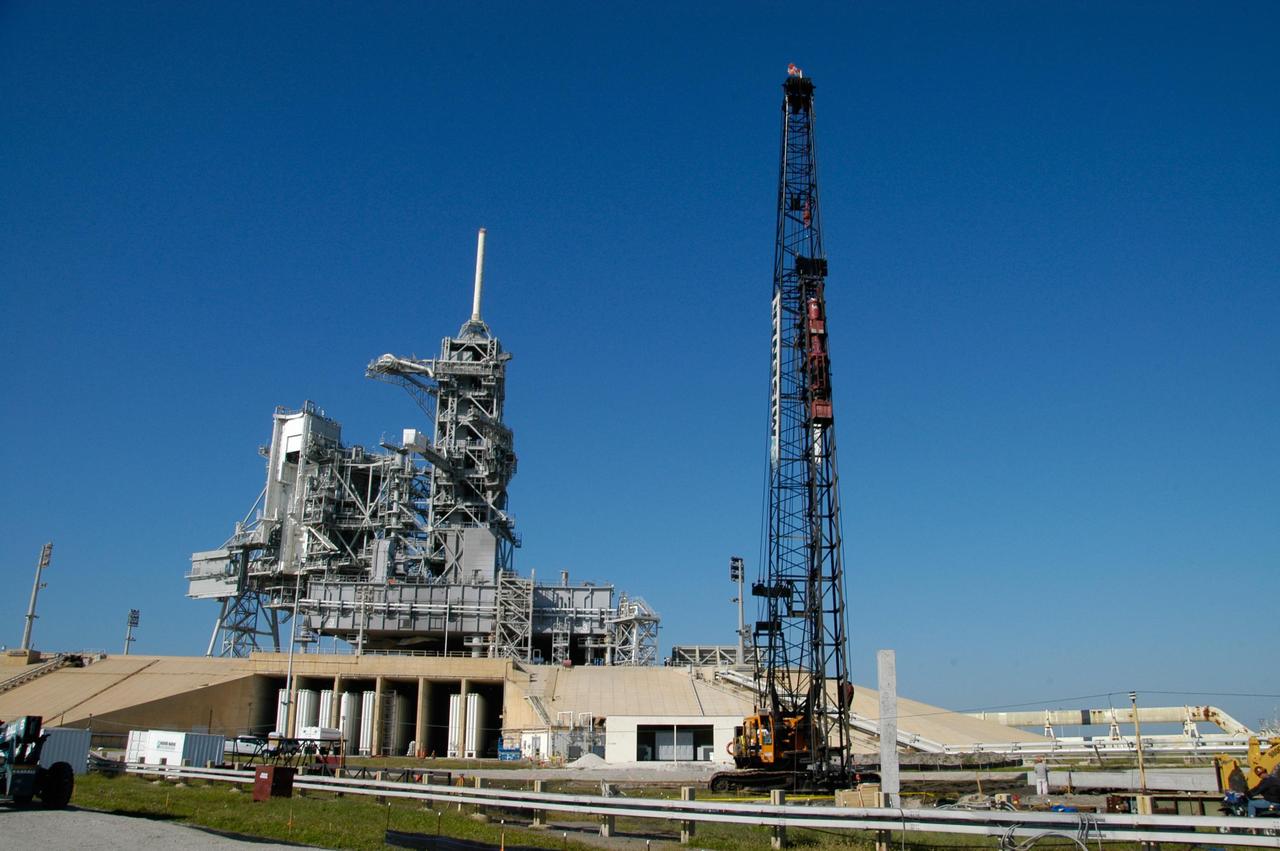
KENNEDY SPACE CENTER, FLA. -- On Launch Pad 39B at NASA's Kennedy Space Center, pilings are being pounded into the ground to help construct lightning towers for the Constellation Program and Ares/Orion launches. Pad B will be the site of the first Ares vehicle launch, including Ares I-X which is scheduled for April 2009. Photo credit: NASA/George Shelton
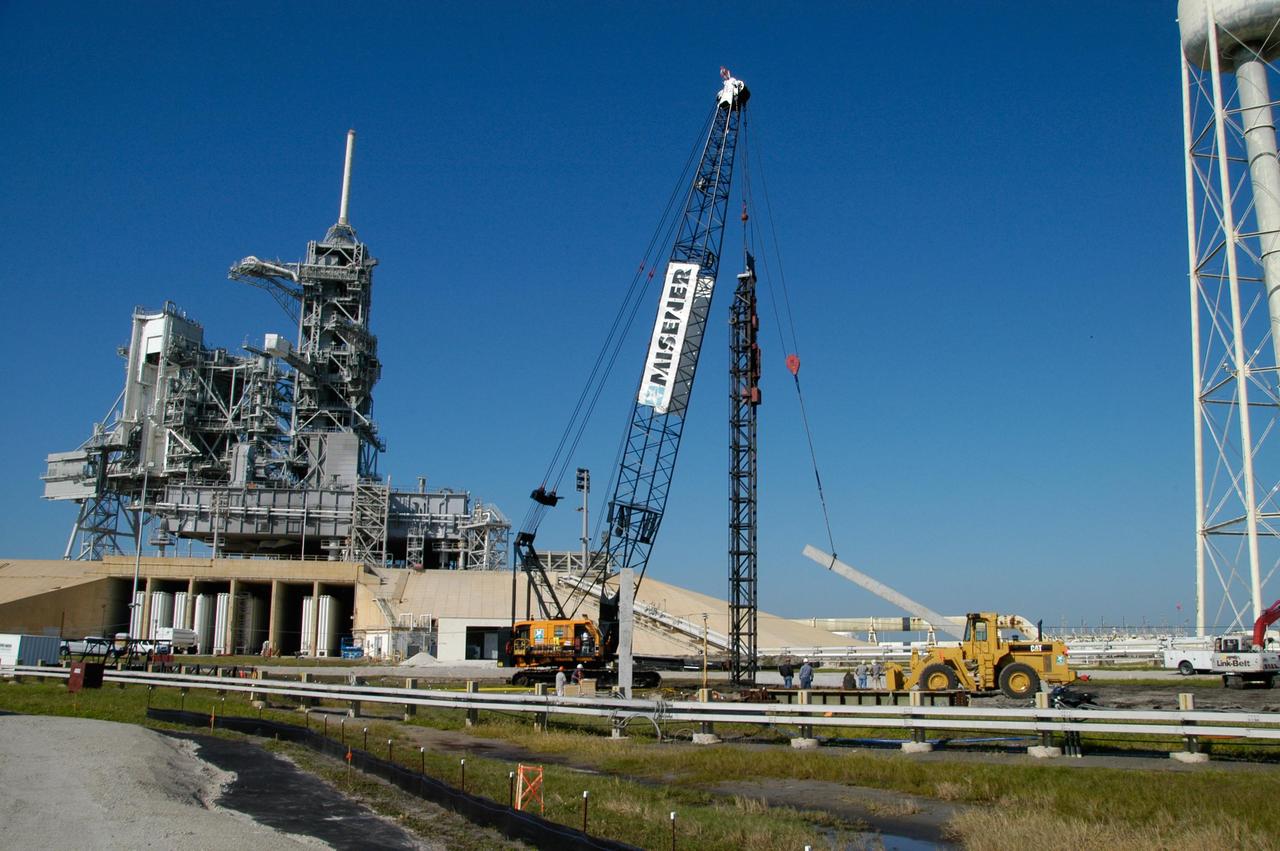
KENNEDY SPACE CENTER, FLA. -- On Launch Pad 39B at NASA's Kennedy Space Center, the crane crawler lifts a piling off a truck. The piling will be pounded into the ground to help construct lightning towers for the Constellation Program and Ares/Orion launches. Pad B will be the site of the first Ares vehicle launch, including Ares I-X which is scheduled for April 2009. Photo credit: NASA/George Shelton
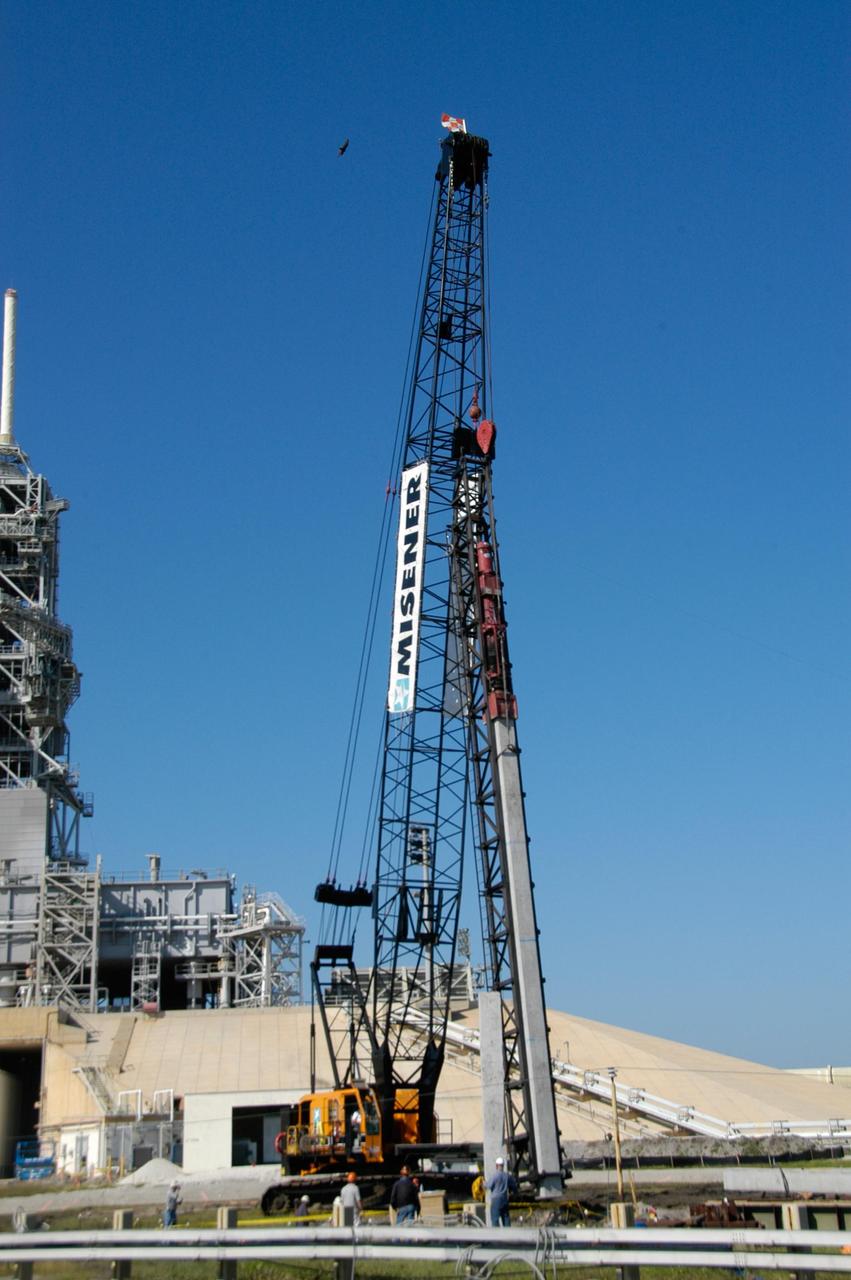
KENNEDY SPACE CENTER, FLA. -- On Launch Pad 39B at NASA's Kennedy Space Center, the crane crawler lifts a piling into place to be pounded into the ground to help construct lightning towers for the Constellation Program and Ares/Orion launches. Pad B will be the site of the first Ares vehicle launch, including Ares I-X which is scheduled for April 2009. Photo credit: NASA/George Shelton

KENNEDY SPACE CENTER, FLA. -- On Launch Pad 39B at NASA's Kennedy Space Center, workers measure the piling being pounded into the ground to help construct lightning towers for the Constellation Program and Ares/Orion launches. Pad B will be the site of the first Ares vehicle launch, including Ares I-X which is scheduled for April 2009. Photo credit: NASA/George Shelton
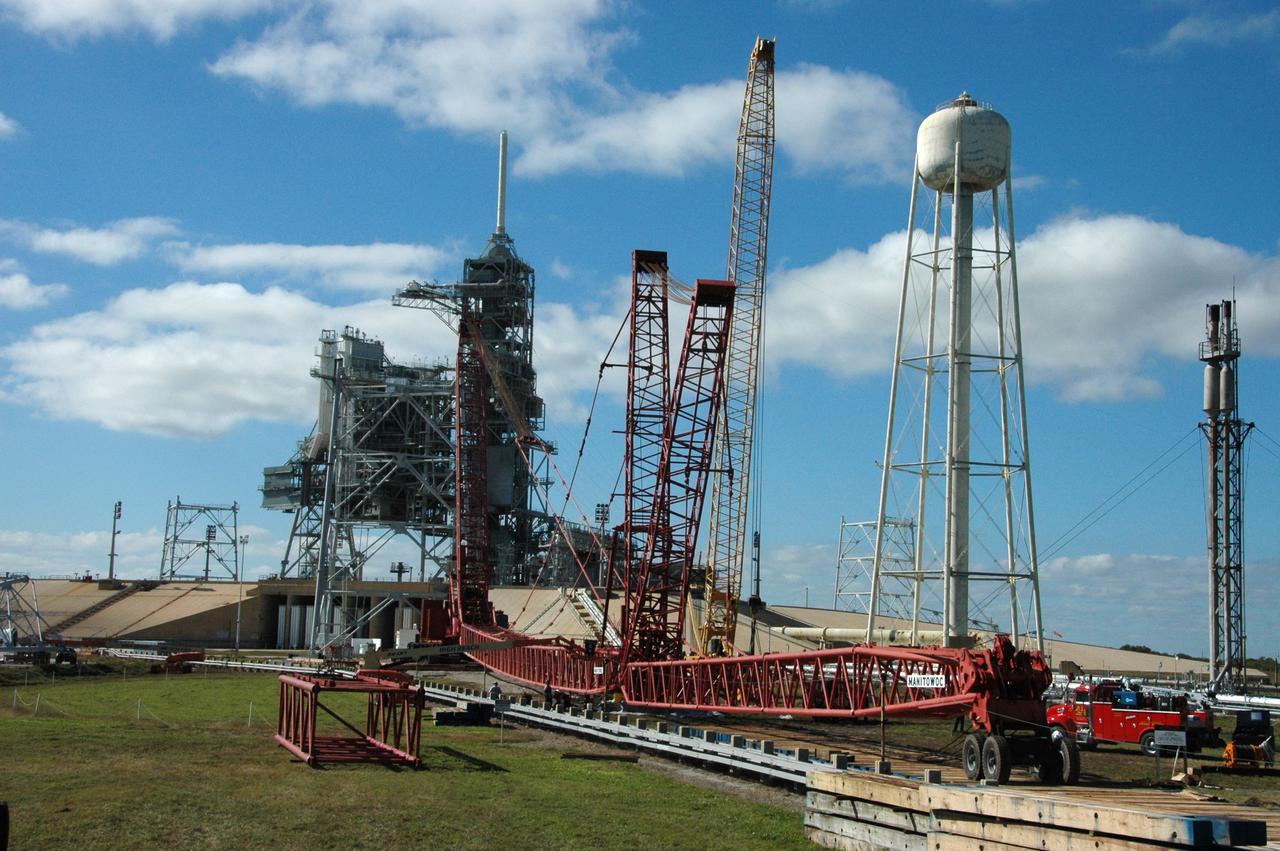
CAPE CANAVERAL, Fla. -- Very large cranes are being constructed on Launch Pad 39B at NASA's Kennedy Space Center in Florida to aid in erecting the lightning towers to hold catenary wires as part of the new lightning protection system for the Constellation Program and Ares/Orion launches. Pad 39B will be the site of the first Ares vehicle launch, including Ares I-X test flight that is targeted for July 2009. Photo credit: NASA/Tim Jacobs

CAPE CANAVERAL, Fla. -- On Launch Pad 39B at NASA's Kennedy Space Center, workers maneuver the lightning mast onto the ground. It is part of the lightning protection system being built for the Constellation Program and Ares/Orion launches. Pad B will be the site of the first Ares vehicle launch, including Ares I-X which is scheduled for April 2009. Photo credit: NASA/Jim Grossmann
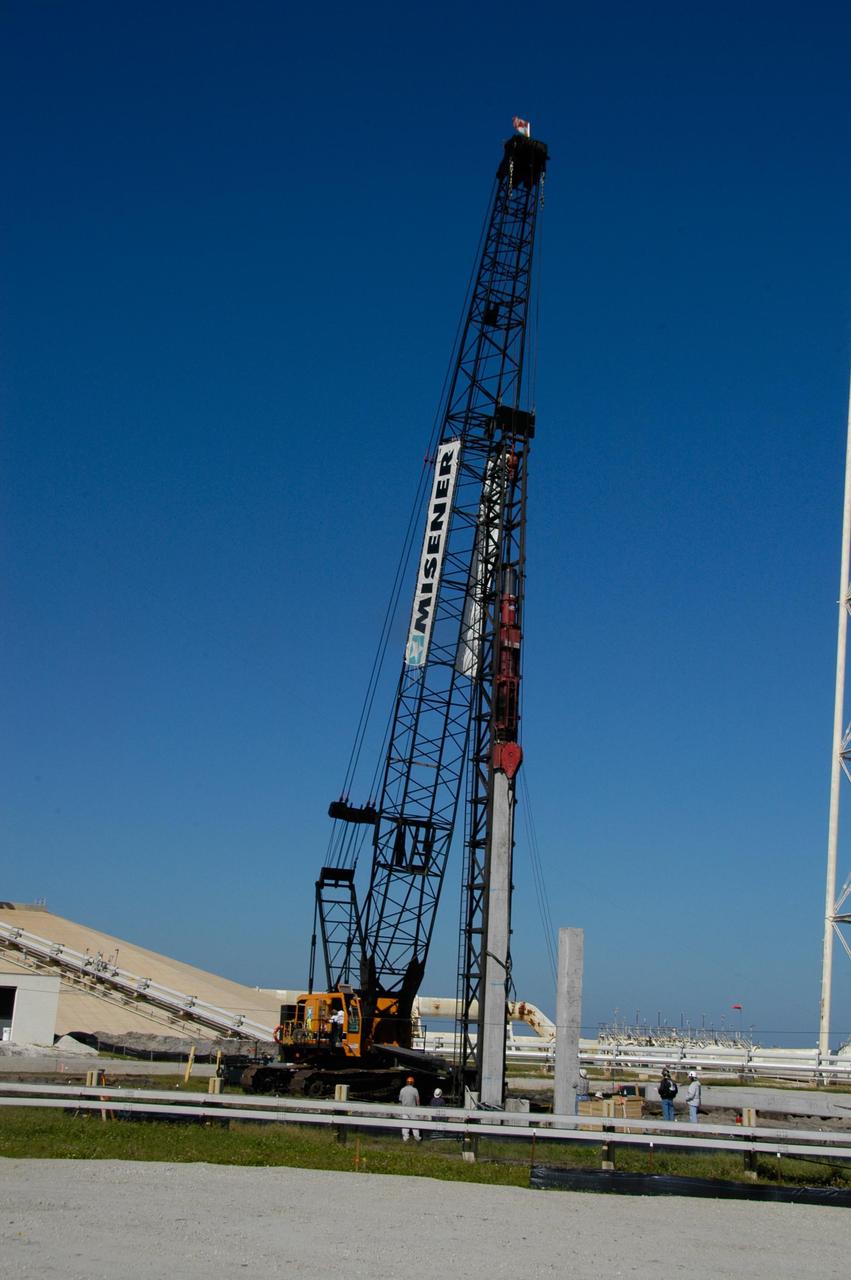
KENNEDY SPACE CENTER, FLA. -- On Launch Pad 39B at NASA's Kennedy Space Center, the crane crawler continues pounding a piling into the ground to help construct lightning towers for the Constellation Program and Ares/Orion launches. Pad B will be the site of the first Ares vehicle launch, including Ares I-X which is scheduled for April 2009. Photo credit: NASA/George Shelton
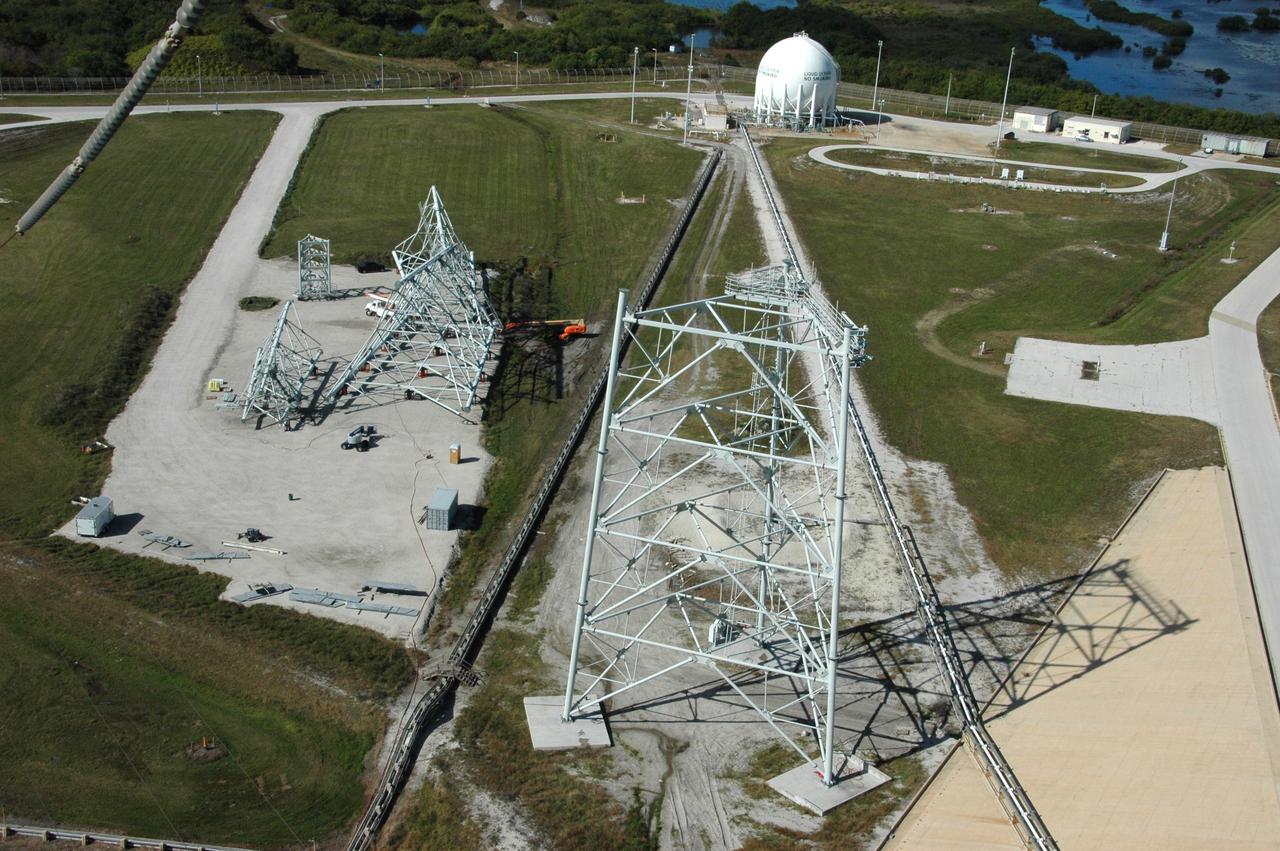
CAPE CANAVERAL, Fla. – On Launch Pad 39B at NASA's Kennedy Space Center, lightning towers are being constructed to hold centenary wires as part of the new lightning protection system for the Constellation Program and Ares/Orion launches. Pad B will be the site of the first Ares vehicle launch, including Ares I-X which is scheduled for April 2009. Photo credit: NASA/Jim Grossmann
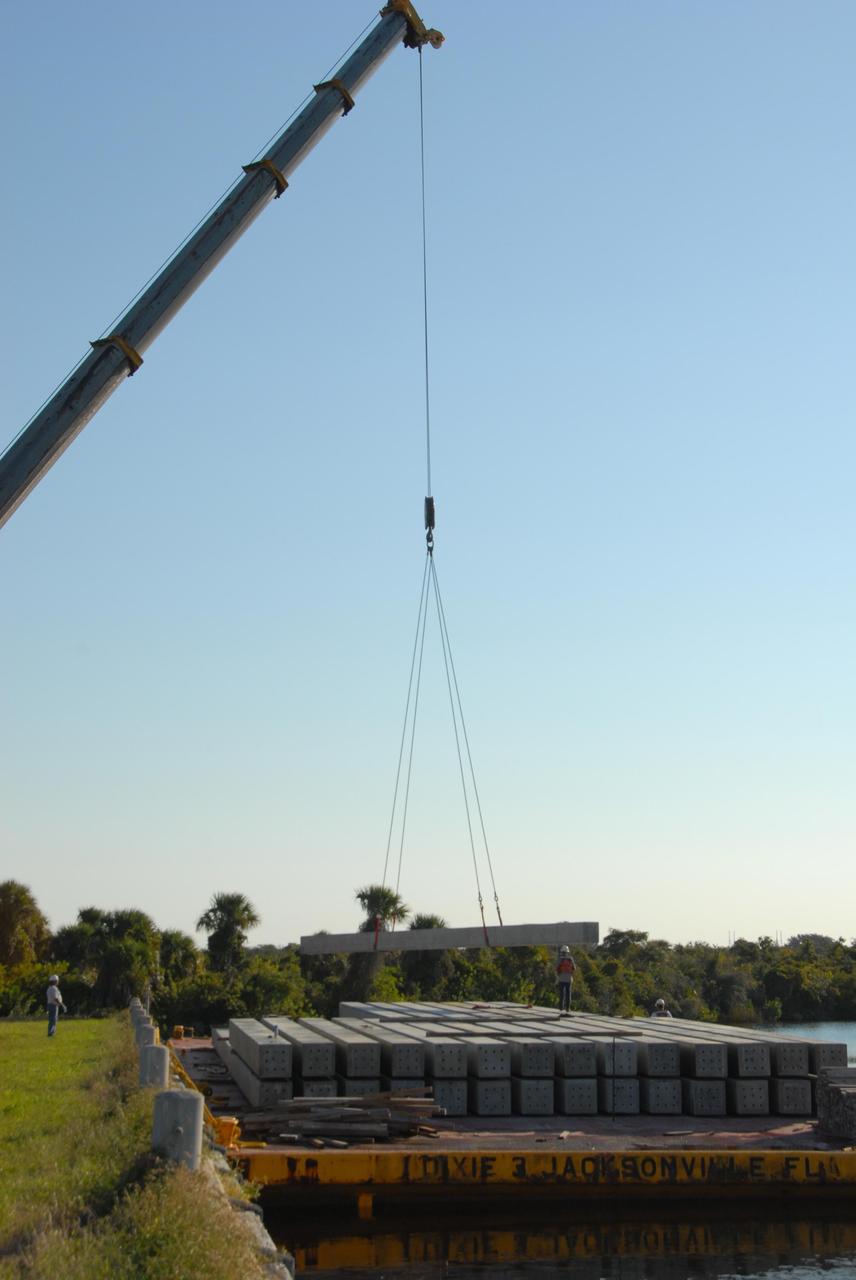
KENNEDY SPACE CENTER, FLA. -- In the Launch Complex 39 Area turn basin at NASA's Kennedy Space Center, the crane crawler begins lifting pilings from the barge. The pilings will be used to help construct new lightning towers on Launch Pad 39B for the Constellation Program and Ares/Orion launches. Pad B will be the site of the first Ares vehicle launch, including Ares I-X which is scheduled for April 2009. Photo credit: NASA/George Shelton
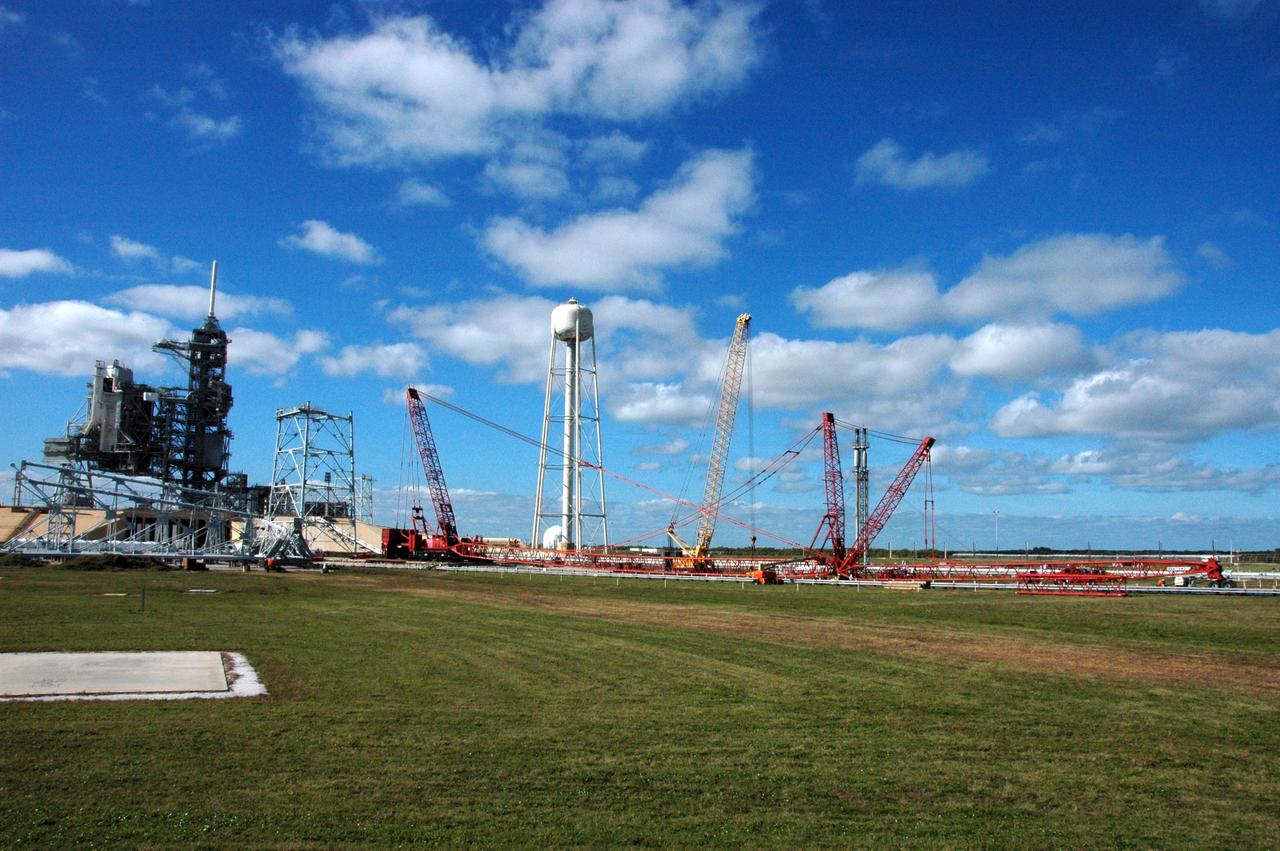
CAPE CANAVERAL, Fla. -- Very large cranes are being constructed on Launch Pad 39B at NASA's Kennedy Space Center in Florida to aid in erecting the lightning towers to hold catenary wires as part of the new lightning protection system for the Constellation Program and Ares/Orion launches. Pad 39B will be the site of the first Ares vehicle launch, including Ares I-X test flight that is targeted for July 2009. Photo credit: NASA/Tim Jacobs

A large crawler crane travels along one of the crawlerway tracks on its way to Launch Pad 39B. The crane with its 70-foot boom will be used to construct a new lightning protection system for the Constellation Program and Ares/Orion launches. Pad B will be the site of the first Ares vehicle launch, including Ares I-X which is scheduled for April 2009.
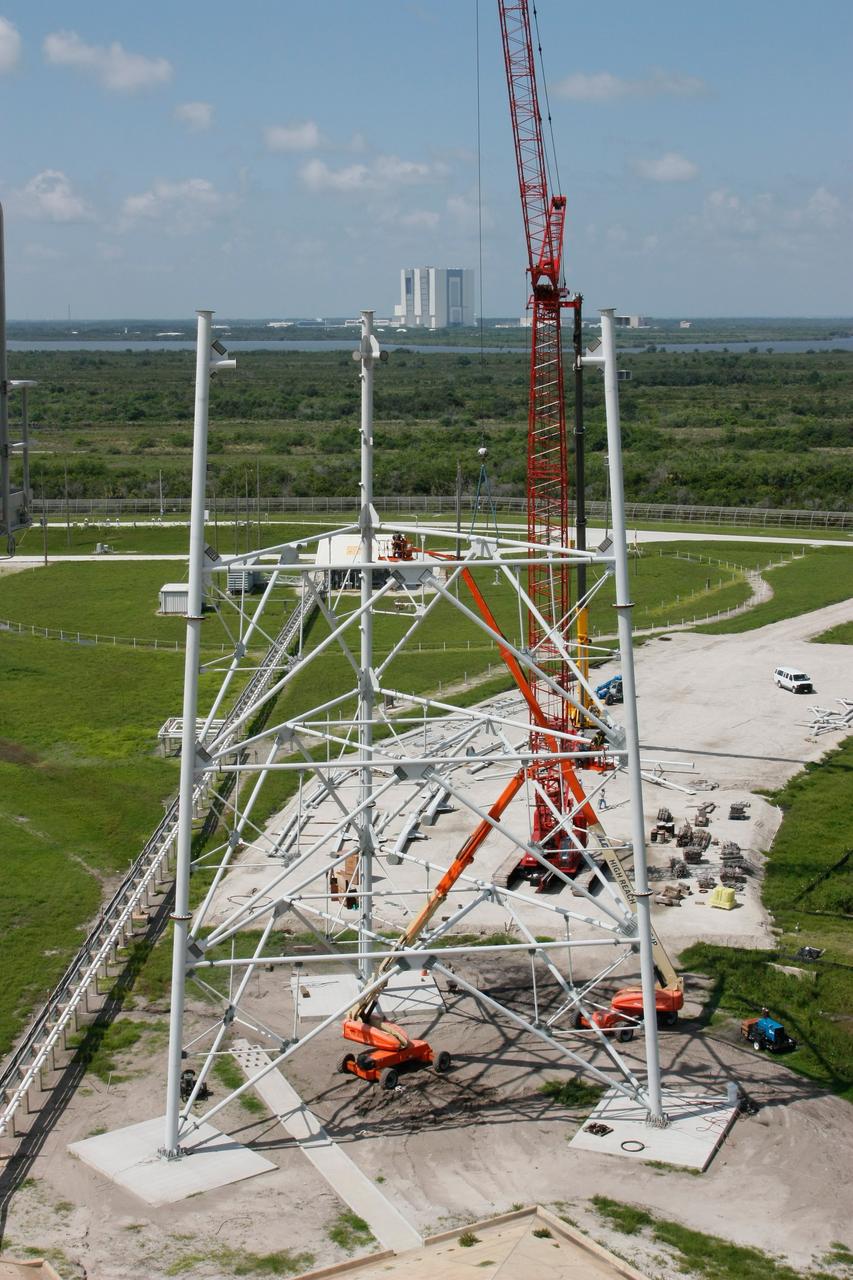
CAPE CANAVERAL, Fla. -- On Launch Pad 39B at NASA's Kennedy Space Center in Florida, one of the new lightning towers is under construction. The towers will hold catenary wires as part of the new lightning protection system for the Constellation Program and Ares/Orion launches. Pad 39B will be the site of the first Ares vehicle launch, including Ares I-X test flight that is targeted for July 2009. Photo credit: NASA/Tim Jacobs
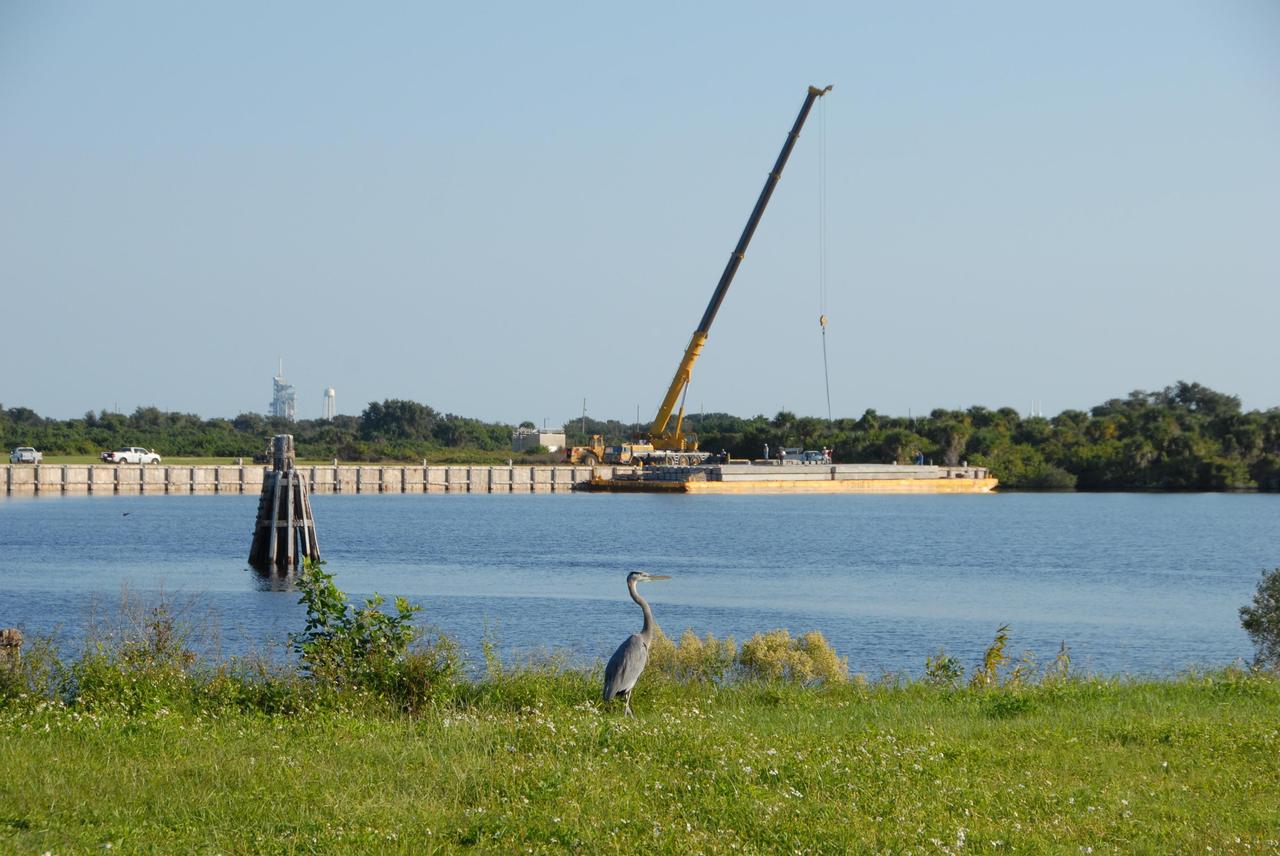
KENNEDY SPACE CENTER, FLA. -- In the Launch Complex 39 Area turn basin at NASA's Kennedy Space Center, the crane crawler is being used to lift pilings from a barge. The pilings will be used to help construct new lightning towers on Launch Pad 39B for the Constellation Program and Ares/Orion launches. Pad B will be the site of the first Ares vehicle launch, including Ares I-X which is scheduled for April 2009. Photo credit: NASA/George Shelton
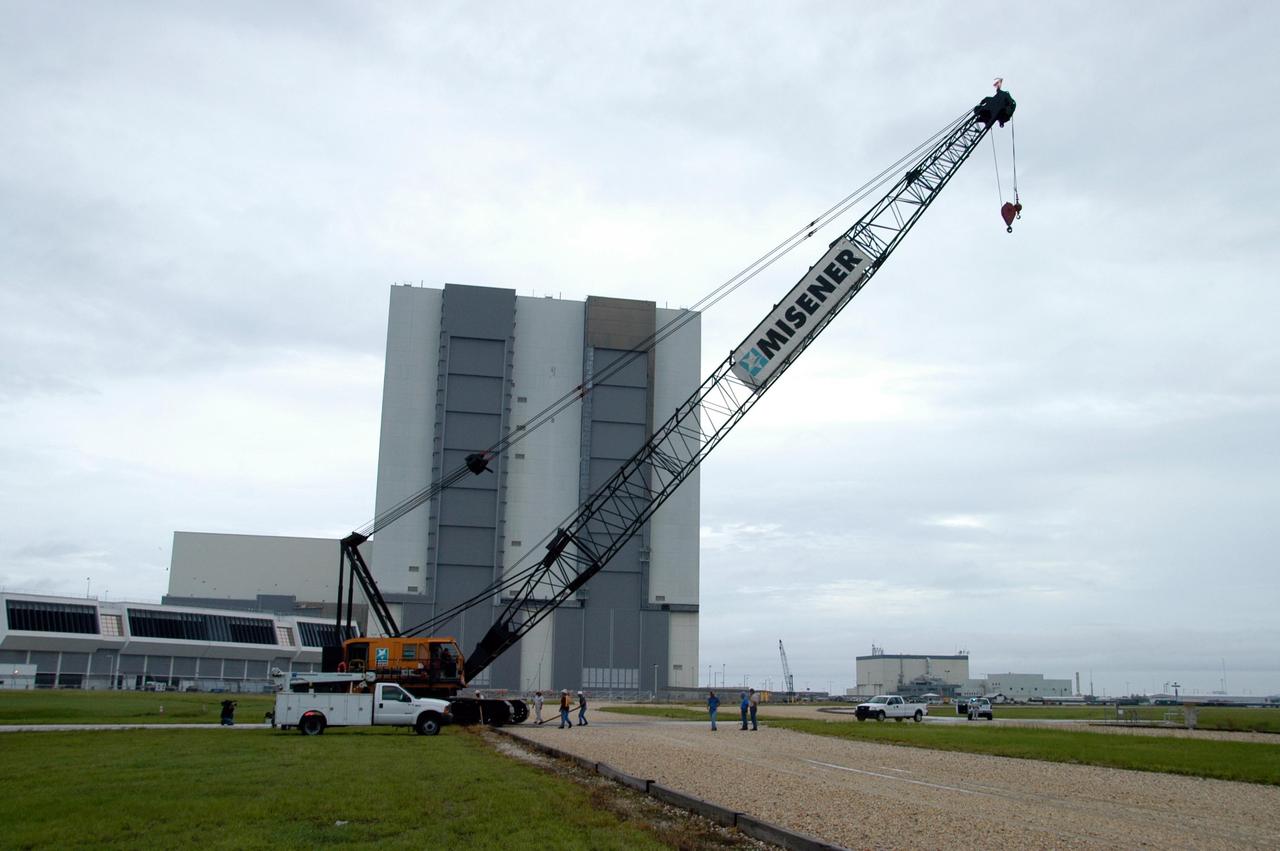
KENNEDY SPACE CENTER, FLA. -- A large crawler crane moves past the Vehicle Assembly Building on its way to Launch Pad 39B. The crane with its 70-foot boom will be used to construct a new lightning protection system for the Constellation Program and Ares/Orion launches. Pad B will be the site of the first Ares vehicle launch, including Ares I-X which is scheduled for April 2009. Photo credit: NASA/George Shelton
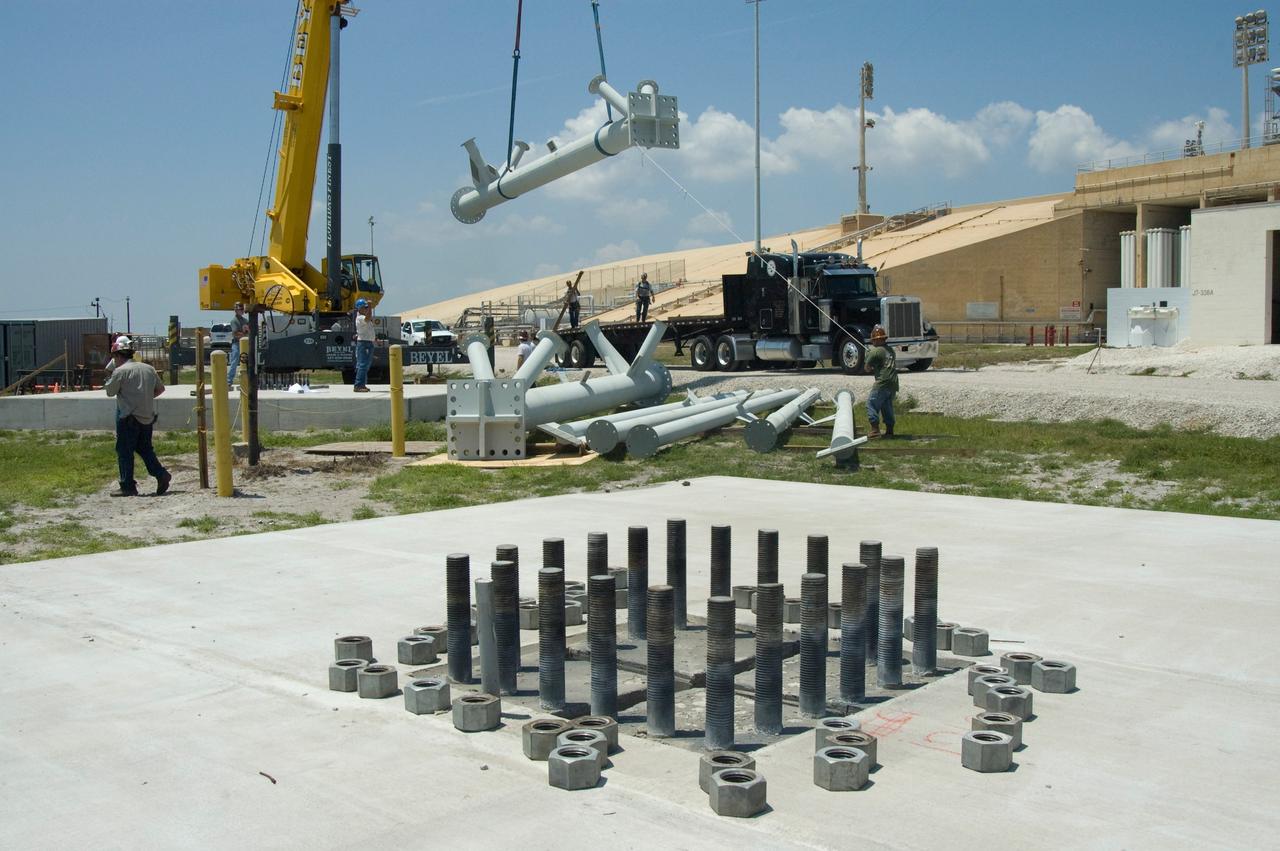
CAPE CANAVERAL, Fla. -- On Launch Pad 39B at NASA's Kennedy Space Center, a crane lifts the last part of the lightning mast to be erected on towers being built for the Constellation Program and Ares/Orion launches. In the foreground is the base of one of the towers to be built. Pad B will be the site of the first Ares vehicle launch, including Ares I-X which is scheduled for April 2009. Photo credit: NASA/Jim Grossmann
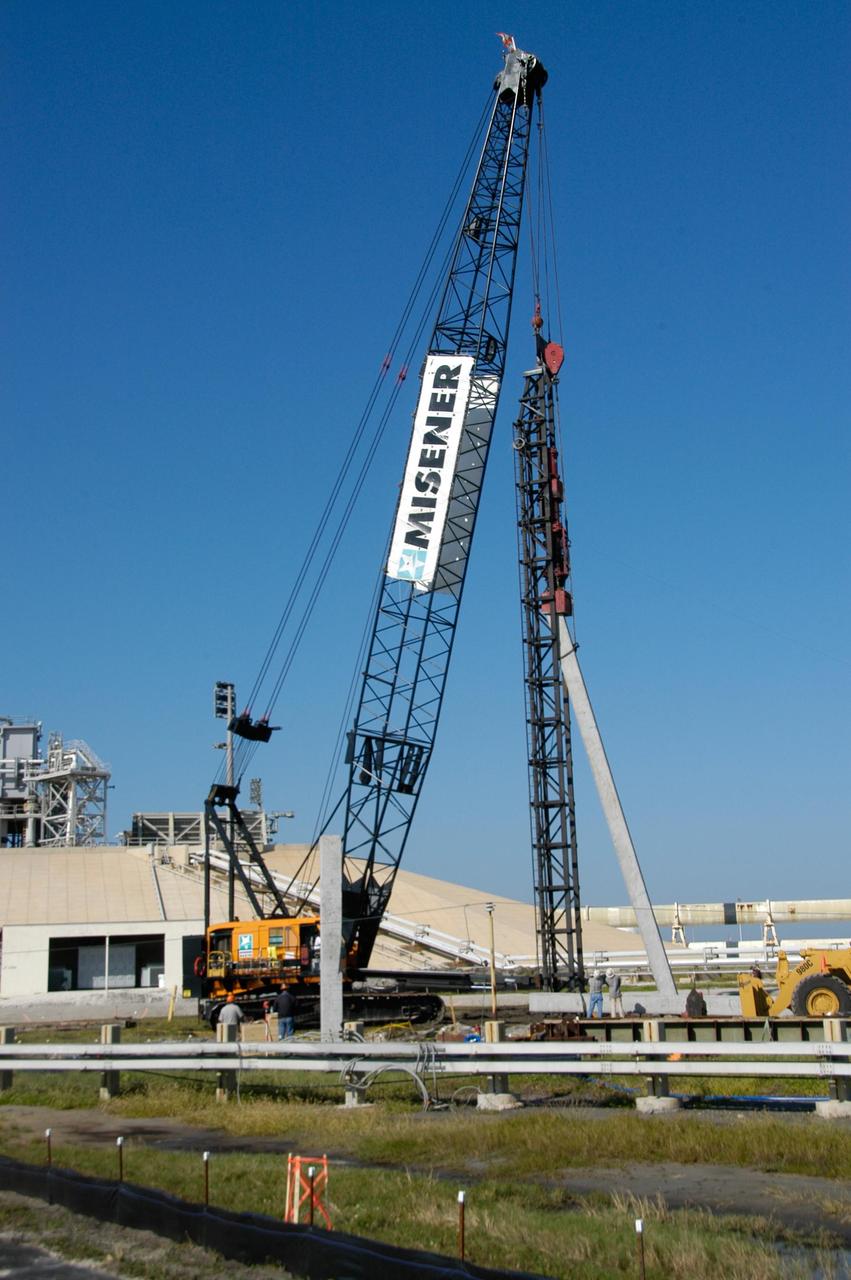
KENNEDY SPACE CENTER, FLA. -- On Launch Pad 39B at NASA's Kennedy Space Center, the crane crawler lifts a piling off a truck. The piling will be pounded into the ground to help construct lightning towers for the Constellation Program and Ares/Orion launches. Pad B will be the site of the first Ares vehicle launch, including Ares I-X which is scheduled for April 2009. Photo credit: NASA/George Shelton
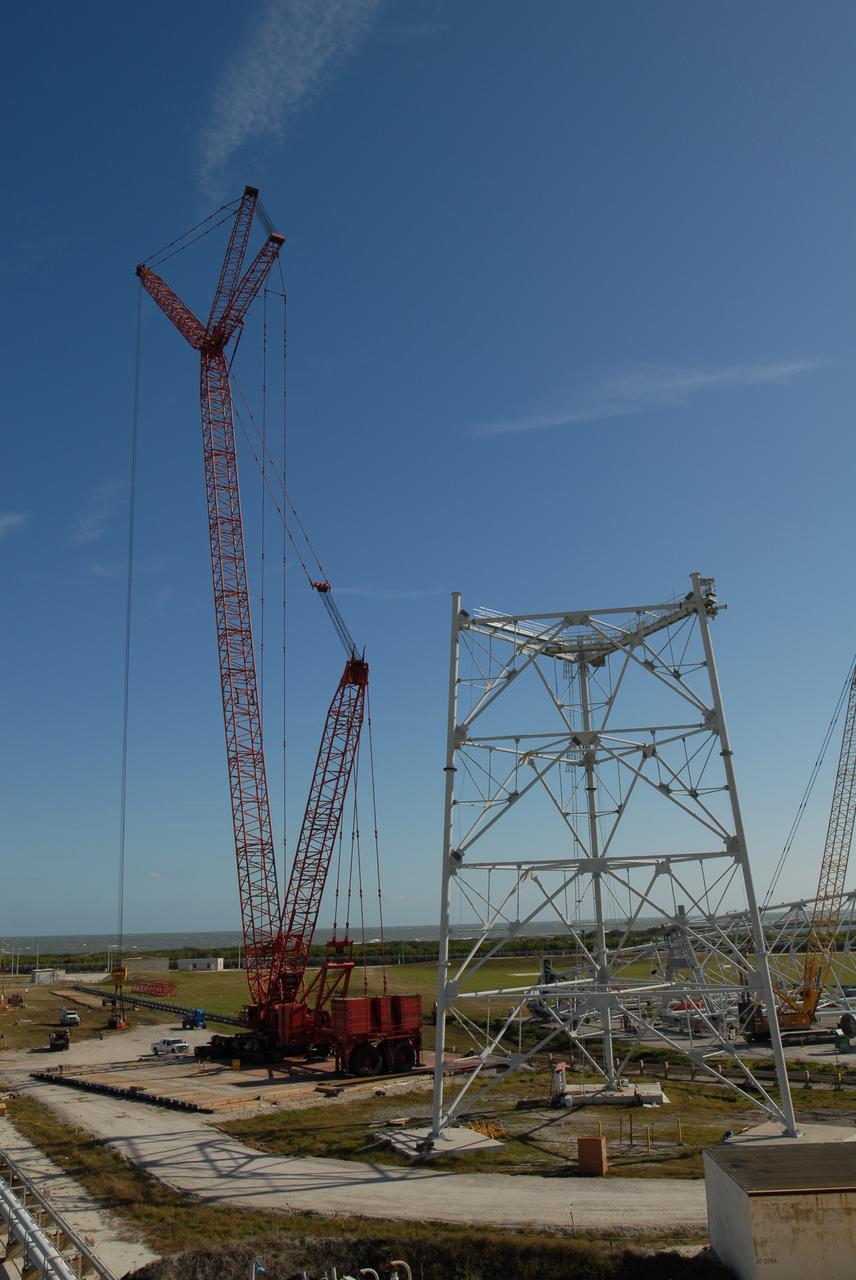
CAPE CANAVERAL, Fla. -- On Launch Pad 39B at NASA's Kennedy Space Center in Florida, a load test is conducted on a giant crane. The crane will aid in construction of lightning towers that will hold catenary wires as part of the new lightning protection system for the Constellation Program and Ares/Orion launches. One of the towers under construction is at right. Pad 39B will be the site of the first Ares vehicle launch, including the Ares I-X test flight that is targeted for July 2009. Photo credit: NASA/Jim Grossmann
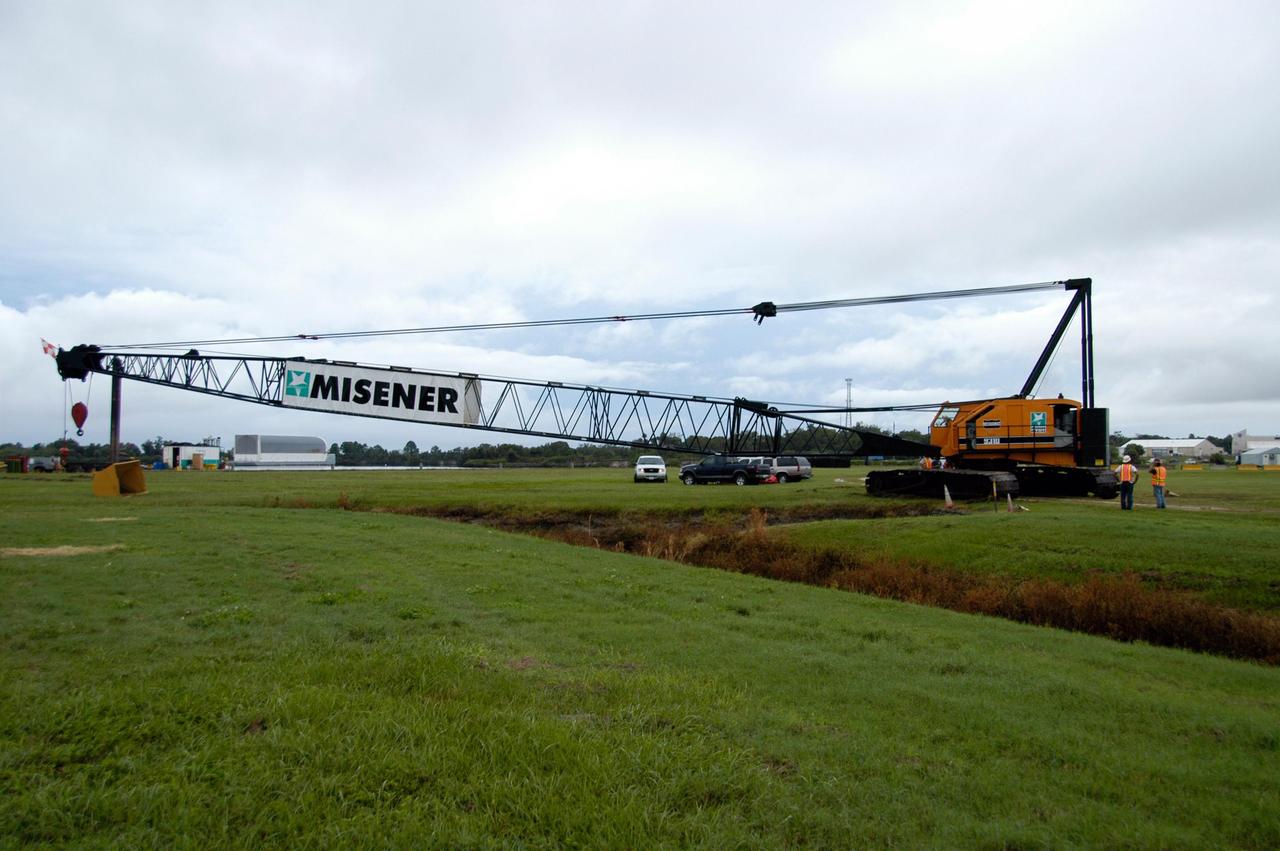
KENNEDY SPACE CENTER, FLA. -- A large crawler crane begins moving away from the turn basin at the Launch Complex 39 Area on NASA's Kennedy Space Center. The crane with its 70-foot boom will be moved to Launch Pad 39B and used to construct a new lightning protection system for the Constellation Program and Ares/Orion launches. Pad B will be the site of the first Ares vehicle launch, including Ares I-X which is scheduled for April 2009. Photo credit: NASA/George Shelton
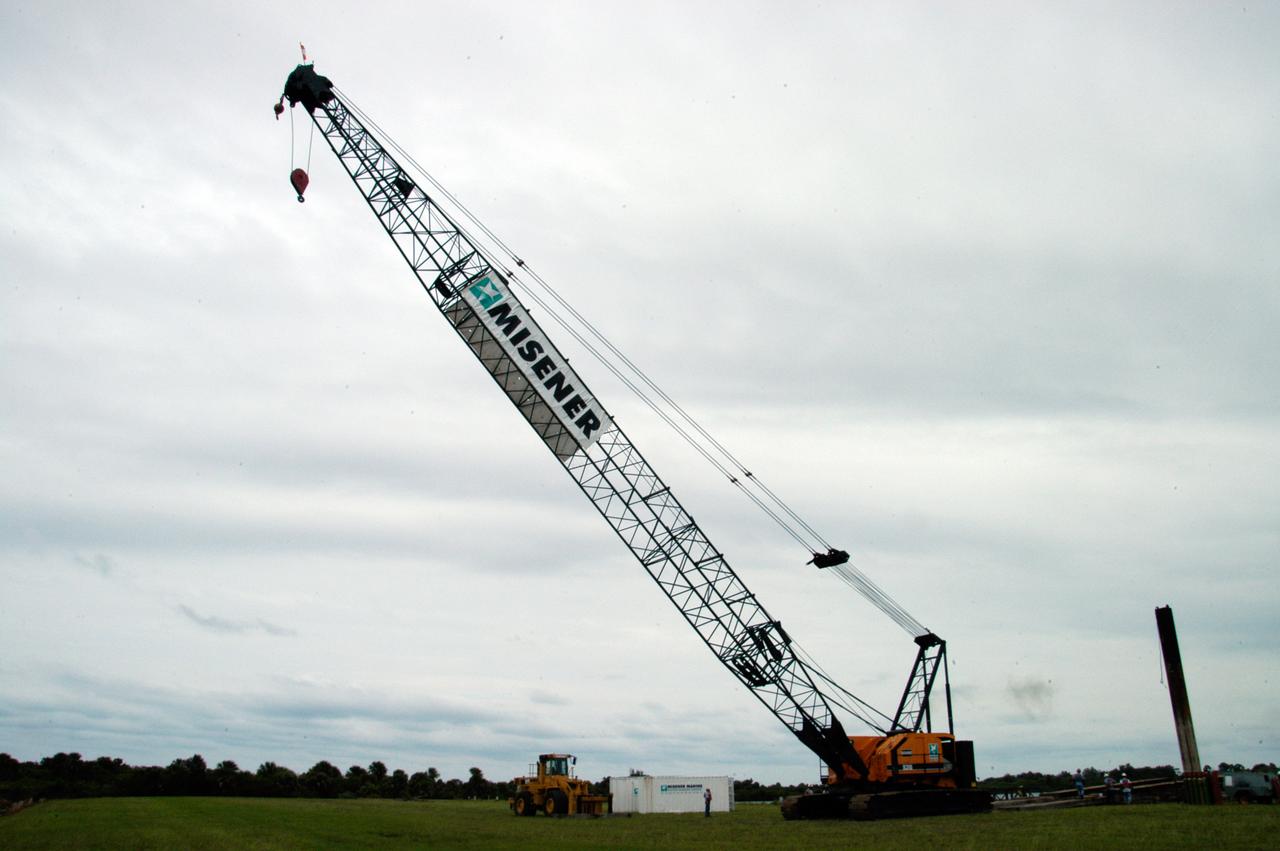
A large crawler crane begins moving away from the turn basin at the Launch Complex 39 Area on NASA's Kennedy Space Center. The crane with its 70-foot boom will be moved to Launch Pad 39B and used to construct a new lightning protection system for the Constellation Program and Ares/Orion launches. Pad B will be the site of the first Ares vehicle launch, including Ares I-X which is scheduled for April 2009.
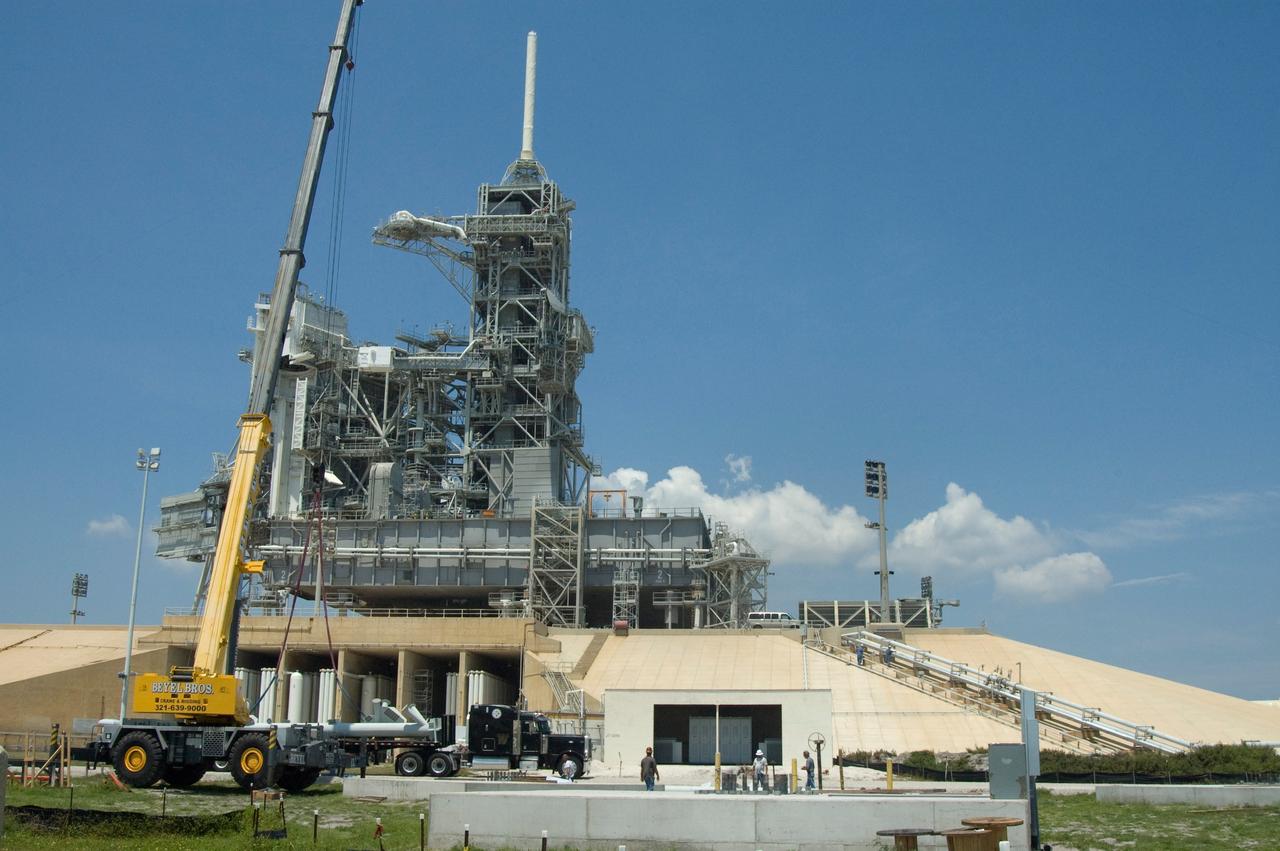
CAPE CANAVERAL, Fla. -- On Launch Pad 39B at NASA's Kennedy Space Center, a crane is removing parts of the lightning mast to be erected on towers being built for the Constellation Program and Ares/Orion launches. Behind it are the fixed and rotating service structures on top of the pad. An 80-foot lightning mast is on top of the fixed service structure as part of the former lightning protection system. Pad B will be the site of the first Ares vehicle launch, including Ares I-X which is scheduled for April 2009. Photo credit: NASA/Jim Grossmann
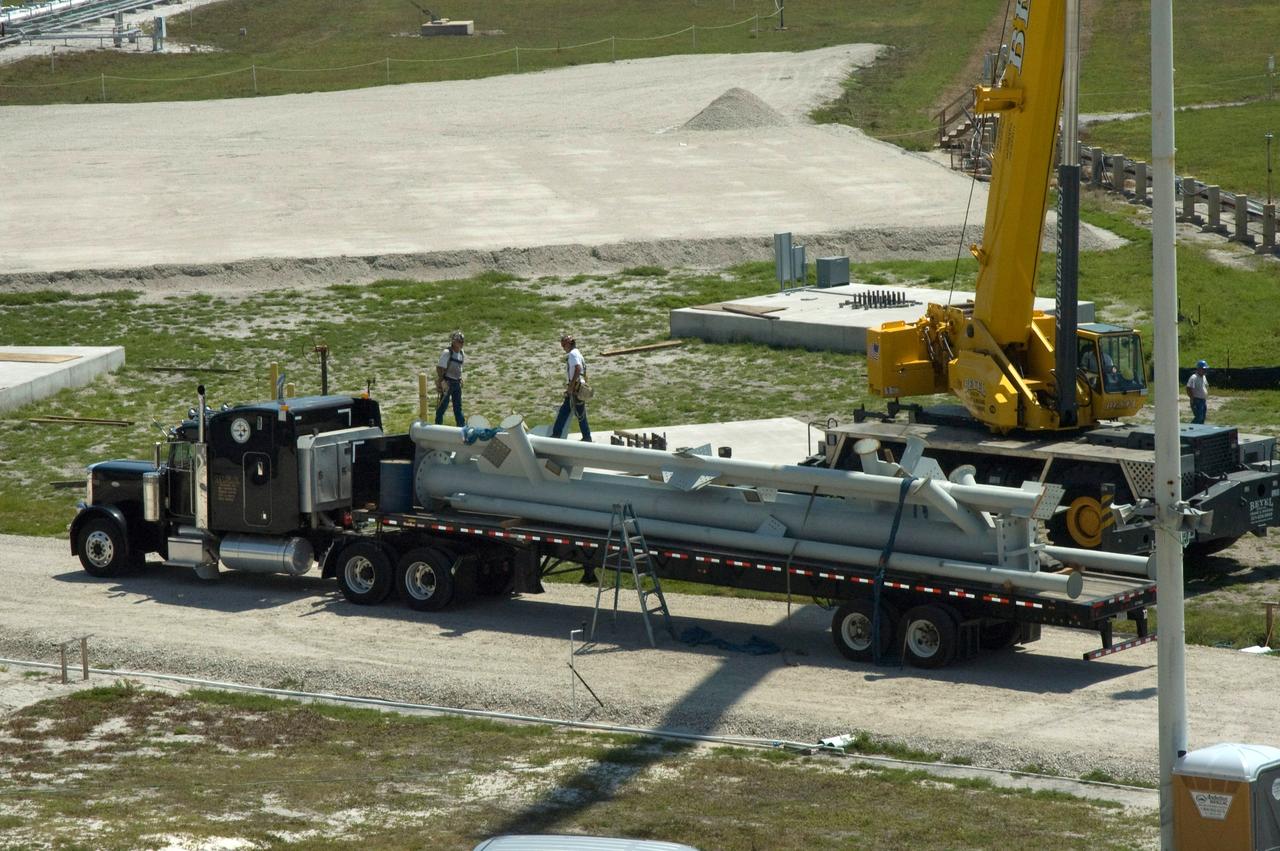
CAPE CANAVERAL, Fla. -- A lightning mast arrives on Launch Pad 39B at NASA's Kennedy Space Center for erection as part of the new lightning towers being built for the Constellation Program and Ares/Orion launches. Pad B will be the site of the first Ares vehicle launch, including Ares I-X which is scheduled for April 2009. Photo credit: NASA/Jim Grossmann
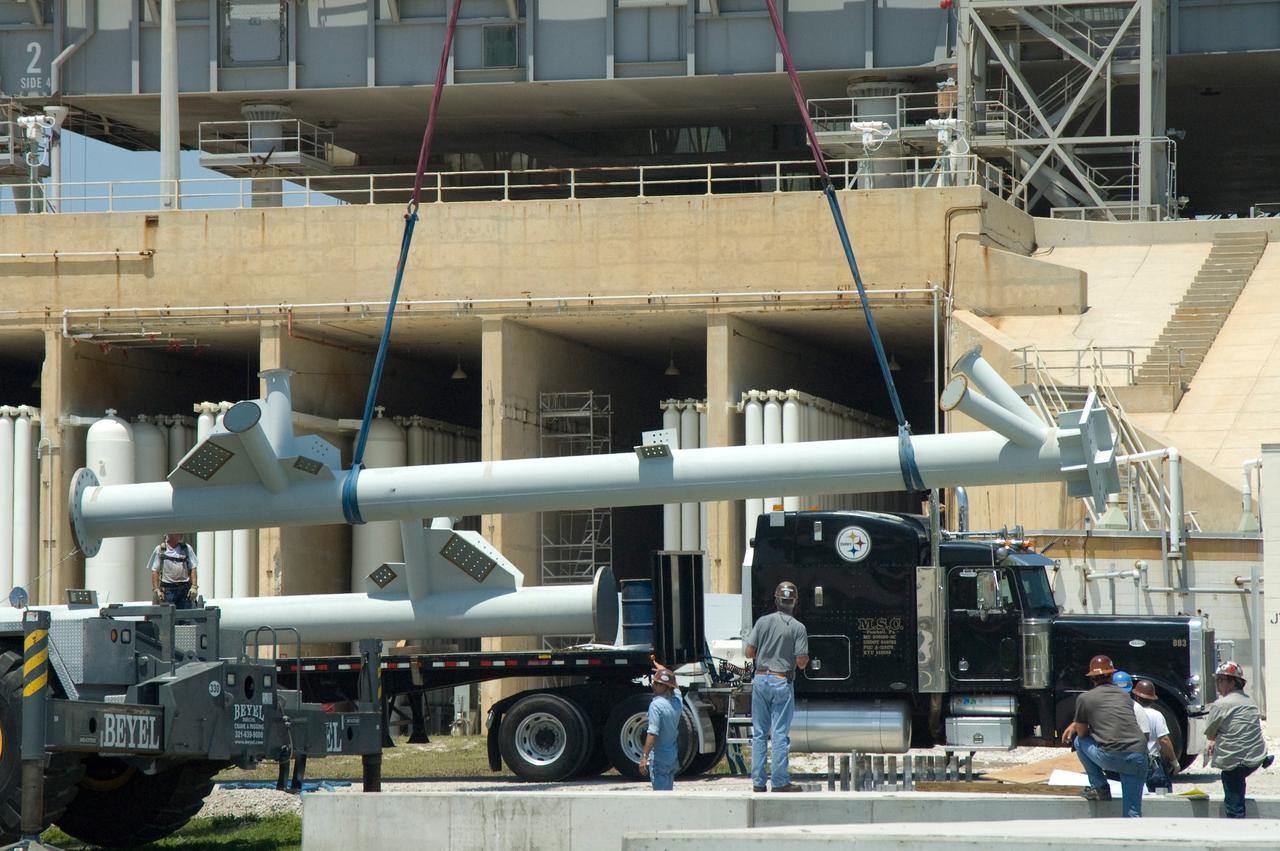
CAPE CANAVERAL, Fla. -- On Launch Pad 39B at NASA's Kennedy Space Center, a crane lifts another part of the lightning mast to be erected on towers being built for the Constellation Program and Ares/Orion launches. Pad B will be the site of the first Ares vehicle launch, including Ares I-X which is scheduled for April 2009. Photo credit: NASA/Jim Grossmann
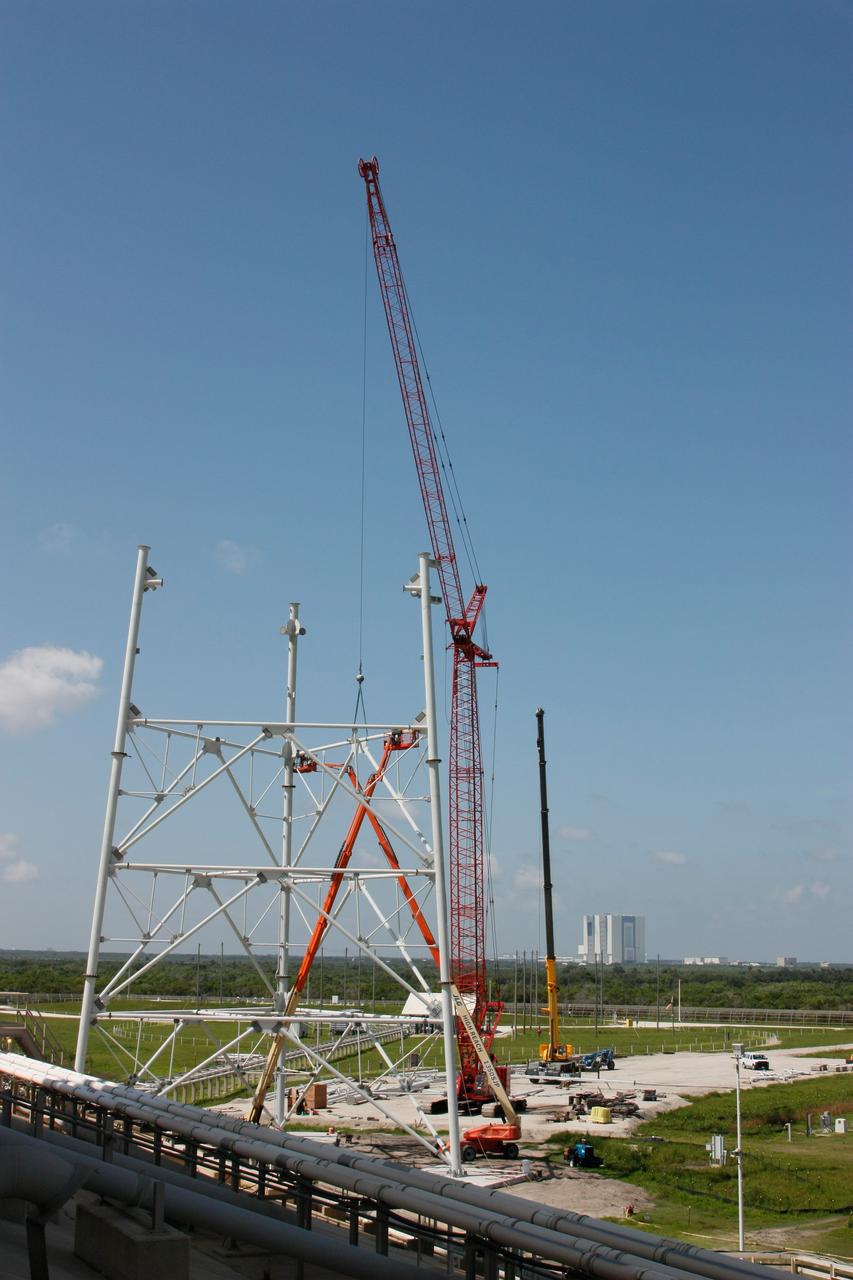
CAPE CANAVERAL, Fla. – On Launch Pad 39B at NASA's Kennedy Space Center, lightning towers are being constructed to hold centenary wires as part of the new lightning protection system for the Constellation Program and Ares/Orion launches. Pad B will be the site of the first Ares vehicle launch, including Ares I-X which is scheduled for April 2009. Photo credit: NASA/Jim Grossmann
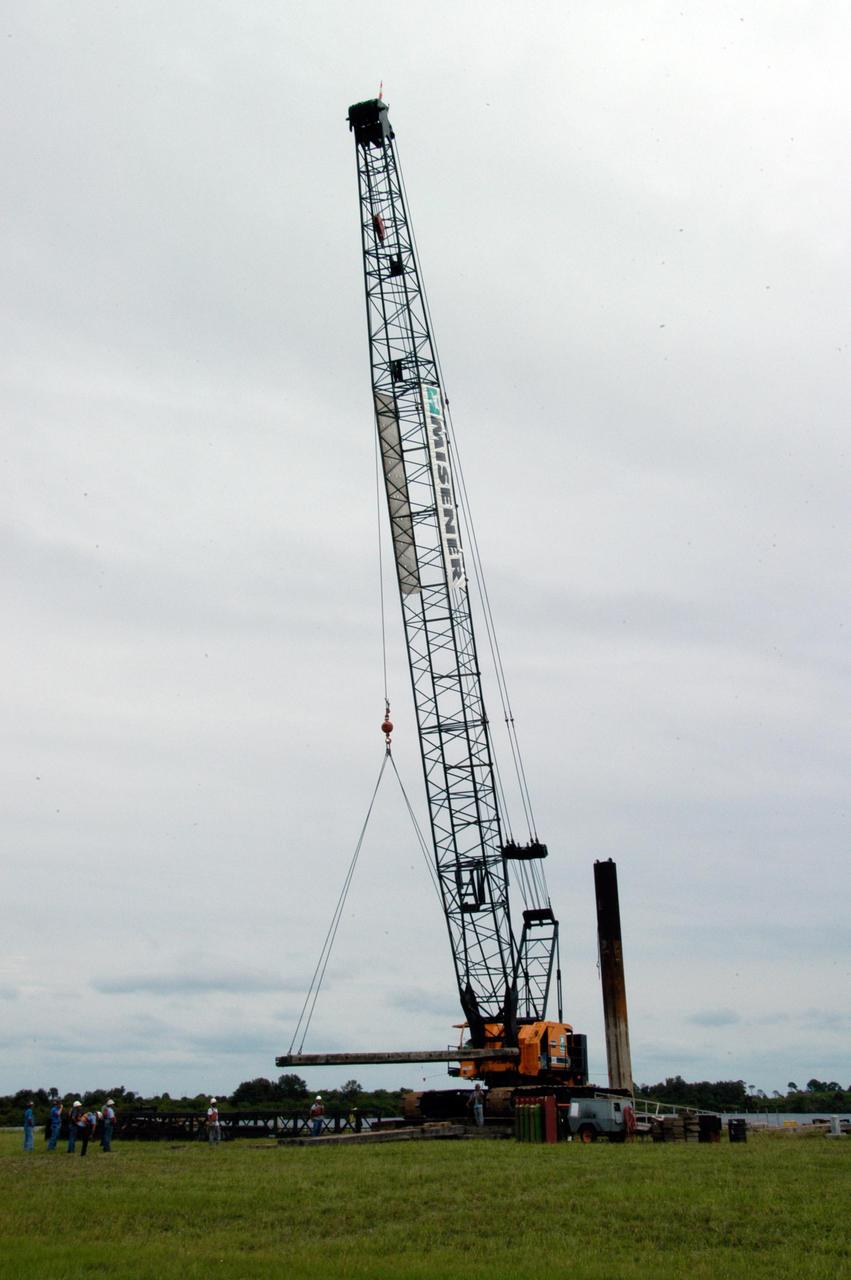
KENNEDY SPACE CENTER, FLA. -- A large crawler crane arrives at the turn basin at the Launch Complex 39 Area on NASA's Kennedy Space Center. The crane with its 70-foot boom will be moved to Launch Pad 39B and used to construct a new lightning protection system for the Constellation Program and Ares/Orion launches. Pad B will be the site of the first Ares vehicle launch, including Ares I-X which is scheduled for April 2009. Photo credit: NASA/George Shelton
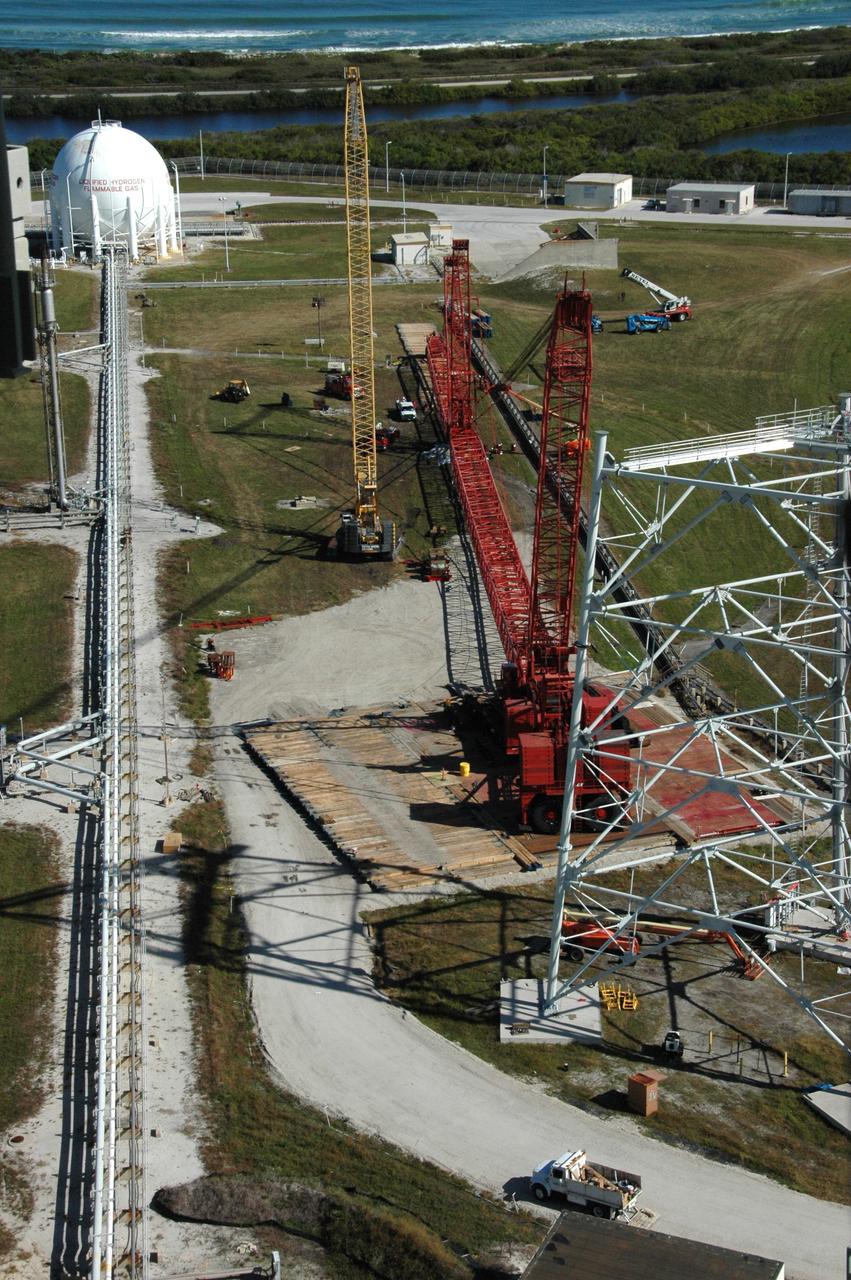
CAPE CANAVERAL, Fla. -- Very large cranes are being constructed on Launch Pad 39B at NASA's Kennedy Space Center in Florida to aid in erecting the lightning towers to hold catenary wires as part of the new lightning protection system for the Constellation Program and Ares/Orion launches. Pad 39B will be the site of the first Ares vehicle launch, including Ares I-X test flight that is targeted for July 2009. Photo credit: NASA/Tim Jacobs
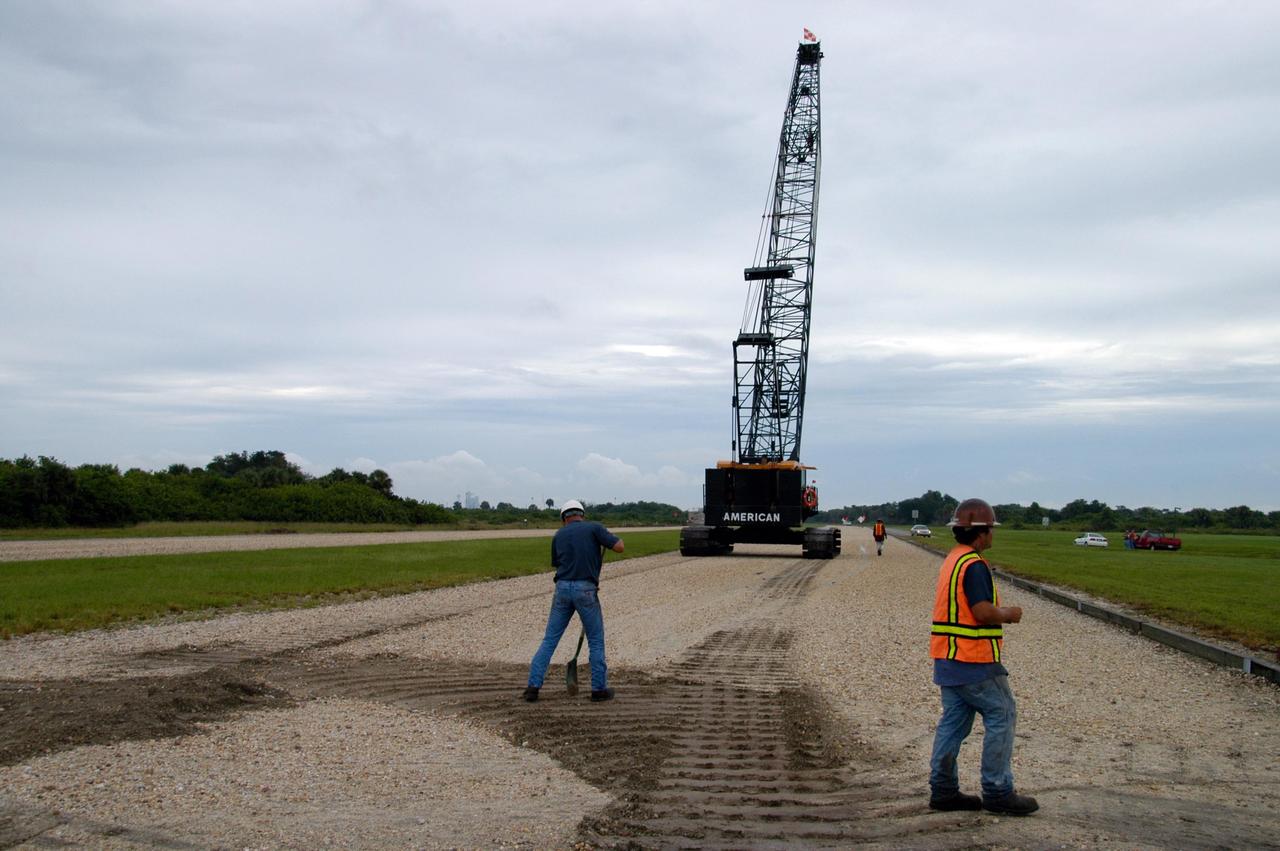
KENNEDY SPACE CENTER, FLA. -- A large crawler crane travels along one of the crawlerway tracks on its way to Launch Pad 39B. The crane with its 70-foot boom will be used to construct a new lightning protection system for the Constellation Program and Ares/Orion launches. Pad B will be the site of the first Ares vehicle launch, including Ares I-X which is scheduled for April 2009. Photo credit: NASA/George Shelton

CAPE CANAVERAL, Fla. -- On Launch Pad 39B at NASA's Kennedy Space Center, a crane lifts another part of the lightning mast to be erected on towers being built for the Constellation Program and Ares/Orion launches. Pad B will be the site of the first Ares vehicle launch, including Ares I-X which is scheduled for April 2009. Photo credit: NASA/Jim Grossmann
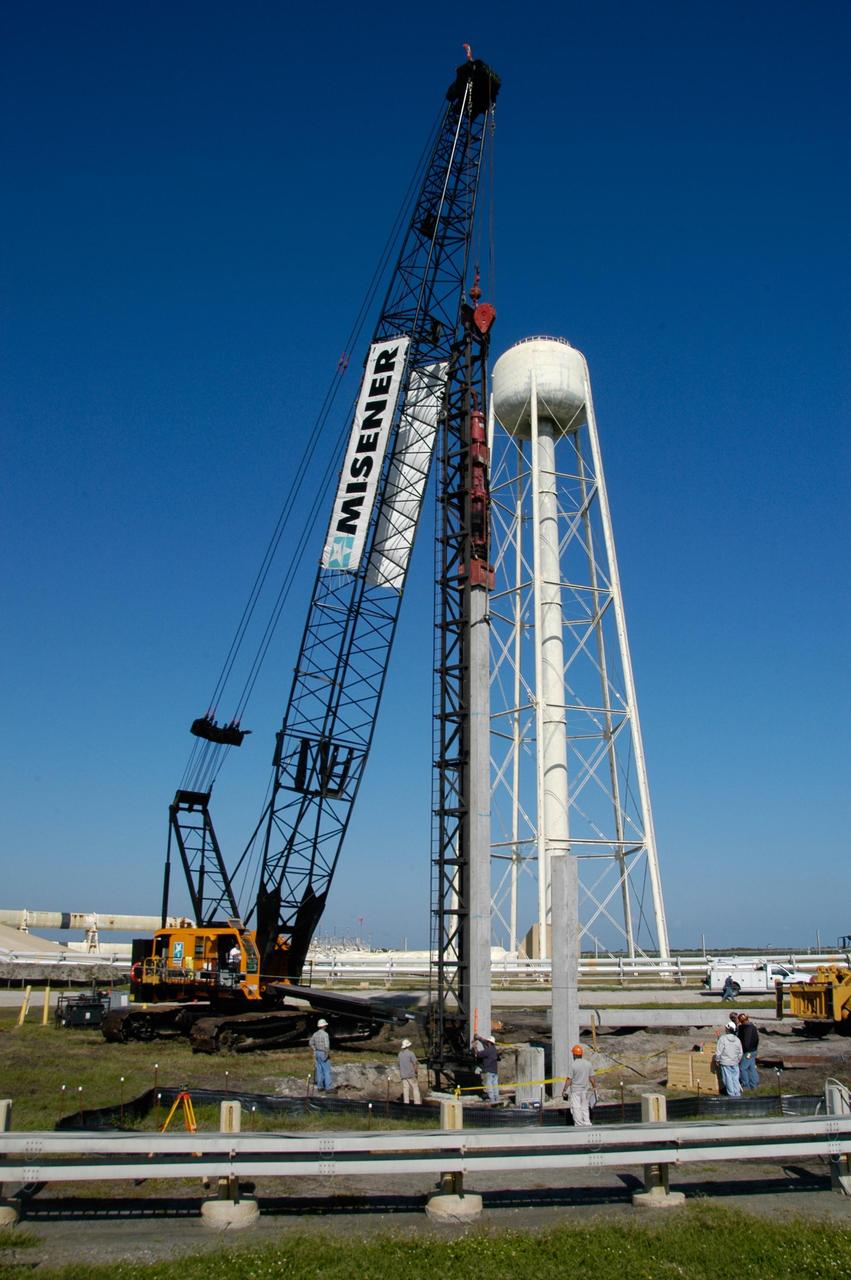
KENNEDY SPACE CENTER, FLA. -- On Launch Pad 39B at NASA's Kennedy Space Center, the crane crawler puts a piling into place to be pounded into the ground to help construct lightning towers for the Constellation Program and Ares/Orion launches. Pad B will be the site of the first Ares vehicle launch, including Ares I-X which is scheduled for April 2009. Photo credit: NASA/George Shelton
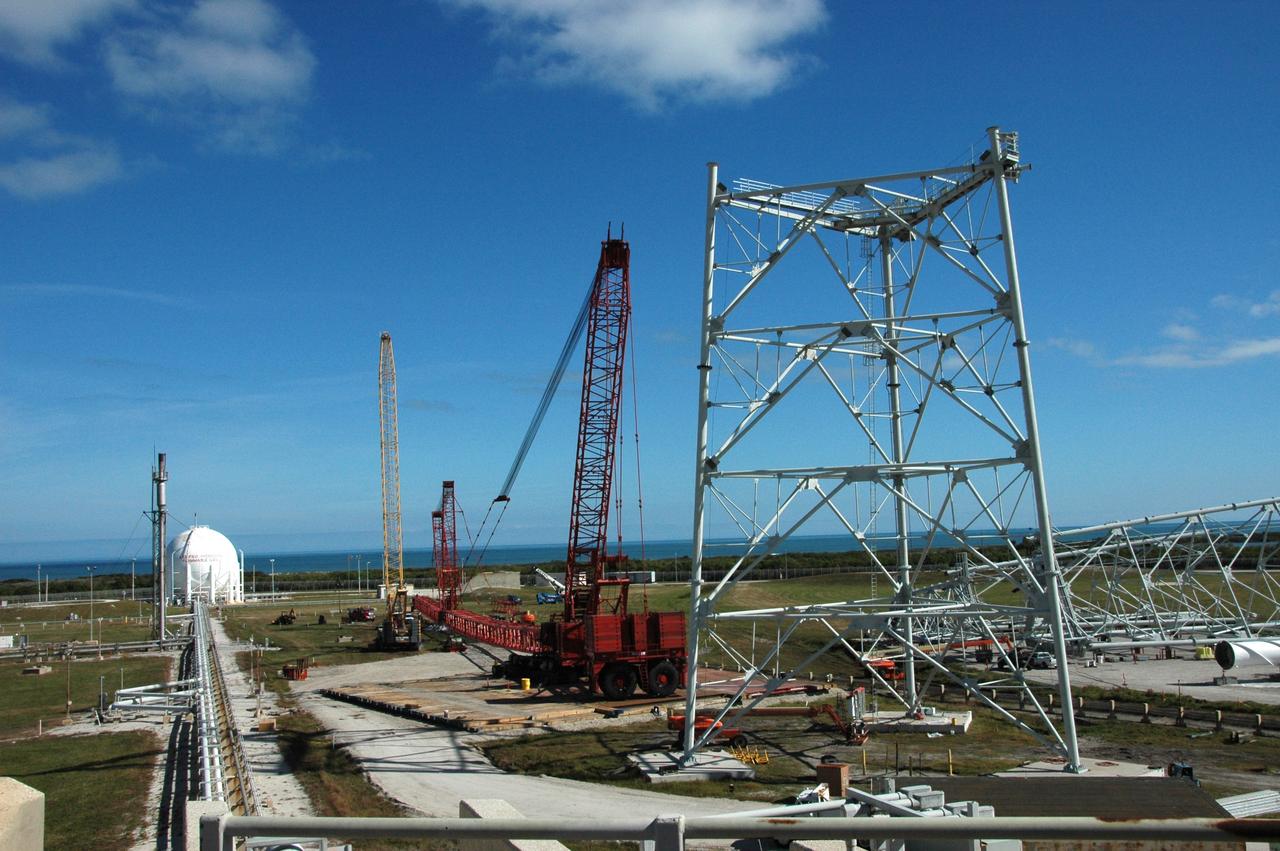
CAPE CANAVERAL, Fla. -- Very large cranes are being constructed on Launch Pad 39B at NASA's Kennedy Space Center in Florida to aid in erecting the lightning towers to hold catenary wires as part of the new lightning protection system for the Constellation Program and Ares/Orion launches. Pad 39B will be the site of the first Ares vehicle launch, including Ares I-X test flight that is targeted for July 2009. Photo credit: NASA/Tim Jacobs
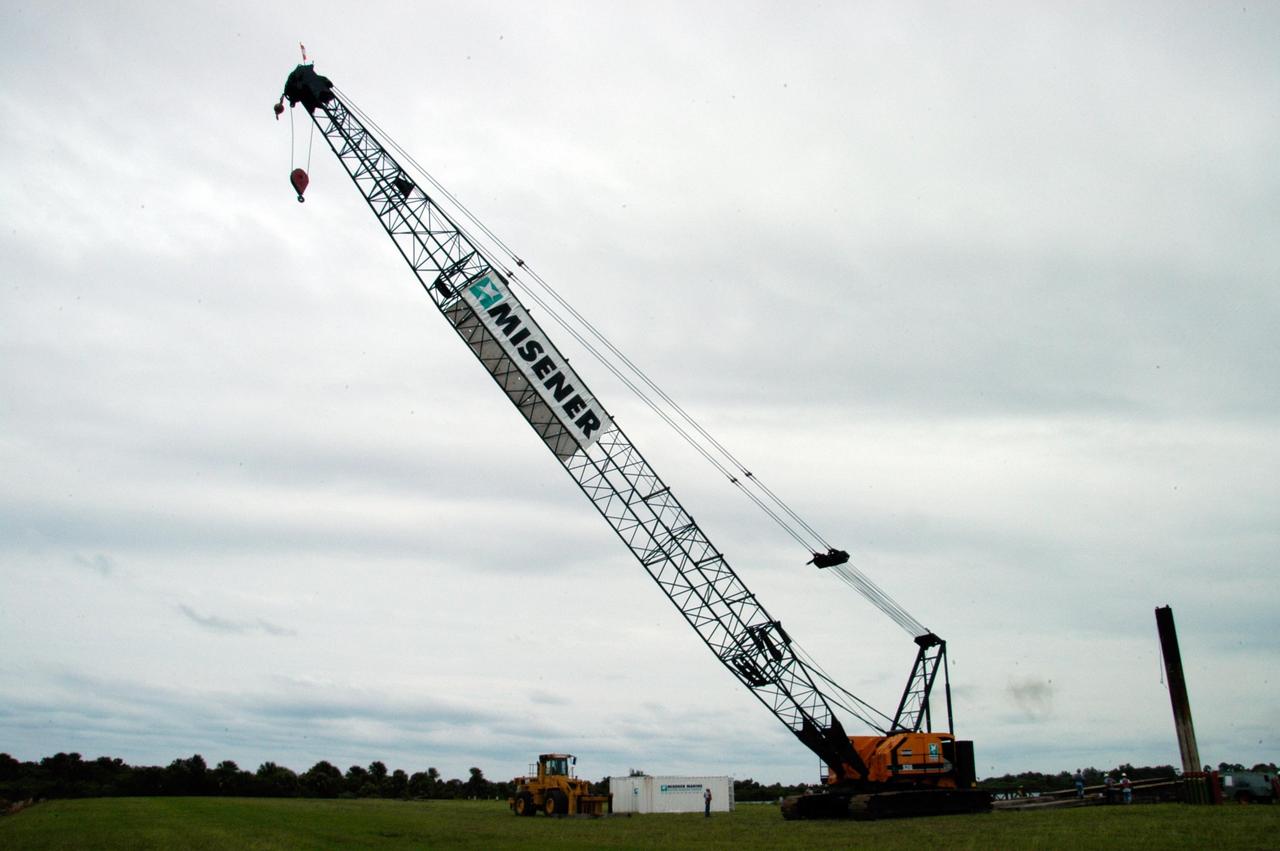
KENNEDY SPACE CENTER, FLA. -- A large crawler crane begins moving away from the turn basin at the Launch Complex 39 Area on NASA's Kennedy Space Center. The crane with its 70-foot boom will be moved to Launch Pad 39B and used to construct a new lightning protection system for the Constellation Program and Ares/Orion launches. Pad B will be the site of the first Ares vehicle launch, including Ares I-X which is scheduled for April 2009. Photo credit: NASA/George Shelton

KENNEDY SPACE CENTER, FLA. -- A large crawler crane traveling long one of the crawlerway tracks makes the turn toward Launch Pad 39B. The crane with its 70-foot boom will be used to construct a new lightning protection system for the Constellation Program and Ares/Orion launches. Pad B will be the site of the first Ares vehicle launch, including Ares I-X which is scheduled for April 2009. Photo credit: NASA/George Shelton
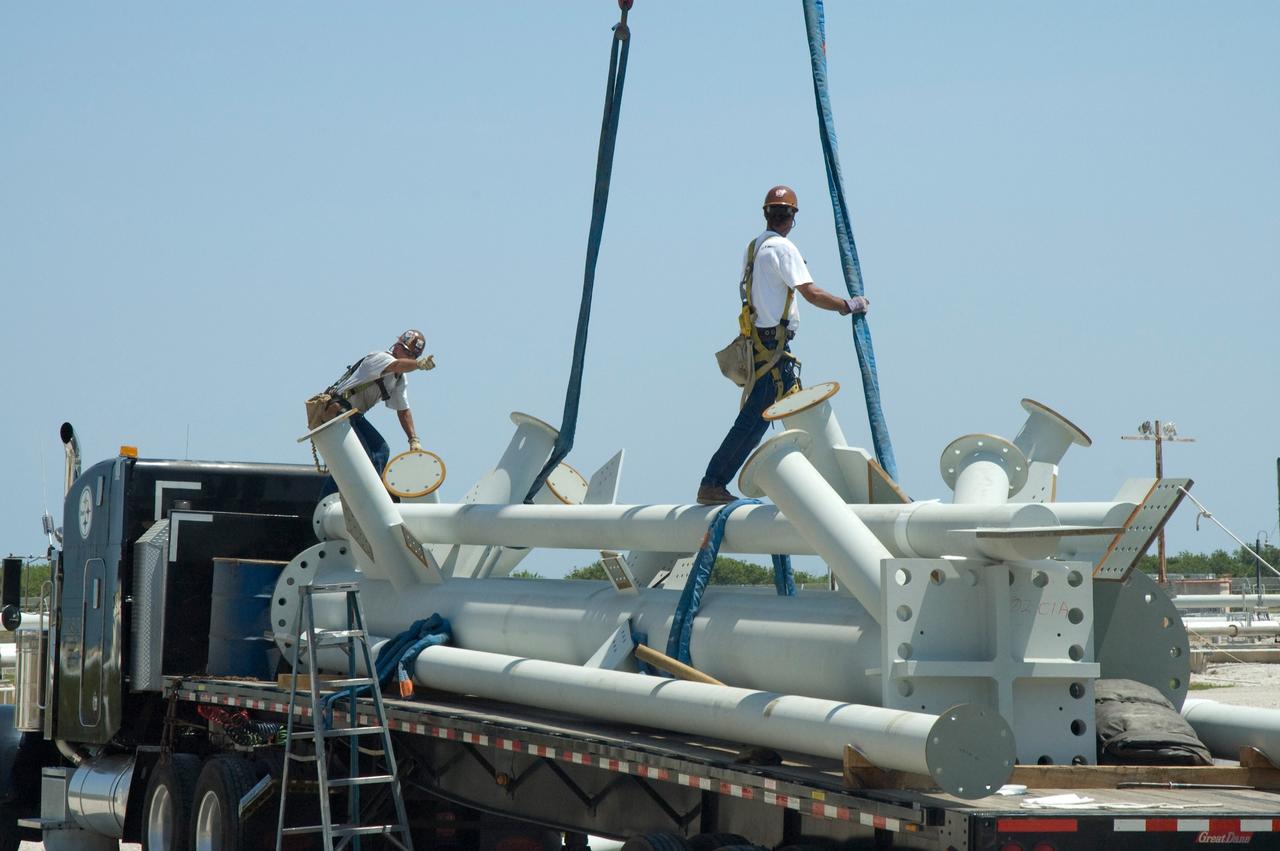
CAPE CANAVERAL, Fla. -- On Launch Pad 39B at NASA's Kennedy Space Center, workers secure straps around the lightning mast to be erected on towers being built for the Constellation Program and Ares/Orion launches. Pad B will be the site of the first Ares vehicle launch, including Ares I-X which is scheduled for April 2009. Photo credit: NASA/Jim Grossmann

CAPE CANAVERAL, Fla. – On Launch Pad 39B at NASA's Kennedy Space Center, lightning towers are being constructed to hold centenary wires as part of the new lightning protection system for the Constellation Program and Ares/Orion launches. Pad B will be the site of the first Ares vehicle launch, including Ares I-X which is scheduled for April 2009. Photo credit: NASA/Jim Grossmann
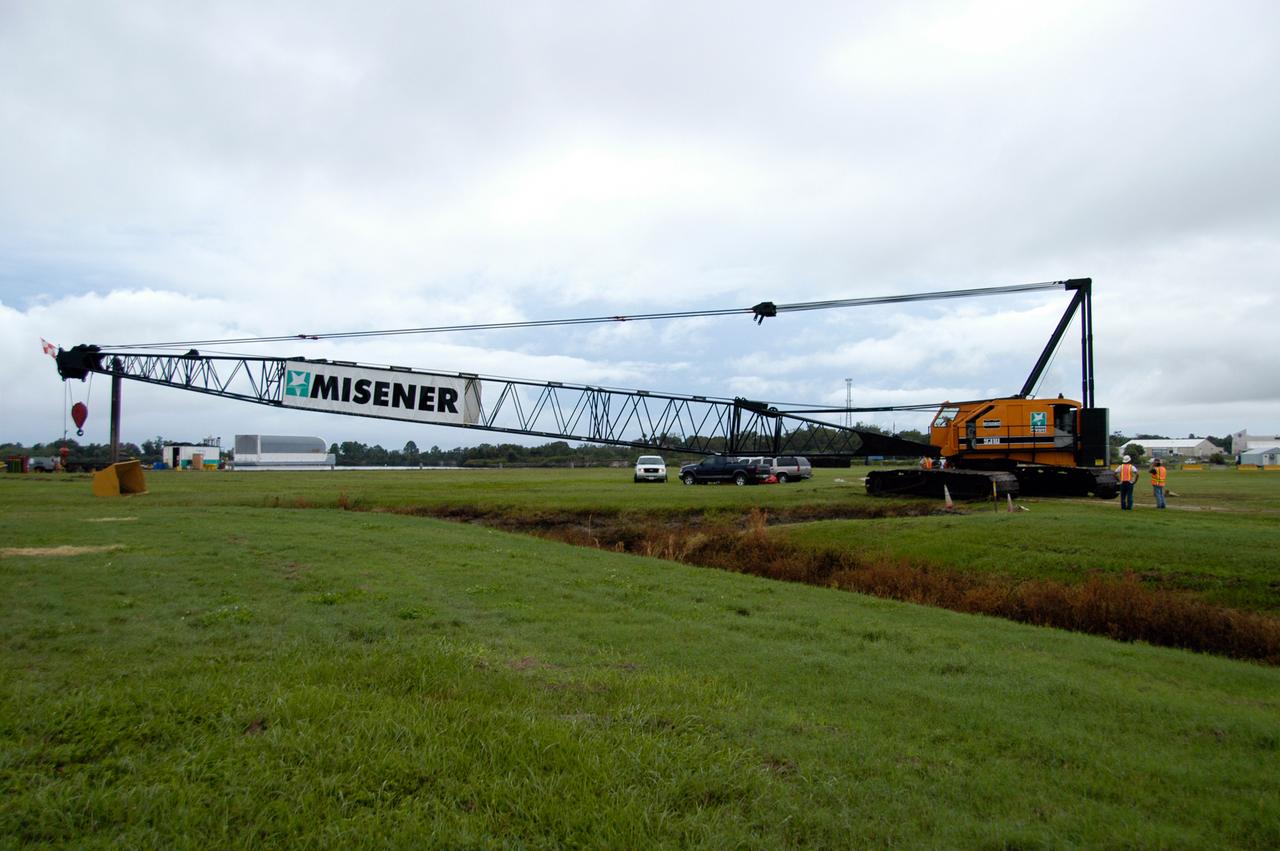
A large crawler crane begins moving away from the turn basin at the Launch Complex 39 Area on NASA's Kennedy Space Center. The crane with its 70-foot boom will be moved to Launch Pad 39B and used to construct a new lightning protection system for the Constellation Program and Ares/Orion launches. Pad B will be the site of the first Ares vehicle launch, including Ares I-X which is scheduled for April 2009.