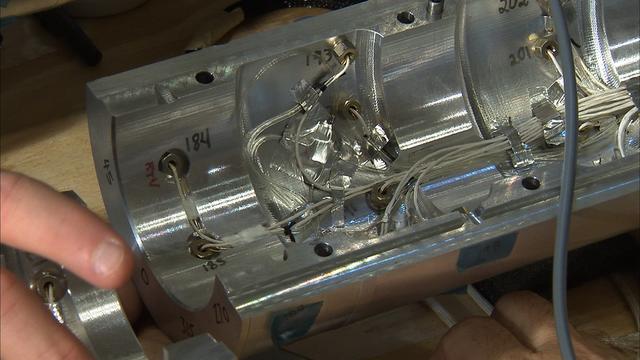
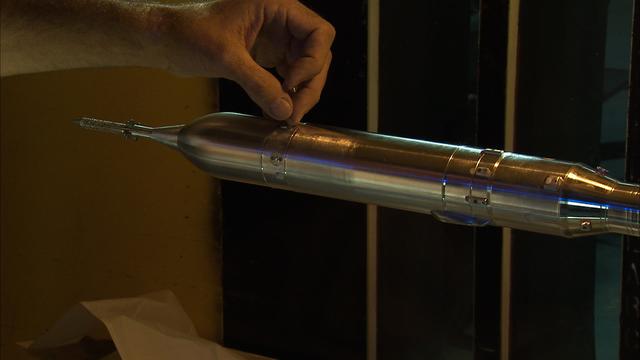
Shown is testing of a 3.5% Ares 1-X buffet model at the transonic wind tunnel at Langley Research Center, Virginia in support of the Ares/Constellation program. This image is extracted from high definition video and is the highest resolution available
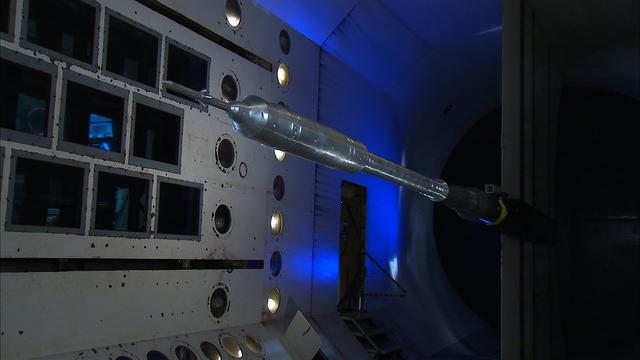
Shown is testing of a 3.5% Ares 1-X buffet model at the transonic wind tunnel at Langley Research Center, Virginia in support of the Ares/Constellation program. This image is extracted from high definition video and is the highest resolution available.
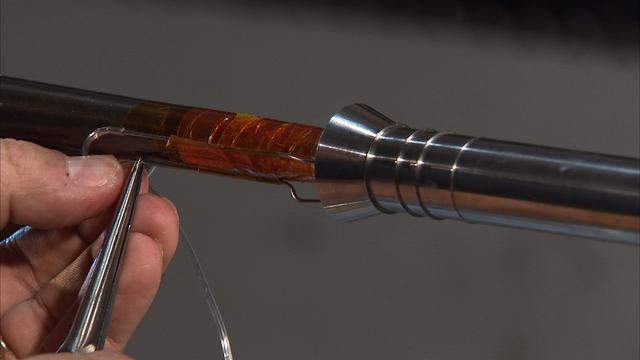
Active damper wind tunnel test in support of the development of Constellation/Ares. Testing of the 1% and .548% models for active damper and wall interference assessment in support of the Ares/CLV integrated vehicle. This test occurred at the 11 foot wind tunnel at the Ames Research Center, California. This image is extracted from high definition video file and is the highest resolution available.
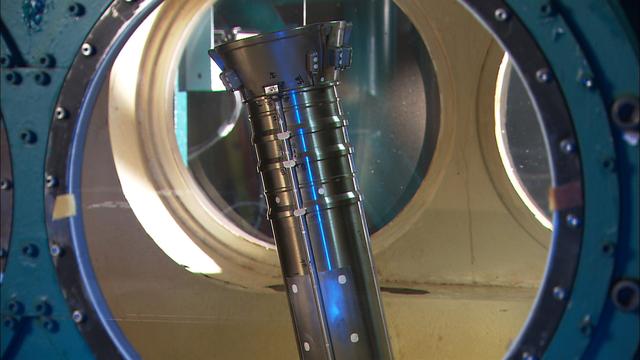
THIS IS A TEST OF THE 1ST STAGE RE-ENTRY VEHICLE. HEAT TESTING OF A 3% MODEL TO SUPPORT THE ARES/ CLV FIRST STAGE RE-ENTRY. THIS TEST OCCURRED AT ARNOLD AIR FORCE BASE, TENNESSEE. THIS TESTING SUPPORTS THE DEVELOPMENT OF THE CONSTELLATION/ARES PROJECT. THIS IMAGE IS EXTRACTED FROM A HIGH DEFINITION VIDEO FILE AND IS THE HIGHEST RESOLUTION AVAILABLE.
Shown is a wind tunnel test of the Ares model for force/moment testing in support of the Ares/Clv integrated vehicle at Langley Research Center, Virginia. The image is extracted from a high definition video file and is the highest resolution available.
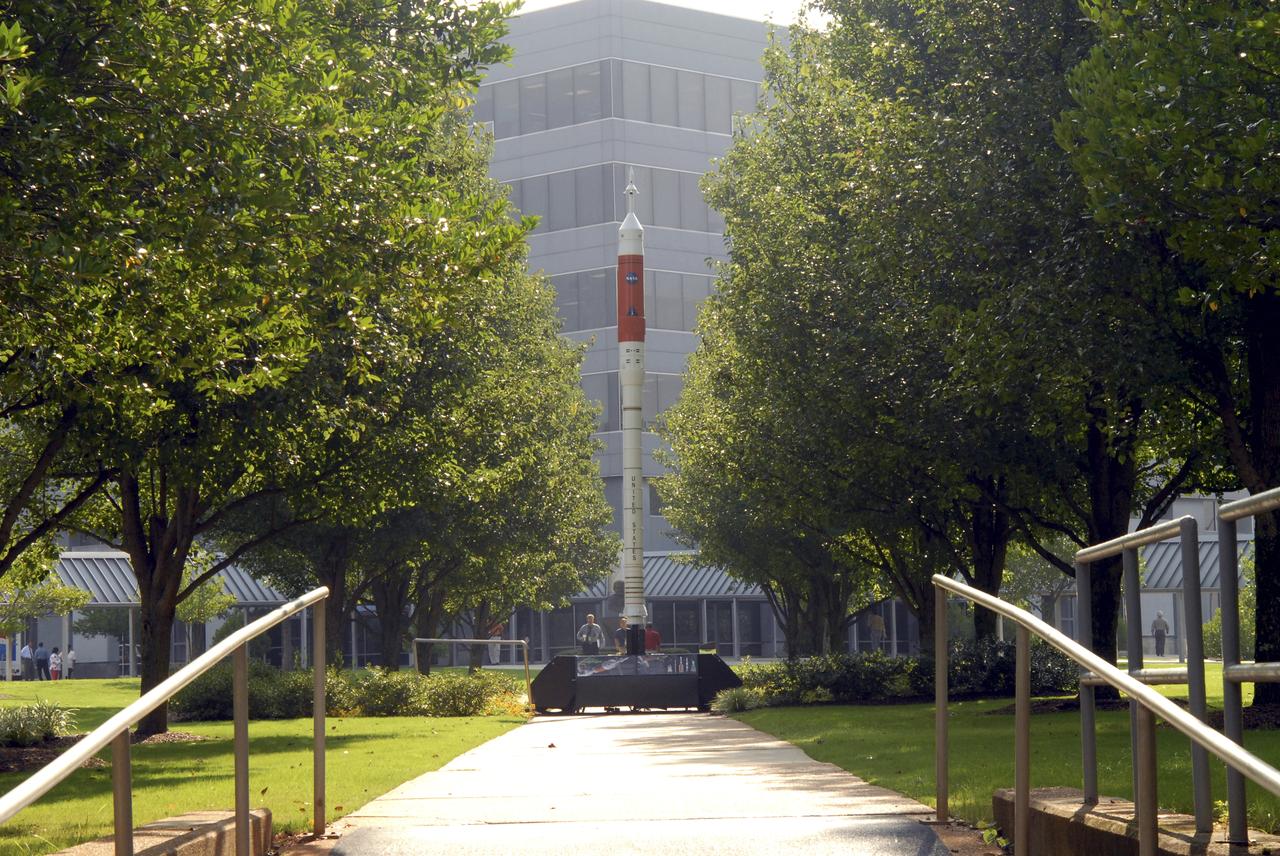
A model of the new Aries I crew launch vehicle, for which NASA is designing, testing and evaluating hardware and related systems, is seen here on display at the Marshall Space Fight Center (MSFC), in Huntsville, Alabama. The Ares I crew launch vehicle is the rocket that will carry a new generation of space explorers into orbit. Under the goals of the Vision for Space Exploration, Ares I is a chief component of the cost-effective space transportation infrastructure being developed by NASA’s Constellation Program. These transportation systems will safely and reliably carry human explorers back to the moon, and then onward to Mars and other destinations in the solar system. The Ares I effort includes multiple project element teams at NASA centers and contract organizations around the nation, and is led by the Exploration Launch Projects Office at NASA’s MFSC. Together, these teams are developing vehicle hardware, evolving proven technologies, and testing components and systems. Their work builds on powerful, reliable space shuttle propulsion elements and nearly a half-century of NASA space flight experience and technological advances. Ares I is an inline, two-stage rocket configuration topped by the Crew Exploration Vehicle, its service module and a launch abort system. The launch vehicle’s first stage is a single, five-segment reusable solid rocket booster derived from the Space Shuttle Program’s reusable solid rocket motor that burns a specially formulated and shaped solid propellant called polybutadiene acrylonitrile (PBAN). The second or upper stage will be propelled by a J-2X main engine fueled with liquid oxygen and liquid hydrogen. In addition to its primary mission of carrying crews of four to six astronauts to Earth orbit, the launch vehicle’s 25-ton payload capacity might be used for delivering cargo to space, bringing resources and supplies to the International Space Station or dropping payloads off in orbit for retrieval and transport to exploration teams on the moon. Crew transportation to the space station is planned to begin no later than 2014. The first lunar excursion is scheduled for the 2020 timeframe.
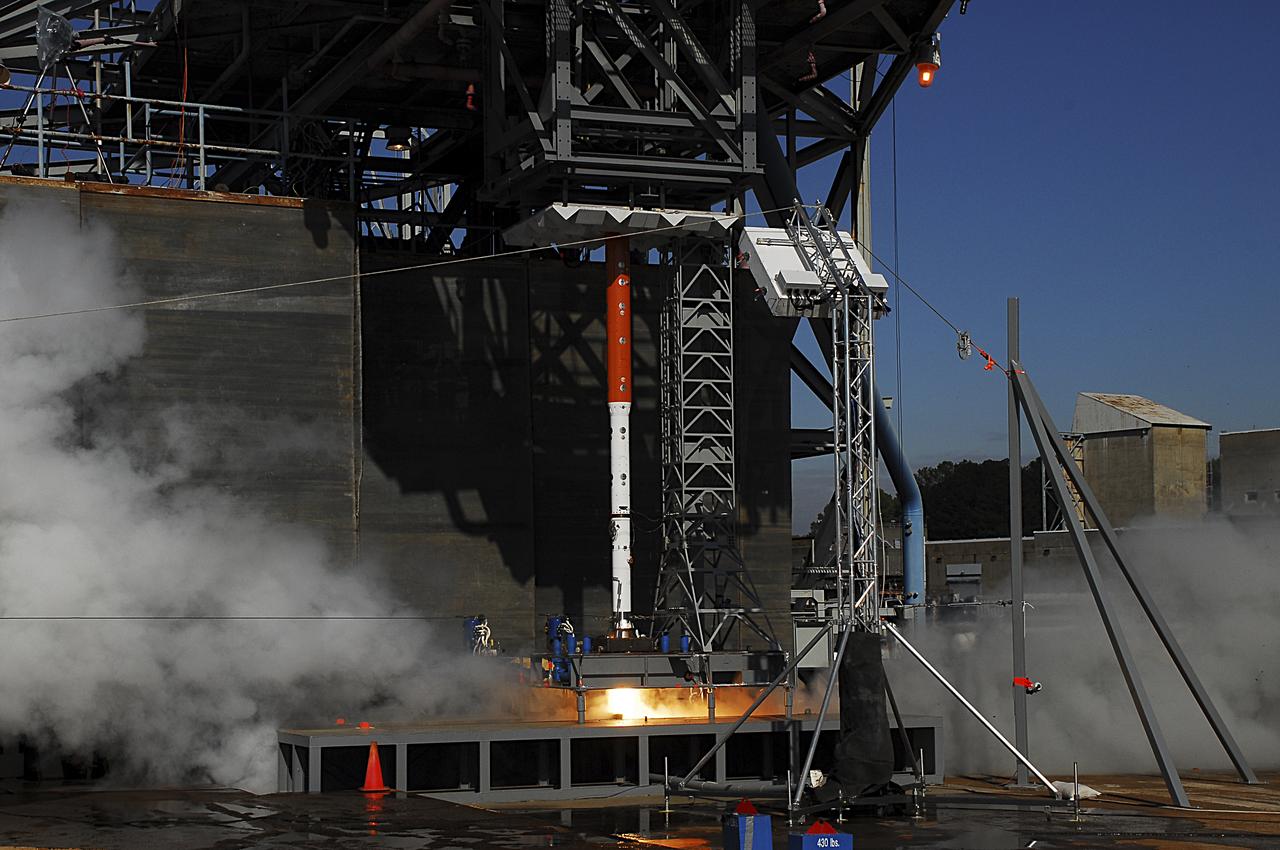
Project 8019 Vertical Ares Scale Model Acoustic Test (ASMAT) Ignition Over Pressure (IOP) Test #3, 11/18/2010 P8019_VERT 03-078
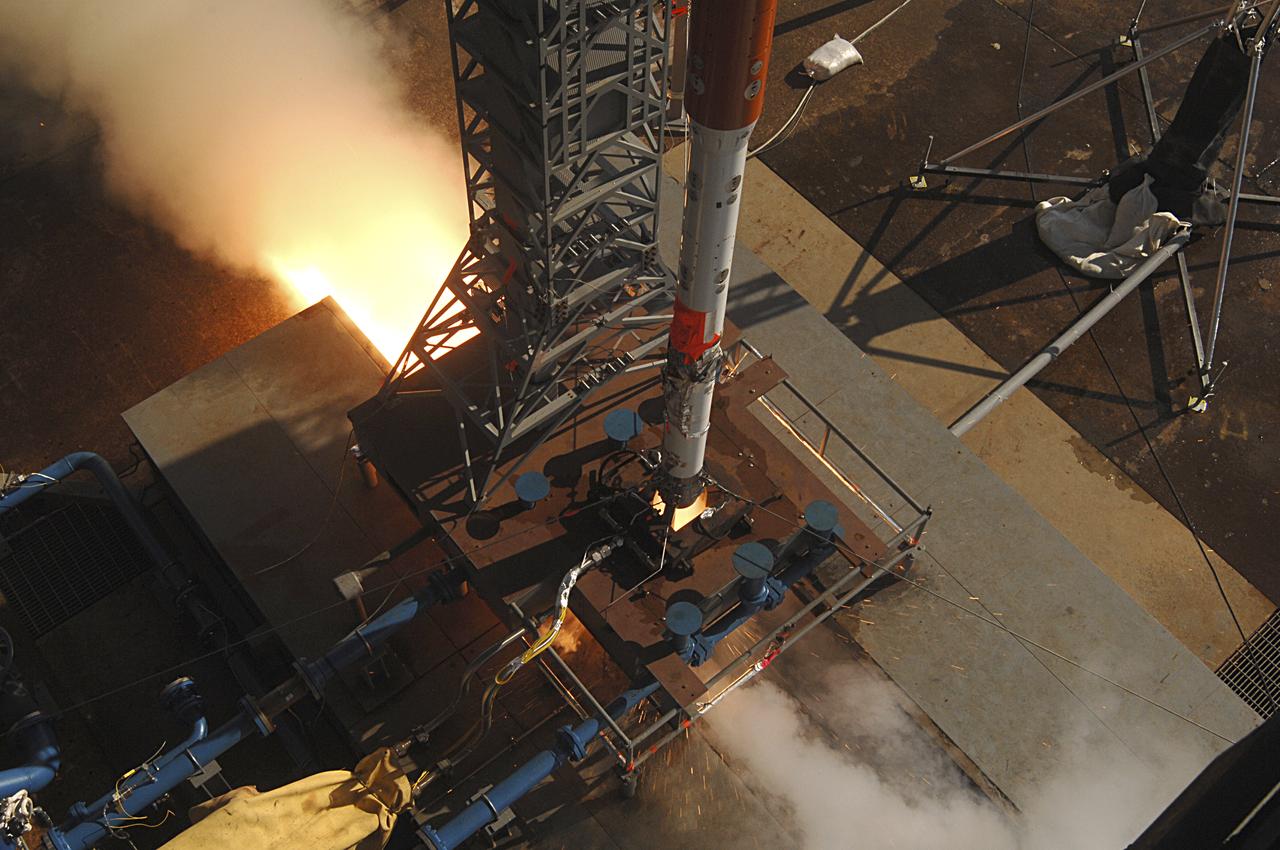
Project 8019 Vertical Ares Scale Model Acoustic Test (ASMAT) Ignition Over Pressure (IOP) Test #3, 11/18/2010 P8019_VERT 03-016

Apollo 11 astronaut Buzz Aldrin and tour guide Mary Ann Harness check out models of the Ares 1 and Ares 5 space vehicles during Aldrin's tour of NASA Dryden.
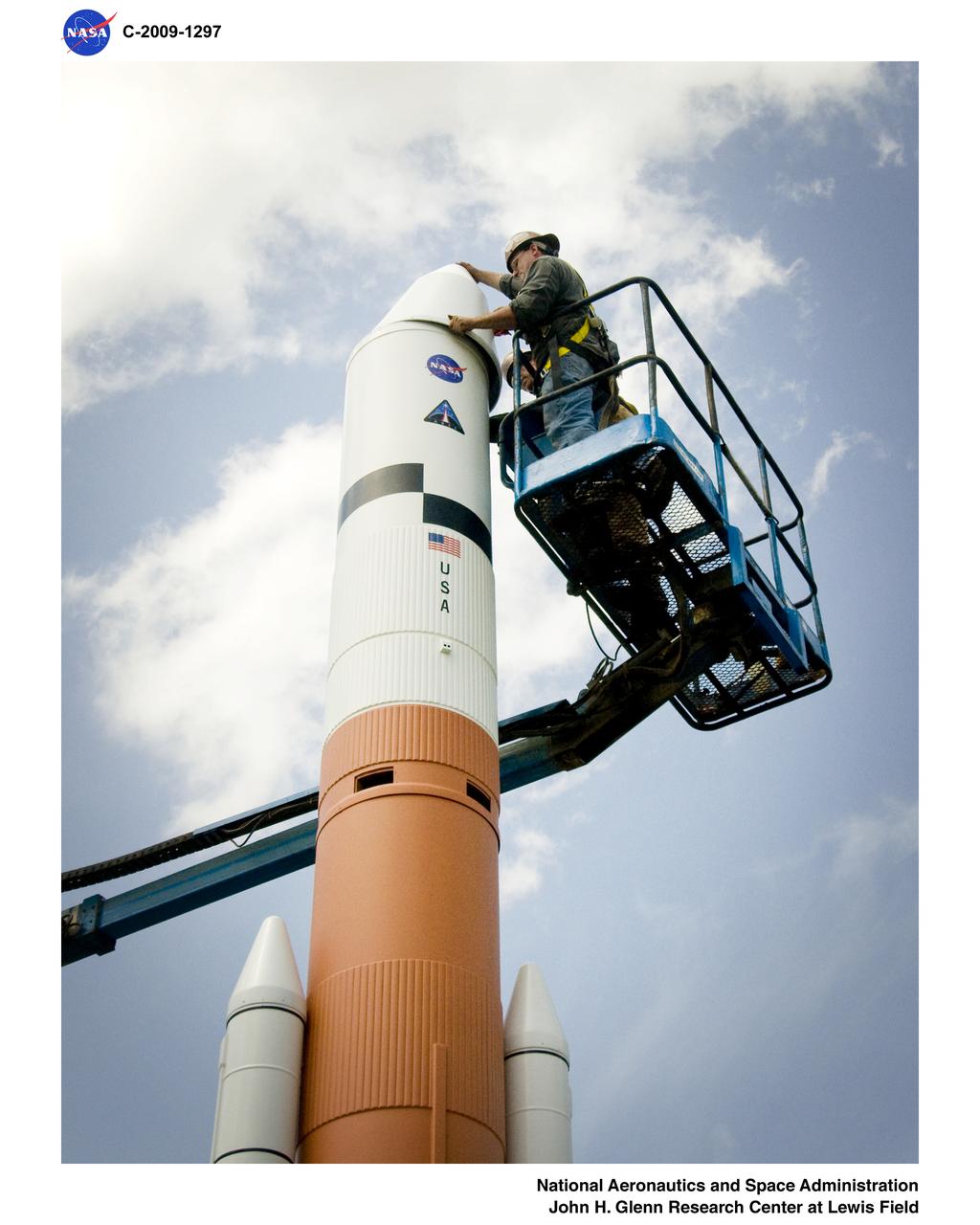
Installation of Ares V Model
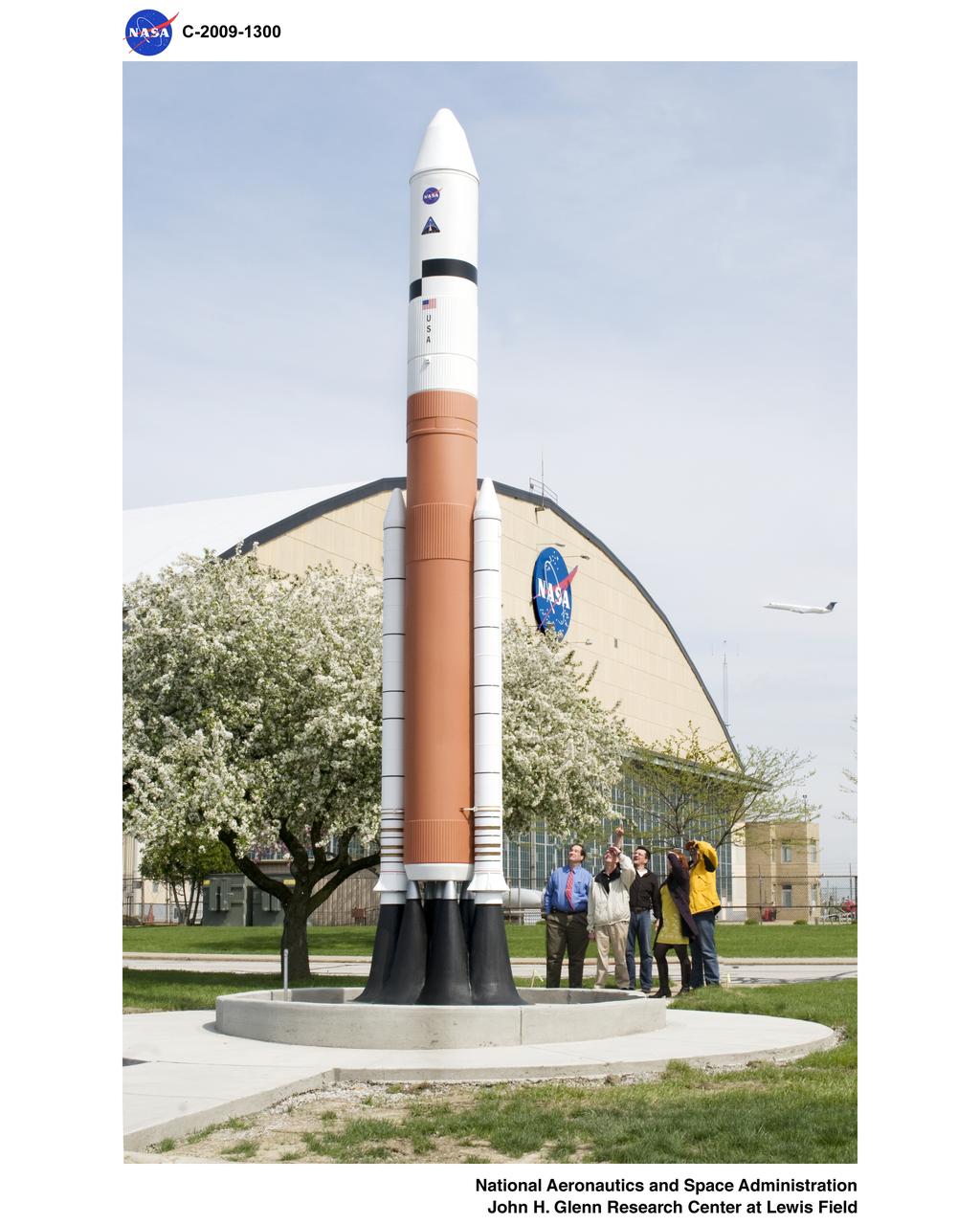
Installation of Ares V Model
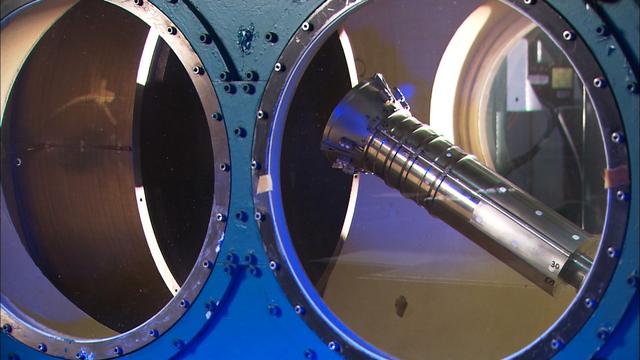
THIS IS A MODEL TEST OF THE 1ST STAGE RE-ENTRY. HEAT TESTING OF A 3% MODEL TO SUPPORT THE ARES/CLV FIRST STAGE RE-ENTRY. THIS OCCURRED AT ARNOLD AIR FORCE BASE, TENNESSEE IN SUPPORT OF THE CONSTELLATION/ARES PROJECT. THIS IMAGE IS EXTRACTED FROM A HIGH DEFINITION VIDEO FILE AND IS THE HIGHEST RESOLUTION AVAILABLE.
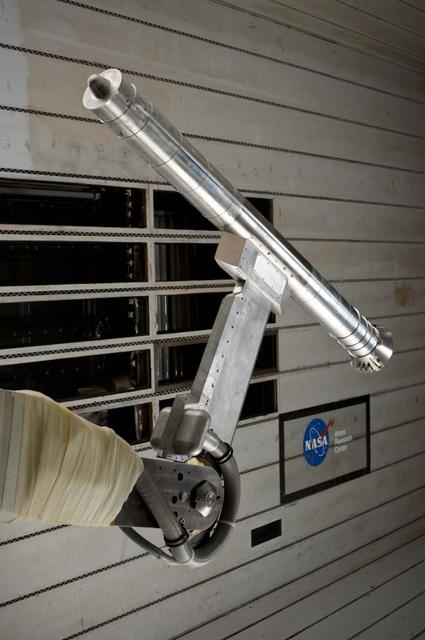
2.8% Scale Ares I acoustic model re-entry model in Ames 11ft. Supersonic Wind Tunnel test-11-0192
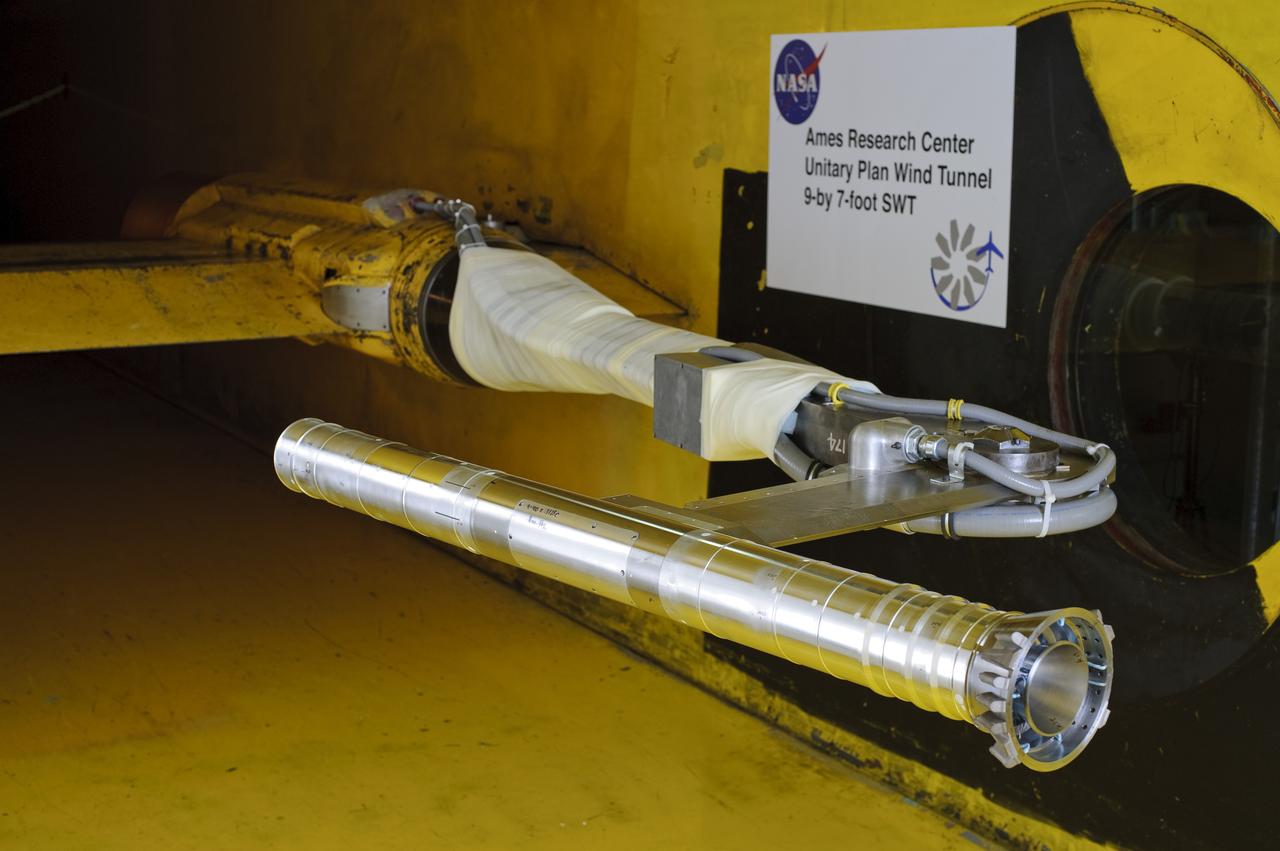
2.8% Ares I Acoustic Reentry Wind Tunnel Model in Ames 9X7ft Supersonic Wind Tunnel test-97-0193; model flying backwards in tunnel
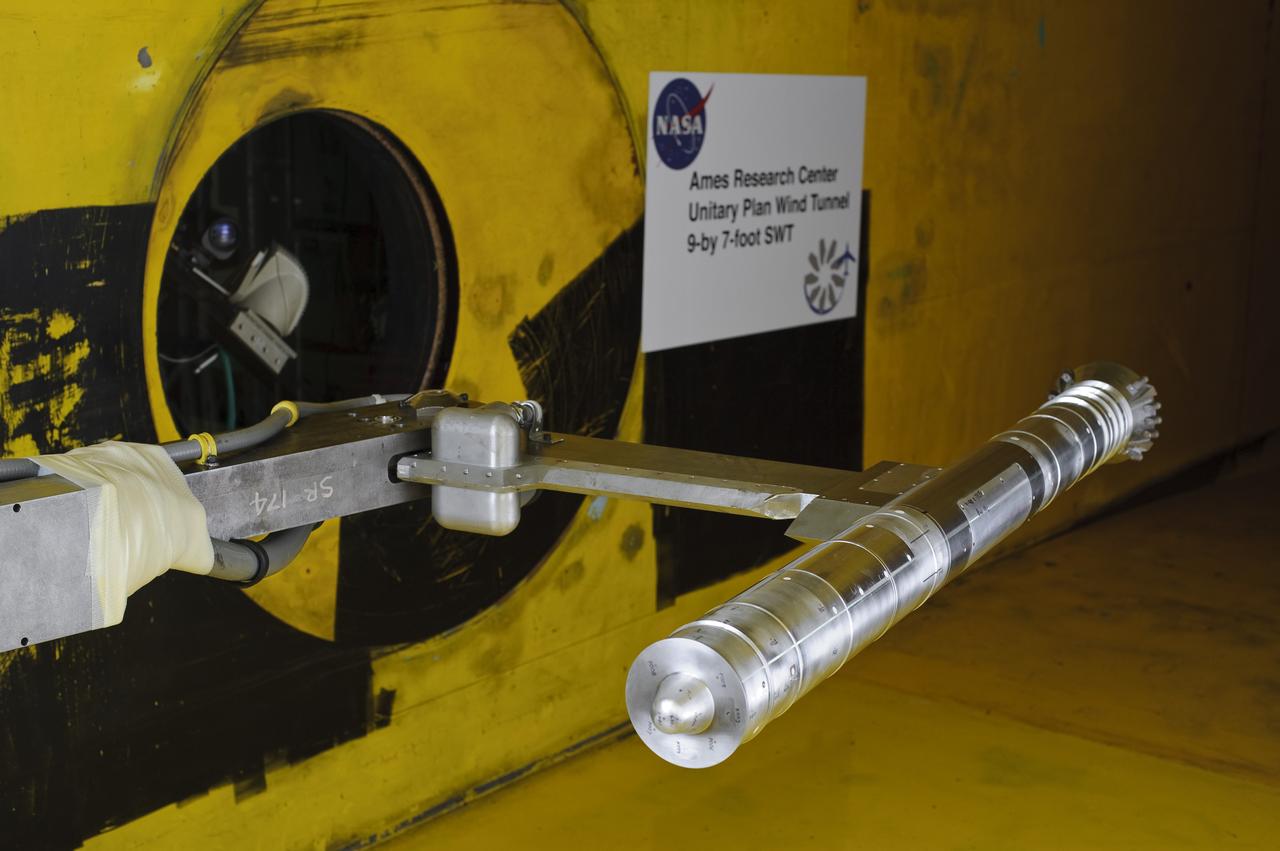
2.8% Ares I Acoustic Reentry Wind Tunnel Model in Ames 9X7ft Supersonic Wind Tunnel test-97-0193; model flying backwards in tunnel
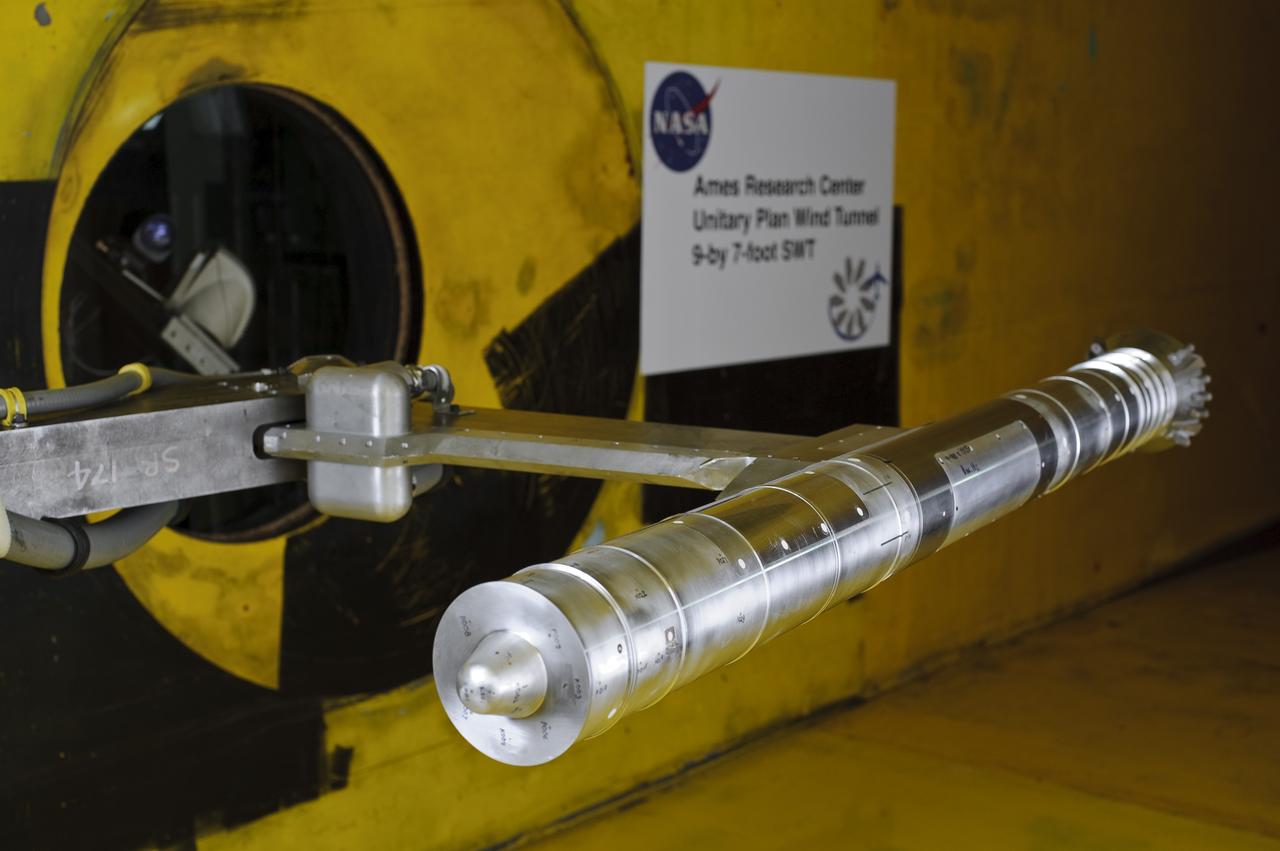
2.8% Ares I Acoustic Reentry Wind Tunnel Model in Ames 9X7ft Supersonic Wind Tunnel test-97-0193; model flying backwards in tunnel
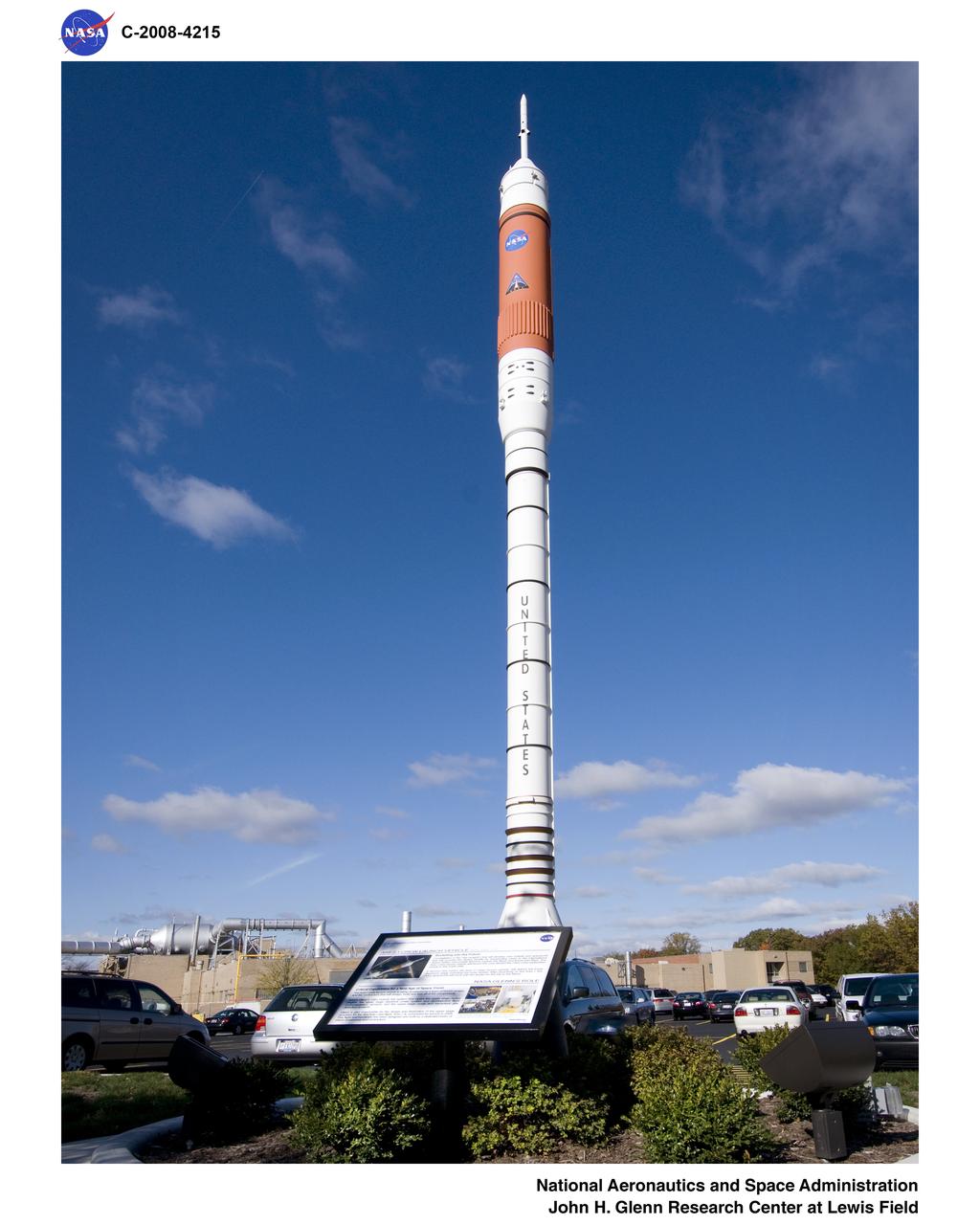
Model of Ares I Crew Launch Vehicle Photographed 10-22-2008
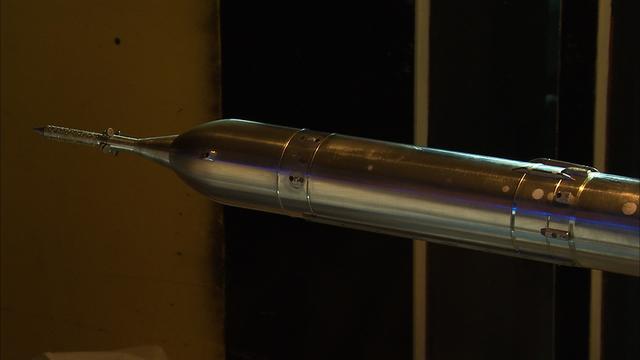
Shown is a wind tunnel test of the Ares model for force/moment testing in support of the Ares/ClV integrated vehicle at Langley Research Center, Virginia. The image is extracted from a high definition video file and is the highest resolution available.
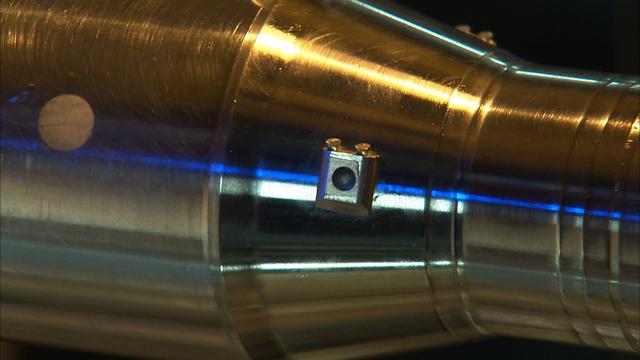
Shown is a wind tunnel test of the Ares model for force/moment testing in support of the Ares/ClV integrated vehicle at Langley Research Center, Virginia. The image is extracted from a high definition video file and is the highest resolution available.
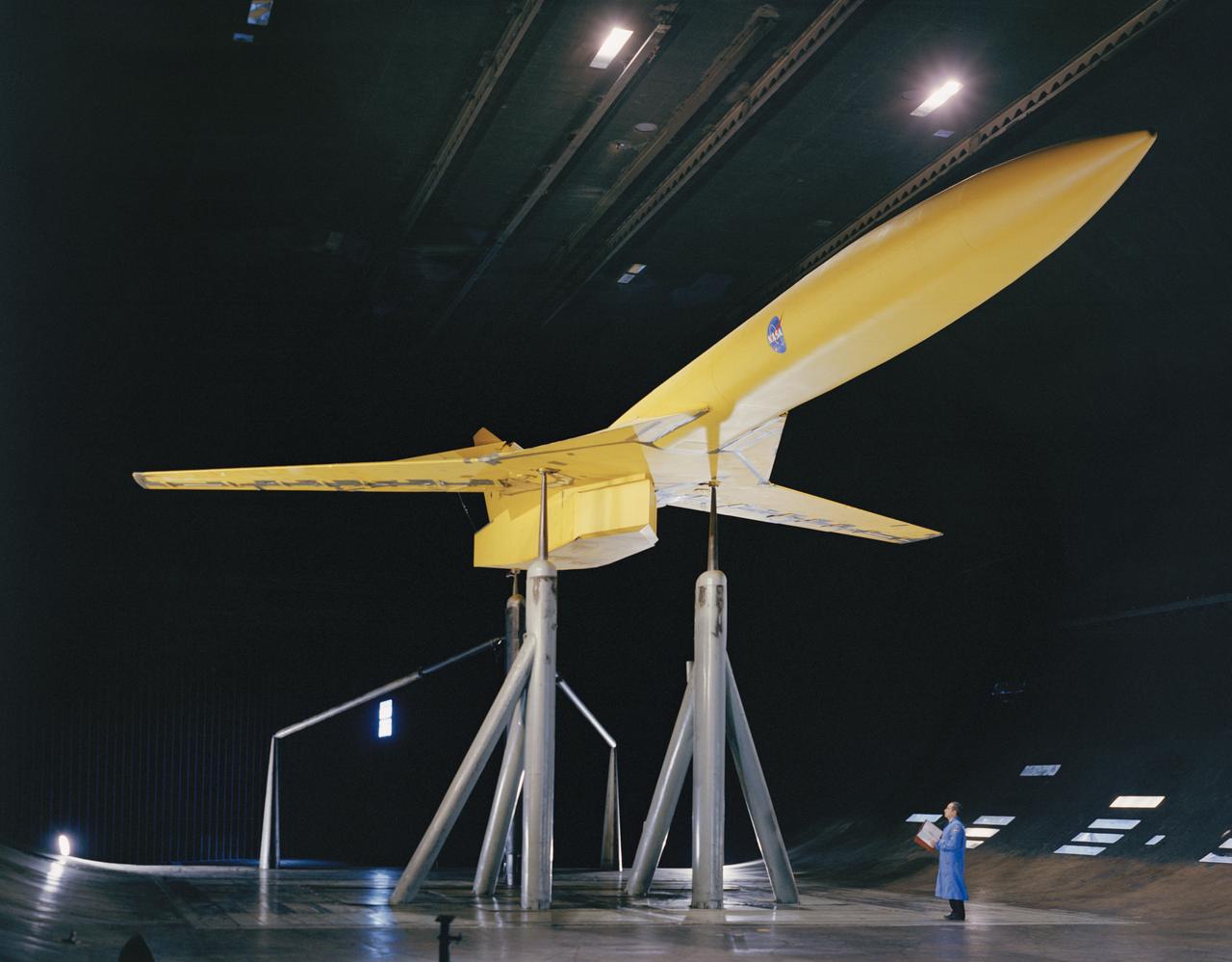
3/4 view of model in cruise configuration with 25 deg. Sweep, AR=6.9. SCAT-16; Variable Sweep Model in 40x80 Wind Tunnel at NASA Ames.
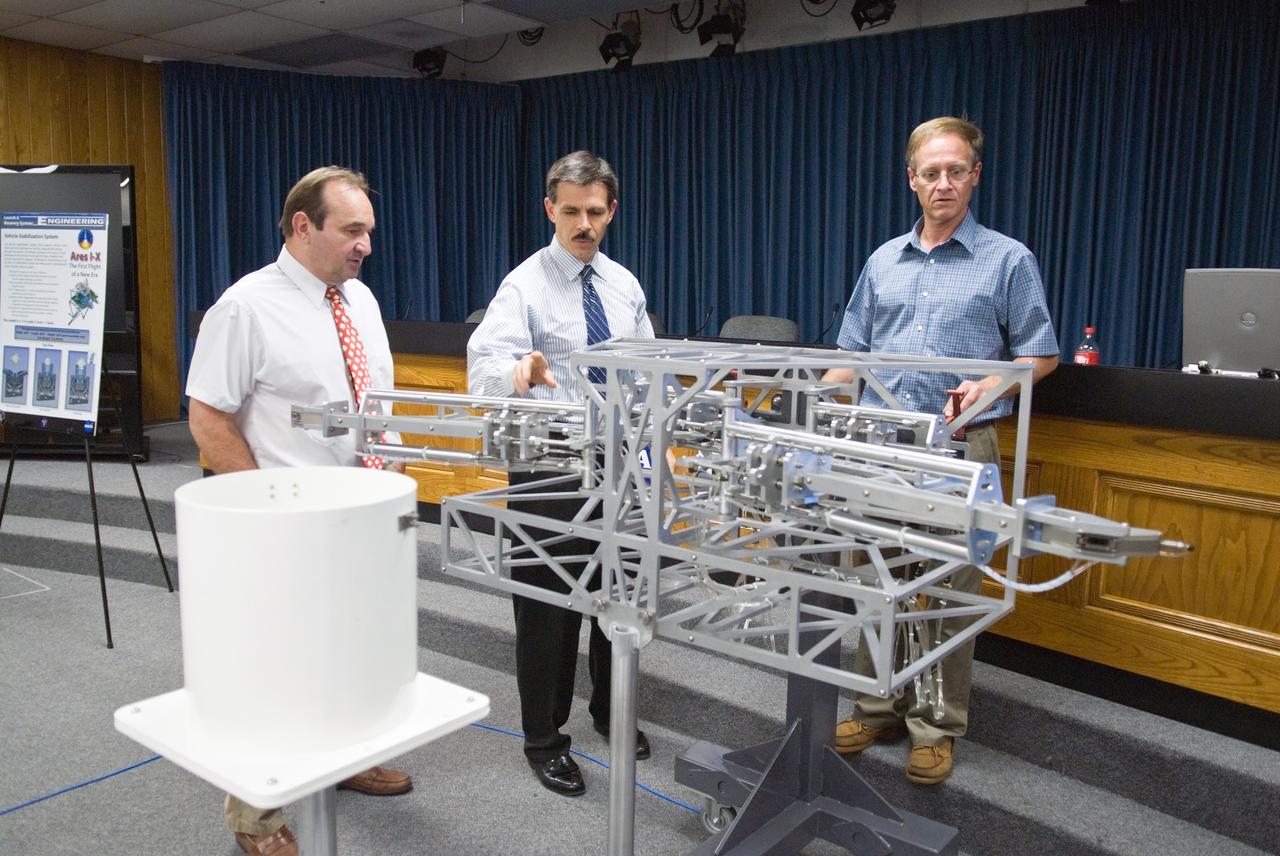
CAPE CANAVERAL, Fla. – In the NASA News Center TV Studio at NASA's Kennedy Space Center in Florida, on view is a 1/12 model of the vehicle stabilization system that will be installed on Launch Pad 39B to hold the Ares I-X rocket for its flight test. Looking at the model are (from left) Roger Lenard, consultant with Lee & Associates, LCC; Jon Cowart, NASA's Ares I-X deputy mission manager; and Eric Mellberg, Ares I-X Vehicle Stabilization Design lead with United Space Alliance Ares I-X is the test vehicle for the Ares I, which is part of the Constellation Program to return men to the moon and beyond. Ares I-X is targeted for launch in August 2009. Photo credit: NASA/Kim Shiflett
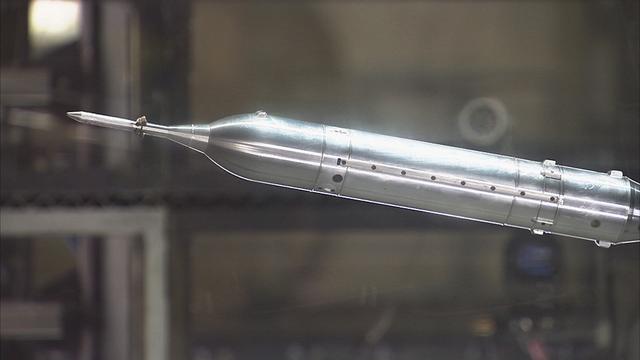
Active damper wind tunnel test in support of the development of Constellation/Ares. Testing of the 1% and .548% models for active damper and wall interference assessment in support of the Ares/CLV integrated vehicle. This test occurred at the 11 foot wind tunnel at the Ames Research Center, California. This image is extracted from high definition video file and is the highest resolution available
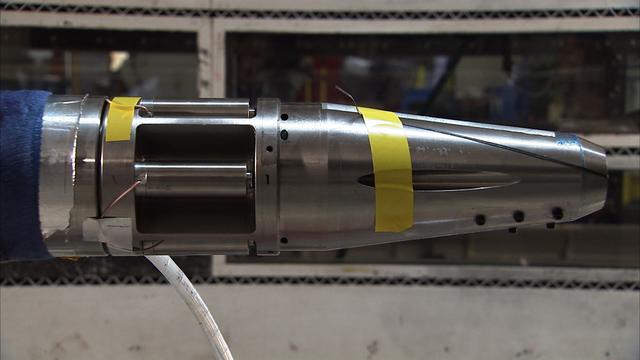
Active damper wind tunnel test in support of the development of Constellation/Ares. Testing of the 1% and .548% models for active damper and wall interference assessment in support of the Ares/CLV integrated vehicle. This test occurred at the 11 foot wind tunnel at the Ames Research Center, California. This image is extracted from high definition video file and is the highest resolution available.
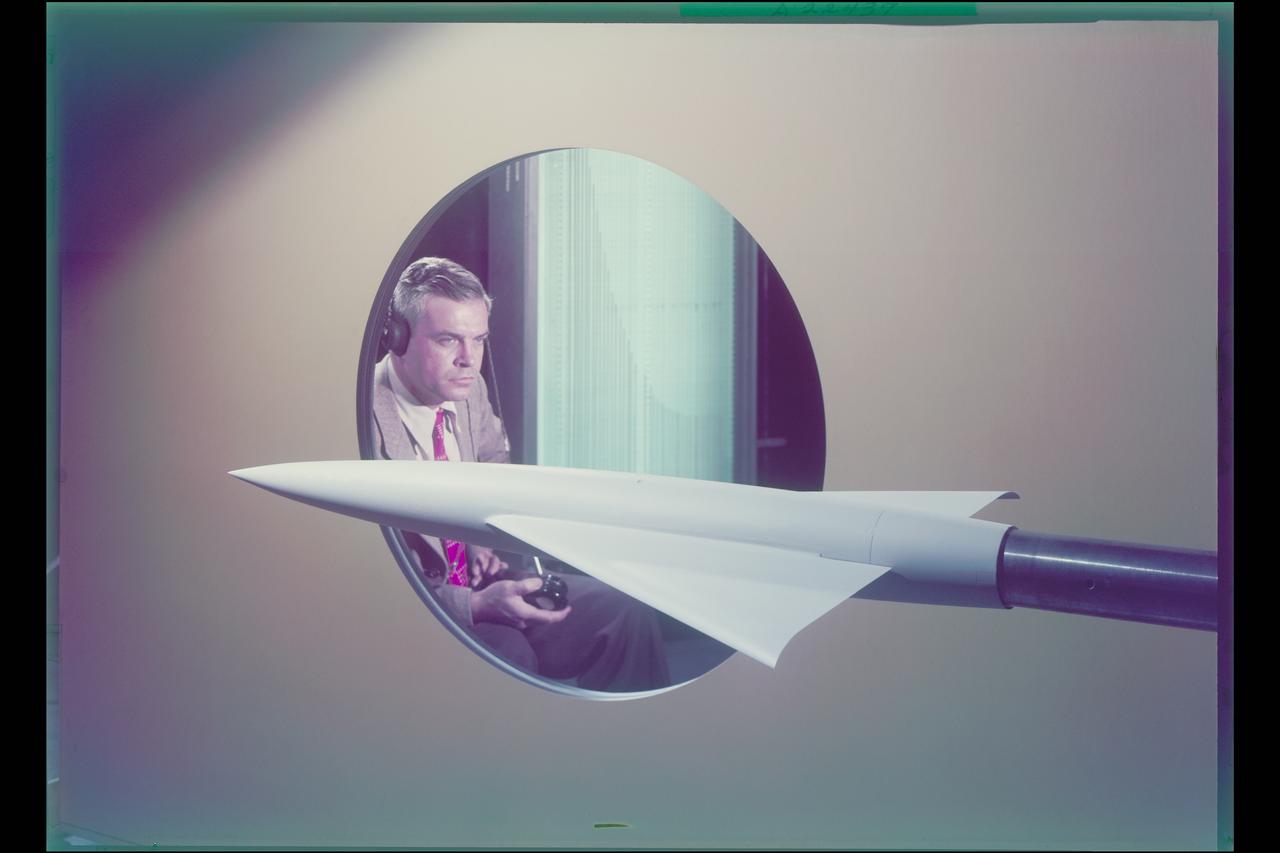
Charles Hall displaying tunnel model AR-2 which incorporates conical camber as the half-cone twist in the wings (in simulated 2x4' tunnel) Note: printed in 60 year at NASA Ames Research Center by Glenn Bugos NASA SP-2000-4314
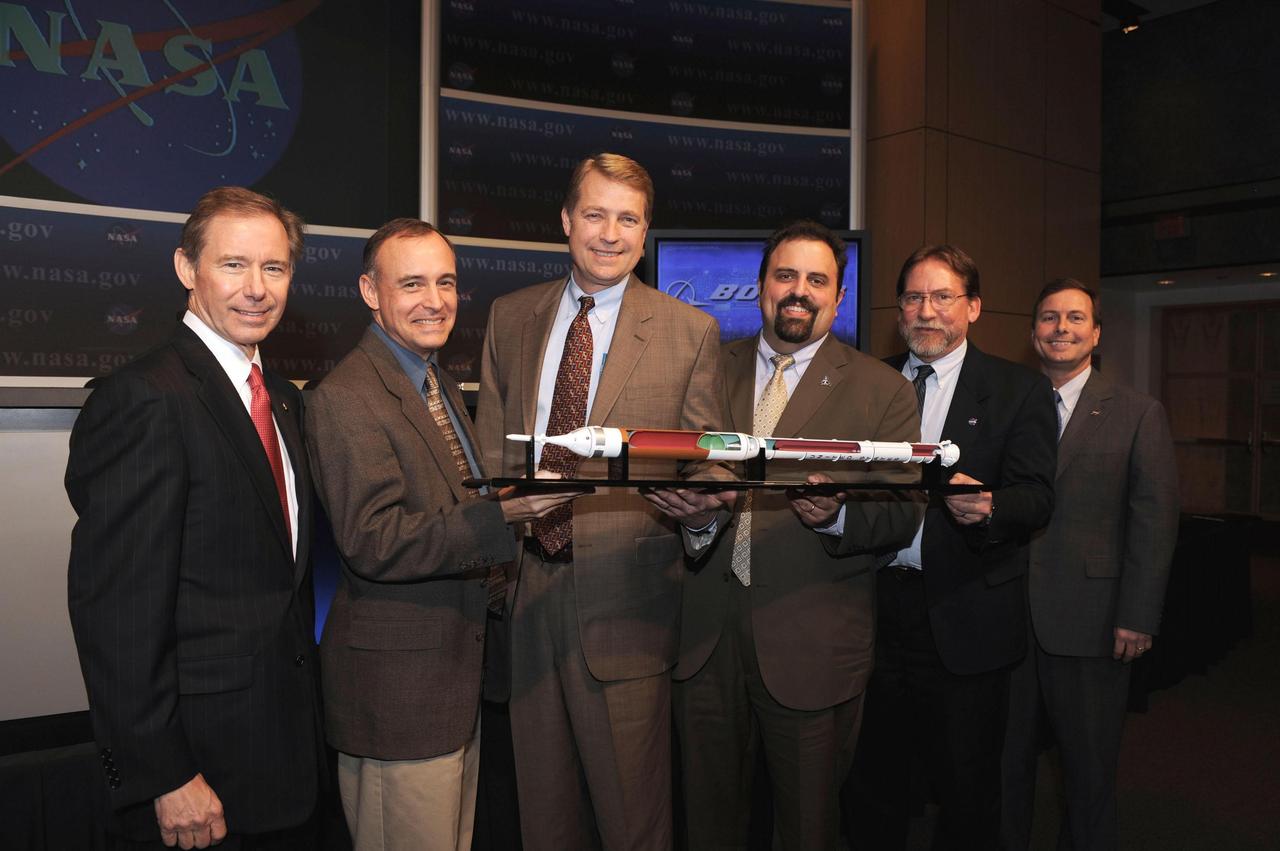
WASHINGTON, D.C. -- (From left) Brewster Shaw, vice president and genral manager of Boeing Space Exploration; Jeff Hanley, Constellation Program manager; Danny Davis, Upper Stage Element manager; Steve Cook, Ares Project manager; Doug Cooke, deputy associate administrator for Exploration Systems; and Rick Gilbrech, associate administrator for Space Exploration, stand with a model of the Ares I rocket on Dec. 12, 2007, at NASA Headquarters in Washington. NASA has selected The Boeing Company of Huntsville, Ala., as the prime contractor to produce, deliver and install avionics systsems for the Ares I rocket that will launch the Orion crew exploration vehicle into orbit. The selection is the final major contract award for Ares I. Photo credit: NASA/Paul E. Alers
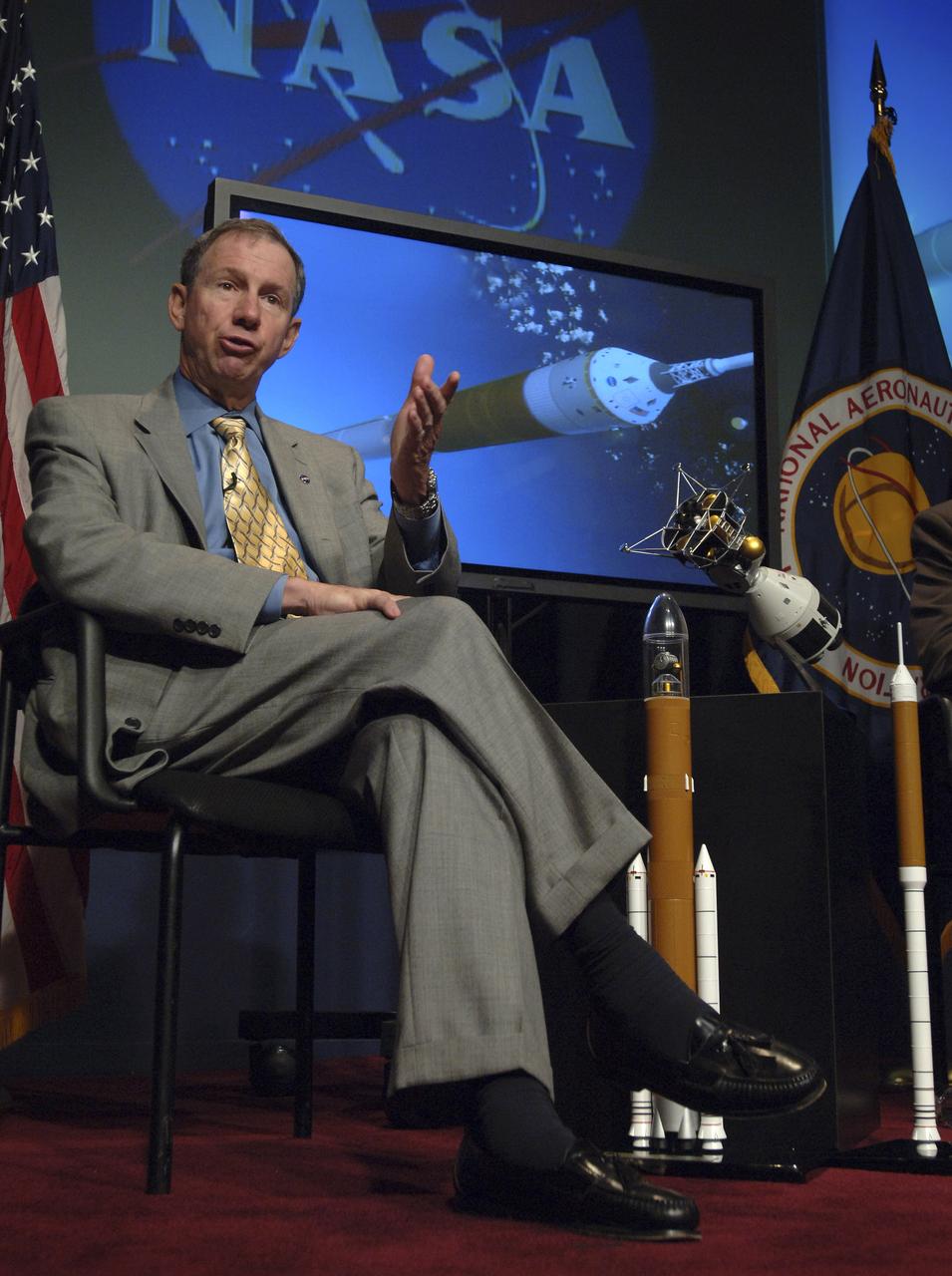
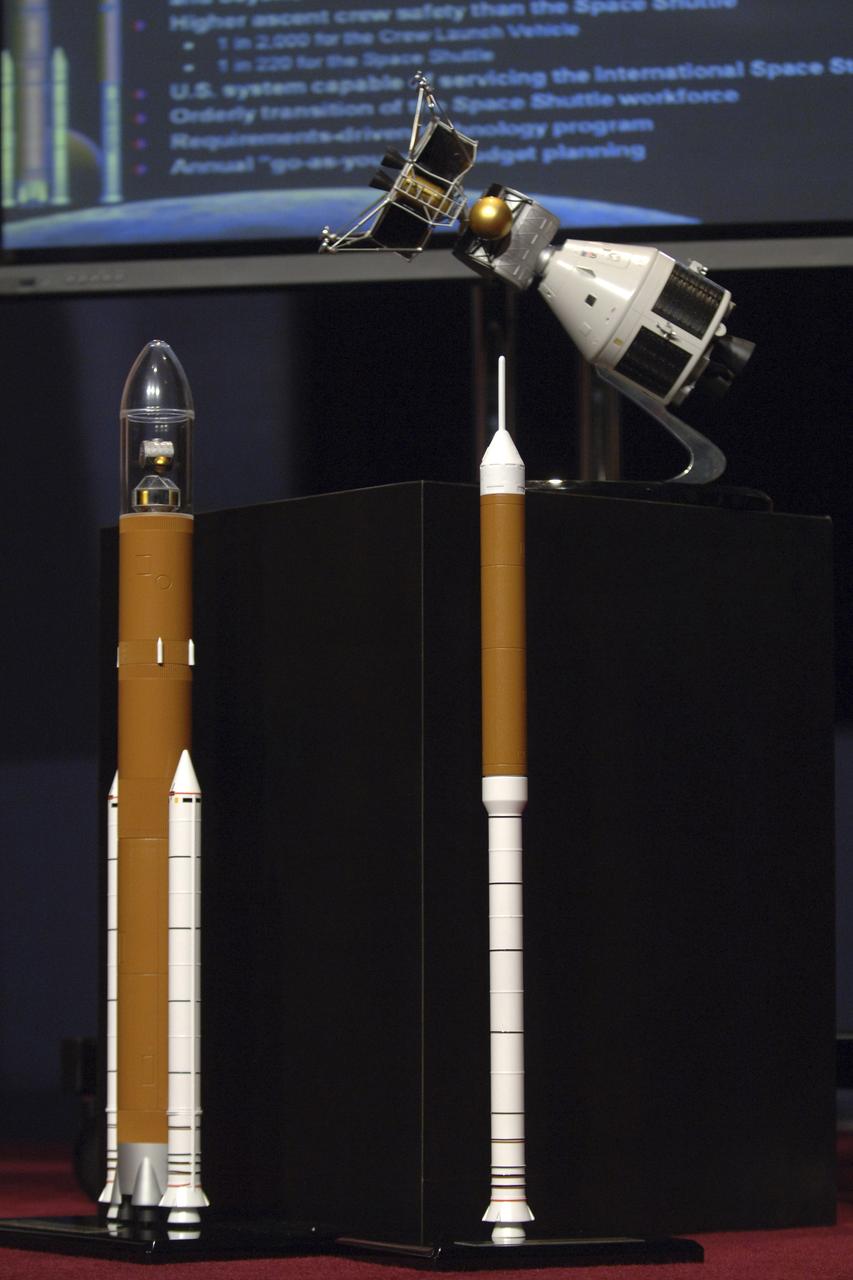
NASA Administrator Michael Griffin discusses the results of the agency's exploration architecture study on Monday, Sept. 19, 2005, at NASA Headquarters in Washington. The study made specific design recommendations for a vehicle to carry crews into space, a family of launch vehicles to take missions to the moon and beyond, and a "lunar mission architecture" for landing on the moon. Photo Credit: (NASA/Bill Ingalls)
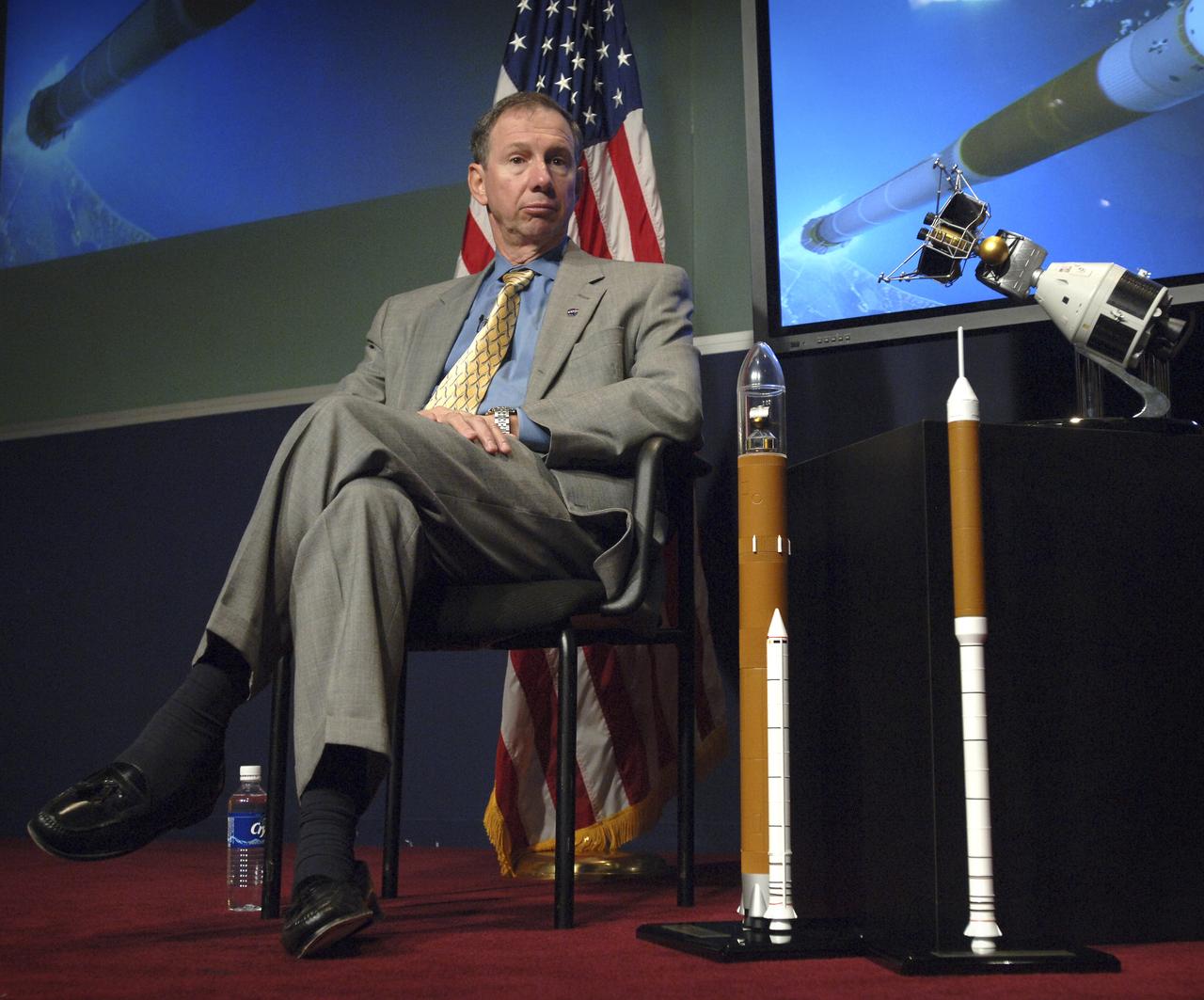
NASA Administrator Michael Griffin discusses the results of the agency's exploration architecture study on Monday, Sept. 19, 2005, at NASA Headquarters in Washington. The study made specific design recommendations for a vehicle to carry crews into space, a family of launch vehicles to take missions to the moon and beyond, and a "lunar mission architecture" for landing on the moon. Photo Credit: (NASA/Bill Ingalls)
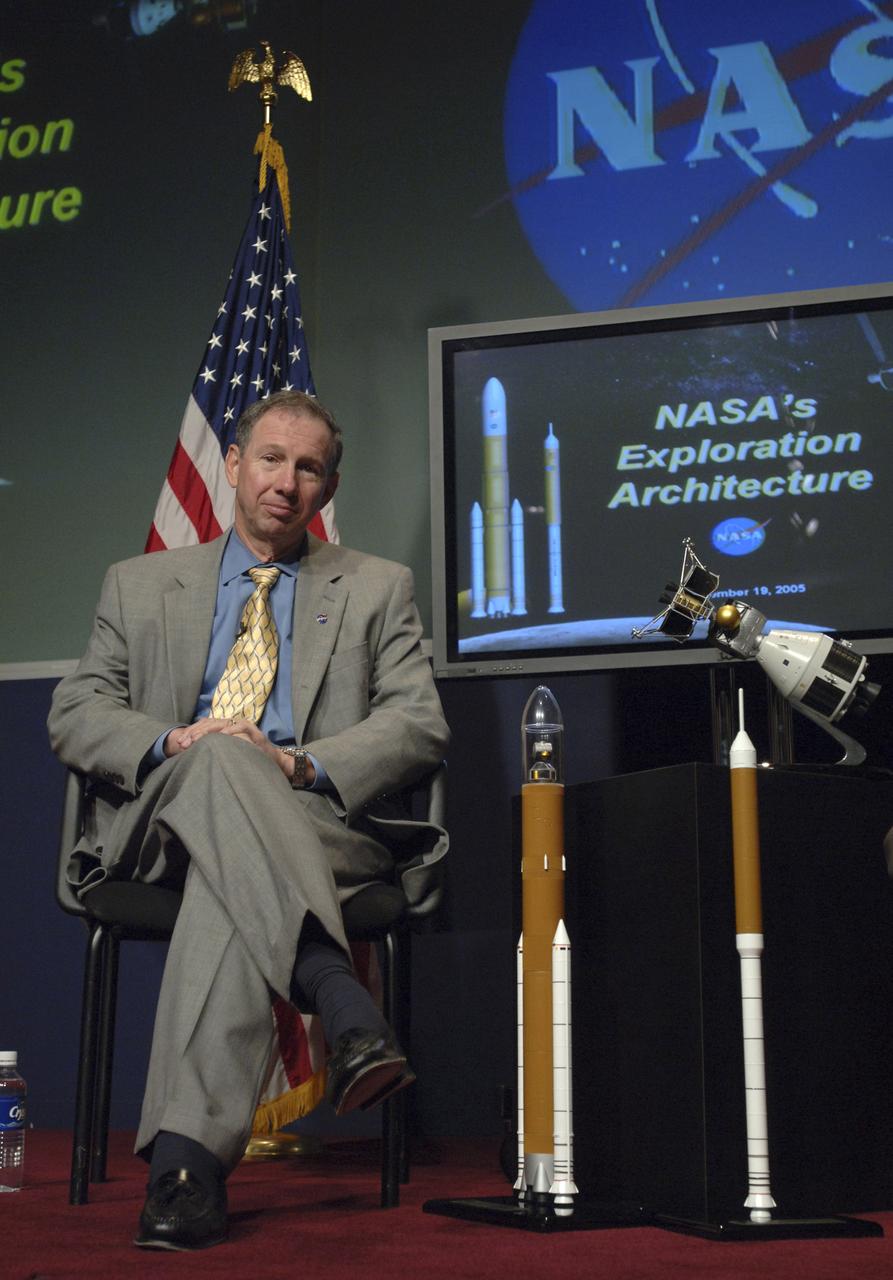
NASA Administrator Michael Griffin discusses the results of the agency's exploration architecture study on Monday, Sept. 19, 2005, at NASA Headquarters in Washington. The study made specific design recommendations for a vehicle to carry crews into space, a family of launch vehicles to take missions to the moon and beyond, and a "lunar mission architecture" for landing on the moon. Photo Credit: (NASA/Bill Ingalls)
NASA Administrator Michael Griffin discusses the results of the agency's exploration architecture study on Monday, Sept. 19, 2005, at NASA Headquarters in Washington. The study made specific design recommendations for a vehicle to carry crews into space, a family of launch vehicles to take missions to the moon and beyond, and a "lunar mission architecture" for landing on the moon. Photo Credit: (NASA/Bill Ingalls)
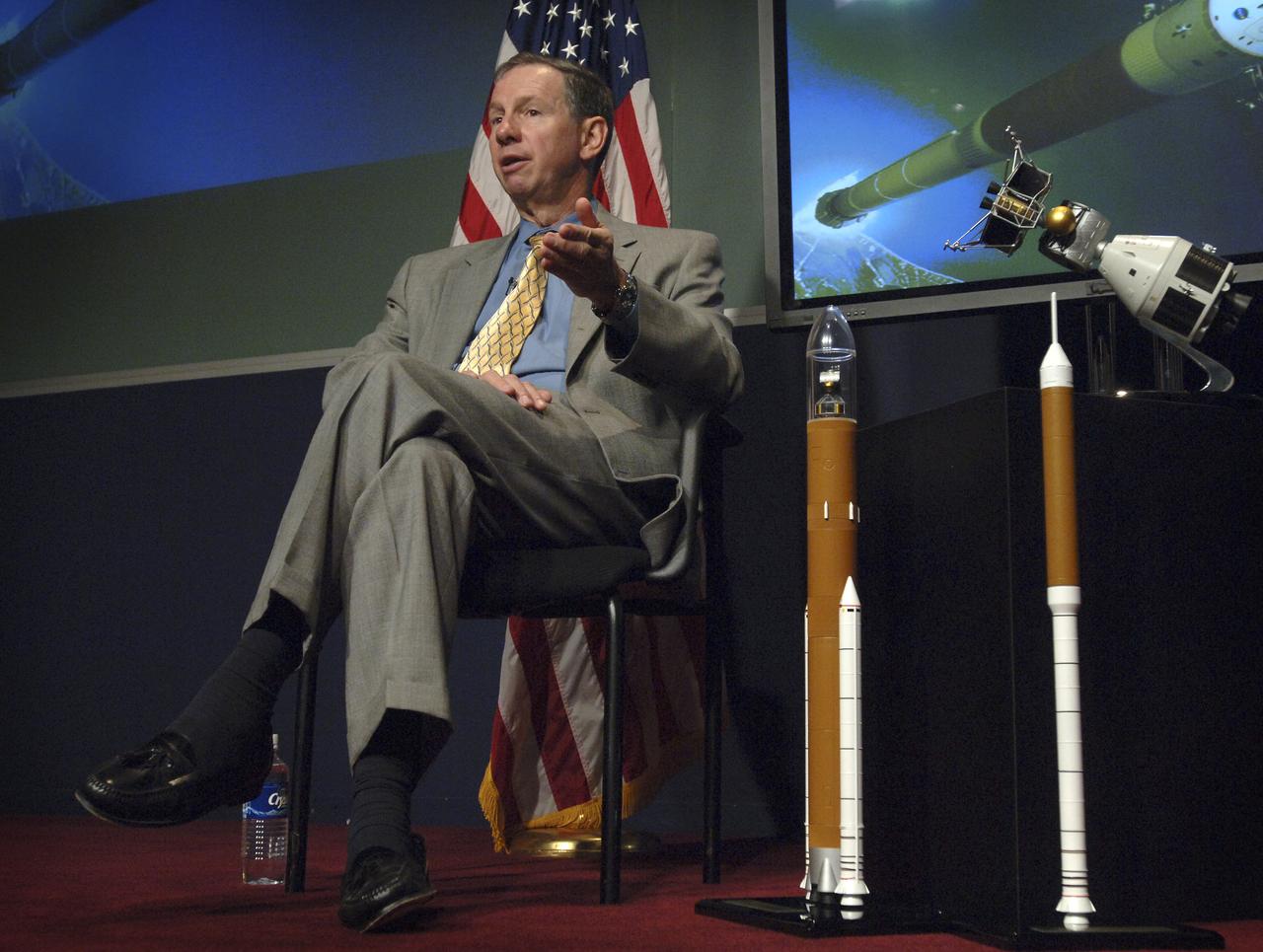
NASA Administrator Michael Griffin discusses the results of the agency's exploration architecture study on Monday, Sept. 19, 2005, at NASA Headquarters in Washington. The study made specific design recommendations for a vehicle to carry crews into space, a family of launch vehicles to take missions to the moon and beyond, and a "lunar mission architecture" for landing on the moon. Photo Credit: (NASA/Bill Ingalls)
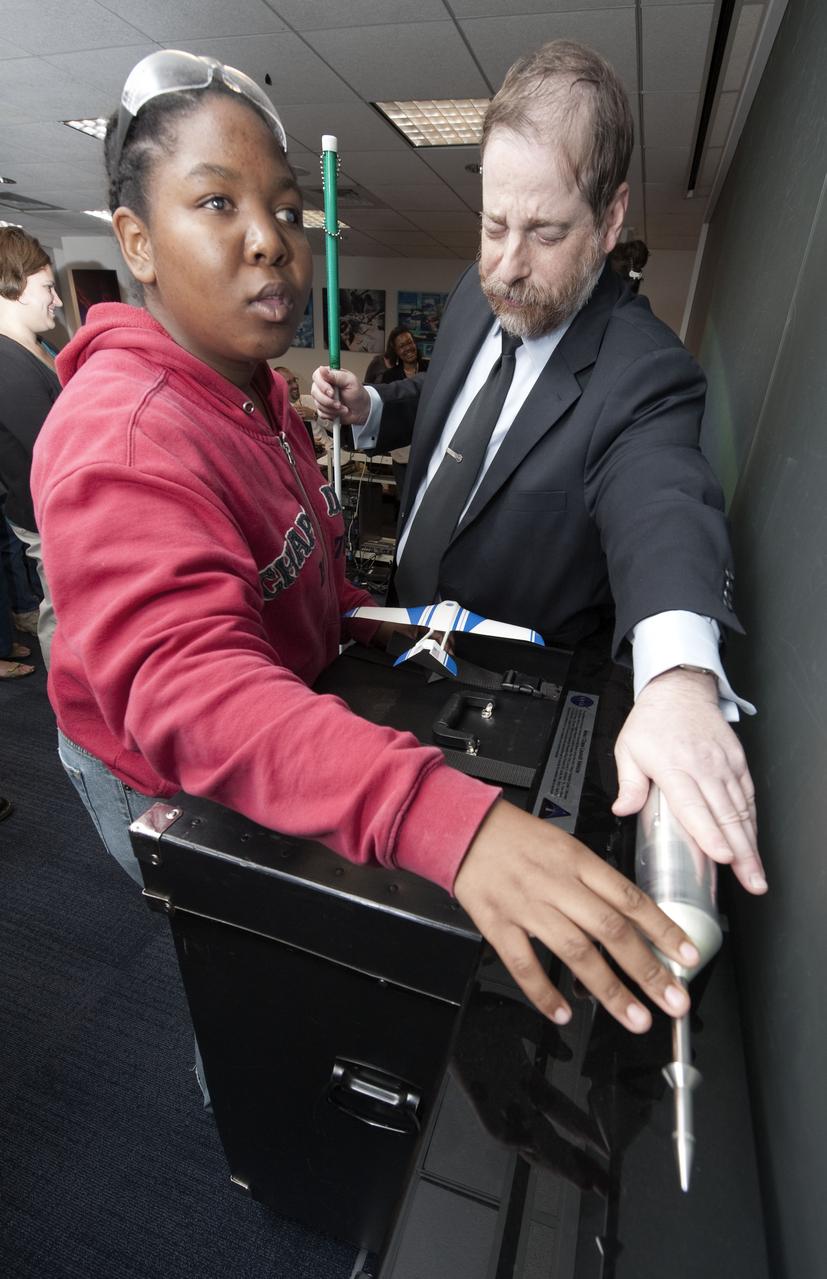
Maryland School for the Blind student Andrea Washington, left, and Kenneth Silberman, an engineer at NASA's Goddard Space Flight Center, use their sense of touch on a model of the Ares I-X rocket during a visit to NASA Headquarters in Washington, Thursday, Oct. 29, 2009. Seven students from the Maryland School for the Blind visited NASA and participated in activities to learn about NASA'smission, functions, and careers. Photo Credit: (NASA/Paul E. Alers)
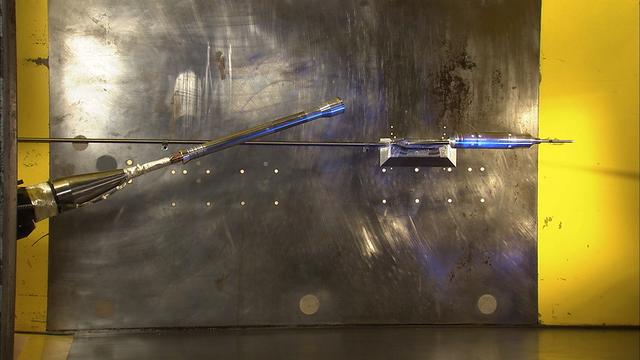
Under the goals of the Vision for Space Exploration, Ares I is a chief component of the cost-effective space transportation infrastructure being developed by NASA's Constellation Program. This transportation system will safely and reliably carry human explorers back to the moon, and then onward to Mars and other destinations in the solar system. The Ares I effort includes multiple project element teams at NASA centers and contract organizations around the nation, and is managed by the Exploration Launch Projects Office at NASA's Marshall Space Flight Center (MFSC). ATK Launch Systems near Brigham City, Utah, is the prime contractor for the first stage booster. ATK's subcontractor, United Space Alliance of Houston, is designing, developing and testing the parachutes at its facilities at NASA's Kennedy Space Center in Florida. NASA's Johnson Space Center in Houston hosts the Constellation Program and Orion Crew Capsule Project Office and provides test instrumentation and support personnel. Together, these teams are developing vehicle hardware, evolving proven technologies, and testing components and systems. Their work builds on powerful, reliable space shuttle propulsion elements and nearly a half-century of NASA space flight experience and technological advances. Ares I is an inline, two-stage rocket configuration topped by the Crew Exploration Vehicle, its service module, and a launch abort system. In this HD video image, the first stage reentry 1/2% model is undergoing pressure measurements inside the wind tunnel testing facility at MSFC. (Highest resolution available)
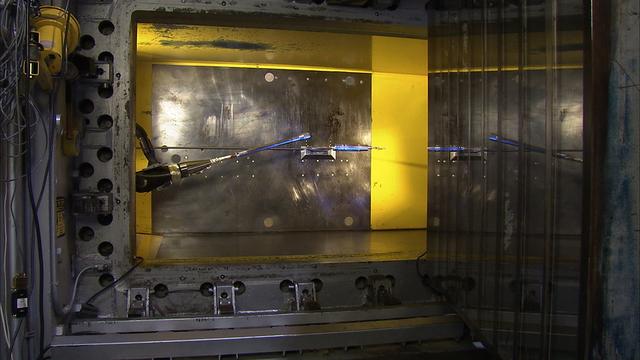
Under the goals of the Vision for Space Exploration, Ares I is a chief component of the cost-effective space transportation infrastructure being developed by NASA's Constellation Program. This transportation system will safely and reliably carry human explorers back to the moon, and then onward to Mars and other destinations in the solar system. The Ares I effort includes multiple project element teams at NASA centers and contract organizations around the nation, and is managed by the Exploration Launch Projects Office at NASA's Marshall Space Flight Center (MFSC). ATK Launch Systems near Brigham City, Utah, is the prime contractor for the first stage booster. ATK's subcontractor, United Space Alliance of Houston, is designing, developing and testing the parachutes at its facilities at NASA's Kennedy Space Center in Florida. NASA's Johnson Space Center in Houston hosts the Constellation Program and Orion Crew Capsule Project Office and provides test instrumentation and support personnel. Together, these teams are developing vehicle hardware, evolving proven technologies, and testing components and systems. Their work builds on powerful, reliable space shuttle propulsion elements and nearly a half-century of NASA space flight experience and technological advances. Ares I is an inline, two-stage rocket configuration topped by the Crew Exploration Vehicle, its service module, and a launch abort system. In this HD video image, the first stage reentry 1/2% model is undergoing pressure measurements inside the wind tunnel testing facility at MSFC. (Highest resolution available)
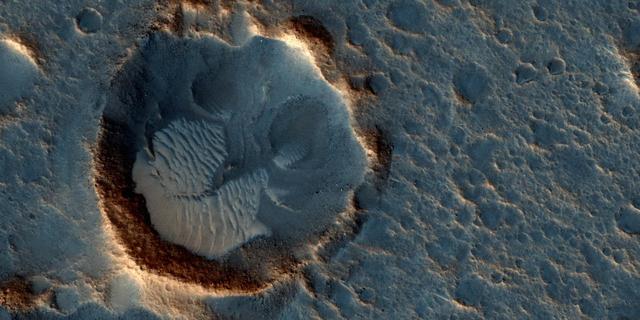
This image from the High Resolution Imaging Science Experiment (HiRISE) camera on NASA's Mars Reconnaissance Orbiter shows a location on Mars associated with the best-selling novel and Hollywood movie, "The Martian." This area is in the Acidalia Planitia region. In the novel and the movie, it is the landing site of a crewed mission named Ares 3. For the story's central character, Acidalia Planitia is within driving distance from where NASA's Mars Pathfinder, with its Sojourner rover, landed in 1997. An initial HiRISE image of the site was taken in April 2015 and is online at http://hirise.lpl.arizona.edu/ESP_040776_2115. A second one was taken May 17, 2015, and is shown here. Figure 1 is a stereo combination of the two, appearing three-dimensional when viewed through blue-red glasses with the red lens on the left One of the main objectives of the HiRISE camera is to carry out "monitoring science", which involves taking images of certain areas of high scientific interest on regular intervals. The team usually does so to monitor a seasonal or recurring process such as seasonal changes in carbon-dioxide ice near the poles, dune movement or recurring flow-like features on some slopes. HiRISE also takes repeated images of areas with active rovers, such as Curiosity, to help plan safe routes toward areas of high scientific interest. Another key responsibility for the HiRISE camera is to provide information for use in selection of landing sites for future missions. One technique is to image a site of interest at least twice when the weather conditions are similar, but with a small difference in viewing angle, much like what you would experience if you looked at something with only your right eye, then looked at it again with the left. By doing this, we are able to build a stereo view of the site, providing a chance to identify high and low points in the site more effectively. This resulting 3-D information can combined with elevation data from laser altimeters to create a highly accurate "digital terrain model" or DTM for short. DTMs allow researchers to view the locations in 3-D and to analyze them by measuring the exact height of features that could be hazardous to the future mission, such as large boulders or small impact craters. DTMs from HiRISE were a key factor in choosing the landing site for NASA's Curiosity Mars rover in Gale Crater and are being used to evaluate sites under consideration for the NASA's 2016 InSight Mars lander and Mars 2020 rover missions. The location of the site in this image is 31.3 degrees north latitude, 331.3 degrees east latitude. The image is an excerpt from HiRISE observation ESP_041277_2115. http://photojournal.jpl.nasa.gov/catalog/PIA19913