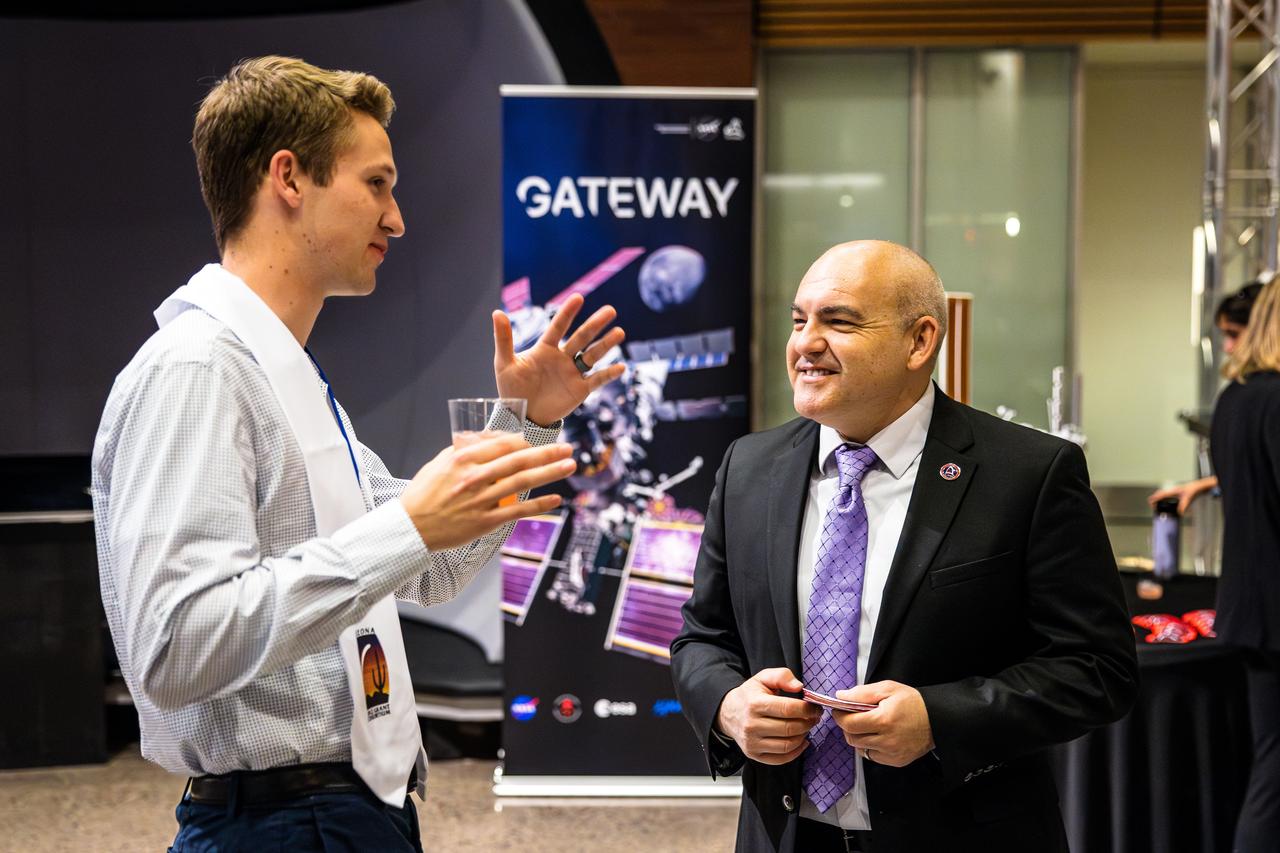
Carlos Garcia-Galan, deputy manager of NASA’s Gateway Program, talks with college students about NASA internship opportunities after delivering a keynote address on Gateway, Artemis, and the next era of human space exploration at the 2025 Arizona NASA Space Grant Consortium Statewide Student Research Symposium, held April 18, 2025, at Arizona State University.

Carlos Garcia-Galan, deputy manager of NASA’s Gateway Program, talks with college students about NASA internship opportunities after delivering a keynote address on Gateway, Artemis, and the next era of human space exploration at the 2025 Arizona NASA Space Grant Consortium Statewide Student Research Symposium, held April 18, 2025, at Arizona State University.

Carlos Garcia-Galan, deputy manager of NASA’s Gateway Program, talks with college students about NASA internship opportunities after delivering a keynote address on Gateway, Artemis, and the next era of human space exploration at the 2025 Arizona NASA Space Grant Consortium Statewide Student Research Symposium, held April 18, 2025, at Arizona State University.
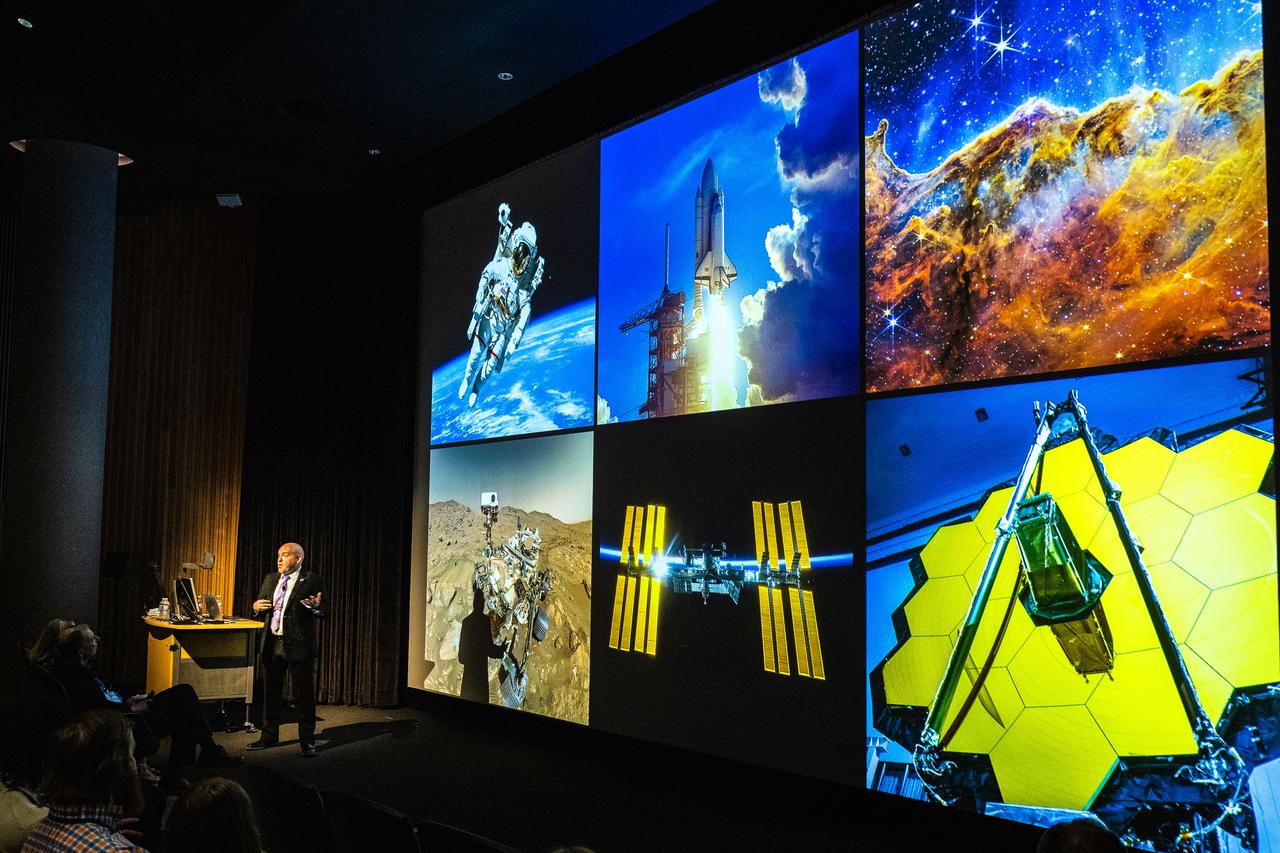
Carlos Garcia-Galan, deputy manager of NASA’s Gateway Program, delivers a keynote address on Gateway, Artemis, and the next era of human space exploration at the 2025 Arizona NASA Space Grant Consortium Statewide Student Research Symposium, held April 18, 2025, at Arizona State University.
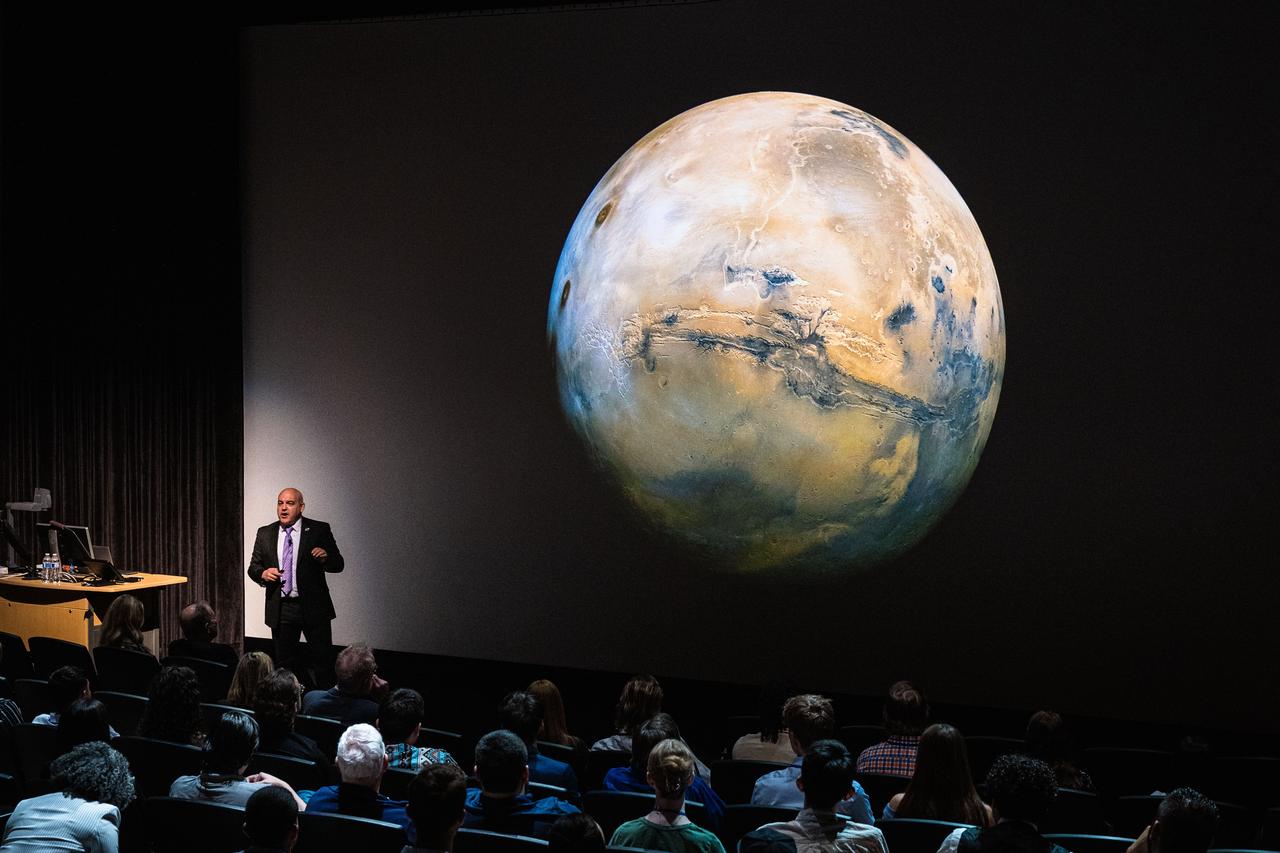
Carlos Garcia-Galan, deputy manager of NASA’s Gateway Program, delivers a keynote address on Gateway, Artemis, and the next era of human space exploration at the 2025 Arizona NASA Space Grant Consortium Statewide Student Research Symposium, held April 18, 2025, at Arizona State University.
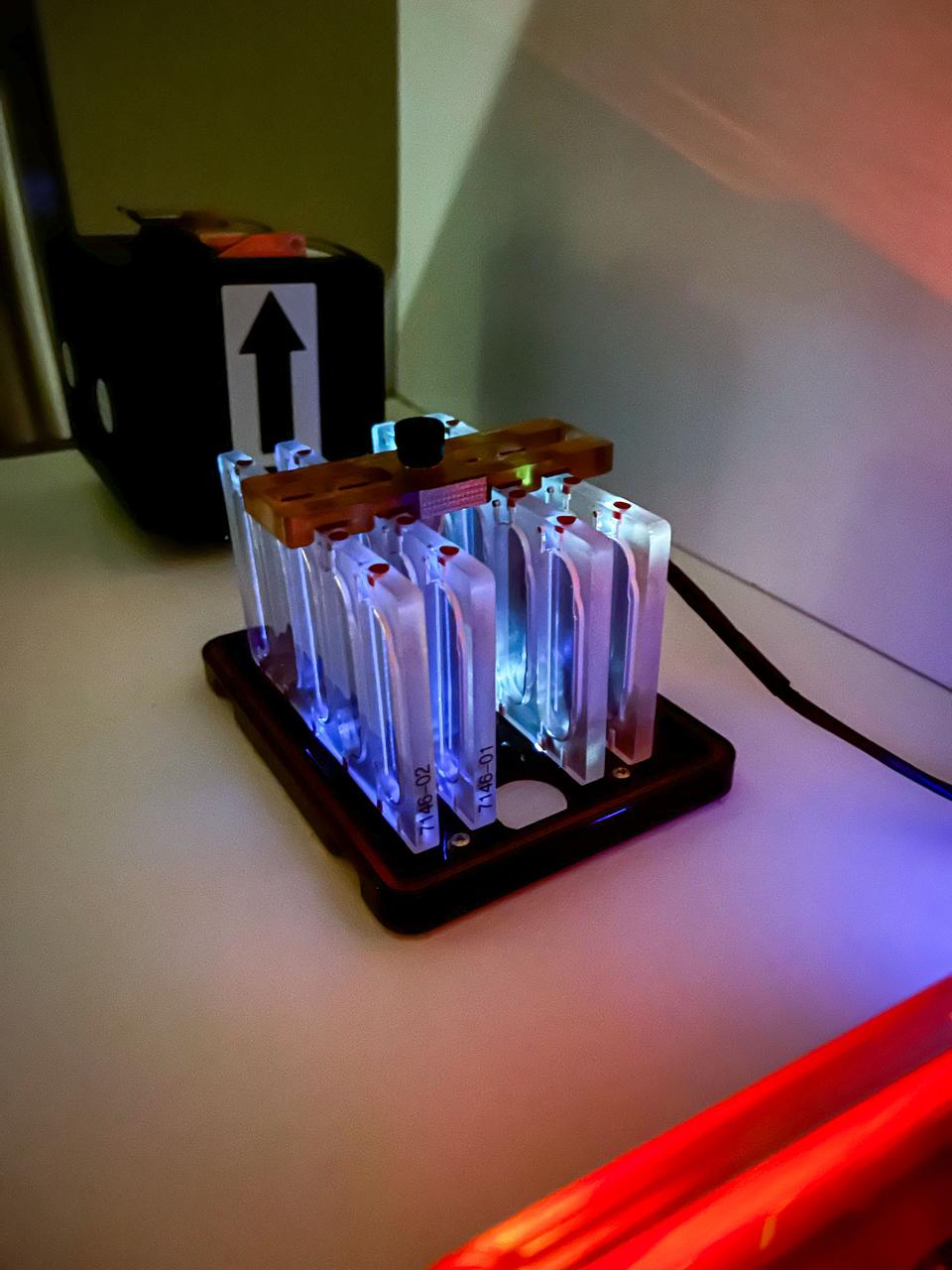
jsc2025e067422 97/9/2025) --- Agar plates for the GULBI investigation. This research uses special optical fibers to deliver ultraviolet (UV) light to inhibit the formation of microbial communities called biofilms and examine how microgravity affects the results. Credit: Arizona State University
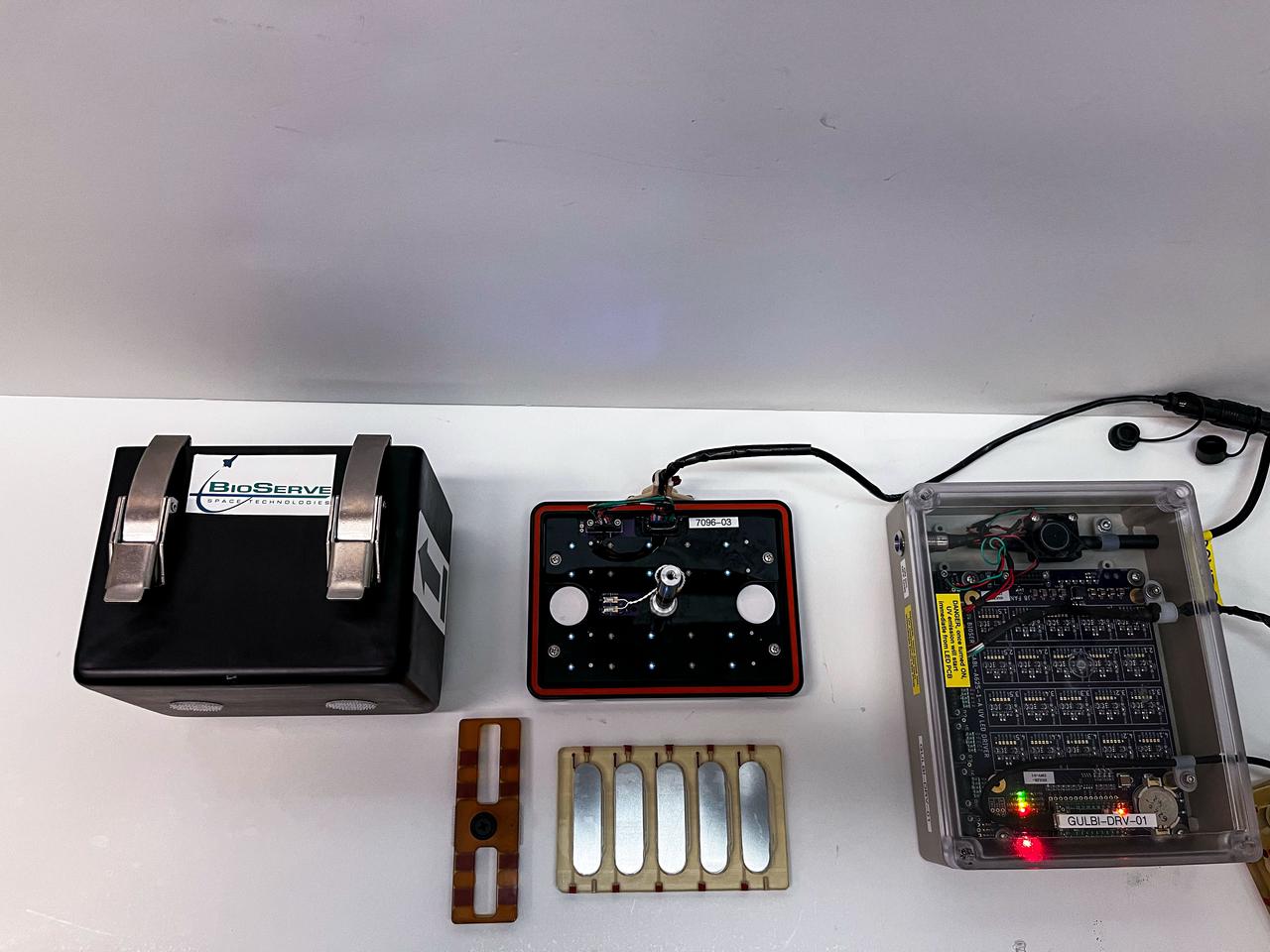
jsc2025e067421 (7/9/2025) --- Individual components of hardware for the GULBI investigation, which examines how microgravity affects the ability of a type of ultraviolet (UV) light to prevent formation of large communities of microbes called biofilms. Credit: Arizona State University

Lindy Elkins-Tanton, Psyche principal investigator, Arizona State University, participates in a Psyche mission and science briefing at NASA’s Kennedy Space Center in Florida on Tuesday, Oct. 10, 2023. Psyche is the first mission to explore an asteroid with a surface that likely contains substantial amounts of metal rather than rock or ice. Liftoff of NASA’s Psyche spacecraft, atop a SpaceX Falcon Heavy rocket, is targeted for 10:16 a.m. EDT Thursday, Oct. 12, from Kennedy’s Launch Complex 39A.

Lindy Elkins-Tanton, Psyche principal investigator, Arizona State University, participates in a Psyche mission and science briefing at NASA’s Kennedy Space Center in Florida on Tuesday, Oct. 10, 2023. Psyche is the first mission to explore an asteroid with a surface that likely contains substantial amounts of metal rather than rock or ice. Liftoff of NASA’s Psyche spacecraft, atop a SpaceX Falcon Heavy rocket, is targeted for 10:16 a.m. EDT Thursday, Oct. 12, from Kennedy’s Launch Complex 39A.

With two cameras set about 10 inches apart at the top of the rover's remote sensing mast, Mastcam-Z can produce a 3D image to be viewed with 3D glasses. This is similar to the way our two human eyes work, with our brain forming the 3D image, but no glasses needed! This stereo, or 3D, image was taken with the Mastcam-Z simulator system, used during testing at Arizona State University. https://photojournal.jpl.nasa.gov/catalog/PIA24196

Lindy Elkins-Tanton Principal Investigator of the Psyche mission from Arizona State University gives remarks during a briefing discussing small bodies missions, Monday, Dec. 31, 2018 at Johns Hopkins University Applied Physics Laboratory (APL) in Laurel, Maryland. Photo Credit: (NASA/Bill Ingalls)

A Psyche mission and science briefing takes place at NASA’s Kennedy Space Center in Florida on Tuesday, Oct. 10, 2023. Participants, from left, are: Alana Johnson, NASA Communications; Lori Glaze, Planetary Science division director, NASA Headquarters; Lindy Elkins-Tanton, Psyche principal investigator, Arizona State University; Ben Weiss, Psyche deputy principal investigator and magnetometer lead, Massachusetts Institute of Technology; David Oh, Psyche chief engineer for operations, NASA’s Jet Propulsion Laboratory (JPL); and Abi Biswas, Deep Space Optical Communications project technologist, JPL. Psyche is the first mission to explore an asteroid with a surface that likely contains substantial amounts of metal rather than rock or ice. Liftoff of NASA’s Psyche spacecraft, atop a SpaceX Falcon Heavy rocket, is targeted for 10:16 a.m. EDT Thursday, Oct. 12, from Kennedy’s Launch Complex 39A.
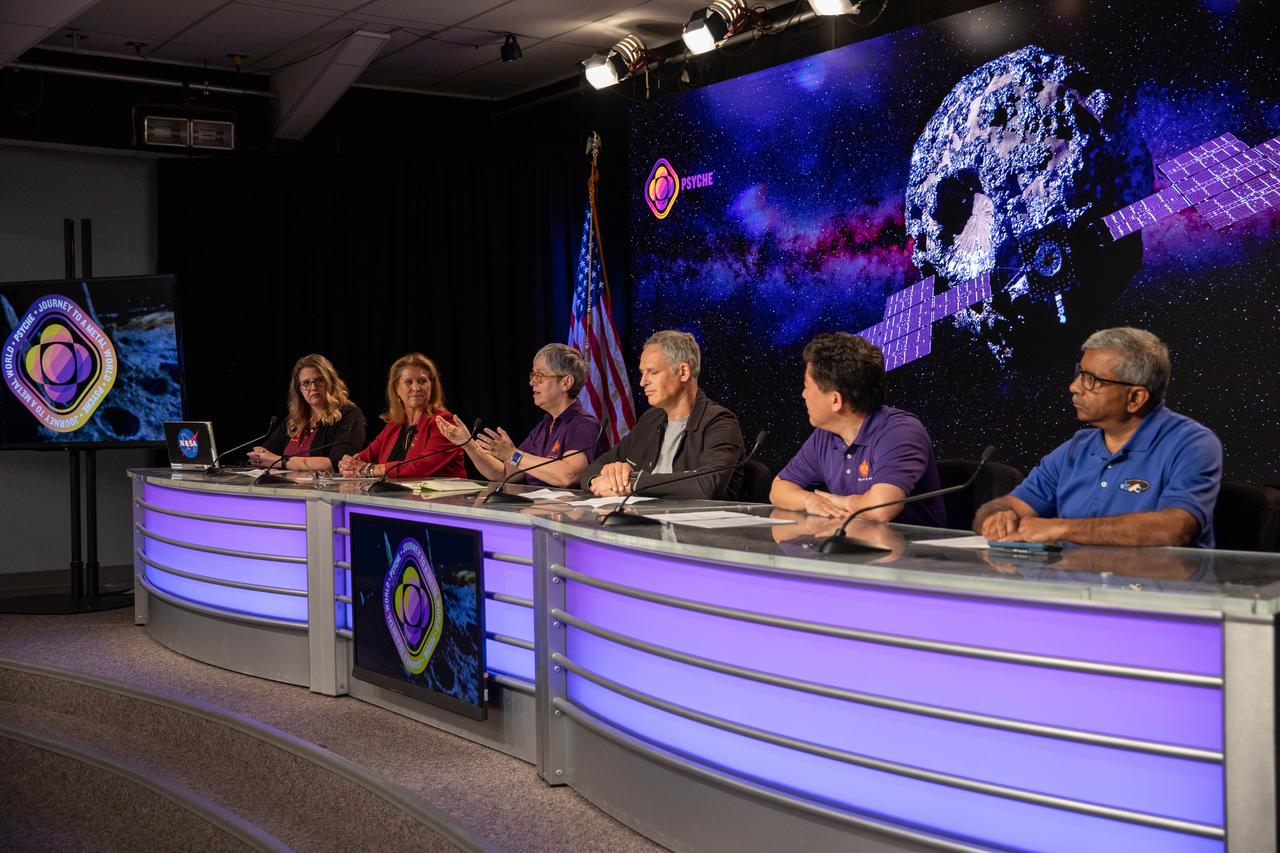
A Psyche mission and science briefing takes place at NASA’s Kennedy Space Center in Florida on Tuesday, Oct. 10, 2023. Participants, from left, are: Alana Johnson, NASA Communications; Lori Glaze, Planetary Science division director, NASA Headquarters; Lindy Elkins-Tanton, Psyche principal investigator, Arizona State University; Ben Weiss, Psyche deputy principal investigator and magnetometer lead, Massachusetts Institute of Technology; David Oh, Psyche chief engineer for operations, NASA’s Jet Propulsion Laboratory (JPL); and Abi Biswas, Deep Space Optical Communications project technologist, JPL. Psyche is the first mission to explore an asteroid with a surface that likely contains substantial amounts of metal rather than rock or ice. Liftoff of NASA’s Psyche spacecraft, atop a SpaceX Falcon Heavy rocket, is targeted for 10:16 a.m. EDT Thursday, Oct. 12, from Kennedy’s Launch Complex 39A.

CAPE CANAVERAL, Fla. -- In the Kennedy Space Center’s Press Site auditorium, agency and industry leaders spoke to members of the news media on International Space Station research and technology developments. Participants included Cheryl Nickerson of Arizona State University, and principal investigator for the Micro-5 experiment. Photo credit: NASA/ Kim Shiflett
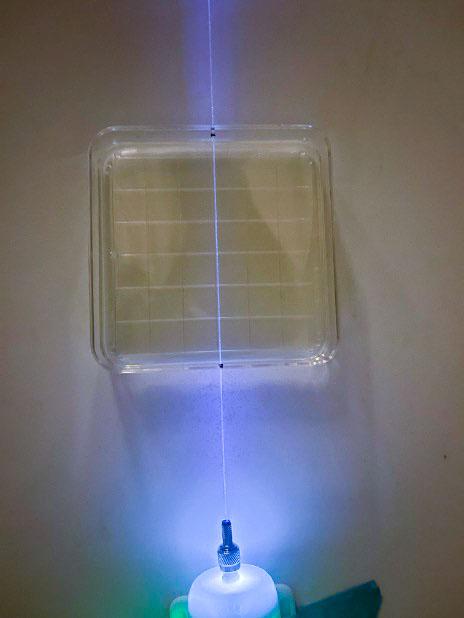
jsc2025e067423 (8/5/20250 --- Germicidal UV light is emitted by an optical fiber running through the center of an agar plate. Researchers are testing whether microgravity changes the ability of the light to prevent growth of microbial communities known as biofilms. Credit: Arizona State University

Elizabeth Cantwell, chief executive officer at the Arizona State University Research Enterprise, testifies during a House Committee on Science, Space, and Technology hearing titled "America's Human Presence in Low-Earth Orbit" on Thursday, May 17, 2018 in the Rayburn House Office Building in Washington. Photo Credit: (NASA/Joel Kowsky)
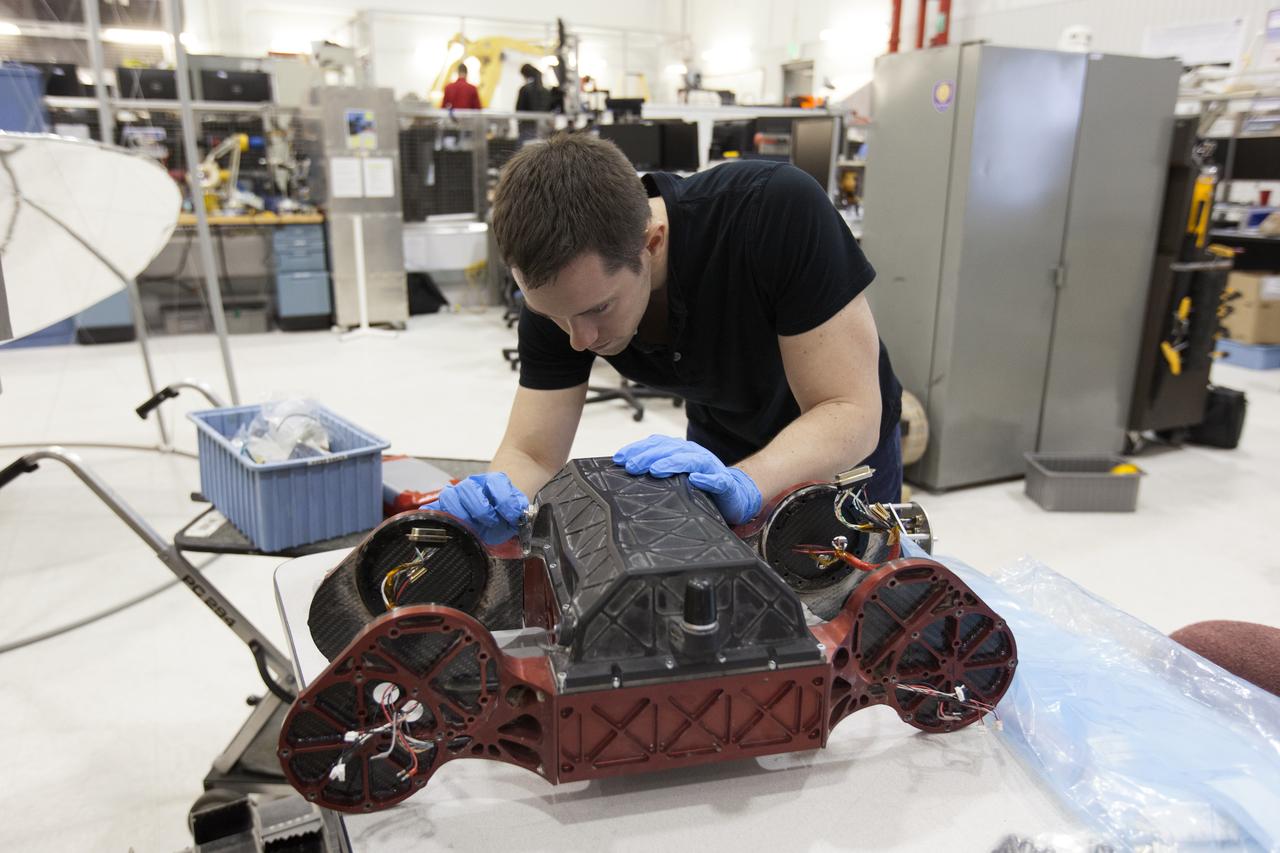
In the Swamp Works laboratory at NASA's Kennedy Space Center in Florida, student interns such as Andrew Thoesen are joining agency scientists, contributing in the area of Exploration Research and Technology. Thoesen is studying mechanical engineering at Arizona State University in Tempe, Arizona. The agency attracts its future workforce through the NASA Internship, Fellowships and Scholarships, or NIFS, Program

The science briefing ahead of launch for NASA’s Psyche spacecraft, a mission to a unique metal-rich asteroid. Psyche will travel nearly six years and about 2.2 billion miles (3.6 billion kilometers) – to an asteroid of the same name, which is orbiting the Sun between Mars and Jupiter. Scientists believe Psyche could be part of the core of a planetesimal, likely made of iron-nickel metal. The ore will not be mined but studied from orbit in hopes of giving researchers a better idea of what may make up Earth’s core. The Psyche spacecraft also will host a pioneering technology demonstration: NASA’s DSOC (Deep Space Optical Communications) experiment. This laser communications system will operate for the first two years of Psyche’s journey. Launch is targeted for 10:16 a.m. EDT, Thursday, Oct. 12, from Kennedy’s Launch Complex 39A. The participants include Lori Glaze, director, Planetary Sciences Division, NASA Headquarters in Washington; Lindy Elkins-Tanton, principal investigator of Psyche, Arizona State University; Ben Weiss, deputy principal investigator and magnetometer lead, Massachusetts Institute of Technology; David Oh, chief engineer for operations, NASA’s Jet Propulsion Laboratory; and Abi Biswas, project technologist for DSOC, NASA’s Jet Propulsion Laboratory.

Phil Christensen, L'TES Instrument Principal Investigator, Arizona State University, is introduced during a science briefing for the Lucy mission held inside the TV Auditorium at NASA’s Kennedy Space Center in Florida on Oct. 14, 2021. The mission is scheduled to launch at 5:34 a.m. EDT Saturday, Oct. 16, on a United Launch Alliance Atlas V 401 rocket from Space Launch Complex 41 at Cape Canaveral Space Force Station. NASA’s Launch Services Program, based at Kennedy, is managing the launch. During its 12-year primary mission, Lucy will explore a record-breaking number of asteroids, flying by one asteroid in the solar system’s main belt and seven Trojan asteroids. Additionally, Lucy’s path will circle back to Earth three times for gravity assists, making it the first spacecraft to return to the vicinity of Earth from the outer solar system.

Associate Administrator for NASA's Science Mission Directorate Thomas Zurbuchen, left, Olivier Barnouin (US Instrument Scientist, Johns Hopkins University/APL), Harold "Hal" Levison from the Southwest Research Institute in Boulder, Colorado, Lindy Elkins-Tanton Principal Investigator of the Psyche mission from Arizona State University, and New Horizons principal investigator Alan Stern of the Southwest Research Institute (SwRI), Boulder, CO, right, are seen during a briefing discussing small bodies missions, Monday, Dec. 31, 2018 at Johns Hopkins University Applied Physics Laboratory (APL) in Laurel, Maryland. Photo Credit: (NASA/Bill Ingalls)

CAPE CANAVERAL, Fla. -- In the Kennedy Space Center’s Press Site auditorium, agency and industry leaders spoke to members of the news media on International Space Station research and technology developments. Participants included Cheryl Nickerson of Arizona State University, and principal investigator for the Micro-5 experiment, and Samuel Durrance of the Florida Institute of Technology, principal investigator for the NR-SABOL experiment. Photo credit: NASA/ Kim Shiflett
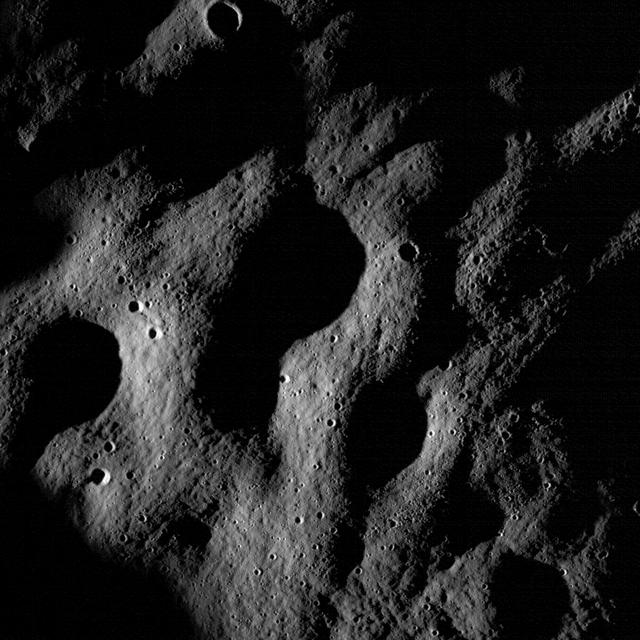
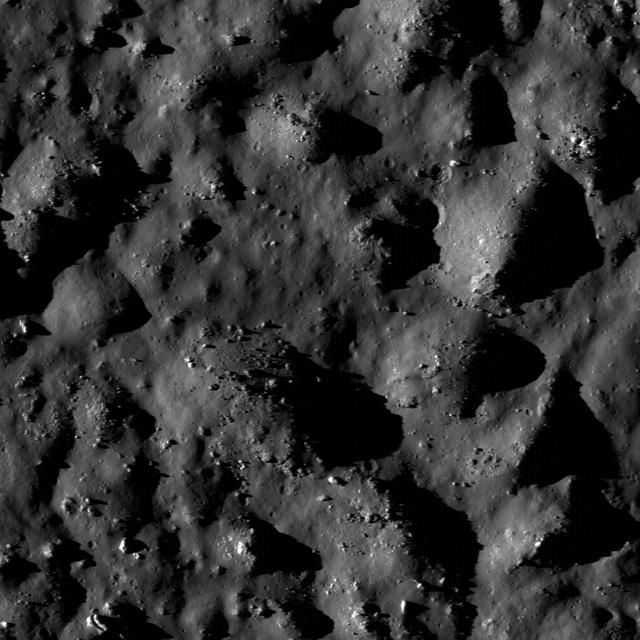
These images show cratered regions near the moon's Mare Nubium region, as photographed by the Lunar Reconnaissance Orbiter's LROC instrument. Each image shows a region 1,400 meters (0.87 miles) wide. the bottoms of both images face lunar north. The image below shows the location of these two images in relation to each other. Credit: NASA/Goddard Space Flight Center/Arizona State University
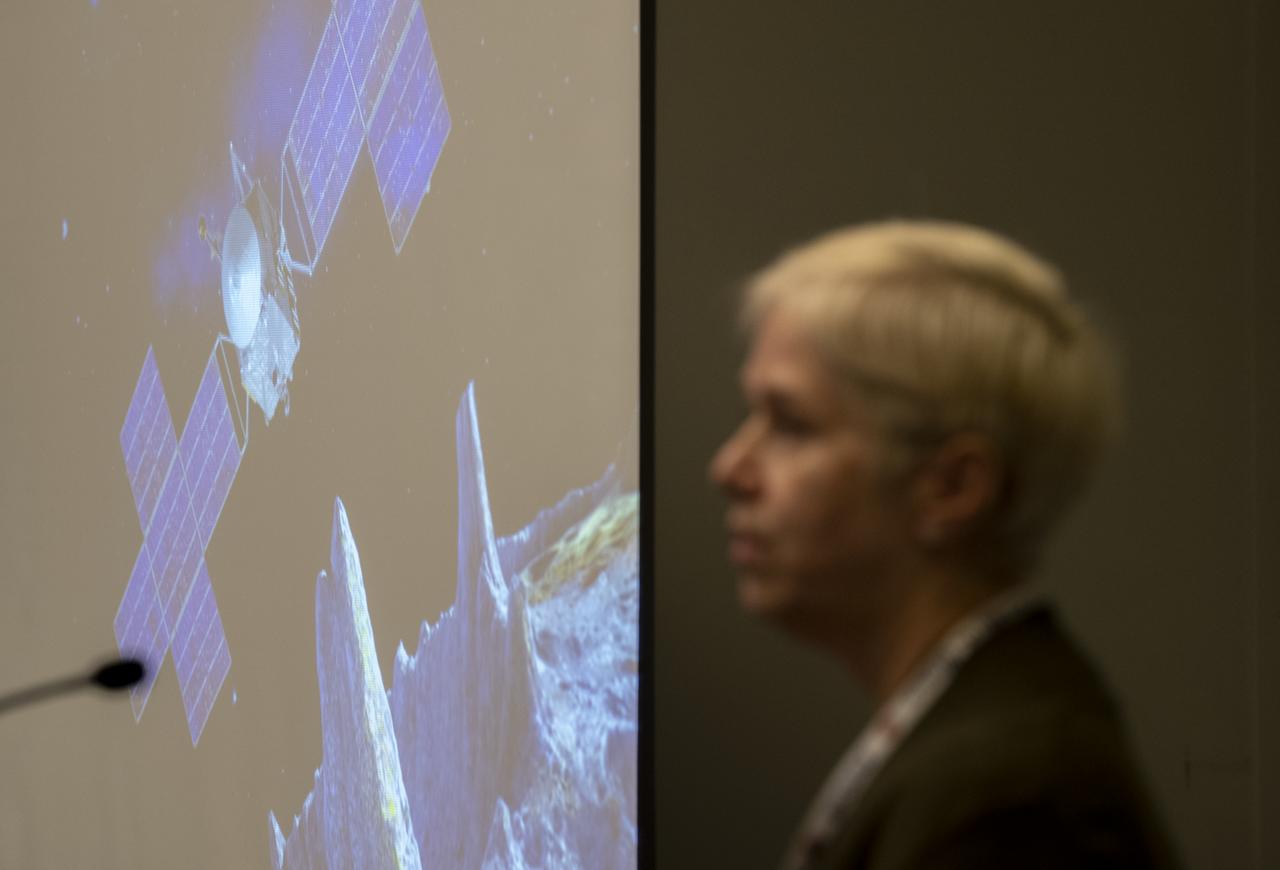
An artists rendition of the Psyche spacecraft is seen on scree as Linda Elkins-Tanton, Managing Director and Foundation Professor of Arizona State University’s School of Earth and Space Exploration, is seen during a keynote titled “The ASU Interplanetary Initiative: Advancing Society Through ” at the 70th International Astronautical Congress, Tuesday, Oct. 22, 2019 at the Walter E. Washington Convention Center in Washington. Elkins-Tanton is the principle investigator of NASA’s upcoming Psyche mission which is scheduled to launch in 2022. Photo Credit: (NASA/Joel Kowsky)

Linda Elkins-Tanton, Managing Director and Foundation Professor of Arizona State University’s School of Earth and Space Exploration, is seen during a keynote titled “The ASU Interplanetary Initiative: Advancing Society Through ” at the 70th International Astronautical Congress, Tuesday, Oct. 22, 2019 at the Walter E. Washington Convention Center in Washington. Elkins-Tanton is the principle investigator of NASA’s upcoming Psyche mission which is scheduled to launch in 2022. Photo Credit: (NASA/Joel Kowsky)
![These images show cratered regions near the moon's Mare Nubium region, as photographed by the Lunar Reconnaissance Orbiter's LROC instrument. Each image shows a region 1,400 meters (0.87 miles) wide. the bottoms of both images face lunar north. The image below shows the location of these two images in relation to each other. [Locator Image] Credit: NASA/Goddard Space Flight Center/Arizona State University](https://images-assets.nasa.gov/image/GSFC_20171208_Archive_e002222/GSFC_20171208_Archive_e002222~thumb.jpg)
These images show cratered regions near the moon's Mare Nubium region, as photographed by the Lunar Reconnaissance Orbiter's LROC instrument. Each image shows a region 1,400 meters (0.87 miles) wide. the bottoms of both images face lunar north. The image below shows the location of these two images in relation to each other. [Locator Image] Credit: NASA/Goddard Space Flight Center/Arizona State University

These images show cratered regions near the moon's Mare Nubium region, as photographed by the Lunar Reconnaissance Orbiter's LROC instrument. Each image shows a region 1,400 meters (0.87 miles) wide. the bottoms of both images face lunar north. The image below shows the location of these two images in relation to each other. Credit: NASA/Goddard Space Flight Center/Arizona State University
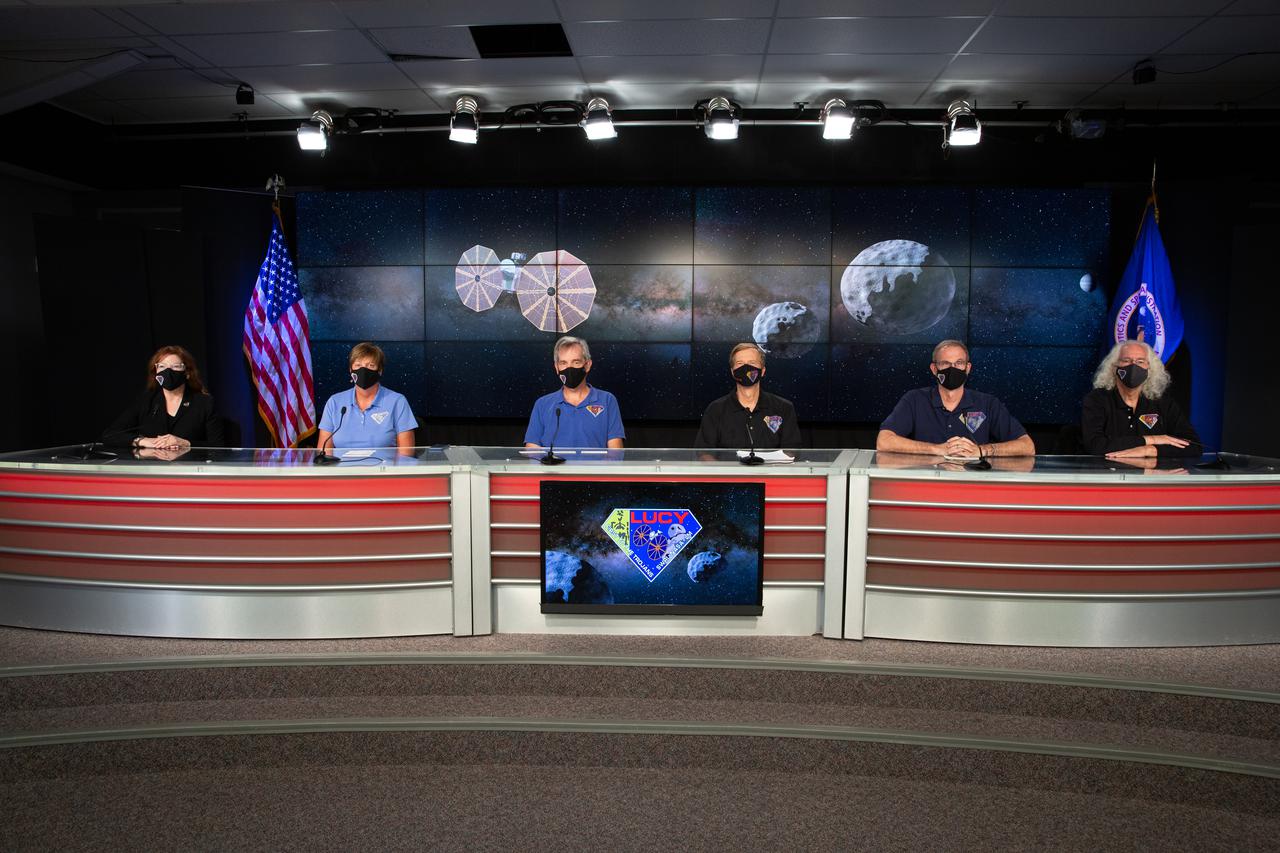
A science briefing for the Lucy mission is held inside the TV Auditorium at NASA’s Kennedy Space Center in Florida on Oct. 14, 2021. Participants included, from left to right, Adriana Ocampo, Lucy Program Executive, NASA Headquarters; Cathy Olkin, Lucy Deputy Principal Investigator, Southwest Research Institute; Keith Noll, Lucy Project Scientist at NASA’s Goddard Space Flight Center; Hal Weaver, L'LORRI Instrument Principal Investigator, Johns Hopkins Applied Physics Laboratory; Phil Christensen, L'TES Instrument Principal Investigator, Arizona State University; and Dennis Reuter, L’Ralph Instrument Principal Investigator at NASA’s Goddard Space Flight Center. Lucy is scheduled to launch at 5:34 a.m. EDT Saturday, Oct. 16, on a United Launch Alliance Atlas V 401 rocket from Space Launch Complex 41 at Cape Canaveral Space Force Station. NASA’s Launch Services Program, based at Kennedy, is managing the launch. Lucy is the first space mission to study the Trojan asteroids, which hold vital clues to the formation of our solar system.

NASA Associate Administrator for the Human Exploration and Operations Mission Directorate William Gerstenmaier, left, Dr. Bhavya Lal, a researcher at the Institute for Defense Analysis's Science and Technology Policy Institute, center, and Dr. Elizabeth Cantwell, chief executive officer at the Arizona State University Research Enterprise, right, listen as Rep. Brian Babin, R-Texas, is seen on screen as he delivers an opening statement during a House Committee on Science, Space, and Technology hearing titled "America's Human Presence in Low-Earth Orbit" on Thursday, May 17, 2018 in the Rayburn House Office Building in Washington. Photo Credit: (NASA/Joel Kowsky)
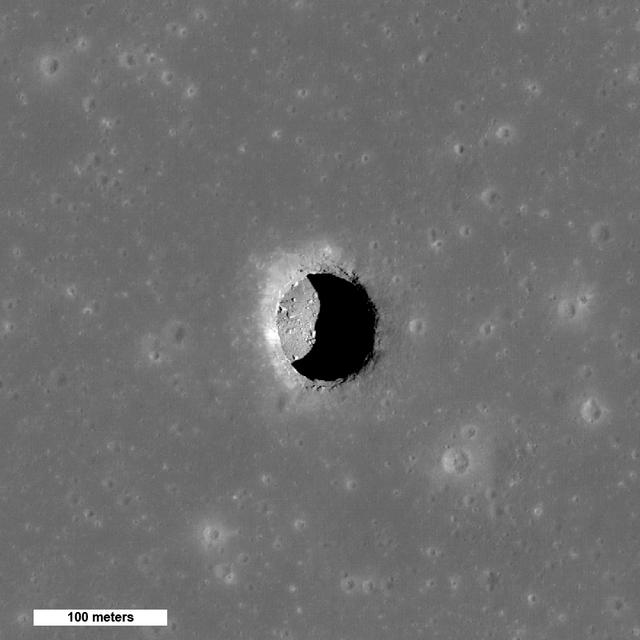
While the moon's surface is battered by millions of craters, it also has over 200 holes – steep-walled pits that in some cases might lead to caves that future astronauts could explore and use for shelter, according to new observations from NASA's Lunar Reconnaissance Orbiter (LRO) spacecraft. This is a spectacular high-Sun view of the Mare Tranquillitatis pit crater revealing boulders on an otherwise smooth floor. This image from LRO's NAC is 400 meters (1,312 feet) wide, north is up. Read more here: <a href="http://1.usa.gov/1ruEYXj" rel="nofollow">1.usa.gov/1ruEYXj</a> Credit: NASA/GSFC/Arizona State University

Principal investigator, Mastcam-Z instrument, Arizona State University, Tempe, Jim Bell, gives remarks via remote during a NASA Perseverance rover mission science overview, Tuesday, Feb. 16, 2021, at NASA's Jet Propulsion Laboratory in Pasadena, California. The Perseverance Mars rover is due to land on Mars Thursday, Feb. 18, 2021. A key objective for Perseverance’s mission on Mars is astrobiology, including the search for signs of ancient microbial life. The rover will characterize the planet’s geology and past climate, pave the way for human exploration of the Red Planet, and be the first mission to collect and cache Martian rock and regolith. Photo Credit: (NASA/Bill Ingalls)

CAPE CANAVERAL, Fla. – In the Kennedy Space Center’s Press Site auditorium, agency and industry leaders spoke to members of the news media on International Space Station research and technology developments. From left are: Julie Robinson, ISS Program chief scientist at NASA’s Johnson Space Center, Kenneth Shields, director of operations and education for the Center for the Advancement of Science in Space, Cheryl Nickerson of Arizona State University, and principal investigator for the Micro-5 experiment, and Samuel Durrance of the Florida Institute of Technology, principal investigator for the NR-SABOL experiment. Photo credit: NASA/ Kim Shiflett
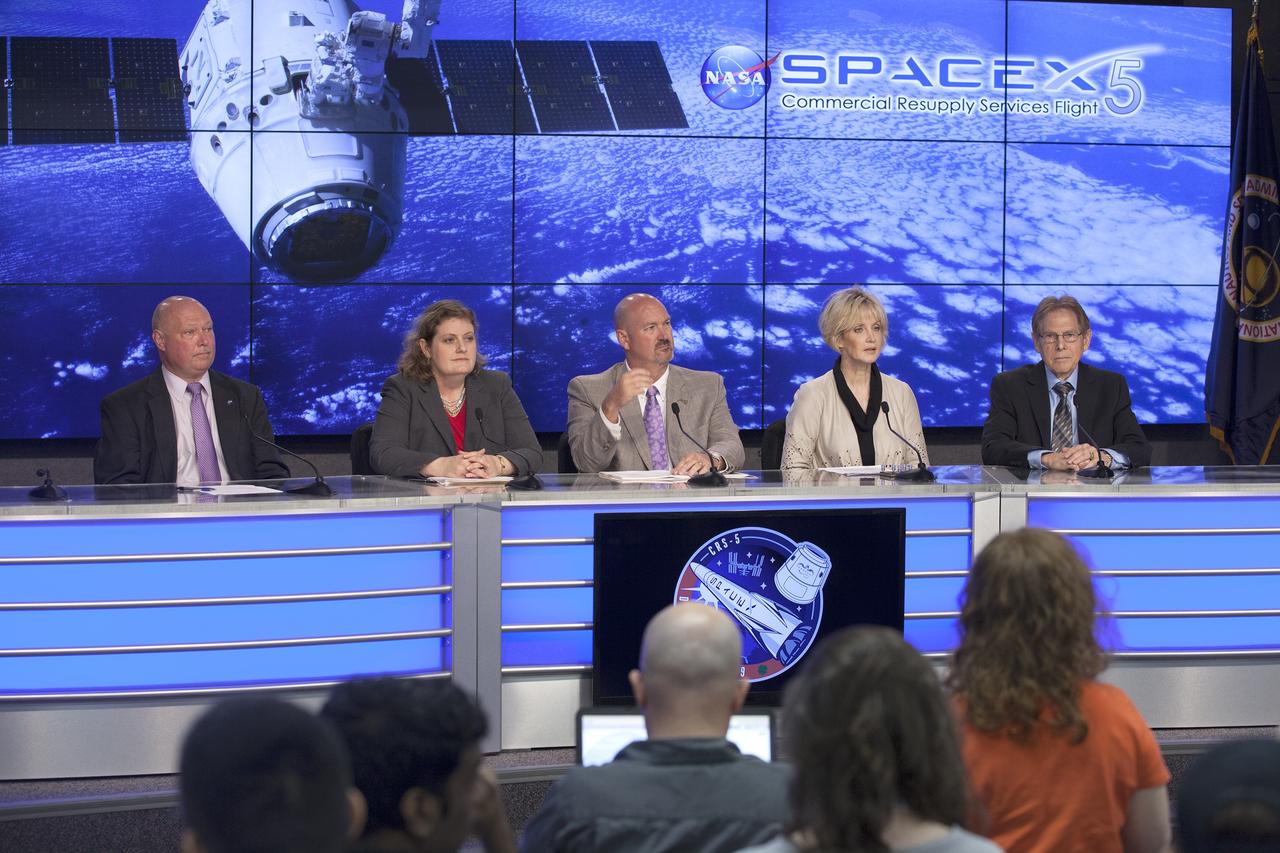
CAPE CANAVERAL, Fla. -- In the Kennedy Space Center’s Press Site auditorium, agency and industry leaders spoke to members of the news media on International Space Station research and technology developments. From left are: Mike Curie of NASA Public Affairs, Julie Robinson, ISS Program chief scientist at NASA’s Johnson Space Center, Kenneth Shields, director of operations and education for the Center for the Advancement of Science in Space, Cheryl Nickerson of Arizona State University, and principal investigator for the Micro-5 experiment, and Samuel Durrance of the Florida Institute of Technology, principal investigator for the NR-SABOL experiment. Photo credit: NASA/ Kim Shiflett

Philip Christensen, a geophysicist at Arizona State University, speaks during a briefing, Thursday, Aug. 4, 2011, at NASA Headquarters in Washington. Observations from NASA's Mars Reconnaissance Orbiter (MRO) have revealed possible flowing water during the warmest months on Mars. Dark, finger-like features appear and extend down some Martian slopes during late spring through summer, fade in winter, and return during the next spring. Repeated observations have tracked the seasonal changes in these recurring features on several steep slopes in the middle latitudes of Mars' southern hemisphere. Photo Credit: (NASA/Paul E. Alers)

NASA Associate Administrator for the Human Exploration and Operations Mission Directorate William Gerstenmaier, left, Dr. Bhavya Lal, a researcher at the Institute for Defense Analysis's Science and Technology Policy Institute, center, and Dr. Elizabeth Cantwell, chief executive officer at the Arizona State University Research Enterprise, right, listen as Rep. Brian Babin, R-Texas, is seen on screen as he delivers an opening statement during a House Committee on Science, Space, and Technology hearing titled "America's Human Presence in Low-Earth Orbit" on Thursday, May 17, 2018 in the Rayburn House Office Building in Washington. Photo Credit: (NASA/Joel Kowsky)
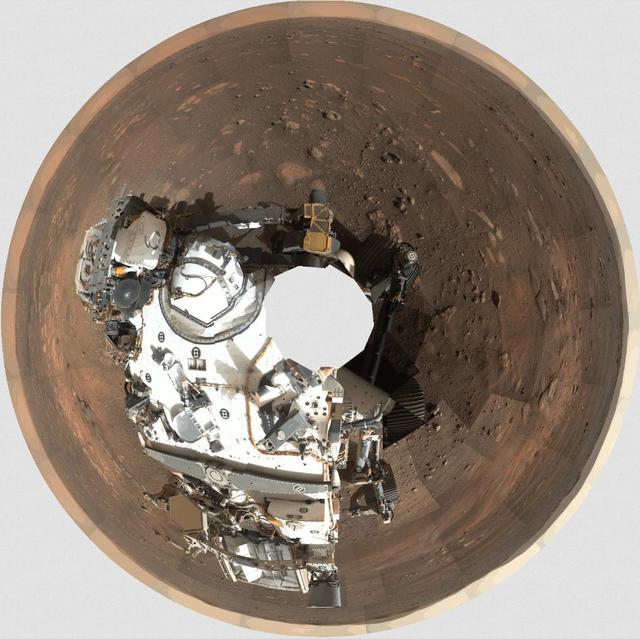
This animation shows the order in which the 142 images that make up Mastcam-Z's first 360-degree panorama were taken. Mastcam-Z is a pair of zoomable cameras on the mast, or "head," of NASA's Perseverance Mars rover. Arizona State University in Tempe leads the operations of the Mastcam-Z instrument, working in collaboration with Malin Space Science Systems in San Diego. A key objective for Perseverance's mission on Mars is astrobiology, including the search for signs of ancient microbial life. The rover will characterize the planet's geology and past climate, pave the way for human exploration of the Red Planet, and be the first mission to collect and cache Martian rock and regolith (broken rock and dust). Subsequent NASA missions, in cooperation with ESA (European Space Agency), would send spacecraft to Mars to collect these sealed samples from the surface and return them to Earth for in-depth analysis. Animation available at https://photojournal.jpl.nasa.gov/catalog/PIA24444
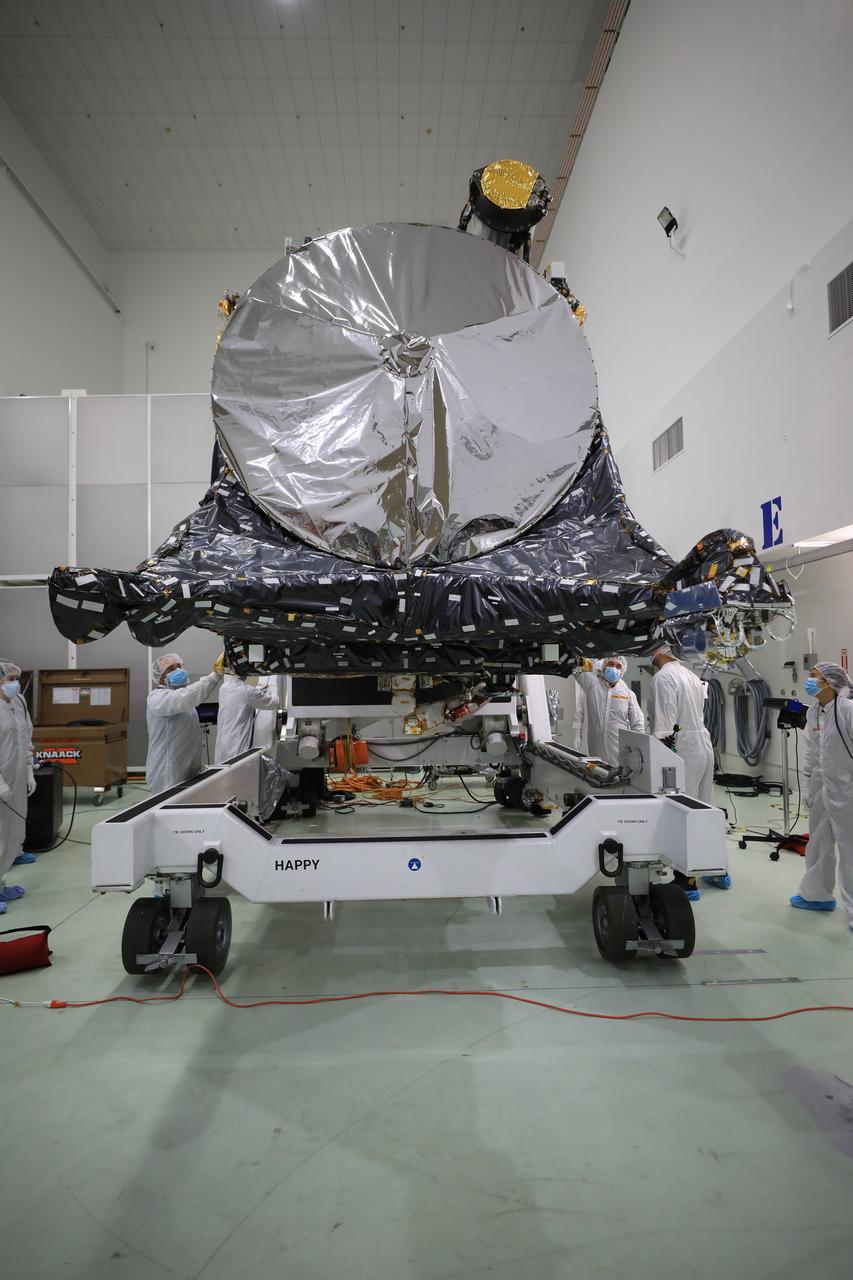
A team prepares NASA’s Psyche spacecraft for launch inside the Astrotech Space Operations Facility near the agency’s Kennedy Space Center in Florida on Dec. 8, 2022. Psyche will launch atop a SpaceX Falcon Heavy rocket from Launch Complex 39A at Kennedy. Launch is targeted for no earlier than Oct. 10, 2023. The spacecraft will use solar-electric propulsion to travel approximately 1.5 billion miles to rendezvous with its namesake asteroid in 2026. The Psyche mission is led by Arizona State University. NASA’s Jet Propulsion Laboratory, which is managed for the agency by Caltech in Pasadena, California, is responsible for the mission’s overall management, system engineering, integration and testing, and mission operations. Maxar Technologies in Palo Alto, California, provided the high-power solar electric propulsion spacecraft chassis. NASA’s Launch Services Program (LSP), based at Kennedy, is managing the launch.

Perseverance deputy project scientist, JPL, Ken Williford, screen left, and Principal investigator, Mastcam-Z instrument, Arizona State University, Tempe, Jim Bell, give remarks via remote during a NASA Perseverance rover mission science overview, Tuesday, Feb. 16, 2021, at NASA's Jet Propulsion Laboratory in Pasadena, California. The Perseverance Mars rover is due to land on Mars Thursday, Feb. 18, 2021. A key objective for Perseverance’s mission on Mars is astrobiology, including the search for signs of ancient microbial life. The rover will characterize the planet’s geology and past climate, pave the way for human exploration of the Red Planet, and be the first mission to collect and cache Martian rock and regolith. Photo Credit: (NASA/Bill Ingalls)
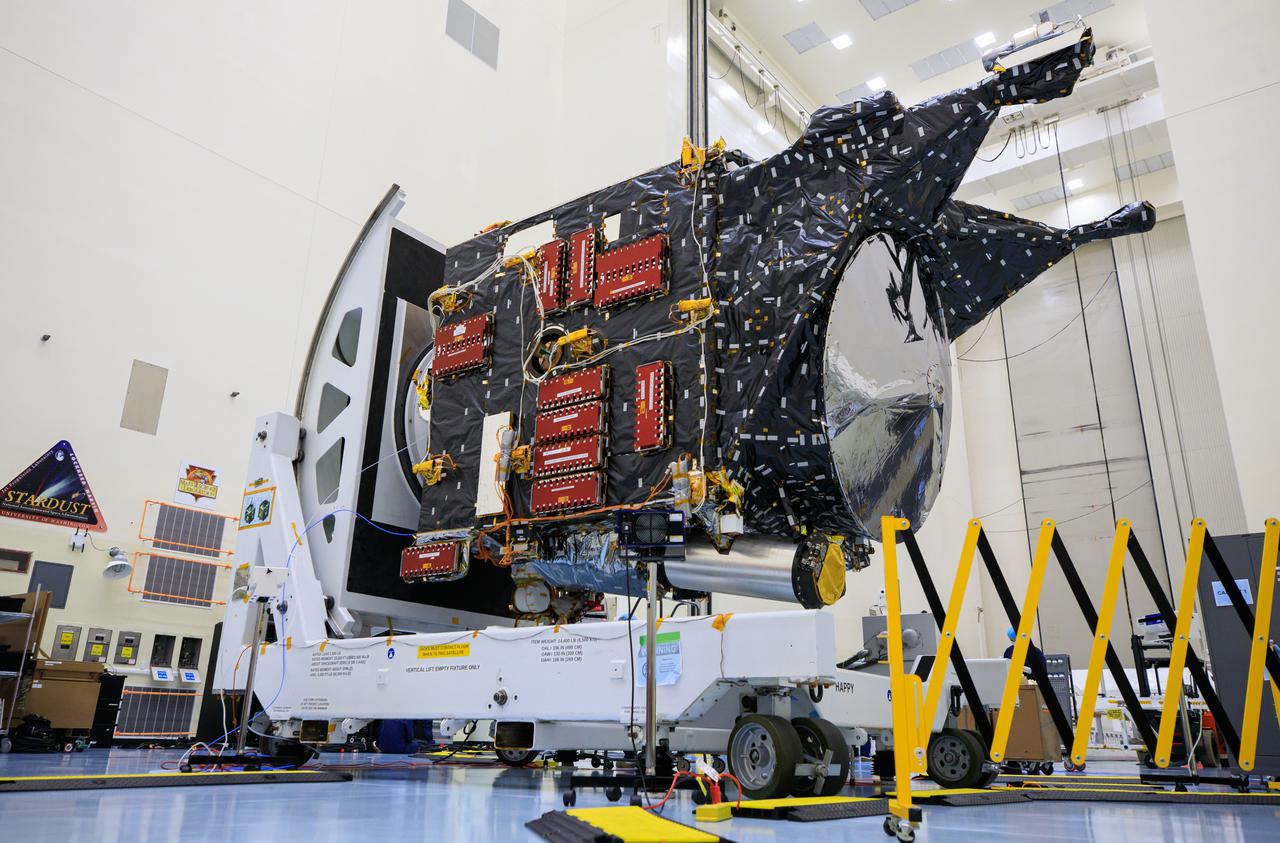
NASA’s Psyche spacecraft undergoes processing and servicing ahead of launch atop a work stand inside the Payload Hazardous Servicing Facility at NASA’s Kennedy Space Center in Florida on May 3, 2022. Psyche is targeting to lift off aboard a SpaceX Falcon Heavy rocket on Aug. 1, 2022. The spacecraft will use solar-electric propulsion to travel approximately 1.5 billion miles to rendezvous with its namesake asteroid in 2026. The Psyche mission is led by Arizona State University. NASA’s Jet Propulsion Laboratory, which is managed for the agency by Caltech in Pasadena, California, is responsible for the mission’s overall management, system engineering, integration and testing, and mission operations. Maxar Technologies in Palo Alto, California, provided the high-power solar electric propulsion spacecraft chassis. NASA’s Launch Services Program (LSP), based at Kennedy, is managing the launch. Psyche will be the 14th mission in the agency's Discovery program and LSP’s 100th primary mission.
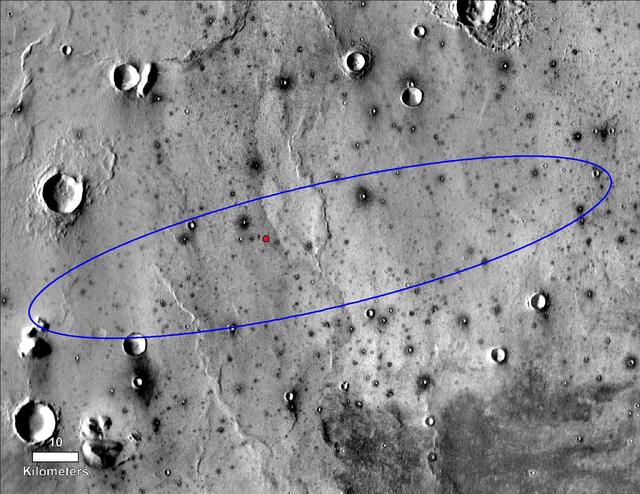
The red dot marks the final landing location of NASA's InSight lander in this annotated image of the surface of Mars, taken by the THEMIS camera on NASA's 2001 Mars Odyssey orbiter in 2015. A version with latitude and longitude is also available. The landing ellipse on this map covers an area within which the spacecraft had about a 99 percent chance of landing when targeted for the center of the ellipse. It is about 81 miles (130 kilometers) long, generally west to east, and about 17 miles (27 kilometers) wide. The base map is a mosaic of daytime thermal images from the Thermal Emission Imaging System (THEMIS) on NASA's Mars Odyssey orbiter. THEMIS was developed and is operated by Arizona State University, Tempe. https://photojournal.jpl.nasa.gov/catalog/PIA22878
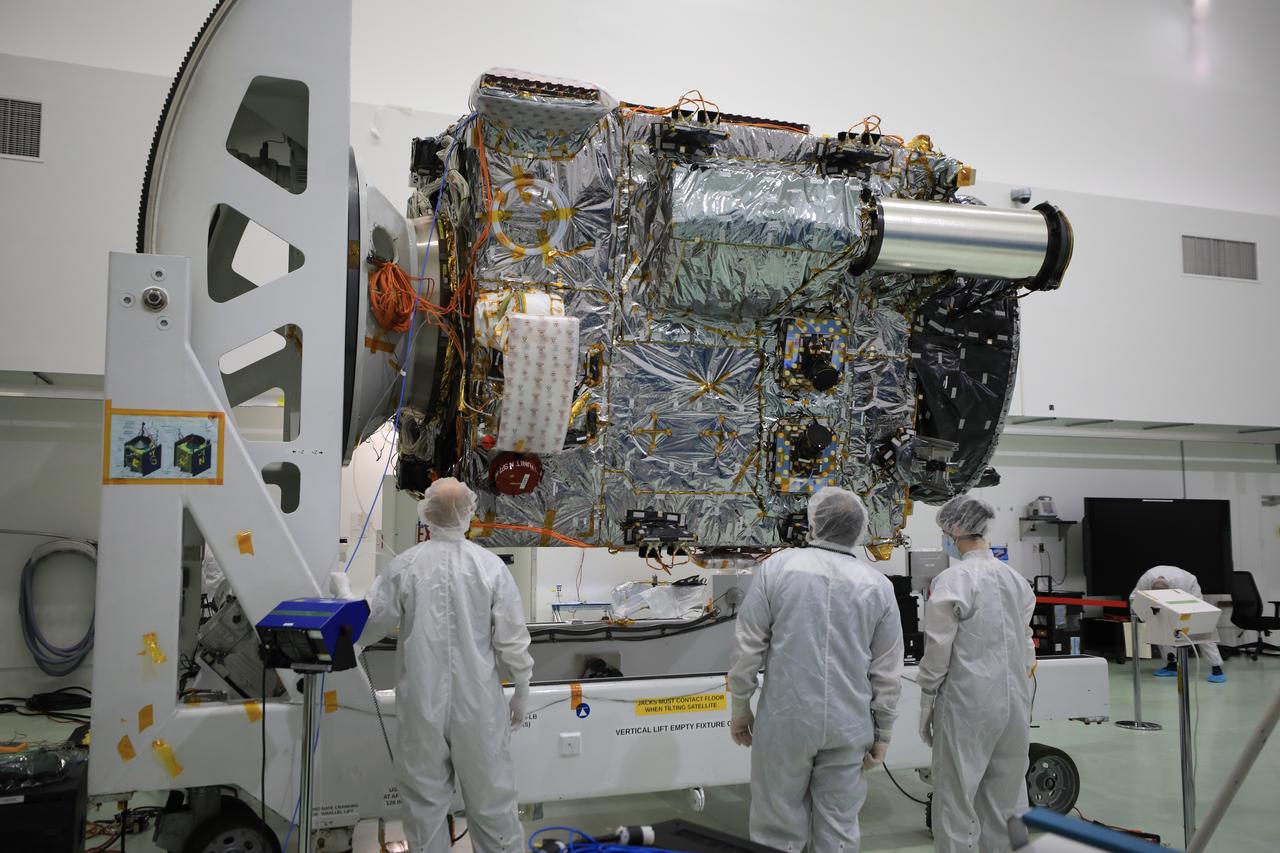
A team working on NASA’s Psyche spacecraft transitioning it from a vertical to horizontal test configuration during prelaunch processing inside the Payload Hazardous Servicing Facility at NASA’s Kennedy Space Center in Florida on May 9, 2022. The mission is targeting an Aug. 1 launch atop a SpaceX Falcon Heavy rocket from Launch Complex 39A at Kennedy. The spacecraft will use solar-electric propulsion to travel approximately 1.5 billion miles to rendezvous with its namesake asteroid in 2026. The Psyche mission is led by Arizona State University. NASA’s Jet Propulsion Laboratory, which is managed for the agency by Caltech in Pasadena, California, is responsible for the mission’s overall management, system engineering, integration and testing, and mission operations. Maxar Technologies in Palo Alto, California, provided the high-power solar electric propulsion spacecraft chassis. NASA’s Launch Services Program (LSP), based at Kennedy, is managing the launch.
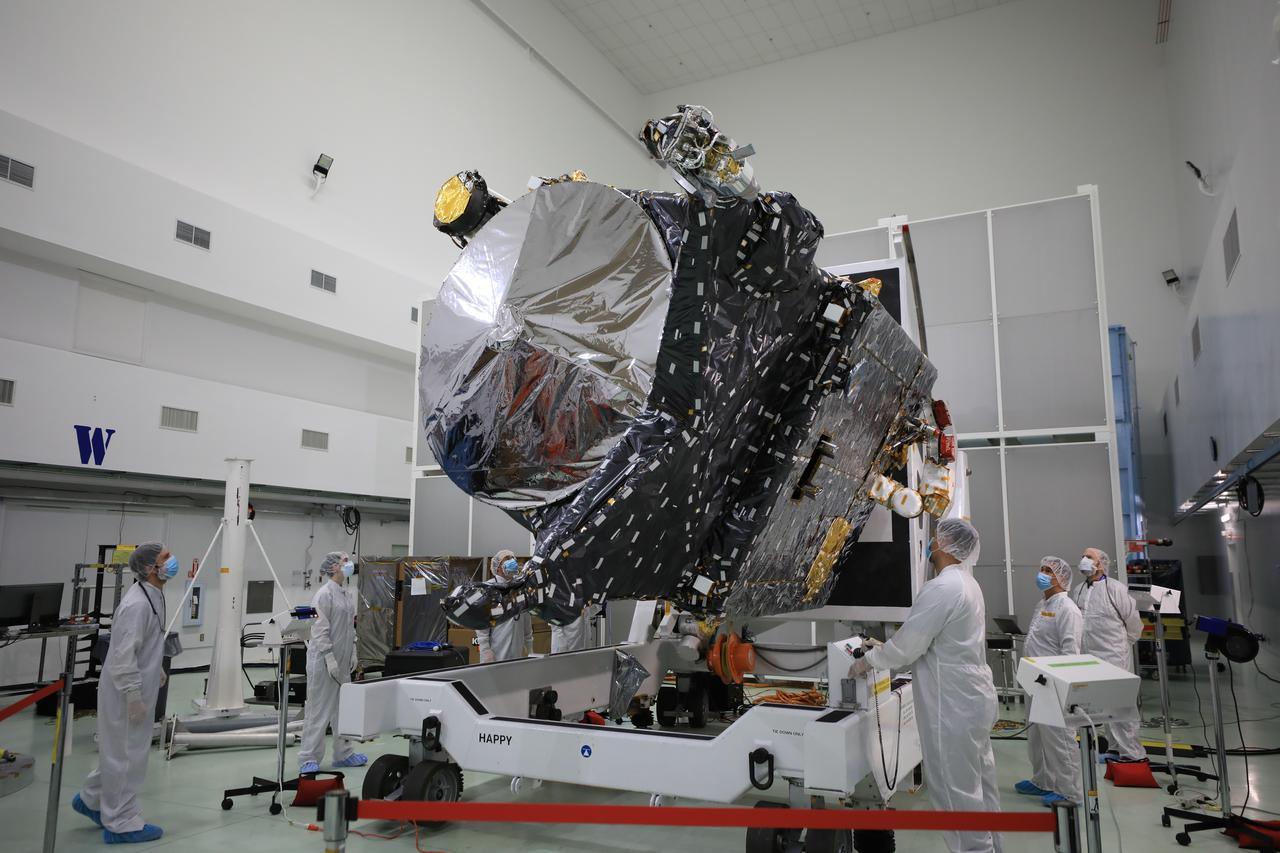
Technicians rotate NASA’s Psyche spacecraft during prelaunch processing inside the Astrotech Space Operations Facility near the agency’s Kennedy Space Center in Florida on Dec. 8, 2022. Psyche will launch atop a SpaceX Falcon Heavy rocket from Launch Complex 39A at Kennedy. Launch is targeted for no earlier than Oct. 10, 2023. The spacecraft will use solar-electric propulsion to travel approximately 1.5 billion miles to rendezvous with its namesake asteroid in 2026. The Psyche mission is led by Arizona State University. NASA’s Jet Propulsion Laboratory, which is managed for the agency by Caltech in Pasadena, California, is responsible for the mission’s overall management, system engineering, integration and testing, and mission operations. Maxar Technologies in Palo Alto, California, provided the high-power solar electric propulsion spacecraft chassis. NASA’s Launch Services Program (LSP), based at Kennedy, is managing the launch.
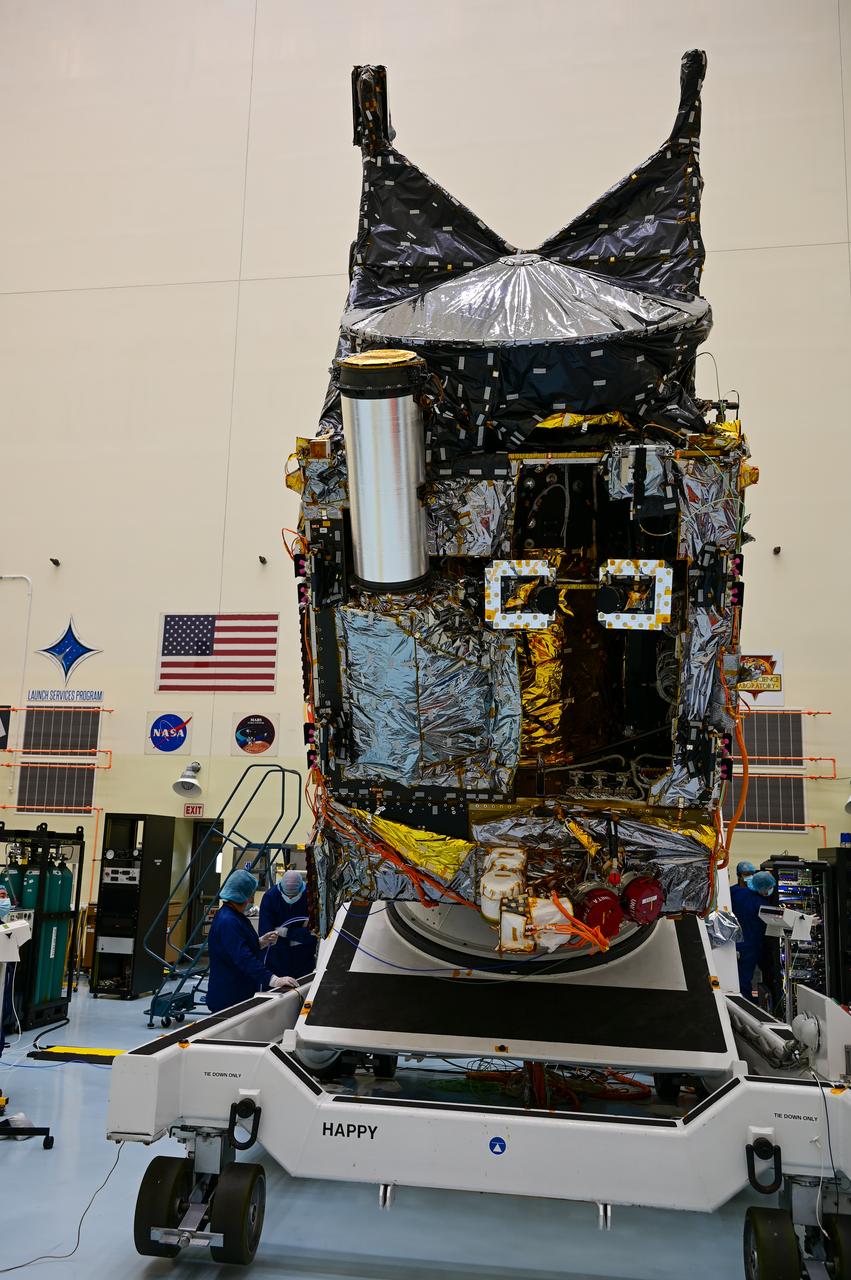
A team prepares NASA’s Psyche spacecraft for launch inside the Astrotech Space Operations Facility near the agency’s Kennedy Space Center in Florida on Dec. 8, 2022. Psyche will launch atop a SpaceX Falcon Heavy rocket from Launch Complex 39A at Kennedy. Launch is targeted for no earlier than Oct. 10, 2023. The spacecraft will use solar-electric propulsion to travel approximately 1.5 billion miles to rendezvous with its namesake asteroid in 2026. The Psyche mission is led by Arizona State University. NASA’s Jet Propulsion Laboratory, which is managed for the agency by Caltech in Pasadena, California, is responsible for the mission’s overall management, system engineering, integration and testing, and mission operations. Maxar Technologies in Palo Alto, California, provided the high-power solar electric propulsion spacecraft chassis. NASA’s Launch Services Program (LSP), based at Kennedy, is managing the launch.
NASA image release January 14, 2010 LROC WAC image of Tycho crater. Credit: NASA/Goddard/Arizona State University To learn more about this image go to: <a href="http://www.nasa.gov/mission_pages/LRO/multimedia/lroimages/lroc-20100114-tycho.html" rel="nofollow">www.nasa.gov/mission_pages/LRO/multimedia/lroimages/lroc-...</a> <b><a href="http://www.nasa.gov/centers/goddard/home/index.html" rel="nofollow">NASA Goddard Space Flight Center</a></b> contributes to NASA’s mission through four scientific endeavors: Earth Science, Heliophysics, Solar System Exploration, and Astrophysics. Goddard plays a leading role in NASA’s endeavors by providing compelling scientific knowledge to advance the Agency’s mission. <b>Follow us on <a href="http://twitter.com/NASA_GoddardPix" rel="nofollow">Twitter</a></b> <b>Join us on <a href="http://www.facebook.com/pages/Greenbelt-MD/NASA-Goddard/395013845897?ref=tsd" rel="nofollow">Facebook</a></b>

NASA’s Psyche spacecraft undergoes processing and servicing ahead of launch atop a work stand inside the Payload Hazardous Servicing Facility at NASA’s Kennedy Space Center in Florida on May 3, 2022. Psyche is targeting to lift off aboard a SpaceX Falcon Heavy rocket on Aug. 1, 2022. The spacecraft will use solar-electric propulsion to travel approximately 1.5 billion miles to rendezvous with its namesake asteroid in 2026. The Psyche mission is led by Arizona State University. NASA’s Jet Propulsion Laboratory, which is managed for the agency by Caltech in Pasadena, California, is responsible for the mission’s overall management, system engineering, integration and testing, and mission operations. Maxar Technologies in Palo Alto, California, provided the high-power solar electric propulsion spacecraft chassis. NASA’s Launch Services Program (LSP), based at Kennedy, is managing the launch. Psyche will be the 14th mission in the agency's Discovery program and LSP’s 100th primary mission.
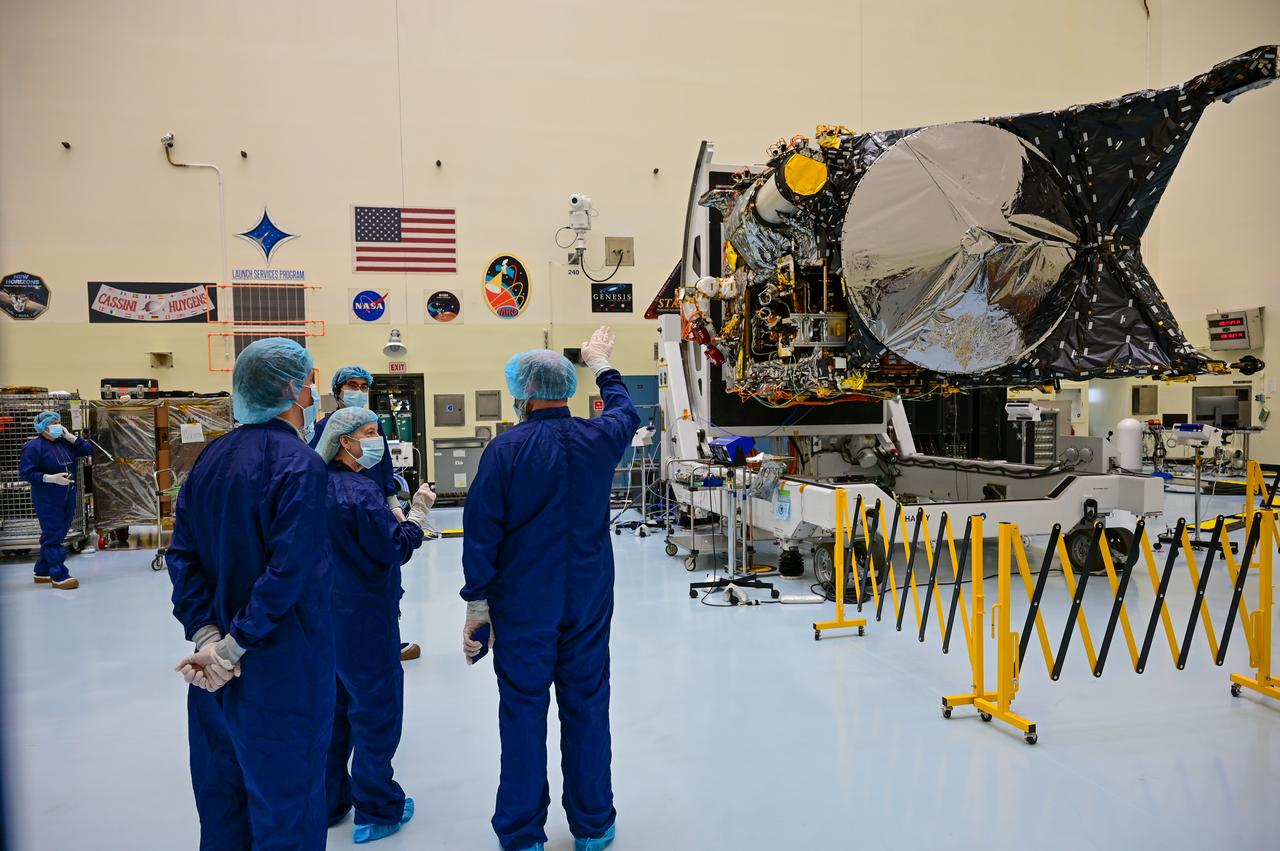
NASA Deputy Administrator Pam Melroy visits Kennedy Space Center in Florida and receives a briefing by team members from the Jet Propulsion Laboratory on the agency’s Psyche spacecraft inside the Payload Hazardous Servicing Facility on May 19, 2022. Melroy is in view second from right. The mission is targeting an Aug. 1 launch atop a SpaceX Falcon Heavy rocket from Launch Complex 39A at Kennedy. The spacecraft will use solar-electric propulsion to travel approximately 1.5 billion miles to rendezvous with its namesake asteroid in 2026. The Psyche mission is led by Arizona State University. NASA’s Jet Propulsion Laboratory, which is managed for the agency by Caltech in Pasadena, California, is responsible for the mission’s overall management, system engineering, integration and testing, and mission operations. Maxar Technologies in Palo Alto, California, provided the high-power solar electric propulsion spacecraft chassis. NASA’s Launch Services Program (LSP), based at Kennedy, is managing the launch.
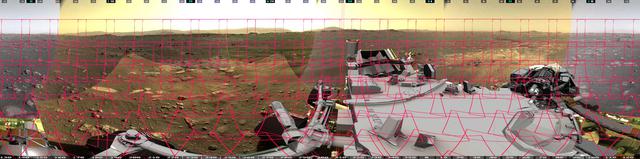
This image shows the 142 images that make up Mastcam-Z's first 360-degree panorama. Mastcam-Z is a pair of zoomable cameras on the mast, or "head," of NASA's Perseverance Mars rover. Arizona State University in Tempe leads the operations of the Mastcam-Z instrument, working in collaboration with Malin Space Science Systems in San Diego. A key objective for Perseverance's mission on Mars is astrobiology, including the search for signs of ancient microbial life. The rover will characterize the planet's geology and past climate, pave the way for human exploration of the Red Planet, and be the first mission to collect and cache Martian rock and regolith (broken rock and dust). Subsequent NASA missions, in cooperation with ESA (European Space Agency), would send spacecraft to Mars to collect these sealed samples from the surface and return them to Earth for in-depth analysis. https://photojournal.jpl.nasa.gov/catalog/PIA24445
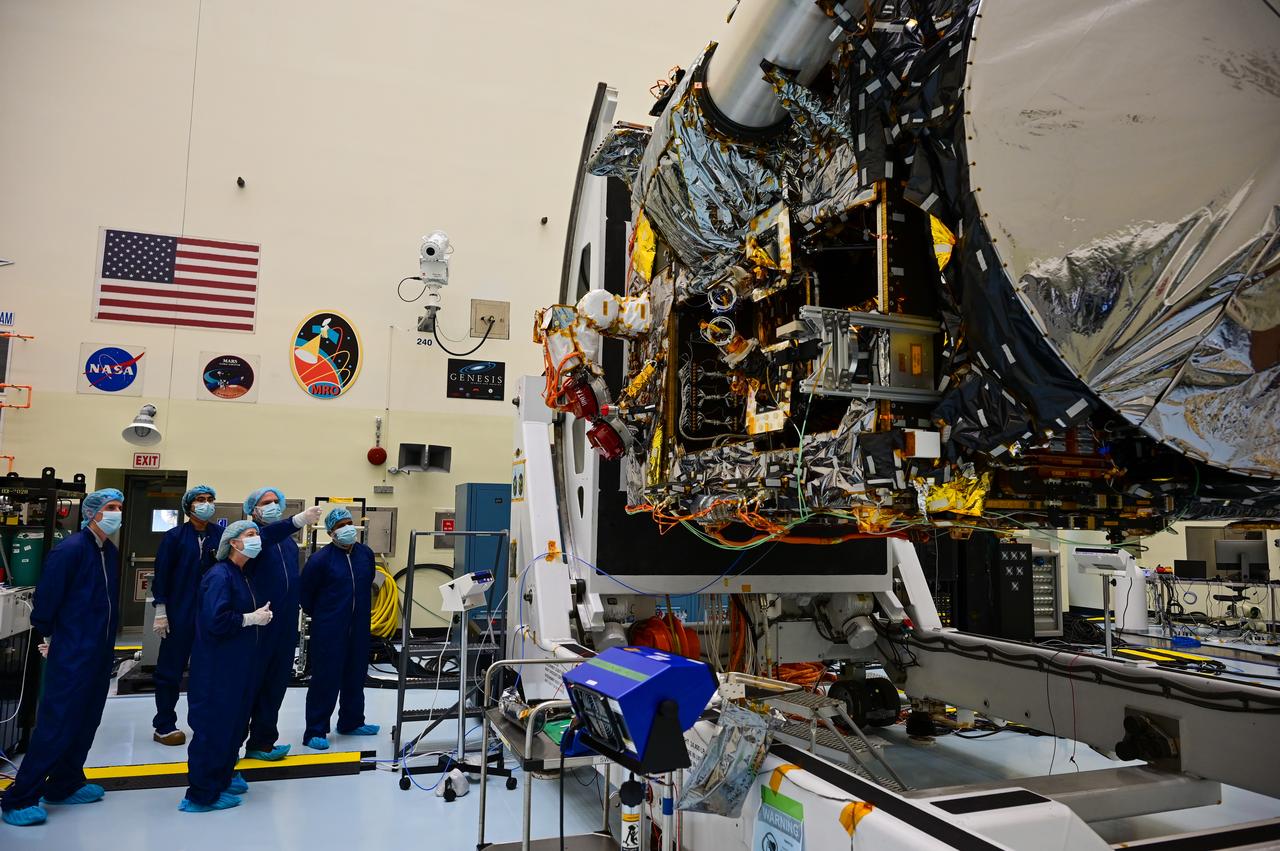
NASA Deputy Administrator Pam Melroy visits Kennedy Space Center in Florida and receives a briefing by team members from the Jet Propulsion Laboratory on the agency’s Psyche spacecraft inside the Payload Hazardous Servicing Facility on May 19, 2022. Melroy is standing in front of the group. The mission is targeting an Aug. 1 launch atop a SpaceX Falcon Heavy rocket from Launch Complex 39A at Kennedy. The spacecraft will use solar-electric propulsion to travel approximately 1.5 billion miles to rendezvous with its namesake asteroid in 2026. The Psyche mission is led by Arizona State University. NASA’s Jet Propulsion Laboratory, which is managed for the agency by Caltech in Pasadena, California, is responsible for the mission’s overall management, system engineering, integration and testing, and mission operations. Maxar Technologies in Palo Alto, California, provided the high-power solar electric propulsion spacecraft chassis. NASA’s Launch Services Program (LSP), based at Kennedy, is managing the launch.
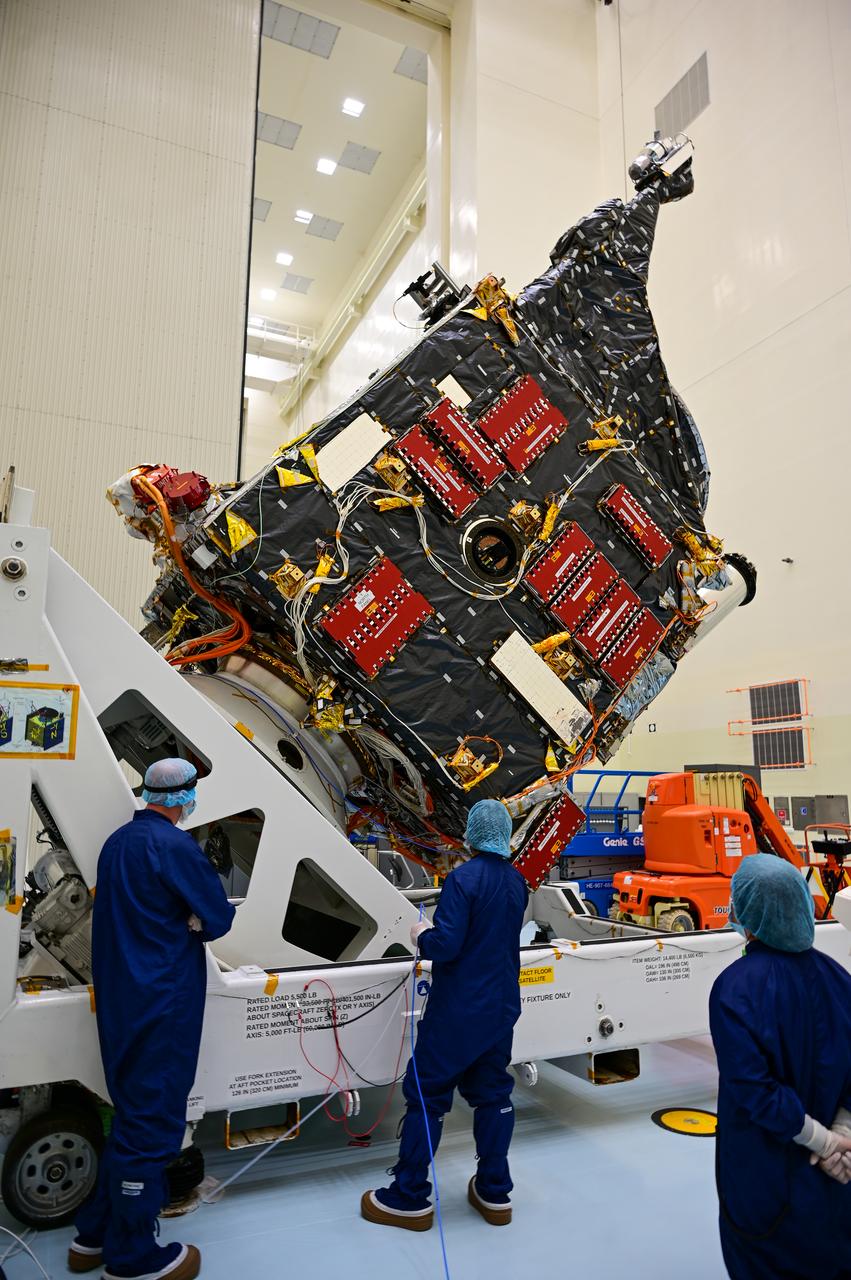
A team working on NASA’s Psyche spacecraft transitioned it from a vertical to horizontal test configuration during prelaunch processing inside the Payload Hazardous Servicing Facility at NASA’s Kennedy Space Center in Florida on May 9, 2022. The mission is targeting an Aug. 1 launch atop a SpaceX Falcon Heavy rocket from Launch Complex 39A at Kennedy. The spacecraft will use solar-electric propulsion to travel approximately 1.5 billion miles to rendezvous with its namesake asteroid in 2026. The Psyche mission is led by Arizona State University. NASA’s Jet Propulsion Laboratory, which is managed for the agency by Caltech in Pasadena, California, is responsible for the mission’s overall management, system engineering, integration and testing, and mission operations. Maxar Technologies in Palo Alto, California, provided the high-power solar electric propulsion spacecraft chassis. NASA’s Launch Services Program (LSP), based at Kennedy, is managing the launch.
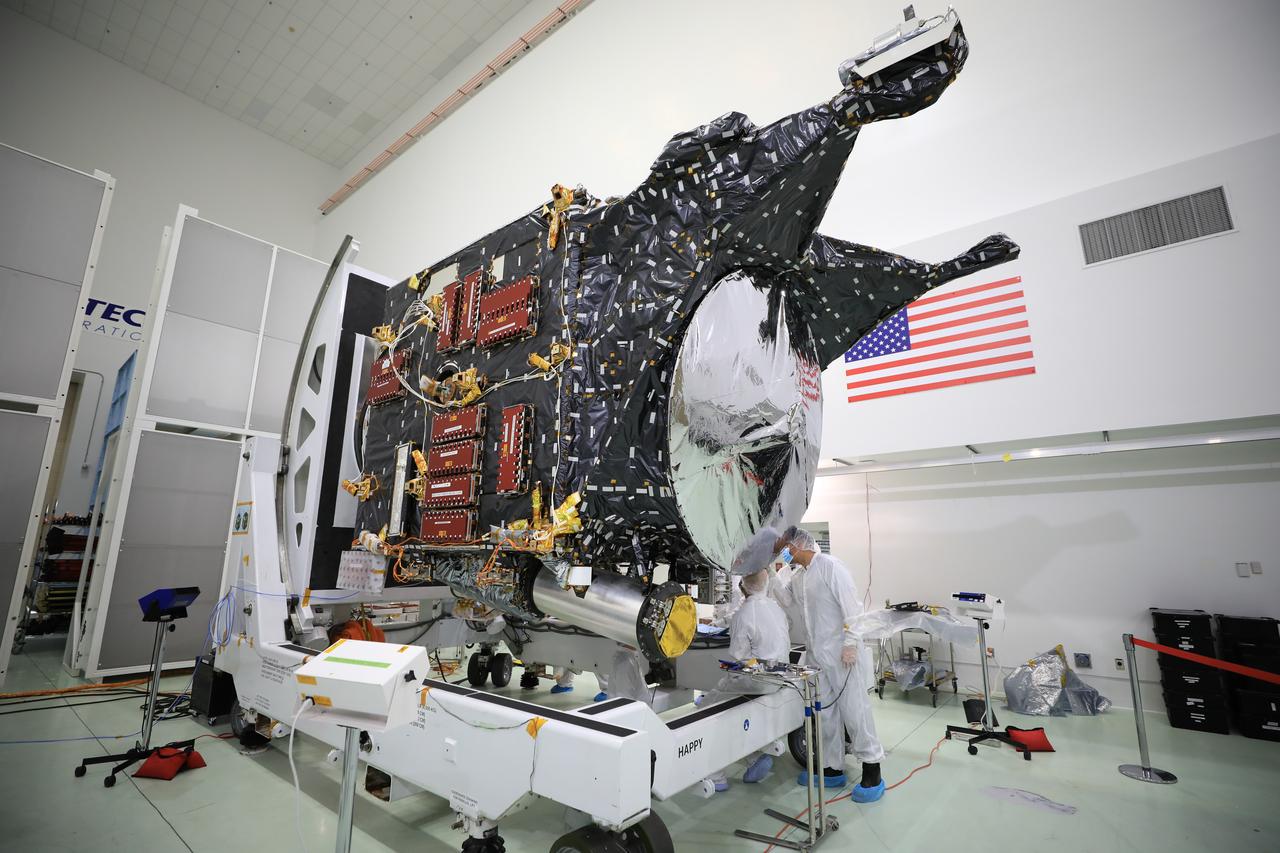
A team prepares NASA’s Psyche spacecraft for launch inside the Astrotech Space Operations Facility near the agency’s Kennedy Space Center in Florida on Dec. 8, 2022. Psyche will launch atop a SpaceX Falcon Heavy rocket from Launch Complex 39A at Kennedy. Launch is targeted for no earlier than Oct. 10, 2023. The spacecraft will use solar-electric propulsion to travel approximately 1.5 billion miles to rendezvous with its namesake asteroid in 2026. The Psyche mission is led by Arizona State University. NASA’s Jet Propulsion Laboratory, which is managed for the agency by Caltech in Pasadena, California, is responsible for the mission’s overall management, system engineering, integration and testing, and mission operations. Maxar Technologies in Palo Alto, California, provided the high-power solar electric propulsion spacecraft chassis. NASA’s Launch Services Program (LSP), based at Kennedy, is managing the launch.
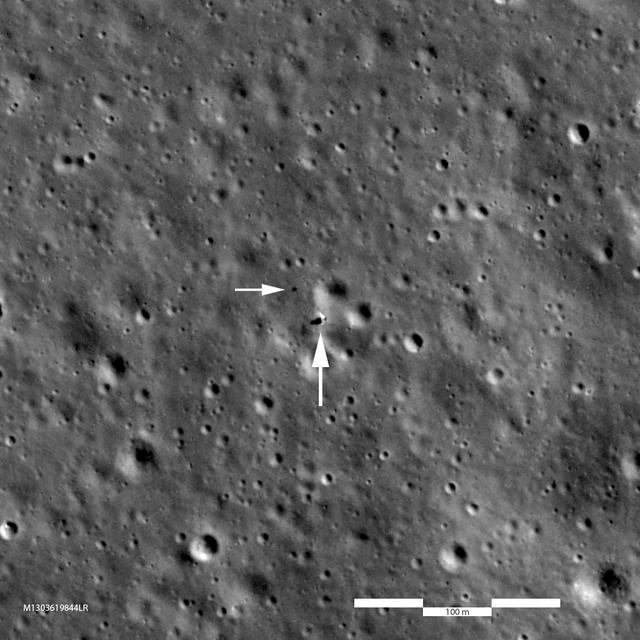
Chang'e 3 (left, M147290066LR) and Chang'e 4 (right, M1303619844LR) are very similar in size and instrumentation. The Chang'e 3 image looks a bit fuzzier because the landing site is at 44° north latitude where the LRO orbit is about twice as far from the Moon relative to the Chang'e 4 site at 45° south latitude (1.6 meter pixels enlarged to 0.85 meter pixels; 5.2 feet vs. 2.8 feet). Each panel is 463 meters (1520 feet) wide, large arrows indicate landers and small arrows indicate rovers. Credits: NASA/Goddard/Arizona State University More info: https://www.nasa.gov/feature/goddard/2019/chang-e-landers-a-closer-look
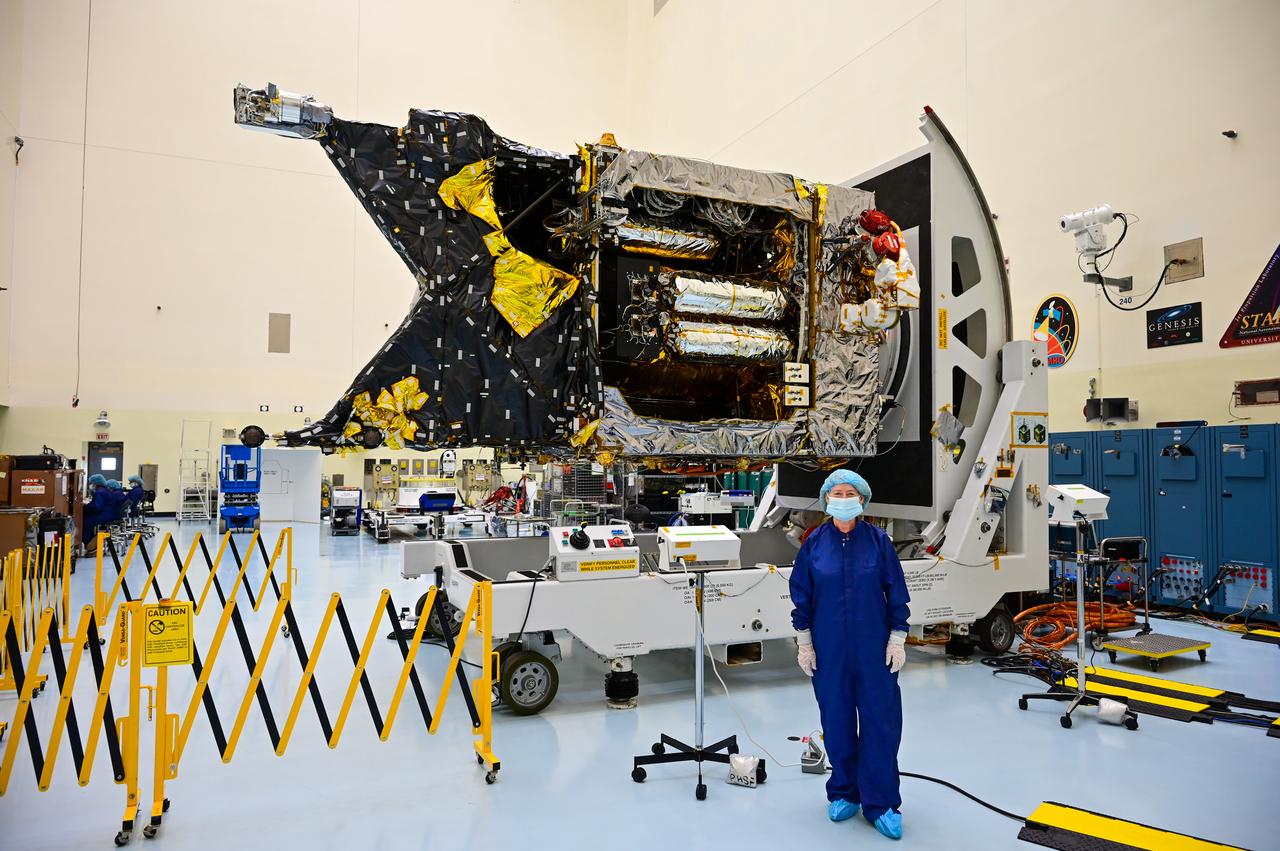
NASA Deputy Administrator Pam Melroy visits Kennedy Space Center in Florida and views the agency’s Psyche spacecraft inside the Payload Hazardous Servicing Facility on May 19, 2022. The mission is targeting an Aug. 1 launch atop a SpaceX Falcon Heavy rocket from Launch Complex 39A at Kennedy. The spacecraft will use solar-electric propulsion to travel approximately 1.5 billion miles to rendezvous with its namesake asteroid in 2026. The Psyche mission is led by Arizona State University. NASA’s Jet Propulsion Laboratory, which is managed for the agency by Caltech in Pasadena, California, is responsible for the mission’s overall management, system engineering, integration and testing, and mission operations. Maxar Technologies in Palo Alto, California, provided the high-power solar electric propulsion spacecraft chassis. NASA’s Launch Services Program (LSP), based at Kennedy, is managing the launch.
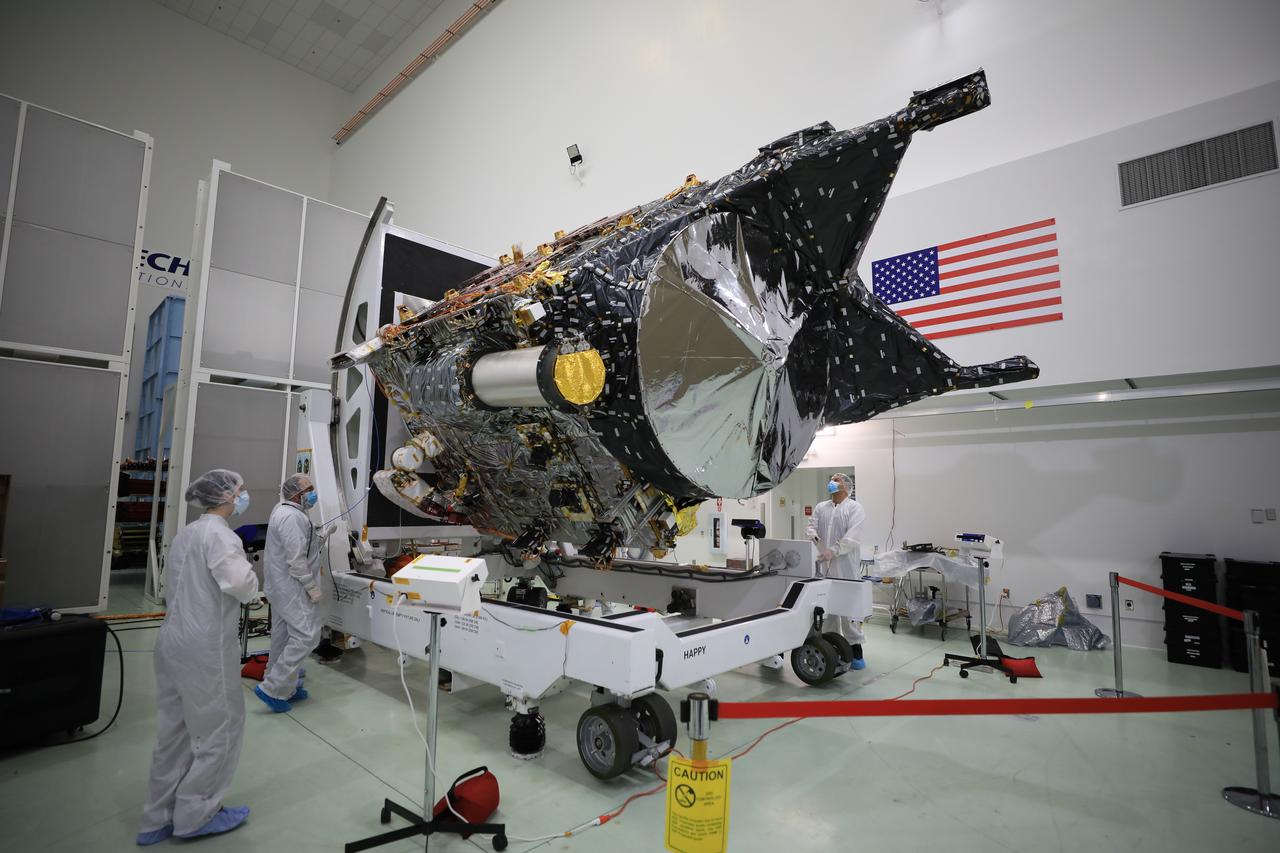
A team prepares NASA’s Psyche spacecraft for launch inside the Astrotech Space Operations Facility near the agency’s Kennedy Space Center in Florida on Dec. 8, 2022. Psyche will launch atop a SpaceX Falcon Heavy rocket from Launch Complex 39A at Kennedy. Launch is targeted for no earlier than Oct. 10, 2023. The spacecraft will use solar-electric propulsion to travel approximately 1.5 billion miles to rendezvous with its namesake asteroid in 2026. The Psyche mission is led by Arizona State University. NASA’s Jet Propulsion Laboratory, which is managed for the agency by Caltech in Pasadena, California, is responsible for the mission’s overall management, system engineering, integration and testing, and mission operations. Maxar Technologies in Palo Alto, California, provided the high-power solar electric propulsion spacecraft chassis. NASA’s Launch Services Program (LSP), based at Kennedy, is managing the launch.
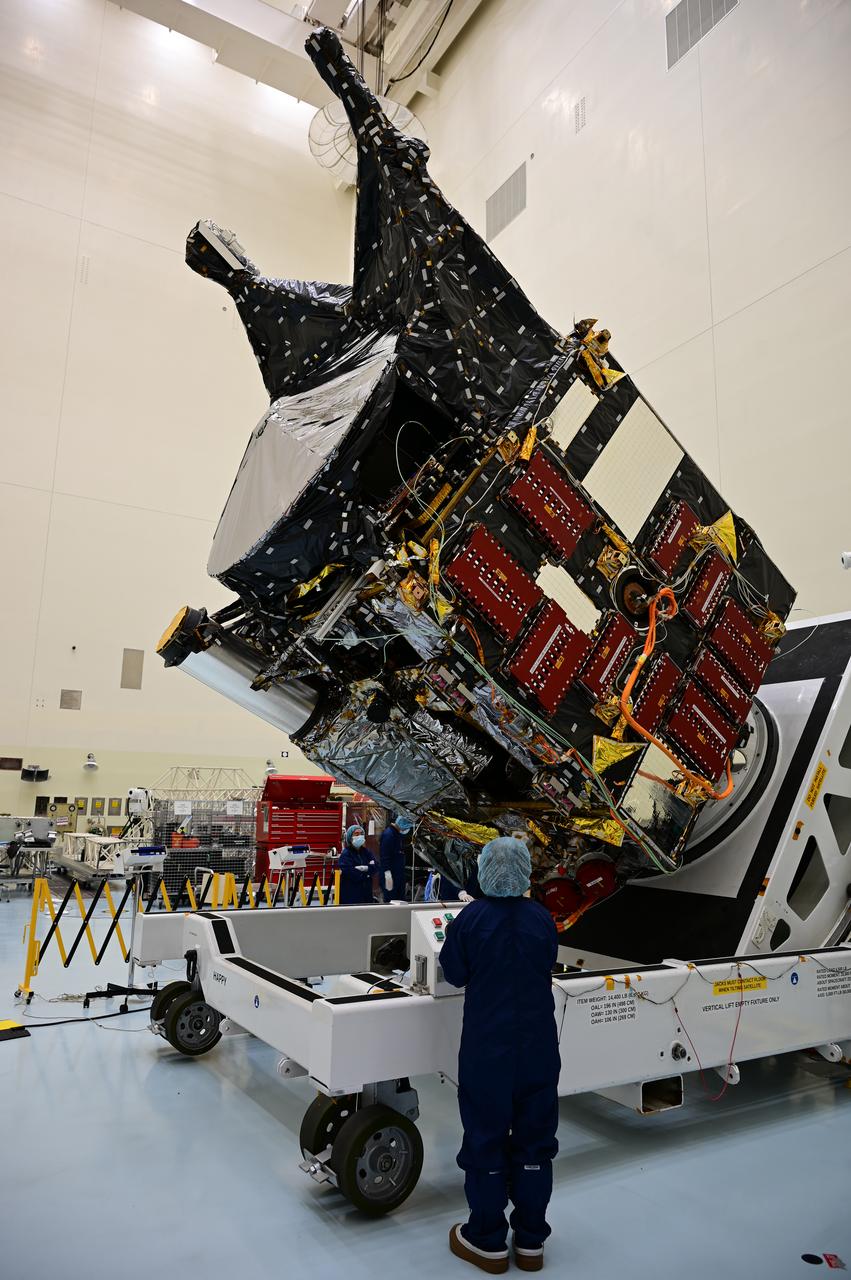
A team working on NASA’s Psyche spacecraft transitioned it from a vertical to a horizontal test configuration during prelaunch processing inside the Payload Hazardous Servicing Facility at NASA’s Kennedy Space Center in Florida on May 9, 2022. The mission is targeting an Aug. 1 launch atop a SpaceX Falcon Heavy rocket from Launch Complex 39A at Kennedy. The spacecraft will use solar-electric propulsion to travel approximately 1.5 billion miles to rendezvous with its namesake asteroid in 2026. The Psyche mission is led by Arizona State University. NASA’s Jet Propulsion Laboratory, which is managed for the agency by Caltech in Pasadena, California, is responsible for the mission’s overall management, system engineering, integration and testing, and mission operations. Maxar Technologies in Palo Alto, California, provided the high-power solar electric propulsion spacecraft chassis. NASA’s Launch Services Program (LSP), based at Kennedy, is managing the launch.
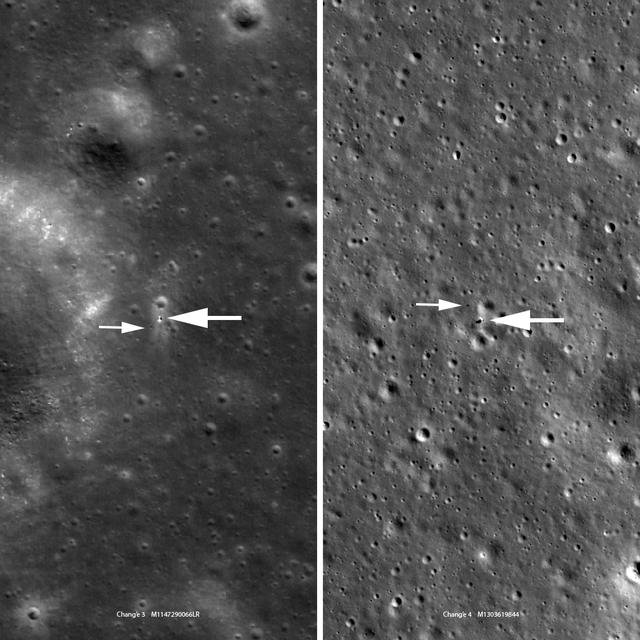
Chang'e 3 (left, M147290066LR) and Chang'e 4 (right, M1303619844LR) are very similar in size and instrumentation. The Chang'e 3 image looks a bit fuzzier because the landing site is at 44° north latitude where the LRO orbit is about twice as far from the Moon relative to the Chang'e 4 site at 45° south latitude (1.6 meter pixels enlarged to 0.85 meter pixels; 5.2 feet vs. 2.8 feet). Each panel is 463 meters (1520 feet) wide, large arrows indicate landers and small arrows indicate rovers. Credits: NASA/Goddard/Arizona State University More info: https://www.nasa.gov/feature/goddard/2019/chang-e-landers-a-closer-look
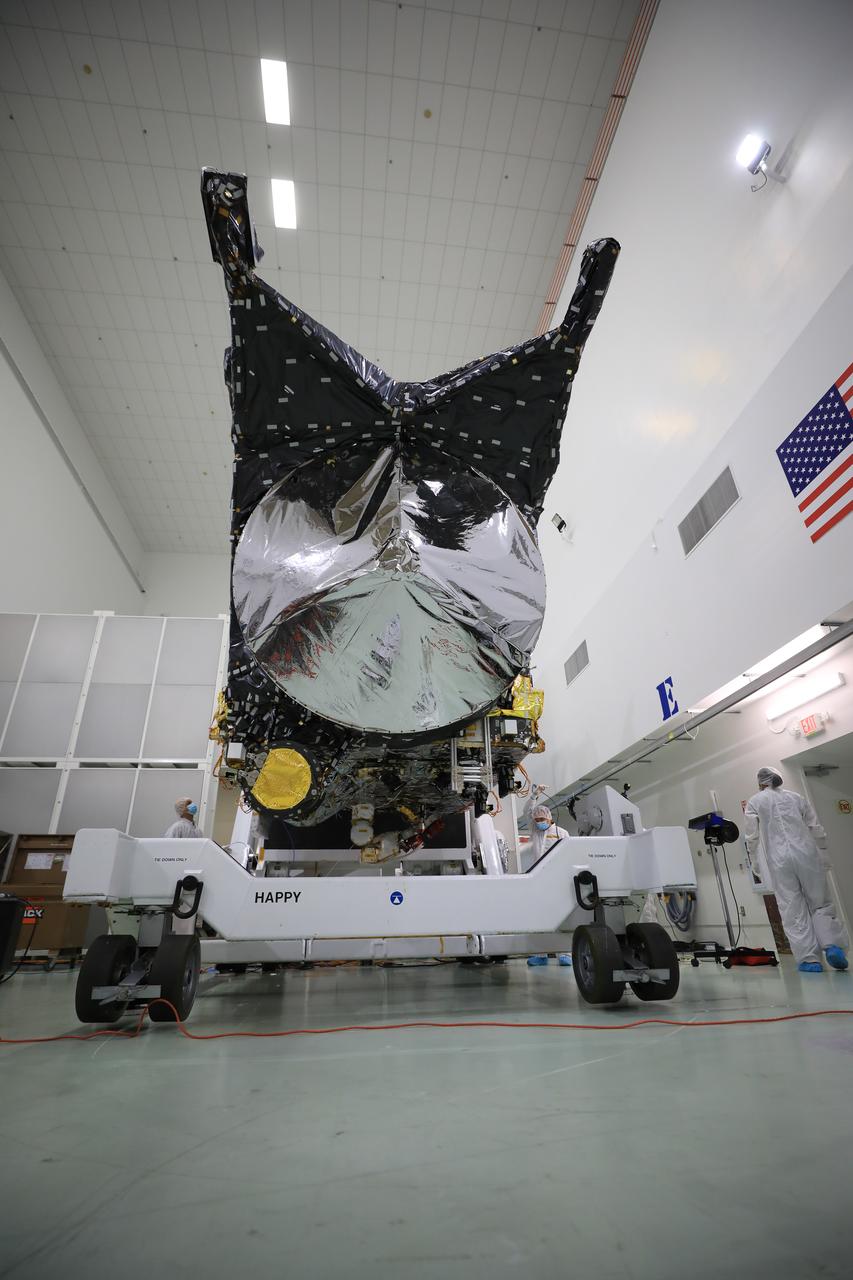
A team prepares NASA’s Psyche spacecraft for launch inside the Astrotech Space Operations Facility near the agency’s Kennedy Space Center in Florida on Dec. 8, 2022. Psyche will launch atop a SpaceX Falcon Heavy rocket from Launch Complex 39A at Kennedy. Launch is targeted for no earlier than Oct. 10, 2023. The spacecraft will use solar-electric propulsion to travel approximately 1.5 billion miles to rendezvous with its namesake asteroid in 2026. The Psyche mission is led by Arizona State University. NASA’s Jet Propulsion Laboratory, which is managed for the agency by Caltech in Pasadena, California, is responsible for the mission’s overall management, system engineering, integration and testing, and mission operations. Maxar Technologies in Palo Alto, California, provided the high-power solar electric propulsion spacecraft chassis. NASA’s Launch Services Program (LSP), based at Kennedy, is managing the launch.
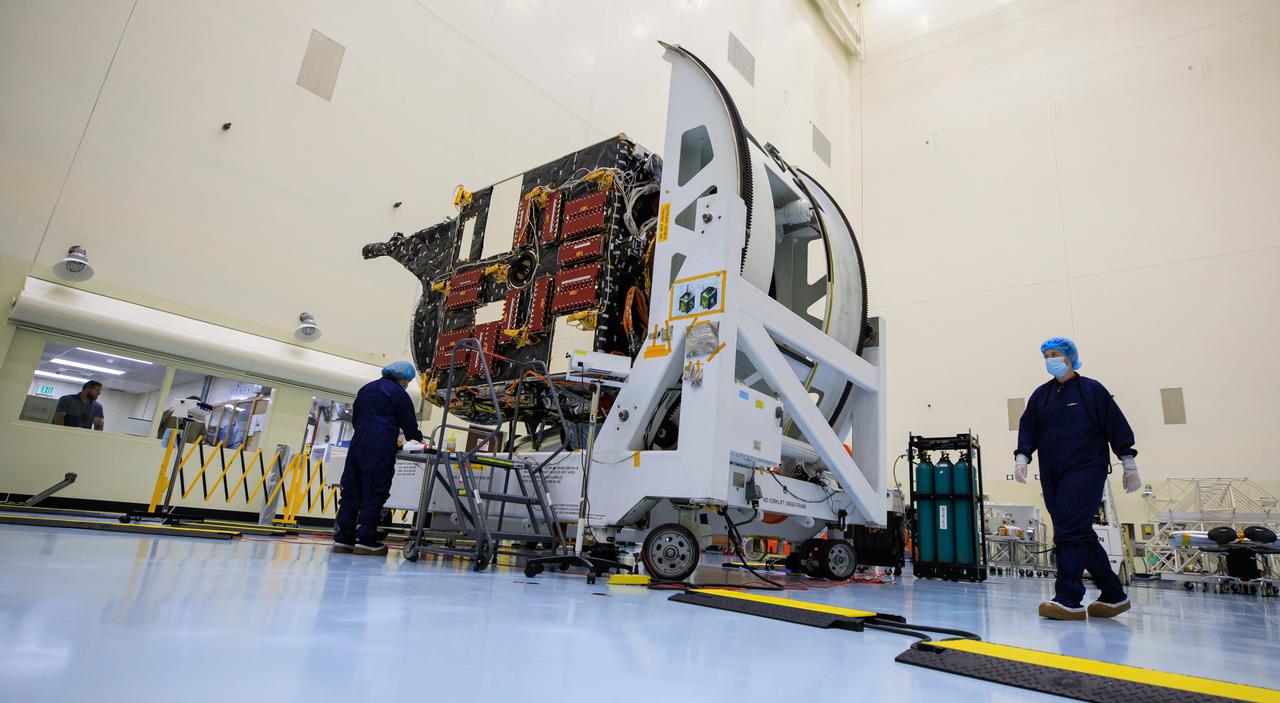
NASA’s Psyche spacecraft undergoes processing and servicing ahead of launch atop a work stand inside the Payload Hazardous Servicing Facility at NASA’s Kennedy Space Center in Florida on May 3, 2022. Psyche is targeting to lift off aboard a SpaceX Falcon Heavy rocket on Aug. 1, 2022. The spacecraft will use solar-electric propulsion to travel approximately 1.5 billion miles to rendezvous with its namesake asteroid in 2026. The Psyche mission is led by Arizona State University. NASA’s Jet Propulsion Laboratory, which is managed for the agency by Caltech in Pasadena, California, is responsible for the mission’s overall management, system engineering, integration and testing, and mission operations. Maxar Technologies in Palo Alto, California, provided the high-power solar electric propulsion spacecraft chassis. NASA’s Launch Services Program (LSP), based at Kennedy, is managing the launch. Psyche will be the 14th mission in the agency's Discovery program and LSP’s 100th primary mission.
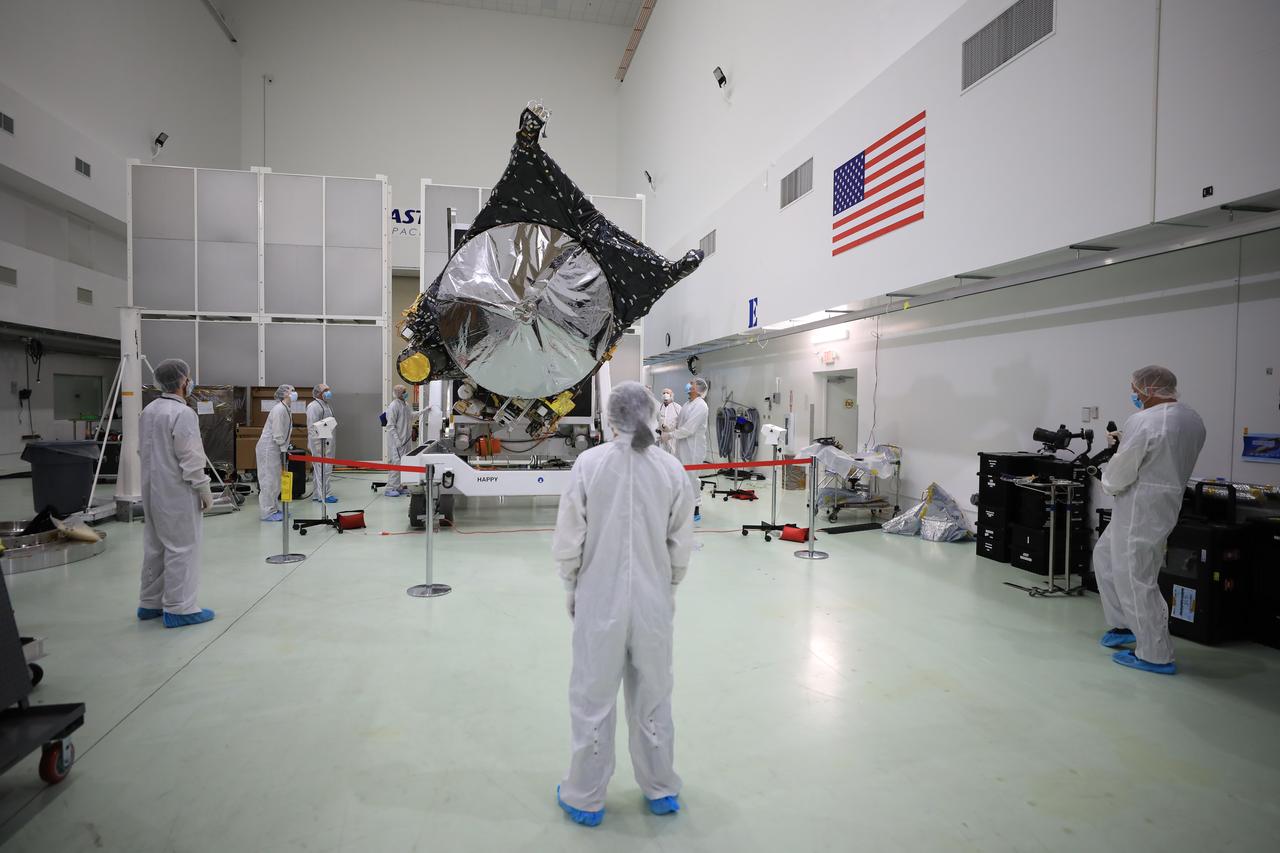
Prelaunch processing of NASA’s Psyche spacecraft is underway inside the Astrotech Space Operations Facility near the agency’s Kennedy Space Center in Florida on Dec. 8, 2022. Psyche will launch atop a SpaceX Falcon Heavy rocket from Launch Complex 39A at Kennedy. Launch is targeted for no earlier than Oct. 10, 2023. The spacecraft will use solar-electric propulsion to travel approximately 1.5 billion miles to rendezvous with its namesake asteroid in 2026. The Psyche mission is led by Arizona State University. NASA’s Jet Propulsion Laboratory, which is managed for the agency by Caltech in Pasadena, California, is responsible for the mission’s overall management, system engineering, integration and testing, and mission operations. Maxar Technologies in Palo Alto, California, provided the high-power solar electric propulsion spacecraft chassis. NASA’s Launch Services Program (LSP), based at Kennedy, is managing the launch.

NASA's Perseverance Mars rover used its Mastcam-Z camera system to capture this view as it was ascending to the rim of Jezero Crater on Dec. 5, 2024, the 1,349th Martian day, or sol, of the mission. The scene shows just how steep some of the slopes leading to the crater rim can be. Arizona State University leads the operations of the Mastcam-Z instrument, working in collaboration with Malin Space Science Systems in San Diego, on the design, fabrication, testing, and operation of the cameras, and in collaboration with the Niels Bohr Institute of the University of Copenhagen on the design, fabrication, and testing of the calibration targets. A key objective for Perseverance's mission on Mars is astrobiology, including the search for signs of ancient microbial life. The rover will characterize the planet's geology and past climate, pave the way for human exploration of the Red Planet, and be the first mission to collect and cache Martian rock and regolith (broken rock and dust). Subsequent NASA missions, in cooperation with ESA (European Space Agency), would send spacecraft to Mars to collect these sealed samples from the surface and return them to Earth for in-depth analysis. The Mars 2020 Perseverance mission is part of NASA's Moon to Mars exploration approach, which includes Artemis missions to the Moon that will help prepare for human exploration of the Red Planet. Animation available at https://photojournal.jpl.nasa.gov/catalog/PIA26475
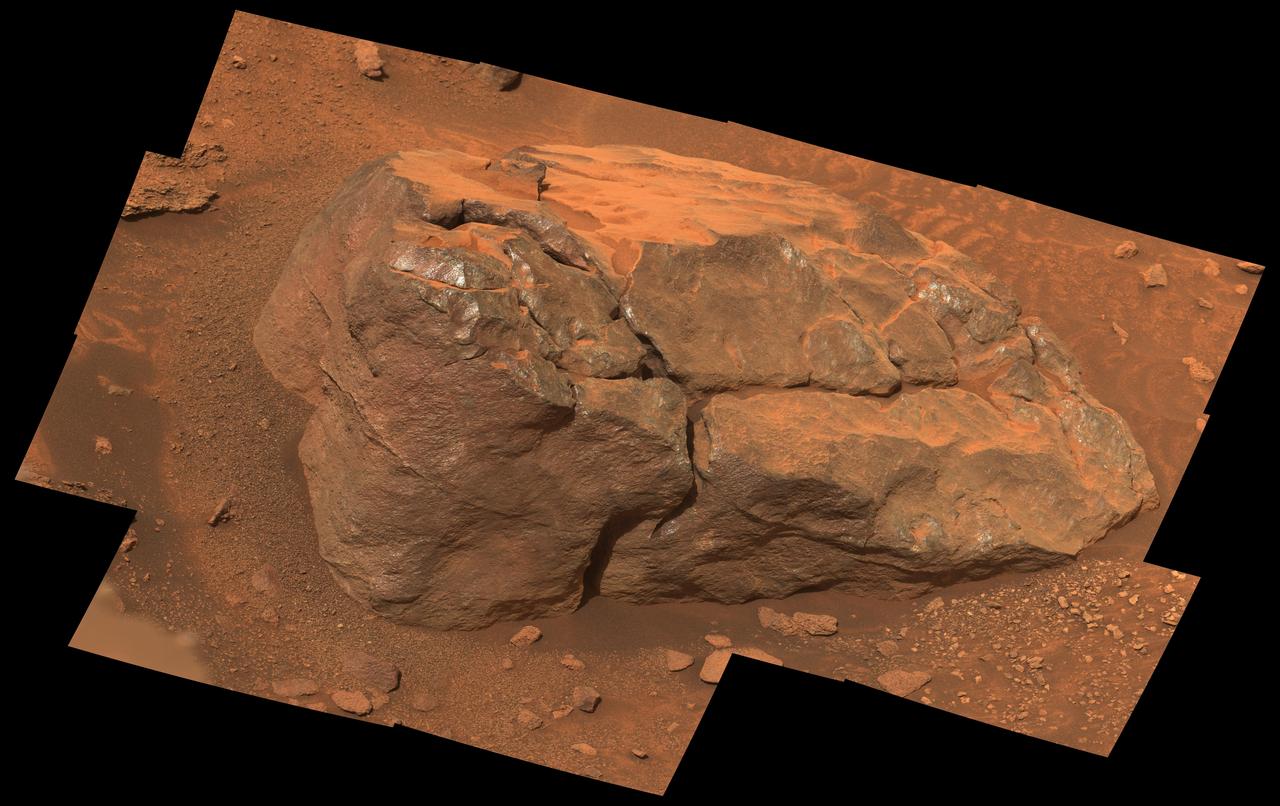
This natural-color, high-resolution mosaic showing "Observation Rock" was taken by the Mastcam-Z instrument on NASA's Perseverance as the rover climbed the western wall of Jezero Crater. The location is near an area the Perseverance science team is calling "Curtis Ridge." The 14 frames used to generate the mosaic were acquired on Oct. 18, 2024, the 1,302nd Martian day, or sol, of Perseverance's mission. Arizona State University leads the operations of the Mastcam-Z instrument, working in collaboration with Malin Space Science Systems in San Diego, on the design, fabrication, testing, and operation of the cameras, and in collaboration with the Niels Bohr Institute of the University of Copenhagen on the design, fabrication, and testing of the calibration targets. A key objective for Perseverance's mission on Mars is astrobiology, including the search for signs of ancient microbial life. The rover will characterize the planet's geology and past climate, pave the way for human exploration of the Red Planet, and be the first mission to collect and cache Martian rock and regolith (broken rock and dust). Subsequent NASA missions, in cooperation with ESA (European Space Agency), would send spacecraft to Mars to collect these sealed samples from the surface and return them to Earth for in-depth analysis. The Mars 2020 Perseverance mission is part of NASA's Moon to Mars exploration approach, which includes Artemis missions to the Moon that will help prepare for human exploration of the Red Planet. https://photojournal.jpl.nasa.gov/catalog/PIA26481
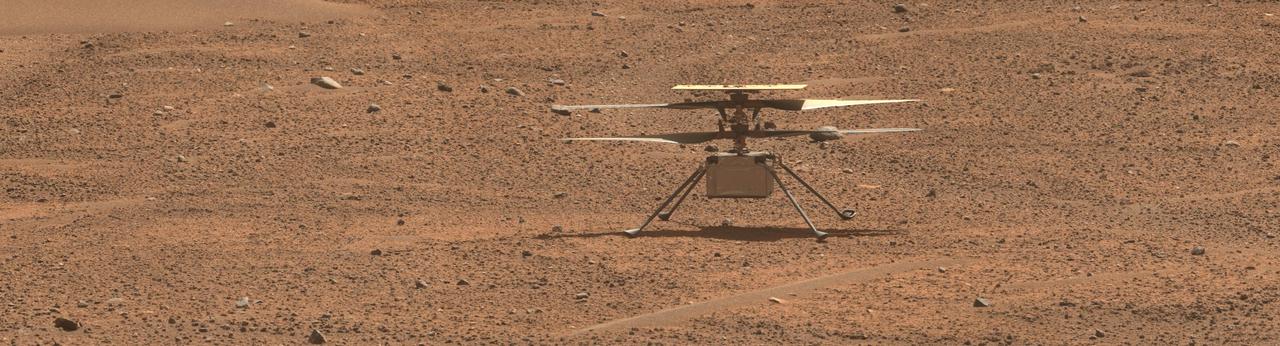
This view of NASA's Ingenuity Mars Helicopter was generated using data collected by the Mastcam-Z instrument aboard the agency's Perseverance Mars rover on Aug. 2, 2023, the 871st Martian day, or sol, of the mission. The image was taken a day before the rotorcraft's 54th flight, and about a week and a half after Flight 53, which was cut short by an unexpected landing. Arizona State University leads the operations of the Mastcam-Z instrument, working in collaboration with Malin Space Science Systems in San Diego, on the design, fabrication, testing, and operation of the cameras, and in collaboration with the Niels Bohr Institute of the University of Copenhagen on the design, fabrication, and testing of the calibration targets. A key objective for Perseverance's mission on Mars is astrobiology, including the search for signs of ancient microbial life. The rover will characterize the planet's geology and past climate, pave the way for human exploration of the Red Planet, and be the first mission to collect and cache Martian rock and regolith (broken rock and dust). Subsequent NASA missions, in cooperation with ESA (European Space Agency), would send spacecraft to Mars to collect these sealed samples from the surface and return them to Earth for in-depth analysis. The Mars 2020 Perseverance mission is part of NASA's Moon to Mars exploration approach, which includes Artemis missions to the Moon that will help prepare for human exploration of the Red Planet. https://photojournal.jpl.nasa.gov/catalog/PIA25968
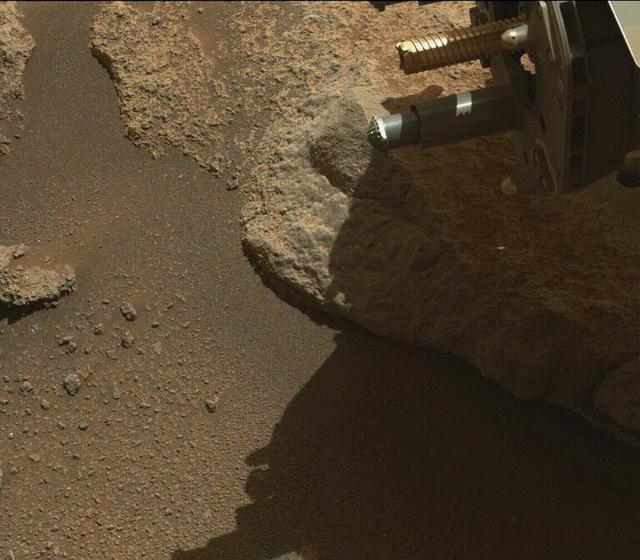
A portion of a cored-rock sample is ejected from the rotary percussive drill on NASA's Perseverance Mars rover. The imagery was collected by the rover's Mastcam-Z instrument on Jan. 15, 2022, the 322nd Martian day, or sol, of the mission, during an experiment that oriented the drill and sample tube (unseen here) around 9 degrees below horizontal and then rotated and extended the drill's spindle. The Mastcam-Z investigation is led and operated by Arizona State University in Tempe, working in collaboration with Malin Space Science Systems in San Diego, California, on the design, fabrication, testing, and operation of the cameras, and in collaboration with the Neils Bohr Institute of the University of Copenhagen on the design, fabrication, and testing of the calibration targets. A key objective for Perseverance's mission on Mars is astrobiology, including the search for signs of ancient microbial life. The rover will characterize the planet's geology and past climate, pave the way for human exploration of the Red Planet, and be the first mission to collect and cache Martian rock and regolith (broken rock and dust). Subsequent NASA missions, in cooperation with ESA (European Space Agency), would send spacecraft to Mars to collect these sealed samples from the surface and return them to Earth for in-depth analysis. The Mars 2020 Perseverance mission is part of NASA's Moon to Mars exploration approach, which includes Artemis missions to the Moon that will help prepare for human exploration of the Red Planet. Animation available at https://photojournal.jpl.nasa.gov/catalog/PIA25072
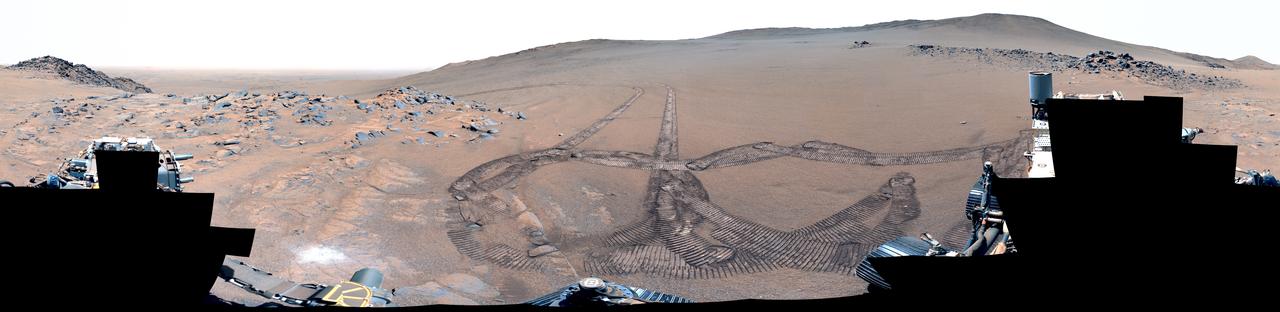
NASA's Perseverance Mars rover used its Mastcam-Z camera to capture this 360-degree panorama of an area nicknamed "Rio Chiquito" on Nov. 23, 2024, the 1,337th Martian day, or sol, of the mission. The rover's tracks can be seen in the center of the image. This enhanced-color version of the image is designed to bring out subtle details. Arizona State University leads the operations of the Mastcam-Z instrument, working in collaboration with Malin Space Science Systems in San Diego, on the design, fabrication, testing, and operation of the cameras, and in collaboration with the Niels Bohr Institute of the University of Copenhagen on the design, fabrication, and testing of the calibration targets. A key objective for Perseverance's mission on Mars is astrobiology, including the search for signs of ancient microbial life. The rover will characterize the planet's geology and past climate, pave the way for human exploration of the Red Planet, and be the first mission to collect and cache Martian rock and regolith (broken rock and dust). Subsequent NASA missions, in cooperation with ESA (European Space Agency), would send spacecraft to Mars to collect these sealed samples from the surface and return them to Earth for in-depth analysis. The Mars 2020 Perseverance mission is part of NASA's Moon to Mars exploration approach, which includes Artemis missions to the Moon that will help prepare for human exploration of the Red Planet. https://photojournal.jpl.nasa.gov/catalog/PIA26474

The Crab Nebula is a supernova remnant, all that remains of a tremendous stellar explosion. Observers in China and Japan recorded the supernova nearly 1,000 years ago, in 1054. Credit: NASA, ESA, J. Hester and A. Loll (Arizona State University) The Hubble Space Telescope is a project of international cooperation between NASA and the European Space Agency. NASA's Goddard Space Flight Center manages the telescope. The Space Telescope Science Institute conducts Hubble science operations. Goddard is responsible for HST project management, including mission and science operations, servicing missions, and all associated development activities. To learn more about the Hubble Space Telescope go here: <a href="http://www.nasa.gov/mission_pages/hubble/main/index.html" rel="nofollow">www.nasa.gov/mission_pages/hubble/main/index.html</a> <b><a href="http://www.nasa.gov/centers/goddard/home/index.html" rel="nofollow">NASA Goddard Space Flight Center</a></b> is home to the nation's largest organization of combined scientists, engineers and technologists that build spacecraft, instruments and new technology to study the Earth, the sun, our solar system, and the universe. <b>Follow us on <a href="http://twitter.com/NASA_GoddardPix" rel="nofollow">Twitter</a></b> <b>Join us on <a href="http://www.facebook.com/pages/Greenbelt-MD/NASA-Goddard/395013845897?ref=tsd" rel="nofollow">Facebook</a><b> </b></b>

Composed of 53 images, this mosaic looks west toward the rim of Mars' Jezero Crater on July 8, 2023, the 847th Martian day, or sol, of NASA's Perseverance rover mission. The rover's Mastcam-Z instrument captured the images when Perseverance was about halfway through a boulder field that was 0.6 miles (1 kilometer) wide. Arizona State University leads the operations of the Mastcam-Z instrument, working in collaboration with Malin Space Science Systems in San Diego, on the design, fabrication, testing, and operation of the cameras, and in collaboration with the Niels Bohr Institute of the University of Copenhagen on the design, fabrication, and testing of the calibration targets. A key objective for Perseverance's mission on Mars is astrobiology, including the search for signs of ancient microbial life. The rover will characterize the planet's geology and past climate, pave the way for human exploration of the Red Planet, and be the first mission to collect and cache Martian rock and regolith (broken rock and dust). Subsequent NASA missions, in cooperation with ESA (European Space Agency), would send spacecraft to Mars to collect these sealed samples from the surface and return them to Earth for in-depth analysis. The Mars 2020 Perseverance mission is part of NASA's Moon to Mars exploration approach, which includes Artemis missions to the Moon that will help prepare for human exploration of the Red Planet. https://photojournal.jpl.nasa.gov/catalog/PIA25965
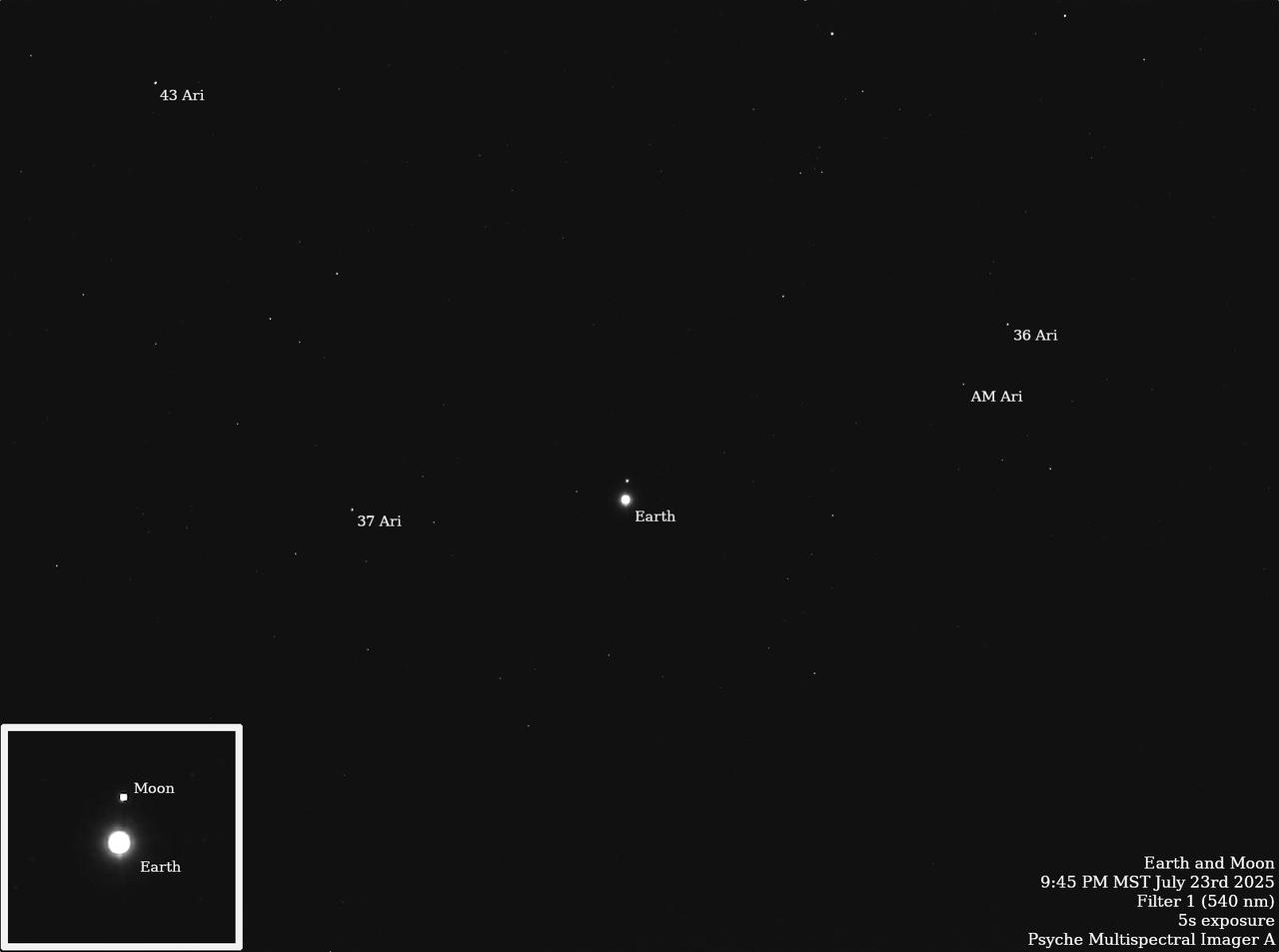
NASA's Psyche spacecraft captured images of Earth and our Moon from about 180 million miles (290 kilometers) away in July 2025. The images were obtained during one of the mission team's periodic maintenance and calibration tests for the twin cameras that make up the imager instrument. Scientists on the imaging team, led by Arizona State University, captured multiple long-exposure (up to 10-second) pictures of the two bodies, which appear as dots sparkling with reflected sunlight amid a starfield in the constellation Aries. The observations help the team determine how the cameras respond to solar system objects that shine by reflected sunlight, just like the Psyche asteroid. In January 2025, Psyche captured an image that included Mars, Jupiter, and the Jovian moons Io, Ganymede, Callisto, and Europa. The image here was captured by Psyche's primary camera, Imager A, on July 23. The Psyche mission is led by ASU. Lindy Elkins-Tanton of the University of California, Berkeley is the principal investigator. A division of Caltech in Pasadena, JPL is responsible for the mission's overall management, system engineering, integration and test, and mission operations. Maxar Technologies in Palo Alto, California, provided the high-power solar electric propulsion spacecraft chassis. ASU leads the operations of the imager instrument, working in collaboration with Malin Space Science Systems in San Diego on the design, fabrication, and testing of the cameras. https://photojournal.jpl.nasa.gov/catalog/PIA26569

NASA's Perseverance Mars rover used its Mastcam-Z camera to capture Mercury – seen as a tiny speck – passing in front of the Sun on Oct. 28, 2023, the 953th Martian day, or sol, of the mission. The top portion of the GIF zooms in on the upper part of the Sun seen in Mastcam-Z's view; the reticle highlights the planet's transit. The GIF has been sped up 400 times; the portion of Mercury's transit captured by Mastcam-Z took place in just under an hour. Arizona State University leads the operations of the Mastcam-Z instrument, working in collaboration with Malin Space Science Systems in San Diego, on the design, fabrication, testing, and operation of the cameras, and in collaboration with the Niels Bohr Institute of the University of Copenhagen on the design, fabrication, and testing of the calibration targets. A key objective for Perseverance's mission on Mars is astrobiology, including the search for signs of ancient microbial life. The rover will characterize the planet's geology and past climate, pave the way for human exploration of the Red Planet, and be the first mission to collect and cache Martian rock and regolith (broken rock and dust). The Mars 2020 Perseverance mission is part of NASA's Moon to Mars exploration approach, which includes Artemis missions to the Moon that will help prepare for human exploration of the Red Planet. Video available at https://photojournal.jpl.nasa.gov/catalog/PIA26250
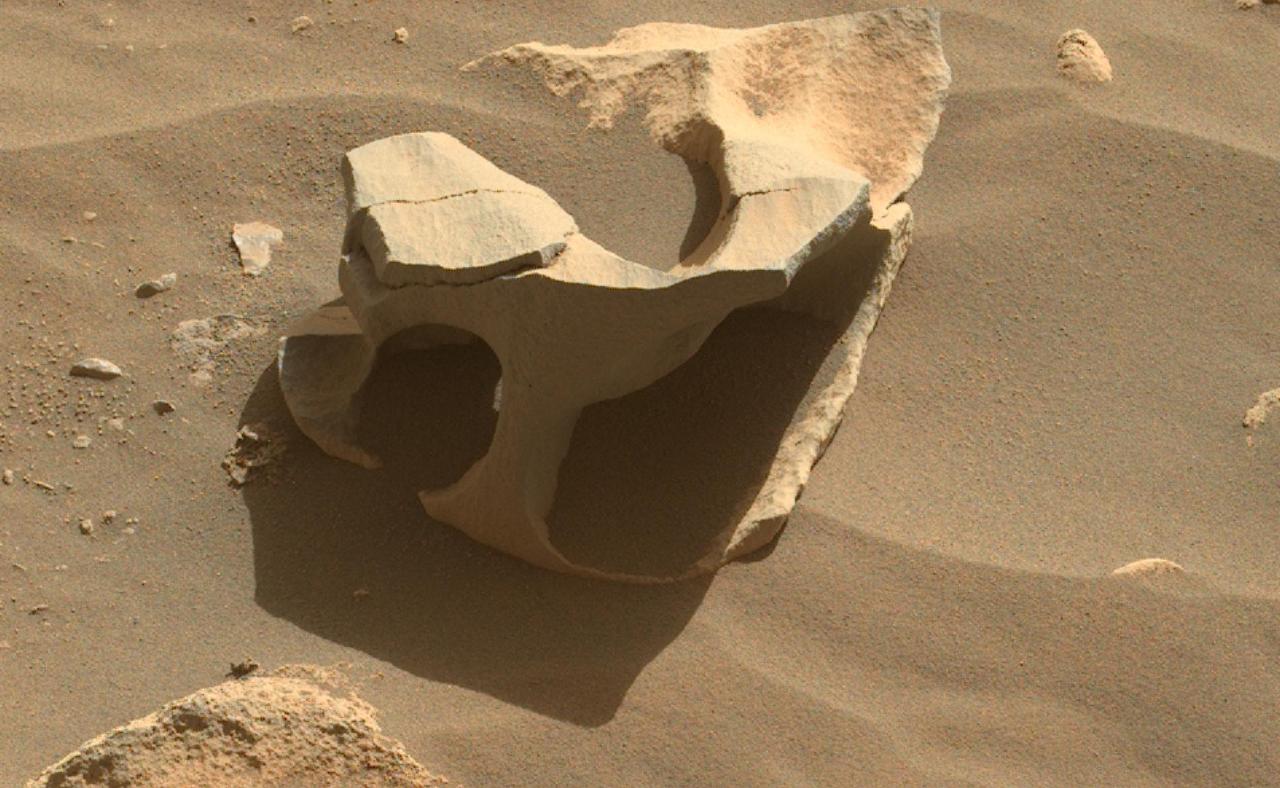
NASA's Perseverance Mars rover spotted this hollowed-out rock in Jezero Crater using its Mastcam-Z instrument on June 26, 2023, the 836th Martian day, or sol, of the mission. Wind can erode all sorts of strange shapes by sandblasting rock surfaces over the course of eons. Arizona State University leads the operations of the Mastcam-Z instrument, working in collaboration with Malin Space Science Systems in San Diego, on the design, fabrication, testing, and operation of the cameras, and in collaboration with the Niels Bohr Institute of the University of Copenhagen on the design, fabrication, and testing of the calibration targets. A key objective for Perseverance's mission on Mars is astrobiology, including the search for signs of ancient microbial life. The rover will characterize the planet's geology and past climate, pave the way for human exploration of the Red Planet, and be the first mission to collect and cache Martian rock and regolith (broken rock and dust). Subsequent NASA missions, in cooperation with ESA (European Space Agency), would send spacecraft to Mars to collect these sealed samples from the surface and return them to Earth for in-depth analysis. The Mars 2020 Perseverance mission is part of NASA's Moon to Mars exploration approach, which includes Artemis missions to the Moon that will help prepare for human exploration of the Red Planet. https://photojournal.jpl.nasa.gov/catalog/PIA25917
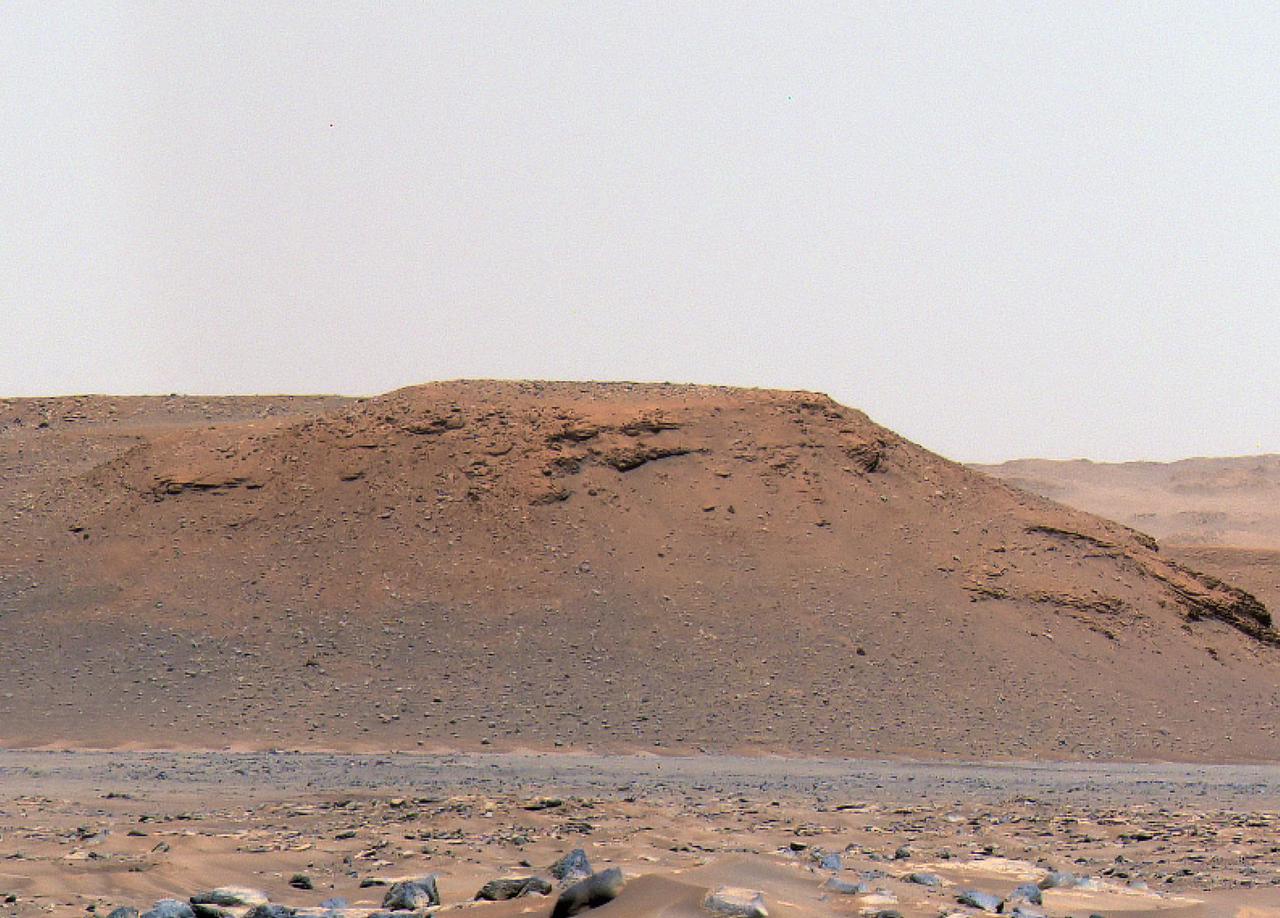
The long, steep slope known as an escarpment, or scarp, along the delta in Mars' Jezero Crater that the science team of NASA's Perseverance rover mission refers to as "Scarp a" is seen in this image captured by the rover's Mastcam-Z instrument on Apr. 17, 2021. The Mastcam-Z investigation is led and operated by Arizona State University in Tempe, working in collaboration with Malin Space Science Systems in San Diego, California, on the design, fabrication, testing, and operation of the cameras, and in collaboration with the Neils Bohr Institute of the University of Copenhagen on the design, fabrication, and testing of the calibration targets. A key objective for Perseverance's mission on Mars is astrobiology, including the search for signs of ancient microbial life. The rover will characterize the planet's geology and past climate, pave the way for human exploration of the Red Planet, and be the first mission to collect and cache Martian rock and regolith (broken rock and dust). Subsequent NASA missions, in cooperation with ESA (European Space Agency), would send spacecraft to Mars to collect these sealed samples from the surface and return them to Earth for in-depth analysis. The Mars 2020 Perseverance mission is part of NASA's Moon to Mars exploration approach, which includes Artemis missions to the Moon that will help prepare for human exploration of the Red Planet. https://photojournal.jpl.nasa.gov/catalog/PIA24813
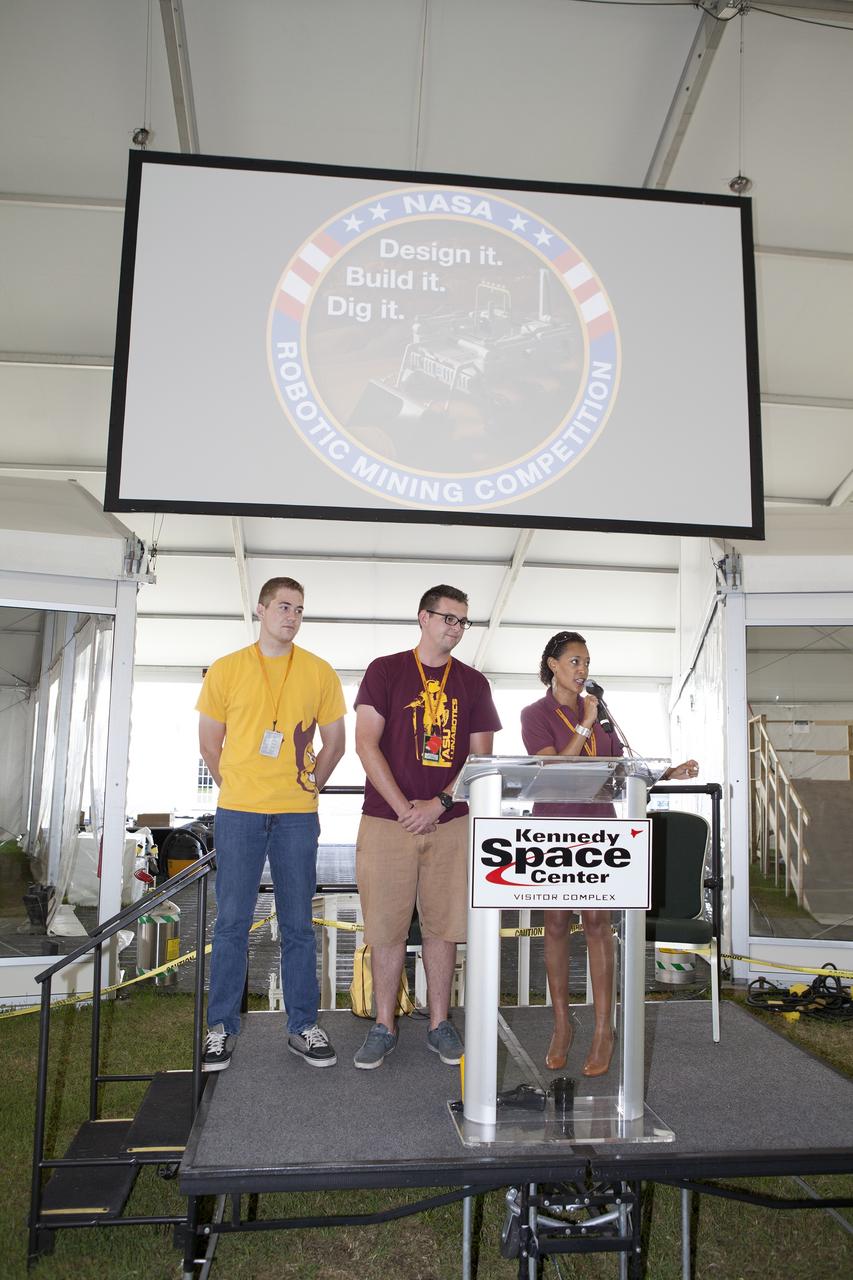
CAPE CANAVERAL, Fla. – During the opening ceremony for NASA's 2014 Robotics Mining Competition at the Kennedy Space Center Visitor Complex in Florida, event emcee Kimberly Land, from NASA's Ames Research Center in Moffett Field, California, asks for a moment of silence for the loss of a team member from Arizona State University. To her left are two team members from the university. More than 35 teams from around the U.S. have designed and built remote-controlled robots for the mining competition. The competition is a NASA Human Exploration and Operations Mission Directorate project designed to engage and retain students in science, technology, engineering and mathematics, or STEM, fields by expanding opportunities for student research and design. Teams use their remote-controlled robotics to maneuver and dig in a supersized sandbox filled with a crushed material that has characteristics similar to Martian soil. The objective of the challenge is to see which team’s robot can collect and move the most regolith within a specified amount of time. For more information, visit www.nasa.gov/nasarmc. Photo credit: NASA/Frankie Martin
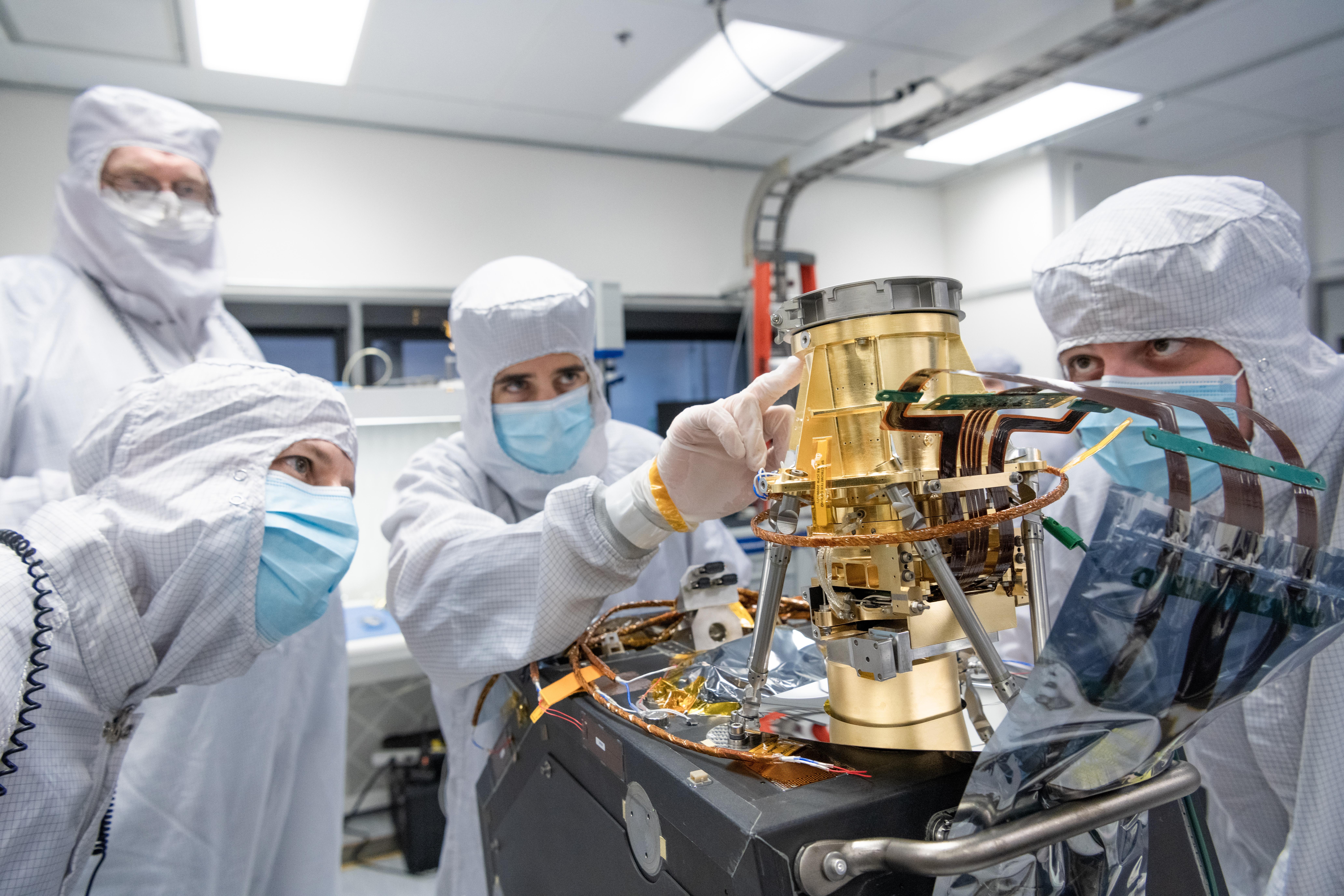
Engineers in a clean room at NASA's Jet Propulsion Laboratory in Southern California in April 2023 examine the imaging spectrometer that will ride aboard the first of two satellites to be launched by the Carbon Mapper Coalition. The instrument will help researchers detect emissions of carbon dioxide and methane from sources on Earth's surface from space. The gold-colored component is the spectrometer, which was developed at JPL. It's designed to receive sunlight reflected from Earth and divide that light into hundreds of distinct colors in the near-infrared and visible portion of the electromagnetic spectrum. By analyzing the light's spectroscopic signature – the wavelengths that show up in the signal as well as those that do not – researchers can determine whether the instrument is observing greenhouse gas emissions and, if so, estimate their concentrations. The black portion at the base of the instrument is a telescope that captures light from Earth's surface and reflects it into the spectrometer. When released into the atmosphere, carbon dioxide and methane are the greenhouse gases most responsible for human-caused global warming. Both have unique spectral signatures that make them detectable from space via spectroscopy. The imaging spectrometer is JPL's contribution to the Carbon Mapper Coalition, a joint effort led by the nonprofit Carbon Mapper that also includes Planet Labs PBC, the California Air Resources Board, Arizona State University, and the University of Arizona. Once the instrument is in orbit, researchers will use its measurements to identify the sources of carbon dioxide and methane plumes it detects. Identification of the origins of emissions is considered the first step towards mitigation. https://photojournal.jpl.nasa.gov/catalog/PIA25869

Technicians at NASA’s Kennedy Space Center in Florida perform work on the agency’s Psyche spacecraft inside the Payload Hazardous Servicing Facility (PHSF) on May 3, 2022. While inside the PHSF, the spacecraft will undergo routine processing and servicing ahead of launch. Psyche is targeting to lift off aboard a SpaceX Falcon Heavy rocket on Aug. 1, 2022. The spacecraft will use solar-electric propulsion to travel approximately 1.5 billion miles to rendezvous with its namesake asteroid in 2026. The Psyche mission is led by Arizona State University. NASA’s Jet Propulsion Laboratory, which is managed for the agency by Caltech in Pasadena, California, is responsible for the mission’s overall management, system engineering, integration and testing, and mission operations. Maxar Technologies in Palo Alto, California, provided the high-power solar electric propulsion spacecraft chassis. NASA’s Launch Services Program (LSP), based at Kennedy, is managing the launch. Psyche will be the 14th mission in the agency's Discovery program and LSP’s 100th primary mission.
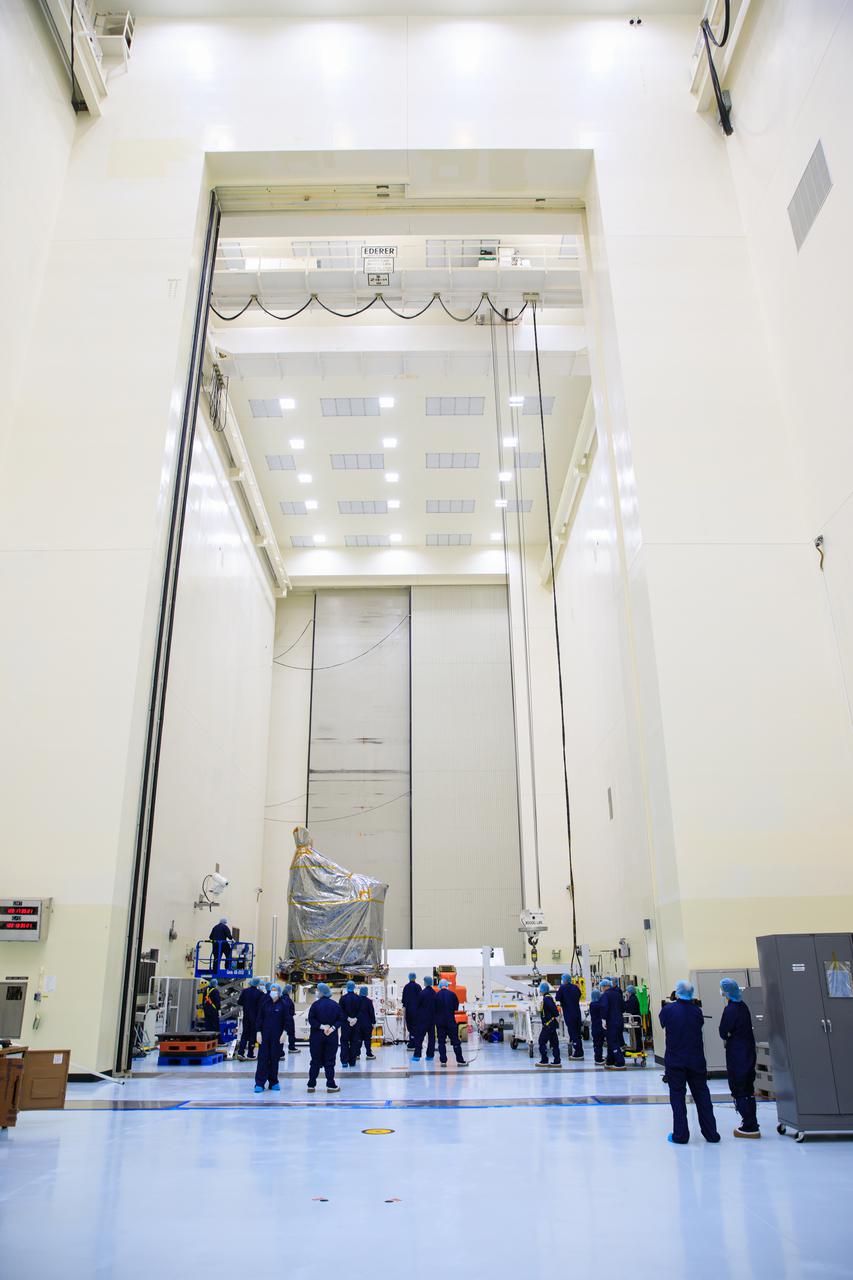
Inside the Payload Hazardous Servicing Facility (PHSF) at NASA's Kennedy Space Center, technicians prepare to move the agency’s Psyche spacecraft – recently removed from its shipping container and inside a protective covering – to a work stand on May 2, 2022. Psyche is scheduled to launch aboard a SpaceX Falcon Heavy rocket on Aug. 1, 2022. The spacecraft will use solar-electric propulsion to travel approximately 1.5 billion miles to rendezvous with its namesake asteroid in 2026. The Psyche mission is led by Arizona State University. NASA’s Jet Propulsion Laboratory, which is managed for the agency by Caltech in Pasadena, California, is responsible for the mission’s overall management, system engineering, integration and testing, and mission operations. Maxar Technologies in Palo Alto, California, provided the high-power solar electric propulsion spacecraft chassis. NASA’s Launch Services Program (LSP), based at Kennedy, is managing the launch. Psyche will be the 14th mission in the agency's Discovery program and LSP’s 100th primary mission.
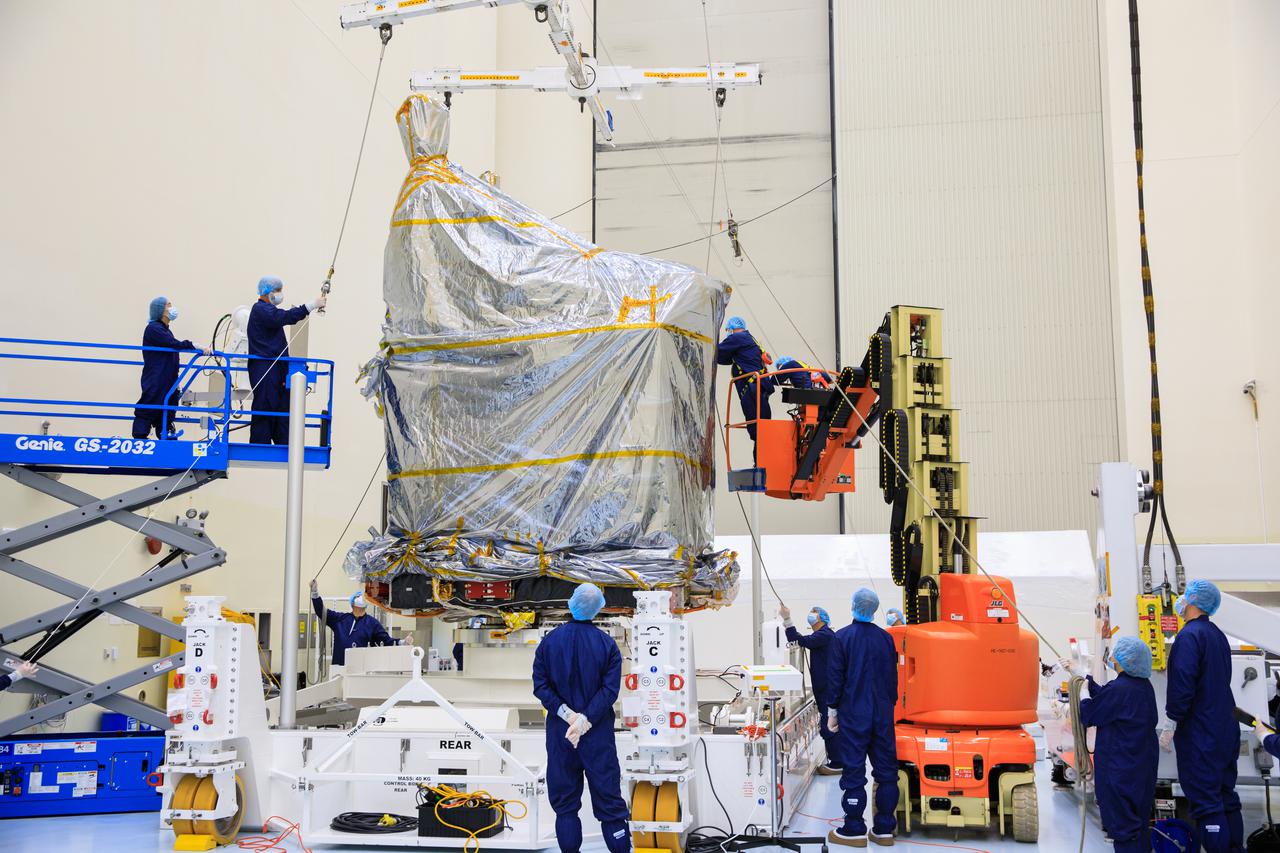
Inside the Payload Hazardous Servicing Facility (PHSF) at NASA's Kennedy Space Center, the agency’s Psyche spacecraft – recently removed from its shipping container and inside a protective covering – is moved by crane to a work stand on Monday, May 2, 2022. Psyche is scheduled to launch aboard a SpaceX Falcon Heavy rocket on Aug. 1, 2022. The spacecraft will use solar-electric propulsion to travel approximately 1.5 billion miles to rendezvous with its namesake asteroid in 2026. The Psyche mission is led by Arizona State University. NASA’s Jet Propulsion Laboratory, which is managed for the agency by Caltech in Pasadena, California, is responsible for the mission’s overall management, system engineering, integration and testing, and mission operations. Maxar Technologies in Palo Alto, California, provided the high-power solar electric propulsion spacecraft chassis. NASA’s Launch Services Program (LSP), based at Kennedy, is managing the launch. Psyche will be the 14th mission in the agency's Discovery program and LSP’s 100th primary mission.
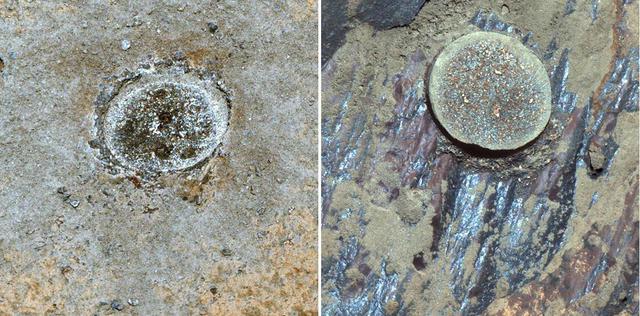
These abrasion targets, nicknamed "Guilliamus" (left) and "Bellegarde" (right), are from the first and second rocks drilled by NASA's Perseverance Mars rover. These images were taken by the rover's Mastcam-Z camera system. The rover abrades rocks using a tool on its robotic arm before drilling them in order to clear away dust and weathering rinds, allowing other instruments to study the rocks and determine if scientists want to grab a sample of them. Arizona State University in Tempe leads the operations of the Mastcam-Z instrument, working in collaboration with Malin Space Science Systems in San Diego. A key objective for Perseverance's mission on Mars is astrobiology, including the search for signs of ancient microbial life. The rover will characterize the planet's geology and past climate, pave the way for human exploration of the Red Planet, and be the first mission to collect and cache Martian rock and regolith (broken rock and dust). Subsequent NASA missions, in cooperation with ESA (European Space Agency), would send spacecraft to Mars to collect these sealed samples from the surface and return them to Earth for in-depth analysis. The Mars 2020 Perseverance mission is part of NASA's Moon to Mars exploration approach, which includes Artemis missions to the Moon that will help prepare for human exploration of the Red Planet. https://photojournal.jpl.nasa.gov/catalog/PIA24769
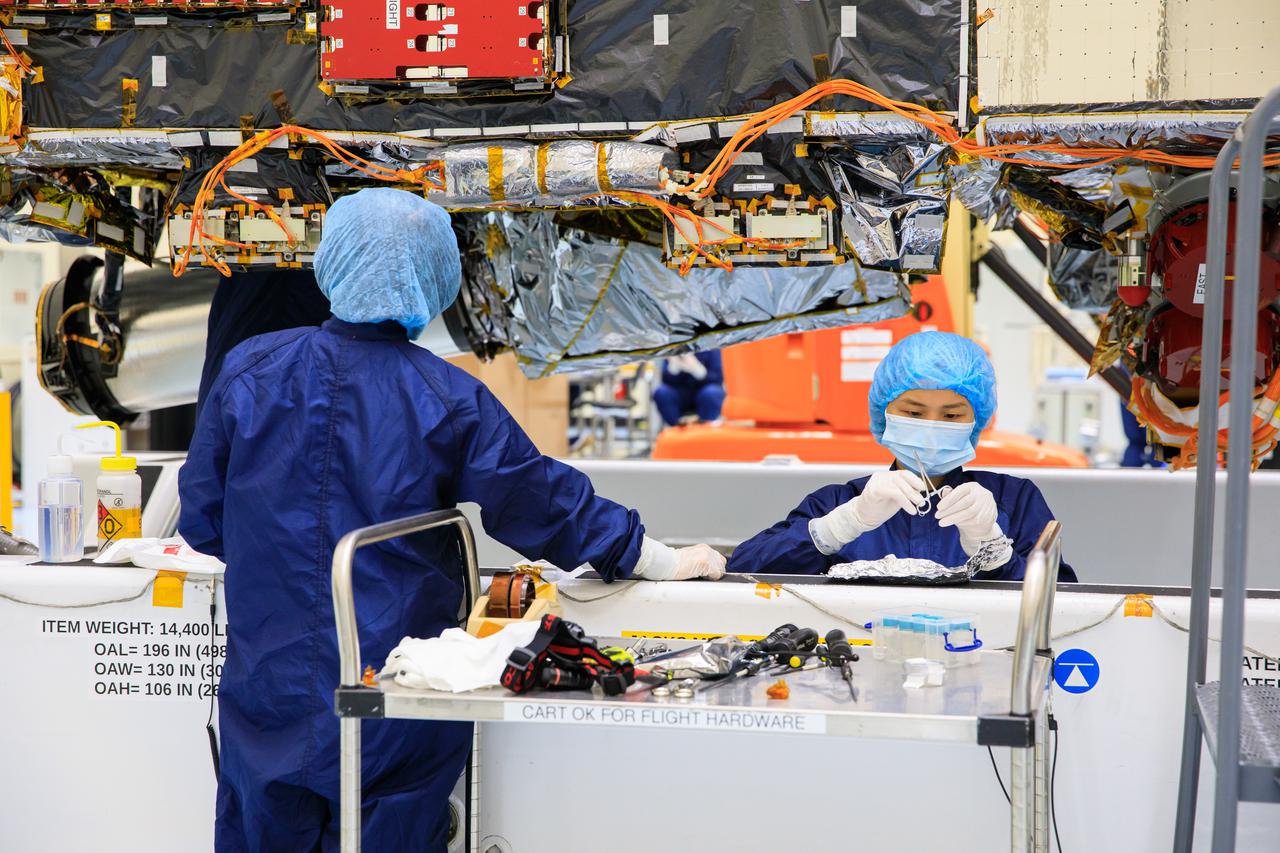
Technicians at NASA’s Kennedy Space Center in Florida perform work on the agency’s Psyche spacecraft inside the Payload Hazardous Servicing Facility (PHSF) on May 3, 2022. While inside the PHSF, the spacecraft will undergo routine processing and servicing ahead of launch. Psyche is targeting to lift off aboard a SpaceX Falcon Heavy rocket on Aug. 1, 2022. The spacecraft will use solar-electric propulsion to travel approximately 1.5 billion miles to rendezvous with its namesake asteroid in 2026. The Psyche mission is led by Arizona State University. NASA’s Jet Propulsion Laboratory, which is managed for the agency by Caltech in Pasadena, California, is responsible for the mission’s overall management, system engineering, integration and testing, and mission operations. Maxar Technologies in Palo Alto, California, provided the high-power solar electric propulsion spacecraft chassis. NASA’s Launch Services Program (LSP), based at Kennedy, is managing the launch. Psyche will be the 14th mission in the agency's Discovery program and LSP’s 100th primary mission.
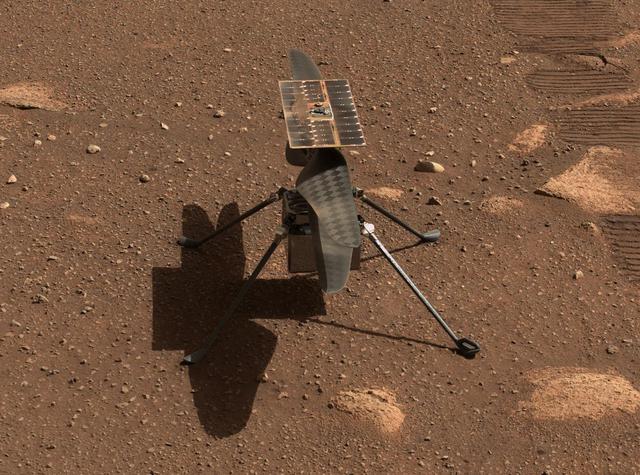
NASA's Ingenuity Mars helicopter is seen here in a close-up taken by Mastcam-Z, a pair of zoomable cameras aboard the Perseverance rover. This image was taken on April 5, the 45th Martian day, or sol, of the mission. The mosaic is not white balanced but is instead displayed in a preliminary calibrated version of a natural color composite, approximately simulating the colors of the scene that we would see if we were there viewing it ourselves. Arizona State University in Tempe leads the operations of the Mastcam-Z instrument, working in collaboration with Malin Space Science Systems in San Diego. A key objective for Perseverance's mission on Mars is astrobiology, including the search for signs of ancient microbial life. The rover will characterize the planet's geology and past climate, pave the way for human exploration of the Red Planet, and be the first mission to collect and cache Martian rock and regolith (broken rock and dust). Subsequent NASA missions, in cooperation with ESA (European Space Agency), would send spacecraft to Mars to collect these sealed samples from the surface and return them to Earth for in-depth analysis. The Mars 2020 Perseverance mission is part of NASA's Moon to Mars exploration approach, which includes Artemis missions to the Moon that will help prepare for human exploration of the Red Planet. https://photojournal.jpl.nasa.gov/catalog/PIA24547
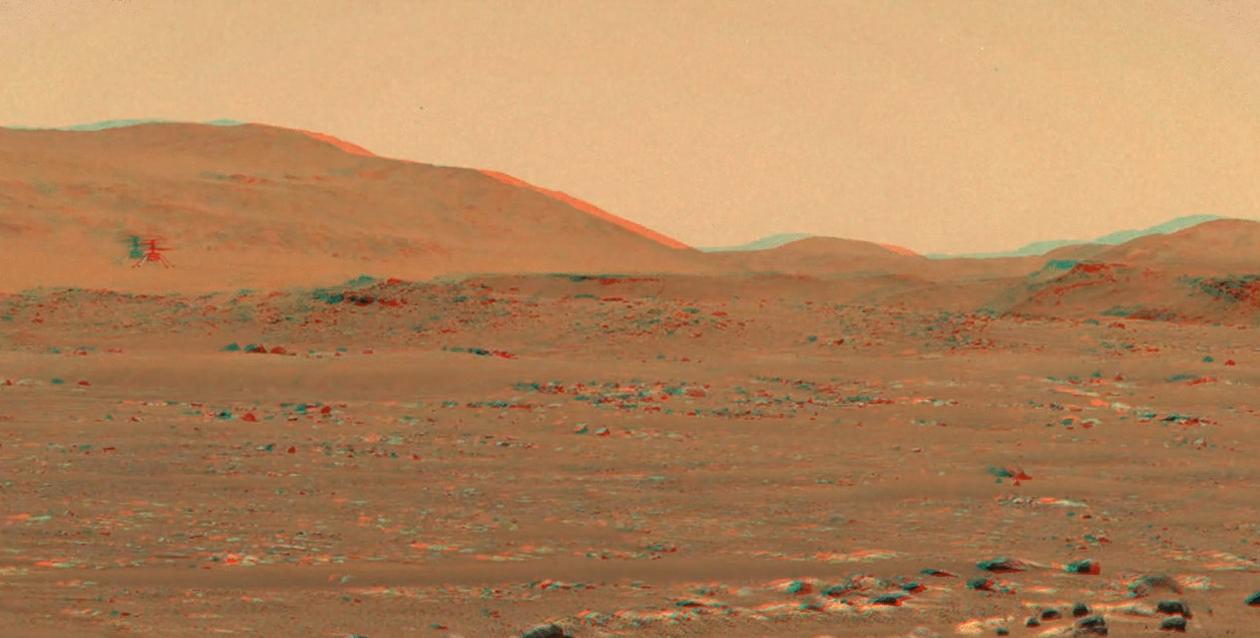
After the zoomable dual-camera Mastcam-Z imager aboard NASA's Perseverance rover captured the third flight of the agency's Ingenuity Mars helicopter on April 25, 2021, Justin Maki, an imaging scientist at NASA's Jet Propulsion Laboratory in Southern California, led the team that stitched the images into a video. The frames of the video were then reprojected to optimize viewing in an anaglyph, or an image seen in 3D when viewed with color-filtered glasses. Arizona State University in Tempe leads the operations of the Mastcam-Z instrument, working in collaboration with Malin Space Science Systems in San Diego. A key objective for Perseverance's mission on Mars is astrobiology, including the search for signs of ancient microbial life. The rover will characterize the planet's geology and past climate, pave the way for human exploration of the Red Planet, and be the first mission to collect and cache Martian rock and regolith (broken rock and dust). Subsequent NASA missions, in cooperation with ESA (European Space Agency), would send spacecraft to Mars to collect these sealed samples from the surface and return them to Earth for in-depth analysis. The Mars 2020 Perseverance mission is part of NASA's Moon to Mars exploration approach, which includes Artemis missions to the Moon that will help prepare for human exploration of the Red Planet. Movie available at https://photojournal.jpl.nasa.gov/catalog/PIA24522
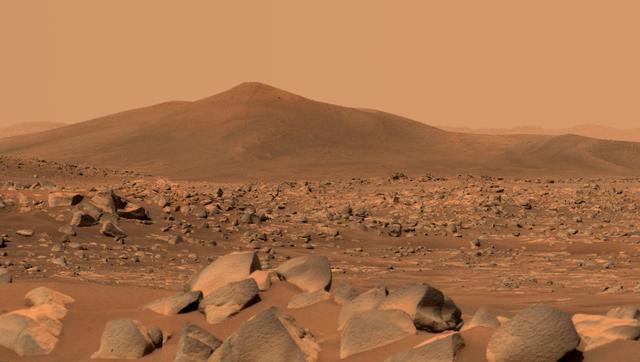
NASA's Perseverance Mars rover used its dual-camera Mastcam-Z imager to capture this image of "Santa Cruz," a hill about 1.5 miles (2.5 kilometers) away from the rover, on April 29, 2021, the 68th Martian day, or sol, of the mission. The entire scene is inside of Mars' Jezero Crater; the crater's rim can be seen on the horizon line beyond the hill. This scene is not white balanced; instead, it is displayed in a preliminary calibrated version of a natural-color composite, approximately simulating the colors of the scene as it would appear to a person on Mars. Arizona State University in Tempe leads the operations of the Mastcam-Z instrument, working in collaboration with Malin Space Science Systems in San Diego. A key objective for Perseverance's mission on Mars is astrobiology, including the search for signs of ancient microbial life. The rover will characterize the planet's geology and past climate, pave the way for human exploration of the Red Planet, and be the first mission to collect and cache Martian rock and regolith (broken rock and dust). Subsequent NASA missions, in cooperation with ESA (European Space Agency), would send spacecraft to Mars to collect these sealed samples from the surface and return them to Earth for in-depth analysis. The Mars 2020 Perseverance mission is part of NASA's Moon to Mars exploration approach, which includes Artemis missions to the Moon that will help prepare for human exploration of the Red Planet. https://photojournal.jpl.nasa.gov/catalog/PIA24546

Preparations are underway to offload NASA’s Psyche spacecraft from the C-17 aircraft it arrived aboard at Kennedy Space Center’s Launch and Landing Facility in Florida on April 29, 2022. Psyche arrived from NASA’s Jet Propulsion Laboratory (JPL) in Southern California. Psyche is scheduled to launch aboard a SpaceX Falcon Heavy rocket on Aug. 1, 2022. The spacecraft will use its solar-electric propulsion to travel approximately 1.5 billion miles to rendezvous with its namesake asteroid in 2026. The Psyche mission is led by Arizona State University. JPL, which is managed for NASA by Caltech in Pasadena, California, is responsible for the mission’s overall management, system engineering, integration and testing, and mission operations. Maxar Technologies in Palo Alto, California, provided the high-power solar electric propulsion spacecraft chassis. NASA’s Launch Services Program (LSP), based at Kennedy, is managing the launch. Psyche will be the 14th mission in the agency's Discovery program and LSP’s 100th primary mission.
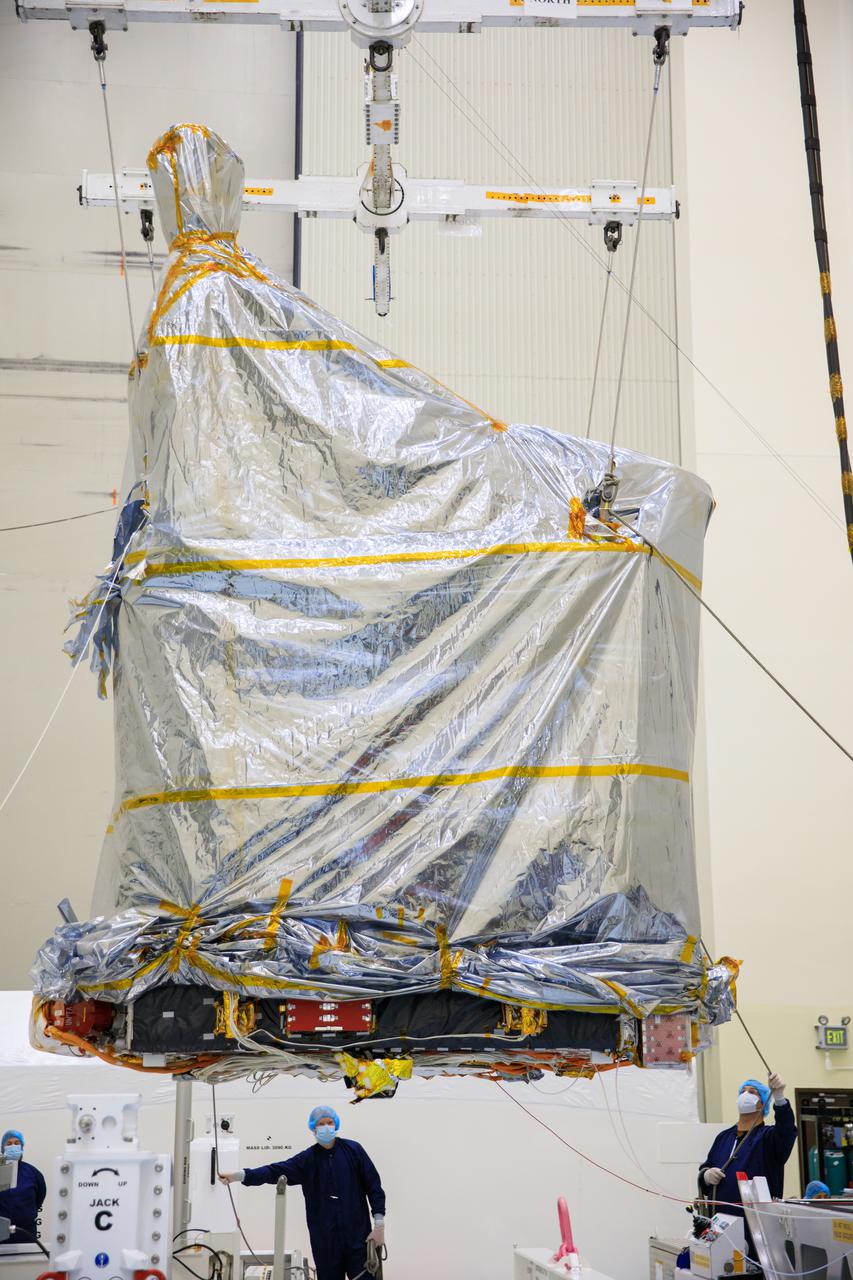
Inside the Payload Hazardous Servicing Facility (PHSF) at NASA's Kennedy Space Center, the agency’s Psyche spacecraft – recently removed from its shipping container and inside a protective covering – is moved by crane to a work stand on Monday, May 2, 2022. Psyche is scheduled to launch aboard a SpaceX Falcon Heavy rocket on Aug. 1, 2022. The spacecraft will use solar-electric propulsion to travel approximately 1.5 billion miles to rendezvous with its namesake asteroid in 2026. The Psyche mission is led by Arizona State University. NASA’s Jet Propulsion Laboratory, which is managed for the agency by Caltech in Pasadena, California, is responsible for the mission’s overall management, system engineering, integration and testing, and mission operations. Maxar Technologies in Palo Alto, California, provided the high-power solar electric propulsion spacecraft chassis. NASA’s Launch Services Program (LSP), based at Kennedy, is managing the launch. Psyche will be the 14th mission in the agency's Discovery program and LSP’s 100th primary mission.

This image taken by the Mastcam-Z camera aboard NASA's Perseverance Mars rover on Jan. 20, 2022, shows that the rover successfully expelled the remaining large fragments of cored rock from a sample tube held in the drill at the end of its robotic arm. The sample was originally collected by the rover on Dec. 29, 2021, from a rock the team calls "Issole." This image has been processed to enhance contrast. Arizona State University in Tempe leads the operations of the Mastcam-Z instrument, working in collaboration with Malin Space Science Systems in San Diego. A key objective for Perseverance's mission on Mars is astrobiology, including the search for signs of ancient microbial life. The rover will characterize the planet's geology and past climate, pave the way for human exploration of the Red Planet, and be the first mission to collect and cache Martian rock and regolith (broken rock and dust). The Mars 2020 Perseverance mission is part of NASA's Moon to Mars exploration approach, which includes Artemis missions to the Moon that will help prepare for human exploration of the Red Planet. https://photojournal.jpl.nasa.gov/catalog/PIA25073
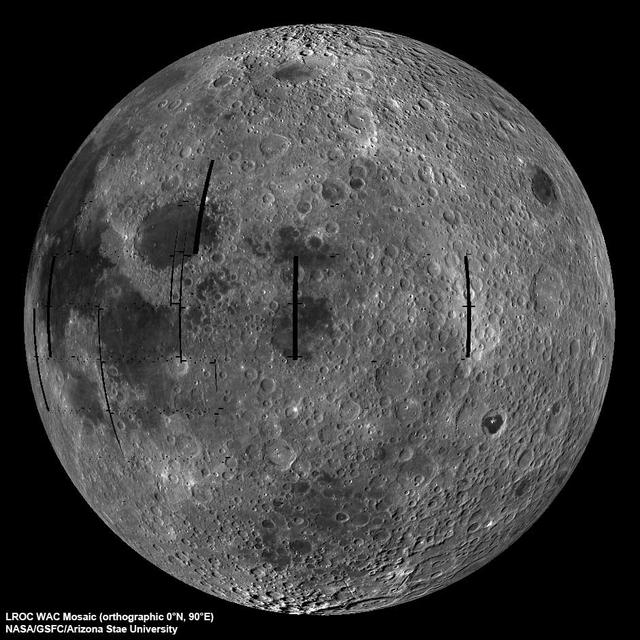
NASA image release September 9, 2010 LROC Wide Angle Camera (WAC) view of the Moon seen from 90° east longitude. Half the nearside is visible to the left, and half the farside to the right. Credit: NASA/GSFC/Arizona State University To read more go to: <a href="http://www.nasa.gov/mission_pages/LRO/multimedia/lroimages/lroc-20100909_mooneast.html" rel="nofollow">www.nasa.gov/mission_pages/LRO/multimedia/lroimages/lroc-...</a> <b><a href="http://www.nasa.gov/centers/goddard/home/index.html" rel="nofollow">NASA Goddard Space Flight Center</a></b> contributes to NASA’s mission through four scientific endeavors: Earth Science, Heliophysics, Solar System Exploration, and Astrophysics. Goddard plays a leading role in NASA’s endeavors by providing compelling scientific knowledge to advance the Agency’s mission. <b>Follow us on <a href="http://twitter.com/NASA_GoddardPix" rel="nofollow">Twitter</a></b> <b>Join us on <a href="http://www.facebook.com/pages/Greenbelt-MD/NASA-Goddard/395013845897?ref=tsd" rel="nofollow">Facebook</a></b>
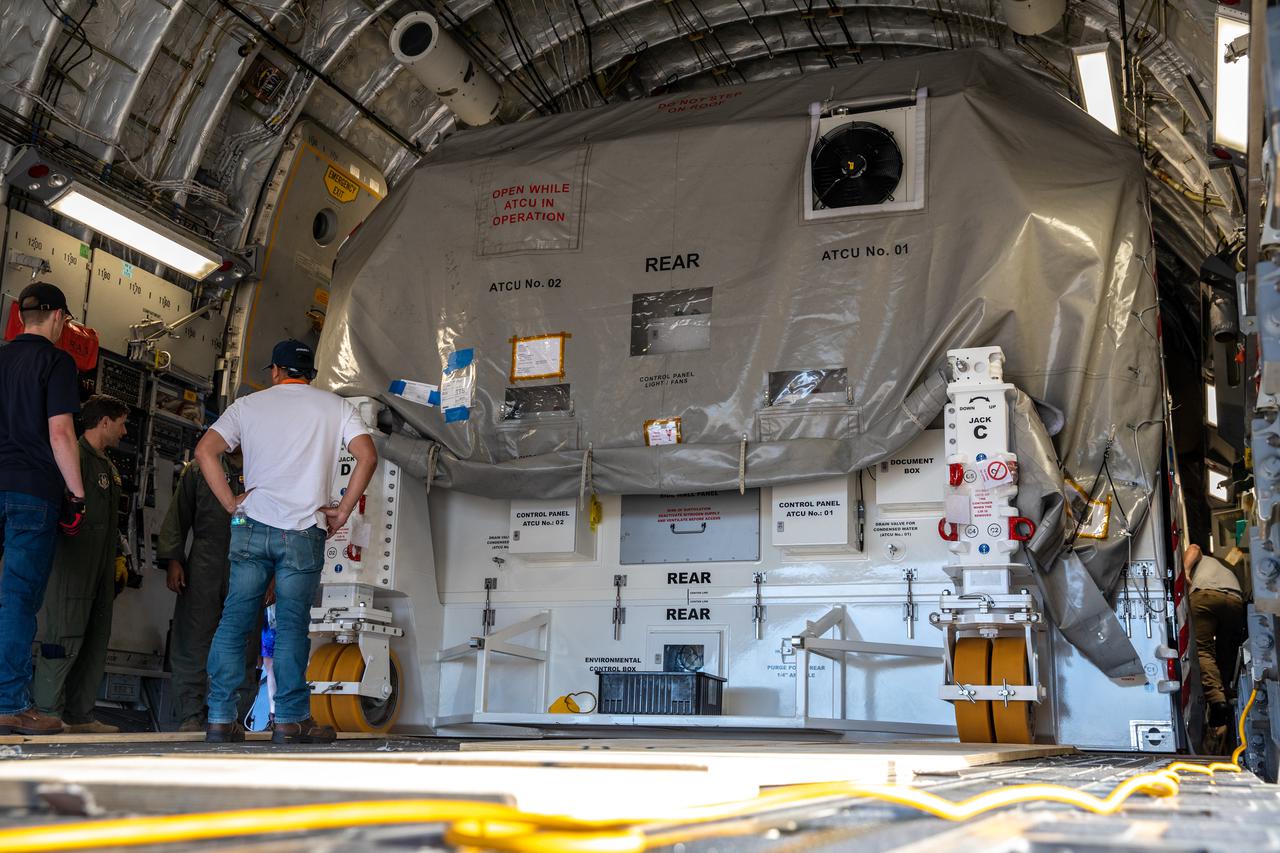
Preparations are underway to offload NASA’s Psyche spacecraft from the C-17 aircraft it arrived aboard at Kennedy Space Center’s Launch and Landing Facility in Florida on April 29, 2022. Psyche arrived from NASA’s Jet Propulsion Laboratory (JPL) in Southern California. Psyche is scheduled to launch aboard a SpaceX Falcon Heavy rocket on Aug. 1, 2022. The spacecraft will use its solar-electric propulsion to travel approximately 1.5 billion miles to rendezvous with its namesake asteroid in 2026. The Psyche mission is led by Arizona State University. JPL, which is managed for NASA by Caltech in Pasadena, California, is responsible for the mission’s overall management, system engineering, integration and testing, and mission operations. Maxar Technologies in Palo Alto, California, provided the high-power solar electric propulsion spacecraft chassis. NASA’s Launch Services Program (LSP), based at Kennedy, is managing the launch. Psyche will be the 14th mission in the agency's Discovery program and LSP’s 100th primary mission.
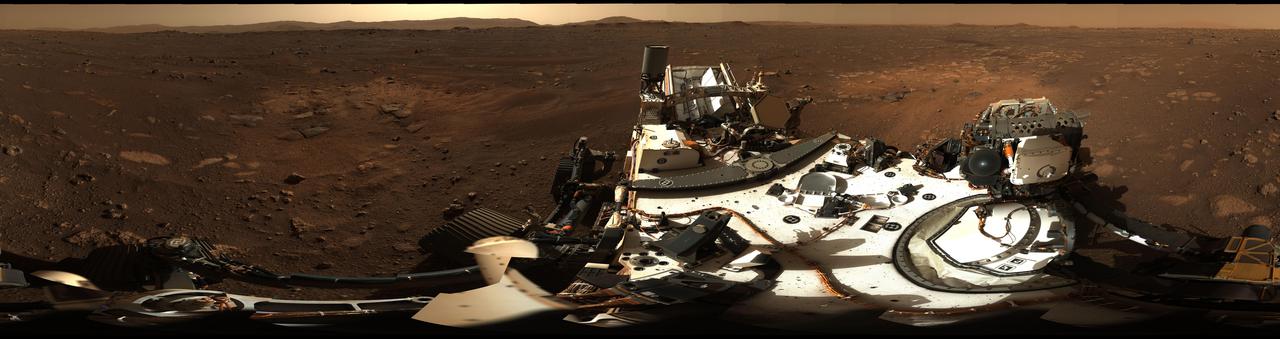
This is the first 360-degree panorama taken by Mastcam-Z, a zoomable pair of cameras aboard NASA's Perseverance Mars rover. The panorama was stitched together on Earth from 142 individual images taken on Sol 3, the third Martian day of the mission (Feb. 21, 2021). Annotated versions of this panorama include a scale bar and close-ups of rock features seen in the distance. A detail shot from the top of the panorama shows the rim of Jezero Crater, Perseverance's landing site. Arizona State University in Tempe leads the operations of the Mastcam-Z instrument, working in collaboration with Malin Space Science Systems in San Diego. A key objective for Perseverance's mission on Mars is astrobiology, including the search for signs of ancient microbial life. The rover will characterize the planet's geology and past climate, pave the way for human exploration of the Red Planet, and be the first mission to collect and cache Martian rock and regolith (broken rock and dust). Subsequent NASA missions, in cooperation with ESA (European Space Agency), would send spacecraft to Mars to collect these sealed samples from the surface and return them to Earth for in-depth analysis. https://photojournal.jpl.nasa.gov/catalog/PIA24264
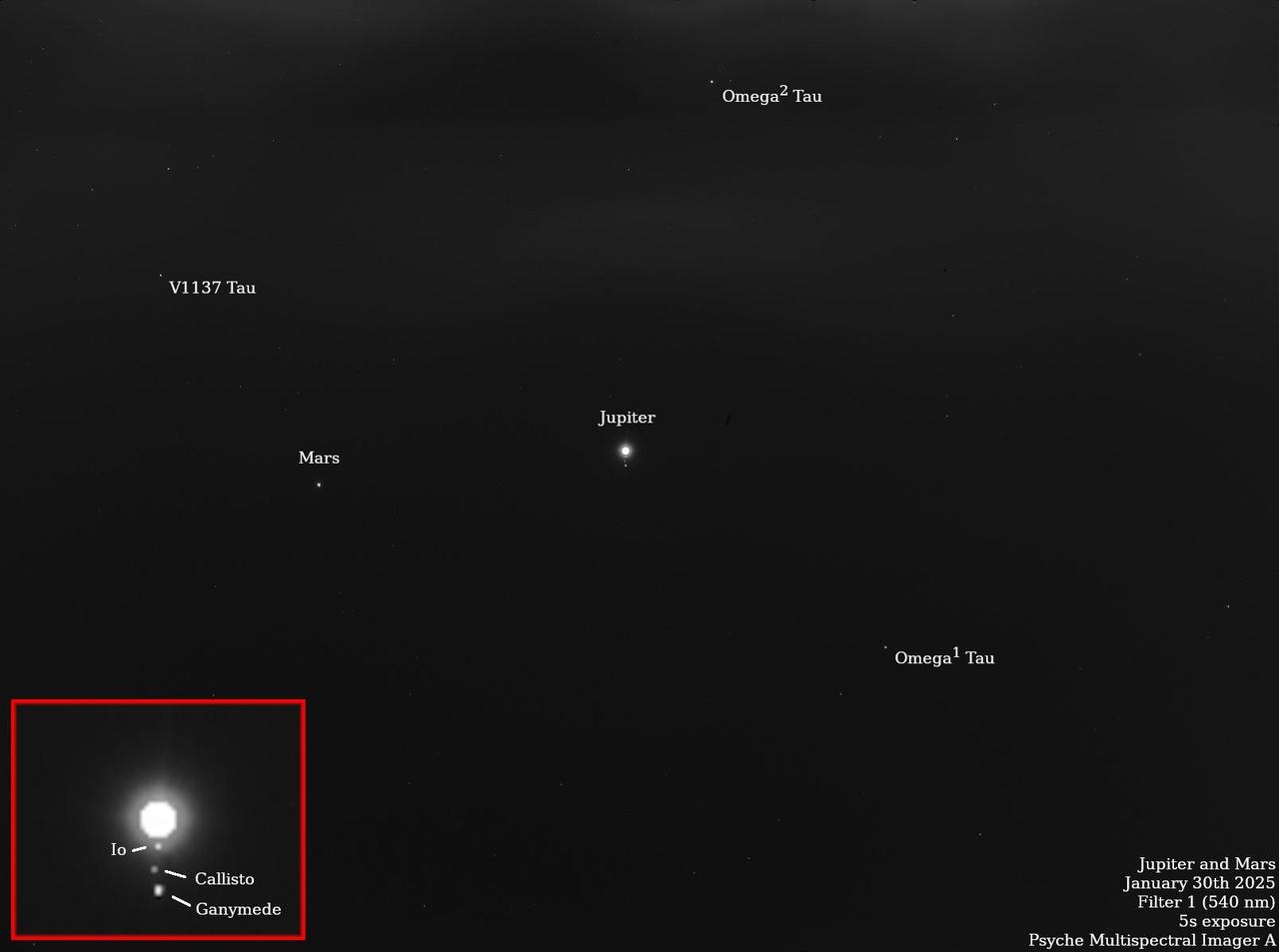
NASA's Psyche spacecraft captured multiple star and planet images in late January 2025 that include notable appearances by Mars, Jupiter, and the Jovian moons Io, Ganymede, Callisto, and Europa. The planned observation by Psyche's imaging instrument was part of a periodic maintenance and calibration test for the twin cameras that make up the imager instrument. Scientists on the imaging team, led by Arizona State University, also took images of the bright stars Vega and Canopus, which have served as standard calibration sources for astronomers for decades. The team is also using the data to assess the effects of minor wiggles or "jitter" in the spacecraft's pointing system as it points the cameras to different places in the sky. The observations of Jupiter and Mars also help the team determine how the cameras respond to solar system objects that shine by reflected sunlight, just like the Psyche asteroid. The starfield pictures shown here are long-exposure (five-second) images captured by each camera. By over-exposing Jupiter to bring out some of the background stars in the Taurus constellation, the imagers were able to capture Jupiter's fainter Galilean moons as well. The image was captured by the Psyche mission's primary camera, Imager-A, on Jan. 30. The image was obtained using the camera's "clear" filter, to provide maximum sensitivity for both bright and faint stars and solar system objects. https://photojournal.jpl.nasa.gov/catalog/PIA26563

NASA's Ingenuity Mars Helicopter is seen here at the end of its fourth flight, on April 30, 2021. This enhanced video shows the dust kicked up by the helicopter's spinning rotors. Scientists can analyze this dust to learn more about the Martian environment. This video was captured by the Mastcam-Z imager aboard NASA's Perseverance rover. Two files are available for the Mastcam-Z's left and right eyes. The files are available as both mp4s and GIFs. Arizona State University in Tempe leads the operations of the Mastcam-Z instrument, working in collaboration with Malin Space Science Systems in San Diego. A key objective for Perseverance's mission on Mars is astrobiology, including the search for signs of ancient microbial life. The rover will characterize the planet's geology and past climate, pave the way for human exploration of the Red Planet, and be the first mission to collect and cache Martian rock and regolith (broken rock and dust). Subsequent NASA missions, in cooperation with ESA (European Space Agency), would send spacecraft to Mars to collect these sealed samples from the surface and return them to Earth for in-depth analysis. The Mars 2020 Perseverance mission is part of NASA's Moon to Mars exploration approach, which includes Artemis missions to the Moon that will help prepare for human exploration of the Red Planet. Movies available at https://photojournal.jpl.nasa.gov/catalog/PIA24666
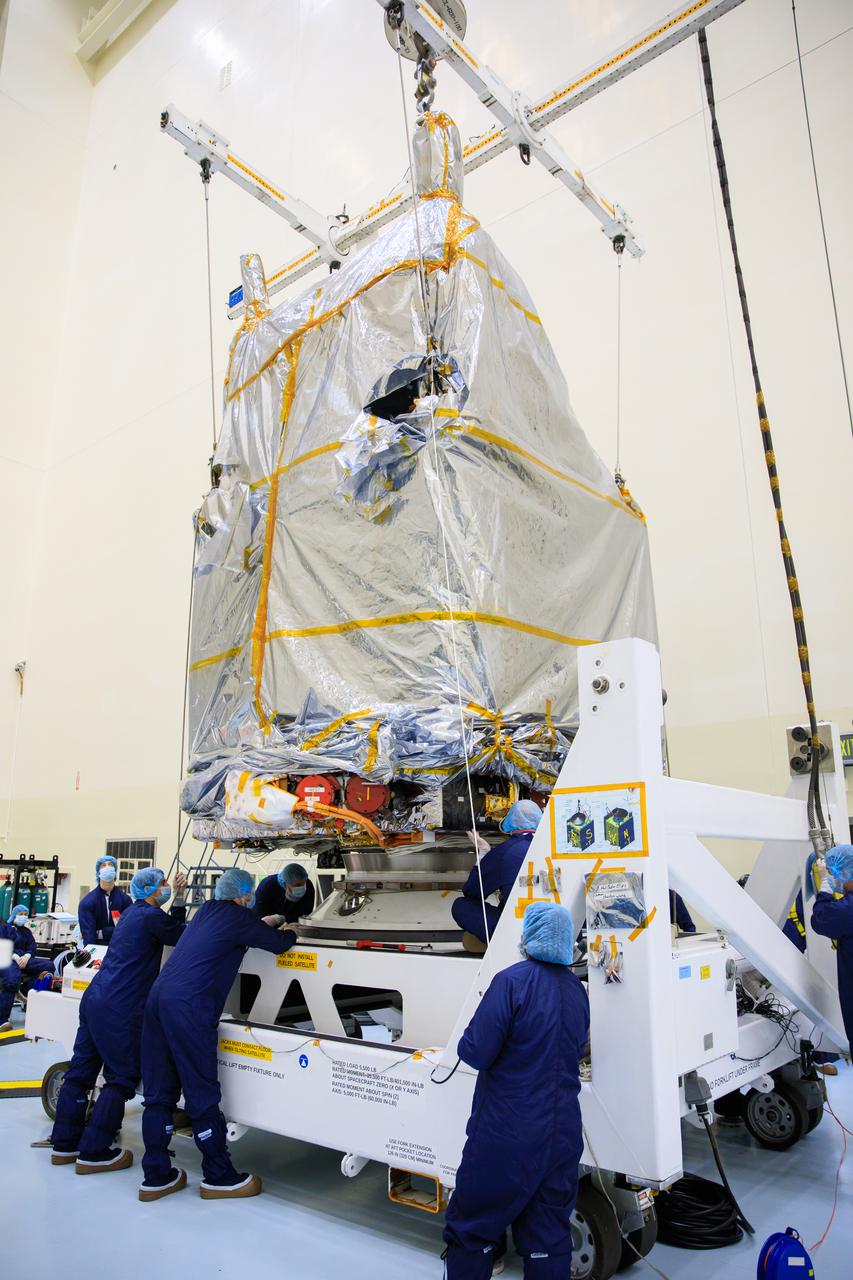
Inside the Payload Hazardous Servicing Facility (PHSF) at NASA's Kennedy Space Center, the agency’s Psyche spacecraft – recently removed from its shipping container and inside a protective covering – is moved by crane to a work stand on Monday, May 2, 2022. Psyche is scheduled to launch aboard a SpaceX Falcon Heavy rocket on Aug. 1, 2022. The spacecraft will use solar-electric propulsion to travel approximately 1.5 billion miles to rendezvous with its namesake asteroid in 2026. The Psyche mission is led by Arizona State University. NASA’s Jet Propulsion Laboratory, which is managed for the agency by Caltech in Pasadena, California, is responsible for the mission’s overall management, system engineering, integration and testing, and mission operations. Maxar Technologies in Palo Alto, California, provided the high-power solar electric propulsion spacecraft chassis. NASA’s Launch Services Program (LSP), based at Kennedy, is managing the launch. Psyche will be the 14th mission in the agency's Discovery program and LSP’s 100th primary mission.

This Mastcam-Z image shows Perseverance's drill with no cored-rock sample evident in the sample tube. The image was taken on Sept. 1, 2021 (the 190th sol, or Martian day, of the mission), after coring – and after a cleaning operation was performed to clear the sample tube's lip of any residual material. The bronze-colored ring is the coring bit. The half-moon inside the bit is the open end of the sample tube. A portion of the tube's serial number – 266 – can be seen on the left side of tube's rim. Arizona State University in Tempe leads the operations of the Mastcam-Z instrument, working in collaboration with Malin Space Science Systems in San Diego. A key objective for Perseverance's mission on Mars is astrobiology, including the search for signs of ancient microbial life. The rover will characterize the planet's geology and past climate, pave the way for human exploration of the Red Planet, and be the first mission to collect and cache Martian rock and regolith (broken rock and dust). Subsequent NASA missions, in cooperation with ESA (European Space Agency), would send spacecraft to Mars to collect these sealed samples from the surface and return them to Earth for in-depth analysis. The Mars 2020 Perseverance mission is part of NASA's Moon to Mars exploration approach, which includes Artemis missions to the Moon that will help prepare for human exploration of the Red Planet. https://photojournal.jpl.nasa.gov/catalog/PIA24803
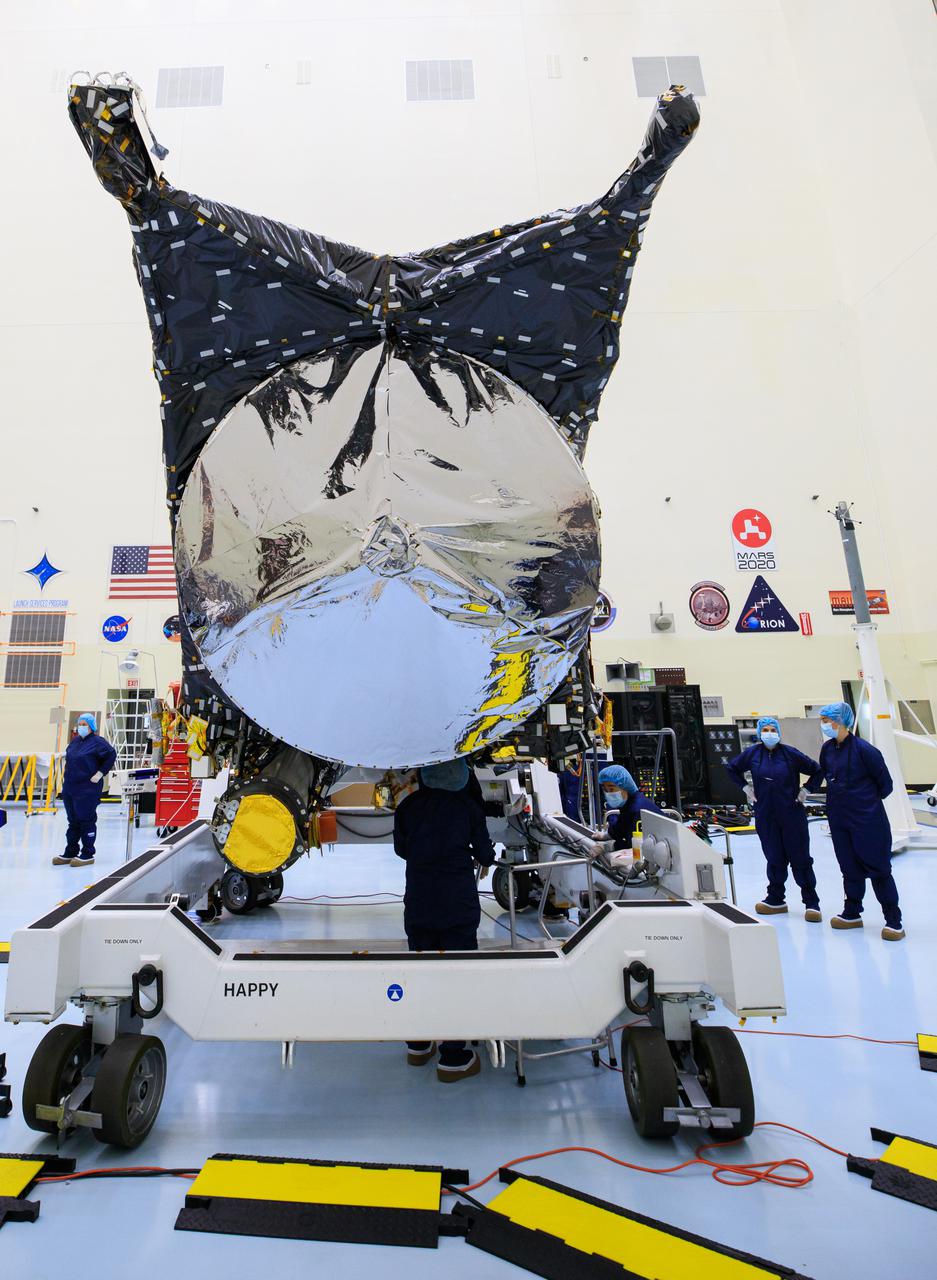
Technicians at NASA’s Kennedy Space Center in Florida perform work on the agency’s Psyche spacecraft inside the Payload Hazardous Servicing Facility (PHSF) on May 3, 2022. While inside the PHSF, the spacecraft will undergo routine processing and servicing ahead of launch. Psyche is targeting to lift off aboard a SpaceX Falcon Heavy rocket on Aug. 1, 2022. The spacecraft will use solar-electric propulsion to travel approximately 1.5 billion miles to rendezvous with its namesake asteroid in 2026. The Psyche mission is led by Arizona State University. NASA’s Jet Propulsion Laboratory, which is managed for the agency by Caltech in Pasadena, California, is responsible for the mission’s overall management, system engineering, integration and testing, and mission operations. Maxar Technologies in Palo Alto, California, provided the high-power solar electric propulsion spacecraft chassis. NASA’s Launch Services Program (LSP), based at Kennedy, is managing the launch. Psyche will be the 14th mission in the agency's Discovery program and LSP’s 100th primary mission.
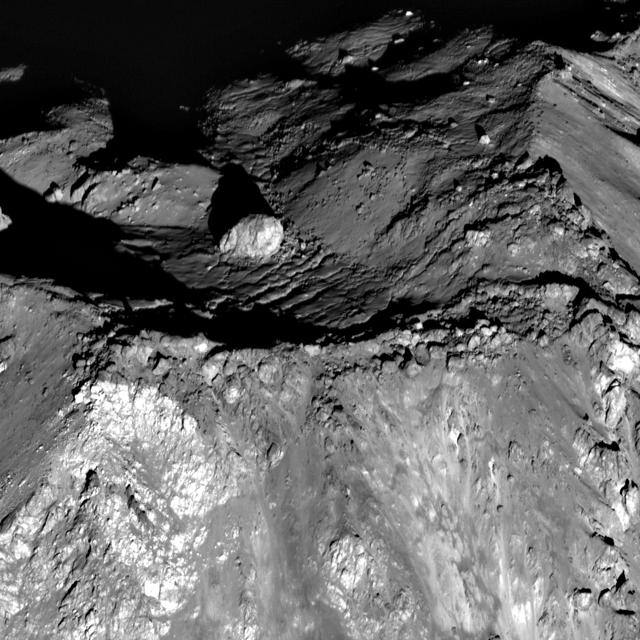
From NASA's Lunar Reconnaissance Orbiter Camera (LROC) an oblique view of summit area of Tycho crater central peak. The boulder in the background is 120 meters wide, and the image is about 1200 meters wide. LROC NAC M162350671L,R NASA/GSFC/Arizona State University <b><a href="http://www.nasa.gov/centers/goddard/home/index.html" rel="nofollow">NASA Goddard Space Flight Center</a></b> enables NASA’s mission through four scientific endeavors: Earth Science, Heliophysics, Solar System Exploration, and Astrophysics. Goddard plays a leading role in NASA’s accomplishments by contributing compelling scientific knowledge to advance the Agency’s mission. <b>Follow us on <a href="http://twitter.com/NASA_GoddardPix" rel="nofollow">Twitter</a></b> <b>Like us on <a href="http://www.facebook.com/pages/Greenbelt-MD/NASA-Goddard/395013845897?ref=tsd" rel="nofollow">Facebook</a></b> <b>Find us on <a href="http://web.stagram.com/n/nasagoddard/?vm=grid" rel="nofollow">Instagram</a></b>
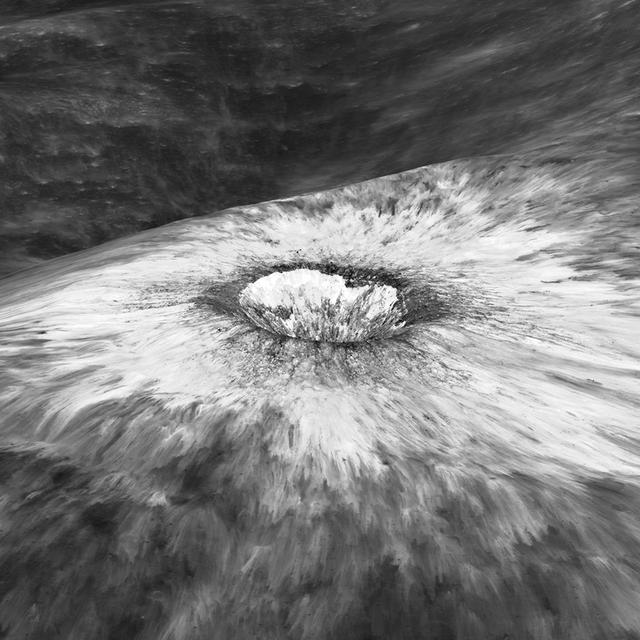
Looking east to west across the rim and down into Chaplygin crater reveals this beautiful example of a fresh young crater and its perfectly preserved ejecta blanket. The delicate patterns of flow across, over, and down local topography clearly show that ejecta traveled as a ground hugging flow for great distances, rather than simply being tossed out on a ballistic trajectory. Very near the rim lies a dark, lacy, discontinuous crust of now frozen impact melt. Clearly this dark material is on top of the bright material so it was the very last material ejected from the crater. The melt was formed as the tremendous energy of impact was converted to heat and the lunar crust was melted at the impact point. As the crater rebounded and material sloughed down the walls of the deforming crater the melt was splashed out over the rim and froze. Its low reflectance is mostly due to a high percentage of glass because the melt cooled so quickly that minerals did not have time to crystallize. The fact that the delicate splash patterns are so well preserved testifies to the very young age of this crater. But how young? For comparison "Chappy" (informal name) is 200 m larger than Meteor crater (1200 m diameter) in Arizona, which is about 50,000 years old. Craters of this size form every 100,000 years or so on the Moon and the Earth. Since there are very few superposed craters on Chappy, and its ejecta is so perfectly preserved it may be much younger than Meteor crater. However, we can't know the true true absolute age of "Chappy" until we can obtain a sample of its impact melt for radiometric age dating. Investigate all of Chappy's ejecta, at full resolution: <a href="http://lroc.sese.asu.edu/posts/901" rel="nofollow">lroc.sese.asu.edu/posts/901</a> Credit: NASA/Goddard/Arizona State University/LRO/LROC
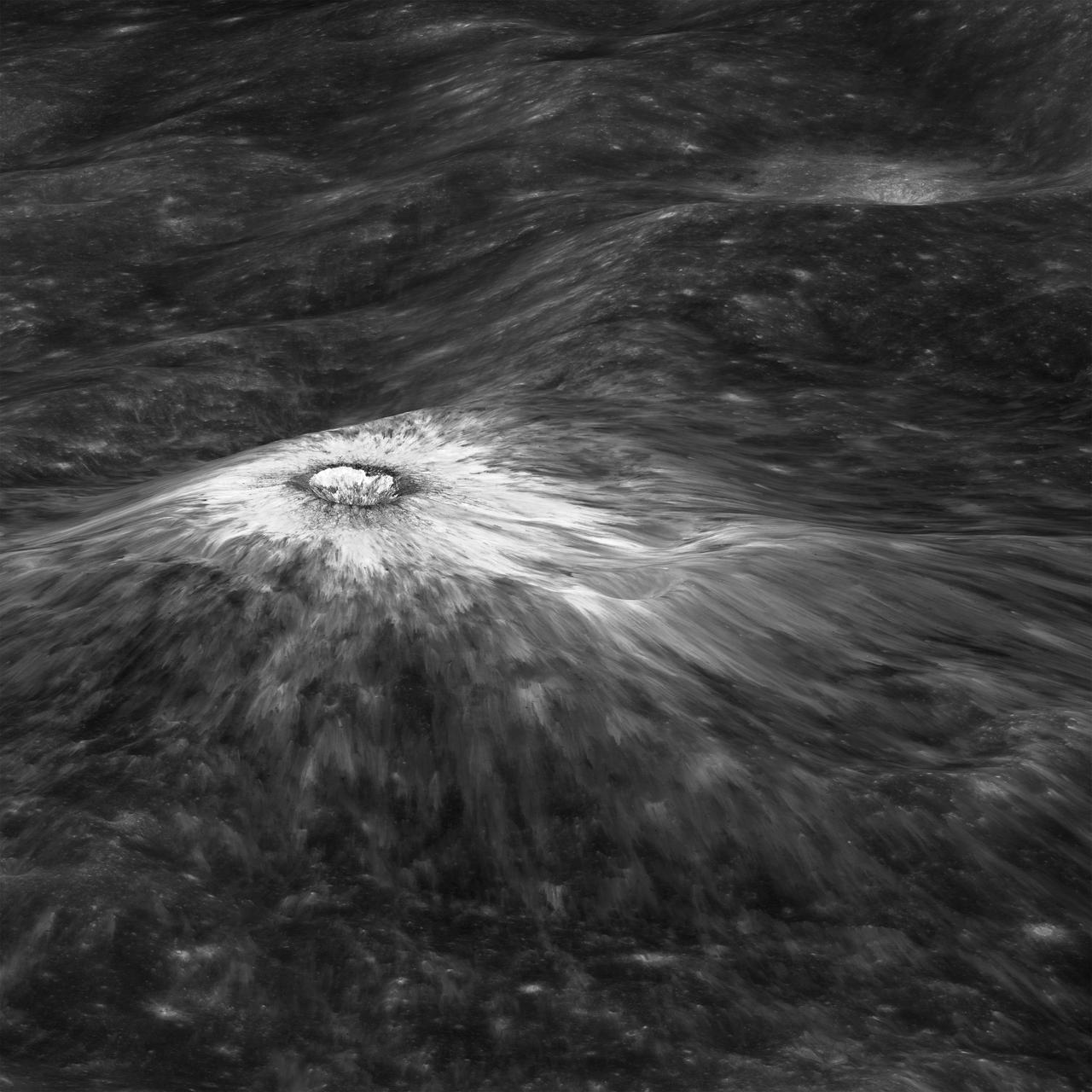
Looking east to west across the rim and down into Chaplygin crater reveals this beautiful example of a fresh young crater and its perfectly preserved ejecta blanket. The delicate patterns of flow across, over, and down local topography clearly show that ejecta traveled as a ground hugging flow for great distances, rather than simply being tossed out on a ballistic trajectory. Very near the rim lies a dark, lacy, discontinuous crust of now frozen impact melt. Clearly this dark material is on top of the bright material so it was the very last material ejected from the crater. The melt was formed as the tremendous energy of impact was converted to heat and the lunar crust was melted at the impact point. As the crater rebounded and material sloughed down the walls of the deforming crater the melt was splashed out over the rim and froze. Its low reflectance is mostly due to a high percentage of glass because the melt cooled so quickly that minerals did not have time to crystallize. The fact that the delicate splash patterns are so well preserved testifies to the very young age of this crater. But how young? For comparison "Chappy" (informal name) is 200 m larger than Meteor crater (1200 m diameter) in Arizona, which is about 50,000 years old. Craters of this size form every 100,000 years or so on the Moon and the Earth. Since there are very few superposed craters on Chappy, and its ejecta is so perfectly preserved it may be much younger than Meteor crater. However, we can't know the true true absolute age of "Chappy" until we can obtain a sample of its impact melt for radiometric age dating. Credit: NASA/Goddard/Arizona State University/LRO/LROC
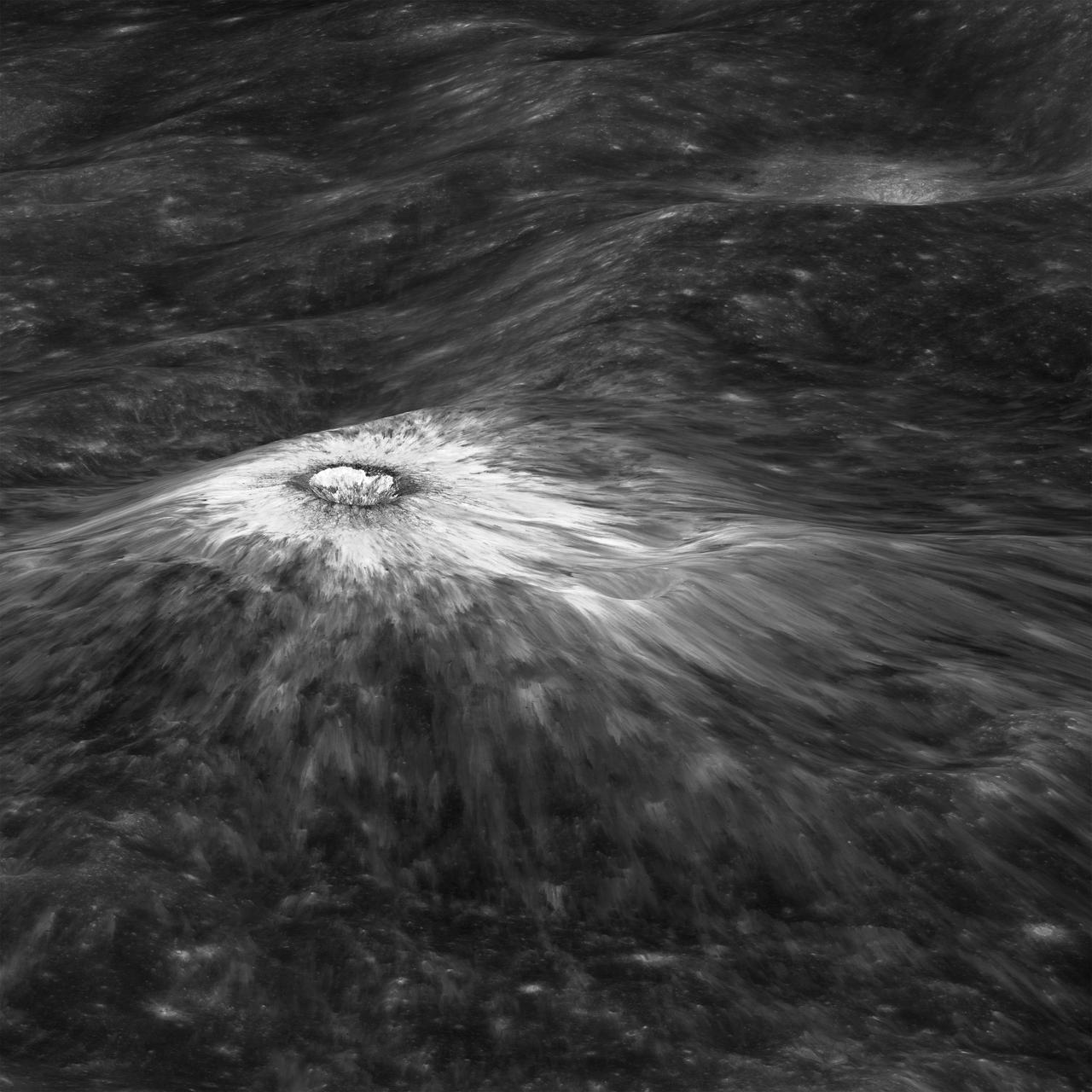
Looking east to west across the rim and down into Chaplygin crater reveals this beautiful example of a fresh young crater and its perfectly preserved ejecta blanket. The delicate patterns of flow across, over, and down local topography clearly show that ejecta traveled as a ground hugging flow for great distances, rather than simply being tossed out on a ballistic trajectory. Very near the rim lies a dark, lacy, discontinuous crust of now frozen impact melt. Clearly this dark material is on top of the bright material so it was the very last material ejected from the crater. The melt was formed as the tremendous energy of impact was converted to heat and the lunar crust was melted at the impact point. As the crater rebounded and material sloughed down the walls of the deforming crater the melt was splashed out over the rim and froze. Its low reflectance is mostly due to a high percentage of glass because the melt cooled so quickly that minerals did not have time to crystallize. The fact that the delicate splash patterns are so well preserved testifies to the very young age of this crater. But how young? For comparison "Chappy" (informal name) is 200 m larger than Meteor crater (1200 m diameter) in Arizona, which is about 50,000 years old. Craters of this size form every 100,000 years or so on the Moon and the Earth. Since there are very few superposed craters on Chappy, and its ejecta is so perfectly preserved it may be much younger than Meteor crater. However, we can't know the true true absolute age of "Chappy" until we can obtain a sample of its impact melt for radiometric age dating. Investigate all of Chappy's ejecta, at full resolution: <a href="http://lroc.sese.asu.edu/posts/901" rel="nofollow">lroc.sese.asu.edu/posts/901</a> Credit: NASA/Goddard/Arizona State University/LRO/LROC
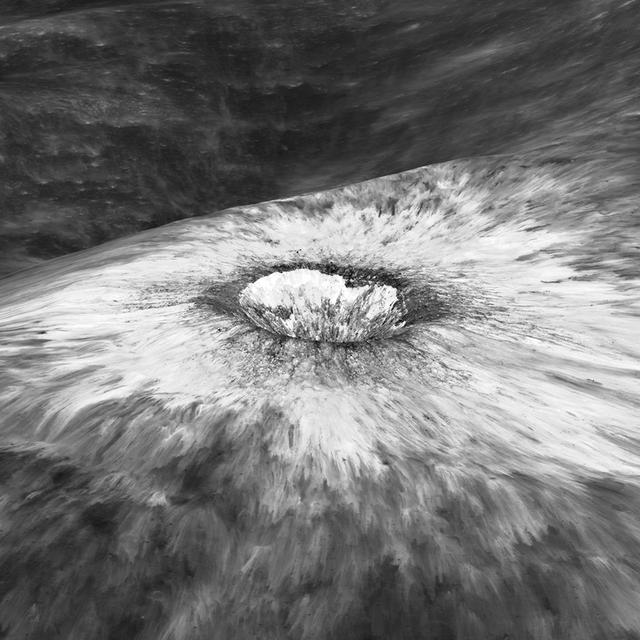
Looking east to west across the rim and down into Chaplygin crater reveals this beautiful example of a fresh young crater and its perfectly preserved ejecta blanket. The delicate patterns of flow across, over, and down local topography clearly show that ejecta traveled as a ground hugging flow for great distances, rather than simply being tossed out on a ballistic trajectory. Very near the rim lies a dark, lacy, discontinuous crust of now frozen impact melt. Clearly this dark material is on top of the bright material so it was the very last material ejected from the crater. The melt was formed as the tremendous energy of impact was converted to heat and the lunar crust was melted at the impact point. As the crater rebounded and material sloughed down the walls of the deforming crater the melt was splashed out over the rim and froze. Its low reflectance is mostly due to a high percentage of glass because the melt cooled so quickly that minerals did not have time to crystallize. The fact that the delicate splash patterns are so well preserved testifies to the very young age of this crater. But how young? For comparison "Chappy" (informal name) is 200 m larger than Meteor crater (1200 m diameter) in Arizona, which is about 50,000 years old. Craters of this size form every 100,000 years or so on the Moon and the Earth. Since there are very few superposed craters on Chappy, and its ejecta is so perfectly preserved it may be much younger than Meteor crater. However, we can't know the true true absolute age of "Chappy" until we can obtain a sample of its impact melt for radiometric age dating. Credit: NASA/Goddard/Arizona State University/LRO/LROC
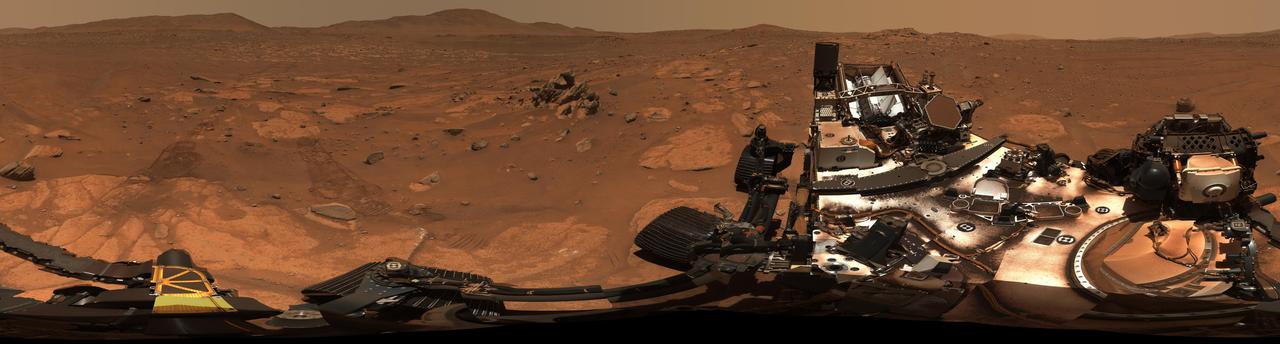
Composed of 993 individual images and 2.38 billion pixels, this 360-degree mosaic taken by NASA's Perseverance looks in all directions from a location the rover science team calls "Airey Hill." The rover remained parked at Airey Hill during the entirety of solar conjunction. Captured by the rover's Mastcam-Z, the images used to create the mosaic were acquired on Nov. 3, Nov. 4, and Nov. 6, 2023, the 962nd, 963rd, and 965th Martian day, or sol, of the rover's mission. The main image is a natural color version at half-resolution. Arizona State University leads the operations of the Mastcam-Z instrument, working in collaboration with Malin Space Science Systems in San Diego, on the design, fabrication, testing, and operation of the cameras, and in collaboration with the Niels Bohr Institute of the University of Copenhagen on the design, fabrication, and testing of the calibration targets. A key objective for Perseverance's mission on Mars is astrobiology, including the search for signs of ancient microbial life. The rover will characterize the planet's geology and past climate, pave the way for human exploration of the Red Planet, and be the first mission to collect and cache Martian rock and regolith (broken rock and dust). Subsequent NASA missions, in cooperation with ESA (European Space Agency), would send spacecraft to Mars to collect these sealed samples from the surface and return them to Earth for in-depth analysis. The Mars 2020 Perseverance mission is part of NASA's Moon to Mars exploration approach, which includes Artemis missions to the Moon that will help prepare for human exploration of the Red Planet. https://photojournal.jpl.nasa.gov/catalog/PIA26080

This sunset on Mars was captured by NASA's Perseverance Mars rover using its Mastcam-Z camera system on Nov. 9, 2021, the 257th Martian day, or sol, of the mission. Martian sunsets typically stand out for their distinctive blue color. Fine dust in the atmosphere permits blue light to penetrate the atmosphere more efficiently than colors with longer wavelengths. But this sunset looks different: less dust in the atmosphere resulted in a more muted color than average. The color has been calibrated and white-balanced to remove camera artifacts. The Mastcam-Z investigation is led and operated by Arizona State University in Tempe, working in collaboration with Malin Space Science Systems in San Diego, California, on the design, fabrication, testing, and operation of the cameras, and in collaboration with the Neils Bohr Institute of the University of Copenhagen on the design, fabrication, and testing of the calibration targets. A key objective for Perseverance's mission on Mars is astrobiology, including the search for signs of ancient microbial life. The rover will characterize the planet's geology and past climate, pave the way for human exploration of the Red Planet, and be the first mission to collect and cache Martian rock and regolith (broken rock and dust). Subsequent NASA missions, in cooperation with ESA (European Space Agency), would send spacecraft to Mars to collect these sealed samples from the surface and return them to Earth for in-depth analysis. The Mars 2020 Perseverance mission is part of NASA's Moon to Mars exploration approach, which includes Artemis missions to the Moon that will help prepare for human exploration of the Red Planet. https://photojournal.jpl.nasa.gov/catalog/PIA24935
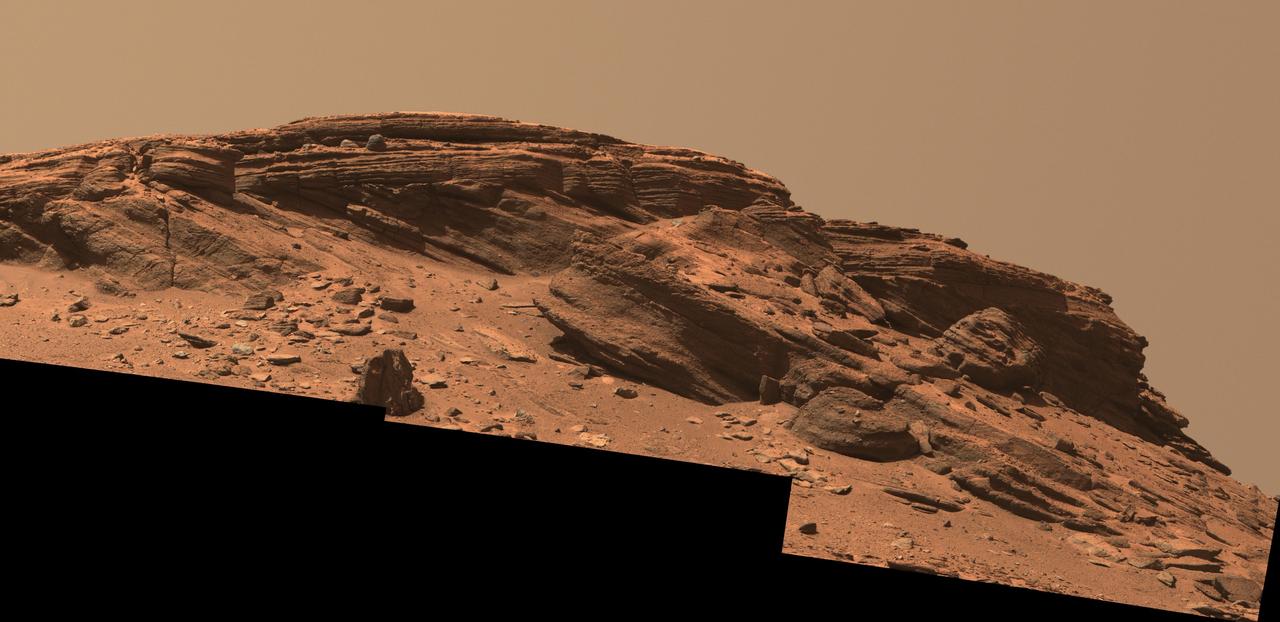
Sedimentary layers at "Franklin Cliffs" are displayed in a mosaic captured by NASA's Perseverance Mars rover using its Mastcam-Z camera on Feb. 12, 2023, the 704th Martian day, or sol, of the mission. The mosaic is made up of three individual images that were stitched together after being sent back from Mars. This natural color view is approximately how the scene would appear to an average person if they were on Mars. Franklin Cliffs, along with other locations like "Skrinkle Haven" and "Pinestand" may have been created as sediment built up here in an ancient river or delta. Arizona State University leads the operations of the Mastcam-Z instrument, working in collaboration with Malin Space Science Systems in San Diego, on the design, fabrication, testing, and operation of the cameras, and in collaboration with the Niels Bohr Institute of the University of Copenhagen on the design, fabrication, and testing of the calibration targets. A key objective for Perseverance's mission on Mars is astrobiology, including the search for signs of ancient microbial life. The rover will characterize the planet's geology and past climate, pave the way for human exploration of the Red Planet, and be the first mission to collect and cache Martian rock and regolith (broken rock and dust). Subsequent NASA missions, in cooperation with ESA (European Space Agency), would send spacecraft to Mars to collect these sealed samples from the surface and return them to Earth for in-depth analysis. The Mars 2020 Perseverance mission is part of NASA's Moon to Mars exploration approach, which includes Artemis missions to the Moon that will help prepare for human exploration of the Red Planet. https://photojournal.jpl.nasa.gov/catalog/PIA25911
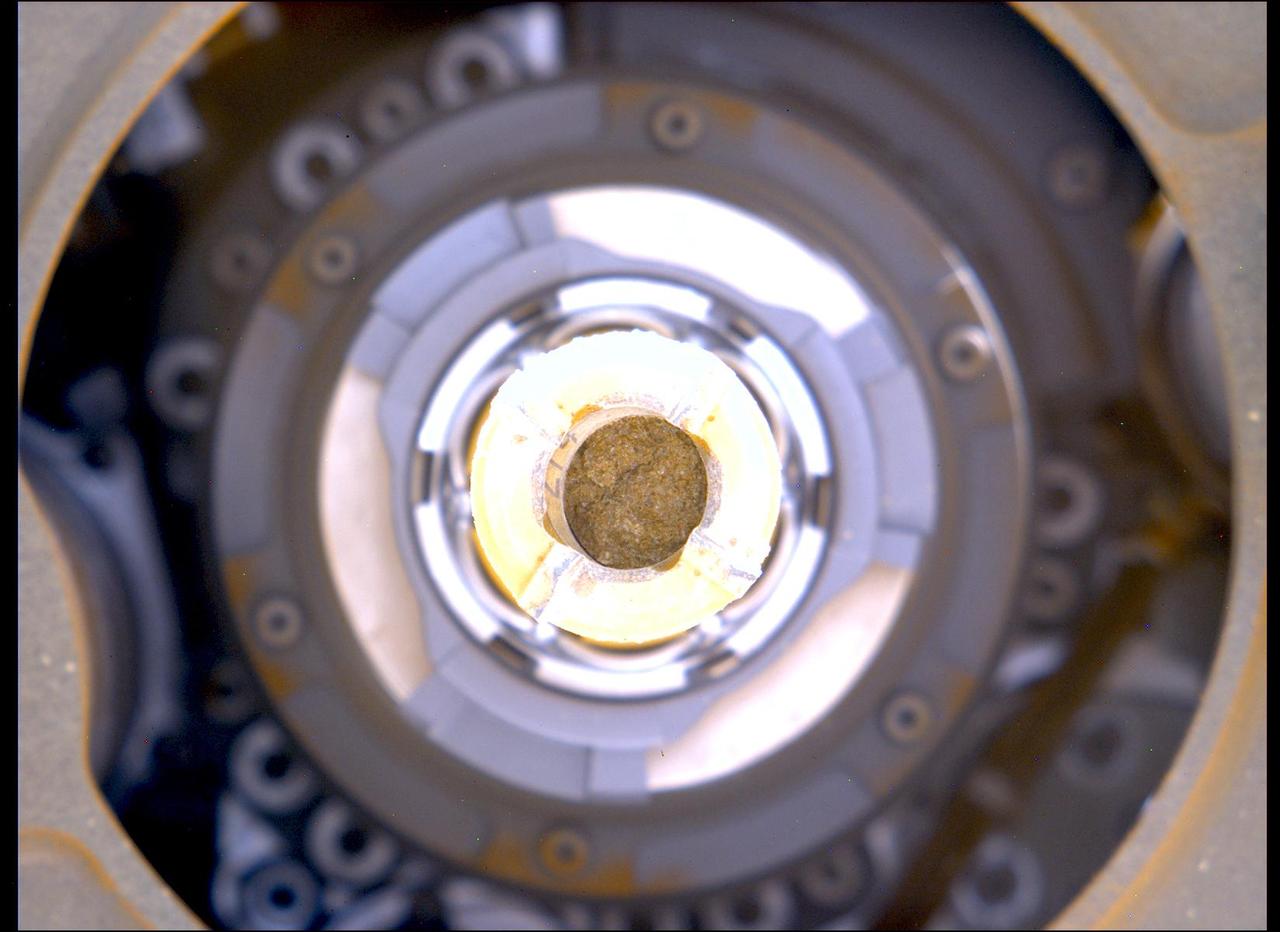
This image shows a cylinder of rock the size of a piece of classroom chalk inside the drill of NASA's Perseverance rover. The sample was taken from an outcrop called "Berea" in Mars' Jezero Crater. The image was captured by Perseverance's Mastcam-Z instrument on March 30, 2023, the 749th Martian day, or sol, of the mission. Each core the rover takes is about 0.5 inches (13 millimeters) in diameter and 2.4 inches (60 millimeters) long. The samples Perseverance has taken are from an ancient river delta in Jezero Crater, a fan-shaped area where, billions of years ago, a river once flowed into a lake and deposited rocks and sediment. These rock cores have been sealed in ultra-clean sample tubes and stored in Perseverance's Sampling and Caching System as part of the mission's search for ancient signs of microbial life. Arizona State University leads the operations of the Mastcam-Z instrument, working in collaboration with Malin Space Science Systems in San Diego, on the design, fabrication, testing, and operation of the cameras, and in collaboration with the Niels Bohr Institute of the University of Copenhagen on the design, fabrication, and testing of the calibration targets. A key objective for Perseverance's mission on Mars is astrobiology, including the search for signs of ancient microbial life. The rover will characterize the planet's geology and past climate, pave the way for human exploration of the Red Planet, and be the first mission to collect and cache Martian rock and regolith (broken rock and dust). Subsequent NASA missions, in cooperation with ESA (European Space Agency), would send spacecraft to Mars to collect these sealed samples from the surface and return them to Earth for in-depth analysis. The Mars 2020 Perseverance mission is part of NASA's Moon to Mars exploration approach, which includes Artemis missions to the Moon that will help prepare for human exploration of the Red Planet. https://photojournal.jpl.nasa.gov/catalog/PIA25690
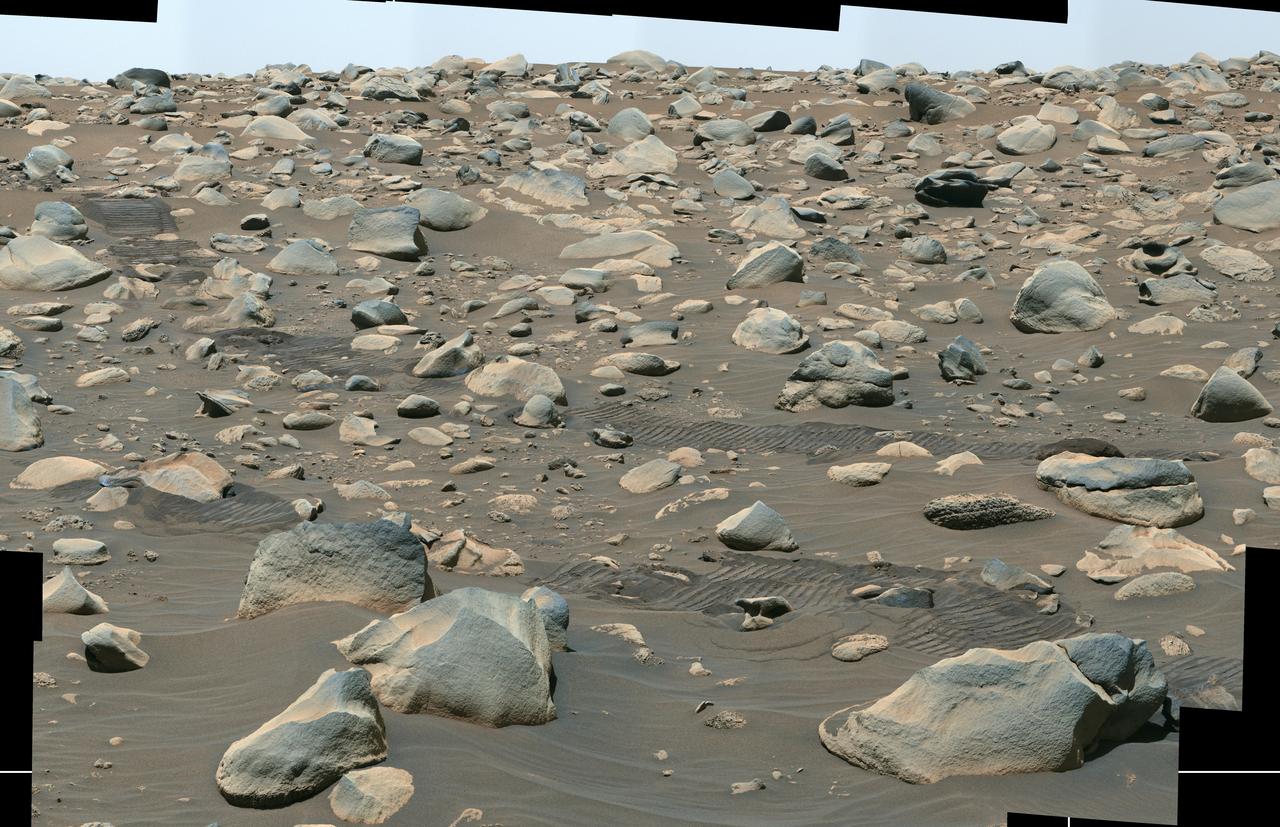
This composite image captured by NASA's Perseverance Mars rover shows boulders that decorate the top of the Jezero Crater fan deposit. Rover tracks across the middle of the image give a sense of scale. These boulders were transported by water that was either deeper or flowed faster than the ancient waterway that deposited the smaller pebbles that also populate the area. Because these boulders are sitting on top of the pebbles, scientists believe they arrived later, possibly much later. Perseverance's Mastcam-Z camera system took the series of images that make up this composite on July 6, 2023, the 845th day, or sol, of the rover's mission to Mars. Arizona State University leads the operations of the Mastcam-Z instrument, working in collaboration with Malin Space Science Systems in San Diego, on the design, fabrication, testing, and operation of the cameras, and in collaboration with the Niels Bohr Institute of the University of Copenhagen on the design, fabrication, and testing of the calibration targets. A key objective for Perseverance's mission on Mars is astrobiology, including the search for signs of ancient microbial life. The rover will characterize the planet's geology and past climate, pave the way for human exploration of the Red Planet, and be the first mission to collect and cache Martian rock and regolith (broken rock and dust). Subsequent NASA missions, in cooperation with ESA (European Space Agency), would send spacecraft to Mars to collect these sealed samples from the surface and return them to Earth for in-depth analysis. The Mars 2020 Perseverance mission is part of NASA's Moon to Mars exploration approach, which includes Artemis missions to the Moon that will help prepare for human exploration of the Red Planet. https://photojournal.jpl.nasa.gov/catalog/PIA25963
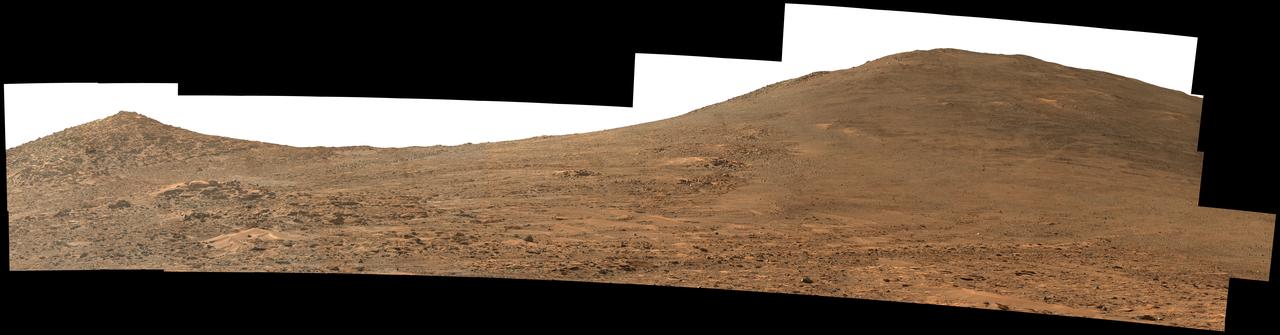
NASA's Perseverance Mars rover used its Mastcam-Z instrument to capture this view looking south toward the rim of Jezero Crater. The panorama, which encompasses 80 degrees, is made up of 59 individual images. They were captured on Aug. 4, 2024, the 1,229th Martian day, or sol, of the mission, and stitched together after being sent back to Earth. The color has been enhanced to bring out subtle details. "Dox Castle," a region the Perseverance science team wants to visit during the rover's climb up the crater rim, is about a half-mile (740 meters) away, on the left side of the hill at right. After the exploration of Dox Castle is complete, the rover will continue its climb up the crater rim, taking a route somewhere in between the two hills. Arizona State University leads the operations of the Mastcam-Z instrument, working in collaboration with Malin Space Science Systems in San Diego, on the design, fabrication, testing, and operation of the cameras, and in collaboration with the Niels Bohr Institute of the University of Copenhagen on the design, fabrication, and testing of the calibration targets. A key objective for Perseverance's mission on Mars is astrobiology, including the search for signs of ancient microbial life. The rover will characterize the planet's geology and past climate, pave the way for human exploration of the Red Planet, and be the first mission to collect and cache Martian rock and regolith (broken rock and dust). https://photojournal.jpl.nasa.gov/catalog/PIA26373