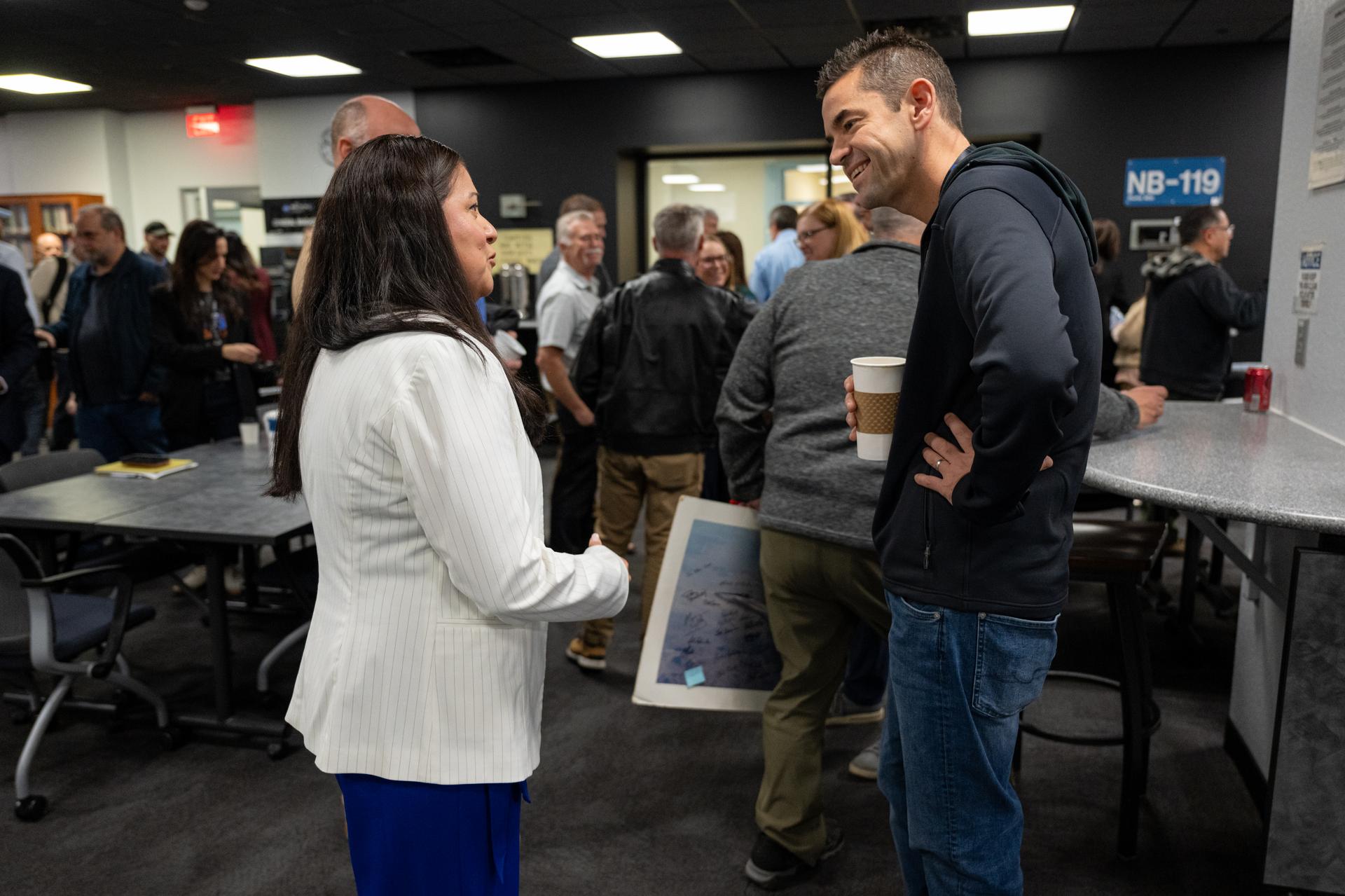
NASA Administrator Jared Isaacman, right, greets members of the workforce, Sunday, Jan. 25, 2026, at NASA’s Armstrong Flight Research Center at Edwards Air Force Base in California. Armstrong marks the ninth stop in Isaacman’s roadshow to visit NASA facilities and engage directly with the agency’s workforce. Photo Credit: (NASA/John Kraus)
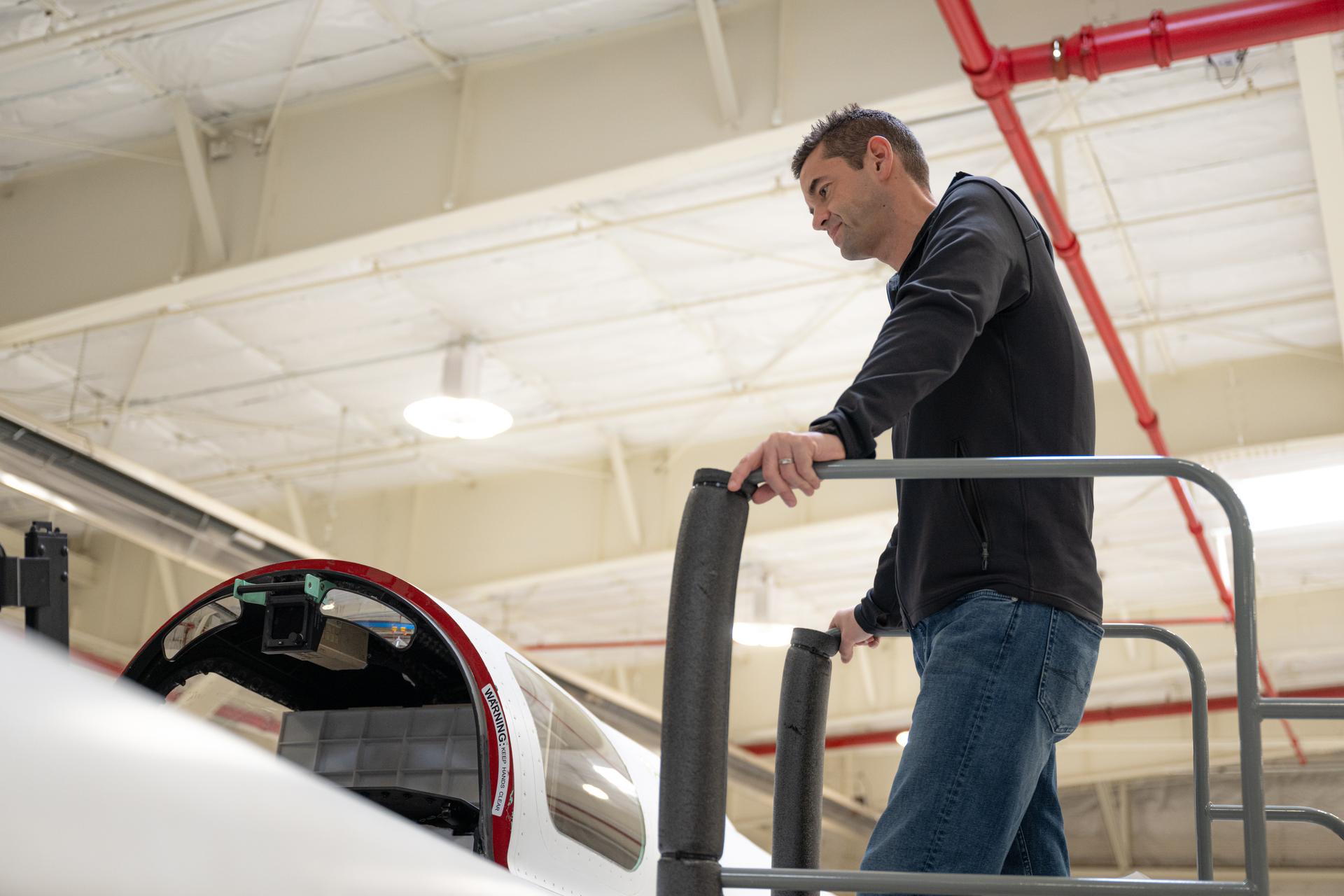
NASA Administrator Jared Isaacman tours the hangar housing the X-59 aircraft, Sunday, Jan. 25, 2026, at NASA’s Armstrong Flight Research Center at Edwards Air Force Base in California. Armstrong marks the ninth stop in Isaacman’s roadshow to visit NASA facilities and engage directly with the agency’s workforce. Photo Credit: (NASA/John Kraus)
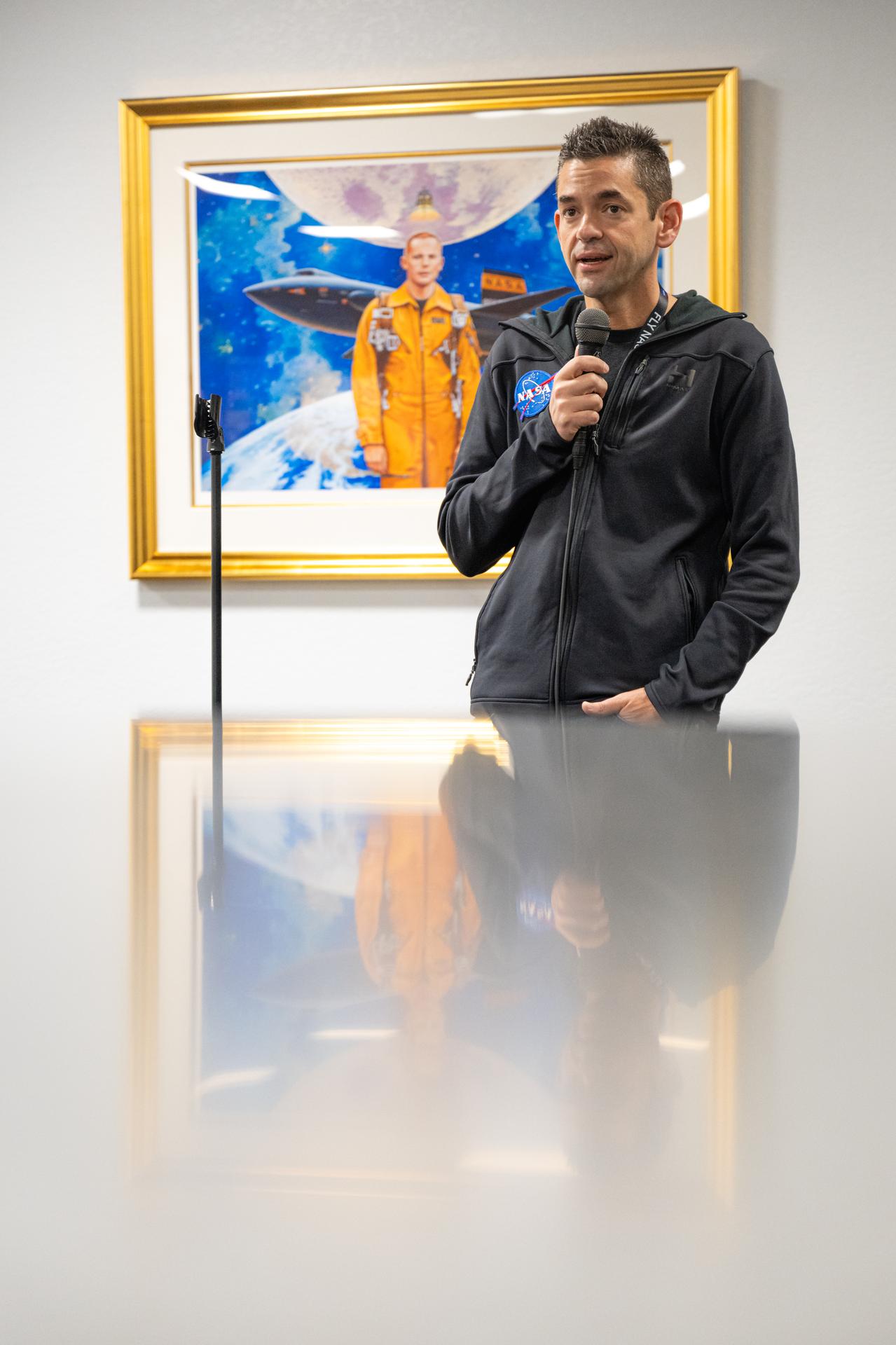
NASA Administrator Jared Isaacman speaks during a workforce Q&A session, Sunday, Jan. 25, 2026, at NASA’s Armstrong Flight Research Center at Edwards Air Force Base in California. Armstrong marks the ninth stop in Isaacman’s roadshow to visit NASA facilities and engage directly with the agency’s workforce. Photo Credit: (NASA/John Kraus)
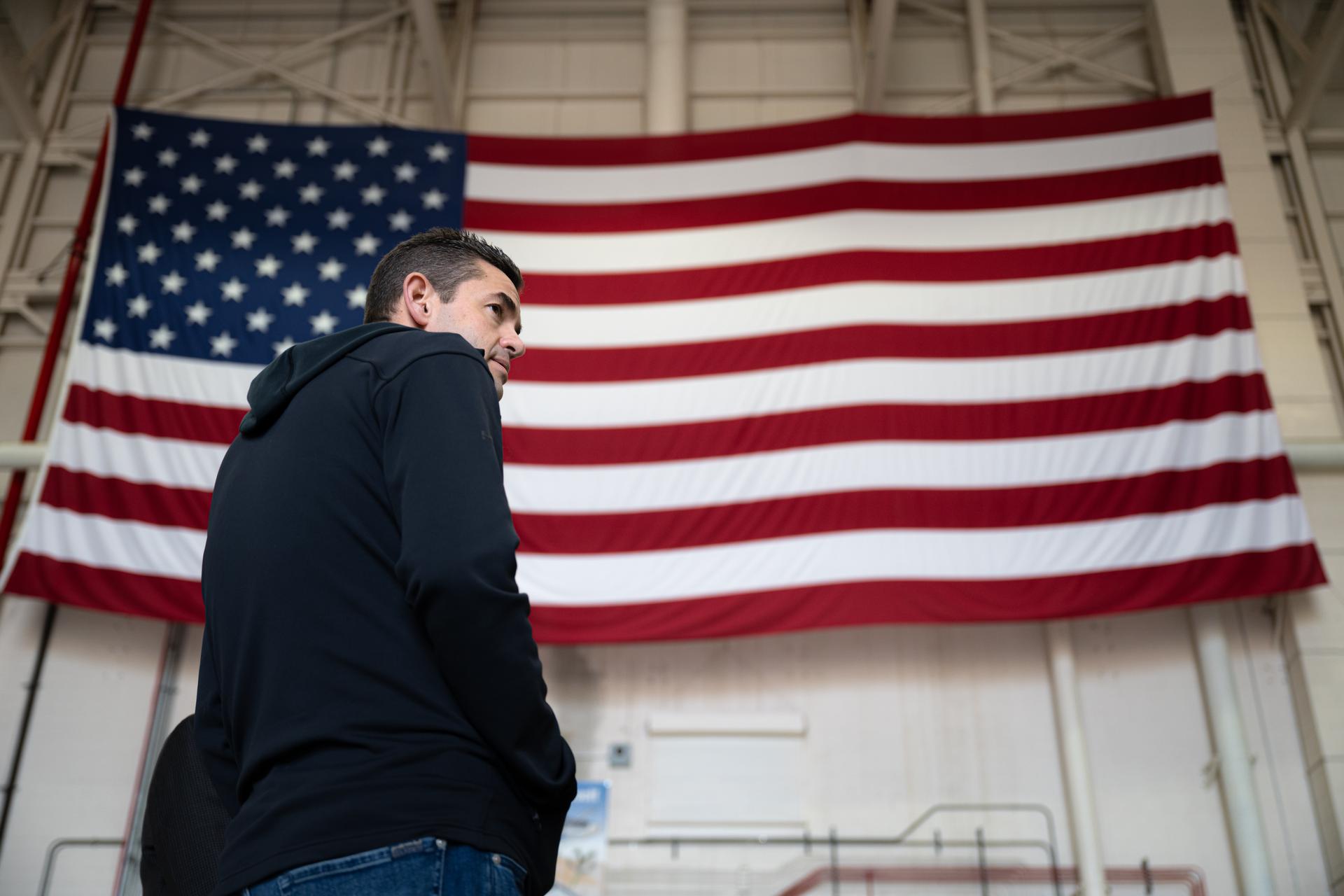
NASA Administrator Jared Isaacman is seen in front of an American flag in a hangar, Sunday, Jan. 25, 2026, at NASA’s Armstrong Flight Research Center at Edwards Air Force Base in California. Armstrong marks the ninth stop in Isaacman’s roadshow to visit NASA facilities and engage directly with the agency’s workforce. Photo Credit: (NASA/John Kraus)
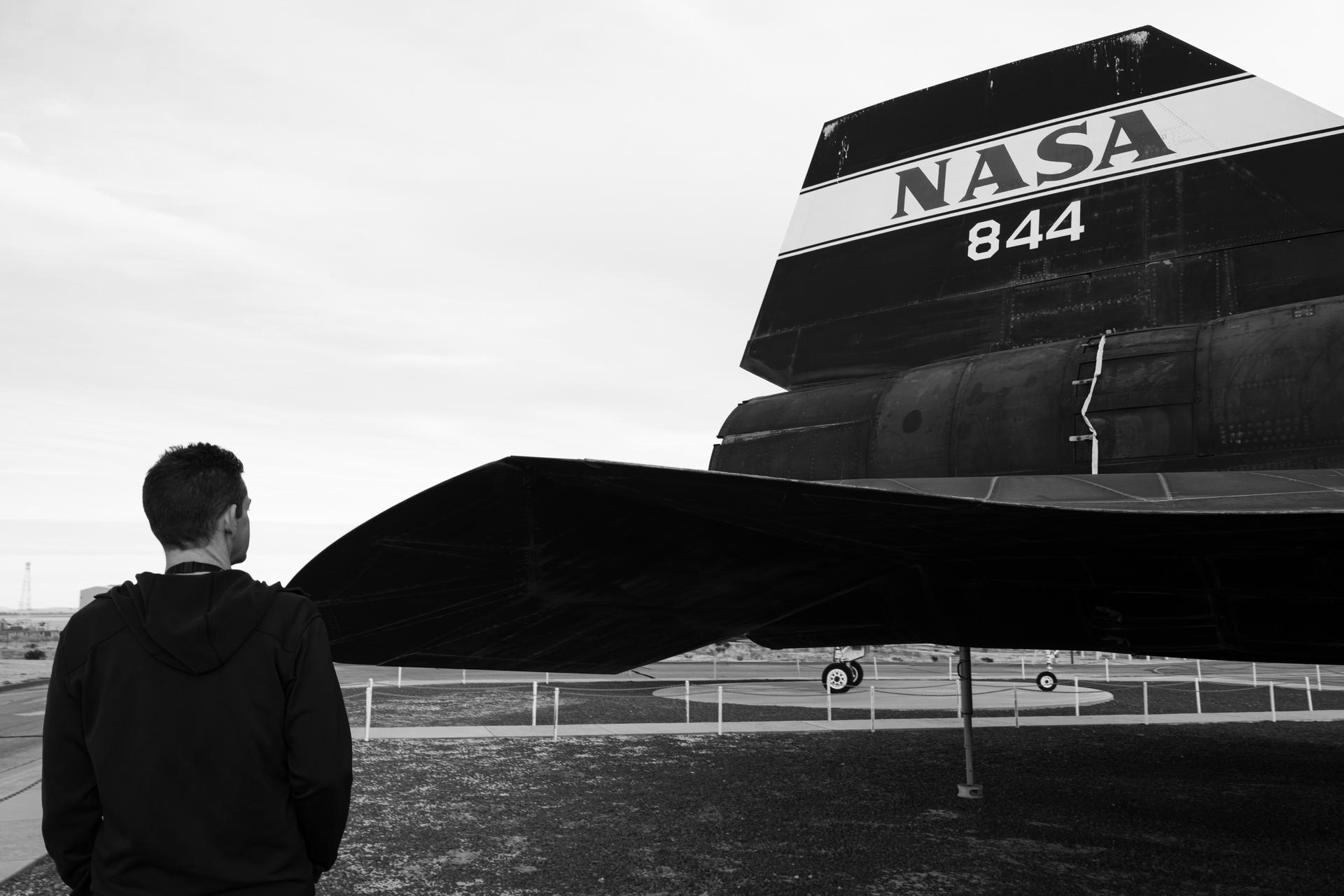
NASA Administrator Jared Isaacman views a retired SR-71 Blackbird aircraft, Sunday, Jan. 25, 2026, at NASA’s Armstrong Flight Research Center at Edwards Air Force Base in California. Armstrong marks the ninth stop in Isaacman’s roadshow to visit NASA facilities and engage directly with the agency’s workforce. Photo Credit: (NASA/John Kraus)
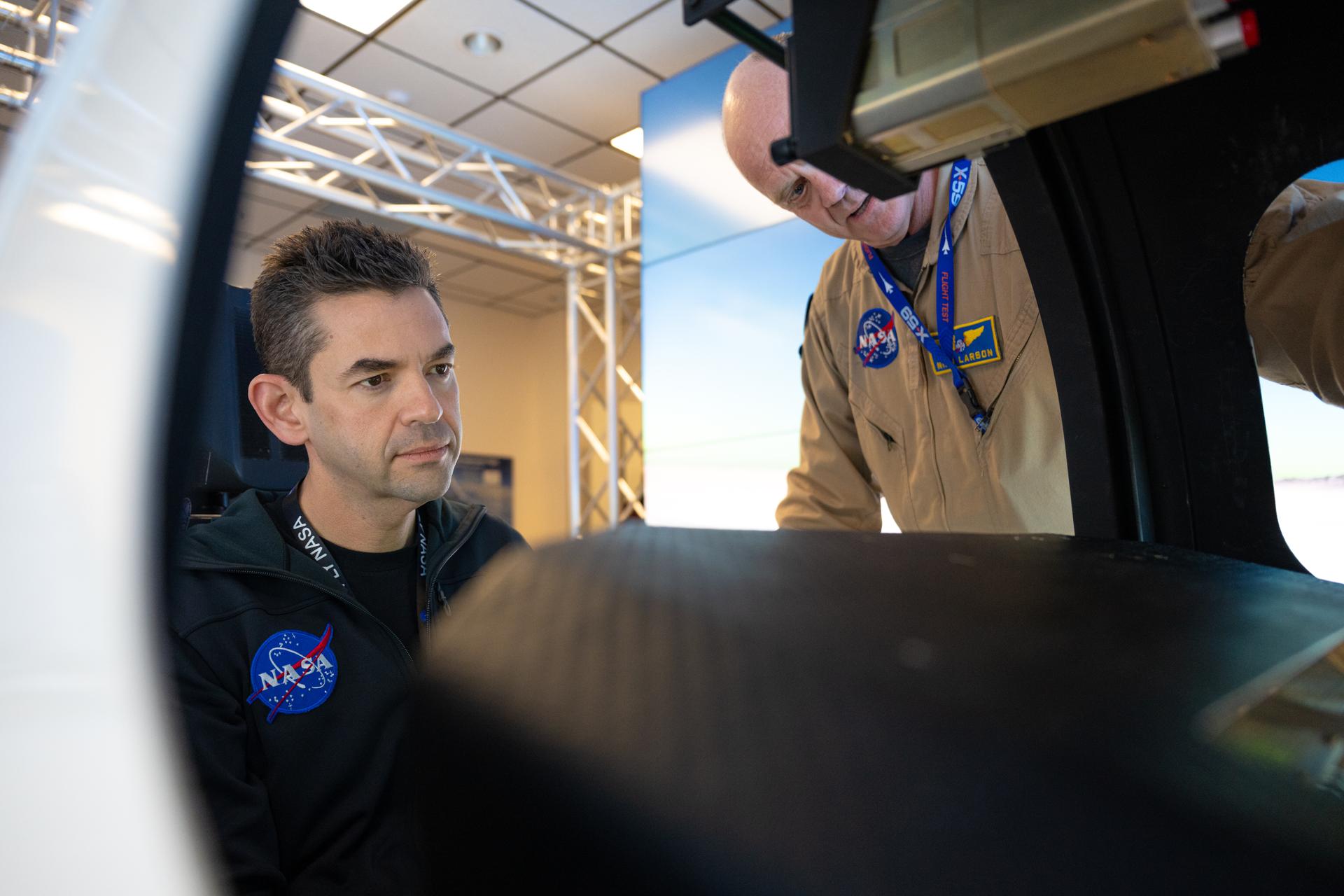
NASA Administrator Jared Isaacman, left, is seen in the X-59 flight simulator alongside Nils Larson, NASA pilot, right, Sunday, Jan. 25, 2026, at NASA’s Armstrong Flight Research Center at Edwards Air Force Base in California. Armstrong marks the ninth stop in Isaacman’s roadshow to visit NASA facilities and engage directly with the agency’s workforce. Photo Credit: (NASA/John Kraus)
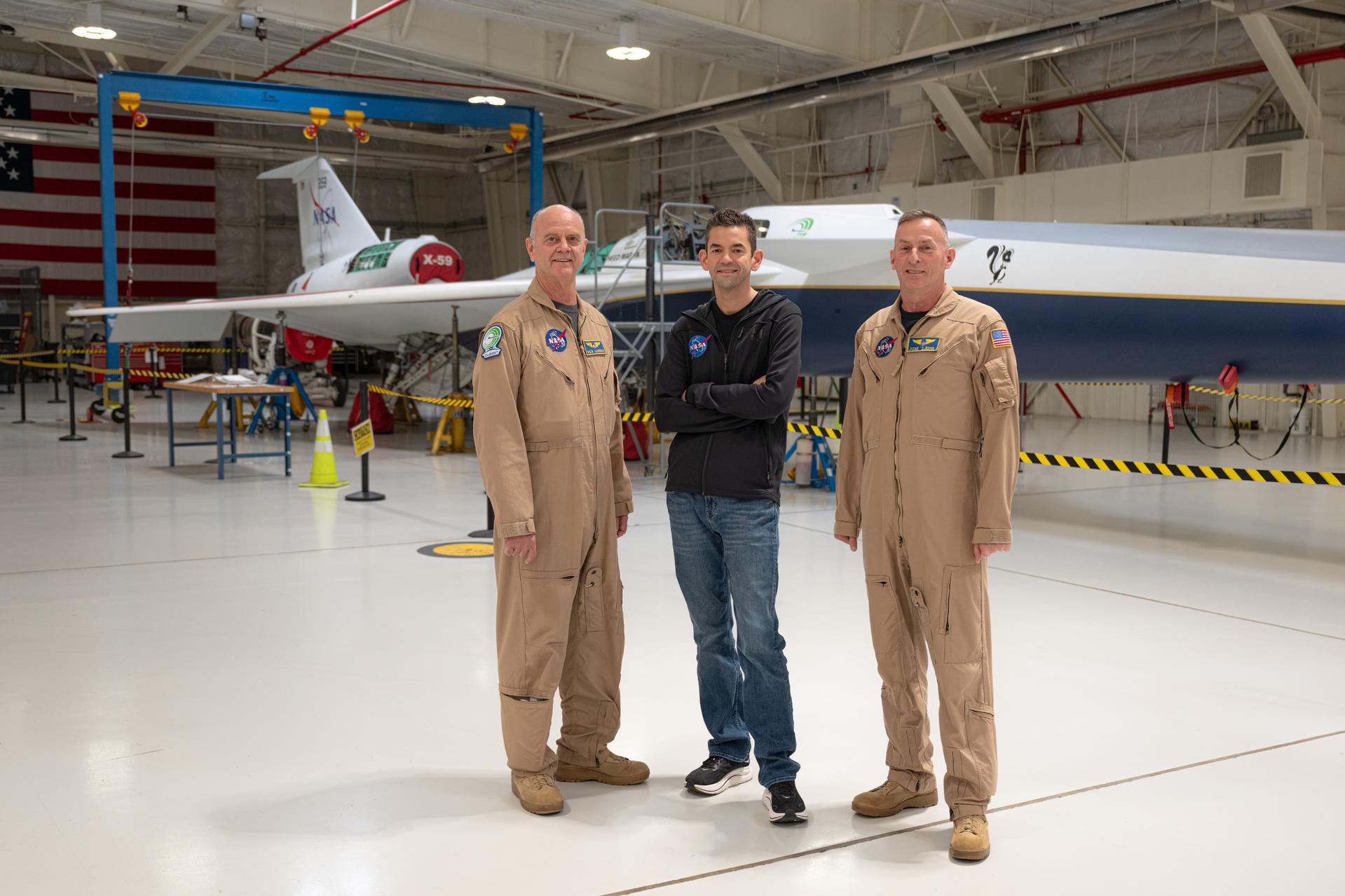
NASA Administrator Jared Isaacman, center, and NASA pilots Nils Larson, left, and Jim Less, right, pose for a photograph with the X-59 aircraft, Sunday, Jan. 25, 2026, at NASA’s Armstrong Flight Research Center at Edwards Air Force Base in California. Armstrong marks the ninth stop in Isaacman’s roadshow to visit NASA facilities and engage directly with the agency’s workforce. Photo Credit: (NASA/John Kraus)
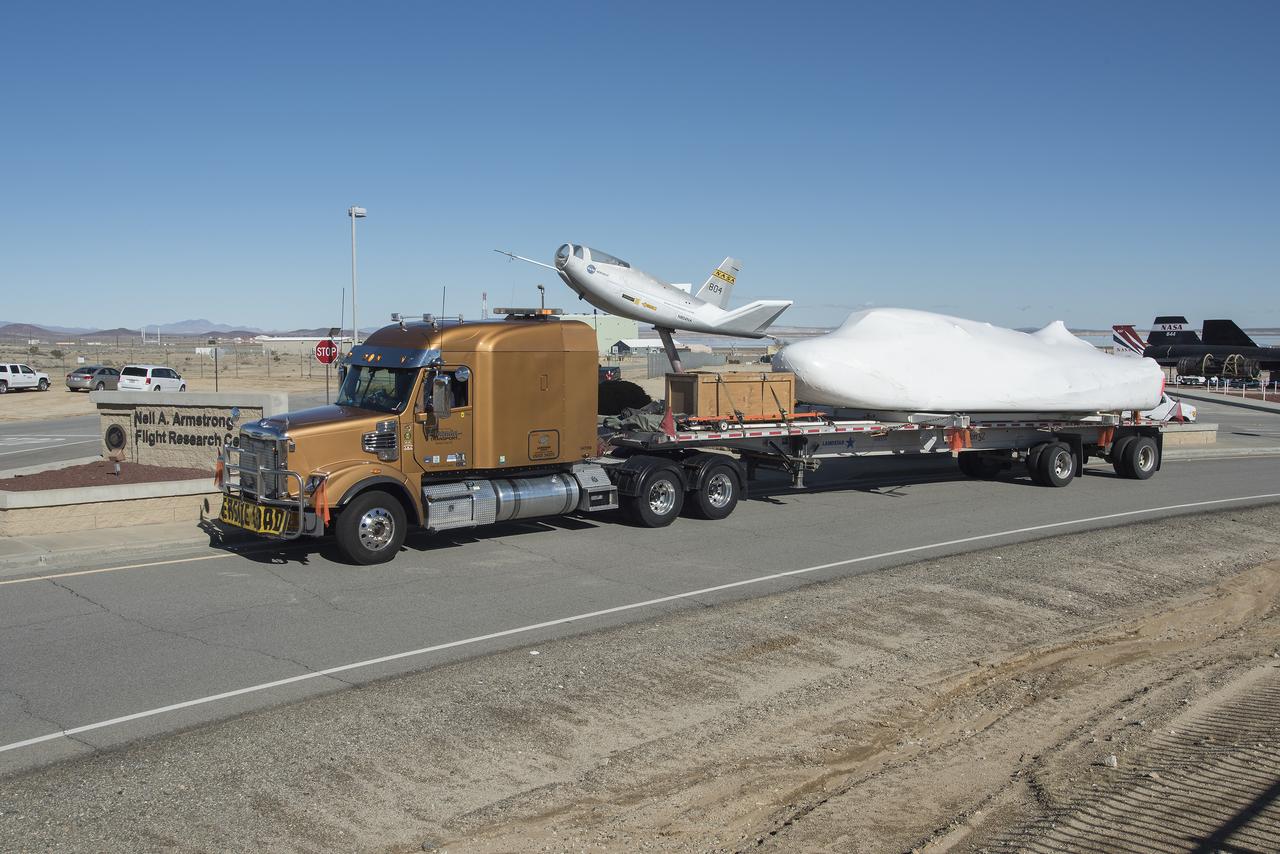
SNC delivers Dream Chaser to NASA Armstrong posing it with the HL-10 lifting body flown the 1960s.

NASA Administrator Charles Bolden, back to camera, speaks with Carol Armstrong after presenting her with a U.S. Flag that was flown at half-mast over Mission Control at Johnson Space Center in Houston, on the day of her husband’s passing, during a memorial service celebrating the life of Neil Armstrong at the Washington National Cathedral, Thursday, Sept. 13, 2012. Armstrong, the first man to walk on the moon during the 1969 Apollo 11 mission, died Saturday, Aug. 25. He was 82. Photo Credit: (NASA/Bill Ingalls)
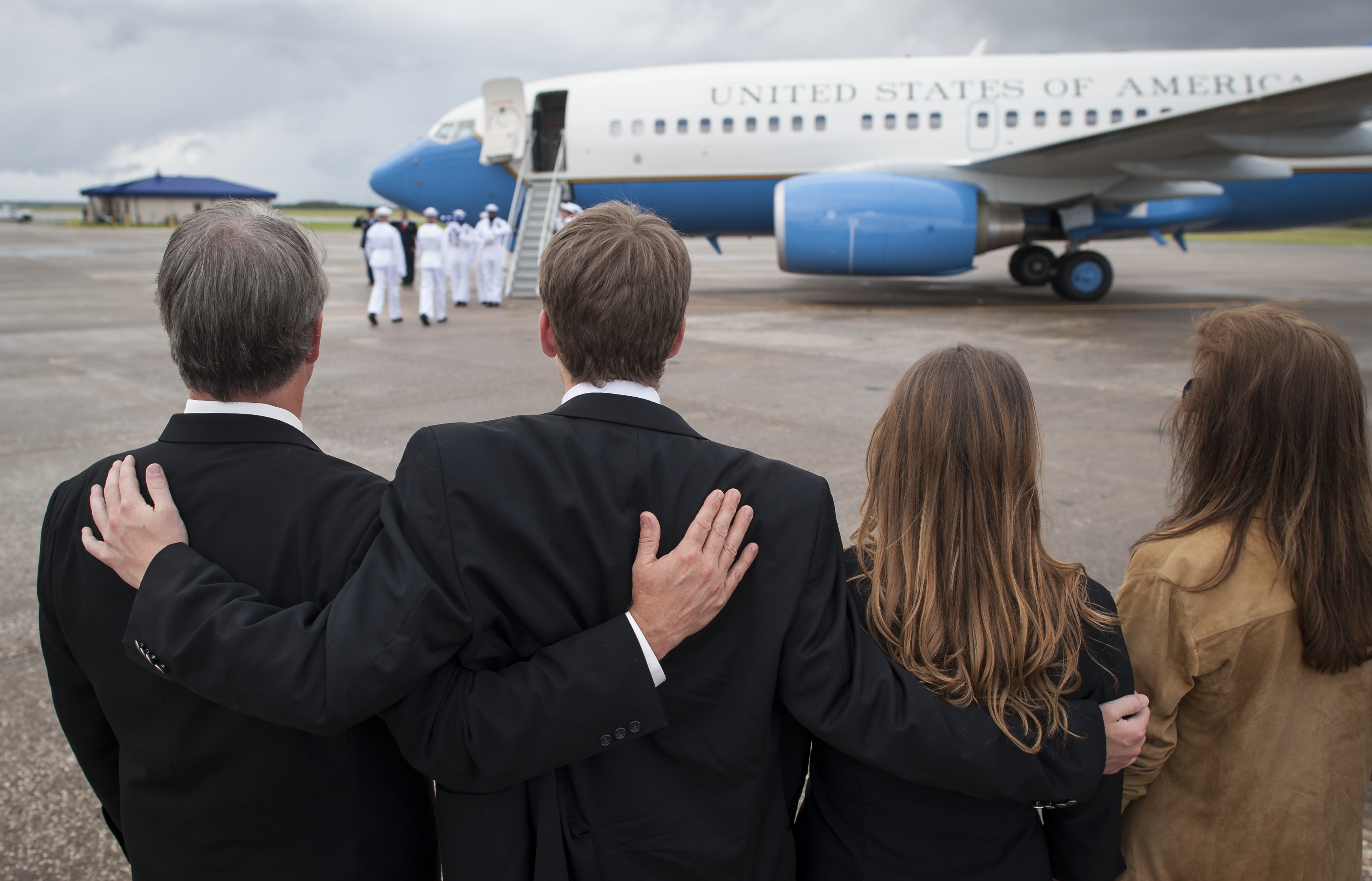
Mark Armstrong, left, and his family look on as US Navy personnel carry the cremains of his father, Apollo 11 astronaut Neil Armstrong, off of a military aircraft at Naval Station Mayport the day before the Armstrong burial at sea service, Thursday, Sept. 13, 2012, Mayport, Fla. Armstrong, the first man to walk on the moon during the 1969 Apollo 11 mission, died Saturday, Aug. 25. He was 82. Photo Credit: (NASA/Bill Ingalls)
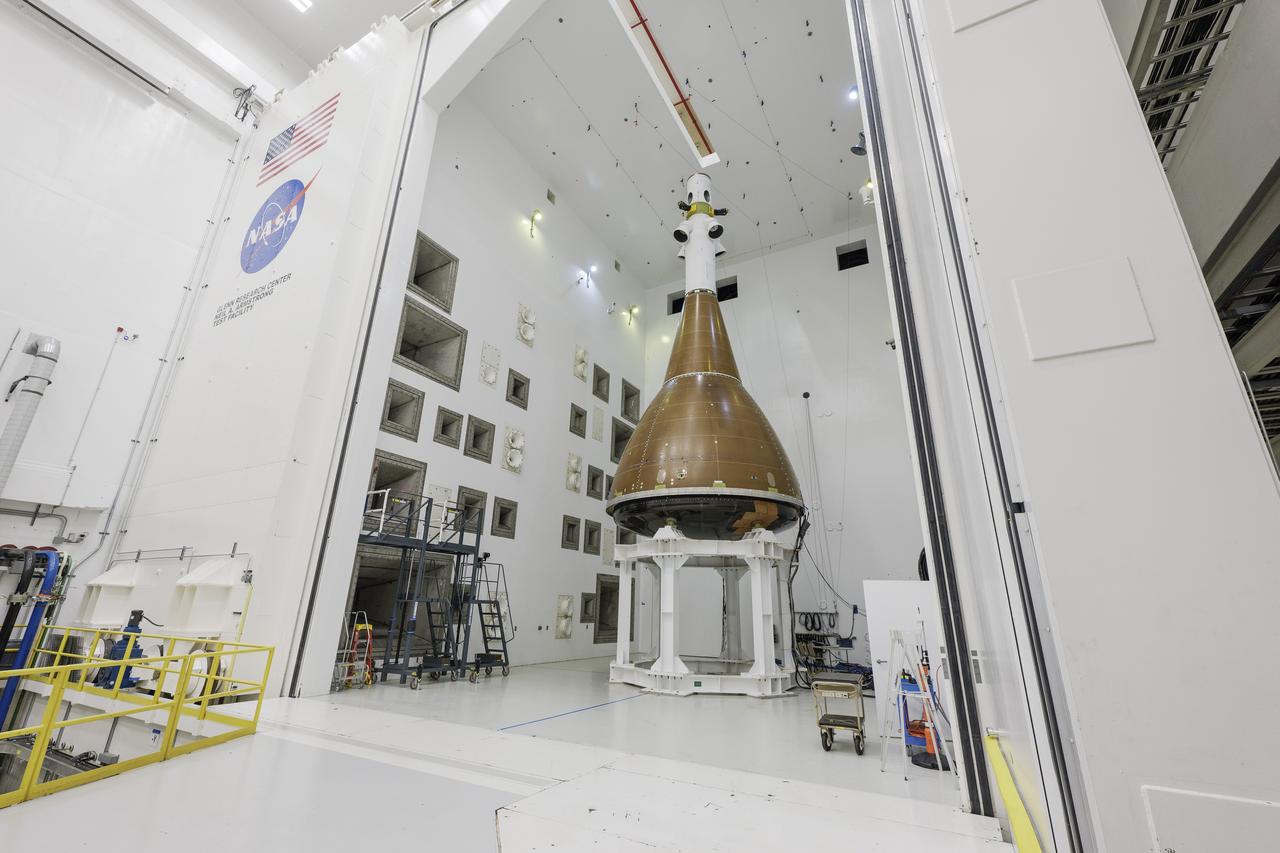
The team at NASA's Armstrong Test Facility in Sandusky, Ohio has begun vibro-acoustic testing on the Orion spacecraft that flew around the Moon on Artemis I, now known as the Environmental Test Article. The testing will help ensure the safety of future crews aboard Orion.
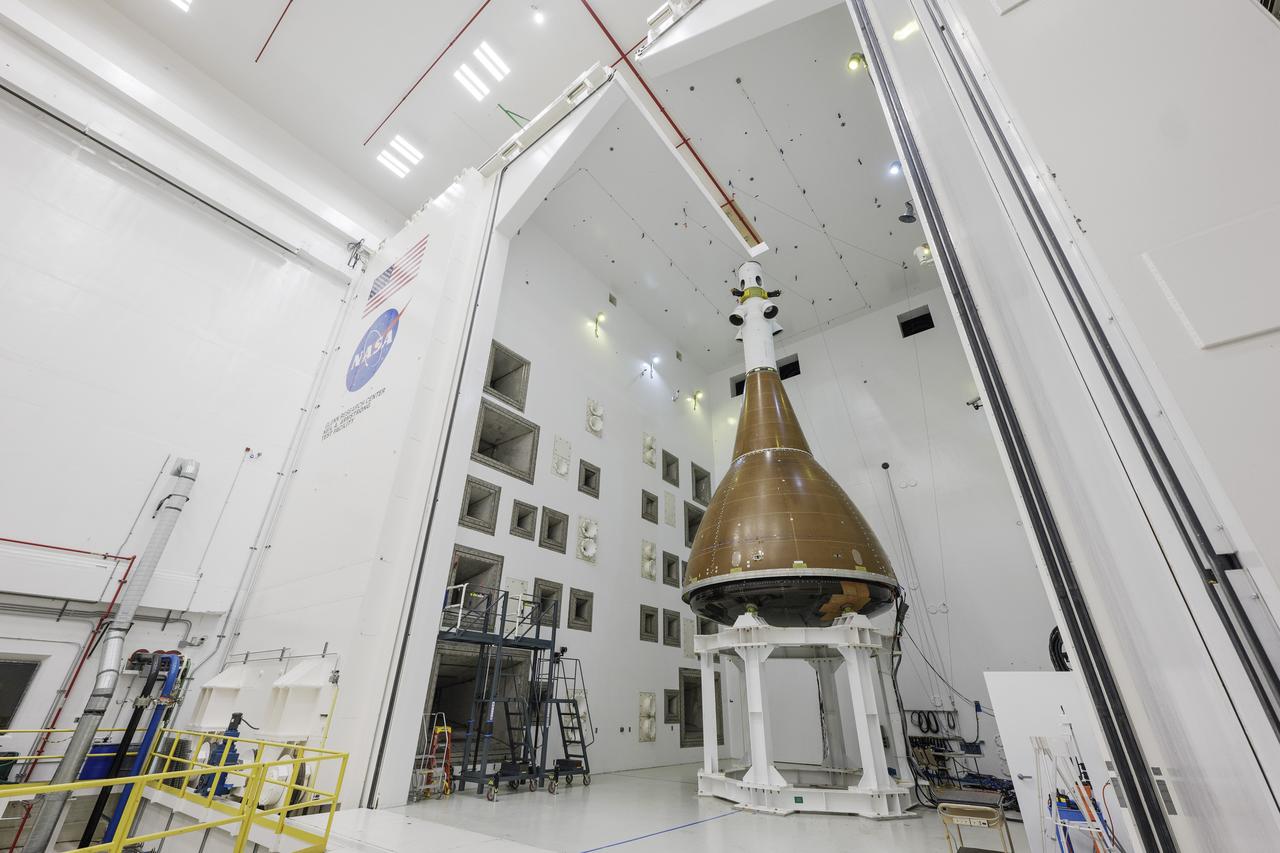
The team at NASA's Armstrong Test Facility in Sandusky, Ohio has begun vibro-acoustic testing on the Orion spacecraft that flew around the Moon on Artemis I, now known as the Environmental Test Article. The testing will help ensure the safety of future crews aboard Orion. Photo credit: NASA / Rad Sinyak
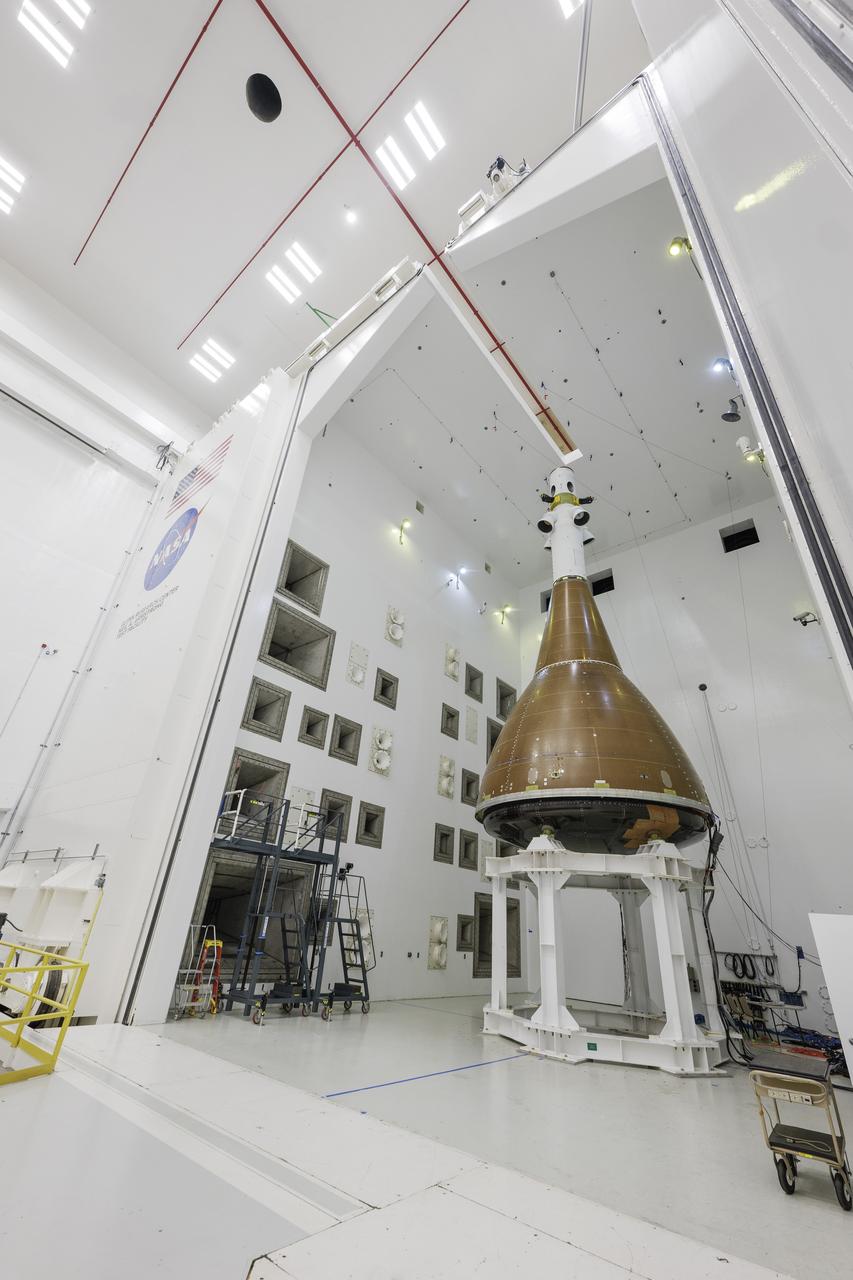
The team at NASA's Armstrong Test Facility in Sandusky, Ohio has begun vibro-acoustic testing on the Orion spacecraft that flew around the Moon on Artemis I, now known as the Environmental Test Article. The testing will help ensure the safety of future crews aboard Orion. Photo credit: NASA / Rad Sinyak

Carol Armstrong, center, her son Eric, right, and daughter Molly Van Wagenen hold their hands to their hearts during a memorial service celebrating the life of Neil Armstrong at the Washington National Cathedral, Thursday, Sept. 13, 2012. Armstrong, the first man to walk on the moon during the 1969 Apollo 11 mission, died Saturday, Aug. 25. He was 82. Photo Credit: (NASA/Bill Ingalls)
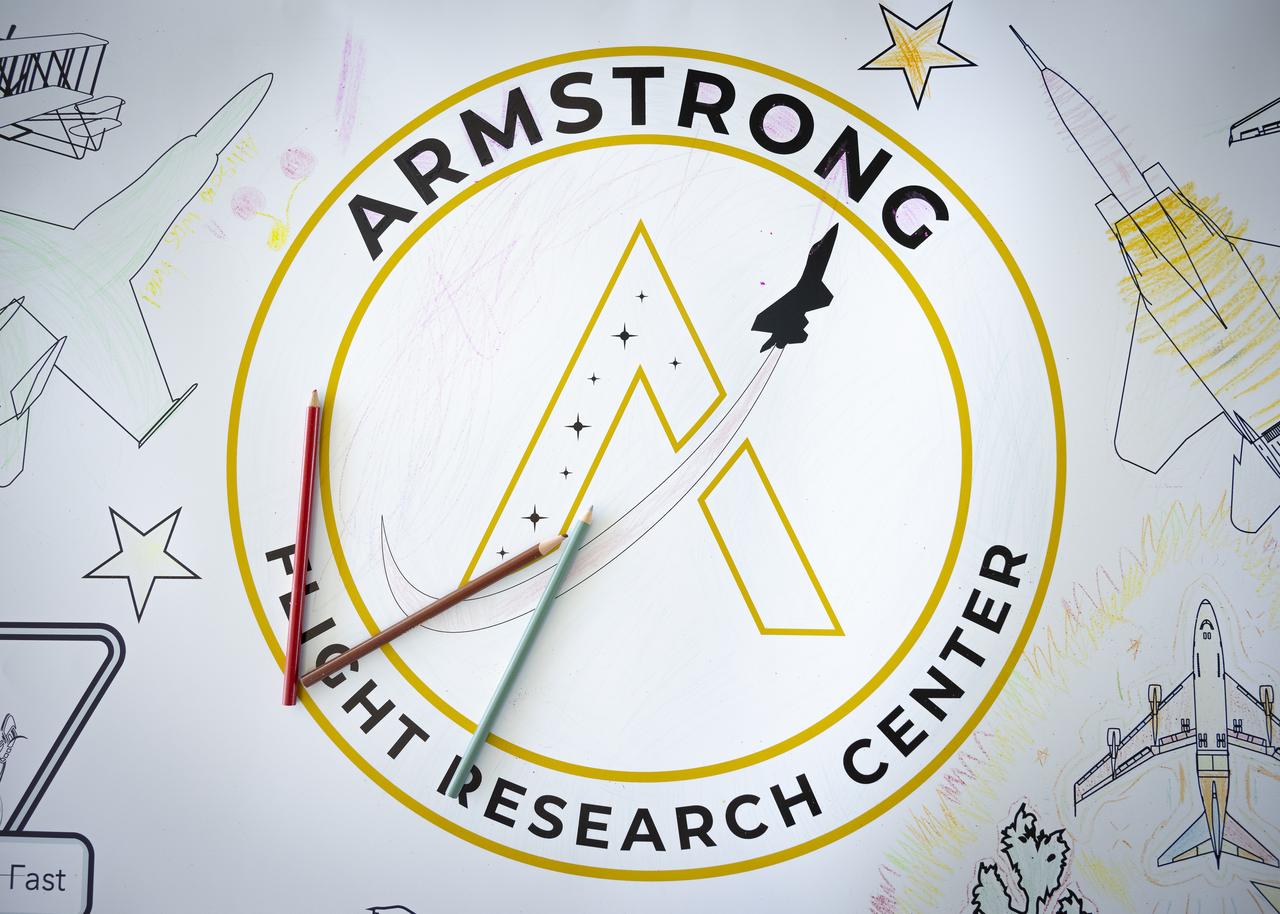
On June 17, 2025, NASA’s Armstrong Flight Research Center in Edwards, California, hosted Bring Kids to Work Day, offering hands-on activities that introduced children and their families to the exciting world of aeronautics and flight research.
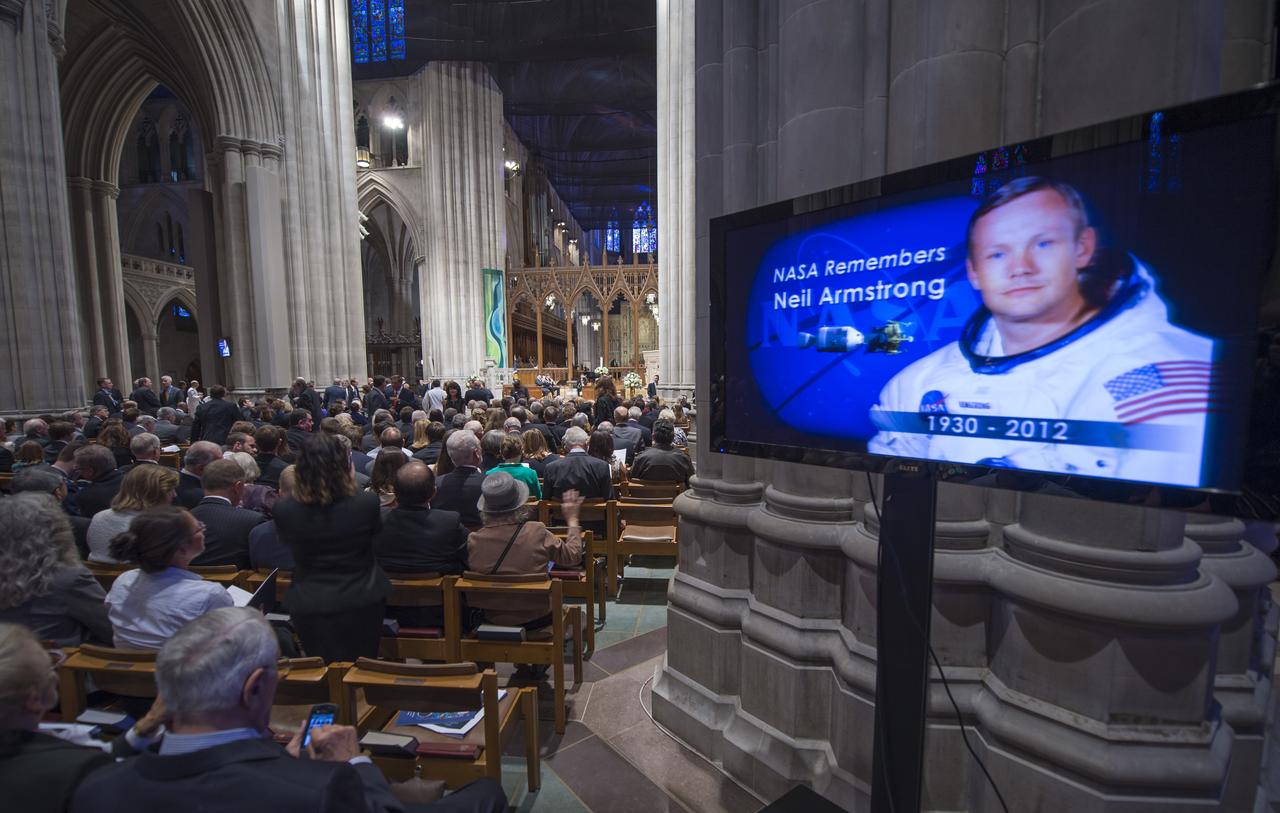
An image of Neil Armstrong is projected on a television screen as attendees sit in the Nave during a memorial service celebrating the life of Neil Armstrong at the Washington National Cathedral, Thursday, Sept. 13, 2012. Armstrong, the first man to walk on the moon during the 1969 Apollo 11 mission, died Saturday, Aug. 25. He was 82. Photo Credit: (NASA/Bill Ingalls)
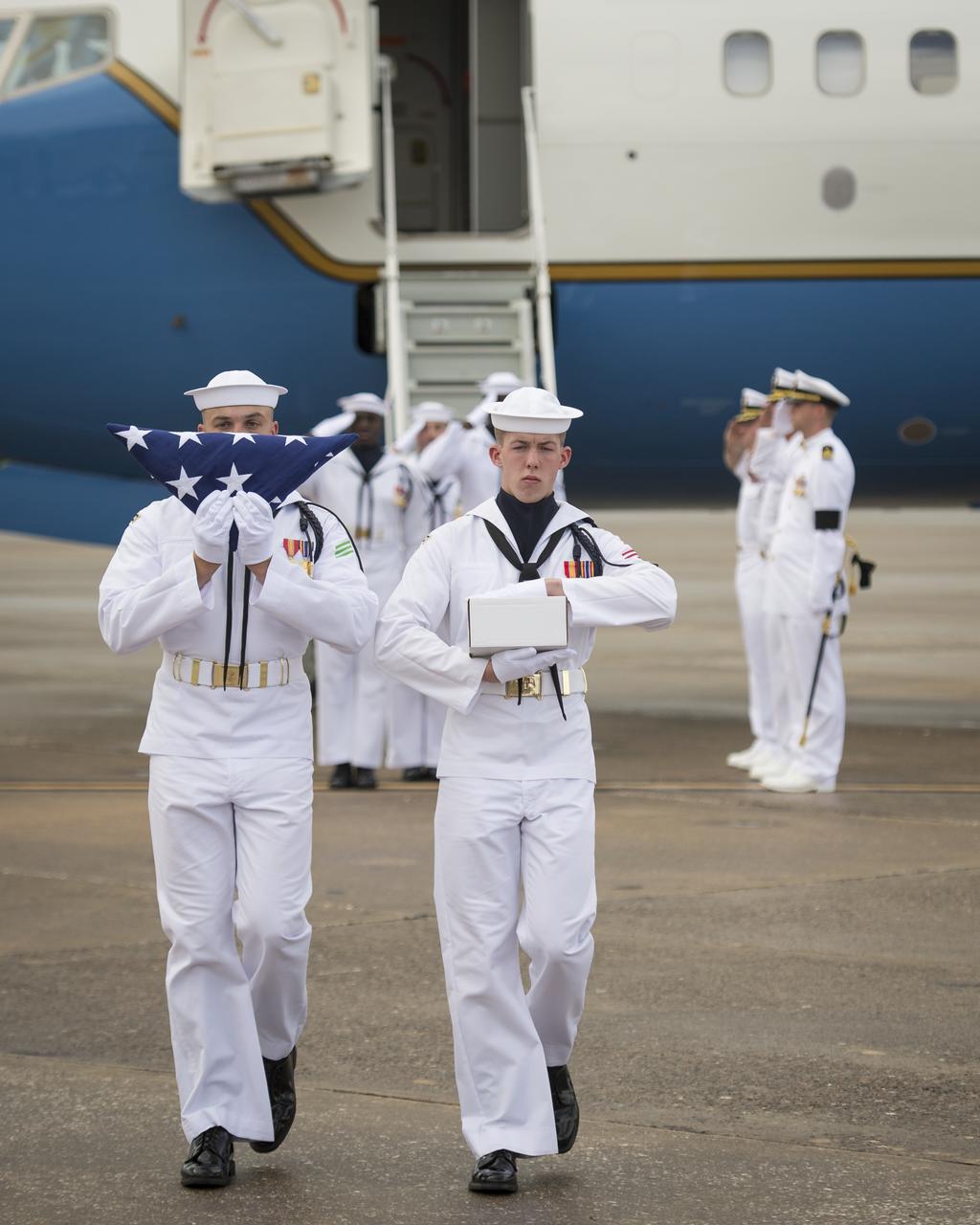
US Navy personnel carry the cremains of Apollo 11 astronaut Neil Armstrong off of a military aircraft at Naval Station Mayport the day before the Armstrong burial at sea service, Thursday, Sept. 13, 2012, Mayport, Fla. Armstrong, the first man to walk on the moon during the 1969 Apollo 11 mission, died Saturday, Aug. 25. He was 82. Photo Credit: (NASA/Bill Ingalls)
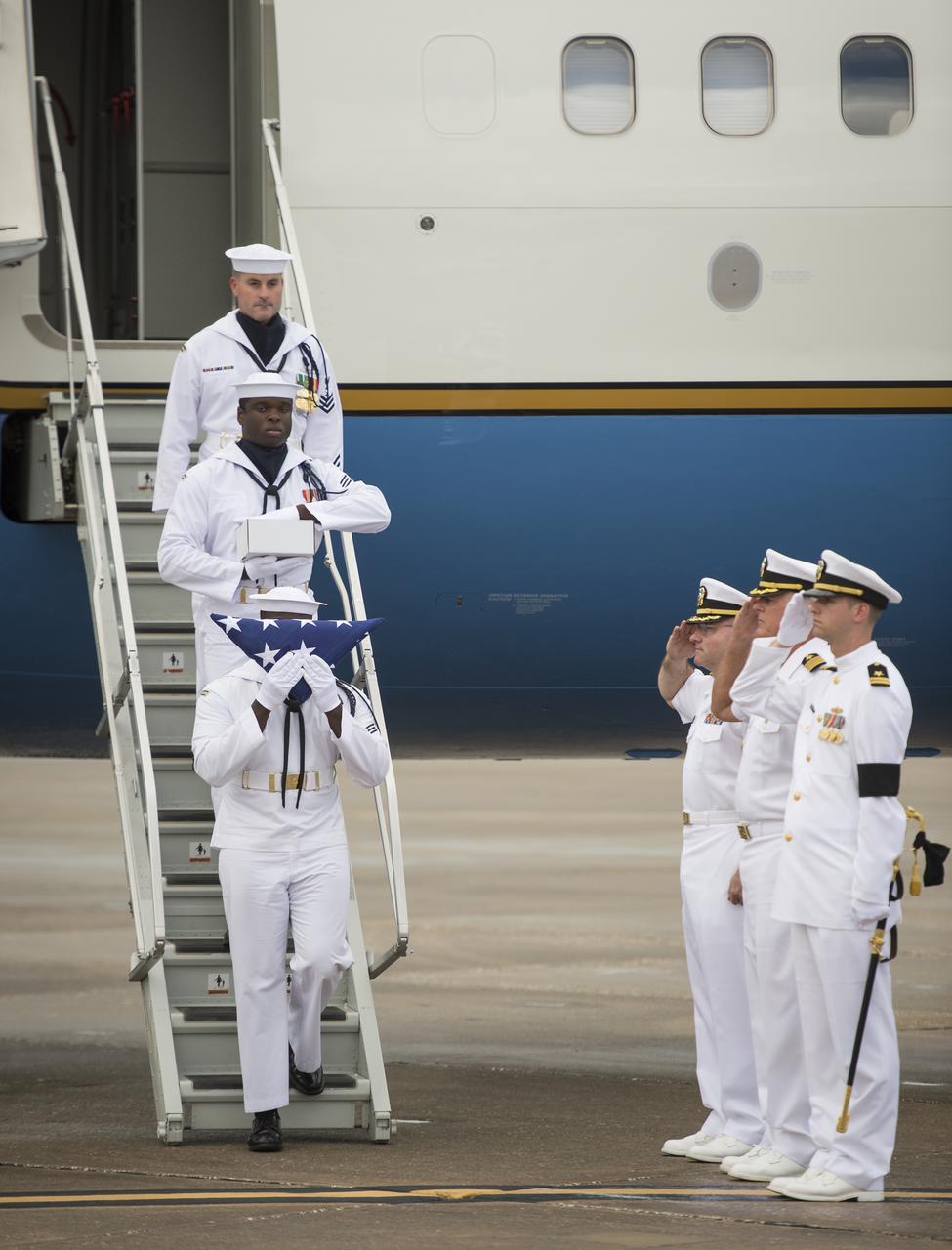
US Navy personnel carry the cremains of Apollo 11 astronaut Neil Armstrong off of a military aircraft at Naval Station Mayport the day before the Armstrong burial at sea service, Thursday, Sept. 13, 2012, Mayport, Fla. Armstrong, the first man to walk on the moon during the 1969 Apollo 11 mission, died Saturday, Aug. 25. He was 82. Photo Credit: (NASA/Bill Ingalls)
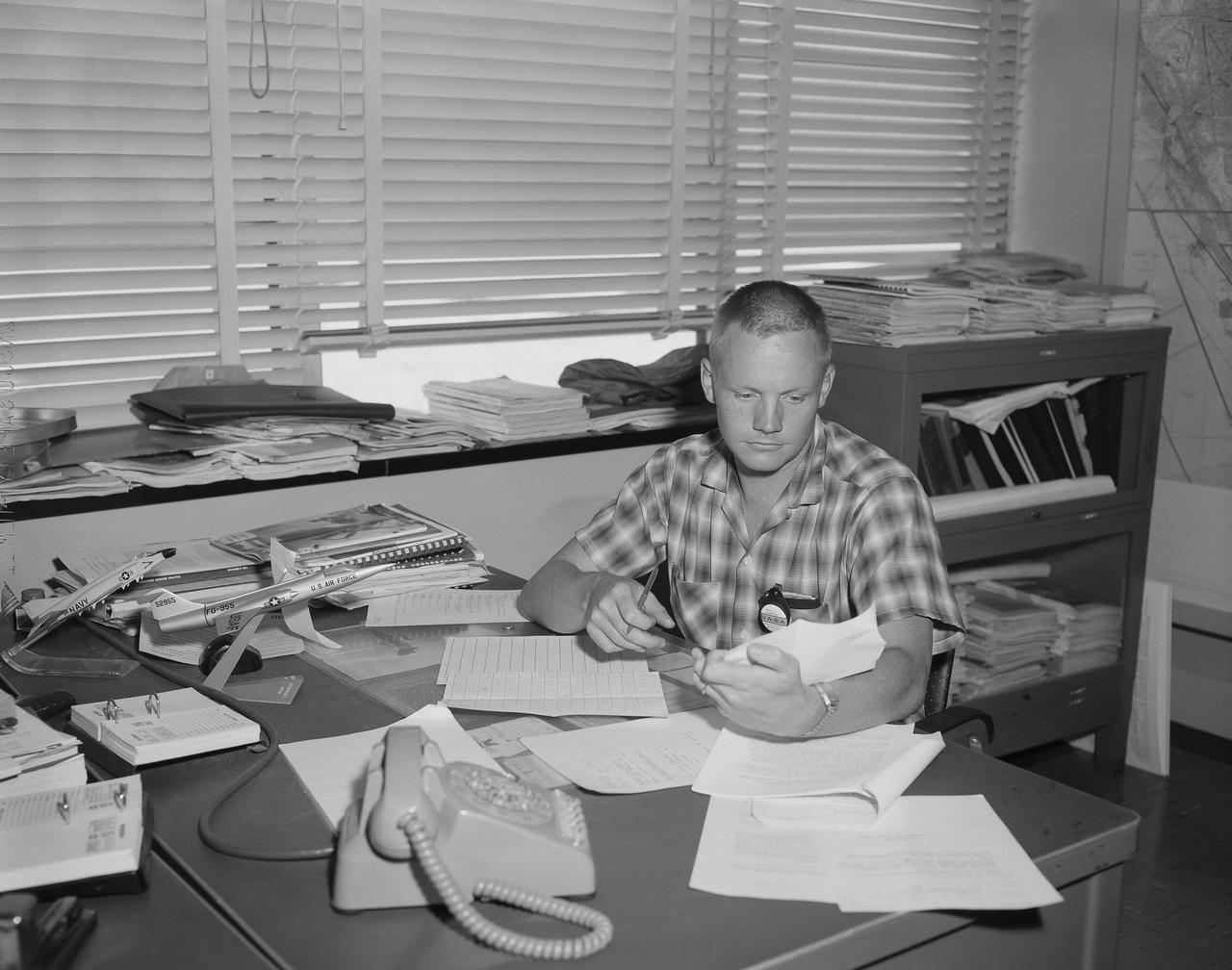
Famed astronaut Neil A. Armstrong – the first person to set foot on the Moon during the historic Apollo 11 mission in July 1969 – spent seven years as a research pilot at the NACA-NASA High-Speed Flight Station, now NASA’s Armstrong Flight Research Center in Edwards, California, before joining the space program. During his tenure, Armstrong was actively engaged in both the piloting and engineering aspects of numerous NASA programs and projects.
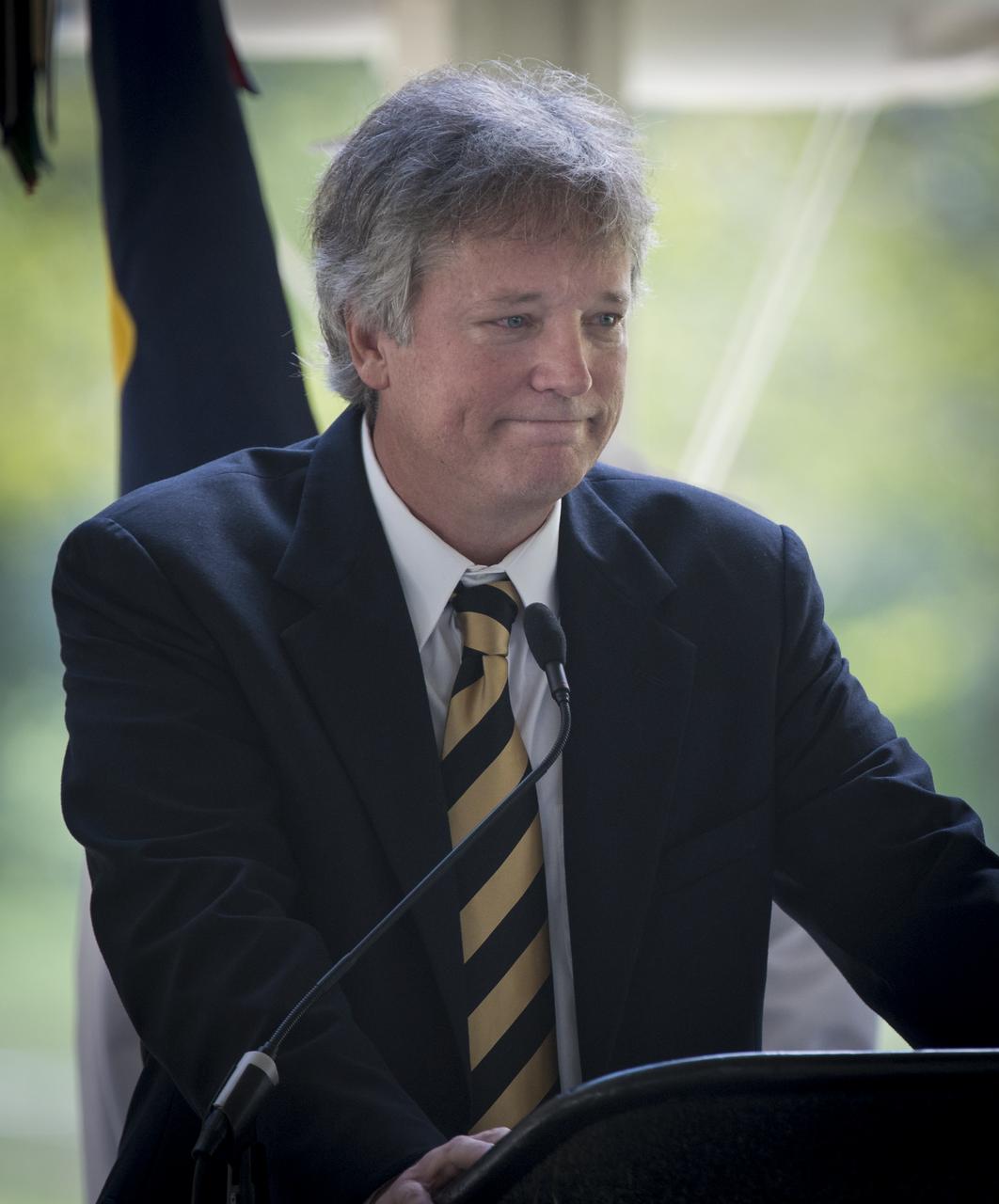
Eric "Rick" Armstrong, son of Neil Armstrong, speaks during a memorial service celebrating the life of his father, Friday, Aug. 31, 2012, at the Camargo Club in Cincinnati. Neil Armstrong, the first man to walk on the moon during the 1969 Apollo 11 mission, died Saturday, Aug. 25. He was 82. Photo Credit: (NASA/Bill Ingalls)
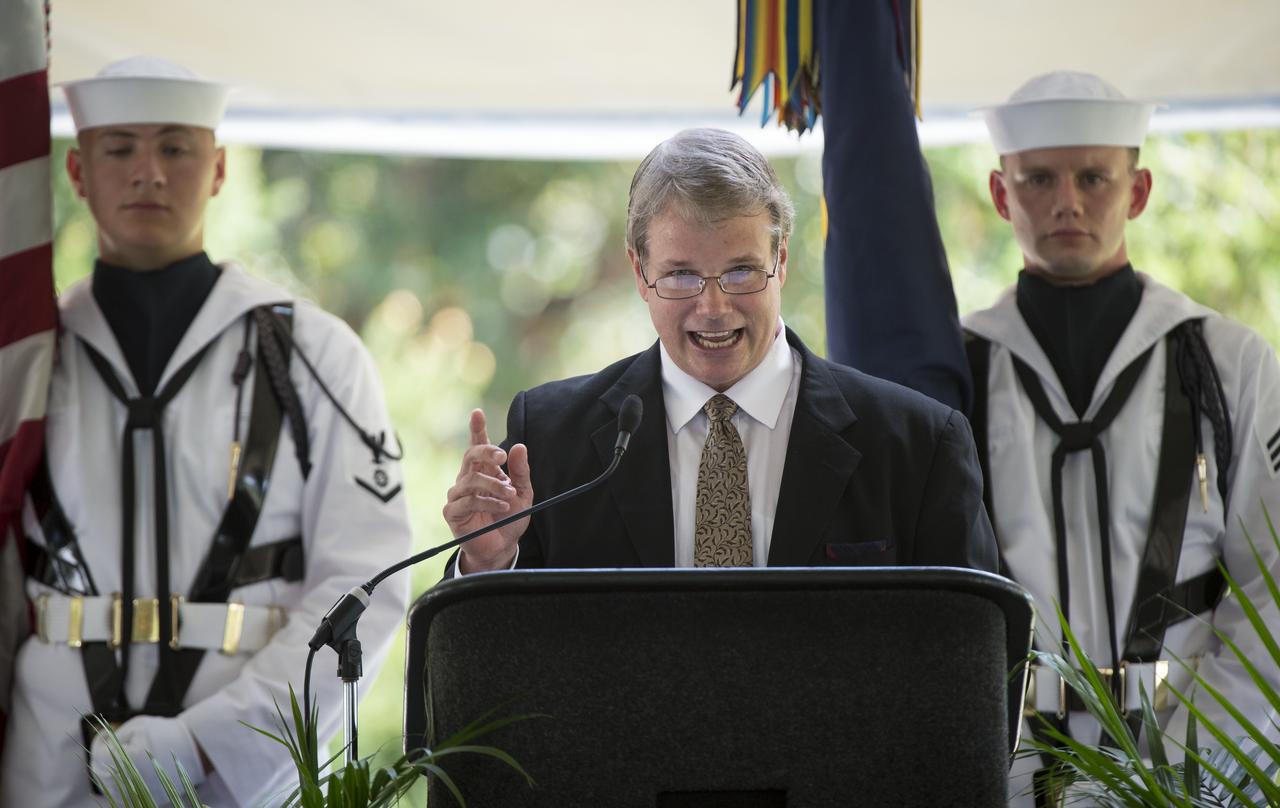
Mark Armstrong, son of Neil Armstrong, speaks during a memorial service celebrating the life of his father, Friday, Aug. 31, 2012, at the Camargo Club in Cincinnati. Neil Armstrong, the first man to walk on the moon during the 1969 Apollo 11 mission, died Saturday, Aug. 25. He was 82. Photo Credit: (NASA/Bill Ingalls)
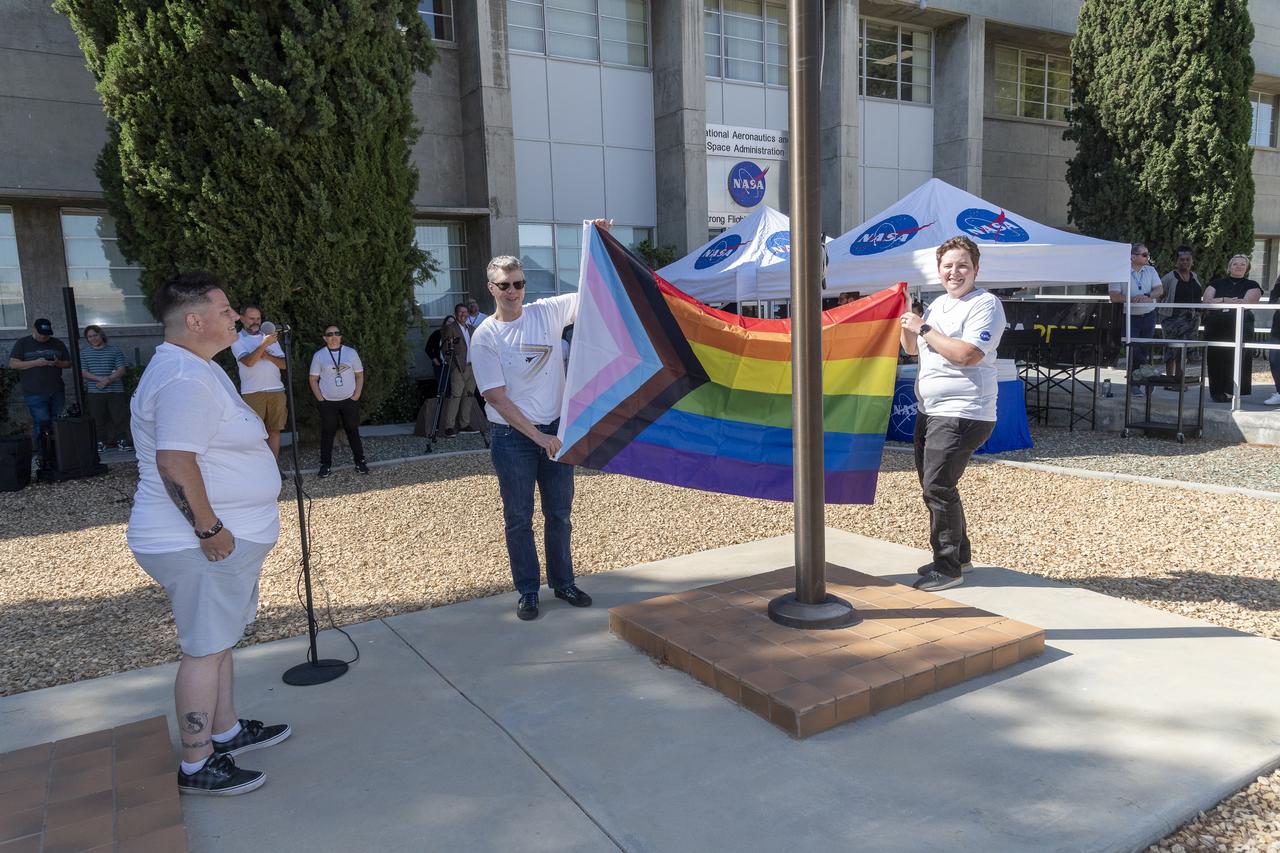
Cynthia Bixby and Lydia Hantsche hold the Progress Pride Flag at a flag-raising ceremony in recognition and celebration of LGBTQI+ Pride Month, Tuesday, June 4, 2024, at NASA’s Armstrong Flight Research Center in Edwards, California.
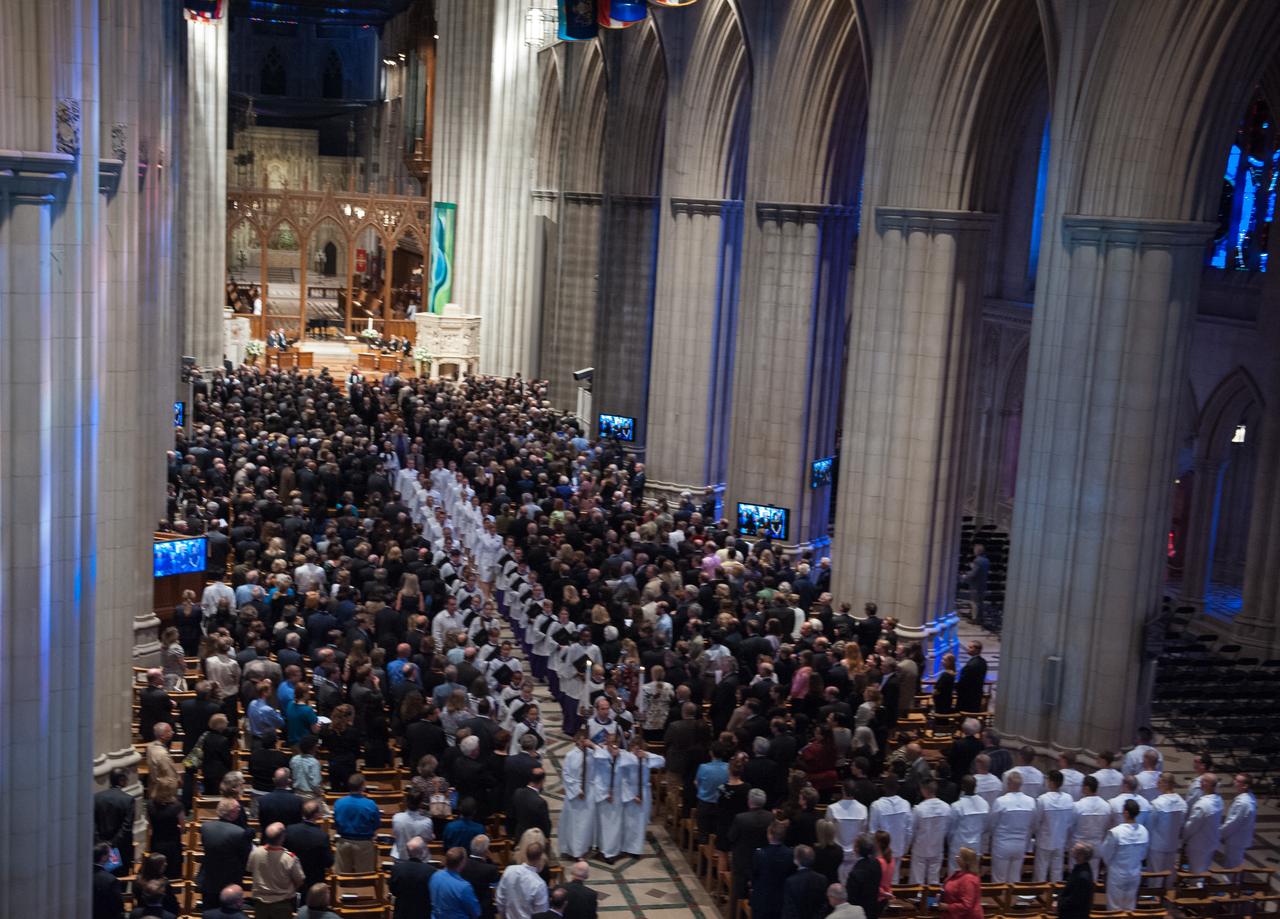
Acolytes lead the recessional through the Nave at the conclusion of a memorial service celebrating the life of Neil Armstrong at the Washington National Cathedral, Thursday, Sept. 13, 2012. Armstrong, the first man to walk on the moon during the 1969 Apollo 11 mission, died Saturday, Aug. 25. He was 82. Photo Credit:(NASA/Paul E. Alers)
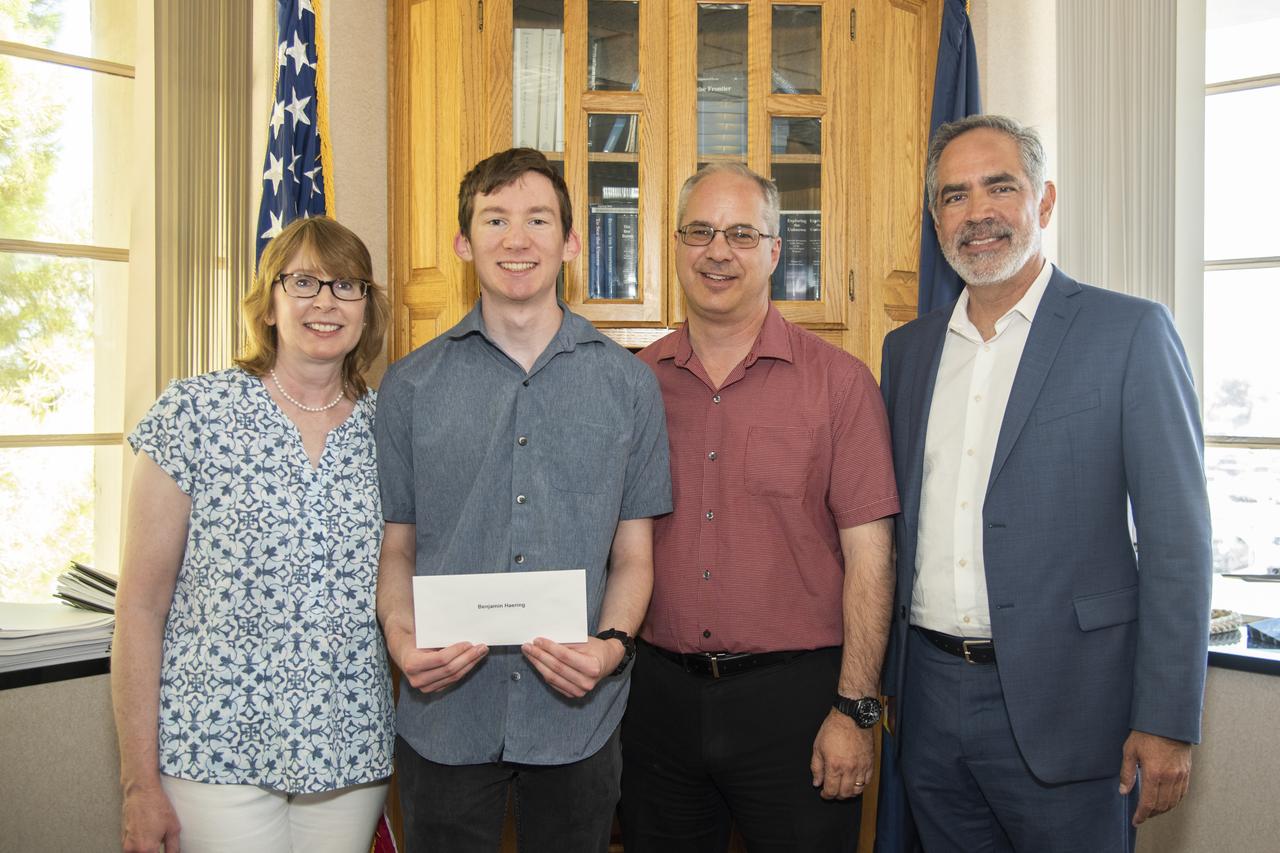
The Employee Exchange Council at NASA’s Armstrong Flight Research Center in California recently awarded its 2019 scholarship to Ben Haering, second from left. Armstrong Center Director David McBride, at right, presented the award. Also in the photo are Haering’s parents Ed and Kathy Haering.

Attendees to the memorial service for Neil Armstrong sing a hymnal, Thursday, Sept. 13, 2012, at the Washington National Cathedral. Armstrong, the first man to walk on the moon during the 1969 Apollo 11 mission, died Saturday, Aug. 25. He was 82. Photo Credit: (NASA/Bill Ingalls)

Carol Armstrong, wife of Neil Armstrong, and Piper Van Wagenen, one of 10 grandchildren, are seen during a memorial service celebrating the life of Neil Armstrong, Friday, Aug. 31, 2012, at the Camargo Club in Cincinnati. Armstrong, the first man to walk on the moon during the 1969 Apollo 11 mission, died Saturday, Aug. 25. He was 82. Photo Credit: (NASA/Bill Ingalls)
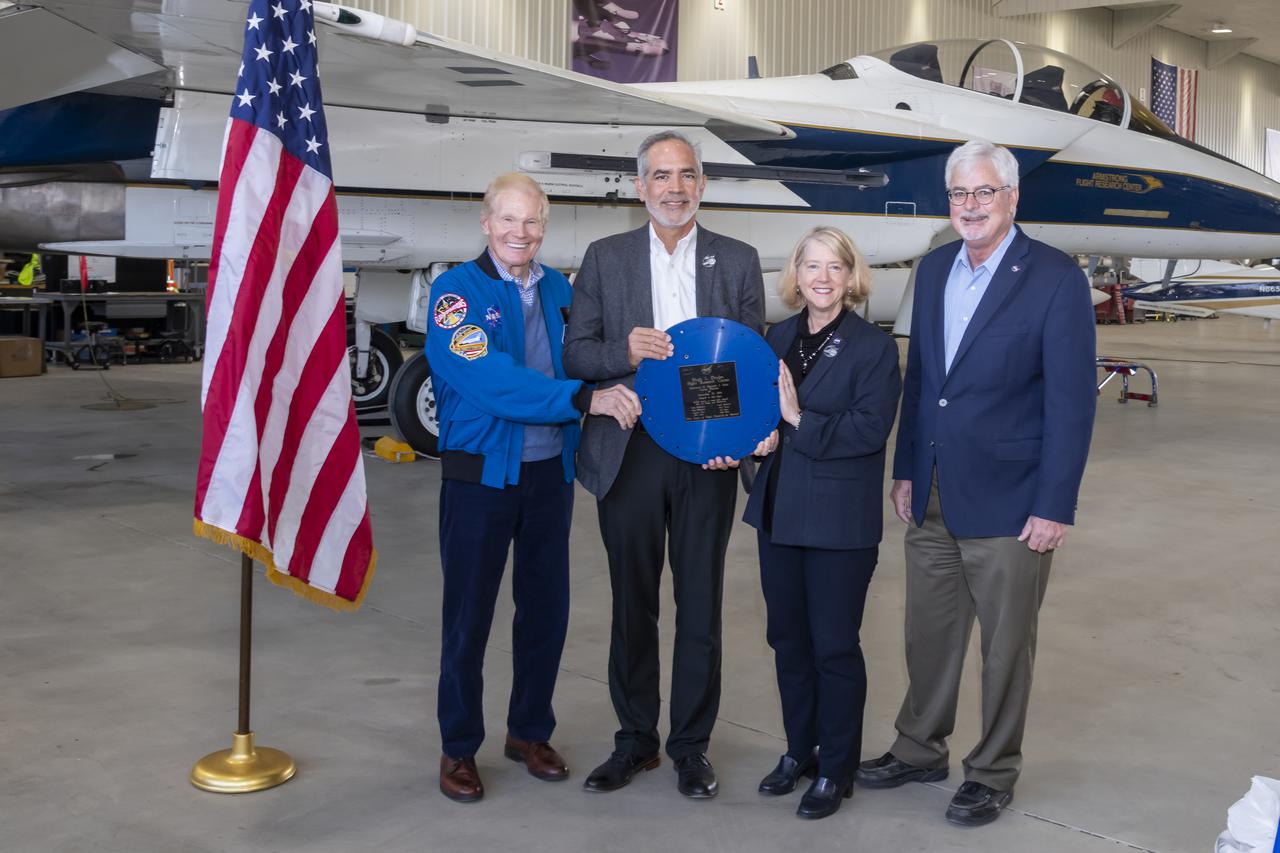
NASA Administrator Bill Nelson, from left, NASA Armstrong Flight Research Center Director David McBride, NASA Deputy Administrator Pam Melroy, and NASA Armstrong Deputy Center Director Patrick Stoliker, display the lid to a time capsule on Oct. 13. The time capsule was sealed on the center's 50th anniversary and opened to commemorate its 75th anniversary. NASA Armstrong is in Edwards, California.
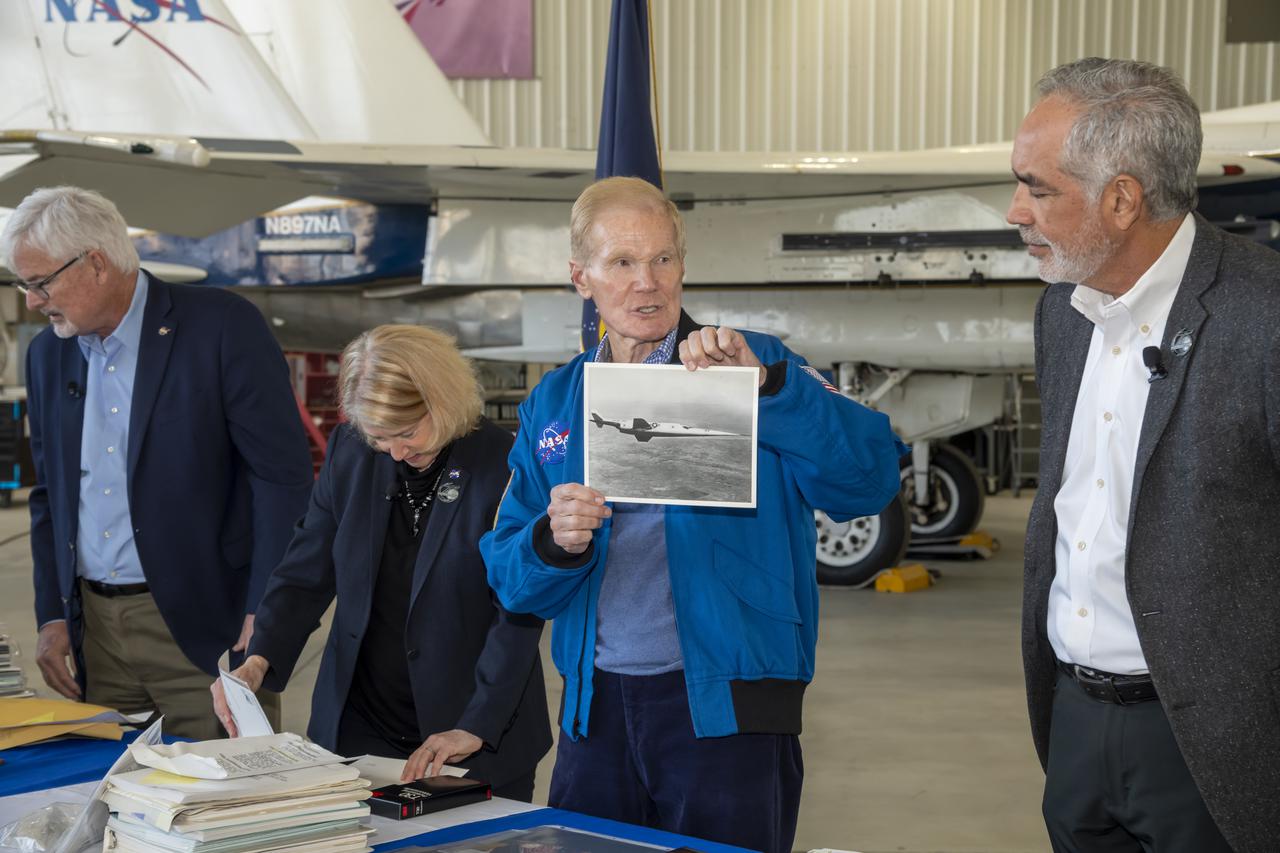
NASA Administrator Bill Nelson shows a picture of the X-3 to NASA Armstrong Flight Research Center Director David McBride on Oct. 13. NASA Armstrong Deputy Center Director Patrick Stoliker and NASA Deputy Administrator Pam Melroy also are with Nelson and McBride. The photo was contained in a time capsule that was sealed on the center's 50th anniversary and opened to commemorate its 75th anniversary. NASA Armstrong is in Edwards, California.
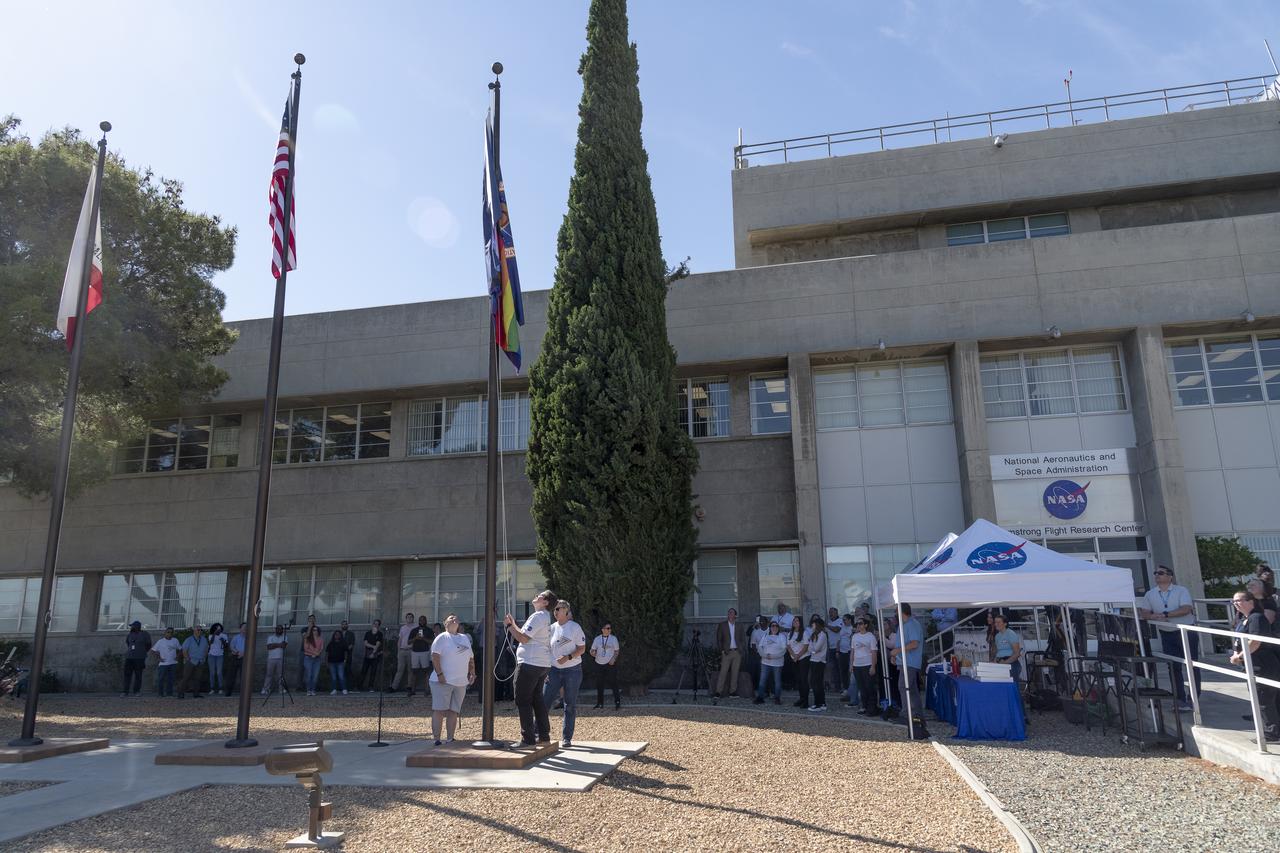
Members of the Sexuality and Gender Alliance Employee Resource Group at NASA’s Armstrong Flight Research Center in Edwards, California, raise the Progress Pride Flag at a flag-raising ceremony in recognition and celebration of LGBTQI+ Pride Month, Tuesday, June 4, 2024, at the center.
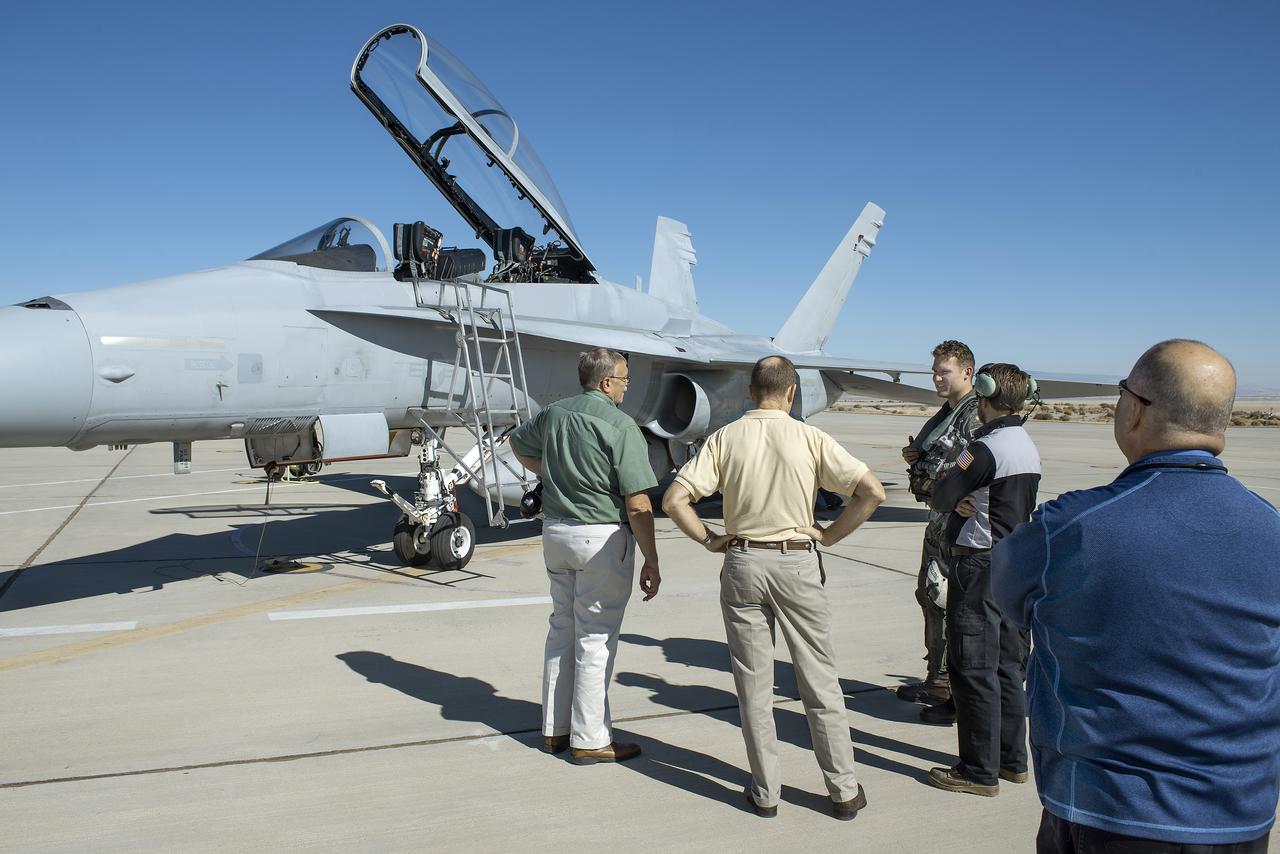
Lt. Cmdr. Mike Shelton delivers a F/A/-18B Hornet to NASA’s Armstrong Flight Research Center in California. Shelton, center, was met by Armstrong’s Tom Grindle, from left, Ted Williams, Gary Gano and Brian Fox.

NASA Administrator Bill Nelson and NASA Deputy Administrator Pam Melroy listen to NASA Armstrong Flight Research Center Director David McBride, at left, tell them about Building 703 in Palmdale, California. The building houses many of NASA's science aircraft. NASA Armstrong's main campus is in nearby Edwards, California.
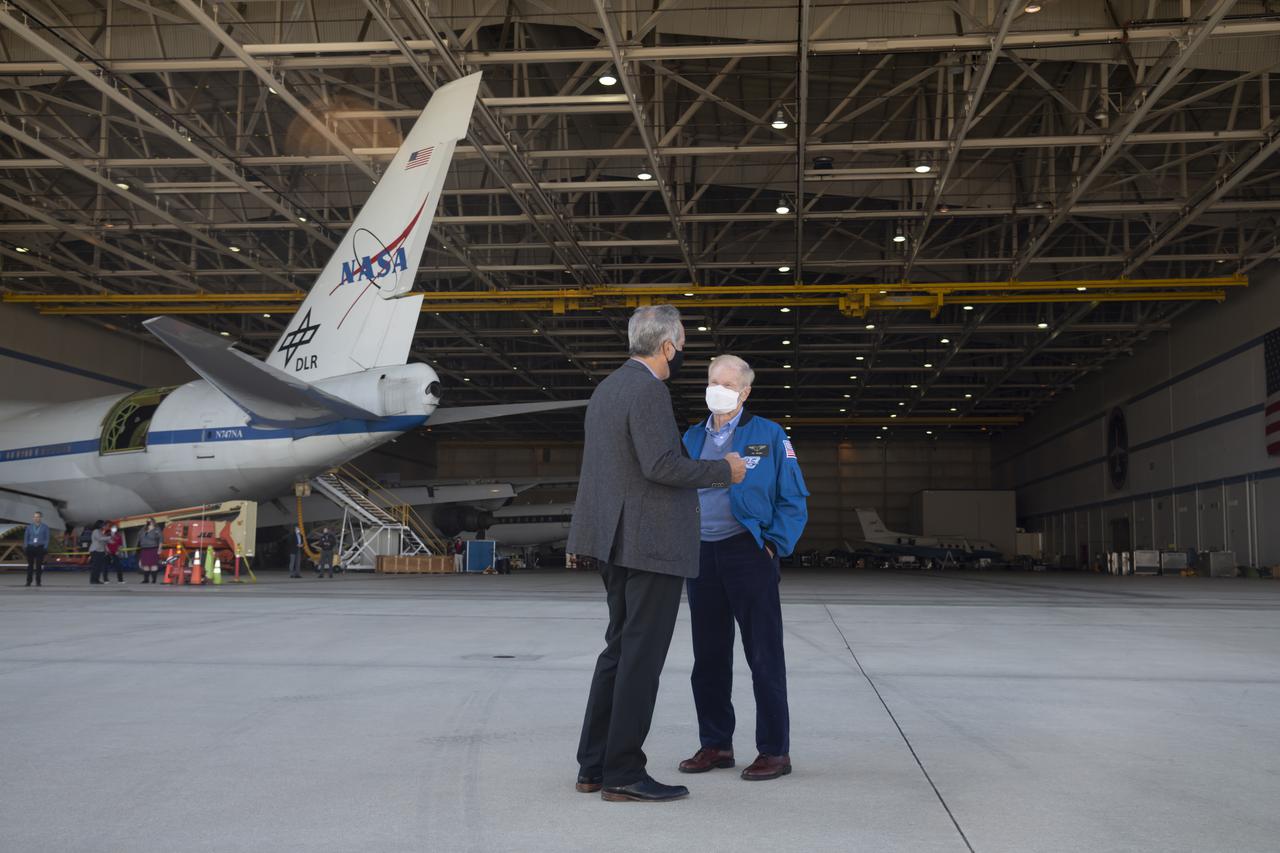
NASA Administrator Bill Nelson, right, and David McBride, center director at NASA’s Armstrong Flight Research Center in Edwards, California, talk by the Stratospheric Observatory for Infrared Science during the administrator’s visit to NASA Armstrong’s Building 703 in Palmdale, California, on Oct. 12.

Aerial Vies of NASA Glenn Research Center, Neil A. Armstrong Test Facility. At the time this photograph was taken, the site was known as Plum Brook Station.

Vibro-acoustic testing on the Orion spacecraft that flew around the Moon on Artemis I, now known as the Environmental Test Article. The testing at Armstrong Test Facility will help ensure the safety of future crews aboard Orion. Photograph taken on September 11, 2024. Photo Credit: (NASA/Sara Lowthian-Hanna)
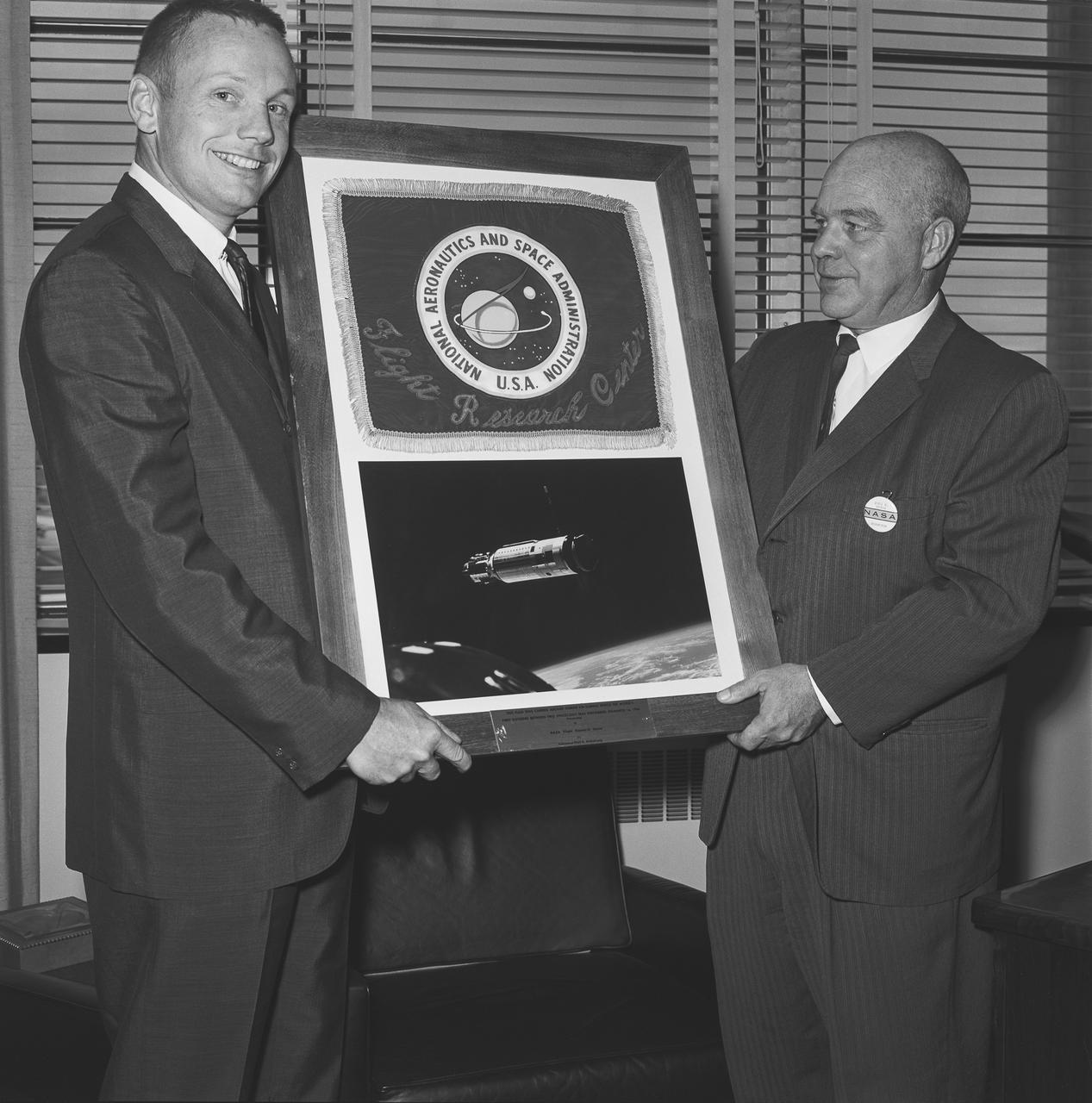
Neil A. Armstrong, left, presents a flag from the Moon to Paul F. Bikle, director of NASA’s Flight Research Center (now NASA’s Armstrong Flight Research Center), in 1966 in Edwards, California.
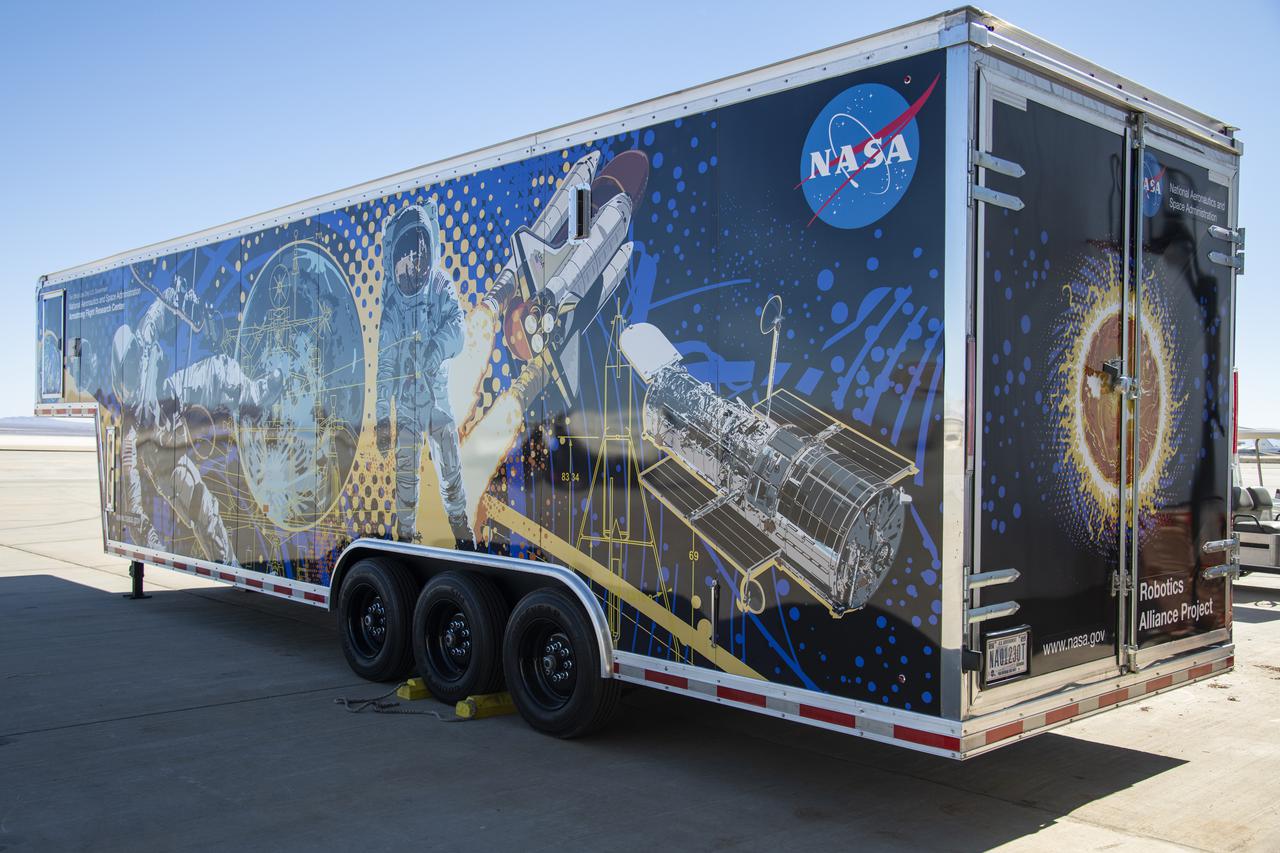
The Mobile Fabrication Shop was received at NASA Armstrong on February 7, 2022 as part of the Robotics Alliance Program based at NASA’s Johnson Space Center. This view shows the side and rear of the wrapped trailer that attends robotics competitions to help students during their robotics competitions.
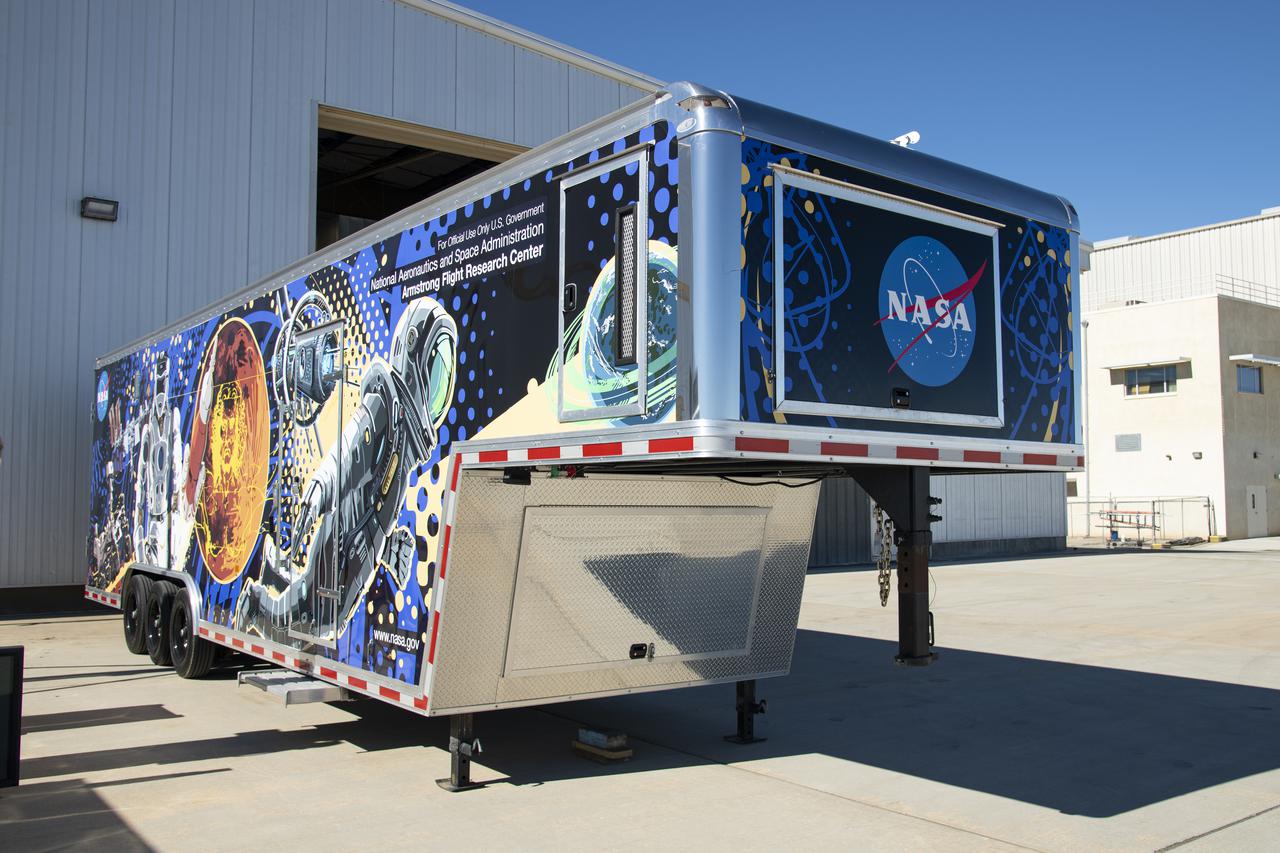
The Mobile Fabrication Shop was received at NASA Armstrong on February 7, 2022 as part of the Robotics Alliance Program based at NASA’s Johnson Space Center. This view shows the front of the wrapped trailer that attends robotics competitions to help students during their robotics competitions.

The Mobile Fabrication Shop was received at NASA Armstrong on February 7, 2022 as part of the Robotics Alliance Program based at NASA’s Johnson Space Center. This view shows the fabrication equipment housed inside the trailer that attends robotics competitions to help students during their robotics competitions.
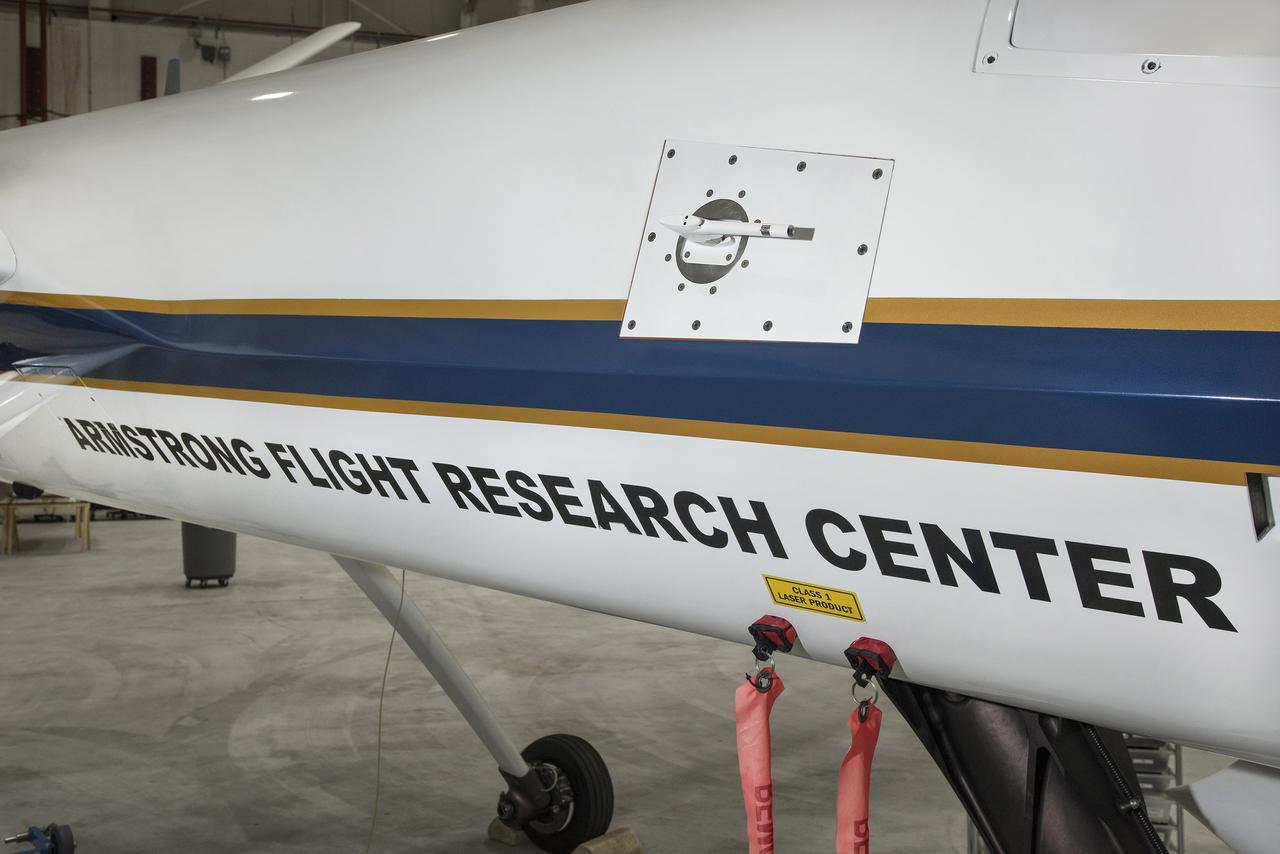
The TAMDAR Edge probe seen in the middle of the NASA Armstrong Ikhana is flying on a large remotely piloted aircraft for the first time.
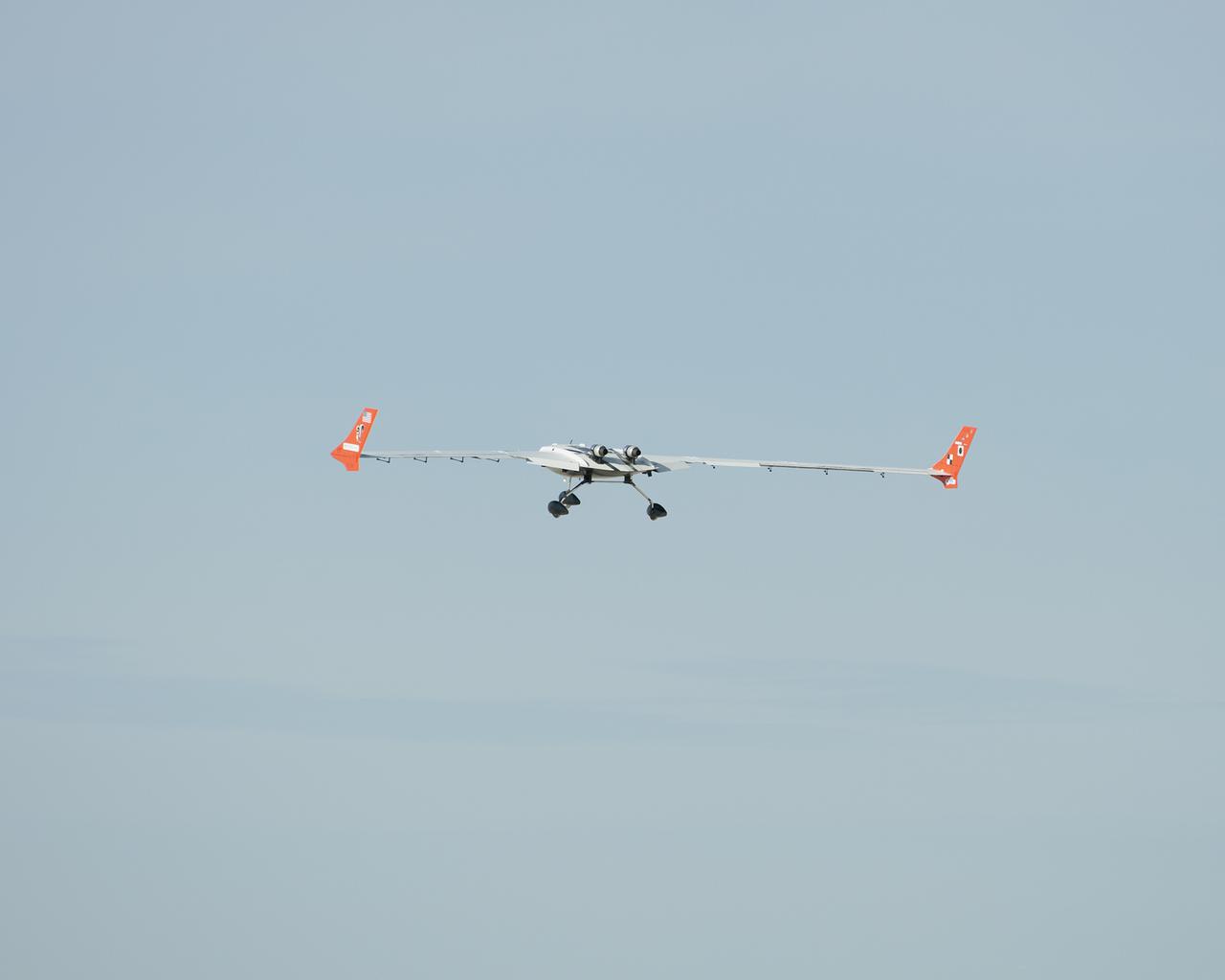
The X-56A takes off on its maiden flight from NASA Armstrong Flight Research Center, Edwards, California.
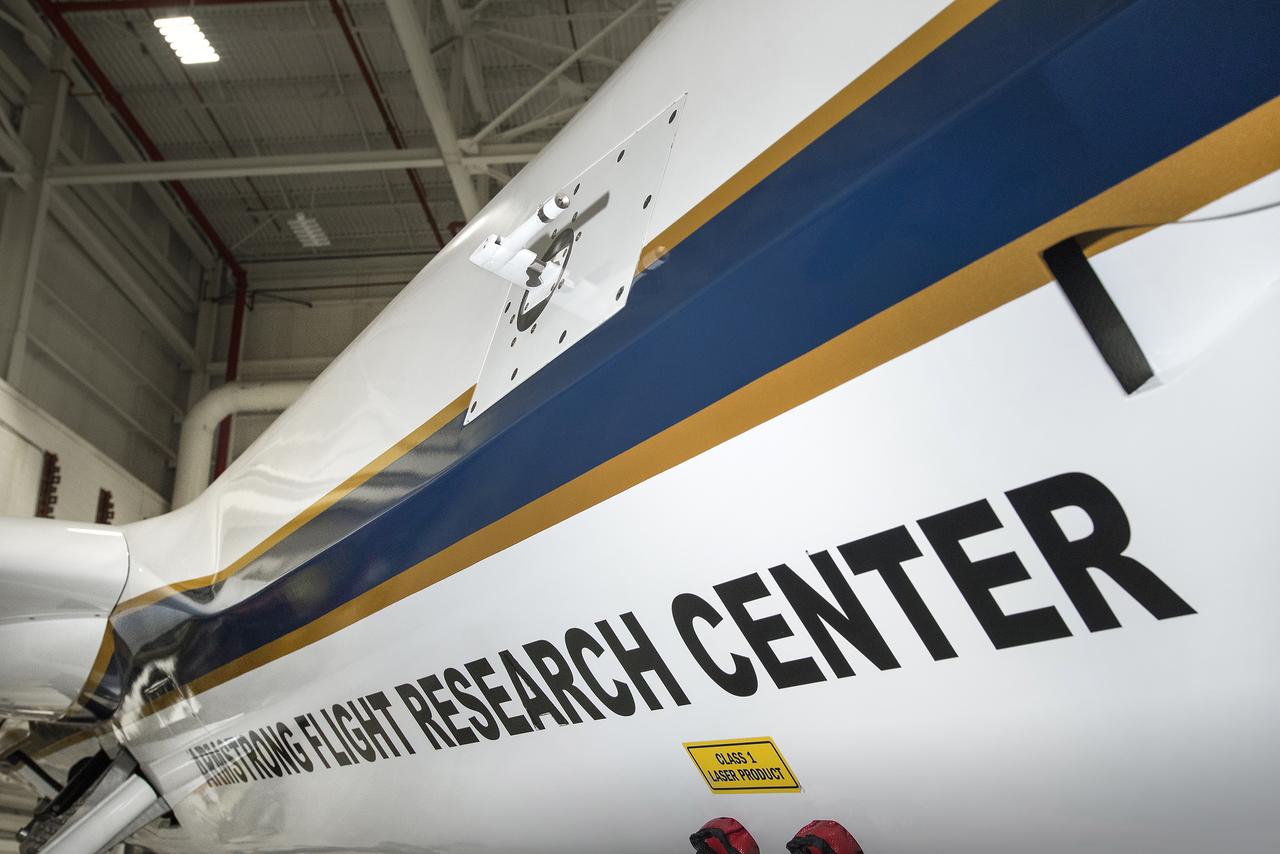
The TAMDAR Edge probe seen in the middle of the NASA Armstrong Ikhana is flying on a large remotely piloted aircraft for the first time.
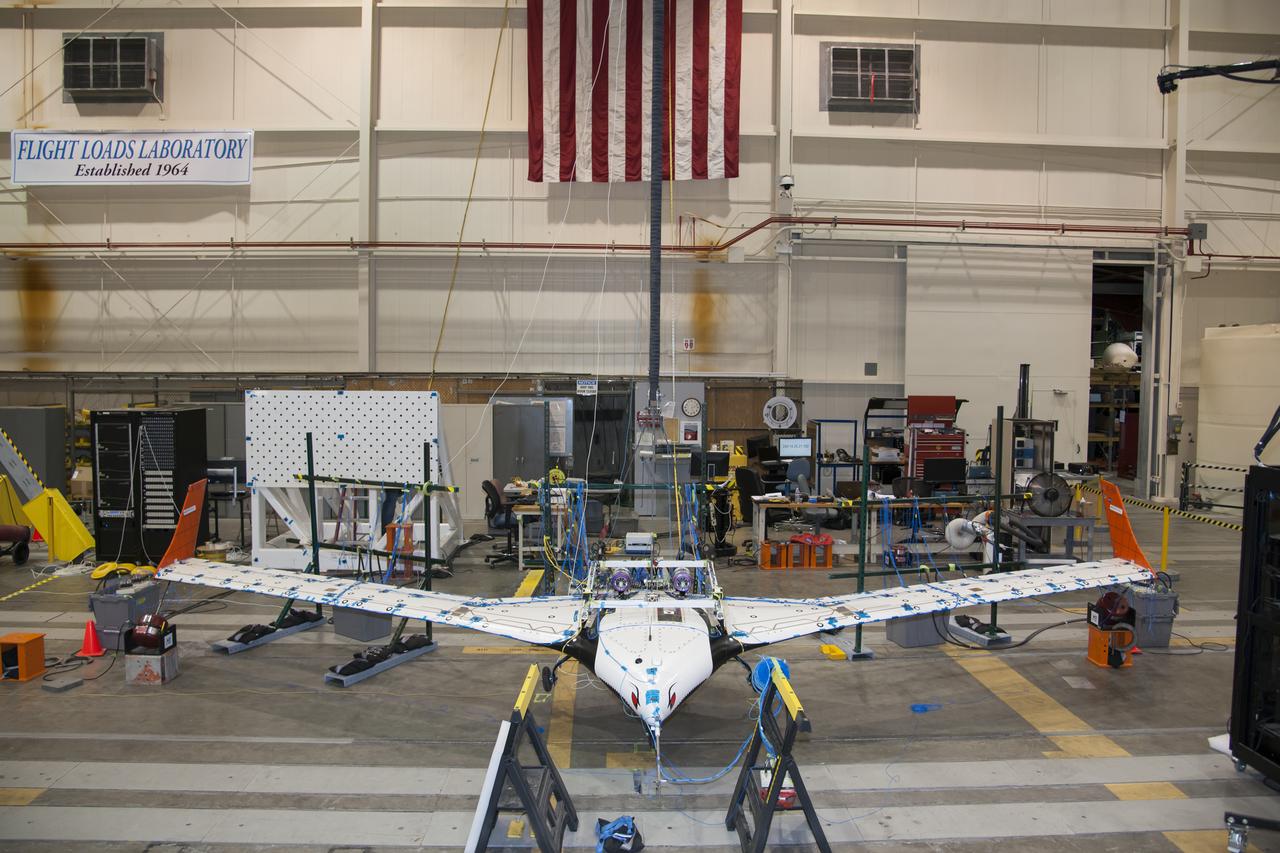
The X-56 Multi-Utility Technology Testbed (MUTT) undergoes ground vibration tests in Armstrong's Flight Loads Laboratory.
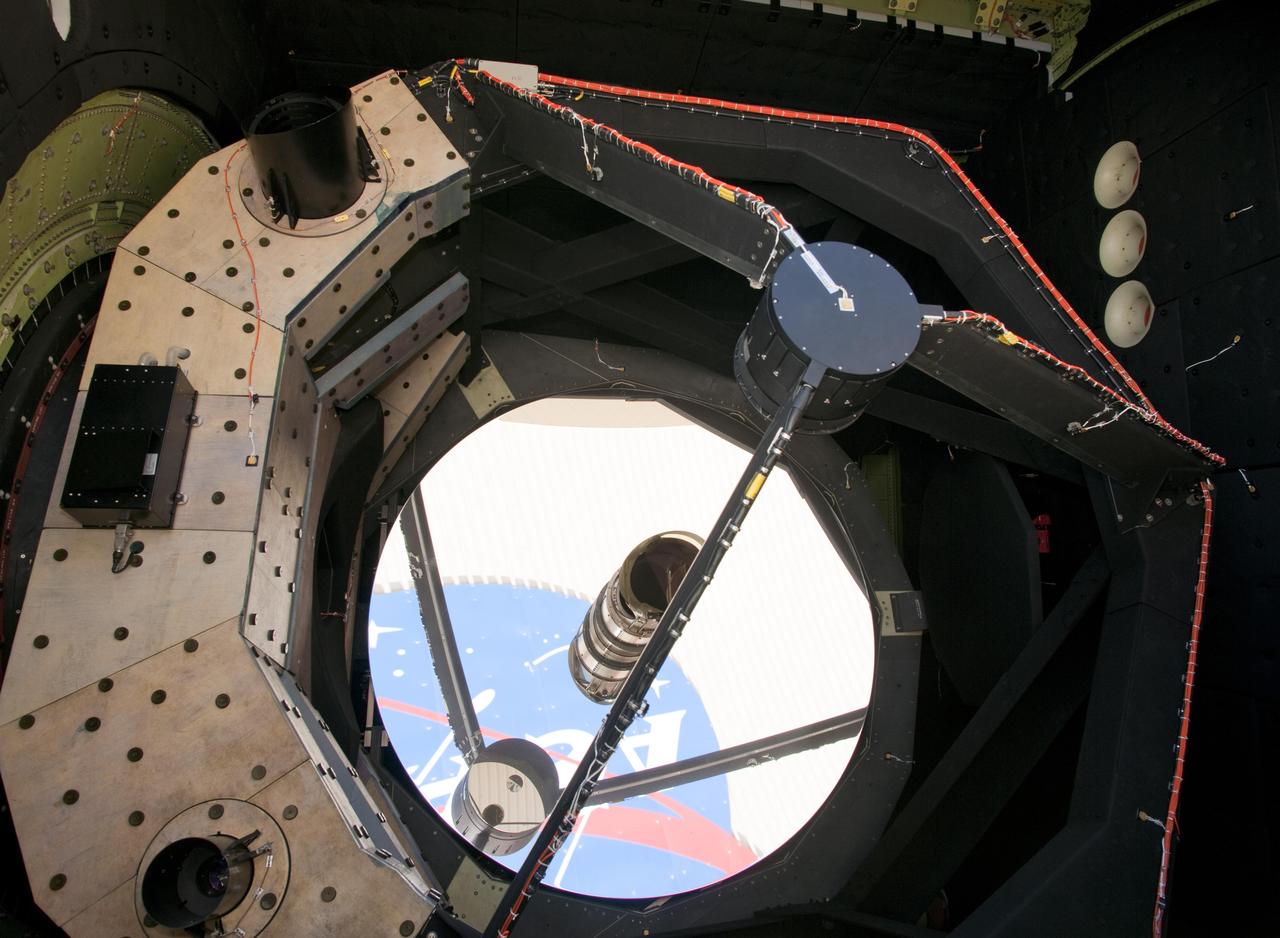
The NASA logo on Bldg. 703 at Armstrong Flight Research Center in Palmdale, Calif., is reflected in the telescope's 2.5-meter primary mirror.
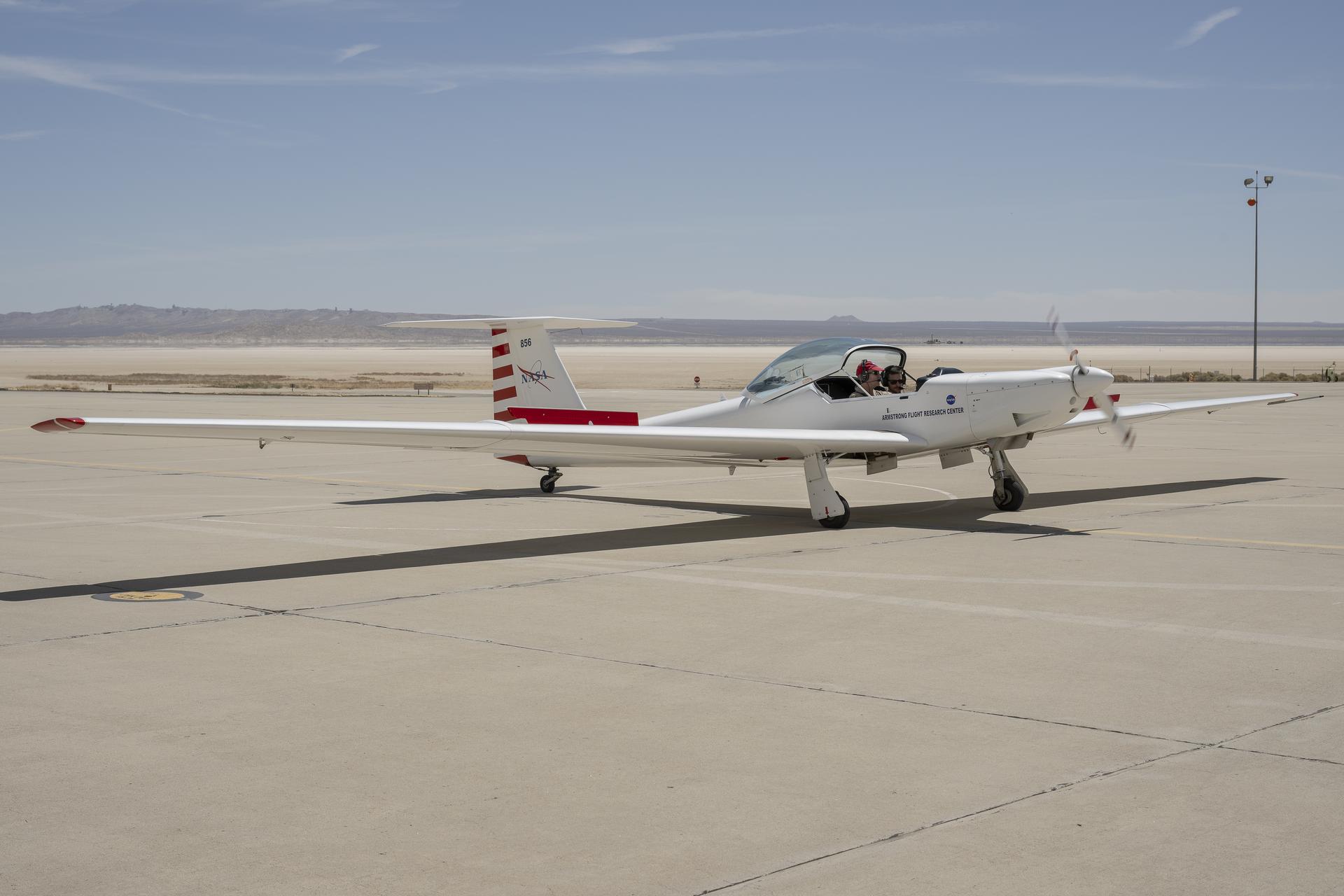
A NASA TG-14 sits on the ramp at NASA’s Armstrong Flight Research Center in Edwards, California, on Monday, Aug. 4, 2025, to support NASA’s Quesst mission.
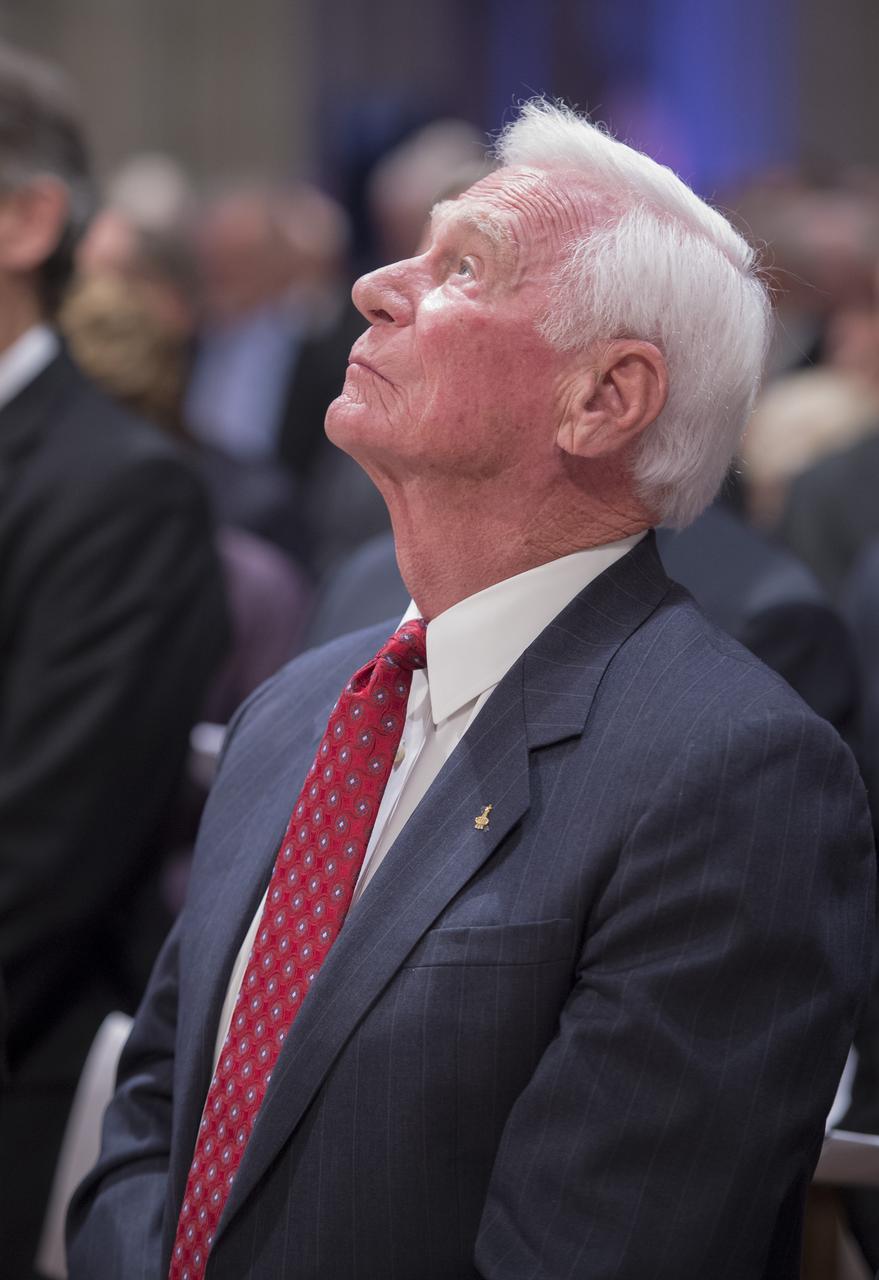
Apollo 17 mission commander Gene Cernan, the last man to walk on the moon, looks skyward during a memorial service celebrating the life of Neil Armstrong at the Washington National Cathedral, Thursday, Sept. 13, 2012. Armstrong, the first man to walk on the moon during the 1969 Apollo 11 mission, died Saturday, Aug. 25. He was 82. Photo Credit: (NASA/Bill Ingalls)
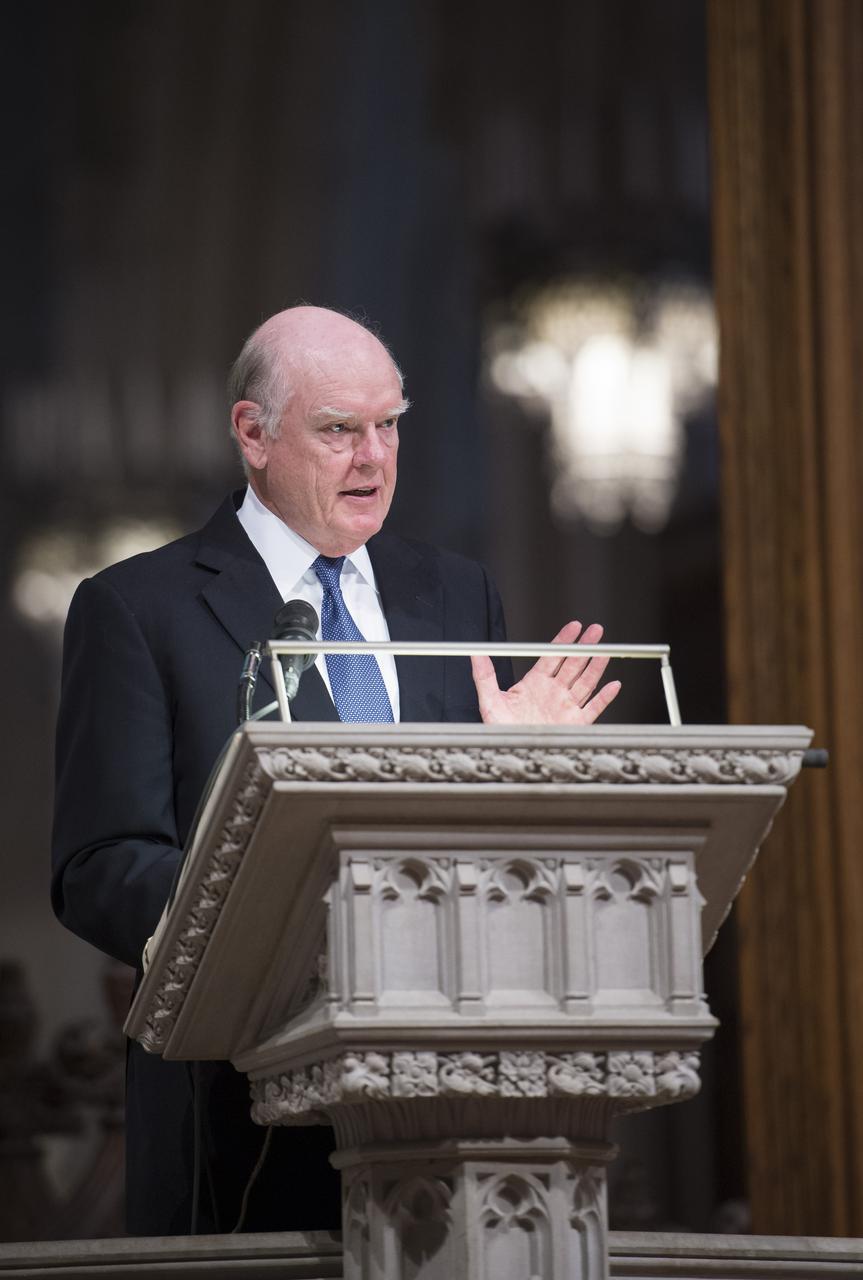
Former Secretary of the Treasury John Snow speaks during a memorial service celebrating the life of Neil Armstrong at the Washington National Cathedral, Thursday, Sept. 13, 2012. Armstrong, the first man to walk on the moon during the 1969 Apollo 11 mission, died Saturday, Aug. 25. He was 82. Photo Credit: (NASA/Bill Ingalls)

Musician Diana Krall sings ""Fly Me to the Moon" during a memorial service celebrating the life of Neil Armstrong at the Washington National Cathedral, Thursday, Sept. 13, 2012. Armstrong, the first man to walk on the moon during the 1969 Apollo 11 mission, died Saturday, Aug. 25. He was 82. Photo Credit: (NASA/Paul E. Alers)

Members of the Cathedral Choirsters sing "For the Beauty of the Earth" during a memorial service celebrating the life of Neil Armstrong at the Washington National Cathedral, Thursday, Sept. 13, 2012. Armstrong, the first man to walk on the moon during the 1969 Apollo 11 mission, died Saturday, Aug. 25. He was 82. Photo Credit:(NASA/Paul E. Alers)

Apollo 17 mission commander Gene Cernan, the last man to walk on the moon, speaks during a memorial service celebrating the life of Neil Armstrong at the Washington National Cathedral, Thursday, Sept. 13, 2012. Armstrong, the first man to walk on the moon during the 1969 Apollo 11 mission, died Saturday, Aug. 25. He was 82. Photo Credit: (NASA/Bill Ingalls)
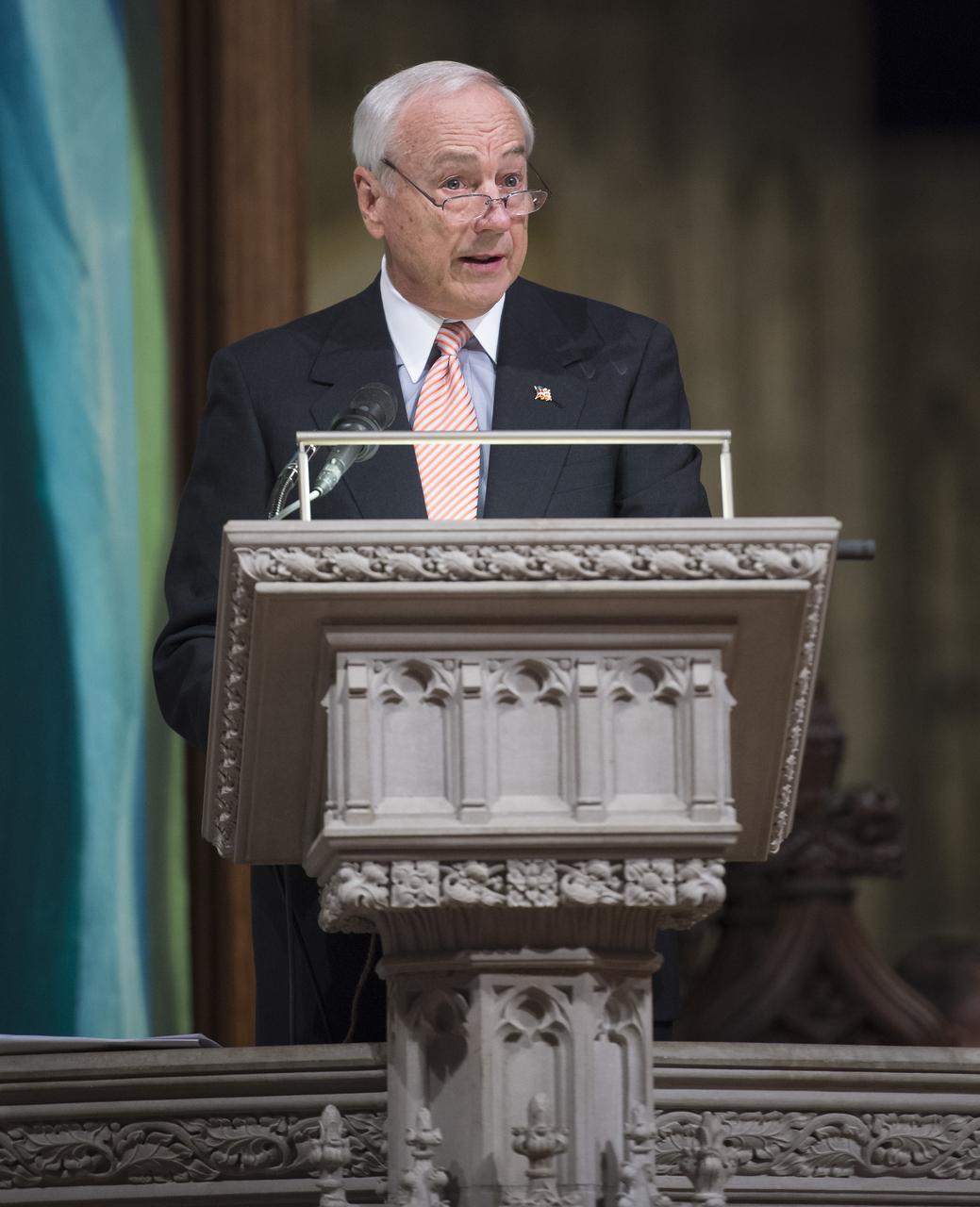
John H. Dalton, former United States Secretary of the Navy, delivers the Reading during a memorial service celebrating the life of Neil Armstrong at the Washington National Cathedral, Thursday, Sept. 13, 2012. Armstrong, the first man to walk on the moon during the 1969 Apollo 11 mission, died Saturday, Aug. 25. He was 82. Photo Credit: (NASA/Bill Ingalls)
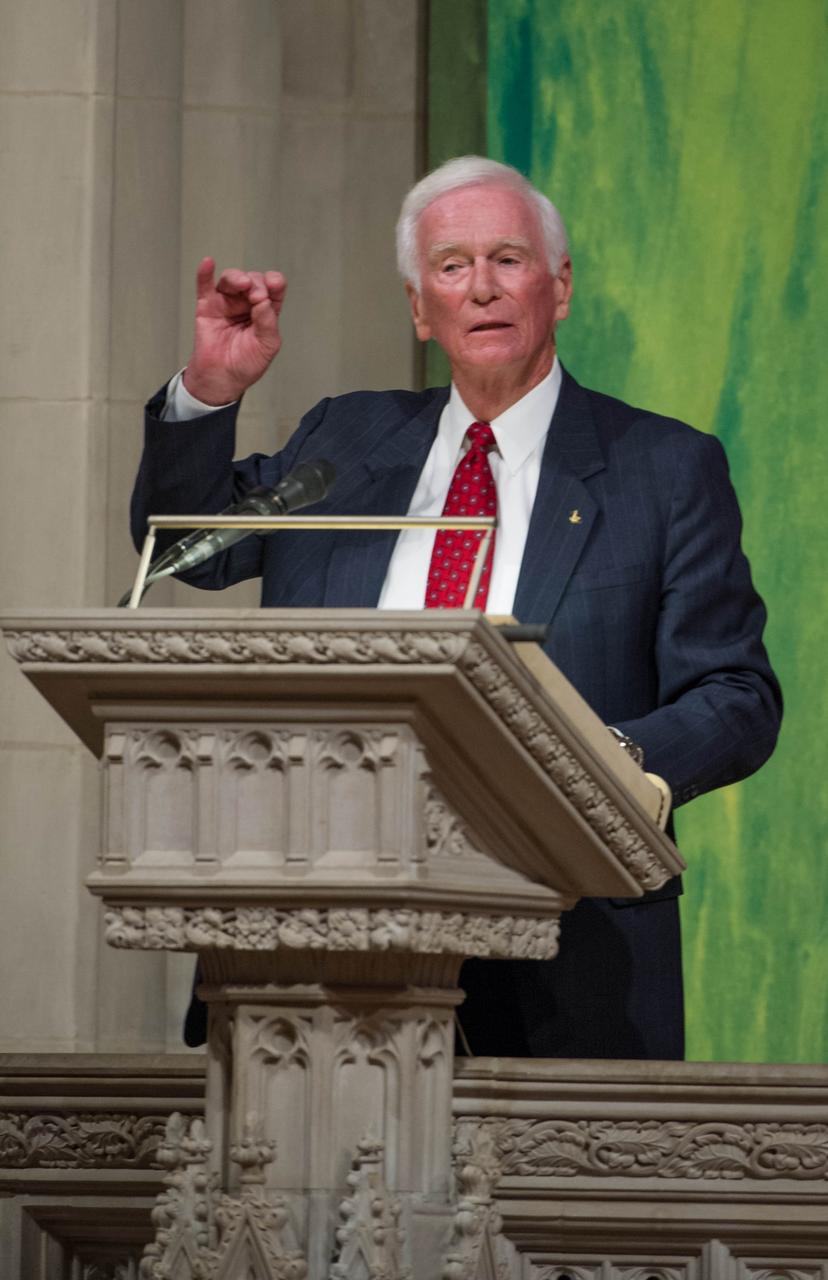
Apollo 17 astronaut Gene Cernan, the last man to walk on the moon, speaks during a memorial service celebrating the life of Neil Armstrong at the Washington National Cathedral, Thursday, Sept. 13, 2012. Armstrong, the first man to walk on the moon during the 1969 Apollo 11 mission, died Saturday, Aug. 25. He was 82. Photo Credit: (NASA/Paul E. Alers)

The Right Rev. Mariann Edgar Budde, bishop of Washington, delivers the Homily during a memorial service celebrating the life of Neil Armstrong at the Washington National Cathedral, Thursday, Sept. 13, 2012. Armstrong, the first man to walk on the moon during the 1969 Apollo 11 mission, died Saturday, Aug. 25. He was 82. Photo Credit:(NASA/Paul E. Alers)
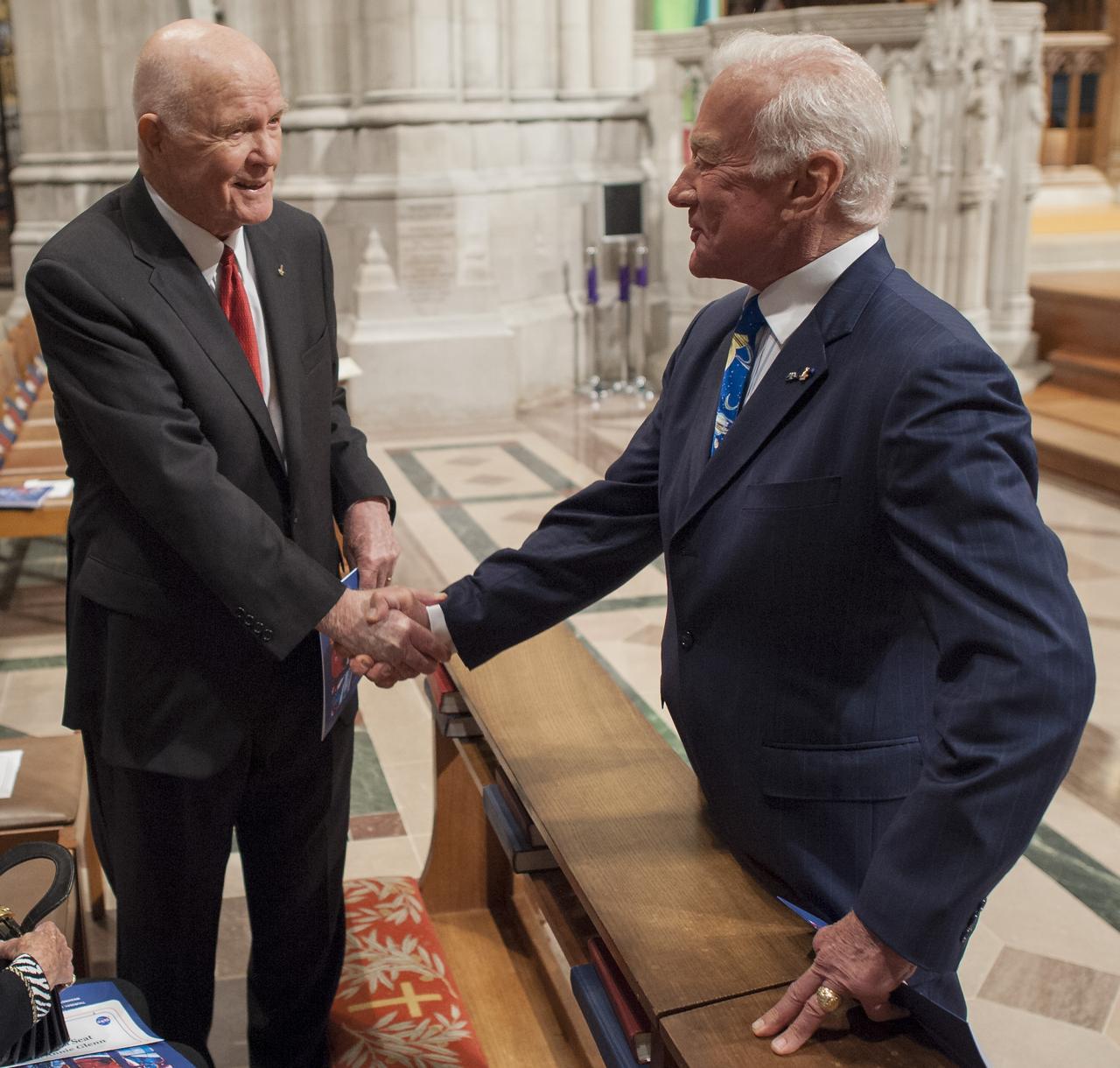
Former U.S. Sen. John Glenn, left, and Buzz Aldrin shake hands prior to a memorial service celebrating the life of Neil Armstrong, Thursday, Sept. 13, 2012, at the Washington National Cathedral. Armstrong, the first man to walk on the moon during the 1969 Apollo 11 mission, died Saturday, Aug. 25. He was 82. Photo Credit: (NASA/Bill Ingalls)
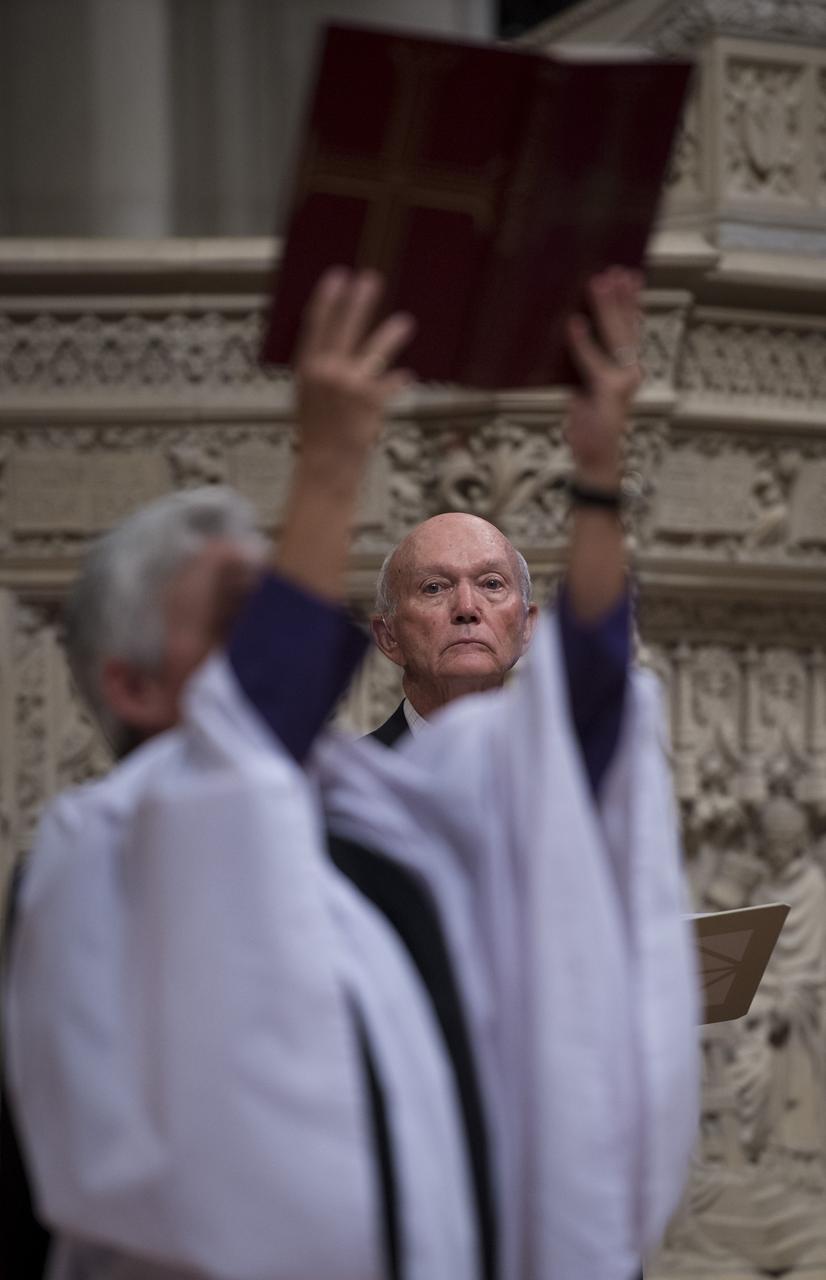
Apollo 11 command module pilot Michael Collins is framed by the upraised Bible held by the Rev. Gina Gilland Campbell during a memorial service celebrating the life of Neil Armstrong at the Washington National Cathedral, Thursday, Sept. 13, 2012. Armstrong, the first man to walk on the moon during the 1969 Apollo 11 mission, died Saturday, Aug. 25. He was 82. Photo Credit: (NASA/Bill Ingalls)
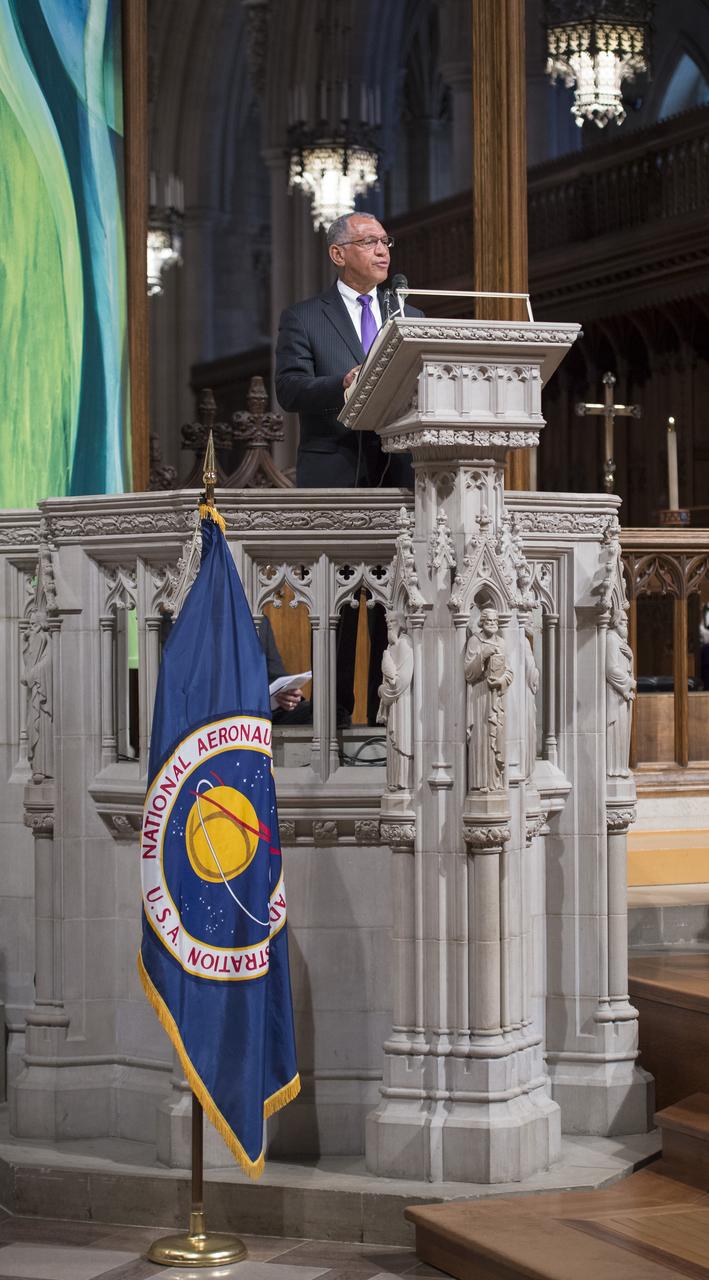
NASA Administrator Charles Bolden delivers a tribute during a memorial service celebrating the life of Neil Armstrong, Thursday, Sept. 13, 2012, at the Washington National Cathedral. Armstrong, the first man to walk on the moon during the 1969 Apollo 11 mission, died Saturday, Aug. 25. He was 82. Photo Credit: (NASA/Bill Ingalls)

The Rev. Gina Gilland Campbell, acting director of worship, Washington National Cathedral, reads the Gospel during a memorial service celebrating the life of Neil Armstrong at the Washington National Cathedral, Thursday, Sept. 13, 2012. Armstrong, the first man to walk on the moon during the 1969 Apollo 11 mission, died Saturday, Aug. 25. He was 82. Photo Credit: (NASA/Paul E. Alers)
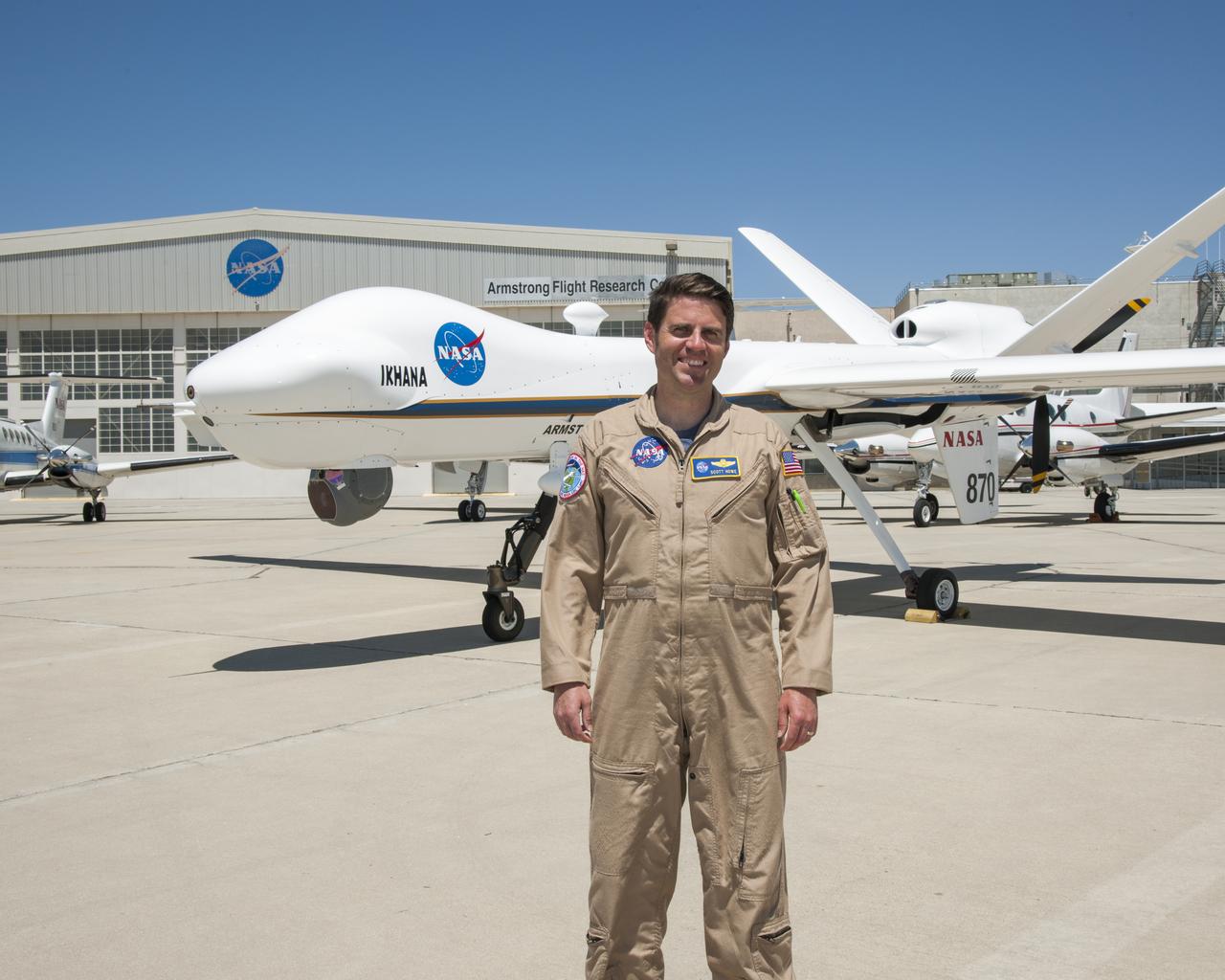
Scott Howe, a pilot at NASA's Armstrong Flight Research Center in California, assisted with monitoring California's wildfires by operating a MQ-9 remotely piloted aircraft during launches and recoveries for the California Air National Guard. The MQ-9 closely resembles the Ikhana aircraft, which Howe had piloted at Armstrong.
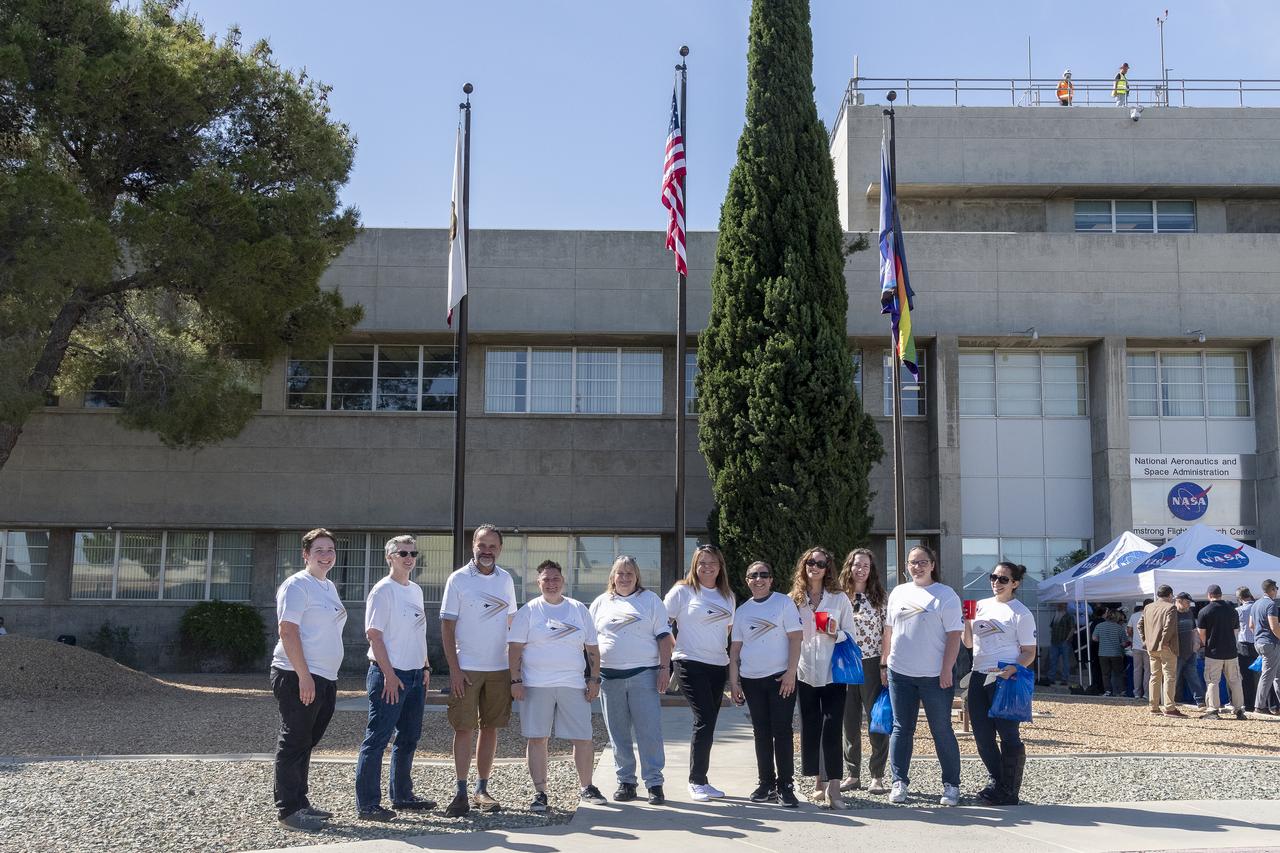
Members of the Sexuality and Gender Alliance Employee Resource Group at NASA’s Armstrong Flight Research Center in Edwards, California, pose for photo in front of the raised Progress Pride Flag at a flag-raising ceremony in recognition and celebration of LGBTQI+ Pride Month, Tuesday, June 4, 2024, at the center.
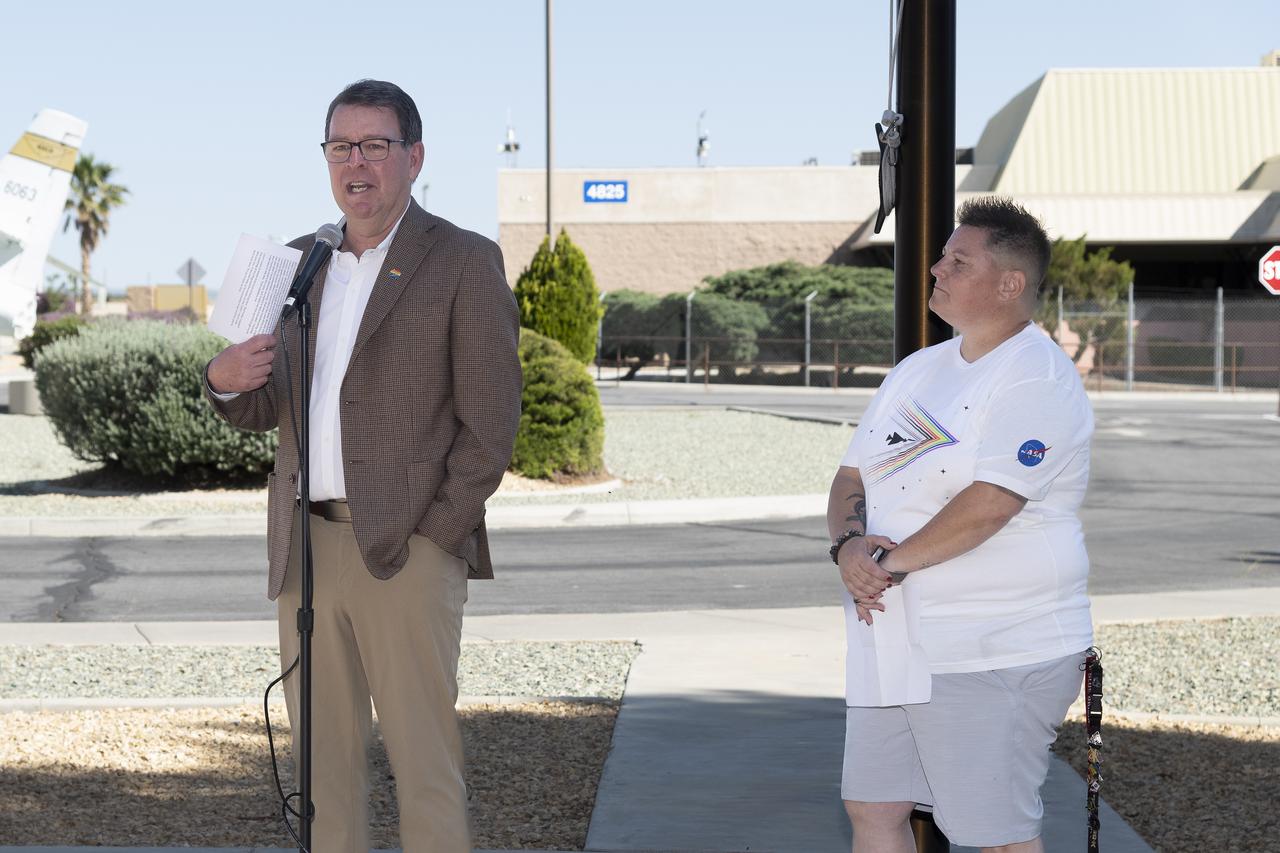
Brad Flick, center director at NASA’s Armstrong Flight Research Center in Edwards, California, delivers remarks during a Progress Pride Flag-raising ceremony in recognition and celebration of LGBTQI+ Pride Month, Tuesday, June 4, 2024, at the center.
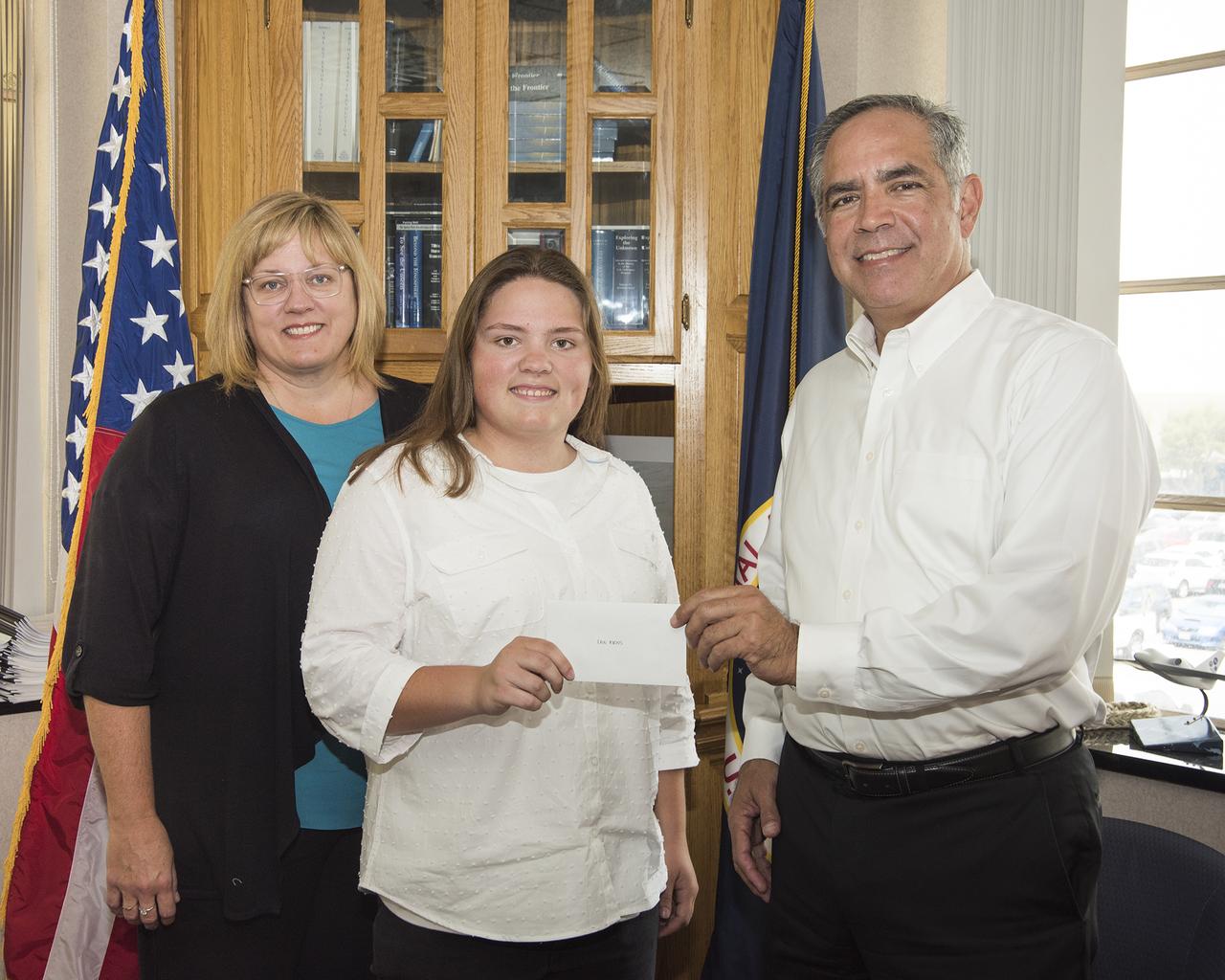
Erin Askins, second from left, accepts the 2018 NASA Armstrong Exchange Harold W. Walker Memorial Scholarship from Center Director David McBride. Next to Erin Askins is her mother Dana Askins.
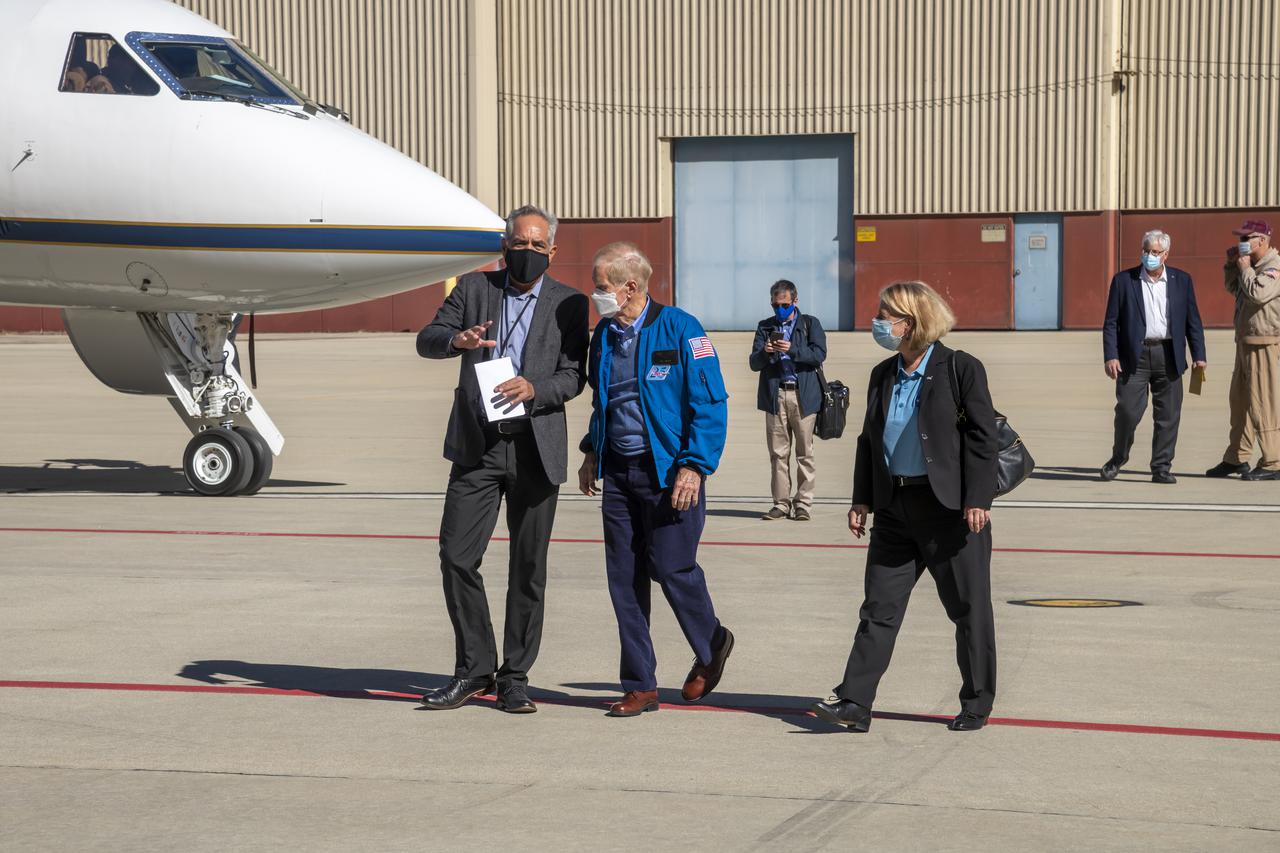
NASA Administrator Bill Nelson and NASA Deputy Administrator Pam Melroy land at the U.S. Air Force Base Plant 42 in Palmdale, California, near Building 703 on Oct. 12. That building is part of NASA’s Armstrong Flight Research Center in Edwards, California. NASA Armstrong Center Director David McBride, at left, talks to Nelson and Melroy as they begin a tour.
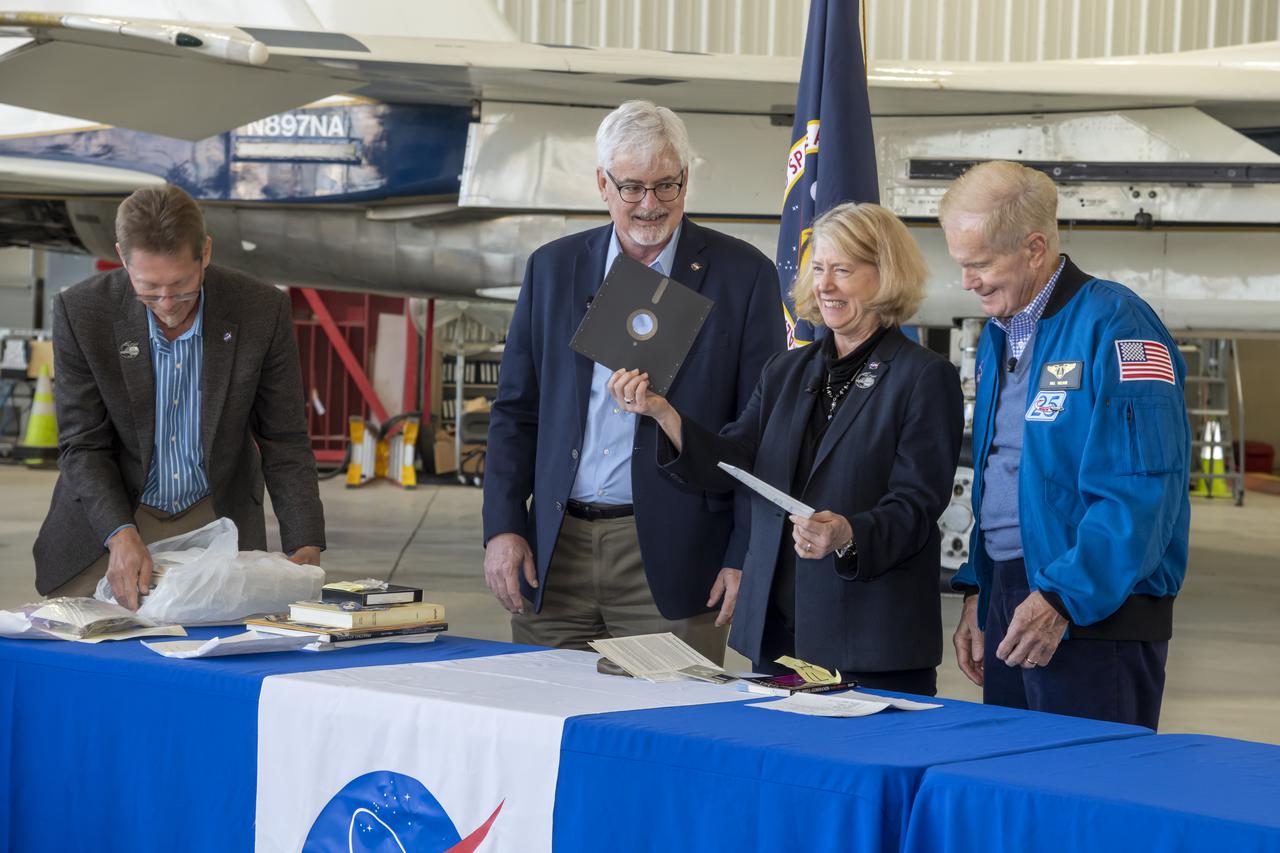
NASA Deputy Administrator Pam Melroy shows NASA Administrator Bill Nelson and NASA Armstrong Flight Research Center Deputy Director Patrick Stolicker a floppy disk, one of the treasures contained in a time capsule opened Oct. 13. The capsule was sealed on the center's 50th anniversary and opened to commemorate its 75th anniversary. NASA Armstrong is in Edwards, California.
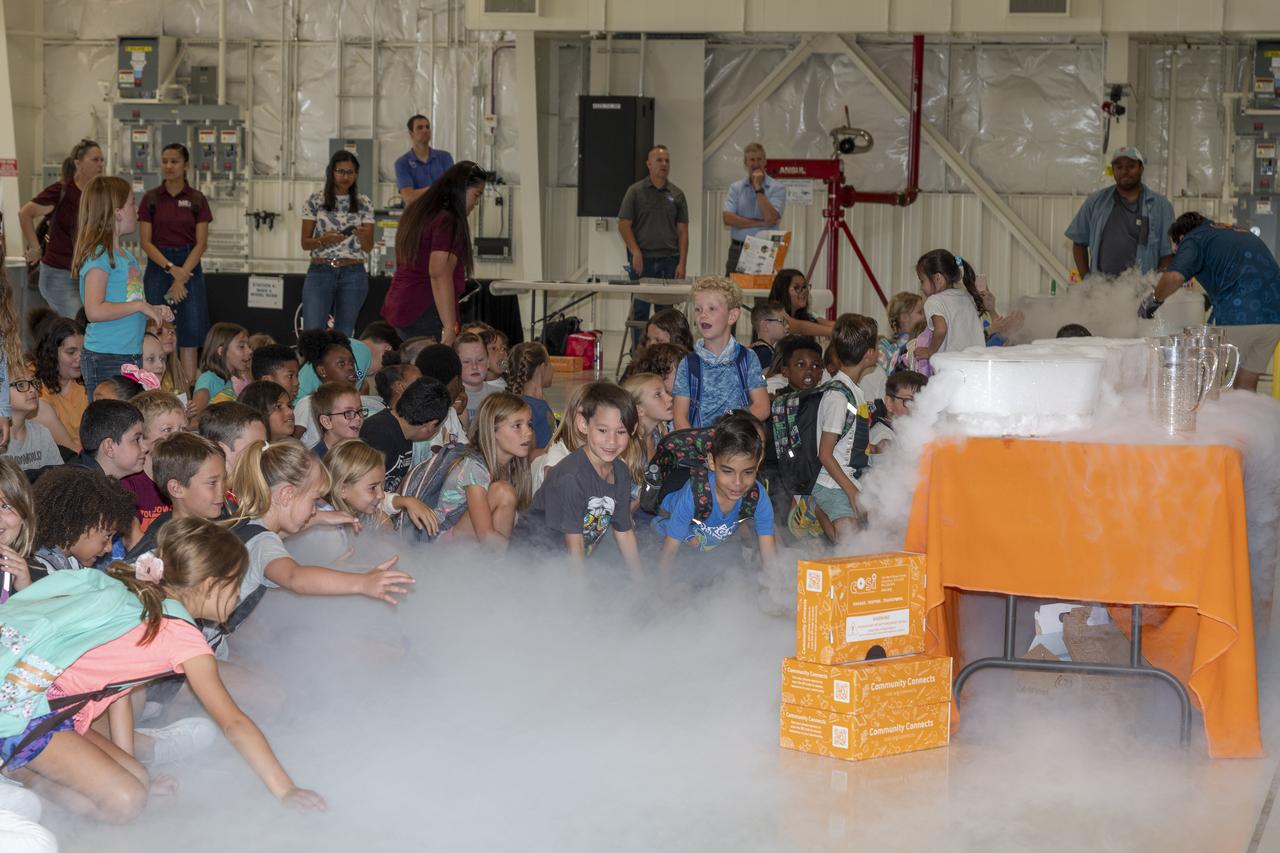
Students are wrapped in a cloud from a demonstration by NASA’s California Office of STEM Engagement event with Center of Science and Industry at NASA’s Armstrong Flight Research Center in Edwards, California.
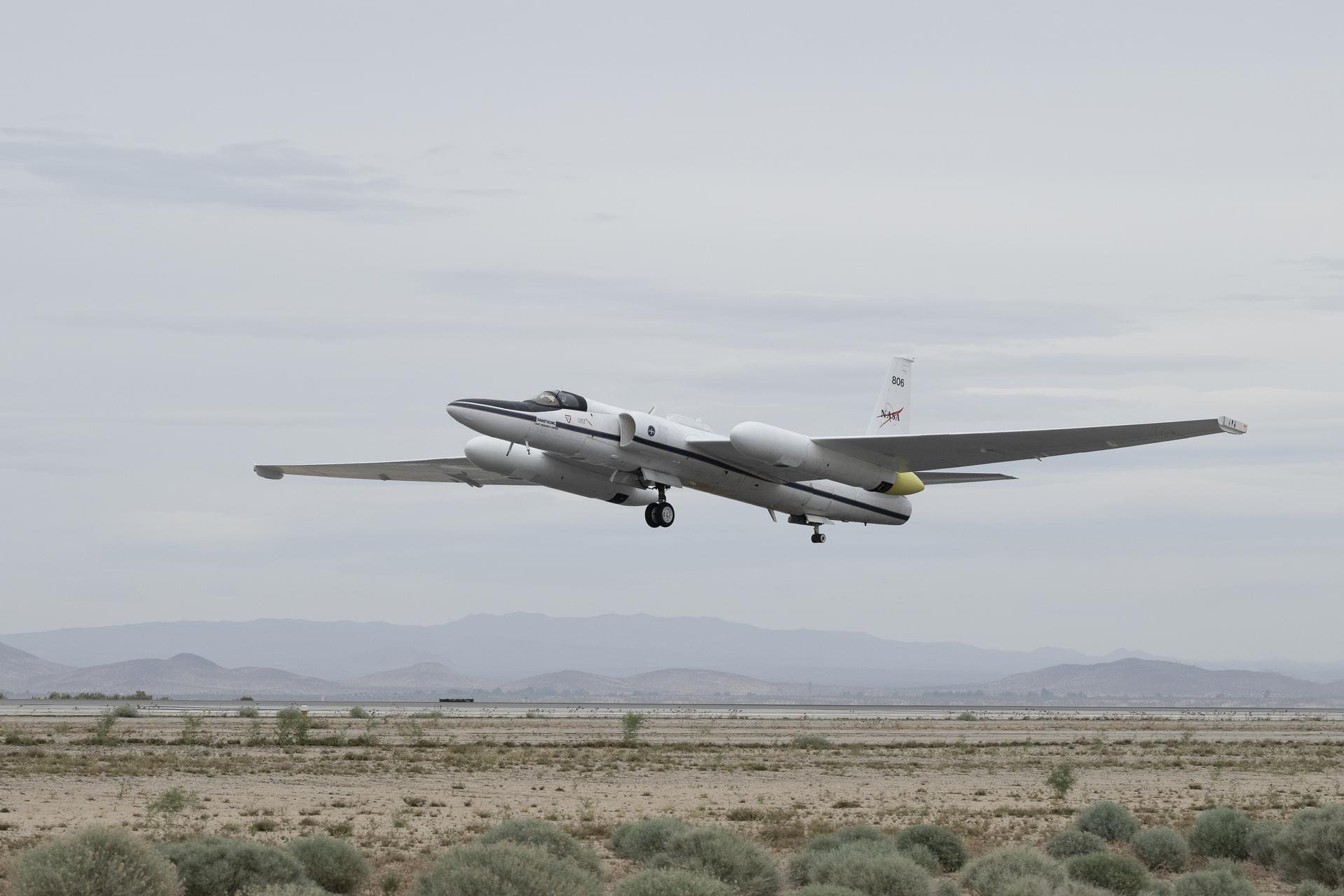
A NASA ER-2 aircraft takes off from NASA’s Armstrong Flight Research Center in Edwards, California, on Tuesday, March 31, 2026, to support the Geological Earth Mapping Experiment (GEMx) airborne science mission.
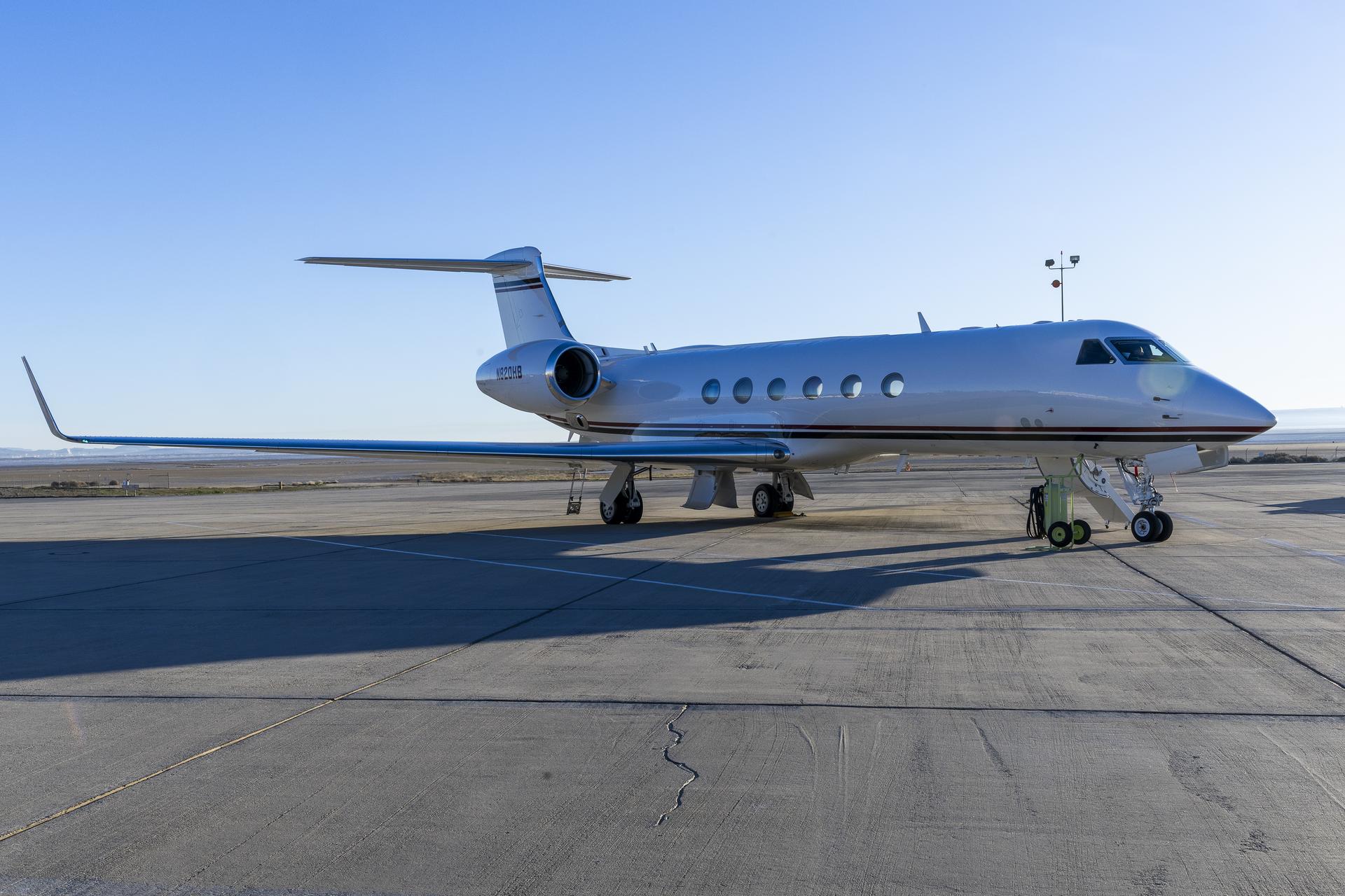
A Gulfstream GV aircraft sits on the ramp at NASA’s Armstrong Flight Research Center in Edwards, California, on Tuesday, Jan. 13, 2026. This aircraft is being modified to support the Airborne Science Program.
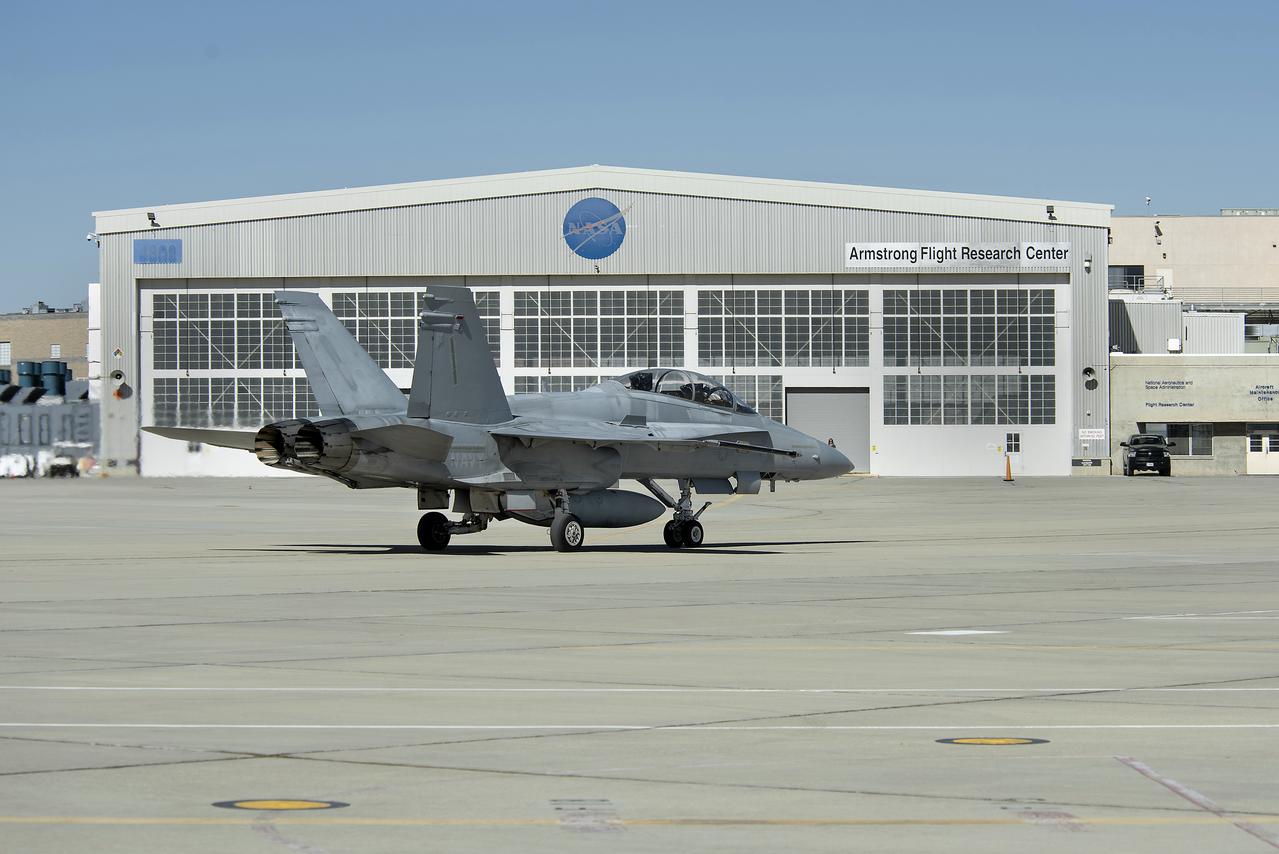
The first of three “new” F/A-18B Hornets arrived at NASA’s Armstrong Flight Research Center in California Nov. 6.
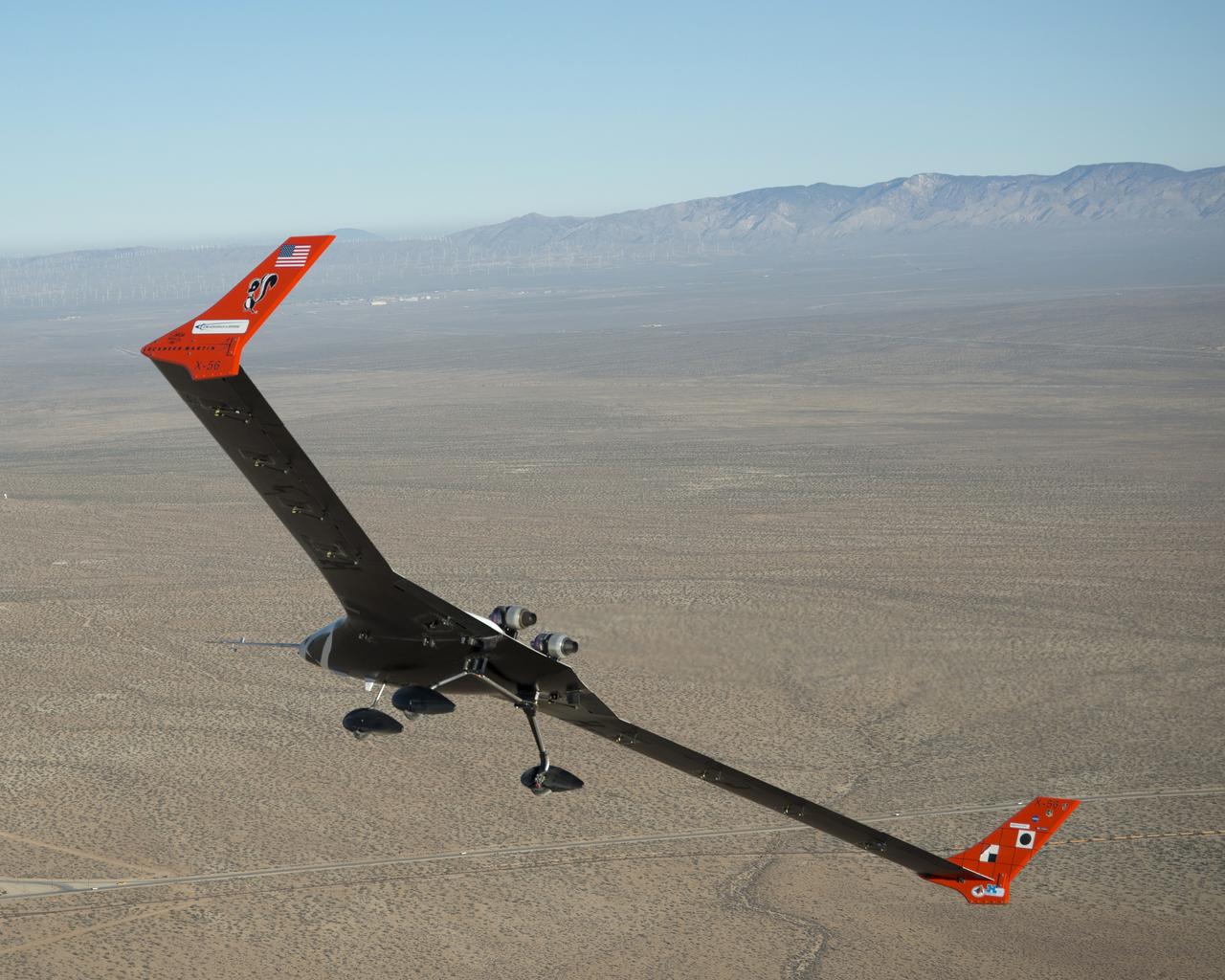
The X-56A flies over the desert near NASA Armstrong Flight Research Center, Edwards, California. NASA researchers are using the remotely piloted X-56A to explore the behavior of lightweight, flexible aircraft structures.
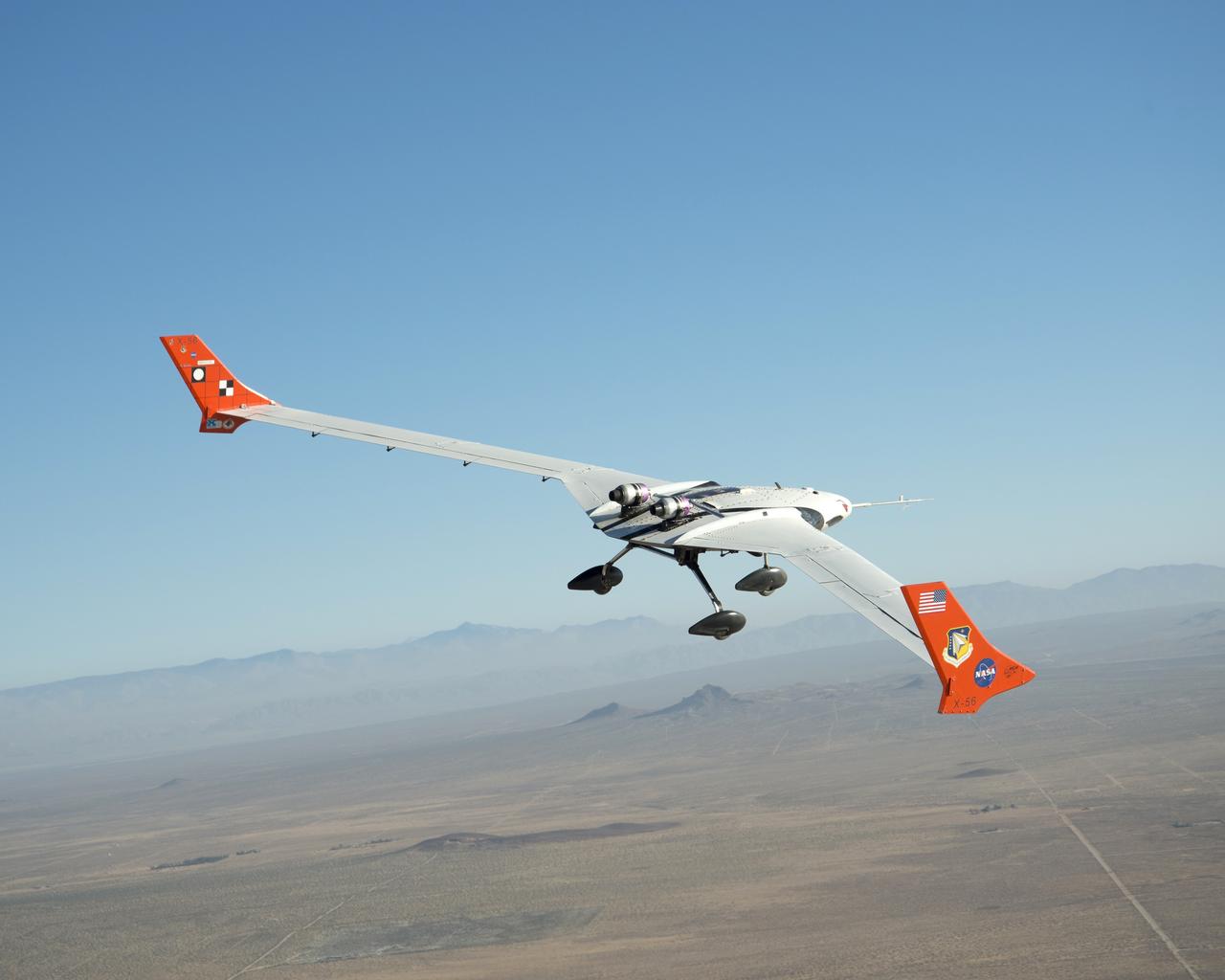
The X-56A flies over the desert near NASA Armstrong Flight Research Center, Edwards, California. NASA researchers are using the remotely piloted X-56A to explore the behavior of lightweight, flexible aircraft structures.
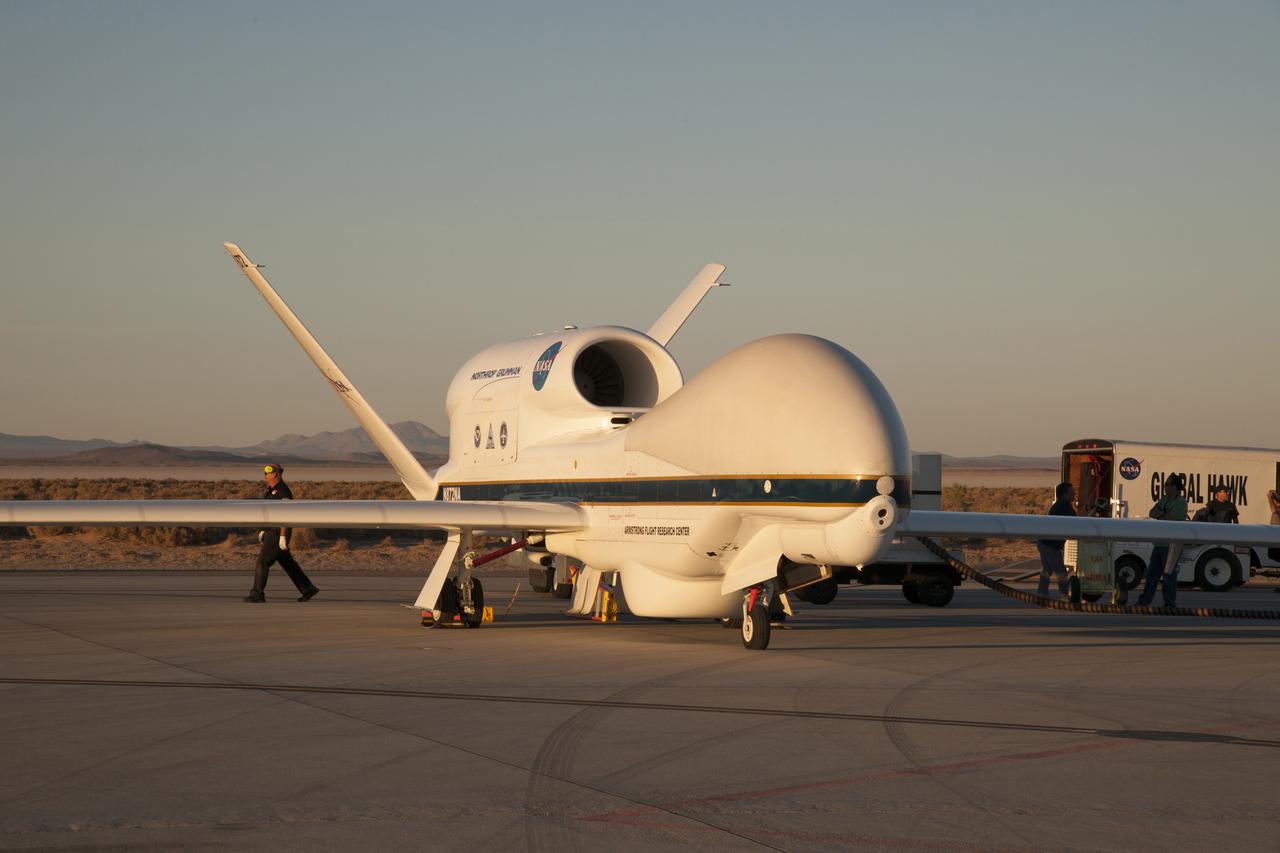
NASA’s Global Hawk aircraft was deployed to Florida from Armstrong Flight Research Center at Edwards, CA. on Oct. 6 to monitor and take scientific measurements of Hurricane Matthew. The unmanned Global Hawk will gather scientific data in support of NOAA’s Sensing Hazards with Operational Unmanned Technology (SHOUT) mission.
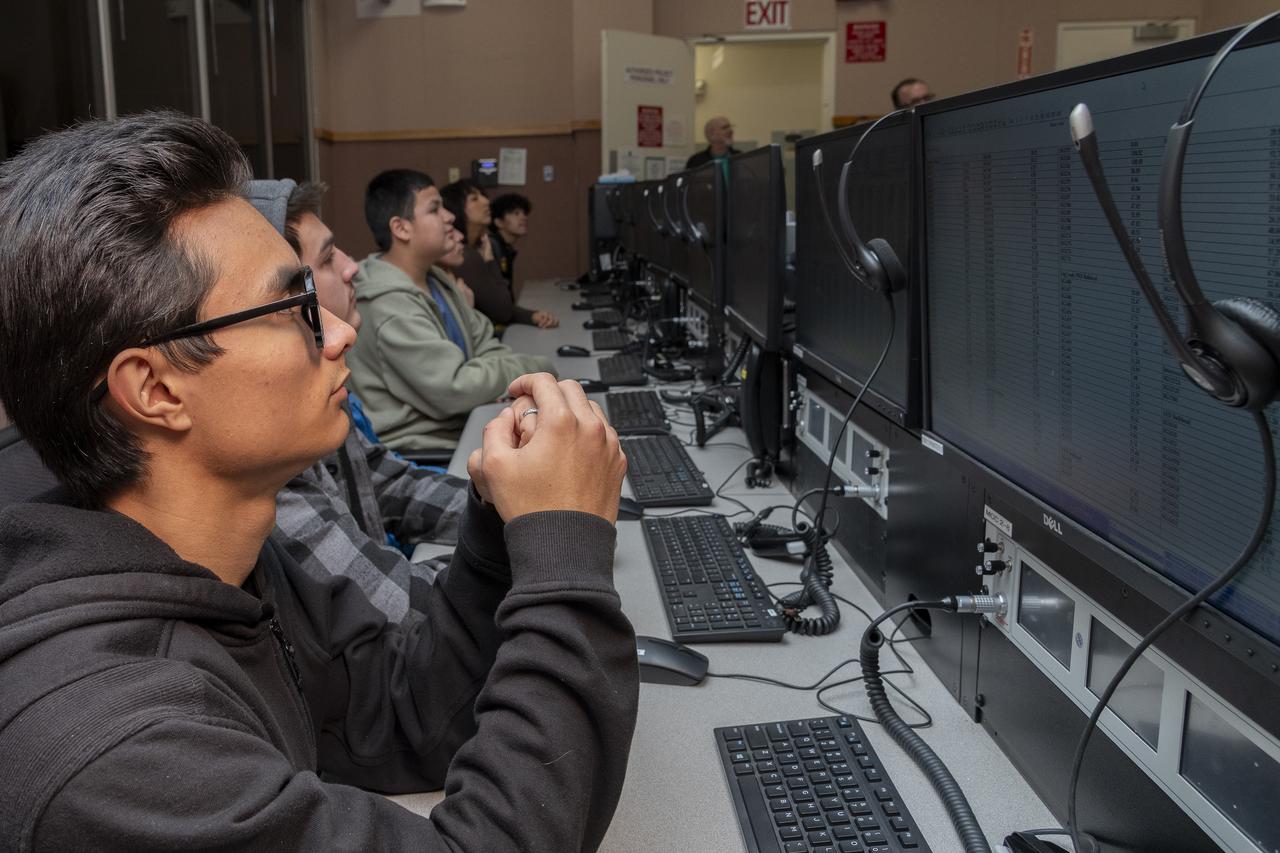
Students tour a control room at NASA’s Armstrong Research Flight Center in Edwards, California. The students are from the engineering club at Palmdale High School in Palmdale, California.
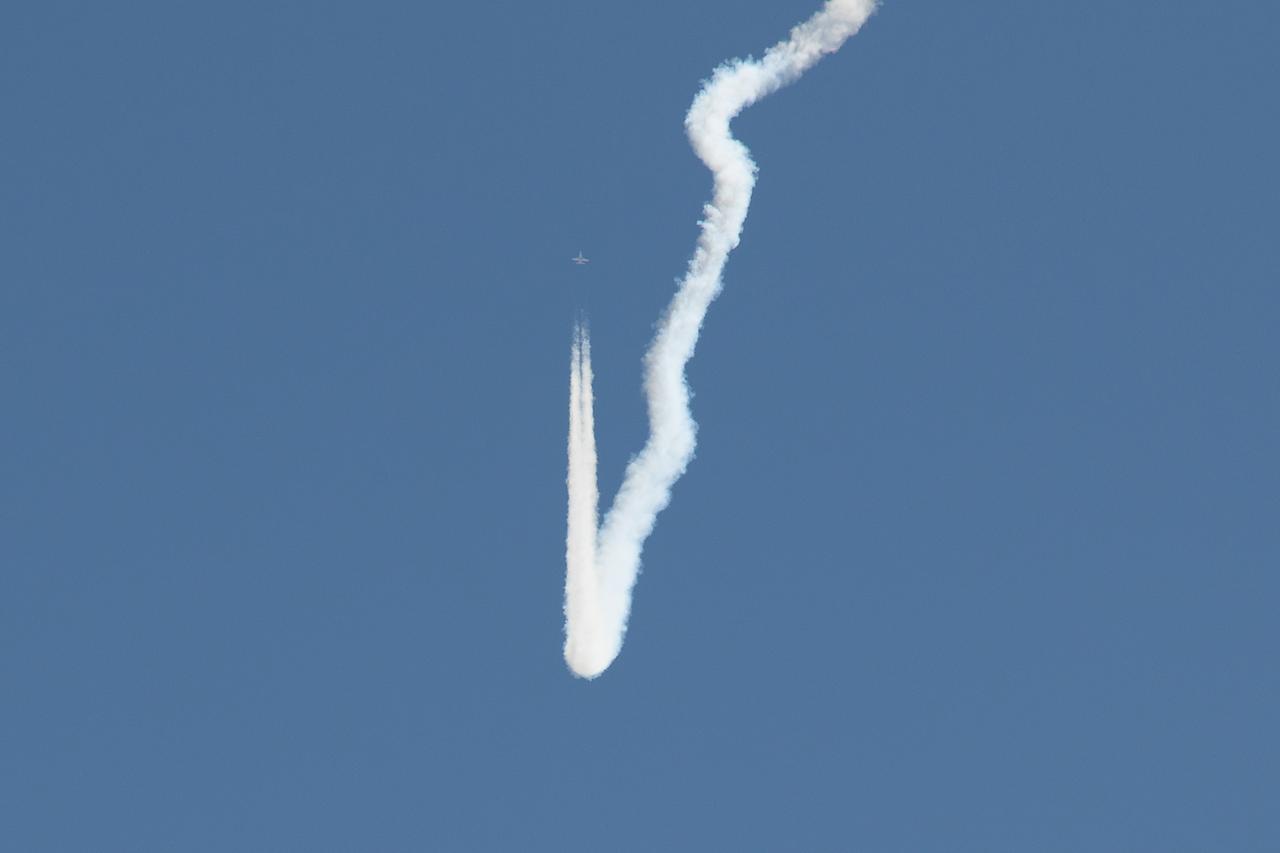
A NASA F/A-18 demonstrates different volumes of sonic booms for attendees of a NASA Social at the NASA Armstrong Flight Research Center in California.
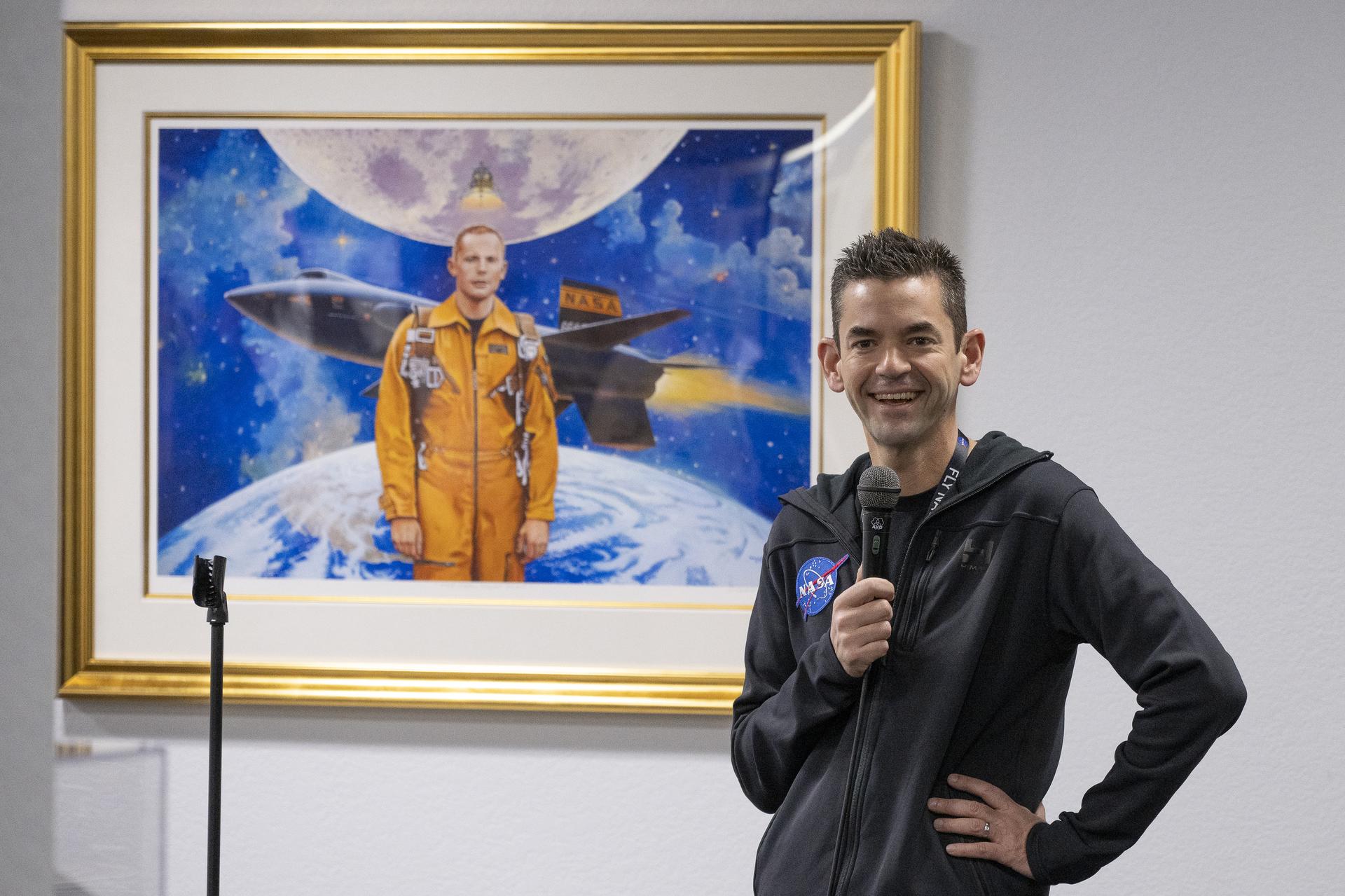
NASA Administrator Jared Isaacman speaks with employees and contractors in front of a painting of former astronaut and research pilot Neil Armstrong during Isaacman’s visit to NASA’s Armstrong Flight Research Center in Edwards, California, on Sunday, Jan. 25, 2026. Isaacman, NASA’s 15th administrator, began visiting the agency’s centers after his appointment on Dec. 17, 2025.
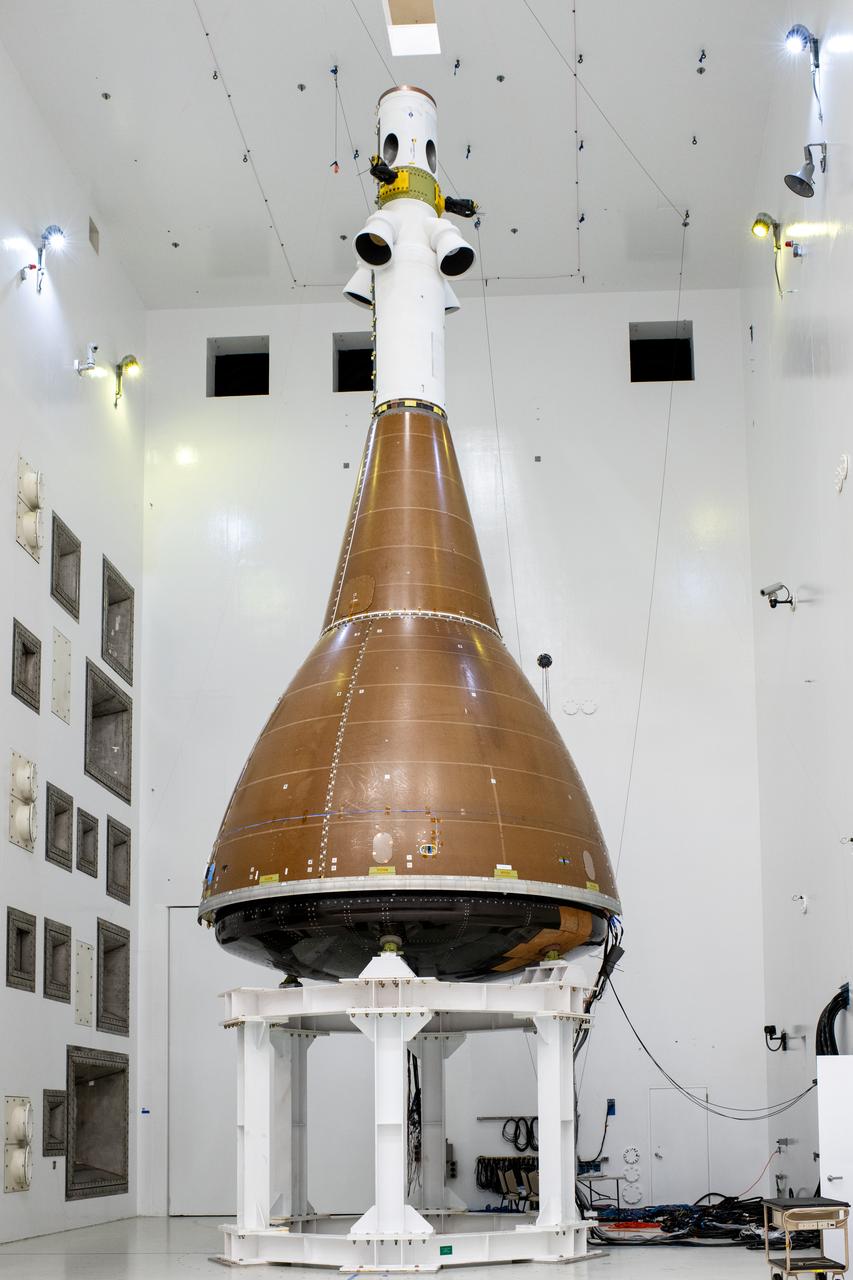
Vibro-acoustic testing on the Orion spacecraft that flew around the Moon on Artemis I, now known as the Environmental Test Article at Armstrong Test Facility in Sandusky, OH. The testing will help ensure the safety of future crews aboard Orion. Photo Credit: (NASA/Sara Lowthian-Hanna)

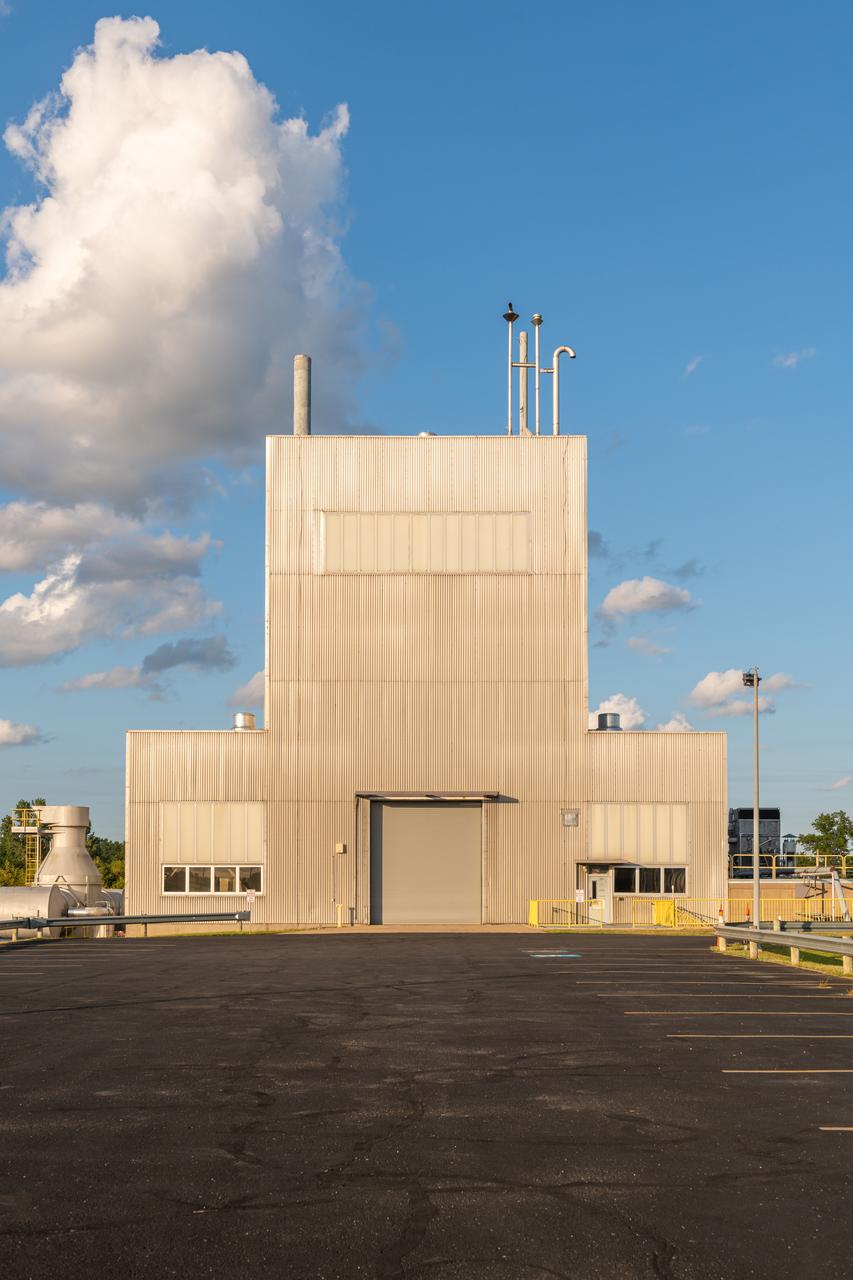
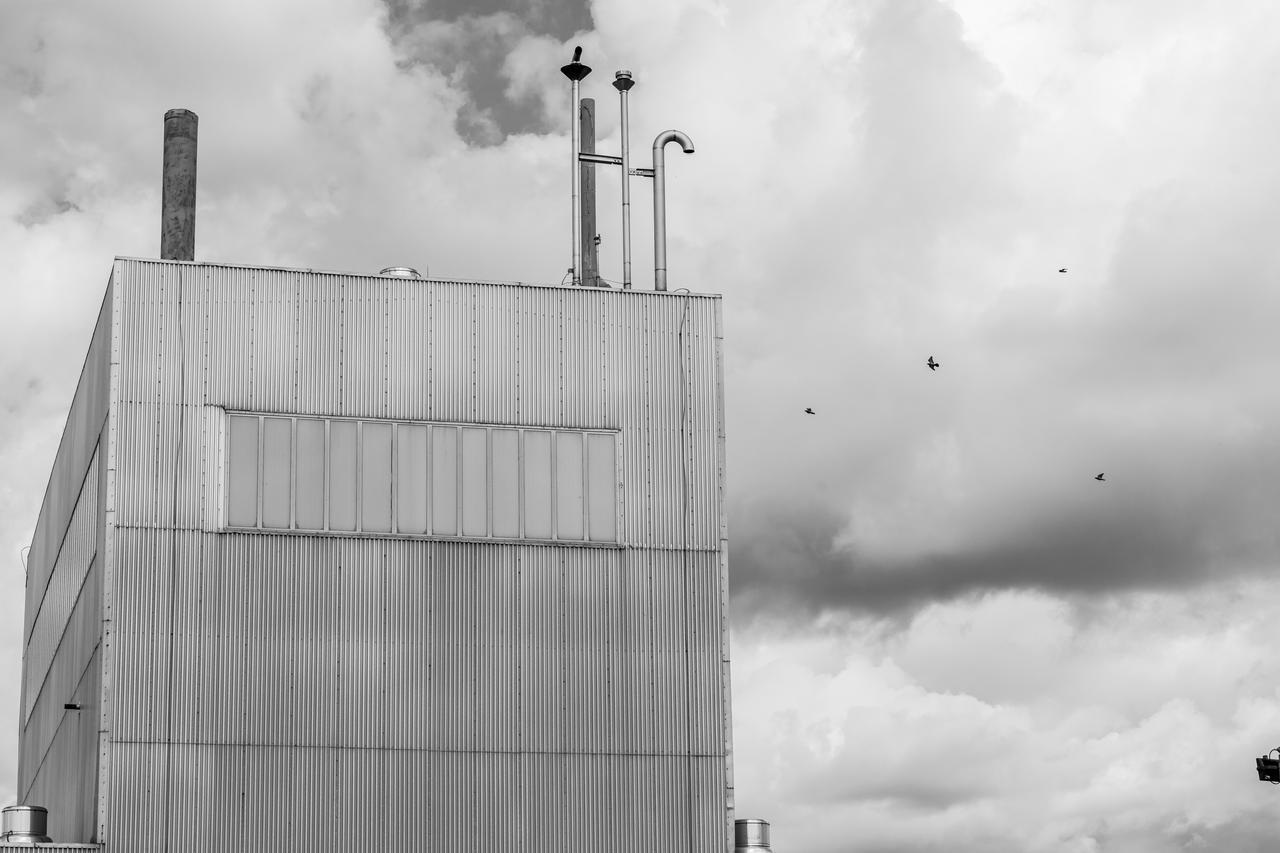
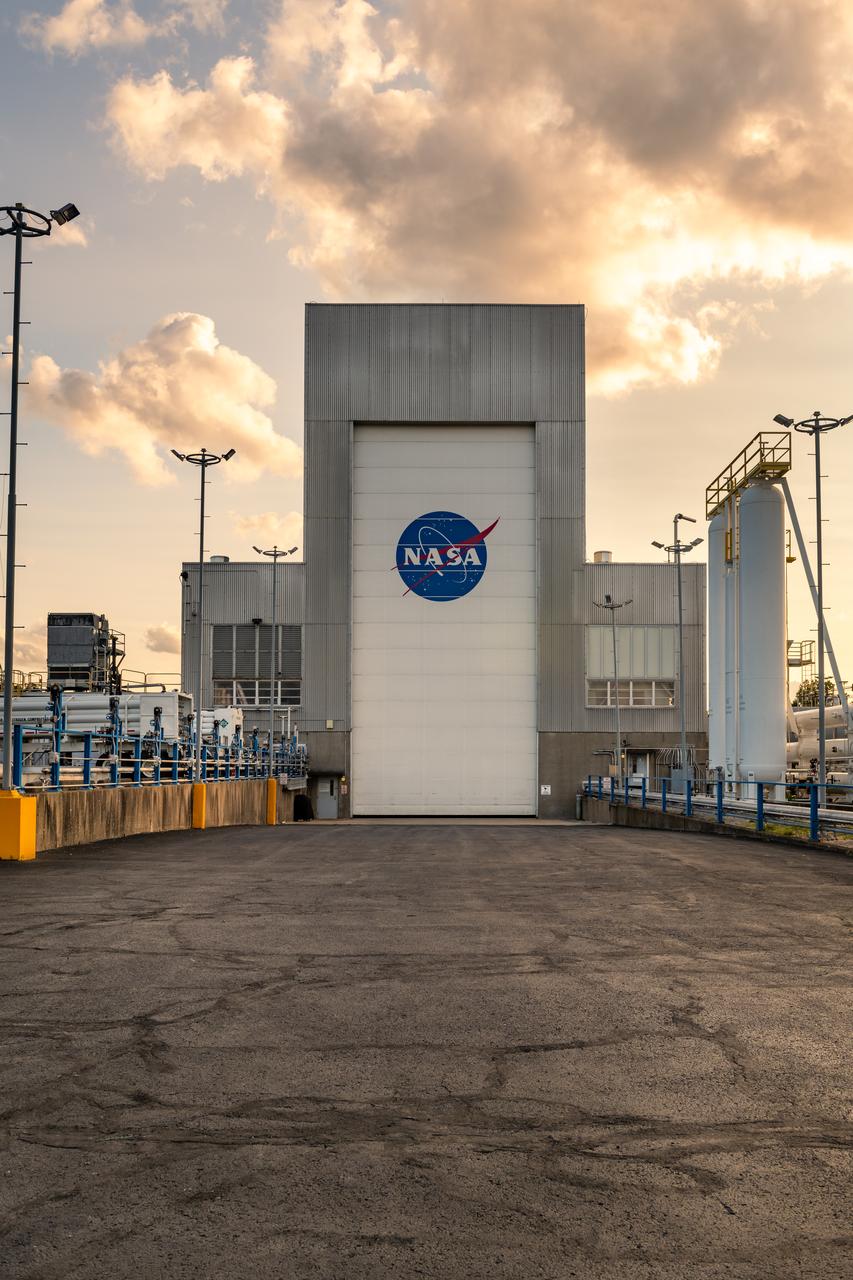
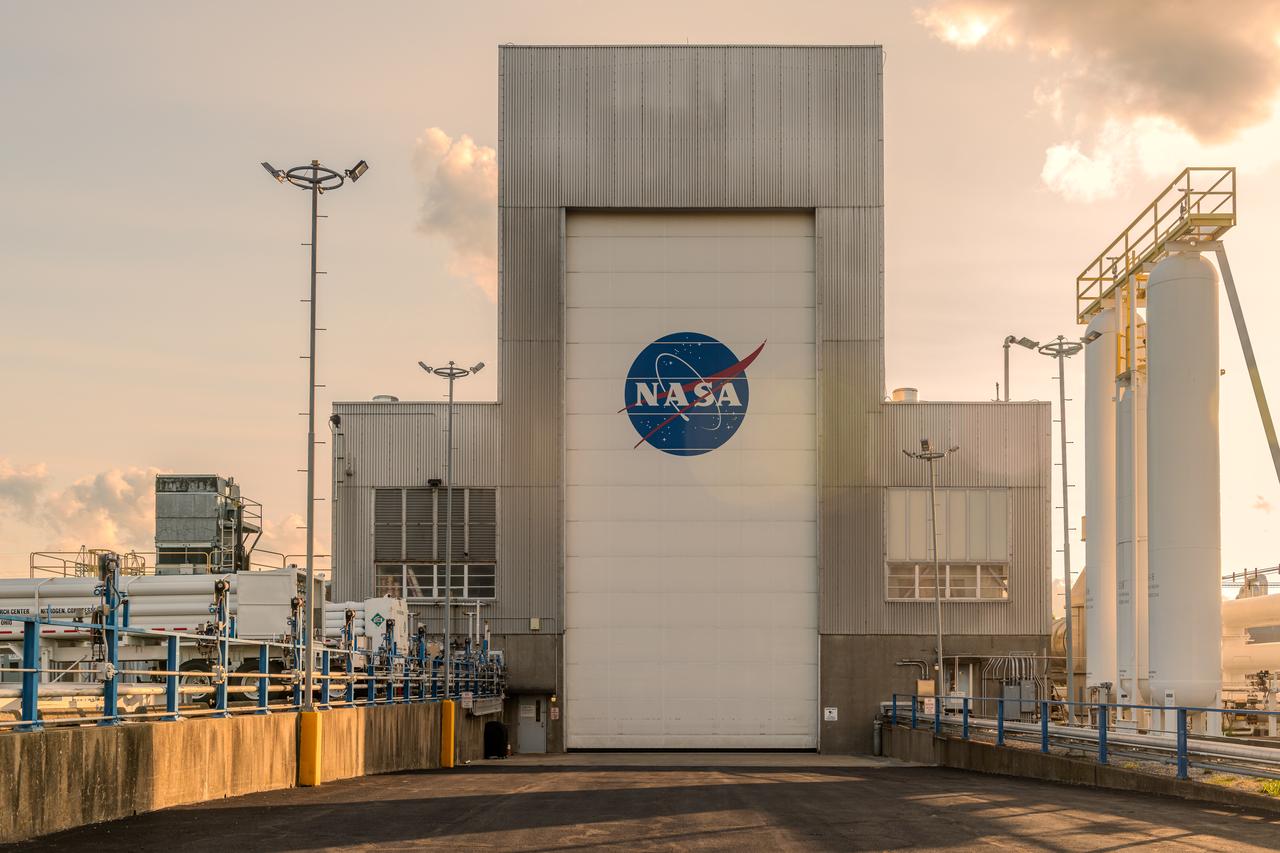
The In-Space Propulsion Facility (ISP) is shown at NASA’s Neil Armstrong Test Facility in Sandusky, Ohio. ISP is the world’s only facility capable of full-scale rocket engine and launch vehicle system level tests. Photo Credit: (NASA/Jordan Salkin)
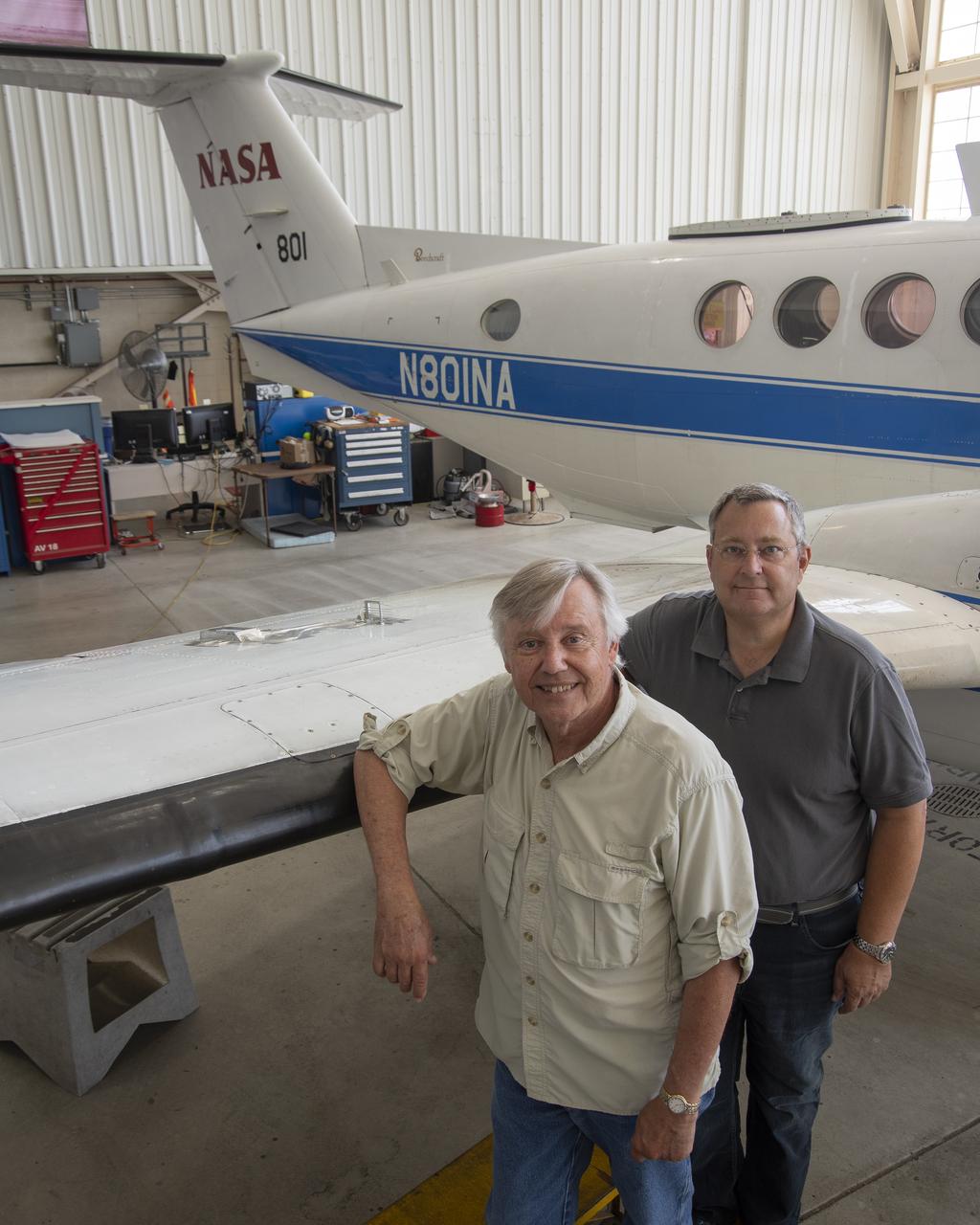
Cal Poly San Luis Obispo professors Russ Westphal, left, and Aaron Drake posed next to NASA Armstrong Flight Research Center’s Beechcraft Beech 200 Super King Air aircraft. On the King Air’s wing is the Boundary Layer Data System (BLDS), a sensor developed by Cal Poly and Northrop Grumman. BLDS was flown at NASA Armstrong as a step towards creating a process allowing universities, small businesses and other interested parties to quickly test flight technologies.
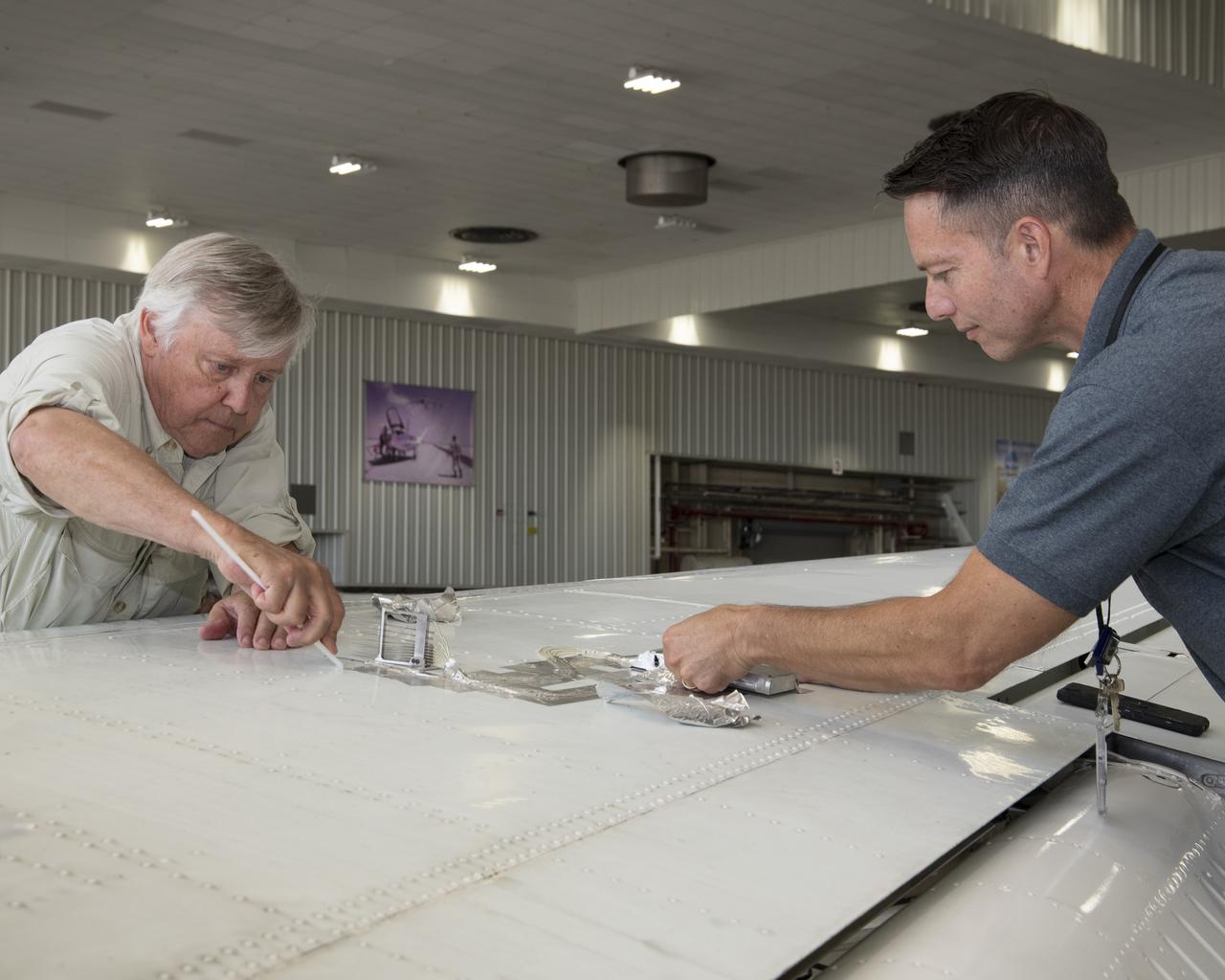
Cal Poly San Luis Obispo Professor Russ Westphal, left, and NASA Armstrong’s Technology Transfer Officer Benjamin Tomlinson remove the Boundary Layer Data System (BLDS) sensor attached to the wing of a Beechcraft Beech 200 Super King Air. The BLDS was flight tested at NASA’s Armstrong Flight Research Center to showcase rapid and flexible flight-testing capabilities.

Otto Schnarr and Matthew Waldersen check out the Advanced Data Acquisition and Telemetry System in an Armstrong laboratory.
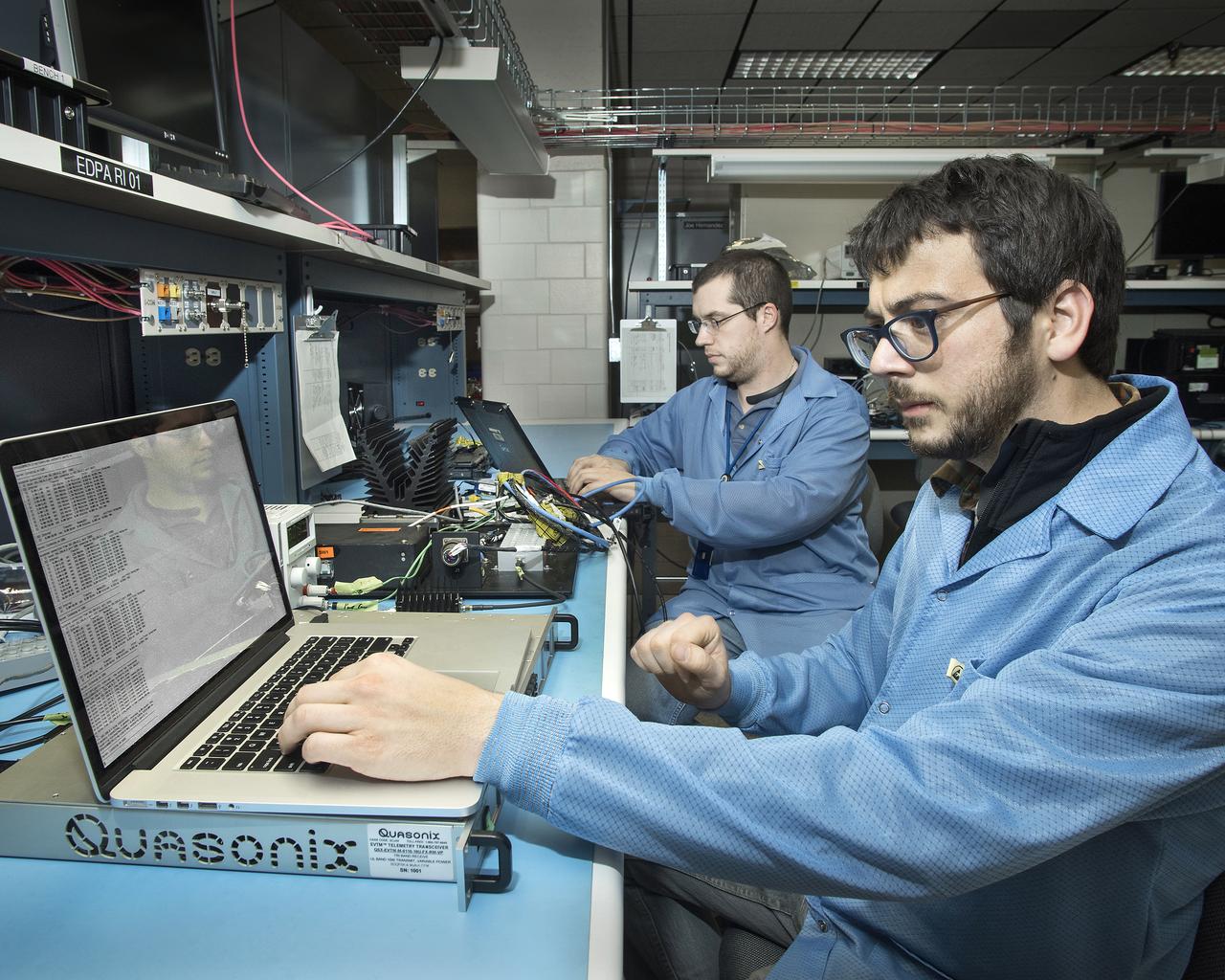
Otto Schnarr, front, and Matthew Waldersen check out the Advanced Data Acquisition and Telemetry System in an Armstrong laboratory.
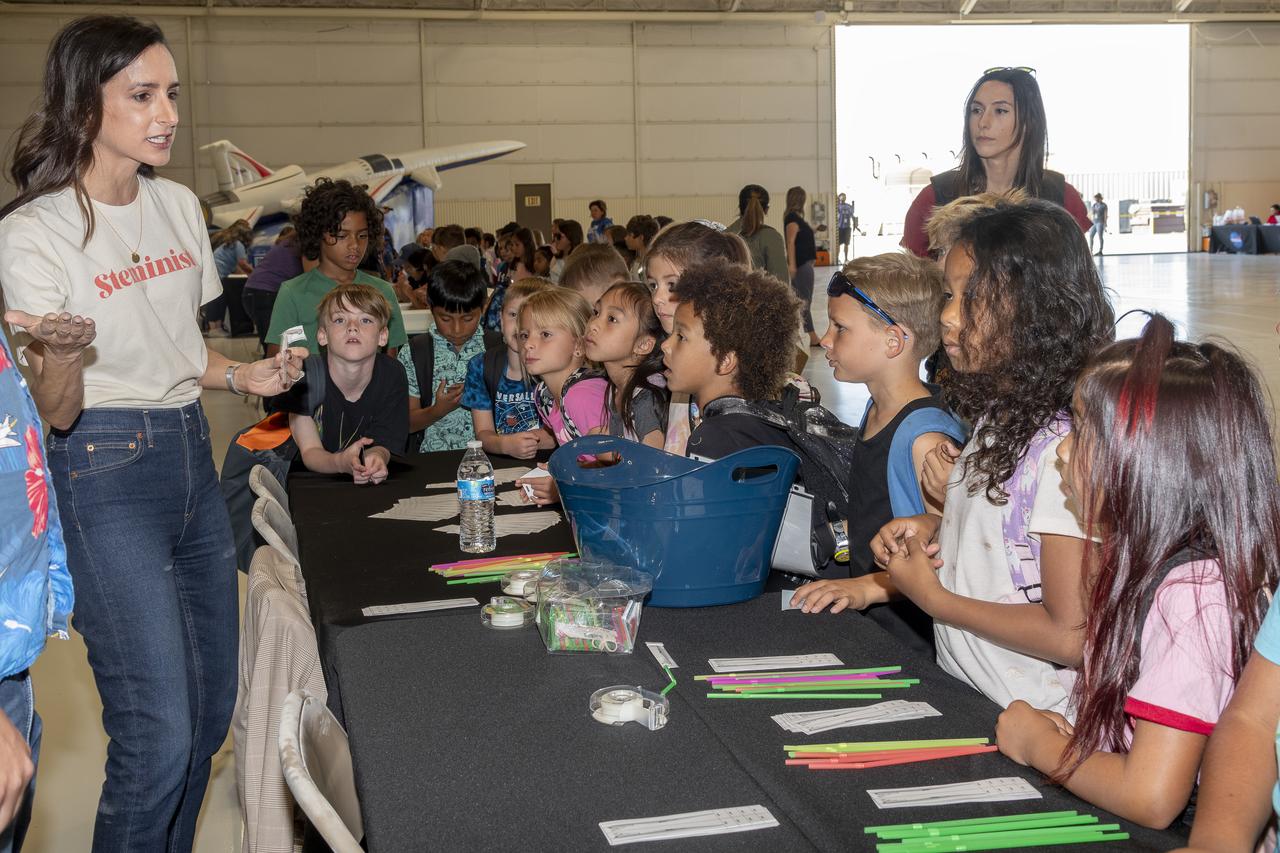
Kate M. McMurtry, deputy director of Integrated Aviation Systems Program shares with students how NASA is working to quiet the sonic boom with the development of the X-59 aircraft at NASA’s California Office of STEM Engagement event with Center of Science and Industry at NASA Armstrong Flight Research Center in Edwards, California.
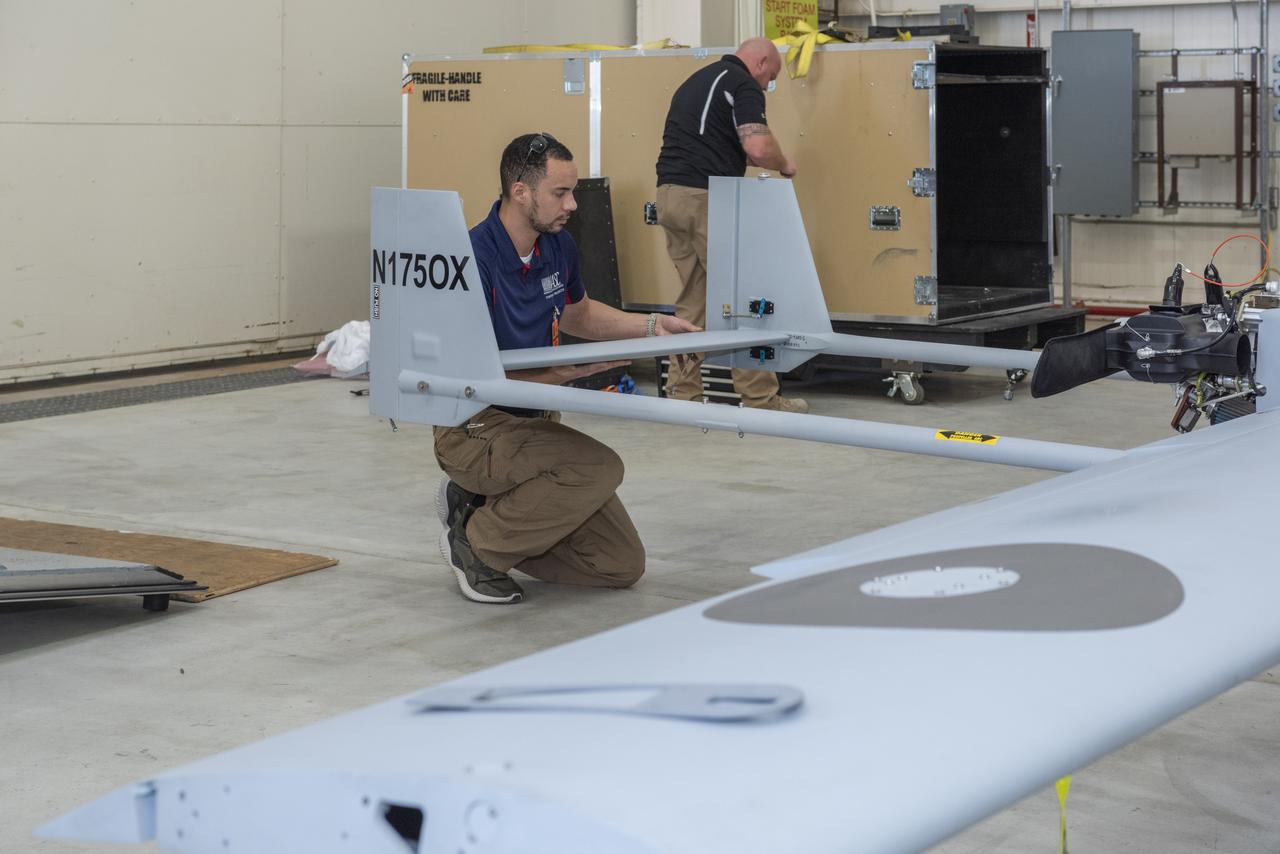
Daryl Ferguson attaches the TigerShark’s tail at NASA’s Armstrong Flight Research Center in California.
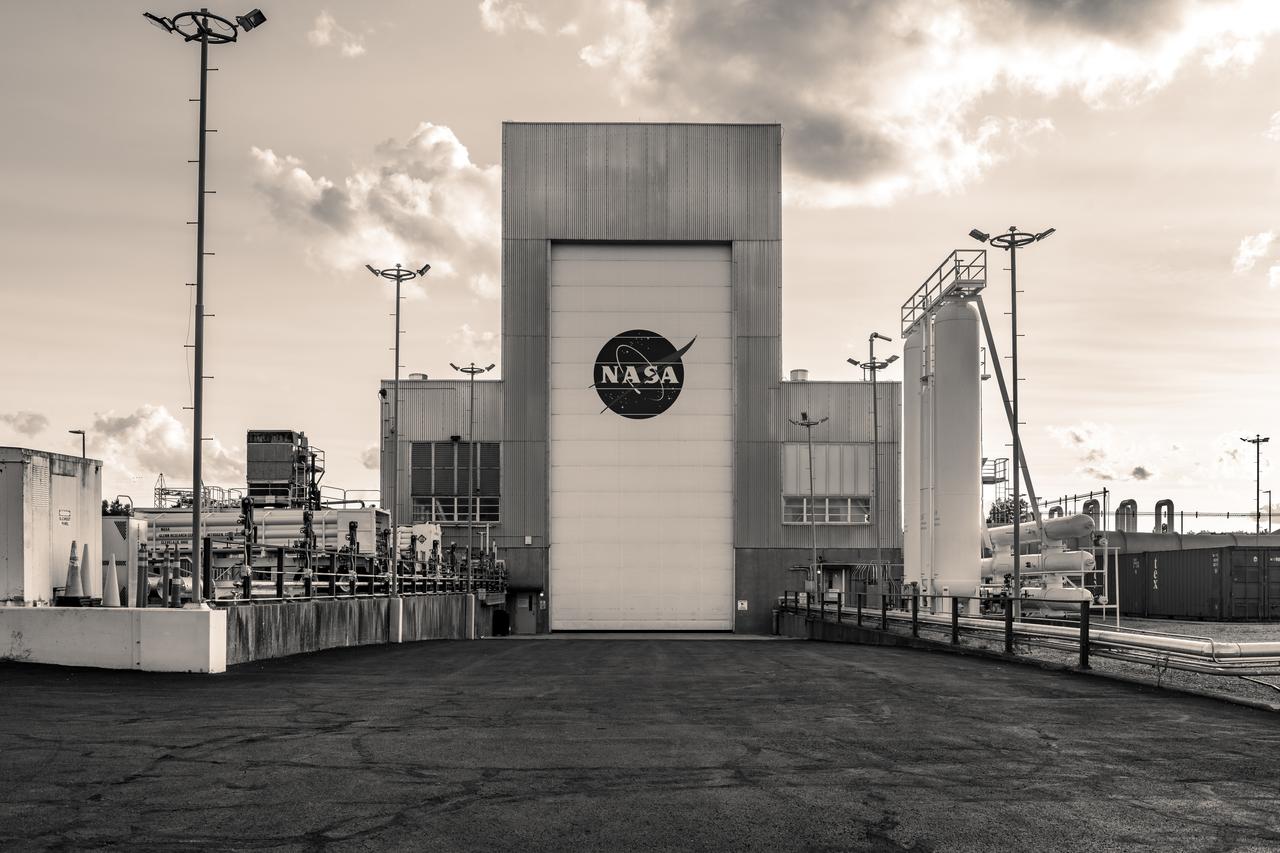
NASA’s In-Space Propulsion Facility located at Neil Armstrong Test Facility in Sandusky Ohio is the world’s only high altitude test facility capable of full-scale rocket engine and launch vehicle system level tests. The facility supports mission profile thermal vacuum simulation and engine firing. The engine or vehicle can be exposed for indefinite periods to low ambient pressures, low-background temperatures, and dynamic solar heating, simulating the environment the hardware will encounter during orbital or interplanetary travel. Photo Credit: (NASA/Jordan Salkin)
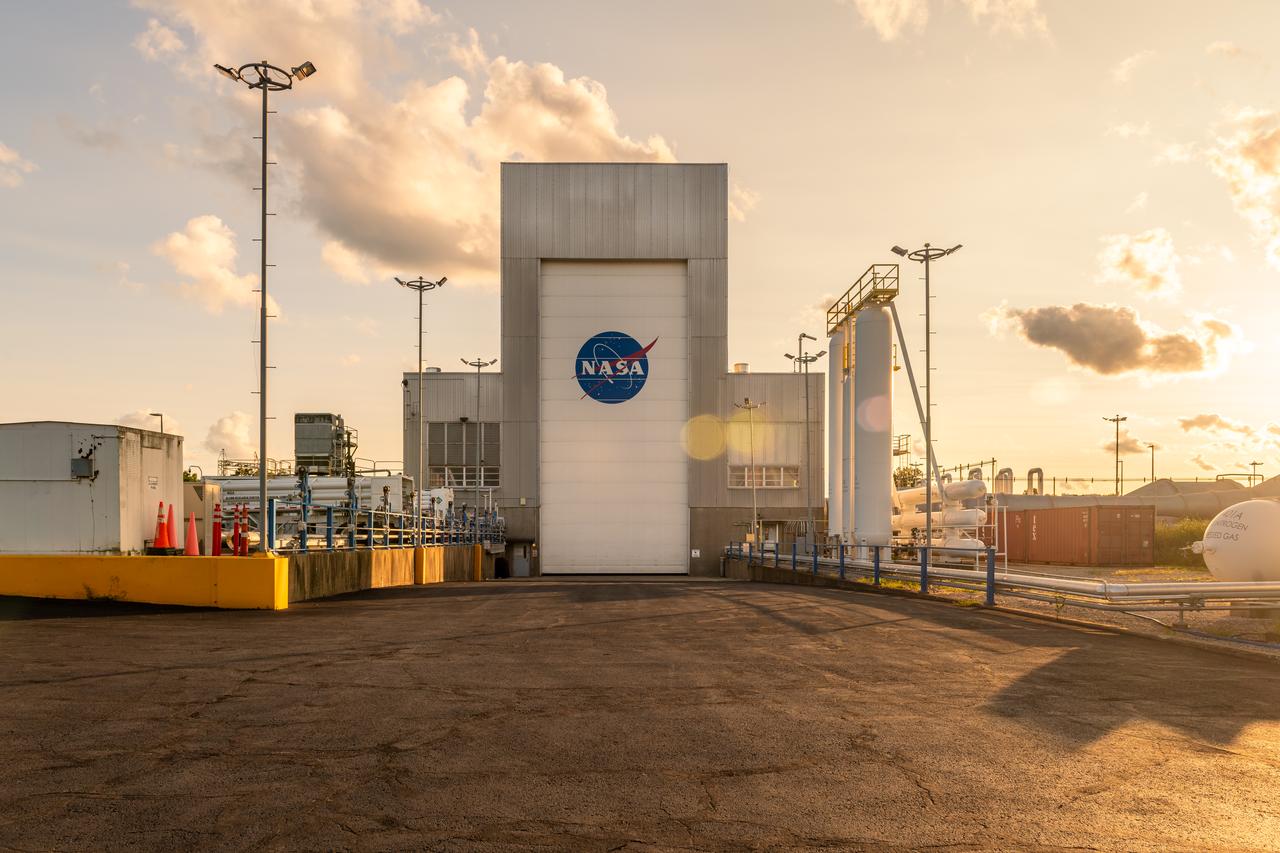
NASA’s In-Space Propulsion Facility located at Neil Armstrong Test Facility in Sandusky Ohio is the world’s only high altitude test facility capable of full-scale rocket engine and launch vehicle system level tests. The facility supports mission profile thermal vacuum simulation and engine firing. The engine or vehicle can be exposed for indefinite periods to low ambient pressures, low-background temperatures, and dynamic solar heating, simulating the environment the hardware will encounter during orbital or interplanetary travel. Photo Credit: (NASA/Jordan Salkin)
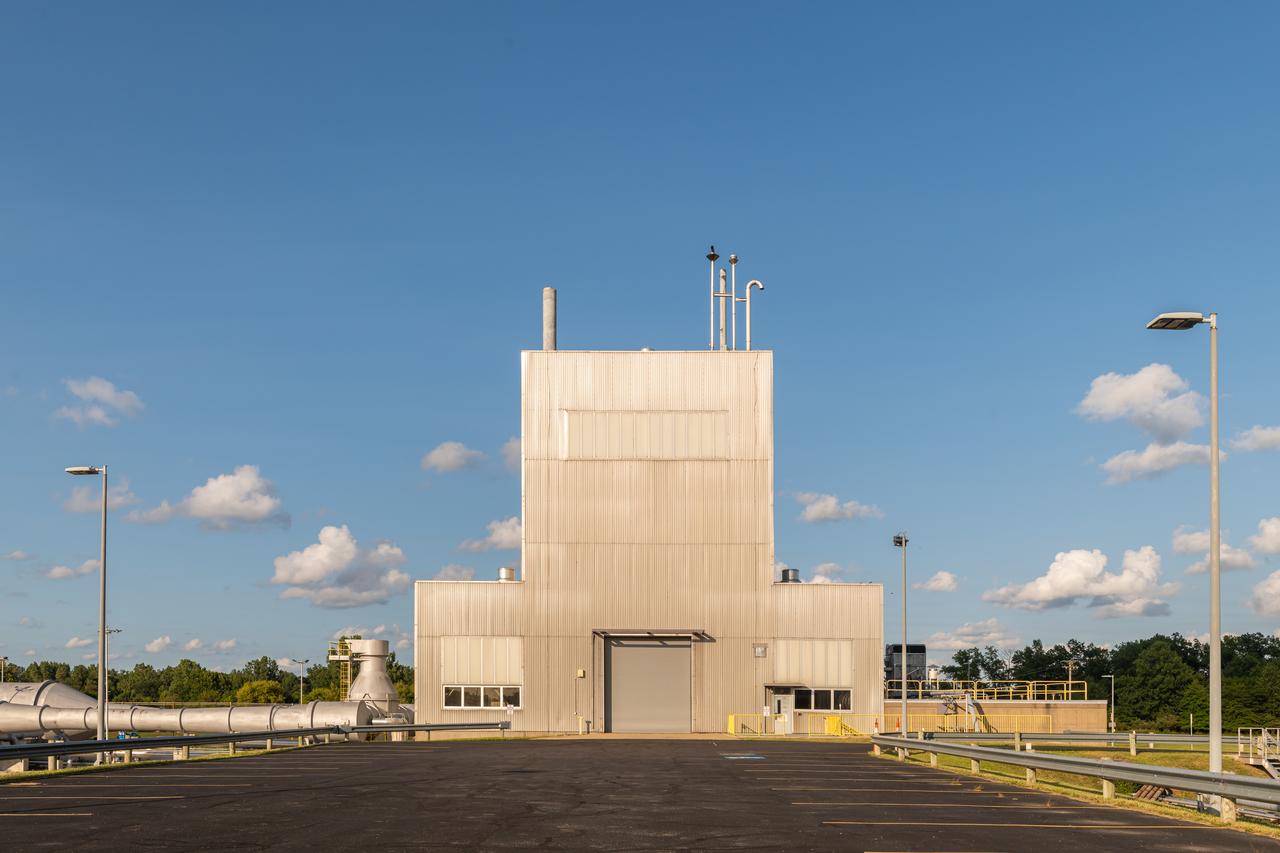
NASA’s In-Space Propulsion Facility located at Neil Armstrong Test Facility in Sandusky Ohio is the world’s only high altitude test facility capable of full-scale rocket engine and launch vehicle system level tests. The facility supports mission profile thermal vacuum simulation and engine firing. The engine or vehicle can be exposed for indefinite periods to low ambient pressures, low-background temperatures, and dynamic solar heating, simulating the environment the hardware will encounter during orbital or interplanetary travel. Photo Credit: (NASA/Jordan Salkin)
NASA’s In-Space Propulsion Facility located at Neil Armstrong Test Facility in Sandusky Ohio is the world’s only high altitude test facility capable of full-scale rocket engine and launch vehicle system level tests. The facility supports mission profile thermal vacuum simulation and engine firing. The engine or vehicle can be exposed for indefinite periods to low ambient pressures, low-background temperatures, and dynamic solar heating, simulating the environment the hardware will encounter during orbital or interplanetary travel. Photo Credit: (NASA/Jordan Salkin)
NASA’s In-Space Propulsion Facility located at Neil Armstrong Test Facility in Sandusky Ohio is the world’s only high altitude test facility capable of full-scale rocket engine and launch vehicle system level tests. The facility supports mission profile thermal vacuum simulation and engine firing. The engine or vehicle can be exposed for indefinite periods to low ambient pressures, low-background temperatures, and dynamic solar heating, simulating the environment the hardware will encounter during orbital or interplanetary travel. Photo Credit: (NASA/Jordan Salkin)
NASA’s In-Space Propulsion Facility located at Neil Armstrong Test Facility in Sandusky Ohio is the world’s only high altitude test facility capable of full-scale rocket engine and launch vehicle system level tests. The facility supports mission profile thermal vacuum simulation and engine firing. The engine or vehicle can be exposed for indefinite periods to low ambient pressures, low-background temperatures, and dynamic solar heating, simulating the environment the hardware will encounter during orbital or interplanetary travel. Photo Credit: (NASA/Jordan Salkin)
NASA’s In-Space Propulsion Facility located at Neil Armstrong Test Facility in Sandusky Ohio is the world’s only high altitude test facility capable of full-scale rocket engine and launch vehicle system level tests. The facility supports mission profile thermal vacuum simulation and engine firing. The engine or vehicle can be exposed for indefinite periods to low ambient pressures, low-background temperatures, and dynamic solar heating, simulating the environment the hardware will encounter during orbital or interplanetary travel. Photo Credit: (NASA/Jordan Salkin)
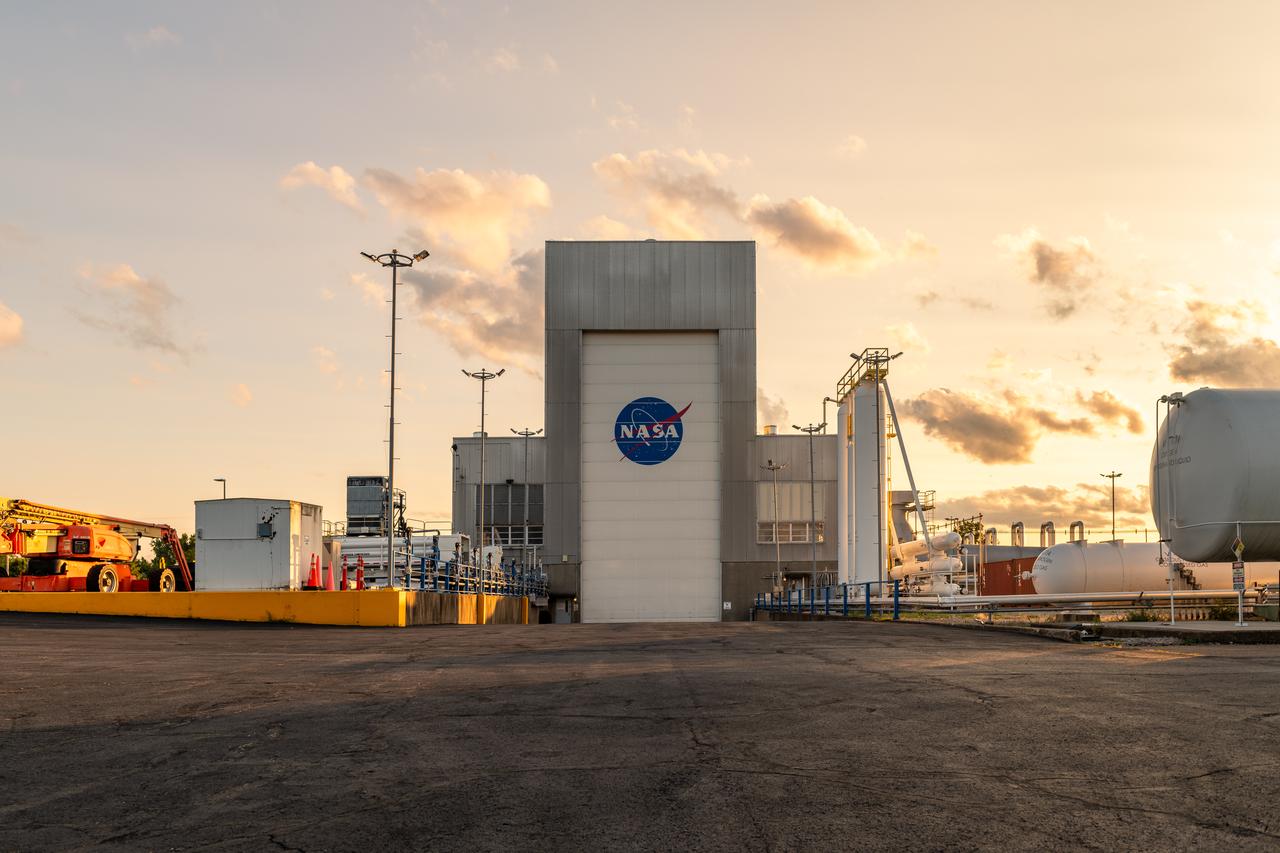
NASA’s In-Space Propulsion Facility located at Neil Armstrong Test Facility in Sandusky Ohio is the world’s only high altitude test facility capable of full-scale rocket engine and launch vehicle system level tests. The facility supports mission profile thermal vacuum simulation and engine firing. The engine or vehicle can be exposed for indefinite periods to low ambient pressures, low-background temperatures, and dynamic solar heating, simulating the environment the hardware will encounter during orbital or interplanetary travel. Photo Credit: (NASA/Jordan Salkin)
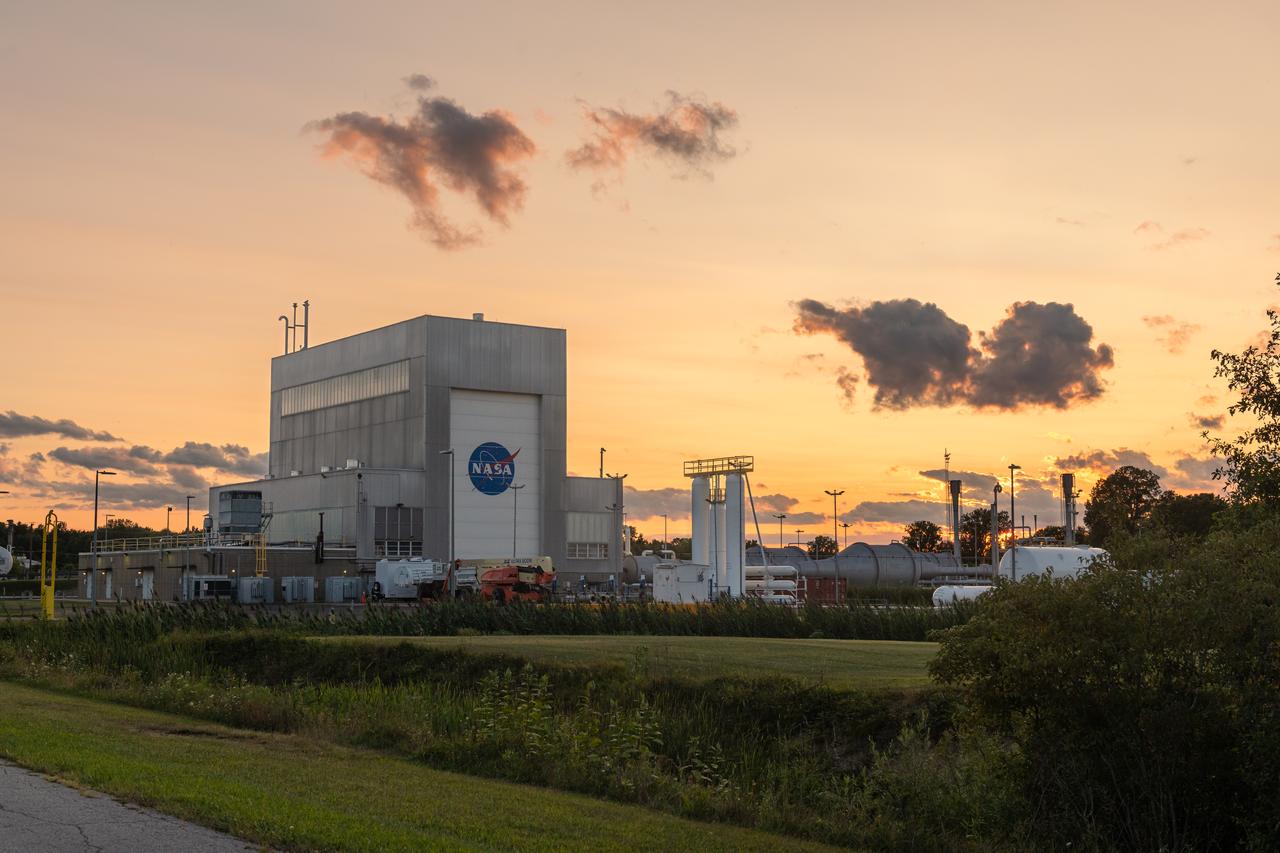
NASA’s In-Space Propulsion Facility located at Neil Armstrong Test Facility in Sandusky Ohio is the world’s only high altitude test facility capable of full-scale rocket engine and launch vehicle system level tests. The facility supports mission profile thermal vacuum simulation and engine firing. The engine or vehicle can be exposed for indefinite periods to low ambient pressures, low-background temperatures, and dynamic solar heating, simulating the environment the hardware will encounter during orbital or interplanetary travel. Photo Credit: (NASA/Jordan Salkin)
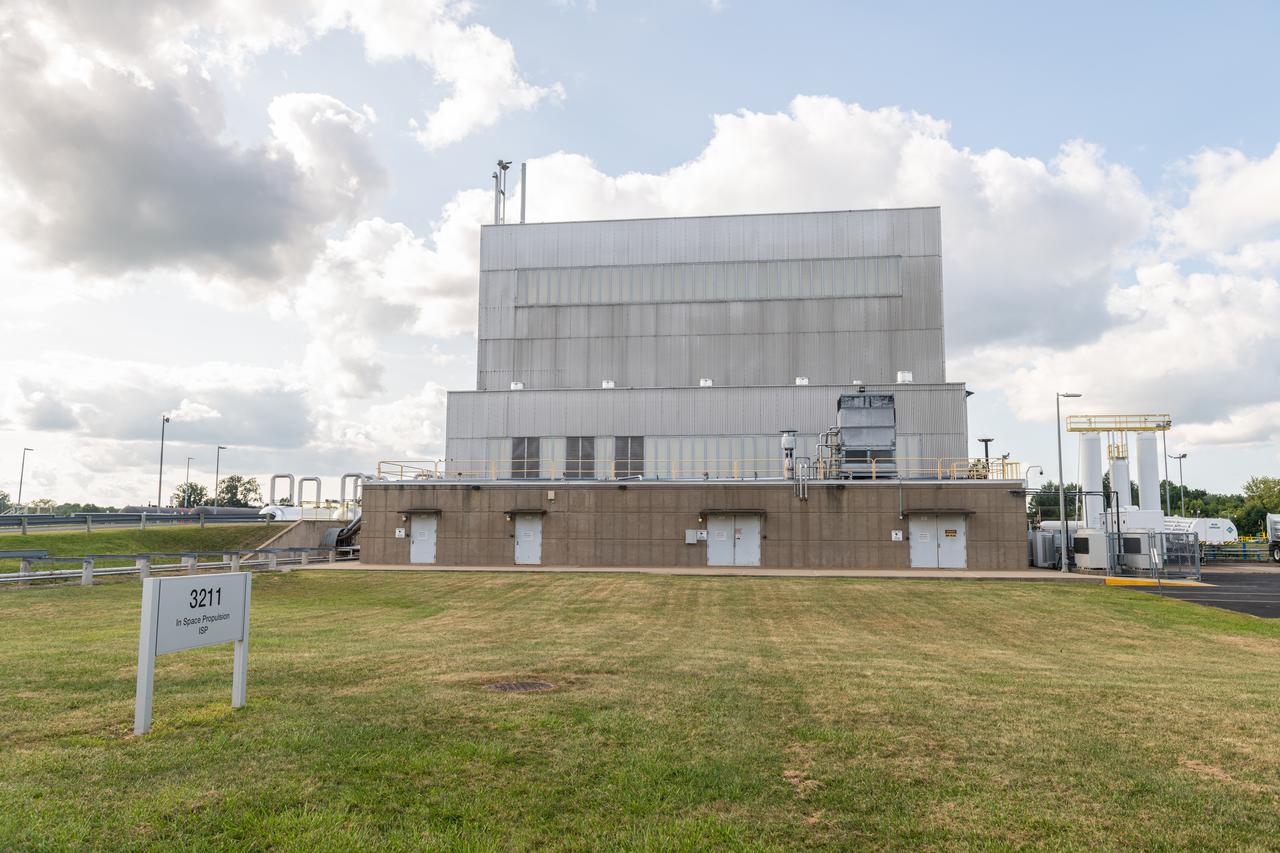
NASA’s In-Space Propulsion Facility located at Neil Armstrong Test Facility in Sandusky Ohio is the world’s only high altitude test facility capable of full-scale rocket engine and launch vehicle system level tests. The facility supports mission profile thermal vacuum simulation and engine firing. The engine or vehicle can be exposed for indefinite periods to low ambient pressures, low-background temperatures, and dynamic solar heating, simulating the environment the hardware will encounter during orbital or interplanetary travel. Photo Credit: (NASA/Jordan Salkin)
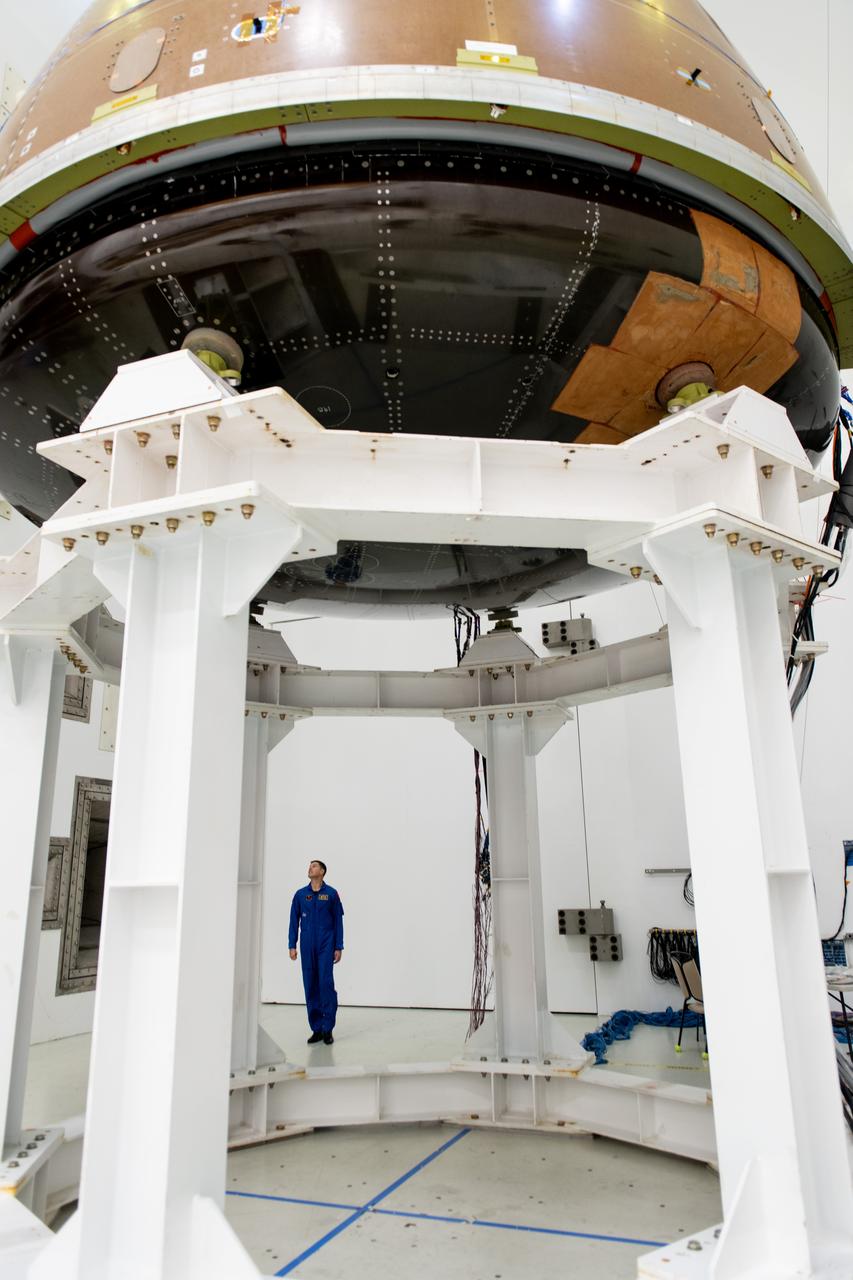
The team at NASA's Armstrong Test Facility in Sandusky, Ohio has begun vibro-acoustic testing on the Orion spacecraft that flew around the Moon on Artemis I, now known as the Environmental Test Article. The testing will help ensure the safety of future crews aboard Orion. Mission Specialis Jeremy Hansen looks up at the Orion capsule during tours of the acoustic lab.
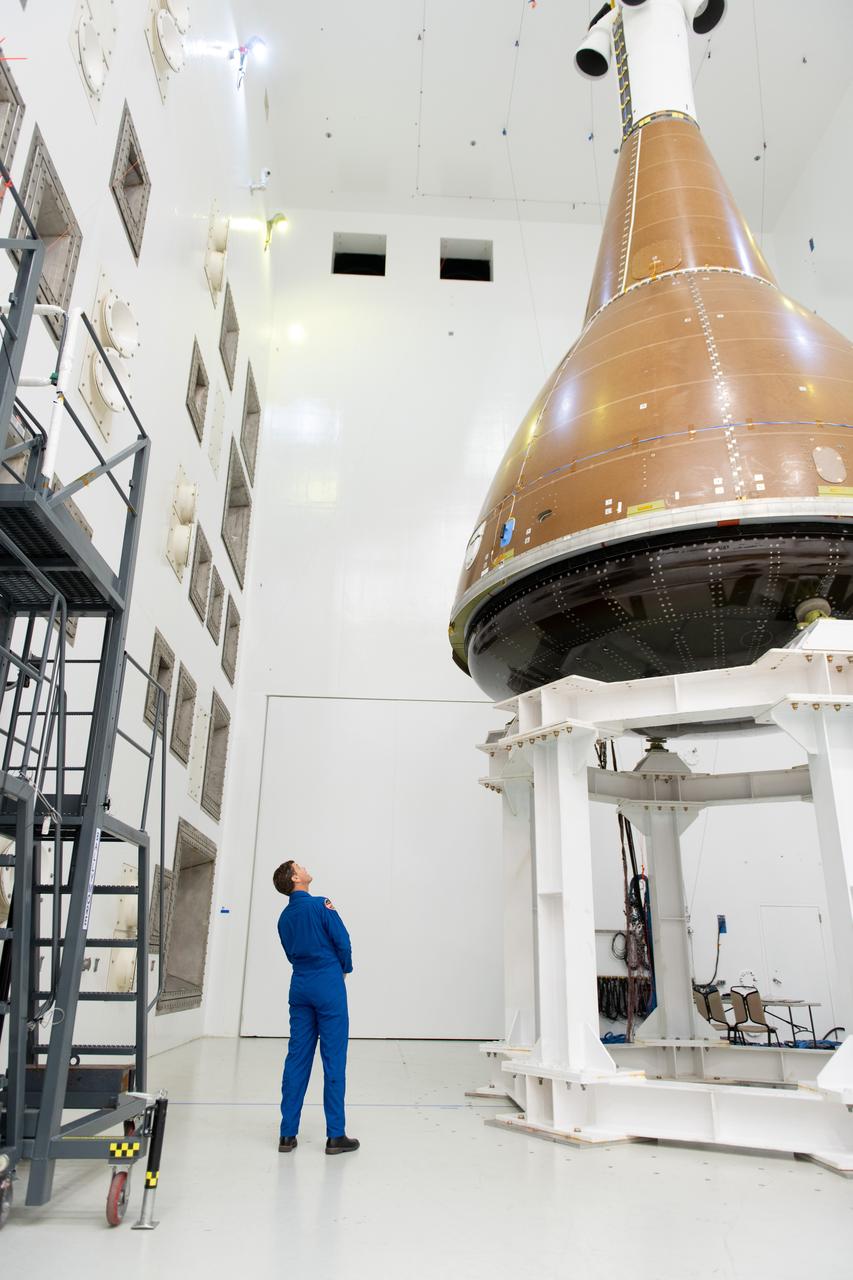
The team at NASA's Armstrong Test Facility in Sandusky, Ohio has begun vibro-acoustic testing on the Orion spacecraft that flew around the Moon on Artemis I, now known as the Environmental Test Article. The testing will help ensure the safety of future crews aboard Orion. Commander Reid Wiseman looks up at the Orion capsule during tours on September 11, 2024 of the acoustic lab. Photo Credit: (NASA/Sara Lowthian-Hanna)
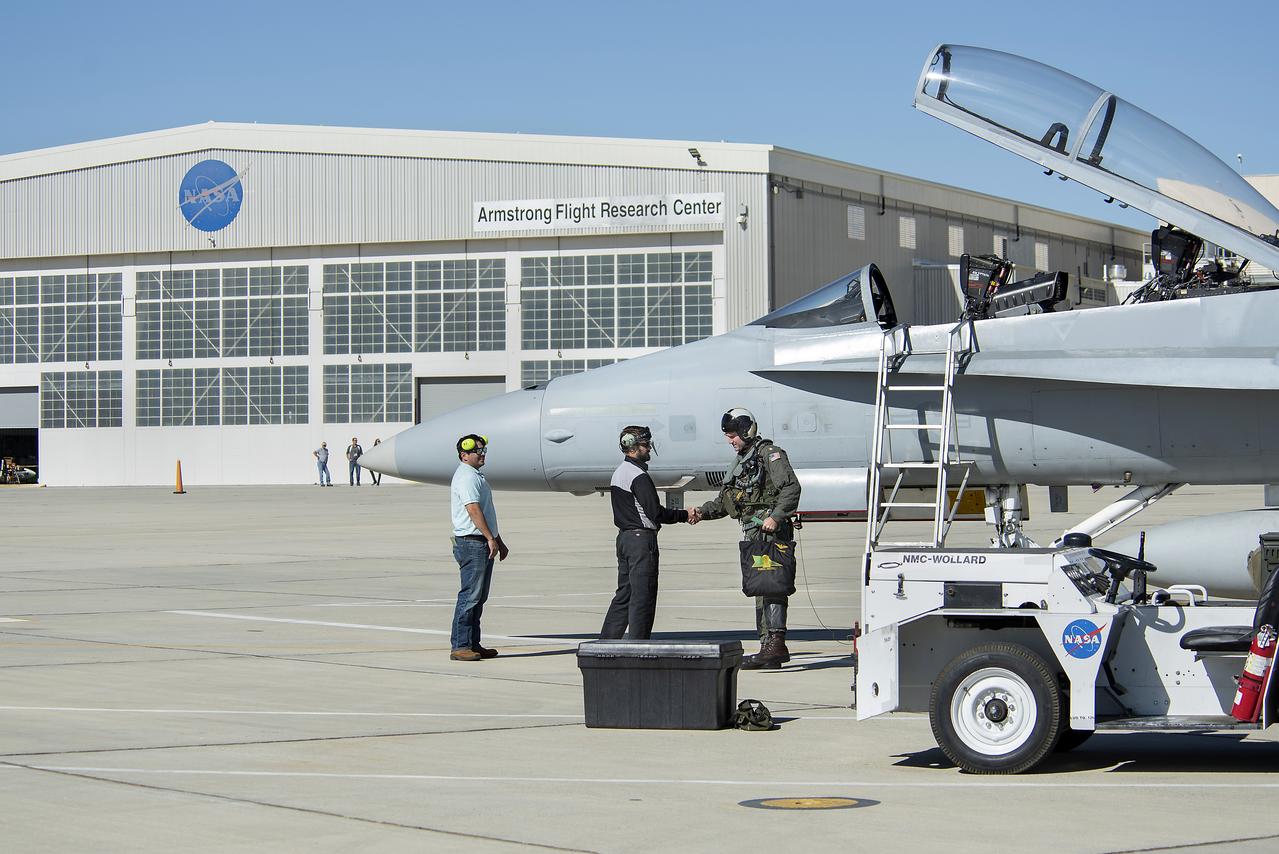
David Carbajal and Gary Gano meet Lt. Cmdr. Mike Shelton, right, of the U.S. Naval Air Station Patuxent River in Maryland. Shelton delivered a F/A-18B Hornet to NASA’s Armstrong Flight Research Center in California.

An ER-2 based at NASA's Armstrong Flight Research Center in California flew a mission over the state's wildfires Aug. 9 to validate instruments and to collect information to help U.S. Forest Service officials plan for recovery.
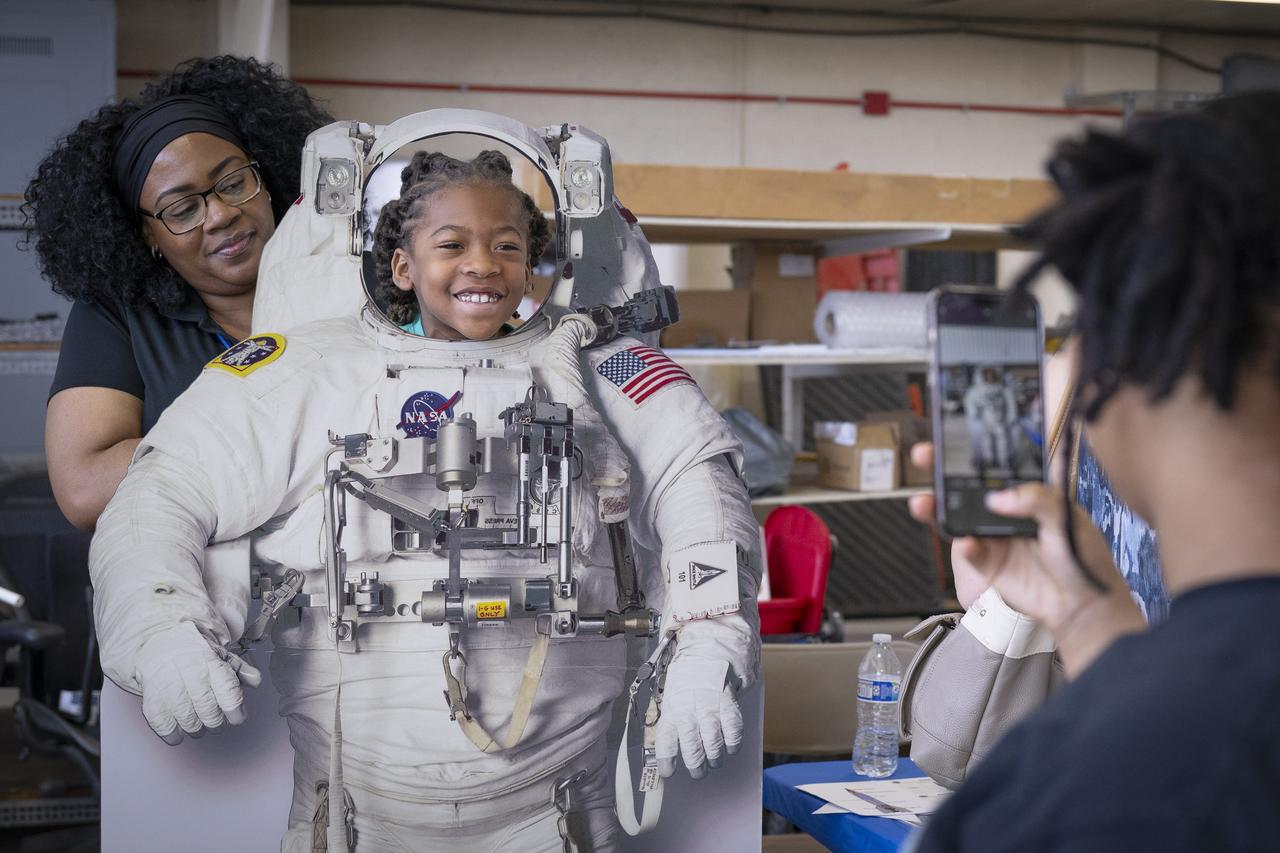
On June 17, 2025, NASA’s Armstrong Flight Research Center in Edwards, California, hosted Bring Kids to Work Day, offering hands-on activities that introduced children and their families to the exciting world of aeronautics and flight research.
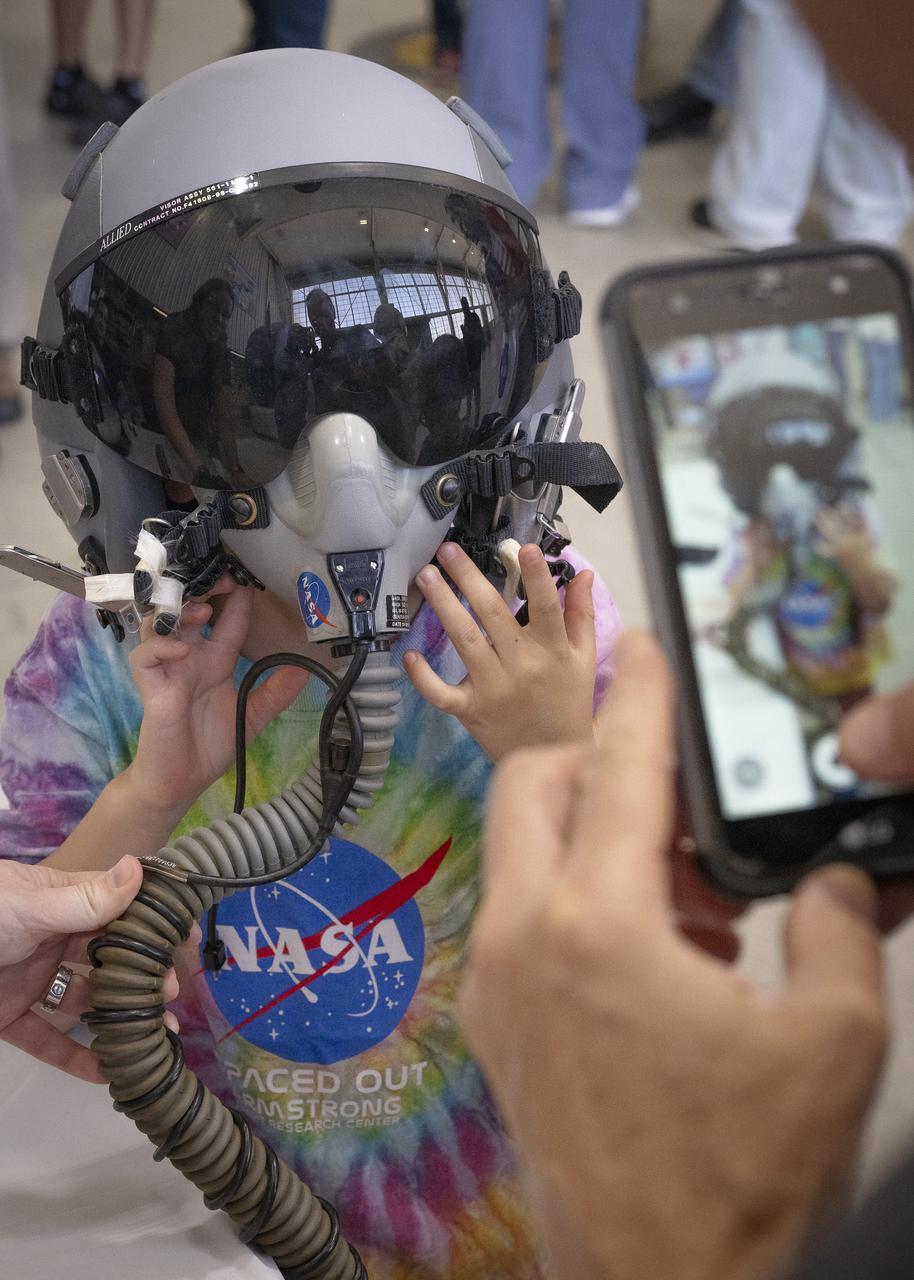
On June 17, 2025, NASA’s Armstrong Flight Research Center in Edwards, California, hosted Bring Kids to Work Day, offering hands-on activities that introduced children and their families to the exciting world of aeronautics and flight research.
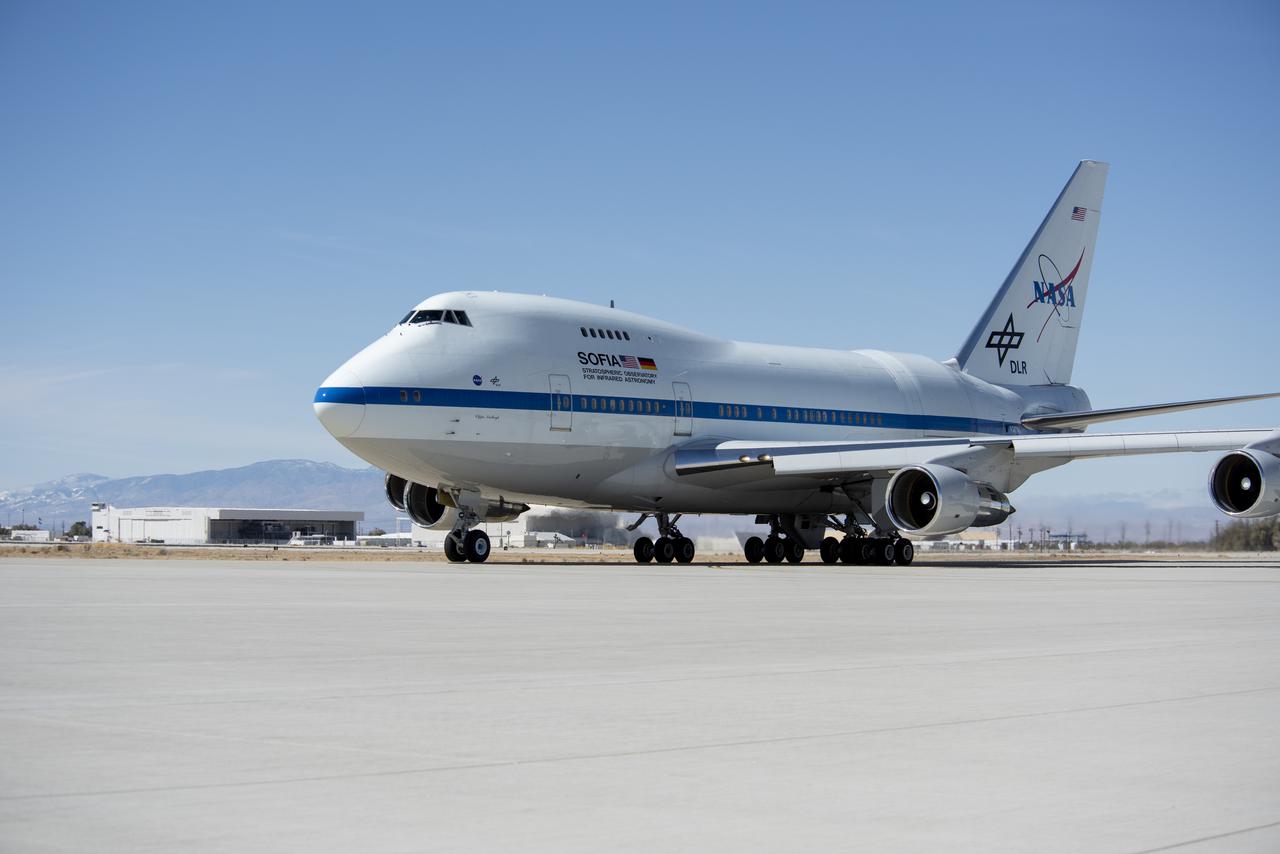
SOFIA Returns to NASA's Armstrong Flight Research Center Building 703 Caption: SOFIA returns to NASA's Armstrong Flight Research Center building 703 in Palmdale, California on March 16, 2021 after spending six months in Germany conducting science observations.
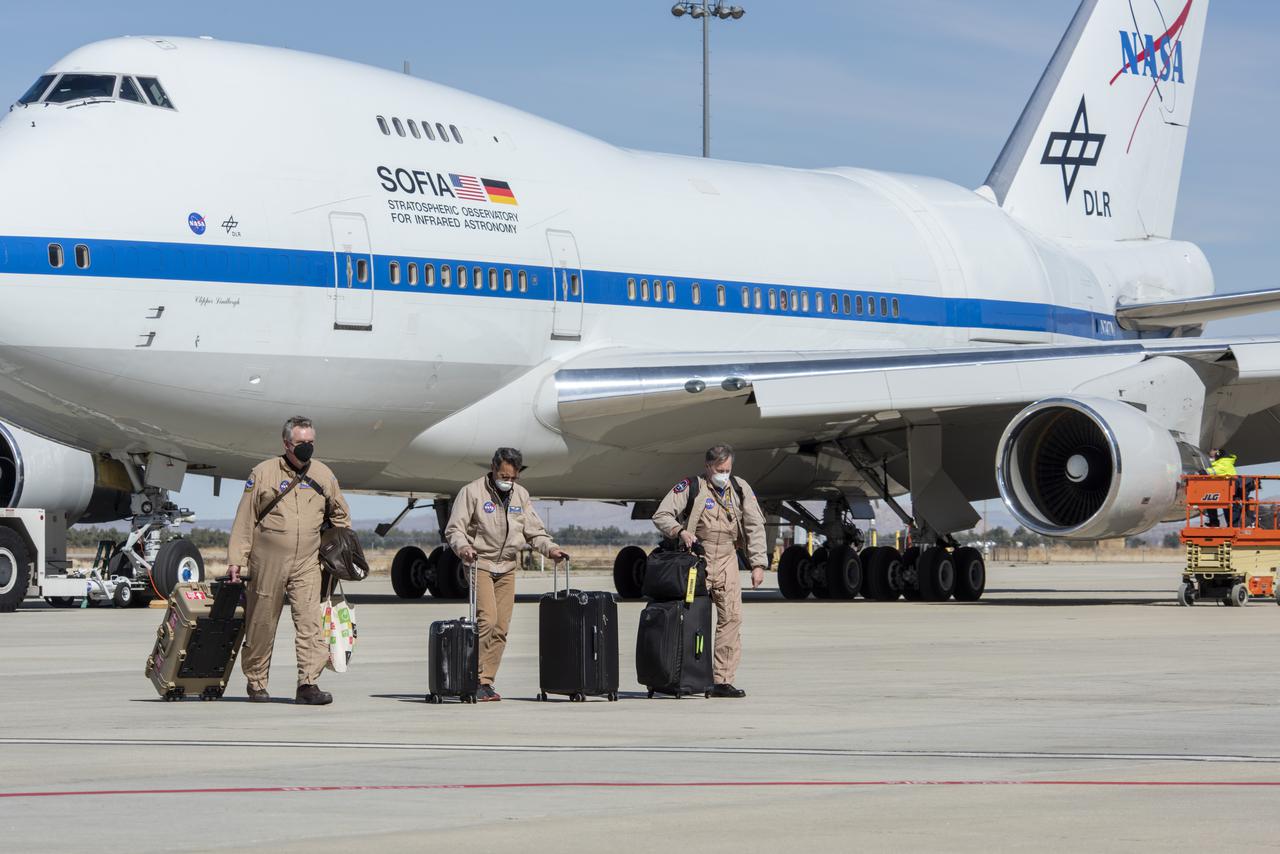
SOFIA Returns to NASA’s Armstrong Flight Research Center Building 703 Caption: SOFIA pilots are welcomed home to NASA’s Armstrong Flight Research Center Building 703 in Palmdale, California on March 16, 2021. From left to right: Tracy Phelps, Jeff Borton and Wayne Ringelberg
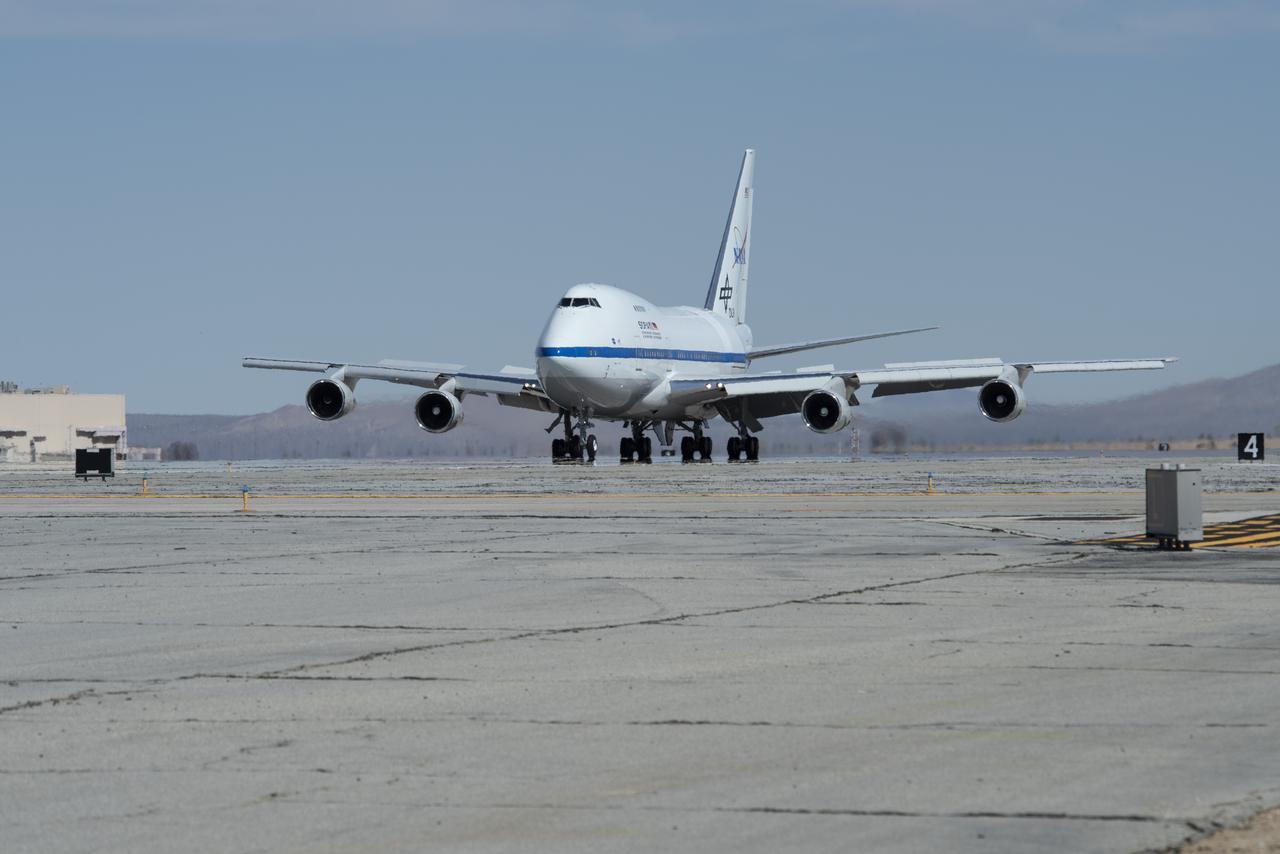
SOFIA Returns to NASA's Armstrong Flight Research Center Building 703 Caption: SOFIA returns to NASA's Armstrong Flight Research Center Building 703 in Palmdale, California on March 16, 2021 after spending six months in Germany conducting science observations.
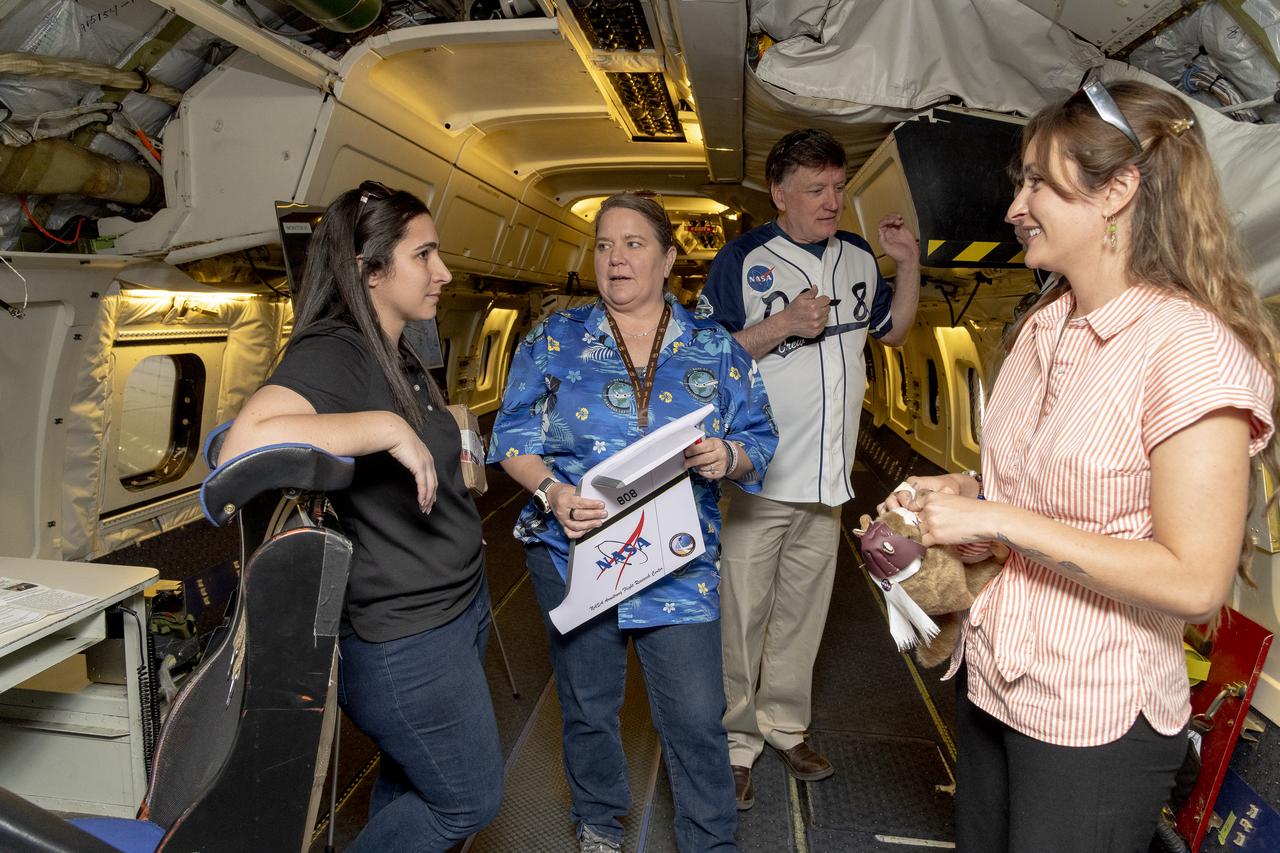
Members of the DC-8 program team tour an empty aircraft and recall past missions. Usually the DC-8 has between 15 and 30 instrument racks installed for a given science mission. The aircraft was spacious by comparison on May 2, 2024, when NASA personnel, friends, and family gathered at NASA’s Armstrong Flight Research Center Building 703 in Palmdale, California to celebrate the DC-8 staff, aircraft, and science campaigns. Conversing here are DC-8 aircraft deputy manager Kirsten Boogaard, left, with NASA Armstrong pilot Carrie Worth, Mike Zimmerman, and NASA Armstrong public affairs specialist for airborne science, Erica Heim.