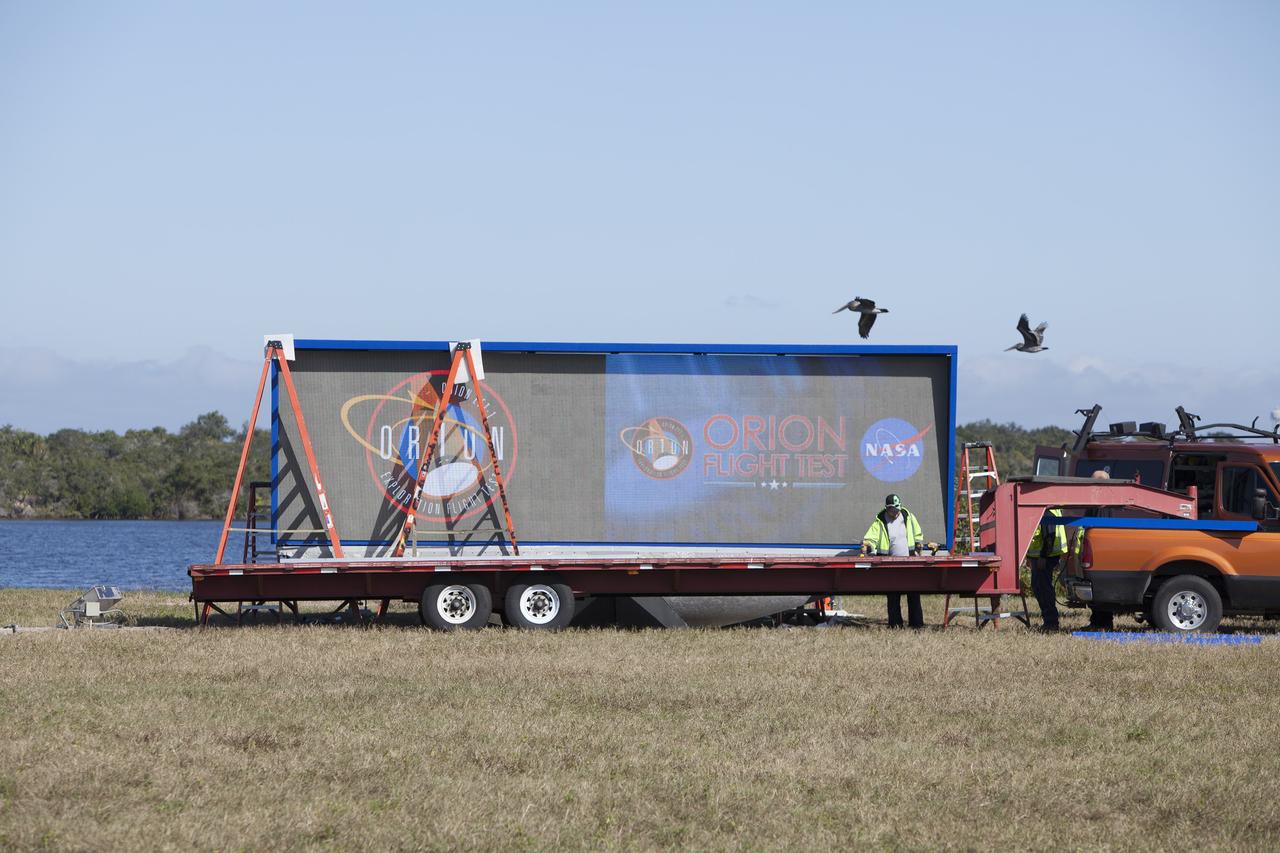
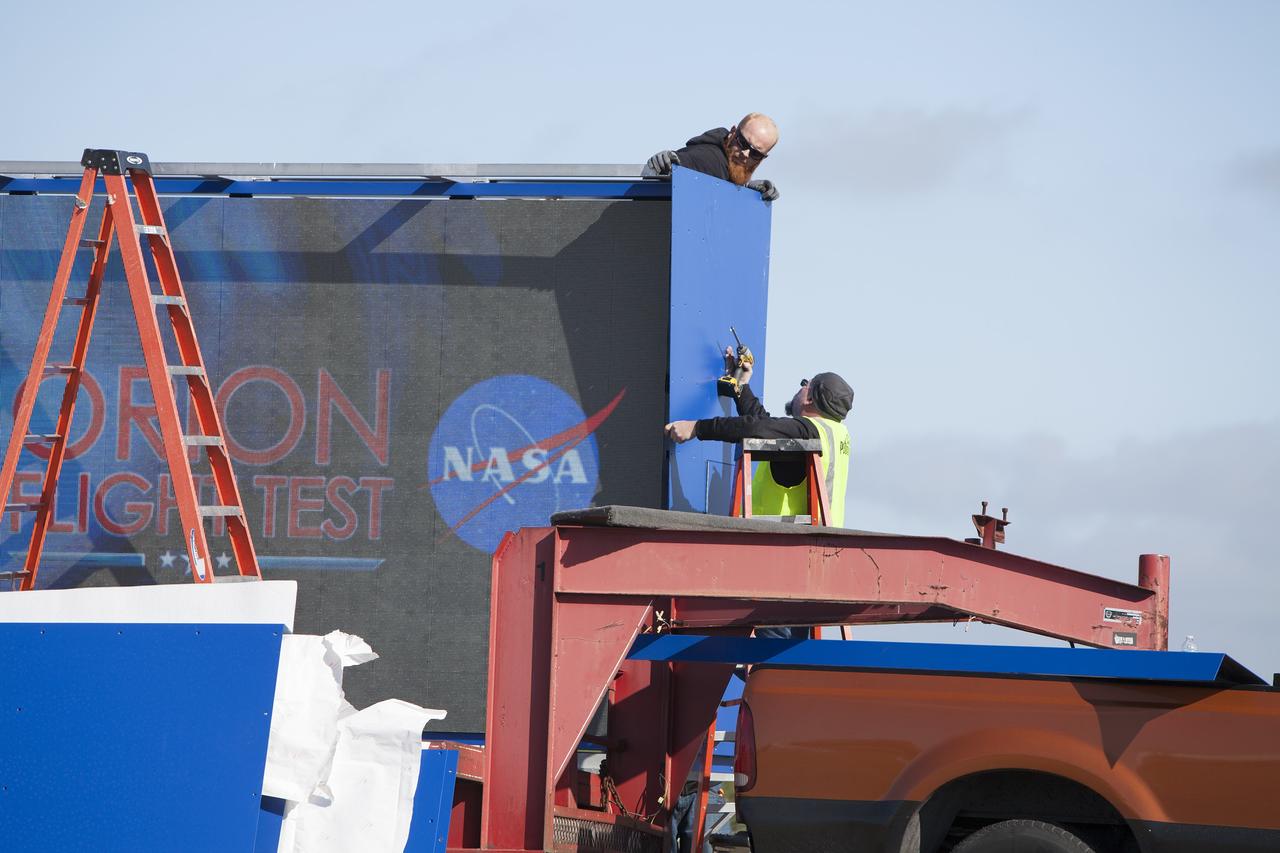
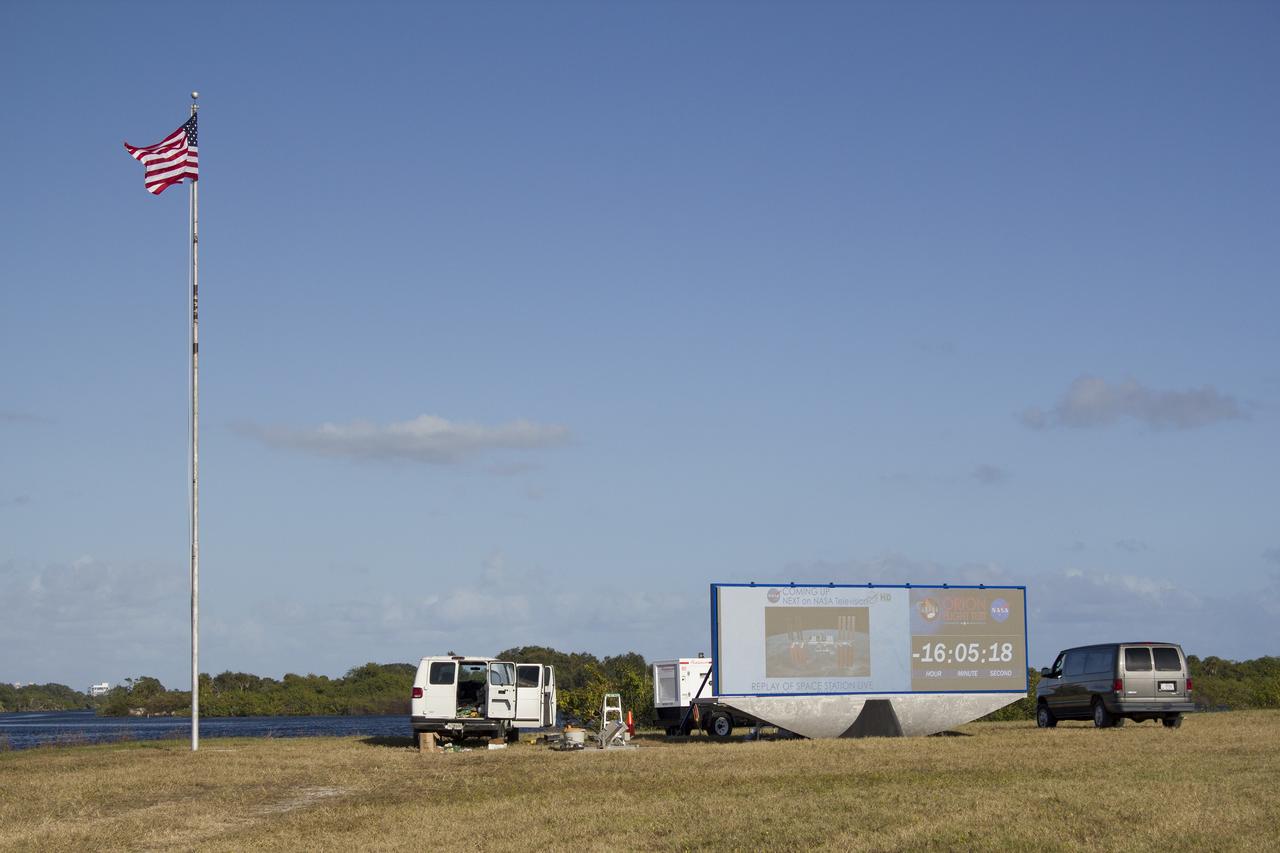
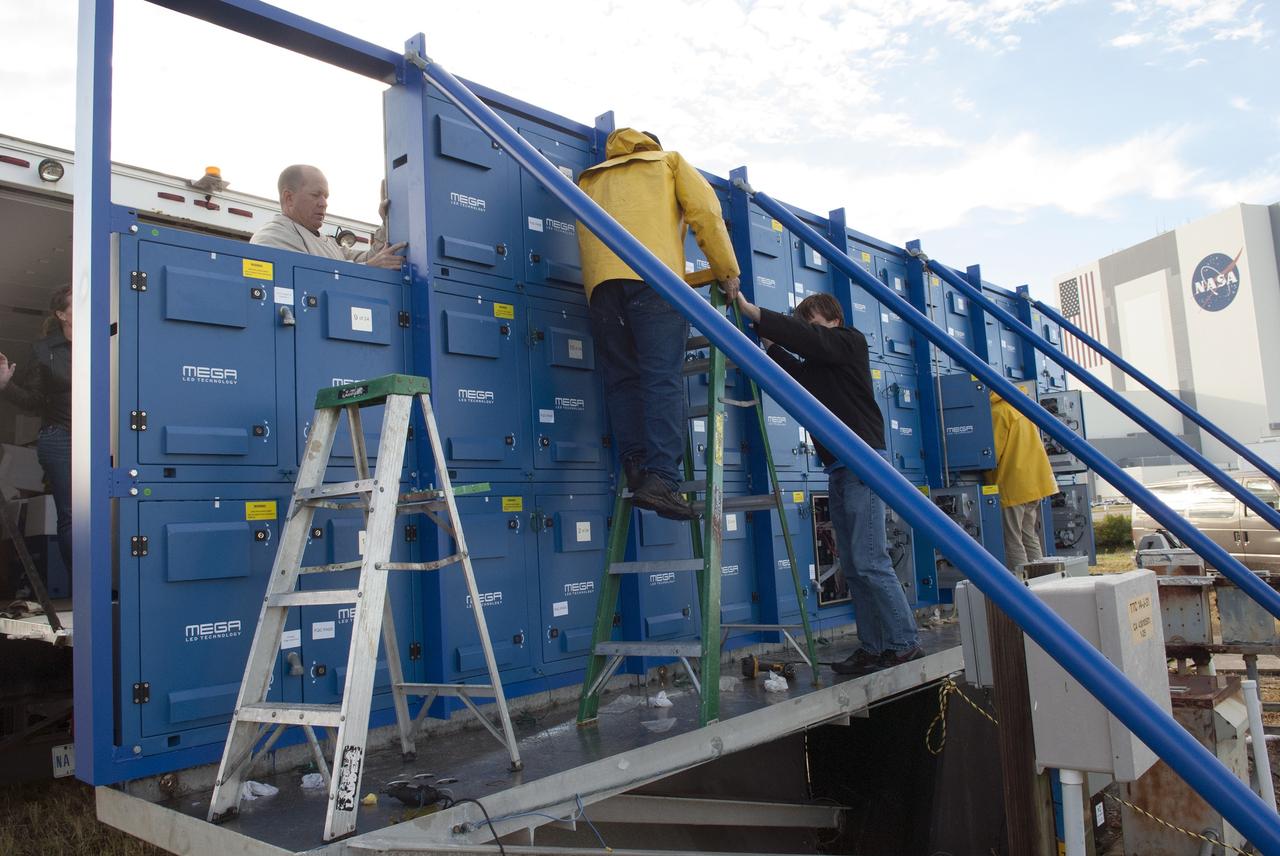
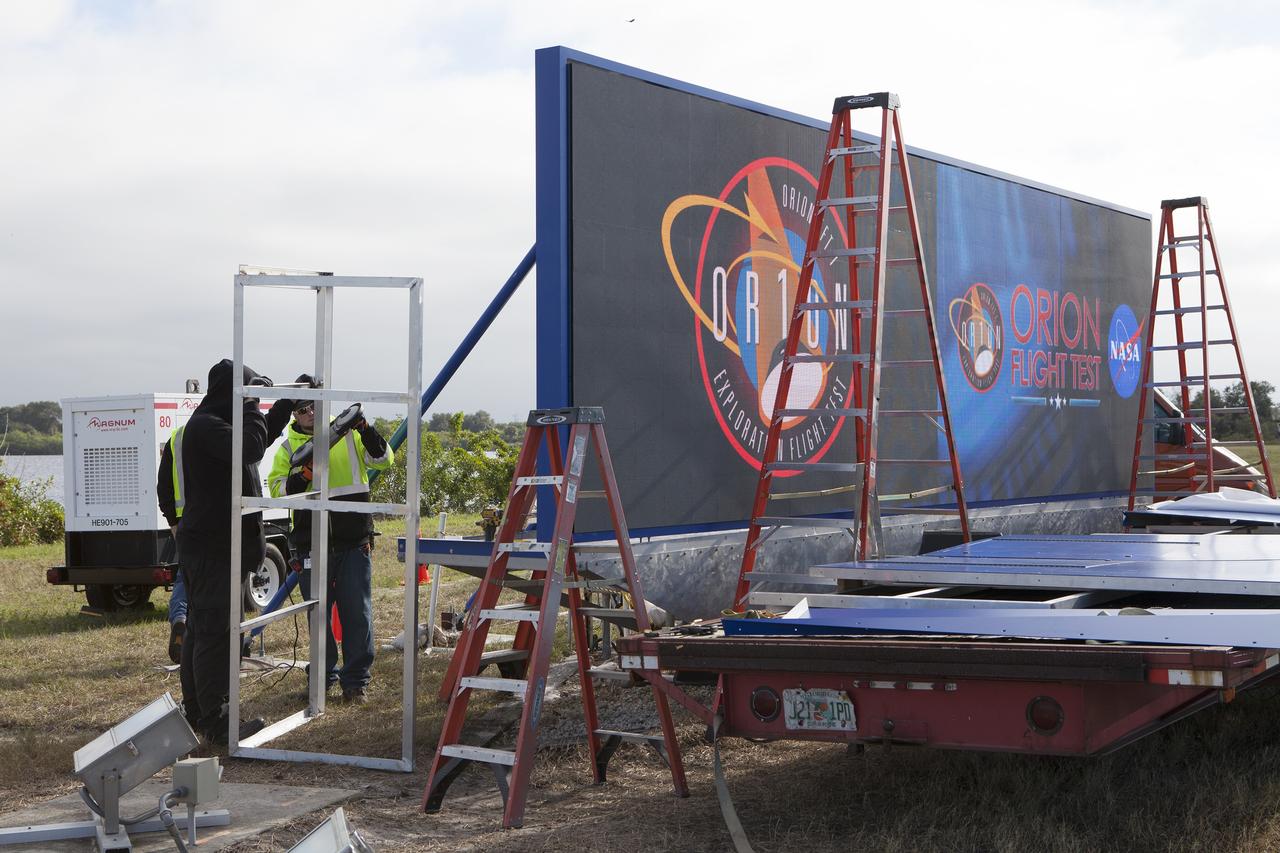
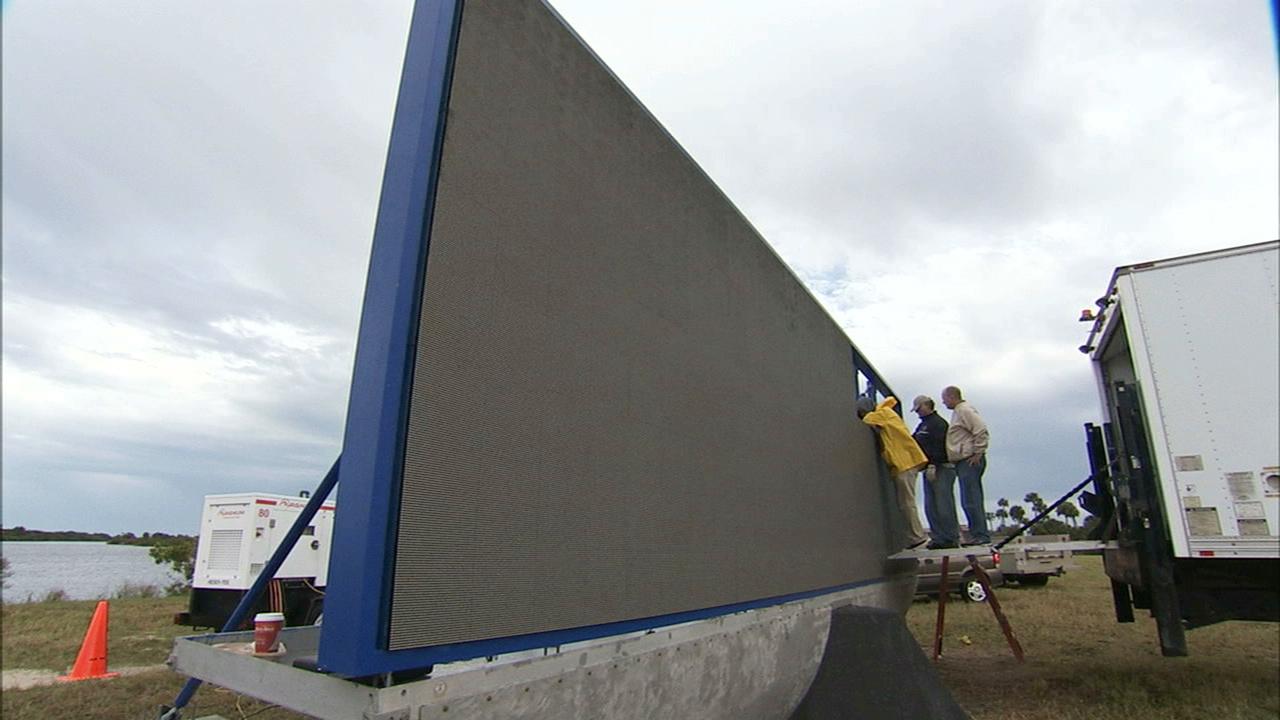
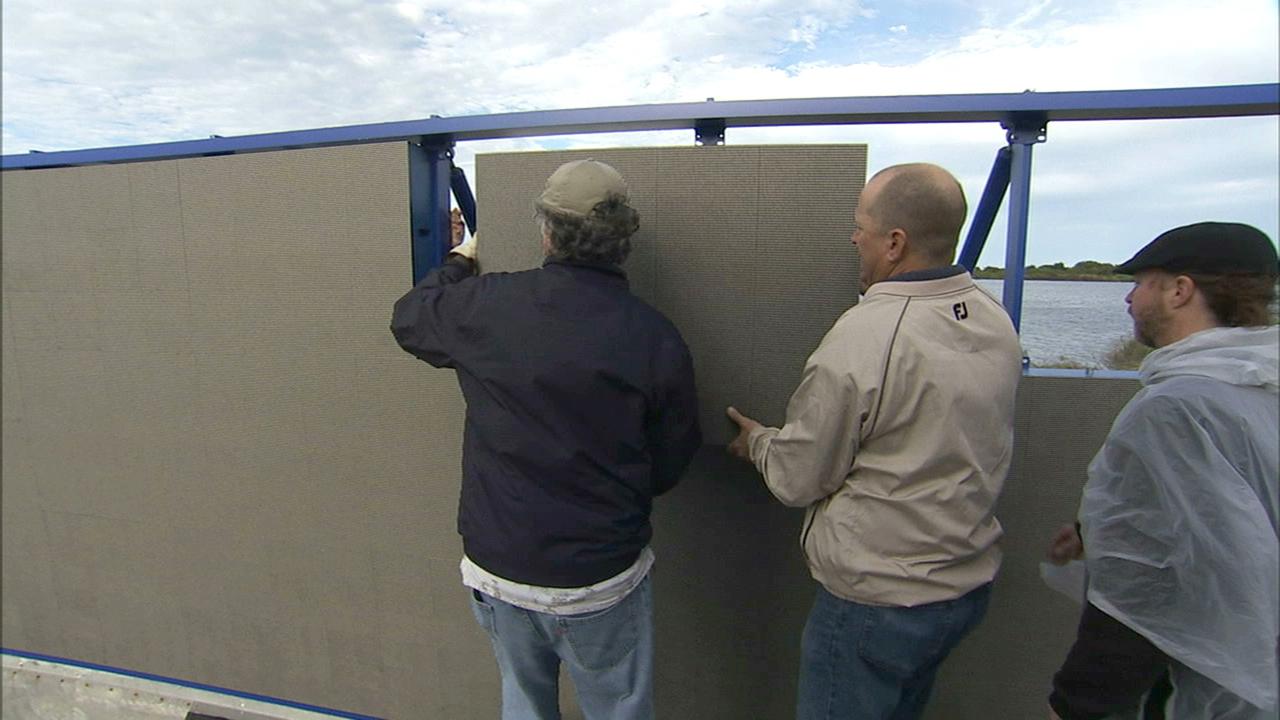
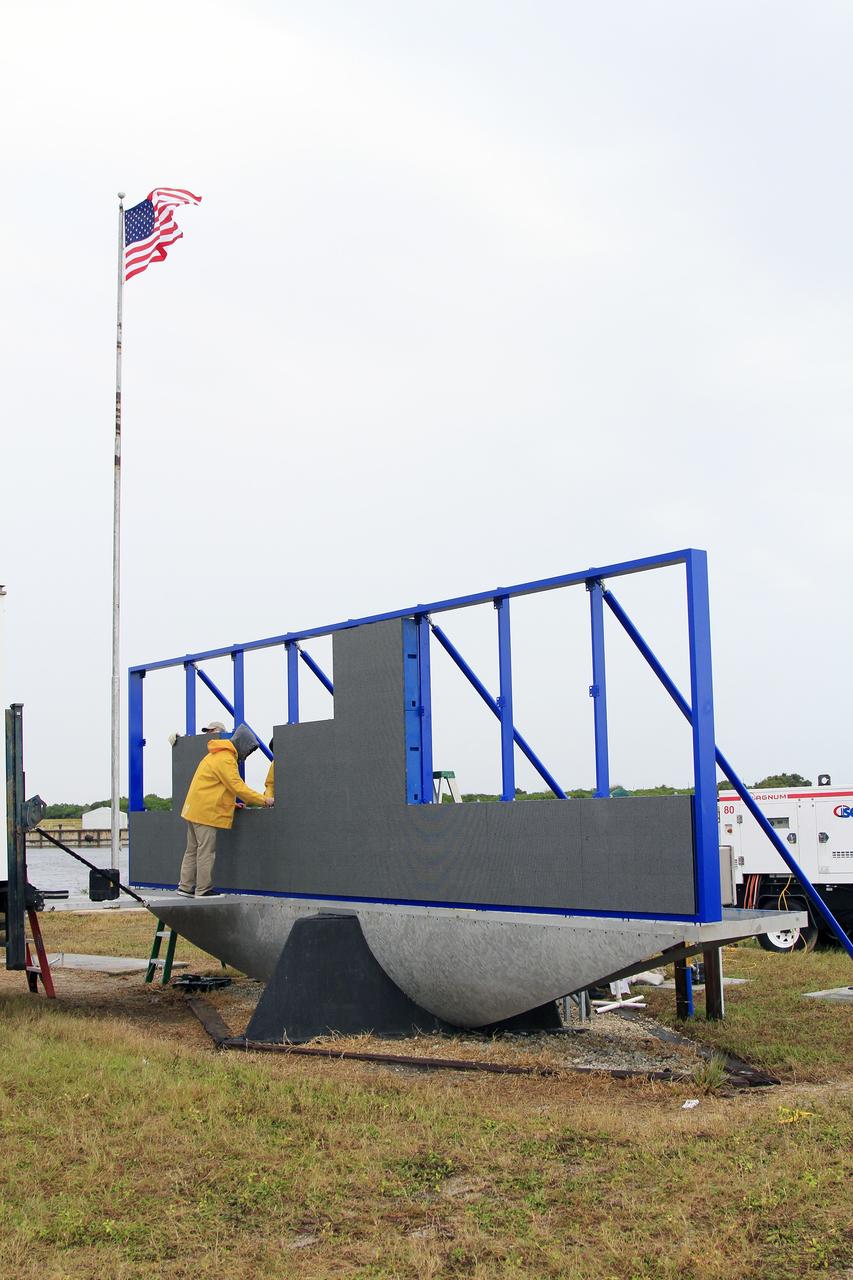
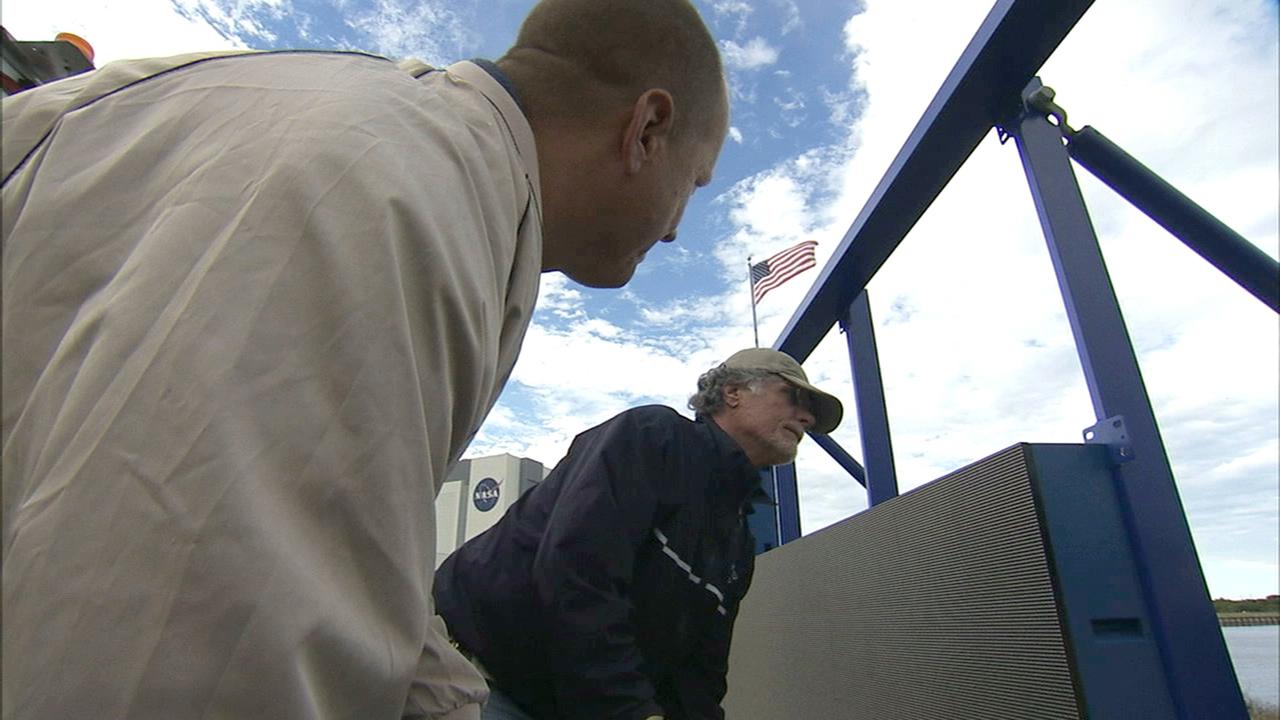
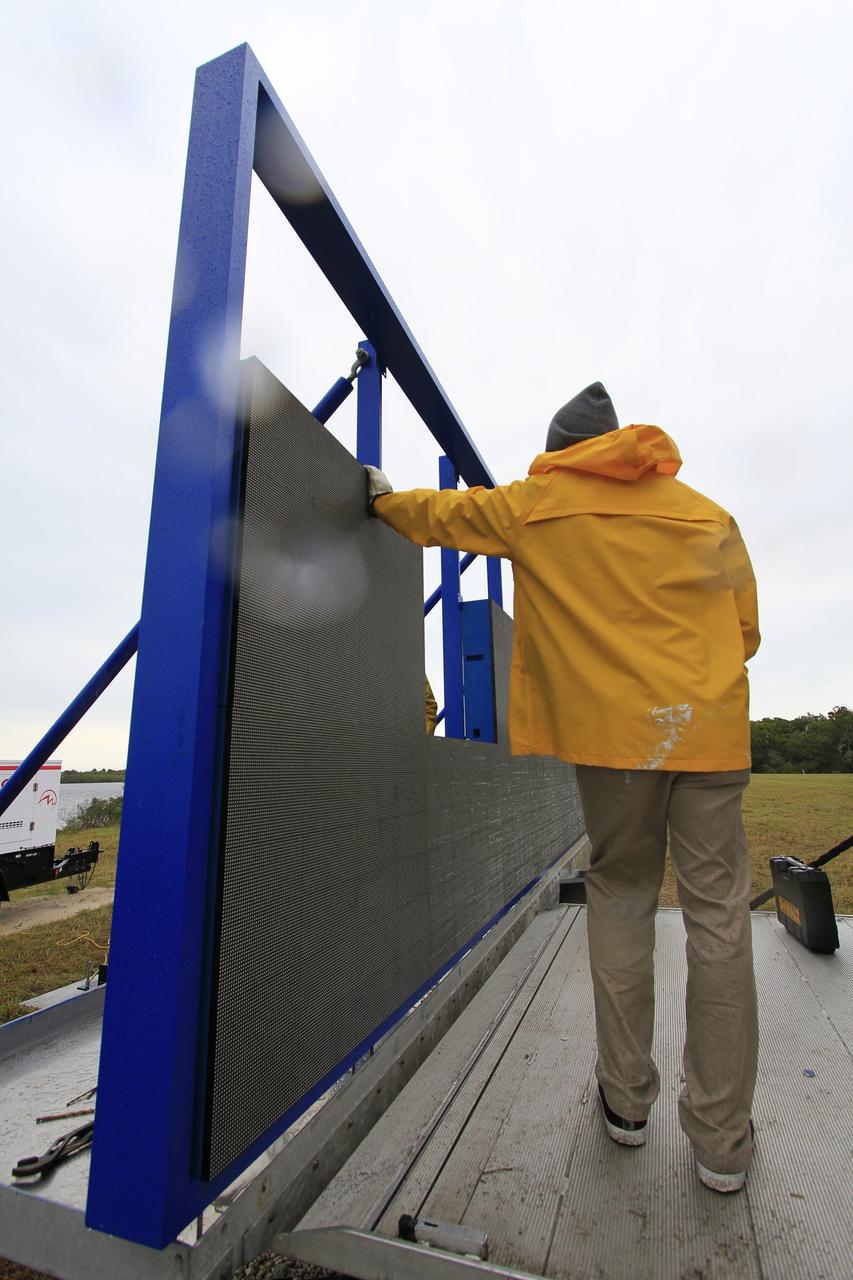
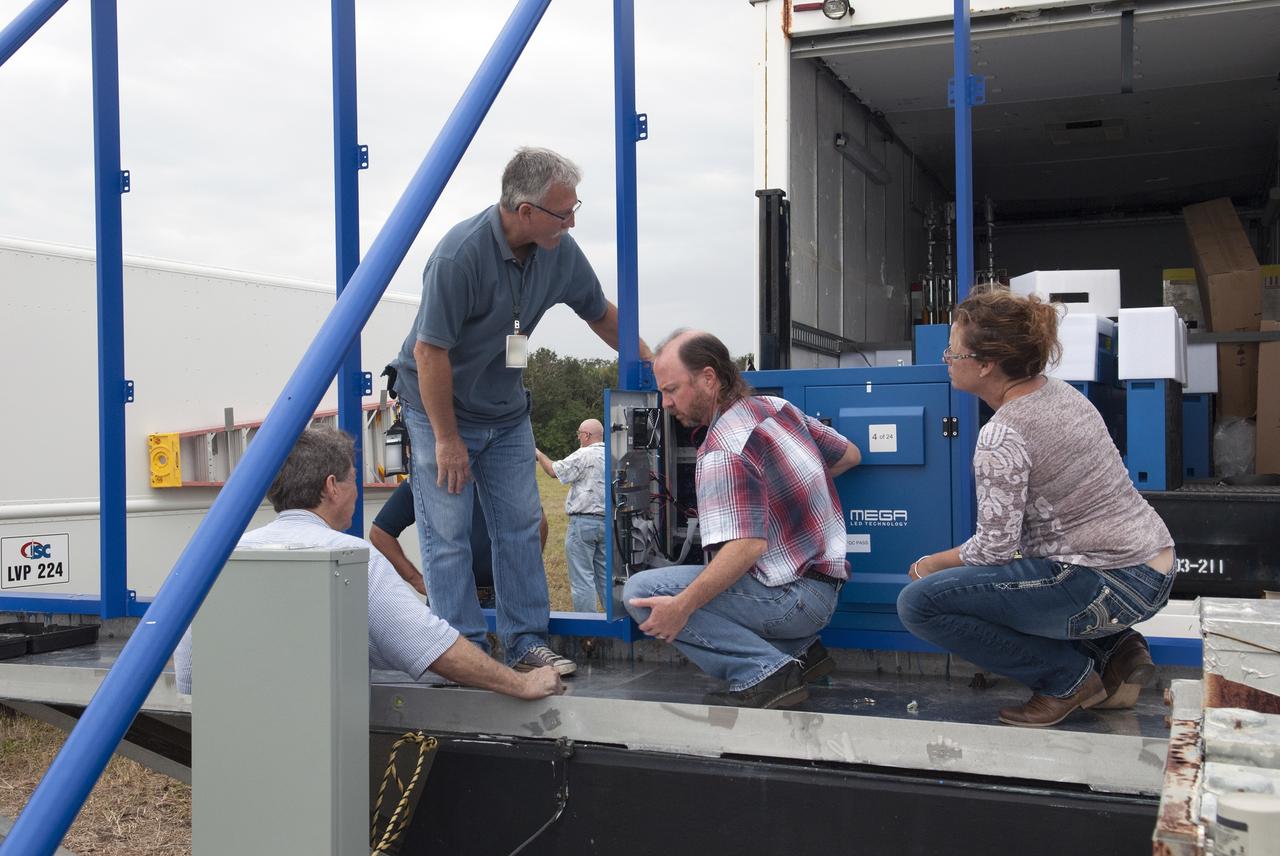
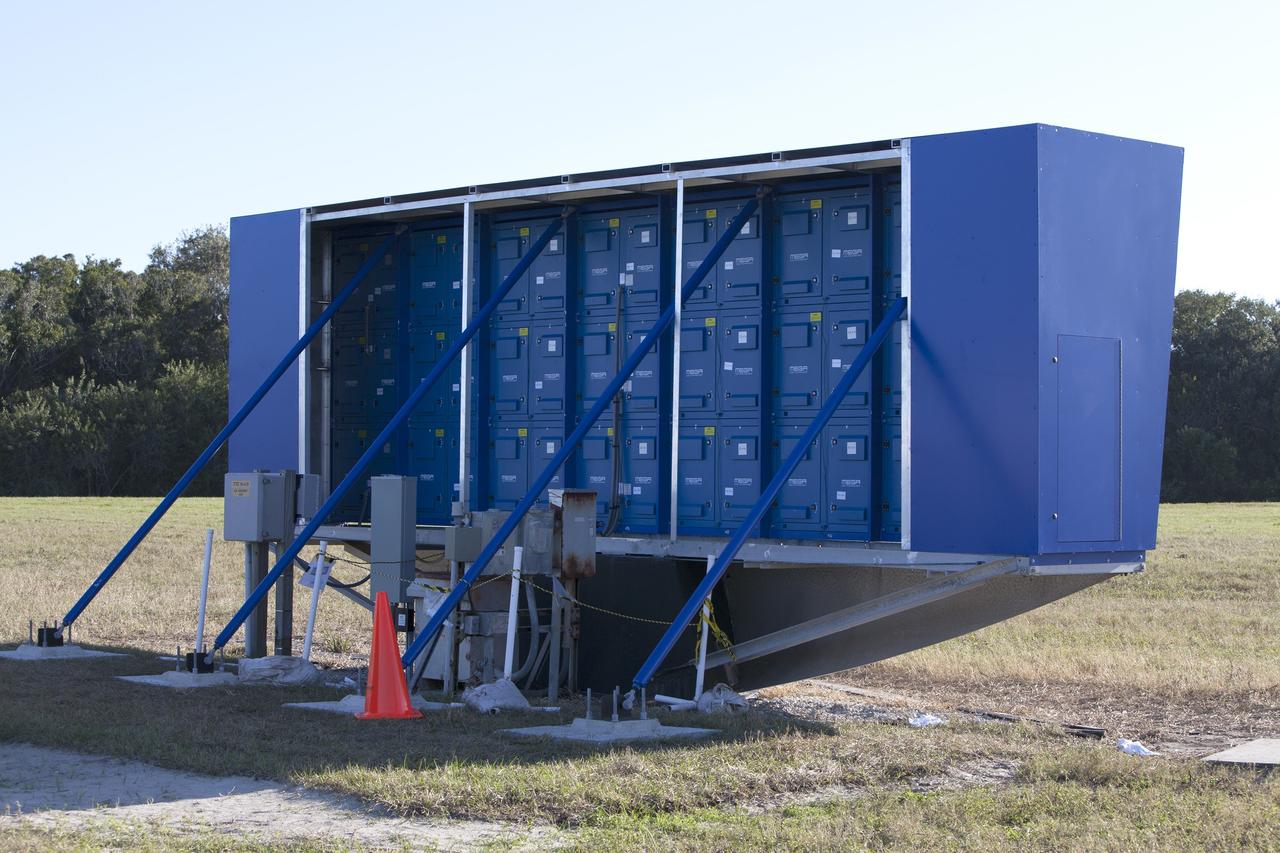
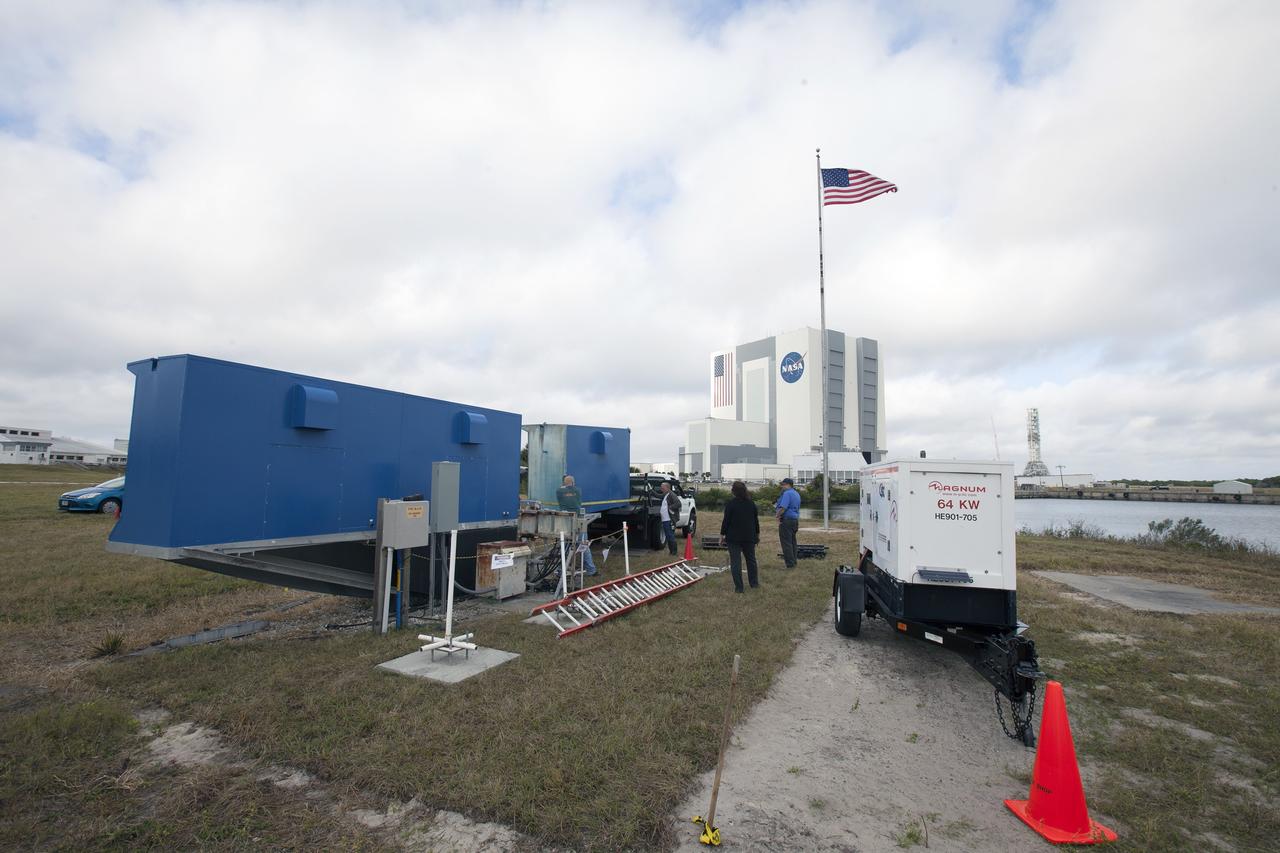
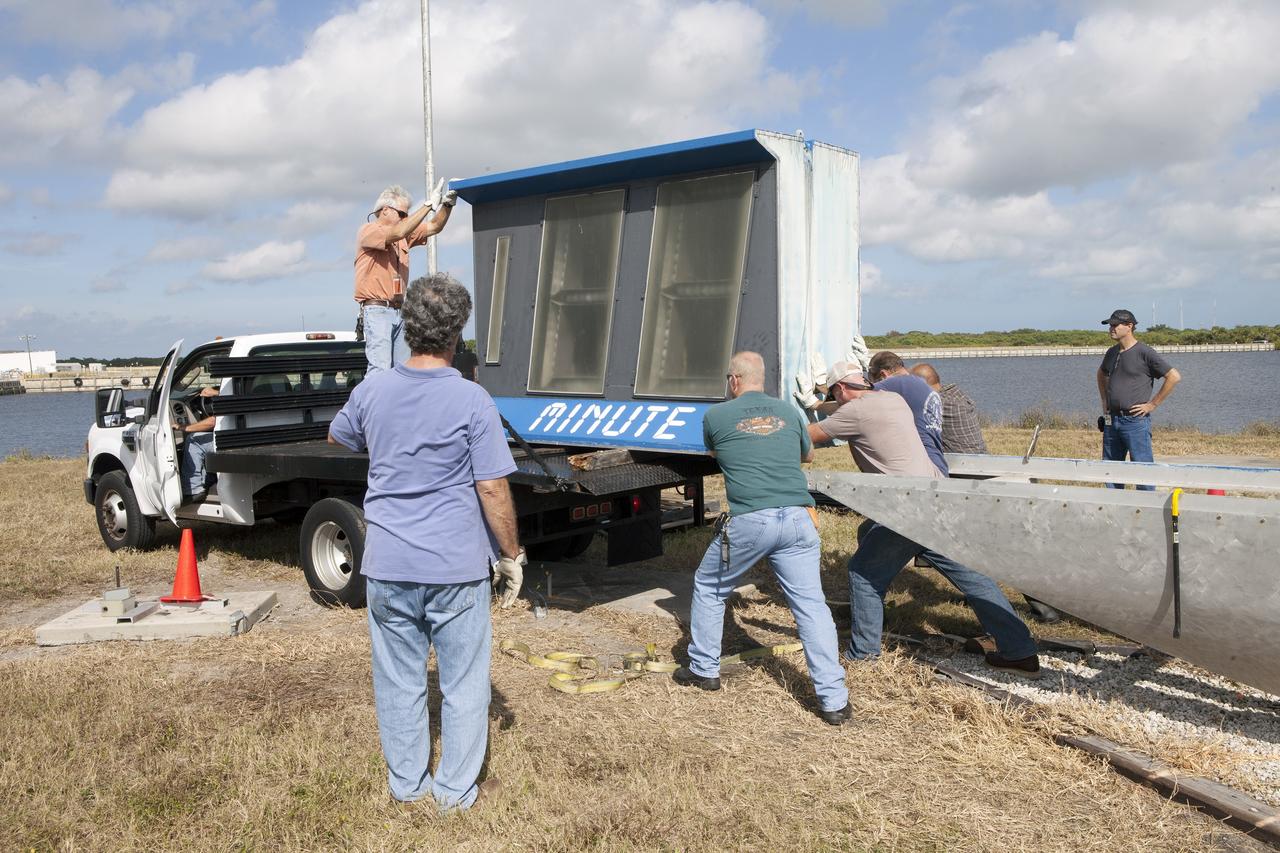
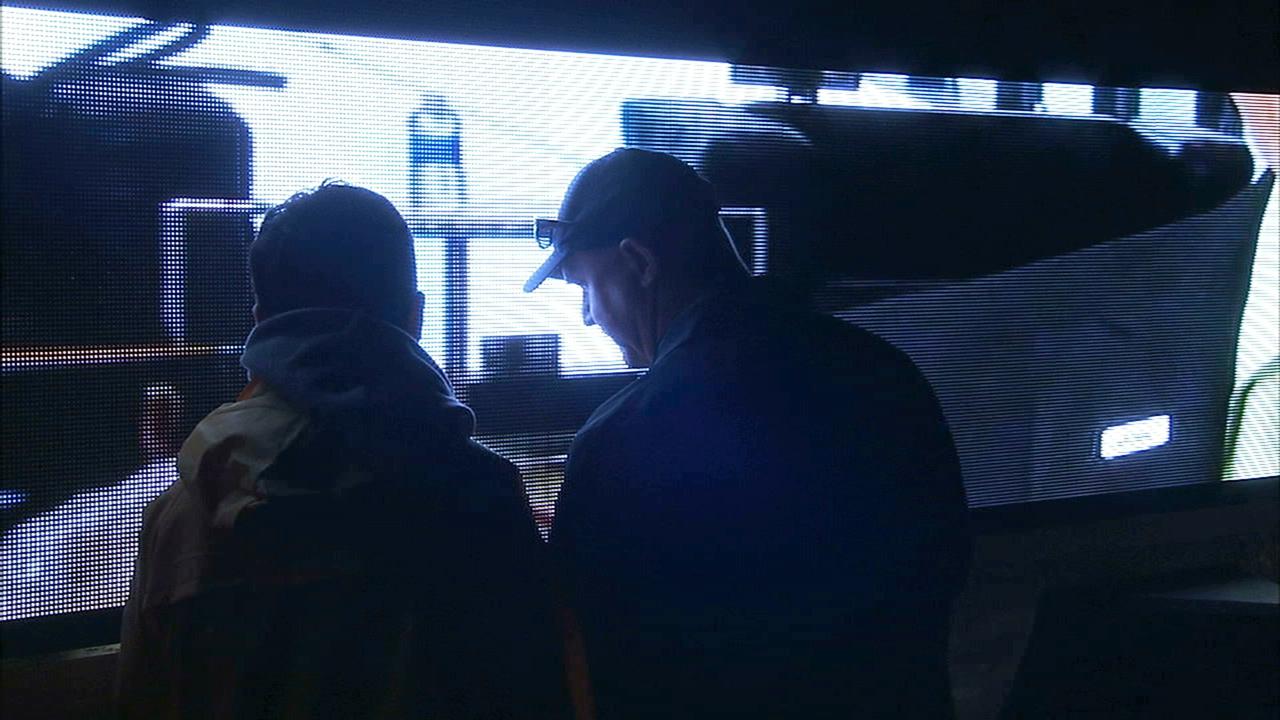
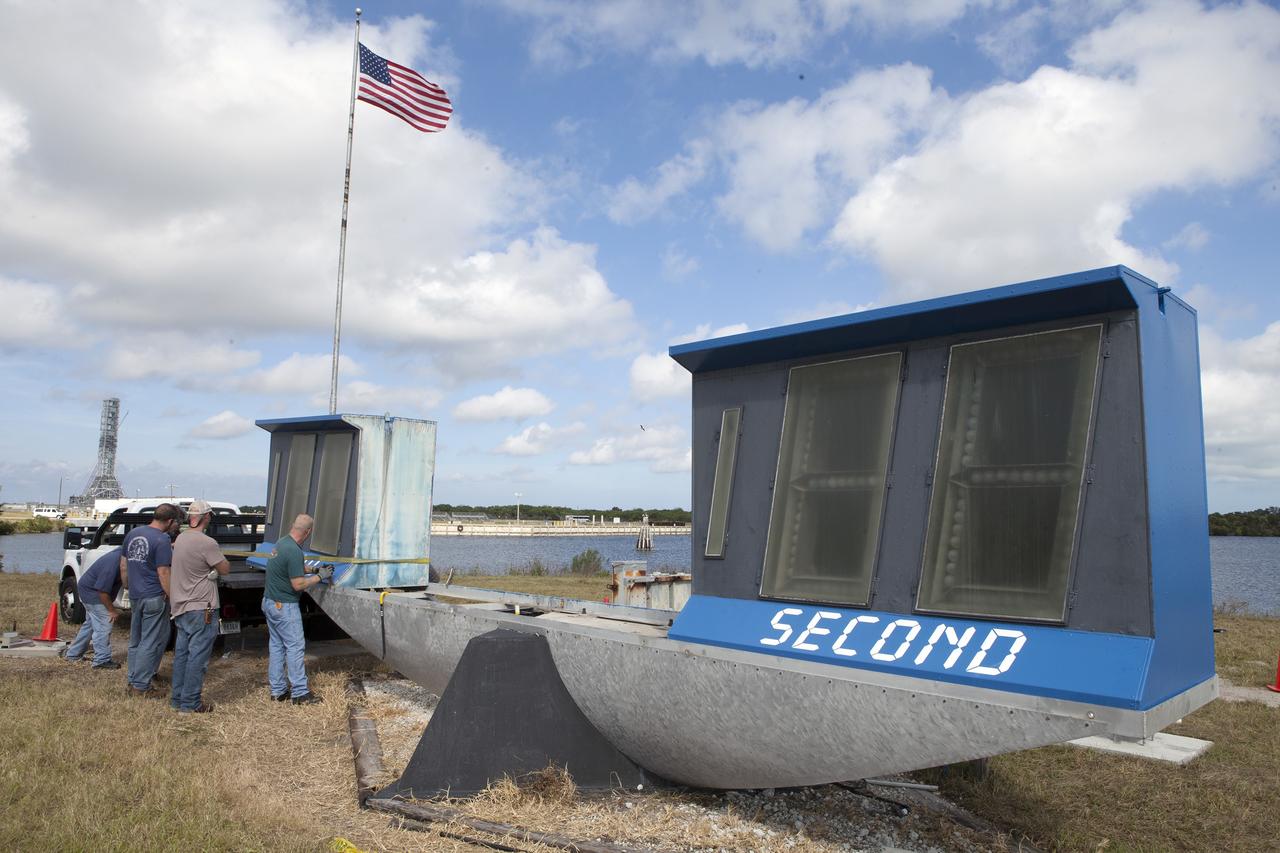
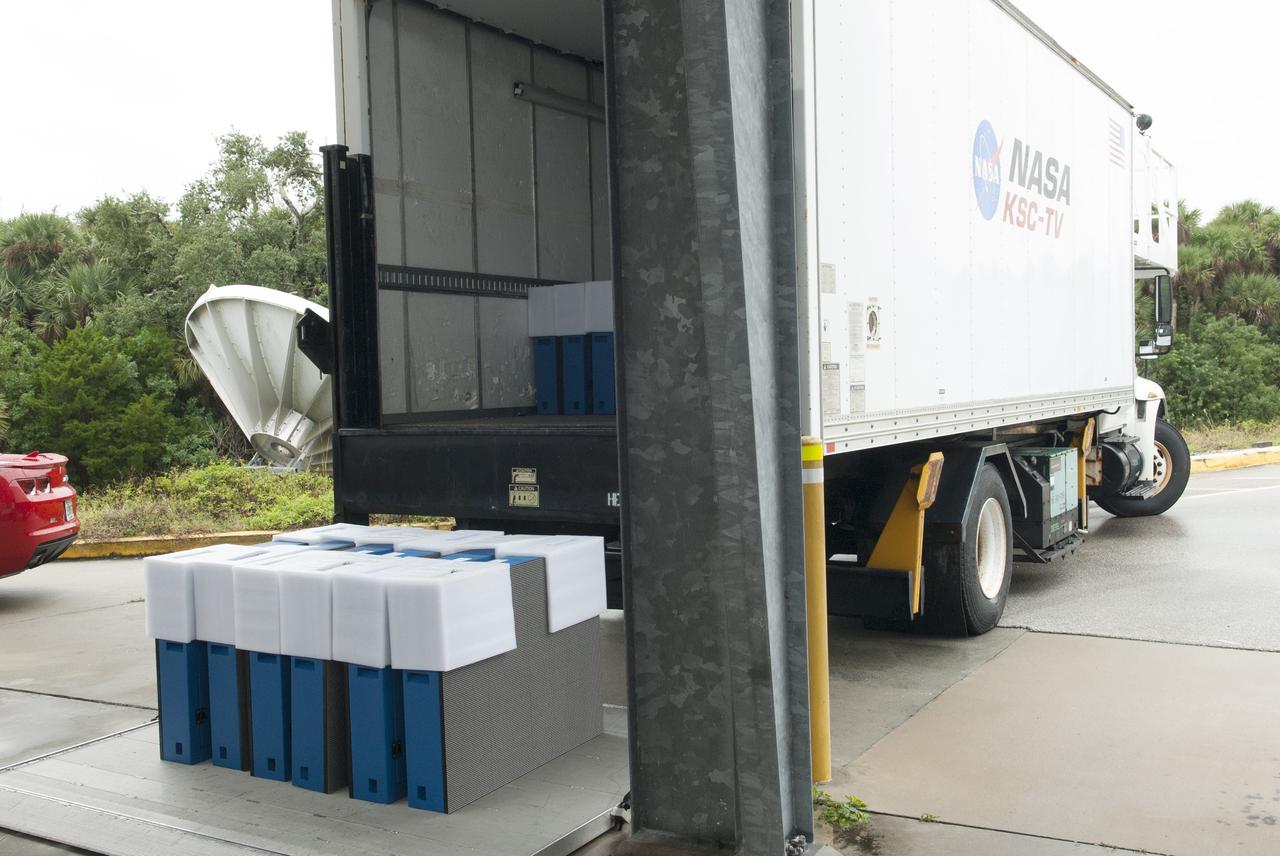
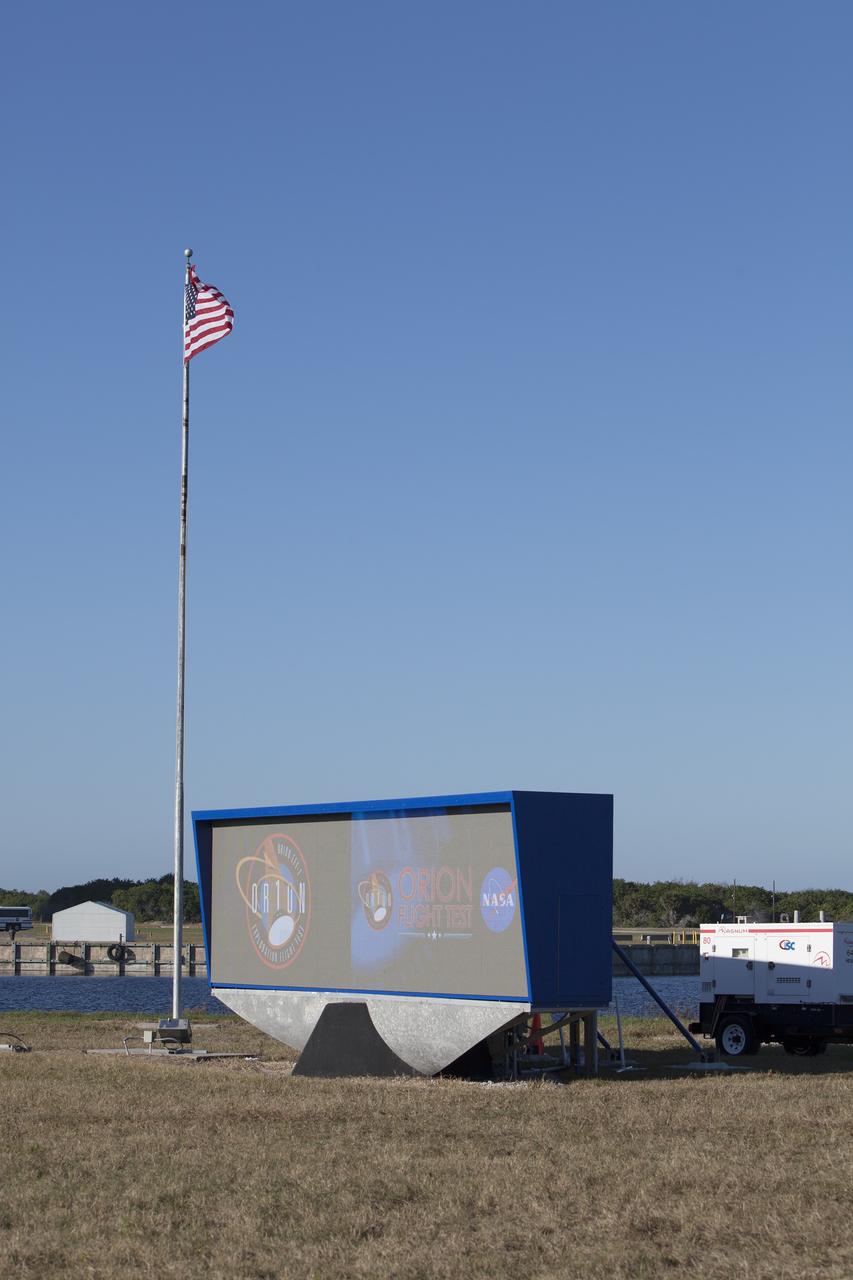
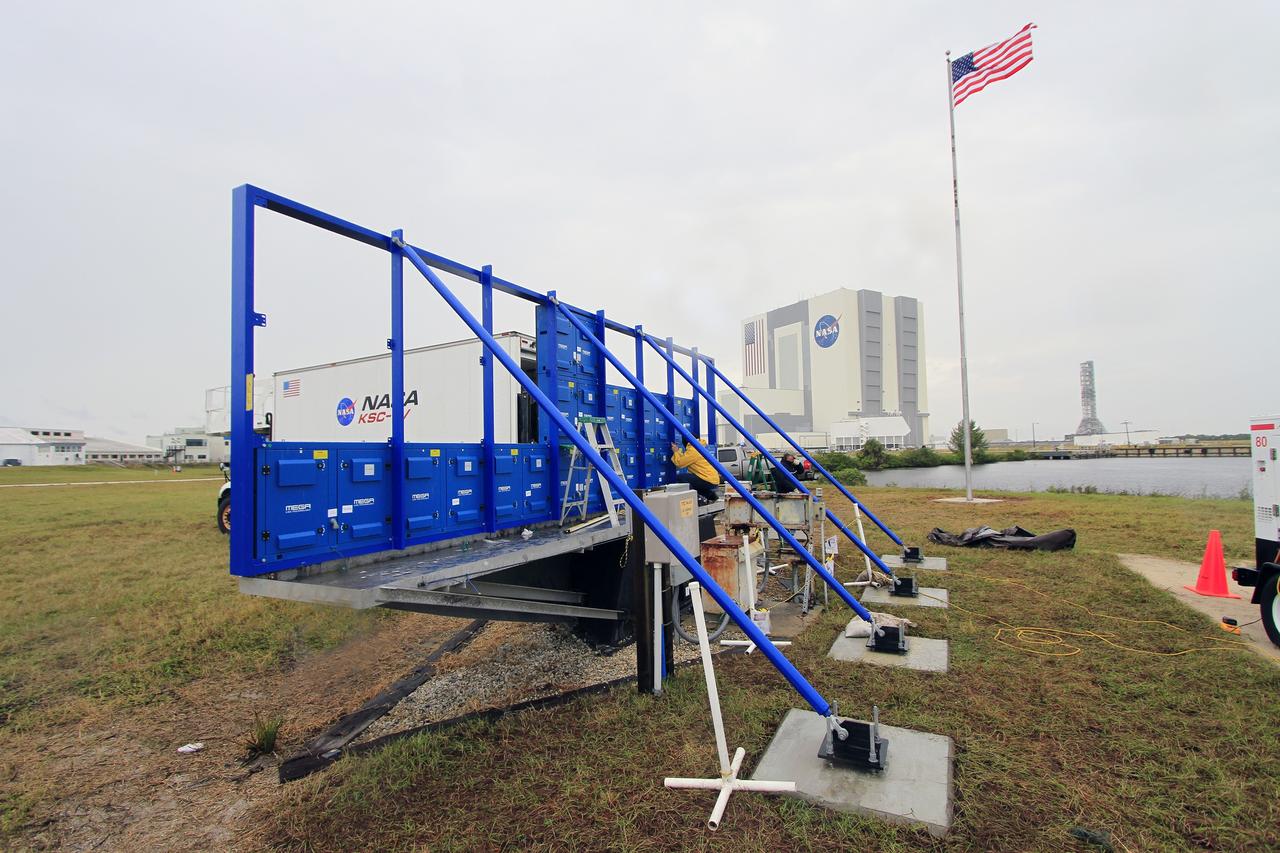
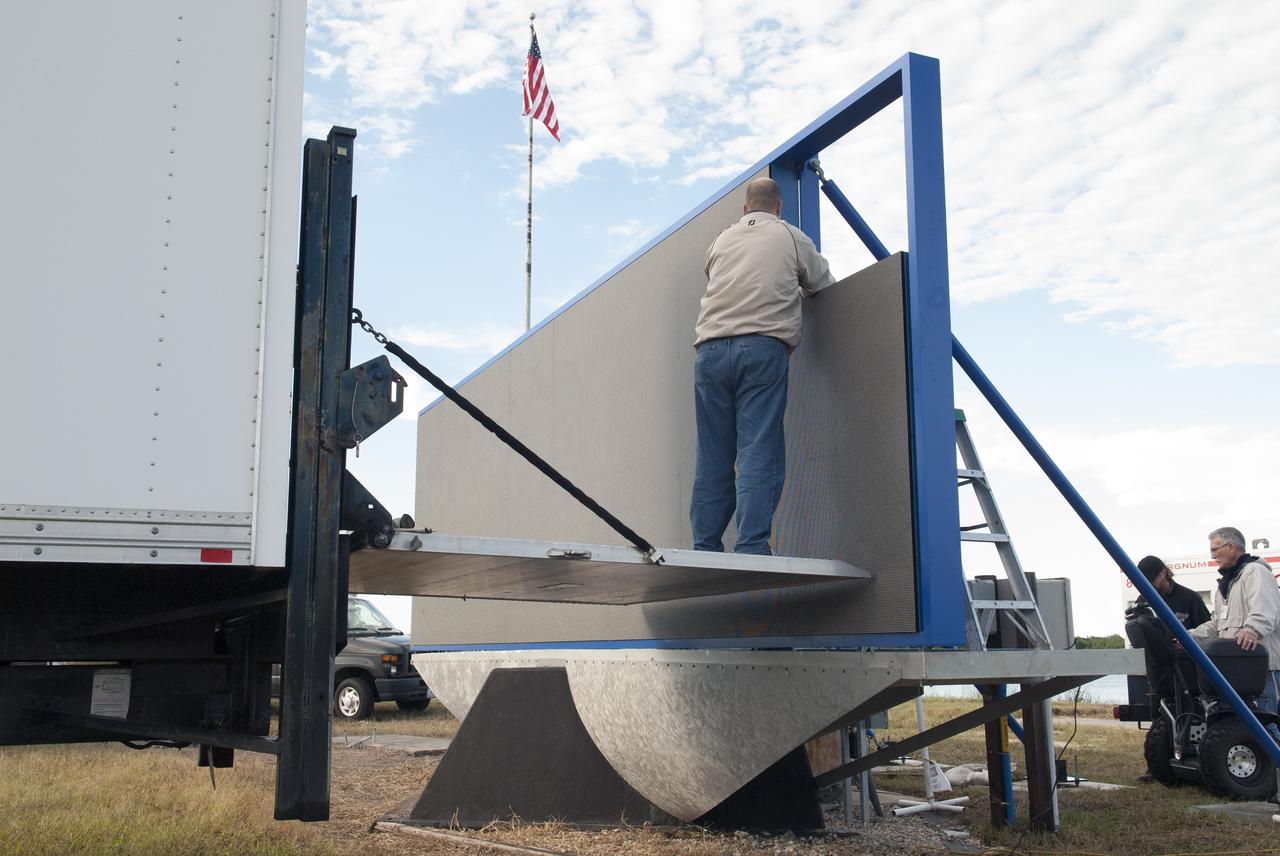
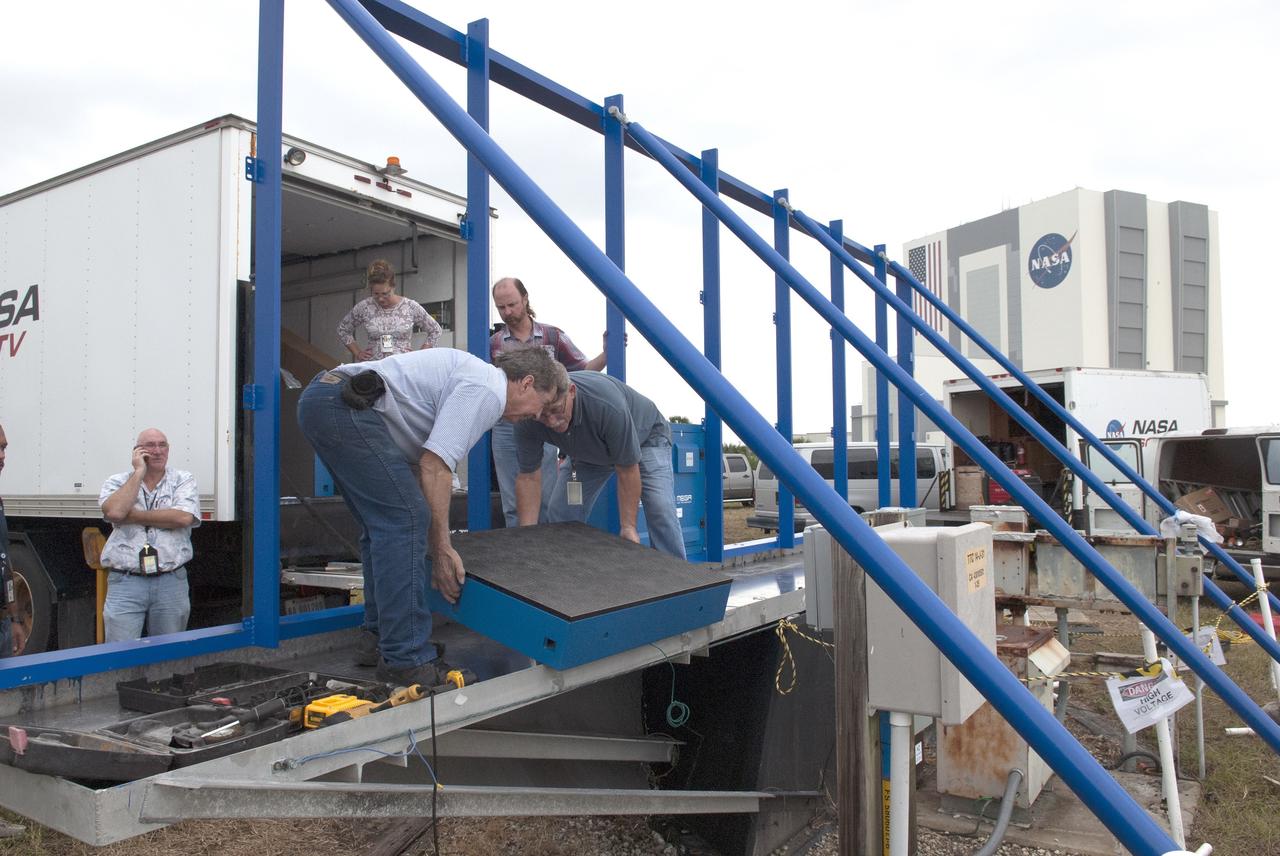
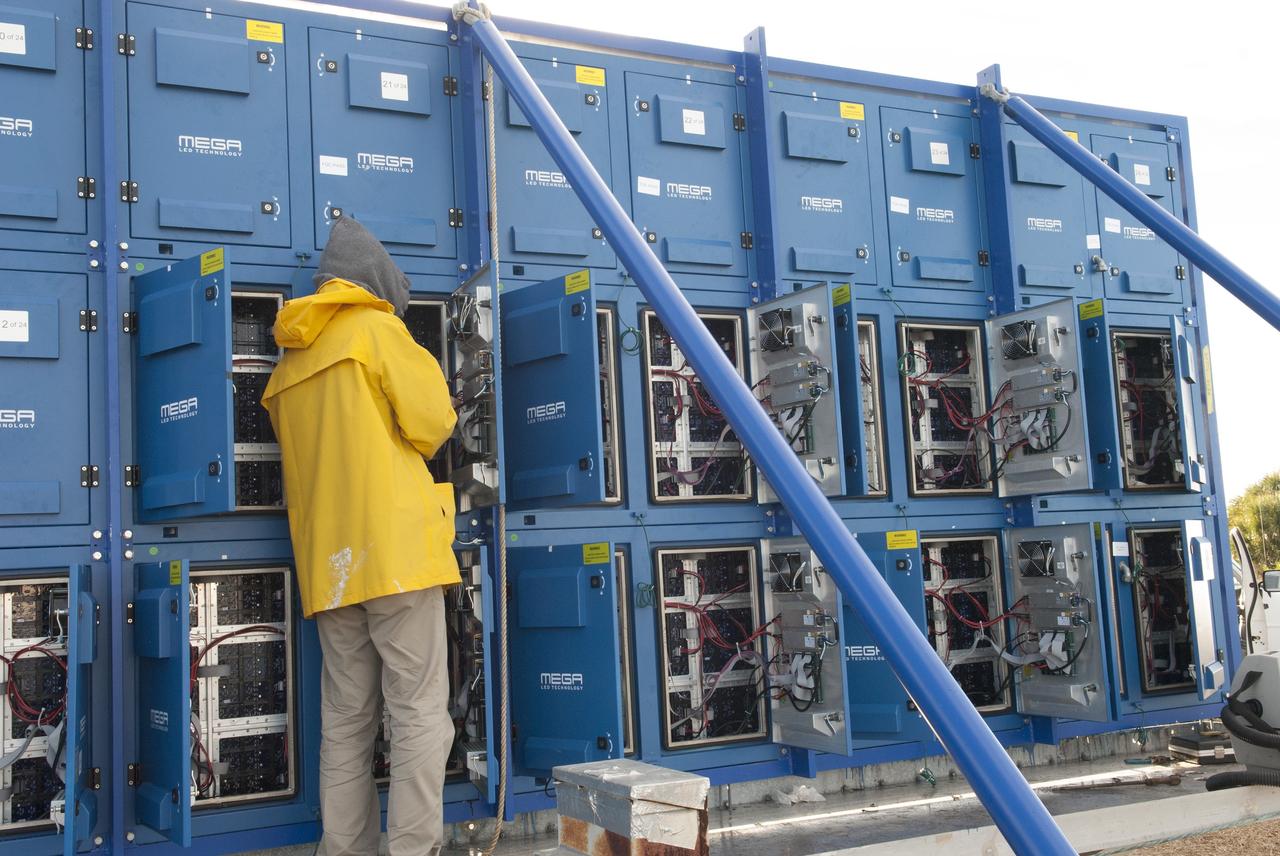
CAPE CANAVERAL, Fla. – At NASA's Kennedy Space Center in Florida, work continues to install 24 light emitting diode LED panels in the new countdown clock at the spaceport's Press Site. The modern, multimedia display is similar to the screens seen at sporting venues. The new screen will be nearly 26 feet wide by 7 feet high, a foot taller than the original clock.    The historic countdown clock was designed by Kennedy engineers and built by space center technicians before Apollo 12 in 1969. NASA has requested to acquire the countdown clock from the agency’s Artifact Working Group at the agency's Headquarters for display at the Kennedy Space Center Visitor Complex. For more information on the countdown clock, go to http://go.nasa.gov/10Zku10. Photo credit: NASA/Jim Grossman
KSC-2014-4601
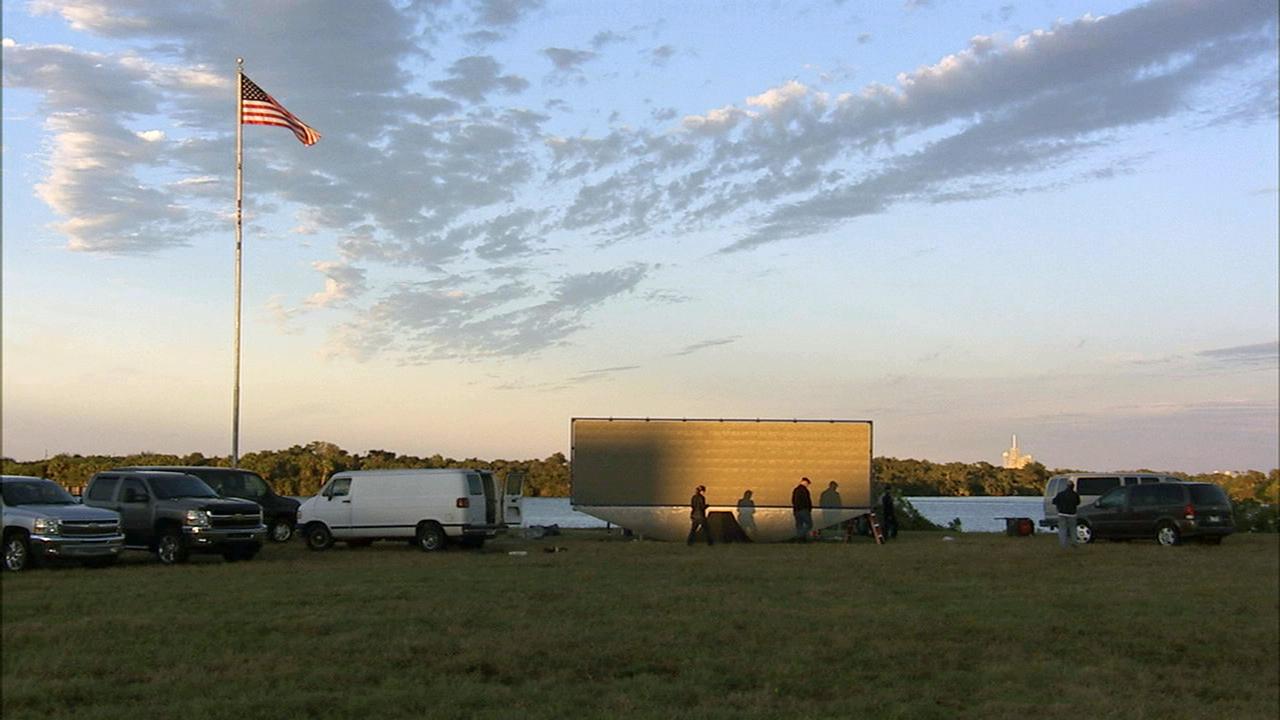
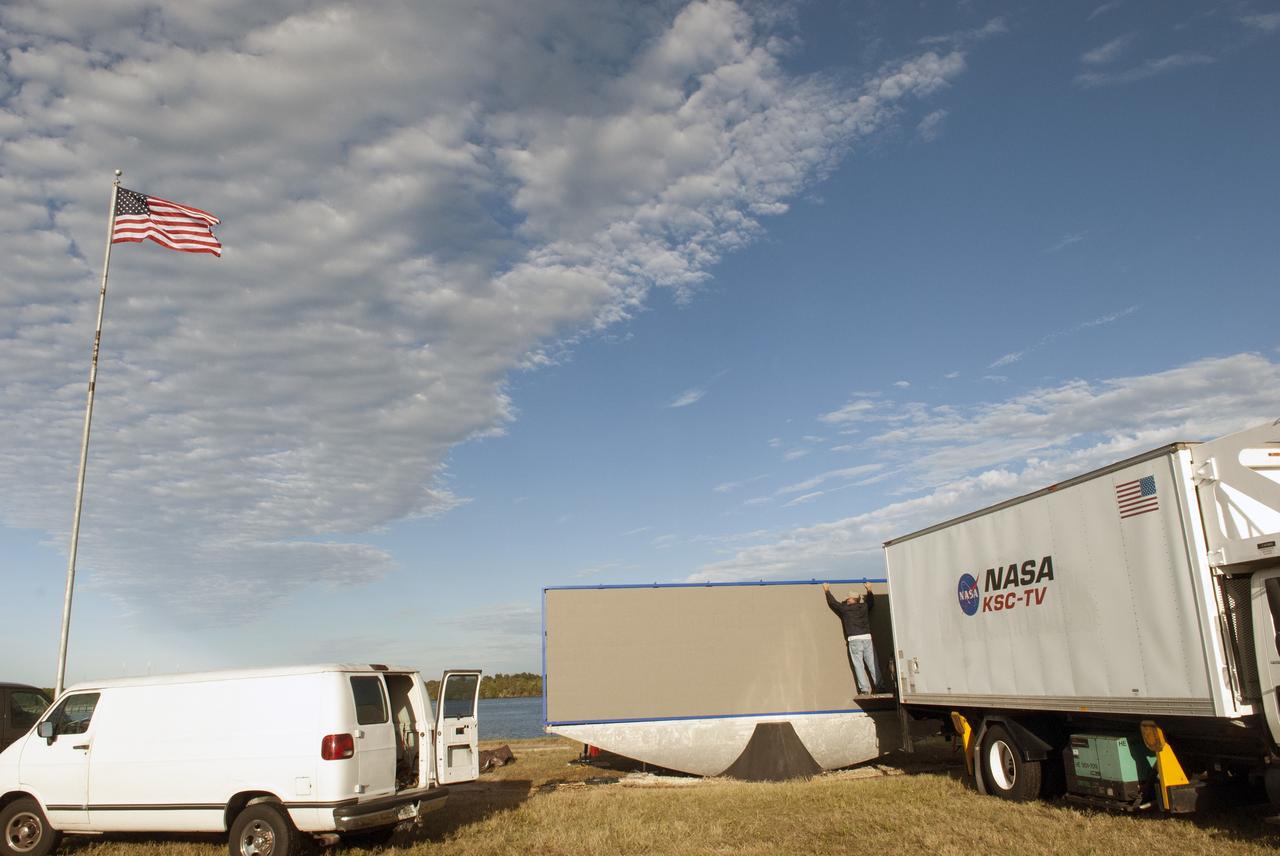
CAPE CANAVERAL, Fla. – At NASA's Kennedy Space Center in Florida, a shade is placed around the new countdown clock at the spaceport's Press Site. The modern, multimedia display is similar to the screens seen at sporting venues. The new screen is nearly 26 feet wide by 7 feet high, a foot taller than the original clock.    The historic countdown clock was designed by Kennedy engineers and built by space center technicians before Apollo 12 in 1969. NASA has acquired the countdown clock from the agency’s Artifact Working Group at the agency's Headquarters for display at the Kennedy Space Center Visitor Complex. For more information on the countdown clock, go to http://go.nasa.gov/10Zku10 Photo credit: NASA/Frankie Martin
KSC-2014-4795
CAPE CANAVERAL, Fla. – At NASA's Kennedy Space Center in Florida, work continues to install 24 light emitting diode LED panels in the new countdown clock at the spaceport's Press Site. The modern, multimedia display is similar to the screens seen at sporting venues. The new screen will be nearly 26 feet wide by 7 feet high, a foot taller than the original clock.    The historic countdown clock was designed by Kennedy engineers and built by space center technicians before Apollo 12 in 1969. NASA has requested to acquire the countdown clock from the agency’s Artifact Working Group at the agency's Headquarters for display at the Kennedy Space Center Visitor Complex. For more information on the countdown clock, go to http://go.nasa.gov/10Zku10. Photo credit: NASA/Ben Smegelsky
KSC-2014-4593
CAPE CANAVERAL, Fla. – At NASA's Kennedy Space Center in Florida, work continues to install 24 light emitting diode LED panels in the new countdown clock at the spaceport's Press Site. The modern, multimedia display is similar to the screens seen at sporting venues. The new screen will be nearly 26 feet wide by 7 feet high, a foot taller than the original clock.    The historic countdown clock was designed by Kennedy engineers and built by space center technicians before Apollo 12 in 1969. NASA has requested to acquire the countdown clock from the agency’s Artifact Working Group at the agency's Headquarters for display at the Kennedy Space Center Visitor Complex. For more information on the countdown clock, go to http://go.nasa.gov/10Zku10. Photo credit: NASA/Jim Grossman
KSC-2014-4603
CAPE CANAVERAL, Fla. – At NASA's Kennedy Space Center in Florida, work continues to install 24 light emitting diode LED panels in the new countdown clock at the spaceport's Press Site. The modern, multimedia display is similar to the screens seen at sporting venues. The new screen will be nearly 26 feet wide by 7 feet high, a foot taller than the original clock.    The historic countdown clock was designed by Kennedy engineers and built by space center technicians before Apollo 12 in 1969. NASA has requested to acquire the countdown clock from the agency’s Artifact Working Group at the agency's Headquarters for likely display at the Kennedy Space Center Visitor Complex. For more information on the countdown clock, go to http://go.nasa.gov/10Zku10. Photo credit: NASA/Cory Huston
KSC-2014-4591
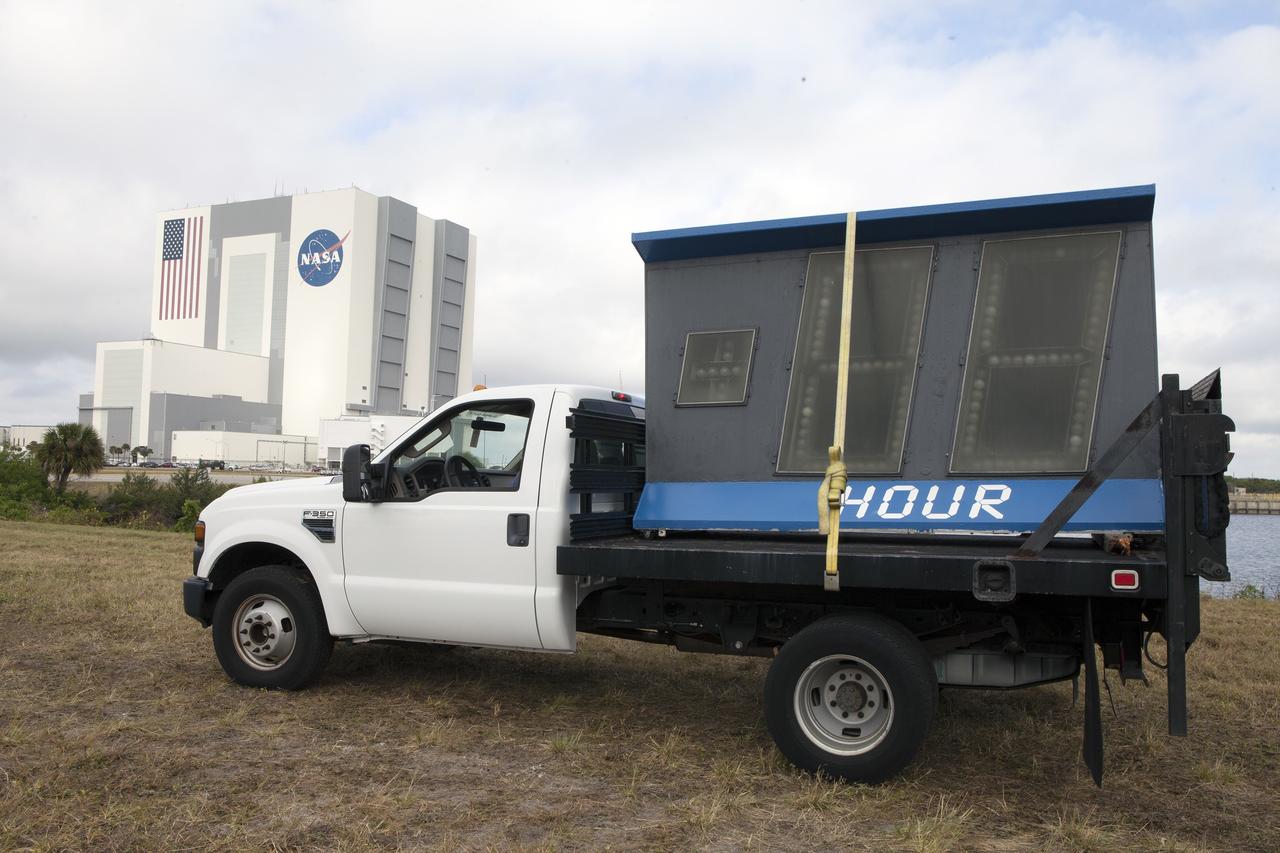
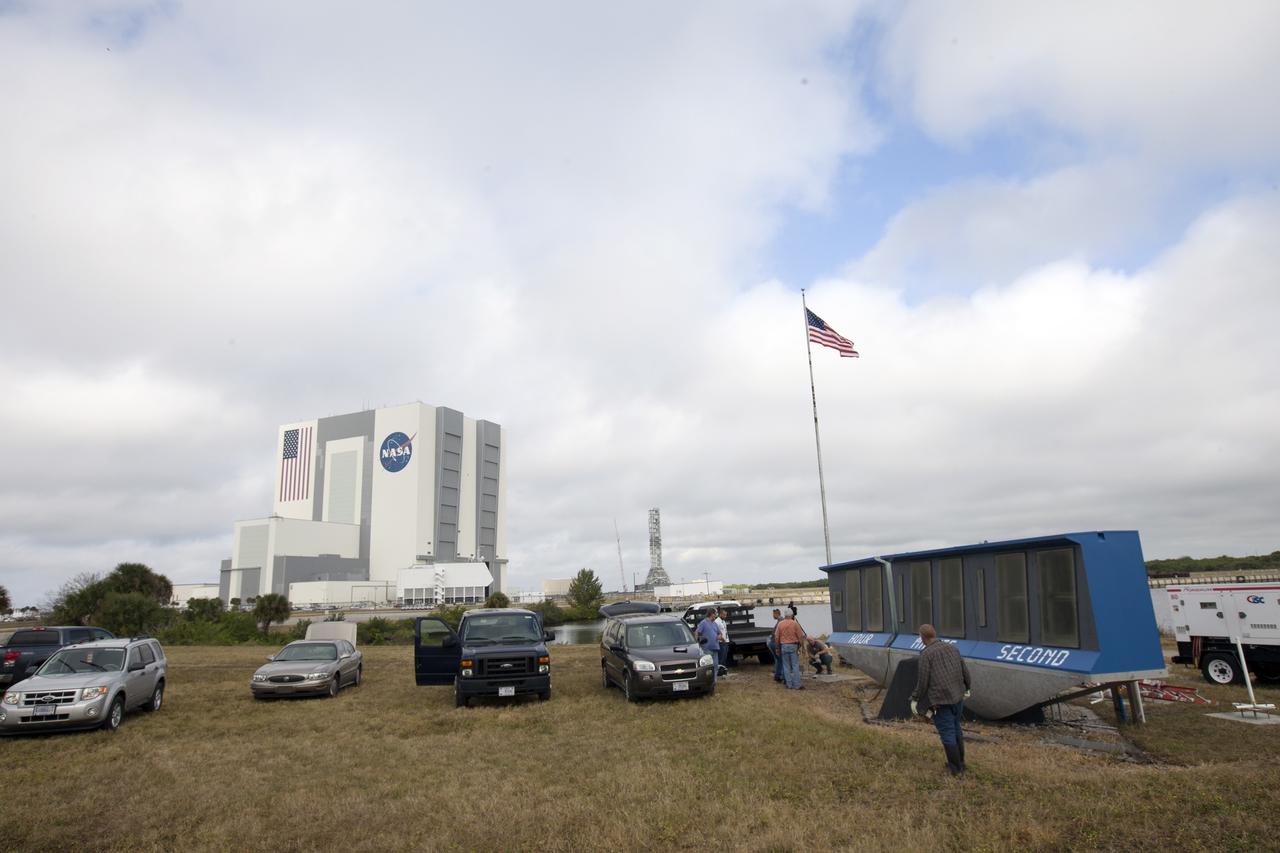
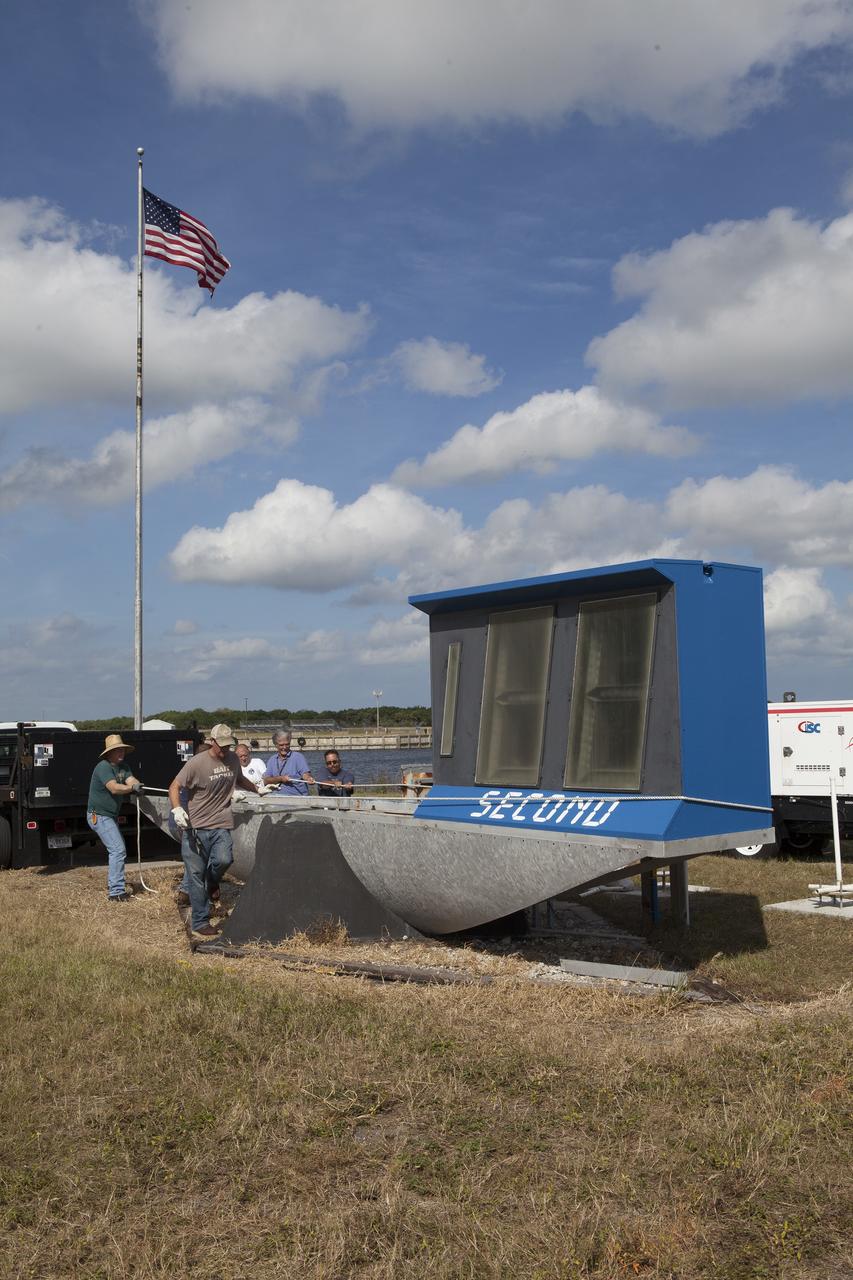
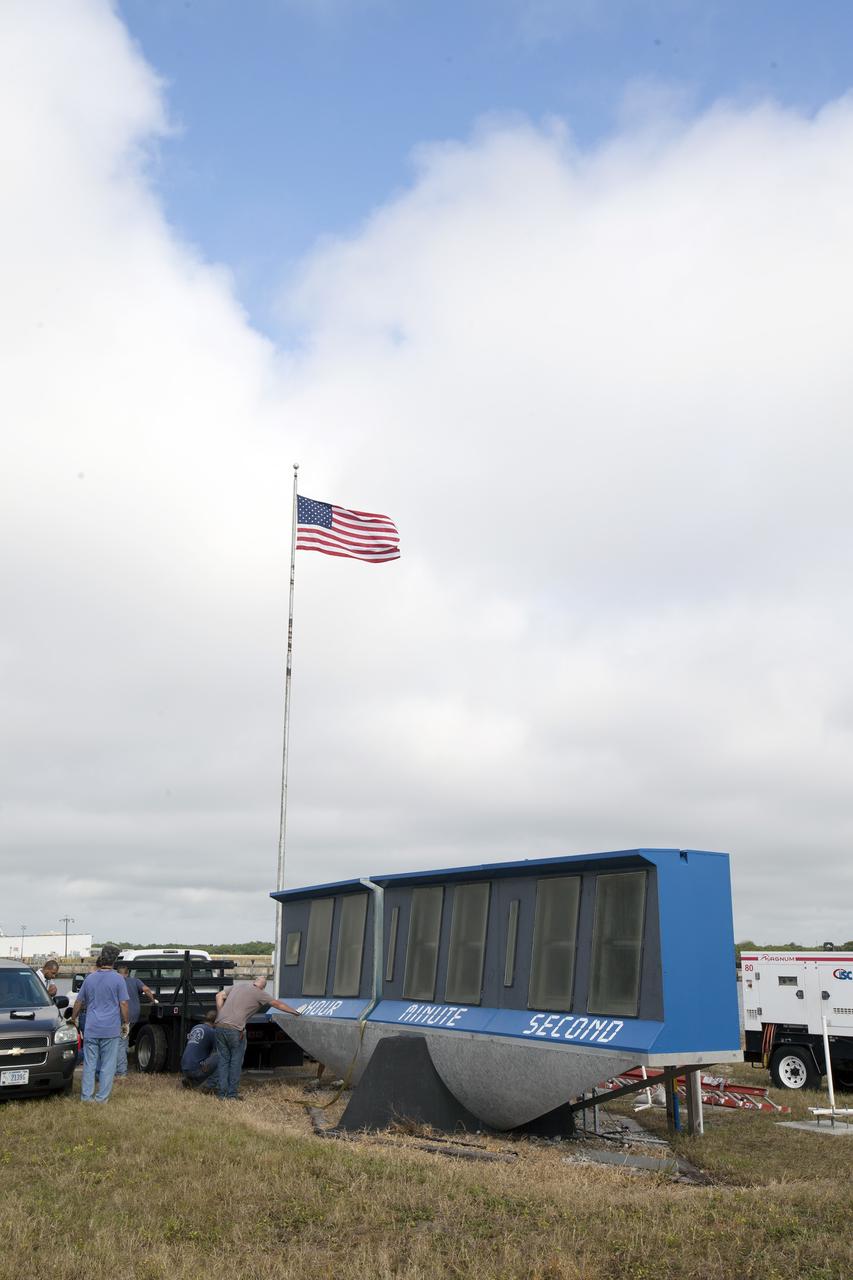
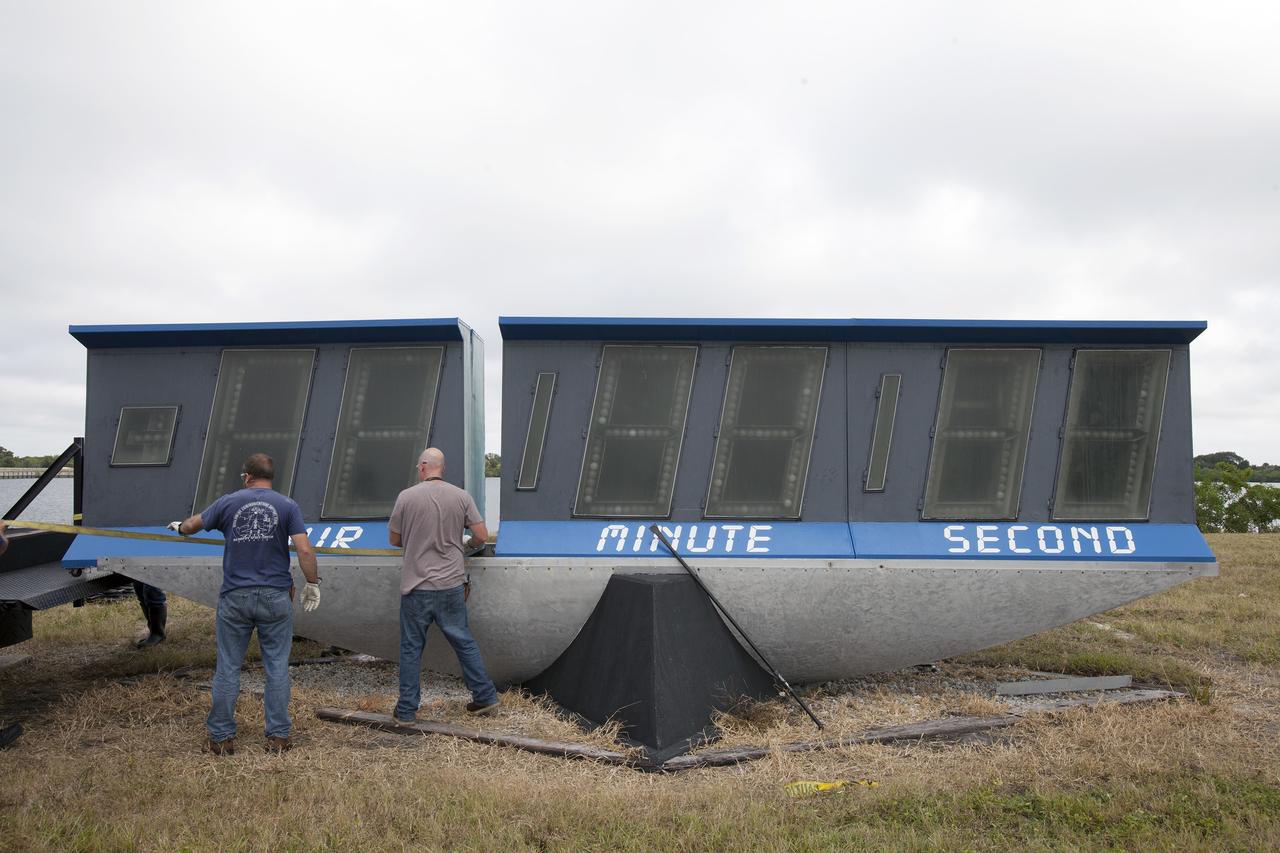
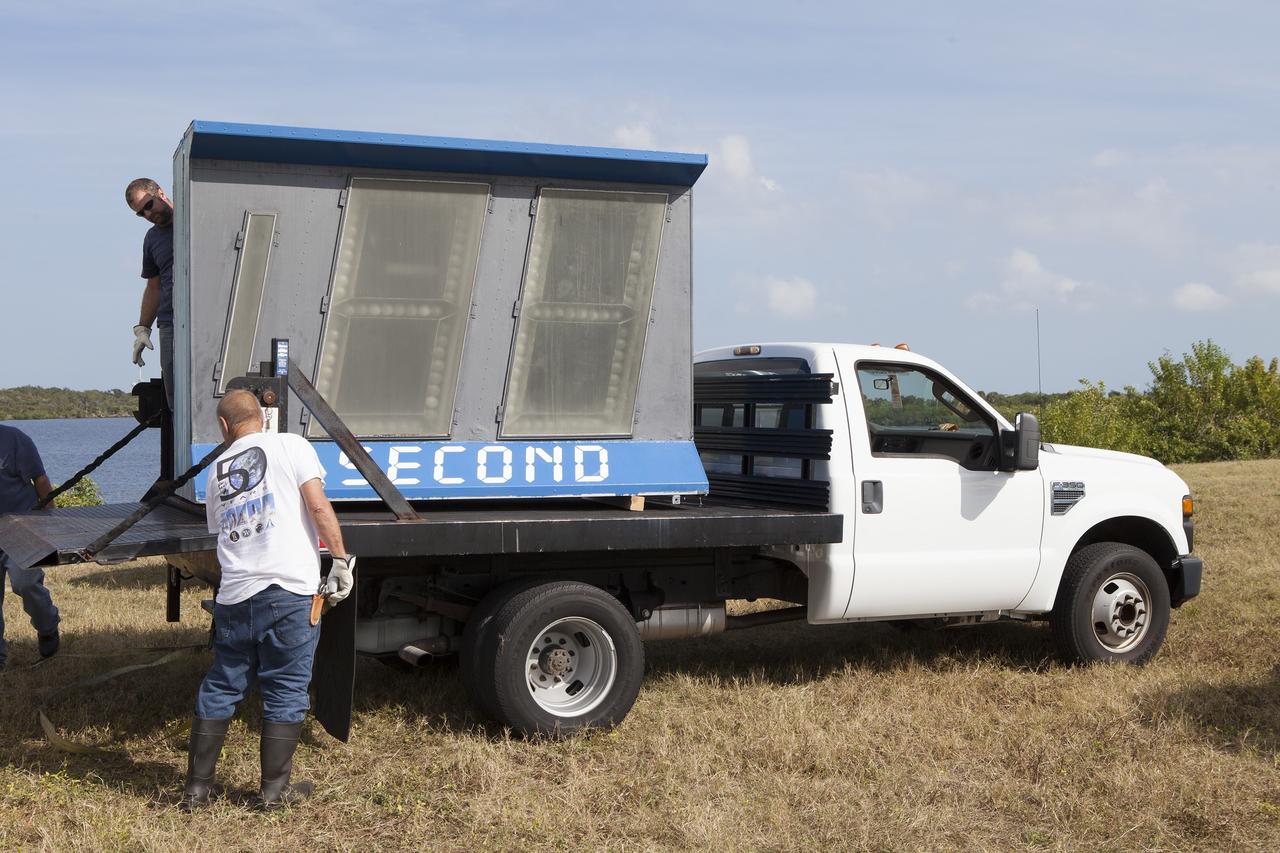
CAPE CANAVERAL, Fla. – At NASA's Kennedy Space Center in Florida, the historic countdown clock at the spaceport's Press Site is disassembled for removal. Kennedy has requested to acquire the countdown clock from the agency’s Artifact Working Group at NASA Headquarters for likely display at the Kennedy Space Center Visitor Complex. A new modern multimedia display soon will be installed, similar to the screens seen at sporting venues, is in the works. The new screen will be nearly 26 feet wide by 7 feet high.     The old timepiece was designed by Kennedy engineers and built by Kennedy technicians in 1969. Not including the triangular concrete and aluminum base, the famous landmark is nearly six feet high, 26 feet wide and 3 feet deep. The new display will be similar in size, with the screen being nearly 26 feet wide by seven feet high. For more information on the countdown clock, go to http://go.nasa.gov/10Zku10. Photo credit: NASA/Frankie Martin
KSC-2014-4556
CAPE CANAVERAL, Fla. – At NASA's Kennedy Space Center in Florida, work continues to install 24 light emitting diode LED panels in the new countdown clock at the spaceport's Press Site. The modern, multimedia display is similar to the screens seen at sporting venues. The new screen will be nearly 26 feet wide by 7 feet high, a foot taller than the original clock.    The historic countdown clock was designed by Kennedy engineers and built by space center technicians before Apollo 12 in 1969. NASA has requested to acquire the countdown clock from the agency’s Artifact Working Group at the agency's Headquarters for likely display at the Kennedy Space Center Visitor Complex. For more information on the countdown clock, go to http://go.nasa.gov/10Zku10. Photo credit: NASA/Cory Huston
KSC-2014-4590
CAPE CANAVERAL, Fla. – At NASA's Kennedy Space Center in Florida, assembly has begun on the first of 24 light emitting diode LED panels for installation in the new countdown clock at the spaceport's Press Site. The new modern, multimedia display will be similar to the screens seen at sporting venues. The new screen will be nearly 26 feet wide by 7 feet high, a foot taller than the original clock.    The historic countdown clock was designed by Kennedy engineers and built by space center technicians before Apollo 12 in 1969. NASA has requested to acquire the countdown clock from the agency’s Artifact Working Group at the agency's Headquarters for likely display at the Kennedy Space Center Visitor Complex. For more information on the countdown clock, go to http://go.nasa.gov/10Zku10. Photo credit: NASA/Jim Grossmann
KSC-2014-4587
CAPE CANAVERAL, Fla. – At NASA's Kennedy Space Center in Florida, work continues to install 24 light emitting diode LED panels in the new countdown clock at the spaceport's Press Site. The modern, multimedia display is similar to the screens seen at sporting venues. The new screen will be nearly 26 feet wide by 7 feet high, a foot taller than the original clock.    The historic countdown clock was designed by Kennedy engineers and built by space center technicians before Apollo 12 in 1969. NASA has requested to acquire the countdown clock from the agency’s Artifact Working Group at the agency's Headquarters for display at the Kennedy Space Center Visitor Complex. For more information on the countdown clock, go to http://go.nasa.gov/10Zku10. Photo credit: NASA/Jim Grossman
KSC-2014-4602
CAPE CANAVERAL, Fla. – At NASA's Kennedy Space Center in Florida, a shade is placed around the new countdown clock at the spaceport's Press Site. The modern, multimedia display is similar to the screens seen at sporting venues. The new screen is nearly 26 feet wide by 7 feet high, a foot taller than the original clock.    The historic countdown clock was designed by Kennedy engineers and built by space center technicians before Apollo 12 in 1969. NASA has acquired the countdown clock from the agency’s Artifact Working Group at the agency's Headquarters for display at the Kennedy Space Center Visitor Complex. For more information on the countdown clock, go to http://go.nasa.gov/10Zku10 Photo credit: NASA/Frankie Martin
KSC-2014-4797
CAPE CANAVERAL, Fla. – At NASA's Kennedy Space Center in Florida, a shade is placed around the new countdown clock at the spaceport's Press Site. The modern, multimedia display is similar to the screens seen at sporting venues. The new screen is nearly 26 feet wide by 7 feet high, a foot taller than the original clock.    The historic countdown clock was designed by Kennedy engineers and built by space center technicians before Apollo 12 in 1969. NASA has acquired the countdown clock from the agency’s Artifact Working Group at the agency's Headquarters for display at the Kennedy Space Center Visitor Complex. For more information on the countdown clock, go to http://go.nasa.gov/10Zku10 Photo credit: NASA/Frankie Martin
KSC-2014-4791
CAPE CANAVERAL, Fla. – At NASA's Kennedy Space Center in Florida, the historic countdown clock at the spaceport's Press Site is disassembled for removal. Kennedy has requested to acquire the countdown clock from the agency’s Artifact Working Group at NASA Headquarters for likely display at the Kennedy Space Center Visitor Complex. A new modern multimedia display soon will be installed, similar to the screens seen at sporting venues, is in the works. The new screen will be nearly 26 feet wide by 7 feet high.     The old timepiece was designed by Kennedy engineers and built by Kennedy technicians in 1969. Not including the triangular concrete and aluminum base, the famous landmark is nearly six feet high, 26 feet wide and 3 feet deep. The new display will be similar in size, with the screen being nearly 26 feet wide by seven feet high. For more information on the countdown clock, go to http://go.nasa.gov/10Zku10. Photo credit: NASA/Frankie Martin
KSC-2014-4564
CAPE CANAVERAL, Fla. – At NASA's Kennedy Space Center in Florida, work continues to install 24 light emitting diode LED panels in the new countdown clock at the spaceport's Press Site. The modern, multimedia display is similar to the screens seen at sporting venues. The new screen will be nearly 26 feet wide by 7 feet high, a foot taller than the original clock.    The historic countdown clock was designed by Kennedy engineers and built by space center technicians before Apollo 12 in 1969. NASA has requested to acquire the countdown clock from the agency’s Artifact Working Group at the agency's Headquarters for display at the Kennedy Space Center Visitor Complex. For more information on the countdown clock, go to http://go.nasa.gov/10Zku10. Photo credit: NASA/Ben Smegelsky
KSC-2014-4594
CAPE CANAVERAL, Fla. – At NASA's Kennedy Space Center in Florida, a shade is placed around the new countdown clock at the spaceport's Press Site. The modern, multimedia display is similar to the screens seen at sporting venues. The new screen is nearly 26 feet wide by 7 feet high, a foot taller than the original clock.    The historic countdown clock was designed by Kennedy engineers and built by space center technicians before Apollo 12 in 1969. NASA has acquired the countdown clock from the agency’s Artifact Working Group at the agency's Headquarters for display at the Kennedy Space Center Visitor Complex. For more information on the countdown clock, go to http://go.nasa.gov/10Zku10 Photo credit: NASA/Frankie Martin
KSC-2014-4793
CAPE CANAVERAL, Fla. – At NASA's Kennedy Space Center in Florida, work continues to install 24 light emitting diode LED panels in the new countdown clock at the spaceport's Press Site. The modern, multimedia display is similar to the screens seen at sporting venues. The new screen will be nearly 26 feet wide by 7 feet high, a foot taller than the original clock.    The historic countdown clock was designed by Kennedy engineers and built by space center technicians before Apollo 12 in 1969. NASA has requested to acquire the countdown clock from the agency’s Artifact Working Group at the agency's Headquarters for display at the Kennedy Space Center Visitor Complex. For more information on the countdown clock, go to http://go.nasa.gov/10Zku10. Photo credit: NASA/Jim Grossman
KSC-2014-4600
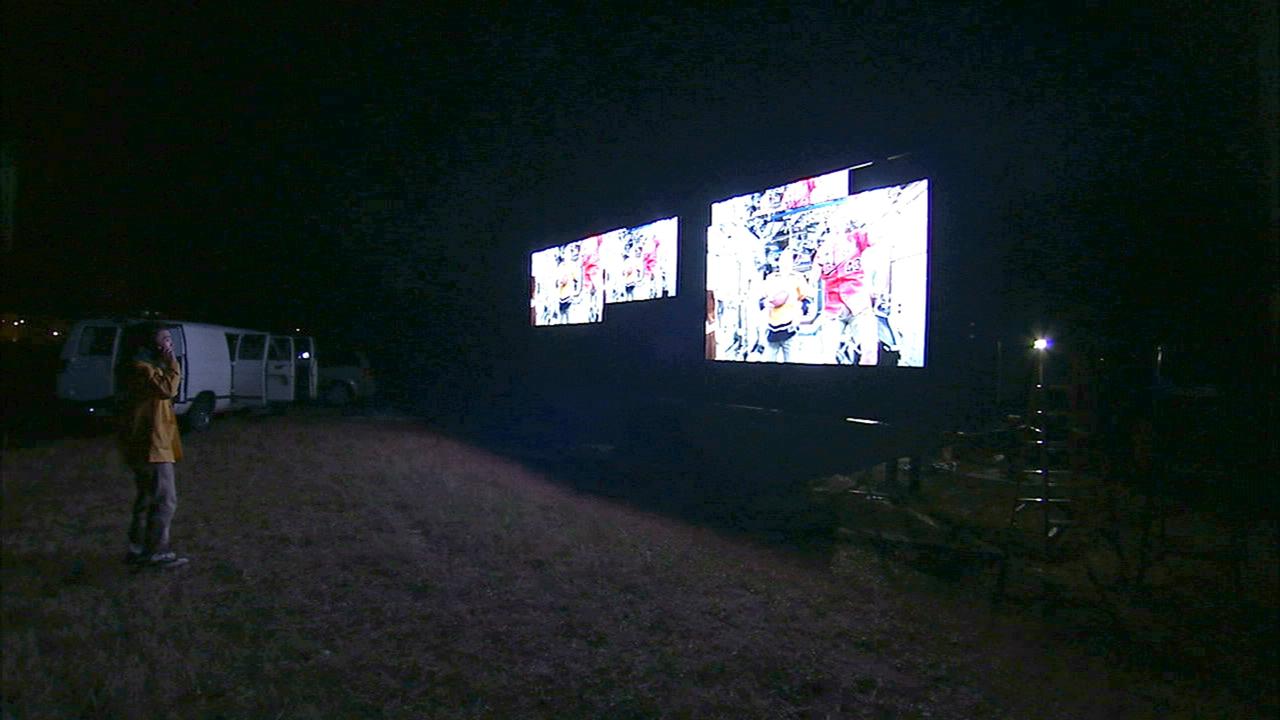
CAPE CANAVERAL, Fla. – At NASA's Kennedy Space Center in Florida, the new countdown clock at the spaceport's Press Site is being tested. The modern, multimedia display is similar to the screens seen at sporting venues. The new screen will be nearly 26 feet wide by 7 feet high, a foot taller than the original clock.    The historic countdown clock was designed by Kennedy engineers and built by space center technicians before Apollo 12 in 1969. NASA has requested to acquire the countdown clock from the agency’s Artifact Working Group at the agency's Headquarters for display at the Kennedy Space Center Visitor Complex. For more information on the countdown clock, go to http://go.nasa.gov/10Zku10. Photo credit: NASA/Ben Smegelsky
KSC-2014-4596
CAPE CANAVERAL, Fla. – At NASA's Kennedy Space Center in Florida, a shade is placed around the new countdown clock at the spaceport's Press Site. The modern, multimedia display is similar to the screens seen at sporting venues. The new screen is nearly 26 feet wide by 7 feet high, a foot taller than the original clock.    The historic countdown clock was designed by Kennedy engineers and built by space center technicians before Apollo 12 in 1969. NASA has acquired the countdown clock from the agency’s Artifact Working Group at the agency's Headquarters for display at the Kennedy Space Center Visitor Complex. For more information on the countdown clock, go to http://go.nasa.gov/10Zku10 Photo credit: NASA/Frankie Martin
KSC-2014-4796
CAPE CANAVERAL, Fla. – At NASA's Kennedy Space Center in Florida, a shade is placed around the new countdown clock at the spaceport's Press Site. The modern, multimedia display is similar to the screens seen at sporting venues. The new screen is nearly 26 feet wide by 7 feet high, a foot taller than the original clock.    The historic countdown clock was designed by Kennedy engineers and built by space center technicians before Apollo 12 in 1969. NASA has acquired the countdown clock from the agency’s Artifact Working Group at the agency's Headquarters for display at the Kennedy Space Center Visitor Complex. For more information on the countdown clock, go to http://go.nasa.gov/10Zku10 Photo credit: NASA/Frankie Martin
KSC-2014-4792
CAPE CANAVERAL, Fla. – At NASA's Kennedy Space Center in Florida, the historic countdown clock at the spaceport's Press Site is disassembled for removal. Kennedy has requested to acquire the countdown clock from the agency’s Artifact Working Group at NASA Headquarters for likely display at the Kennedy Space Center Visitor Complex. A new modern multimedia display soon will be installed, similar to the screens seen at sporting venues, is in the works. The new screen will be nearly 26 feet wide by 7 feet high.     The old timepiece was designed by Kennedy engineers and built by Kennedy technicians in 1969. Not including the triangular concrete and aluminum base, the famous landmark is nearly six feet high, 26 feet wide and 3 feet deep. The new display will be similar in size, with the screen being nearly 26 feet wide by seven feet high. For more information on the countdown clock, go to http://go.nasa.gov/10Zku10. Photo credit: NASA/Frankie Martin
KSC-2014-4562
CAPE CANAVERAL, Fla. – At NASA's Kennedy Space Center in Florida, the historic countdown clock at the spaceport's Press Site is disassembled for removal. Kennedy has requested to acquire the countdown clock from the agency’s Artifact Working Group at NASA Headquarters for likely display at the Kennedy Space Center Visitor Complex. A new modern multimedia display soon will be installed, similar to the screens seen at sporting venues, is in the works. The new screen will be nearly 26 feet wide by 7 feet high.     The old timepiece was designed by Kennedy engineers and built by Kennedy technicians in 1969. Not including the triangular concrete and aluminum base, the famous landmark is nearly six feet high, 26 feet wide and 3 feet deep. The new display will be similar in size, with the screen being nearly 26 feet wide by seven feet high. For more information on the countdown clock, go to http://go.nasa.gov/10Zku10. Photo credit: NASA/Frankie Martin
KSC-2014-4560
CAPE CANAVERAL, Fla. – At NASA's Kennedy Space Center in Florida, a shade is placed around the new countdown clock at the spaceport's Press Site. The modern, multimedia display is similar to the screens seen at sporting venues. The new screen is nearly 26 feet wide by 7 feet high, a foot taller than the original clock.    The historic countdown clock was designed by Kennedy engineers and built by space center technicians before Apollo 12 in 1969. NASA has acquired the countdown clock from the agency’s Artifact Working Group at the agency's Headquarters for display at the Kennedy Space Center Visitor Complex. For more information on the countdown clock, go to http://go.nasa.gov/10Zku10 Photo credit: NASA/Frankie Martin
KSC-2014-4794
CAPE CANAVERAL, Fla. – At NASA's Kennedy Space Center in Florida, work continues to install 24 light emitting diode LED panels in the new countdown clock at the spaceport's Press Site. The modern, multimedia display is similar to the screens seen at sporting venues. The new screen will be nearly 26 feet wide by 7 feet high, a foot taller than the original clock.    The historic countdown clock was designed by Kennedy engineers and built by space center technicians before Apollo 12 in 1969. NASA has requested to acquire the countdown clock from the agency’s Artifact Working Group at the agency's Headquarters for display at the Kennedy Space Center Visitor Complex. For more information on the countdown clock, go to http://go.nasa.gov/10Zku10. Photo credit: NASA/Ben Smegelsky
KSC-2014-4592
CAPE CANAVERAL, Fla. – At NASA's Kennedy Space Center in Florida, the historic countdown clock at the spaceport's Press Site is disassembled for removal. Kennedy has requested to acquire the countdown clock from the agency’s Artifact Working Group at NASA Headquarters for likely display at the Kennedy Space Center Visitor Complex. A new modern multimedia display soon will be installed, similar to the screens seen at sporting venues, is in the works. The new screen will be nearly 26 feet wide by 7 feet high.     The old timepiece was designed by Kennedy engineers and built by Kennedy technicians in 1969. Not including the triangular concrete and aluminum base, the famous landmark is nearly six feet high, 26 feet wide and 3 feet deep. The new display will be similar in size, with the screen being nearly 26 feet wide by seven feet high. For more information on the countdown clock, go to http://go.nasa.gov/10Zku10. Photo credit: NASA/Frankie Martin
KSC-2014-4559
CAPE CANAVERAL, Fla. – At NASA's Kennedy Space Center in Florida, the historic countdown clock at the spaceport's Press Site is disassembled for removal. Kennedy has requested to acquire the countdown clock from the agency’s Artifact Working Group at NASA Headquarters for likely display at the Kennedy Space Center Visitor Complex. A new modern multimedia display soon will be installed, similar to the screens seen at sporting venues, is in the works. The new screen will be nearly 26 feet wide by 7 feet high.     The old timepiece was designed by Kennedy engineers and built by Kennedy technicians in 1969. Not including the triangular concrete and aluminum base, the famous landmark is nearly six feet high, 26 feet wide and 3 feet deep. The new display will be similar in size, with the screen being nearly 26 feet wide by seven feet high. For more information on the countdown clock, go to http://go.nasa.gov/10Zku10. Photo credit: NASA/Frankie Martin
KSC-2014-4558
CAPE CANAVERAL, Fla. – At NASA's Kennedy Space Center in Florida, the historic countdown clock at the spaceport's Press Site is disassembled for removal. Kennedy has requested to acquire the countdown clock from the agency’s Artifact Working Group at NASA Headquarters for likely display at the Kennedy Space Center Visitor Complex. A new modern multimedia display soon will be installed, similar to the screens seen at sporting venues, is in the works. The new screen will be nearly 26 feet wide by 7 feet high.     The old timepiece was designed by Kennedy engineers and built by Kennedy technicians in 1969. Not including the triangular concrete and aluminum base, the famous landmark is nearly six feet high, 26 feet wide and 3 feet deep. The new display will be similar in size, with the screen being nearly 26 feet wide by seven feet high. For more information on the countdown clock, go to http://go.nasa.gov/10Zku10. Photo credit: NASA/Frankie Martin
KSC-2014-4563
CAPE CANAVERAL, Fla. – At NASA's Kennedy Space Center in Florida, work continues to install 24 light emitting diode LED panels in the new countdown clock at the spaceport's Press Site. The modern, multimedia display is similar to the screens seen at sporting venues. The new screen will be nearly 26 feet wide by 7 feet high, a foot taller than the original clock.    The historic countdown clock was designed by Kennedy engineers and built by space center technicians before Apollo 12 in 1969. NASA has requested to acquire the countdown clock from the agency’s Artifact Working Group at the agency's Headquarters for likely display at the Kennedy Space Center Visitor Complex. For more information on the countdown clock, go to http://go.nasa.gov/10Zku10. Photo credit: NASA/Cory Huston
KSC-2014-4588
CAPE CANAVERAL, Fla. – At NASA's Kennedy Space Center in Florida, the new countdown clock at the spaceport's Press Site is being tested. The modern, multimedia display is similar to the screens seen at sporting venues. The new screen will be nearly 26 feet wide by 7 feet high, a foot taller than the original clock.    The historic countdown clock was designed by Kennedy engineers and built by space center technicians before Apollo 12 in 1969. NASA has requested to acquire the countdown clock from the agency’s Artifact Working Group at the agency's Headquarters for display at the Kennedy Space Center Visitor Complex. For more information on the countdown clock, go to http://go.nasa.gov/10Zku10. Photo credit: NASA/Ben Smegelsky
KSC-2014-4598
CAPE CANAVERAL, Fla. – At NASA's Kennedy Space Center in Florida, the new countdown clock at the spaceport's Press Site is being tested. The modern, multimedia display is similar to the screens seen at sporting venues. The new screen will be nearly 26 feet wide by 7 feet high, a foot taller than the original clock.    The historic countdown clock was designed by Kennedy engineers and built by space center technicians before Apollo 12 in 1969. NASA has requested to acquire the countdown clock from the agency’s Artifact Working Group at the agency's Headquarters for display at the Kennedy Space Center Visitor Complex. For more information on the countdown clock, go to http://go.nasa.gov/10Zku10. Photo credit: NASA/Ben Smegelsky
KSC-2014-4597
CAPE CANAVERAL, Fla. – At NASA's Kennedy Space Center in Florida, assembly has begun on the first of 24 light emitting diode LED panels for installation in the new countdown clock at the spaceport's Press Site. The new modern, multimedia display will be similar to the screens seen at sporting venues. The new screen will be nearly 26 feet wide by 7 feet high, a foot taller than the original clock.    The historic countdown clock was designed by Kennedy engineers and built by space center technicians before Apollo 12 in 1969. NASA has requested to acquire the countdown clock from the agency’s Artifact Working Group at the agency's Headquarters for likely display at the Kennedy Space Center Visitor Complex. For more information on the countdown clock, go to http://go.nasa.gov/10Zku10. Photo credit: NASA/Jim Grossmann
KSC-2014-4586
CAPE CANAVERAL, Fla. – At NASA's Kennedy Space Center in Florida, the new countdown clock at the spaceport's Press Site is being tested. The modern, multimedia display is similar to the screens seen at sporting venues. The new screen will be nearly 26 feet wide by 7 feet high, a foot taller than the original clock.    The historic countdown clock was designed by Kennedy engineers and built by space center technicians before Apollo 12 in 1969. NASA has requested to acquire the countdown clock from the agency’s Artifact Working Group at the agency's Headquarters for display at the Kennedy Space Center Visitor Complex. For more information on the countdown clock, go to http://go.nasa.gov/10Zku10. Photo credit: NASA/Frankie Martin
KSC-2014-4604
CAPE CANAVERAL, Fla. – At NASA's Kennedy Space Center in Florida, the historic countdown clock at the spaceport's Press Site is disassembled for removal. Kennedy has requested to acquire the countdown clock from the agency’s Artifact Working Group at NASA Headquarters for likely display at the Kennedy Space Center Visitor Complex. A new modern multimedia display soon will be installed, similar to the screens seen at sporting venues, is in the works. The new screen will be nearly 26 feet wide by 7 feet high.     The old timepiece was designed by Kennedy engineers and built by Kennedy technicians in 1969. Not including the triangular concrete and aluminum base, the famous landmark is nearly six feet high, 26 feet wide and 3 feet deep. The new display will be similar in size, with the screen being nearly 26 feet wide by seven feet high. For more information on the countdown clock, go to http://go.nasa.gov/10Zku10. Photo credit: NASA/Frankie Martin
KSC-2014-4561
CAPE CANAVERAL, Fla. – At NASA's Kennedy Space Center in Florida, the first of 24 light emitting diode LED panels have arrived for installation in the new countdown clock at the spaceport's Press Site. A new modern, multimedia display soon will be installed, similar to the screens seen at sporting venues. The new screen will be nearly 26 feet wide by 7 feet high, a foot taller than the original clock.    The historic countdown clock was designed by Kennedy engineers and built by space center technicians before Apollo 12 in 1969. NASA has requested to acquire the countdown clock from the agency’s Artifact Working Group at the agency's Headquarters for likely display at the Kennedy Space Center Visitor Complex. For more information on the countdown clock, go to http://go.nasa.gov/10Zku10. Photo credit: NASA/Jim Grossmann
KSC-2014-4585
CAPE CANAVERAL, Fla. – At NASA's Kennedy Space Center in Florida, the historic countdown clock at the spaceport's Press Site is disassembled for removal. Kennedy has requested to acquire the countdown clock from the agency’s Artifact Working Group at NASA Headquarters for likely display at the Kennedy Space Center Visitor Complex. A new modern multimedia display soon will be installed, similar to the screens seen at sporting venues, is in the works. The new screen will be nearly 26 feet wide by 7 feet high.     The old timepiece was designed by Kennedy engineers and built by Kennedy technicians in 1969. Not including the triangular concrete and aluminum base, the famous landmark is nearly six feet high, 26 feet wide and 3 feet deep. The new display will be similar in size, with the screen being nearly 26 feet wide by seven feet high. For more information on the countdown clock, go to http://go.nasa.gov/10Zku10. Photo credit: NASA/Frankie Martin
KSC-2014-4557
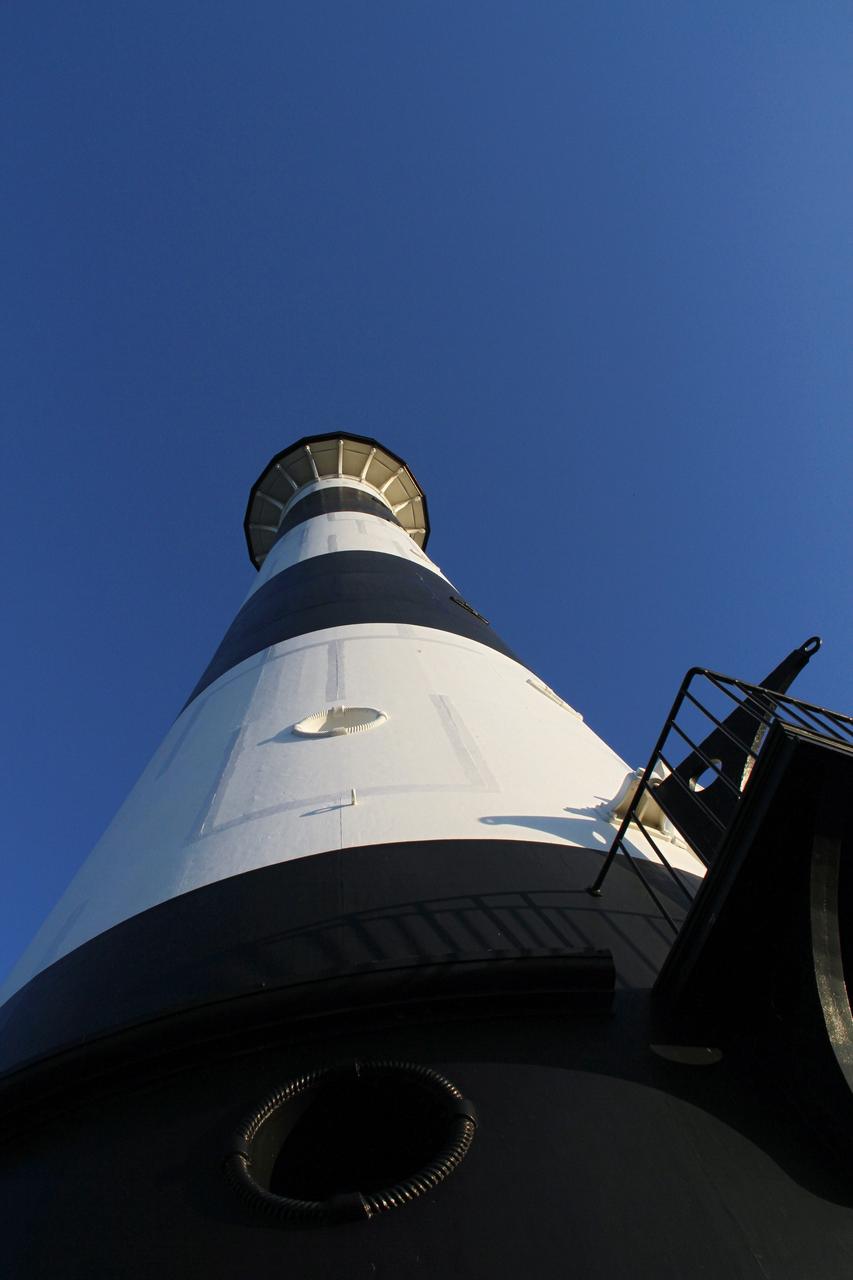
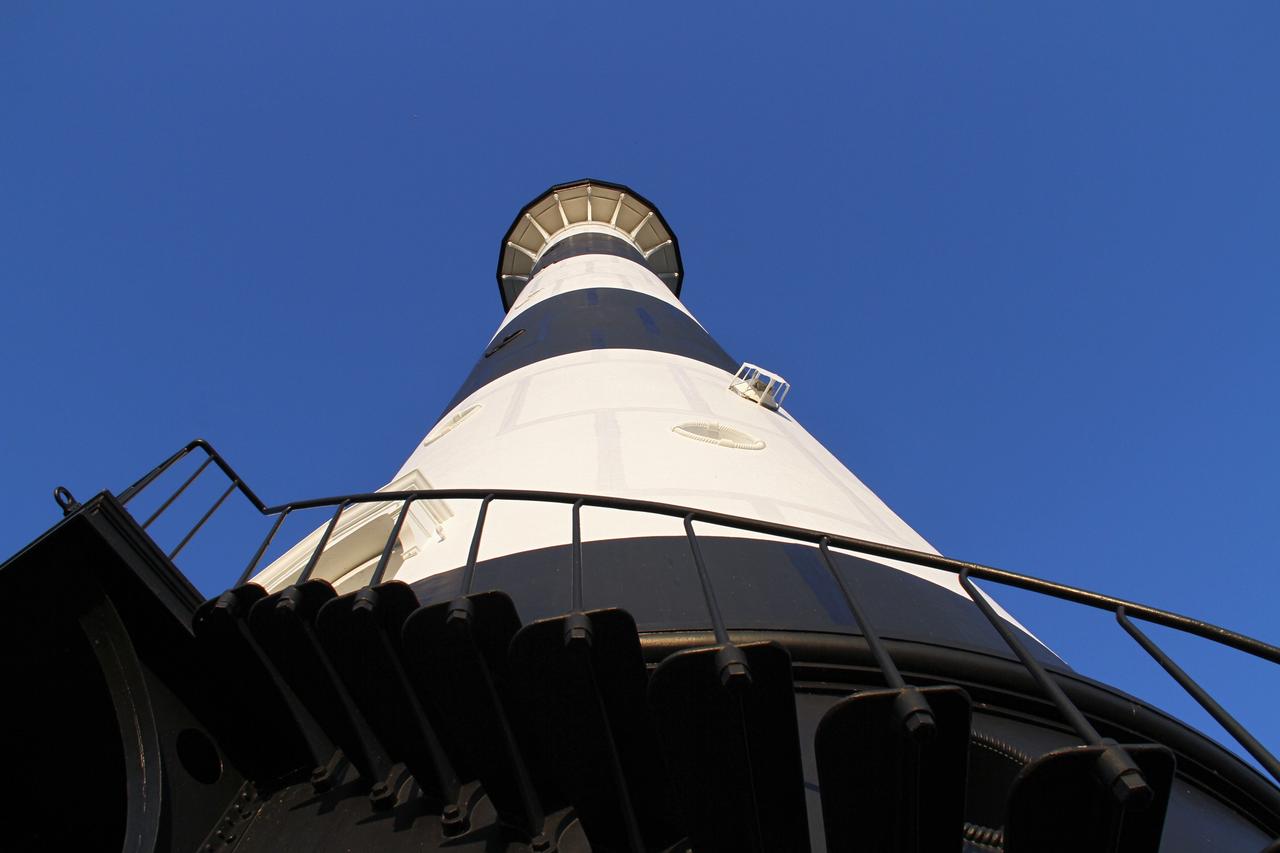
CAPE CANAVERAL AIR FORCE STATION, Fla. – This view looking up contrasts the black and white lighthouse at Cape Canaveral Air Force Station against the Florida sky. The Canaveral light is the only one owned by the U.S. Air Force.      In 2000, the Coast Guard transferred ownership of the lighthouse structure and its grounds to the Air Force, which is now responsible for maintaining it. The U.S. Coast Guard continues to operate the beacon as an active navigational aid. The first lighthouse at Cape Canaveral was built near the tip of the Cape in 1848. The structure was only about 60 feet high with a rather dim light powered by whale oil. In 1859, work began nearby on a new, taller iron structure. Construction was halted during the Civil War, and the lighthouse finally was finished in 1868. The structure, with a brick lining inside its iron exterior, was painted with its "daymark" black and white horizontal bands in 1873 to make it easier to identify during the day as a navigation point. Between 1892 and 1894, the lighthouse was dismantled and moved to its new home about a mile from the coast, where it stands today. Photo credit: NASA/Ben Smegelsky
KSC-2012-6308
CAPE CANAVERAL AIR FORCE STATION, Fla. – This view looking up contrasts the black and white lighthouse at Cape Canaveral Air Force Station against the Florida sky. The Canaveral light is the only one owned by the U.S. Air Force.      In 2000, the Coast Guard transferred ownership of the lighthouse structure and its grounds to the Air Force, which is now responsible for maintaining it. The U.S. Coast Guard continues to operate the beacon as an active navigational aid. The first lighthouse at Cape Canaveral was built near the tip of the Cape in 1848. The structure was only about 60 feet high with a rather dim light powered by whale oil. In 1859, work began nearby on a new, taller iron structure. Construction was halted during the Civil War, and the lighthouse finally was finished in 1868. The structure, with a brick lining inside its iron exterior, was painted with its "daymark" black and white horizontal bands in 1873 to make it easier to identify during the day as a navigation point. Between 1892 and 1894, the lighthouse was dismantled and moved to its new home about a mile from the coast, where it stands today. Photo credit: NASA/Ben Smegelsky
KSC-2012-6307
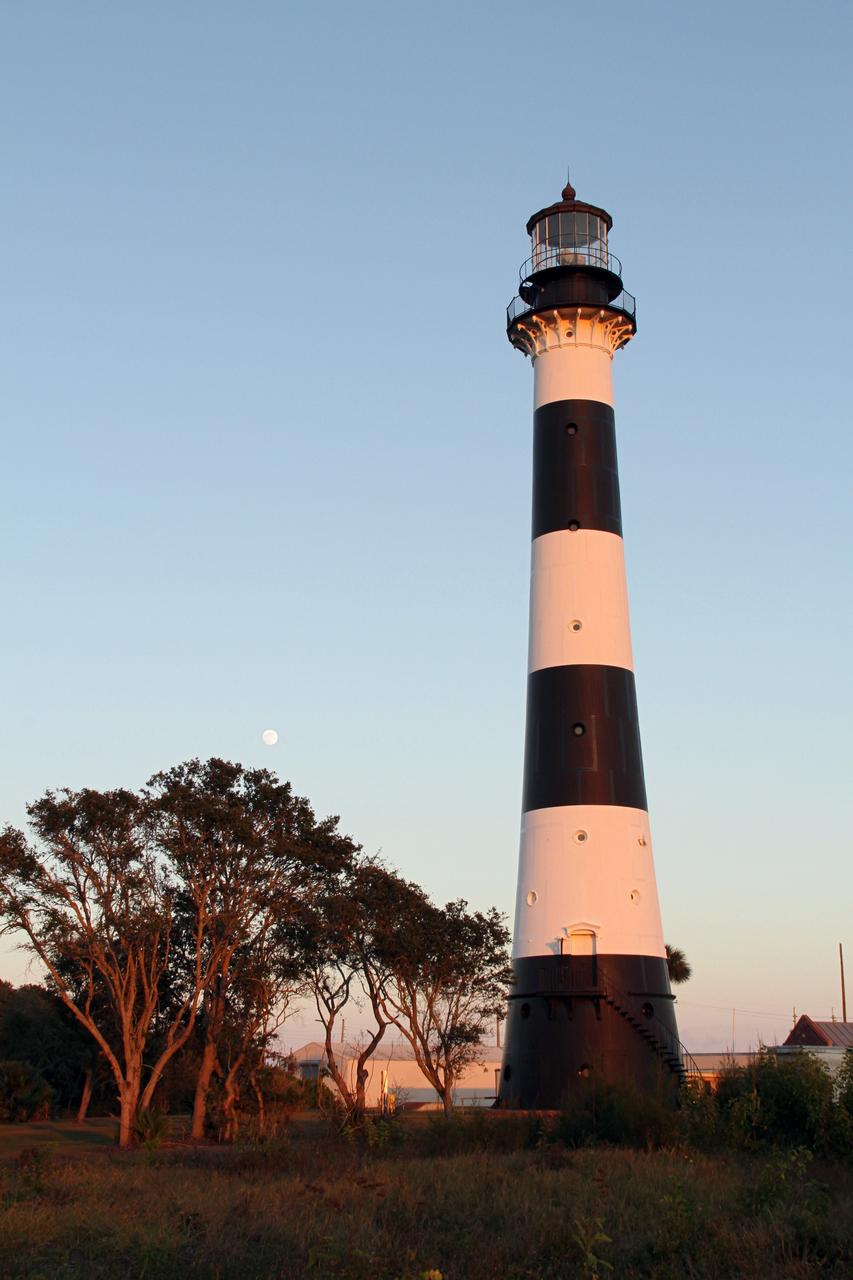
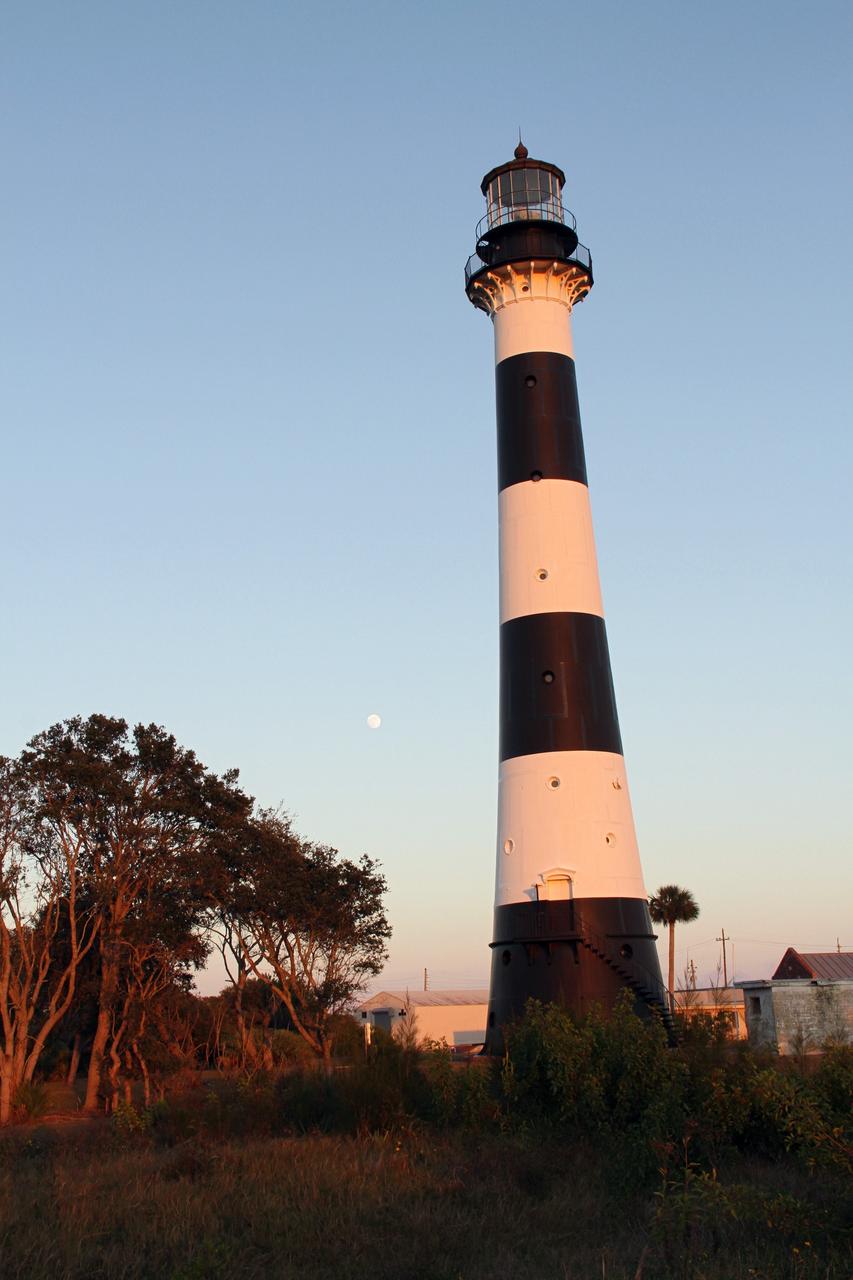
CAPE CANAVERAL AIR FORCE STATION, Fla. – The Cape Canaveral Air Force Station lighthouse takes on a warm glow as dawn breaks and a full moon still shines in the background. The Canaveral light is the only one owned by the U.S. Air Force.      In 2000, the Coast Guard transferred ownership of the lighthouse structure and its grounds to the Air Force, which is now responsible for maintaining it. The U.S. Coast Guard continues to operate the beacon as an active navigational aid. The first lighthouse at Cape Canaveral was built near the tip of the Cape in 1848. The structure was only about 60 feet high with a rather dim light powered by whale oil. In 1859, work began nearby on a new, taller iron structure. Construction was halted during the Civil War, and the lighthouse finally was finished in 1868. The structure, with a brick lining inside its iron exterior, was painted with its "daymark" black and white horizontal bands in 1873 to make it easier to identify during the day as a navigation point. Between 1892 and 1894, the lighthouse was dismantled and moved to its new home about a mile from the coast, where it stands today. Photo credit: NASA/Ben Smegelsky
KSC-2012-6310
CAPE CANAVERAL AIR FORCE STATION, Fla. – The Cape Canaveral Air Force Station lighthouse takes on a warm glow as dawn breaks and a full moon still shines in the background. The Canaveral light is the only one owned by the U.S. Air Force.      In 2000, the Coast Guard transferred ownership of the lighthouse structure and its grounds to the Air Force, which is now responsible for maintaining it. The U.S. Coast Guard continues to operate the beacon as an active navigational aid. The first lighthouse at Cape Canaveral was built near the tip of the Cape in 1848. The structure was only about 60 feet high with a rather dim light powered by whale oil. In 1859, work began nearby on a new, taller iron structure. Construction was halted during the Civil War, and the lighthouse finally was finished in 1868. The structure, with a brick lining inside its iron exterior, was painted with its "daymark" black and white horizontal bands in 1873 to make it easier to identify during the day as a navigation point. Between 1892 and 1894, the lighthouse was dismantled and moved to its new home about a mile from the coast, where it stands today. Photo credit: NASA/Ben Smegelsky
KSC-2012-6309
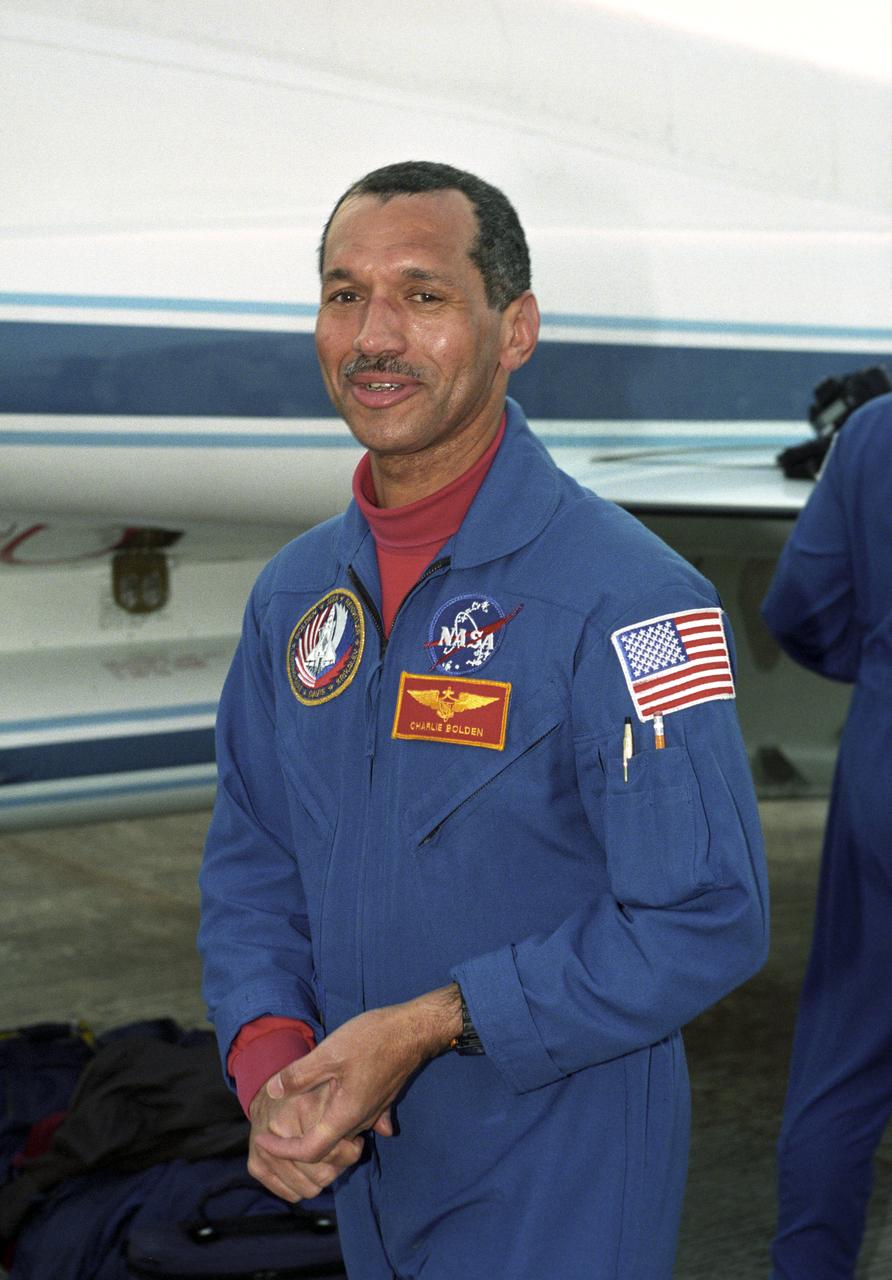
STS-60, Commander Charlie Bolden arrived at KSC's Shuttle Landing Facility. Along with five fellow crew members.  Bolden will spend a couple of days at KSC participating in the Termianl countdown Demonstration Test.  STS-60 is currently slated for liftoff from Pad 39A around February 3.
KSC-94PC-130
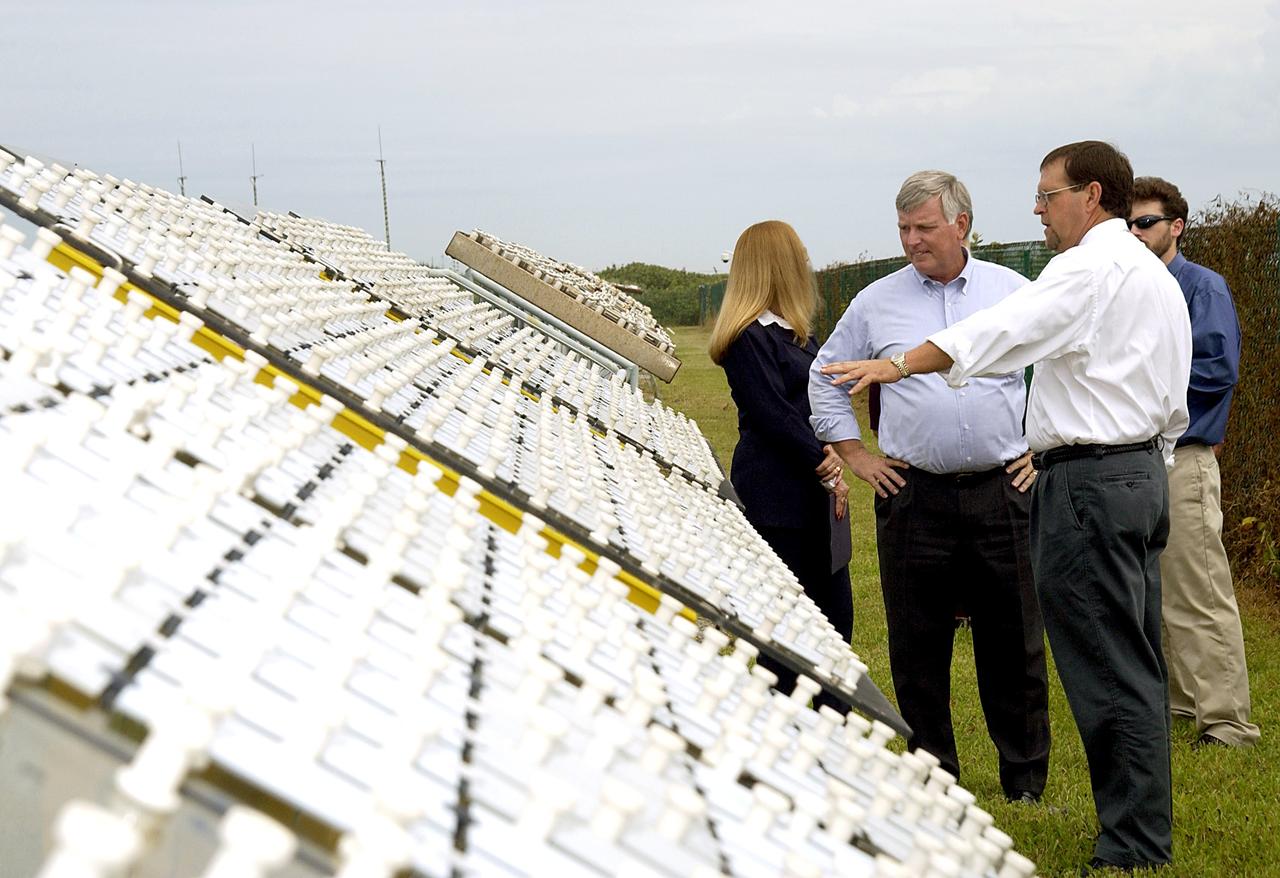
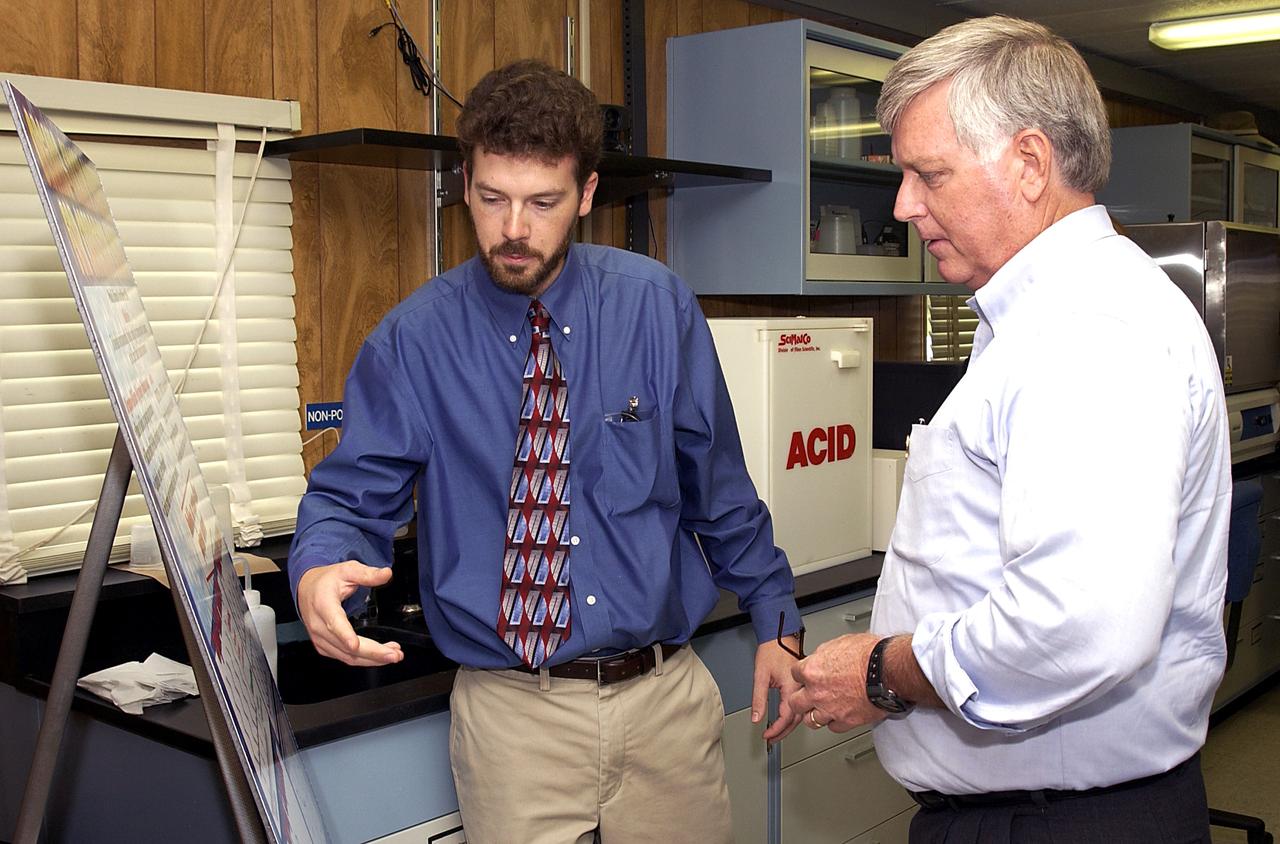
KENNEDY SPACE CENTER, FLA. -   Dr. Paul Hintze (left) explains to Center Director Jim Kennedy a project he is working at the KSC Beach Corrosion Test Site. Hitze is doing post-graduate work for the National Research Council.  The test facility site was established in the 1960s and has provided more than 30 years of historical information on the long-term performance of many materials in use at KSC and other locations around the world. Located 100 feet from the Atlantic Ocean approximately 1 mile south of the Space Shuttle launch sites, the test facility includes an atmospheric exposure site, a flowing seawater exposure site, and an on-site electrochemistry laboratory and monitoring station. The beach laboratory is used to conduct real-time corrosion experiments and provides for the remote monitoring of surrounding weather conditions. The newly added flowing seawater immersion facility provides for the immersion testing of materials and devices under controlled conditions.
KENNEDY SPACE CENTER, FLA. - Dr. Paul Hintze (left) explains to Center Director Jim Kennedy a project he is working at the KSC Beach Corrosion Test Site. Hitze is doing post-graduate work for the National Research Council. The test facility site was established in the 1960s and has provided more than 30 years of historical information on the long-term performance of many materials in use at KSC and other locations around the world. Located 100 feet from the Atlantic Ocean approximately 1 mile south of the Space Shuttle launch sites, the test facility includes an atmospheric exposure site, a flowing seawater exposure site, and an on-site electrochemistry laboratory and monitoring station. The beach laboratory is used to conduct real-time corrosion experiments and provides for the remote monitoring of surrounding weather conditions. The newly added flowing seawater immersion facility provides for the immersion testing of materials and devices under controlled conditions.
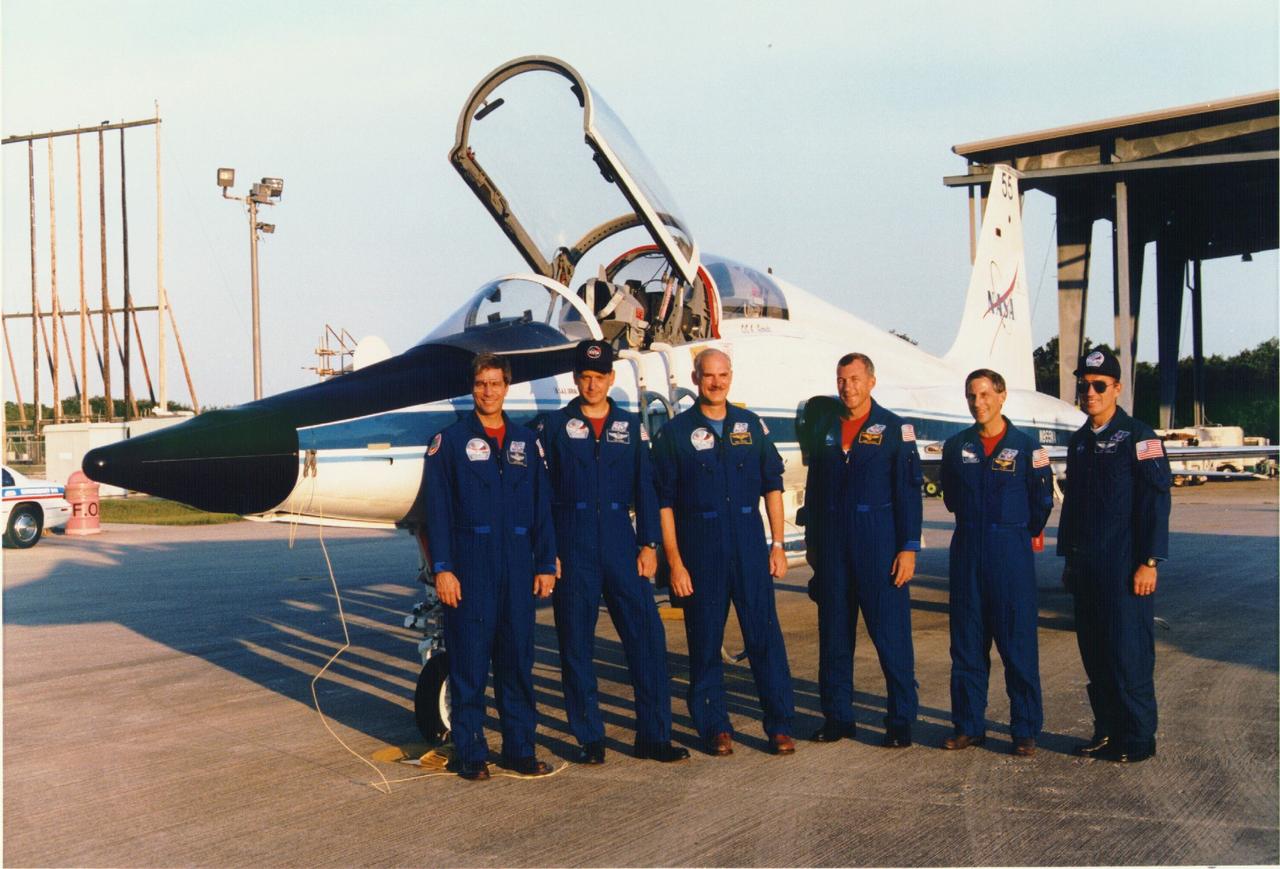
KENNEDY SPACE CENTER, FLA. -  The STS-79 astronauts arrive at KSC's Shuttle Landing Facility in their T-38 aircraft from Johnson Space Center in Houston.  From left are Mission Specialists John E. Blaha and Tom Akers; Commander William F. Readdy; PIlot Terrence W. Wilcutt; and Mission Specialists Jay Apt and Carl E. Walz.  The astronauts are at KSC for the Terminal Countdown Demonstration Test, a dress rehearsal for launch.  They are scheduled to lift off around Sept. 12 on Mission STS-79, the fourth docking between the U.S. Shuttle and Russian Space Station Mir.
KENNEDY SPACE CENTER, FLA. - The STS-79 astronauts arrive at KSC's Shuttle Landing Facility in their T-38 aircraft from Johnson Space Center in Houston. From left are Mission Specialists John E. Blaha and Tom Akers; Commander William F. Readdy; PIlot Terrence W. Wilcutt; and Mission Specialists Jay Apt and Carl E. Walz. The astronauts are at KSC for the Terminal Countdown Demonstration Test, a dress rehearsal for launch. They are scheduled to lift off around Sept. 12 on Mission STS-79, the fourth docking between the U.S. Shuttle and Russian Space Station Mir.
KENNEDY SPACE CENTER, FLA. -  STS-79 Commander William F. Readdy arrives at KSC's Shuttle Landing Facility with five fellow astronauts, ready to participate in the Terminal Countdown Demonstration Test (TCDT).  The TCDT is a dress rehearsal for launch for the flight crew and launch team.  Over the next several days, the astronauts will take part in training exercises at the launch pad that will culminate in a simulated launch countdown.  The Space Shuttle Atlantis is being prepared for liftoff on STS-79 around Sept. 12.
KENNEDY SPACE CENTER, FLA. - STS-79 Commander William F. Readdy arrives at KSC's Shuttle Landing Facility with five fellow astronauts, ready to participate in the Terminal Countdown Demonstration Test (TCDT). The TCDT is a dress rehearsal for launch for the flight crew and launch team. Over the next several days, the astronauts will take part in training exercises at the launch pad that will culminate in a simulated launch countdown. The Space Shuttle Atlantis is being prepared for liftoff on STS-79 around Sept. 12.
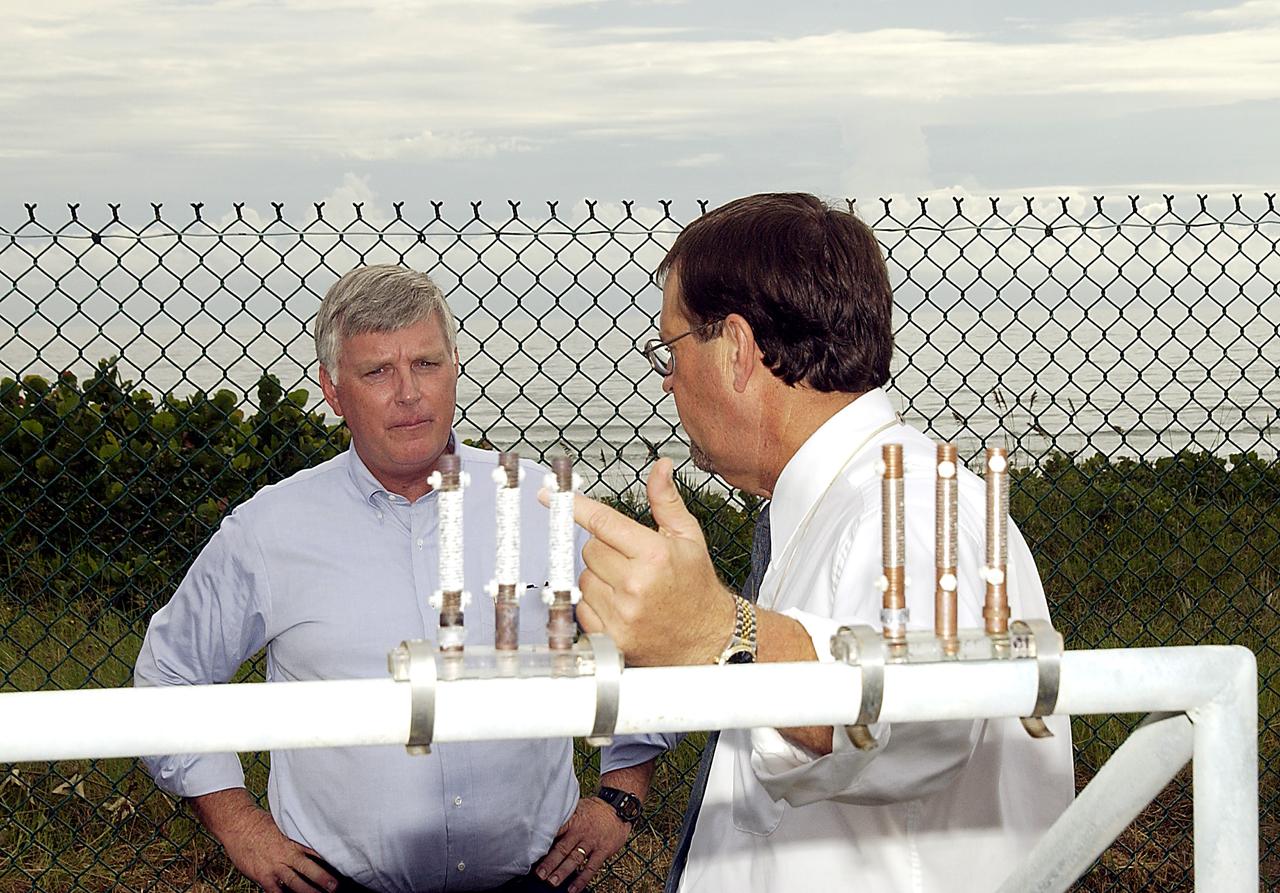
KENNEDY SPACE CENTER, FLA. -    Louis MacDowell (right), Testbed manager, explains to Center Director Jim Kennedy the use of astmospheric calibration specimens.  Placed at various locations, they can rank the corrosivity of the given environment.  The KSC Beach Corrosion Test Site was established in the 1960s and has provided more than 30 years of historical information on the long-term performance of many materials in use at KSC and other locations around the world. Located 100 feet from the Atlantic Ocean approximately 1 mile south of the Space Shuttle launch sites, the test facility includes an atmospheric exposure site, a flowing seawater exposure site, and an on-site electrochemistry laboratory and monitoring station. The beach laboratory is used to conduct real-time corrosion experiments and provides for the remote monitoring of surrounding weather conditions. The newly added flowing seawater immersion facility provides for the immersion testing of materials and devices under controlled conditions.
KENNEDY SPACE CENTER, FLA. - Louis MacDowell (right), Testbed manager, explains to Center Director Jim Kennedy the use of astmospheric calibration specimens. Placed at various locations, they can rank the corrosivity of the given environment. The KSC Beach Corrosion Test Site was established in the 1960s and has provided more than 30 years of historical information on the long-term performance of many materials in use at KSC and other locations around the world. Located 100 feet from the Atlantic Ocean approximately 1 mile south of the Space Shuttle launch sites, the test facility includes an atmospheric exposure site, a flowing seawater exposure site, and an on-site electrochemistry laboratory and monitoring station. The beach laboratory is used to conduct real-time corrosion experiments and provides for the remote monitoring of surrounding weather conditions. The newly added flowing seawater immersion facility provides for the immersion testing of materials and devices under controlled conditions.
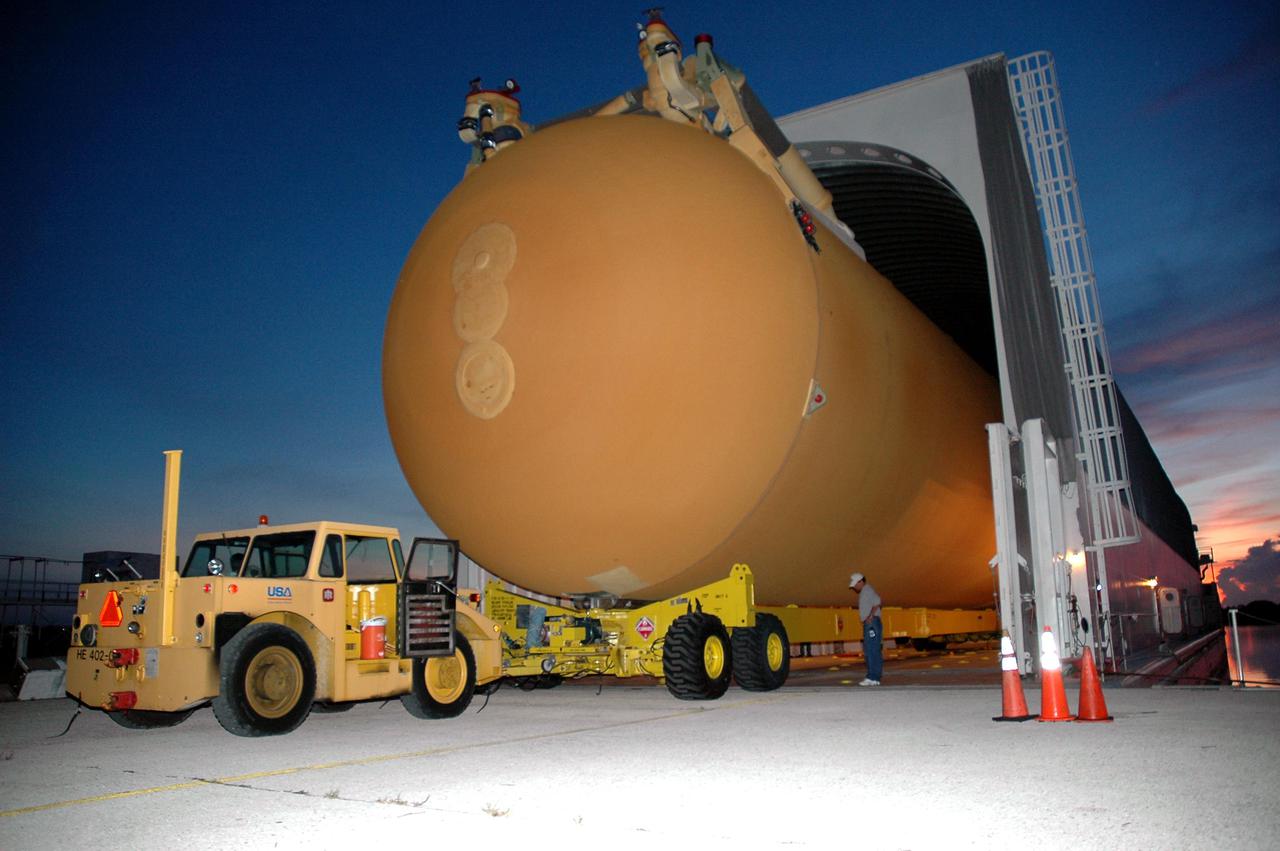
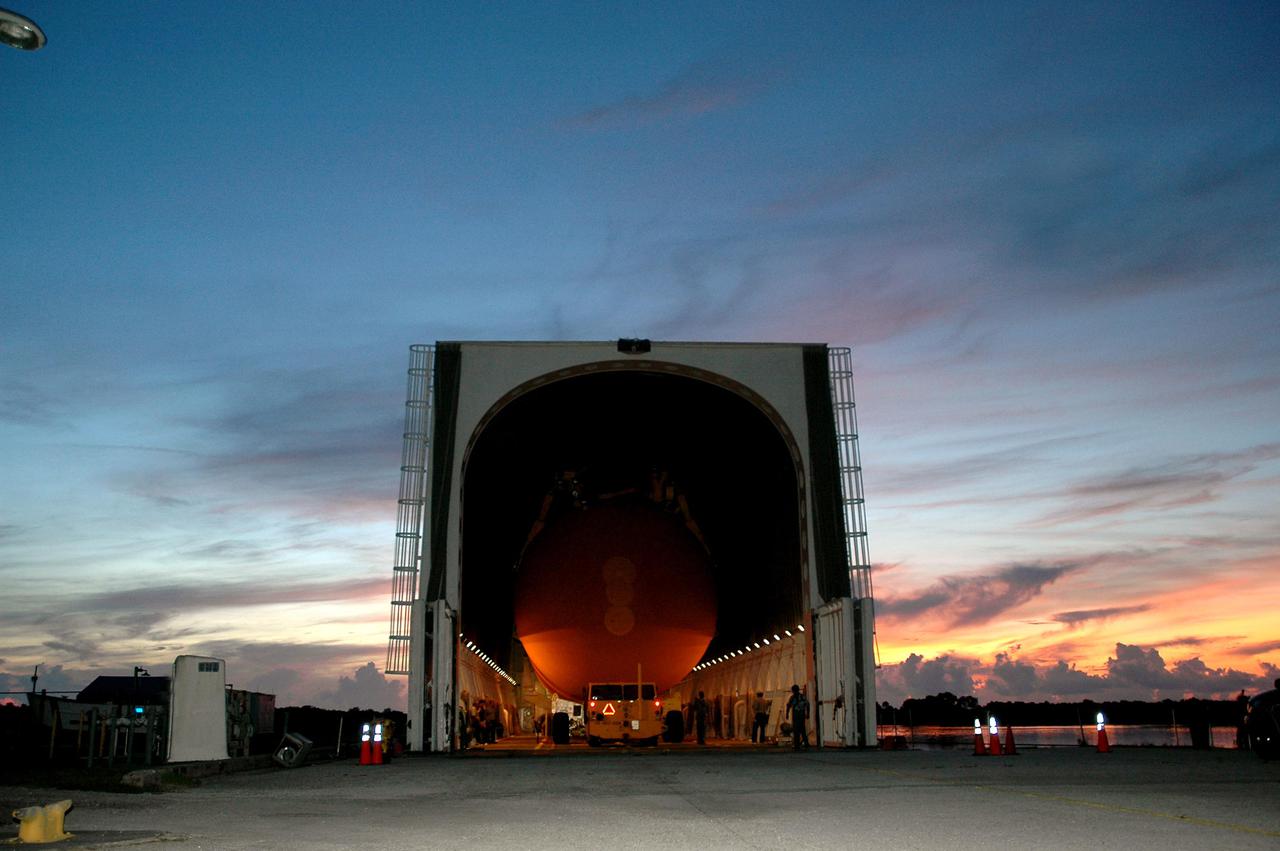
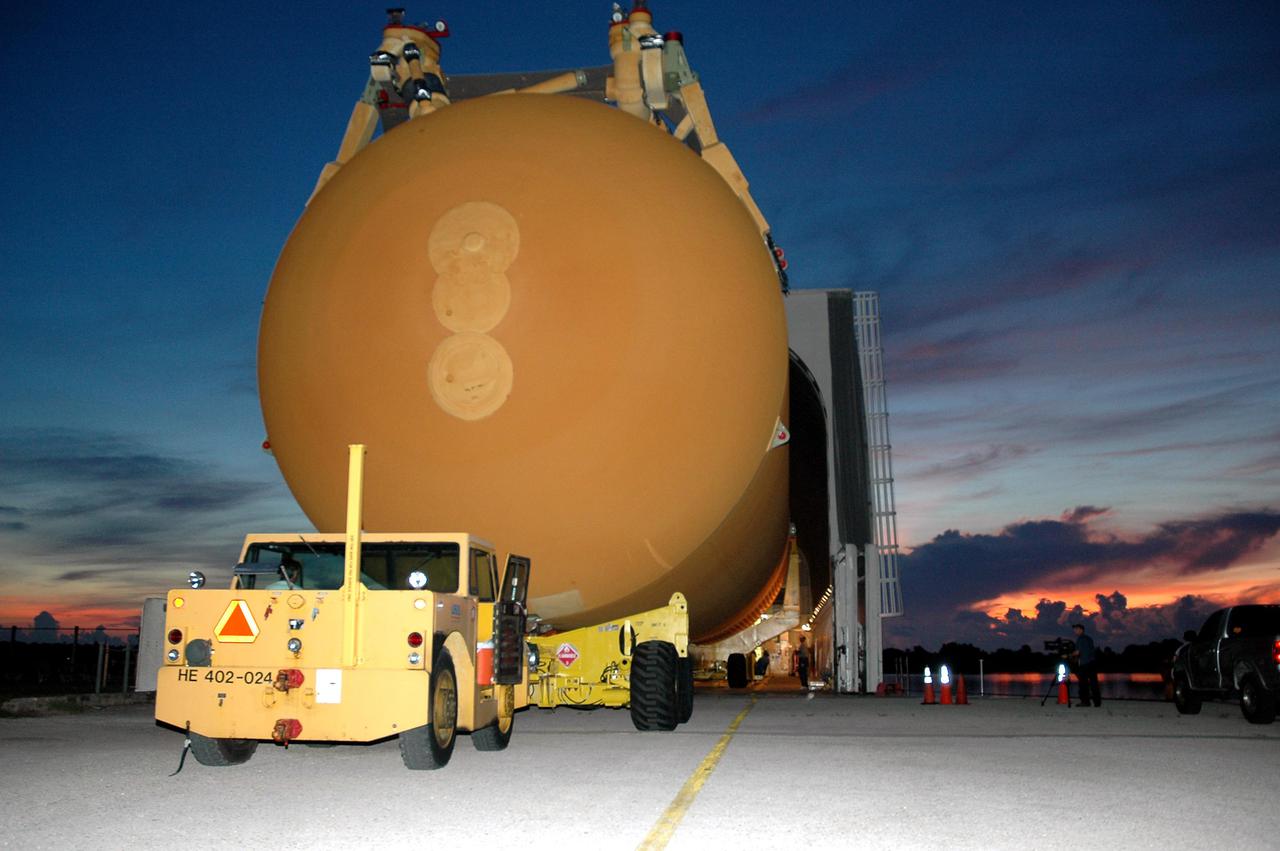
KENNEDY SPACE CENTER, FLA.  -   Under pre-dawn skies of blue and red, External Tank 119 is loaded onto the barge at the Turn Basin.  The tank will embark on a voyage around the Florida peninsula  to the Michoud Assembly Facility in New Orleans.  Delivered to KSC in June, ET-119 is the third newly redesigned tank.
KSC-05PD-1961
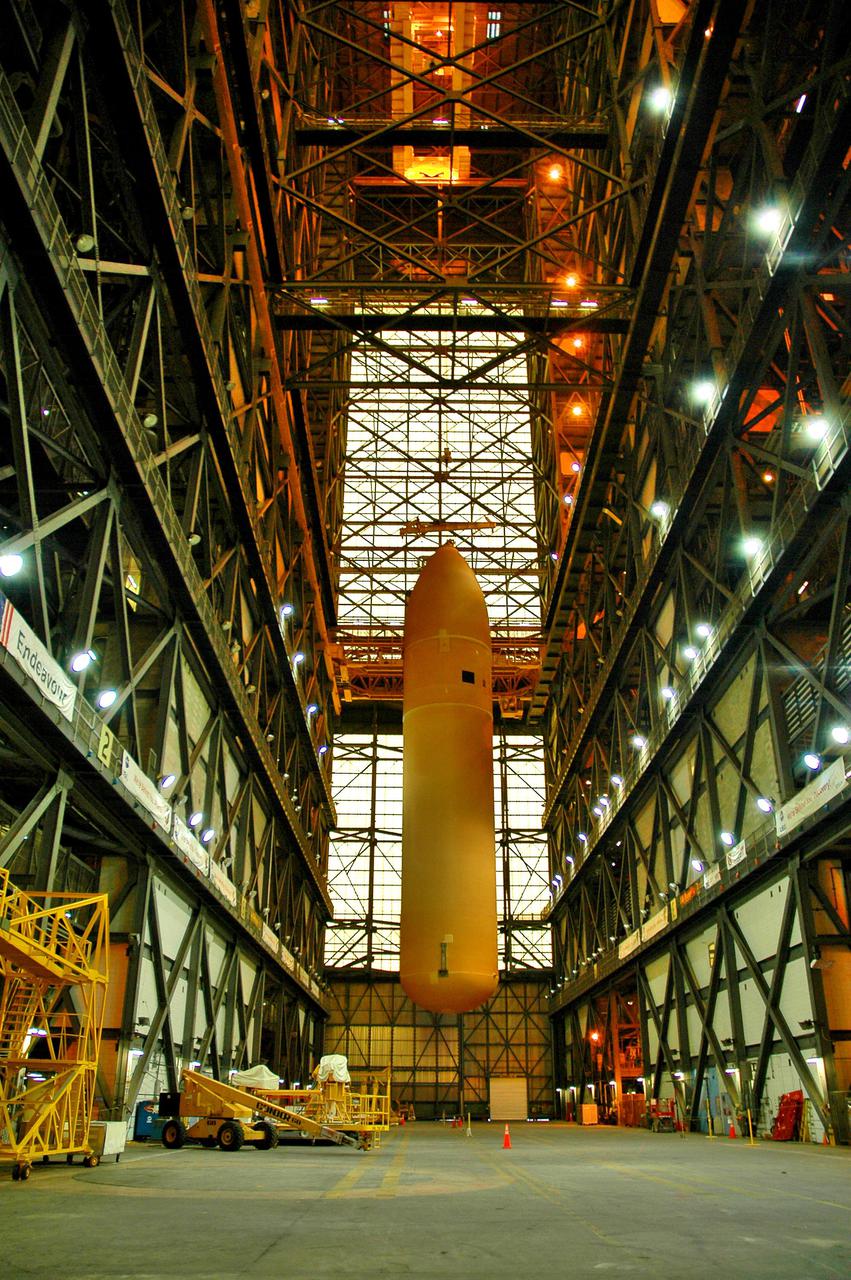
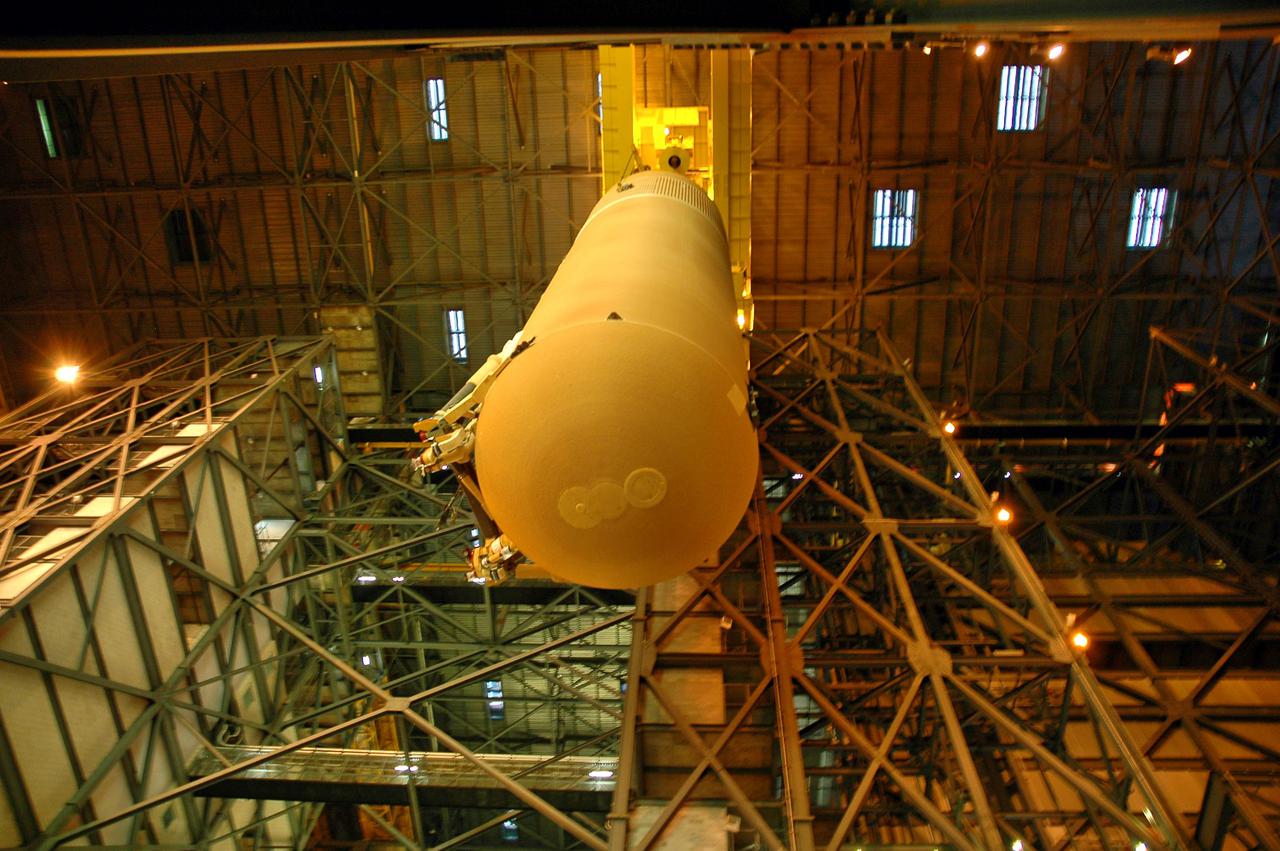
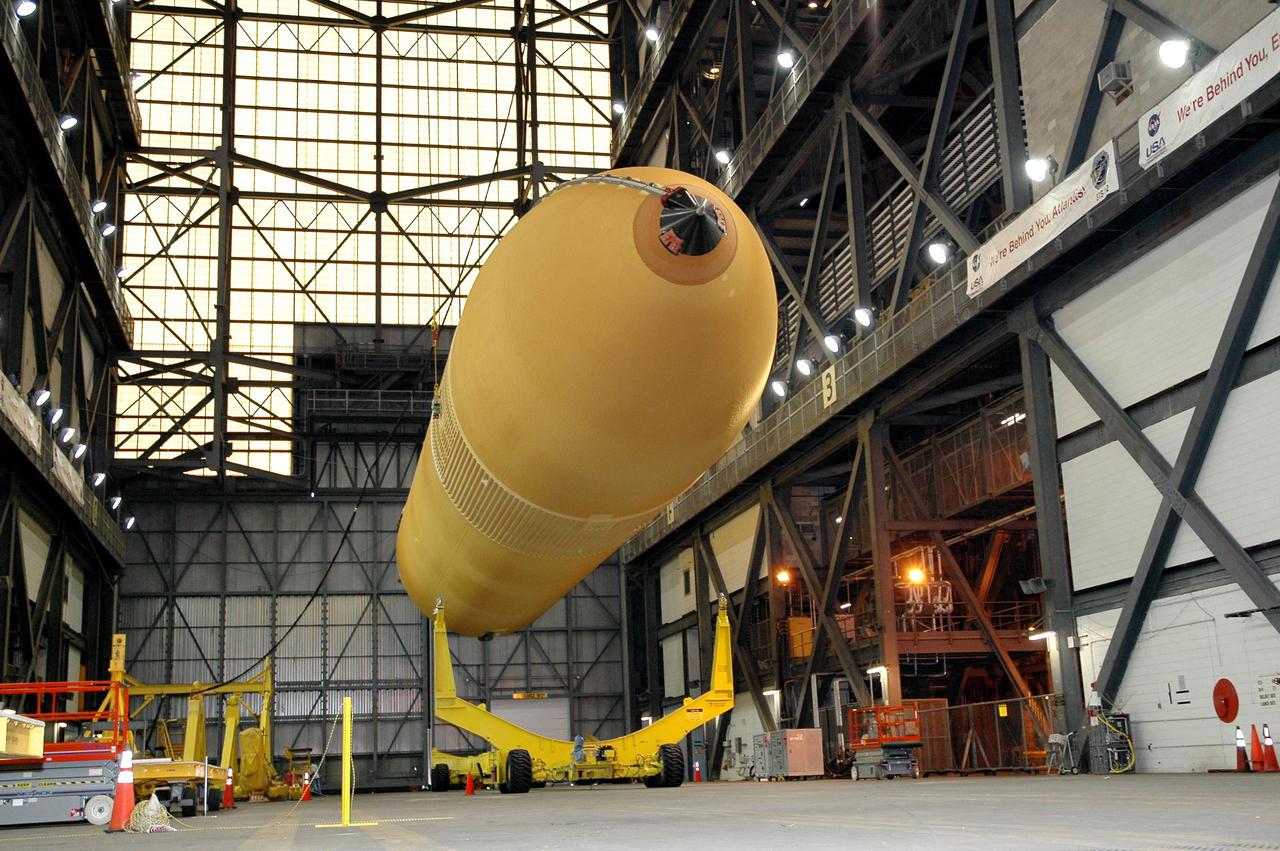
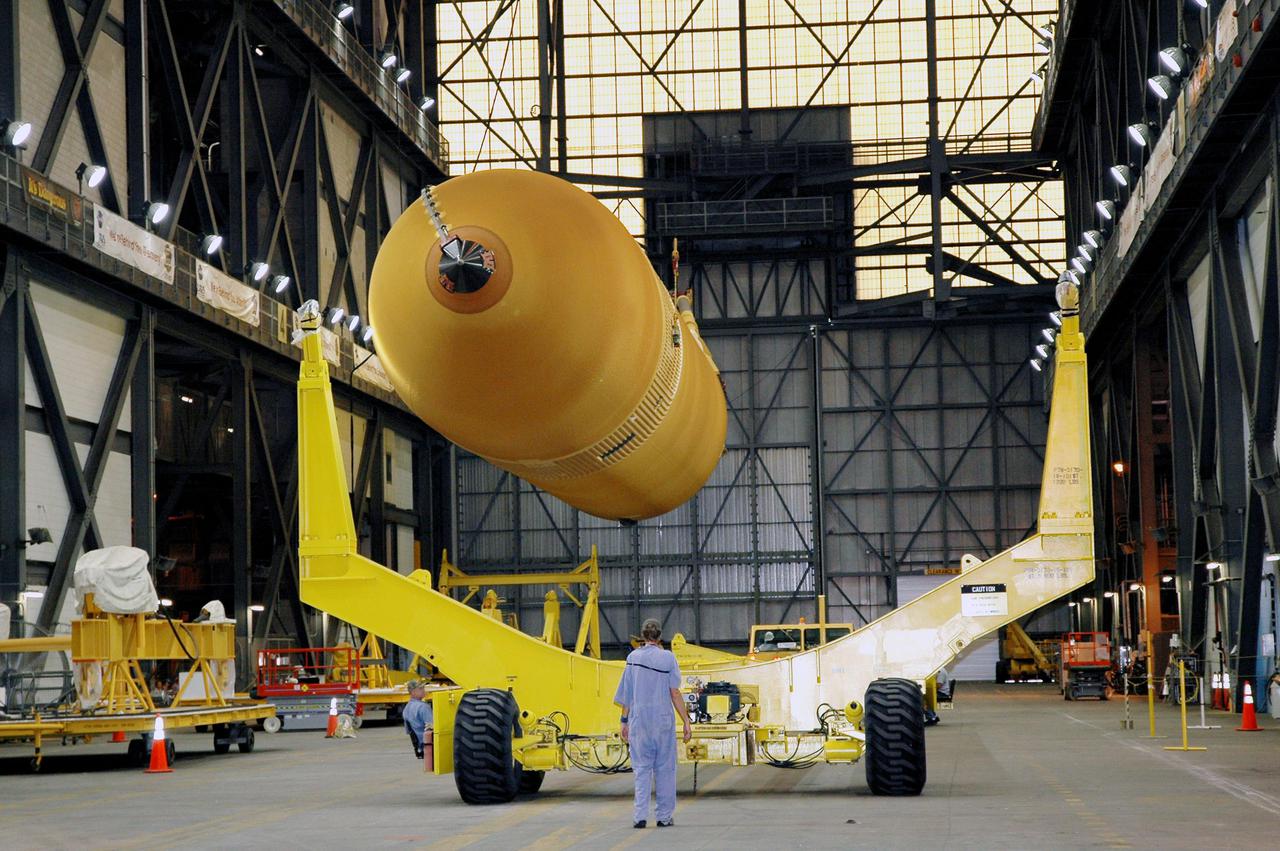
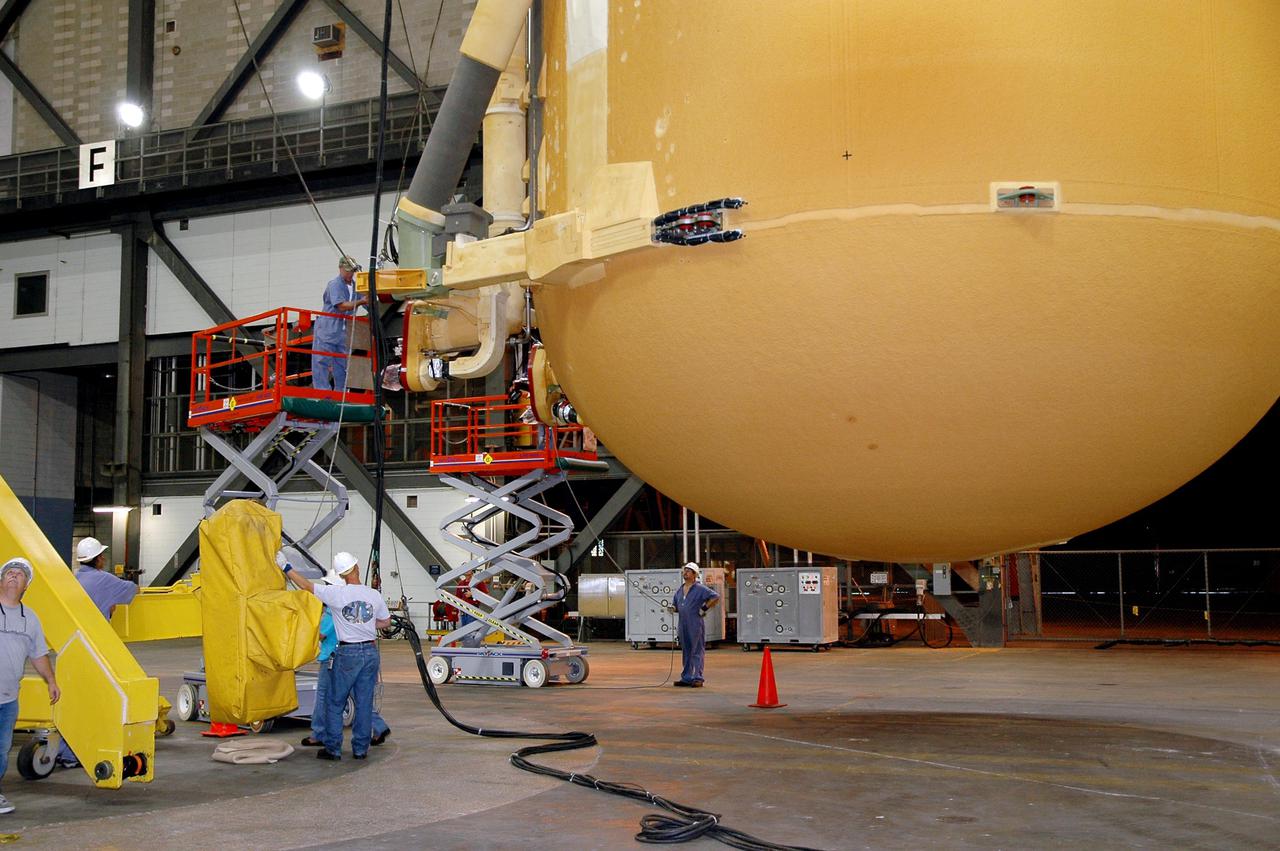
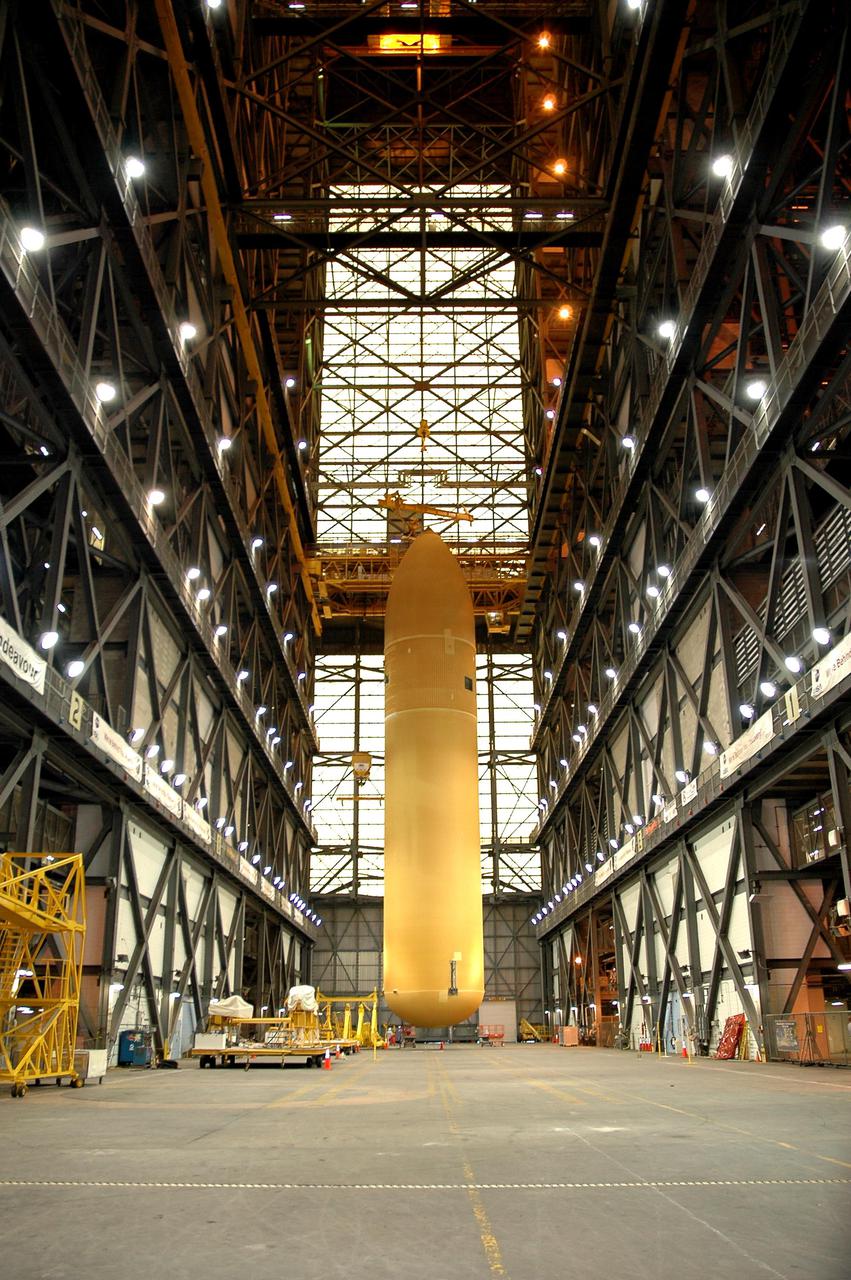
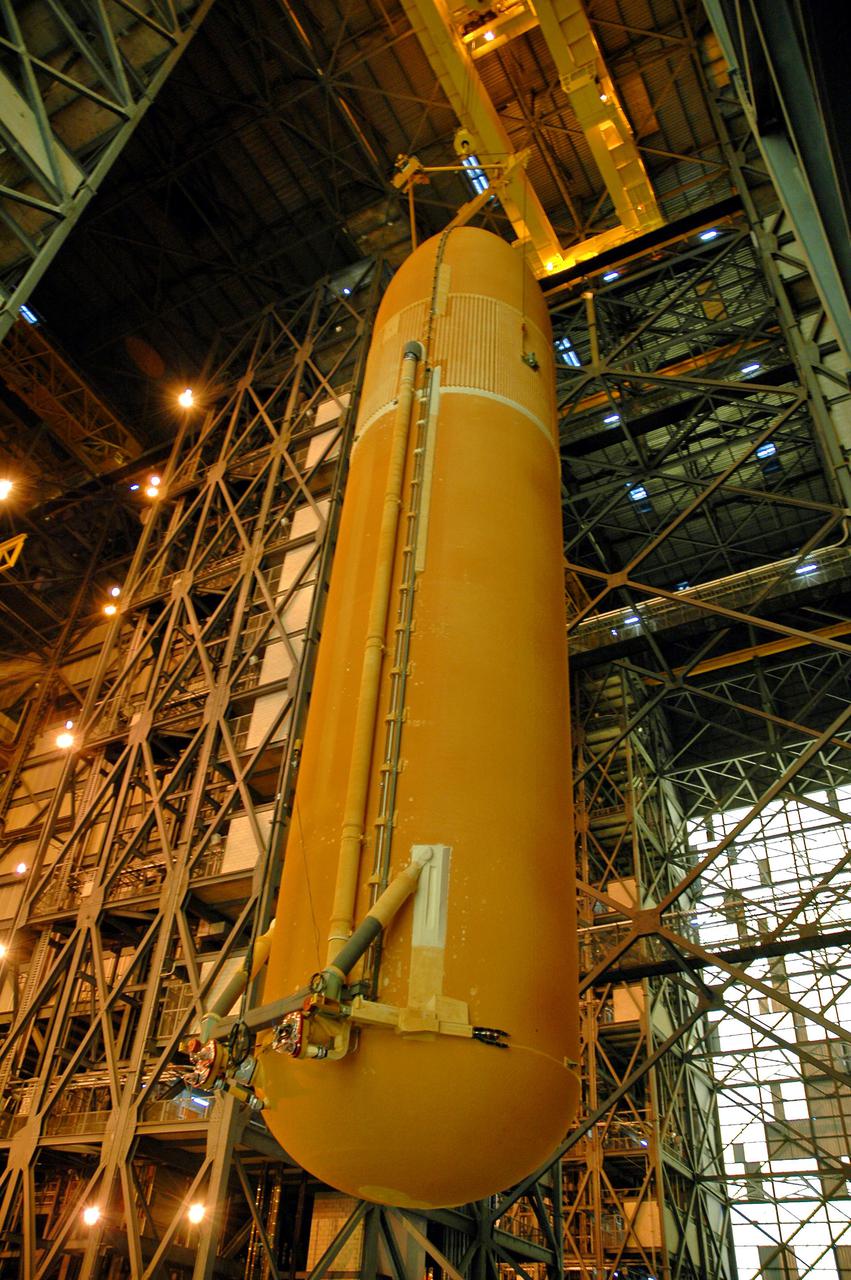
KENNEDY SPACE CENTER, FLA.  - External Tank 119 is lowered to the transfer aisle in the Vehicle Assembly Building.  There it will be lowered and placed on the transporter to be moved to the barge at the Turn Basin.  The tank will embark on a voyage around the Florida peninsula  to the Michoud Assembly Facility in New Orleans.  Delivered to KSC in June, ET-119 is the third newly redesigned tank.
KSC-05PD-1933
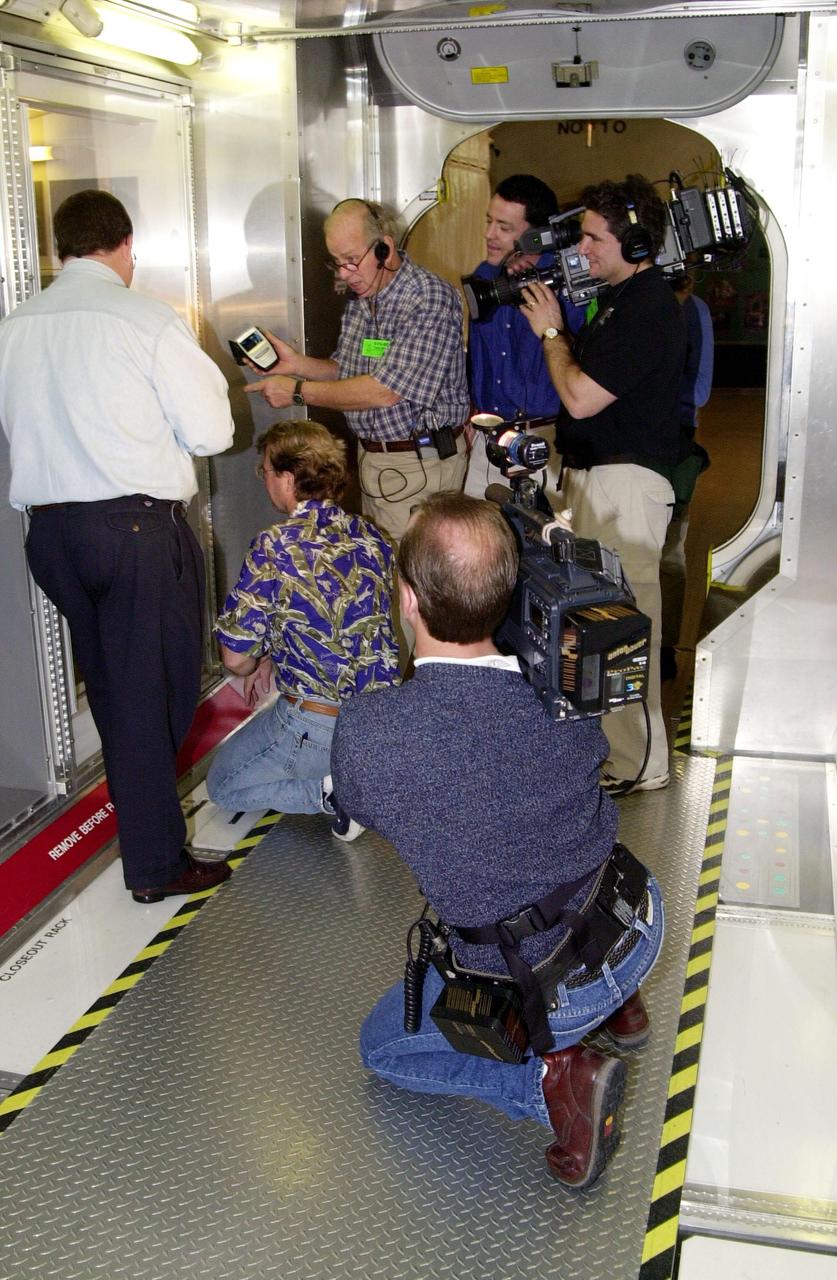
KENNEDY SPACE CENTER, FLA. -- A film crew gather around Steve Thomas (kneeling) as they shoot inside a mockup of the U.S. Lab, located in the International Space Station Center, a tour facility. Thomas and Norm Abram, host and master carpenter, respectively, of television’s  "This Old House," are at KSC to film an episode of the series
KSC-00padig124
KENNEDY SPACE CENTER, FLA.  -   Under pre-dawn skies of blue and red, External Tank 119 is loaded onto the barge at the Turn Basin.  The tank will embark on a voyage around the Florida peninsula  to the Michoud Assembly Facility in New Orleans.  Delivered to KSC in June, ET-119 is the third newly redesigned tank.
KSC-05PD-1962
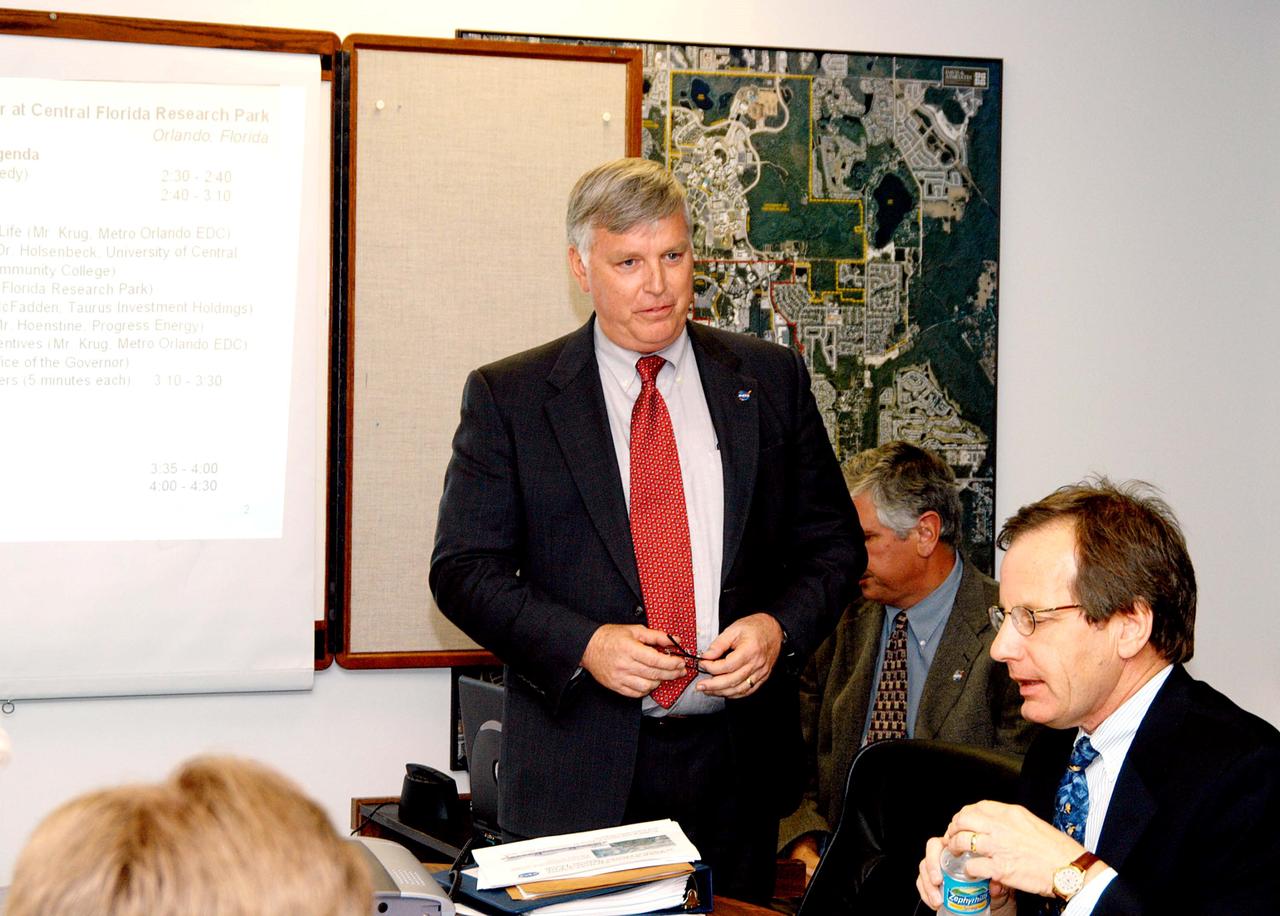
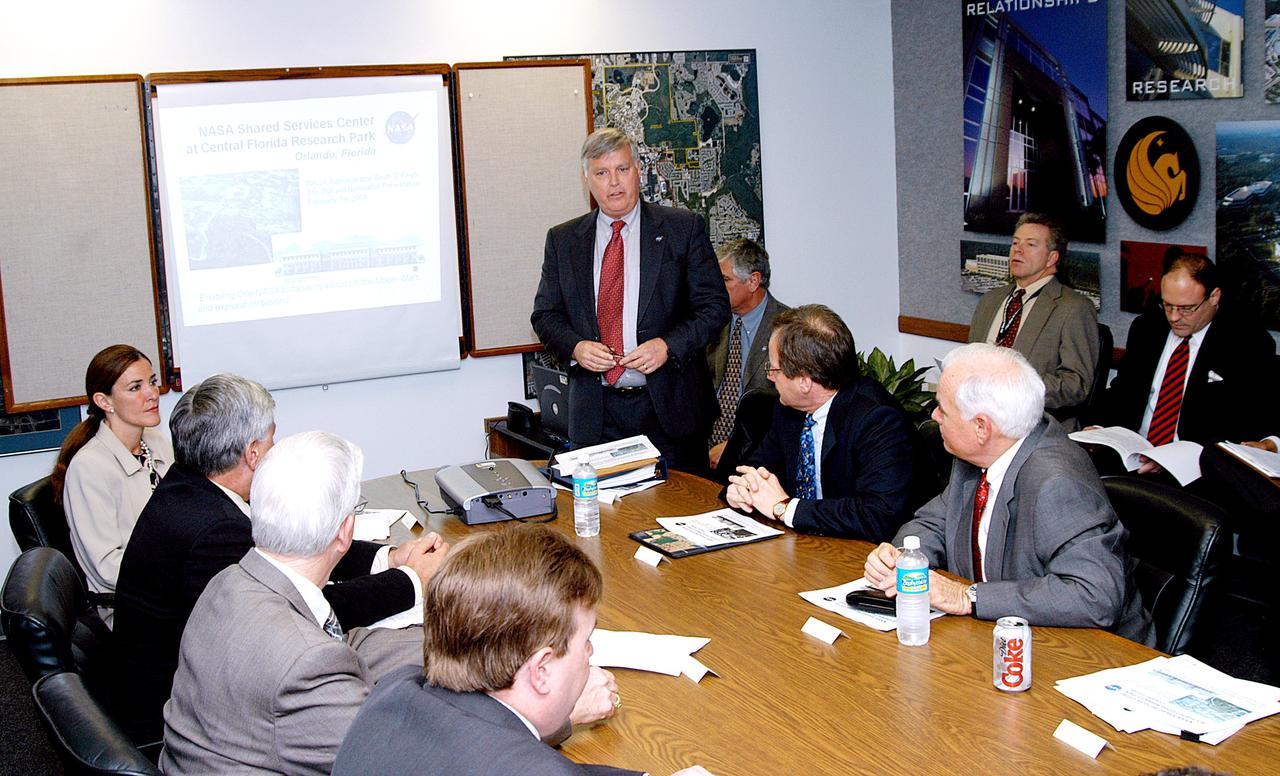
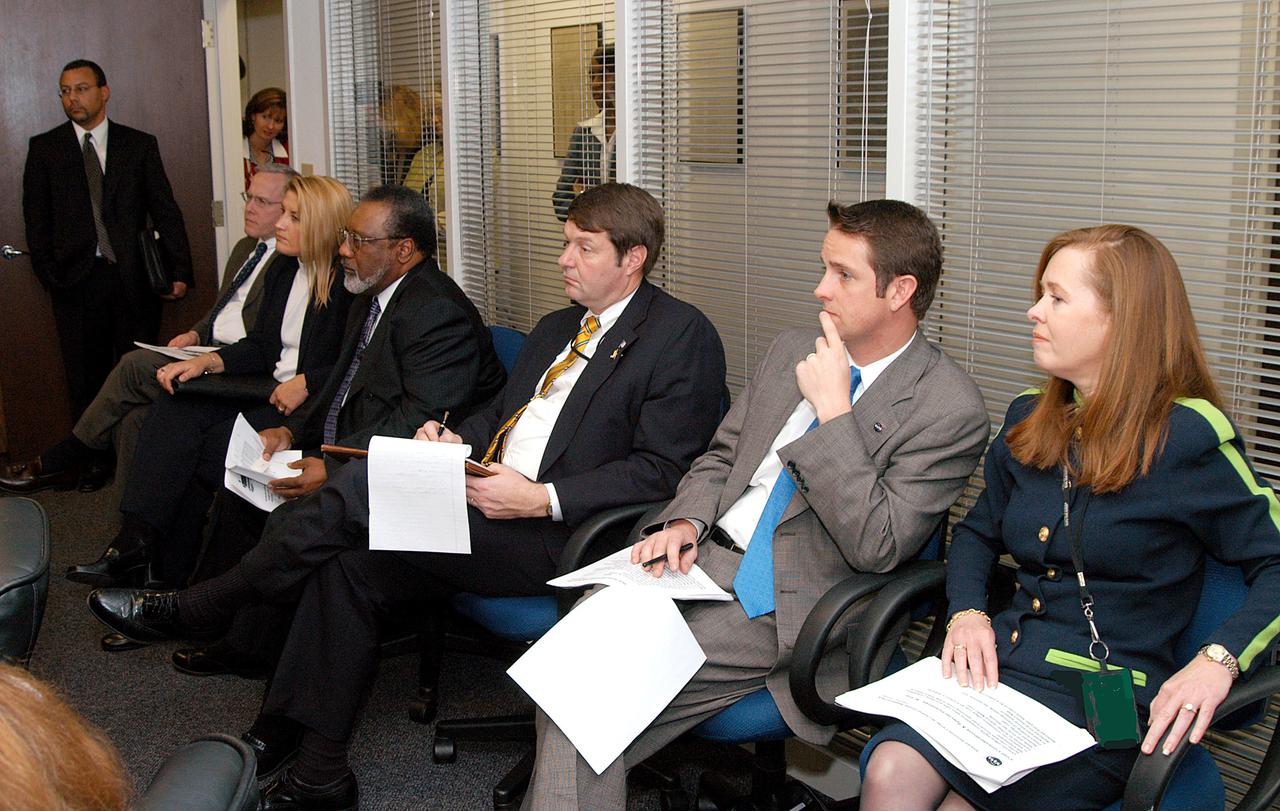
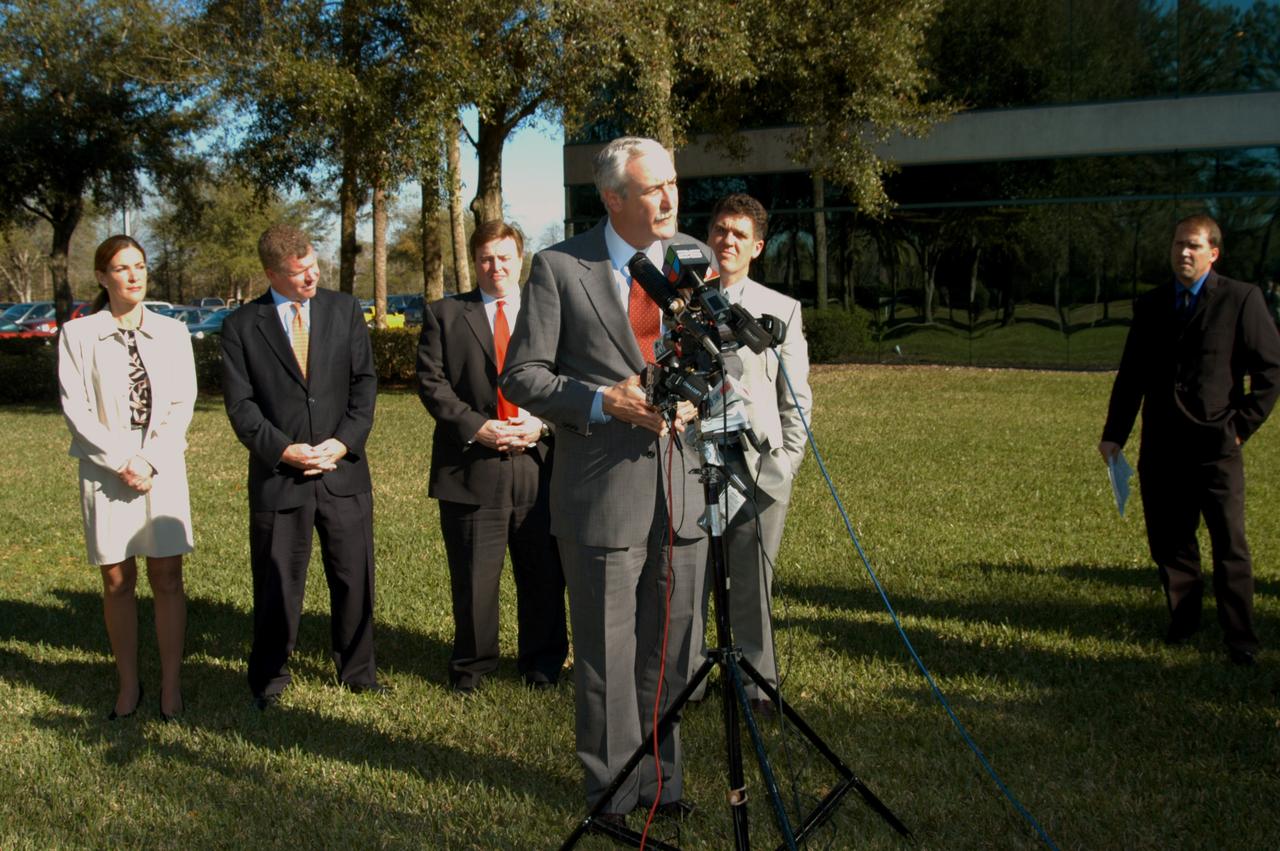
KENNEDY SPACE CENTER, FLA. - NASA and government officials are gathered to hear about the assets of the Central Florida Research Park, near Orlando, as the site of NASA’s new Shared Services Center.  Seated at right are Lisa Malone, director of KSC External Affairs, and Joel Wells, with the Government Relations Office.  Fourth from right is Jim Jennings, NASA deputy associate administrator for institutions and asset management. Six sites around the U.S. are under consideration for the center, which would centralize NASA’s payroll, accounting, human resources, facilities and procurement offices that are now handled at each field center.  The consolidation is part of the One NASA focus.
KENNEDY SPACE CENTER, FLA. - NASA and government officials are gathered to hear about the assets of the Central Florida Research Park, near Orlando, as the site of NASA’s new Shared Services Center. Seated at right are Lisa Malone, director of KSC External Affairs, and Joel Wells, with the Government Relations Office. Fourth from right is Jim Jennings, NASA deputy associate administrator for institutions and asset management. Six sites around the U.S. are under consideration for the center, which would centralize NASA’s payroll, accounting, human resources, facilities and procurement offices that are now handled at each field center. The consolidation is part of the One NASA focus.
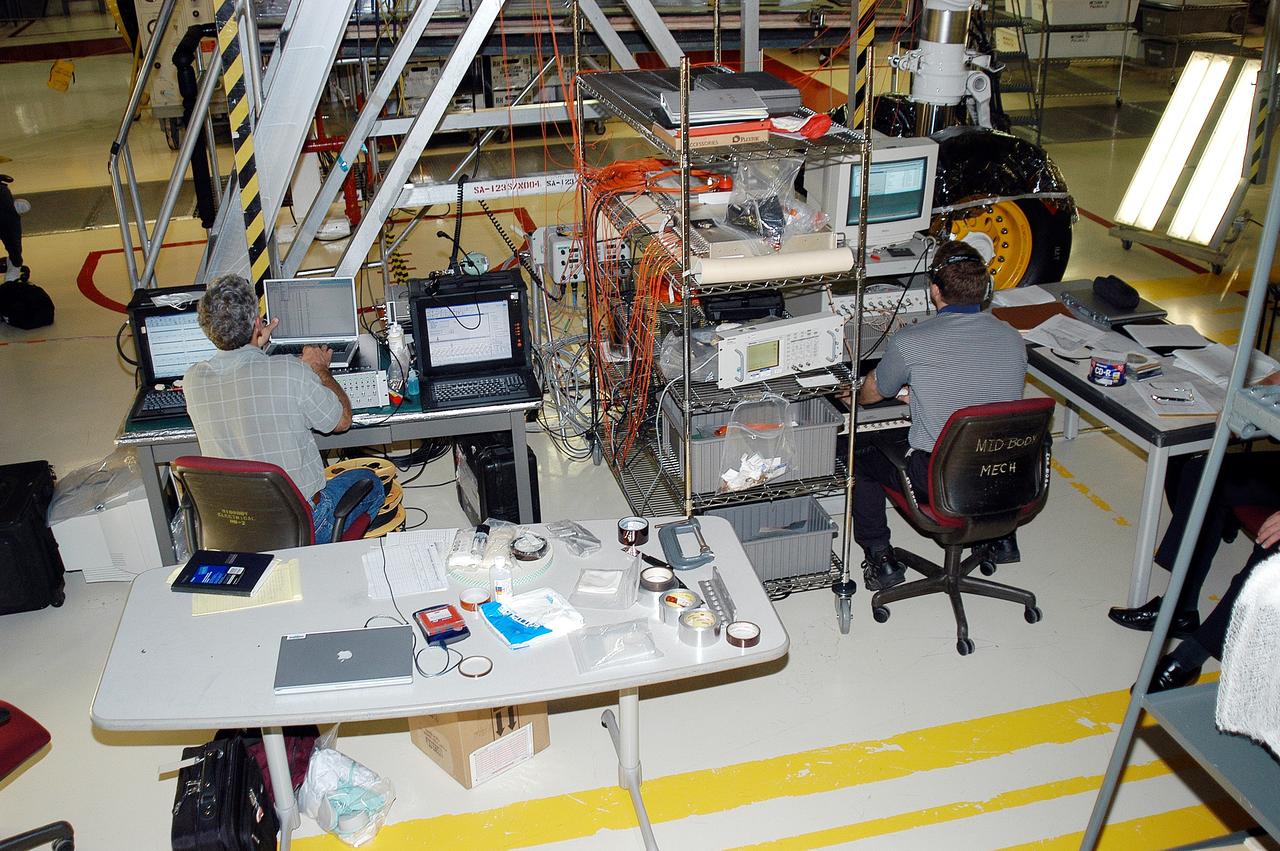
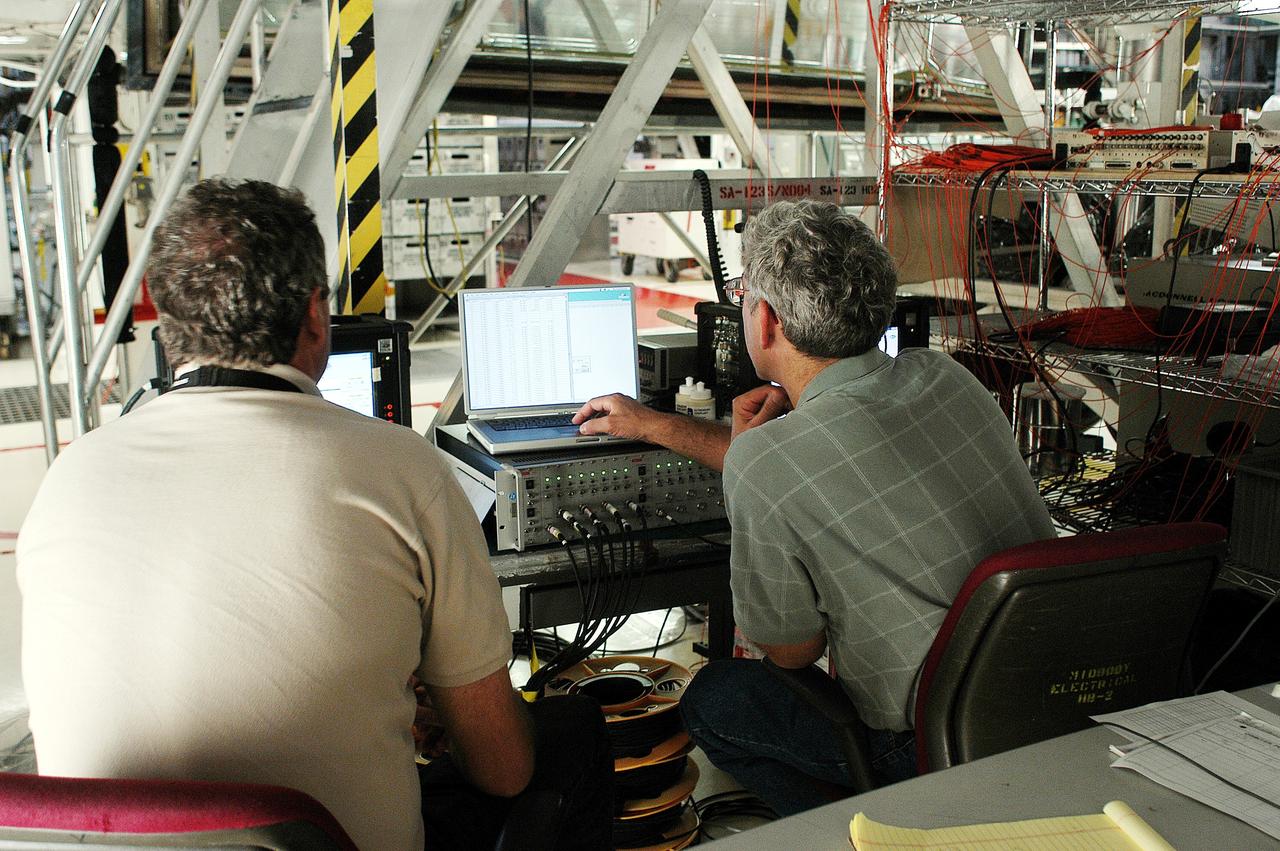
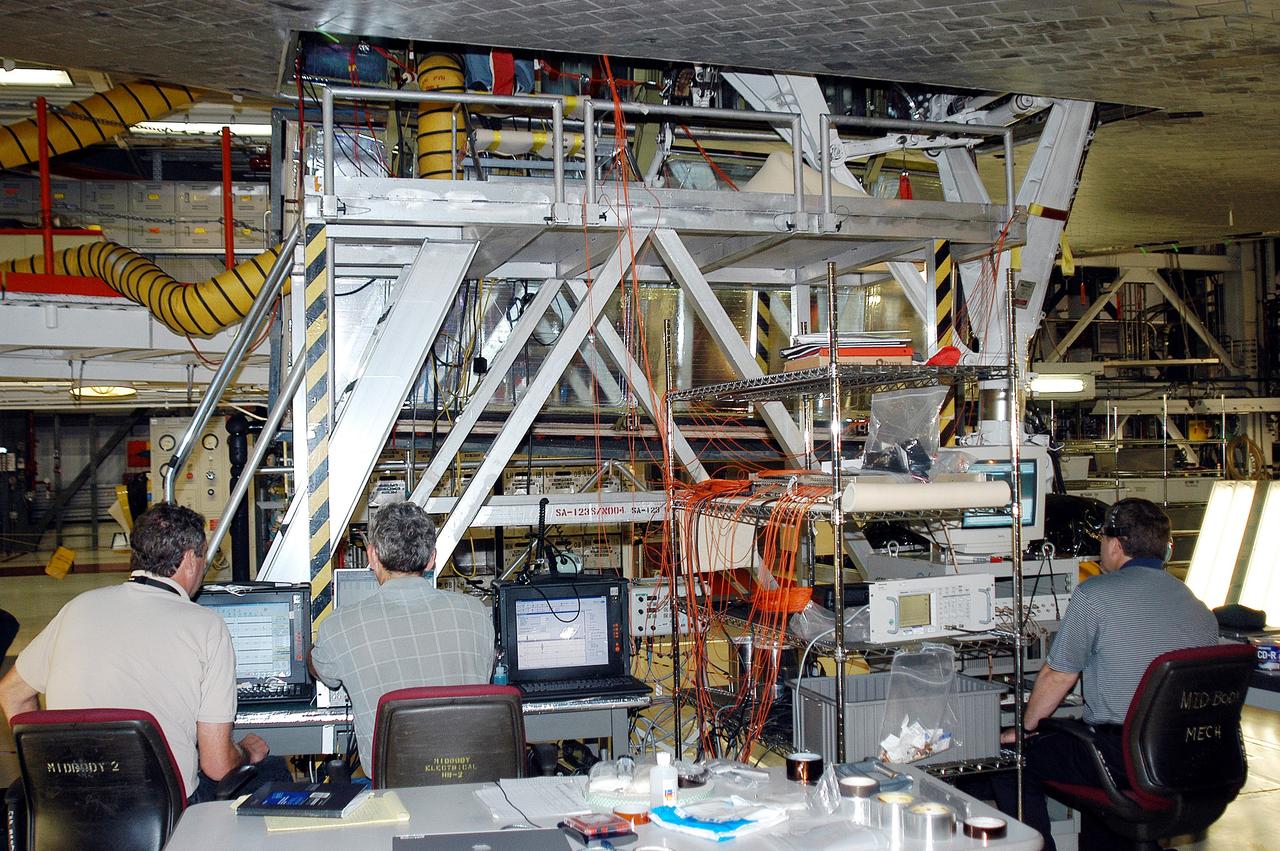
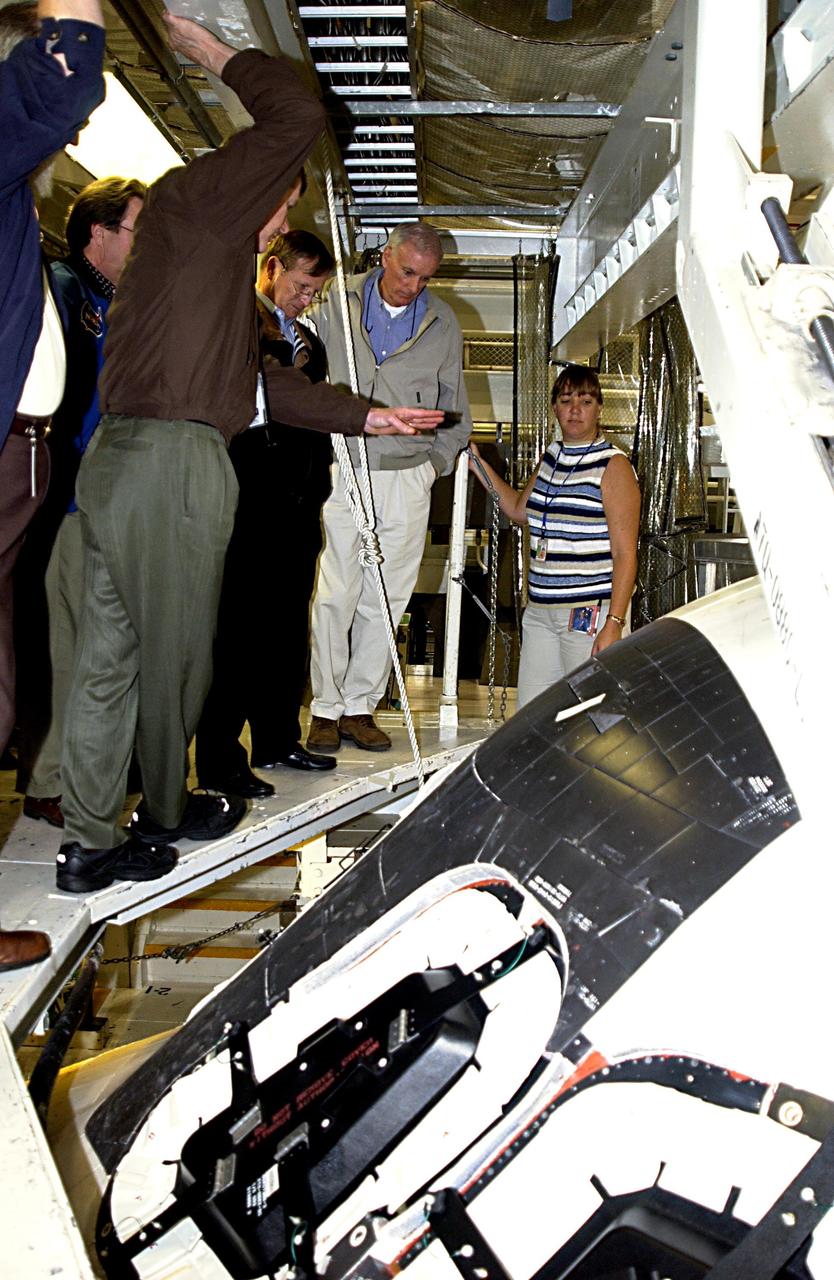
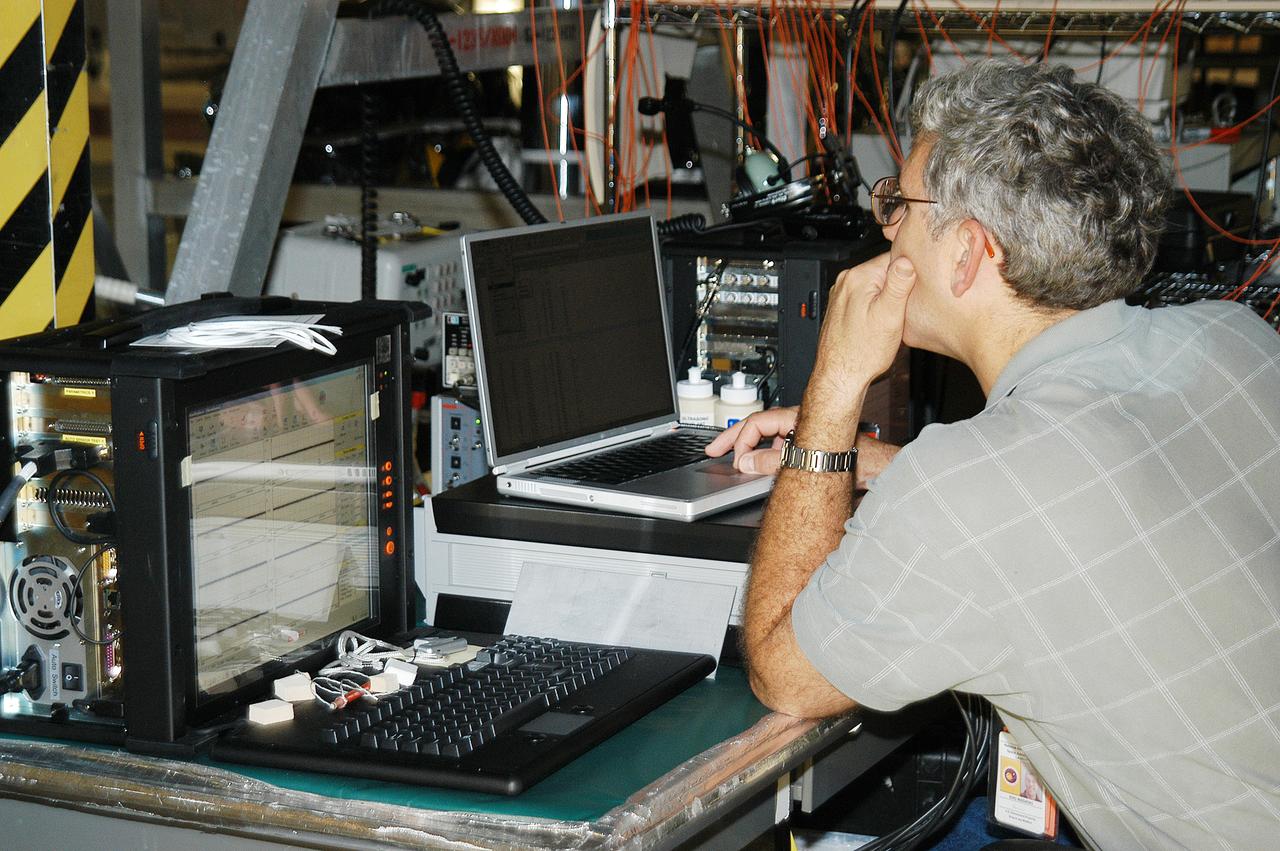
KENNEDY SPACE CENTER, FLA. -  In the Orbiter Processing Facility, Bill Prosser (left) and Eric Madaras, NASA-Langley Research Center, and Jim McGee (right), The Boeing Company, Huntington Beach, Calif., conduct impulse tests on the right wing leading edge (WLE) of Space Shuttle Endeavour. The tests monitor how sound impulses propagate through the WLE area.  The data collected will be analyzed to explore the possibility of adding new instrumentation to the wing that could automatically detect debris or micrometeroid impacts on the Shuttle while in flight.  The study is part of the initiative ongoing at KSC and around the agency to return the orbiter fleet to flight status.
KENNEDY SPACE CENTER, FLA. - In the Orbiter Processing Facility, Bill Prosser (left) and Eric Madaras, NASA-Langley Research Center, and Jim McGee (right), The Boeing Company, Huntington Beach, Calif., conduct impulse tests on the right wing leading edge (WLE) of Space Shuttle Endeavour. The tests monitor how sound impulses propagate through the WLE area. The data collected will be analyzed to explore the possibility of adding new instrumentation to the wing that could automatically detect debris or micrometeroid impacts on the Shuttle while in flight. The study is part of the initiative ongoing at KSC and around the agency to return the orbiter fleet to flight status.
KENNEDY SPACE CENTER, FLA. - KSC Director Jim Kennedy (center) makes a presentation to NASA and other officials about the benefits of locating NASA’s new Shared Services Center in the Central Florida Research Park, near Orlando.  Central Florida leaders are proposing the research park as the site for the NASA Shared Services Center.  The center would centralize NASA’s payroll, accounting, human resources, facilities and procurement offices that are now handled at each field center.  The consolidation is part of the One NASA focus.  Six sites around the U.S. are under consideration by NASA.
KENNEDY SPACE CENTER, FLA. - KSC Director Jim Kennedy (center) makes a presentation to NASA and other officials about the benefits of locating NASA’s new Shared Services Center in the Central Florida Research Park, near Orlando. Central Florida leaders are proposing the research park as the site for the NASA Shared Services Center. The center would centralize NASA’s payroll, accounting, human resources, facilities and procurement offices that are now handled at each field center. The consolidation is part of the One NASA focus. Six sites around the U.S. are under consideration by NASA.
KENNEDY SPACE CENTER, FLA. - KSC Director Jim Kennedy makes a presentation to NASA and other officials about the benefits of locating NASA’s new Shared Services Center in the Central Florida Research Park, near Orlando.  At the far left is Pamella J. Dana, Ph.D., director, Office of Tourism, Trade, and Economic Development in Florida.  Central Florida leaders are proposing the research park as the site for the NASA Shared Services Center.  The center would centralize NASA’s payroll, accounting, human resources, facilities and procurement offices that are now handled at each field center.  The consolidation is part of the One NASA focus.  Six sites around the U.S. are under consideration by NASA.
KENNEDY SPACE CENTER, FLA. - KSC Director Jim Kennedy makes a presentation to NASA and other officials about the benefits of locating NASA’s new Shared Services Center in the Central Florida Research Park, near Orlando. At the far left is Pamella J. Dana, Ph.D., director, Office of Tourism, Trade, and Economic Development in Florida. Central Florida leaders are proposing the research park as the site for the NASA Shared Services Center. The center would centralize NASA’s payroll, accounting, human resources, facilities and procurement offices that are now handled at each field center. The consolidation is part of the One NASA focus. Six sites around the U.S. are under consideration by NASA.
KENNEDY SPACE CENTER, FLA. -  In the Orbiter Processing Facility, Bill Prosser (left) and Eric Madaras, NASA-Langley Research Center, conduct impulse tests on the right wing leading edge (WLE) of Space Shuttle Endeavour. The tests monitor how sound impulses propagate through the WLE area.  The data collected will be analyzed to explore the possibility of adding new instrumentation to the wing that could automatically detect debris or micrometeroid impacts on the Shuttle while in flight.  The study is part of the initiative ongoing at KSC and around the agency to return the orbiter fleet to flight status.
KENNEDY SPACE CENTER, FLA. - In the Orbiter Processing Facility, Bill Prosser (left) and Eric Madaras, NASA-Langley Research Center, conduct impulse tests on the right wing leading edge (WLE) of Space Shuttle Endeavour. The tests monitor how sound impulses propagate through the WLE area. The data collected will be analyzed to explore the possibility of adding new instrumentation to the wing that could automatically detect debris or micrometeroid impacts on the Shuttle while in flight. The study is part of the initiative ongoing at KSC and around the agency to return the orbiter fleet to flight status.
KENNEDY SPACE CENTER, FLA. -  In the Orbiter Processing Facility, Eric Madaras (left), NASA-Langley Research Center, and Jim McGee, The Boeing Company, Huntington Beach, Calif., conduct impulse tests on the right wing leading edge (WLE) of Space Shuttle Endeavour. The tests monitor how sound impulses propagate through the WLE area.  The data collected will be analyzed to explore the possibility of adding new instrumentation to the wing that could automatically detect debris or micrometeroid impacts on the Shuttle while in flight.  The study is part of the initiative ongoing at KSC and around the agency to return the orbiter fleet to flight status.
KENNEDY SPACE CENTER, FLA. - In the Orbiter Processing Facility, Eric Madaras (left), NASA-Langley Research Center, and Jim McGee, The Boeing Company, Huntington Beach, Calif., conduct impulse tests on the right wing leading edge (WLE) of Space Shuttle Endeavour. The tests monitor how sound impulses propagate through the WLE area. The data collected will be analyzed to explore the possibility of adding new instrumentation to the wing that could automatically detect debris or micrometeroid impacts on the Shuttle while in flight. The study is part of the initiative ongoing at KSC and around the agency to return the orbiter fleet to flight status.
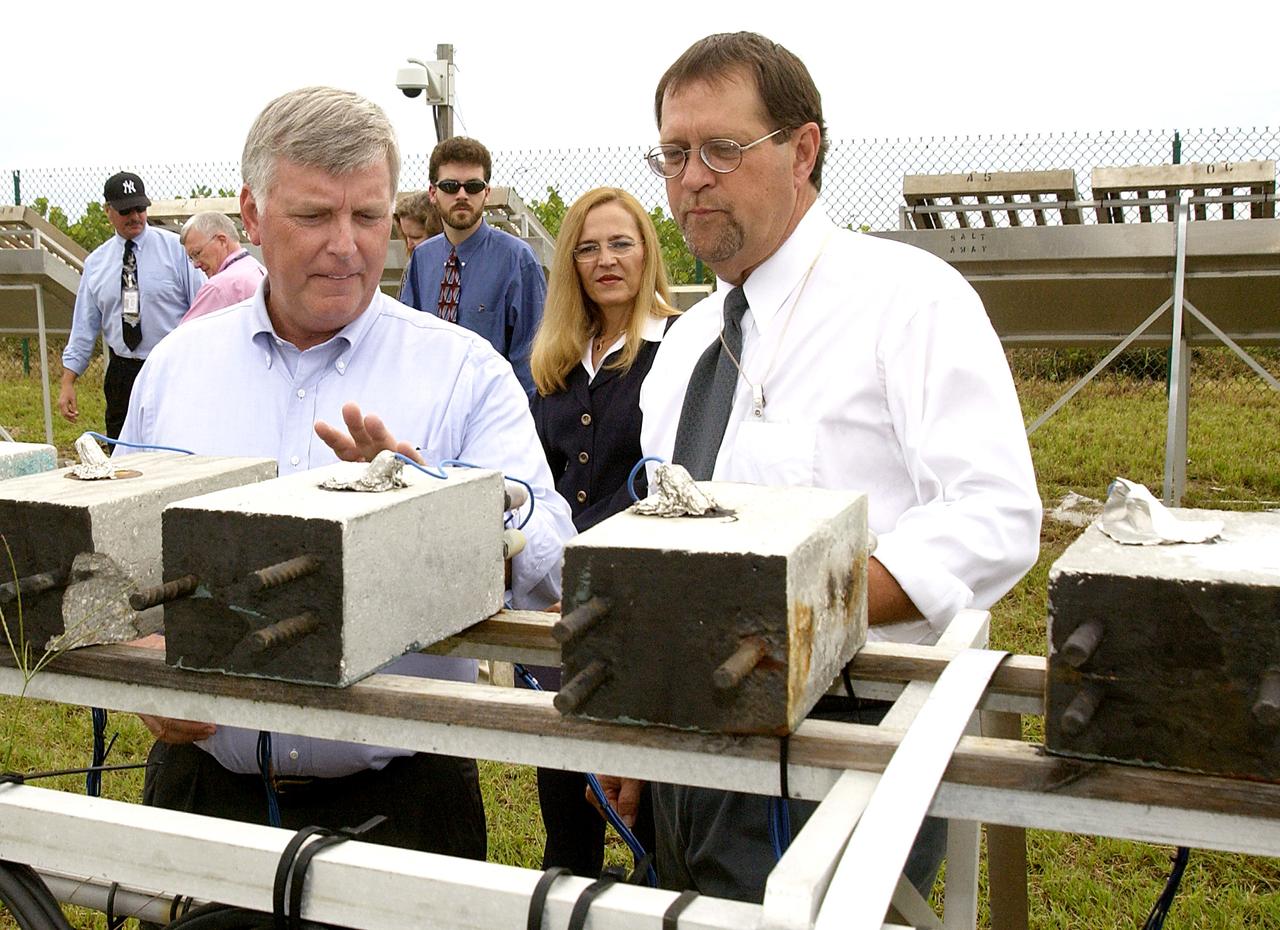
KENNEDY SPACE CENTER, FLA. -   On a tour of the KSC Beach Corrosion Test Site, Testbed Manager Louis MacDowell (right) explains to Center Director Jim Kennedy about the test blocks being used to test a newly developed coating to protect steel inside concrete.  Between MacDowell and Kennedy are Dr. Paul Hintze and Lead Scientist Dr. Luz Marina Calle.  The KSC Beach Corrosion Test Site was established in the 1960s and has provided more than 30 years of historical information on the long-term performance of many materials in use at KSC and other locations around the world. Located 100 feet from the Atlantic Ocean approximately 1 mile south of the Space Shuttle launch sites, the test facility includes an atmospheric exposure site, a flowing seawater exposure site, and an on-site electrochemistry laboratory and monitoring station. The beach laboratory is used to conduct real-time corrosion experiments and provides for the remote monitoring of surrounding weather conditions. The newly added flowing seawater immersion facility provides for the immersion testing of materials and devices under controlled conditions.
KENNEDY SPACE CENTER, FLA. - On a tour of the KSC Beach Corrosion Test Site, Testbed Manager Louis MacDowell (right) explains to Center Director Jim Kennedy about the test blocks being used to test a newly developed coating to protect steel inside concrete. Between MacDowell and Kennedy are Dr. Paul Hintze and Lead Scientist Dr. Luz Marina Calle. The KSC Beach Corrosion Test Site was established in the 1960s and has provided more than 30 years of historical information on the long-term performance of many materials in use at KSC and other locations around the world. Located 100 feet from the Atlantic Ocean approximately 1 mile south of the Space Shuttle launch sites, the test facility includes an atmospheric exposure site, a flowing seawater exposure site, and an on-site electrochemistry laboratory and monitoring station. The beach laboratory is used to conduct real-time corrosion experiments and provides for the remote monitoring of surrounding weather conditions. The newly added flowing seawater immersion facility provides for the immersion testing of materials and devices under controlled conditions.
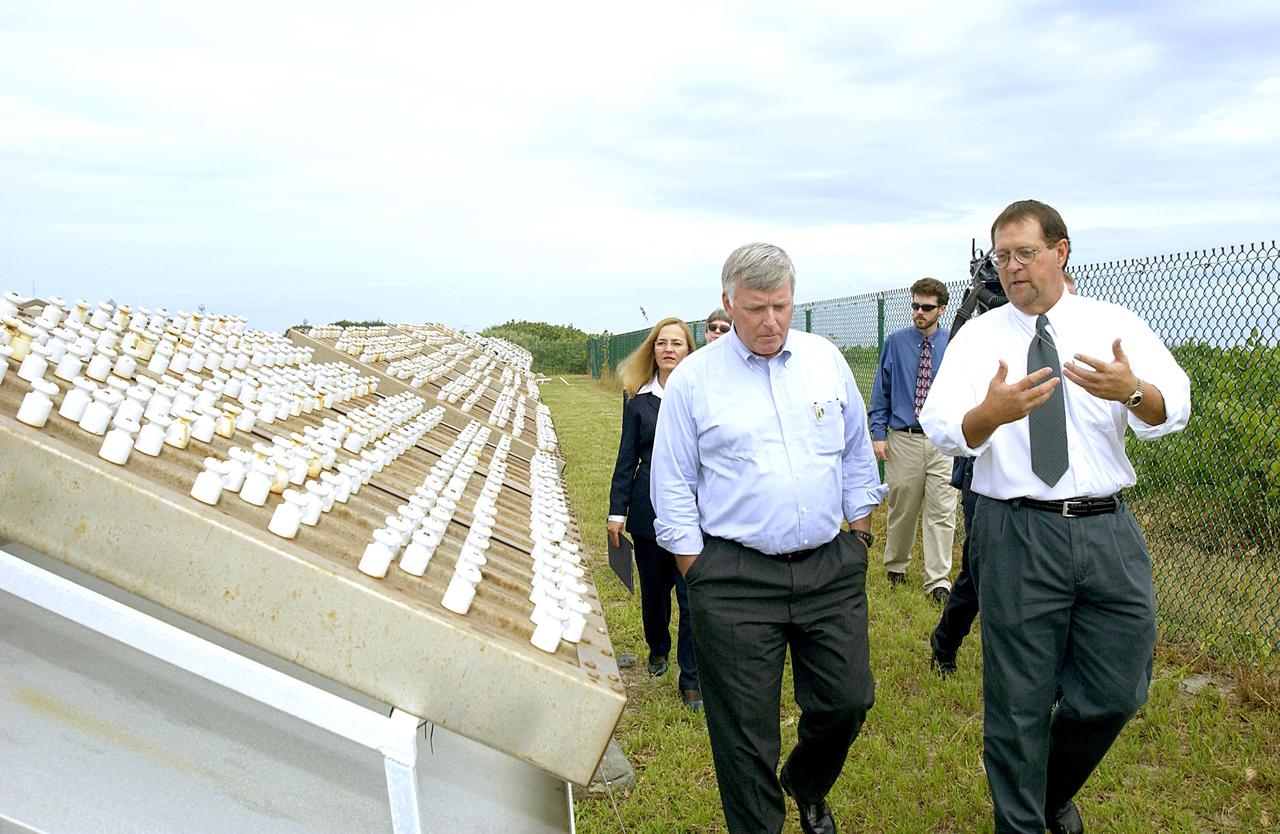
KENNEDY SPACE CENTER, FLA. -   On a tour of the KSC Beach Corrosion Test Site, Center Director Jim Kennedy (second from right) learns from Testbed Manager Louis MacDowell (right) about a project being undertaken for the U.S. Navy.  Being studied are nonchrome primers for aircraft.  At left are Lead Scientist Dr. Luz Marina Calle and  Dr. Paul Hintze, who is working on a graduate project for the National Research Council.  The KSC Beach Corrosion Test Site was established in the 1960s and has provided more than 30 years of historical information on the long-term performance of many materials in use at KSC and other locations around the world. Located 100 feet from the Atlantic Ocean approximately 1 mile south of the Space Shuttle launch sites, the test facility includes an atmospheric exposure site, a flowing seawater exposure site, and an on-site electrochemistry laboratory and monitoring station. The beach laboratory is used to conduct real-time corrosion experiments and provides for the remote monitoring of surrounding weather conditions. The newly added flowing seawater immersion facility provides for the immersion testing of materials and devices under controlled conditions.
KENNEDY SPACE CENTER, FLA. - On a tour of the KSC Beach Corrosion Test Site, Center Director Jim Kennedy (second from right) learns from Testbed Manager Louis MacDowell (right) about a project being undertaken for the U.S. Navy. Being studied are nonchrome primers for aircraft. At left are Lead Scientist Dr. Luz Marina Calle and Dr. Paul Hintze, who is working on a graduate project for the National Research Council. The KSC Beach Corrosion Test Site was established in the 1960s and has provided more than 30 years of historical information on the long-term performance of many materials in use at KSC and other locations around the world. Located 100 feet from the Atlantic Ocean approximately 1 mile south of the Space Shuttle launch sites, the test facility includes an atmospheric exposure site, a flowing seawater exposure site, and an on-site electrochemistry laboratory and monitoring station. The beach laboratory is used to conduct real-time corrosion experiments and provides for the remote monitoring of surrounding weather conditions. The newly added flowing seawater immersion facility provides for the immersion testing of materials and devices under controlled conditions.
KENNEDY SPACE CENTER, FLA. -   On a tour of the KSC Beach Corrosion Test Site, Testbed Manager Louis MacDowell (foreground) explains to Center Director Jim Kennedy (third from right) about a study being undertaken for the U.S. Navy: nonchrome primers for aircraft. At left is Lead Scientist Dr. Luz Marina Calle and behind MacDowell is Dr. Paul Hintze, who is working on a graduate project for the National Research Council.  The KSC Beach Corrosion Test Site was established in the 1960s and has provided more than 30 years of historical information on the long-term performance of many materials in use at KSC and other locations around the world. Located 100 feet from the Atlantic Ocean approximately 1 mile south of the Space Shuttle launch sites, the test facility includes an atmospheric exposure site, a flowing seawater exposure site, and an on-site electrochemistry laboratory and monitoring station. The beach laboratory is used to conduct real-time corrosion experiments and provides for the remote monitoring of surrounding weather conditions. The newly added flowing seawater immersion facility provides for the immersion testing of materials and devices under controlled conditions.
KENNEDY SPACE CENTER, FLA. - On a tour of the KSC Beach Corrosion Test Site, Testbed Manager Louis MacDowell (foreground) explains to Center Director Jim Kennedy (third from right) about a study being undertaken for the U.S. Navy: nonchrome primers for aircraft. At left is Lead Scientist Dr. Luz Marina Calle and behind MacDowell is Dr. Paul Hintze, who is working on a graduate project for the National Research Council. The KSC Beach Corrosion Test Site was established in the 1960s and has provided more than 30 years of historical information on the long-term performance of many materials in use at KSC and other locations around the world. Located 100 feet from the Atlantic Ocean approximately 1 mile south of the Space Shuttle launch sites, the test facility includes an atmospheric exposure site, a flowing seawater exposure site, and an on-site electrochemistry laboratory and monitoring station. The beach laboratory is used to conduct real-time corrosion experiments and provides for the remote monitoring of surrounding weather conditions. The newly added flowing seawater immersion facility provides for the immersion testing of materials and devices under controlled conditions.
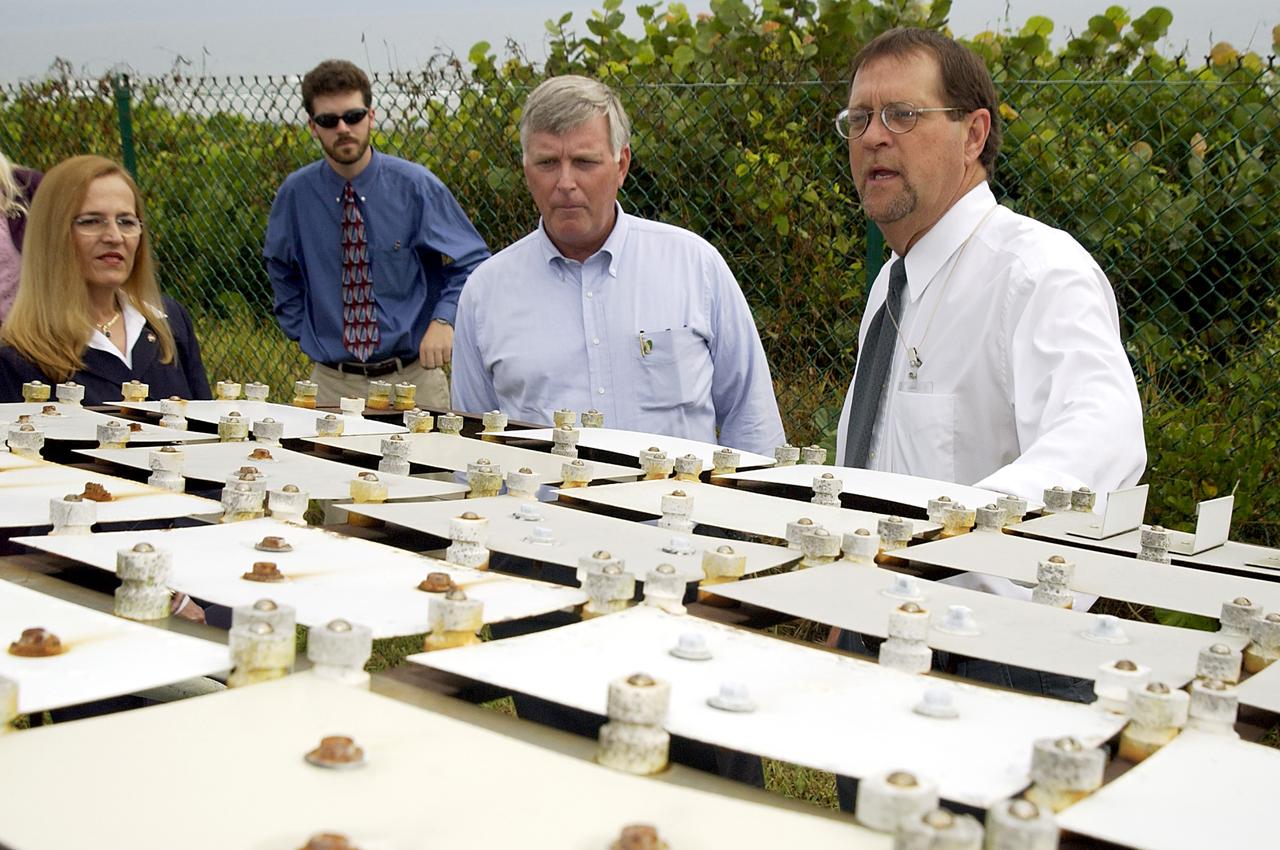
KENNEDY SPACE CENTER, FLA. -   On a tour of the KSC Beach Corrosion Test Site, Louis MacDowell (right), Testbed manager, explains to Center Director Jim Kennedy a project being undertaken for the U.S. Navy.  At left are nonchrome primers for aircraft being studied.  Behind Kennedy is Lead Scientist Dr. Luz Marina Calle.  Behind MacDowell is Dr. Paul Hintze, who is working on a graduate project for the National Research Council.  The KSC Beach Corrosion Test Site was established in the 1960s and has provided more than 30 years of historical information on the long-term performance of many materials in use at KSC and other locations around the world. Located 100 feet from the Atlantic Ocean approximately 1 mile south of the Space Shuttle launch sites, the test facility includes an atmospheric exposure site, a flowing seawater exposure site, and an on-site electrochemistry laboratory and monitoring station. The beach laboratory is used to conduct real-time corrosion experiments and provides for the remote monitoring of surrounding weather conditions. The newly added flowing seawater immersion facility provides for the immersion testing of materials and devices under controlled conditions.
KENNEDY SPACE CENTER, FLA. - On a tour of the KSC Beach Corrosion Test Site, Louis MacDowell (right), Testbed manager, explains to Center Director Jim Kennedy a project being undertaken for the U.S. Navy. At left are nonchrome primers for aircraft being studied. Behind Kennedy is Lead Scientist Dr. Luz Marina Calle. Behind MacDowell is Dr. Paul Hintze, who is working on a graduate project for the National Research Council. The KSC Beach Corrosion Test Site was established in the 1960s and has provided more than 30 years of historical information on the long-term performance of many materials in use at KSC and other locations around the world. Located 100 feet from the Atlantic Ocean approximately 1 mile south of the Space Shuttle launch sites, the test facility includes an atmospheric exposure site, a flowing seawater exposure site, and an on-site electrochemistry laboratory and monitoring station. The beach laboratory is used to conduct real-time corrosion experiments and provides for the remote monitoring of surrounding weather conditions. The newly added flowing seawater immersion facility provides for the immersion testing of materials and devices under controlled conditions.
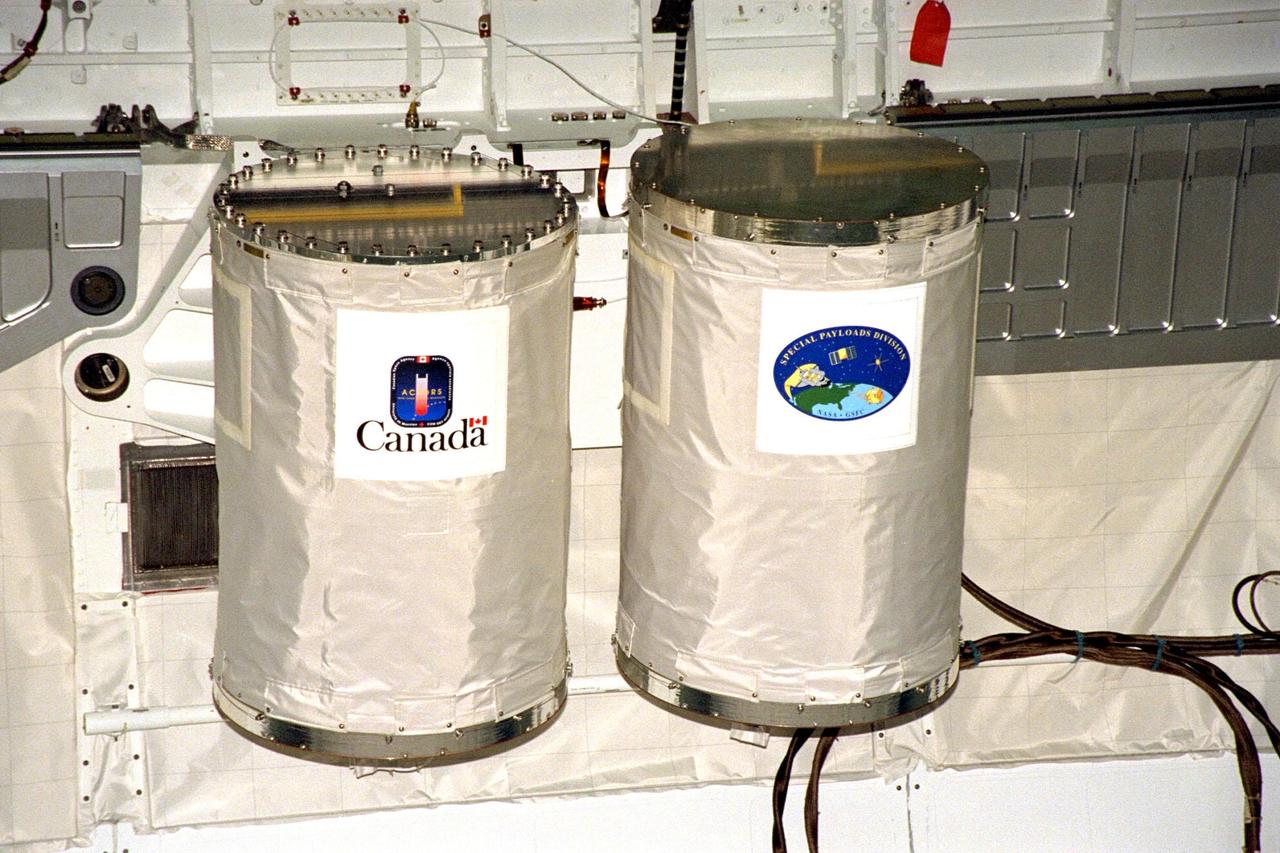
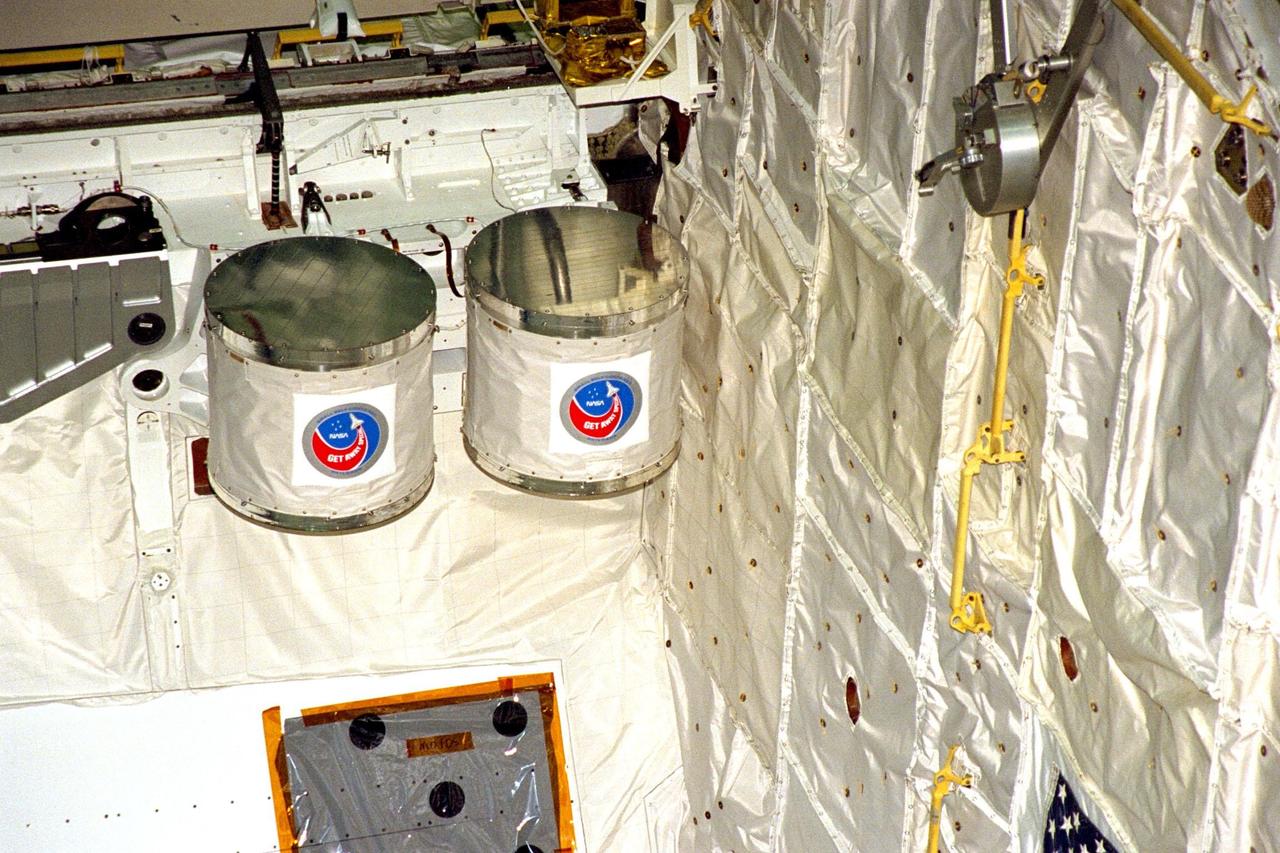
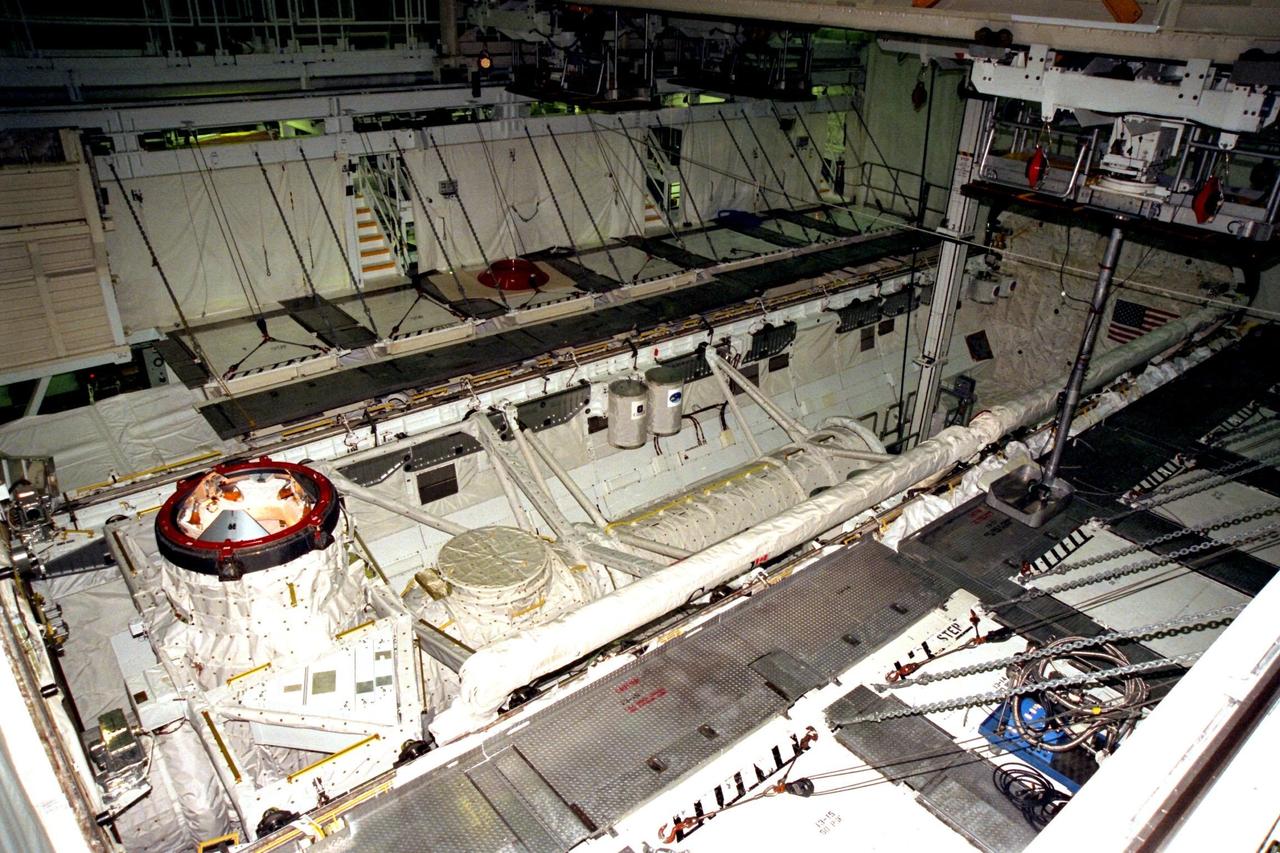
Processing activities for STS-91 continue in KSC's Orbiter Processing Facility Bay 2. Two Get Away Special (GAS) canisters are shown after their installation into Discovery's payload bay. At left is G-648, an Canadian Space Agency-sponsored study of manufactured organic thin film by the physical vapor transport method, and the can on the right contains commemorative flags to be flown during the mission. STS-91 is scheduled to launch aboard the Space Shuttle Discovery for the ninth and final docking with the Russian Space Station Mir from KSC's Launch Pad 39A on June 2 with a launch window opening around 6:04 p.m. EDT
KSC-98pc522
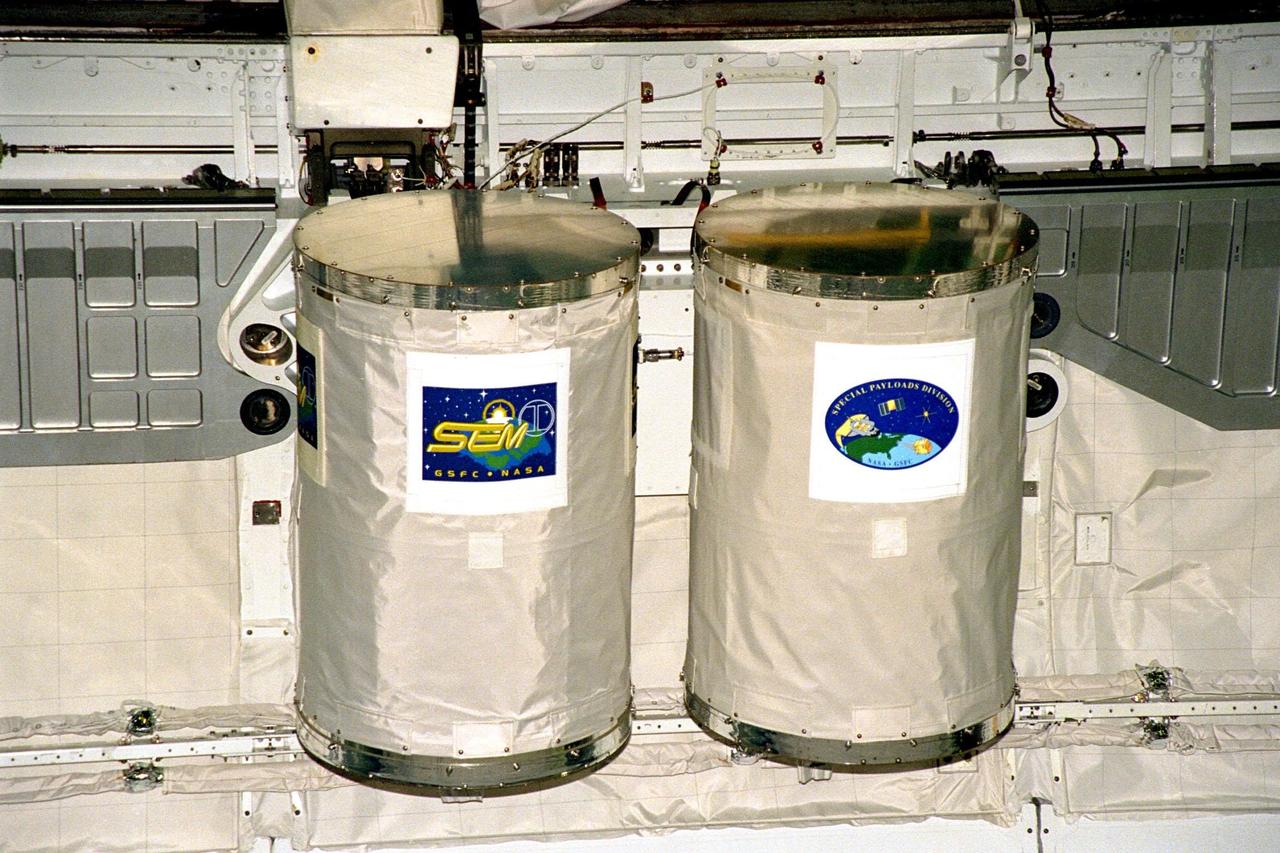
Processing activities for STS-91 continue in KSC's Orbiter Processing Facility Bay 2. Two Get Away Special (GAS) canisters are shown after their installation into Discovery's payload bay. The GAS canister on the left houses the Space Experiment Module (SEM-03), part of an educational initiative of NASA's Shuttle Small Payloads Project. On the right is a canister containing commemorative flags to be flown during the mission. STS-91 is scheduled to launch aboard the Space Shuttle Discovery for the ninth and final docking with the Russian Space Station Mir from KSC's Launch Pad 39A on June 2 with a launch window opening around 6:04 p.m. EDT
KSC-98pc524
Processing activities for STS-91 continue in KSC's Orbiter Processing Facility Bay 2. Two Get Away Special (GAS) canisters are shown after their installation into Discovery's payload bay. At left is G-090, containing three educational experiments sponsored by Utah State University, and at right is G-743, an experiment sponsored by Broward Community College in Florida to test DNA exposed to cosmic radiation in a microgravity environment. STS-91 is scheduled to launch aboard the Space Shuttle Discovery for the ninth and final docking with the Russian Space Station Mir from KSC's Launch Pad 39A on June 2 with a launch window opening around 6:04 p.m. EDT
KSC-98pc521
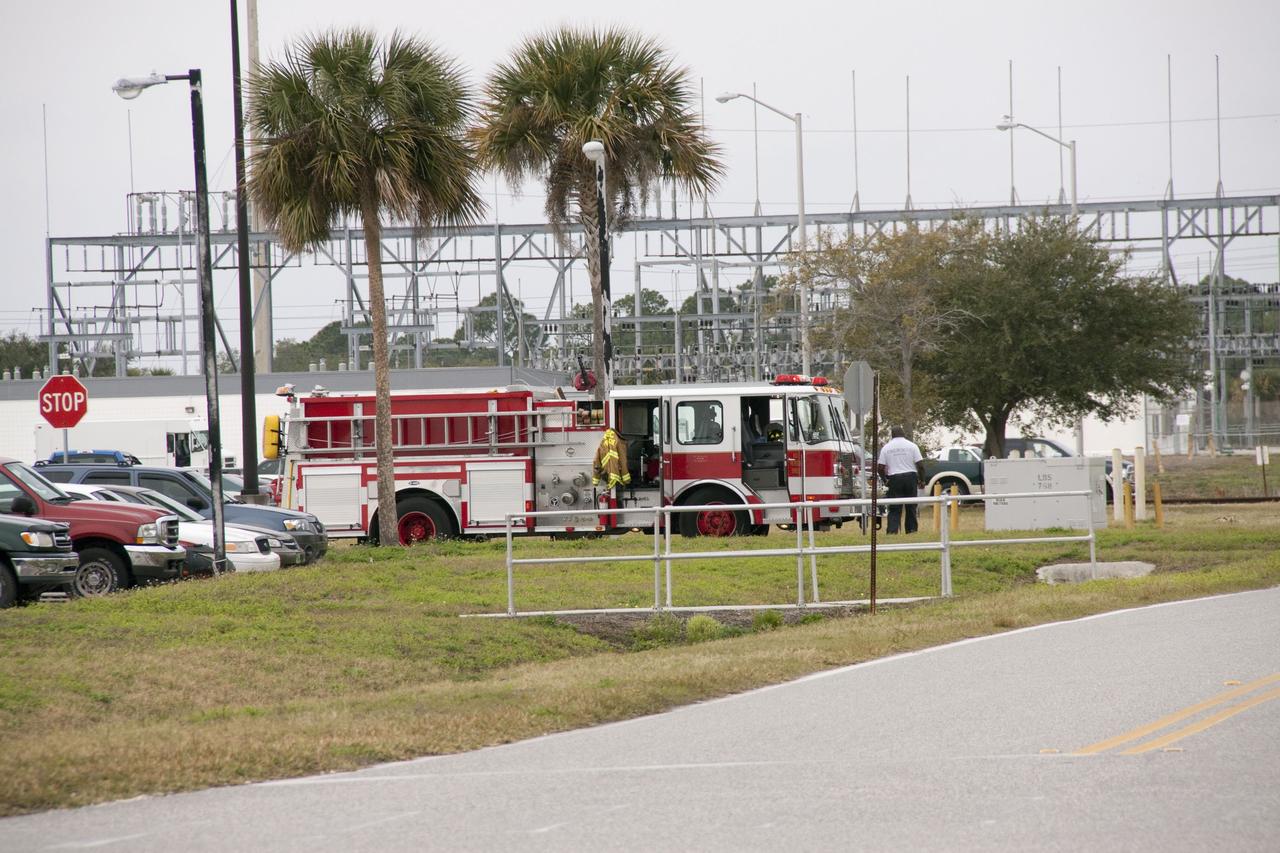
CAPE CANAVERAL, Fla. -- At NASA's Kennedy Space Center in Florida, KSC firefighters were on the scene after a backhoe inadvertently struck a natural gas line at around 8:40 a.m. EST in the area north of the Multi Function Facility (MFF). As a precaution, personnel were evacuated from Orbiter Processing Facilities 1 and 2, the MFF, Processing Control Center and Operations Support Building (OSB) I. All traffic was blocked on the Saturn Causeway near the facilities. There were no injuries or damage to any facilities and personnel were allowed back into their buildings before mid-day and the roadway open to traffic. Photo credit: NASA/Jack Pfaller
KSC-2011-1342
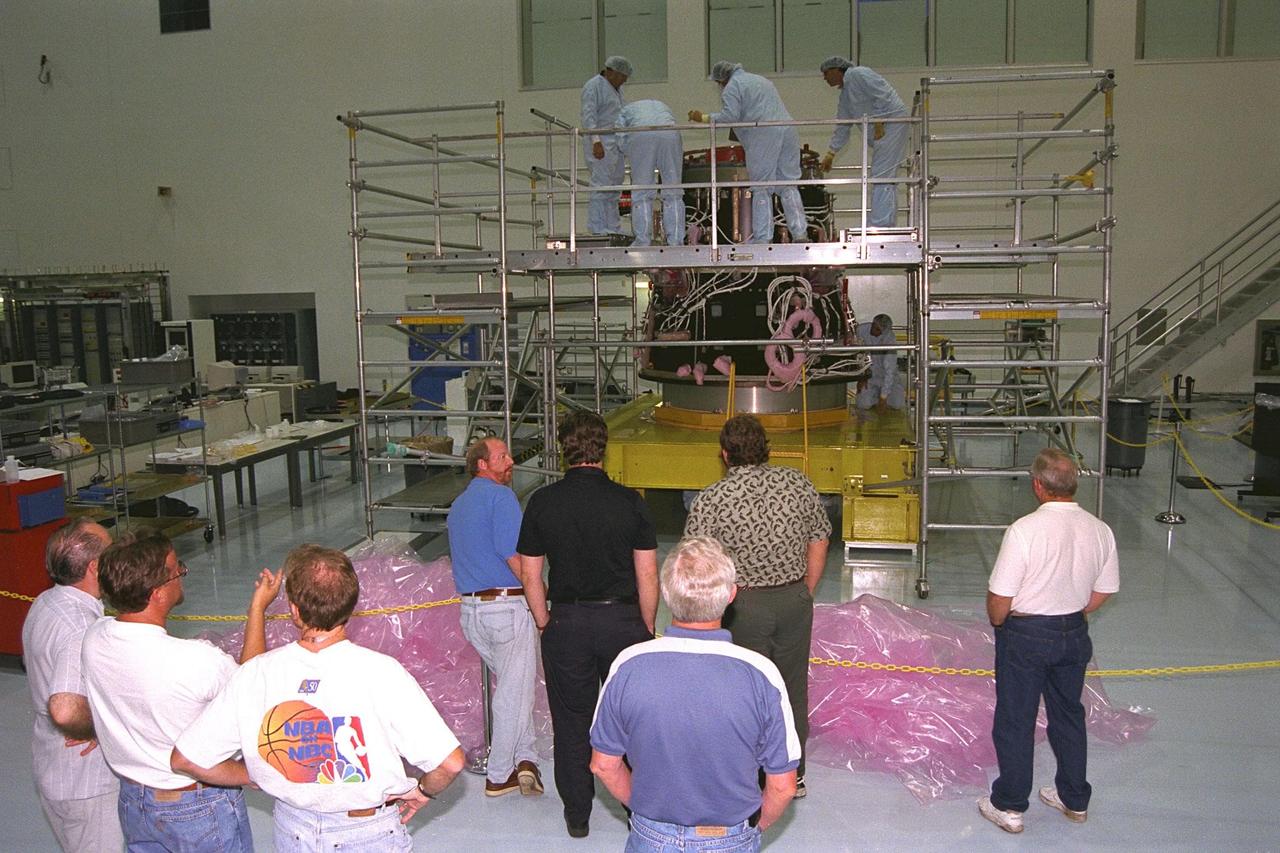
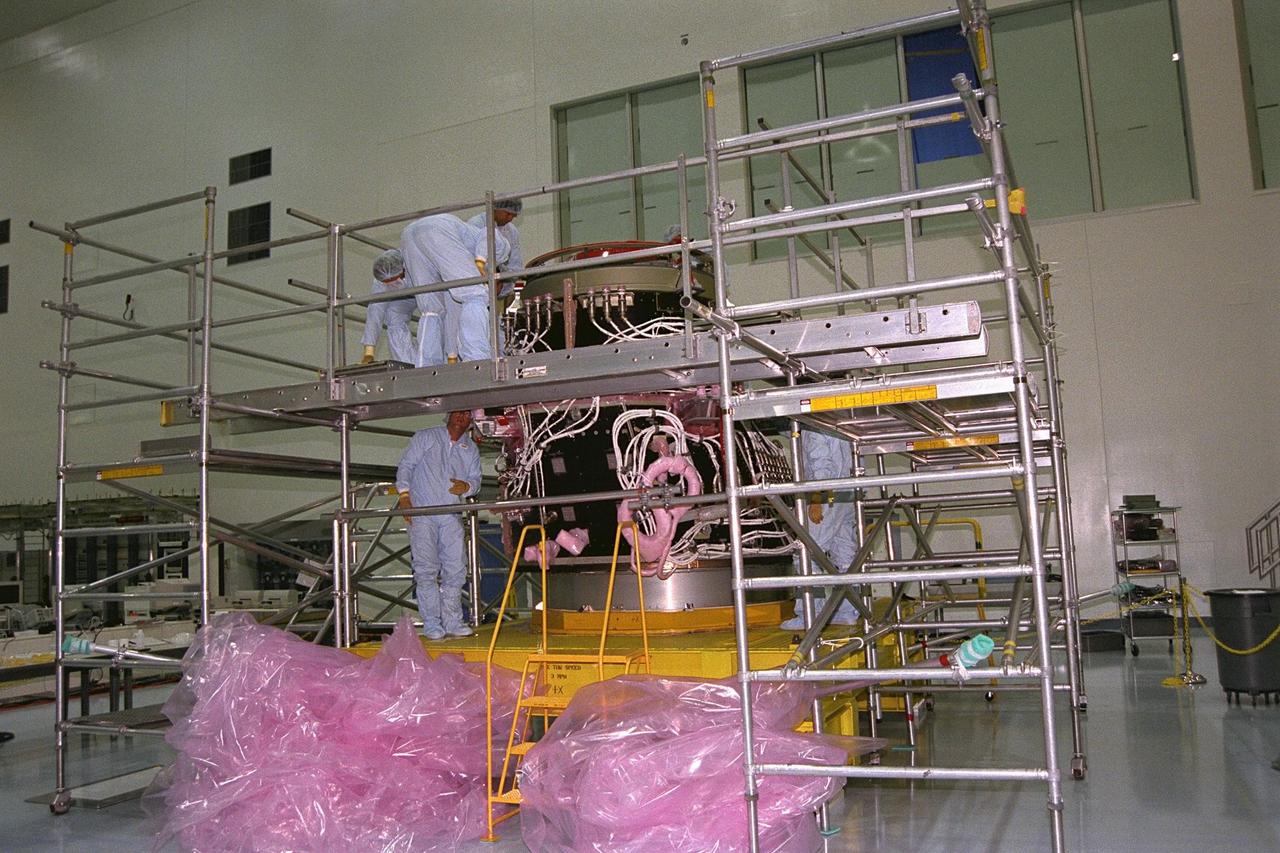
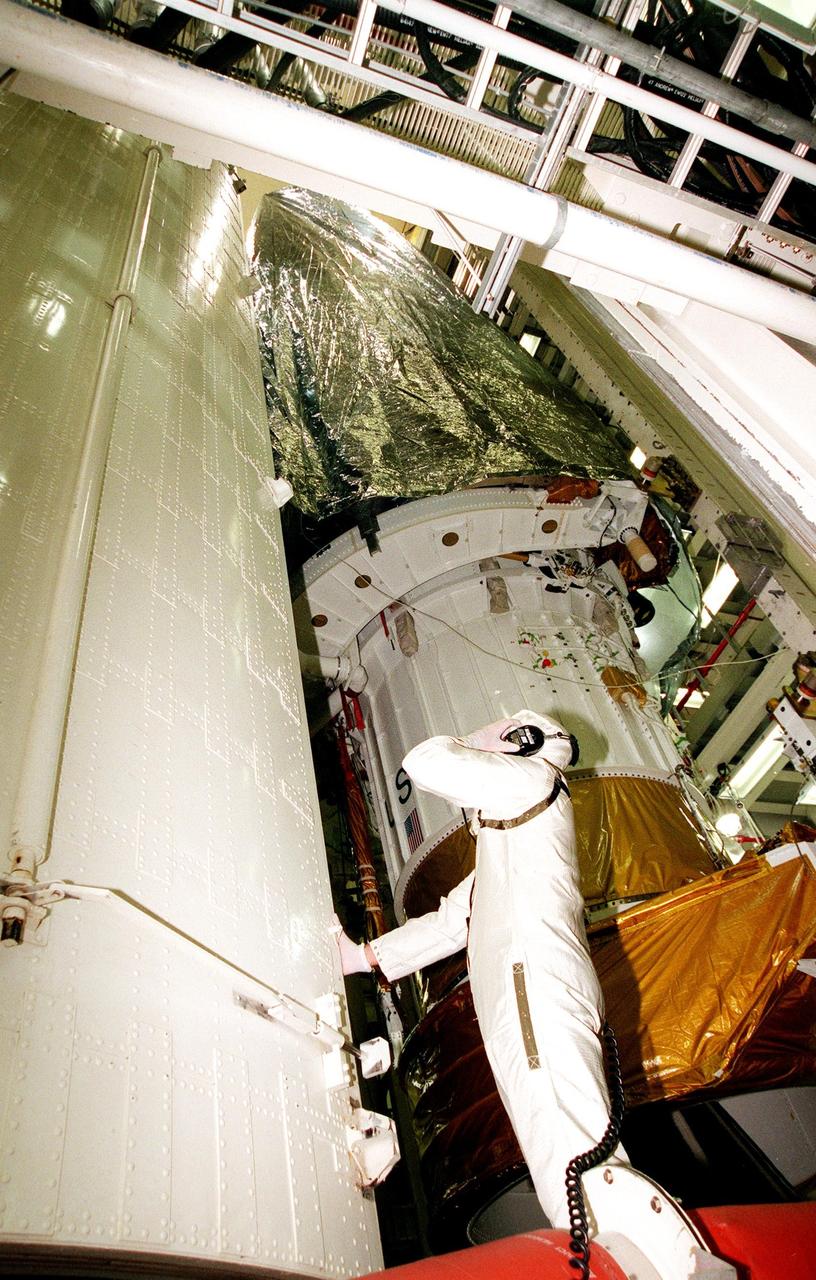
International Space Station (ISS) contractors  erect access scaffolding around the Pressurized Mating Adapter-1 (PMA-1) for the ISS in  KSC’s Space Station Processing Facility. A PMA is a cone-shaped connector that will be  attached to Node 1, the space station’s structural building block, during ground  processing. The white flight cables around PMA-1 will assist in connecting the node to  the U.S.-financed, Russian-built Functional Cargo Block, a component that supplies early  power and propulsion systems for the station. Node 1 with two adapters attached will be  the first element of the station to be launched aboard the Space Shuttle Endeavour on  STS-88 in July 1998
KSC-97PC1138
International Space Station (ISS) contractors  erect access scaffolding around the Pressurized Mating Adapter-1 (PMA-1) for the ISS in  KSC’s Space Station Processing Facility. A PMA is a cone-shaped connector that will be  attached to Node 1, the space station’s structural building block, during ground  processing. The white flight cables around PMA-1 will assist in connecting the node to  the U.S.-financed, Russian-built Functional Cargo Block, a component that supplies early  power and propulsion systems for the station. Node 1 with two adapters attached will be  the first element of the station to be launched aboard the Space Shuttle Endeavour on  STS-88 in July 1998
KSC-97PC1137
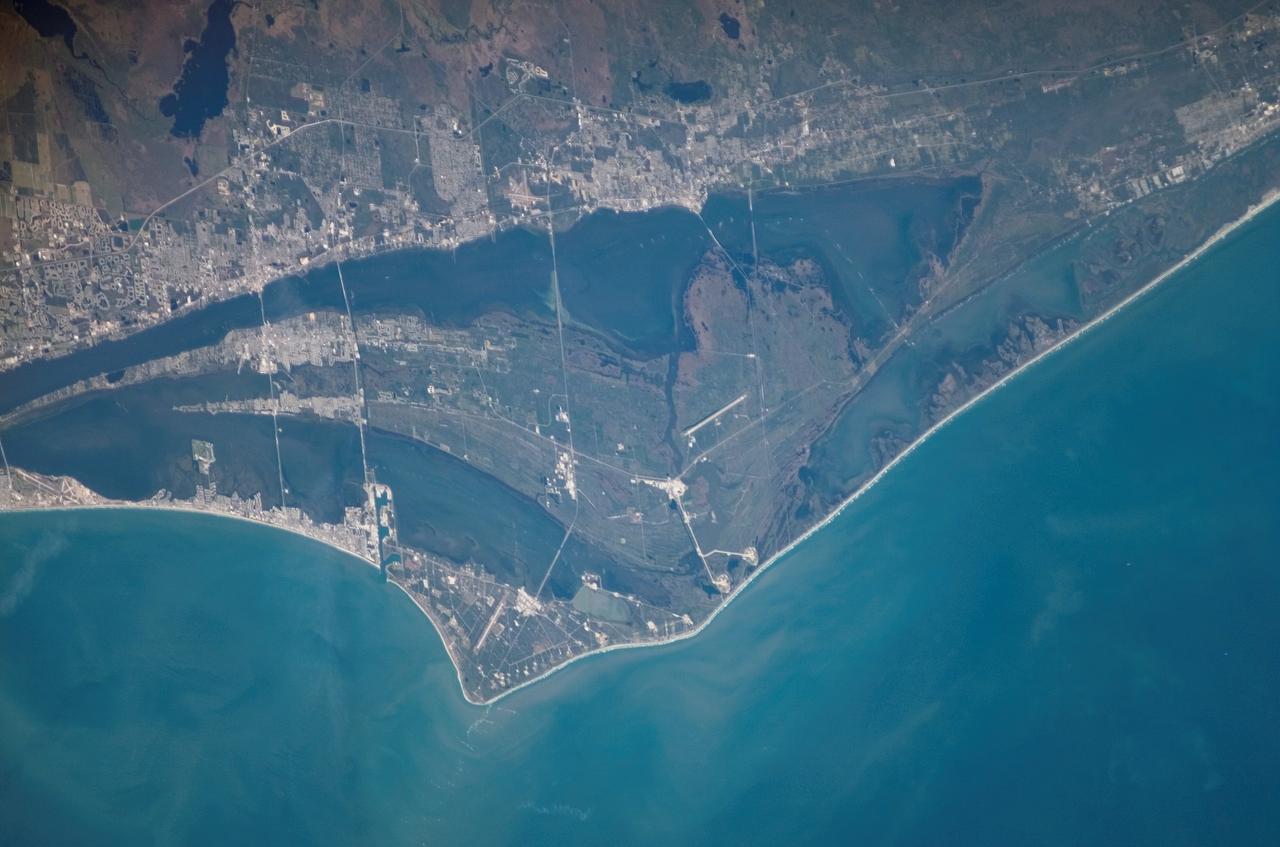
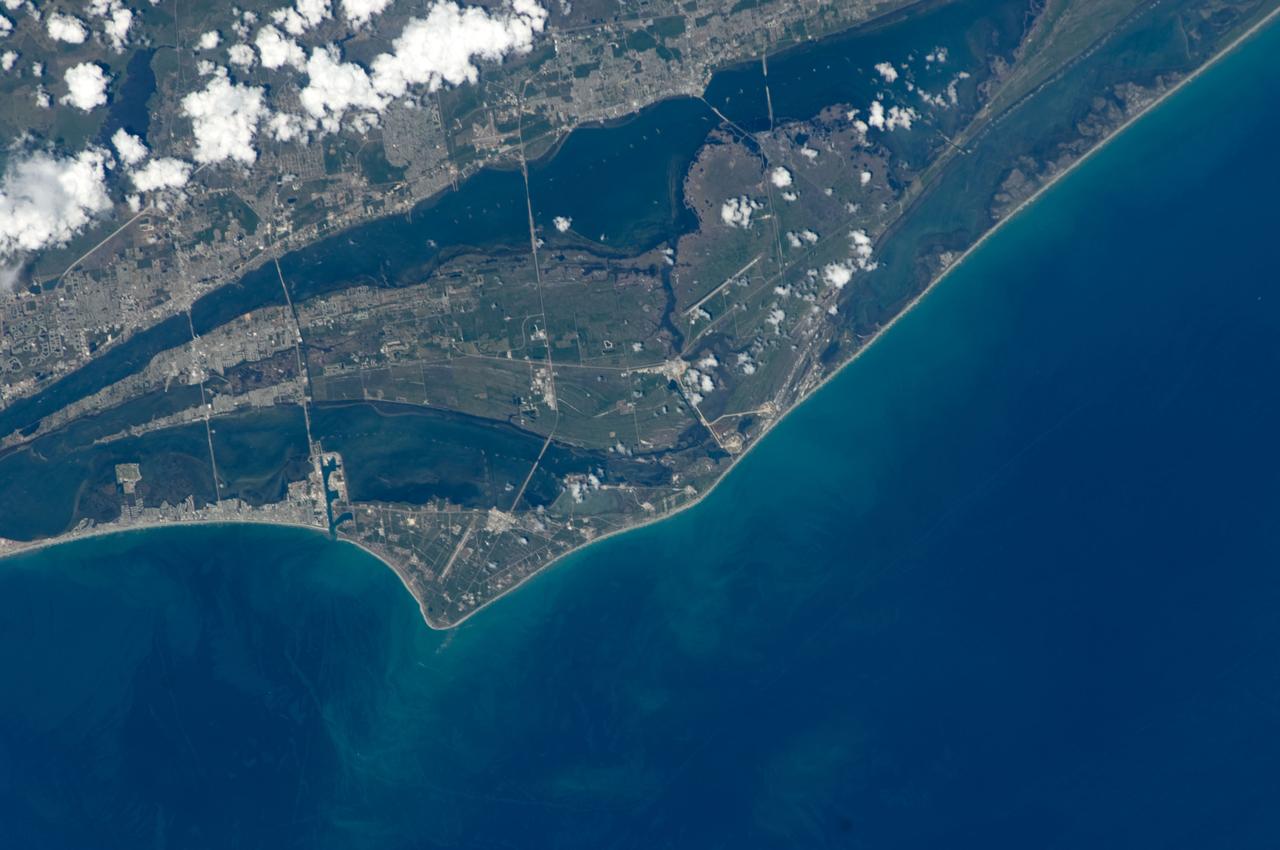
S122-E-007690 (10 Feb. 2008) --- An almost nadir view of the John F. Kennedy Space Center (KSC) was provided by one of STS-122 crewmembers with a digital camera. KSC is the NASA space vehicle launch facility and launch control center (spaceport) on Merritt Island, Brevard County, Florida. The site is near Cape Canaveral, between Miami and Jacksonville. It is 34 miles (55 kilometers) long and around 6 miles (10 kilometers) wide, covering 219 square miles (567 square kilometers). Because much of KSC is a restricted area and only 9 percent of the land is developed, the site also serves as an important wildlife sanctuary; Mosquito Lagoon, Indian River, Merritt Island Wildlife Refuge and Canaveral National Seashore are also features of this area. Pictured just below center is Launch Complex 39, with the roadway leading to the giant Vehicle Assembly Building (VAB), 3 miles (5 kilometers) to the west (above) of the two launch pads. Located 5 miles (8 kilometers) south is the KSC industrial area, where many of the Center's support facilities and the administrative Headquarters Building are located. The Shuttle Landing Facility can be seen northwest of the VAB, in frame center.
Earth Observations taken by STS-122 Crewmember
S125-E-008719 (17 May 2009) --- An almost nadir view of the John F. Kennedy Space Center (KSC) was provided by one of the STS-125 crewmembers on the Earth-orbiting Space Shuttle Atlantis. KSC is the NASA space vehicle launch facility and launch control center (spaceport) on Merritt Island, Brevard County, Florida. The site is near Cape Canaveral, between Miami and Jacksonville. It is 34 miles (55 kilometers) long and around 6 miles (10 kilometers) wide, covering 219 square miles (567 square kilometers). Because much of KSC is a restricted area and only 9 percent of the land is developed, the site also serves as an important wildlife sanctuary; Mosquito Lagoon, Indian River, Merritt Island Wildlife Refuge and Canaveral National Seashore are also features of this area. Pictured just below center is Launch Complex 39, with the roadway leading to the giant Vehicle Assembly Building (VAB), 3 miles (5 kilometers) to the west (above) of the two launch pads. Located 5 miles (8 kilometers) south is the KSC industrial area, where many of the Center's support facilities and the administrative Headquarters Building are located. The Shuttle Landing Facility can be seen northwest of the VAB, in frame center.
Earth Observation taken by the STS-125 Crew
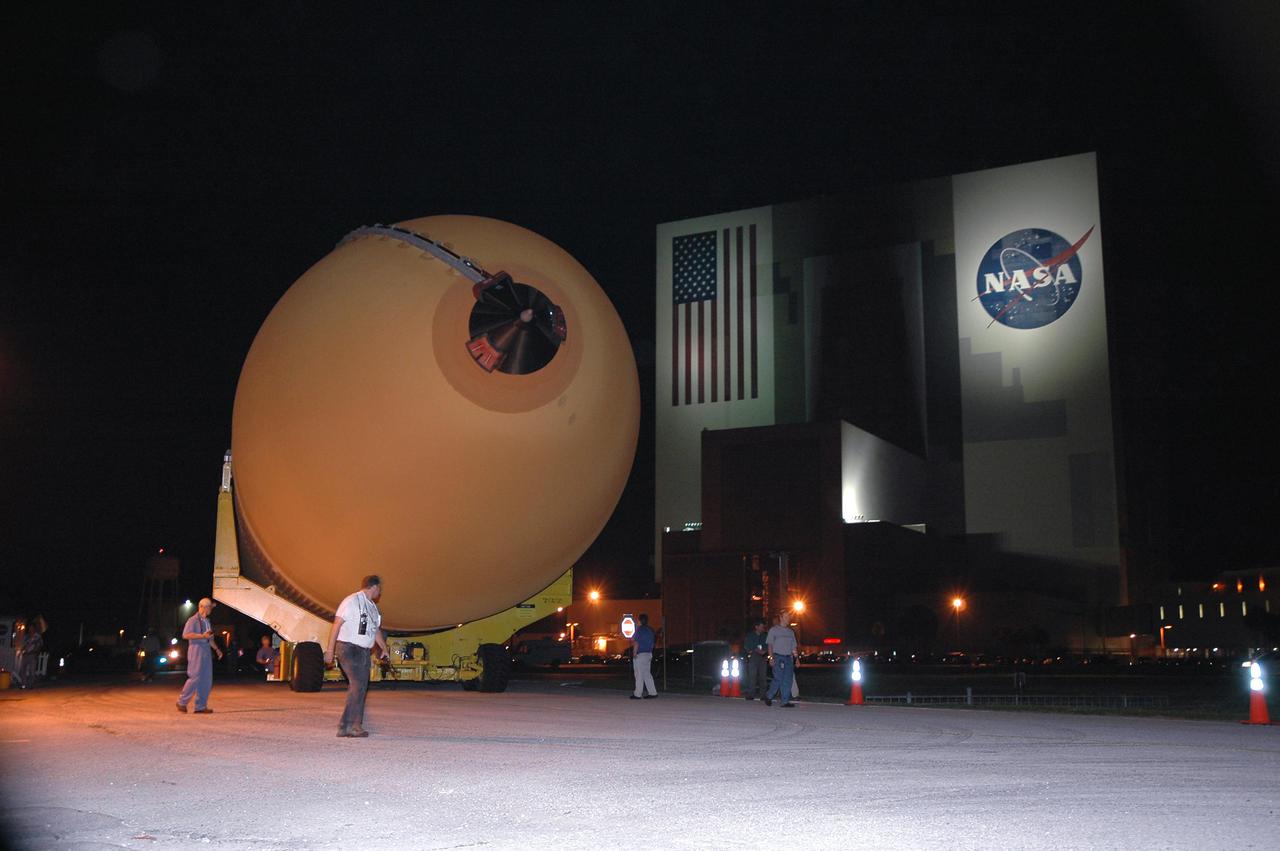
KENNEDY SPACE CENTER, FLA.  -  Just before dawn, External Tank 119 rolls out of NASA Kennedy Space Center’s Vehicle Assembly Building.  It is being moved to the barge at the Turn Basin.  The tank will embark on a voyage around the Florida peninsula  to the Michoud Assembly Facility in New Orleans.  Delivered to KSC in June, ET-119 is the third newly redesigned tank.
KSC-05PD-1958
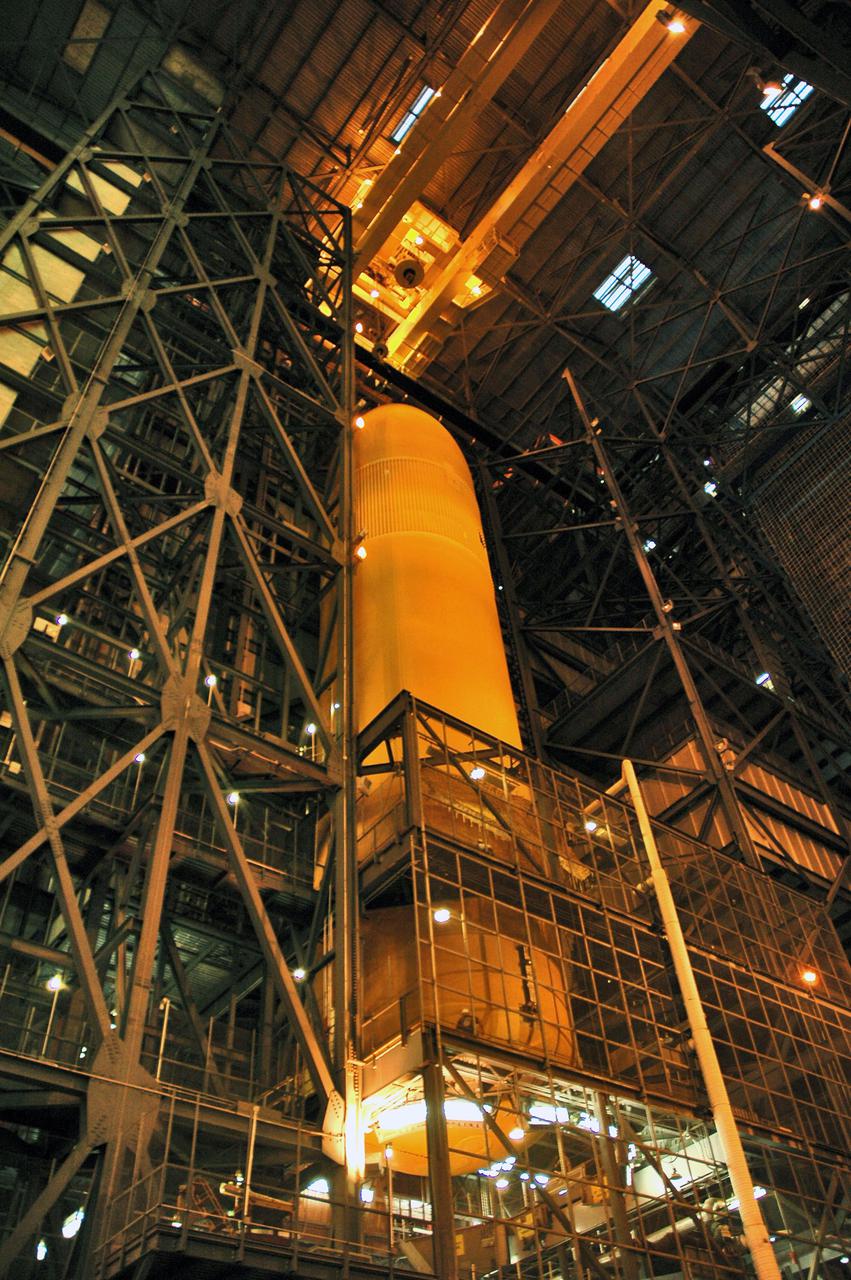
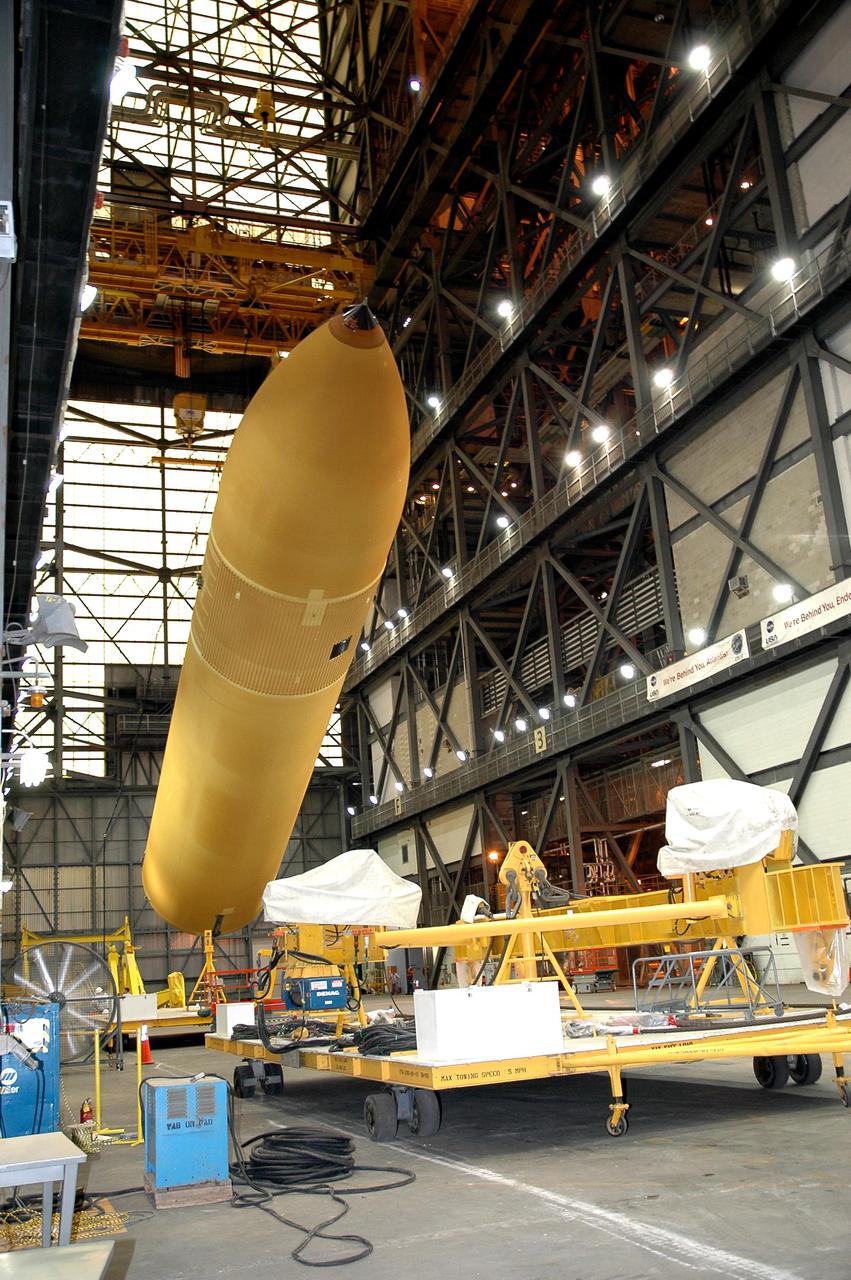
KENNEDY SPACE CENTER, FLA.  -  Inside NASA Kennedy Space Center’s Vehicle Assembly Building, External Tank 119 is lowered to a horizontal position.  Then it will be  placed on a transporter in the transfer aisle to be moved to the barge at the Turn Basin.  The tank will embark on a voyage around the Florida peninsula  to the Michoud Assembly Facility in New Orleans.  Delivered to KSC in June, ET-119 is the third newly redesigned tank.
KSC-05PD-1954
KENNEDY SPACE CENTER, FLA.  -  Inside NASA Kennedy Space Center’s Vehicle Assembly Building, External Tank 119 is lowered to a point just above the transfer aisle.  There it will be lowered horizontally and placed on a transporter in the transfer aisle to be moved to the barge at the Turn Basin.  The tank will embark on a voyage around the Florida peninsula  to the Michoud Assembly Facility in New Orleans.  Delivered to KSC in June, ET-119 is the third newly redesigned tank.
KSC-05PD-1952
KENNEDY SPACE CENTER, FLA.  -  Just before dawn, External Tank 119 rolls away from NASA Kennedy Space Center’s Vehicle Assembly Building.  It is being moved to the barge at the Turn Basin. The tank will embark on a voyage around the Florida peninsula  to the Michoud Assembly Facility in New Orleans.  Delivered to KSC in June, ET-119 is the third newly redesigned tank.
KSC-05PD-1959
KENNEDY SPACE CENTER, FLA.  -  Under pre-dawn skies of blue and red, External Tank 119 is towed away from NASA Kennedy Space Center’s Vehicle Assembly Building.  It is being moved to the barge at the Turn Basin.  The tank will embark on a voyage around the Florida peninsula  to the Michoud Assembly Facility in New Orleans.  Delivered to KSC in June, ET-119 is the third newly redesigned tank.
KSC-05PD-1960
KENNEDY SPACE CENTER, FLA.  -  Inside NASA Kennedy Space Center’s Vehicle Assembly Building, External Tank 119 is placed on a transporter in the transfer aisle to be moved to the barge at the Turn Basin.  The tank will embark on a voyage around the Florida peninsula  to the Michoud Assembly Facility in New Orleans.  Delivered to KSC in June, ET-119 is the third newly redesigned tank.
KSC-05PD-1957
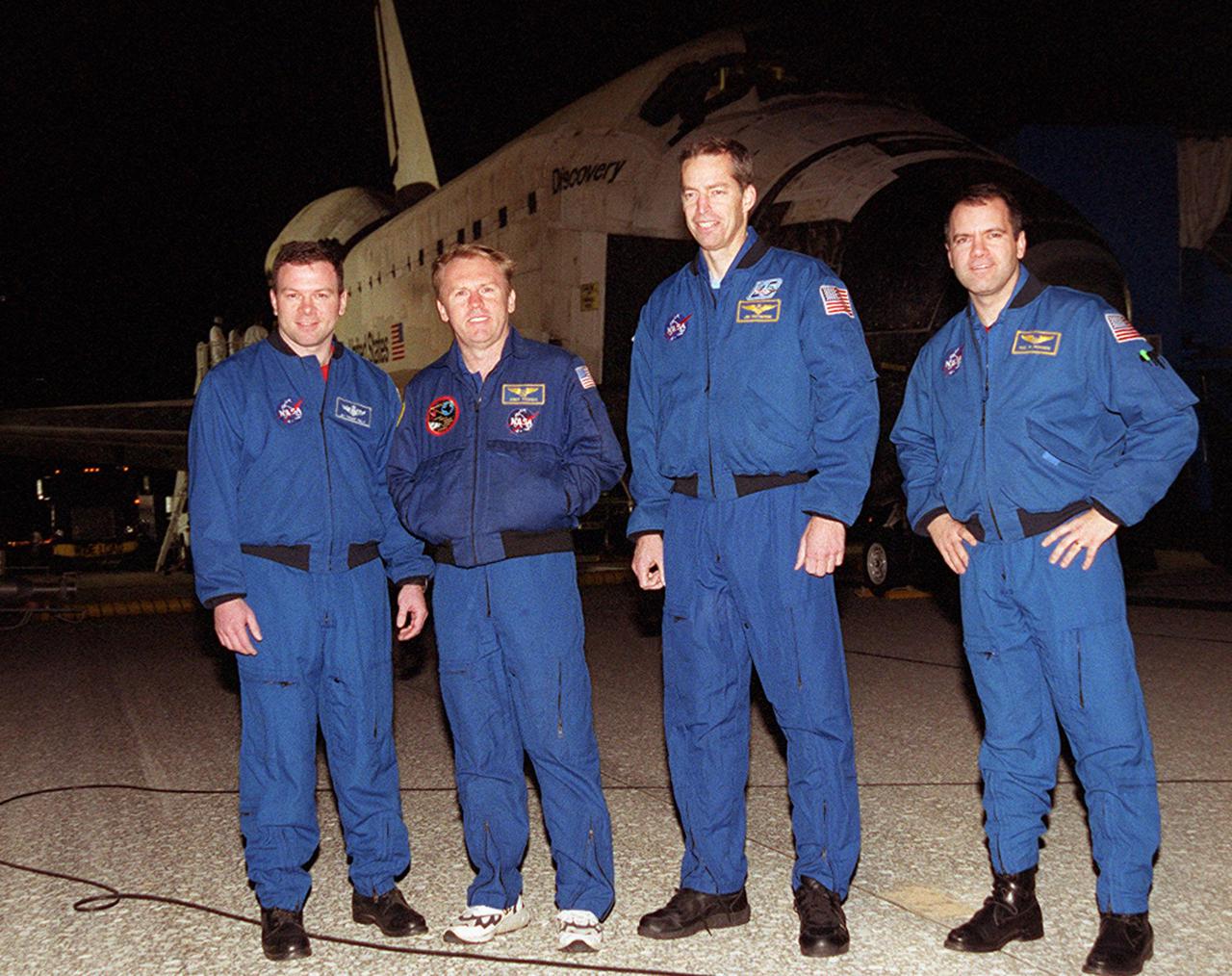
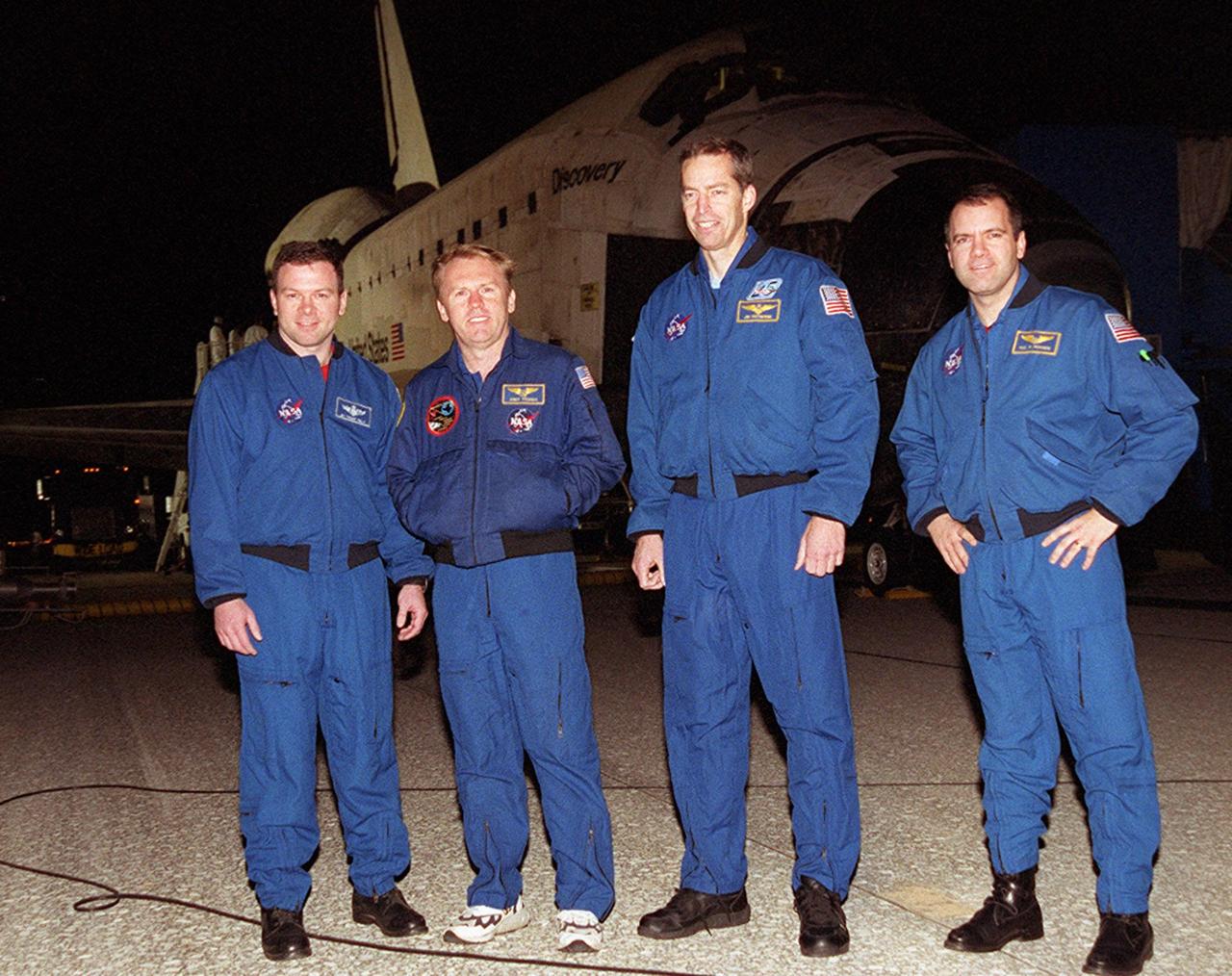
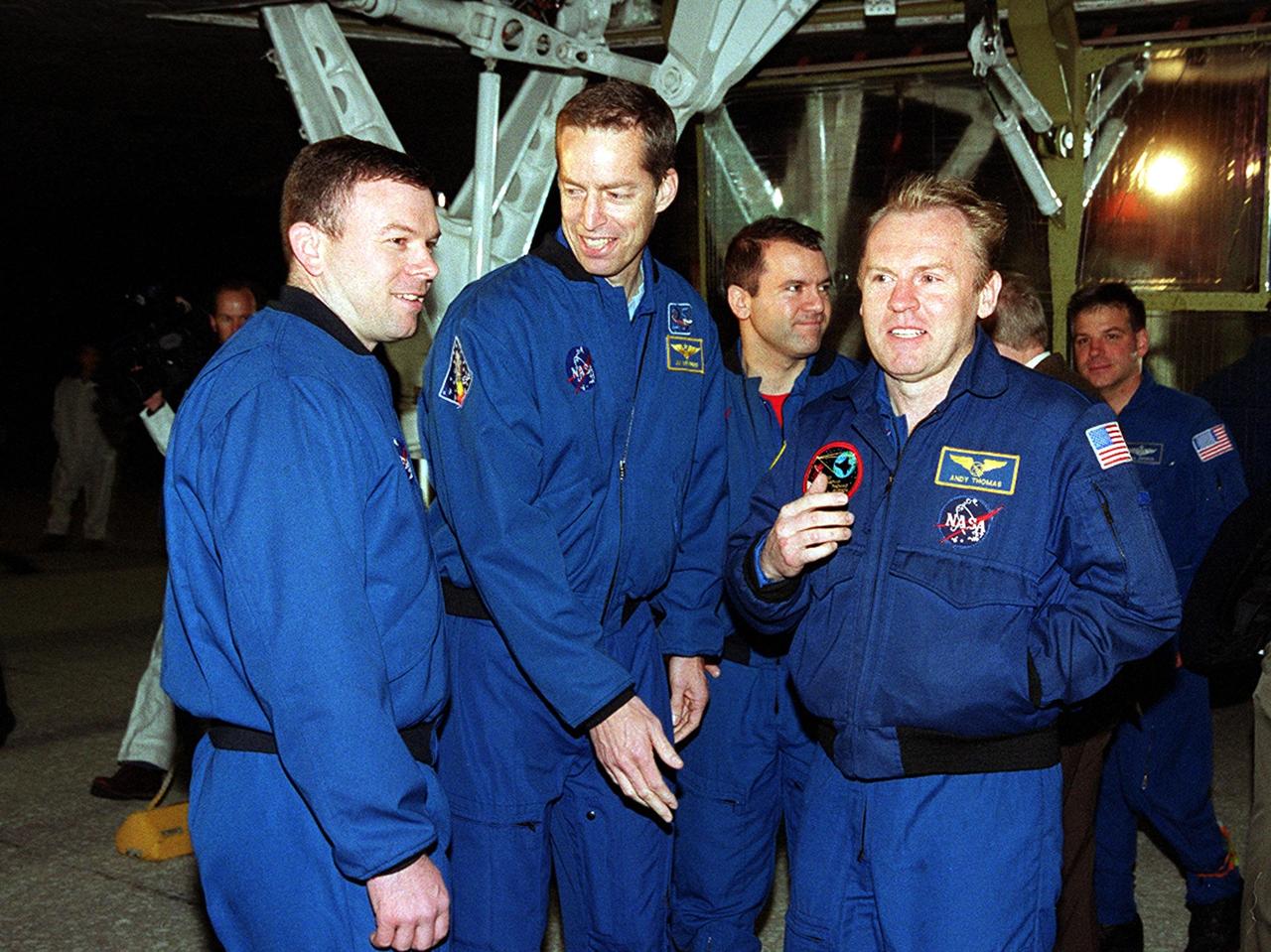
After exiting the Crew Transport Vehicle, the STS-102 crew gathers under Discovery for a walk-around. From left are Pilot James Kelly, Commander James Wetherbee and Mission Specialists Paul Richards and Andrew Thomas. . The crew landed at the KSC Shuttle Landing Facility at 2:31 a.m. EST aboard Discovery following a 12-day, 19-hour, 49-minute mission to the International Space Station
KSC01pp0551
In the Orbiter Processing Facility, Eric Madaras, NASA-Langley Research Center, conducts impulse tests on the right wing leading edge (WLE) of Space Shuttle Endeavour. The tests monitor how sound impulses propagate through the WLE area. The data collected will be analyzed to explore the possibility of adding new instrumentation to the wing that could automatically detect debris or micrometeroid impacts on the Shuttle while in flight. The study is part of the initiative ongoing at KSC and around the agency to return the orbiter fleet to flight status.
Endeavour Impulse Tests
KENNEDY SPACE CENTER, FLA. - External Tank 119 is being lowered to the transfer aisle in the Vehicle Assembly Building.  There it will be lowered and placed on the transporter to be moved to the barge at the Turn Basin.  The tank will embark on a voyage around the Florida peninsula  to the Michoud Assembly Facility in New Orleans.  Delivered to KSC in June, ET-119 is the third newly redesigned tank.
KSC-05PD-1931
After exiting the Crew Transport Vehicle, the STS-102 crew gathers under Discovery for a walk-around. From left are Pilot James Kelly, Mission Specialist Andy Thomas, Commander James Wetherbee and Mission Specialist Paul Richards. The crew landed at the KSC Shuttle Landing Facility at 2:31 a.m. EST aboard Discovery following a 12-day, 19-hour, 49-minute mission to the International Space Station
KSC01pp0552
KENNEDY SPACE CENTER, FLA.  - External Tank 119 is being lowered to the transfer aisle in the Vehicle Assembly Building.  There it will be lowered and placed on the transporter to be moved to the barge at the Turn Basin.  The tank will embark on a voyage around the Florida peninsula  to the Michoud Assembly Facility in New Orleans.  Delivered to KSC in June, ET-119 is the third newly redesigned tank.
KSC-05PD-1932
KENNEDY SPACE CENTER, FLA.  -  Inside NASA Kennedy Space Center’s Vehicle Assembly Building, External Tank 119 is lowered onto a transporter in the transfer aisle to be moved to the barge at the Turn Basin.  The tank will embark on a voyage around the Florida peninsula  to the Michoud Assembly Facility in New Orleans.  Delivered to KSC in June, ET-119 is the third newly redesigned tank.
KSC-05PD-1956
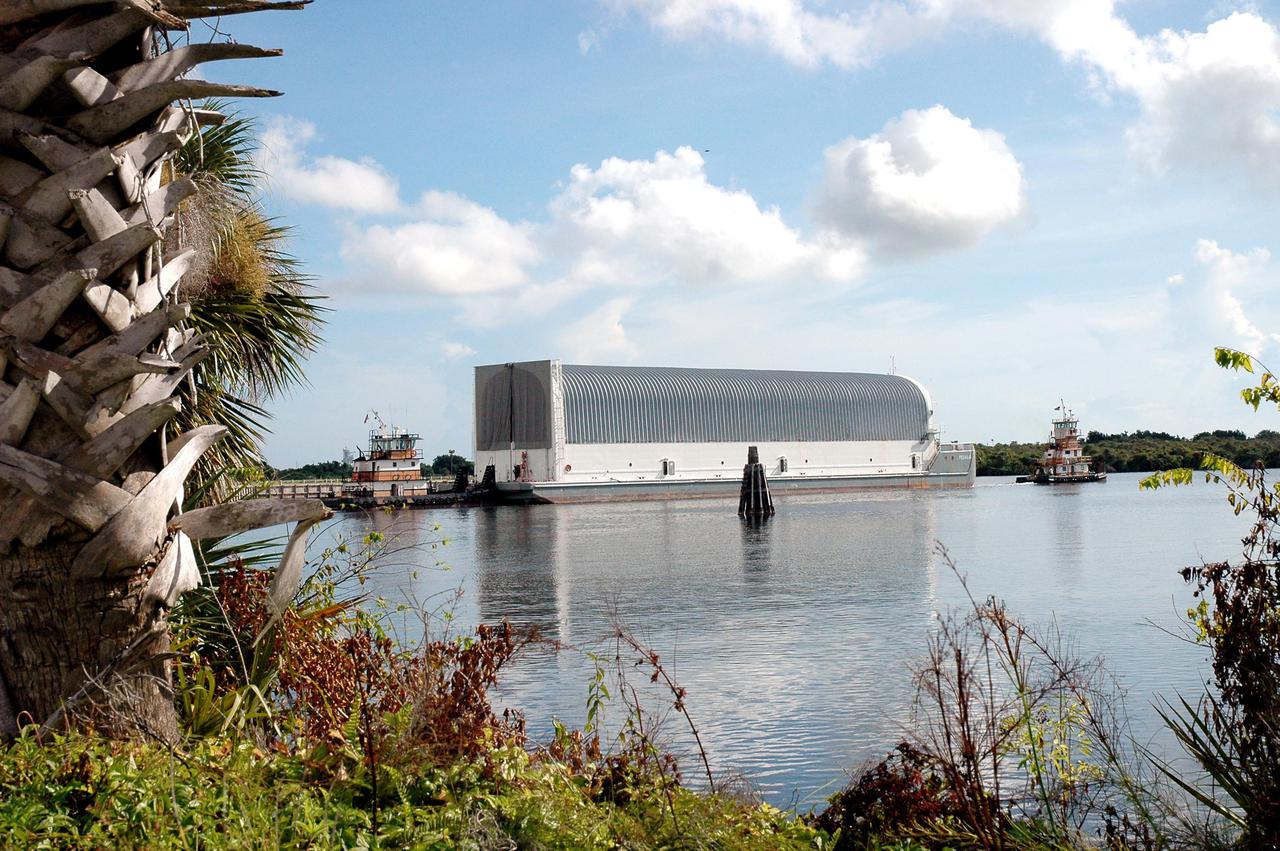
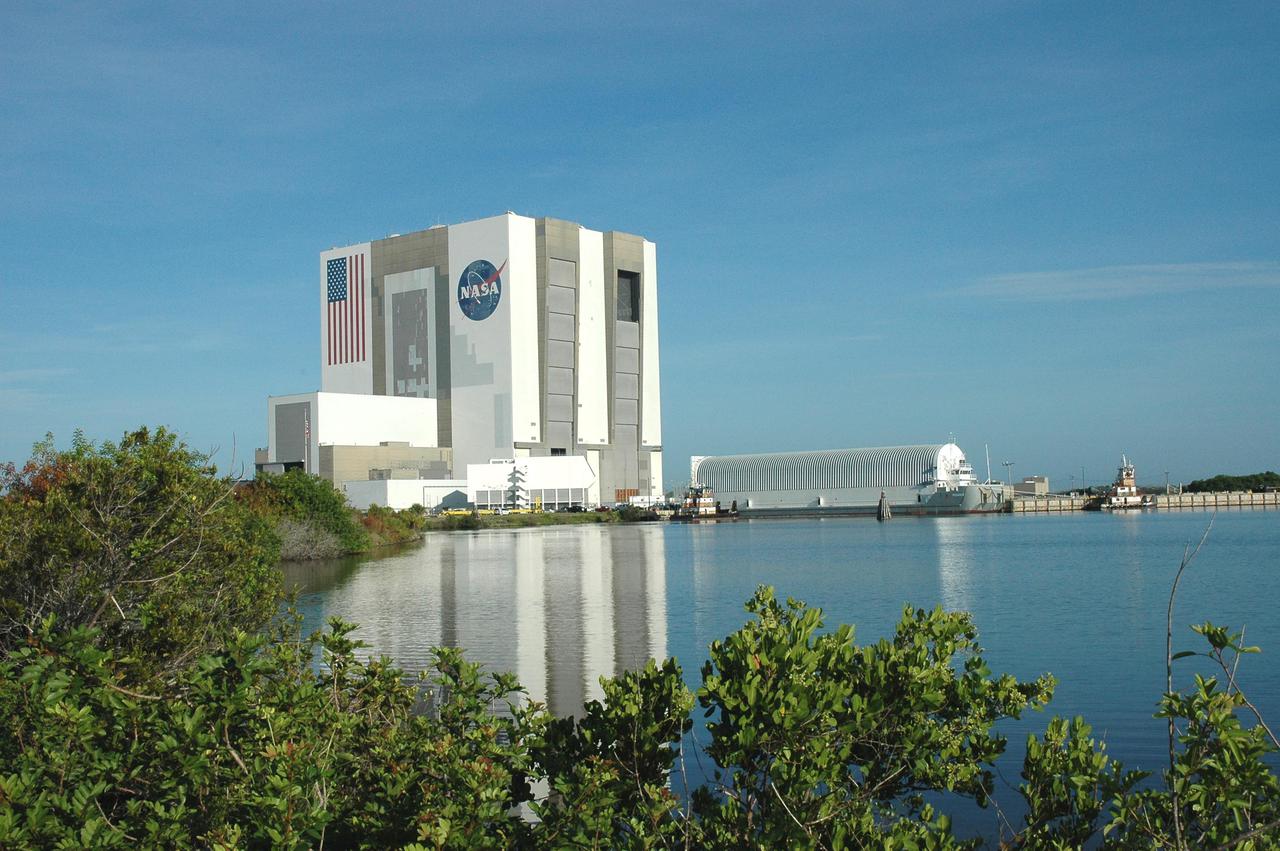
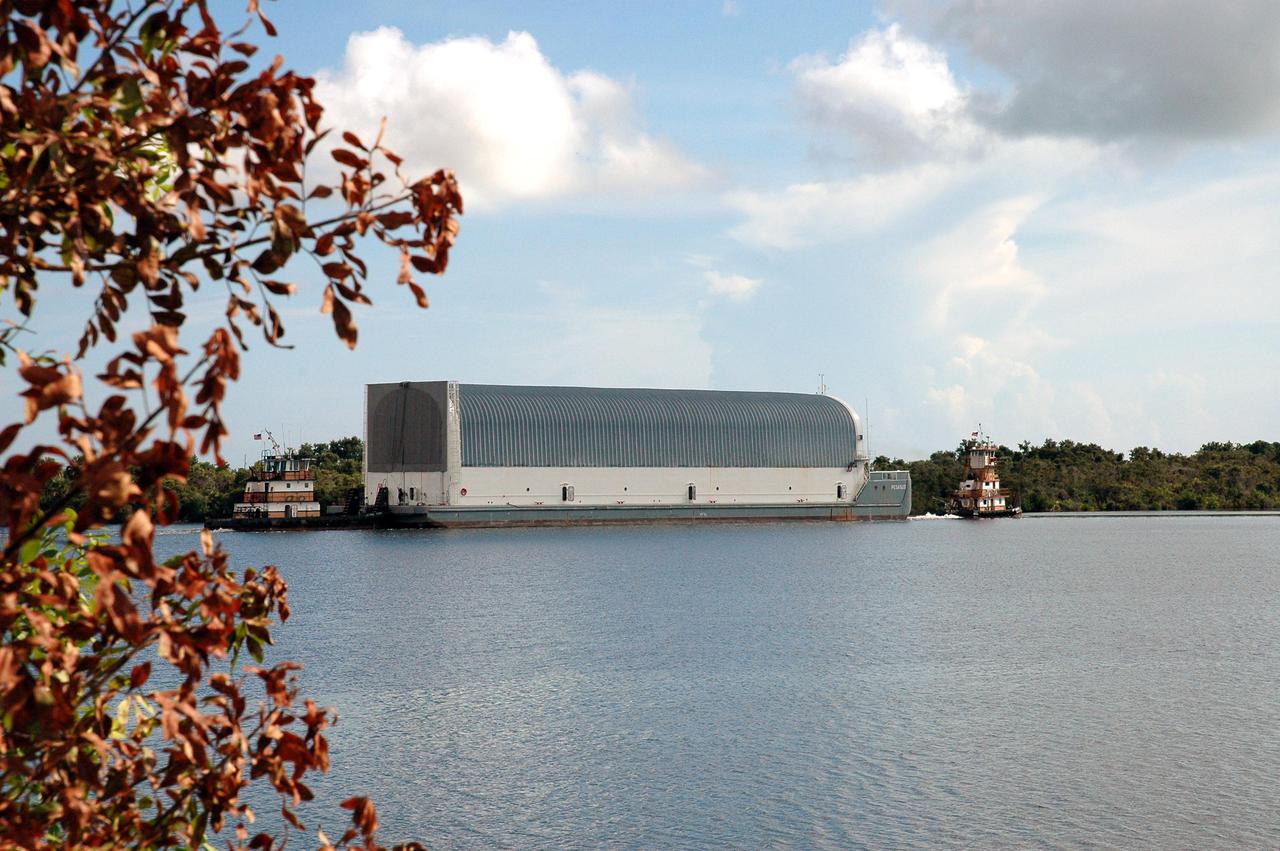
KENNEDY SPACE CENTER, FLA.  -    Viewed across the Turn Basin at NASA Kennedy Space Center, the barge Pegasus is towed away from the dock on the other side.  It is being towed to Port Canaveral where it will join one of the Solid Rocket Booster Recovery Ships and begin its journey around the Florida peninsula to Michoud Assembly Facility in New Orleans.  The barge’s cargo is External Tank 119.   Delivered to KSC in June, ET-119 is the third newly redesigned tank.
KSC-05PD-1967
KENNEDY SPACE CENTER, FLA. - Retired Navy Admiral Harold W. Gehman Jr. (second from right), chairman of the Columbia Accident Investigation Board, and other members of the board are given a guided tour around Space Shuttle Endeavour by the Orbiter Processing Facility manager. Gehman and other members of the board are visiting sites at KSC to become familiar with the Shuttle launch process. The independent board is charged with determining what caused the destruction of the Space Shuttle Columbia and the loss of its seven-member crew on Feb. 1 during reentry.
KSC-03pd0354
KENNEDY SPACE CENTER, FLA.  -    Viewed across the Turn Basin at NASA Kennedy Space Center, the barge Pegasus is towed away from the dock on the other side.  It is being towed to Port Canaveral where it will join one of the Solid Rocket Booster Recovery Ships and begin its journey around the Florida peninsula to Michoud Assembly Facility in New Orleans.  The barge’s cargo is External Tank 119.  Delivered to KSC in June, ET-119 is the third newly redesigned tank.
KSC-05PD-1966
KENNEDY SPACE CENTER, FLA.  -  Inside NASA Kennedy Space Center’s Vehicle Assembly Building, workers secure the cranes onto External Tank 119 that enable the tank to be lowered to a horizontal position.  Then it will be  placed on a transporter in the transfer aisle to be moved to the barge at the Turn Basin.  The tank will embark on a voyage around the Florida peninsula  to the Michoud Assembly Facility in New Orleans.  Delivered to KSC in June, ET-119 is the third newly redesigned tank.
KSC-05PD-1953
KENNEDY SPACE CENTER, FLA.  -    Viewed across the Turn Basin at NASA Kennedy Space Center, the barge Pegasus is ready for towing to Port Canaveral where it will join one of the Solid Rocket Booster Recovery Ships and begin its journey around the Florida peninsula to Michoud Assembly Facility in New Orleans.  The barge’s cargo is External Tank 119.  Delivered to KSC in June, ET-119 is the third newly redesigned tank.
KSC-05PD-1963
KENNEDY SPACE CENTER, FLA. - Retired Navy Admiral Harold W. Gehman Jr. (right), chairman of the Columbia Accident Investigation Board, and other members of the board are given a guided tour around Space Shuttle Endeavour as it undergoes processing in an Orbiter Processing Facility bay. Gehman and other members of the board are visiting sites at KSC to become familiar with the Shuttle launch process. The independent board is charged with determining what caused the destruction of the Space Shuttle Columbia and the loss of its seven-member crew on Feb. 1 during reentry.
KSC-03pd0356
After exiting the Crew Transport Vehicle, the STS-102 crew gathers under Discovery for a walk-around. From left are Pilot James Kelly, Commander James Wetherbee and Mission Specialists Paul Richards and Andrew Thomas. . The crew landed at the KSC Shuttle Landing Facility at 2:31 a.m. EST aboard Discovery following a 12-day, 19-hour, 49-minute mission to the International Space Station
KSC-01PP-0551
After exiting the Crew Transport Vehicle, the STS-102 crew gathers under Discovery for a walk-around. From left are Pilot James Kelly, Mission Specialist Andy Thomas, Commander James Wetherbee and Mission Specialist Paul Richards. The crew landed at the KSC Shuttle Landing Facility at 2:31 a.m. EST aboard Discovery following a 12-day, 19-hour, 49-minute mission to the International Space Station
KSC-01PP-0552
KENNEDY SPACE CENTER, FLA.  -  Inside NASA Kennedy Space Center’s Vehicle Assembly Building, External Tank 119 is lowered onto a transporter in the transfer aisle to be moved to the barge at the Turn Basin. The tank will embark on a voyage around the Florida peninsula  to the Michoud Assembly Facility in New Orleans.  Delivered to KSC in June, ET-119 is the third newly redesigned tank.
KSC-05PD-1955
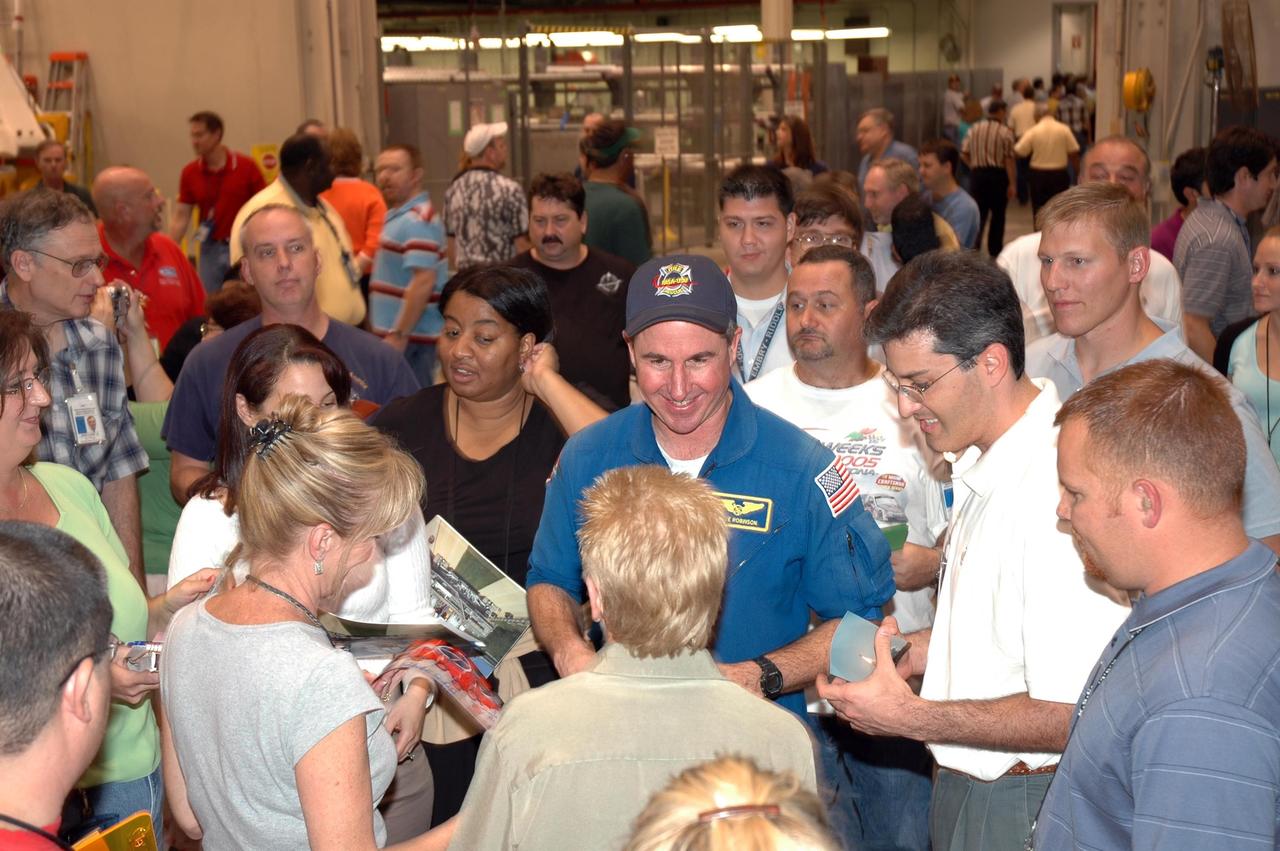
KENNEDY SPACE CENTER, FLA. -  In NASA Kennedy Space Center’s Assembly and  Refurbishment Facility, employees crowd around STS-114 Mission Specialist Stephen Robinson as he signs mementos for them.  Robinson joined Mission Specialist Soichi Noguchi to talk to the employees about their successful mission.  They and other crew members are visiting several sites during their return to Kennedy Space Center. They have returned to Florida especially for a celebration in the KSC Visitor Complex of the successful return to flight mission that launched July 26 of this year.
KSC-05pd2371
KENNEDY SPACE CENTER, FLA.  - External Tank 119 is being lifted and moved to the transfer aisle in the Vehicle Assembly Building.  There it will be lowered and placed on the transporter to be moved to the barge at the Turn Basin.  The tank will embark on a voyage around the Florida peninsula  to the Michoud Assembly Facility in New Orleans.  Delivered to KSC in June, ET-119 is the third newly redesigned tank.
KSC-05PD-1930
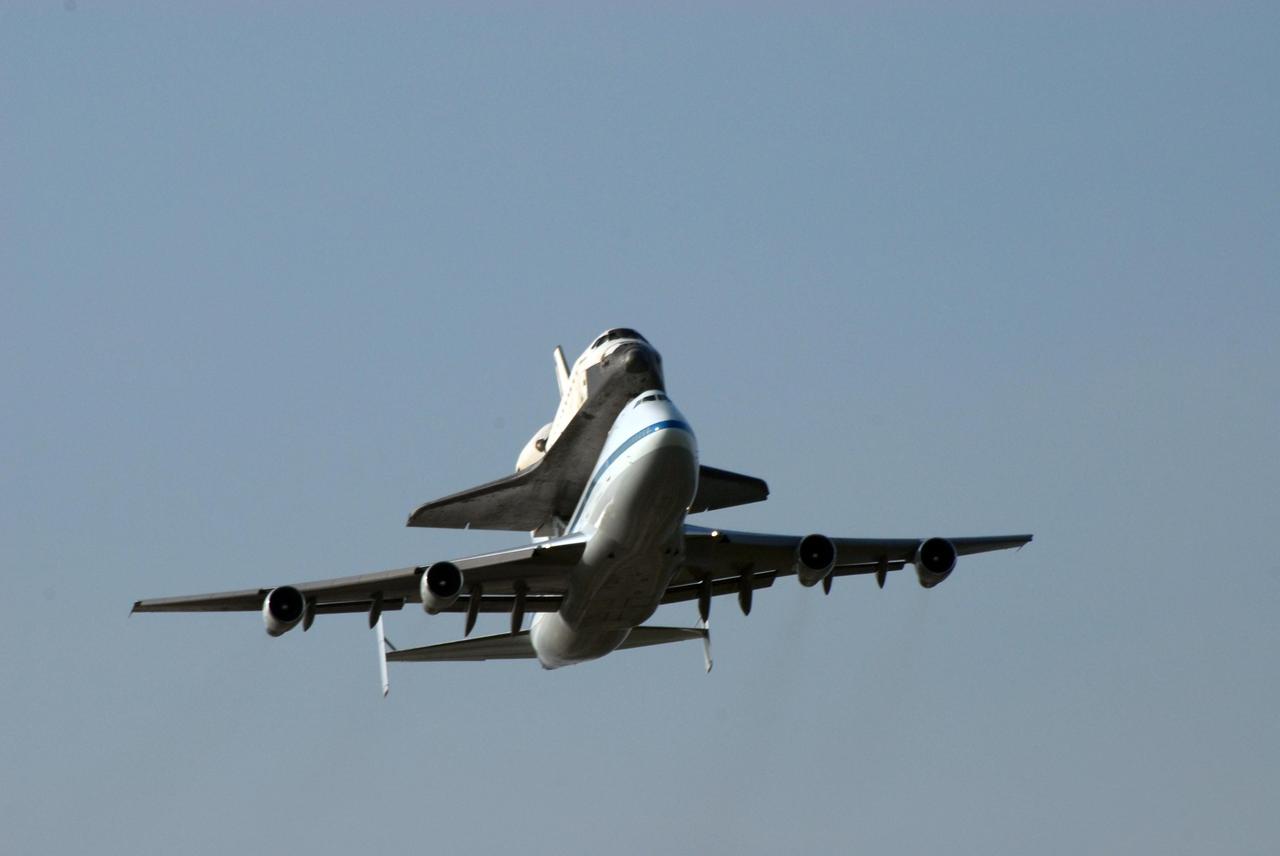
KENNEDY SPACE CENTER, FLA. --  After a three-day trip from California, the shuttle carrier aircraft, or SCA, and its piggyback passenger Atlantis fly around the Kennedy Space Center before landing on the KSC Shuttle Landing Facility runway.  Touchdown was at 8:27 a.m. EDT. The SCA is a modified Boeing 747 jetliner.  Atlantis landed at Edwards Air Force Base in California to end mission STS-117.  The return to KSC began July 1 and  took three days after stops across the country for fuel.  The last stop was at Ft. Campbell in Kentucky. Weather conditions over the last leg postponed the return trip until July 3.  Atlantis will be removed from the back of the SCA via the mate/demate device at the SLF.  It will then be towed to the Orbiter Processing Facility to begin processing for its next launch, mission STS-122 in December.  Photo credit: NASA/Ken Thornsley
KSC-07pd1731
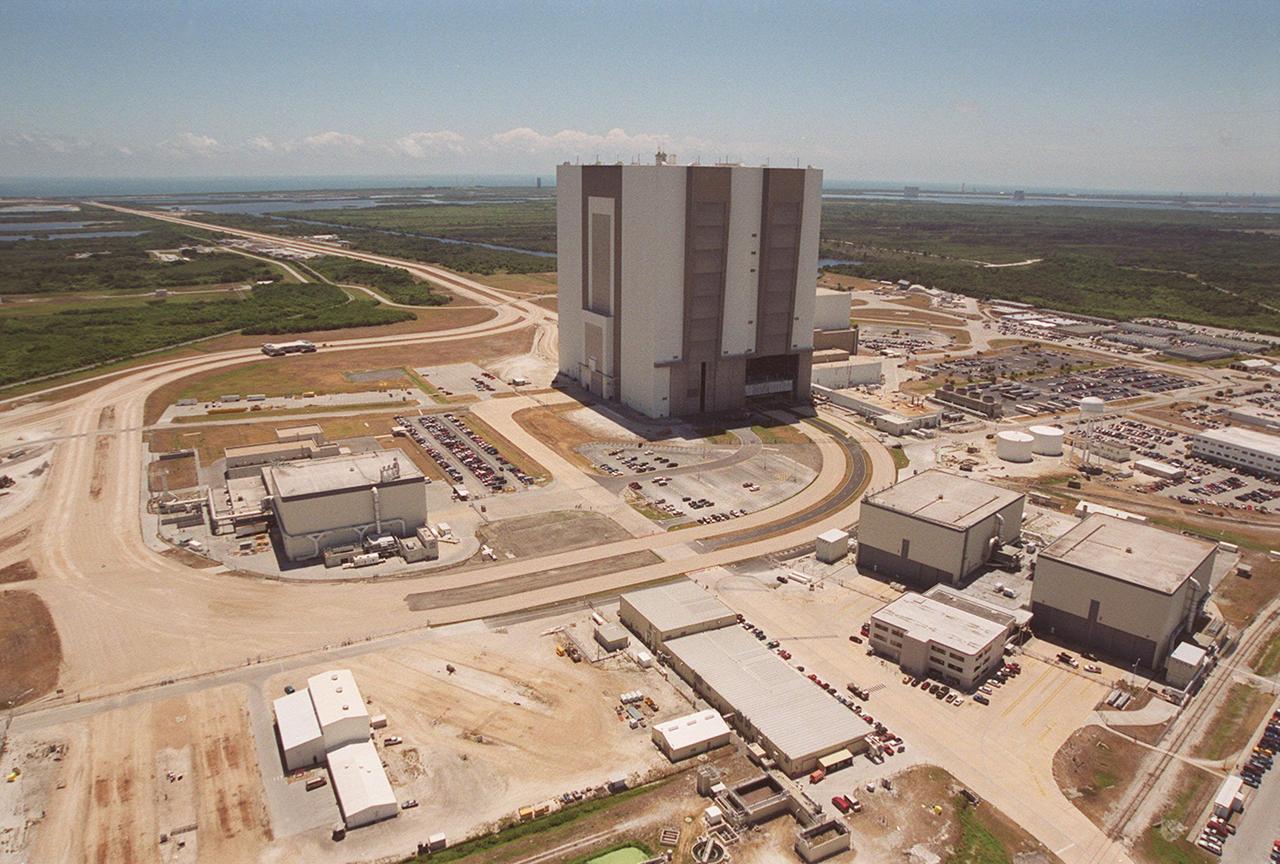
This aerial photo captures many of the facilities involved in Space Shuttle processing. At center is the Vehicle Assembly Building (VAB). The curved road in the foreground is the newly restored crawlerway leading into the VAB high bay 2. The road restoration and high bay 2 are part of KSC’s Safe Haven project, enabling the storage of orbiters during severe weather. The road circles around the Orbiter Processing Facility 3 (OPF-3) at right center. OPF1 and OPF-2 are just above the curving road. On the left of the VAB, the crawlerway also extends from high bays 1 and 3, past the Launch Control Center, out to the two Shuttle launch pads
KSC00pp0733
This aerial photo captures many of the facilities involved in Space Shuttle processing. At center is the Vehicle Assembly Building (VAB). The curved road in the foreground is the newly restored crawlerway leading into the VAB high bay 2. The road restoration and high bay 2 are part of KSC’s Safe Haven project, enabling the storage of orbiters during severe weather. The road circles around the Orbiter Processing Facility 3 (OPF-3) at right center. OPF1 and OPF-2 are just above the curving road. On the left of the VAB, the crawlerway also extends from high bays 1 and 3, past the Launch Control Center, out to the two Shuttle launch pads
KSC-00pp0733
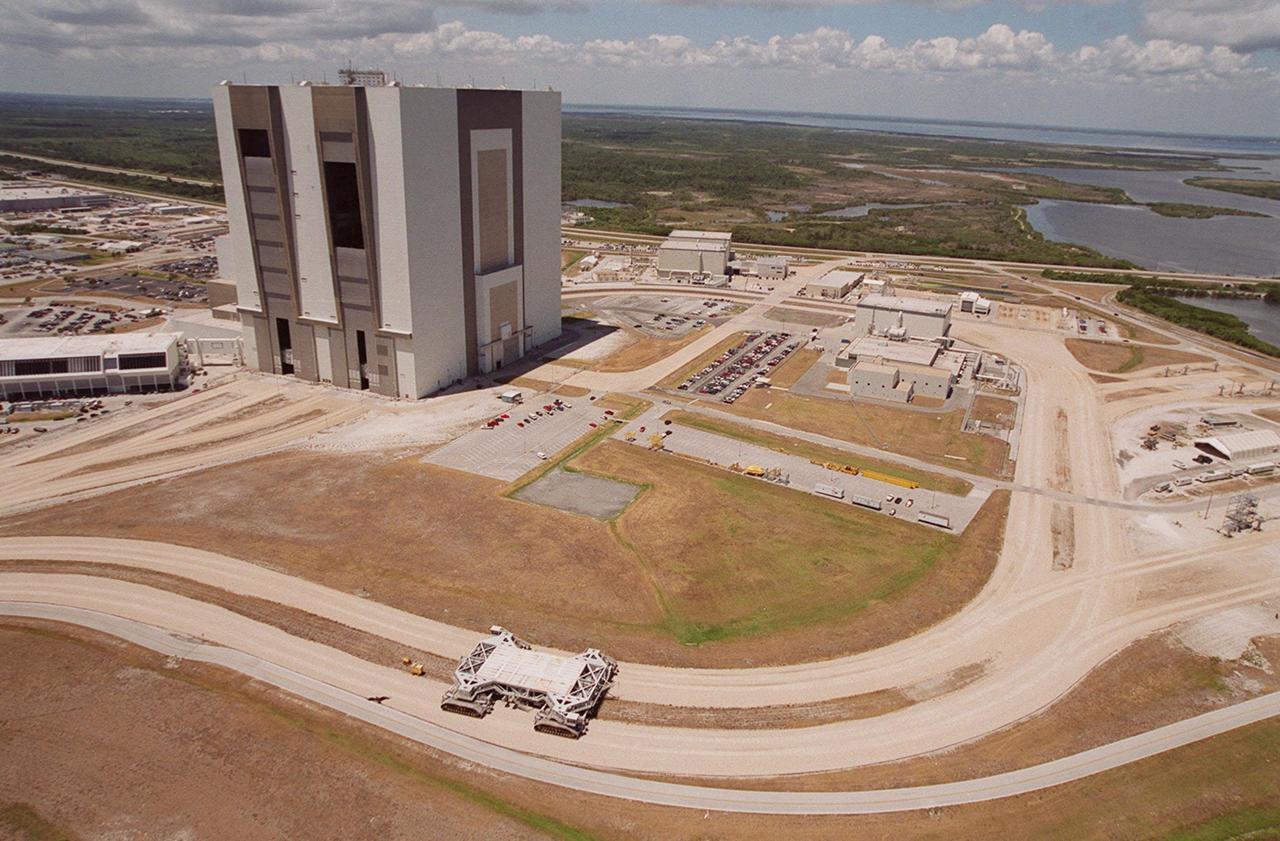
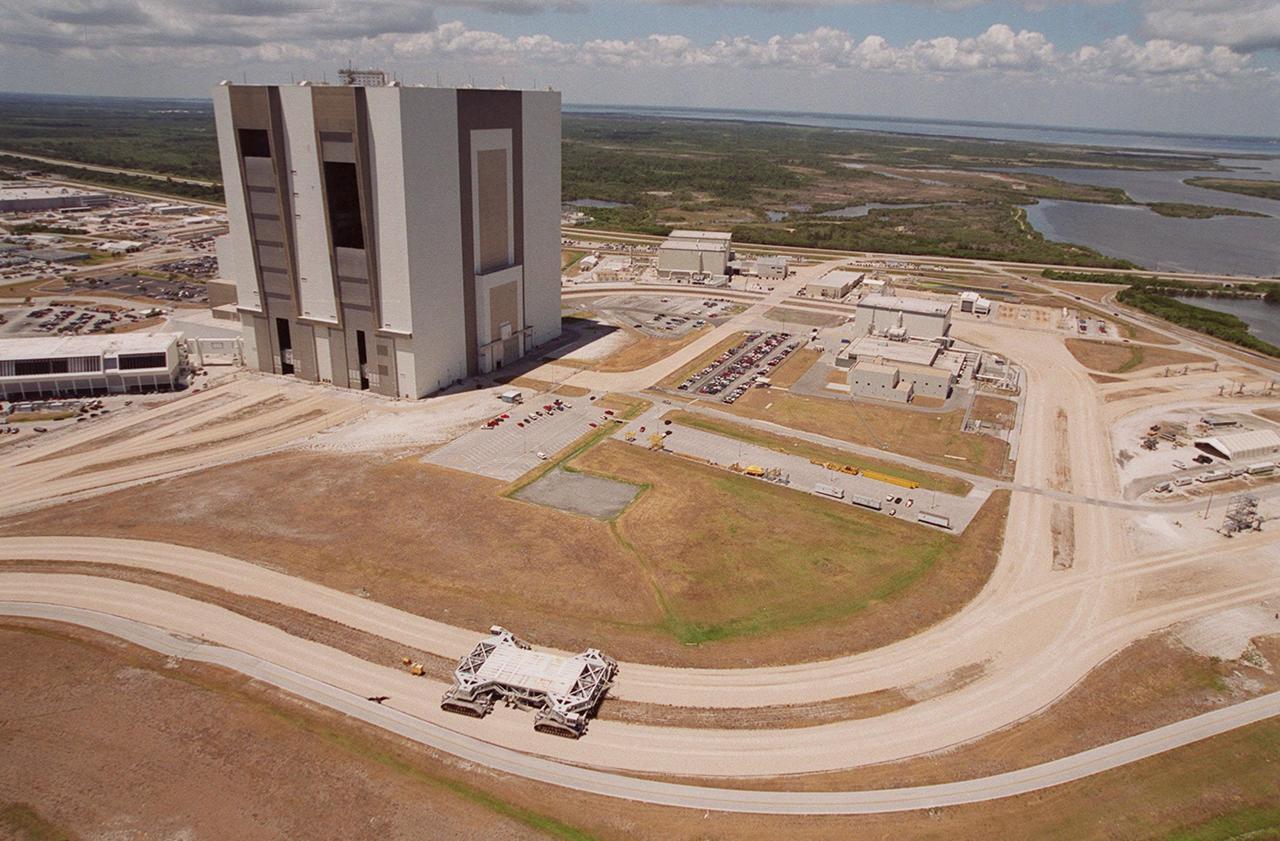
This aerial photo captures many of the facilities involved in Space Shuttle processing. At center is the Vehicle Assembly Building (VAB). The curved road is the newly restored crawlerway leading into the VAB high bay 2. The road restoration and high bay 2 are part of KSC's Safe Haven project, enabling the storage of orbiters during severe weather. The road circles around the Orbiter Processing Facility 3 (OPF-3) at left. OPF1 and OPF-2 are on the right below the curving road. East of the VAB, the crawlerway also extends from high bays 1 and 3 to the two Shuttle launch pads.
KSC-00PP-0736
Processing activities for STS-91 continue in KSC's Orbiter Processing Facility Bay 2. The payload bay of Space Shuttle Discovery is relatively empty as installation of the Get Away Special (GAS) canisters begins. Two GAS canisters can be seen in the center of the photograph. On the left is G-648, a Canadian Space Agency-sponsored study on manufactured organic thin film by the physical vapor transport method, and on the right is a can with hundreds of commemorative flags to be flown on the mission. STS-91 is scheduled to launch aboard the Space Shuttle Discovery for the ninth and final docking with the Russian Space Station Mir from KSC's Launch Pad 39A on June 2 with a launch window opening around 6:04 p.m. EDT
KSC-98pc520
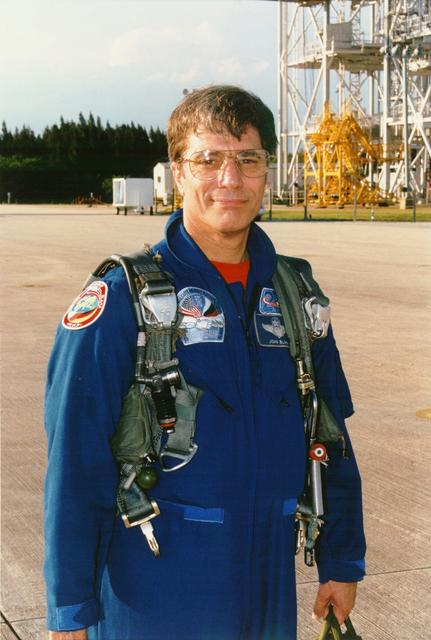
KENNEDY SPACE CENTER, FLA. -  STS-79 Mission Specialist John E. Blaha  arrives at KSC's Shuttle Landing Facility with five fellow astronauts, ready to participate in the Terminal Countdown Demonstration Test (TCDT).  The TCDT is a dress rehearsal for launch for the flight crew and launch team.  Over the next several days, the astronauts will take part in training exercises at the launch pad that will culminate in a simulated launch countdown.  The Space Shuttle Atlantis is being prepared for liftoff around Sept. 12 on STS-79, the fourth docking between the U.S. Shuttle and Russian Space Station Mir. During the approximately nine-day flight, Blaha will change places with fellow spaceflight veteran Shannon Lucid, who is wrapping up a record-setting stay on Mir.  Blaha will remain aboard the Station for about four months, returning to Earth in January 1997 withthe crew of Shuttle Mission STS-81.
KENNEDY SPACE CENTER, FLA. - STS-79 Mission Specialist John E. Blaha arrives at KSC's Shuttle Landing Facility with five fellow astronauts, ready to participate in the Terminal Countdown Demonstration Test (TCDT). The TCDT is a dress rehearsal for launch for the flight crew and launch team. Over the next several days, the astronauts will take part in training exercises at the launch pad that will culminate in a simulated launch countdown. The Space Shuttle Atlantis is being prepared for liftoff around Sept. 12 on STS-79, the fourth docking between the U.S. Shuttle and Russian Space Station Mir. During the approximately nine-day flight, Blaha will change places with fellow spaceflight veteran Shannon Lucid, who is wrapping up a record-setting stay on Mir. Blaha will remain aboard the Station for about four months, returning to Earth in January 1997 withthe crew of Shuttle Mission STS-81.
KENNEDY SPACE CENTER, FLA. - NASA Administrator Sean O’Keefe talks to the media at the Central Florida Research Park, near Orlando.  He and government officials were at the park for a presentation about the assets of the research park as the site of NASA’s new Shared Services Center. Behind O’Keefe are (left to right) Pamella J. Dana, Ph.D., director, Office of Tourism, Trade, and Economic Development in Florida; U.S. Representative Ric Keller; Florida Congressman Tom Feeney; and Congressman Dave Weldon. At right is Mike Rein, division chief of KSC External Affairs.  Six sites around the U.S. are under consideration for location of the Center, which would centralize NASA’s payroll, accounting, human resources, facilities and procurement offices that are now handled at each field center.  The consolidation is part of the One NASA focus.  Others attending the presentation included  U.S. Senator Bill Nelson and Center Director Jim Kennedy.
KENNEDY SPACE CENTER, FLA. - NASA Administrator Sean O’Keefe talks to the media at the Central Florida Research Park, near Orlando. He and government officials were at the park for a presentation about the assets of the research park as the site of NASA’s new Shared Services Center. Behind O’Keefe are (left to right) Pamella J. Dana, Ph.D., director, Office of Tourism, Trade, and Economic Development in Florida; U.S. Representative Ric Keller; Florida Congressman Tom Feeney; and Congressman Dave Weldon. At right is Mike Rein, division chief of KSC External Affairs. Six sites around the U.S. are under consideration for location of the Center, which would centralize NASA’s payroll, accounting, human resources, facilities and procurement offices that are now handled at each field center. The consolidation is part of the One NASA focus. Others attending the presentation included U.S. Senator Bill Nelson and Center Director Jim Kennedy.
KENNEDY SPACE CENTER, FLA. - NASA Administrator Sean O’Keefe talks to the media at the Central Florida Research Park, near Orlando.  He and government officials were at the park for a presentation about the assets of the research park as the site of NASA’s new Shared Services Center. Behind O’Keefe are (left to right) Pamella J. Dana, Ph.D., director, Office of Tourism, Trade, and Economic Development in Florida; Florida Congressman Tom Feeney; U.S. Representative Ric Keller; and Congressman Dave Weldon.  At right is Mike Rein, division chief of KSC External Affairs.  Six sites around the U.S. are under consideration for location of the Center, which would centralize NASA’s payroll, accounting, human resources, facilities and procurement offices that are now handled at each field center.  The consolidation is part of the One NASA focus.  Others attending the presentation included  U.S. Senator Bill Nelson and Center Director Jim Kennedy.
KENNEDY SPACE CENTER, FLA. - NASA Administrator Sean O’Keefe talks to the media at the Central Florida Research Park, near Orlando. He and government officials were at the park for a presentation about the assets of the research park as the site of NASA’s new Shared Services Center. Behind O’Keefe are (left to right) Pamella J. Dana, Ph.D., director, Office of Tourism, Trade, and Economic Development in Florida; Florida Congressman Tom Feeney; U.S. Representative Ric Keller; and Congressman Dave Weldon. At right is Mike Rein, division chief of KSC External Affairs. Six sites around the U.S. are under consideration for location of the Center, which would centralize NASA’s payroll, accounting, human resources, facilities and procurement offices that are now handled at each field center. The consolidation is part of the One NASA focus. Others attending the presentation included U.S. Senator Bill Nelson and Center Director Jim Kennedy.
KENNEDY SPACE CENTER, FLA. -- KSC workers watch as the orbiter Discovery makes the turn around the Vehicle Assembly Building on its move from Orbiter Processing Facility (OPF) bay 1 to OPF bay 3. Ongoing payload and ground processing assessments will be completed in bay 3. Managers will then determine when to roll the orbiter to the Vehicle Assembly Building for stacking with the external tank and solid rocket boosters, and when to roll out to Launch Pad 39A. Discovery is scheduled to launch Oct. 5 at 9:30 p.m. EDT on mission STS-92, which will be the 100th flight in the Shuttle program
KSC-00pp1191
KENNEDY SPACE CENTER, FLA. --  During a post-flight walk around orbiter Columbia at the Shuttle Landing Facility, STS-109 Pilot Duane Carey gingerly checks the heat of the nose cone.   The crew returned to Earth after an 11-day mission  servicing the Hubble Space Telescope.  Wheel stop occurred on orbit 165 at 4:33:09 a.m. EST.  Main gear touchdown occurred at 4:31:52 a.m. and nose wheel touchdown at 4:32:02.  Rollout time was 1 minute, 17 seconds.   This was the 58th landing at KSC out of 108 missions in the history of the Shuttle program
KSC-02pd0266
Inside the Vertical Processing Facility, the KSC payload canister transporter (left) backs up to the Chandra X-ray Observatory, stationed within the gridwork at right. The transporter will carry Chandra out to Launch Pad 39B for its scheduled launch, to take place no earlier than July 20 at 12:36 a.m. EDT aboard Space Shuttle Columbia, on mission STS-93. With the world's most powerful X-ray telescope, Chandra will allow scientists from around the world to see previously invisible black holes and high-temperature gas clouds, giving the observatory the potential to rewrite the books on the structure and evolution of our universe
KSC-99pp0706
The SPACEHAB Single Module is raised by crane from a transporter in KSC's Space Station Processing Facility, where it will be moved to the payload canister. It will be joined in the canister by the Alpha Magnetic Spectrometer-01 payload before being moved to Launch Pad 39A for the STS-91 mission, scheduled to launch June 2 at around 6:04 p.m. EDT. SPACEHAB is used mainly as a large pressurized cargo container for science, logistical equipment and supplies to be exchanged between the orbiter Discovery and the Russian Space Station Mir. The nearly 10-day flight of STS-91 also is scheduled to return the sixth American, Mission Specialist Andrew Thomas, Ph.D., aboard the Russian orbiting outpost safely to Earth
KSC-98pc542
Members of the media were invited to commemorate the fifth anniversary of the launch of the first element of the International Space Station by touring the Space Station Processing Facility (SSPF) at KSC. Here they gather around Shimpei Takahashi (back to camera), representative of the Japanese Air and Space Agency (JAXA), who talked about the Japanese Experiment Module. Reporters had the opportunity to see Space Station hardware that is being processed for deployment once the Space Shuttles return to flight as well as talk with NASA and Boeing mission managers about the various hardware elements currently being processed for flight.
Fifth anniversary of the first element of the International Spac