
The transport carrier containing the European Service Module for NASA’s Artemis III mission arrives at the Neil A. Armstrong Operations and Checkout Building at NASA’s Kennedy Space Center in Florida on Tuesday, Sept. 3, 2024. The European Service Module, which is assembled by Airbus in Bremen, Germany, from parts made in 10 European countries and the United States, acts as the driving force behind Orion for deep space exploration, providing essential propulsion, thermal control, and electrical power.
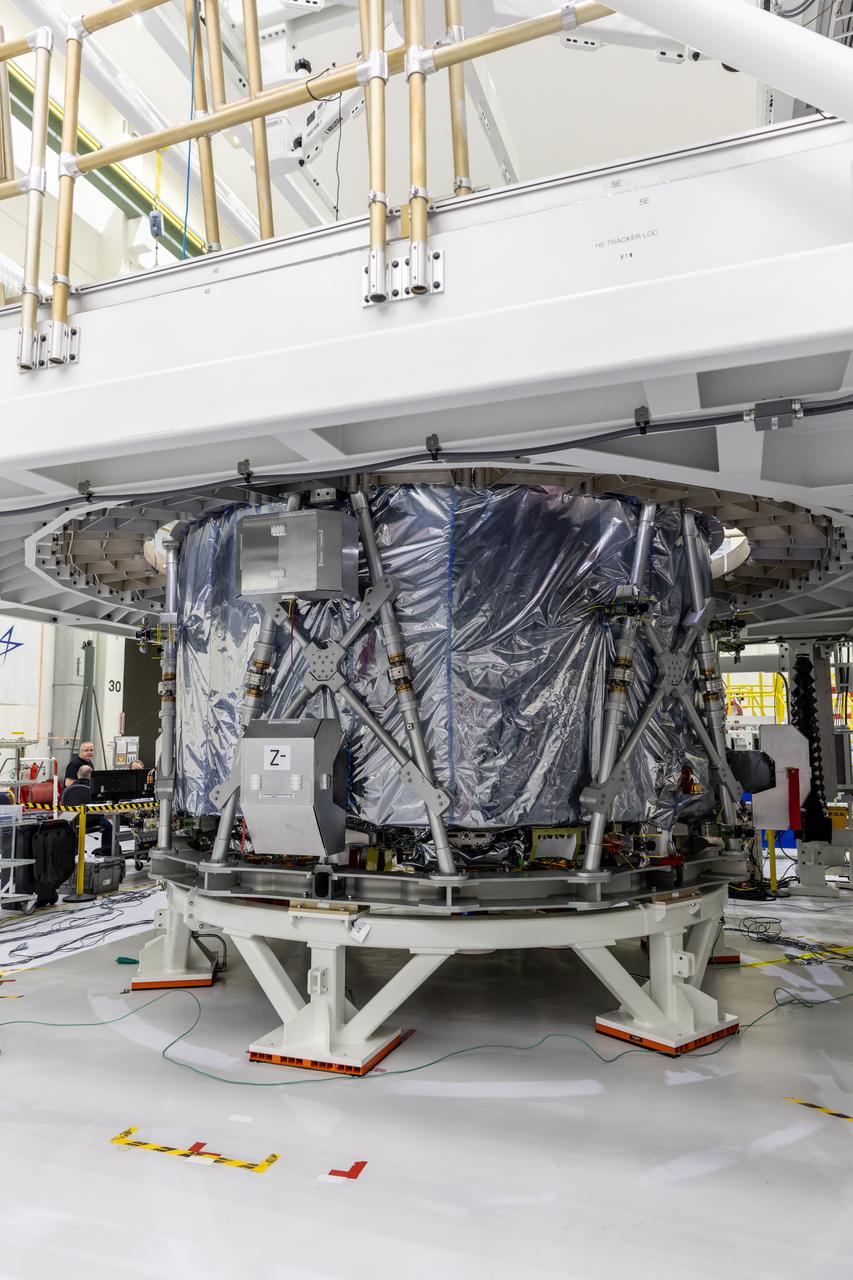
The transport carrier containing the European Service Module for NASA’s Artemis III mission arrives at the Neil A. Armstrong Operations and Checkout Building at NASA’s Kennedy Space Center in Florida on Tuesday, Sept. 3, 2024. The European Service Module, which is assembled by Airbus in Bremen, Germany, from parts made in 10 European countries and the United States, acts as the driving force behind Orion for deep space exploration, providing essential propulsion, thermal control, and electrical power.
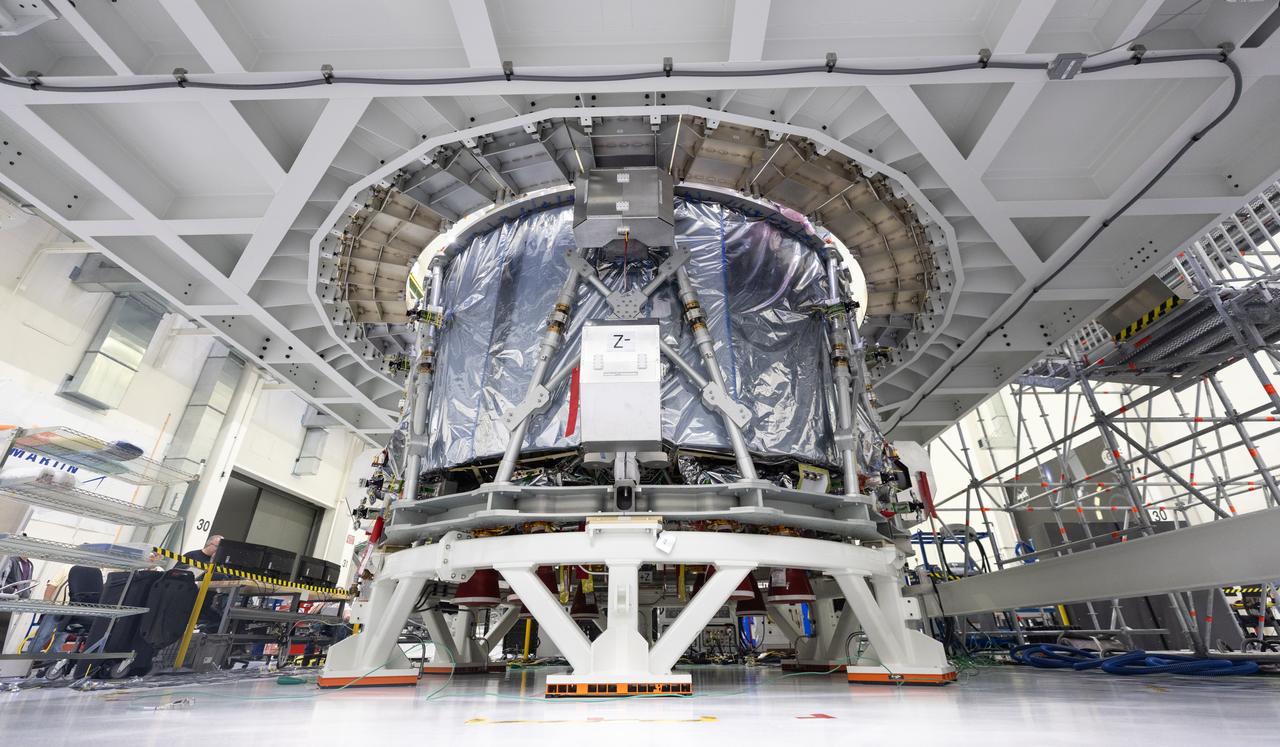
The transport carrier containing the European Service Module for NASA’s Artemis III mission arrives at the Neil A. Armstrong Operations and Checkout Building at NASA’s Kennedy Space Center in Florida on Tuesday, Sept. 3, 2024. The European Service Module, which is assembled by Airbus in Bremen, Germany, from parts made in 10 European countries and the United States, acts as the driving force behind Orion for deep space exploration, providing essential propulsion, thermal control, and electrical power.

The Orion crew module adapter for NASA’s Artemis III campaign undergoes wiring installs inside the Neil A. Armstrong Operations and Checkout Building at NASA’s Kennedy Space Center on Wednesday, Sept. 4, 2024. In Orion’s final configuration before launch, the crew module adapter connects the capsule to the European Service Module 3. The crew module adapter houses electronic equipment for communications, power, and control, and includes an umbilical connector that bridges the electrical, data, and fluid systems between the main modules.
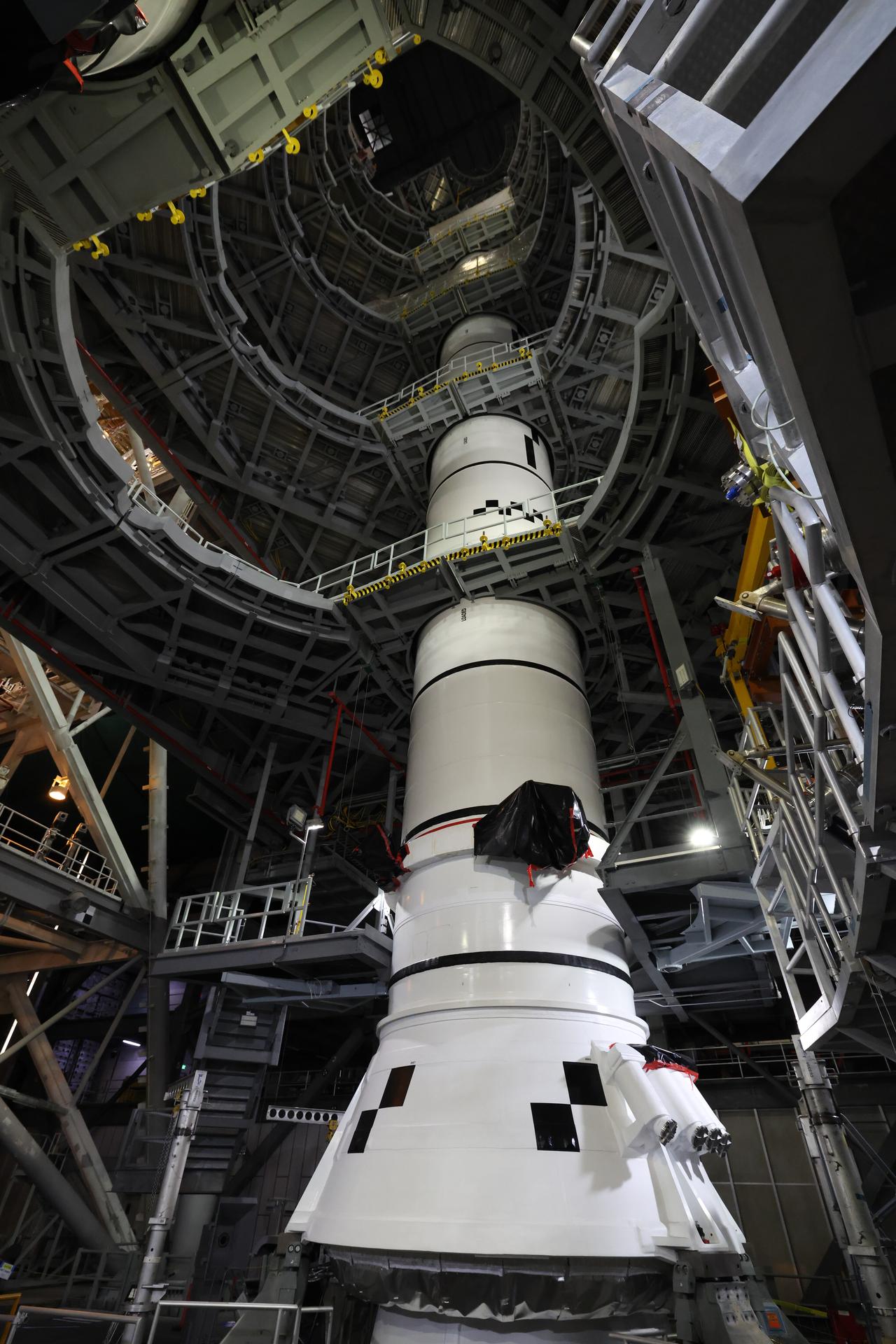
In High Bay 3 of the Vehicle Assembly Building at NASA’s Kennedy Space Center in Florida, the right forward center booster for Artemis III is integrated onto the right booster segments on the mobile launcher for the SLS (Space Launch System) rocket on Friday, Sept. 11, 2026. The twin boosters, comprising of five segments each manufactured by Northrop Grumman in Utah, will provide more than 75 percent of the SLS rocket’s total thrust at launch. The Artemis III mission will launch crew in the Orion spacecraft on top of the SLS rocket to test rendezvous and docking capabilities between Orion and commercial spacecraft needed to land astronauts on the Moon.
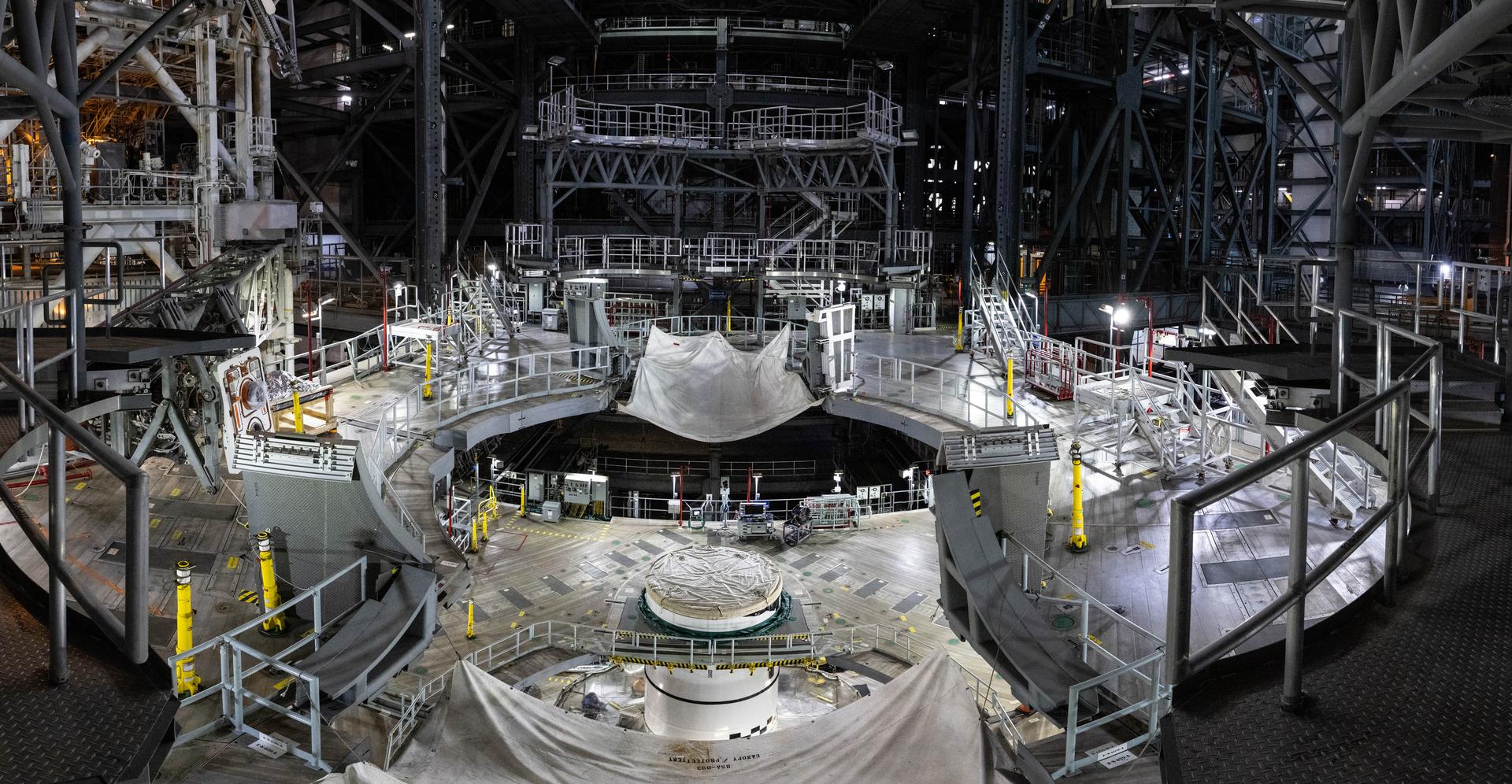
In High Bay 3 of the Vehicle Assembly Building at NASA’s Kennedy Space Center in Florida, the right forward center booster for Artemis III is integrated onto the right booster segments on the mobile launcher for the SLS (Space Launch System) rocket on Friday, Sept. 11, 2026. The twin boosters, comprising of five segments each manufactured by Northrop Grumman in Utah, will provide more than 75 percent of the SLS rocket’s total thrust at launch. The Artemis III mission will launch crew in the Orion spacecraft on top of the SLS rocket to test rendezvous and docking capabilities between Orion and commercial spacecraft needed to land astronauts on the Moon.
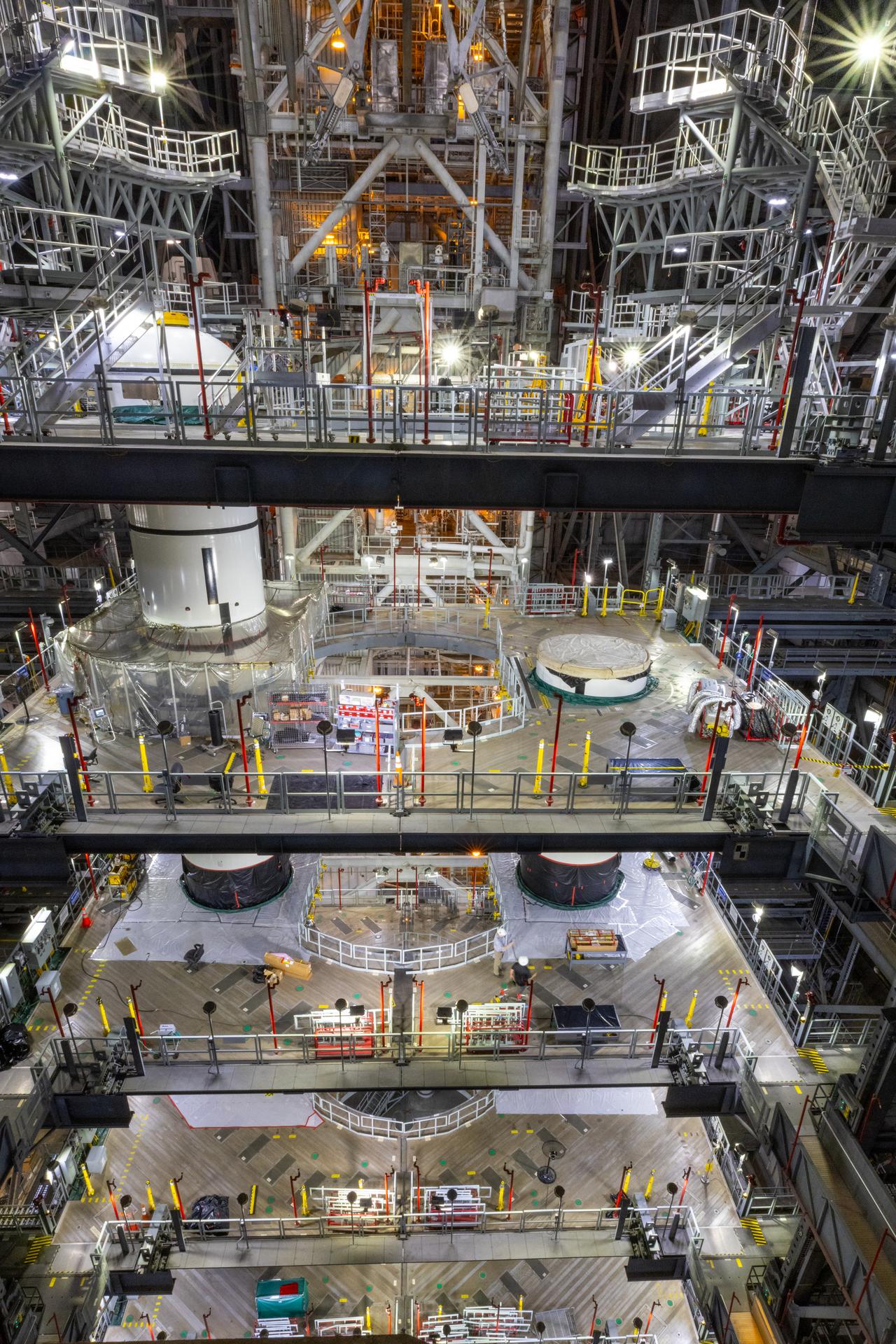
Technicians integrate the left forward booster segment for NASA’s Artemis III SLS (Space Launch System) rocket onto the left booster segments atop the mobile launcher in High Bay 3 of the Vehicle Assembly Building at NASA’s Kennedy Space Center in Florida on Thursday, Sept. 17, 2026. The SLS rocket’s twin boosters, each made up of five segments manufactured by Northrop Grumman in Utah, will provide more than 75 percent of the rocket’s total thrust at launch. The Artemis III mission will launch crew in the Orion spacecraft on top of the SLS rocket to test rendezvous and docking capabilities between Orion and commercial spacecraft needed to land astronauts on the Moon.
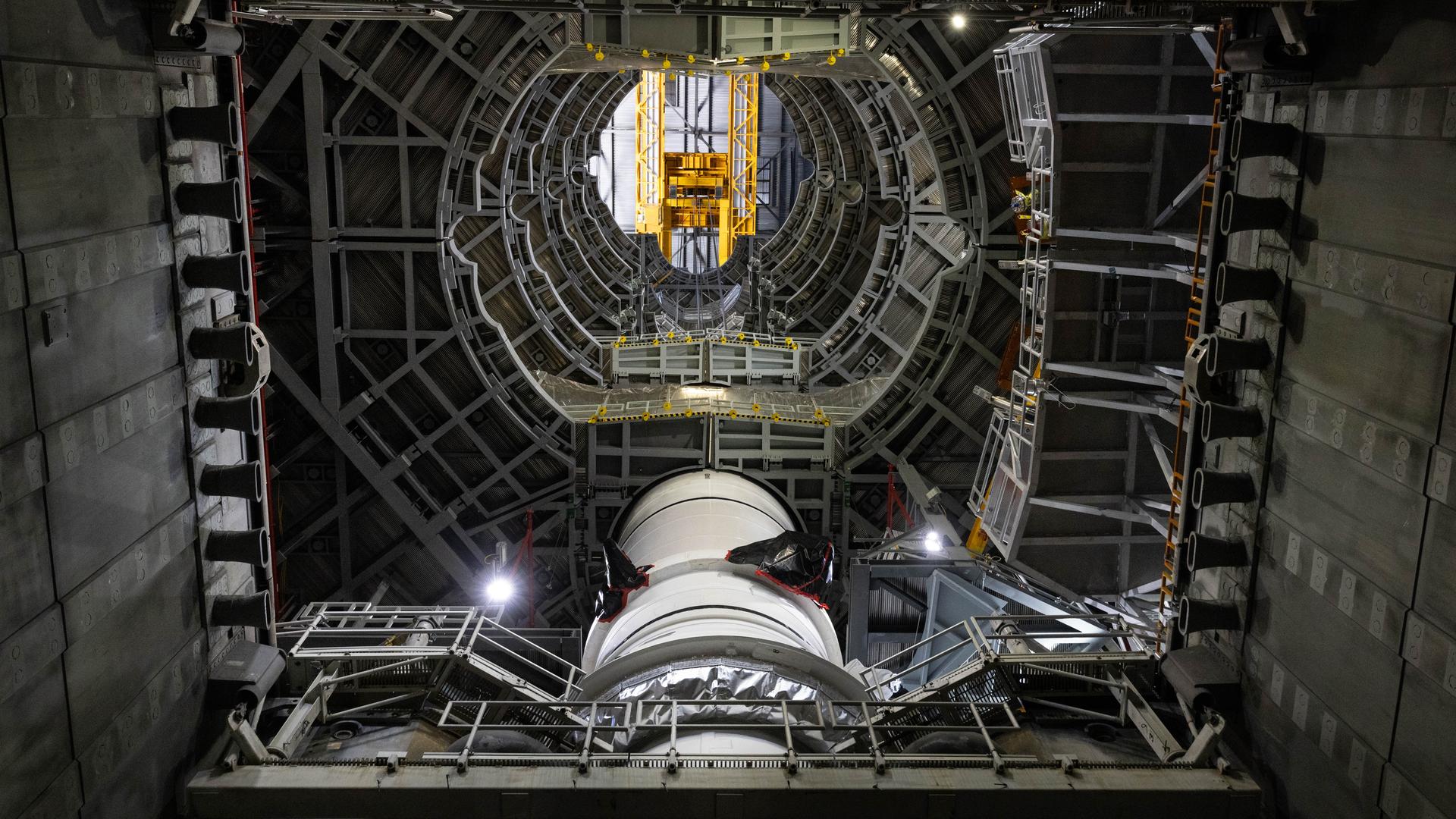
In High Bay 3 of the Vehicle Assembly Building at NASA’s Kennedy Space Center in Florida, the right aft center booster segment for Artemis III is lowered onto its aft assembly segment to prepare for integration on the mobile launcher for the SLS (Space Launch System) rocket on Wednesday, Aug. 12, 2026. The twin boosters, comprising of five segments each manufactured by Northrop Grumman in Utah, will provide more than 75 percent of the SLS rocket’s total thrust at launch. The Artemis III mission will launch crew in the Orion spacecraft on top of the SLS rocket to test rendezvous and docking capabilities between Orion and commercial spacecraft needed to land astronauts on the Moon.
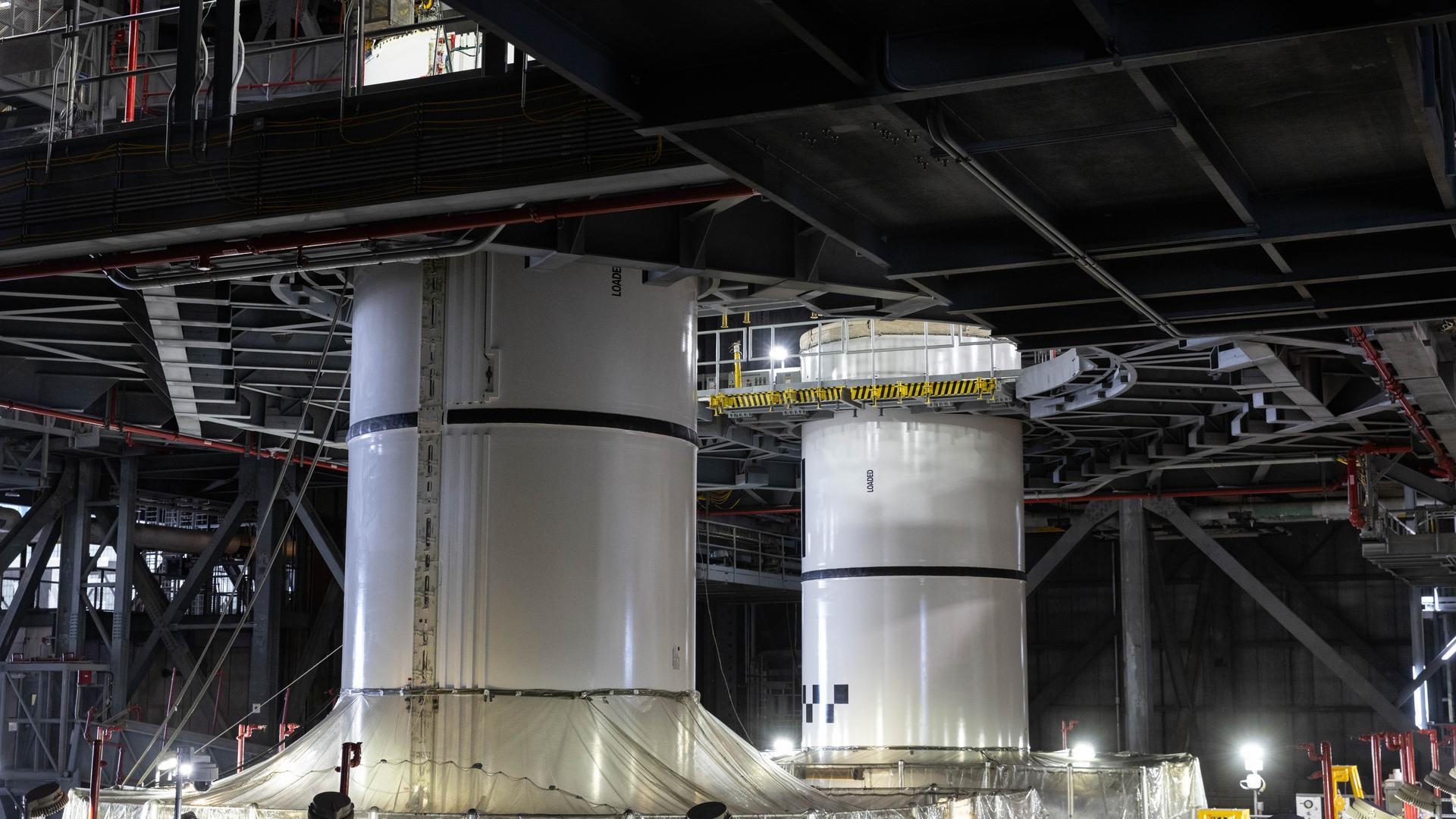
In High Bay 3 of the Vehicle Assembly Building at NASA’s Kennedy Space Center in Florida, the left and right aft center booster segments for Artemis III are lowered onto their aft assembly segments for integration on the mobile launcher for the SLS (Space Launch System) rocket on Wednesday, Aug. 12, 2026. The twin boosters, comprising of five segments each manufactured by Northrop Grumman in Utah, will provide more than 75 percent of the SLS rocket’s total thrust at launch. The Artemis III mission will launch crew in the Orion spacecraft on top of the SLS rocket to test rendezvous and docking capabilities between Orion and commercial spacecraft needed to land astronauts on the Moon.
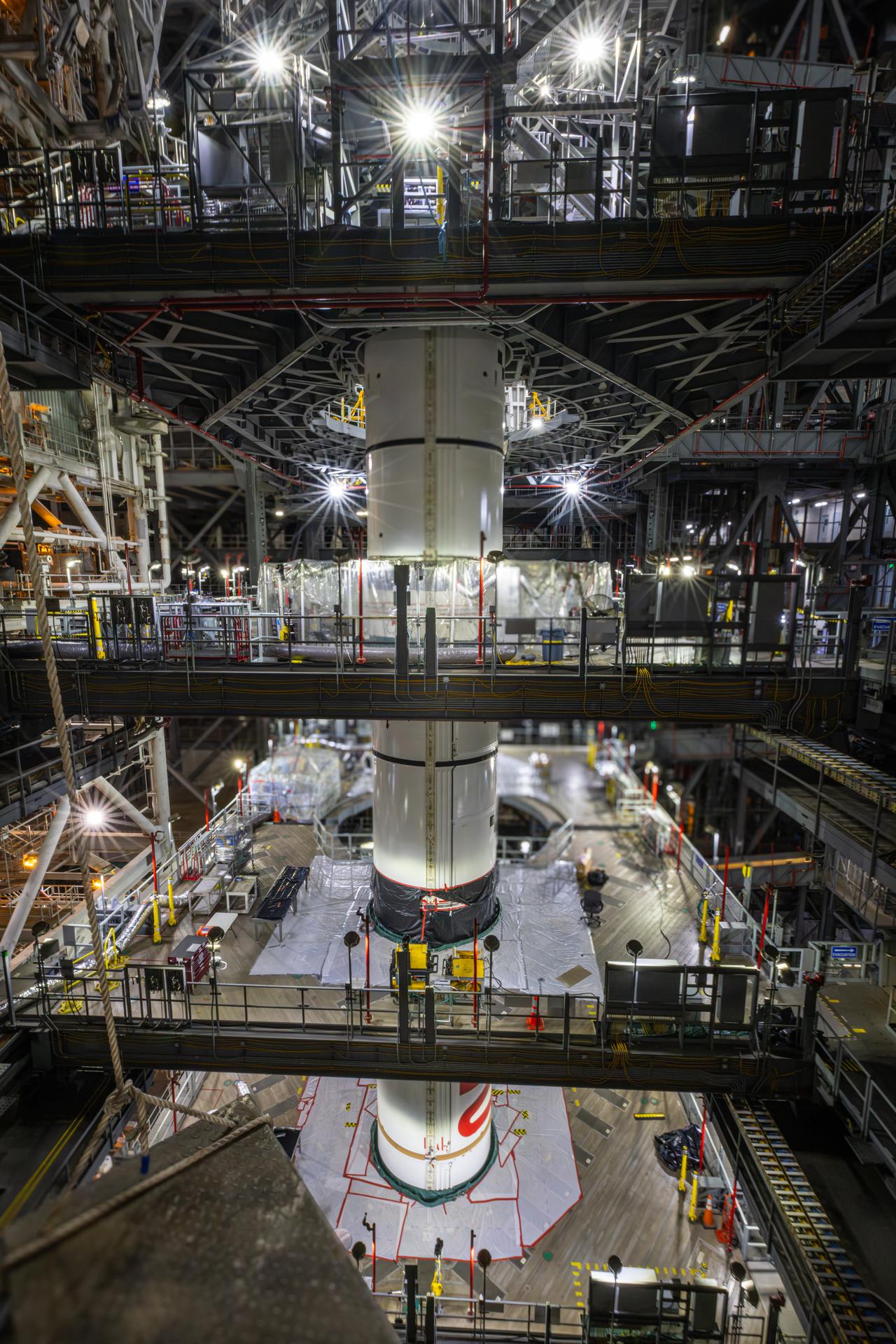
Technicians integrate the left forward booster segment for NASA’s Artemis III SLS (Space Launch System) rocket onto the left booster segments atop the mobile launcher in High Bay 3 of the Vehicle Assembly Building at NASA’s Kennedy Space Center in Florida on Thursday, Sept. 17, 2026. The SLS rocket’s twin boosters, each made up of five segments manufactured by Northrop Grumman in Utah, will provide more than 75 percent of the rocket’s total thrust at launch. The Artemis III mission will launch crew in the Orion spacecraft on top of the SLS rocket to test rendezvous and docking capabilities between Orion and commercial spacecraft needed to land astronauts on the Moon.
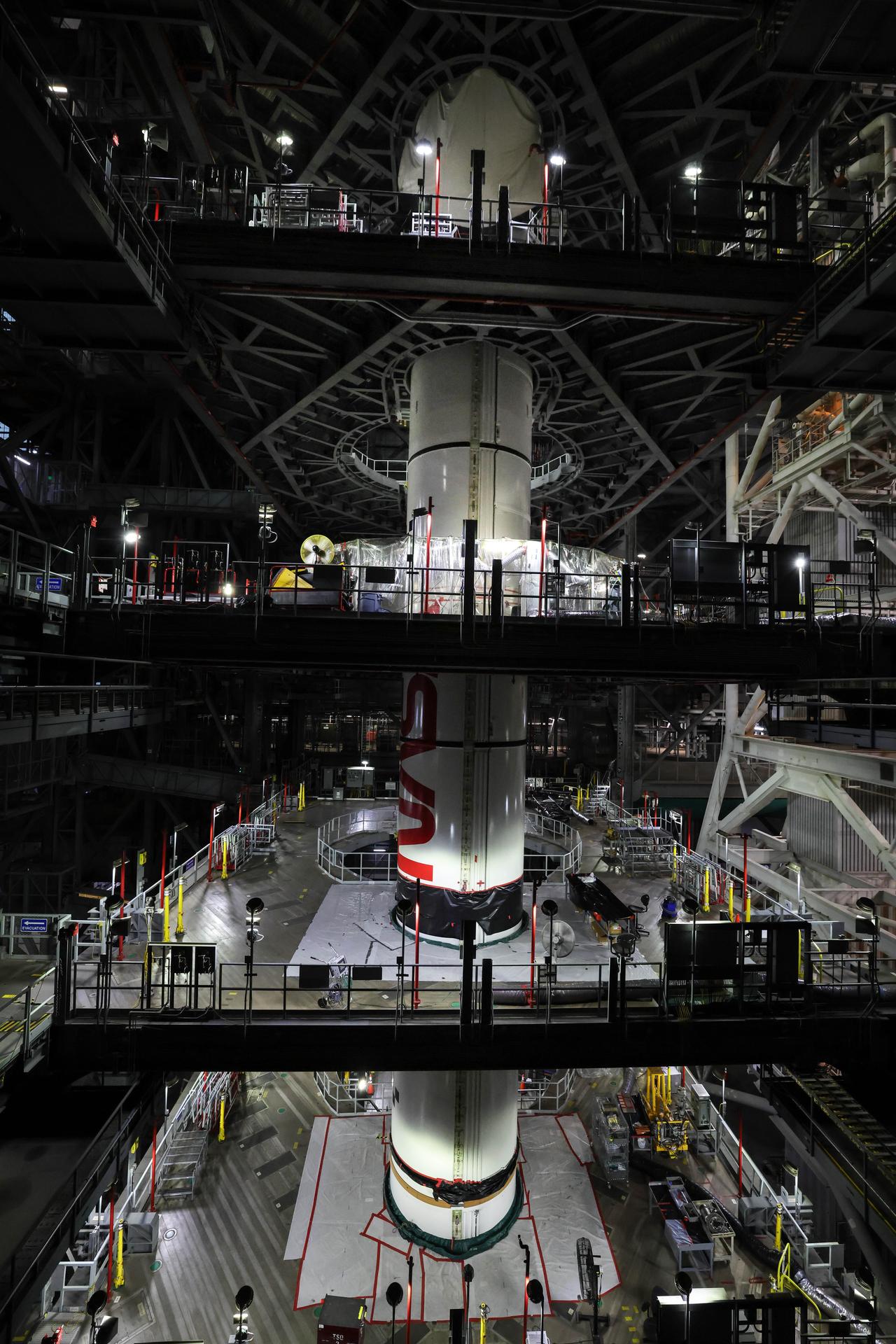
In High Bay 3 of the Vehicle Assembly Building at NASA’s Kennedy Space Center in Florida, the right forward center booster for Artemis III is integrated onto the right booster segments on the mobile launcher for the SLS (Space Launch System) rocket on Friday, Sept. 11, 2026. The twin boosters, comprising of five segments each manufactured by Northrop Grumman in Utah, will provide more than 75 percent of the SLS rocket’s total thrust at launch. The Artemis III mission will launch crew in the Orion spacecraft on top of the SLS rocket to test rendezvous and docking capabilities between Orion and commercial spacecraft needed to land astronauts on the Moon.
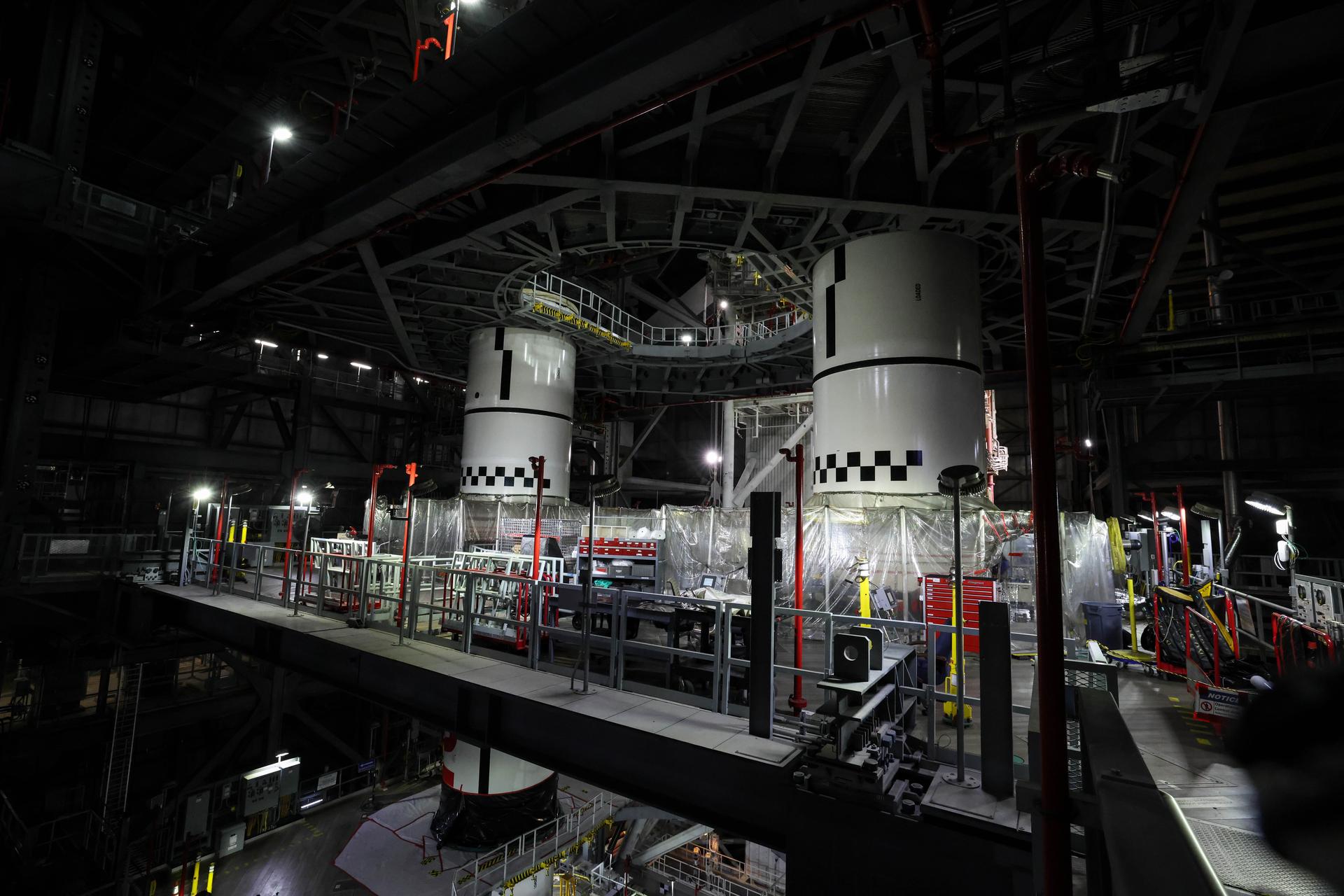
In High Bay 3 of the Vehicle Assembly Building at NASA’s Kennedy Space Center in Florida, the left and right forward center boosters for Artemis III are integrated onto the booster segments on the mobile launcher for the SLS (Space Launch System) rocket on Friday, Sept. 11, 2026. The twin boosters, comprising of five segments each manufactured by Northrop Grumman in Utah, will provide more than 75 percent of the SLS rocket’s total thrust at launch. The Artemis III mission will launch crew in the Orion spacecraft on top of the SLS rocket to test rendezvous and docking capabilities between Orion and commercial spacecraft needed to land astronauts on the Moon.
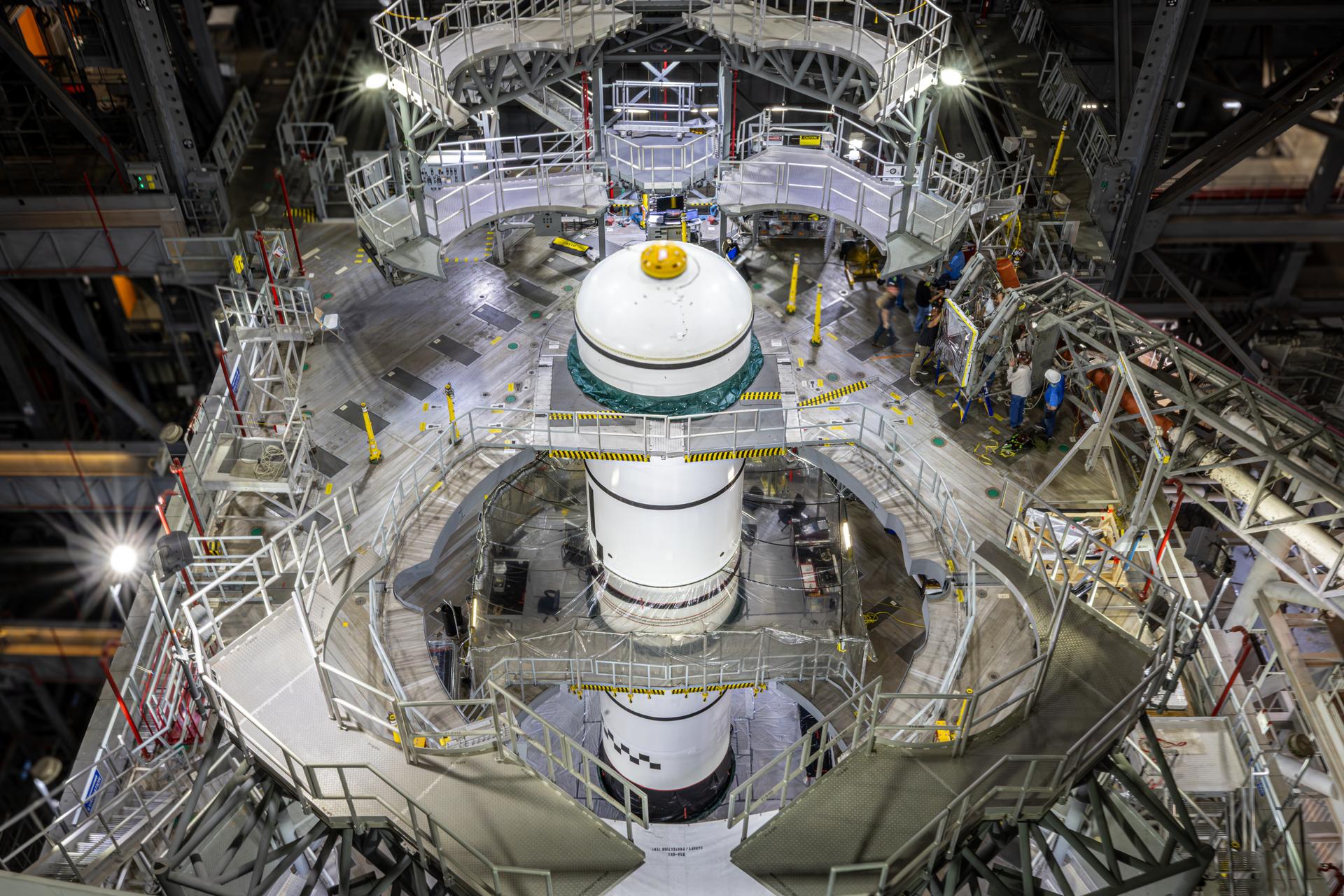
Technicians integrate the left forward booster segment for NASA’s Artemis III SLS (Space Launch System) rocket onto the left booster segments atop the mobile launcher in High Bay 3 of the Vehicle Assembly Building at NASA’s Kennedy Space Center in Florida on Thursday, Sept. 17, 2026. The SLS rocket’s twin boosters, each made up of five segments manufactured by Northrop Grumman in Utah, will provide more than 75 percent of the rocket’s total thrust at launch. The Artemis III mission will launch crew in the Orion spacecraft on top of the SLS rocket to test rendezvous and docking capabilities between Orion and commercial spacecraft needed to land astronauts on the Moon.
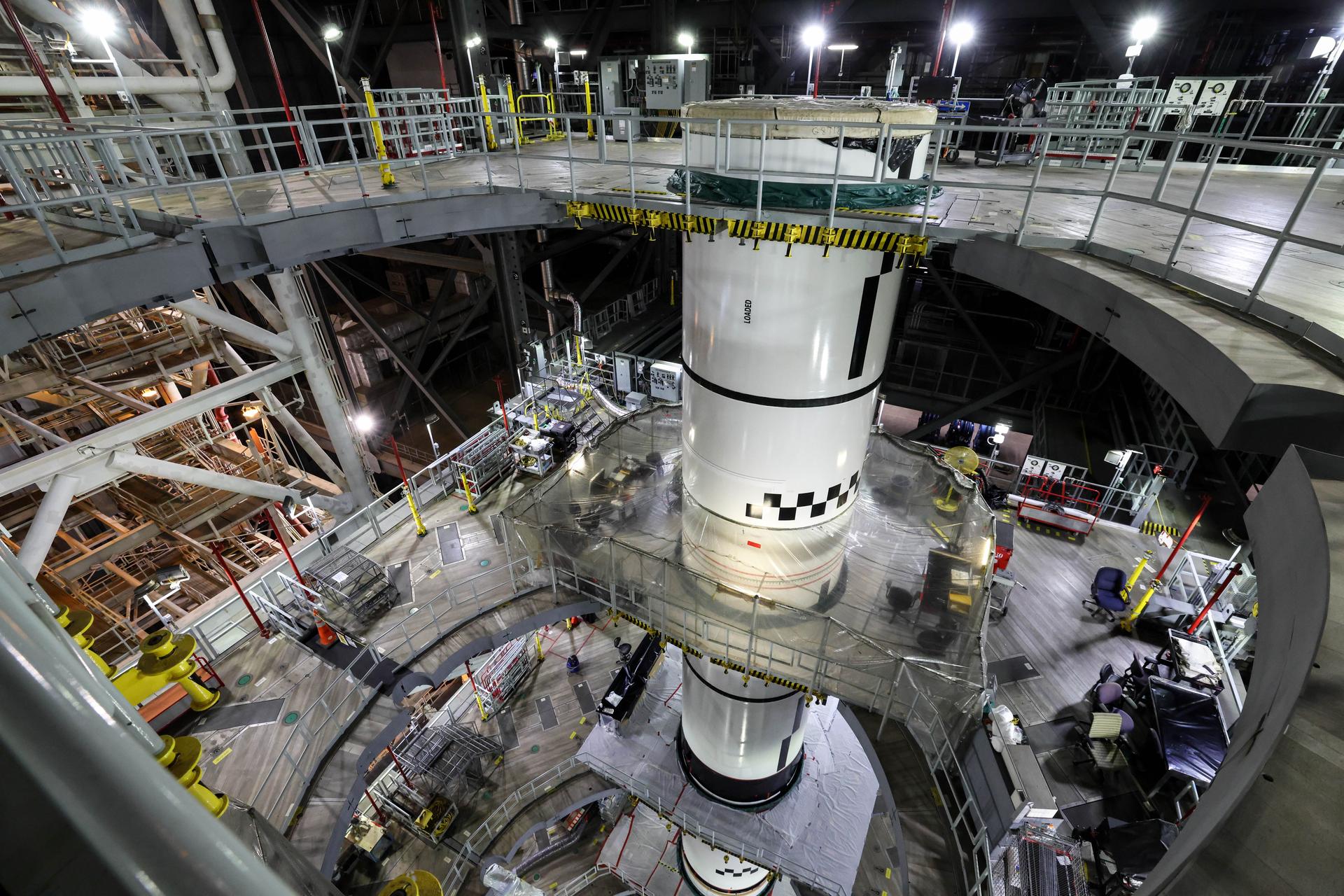
In High Bay 3 of the Vehicle Assembly Building at NASA’s Kennedy Space Center in Florida, the right forward center booster for Artemis III is integrated onto the right booster segments on the mobile launcher for the SLS (Space Launch System) rocket on Friday, Sept. 11, 2026. The twin boosters, comprising of five segments each manufactured by Northrop Grumman in Utah, will provide more than 75 percent of the SLS rocket’s total thrust at launch. The Artemis III mission will launch crew in the Orion spacecraft on top of the SLS rocket to test rendezvous and docking capabilities between Orion and commercial spacecraft needed to land astronauts on the Moon.
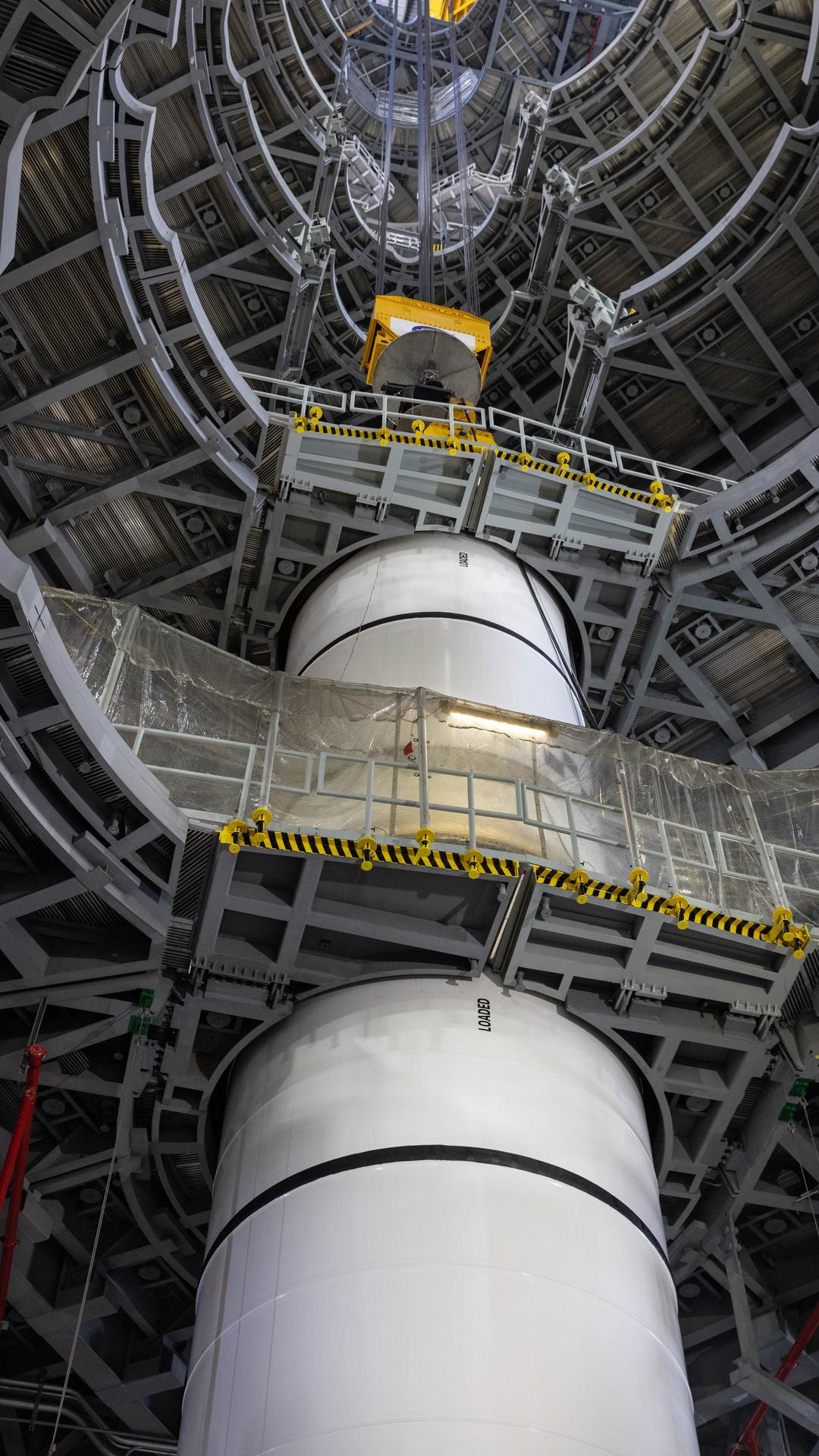
In High Bay 3 of the Vehicle Assembly Building at NASA’s Kennedy Space Center in Florida, the right aft center booster segment for Artemis III is lowered onto its aft assembly segment to prepare for integration on the mobile launcher for the SLS (Space Launch System) rocket on Wednesday, Aug. 12, 2026. The twin boosters, comprising of five segments each manufactured by Northrop Grumman in Utah, will provide more than 75 percent of the SLS rocket’s total thrust at launch. The Artemis III mission will launch crew in the Orion spacecraft on top of the SLS rocket to test rendezvous and docking capabilities between Orion and commercial spacecraft needed to land astronauts on the Moon.
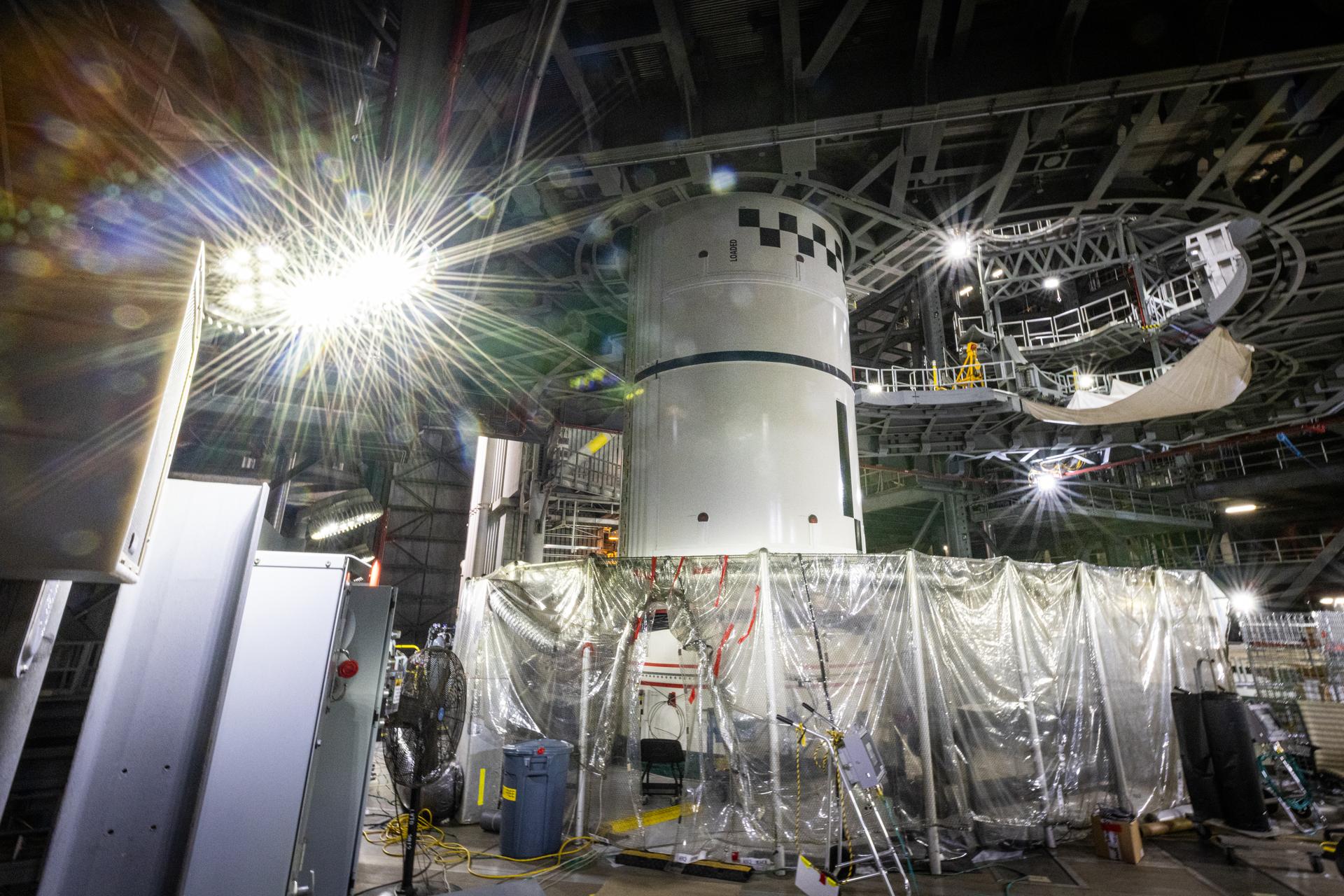
Technicians integrate the left forward booster segment for NASA’s Artemis III SLS (Space Launch System) rocket onto the left booster segments atop the mobile launcher in High Bay 3 of the Vehicle Assembly Building at NASA’s Kennedy Space Center in Florida on Thursday, Sept. 17, 2026. The SLS rocket’s twin boosters, each made up of five segments manufactured by Northrop Grumman in Utah, will provide more than 75 percent of the rocket’s total thrust at launch. The Artemis III mission will launch crew in the Orion spacecraft on top of the SLS rocket to test rendezvous and docking capabilities between Orion and commercial spacecraft needed to land astronauts on the Moon.
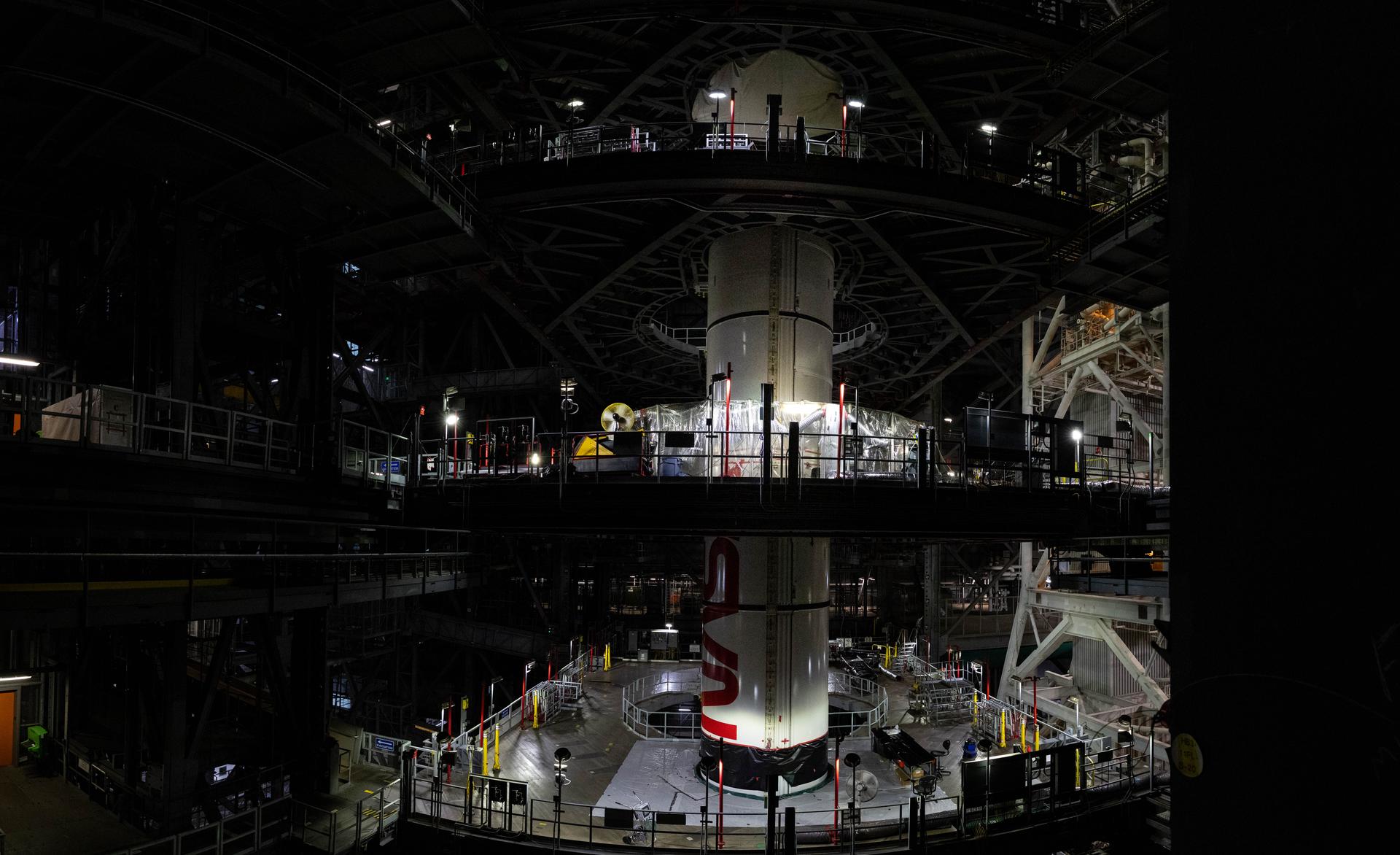
In High Bay 3 of the Vehicle Assembly Building at NASA’s Kennedy Space Center in Florida, the right forward center booster for Artemis III is integrated onto the right booster segments on the mobile launcher for the SLS (Space Launch System) rocket on Friday, Sept. 11, 2026. The twin boosters, comprising of five segments each manufactured by Northrop Grumman in Utah, will provide more than 75 percent of the SLS rocket’s total thrust at launch. The Artemis III mission will launch crew in the Orion spacecraft on top of the SLS rocket to test rendezvous and docking capabilities between Orion and commercial spacecraft needed to land astronauts on the Moon.
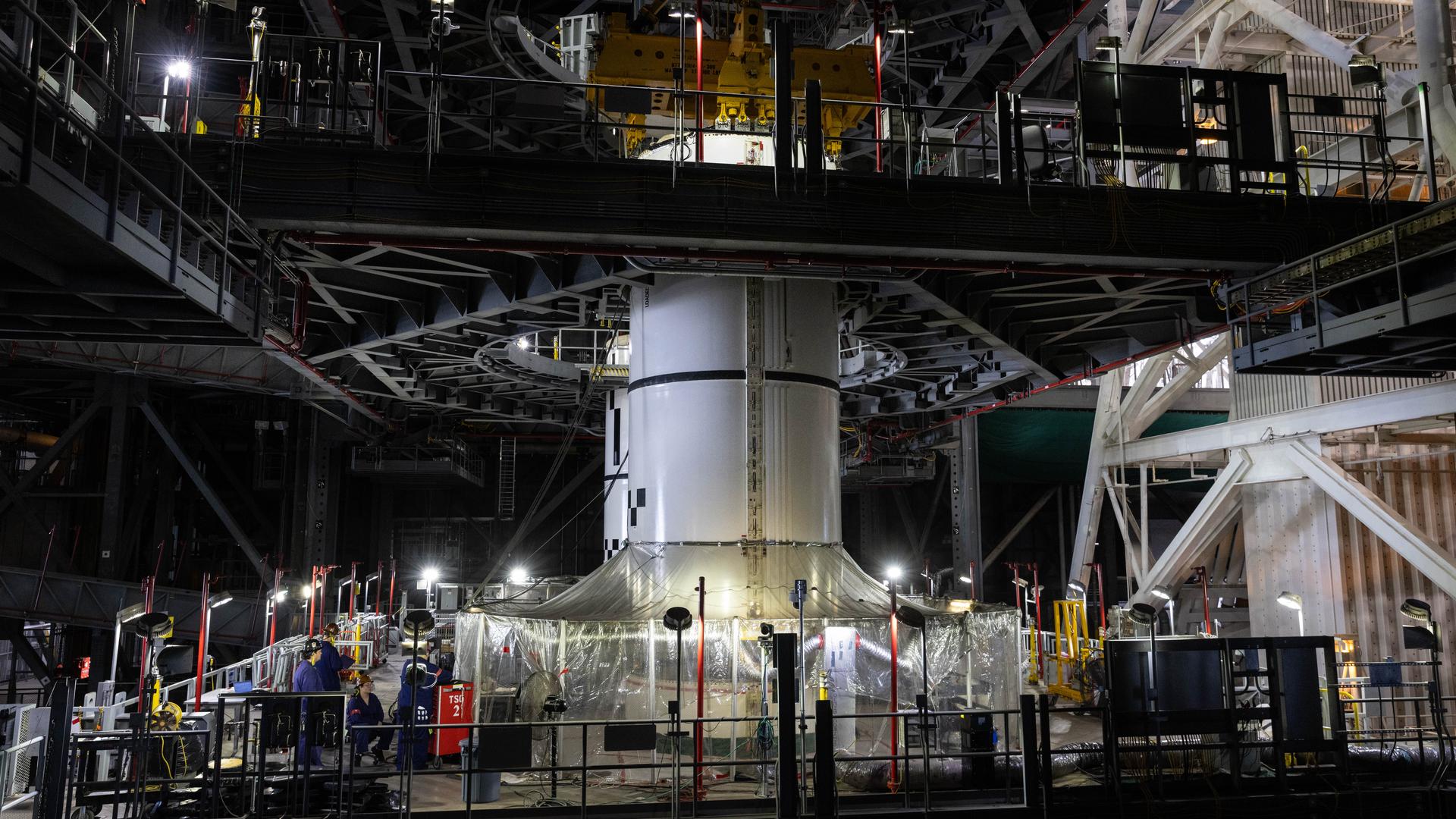
In High Bay 3 of the Vehicle Assembly Building at NASA’s Kennedy Space Center in Florida, the right aft center booster segment for Artemis III is lowered onto its aft assembly segment to prepare for integration on the mobile launcher for the SLS (Space Launch System) rocket on Wednesday, Aug. 12, 2026. The twin boosters, comprising of five segments each manufactured by Northrop Grumman in Utah, will provide more than 75 percent of the SLS rocket’s total thrust at launch. The Artemis III mission will launch crew in the Orion spacecraft on top of the SLS rocket to test rendezvous and docking capabilities between Orion and commercial spacecraft needed to land astronauts on the Moon.
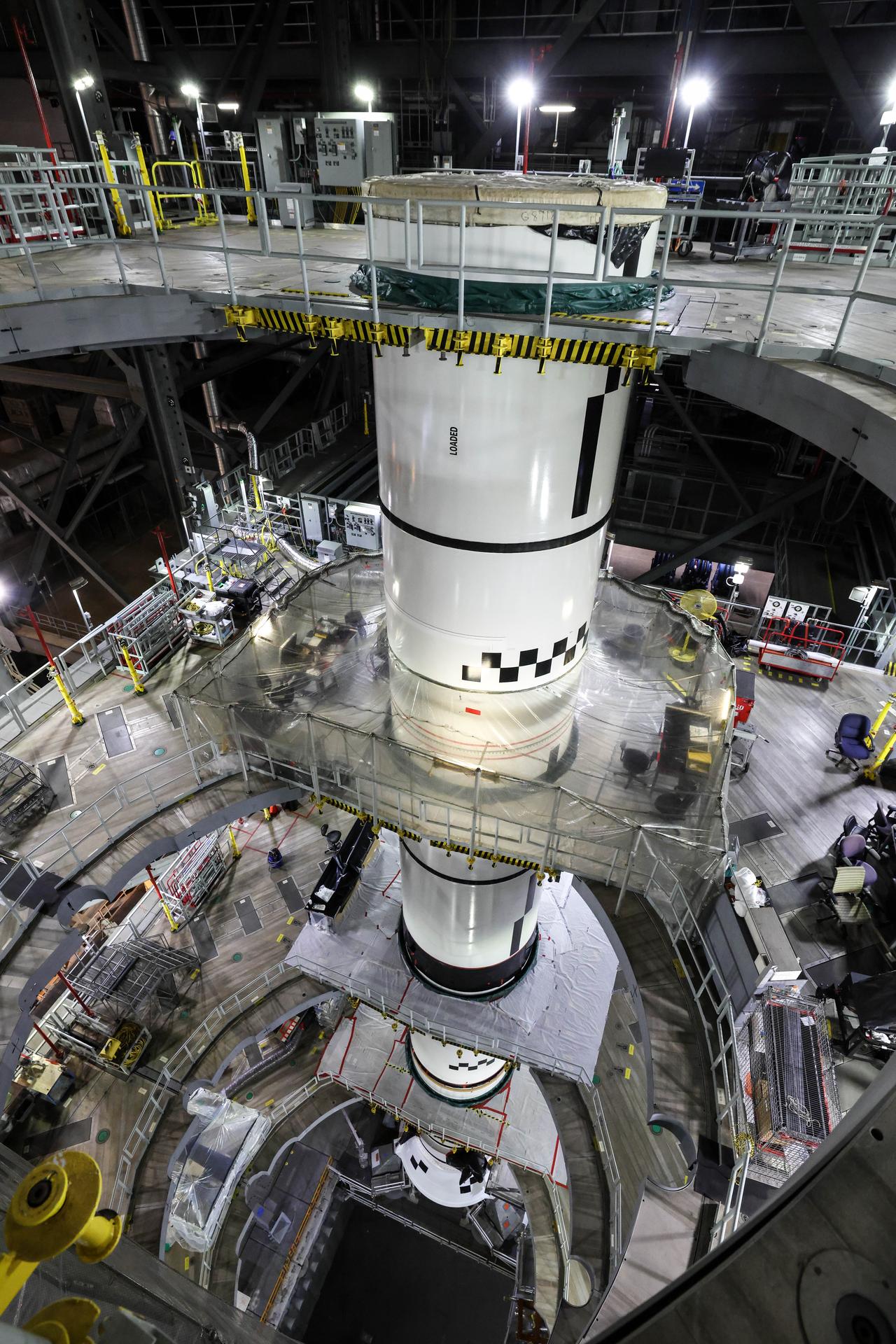
In High Bay 3 of the Vehicle Assembly Building at NASA’s Kennedy Space Center in Florida, the right forward center booster for Artemis III is integrated onto the right booster segments on the mobile launcher for the SLS (Space Launch System) rocket on Friday, Sept. 11, 2026. The twin boosters, comprising of five segments each manufactured by Northrop Grumman in Utah, will provide more than 75 percent of the SLS rocket’s total thrust at launch. The Artemis III mission will launch crew in the Orion spacecraft on top of the SLS rocket to test rendezvous and docking capabilities between Orion and commercial spacecraft needed to land astronauts on the Moon.
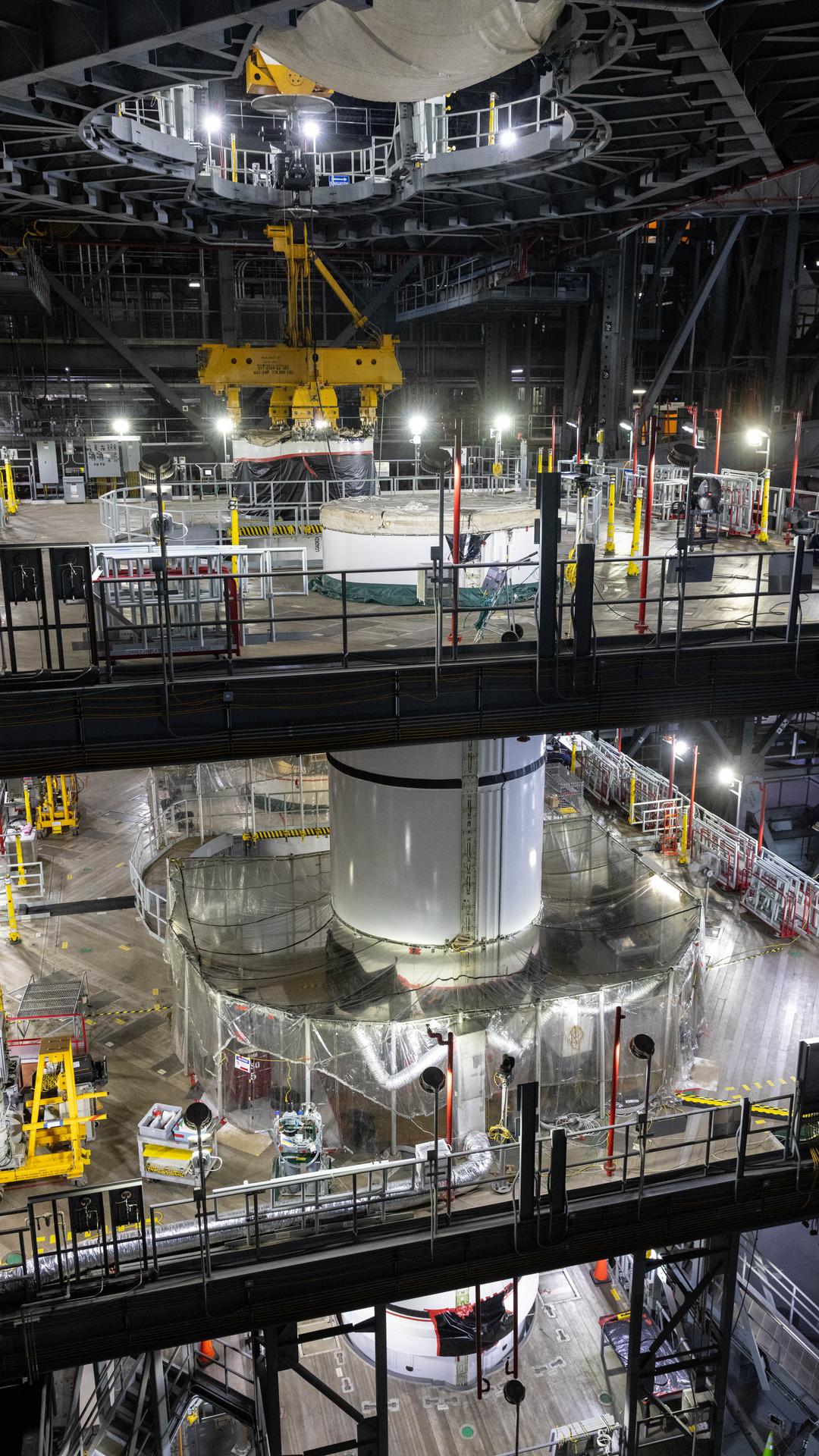
In High Bay 3 of the Vehicle Assembly Building at NASA’s Kennedy Space Center in Florida, the left and right aft center booster segments for Artemis III are lowered onto their aft assembly segments for integration on the mobile launcher for the SLS (Space Launch System) rocket on Wednesday, Aug. 12, 2026. The twin boosters, comprising of five segments each manufactured by Northrop Grumman in Utah, will provide more than 75 percent of the SLS rocket’s total thrust at launch. The Artemis III mission will launch crew in the Orion spacecraft on top of the SLS rocket to test rendezvous and docking capabilities between Orion and commercial spacecraft needed to land astronauts on the Moon.
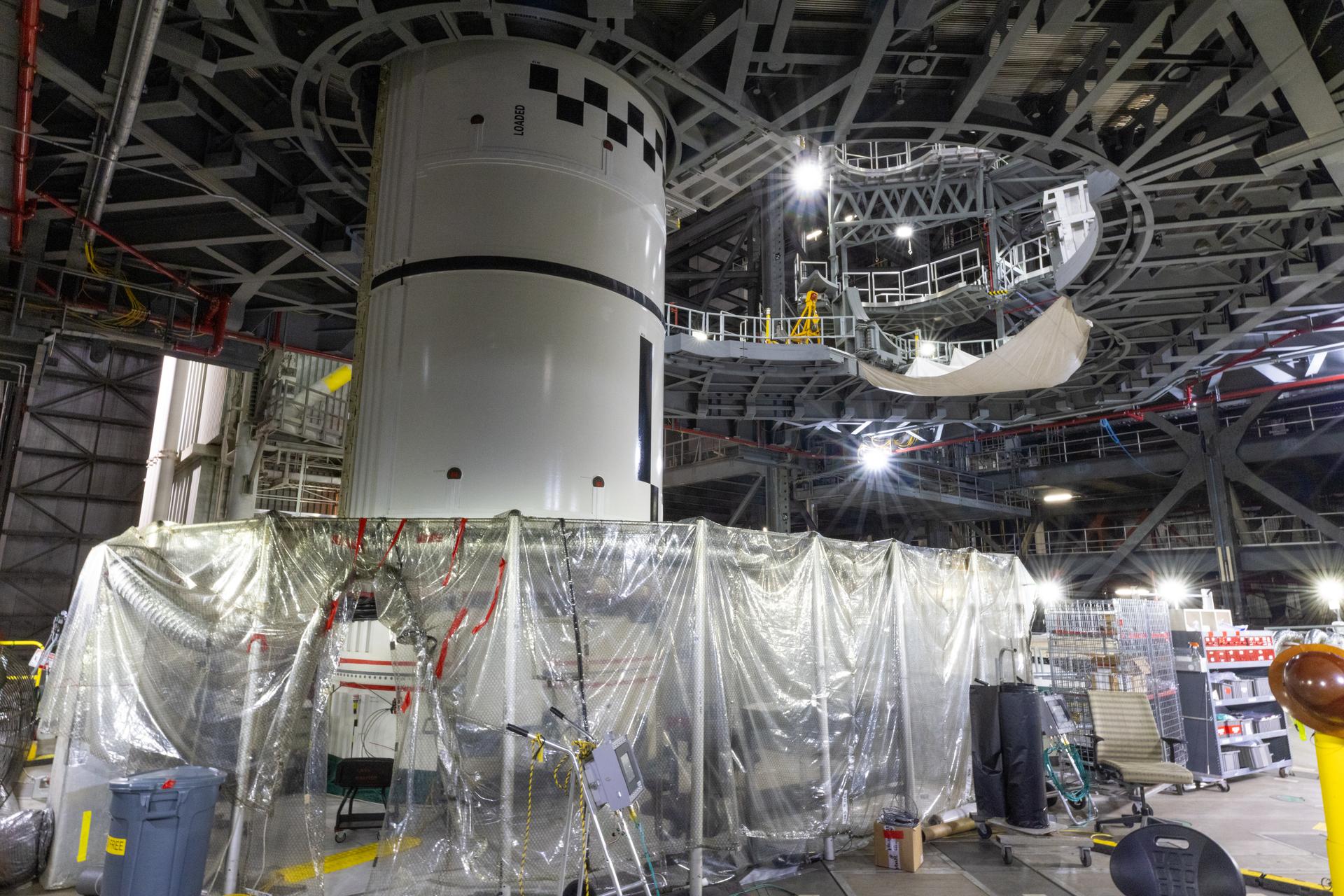
Technicians integrate the left forward booster segment for NASA’s Artemis III SLS (Space Launch System) rocket onto the left booster segments atop the mobile launcher in High Bay 3 of the Vehicle Assembly Building at NASA’s Kennedy Space Center in Florida on Thursday, Sept. 17, 2026. The SLS rocket’s twin boosters, each made up of five segments manufactured by Northrop Grumman in Utah, will provide more than 75 percent of the rocket’s total thrust at launch. The Artemis III mission will launch crew in the Orion spacecraft on top of the SLS rocket to test rendezvous and docking capabilities between Orion and commercial spacecraft needed to land astronauts on the Moon.
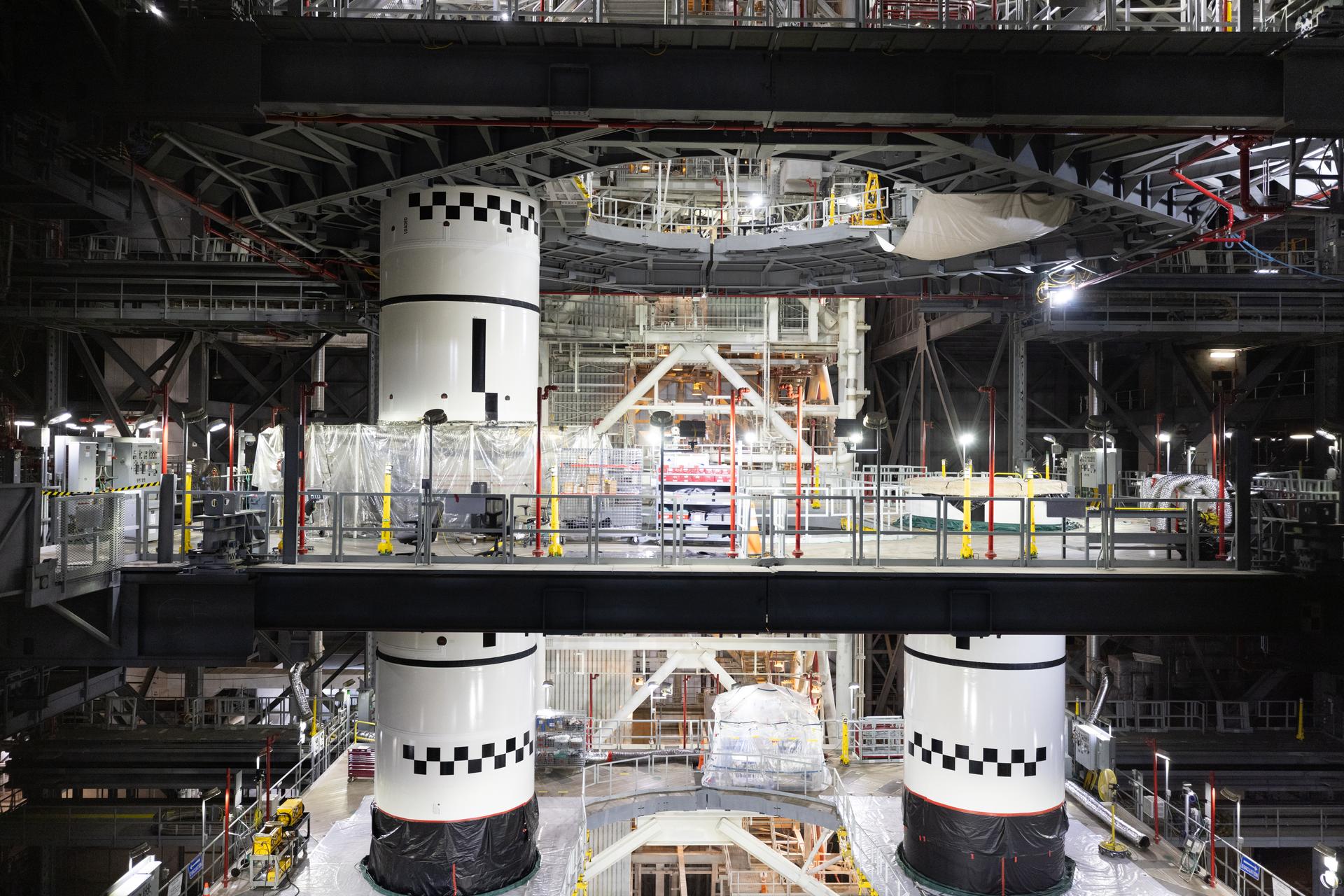
Technicians integrate the left forward booster segment for NASA’s Artemis III SLS (Space Launch System) rocket onto the left booster segments atop the mobile launcher in High Bay 3 of the Vehicle Assembly Building at NASA’s Kennedy Space Center in Florida on Thursday, Sept. 17, 2026. The SLS rocket’s twin boosters, each made up of five segments manufactured by Northrop Grumman in Utah, will provide more than 75 percent of the rocket’s total thrust at launch. The Artemis III mission will launch crew in the Orion spacecraft on top of the SLS rocket to test rendezvous and docking capabilities between Orion and commercial spacecraft needed to land astronauts on the Moon.
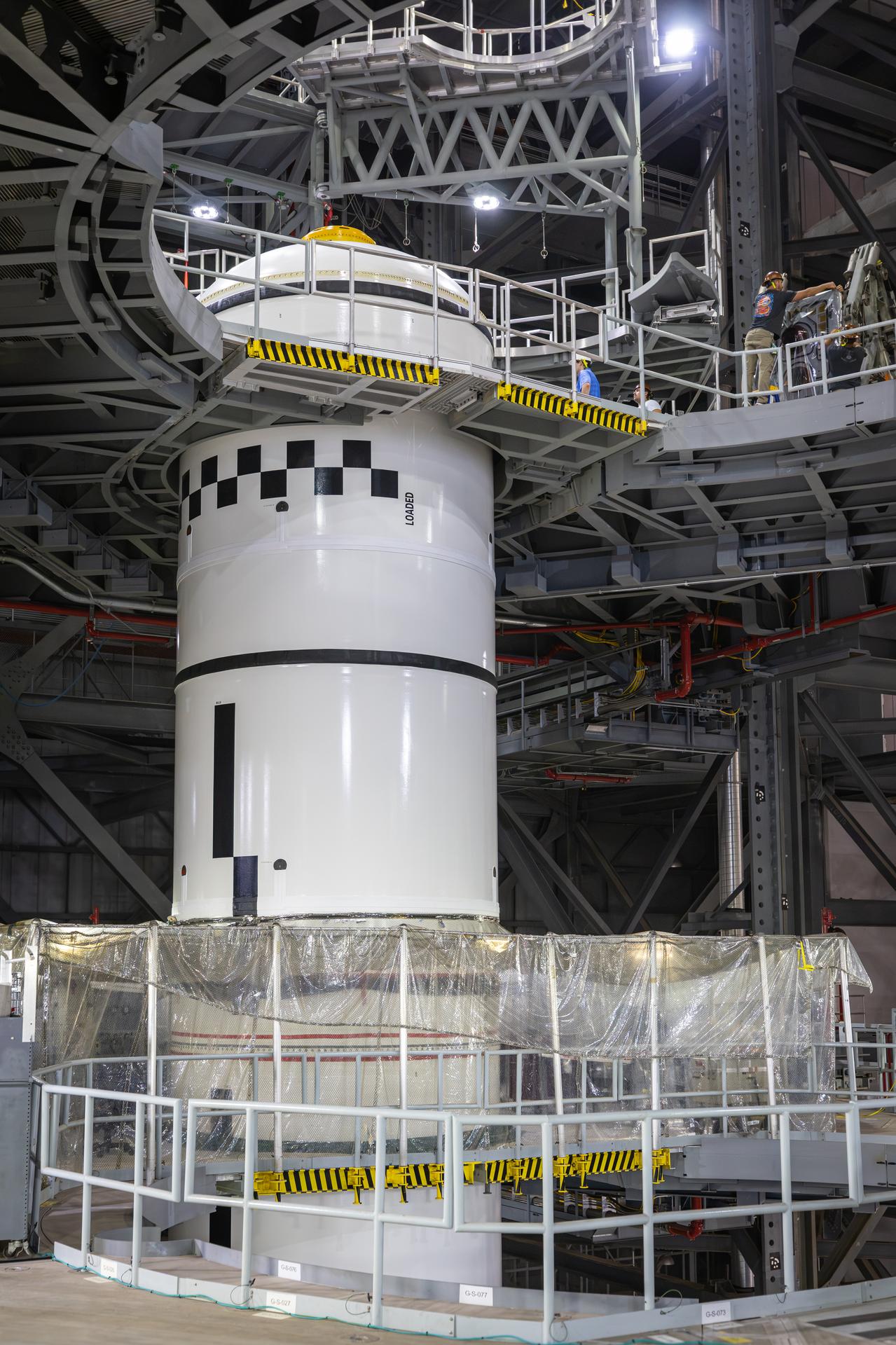
Technicians integrate the left forward booster segment for NASA’s Artemis III SLS (Space Launch System) rocket onto the left booster segments atop the mobile launcher in High Bay 3 of the Vehicle Assembly Building at NASA’s Kennedy Space Center in Florida on Thursday, Sept. 17, 2026. The SLS rocket’s twin boosters, each made up of five segments manufactured by Northrop Grumman in Utah, will provide more than 75 percent of the rocket’s total thrust at launch. The Artemis III mission will launch crew in the Orion spacecraft on top of the SLS rocket to test rendezvous and docking capabilities between Orion and commercial spacecraft needed to land astronauts on the Moon.
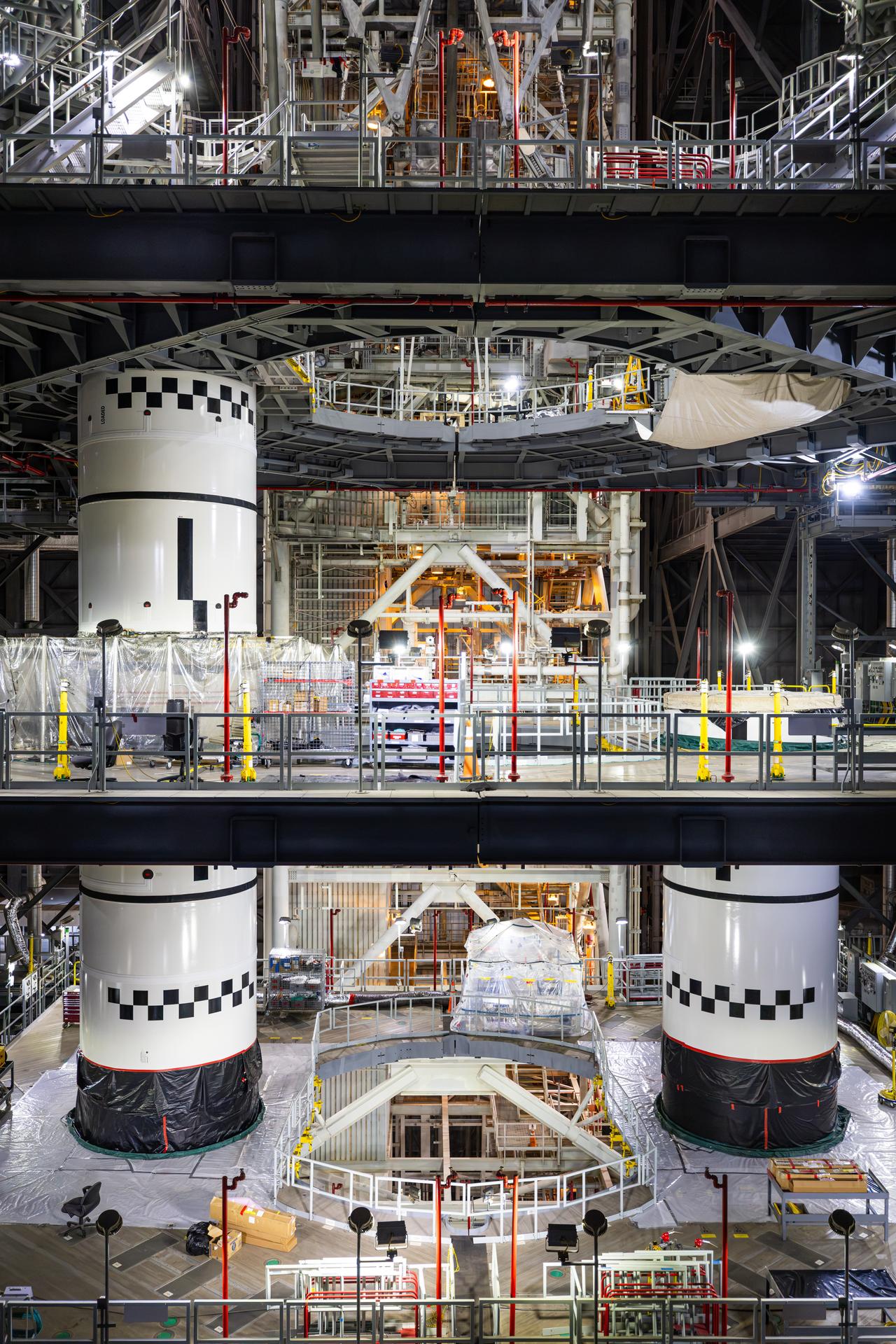
Technicians integrate the left forward booster segment for NASA’s Artemis III SLS (Space Launch System) rocket onto the left booster segments atop the mobile launcher in High Bay 3 of the Vehicle Assembly Building at NASA’s Kennedy Space Center in Florida on Thursday, Sept. 17, 2026. The SLS rocket’s twin boosters, each made up of five segments manufactured by Northrop Grumman in Utah, will provide more than 75 percent of the rocket’s total thrust at launch. The Artemis III mission will launch crew in the Orion spacecraft on top of the SLS rocket to test rendezvous and docking capabilities between Orion and commercial spacecraft needed to land astronauts on the Moon.
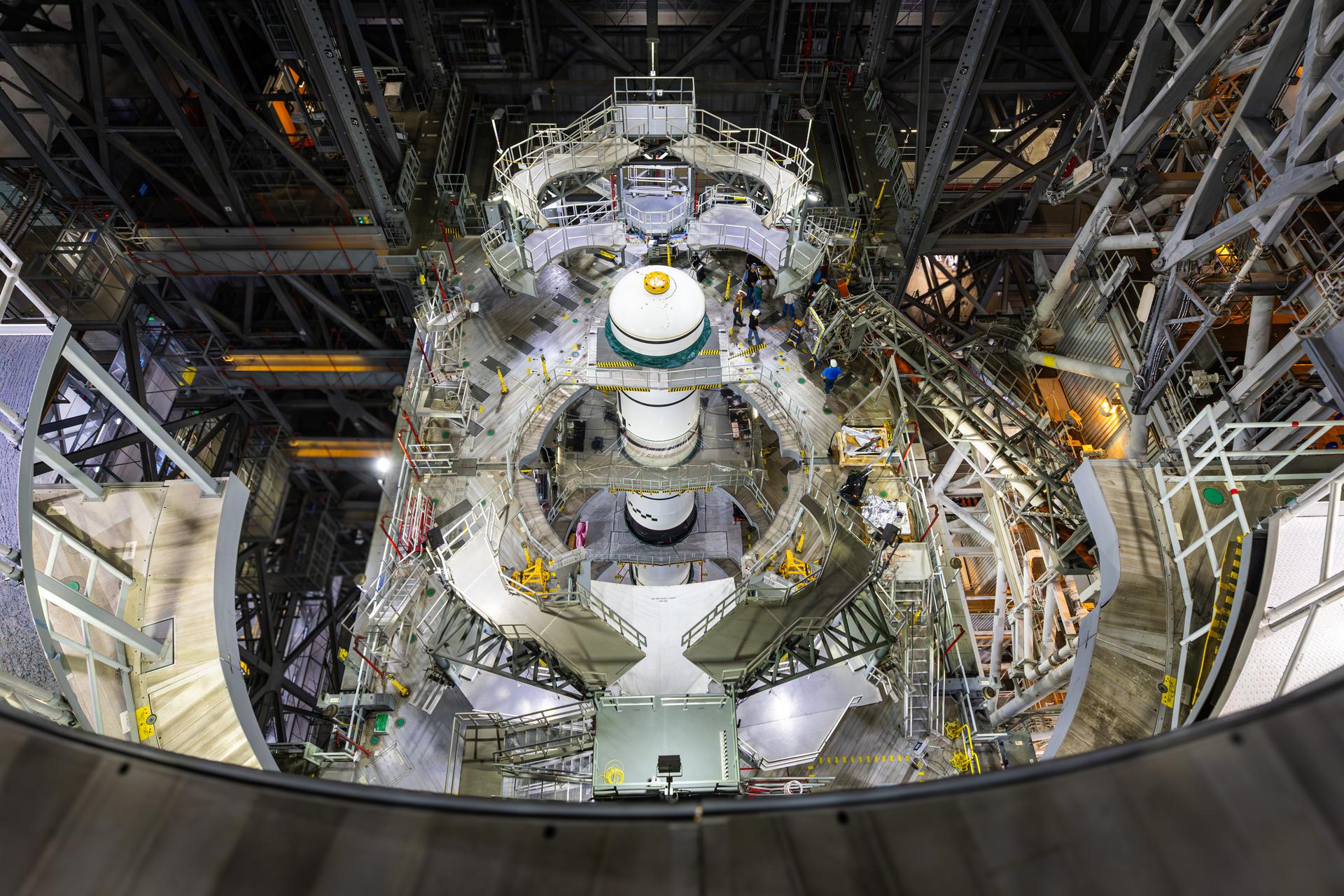
Technicians integrate the left forward booster segment for NASA’s Artemis III SLS (Space Launch System) rocket onto the left booster segments atop the mobile launcher in High Bay 3 of the Vehicle Assembly Building at NASA’s Kennedy Space Center in Florida on Thursday, Sept. 17, 2026. The SLS rocket’s twin boosters, each made up of five segments manufactured by Northrop Grumman in Utah, will provide more than 75 percent of the rocket’s total thrust at launch. The Artemis III mission will launch crew in the Orion spacecraft on top of the SLS rocket to test rendezvous and docking capabilities between Orion and commercial spacecraft needed to land astronauts on the Moon.
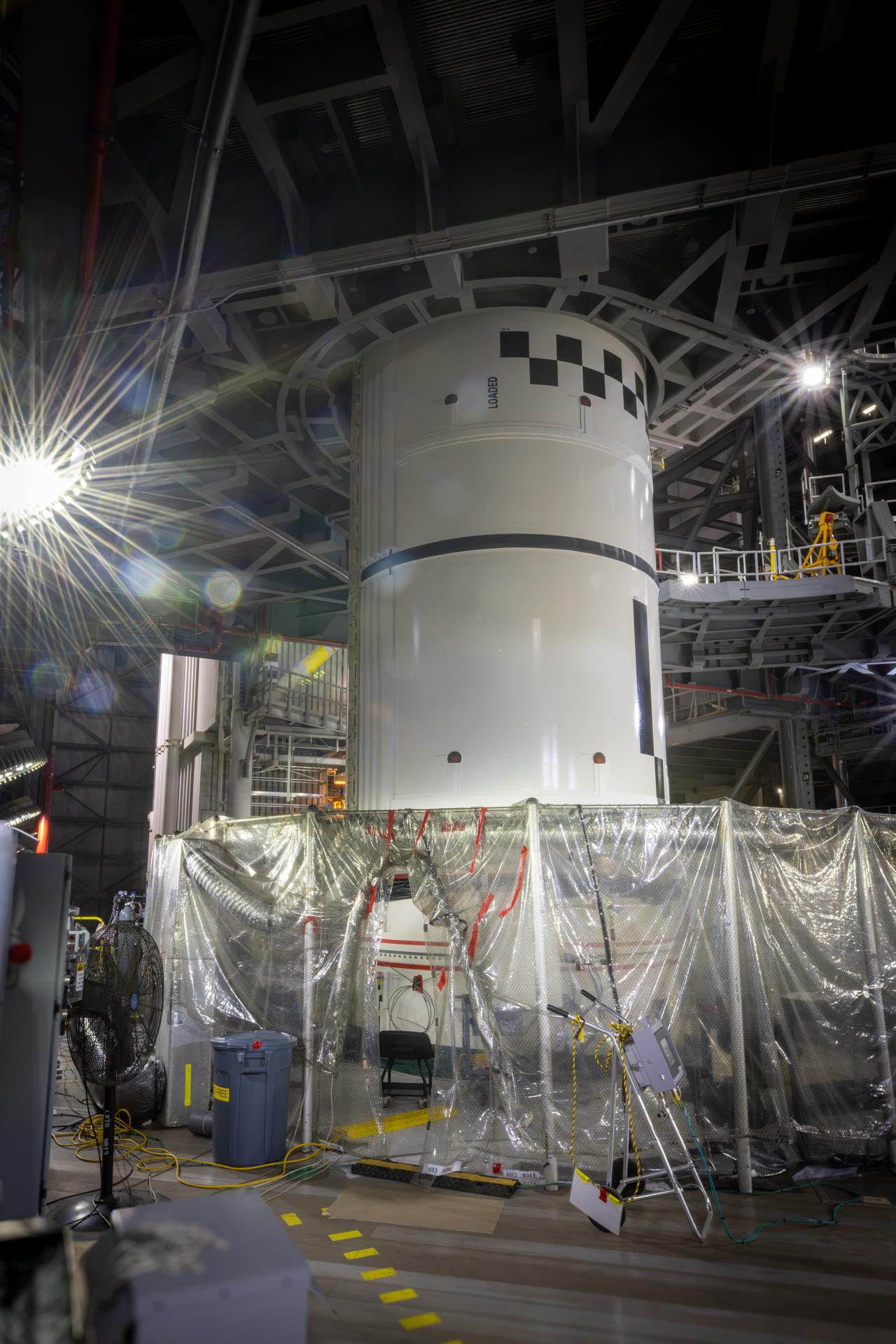
Technicians integrate the left forward booster segment for NASA’s Artemis III SLS (Space Launch System) rocket onto the left booster segments atop the mobile launcher in High Bay 3 of the Vehicle Assembly Building at NASA’s Kennedy Space Center in Florida on Thursday, Sept. 17, 2026. The SLS rocket’s twin boosters, each made up of five segments manufactured by Northrop Grumman in Utah, will provide more than 75 percent of the rocket’s total thrust at launch. The Artemis III mission will launch crew in the Orion spacecraft on top of the SLS rocket to test rendezvous and docking capabilities between Orion and commercial spacecraft needed to land astronauts on the Moon.
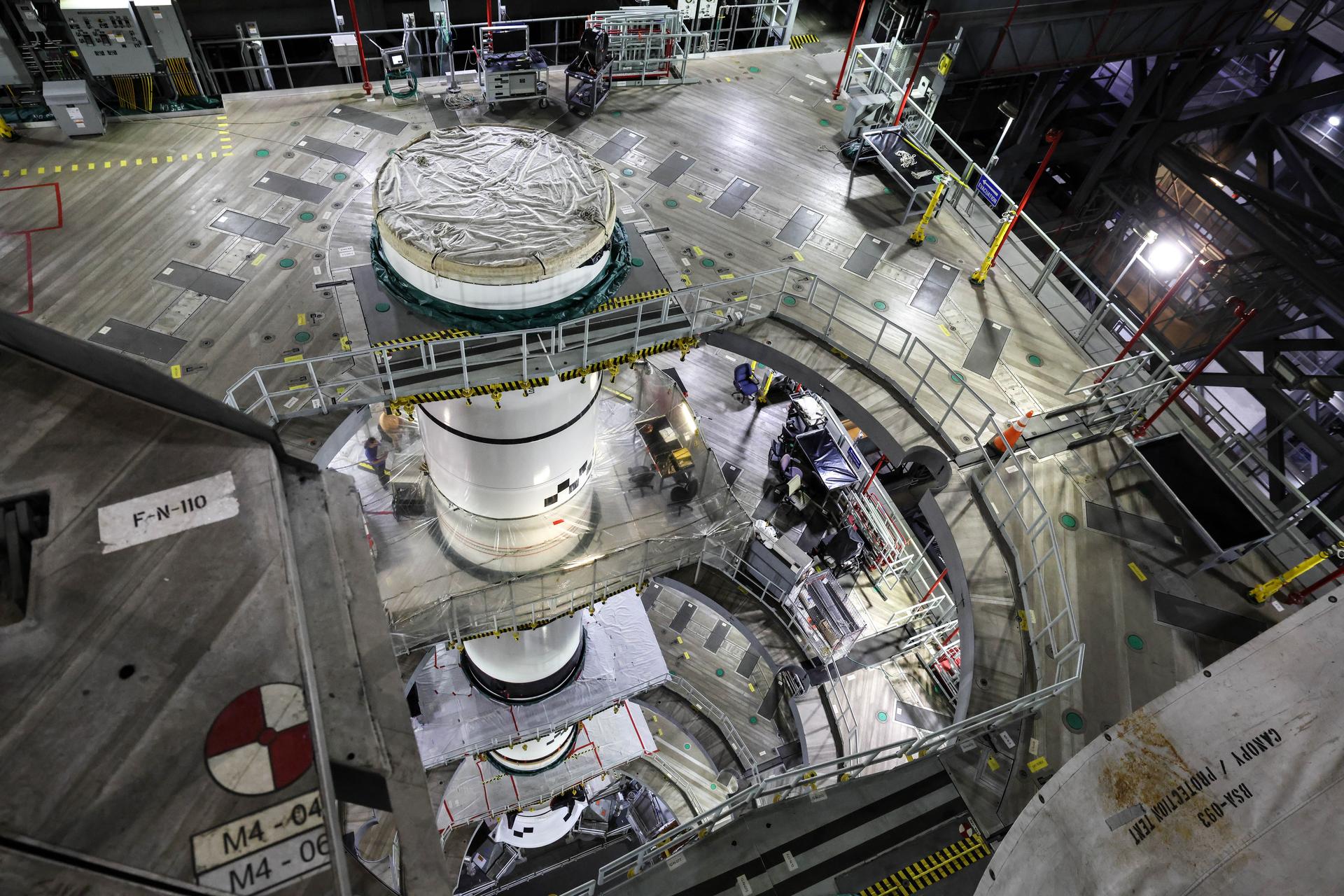
In High Bay 3 of the Vehicle Assembly Building at NASA’s Kennedy Space Center in Florida, the right forward center booster for Artemis III is integrated onto the right booster segments on the mobile launcher for the SLS (Space Launch System) rocket on Friday, Sept. 11, 2026. The twin boosters, comprising of five segments each manufactured by Northrop Grumman in Utah, will provide more than 75 percent of the SLS rocket’s total thrust at launch. The Artemis III mission will launch crew in the Orion spacecraft on top of the SLS rocket to test rendezvous and docking capabilities between Orion and commercial spacecraft needed to land astronauts on the Moon.
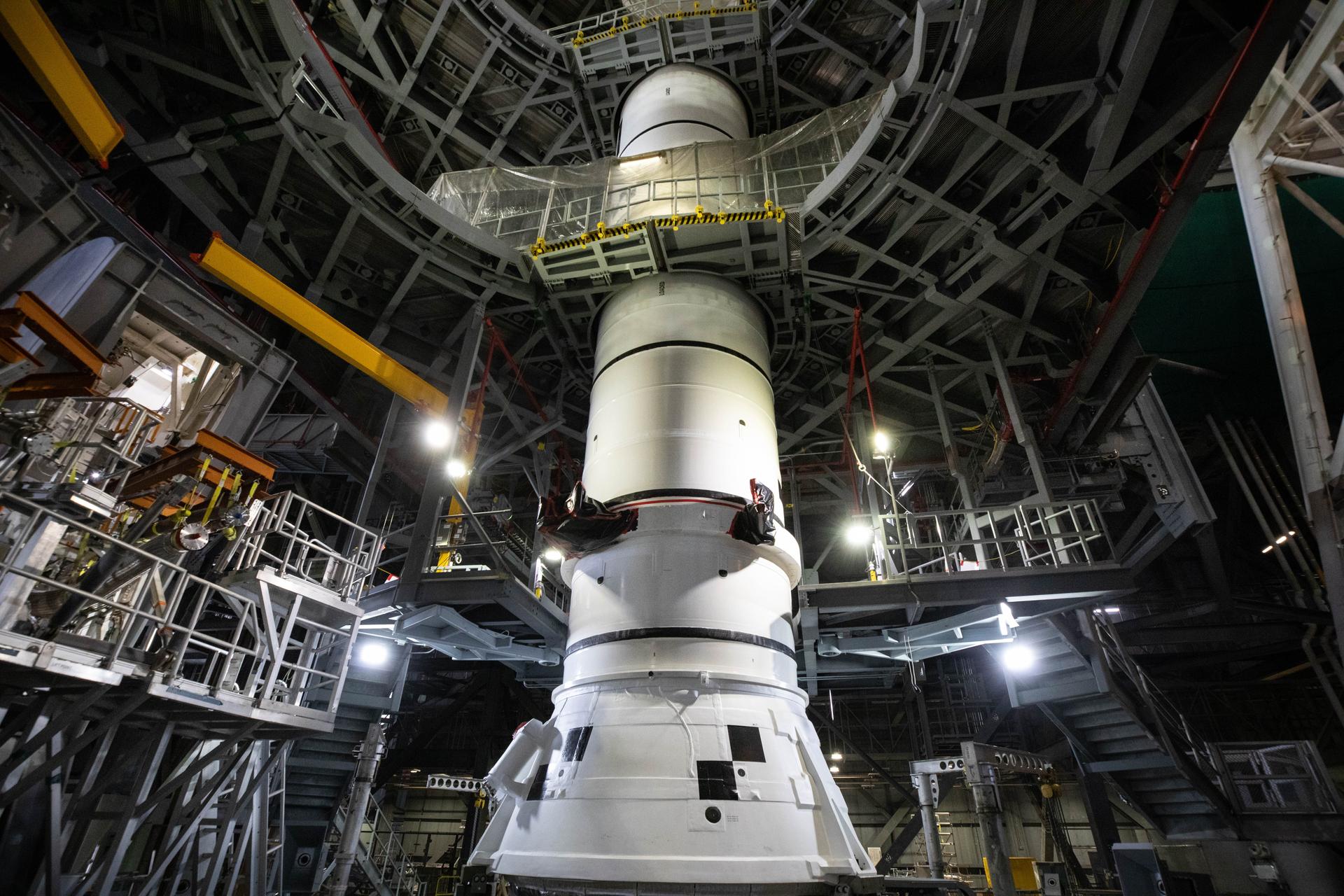
In High Bay 3 of the Vehicle Assembly Building at NASA’s Kennedy Space Center in Florida, the left aft center booster segment for Artemis III is lowered onto its aft assembly segment to prepare for integration on the mobile launcher for the SLS (Space Launch System) rocket on Wednesday, Aug. 12, 2026. The twin boosters, comprising of five segments each manufactured by Northrop Grumman in Utah, will provide more than 75 percent of the SLS rocket’s total thrust at launch. The Artemis III mission will launch crew in the Orion spacecraft on top of the SLS rocket to test rendezvous and docking capabilities between Orion and commercial spacecraft needed to land astronauts on the Moon.
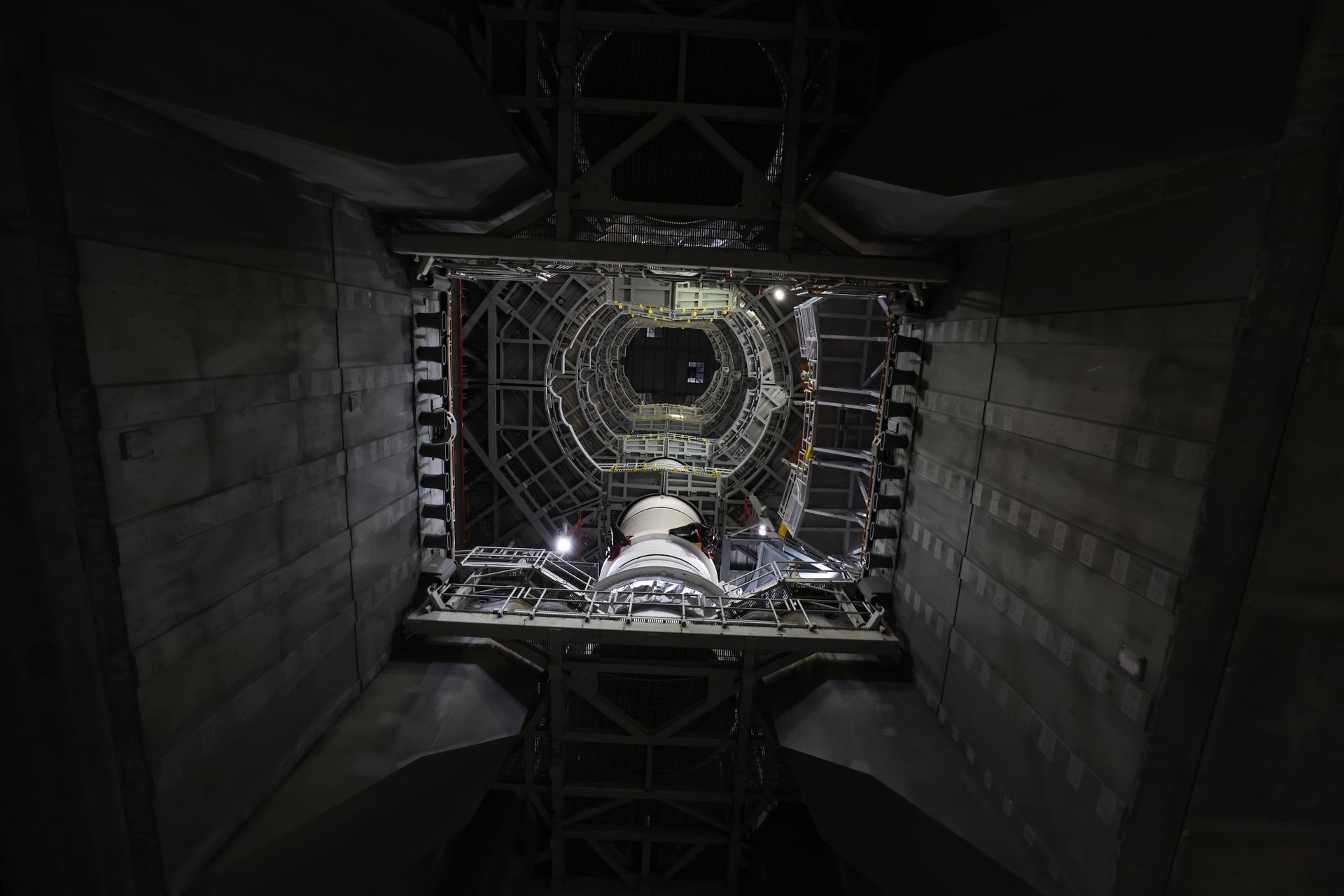
In High Bay 3 of the Vehicle Assembly Building at NASA’s Kennedy Space Center in Florida, portions of the solid rocket booster right forward center booster for Artemis III is integrated onto the right booster segments on the mobile launcher for the SLS (Space Launch System) rocket on Friday, Sept. 11, 2026. The twin boosters, comprising of five segments each manufactured by Northrop Grumman in Utah, will provide more than 75 percent of the SLS rocket’s total thrust at launch. The Artemis III mission will launch crew in the Orion spacecraft on top of the SLS rocket to test rendezvous and docking capabilities between Orion and commercial spacecraft needed to land astronauts on the Moon.
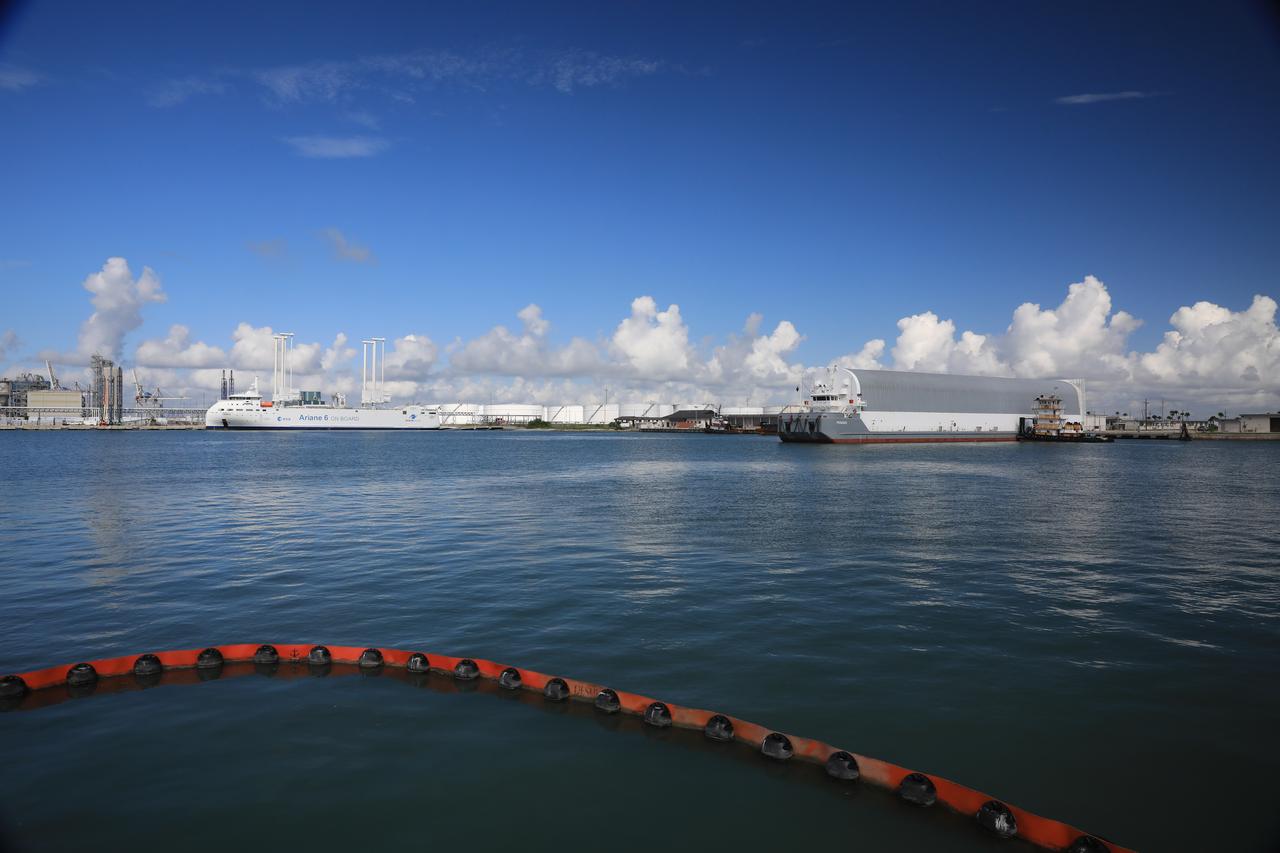
NASA’s Pegasus barge, carrying several pieces of the Artemis campaign hardware, along with the ESA (European Space Agency) ship carrying European Service Module 3 for NASA’s Artemis III mission arrives at Port Canaveral on Tuesday, Sept. 3, 2024, awaiting transportation to NASA’s Kennedy Space Center in Florida. Through the Artemis campaign, we are exploring the Moon for scientific discovery, technology advancement, and to learn how to live and work on another world.
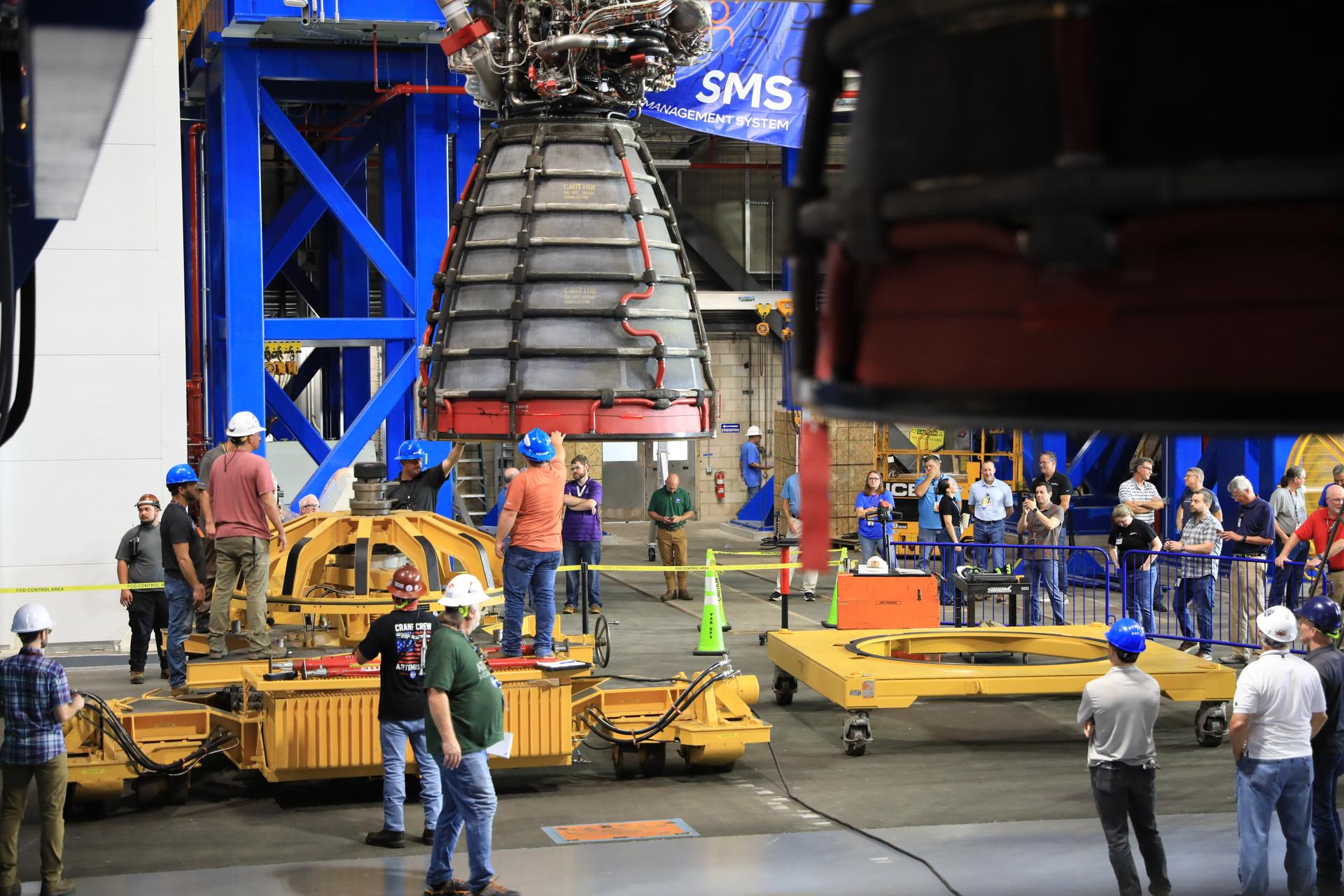
Technicians lift and transfer the #2 RS-25 SLS (Space Launch System) rocket engine (back) to the work stand. Visible in the foreground is the #3 engine already integrated with the Artemis III core stage rocket on Tuesday, Aug. 25, 2026, inside the Vehicle Assembly Building at NASA’s Kennedy Space Center in Florida. During Artemis III, the four RS‑25 engines will launch the Orion spacecraft and its crew of four into low Earth orbit, generating more than two million pounds of thrust at liftoff.
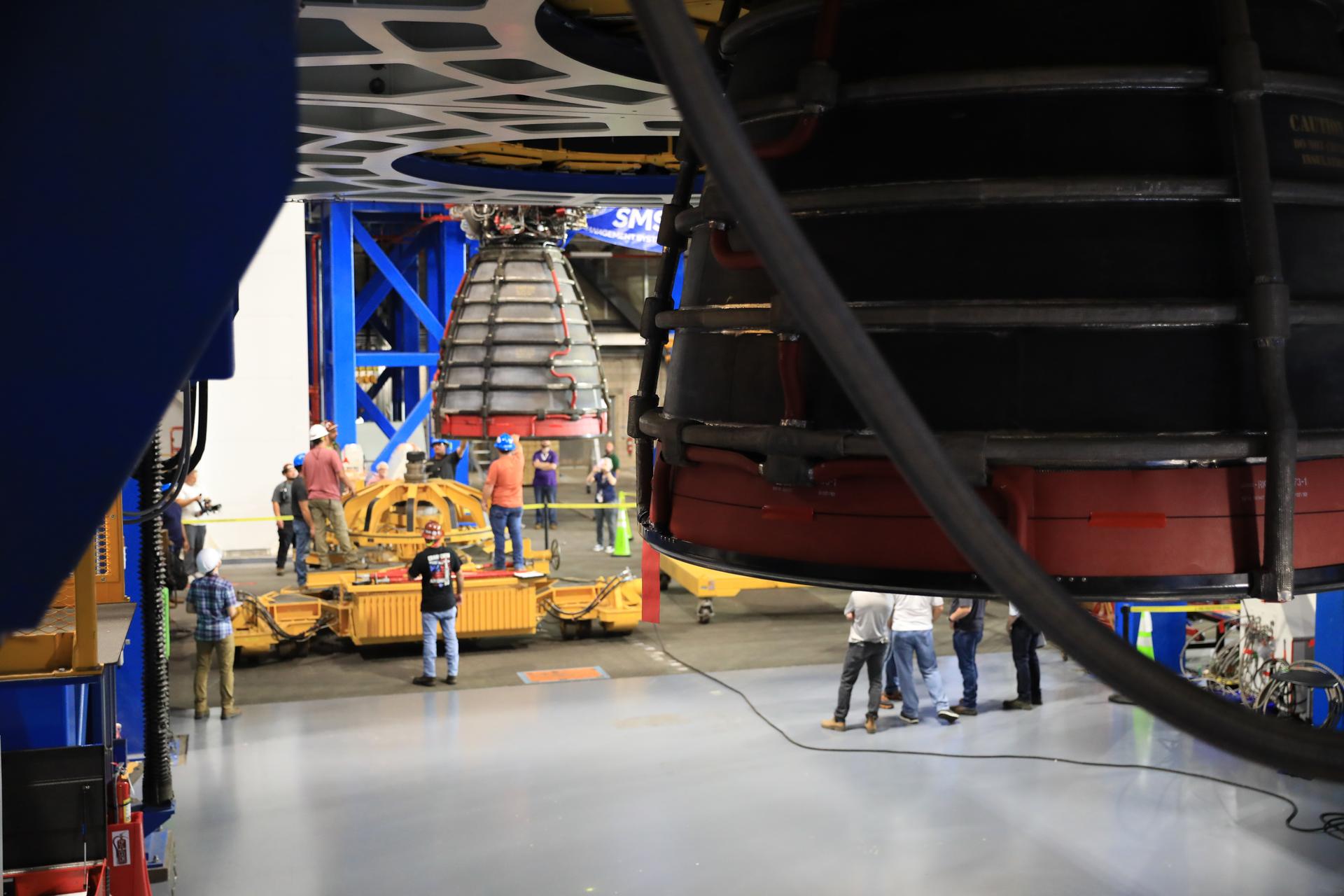
Technicians lift and transfer the #2 RS-25 SLS (Space Launch System) rocket engine (back) to the work stand. Visible in the foreground is the #3 engine already integrated with the Artemis III core stage rocket on Tuesday, Aug. 25, 2026, inside the Vehicle Assembly Building at NASA’s Kennedy Space Center in Florida. During Artemis III, the four RS‑25 engines will launch the Orion spacecraft and its crew of four into low Earth orbit, generating more than two million pounds of thrust at liftoff.
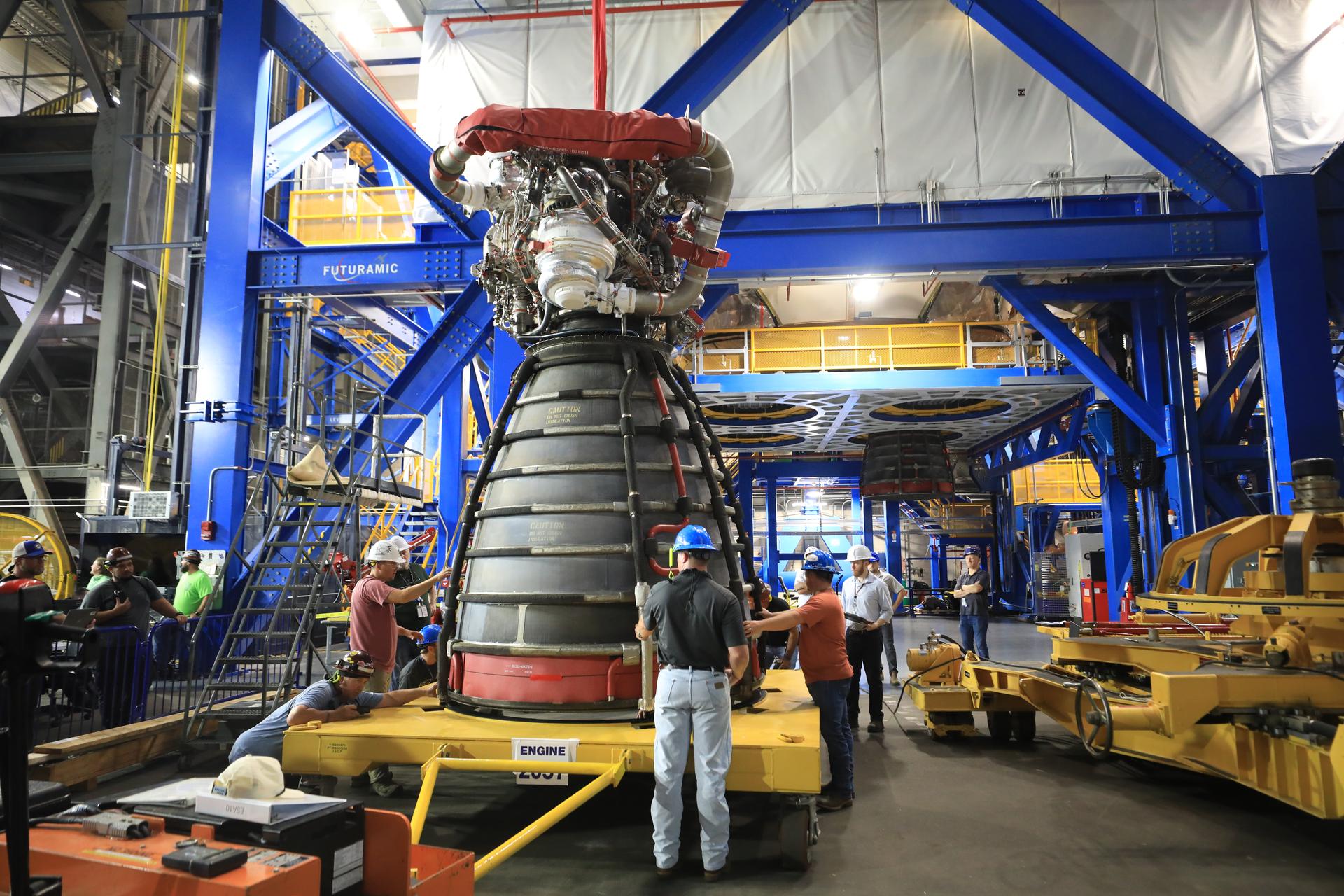
Technicians prepare to transfer the #2 RS-25 SLS (Space Launch System) rocket engine (front) to the work stand with the #3 engine (back) for integration with the Artemis III core stage rocket on Tuesday, Aug. 25, 2026, inside the Vehicle Assembly Building at NASA’s Kennedy Space Center in Florida. During Artemis III, the four RS‑25 engines will launch the Orion spacecraft and its crew of four into low Earth orbit, generating more than two million pounds of thrust at liftoff.
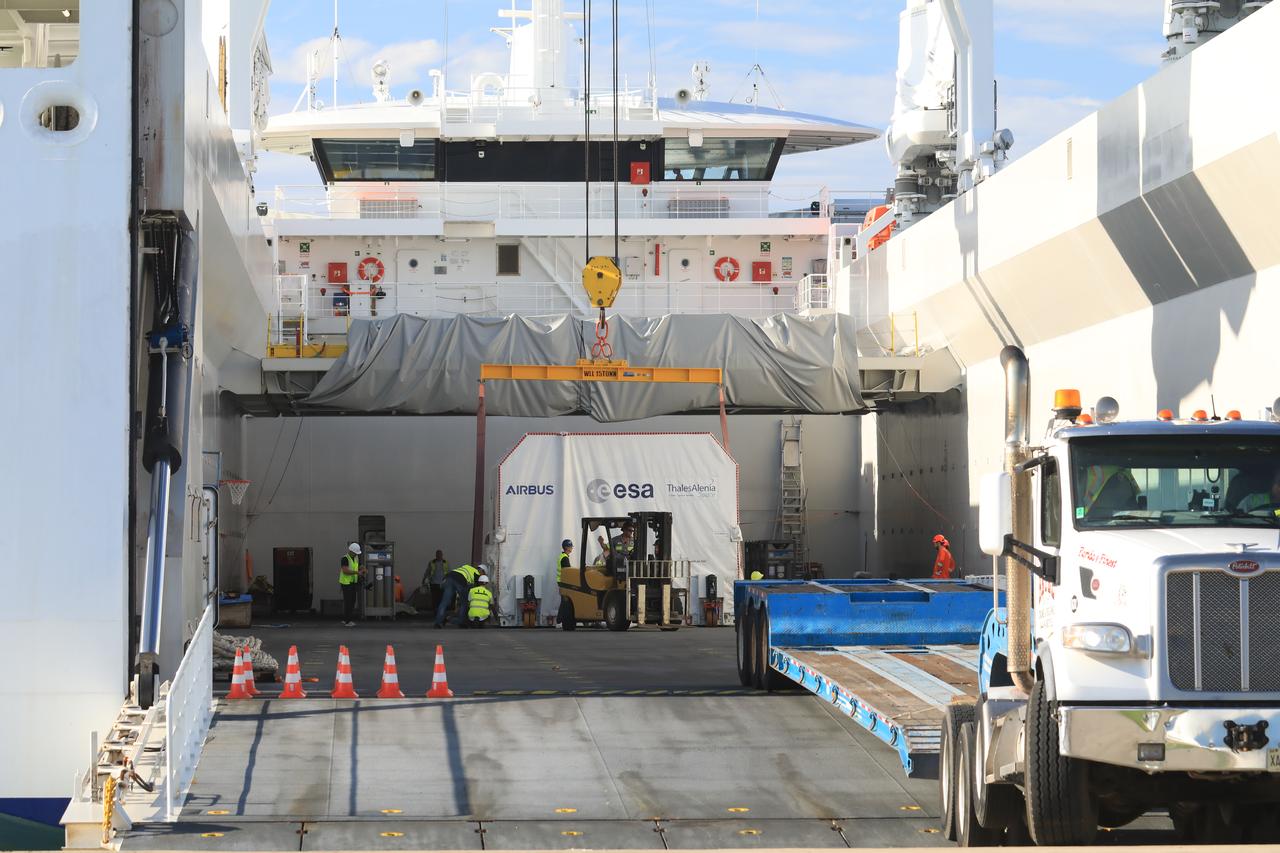
The transport carrier containing the European Service Module 3 for NASA’s Artemis III mission arrives at Port Canaveral on Tuesday, Sept. 3, 2024, awaiting transportation to NASA’s Kennedy Space Center in Florida. The European Service Module 3, which is assembled by Airbus in Bremen, Germany, traveled 10 days across the Atlantic Ocean via the Canopee ship. The European Service Module 3 provides the spacecraft’s propulsion, thermal control, electrical power, and life support systems. Artemis III will send four astronauts to the lunar orbit where two crew members will spend a week near the South Pole of the Moon conducting new science.
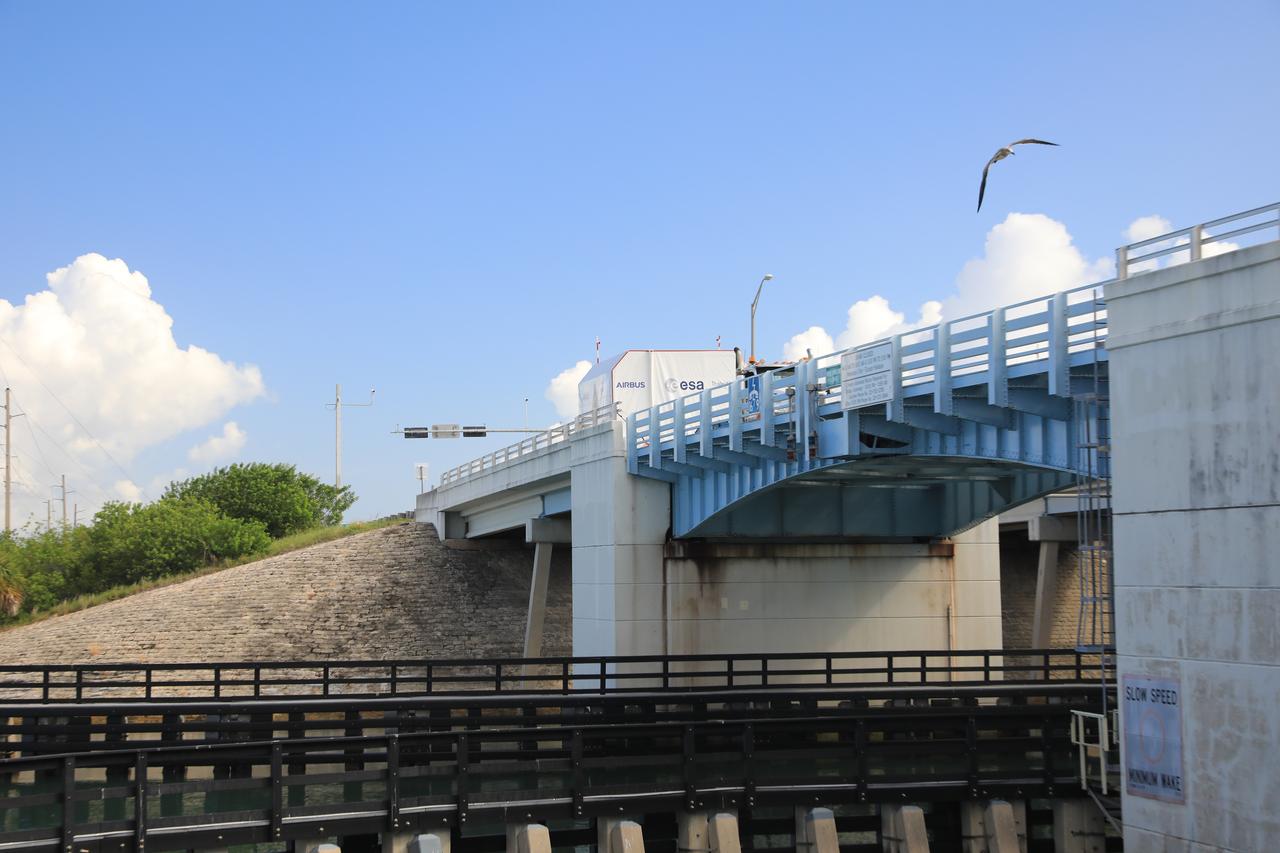
The transport carrier containing the European Service Module 3 for NASA’s Artemis III mission arrives at Port Canaveral on Tuesday, Sept. 3, 2024, awaiting transportation to NASA’s Kennedy Space Center in Florida. The European Service Module 3, which is assembled by Airbus in Bremen, Germany, traveled 10 days across the Atlantic Ocean via the Canopee ship. The European Service Module 3 provides the spacecraft’s propulsion, thermal control, electrical power, and life support systems. Artemis III will send four astronauts to the lunar orbit where two crew members will spend a week near the South Pole of the Moon conducting new science.
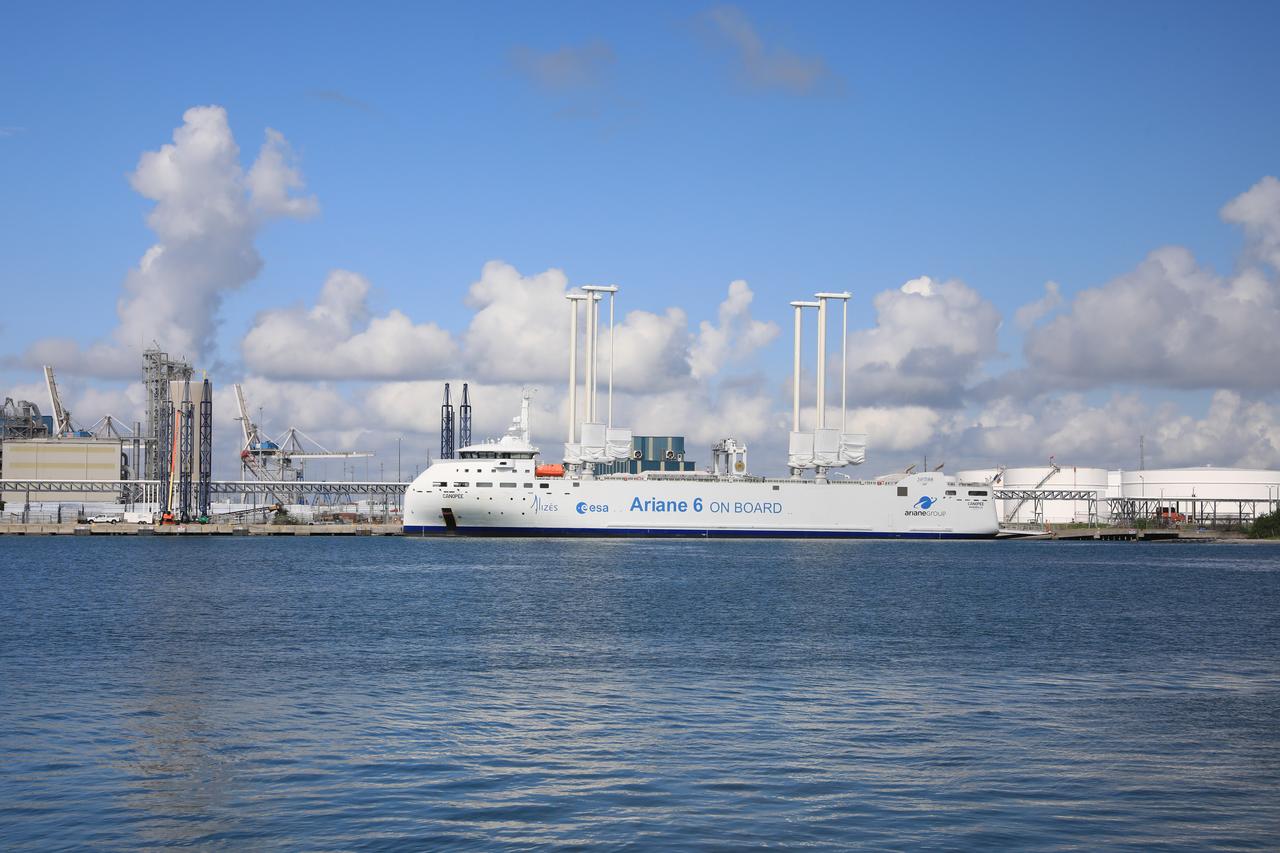
The European Service Module 3 for NASA’s Artemis III mission arrives at Port Canaveral on Tuesday, Sept. 3, 2024, awaiting transportation to NASA’s Kennedy Space Center in Florida. The European Service Module 3, which is assembled by Airbus in Bremen, Germany, traveled across the Atlantic Ocean by the ESA (European Space Agency) aboard the Canopee ship. The European Service Module 3 provides the spacecraft’s propulsion, thermal control, electrical power, and life support systems. Artemis III will send four astronauts to the lunar orbit where two crew members will spend a week near the South Pole of the Moon conducting new science.
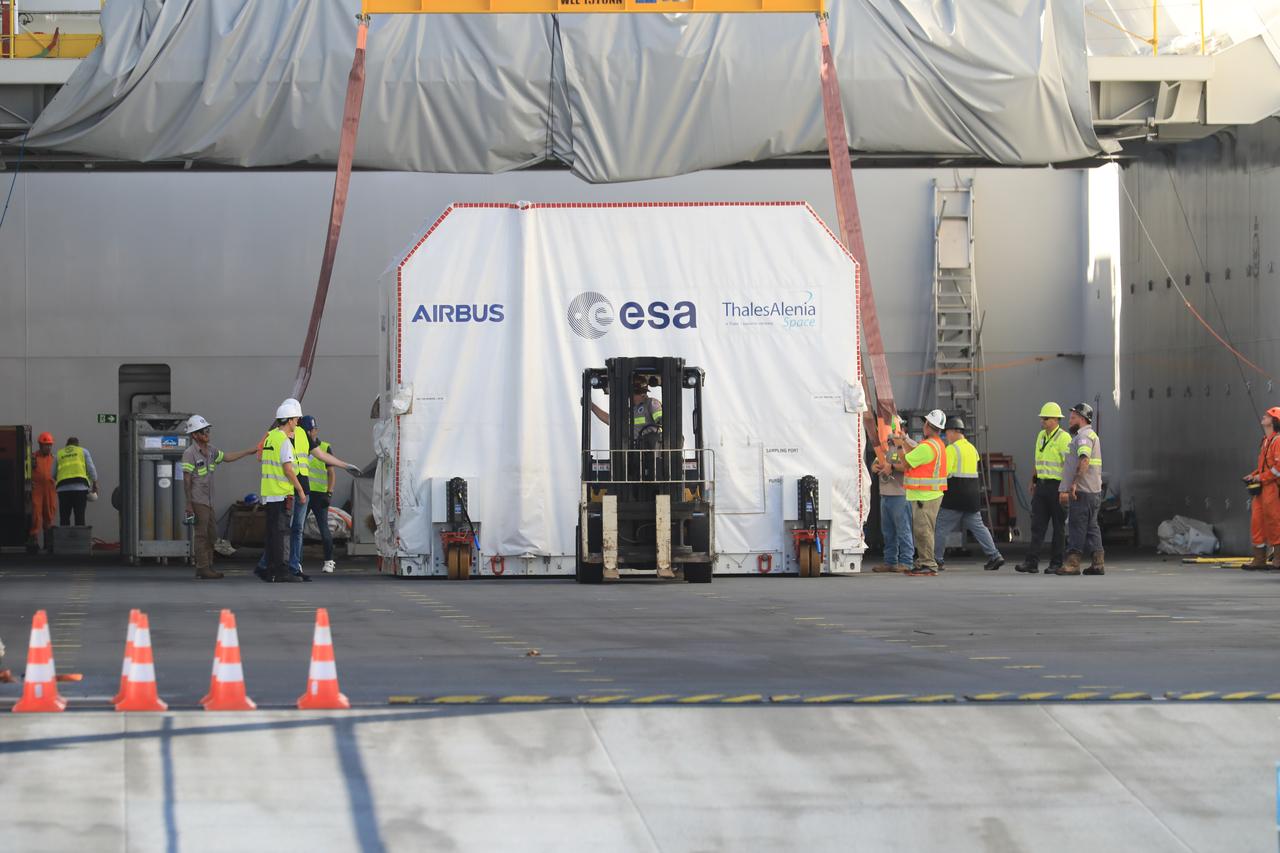
The transport carrier containing the European Service Module 3 for NASA’s Artemis III mission arrives at Port Canaveral on Tuesday, Sept. 3, 2024, awaiting transportation to NASA’s Kennedy Space Center in Florida. The European Service Module 3, which is assembled by Airbus in Bremen, Germany, traveled 10 days across the Atlantic Ocean via the Canopee ship. The European Service Module 3 provides the spacecraft’s propulsion, thermal control, electrical power, and life support systems. Artemis III will send four astronauts to the lunar orbit where two crew members will spend a week near the South Pole of the Moon conducting new science.
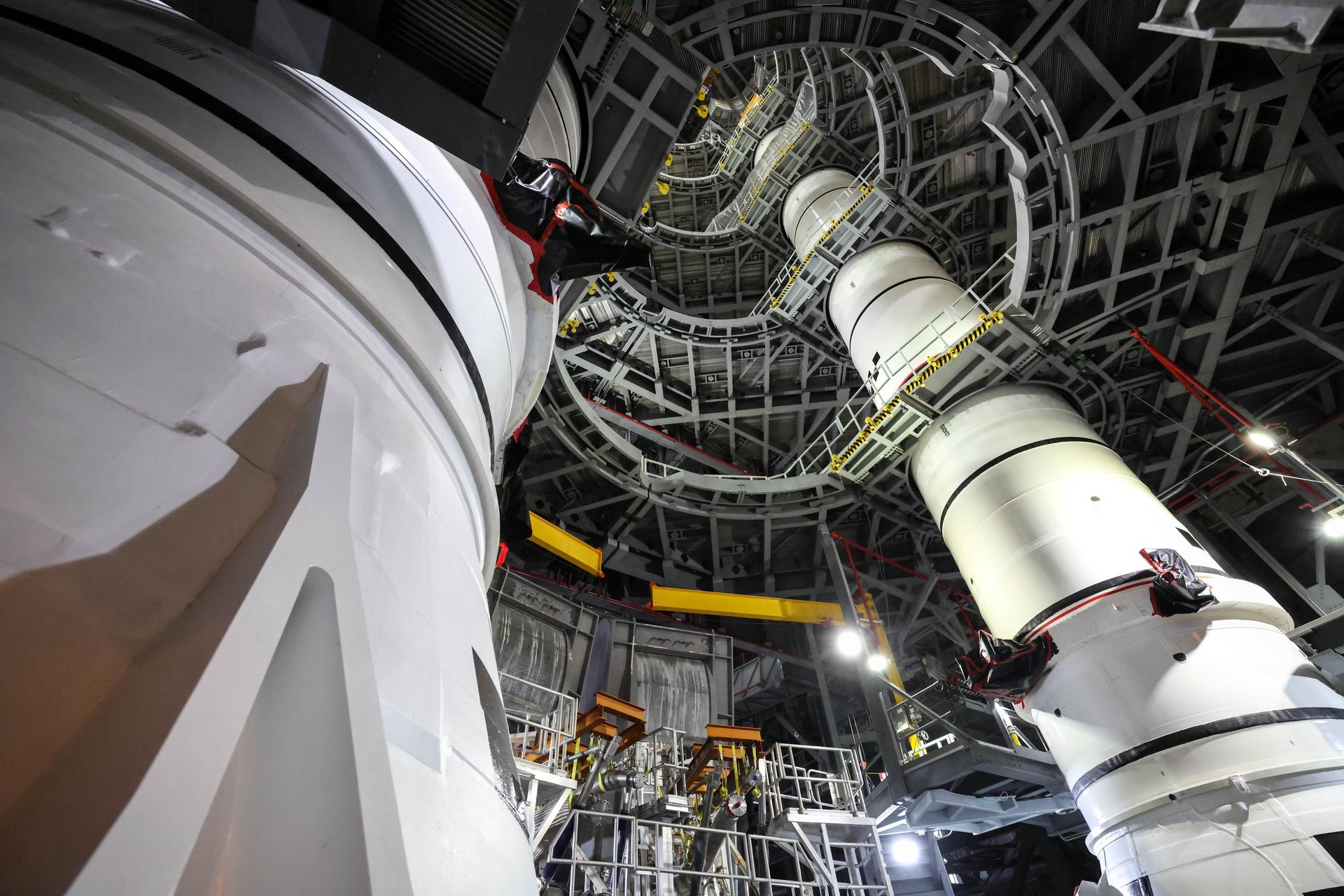
Technicians inside the Vehicle Assembly Building at NASA’s Kennedy Space Center in Florida complete integration of the left forward center solid rocket booster segment onto the left center center booster segment for the Artemis III SLS (Space Launch System) rocket on the mobile launcher inside High Bay 3 on Tuesday, Sept. 1, 2026. The twin boosters, comprising five segments each and manufactured by Northrop Grumman in Utah, provide more than 75 percent of the SLS rocket’s total thrust at liftoff. The Artemis III mission will launch crew in the Orion spacecraft on top of the SLS rocket to test rendezvous and docking capabilities between Orion and commercial spacecraft needed to land astronauts on the Moon.
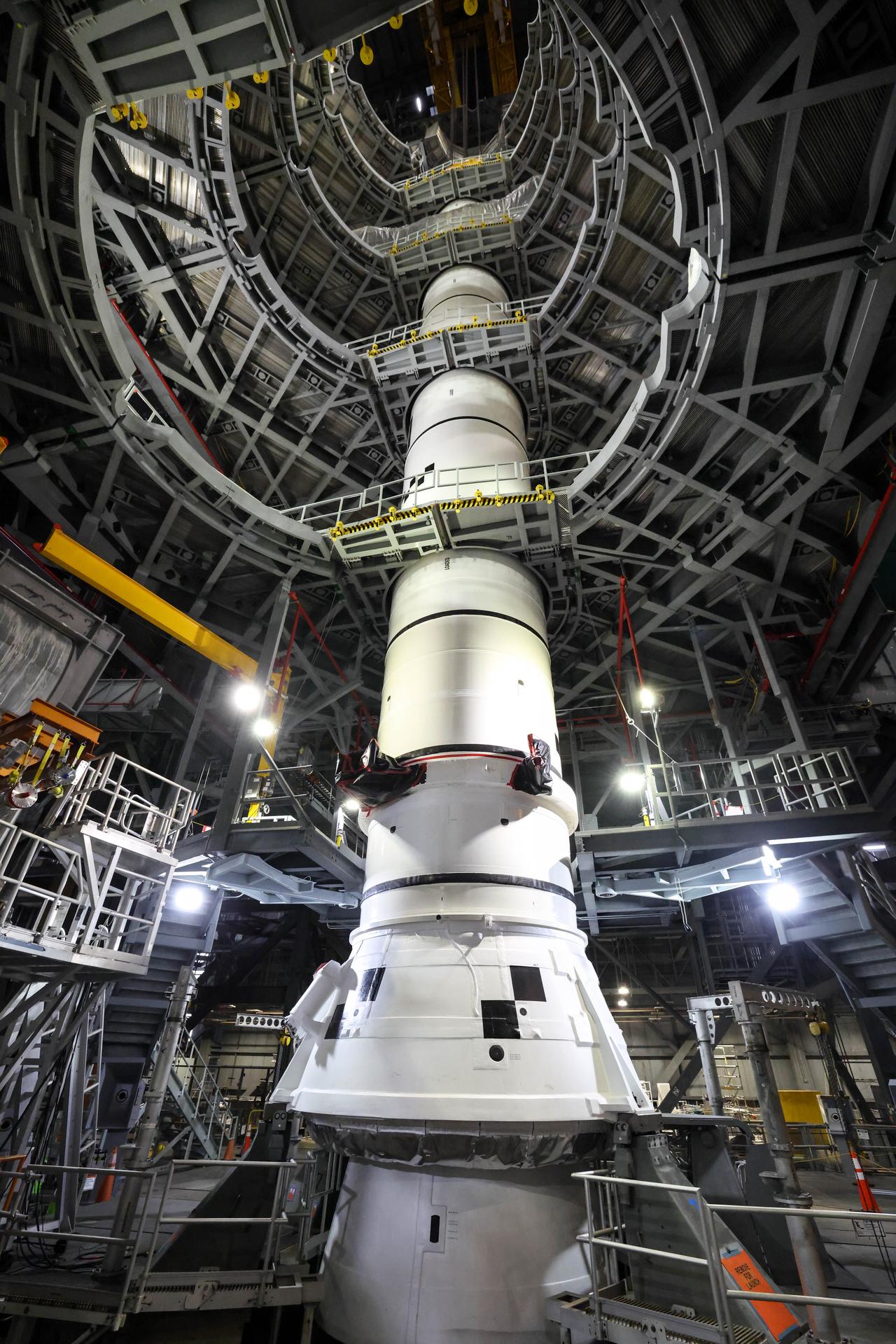
Technicians inside the Vehicle Assembly Building at NASA’s Kennedy Space Center in Florida complete integration of the left forward center solid rocket booster segment onto the left center center booster segment for the Artemis III SLS (Space Launch System) rocket on the mobile launcher inside High Bay 3 on Tuesday, Sept. 1, 2026. The twin boosters, comprising five segments each and manufactured by Northrop Grumman in Utah, provide more than 75 percent of the SLS rocket’s total thrust at liftoff. The Artemis III mission will launch crew in the Orion spacecraft on top of the SLS rocket to test rendezvous and docking capabilities between Orion and commercial spacecraft needed to land astronauts on the Moon.
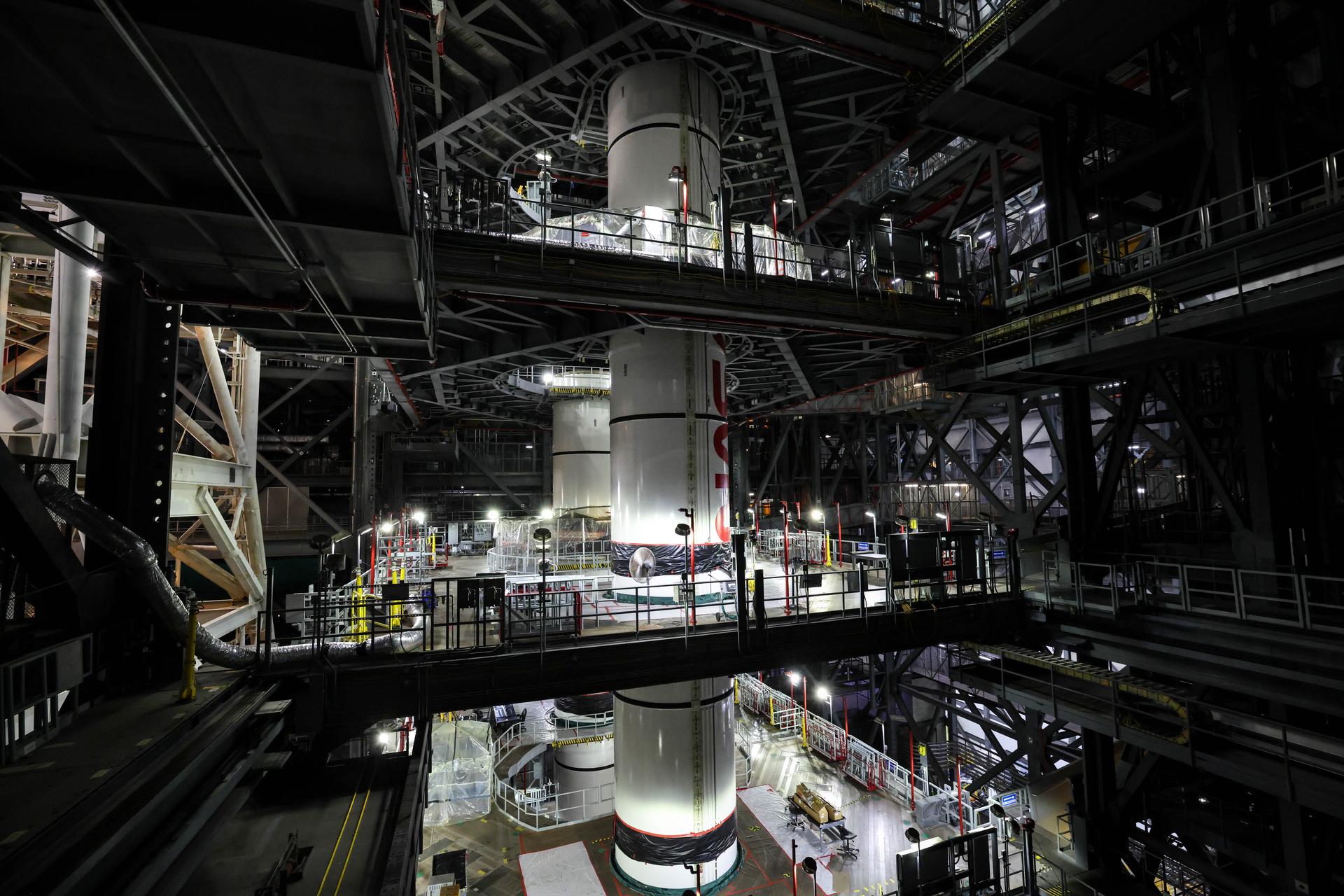
Technicians inside the Vehicle Assembly Building at NASA’s Kennedy Space Center in Florida complete integration of the left forward center solid rocket booster segment onto the left center center booster segment for the Artemis III SLS (Space Launch System) rocket on the mobile launcher inside High Bay 3 on Tuesday, Sept. 1, 2026. The twin boosters, comprising five segments each and manufactured by Northrop Grumman in Utah, provide more than 75 percent of the SLS rocket’s total thrust at liftoff. The Artemis III mission will launch crew in the Orion spacecraft on top of the SLS rocket to test rendezvous and docking capabilities between Orion and commercial spacecraft needed to land astronauts on the Moon.
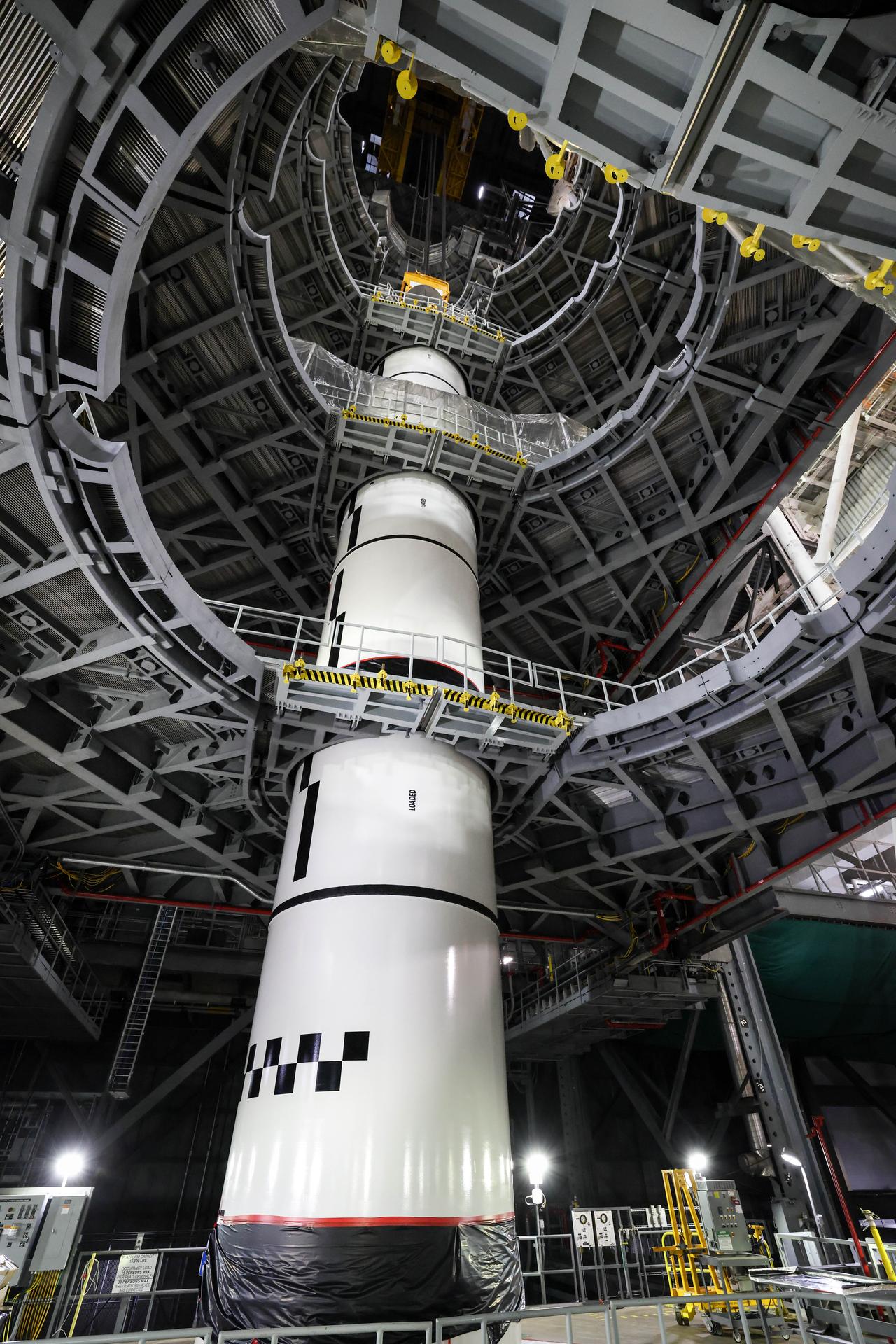
Technicians inside the Vehicle Assembly Building at NASA’s Kennedy Space Center in Florida complete integration of the left forward center solid rocket booster segment onto the left center center booster segment for the Artemis III SLS (Space Launch System) rocket on the mobile launcher inside High Bay 3 on Tuesday, Sept. 1, 2026. The twin boosters, comprising five segments each and manufactured by Northrop Grumman in Utah, provide more than 75 percent of the SLS rocket’s total thrust at liftoff. The Artemis III mission will launch crew in the Orion spacecraft on top of the SLS rocket to test rendezvous and docking capabilities between Orion and commercial spacecraft needed to land astronauts on the Moon.
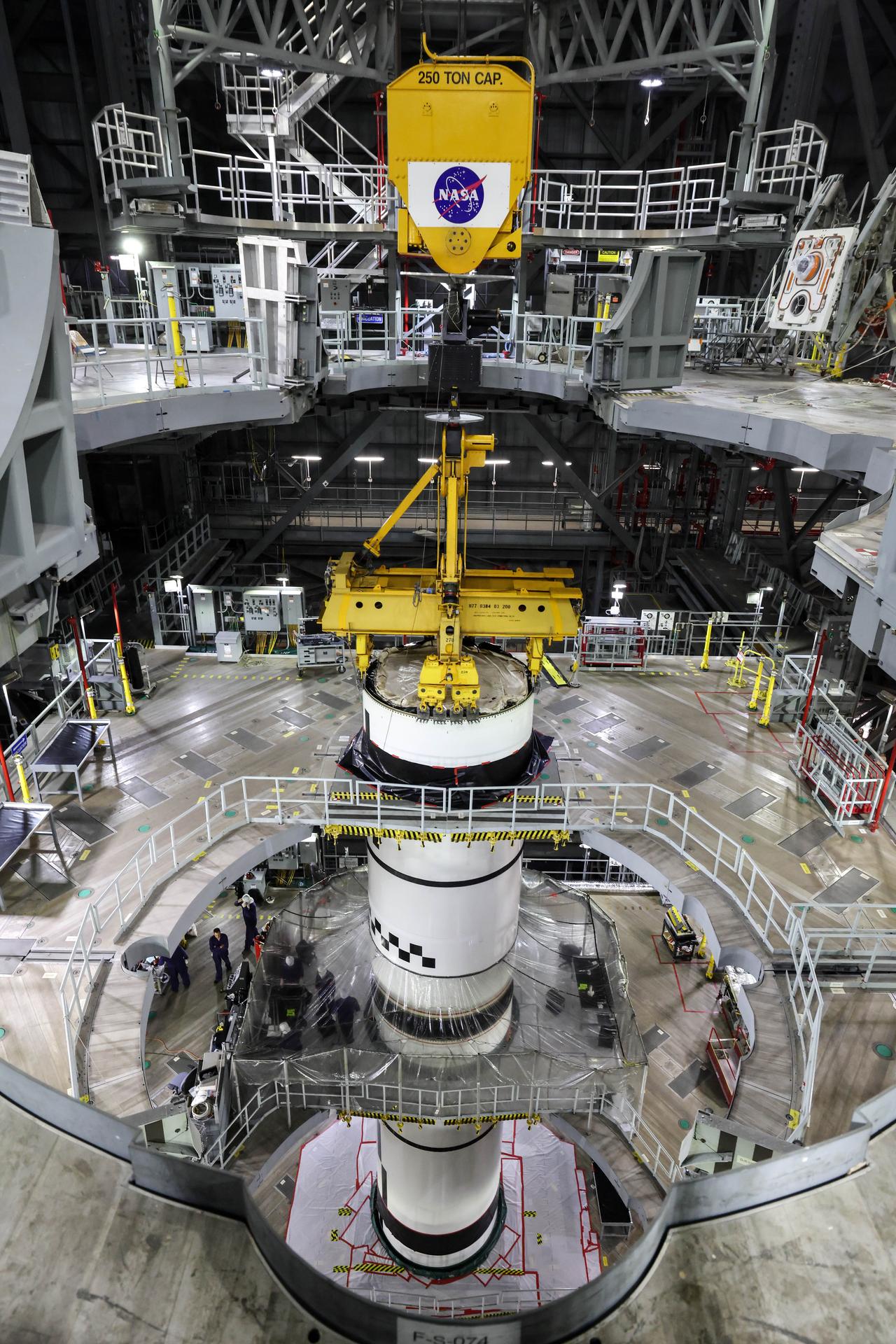
Technicians inside the Vehicle Assembly Building at NASA’s Kennedy Space Center in Florida complete integration of the left forward center solid rocket booster segment onto the left center center booster segment for the Artemis III SLS (Space Launch System) rocket on the mobile launcher inside High Bay 3 on Tuesday, Sept. 1, 2026. The twin boosters, comprising five segments each and manufactured by Northrop Grumman in Utah, provide more than 75 percent of the SLS rocket’s total thrust at liftoff. The Artemis III mission will launch crew in the Orion spacecraft on top of the SLS rocket to test rendezvous and docking capabilities between Orion and commercial spacecraft needed to land astronauts on the Moon.
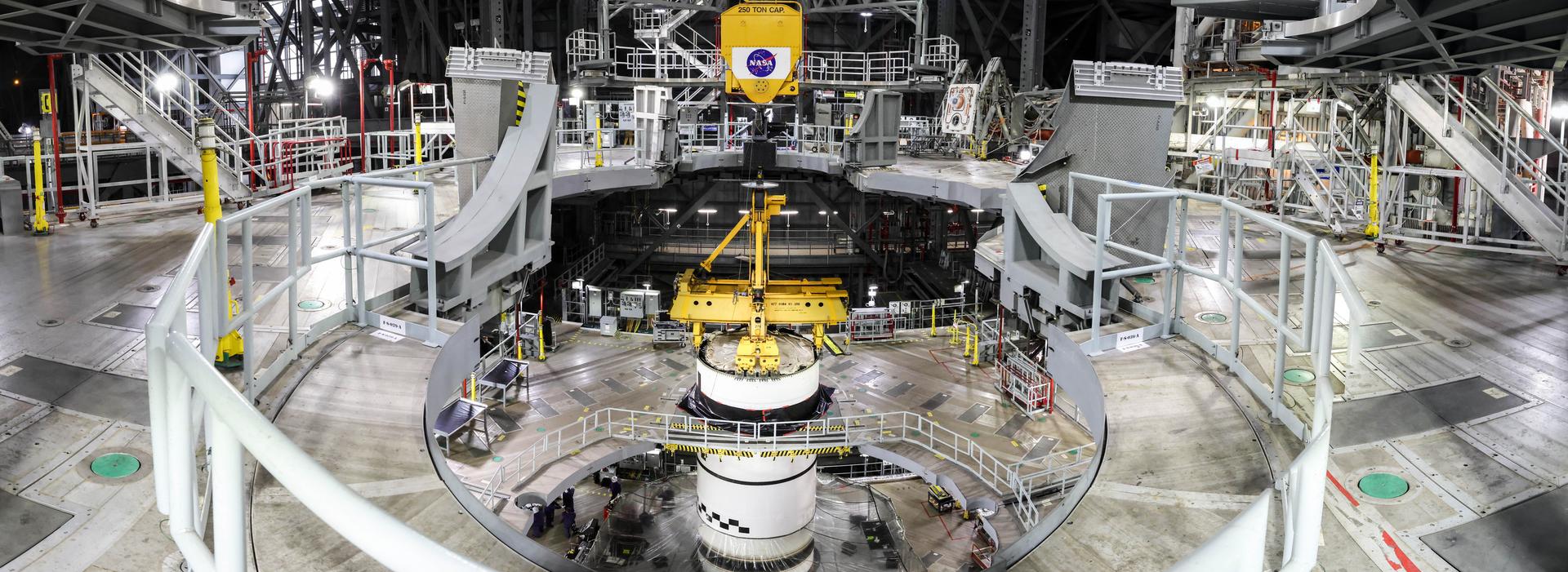
Technicians inside the Vehicle Assembly Building at NASA’s Kennedy Space Center in Florida complete integration of the left forward center solid rocket booster segment onto the left center center booster segment for the Artemis III SLS (Space Launch System) rocket on the mobile launcher inside High Bay 3 on Tuesday, Sept. 1, 2026. The twin boosters, comprising five segments each and manufactured by Northrop Grumman in Utah, provide more than 75 percent of the SLS rocket’s total thrust at liftoff. The Artemis III mission will launch crew in the Orion spacecraft on top of the SLS rocket to test rendezvous and docking capabilities between Orion and commercial spacecraft needed to land astronauts on the Moon.
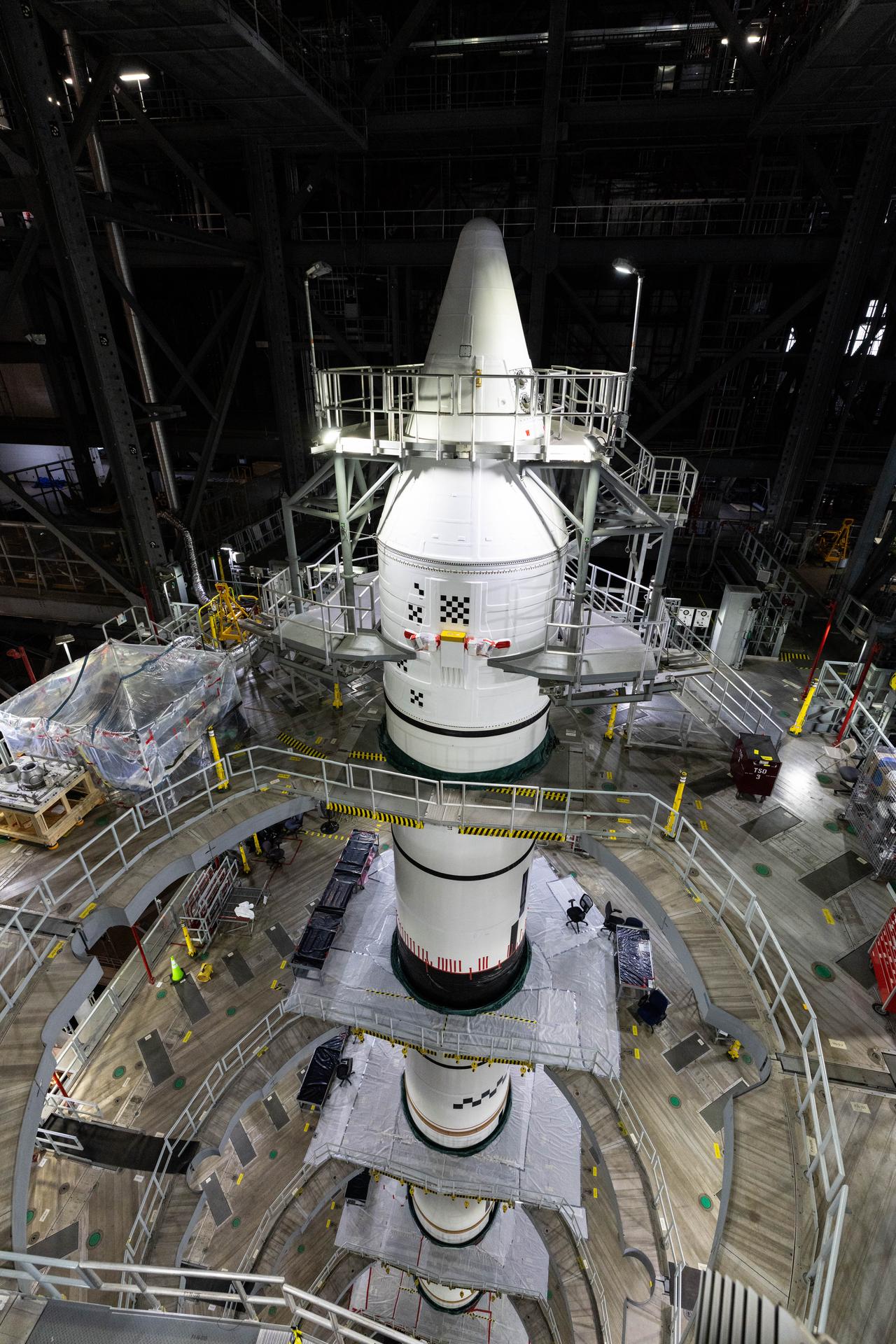
Engineers with NASA’s Exploration Ground Systems integrate the aerodynamic nose cone onto the right forward motor segment on the twin SLS (Space Launch System) solid rocket boosters for Artemis III inside the Vehicle Assembly Building’s High Bay 3 at NASA’s Kennedy Space Center in Florida on Wednesday, Sept. 30, 2026. Each forward assembly contains an aerodynamic top, a forward skirt housing avionics, and frustum housing motors that allow the boosters to separate from the SLS core stage after launch. The twin solid boosters will help support the remaining rocket components and the Orion spacecraft during final assembly of the Artemis III rocket and provide more than 75 percent of the total SLS thrust during liftoff from NASA Kennedy’s Launch Pad 39B.
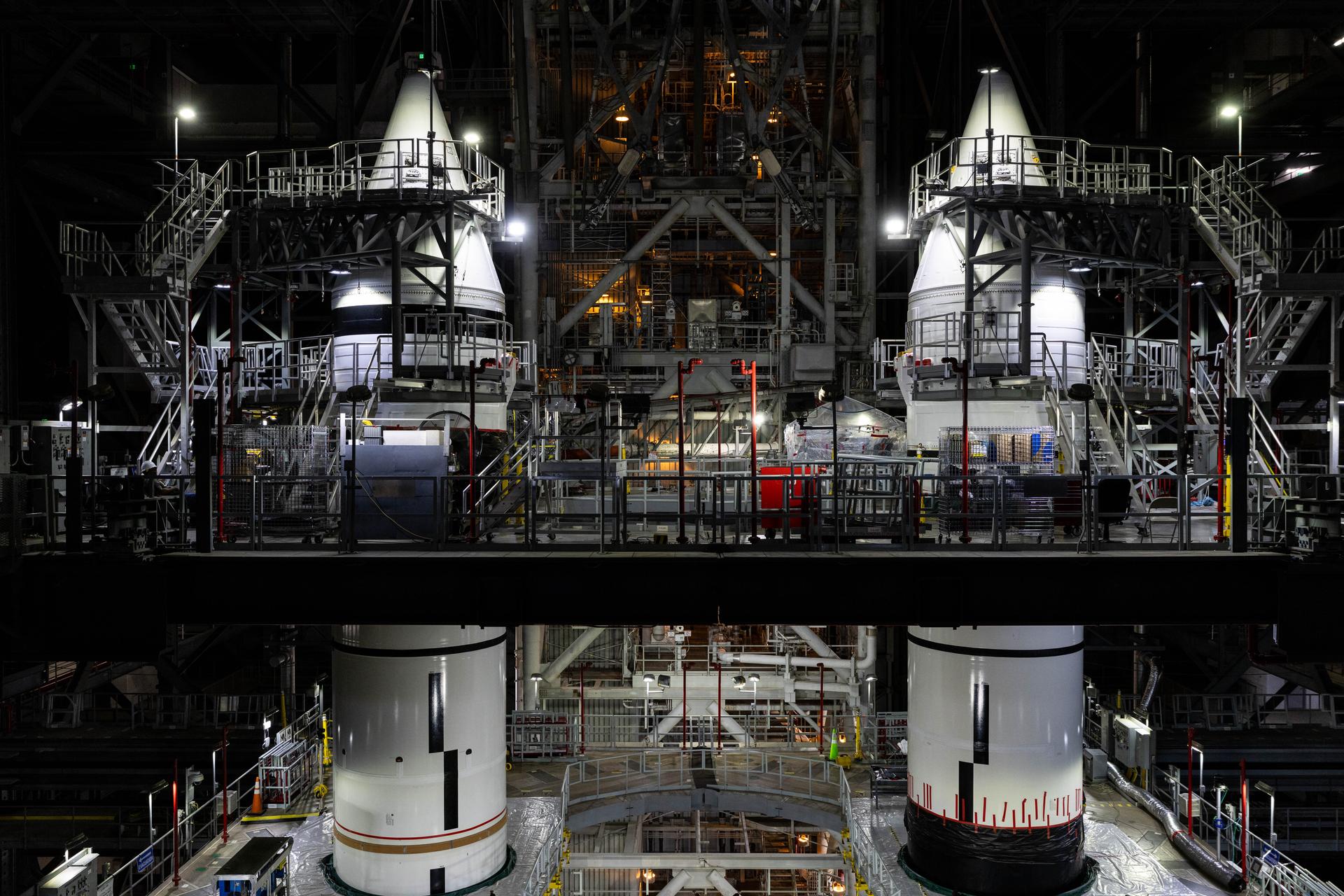
Engineers with NASA’s Exploration Ground Systems complete integration of the aerodynamic nose cones onto the left and right forward segments on the twin SLS (Space Launch System) solid rocket boosters, finishing their stacking operations for Artemis III inside the Vehicle Assembly Building’s High Bay 3 at NASA’s Kennedy Space Center in Florida on Wednesday, Sept. 30, 2026. Each forward assembly contains an aerodynamic top, a forward skirt housing avionics, and frustum housing motors that allow the boosters to separate from the SLS core stage after launch. The twin solid boosters will help support the remaining rocket components and the Orion spacecraft during final assembly of the Artemis III rocket and provide more than 75 percent of the total SLS thrust during liftoff from NASA Kennedy’s Launch Pad 39B.
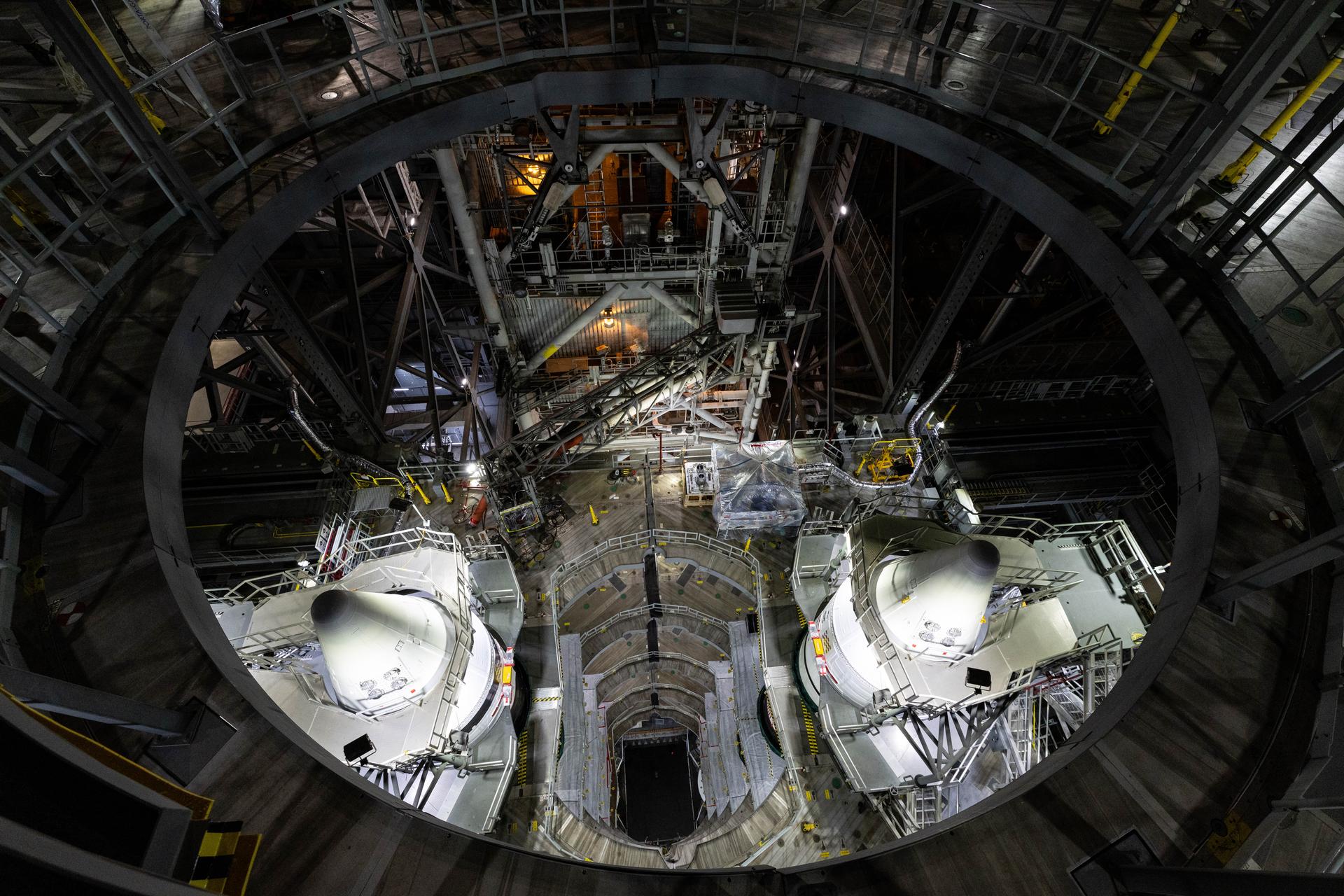
Engineers with NASA’s Exploration Ground Systems complete integration of the aerodynamic nose cones onto the left and right forward segments on the twin SLS (Space Launch System) solid rocket boosters, finishing their stacking operations for Artemis III inside the Vehicle Assembly Building’s High Bay 3 at NASA’s Kennedy Space Center in Florida on Wednesday, Sept. 30, 2026. Each forward assembly contains an aerodynamic top, a forward skirt housing avionics, and frustum housing motors that allow the boosters to separate from the SLS core stage after launch. The twin solid boosters will help support the remaining rocket components and the Orion spacecraft during final assembly of the Artemis III rocket and provide more than 75 percent of the total SLS thrust during liftoff from NASA Kennedy’s Launch Pad 39B.
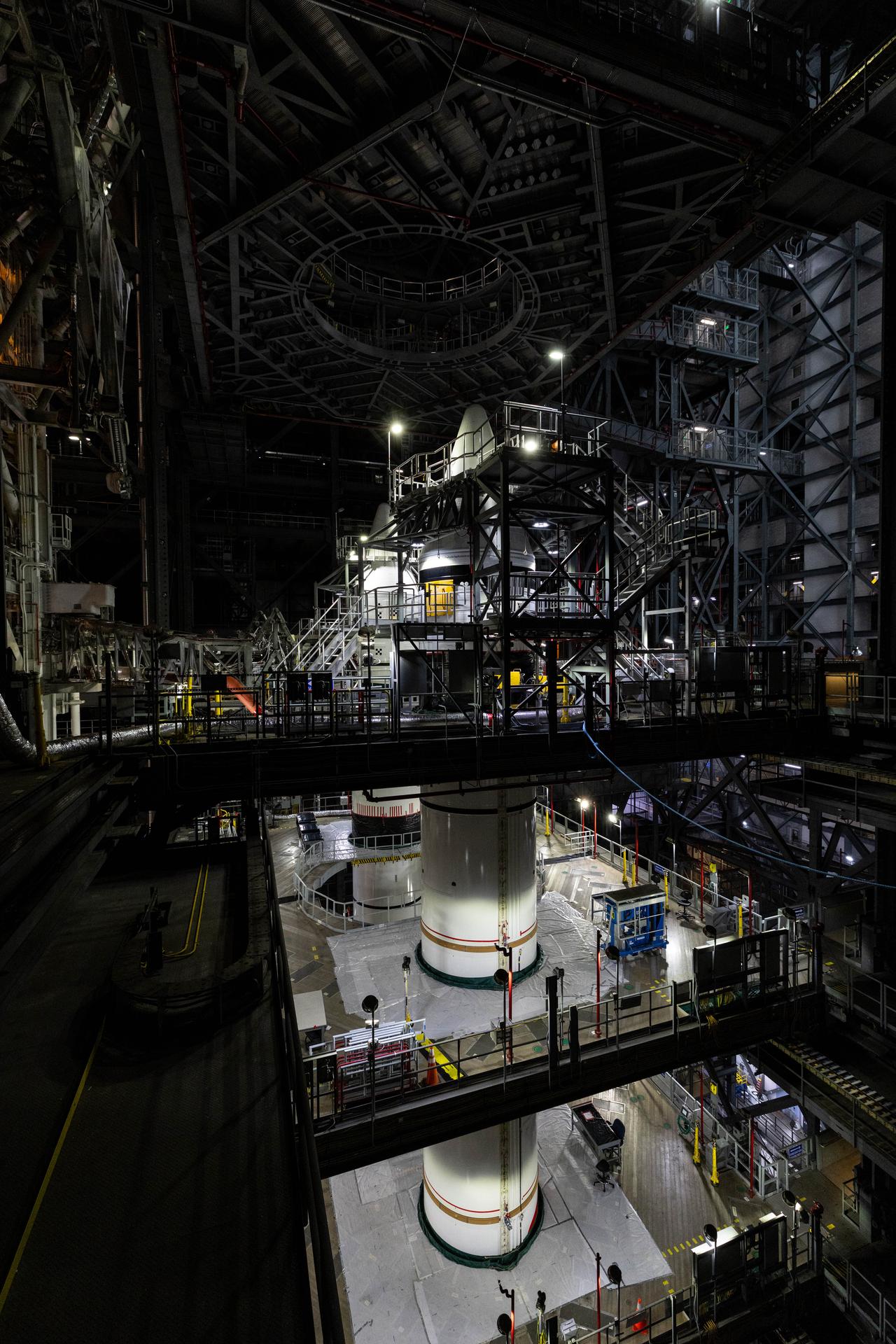
Engineers with NASA’s Exploration Ground Systems complete integration of the aerodynamic nose cones onto the left and right forward segments on the twin SLS (Space Launch System) solid rocket boosters, finishing their stacking operations for Artemis III inside the Vehicle Assembly Building’s High Bay 3 at NASA’s Kennedy Space Center in Florida on Wednesday, Sept. 30, 2026. Each forward assembly contains an aerodynamic top, a forward skirt housing avionics, and frustum housing motors that allow the boosters to separate from the SLS core stage after launch. The twin solid boosters will help support the remaining rocket components and the Orion spacecraft during final assembly of the Artemis III rocket and provide more than 75 percent of the total SLS thrust during liftoff from NASA Kennedy’s Launch Pad 39B.
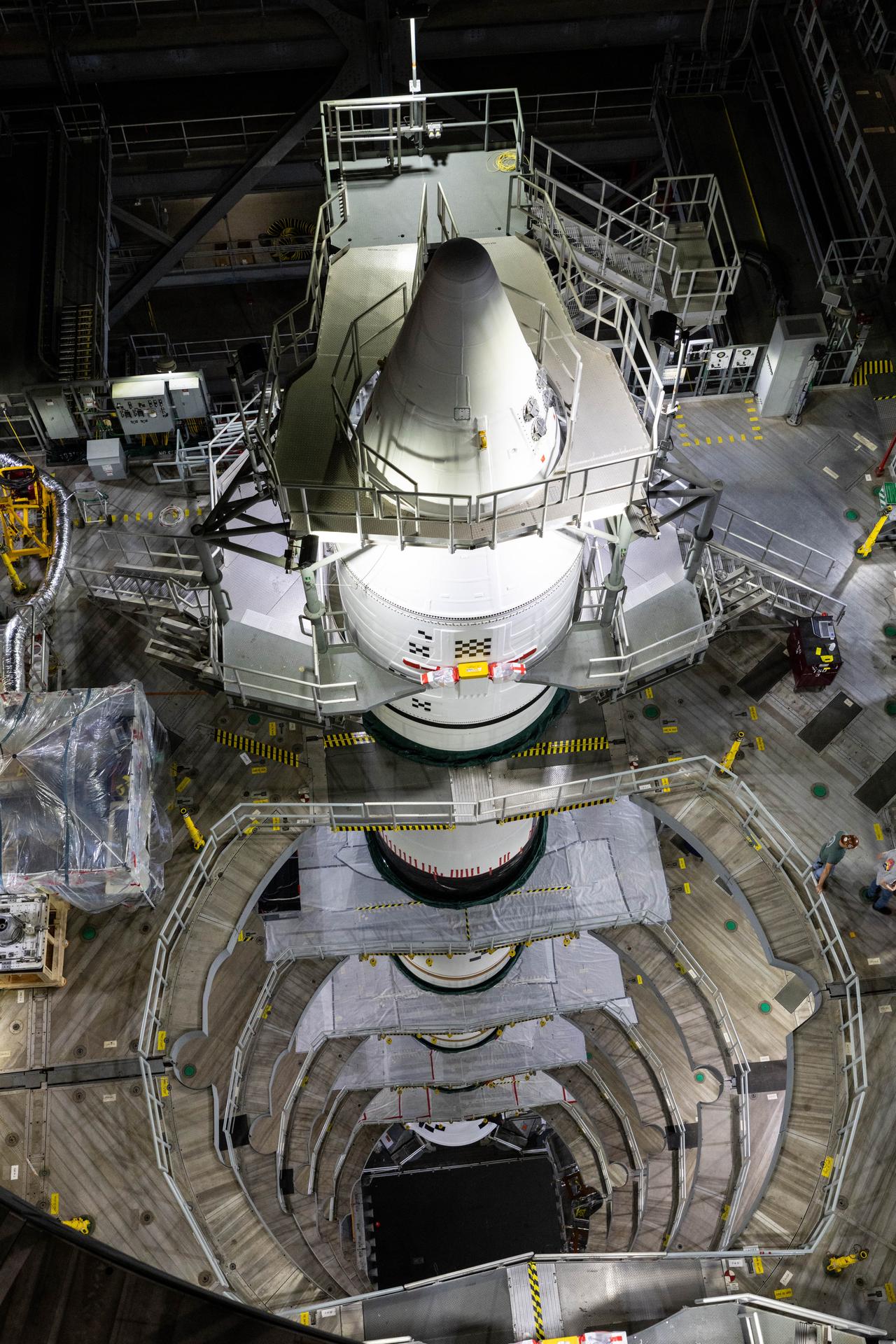
Engineers with NASA’s Exploration Ground Systems integrate the aerodynamic nose cone onto the right forward motor segment on the twin SLS (Space Launch System) solid rocket boosters for Artemis III inside the Vehicle Assembly Building’s High Bay 3 at NASA’s Kennedy Space Center in Florida on Wednesday, Sept. 30, 2026. Each forward assembly contains an aerodynamic top, a forward skirt housing avionics, and frustum housing motors that allow the boosters to separate from the SLS core stage after launch. The twin solid boosters will help support the remaining rocket components and the Orion spacecraft during final assembly of the Artemis III rocket and provide more than 75 percent of the total SLS thrust during liftoff from NASA Kennedy’s Launch Pad 39B.
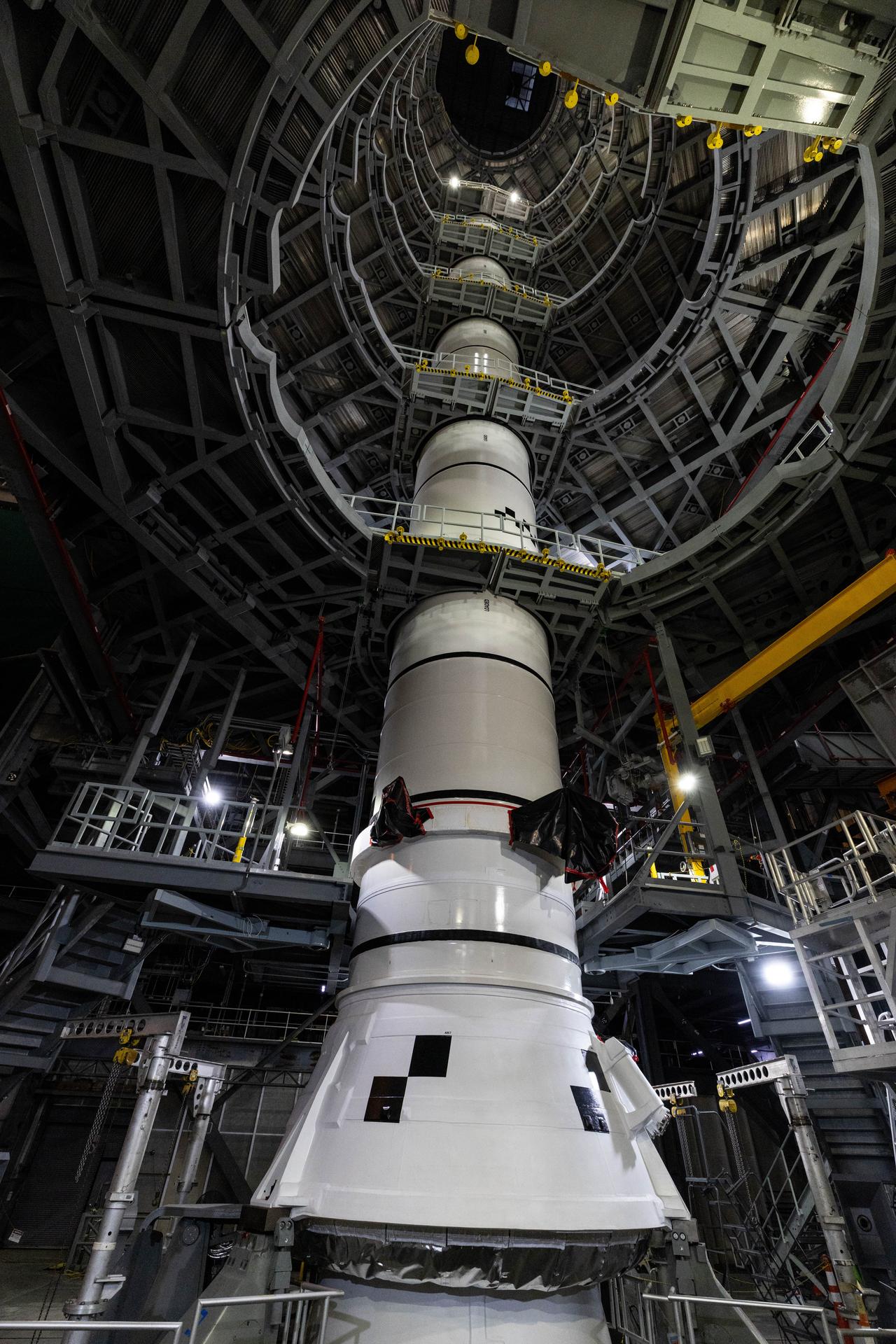
Engineers with NASA’s Exploration Ground Systems integrate the aerodynamic nose cone onto the right forward motor segment on the twin SLS (Space Launch System) solid rocket boosters for Artemis III inside the Vehicle Assembly Building’s High Bay 3 at NASA’s Kennedy Space Center in Florida on Wednesday, Sept. 30, 2026. Each forward assembly contains an aerodynamic top, a forward skirt housing avionics, and frustum housing motors that allow the boosters to separate from the SLS core stage after launch. The twin solid boosters will help support the remaining rocket components and the Orion spacecraft during final assembly of the Artemis III rocket and provide more than 75 percent of the total SLS thrust during liftoff from NASA Kennedy’s Launch Pad 39B.
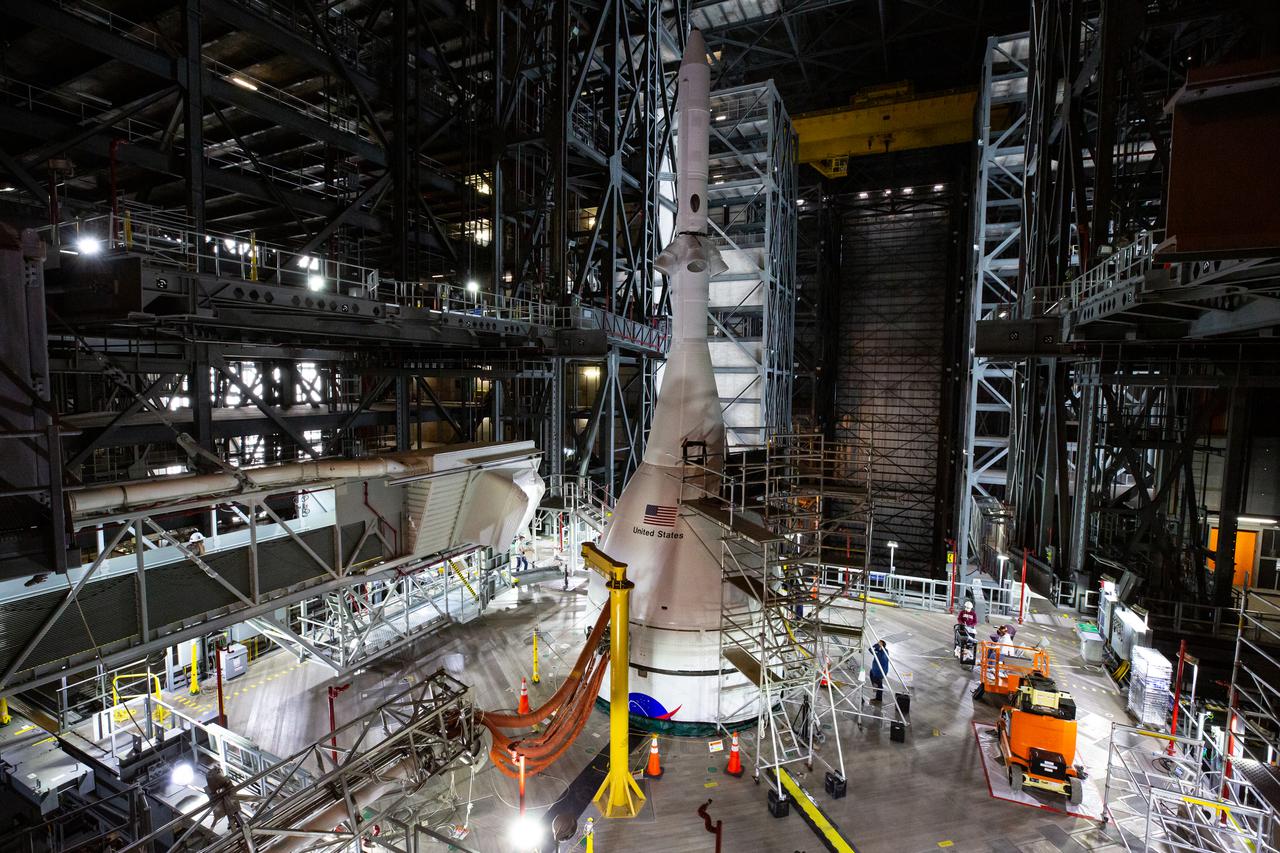
In view high up in High Bay 3 of the Vehicle Assembly Building at NASA’s Kennedy Space Center in Florida, is the Artemis I Orion spacecraft enclosed in its launch abort system atop the Space Launch System on Jan 10, 2022. A work platform has been extended around Orion. Artemis I will be the first integrated test of NASA’s deep space exploration systems: the Orion spacecraft, Space Launch System (SLS) rocket and the ground systems at Kennedy. In later missions, NASA will land the first woman and the first person of color on the surface of the Moon, paving the way for a long-term lunar presence and serving as a steppingstone on the way to Mars.
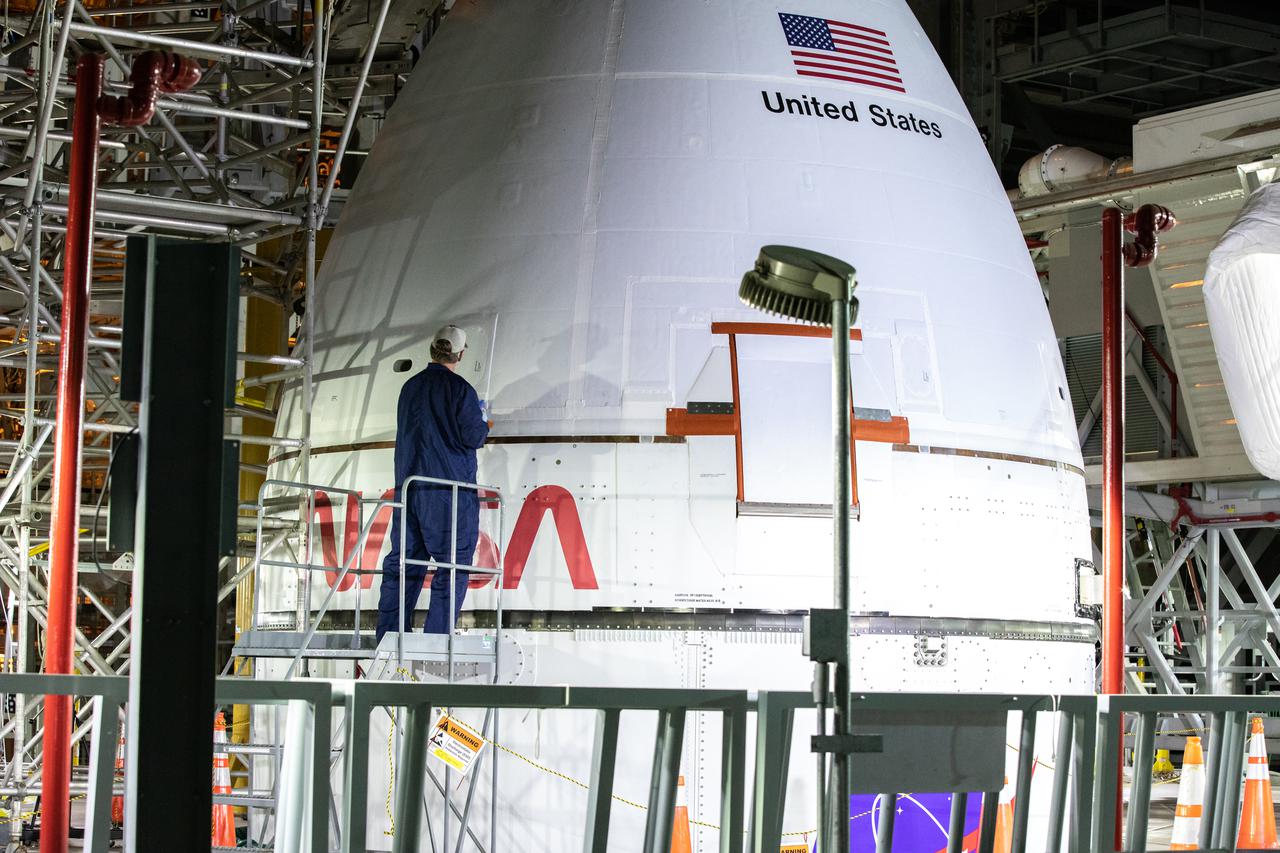
Inside High Bay 3 of the Vehicle Assembly Building at NASA’s Kennedy Space Center in Florida, a technician inspects a Space Launch System (SLS) booster cone for Artemis I on Jan. 10, 2022. The SLS and Orion spacecraft are stacked in the high bay. Artemis I will be the first integrated test of NASA’s deep space exploration systems: the Orion spacecraft, Space Launch System (SLS) rocket and the ground systems at Kennedy. In later missions, NASA will land the first woman and the first person of color on the surface of the Moon, paving the way for a long-term lunar presence and serving as a steppingstone on the way to Mars.
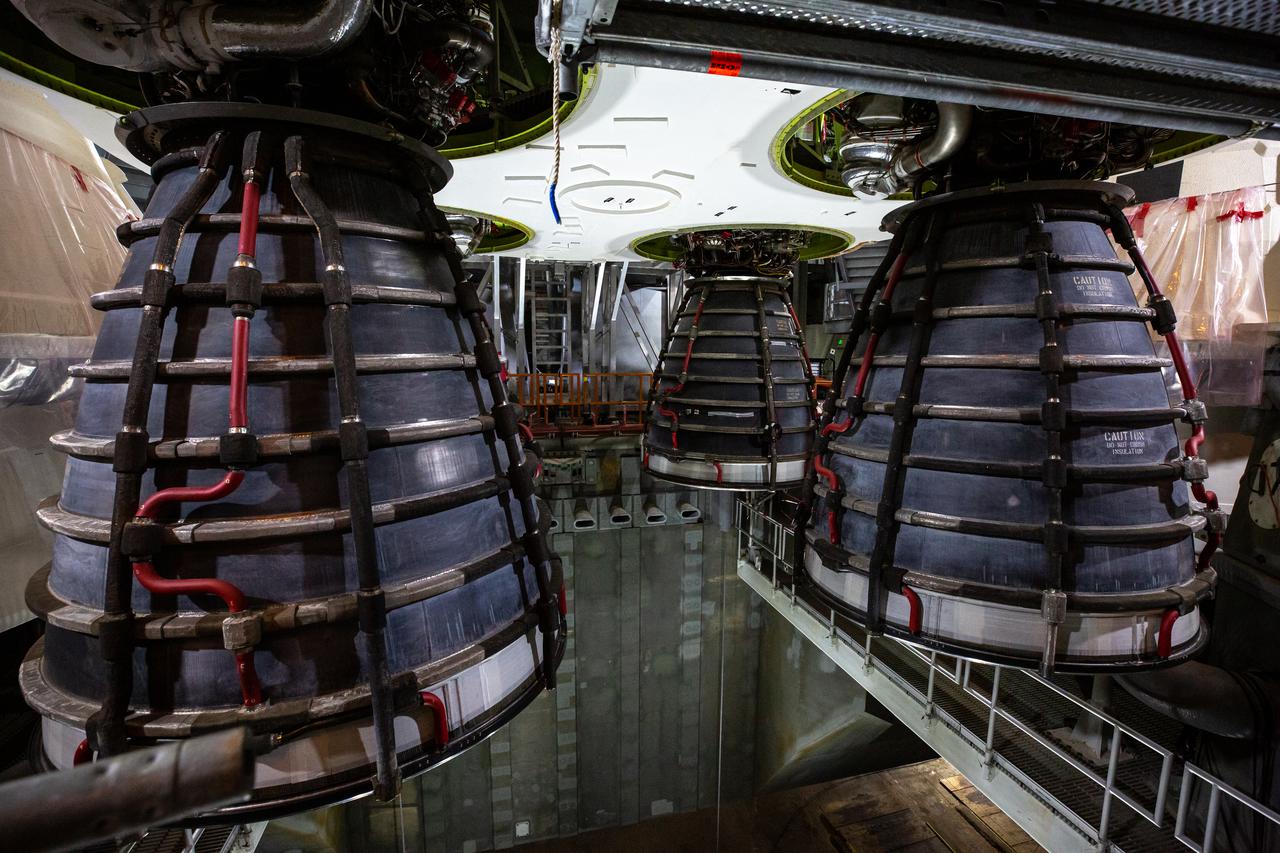
In view are Artemis I Space Launch System main engines in High Bay 3 of the Vehicle Assembly Building at NASA’s Kennedy Space Center in Florida on Jan. 10, 2022. The engines will be gimbled, or moved in unison in different directions, during processing and checkout. Artemis I will be the first integrated test of NASA’s deep space exploration systems: the Orion spacecraft, Space Launch System (SLS) rocket and the ground systems at Kennedy. In later missions, NASA will land the first woman and the first person of color on the surface of the Moon, paving the way for a long-term lunar presence and serving as a steppingstone on the way to Mars.
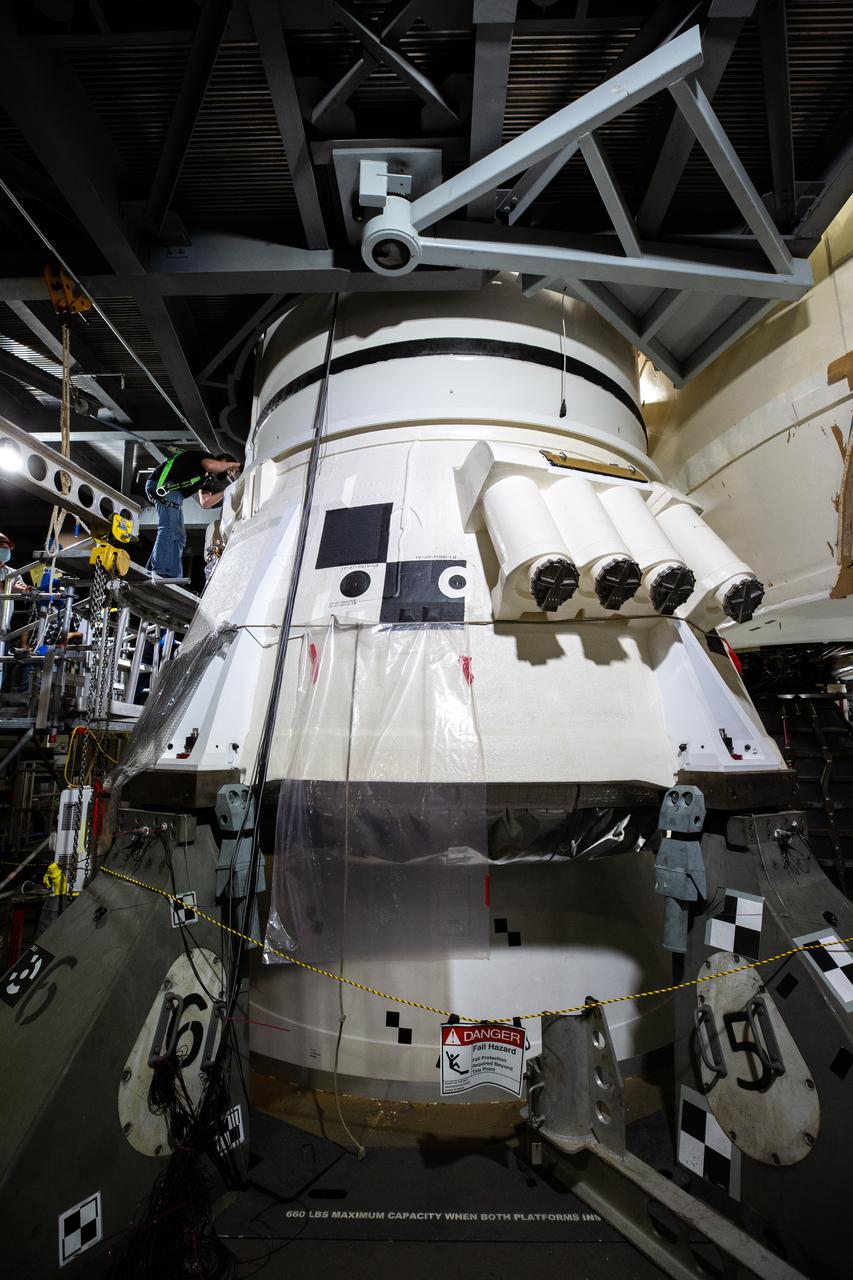
A close-up view of the aft segment of one of the boosters for the Artemis I Space Launch System rocket inside High Bay 3 of the Vehicle Assembly Building at NASA’s Kennedy Space Center in Florida on Jan. 10, 2022. Artemis I will be the first integrated test of NASA’s deep space exploration systems: the Orion spacecraft, Space Launch System (SLS) rocket and the ground systems at Kennedy.. In later missions, NASA will land the first woman and the first person of color on the surface of the Moon, paving the way for a long-term lunar presence and serving as a steppingstone on the way to Mars.
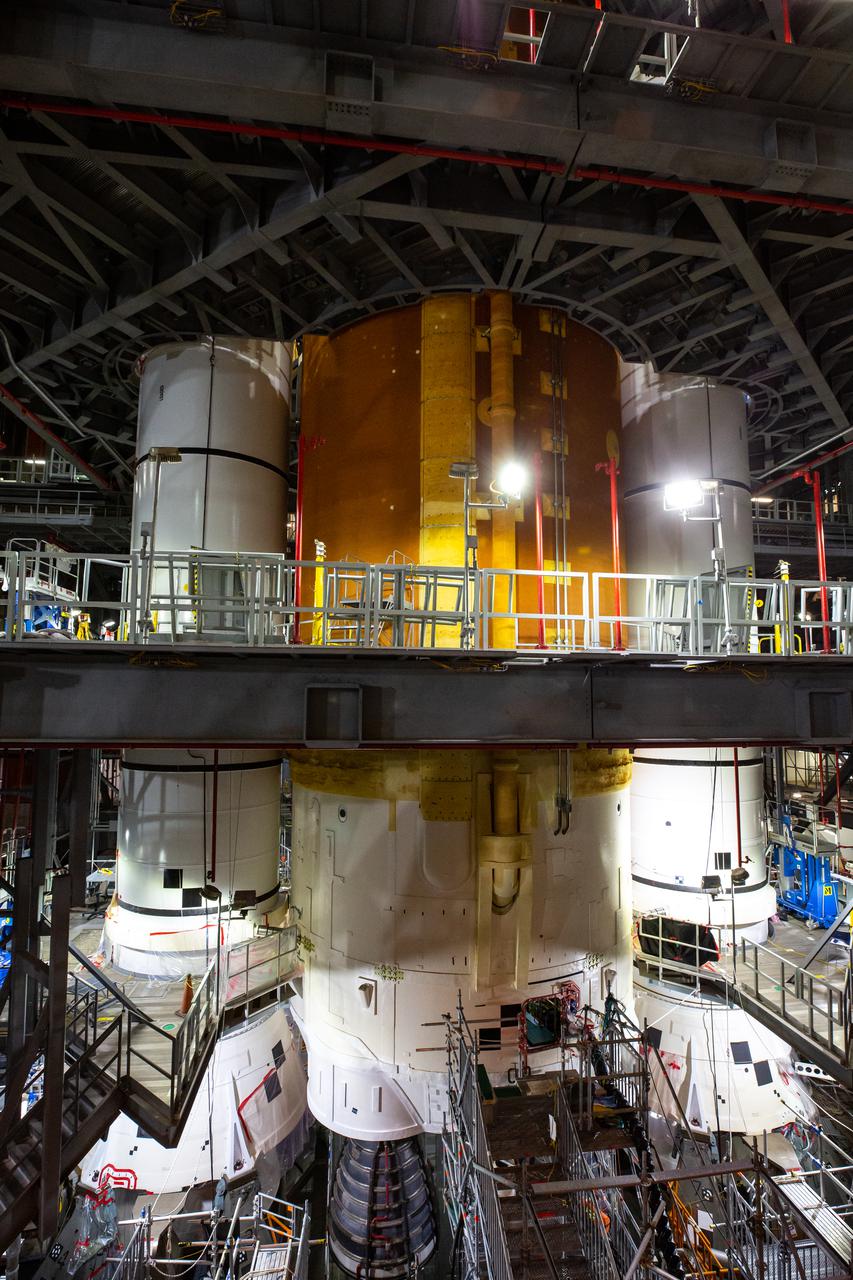
A close-up view of the Artemis I Space Launch System rocket inside High Bay 3 of the Vehicle Assembly Building at NASA’s Kennedy Space Center in Florida on Jan. 10, 2022. In view are the left and right boosters. Artemis I will be the first integrated test of NASA’s deep space exploration systems: the Orion spacecraft, Space Launch System (SLS) rocket and the ground systems at Kennedy.. In later missions, NASA will land the first woman and the first person of color on the surface of the Moon, paving the way for a long-term lunar presence and serving as a steppingstone on the way to Mars.
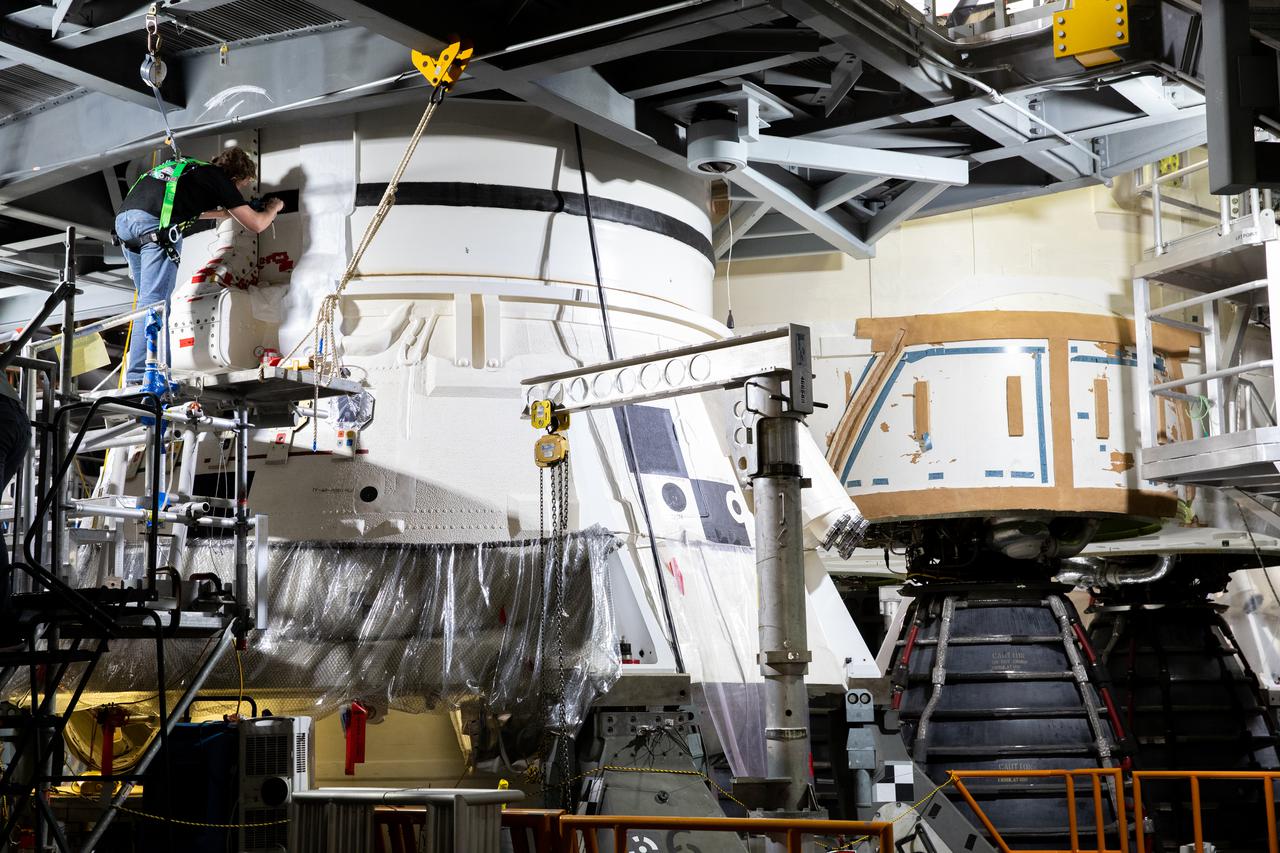
A close-up view of the aft segments of the twin solid rocket boosters for the Artemis I Space Launch System rocket inside High Bay 3 of the Vehicle Assembly Building at NASA’s Kennedy Space Center in Florida on Jan. 10, 2022. Artemis I will be the first integrated test of NASA’s deep space exploration systems: the Orion spacecraft, Space Launch System (SLS) rocket and the ground systems at Kennedy. In later missions, NASA will land the first woman and the first person of color on the surface of the Moon, paving the way for a long-term lunar presence and serving as a steppingstone on the way to Mars.
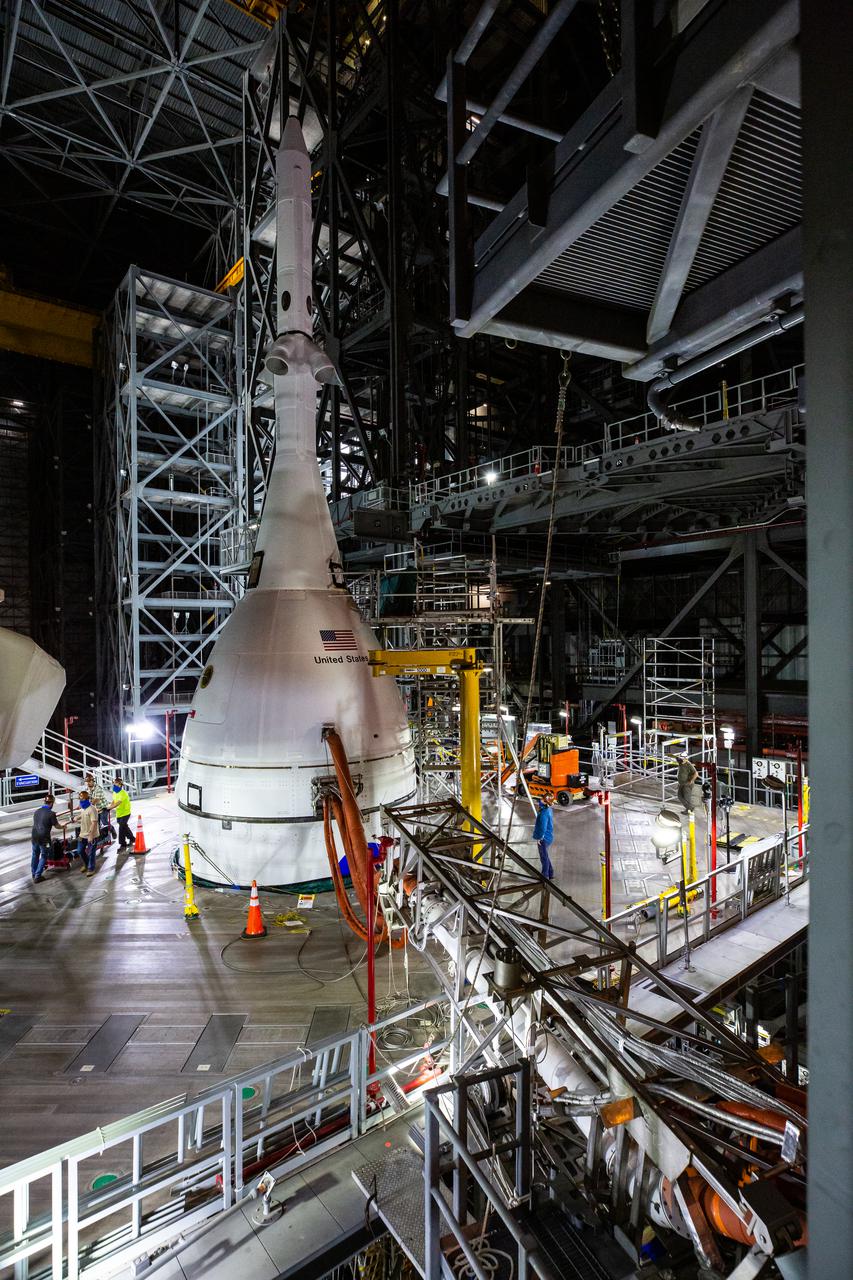
The Artemis I Orion spacecraft, secured on the Space Launch System (SLS) and enclosed in its launch abort system, is in view high up in High Bay 3 of the Vehicle Assembly Building at NASA’s Kennedy Space Center in Florida on Jan. 10, 2022. Work platforms are extended around Orion and scaffolding has been secured to allow access for inspection and processing work. Artemis I will be the first integrated test of NASA’s deep space exploration systems: the Orion spacecraft, Space Launch System (SLS) rocket and the ground systems at Kennedy. In later missions, NASA will land the first woman and the first person of color on the surface of the Moon, paving the way for a long-term lunar presence and serving as a steppingstone on the way to Mars.
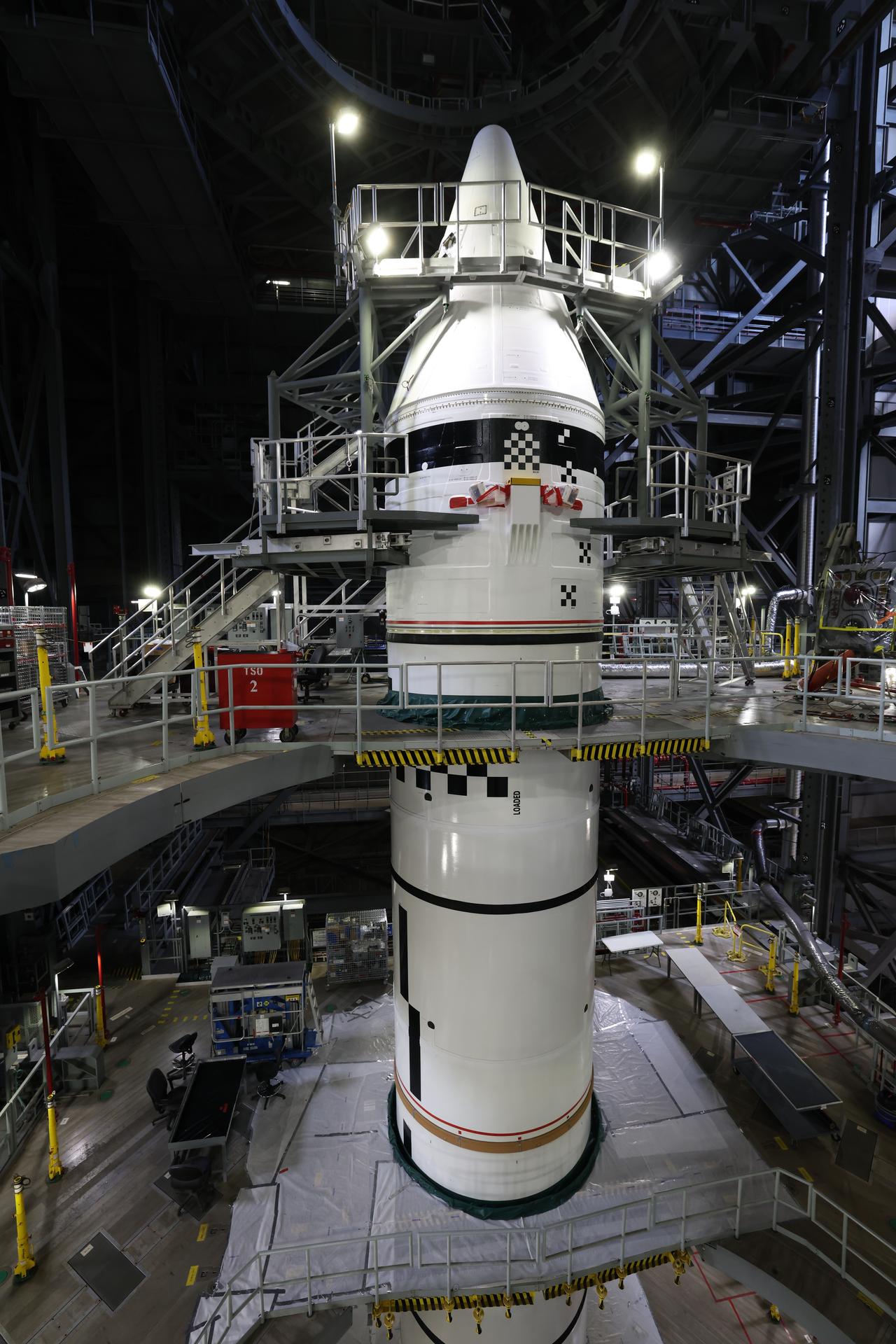
Engineers with NASA’s Exploration Ground Systems integrate the aerodynamic nose cone onto the left forward motor segment on the twin SLS (Space Launch System) solid rocket boosters for Artemis III inside the Vehicle Assembly Building’s High Bay 3 at NASA’s Kennedy Space Center in Florida on Tuesday, Sept. 29, 2026. Each forward assembly contains an aerodynamic top, a forward skirt housing avionics, and frustum housing motors that allow the boosters to separate from the SLS core stage after launch. The twin solid boosters will help support the remaining rocket components and the Orion spacecraft during final assembly of the Artemis III rocket and provide more than 75 percent of the total SLS thrust during liftoff from NASA Kennedy’s Launch Pad 39B.
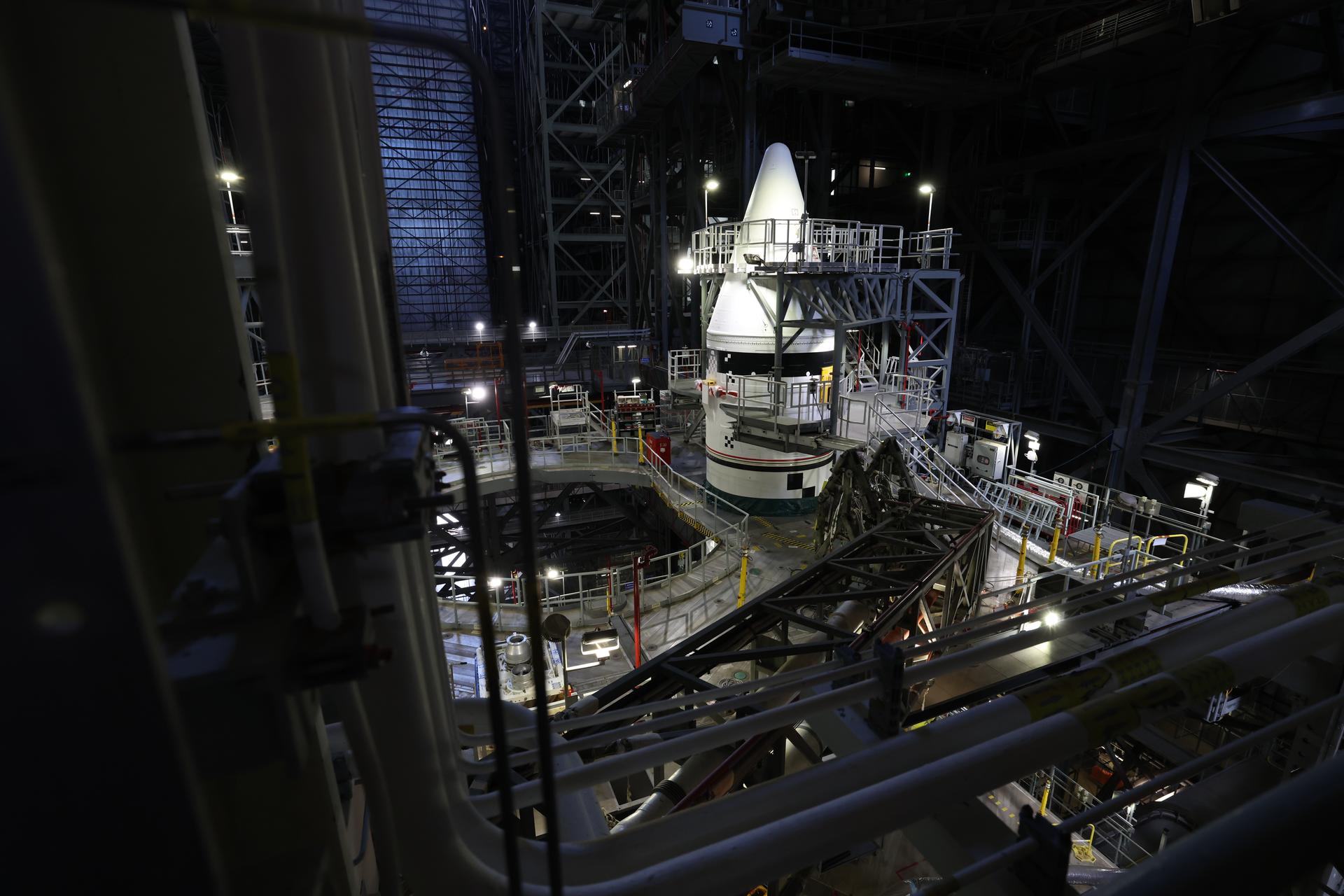
Engineers with NASA’s Exploration Ground Systems integrate the aerodynamic nose cone onto the left forward motor segment on the twin SLS (Space Launch System) solid rocket boosters for Artemis III inside the Vehicle Assembly Building’s High Bay 3 at NASA’s Kennedy Space Center in Florida on Tuesday, Sept. 29, 2026. Each forward assembly contains an aerodynamic top, a forward skirt housing avionics, and frustum housing motors that allow the boosters to separate from the SLS core stage after launch. The twin solid boosters will help support the remaining rocket components and the Orion spacecraft during final assembly of the Artemis III rocket and provide more than 75 percent of the total SLS thrust during liftoff from NASA Kennedy’s Launch Pad 39B.
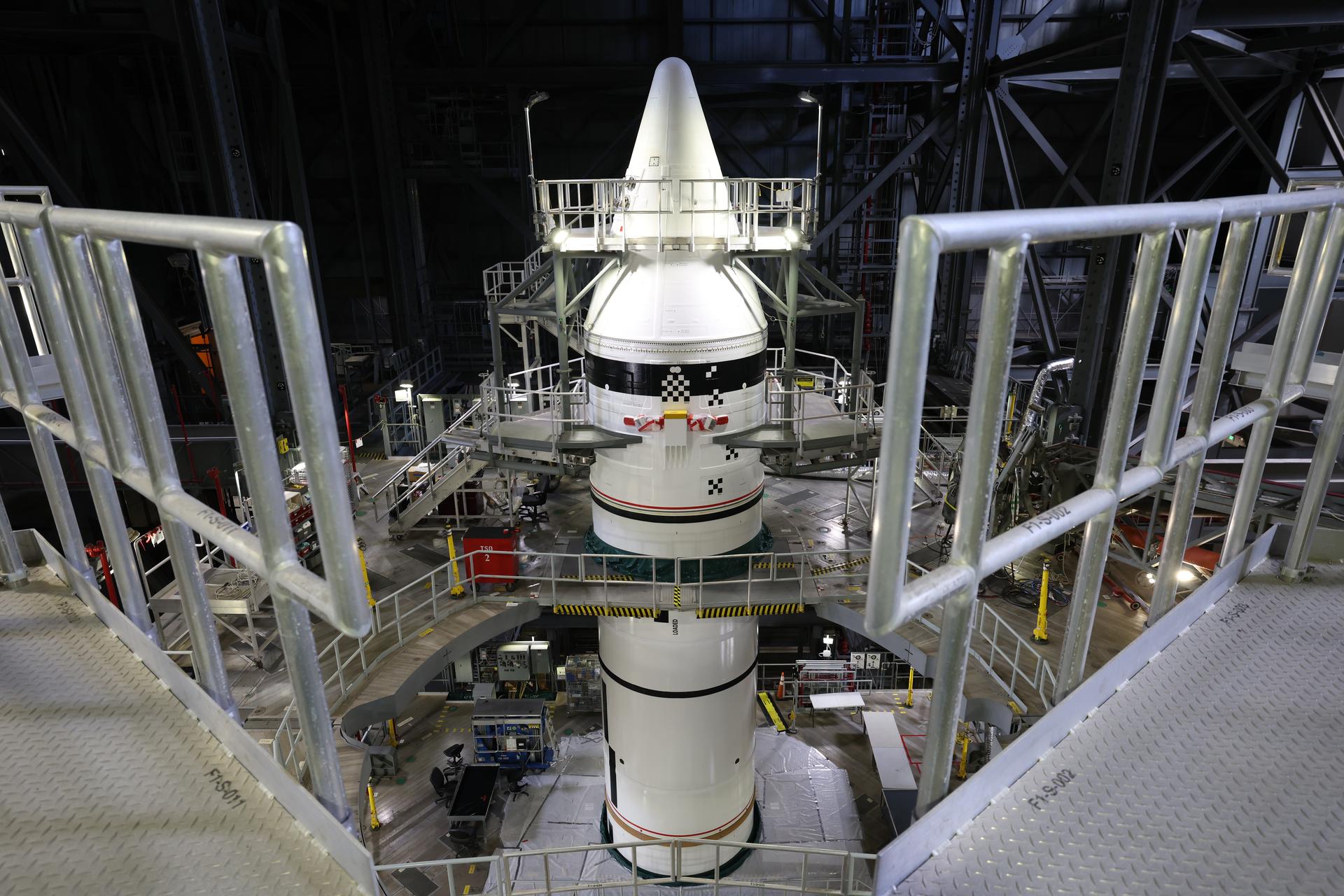
Engineers with NASA’s Exploration Ground Systems integrate the aerodynamic nose cone onto the left forward motor segment on the twin SLS (Space Launch System) solid rocket boosters for Artemis III inside the Vehicle Assembly Building’s High Bay 3 at NASA’s Kennedy Space Center in Florida on Tuesday, Sept. 29, 2026. Each forward assembly contains an aerodynamic top, a forward skirt housing avionics, and frustum housing motors that allow the boosters to separate from the SLS core stage after launch. The twin solid boosters will help support the remaining rocket components and the Orion spacecraft during final assembly of the Artemis III rocket and provide more than 75 percent of the total SLS thrust during liftoff from NASA Kennedy’s Launch Pad 39B.
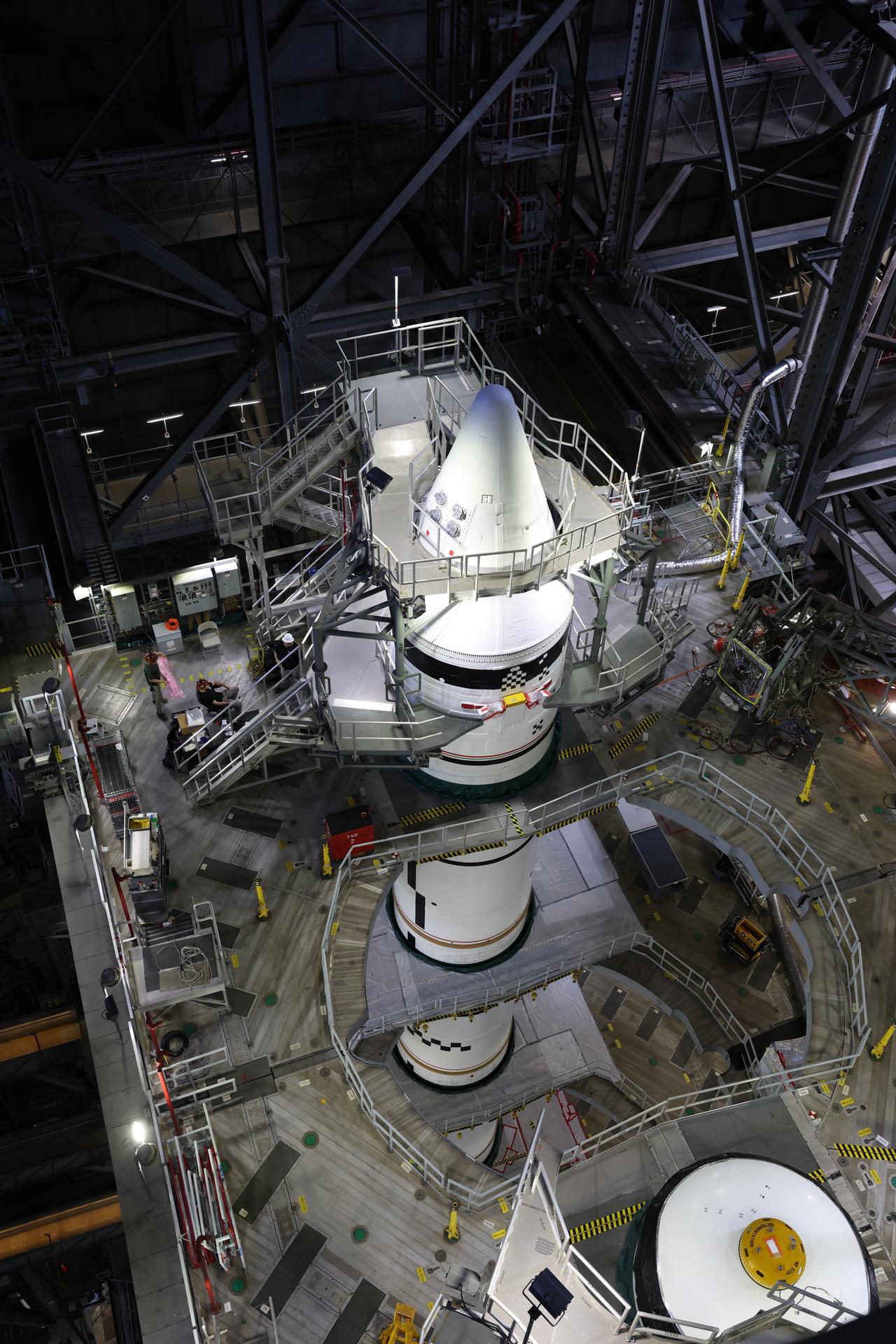
Engineers with NASA’s Exploration Ground Systems integrate the aerodynamic nose cone onto the left forward motor segment on the twin SLS (Space Launch System) solid rocket boosters for Artemis III inside the Vehicle Assembly Building’s High Bay 3 at NASA’s Kennedy Space Center in Florida on Tuesday, Sept. 29, 2026. Each forward assembly contains an aerodynamic top, a forward skirt housing avionics, and frustum housing motors that allow the boosters to separate from the SLS core stage after launch. The twin solid boosters will help support the remaining rocket components and the Orion spacecraft during final assembly of the Artemis III rocket and provide more than 75 percent of the total SLS thrust during liftoff from NASA Kennedy’s Launch Pad 39B.
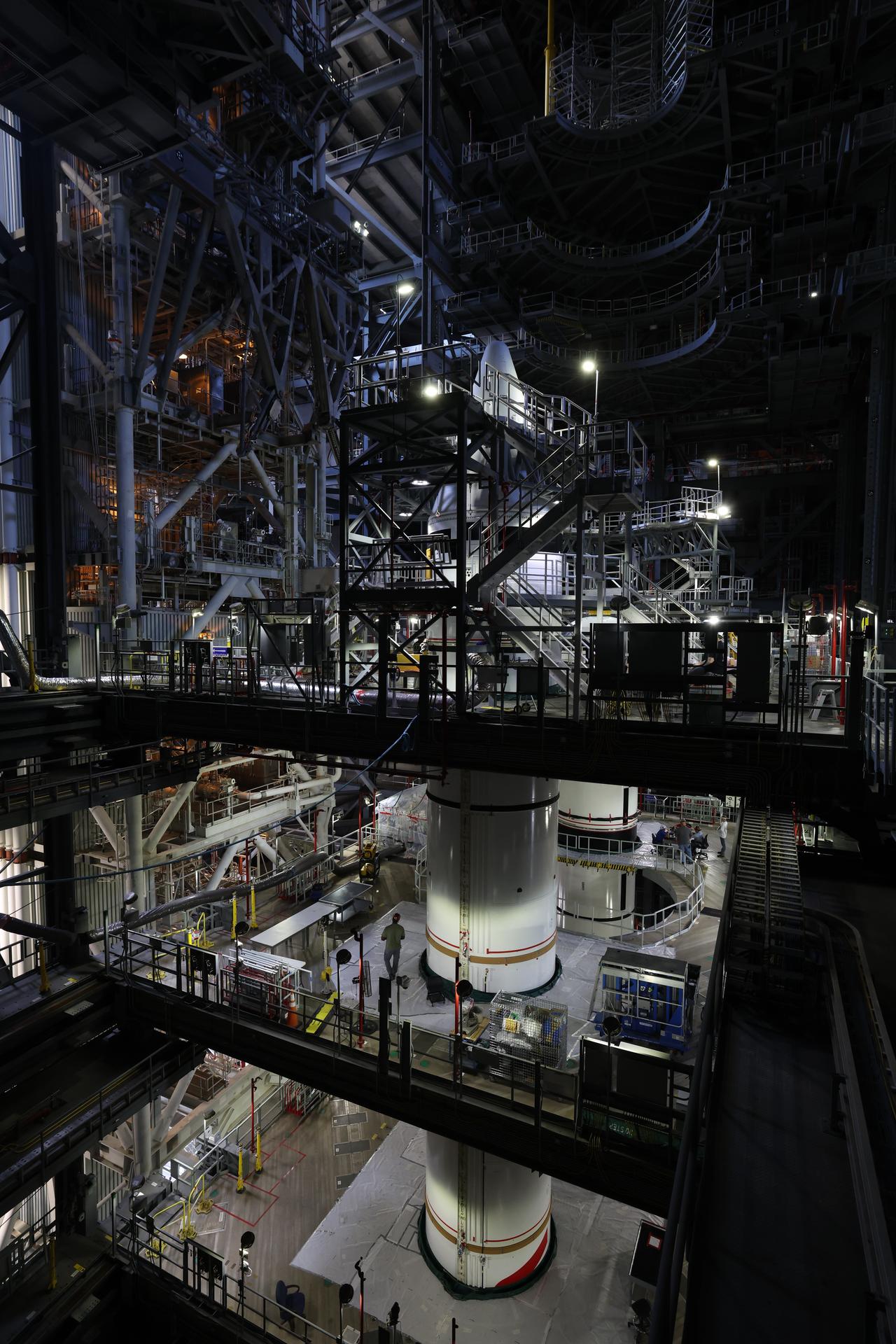
Engineers with NASA’s Exploration Ground Systems integrate the aerodynamic nose cone onto the left forward motor segment on the twin SLS (Space Launch System) solid rocket boosters for Artemis III inside the Vehicle Assembly Building’s High Bay 3 at NASA’s Kennedy Space Center in Florida on Tuesday, Sept. 29, 2026. Each forward assembly contains an aerodynamic top, a forward skirt housing avionics, and frustum housing motors that allow the boosters to separate from the SLS core stage after launch. The twin solid boosters will help support the remaining rocket components and the Orion spacecraft during final assembly of the Artemis III rocket and provide more than 75 percent of the total SLS thrust during liftoff from NASA Kennedy’s Launch Pad 39B.
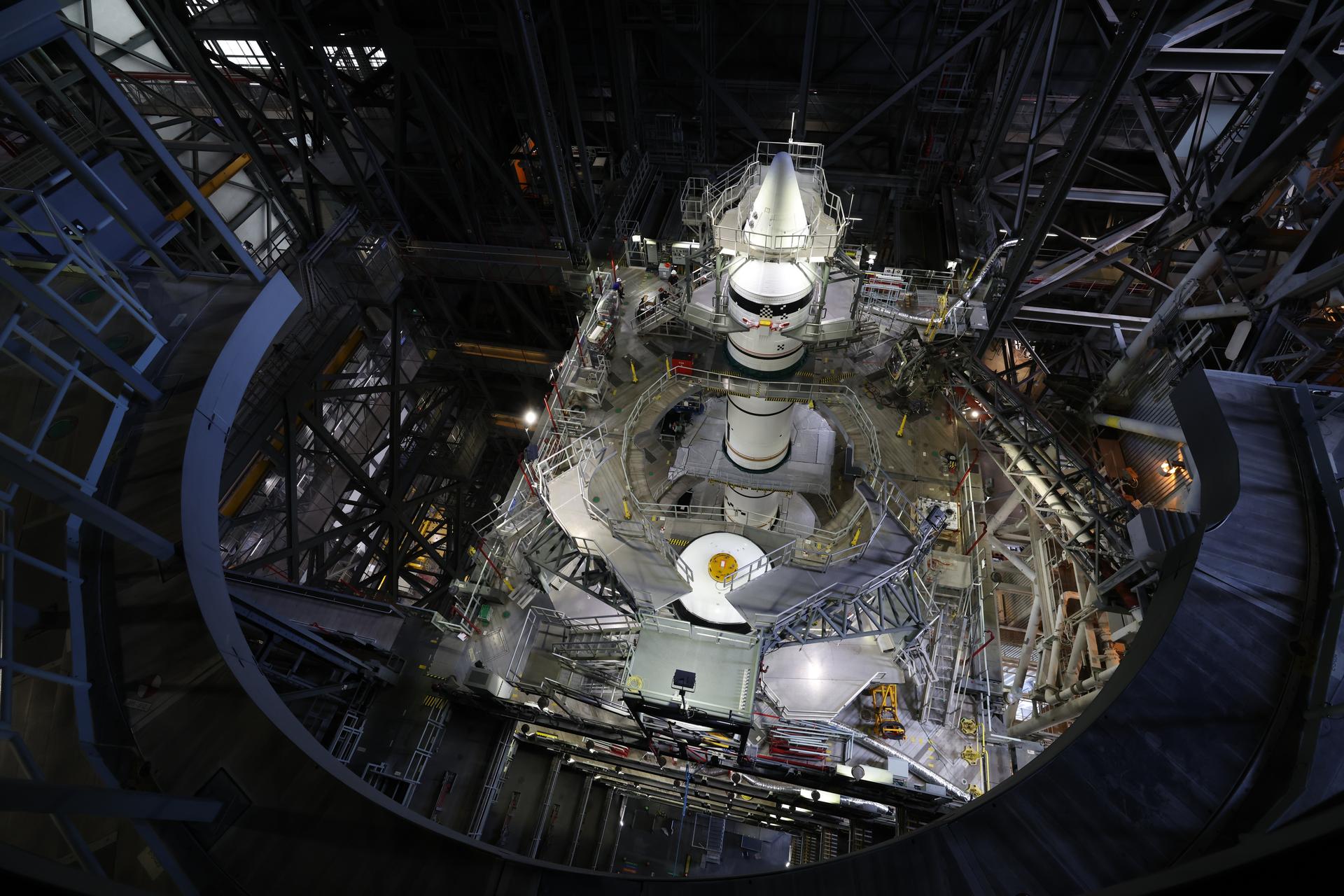
Engineers with NASA’s Exploration Ground Systems integrate the aerodynamic nose cone onto the left forward motor segment on the twin SLS (Space Launch System) solid rocket boosters for Artemis III inside the Vehicle Assembly Building’s High Bay 3 at NASA’s Kennedy Space Center in Florida on Tuesday, Sept. 29, 2026. Each forward assembly contains an aerodynamic top, a forward skirt housing avionics, and frustum housing motors that allow the boosters to separate from the SLS core stage after launch. The twin solid boosters will help support the remaining rocket components and the Orion spacecraft during final assembly of the Artemis III rocket and provide more than 75 percent of the total SLS thrust during liftoff from NASA Kennedy’s Launch Pad 39B.
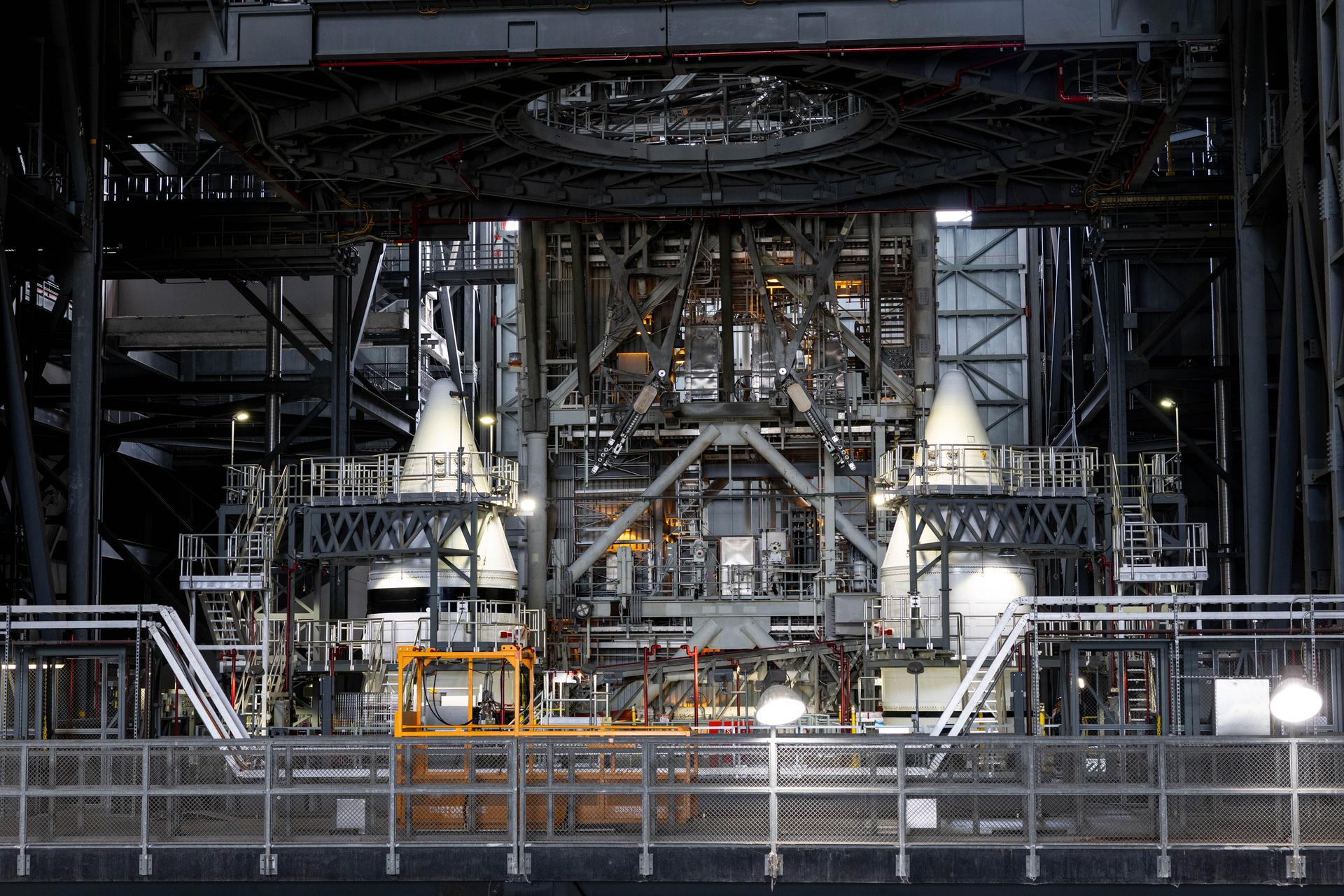
Engineers with NASA’s Exploration Ground Systems completed integrating the aerodynamic nose cones onto the left and right forward assemblies on the twin SLS (Space Launch System) solid rocket boosters, finishing their stacking operations for Artemis III inside the Vehicle Assembly Building’s High Bay 3 at NASA’s Kennedy Space Center in Florida on Wednesday, Sept. 30, 2026. Each forward assembly contains an aerodynamic top, a forward skirt housing avionics, and frustum housing motors that allow the boosters to separate from the SLS core stage after launch. The twin solid boosters will help support the remaining rocket components and the Orion spacecraft during final assembly of the Artemis III rocket and provide more than 75 percent of the total SLS thrust during liftoff from NASA Kennedy’s Launch Pad 39B.
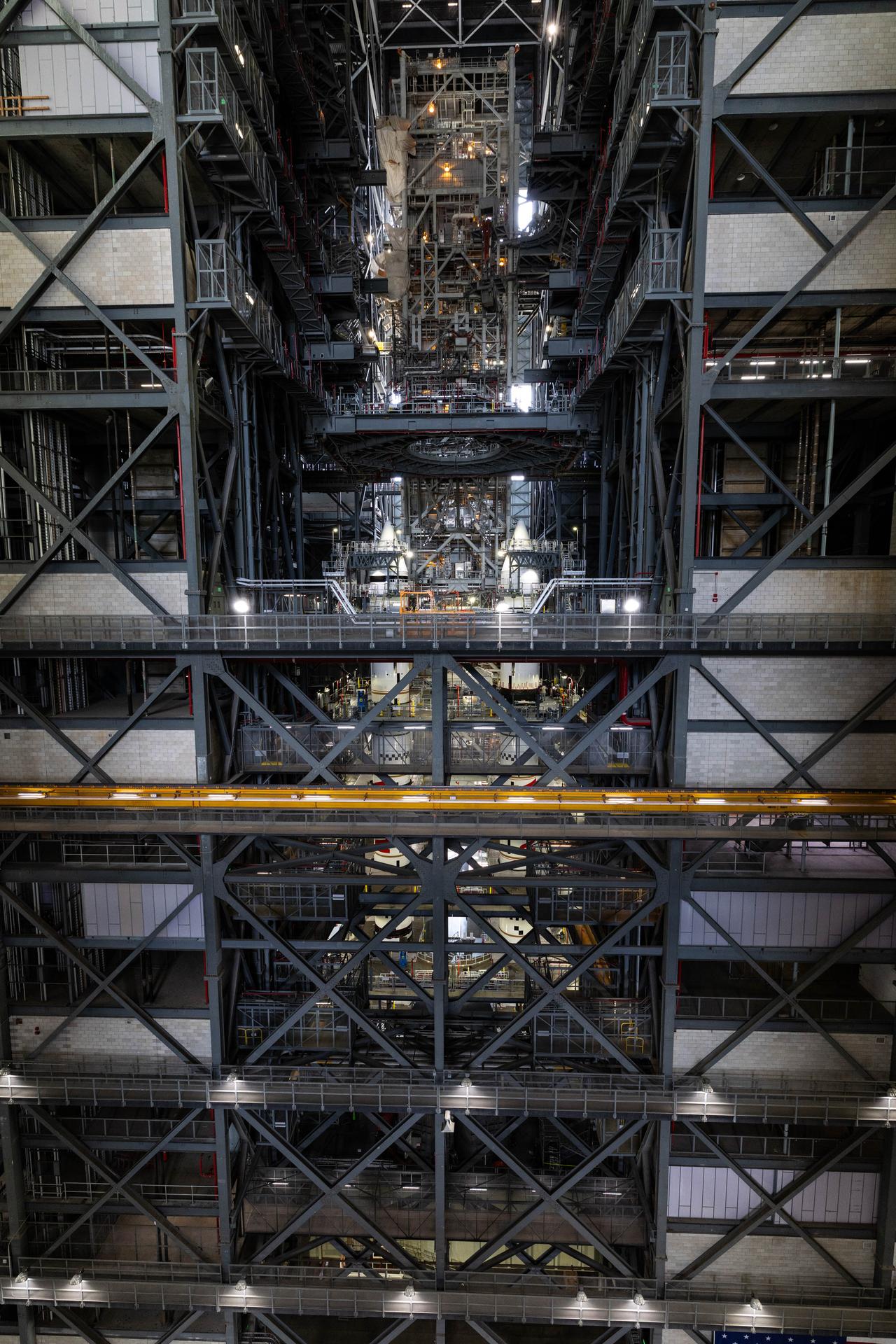
Engineers with NASA’s Exploration Ground Systems completed integrating the aerodynamic nose cones onto the left and right forward assemblies on the twin SLS (Space Launch System) solid rocket boosters, finishing their stacking operations for Artemis III inside the Vehicle Assembly Building’s High Bay 3 at NASA’s Kennedy Space Center in Florida on Wednesday, Sept. 30, 2026. Each forward assembly contains an aerodynamic top, a forward skirt housing avionics, and frustum housing motors that allow the boosters to separate from the SLS core stage after launch. The twin solid boosters will help support the remaining rocket components and the Orion spacecraft during final assembly of the Artemis III rocket and provide more than 75 percent of the total SLS thrust during liftoff from NASA Kennedy’s Launch Pad 39B.
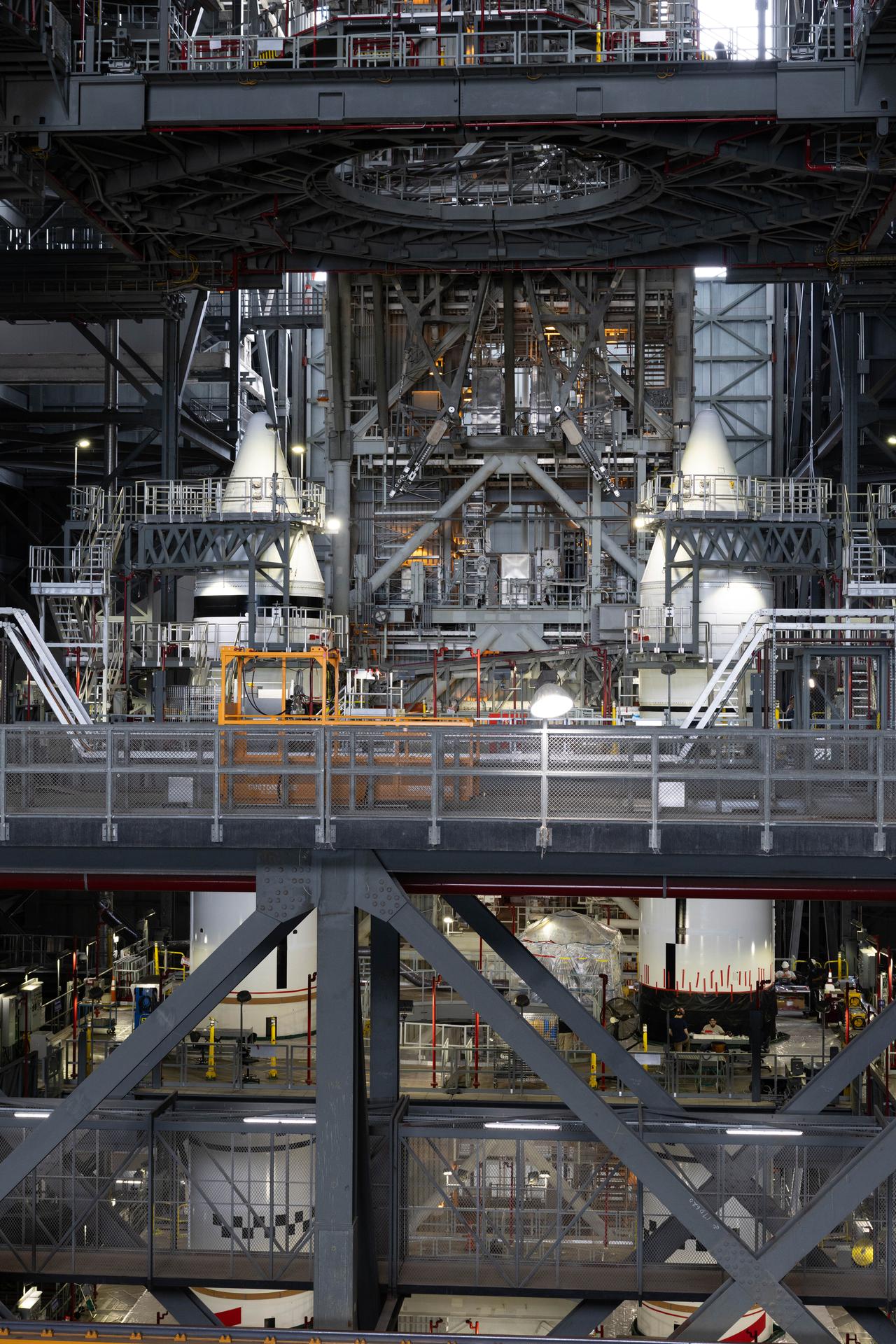
Engineers with NASA’s Exploration Ground Systems completed integrating the aerodynamic nose cones onto the left and right forward assemblies on the twin SLS (Space Launch System) solid rocket boosters, finishing their stacking operations for Artemis III inside the Vehicle Assembly Building’s High Bay 3 at NASA’s Kennedy Space Center in Florida on Wednesday, Sept. 30, 2026. Each forward assembly contains an aerodynamic top, a forward skirt housing avionics, and frustum housing motors that allow the boosters to separate from the SLS core stage after launch. The twin solid boosters will help support the remaining rocket components and the Orion spacecraft during final assembly of the Artemis III rocket and provide more than 75 percent of the total SLS thrust during liftoff from NASA Kennedy’s Launch Pad 39B.
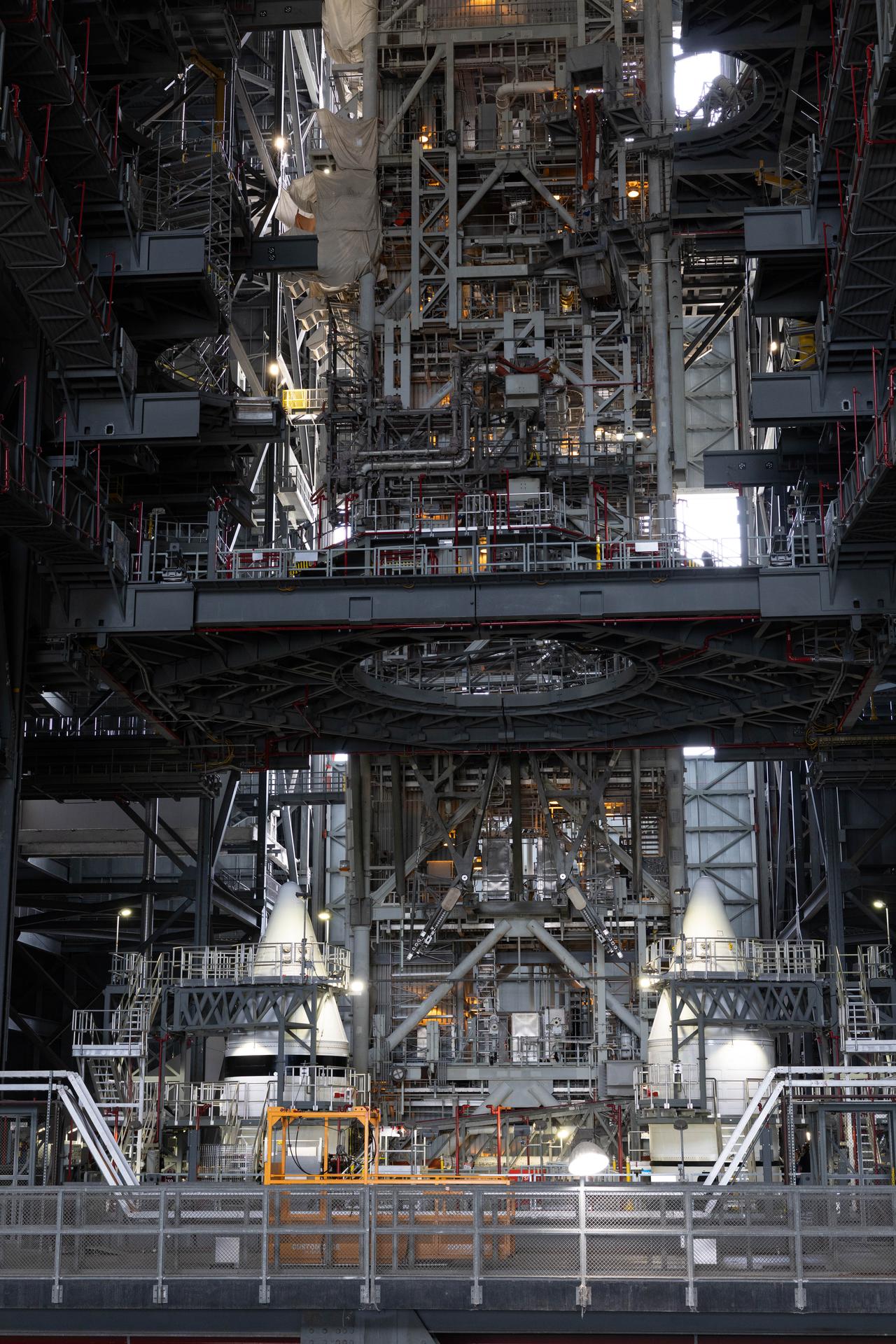
Engineers with NASA’s Exploration Ground Systems completed integrating the aerodynamic nose cones onto the left and right forward assemblies on the twin SLS (Space Launch System) solid rocket boosters, finishing their stacking operations for Artemis III inside the Vehicle Assembly Building’s High Bay 3 at NASA’s Kennedy Space Center in Florida on Wednesday, Sept. 30, 2026. Each forward assembly contains an aerodynamic top, a forward skirt housing avionics, and frustum housing motors that allow the boosters to separate from the SLS core stage after launch. The twin solid boosters will help support the remaining rocket components and the Orion spacecraft during final assembly of the Artemis III rocket and provide more than 75 percent of the total SLS thrust during liftoff from NASA Kennedy’s Launch Pad 39B.
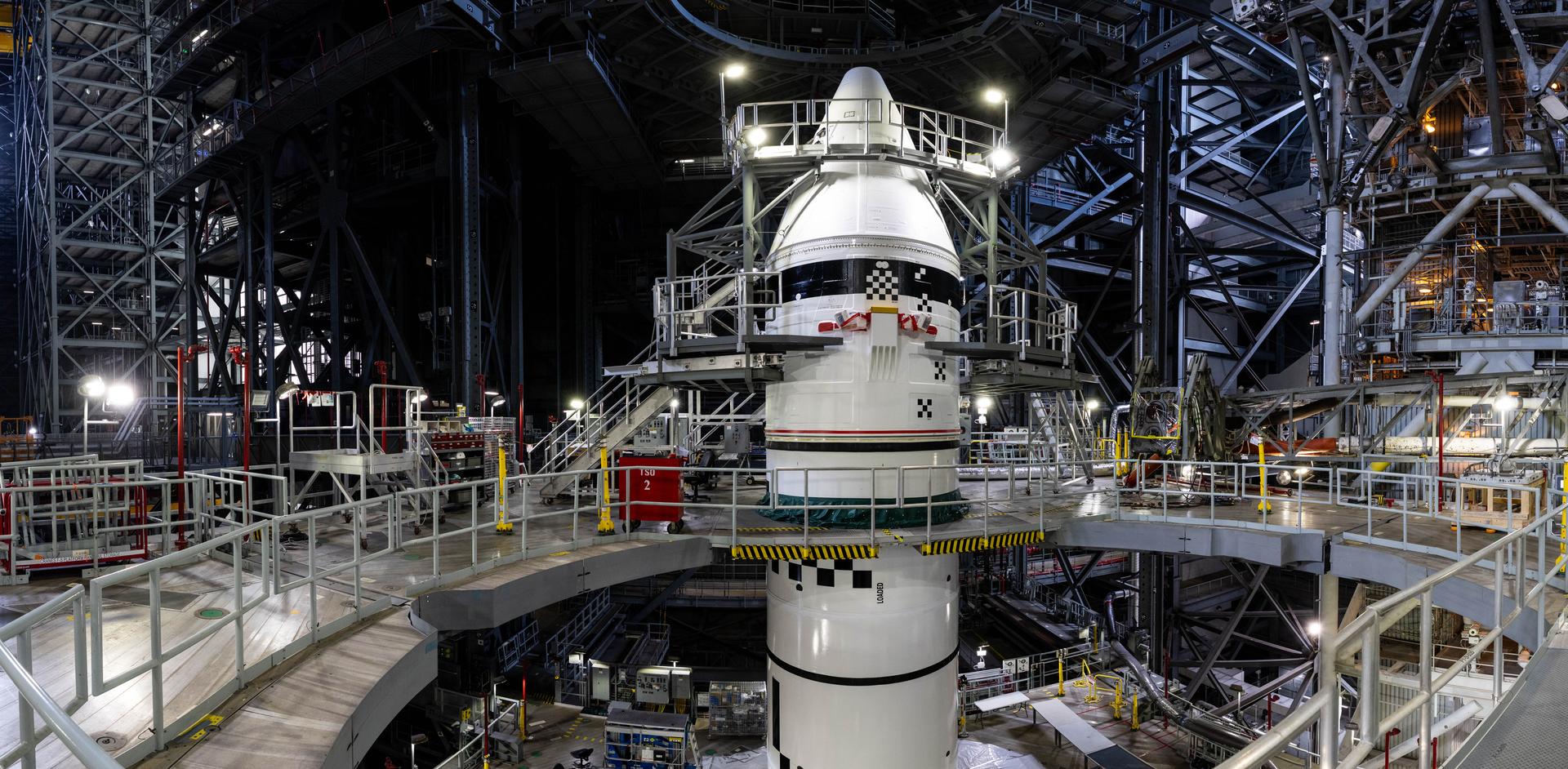
Engineers with NASA’s Exploration Ground Systems integrate the aerodynamic nose cone onto the left forward motor segment on the twin SLS (Space Launch System) solid rocket boosters for Artemis III inside the Vehicle Assembly Building’s High Bay 3 at NASA’s Kennedy Space Center in Florida on Tuesday, Sept. 29, 2026. Each forward assembly contains an aerodynamic top, a forward skirt housing avionics, and frustum housing motors that allow the boosters to separate from the SLS core stage after launch. The twin solid boosters will help support the remaining rocket components and the Orion spacecraft during final assembly of the Artemis III rocket and provide more than 75 percent of the total SLS thrust during liftoff from NASA Kennedy’s Launch Pad 39B.
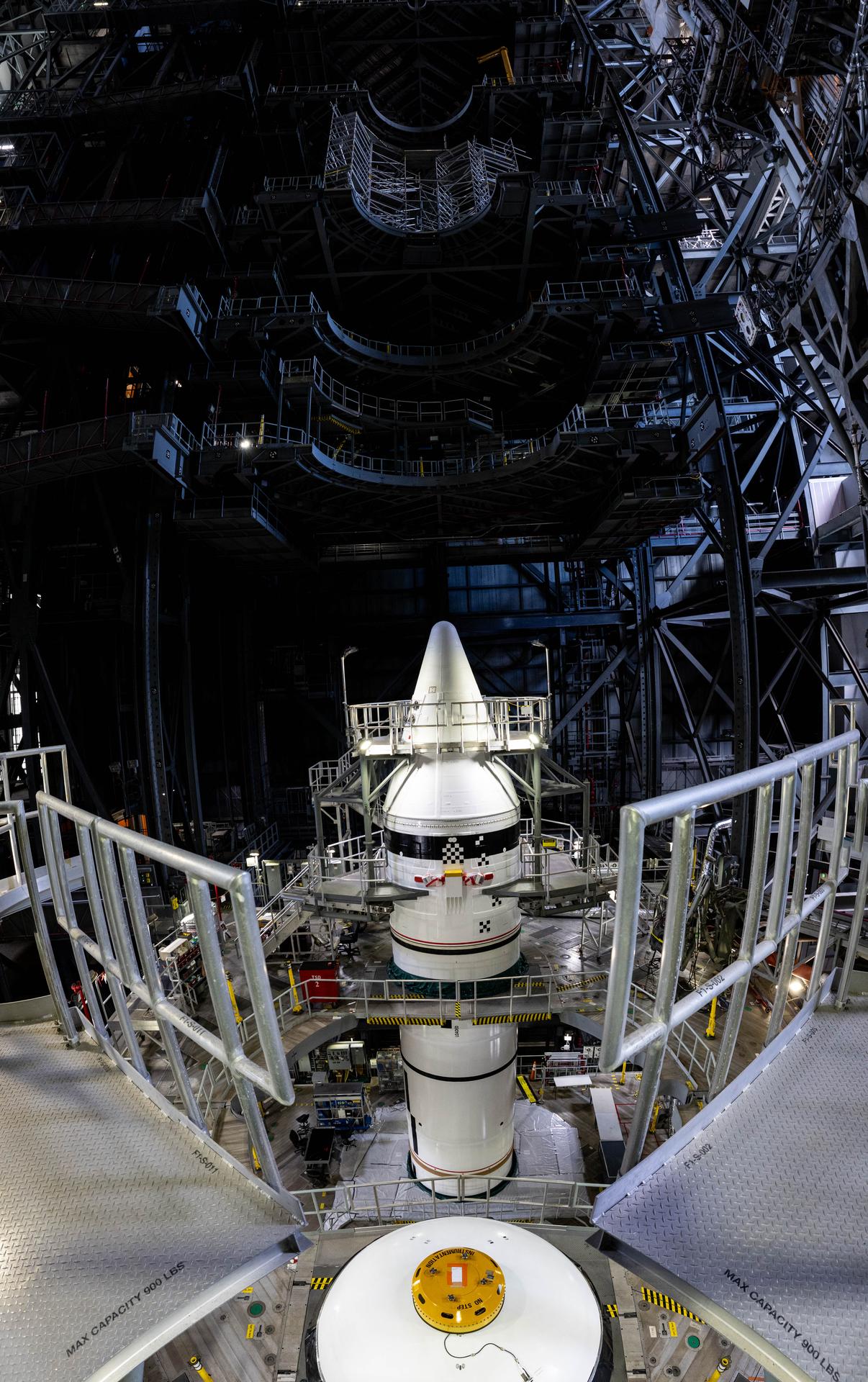
Engineers with NASA’s Exploration Ground Systems integrate the aerodynamic nose cone onto the left forward motor segment on the twin SLS (Space Launch System) solid rocket boosters for Artemis III inside the Vehicle Assembly Building’s High Bay 3 at NASA’s Kennedy Space Center in Florida on Tuesday, Sept. 29, 2026. Each forward assembly contains an aerodynamic top, a forward skirt housing avionics, and frustum housing motors that allow the boosters to separate from the SLS core stage after launch. The twin solid boosters will help support the remaining rocket components and the Orion spacecraft during final assembly of the Artemis III rocket and provide more than 75 percent of the total SLS thrust during liftoff from NASA Kennedy’s Launch Pad 39B.
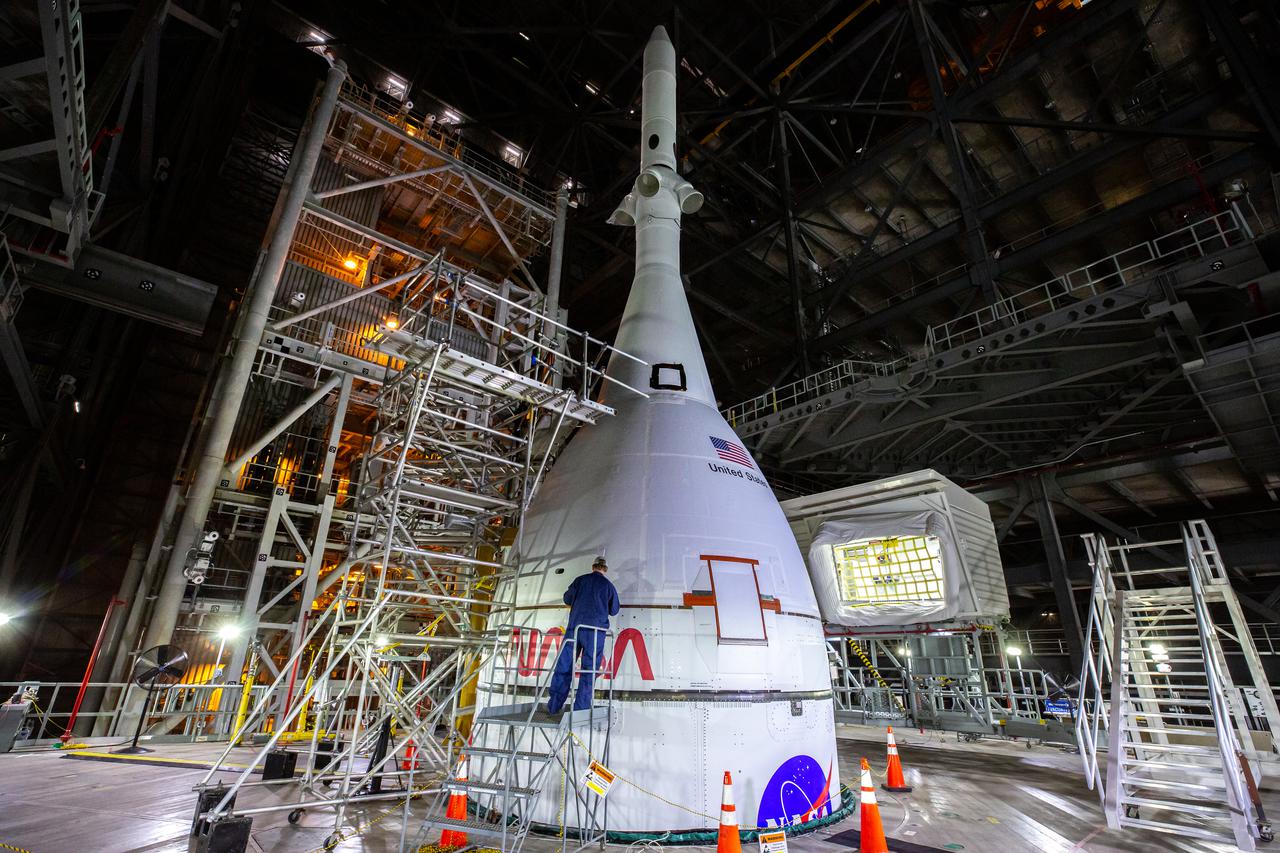
The Artemis I Orion spacecraft, secured on the Space Launch System (SLS) and enclosed in its launch abort system, is in view high up in High Bay 3 of the Vehicle Assembly Building at NASA’s Kennedy Space Center in Florida on Jan. 10, 2022. Work platforms are extended around Orion and scaffolding has been secured to allow access for inspection and processing work. Artemis I will be the first integrated test of NASA’s deep space exploration systems: the Orion spacecraft, Space Launch System (SLS) rocket and the ground systems at Kennedy. In later missions, NASA will land the first woman and the first person of color on the surface of the Moon, paving the way for a long-term lunar presence and serving as a steppingstone on the way to Mars.
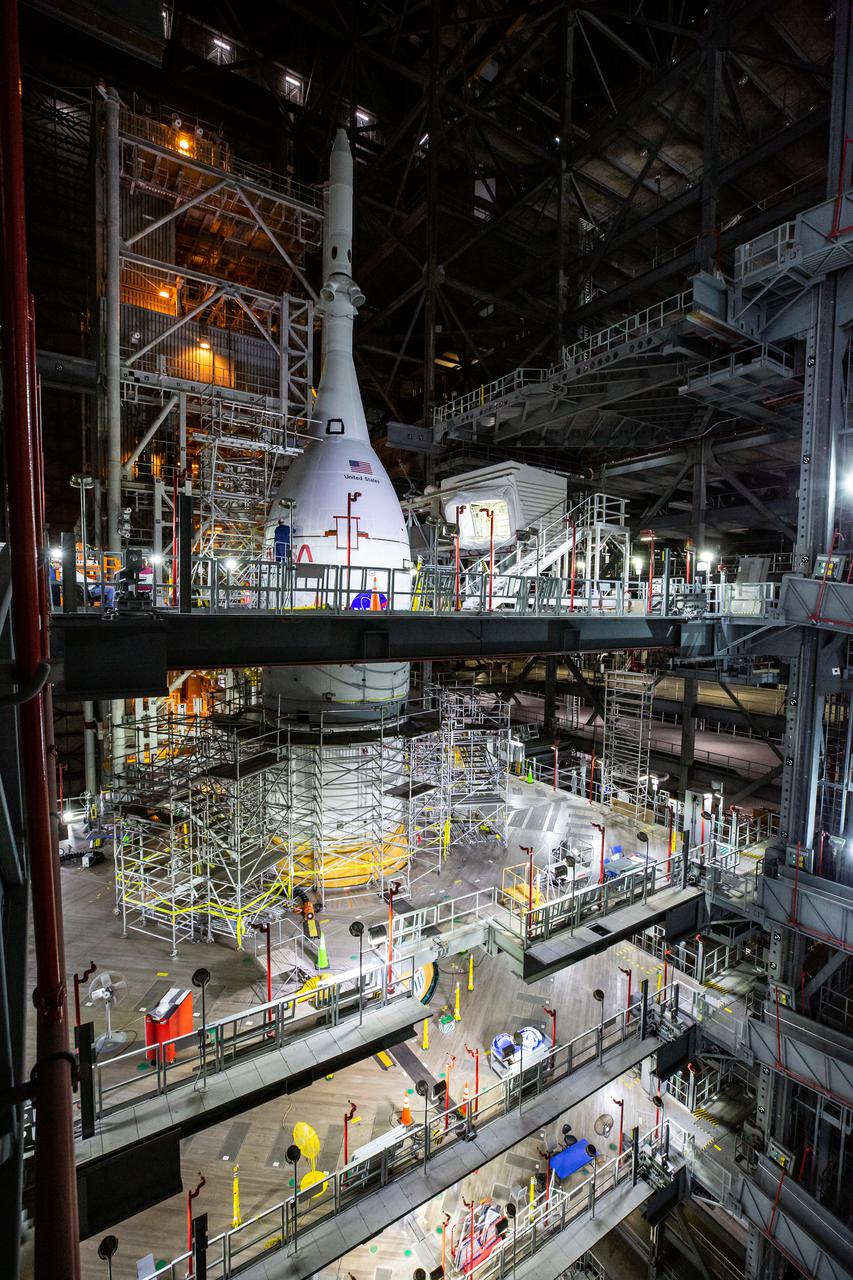
The Artemis I Orion spacecraft, secured on the Space Launch System (SLS) and enclosed in its launch abort system, is in view high up in High Bay 3 of the Vehicle Assembly Building at NASA’s Kennedy Space Center in Florida on Jan. 10, 2022. Work platforms are extended around Orion and scaffolding has been secured to allow access for inspection and processing work. Artemis I will be the first integrated test of NASA’s deep space exploration systems: the Orion spacecraft, Space Launch System (SLS) rocket and the ground systems at Kennedy. In later missions, NASA will land the first woman and the first person of color on the surface of the Moon, paving the way for a long-term lunar presence and serving as a steppingstone on the way to Mars.
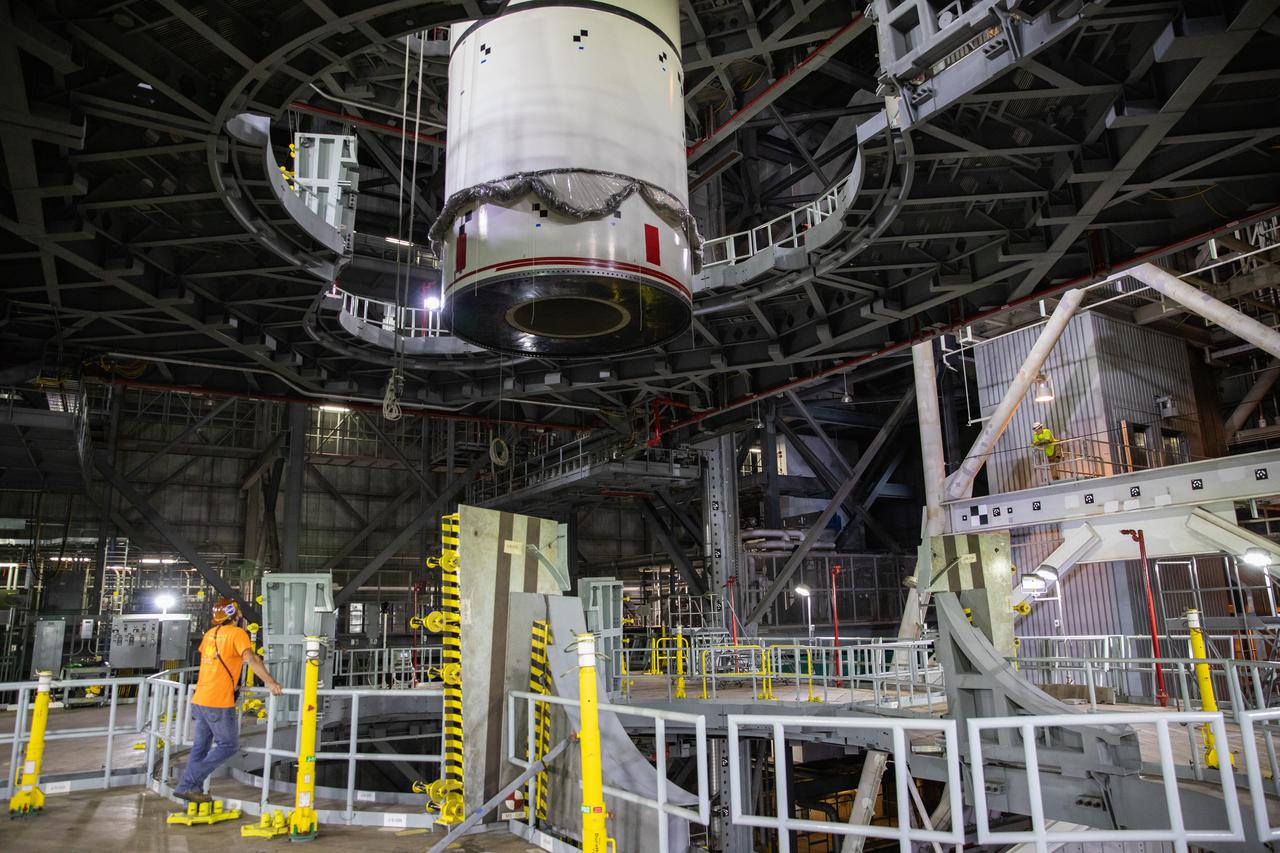
Technicians with NASA’s Exploration Ground Systems lower a mock-up, or pathfinder, of the Space Launch System’s (SLS) center booster segment onto an aft pathfinder segment inside the Vehicle Assembly Building (VAB) at the agency’s Kennedy Space Center in Florida on Sept. 14, 2020. Teams rehearsed stacking both pathfinder segments on top of the mobile launcher in High Bay 3 of the VAB in preparation for the Artemis I launch. Stacking of the actual SLS booster segments will occur later this year, when the rocket’s core stage arrives at Kennedy. Artemis I is the first in a series of increasingly complex missions that will test SLS and the Orion spacecraft as an integrated system prior to crewed flights to the Moon.
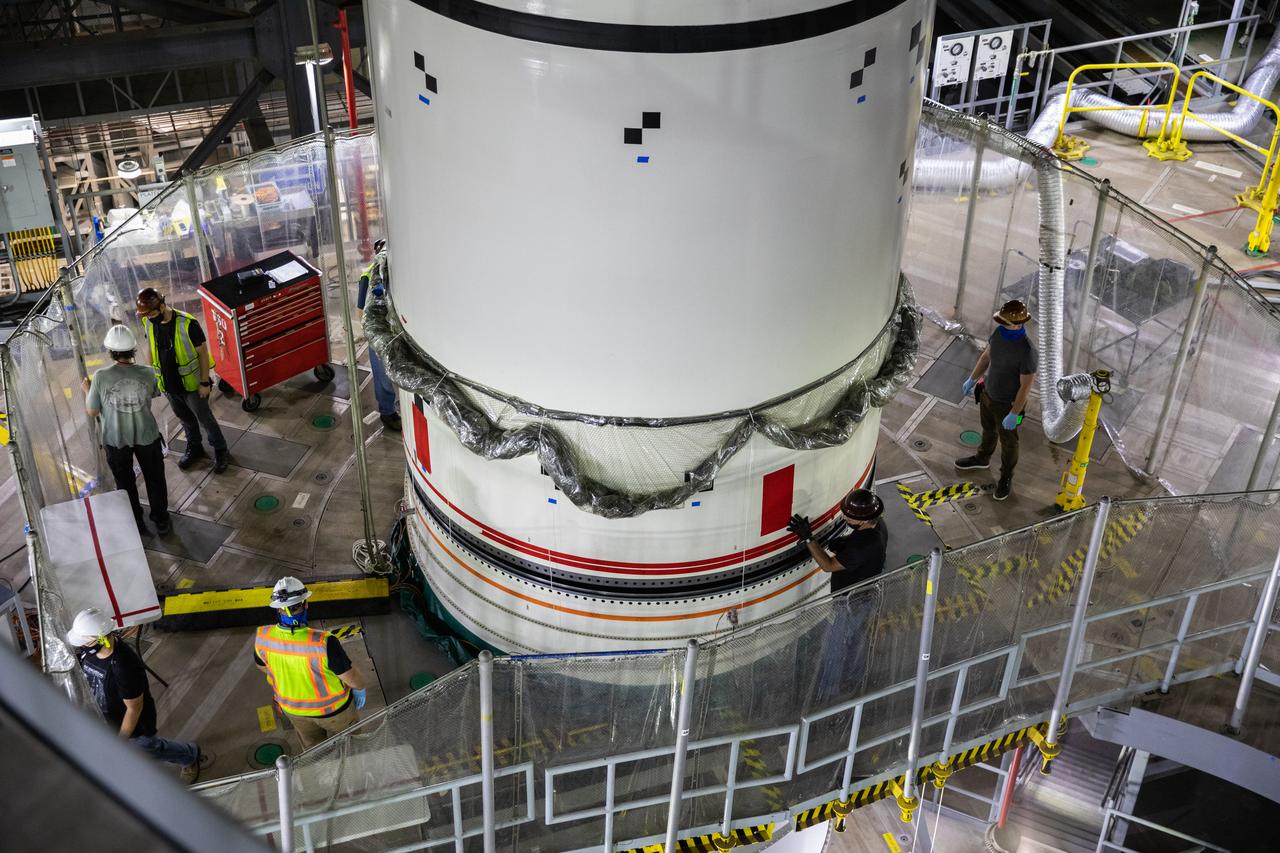
Technicians with NASA’s Exploration Ground Systems lower a mock-up, or pathfinder, of the Space Launch System’s (SLS) center booster segment onto an aft pathfinder segment inside the Vehicle Assembly Building (VAB) at the agency’s Kennedy Space Center in Florida on Sept. 14, 2020. Teams rehearsed stacking both pathfinder segments on top of the mobile launcher in High Bay 3 of the VAB in preparation for the Artemis I launch. Stacking of the actual SLS booster segments will occur later this year, when the rocket’s core stage arrives at Kennedy. Artemis I is the first in a series of increasingly complex missions that will test SLS and the Orion spacecraft as an integrated system prior to crewed flights to the Moon.
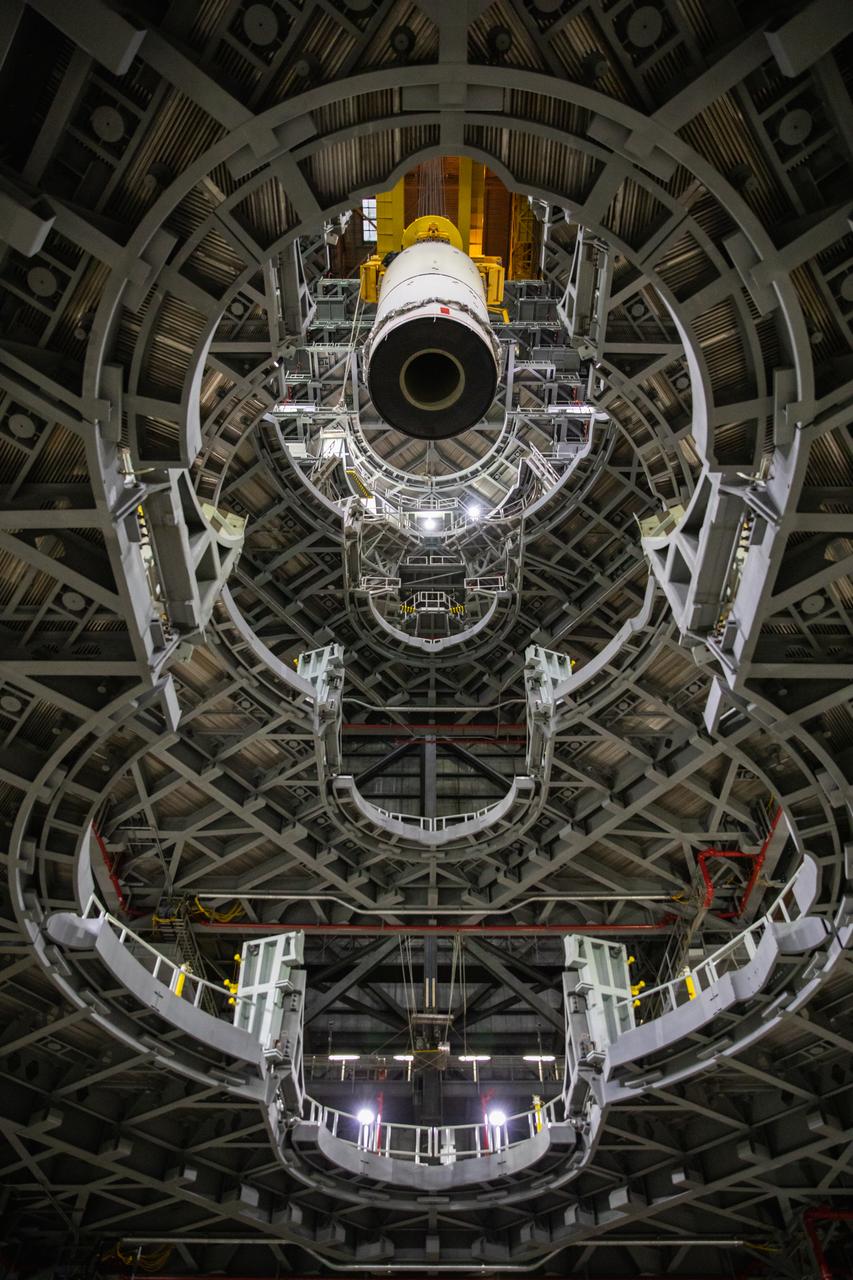
Technicians with NASA’s Exploration Ground Systems prepare to lower a mock-up, or pathfinder, of the Space Launch System’s (SLS) center booster segment onto an aft pathfinder segment inside the Vehicle Assembly Building (VAB) at the agency’s Kennedy Space Center in Florida on Sept. 14, 2020. Teams rehearsed stacking both pathfinder segments on top of the mobile launcher in High Bay 3 of the VAB in preparation for the Artemis I launch. Stacking of the actual SLS booster segments will occur later this year, when the rocket’s core stage arrives at Kennedy. Artemis I is the first in a series of increasingly complex missions that will test SLS and the Orion spacecraft as an integrated system prior to crewed flights to the Moon.
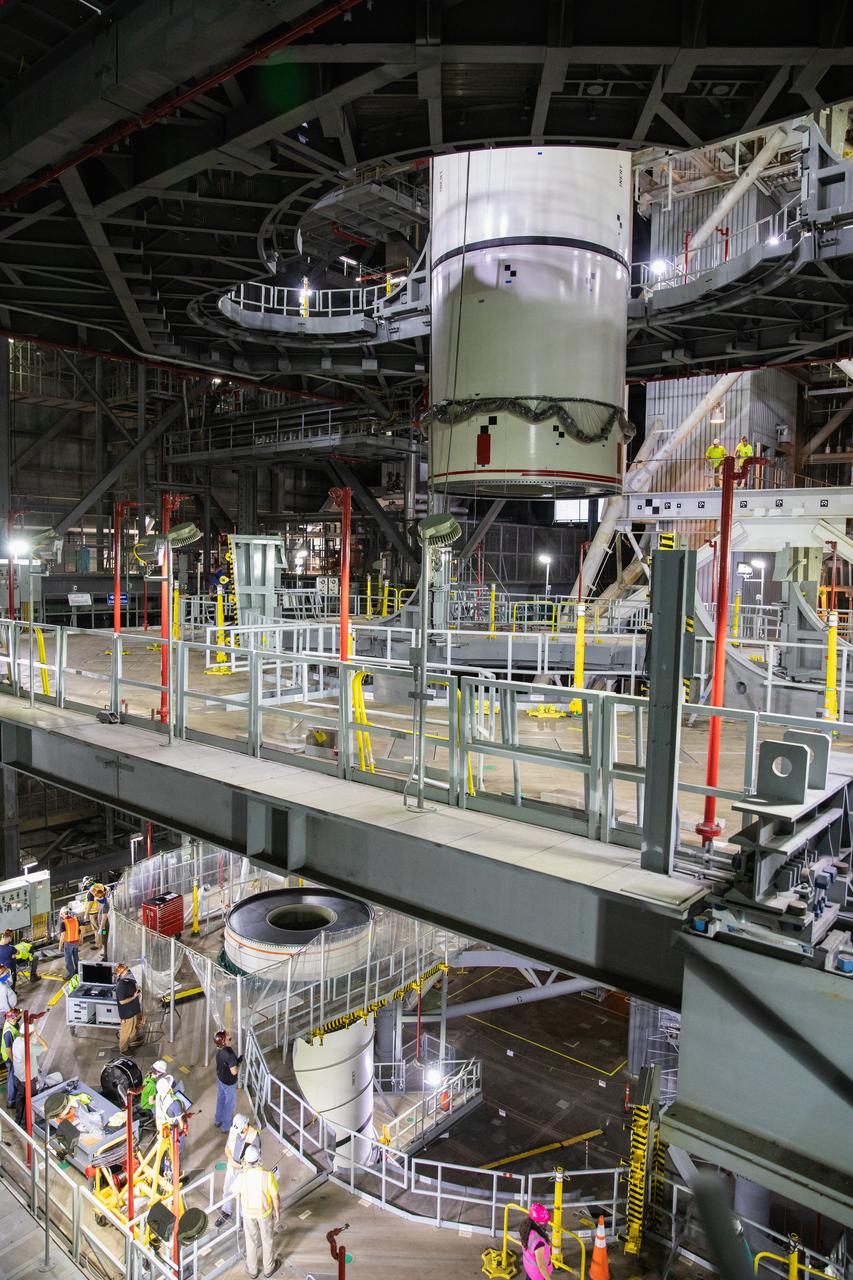
Technicians with NASA’s Exploration Ground Systems lower a mock-up, or pathfinder, of the Space Launch System’s (SLS) center booster segment onto an aft pathfinder segment inside the Vehicle Assembly Building (VAB) at the agency’s Kennedy Space Center in Florida on Sept. 14, 2020. Teams rehearsed stacking both pathfinder segments on top of the mobile launcher in High Bay 3 of the VAB in preparation for the Artemis I launch. Stacking of the actual SLS booster segments will occur later this year, when the rocket’s core stage arrives at Kennedy. Artemis I is the first in a series of increasingly complex missions that will test SLS and the Orion spacecraft as an integrated system prior to crewed flights to the Moon.
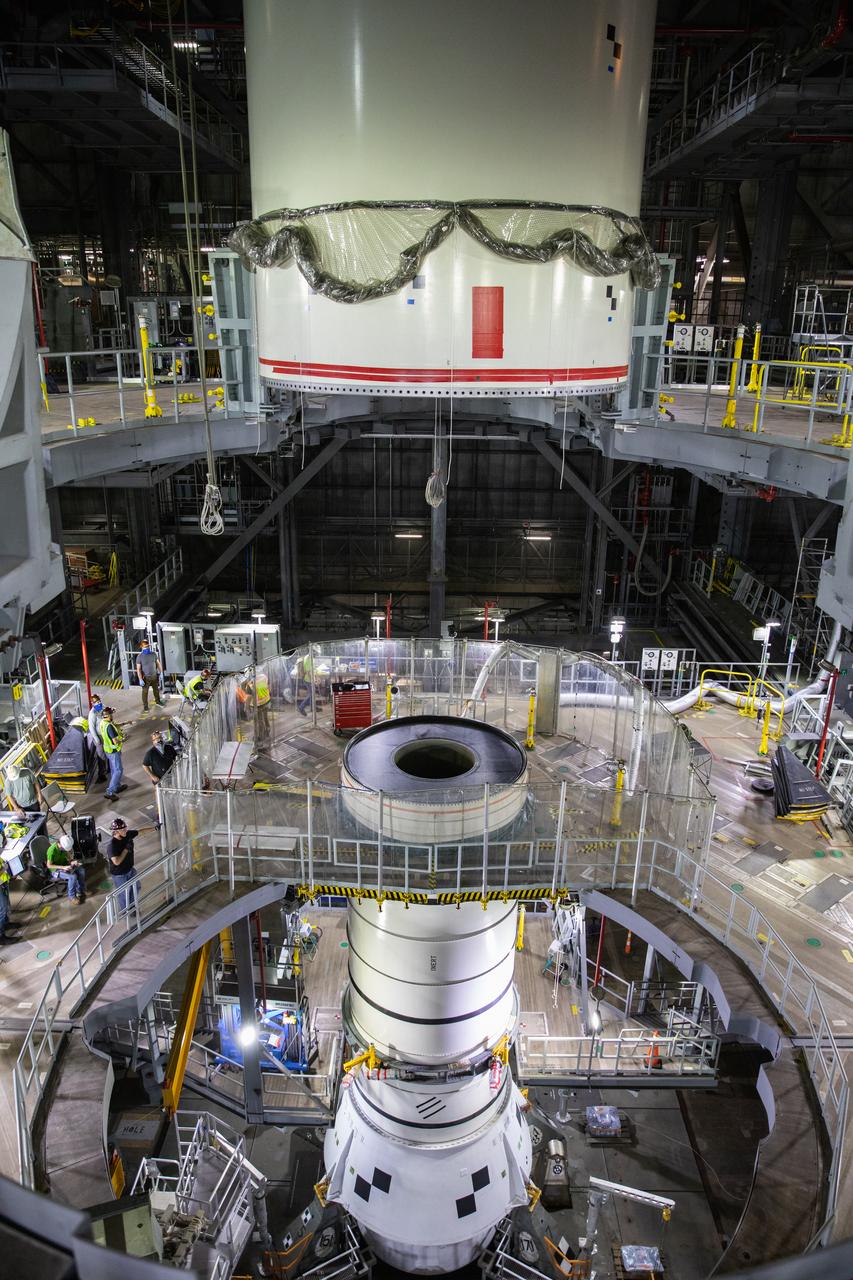
Technicians with NASA’s Exploration Ground Systems lower a mock-up, or pathfinder, of the Space Launch System’s (SLS) center booster segment onto an aft pathfinder segment inside the Vehicle Assembly Building (VAB) at the agency’s Kennedy Space Center in Florida on Sept. 14, 2020. Teams rehearsed stacking both pathfinder segments on top of the mobile launcher in High Bay 3 of the VAB in preparation for the Artemis I launch. Stacking of the actual SLS booster segments will occur later this year, when the rocket’s core stage arrives at Kennedy. Artemis I is the first in a series of increasingly complex missions that will test SLS and the Orion spacecraft as an integrated system prior to crewed flights to the Moon.

Technicians with NASA’s Exploration Ground Systems lower a mock-up, or pathfinder, of the Space Launch System’s (SLS) center booster segment onto an aft pathfinder segment inside the Vehicle Assembly Building (VAB) at the agency’s Kennedy Space Center in Florida on Sept. 14, 2020. Teams rehearsed stacking both pathfinder segments on top of the mobile launcher in High Bay 3 of the VAB in preparation for the Artemis I launch. Stacking of the actual SLS booster segments will occur later this year, when the rocket’s core stage arrives at Kennedy. Artemis I is the first in a series of increasingly complex missions that will test SLS and the Orion spacecraft as an integrated system prior to crewed flights to the Moon.
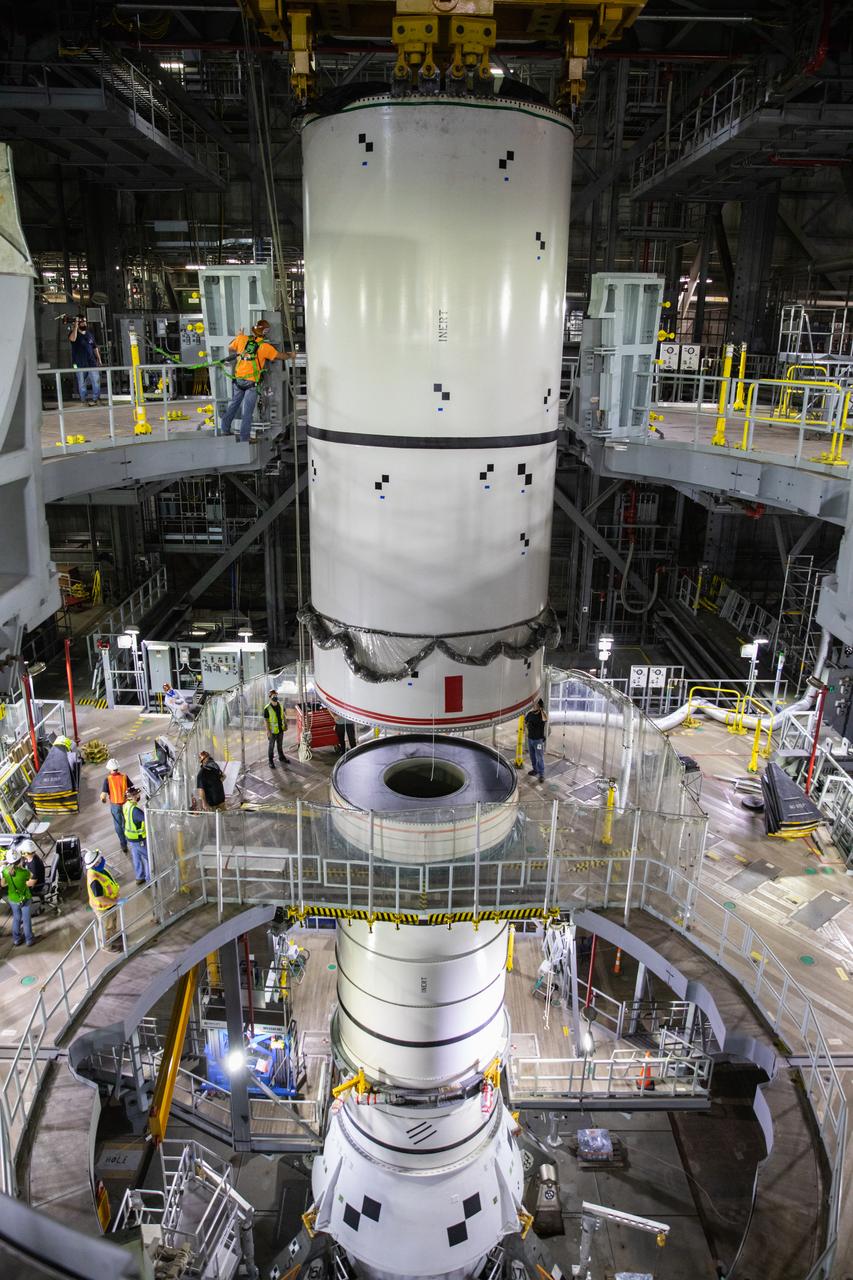
Technicians with NASA’s Exploration Ground Systems lower a mock-up, or pathfinder, of the Space Launch System’s (SLS) center booster segment onto an aft pathfinder segment inside the Vehicle Assembly Building (VAB) at the agency’s Kennedy Space Center in Florida on Sept. 14, 2020. Teams rehearsed stacking both pathfinder segments on top of the mobile launcher in High Bay 3 of the VAB in preparation for the Artemis I launch. Stacking of the actual SLS booster segments will occur later this year, when the rocket’s core stage arrives at Kennedy. Artemis I is the first in a series of increasingly complex missions that will test SLS and the Orion spacecraft as an integrated system prior to crewed flights to the Moon.
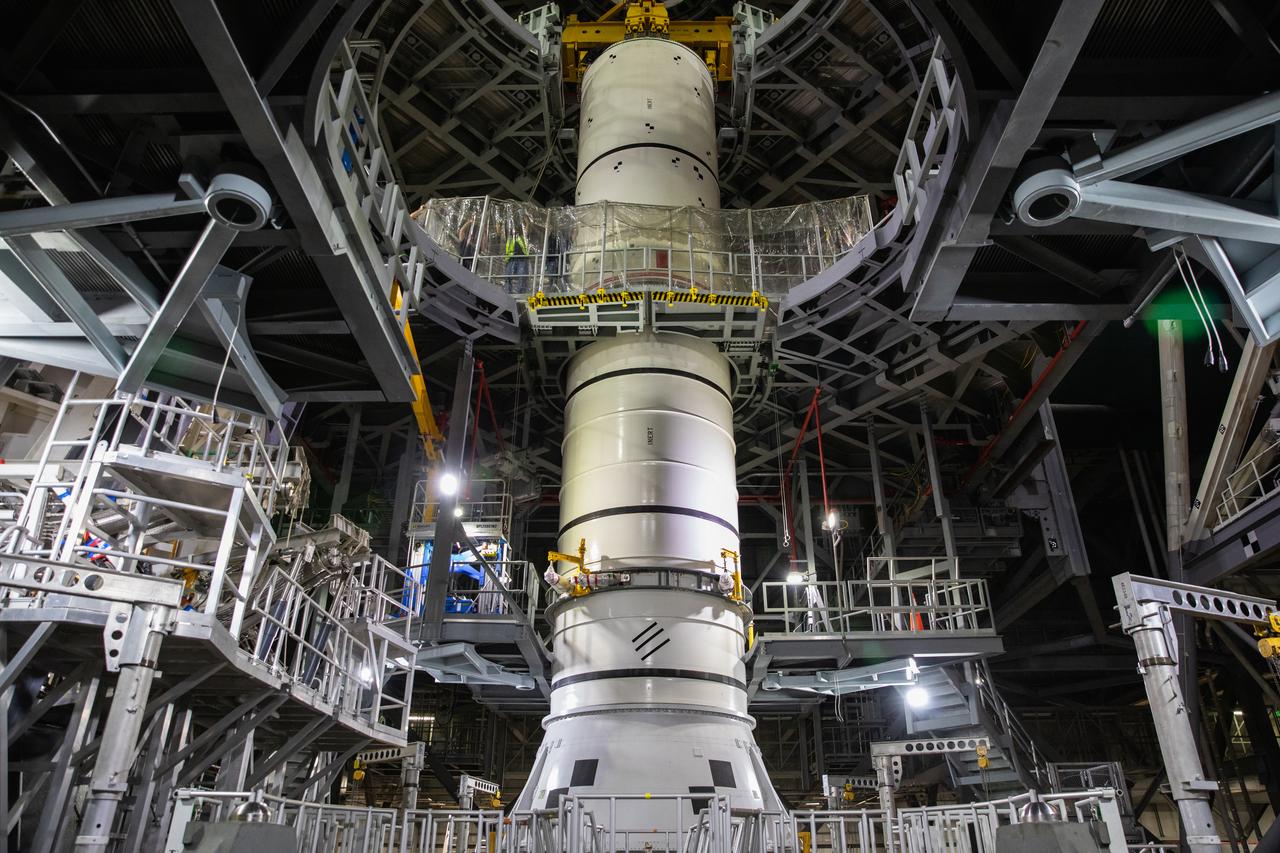
Technicians with NASA’s Exploration Ground Systems lower a mock-up, or pathfinder, of the Space Launch System’s (SLS) center booster segment onto an aft pathfinder segment inside the Vehicle Assembly Building (VAB) at the agency’s Kennedy Space Center in Florida on Sept. 14, 2020. Teams rehearsed stacking both pathfinder segments on top of the mobile launcher in High Bay 3 of the VAB in preparation for the Artemis I launch. Stacking of the actual SLS booster segments will occur later this year, when the rocket’s core stage arrives at Kennedy. Artemis I is the first in a series of increasingly complex missions that will test SLS and the Orion spacecraft as an integrated system prior to crewed flights to the Moon.

During a training exercise, technicians with NASA’s Exploration Ground Systems lower a mock-up of the Space Launch System (SLS) aft booster segment, referred to as a pathfinder, onto the mobile launcher in Kennedy Space Center’s Vehicle Assembly Building (VAB) on Sept. 11, 2020. The rehearsal involved teams preparing the aft pathfinder segment in High Bay 4 of the VAB, lifting and moving it over to High Bay 3, and placing it on the mobile launcher in preparation for Artemis I. Stacking of the actual booster segments will occur later this year, before the SLS core stage arrives at the Florida spaceport. Artemis I is the first in a series of increasingly complex missions that will test SLS and the Orion spacecraft as an integrated system prior to crewed flights to the Moon.
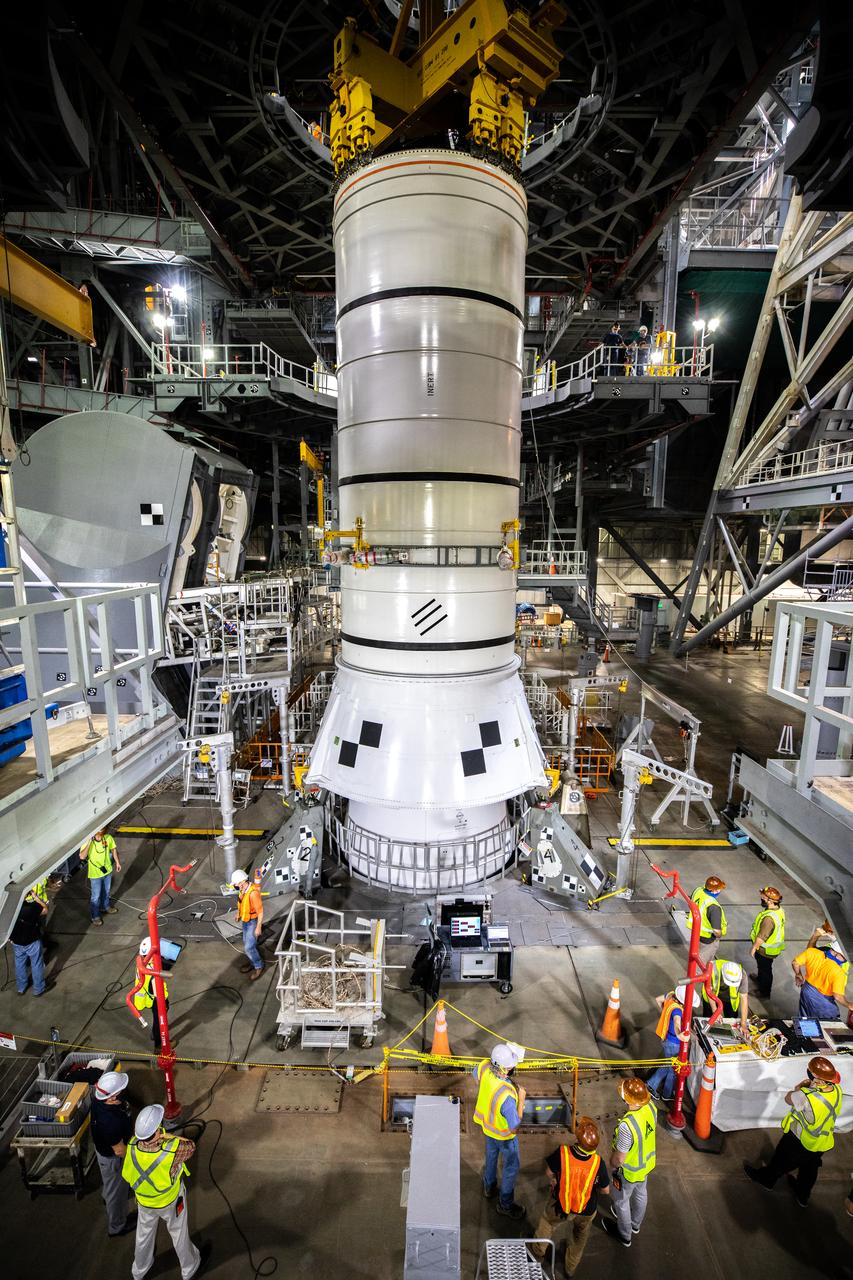
During a training exercise, technicians with NASA’s Exploration Ground Systems lower a mock-up of the Space Launch System (SLS) aft booster segment, referred to as a pathfinder, onto the mobile launcher in Kennedy Space Center’s Vehicle Assembly Building (VAB) on Sept. 11, 2020. The rehearsal involved teams preparing the aft pathfinder segment in High Bay 4 of the VAB, lifting and moving it over to High Bay 3, and placing it on the mobile launcher in preparation for Artemis I. Stacking of the actual booster segments will occur later this year, before the SLS core stage arrives at the Florida spaceport. Artemis I is the first in a series of increasingly complex missions that will test SLS and the Orion spacecraft as an integrated system prior to crewed flights to the Moon.
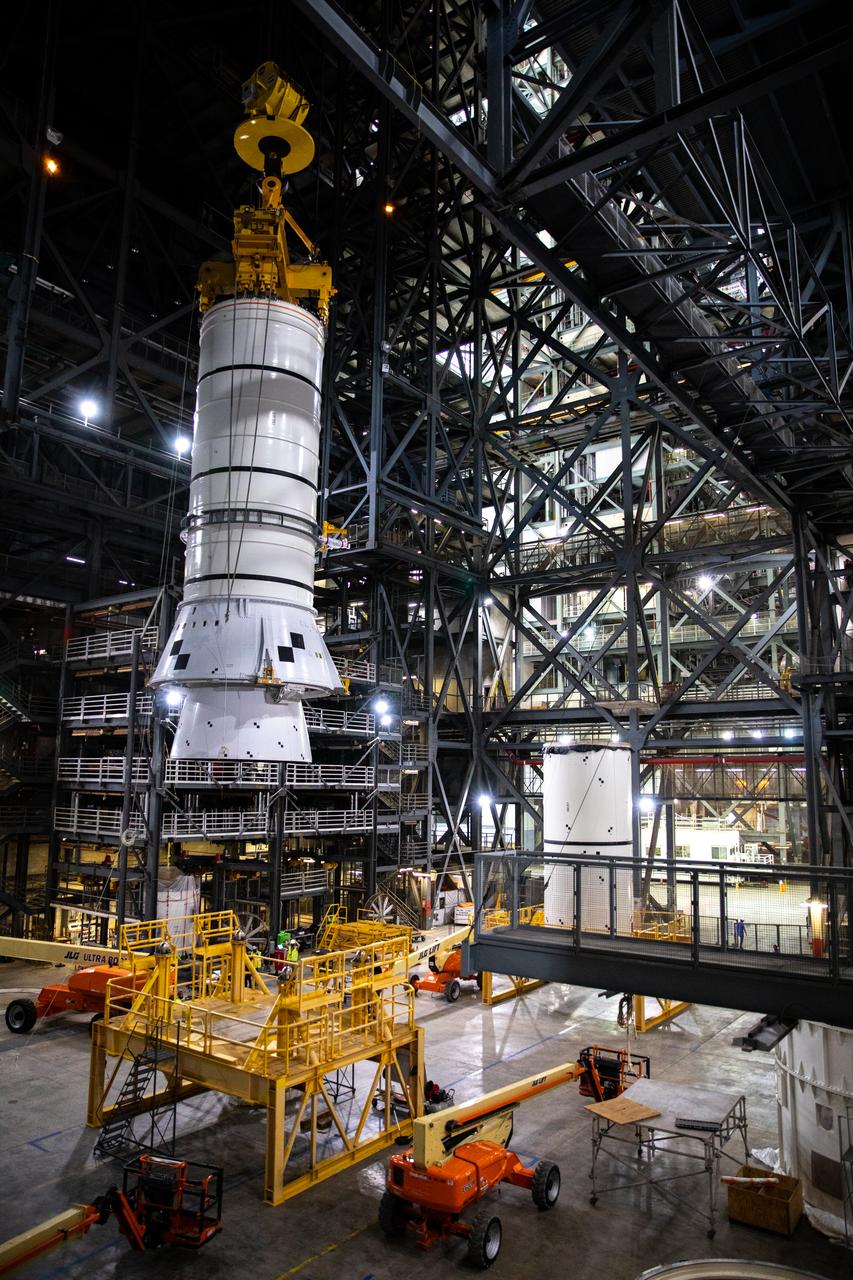
Technicians with NASA’s Exploration Ground Systems rehearse lifting operations using a mock-up of the Space Launch System (SLS) aft booster segment, referred to as a pathfinder, inside the Vehicle Assembly Building (VAB) at the agency’s Kennedy Space Center in Florida on Sept. 11, 2020, in preparation for Artemis I. The exercise involved preparing the aft pathfinder segment in High Bay 4 of the VAB and moving it over to High Bay 3, where it was placed on the mobile launcher. Stacking of the actual booster segments will occur later this year, before the SLS core stage arrives at Kennedy. Artemis I is the first in a series of increasingly complex missions that will test SLS and the Orion spacecraft as an integrated system prior to crewed flights to the Moon.
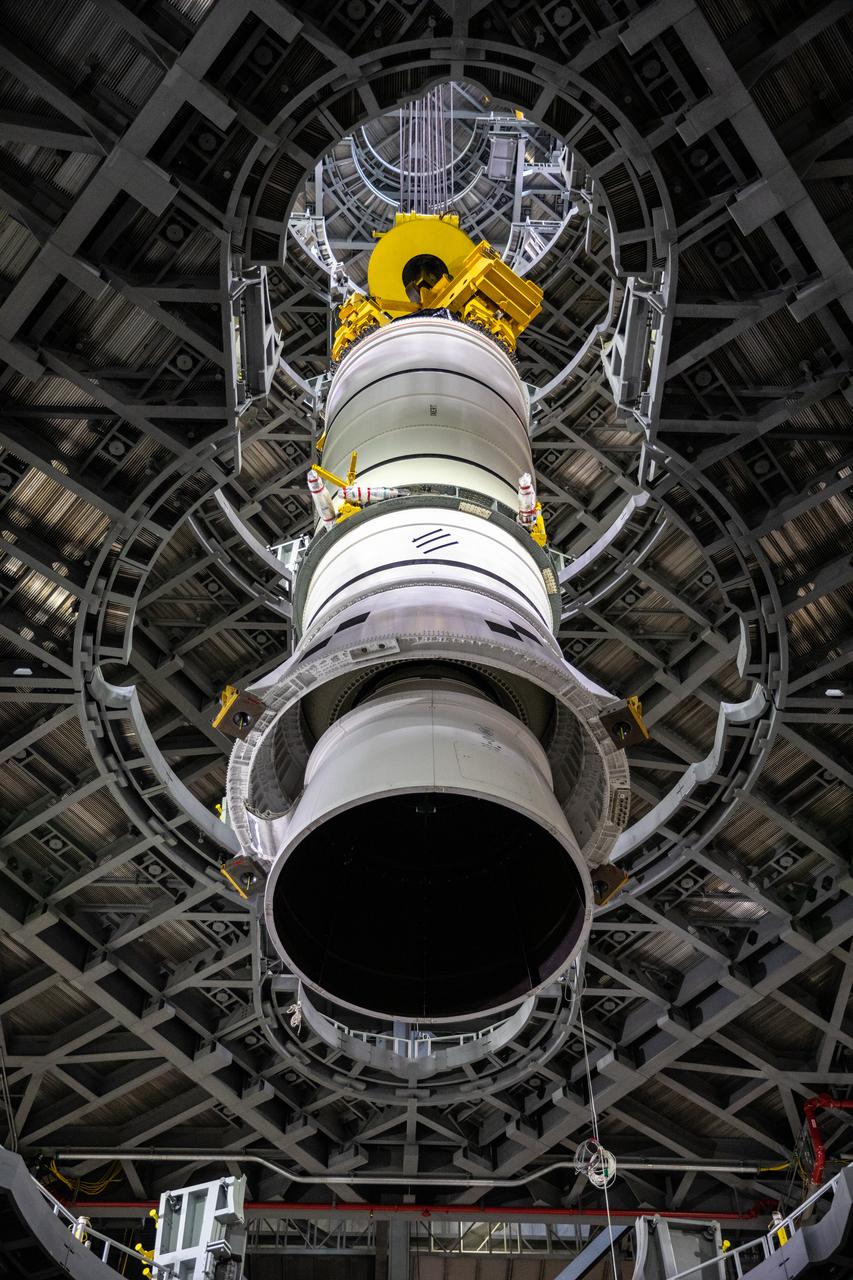
During a training exercise, technicians with NASA’s Exploration Ground Systems lower a mock-up of the Space Launch System (SLS) aft booster segment, referred to as a pathfinder, onto the mobile launcher in Kennedy Space Center’s Vehicle Assembly Building (VAB) on Sept. 11, 2020. The rehearsal involved teams preparing the aft pathfinder segment in High Bay 4 of the VAB, lifting and moving it over to High Bay 3, and placing it on the mobile launcher in preparation for Artemis I. Stacking of the actual booster segments will occur later this year, before the SLS core stage arrives at the Florida spaceport. Artemis I is the first in a series of increasingly complex missions that will test SLS and the Orion spacecraft as an integrated system prior to crewed flights to the Moon.
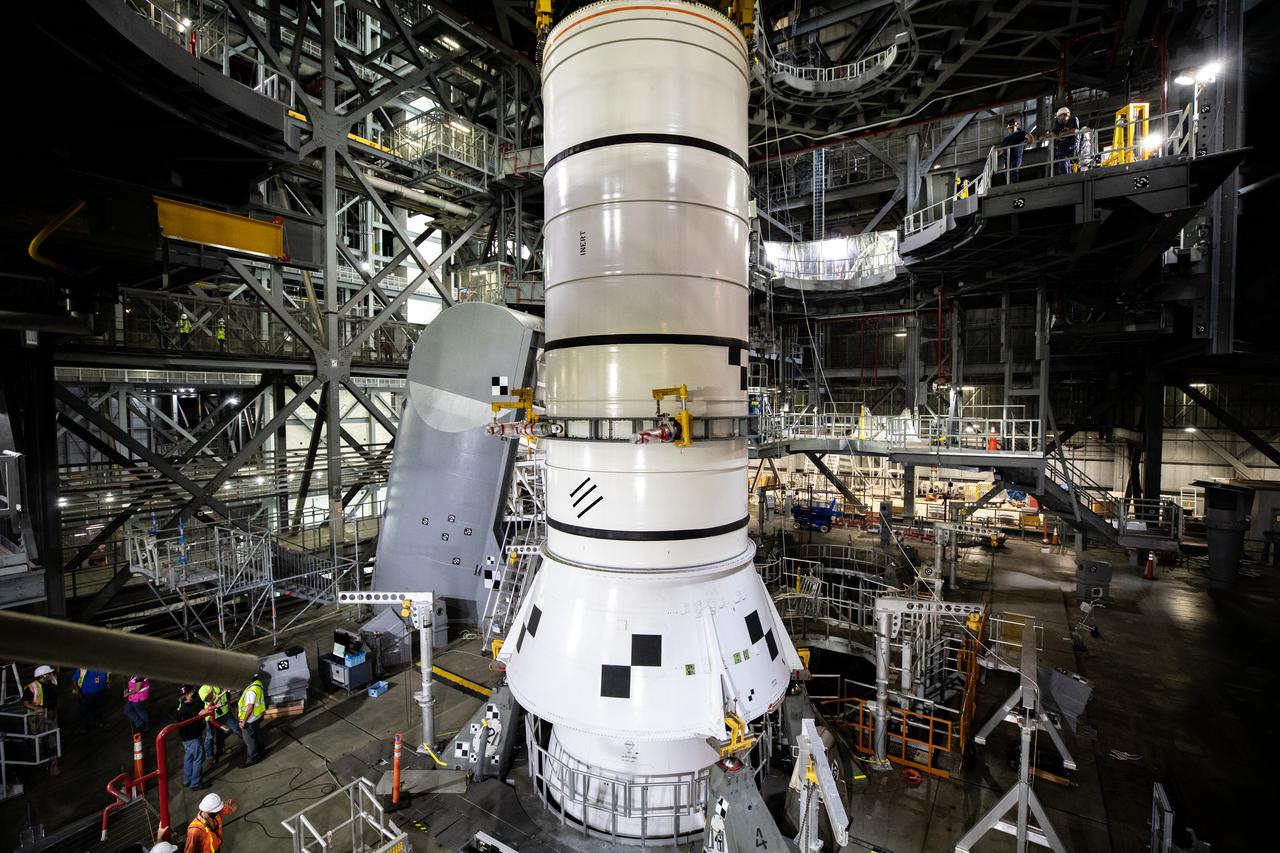
During a training exercise, technicians with NASA’s Exploration Ground Systems lower a mock-up of the Space Launch System (SLS) aft booster segment, referred to as a pathfinder, onto the mobile launcher in Kennedy Space Center’s Vehicle Assembly Building (VAB) on Sept. 11, 2020. The rehearsal involved teams preparing the aft pathfinder segment in High Bay 4 of the VAB, lifting and moving it over to High Bay 3, and placing it on the mobile launcher in preparation for Artemis I. Stacking of the actual booster segments will occur later this year, before the SLS core stage arrives at the Florida spaceport. Artemis I is the first in a series of increasingly complex missions that will test SLS and the Orion spacecraft as an integrated system prior to crewed flights to the Moon.
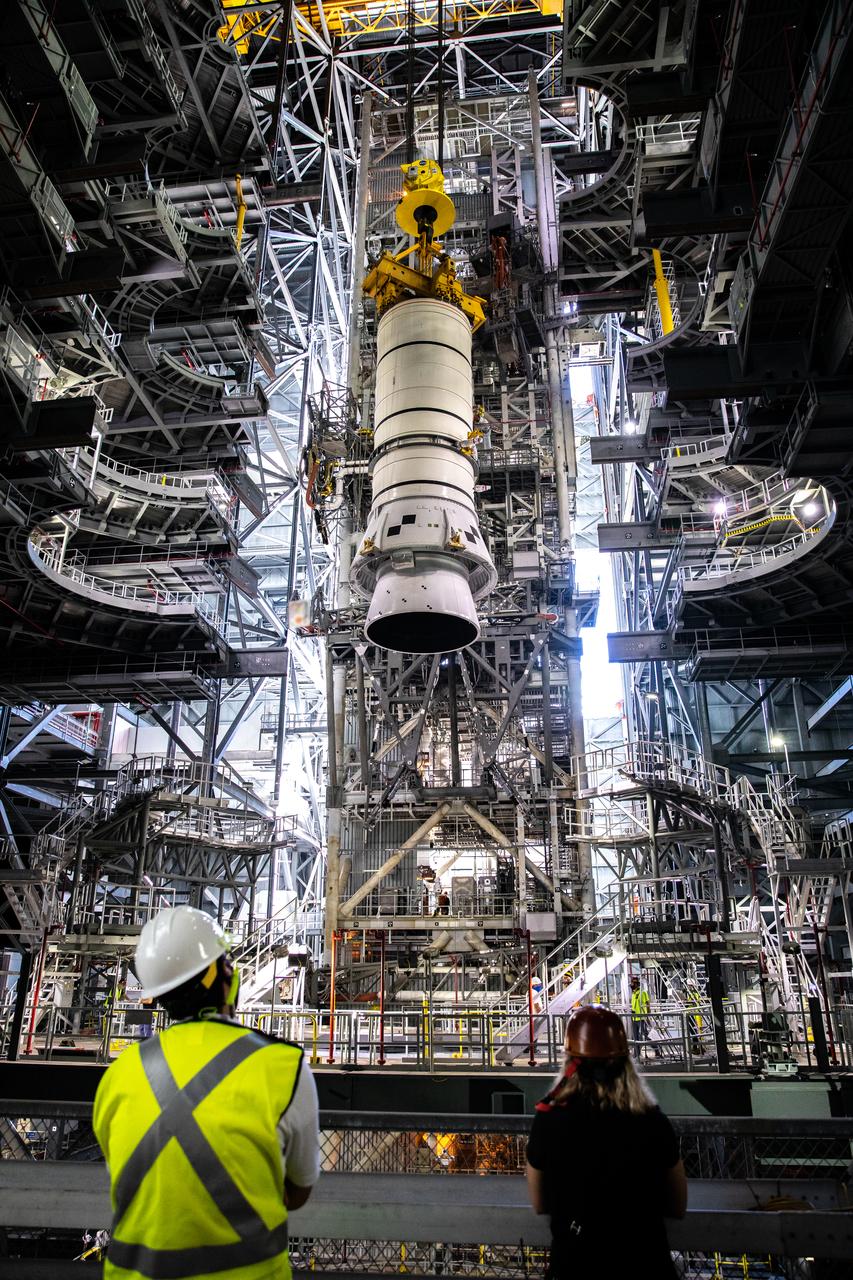
During a training exercise, technicians with NASA’s Exploration Ground Systems lower a mock-up of the Space Launch System (SLS) aft booster segment, referred to as a pathfinder, onto the mobile launcher in Kennedy Space Center’s Vehicle Assembly Building (VAB) on Sept. 11, 2020. The rehearsal involved teams preparing the aft pathfinder segment in High Bay 4 of the VAB, lifting and moving it over to High Bay 3, and placing it on the mobile launcher in preparation for Artemis I. Stacking of the actual booster segments will occur later this year, before the SLS core stage arrives at the Florida spaceport. Artemis I is the first in a series of increasingly complex missions that will test SLS and the Orion spacecraft as an integrated system prior to crewed flights to the Moon.
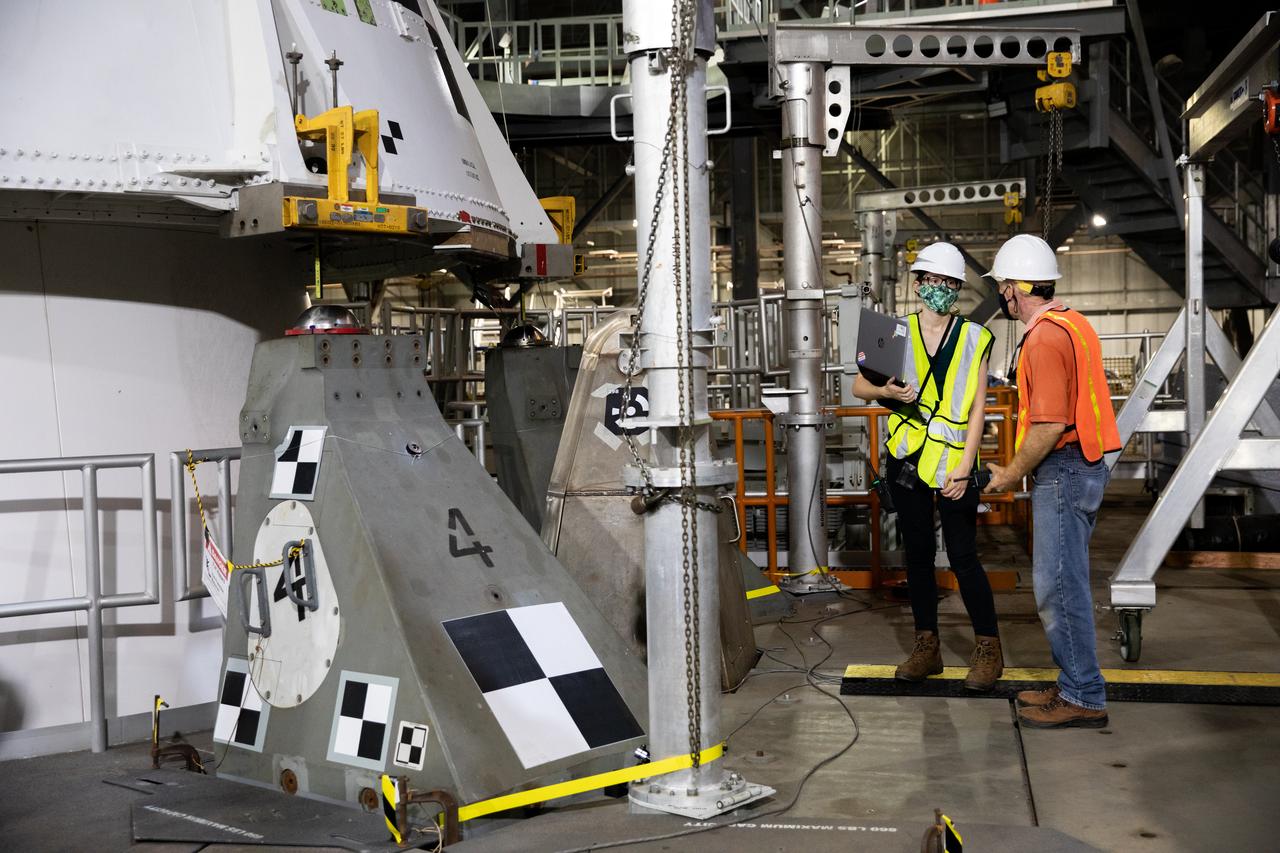
During a training exercise on Sept. 11, 2020, inside the Vehicle Assembly (VAB) at NASA’s Kennedy Space Center in Florida, technicians with the agency’s Exploration Ground Systems verify a mock-up of the Space Launch System (SLS) aft booster segment, referred to as a pathfinder, was placed on the mobile launcher correctly. The rehearsal involved teams preparing the aft pathfinder segment in High Bay 4 of the VAB, lifting and moving it over to High Bay 3, and lowering it onto the mobile launcher in preparation for Artemis I. Stacking of the actual booster segments will occur later this year, before the SLS core stage arrives at the Florida spaceport. Artemis I is the first in a series of increasingly complex missions that will test SLS and the Orion spacecraft as an integrated system prior to crewed flights to the Moon.
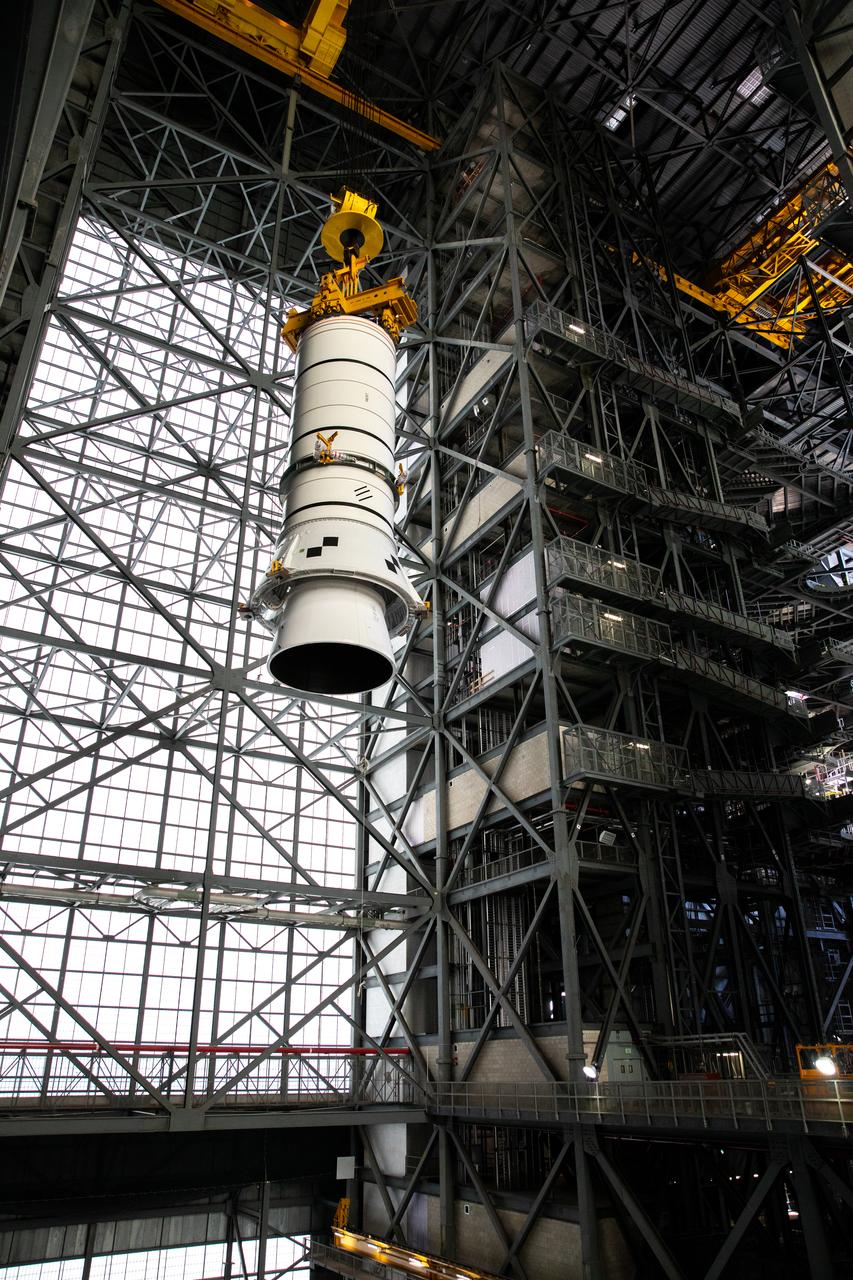
Technicians with NASA’s Exploration Ground Systems rehearse lifting operations using a mock-up of the Space Launch System (SLS) aft booster segment, referred to as a pathfinder, inside the Vehicle Assembly Building (VAB) at the agency’s Kennedy Space Center in Florida on Sept. 11, 2020, in preparation for Artemis I. The exercise involved preparing the aft pathfinder segment in High Bay 4 of the VAB and moving it over to High Bay 3, where it was placed on the mobile launcher. Stacking of the actual booster segments will occur later this year, before the SLS core stage arrives at Kennedy. Artemis I is the first in a series of increasingly complex missions that will test SLS and the Orion spacecraft as an integrated system prior to crewed flights to the Moon.
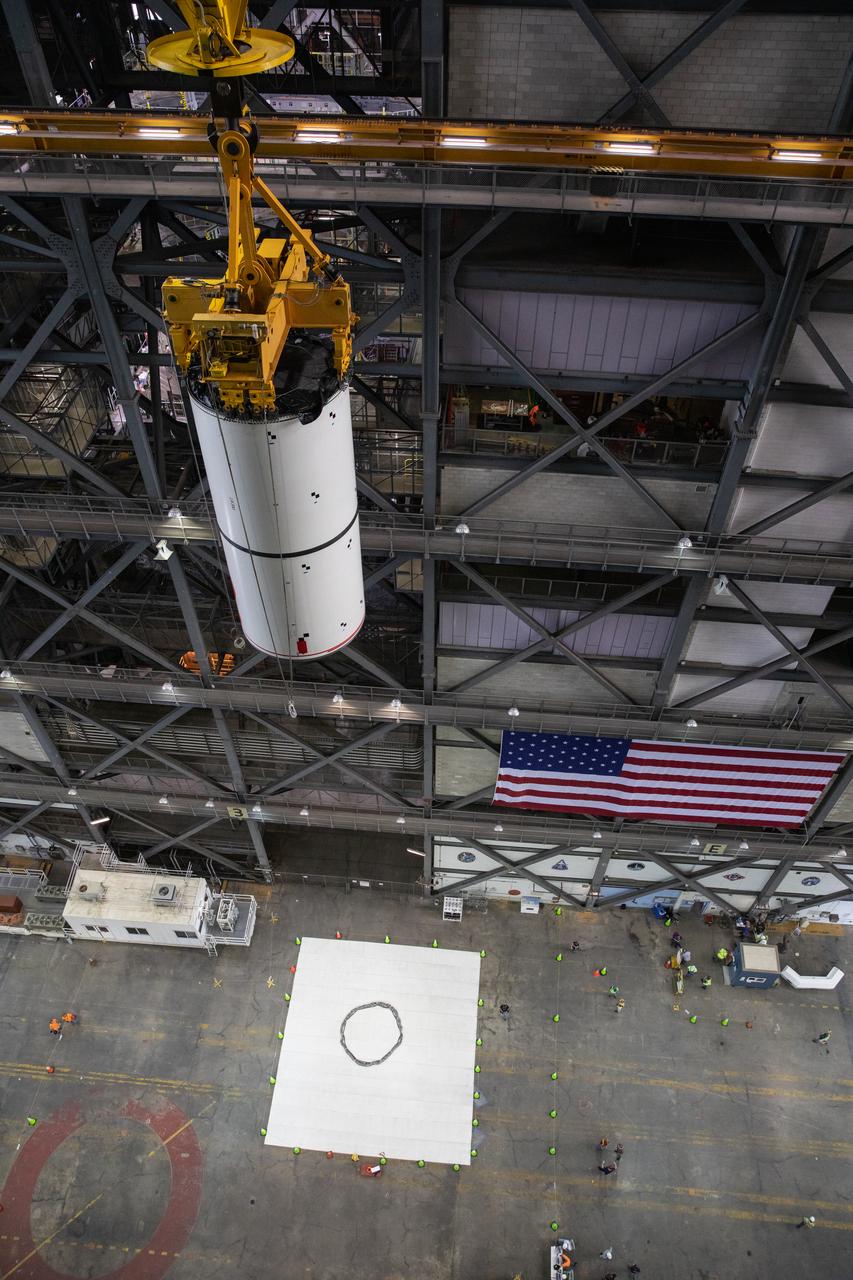
Technicians with NASA’s Exploration Ground Systems rehearse booster stacking operations inside the Vehicle Assembly Building (VAB) at the agency’s Kennedy Space Center in Florida on Sept. 14, 2020, in preparation for Artemis I. The exercise involved using booster segment mock-ups, referred to as pathfinders. During the rehearsal, an aft pathfinder segment was prepared in High Bay 4 of the VAB, after which a team of crane operators moved it over to High Bay 3, where it was placed on the mobile launcher. Careful measurements were then taken before the team added a center pathfinder to the stack. Stacking of the actual Space Launch System (SLS) booster segments will occur later this year, when the rocket’s core stage arrives at Kennedy. Artemis I is the first in a series of increasingly complex missions that will test SLS and the Orion spacecraft as an integrated system prior to crewed flights to the Moon.
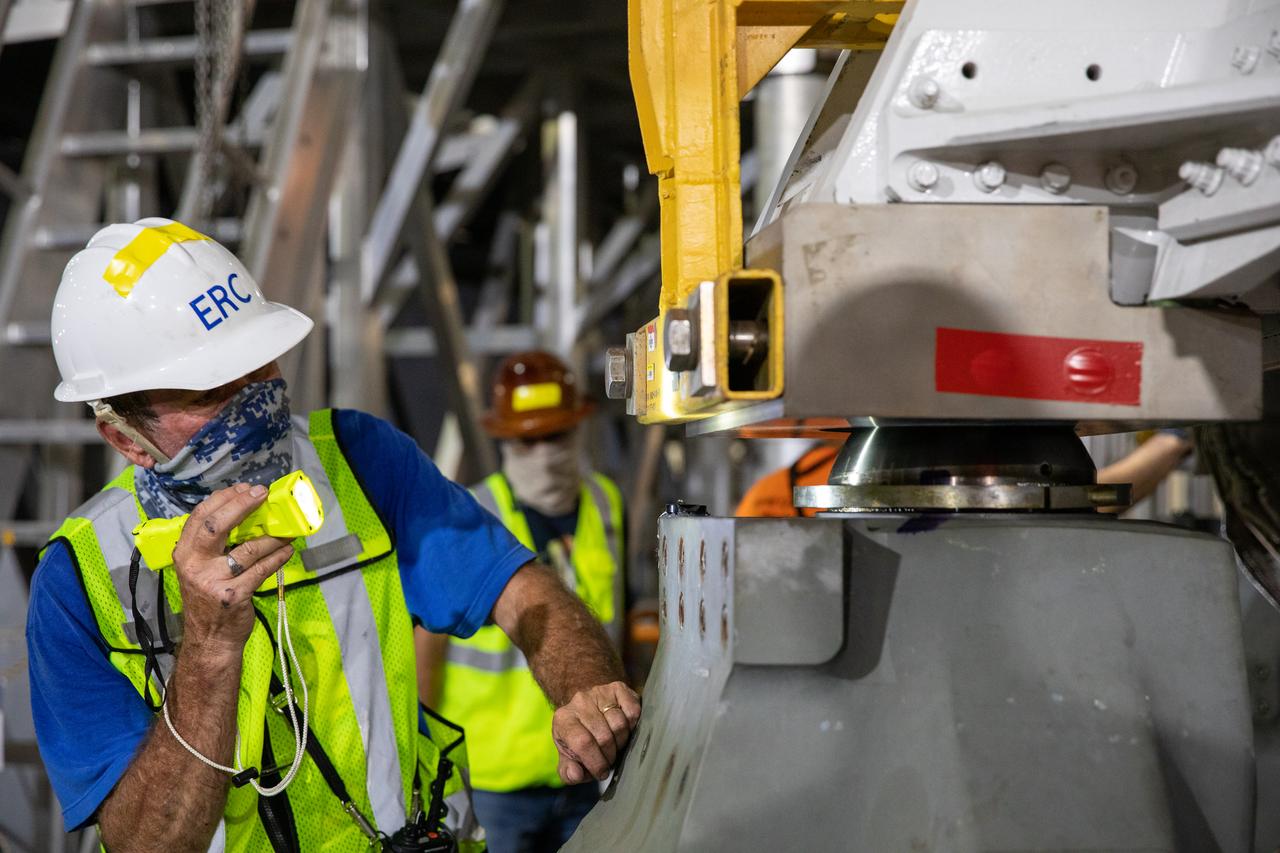
During a training exercise on Sept. 11, 2020, inside the Vehicle Assembly (VAB) at NASA’s Kennedy Space Center in Florida, a technician with the agency’s Exploration Ground Systems verifies a mock-up of the Space Launch System (SLS) aft booster segment, referred to as a pathfinder, was placed on the mobile launcher correctly. The rehearsal involved teams preparing the aft pathfinder segment in High Bay 4 of the VAB, lifting and moving it over to High Bay 3, and lowering it onto the mobile launcher in preparation for Artemis I. Stacking of the actual booster segments will occur later this year, before the SLS core stage arrives at the Florida spaceport. Artemis I is the first in a series of increasingly complex missions that will test SLS and the Orion spacecraft as an integrated system prior to crewed flights to the Moon.
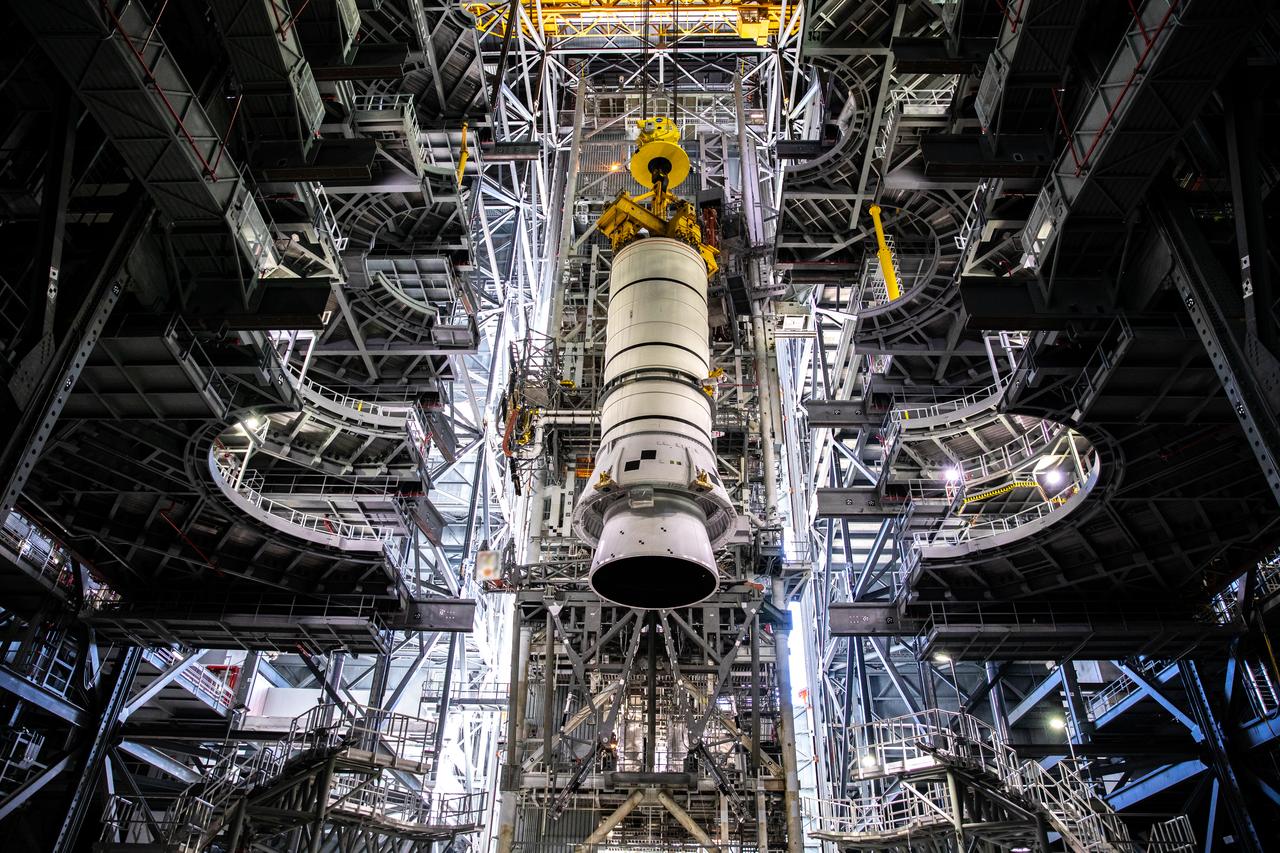
During a training exercise, technicians with NASA’s Exploration Ground Systems lower a mock-up of the Space Launch System (SLS) aft booster segment, referred to as a pathfinder, onto the mobile launcher in Kennedy Space Center’s Vehicle Assembly Building (VAB) on Sept. 11, 2020. The rehearsal involved teams preparing the aft pathfinder segment in High Bay 4 of the VAB, lifting and moving it over to High Bay 3, and placing it on the mobile launcher in preparation for Artemis I. Stacking of the actual booster segments will occur later this year, before the SLS core stage arrives at the Florida spaceport. Artemis I is the first in a series of increasingly complex missions that will test SLS and the Orion spacecraft as an integrated system prior to crewed flights to the Moon.
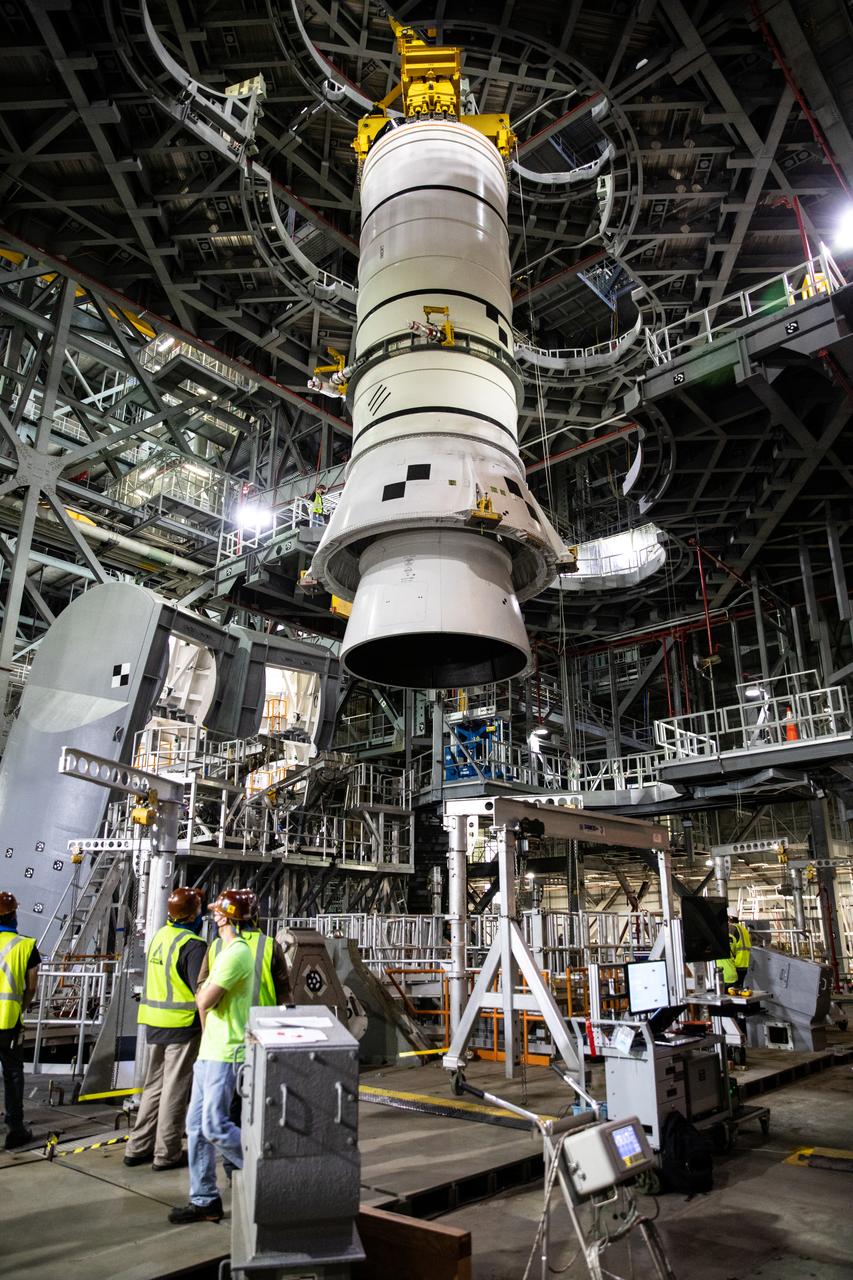
During a training exercise, technicians with NASA’s Exploration Ground Systems lower a mock-up of the Space Launch System (SLS) aft booster segment, referred to as a pathfinder, onto the mobile launcher in Kennedy Space Center’s Vehicle Assembly Building (VAB) on Sept. 11, 2020. The rehearsal involved teams preparing the aft pathfinder segment in High Bay 4 of the VAB, lifting and moving it over to High Bay 3, and placing it on the mobile launcher in preparation for Artemis I. Stacking of the actual booster segments will occur later this year, before the SLS core stage arrives at the Florida spaceport. Artemis I is the first in a series of increasingly complex missions that will test SLS and the Orion spacecraft as an integrated system prior to crewed flights to the Moon.
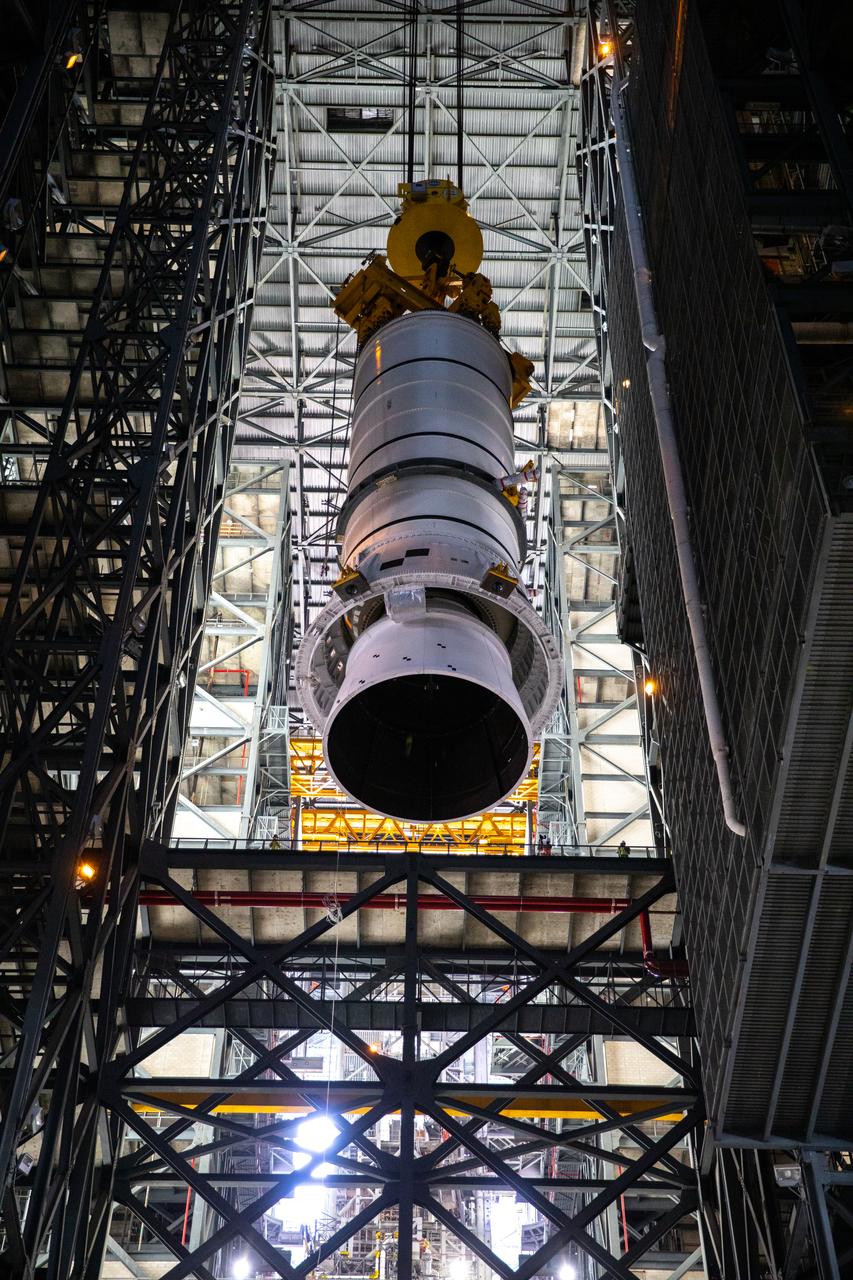
Technicians with NASA’s Exploration Ground Systems rehearse lifting operations using a mock-up of the Space Launch System (SLS) aft booster segment, referred to as a pathfinder, inside the Vehicle Assembly Building (VAB) at the agency’s Kennedy Space Center in Florida on Sept. 11, 2020, in preparation for Artemis I. The exercise involved preparing the aft pathfinder segment in High Bay 4 of the VAB and moving it over to High Bay 3, where it was placed on the mobile launcher. Stacking of the actual booster segments will occur later this year, before the SLS core stage arrives at Kennedy. Artemis I is the first in a series of increasingly complex missions that will test SLS and the Orion spacecraft as an integrated system prior to crewed flights to the Moon.
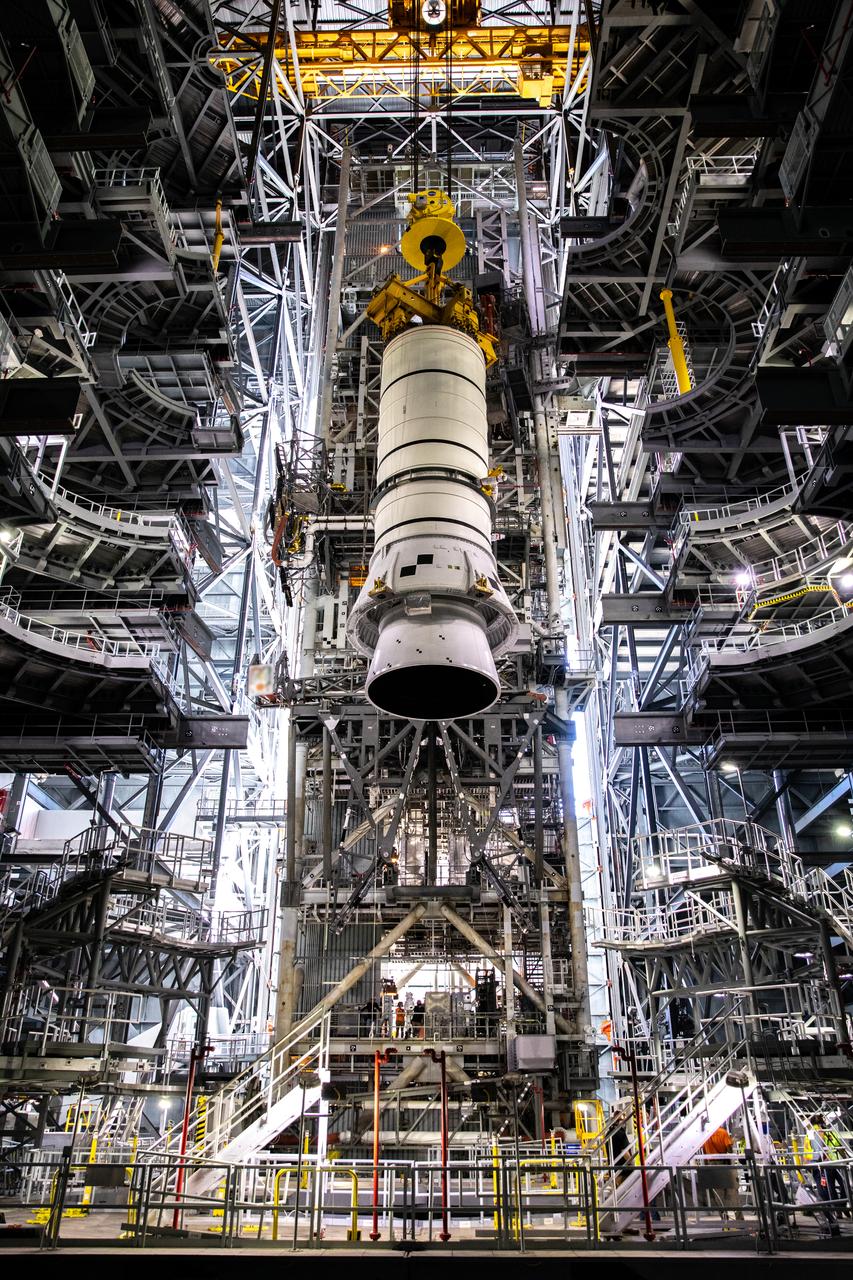
During a training exercise, technicians with NASA’s Exploration Ground Systems prepare to lower a mock-up of the Space Launch System (SLS) aft booster segment, referred to as a pathfinder, onto the mobile launcher in Kennedy Space Center’s Vehicle Assembly Building (VAB) on Sept. 11, 2020. The rehearsal involved teams preparing the aft pathfinder segment in High Bay 4 of the VAB, lifting and moving it over to High Bay 3, and placing it on the mobile launcher in preparation for Artemis I. Stacking of the actual booster segments will occur later this year, beforewhen the SLS core stage arrives at the Florida spaceport. Artemis I is the first in a series of increasingly complex missions that will test SLS and the Orion spacecraft as an integrated system prior to crewed flights to the Moon.
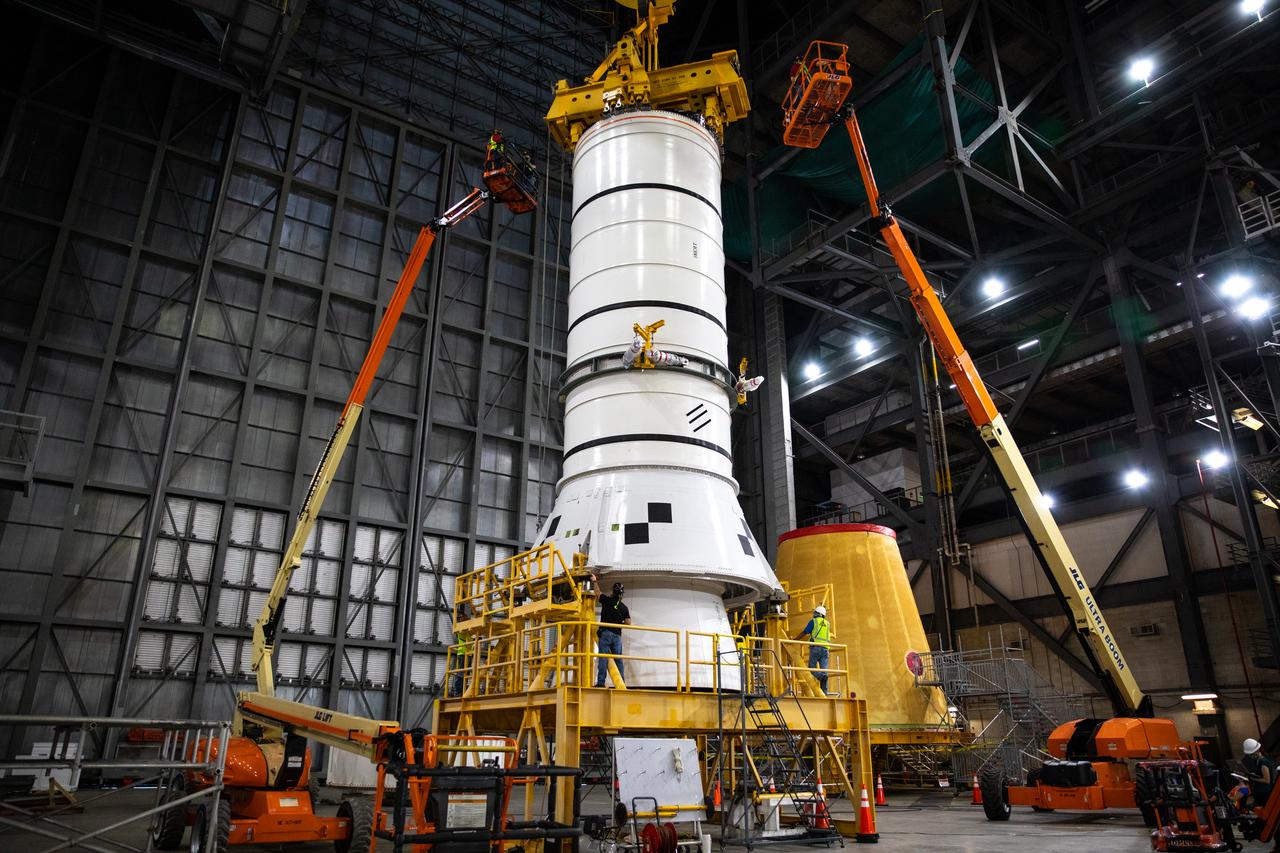
Technicians with NASA’s Exploration Ground Systems rehearse booster stacking operations inside the Vehicle Assembly Building (VAB) at the agency’s Kennedy Space Center in Florida on Sept. 11, 2020, in preparation for Artemis I. The exercise involved using booster segment mock-ups, referred to as pathfinders. During this rehearsal, an aft pathfinder segment was prepared in High Bay 4 of the VAB, after which a team of crane operators moved it over to High Bay 3, where it was placed on the mobile launcher. Stacking of the actual Space Launch System (SLS) booster segments will occur later this year, before the rocket’s core stage arrives at Kennedy. Artemis I is the first in a series of increasingly complex missions that will test SLS and the Orion spacecraft as an integrated system prior to crewed flights to the Moon.
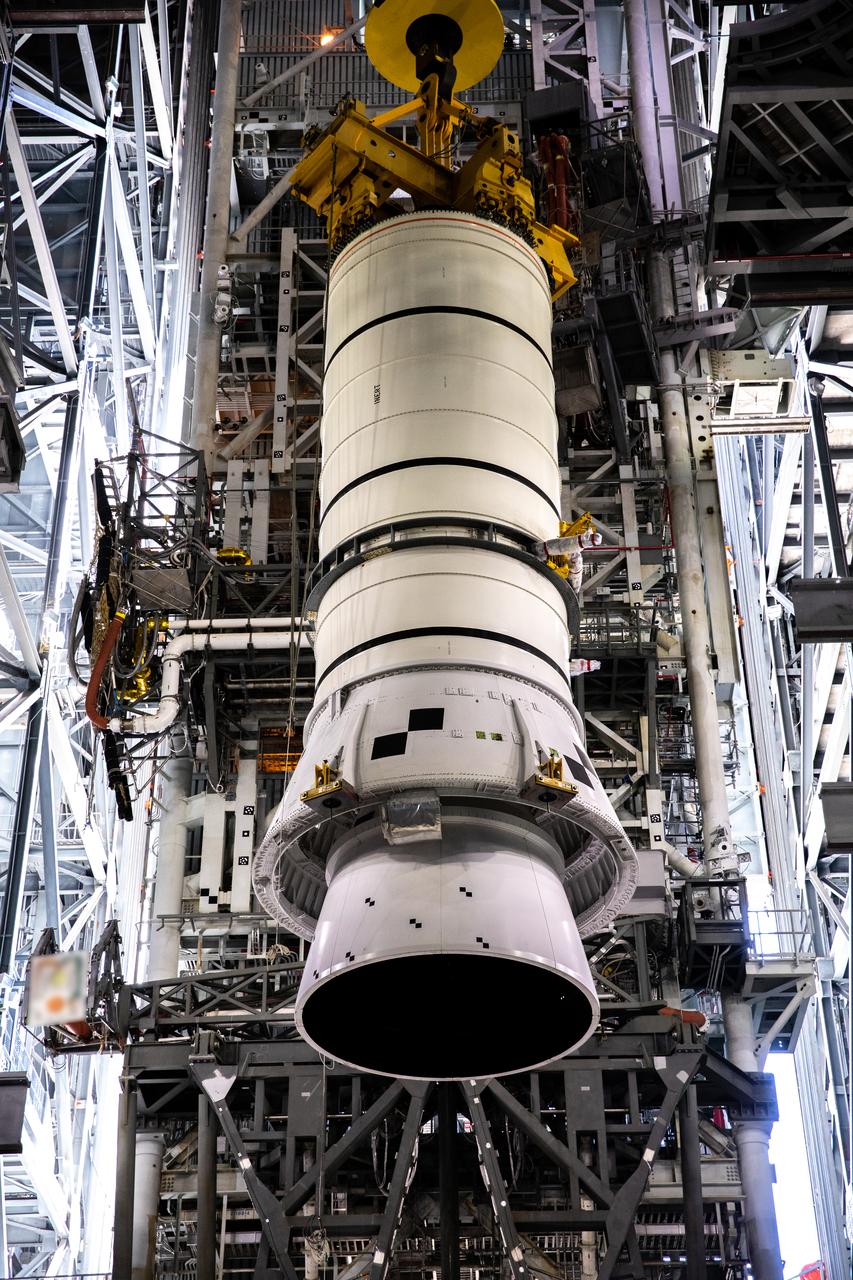
During a training exercise, technicians with NASA’s Exploration Ground Systems prepare to lower a mock-up of the Space Launch System (SLS) aft booster segment, referred to as a pathfinder, onto the mobile launcher in Kennedy Space Center’s Vehicle Assembly Building (VAB) on Sept. 11, 2020. The rehearsal involved teams preparing the aft pathfinder segment in High Bay 4 of the VAB, lifting and moving it over to High Bay 3, and placing it on the mobile launcher in preparation for Artemis I. Stacking of the actual booster segments will occur later this year, before the SLS core stage arrives at the Florida spaceport. Artemis I is the first in a series of increasingly complex missions that will test SLS and the Orion spacecraft as an integrated system prior to crewed flights to the Moon.
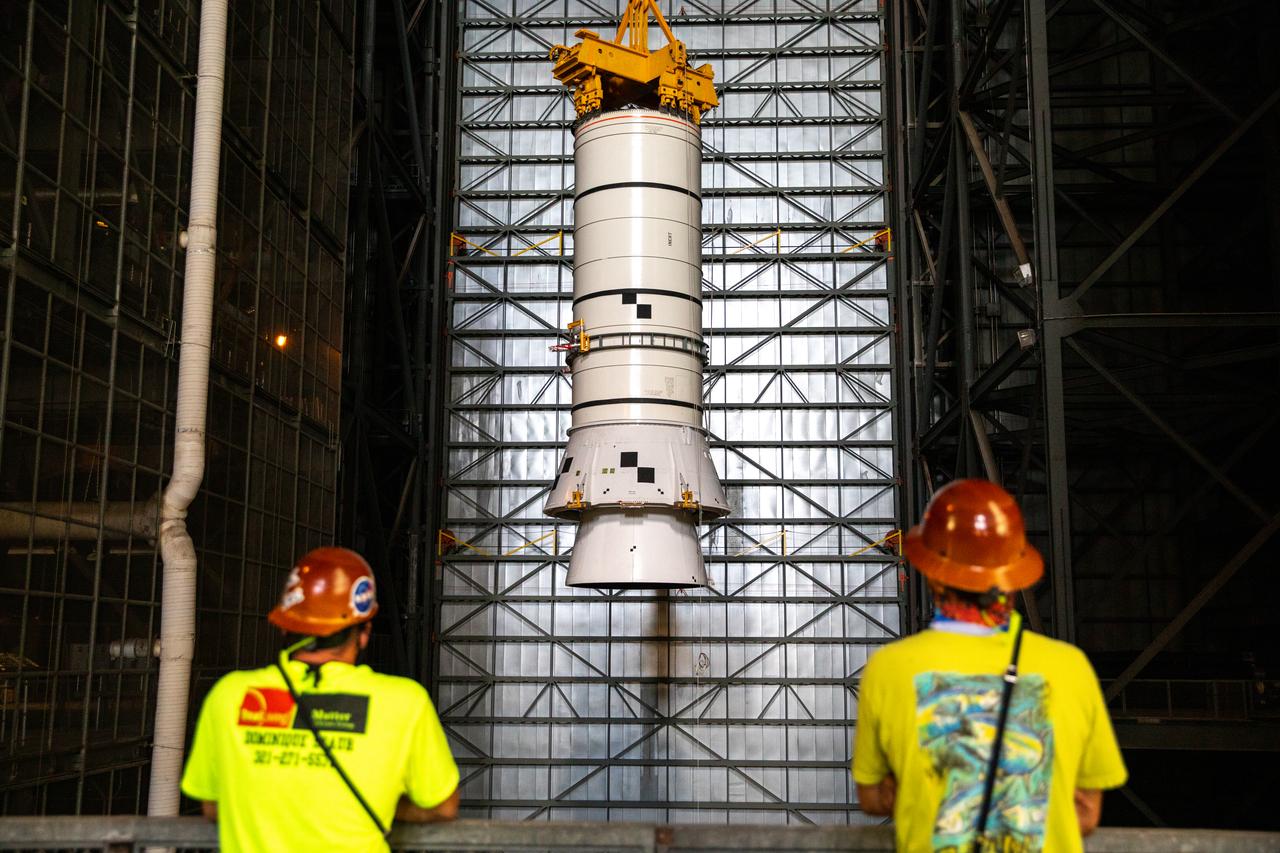
Technicians with NASA’s Exploration Ground Systems rehearse lifting operations using a mock-up of the Space Launch System (SLS) aft booster segment, referred to as a pathfinder, inside the Vehicle Assembly Building (VAB) at the agency’s Kennedy Space Center in Florida on Sept. 11, 2020, in preparation for Artemis I. The exercise involved preparing the aft pathfinder segment in High Bay 4 of the VAB and moving it over to High Bay 3, where it was placed on the mobile launcher. Stacking of the actual booster segments will occur later this year, before the SLS core stage arrives at Kennedy. Artemis I is the first in a series of increasingly complex missions that will test SLS and the Orion spacecraft as an integrated system prior to crewed flights to the Moon.
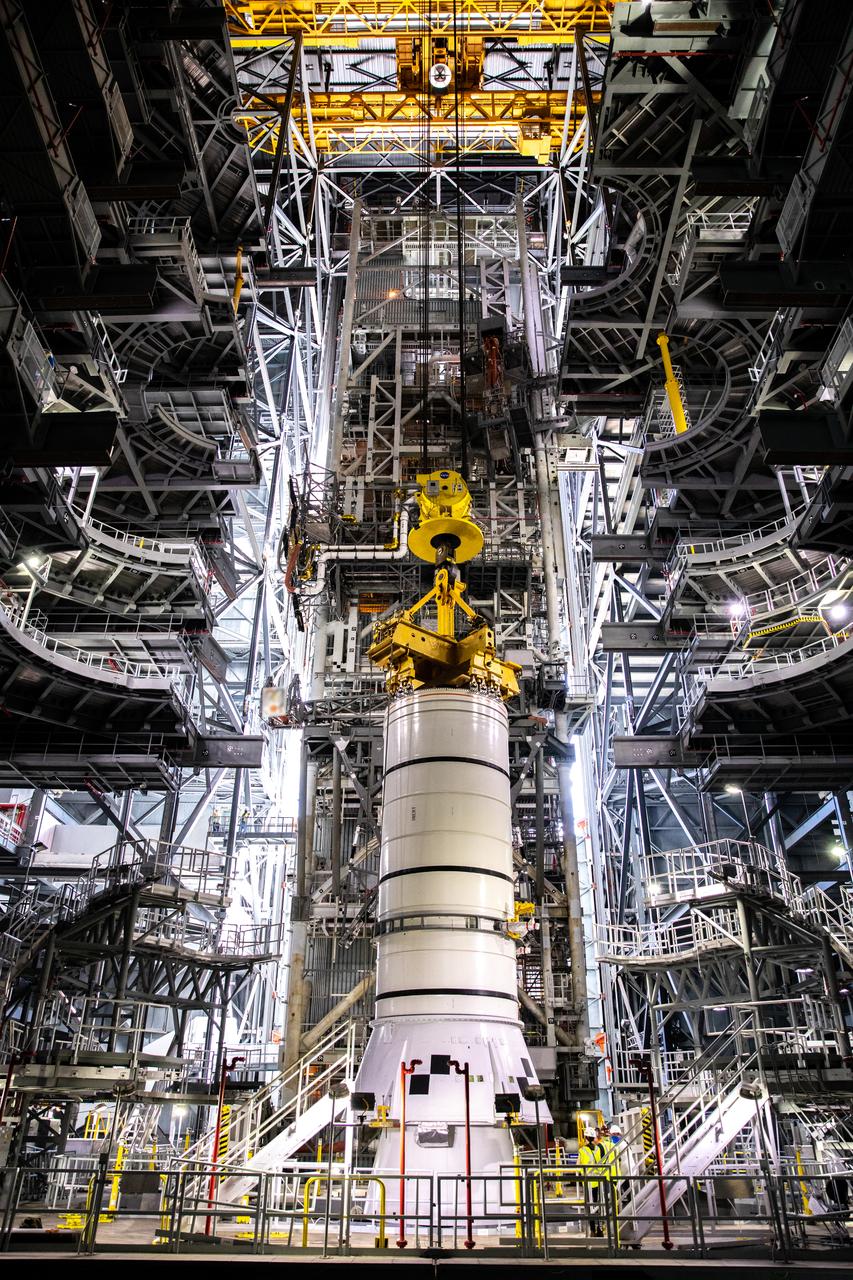
During a training exercise, technicians with NASA’s Exploration Ground Systems lower a mock-up of the Space Launch System (SLS) aft booster segment, referred to as a pathfinder, onto the mobile launcher in Kennedy Space Center’s Vehicle Assembly Building (VAB) on Sept. 11, 2020. The rehearsal involved teams preparing the aft pathfinder segment in High Bay 4 of the VAB, lifting and moving it over to High Bay 3, and placing it on the mobile launcher in preparation for Artemis I. Stacking of the actual booster segments will occur later this year, before the SLS core stage arrives at the Florida spaceport. Artemis I is the first in a series of increasingly complex missions that will test SLS and the Orion spacecraft as an integrated system prior to crewed flights to the Moon.

During a training exercise, technicians with NASA’s Exploration Ground Systems lower a mock-up of the Space Launch System (SLS) aft booster segment, referred to as a pathfinder, onto the mobile launcher in Kennedy Space Center’s Vehicle Assembly Building (VAB) on Sept. 11, 2020. The rehearsal involved teams preparing the aft pathfinder segment in High Bay 4 of the VAB, lifting and moving it over to High Bay 3, and placing it on the mobile launcher in preparation for Artemis I. Stacking of the actual booster segments will occur later this year, before the SLS core stage arrives at the Florida spaceport. Artemis I is the first in a series of increasingly complex missions that will test SLS and the Orion spacecraft as an integrated system prior to crewed flights to the Moon.
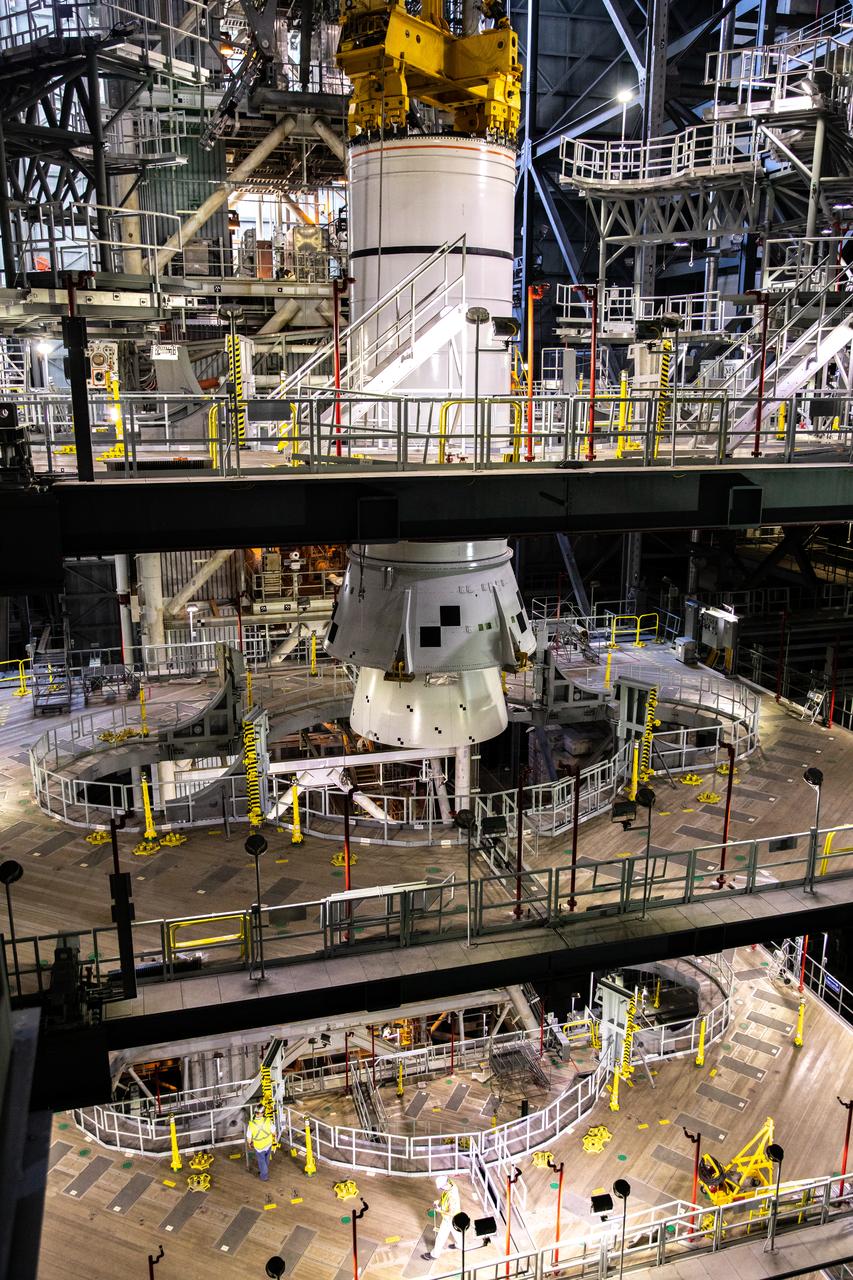
During a training exercise, technicians with NASA’s Exploration Ground Systems lower a mock-up of the Space Launch System (SLS) aft booster segment, referred to as a pathfinder, onto the mobile launcher in Kennedy Space Center’s Vehicle Assembly Building (VAB) on Sept. 11, 2020. The rehearsal involved teams preparing the aft pathfinder segment in High Bay 4 of the VAB, lifting and moving it over to High Bay 3, and placing it on the mobile launcher in preparation for Artemis I. Stacking of the actual booster segments will occur later this year, before the SLS core stage arrives at the Florida spaceport. Artemis I is the first in a series of increasingly complex missions that will test SLS and the Orion spacecraft as an integrated system prior to crewed flights to the Moon.
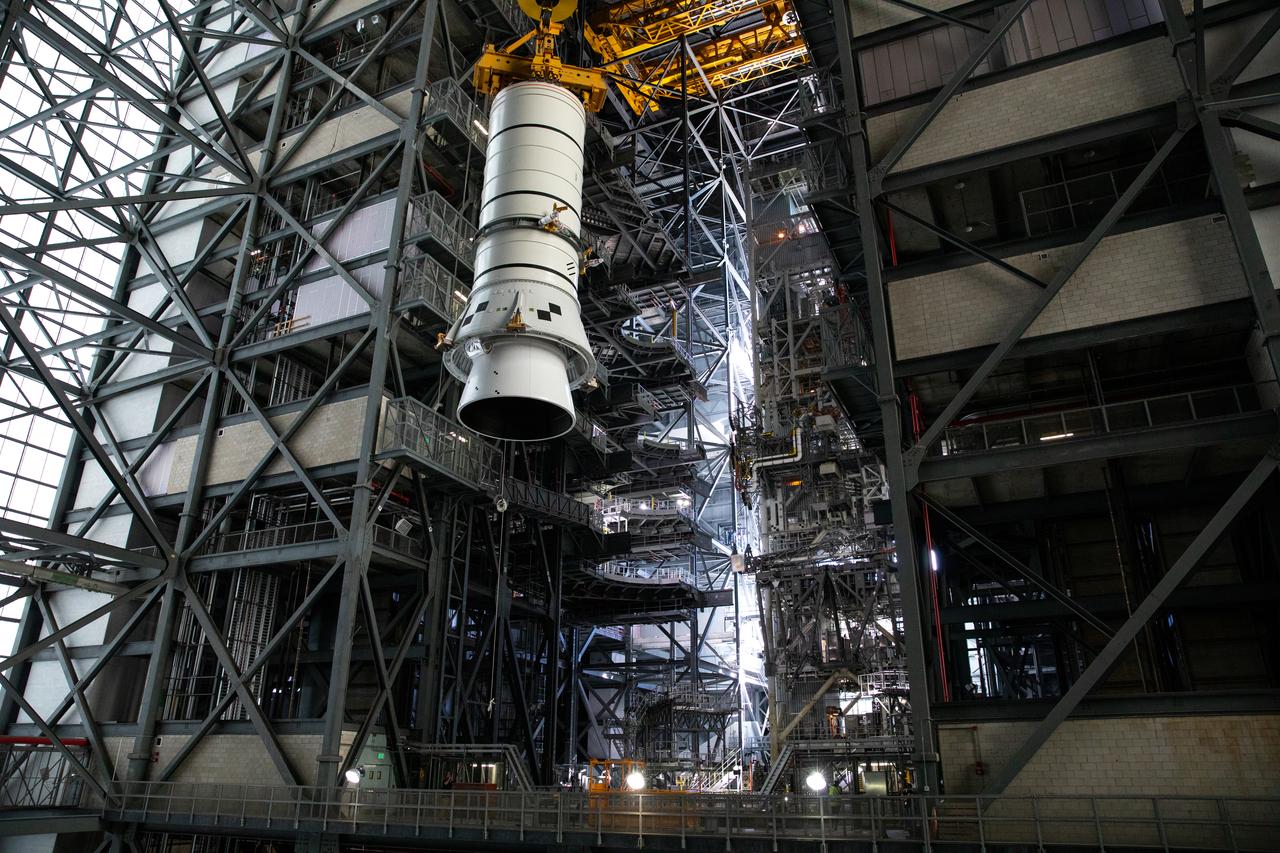
Technicians with NASA’s Exploration Ground Systems rehearse lifting operations using a mock-up of the Space Launch System (SLS) aft booster segment, referred to as a pathfinder, inside the Vehicle Assembly Building (VAB) at the agency’s Kennedy Space Center in Florida on Sept. 11, 2020, in preparation for Artemis I. The exercise involved preparing the aft pathfinder segment in High Bay 4 of the VAB and moving it over to High Bay 3, where it was placed on the mobile launcher. Stacking of the actual booster segments will occur later this year, before the SLS core stage arrives at Kennedy. Artemis I is the first in a series of increasingly complex missions that will test SLS and the Orion spacecraft as an integrated system prior to crewed flights to the Moon.
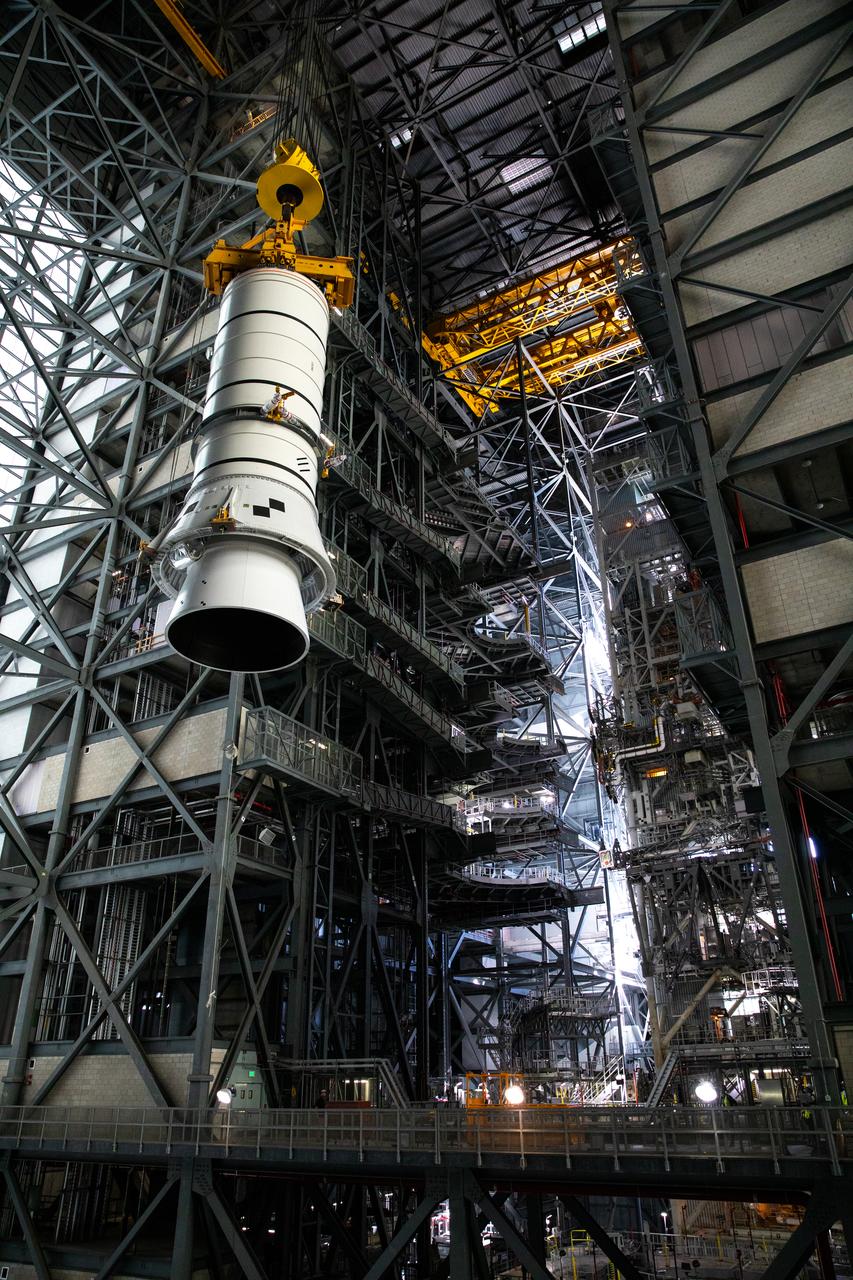
Technicians with NASA’s Exploration Ground Systems rehearse lifting operations using a mock-up of the Space Launch System (SLS) aft booster segment, referred to as a pathfinder, inside the Vehicle Assembly Building (VAB) at the agency’s Kennedy Space Center in Florida on Sept. 11, 2020, in preparation for Artemis I. The exercise involved preparing the aft pathfinder segment in High Bay 4 of the VAB and moving it over to High Bay 3, where it was placed on the mobile launcher. Stacking of the actual booster segments will occur later this year, before the SLS core stage arrives at Kennedy. Artemis I is the first in a series of increasingly complex missions that will test SLS and the Orion spacecraft as an integrated system prior to crewed flights to the Moon.