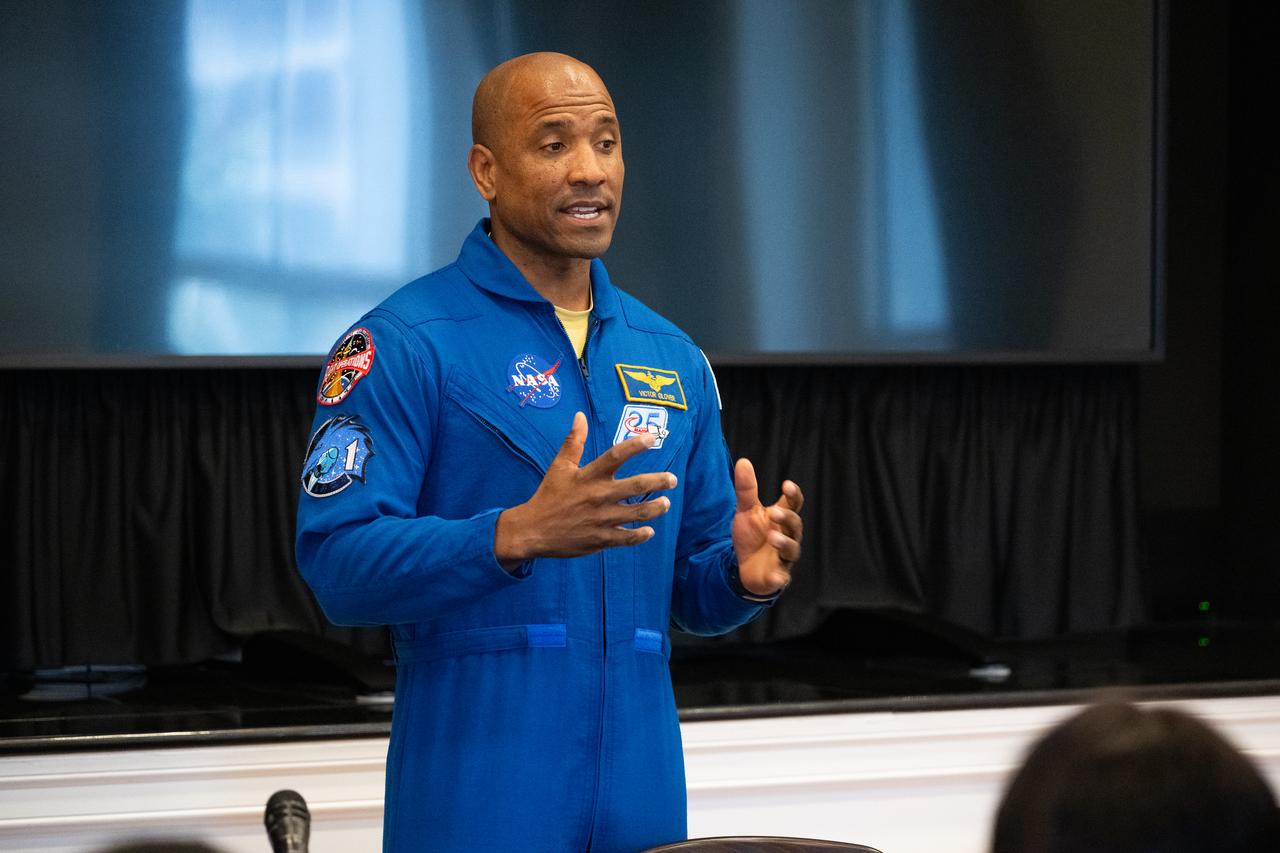
NASA astronaut Victor Glover speaks during an Artemis Generation Roundtable for Black Space Week, Tuesday, June 20, 2023, at the Eisenhower Executive Office Building in Washington. As part of Black Space Week, the National Space Council and NASA collaborated with Black In Astro to host students for a discussion on the future of space exploration and equity. Photo Credit: (NASA/Joel Kowsky)
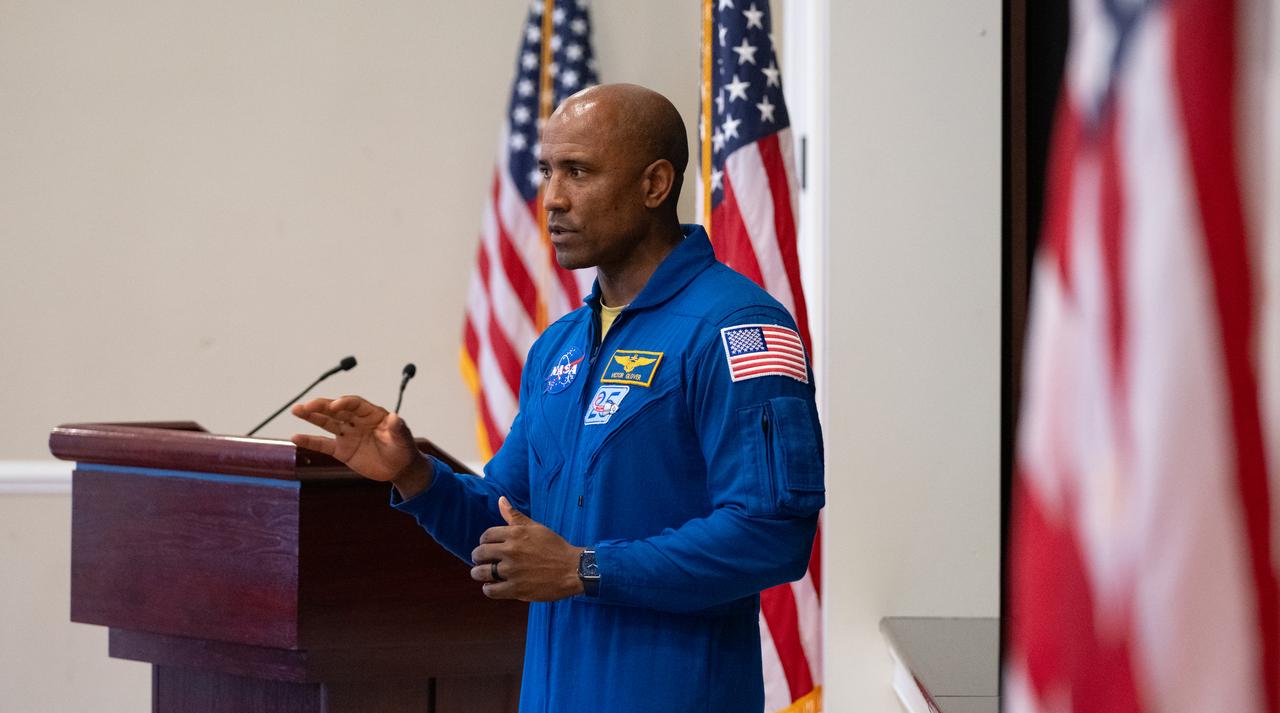
NASA astronaut Victor Glover speaks during an Artemis Generation Roundtable for Black Space Week, Tuesday, June 20, 2023, at the Eisenhower Executive Office Building in Washington. As part of Black Space Week, the National Space Council and NASA collaborated with Black In Astro to host students for a discussion on the future of space exploration and equity. Photo Credit: (NASA/Joel Kowsky)
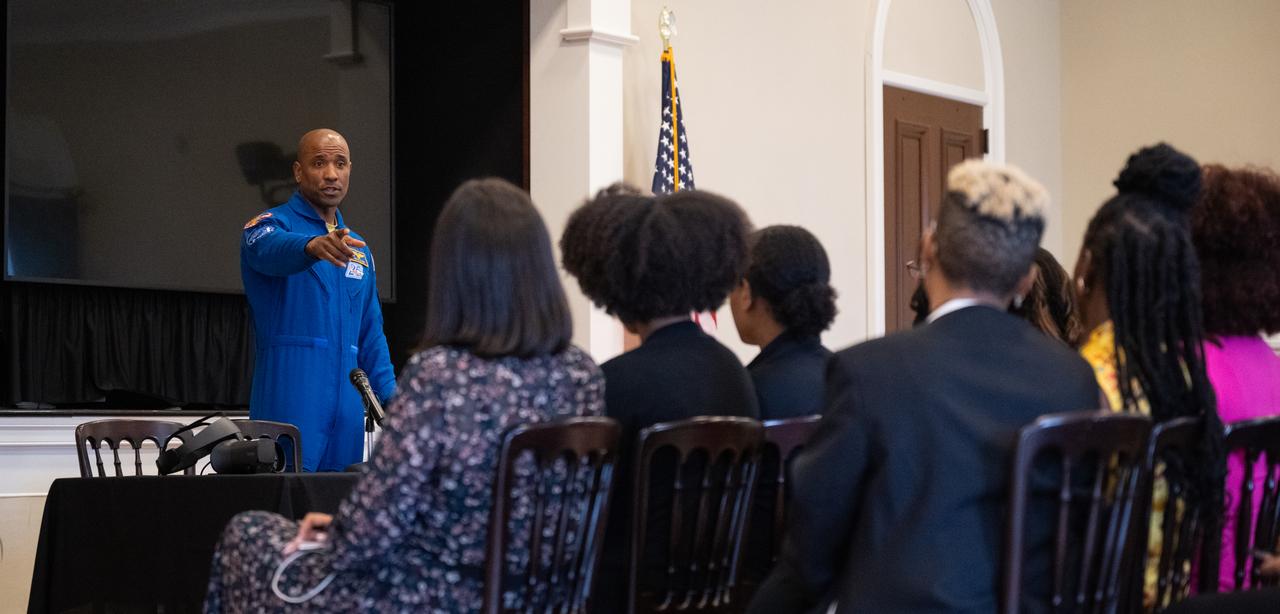
NASA astronaut Victor Glover speaks during an Artemis Generation Roundtable for Black Space Week, Tuesday, June 20, 2023, at the Eisenhower Executive Office Building in Washington. As part of Black Space Week, the National Space Council and NASA collaborated with Black In Astro to host students for a discussion on the future of space exploration and equity. Photo Credit: (NASA/Joel Kowsky)
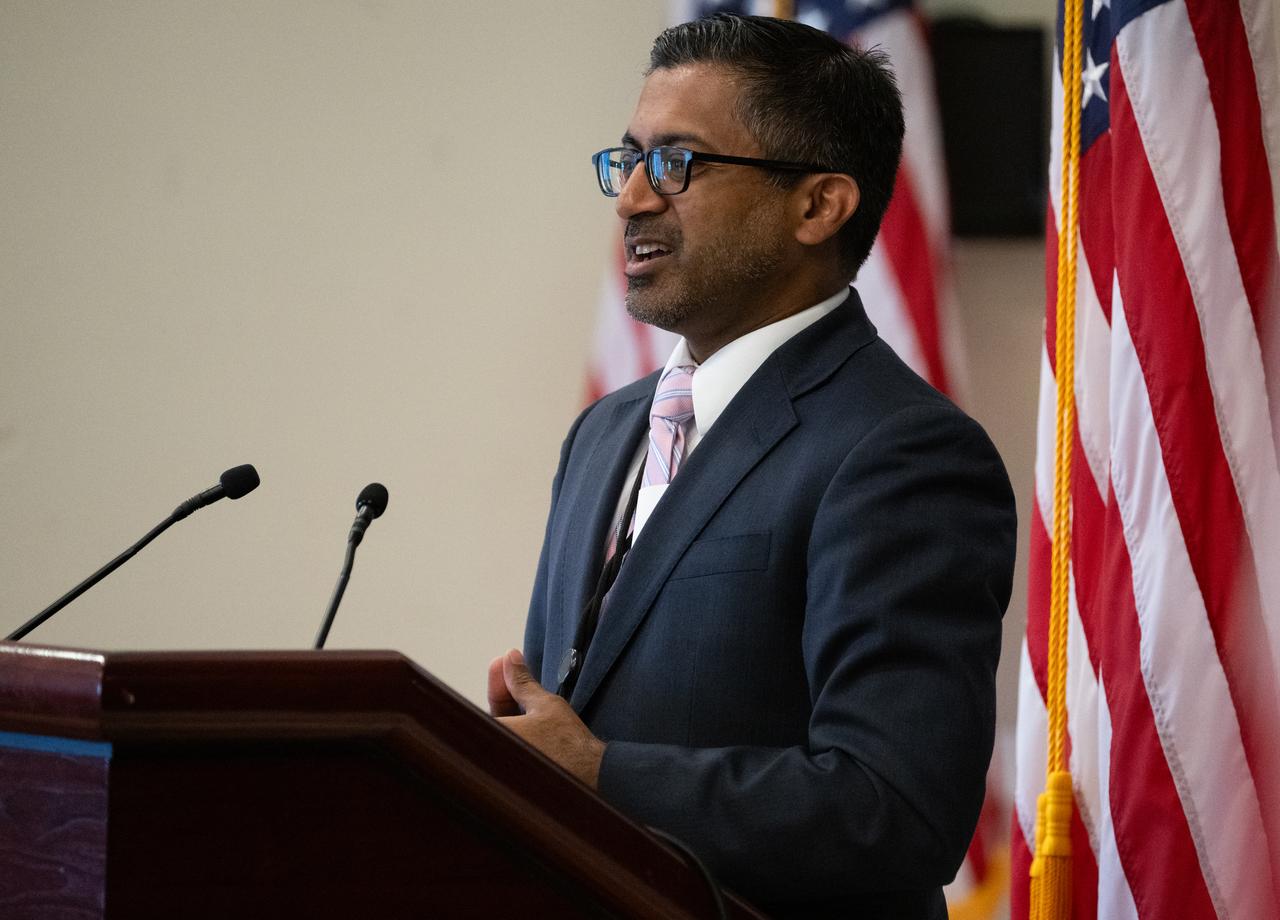
Chirag Parikh, Executive Secretary of the National Space Council, speaks during an Artemis Generation Roundtable for Black Space Week, Tuesday, June 20, 2023, at the Eisenhower Executive Office Building in Washington. As part of Black Space Week, the National Space Council and NASA collaborated with Black In Astro to host students for a discussion on the future of space exploration and equity. Photo Credit: (NASA/Joel Kowsky)
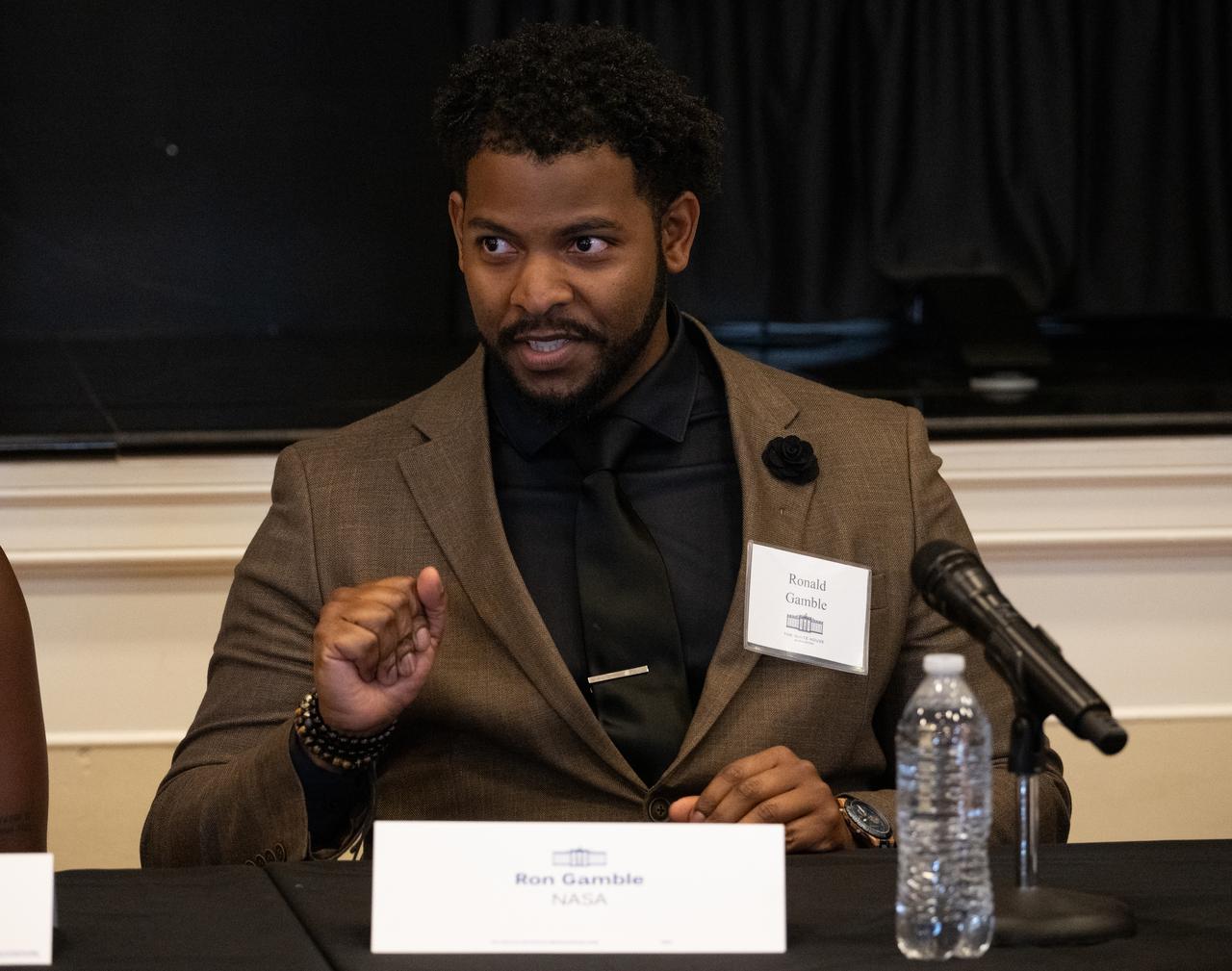
Ronald Gamble, a Theoretical Astrophysicist at NASA”s Goddard Space Flight Center, speaks during an Artemis Generation Roundtable for Black Space Week, Tuesday, June 20, 2023, at the Eisenhower Executive Office Building in Washington. As part of Black Space Week, the National Space Council and NASA collaborated with Black In Astro to host students for a discussion on the future of space exploration and equity. Photo Credit: (NASA/Joel Kowsky)
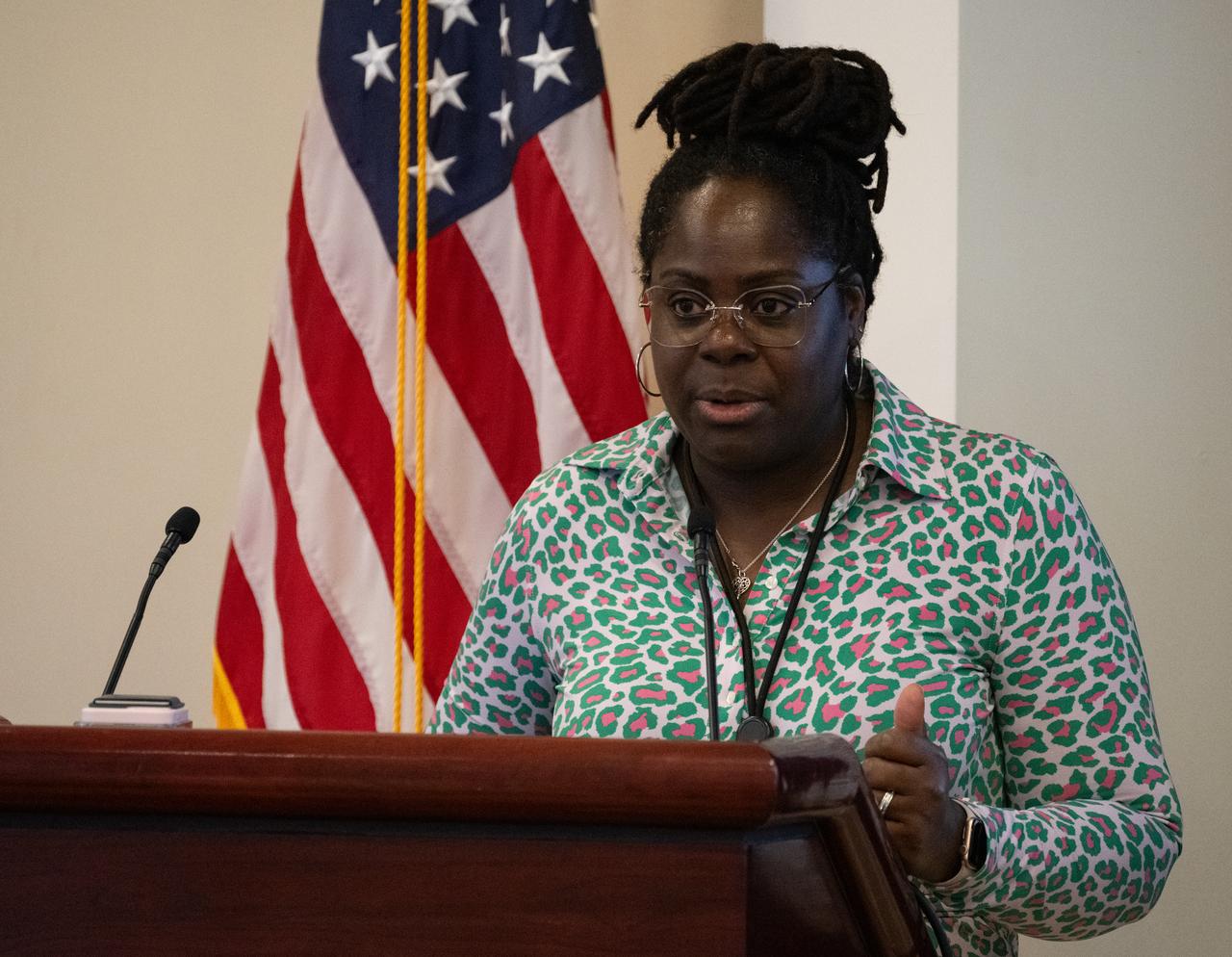
Quincy Brown, Director of Space STEM and Workforce Policy for the National Space Council speaks during an Artemis Generation Roundtable for Black Space Week, Tuesday, June 20, 2023, at the Eisenhower Executive Office Building in Washington. As part of Black Space Week, the National Space Council and NASA collaborated with Black In Astro to host students for a discussion on the future of space exploration and equity. Photo Credit: (NASA/Joel Kowsky)
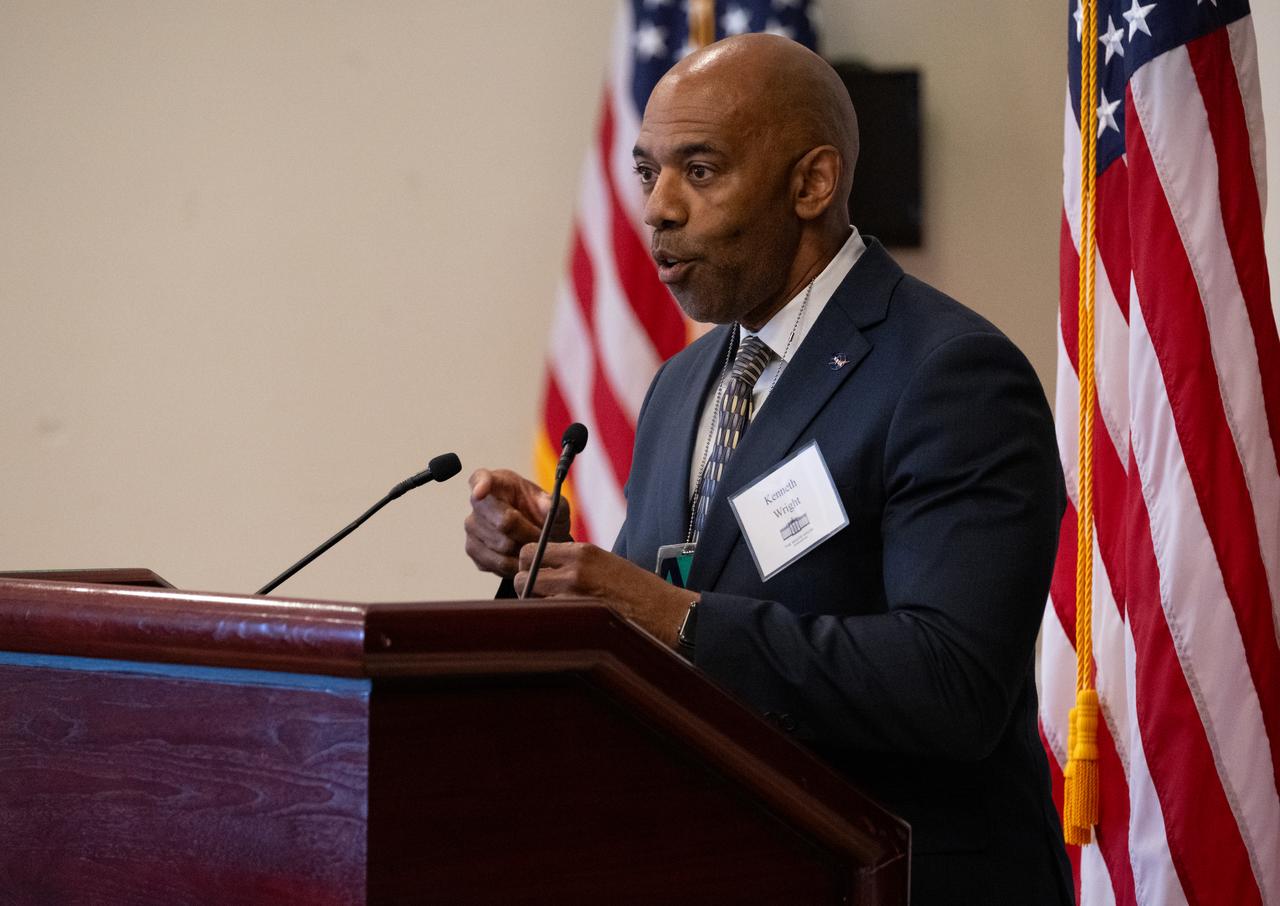
Kenneth Wright, Senior Policy Analyst and Innovation Lead in NASA’s Office of Technology, Policy, and Strategy, speaks during an Artemis Generation Roundtable for Black Space Week, Tuesday, June 20, 2023, at the Eisenhower Executive Office Building in Washington. As part of Black Space Week, the National Space Council and NASA collaborated with Black In Astro to host students for a discussion on the future of space exploration and equity. Photo Credit: (NASA/Joel Kowsky)
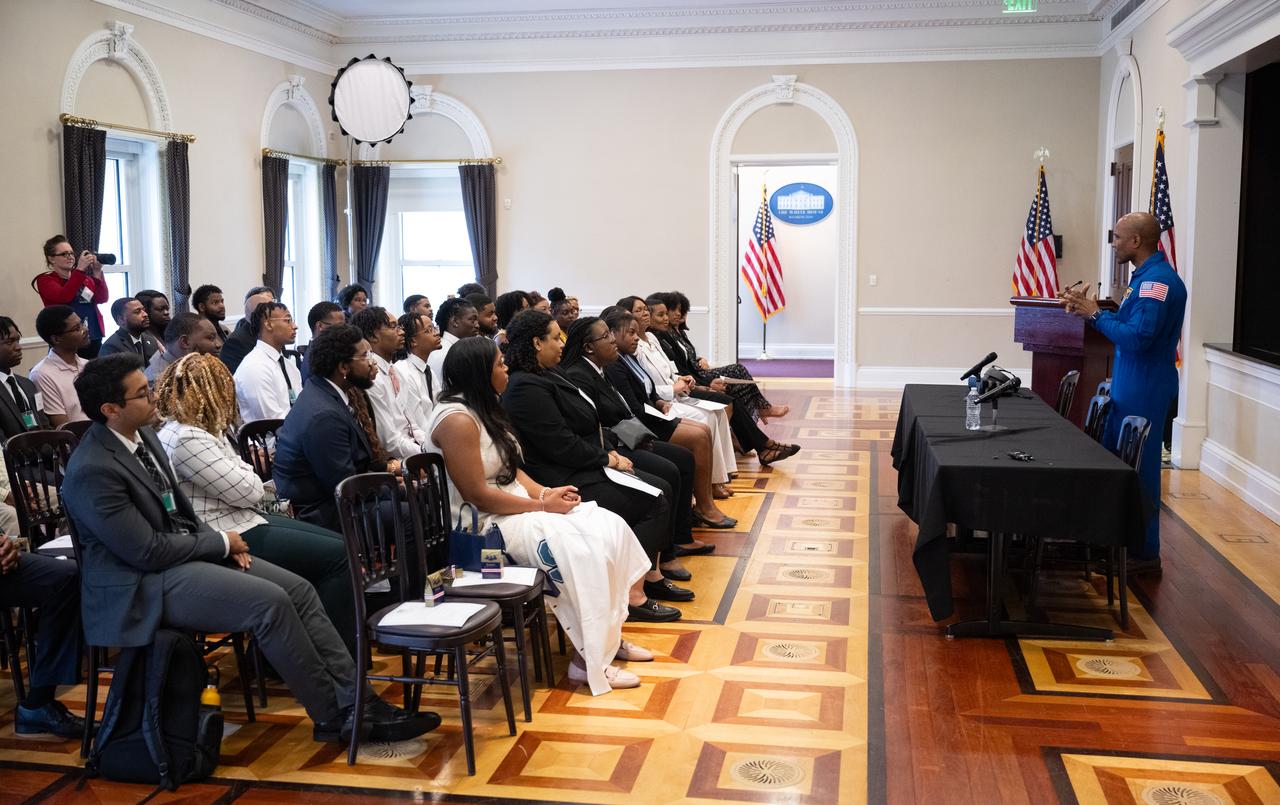
NASA astronaut Victor Glover speaks during an Artemis Generation Roundtable for Black Space Week, Tuesday, June 20, 2023, at the Eisenhower Executive Office Building in Washington. As part of Black Space Week, the National Space Council and NASA collaborated with Black In Astro to host students for a discussion on the future of space exploration and equity. Photo Credit: (NASA/Joel Kowsky)
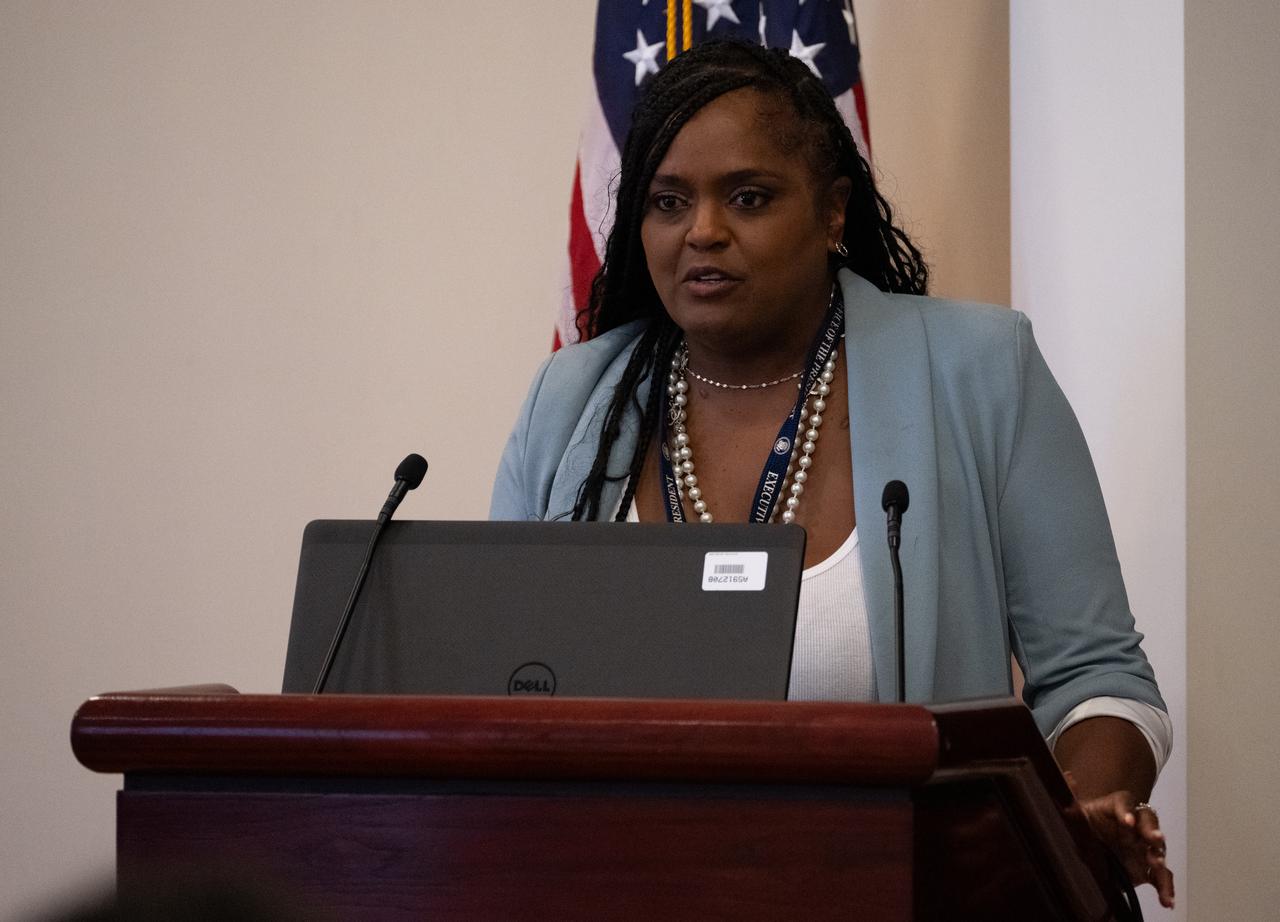
Tahara Dawkins, Chief of Staff for the National Space Council speaks during an Artemis Generation Roundtable for Black Space Week, Tuesday, June 20, 2023, at the Eisenhower Executive Office Building in Washington. As part of Black Space Week, the National Space Council and NASA collaborated with Black In Astro to host students for a discussion on the future of space exploration and equity. Photo Credit: (NASA/Joel Kowsky)
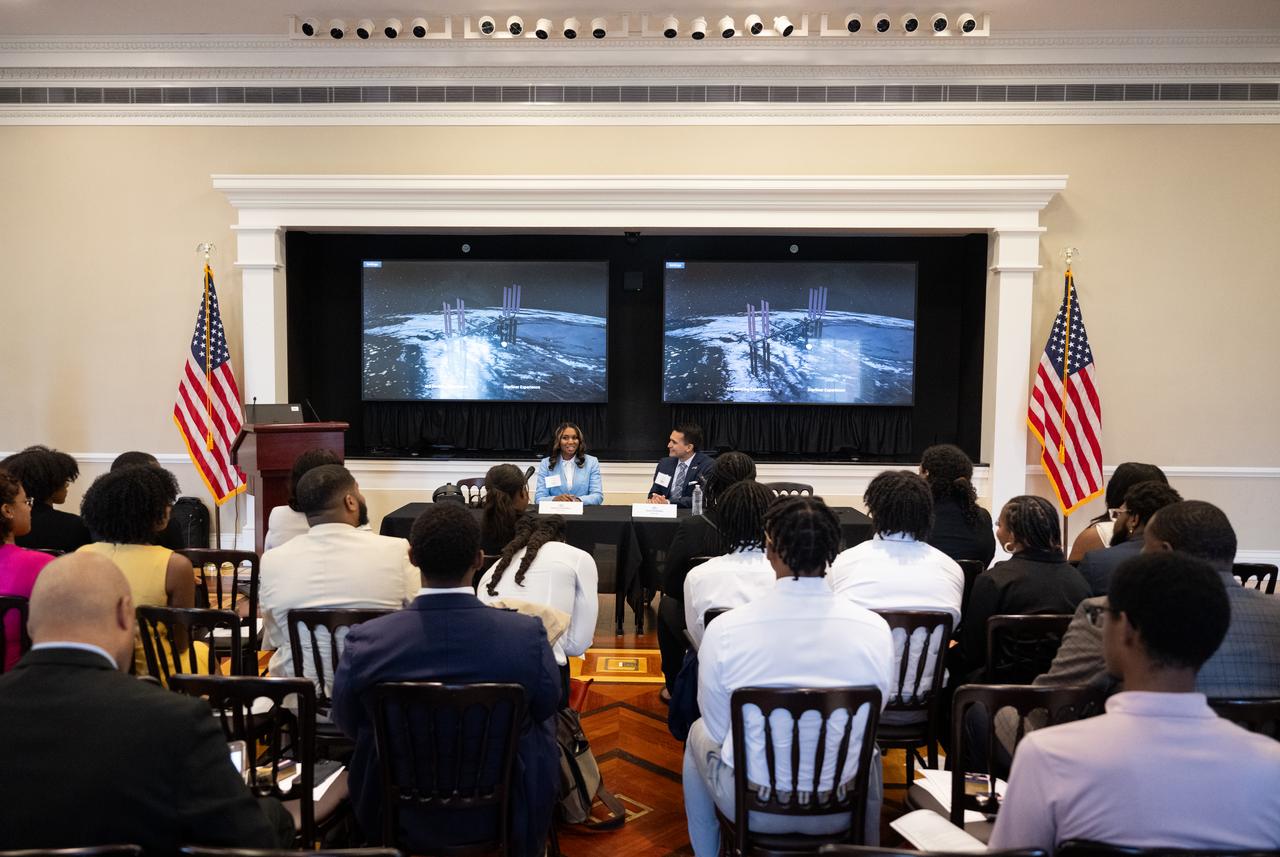
Sydney Hamilton, structures manager for transonic truss braced wing at The Boeing Company, left, and Tony Castilleja Jr., senior manager for space at The Boeing Company, are seen during an Artemis Generation Roundtable for Black Space Week, Tuesday, June 20, 2023, at the Eisenhower Executive Office Building in Washington. As part of Black Space Week, the National Space Council and NASA collaborated with Black In Astro to host students for a discussion on the future of space exploration and equity. Photo Credit: (NASA/Joel Kowsky)
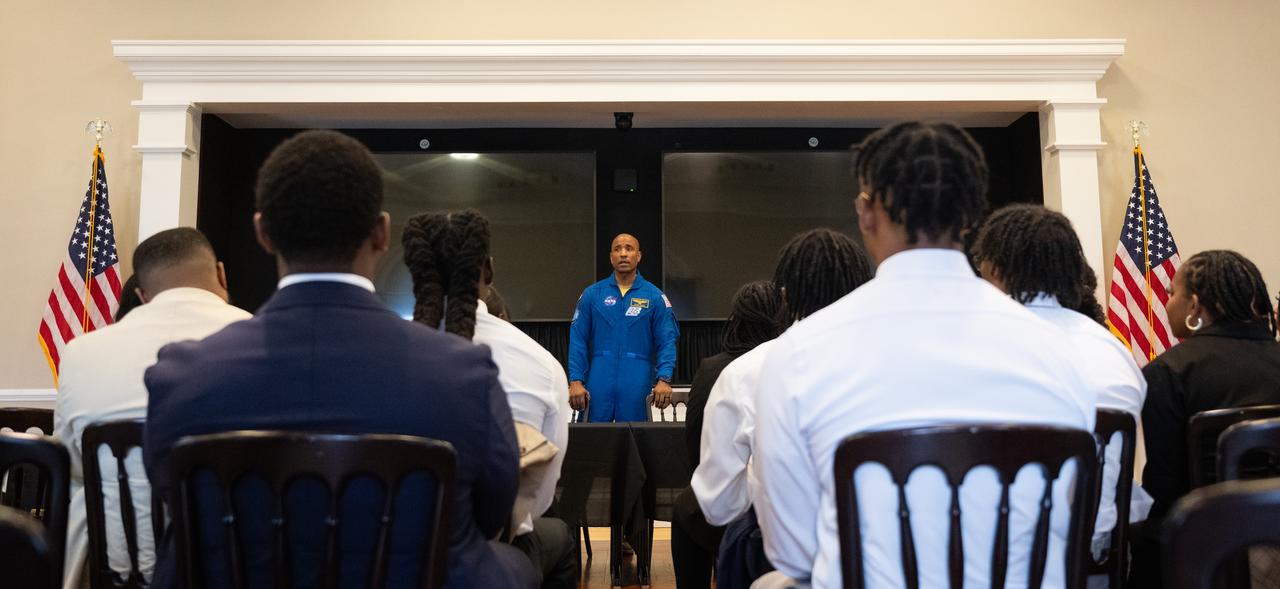
NASA astronaut Victor Glover speaks during an Artemis Generation Roundtable for Black Space Week, Tuesday, June 20, 2023, at the Eisenhower Executive Office Building in Washington. As part of Black Space Week, the National Space Council and NASA collaborated with Black In Astro to host students for a discussion on the future of space exploration and equity. Photo Credit: (NASA/Joel Kowsky)
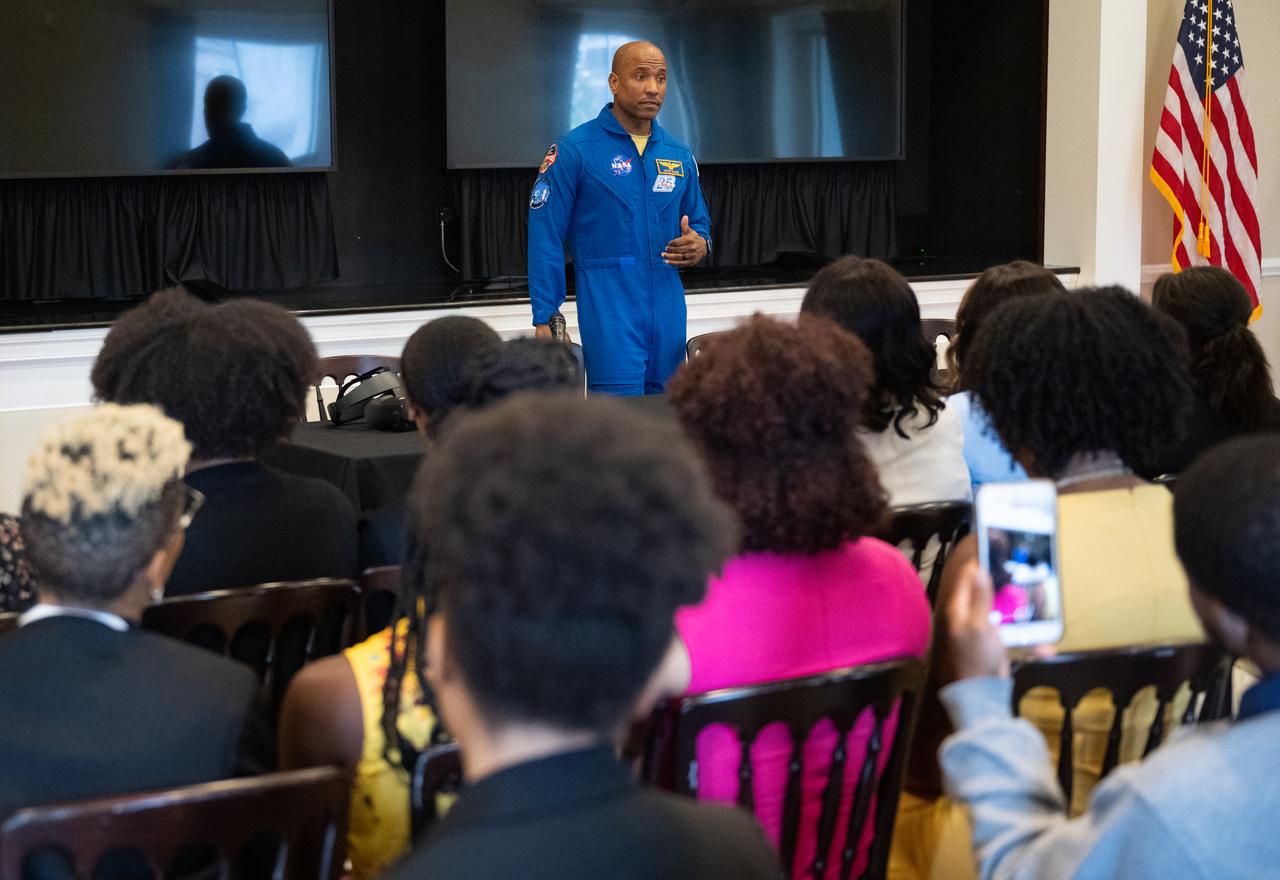
NASA astronaut Victor Glover speaks during an Artemis Generation Roundtable for Black Space Week, Tuesday, June 20, 2023, at the Eisenhower Executive Office Building in Washington. As part of Black Space Week, the National Space Council and NASA collaborated with Black In Astro to host students for a discussion on the future of space exploration and equity. Photo Credit: (NASA/Joel Kowsky)
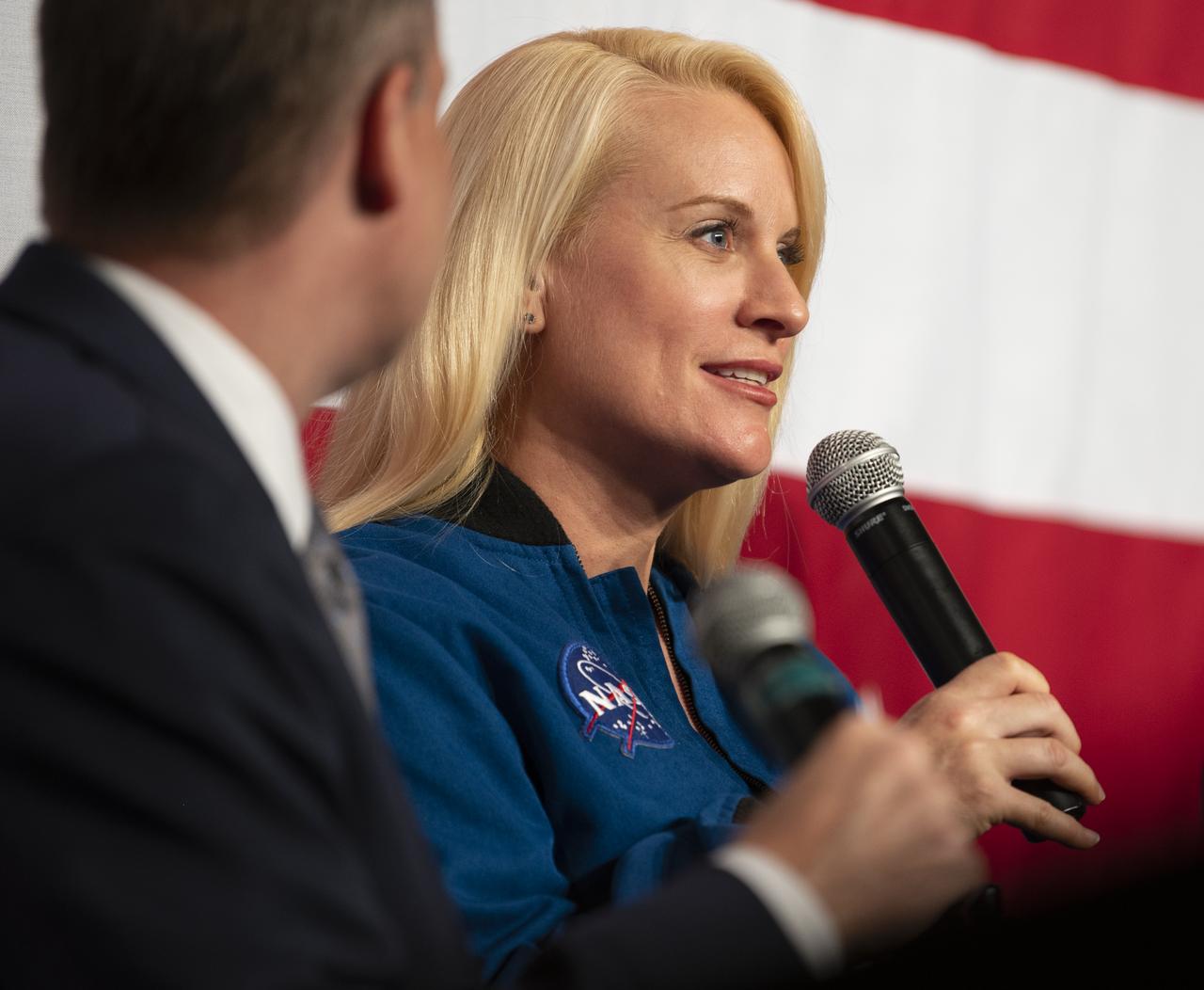
NASA astronaut Kate Rubins answers an audience question during a panel discussion with NASA Administrator Jim Bridenstine and Chris Hansen, Manager of the Extravehicular Activity office at NASA’s Johnson Space Center during the Artemis Generation Spacesuit event, Tuesday, Oct. 15, 2019 at NASA Headquarters in Washington. The Exploration Extravehicular Mobility Unit (xEMU) suit improves on the suits previous worn on the Moon during the Apollo era and those currently in use for spacewalks outside the International Space Station and will be worn by first woman and next man as they explore the Moon as part of the agency’s Artemis program. The Orion Crew Survival System (OCSS) suit is designed for a custom fit and incorporates safety technology and mobility features that will help protect astronauts on launch day, in emergency situations, high-risk parts of missions near the Moon, and during the high-speed return to Earth. Photo Credit: (NASA/Joel Kowsky)
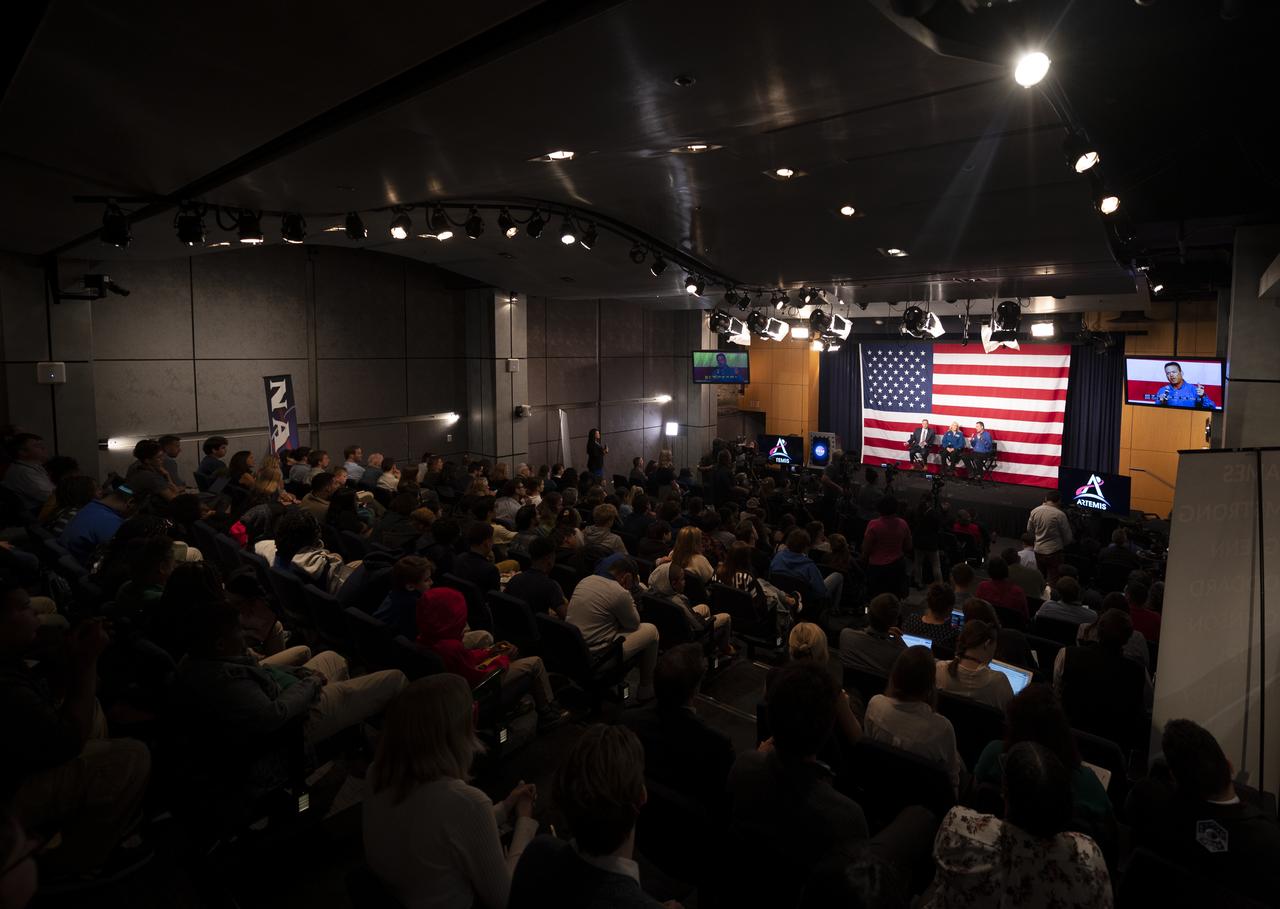
NASA Associate Administrator for the Office of Communications Bettina Inclán moderates a panel discussion with NASA Administrator Jim Bridenstine, NASA astronaut Kate Rubins, and Chris Hansen, Manager of the Extravehicular Activity office at NASA’s Johnson Space Center during the Artemis Generation Spacesuit event, Tuesday, Oct. 15, 2019 at NASA Headquarters in Washington. The Exploration Extravehicular Mobility Unit (xEMU) suit improves on the suits previous worn on the Moon during the Apollo era and those currently in use for spacewalks outside the International Space Station and will be worn by first woman and next man as they explore the Moon as part of the agency’s Artemis program. The Orion Crew Survival System (OCSS) suit is designed for a custom fit and incorporates safety technology and mobility features that will help protect astronauts on launch day, in emergency situations, high-risk parts of missions near the Moon, and during the high-speed return to Earth. Photo Credit: (NASA/Joel Kowsky)
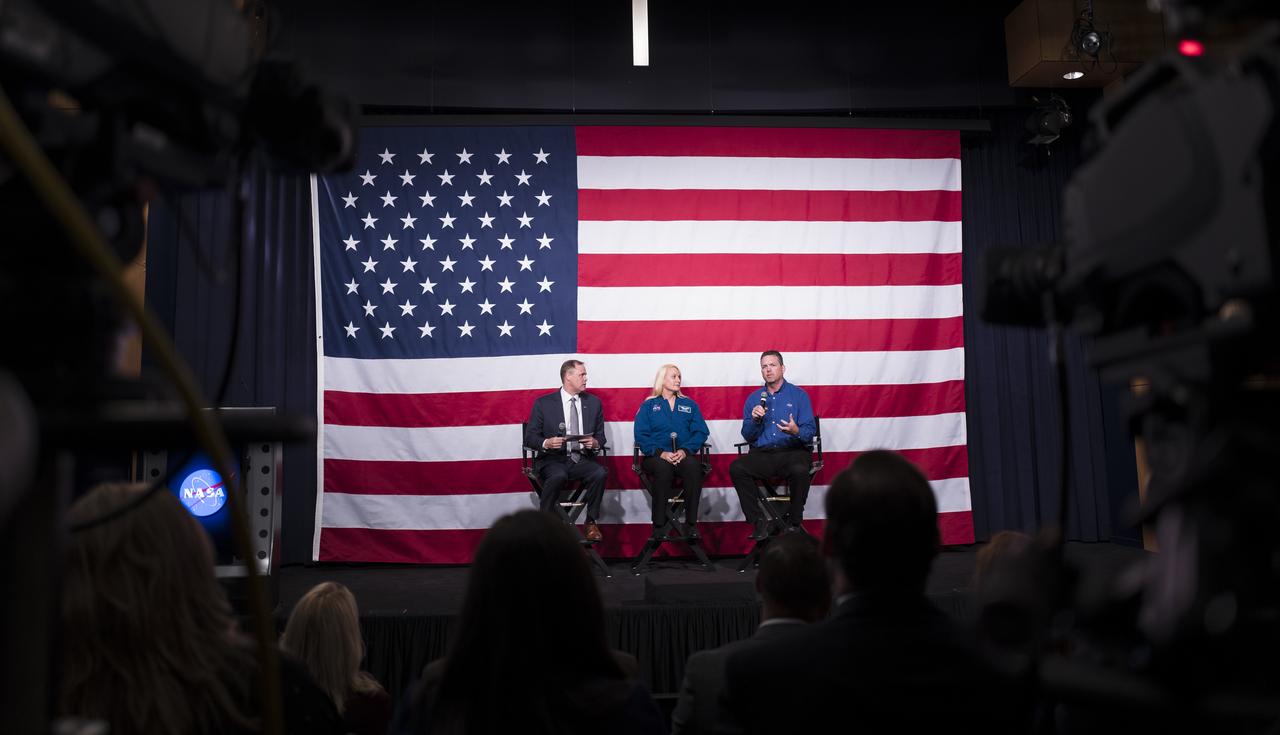
NASA Administrator Jim Bridenstine, left, NASA astronaut Kate Rubins, and Chris Hansen, Manager of the Extravehicular Activity office at NASA’s Johnson Space Center are seen during a panel discussion at the Artemis Generation Spacesuit event, Tuesday, Oct. 15, 2019 at NASA Headquarters in Washington. The Exploration Extravehicular Mobility Unit (xEMU) suit improves on the suits previous worn on the Moon during the Apollo era and those currently in use for spacewalks outside the International Space Station and will be worn by first woman and next man as they explore the Moon as part of the agency’s Artemis program. The Orion Crew Survival System (OCSS) suit is designed for a custom fit and incorporates safety technology and mobility features that will help protect astronauts on launch day, in emergency situations, high-risk parts of missions near the Moon, and during the high-speed return to Earth. Photo Credit: (NASA/Joel Kowsky)
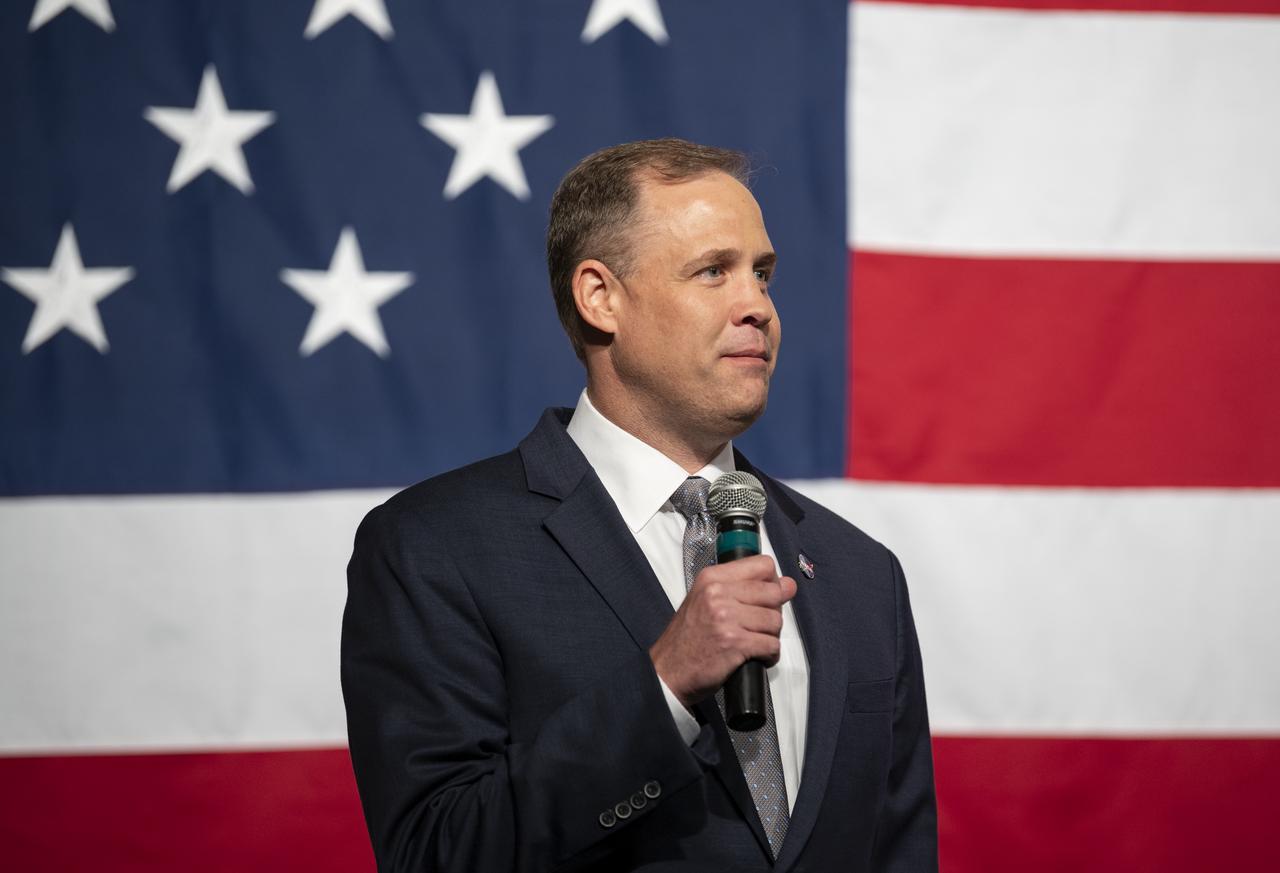
NASA Administrator Jim Bridenstine delivers opening remarks at the Artemis Generations Spacesuit event, Tuesday, Oct. 15, 2019 at NASA Headquarters in Washington. The Exploration Extravehicular Mobility Unit (xEMU) suit improves on the suits previous worn on the Moon during the Apollo era and those currently in use for spacewalks outside the International Space Station and will be worn by first woman and next man as they explore the Moon as part of the agency’s Artemis program. The Orion Crew Survival System (OCSS) suit is designed for a custom fit and incorporates safety technology and mobility features that will help protect astronauts on launch day, in emergency situations, high-risk parts of missions near the Moon, and during the high-speed return to Earth. Photo Credit: (NASA/Joel Kowsky)
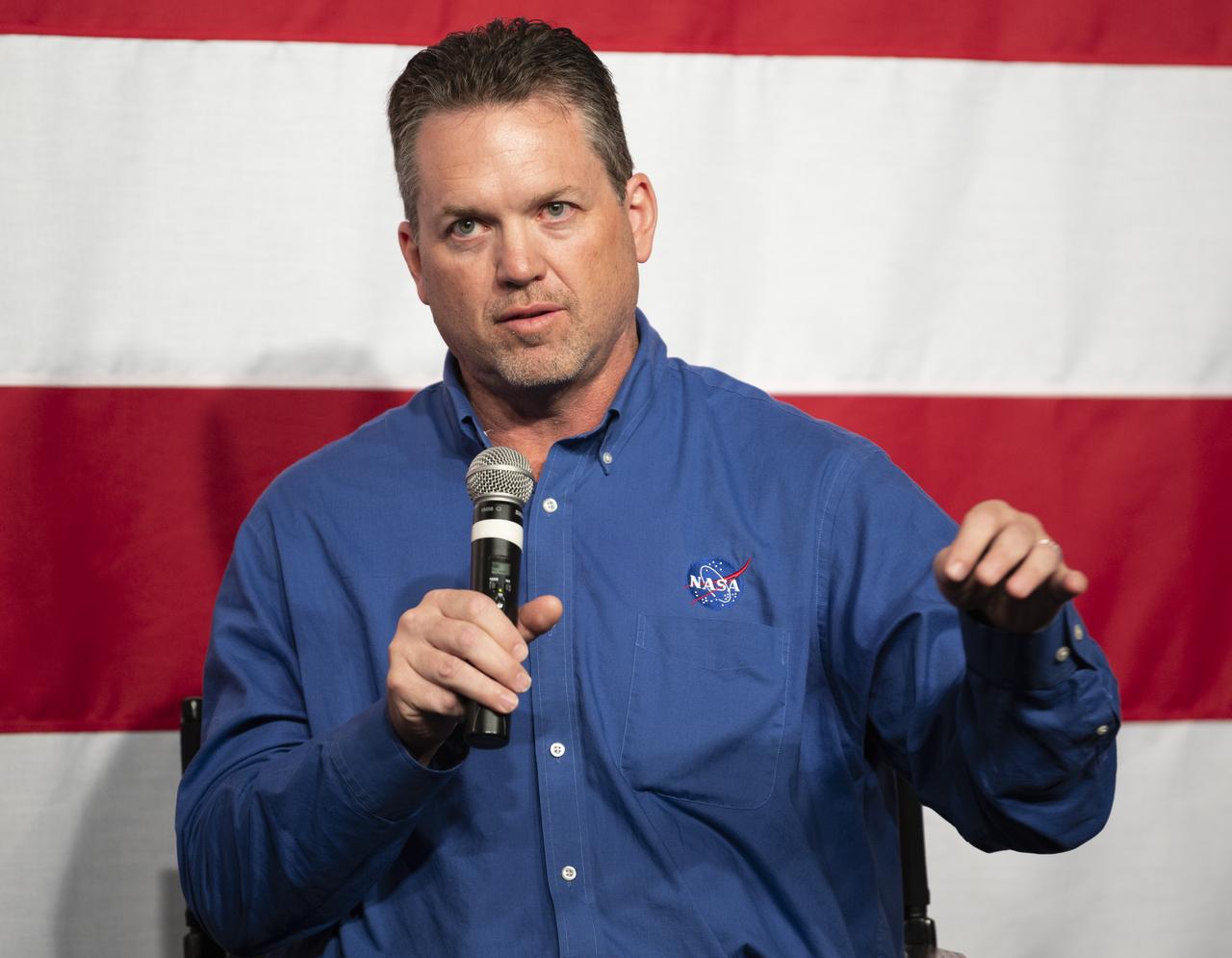
Chris Hansen, Manager of the Extravehicular Activity Office at NASA’s Johnson Space Center answers an audience question during a panel discussion with NASA Administrator Jim Bridenstine and NASA astronaut Kate Rubins during the Artemis Generation Spacesuit event, Tuesday, Oct. 15, 2019 at NASA Headquarters in Washington. The Exploration Extravehicular Mobility Unit (xEMU) suit improves on the suits previous worn on the Moon during the Apollo era and those currently in use for spacewalks outside the International Space Station and will be worn by first woman and next man as they explore the Moon as part of the agency’s Artemis program. The Orion Crew Survival System (OCSS) suit is designed for a custom fit and incorporates safety technology and mobility features that will help protect astronauts on launch day, in emergency situations, high-risk parts of missions near the Moon, and during the high-speed return to Earth. Photo Credit: (NASA/Joel Kowsky)
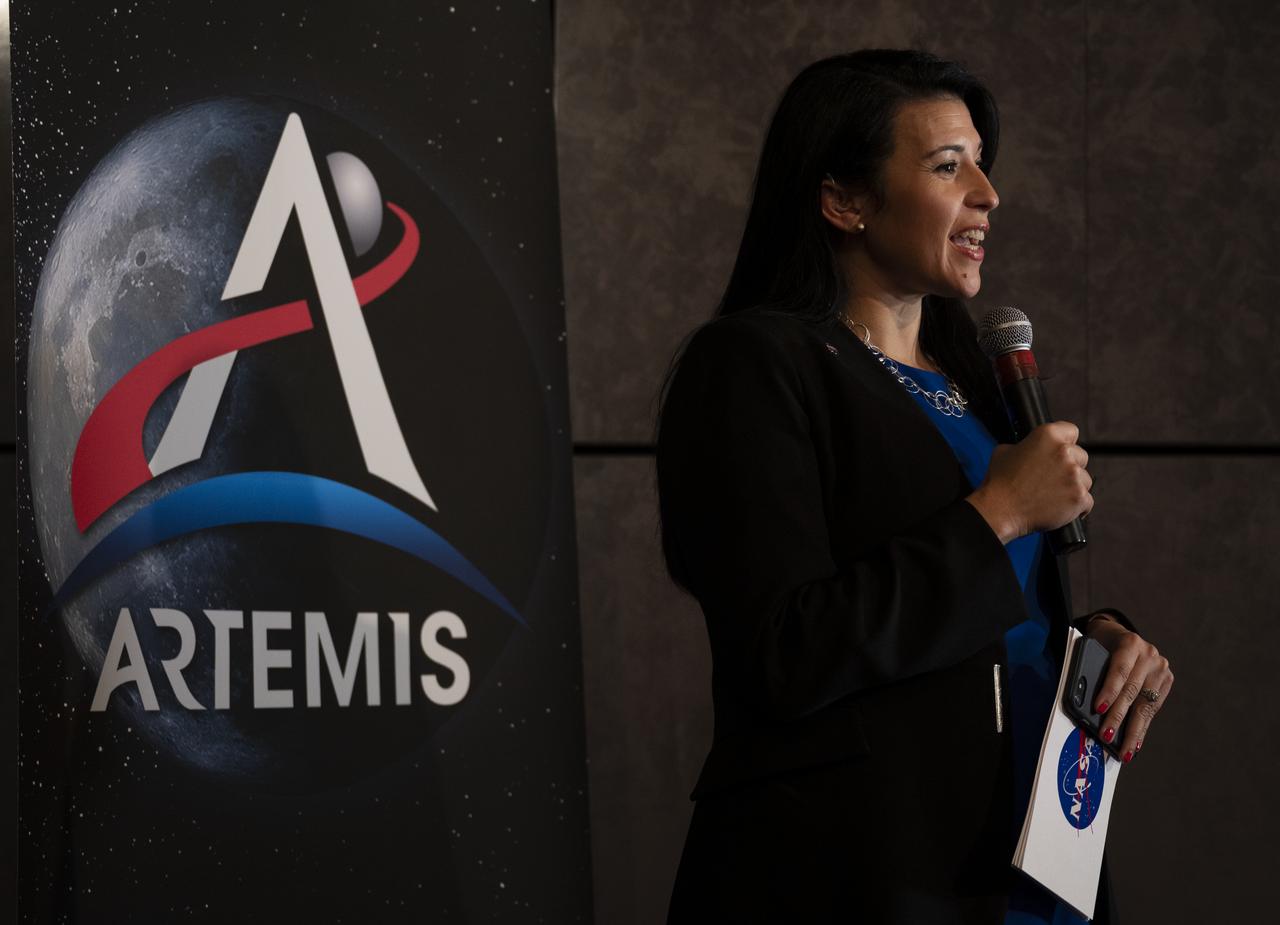
NASA Associate Administrator for the Office of Communications Bettina Inclán moderates a panel discussion with NASA Administrator Jim Bridenstine, NASA astronaut Kate Rubins, and Chris Hansen, Manager of the Extravehicular Activity office at NASA’s Johnson Space Center during the Artemis Generation Spacesuit event, Tuesday, Oct. 15, 2019 at NASA Headquarters in Washington. The Exploration Extravehicular Mobility Unit (xEMU) suit improves on the suits previous worn on the Moon during the Apollo era and those currently in use for spacewalks outside the International Space Station and will be worn by first woman and next man as they explore the Moon as part of the agency’s Artemis program. The Orion Crew Survival System (OCSS) suit is designed for a custom fit and incorporates safety technology and mobility features that will help protect astronauts on launch day, in emergency situations, high-risk parts of missions near the Moon, and during the high-speed return to Earth. Photo Credit: (NASA/Joel Kowsky)
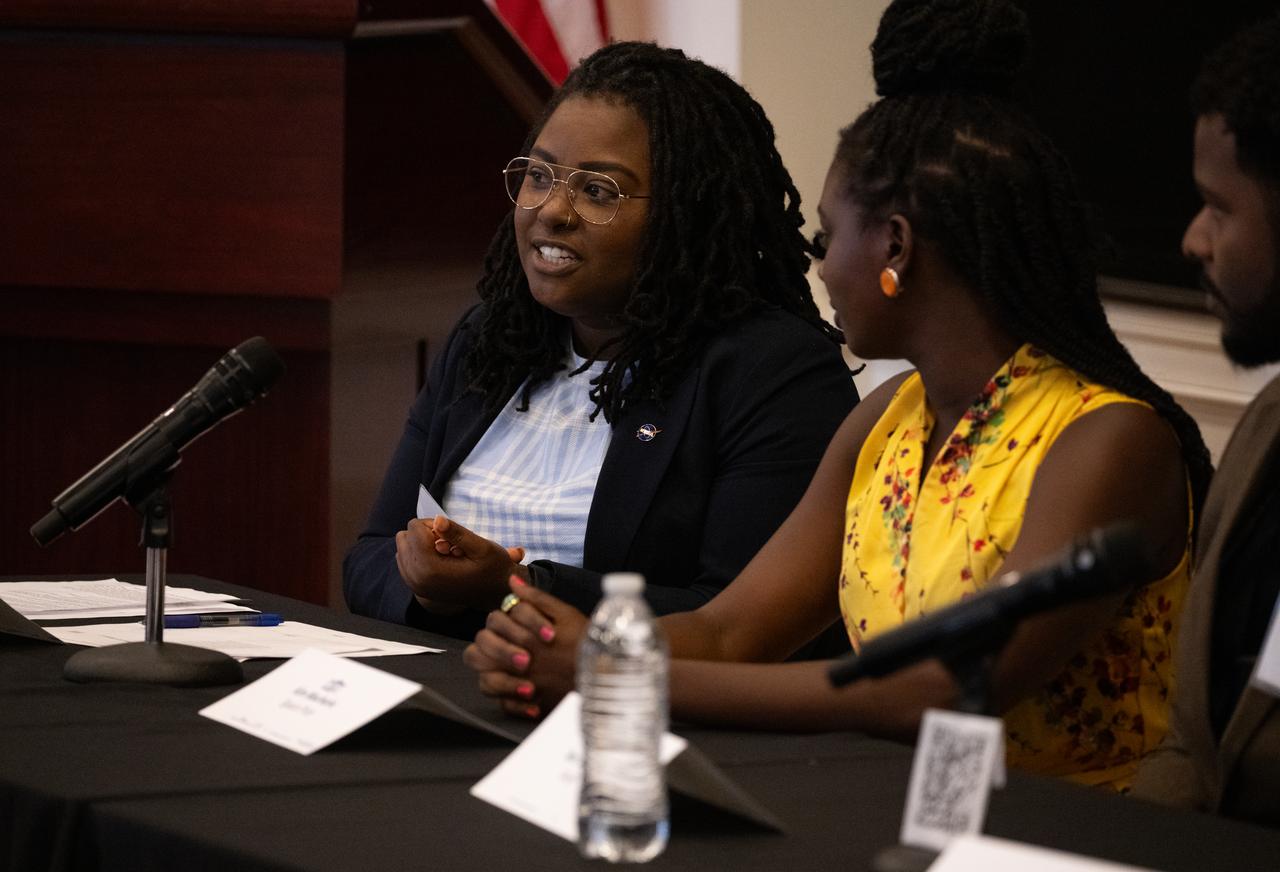
Amber McIntyre, Interagency and International Relations Advisor at NASA, speaks during a panel discussion with Kim Macharia, Executive Director at Space Prize, Ronald Gamble, a theoretical astrophysicist at NASA’s Goddard Space Flight Center, and Zephanii Eisenstat, Space and Social Justice Advocate at the NAACP, during an Artemis Generation Roundtable for Black Space Week, Tuesday, June 20, 2023, at the Eisenhower Executive Office Building in Washington. As part of Black Space Week, the National Space Council and NASA collaborated with Black In Astro to host students for a discussion on the future of space exploration and equity. Photo Credit: (NASA/Joel Kowsky)
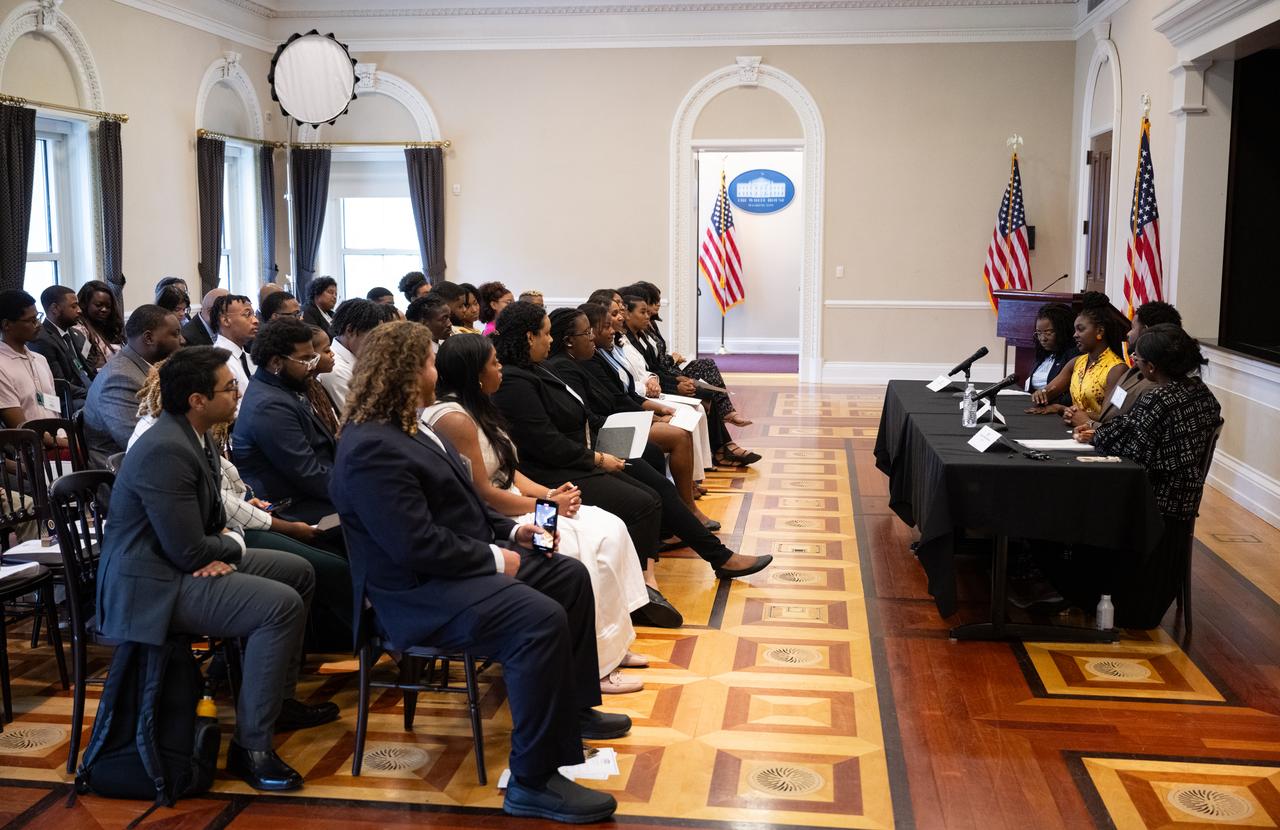
Amber McIntyre, Interagency and International Relations Advisor at NASA, left, moderates a panel discussion with Kim Macharia, Executive Director at Space Prize, second from left, Ronald Gamble, a theoretical astrophysicist at NASA’s Goddard Space Flight Center, second from right, and Zephanii Eisenstat, Space and Social Justice Advocate at the NAACP, right, during an Artemis Generation Roundtable for Black Space Week, Tuesday, June 20, 2023, at the Eisenhower Executive Office Building in Washington. As part of Black Space Week, the National Space Council and NASA collaborated with Black In Astro to host students for a discussion on the future of space exploration and equity. Photo Credit: (NASA/Joel Kowsky)
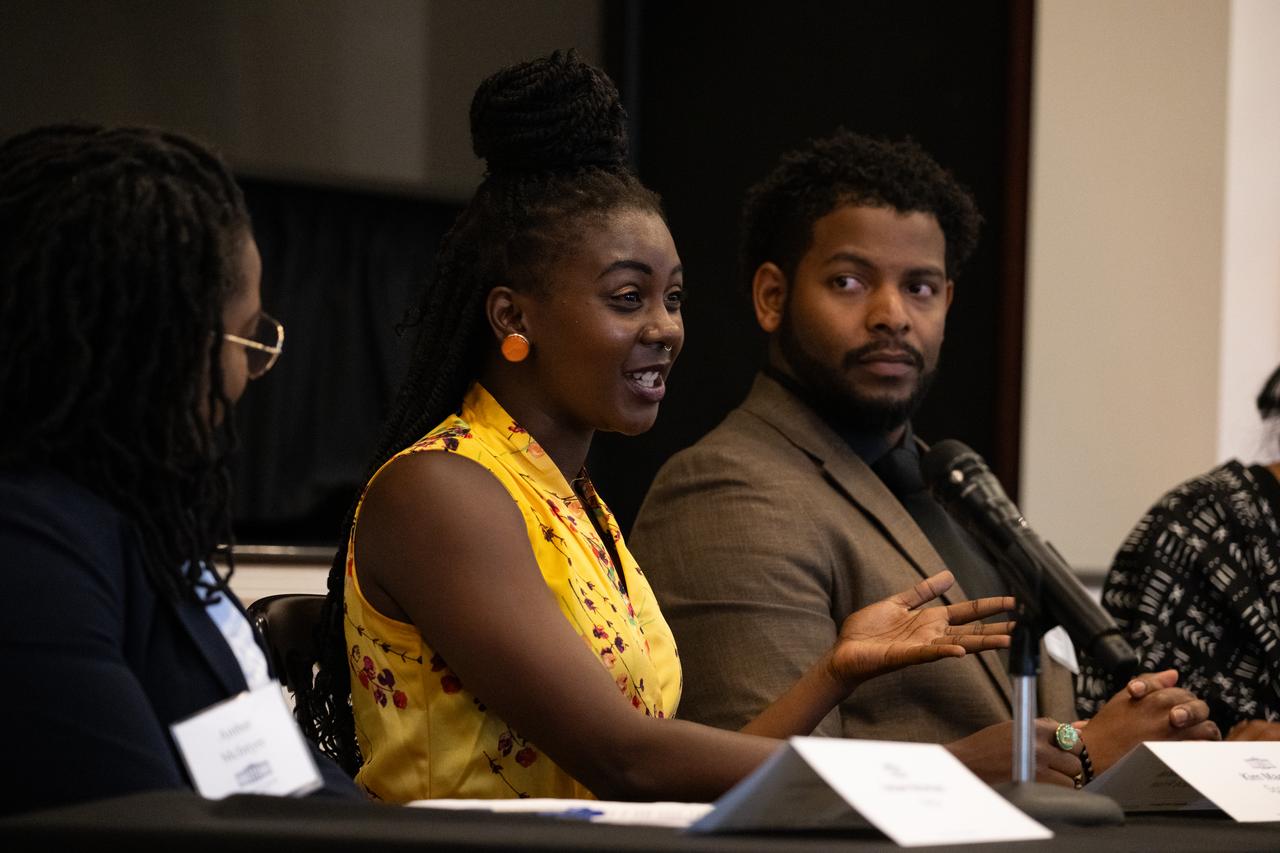
Kim Macharia, Executive Director at Space Prize, speaks during a panel discussion moderated by Amber McIntyre, Interagency and International Relations Advisor at NASA with Ronald Gamble, a theoretical astrophysicist at NASA’s Goddard Space Flight Center, and Zephanii Eisenstat, Space and Social Justice Advocate at the NAACP, during an Artemis Generation Roundtable for Black Space Week, Tuesday, June 20, 2023, at the Eisenhower Executive Office Building in Washington. As part of Black Space Week, the National Space Council and NASA collaborated with Black In Astro to host students for a discussion on the future of space exploration and equity. Photo Credit: (NASA/Joel Kowsky)
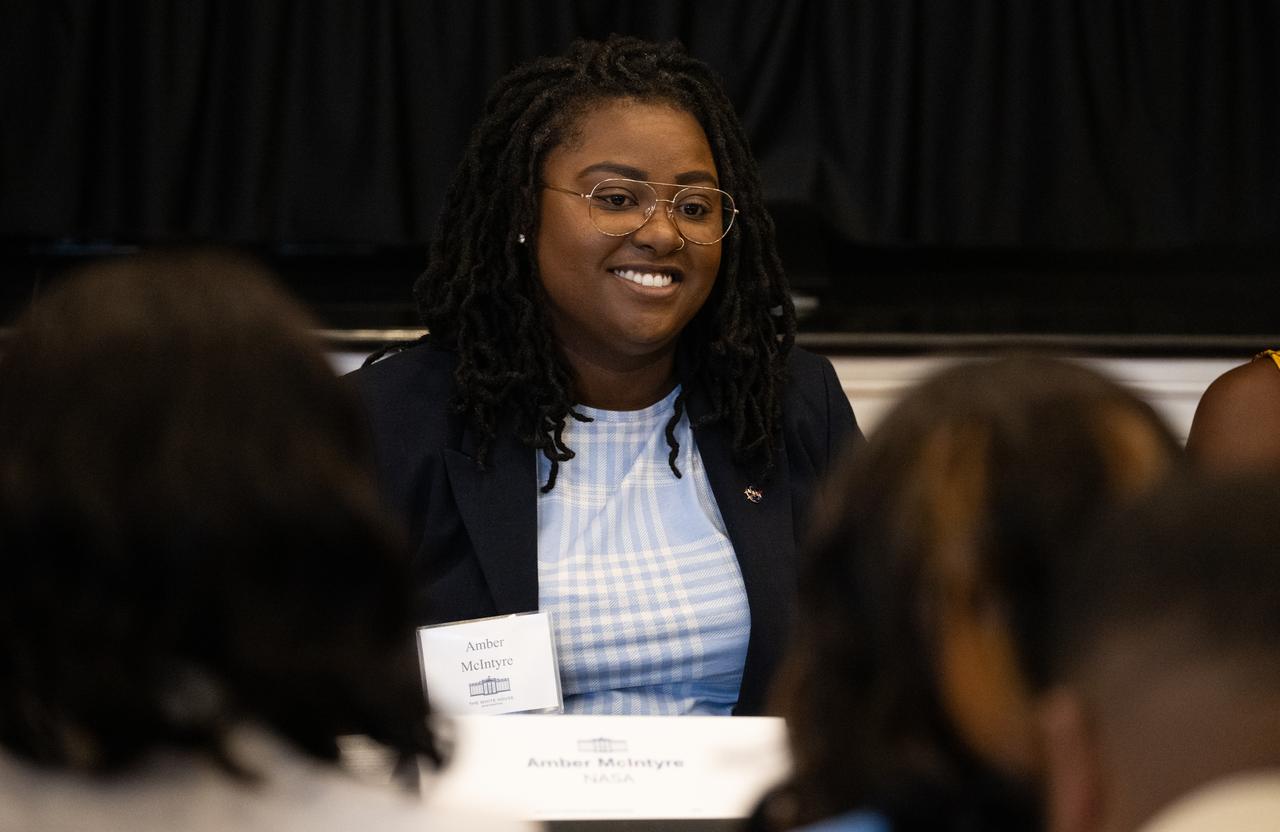
Amber McIntyre, Interagency and International Relations Advisor at NASA, is seen during a panel discussion with Kim Macharia, Executive Director at Space Prize, Ronald Gamble, a theoretical astrophysicist at NASA’s Goddard Space Flight Center, and Zephanii Eisenstat, Space and Social Justice Advocate at the NAACP, during an Artemis Generation Roundtable for Black Space Week, Tuesday, June 20, 2023, at the Eisenhower Executive Office Building in Washington. As part of Black Space Week, the National Space Council and NASA collaborated with Black In Astro to host students for a discussion on the future of space exploration and equity. Photo Credit: (NASA/Joel Kowsky)
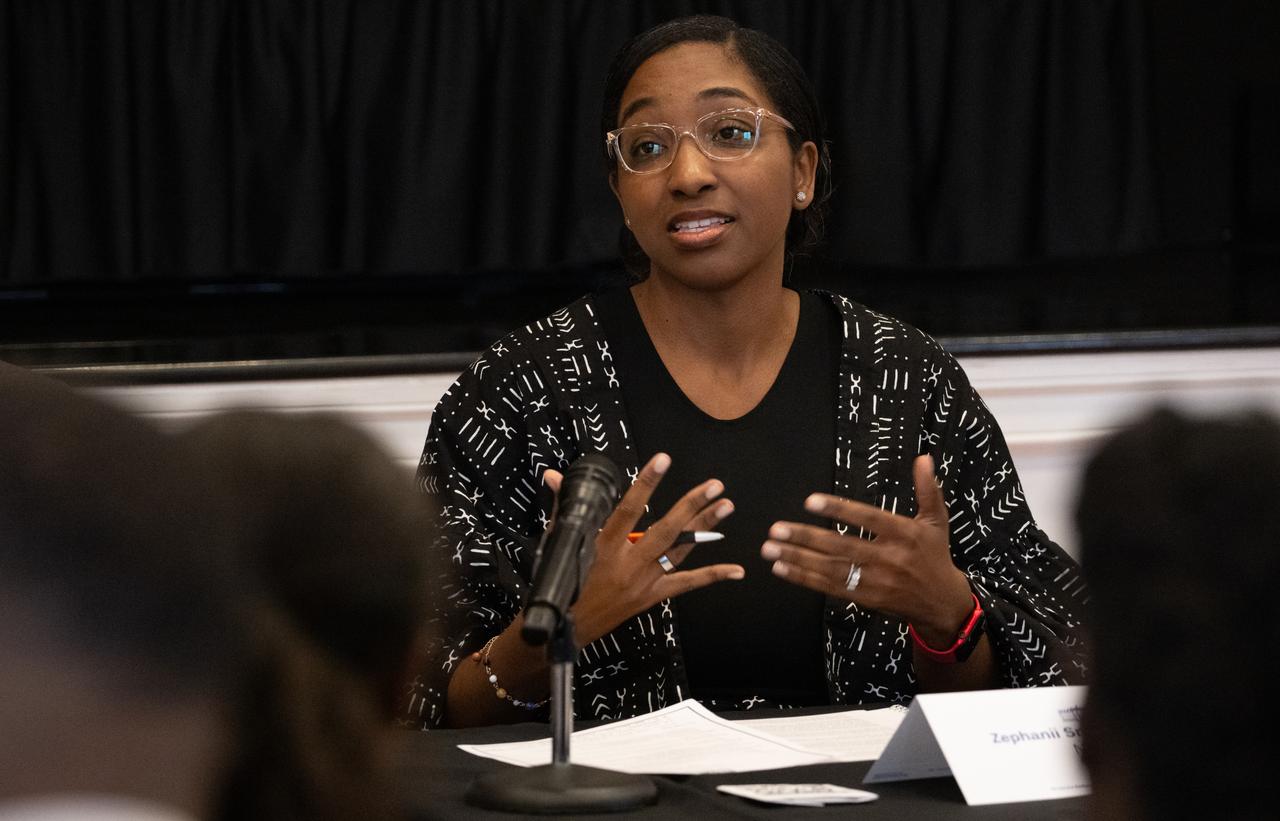
Zephanii Eisenstat, Space and Social Justice Advocate at the NAACP, speaks during a panel discussion moderated by Amber McIntyre, Interagency and International Relations Advisor at NASA with Kim Macharia, Executive Director at Space Prize, and Ronald Gamble, a theoretical astrophysicist at NASA’s Goddard Space Flight Center, during an Artemis Generation Roundtable for Black Space Week, Tuesday, June 20, 2023, at the Eisenhower Executive Office Building in Washington. As part of Black Space Week, the National Space Council and NASA collaborated with Black In Astro to host students for a discussion on the future of space exploration and equity. Photo Credit: (NASA/Joel Kowsky)
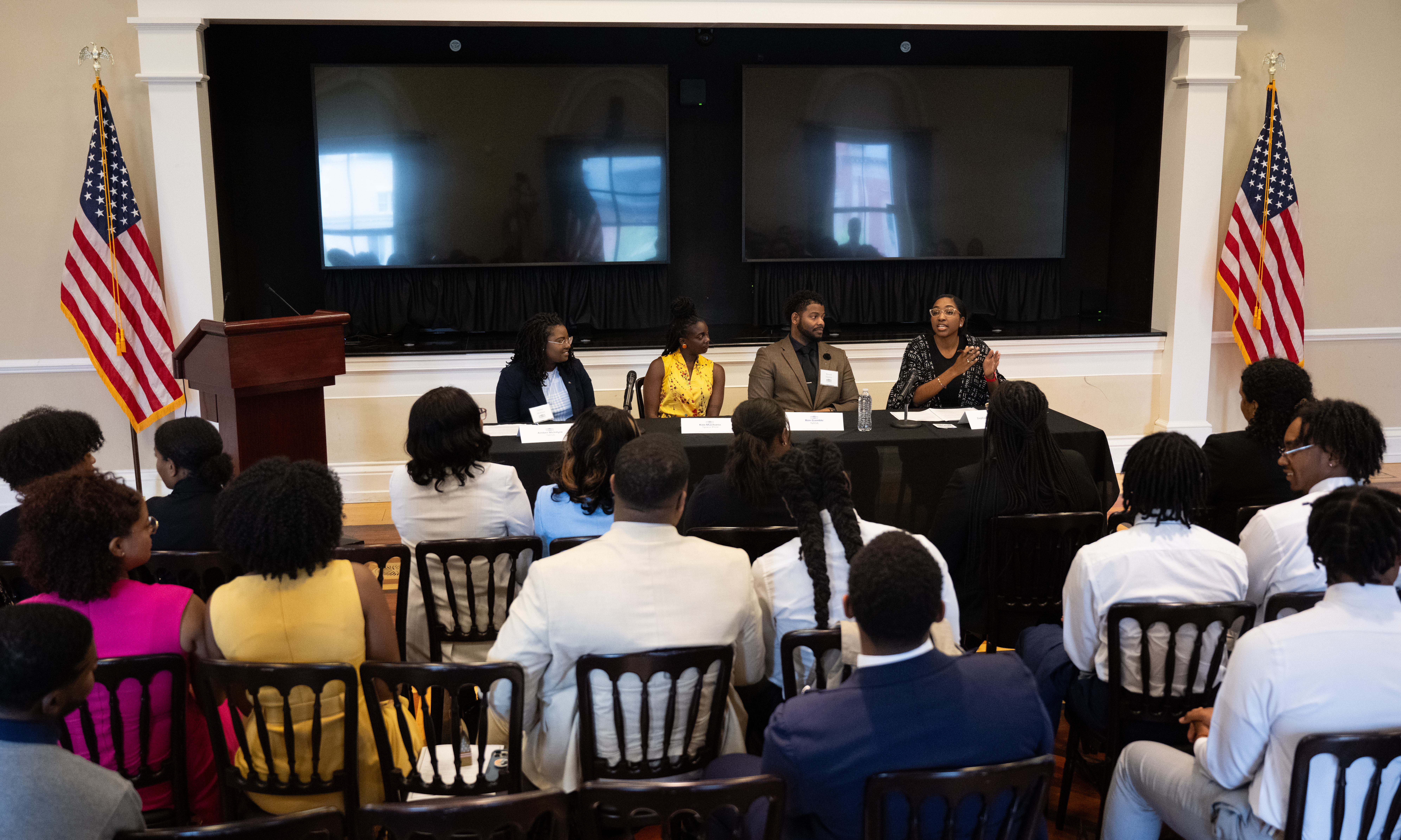
Amber McIntyre, Interagency and International Relations Advisor at NASA, left, moderates a panel discussion with Kim Macharia, Executive Director at Space Prize, second from left, Ronald Gamble, a theoretical astrophysicist at NASA’s Goddard Space Flight Center, second from right, and Zephanii Eisenstat, Space and Social Justice Advocate at the NAACP, right, during an Artemis Generation Roundtable for Black Space Week, Tuesday, June 20, 2023, at the Eisenhower Executive Office Building in Washington. As part of Black Space Week, the National Space Council and NASA collaborated with Black In Astro to host students for a discussion on the future of space exploration and equity. Photo Credit: (NASA/Joel Kowsky)
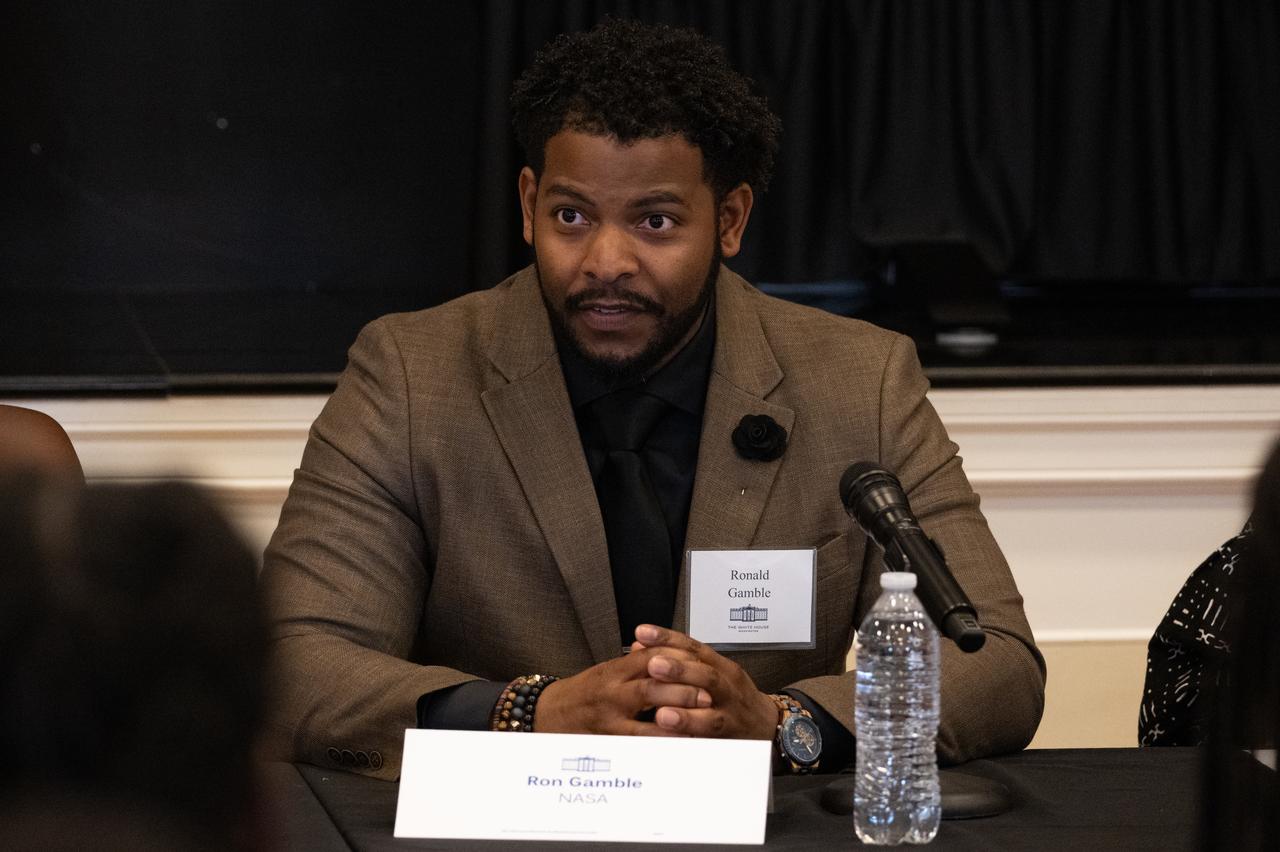
Ronald Gamble, a theoretical astrophysicist at NASA’s Goddard Space Flight Center, speaks during a panel discussion moderated by Amber McIntyre, Interagency and International Relations Advisor at NASA with Kim Macharia, Executive Director at Space Prize, and Zephanii Eisenstat, Space and Social Justice Advocate at the NAACP, during an Artemis Generation Roundtable for Black Space Week, Tuesday, June 20, 2023, at the Eisenhower Executive Office Building in Washington. As part of Black Space Week, the National Space Council and NASA collaborated with Black In Astro to host students for a discussion on the future of space exploration and equity. Photo Credit: (NASA/Joel Kowsky)
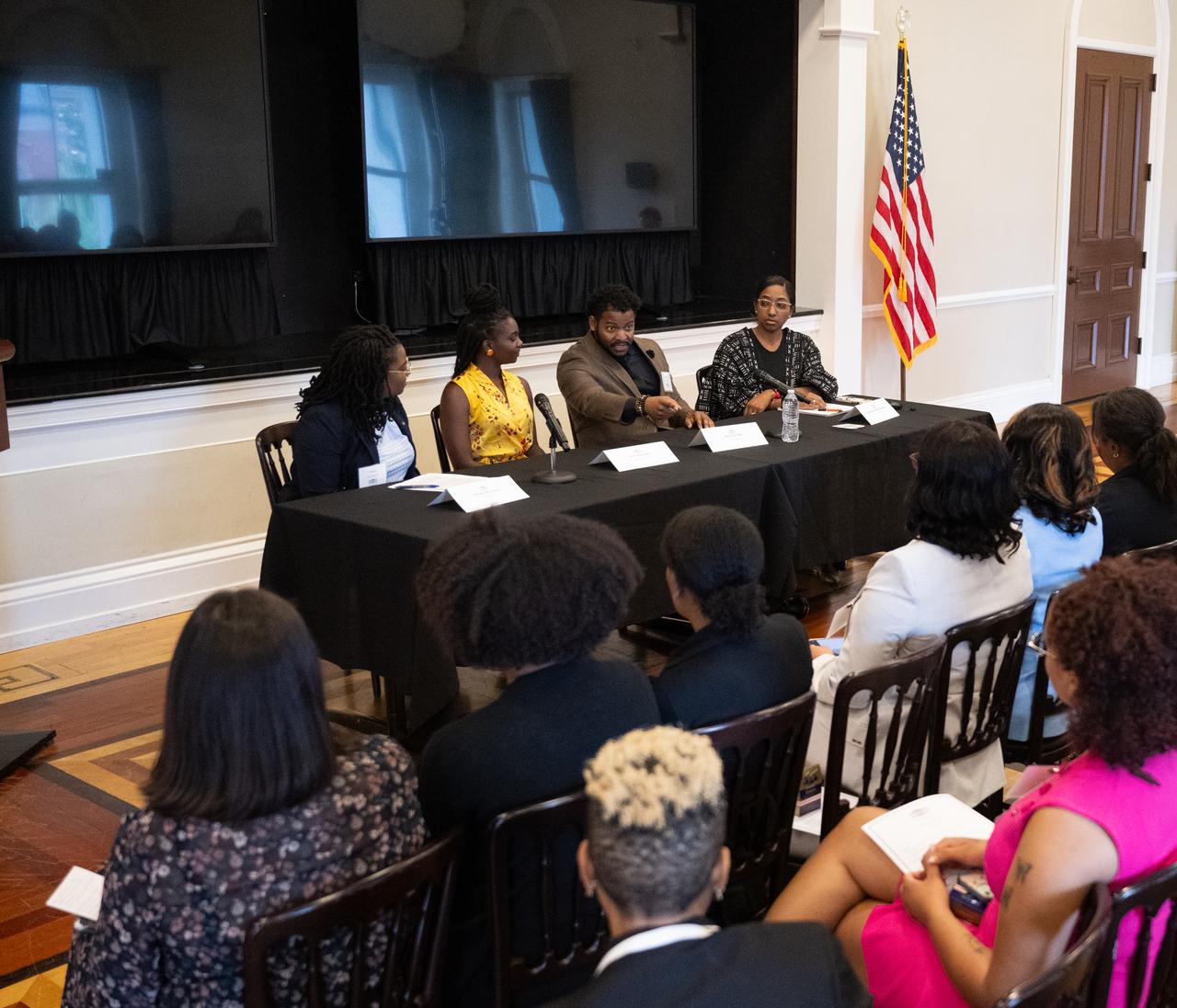
Amber McIntyre, Interagency and International Relations Advisor at NASA, left, moderates a panel discussion with Kim Macharia, Executive Director at Space Prize, second from left, Ronald Gamble, a theoretical astrophysicist at NASA’s Goddard Space Flight Center, second from right, and Zephanii Eisenstat, Space and Social Justice Advocate at the NAACP, right, during an Artemis Generation Roundtable for Black Space Week, Tuesday, June 20, 2023, at the Eisenhower Executive Office Building in Washington. As part of Black Space Week, the National Space Council and NASA collaborated with Black In Astro to host students for a discussion on the future of space exploration and equity. Photo Credit: (NASA/Joel Kowsky)
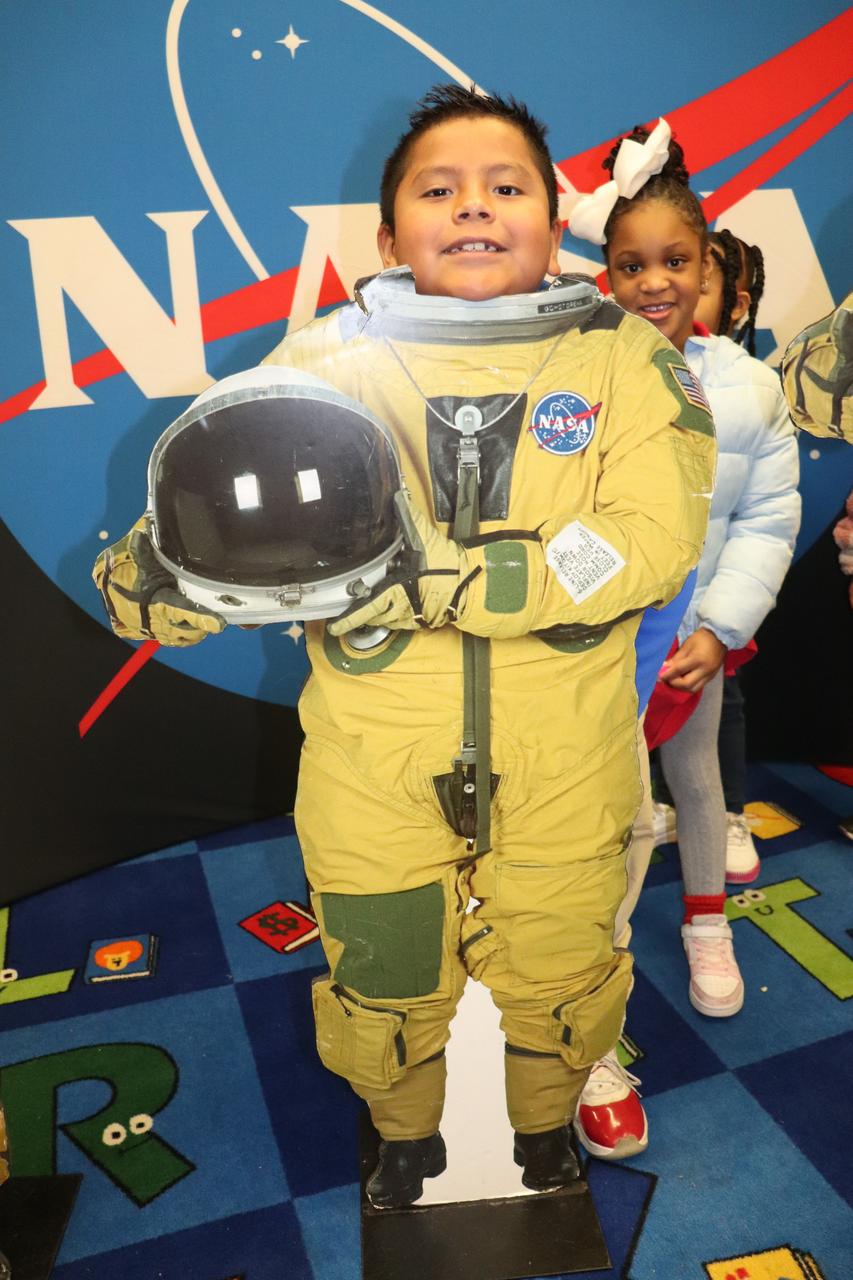
Representatives from NASA’s Stennis Space Center and NASA Shared Services Center participate in multiple related outreach events throughout Jackson, Mississippi, as part of the annual Stennis Day at the Capitol activities on Feb. 29. NASA personnel inspired the Artemis Generation with visits to Spann Elementary and Blackburn Middle schools. Activities included students learning about life as a NASA astronaut and a hands-on STEM (science, technology, engineering, and mathematics) activity. Sending the first woman and first person of color to the Moon on future Artemis missions will inspire the Artemis Generation to see themselves in space and understand the importance of STEM studies and careers. As NASA takes giant leaps to bridge disparities and break barriers in STEM, the agency’s efforts in the future workforce advances the nation’s space exploration.
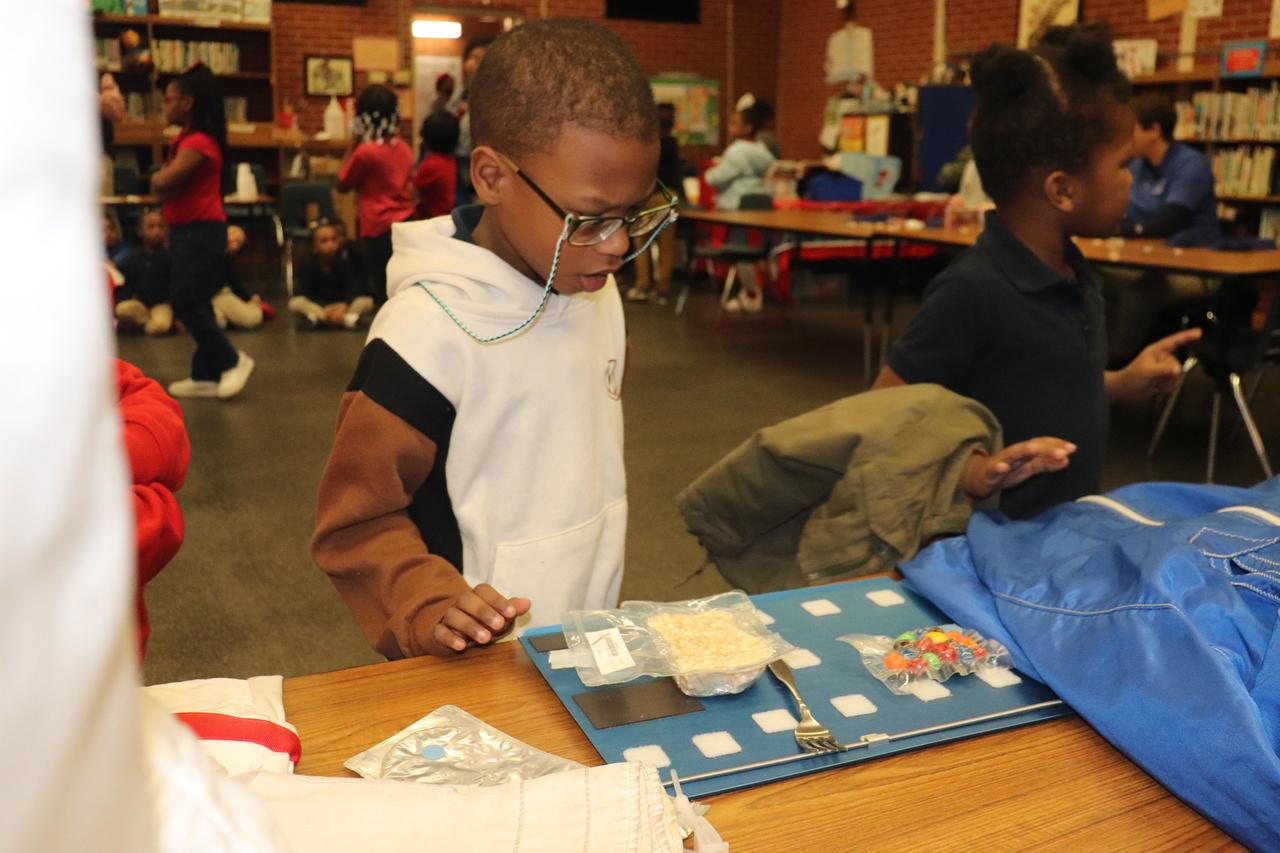
Representatives from NASA’s Stennis Space Center and NASA Shared Services Center participate in multiple related outreach events throughout Jackson, Mississippi, as part of the annual Stennis Day at the Capitol activities on Feb. 29. NASA personnel inspired the Artemis Generation with visits to Spann Elementary and Blackburn Middle schools. Activities included students learning about life as a NASA astronaut and a hands-on STEM (science, technology, engineering, and mathematics) activity. Sending the first woman and first person of color to the Moon on future Artemis missions will inspire the Artemis Generation to see themselves in space and understand the importance of STEM studies and careers. As NASA takes giant leaps to bridge disparities and break barriers in STEM, the agency’s efforts in the future workforce advances the nation’s space exploration.
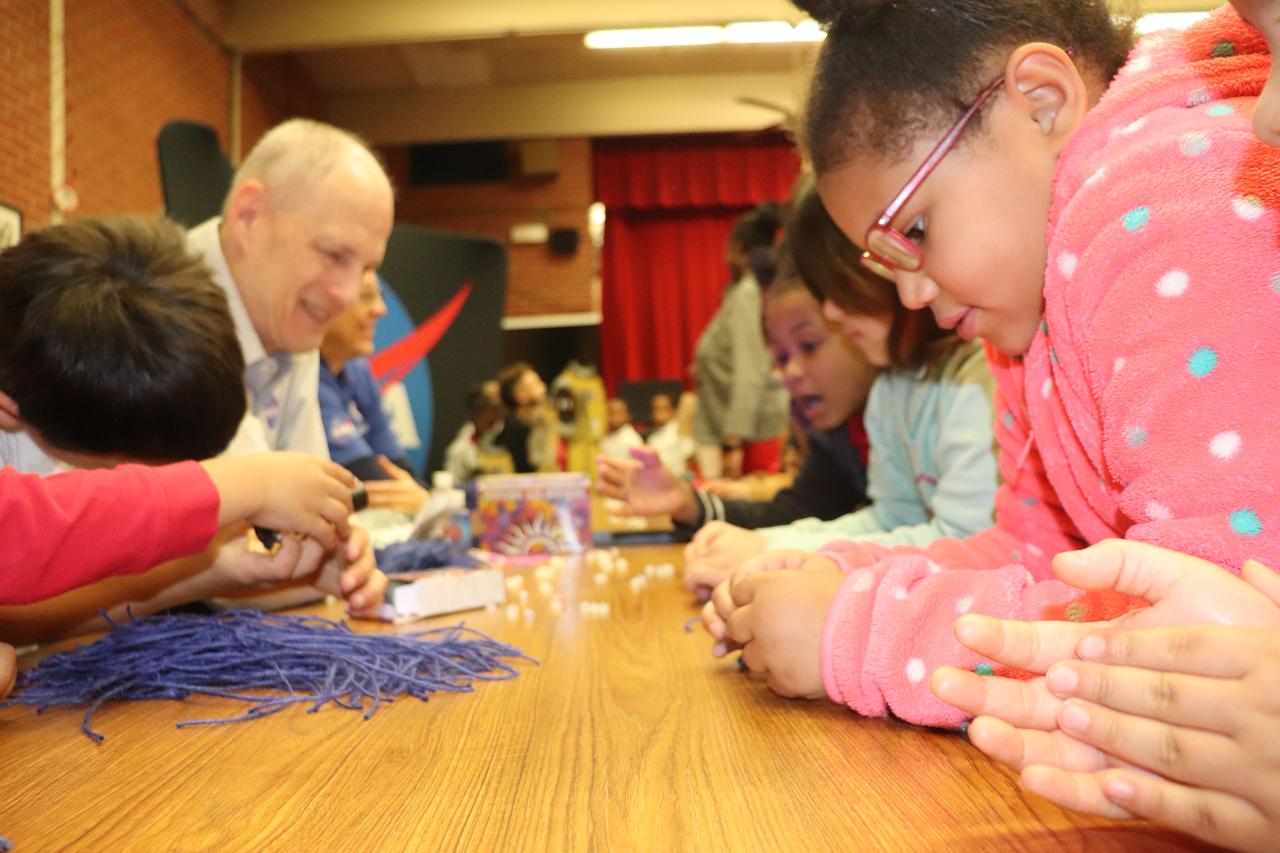
Representatives from NASA’s Stennis Space Center and NASA Shared Services Center participate in multiple related outreach events throughout Jackson, Mississippi, as part of the annual Stennis Day at the Capitol activities on Feb. 29. NASA personnel inspired the Artemis Generation with visits to Spann Elementary and Blackburn Middle schools. Activities included students learning about life as a NASA astronaut and a hands-on STEM (science, technology, engineering, and mathematics) activity. Sending the first woman and first person of color to the Moon on future Artemis missions will inspire the Artemis Generation to see themselves in space and understand the importance of STEM studies and careers. As NASA takes giant leaps to bridge disparities and break barriers in STEM, the agency’s efforts in the future workforce advances the nation’s space exploration.
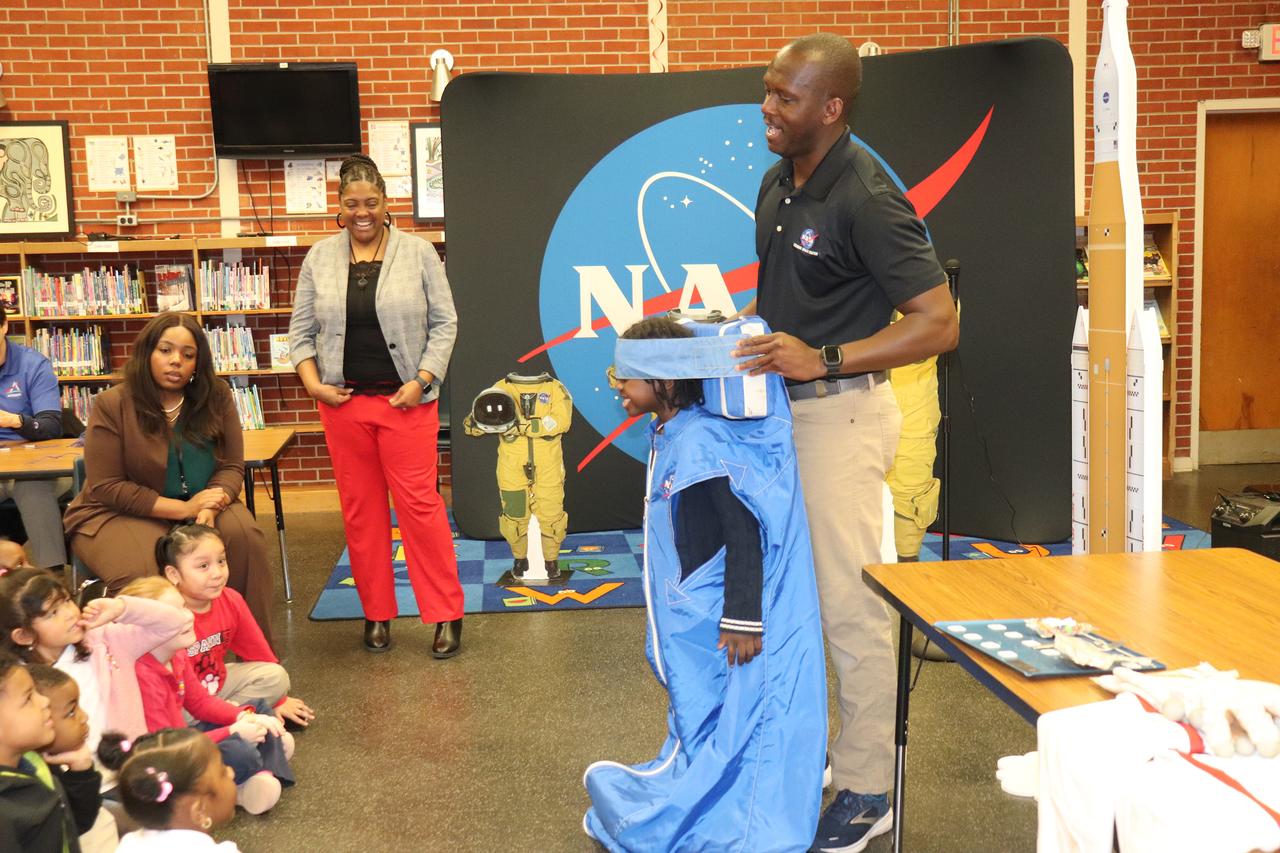
Representatives from NASA’s Stennis Space Center and NASA Shared Services Center participate in multiple related outreach events throughout Jackson, Mississippi, as part of the annual Stennis Day at the Capitol activities on Feb. 29. NASA personnel inspired the Artemis Generation with visits to Spann Elementary and Blackburn Middle schools. Activities included students learning about life as a NASA astronaut and a hands-on STEM (science, technology, engineering, and mathematics) activity. Sending the first woman and first person of color to the Moon on future Artemis missions will inspire the Artemis Generation to see themselves in space and understand the importance of STEM studies and careers. As NASA takes giant leaps to bridge disparities and break barriers in STEM, the agency’s efforts in the future workforce advances the nation’s space exploration.
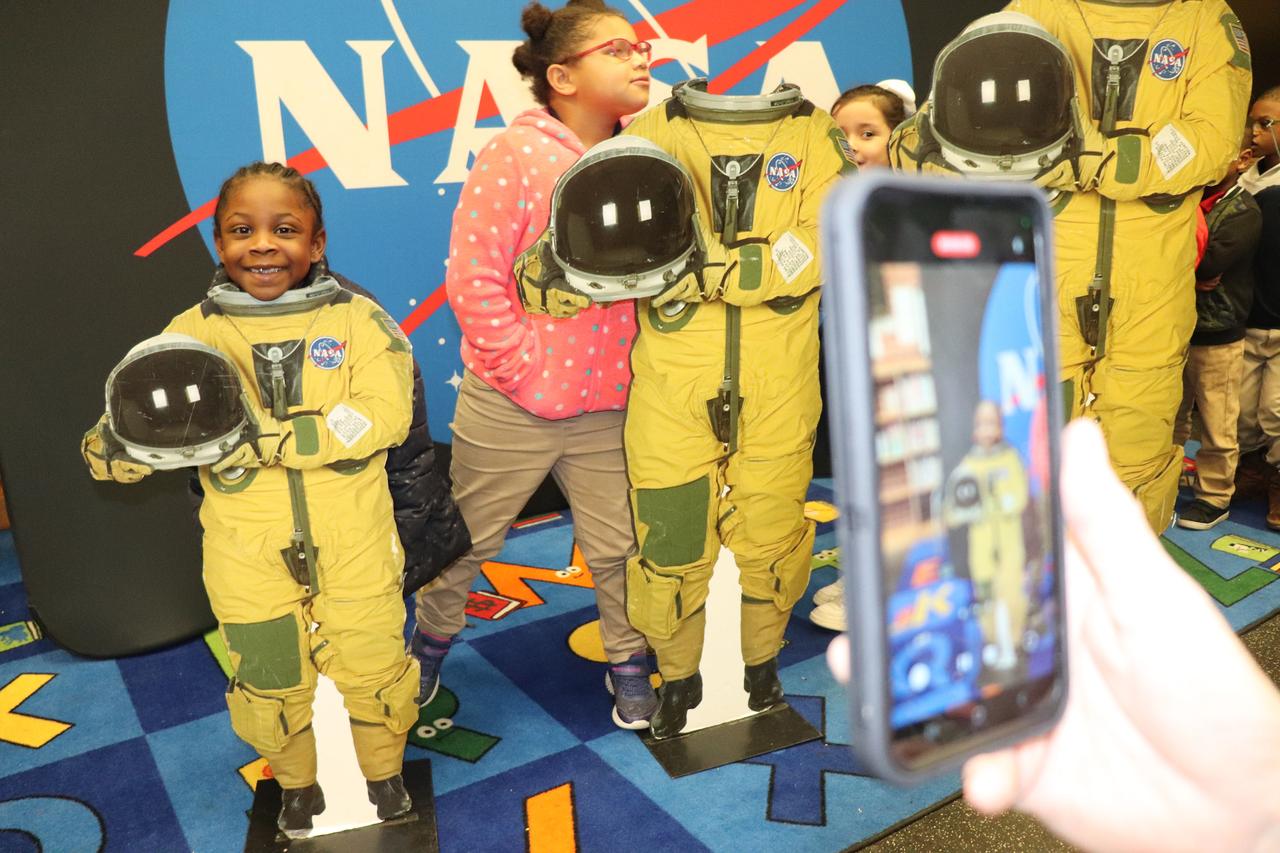
Representatives from NASA’s Stennis Space Center and NASA Shared Services Center participate in multiple related outreach events throughout Jackson, Mississippi, as part of the annual Stennis Day at the Capitol activities on Feb. 29. NASA personnel inspired the Artemis Generation with visits to Spann Elementary and Blackburn Middle schools. Activities included students learning about life as a NASA astronaut and a hands-on STEM (science, technology, engineering, and mathematics) activity. Sending the first woman and first person of color to the Moon on future Artemis missions will inspire the Artemis Generation to see themselves in space and understand the importance of STEM studies and careers. As NASA takes giant leaps to bridge disparities and break barriers in STEM, the agency’s efforts in the future workforce advances the nation’s space exploration.
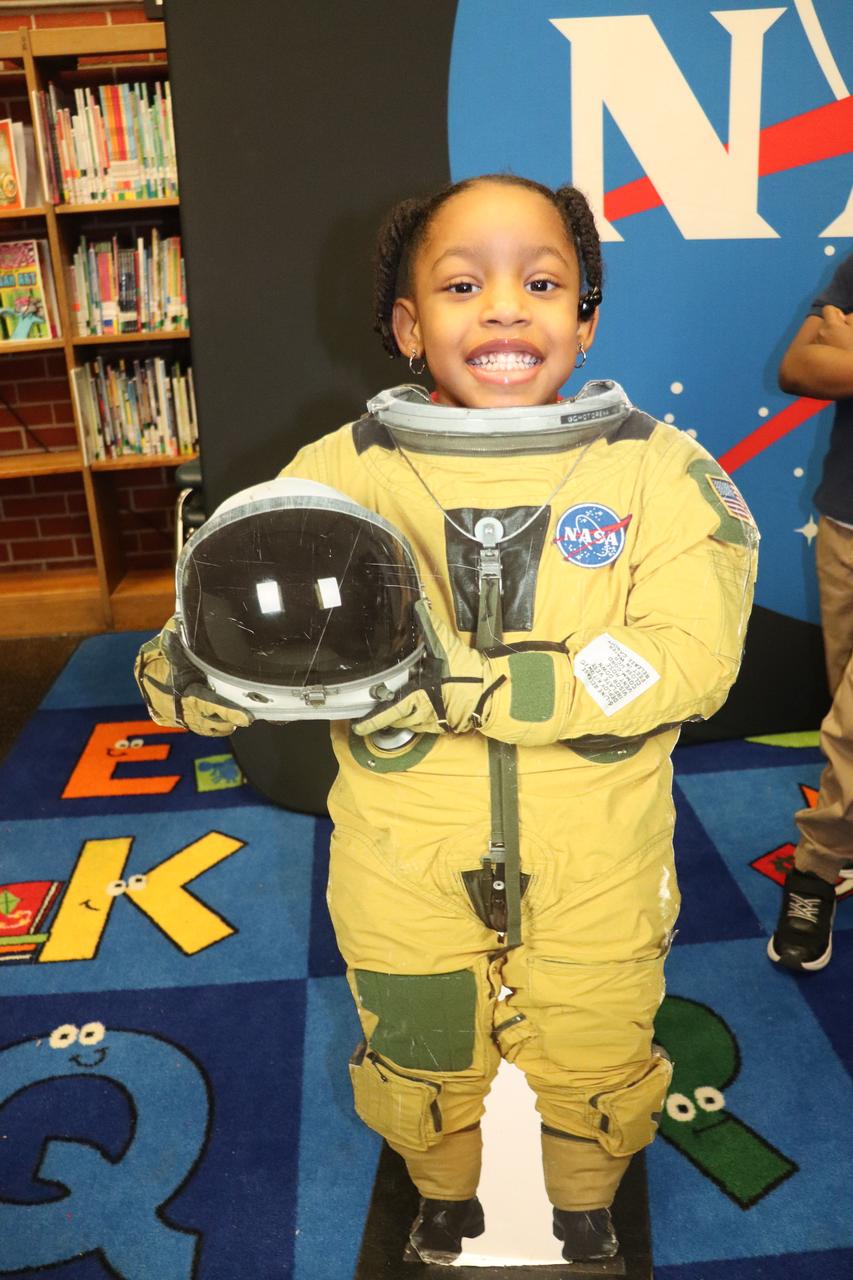
Representatives from NASA’s Stennis Space Center and NASA Shared Services Center participate in multiple related outreach events throughout Jackson, Mississippi, as part of the annual Stennis Day at the Capitol activities on Feb. 29. NASA personnel inspired the Artemis Generation with visits to Spann Elementary and Blackburn Middle schools. Activities included students learning about life as a NASA astronaut and a hands-on STEM (science, technology, engineering, and mathematics) activity. Sending the first woman and first person of color to the Moon on future Artemis missions will inspire the Artemis Generation to see themselves in space and understand the importance of STEM studies and careers. As NASA takes giant leaps to bridge disparities and break barriers in STEM, the agency’s efforts in the future workforce advances the nation’s space exploration.

Representatives from NASA’s Stennis Space Center and NASA Shared Services Center participate in multiple related outreach events throughout Jackson, Mississippi, as part of the annual Stennis Day at the Capitol activities on Feb. 29. NASA personnel inspired the Artemis Generation with visits to Spann Elementary and Blackburn Middle schools. Activities included students learning about life as a NASA astronaut and a hands-on STEM (science, technology, engineering, and mathematics) activity. Sending the first woman and first person of color to the Moon on future Artemis missions will inspire the Artemis Generation to see themselves in space and understand the importance of STEM studies and careers. As NASA takes giant leaps to bridge disparities and break barriers in STEM, the agency’s efforts in the future workforce advances the nation’s space exploration.

NASA Administrator Jim Bridenstine, left, and Amy Ross, a spacesuit engineer at NASA’s Johnson Space Center, left, are seen with Kristine Davis, a spacesuit engineer at NASA’s Johnson Space Center, wearing a ground prototype of NASA’s new Exploration Extravehicular Mobility Unit (xEMU), during a demonstration of the suit, Tuesday, Oct. 15, 2019 at NASA Headquarters in Washington. The xEMU suit improves on the suits previous worn on the Moon during the Apollo era and those currently in use for spacewalks outside the International Space Station and will be worn by first woman and next man as they explore the Moon as part of the agency’s Artemis program. Photo Credit: (NASA/Joel Kowsky)
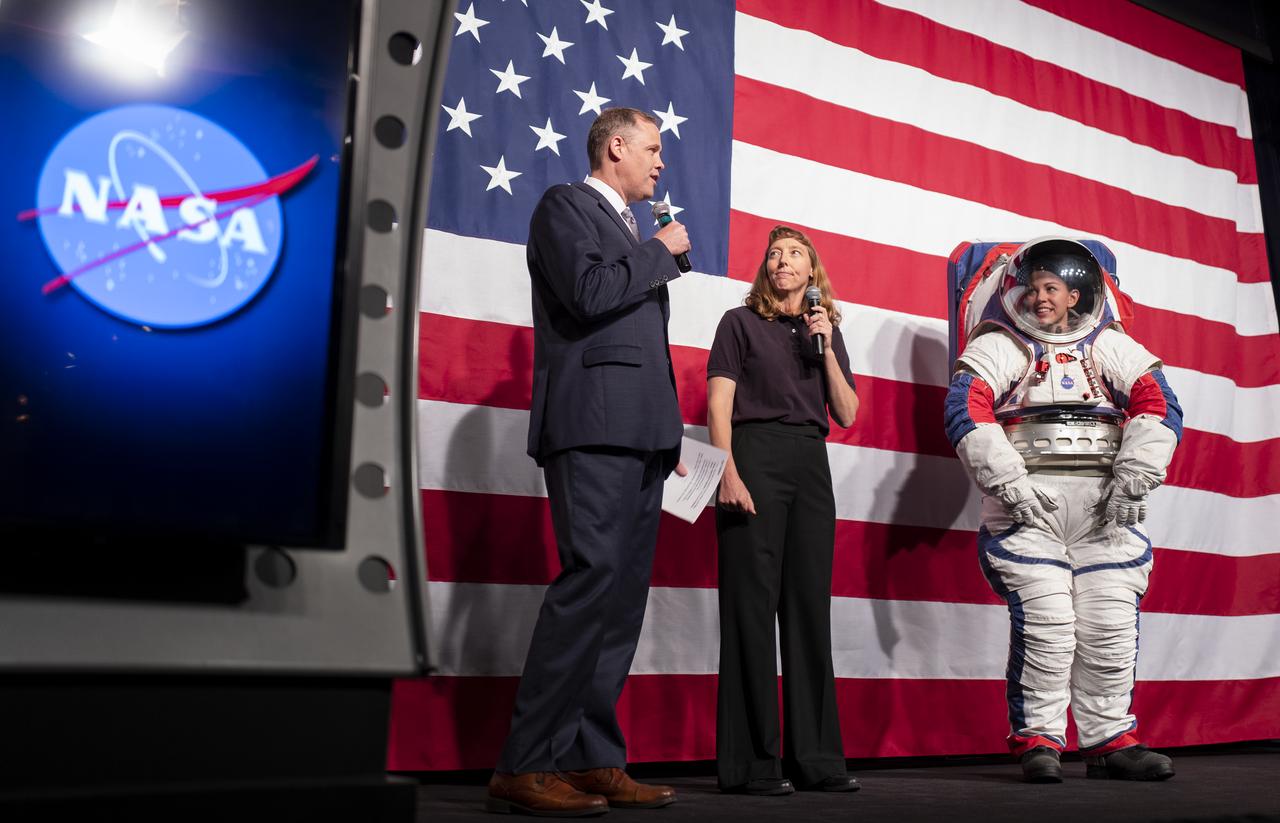
NASA Administrator Jim Bridenstine, left, and Amy Ross, a spacesuit engineer at NASA’s Johnson Space Center, left, are seen with Kristine Davis, a spacesuit engineer at NASA’s Johnson Space Center, wearing a ground prototype of NASA’s new Exploration Extravehicular Mobility Unit (xEMU), during a demonstration of the suit, Tuesday, Oct. 15, 2019 at NASA Headquarters in Washington. The xEMU suit improves on the suits previous worn on the Moon during the Apollo era and those currently in use for spacewalks outside the International Space Station and will be will be worn by first woman and next man as they explore the Moon as part of the agency’s Artemis program. Photo Credit: (NASA/Joel Kowsky)
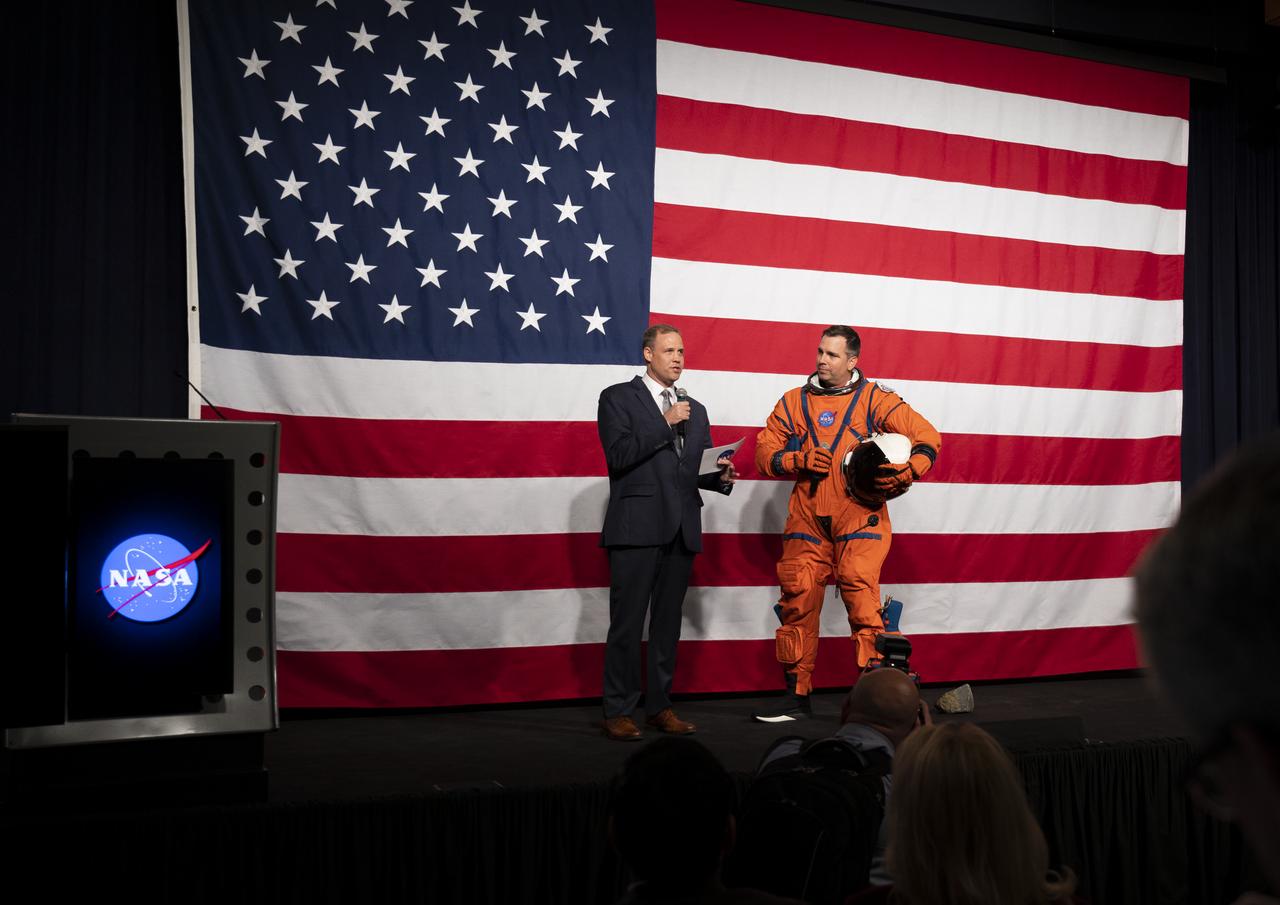
NASA Administrator Jim Bridenstine, left, speaks with Dustin Gohmert, Orion Crew Survival Systems Project Manager at NASA’s Johnson Space Center, wearing the Orion Crew Survival System suit, about the suit, Tuesday, Oct. 15, 2019 at NASA Headquarters in Washington. The Orion suit is designed for a custom fit and incorporates safety technology and mobility features that will help protect astronauts on launch day, in emergency situations, high-risk parts of missions near the Moon, and during the high-speed return to Earth. Photo Credit: (NASA/Joel Kowsky)
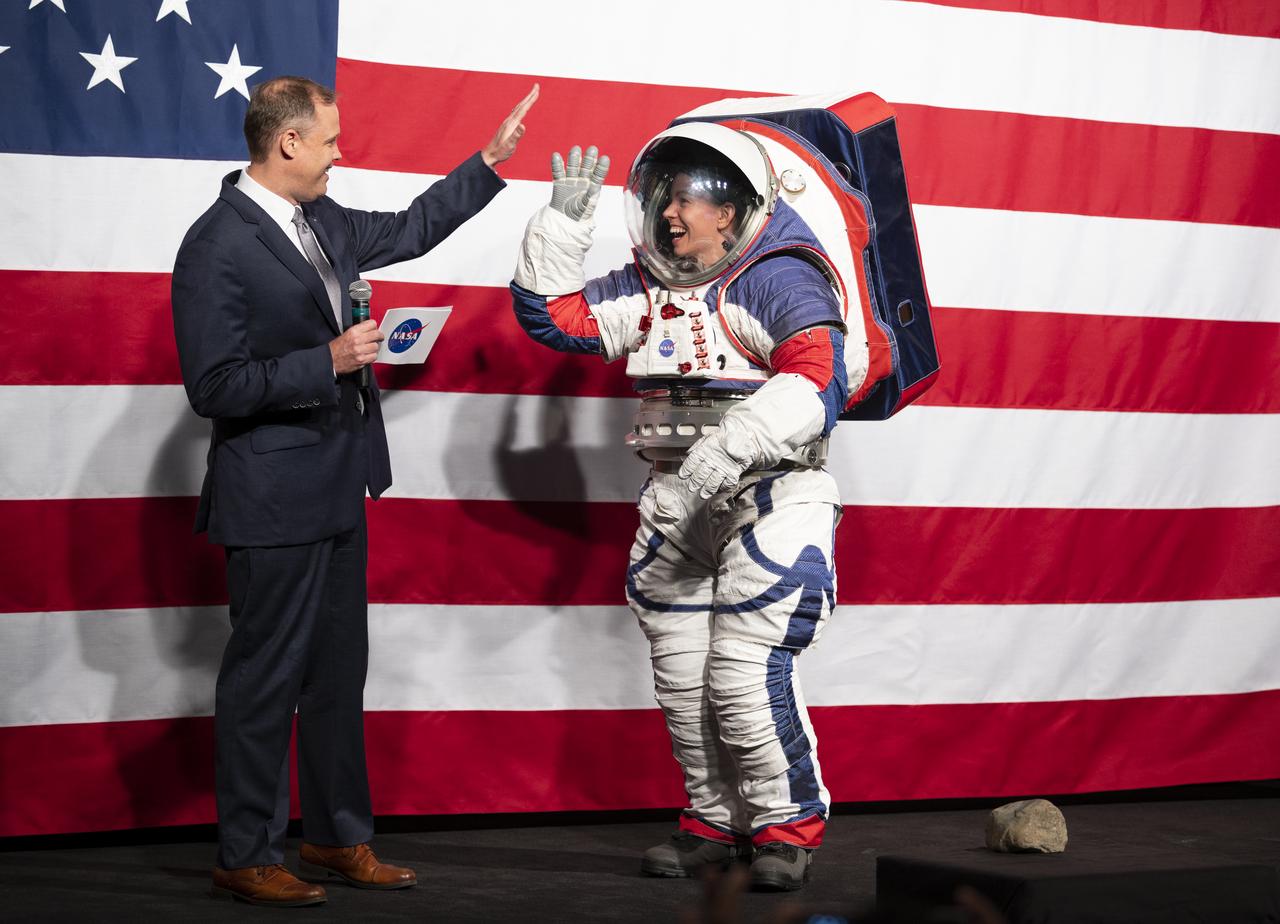
NASA Administrator Jim Bridenstine, left, high fives Kristine Davis, a spacesuit engineer at NASA’s Johnson Space Center, wearing a ground prototype of NASA’s new Exploration Extravehicular Mobility Unit (xEMU), during a demonstration of the suit, Tuesday, Oct. 15, 2019 at NASA Headquarters in Washington. The xEMU suit improves on the suits previous worn on the Moon during the Apollo era and those currently in use for spacewalks outside the International Space Station and will be worn by first woman and next man as they explore the Moon as part of the agency’s Artemis program. Photo Credit: (NASA/Joel Kowsky)
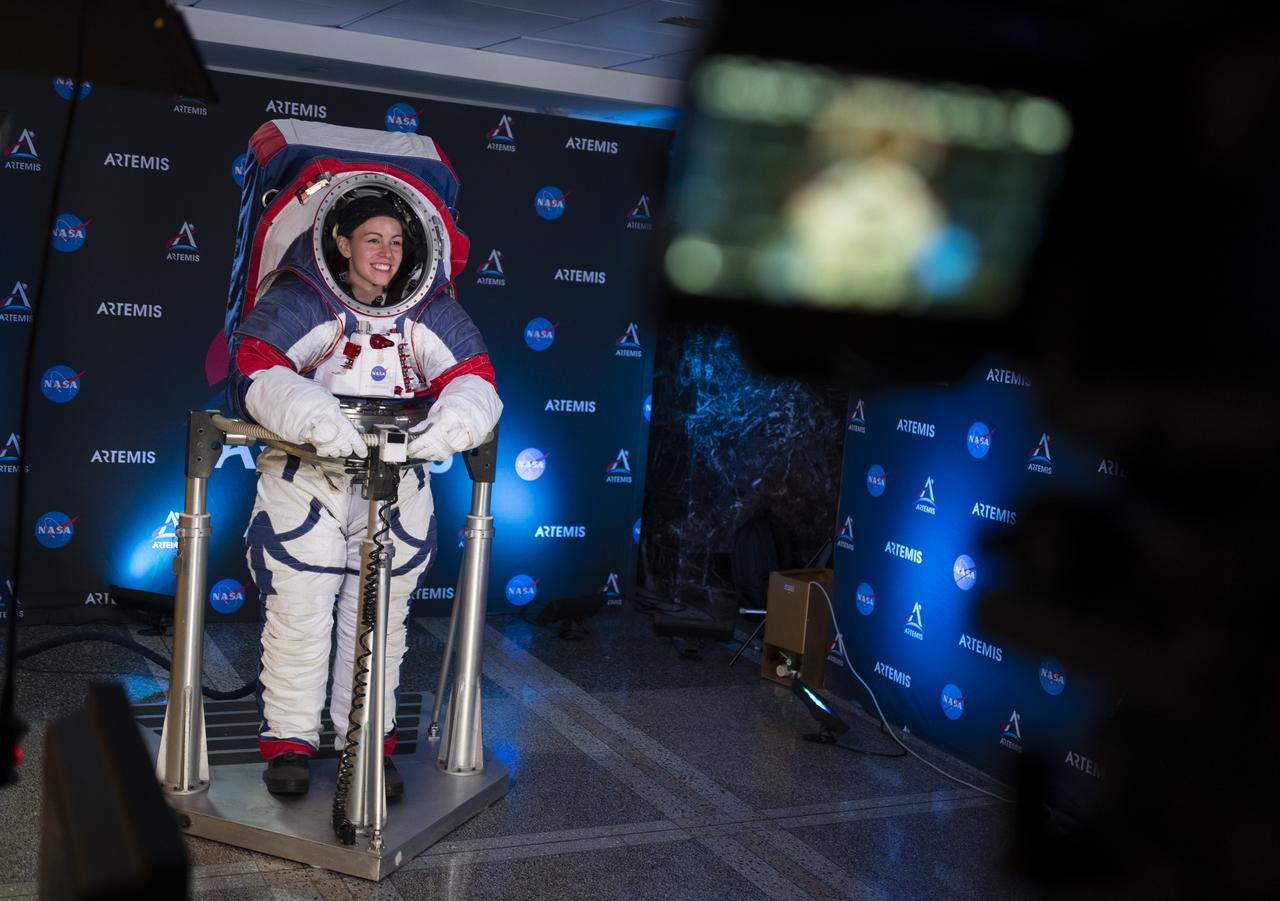
Kristine Davis, a spacesuit engineer at NASA’s Johnson Space Center, wearing a ground prototype of NASA’s new Exploration Extravehicular Mobility Unit (xEMU), is seen during a demonstration of the suit, Tuesday, Oct. 15, 2019 at NASA Headquarters in Washington. The xEMU suit improves on the suits previous worn on the Moon during the Apollo era and those currently in use for spacewalks outside the International Space Station and will be worn by first woman and next man as they explore the Moon as part of the agency’s Artemis program. Photo Credit: (NASA/Joel Kowsky)
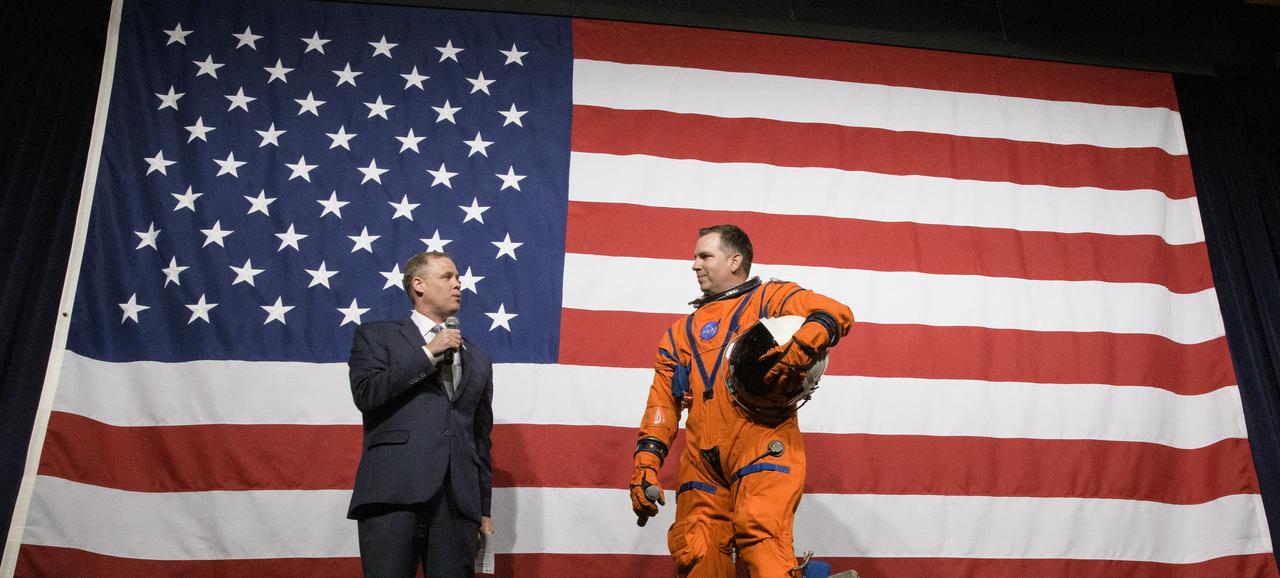
NASA Administrator Jim Bridenstine, left, speaks with Dustin Gohmert, Orion Crew Survival Systems Project Manger at NASA’s Johnson Space Center, wearing the Orion Crew Survival System suit, about the suit, Tuesday, Oct. 15, 2019 at NASA Headquarters in Washington. The Orion suit is designed for a custom fit and incorporates safety technology and mobility features that will help protect astronauts on launch day, in emergency situations, high-risk parts of missions near the Moon, and during the high-speed return to Earth. Photo Credit: (NASA/Joel Kowsky)
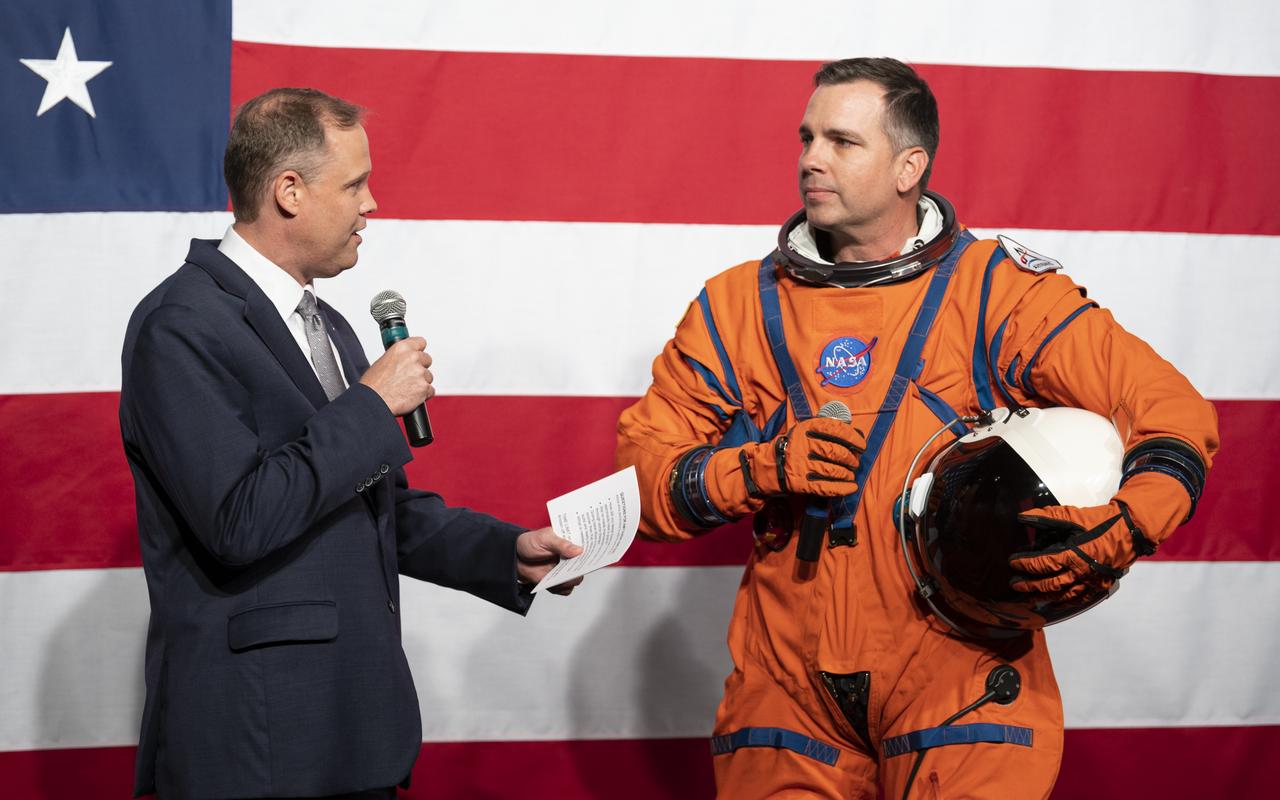
NASA Administrator Jim Bridenstine, left, speaks with Dustin Gohmert, Orion Crew Survival Systems Project Manager at NASA’s Johnson Space Center, wearing the Orion Crew Survival System suit, about the suit, Tuesday, Oct. 15, 2019 at NASA Headquarters in Washington. The Orion suit is designed for a custom fit and incorporates safety technology and mobility features that will help protect astronauts on launch day, in emergency situations, high-risk parts of missions near the Moon, and during the high-speed return to Earth. Photo Credit: (NASA/Joel Kowsky)

NASA Administrator Jim Bridenstine, left, gives a thumbs up as Amy Ross, a spacesuit engineer at NASA’s Johnson Space Center, center, high fives Kristine Davis, a spacesuit engineer at NASA’s Johnson Space Center, wearing a ground prototype of NASA’s new Exploration Extravehicular Mobility Unit (xEMU), after a demonstration of the suits enhanced mobility, Tuesday, Oct. 15, 2019 at NASA Headquarters in Washington. The xEMU suit improves on the suits previous worn on the Moon during the Apollo era and those currently in use for spacewalks outside the International Space Station and will be will be worn by first woman and next man as they explore the Moon as part of the agency’s Artemis program. Photo Credit: (NASA/Joel Kowsky)
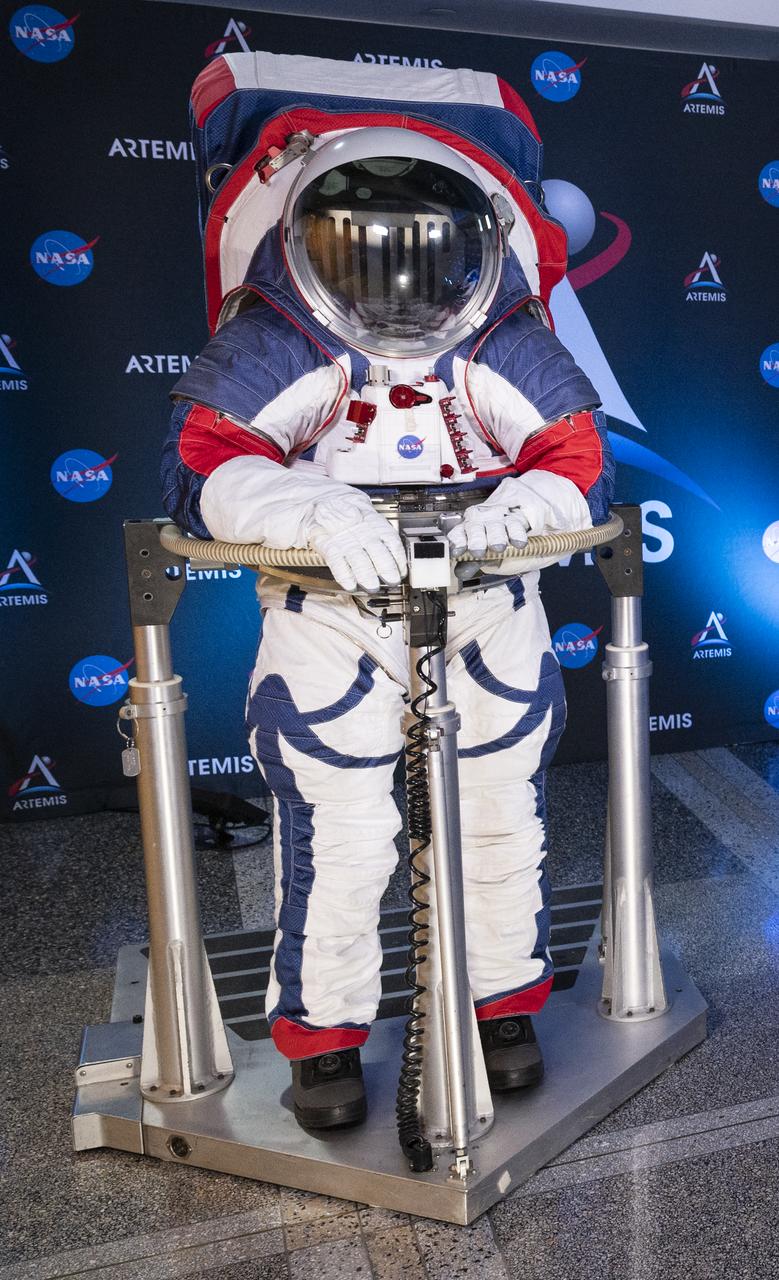
A ground prototype of NASA’s new Exploration Extravehicular Mobility Unit (xEMU) is seen Tuesday, Oct. 15, 2019 at NASA Headquarters in Washington, DC. The xEMU suit improves on the suits previous worn on the Moon during the Apollo era and those currently in use for spacewalks outside the International Space Station. Photo Credit: (NASA/Joel Kowsky)
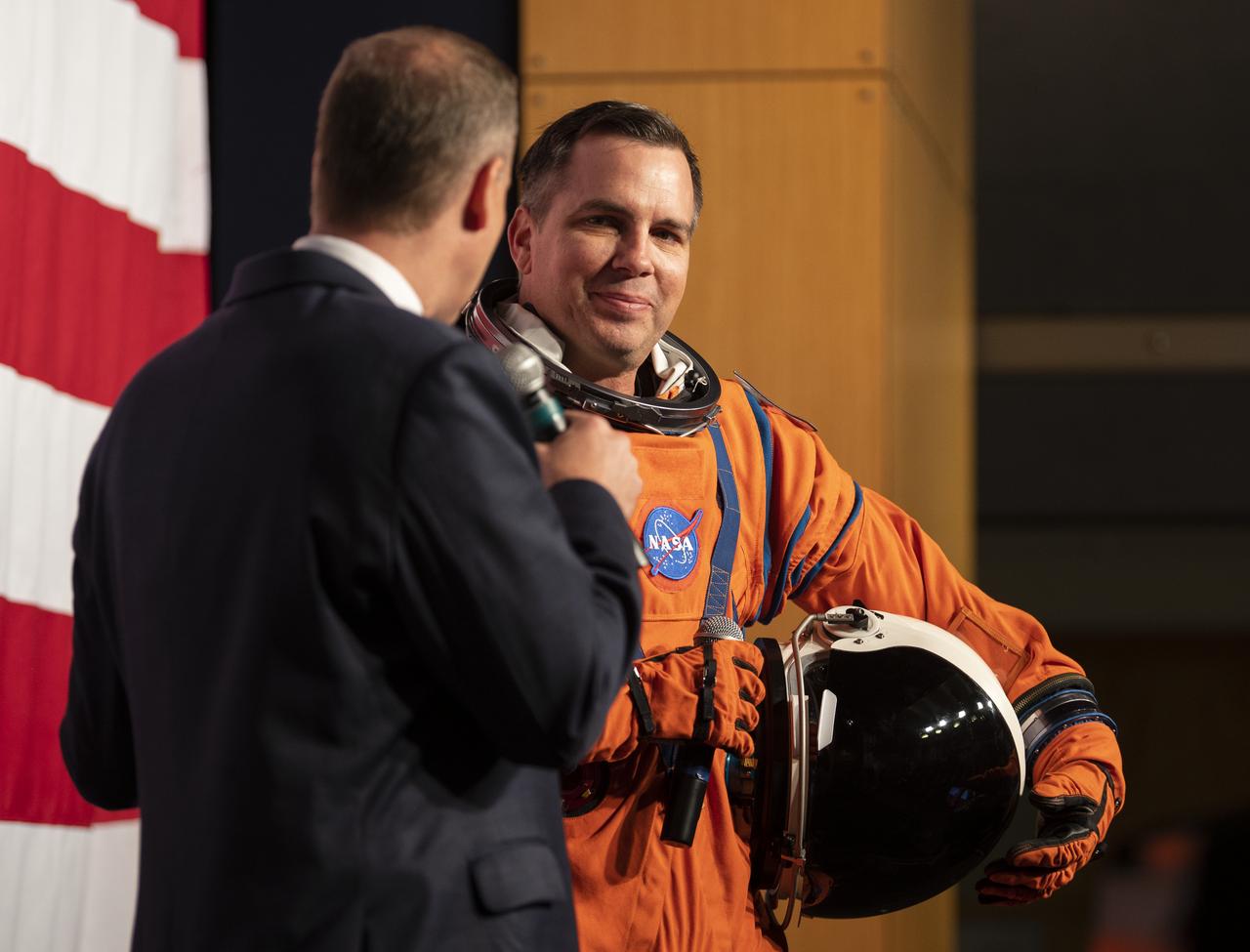
NASA Administrator Jim Bridenstine, left, speaks with Dustin Gohmert, Orion Crew Survival Systems Project Manager at NASA’s Johnson Space Center, wearing the Orion Crew Survival System suit, about the suit, Tuesday, Oct. 15, 2019 at NASA Headquarters in Washington. The Orion suit is designed for a custom fit and incorporates safety technology and mobility features that will help protect astronauts on launch day, in emergency situations, high-risk parts of missions near the Moon, and during the high-speed return to Earth. Photo Credit: (NASA/Joel Kowsky)

Kristine Davis, a spacesuit engineer at NASA’s Johnson Space Center, wearing a ground prototype of NASA’s new Exploration Extravehicular Mobility Unit (xEMU), is seen during a demonstration of the suit, Tuesday, Oct. 15, 2019 at NASA Headquarters in Washington. The xEMU suit improves on the suits previous worn on the Moon during the Apollo era and those currently in use for spacewalks outside the International Space Station and will be worn by first woman and next man as they explore the Moon as part of the agency’s Artemis program. Photo Credit: (NASA/Joel Kowsky)

NASA Administrator Jim Bridenstine, left, and Amy Ross, a spacesuit engineer at NASA’s Johnson Space Center, left, are seen with Kristine Davis, a spacesuit engineer at NASA’s Johnson Space Center, wearing a ground prototype of NASA’s new Exploration Extravehicular Mobility Unit (xEMU), during a demonstration of the suit, Tuesday, Oct. 15, 2019 at NASA Headquarters in Washington. The xEMU suit improves on the suits previous worn on the Moon during the Apollo era and those currently in use for spacewalks outside the International Space Station and will be worn by first woman and next man as they explore the Moon as part of the agency’s Artemis program. Photo Credit: (NASA/Joel Kowsky)
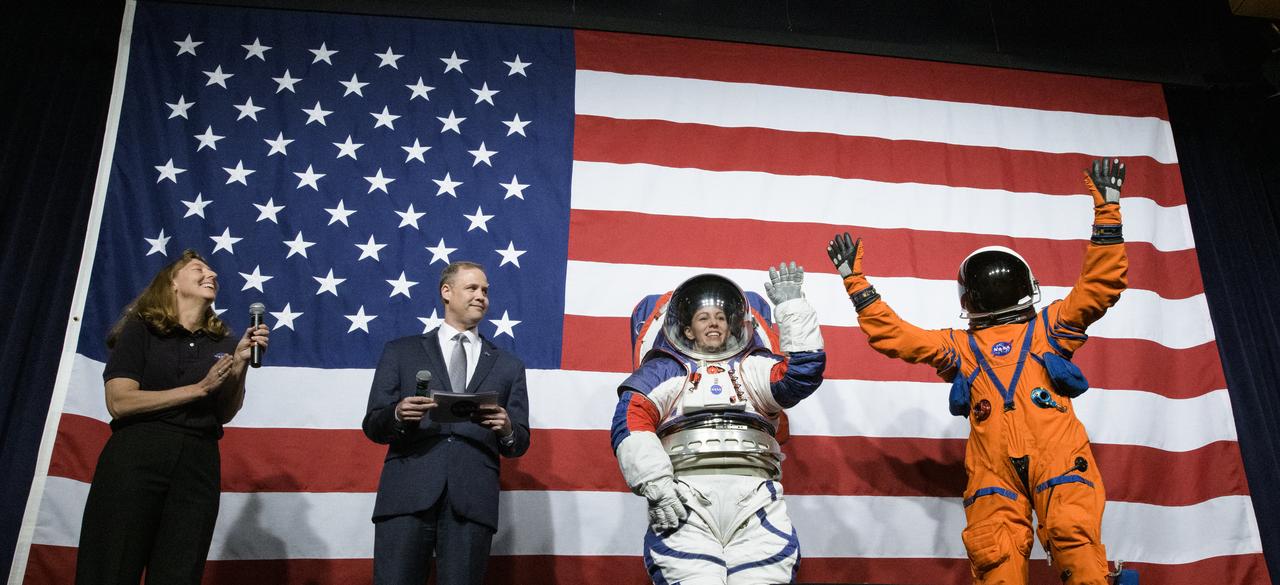
Amy Ross, a spacesuit engineer at NASA’s Johnson Space Center, left, and NASA Administrator Jim Bridenstine, second from left, watch as Kristine Davis, a spacesuit engineer at NASA’s Johnson Space Center, wearing a ground prototype of NASA’s new Exploration Extravehicular Mobility Unit (xEMU), and Dustin Gohmert, Orion Crew Survival Systems Project Manager at NASA’s Johnson Space Center, wearing the Orion Crew Survival System suit, right, wave after being introduced by the administrator, Tuesday, Oct. 15, 2019 at NASA Headquarters in Washington. The xEMU suit improves on the suits previous worn on the Moon during the Apollo era and those currently in use for spacewalks outside the International Space Station and will be worn by first woman and next man as they explore the Moon as part of the agency’s Artemis program. The Orion suit is designed for a custom fit and incorporates safety technology and mobility features that will help protect astronauts on launch day, in emergency situations, high-risk parts of missions near the Moon, and during the high-speed return to Earth. Photo Credit: (NASA/Joel Kowsky)
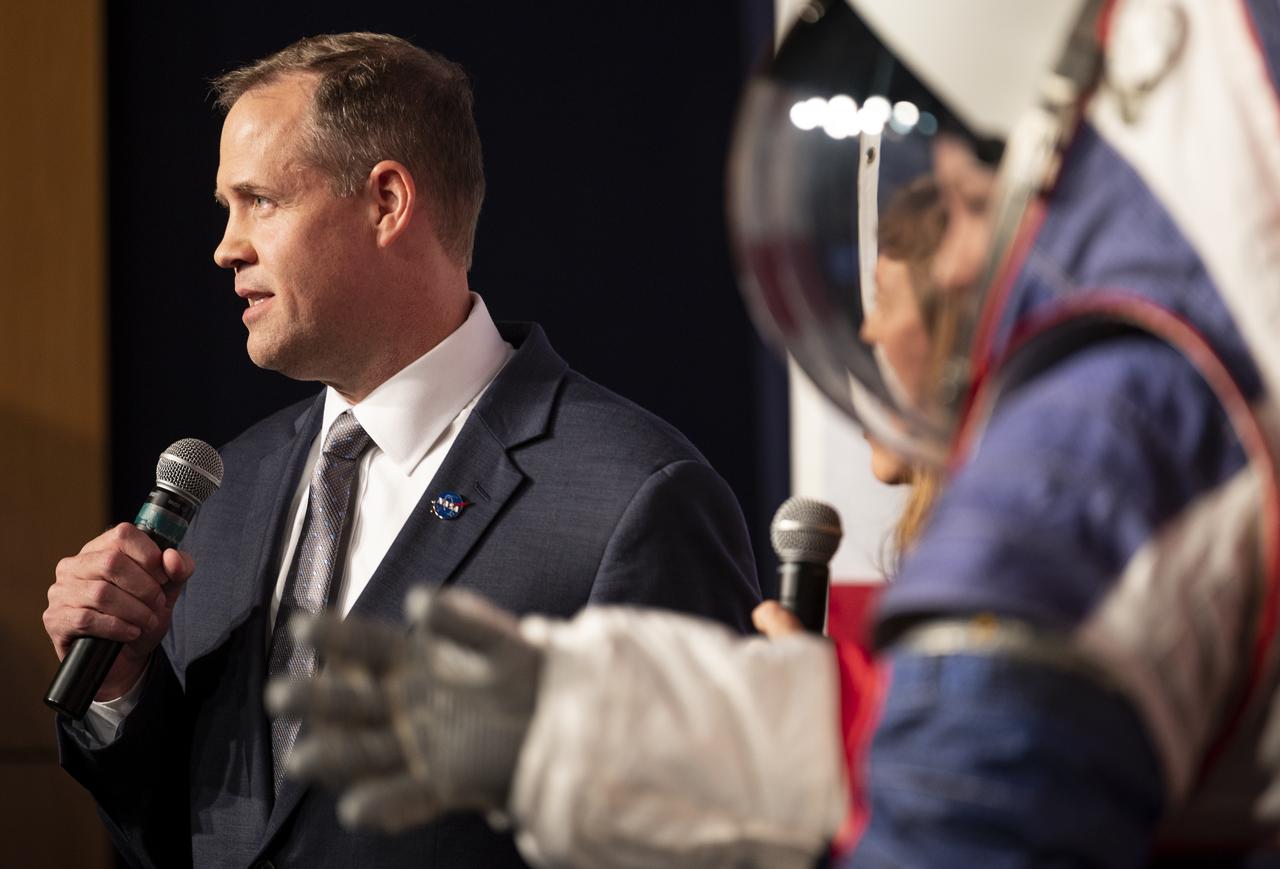
NASA Administrator Jim Bridenstine is seen with Kristine Davis, a spacesuit engineer at NASA’s Johnson Space Center, wearing a ground prototype of NASA’s new Exploration Extravehicular Mobility Unit (xEMU), during a demonstration of the suit, Tuesday, Oct. 15, 2019 at NASA Headquarters in Washington. The xEMU suit improves on the suits previous worn on the Moon during the Apollo era and those currently in use for spacewalks outside the International Space Station and will be worn by first woman and next man as they explore the Moon as part of the agency’s Artemis program. Photo Credit: (NASA/Joel Kowsky)

Amy Ross, a spacesuit engineer at NASA’s Johnson Space Center, is seen with Kristine Davis, a spacesuit engineer at NASA’s Johnson Space Center, wearing a ground prototype of NASA’s new Exploration Extravehicular Mobility Unit (xEMU), during a demonstration of the suit, Tuesday, Oct. 15, 2019 at NASA Headquarters in Washington. The xEMU suit improves on the suits previous worn on the Moon during the Apollo era and those currently in use for spacewalks outside the International Space Station and will be worn by first woman and next man as they explore the Moon as part of the agency’s Artemis program. Photo Credit: (NASA/Joel Kowsky)
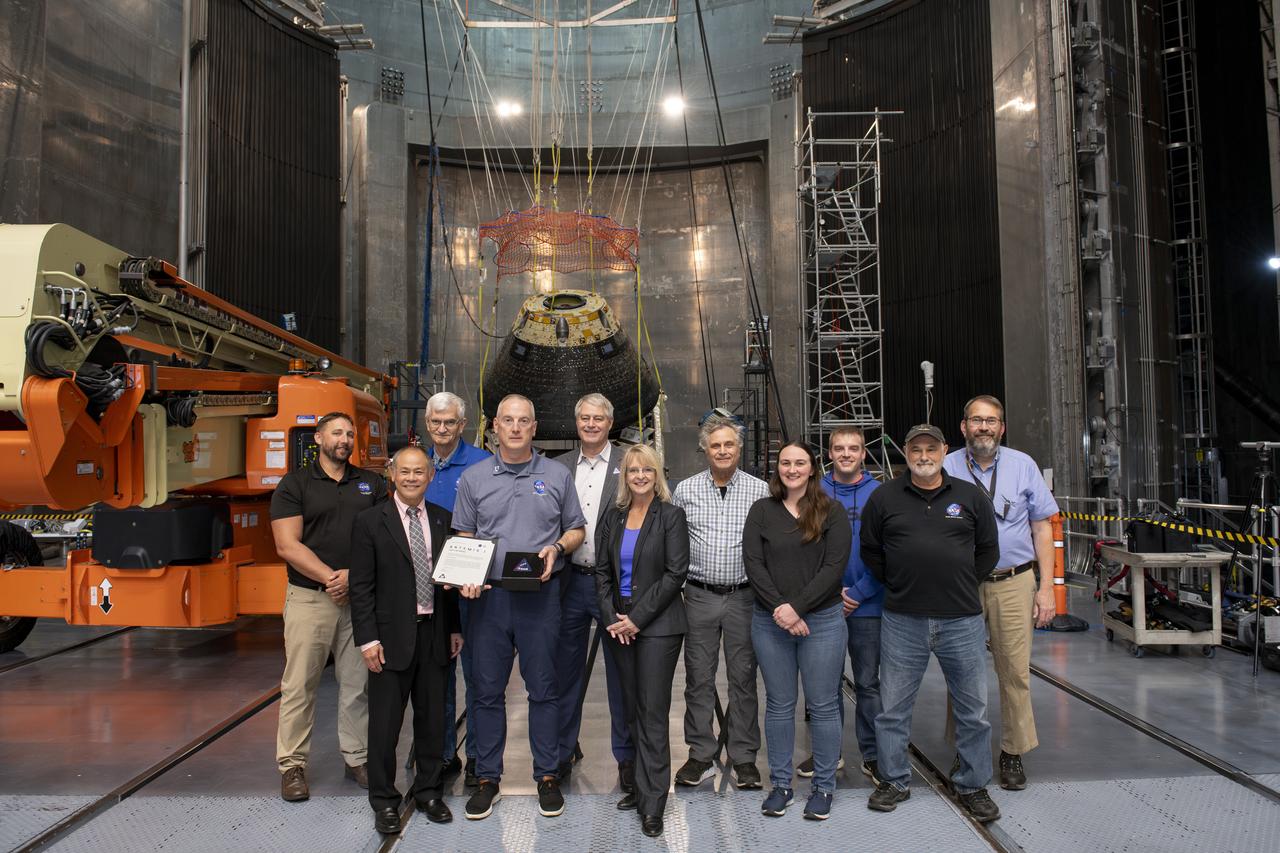
Employees supporting Artemis were invited to attend an appreciation event, “The Road to the Moon,” at Armstrong Test Facility in Sandusky, Ohio. Lockheed Martin presented an article flown on Artemis I to Robert Overy. Pictured from left to right: John Zang, Pho Nguyen, General David Stringer, Robert Overy, Paul Anderson, Debbie Korth, Aaron Horz, Emma Gaerke, Benjamin, Michael Henry and Mark Cmar. On Thursday, Nov. 21, please join NASA employees and support service contractors for Artemis Friends and Family Day. Employees had the opportunity to hear from center leadership and see the Orion module that flew around the Moon and back during 2022’s Artemis I mission. Experts have subjected the spacecraft to extreme conditions in Armstrong’s test facilities. This significant testing is slated to wrap up in December, and we want to give you a chance to see the capsule before the conclusion of the test campaign. Photo Credit: (NASA/Sara Lowthian-Hanna)
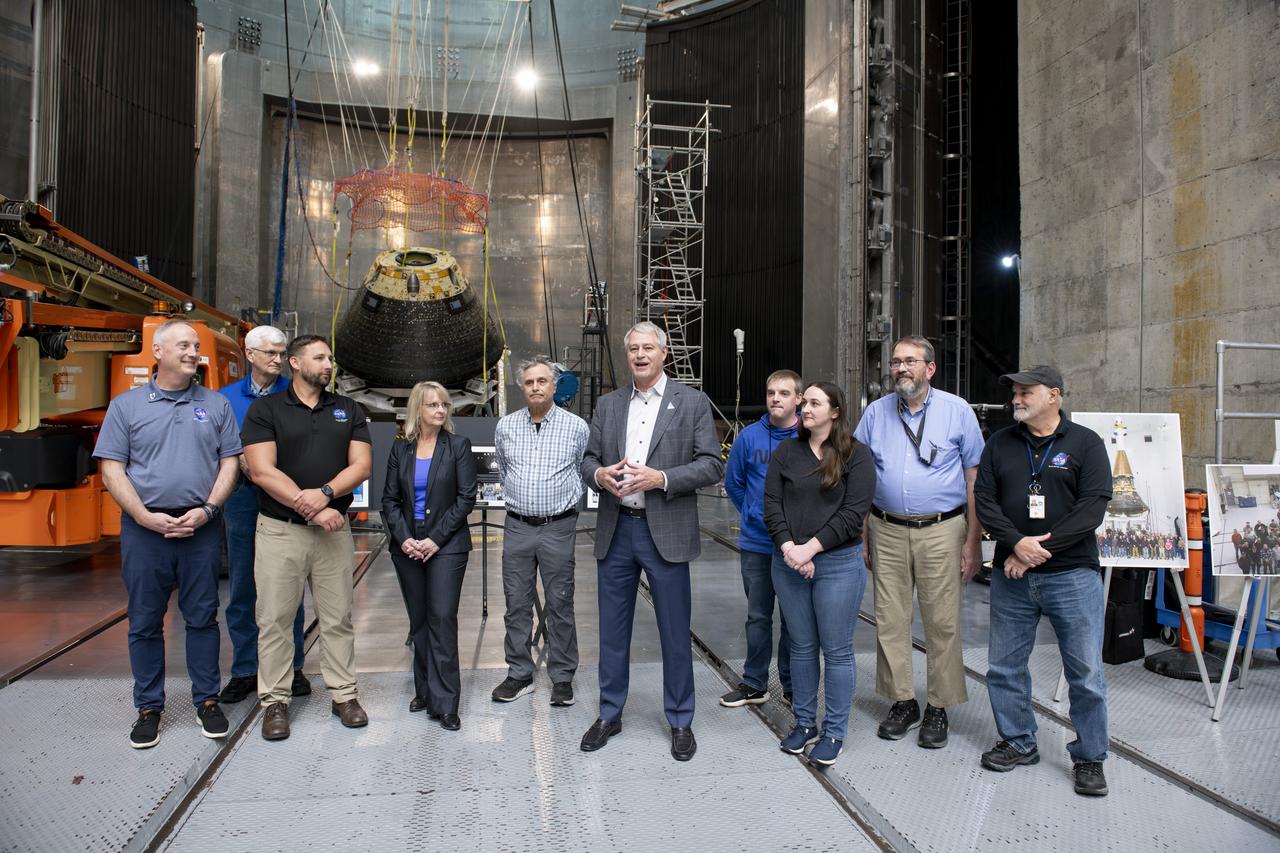
Employees supporting Artemis were invited to attend an appreciation event, “The Road to the Moon,” at Armstrong Test Facility in Sandusky, Ohio. Lockheed Martin presented an article flown on Artemis I to Robert Overy. Pictured from left to right: Robert Overy, General David Stringer, John Zang, Debbie Korth, Aaron Horz, Paul Anderson, Benjamin, Emma Gaerke, Mark Cmar and Michael Henry. On Thursday, Nov. 21, please join NASA employees and support service contractors for Artemis Friends and Family Day. Employees had the opportunity to hear from center leadership and see the Orion module that flew around the Moon and back during 2022’s Artemis I mission. Experts have subjected the spacecraft to extreme conditions in Armstrong’s test facilities. This significant testing is slated to wrap up in December, and we want to give you a chance to see the capsule before the conclusion of the test campaign. Photo Credit: (NASA/Sara Lowthian-Hanna)
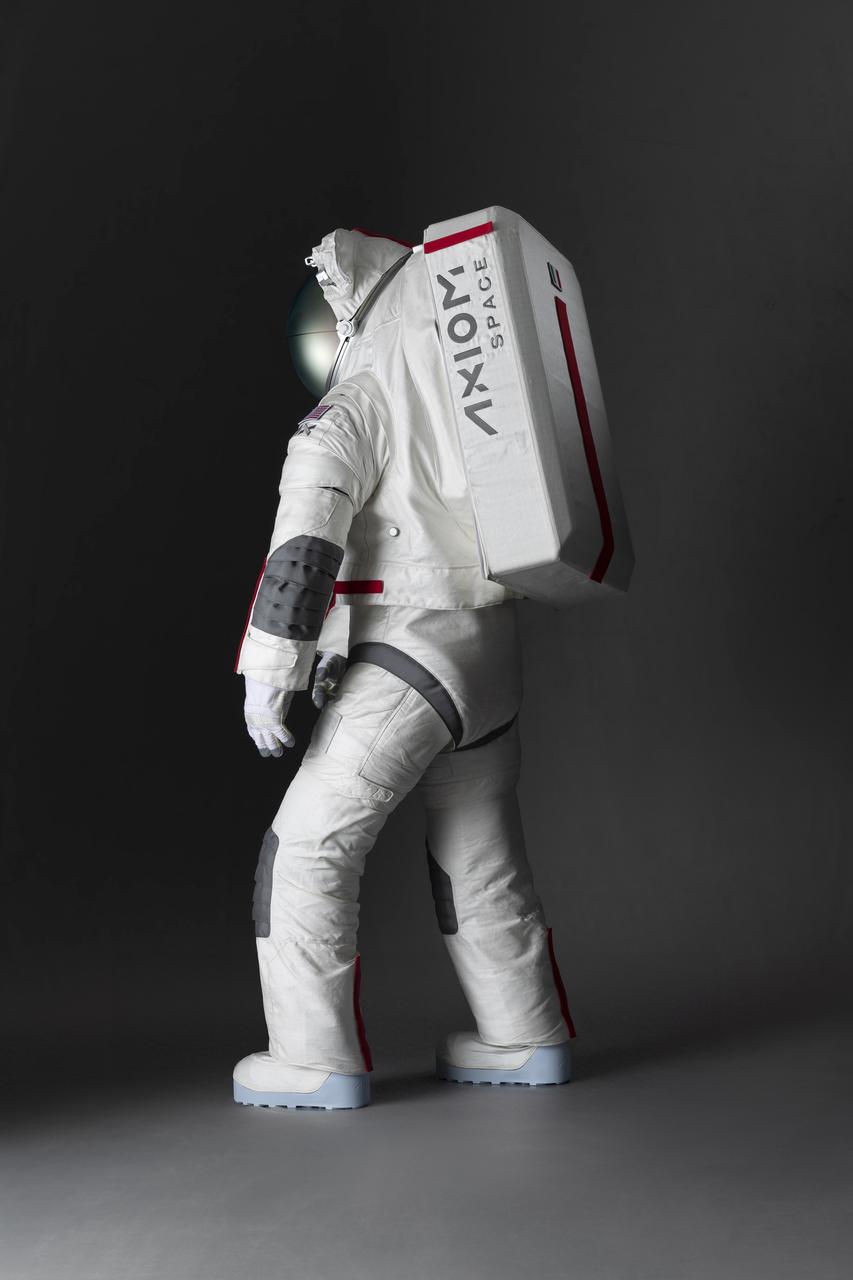
The flight design of Axiom Space's Axiom Extravehicular Mobility Unit (AxEMU) lunar spacesuit that NASA astronauts will wear during the Artemis III mission. Image Credit: Axiom Space
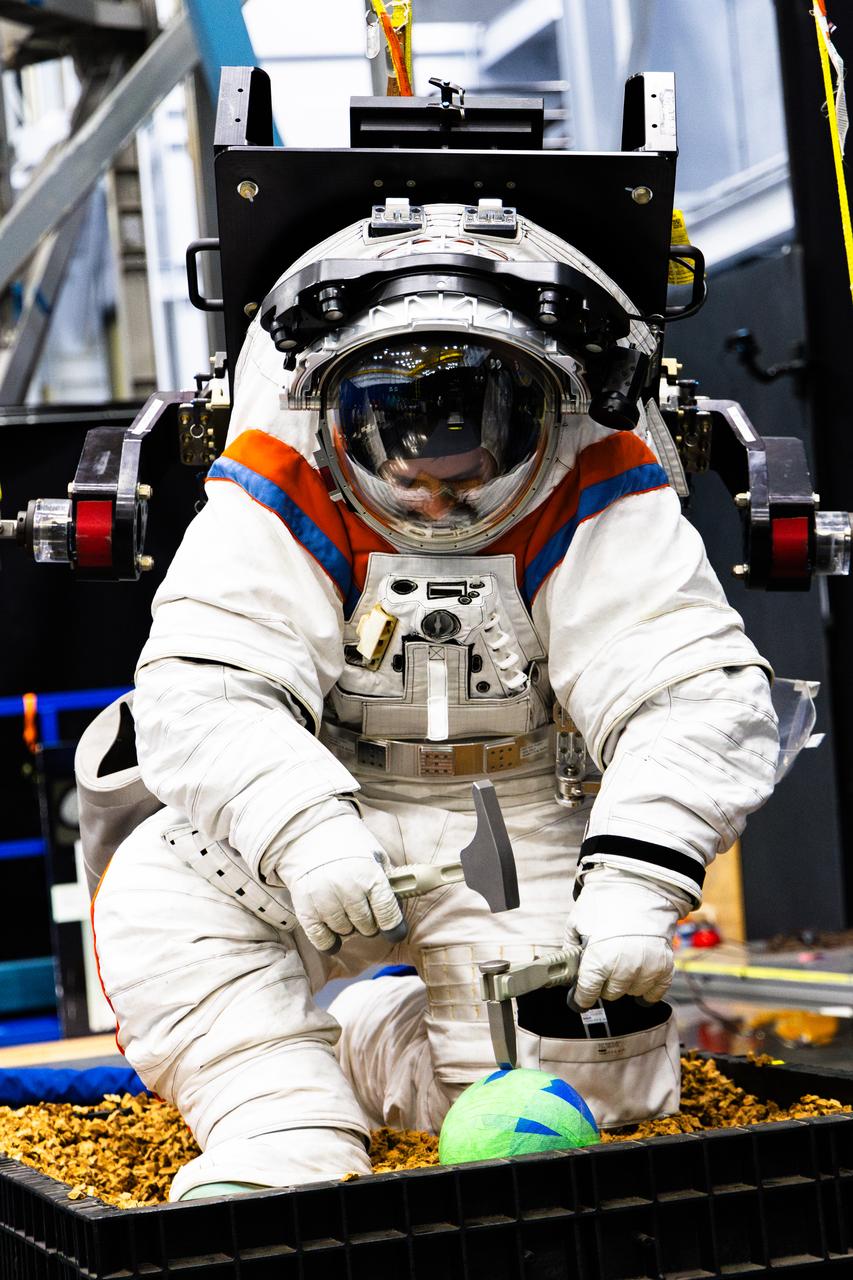
An Axiom Space engineer uses a hammer and chisel to chip off simulated lunar rocks while wearing the AxEMU (Axiom Extravehicular Mobility Unit) spacesuit during testing at NASA’s Johnson Space Center. Image Credit: Axiom Space
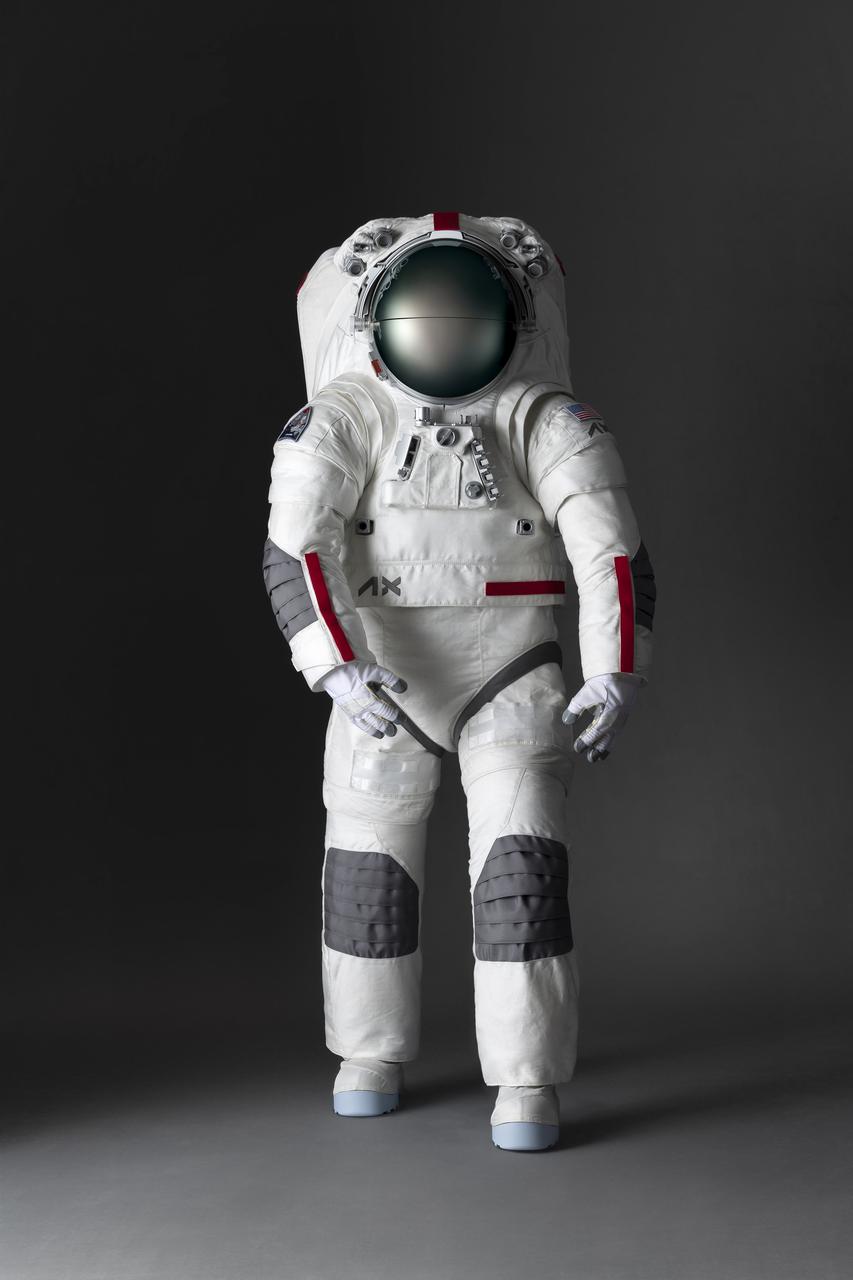
Artemis III Lunar Spacesuit The flight design of Axiom Space's Axiom Extravehicular Mobility Unit (AxEMU) lunar spacesuit that NASA astronauts will wear during the Artemis III mission. Image Credit: Axiom Space
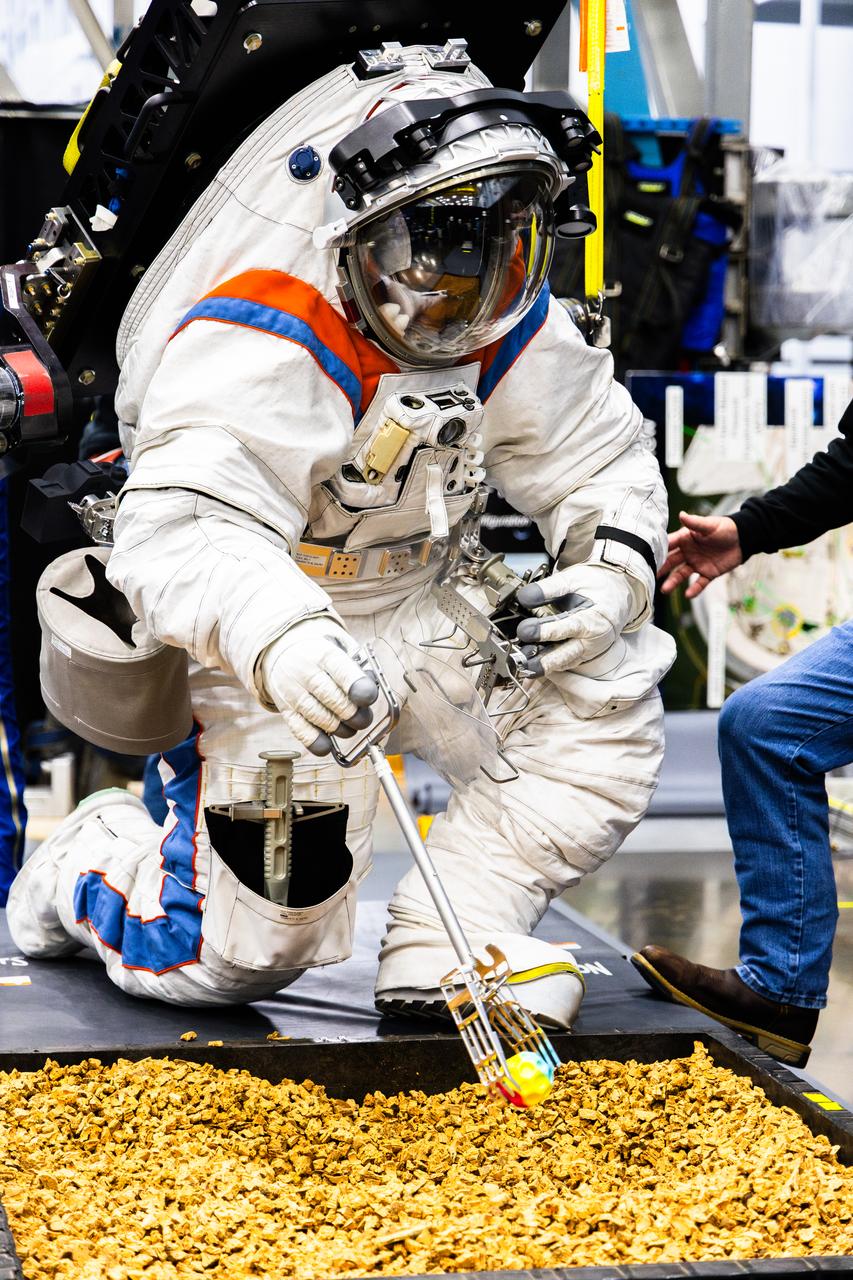
An Axiom Space engineer uses tongs to pick up a simulated lunar rock while wearing the AxEMU (Axiom Extravehicular Mobility Unit) spacesuit during testing at NASA’s Johnson Space Center. Image Credit: Axiom Space
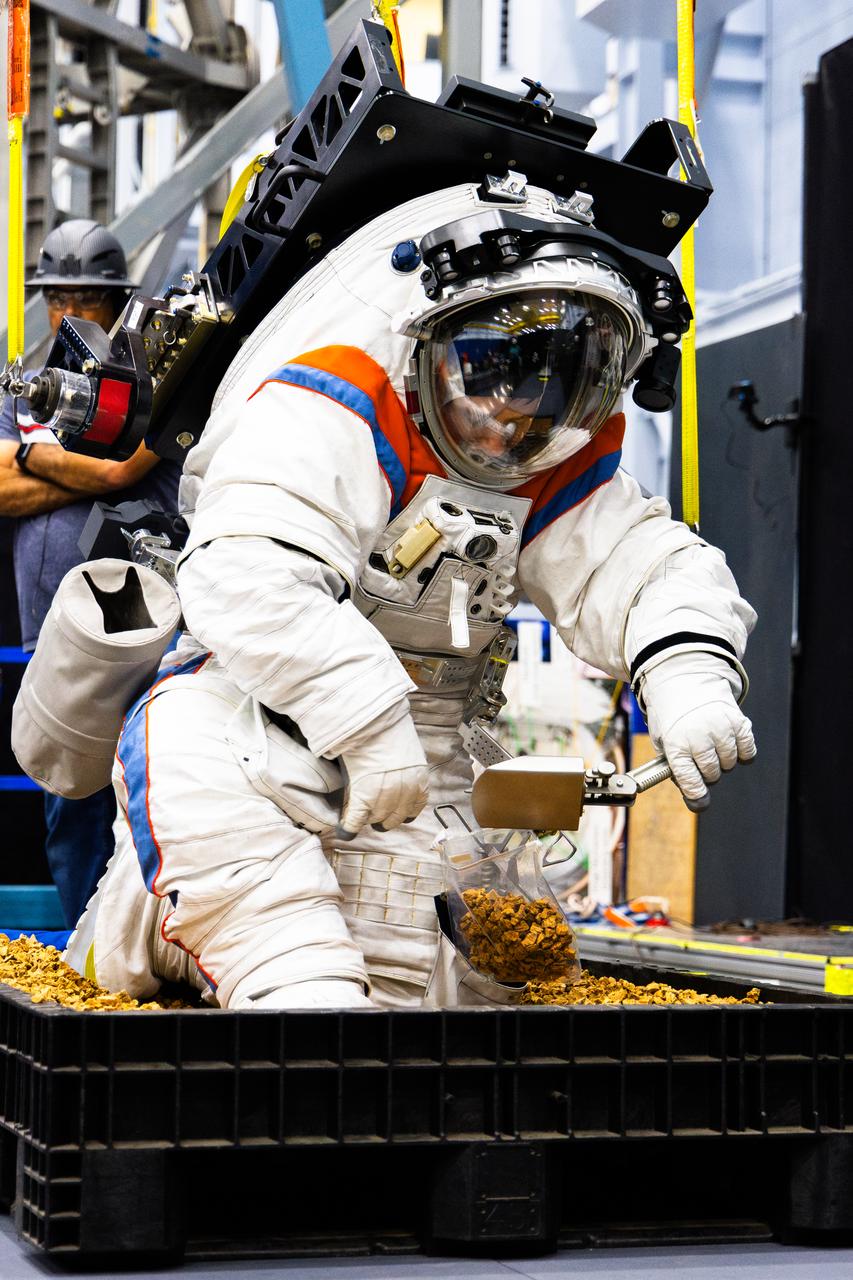
An Axiom Space engineer kneels down to collect simulated lunar samples using a geology tool while wearing the AxEMU (Axiom Extravehicular Mobility Unit) spacesuit during testing at NASA’s Johnson Space Center. Image Credit: Axiom Space
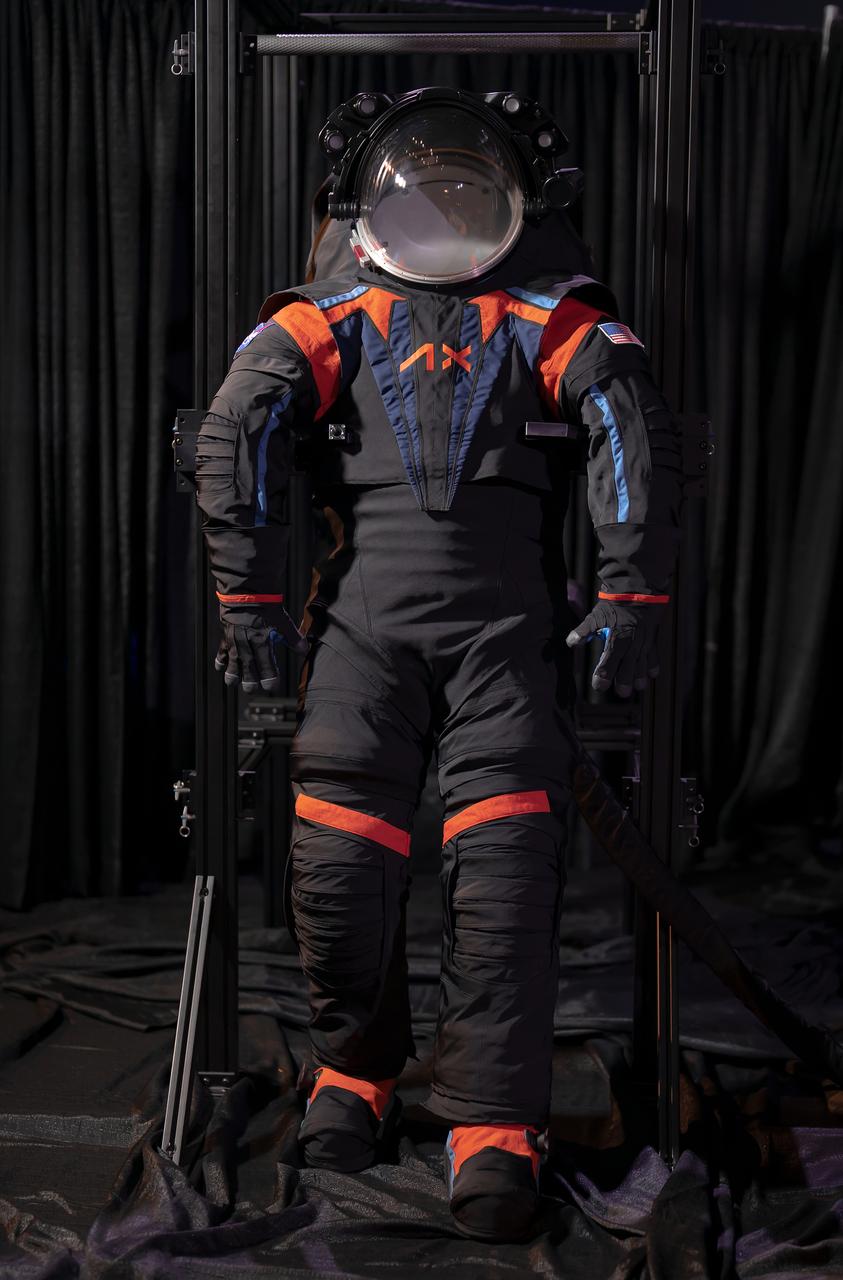
The Artemis III spacesuit prototype, the AxEMU. Though this prototype uses a dark gray cover material, the final version will likely be all-white when worn by NASA astronauts on the Moon’s surface, to help keep the astronauts safe and cool while working in the harsh environment of space. Image Credit: Axiom Space
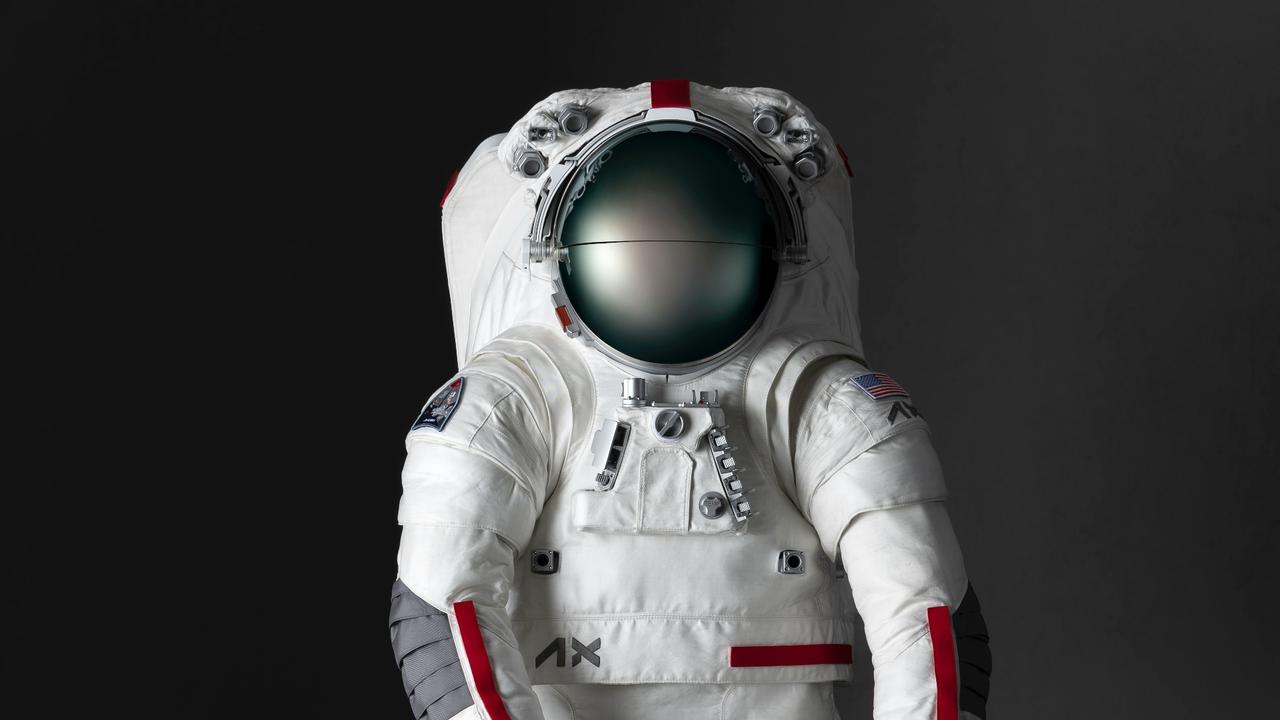
The flight design of Axiom Space's Axiom Extravehicular Mobility Unit (AxEMU) lunar spacesuit that NASA astronauts will wear during the Artemis III mission. Image Credit: Axiom Space
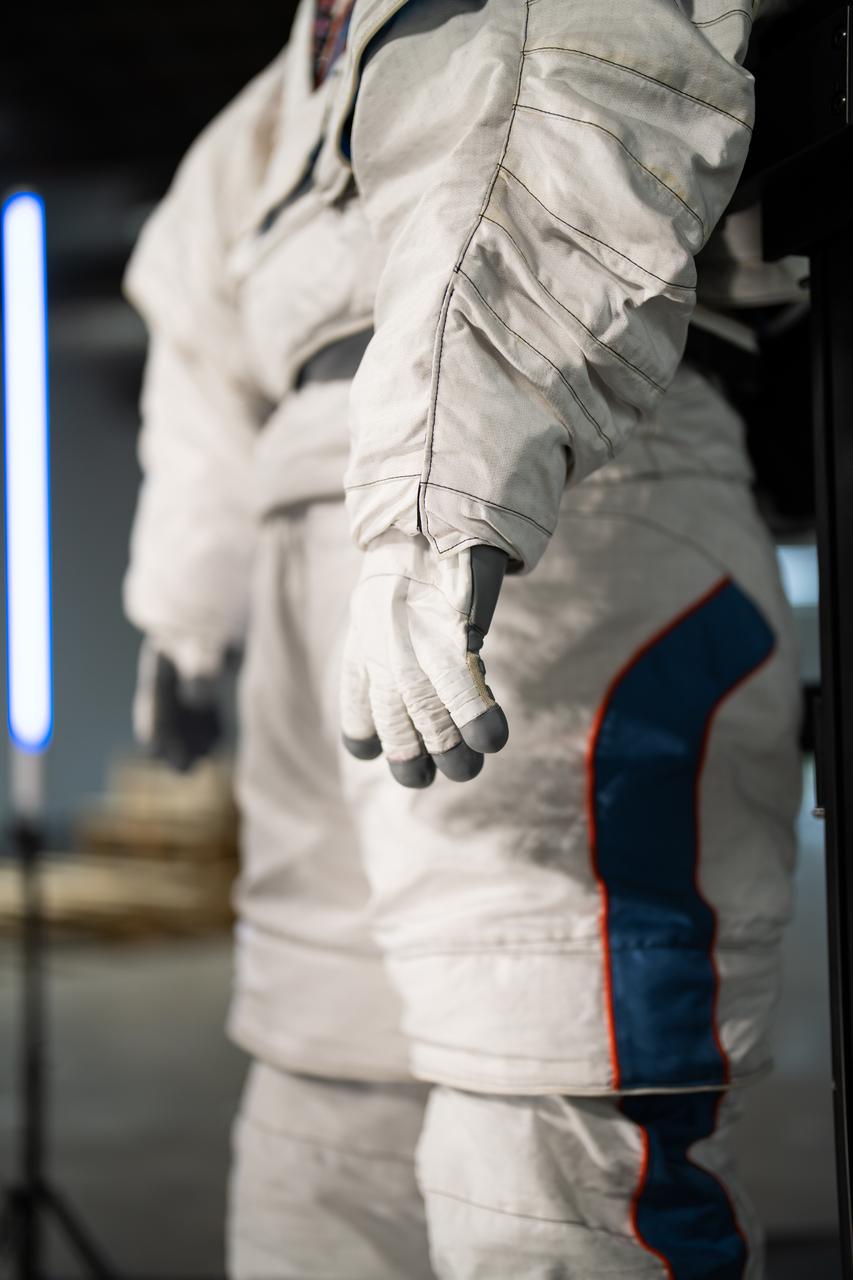
An up close image of a glove on Axiom Space's AxEMU (Axiom Extravehicular Mobility Unit) lunar spacesuit. Image Credit: Axiom Space
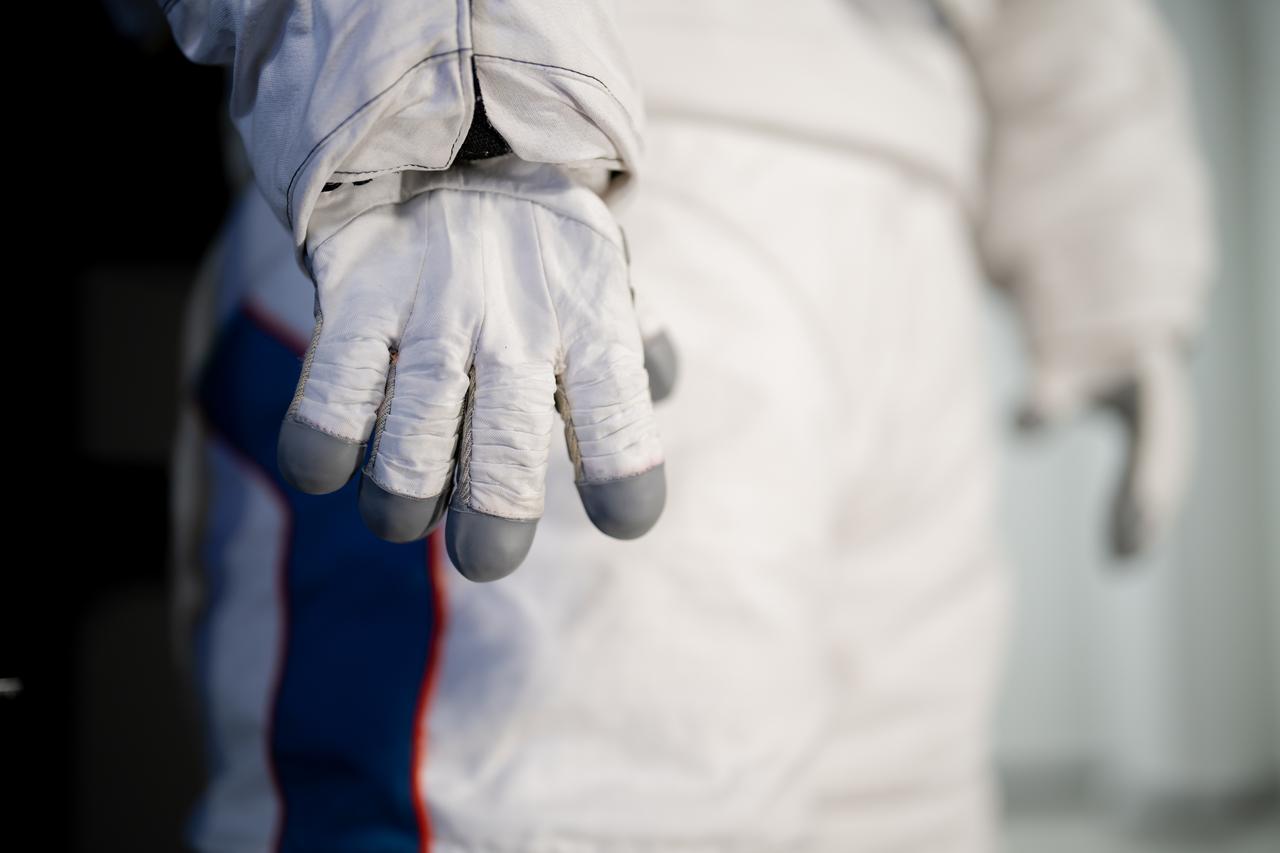
An up close image of a glove on Axiom Space's AxEMU (Axiom Extravehicular Mobility Unit) lunar spacesuit. Image Credit: Axiom Space
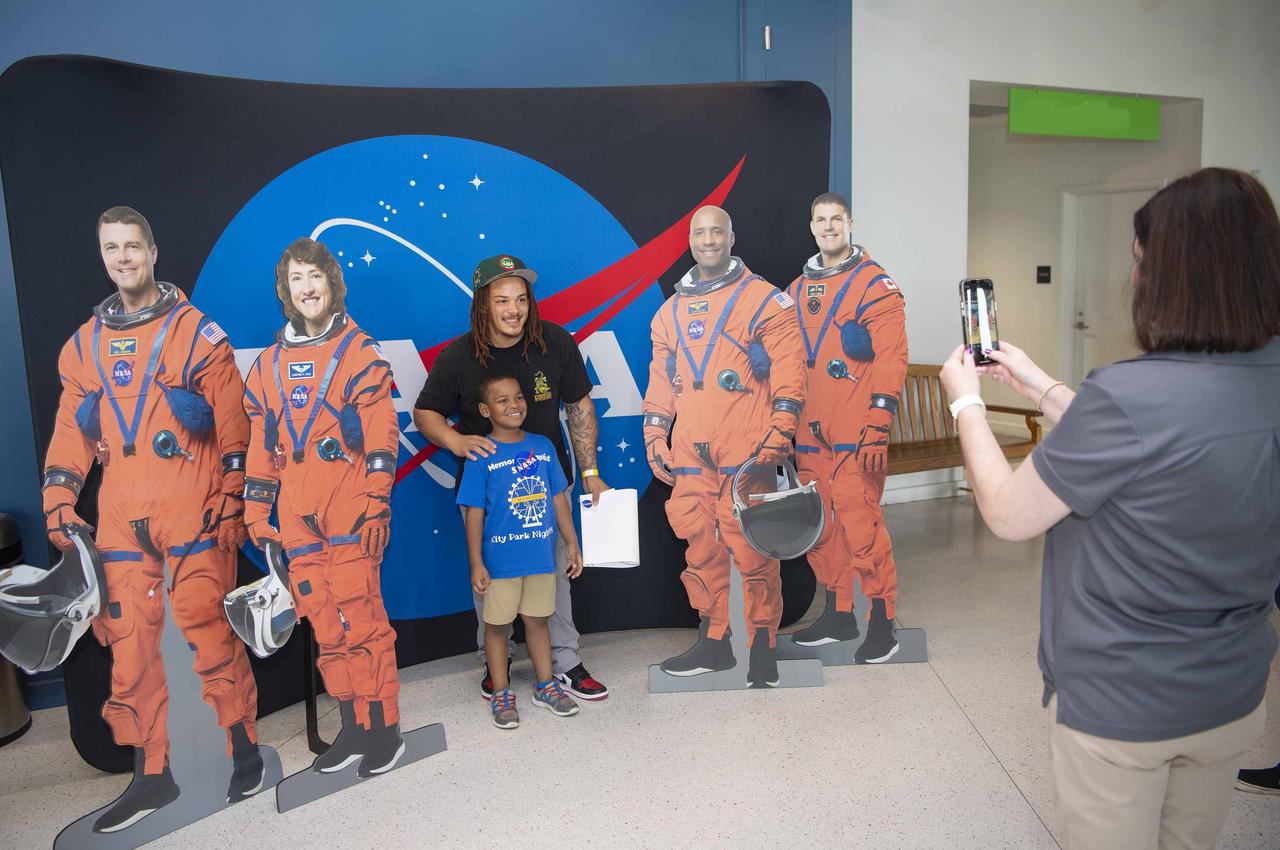
NASA Stennis representatives inspire the Artemis Generation at the Audubon Aquarium in New Orleans Feb. 7-8 with activities and displays highlighting space exploration, including NASA’s Artemis missions to the Moon.
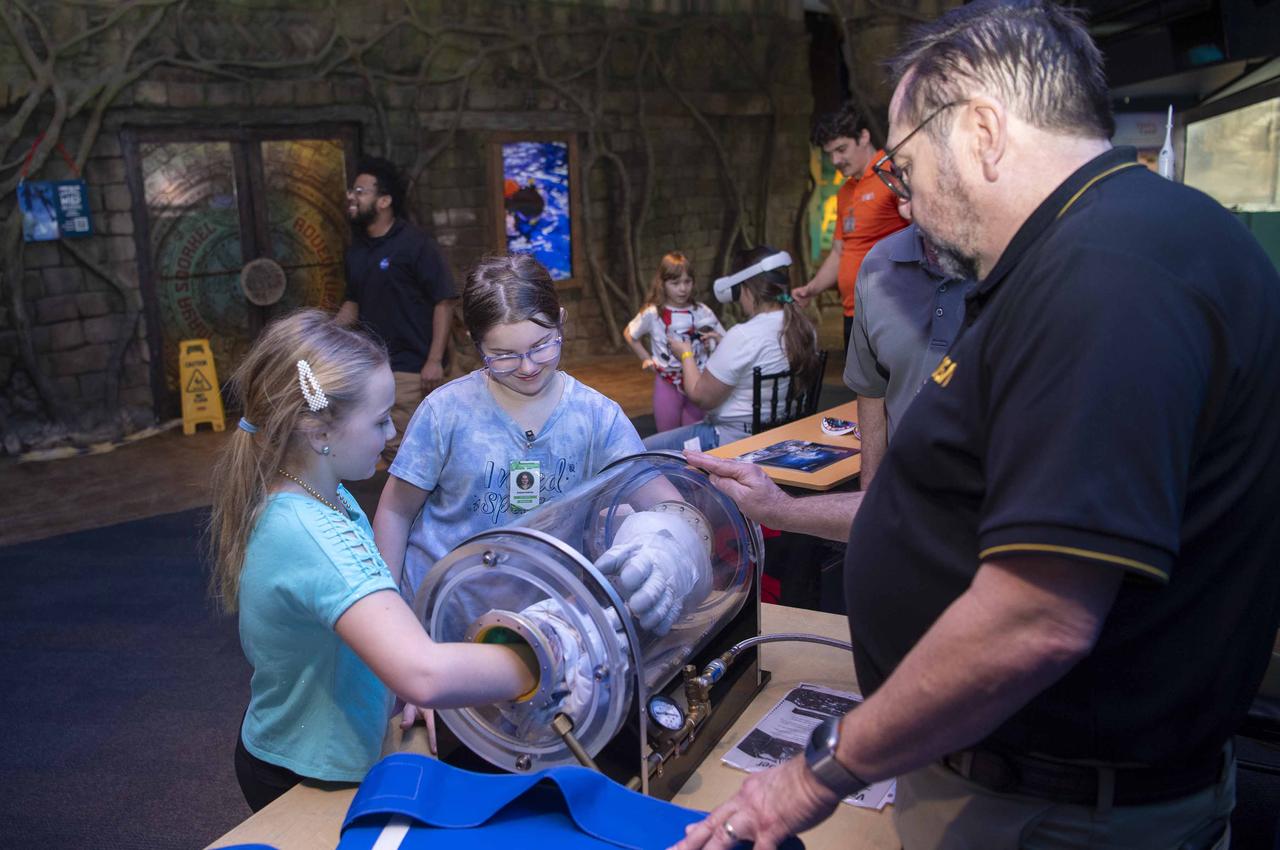
NASA Stennis representatives inspire the Artemis Generation at the Audubon Aquarium in New Orleans Feb. 7-8 with activities and displays highlighting space exploration, including NASA’s Artemis missions to the Moon.
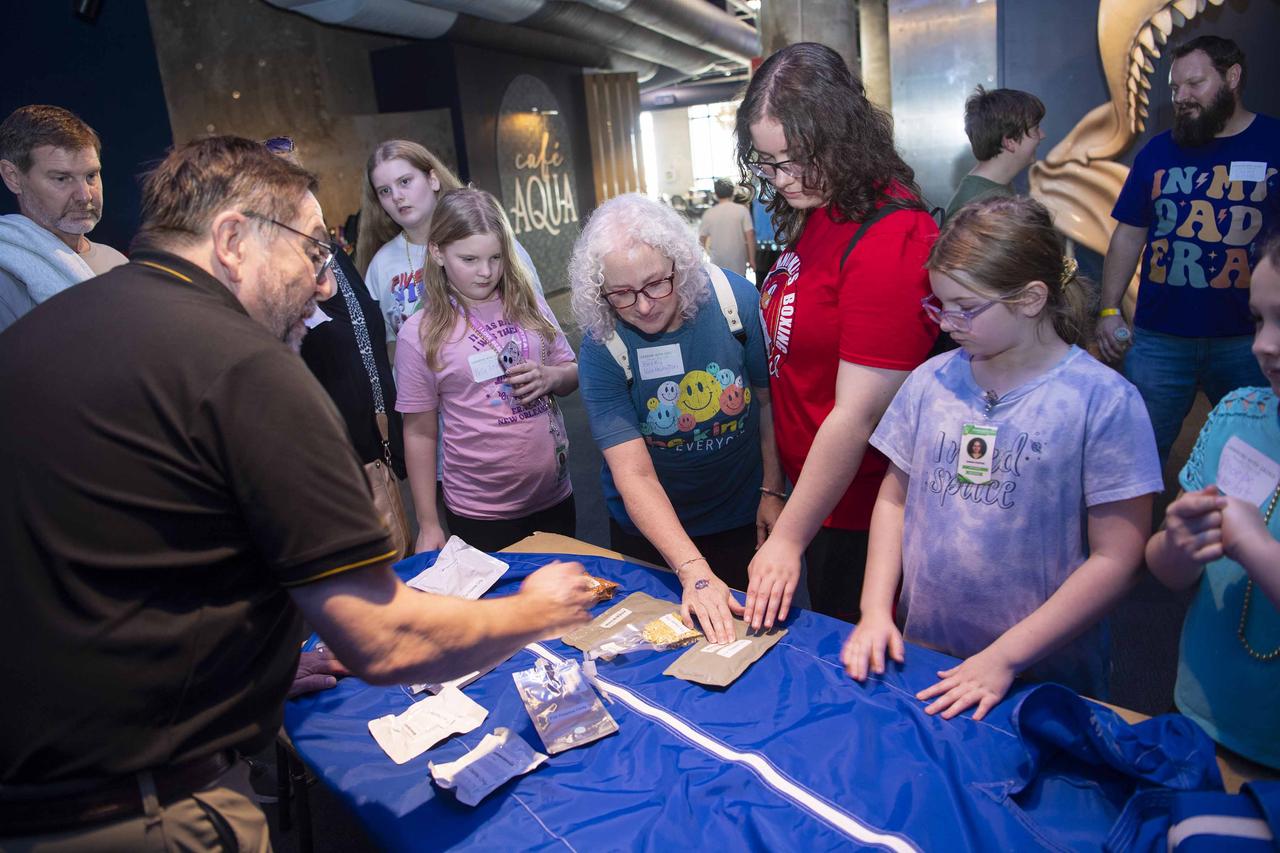
NASA Stennis representatives inspire the Artemis Generation at the Audubon Aquarium in New Orleans Feb. 7-8 with activities and displays highlighting space exploration, including NASA’s Artemis missions to the Moon.
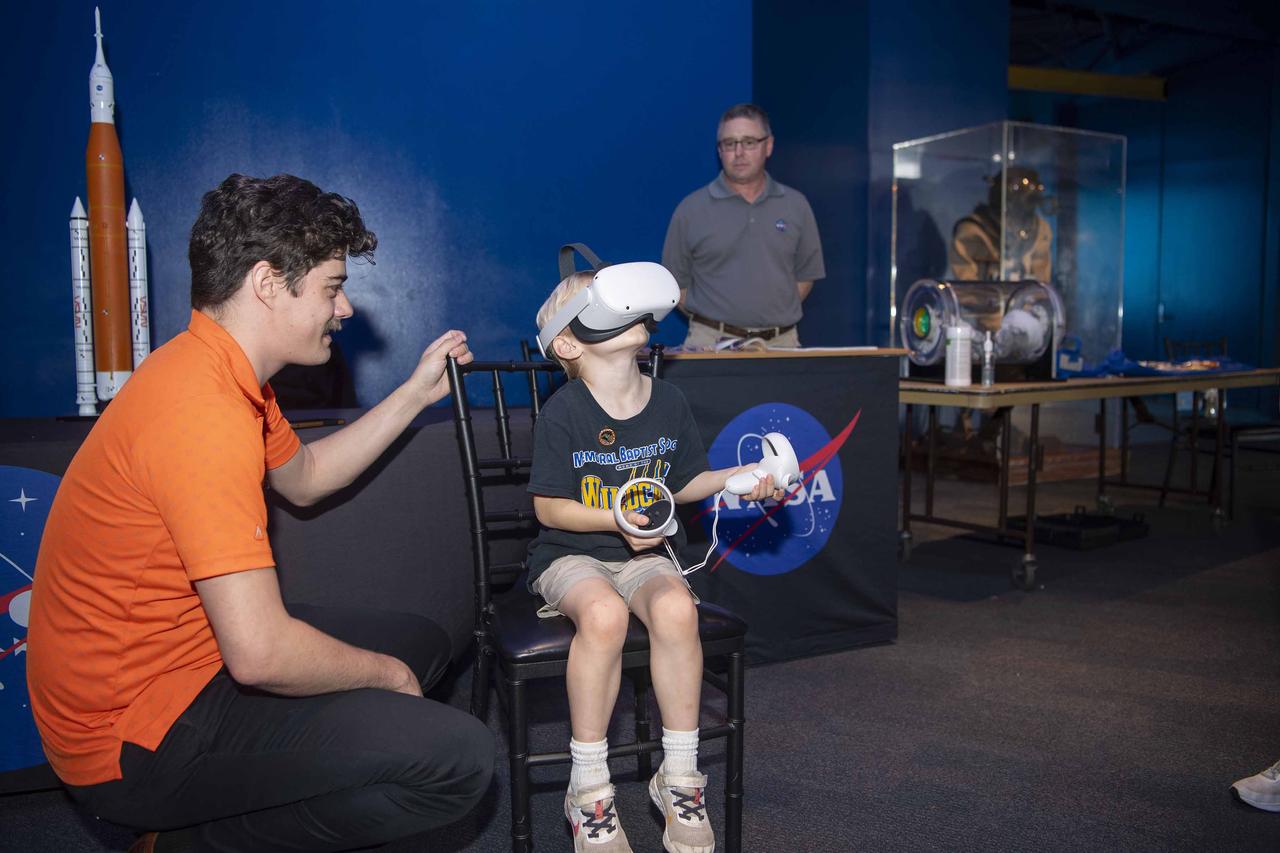
NASA Stennis representatives inspire the Artemis Generation at the Audubon Aquarium in New Orleans Feb. 7-8 with activities and displays highlighting space exploration, including NASA’s Artemis missions to the Moon.
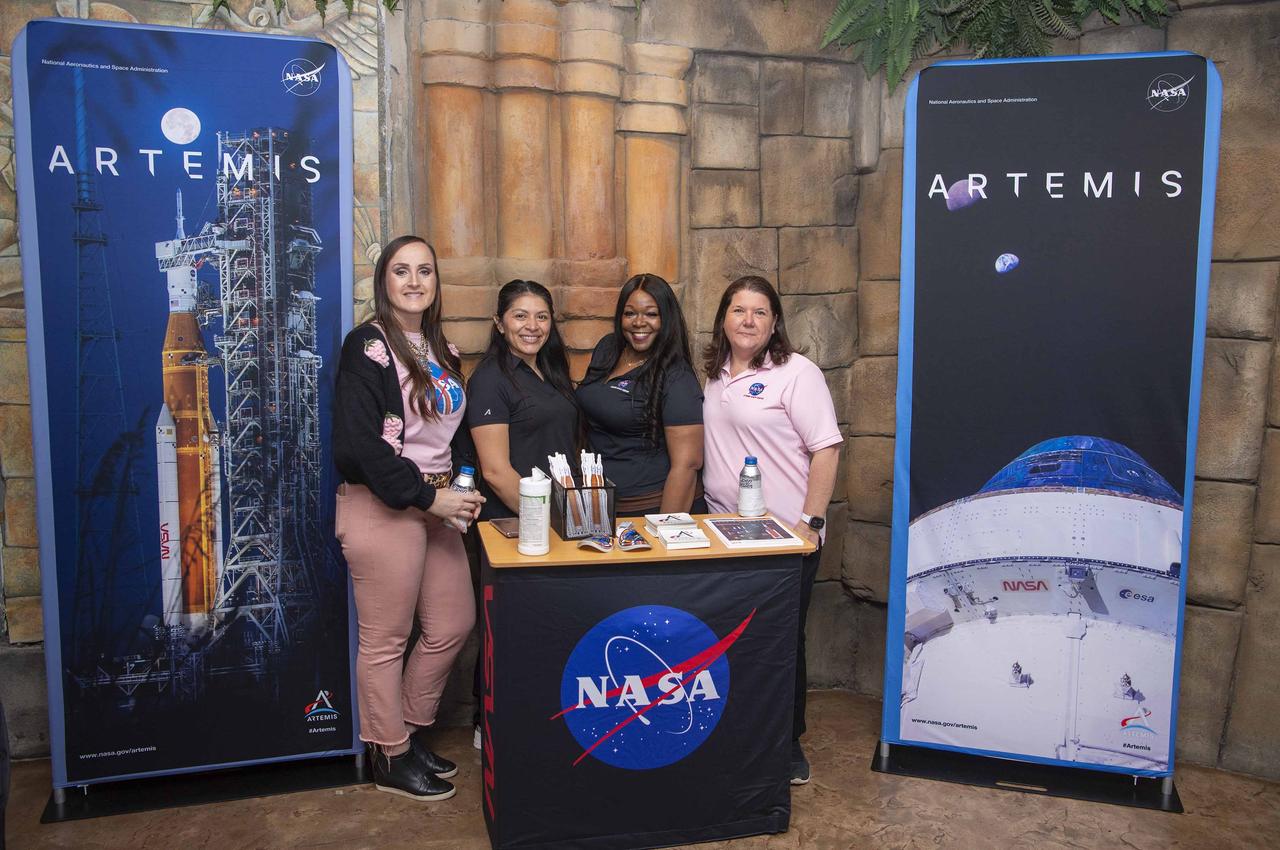
NASA Stennis representatives inspire the Artemis Generation at the Audubon Aquarium in New Orleans Feb. 7-8 with activities and displays highlighting space exploration, including NASA’s Artemis missions to the Moon
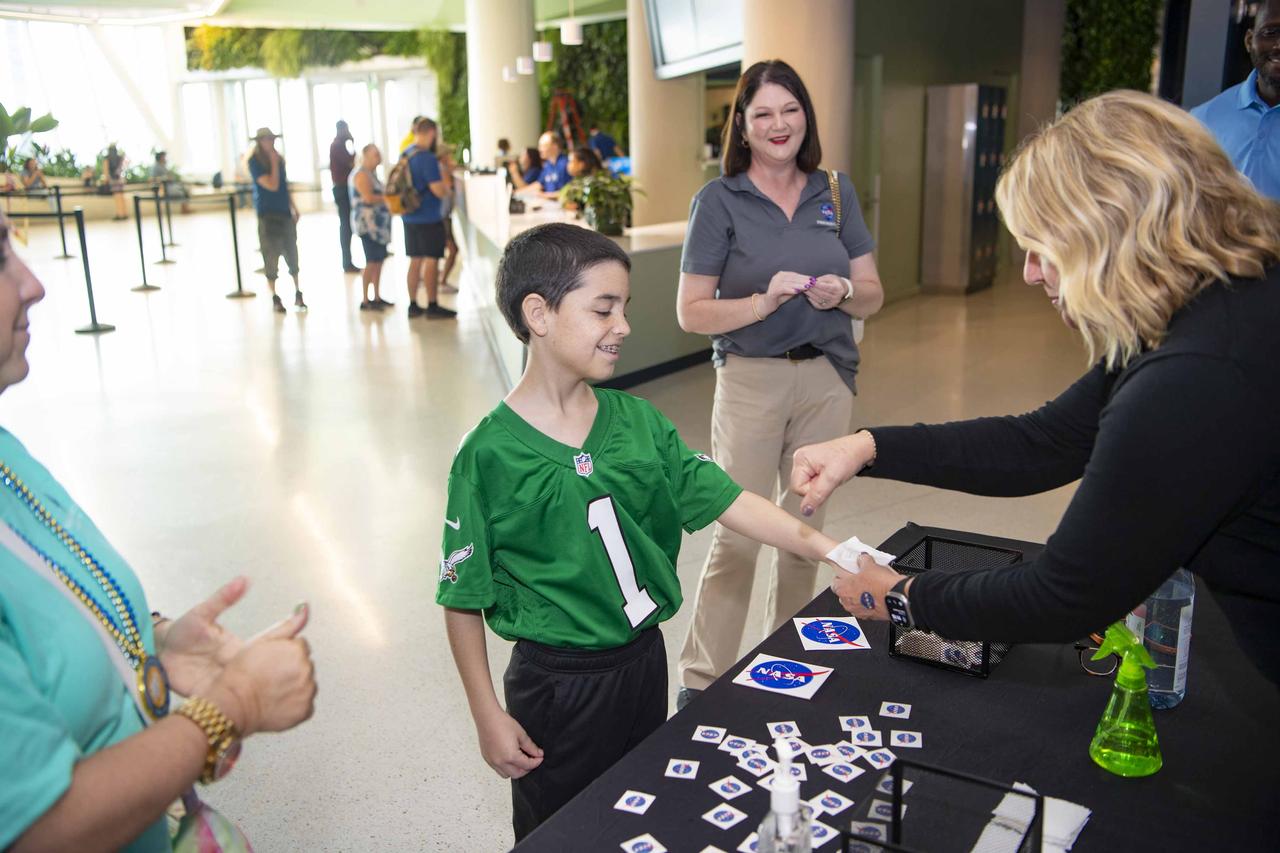
NASA Stennis representatives inspire the Artemis Generation at the Audubon Aquarium in New Orleans Feb. 7-8 with activities and displays highlighting space exploration, including NASA’s Artemis missions to the Moon.
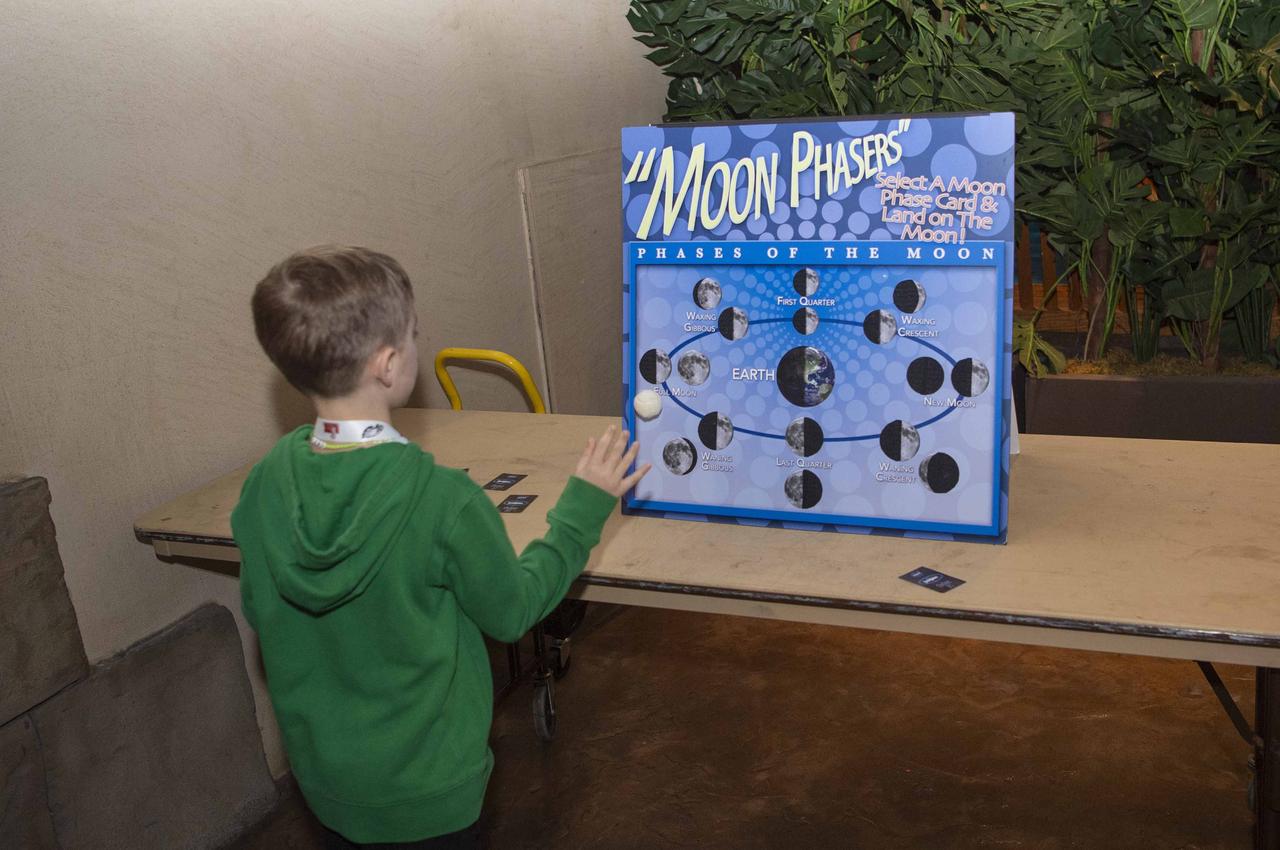
NASA Stennis representatives inspire the Artemis Generation at the Audubon Aquarium in New Orleans Feb. 7-8 with activities and displays highlighting space exploration, including NASA’s Artemis missions to the Moon.
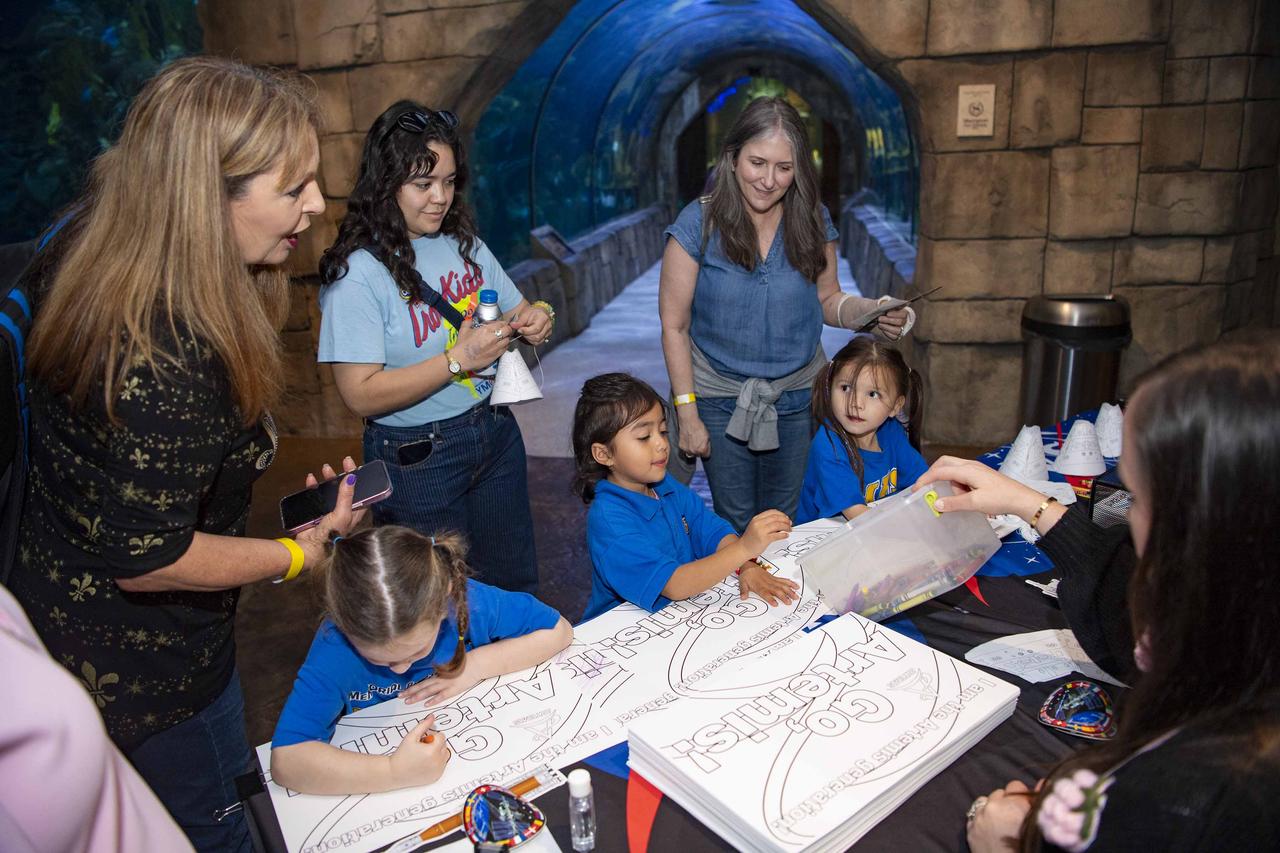
NASA Stennis representatives inspire the Artemis Generation at the Audubon Aquarium in New Orleans Feb. 7-8 with activities and displays highlighting space exploration, including NASA’s Artemis missions to the Moon.
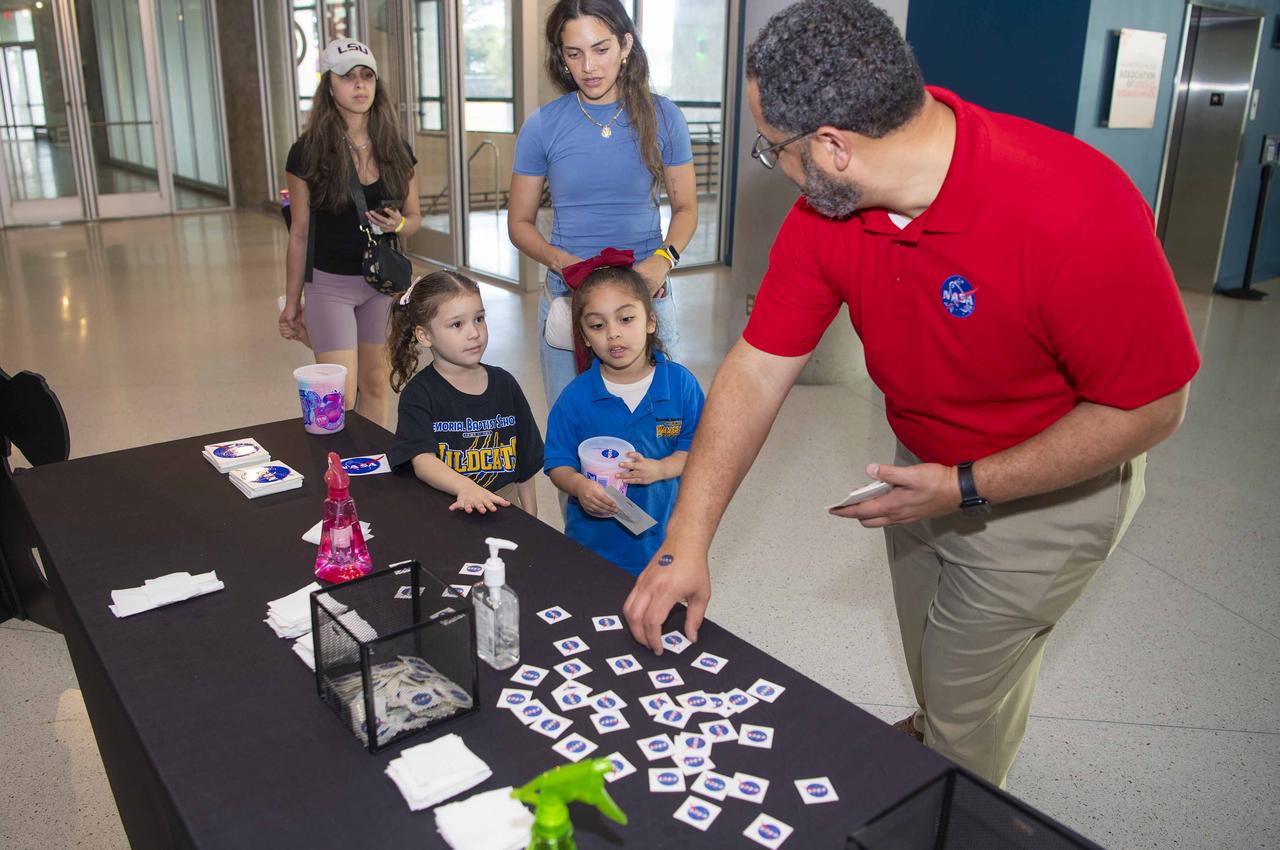
NASA Stennis representatives inspire the Artemis Generation at the Audubon Aquarium in New Orleans Feb. 7-8 with activities and displays highlighting space exploration, including NASA’s Artemis missions to the Moon.
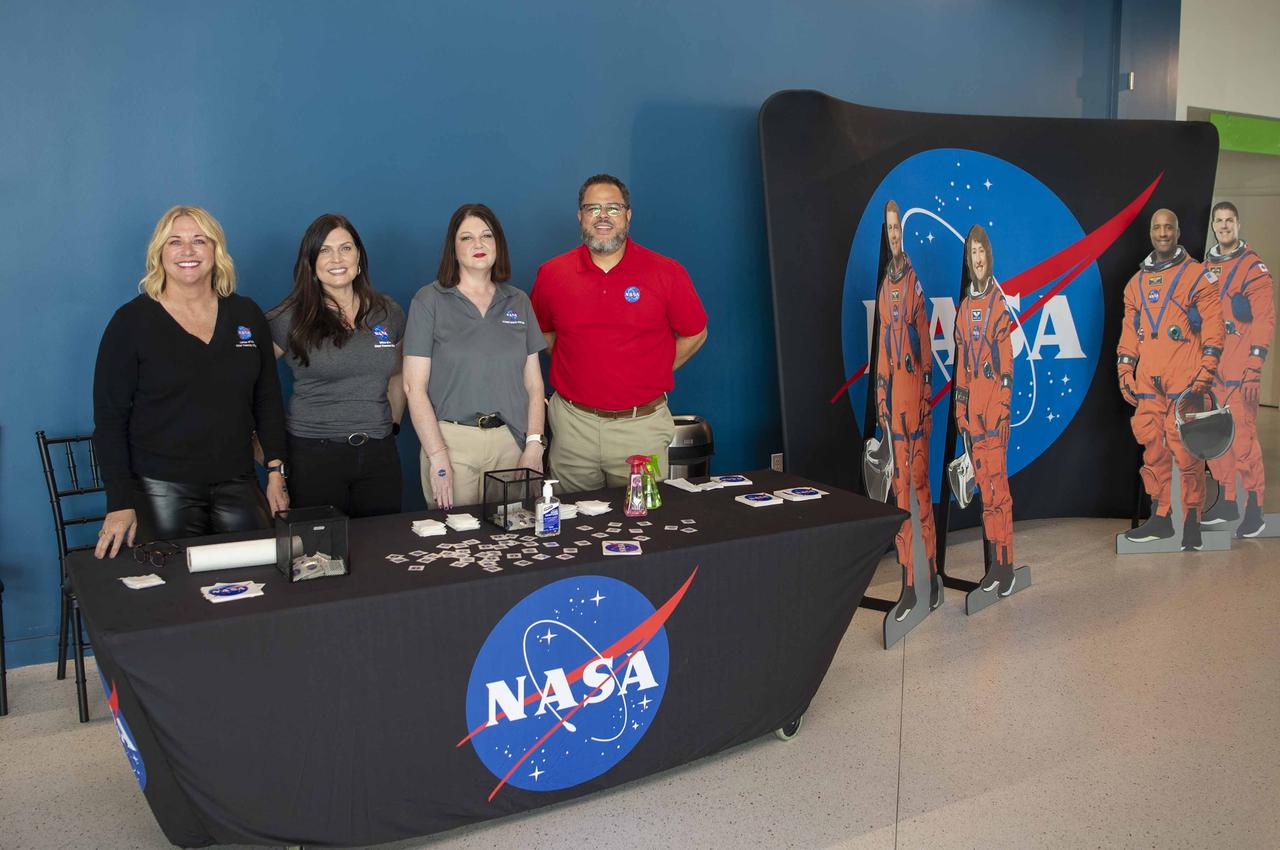
NASA Stennis representatives inspire the Artemis Generation at the Audubon Aquarium in New Orleans Feb. 7-8 with activities and displays highlighting space exploration, including NASA’s Artemis missions to the Moon.

jsc2025e034457 (March 18, 2025) -- The official Artemis II mission crew patch. The Artemis II test flight begins when a mighty team launches the first crew of the Artemis generation. This patch designates the mission as “AII,” signifying not only the second major flight of the Artemis campaign, but also an endeavor of discovery that seeks to explore for all and by all. Framed in Apollo 8’s famous Earthrise photo, the scene of the Earth and the Moon represents the dual nature of human spaceflight, both equally compelling: The Moon represents our exploration destination, focused on discovery of the unknown. The Earth represents home, focused on the perspective we gain when we look back at our shared planet and learn what it is to be uniquely human. The orbit around Earth highlights the ongoing exploration missions that have enabled Artemis to set sights on a long-term presence on the Moon and soon, Mars. Credit: NASA
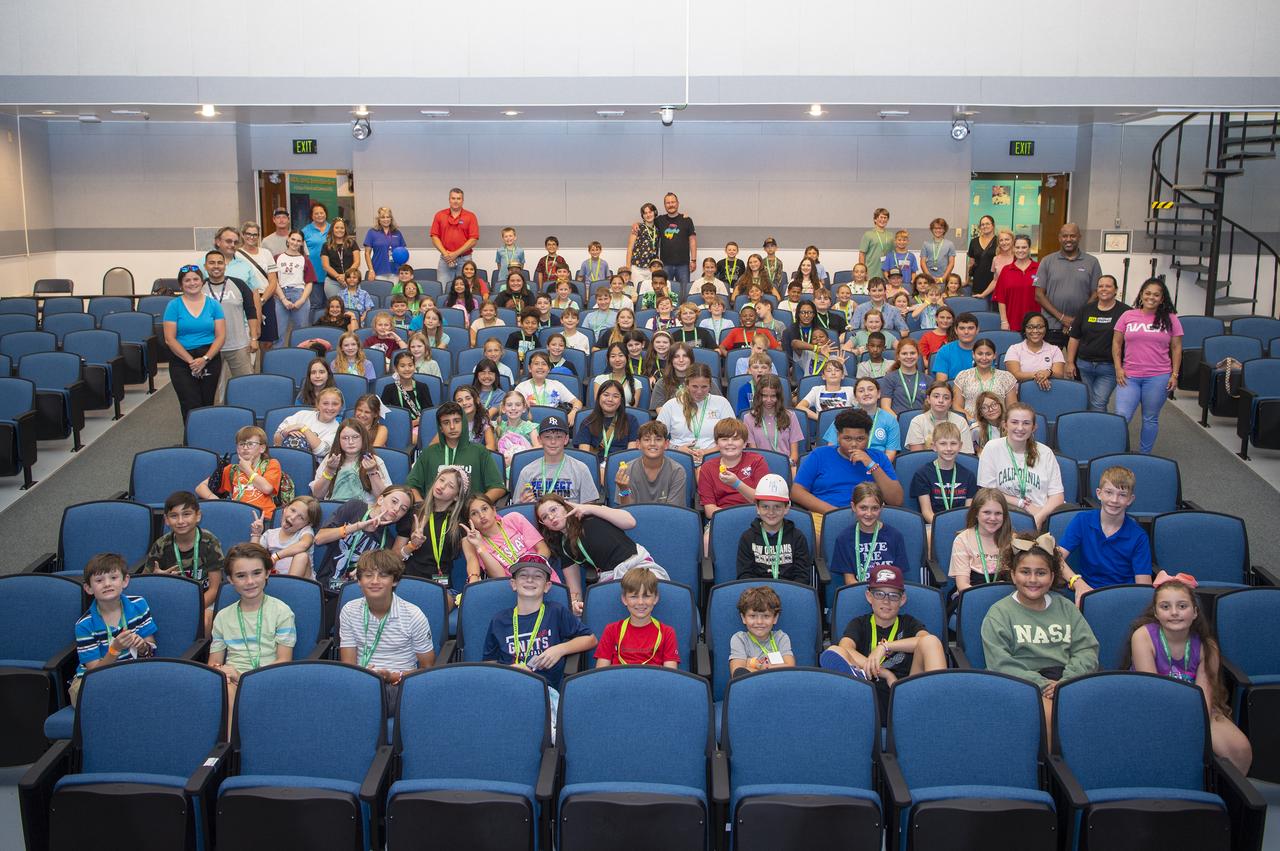
NASA’s Stennis Space Center inspired the Artemis Generation during the 2024 Take Our Children to Work Day on June 27. Participants are shown in the StenniSphere auditorium following a site tour and full day of hands-on activities to promote interest in STEM (science, technology, engineering, and mathematics) and the variety of work conducted at NASA Stennis. NASA is returning to the Moon through the Artemis campaign for scientific discovery, economic benefits, and inspiration for a new generation of explorers.
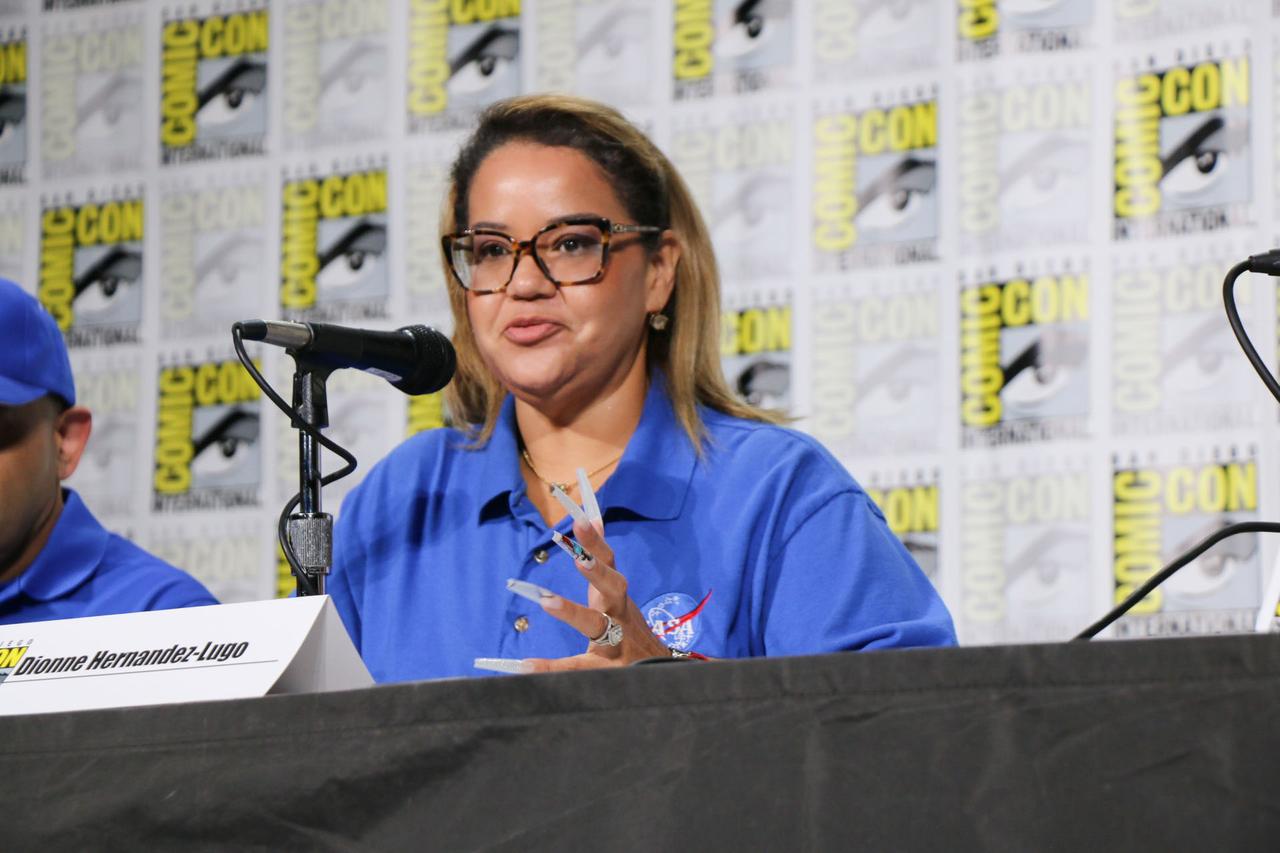
jsc2024e055755 (July 25, 2024) -- Location: San Diego Convention Center, San Diego, CA Subject: Coverage of NASA panel Exploring the Moon: the Artemis Generation with NASA’s chief technologist, NASA astronaut Stan Love, and representatives from the Artemis campaign and Gateway lunar space station. Photo Credit: NASA
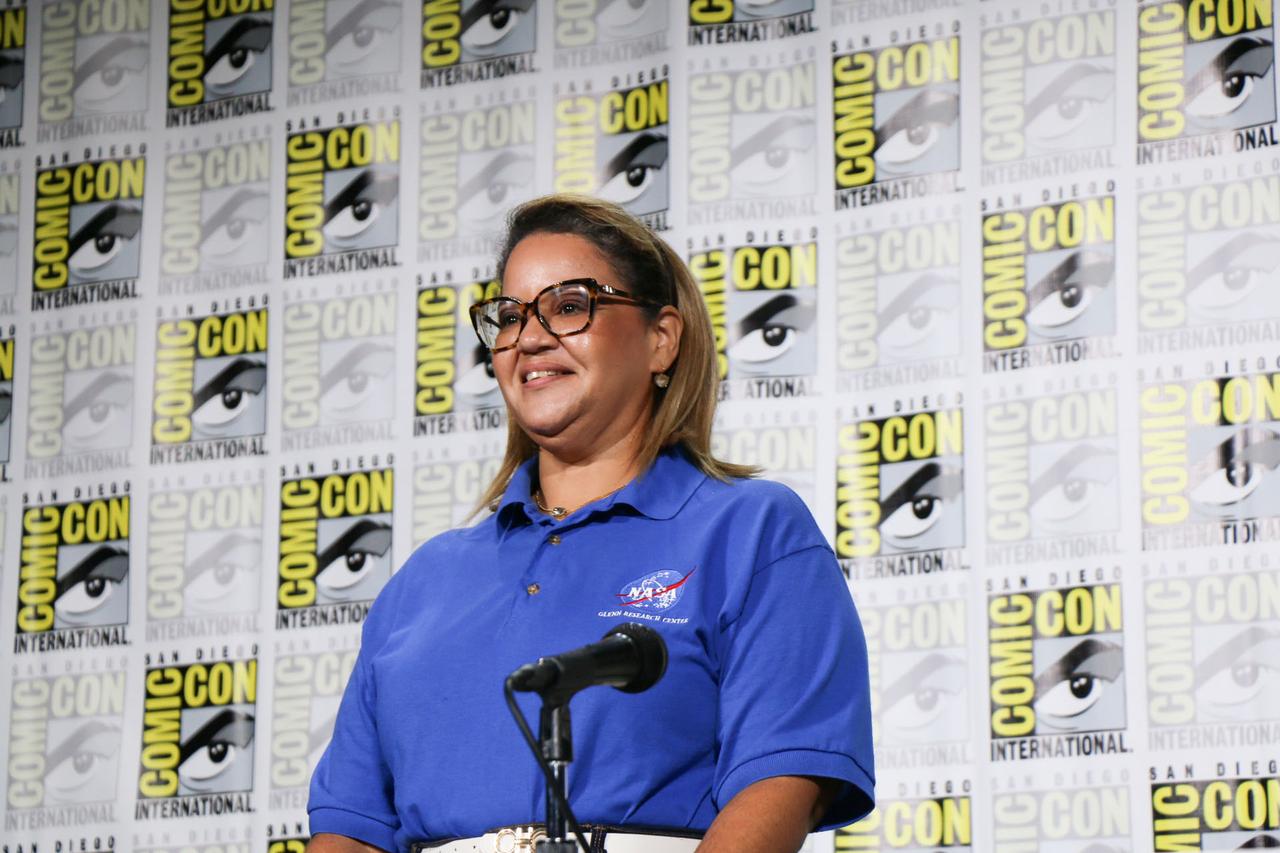
jsc2024e055753 (July 25, 2024) -- Dionne Hernandez-Lugo of the Gateway Program speaks about the pivotal role Gateway will play in the Artemis missions during the "Exploring the Moon: The Artemis Generation" panel at San Diego Comic-Con 2024. Photo Credit: NASA

jsc2024e055754 (July 25, 2024) -- Dionne Hernandez-Lugo of the Gateway Program speaks about the pivotal role Gateway will play in the Artemis missions during the "Exploring the Moon: The Artemis Generation" panel at San Diego Comic-Con 2024. Photo Credit: NASA

jsc2024e055757 (July 25, 2024) -- Jackelynne Silva-Martinez of NASA Human Health and Performance shares insights on the health and safety measures for astronauts in the Artemis missions during the "Exploring the Moon: The Artemis Generation" panel at San Diego Comic-Con 2024. Photo Credit: NASA

NASA astronauts Loral O’Hara (left) and Stan Love (right) pose for a photo during the first dual spacesuit run at NASA’s Neutral Buoyancy Laboratory while wearing Axiom Space’s lunar spacesuits. NASA and Axiom Space teams held the first dual spacesuit run at the Neutral Buoyancy Laboratory in Houston on September 24, 2025 with NASA Astronauts Stan Love and Loral O’Hara wearing Axiom Space’s lunar spacesuit, called the Axiom Extravehicular Mobility Unit (AxEMU). This was the final integration test in the pool, proving both the spacesuit and facility are prepped and ready for Artemis training.
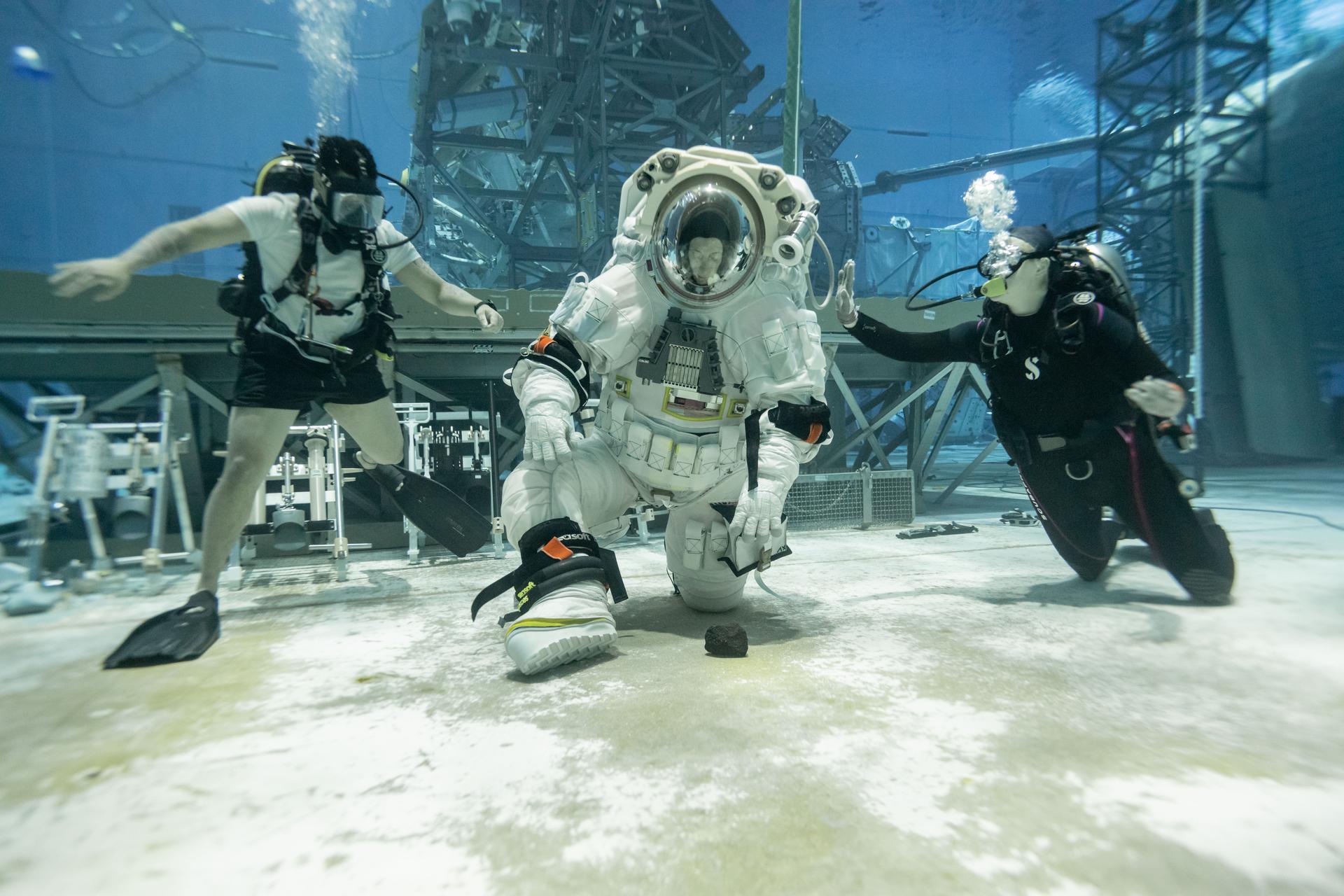
NASA astronaut Loral O’Hara kneels to pick up a rock while testing the mobility of Axiom Space’s lunar spacesuit. NASA and Axiom Space teams held the first dual spacesuit run at the Neutral Buoyancy Laboratory in Houston on September 24, 2025 with NASA Astronauts Stan Love and Loral O’Hara wearing Axiom Space’s lunar spacesuit, called the Axiom Extravehicular Mobility Unit (AxEMU). This was the final integration test in the pool, proving both the spacesuit and facility are prepped and ready for Artemis training.
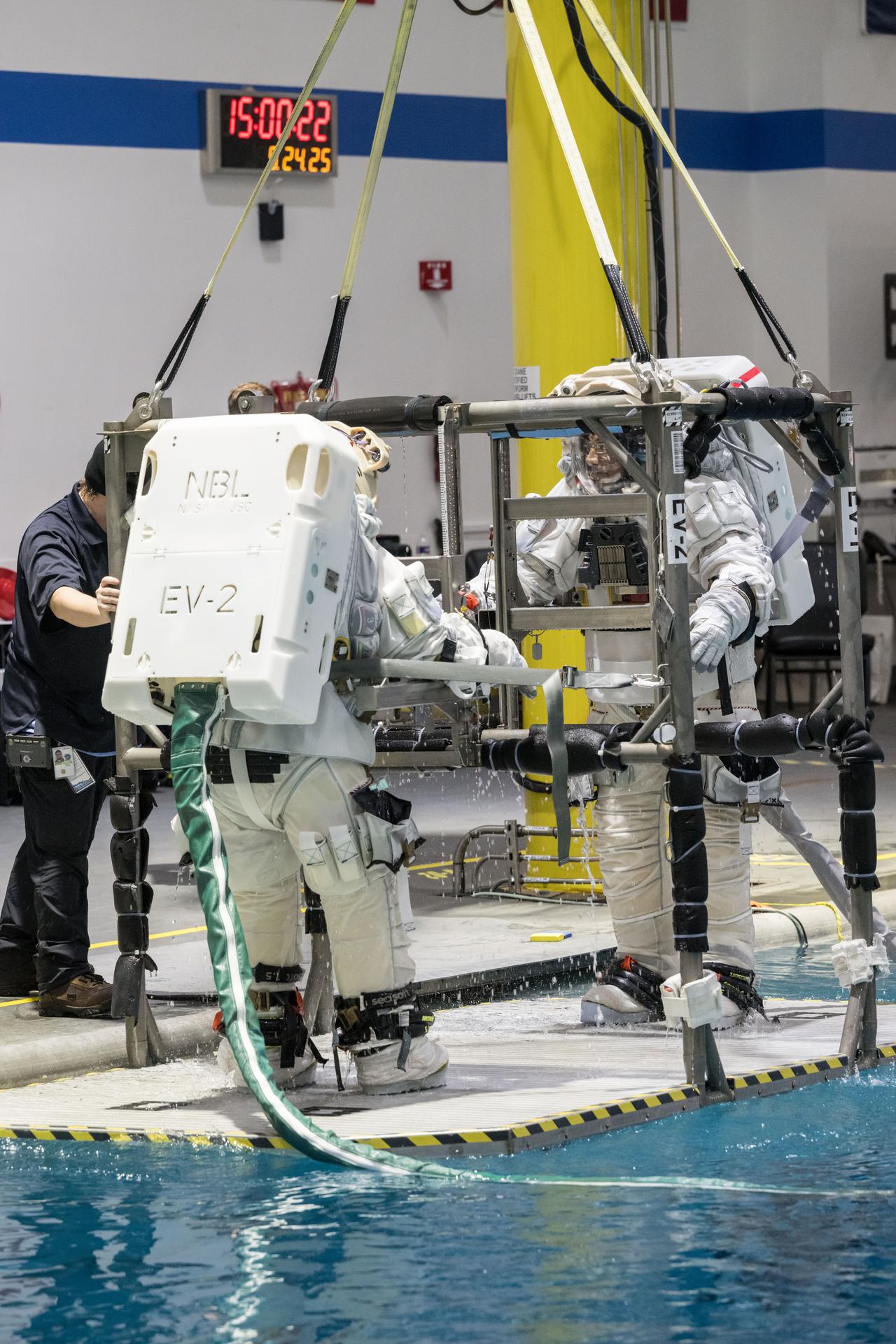
NASA and Axiom Space teams held the first dual spacesuit run at the Neutral Buoyancy Laboratory in Houston on September 24, 2025 with NASA Astronauts Stan Love and Loral O’Hara wearing Axiom Space’s lunar spacesuit, called the Axiom Extravehicular Mobility Unit (AxEMU). This was the final integration test in the pool, proving both the spacesuit and facility are prepped and ready for Artemis training.
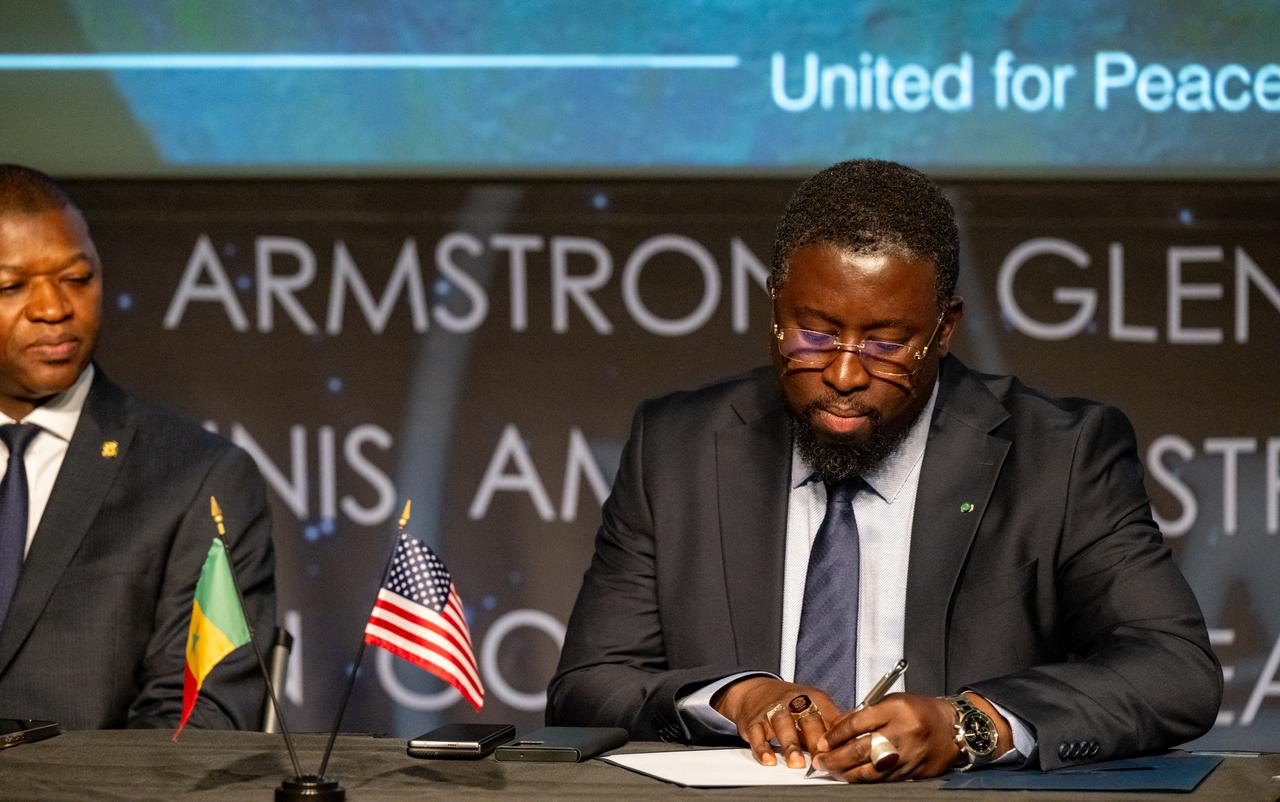
Director General of the Senegalese space agency (ASES) Maram Kairé, right, signs the Artemis Accords Thursday, July 24, 2025, at the Mary W. Jackson NASA Headquarters building in Washington. Senegal is the 56th country to sign the Artemis Accords, which establish a practical set of principles to guide space exploration cooperation among nations participating in NASA’s Artemis program. Photo Credit: (NASA/Keegan Barber)
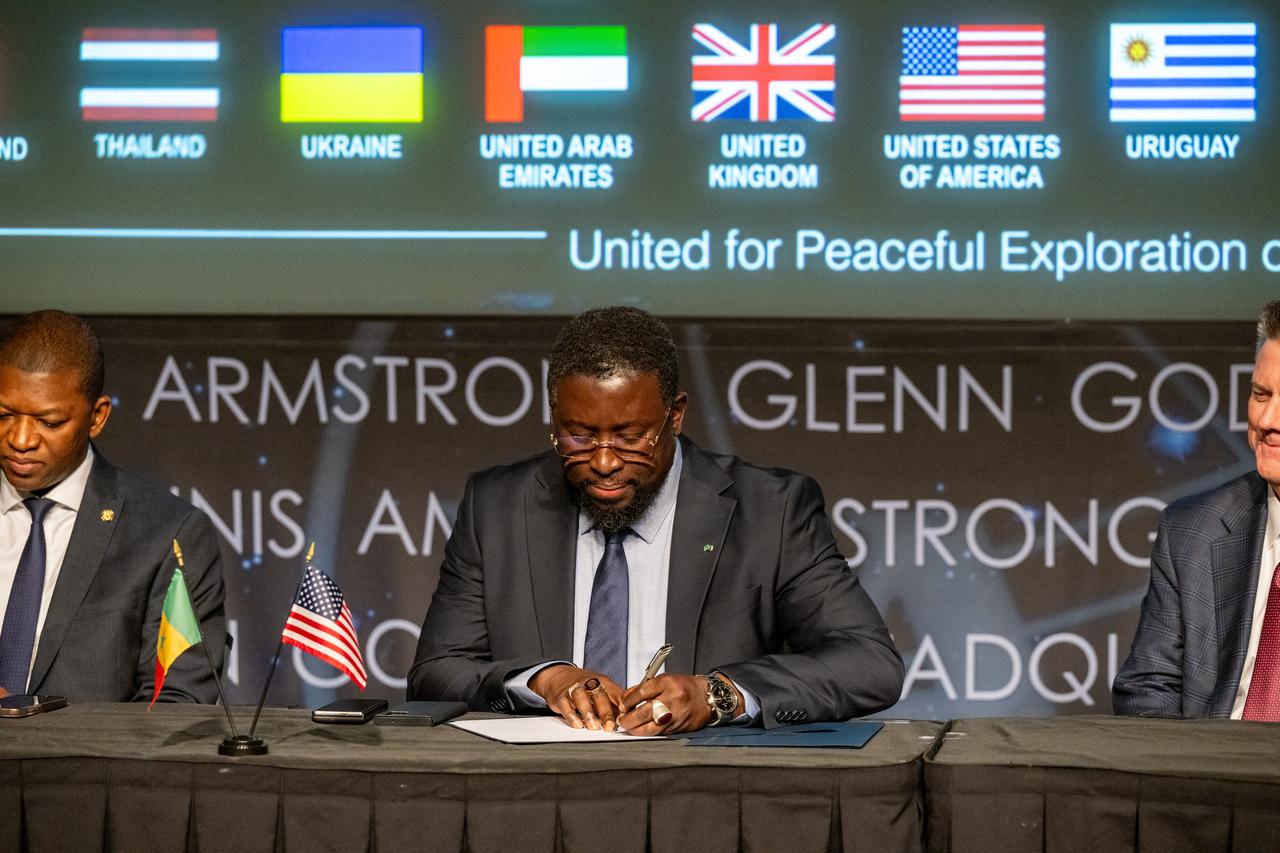
Director General of the Senegalese space agency (ASES) Maram Kairé, center, signs the Artemis Accords Thursday, July 24, 2025, at the Mary W. Jackson NASA Headquarters building in Washington. Senegal is the 56th country to sign the Artemis Accords, which establish a practical set of principles to guide space exploration cooperation among nations participating in NASA’s Artemis program. Photo Credit: (NASA/Keegan Barber)
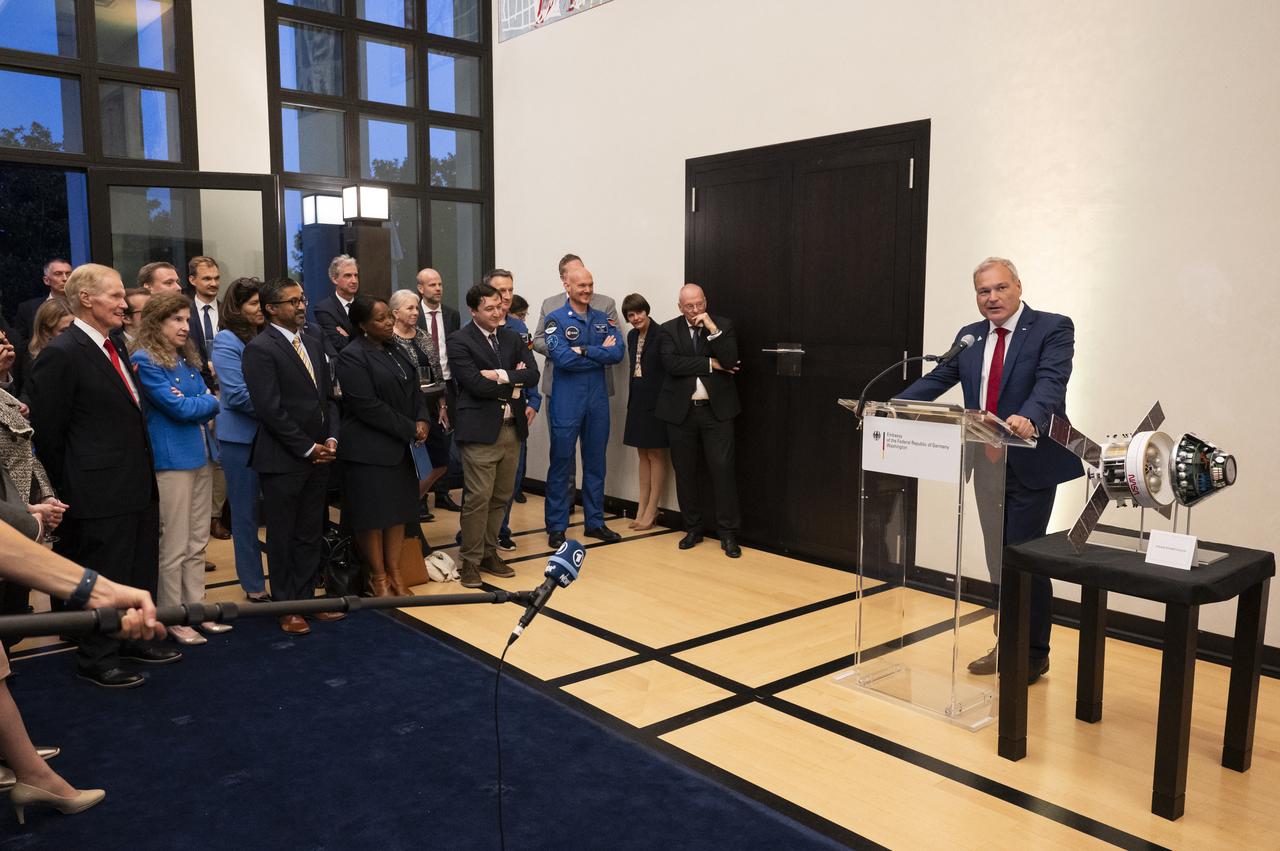
Director General of the German Space Agency at the German Aerospace Center (DLR) Walther Pelzer delivers remarks during an Artemis Accords signing ceremony, Thursday, September 14, 2023, at the German Ambassador’s Residence in Washington. Germany is the 29th country to sign the Artemis Accords, which establish a practical set of principles to guide space exploration cooperation among nations participating in NASA’s Artemis program. Photo Credit: (NASA/Keegan Barber)

Director General of the Senegalese space agency (ASES) Maram Kairé, left, and NASA Chief of Staff Brian Hughes, right, shake hands during an Artemis Accords signing ceremony Thursday, July 24, 2025, at the Mary W. Jackson NASA Headquarters building in Washington. Senegal is the 56th country to sign the Artemis Accords, which establish a practical set of principles to guide space exploration cooperation among nations participating in NASA’s Artemis program. Photo Credit: (NASA/Keegan Barber)
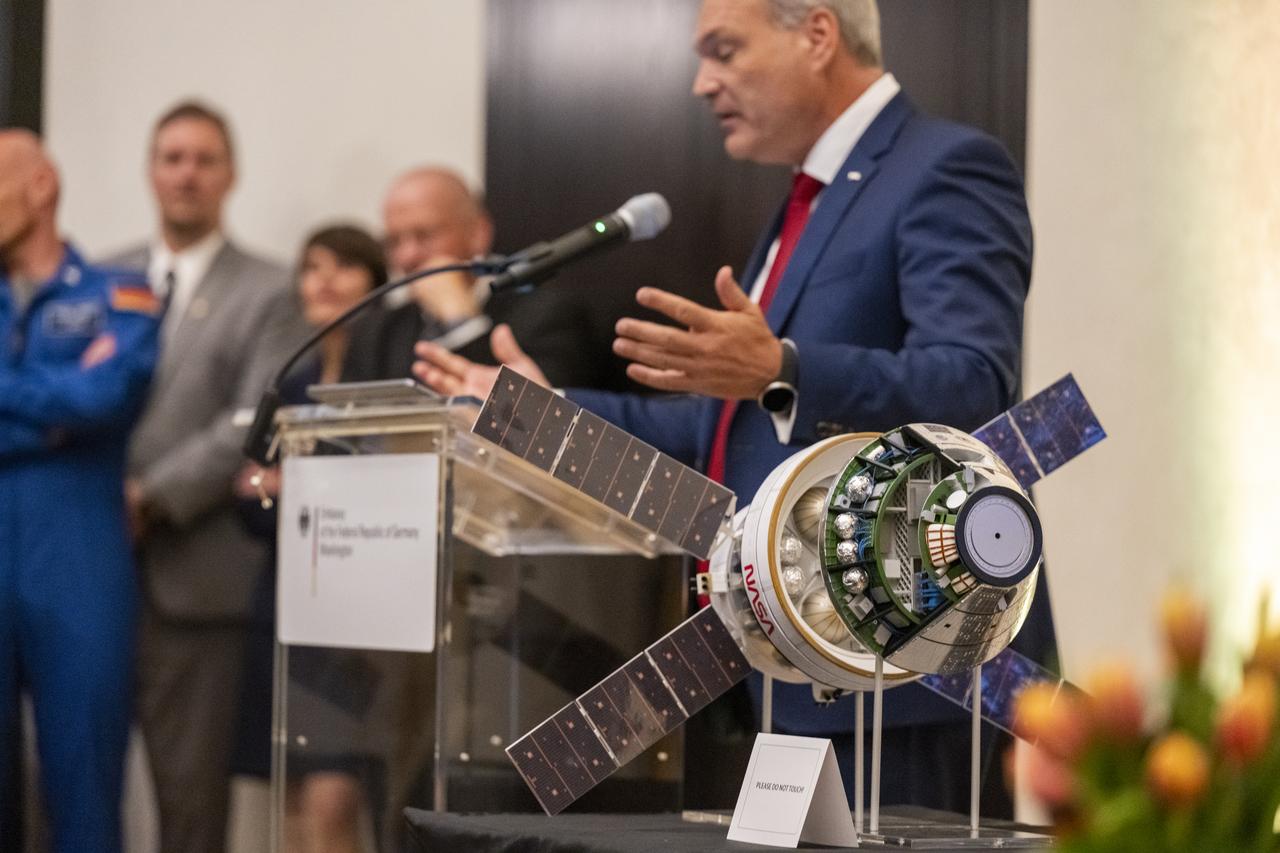
A model of the Orion Spacecraft is seen in the foreground as Director General of the German Space Agency at the German Aerospace Center (DLR) Walther Pelzer delivers remarks during an Artemis Accords signing ceremony, Thursday, September 14, 2023, at the German Ambassador’s Residence in Washington. Germany is the 29th country to sign the Artemis Accords, which establish a practical set of principles to guide space exploration cooperation among nations participating in NASA’s Artemis program. Photo Credit: (NASA/Keegan Barber)
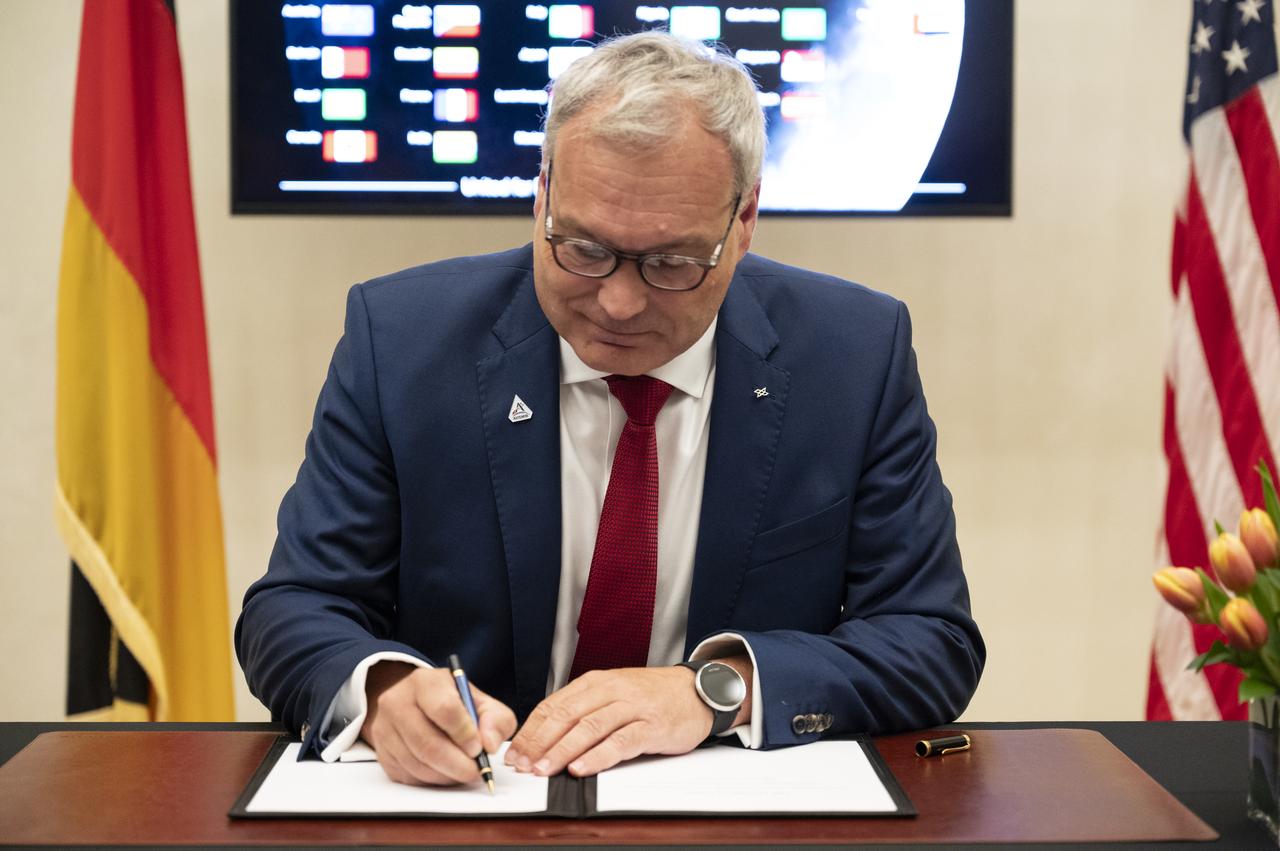
Director General of the German Space Agency at the German Aerospace Center (DLR) Walther Pelzer signs the Artemis Accords, Thursday, September 14, 2023, at the German Ambassador’s Residence in Washington. Germany is the 29th country to sign the Artemis Accords, which establish a practical set of principles to guide space exploration cooperation among nations participating in NASA’s Artemis program. Photo Credit: (NASA/Keegan Barber)

Director General of the Senegalese space agency (ASES) Maram Kairé delivers remarks during an Artemis Accords signing ceremony Thursday, July 24, 2025, at the Mary W. Jackson NASA Headquarters building in Washington. Senegal is the 56th country to sign the Artemis Accords, which establish a practical set of principles to guide space exploration cooperation among nations participating in NASA’s Artemis program. Photo Credit: (NASA/Keegan Barber)
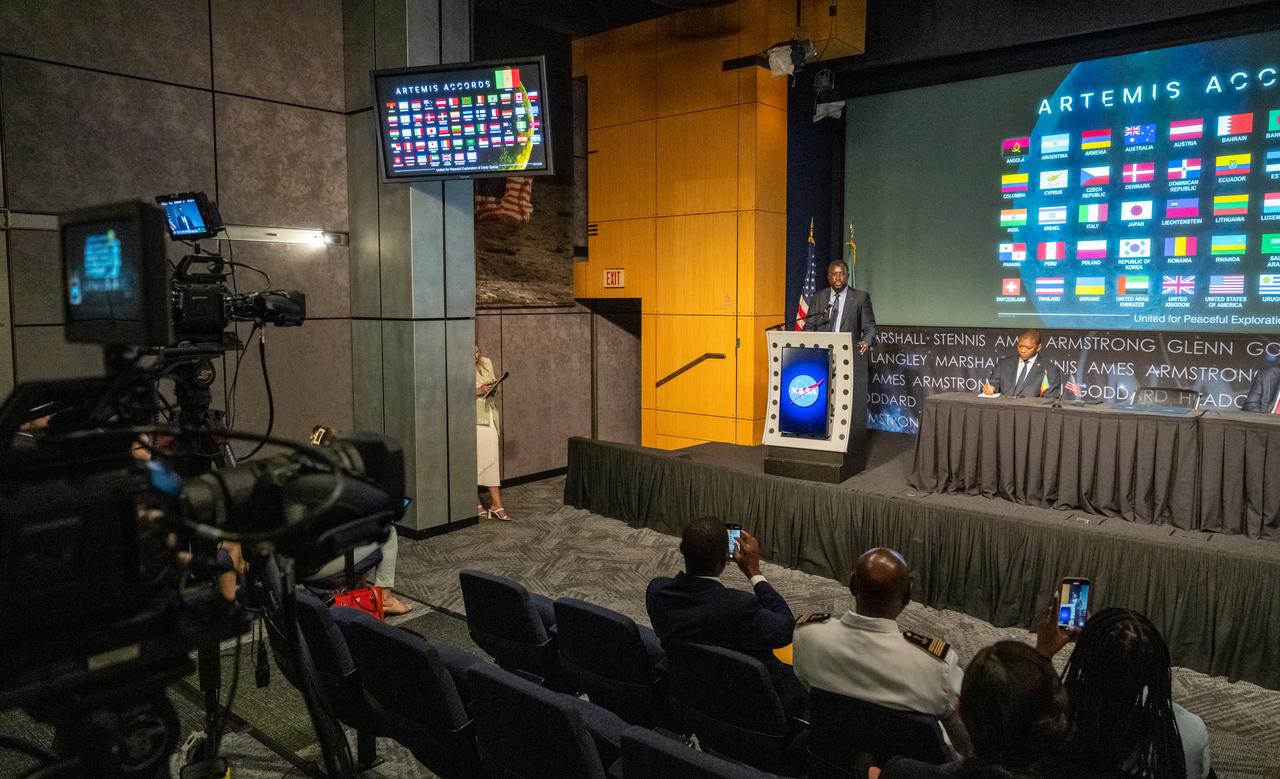
Director General of the Senegalese space agency (ASES) Maram Kairé delivers remarks during an Artemis Accords signing ceremony Thursday, July 24, 2025, at the Mary W. Jackson NASA Headquarters building in Washington. Senegal is the 56th country to sign the Artemis Accords, which establish a practical set of principles to guide space exploration cooperation among nations participating in NASA’s Artemis program. Photo Credit: (NASA/Keegan Barber)
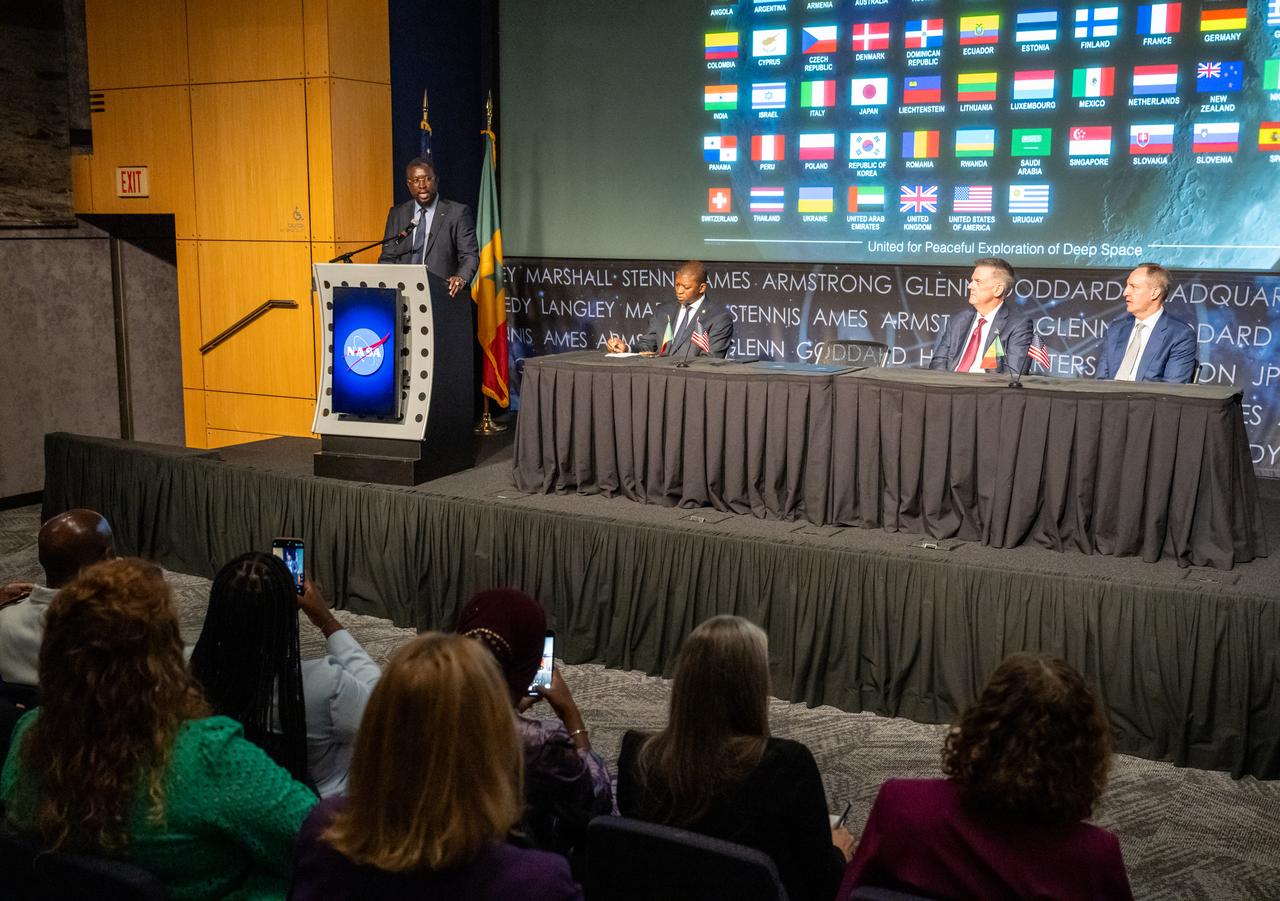
Director General of the Senegalese space agency (ASES) Maram Kairé delivers remarks during an Artemis Accords signing ceremony Thursday, July 24, 2025, at the Mary W. Jackson NASA Headquarters building in Washington. Senegal is the 56th country to sign the Artemis Accords, which establish a practical set of principles to guide space exploration cooperation among nations participating in NASA’s Artemis program. Photo Credit: (NASA/Keegan Barber)

Partners and guests toured the Vehicle Assembly Building at NASA’s Kennedy Space Center in Florida on March 16, 2022 ahead of the rollout of the agency’s Artemis I Space Launch System and Orion spacecraft to Launch Pad 39B for a wet dress rehearsal ahead of launch. The group was at the center for the Artemis Summit, a one-day meeting for partners, grantees and other interested organizations to learn about Public and STEM Engagement plans and opportunities for the upcoming Artemis I mission. The event introduced participants to the importance of the Artemis program and supports them in the use of Artemis I content as they serve students, educators, families, and the general public.
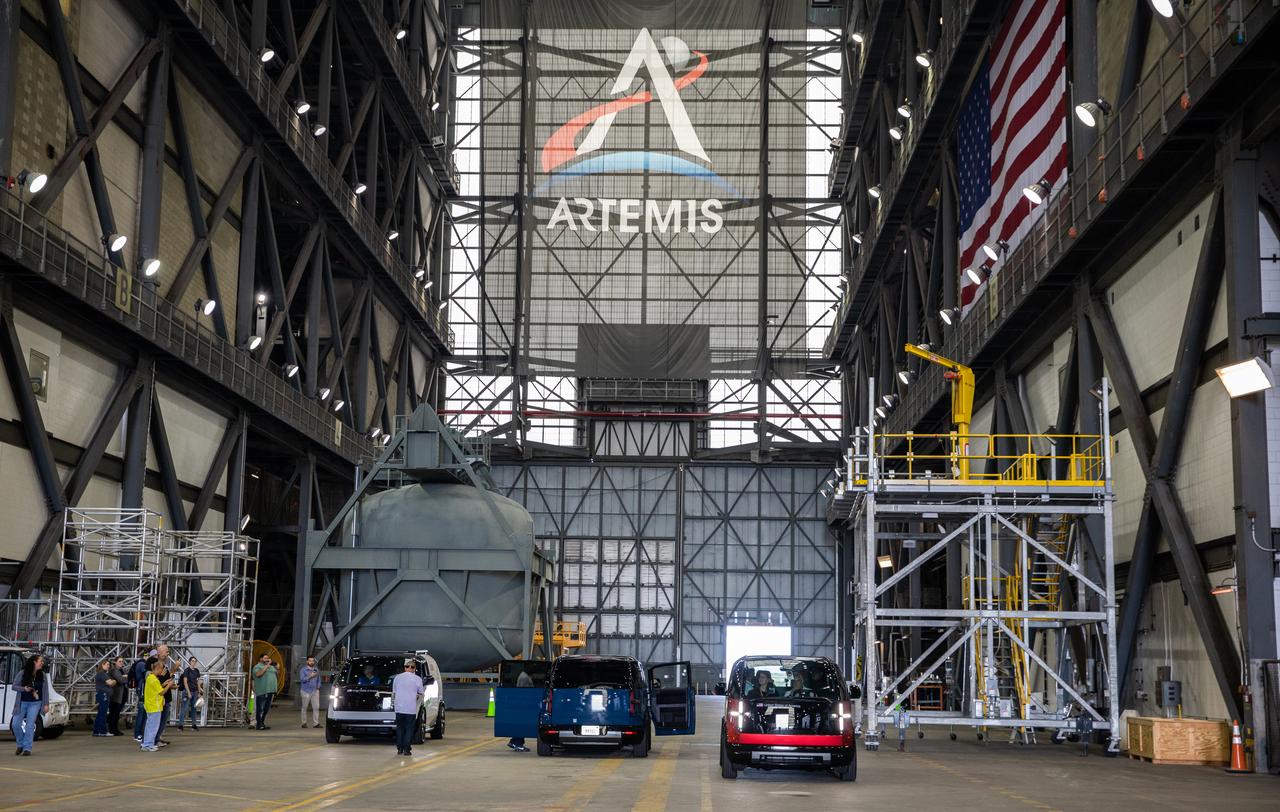
Several concept designs for Artemis crew transportation vehicles (CTV) are lined up in the transfer aisle of the Vehicle Assembly Building at NASA’s Kennedy Space Center in Florida on May 11, 2022. Canoo Technologies Inc., was awarded a contract to design and provide the next generation of CTVs for the Artemis crewed missions. Representatives with Canoo were at the spaceport demonstrating the environmentally friendly fleet of vehicles. Artemis II will be the first Artemis mission flying crew aboard Orion. In later missions, NASA will land the first woman and the first person of color on the surface of the Moon, paving the way for a long-term lunar presence and serving as a steppingstone on the way to Mars.
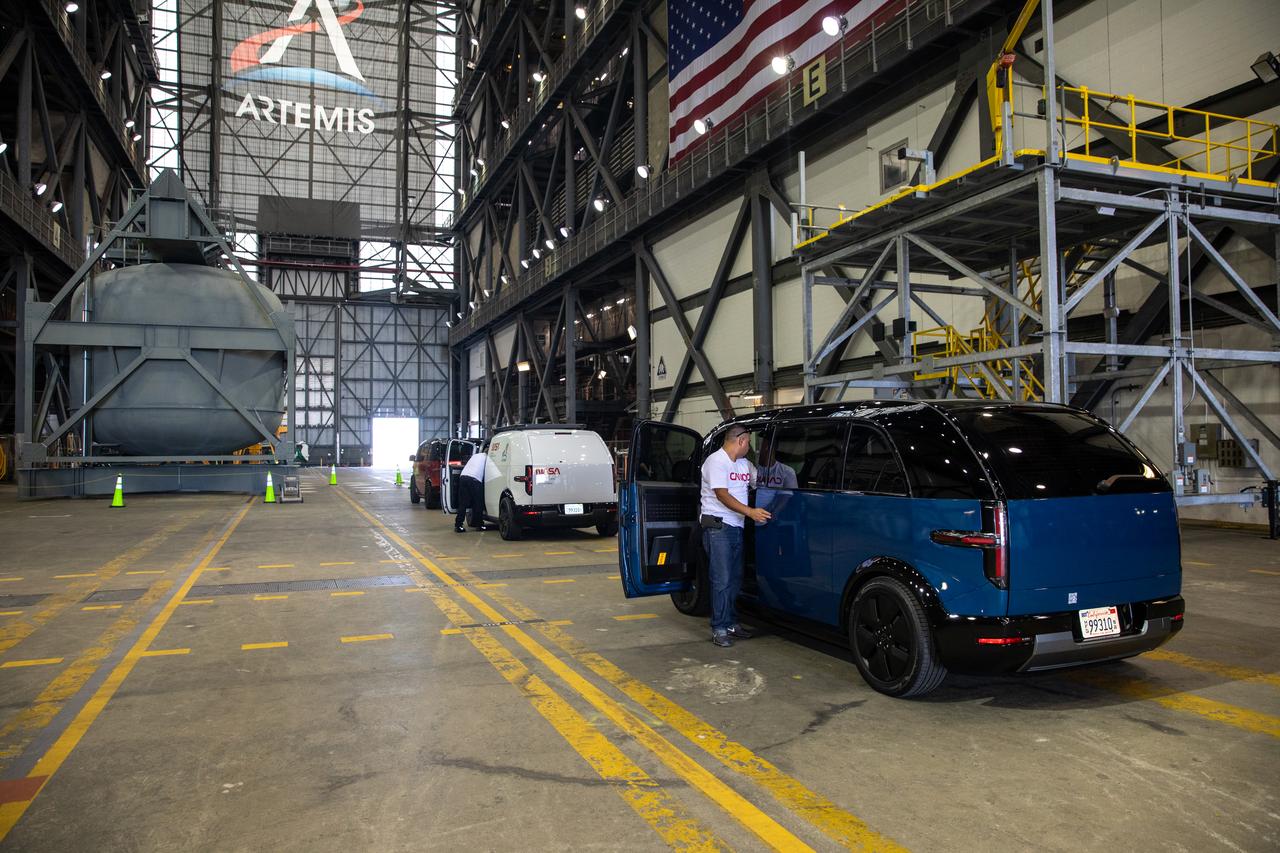
Several concept designs for Artemis crew transportation vehicles (CTV) are lined up in the transfer aisle of the Vehicle Assembly Building at NASA’s Kennedy Space Center in Florida on May 11, 2022. Canoo Technologies Inc., was awarded a contract to design and provide the next generation of CTVs for the Artemis crewed missions. Representatives with Canoo were at the spaceport demonstrating the environmentally friendly fleet of vehicles. Artemis II will be the first Artemis mission flying crew aboard Orion. In later missions, NASA will land the first woman and the first person of color on the surface of the Moon, paving the way for a long-term lunar presence and serving as a steppingstone on the way to Mars.

Several concept designs for Artemis crew transportation vehicles (CTV) are lined up in the transfer aisle of the Vehicle Assembly Building at NASA’s Kennedy Space Center in Florida on May 11, 2022. Canoo Technologies Inc., was awarded a contract to design and provide the next generation of CTVs for the Artemis crewed missions. Representatives with Canoo were at the spaceport demonstrating the environmentally friendly fleet of vehicles. Artemis II will be the first Artemis mission flying crew aboard Orion. In later missions, NASA will land the first woman and the first person of color on the surface of the Moon, paving the way for a long-term lunar presence and serving as a steppingstone on the way to Mars.
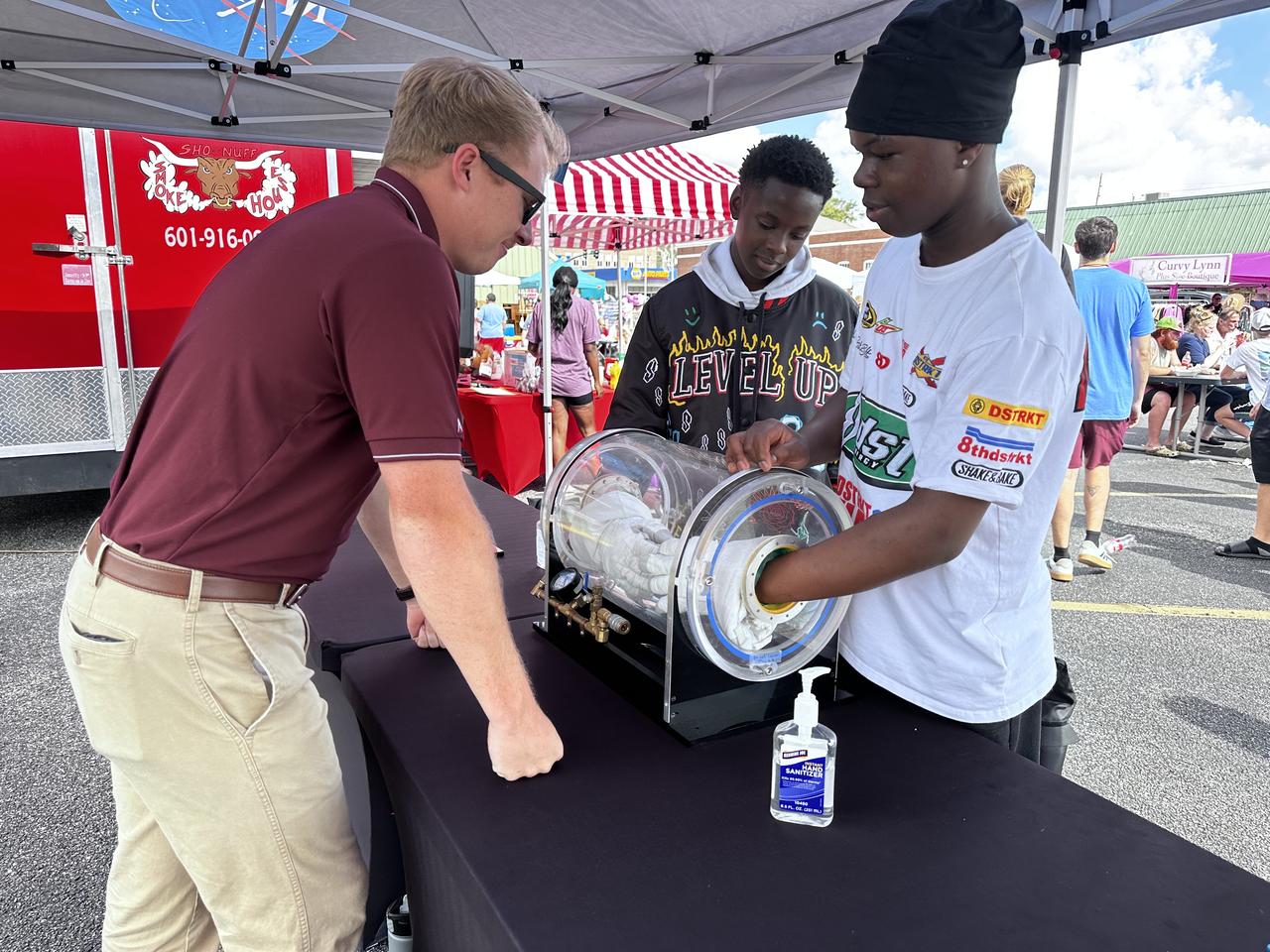
NASA Stennis representatives engage with the Artemis Generation at the Picayune Street Fair in Picayune, Mississippi on Nov. 2-3. The south Mississippi NASA center is located less than 15 miles from Picayune with many employees living in the community. NASA Stennis tests all RS-25 engines to help power NASA’s SLS (Space Launch System) rocket on Artemis missions. The NASA center is also preparing to conduct a full series of tests on the agency’s exploration upper stage to demonstrate it is ready to fly on future Artemis missions. With the Artemis campaign, NASA will land the first woman and the first person of color on the Moon, using innovative technologies to explore more of the lunar surface than ever.
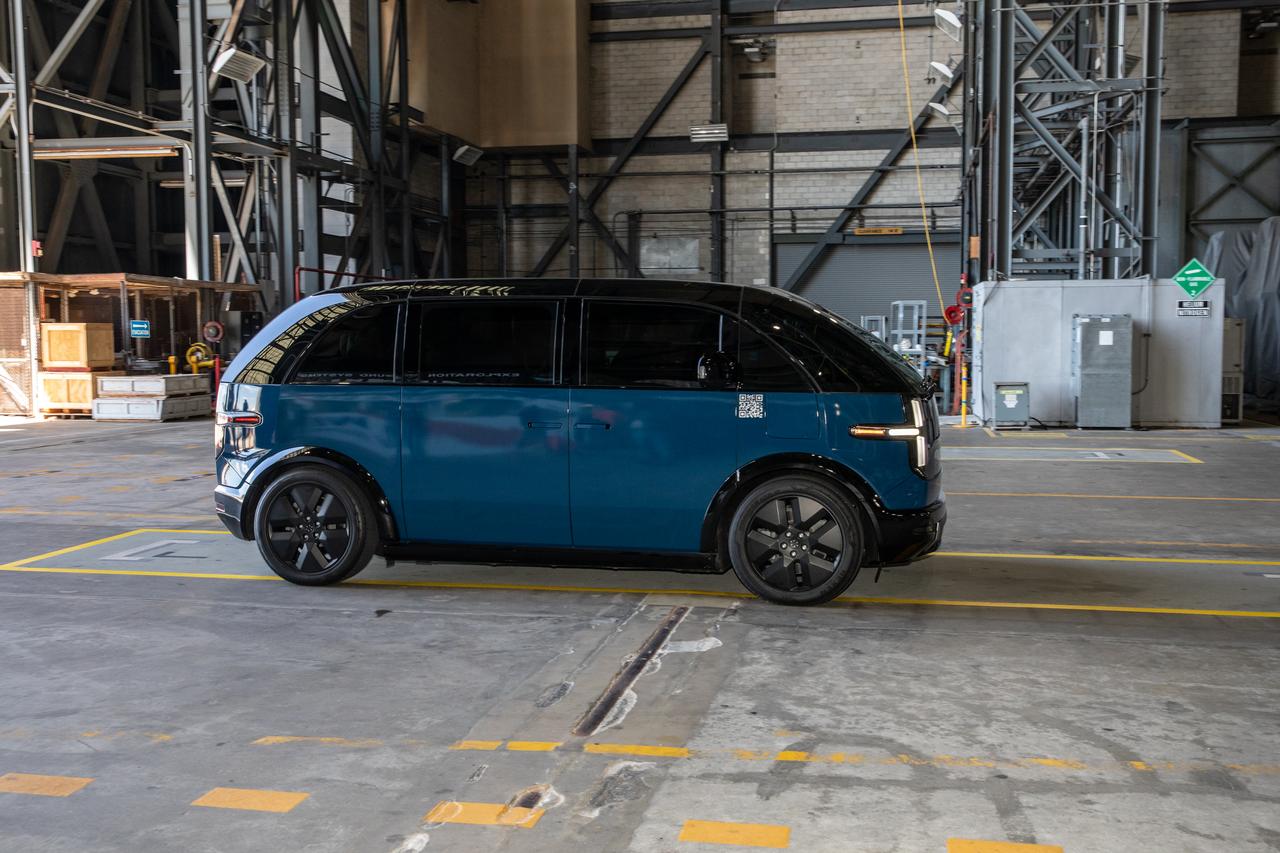
A concept design of a crew transportation vehicle (CTV) for Artemis crewed missions is driven inside the transfer aisle of the Vehicle Assembly Building at NASA’s Kennedy Space Center in Florida on May 11, 2022. Canoo Technologies Inc., was awarded a contract to design and provide the next generation of CTVs for the Artemis crewed missions. Representatives with Canoo were at the spaceport demonstrating the environmentally friendly fleet of vehicles. Artemis II will be the first Artemis mission flying crew aboard Orion. In later missions, NASA will land the first woman and the first person of color on the surface of the Moon, paving the way for a long-term lunar presence and serving as a steppingstone on the way to Mars.
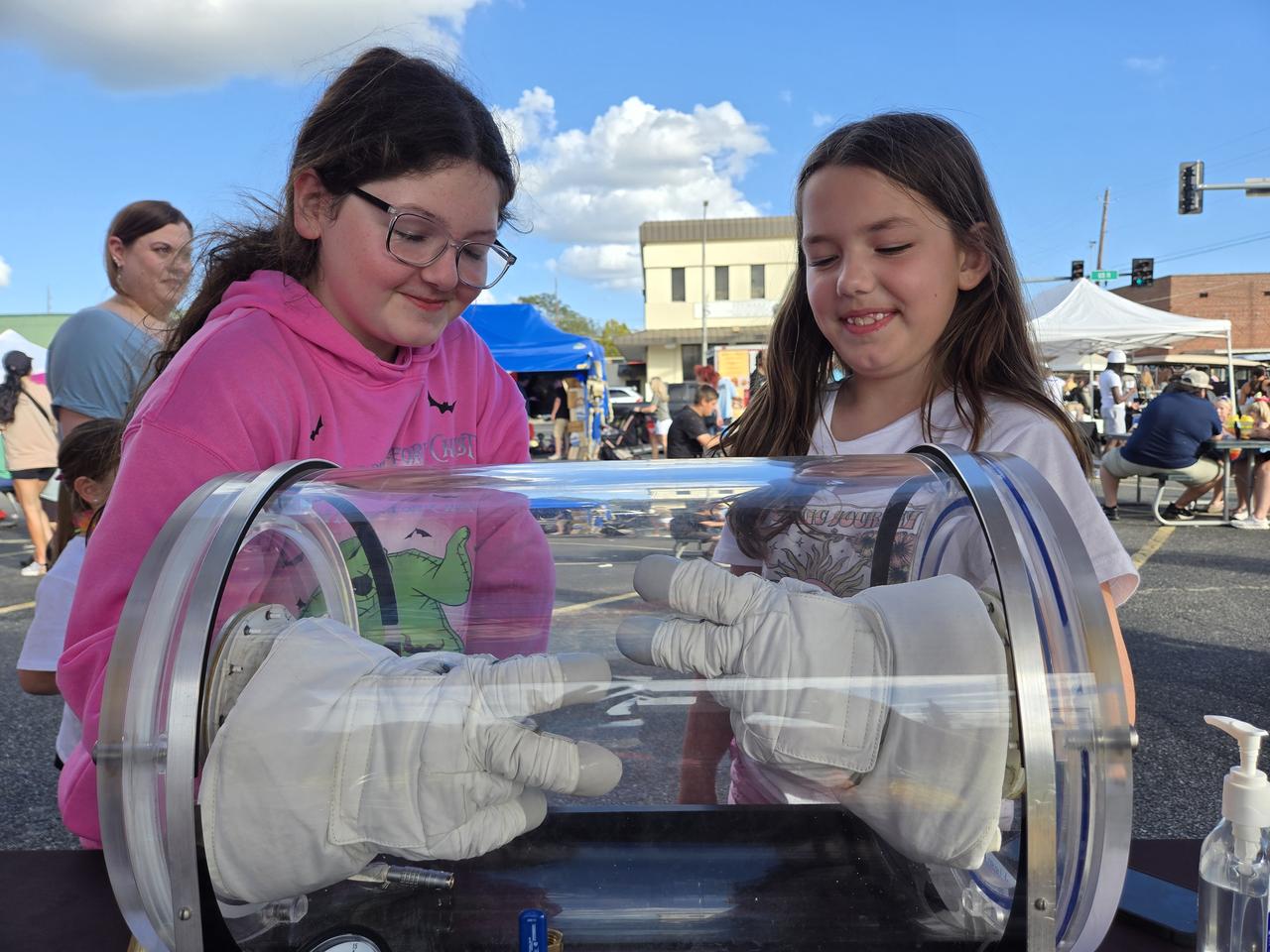
NASA Stennis representatives engage with the Artemis Generation at the Picayune Street Fair in Picayune, Mississippi on Nov. 2-3. The south Mississippi NASA center is located less than 15 miles from Picayune with many employees living in the community. NASA Stennis tests all RS-25 engines to help power NASA’s SLS (Space Launch System) rocket on Artemis missions. The NASA center is also preparing to conduct a full series of tests on the agency’s exploration upper stage to demonstrate it is ready to fly on future Artemis missions. With the Artemis campaign, NASA will land the first woman and the first person of color on the Moon, using innovative technologies to explore more of the lunar surface than ever.
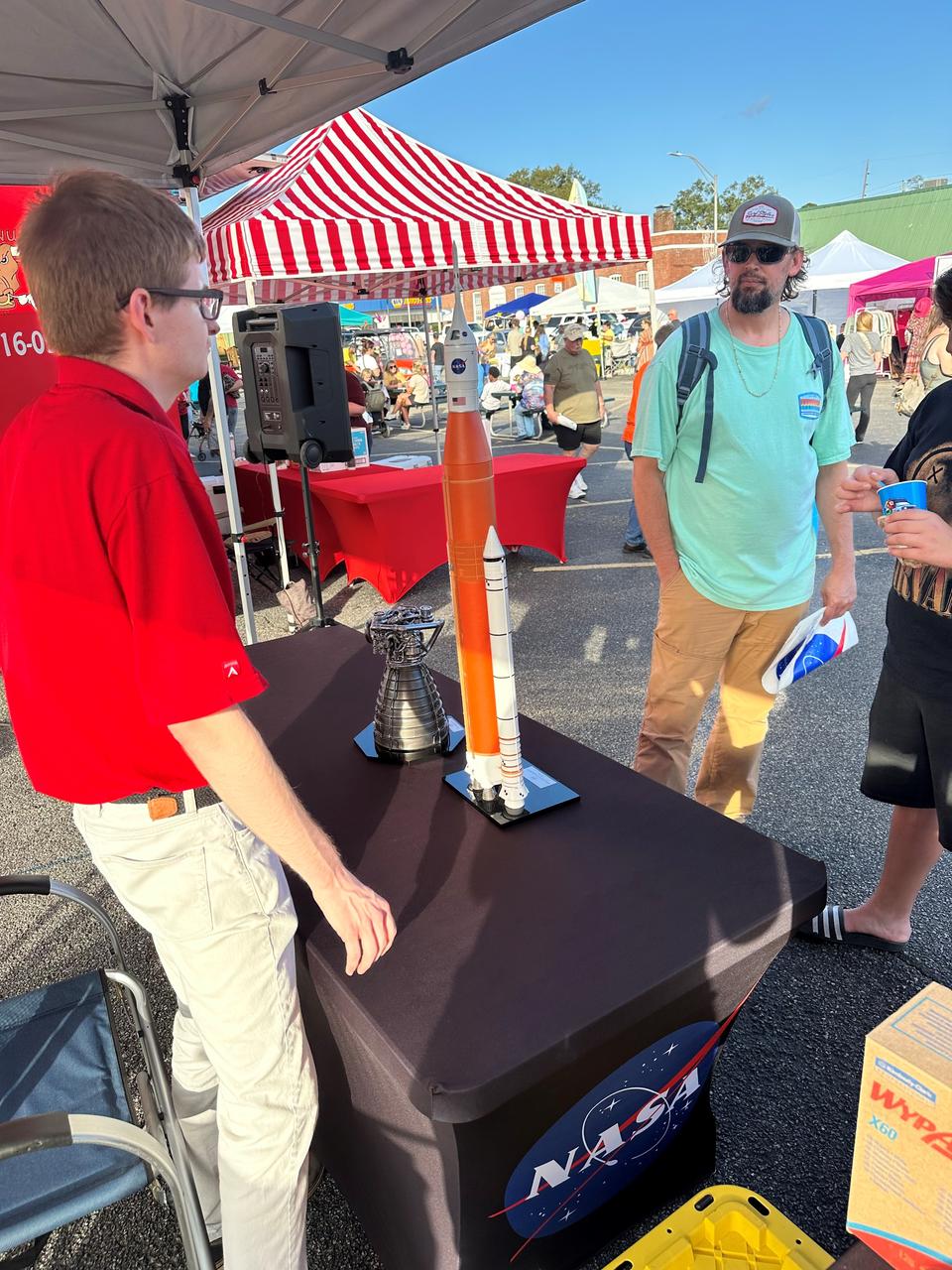
NASA Stennis representatives engage with the Artemis Generation at the Picayune Street Fair in Picayune, Mississippi on Nov. 2-3. The south Mississippi NASA center is located less than 15 miles from Picayune with many employees living in the community. NASA Stennis tests all RS-25 engines to help power NASA’s SLS (Space Launch System) rocket on Artemis missions. The NASA center is also preparing to conduct a full series of tests on the agency’s exploration upper stage to demonstrate it is ready to fly on future Artemis missions. With the Artemis campaign, NASA will land the first woman and the first person of color on the Moon, using innovative technologies to explore more of the lunar surface than ever.

Several concept designs for Artemis crew transportation vehicles (CTV) are lined up at Launch Complex 39B at NASA’s Kennedy Space Center in Florida on May 11, 2022. Canoo Technologies Inc., was awarded a contract to design and provide the next generation of CTVs for the Artemis crewed missions. Representatives with Canoo were at the spaceport demonstrating the environmentally friendly fleet of vehicles. Artemis II will be the first Artemis mission flying crew aboard Orion. In later missions, NASA will land the first woman and the first person of color on the surface of the Moon, paving the way for a long-term lunar presence and serving as a steppingstone on the way to Mars.
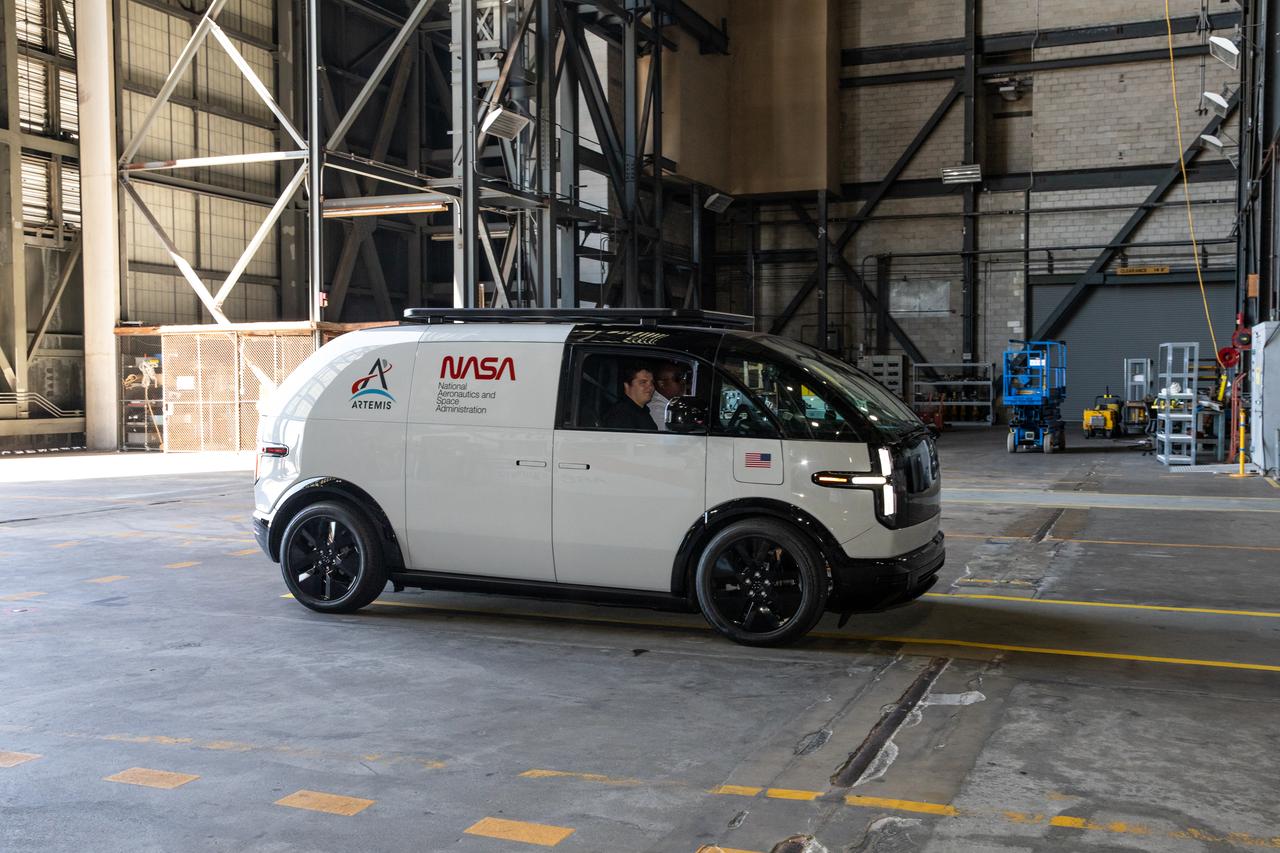
A concept design of a crew transportation vehicle (CTV) for Artemis crewed missions is driven inside the transfer aisle of the Vehicle Assembly Building at NASA’s Kennedy Space Center in Florida on May 11, 2022. Canoo Technologies Inc., was awarded a contract to design and provide the next generation of CTVs for the Artemis crewed missions. Representatives with Canoo were at the spaceport demonstrating the environmentally friendly fleet of vehicles. Artemis II will be the first Artemis mission flying crew aboard Orion. In later missions, NASA will land the first woman and the first person of color on the surface of the Moon, paving the way for a long-term lunar presence and serving as a steppingstone on the way to Mars.
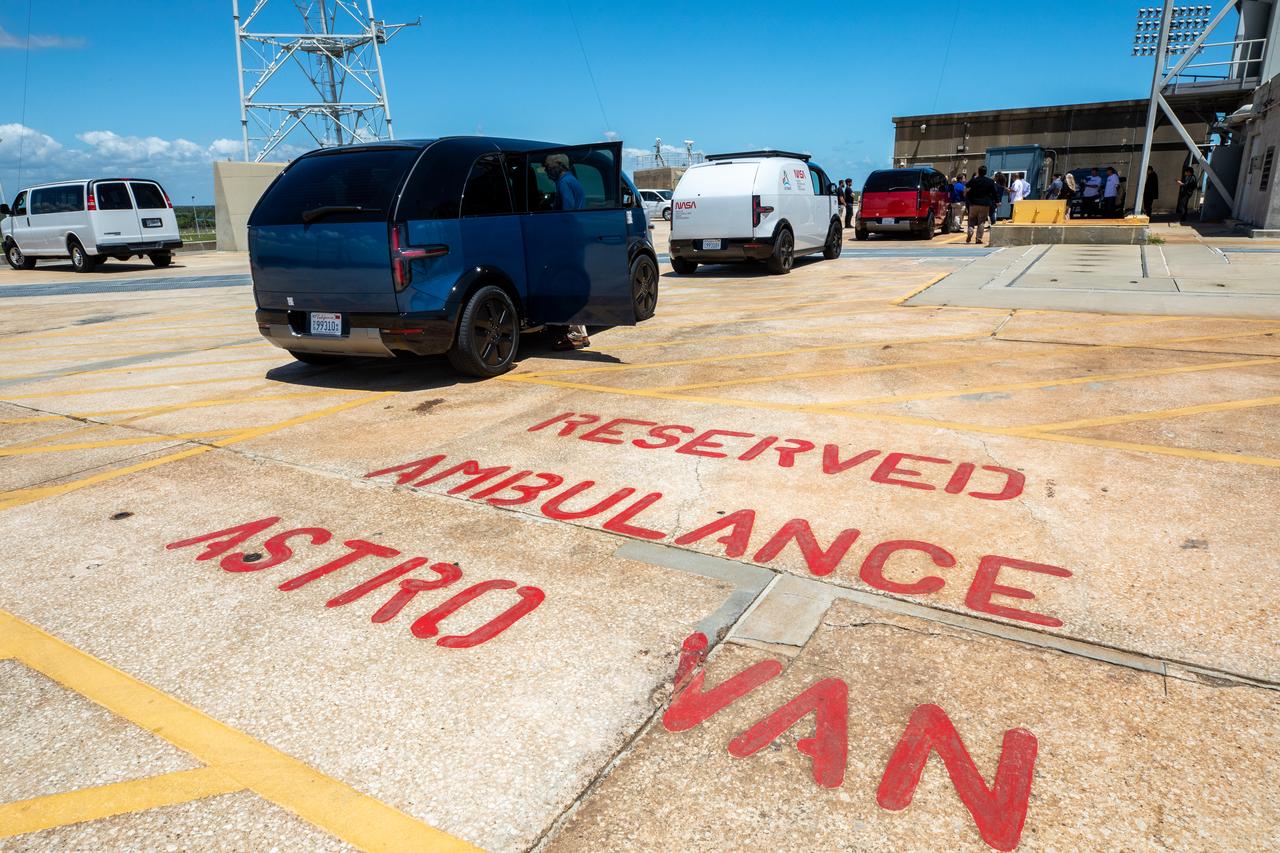
Several concept designs for Artemis crew transportation vehicles (CTV) are lined up at Launch Complex 39B at NASA’s Kennedy Space Center in Florida on May 11, 2022. Canoo Technologies Inc., was awarded a contract to design and provide the next generation of CTVs for the Artemis crewed missions. Representatives with Canoo were at the spaceport demonstrating the environmentally friendly fleet of vehicles. Artemis II will be the first Artemis mission flying crew aboard Orion. In later missions, NASA will land the first woman and the first person of color on the surface of the Moon, paving the way for a long-term lunar presence and serving as a steppingstone on the way to Mars.
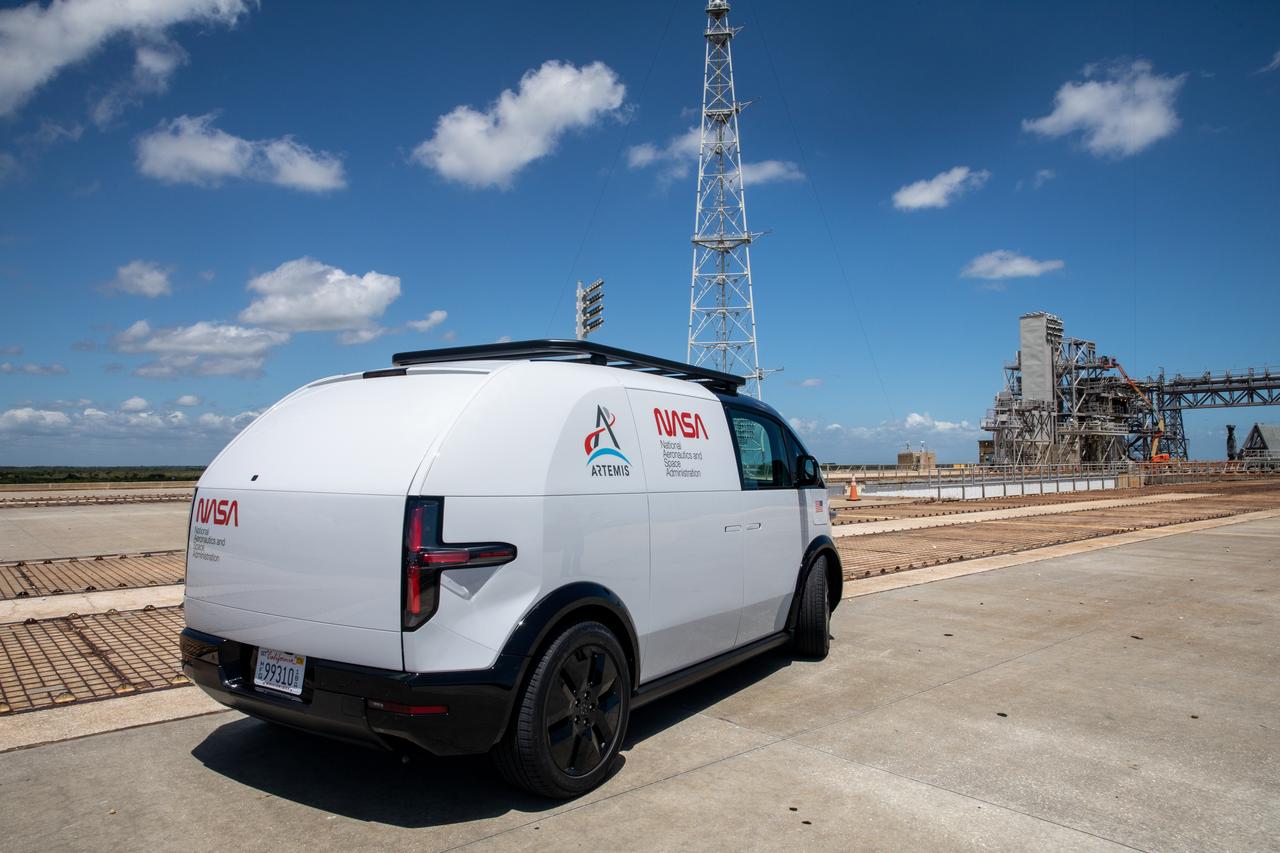
Prototypes of the crew transportation vehicle (CTV) for Artemis crewed missions are driven out to Launch Complex 39B at NASA’s Kennedy Space Center in Florida on May 11, 2022. Canoo Technologies Inc., was awarded a contract to design and provide the next generation of CTVs for the Artemis crewed missions. Representatives with Canoo were at the spaceport demonstrating the environmentally friendly fleet of vehicles. Artemis II will be the first Artemis mission flying crew aboard Orion. In later missions, NASA will land the first woman and the first person of color on the surface of the Moon, paving the way for a long-term lunar presence and serving as a steppingstone on the way to Mars.

Kennedy Space Center Director Janet Petro test drives a concept design crew transportation vehicle (CTV) for Artemis crewed missions on May 11, 2022. Canoo Technologies Inc., was awarded a contract to design and provide the next generation of CTVs for the Artemis crewed missions. Representatives with Canoo were at the spaceport demonstrating the environmentally friendly fleet of vehicles. Artemis II will be the first Artemis mission flying crew aboard Orion. In later missions, NASA will land the first woman and the first person of color on the surface of the Moon, paving the way for a long-term lunar presence and serving as a steppingstone on the way to Mars.