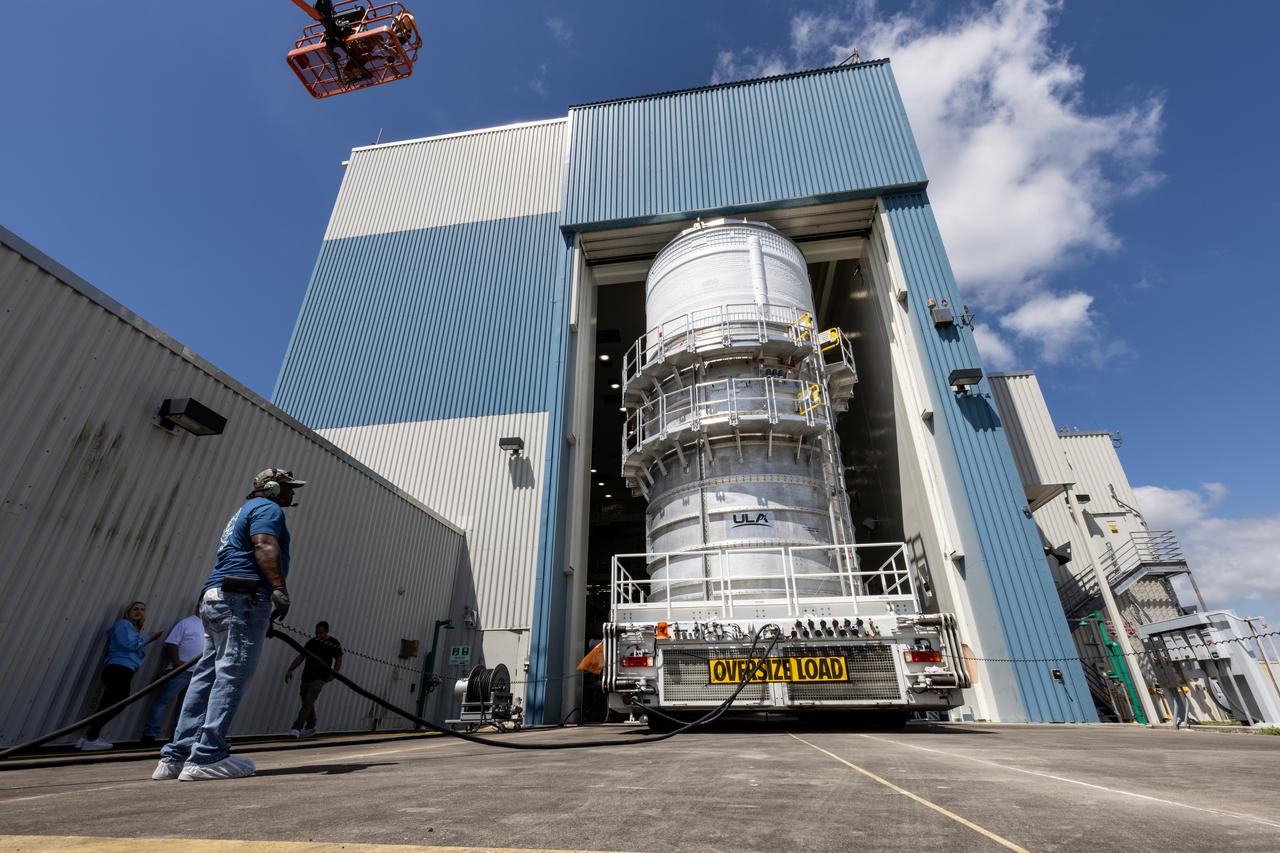
Teams with NASA’s Exploration Ground Systems Program transport the upper stage for the agency’s Artemis II SLS (Space Launch System) rocket from the Multi-Payload Processing Facility (MPPF) at NASA’s Kennedy Space Center in Florida to the spaceport’s Vehicle Assembly Building on Wednesday, April 16, 2025. Technicians fueled the SLS upper stage, known as the interim cryogenic propulsion stage, with hydrazine for its reaction control system at the MPPF and will now integrate the four-story propulsion system with SLS rocket elements atop mobile launcher 1.
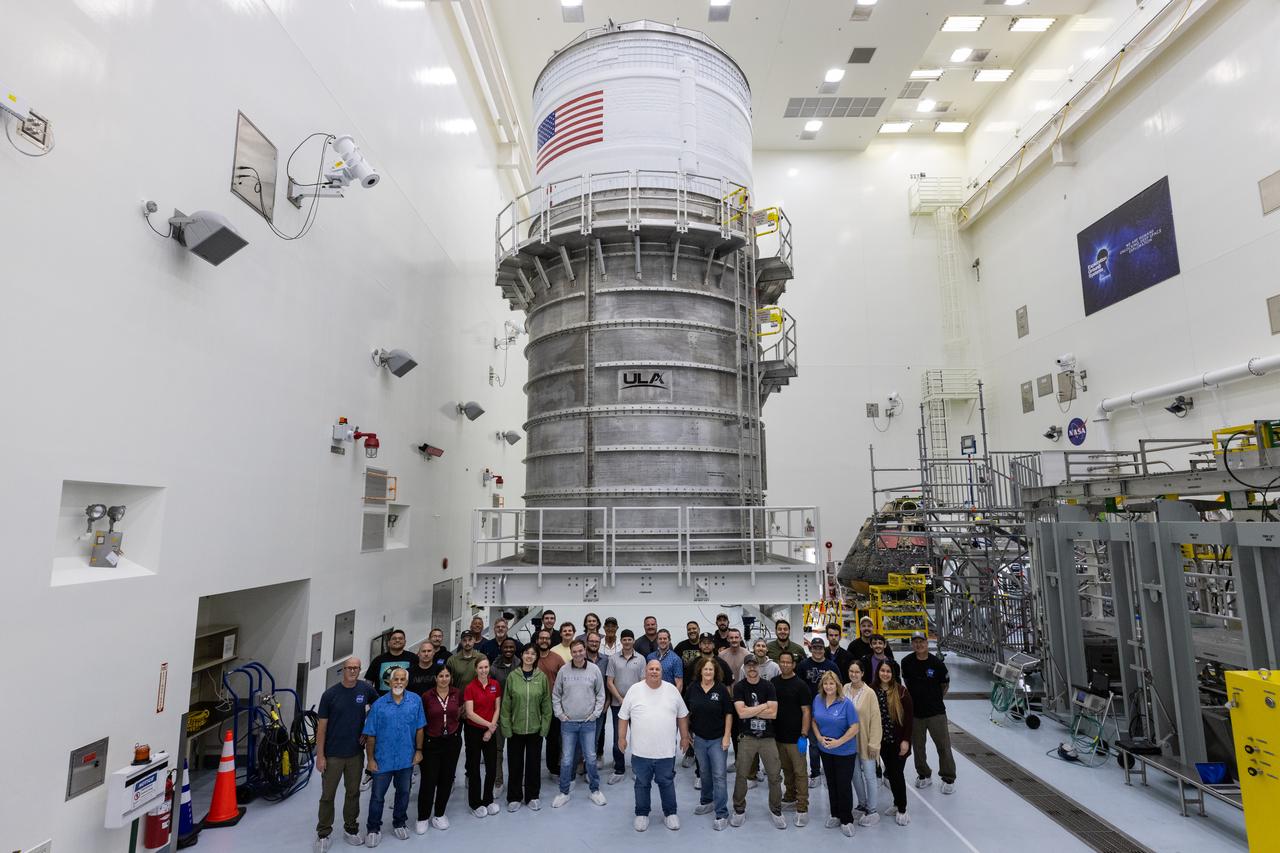
Teams with NASA’s Exploration Ground Systems Program pose for a photo in front of the upper stage for the agency’s Artemis II SLS (Space Launch System) rocket inside the Multi-Payload Processing Facility (MPPF) at NASA’s Kennedy Space Center in Florida on Wednesday, April 16, 2025. Visible in the background is also the Artemis I Orion crew module, now known as the Orion Environmental Test Article (ETA). Technicians fueled the SLS upper stage, known as the interim cryogenic propulsion stage, with hydrazine for its reaction control system at the MPPF before its transportation to the spaceport’s Vehicle Assembly Building and will now integrate the four-story propulsion system with SLS rocket elements atop mobile launcher 1.
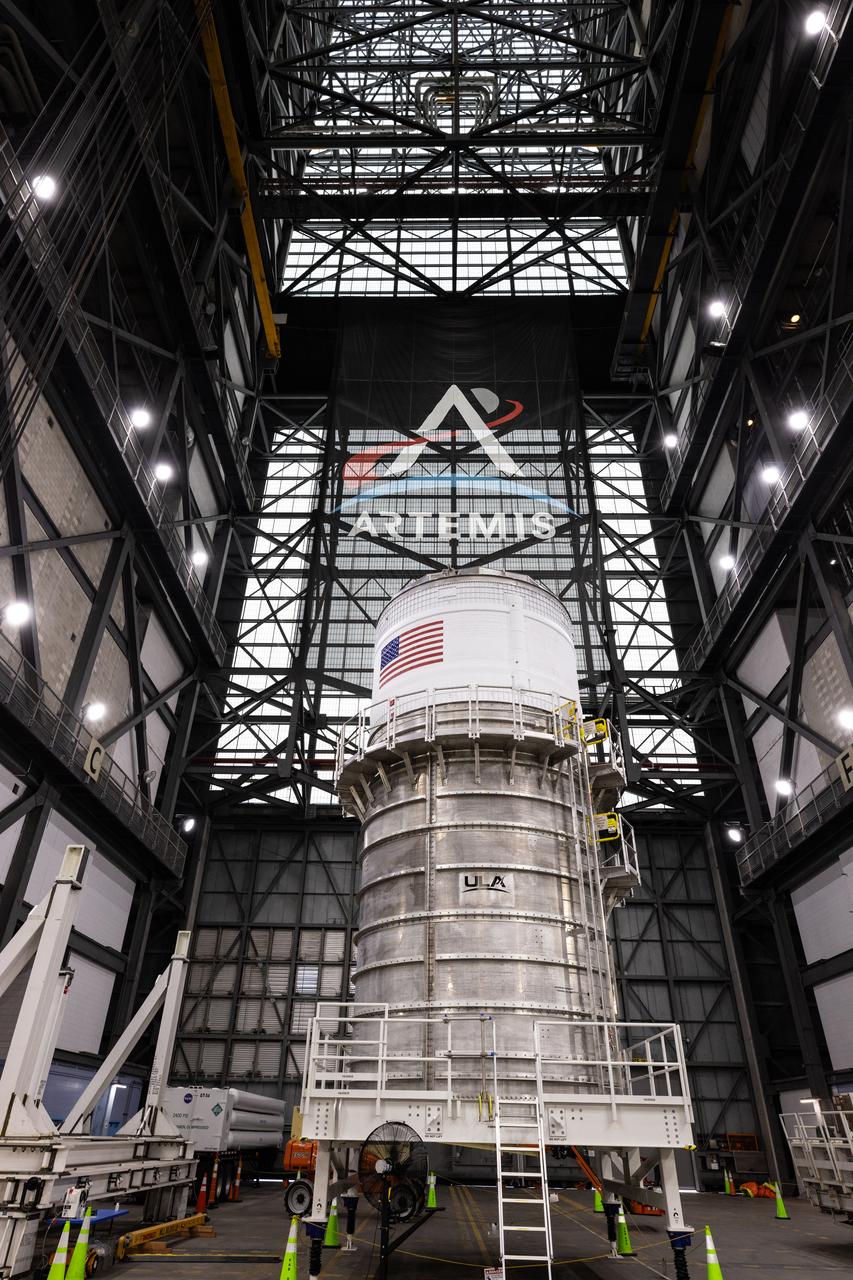
The upper stage for NASA’s Artemis II SLS (Space Launch System) rocket sits in the transfer aisle of the Vehicle Assembly Building at NASA’s Kennedy Space Center in Florida on Wednesday, April 16, 2025, after teams with the agency’s Exploration Ground Systems Program transported the four-story propulsion system from the spaceport’s Multi-Payload Processing Facility (MPPF). Technicians fueled the SLS upper stage, known as the interim cryogenic propulsion stage, with hydrazine for its reaction control system at the MPPF and will now integrate the four-story propulsion system with SLS rocket elements atop mobile launcher 1.
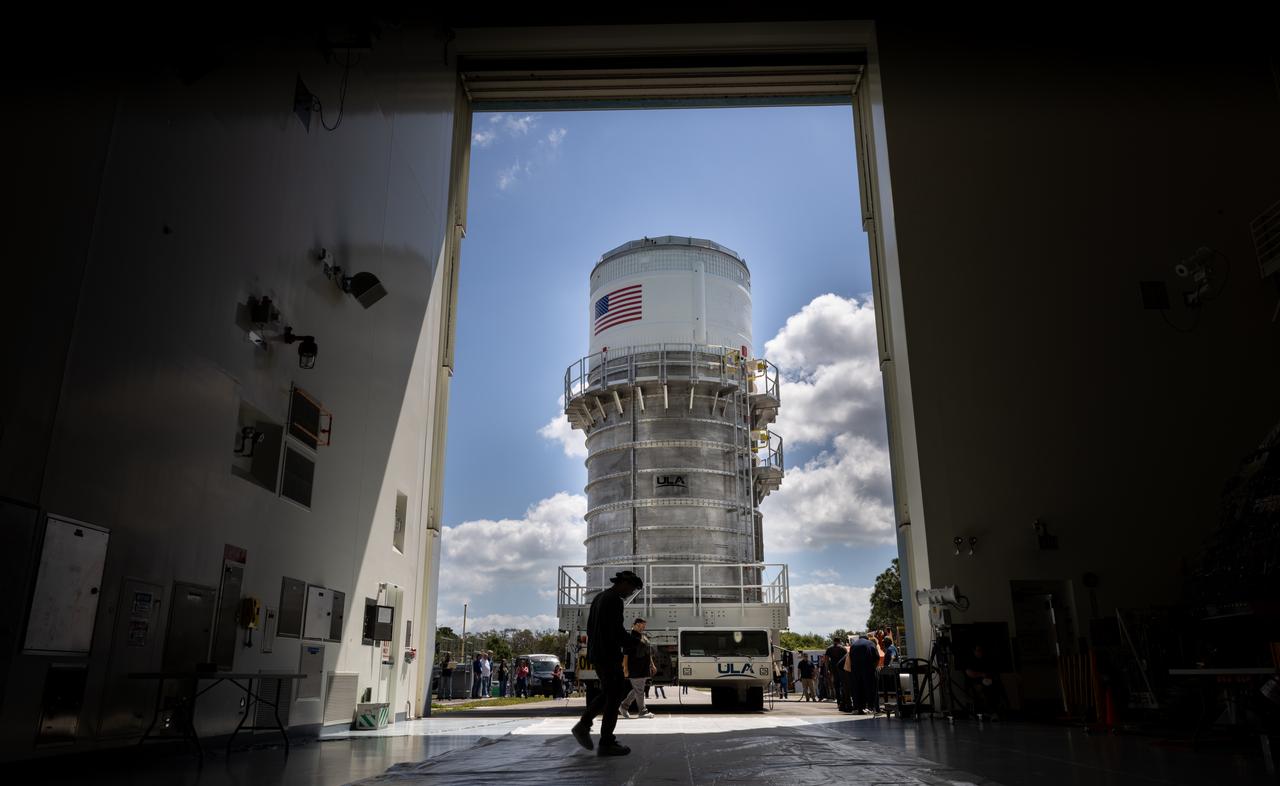
Teams with NASA’s Exploration Ground Systems Program transport the upper stage for the agency’s Artemis II SLS (Space Launch System) rocket from the Multi-Payload Processing Facility (MPPF) at NASA’s Kennedy Space Center in Florida to the spaceport’s Vehicle Assembly Building on Wednesday, April 16, 2025. Technicians fueled the SLS upper stage, known as the interim cryogenic propulsion stage, with hydrazine for its reaction control system at the MPPF and will now integrate the four-story propulsion system with SLS rocket elements atop mobile launcher 1.
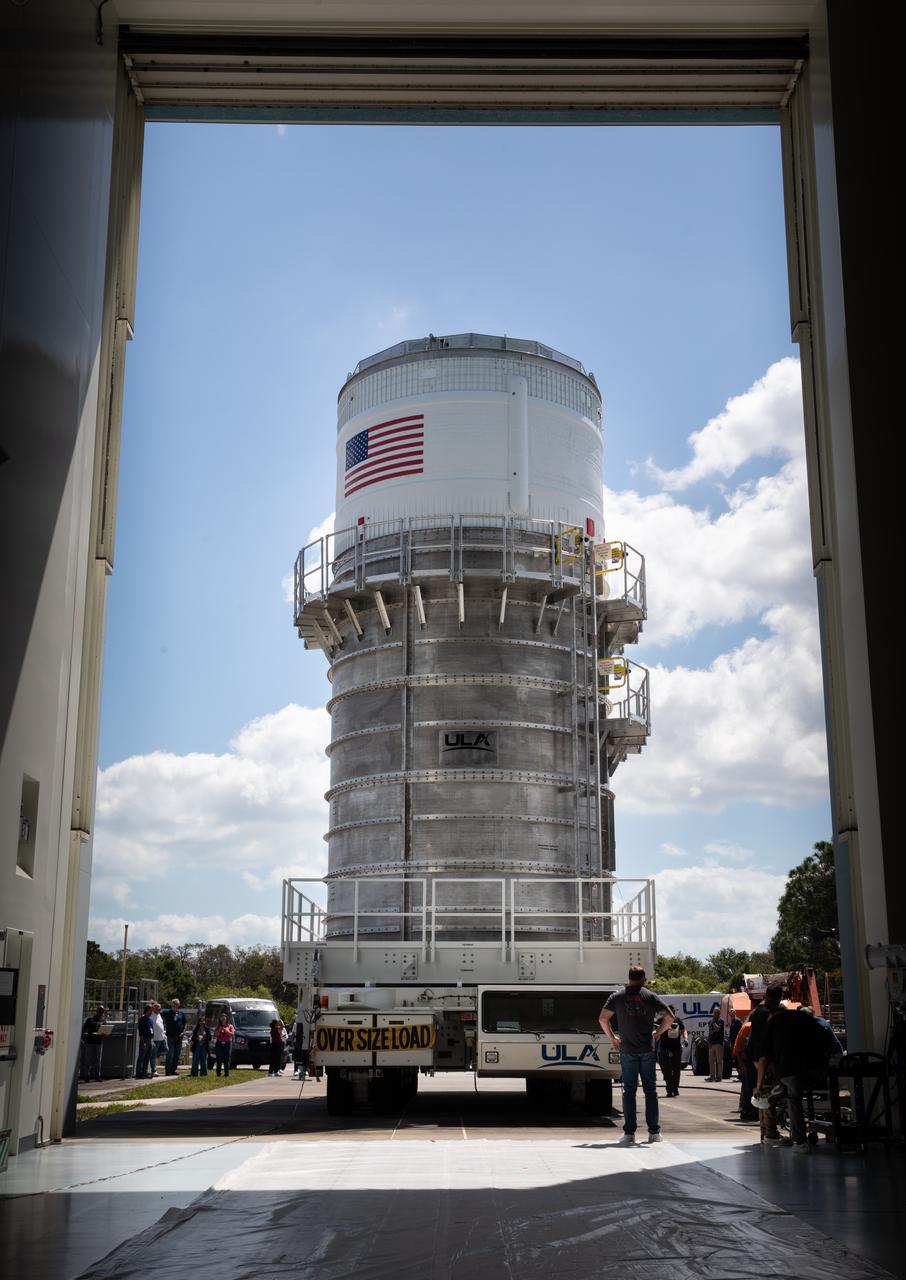
Teams with NASA’s Exploration Ground Systems Program transport the upper stage for the agency’s Artemis II SLS (Space Launch System) rocket from the Multi-Payload Processing Facility (MPPF) at NASA’s Kennedy Space Center in Florida to the spaceport’s Vehicle Assembly Building on Wednesday, April 16, 2025. Technicians fueled the SLS upper stage, known as the interim cryogenic propulsion stage, with hydrazine for its reaction control system at the MPPF and will now integrate the four-story propulsion system with SLS rocket elements atop mobile launcher 1.
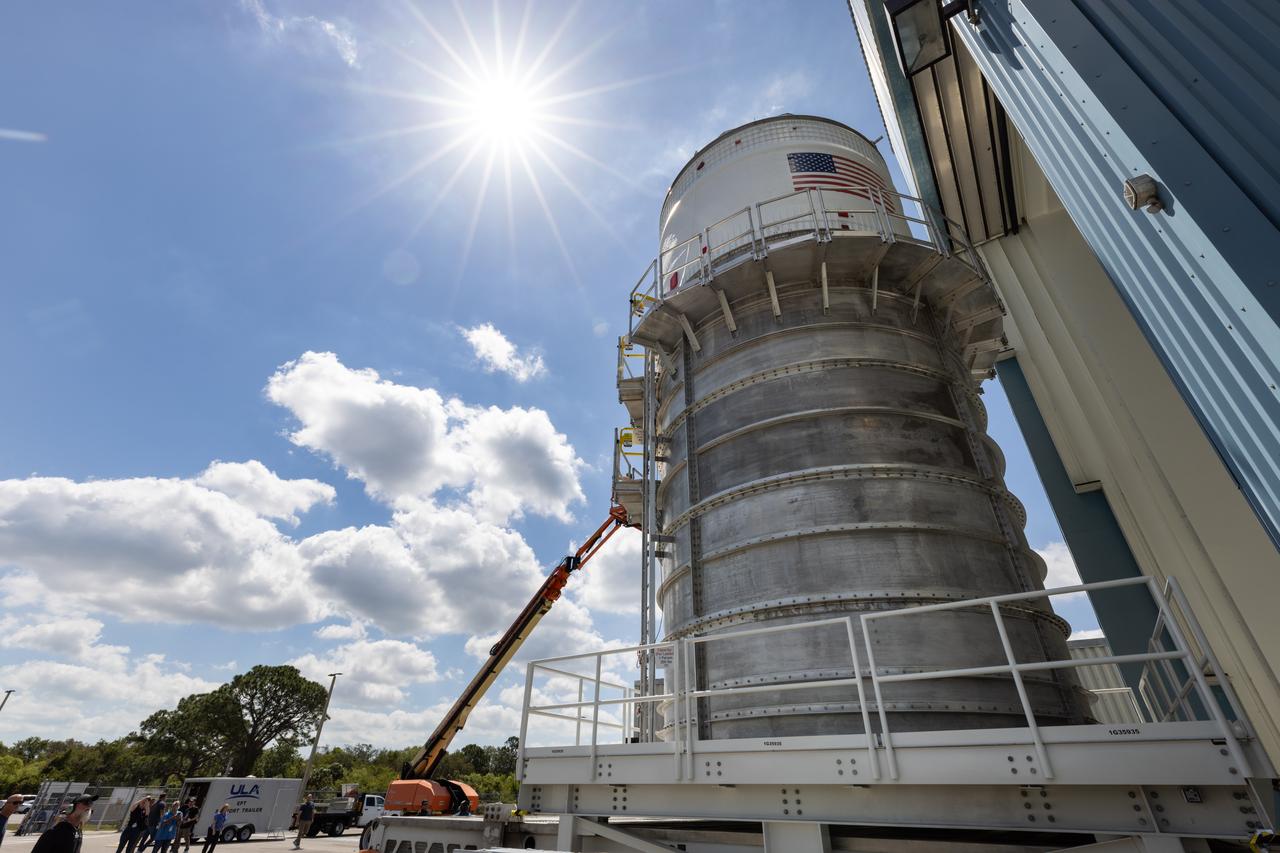
Teams with NASA’s Exploration Ground Systems Program transport the upper stage for the agency’s Artemis II SLS (Space Launch System) rocket from the Multi-Payload Processing Facility (MPPF) at NASA’s Kennedy Space Center in Florida to the spaceport’s Vehicle Assembly Building on Wednesday, April 16, 2025. Technicians fueled the SLS upper stage, known as the interim cryogenic propulsion stage, with hydrazine for its reaction control system at the MPPF and will now integrate the four-story propulsion system with SLS rocket elements atop mobile launcher 1.
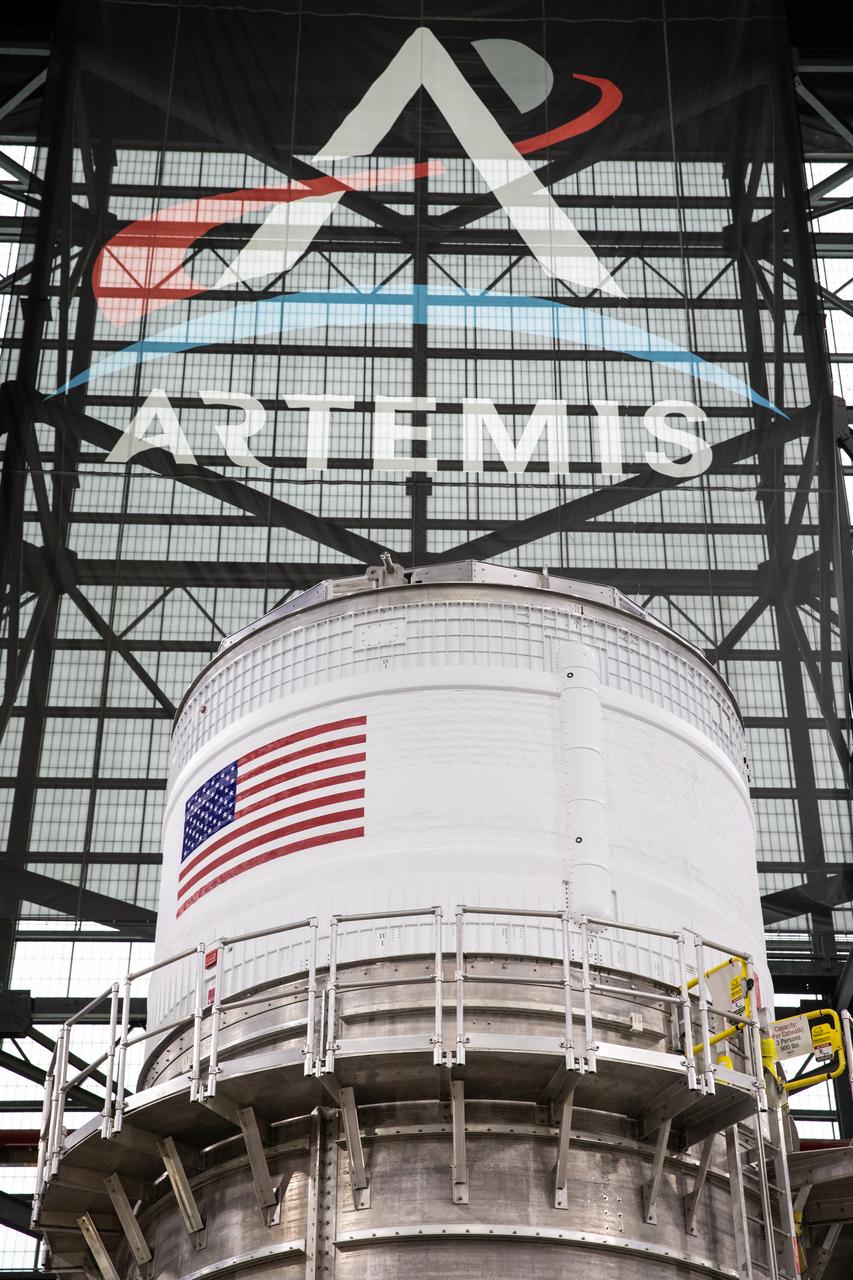
The upper stage for NASA’s Artemis II SLS (Space Launch System) rocket sits in the transfer aisle of the Vehicle Assembly Building at NASA’s Kennedy Space Center in Florida on Wednesday, April 16, 2025, after teams with the agency’s Exploration Ground Systems Program transported the four-story propulsion system from the spaceport’s Multi-Payload Processing Facility (MPPF). Technicians fueled the SLS upper stage, known as the interim cryogenic propulsion stage, with hydrazine for its reaction control system at the MPPF and will now integrate the four-story propulsion system with SLS rocket elements atop mobile launcher 1.
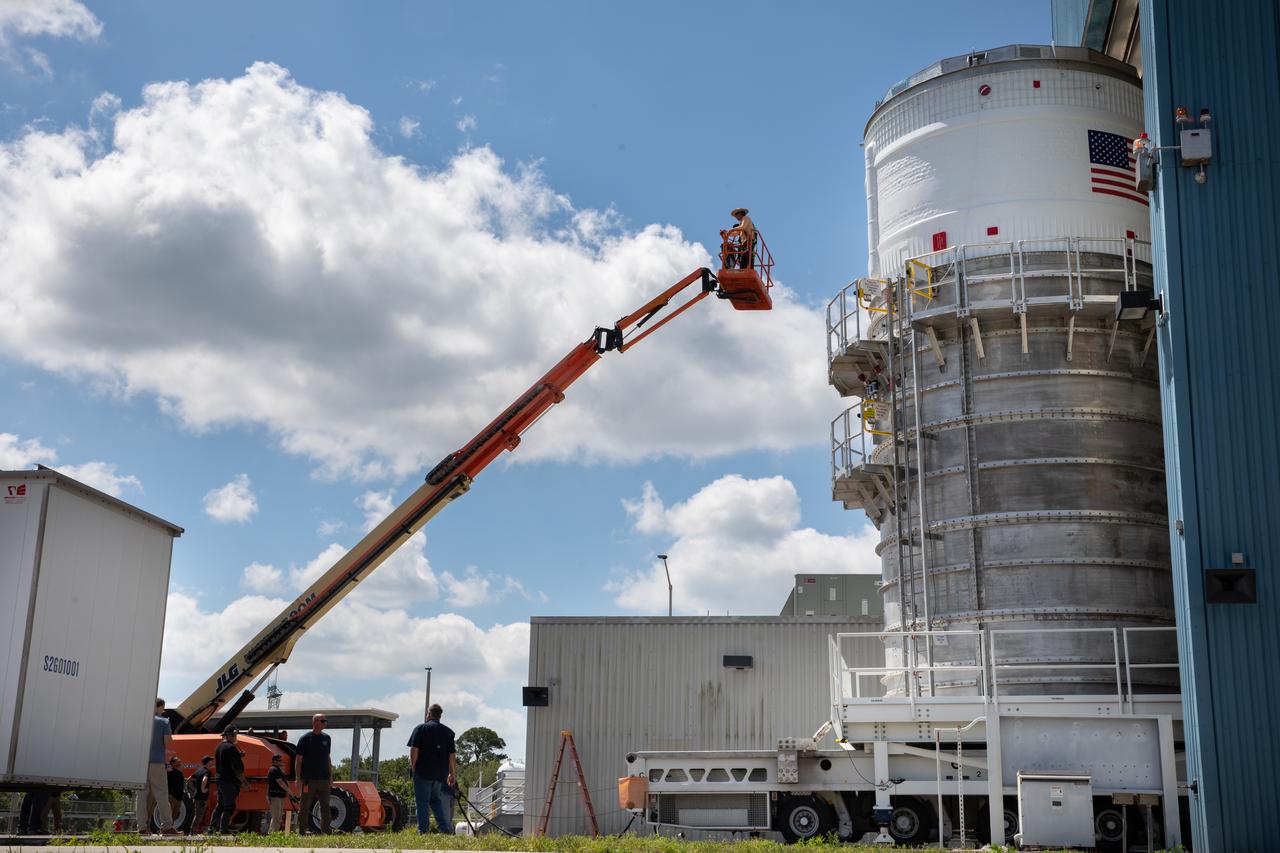
Teams with NASA’s Exploration Ground Systems Program transport the upper stage for the agency’s Artemis II SLS (Space Launch System) rocket from the Multi-Payload Processing Facility (MPPF) at NASA’s Kennedy Space Center in Florida to the spaceport’s Vehicle Assembly Building on Wednesday, April 16, 2025. Technicians fueled the SLS upper stage, known as the interim cryogenic propulsion stage, with hydrazine for its reaction control system at the MPPF and will now integrate the four-story propulsion system with SLS rocket elements atop mobile launcher 1.
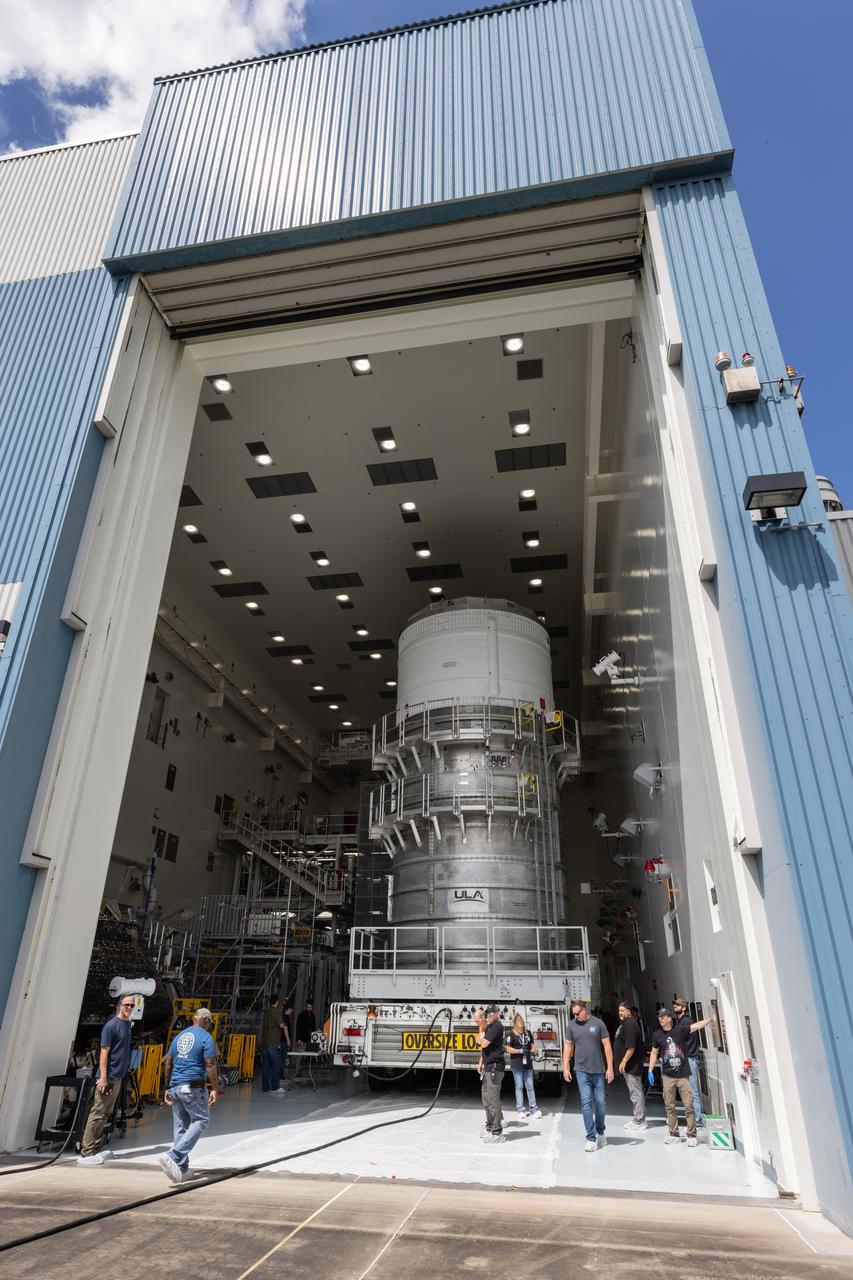
Teams with NASA’s Exploration Ground Systems Program transport the upper stage for the agency’s Artemis II SLS (Space Launch System) rocket from the Multi-Payload Processing Facility (MPPF) at NASA’s Kennedy Space Center in Florida to the spaceport’s Vehicle Assembly Building on Wednesday, April 16, 2025. Technicians fueled the SLS upper stage, known as the interim cryogenic propulsion stage, with hydrazine for its reaction control system at the MPPF and will now integrate the four-story propulsion system with SLS rocket elements atop mobile launcher 1.
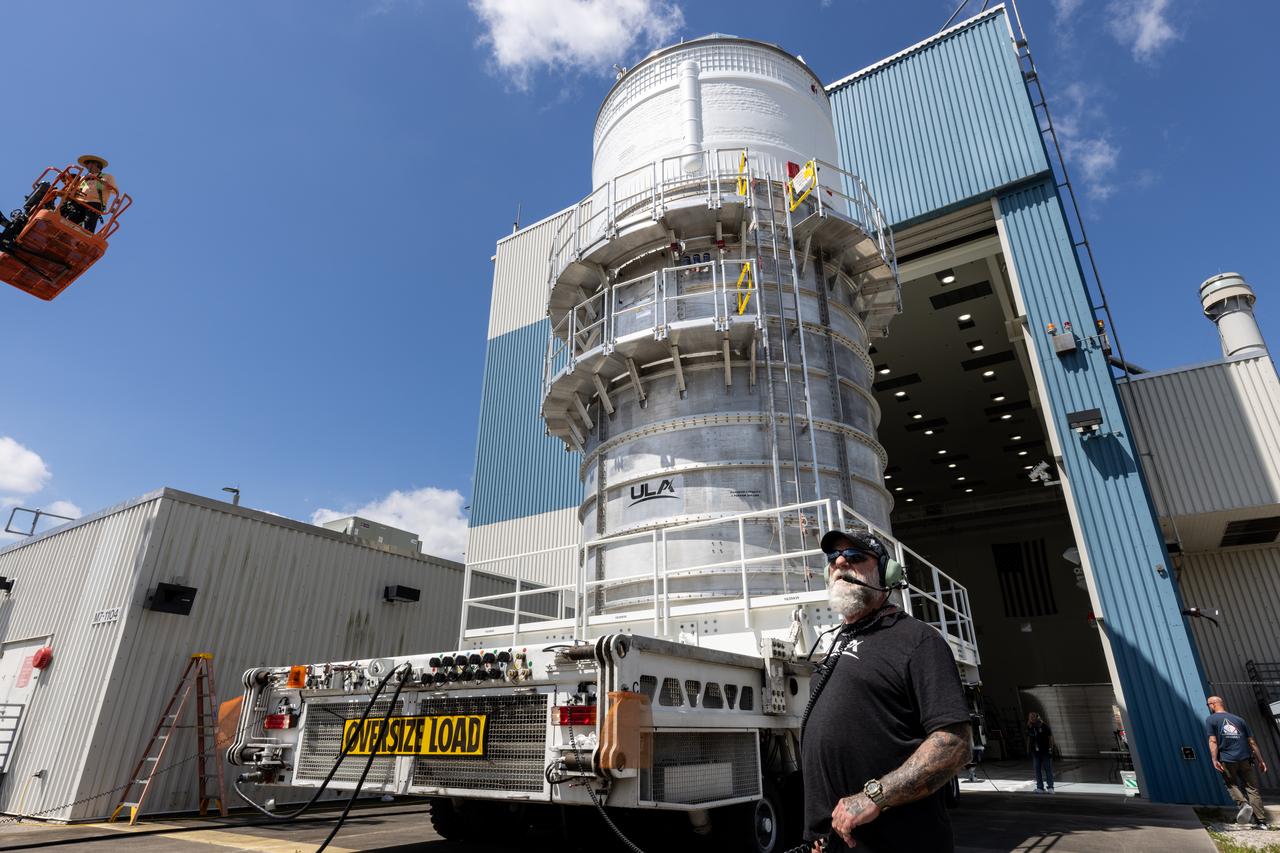
Teams with NASA’s Exploration Ground Systems Program transport the upper stage for the agency’s Artemis II SLS (Space Launch System) rocket from the Multi-Payload Processing Facility (MPPF) at NASA’s Kennedy Space Center in Florida to the spaceport’s Vehicle Assembly Building on Wednesday, April 16, 2025. Technicians fueled the SLS upper stage, known as the interim cryogenic propulsion stage, with hydrazine for its reaction control system at the MPPF and will now integrate the four-story propulsion system with SLS rocket elements atop mobile launcher 1.
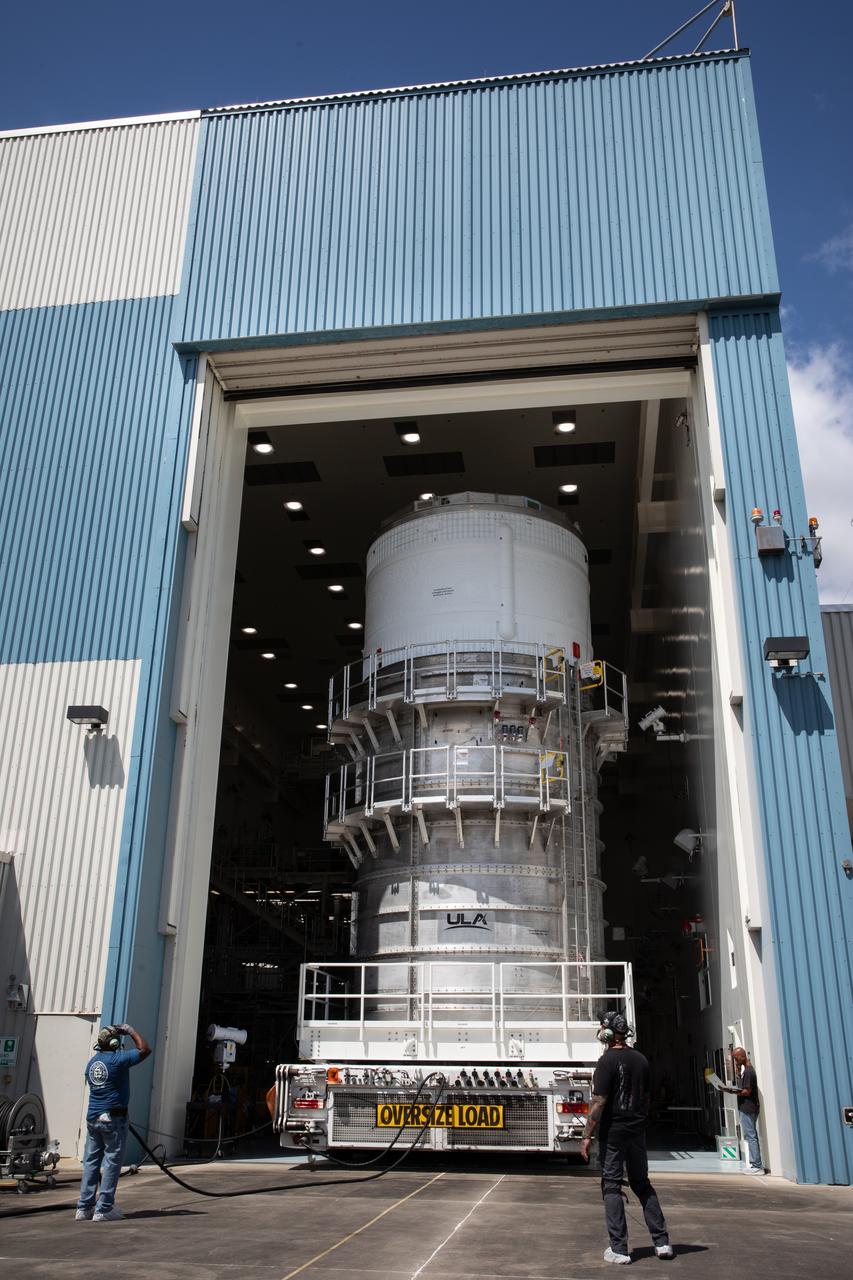
Teams with NASA’s Exploration Ground Systems Program transport the upper stage for the agency’s Artemis II SLS (Space Launch System) rocket from the Multi-Payload Processing Facility (MPPF) at NASA’s Kennedy Space Center in Florida to the spaceport’s Vehicle Assembly Building on Wednesday, April 16, 2025. Technicians fueled the SLS upper stage, known as the interim cryogenic propulsion stage, with hydrazine for its reaction control system at the MPPF and will now integrate the four-story propulsion system with SLS rocket elements atop mobile launcher 1.
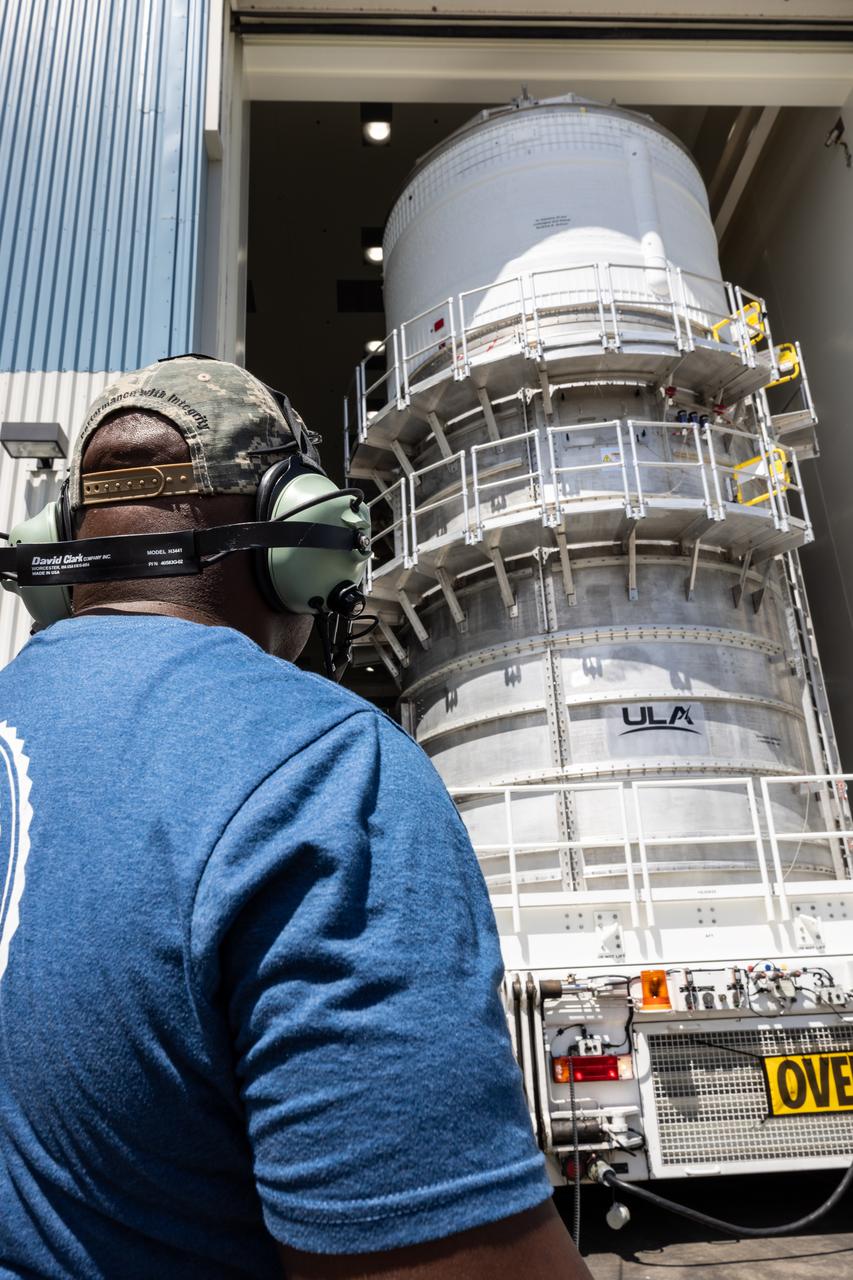
Teams with NASA’s Exploration Ground Systems Program transport the upper stage for the agency’s Artemis II SLS (Space Launch System) rocket from the Multi-Payload Processing Facility (MPPF) at NASA’s Kennedy Space Center in Florida to the spaceport’s Vehicle Assembly Building on Wednesday, April 16, 2025. Technicians fueled the SLS upper stage, known as the interim cryogenic propulsion stage, with hydrazine for its reaction control system at the MPPF and will now integrate the four-story propulsion system with SLS rocket elements atop mobile launcher 1.
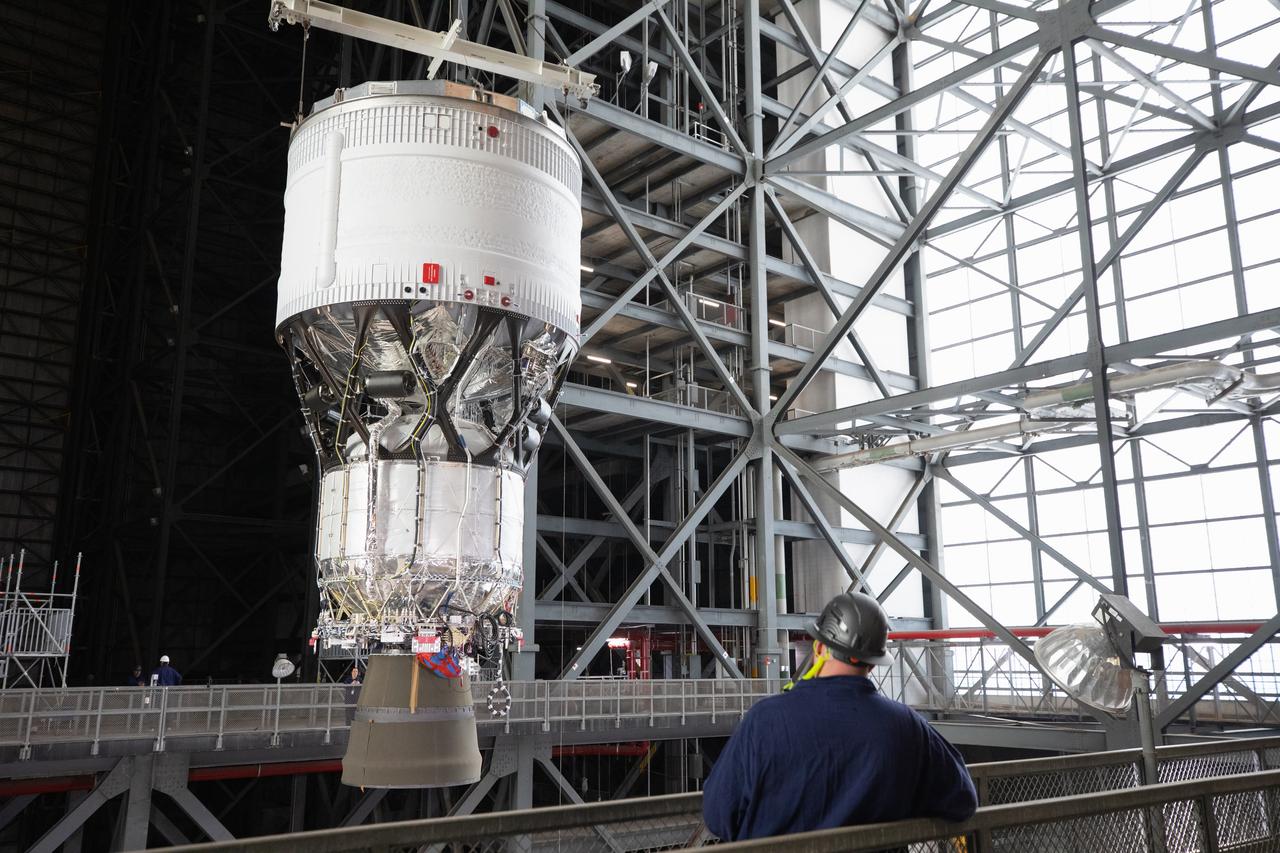
Teams with NASA’s Exploration Ground Systems Program begin integrating the interim cryogenic propulsion stage to the SLS (Space Launch System) launch vehicle stage adapter on Wednesday, April 30, 2025, inside the Vehicle Assembly Building at NASA’s Kennedy Space Center in Florida. The four-story propulsion system, built by Boeing and ULA (United Launch Alliance), is powered by an RL10 engine that will enable the Orion spacecraft to build up enough speed for the push toward the Moon during the Artemis II crewed test flight.
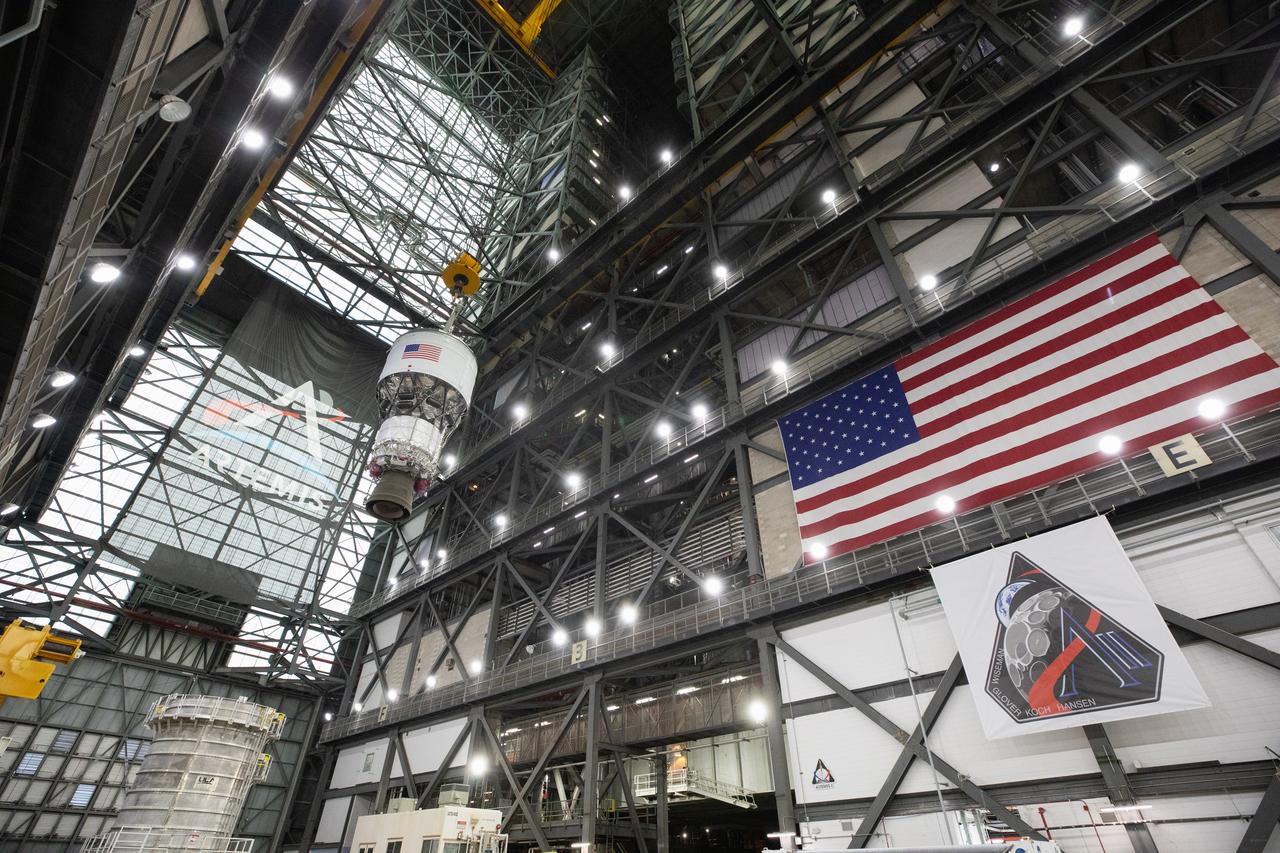
Teams with NASA’s Exploration Ground Systems Program begin integrating the interim cryogenic propulsion stage to the SLS (Space Launch System) launch vehicle stage adapter on Wednesday, April 30, 2025, inside the Vehicle Assembly Building at NASA’s Kennedy Space Center in Florida. The four-story propulsion system, built by Boeing and ULA (United Launch Alliance), is powered by an RL10 engine that will enable the Orion spacecraft to build up enough speed for the push toward the Moon during the Artemis II crewed test flight.
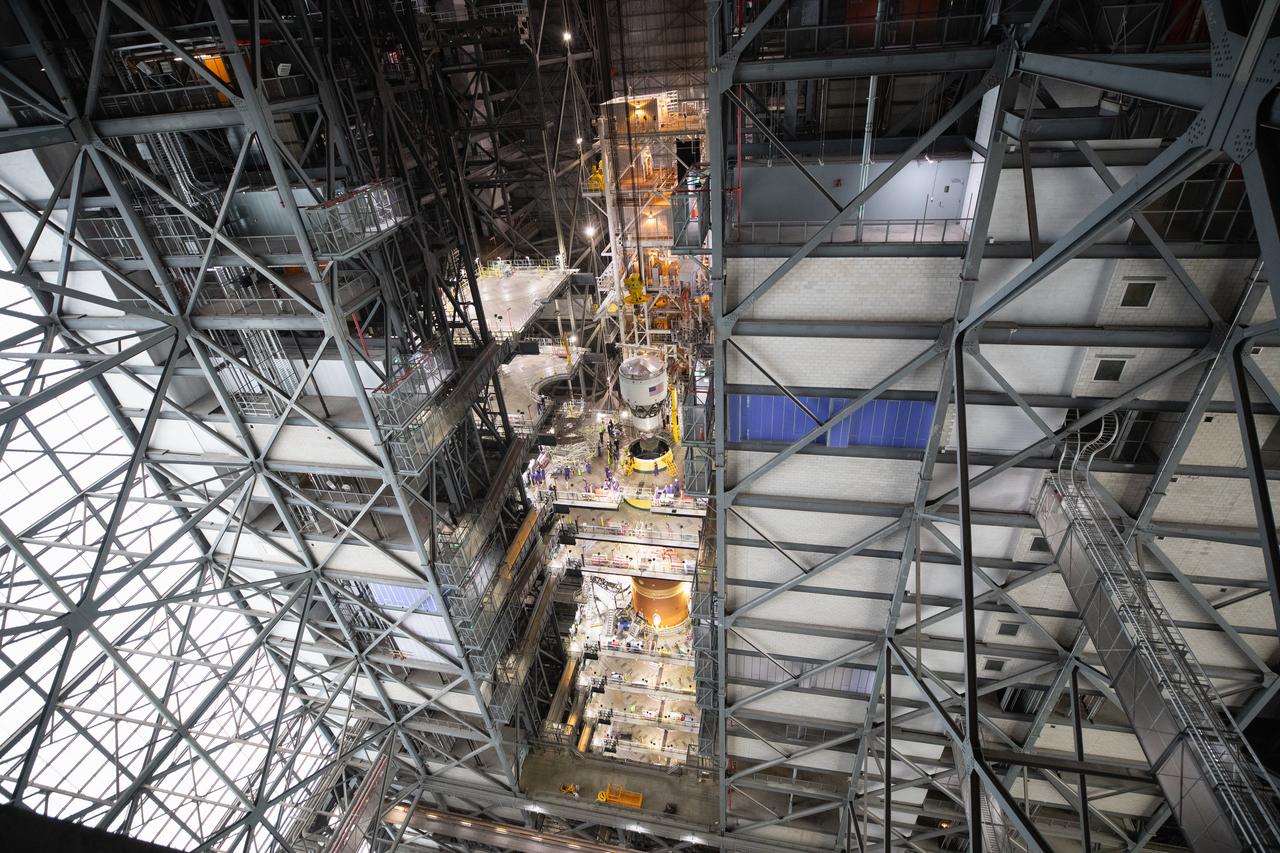
Teams with NASA’s Exploration Ground Systems Program begin integrating the interim cryogenic propulsion stage to the SLS (Space Launch System) launch vehicle stage adapter on Wednesday, April 30, 2025, inside the Vehicle Assembly Building at NASA’s Kennedy Space Center in Florida. The four-story propulsion system, built by Boeing and ULA (United Launch Alliance), is powered by an RL10 engine that will enable the Orion spacecraft to build up enough speed for the push toward the Moon during the Artemis II crewed test flight.
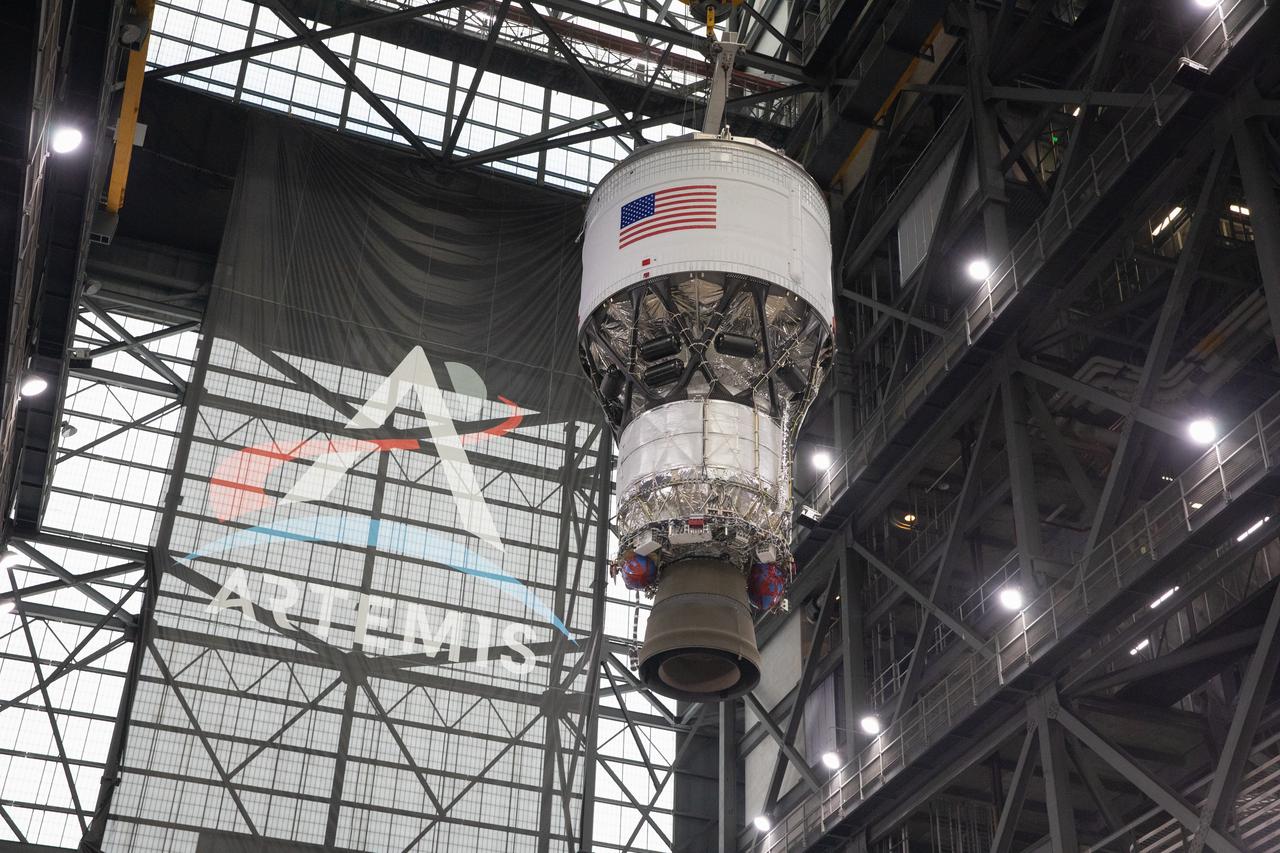
Teams with NASA’s Exploration Ground Systems Program begin integrating the interim cryogenic propulsion stage to the SLS (Space Launch System) launch vehicle stage adapter on Wednesday, April 30, 2025, inside the Vehicle Assembly Building at NASA’s Kennedy Space Center in Florida. The four-story propulsion system, built by Boeing and ULA (United Launch Alliance), is powered by an RL10 engine that will enable the Orion spacecraft to build up enough speed for the push toward the Moon during the Artemis II crewed test flight.
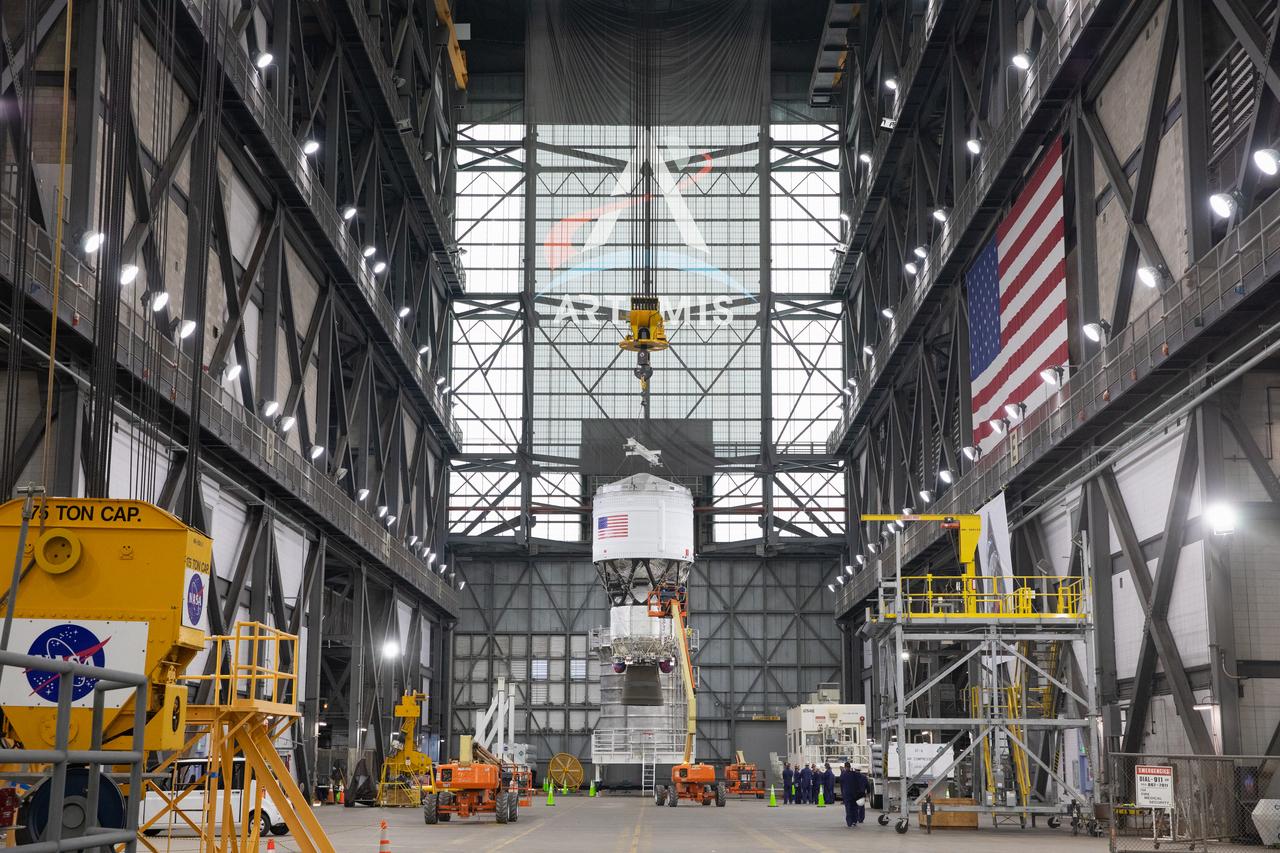
Teams with NASA’s Exploration Ground Systems Program begin integrating the interim cryogenic propulsion stage to the SLS (Space Launch System) launch vehicle stage adapter on Wednesday, April 30, 2025, inside the Vehicle Assembly Building at NASA’s Kennedy Space Center in Florida. The four-story propulsion system, built by Boeing and ULA (United Launch Alliance), is powered by an RL10 engine that will enable the Orion spacecraft to build up enough speed for the push toward the Moon during the Artemis II crewed test flight.
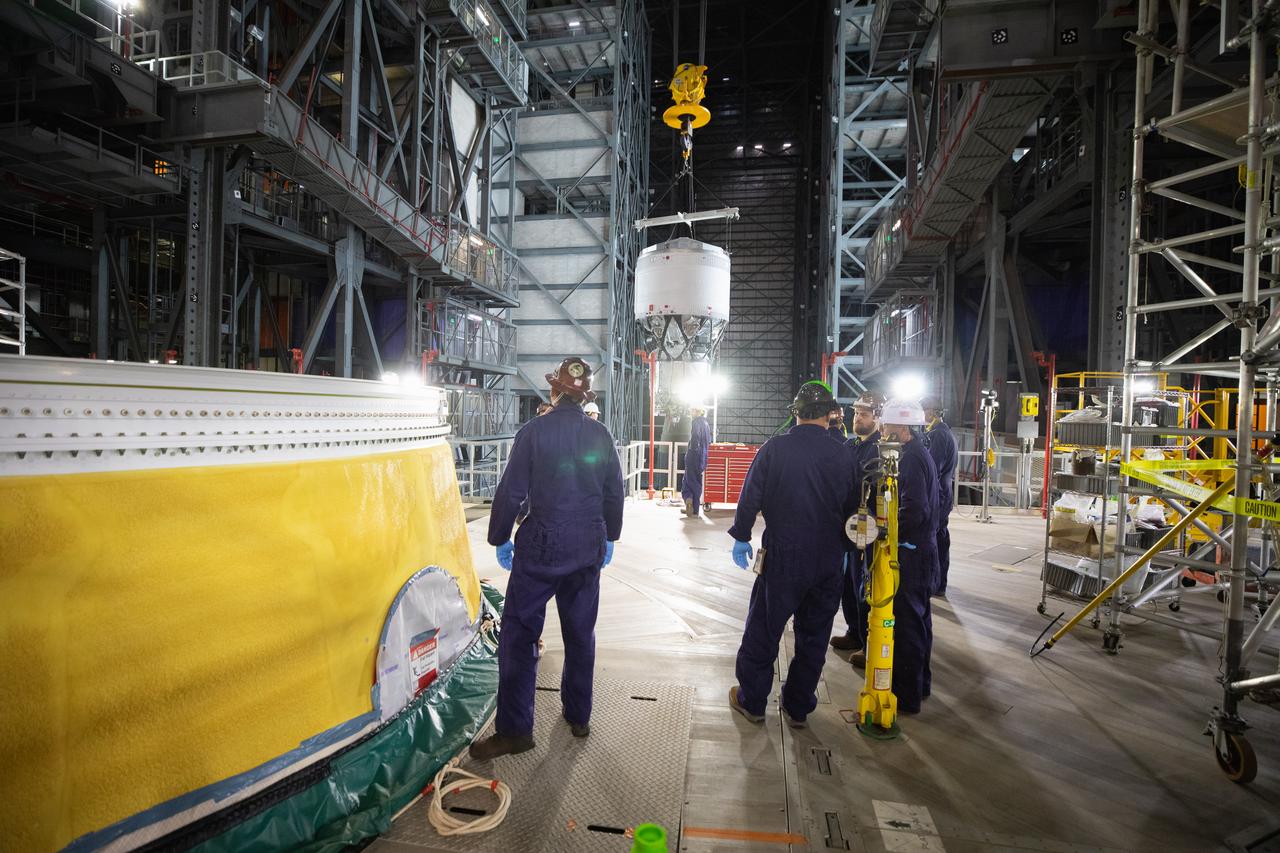
Teams with NASA’s Exploration Ground Systems Program begin integrating the interim cryogenic propulsion stage to the SLS (Space Launch System) launch vehicle stage adapter on Wednesday, April 30, 2025, inside the Vehicle Assembly Building at NASA’s Kennedy Space Center in Florida. The four-story propulsion system, built by Boeing and ULA (United Launch Alliance), is powered by an RL10 engine that will enable the Orion spacecraft to build up enough speed for the push toward the Moon during the Artemis II crewed test flight.
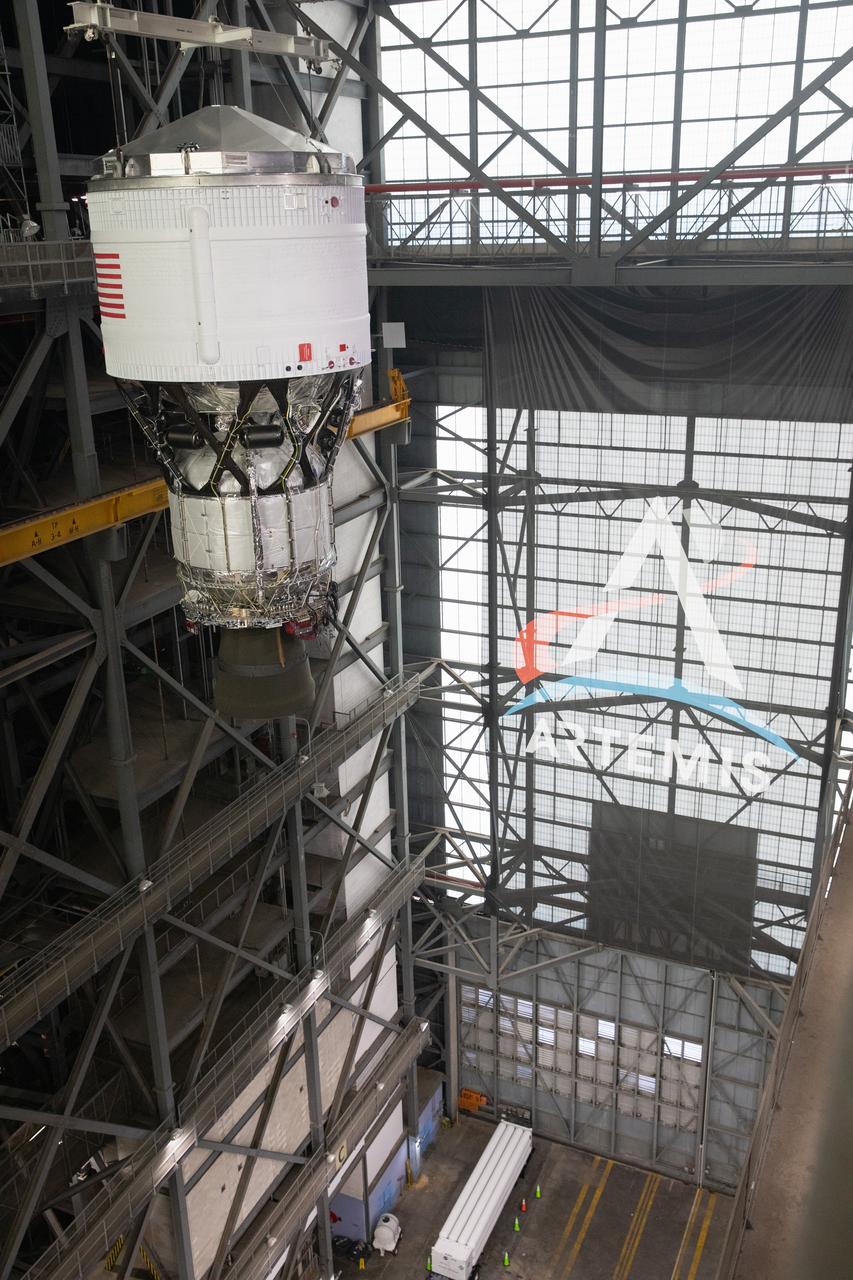
Teams with NASA’s Exploration Ground Systems Program begin integrating the interim cryogenic propulsion stage to the SLS (Space Launch System) launch vehicle stage adapter on Wednesday, April 30, 2025, inside the Vehicle Assembly Building at NASA’s Kennedy Space Center in Florida. The four-story propulsion system, built by Boeing and ULA (United Launch Alliance), is powered by an RL10 engine that will enable the Orion spacecraft to build up enough speed for the push toward the Moon during the Artemis II crewed test flight.
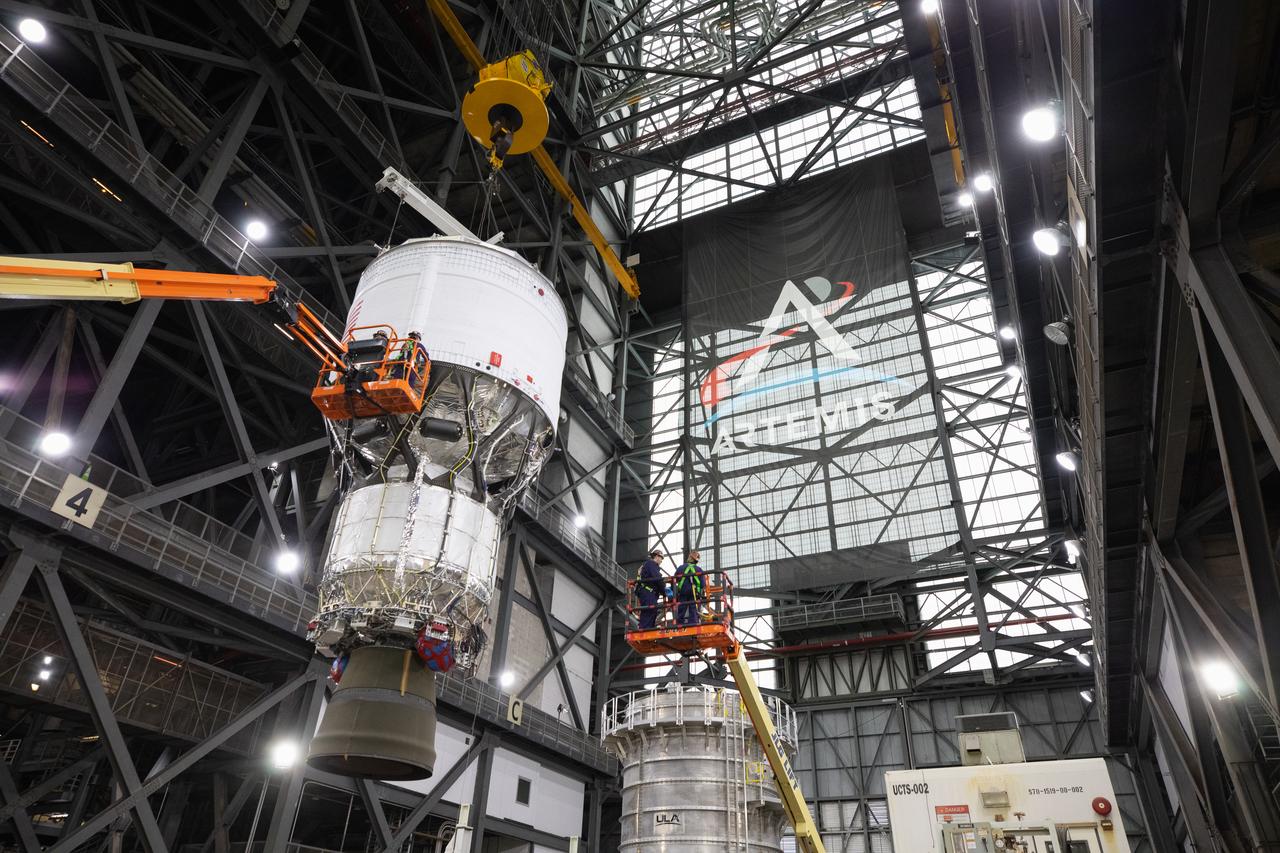
Teams with NASA’s Exploration Ground Systems Program begin integrating the interim cryogenic propulsion stage to the SLS (Space Launch System) launch vehicle stage adapter on Wednesday, April 30, 2025, inside the Vehicle Assembly Building at NASA’s Kennedy Space Center in Florida. The four-story propulsion system, built by Boeing and ULA (United Launch Alliance), is powered by an RL10 engine that will enable the Orion spacecraft to build up enough speed for the push toward the Moon during the Artemis II crewed test flight.
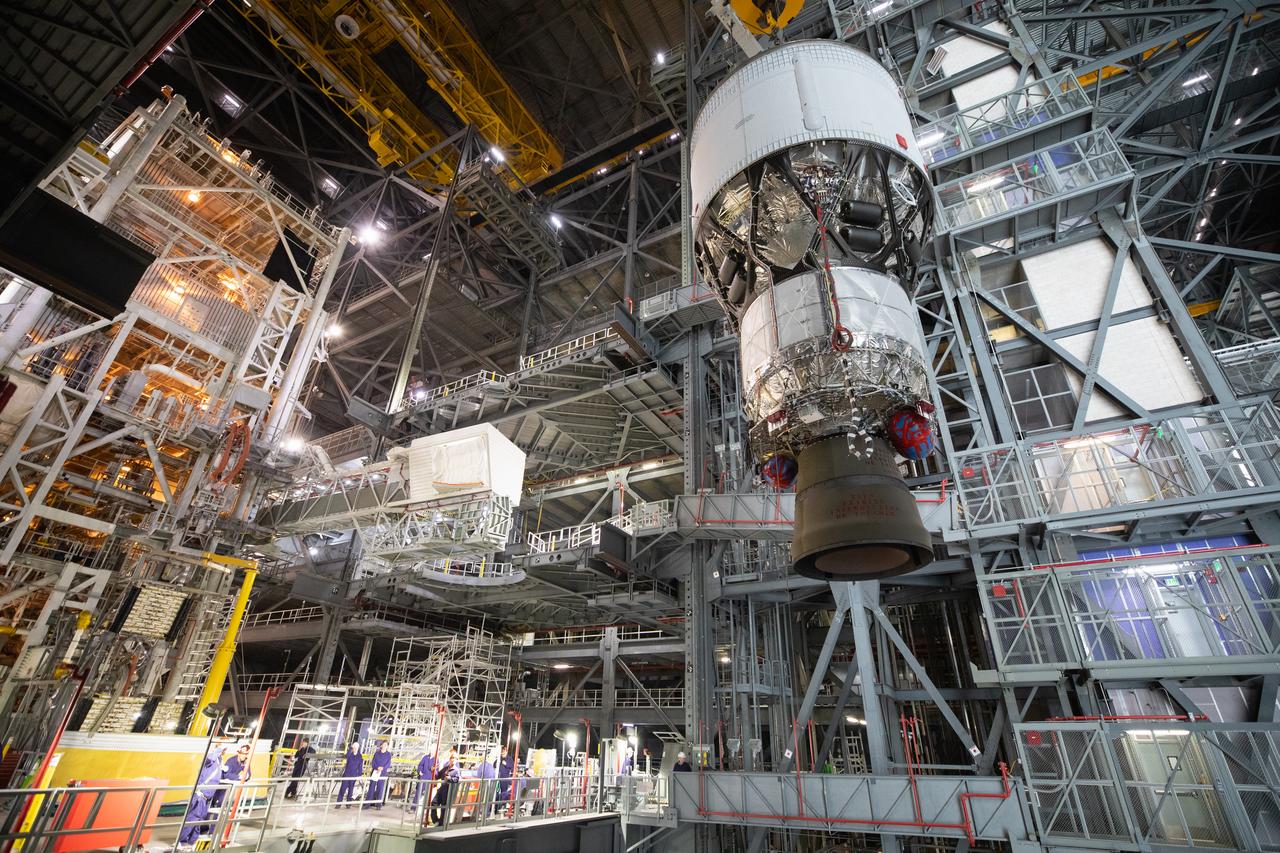
Teams with NASA’s Exploration Ground Systems Program begin integrating the interim cryogenic propulsion stage to the SLS (Space Launch System) launch vehicle stage adapter on Wednesday, April 30, 2025, inside the Vehicle Assembly Building at NASA’s Kennedy Space Center in Florida. The four-story propulsion system, built by Boeing and ULA (United Launch Alliance), is powered by an RL10 engine that will enable the Orion spacecraft to build up enough speed for the push toward the Moon during the Artemis II crewed test flight.
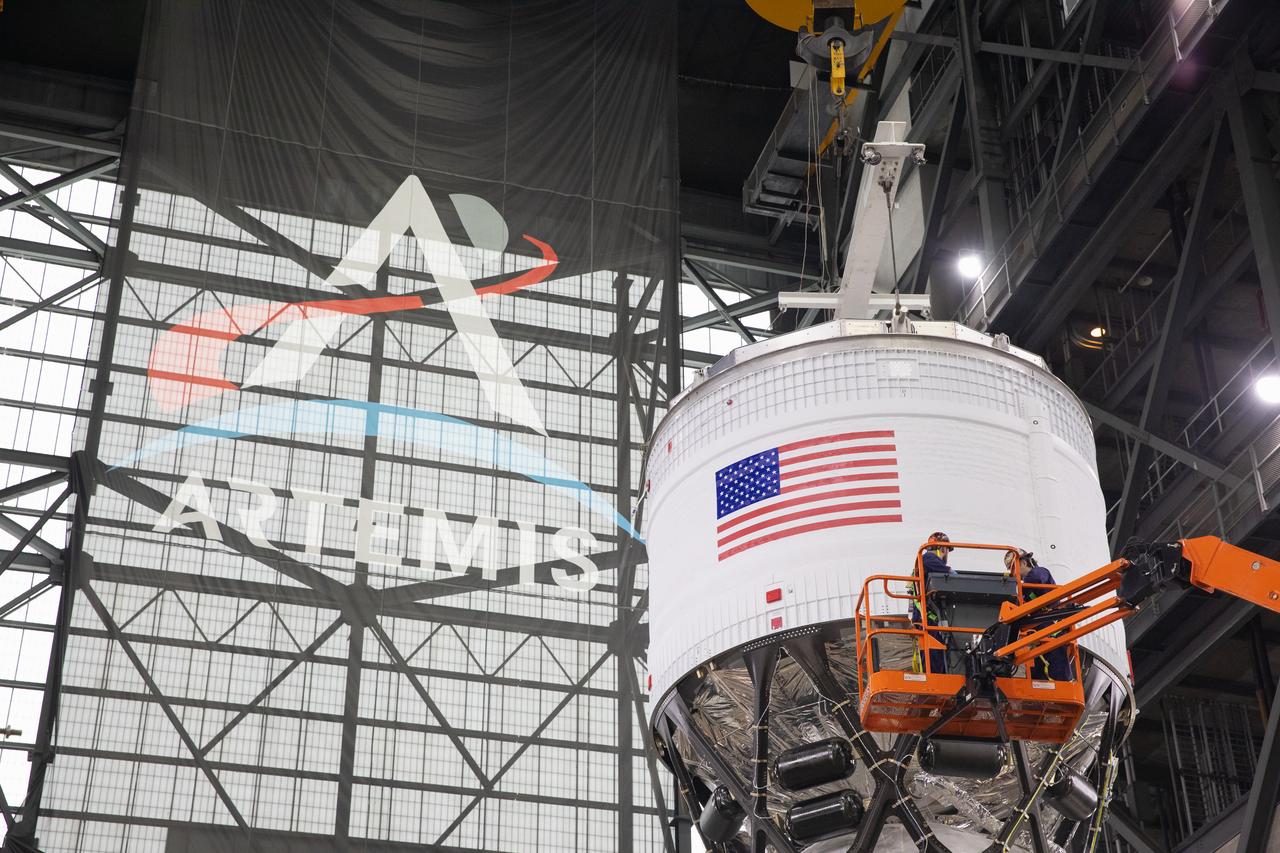
Teams with NASA’s Exploration Ground Systems Program begin integrating the interim cryogenic propulsion stage to the SLS (Space Launch System) launch vehicle stage adapter on Wednesday, April 30, 2025, inside the Vehicle Assembly Building at NASA’s Kennedy Space Center in Florida. The four-story propulsion system, built by Boeing and ULA (United Launch Alliance), is powered by an RL10 engine that will enable the Orion spacecraft to build up enough speed for the push toward the Moon during the Artemis II crewed test flight.
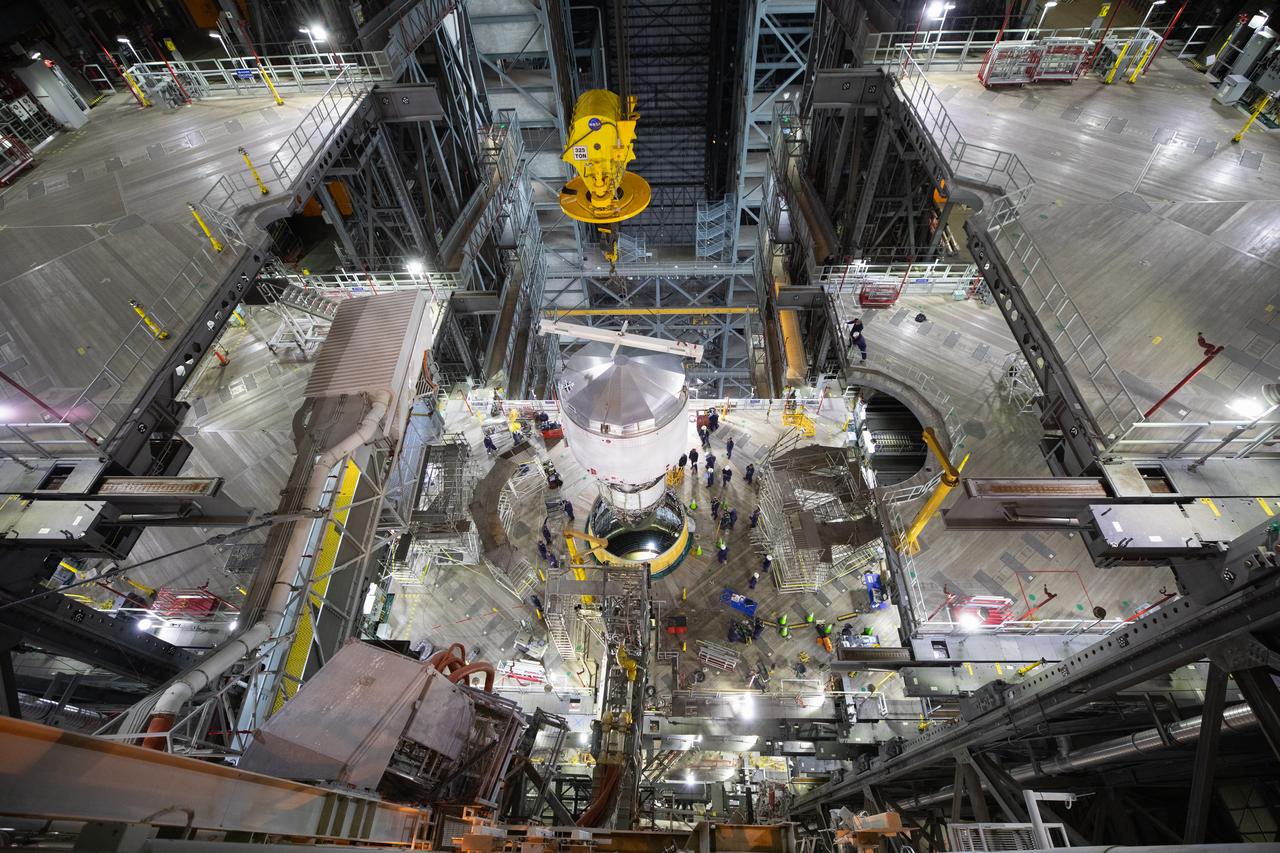
Teams with NASA’s Exploration Ground Systems Program begin integrating the interim cryogenic propulsion stage to the SLS (Space Launch System) launch vehicle stage adapter on Wednesday, April 30, 2025, inside the Vehicle Assembly Building at NASA’s Kennedy Space Center in Florida. The four-story propulsion system, built by Boeing and ULA (United Launch Alliance), is powered by an RL10 engine that will enable the Orion spacecraft to build up enough speed for the push toward the Moon during the Artemis II crewed test flight.

Teams with NASA’s Exploration Ground Systems Program begin integrating the interim cryogenic propulsion stage to the SLS (Space Launch System) launch vehicle stage adapter on Wednesday, April 30, 2025, inside the Vehicle Assembly Building at NASA’s Kennedy Space Center in Florida. The four-story propulsion system, built by Boeing and ULA (United Launch Alliance), is powered by an RL10 engine that will enable the Orion spacecraft to build up enough speed for the push toward the Moon during the Artemis II crewed test flight.
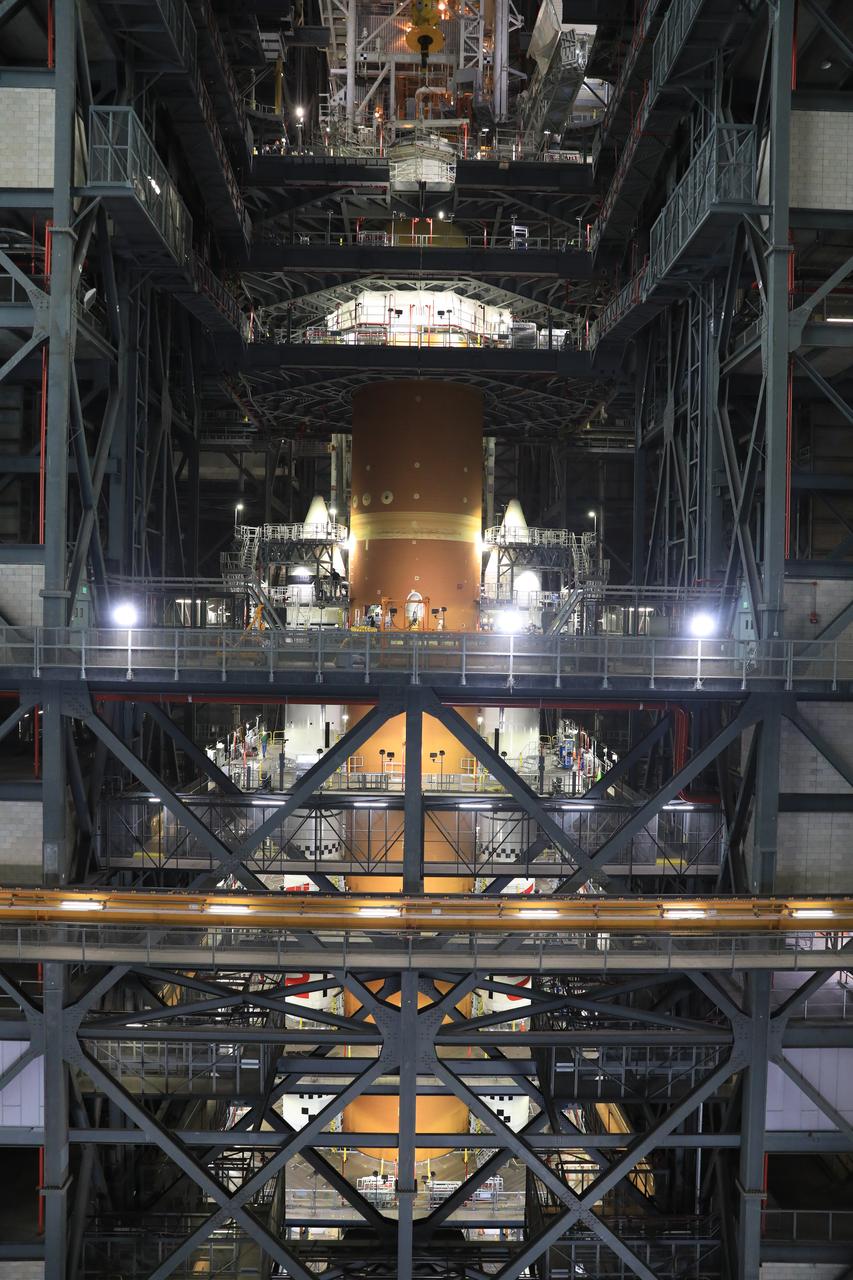
Teams with NASA’s Exploration Ground Systems Program finish integrating the interim cryogenic propulsion stage to the SLS (Space Launch System) launch vehicle stage adapter on Thursday, May 1, 2025, inside the Vehicle Assembly Building at NASA’s Kennedy Space Center in Florida. The four-story propulsion system, built by Boeing and ULA (United Launch Alliance), is powered by an RL10 engine that will enable the Orion spacecraft to build up enough speed for the push toward the Moon during the Artemis II crewed test flight.
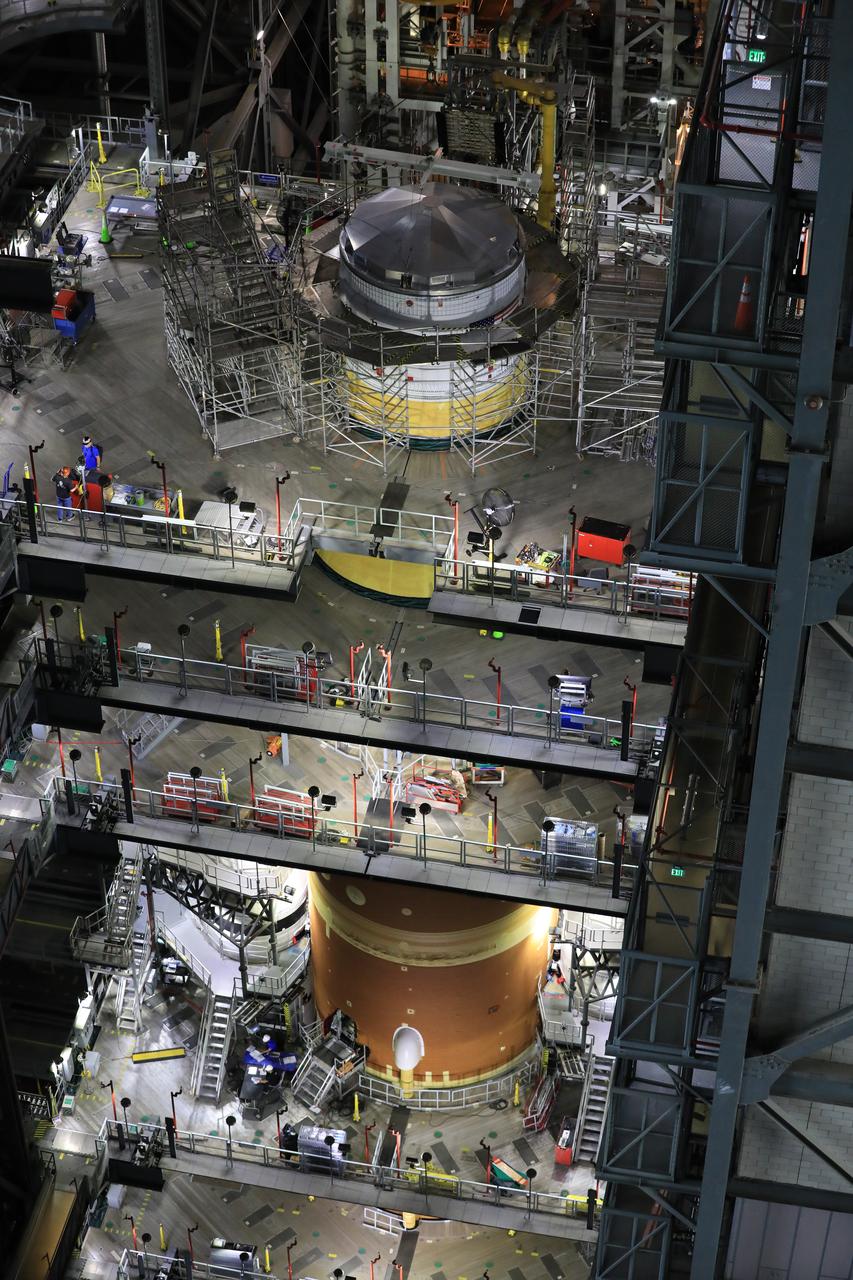
Teams with NASA’s Exploration Ground Systems Program finish integrating the interim cryogenic propulsion stage to the SLS (Space Launch System) launch vehicle stage adapter on Thursday, May 1, 2025, inside the Vehicle Assembly Building at NASA’s Kennedy Space Center in Florida. The four-story propulsion system, built by Boeing and ULA (United Launch Alliance), is powered by an RL10 engine that will enable the Orion spacecraft to build up enough speed for the push toward the Moon during the Artemis II crewed test flight.
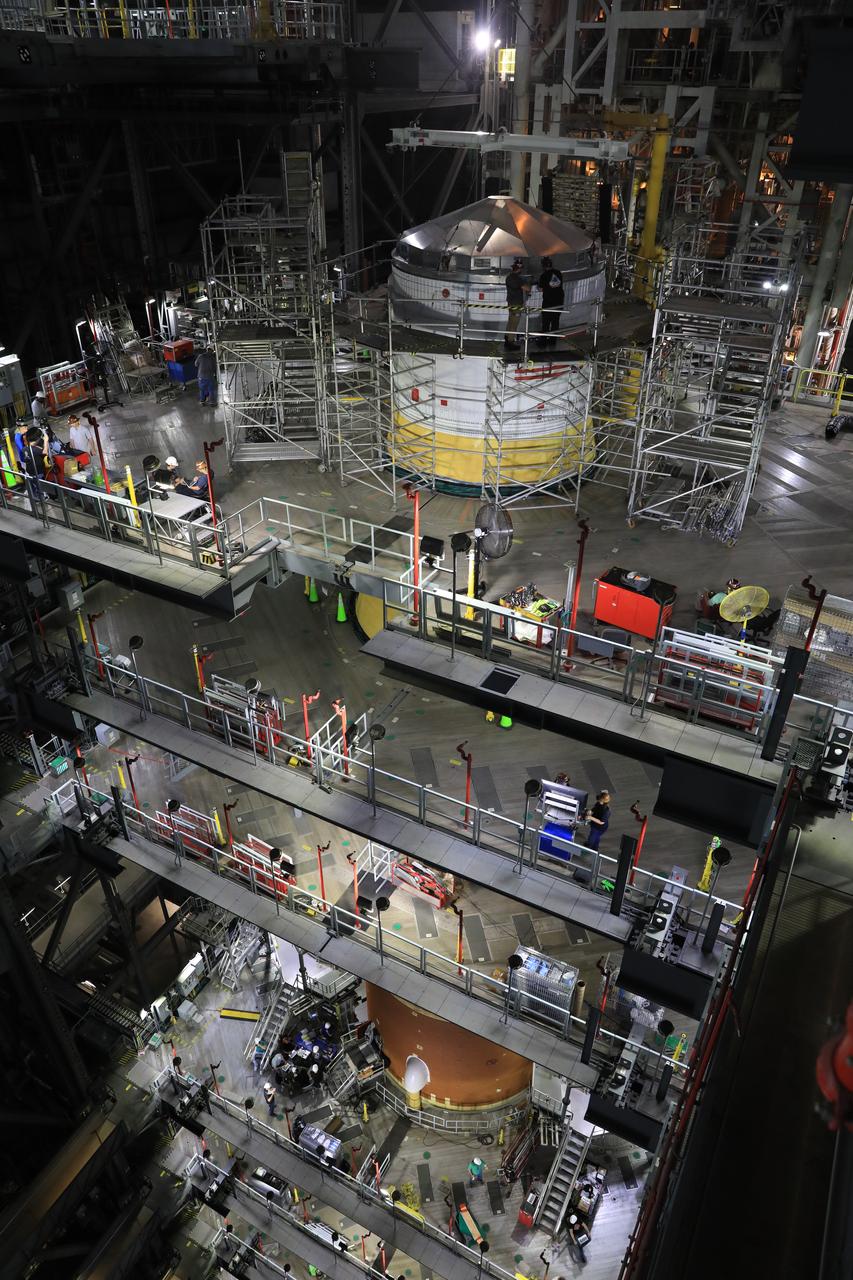
Teams with NASA’s Exploration Ground Systems Program finish integrating the interim cryogenic propulsion stage to the SLS (Space Launch System) launch vehicle stage adapter on Thursday, May 1, 2025, inside the Vehicle Assembly Building at NASA’s Kennedy Space Center in Florida. The four-story propulsion system, built by Boeing and ULA (United Launch Alliance), is powered by an RL10 engine that will enable the Orion spacecraft to build up enough speed for the push toward the Moon during the Artemis II crewed test flight.

Teams with NASA’s Exploration Ground Systems Program finish integrating the interim cryogenic propulsion stage to the SLS (Space Launch System) launch vehicle stage adapter on Thursday, May 1, 2025, inside the Vehicle Assembly Building at NASA’s Kennedy Space Center in Florida. The four-story propulsion system, built by Boeing and ULA (United Launch Alliance), is powered by an RL10 engine that will enable the Orion spacecraft to build up enough speed for the push toward the Moon during the Artemis II crewed test flight.
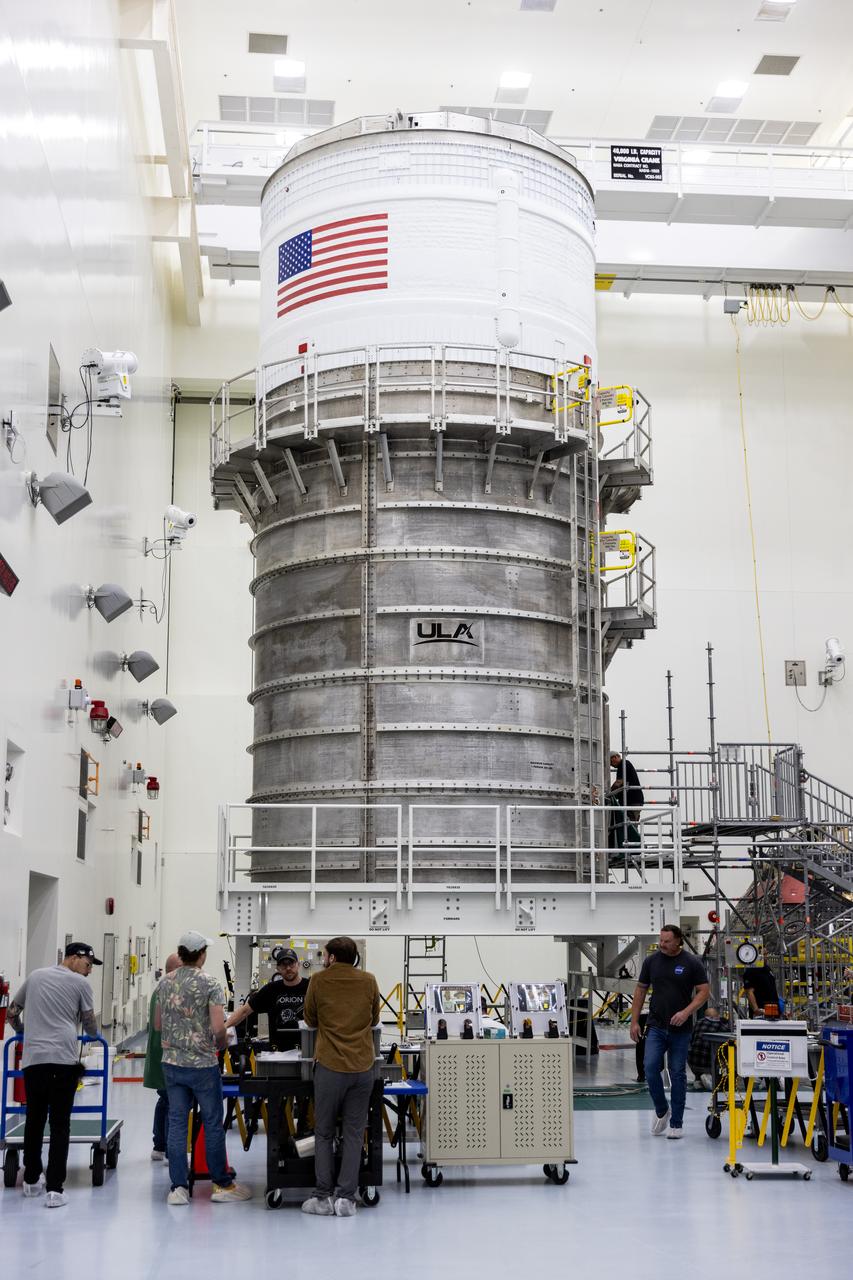
The upper stage for NASA’s SLS (Space Launch System) Moon rocket that will power the agency’s Artemis II mission and send astronauts around the Moon is shown inside the Multi-Payload Processing Facility at NASA’s Kennedy Space Center in Florida on Monday, March 10, 2025, after being transported from United Launch Alliance’s Delta Operations Center at nearby Cape Canaveral Space Force Station. The interim cryogenic propulsion stage is a liquid oxygen and liquid hydrogen-based system that will fire its RL10 engine to give the Orion spacecraft the big in-space push needed to fly around the Moon and back.
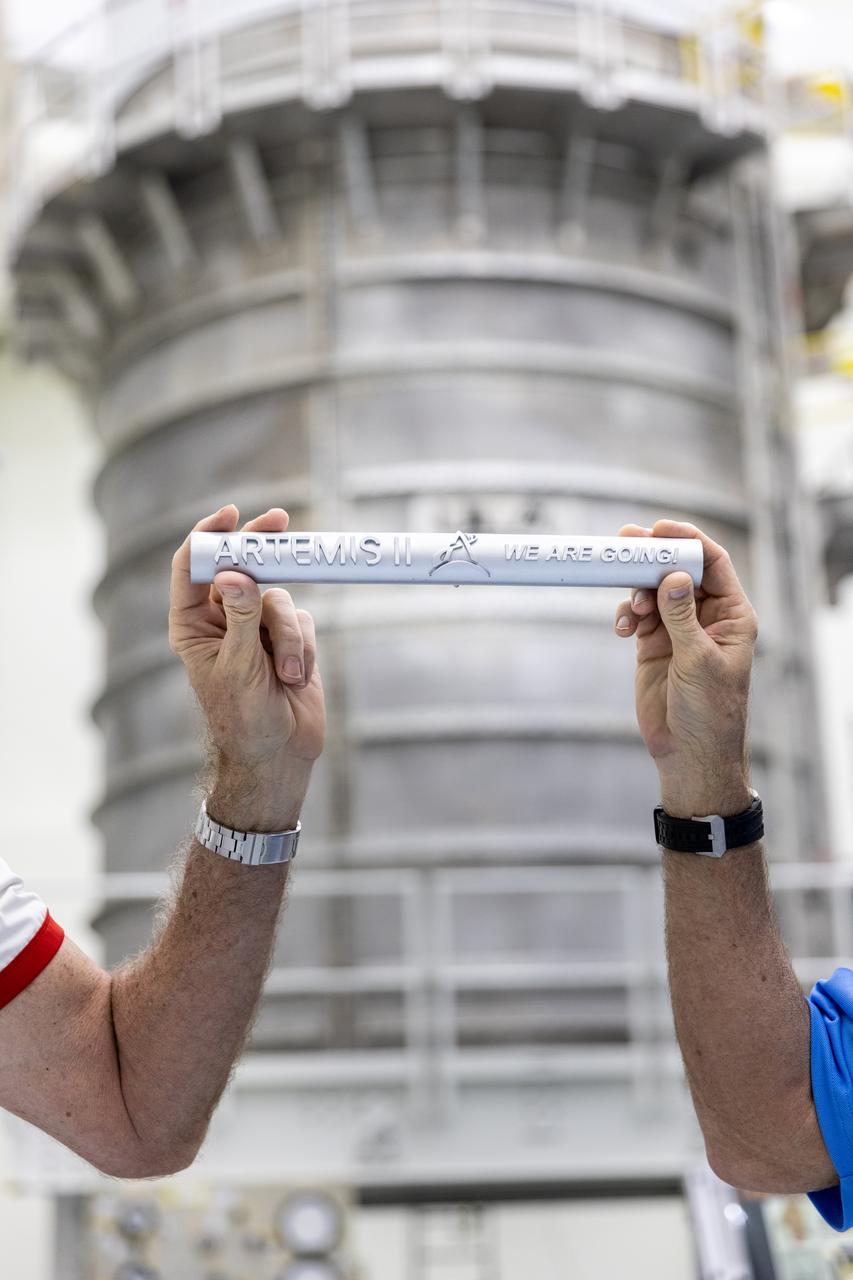
Managers from NASA’s Exploration Ground Systems (EGS) and SLS (Space Launch System) Programs hold a baton signifying the hand off of the SLS interim cryogenic propulsion stage to Kennedy’s EGS Program inside the Multi-Payload Processing Facility at NASA’s Kennedy Space Center in Florida on Monday, March 10, 2025, after being transported from United Launch Alliance’s Delta Operations Center at nearby Cape Canaveral Space Force Station. Teams with EGS will begin fueling the upper stage inside the facility ahead of the agency’s Artemis II mission. The interim cryogenic propulsion stage is a liquid oxygen and liquid hydrogen-based system that will fire its RL10 engine to give the Orion spacecraft the big in-space push needed to fly around the Moon and back.
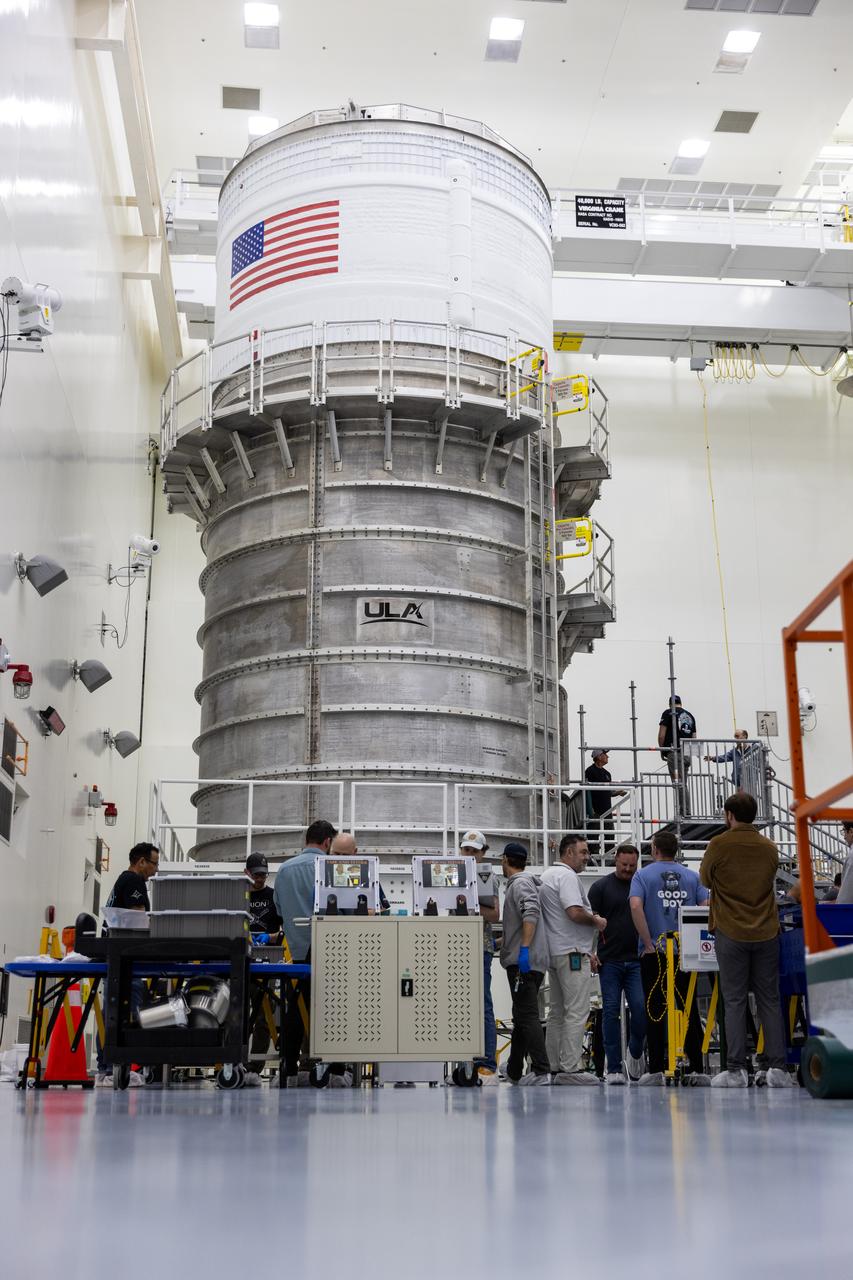
The upper stage for NASA’s SLS (Space Launch System) Moon rocket that will power the agency’s Artemis II mission and send astronauts around the Moon is shown inside the Multi-Payload Processing Facility at NASA’s Kennedy Space Center in Florida on Monday, March 10, 2025, after being transported from United Launch Alliance’s Delta Operations Center at nearby Cape Canaveral Space Force Station. The interim cryogenic propulsion stage is a liquid oxygen and liquid hydrogen-based system that will fire its RL10 engine to give the Orion spacecraft the big in-space push needed to fly around the Moon and back.
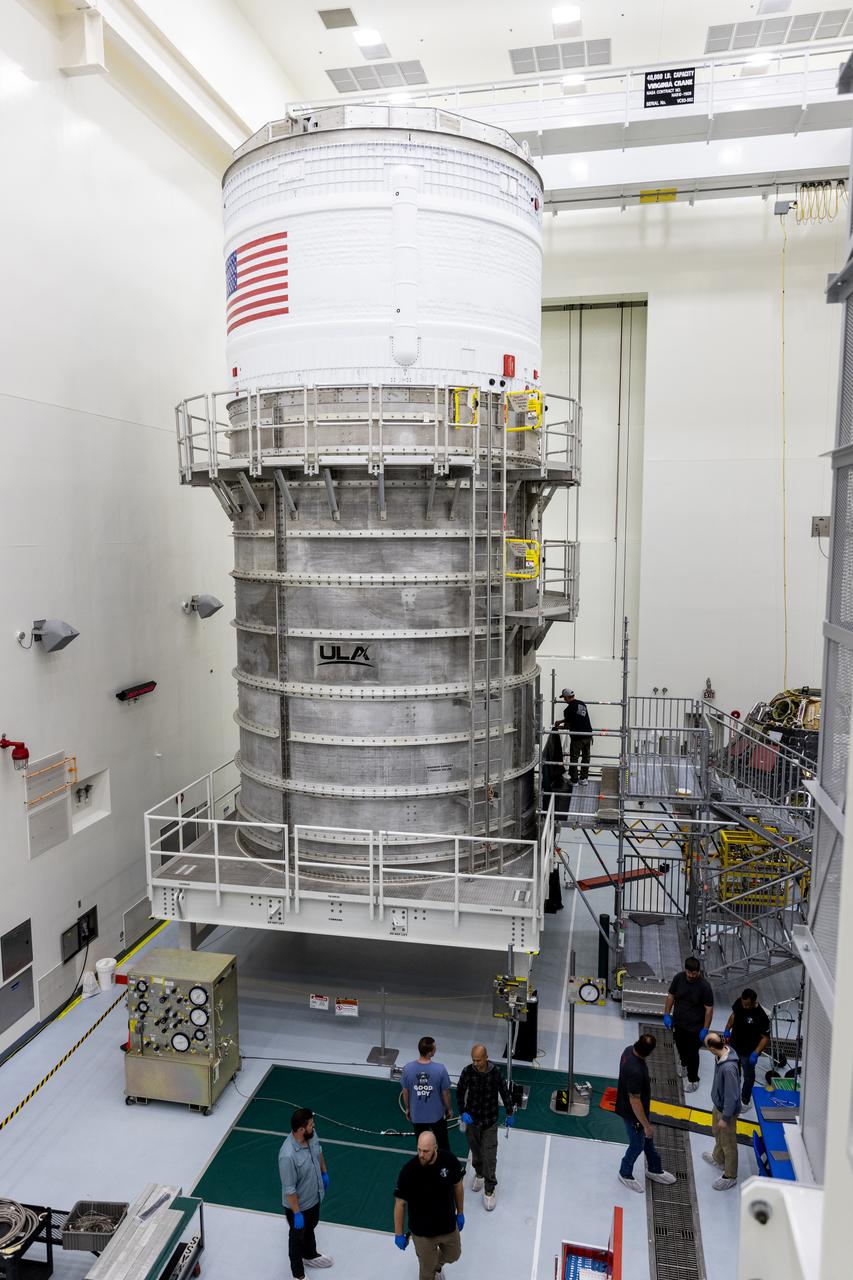
The upper stage for NASA’s SLS (Space Launch System) Moon rocket that will power the agency’s Artemis II mission and send astronauts around the Moon is shown inside the Multi-Payload Processing Facility at NASA’s Kennedy Space Center in Florida on Monday, March 10, 2025, after being transported from United Launch Alliance’s Delta Operations Center at nearby Cape Canaveral Space Force Station. The interim cryogenic propulsion stage is a liquid oxygen and liquid hydrogen-based system that will fire its RL10 engine to give the Orion spacecraft the big in-space push needed to fly around the Moon and back.
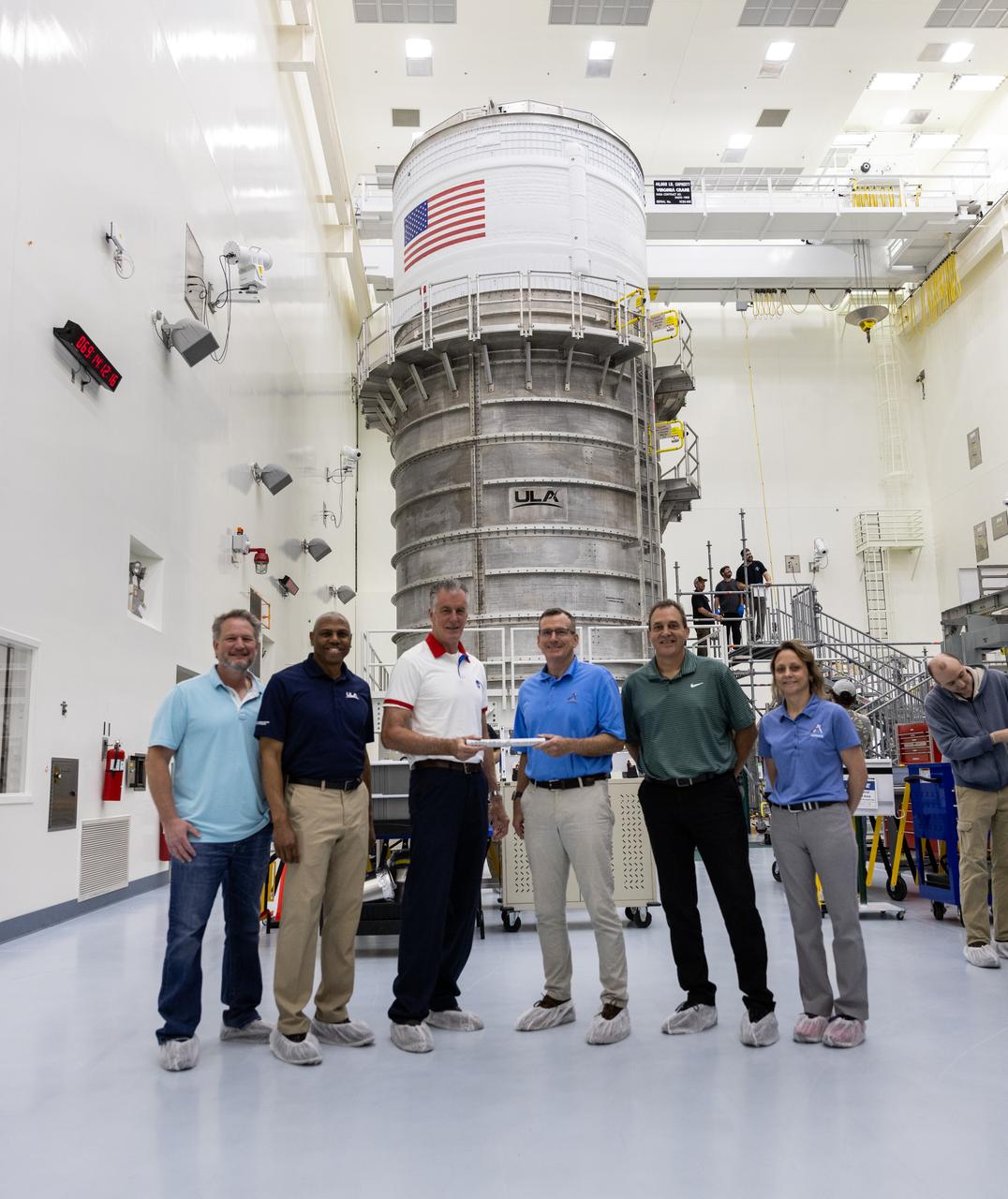
Managers from NASA and industry partners for NASA’s SLS (Space Launch System) rocket upper stage hand off the baton to managers from the agency’s Exploration Ground Systems (EGS) are shown with the SLS interim cryogenic propulsion stage inside the Multi-Payload Processing Facility at NASA’s Kennedy Space Center in Florida on Monday, March 10, 2025, after being transported from United Launch Alliance’s (ULA) Delta Operations Center at nearby Cape Canaveral Space Force Station. From left to right are Jim Bonato, ICPS Mission Manager, ULA; Ron Fortson, Director and General Manager, ULA; Chris Calfee, Spacecraft/Payload Integration and Evolution element manager, SLS; Cliff Lanham, senior vehicle operations manager, EGS; Todd Lamond, Strategic Planning and Integration, Amentum; and Natasha Wiest, Interim Director, Boeing Core Stage Integrated Product Team; The interim cryogenic propulsion stage is a liquid oxygen and liquid hydrogen-based system that will fire its RL10 engine to give the Orion spacecraft the big in-space push needed to fly around the Moon and back.
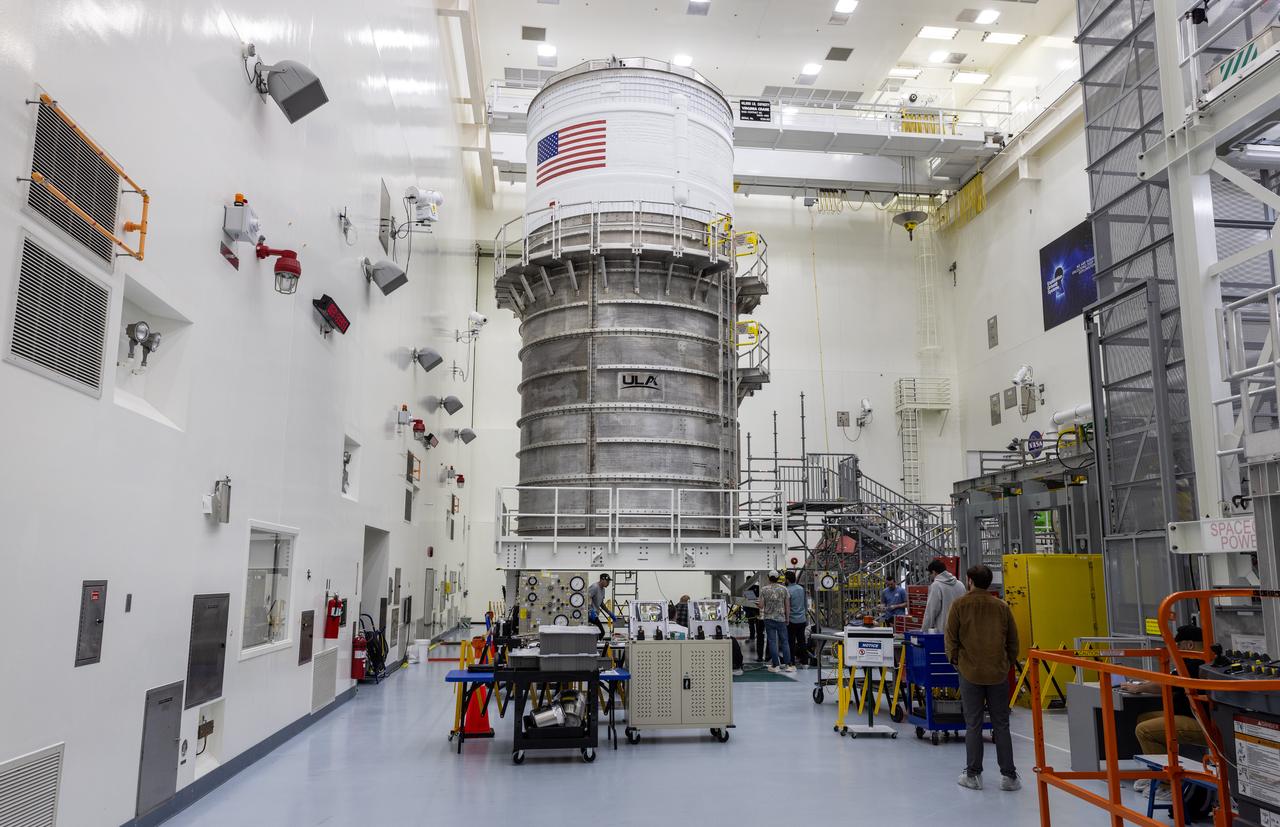
The upper stage for NASA’s SLS (Space Launch System) Moon rocket that will power the agency’s Artemis II mission and send astronauts around the Moon is shown inside the Multi-Payload Processing Facility at NASA’s Kennedy Space Center in Florida on Monday, March 10, 2025, after being transported from United Launch Alliance’s Delta Operations Center at nearby Cape Canaveral Space Force Station. The interim cryogenic propulsion stage is a liquid oxygen and liquid hydrogen-based system that will fire its RL10 engine to give the Orion spacecraft the big in-space push needed to fly around the Moon and back.