
jsc2025e034750 (April 2, 2025) -- Artemis II crew with the Artemis II mission patch. Photo Credit: NASA/Robert Markowitz
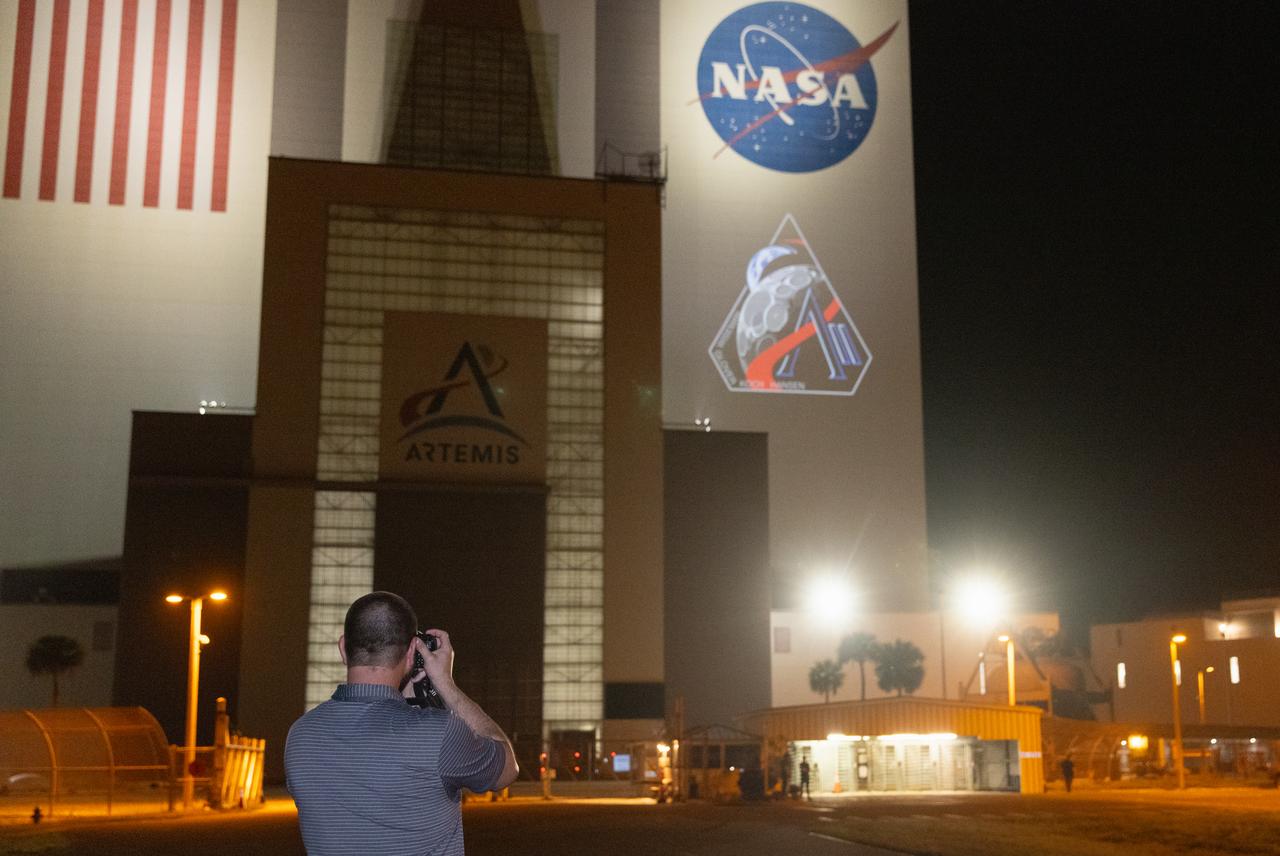
Employees at NASA’s Kennedy Space Center in Florida take photos of the official Artemis II mission crew insignia projected on the exterior of the spaceport’s Vehicle Assembly Building on Friday, April 4, 2025. The patch designates the mission as “AII,” signifying not only the second major flight of the Artemis campaign, but also an endeavor of discovery that seeks to explore for all and by all. Framed in Apollo 8’s famous Earthrise photo, the scene of the Earth and the Moon represents the dual nature of human spaceflight, both equally compelling: The Moon represents our exploration destination, focused on discovery of the unknown. The Earth represents home, focused on the perspective we gain when we look back at our shared planet and learn what it is to be uniquely human. The orbit around Earth highlights the ongoing exploration missions that have enabled Artemis to set sights on a long-term presence on the Moon and soon, Mars.
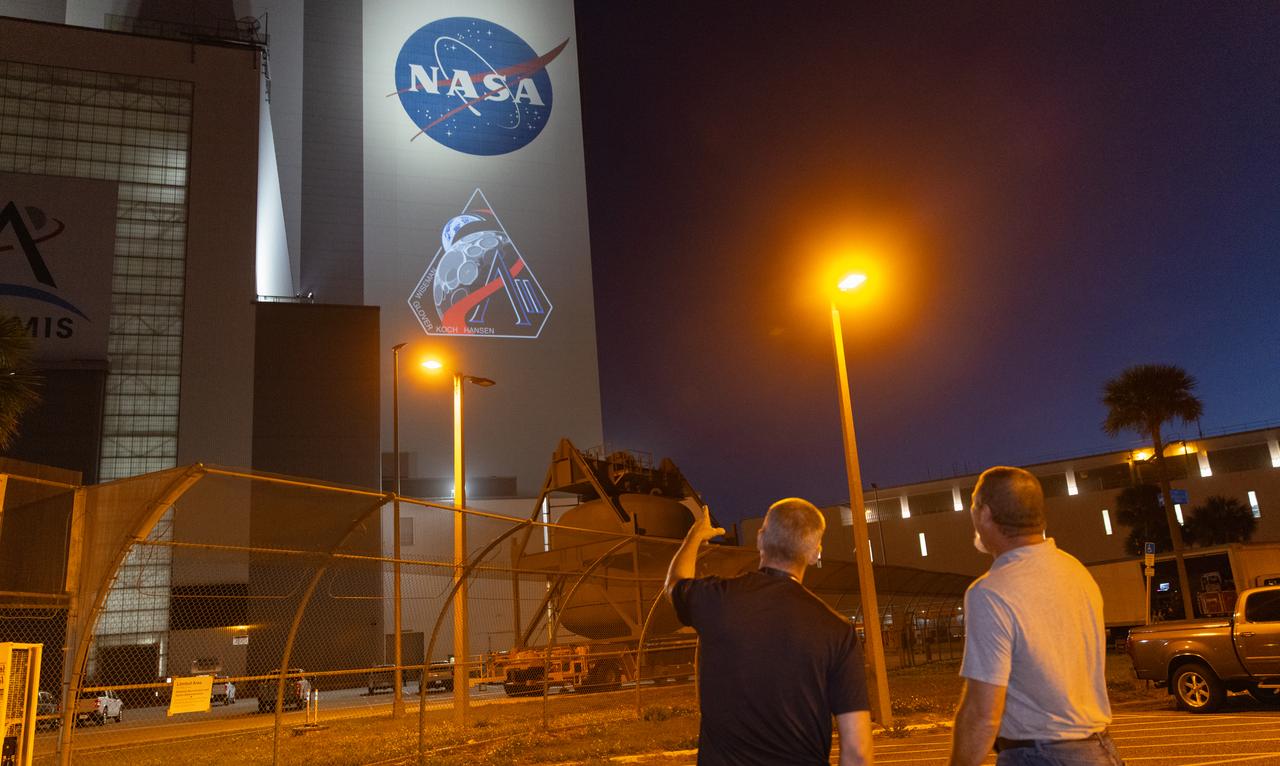
Employees at NASA’s Kennedy Space Center in Florida take photos of the official Artemis II mission crew insignia projected on the exterior of the spaceport’s Vehicle Assembly Building on Friday, April 4, 2025. The patch designates the mission as “AII,” signifying not only the second major flight of the Artemis campaign, but also an endeavor of discovery that seeks to explore for all and by all. Framed in Apollo 8’s famous Earthrise photo, the scene of the Earth and the Moon represents the dual nature of human spaceflight, both equally compelling: The Moon represents our exploration destination, focused on discovery of the unknown. The Earth represents home, focused on the perspective we gain when we look back at our shared planet and learn what it is to be uniquely human. The orbit around Earth highlights the ongoing exploration missions that have enabled Artemis to set sights on a long-term presence on the Moon and soon, Mars.
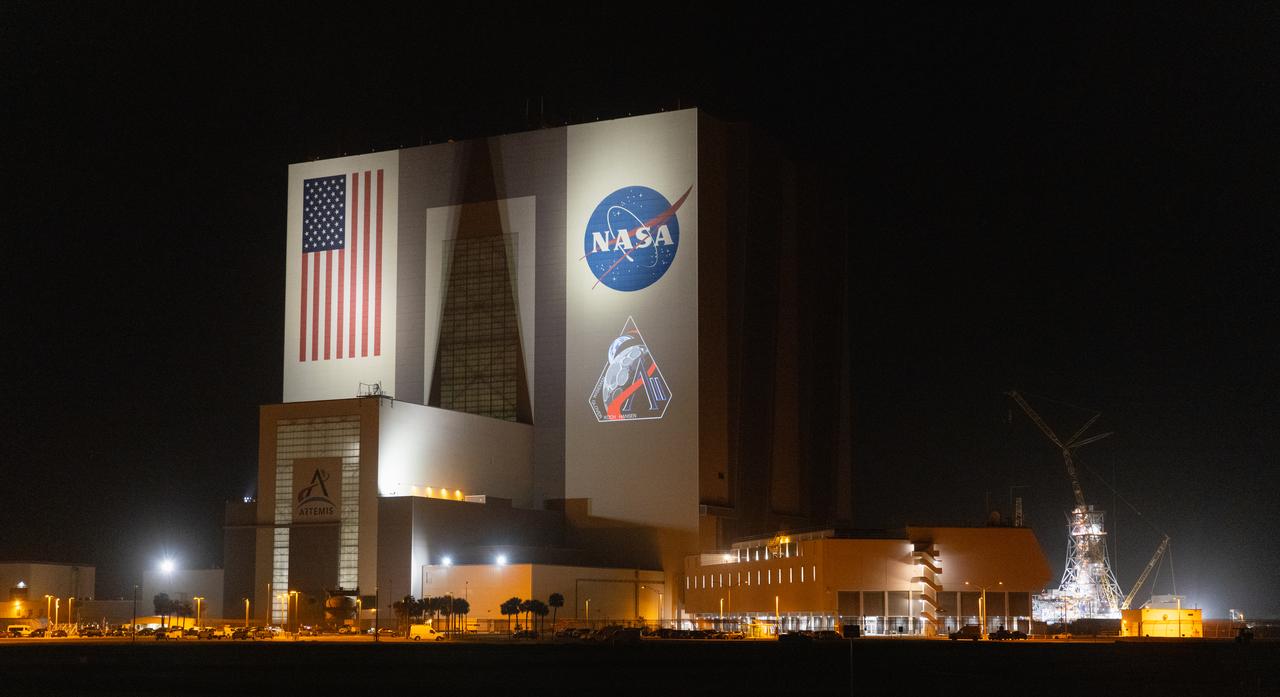
The official Artemis II mission crew insignia is projected on the exterior of the Vehicle Assembly Building at NASA’s Kennedy Space Center in Florida on Friday, April 4, 2025. The patch designates the mission as “AII,” signifying not only the second major flight of the Artemis campaign, but also an endeavor of discovery that seeks to explore for all and by all. Framed in Apollo 8’s famous Earthrise photo, the scene of the Earth and the Moon represents the dual nature of human spaceflight, both equally compelling: The Moon represents our exploration destination, focused on discovery of the unknown. The Earth represents home, focused on the perspective we gain when we look back at our shared planet and learn what it is to be uniquely human. The orbit around Earth highlights the ongoing exploration missions that have enabled Artemis to set sights on a long-term presence on the Moon and soon, Mars.
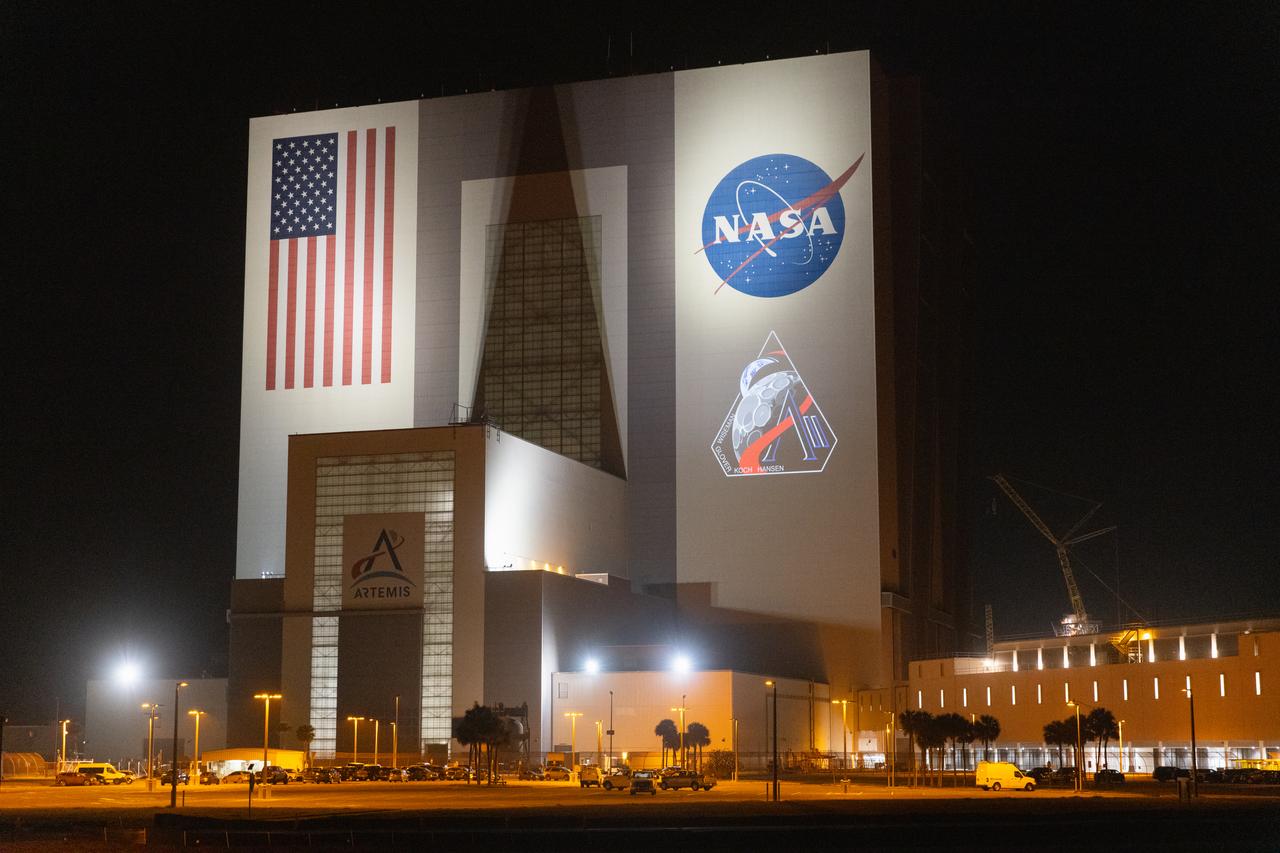
The official Artemis II mission crew insignia is projected on the exterior of the Vehicle Assembly Building at NASA’s Kennedy Space Center in Florida on Friday, April 4, 2025. The patch designates the mission as “AII,” signifying not only the second major flight of the Artemis campaign, but also an endeavor of discovery that seeks to explore for all and by all. Framed in Apollo 8’s famous Earthrise photo, the scene of the Earth and the Moon represents the dual nature of human spaceflight, both equally compelling: The Moon represents our exploration destination, focused on discovery of the unknown. The Earth represents home, focused on the perspective we gain when we look back at our shared planet and learn what it is to be uniquely human. The orbit around Earth highlights the ongoing exploration missions that have enabled Artemis to set sights on a long-term presence on the Moon and soon, Mars.
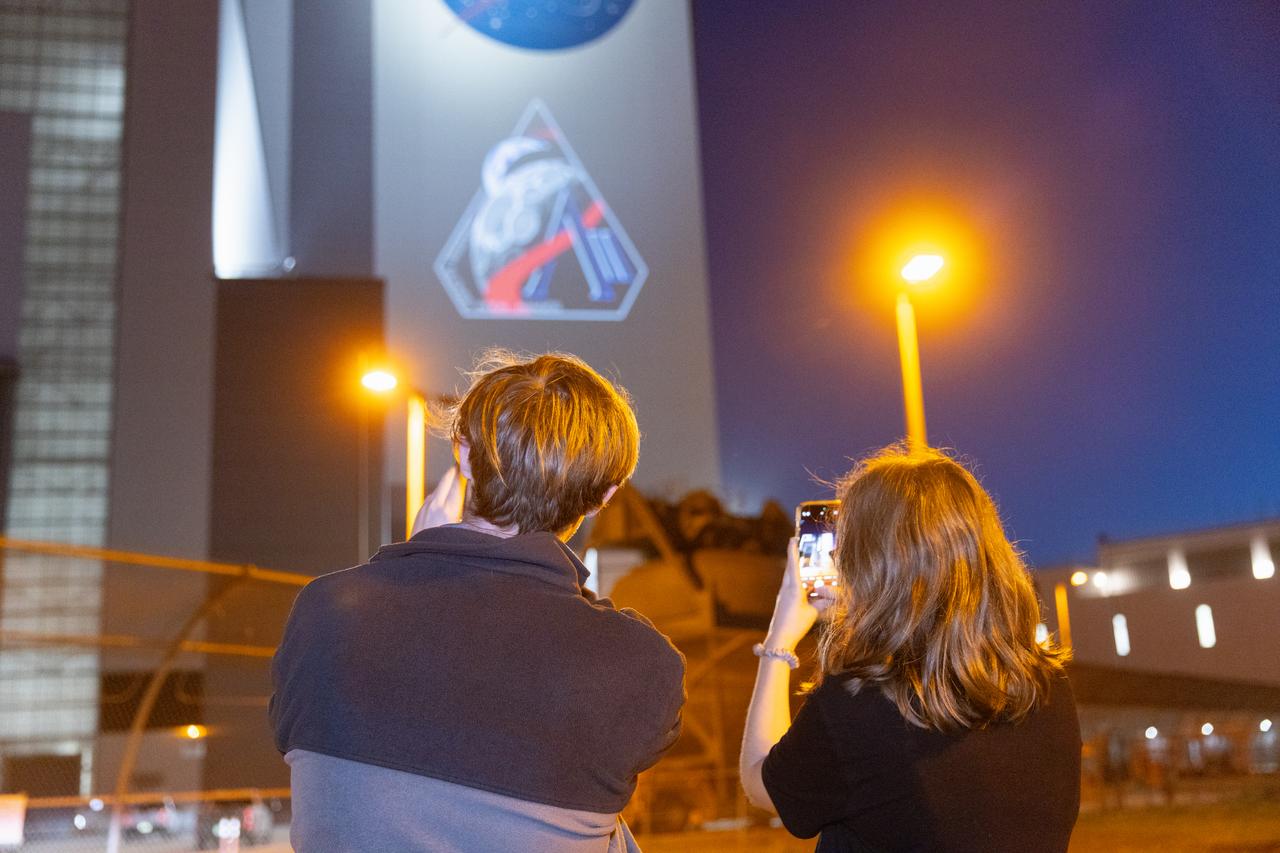
Employees at NASA’s Kennedy Space Center in Florida take photos of the official Artemis II mission crew insignia projected on the exterior of the spaceport’s Vehicle Assembly Building on Friday, April 4, 2025. The patch designates the mission as “AII,” signifying not only the second major flight of the Artemis campaign, but also an endeavor of discovery that seeks to explore for all and by all. Framed in Apollo 8’s famous Earthrise photo, the scene of the Earth and the Moon represents the dual nature of human spaceflight, both equally compelling: The Moon represents our exploration destination, focused on discovery of the unknown. The Earth represents home, focused on the perspective we gain when we look back at our shared planet and learn what it is to be uniquely human. The orbit around Earth highlights the ongoing exploration missions that have enabled Artemis to set sights on a long-term presence on the Moon and soon, Mars.
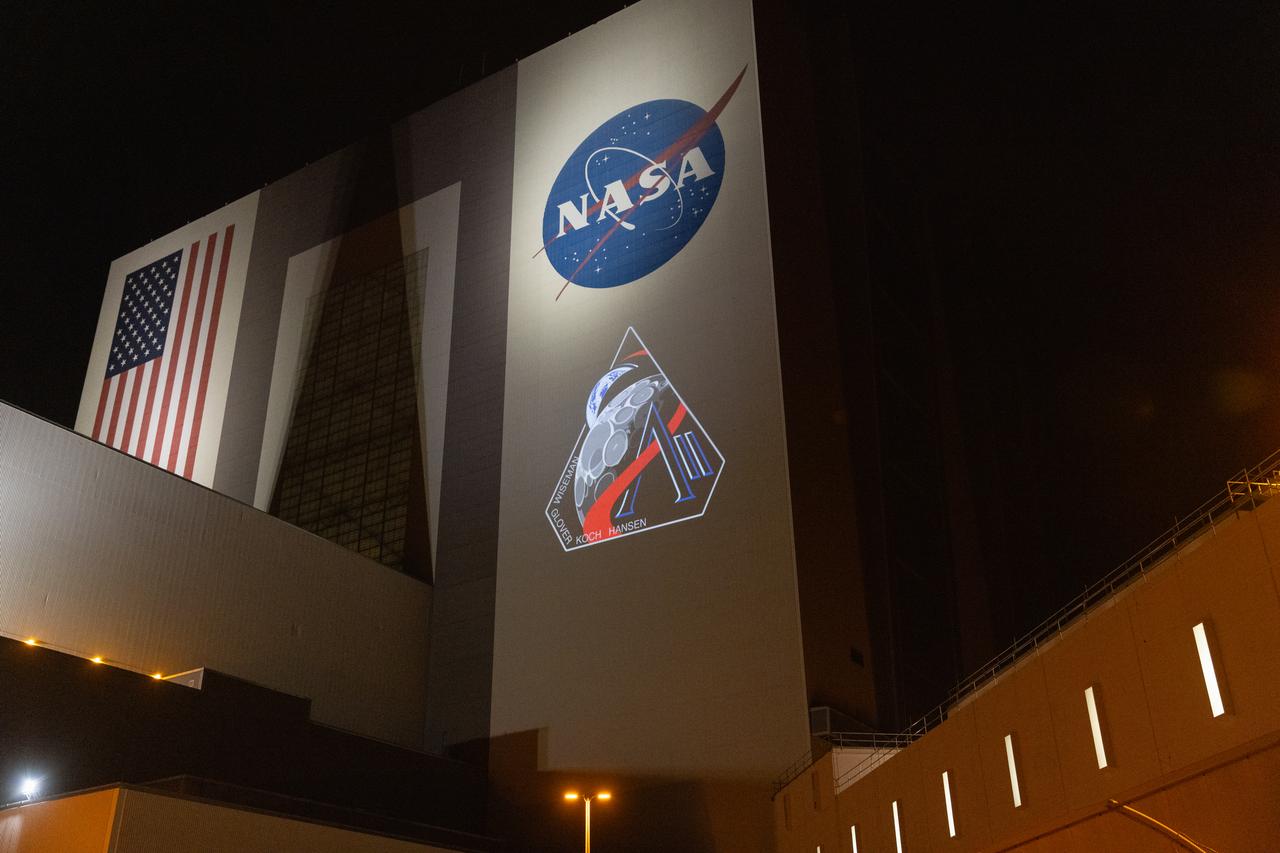
The official Artemis II mission crew insignia is projected on the exterior of the Vehicle Assembly Building at NASA’s Kennedy Space Center in Florida on Friday, April 4, 2025. The patch designates the mission as “AII,” signifying not only the second major flight of the Artemis campaign, but also an endeavor of discovery that seeks to explore for all and by all. Framed in Apollo 8’s famous Earthrise photo, the scene of the Earth and the Moon represents the dual nature of human spaceflight, both equally compelling: The Moon represents our exploration destination, focused on discovery of the unknown. The Earth represents home, focused on the perspective we gain when we look back at our shared planet and learn what it is to be uniquely human. The orbit around Earth highlights the ongoing exploration missions that have enabled Artemis to set sights on a long-term presence on the Moon and soon, Mars.
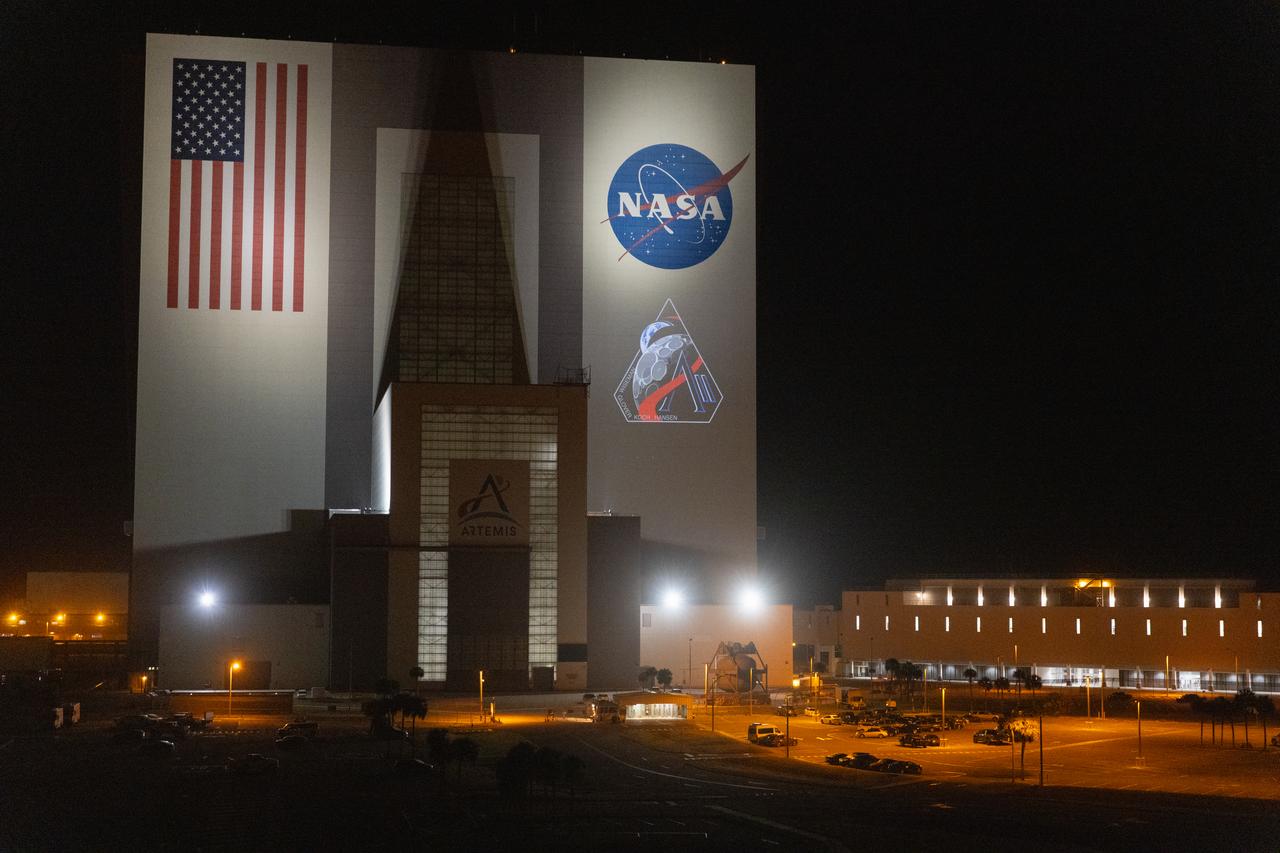
The official Artemis II mission crew insignia is projected on the exterior of the Vehicle Assembly Building at NASA’s Kennedy Space Center in Florida on Friday, April 4, 2025. The patch designates the mission as “AII,” signifying not only the second major flight of the Artemis campaign, but also an endeavor of discovery that seeks to explore for all and by all. Framed in Apollo 8’s famous Earthrise photo, the scene of the Earth and the Moon represents the dual nature of human spaceflight, both equally compelling: The Moon represents our exploration destination, focused on discovery of the unknown. The Earth represents home, focused on the perspective we gain when we look back at our shared planet and learn what it is to be uniquely human. The orbit around Earth highlights the ongoing exploration missions that have enabled Artemis to set sights on a long-term presence on the Moon and soon, Mars.
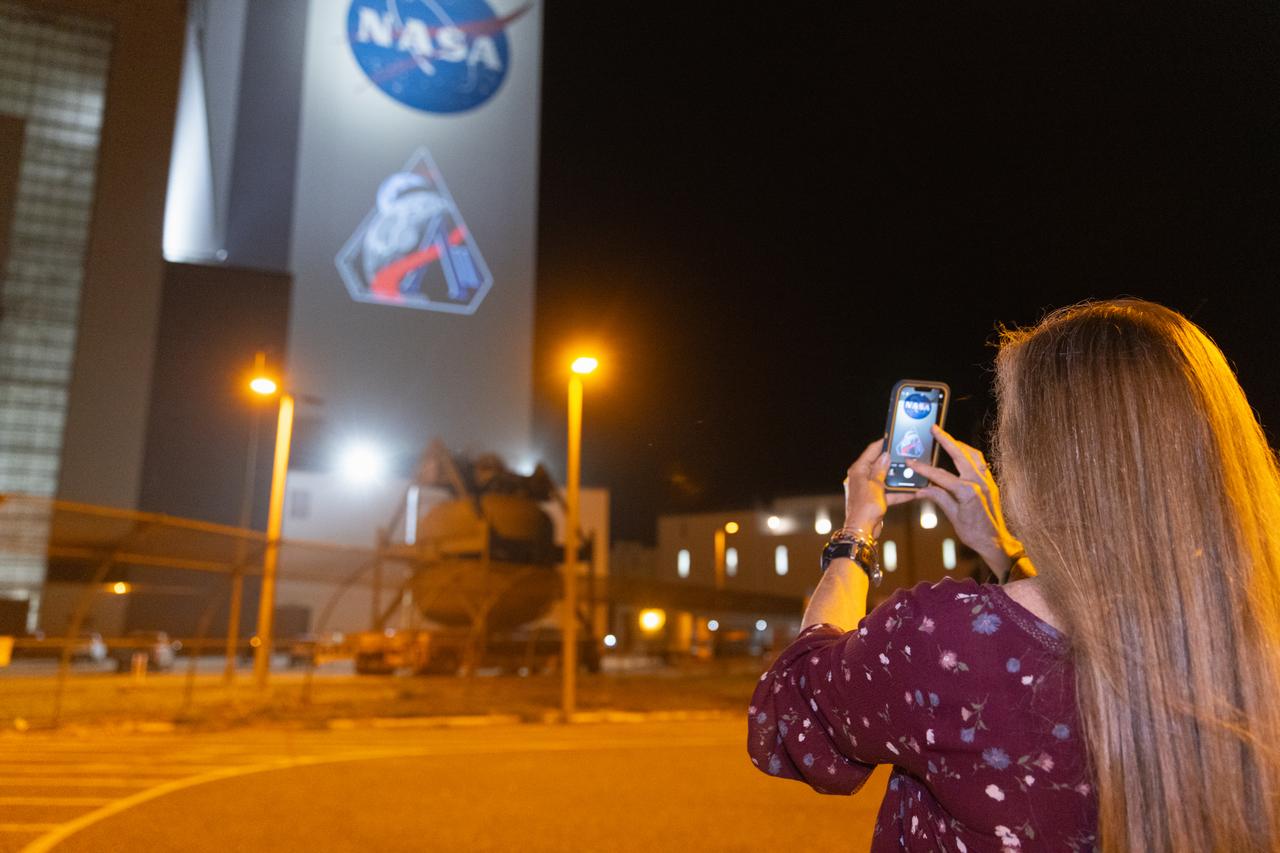
Employees at NASA’s Kennedy Space Center in Florida take photos of the official Artemis II mission crew insignia projected on the exterior of the spaceport’s Vehicle Assembly Building on Friday, April 4, 2025. The patch designates the mission as “AII,” signifying not only the second major flight of the Artemis campaign, but also an endeavor of discovery that seeks to explore for all and by all. Framed in Apollo 8’s famous Earthrise photo, the scene of the Earth and the Moon represents the dual nature of human spaceflight, both equally compelling: The Moon represents our exploration destination, focused on discovery of the unknown. The Earth represents home, focused on the perspective we gain when we look back at our shared planet and learn what it is to be uniquely human. The orbit around Earth highlights the ongoing exploration missions that have enabled Artemis to set sights on a long-term presence on the Moon and soon, Mars.
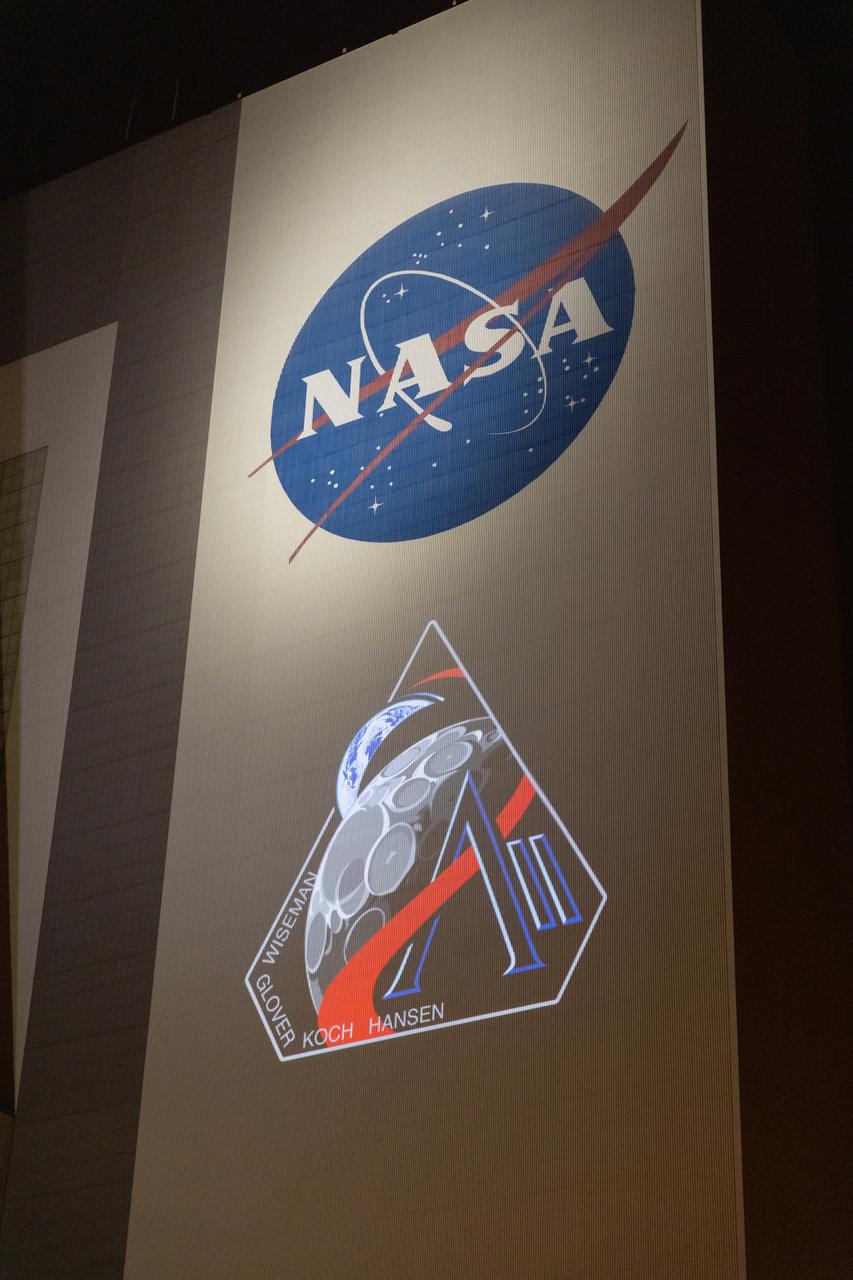
The official Artemis II mission crew insignia is projected on the exterior of the Vehicle Assembly Building at NASA’s Kennedy Space Center in Florida on Friday, April 4, 2025. The patch designates the mission as “AII,” signifying not only the second major flight of the Artemis campaign, but also an endeavor of discovery that seeks to explore for all and by all. Framed in Apollo 8’s famous Earthrise photo, the scene of the Earth and the Moon represents the dual nature of human spaceflight, both equally compelling: The Moon represents our exploration destination, focused on discovery of the unknown. The Earth represents home, focused on the perspective we gain when we look back at our shared planet and learn what it is to be uniquely human. The orbit around Earth highlights the ongoing exploration missions that have enabled Artemis to set sights on a long-term presence on the Moon and soon, Mars.
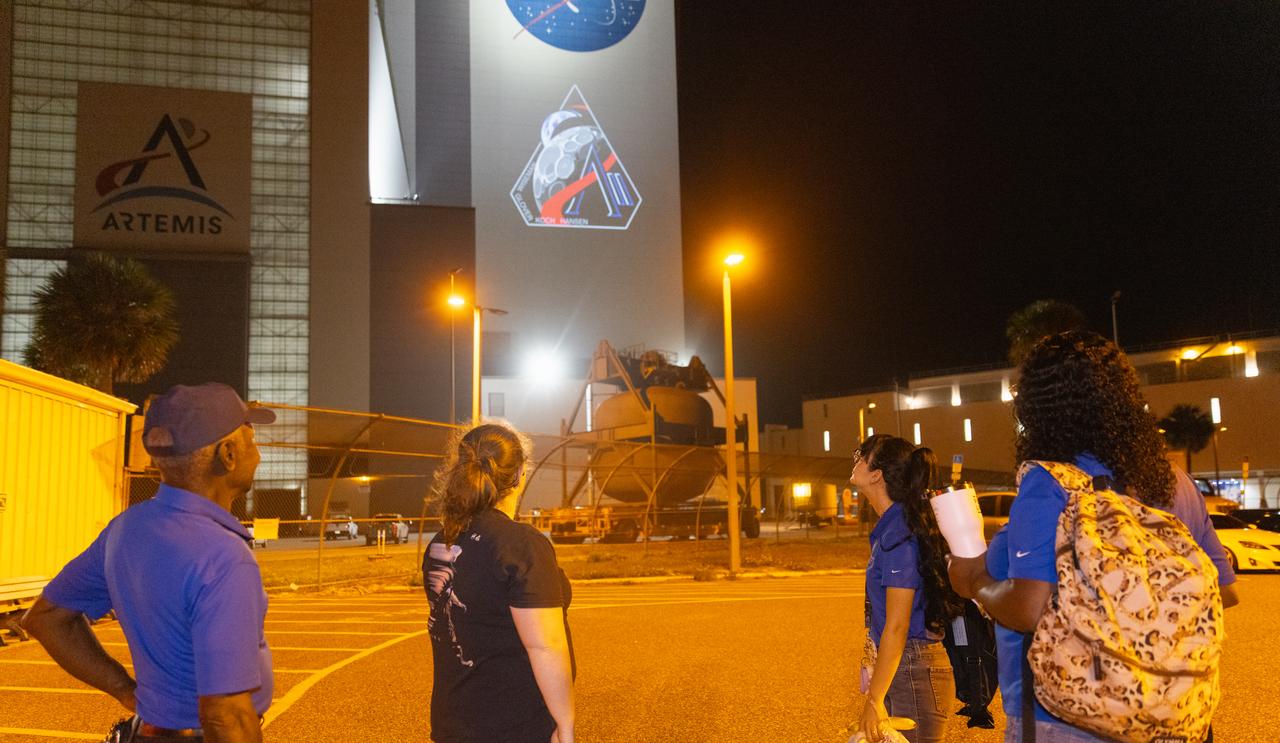
Employees at NASA’s Kennedy Space Center in Florida take photos of the official Artemis II mission crew insignia projected on the exterior of the spaceport’s Vehicle Assembly Building on Friday, April 4, 2025. The patch designates the mission as “AII,” signifying not only the second major flight of the Artemis campaign, but also an endeavor of discovery that seeks to explore for all and by all. Framed in Apollo 8’s famous Earthrise photo, the scene of the Earth and the Moon represents the dual nature of human spaceflight, both equally compelling: The Moon represents our exploration destination, focused on discovery of the unknown. The Earth represents home, focused on the perspective we gain when we look back at our shared planet and learn what it is to be uniquely human. The orbit around Earth highlights the ongoing exploration missions that have enabled Artemis to set sights on a long-term presence on the Moon and soon, Mars.

jsc2025e034746 (April 2, 2025) -- Artemis II crew with the Artemis II mission patch. Photo Credit: NASA/Robert Markowitz

jsc2025e034457 (March 18, 2025) -- The official Artemis II mission crew patch. The Artemis II test flight begins when a mighty team launches the first crew of the Artemis generation. This patch designates the mission as “AII,” signifying not only the second major flight of the Artemis campaign, but also an endeavor of discovery that seeks to explore for all and by all. Framed in Apollo 8’s famous Earthrise photo, the scene of the Earth and the Moon represents the dual nature of human spaceflight, both equally compelling: The Moon represents our exploration destination, focused on discovery of the unknown. The Earth represents home, focused on the perspective we gain when we look back at our shared planet and learn what it is to be uniquely human. The orbit around Earth highlights the ongoing exploration missions that have enabled Artemis to set sights on a long-term presence on the Moon and soon, Mars. Credit: NASA
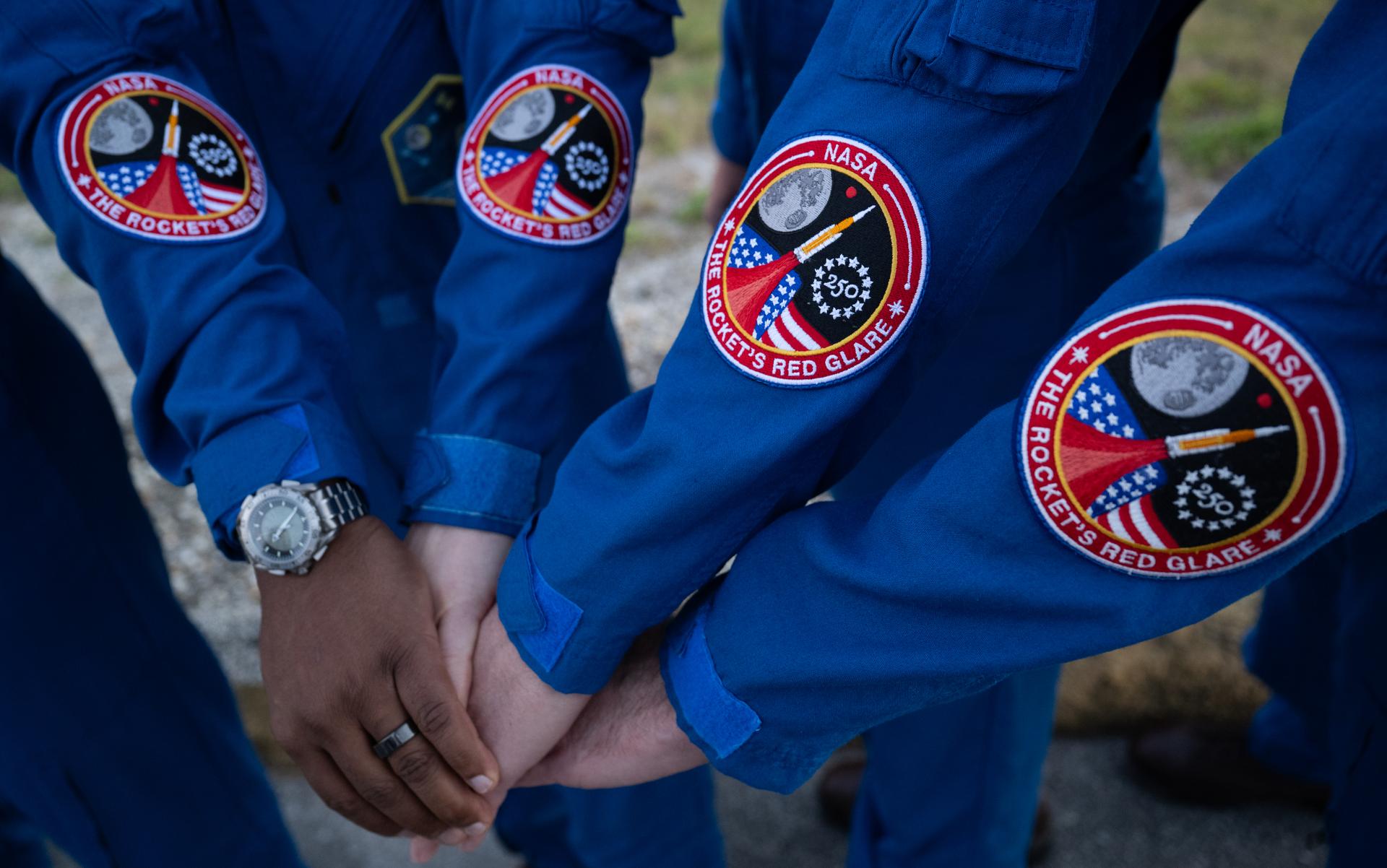
NASA astronauts Victor Glover, Artemis II pilot, left, Christina Koch, Artemis II mission specialist, Reid Wiseman, Artemis II commander, and CSA (Canadian Space Agency) astronaut Jeremy Hansen, Artemis II mission specialist, pose for a picture showing the Freedom 250 Commemorative Patch on their flight suits, Saturday, Jan. 17, 2026, at NASA’s Kennedy Space Center in Florida. The patch honors America’s 250th anniversary of declaring independence, establishing a sovereign nation. The theme of NASA’s celebration is “Rocket’s Red Glare” which references the iconic lyric within the Star-Spangled Banner, our national anthem. NASA’s Artemis II test flight will take Glover, Koch, Wiseman, and Hansen around the Moon and back to Earth no later than April 2026. Photo Credit: (NASA/Joel Kowsky)

NASA astronaut Victor Glover, Artemis II pilot, left, and CSA (Canadian Space Agency) astronaut Jeremy Hansen, Artemis II mission specialist sign the backs of patches before meeting with members and staff of the House Science Committee, Tuesday, May 12, 2026, at the Rayburn House Office Building in Washington. NASA’s Artemis II mission took Wiseman, Glover, Koch, and Hansen on a nearly 10-day journey around the Moon and back to Earth in April 2026. Photo Credit: (NASA/Joel Kowsky)
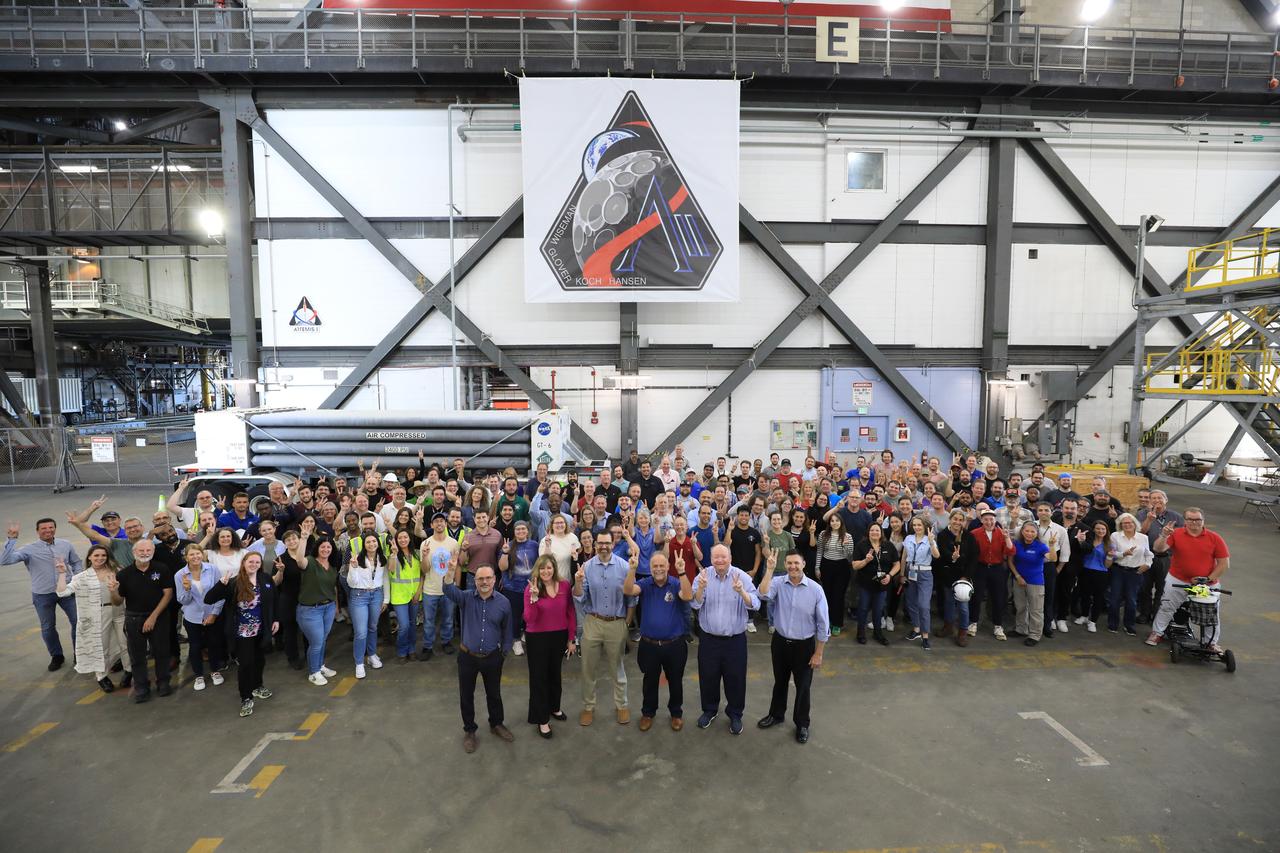
Members of NASA leadership, leadership with the agency’s Exploration Ground Systems Program, and contractor Amentum Services, Inc. leadership pose for a group photo underneath a banner displaying the Artemis II mission insignia outside High Bay 3 at the Vehicle Assembly Building at NASA’s Kennedy Space Center in Florida on Thursday, April 10, 2025. The design designates the mission as “AII,” signifying not only the second major flight of the Artemis campaign, but also an endeavor of discovery that seeks to explore for all and by all. Framed in Apollo 8’s famous Earthrise photo, the scene of the Earth and the Moon represents the dual nature of human spaceflight, both equally compelling: The Moon represents our exploration destination, focused on discovery of the unknown. The Earth represents home, focused on the perspective we gain when we look back at our shared planet and learn what it is to be uniquely human. The orbit around Earth highlights the ongoing exploration missions that have enabled Artemis to set sights on a long-term presence on the Moon and soon, Mars.
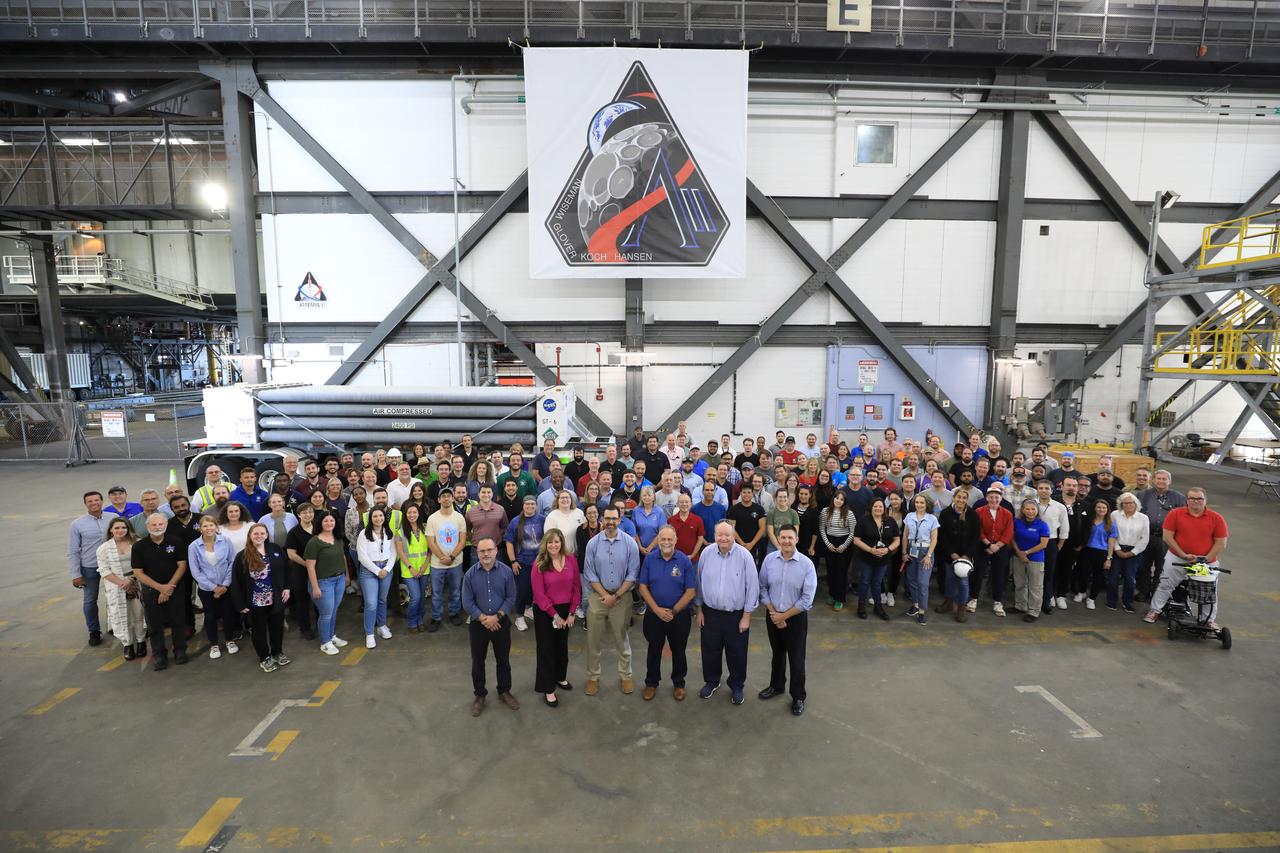
Members of NASA leadership, leadership with the agency’s Exploration Ground Systems Program, and contractor Amentum Services, Inc. leadership pose for a group photo underneath a banner displaying the Artemis II mission insignia outside High Bay 3 at the Vehicle Assembly Building at NASA’s Kennedy Space Center in Florida on Thursday, April 10, 2025. The design designates the mission as “AII,” signifying not only the second major flight of the Artemis campaign, but also an endeavor of discovery that seeks to explore for all and by all. Framed in Apollo 8’s famous Earthrise photo, the scene of the Earth and the Moon represents the dual nature of human spaceflight, both equally compelling: The Moon represents our exploration destination, focused on discovery of the unknown. The Earth represents home, focused on the perspective we gain when we look back at our shared planet and learn what it is to be uniquely human. The orbit around Earth highlights the ongoing exploration missions that have enabled Artemis to set sights on a long-term presence on the Moon and soon, Mars.
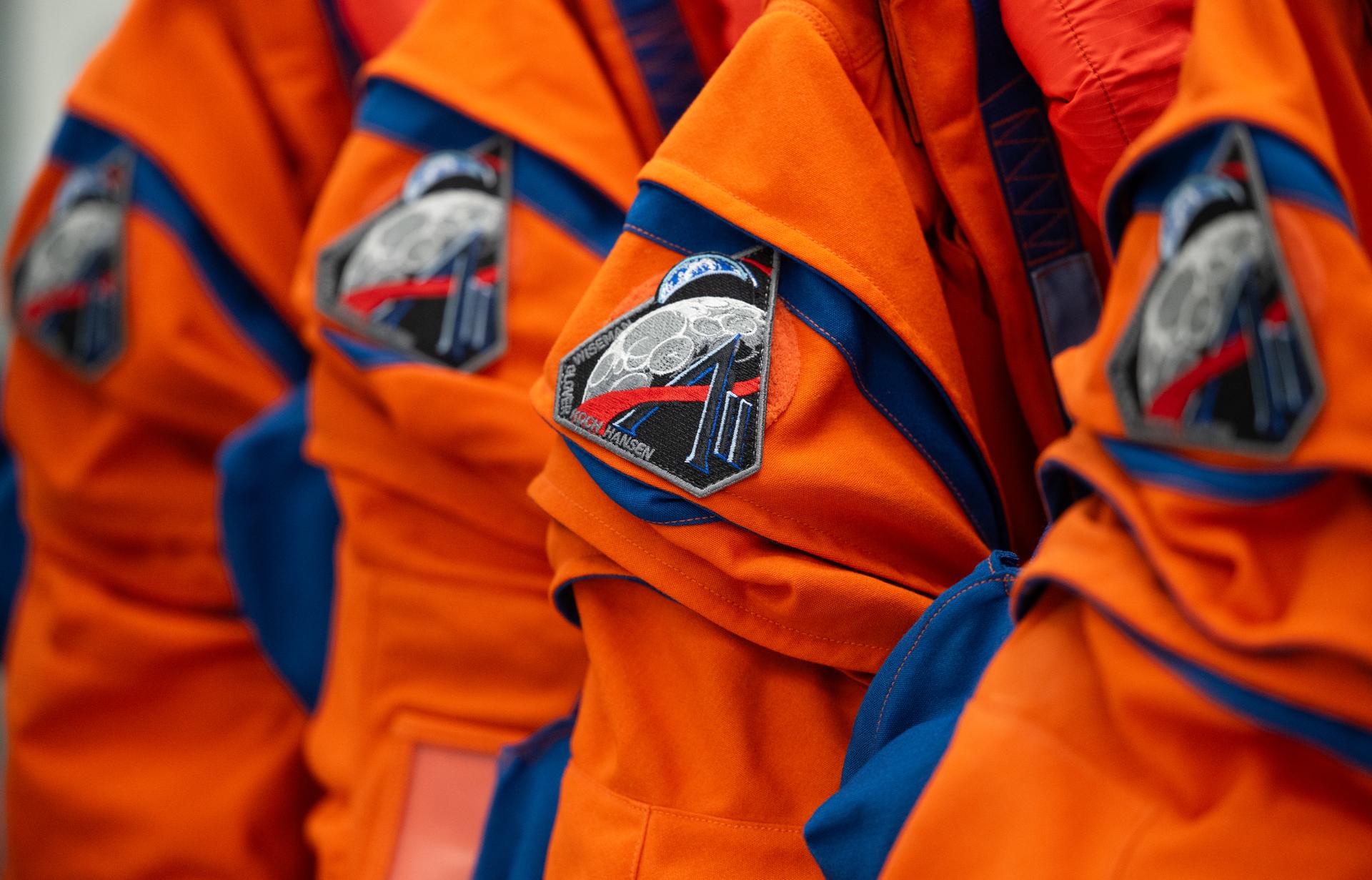
The Artemis II mission patch is seen on the right shoulder of the Orion Crew Survival System suits that Commander Reid Wiseman, Pilot Victor Glover, and Mission Specialist Christina Koch from NASA, and Mission Specialist Jeremy Hansen from the CSA (Canadian Space Agency) will wear on the Artemis II test flight are seen, Saturday, Jan. 17, 2026, in the suit-up room of the Neil A. Armstrong Operations and Checkout Building at NASA’s Kennedy Space Center in Florida. NASA’s Artemis II test flight will take Wiseman, Glover, Koch, and Hansen around the Moon and back to Earth no later than April 2026. Photo Credit: (NASA/Joel Kowsky)

NASA astronaut Christina Koch, Artemis II mission specialist holds a patch signed by her and her fellow Artemis II crew mates NASA astronauts Reid Wiseman, Victor Glover, and CSA (Canadian Space Agency) astronaut Jeremy Hansen before meeting with members and staff of the House Science Committee, Tuesday, May 12, 2026, at the Rayburn House Office Building in Washington. NASA’s Artemis II mission took Wiseman, Glover, Koch, and Hansen on a nearly 10-day journey around the Moon and back to Earth in April 2026. Photo Credit: (NASA/Joel Kowsky)

Members from NASA's Artemis Landing and Recovery team and U.S. Navy pose in front of a H60-S Seahawk helicopter while holding NASA's Artemis II mission patch aboard the USS John P. Murtha following the successful splashdown in the Pacific Ocean near San Diego, California, at 5:07 p.m. PDT, (8:07 p.m. EDT) on Friday, April 10, 2026. The Artemis II test flight, carrying Commander Reid Wiseman, Pilot Victor Glover, and Mission Specialist Christina Koch from NASA, along with Mission Specialist Jeremy Hansen from the CSA (Canadian Space Agency) launched on Wednesday, April 1, from NASA’s Kennedy Space Center in Florida to begin its 10-day journey around the Moon for scientific discovery, economic benefits, and to build on our foundation for the first crewed missions to Mars.

Members with the U.S. Navy pose in front of a H60-S Seahawk helicopter while holding NASA's Artemis II mission patch aboard the USS John P. Murtha following the successful splashdown in the Pacific Ocean near San Diego, California, at 5:07 p.m. PDT, (8:07 p.m. EDT) on Friday, April 10, 2026. The Artemis II test flight, carrying Commander Reid Wiseman, Pilot Victor Glover, and Mission Specialist Christina Koch from NASA, along with Mission Specialist Jeremy Hansen from the CSA (Canadian Space Agency) launched on Wednesday, April 1, from NASA’s Kennedy Space Center in Florida to begin its 10-day journey around the Moon for scientific discovery, economic benefits, and to build on our foundation for the first crewed missions to Mars.
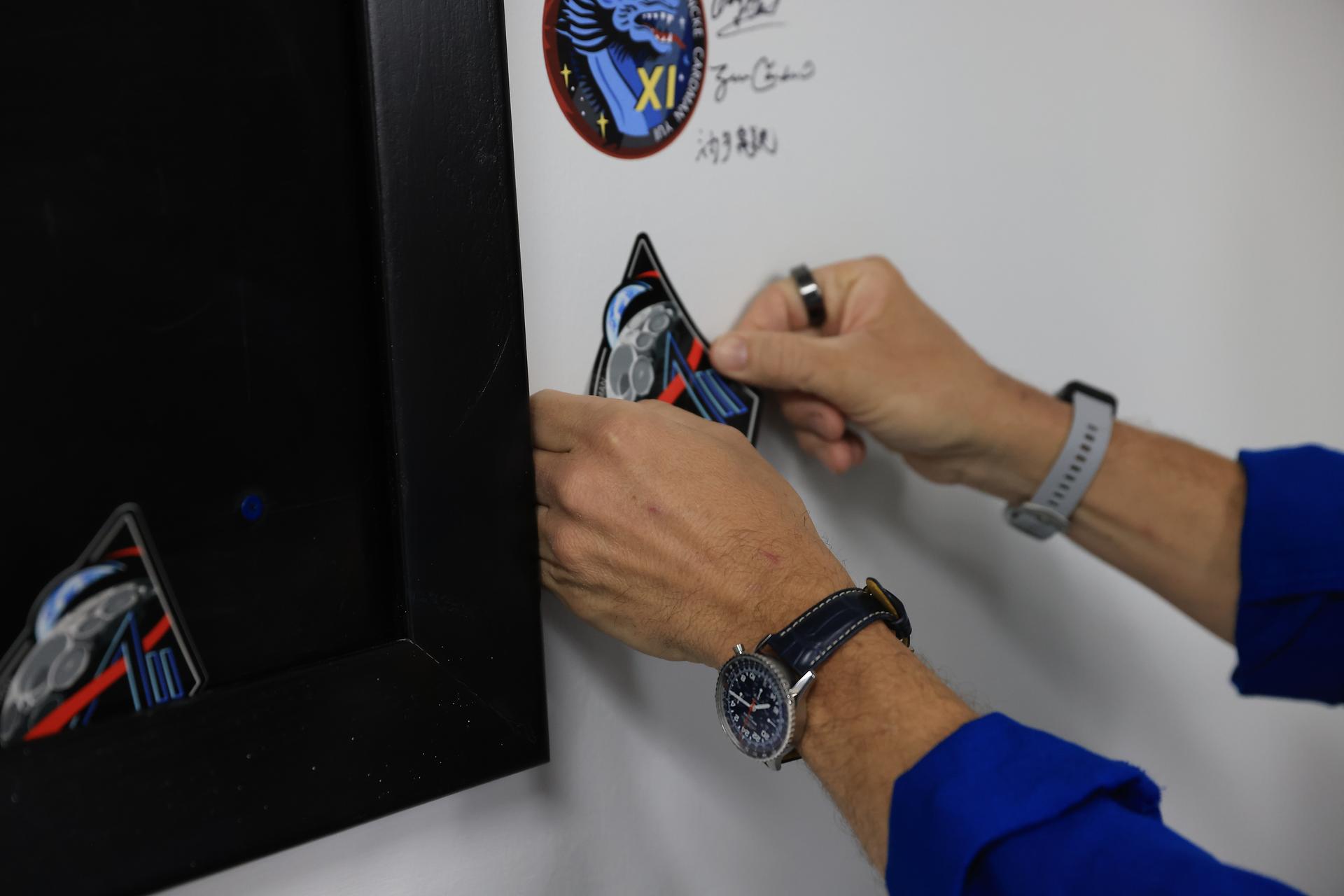
NASA’s Artemis II mission insignia is placed with other mission insignias on the wall the Neil A. Armstrong Operations and Checkout Building at NASA’s Kennedy Space Center in Florida on Monday, March 30, 2026. It’s a tradition for any crewed mission to place their insignias on the door leaving where they have quarantined and suited up ahead of launch. The Artemis II test flight mission will take the crew on a 10-day journey around the Moon and back aboard NASA’s SLS (Space Launch System) rocket and Orion spacecraft from Launch Complex 39B no earlier than 6:24 p.m. EDT on Wednesday, April 1.
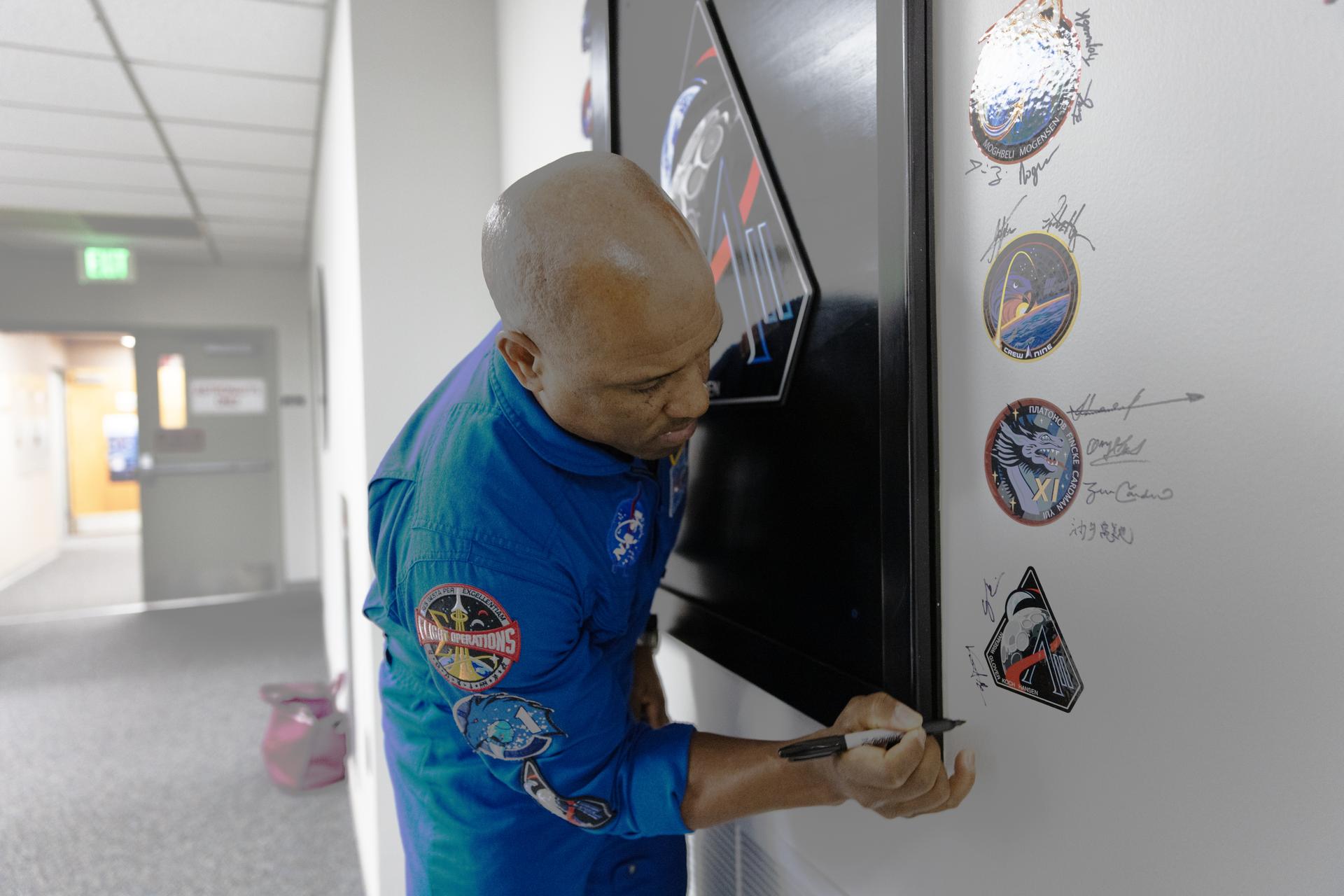
NASA astronaut Victor Glover, Artemis II pilot, signs his name on the Artemis II mission insignia inside the Astronaut Crew Quarters in the Neil A. Armstrong Operations and Checkout Building at NASA’s Kennedy Space Center in Florida on Monday, March 30, 2026. Glover, Commander Reid Wiseman, and Mission Specialist Christina Koch from NASA, and Mission Specialist Jeremy Hansen from the CSA (Canadian Space Agency) will launch on a 10-day journey around the Moon and back aboard the agency’s SLS (Space Launch System) rocket and Orion spacecraft from Launch Complex 39B no earlier than 6:24 p.m. EDT on Wednesday, April 1.
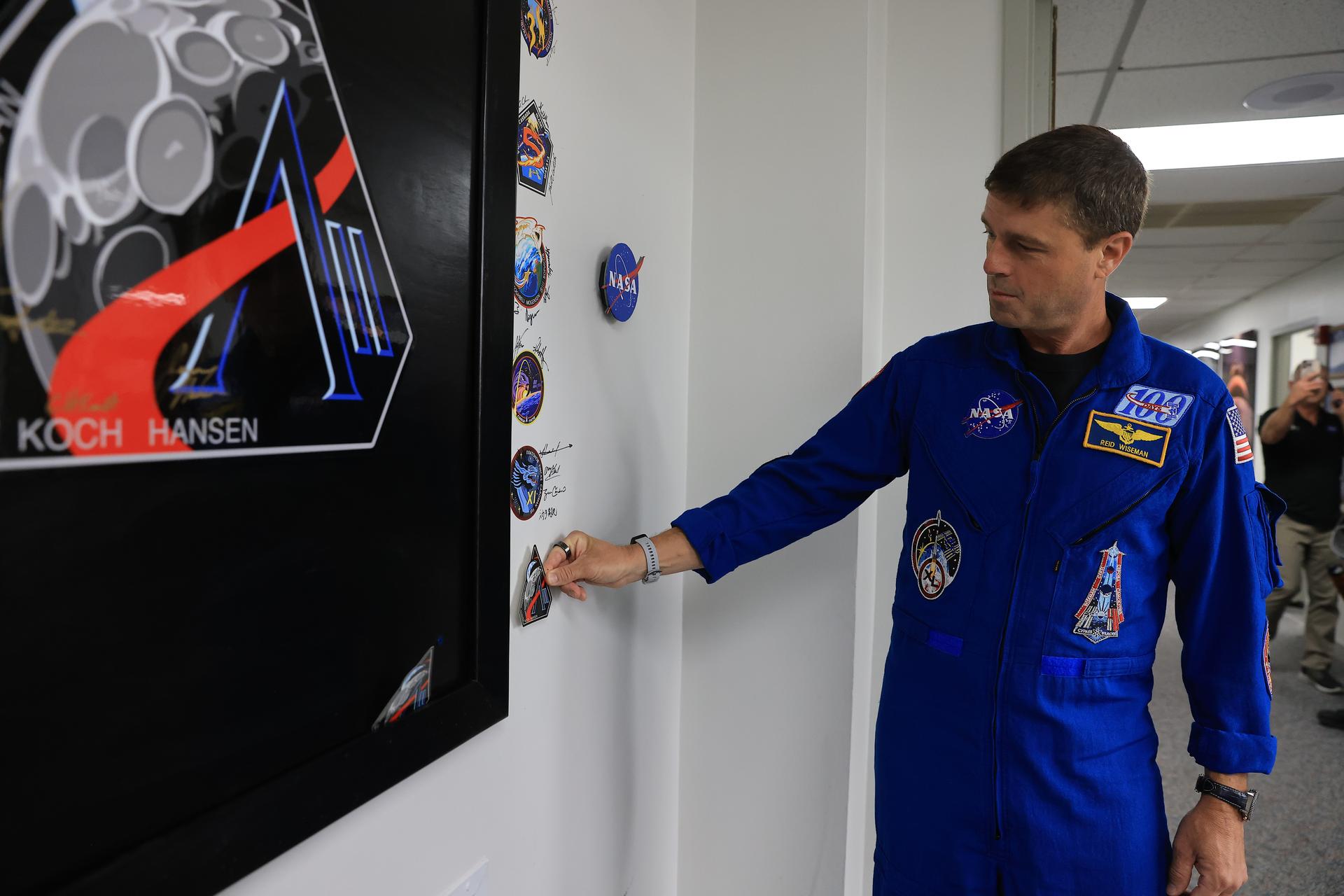
NASA’s Artemis II mission insignia is placed with other mission insignias on the wall of the Neil A. Armstrong Operations and Checkout Building at NASA’s Kennedy Space Center in Florida on Monday, March 30, 2026. It’s a tradition for any crewed mission to place their insignias on the door leaving where they have quarantined and suited up ahead of launch. The Artemis II test flight mission will take the crew on a 10-day journey around the Moon and back aboard NASA’s SLS (Space Launch System) rocket and Orion spacecraft from Launch Complex 39B no earlier than 6:24 p.m. EDT on Wednesday, April 1.
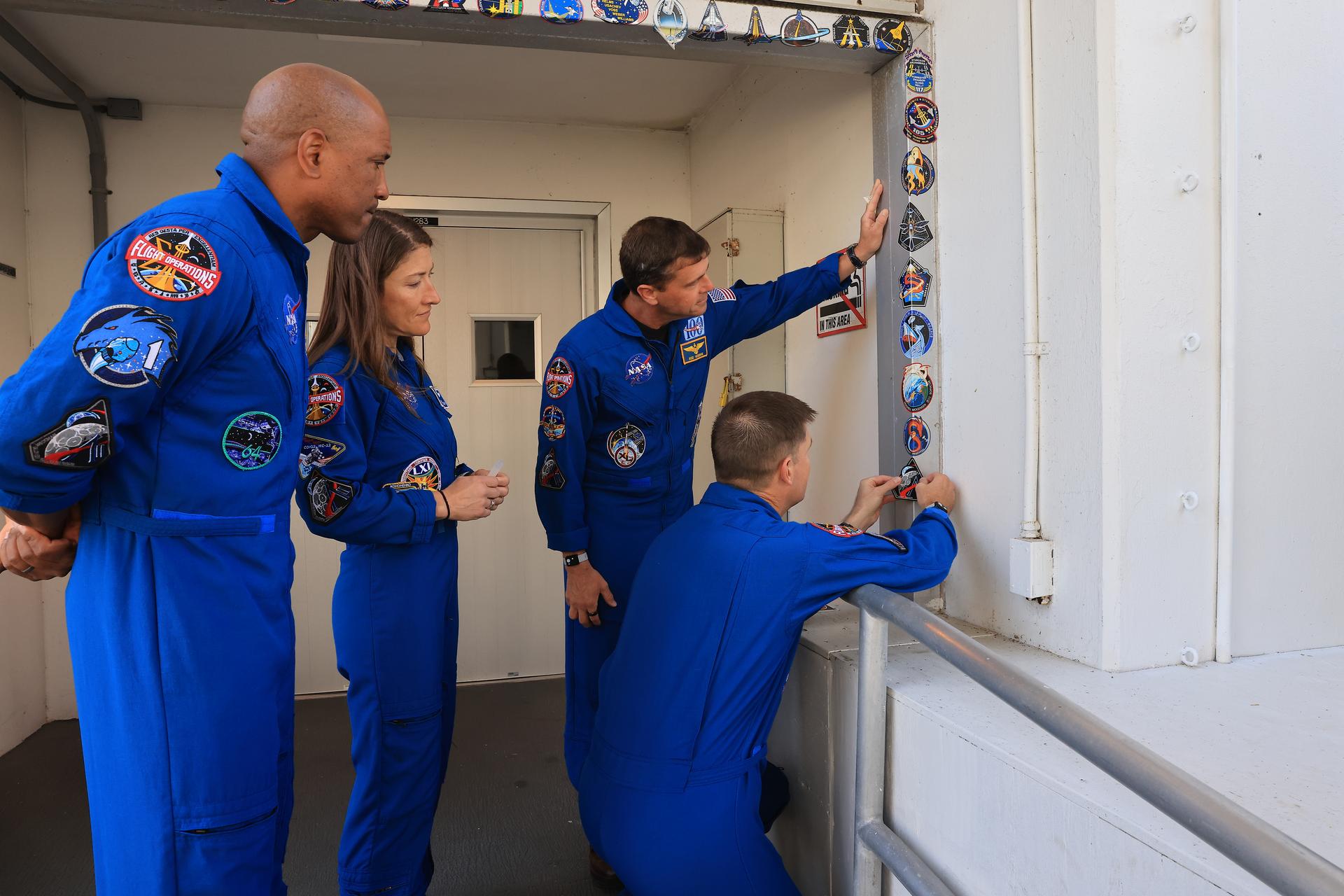
From left, Artemis II Pilot Victor Glover, Mission Specialist Christina Koch, and Commander Reid Wiseman from NASA, along with Mission Specialist Jeremy Hansen, from the CSA (Canadian Space Agency), place their Artemis II mission insignia on the outside door the Neil A. Armstrong Operations and Checkout Building at NASA’s Kennedy Space Center in Florida on Monday, March 30, 2026. It’s a tradition for any crewed mission to place their insignias on the door leaving where they have quarantined and suited up ahead of launch. The Artemis II test flight mission will take the crew on a 10-day journey around the Moon and back aboard NASA’s SLS (Space Launch System) rocket and Orion spacecraft from Launch Complex 39B no earlier than 6:24 p.m. EDT on Wednesday, April 1.
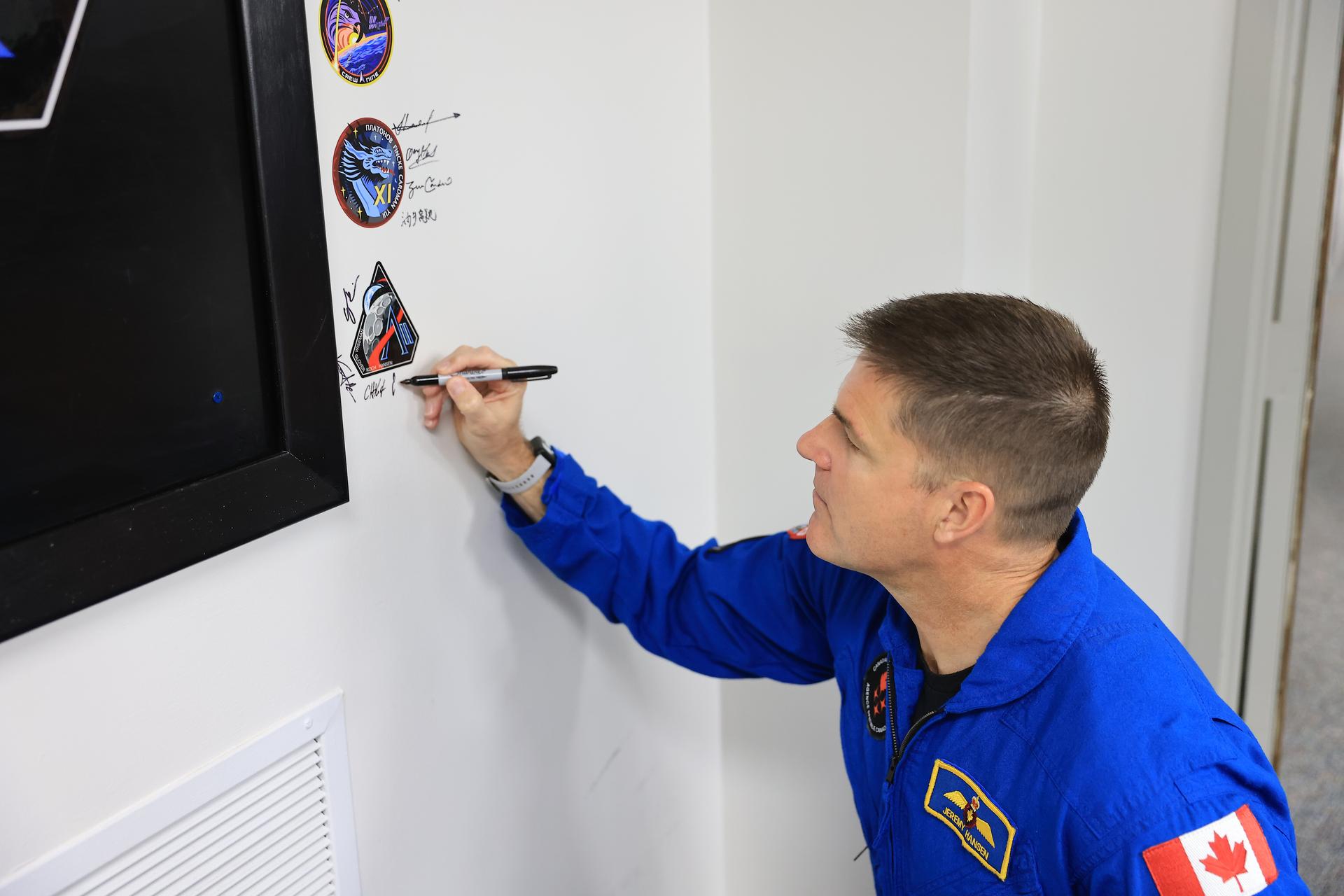
CSA (Canadian Space Agency) astronaut Jeremy Hansen, Artemis II mission specialist, signs his name on the Artemis II mission insignia inside the Astronaut Crew Quarters in the Neil A. Armstrong Operations and Checkout Building at NASA’s Kennedy Space Center in Florida on Monday, March 30, 2026. Hansen, and NASA astronauts Commander Reid Wiseman, Pilot Victor Glover, and Mission Specialist Christina Koch will launch on a 10-day journey around the Moon and back aboard the agency’s SLS (Space Launch System) rocket and Orion spacecraft from Launch Complex 39B no earlier than 6:24 p.m. EDT on Wednesday, April 1.
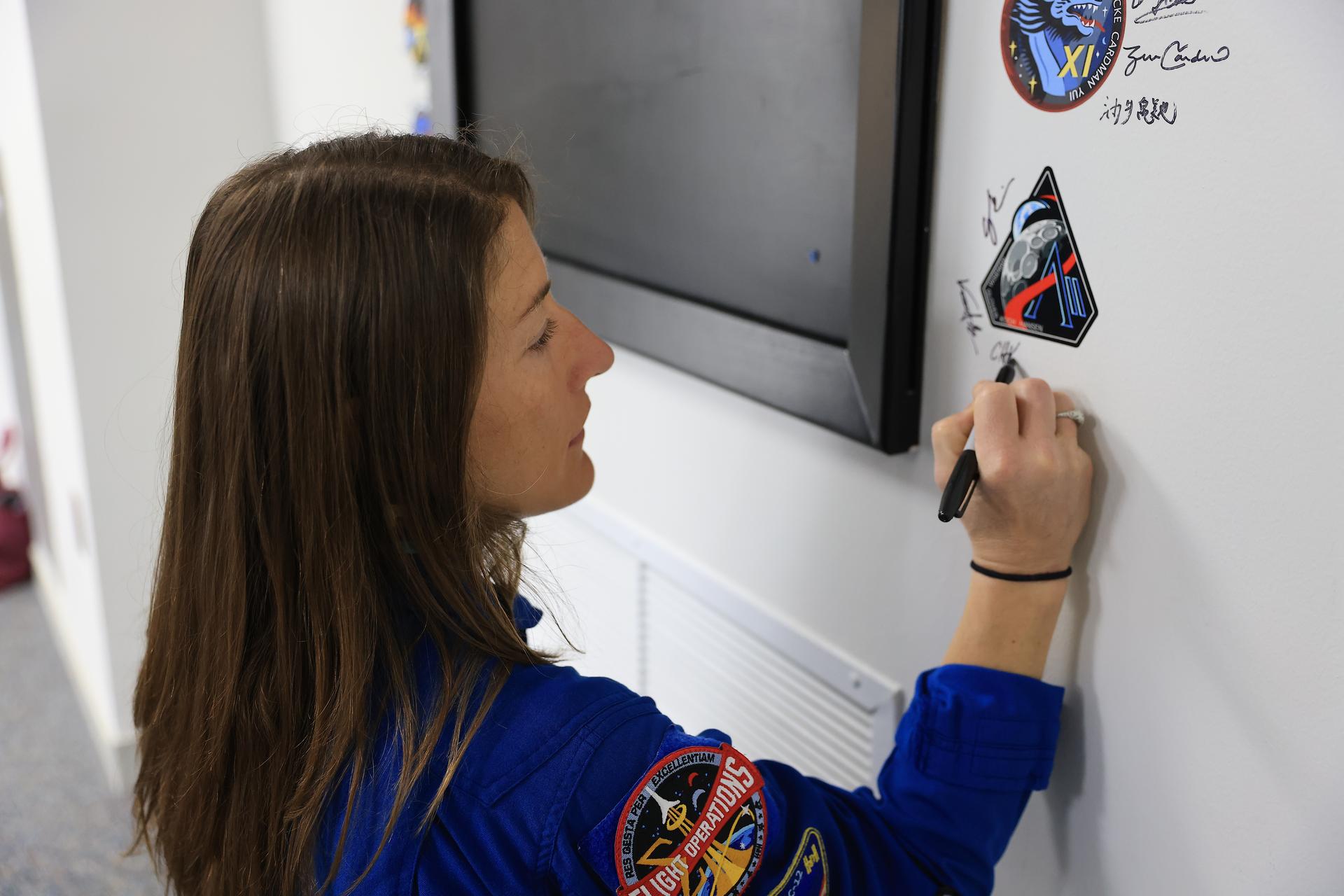
NASA astronaut Christina Koch, Artemis II mission specialist, signs her name on the Artemis II mission insignia inside the Astronaut Crew Quarters in the Neil A. Armstrong Operations and Checkout Building at NASA’s Kennedy Space Center in Florida on Monday, March 30, 2026. Koch, Commander Reid Wiseman, and Pilot Victor Glover from NASA, and Mission Specialist Jeremy Hansen from the CSA (Canadian Space Agency) will launch on a 10-day journey around the Moon and back aboard the agency’s SLS (Space Launch System) rocket and Orion spacecraft from Launch Complex 39B no earlier than 6:24 p.m. EDT on Wednesday, April 1.
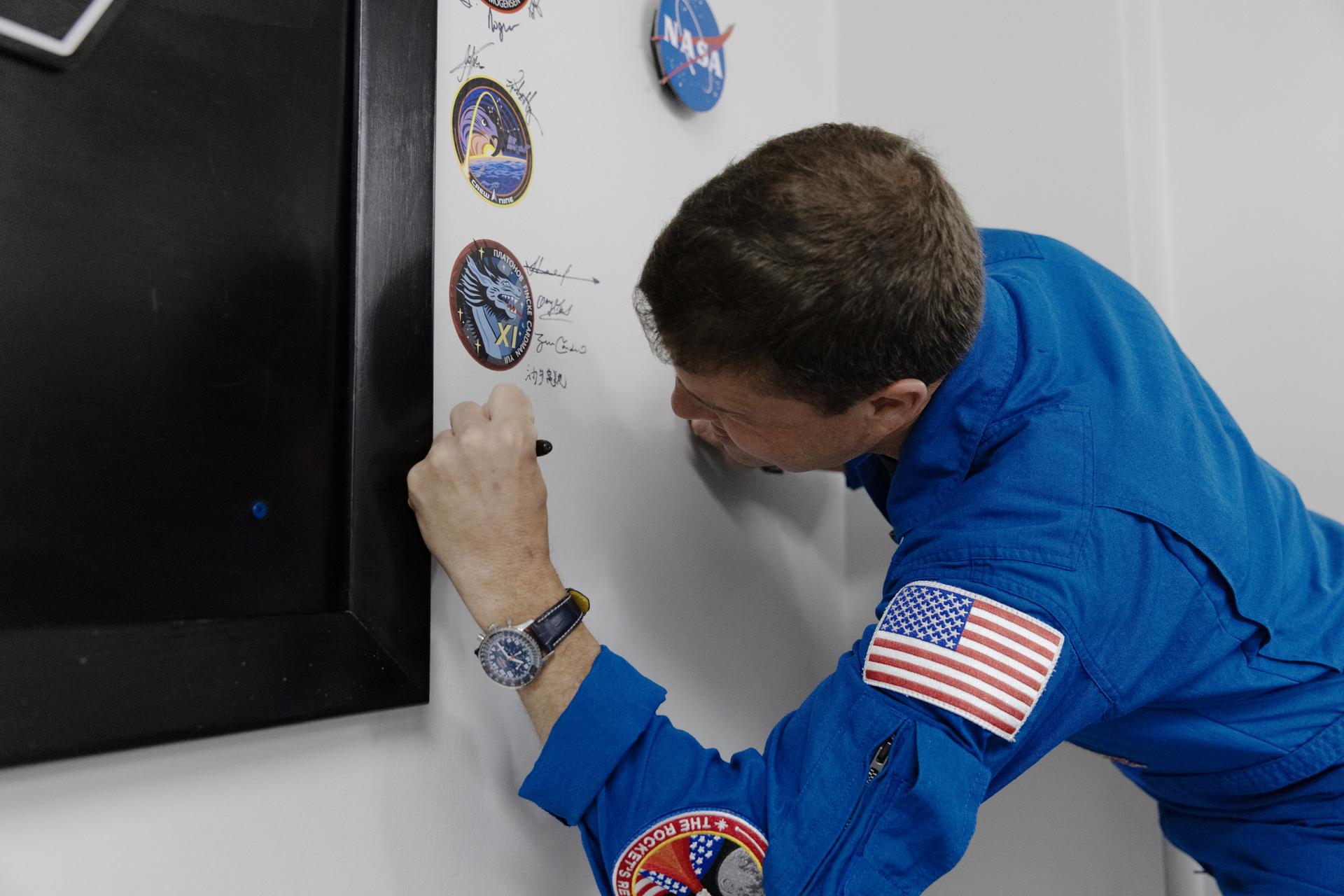
NASA astronaut Reid Wiseman, Artemis II commander, signs his name on the Artemis II mission insignia inside the Astronaut Crew Quarters in the Neil A. Armstrong Operations and Checkout Building at NASA’s Kennedy Space Center in Florida on Monday, March 30, 2026. Wiseman, Pilot Victor Glover, and Mission Specialist Christina Koch from NASA, and Mission Specialist Jeremy Hansen from the CSA (Canadian Space Agency) will launch on a 10-day journey around the Moon and back aboard the agency’s SLS (Space Launch System) rocket and Orion spacecraft from Launch Complex 39B no earlier than 6:24 p.m. EDT on Wednesday, April 1.
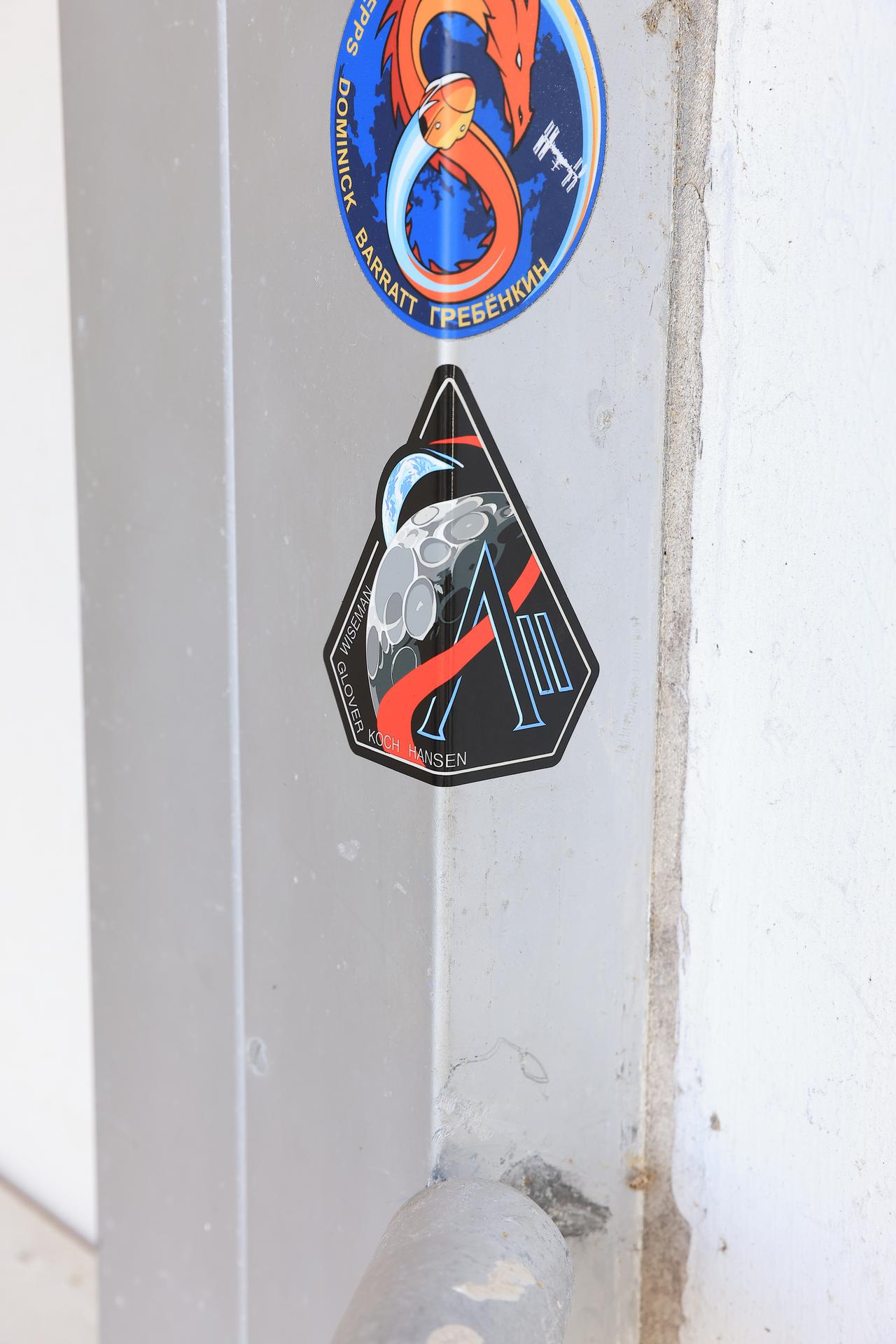
NASA’s Artemis II mission insignia is placed on the door underneath other mission insignias on the outside door the Neil A. Armstrong Operations and Checkout Building at NASA’s Kennedy Space Center in Florida on Monday, March 30, 2026. It’s a tradition for any crewed mission to place their insignias on the door leaving where they have quarantined and suited up ahead of launch. The Artemis II test flight mission will take the crew on a 10-day journey around the Moon and back aboard NASA’s SLS (Space Launch System) rocket and Orion spacecraft from Launch Complex 39B no earlier than 6:24 p.m. EDT on Wednesday, April 1.