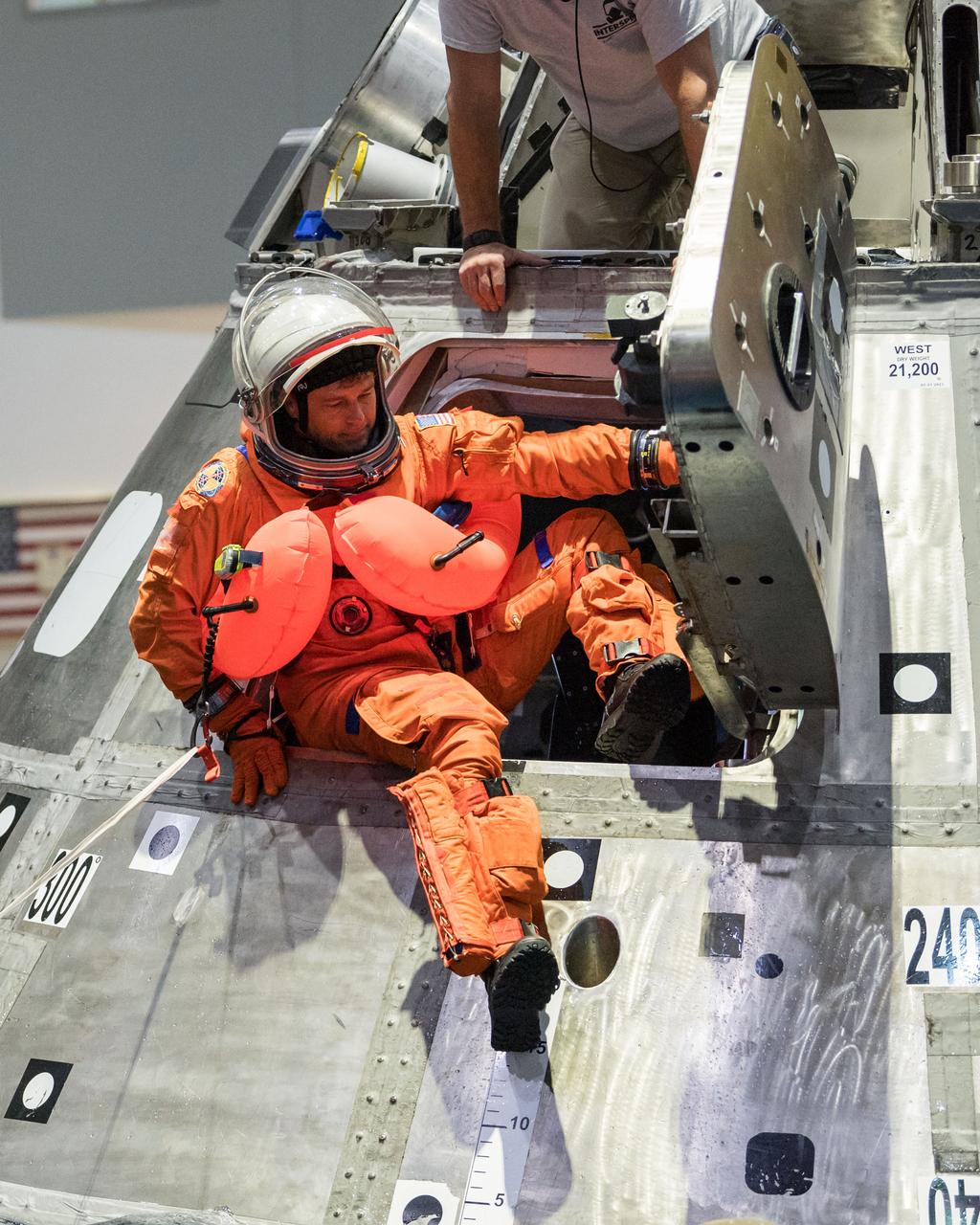
NASA astronaut and Artemis II commander Reid Wiseman exits the side of a mockup of the Orion spacecraft during a training exercise in the Neutral Buoyancy Lab at NASA’s Johnson Space Center in Houston on Jan. 23. As part of training for their mission around the Moon next year, the first crewed flight under NASA’s Artemis campaign, the crew of four astronauts practiced the recovery procedures they will use when the splash down in the Pacific Ocean. jsc2024e009648.
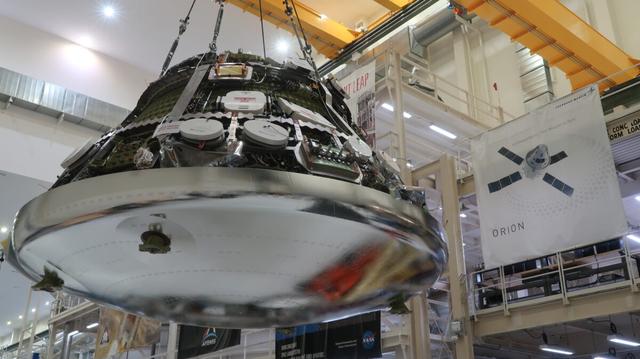
Engineers connect the Orion crew and service modules for the Artemis II mission on Oct. 19, 2023, inside the Neil Armstrong Operations and Checkout Building at NASA’s Kennedy Space Center in Florida. With the crew and service modules integrated, the team will power up the combined crew and service module for the first time. After power on tests are complete, Orion will begin altitude chamber testing, which will put the spacecraft through conditions as close as possible to the environment it will experience in the vacuum of deep space. The crew and service modules are the two major components of Orion that will fly NASA astronauts Reid Wiseman, Victor Glover, and Christina Koch, along with CSA (Canadian Space Agency) astronaut Jeremy Hansen on a mission around the Moon and bring them home safely.
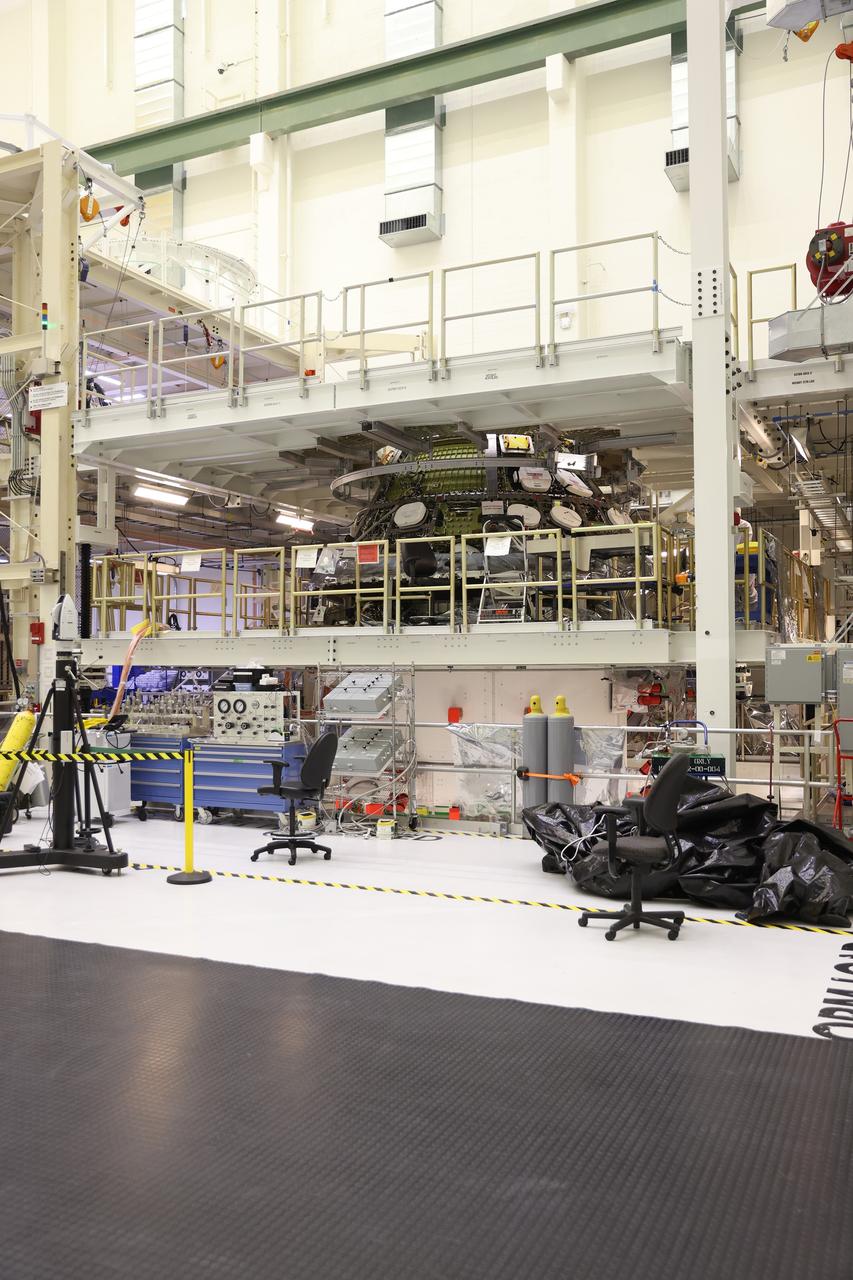
Engineers connect the Orion crew and service modules for the Artemis II mission on Oct. 19, 2023, inside the Neil Armstrong Operations and Checkout Building at NASA’s Kennedy Space Center in Florida. With the crew and service modules integrated, the team will power up the combined crew and service module for the first time. After power on tests are complete, Orion will begin altitude chamber testing, which will put the spacecraft through conditions as close as possible to the environment it will experience in the vacuum of deep space. The crew and service modules are the two major components of Orion that will fly NASA astronauts Reid Wiseman, Victor Glover, and Christina Koch, along with CSA (Canadian Space Agency) astronaut Jeremy Hansen on a mission around the Moon and bring them home safely.
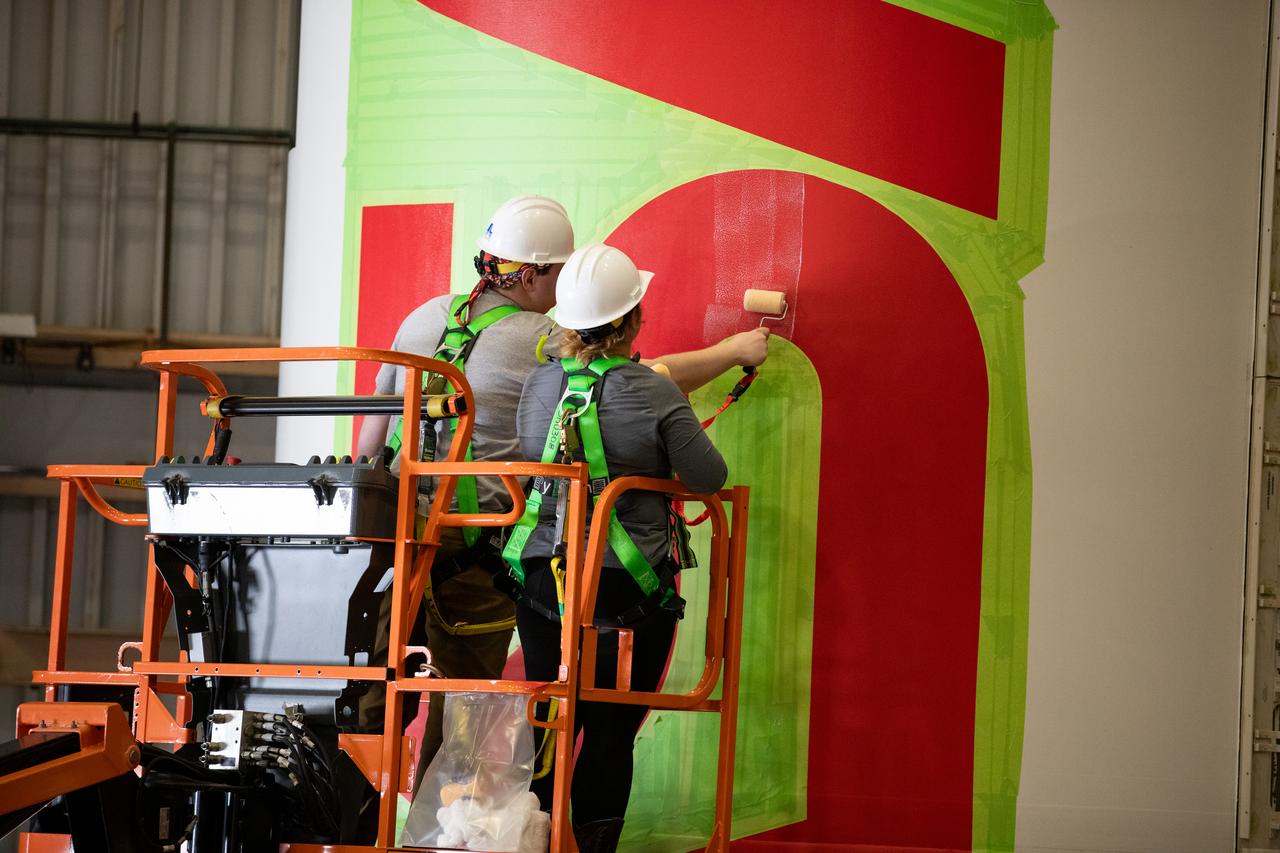
Workers with NASA’s Exploration Ground Systems (EGS) paint the bright red NASA “worm” logo on the side of an Artemis II solid rocket booster segment inside the Rotation, Processing and Surge Facility (RPSF) at Kennedy Space Center in Florida on Tuesday, Jan. 30, 2024. The EGS team used a laser projector to mask off the logo with tape, then painted the first coat of the iconic design. The booster segments will help propel the Space Launch System (SLS) rocket on the Artemis II mission to send four astronauts around the Moon as part of the agency’s effort to establish a long-term science and exploration presence at the Moon, and eventually Mars.

Workers with NASA’s Exploration Ground Systems and primary contractor, Jacobs, complete the painting of the agency’s iconic “worm” logo along the side of the twin Artemis II solid rocket booster motor segments inside the Rotation, Processing and Surge Facility at Kennedy Space Center in Florida on Friday, Feb. 16, 2024. Using a laser projector, the logo was mapped out with tape by workers with Jacobs, for the spaceport, before using two coats of red paint, plus several coats of clear primer to complete the logo that stretches 25 feet long. The booster segments will help propel the SLS (Space Launch System) rocket on the Artemis II mission to send four astronauts around the Moon as part of the agency’s effort to establish a long-term science and exploration presence at the Moon, and eventually Mars.
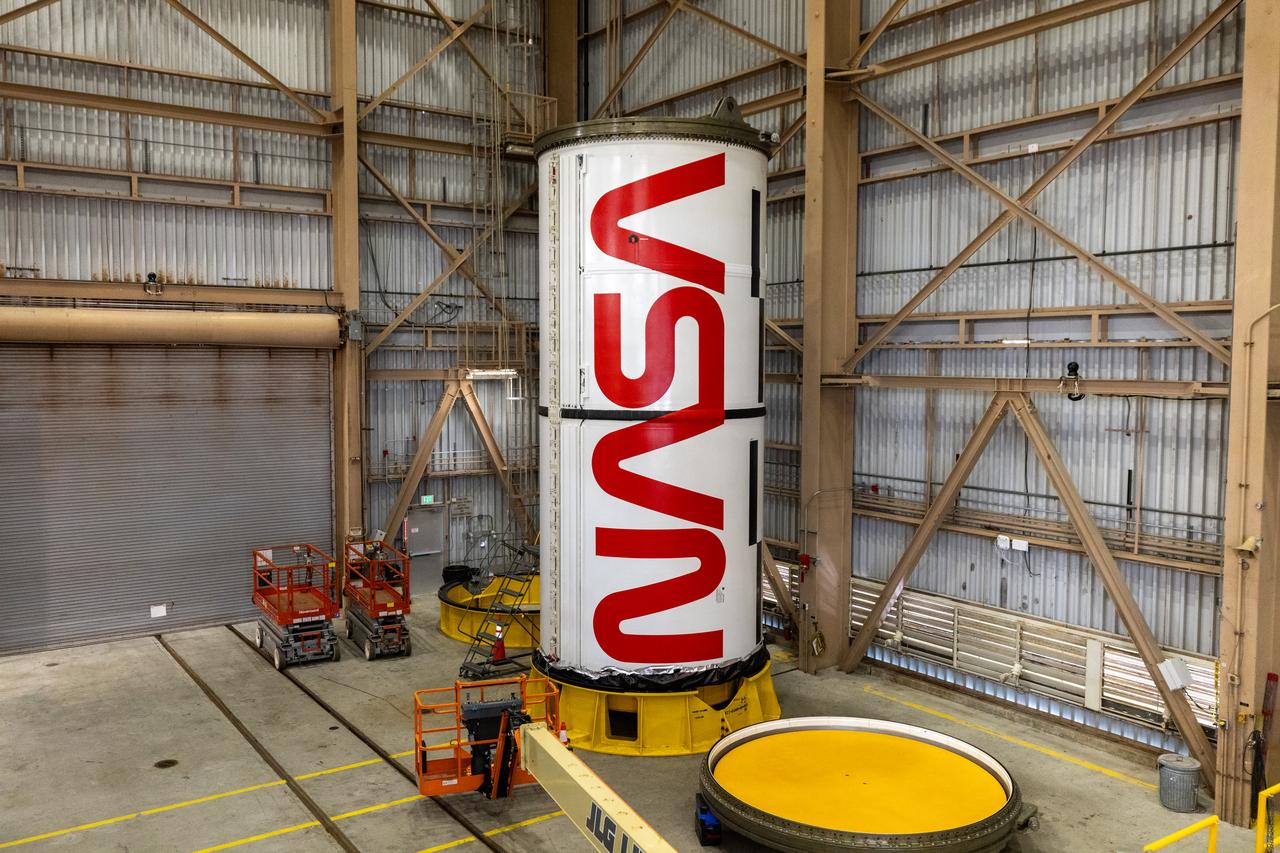
Workers with NASA’s Exploration Ground Systems and primary contractor, Jacobs, complete the painting of the agency’s iconic “worm” logo along the side of the twin Artemis II solid rocket booster motor segments inside the Rotation, Processing and Surge Facility at Kennedy Space Center in Florida on Friday, Feb. 16, 2024. Using a laser projector, the logo was mapped out with tape by workers with Jacobs, for the spaceport, before using two coats of red paint, plus several coats of clear primer to complete the logo that stretches 25 feet long. The booster segments will help propel the SLS (Space Launch System) rocket on the Artemis II mission to send four astronauts around the Moon as part of the agency’s effort to establish a long-term science and exploration presence at the Moon, and eventually Mars.
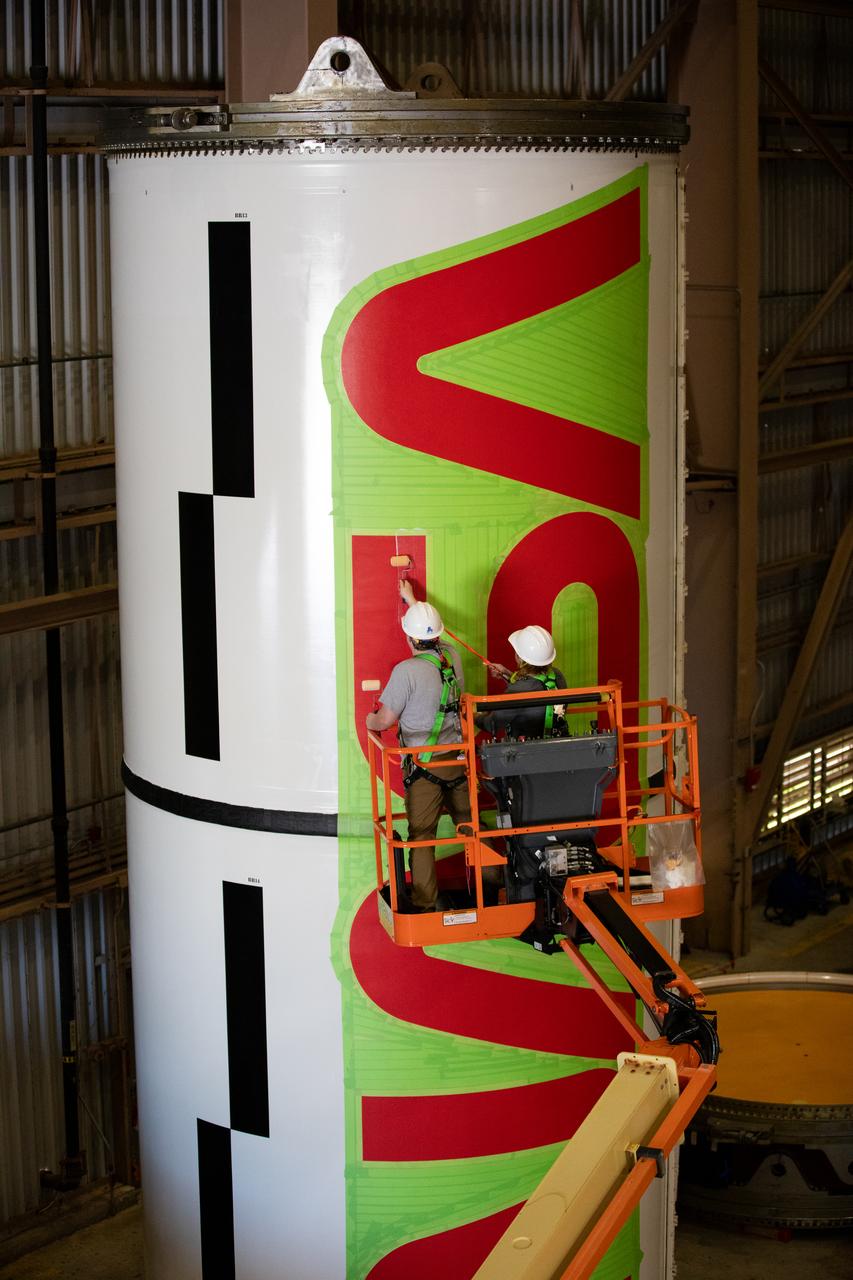
Workers with NASA’s Exploration Ground Systems (EGS) paint the bright red NASA “worm” logo on the side of an Artemis II solid rocket booster segment inside the Rotation, Processing and Surge Facility (RPSF) at Kennedy Space Center in Florida on Tuesday, Jan. 30, 2024. The EGS team used a laser projector to mask off the logo with tape, then painted the first coat of the iconic design. The booster segments will help propel the Space Launch System (SLS) rocket on the Artemis II mission to send four astronauts around the Moon as part of the agency’s effort to establish a long-term science and exploration presence at the Moon, and eventually Mars.
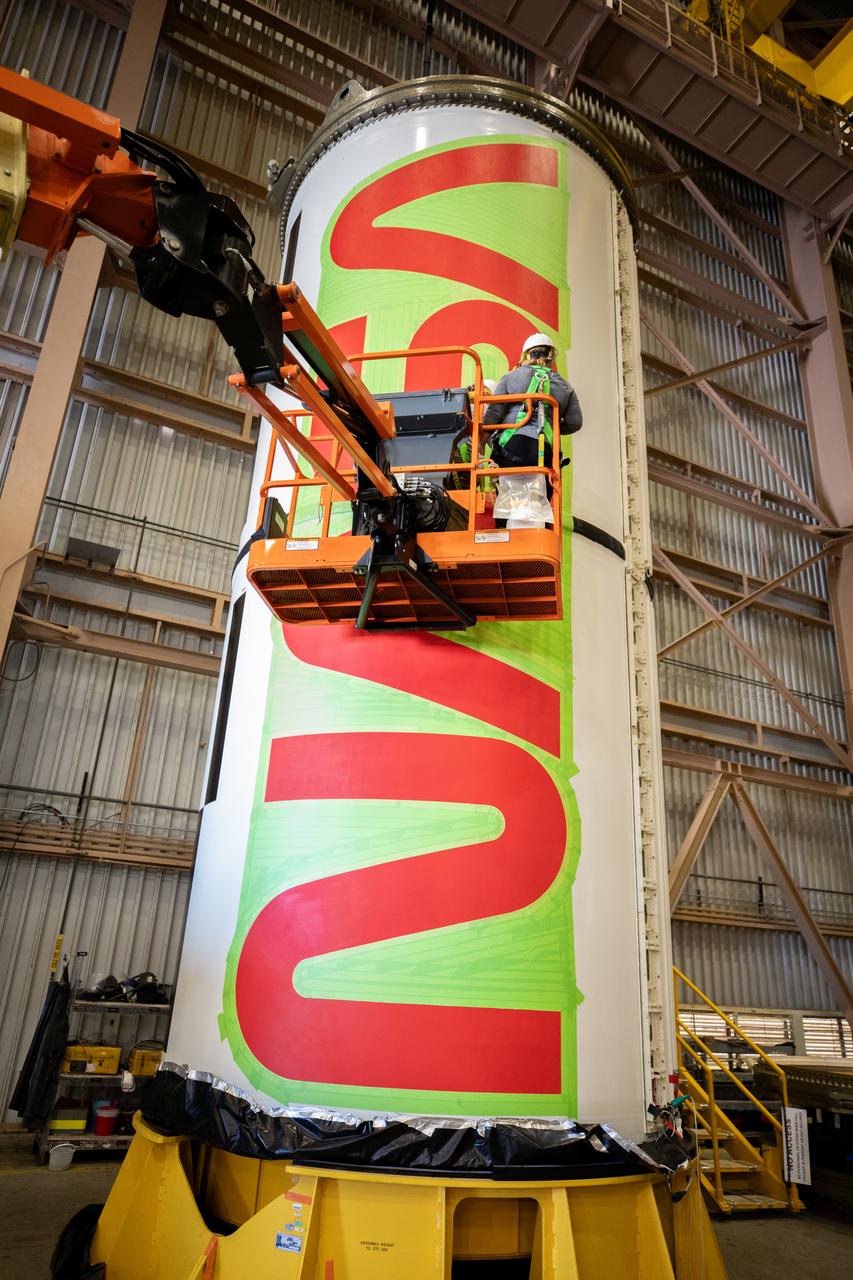
Workers with NASA’s Exploration Ground Systems (EGS) paint the bright red NASA “worm” logo on the side of an Artemis II solid rocket booster segment inside the Rotation, Processing and Surge Facility (RPSF) at Kennedy Space Center in Florida on Tuesday, Jan. 30, 2024. The EGS team used a laser projector to mask off the logo with tape, then painted the first coat of the iconic design. The booster segments will help propel the Space Launch System (SLS) rocket on the Artemis II mission to send four astronauts around the Moon as part of the agency’s effort to establish a long-term science and exploration presence at the Moon, and eventually Mars.
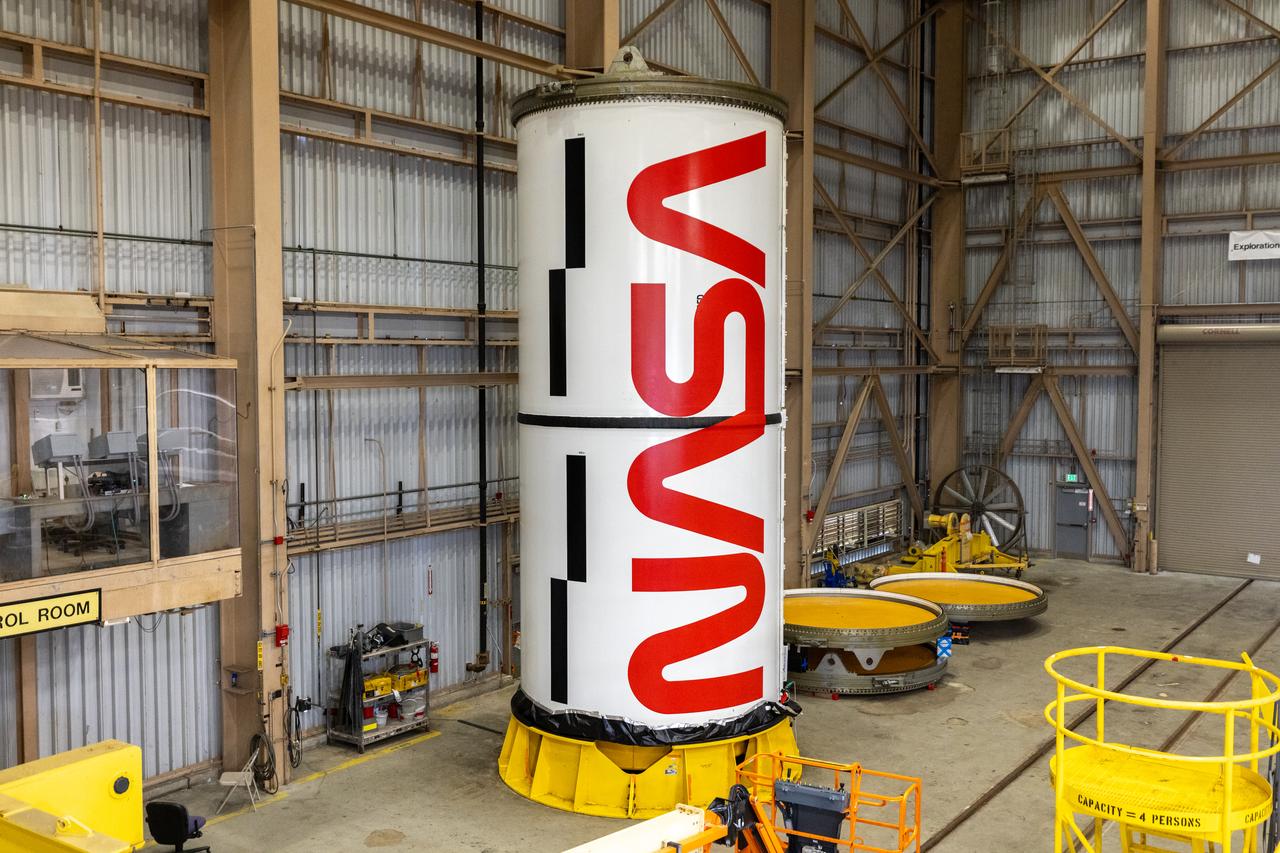
Workers with NASA’s Exploration Ground Systems and primary contractor, Jacobs, complete the painting of the agency’s iconic “worm” logo along the side of the twin Artemis II solid rocket booster motor segments inside the Rotation, Processing and Surge Facility at Kennedy Space Center in Florida on Friday, Feb. 16, 2024. Using a laser projector, the logo was mapped out with tape by workers with Jacobs, for the spaceport, before using two coats of red paint, plus several coats of clear primer to complete the logo that stretches 25 feet long. The booster segments will help propel the SLS (Space Launch System) rocket on the Artemis II mission to send four astronauts around the Moon as part of the agency’s effort to establish a long-term science and exploration presence at the Moon, and eventually Mars.
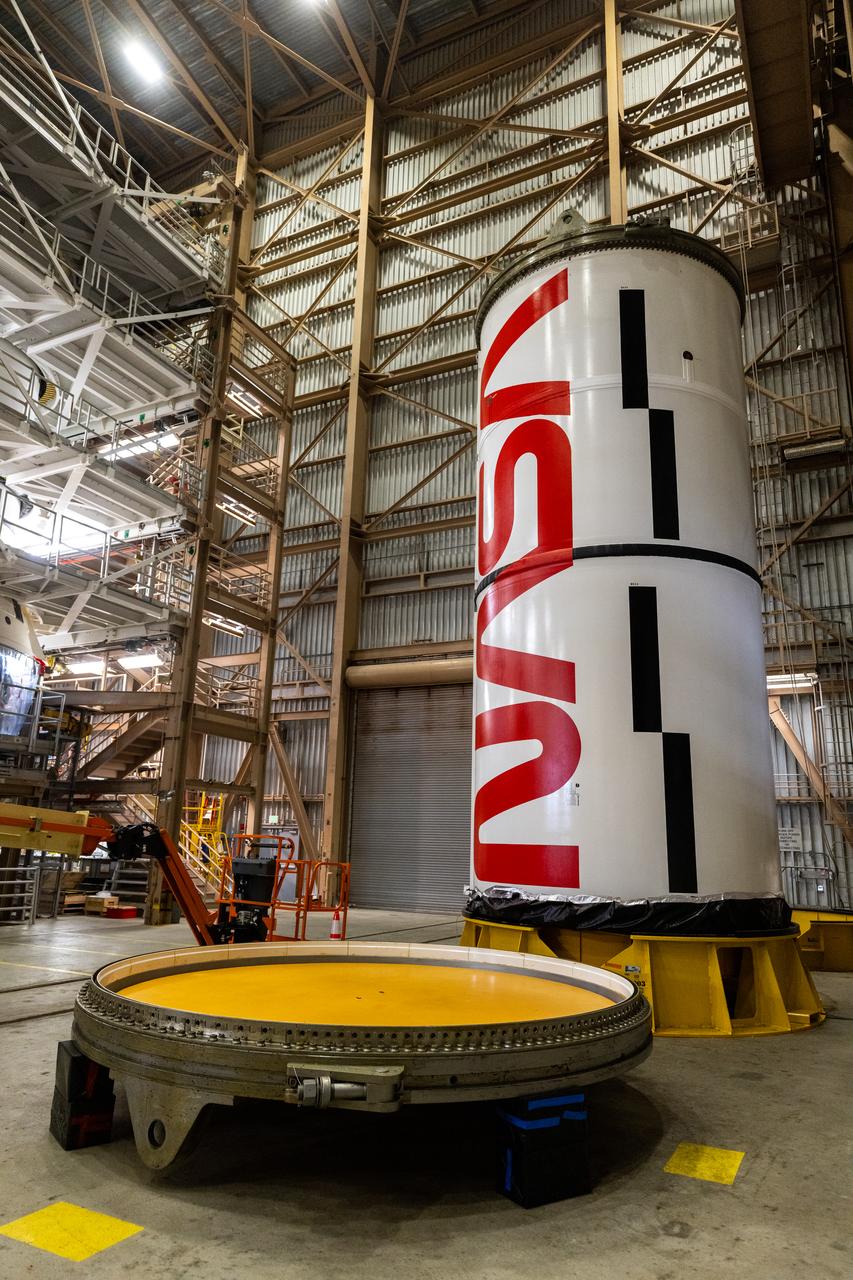
Workers with NASA’s Exploration Ground Systems and primary contractor, Jacobs, complete the painting of the agency’s iconic “worm” logo along the side of the twin Artemis II solid rocket booster motor segments inside the Rotation, Processing and Surge Facility at Kennedy Space Center in Florida on Friday, Feb. 16, 2024. Using a laser projector, the logo was mapped out with tape by workers with Jacobs, for the spaceport, before using two coats of red paint, plus several coats of clear primer to complete the logo that stretches 25 feet long. The booster segments will help propel the SLS (Space Launch System) rocket on the Artemis II mission to send four astronauts around the Moon as part of the agency’s effort to establish a long-term science and exploration presence at the Moon, and eventually Mars.
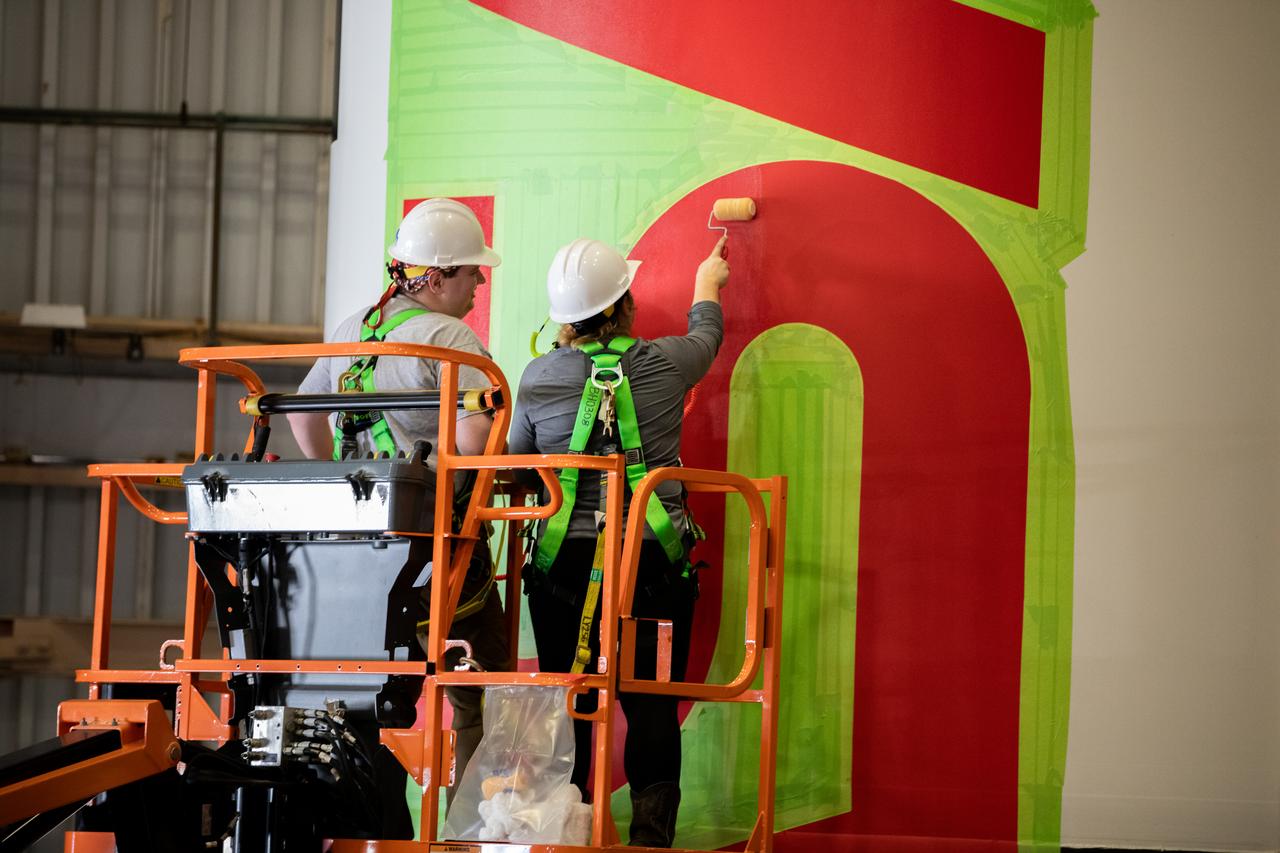
Workers with NASA’s Exploration Ground Systems (EGS) paint the bright red NASA “worm” logo on the side of an Artemis II solid rocket booster segment inside the Rotation, Processing and Surge Facility (RPSF) at Kennedy Space Center in Florida on Tuesday, Jan. 30, 2024. The EGS team used a laser projector to mask off the logo with tape, then painted the first coat of the iconic design. The booster segments will help propel the Space Launch System (SLS) rocket on the Artemis II mission to send four astronauts around the Moon as part of the agency’s effort to establish a long-term science and exploration presence at the Moon, and eventually Mars.
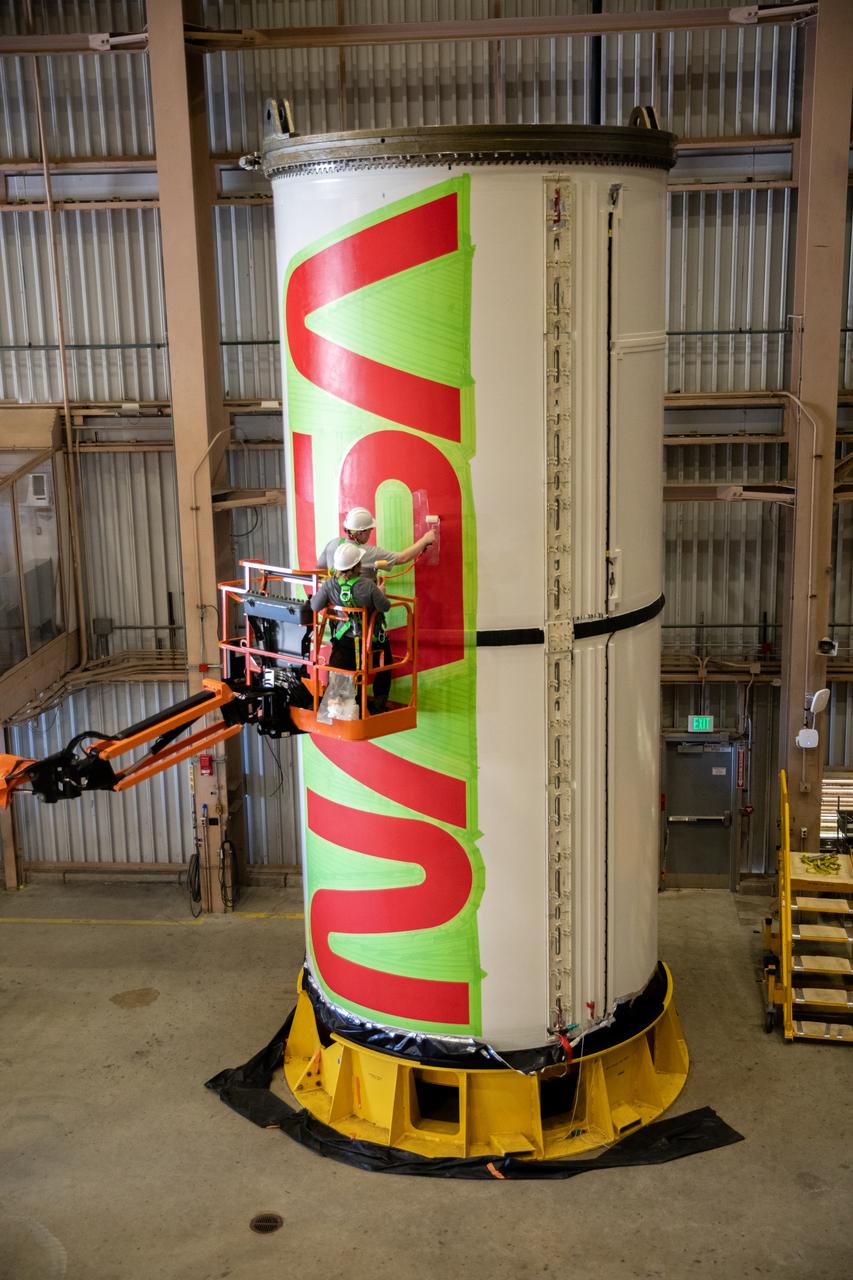
Workers with NASA’s Exploration Ground Systems (EGS) paint the bright red NASA “worm” logo on the side of an Artemis II solid rocket booster segment inside the Rotation, Processing and Surge Facility (RPSF) at Kennedy Space Center in Florida on Tuesday, Jan. 30, 2024. The EGS team used a laser projector to mask off the logo with tape, then painted the first coat of the iconic design. The booster segments will help propel the Space Launch System (SLS) rocket on the Artemis II mission to send four astronauts around the Moon as part of the agency’s effort to establish a long-term science and exploration presence at the Moon, and eventually Mars.
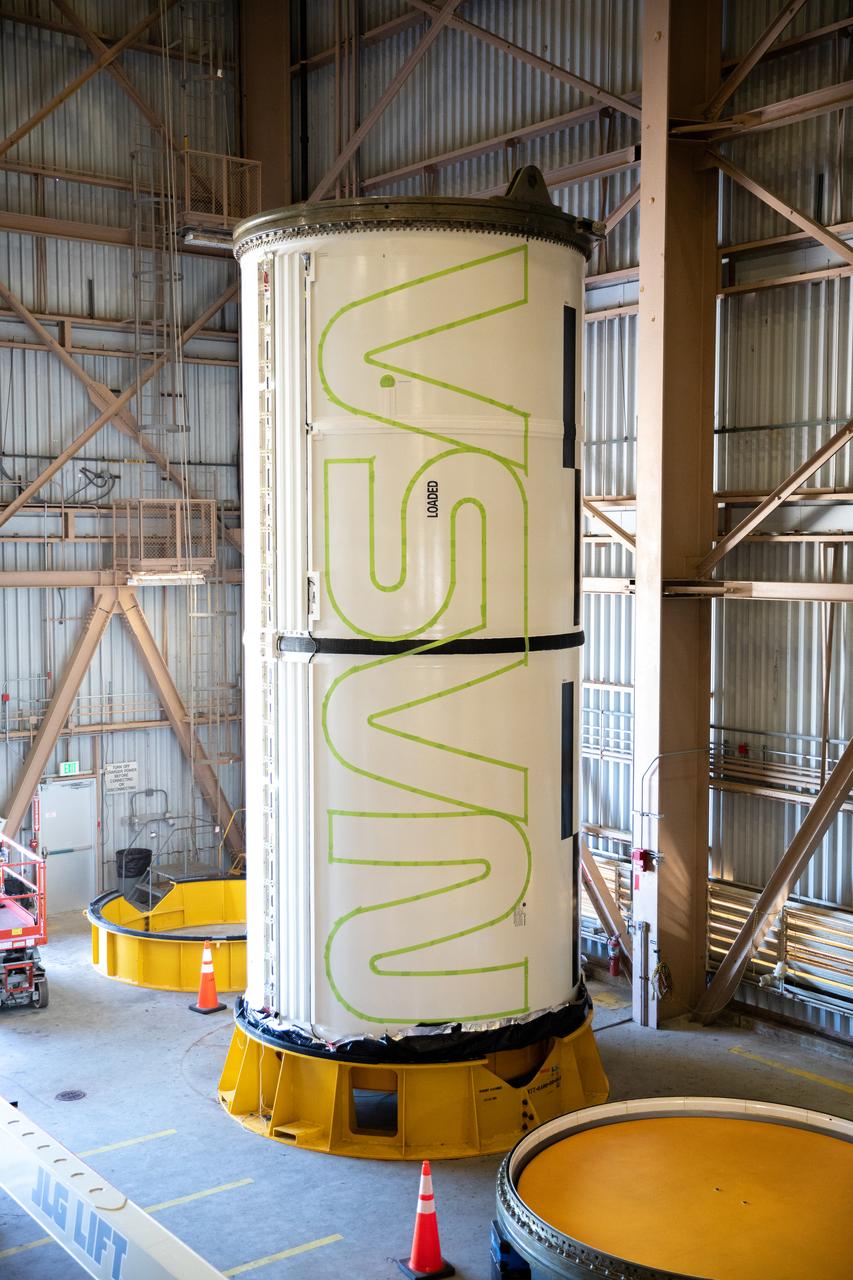
Workers with NASA’s Exploration Ground Systems (EGS) paint the bright red NASA “worm” logo on the side of an Artemis II solid rocket booster segment inside the Rotation, Processing and Surge Facility (RPSF) at Kennedy Space Center in Florida on Tuesday, Jan. 30, 2024. The EGS team used a laser projector to mask off the logo with tape, then painted the first coat of the iconic design. The booster segments will help propel the Space Launch System (SLS) rocket on the Artemis II mission to send four astronauts around the Moon as part of the agency’s effort to establish a long-term science and exploration presence at the Moon, and eventually Mars.
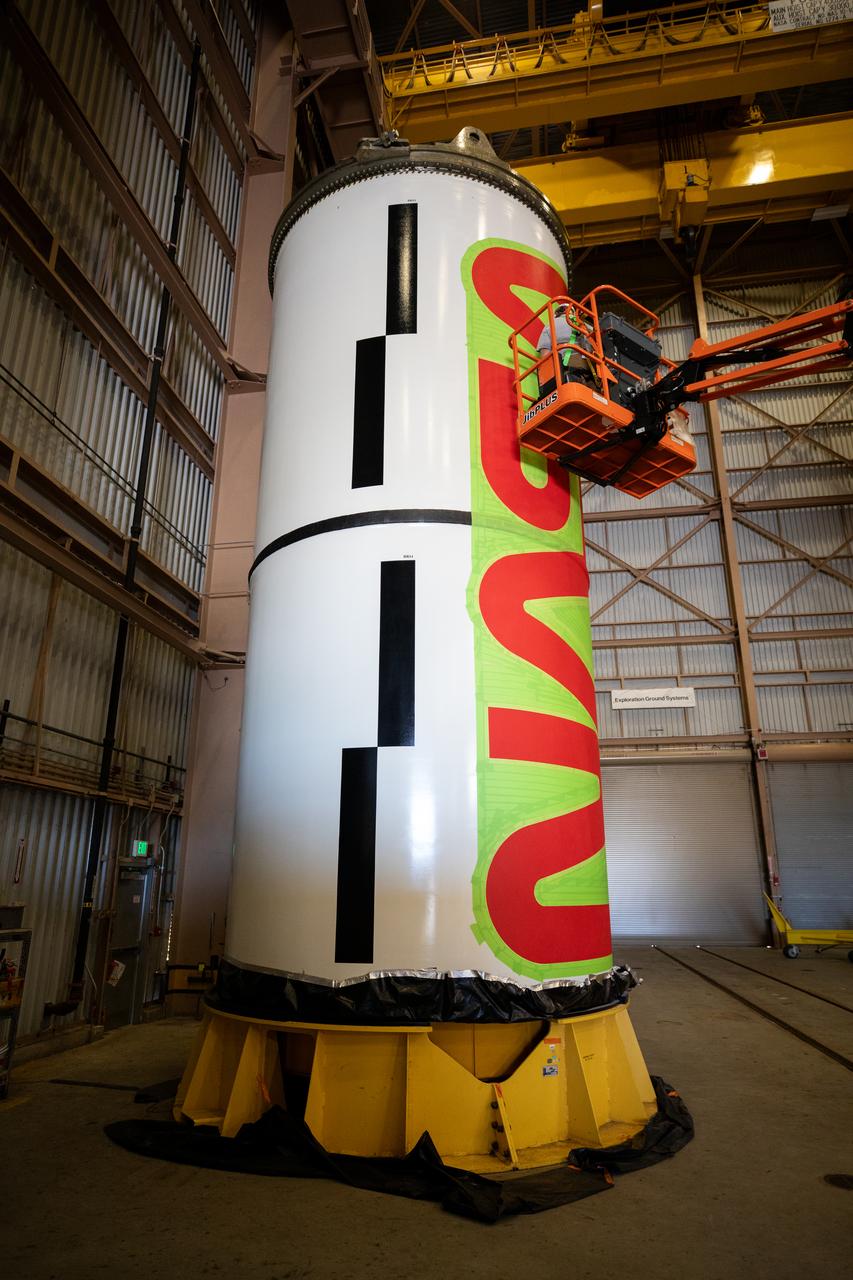
Workers with NASA’s Exploration Ground Systems (EGS) paint the bright red NASA “worm” logo on the side of an Artemis II solid rocket booster segment inside the Rotation, Processing and Surge Facility (RPSF) at Kennedy Space Center in Florida on Tuesday, Jan. 30, 2024. The EGS team used a laser projector to mask off the logo with tape, then painted the first coat of the iconic design. The booster segments will help propel the Space Launch System (SLS) rocket on the Artemis II mission to send four astronauts around the Moon as part of the agency’s effort to establish a long-term science and exploration presence at the Moon, and eventually Mars.
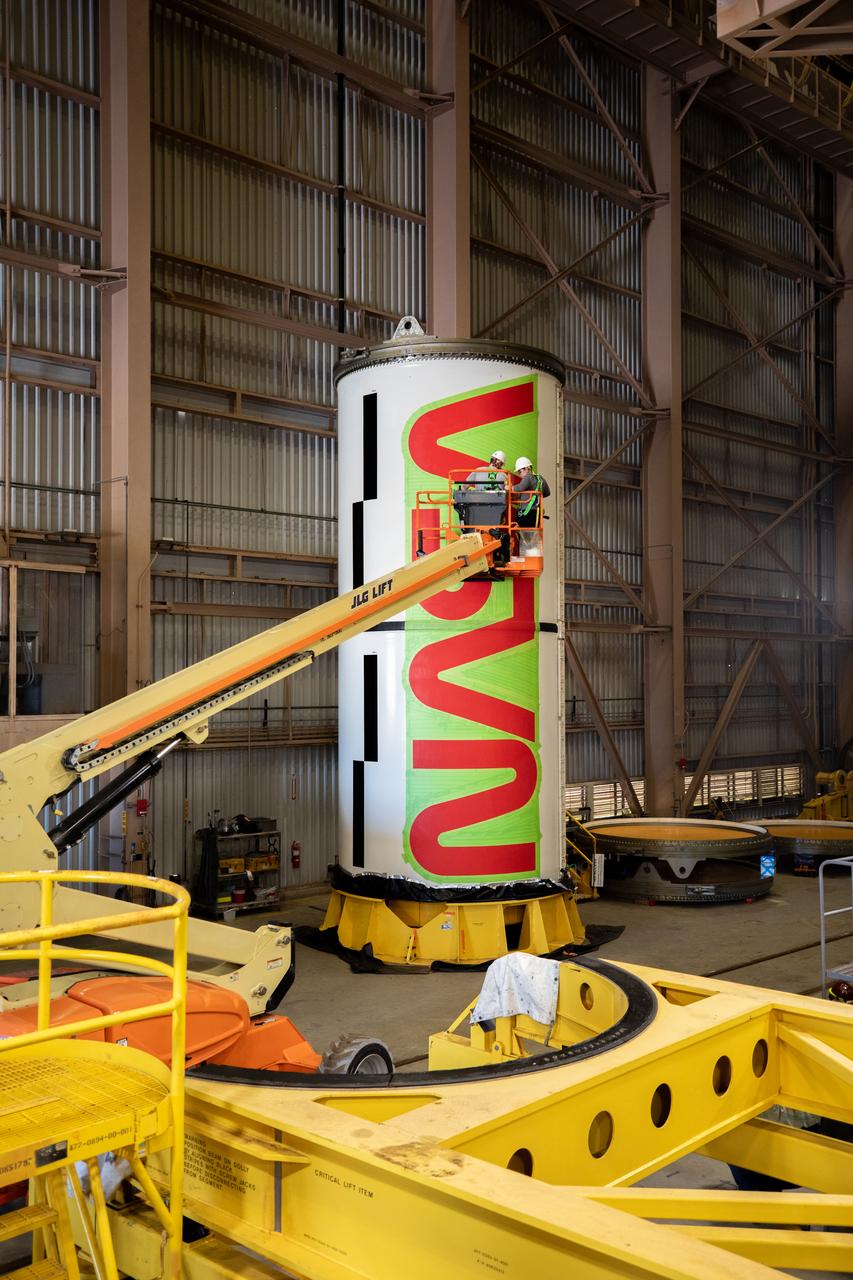
Workers with NASA’s Exploration Ground Systems (EGS) paint the bright red NASA “worm” logo on the side of an Artemis II solid rocket booster segment inside the Rotation, Processing and Surge Facility (RPSF) at Kennedy Space Center in Florida on Tuesday, Jan. 30, 2024. The EGS team used a laser projector to mask off the logo with tape, then painted the first coat of the iconic design. The booster segments will help propel the Space Launch System (SLS) rocket on the Artemis II mission to send four astronauts around the Moon as part of the agency’s effort to establish a long-term science and exploration presence at the Moon, and eventually Mars.
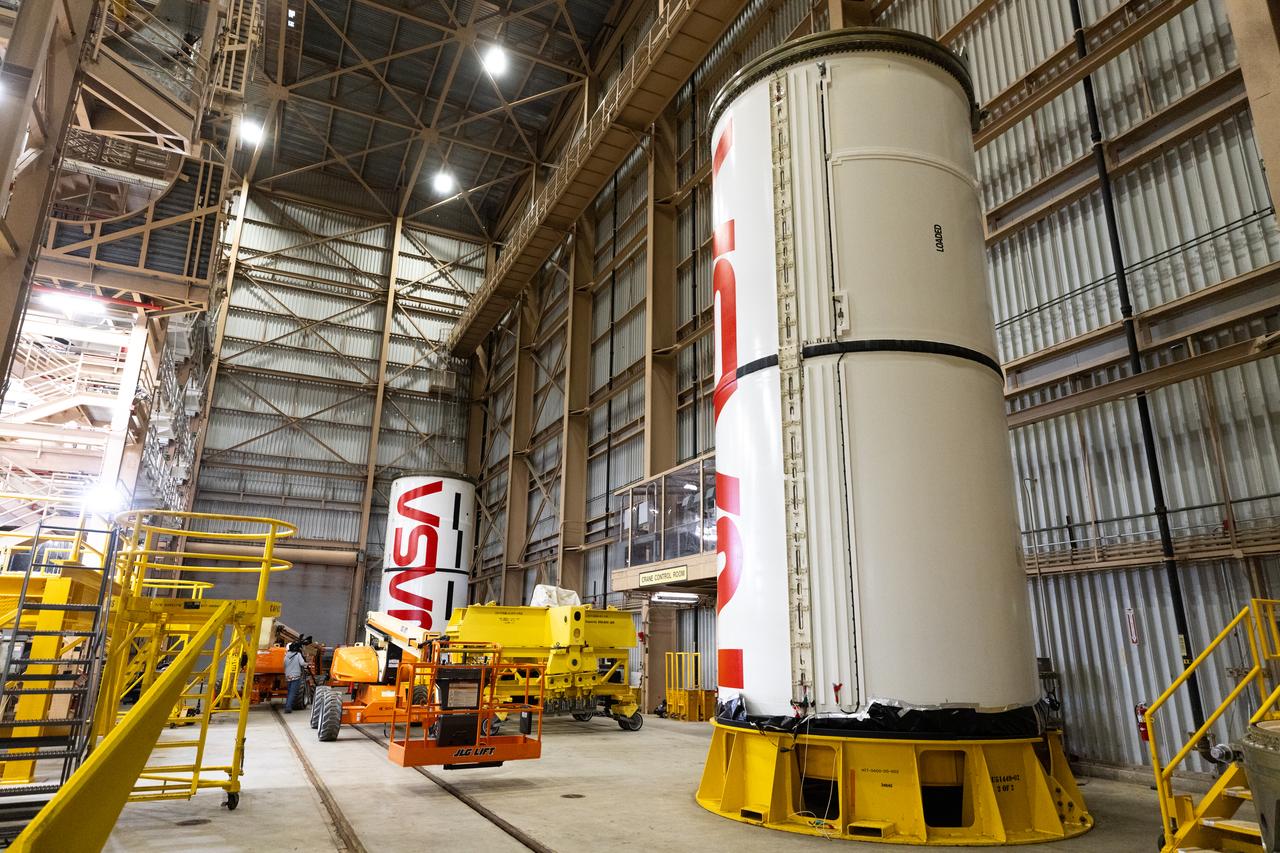
Workers with NASA’s Exploration Ground Systems and primary contractor, Jacobs, complete the painting of the agency’s iconic “worm” logo along the side of the twin Artemis II solid rocket booster motor segments inside the Rotation, Processing and Surge Facility at Kennedy Space Center in Florida on Friday, Feb. 16, 2024. Using a laser projector, the logo was mapped out with tape by workers with Jacobs, for the spaceport, before using two coats of red paint, plus several coats of clear primer to complete the logo that stretches 25 feet long. The booster segments will help propel the SLS (Space Launch System) rocket on the Artemis II mission to send four astronauts around the Moon as part of the agency’s effort to establish a long-term science and exploration presence at the Moon, and eventually Mars.
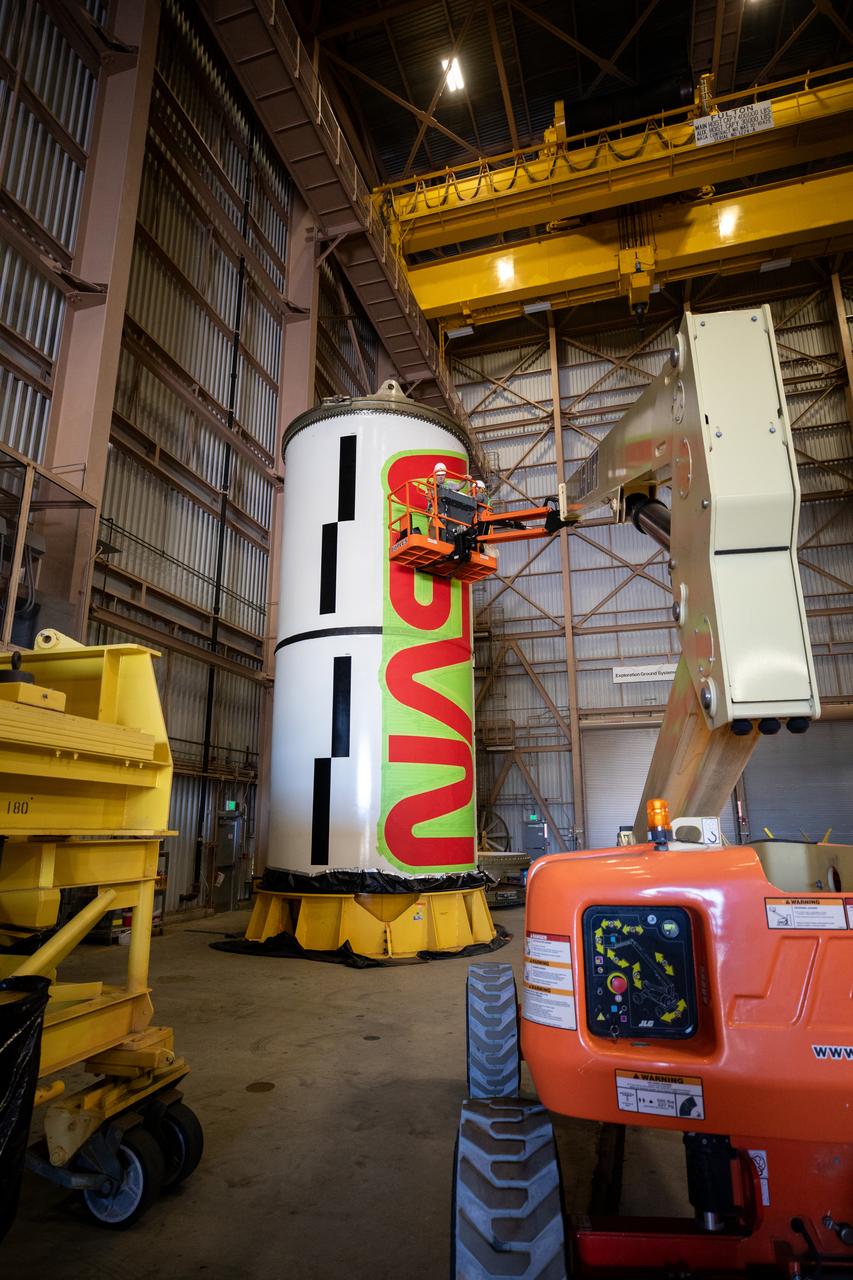
Workers with NASA’s Exploration Ground Systems (EGS) paint the bright red NASA “worm” logo on the side of an Artemis II solid rocket booster segment inside the Rotation, Processing and Surge Facility (RPSF) at Kennedy Space Center in Florida on Tuesday, Jan. 30, 2024. The EGS team used a laser projector to mask off the logo with tape, then painted the first coat of the iconic design. The booster segments will help propel the Space Launch System (SLS) rocket on the Artemis II mission to send four astronauts around the Moon as part of the agency’s effort to establish a long-term science and exploration presence at the Moon, and eventually Mars.
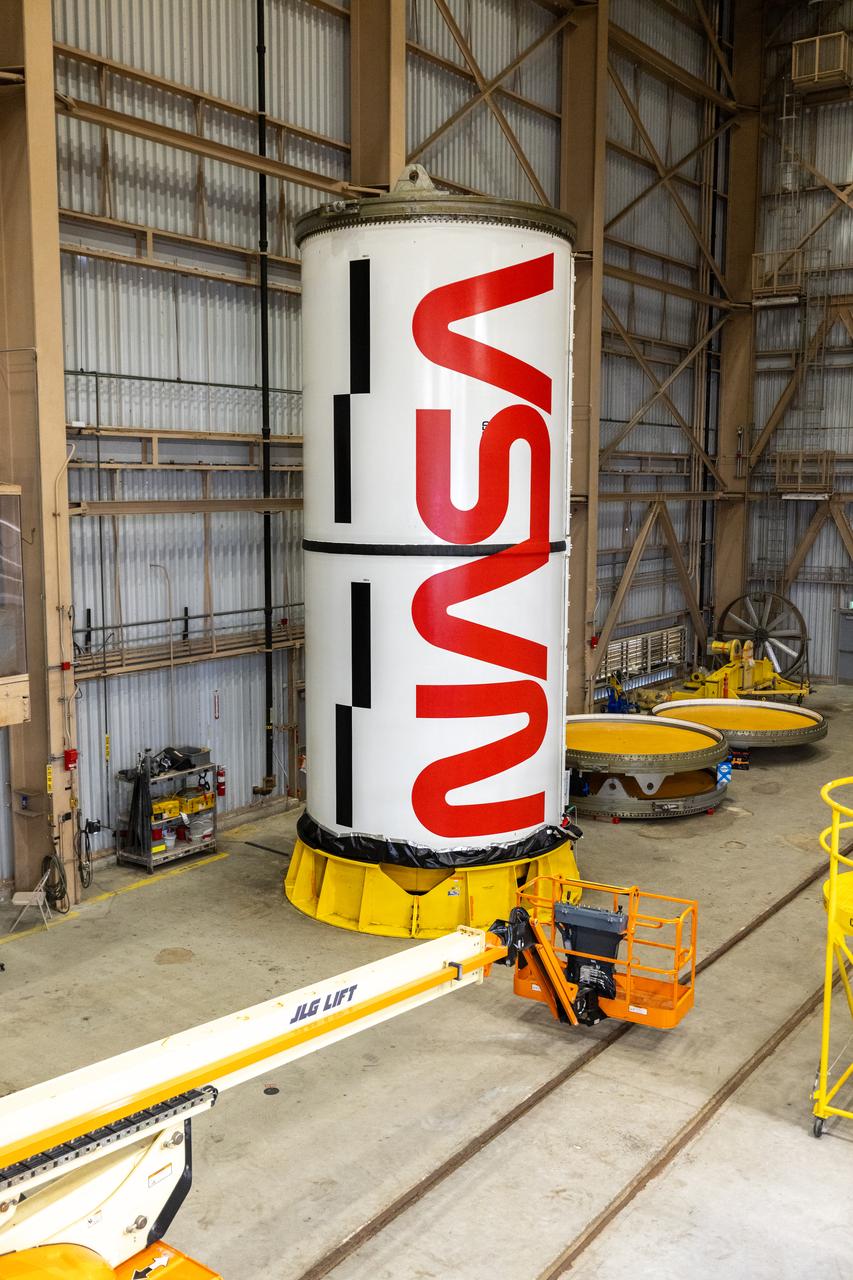
Workers with NASA’s Exploration Ground Systems and primary contractor, Jacobs, complete the painting of the agency’s iconic “worm” logo along the side of the twin Artemis II solid rocket booster motor segments inside the Rotation, Processing and Surge Facility at Kennedy Space Center in Florida on Friday, Feb. 16, 2024. Using a laser projector, the logo was mapped out with tape by workers with Jacobs, for the spaceport, before using two coats of red paint, plus several coats of clear primer to complete the logo that stretches 25 feet long. The booster segments will help propel the SLS (Space Launch System) rocket on the Artemis II mission to send four astronauts around the Moon as part of the agency’s effort to establish a long-term science and exploration presence at the Moon, and eventually Mars.
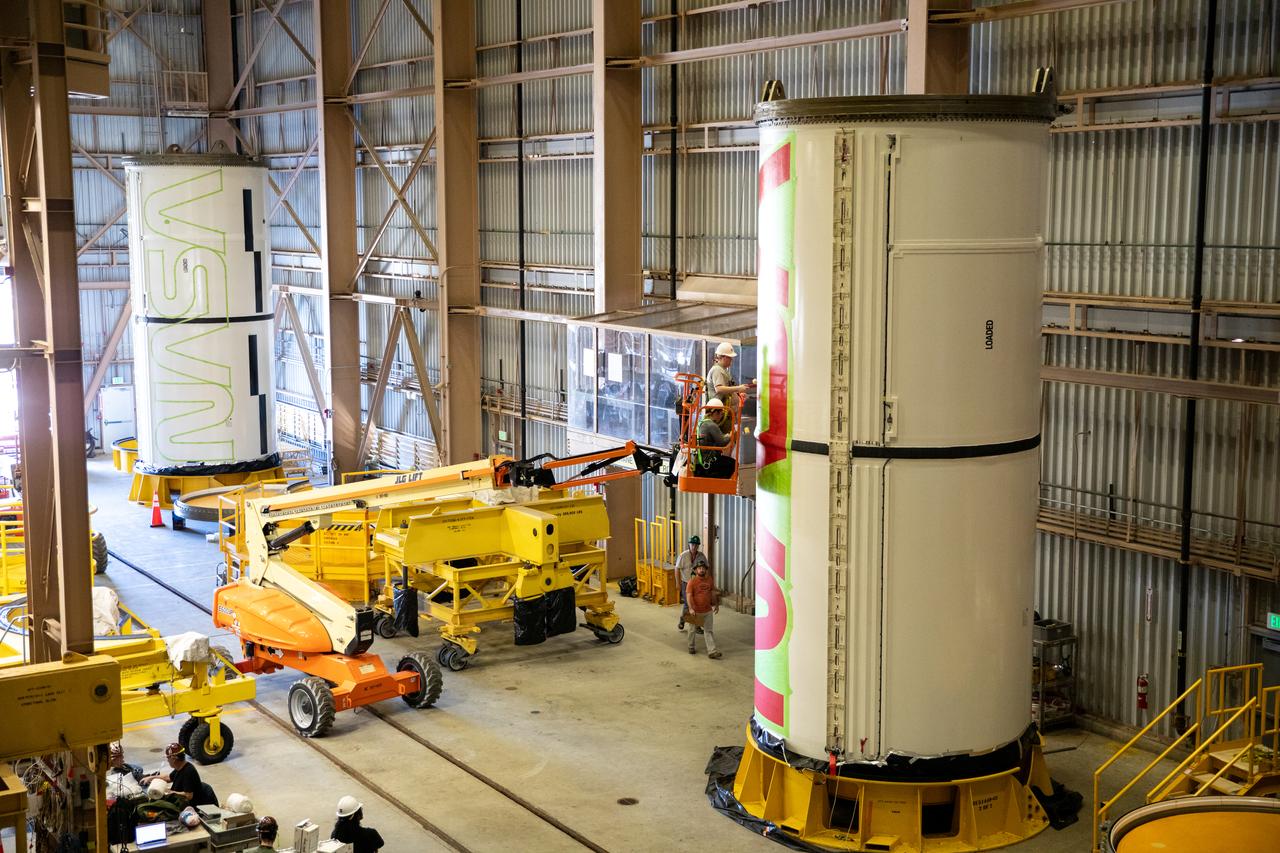
Workers with NASA’s Exploration Ground Systems (EGS) paint the bright red NASA “worm” logo on the side of an Artemis II solid rocket booster segment inside the Rotation, Processing and Surge Facility (RPSF) at Kennedy Space Center in Florida on Tuesday, Jan. 30, 2024. The EGS team used a laser projector to mask off the logo with tape, then painted the first coat of the iconic design. The booster segments will help propel the Space Launch System (SLS) rocket on the Artemis II mission to send four astronauts around the Moon as part of the agency’s effort to establish a long-term science and exploration presence at the Moon, and eventually Mars.
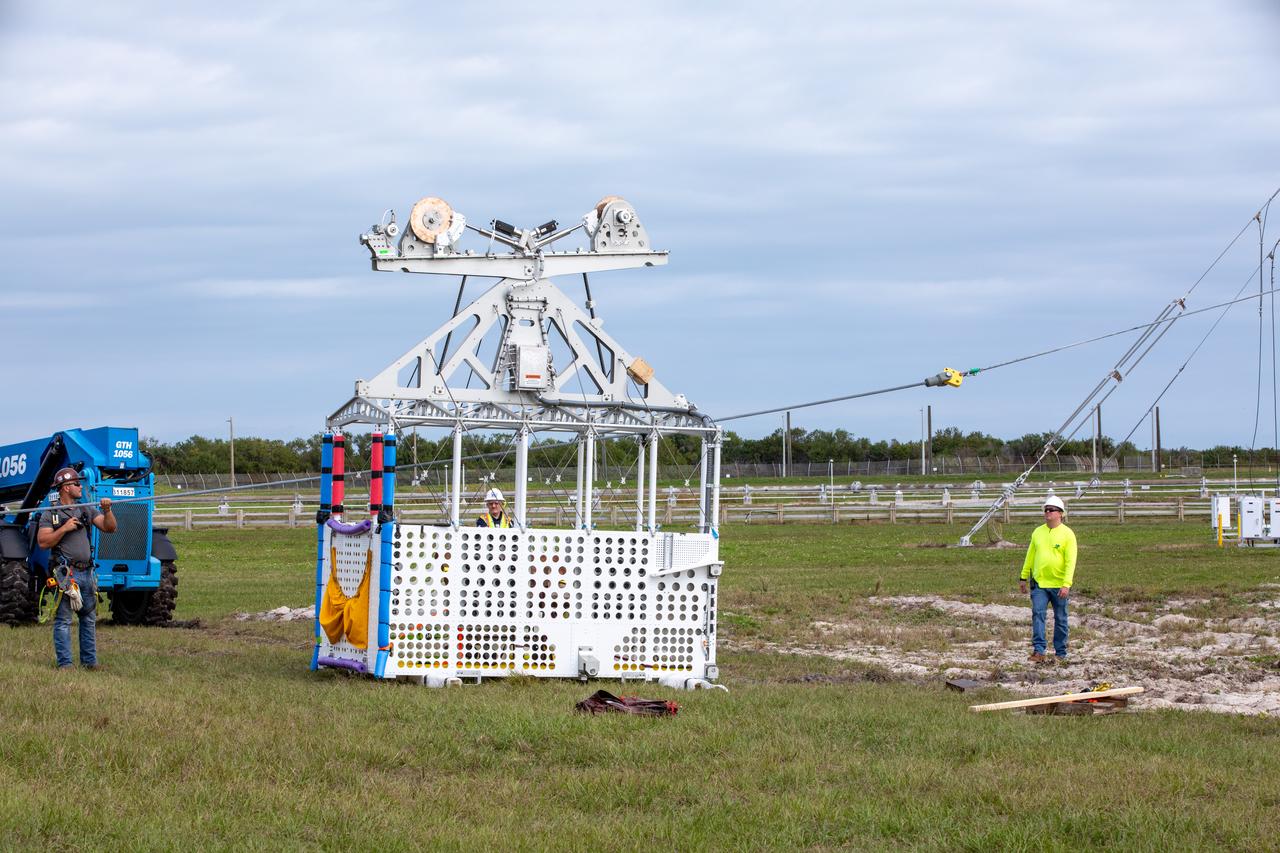
Teams with NASA’s Exploration Ground Systems Program, in preparation for the agency’s Artemis II crewed mission to the Moon, begin installation of four emergency egress baskets at Launch Complex 39B at Kennedy Space Center in Florida on Thursday, Jan. 18, 2024. The baskets, similar to gondolas on ski lifts, are used in the case of a pad abort emergency to enable astronauts and other pad personnel a way to quickly escape away from the mobile launcher to the base of the pad and where waiting emergency transport vehicles will then drive them away.
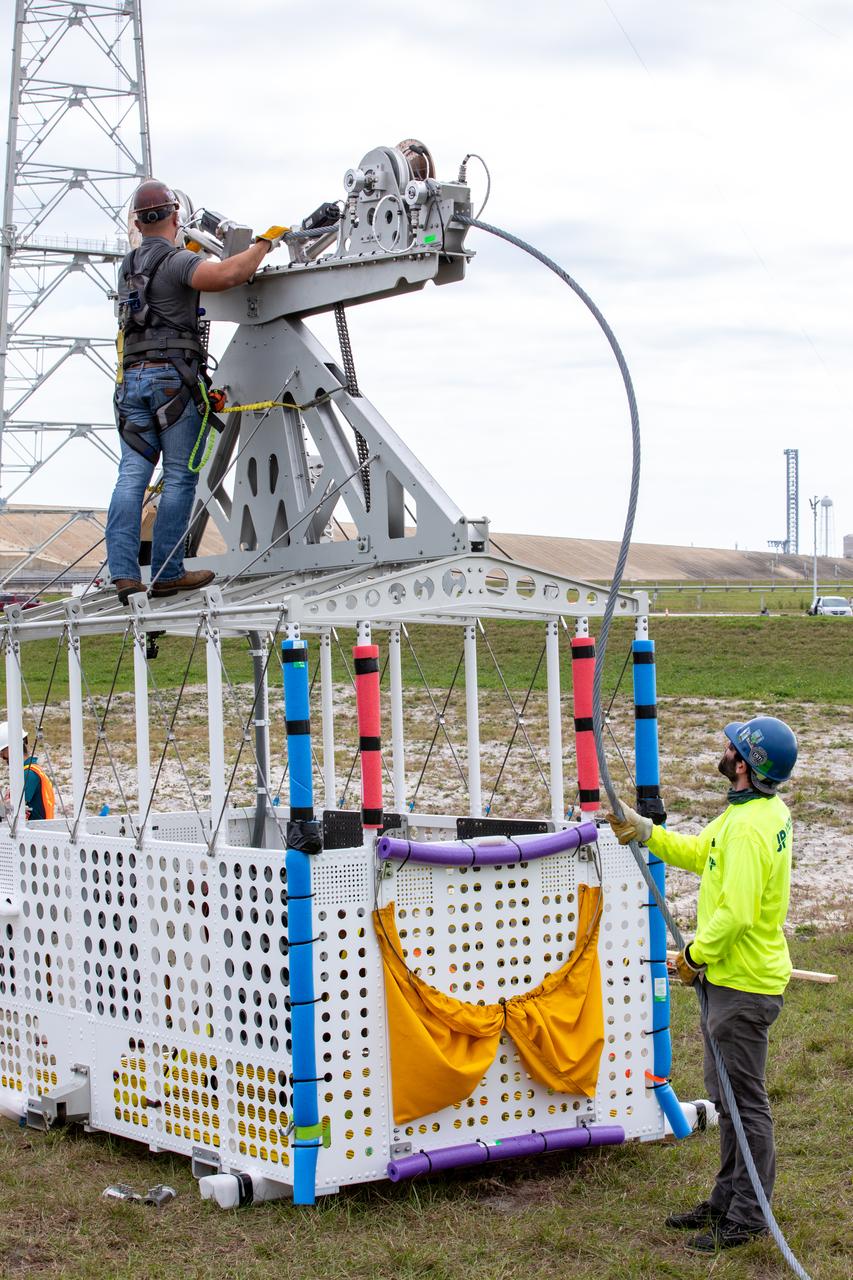
Teams with NASA’s Exploration Ground Systems Program, in preparation for the agency’s Artemis II crewed mission to the Moon, begin installation of four emergency egress baskets at Launch Complex 39B at Kennedy Space Center in Florida on Thursday, Jan. 18, 2024. The baskets, similar to gondolas on ski lifts, are used in the case of a pad abort emergency to enable astronauts and other pad personnel a way to quickly escape away from the mobile launcher to the base of the pad and where waiting emergency transport vehicles will then drive them away.
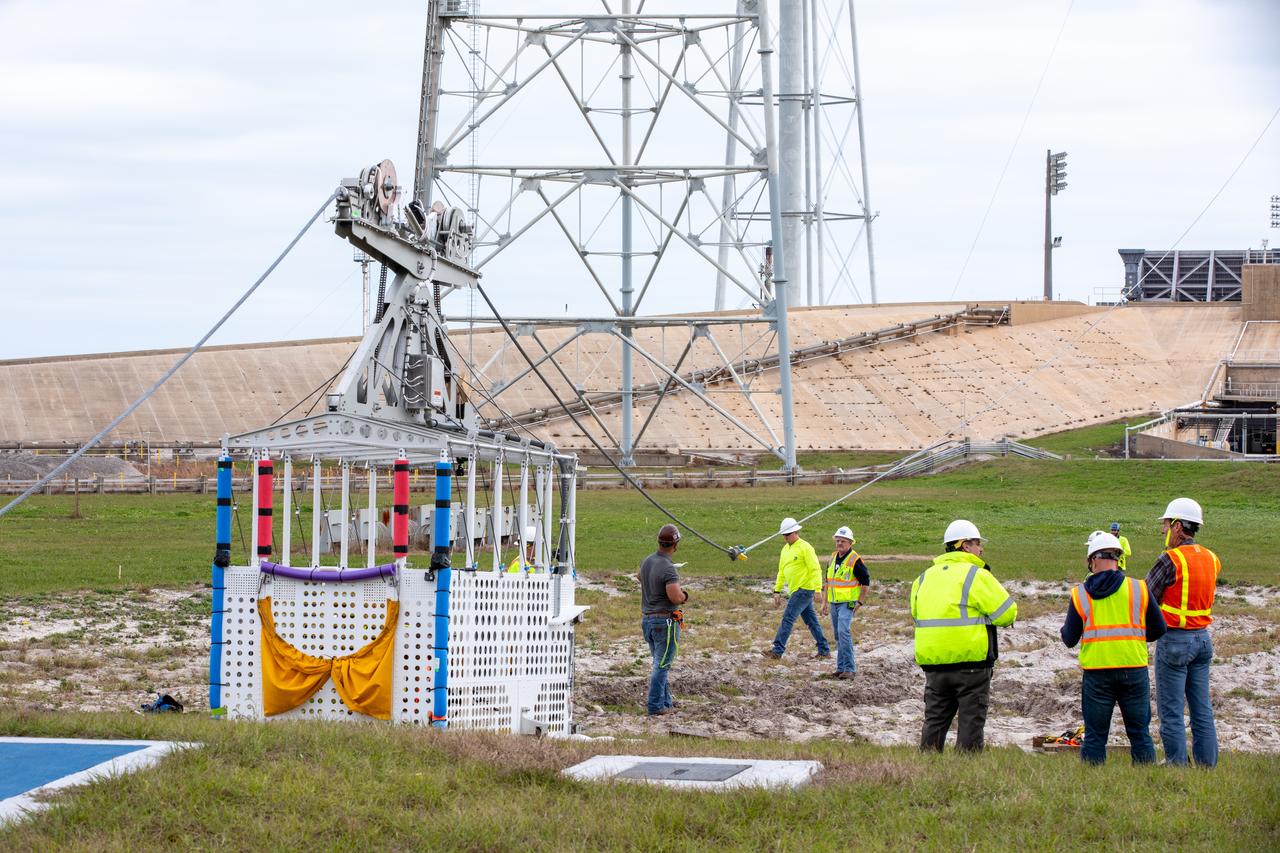
Teams with NASA’s Exploration Ground Systems Program, in preparation for the agency’s Artemis II crewed mission to the Moon, begin installation of four emergency egress baskets at Launch Complex 39B at Kennedy Space Center in Florida on Thursday, Jan. 18, 2024. The baskets, similar to gondolas on ski lifts, are used in the case of a pad abort emergency to enable astronauts and other pad personnel a way to quickly escape away from the mobile launcher to the base of the pad and where waiting emergency transport vehicles will then drive them away.
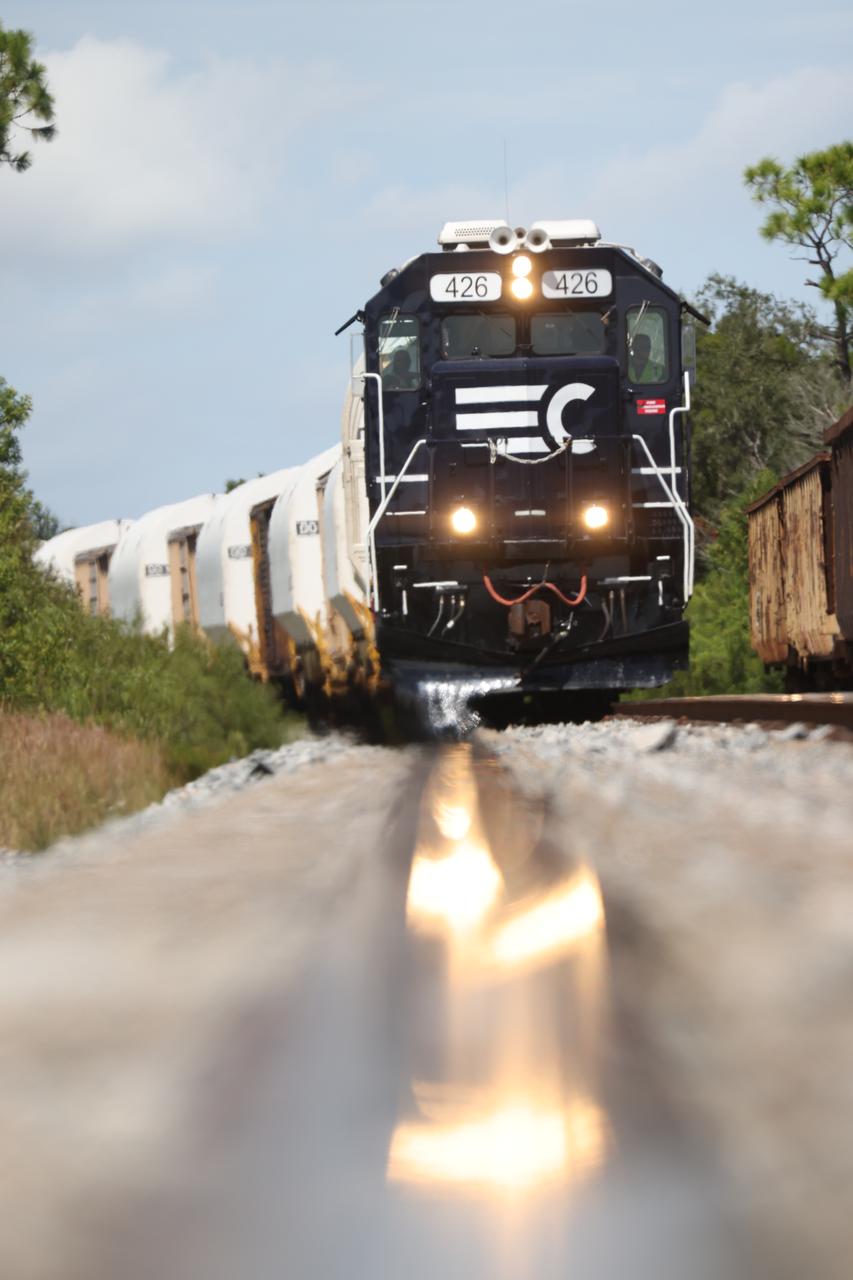
The 10 booster motor segments that will form the NASA Space Launch System rocket’s twin, five-segment solid rocket boosters for the agency’s Artemis II mission, arrive at Kennedy Space Center on Monday, Sept. 25, 2023. Due to their weight, the booster motor segments traveled by rail across eight states in specialized transporters to the Florida spaceport. Teams with NASA’s Exploration Ground Systems will process each of the segments at Kennedy in preparation for launch. Artemis II astronauts Reid Wiseman, Victor Glover, Christina Koch, and Jeremy Hansen will blast off from Kennedy, traveling around the Moon on the first crewed mission under Artemis that will test all of the Orion spacecraft’s systems.

The 10 booster motor segments that will form the NASA Space Launch System rocket’s twin, five-segment solid rocket boosters for the agency’s Artemis II mission, arrive at Kennedy Space Center on Monday, Sept. 25, 2023. Due to their weight, the booster motor segments traveled by rail across eight states in specialized transporters to the Florida spaceport. Teams with NASA’s Exploration Ground Systems will process each of the segments at Kennedy in preparation for launch. Artemis II astronauts Reid Wiseman, Victor Glover, Christina Koch, and Jeremy Hansen will blast off from Kennedy, traveling around the Moon on the first crewed mission under Artemis that will test all of the Orion spacecraft’s systems.
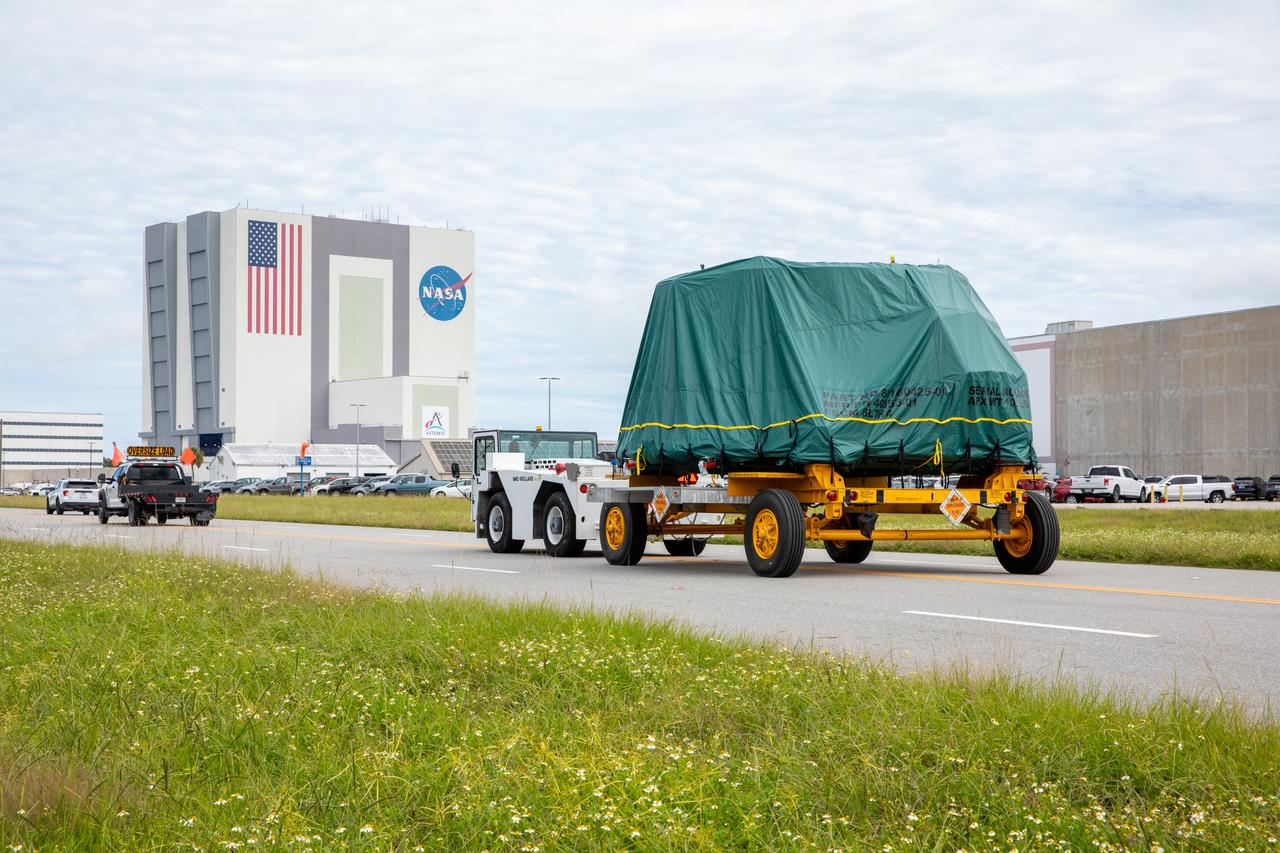
One of two Artemis II aft skirts for NASA's Space Launch System (SLS) rocket’s twin solid rocket boosters is transported from the Booster Fabrication Facility to the Rotation Processing and Surge Facility (RPSF) at the agency’s Kennedy Space Center in Florida on Monday, Sept. 25, 2023. The aft skirts were refurbished by Northrop Grumman and house the thrust vector control system, which controls 70 percent of the steering during initial ascent of the SLS rocket. The segments will remain in the RPSF until ready for stacking with the forward and aft parts of the boosters on the mobile launcher in High Bay 3 of the Vehicle Assembly Building. Artemis II astronauts Reid Wiseman, Victor Glover, Christina Koch, and Jeremy Hansen will launch from Kennedy, traveling around the Moon on the first crewed mission under Artemis that will test all of the Orion spacecraft’s systems.
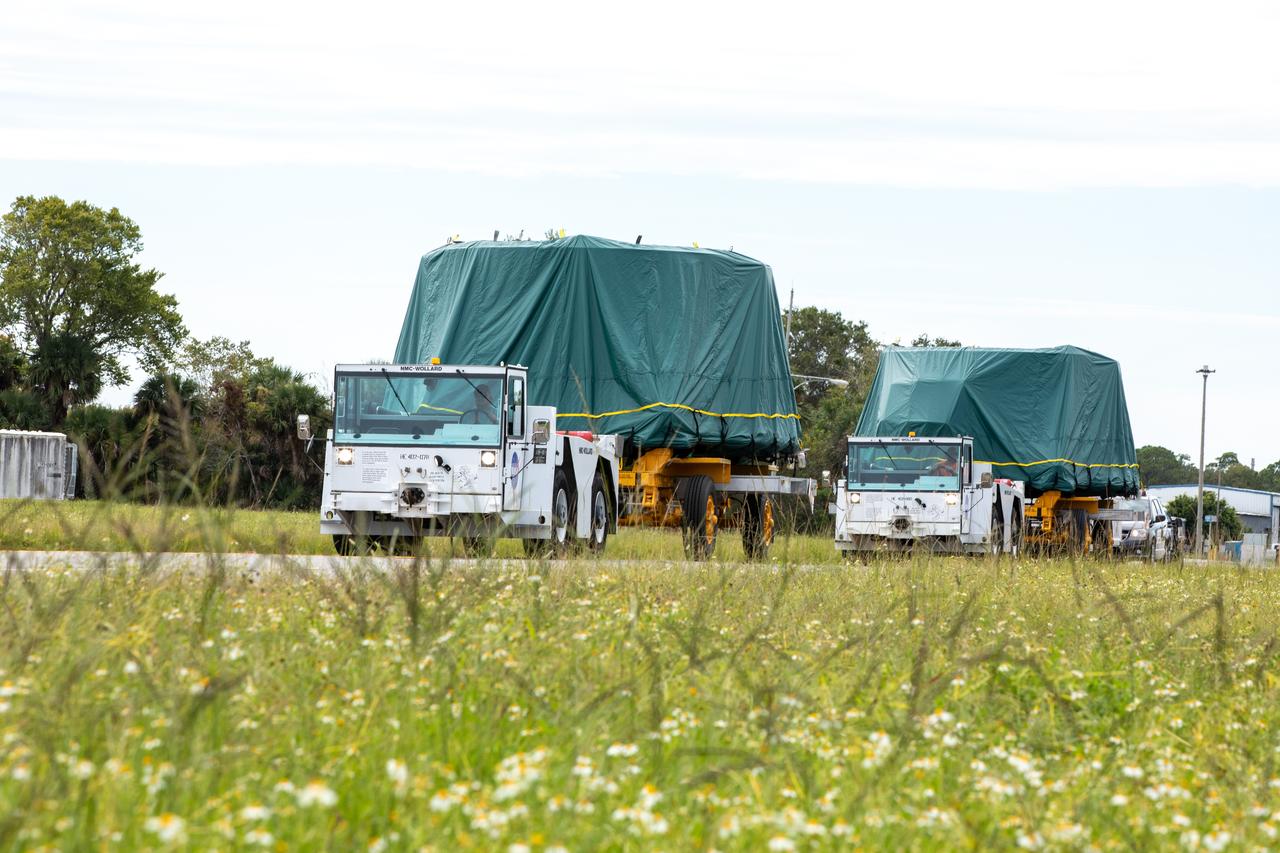
The Artemis II aft skirts for NASA's Space Launch System (SLS) rocket’s twin solid rocket boosters are transported from the Booster Fabrication Facility to the Rotation Processing and Surge Facility (RPSF) at the agency’s Kennedy Space Center in Florida on Monday, Sept. 25, 2023. The aft skirts were refurbished by Northrop Grumman and house the thrust vector control system, which controls 70 percent of the steering during initial ascent of the SLS rocket. The segments will remain in the RPSF until ready for stacking with the forward and aft parts of the boosters on the mobile launcher in High Bay 3 of the Vehicle Assembly Building. Artemis II astronauts Reid Wiseman, Victor Glover, Christina Koch, and Jeremy Hansen will launch from Kennedy, traveling around the Moon on the first crewed mission under Artemis that will test all of the Orion spacecraft’s systems.
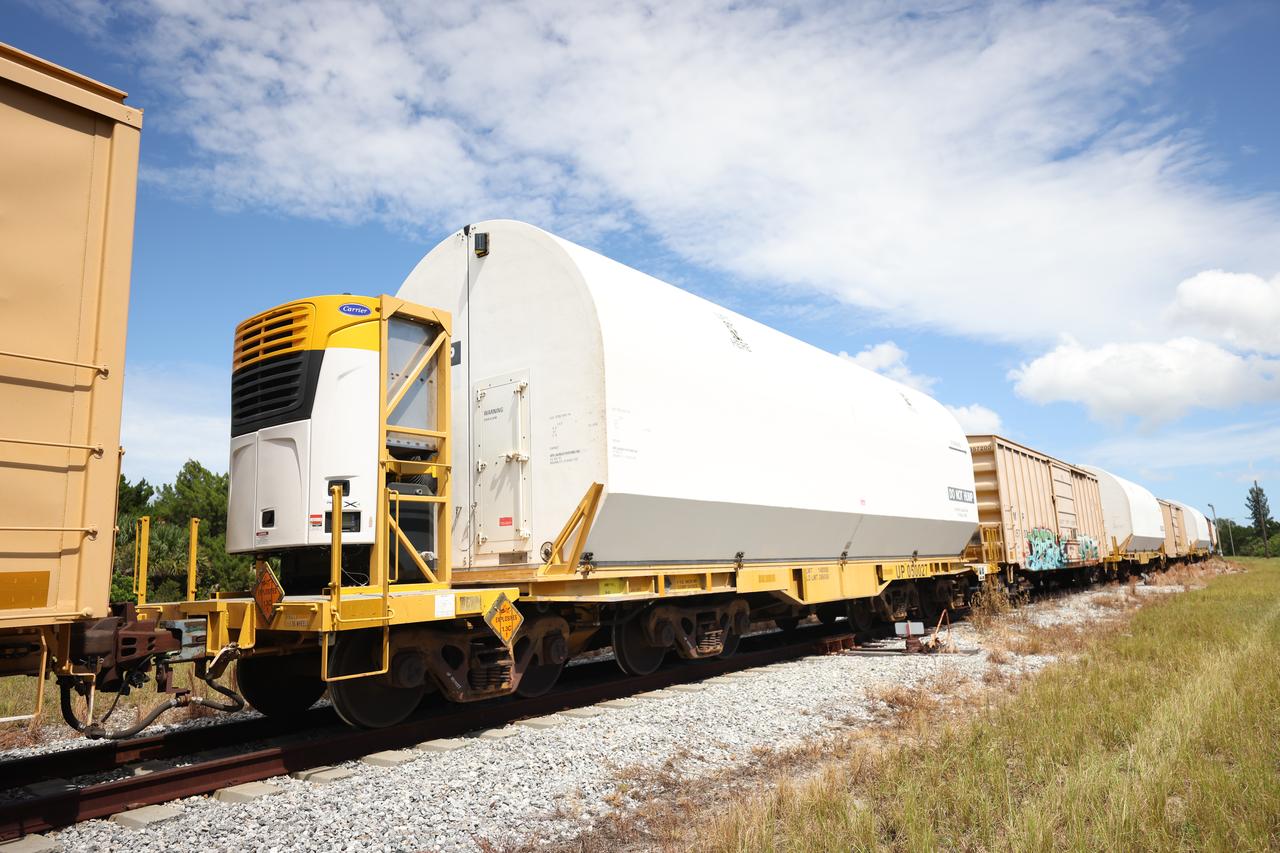
The 10 booster motor segments that will form the NASA Space Launch System rocket’s twin, five-segment solid rocket boosters for the agency’s Artemis II mission, arrive at Kennedy Space Center on Monday, Sept. 25, 2023. Due to their weight, the booster motor segments traveled by rail across eight states in specialized transporters to the Florida spaceport. Teams with NASA’s Exploration Ground Systems will process each of the segments at Kennedy in preparation for launch. Artemis II astronauts Reid Wiseman, Victor Glover, Christina Koch, and Jeremy Hansen will blast off from Kennedy, traveling around the Moon on the first crewed mission under Artemis that will test all of the Orion spacecraft’s systems.

One of two Artemis II aft skirts for NASA’s Space Launch System (SLS) rocket’s twin solid rocket boosters crosses railroad tracks on its way from the Booster Fabrication Facility to the Rotation Processing and Surge Facility (RPSF) at the agency’s Kennedy Space Center in Florida on Monday, Sept. 25, 2023. The aft skirts were refurbished by Northrop Grumman and house the thrust vector control system, which controls 70 percent of the steering during initial ascent of the SLS rocket. The segments will remain in the RPSF until ready for stacking with the forward and aft parts of the boosters on the mobile launcher in High Bay 3 of the Vehicle Assembly Building. Artemis II astronauts Reid Wiseman, Victor Glover, Christina Koch, and Jeremy Hansen will launch from Kennedy, traveling around the Moon on the first crewed mission under Artemis that will test all of the Orion spacecraft’s systems.

Artemis II astronauts, from left, NASA astronaut Victor Glover (left), CSA (Canadian Space Agency) astronaut Jeremy Hansen, NASA astronauts Christina Koch and Reid Wiseman stand on the crew access arm of the mobile launcher at Launch Pad 39B as part of an integrated ground systems test at Kennedy Space Center in Florida on Wednesday, Sept. 20. The test ensures the ground systems team is ready to support the crew timeline on launch day.
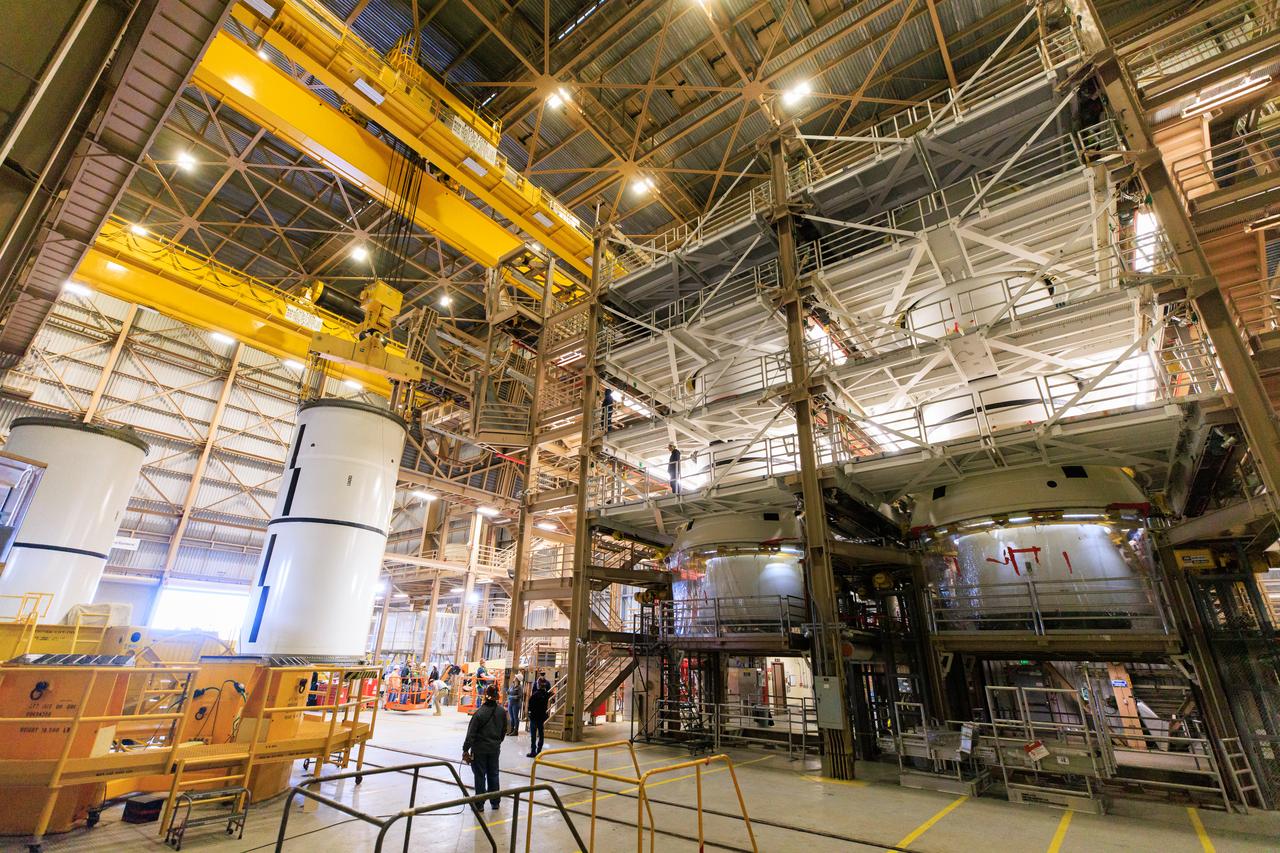
Following the successful propellant grain inspection of two segments of the solid rocket boosters for NASA’s Space Launch System inside the Rotation, Processing and Surge Facility at NASA’s Kennedy Space Center in Florida, crews on Thursday, Dec. 21, 2023, rotate and lift the segments from horizontal into a vertical position in preparation for the agency’s Artemis II launch campaign. The Artemis II mission will send four astronauts around the Moon as part of the agency’s effort to establish a long-term science and exploration presence at the Moon, and eventually Mars.
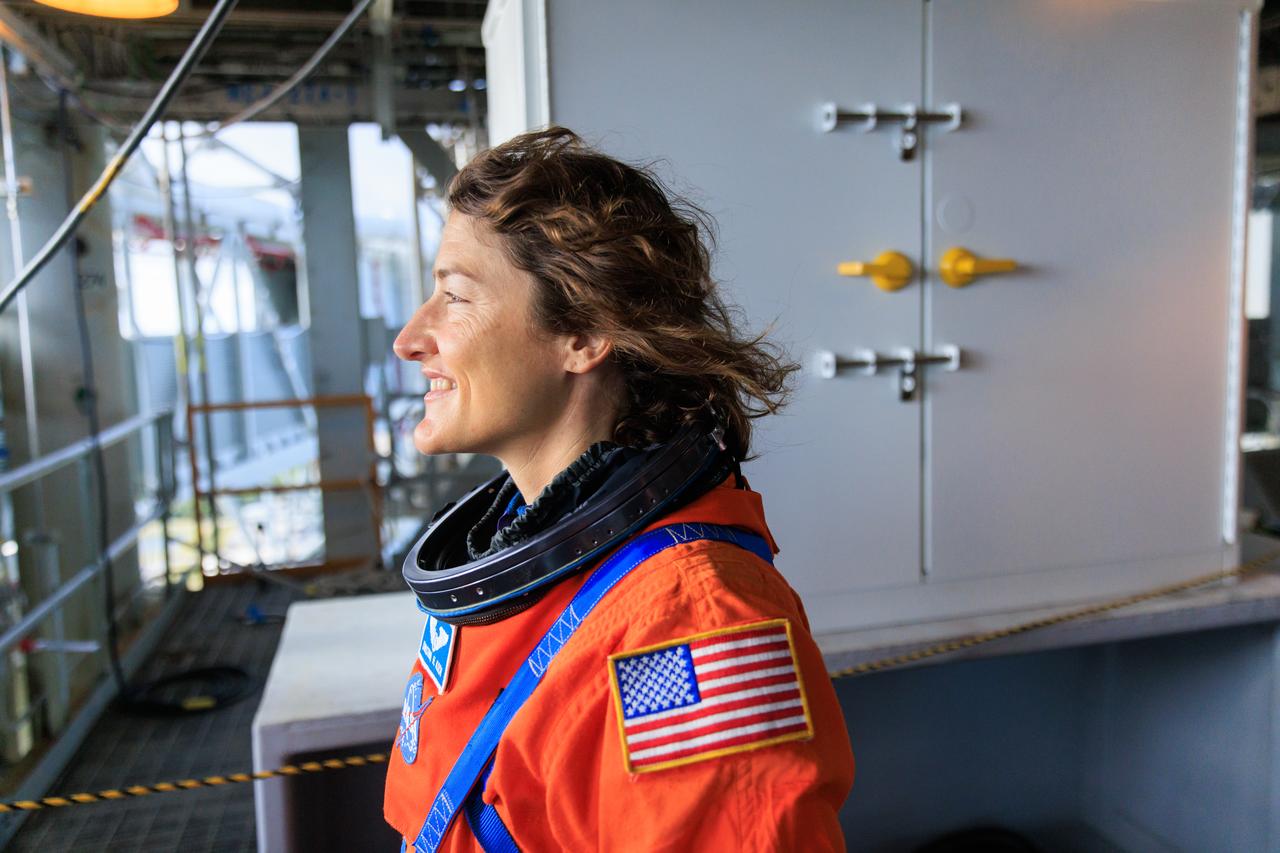
Artemis II NASA astronaut Christina Koch stands on the mobile launcher at Launch Pad 39B as part of an integrated ground systems test at Kennedy Space Center in Florida on Wednesday, Sept. 20, to test the crew timeline for launch day.
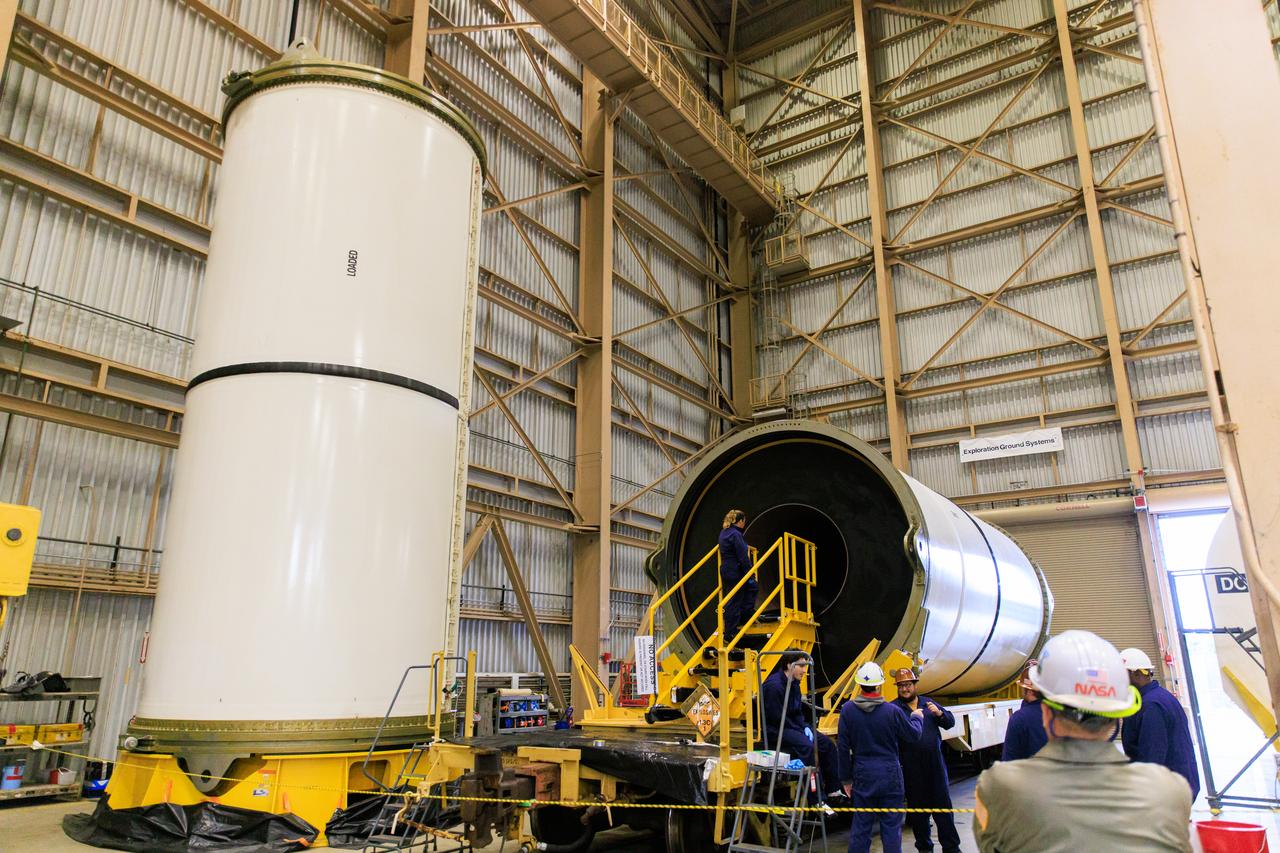
Technicians with Exploration Ground Systems, based at NASA’s Kennedy Space Center in Florida, perform propellant grain inspections on two of the agency’s Space Launch System solid rocket booster segments for the Artemis II campaign on Wednesday, Dec. 20, 2023, inside the Rotation, Processing and Surge Facility. The team is inspecting the propellant of all 10 booster segments before they are rotated vertically for processing. The Artemis II mission will send four astronauts around the Moon as part of the agency’s effort to establish a long-term science and exploration presence at the Moon, and eventually Mars.
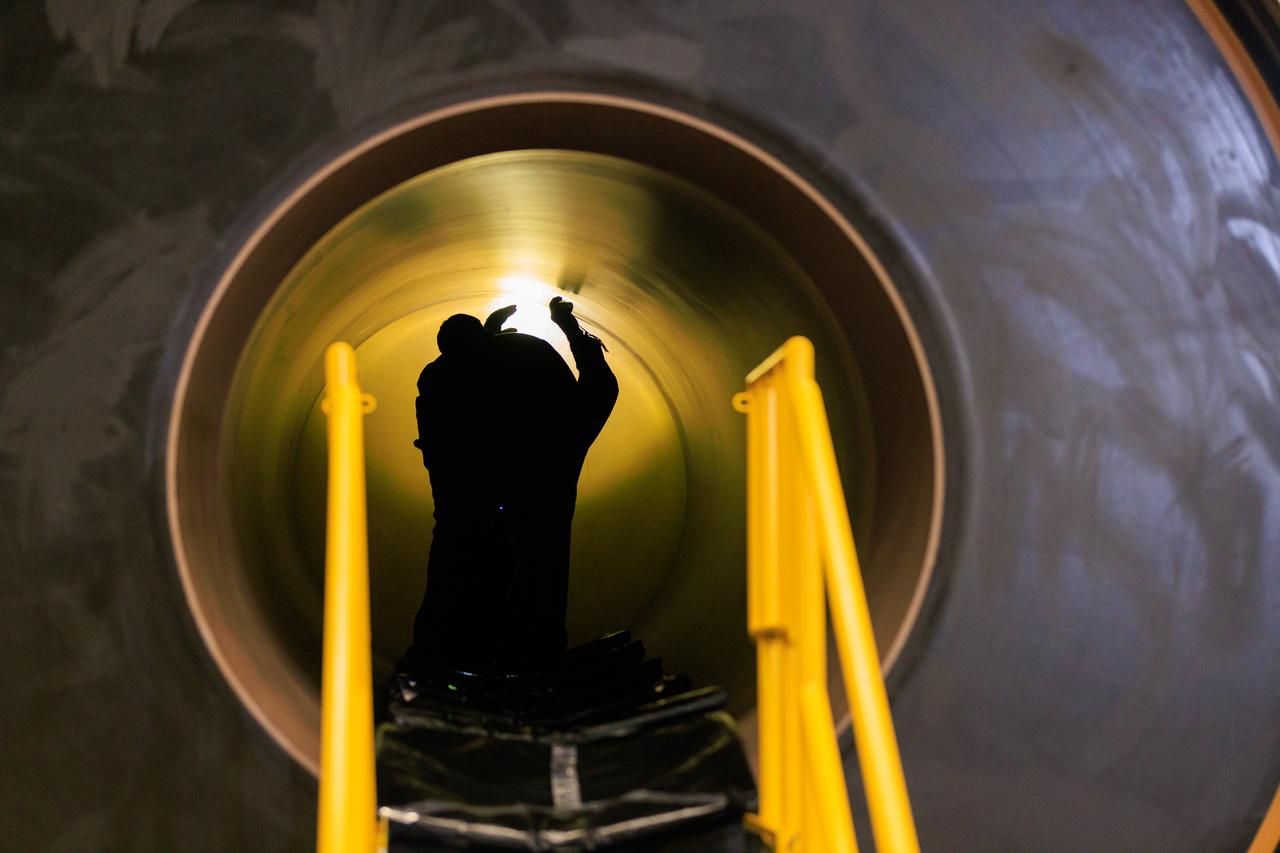
Technicians with Exploration Ground Systems, based at NASA’s Kennedy Space Center in Florida, perform propellant grain inspections on two of the agency’s Space Launch System solid rocket booster segments for the Artemis II campaign on Wednesday, Dec. 20, 2023, inside the Rotation, Processing and Surge Facility. The team is inspecting the propellant of all 10 booster segments before they are rotated vertically for processing. The Artemis II mission will send four astronauts around the Moon as part of the agency’s effort to establish a long-term science and exploration presence at the Moon, and eventually Mars.
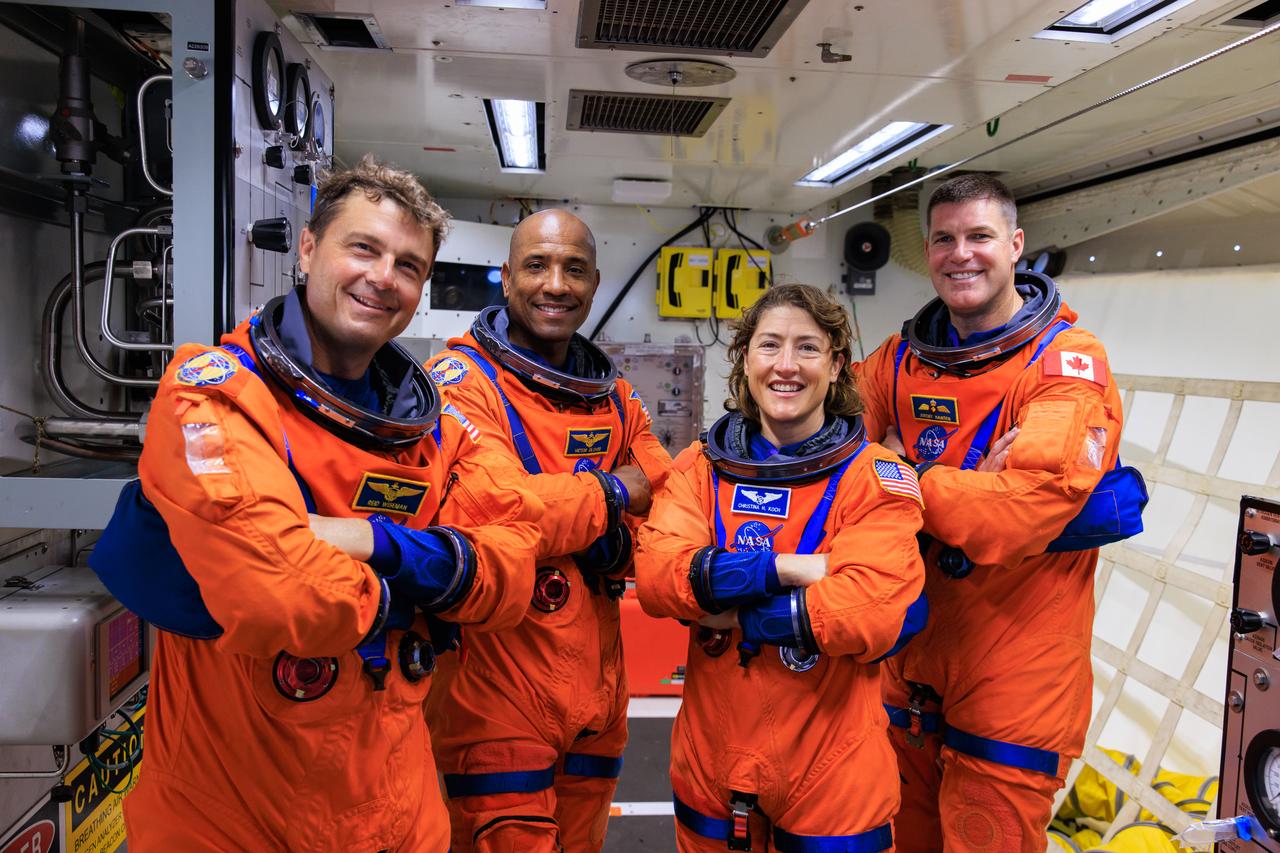
Artemis II NASA astronauts (left to right) Reid Wiseman, Victor Glover, and Christina Koch, and CSA (Canadian Space Agency) astronaut Jeremy Hansen stand in the white room on the crew access arm of the mobile launcher at Launch Pad 39B as part of an integrated ground systems test at Kennedy Space Center in Florida on Wednesday, Sept. 20, 2023. The test ensures the ground systems team is ready to support the crew timeline on launch day.
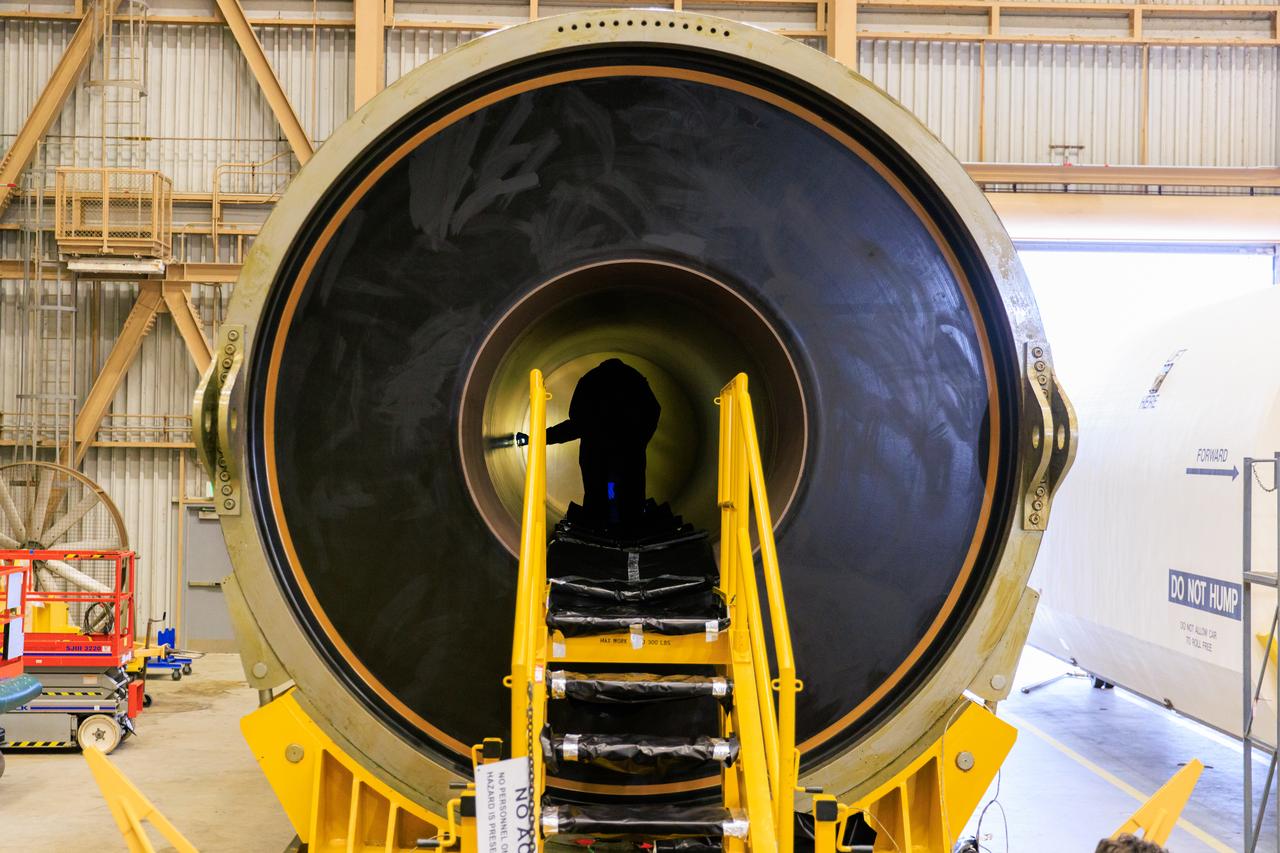
Technicians with Exploration Ground Systems, based at NASA’s Kennedy Space Center in Florida, perform propellant grain inspections on two of the agency’s Space Launch System solid rocket booster segments for the Artemis II campaign on Wednesday, Dec. 20, 2023, inside the Rotation, Processing and Surge Facility. The team is inspecting the propellant of all 10 booster segments before they are rotated vertically for processing. The Artemis II mission will send four astronauts around the Moon as part of the agency’s effort to establish a long-term science and exploration presence at the Moon, and eventually Mars.
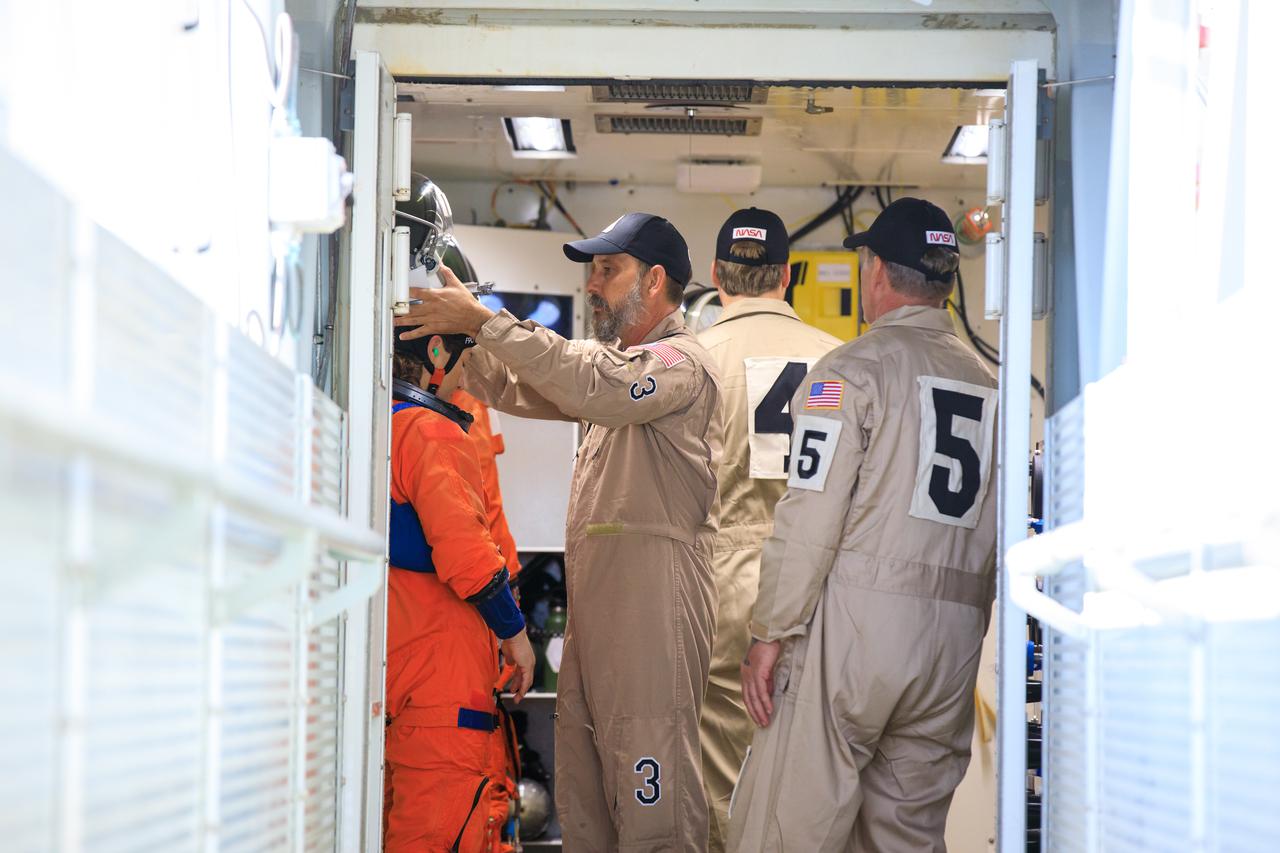
Artemis II NASA astronauts Reid Wiseman, Victor Glover, and Christina Koch, and CSA (Canadian Space Agency) astronaut Jeremy Hansen stand in the white room on the crew access arm of the mobile launcher at Launch Pad 39B as part of an integrated ground systems test at Kennedy Space Center in Florida on Wednesday, Sept. 20, 2023. The test ensures the ground systems team is ready to support the crew timeline on launch day.
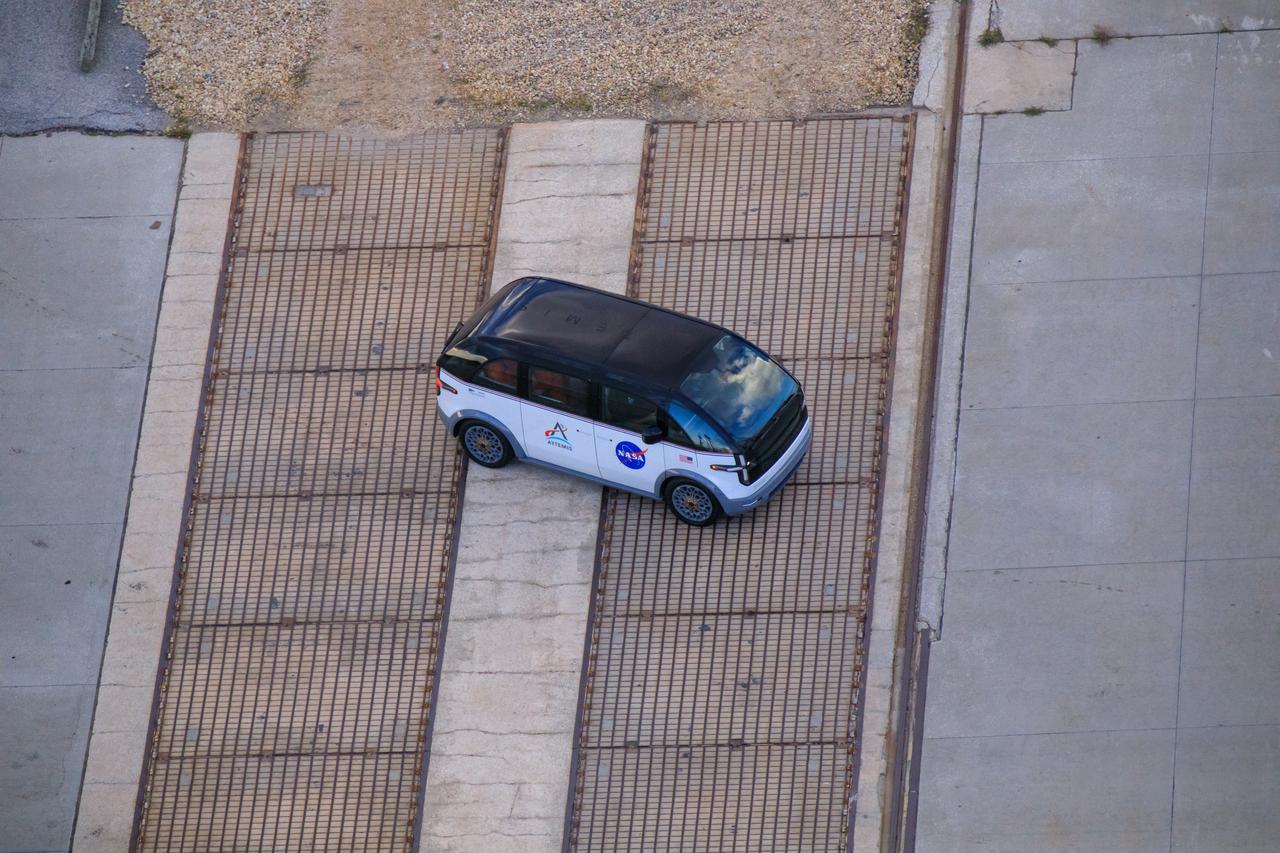
Artemis II NASA astronauts Reid Wiseman, Victor Glover, and Christina Koch, and CSA (Canadian Space Agency) astronaut Jeremy Hansen ride from Astronaut Crew Quarters in the Neil Armstrong Operations and Checkout Building to Launch Pad 39B in the Artemis crew transportation vehicles as part of an integrated ground systems test at Kennedy Space Center in Florida on Wednesday, Sept. 20, to test the crew timeline for launch day.
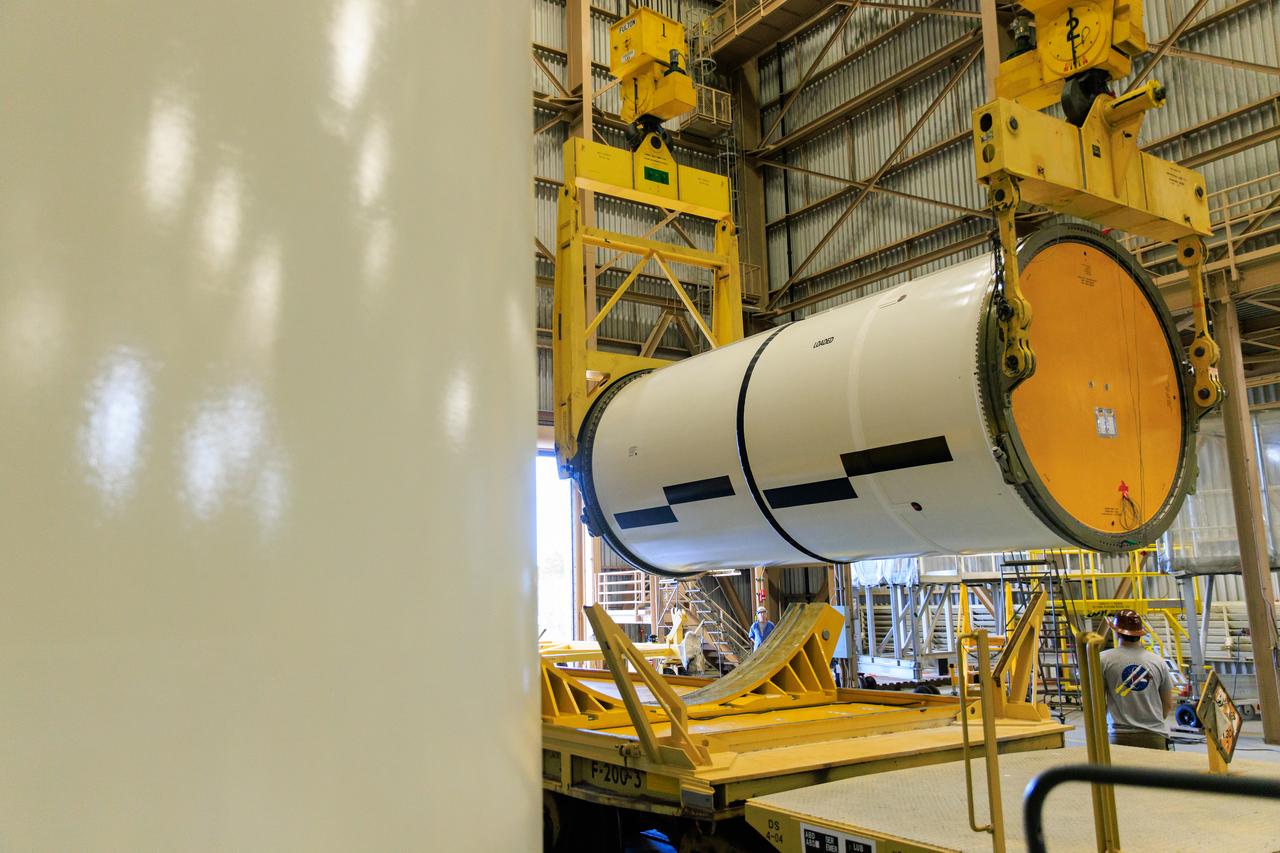
Following the successful propellant grain inspection of two segments of the solid rocket boosters for NASA’s Space Launch System inside the Rotation, Processing and Surge Facility at NASA’s Kennedy Space Center in Florida, crews on Thursday, Dec. 21, 2023, rotate and lift the segments from horizontal into a vertical position in preparation for the agency’s Artemis II launch campaign. The Artemis II mission will send four astronauts around the Moon as part of the agency’s effort to establish a long-term science and exploration presence at the Moon, and eventually Mars.
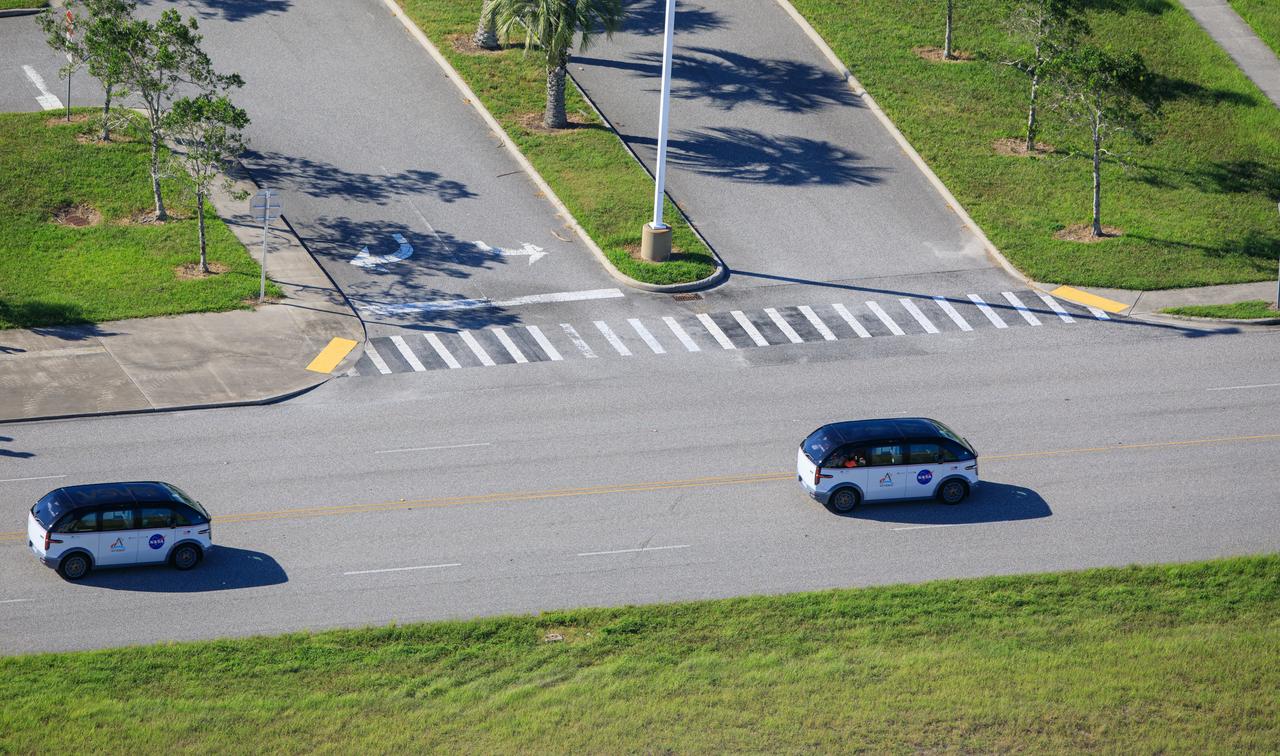
Artemis II NASA astronauts Reid Wiseman, Victor Glover, and Christina Koch, and CSA (Canadian Space Agency) astronaut Jeremy Hansen ride from Astronaut Crew Quarters in the Neil Armstrong Operations and Checkout Building to Launch Pad 39B in the Artemis crew transportation vehicles as part of an integrated ground systems test at Kennedy Space Center in Florida on Wednesday, Sept. 20, to test the crew timeline for launch day.
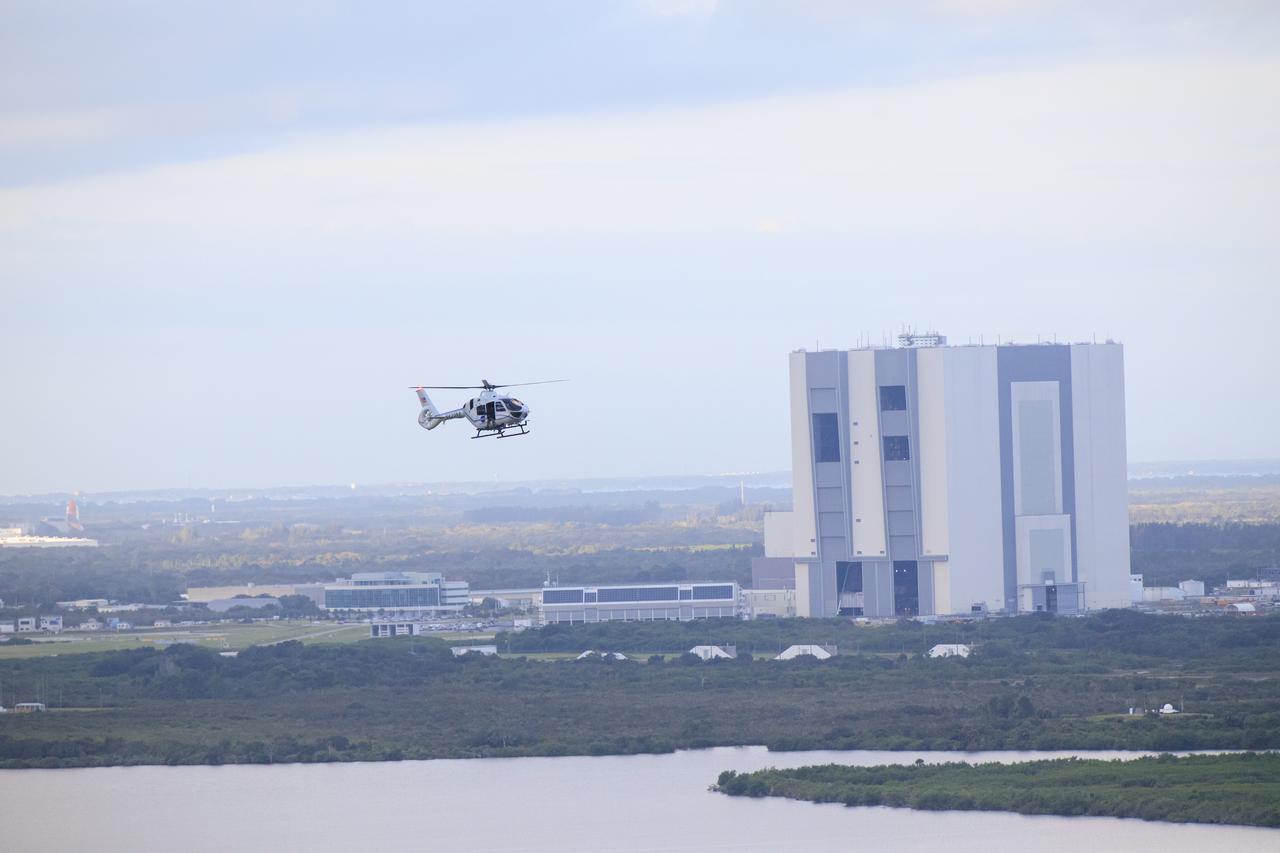
A NASA helicopter follows the convoy carrying Artemis II NASA astronauts Reid Wiseman, Victor Glover, and Christina Koch, and CSA (Canadian Space Agency) astronaut Jeremy Hansen, as they ride from Astronaut Crew Quarters in the Neil Armstrong Operations and Checkout Building to Launch Pad 39B in the Artemis crew transportation vehicles as part of an integrated ground systems test at Kennedy Space Center in Florida on Wednesday, Sept. 20, to test the crew timeline for launch day.
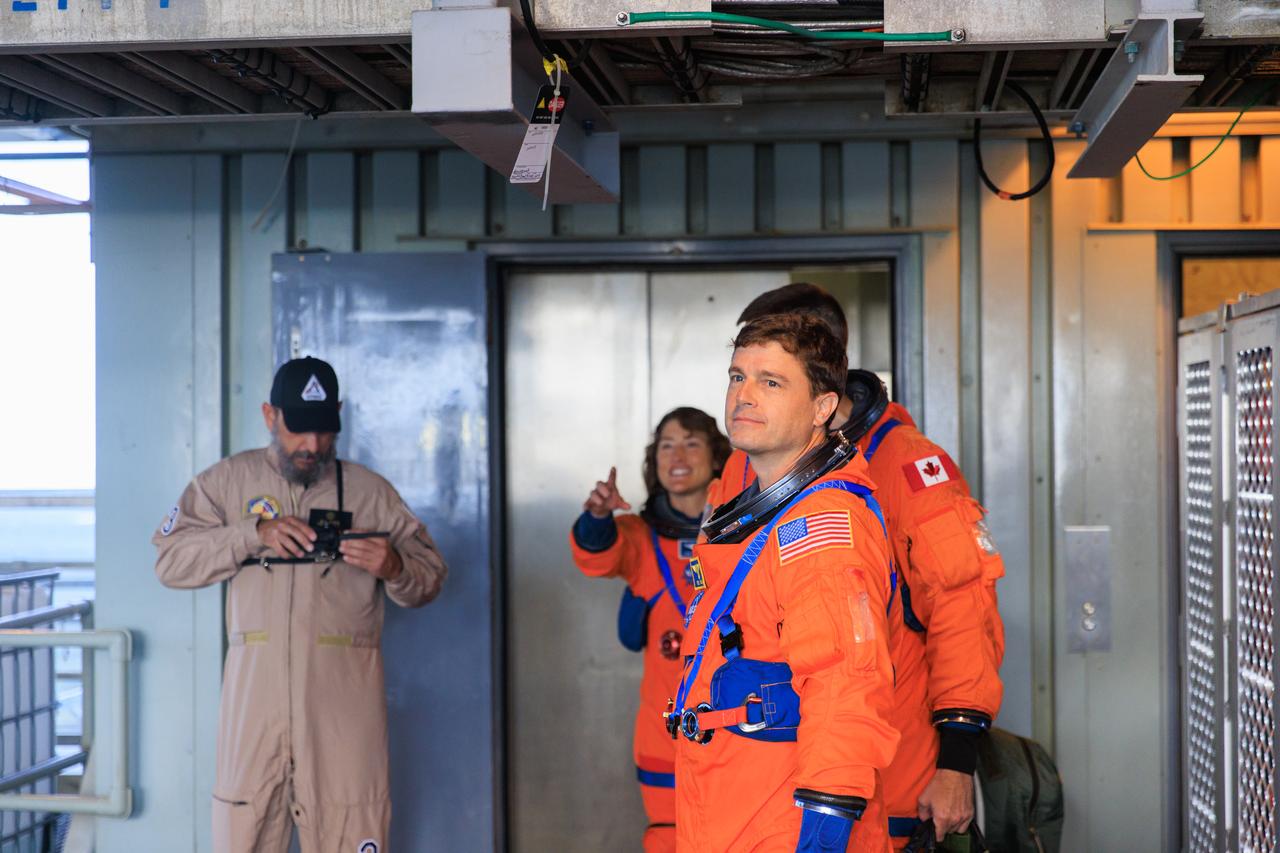
Artemis II NASA astronauts Reid Wiseman, Victor Glover, and Christina Koch, and CSA (Canadian Space Agency) astronaut Jeremy Hansen arrive to Launch Pad 39B and prepare to enter the mobile launcher and proceed to the crew access arm as part of an integrated ground systems test at Kennedy Space Center in Florida on Wednesday, Sept. 20, to test the crew timeline for launch day.
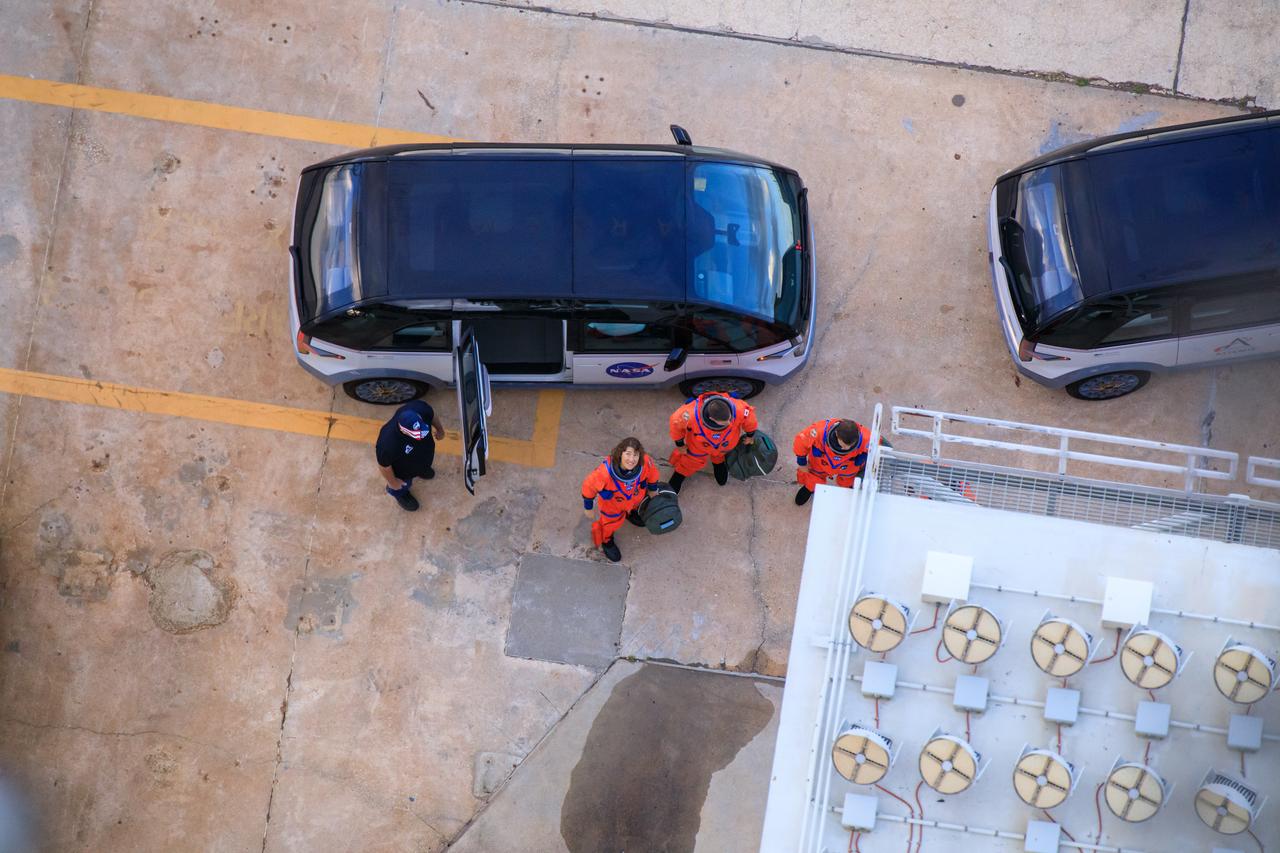
Artemis II NASA astronauts Reid Wiseman, Victor Glover, and Christina Koch, and CSA (Canadian Space Agency) astronaut Jeremy Hansen arrive to Launch Pad 39B and prepare to enter the mobile launcher and proceed to the crew access arm as part of an integrated ground systems test at Kennedy Space Center in Florida on Wednesday, Sept. 20, to test the crew timeline for launch day.
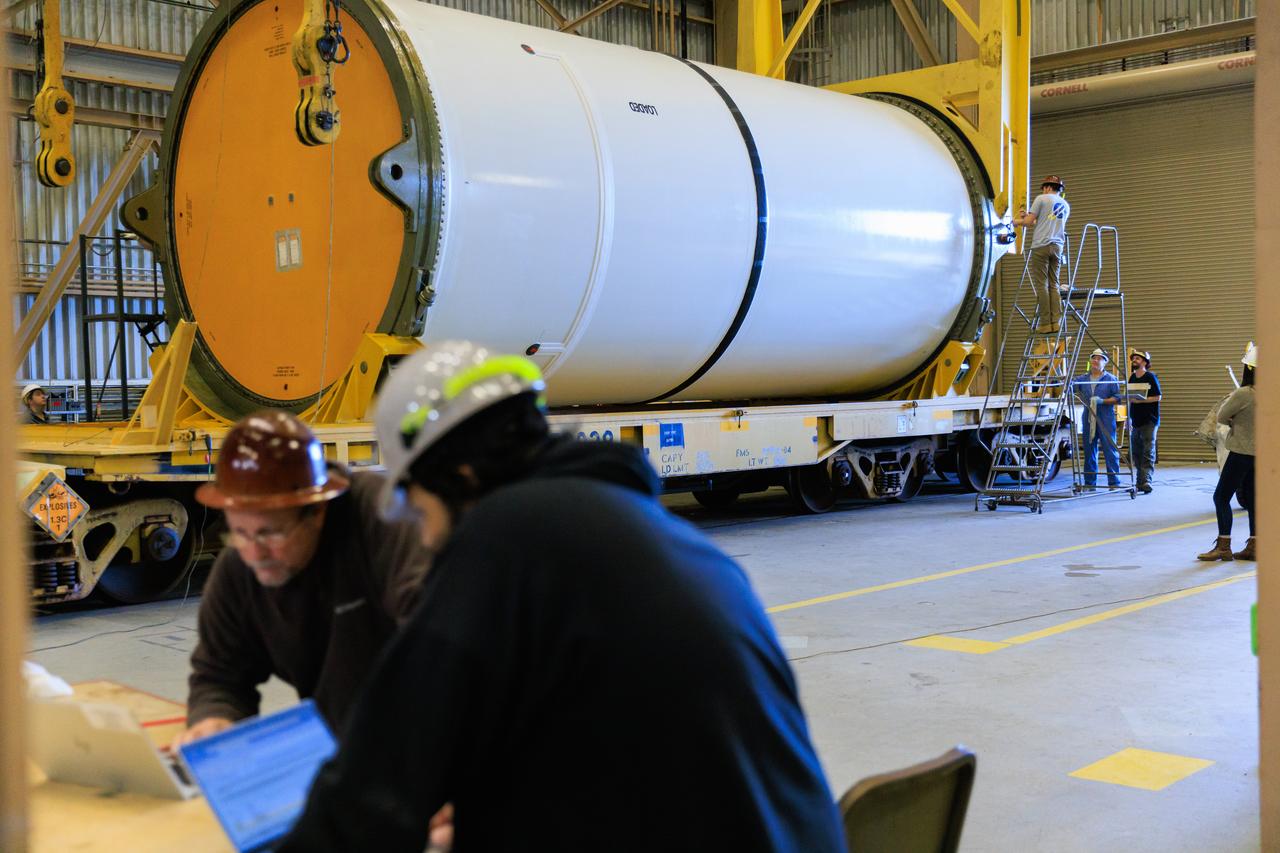
Following the successful propellant grain inspection of two segments of the solid rocket boosters for NASA’s Space Launch System inside the Rotation, Processing and Surge Facility at NASA’s Kennedy Space Center in Florida, crews on Thursday, Dec. 21, 2023, rotate and lift the segments from horizontal into a vertical position in preparation for the agency’s Artemis II launch campaign. The Artemis II mission will send four astronauts around the Moon as part of the agency’s effort to establish a long-term science and exploration presence at the Moon, and eventually Mars.
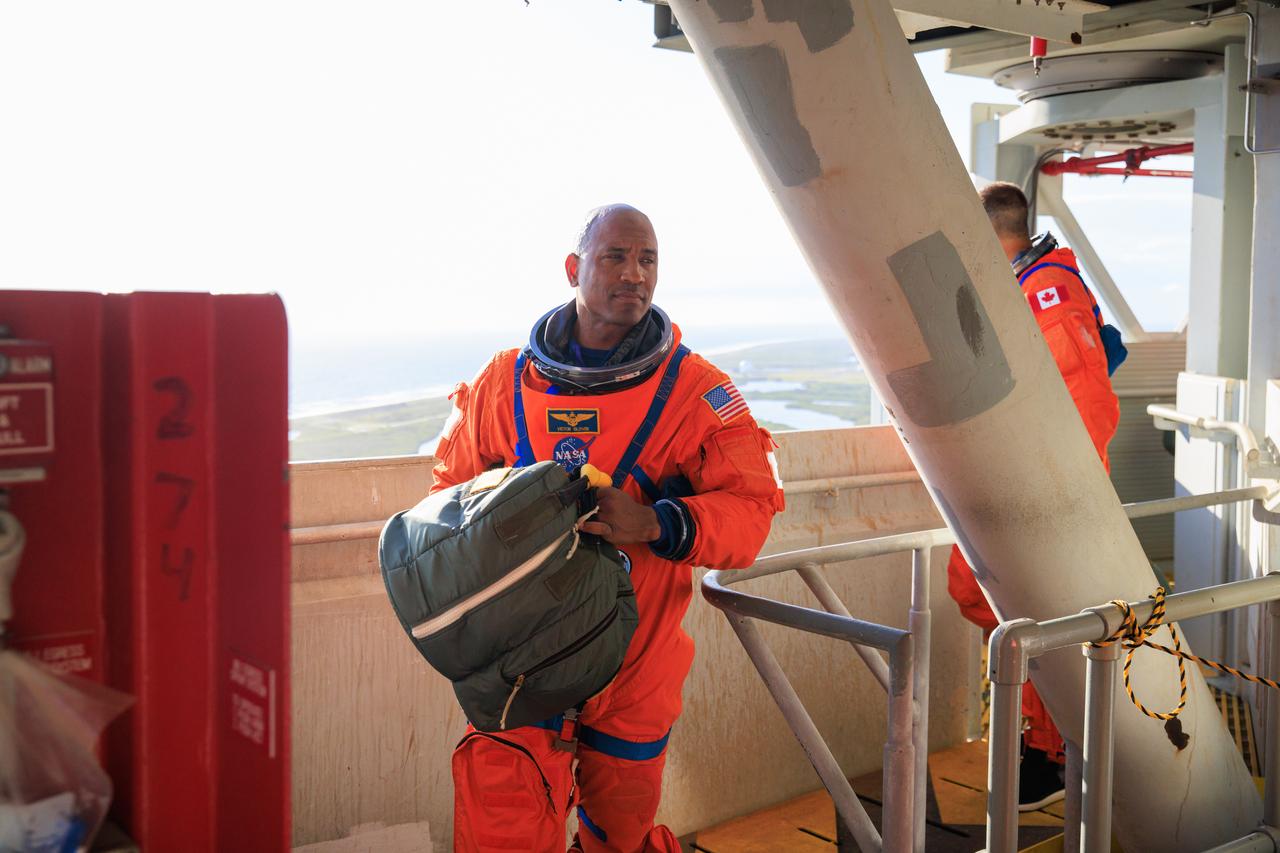
Artemis II NASA astronaut Victor Glover stands on the crew access arm of the mobile launcher at Launch Pad 39B as part of an integrated ground systems test at Kennedy Space Center in Florida on Wednesday, Sept. 20, 2023. The test ensures the ground systems team is ready to support the crew timeline on launch day.
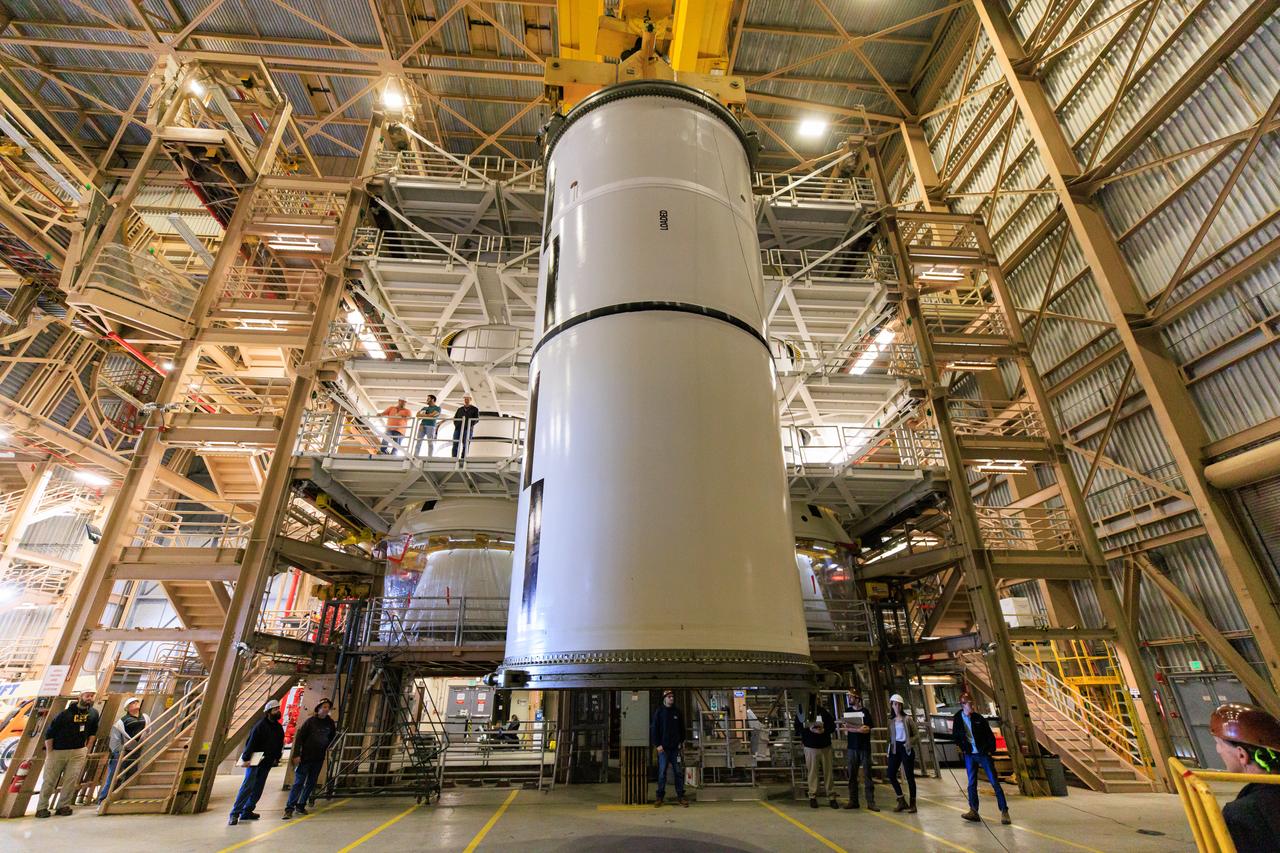
Following the successful propellant grain inspection of two segments of the solid rocket boosters for NASA’s Space Launch System inside the Rotation, Processing and Surge Facility at NASA’s Kennedy Space Center in Florida, crews on Thursday, Dec. 21, 2023, rotate and lift the segments from horizontal into a vertical position in preparation for the agency’s Artemis II launch campaign. The Artemis II mission will send four astronauts around the Moon as part of the agency’s effort to establish a long-term science and exploration presence at the Moon, and eventually Mars.
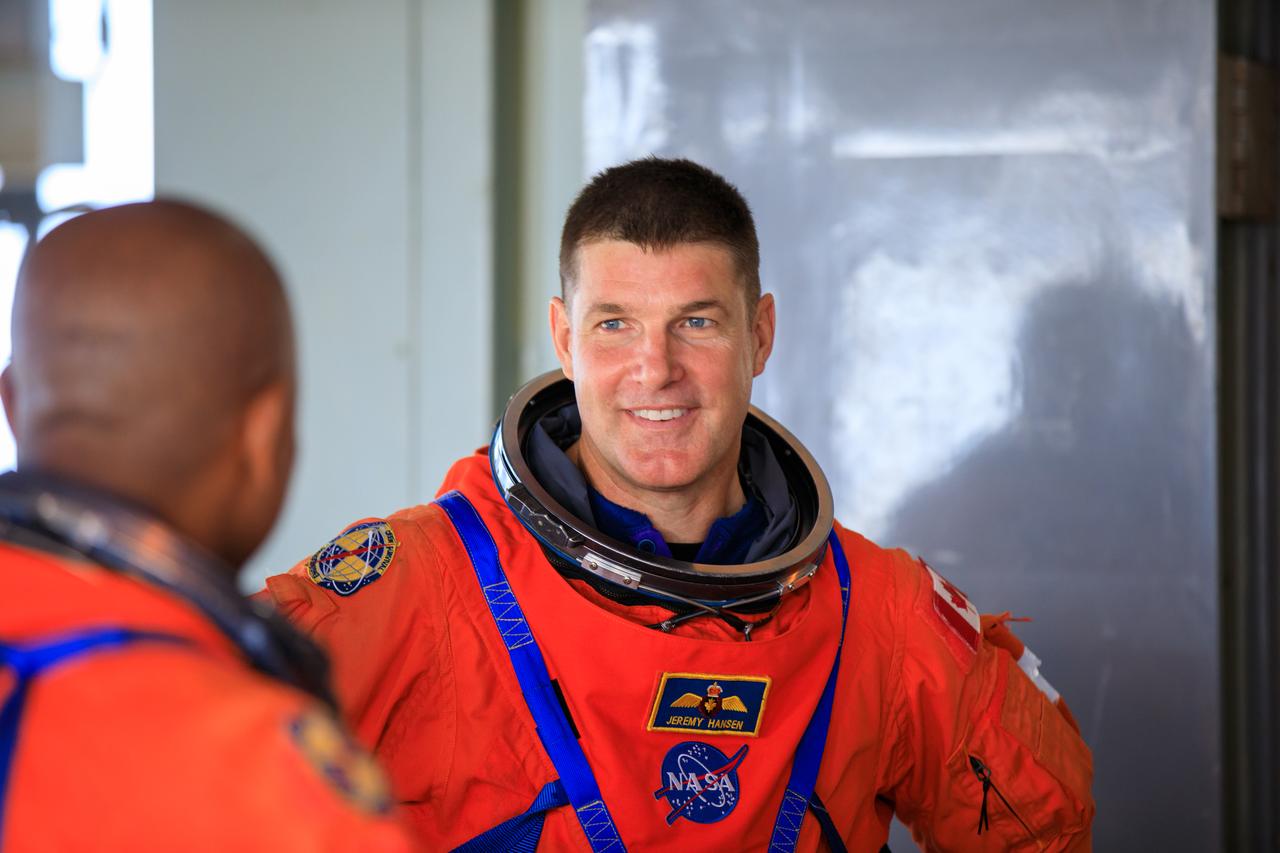
Artemis II CSA (Canadian Space Agency) astronaut Jeremy Hansen stands on the mobile launcher at Launch Pad 39B as part of an integrated ground systems test at Kennedy Space Center in Florida on Wednesday, Sept. 20, 2023. The test ensures the ground systems team is ready to support the crew timeline on launch day.
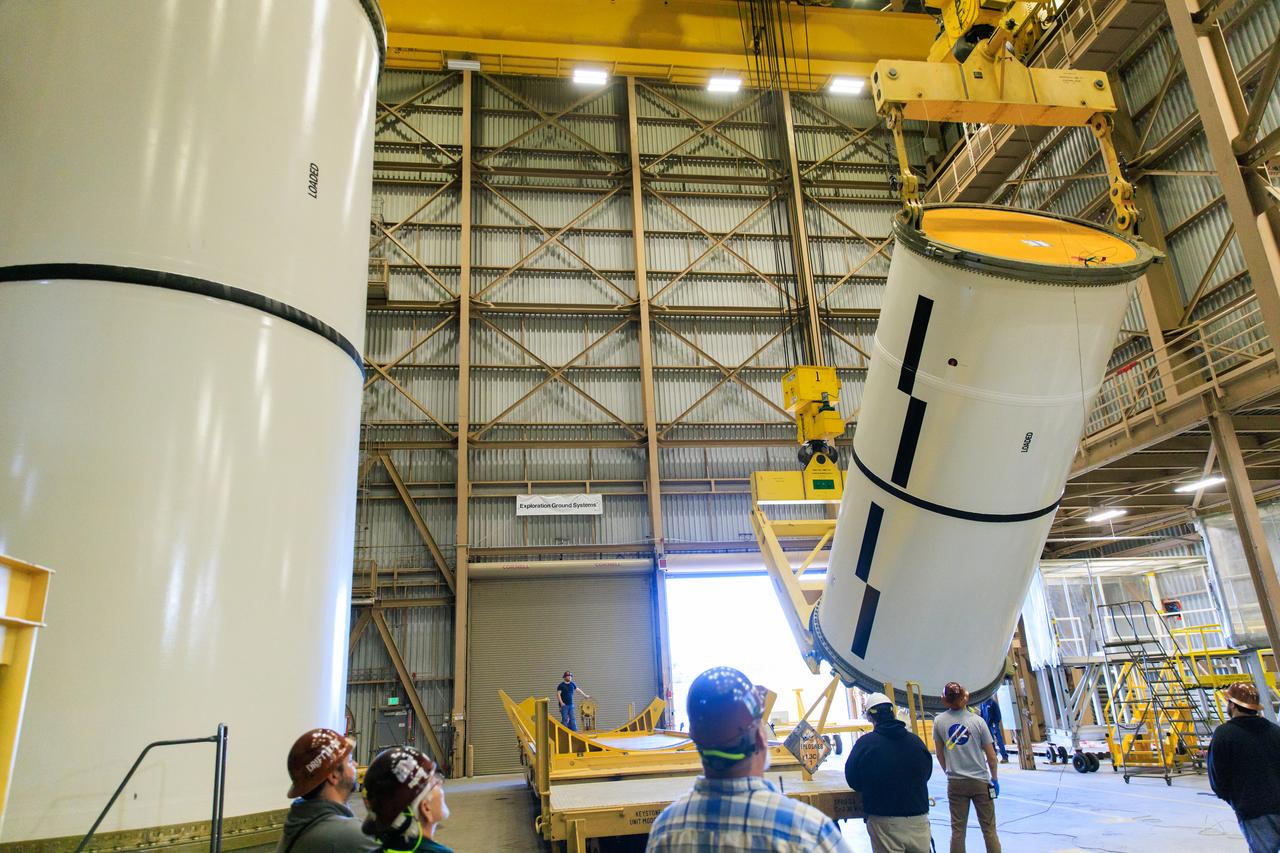
Following the successful propellant grain inspection of two segments of the solid rocket boosters for NASA’s Space Launch System inside the Rotation, Processing and Surge Facility at NASA’s Kennedy Space Center in Florida, crews on Thursday, Dec. 21, 2023, rotate and lift the segments from horizontal into a vertical position in preparation for the agency’s Artemis II launch campaign. The Artemis II mission will send four astronauts around the Moon as part of the agency’s effort to establish a long-term science and exploration presence at the Moon, and eventually Mars.
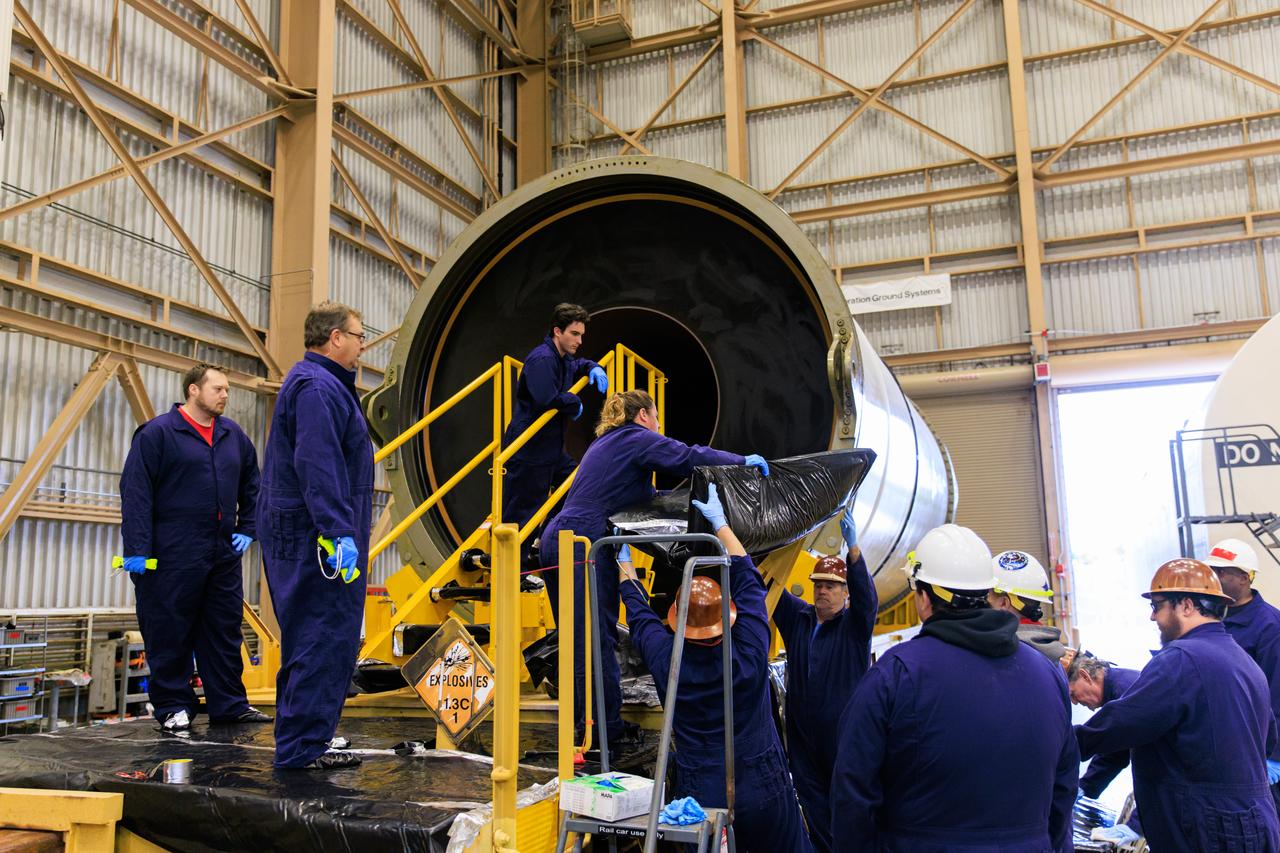
Technicians with Exploration Ground Systems, based at NASA’s Kennedy Space Center in Florida, perform propellant grain inspections on two of the agency’s Space Launch System solid rocket booster segments for the Artemis II campaign on Wednesday, Dec. 20, 2023, inside the Rotation, Processing and Surge Facility. The team is inspecting the propellant of all 10 booster segments before they are rotated vertically for processing. The Artemis II mission will send four astronauts around the Moon as part of the agency’s effort to establish a long-term science and exploration presence at the Moon, and eventually Mars.
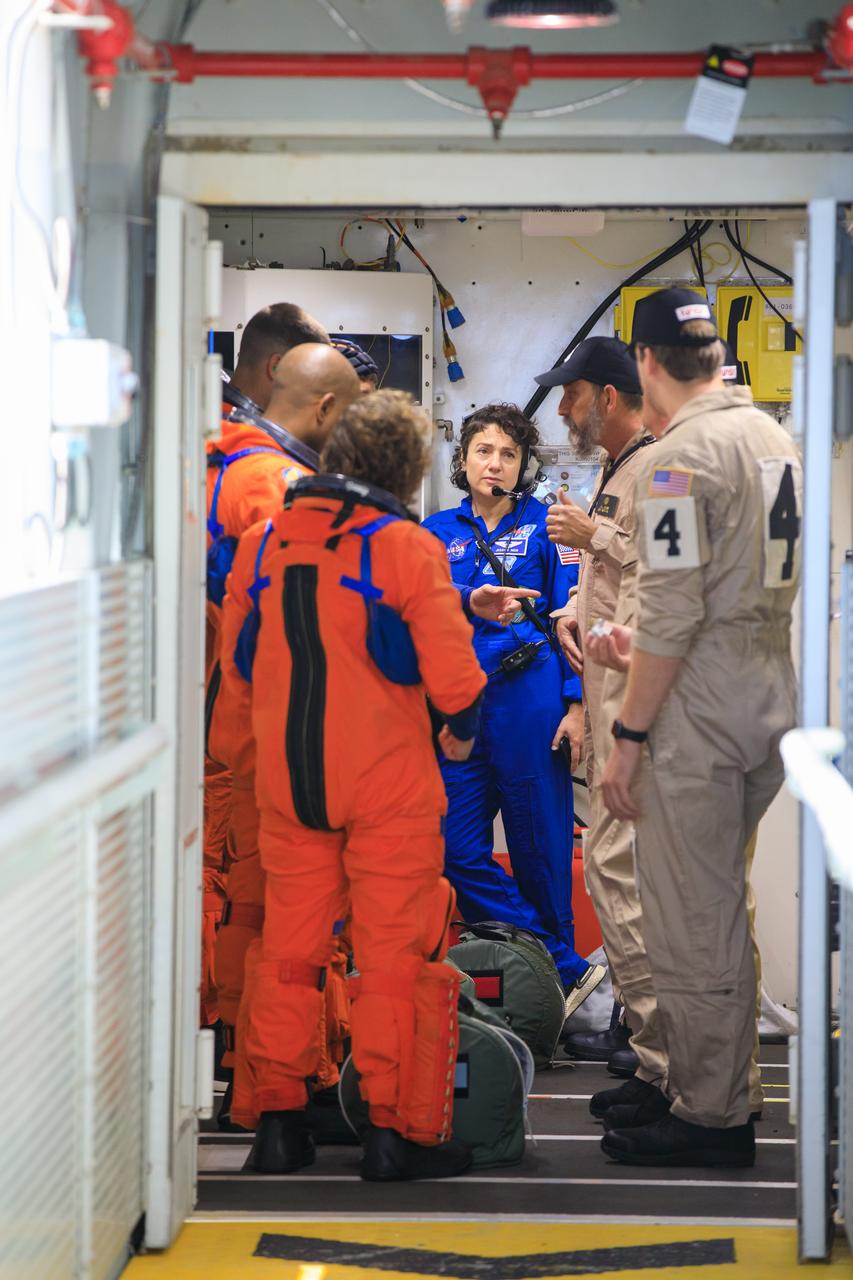
Artemis II NASA astronauts Reid Wiseman, Victor Glover, and Christina Koch, and CSA (Canadian Space Agency) astronaut Jeremy Hansen stand in the white room with fellow NASA astronaut Jessica Meir and closeout team members on the crew access arm of the mobile launcher at Launch Pad 39B as part of an integrated ground systems test at Kennedy Space Center in Florida on Wednesday, Sept. 20, 2023. The test ensures the ground systems team is ready to support the crew timeline on launch day.
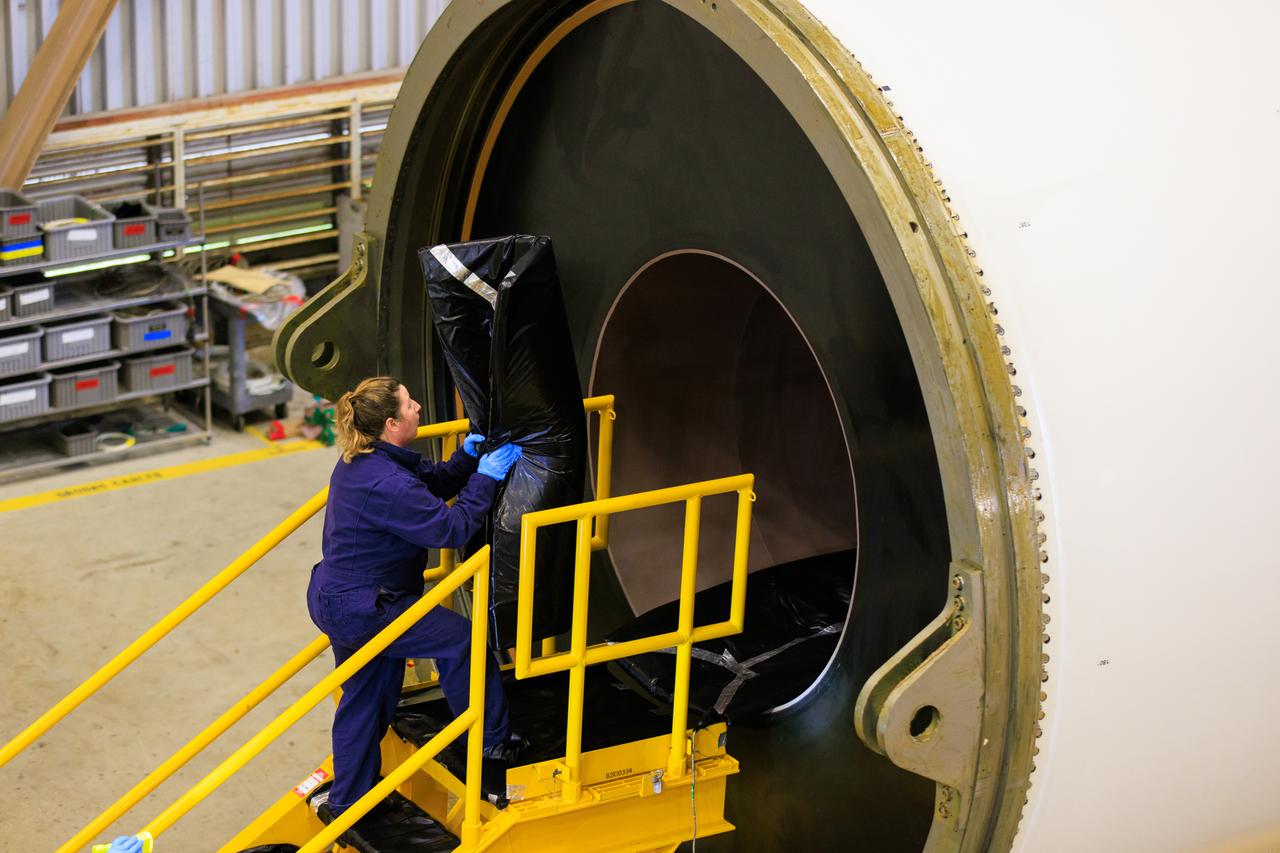
Technicians with Exploration Ground Systems, based at NASA’s Kennedy Space Center in Florida, perform propellant grain inspections on two of the agency’s Space Launch System solid rocket booster segments for the Artemis II campaign on Wednesday, Dec. 20, 2023, inside the Rotation, Processing and Surge Facility. The team is inspecting the propellant of all 10 booster segments before they are rotated vertically for processing. The Artemis II mission will send four astronauts around the Moon as part of the agency’s effort to establish a long-term science and exploration presence at the Moon, and eventually Mars.
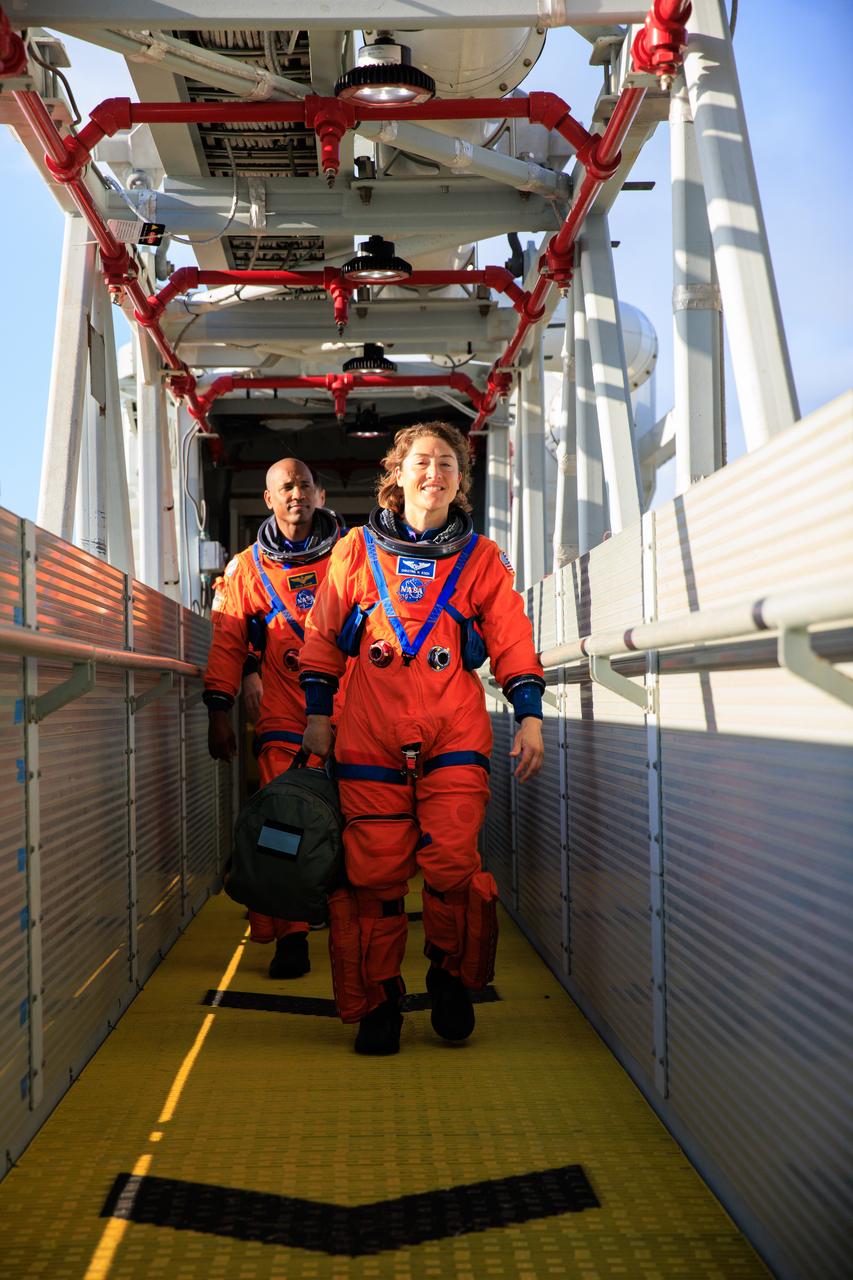
Artemis II NASA astronauts Reid Wiseman, Victor Glover, and Christina Koch, and CSA (Canadian Space Agency) astronaut Jeremy Hansen walk down the crew access arm of the mobile launcher at Launch Pad 39B as part of an integrated ground systems test at Kennedy Space Center in Florida on Wednesday, Sept. 20, 2023. The test ensures the ground systems team is ready to support the crew timeline on launch day.
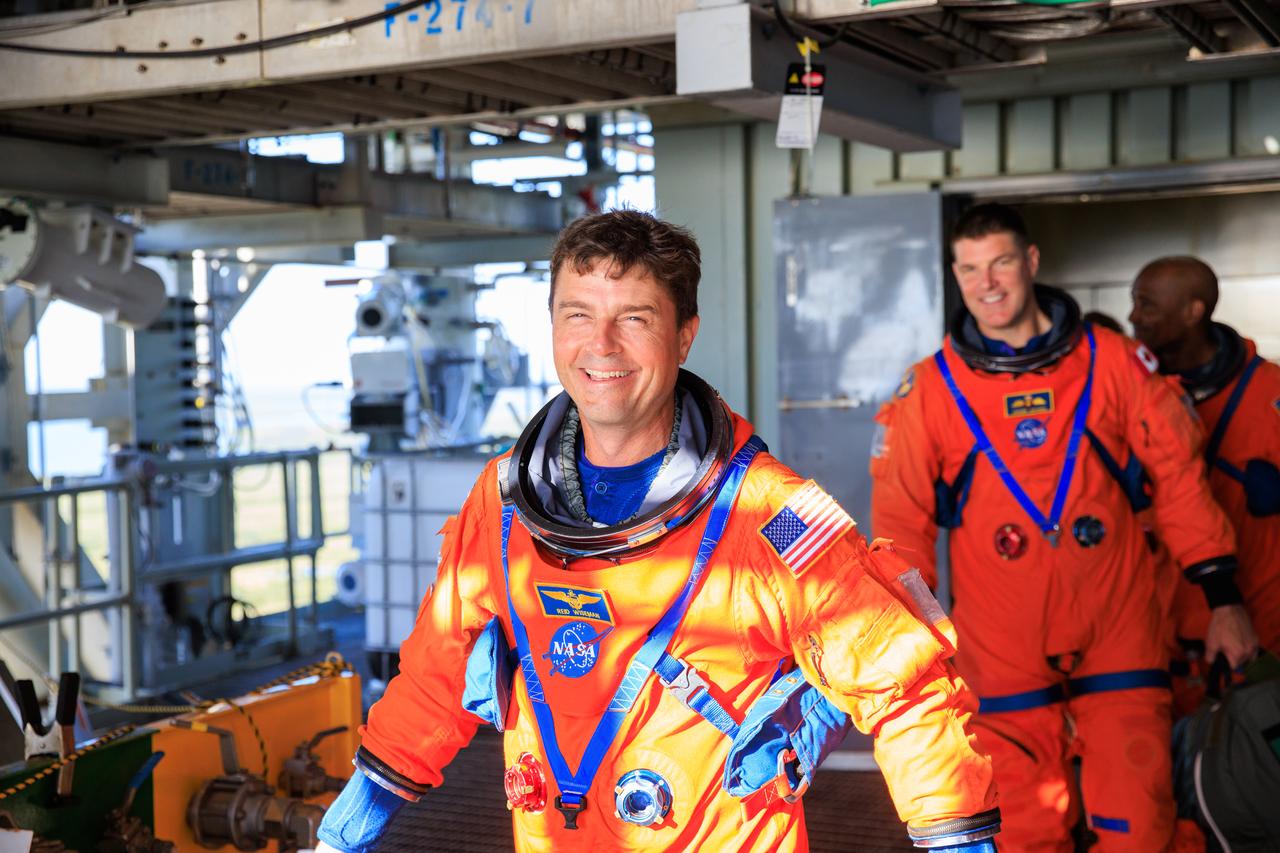
Artemis II astronauts (front to back) NASA astronaut Reid Wiseman, CSA (Canadian Space Agency) astronaut Jeremy Hansen, and NASA astronaut Victor Glover stand on the mobile launcher at Launch Pad 39B as part of an integrated ground systems test at Kennedy Space Center in Florida on Wednesday, Sept. 20. The test ensures the ground systems team is ready to support the crew timeline on launch day.
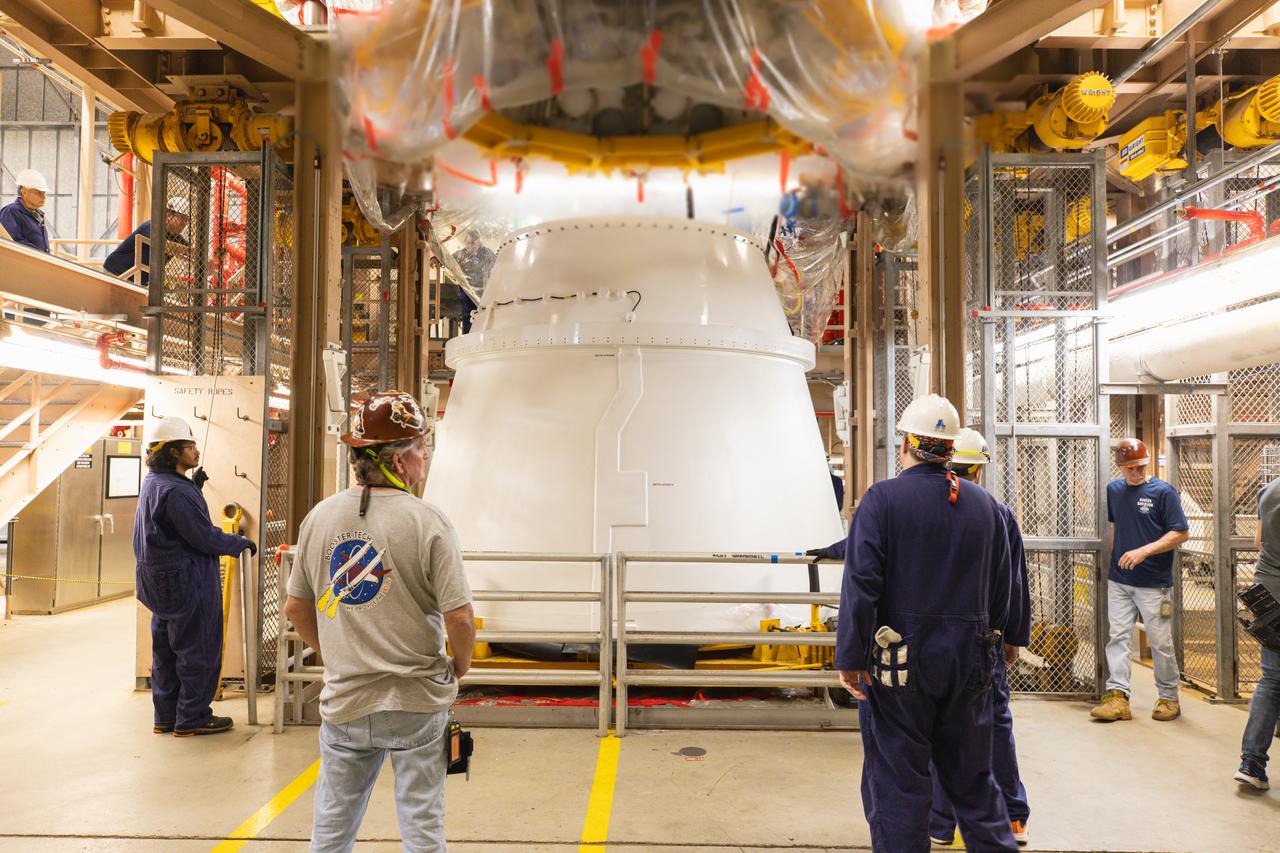
Technicians with Exploration Ground Systems perform pre-mate inspections of the Northrop Grumman-manufactured right aft exit cone of the Artemis II Space Launch Systems solid rocket boosters on Wednesday, Dec. 13, 2023, inside the Rotation, Processing and Surge Facility (RPSF) at NASA’s Kennedy Space Center in Florida. Each of the two aft exit cones will be prepared for the agency’s Artemis II flight and attach to the aft segments of the Space Launch Systems solid rocket boosters. The exit cones act like a battery pack to provide added thrust for the boosters while protecting the aft skirts from thermal environment during launch.
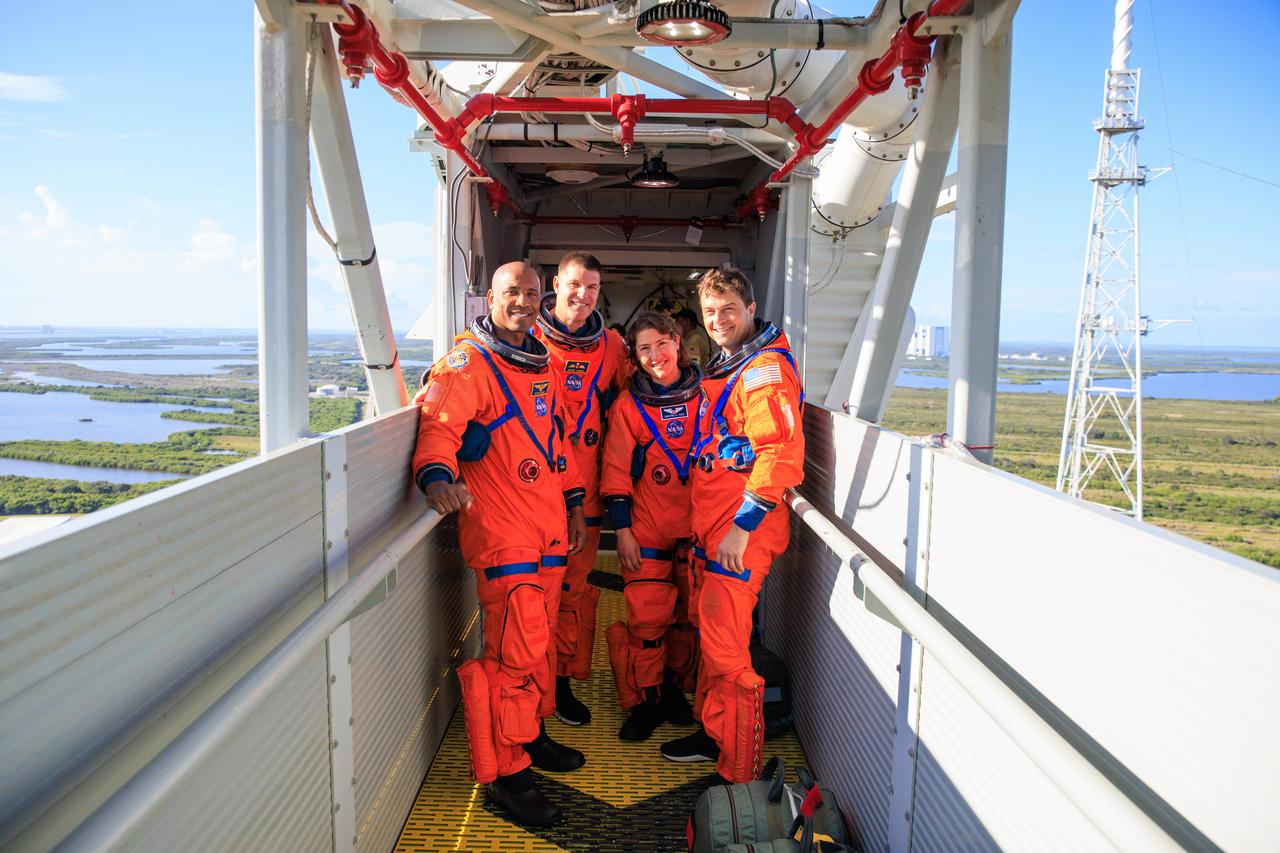
Artemis II astronauts, from left, NASA astronaut Victor Glover (left), CSA (Canadian Space Agency) astronaut Jeremy Hansen, NASA astronauts Christina Koch and Reid Wiseman stand on the crew access arm of the mobile launcher at Launch Pad 39B as part of an integrated ground systems test at Kennedy Space Center in Florida on Wednesday, Sept. 20. The test ensures the ground systems team is ready to support the crew timeline on launch day.
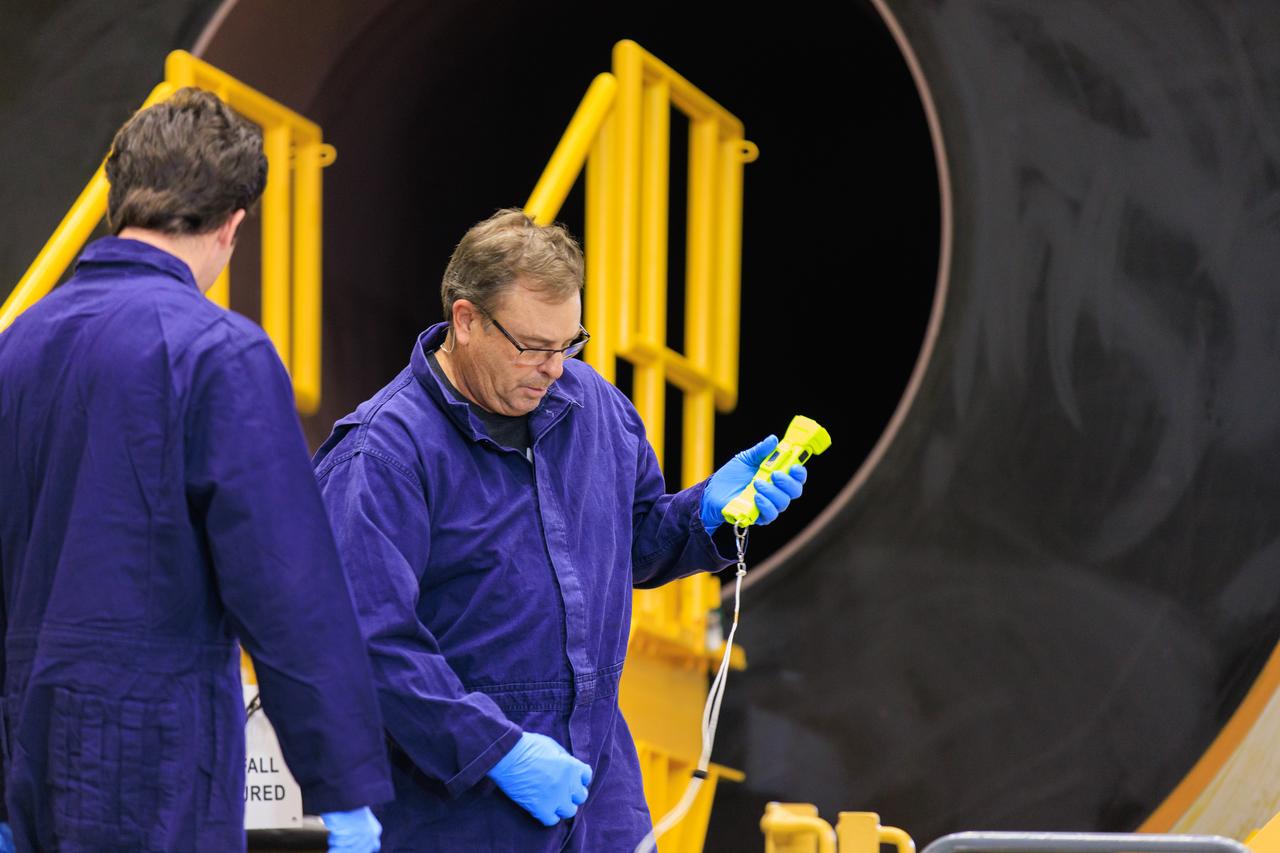
Technicians with Exploration Ground Systems, based at NASA’s Kennedy Space Center in Florida, perform propellant grain inspections on two of the agency’s Space Launch System solid rocket booster segments for the Artemis II campaign on Wednesday, Dec. 20, 2023, inside the Rotation, Processing and Surge Facility. The team is inspecting the propellant of all 10 booster segments before they are rotated vertically for processing. The Artemis II mission will send four astronauts around the Moon as part of the agency’s effort to establish a long-term science and exploration presence at the Moon, and eventually Mars.

Technicians with Exploration Ground Systems perform inspections of the Northrop Grumman-manufactured two aft exit cones on Wednesday, Dec. 13, 2023, inside the Rotation, Processing and Surge Facility (RPSF) at NASA’s Kennedy Space Center in Florida before mating processes begin for the agency’s Artemis II mission. The aft exit cones are attached to the bottom piece of the two boosters, (seen here in these photos), which is called the aft segment, and the exit cones act like a battery pack to provide added thrust for the boosters while protecting the aft skirts from thermal environment during launch of the agency’s first crewed mission under Artemis that will test all of the Orion spacecraft systems.
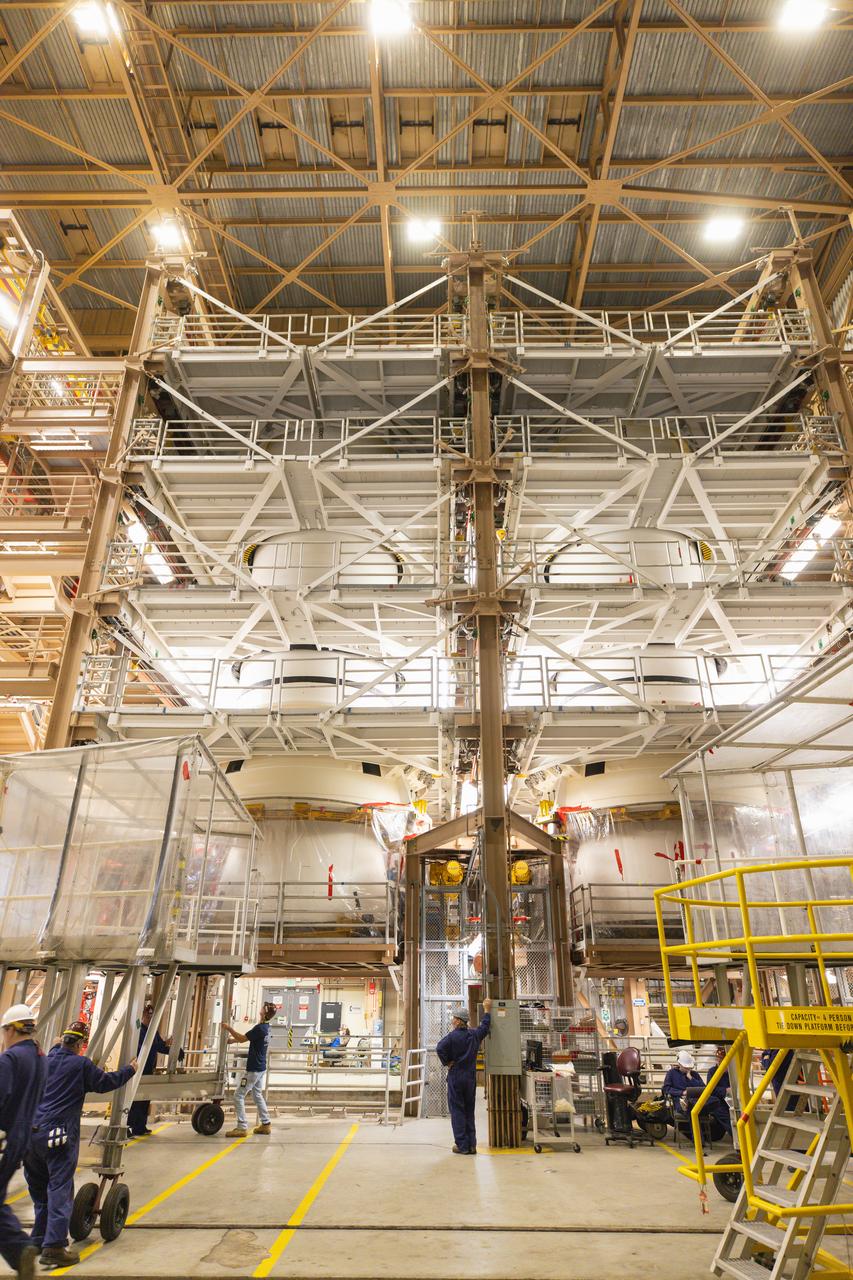
Technicians with Exploration Ground Systems perform inspections of the Northrop Grumman-manufactured two aft exit cones on Wednesday, Dec. 13, 2023, inside the Rotation, Processing and Surge Facility (RPSF) at NASA’s Kennedy Space Center in Florida before mating processes begin for the agency’s Artemis II mission. The aft exit cones are attached to the bottom piece of the two boosters, (seen here in these photos), which is called the aft segment, and the exit cones act like a battery pack to provide added thrust for the boosters while protecting the aft skirts from thermal environment during launch of the agency’s first crewed mission under Artemis that will test all of the Orion spacecraft systems.

Artemis II NASA astronauts (left to right) Reid Wiseman, Victor Glover, and Christina Koch, and CSA (Canadian Space Agency) astronaut Jeremy Hansen stand in the white room on the crew access arm of the mobile launcher at Launch Pad 39B as part of an integrated ground systems test at Kennedy Space Center in Florida on Wednesday, Sept. 20, 2023. The test ensures the ground systems team is ready to support the crew timeline on launch day.
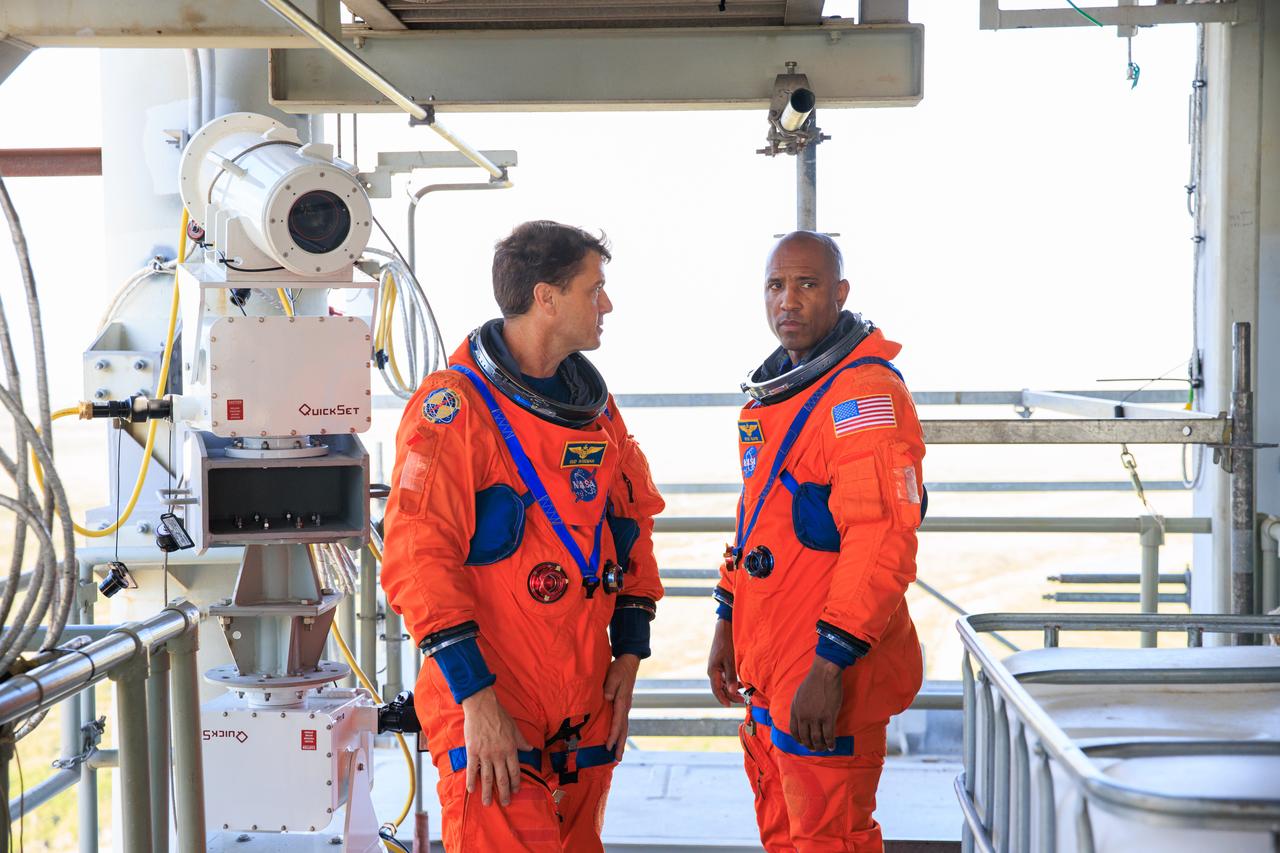
Artemis II astronauts, from left, NASA astronauts Reid Wiseman (left) and Victor Glover stand on the mobile launcher at Launch Pad 39B as part of an integrated ground systems test at Kennedy Space Center in Florida on Wednesday, Sept. 20. The test ensures the ground systems team is ready to support the crew timeline on launch day.
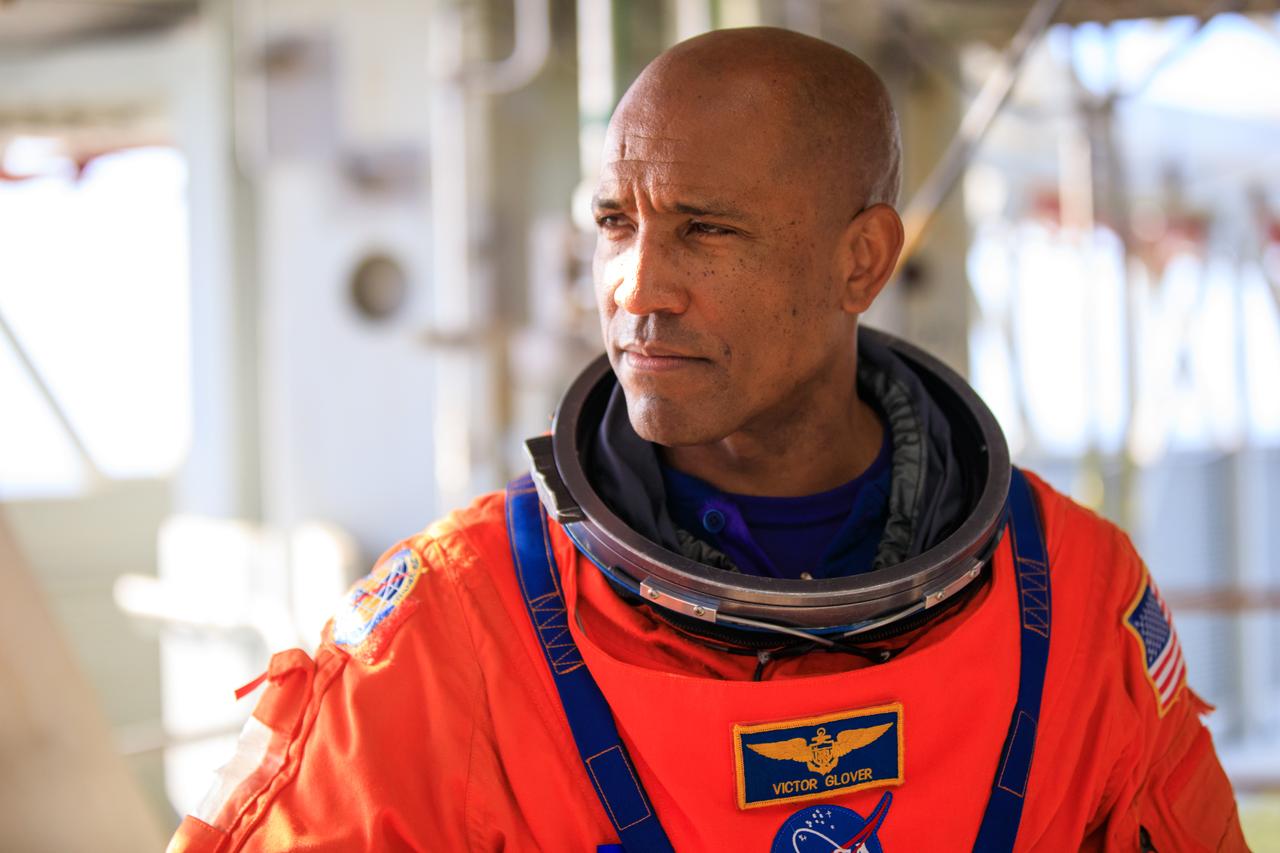
Artemis II NASA astronaut Victor Glover stands on the mobile launcher at Launch Pad 39B as part of an integrated ground systems test at Kennedy Space Center in Florida on Wednesday, Sept. 20, 2023. The test ensures the ground systems team is ready to support the crew timeline on launch day.
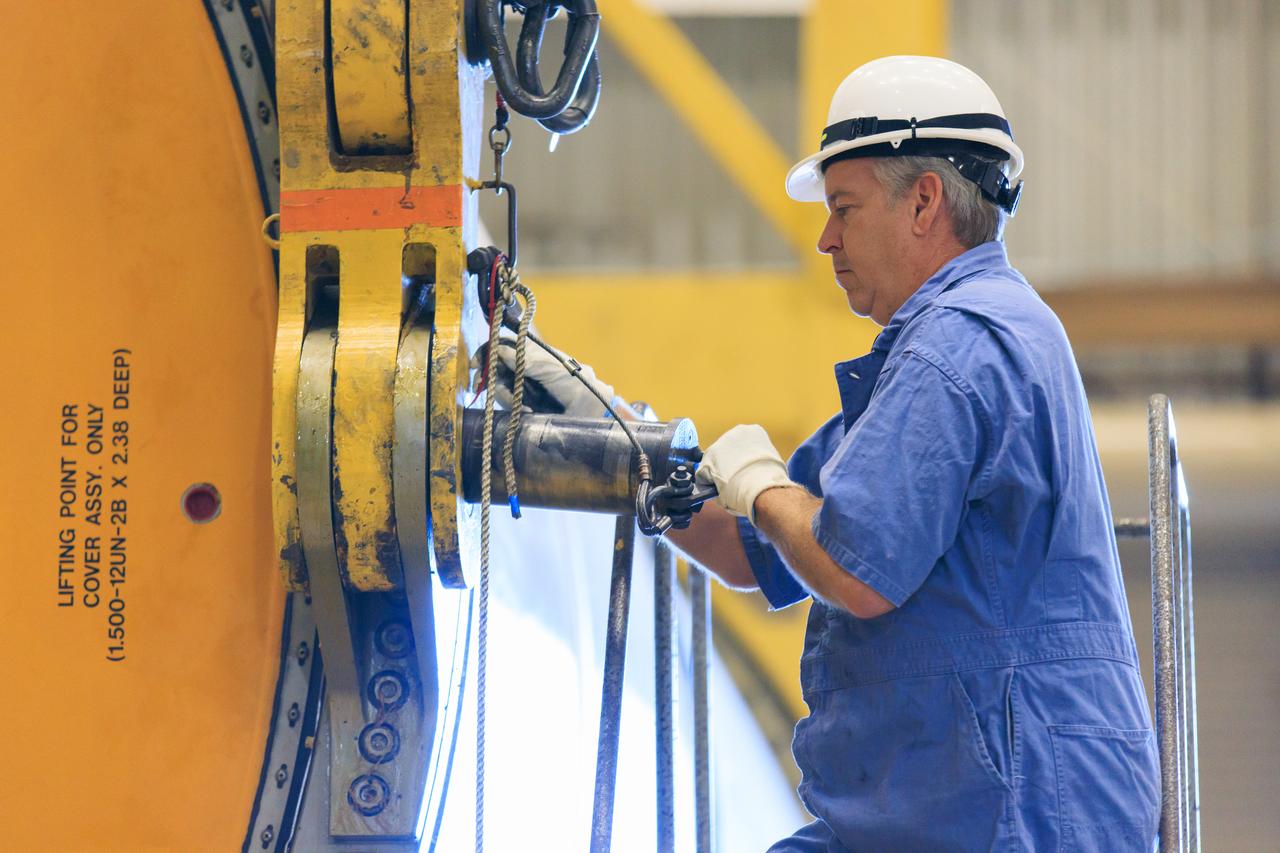
Following the successful propellant grain inspection of two segments of the solid rocket boosters for NASA’s Space Launch System inside the Rotation, Processing and Surge Facility at NASA’s Kennedy Space Center in Florida, crews on Thursday, Dec. 21, 2023, rotate and lift the segments from horizontal into a vertical position in preparation for the agency’s Artemis II launch campaign. The Artemis II mission will send four astronauts around the Moon as part of the agency’s effort to establish a long-term science and exploration presence at the Moon, and eventually Mars.
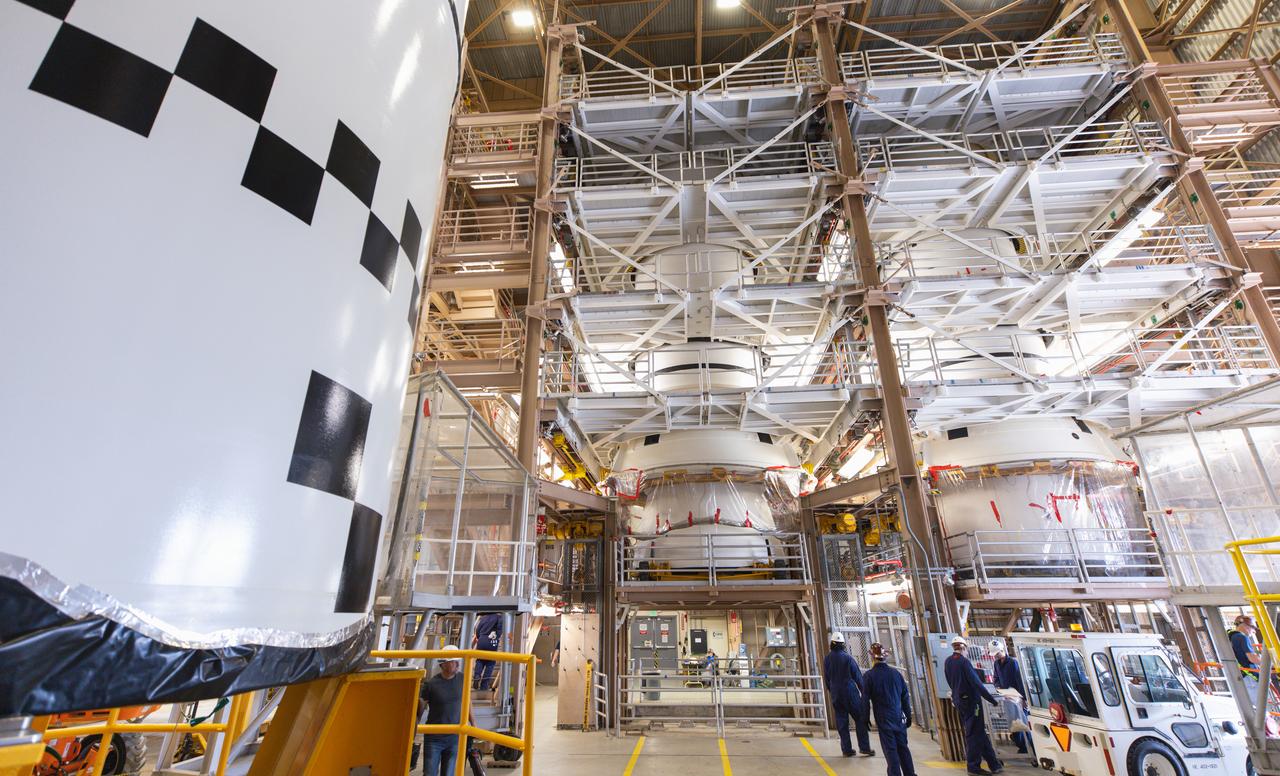
Technicians with Exploration Ground Systems perform inspections of the Northrop Grumman-manufactured two aft exit cones on Wednesday, Dec. 13, 2023, inside the Rotation, Processing and Surge Facility (RPSF) at NASA’s Kennedy Space Center in Florida before mating processes begin for the agency’s Artemis II mission. The aft exit cones are attached to the bottom piece of the two boosters, (seen here in these photos), which is called the aft segment, and the exit cones act like a battery pack to provide added thrust for the boosters while protecting the aft skirts from thermal environment during launch of the agency’s first crewed mission under Artemis that will test all of the Orion spacecraft systems.
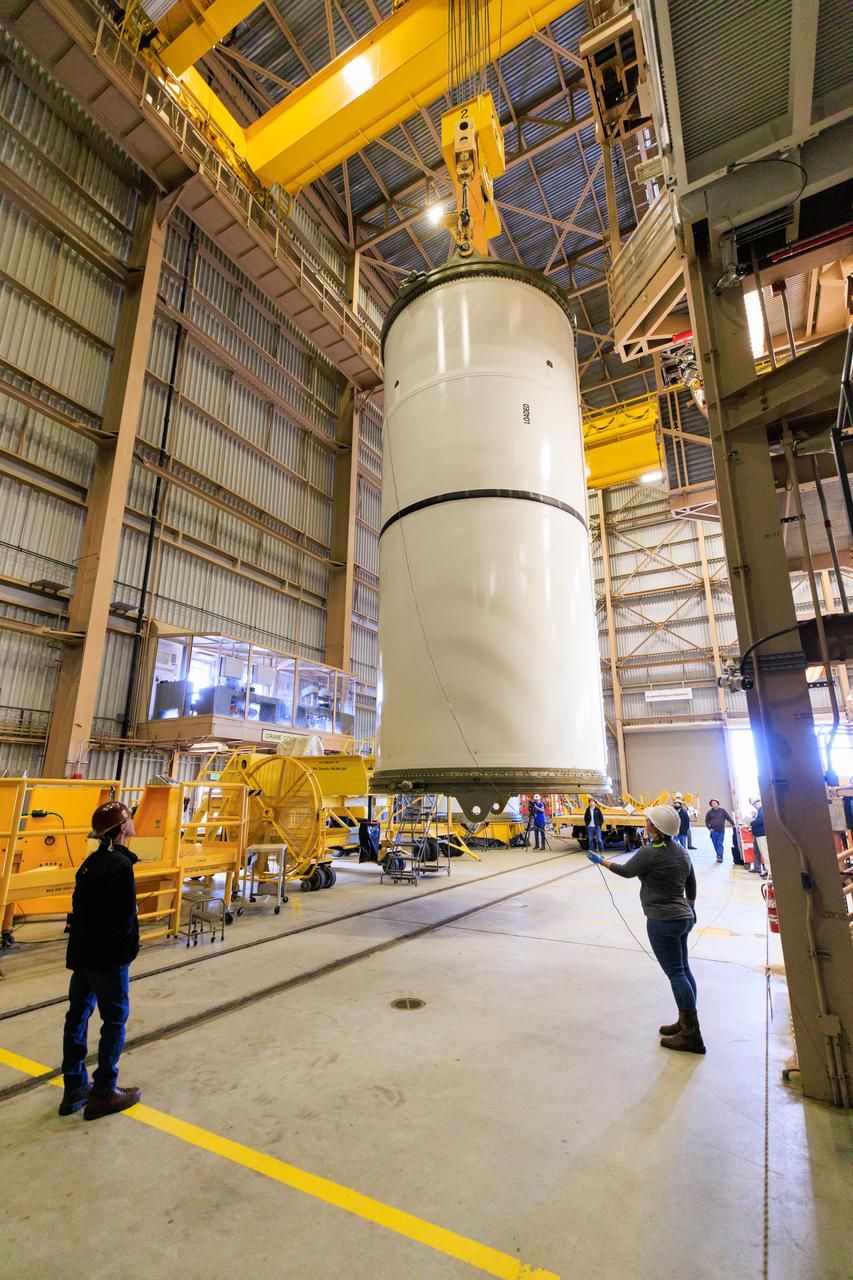
Following the successful propellant grain inspection of two segments of the solid rocket boosters for NASA’s Space Launch System inside the Rotation, Processing and Surge Facility at NASA’s Kennedy Space Center in Florida, crews on Thursday, Dec. 21, 2023, rotate and lift the segments from horizontal into a vertical position in preparation for the agency’s Artemis II launch campaign. The Artemis II mission will send four astronauts around the Moon as part of the agency’s effort to establish a long-term science and exploration presence at the Moon, and eventually Mars.
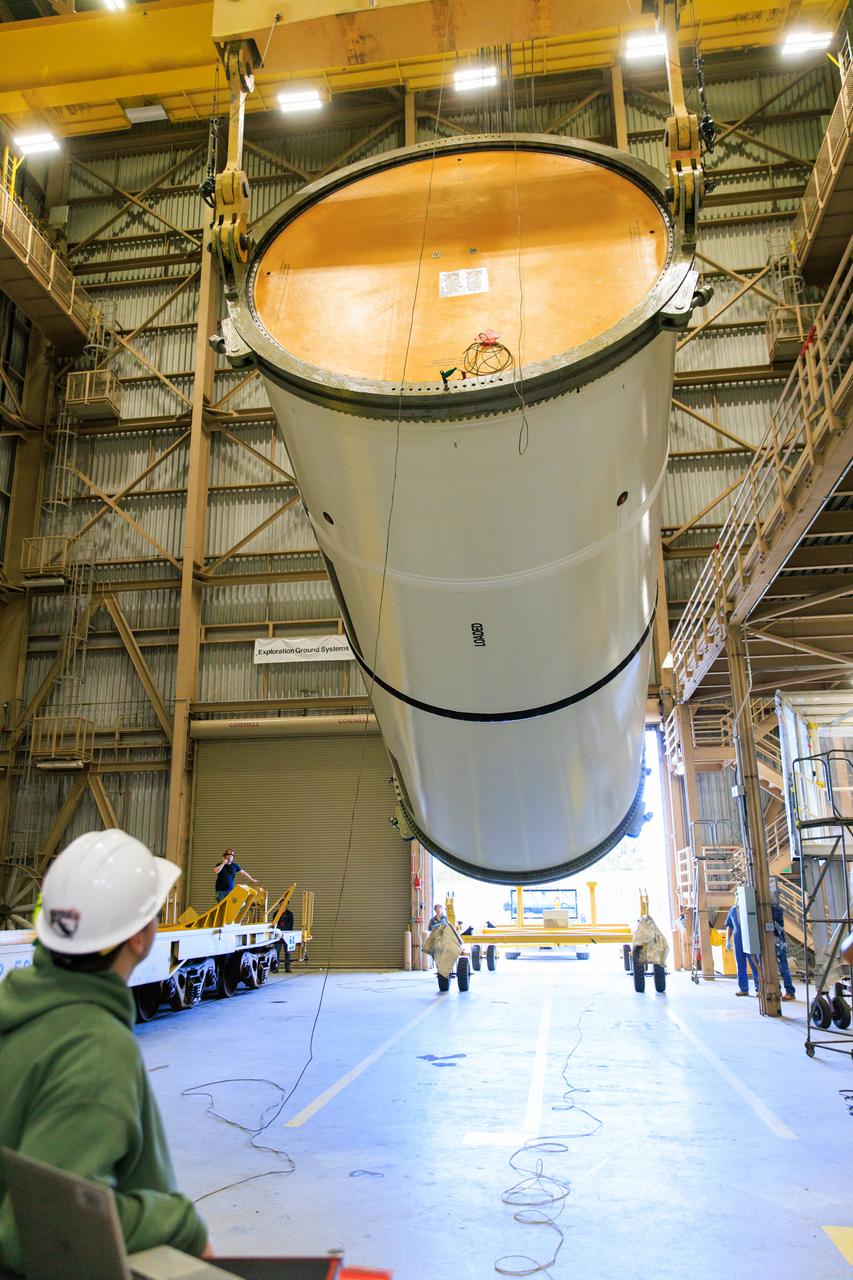
Following the successful propellant grain inspection of two segments of the solid rocket boosters for NASA’s Space Launch System inside the Rotation, Processing and Surge Facility at NASA’s Kennedy Space Center in Florida, crews on Thursday, Dec. 21, 2023, rotate and lift the segments from horizontal into a vertical position in preparation for the agency’s Artemis II launch campaign. The Artemis II mission will send four astronauts around the Moon as part of the agency’s effort to establish a long-term science and exploration presence at the Moon, and eventually Mars.
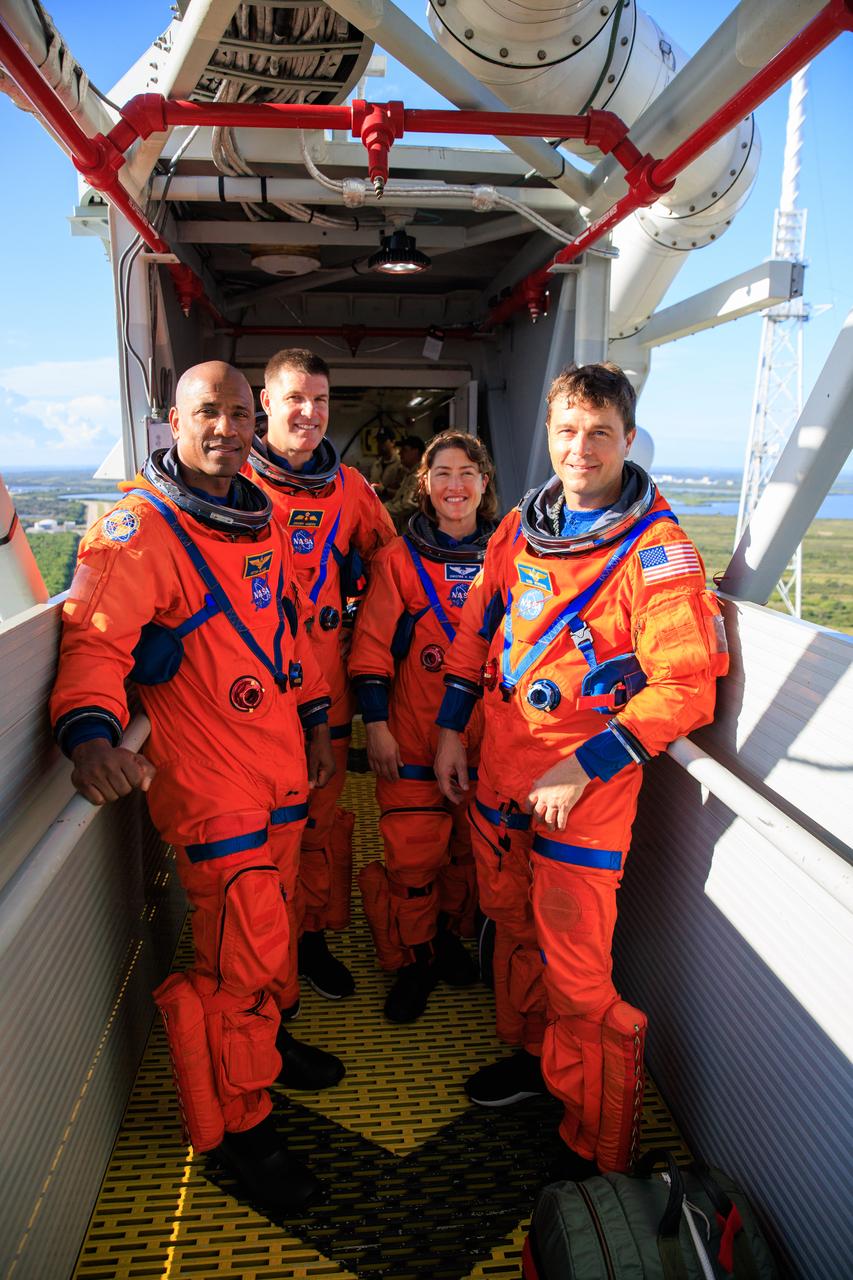
Artemis II astronauts, from left, NASA astronaut Victor Glover (left), CSA (Canadian Space Agency) astronaut Jeremy Hansen, NASA astronauts Christina Koch and Reid Wiseman stand on the crew access arm of the mobile launcher at Launch Pad 39B as part of an integrated ground systems test at Kennedy Space Center in Florida on Wednesday, Sept. 20. The test ensures the ground systems team is ready to support the crew timeline on launch day.
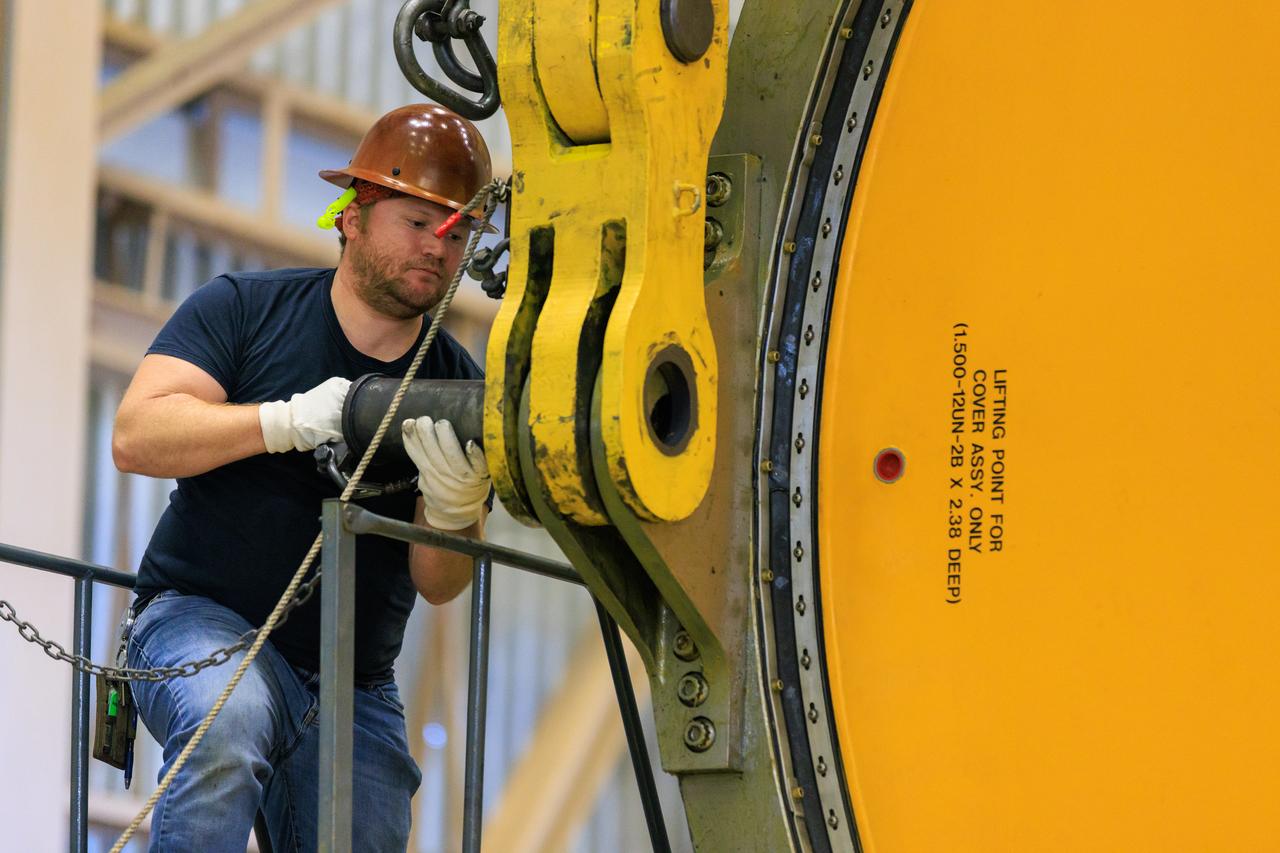
Following the successful propellant grain inspection of two segments of the solid rocket boosters for NASA’s Space Launch System inside the Rotation, Processing and Surge Facility at NASA’s Kennedy Space Center in Florida, crews on Thursday, Dec. 21, 2023, rotate and lift the segments from horizontal into a vertical position in preparation for the agency’s Artemis II launch campaign. The Artemis II mission will send four astronauts around the Moon as part of the agency’s effort to establish a long-term science and exploration presence at the Moon, and eventually Mars.
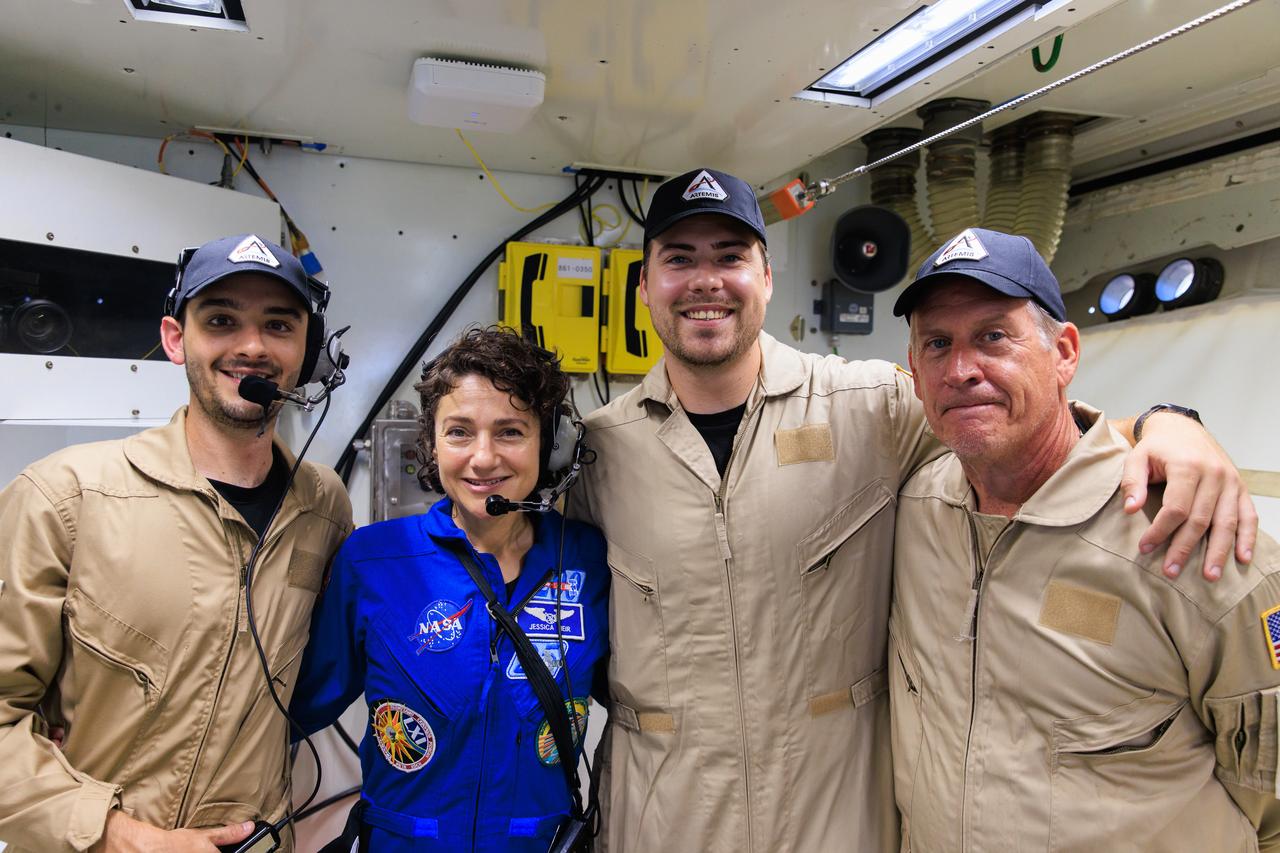
NASA astronaut Jessica Meir poses with members of the closeout team during in the white room on the crew access arm of the mobile launcher at Launch Pad 39B as part of an Artemis II integrated ground systems test at Kennedy Space Center in Florida on Wednesday, Sept. 20, 2023. The test ensures the ground systems team is ready to support the crew timeline on launch day.
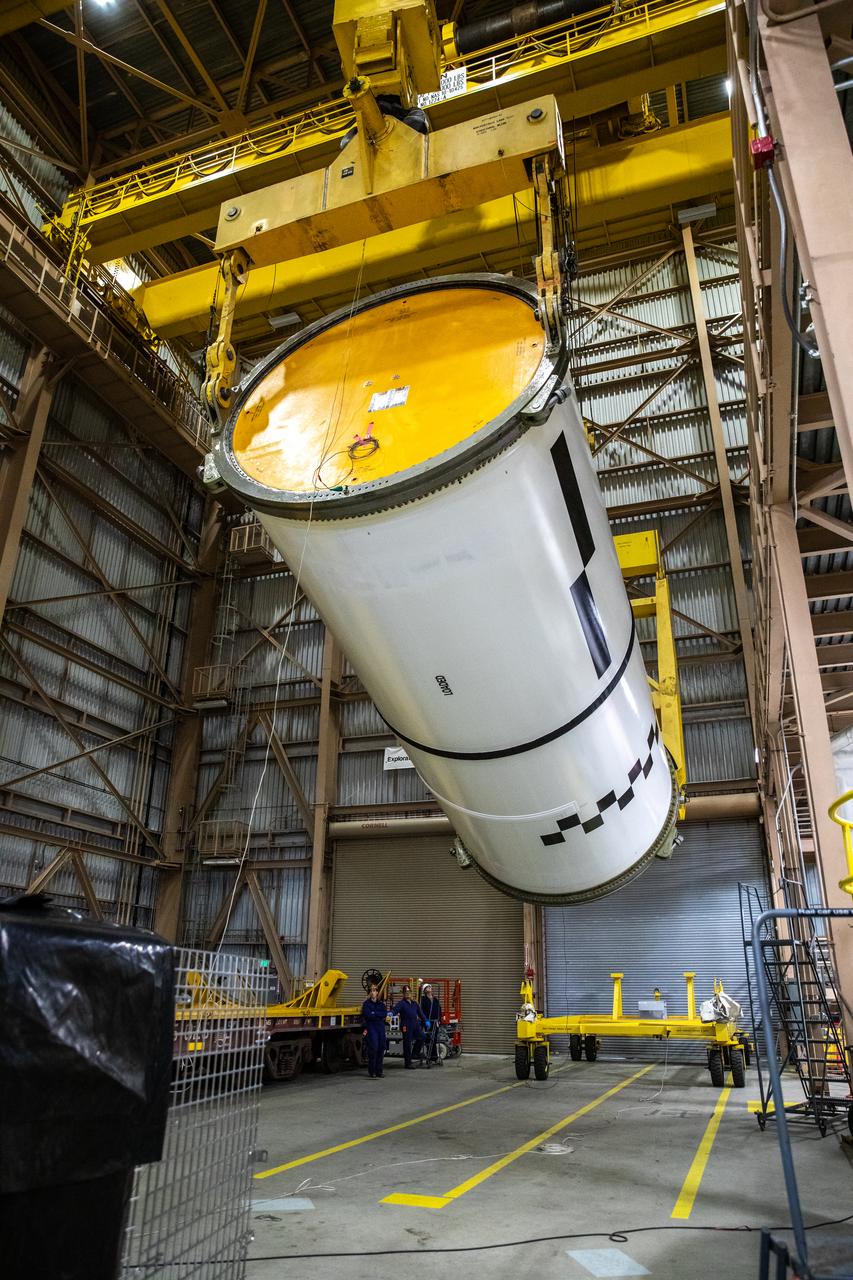
Engineers and technicians process the right forward center segment of the Space Launch System solid rocket boosters for the Artemis II mission inside the Rotation, Processing and Surge Facility (RPSF) at NASA’s Kennedy Space Center in Florida on Tuesday, Nov. 27, 2023. The team has been examining the 10 booster segments one-by-one then lifting them to make sure they are ready for integration and launch before moving them to the Vehicle Assembly Building for stacking atop the mobile launcher. Artemis II astronauts Reid Wiseman, Victor Glover, Christina Koch, and Jeremy Hansen will blast off from Kennedy and travel around the moon for the agency’s first crewed mission under Artemis that will test all of the Orion spacecraft’s systems.
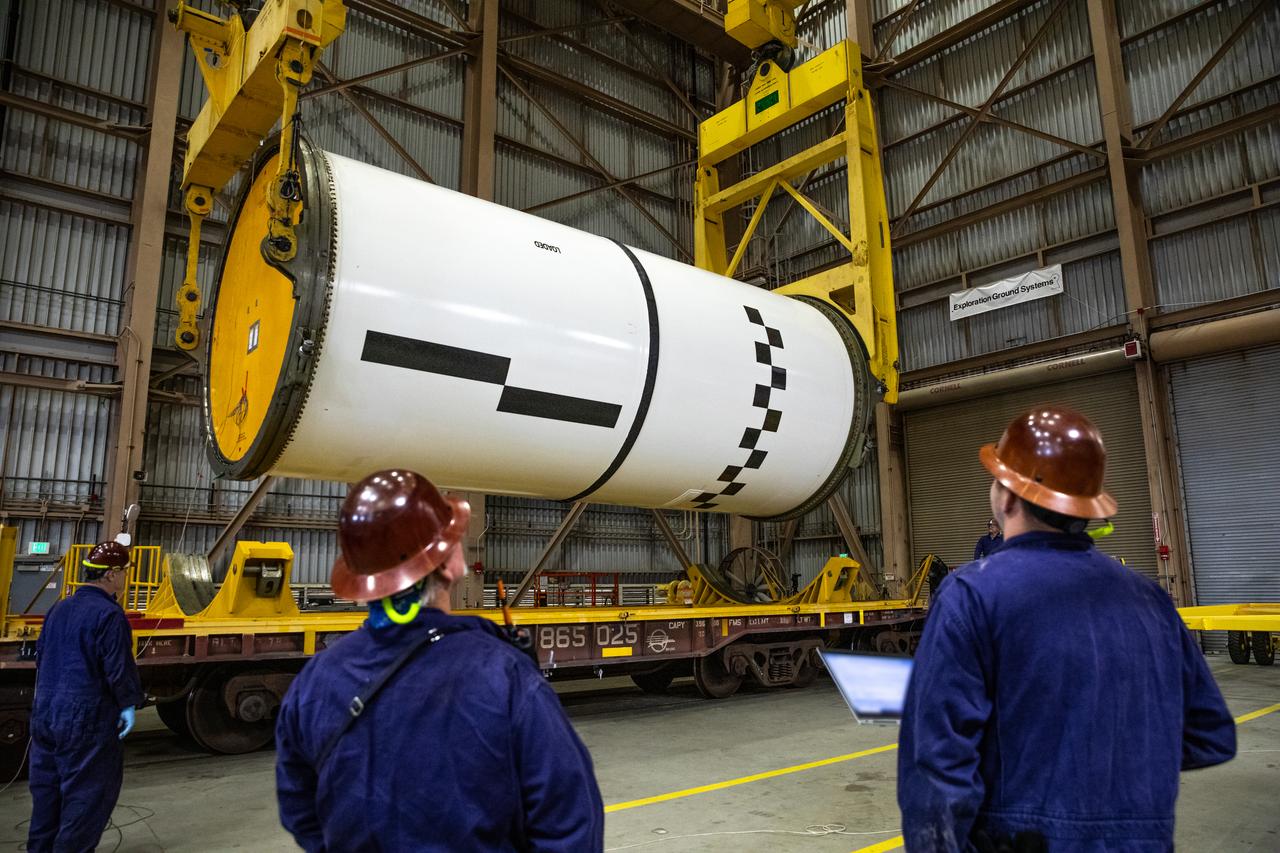
Engineers and technicians process the right forward center segment of the Space Launch System solid rocket boosters for the Artemis II mission inside the Rotation, Processing and Surge Facility (RPSF) at NASA’s Kennedy Space Center in Florida on Tuesday, Nov. 27, 2023. The team has been examining the 10 booster segments one-by-one then lifting them to make sure they are ready for integration and launch before moving them to the Vehicle Assembly Building for stacking atop the mobile launcher. Artemis II astronauts Reid Wiseman, Victor Glover, Christina Koch, and Jeremy Hansen will blast off from Kennedy and travel around the moon for the agency’s first crewed mission under Artemis that will test all of the Orion spacecraft’s systems.
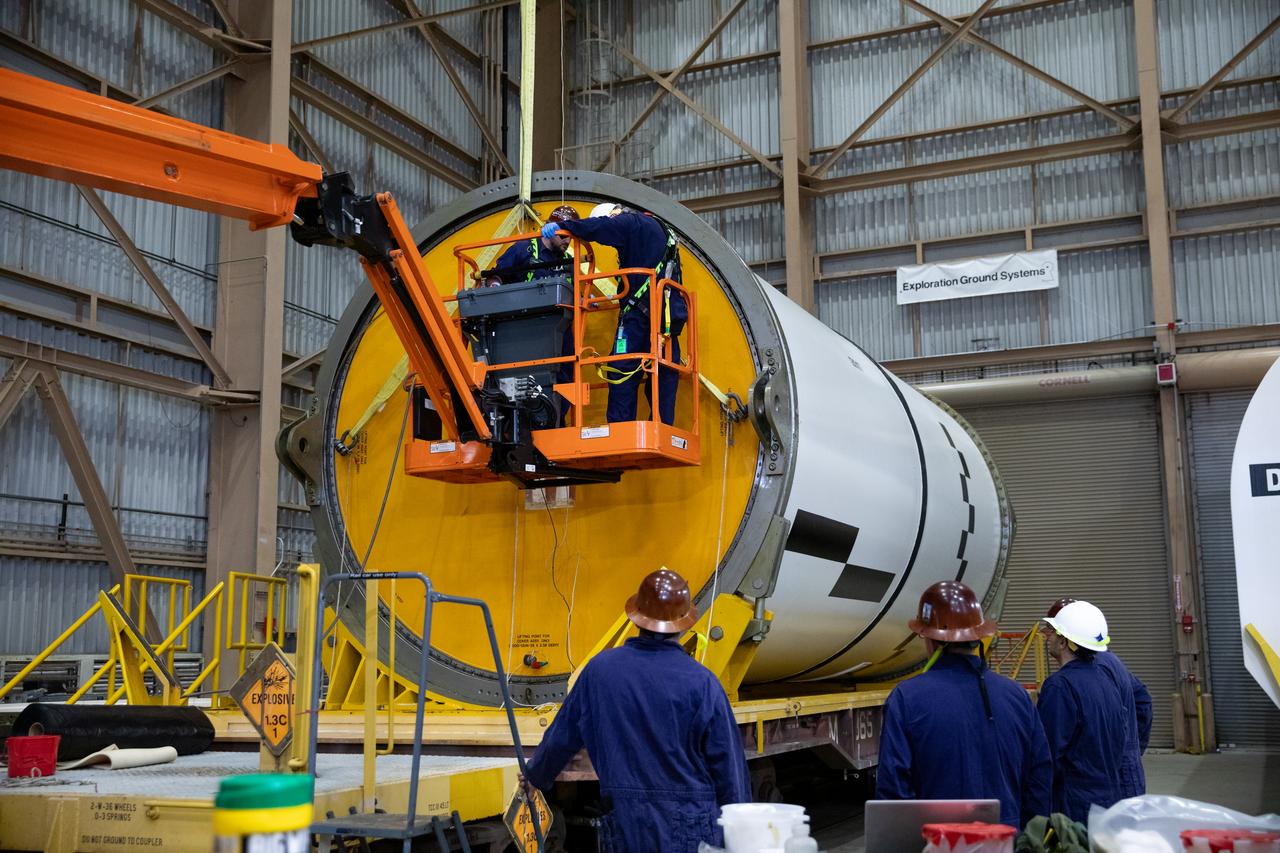
Engineers and technicians process the right forward center segment of the Space Launch System solid rocket boosters for the Artemis II mission inside the Rotation, Processing and Surge Facility (RPSF) at NASA’s Kennedy Space Center in Florida by removing the yellow cap and inspecting propellant on Monday, Nov. 27, 2023. Since arriving via rail in September, the team has been examining each segment one-by-one to make sure they are ready for integration and launch before being moved to the Vehicle Assembly Building for stacking atop the mobile launcher. Artemis II astronauts Reid Wiseman, Victor Glover, Christina Koch, and Jeremy Hansen will blast off from Kennedy and travel around the moon for the agency’s first crewed mission under Artemis that will test all of the Orion spacecraft’s systems.
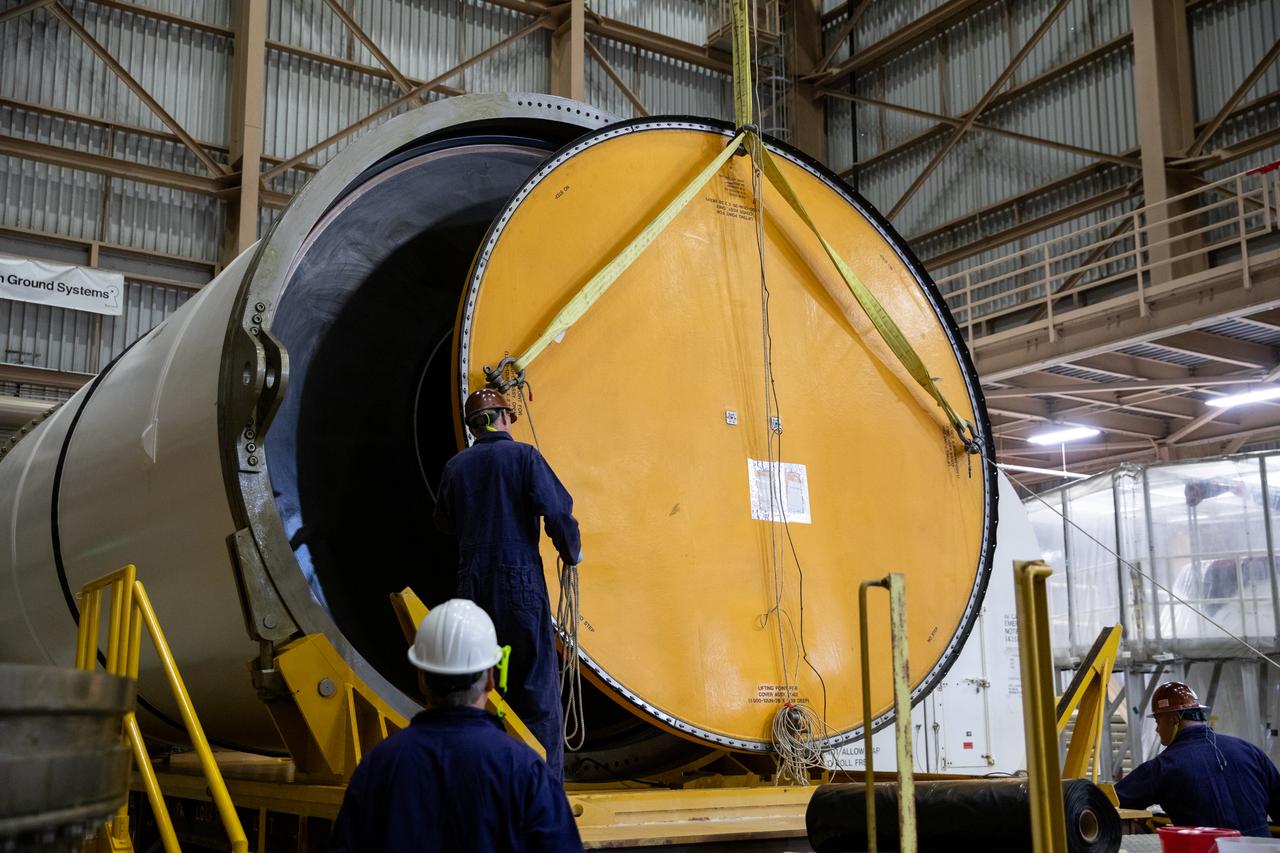
Engineers and technicians process the right forward center segment of the Space Launch System solid rocket boosters for the Artemis II mission inside the Rotation, Processing and Surge Facility (RPSF) at NASA’s Kennedy Space Center in Florida by removing the yellow cap and inspecting propellant on Monday, Nov. 27, 2023. Since arriving via rail in September, the team has been examining each segment one-by-one to make sure they are ready for integration and launch before being moved to the Vehicle Assembly Building for stacking atop the mobile launcher. Artemis II astronauts Reid Wiseman, Victor Glover, Christina Koch, and Jeremy Hansen will blast off from Kennedy and travel around the moon for the agency’s first crewed mission under Artemis that will test all of the Orion spacecraft’s systems.
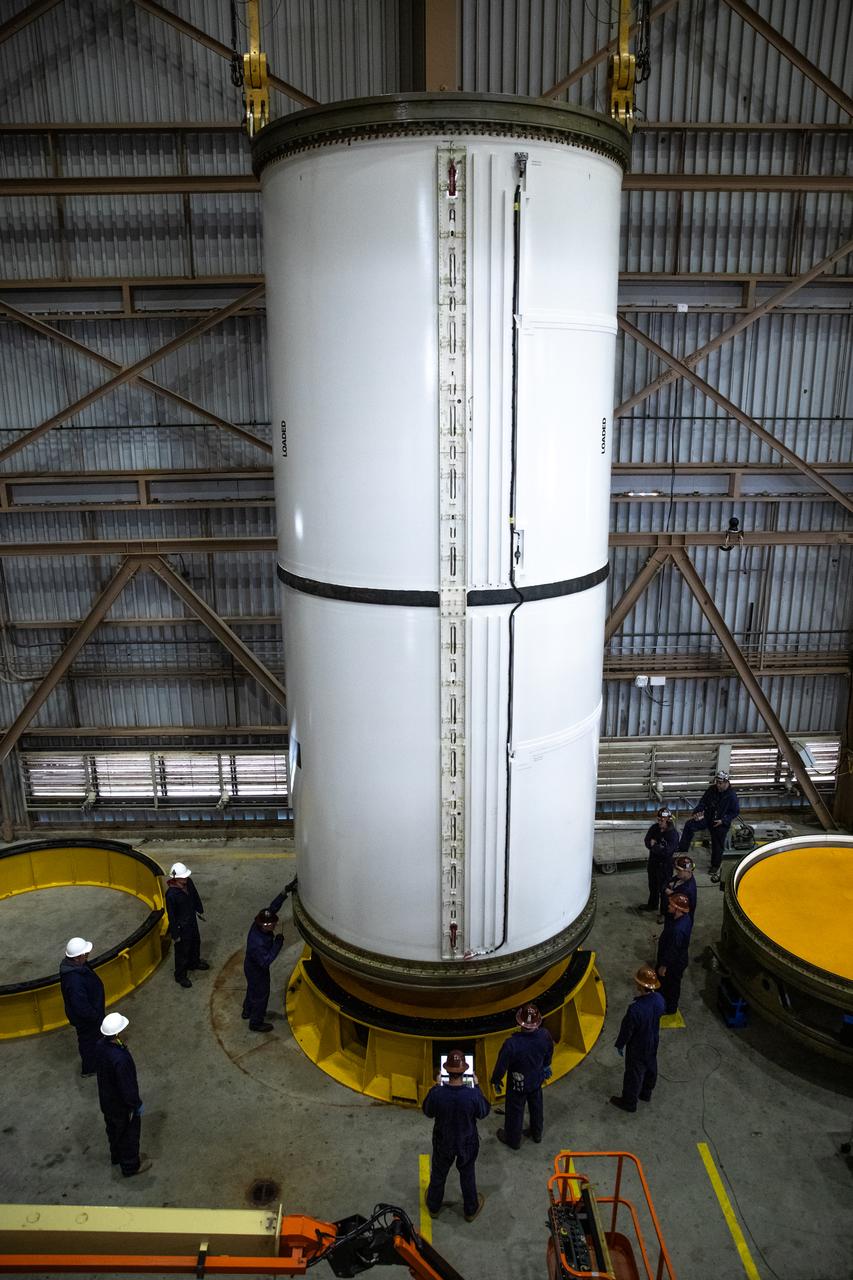
Engineers and technicians process the right forward center segment of the Space Launch System solid rocket boosters for the Artemis II mission inside the Rotation, Processing and Surge Facility (RPSF) at NASA’s Kennedy Space Center in Florida on Tuesday, Nov. 27, 2023. The team has been examining the 10 booster segments one-by-one then lifting them to make sure they are ready for integration and launch before moving them to the Vehicle Assembly Building for stacking atop the mobile launcher. Artemis II astronauts Reid Wiseman, Victor Glover, Christina Koch, and Jeremy Hansen will blast off from Kennedy and travel around the moon for the agency’s first crewed mission under Artemis that will test all of the Orion spacecraft’s systems.
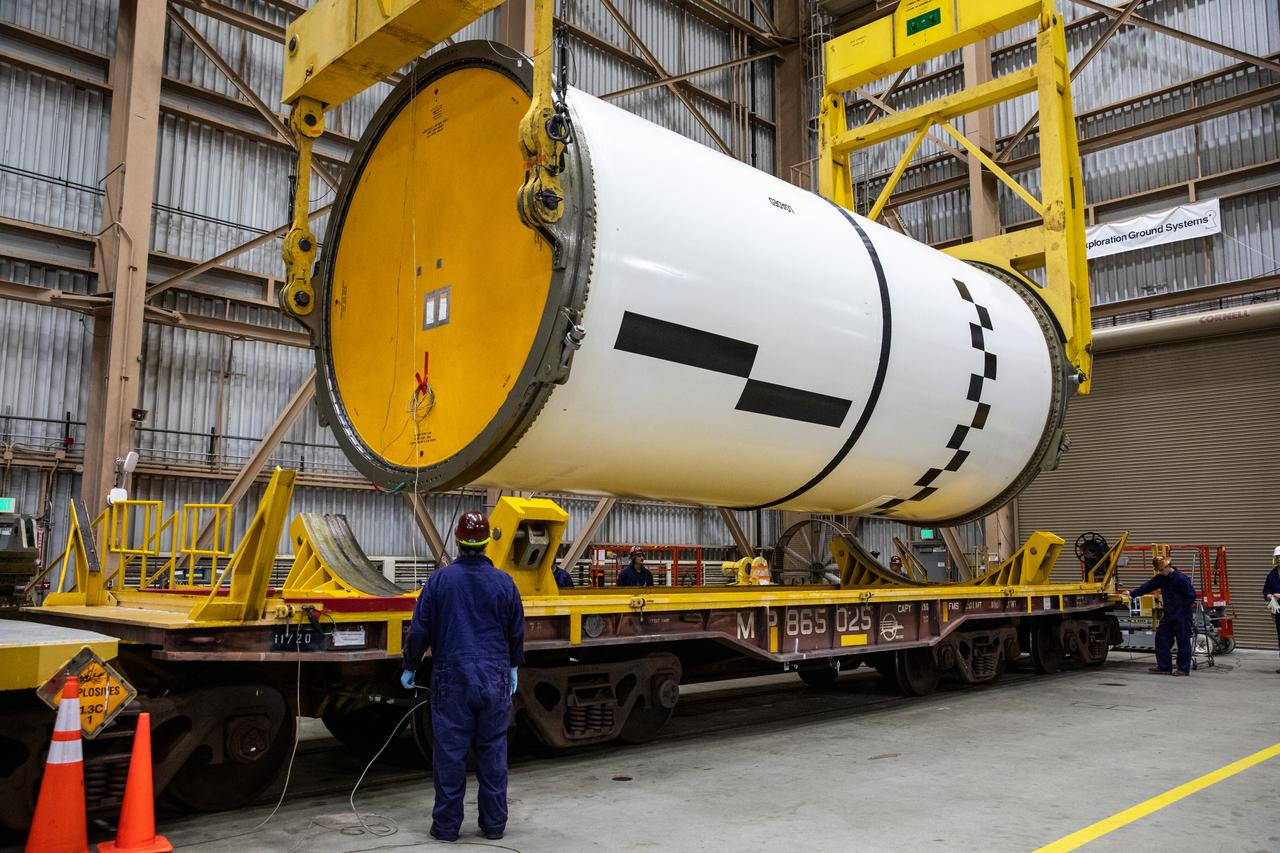
Engineers and technicians process the right forward center segment of the Space Launch System solid rocket boosters for the Artemis II mission inside the Rotation, Processing and Surge Facility (RPSF) at NASA’s Kennedy Space Center in Florida on Tuesday, Nov. 27, 2023. The team has been examining the 10 booster segments one-by-one then lifting them to make sure they are ready for integration and launch before moving them to the Vehicle Assembly Building for stacking atop the mobile launcher. Artemis II astronauts Reid Wiseman, Victor Glover, Christina Koch, and Jeremy Hansen will blast off from Kennedy and travel around the moon for the agency’s first crewed mission under Artemis that will test all of the Orion spacecraft’s systems.
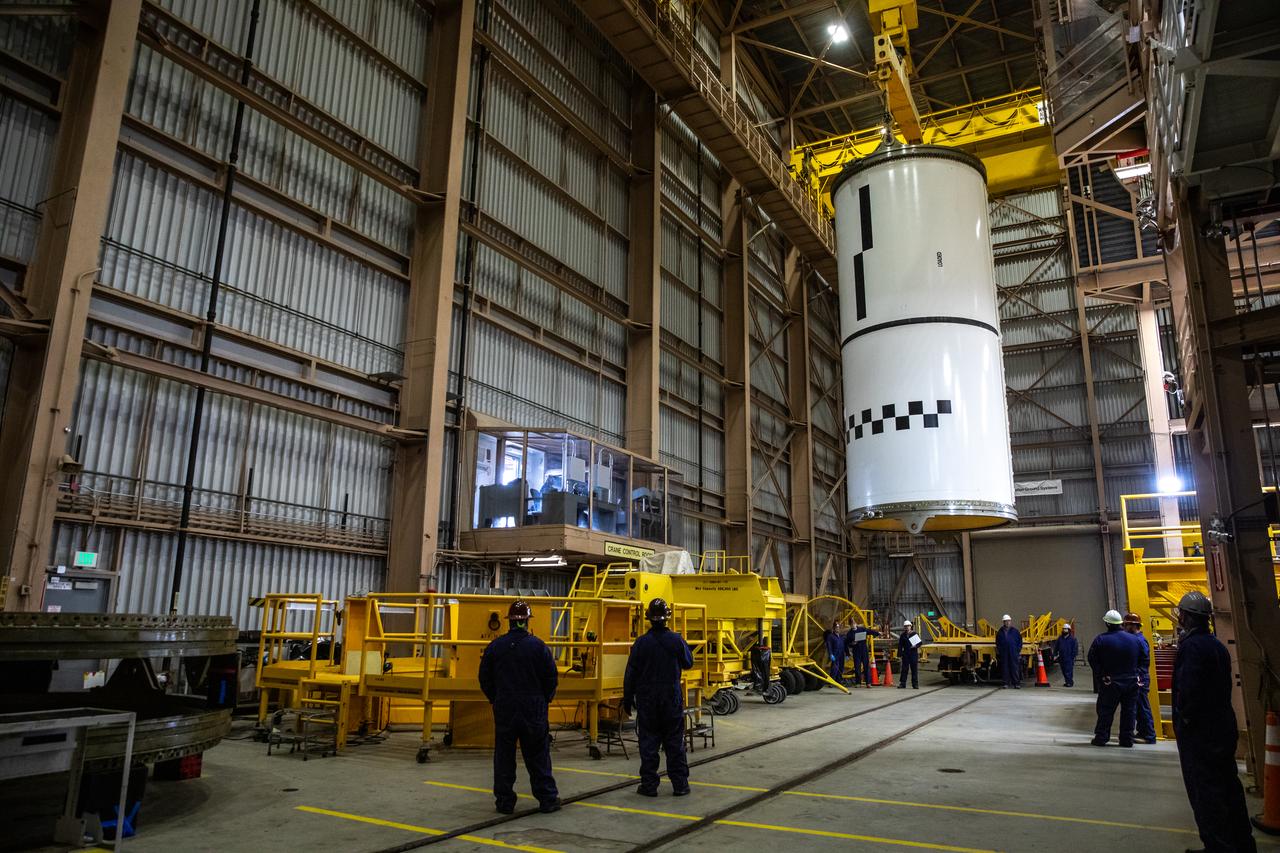
Engineers and technicians process the right forward center segment of the Space Launch System solid rocket boosters for the Artemis II mission inside the Rotation, Processing and Surge Facility (RPSF) at NASA’s Kennedy Space Center in Florida on Tuesday, Nov. 27, 2023. The team has been examining the 10 booster segments one-by-one then lifting them to make sure they are ready for integration and launch before moving them to the Vehicle Assembly Building for stacking atop the mobile launcher. Artemis II astronauts Reid Wiseman, Victor Glover, Christina Koch, and Jeremy Hansen will blast off from Kennedy and travel around the moon for the agency’s first crewed mission under Artemis that will test all of the Orion spacecraft’s systems.
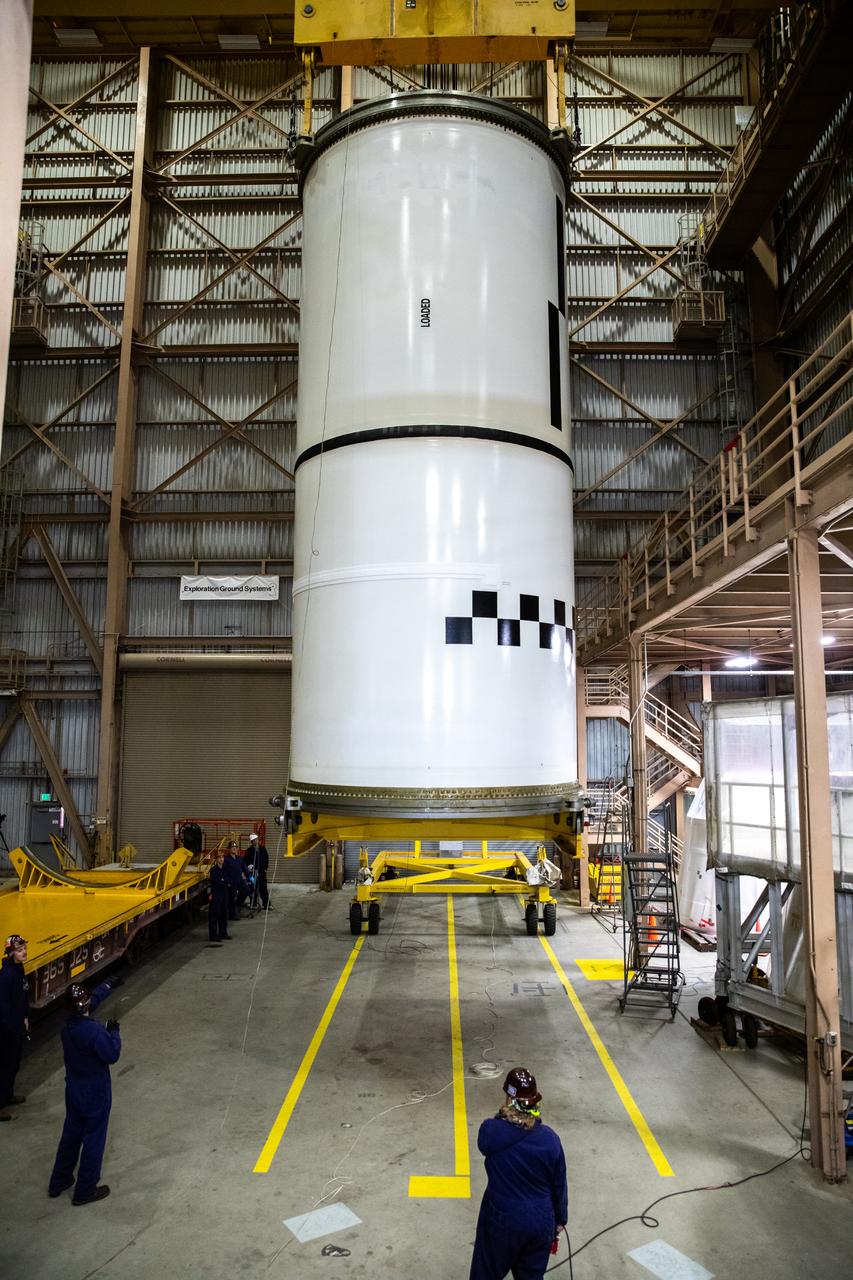
Engineers and technicians process the right forward center segment of the Space Launch System solid rocket boosters for the Artemis II mission inside the Rotation, Processing and Surge Facility (RPSF) at NASA’s Kennedy Space Center in Florida on Tuesday, Nov. 27, 2023. The team has been examining the 10 booster segments one-by-one then lifting them to make sure they are ready for integration and launch before moving them to the Vehicle Assembly Building for stacking atop the mobile launcher. Artemis II astronauts Reid Wiseman, Victor Glover, Christina Koch, and Jeremy Hansen will blast off from Kennedy and travel around the moon for the agency’s first crewed mission under Artemis that will test all of the Orion spacecraft’s systems.
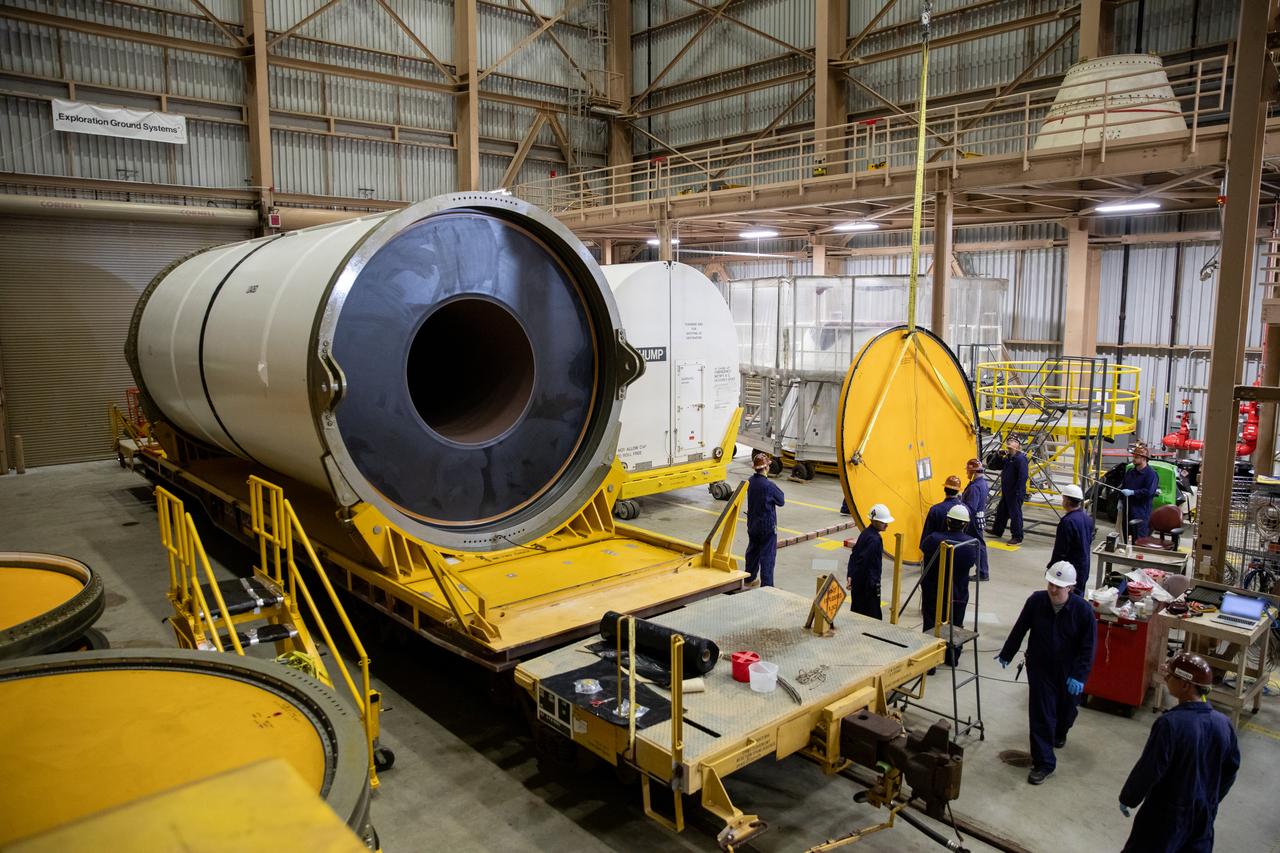
Engineers and technicians process and inspect the propellant of the right forward center segment of the Space Launch System solid rocket boosters for the Artemis II mission inside the Rotation, Processing and Surge Facility (RPSF) at NASA’s Kennedy Space Center in Florida on Monday, Nov. 27, 2023. Since arriving via rail in September, the team has been examining each segment one-by-one to make sure they are ready for integration and launch before being moved to the Vehicle Assembly Building for stacking atop the mobile launcher. Artemis II astronauts Reid Wiseman, Victor Glover, Christina Koch, and Jeremy Hansen will blast off from Kennedy and travel around the moon for the agency’s first crewed mission under Artemis that will test all of the Orion spacecraft’s systems.
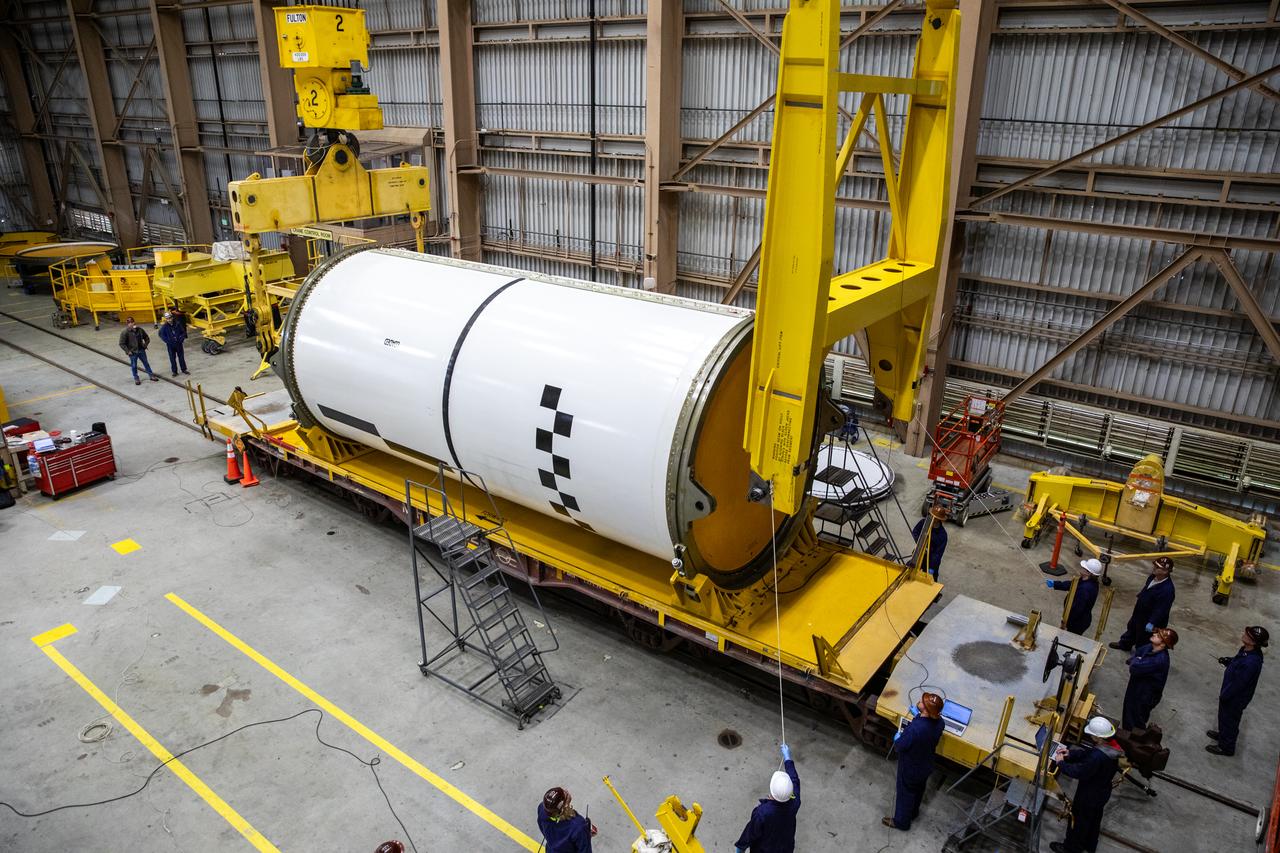
Engineers and technicians process the right forward center segment of the Space Launch System solid rocket boosters for the Artemis II mission inside the Rotation, Processing and Surge Facility (RPSF) at NASA’s Kennedy Space Center in Florida on Tuesday, Nov. 27, 2023. The team has been examining the 10 booster segments one-by-one then lifting them to make sure they are ready for integration and launch before moving them to the Vehicle Assembly Building for stacking atop the mobile launcher. Artemis II astronauts Reid Wiseman, Victor Glover, Christina Koch, and Jeremy Hansen will blast off from Kennedy and travel around the moon for the agency’s first crewed mission under Artemis that will test all of the Orion spacecraft’s systems.
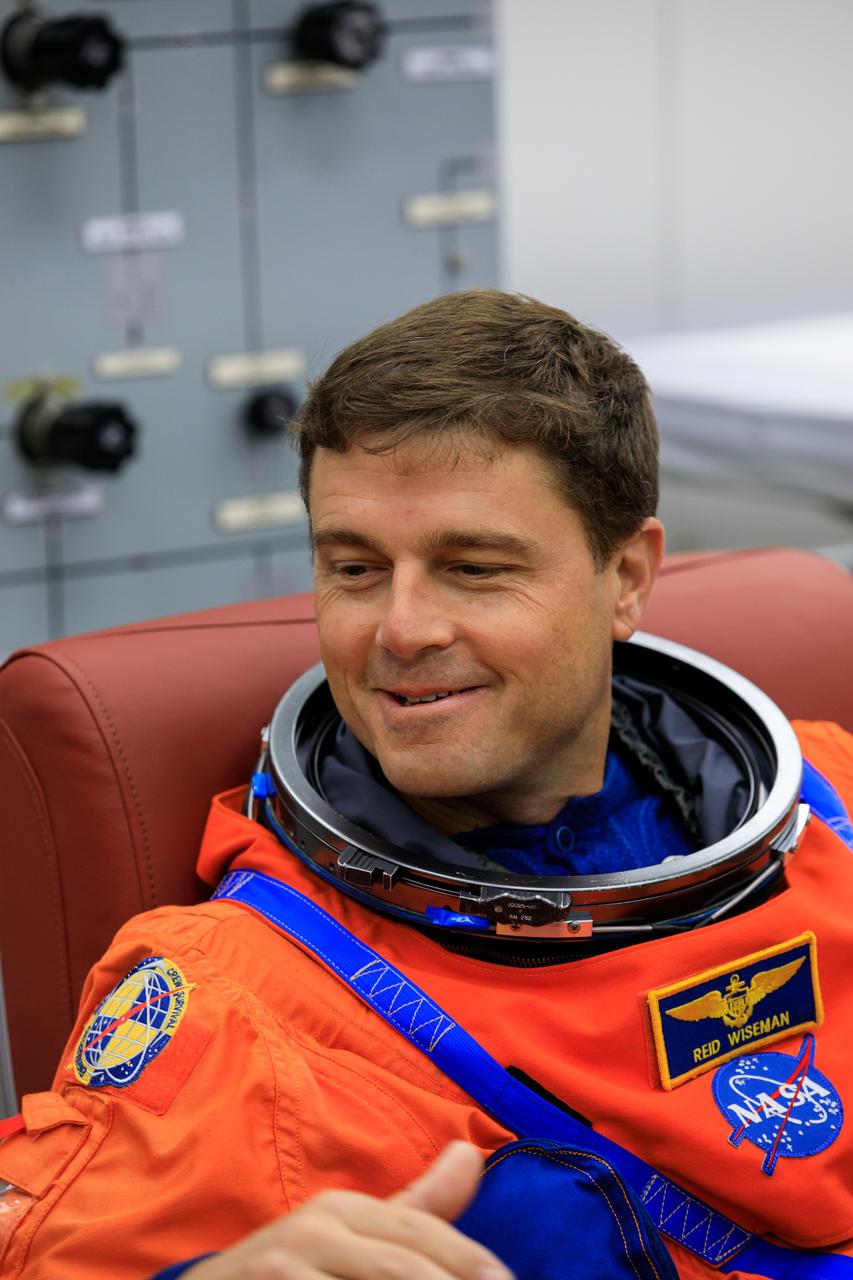
Inside the Astronaut Crew Quarters at the Neil Armstrong Operations and Checkout Building at NASA’s Kennedy Space Center in Florida, Artemis II crew member NASA astronaut Reid Wiseman is shown wearing a test version of the Orion crew survival system spacesuits the crew will wear on launch day as part of an integrated ground systems test on Wednesday, Sept. 20.
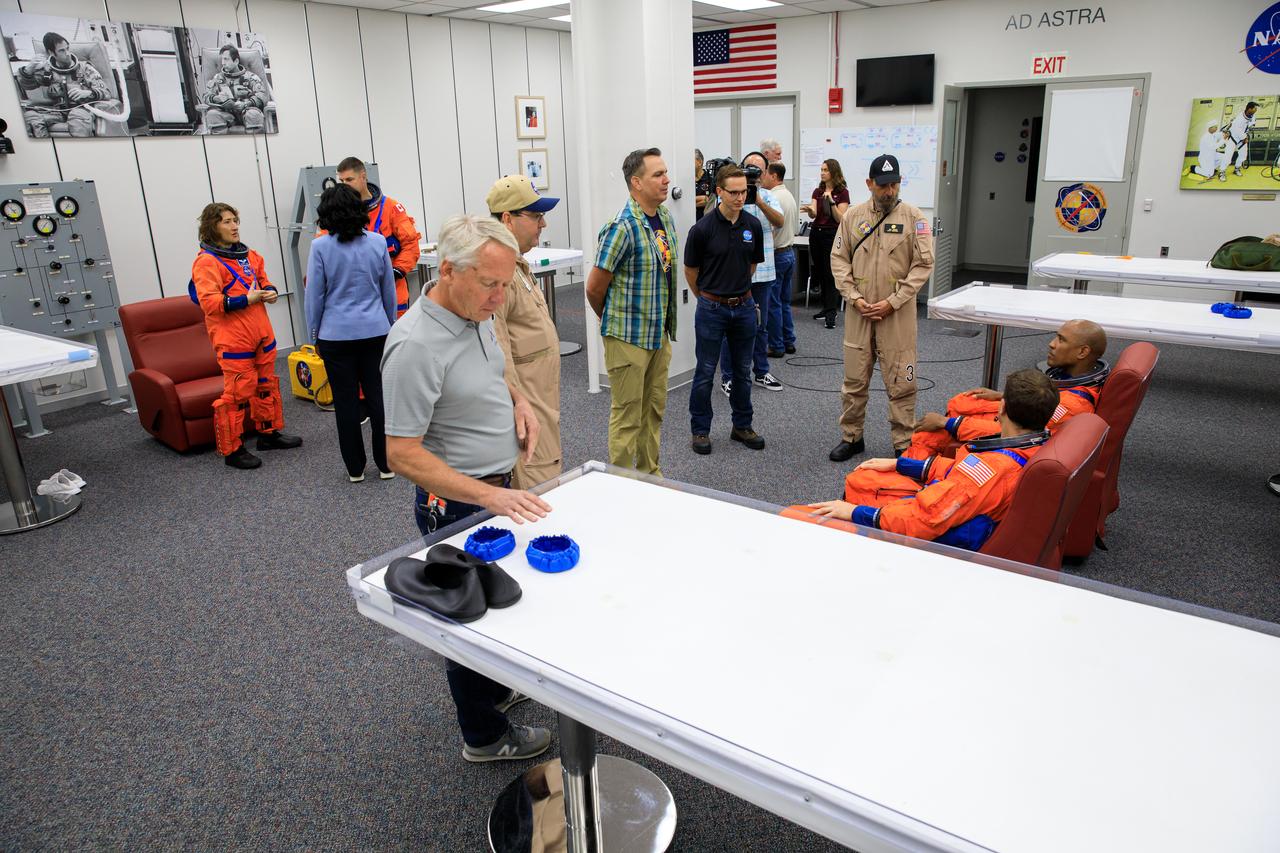
Inside the Astronaut Crew Quarters at the Neil Armstrong Operations and Checkout Building at NASA’s Kennedy Space Center in Florida, Artemis II crew members NASA astronauts Reid Wiseman, Victor Glover, and Christina Koch, and CSA (Canadian Space Agency) astronaut Jeremy Hansen are shown wearing test versions of the Orion crew survival system spacesuits they will wear on launch day as part of an integrated ground systems test on Wednesday, Sept. 20.
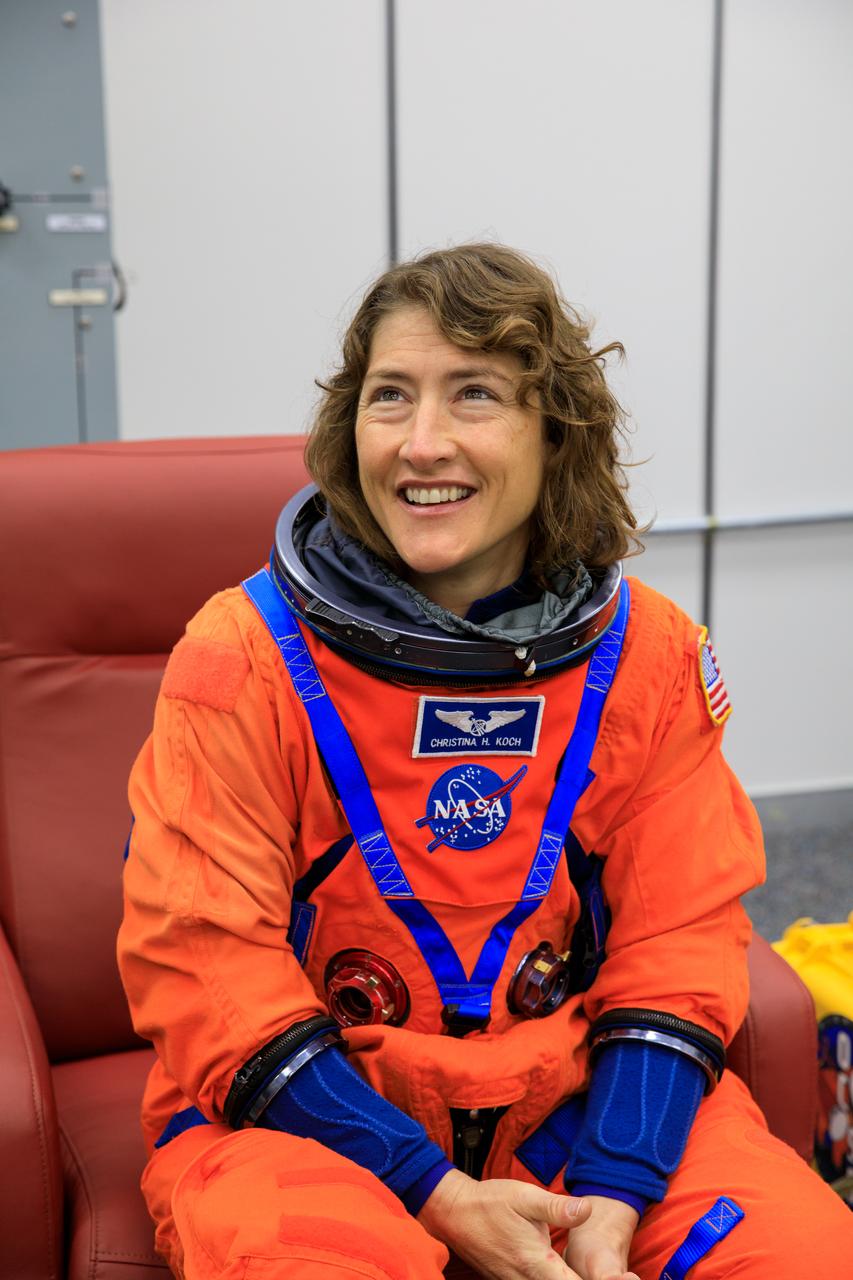
Inside the Astronaut Crew Quarters at the Neil Armstrong Operations and Checkout Building at NASA’s Kennedy Space Center in Florida, Artemis II crew member NASA astronaut Christina Koch is shown wearing a test version of the Orion crew survival system spacesuits the crew will wear on launch day as part of an integrated ground systems test on Wednesday, Sept. 20.
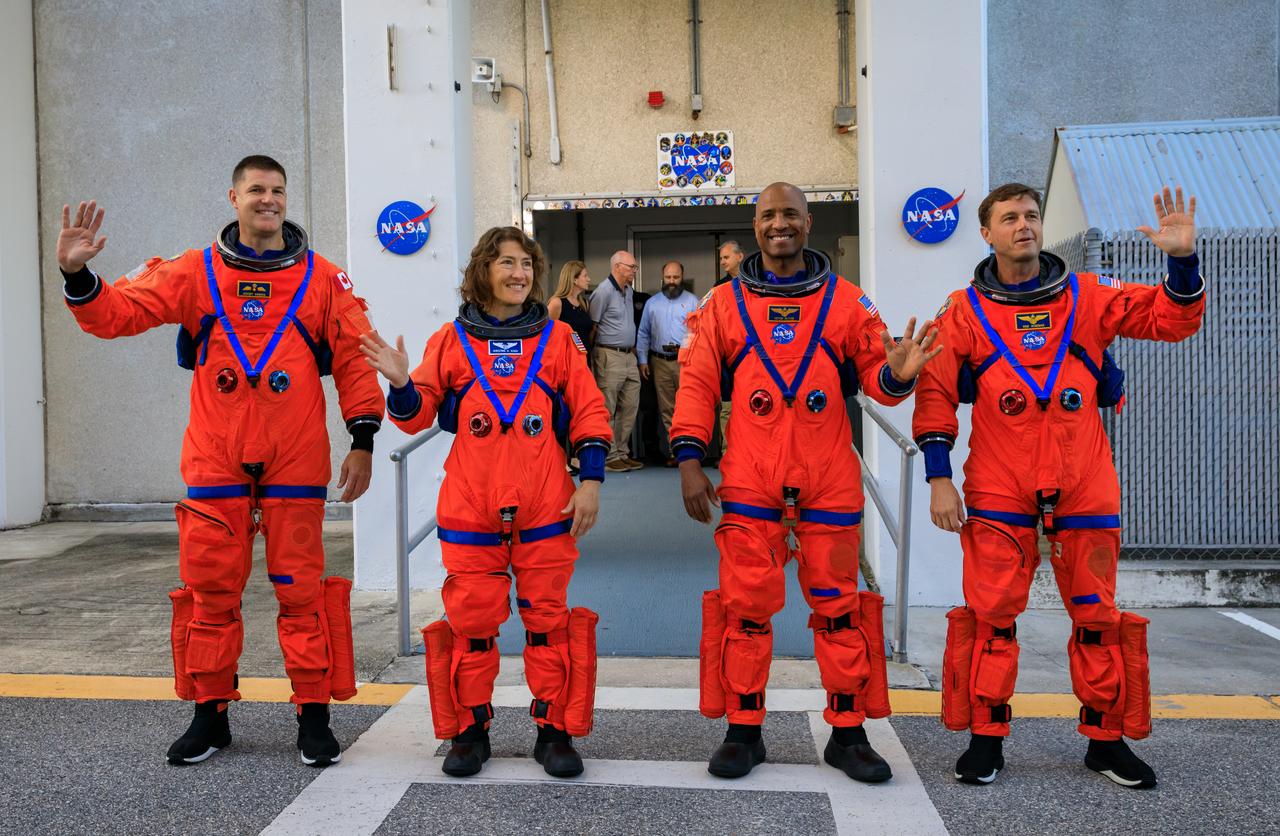
Artemis II crew members (from left) CSA (Canadian Space Agency) astronaut Jeremy Hansen, and NASA astronauts Christina Koch, Victor Glover, and Reid Wiseman walk out of Astronaut Crew Quarters inside the Neil Armstrong Operations and Checkout Building to the Artemis crew transportation vehicles prior to traveling to Launch Pad 39B as part of an integrated ground systems test at Kennedy Space Center in Florida on Wednesday, Sept. 20, to test the crew timeline for launch day.
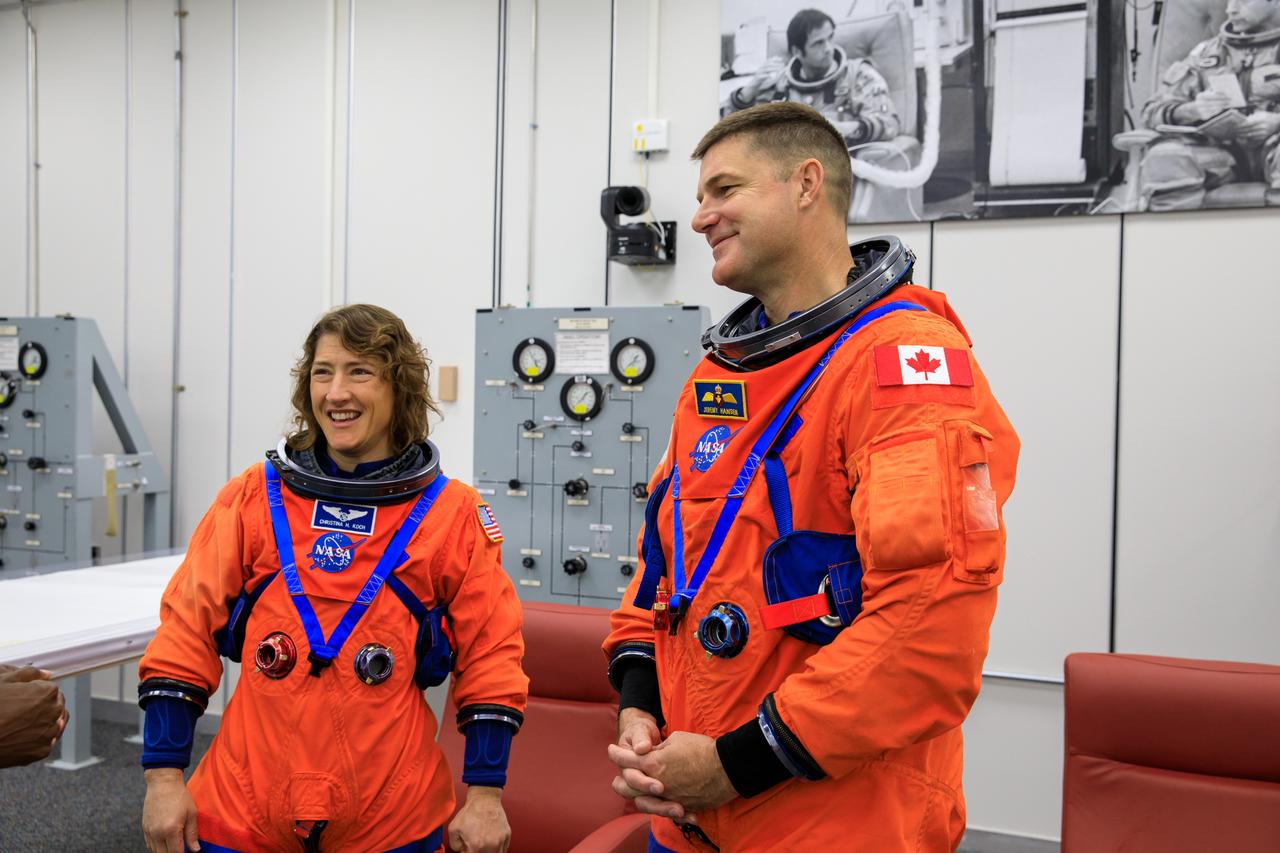
Inside the Astronaut Crew Quarters at the Neil Armstrong Operations and Checkout Building at NASA’s Kennedy Space Center in Florida, Artemis II crew members NASA astronaut Christina Koch (left) and CSA (Canadian Space Agency) astronaut Jeremy Hansen are shown wearing test versions of the Orion crew survival system spacesuits they will wear on launch day as part of an integrated ground systems test on Wednesday, Sept. 20.
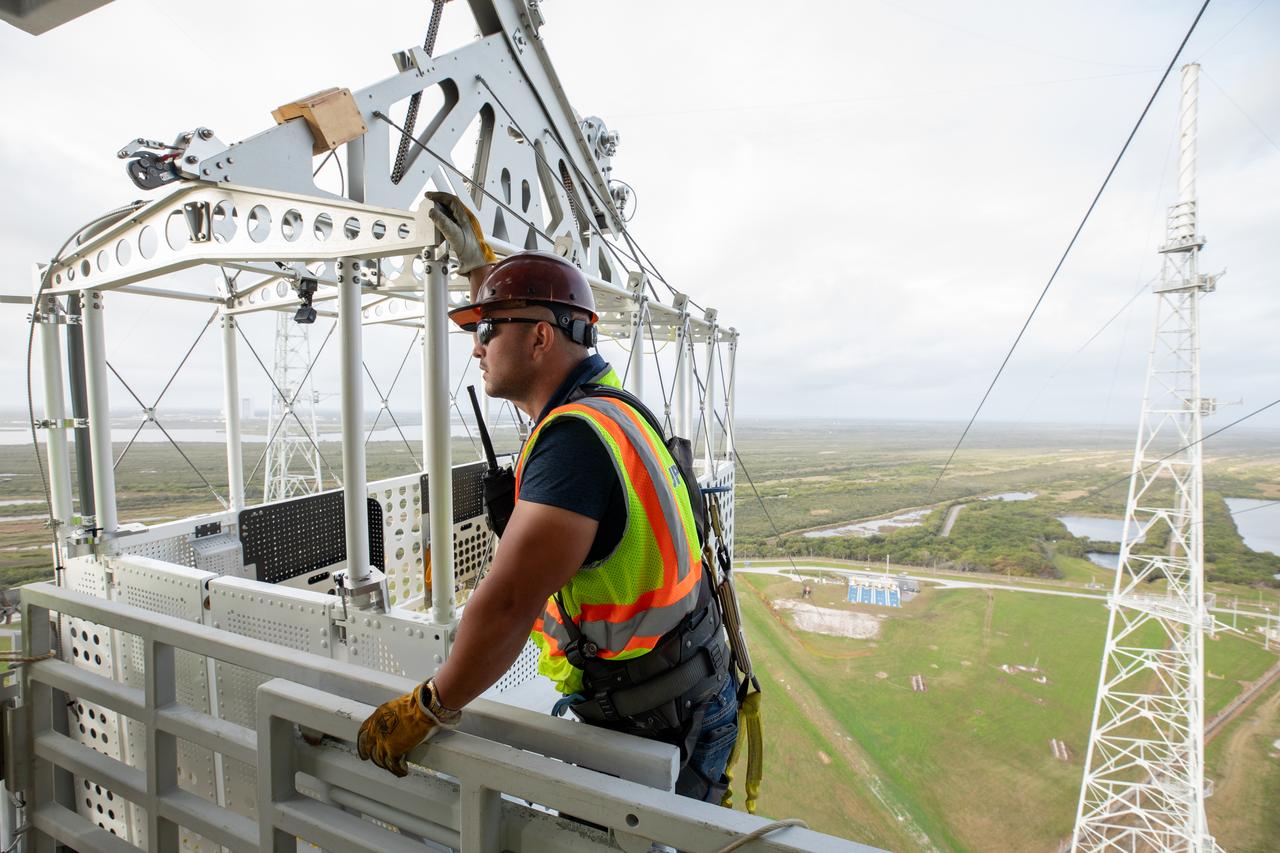
Teams with NASA’s Exploration Ground Systems Program, in preparation for the agency’s Artemis II crewed mission to the Moon, begin installing the first of four emergency egress baskets on the mobile launcher at Launch Complex 39B at the agency’s Kennedy Space Center in Florida on Wednesday, Jan. 24, 2024. The baskets, similar to gondolas on ski lifts, are used in the case of a pad abort emergency to enable astronauts and other pad personnel a way to quickly escape away from the mobile launcher to the base of the pad and where waiting emergency transport vehicles will then drive them away.
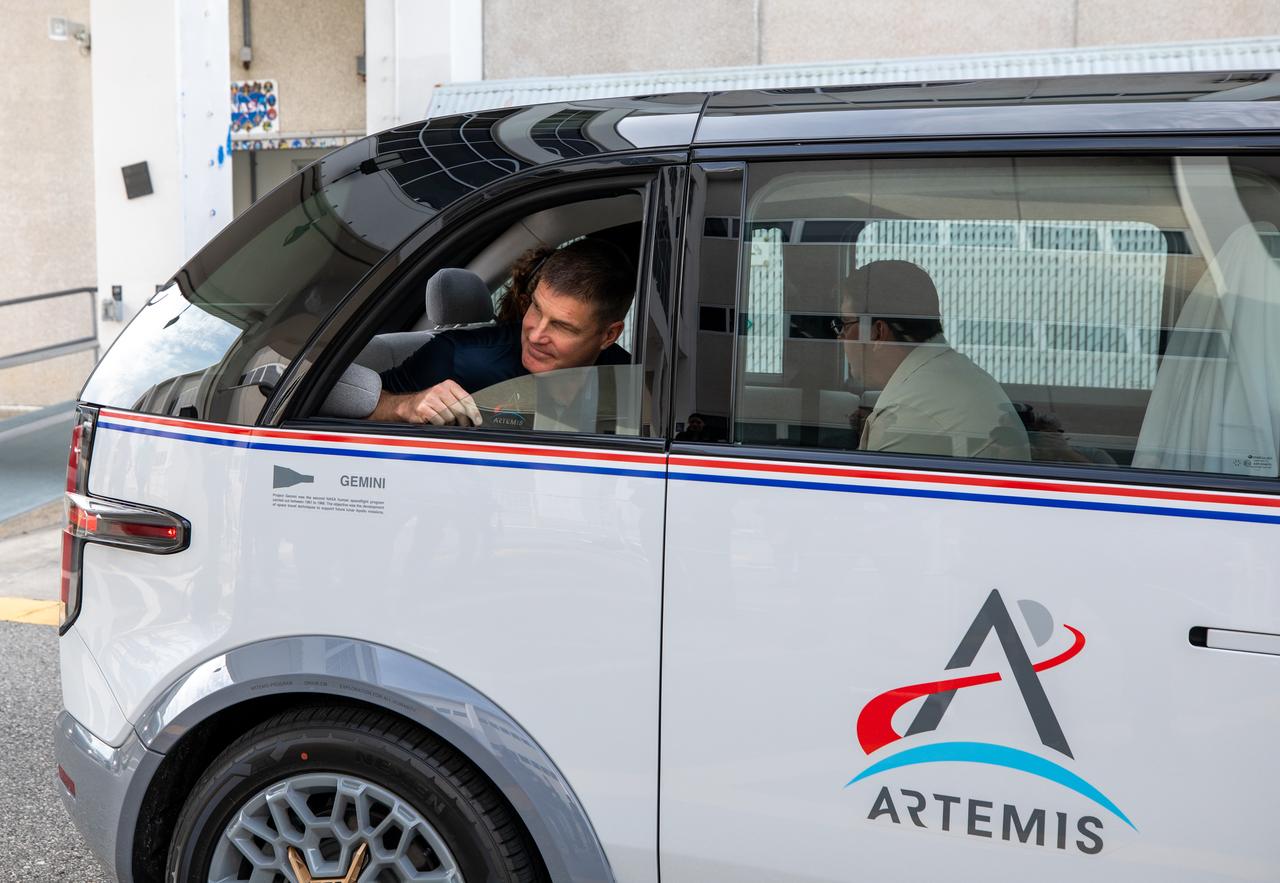
NASA astronaut Jeremy Hansen, left, sits inside one of the crew transport vehicles (CTVs) outside of the Neil A. Armstrong Operations and Checkout Building at Kennedy Space Center in Florida on Tuesday, Sept. 19, 2023. The CTVs will carry Hansen, along with fellow NASA astronauts Christina Koch, Reid Wiseman, and Victor Glover, to Kennedy’s Launch Complex 39B for liftoff of the Artemis II mission. The specially designed, fully electric, environmentally friendly vehicles were manufactured by Canoo Technologies, Inc. of Torrance California.
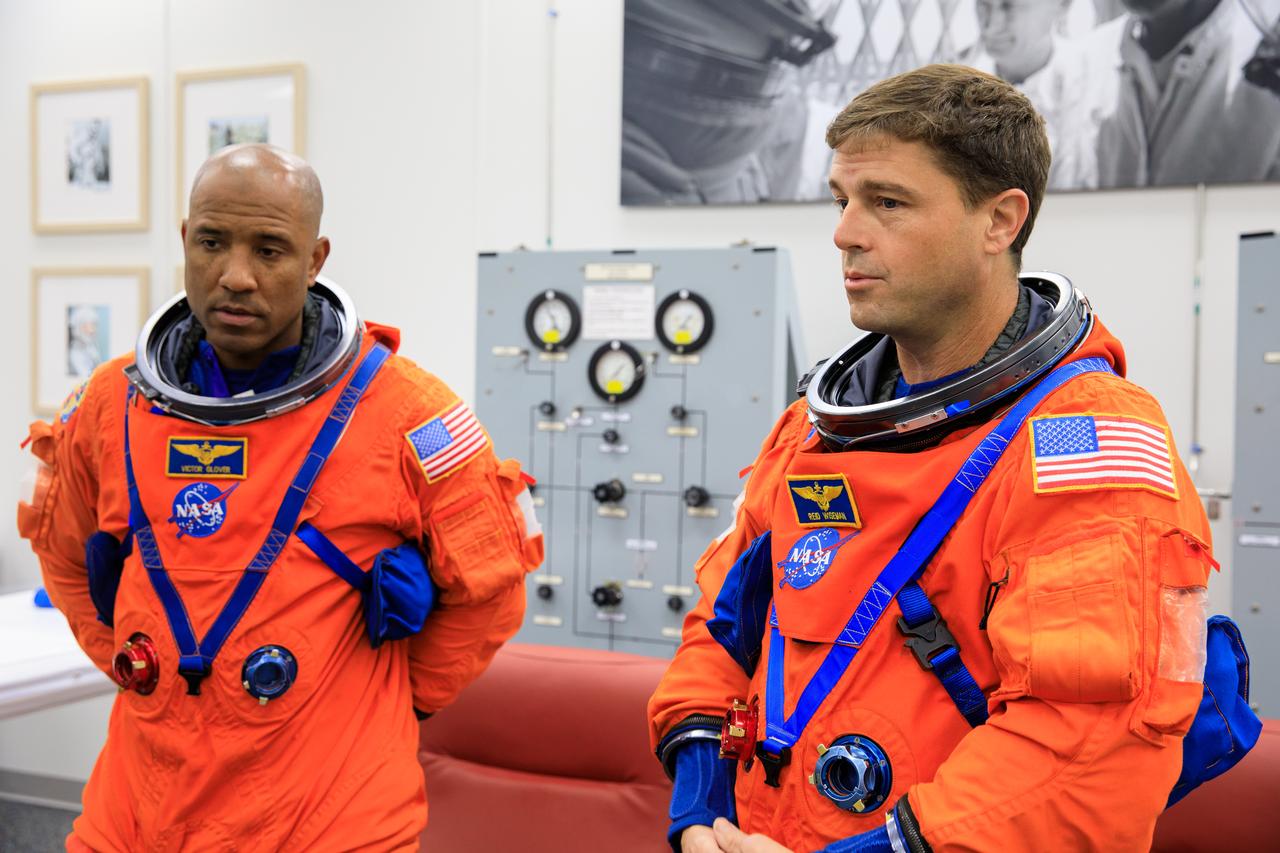
Inside the Astronaut Crew Quarters at the Neil Armstrong Operations and Checkout Building at NASA’s Kennedy Space Center in Florida, Artemis II crew members NASA astronauts Victor Glover (left) and Reid Wiseman are shown wearing test versions of the Orion crew survival system spacesuits they will wear on launch day as part of an integrated ground systems test on Wednesday, Sept. 20.
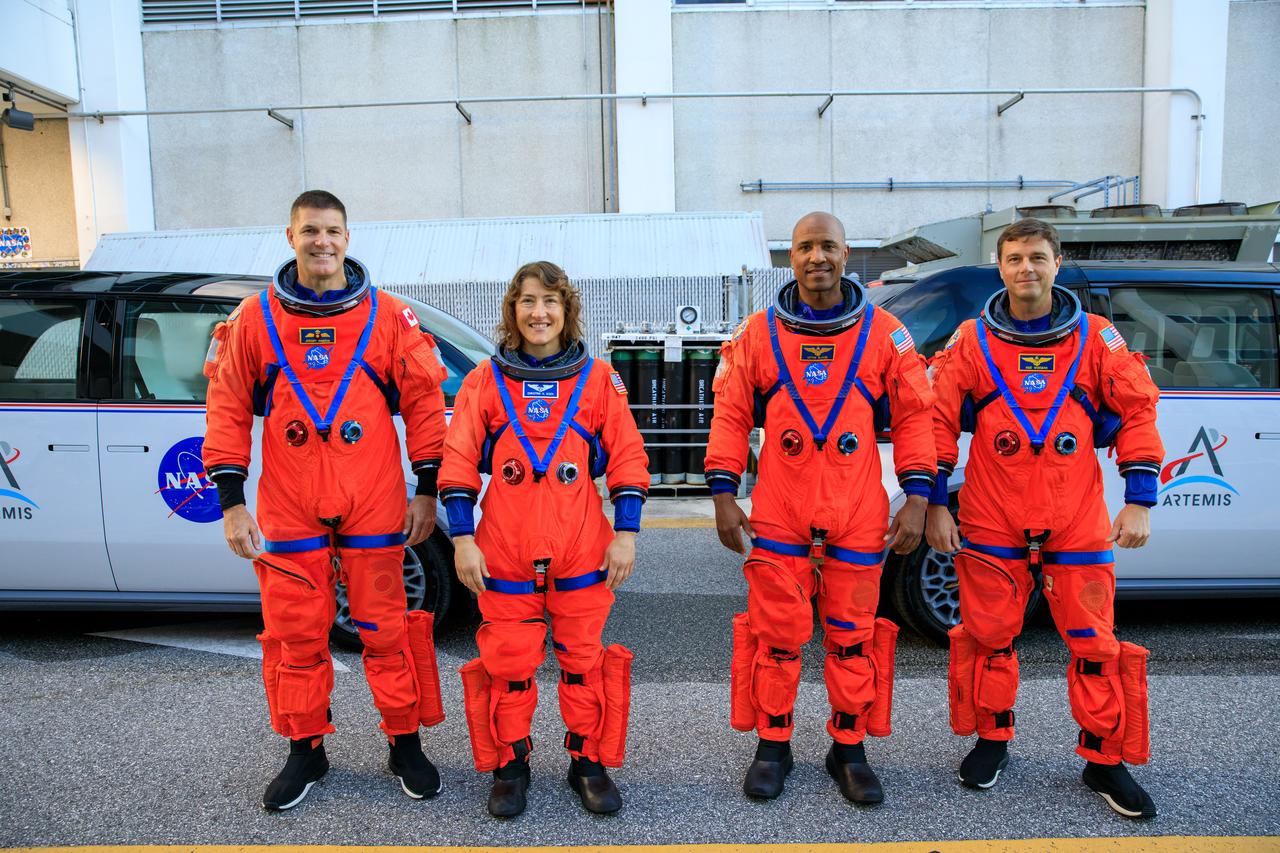
Artemis II crew members (from left) CSA (Canadian Space Agency) astronaut Jeremy Hansen, and NASA astronauts Christina Koch, Victor Glover, and Reid Wiseman walk out of Astronaut Crew Quarters inside the Neil Armstrong Operations and Checkout Building to the Artemis crew transportation vehicles prior to traveling to Launch Pad 39B as part of an integrated ground systems test at Kennedy Space Center in Florida on Wednesday, Sept. 20, to test the crew timeline for launch day.
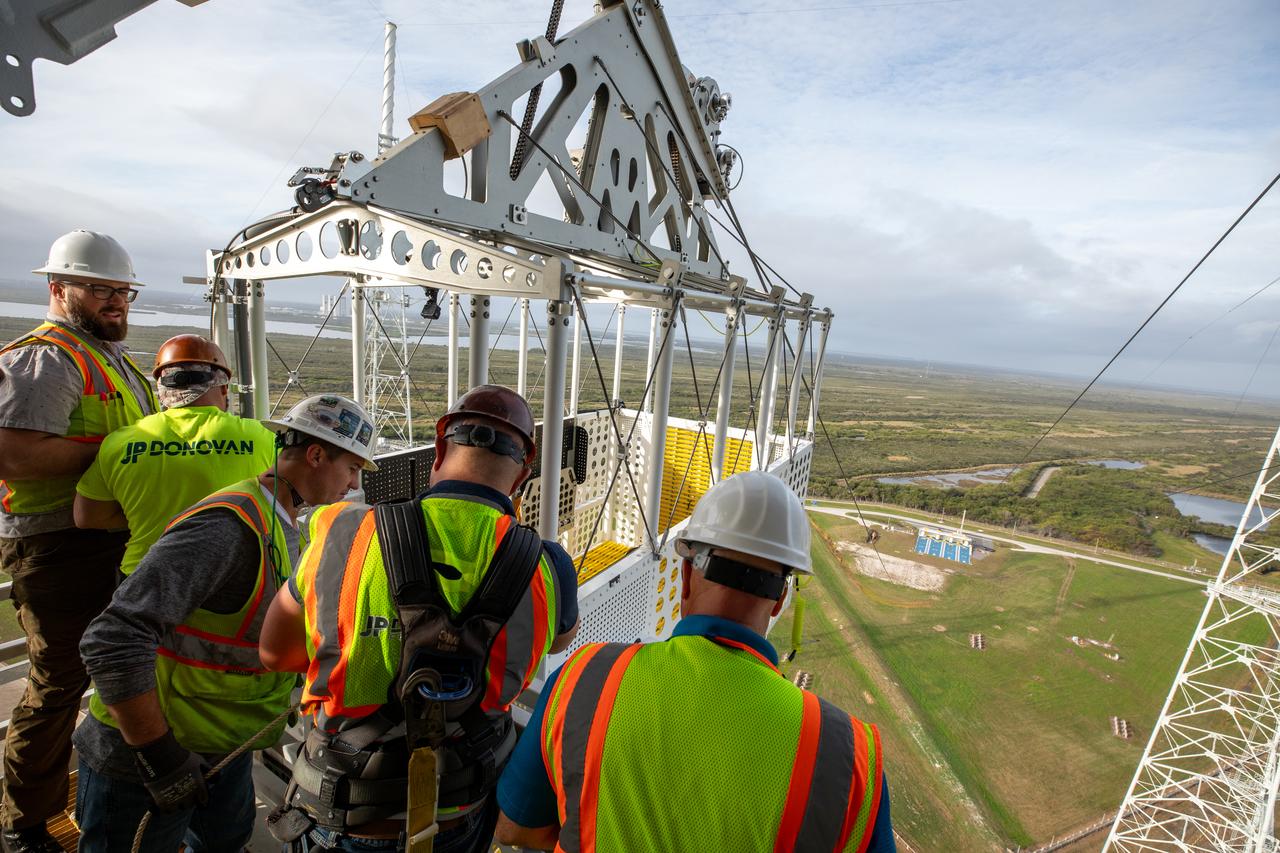
Teams with NASA’s Exploration Ground Systems Program, in preparation for the agency’s Artemis II crewed mission to the Moon, begin installing the first of four emergency egress baskets on the mobile launcher at Launch Complex 39B at the agency’s Kennedy Space Center in Florida on Wednesday, Jan. 24, 2024. The baskets, similar to gondolas on ski lifts, are used in the case of a pad abort emergency to enable astronauts and other pad personnel a way to quickly escape away from the mobile launcher to the base of the pad and where waiting emergency transport vehicles will then drive them away.
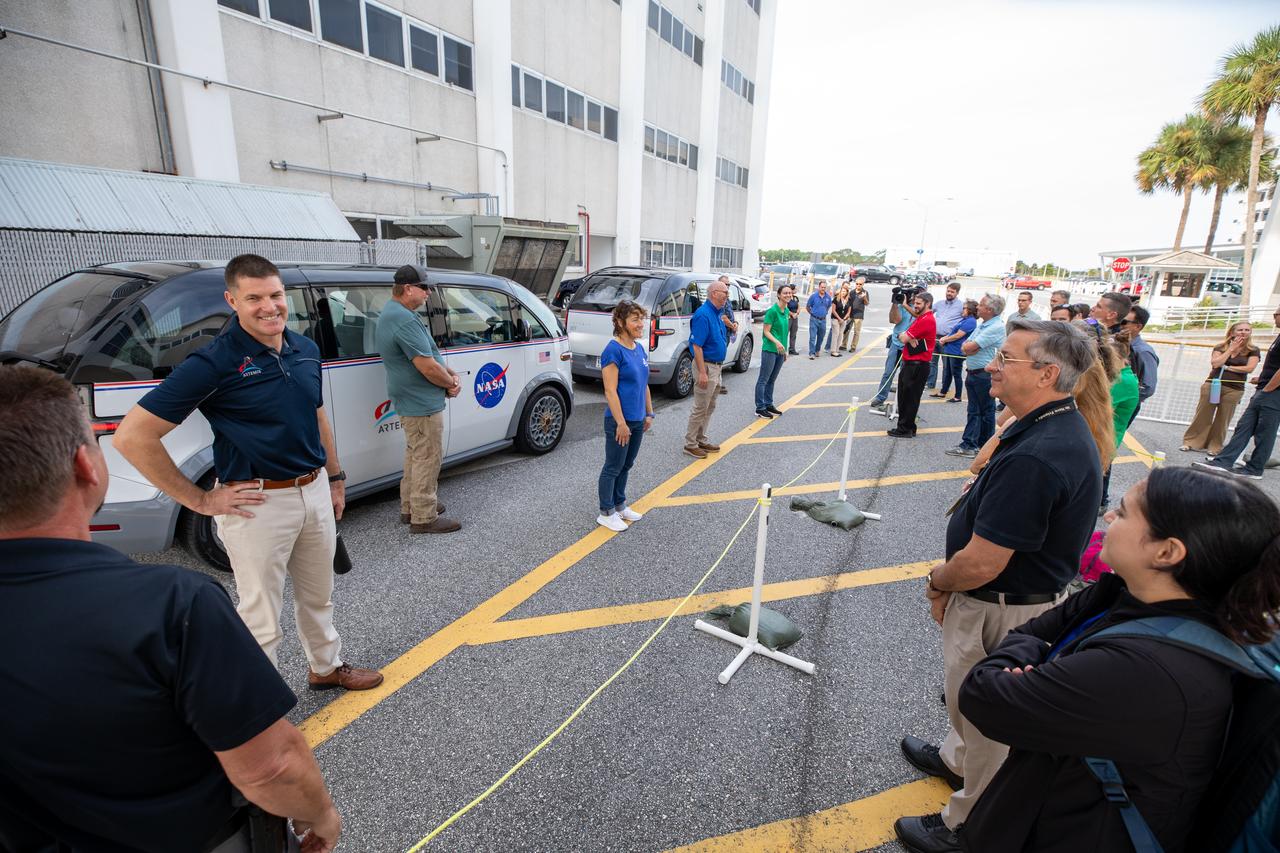
NASA astronauts Jeremy Hansen and Christina Koch view the crew transport vehicles (CTVs) outside of the Neil A. Armstrong Operations and Checkout Building at Kennedy Space Center in Florida on Tuesday, Sept. 19, 2023. The CTVs will carry them, along with fellow NASA astronauts Reid Wiseman and Victor Glover, to Kennedy’s Launch Complex 39B for liftoff of the Artemis II mission. The specially designed, fully electric, environmentally friendly vehicles were manufactured by Canoo Technologies, Inc. of Torrance California.
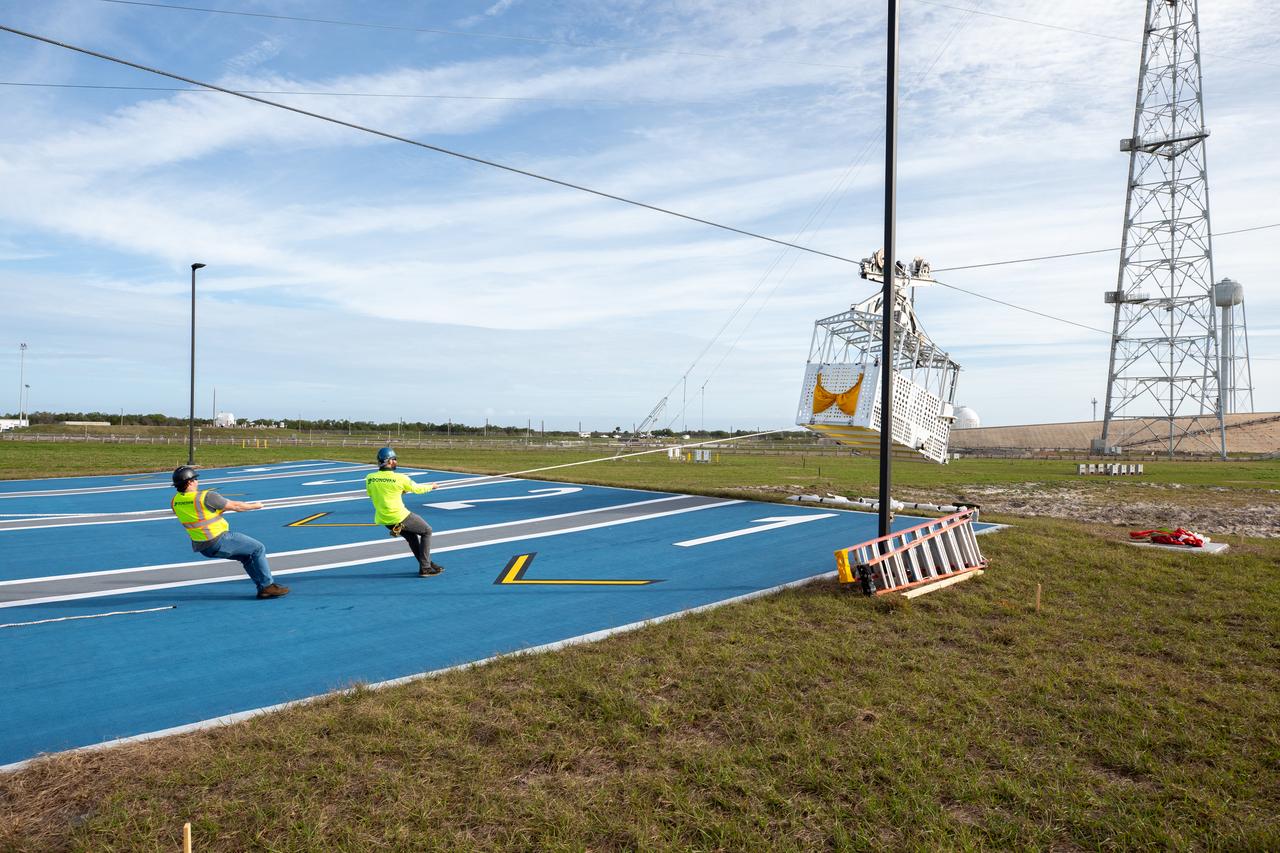
Teams with NASA’s Exploration Ground Systems Program, in preparation for the agency’s Artemis II crewed mission to the Moon, begin installing the first of four emergency egress baskets on the mobile launcher at Launch Complex 39B at the agency’s Kennedy Space Center in Florida on Wednesday, Jan. 24, 2024. The baskets, similar to gondolas on ski lifts, are used in the case of a pad abort emergency to enable astronauts and other pad personnel a way to quickly escape away from the mobile launcher to the base of the pad and where waiting emergency transport vehicles will then drive them away.
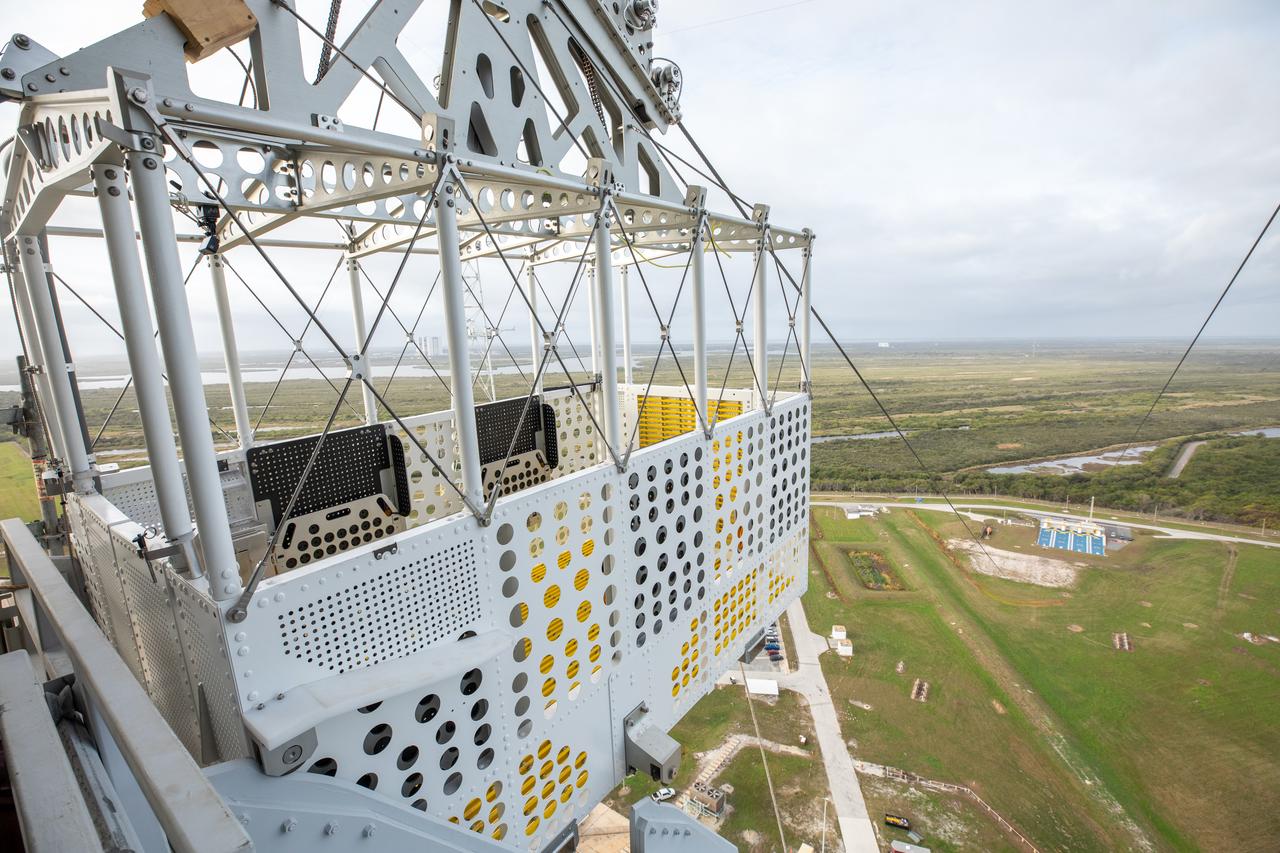
Teams with NASA’s Exploration Ground Systems Program, in preparation for the agency’s Artemis II crewed mission to the Moon, begin installing the first of four emergency egress baskets on the mobile launcher at Launch Complex 39B at the agency’s Kennedy Space Center in Florida on Wednesday, Jan. 24, 2024. The baskets, similar to gondolas on ski lifts, are used in the case of a pad abort emergency to enable astronauts and other pad personnel a way to quickly escape away from the mobile launcher to the base of the pad and where waiting emergency transport vehicles will then drive them away.
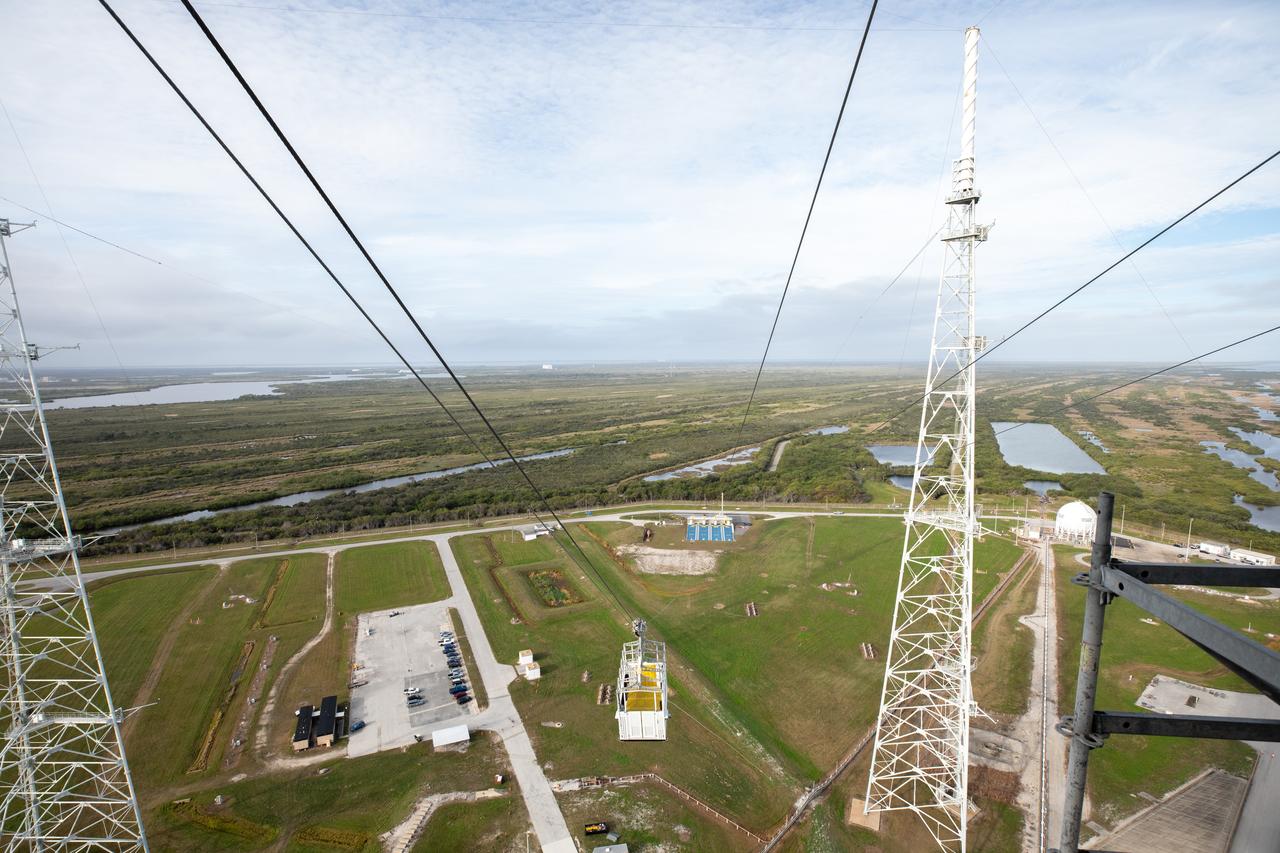
Teams with NASA’s Exploration Ground Systems Program, in preparation for the agency’s Artemis II crewed mission to the Moon, begin installing the first of four emergency egress baskets on the mobile launcher at Launch Complex 39B at the agency’s Kennedy Space Center in Florida on Wednesday, Jan. 24, 2024. The baskets, similar to gondolas on ski lifts, are used in the case of a pad abort emergency to enable astronauts and other pad personnel a way to quickly escape away from the mobile launcher to the base of the pad and where waiting emergency transport vehicles will then drive them away.

Artemis II NASA astronauts Reid Wiseman, Victor Glover, and Christina Koch, and CSA (Canadian Space Agency) astronaut Jeremy Hansen ride from Astronaut Crew Quarters in the Neil Armstrong Operations and Checkout Building to Launch Pad 39B in the Artemis crew transportation vehicles as part of an integrated ground systems test at Kennedy Space Center in Florida on Wednesday, Sept. 20, to test the crew timeline for launch day.
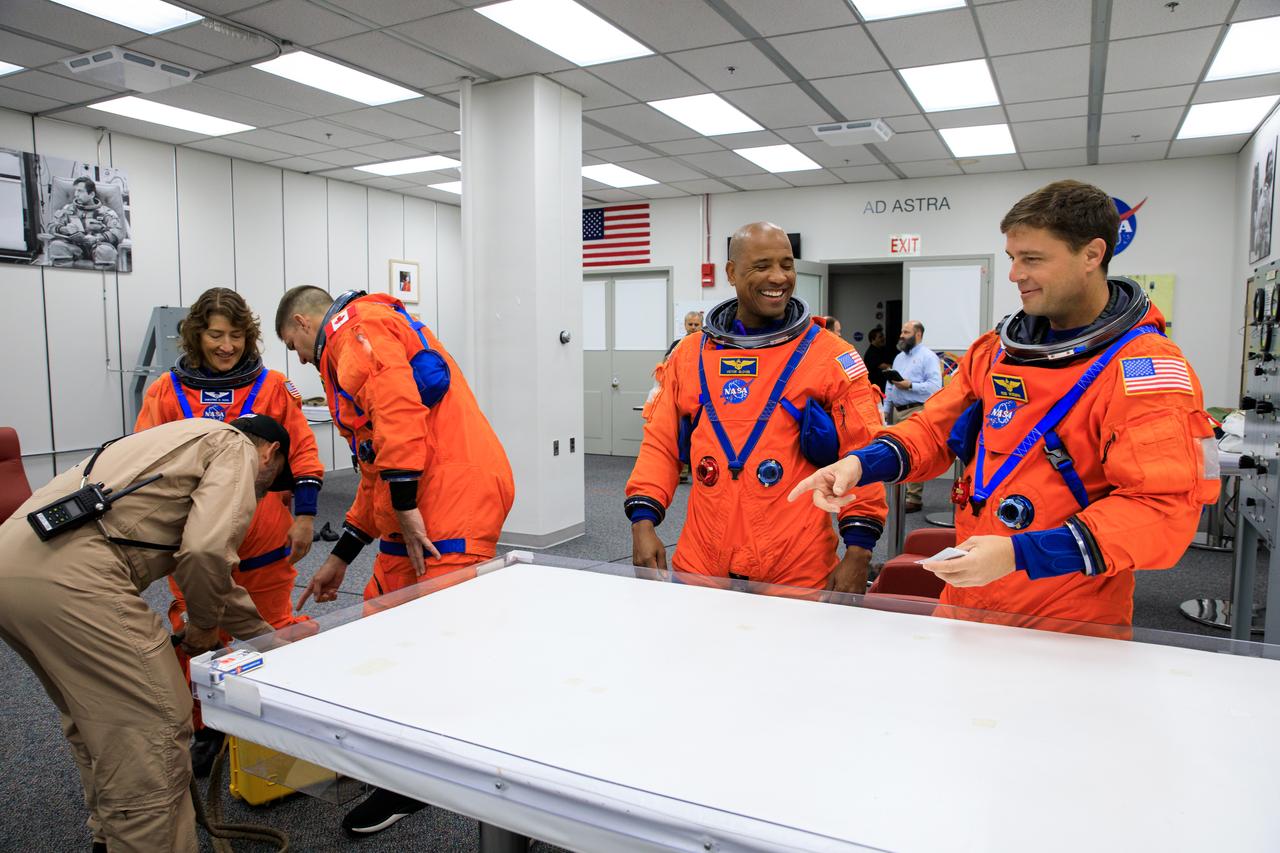
Inside the Astronaut Crew Quarters at the Neil Armstrong Operations and Checkout Building at NASA’s Kennedy Space Center in Florida, Artemis II crew members (from left) NASA astronaut Christina Koch, CSA (Canadian Space Agency) astronaut Jeremy Hansen, and NASA astronauts Reid Wiseman and Victor Glover are shown wearing test versions of the Orion crew survival system spacesuits they will wear on launch day as part of an integrated ground systems test on Wednesday, Sept. 20.
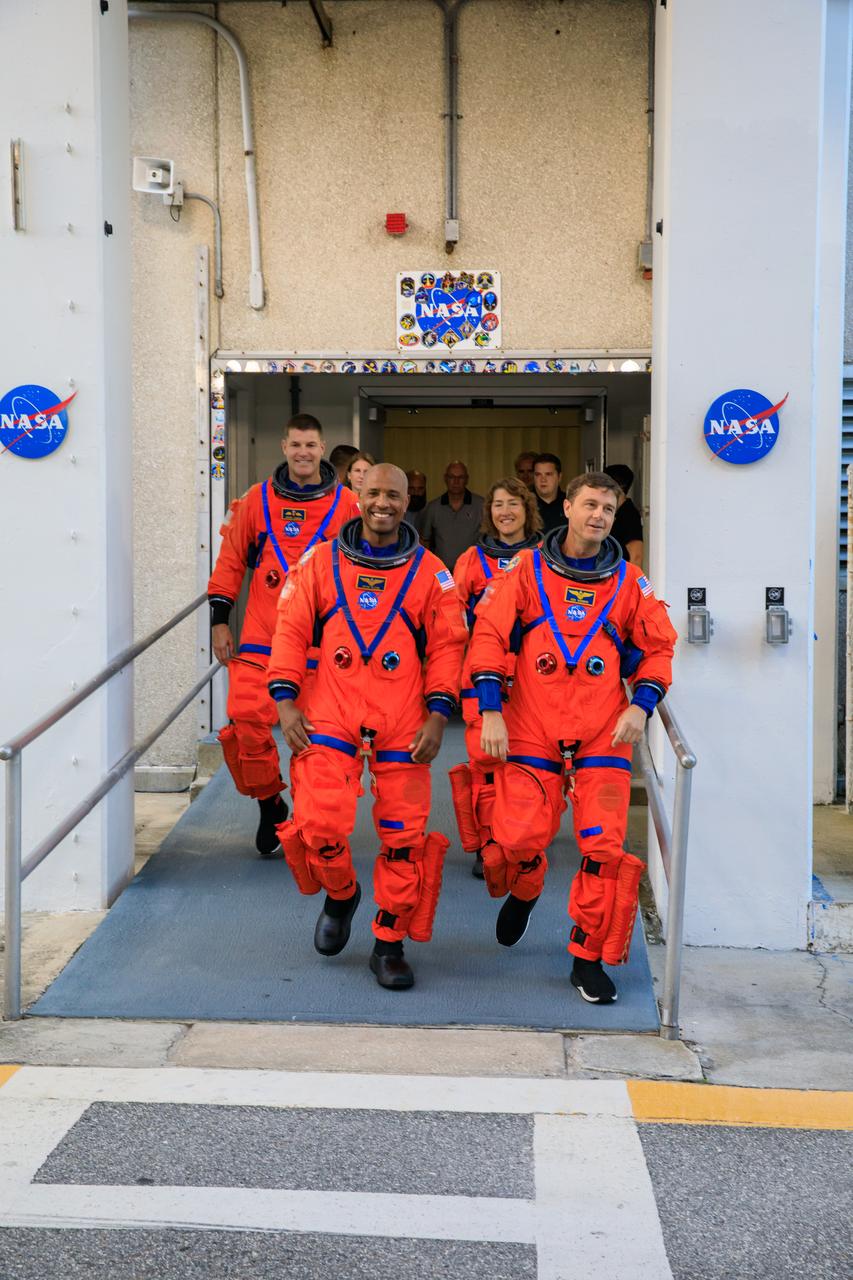
Artemis II NASA astronauts (front, from left) Victor Glover, Reid Wiseman, (back, from left) CSA (Canadian Space Agency) astronaut Jeremy Hansen, and NASA astronaut Christina Koch walk out of Astronaut Crew Quarters inside the Neil Armstrong Operations and Checkout Building to the Artemis crew transportation vehicles prior to traveling to Launch Pad 39B as part of an integrated ground systems test at Kennedy Space Center in Florida on Wednesday, Sept. 20, to test the crew timeline for launch day.
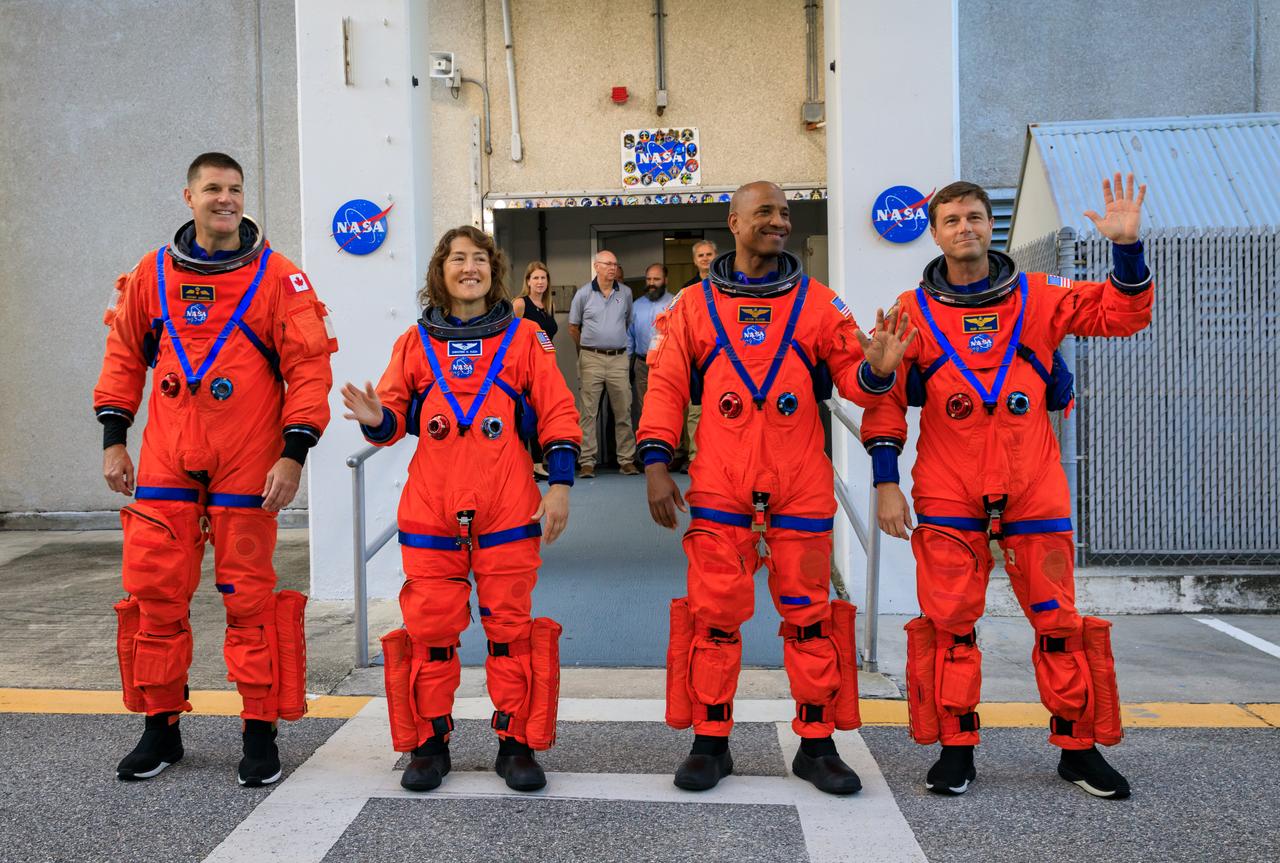
Artemis II crew members (from left) CSA (Canadian Space Agency) astronaut Jeremy Hansen, and NASA astronauts Christina Koch, Victor Glover, and Reid Wiseman walk out of Astronaut Crew Quarters inside the Neil Armstrong Operations and Checkout Building to the Artemis crew transportation vehicles prior to traveling to Launch Pad 39B as part of an integrated ground systems test at Kennedy Space Center in Florida on Wednesday, Sept. 20, to test the crew timeline for launch day.
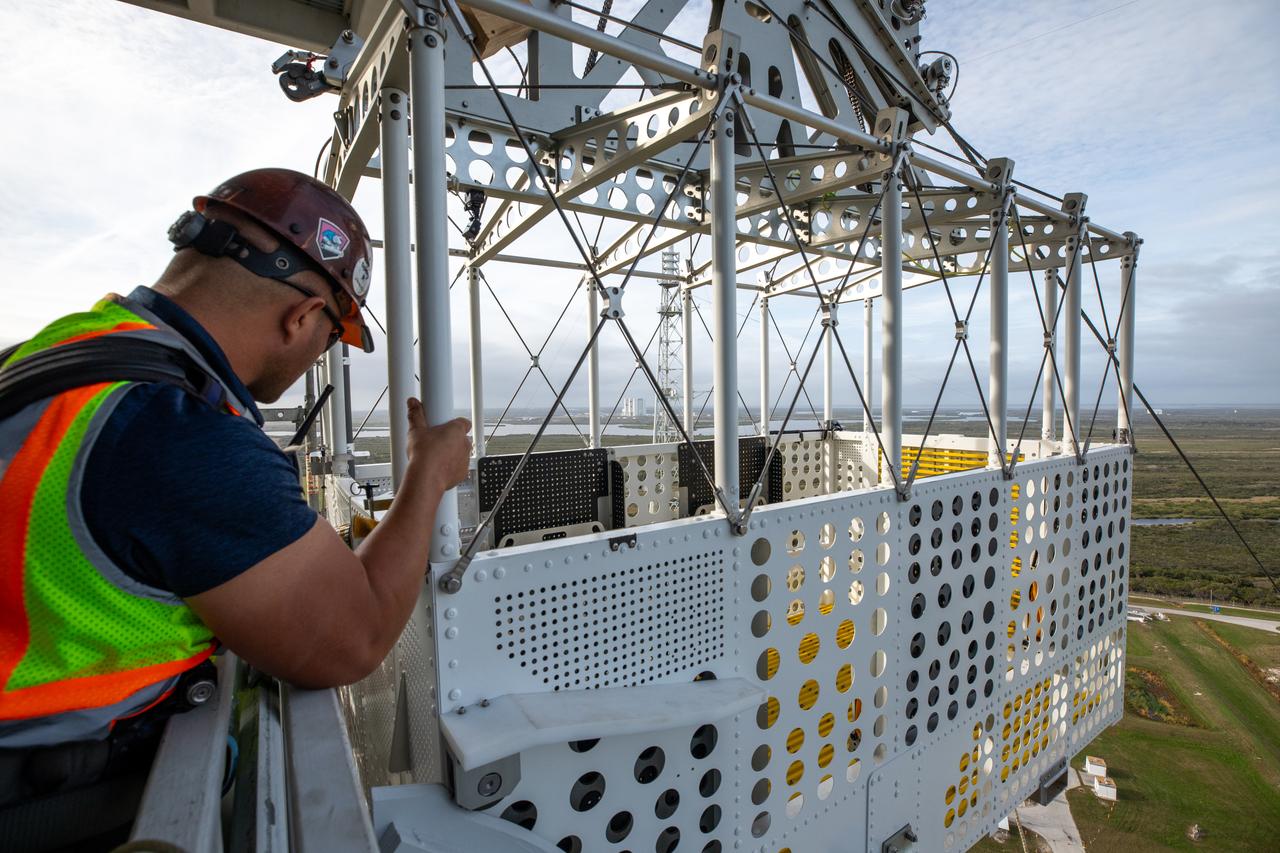
Teams with NASA’s Exploration Ground Systems Program, in preparation for the agency’s Artemis II crewed mission to the Moon, begin installing the first of four emergency egress baskets on the mobile launcher at Launch Complex 39B at the agency’s Kennedy Space Center in Florida on Wednesday, Jan. 24, 2024. The baskets, similar to gondolas on ski lifts, are used in the case of a pad abort emergency to enable astronauts and other pad personnel a way to quickly escape away from the mobile launcher to the base of the pad and where waiting emergency transport vehicles will then drive them away.
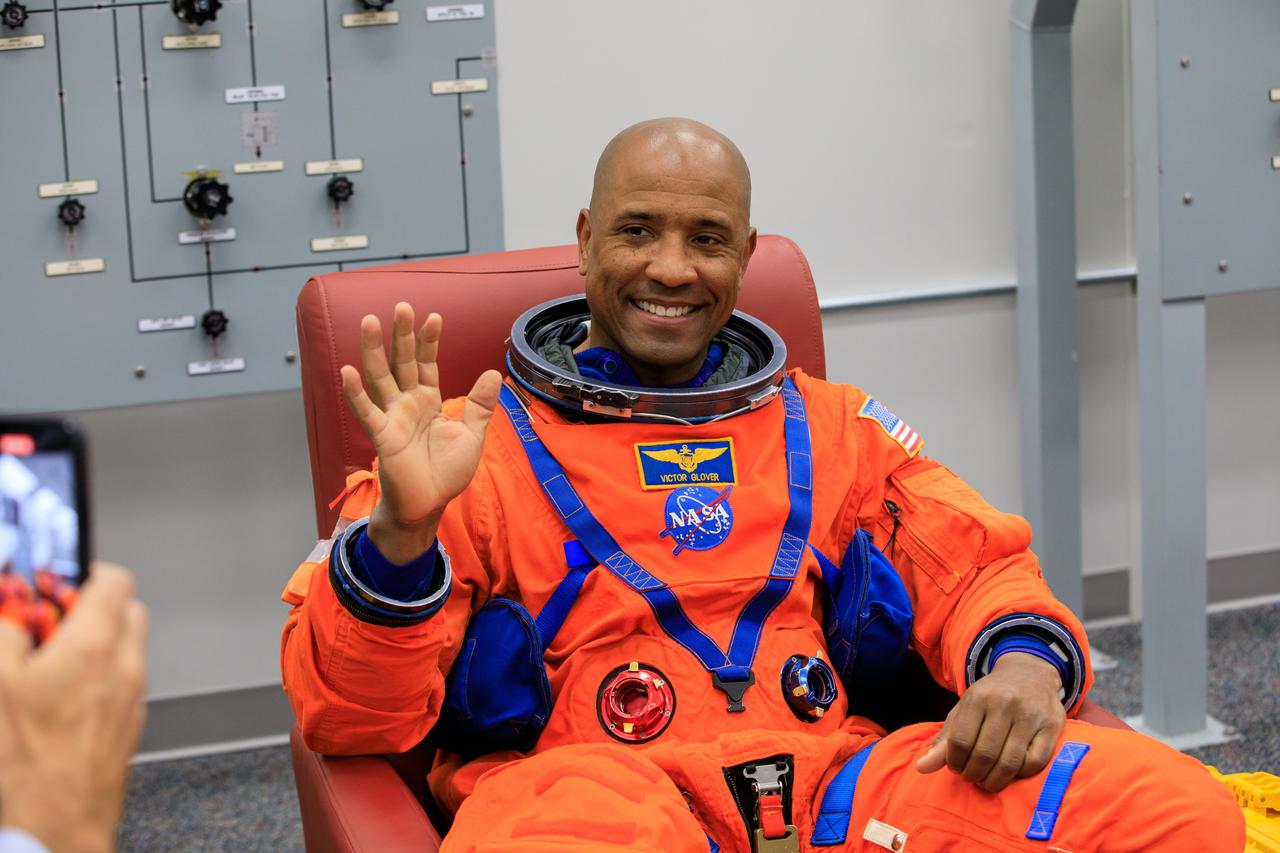
Inside the Astronaut Crew Quarters at the Neil Armstrong Operations and Checkout Building at NASA’s Kennedy Space Center in Florida, Artemis II crew member NASA astronaut Victor Glover is shown wearing a test version of the Orion crew survival system spacesuits the crew will wear on launch day as part of an integrated ground systems test on Wednesday, Sept. 20.

Inside the Astronaut Crew Quarters at the Neil Armstrong Operations and Checkout Building at NASA’s Kennedy Space Center in Florida, Artemis II crew member CSA (Canadian Space Agency) astronaut Jeremy Hansen is shown wearing a test version of the Orion crew survival system spacesuits the crew will wear on launch day as part of an integrated ground systems test on Wednesday, Sept. 20.
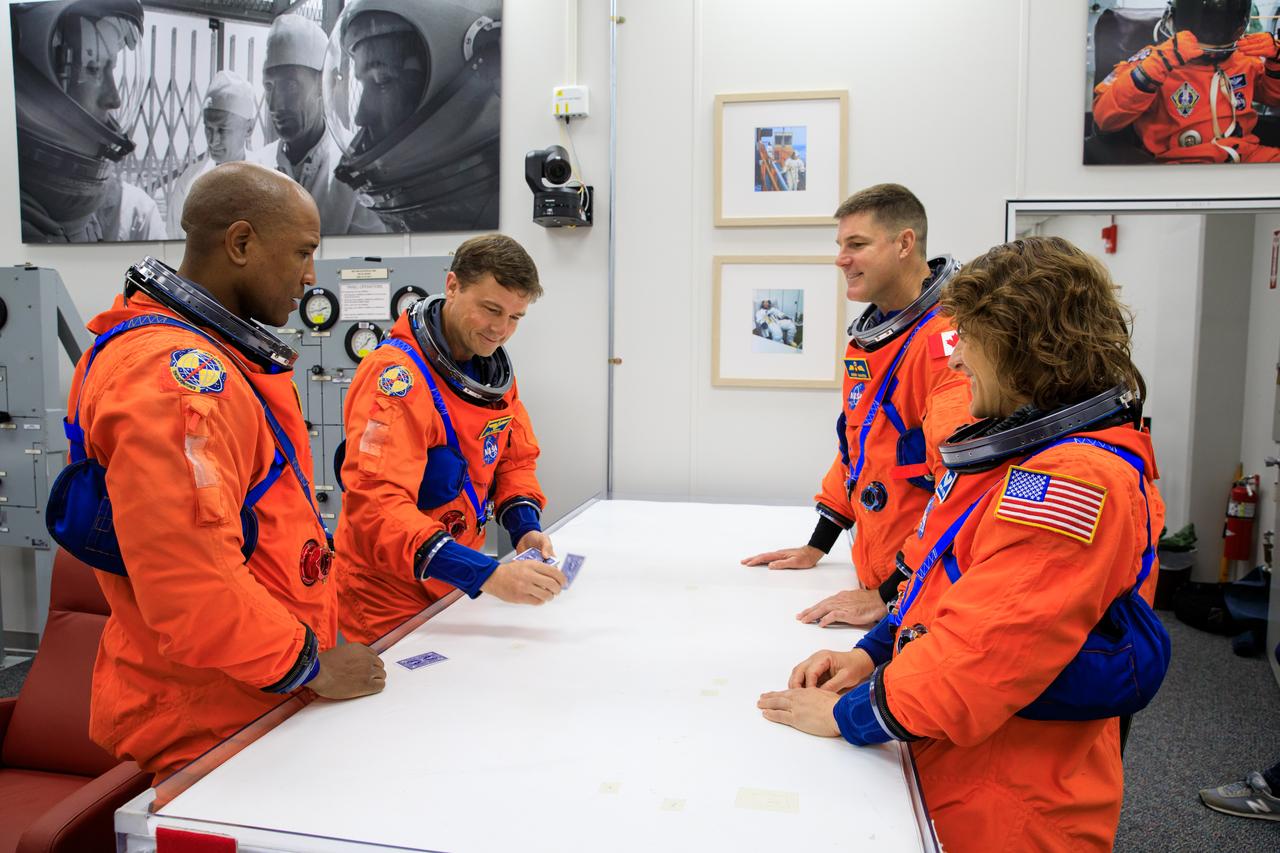
Inside the Astronaut Crew Quarters at the Neil Armstrong Operations and Checkout Building at NASA’s Kennedy Space Center in Florida, Artemis II crew members (from left) NASA astronauts Victor Glover, Reid Wiseman, CSA (Canadian Space Agency) astronaut Jeremy Hansen, and NASA astronaut Christina Koch are shown wearing test versions of the Orion crew survival system spacesuits they will wear on launch day as part of an integrated ground systems test on Wednesday, Sept. 20.
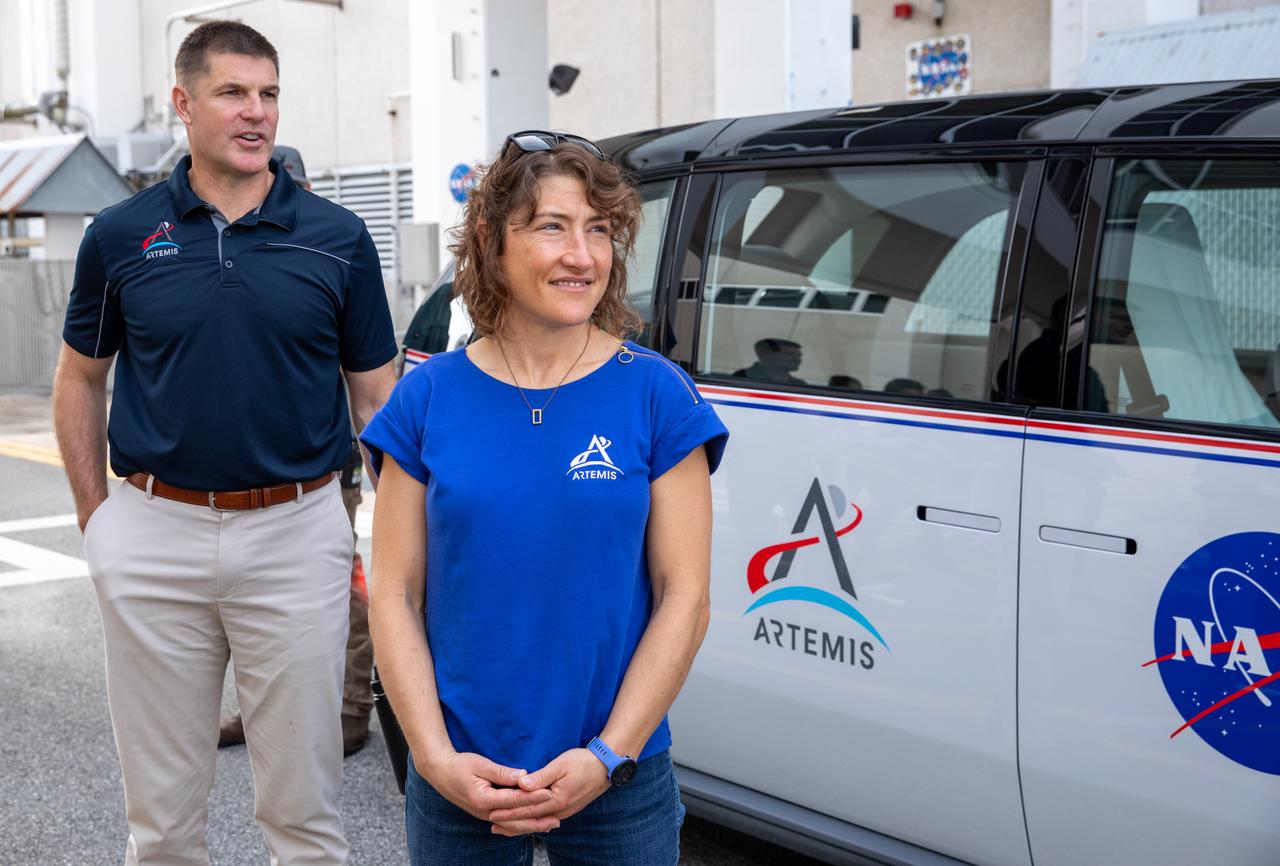
NASA astronauts Jeremy Hansen, left, and Christina Koch view the crew transport vehicles (CTVs) outside of the Neil A. Armstrong Operations and Checkout Building at Kennedy Space Center in Florida on Tuesday, Sept. 19, 2023. The CTVs will carry them, along with fellow NASA astronauts Reid Wiseman and Victor Glover, to Kennedy’s Launch Complex 39B for liftoff of the Artemis II mission. The specially designed, fully electric, environmentally friendly vehicles were manufactured by Canoo Technologies, Inc. of Torrance California.