
Engineers and technicians with the Exploration Ground Systems Program prepare to transfer one of the aft assemblies of the SLS (Space Launch System) solid rocket boosters for the Artemis II mission with an overhead crane inside the Rotation, Processing and Surge Facility at NASA’s Kennedy Space Center in Florida on Wednesday, Nov. 13, 2024. The booster segments are being transferred to the NASA Kennedy’s Vehicle Assembly Building via a transporter for stacking operations in preparation for launch of the Artemis II mission.
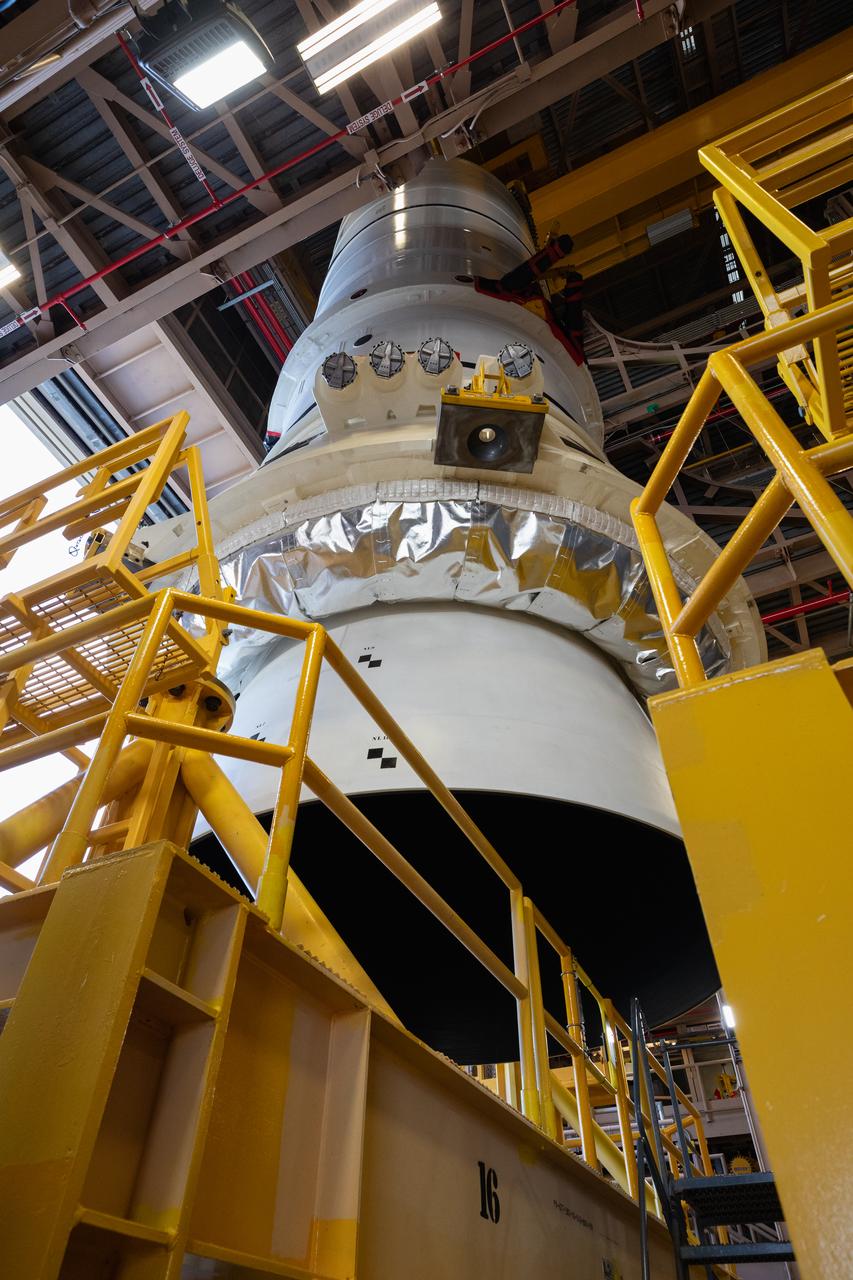
Engineers and technicians with the Exploration Ground Systems Program prepare to transfer one of the aft assemblies of the SLS (Space Launch System) solid rocket boosters for the Artemis II mission with an overhead crane inside the Rotation, Processing and Surge Facility at NASA’s Kennedy Space Center in Florida on Wednesday, Nov. 13, 2024. The booster segments are being transferred to the NASA Kennedy’s Vehicle Assembly Building via a transporter for stacking operations in preparation for launch of the Artemis II mission.
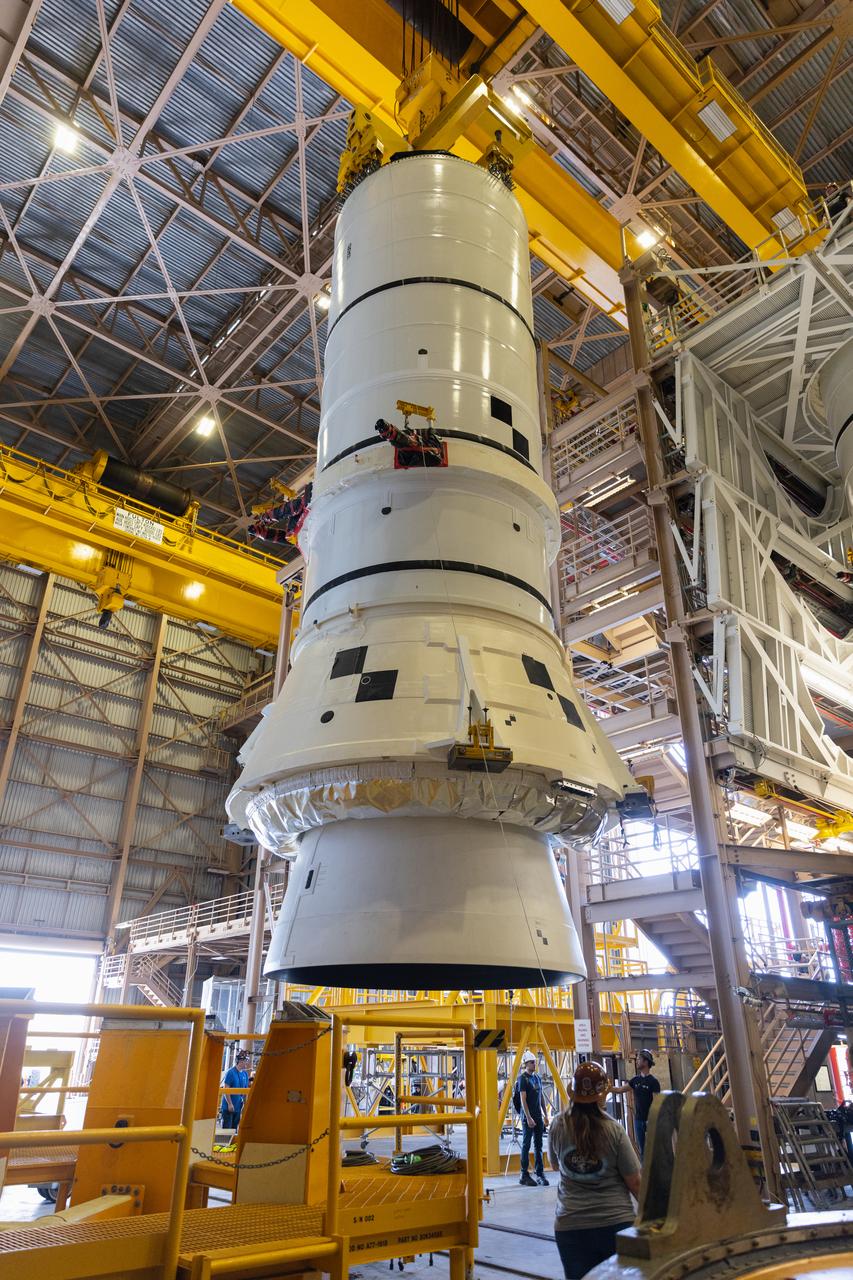
Engineers and technicians with the Exploration Ground Systems Program prepare to transfer one of the aft assemblies of the SLS (Space Launch System) solid rocket boosters for the Artemis II mission with an overhead crane inside the Rotation, Processing and Surge Facility at NASA’s Kennedy Space Center in Florida on Wednesday, Nov. 13, 2024. The booster segments are being transferred to the NASA Kennedy’s Vehicle Assembly Building via a transporter for stacking operations in preparation for launch of the Artemis II mission.
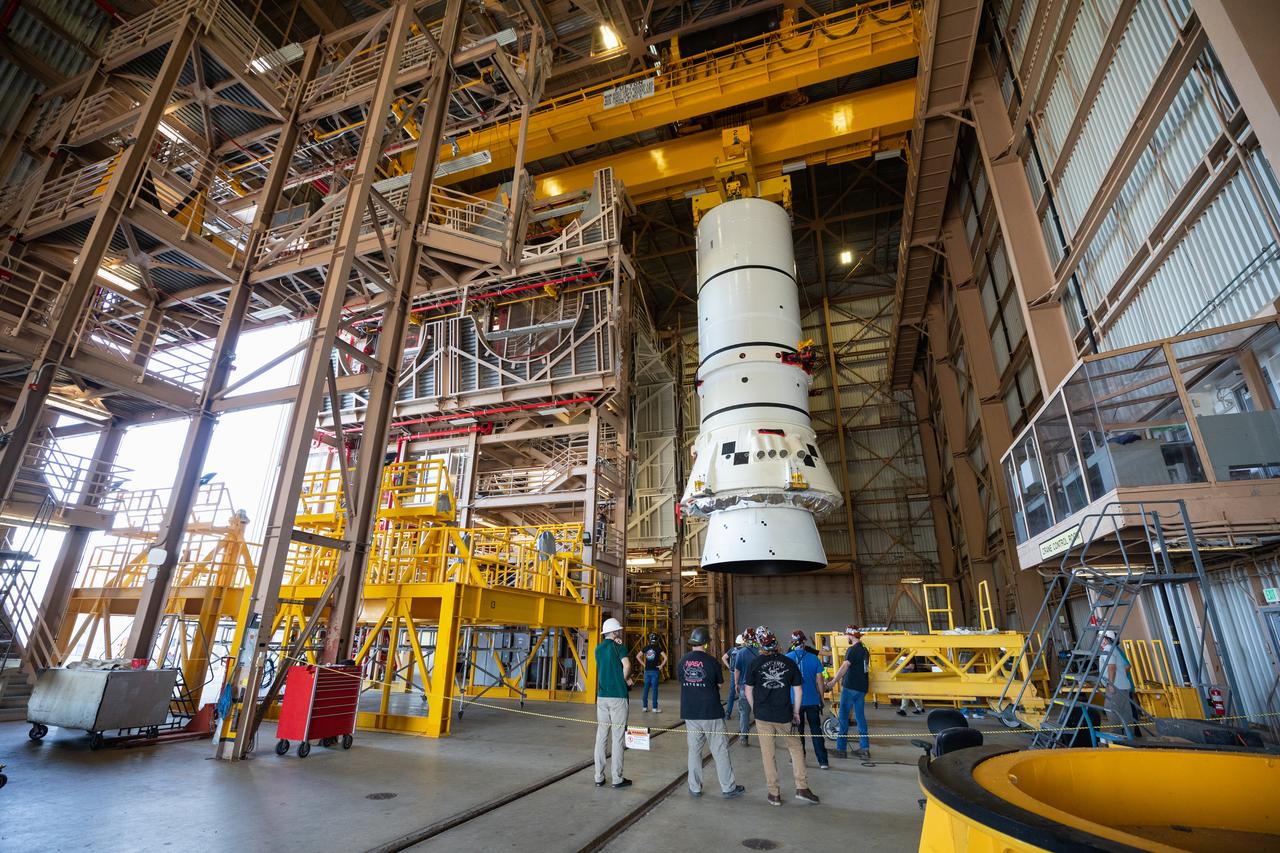
Engineers and technicians with the Exploration Ground Systems Program prepare to transfer one of the aft assemblies of the SLS (Space Launch System) solid rocket boosters for the Artemis II mission with an overhead crane inside the Rotation, Processing and Surge Facility at NASA’s Kennedy Space Center in Florida on Wednesday, Nov. 13, 2024. The booster segments are being transferred to the NASA Kennedy’s Vehicle Assembly Building via a transporter for stacking operations in preparation for launch of the Artemis II mission.

Engineers and technicians with the Exploration Ground Systems Program prepare to move the aft assemblies of the SLS (Space Launch System) solid rocket boosters for the Artemis II mission with an overhead crane inside the Rotation, Processing and Surge Facility at NASA’s Kennedy Space Center in Florida on Wednesday, Nov. 13, 2024. The booster segments are being transferred to the NASA Kennedy’s Vehicle Assembly Building via a transporter for stacking operations in preparation for launch of the Artemis II mission.
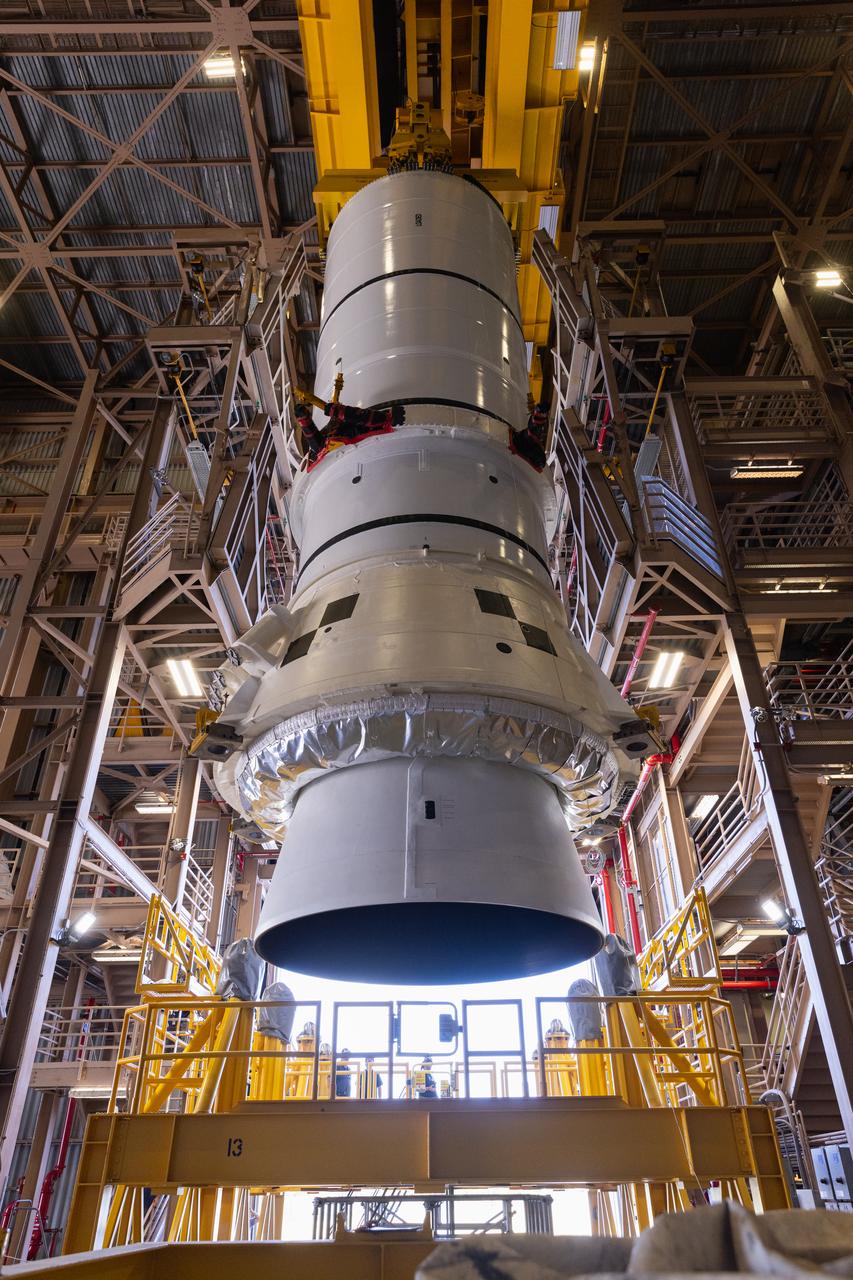
Engineers and technicians with the Exploration Ground Systems Program prepare to transfer one of the aft assemblies of the SLS (Space Launch System) solid rocket boosters for the Artemis II mission with an overhead crane inside the Rotation, Processing and Surge Facility at NASA’s Kennedy Space Center in Florida on Wednesday, Nov. 13, 2024. The booster segments are being transferred to the NASA Kennedy’s Vehicle Assembly Building via a transporter for stacking operations in preparation for launch of the Artemis II mission.
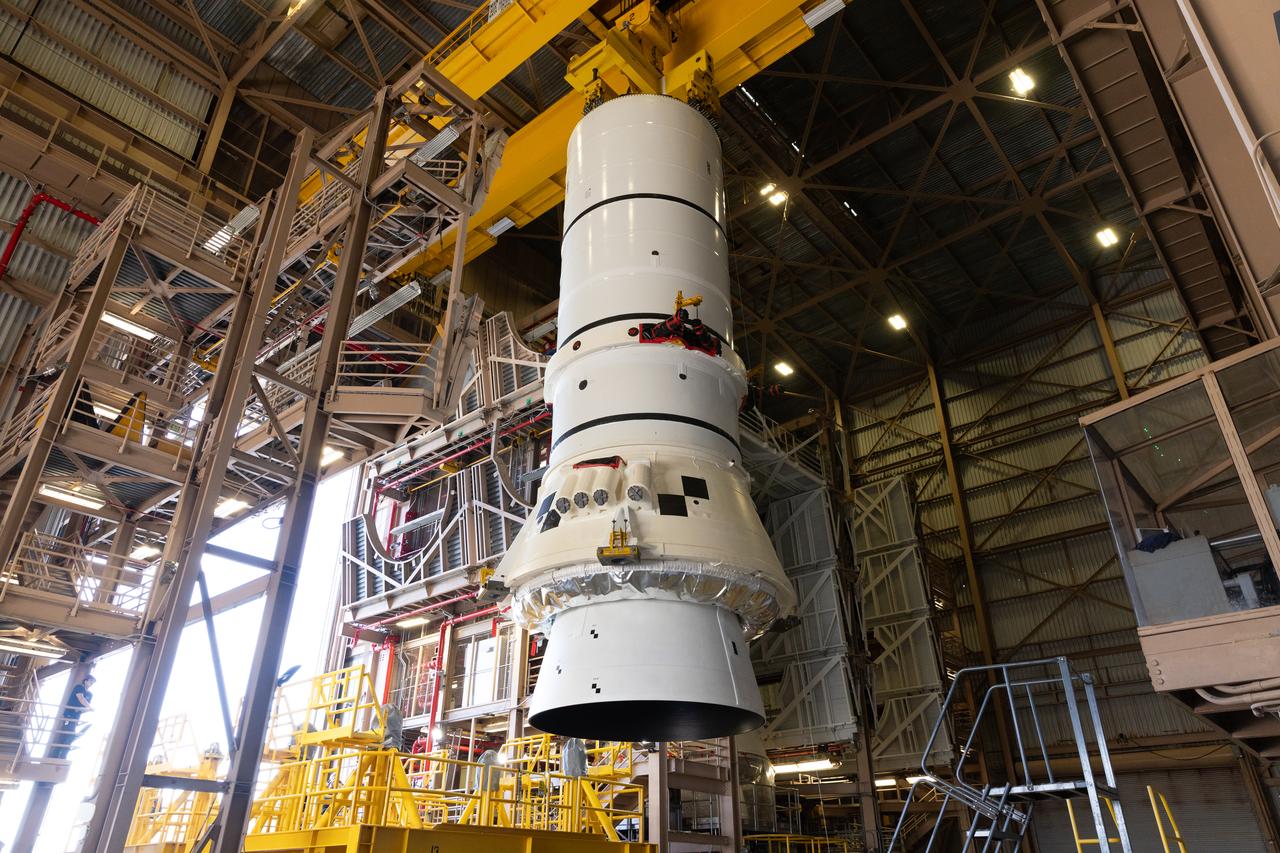
Engineers and technicians with the Exploration Ground Systems Program prepare to transfer one of the aft assemblies of the SLS (Space Launch System) solid rocket boosters for the Artemis II mission with an overhead crane inside the Rotation, Processing and Surge Facility at NASA’s Kennedy Space Center in Florida on Wednesday, Nov. 13, 2024. The booster segments are being transferred to the NASA Kennedy’s Vehicle Assembly Building via a transporter for stacking operations in preparation for launch of the Artemis II mission.
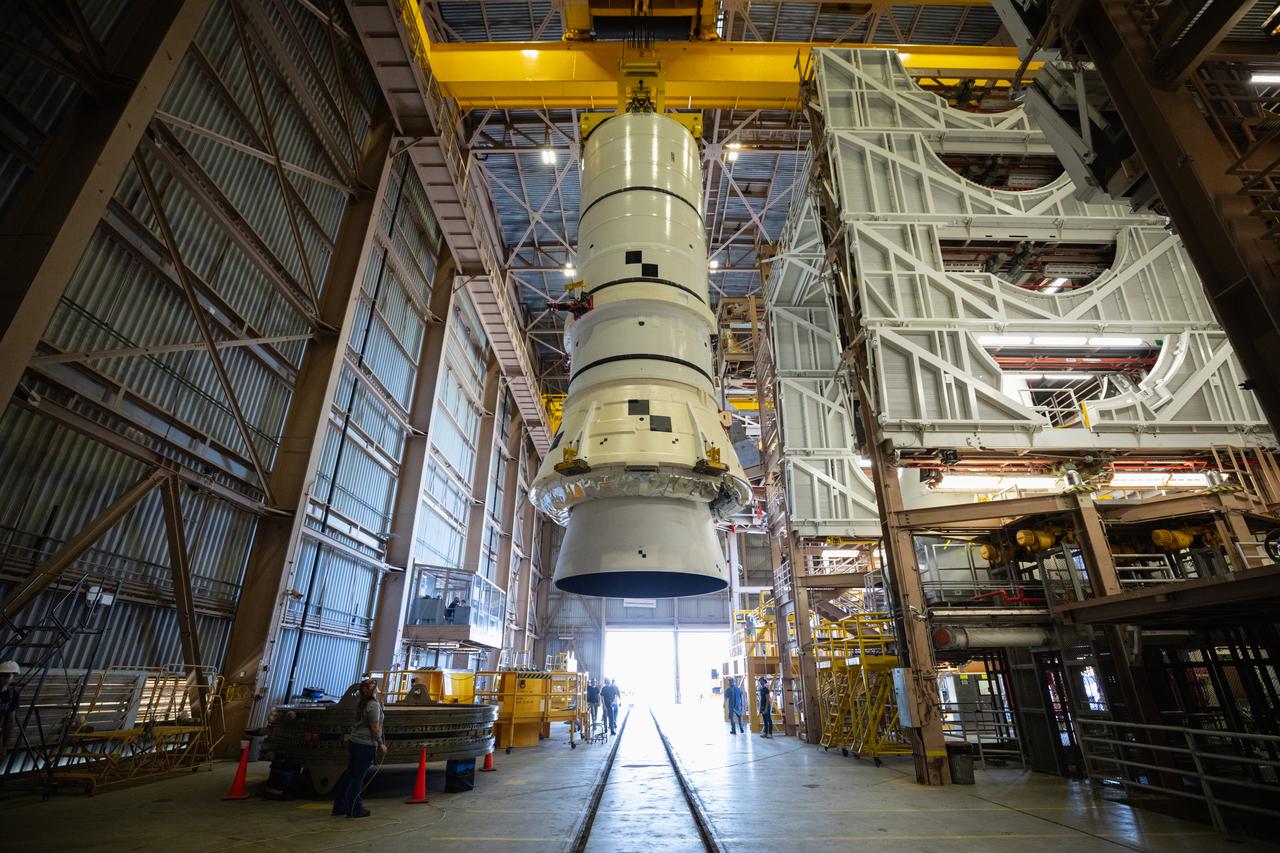
Engineers and technicians with the Exploration Ground Systems Program prepare to transfer one of the aft assemblies of the SLS (Space Launch System) solid rocket boosters for the Artemis II mission with an overhead crane inside the Rotation, Processing and Surge Facility at NASA’s Kennedy Space Center in Florida on Wednesday, Nov. 13, 2024. The booster segments are being transferred to the NASA Kennedy’s Vehicle Assembly Building via a transporter for stacking operations in preparation for launch of the Artemis II mission.
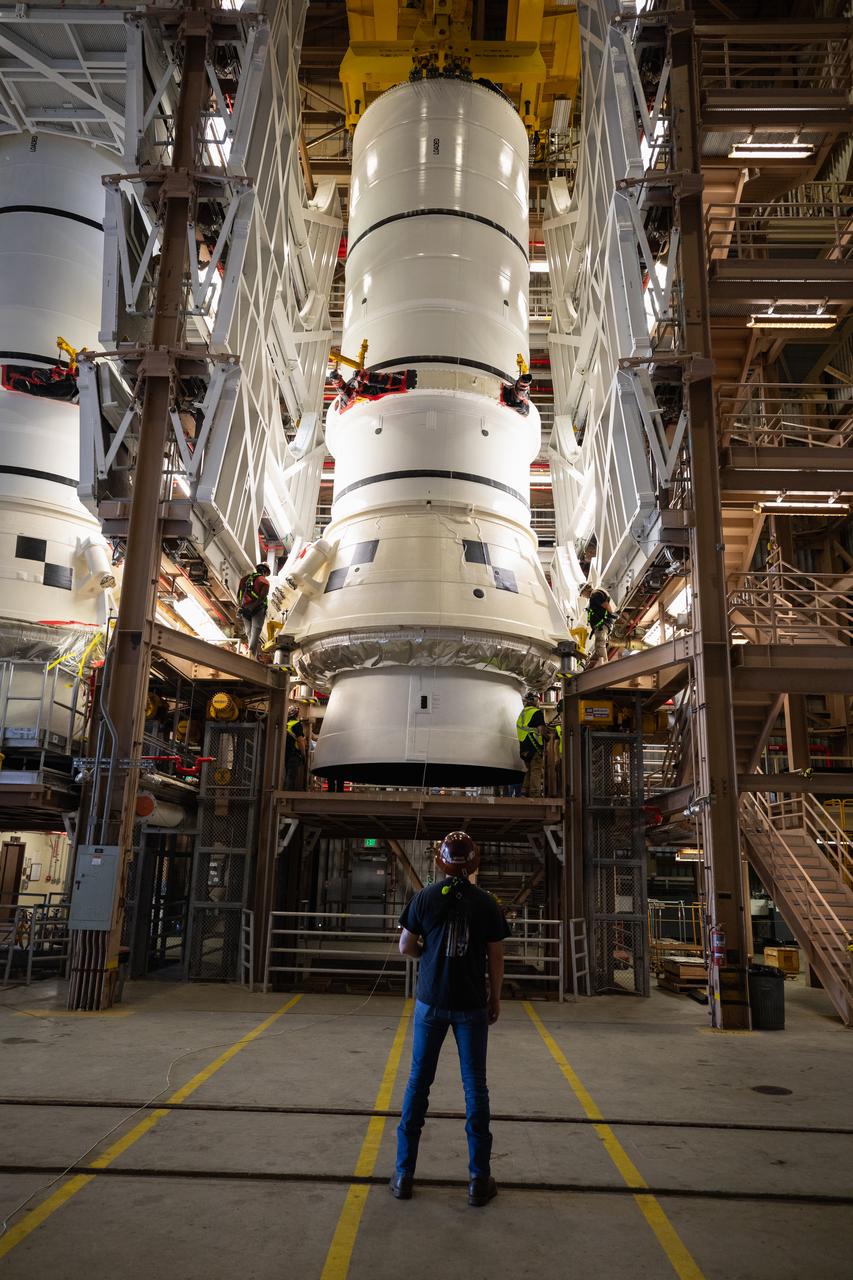
Engineers and technicians with the Exploration Ground Systems Program prepare to transfer one of the aft assemblies of the SLS (Space Launch System) solid rocket boosters for the Artemis II mission with an overhead crane inside the Rotation, Processing and Surge Facility at NASA’s Kennedy Space Center in Florida on Wednesday, Nov. 13, 2024. The booster segments are being transferred to the NASA Kennedy’s Vehicle Assembly Building via a transporter for stacking operations in preparation for launch of the Artemis II mission.
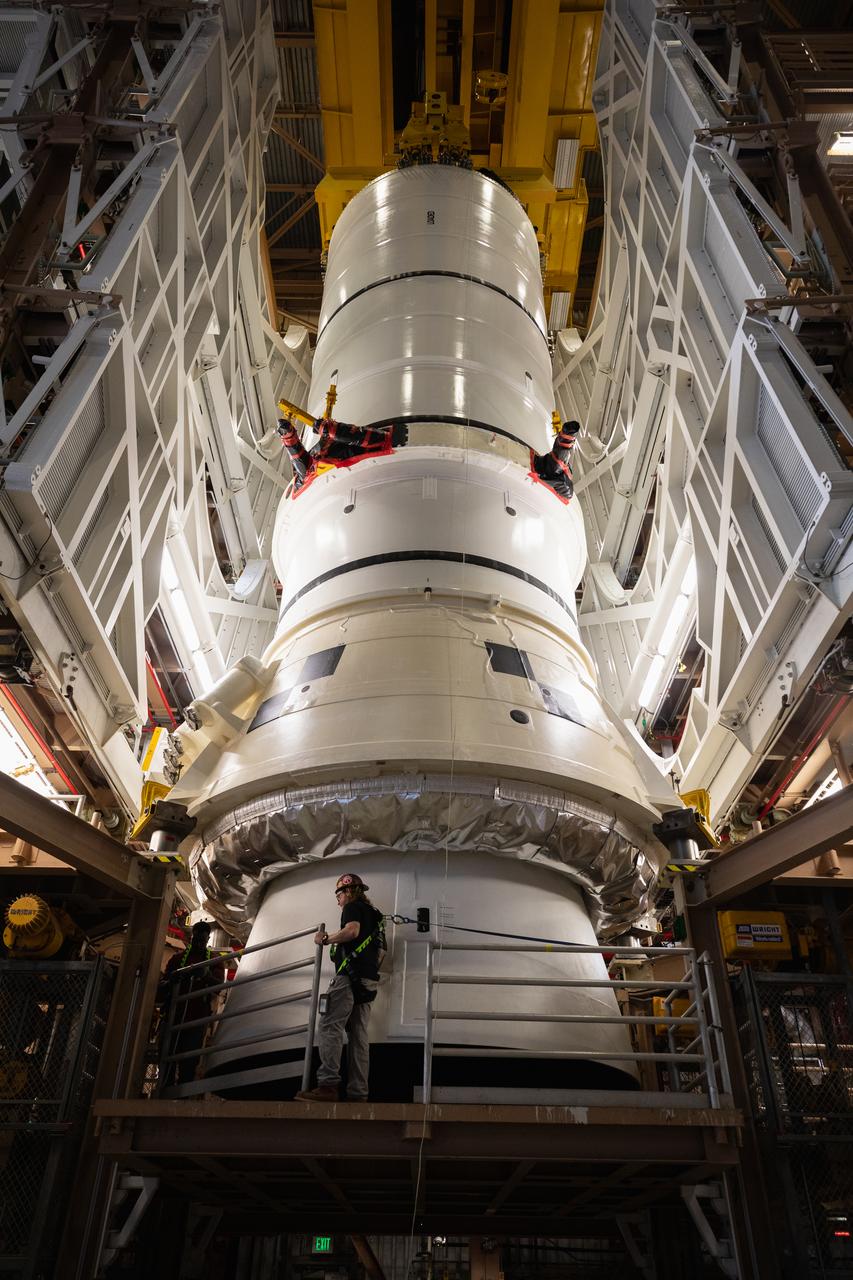
Engineers and technicians with the Exploration Ground Systems Program prepare to transfer one of the aft assemblies of the SLS (Space Launch System) solid rocket boosters for the Artemis II mission with an overhead crane inside the Rotation, Processing and Surge Facility at NASA’s Kennedy Space Center in Florida on Wednesday, Nov. 13, 2024. The booster segments are being transferred to the NASA Kennedy’s Vehicle Assembly Building via a transporter for stacking operations in preparation for launch of the Artemis II mission.
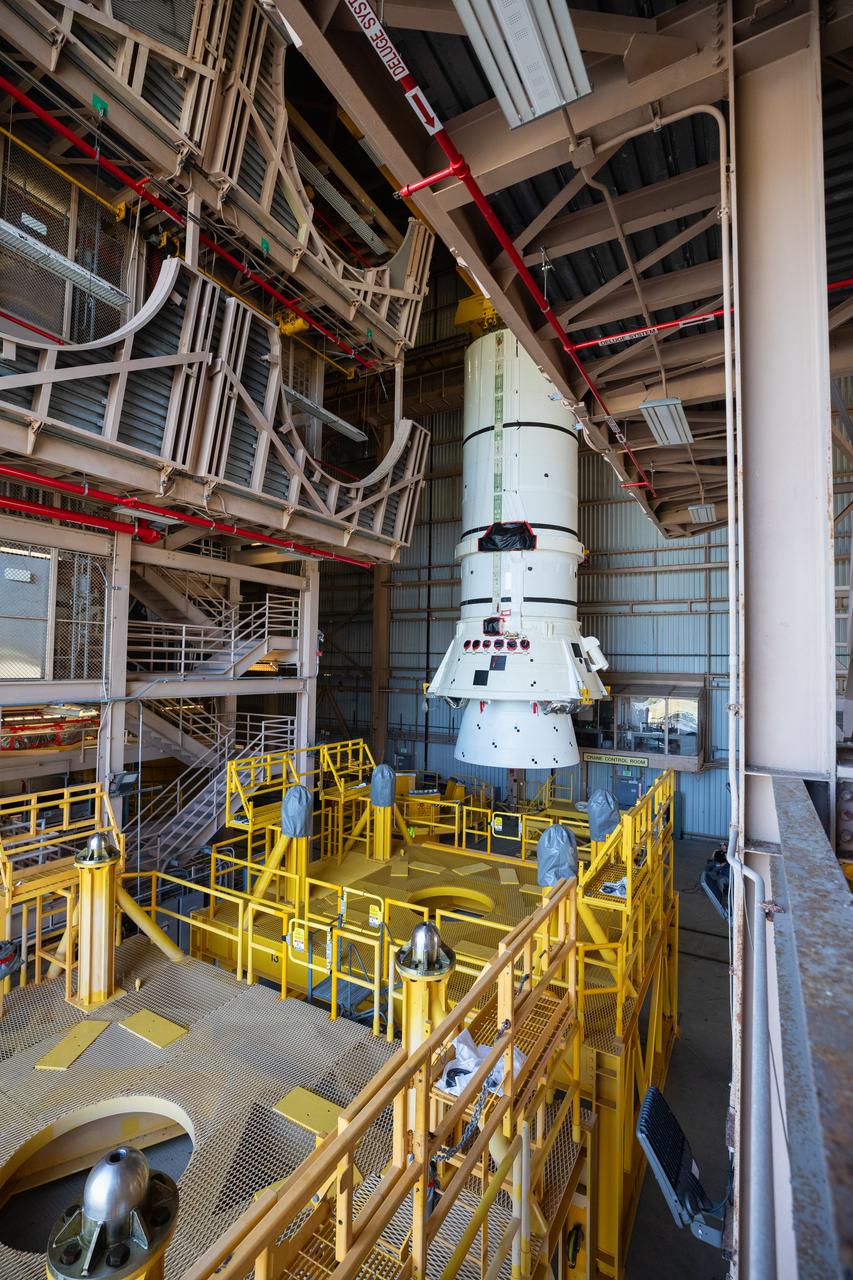
Engineers and technicians with the Exploration Ground Systems Program prepare to transfer one of the aft assemblies of the SLS (Space Launch System) solid rocket boosters for the Artemis II mission with an overhead crane inside the Rotation, Processing and Surge Facility at NASA’s Kennedy Space Center in Florida on Wednesday, Nov. 13, 2024. The booster segments are being transferred to the NASA Kennedy’s Vehicle Assembly Building via a transporter for stacking operations in preparation for launch of the Artemis II mission.
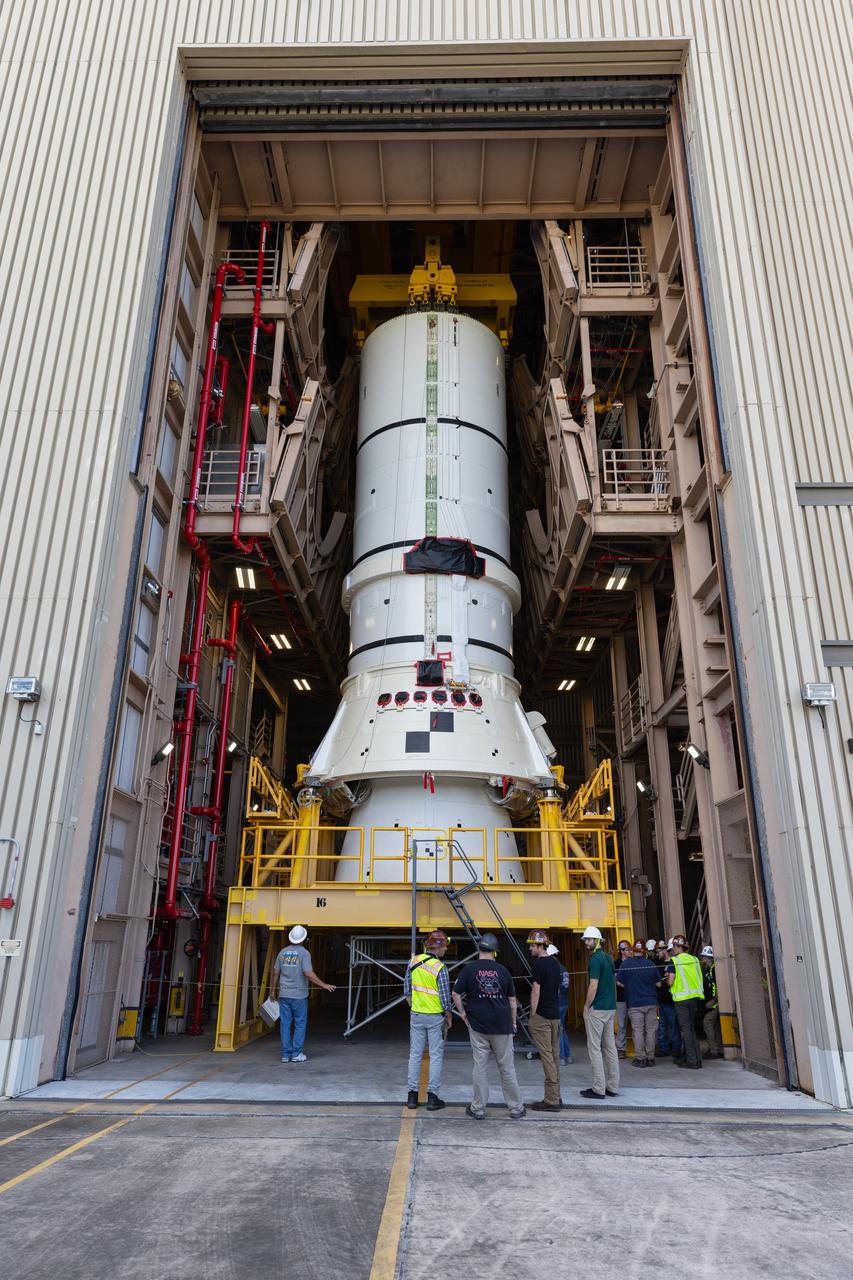
Engineers and technicians with the Exploration Ground Systems Program prepare to transfer one of the aft assemblies of the SLS (Space Launch System) solid rocket boosters for the Artemis II mission with an overhead crane inside the Rotation, Processing and Surge Facility at NASA’s Kennedy Space Center in Florida on Wednesday, Nov. 13, 2024. The booster segments are being transferred to the NASA Kennedy’s Vehicle Assembly Building via a transporter for stacking operations in preparation for launch of the Artemis II mission.

Engineers and technicians with the Exploration Ground Systems Program prepare to transfer one of the aft assemblies of the SLS (Space Launch System) solid rocket boosters for the Artemis II mission with an overhead crane inside the Rotation, Processing and Surge Facility at NASA’s Kennedy Space Center in Florida on Wednesday, Nov. 13, 2024. The booster segments are being transferred to the NASA Kennedy’s Vehicle Assembly Building via a transporter for stacking operations in preparation for launch of the Artemis II mission.
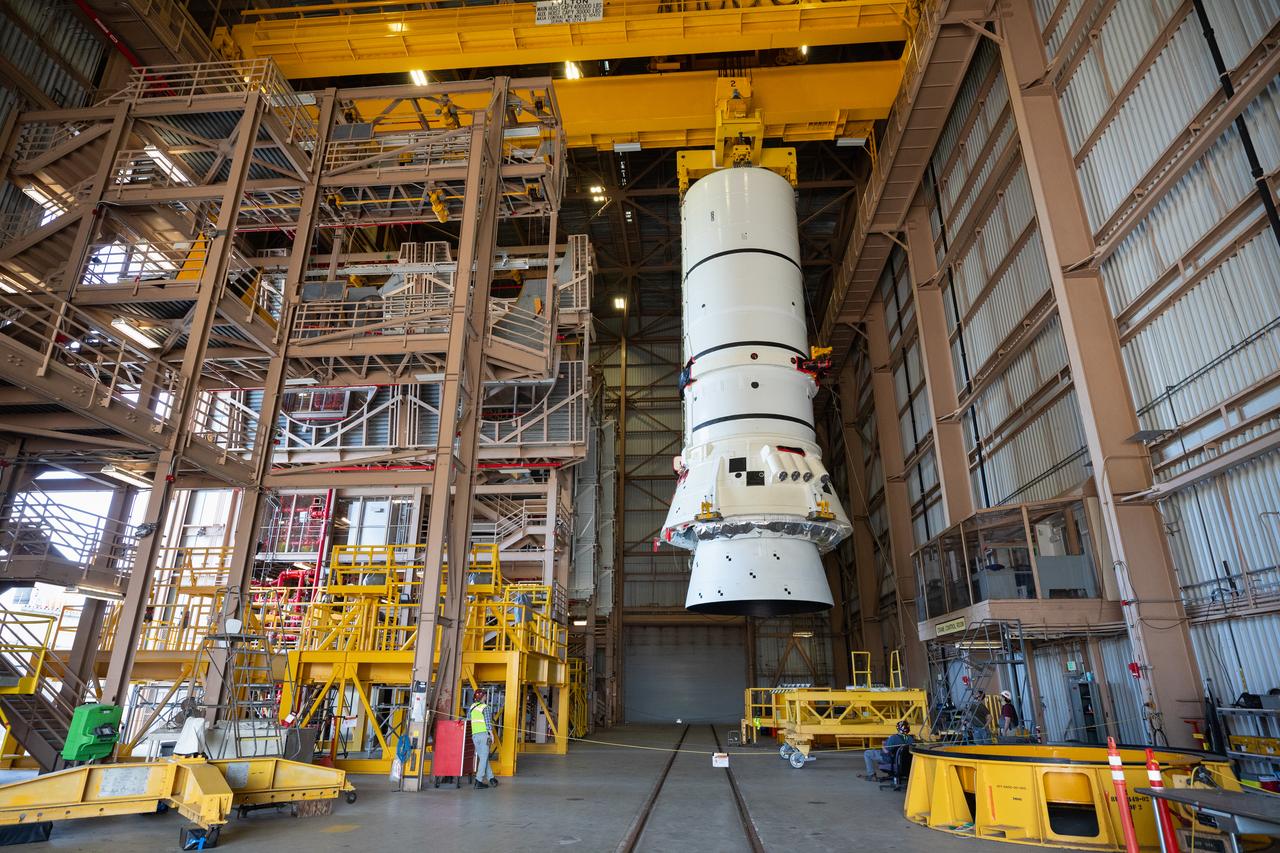
Engineers and technicians with the Exploration Ground Systems Program prepare to transfer one of the aft assemblies of the SLS (Space Launch System) solid rocket boosters for the Artemis II mission with an overhead crane inside the Rotation, Processing and Surge Facility at NASA’s Kennedy Space Center in Florida on Wednesday, Nov. 13, 2024. The booster segments are being transferred to the NASA Kennedy’s Vehicle Assembly Building via a transporter for stacking operations in preparation for launch of the Artemis II mission.
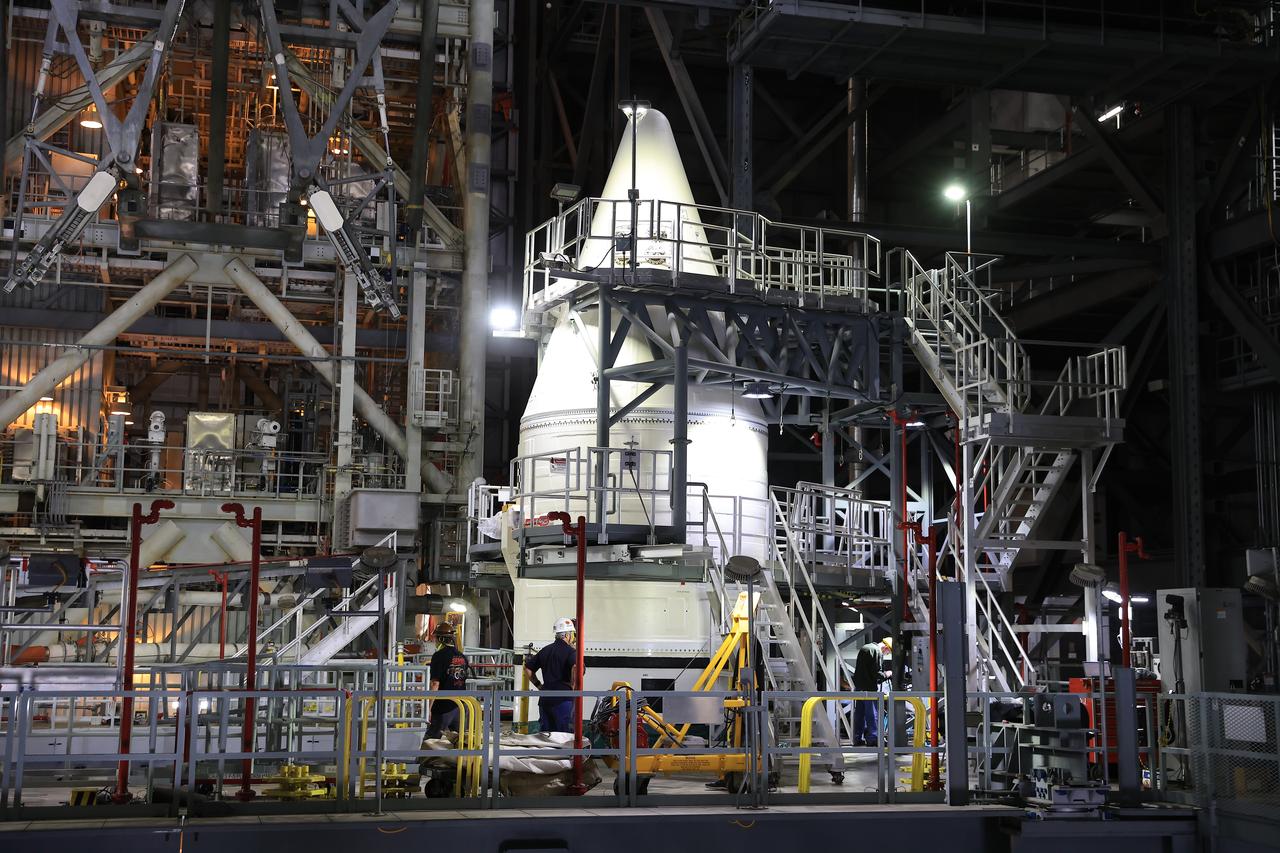
Engineers with NASA’s Exploration Ground Systems complete stacking operations on the twin SLS (Space Launch System) solid rocket boosters for Artemis II by integrating the nose cones atop the forward assemblies inside the Vehicle Assembly Building’s High Bay 3 at NASA’s Kennedy Space Center in Florida on Wednesday, Feb. 19, 2025. During three months of stacking operations, technicians used a massive overhead crane to lift 10 booster segments – five segments per booster – and aerodynamic nose cones into place on mobile launcher 1. The twin solid boosters will help support the remaining rocket components and the Orion spacecraft during final assembly of the Artemis II Moon rocket and provide more than 75 percent of the total SLS thrust during liftoff from NASA Kennedy’s Launch Pad 39B.
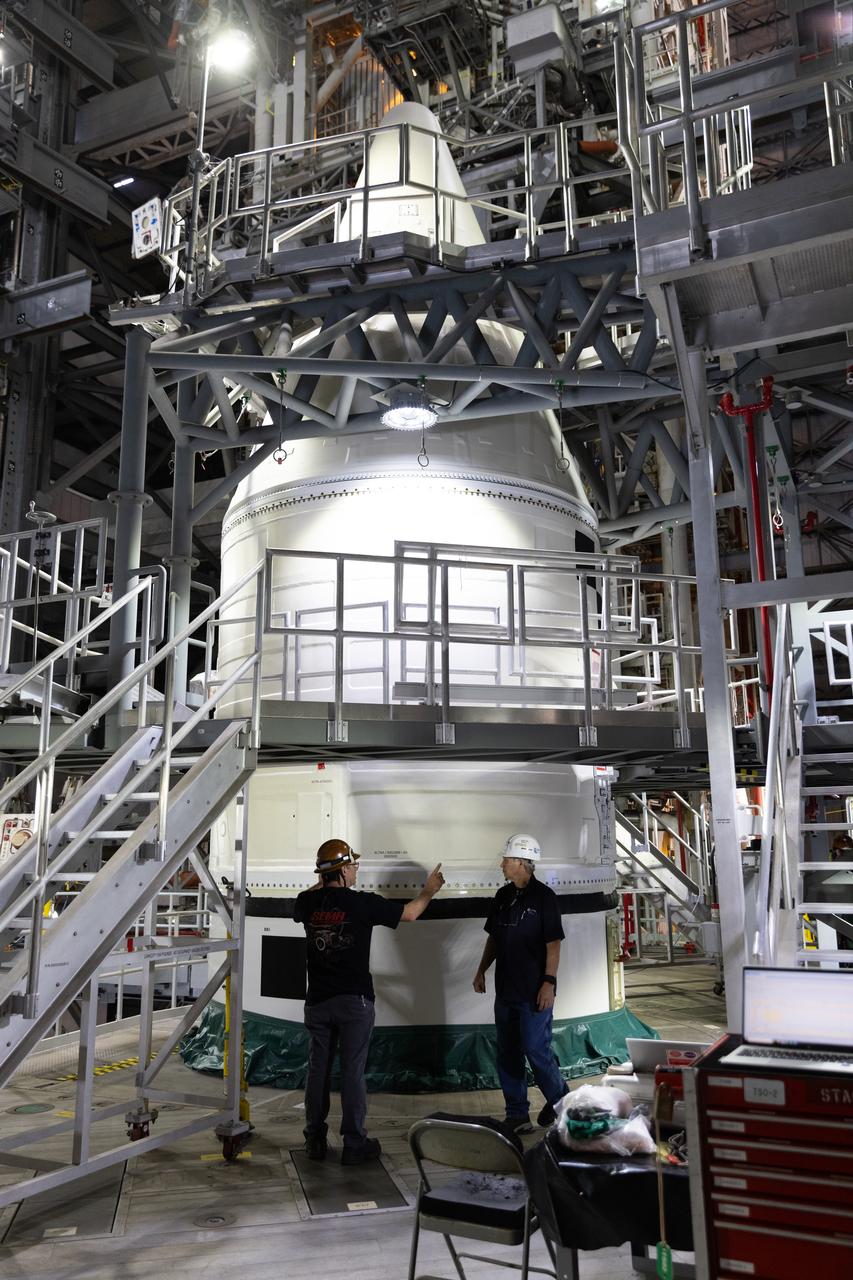
Engineers with NASA’s Exploration Ground Systems complete stacking operations on the twin SLS (Space Launch System) solid rocket boosters for Artemis II by integrating the nose cones atop the forward assemblies inside the Vehicle Assembly Building’s High Bay 3 at NASA’s Kennedy Space Center in Florida on Wednesday, Feb. 19, 2025. During three months of stacking operations, technicians used a massive overhead crane to lift 10 booster segments – five segments per booster – and aerodynamic nose cones into place on mobile launcher 1. The twin solid boosters will help support the remaining rocket components and the Orion spacecraft during final assembly of the Artemis II Moon rocket and provide more than 75 percent of the total SLS thrust during liftoff from NASA Kennedy’s Launch Pad 39B.

Engineers with NASA’s Exploration Ground Systems complete stacking operations on the twin SLS (Space Launch System) solid rocket boosters for Artemis II by integrating the nose cones atop the forward assemblies inside the Vehicle Assembly Building’s High Bay 3 at NASA’s Kennedy Space Center in Florida on Wednesday, Feb. 19, 2025. During three months of stacking operations, technicians used a massive overhead crane to lift 10 booster segments – five segments per booster – and aerodynamic nose cones into place on mobile launcher 1. The twin solid boosters will help support the remaining rocket components and the Orion spacecraft during final assembly of the Artemis II Moon rocket and provide more than 75 percent of the total SLS thrust during liftoff from NASA Kennedy’s Launch Pad 39B.
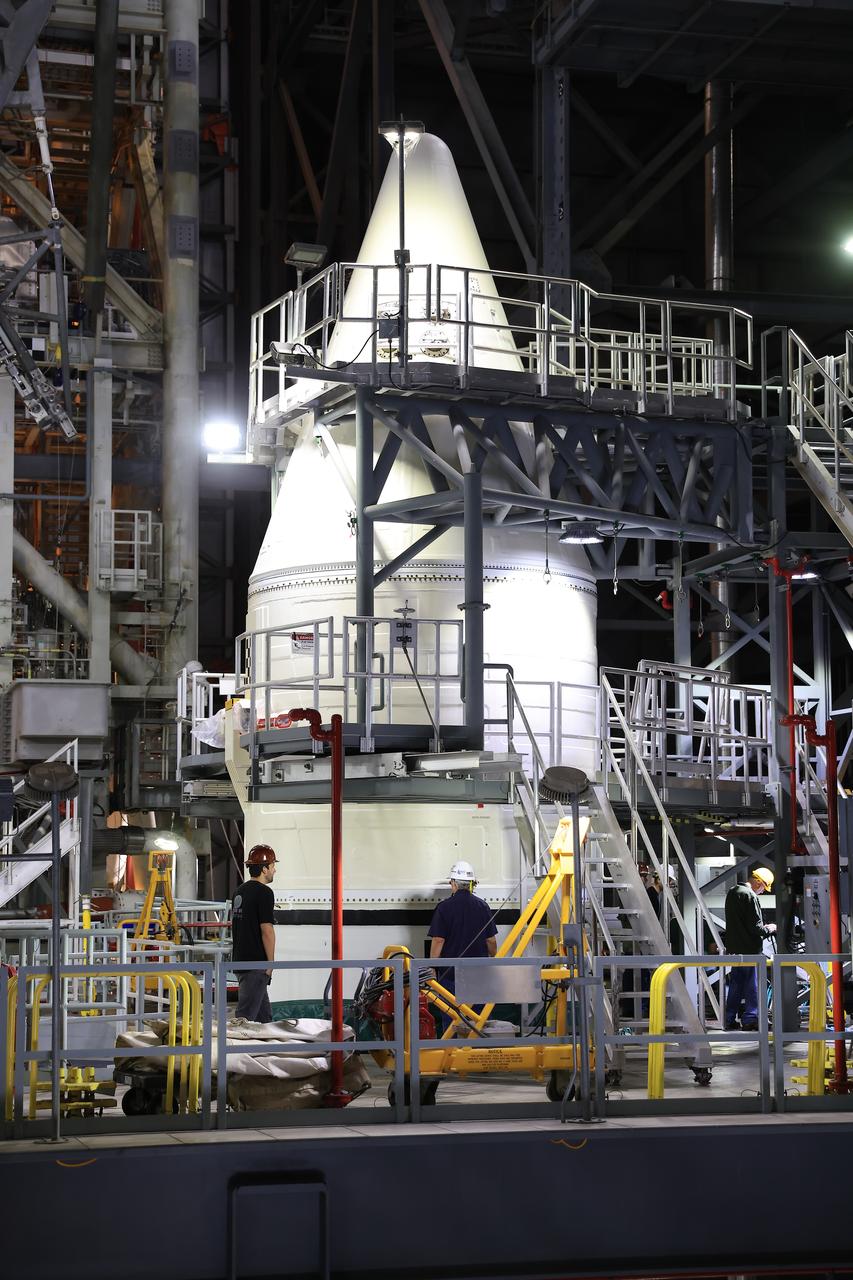
Engineers with NASA’s Exploration Ground Systems complete stacking operations on the twin SLS (Space Launch System) solid rocket boosters for Artemis II by integrating the nose cones atop the forward assemblies inside the Vehicle Assembly Building’s High Bay 3 at NASA’s Kennedy Space Center in Florida on Wednesday, Feb. 19, 2025. During three months of stacking operations, technicians used a massive overhead crane to lift 10 booster segments – five segments per booster – and aerodynamic nose cones into place on mobile launcher 1. The twin solid boosters will help support the remaining rocket components and the Orion spacecraft during final assembly of the Artemis II Moon rocket and provide more than 75 percent of the total SLS thrust during liftoff from NASA Kennedy’s Launch Pad 39B.
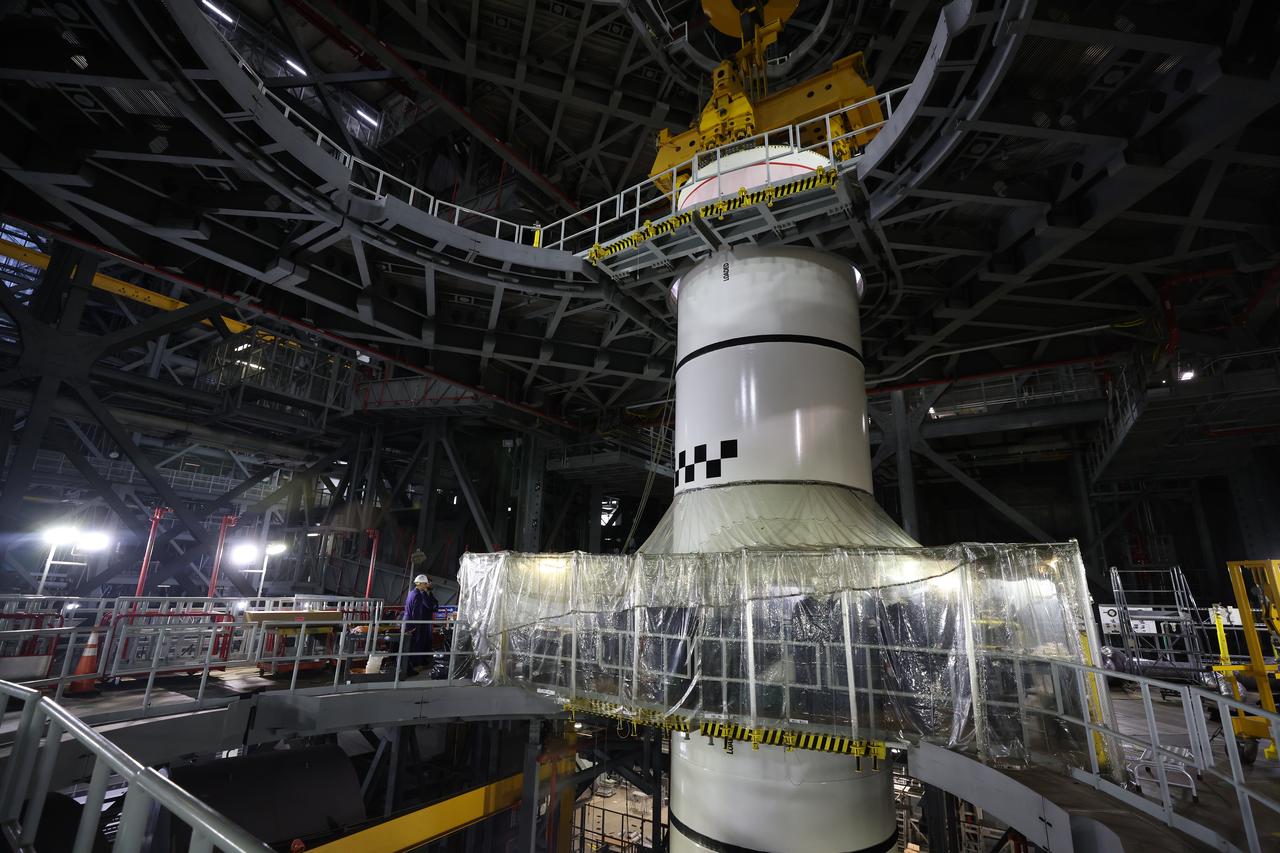
Engineers and technicians with the Exploration Ground Systems Program stack the next solid rocket booster segment, the left aft center, on the for the Artemis II SLS (Space Launch System) Moon rocket onto mobile launcher 1 inside the Vehicle Assembly Building’s High Bay 3 at NASA’s Kennedy Space Center on Thursday, Dec. 19, 2024. Once assembled, the boosters will help support the remaining rocket components and the Orion spacecraft during final assembly of the Artemis II Moon rocket and provide more than 75 percent of the total SLS thrust during liftoff from NASA Kennedy’s Launch Pad 39B.
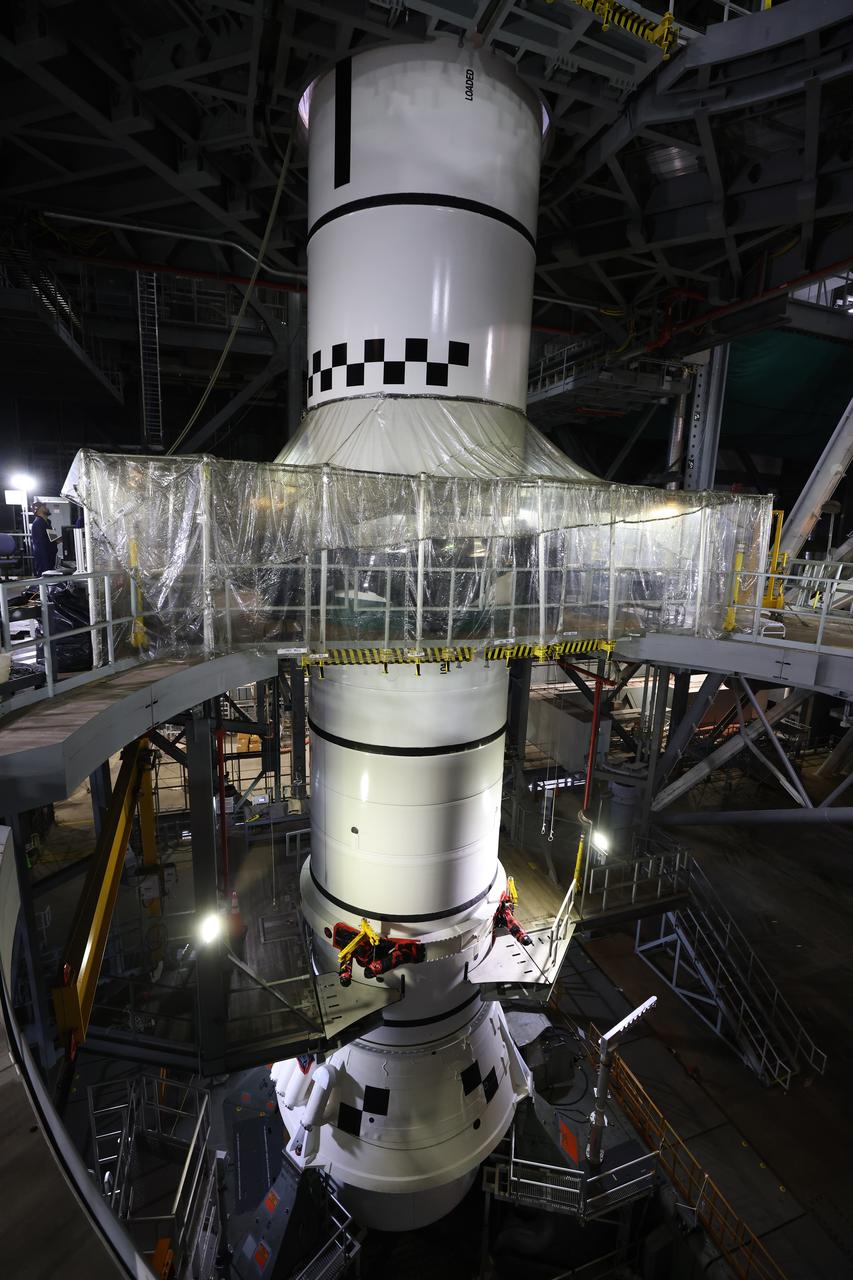
Engineers and technicians with the Exploration Ground Systems Program stack the next solid rocket booster segment, the left aft center, on the for the Artemis II SLS (Space Launch System) Moon rocket onto mobile launcher 1 inside the Vehicle Assembly Building’s High Bay 3 at NASA’s Kennedy Space Center on Thursday, Dec. 19, 2024. Once assembled, the boosters will help support the remaining rocket components and the Orion spacecraft during final assembly of the Artemis II Moon rocket and provide more than 75 percent of the total SLS thrust during liftoff from NASA Kennedy’s Launch Pad 39B.
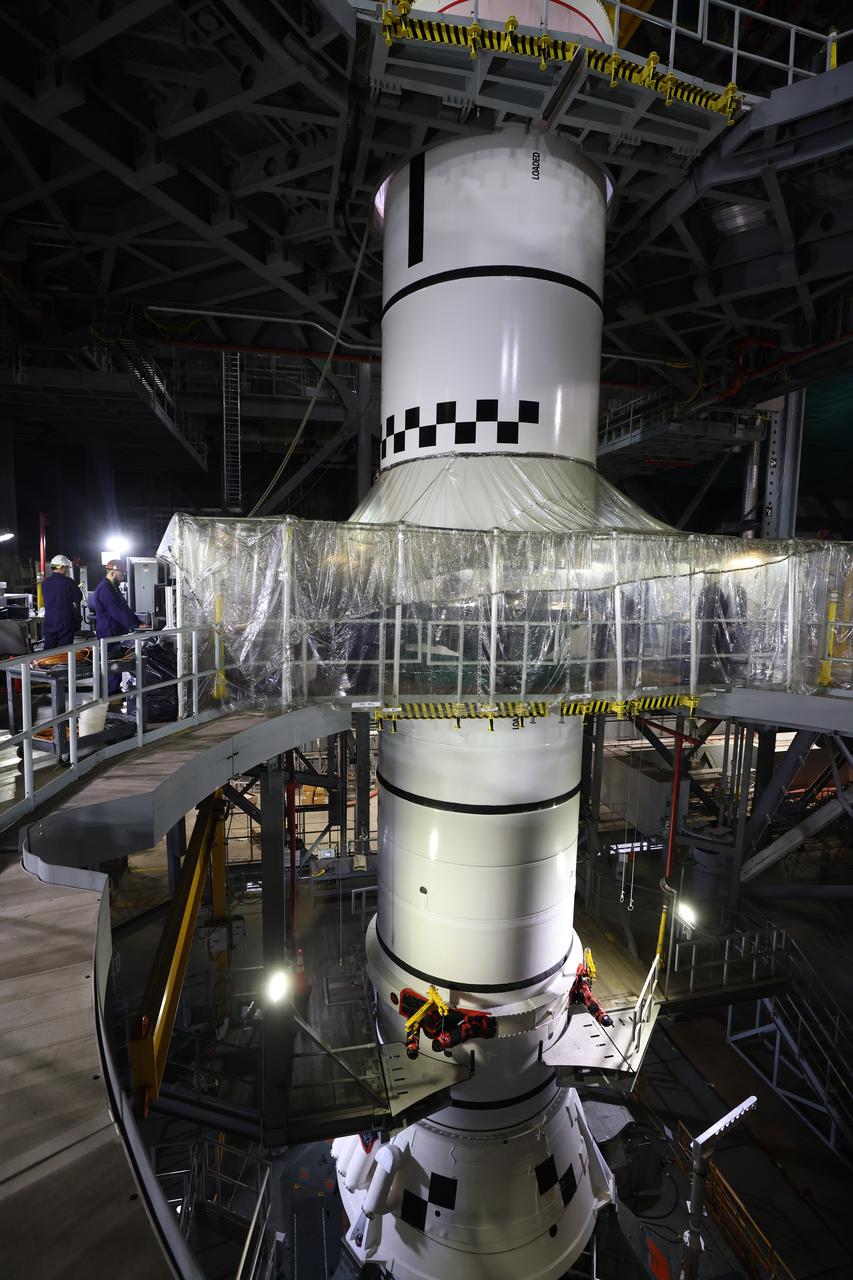
Engineers and technicians with the Exploration Ground Systems Program stack the next solid rocket booster segment, the left aft center, on the for the Artemis II SLS (Space Launch System) Moon rocket onto mobile launcher 1 inside the Vehicle Assembly Building’s High Bay 3 at NASA’s Kennedy Space Center on Thursday, Dec. 19, 2024. Once assembled, the boosters will help support the remaining rocket components and the Orion spacecraft during final assembly of the Artemis II Moon rocket and provide more than 75 percent of the total SLS thrust during liftoff from NASA Kennedy’s Launch Pad 39B.

Engineers and technicians with the Exploration Ground Systems Program stack the next solid rocket booster segment, the left aft center, on the for the Artemis II SLS (Space Launch System) Moon rocket onto mobile launcher 1 inside the Vehicle Assembly Building’s High Bay 3 at NASA’s Kennedy Space Center on Thursday, Dec. 19, 2024. Once assembled, the boosters will help support the remaining rocket components and the Orion spacecraft during final assembly of the Artemis II Moon rocket and provide more than 75 percent of the total SLS thrust during liftoff from NASA Kennedy’s Launch Pad 39B.
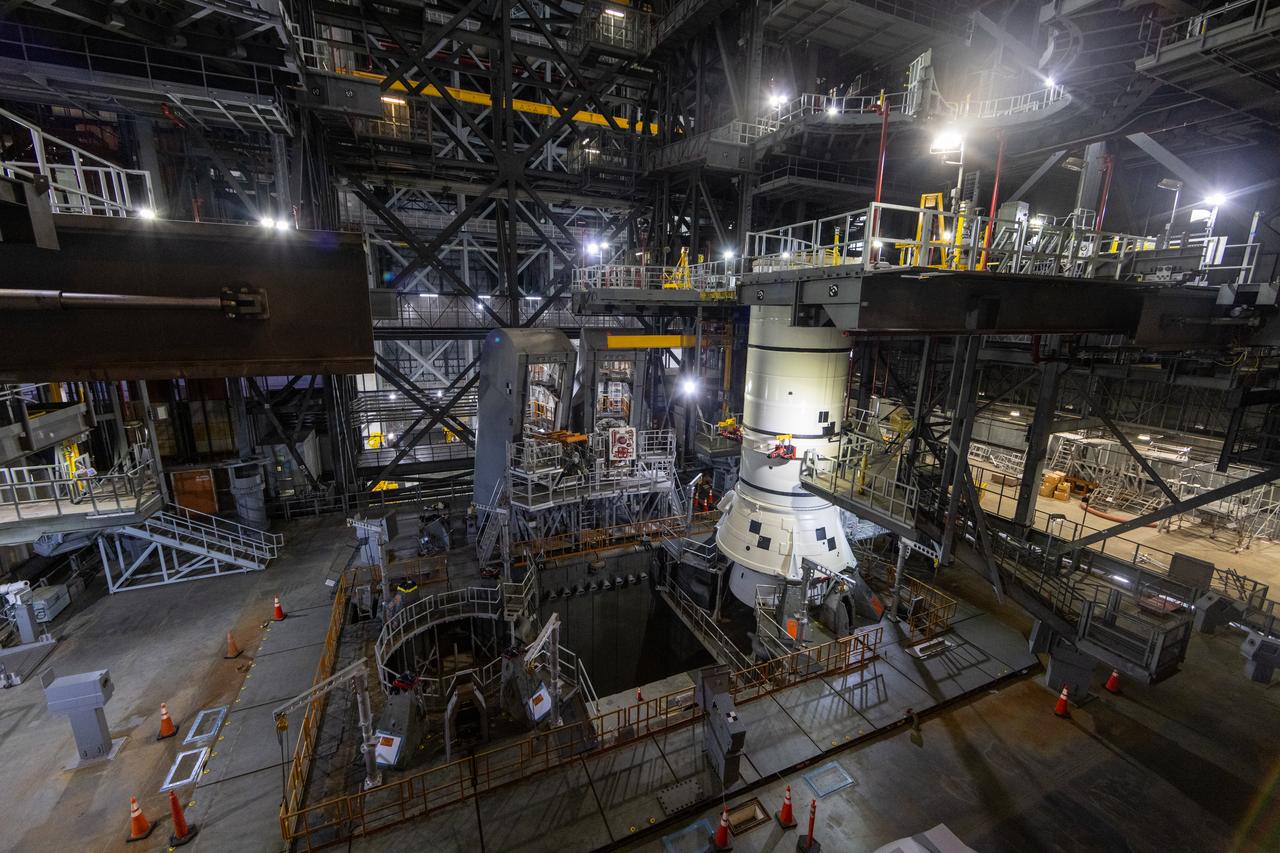
Engineers and technicians with the Exploration Ground Systems Program stack the first Moon rocket segment – the left aft assembly for the Artemis II SLS (Space Launch System) solid rocket booster onto mobile launcher 1 inside the Vehicle Assembly Building at NASA’s Kennedy Space Center on Wednesday, Nov. 20, 2024. The first of 10 booster segments to be stacked, the boosters will help support the remaining rocket components and the Orion spacecraft during final assembly of the Artemis II Moon rocket and provide more than 75 percent of the total SLS thrust during liftoff from NASA Kennedy’s Launch Pad 39B.
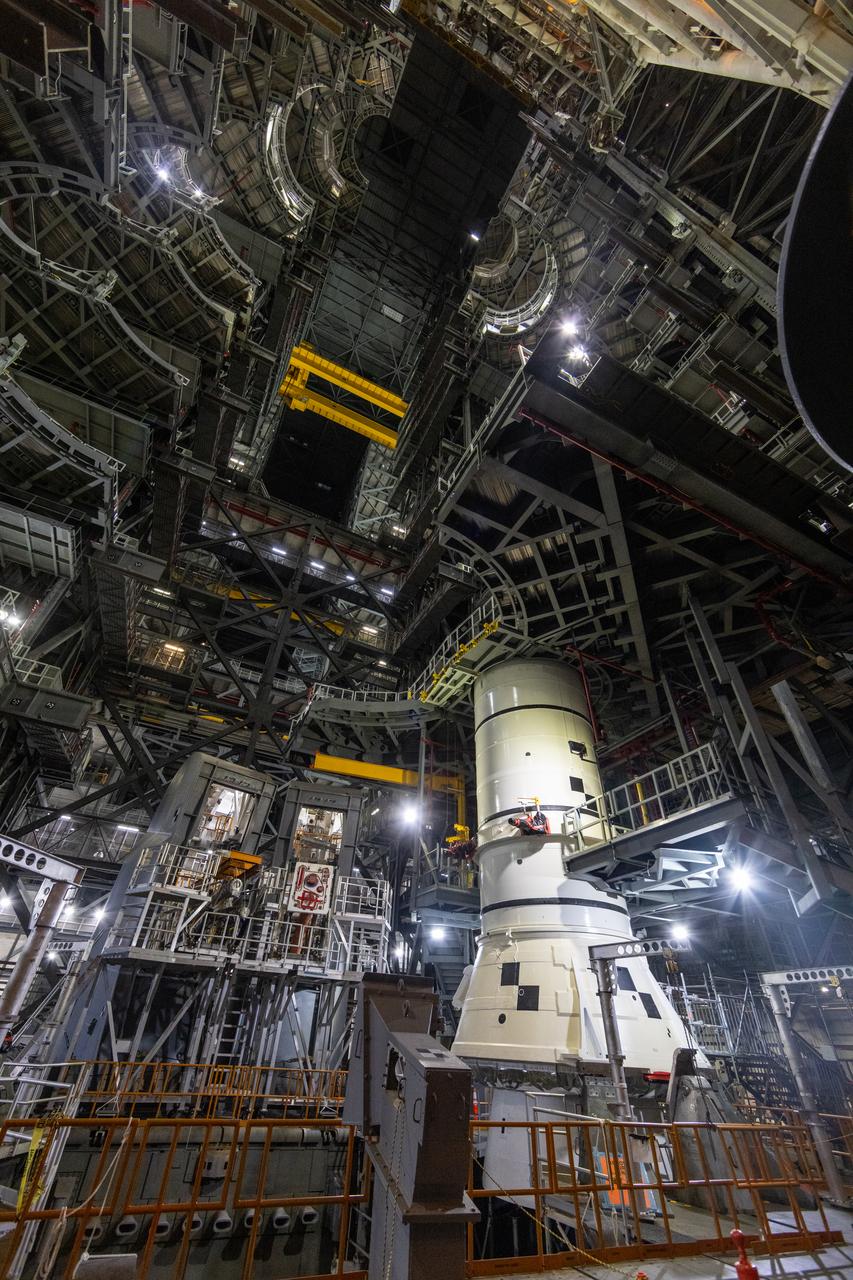
Engineers and technicians with the Exploration Ground Systems Program stack the first Moon rocket segment – the left aft assembly for the Artemis II SLS (Space Launch System) solid rocket booster onto mobile launcher 1 inside the Vehicle Assembly Building at NASA’s Kennedy Space Center on Wednesday, Nov. 20, 2024. The first of 10 booster segments to be stacked, the boosters will help support the remaining rocket components and the Orion spacecraft during final assembly of the Artemis II Moon rocket and provide more than 75 percent of the total SLS thrust during liftoff from NASA Kennedy’s Launch Pad 39B.

Engineers and technicians with NASA’s Exploration Ground Systems Program complete stacking of the first Moon rocket segments – the left and right aft assemblies for the agency’s Artemis II SLS (Space Launch System) solid rocket boosters – onto mobile launcher 1 inside the Vehicle Assembly Building at Kennedy Space Center on Friday, Nov. 22, 2024. The first two of 10 booster segments to be stacked, the boosters will help support the remaining rocket components and the Orion spacecraft during final assembly of the Artemis II Moon rocket and provide more than 75 percent of the total SLS thrust during liftoff from NASA Kennedy’s Launch Pad 39B.
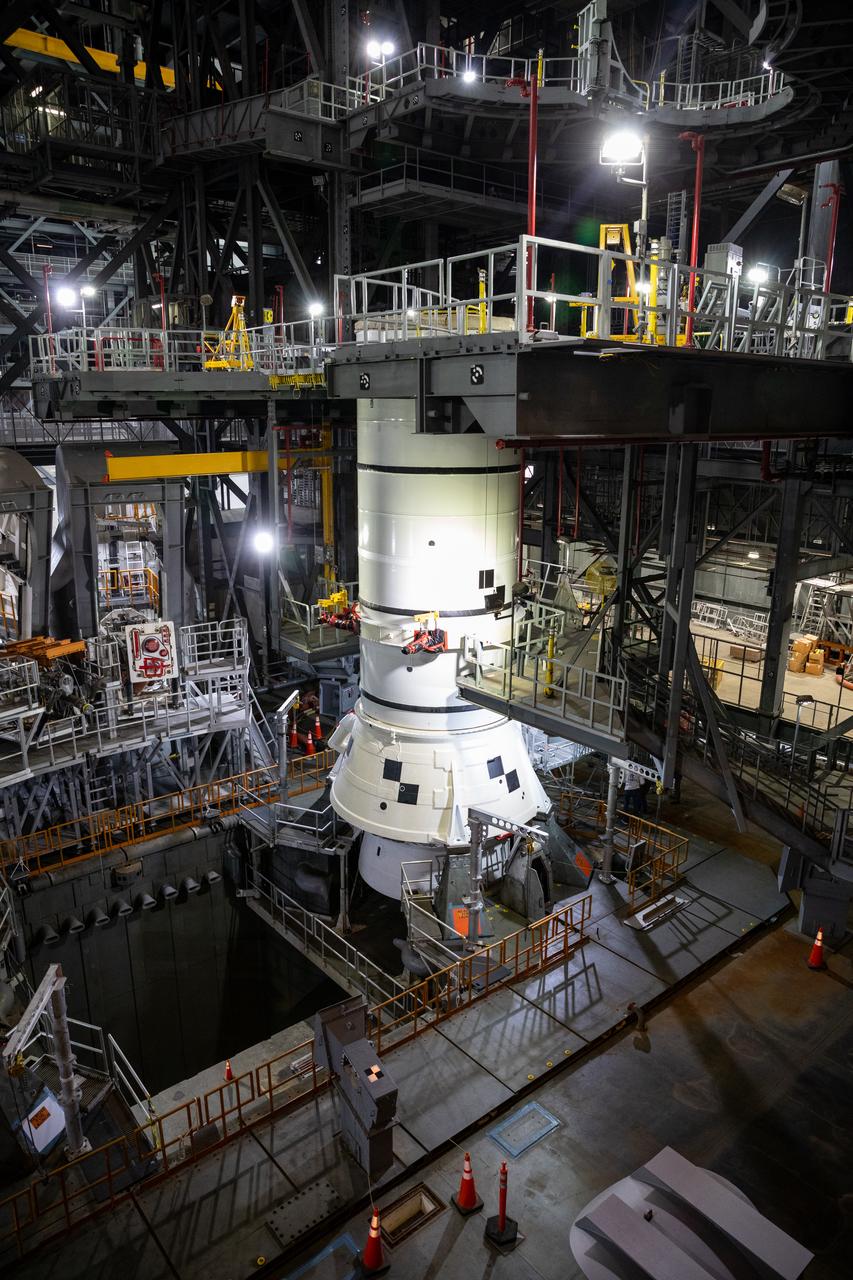
Engineers and technicians with the Exploration Ground Systems Program stack the first Moon rocket segment – the left aft assembly for the Artemis II SLS (Space Launch System) solid rocket booster onto mobile launcher 1 inside the Vehicle Assembly Building at NASA’s Kennedy Space Center on Wednesday, Nov. 20, 2024. The first of 10 booster segments to be stacked, the boosters will help support the remaining rocket components and the Orion spacecraft during final assembly of the Artemis II Moon rocket and provide more than 75 percent of the total SLS thrust during liftoff from NASA Kennedy’s Launch Pad 39B.

Engineers and technicians with NASA’s Exploration Ground Systems Program complete stacking of the first Moon rocket segments – the left and right aft assemblies for the agency’s Artemis II SLS (Space Launch System) solid rocket boosters – onto mobile launcher 1 inside the Vehicle Assembly Building at Kennedy Space Center on Friday, Nov. 22, 2024. The first two of 10 booster segments to be stacked, the boosters will help support the remaining rocket components and the Orion spacecraft during final assembly of the Artemis II Moon rocket and provide more than 75 percent of the total SLS thrust during liftoff from NASA Kennedy’s Launch Pad 39B.
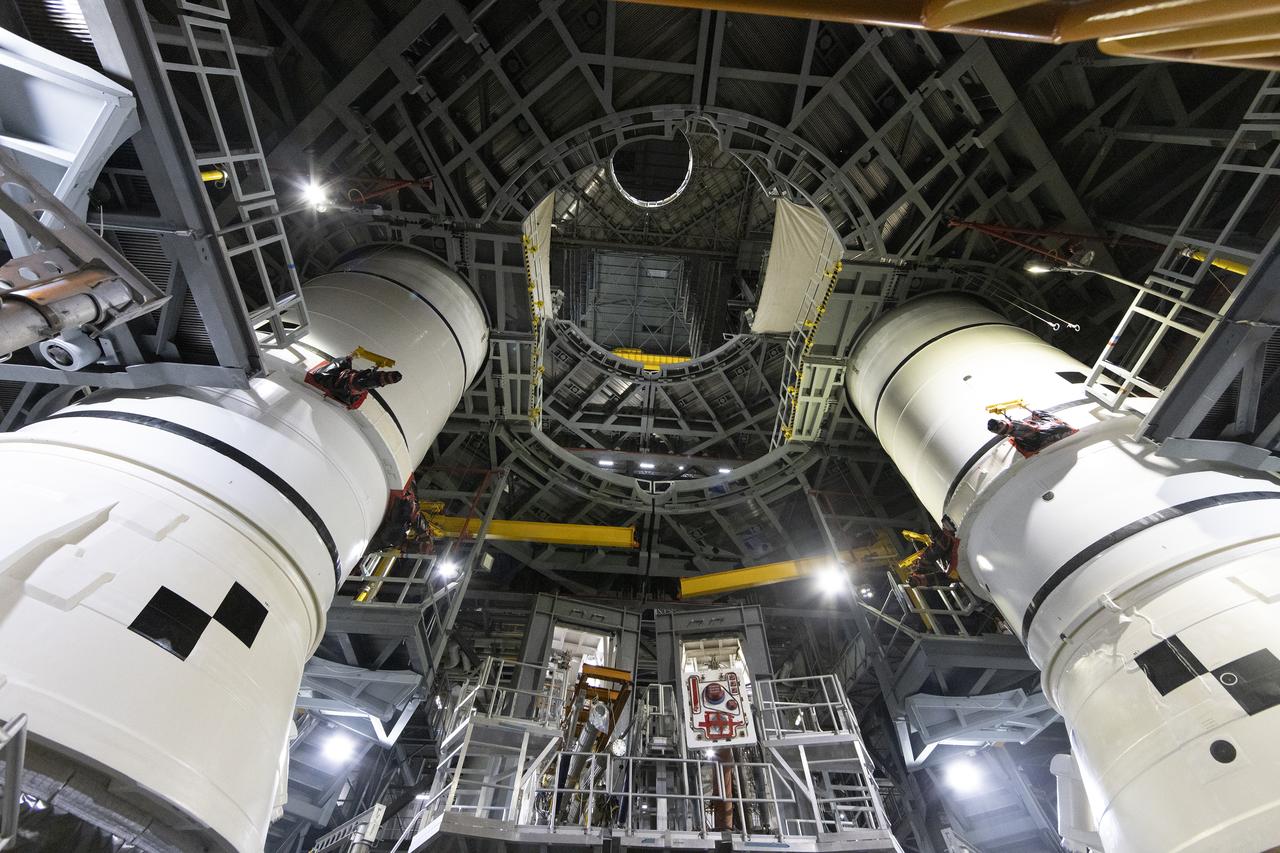
Engineers and technicians with NASA’s Exploration Ground Systems Program complete stacking of the first Moon rocket segments – the left and right aft assemblies for the agency’s Artemis II SLS (Space Launch System) solid rocket boosters – onto mobile launcher 1 inside the Vehicle Assembly Building at Kennedy Space Center on Friday, Nov. 22, 2024. The first two of 10 booster segments to be stacked, the boosters will help support the remaining rocket components and the Orion spacecraft during final assembly of the Artemis II Moon rocket and provide more than 75 percent of the total SLS thrust during liftoff from NASA Kennedy’s Launch Pad 39B.
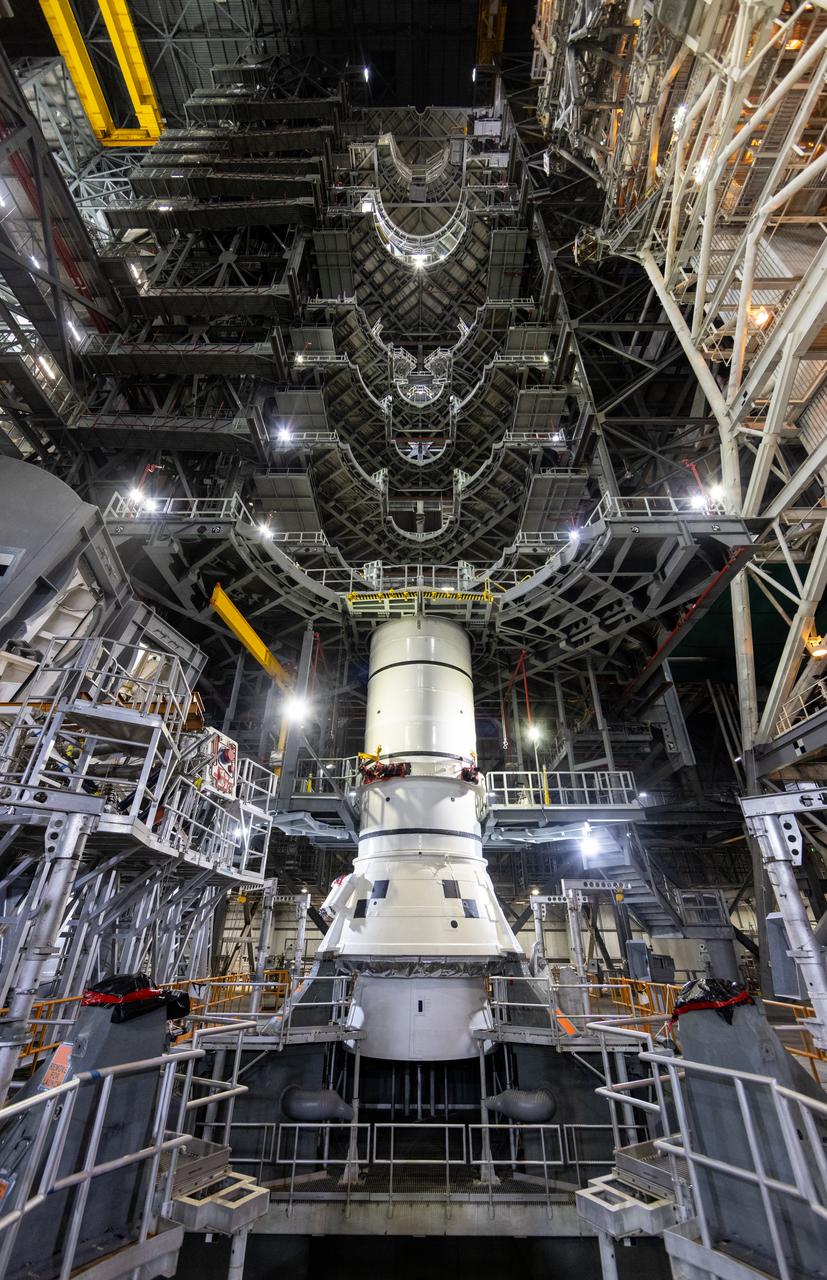
Engineers and technicians with the Exploration Ground Systems Program stack the first Moon rocket segment – the left aft assembly for the Artemis II SLS (Space Launch System) solid rocket booster onto mobile launcher 1 inside the Vehicle Assembly Building at NASA’s Kennedy Space Center on Wednesday, Nov. 20, 2024. The first of 10 booster segments to be stacked, the boosters will help support the remaining rocket components and the Orion spacecraft during final assembly of the Artemis II Moon rocket and provide more than 75 percent of the total SLS thrust during liftoff from NASA Kennedy’s Launch Pad 39B.
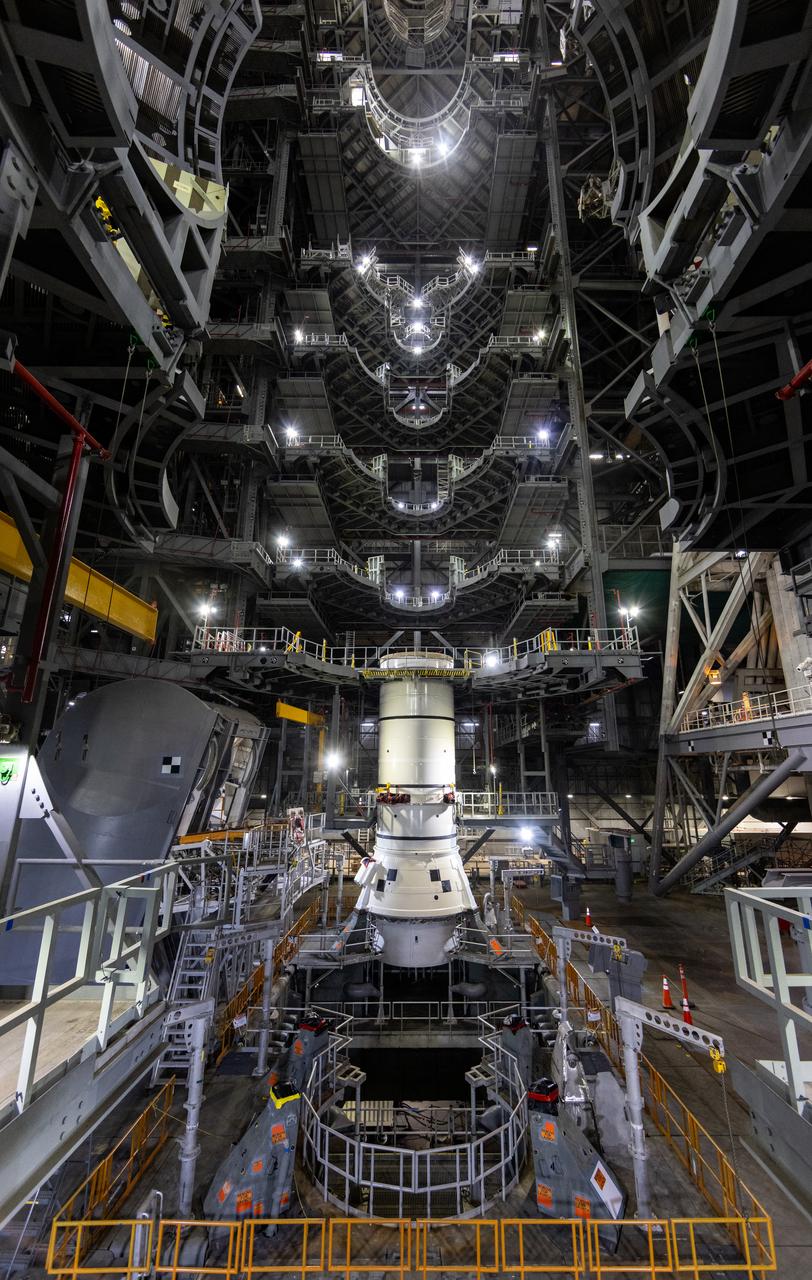
Engineers and technicians with the Exploration Ground Systems Program stack the first Moon rocket segment – the left aft assembly for the Artemis II SLS (Space Launch System) solid rocket booster onto mobile launcher 1 inside the Vehicle Assembly Building at NASA’s Kennedy Space Center on Wednesday, Nov. 20, 2024. The first of 10 booster segments to be stacked, the boosters will help support the remaining rocket components and the Orion spacecraft during final assembly of the Artemis II Moon rocket and provide more than 75 percent of the total SLS thrust during liftoff from NASA Kennedy’s Launch Pad 39B.
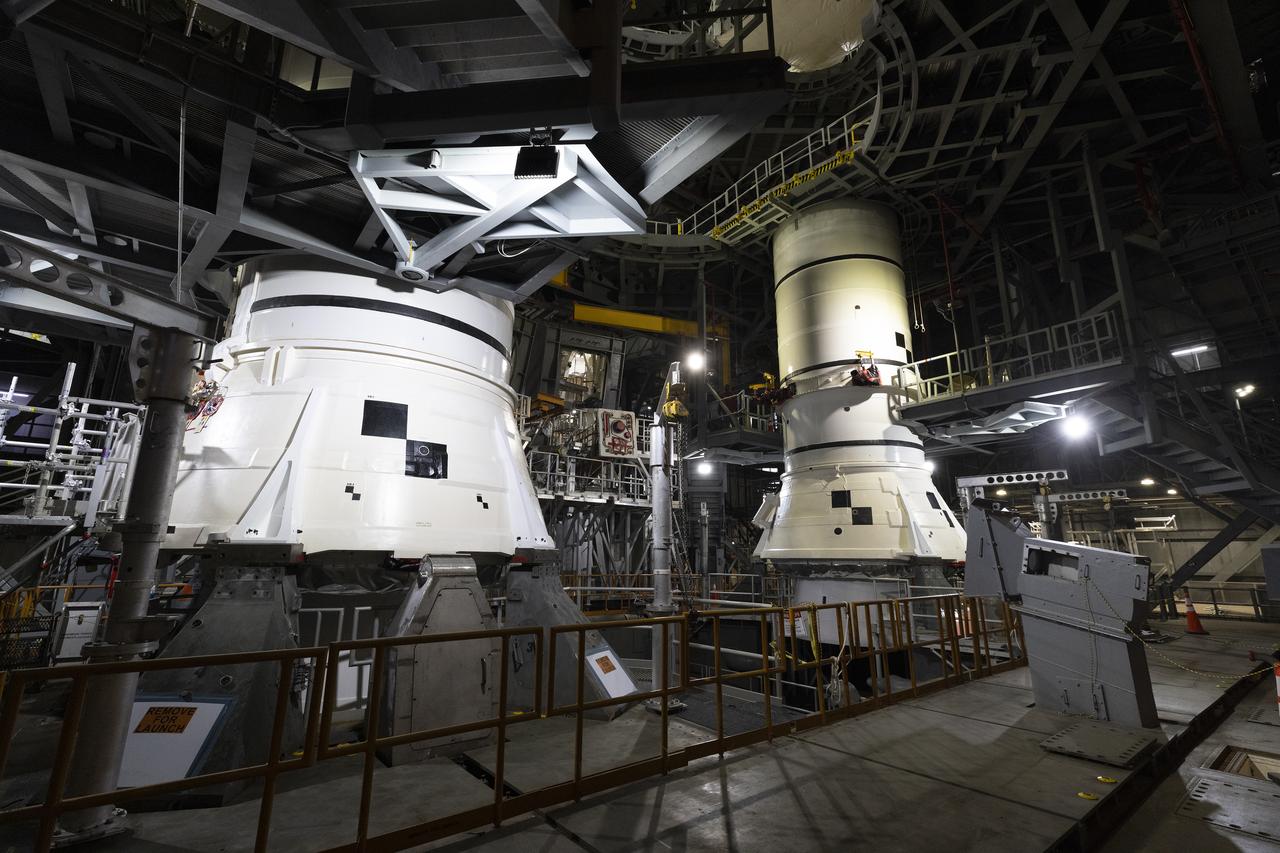
Engineers and technicians with NASA’s Exploration Ground Systems Program complete stacking of the first Moon rocket segments – the left and right aft assemblies for the agency’s Artemis II SLS (Space Launch System) solid rocket boosters – onto mobile launcher 1 inside the Vehicle Assembly Building at Kennedy Space Center on Friday, Nov. 22, 2024. The first two of 10 booster segments to be stacked, the boosters will help support the remaining rocket components and the Orion spacecraft during final assembly of the Artemis II Moon rocket and provide more than 75 percent of the total SLS thrust during liftoff from NASA Kennedy’s Launch Pad 39B.
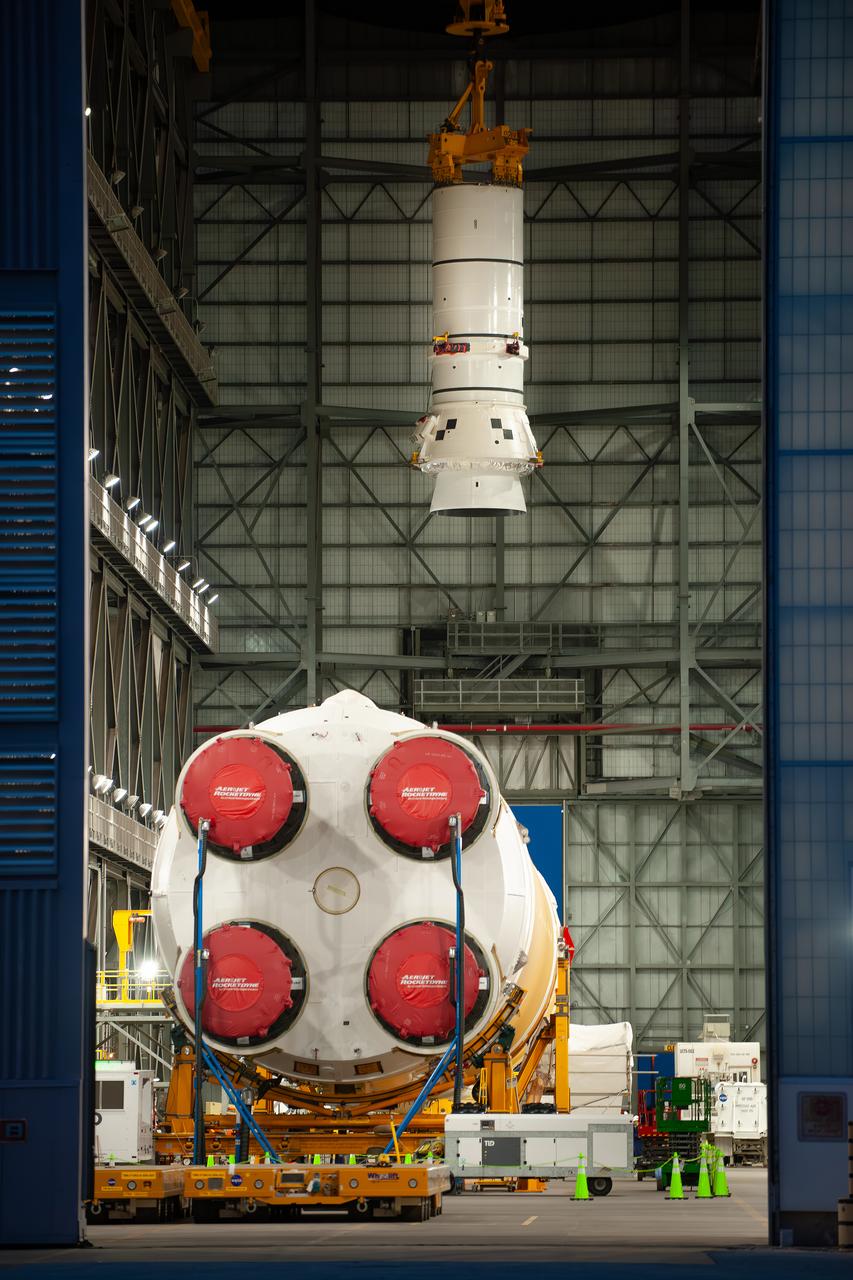
Down the transfer aisle from the Artemis II SLS (Space Launch System) core stage, an overhead crane hoists the left aft assembly, or bottom portion of the solid rocket boosters for the SLS Moon rocket inside the Vehicle Assembly Building at NASA’s Kennedy Space Center on Tuesday, Nov. 19, 2024. The crane will lift the aft assembly on top of the mobile launcher 1 followed by the right aft assembly and stack the remaining booster segments for the Artemis II mission.
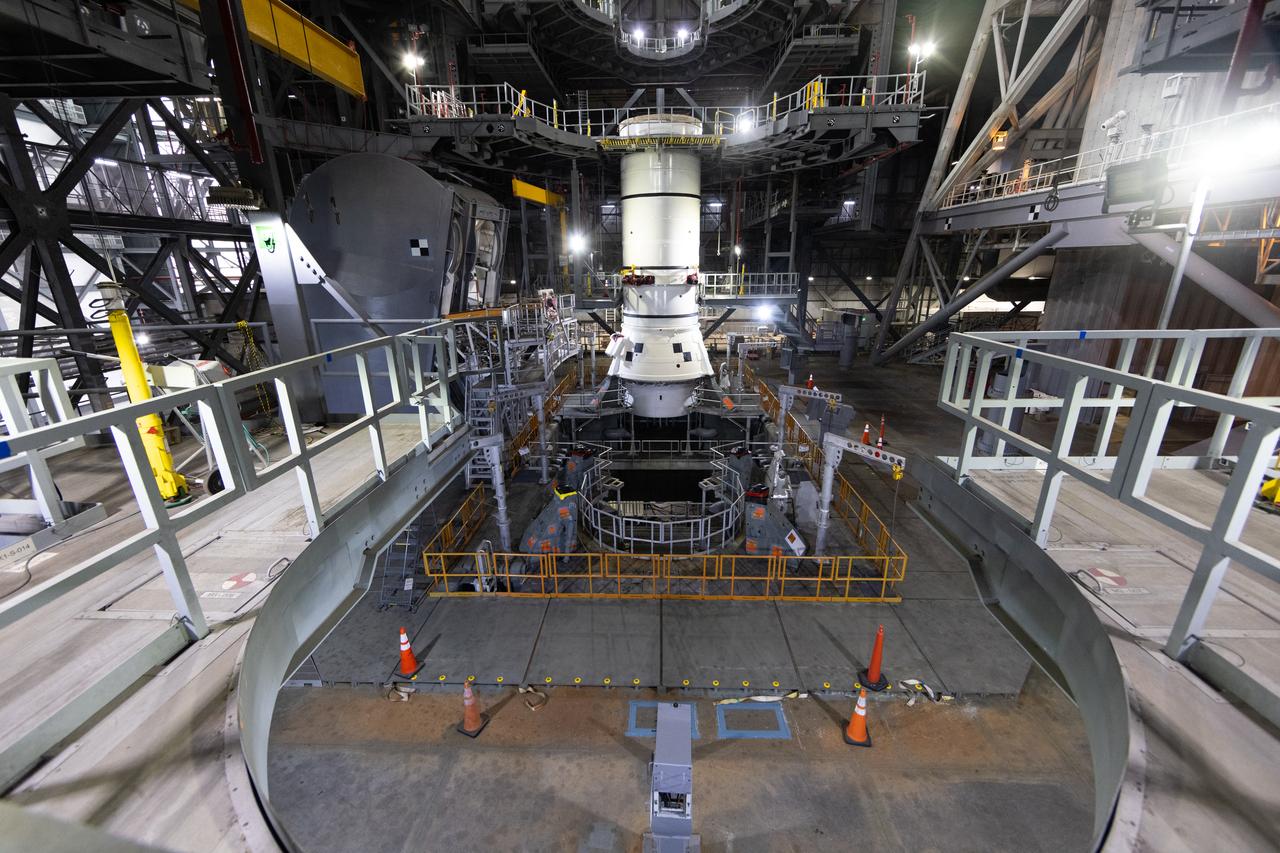
Engineers and technicians with the Exploration Ground Systems Program stack the first Moon rocket segment – the left aft assembly for the Artemis II SLS (Space Launch System) solid rocket booster onto mobile launcher 1 inside the Vehicle Assembly Building at NASA’s Kennedy Space Center on Wednesday, Nov. 20, 2024.
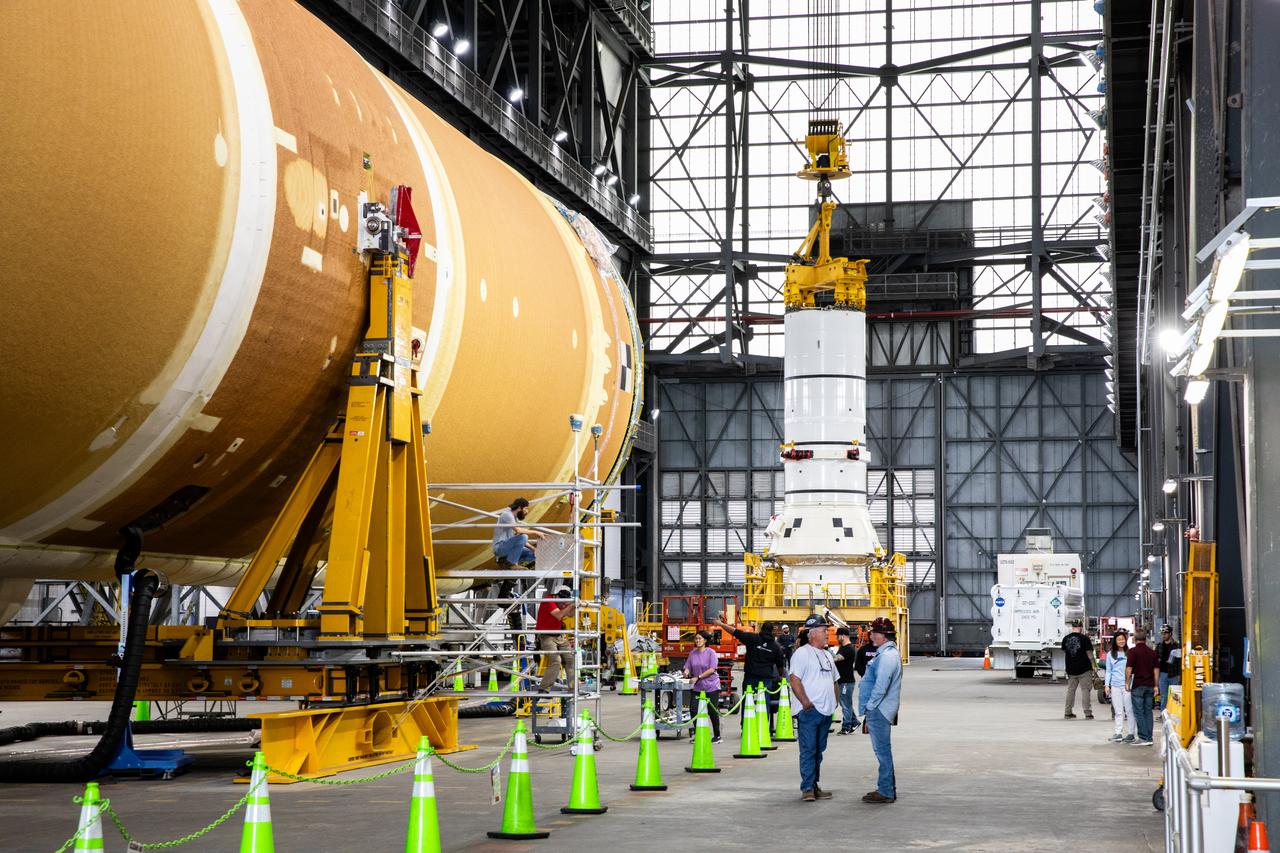
Down the transfer aisle from the Artemis II SLS (Space Launch System) core stage, engineers and technicians with the Exploration Ground Systems Program attach an overhead crane to the left aft assembly, or bottom portion of the solid rocket boosters for the SLS rocket, inside the Vehicle Assembly Building at NASA’s Kennedy Space Center on Tuesday, Nov. 19, 2024. The crane will lift the aft assembly on top of the mobile launcher 1 followed by the right aft assembly and stack the remaining booster segments for the Artemis II mission.
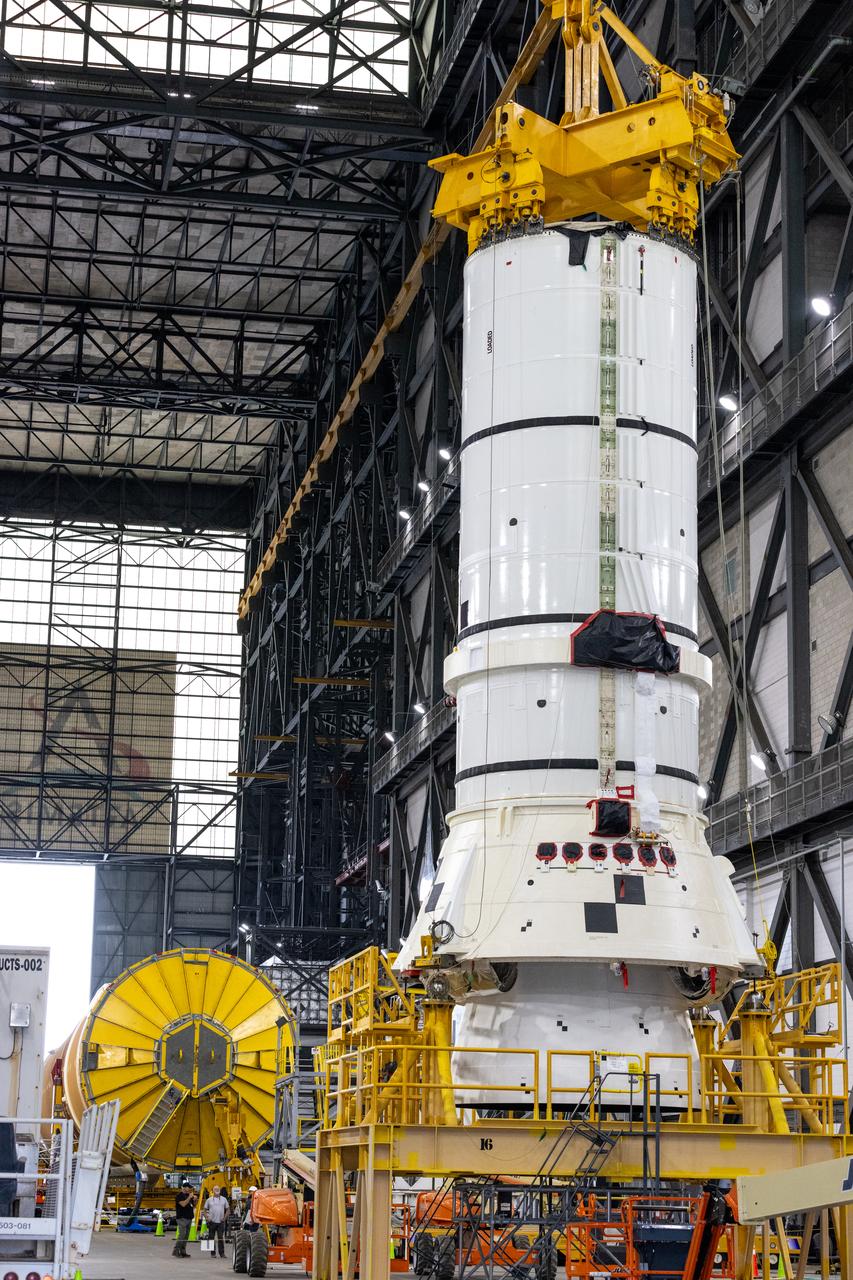
Down the transfer aisle from the Artemis II SLS (Space Launch System) core stage, engineers and technicians with the Exploration Ground Systems Program attach an overhead crane to the left aft assembly, or bottom portion of the solid rocket boosters for the SLS rocket inside the Vehicle Assembly Building at NASA’s Kennedy Space Center on Tuesday, Nov. 19, 2024. The crane will lift the aft assembly on top of the mobile launcher 1 followed by the right aft assembly and stack the remaining booster segments for the Artemis II mission.
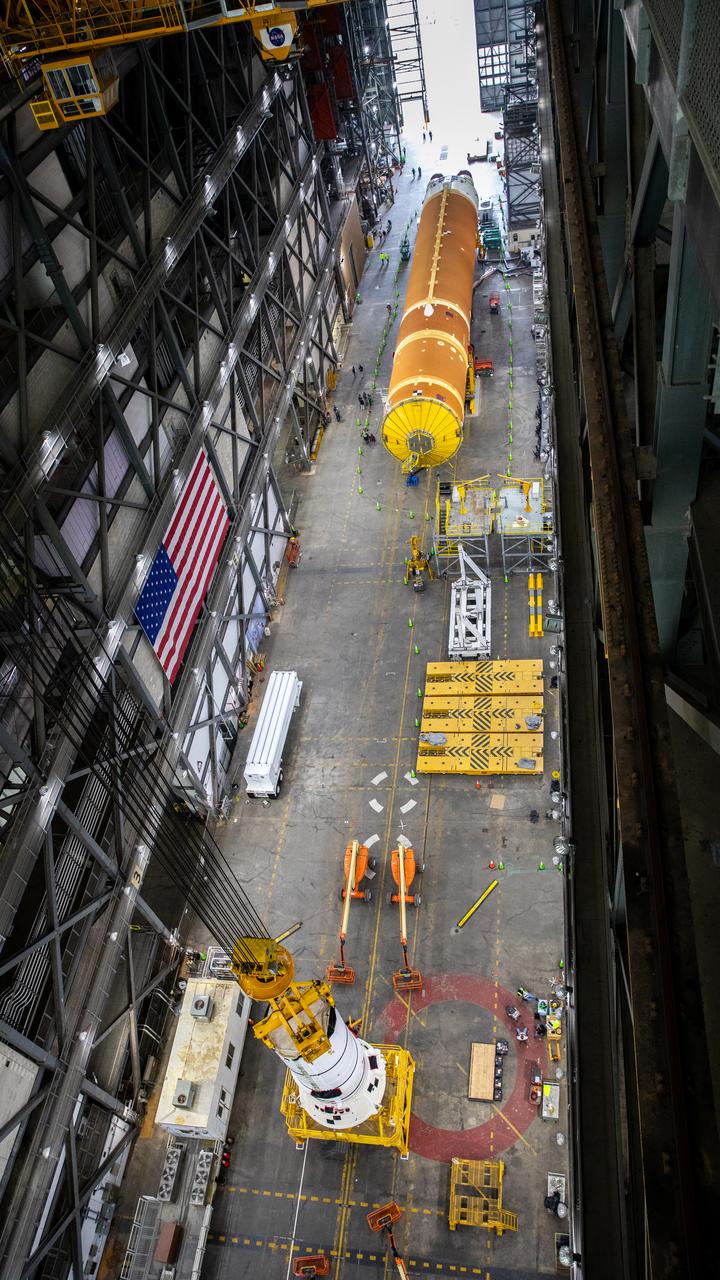
Down the transfer aisle from the Artemis II SLS (Space Launch System) core stage, engineers and technicians with the Exploration Ground Systems Program attach an overhead crane to the left aft assembly, or bottom portion of the solid rocket boosters for the SLS rocket inside the Vehicle Assembly Building at NASA’s Kennedy Space Center on Tuesday, Nov. 19, 2024. The crane will lift the aft assembly on top of the mobile launcher 1 followed by the right aft assembly and stack the remaining booster segments for the Artemis II mission.
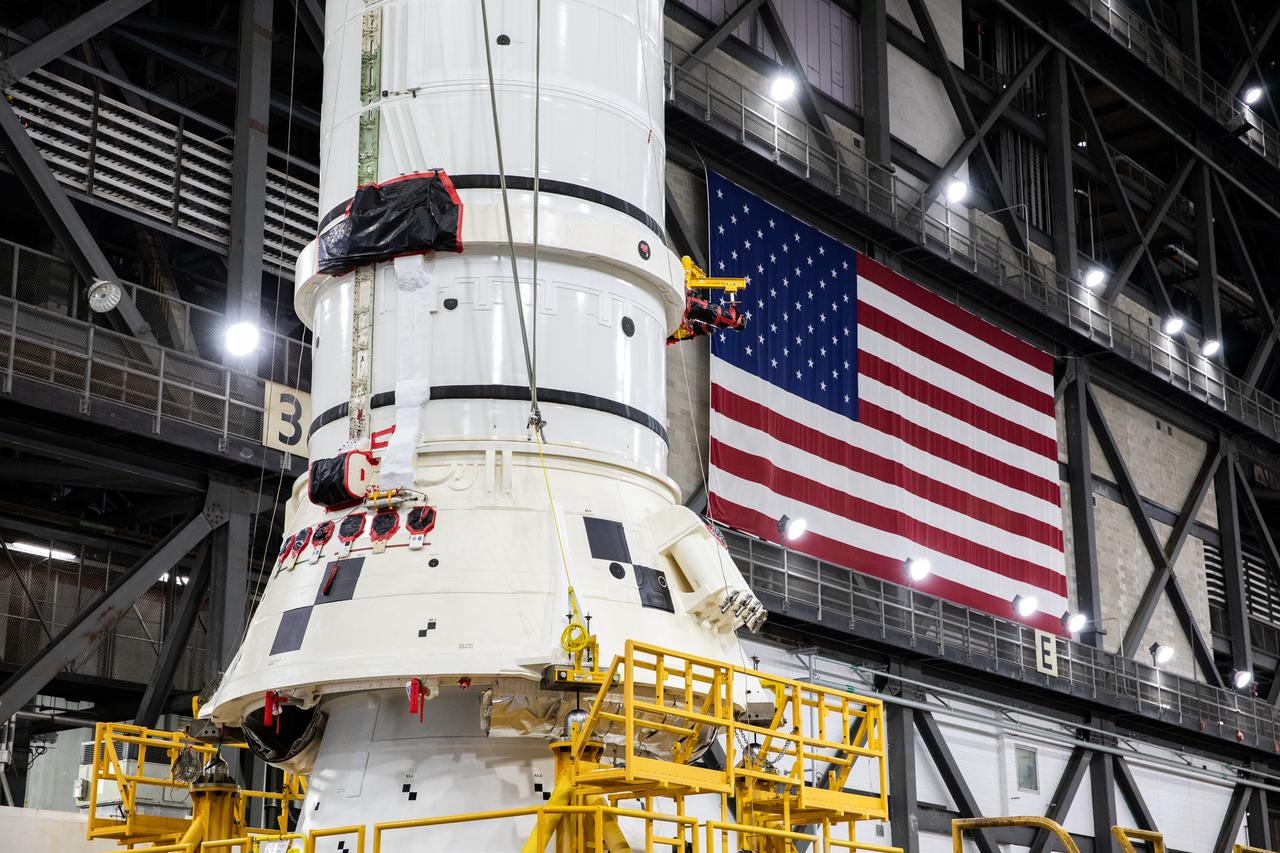
Engineers and technicians with the Exploration Ground Systems Program attach an overhead crane to the left aft assembly, or bottom portion of the solid rocket boosters for the SLS (Space Launch System) rocket, inside the Vehicle Assembly Building at NASA’s Kennedy Space Center on Tuesday, Nov. 19, 2024. The crane will lift the aft assembly on top of mobile launcher 1 followed by the right aft assembly and stack the remaining booster segments for the Artemis II mission.
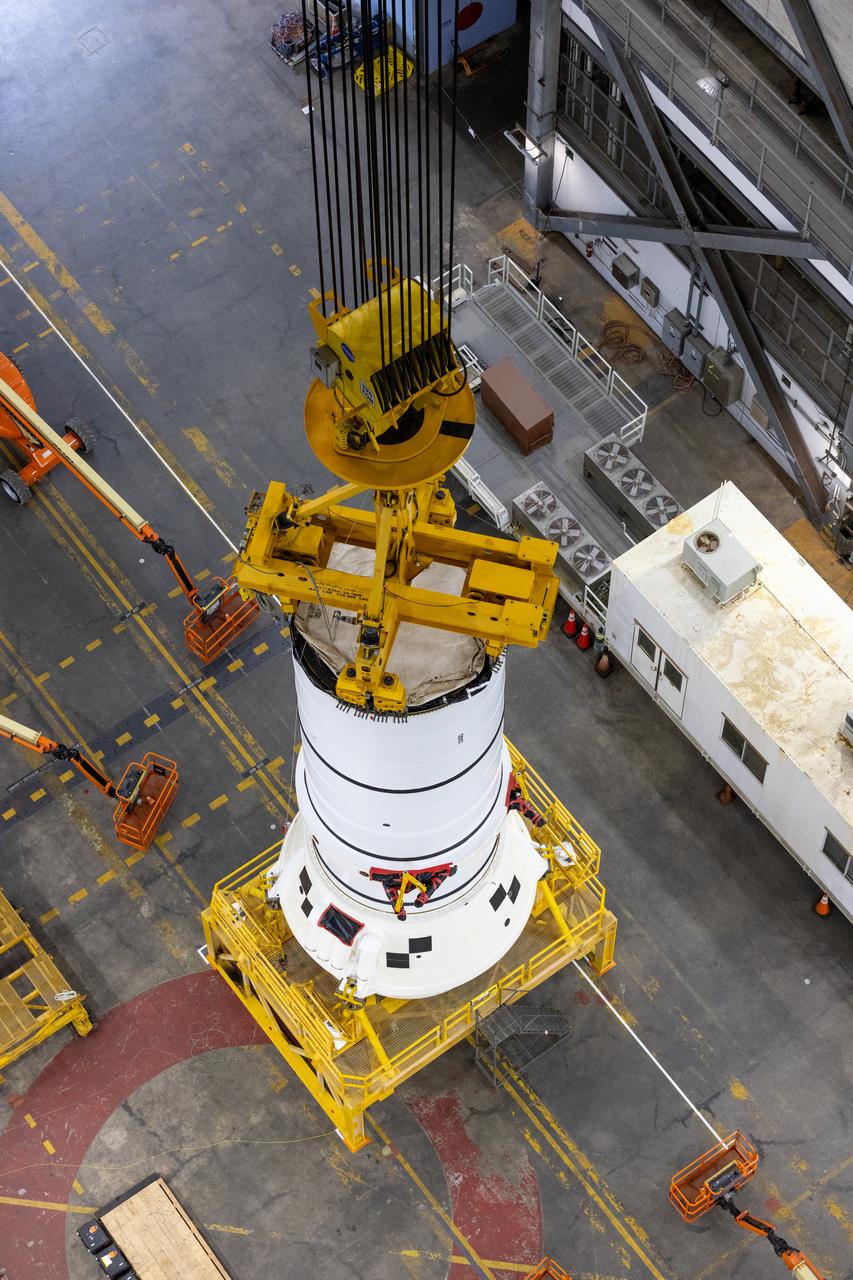
Engineers and technicians with the Exploration Ground Systems Program attach an overhead crane to the left aft assembly, or bottom portion of the solid rocket boosters for the SLS (Space Launch System) rocket inside the Vehicle Assembly Building at NASA’s Kennedy Space Center on Tuesday, Nov. 19, 2024. The crane will lift the aft assembly on top of mobile launcher 1 followed by the right aft assembly and stack the remaining booster segments for the Artemis II mission.
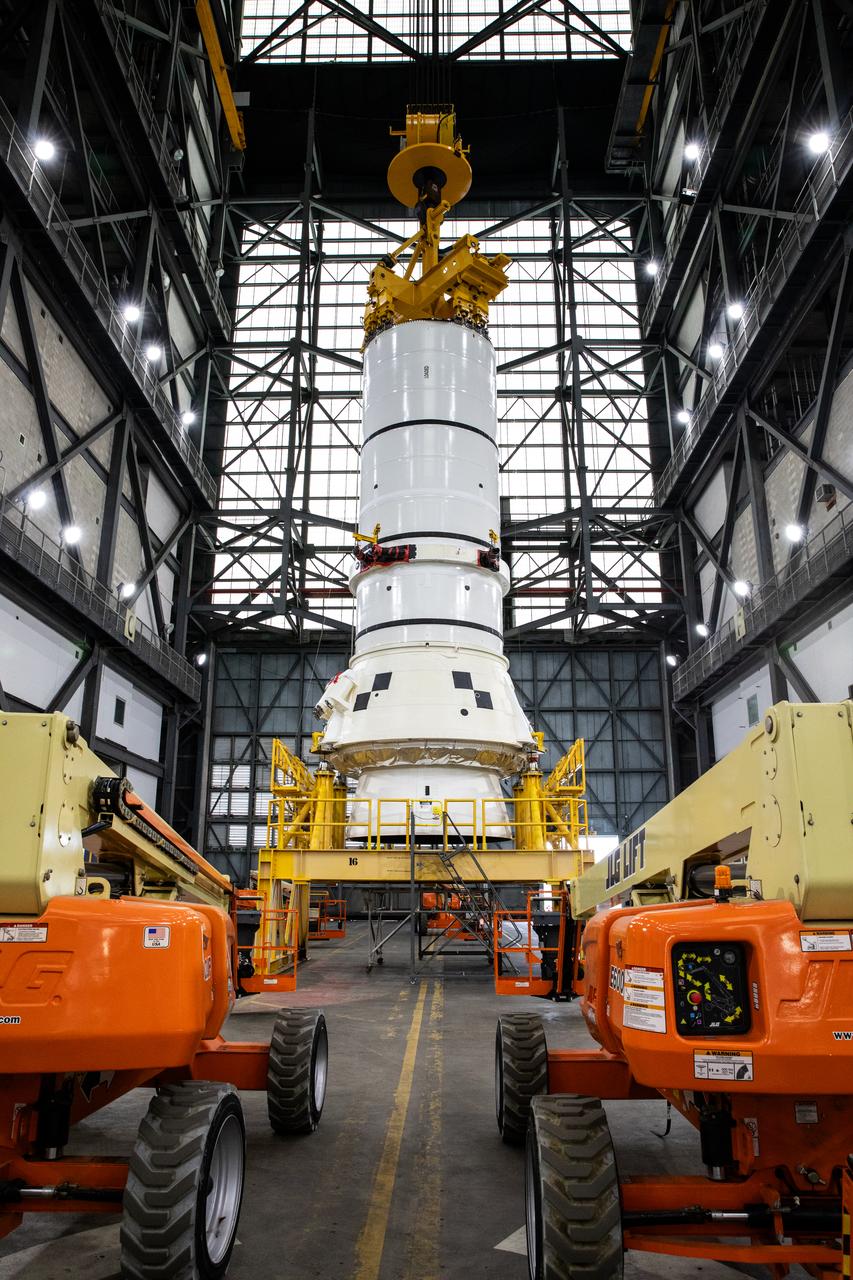
Engineers and technicians with the Exploration Ground Systems Program attach an overhead crane to the left aft assembly, or bottom portion of the solid rocket boosters for the SLS (Space Launch System) rocket, inside the Vehicle Assembly Building at NASA’s Kennedy Space Center on Tuesday, Nov. 19, 2024. The crane will lift the aft assembly on top of mobile launcher 1 followed by the right aft assembly and stack the remaining booster segments for the Artemis II mission.

Engineers and technicians with the Exploration Ground Systems Program attach an overhead crane to the left aft assembly, or bottom portion of the solid rocket boosters for the SLS (Space Launch System) rocket, inside the Vehicle Assembly Building at NASA’s Kennedy Space Center on Tuesday, Nov. 19, 2024. The crane will lift the aft assembly on top of mobile launcher 1 followed by the right aft assembly and stack the remaining booster segments for the Artemis II mission.
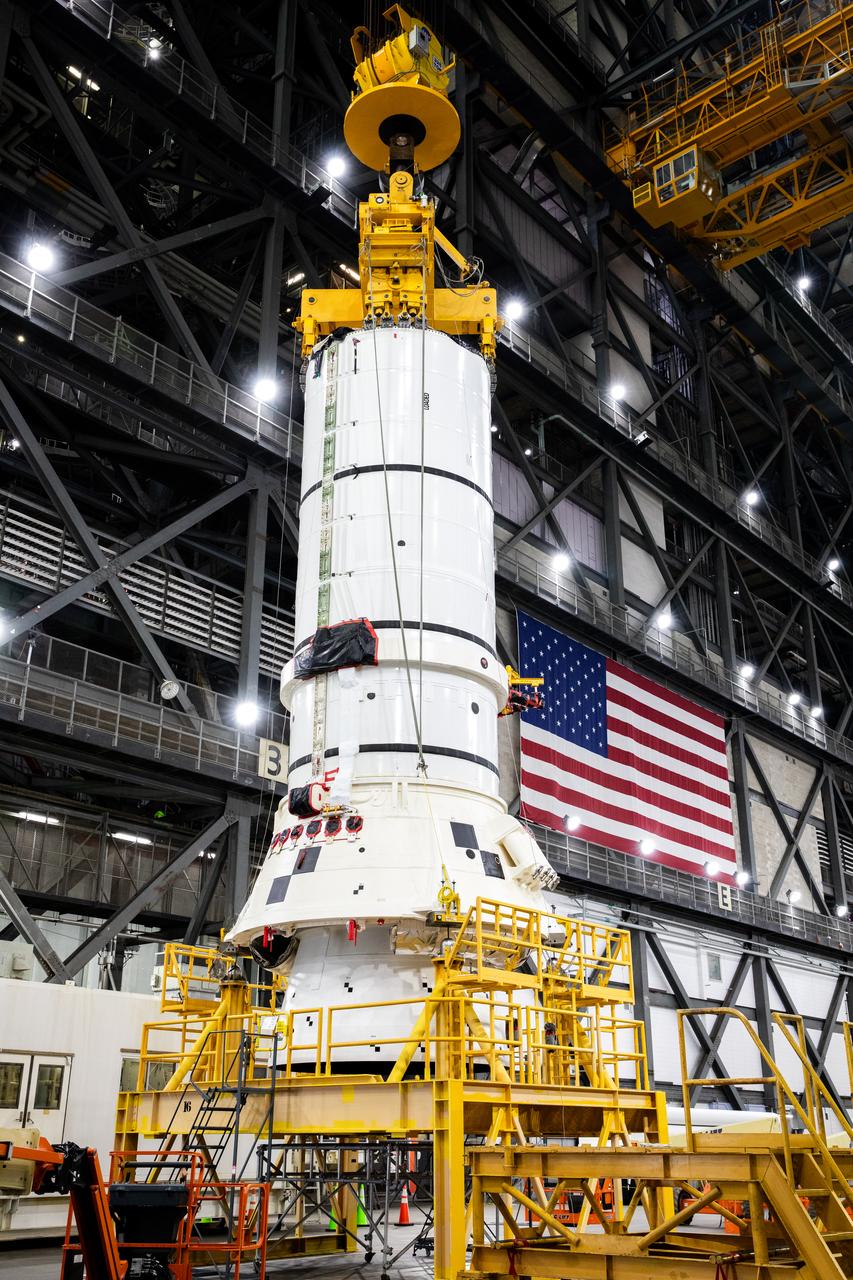
Engineers and technicians with the Exploration Ground Systems Program attach an overhead crane to the left aft assembly, or bottom portion of the solid rocket boosters for the SLS (Space Launch System) rocket, inside the Vehicle Assembly Building at NASA’s Kennedy Space Center on Tuesday, Nov. 19, 2024. The crane will lift the aft assembly on top of mobile launcher 1 followed by the right aft assembly and stack the remaining booster segments for the Artemis II mission.
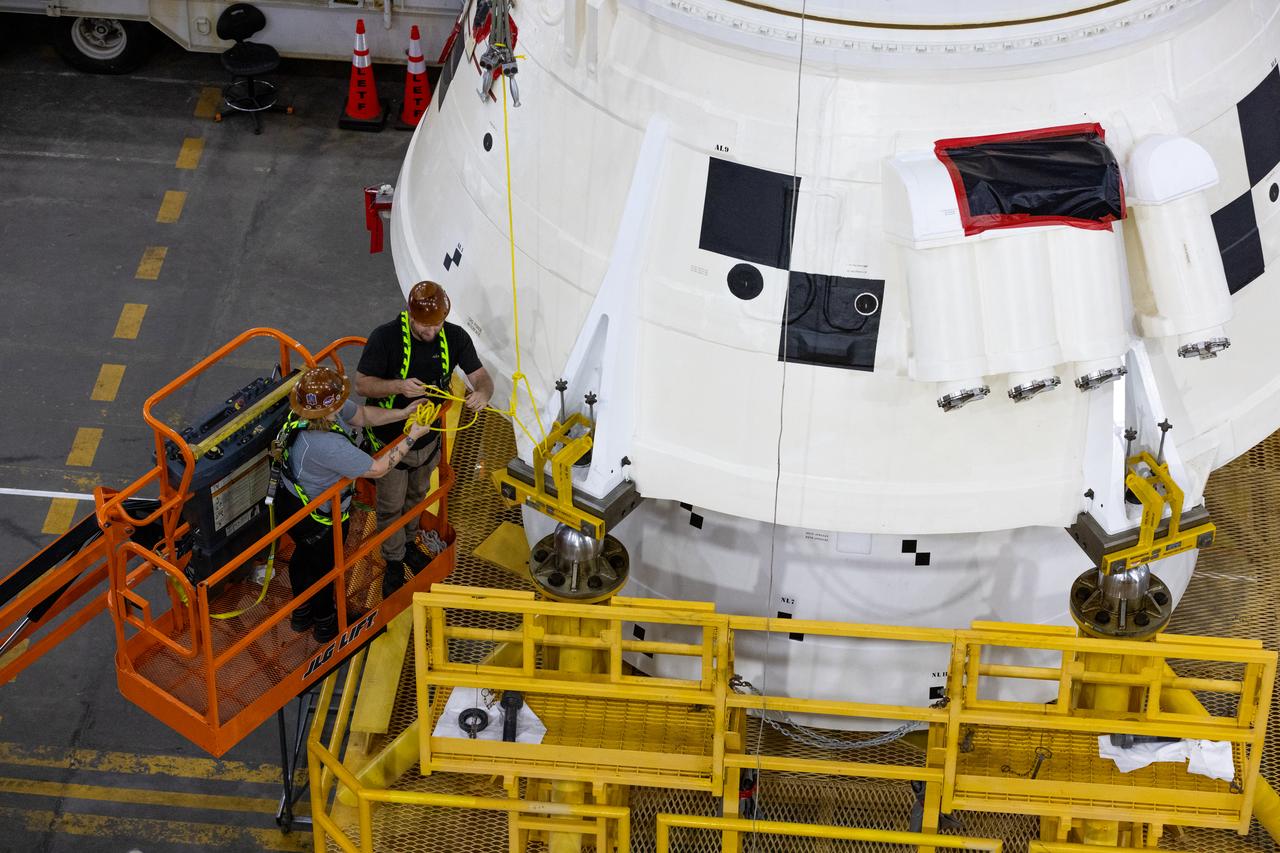
Engineers and technicians with the Exploration Ground Systems Program attach an overhead crane to the left aft assembly, or bottom portion of the solid rocket boosters for the SLS (Space Launch System) rocket, inside the Vehicle Assembly Building at NASA’s Kennedy Space Center on Tuesday, Nov. 19, 2024. The crane will lift the aft assembly on top of mobile launcher 1 followed by the right aft assembly and stack the remaining booster segments for the Artemis II mission.
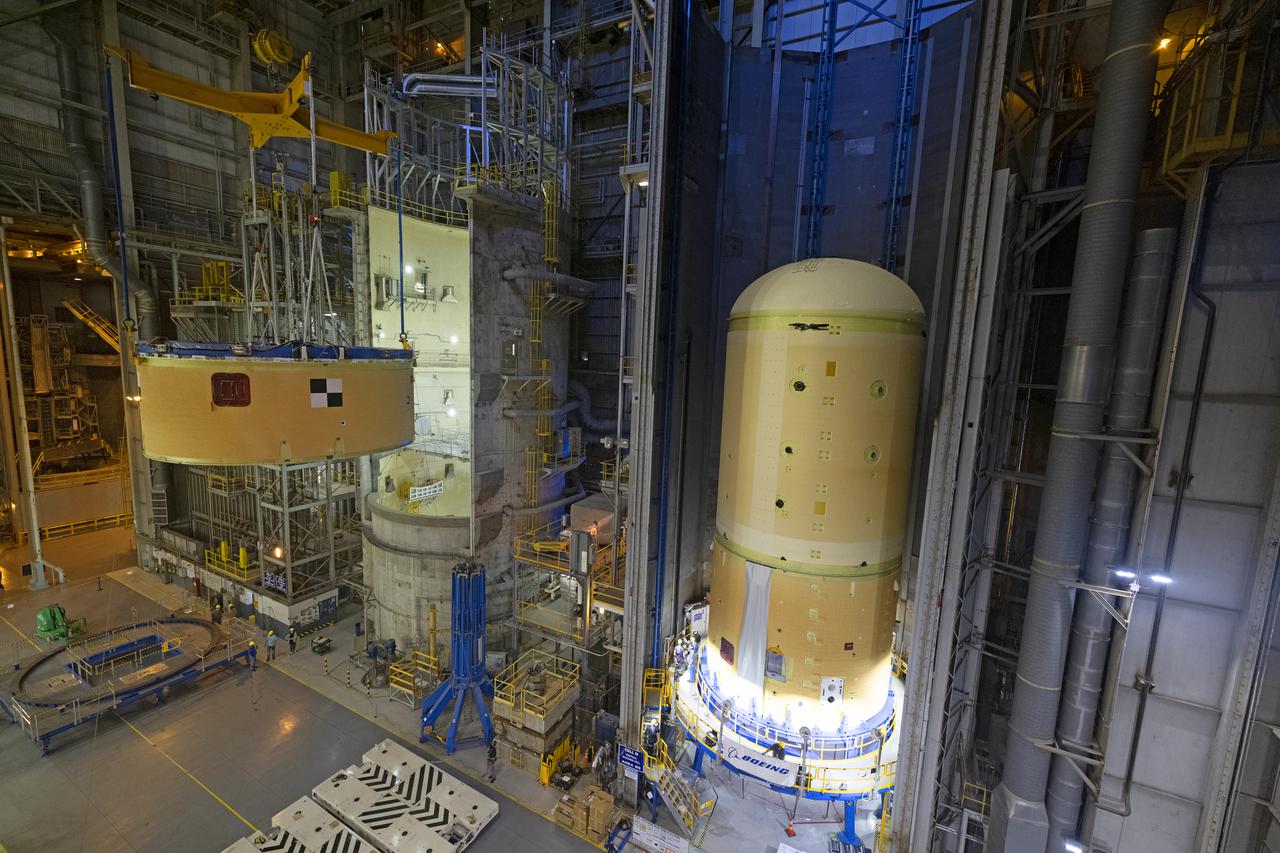
NASA’s Space Launch System (SLS) team fully stacked three hardware elements together May 24 to form the top of the rocket’s core stage for the Artemis II mission. NASA and core stage prime contractor Boeing connected the forward skirt with the liquid oxygen tank and intertank flight hardware inside an assembly area at NASA’s Michoud Assembly Facility in New Orleans. Teams had previously stacked the liquid oxygen tank and intertank on April 28. The joining of the three structures together is the first major assembly of core stage hardware for Artemis II, the first crewed Artemis mission and second flight of the SLS rocket. Next, technicians will work to complete outfitting and integrating the systems within the upper structure. At 66 feet tall, the upper part of the stage is just a fraction of the entire core stage. The fully-assembled, 212-foot-tall rocket stage consists of five hardware elements, including two liquid propellant tanks and four RS-25 engines. The liquid oxygen tank in the upper portion of the stage will hold 196,000 gallons of liquid oxygen cooled to minus 297 degrees Fahrenheit. Meanwhile, the forward skirt and intertank house avionics, flight computer, and electronic systems for the rocket stage. Together, the core stage and its four RS-25 engines will provide more than 2 million pounds of thrust to help send Artemis II astronauts beyond Earth’s orbit to lunar orbit. With Artemis, NASA will land the first woman and the first person of color on the Moon and establish sustainable exploration in preparation for missions to Mars. SLS and NASA’s Orion spacecraft, along with the commercial human landing system and the Gateway in orbit around the Moon, are NASA’s backbone for deep space exploration. SLS is the only rocket that can send Orion, astronauts, and supplies to the Moon in a single mission. Image credit: NASA/Michael DeMocker

NASA’s Space Launch System (SLS) team fully stacked three hardware elements together May 24 to form the top of the rocket’s core stage for the Artemis II mission. NASA and core stage prime contractor Boeing connected the forward skirt with the liquid oxygen tank and intertank flight hardware inside an assembly area at NASA’s Michoud Assembly Facility in New Orleans. Teams had previously stacked the liquid oxygen tank and intertank on April 28. The joining of the three structures together is the first major assembly of core stage hardware for Artemis II, the first crewed Artemis mission and second flight of the SLS rocket. Next, technicians will work to complete outfitting and integrating the systems within the upper structure. At 66 feet tall, the upper part of the stage is just a fraction of the entire core stage. The fully-assembled, 212-foot-tall rocket stage consists of five hardware elements, including two liquid propellant tanks and four RS-25 engines. The liquid oxygen tank in the upper portion of the stage will hold 196,000 gallons of liquid oxygen cooled to minus 297 degrees Fahrenheit. Meanwhile, the forward skirt and intertank house avionics, flight computer, and electronic systems for the rocket stage. Together, the core stage and its four RS-25 engines will provide more than 2 million pounds of thrust to help send Artemis II astronauts beyond Earth’s orbit to lunar orbit. With Artemis, NASA will land the first woman and the first person of color on the Moon and establish sustainable exploration in preparation for missions to Mars. SLS and NASA’s Orion spacecraft, along with the commercial human landing system and the Gateway in orbit around the Moon, are NASA’s backbone for deep space exploration. SLS is the only rocket that can send Orion, astronauts, and supplies to the Moon in a single mission. Image credit: NASA/Eric Bordelon
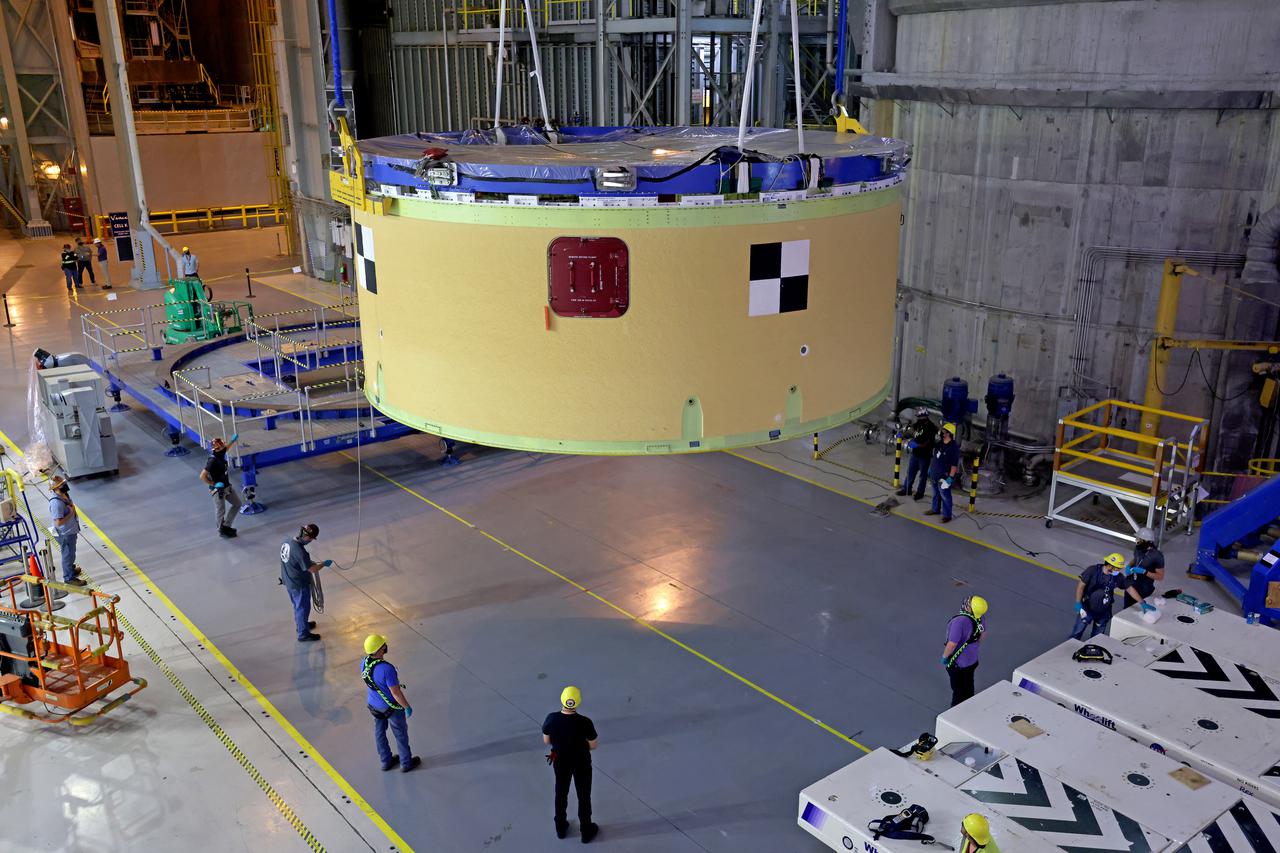
NASA’s Space Launch System (SLS) team fully stacked three hardware elements together May 24 to form the top of the rocket’s core stage for the Artemis II mission. NASA and core stage prime contractor Boeing connected the forward skirt with the liquid oxygen tank and intertank flight hardware inside an assembly area at NASA’s Michoud Assembly Facility in New Orleans. Teams had previously stacked the liquid oxygen tank and intertank on April 28. The joining of the three structures together is the first major assembly of core stage hardware for Artemis II, the first crewed Artemis mission and second flight of the SLS rocket. Next, technicians will work to complete outfitting and integrating the systems within the upper structure. At 66 feet tall, the upper part of the stage is just a fraction of the entire core stage. The fully-assembled, 212-foot-tall rocket stage consists of five hardware elements, including two liquid propellant tanks and four RS-25 engines. The liquid oxygen tank in the upper portion of the stage will hold 196,000 gallons of liquid oxygen cooled to minus 297 degrees Fahrenheit. Meanwhile, the forward skirt and intertank house avionics, flight computer, and electronic systems for the rocket stage. Together, the core stage and its four RS-25 engines will provide more than 2 million pounds of thrust to help send Artemis II astronauts beyond Earth’s orbit to lunar orbit. With Artemis, NASA will land the first woman and the first person of color on the Moon and establish sustainable exploration in preparation for missions to Mars. SLS and NASA’s Orion spacecraft, along with the commercial human landing system and the Gateway in orbit around the Moon, are NASA’s backbone for deep space exploration. SLS is the only rocket that can send Orion, astronauts, and supplies to the Moon in a single mission. Image credit: NASA/Michael DeMocker
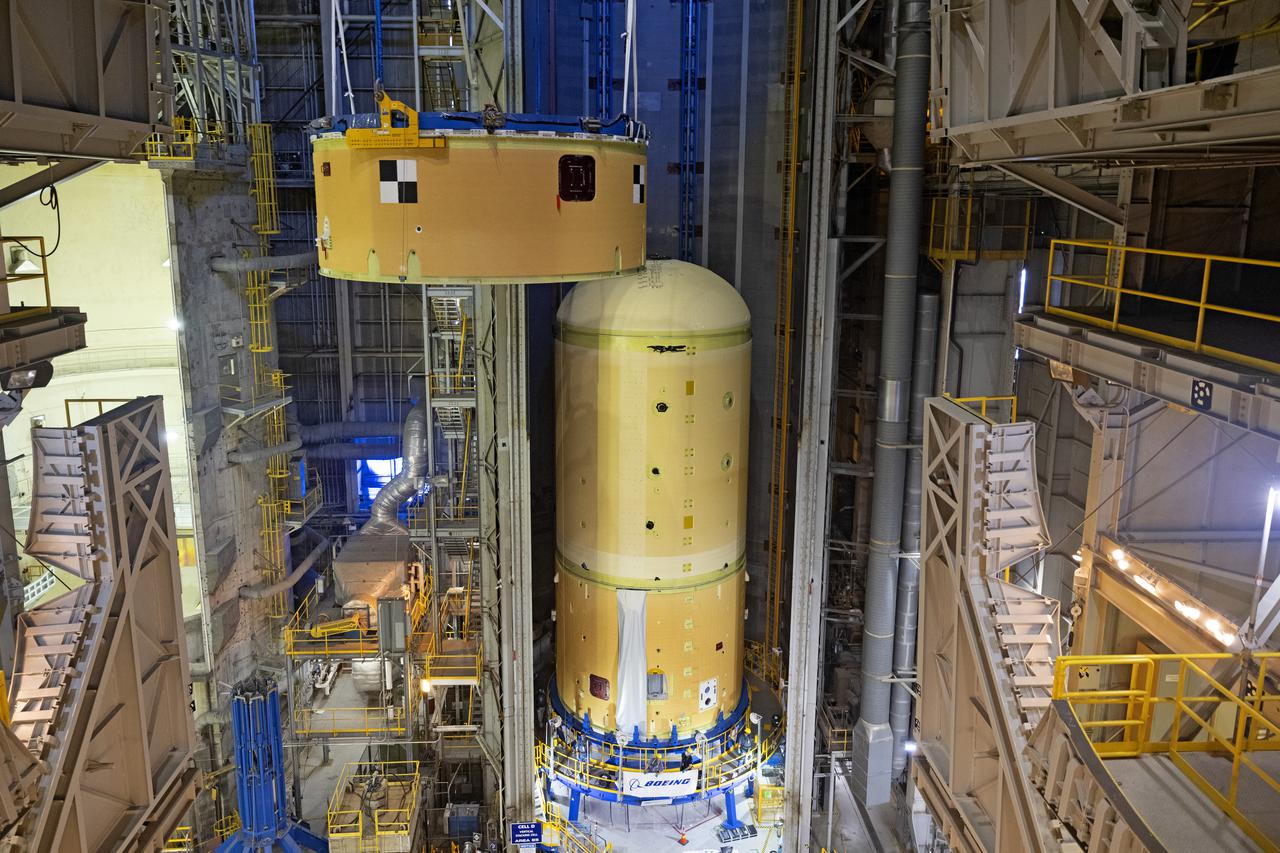
NASA’s Space Launch System (SLS) team fully stacked three hardware elements together May 24 to form the top of the rocket’s core stage for the Artemis II mission. NASA and core stage prime contractor Boeing connected the forward skirt with the liquid oxygen tank and intertank flight hardware inside an assembly area at NASA’s Michoud Assembly Facility in New Orleans. Teams had previously stacked the liquid oxygen tank and intertank on April 28. The joining of the three structures together is the first major assembly of core stage hardware for Artemis II, the first crewed Artemis mission and second flight of the SLS rocket. Next, technicians will work to complete outfitting and integrating the systems within the upper structure. At 66 feet tall, the upper part of the stage is just a fraction of the entire core stage. The fully-assembled, 212-foot-tall rocket stage consists of five hardware elements, including two liquid propellant tanks and four RS-25 engines. The liquid oxygen tank in the upper portion of the stage will hold 196,000 gallons of liquid oxygen cooled to minus 297 degrees Fahrenheit. Meanwhile, the forward skirt and intertank house avionics, flight computer, and electronic systems for the rocket stage. Together, the core stage and its four RS-25 engines will provide more than 2 million pounds of thrust to help send Artemis II astronauts beyond Earth’s orbit to lunar orbit. With Artemis, NASA will land the first woman and the first person of color on the Moon and establish sustainable exploration in preparation for missions to Mars. SLS and NASA’s Orion spacecraft, along with the commercial human landing system and the Gateway in orbit around the Moon, are NASA’s backbone for deep space exploration. SLS is the only rocket that can send Orion, astronauts, and supplies to the Moon in a single mission. Image credit: NASA/Michael DeMocker

NASA’s Space Launch System (SLS) team fully stacked three hardware elements together May 24 to form the top of the rocket’s core stage for the Artemis II mission. NASA and core stage prime contractor Boeing connected the forward skirt with the liquid oxygen tank and intertank flight hardware inside an assembly area at NASA’s Michoud Assembly Facility in New Orleans. Teams had previously stacked the liquid oxygen tank and intertank on April 28. The joining of the three structures together is the first major assembly of core stage hardware for Artemis II, the first crewed Artemis mission and second flight of the SLS rocket. Next, technicians will work to complete outfitting and integrating the systems within the upper structure. At 66 feet tall, the upper part of the stage is just a fraction of the entire core stage. The fully-assembled, 212-foot-tall rocket stage consists of five hardware elements, including two liquid propellant tanks and four RS-25 engines. The liquid oxygen tank in the upper portion of the stage will hold 196,000 gallons of liquid oxygen cooled to minus 297 degrees Fahrenheit. Meanwhile, the forward skirt and intertank house avionics, flight computer, and electronic systems for the rocket stage. Together, the core stage and its four RS-25 engines will provide more than 2 million pounds of thrust to help send Artemis II astronauts beyond Earth’s orbit to lunar orbit. With Artemis, NASA will land the first woman and the first person of color on the Moon and establish sustainable exploration in preparation for missions to Mars. SLS and NASA’s Orion spacecraft, along with the commercial human landing system and the Gateway in orbit around the Moon, are NASA’s backbone for deep space exploration. SLS is the only rocket that can send Orion, astronauts, and supplies to the Moon in a single mission. Image credit: NASA/Eric Bordelon
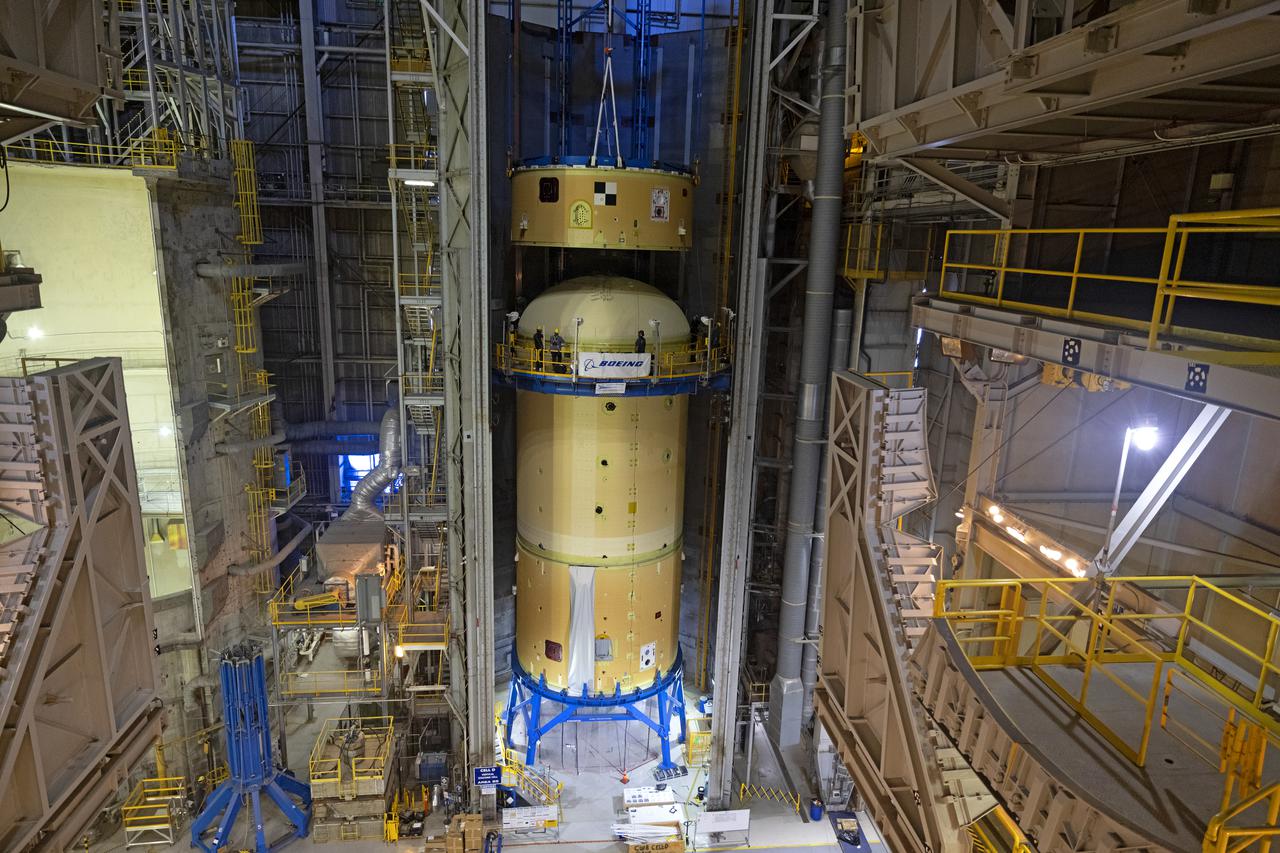
NASA’s Space Launch System (SLS) team fully stacked three hardware elements together May 24 to form the top of the rocket’s core stage for the Artemis II mission. NASA and core stage prime contractor Boeing connected the forward skirt with the liquid oxygen tank and intertank flight hardware inside an assembly area at NASA’s Michoud Assembly Facility in New Orleans. Teams had previously stacked the liquid oxygen tank and intertank on April 28. The joining of the three structures together is the first major assembly of core stage hardware for Artemis II, the first crewed Artemis mission and second flight of the SLS rocket. Next, technicians will work to complete outfitting and integrating the systems within the upper structure. At 66 feet tall, the upper part of the stage is just a fraction of the entire core stage. The fully-assembled, 212-foot-tall rocket stage consists of five hardware elements, including two liquid propellant tanks and four RS-25 engines. The liquid oxygen tank in the upper portion of the stage will hold 196,000 gallons of liquid oxygen cooled to minus 297 degrees Fahrenheit. Meanwhile, the forward skirt and intertank house avionics, flight computer, and electronic systems for the rocket stage. Together, the core stage and its four RS-25 engines will provide more than 2 million pounds of thrust to help send Artemis II astronauts beyond Earth’s orbit to lunar orbit. With Artemis, NASA will land the first woman and the first person of color on the Moon and establish sustainable exploration in preparation for missions to Mars. SLS and NASA’s Orion spacecraft, along with the commercial human landing system and the Gateway in orbit around the Moon, are NASA’s backbone for deep space exploration. SLS is the only rocket that can send Orion, astronauts, and supplies to the Moon in a single mission. Image credit: NASA/Michael DeMocker
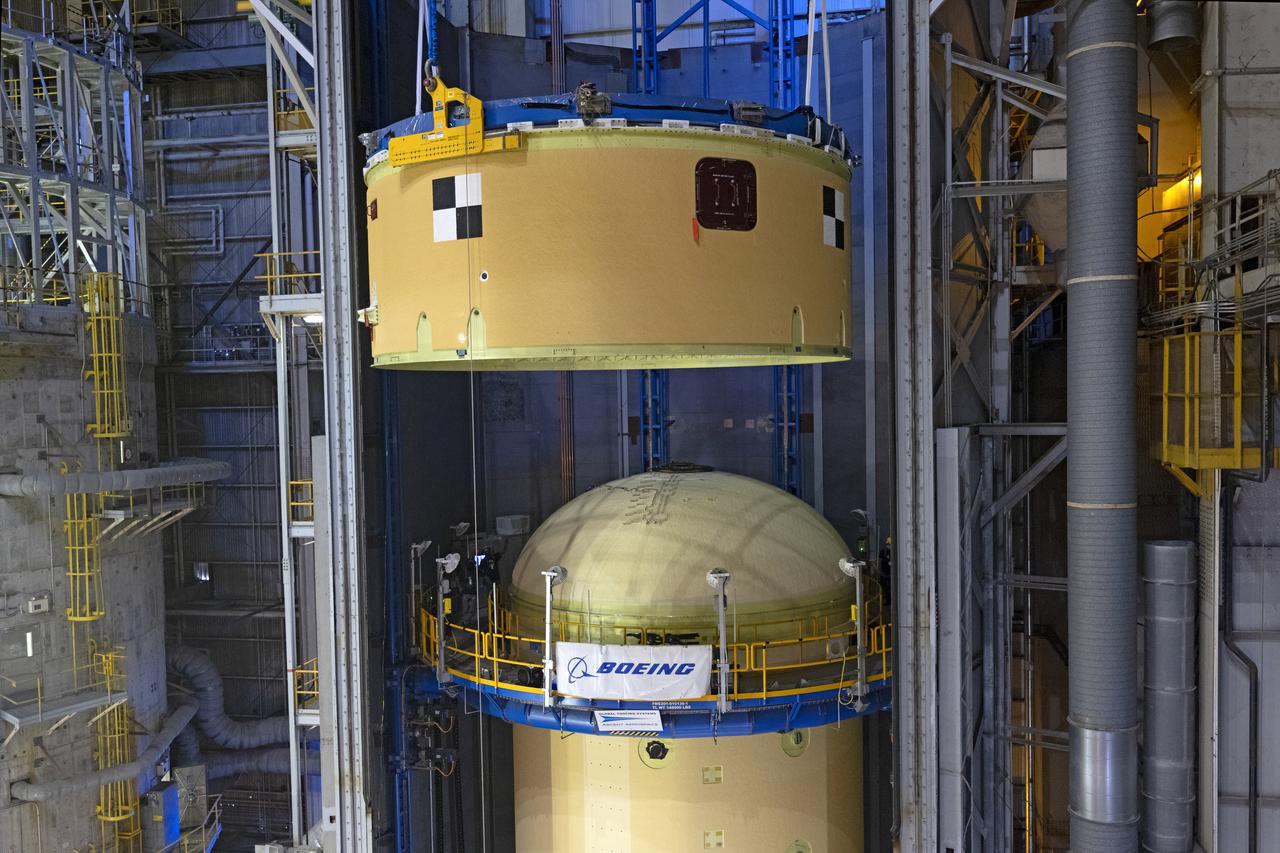
NASA’s Space Launch System (SLS) team fully stacked three hardware elements together May 24 to form the top of the rocket’s core stage for the Artemis II mission. NASA and core stage prime contractor Boeing connected the forward skirt with the liquid oxygen tank and intertank flight hardware inside an assembly area at NASA’s Michoud Assembly Facility in New Orleans. Teams had previously stacked the liquid oxygen tank and intertank on April 28. The joining of the three structures together is the first major assembly of core stage hardware for Artemis II, the first crewed Artemis mission and second flight of the SLS rocket. Next, technicians will work to complete outfitting and integrating the systems within the upper structure. At 66 feet tall, the upper part of the stage is just a fraction of the entire core stage. The fully-assembled, 212-foot-tall rocket stage consists of five hardware elements, including two liquid propellant tanks and four RS-25 engines. The liquid oxygen tank in the upper portion of the stage will hold 196,000 gallons of liquid oxygen cooled to minus 297 degrees Fahrenheit. Meanwhile, the forward skirt and intertank house avionics, flight computer, and electronic systems for the rocket stage. Together, the core stage and its four RS-25 engines will provide more than 2 million pounds of thrust to help send Artemis II astronauts beyond Earth’s orbit to lunar orbit. With Artemis, NASA will land the first woman and the first person of color on the Moon and establish sustainable exploration in preparation for missions to Mars. SLS and NASA’s Orion spacecraft, along with the commercial human landing system and the Gateway in orbit around the Moon, are NASA’s backbone for deep space exploration. SLS is the only rocket that can send Orion, astronauts, and supplies to the Moon in a single mission. Image credit: NASA/Michael DeMocker
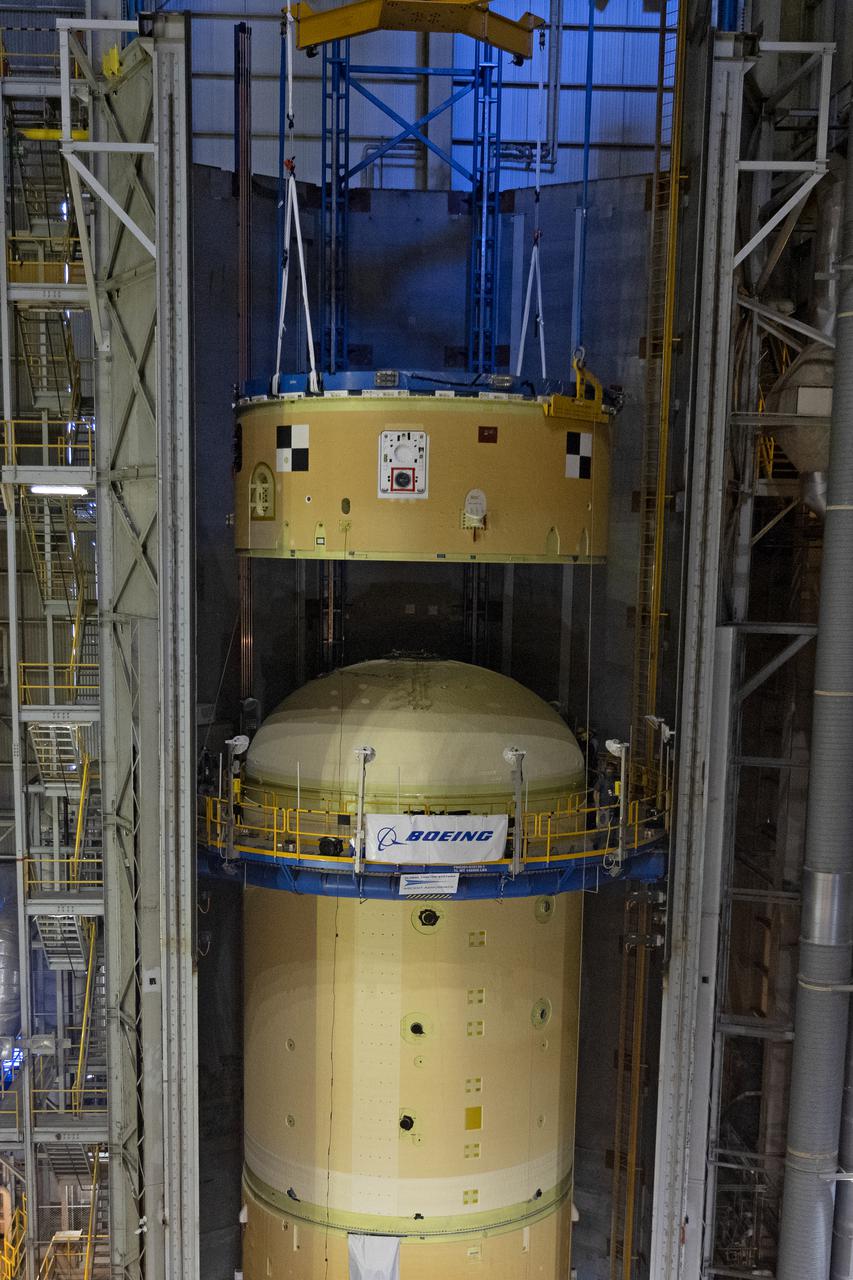
NASA’s Space Launch System (SLS) team fully stacked three hardware elements together May 24 to form the top of the rocket’s core stage for the Artemis II mission. NASA and core stage prime contractor Boeing connected the forward skirt with the liquid oxygen tank and intertank flight hardware inside an assembly area at NASA’s Michoud Assembly Facility in New Orleans. Teams had previously stacked the liquid oxygen tank and intertank on April 28. The joining of the three structures together is the first major assembly of core stage hardware for Artemis II, the first crewed Artemis mission and second flight of the SLS rocket. Next, technicians will work to complete outfitting and integrating the systems within the upper structure. At 66 feet tall, the upper part of the stage is just a fraction of the entire core stage. The fully-assembled, 212-foot-tall rocket stage consists of five hardware elements, including two liquid propellant tanks and four RS-25 engines. The liquid oxygen tank in the upper portion of the stage will hold 196,000 gallons of liquid oxygen cooled to minus 297 degrees Fahrenheit. Meanwhile, the forward skirt and intertank house avionics, flight computer, and electronic systems for the rocket stage. Together, the core stage and its four RS-25 engines will provide more than 2 million pounds of thrust to help send Artemis II astronauts beyond Earth’s orbit to lunar orbit. With Artemis, NASA will land the first woman and the first person of color on the Moon and establish sustainable exploration in preparation for missions to Mars. SLS and NASA’s Orion spacecraft, along with the commercial human landing system and the Gateway in orbit around the Moon, are NASA’s backbone for deep space exploration. SLS is the only rocket that can send Orion, astronauts, and supplies to the Moon in a single mission. Image credit: NASA/Michael DeMocker

NASA’s Space Launch System (SLS) team fully stacked three hardware elements together May 24 to form the top of the rocket’s core stage for the Artemis II mission. NASA and core stage prime contractor Boeing connected the forward skirt with the liquid oxygen tank and intertank flight hardware inside an assembly area at NASA’s Michoud Assembly Facility in New Orleans. Teams had previously stacked the liquid oxygen tank and intertank on April 28. The joining of the three structures together is the first major assembly of core stage hardware for Artemis II, the first crewed Artemis mission and second flight of the SLS rocket. Next, technicians will work to complete outfitting and integrating the systems within the upper structure. At 66 feet tall, the upper part of the stage is just a fraction of the entire core stage. The fully-assembled, 212-foot-tall rocket stage consists of five hardware elements, including two liquid propellant tanks and four RS-25 engines. The liquid oxygen tank in the upper portion of the stage will hold 196,000 gallons of liquid oxygen cooled to minus 297 degrees Fahrenheit. Meanwhile, the forward skirt and intertank house avionics, flight computer, and electronic systems for the rocket stage. Together, the core stage and its four RS-25 engines will provide more than 2 million pounds of thrust to help send Artemis II astronauts beyond Earth’s orbit to lunar orbit. With Artemis, NASA will land the first woman and the first person of color on the Moon and establish sustainable exploration in preparation for missions to Mars. SLS and NASA’s Orion spacecraft, along with the commercial human landing system and the Gateway in orbit around the Moon, are NASA’s backbone for deep space exploration. SLS is the only rocket that can send Orion, astronauts, and supplies to the Moon in a single mission. Image credit: NASA/Michael DeMocker
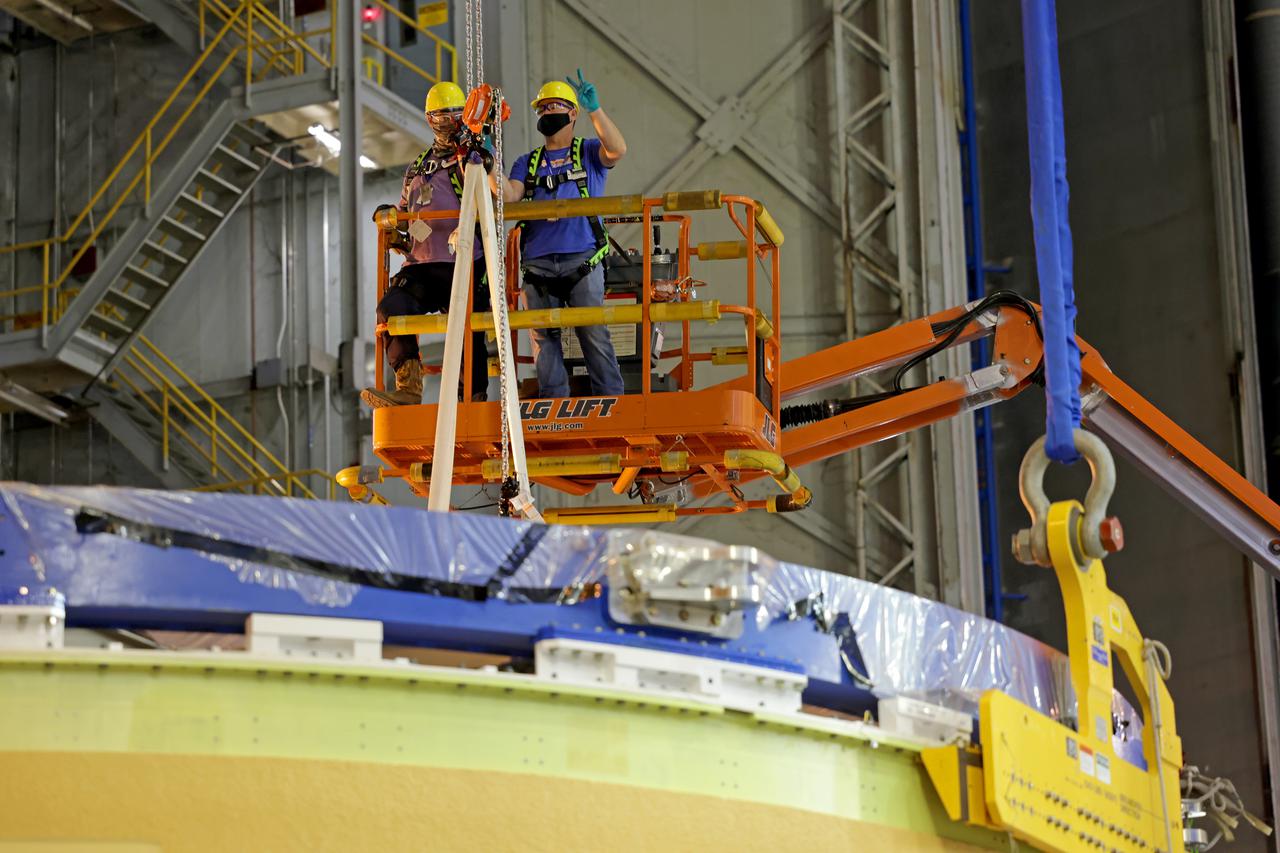
NASA’s Space Launch System (SLS) team fully stacked three hardware elements together May 24 to form the top of the rocket’s core stage for the Artemis II mission. NASA and core stage prime contractor Boeing connected the forward skirt with the liquid oxygen tank and intertank flight hardware inside an assembly area at NASA’s Michoud Assembly Facility in New Orleans. Teams had previously stacked the liquid oxygen tank and intertank on April 28. The joining of the three structures together is the first major assembly of core stage hardware for Artemis II, the first crewed Artemis mission and second flight of the SLS rocket. Next, technicians will work to complete outfitting and integrating the systems within the upper structure. At 66 feet tall, the upper part of the stage is just a fraction of the entire core stage. The fully-assembled, 212-foot-tall rocket stage consists of five hardware elements, including two liquid propellant tanks and four RS-25 engines. The liquid oxygen tank in the upper portion of the stage will hold 196,000 gallons of liquid oxygen cooled to minus 297 degrees Fahrenheit. Meanwhile, the forward skirt and intertank house avionics, flight computer, and electronic systems for the rocket stage. Together, the core stage and its four RS-25 engines will provide more than 2 million pounds of thrust to help send Artemis II astronauts beyond Earth’s orbit to lunar orbit. With Artemis, NASA will land the first woman and the first person of color on the Moon and establish sustainable exploration in preparation for missions to Mars. SLS and NASA’s Orion spacecraft, along with the commercial human landing system and the Gateway in orbit around the Moon, are NASA’s backbone for deep space exploration. SLS is the only rocket that can send Orion, astronauts, and supplies to the Moon in a single mission. Image credit: NASA/Michael DeMocker

NASA’s Space Launch System (SLS) team fully stacked three hardware elements together May 24 to form the top of the rocket’s core stage for the Artemis II mission. NASA and core stage prime contractor Boeing connected the forward skirt with the liquid oxygen tank and intertank flight hardware inside an assembly area at NASA’s Michoud Assembly Facility in New Orleans. Teams had previously stacked the liquid oxygen tank and intertank on April 28. The joining of the three structures together is the first major assembly of core stage hardware for Artemis II, the first crewed Artemis mission and second flight of the SLS rocket. Next, technicians will work to complete outfitting and integrating the systems within the upper structure. At 66 feet tall, the upper part of the stage is just a fraction of the entire core stage. The fully-assembled, 212-foot-tall rocket stage consists of five hardware elements, including two liquid propellant tanks and four RS-25 engines. The liquid oxygen tank in the upper portion of the stage will hold 196,000 gallons of liquid oxygen cooled to minus 297 degrees Fahrenheit. Meanwhile, the forward skirt and intertank house avionics, flight computer, and electronic systems for the rocket stage. Together, the core stage and its four RS-25 engines will provide more than 2 million pounds of thrust to help send Artemis II astronauts beyond Earth’s orbit to lunar orbit. With Artemis, NASA will land the first woman and the first person of color on the Moon and establish sustainable exploration in preparation for missions to Mars. SLS and NASA’s Orion spacecraft, along with the commercial human landing system and the Gateway in orbit around the Moon, are NASA’s backbone for deep space exploration. SLS is the only rocket that can send Orion, astronauts, and supplies to the Moon in a single mission. Image credit: NASA/Eric Bordelon
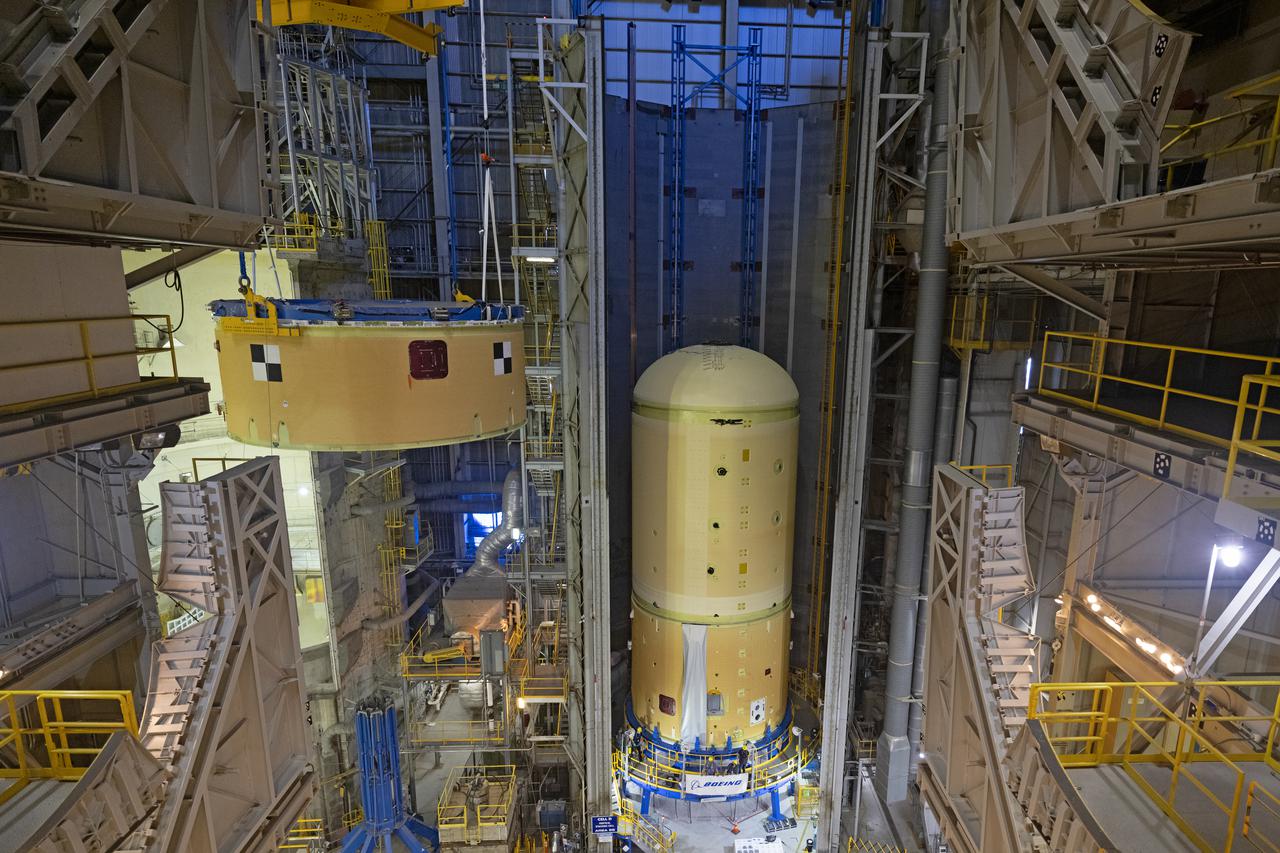
NASA’s Space Launch System (SLS) team fully stacked three hardware elements together May 24 to form the top of the rocket’s core stage for the Artemis II mission. NASA and core stage prime contractor Boeing connected the forward skirt with the liquid oxygen tank and intertank flight hardware inside an assembly area at NASA’s Michoud Assembly Facility in New Orleans. Teams had previously stacked the liquid oxygen tank and intertank on April 28. The joining of the three structures together is the first major assembly of core stage hardware for Artemis II, the first crewed Artemis mission and second flight of the SLS rocket. Next, technicians will work to complete outfitting and integrating the systems within the upper structure. At 66 feet tall, the upper part of the stage is just a fraction of the entire core stage. The fully-assembled, 212-foot-tall rocket stage consists of five hardware elements, including two liquid propellant tanks and four RS-25 engines. The liquid oxygen tank in the upper portion of the stage will hold 196,000 gallons of liquid oxygen cooled to minus 297 degrees Fahrenheit. Meanwhile, the forward skirt and intertank house avionics, flight computer, and electronic systems for the rocket stage. Together, the core stage and its four RS-25 engines will provide more than 2 million pounds of thrust to help send Artemis II astronauts beyond Earth’s orbit to lunar orbit. With Artemis, NASA will land the first woman and the first person of color on the Moon and establish sustainable exploration in preparation for missions to Mars. SLS and NASA’s Orion spacecraft, along with the commercial human landing system and the Gateway in orbit around the Moon, are NASA’s backbone for deep space exploration. SLS is the only rocket that can send Orion, astronauts, and supplies to the Moon in a single mission. Image credit: NASA/Michael DeMocker
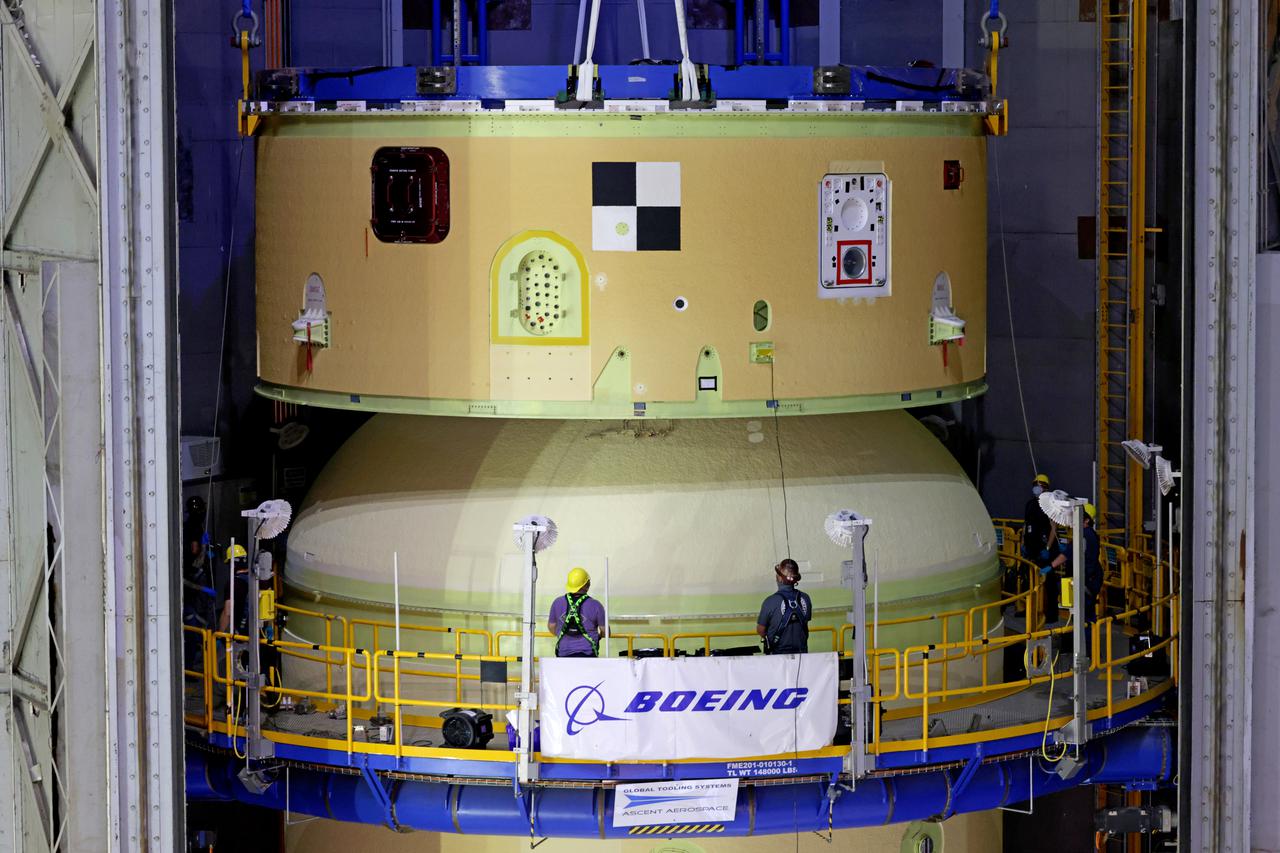
NASA’s Space Launch System (SLS) team fully stacked three hardware elements together May 24 to form the top of the rocket’s core stage for the Artemis II mission. NASA and core stage prime contractor Boeing connected the forward skirt with the liquid oxygen tank and intertank flight hardware inside an assembly area at NASA’s Michoud Assembly Facility in New Orleans. Teams had previously stacked the liquid oxygen tank and intertank on April 28. The joining of the three structures together is the first major assembly of core stage hardware for Artemis II, the first crewed Artemis mission and second flight of the SLS rocket. Next, technicians will work to complete outfitting and integrating the systems within the upper structure. At 66 feet tall, the upper part of the stage is just a fraction of the entire core stage. The fully-assembled, 212-foot-tall rocket stage consists of five hardware elements, including two liquid propellant tanks and four RS-25 engines. The liquid oxygen tank in the upper portion of the stage will hold 196,000 gallons of liquid oxygen cooled to minus 297 degrees Fahrenheit. Meanwhile, the forward skirt and intertank house avionics, flight computer, and electronic systems for the rocket stage. Together, the core stage and its four RS-25 engines will provide more than 2 million pounds of thrust to help send Artemis II astronauts beyond Earth’s orbit to lunar orbit. With Artemis, NASA will land the first woman and the first person of color on the Moon and establish sustainable exploration in preparation for missions to Mars. SLS and NASA’s Orion spacecraft, along with the commercial human landing system and the Gateway in orbit around the Moon, are NASA’s backbone for deep space exploration. SLS is the only rocket that can send Orion, astronauts, and supplies to the Moon in a single mission. Image credit: NASA/Michael DeMocker
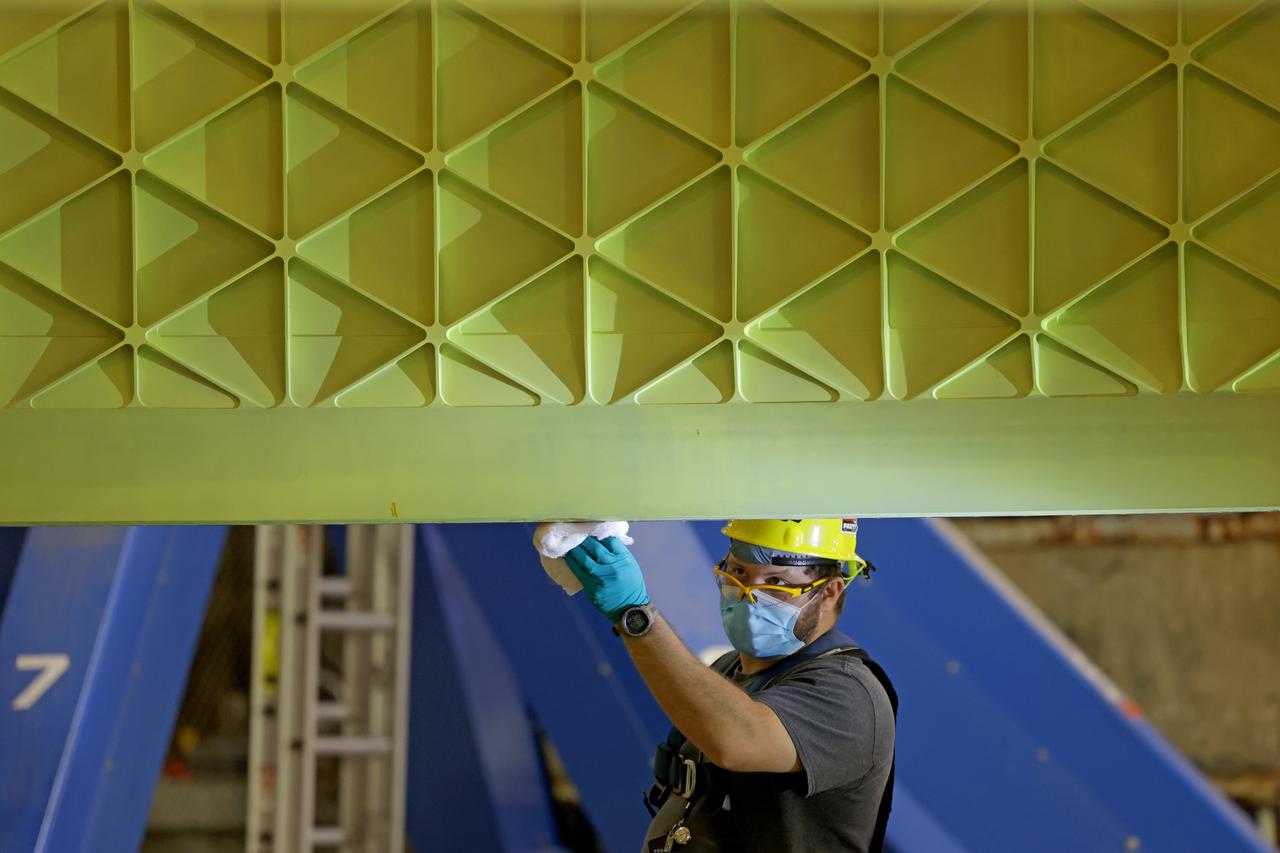
NASA’s Space Launch System (SLS) team fully stacked three hardware elements together May 24 to form the top of the rocket’s core stage for the Artemis II mission. NASA and core stage prime contractor Boeing connected the forward skirt with the liquid oxygen tank and intertank flight hardware inside an assembly area at NASA’s Michoud Assembly Facility in New Orleans. Teams had previously stacked the liquid oxygen tank and intertank on April 28. The joining of the three structures together is the first major assembly of core stage hardware for Artemis II, the first crewed Artemis mission and second flight of the SLS rocket. Next, technicians will work to complete outfitting and integrating the systems within the upper structure. At 66 feet tall, the upper part of the stage is just a fraction of the entire core stage. The fully-assembled, 212-foot-tall rocket stage consists of five hardware elements, including two liquid propellant tanks and four RS-25 engines. The liquid oxygen tank in the upper portion of the stage will hold 196,000 gallons of liquid oxygen cooled to minus 297 degrees Fahrenheit. Meanwhile, the forward skirt and intertank house avionics, flight computer, and electronic systems for the rocket stage. Together, the core stage and its four RS-25 engines will provide more than 2 million pounds of thrust to help send Artemis II astronauts beyond Earth’s orbit to lunar orbit. With Artemis, NASA will land the first woman and the first person of color on the Moon and establish sustainable exploration in preparation for missions to Mars. SLS and NASA’s Orion spacecraft, along with the commercial human landing system and the Gateway in orbit around the Moon, are NASA’s backbone for deep space exploration. SLS is the only rocket that can send Orion, astronauts, and supplies to the Moon in a single mission. Image credit: NASA/Michael DeMocker
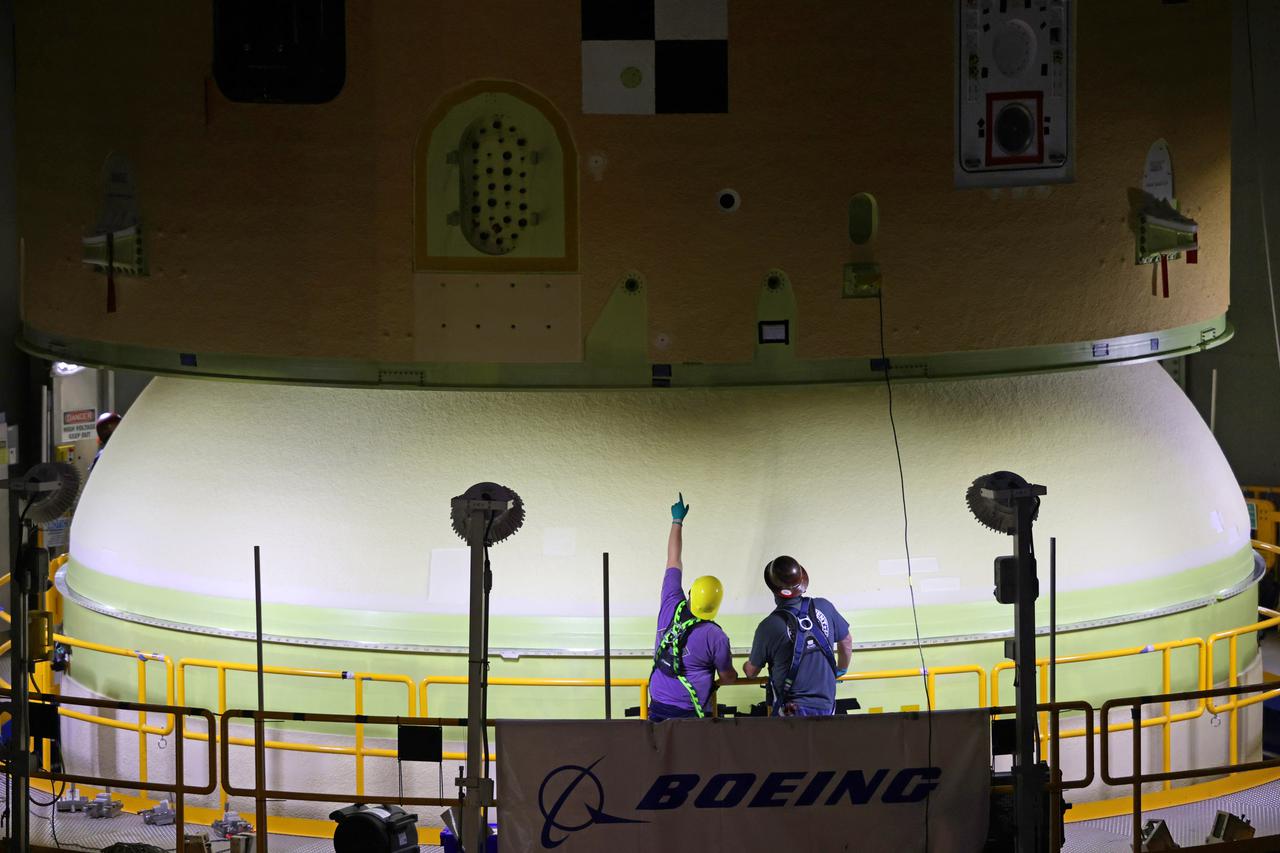
NASA’s Space Launch System (SLS) team fully stacked three hardware elements together May 24 to form the top of the rocket’s core stage for the Artemis II mission. NASA and core stage prime contractor Boeing connected the forward skirt with the liquid oxygen tank and intertank flight hardware inside an assembly area at NASA’s Michoud Assembly Facility in New Orleans. Teams had previously stacked the liquid oxygen tank and intertank on April 28. The joining of the three structures together is the first major assembly of core stage hardware for Artemis II, the first crewed Artemis mission and second flight of the SLS rocket. Next, technicians will work to complete outfitting and integrating the systems within the upper structure. At 66 feet tall, the upper part of the stage is just a fraction of the entire core stage. The fully-assembled, 212-foot-tall rocket stage consists of five hardware elements, including two liquid propellant tanks and four RS-25 engines. The liquid oxygen tank in the upper portion of the stage will hold 196,000 gallons of liquid oxygen cooled to minus 297 degrees Fahrenheit. Meanwhile, the forward skirt and intertank house avionics, flight computer, and electronic systems for the rocket stage. Together, the core stage and its four RS-25 engines will provide more than 2 million pounds of thrust to help send Artemis II astronauts beyond Earth’s orbit to lunar orbit. With Artemis, NASA will land the first woman and the first person of color on the Moon and establish sustainable exploration in preparation for missions to Mars. SLS and NASA’s Orion spacecraft, along with the commercial human landing system and the Gateway in orbit around the Moon, are NASA’s backbone for deep space exploration. SLS is the only rocket that can send Orion, astronauts, and supplies to the Moon in a single mission. Image credit: NASA/Michael DeMocker

NASA’s Space Launch System (SLS) team fully stacked three hardware elements together May 24 to form the top of the rocket’s core stage for the Artemis II mission. NASA and core stage prime contractor Boeing connected the forward skirt with the liquid oxygen tank and intertank flight hardware inside an assembly area at NASA’s Michoud Assembly Facility in New Orleans. Teams had previously stacked the liquid oxygen tank and intertank on April 28. The joining of the three structures together is the first major assembly of core stage hardware for Artemis II, the first crewed Artemis mission and second flight of the SLS rocket. Next, technicians will work to complete outfitting and integrating the systems within the upper structure. At 66 feet tall, the upper part of the stage is just a fraction of the entire core stage. The fully-assembled, 212-foot-tall rocket stage consists of five hardware elements, including two liquid propellant tanks and four RS-25 engines. The liquid oxygen tank in the upper portion of the stage will hold 196,000 gallons of liquid oxygen cooled to minus 297 degrees Fahrenheit. Meanwhile, the forward skirt and intertank house avionics, flight computer, and electronic systems for the rocket stage. Together, the core stage and its four RS-25 engines will provide more than 2 million pounds of thrust to help send Artemis II astronauts beyond Earth’s orbit to lunar orbit. With Artemis, NASA will land the first woman and the first person of color on the Moon and establish sustainable exploration in preparation for missions to Mars. SLS and NASA’s Orion spacecraft, along with the commercial human landing system and the Gateway in orbit around the Moon, are NASA’s backbone for deep space exploration. SLS is the only rocket that can send Orion, astronauts, and supplies to the Moon in a single mission. Image credit: NASA/Eric Bordelon

NASA’s Space Launch System (SLS) team fully stacked three hardware elements together May 24 to form the top of the rocket’s core stage for the Artemis II mission. NASA and core stage prime contractor Boeing connected the forward skirt with the liquid oxygen tank and intertank flight hardware inside an assembly area at NASA’s Michoud Assembly Facility in New Orleans. Teams had previously stacked the liquid oxygen tank and intertank on April 28. The joining of the three structures together is the first major assembly of core stage hardware for Artemis II, the first crewed Artemis mission and second flight of the SLS rocket. Next, technicians will work to complete outfitting and integrating the systems within the upper structure. At 66 feet tall, the upper part of the stage is just a fraction of the entire core stage. The fully-assembled, 212-foot-tall rocket stage consists of five hardware elements, including two liquid propellant tanks and four RS-25 engines. The liquid oxygen tank in the upper portion of the stage will hold 196,000 gallons of liquid oxygen cooled to minus 297 degrees Fahrenheit. Meanwhile, the forward skirt and intertank house avionics, flight computer, and electronic systems for the rocket stage. Together, the core stage and its four RS-25 engines will provide more than 2 million pounds of thrust to help send Artemis II astronauts beyond Earth’s orbit to lunar orbit. With Artemis, NASA will land the first woman and the first person of color on the Moon and establish sustainable exploration in preparation for missions to Mars. SLS and NASA’s Orion spacecraft, along with the commercial human landing system and the Gateway in orbit around the Moon, are NASA’s backbone for deep space exploration. SLS is the only rocket that can send Orion, astronauts, and supplies to the Moon in a single mission. Image credit: NASA/Michael DeMocker
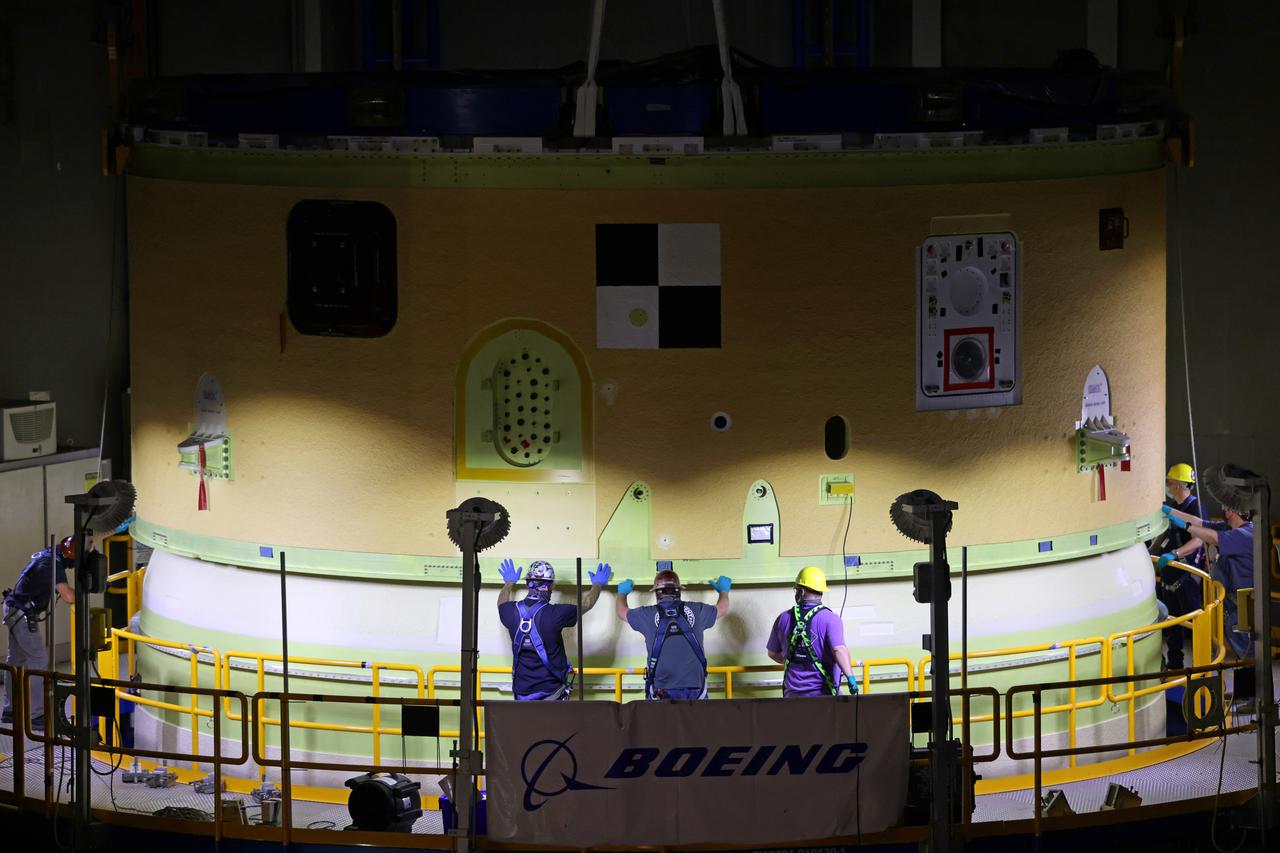
NASA’s Space Launch System (SLS) team fully stacked three hardware elements together May 24 to form the top of the rocket’s core stage for the Artemis II mission. NASA and core stage prime contractor Boeing connected the forward skirt with the liquid oxygen tank and intertank flight hardware inside an assembly area at NASA’s Michoud Assembly Facility in New Orleans. Teams had previously stacked the liquid oxygen tank and intertank on April 28. The joining of the three structures together is the first major assembly of core stage hardware for Artemis II, the first crewed Artemis mission and second flight of the SLS rocket. Next, technicians will work to complete outfitting and integrating the systems within the upper structure. At 66 feet tall, the upper part of the stage is just a fraction of the entire core stage. The fully-assembled, 212-foot-tall rocket stage consists of five hardware elements, including two liquid propellant tanks and four RS-25 engines. The liquid oxygen tank in the upper portion of the stage will hold 196,000 gallons of liquid oxygen cooled to minus 297 degrees Fahrenheit. Meanwhile, the forward skirt and intertank house avionics, flight computer, and electronic systems for the rocket stage. Together, the core stage and its four RS-25 engines will provide more than 2 million pounds of thrust to help send Artemis II astronauts beyond Earth’s orbit to lunar orbit. With Artemis, NASA will land the first woman and the first person of color on the Moon and establish sustainable exploration in preparation for missions to Mars. SLS and NASA’s Orion spacecraft, along with the commercial human landing system and the Gateway in orbit around the Moon, are NASA’s backbone for deep space exploration. SLS is the only rocket that can send Orion, astronauts, and supplies to the Moon in a single mission. Image credit: NASA/Michael DeMocker
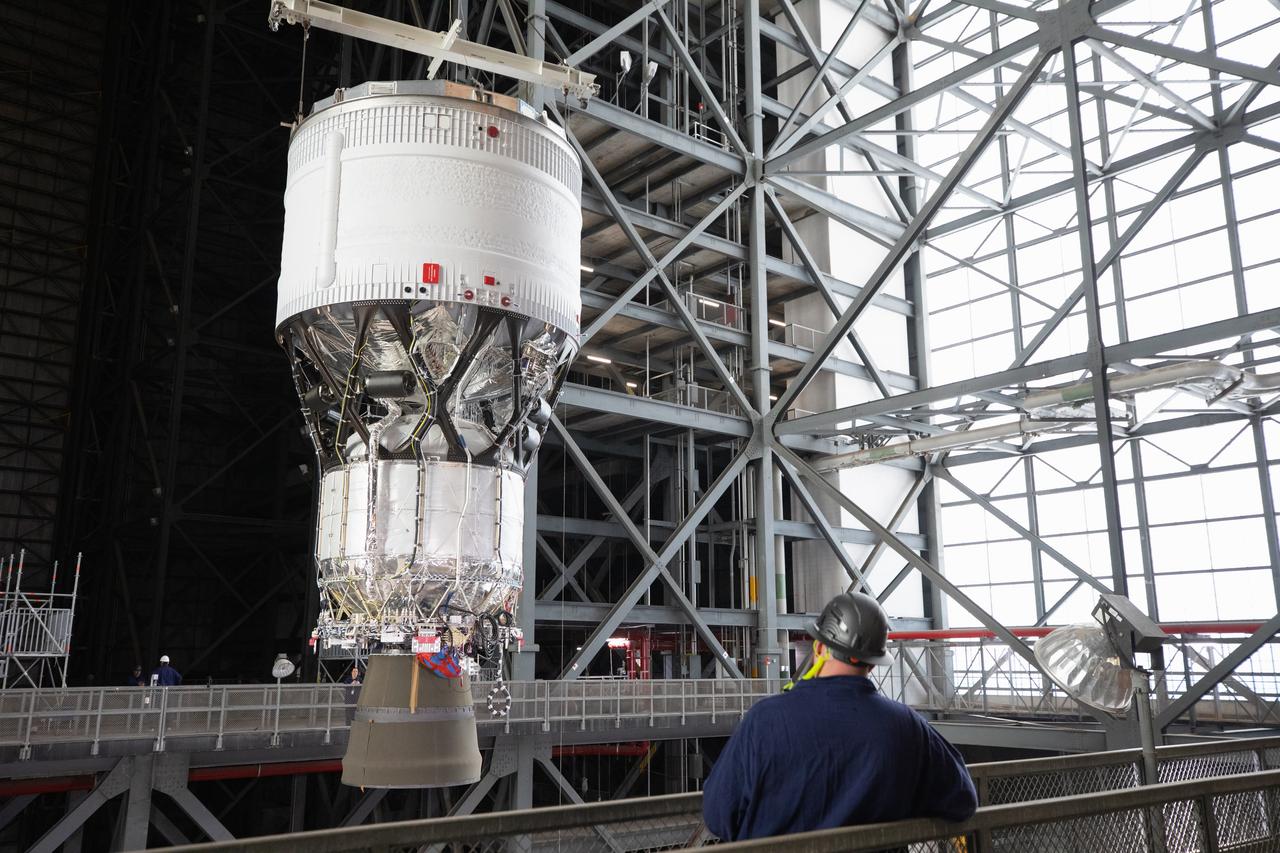
Teams with NASA’s Exploration Ground Systems Program begin integrating the interim cryogenic propulsion stage to the SLS (Space Launch System) launch vehicle stage adapter on Wednesday, April 30, 2025, inside the Vehicle Assembly Building at NASA’s Kennedy Space Center in Florida. The four-story propulsion system, built by Boeing and ULA (United Launch Alliance), is powered by an RL10 engine that will enable the Orion spacecraft to build up enough speed for the push toward the Moon during the Artemis II crewed test flight.
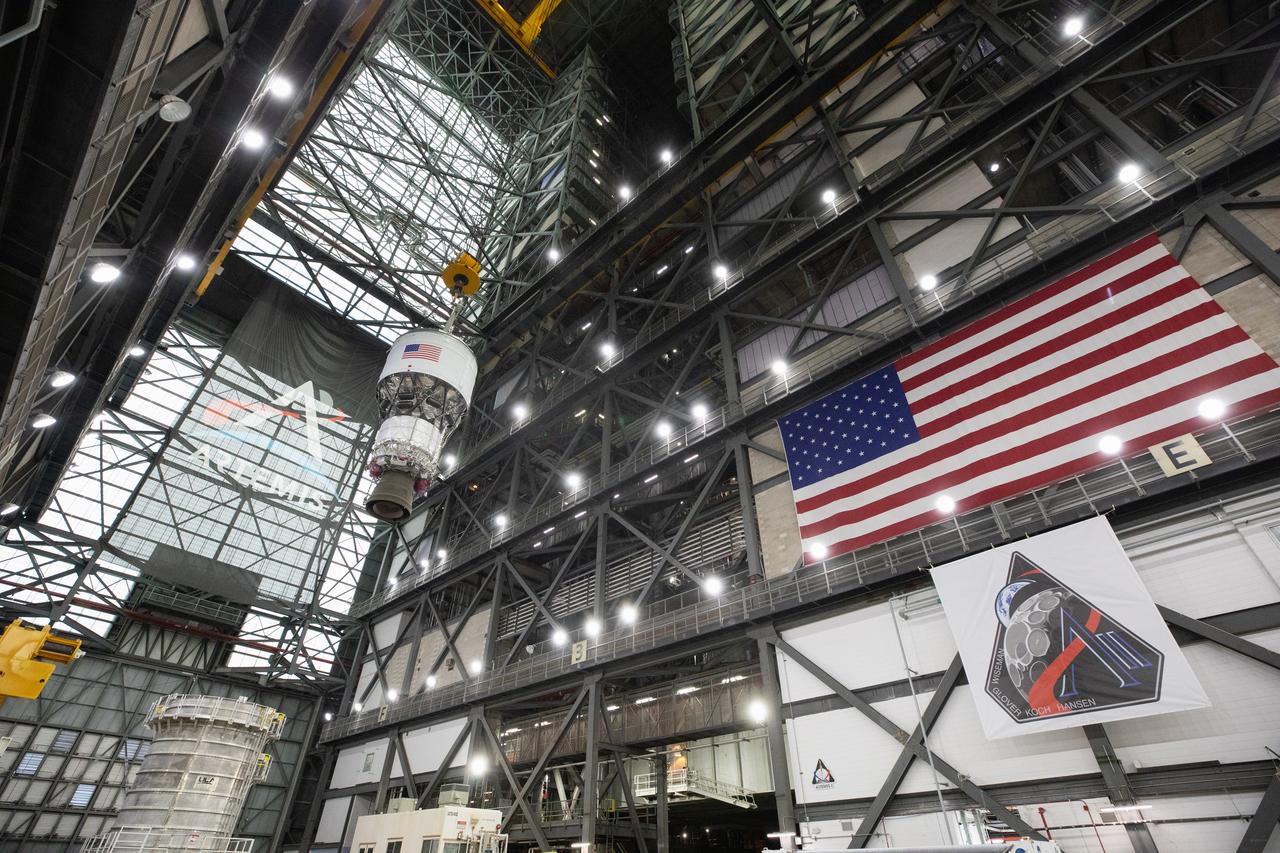
Teams with NASA’s Exploration Ground Systems Program begin integrating the interim cryogenic propulsion stage to the SLS (Space Launch System) launch vehicle stage adapter on Wednesday, April 30, 2025, inside the Vehicle Assembly Building at NASA’s Kennedy Space Center in Florida. The four-story propulsion system, built by Boeing and ULA (United Launch Alliance), is powered by an RL10 engine that will enable the Orion spacecraft to build up enough speed for the push toward the Moon during the Artemis II crewed test flight.
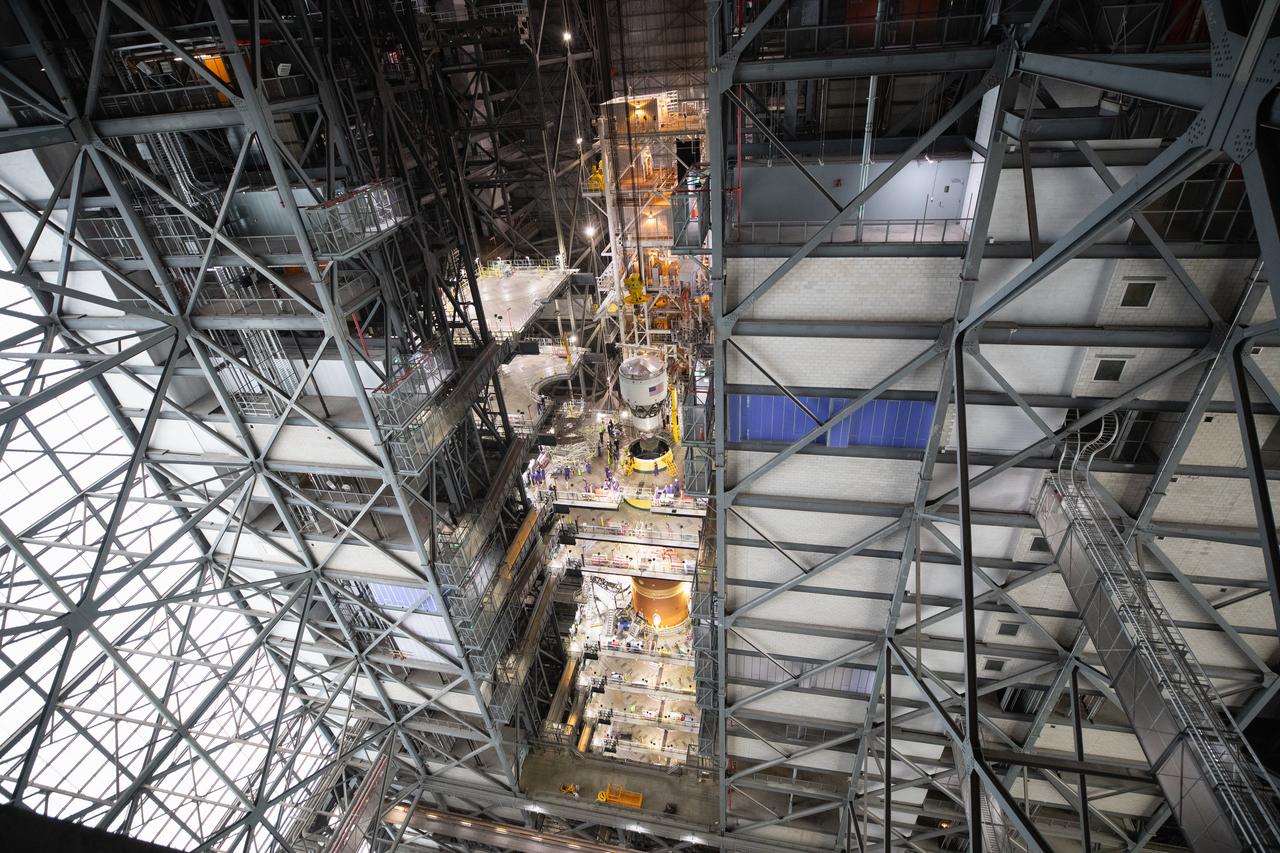
Teams with NASA’s Exploration Ground Systems Program begin integrating the interim cryogenic propulsion stage to the SLS (Space Launch System) launch vehicle stage adapter on Wednesday, April 30, 2025, inside the Vehicle Assembly Building at NASA’s Kennedy Space Center in Florida. The four-story propulsion system, built by Boeing and ULA (United Launch Alliance), is powered by an RL10 engine that will enable the Orion spacecraft to build up enough speed for the push toward the Moon during the Artemis II crewed test flight.
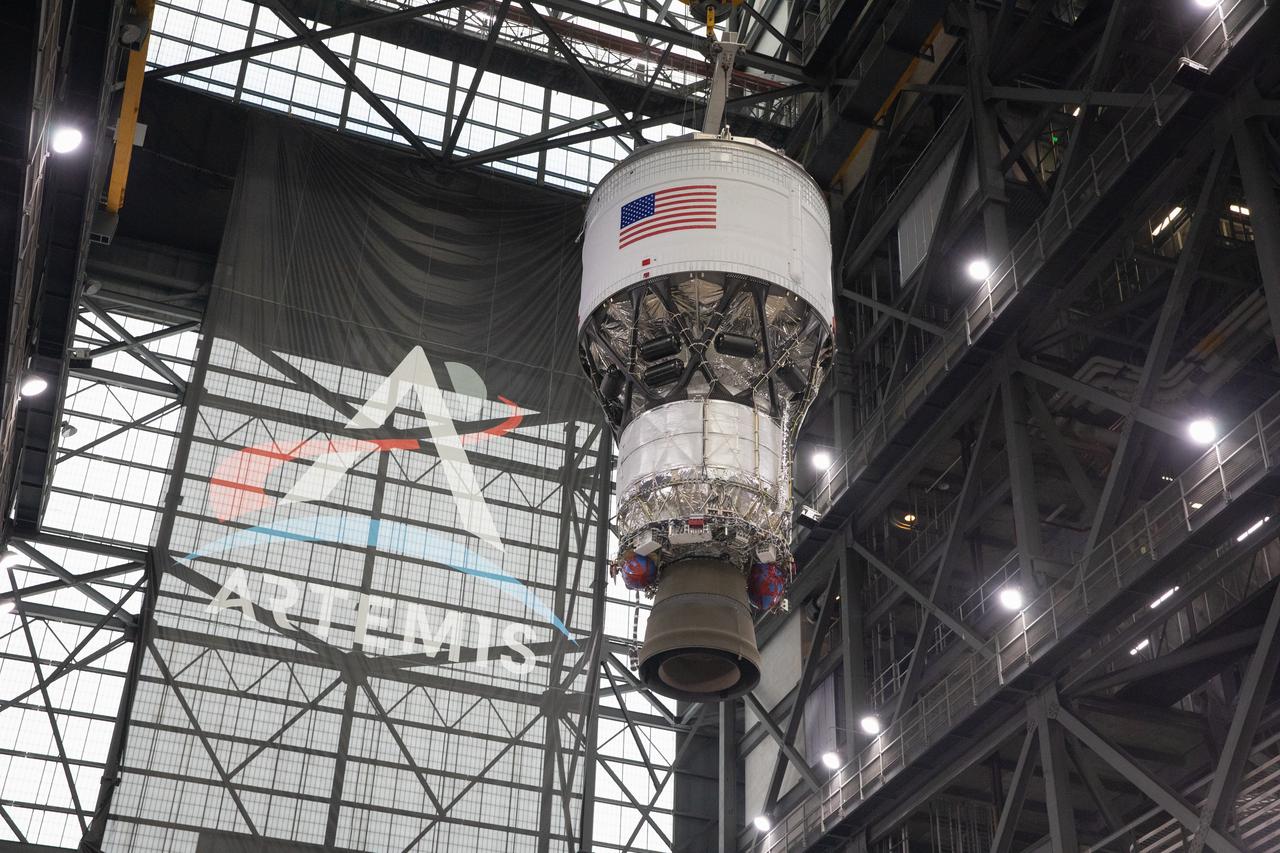
Teams with NASA’s Exploration Ground Systems Program begin integrating the interim cryogenic propulsion stage to the SLS (Space Launch System) launch vehicle stage adapter on Wednesday, April 30, 2025, inside the Vehicle Assembly Building at NASA’s Kennedy Space Center in Florida. The four-story propulsion system, built by Boeing and ULA (United Launch Alliance), is powered by an RL10 engine that will enable the Orion spacecraft to build up enough speed for the push toward the Moon during the Artemis II crewed test flight.
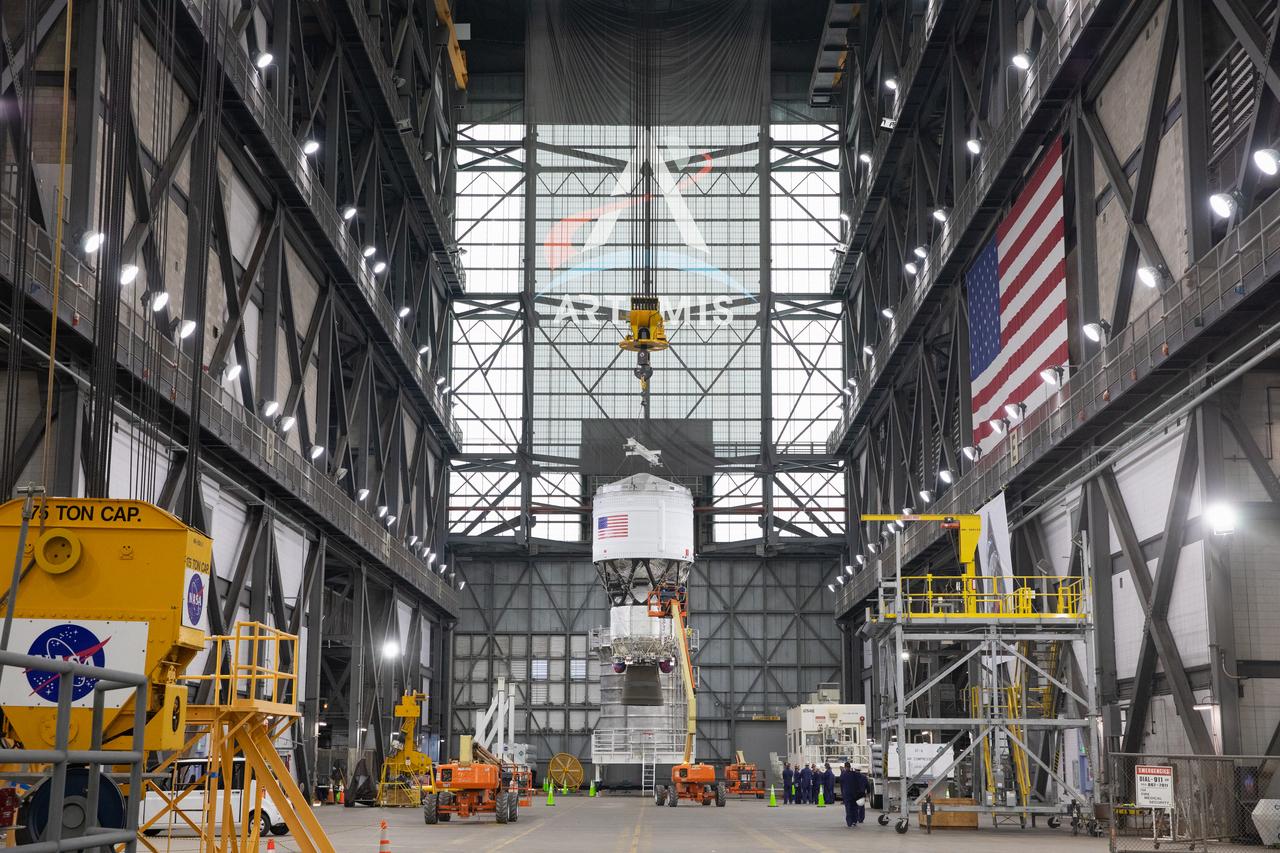
Teams with NASA’s Exploration Ground Systems Program begin integrating the interim cryogenic propulsion stage to the SLS (Space Launch System) launch vehicle stage adapter on Wednesday, April 30, 2025, inside the Vehicle Assembly Building at NASA’s Kennedy Space Center in Florida. The four-story propulsion system, built by Boeing and ULA (United Launch Alliance), is powered by an RL10 engine that will enable the Orion spacecraft to build up enough speed for the push toward the Moon during the Artemis II crewed test flight.
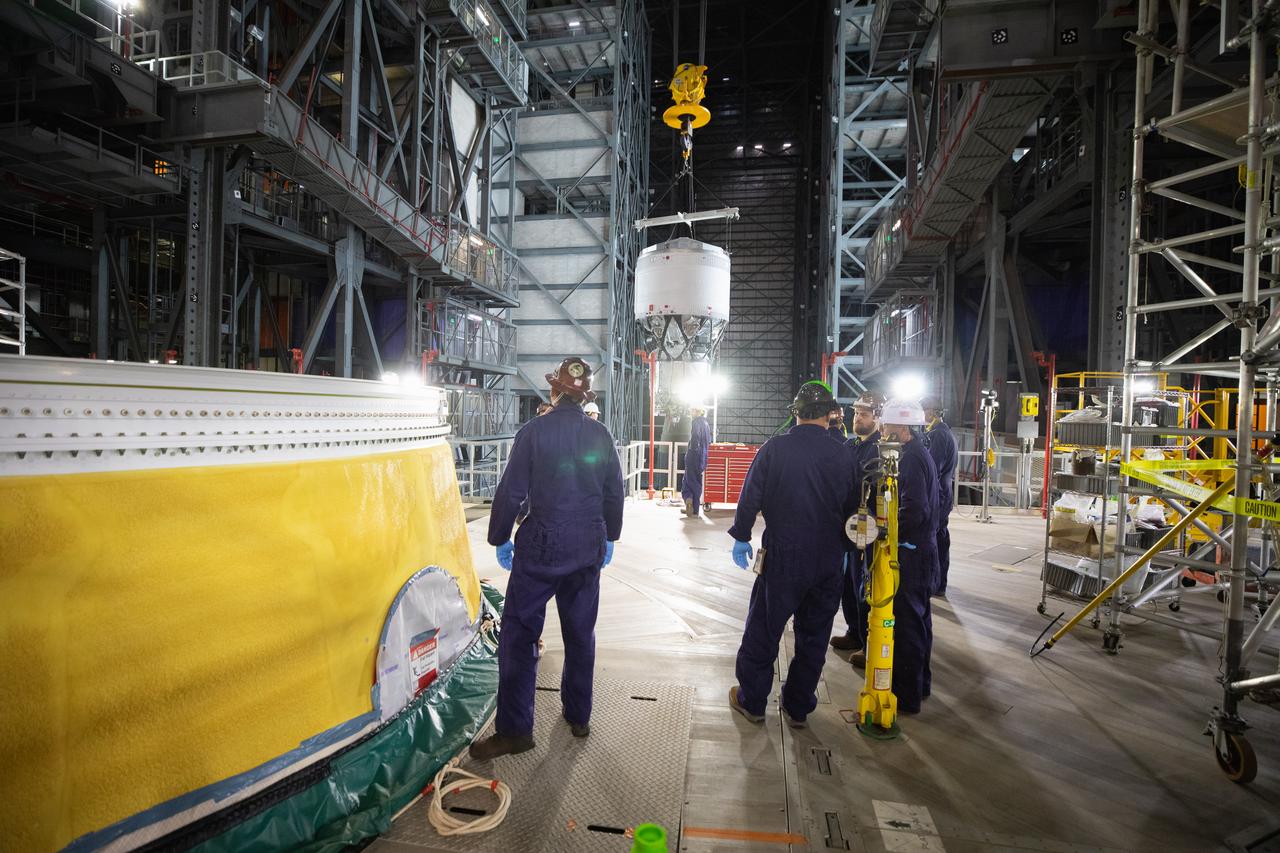
Teams with NASA’s Exploration Ground Systems Program begin integrating the interim cryogenic propulsion stage to the SLS (Space Launch System) launch vehicle stage adapter on Wednesday, April 30, 2025, inside the Vehicle Assembly Building at NASA’s Kennedy Space Center in Florida. The four-story propulsion system, built by Boeing and ULA (United Launch Alliance), is powered by an RL10 engine that will enable the Orion spacecraft to build up enough speed for the push toward the Moon during the Artemis II crewed test flight.
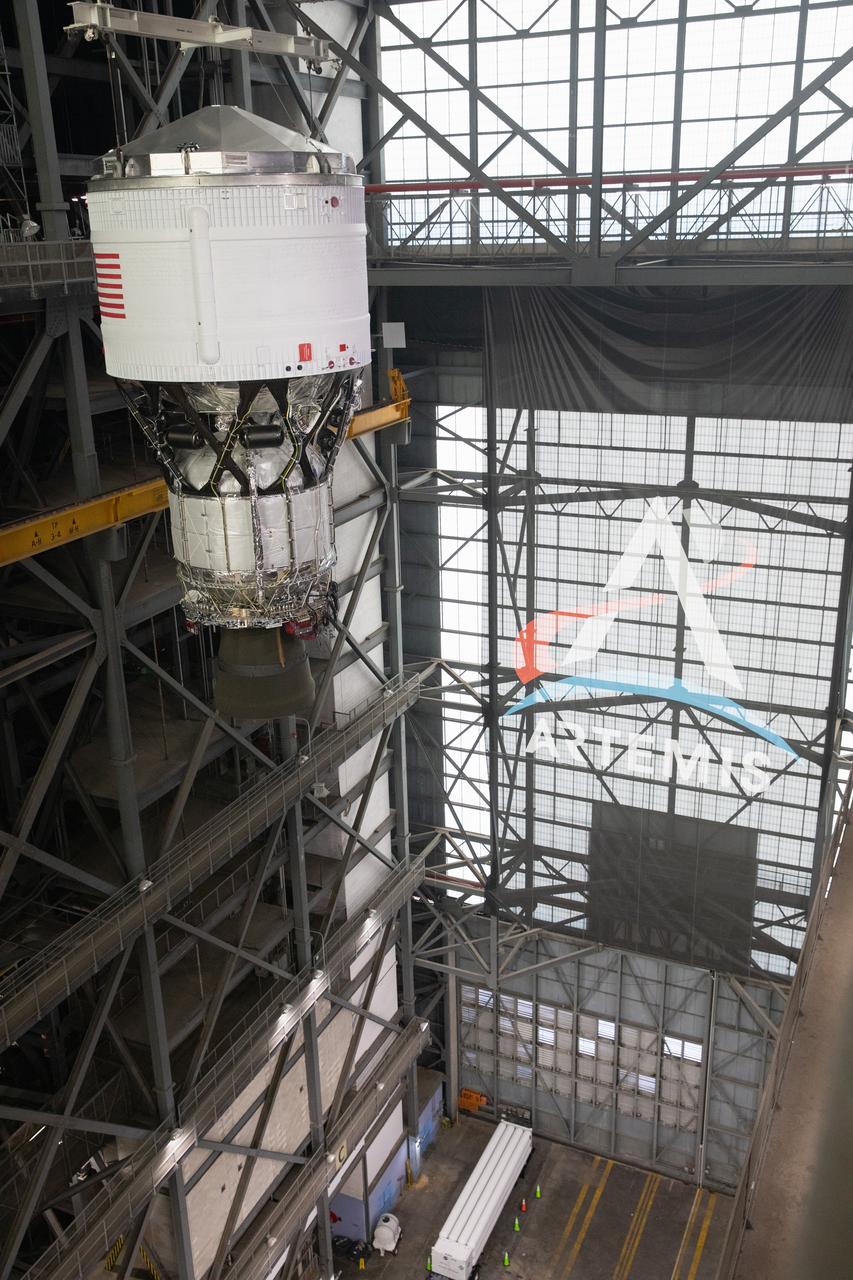
Teams with NASA’s Exploration Ground Systems Program begin integrating the interim cryogenic propulsion stage to the SLS (Space Launch System) launch vehicle stage adapter on Wednesday, April 30, 2025, inside the Vehicle Assembly Building at NASA’s Kennedy Space Center in Florida. The four-story propulsion system, built by Boeing and ULA (United Launch Alliance), is powered by an RL10 engine that will enable the Orion spacecraft to build up enough speed for the push toward the Moon during the Artemis II crewed test flight.
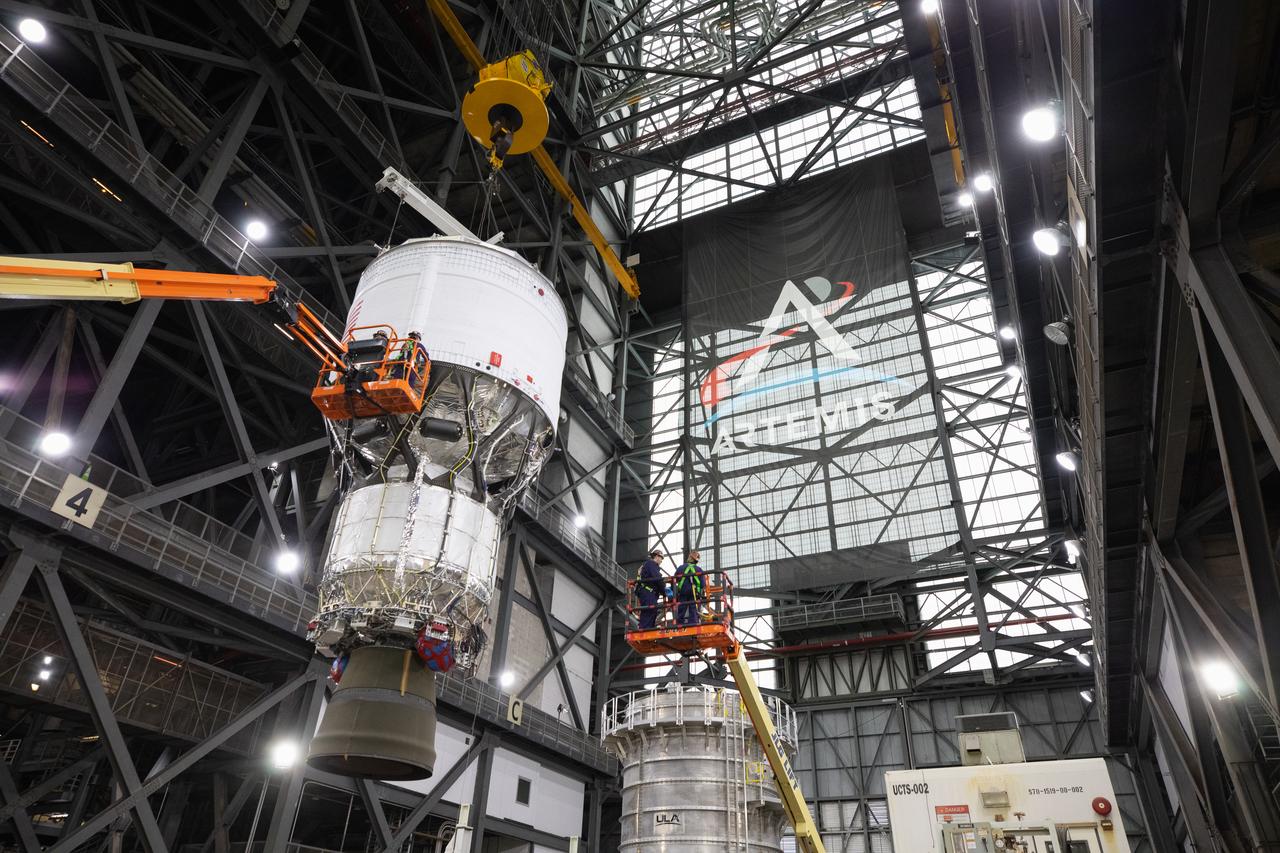
Teams with NASA’s Exploration Ground Systems Program begin integrating the interim cryogenic propulsion stage to the SLS (Space Launch System) launch vehicle stage adapter on Wednesday, April 30, 2025, inside the Vehicle Assembly Building at NASA’s Kennedy Space Center in Florida. The four-story propulsion system, built by Boeing and ULA (United Launch Alliance), is powered by an RL10 engine that will enable the Orion spacecraft to build up enough speed for the push toward the Moon during the Artemis II crewed test flight.
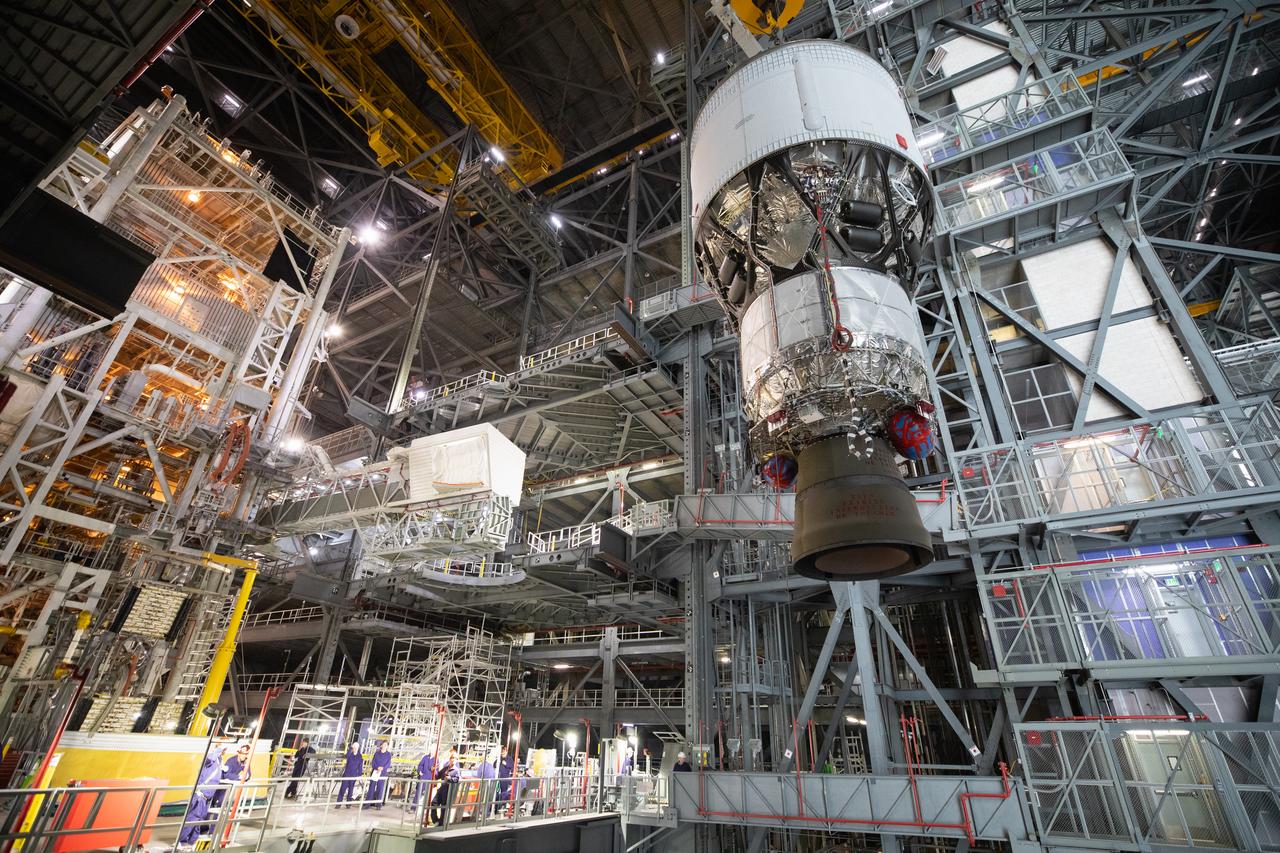
Teams with NASA’s Exploration Ground Systems Program begin integrating the interim cryogenic propulsion stage to the SLS (Space Launch System) launch vehicle stage adapter on Wednesday, April 30, 2025, inside the Vehicle Assembly Building at NASA’s Kennedy Space Center in Florida. The four-story propulsion system, built by Boeing and ULA (United Launch Alliance), is powered by an RL10 engine that will enable the Orion spacecraft to build up enough speed for the push toward the Moon during the Artemis II crewed test flight.
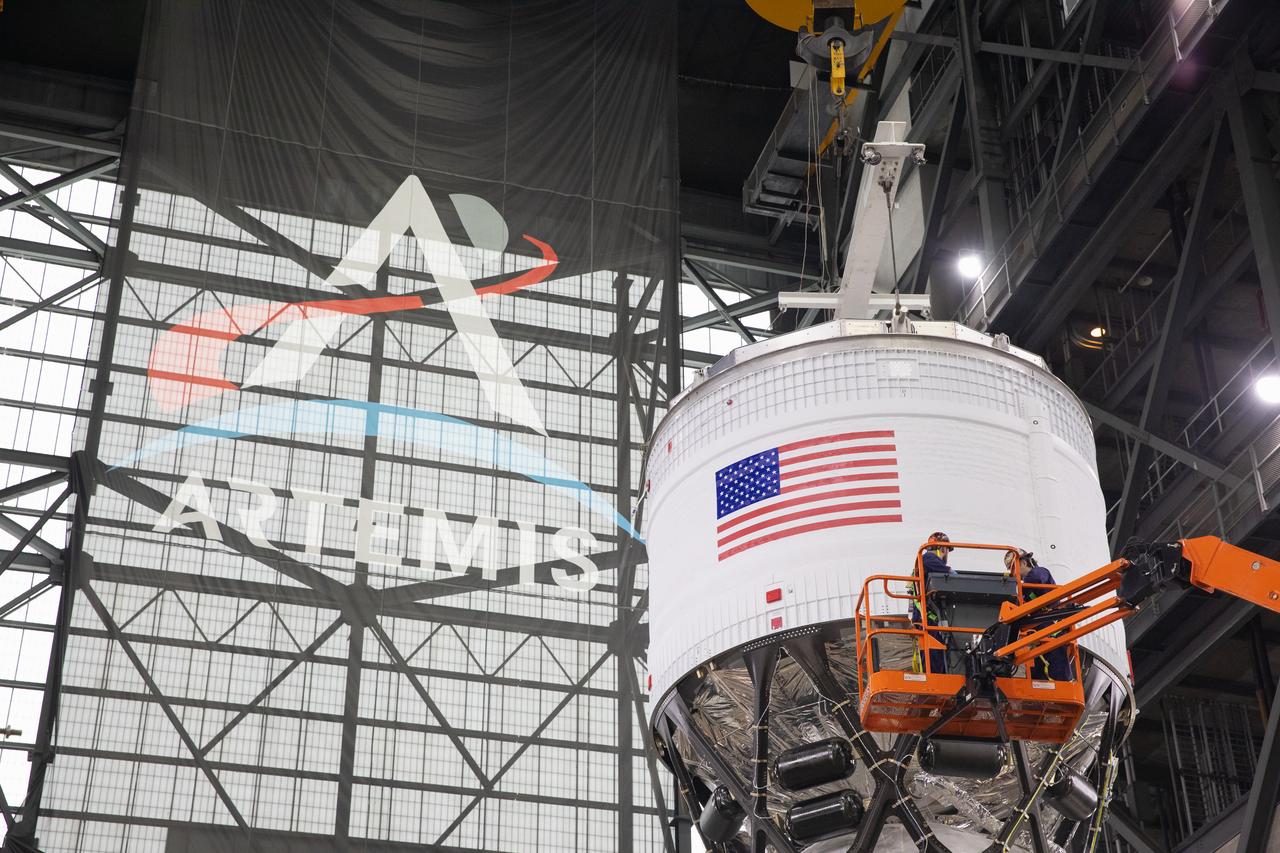
Teams with NASA’s Exploration Ground Systems Program begin integrating the interim cryogenic propulsion stage to the SLS (Space Launch System) launch vehicle stage adapter on Wednesday, April 30, 2025, inside the Vehicle Assembly Building at NASA’s Kennedy Space Center in Florida. The four-story propulsion system, built by Boeing and ULA (United Launch Alliance), is powered by an RL10 engine that will enable the Orion spacecraft to build up enough speed for the push toward the Moon during the Artemis II crewed test flight.
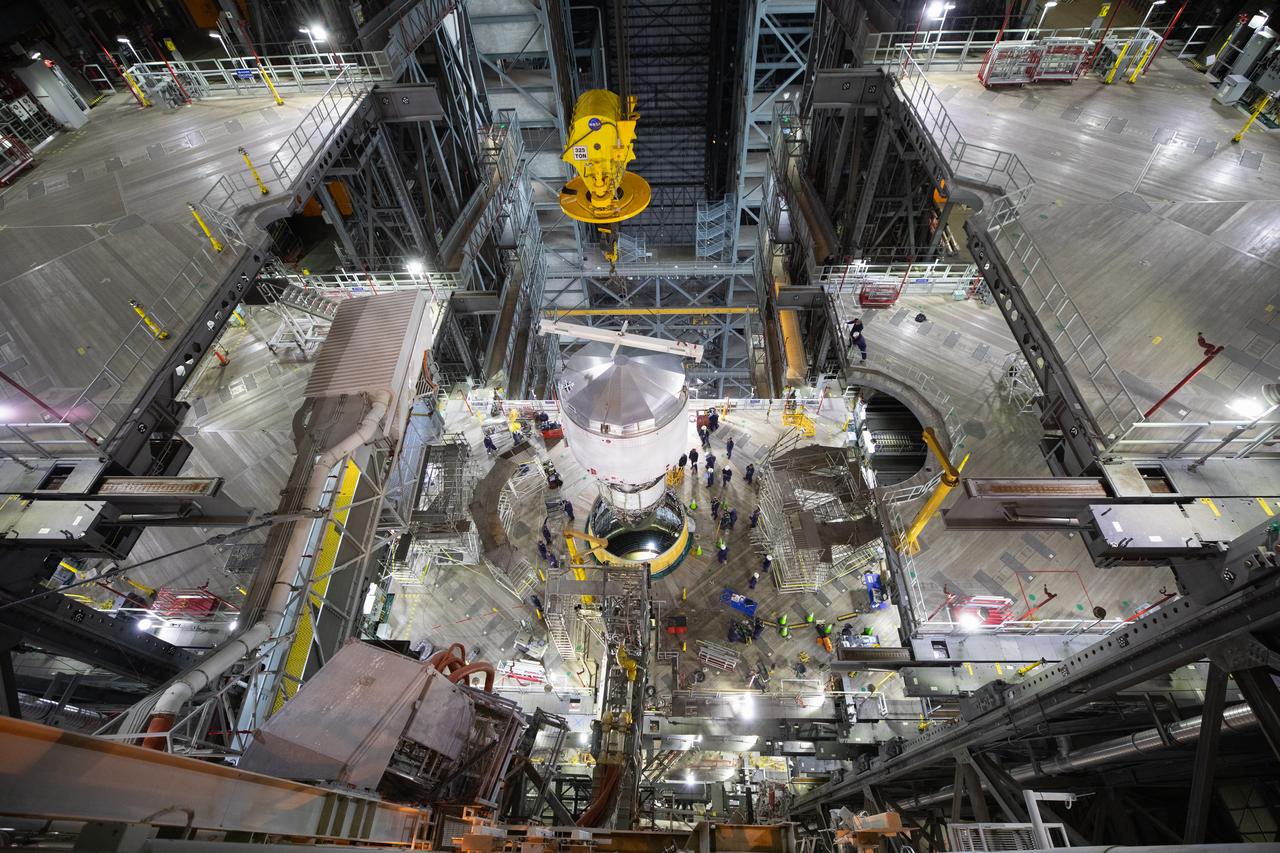
Teams with NASA’s Exploration Ground Systems Program begin integrating the interim cryogenic propulsion stage to the SLS (Space Launch System) launch vehicle stage adapter on Wednesday, April 30, 2025, inside the Vehicle Assembly Building at NASA’s Kennedy Space Center in Florida. The four-story propulsion system, built by Boeing and ULA (United Launch Alliance), is powered by an RL10 engine that will enable the Orion spacecraft to build up enough speed for the push toward the Moon during the Artemis II crewed test flight.

Teams with NASA’s Exploration Ground Systems Program begin integrating the interim cryogenic propulsion stage to the SLS (Space Launch System) launch vehicle stage adapter on Wednesday, April 30, 2025, inside the Vehicle Assembly Building at NASA’s Kennedy Space Center in Florida. The four-story propulsion system, built by Boeing and ULA (United Launch Alliance), is powered by an RL10 engine that will enable the Orion spacecraft to build up enough speed for the push toward the Moon during the Artemis II crewed test flight.
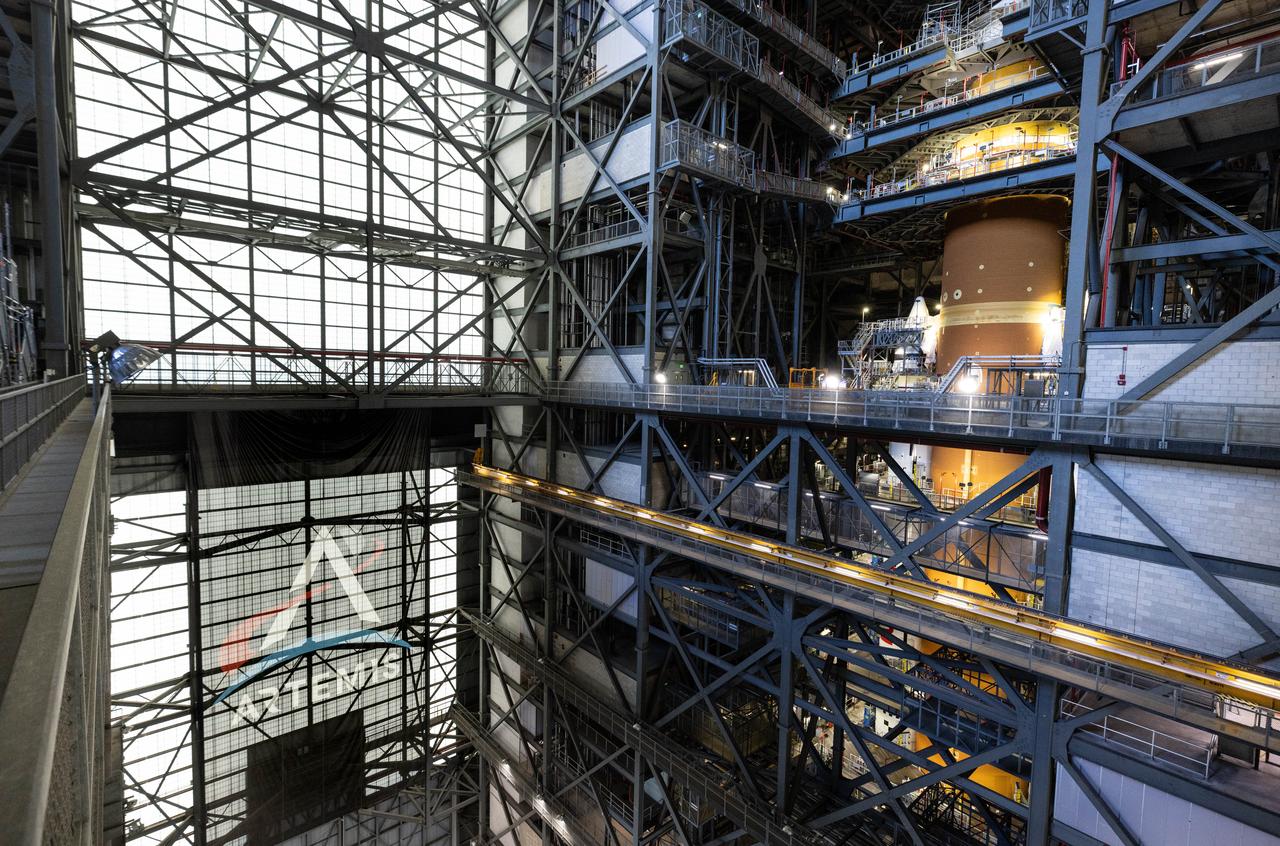
NASA’s Artemis II SLS (Space Launch System) rocket topped by its upper stage booster – the interim cryogenic propulsion stage – stands atop the mobile launcher inside the Vehicle Assembly Building at NASA’s Kennedy Space Center in Florida on Thursday, July 24, 2025. The Artemis II mission is the first crewed flight under NASA’s Artemis campaign and is another step toward missions on the lunar surface and helping the agency prepare for future human missions to Mars.
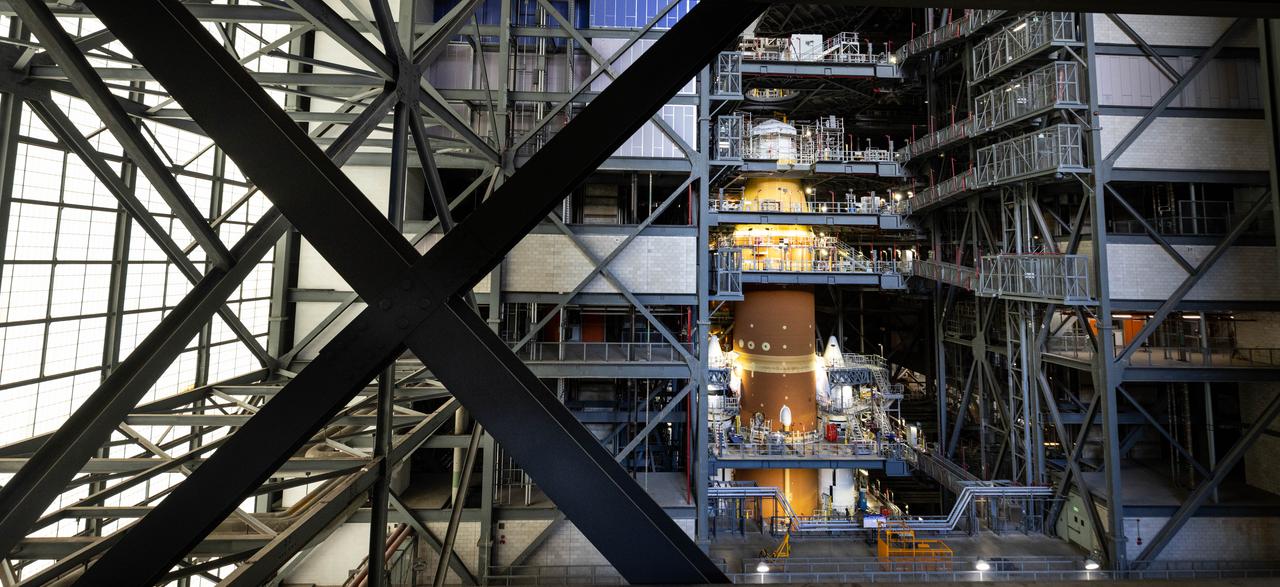
NASA’s Artemis II SLS (Space Launch System) rocket topped by its upper stage booster – the interim cryogenic propulsion stage – stands atop the mobile launcher inside the Vehicle Assembly Building at NASA’s Kennedy Space Center in Florida on Thursday, July 24, 2025. The Artemis II mission is the first crewed flight under NASA’s Artemis campaign and is another step toward missions on the lunar surface and helping the agency prepare for future human missions to Mars.
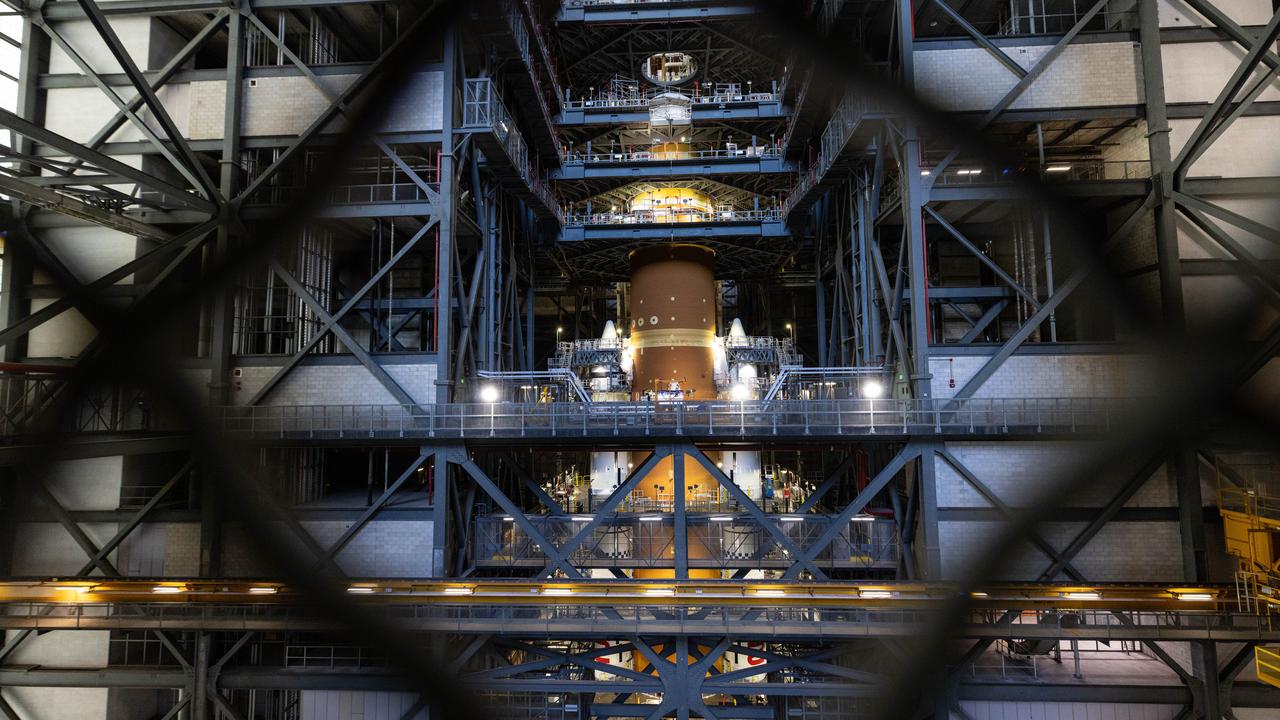
NASA’s Artemis II SLS (Space Launch System) rocket topped by its upper stage booster – the interim cryogenic propulsion stage – stands atop the mobile launcher inside the Vehicle Assembly Building at NASA’s Kennedy Space Center in Florida on Thursday, July 24, 2025. The Artemis II mission is the first crewed flight under NASA’s Artemis campaign and is another step toward missions on the lunar surface and helping the agency prepare for future human missions to Mars.
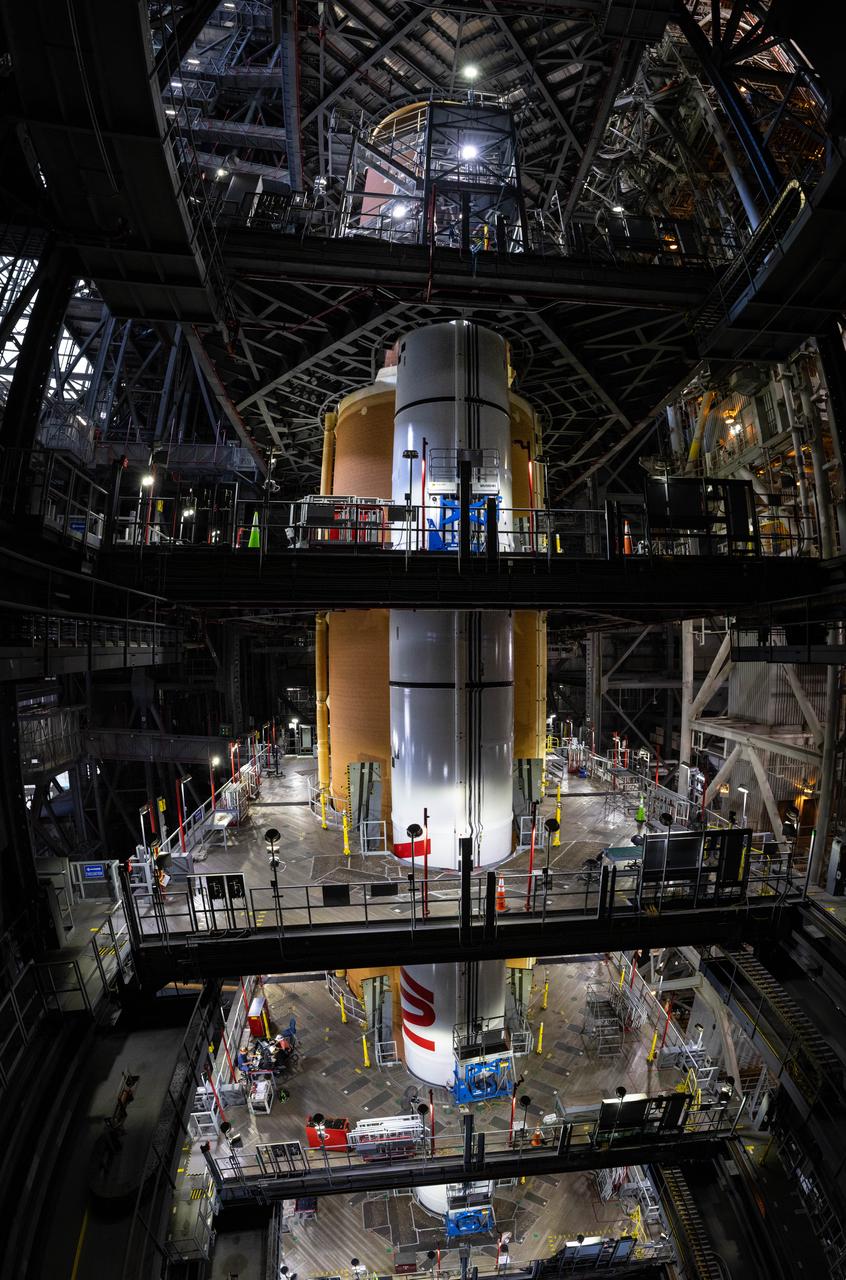
NASA’s Artemis II SLS (Space Launch System) rocket topped by its upper stage booster – the interim cryogenic propulsion stage – stands atop the mobile launcher inside the Vehicle Assembly Building at NASA’s Kennedy Space Center in Florida on Thursday, July 24, 2025. The Artemis II mission is the first crewed flight under NASA’s Artemis campaign and is another step toward missions on the lunar surface and helping the agency prepare for future human missions to Mars.
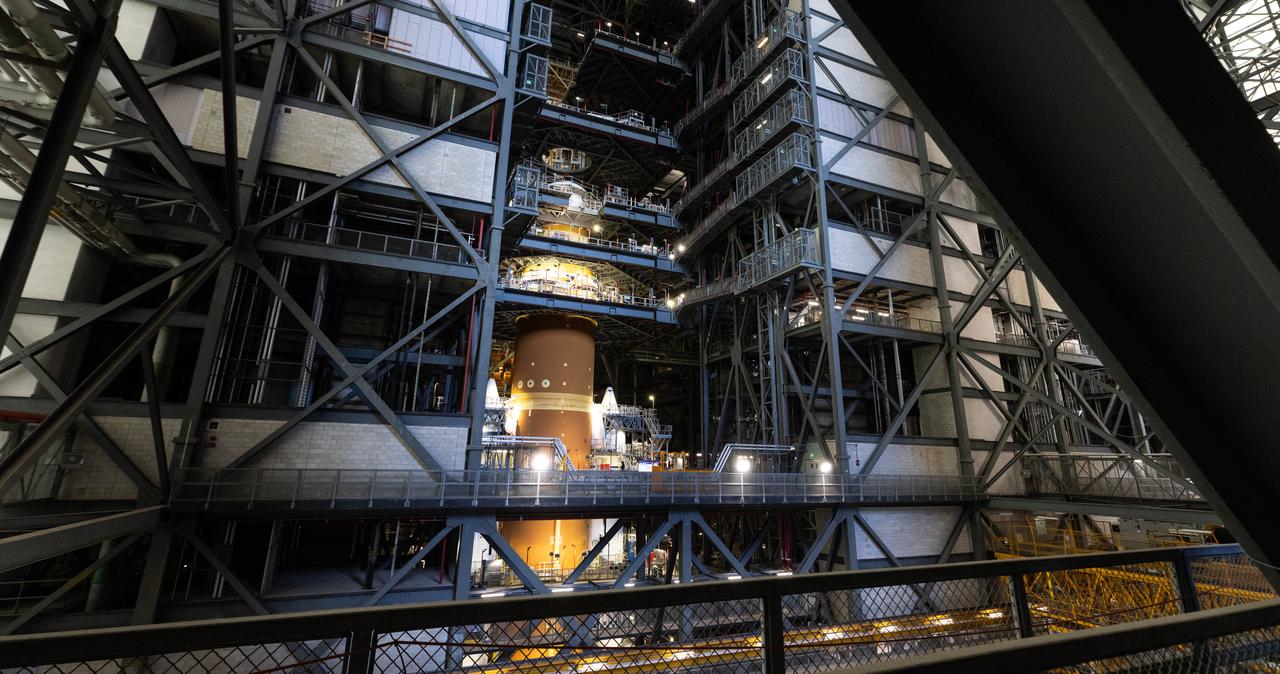
NASA’s Artemis II SLS (Space Launch System) rocket topped by its upper stage booster – the interim cryogenic propulsion stage – stands atop the mobile launcher inside the Vehicle Assembly Building at NASA’s Kennedy Space Center in Florida on Thursday, July 24, 2025. The Artemis II mission is the first crewed flight under NASA’s Artemis campaign and is another step toward missions on the lunar surface and helping the agency prepare for future human missions to Mars.
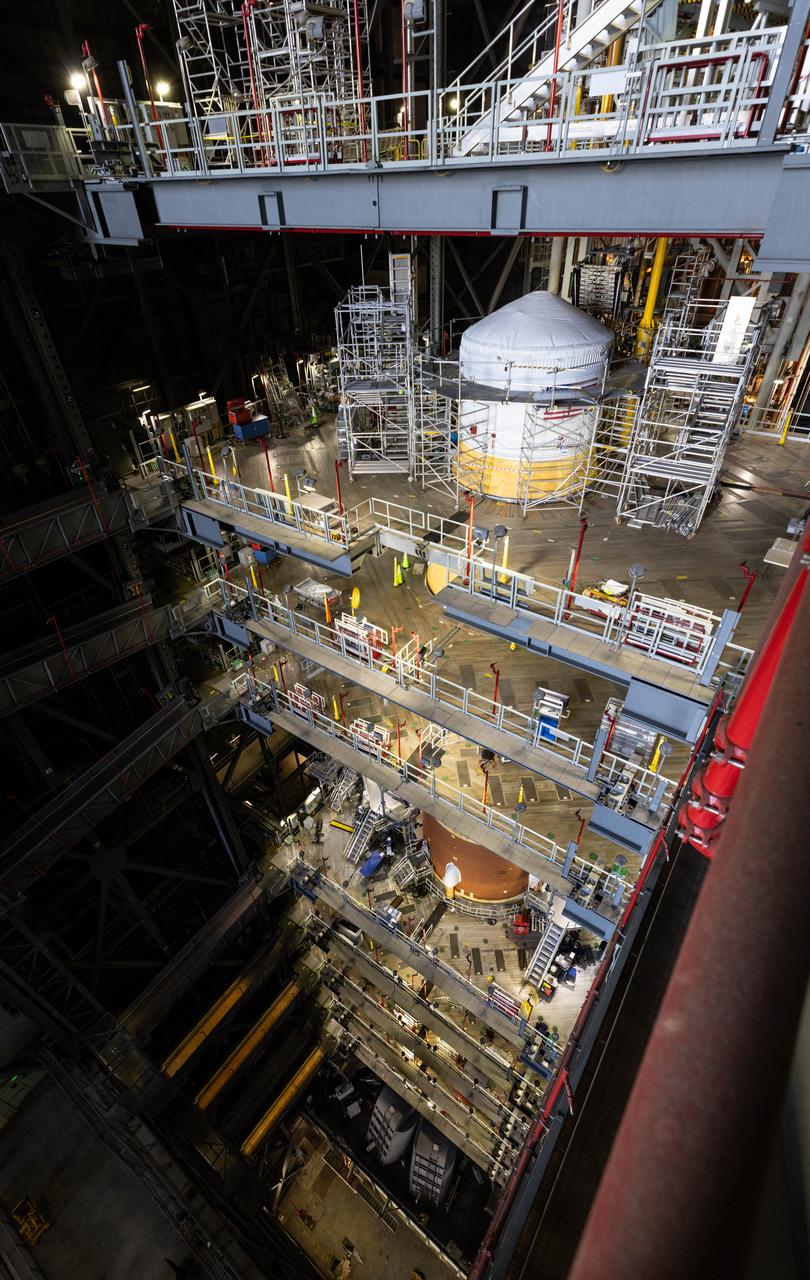
NASA’s Artemis II SLS (Space Launch System) rocket topped by its upper stage booster – the interim cryogenic propulsion stage – stands atop the mobile launcher inside the Vehicle Assembly Building at NASA’s Kennedy Space Center in Florida on Thursday, July 24, 2025. The Artemis II mission is the first crewed flight under NASA’s Artemis campaign and is another step toward missions on the lunar surface and helping the agency prepare for future human missions to Mars.
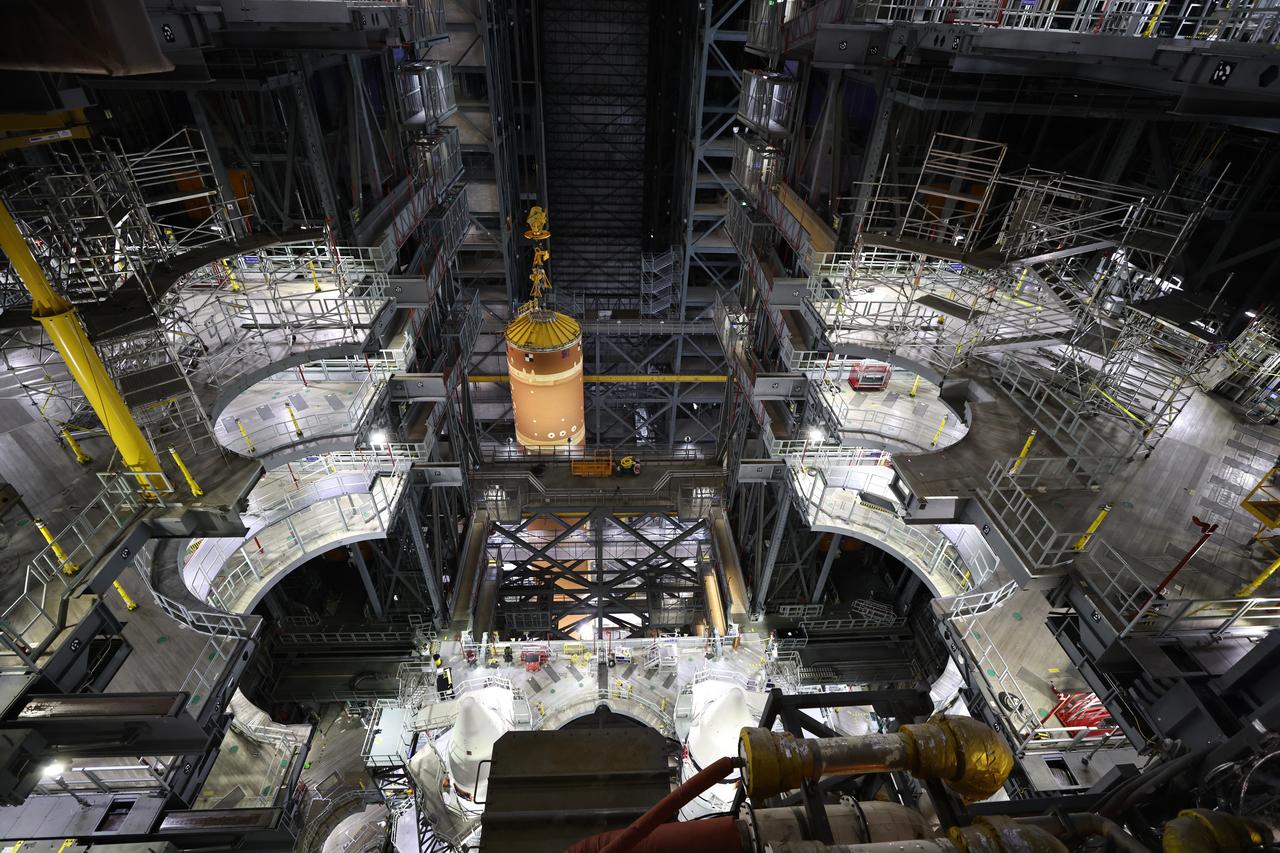
Teams with NASA’s Exploration Ground Systems and primary contractor Amentum, use a massive crane to lift to vertical the SLS (Space Launch System) Moon rocket for Artemis II on Saturday, March 22, 2025, inside the Vehicle Assembly Building at NASA’s Kennedy Space Center in Florida. The move from the facility’s transfer aisle into High Bay 3 allows technicians to integrate the 212-foot-tall core stage with the stacked solid rocket boosters onto mobile launcher 1. Artemis II is the first crewed test flight under NASA’s Artemis campaign and is another step toward missions on the lunar surface and helping the agency prepare for future human missions to Mars.
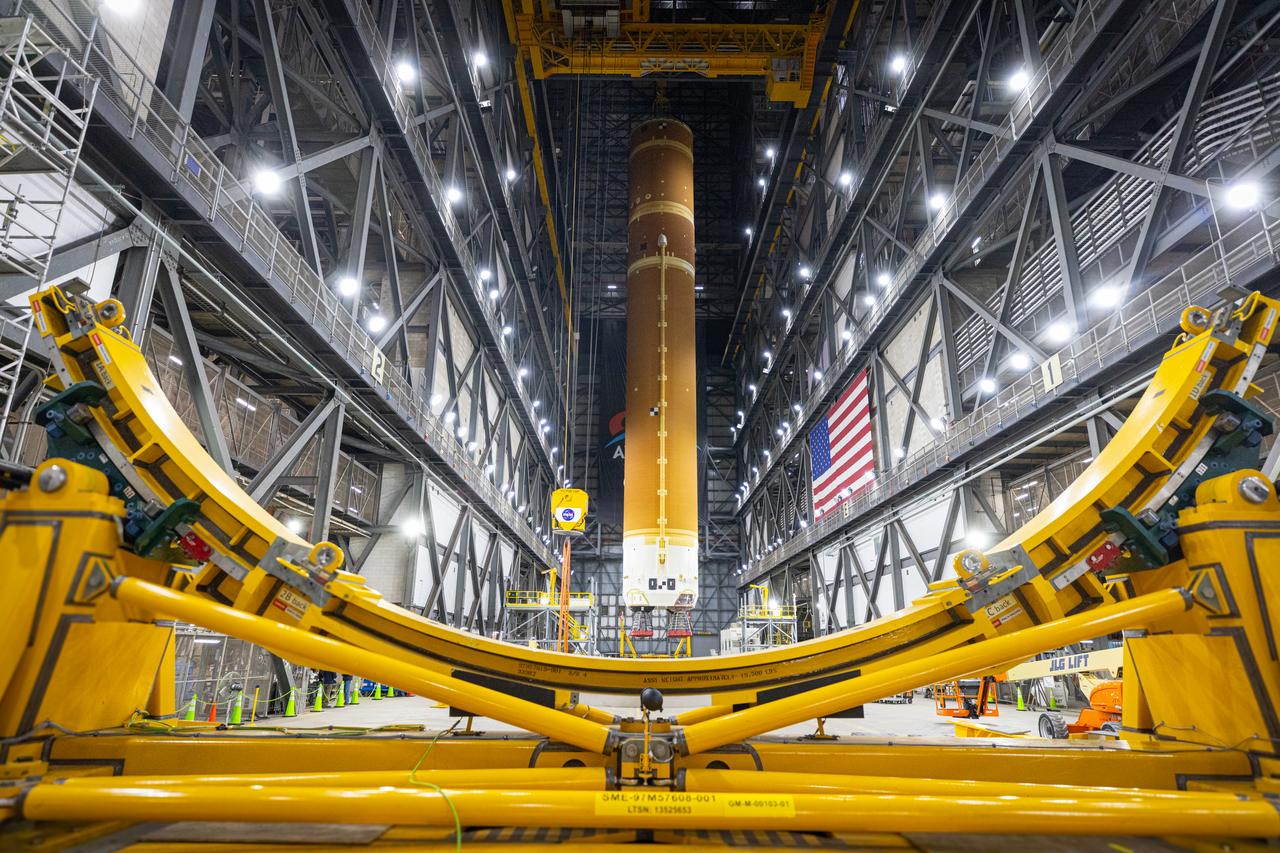
Teams with NASA’s Exploration Ground Systems and primary contractor Amentum, use a massive crane to lift to vertical the SLS (Space Launch System) Moon rocket for Artemis II on Saturday, March 22, 2025, inside the Vehicle Assembly Building at NASA’s Kennedy Space Center in Florida. The move from the facility’s transfer aisle into High Bay 3 allows technicians to integrate the 212-foot-tall core stage with the stacked solid rocket boosters onto mobile launcher 1. Artemis II is the first crewed test flight under NASA’s Artemis campaign and is another step toward missions on the lunar surface and helping the agency prepare for future human missions to Mars.
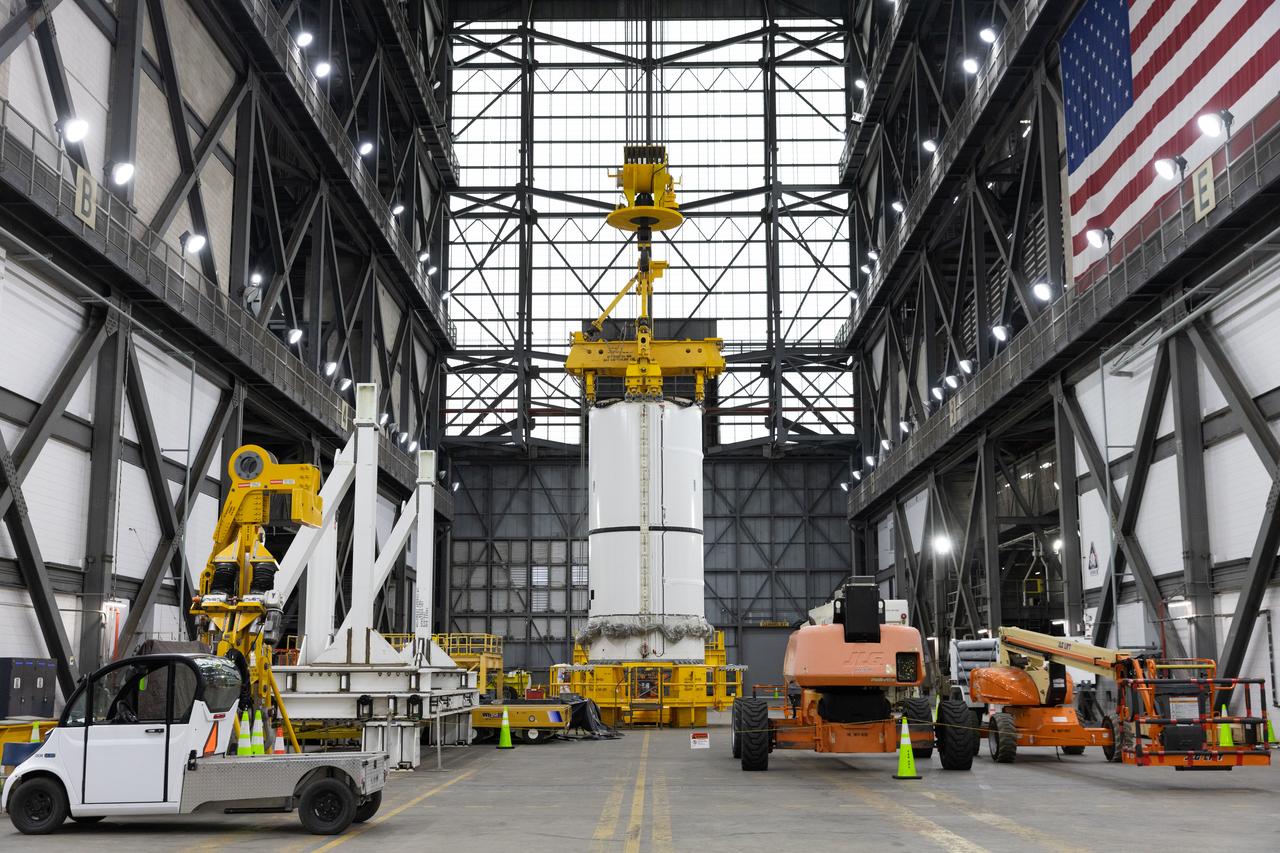
Engineers and technicians with NASA's Exploration Ground Systems Program transfer the right forward center segment to the Vehicle Assembly Building at NASA's Kennedy Space Center in Florida. The booster segment is shown attached to a lifting beam on Tuesday, Jan. 21, 2025 ahead of integration onto the Mobile Launcher 1. The boosters will help support the remaining rocket components and the Orion spacecraft during final assembly of the Artems II Moon rocket and provide more than 75 percent of the total SLS (Space Launch System) thrust during liftoff from NASA Kennedy's Launch Pad 39B.
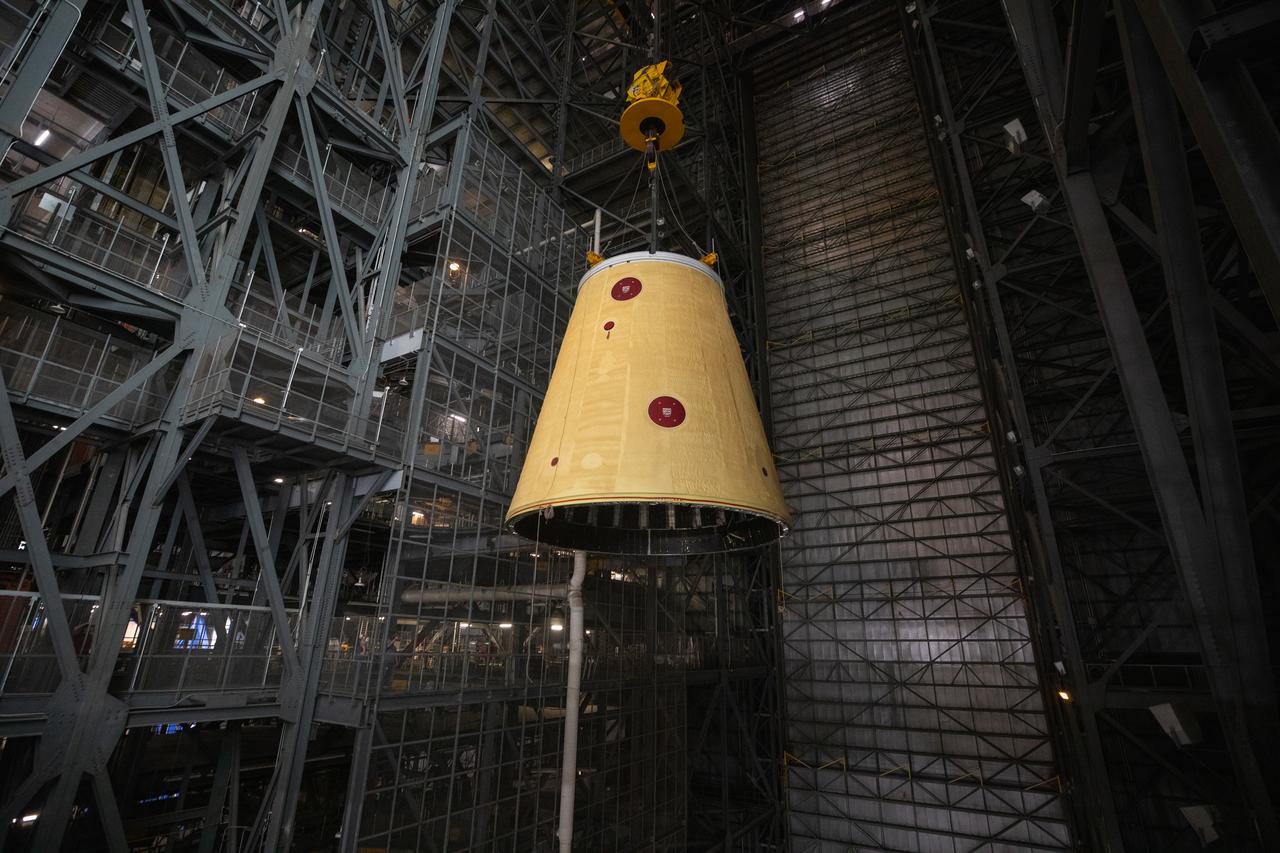
A massive crane lifts the launch vehicle stage adapter 250 feet into the air on Thursday, April 3, 2025, to prepare integration onto the SLS (Space Launch System) core stage in High Bay 3 inside the Vehicle Assembly Building at NASA’s Kennedy Space Center in Florida. During launch and ascent, the launch vehicle stage adapter provides structural support and protects avionics and electrical devices within the upper stage from extreme vibrations and acoustic conditions. The Artemis II test flight will take a crew of four astronauts on a 10-day journey around the Moon, helping confirm the foundational systems and hardware needed for human deep space exploration.

A massive crane lowers the launch vehicle stage adapter onto the SLS (Space Launch System) core stage on Thursday, April 3, 2025, in High Bay 3 inside the Vehicle Assembly Building at NASA’s Kennedy Space Center in Florida. During launch and ascent, the launch vehicle stage adapter provides structural support and protects avionics and electrical devices within the upper stage from extreme vibrations and acoustic conditions. The Artemis II test flight will take a crew of four astronauts on a 10-day journey around the Moon, helping confirm the foundational systems and hardware needed for human deep space exploration.
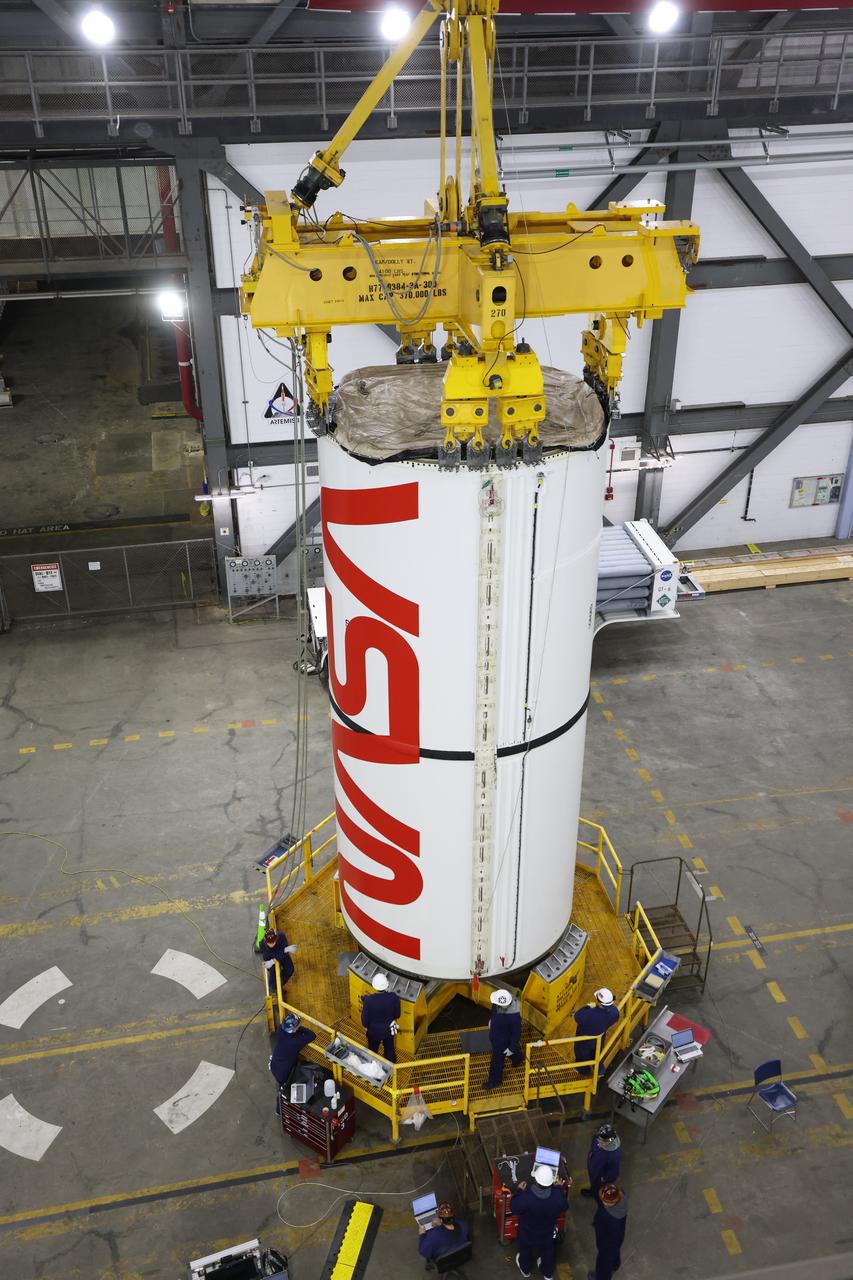
Engineers and technicians with NASA’s Exploration Ground Systems Program transfer the right center center segment with the NASA worm insignia to the Vehicle Assembly Building at NASA's Kennedy Space Center in Florida on Tuesday, Jan. 14, 2025. The booster segment is shown attached to a lifting beam ahead of integration onto the mobile launcher. The boosters will help support the remaining rocket components and the Orion spacecraft during final assembly of the Artemis II Moon rocket and provide more than 75 percent of the total SLS (Space Launch System) thrust during liftoff from NASA Kennedy’s Launch Pad 39B.
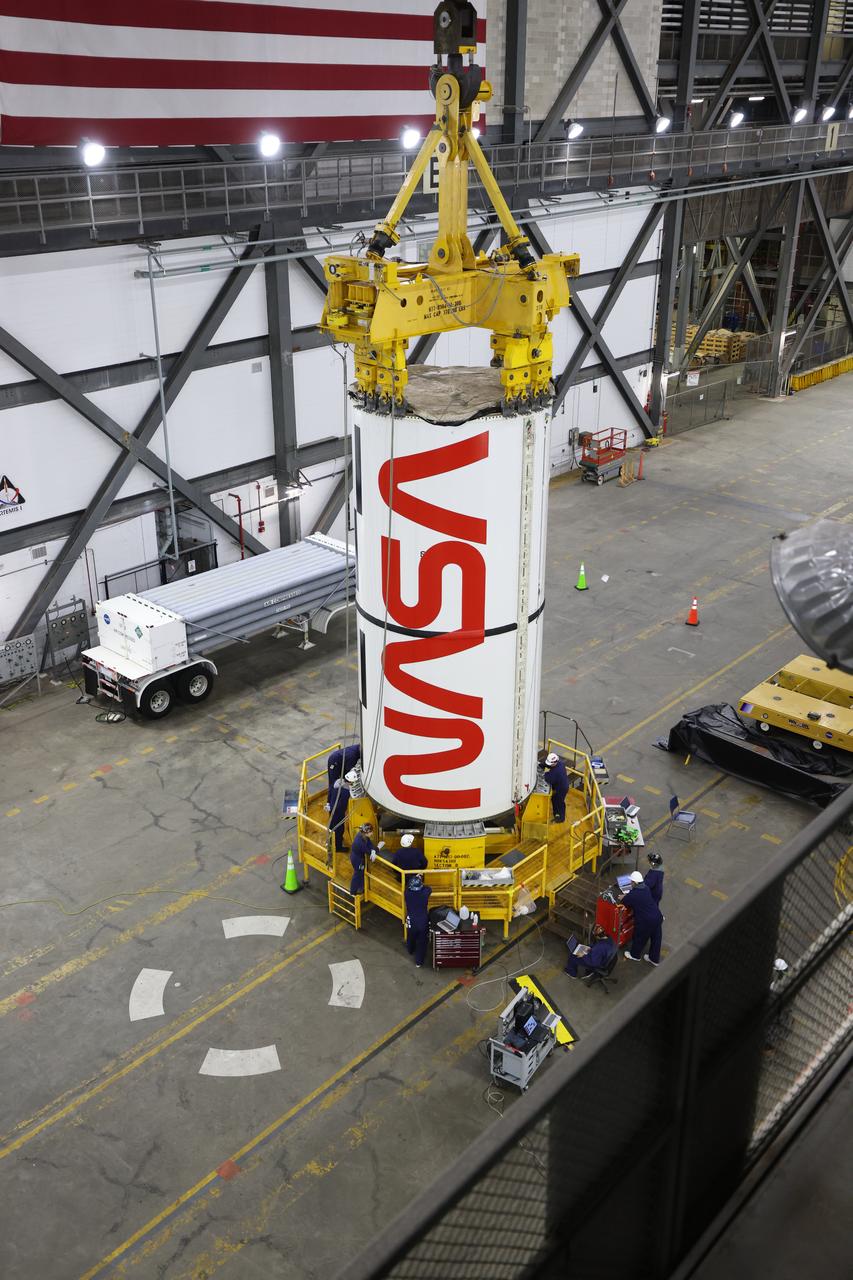
Engineers and technicians with NASA’s Exploration Ground Systems Program transfer the right center center segment with the NASA worm insignia to the Vehicle Assembly Building at NASA's Kennedy Space Center in Florida on Tuesday, Jan. 14, 2025. The booster segment is shown attached to a lifting beam ahead of integration onto the mobile launcher. The boosters will help support the remaining rocket components and the Orion spacecraft during final assembly of the Artemis II Moon rocket and provide more than 75 percent of the total SLS (Space Launch System) thrust during liftoff from NASA Kennedy’s Launch Pad 39B.
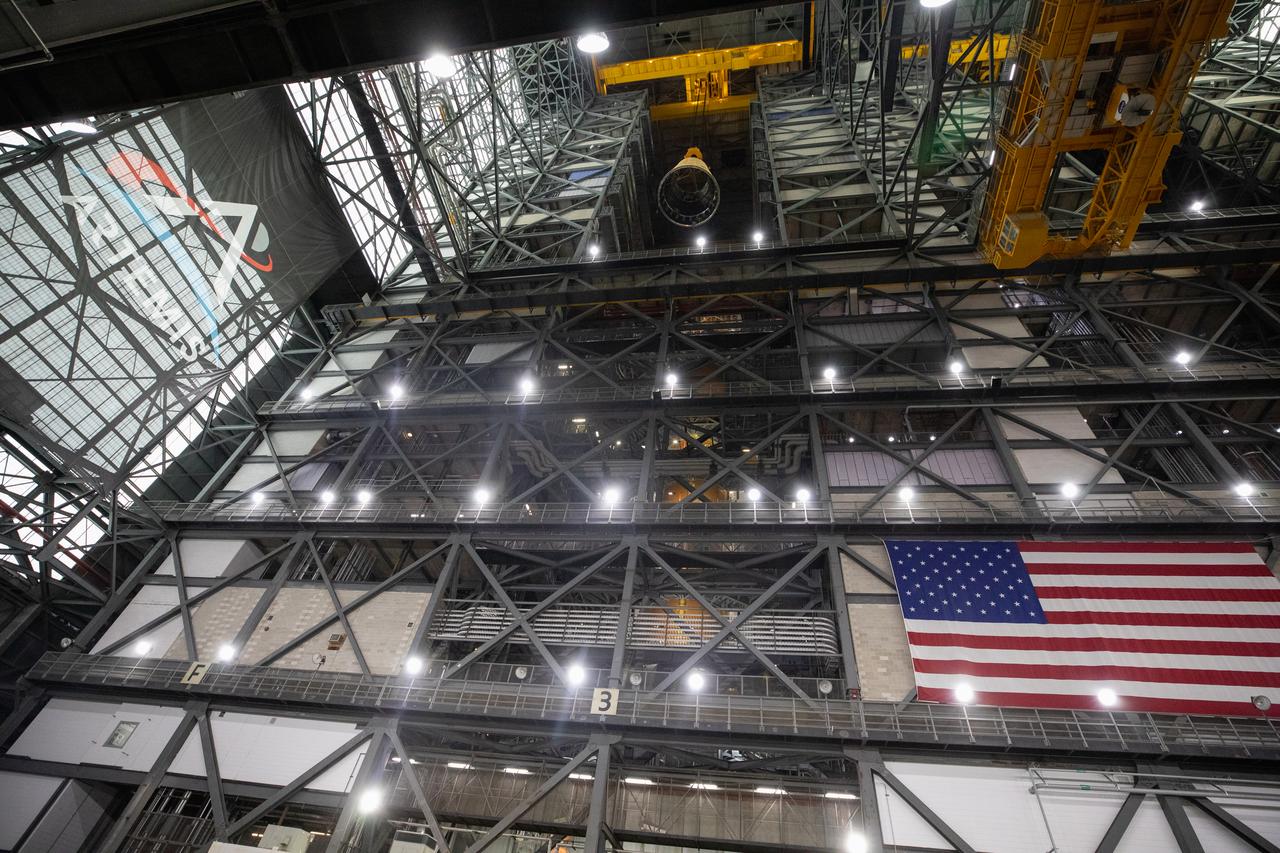
A massive crane lifts the launch vehicle stage adapter 250 feet into the air on Thursday, April 3, 2025, to prepare integration onto the SLS (Space Launch System) core stage in High Bay 3 inside the Vehicle Assembly Building at NASA’s Kennedy Space Center in Florida. During launch and ascent, the launch vehicle stage adapter provides structural support and protects avionics and electrical devices within the upper stage from extreme vibrations and acoustic conditions. The Artemis II test flight will take a crew of four astronauts on a 10-day journey around the Moon, helping confirm the foundational systems and hardware needed for human deep space exploration.
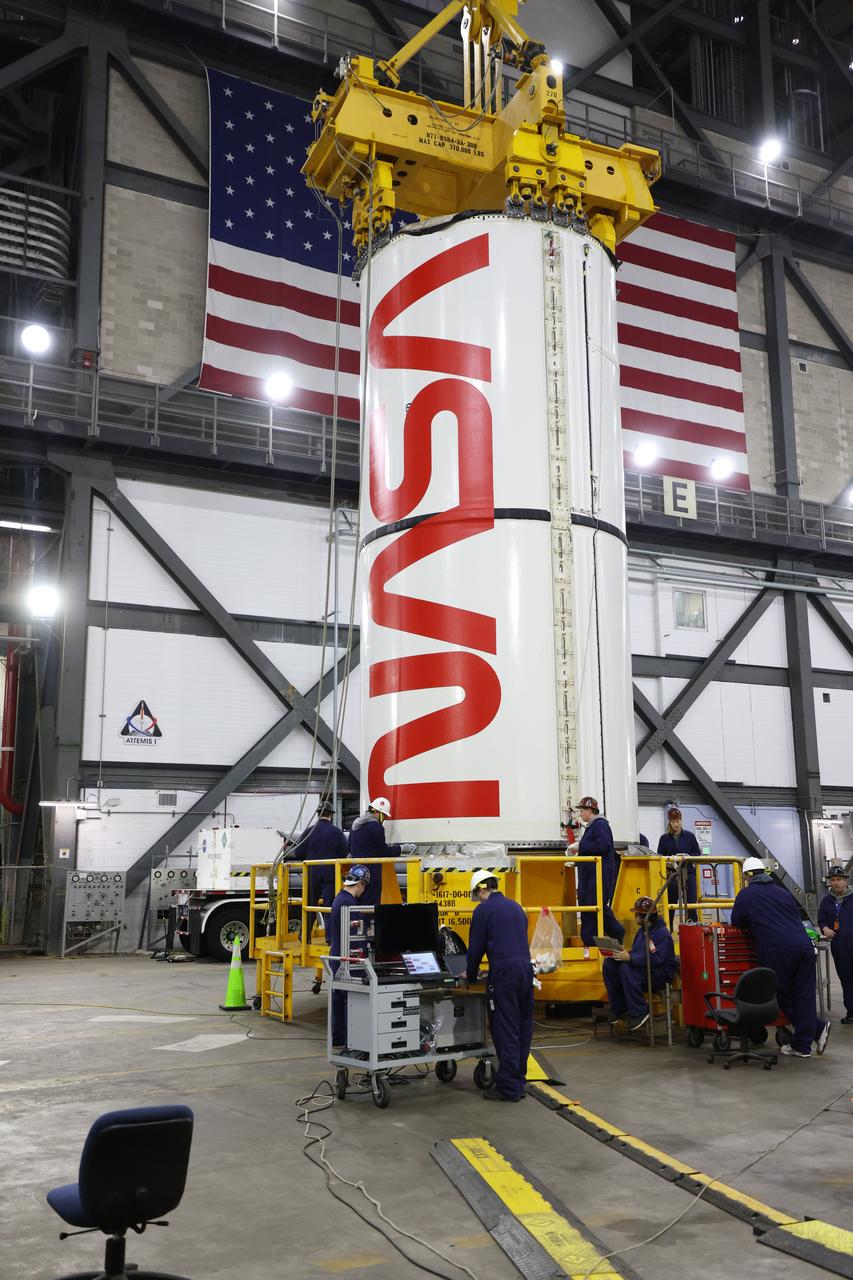
Engineers and technicians with NASA’s Exploration Ground Systems Program transfer the right center center segment with the NASA worm insignia to the Vehicle Assembly Building at NASA's Kennedy Space Center in Florida on Tuesday, Jan. 14, 2025. The booster segment is shown attached to a lifting beam ahead of integration onto the mobile launcher. The boosters will help support the remaining rocket components and the Orion spacecraft during final assembly of the Artemis II Moon rocket and provide more than 75 percent of the total SLS (Space Launch System) thrust during liftoff from NASA Kennedy’s Launch Pad 39B.
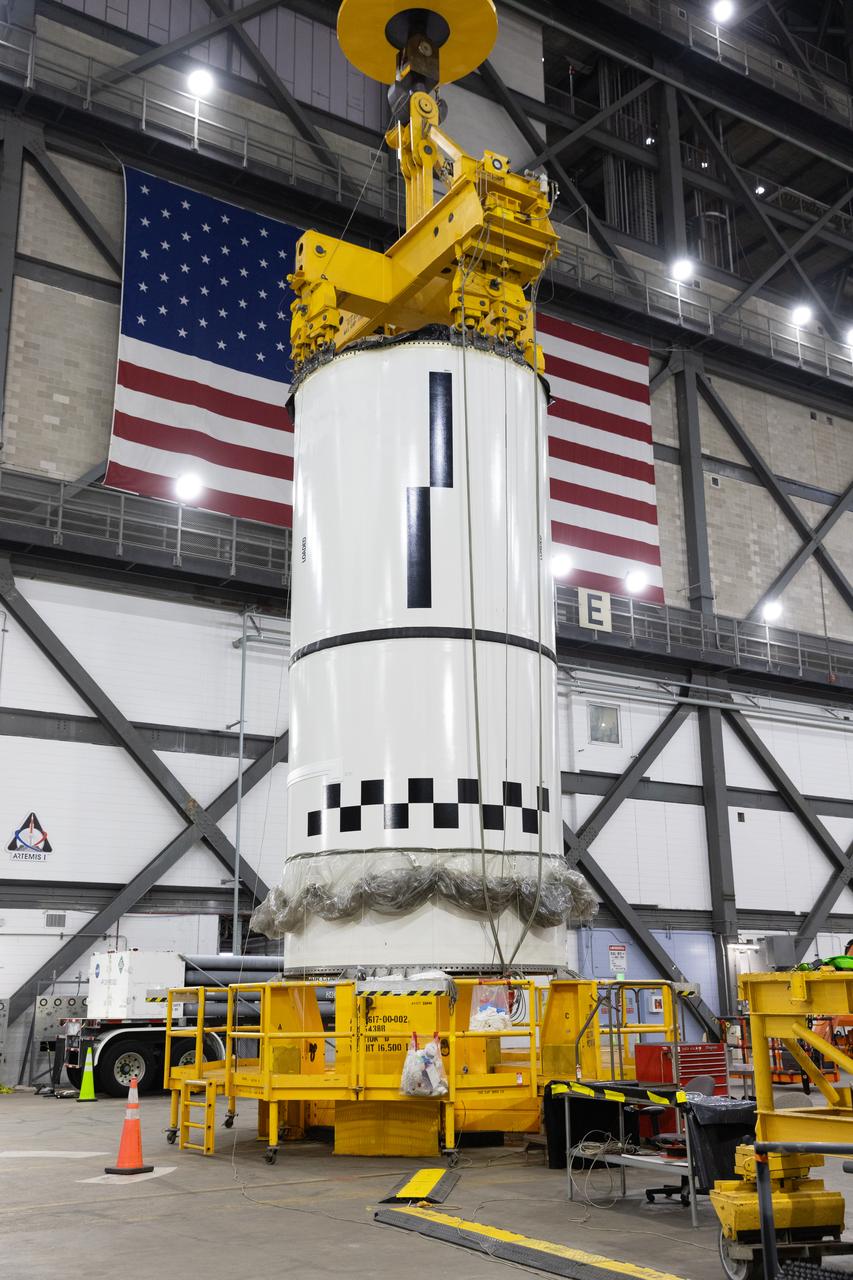
Engineers and technicians with NASA's Exploration Ground Systems Program transfer the right forward center segment to the Vehicle Assembly Building at NASA's Kennedy Space Center in Florida. The booster segment is shown attached to a lifting beam on Tuesday, Jan. 21, 2025 ahead of integration onto the Mobile Launcher 1. The boosters will help support the remaining rocket components and the Orion spacecraft during final assembly of the Artems II Moon rocket and provide more than 75 percent of the total SLS (Space Launch System) thrust during liftoff from NASA Kennedy's Launch Pad 39B.
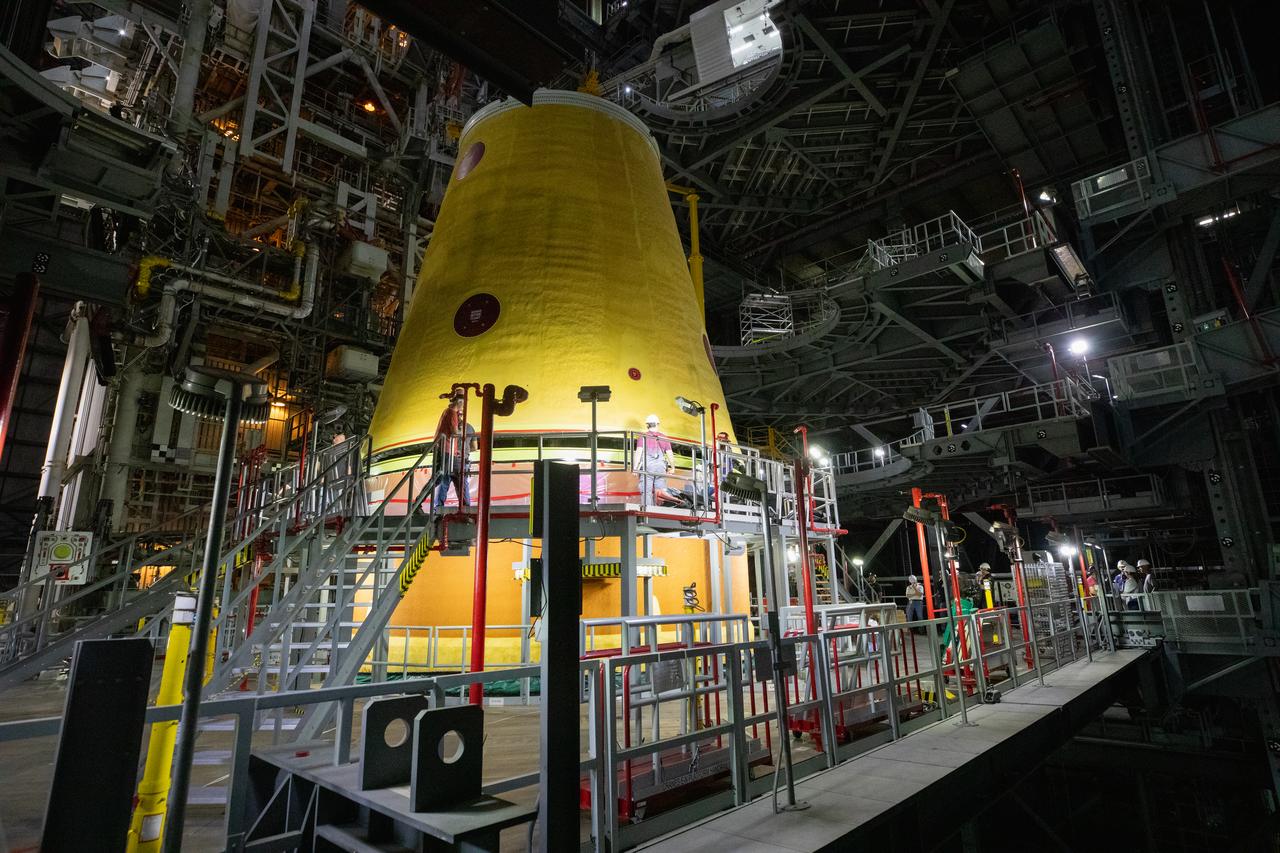
A massive crane lowers the launch vehicle stage adapter onto the SLS (Space Launch System) core stage on Thursday, April 3, 2025, in High Bay 3 inside the Vehicle Assembly Building at NASA’s Kennedy Space Center in Florida. During launch and ascent, the launch vehicle stage adapter provides structural support and protects avionics and electrical devices within the upper stage from extreme vibrations and acoustic conditions. The Artemis II test flight will take a crew of four astronauts on a 10-day journey around the Moon, helping confirm the foundational systems and hardware needed for human deep space exploration.
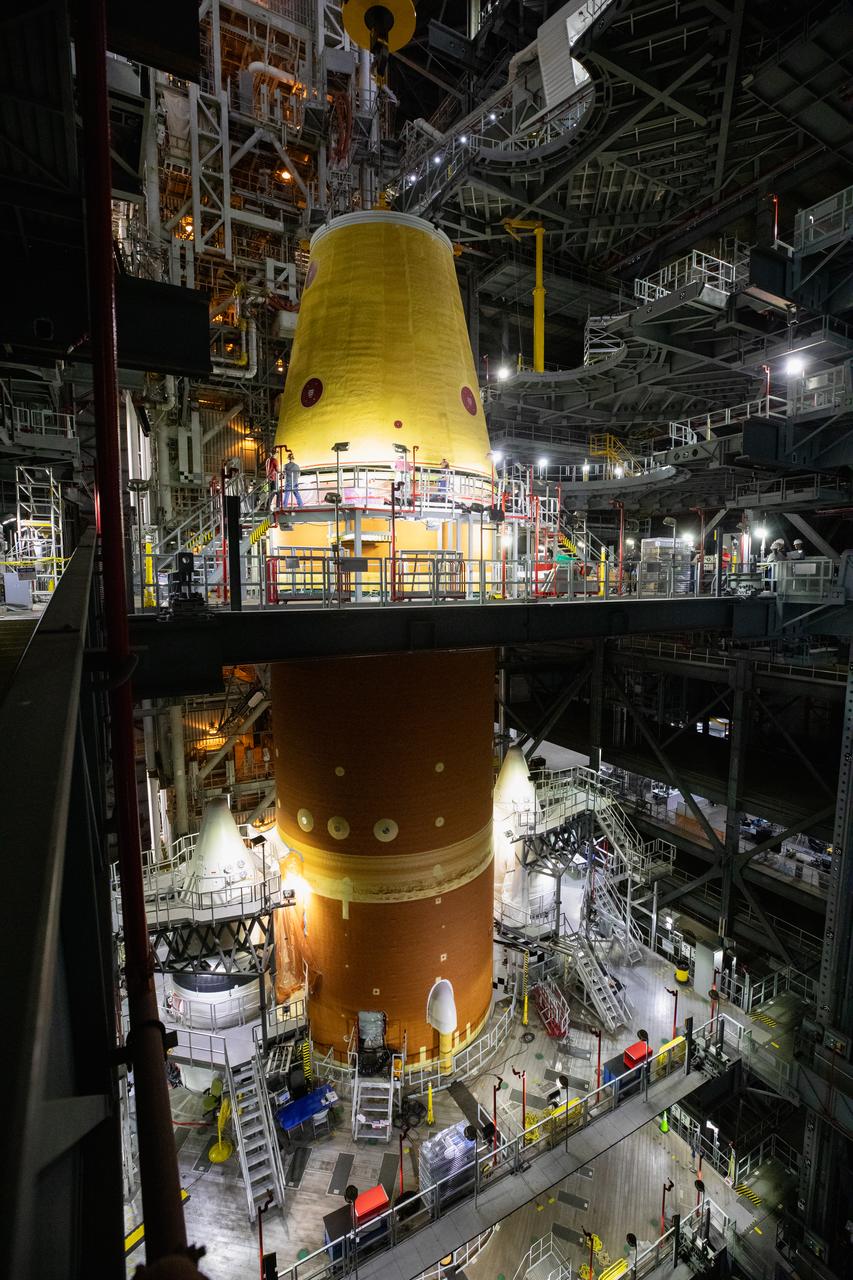
A massive crane lowers the launch vehicle stage adapter onto the SLS (Space Launch System) core stage on Thursday, April 3, 2025, in High Bay 3 inside the Vehicle Assembly Building at NASA’s Kennedy Space Center in Florida. During launch and ascent, the launch vehicle stage adapter provides structural support and protects avionics and electrical devices within the upper stage from extreme vibrations and acoustic conditions. The Artemis II test flight will take a crew of four astronauts on a 10-day journey around the Moon, helping confirm the foundational systems and hardware needed for human deep space exploration.
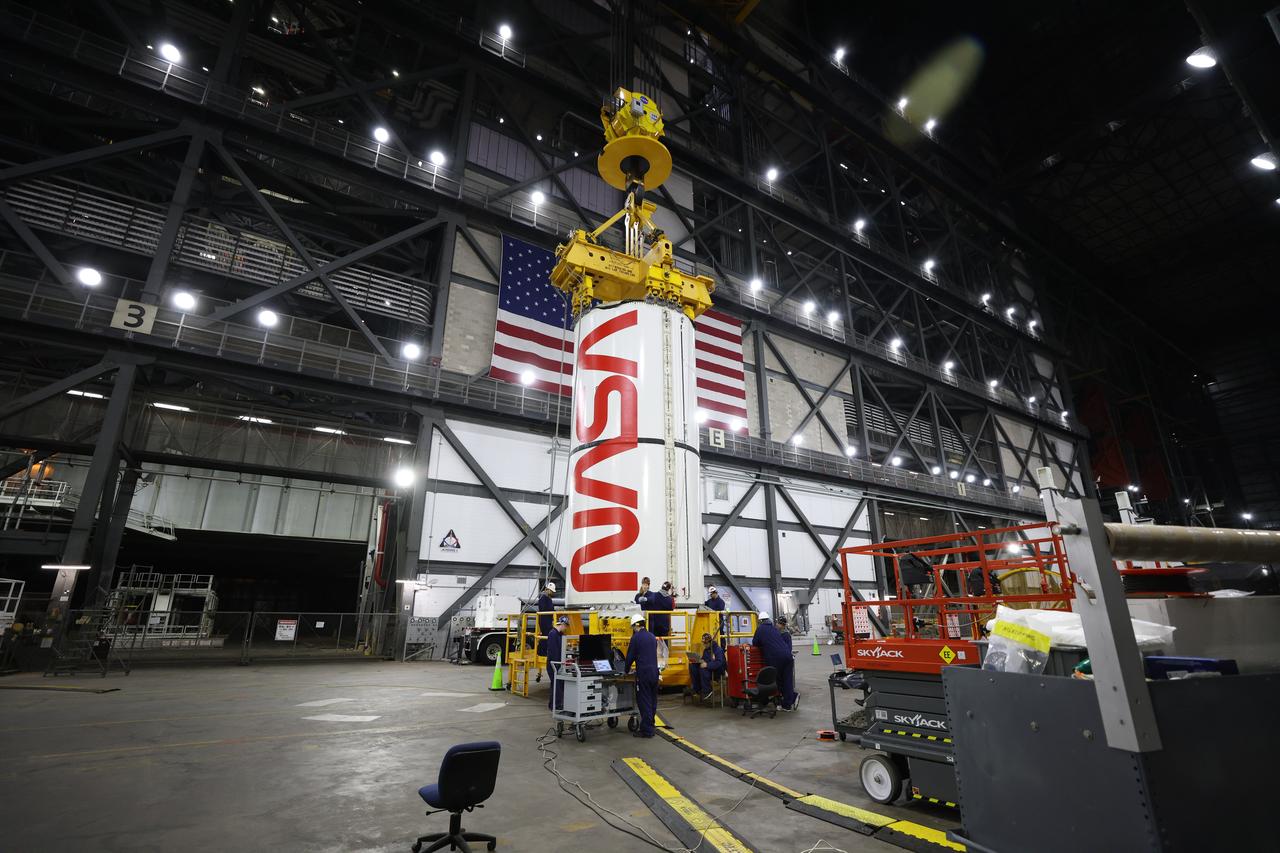
Engineers and technicians with NASA’s Exploration Ground Systems Program transfer the right center center segment with the NASA worm insignia to the Vehicle Assembly Building at NASA's Kennedy Space Center in Florida on Tuesday, Jan. 14, 2025. The booster segment is shown attached to a lifting beam ahead of integration onto the mobile launcher. The boosters will help support the remaining rocket components and the Orion spacecraft during final assembly of the Artemis II Moon rocket and provide more than 75 percent of the total SLS (Space Launch System) thrust during liftoff from NASA Kennedy’s Launch Pad 39B.
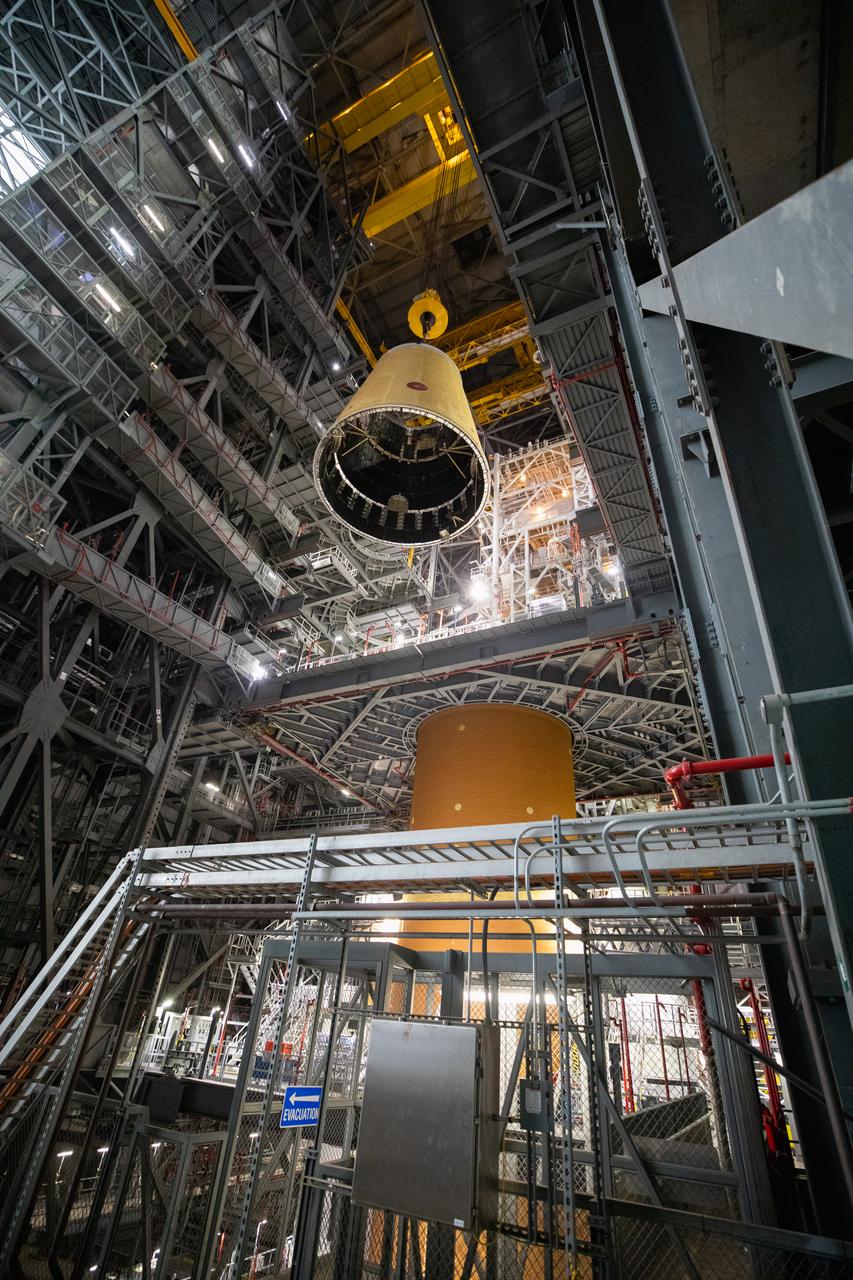
A massive crane lifts the launch vehicle stage adapter 250 feet into the air on Thursday, April 3, 2025, to prepare integration onto the SLS (Space Launch System) core stage in High Bay 3 inside the Vehicle Assembly Building at NASA’s Kennedy Space Center in Florida. During launch and ascent, the launch vehicle stage adapter provides structural support and protects avionics and electrical devices within the upper stage from extreme vibrations and acoustic conditions. The Artemis II test flight will take a crew of four astronauts on a 10-day journey around the Moon, helping confirm the foundational systems and hardware needed for human deep space exploration.
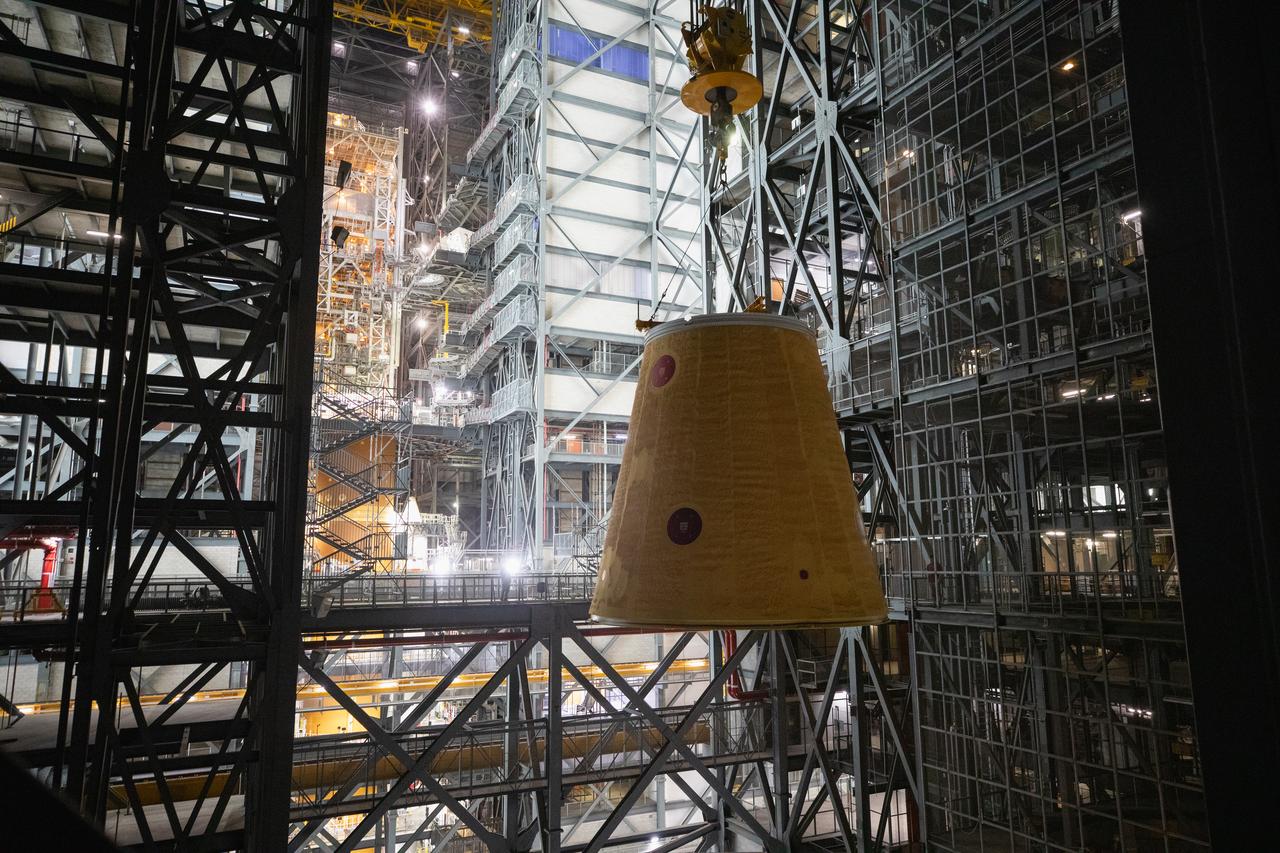
A massive crane lifts the launch vehicle stage adapter 250 feet into the air on Thursday, April 3, 2025, to prepare integration onto the SLS (Space Launch System) core stage in High Bay 3 inside the Vehicle Assembly Building at NASA’s Kennedy Space Center in Florida. During launch and ascent, the launch vehicle stage adapter provides structural support and protects avionics and electrical devices within the upper stage from extreme vibrations and acoustic conditions. The Artemis II test flight will take a crew of four astronauts on a 10-day journey around the Moon, helping confirm the foundational systems and hardware needed for human deep space exploration.
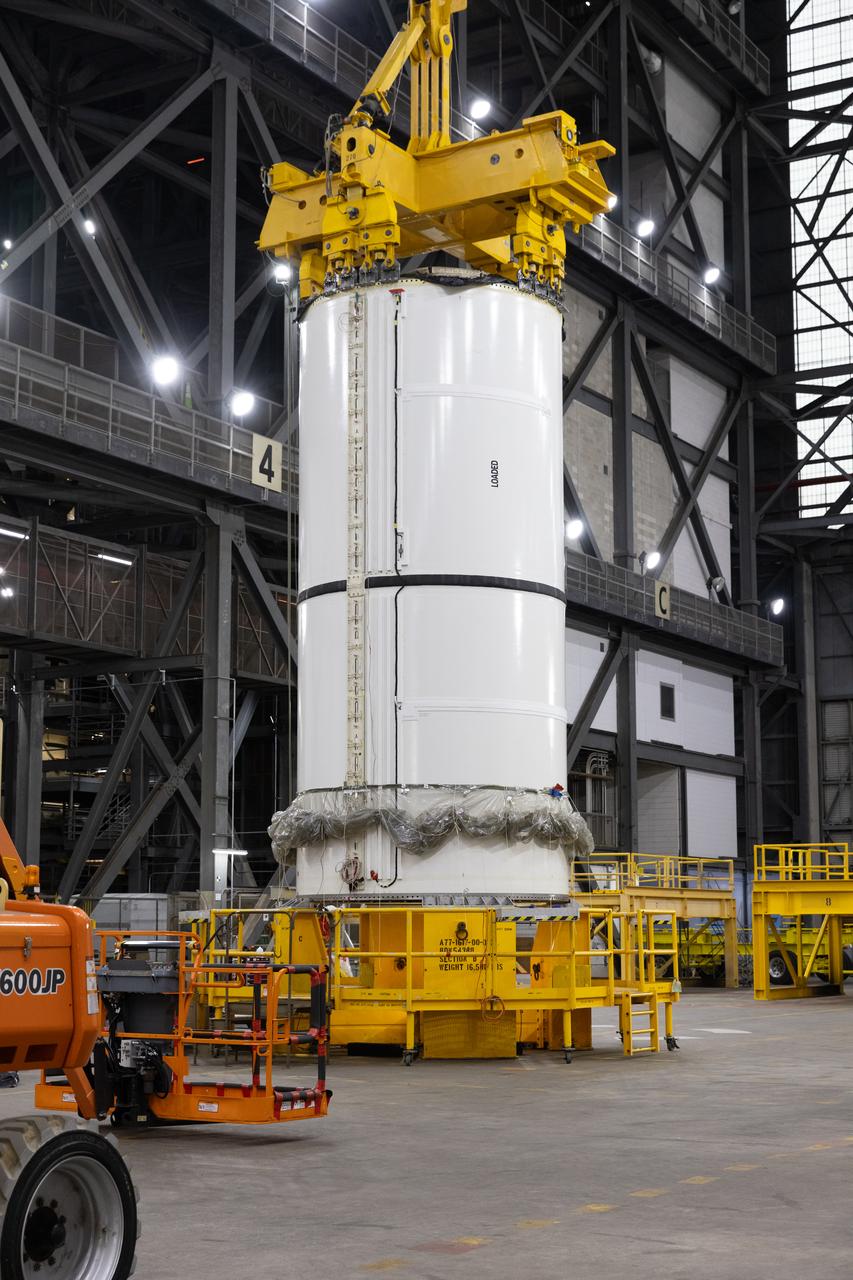
Engineers and technicians with NASA's Exploration Ground Systems Program transfer the right forward center segment to the Vehicle Assembly Building at NASA's Kennedy Space Center in Florida. The booster segment is shown attached to a lifting beam on Tuesday, Jan. 21, 2025 ahead of integration onto the Mobile Launcher 1. The boosters will help support the remaining rocket components and the Orion spacecraft during final assembly of the Artems II Moon rocket and provide more than 75 percent of the total SLS (Space Launch System) thrust during liftoff from NASA Kennedy's Launch Pad 39B.
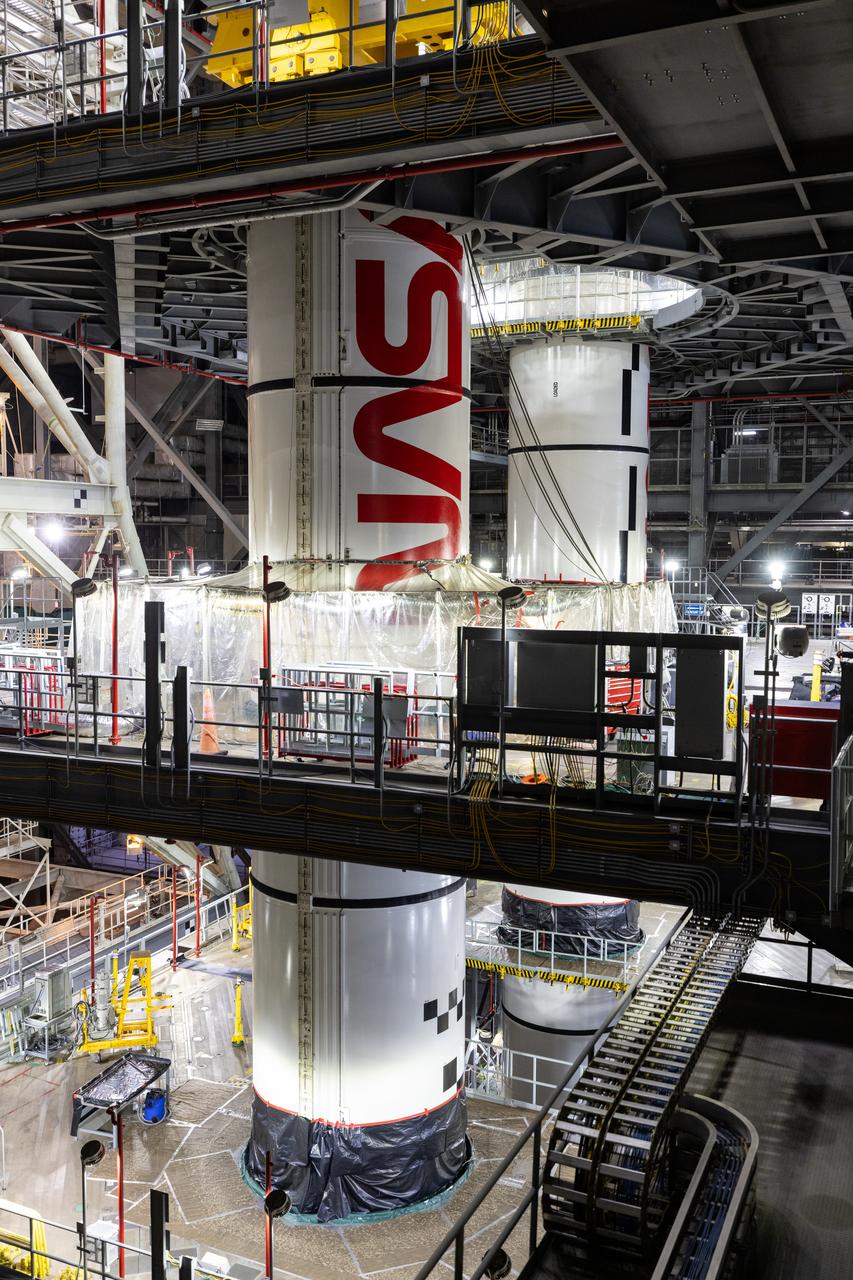
Inside High Bay 3 of the Vehicle Assembly Building at NASA’s Kennedy Space Center in Florida, technicians with the agency’s Exploration Ground Systems use a crane to lower the left center center booster segment for the NASA’s SLS (Space Launch System) rocket onto the left aft center segment atop the mobile launcher on Monday, Jan. 27, 2025. The NASA “worm” insignia can be seen on both the center center booster segments. The boosters will help support the remaining rocket components and the Orion spacecraft during final assembly of the Artemis II Moon rocket and provide more than 75 percent of the total SLS thrust during liftoff from NASA Kennedy’s Launch Pad 39B.
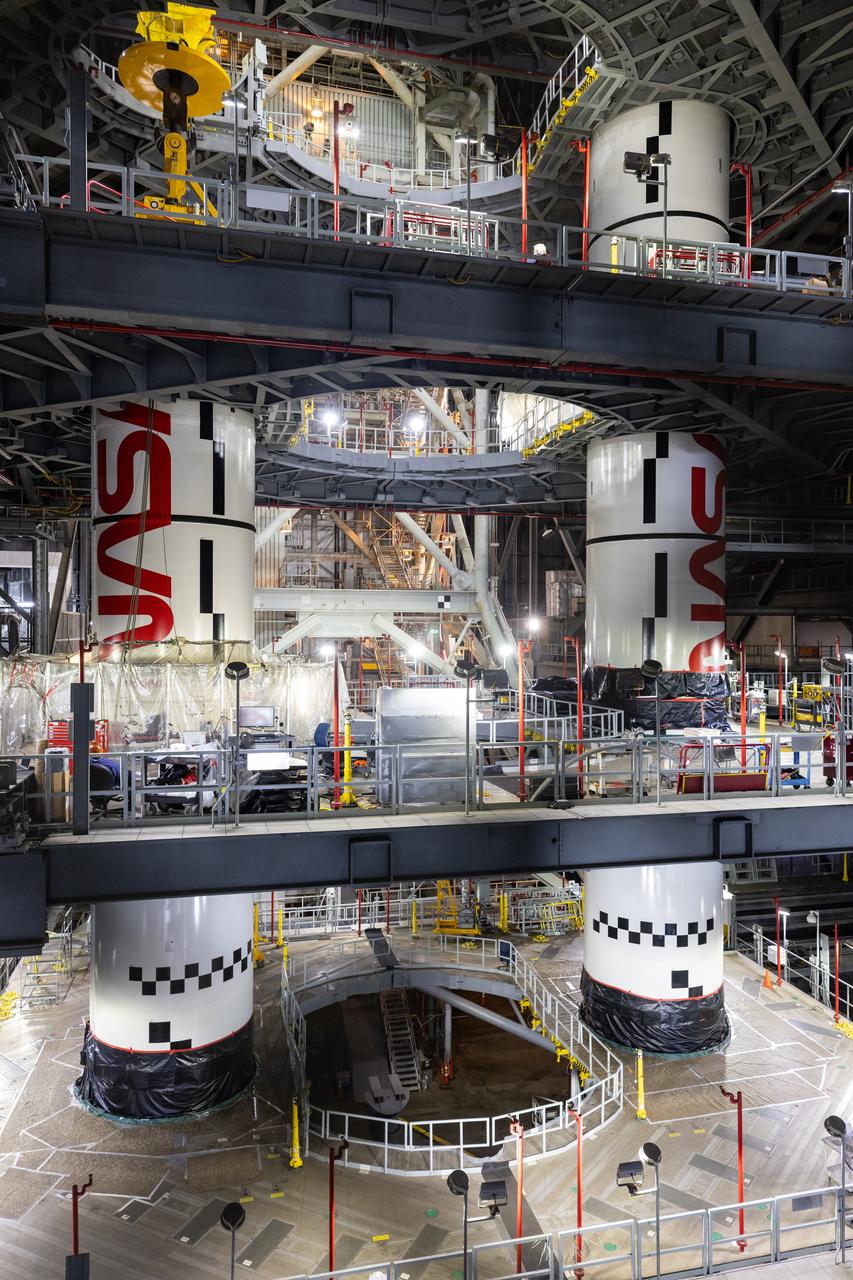
Inside High Bay 3 of the Vehicle Assembly Building at NASA’s Kennedy Space Center in Florida, technicians with the agency’s Exploration Ground Systems use a crane to lower the left center center booster segment for the NASA’s SLS (Space Launch System) rocket onto the left aft center segment atop the mobile launcher on Monday, Jan. 27, 2025. The NASA “worm” insignia can be seen on both the center center booster segments. The boosters will help support the remaining rocket components and the Orion spacecraft during final assembly of the Artemis II Moon rocket and provide more than 75 percent of the total SLS thrust during liftoff from NASA Kennedy’s Launch Pad 39B.

Inside High Bay 3 of the Vehicle Assembly Building at NASA’s Kennedy Space Center in Florida, technicians with the agency’s Exploration Ground Systems use a crane to lower the left center center booster segment for the NASA’s SLS (Space Launch System) rocket onto the left aft center segment atop the mobile launcher on Monday, Jan. 27, 2025. The NASA “worm” insignia can be seen on both the center center booster segments. The boosters will help support the remaining rocket components and the Orion spacecraft during final assembly of the Artemis II Moon rocket and provide more than 75 percent of the total SLS thrust during liftoff from NASA Kennedy’s Launch Pad 39B.
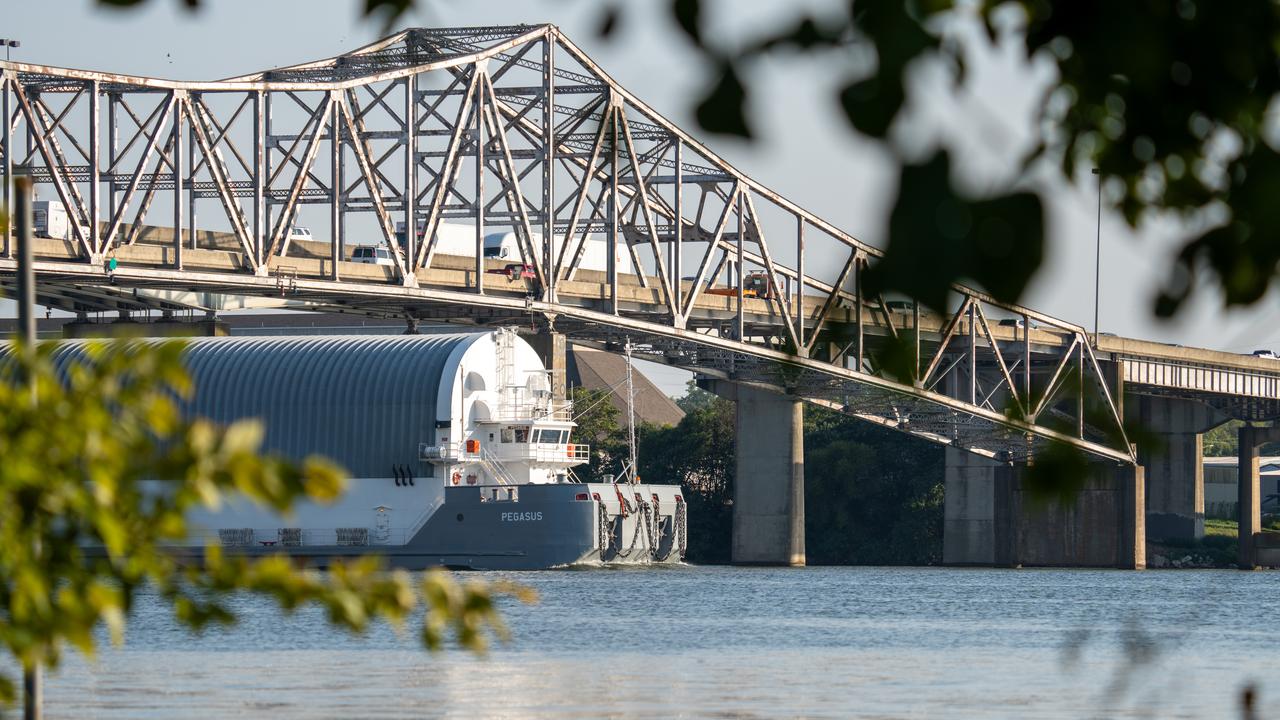
NASA’s Pegasus barge, ferrying the launch vehicle stage adapter for NASA’s SLS (Space Launch System) rocket, departed the agency’s Marshall Space Flight Center in Huntsville, Alabama, Aug. 21, passing through nearby Decatur. The cone-shaped adapter is part of the SLS rocket that will power Artemis II mission, the first crewed flight of the agency’s Artemis campaign. The barge will stop briefly at NASA’s Michoud Assembly Facility in New Orleans to pick up additional hardware elements for Artemis III and Artemis IV before heading to the agency’s Kennedy Space Center in Florida, where the adapter will be readied for stacking and launch preparations.
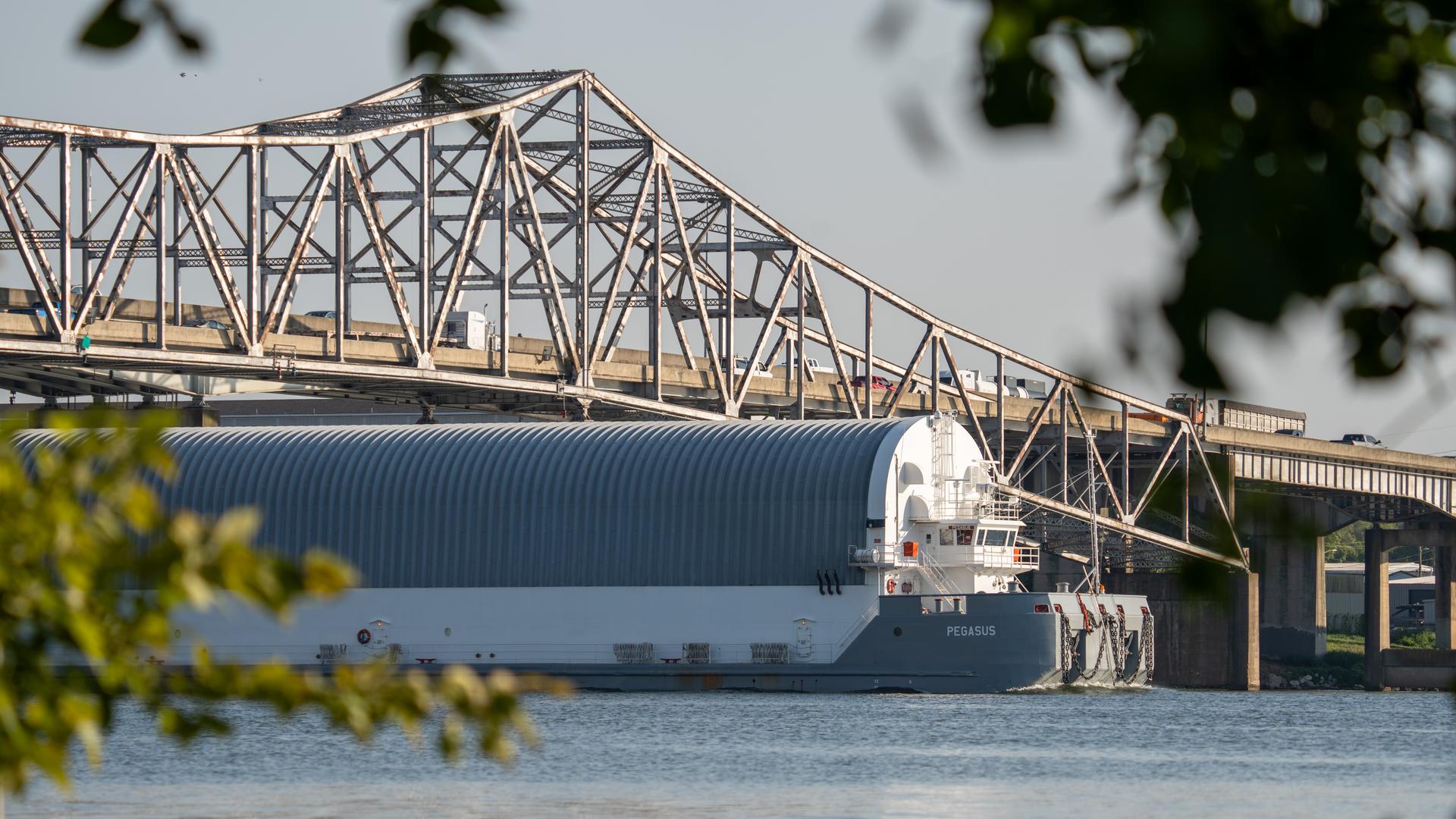
NASA’s Pegasus barge, ferrying the launch vehicle stage adapter for NASA’s SLS (Space Launch System) rocket, departed the agency’s Marshall Space Flight Center in Huntsville, Alabama, Aug. 21, passing through nearby Decatur. The cone-shaped adapter is part of the SLS rocket that will power Artemis II mission, the first crewed flight of the agency’s Artemis campaign. The barge will stop briefly at NASA’s Michoud Assembly Facility in New Orleans to pick up additional hardware elements for Artemis III and Artemis IV before heading to the agency’s Kennedy Space Center in Florida, where the adapter will be readied for stacking and launch preparations.

Inside High Bay 3 of the Vehicle Assembly Building at NASA’s Kennedy Space Center in Florida, technicians with the agency’s Exploration Ground Systems integrate the left forward center booster segment for the NASA’s SLS (Space Launch System) rocket onto the left center center segment atop the mobile launcher on Thursday, Jan. 30, 2025. The NASA “worm” insignia can be seen on both the center center booster segments. The boosters will help support the remaining rocket components and the Orion spacecraft during final assembly of the Artemis II Moon rocket and provide more than 75 percent of the total SLS thrust during liftoff from NASA Kennedy’s Launch Pad 39B.