Artemis logo-black

Artemis logo

Artemis Program logo
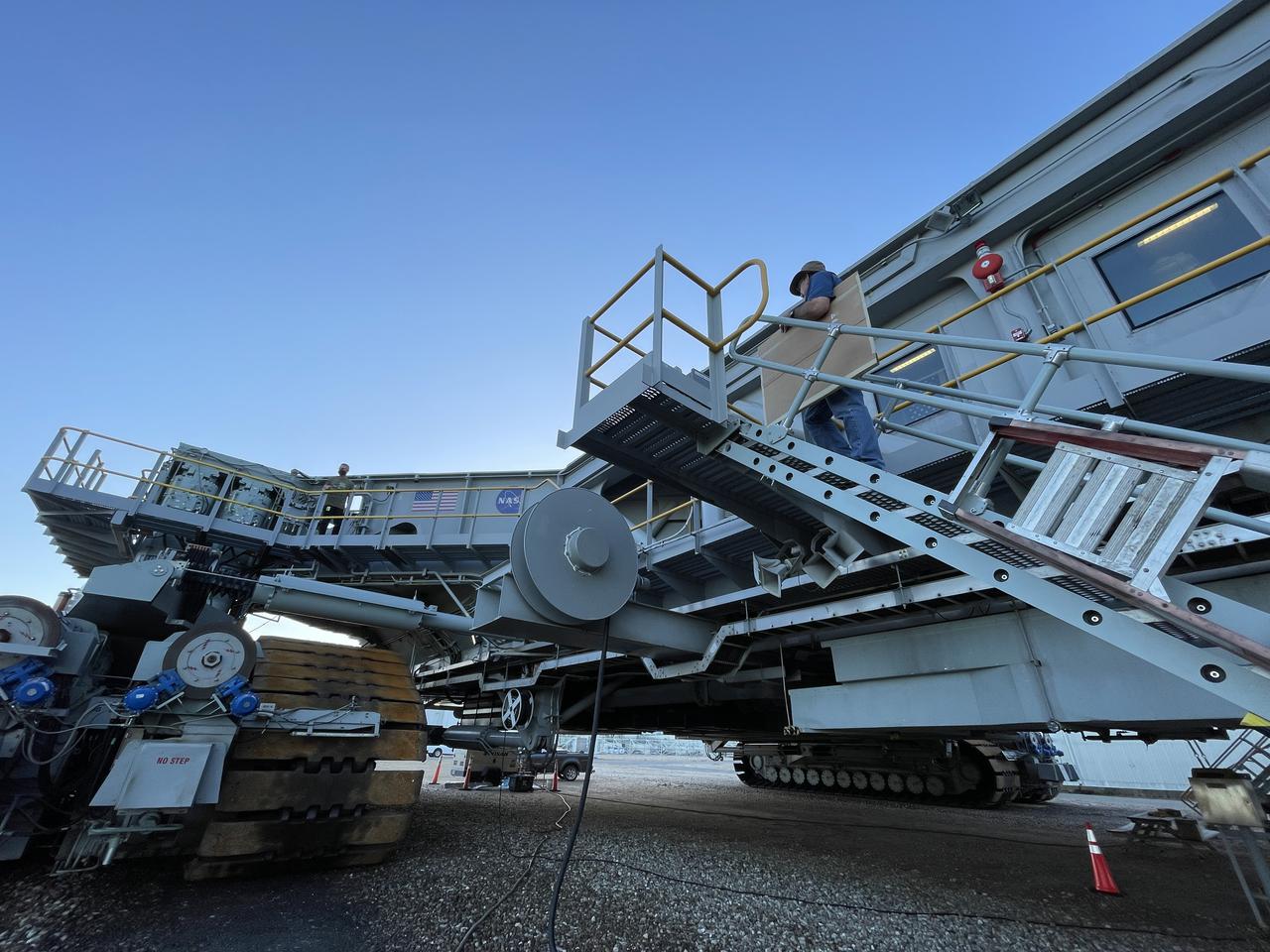
Graphic Artist Kim Keller carries up the eight new NASA Artemis logos (four large, four small) for installation on Crawler-Transporter 2 at Kennedy Space Center in Florida. The new logos were installed in preparation for the upcoming launch of Artemis I. Named after the twin sister of Apollo, Artemis is the Goddess of the Moon. The Artemis missions will take humanity back to the Moon and beyond, beginning a new legacy of deep space exploration.
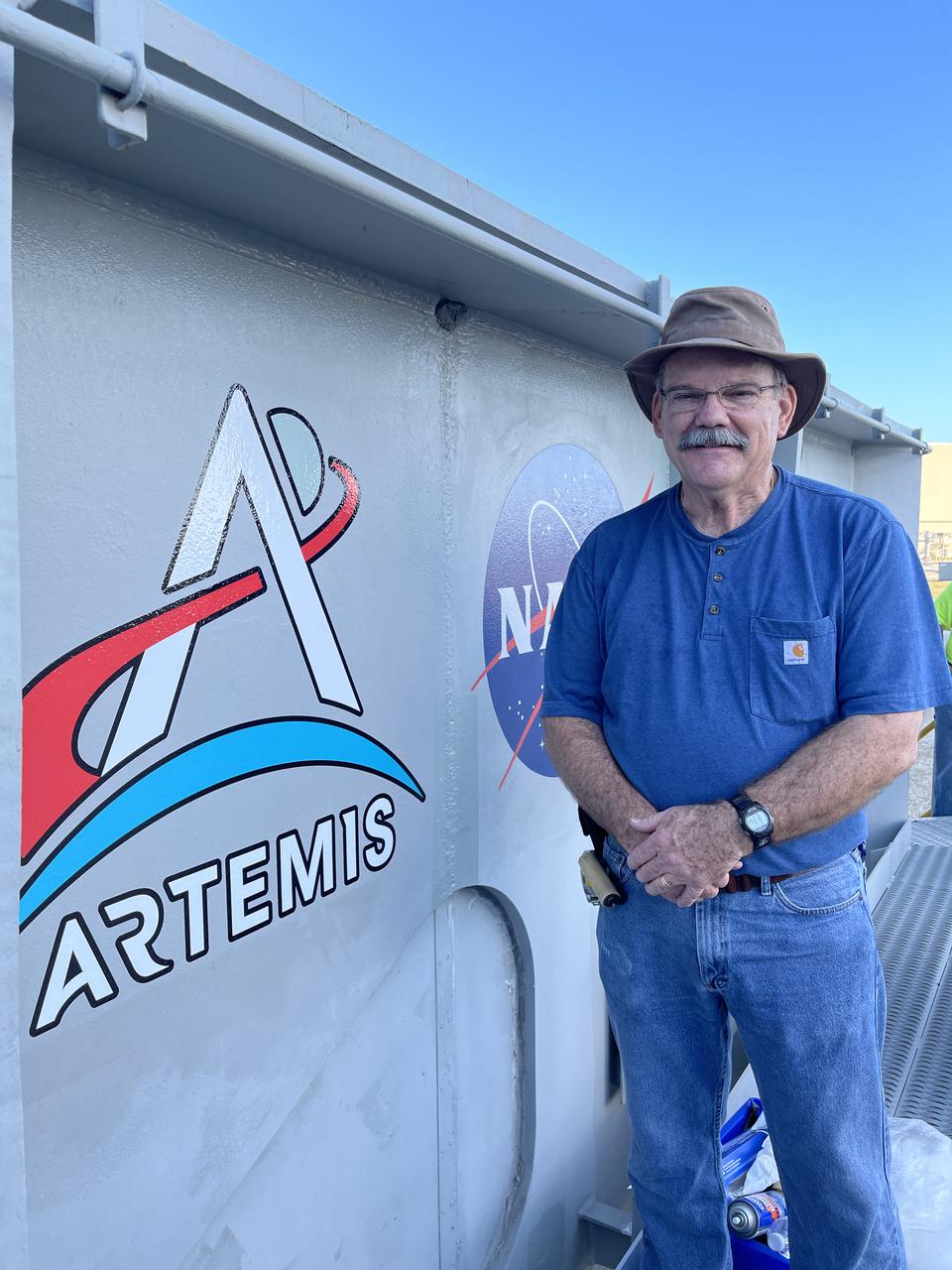
Graphic Artist Kim Keller with one of the eight new NASA Artemis logos (four large, four small) on Crawler-Transporter 2 at Kennedy Space Center in Florida. The new logos were installed in preparation for the upcoming launch of Artemis I. Named after the twin sister of Apollo, Artemis is the Goddess of the Moon. The Artemis missions will take humanity back to the Moon and beyond, beginning a new legacy of deep space exploration.
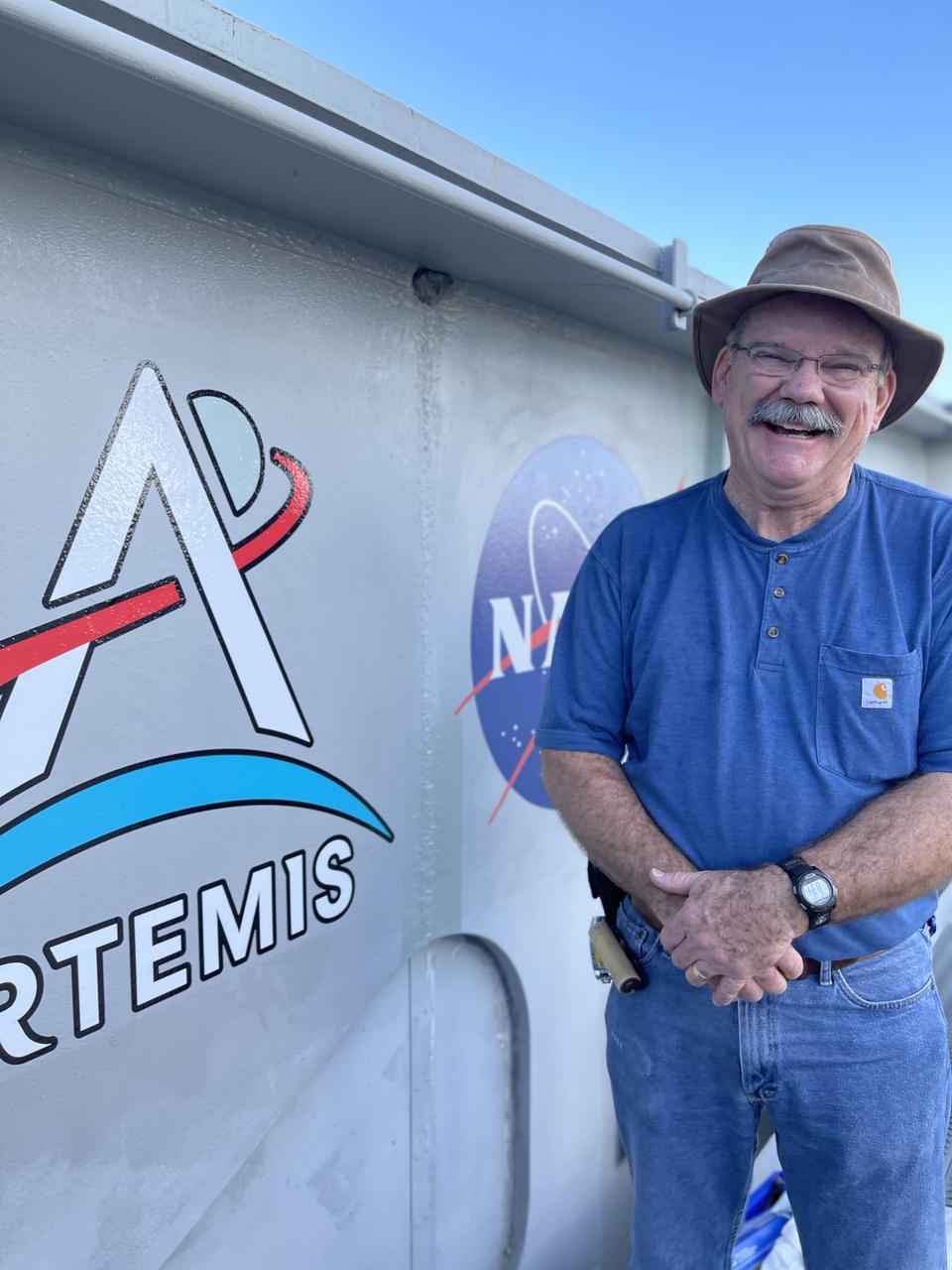
Graphic Artist Kim Keller with one of the eight new NASA Artemis logos (four large, four small) on Crawler-Transporter 2 at Kennedy Space Center in Florida. The new logos were installed in preparation for the upcoming launch of Artemis I. Named after the twin sister of Apollo, Artemis is the Goddess of the Moon. The Artemis missions will take humanity back to the Moon and beyond, beginning a new legacy of deep space exploration.
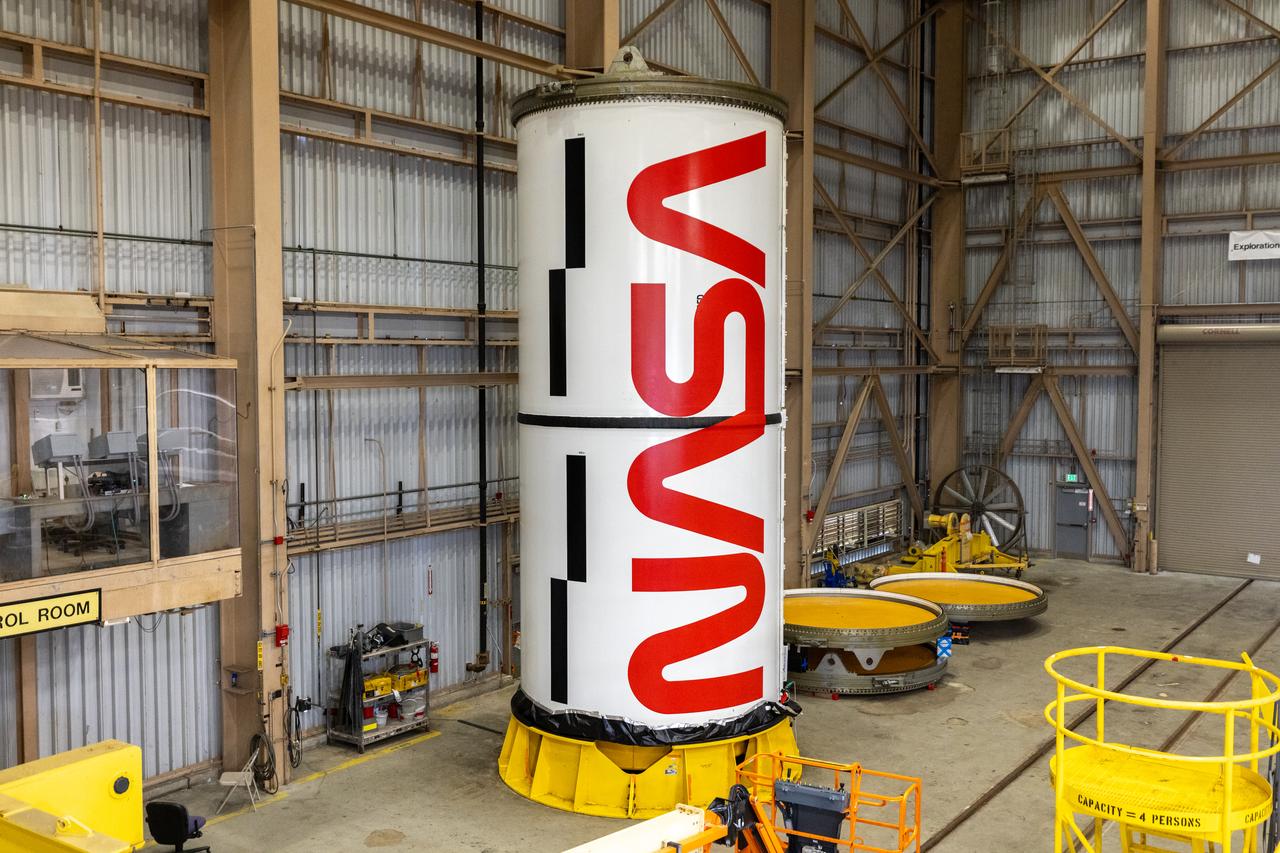
Workers with NASA’s Exploration Ground Systems and primary contractor, Jacobs, complete the painting of the agency’s iconic “worm” logo along the side of the twin Artemis II solid rocket booster motor segments inside the Rotation, Processing and Surge Facility at Kennedy Space Center in Florida on Friday, Feb. 16, 2024. Using a laser projector, the logo was mapped out with tape by workers with Jacobs, for the spaceport, before using two coats of red paint, plus several coats of clear primer to complete the logo that stretches 25 feet long. The booster segments will help propel the SLS (Space Launch System) rocket on the Artemis II mission to send four astronauts around the Moon as part of the agency’s effort to establish a long-term science and exploration presence at the Moon, and eventually Mars.
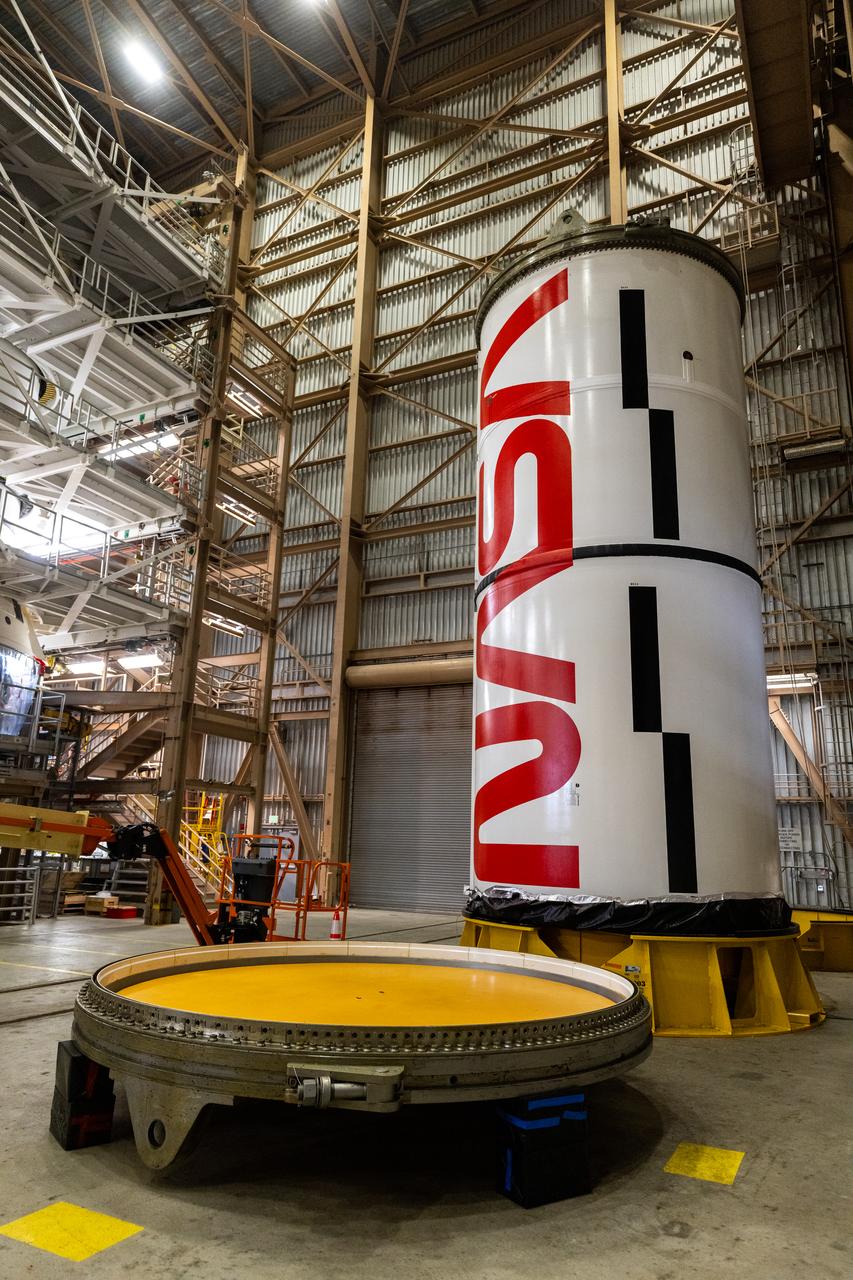
Workers with NASA’s Exploration Ground Systems and primary contractor, Jacobs, complete the painting of the agency’s iconic “worm” logo along the side of the twin Artemis II solid rocket booster motor segments inside the Rotation, Processing and Surge Facility at Kennedy Space Center in Florida on Friday, Feb. 16, 2024. Using a laser projector, the logo was mapped out with tape by workers with Jacobs, for the spaceport, before using two coats of red paint, plus several coats of clear primer to complete the logo that stretches 25 feet long. The booster segments will help propel the SLS (Space Launch System) rocket on the Artemis II mission to send four astronauts around the Moon as part of the agency’s effort to establish a long-term science and exploration presence at the Moon, and eventually Mars.

Workers with NASA’s Exploration Ground Systems and primary contractor, Jacobs, complete the painting of the agency’s iconic “worm” logo along the side of the twin Artemis II solid rocket booster motor segments inside the Rotation, Processing and Surge Facility at Kennedy Space Center in Florida on Friday, Feb. 16, 2024. Using a laser projector, the logo was mapped out with tape by workers with Jacobs, for the spaceport, before using two coats of red paint, plus several coats of clear primer to complete the logo that stretches 25 feet long. The booster segments will help propel the SLS (Space Launch System) rocket on the Artemis II mission to send four astronauts around the Moon as part of the agency’s effort to establish a long-term science and exploration presence at the Moon, and eventually Mars.
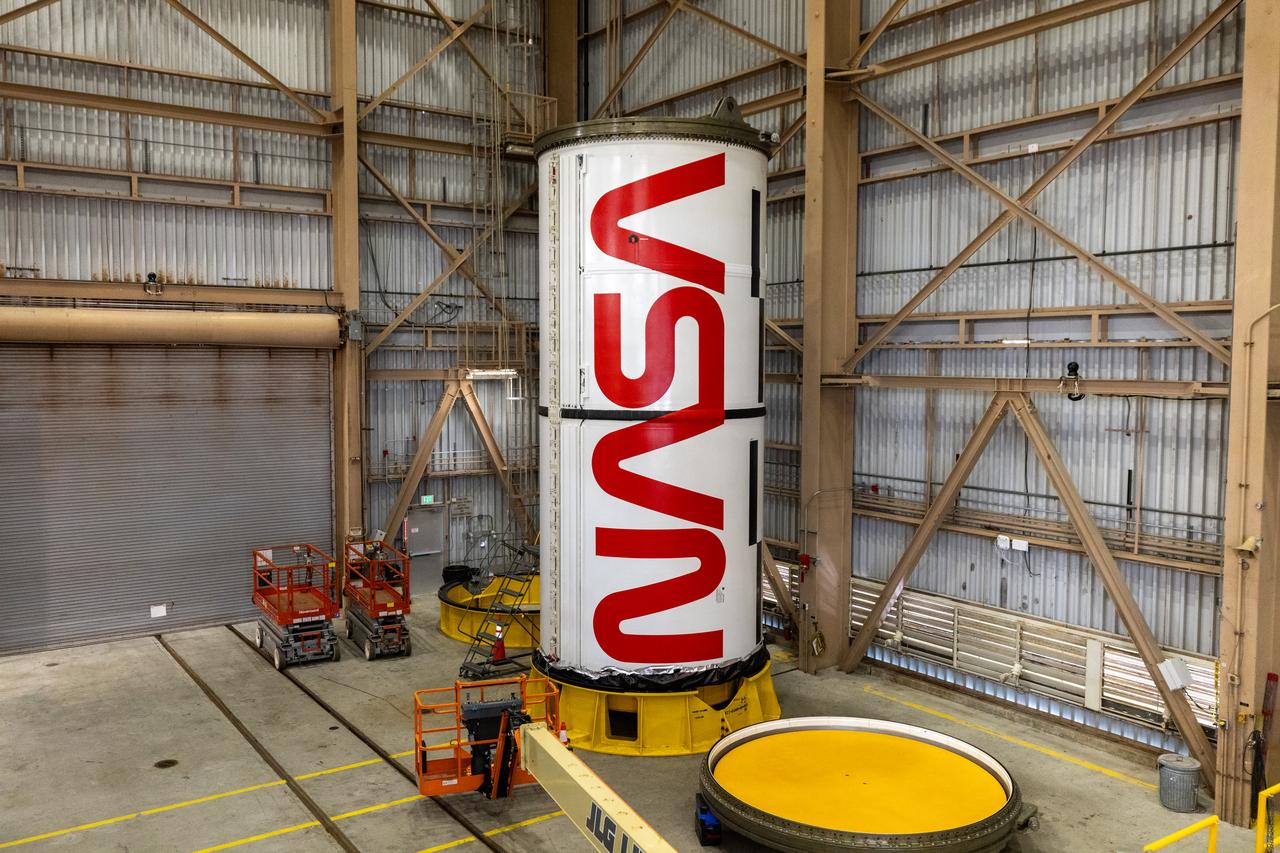
Workers with NASA’s Exploration Ground Systems and primary contractor, Jacobs, complete the painting of the agency’s iconic “worm” logo along the side of the twin Artemis II solid rocket booster motor segments inside the Rotation, Processing and Surge Facility at Kennedy Space Center in Florida on Friday, Feb. 16, 2024. Using a laser projector, the logo was mapped out with tape by workers with Jacobs, for the spaceport, before using two coats of red paint, plus several coats of clear primer to complete the logo that stretches 25 feet long. The booster segments will help propel the SLS (Space Launch System) rocket on the Artemis II mission to send four astronauts around the Moon as part of the agency’s effort to establish a long-term science and exploration presence at the Moon, and eventually Mars.
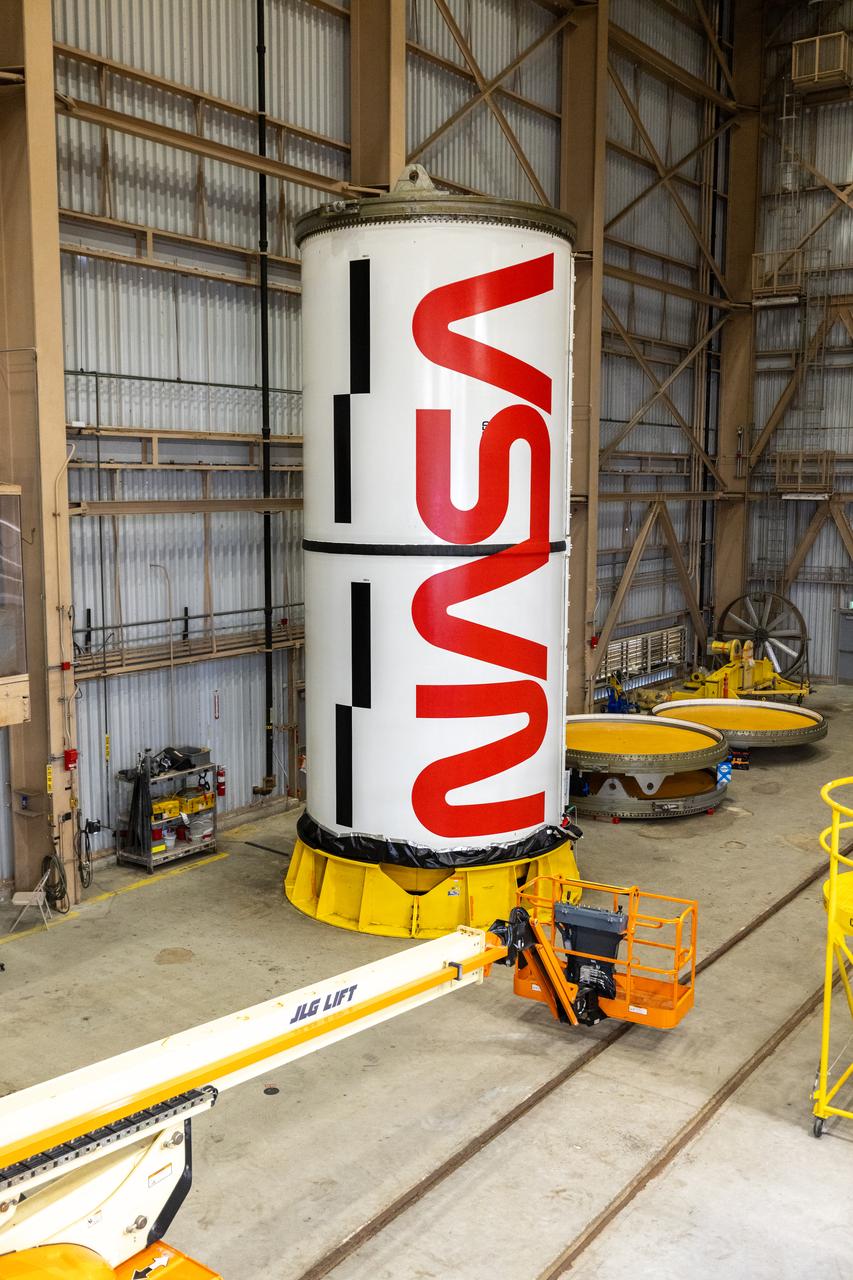
Workers with NASA’s Exploration Ground Systems and primary contractor, Jacobs, complete the painting of the agency’s iconic “worm” logo along the side of the twin Artemis II solid rocket booster motor segments inside the Rotation, Processing and Surge Facility at Kennedy Space Center in Florida on Friday, Feb. 16, 2024. Using a laser projector, the logo was mapped out with tape by workers with Jacobs, for the spaceport, before using two coats of red paint, plus several coats of clear primer to complete the logo that stretches 25 feet long. The booster segments will help propel the SLS (Space Launch System) rocket on the Artemis II mission to send four astronauts around the Moon as part of the agency’s effort to establish a long-term science and exploration presence at the Moon, and eventually Mars.
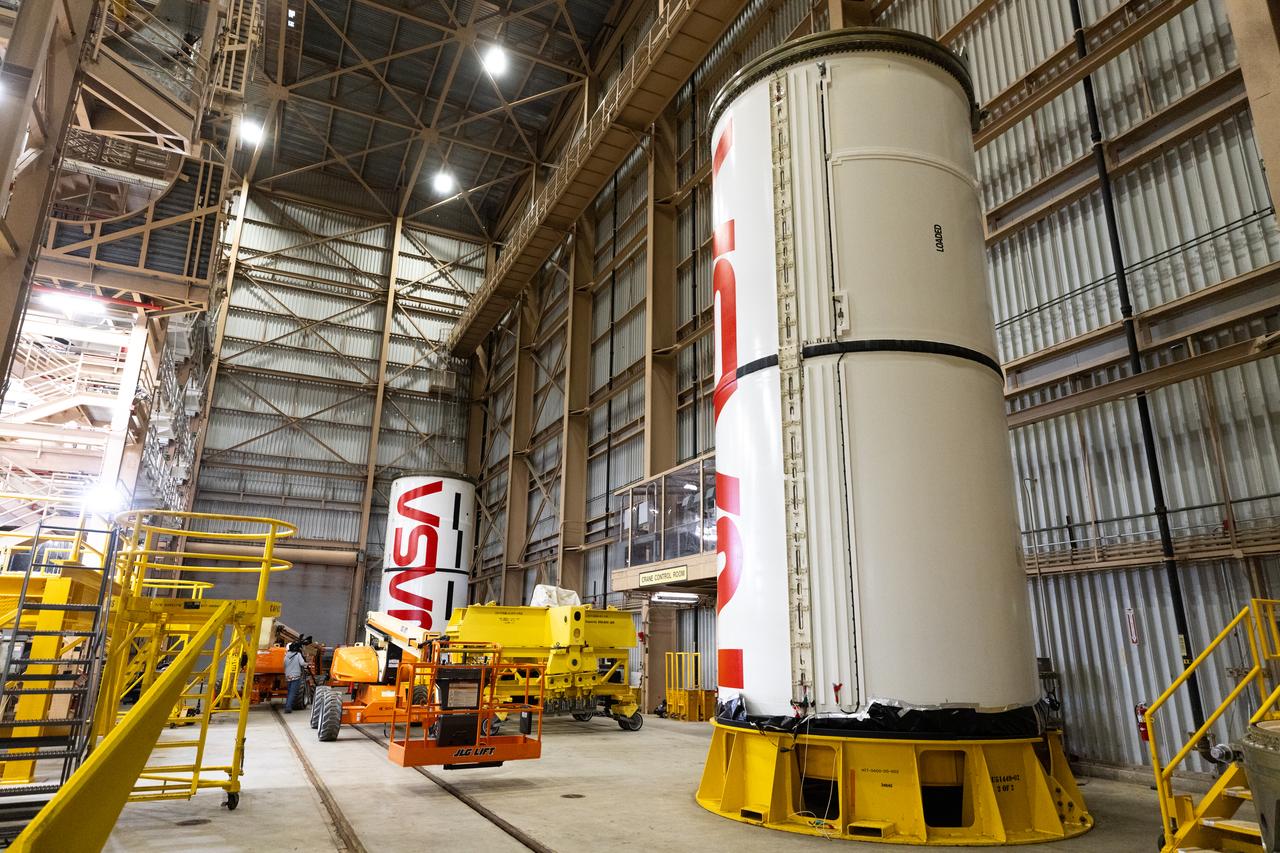
Workers with NASA’s Exploration Ground Systems and primary contractor, Jacobs, complete the painting of the agency’s iconic “worm” logo along the side of the twin Artemis II solid rocket booster motor segments inside the Rotation, Processing and Surge Facility at Kennedy Space Center in Florida on Friday, Feb. 16, 2024. Using a laser projector, the logo was mapped out with tape by workers with Jacobs, for the spaceport, before using two coats of red paint, plus several coats of clear primer to complete the logo that stretches 25 feet long. The booster segments will help propel the SLS (Space Launch System) rocket on the Artemis II mission to send four astronauts around the Moon as part of the agency’s effort to establish a long-term science and exploration presence at the Moon, and eventually Mars.
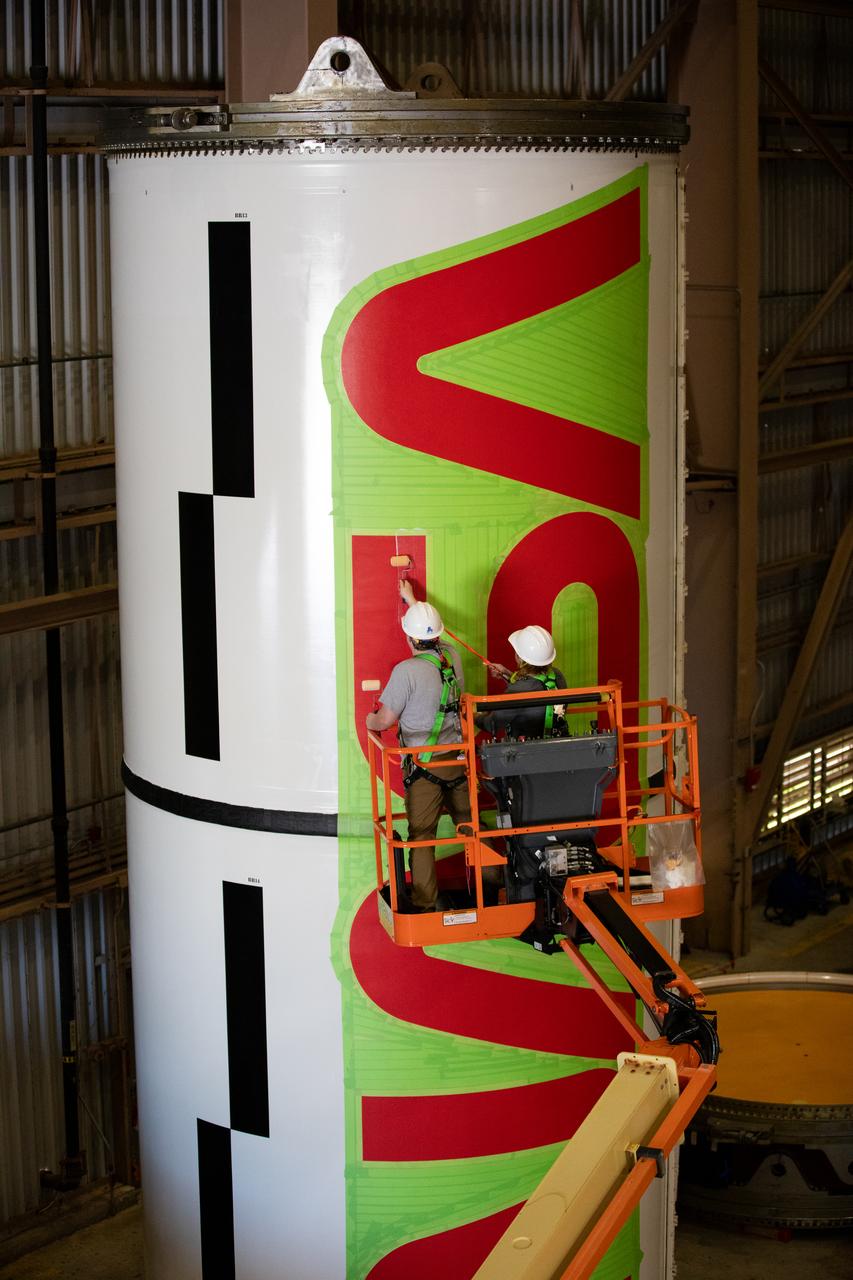
Workers with NASA’s Exploration Ground Systems (EGS) paint the bright red NASA “worm” logo on the side of an Artemis II solid rocket booster segment inside the Rotation, Processing and Surge Facility (RPSF) at Kennedy Space Center in Florida on Tuesday, Jan. 30, 2024. The EGS team used a laser projector to mask off the logo with tape, then painted the first coat of the iconic design. The booster segments will help propel the Space Launch System (SLS) rocket on the Artemis II mission to send four astronauts around the Moon as part of the agency’s effort to establish a long-term science and exploration presence at the Moon, and eventually Mars.
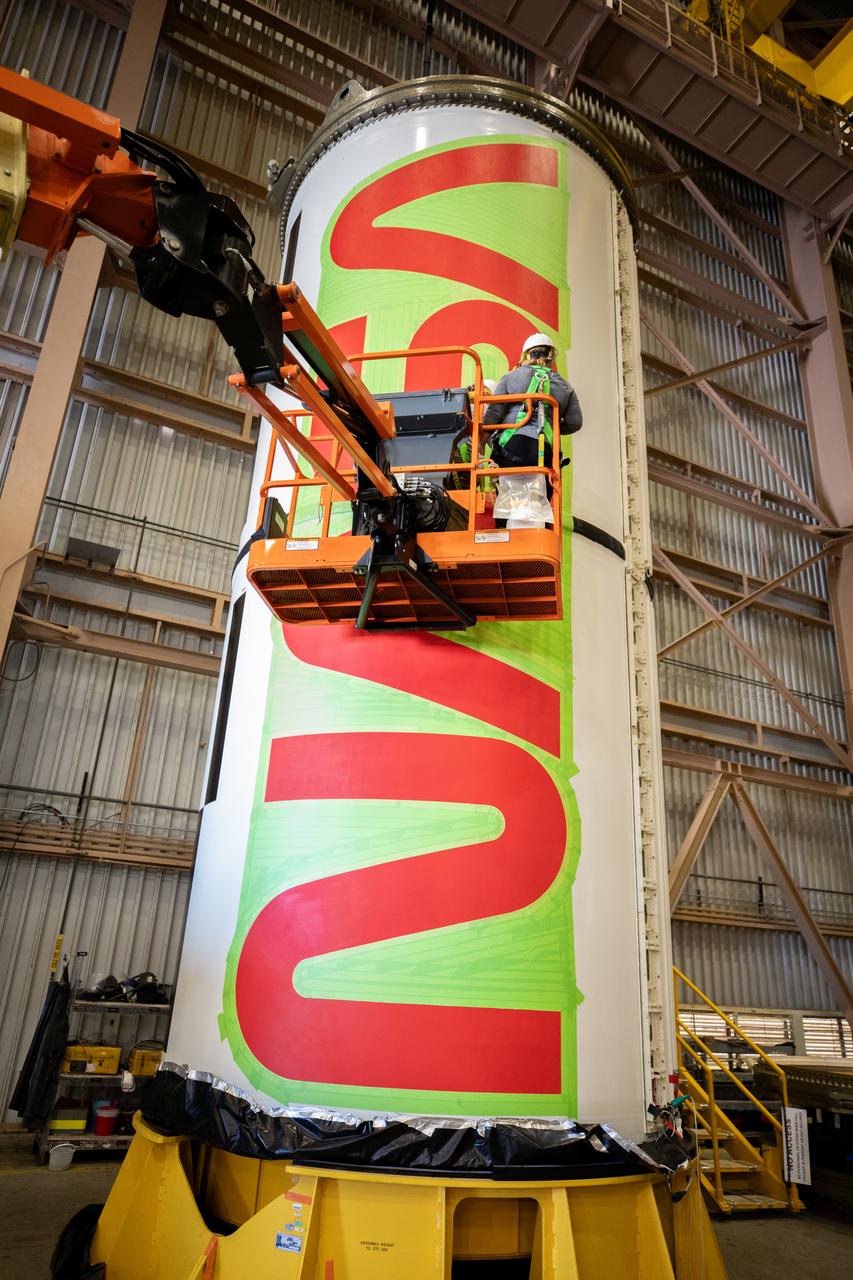
Workers with NASA’s Exploration Ground Systems (EGS) paint the bright red NASA “worm” logo on the side of an Artemis II solid rocket booster segment inside the Rotation, Processing and Surge Facility (RPSF) at Kennedy Space Center in Florida on Tuesday, Jan. 30, 2024. The EGS team used a laser projector to mask off the logo with tape, then painted the first coat of the iconic design. The booster segments will help propel the Space Launch System (SLS) rocket on the Artemis II mission to send four astronauts around the Moon as part of the agency’s effort to establish a long-term science and exploration presence at the Moon, and eventually Mars.
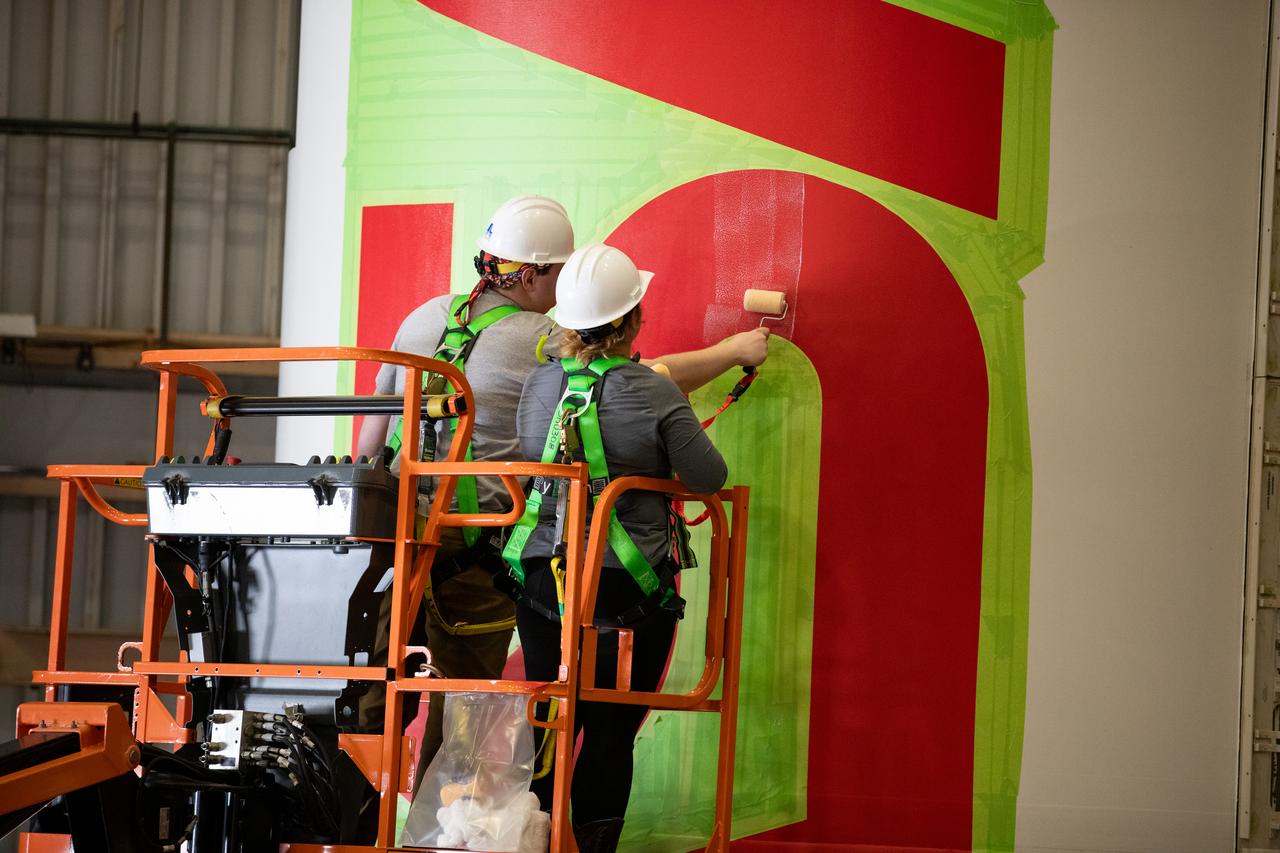
Workers with NASA’s Exploration Ground Systems (EGS) paint the bright red NASA “worm” logo on the side of an Artemis II solid rocket booster segment inside the Rotation, Processing and Surge Facility (RPSF) at Kennedy Space Center in Florida on Tuesday, Jan. 30, 2024. The EGS team used a laser projector to mask off the logo with tape, then painted the first coat of the iconic design. The booster segments will help propel the Space Launch System (SLS) rocket on the Artemis II mission to send four astronauts around the Moon as part of the agency’s effort to establish a long-term science and exploration presence at the Moon, and eventually Mars.
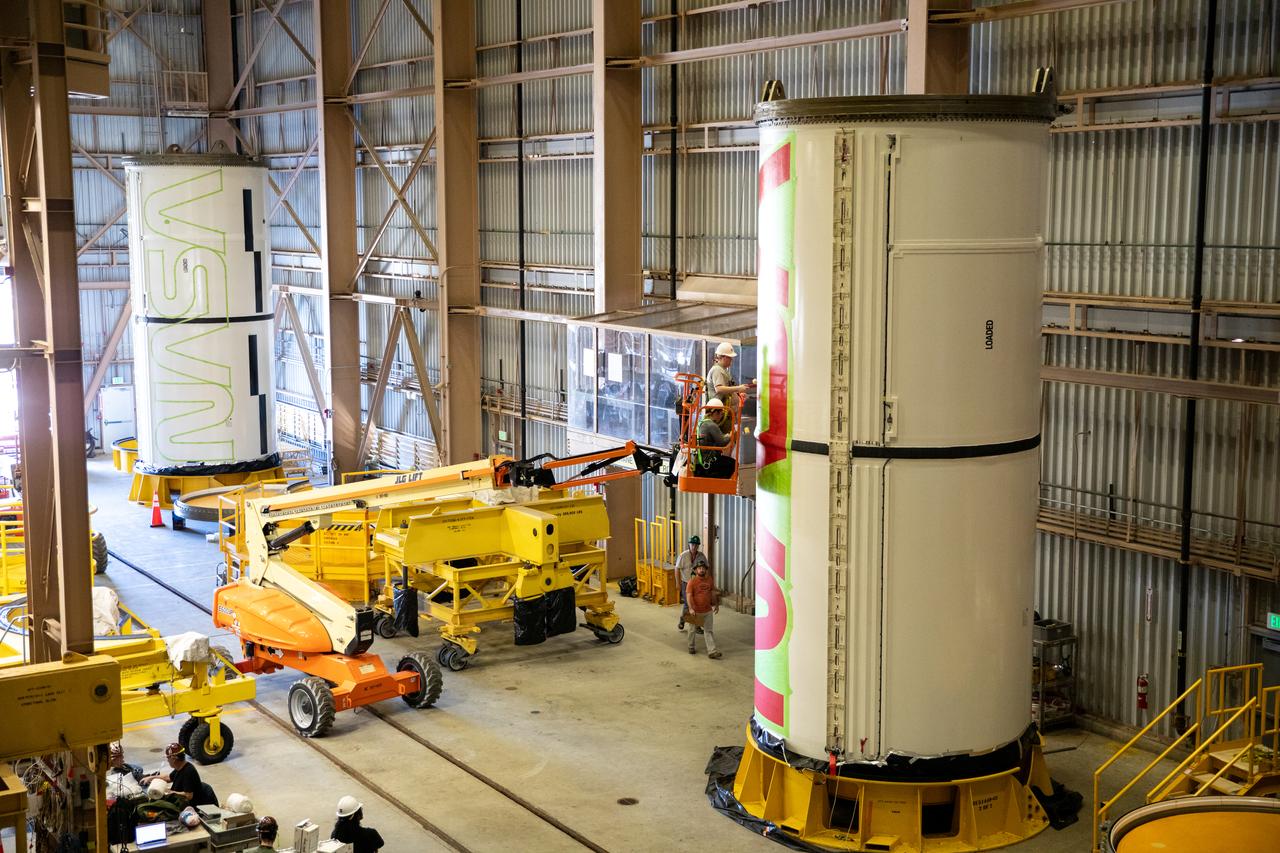
Workers with NASA’s Exploration Ground Systems (EGS) paint the bright red NASA “worm” logo on the side of an Artemis II solid rocket booster segment inside the Rotation, Processing and Surge Facility (RPSF) at Kennedy Space Center in Florida on Tuesday, Jan. 30, 2024. The EGS team used a laser projector to mask off the logo with tape, then painted the first coat of the iconic design. The booster segments will help propel the Space Launch System (SLS) rocket on the Artemis II mission to send four astronauts around the Moon as part of the agency’s effort to establish a long-term science and exploration presence at the Moon, and eventually Mars.
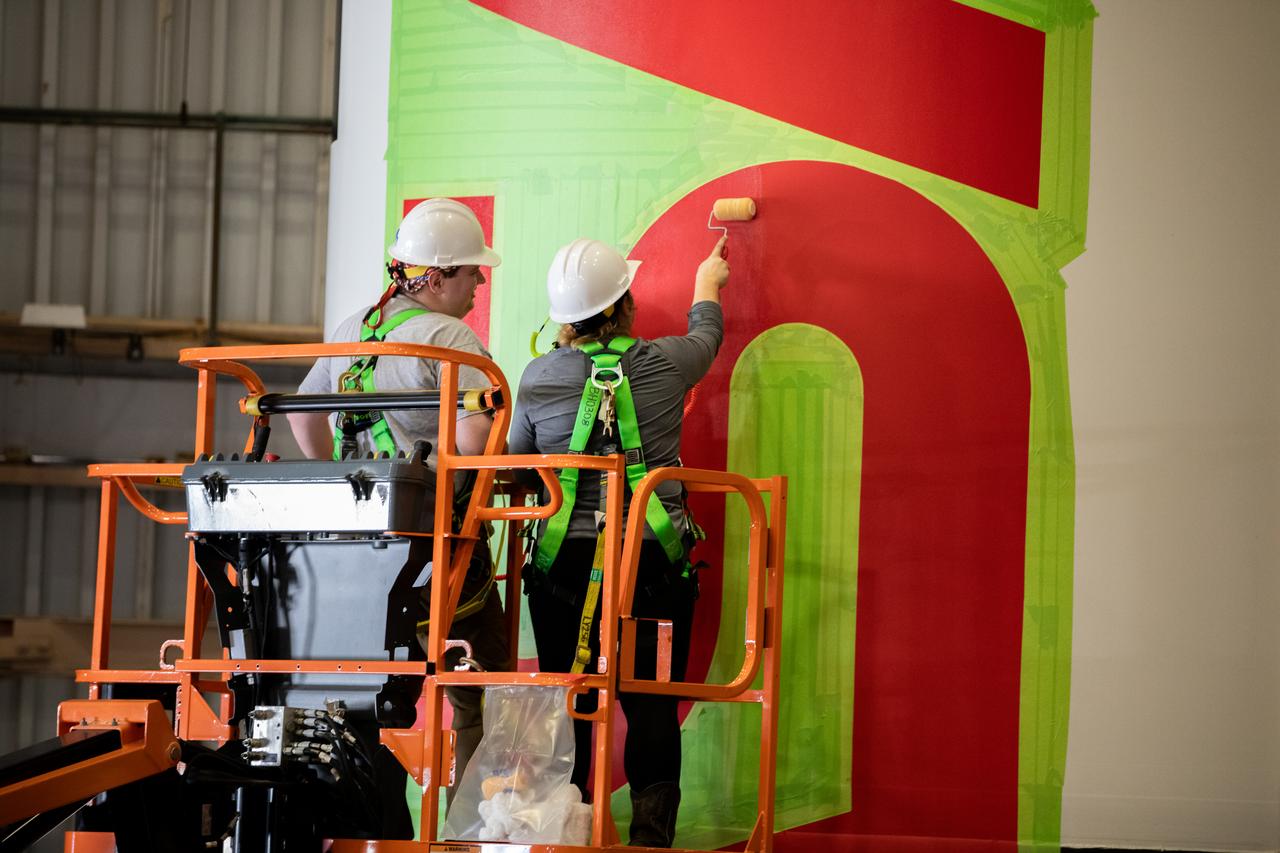
Workers with NASA’s Exploration Ground Systems (EGS) paint the bright red NASA “worm” logo on the side of an Artemis II solid rocket booster segment inside the Rotation, Processing and Surge Facility (RPSF) at Kennedy Space Center in Florida on Tuesday, Jan. 30, 2024. The EGS team used a laser projector to mask off the logo with tape, then painted the first coat of the iconic design. The booster segments will help propel the Space Launch System (SLS) rocket on the Artemis II mission to send four astronauts around the Moon as part of the agency’s effort to establish a long-term science and exploration presence at the Moon, and eventually Mars.
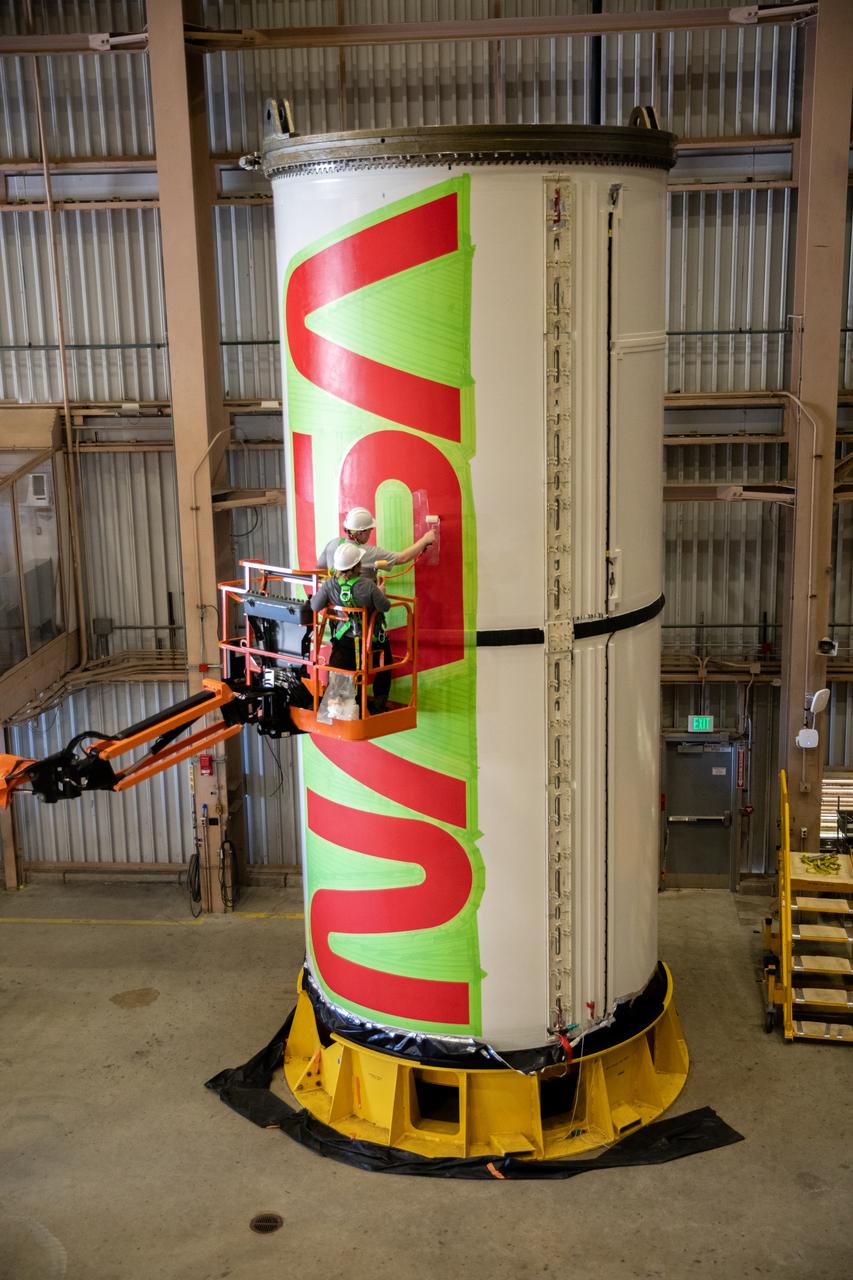
Workers with NASA’s Exploration Ground Systems (EGS) paint the bright red NASA “worm” logo on the side of an Artemis II solid rocket booster segment inside the Rotation, Processing and Surge Facility (RPSF) at Kennedy Space Center in Florida on Tuesday, Jan. 30, 2024. The EGS team used a laser projector to mask off the logo with tape, then painted the first coat of the iconic design. The booster segments will help propel the Space Launch System (SLS) rocket on the Artemis II mission to send four astronauts around the Moon as part of the agency’s effort to establish a long-term science and exploration presence at the Moon, and eventually Mars.
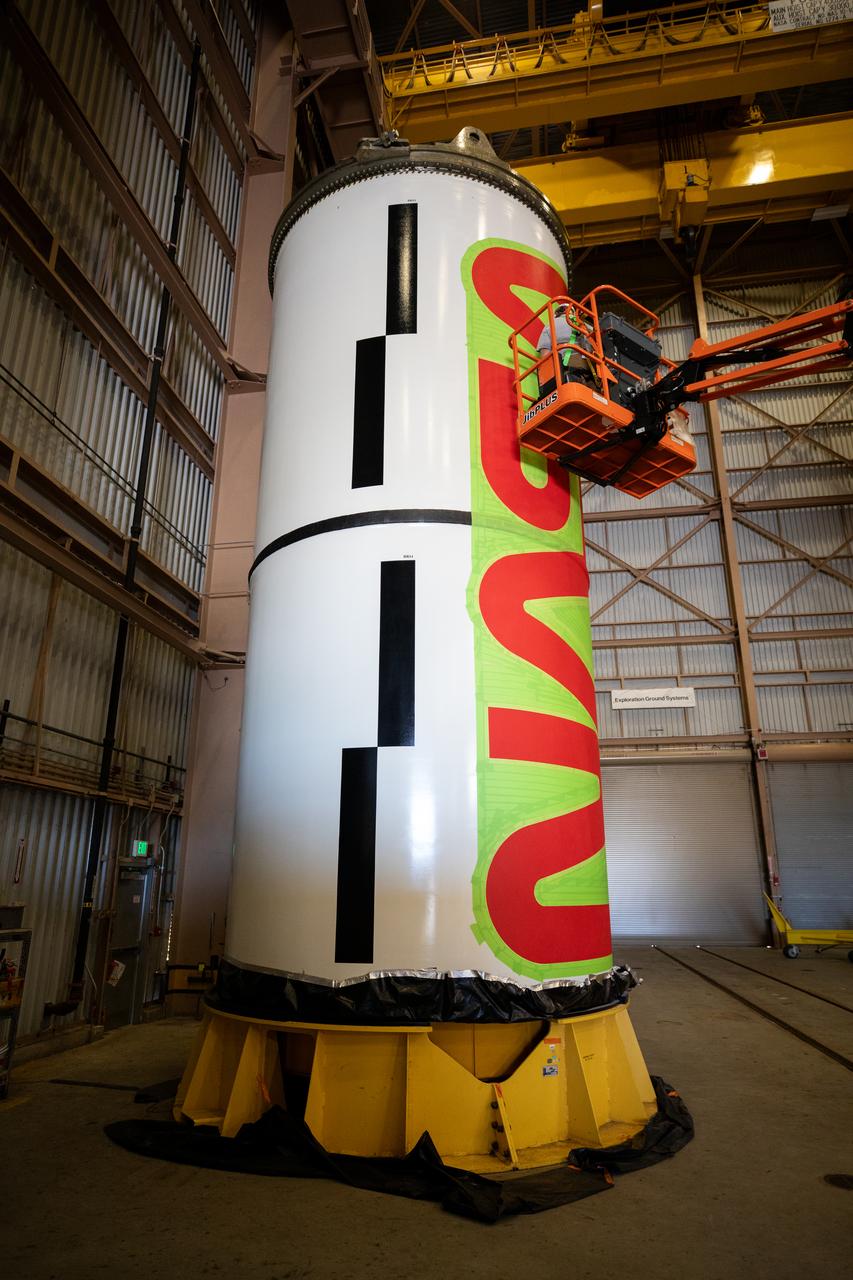
Workers with NASA’s Exploration Ground Systems (EGS) paint the bright red NASA “worm” logo on the side of an Artemis II solid rocket booster segment inside the Rotation, Processing and Surge Facility (RPSF) at Kennedy Space Center in Florida on Tuesday, Jan. 30, 2024. The EGS team used a laser projector to mask off the logo with tape, then painted the first coat of the iconic design. The booster segments will help propel the Space Launch System (SLS) rocket on the Artemis II mission to send four astronauts around the Moon as part of the agency’s effort to establish a long-term science and exploration presence at the Moon, and eventually Mars.
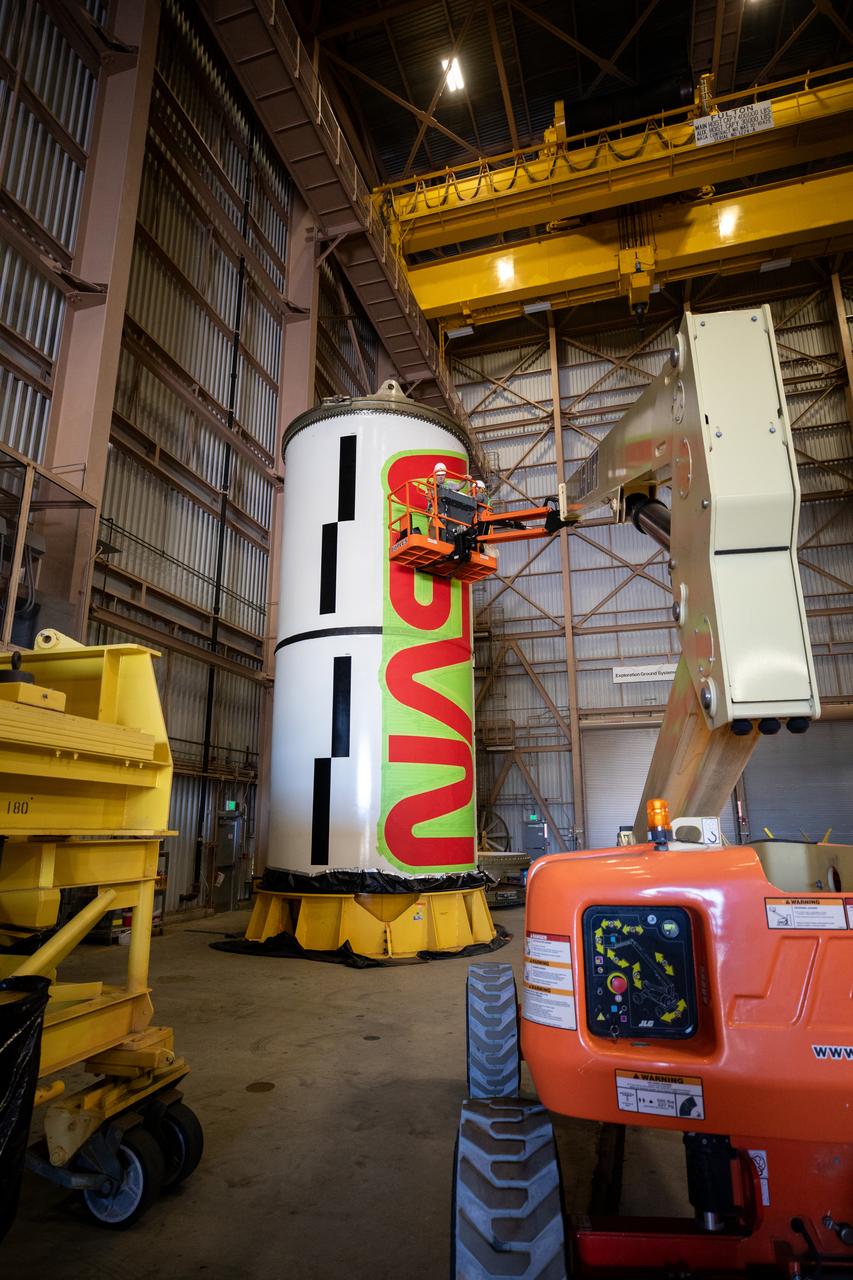
Workers with NASA’s Exploration Ground Systems (EGS) paint the bright red NASA “worm” logo on the side of an Artemis II solid rocket booster segment inside the Rotation, Processing and Surge Facility (RPSF) at Kennedy Space Center in Florida on Tuesday, Jan. 30, 2024. The EGS team used a laser projector to mask off the logo with tape, then painted the first coat of the iconic design. The booster segments will help propel the Space Launch System (SLS) rocket on the Artemis II mission to send four astronauts around the Moon as part of the agency’s effort to establish a long-term science and exploration presence at the Moon, and eventually Mars.
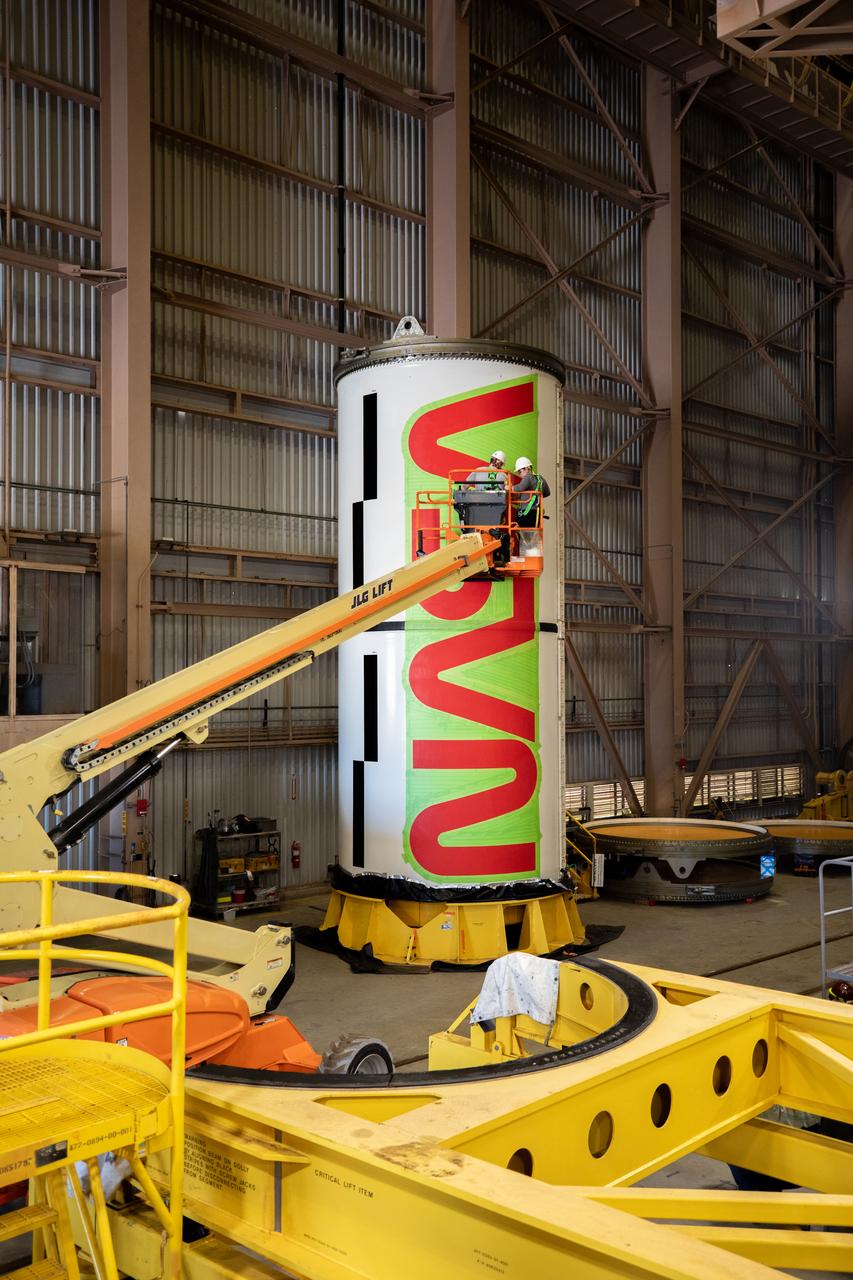
Workers with NASA’s Exploration Ground Systems (EGS) paint the bright red NASA “worm” logo on the side of an Artemis II solid rocket booster segment inside the Rotation, Processing and Surge Facility (RPSF) at Kennedy Space Center in Florida on Tuesday, Jan. 30, 2024. The EGS team used a laser projector to mask off the logo with tape, then painted the first coat of the iconic design. The booster segments will help propel the Space Launch System (SLS) rocket on the Artemis II mission to send four astronauts around the Moon as part of the agency’s effort to establish a long-term science and exploration presence at the Moon, and eventually Mars.
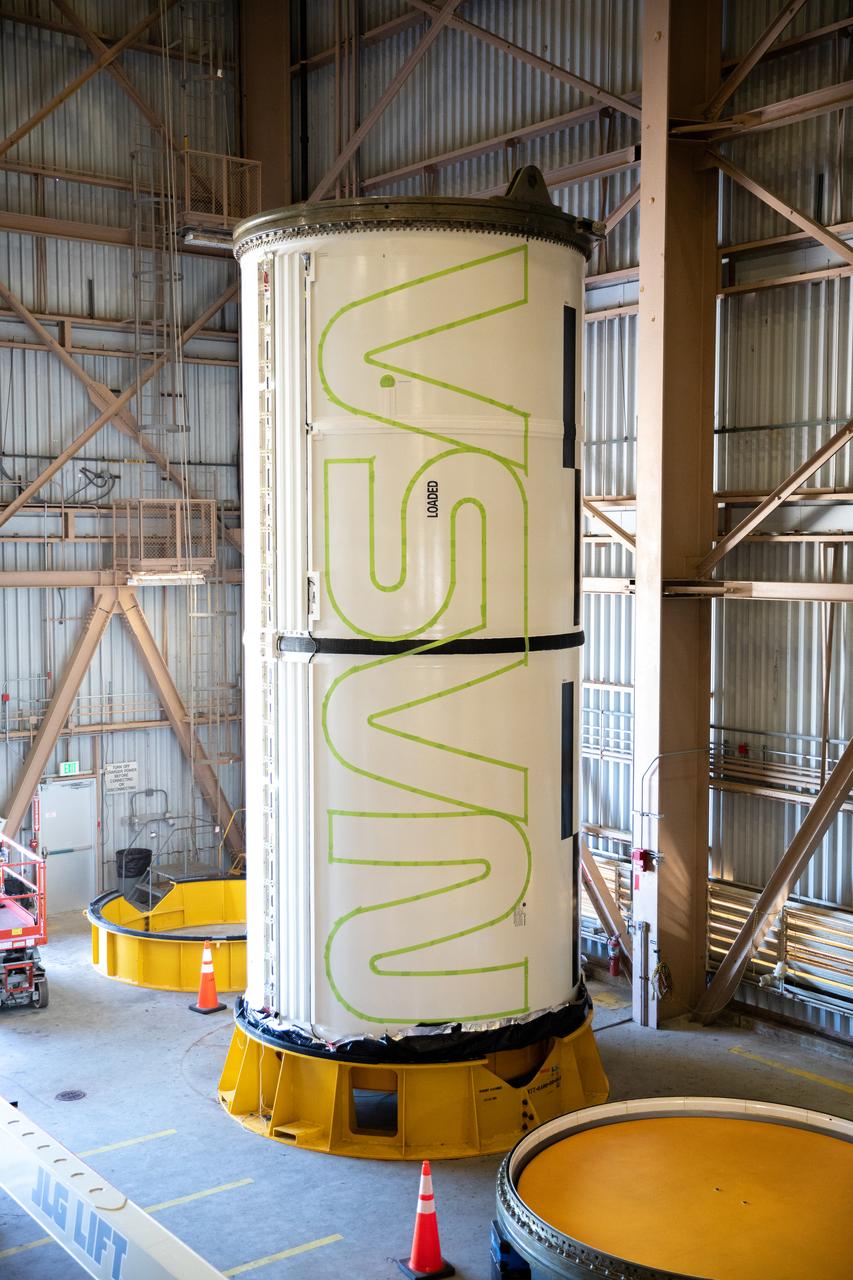
Workers with NASA’s Exploration Ground Systems (EGS) paint the bright red NASA “worm” logo on the side of an Artemis II solid rocket booster segment inside the Rotation, Processing and Surge Facility (RPSF) at Kennedy Space Center in Florida on Tuesday, Jan. 30, 2024. The EGS team used a laser projector to mask off the logo with tape, then painted the first coat of the iconic design. The booster segments will help propel the Space Launch System (SLS) rocket on the Artemis II mission to send four astronauts around the Moon as part of the agency’s effort to establish a long-term science and exploration presence at the Moon, and eventually Mars.
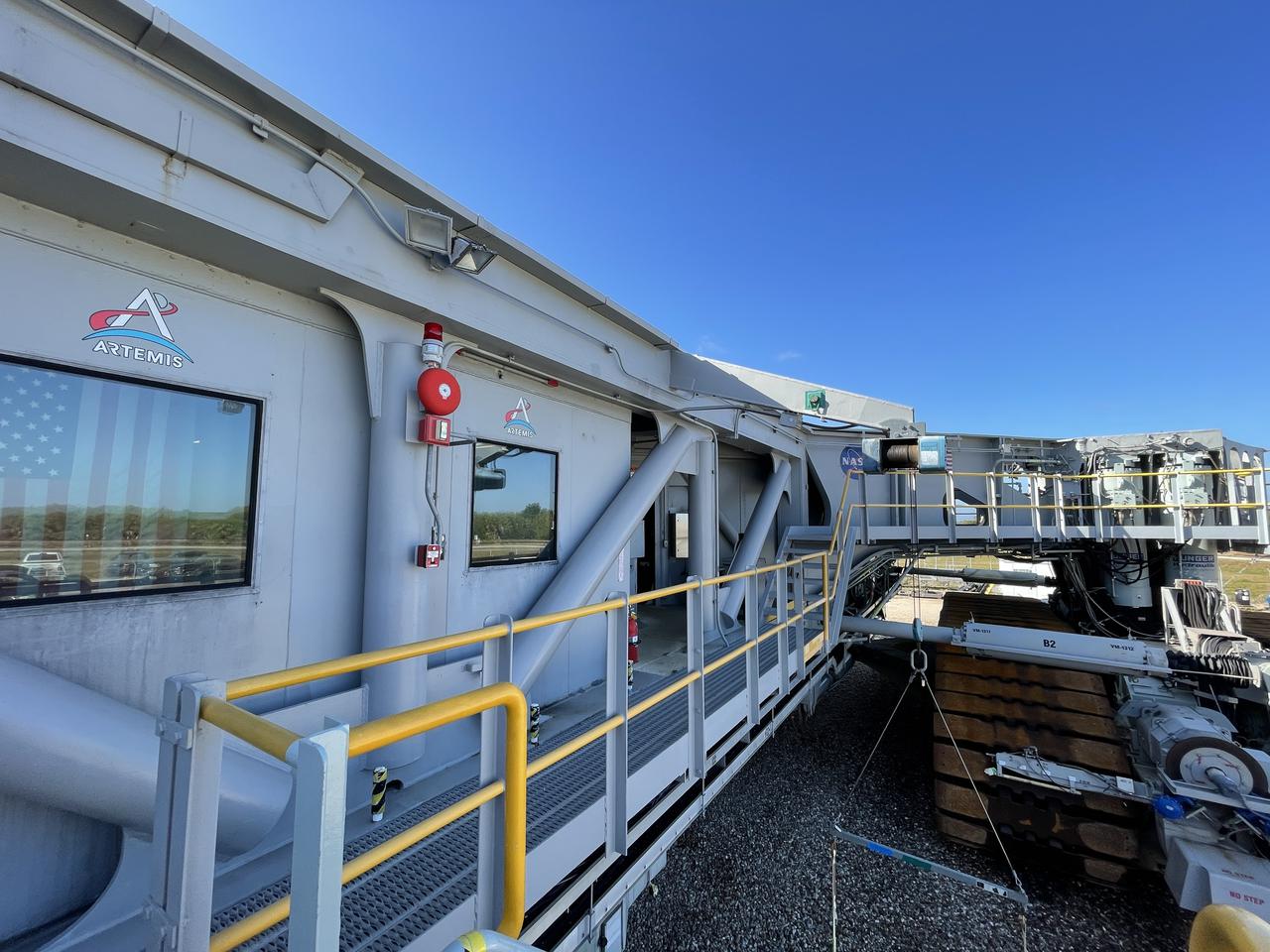
Eight new NASA Artemis logos (four large, four small) were installed on Crawler-Transporter 2 at Kennedy Space Center in preparation for the upcoming launch of Artemis I. Named after the twin sister of Apollo, Artemis is the Goddess of the Moon. The Artemis missions will take humanity back to the Moon and beyond, beginning a new legacy of deep space exploration.
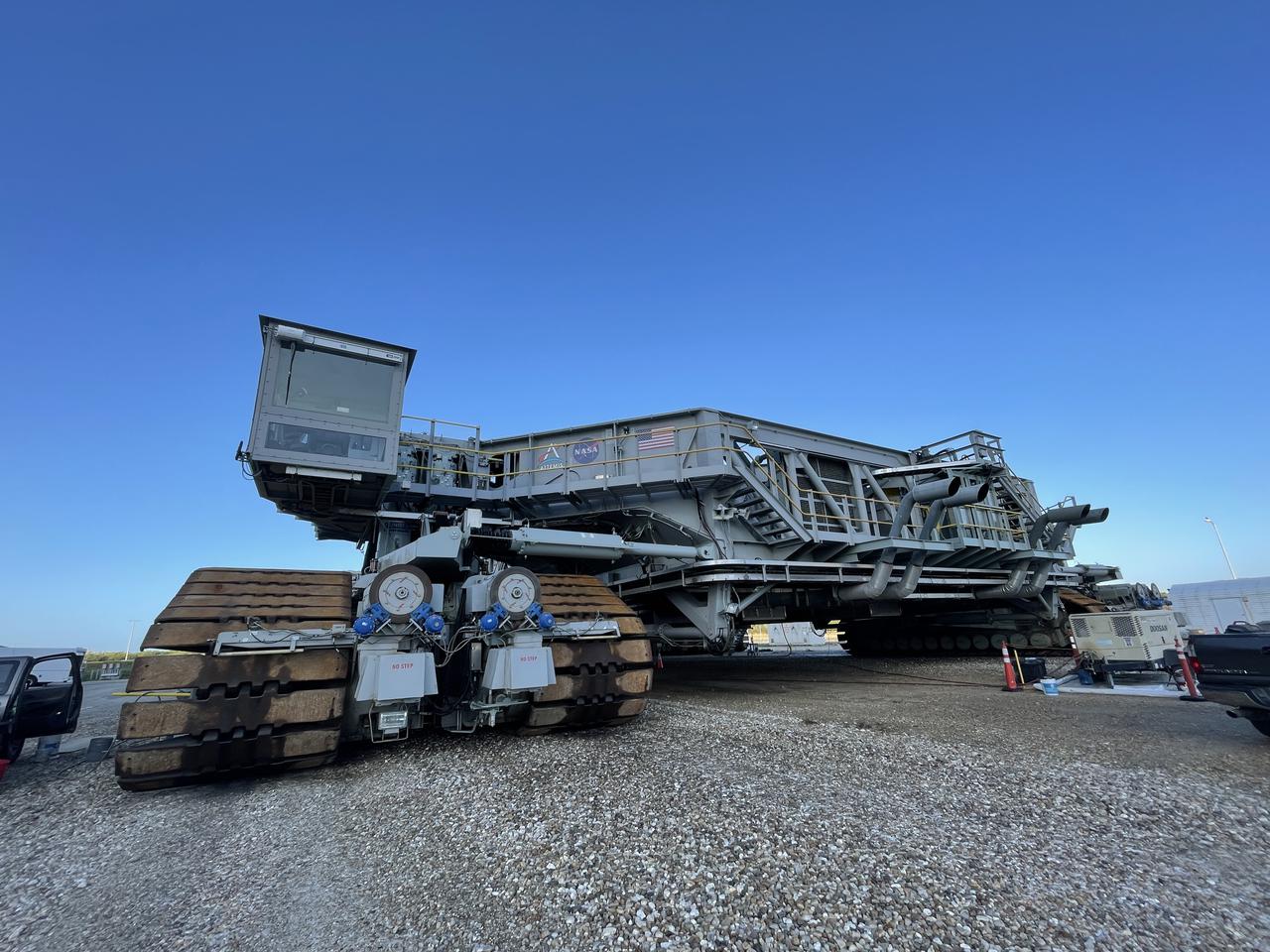
Eight new NASA Artemis logos (four large, four small) were installed on Crawler-Transporter 2 at Kennedy Space Center in preparation for the upcoming launch of Artemis I. Named after the twin sister of Apollo, Artemis is the Goddess of the Moon. The Artemis missions will take humanity back to the Moon and beyond, beginning a new legacy of deep space exploration.
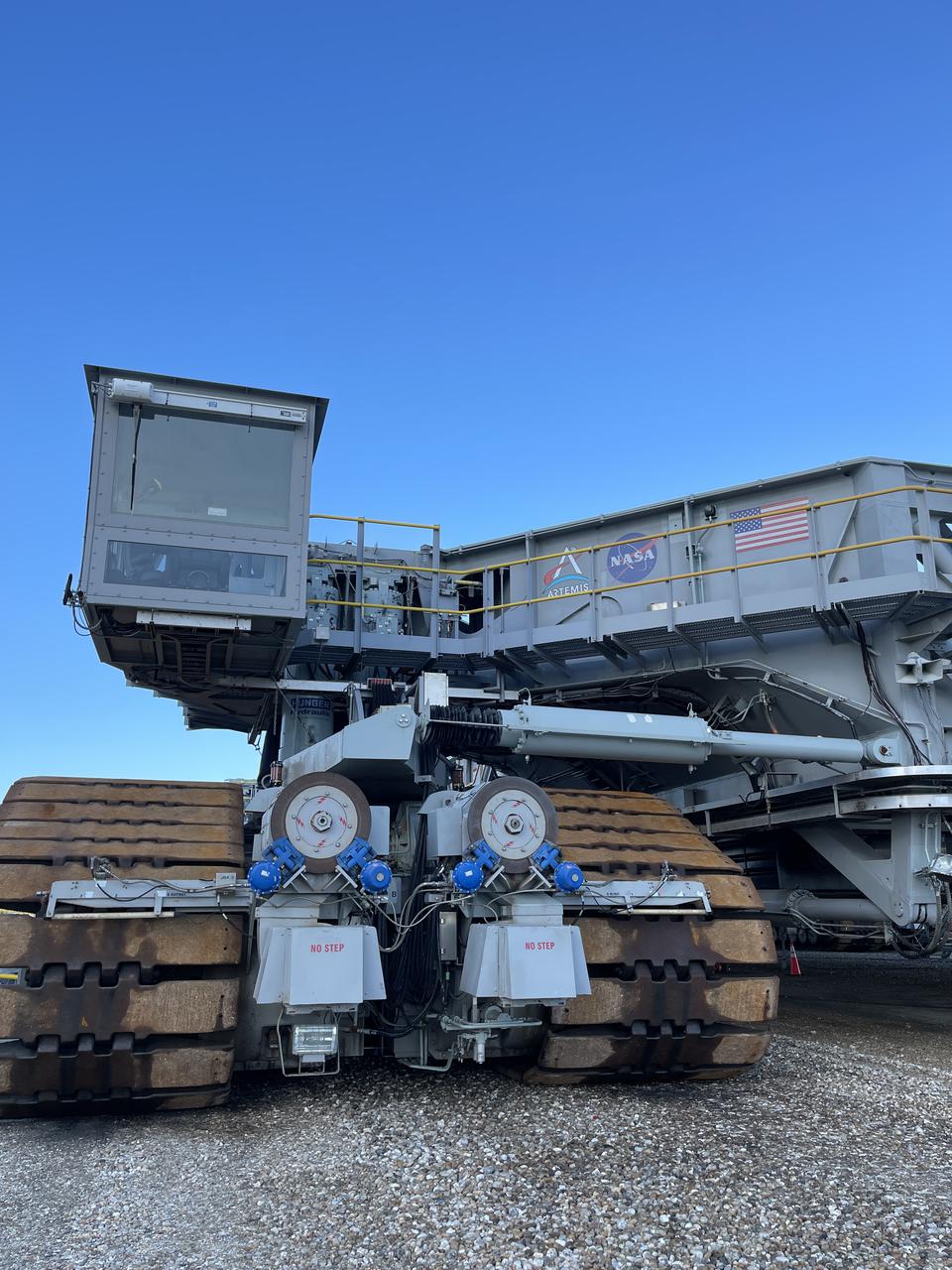
Eight new NASA Artemis logos (four large, four small) were installed on Crawler-Transporter 2 at Kennedy Space Center in preparation for the upcoming launch of Artemis I. Named after the twin sister of Apollo, Artemis is the Goddess of the Moon. The Artemis missions will take humanity back to the Moon and beyond, beginning a new legacy of deep space exploration.
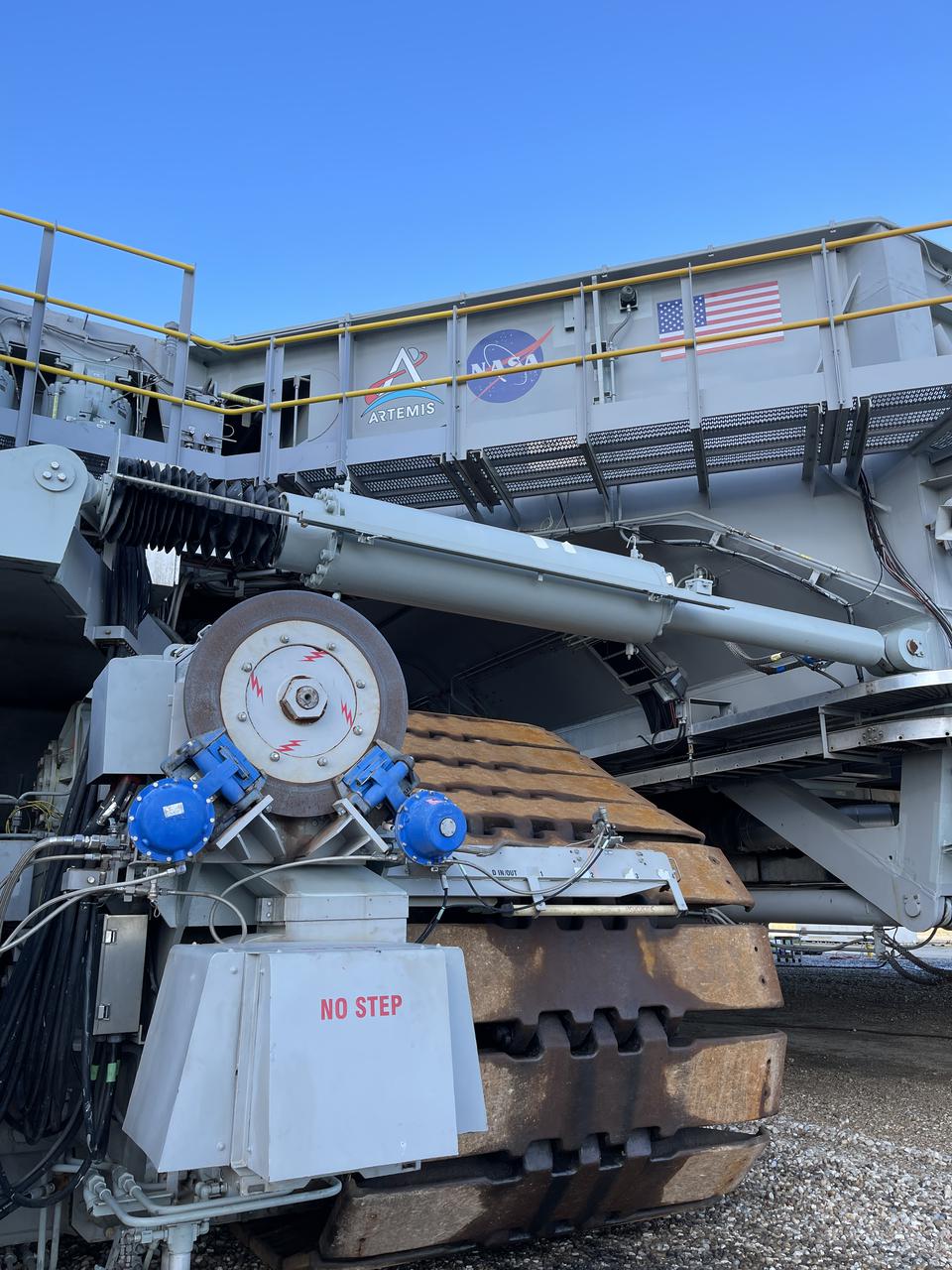
Eight new NASA Artemis logos (four large, four small) were installed on Crawler-Transporter 2 at Kennedy Space Center in preparation for the upcoming launch of Artemis I. Named after the twin sister of Apollo, Artemis is the Goddess of the Moon. The Artemis missions will take humanity back to the Moon and beyond, beginning a new legacy of deep space exploration.
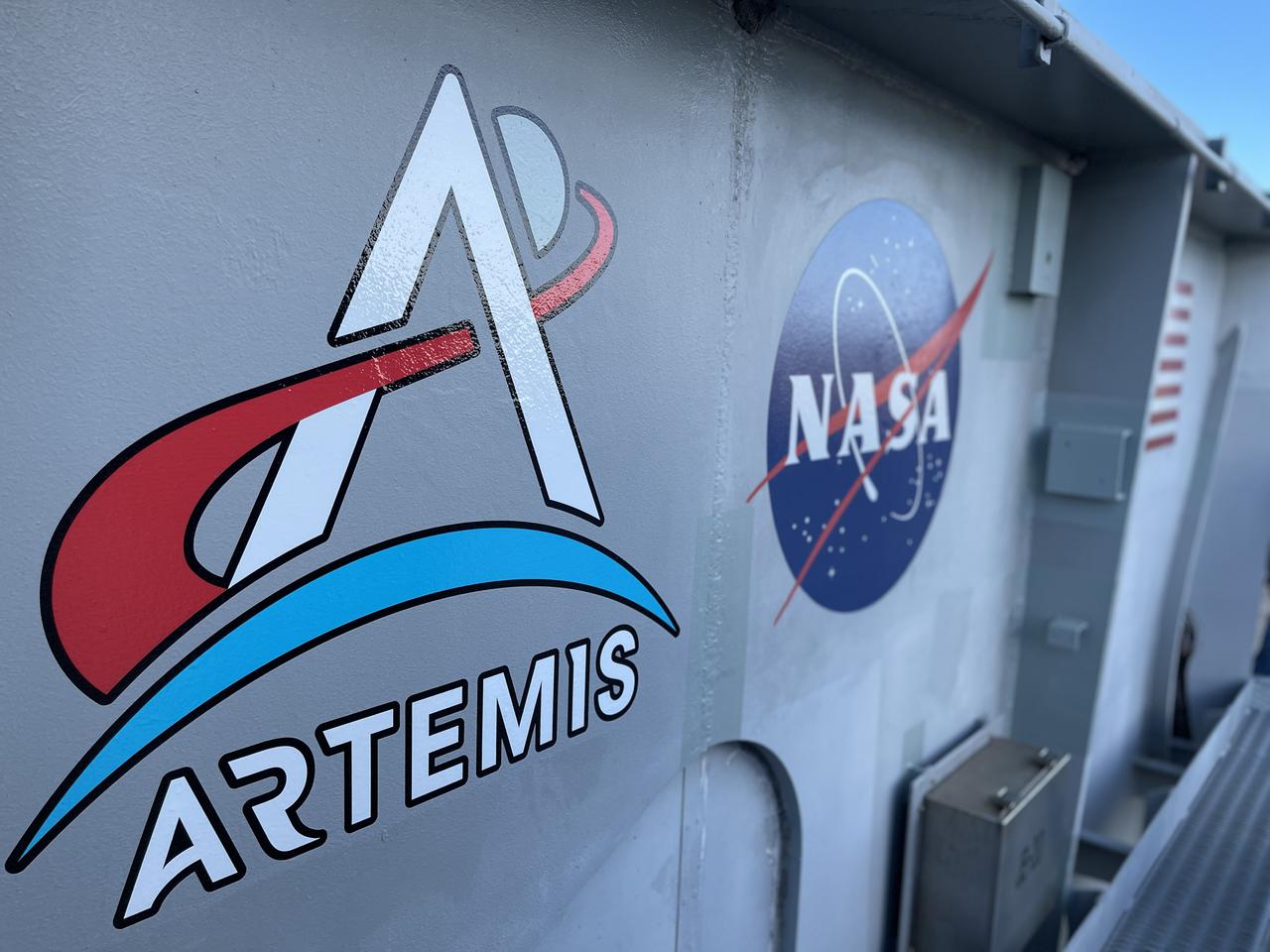
Eight new NASA Artemis logos (four large, four small) were installed on Crawler-Transporter 2 at Kennedy Space Center in preparation for the upcoming launch of Artemis I. Named after the twin sister of Apollo, Artemis is the Goddess of the Moon. The Artemis missions will take humanity back to the Moon and beyond, beginning a new legacy of deep space exploration.
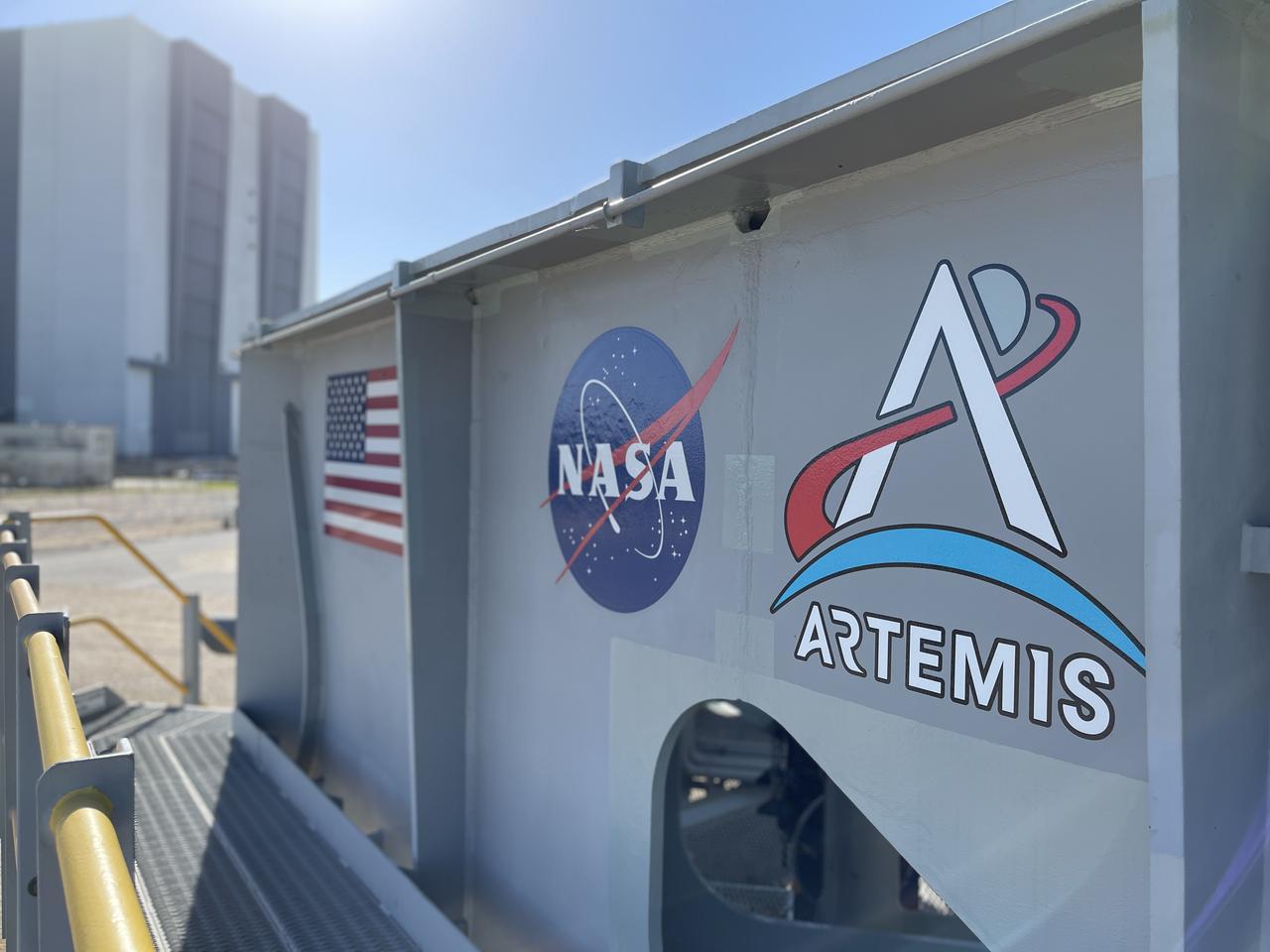
Eight new NASA Artemis logos (four large, four small) were installed on Crawler-Transporter 2 at Kennedy Space Center in preparation for the upcoming launch of Artemis I. Named after the twin sister of Apollo, Artemis is the Goddess of the Moon. The Artemis missions will take humanity back to the Moon and beyond, beginning a new legacy of deep space exploration.
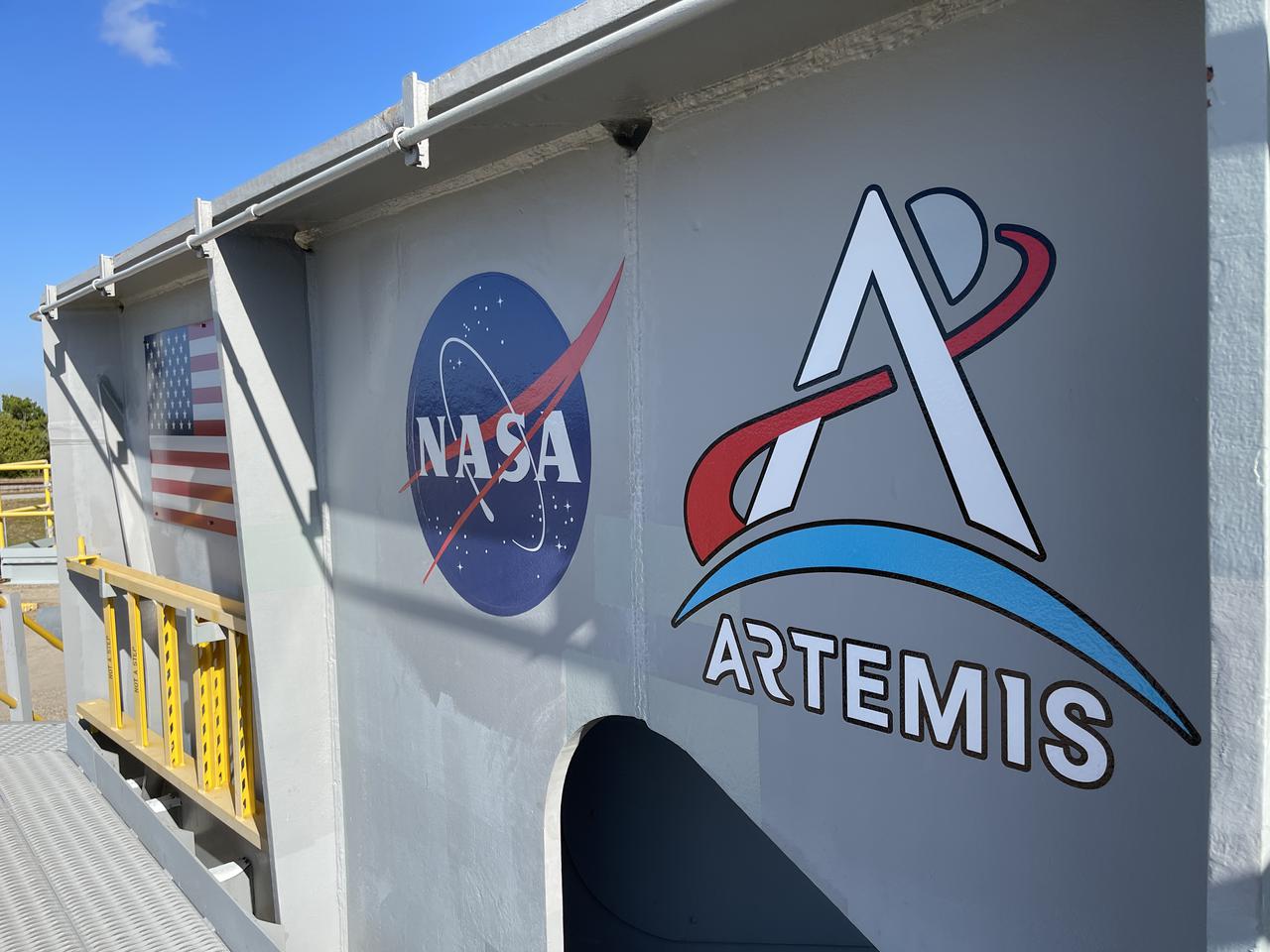
Eight new NASA Artemis logos (four large, four small) were installed on Crawler-Transporter 2 at Kennedy Space Center in preparation for the upcoming launch of Artemis I. Named after the twin sister of Apollo, Artemis is the Goddess of the Moon. The Artemis missions will take humanity back to the Moon and beyond, beginning a new legacy of deep space exploration.
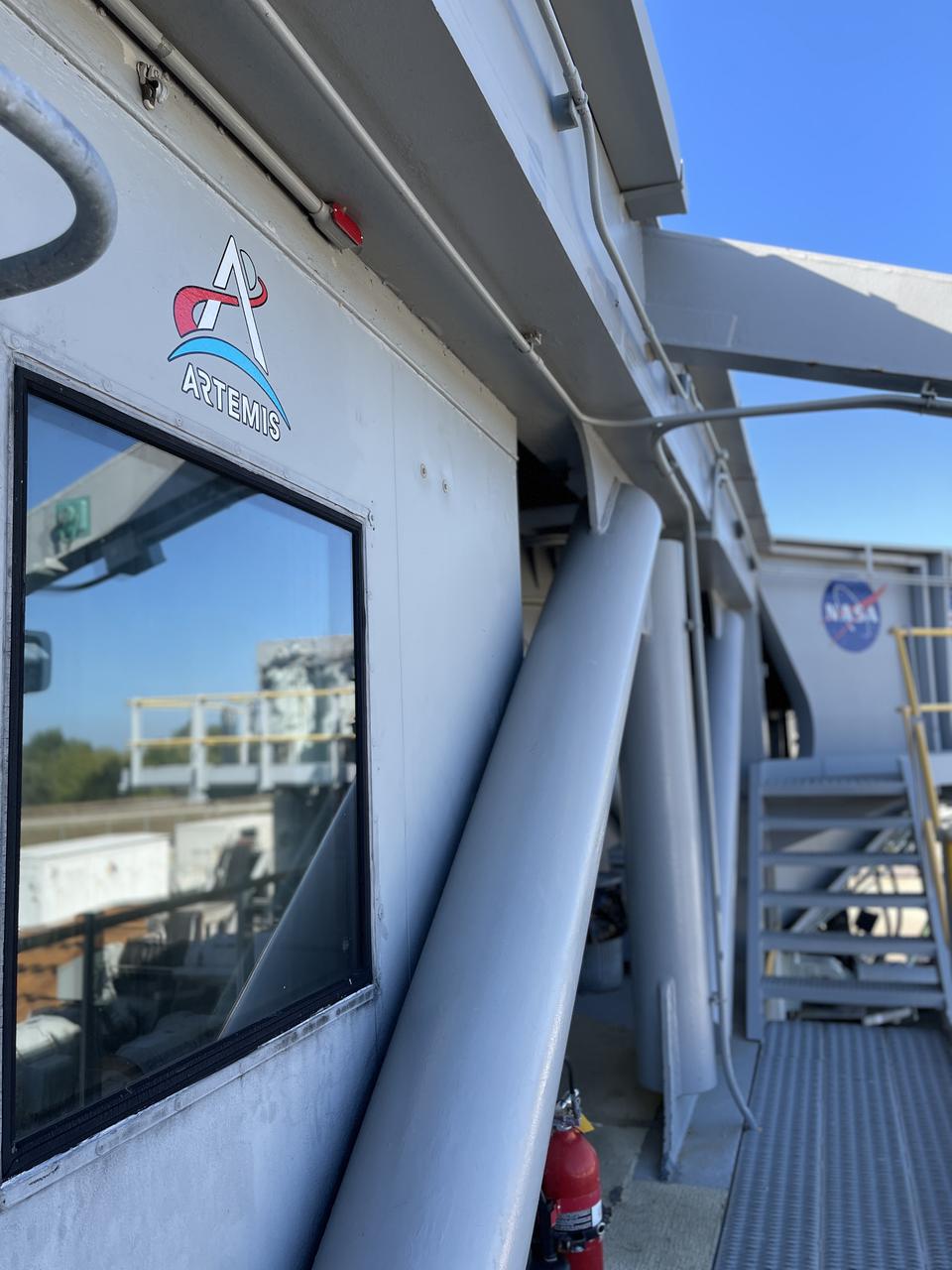
Eight new NASA Artemis logos (four large, four small) were installed on Crawler-Transporter 2 at Kennedy Space Center in preparation for the upcoming launch of Artemis I. Named after the twin sister of Apollo, Artemis is the Goddess of the Moon. The Artemis missions will take humanity back to the Moon and beyond, beginning a new legacy of deep space exploration.
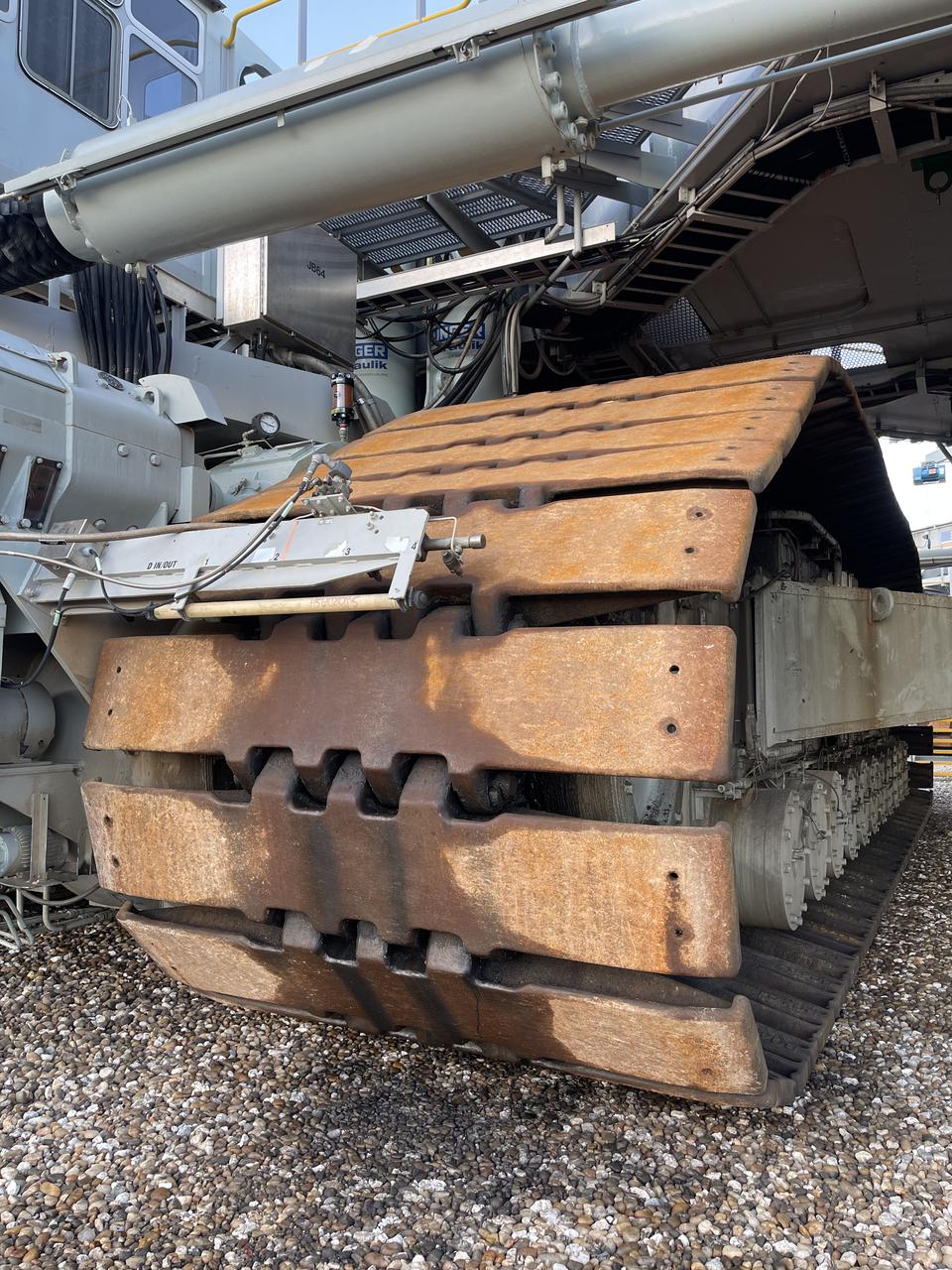
Eight new NASA Artemis logos (four large, four small) were installed on Crawler-Transporter 2 at Kennedy Space Center in preparation for the upcoming launch of Artemis I. Named after the twin sister of Apollo, Artemis is the Goddess of the Moon. The Artemis missions will take humanity back to the Moon and beyond, beginning a new legacy of deep space exploration.
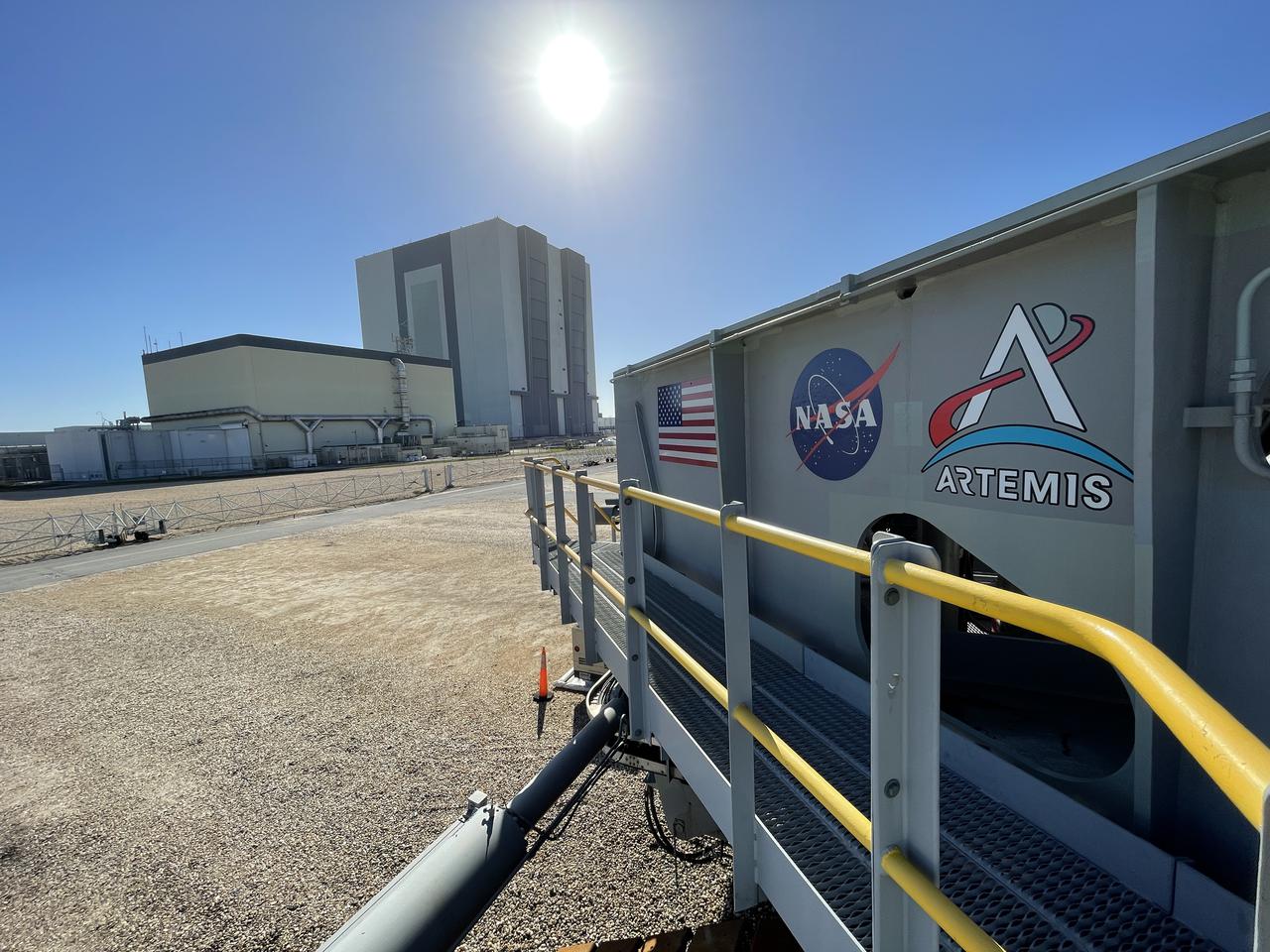
Eight new NASA Artemis logos (four large, four small) were installed on Crawler-Transporter 2 at Kennedy Space Center in preparation for the upcoming launch of Artemis I. The Vehicle Assembly Building, in back, is where NASA's Space Launch System and Orion Spacecraft are currently stacked and being prepared to roll out on top of the crawler to Launch Pad 39B for the first time.
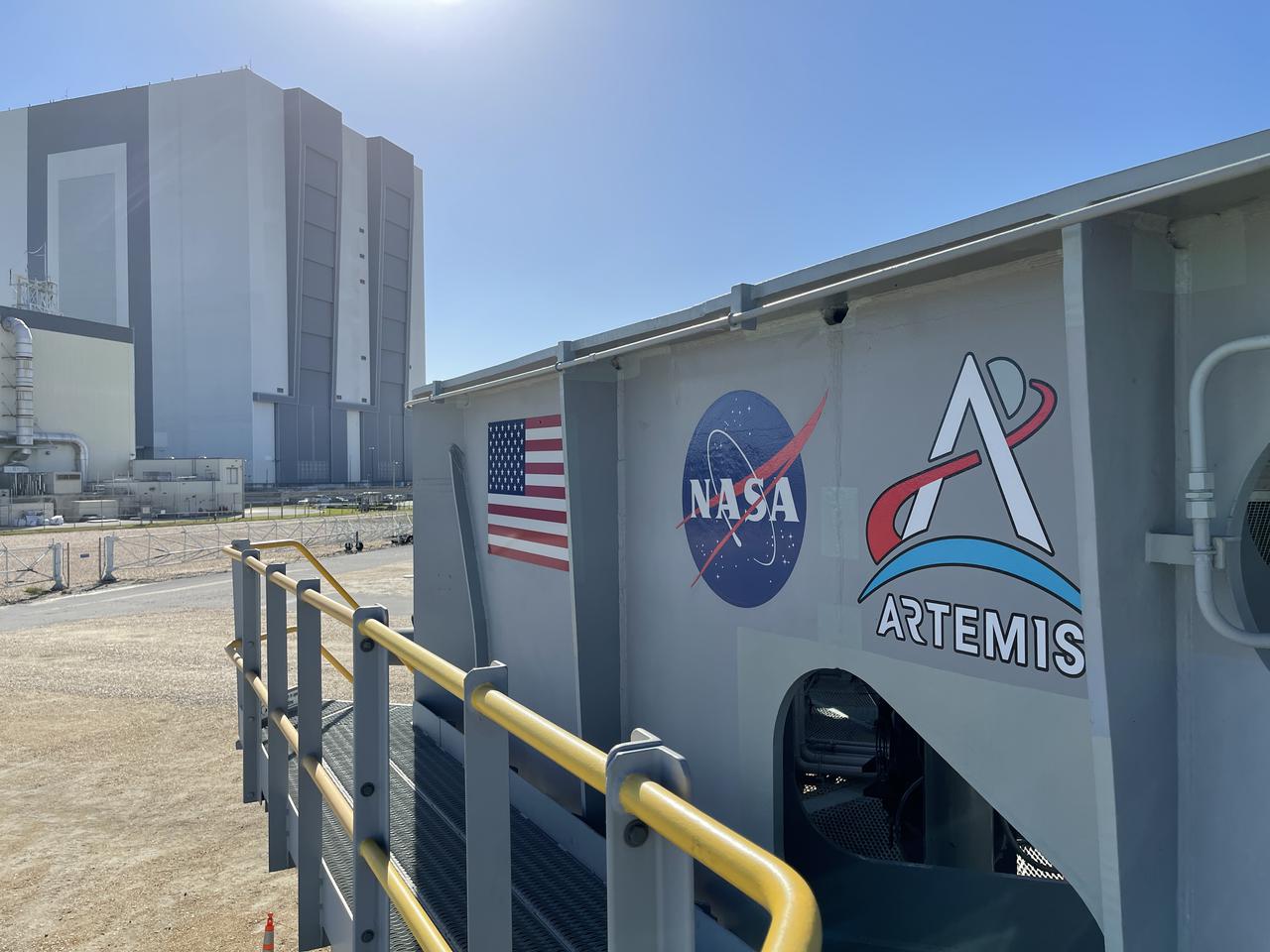
Eight new NASA Artemis logos (four large, four small) were installed on Crawler-Transporter 2 at Kennedy Space Center in preparation for the upcoming launch of Artemis I. The Vehicle Assembly Building, in back, is where NASA's Space Launch System and Orion Spacecraft are currently stacked and being prepared to roll out on top of the crawler to Launch Pad 39B for the first time.
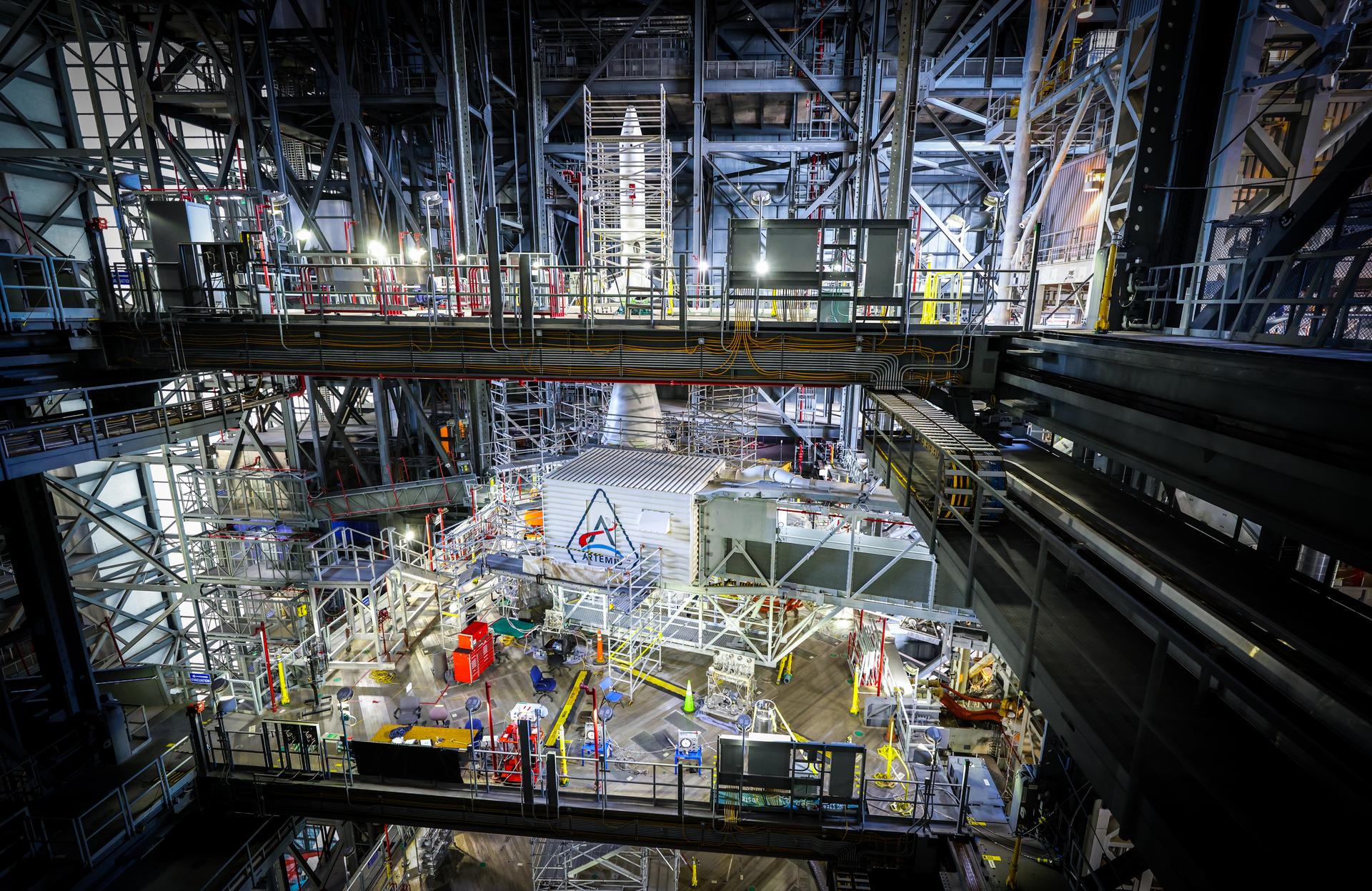
A freshly painted NASA’s Artemis logo is unveiled on the White Room connected to the crew access arm and mobile launcher inside the Vehicle Assembly Building at NASA’s Kennedy Space Center in Florida on Thursday, Dec. 4, 2025. The White Room is the area where the Artemis II crew Reid Wiseman, Victor Glover, Christina Koch, and CSA (Canadian Space Agency) astronaut Jeremy Hansen will enter the Orion spacecraft ahead of launch from Launch Complex 39B at NASA Kennedy in early 2026.
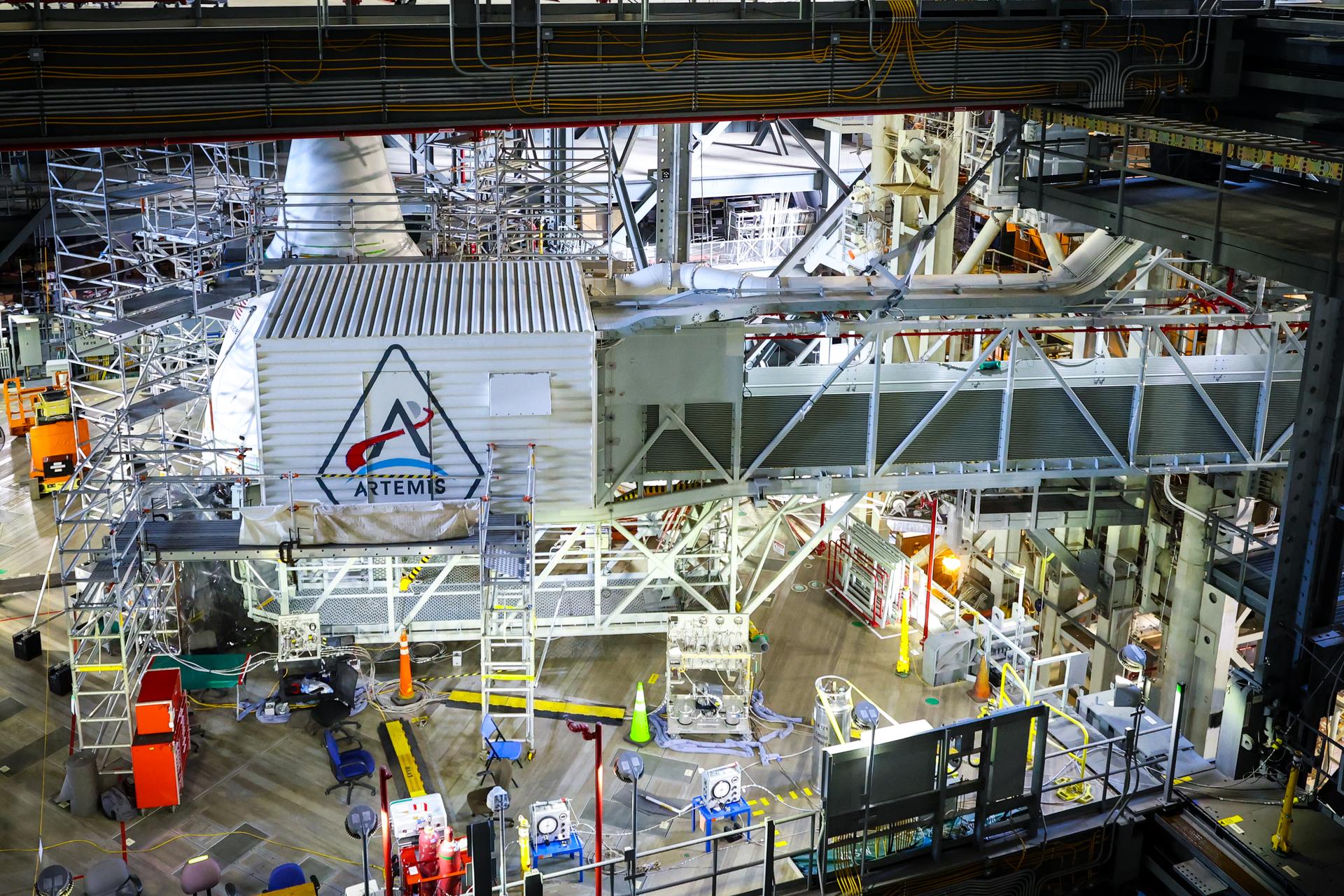
A freshly painted NASA’s Artemis logo is unveiled on the White Room connected to the crew access arm and mobile launcher inside the Vehicle Assembly Building at NASA’s Kennedy Space Center in Florida on Thursday, Dec. 4, 2025. The White Room is the area where the Artemis II crew Reid Wiseman, Victor Glover, Christina Koch, and CSA (Canadian Space Agency) astronaut Jeremy Hansen will enter the Orion spacecraft ahead of launch from Launch Complex 39B at NASA Kennedy in early 2026.
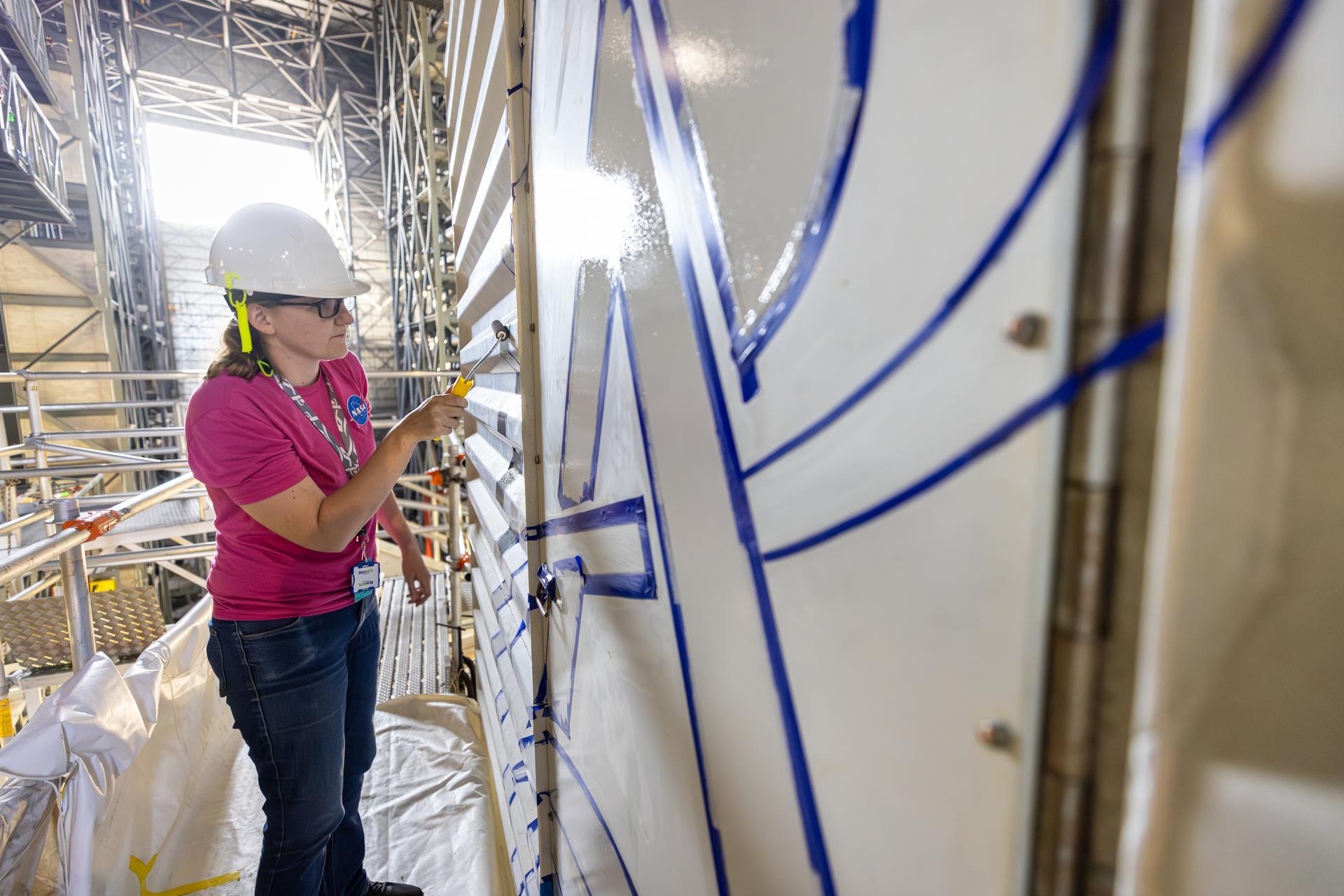
Katie Mortensen, mechanical engineering technician, paints NASA’s Artemis logo on the White Room connected to the crew access arm and mobile launcher inside the Vehicle Assembly Building at NASA’s Kennedy Space Center in Florida on Thursday, Dec. 4, 2025. The White Room is the area where the Artemis II crew Reid Wiseman, Victor Glover, Christina Koch, and CSA (Canadian Space Agency) astronaut Jeremy Hansen will enter the Orion spacecraft ahead of launch from Launch Complex 39B at NASA Kennedy in early 2026.
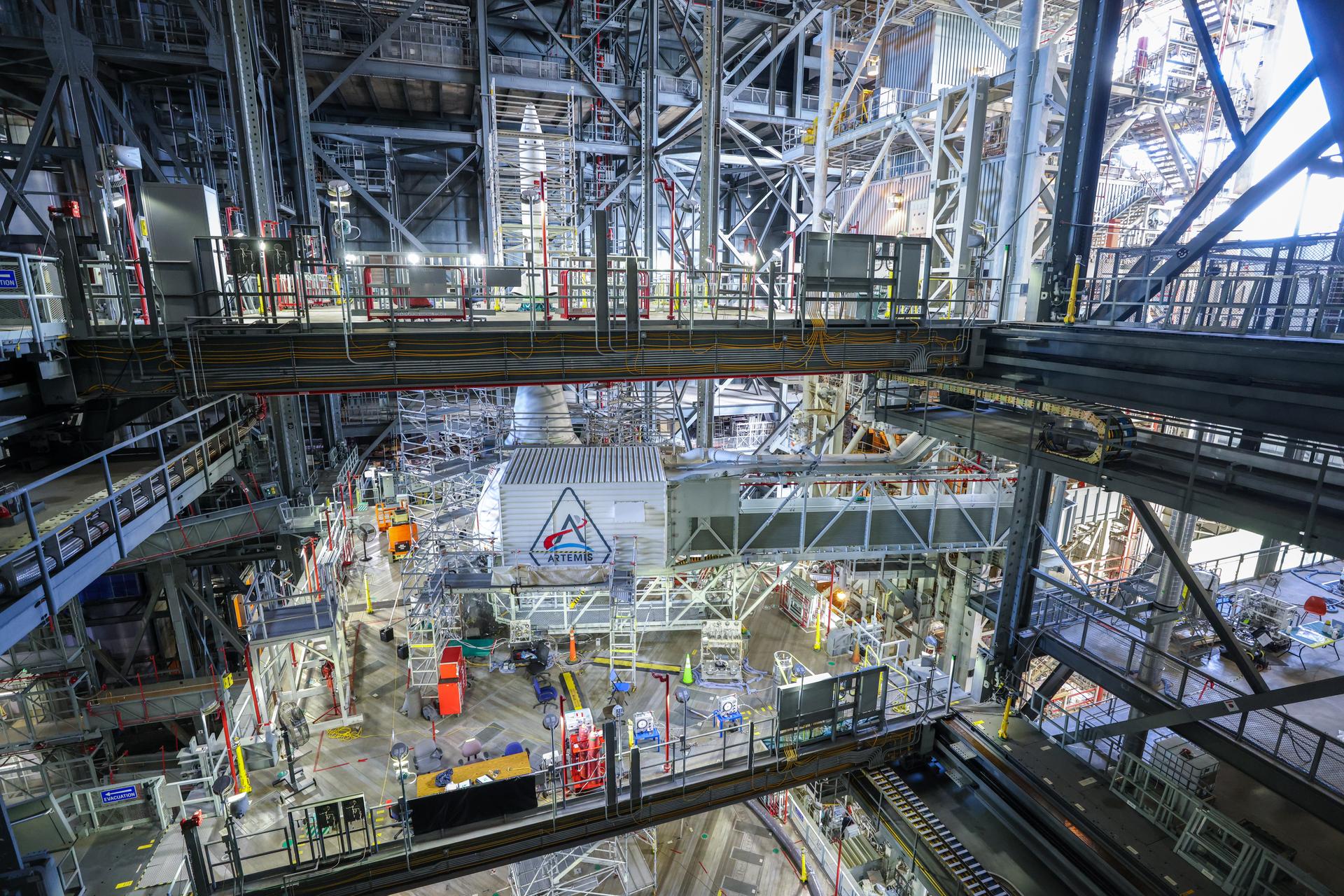
A freshly painted NASA’s Artemis logo is unveiled on the White Room connected to the crew access arm and mobile launcher inside the Vehicle Assembly Building at NASA’s Kennedy Space Center in Florida on Thursday, Dec. 4, 2025. The White Room is the area where the Artemis II crew Reid Wiseman, Victor Glover, Christina Koch, and CSA (Canadian Space Agency) astronaut Jeremy Hansen will enter the Orion spacecraft ahead of launch from Launch Complex 39B at NASA Kennedy in early 2026.
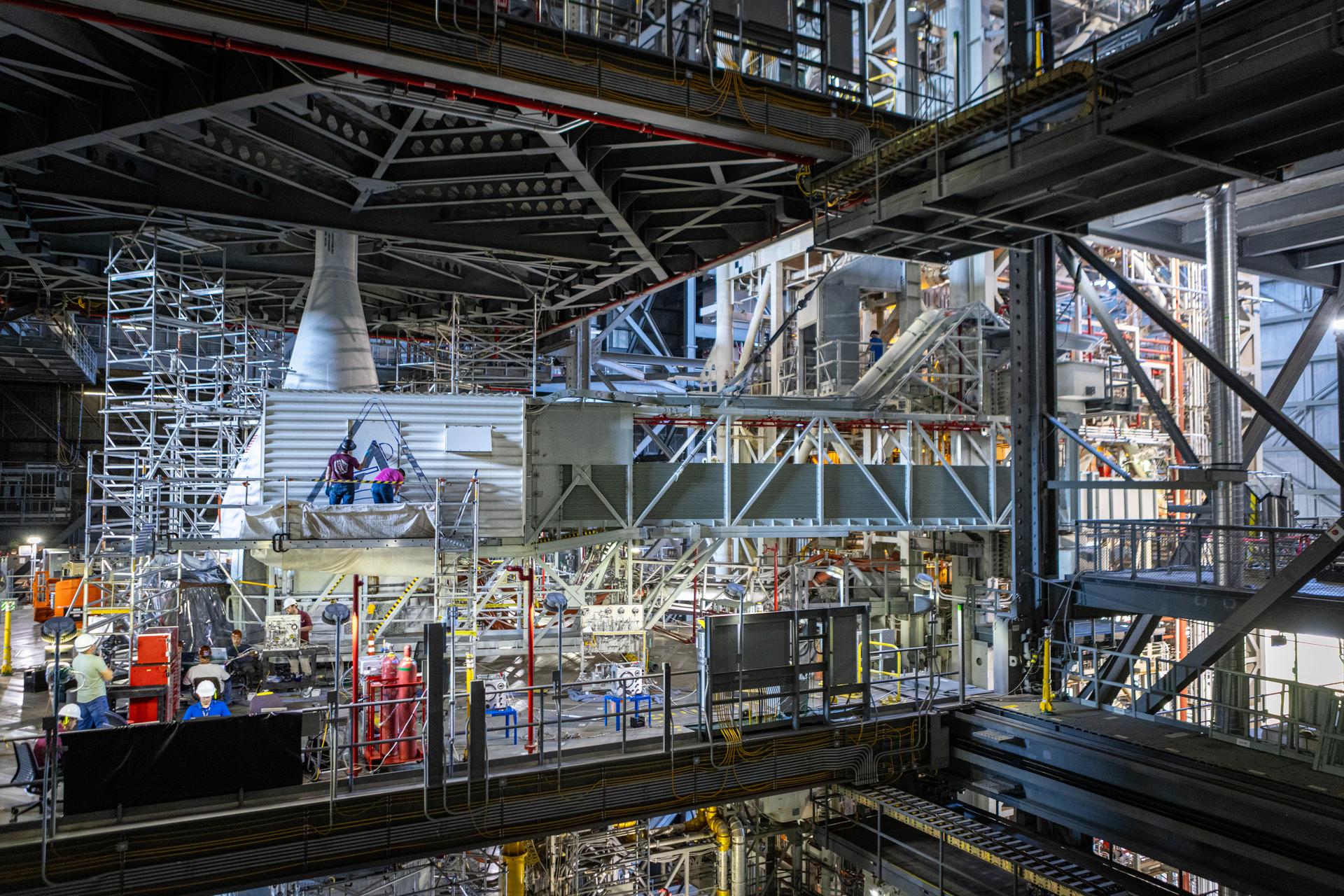
From left, Sean McCrary and Katie Mortensen, mechanical engineering technicians, paint NASA’s Artemis logo on the White Room connected to the crew access arm and mobile launcher inside the Vehicle Assembly Building at NASA’s Kennedy Space Center in Florida on Thursday, Dec. 4, 2025. The White Room is the area where the Artemis II crew Reid Wiseman, Victor Glover, Christina Koch, and CSA (Canadian Space Agency) astronaut Jeremy Hansen will enter the Orion spacecraft ahead of launch from Launch Complex 39B at NASA Kennedy in early 2026.
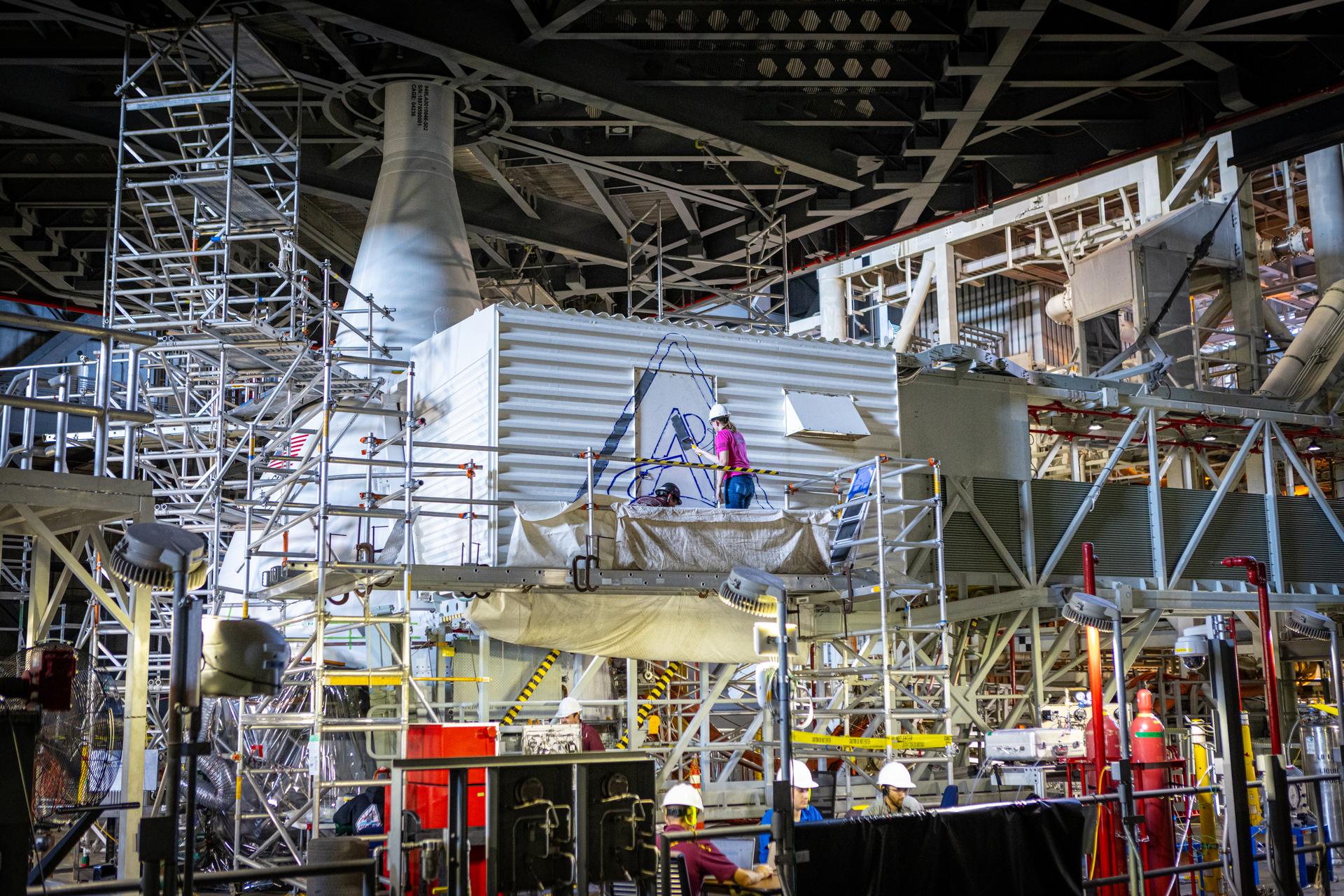
From left, Sean McCrary and Katie Mortensen, mechanical engineering technicians, paint NASA’s Artemis logo on the White Room connected to the crew access arm and mobile launcher inside the Vehicle Assembly Building at NASA’s Kennedy Space Center in Florida on Thursday, Dec. 4, 2025. The White Room is the area where the Artemis II crew Reid Wiseman, Victor Glover, Christina Koch, and CSA (Canadian Space Agency) astronaut Jeremy Hansen will enter the Orion spacecraft ahead of launch from Launch Complex 39B at NASA Kennedy in early 2026.
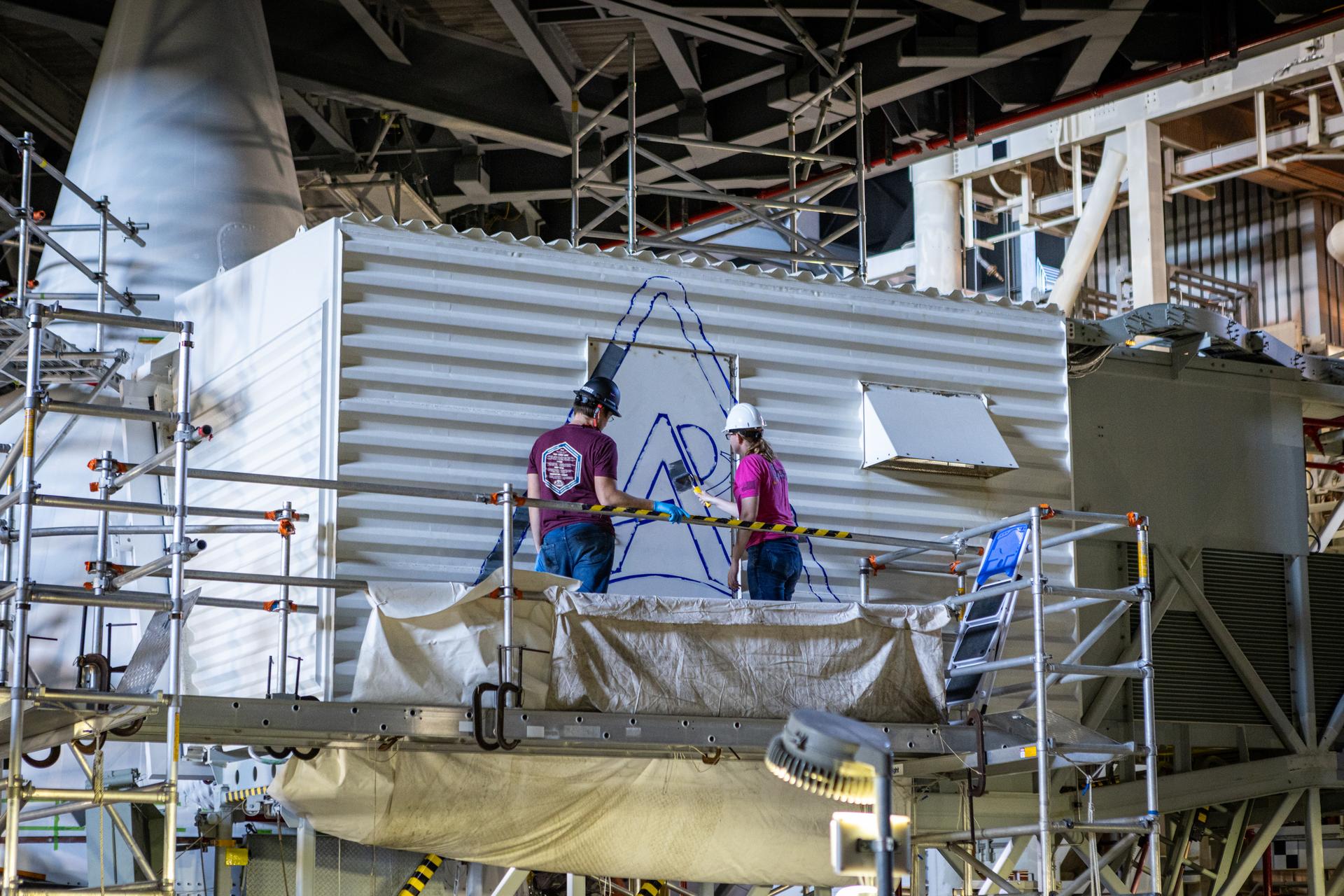
From left, Sean McCrary and Katie Mortensen, mechanical engineering technicians, paint NASA’s Artemis logo on the White Room connected to the crew access arm and mobile launcher inside the Vehicle Assembly Building at NASA’s Kennedy Space Center in Florida on Thursday, Dec. 4, 2025. The White Room is the area where the Artemis II crew Reid Wiseman, Victor Glover, Christina Koch, and CSA (Canadian Space Agency) astronaut Jeremy Hansen will enter the Orion spacecraft ahead of launch from Launch Complex 39B at NASA Kennedy in early 2026.
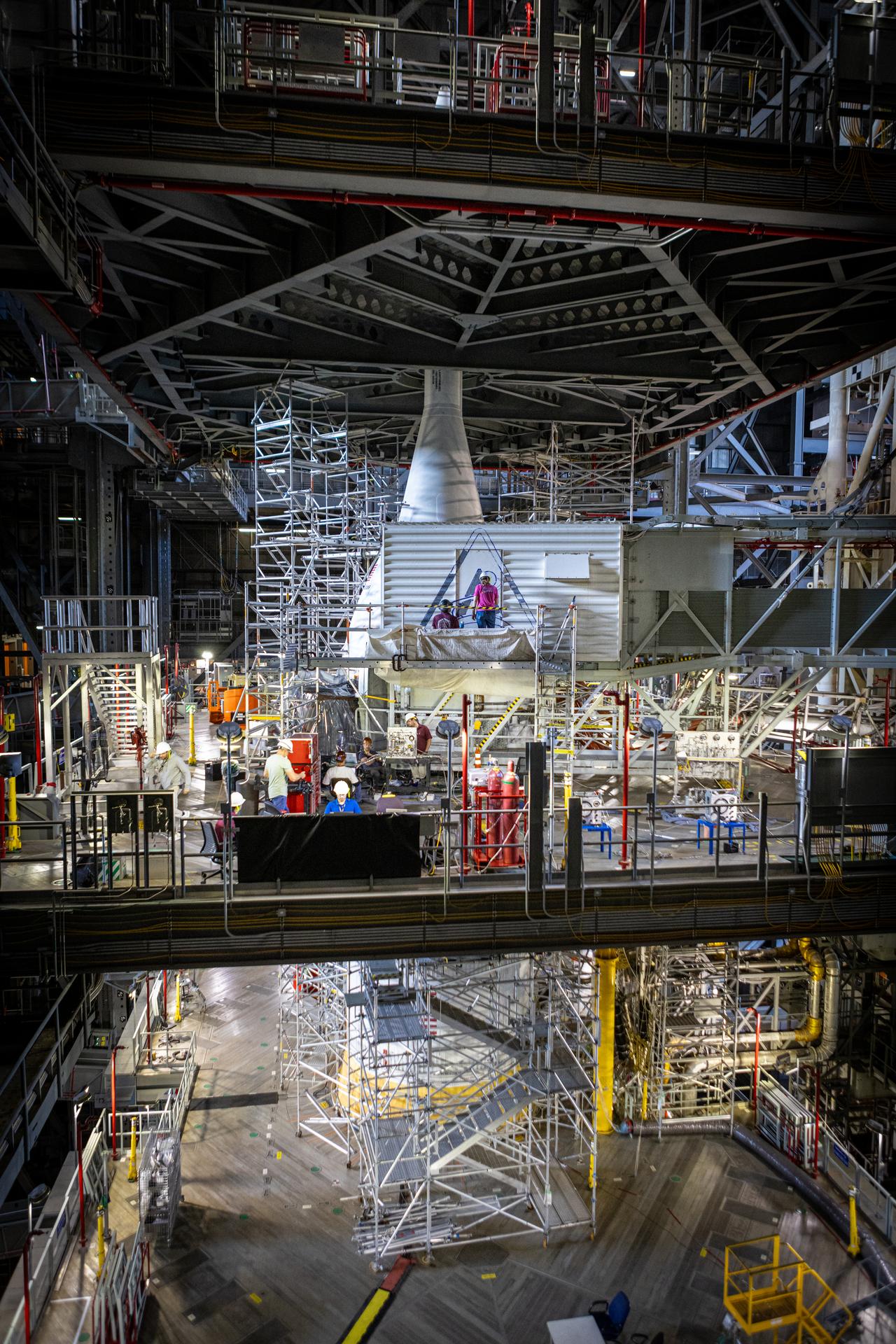
From left, Sean McCrary and Katie Mortensen, mechanical engineering technicians, paint NASA’s Artemis logo on the White Room connected to the crew access arm and mobile launcher inside the Vehicle Assembly Building at NASA’s Kennedy Space Center in Florida on Thursday, Dec. 4, 2025. The White Room is the area where the Artemis II crew Reid Wiseman, Victor Glover, Christina Koch, and CSA (Canadian Space Agency) astronaut Jeremy Hansen will enter the Orion spacecraft ahead of launch from Launch Complex 39B at NASA Kennedy in early 2026.
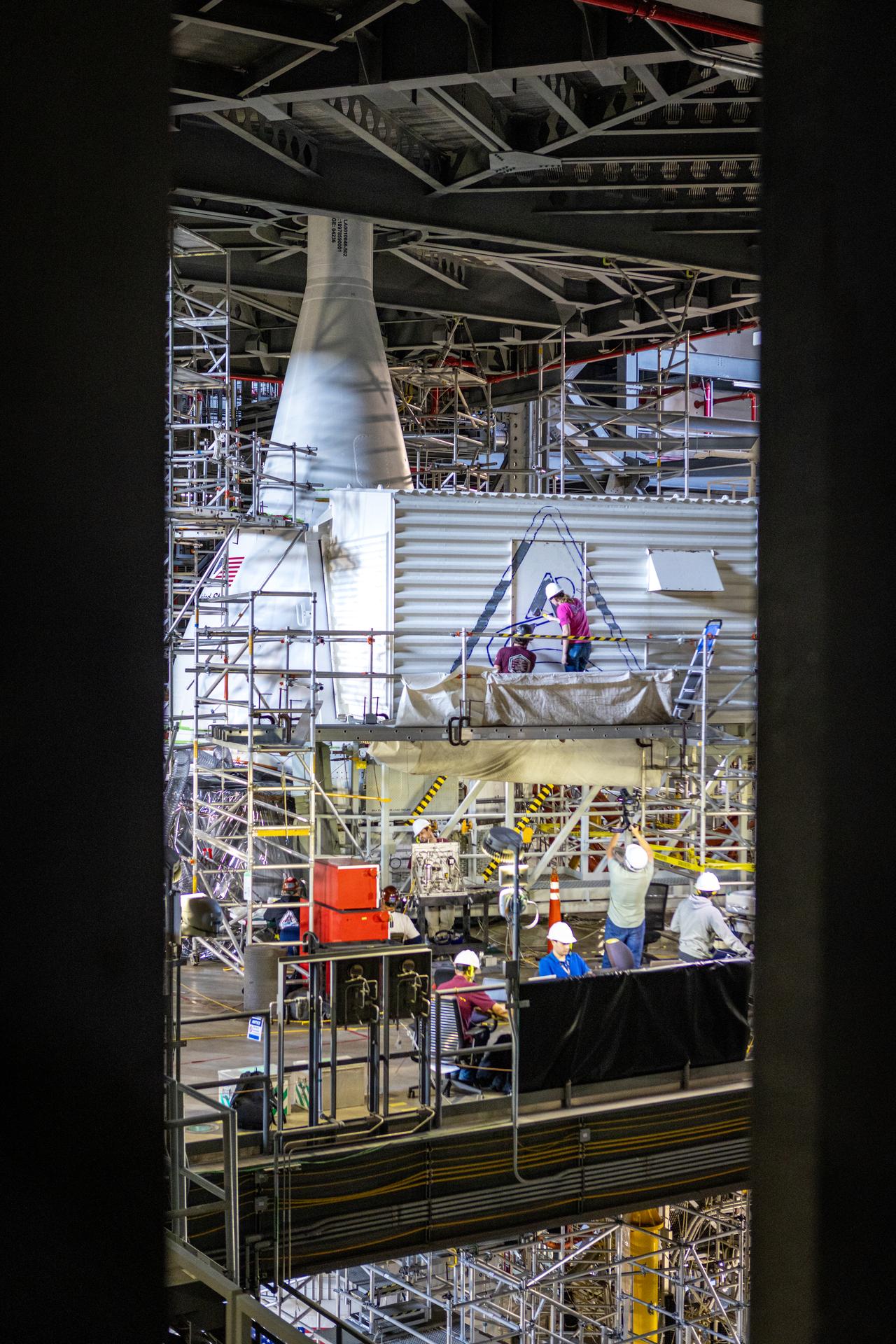
From left, Sean McCrary and Katie Mortensen, mechanical engineering technicians, paint NASA’s Artemis logo on the White Room connected to the crew access arm and mobile launcher inside the Vehicle Assembly Building at NASA’s Kennedy Space Center in Florida on Thursday, Dec. 4, 2025. The White Room is the area where the Artemis II crew Reid Wiseman, Victor Glover, Christina Koch, and CSA (Canadian Space Agency) astronaut Jeremy Hansen will enter the Orion spacecraft ahead of launch from Launch Complex 39B at NASA Kennedy in early 2026.
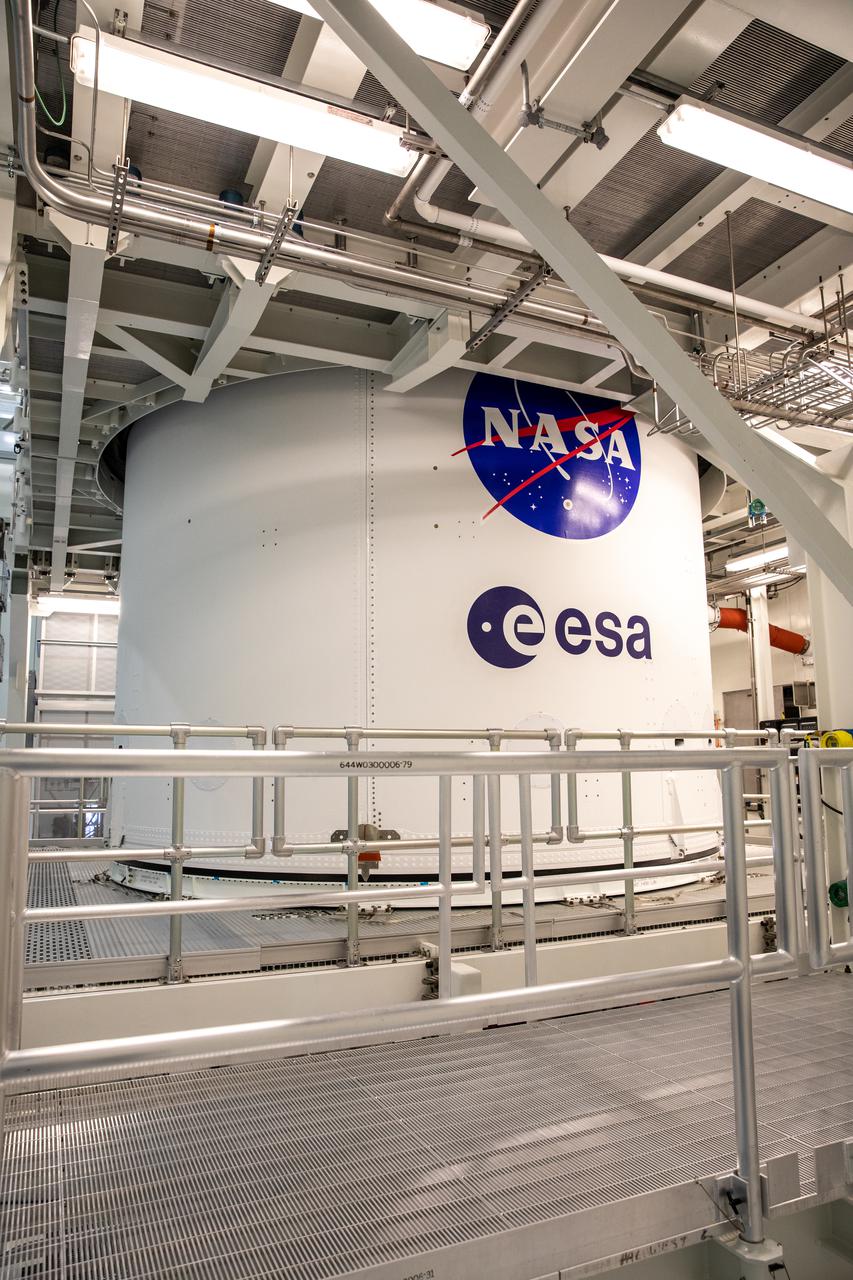
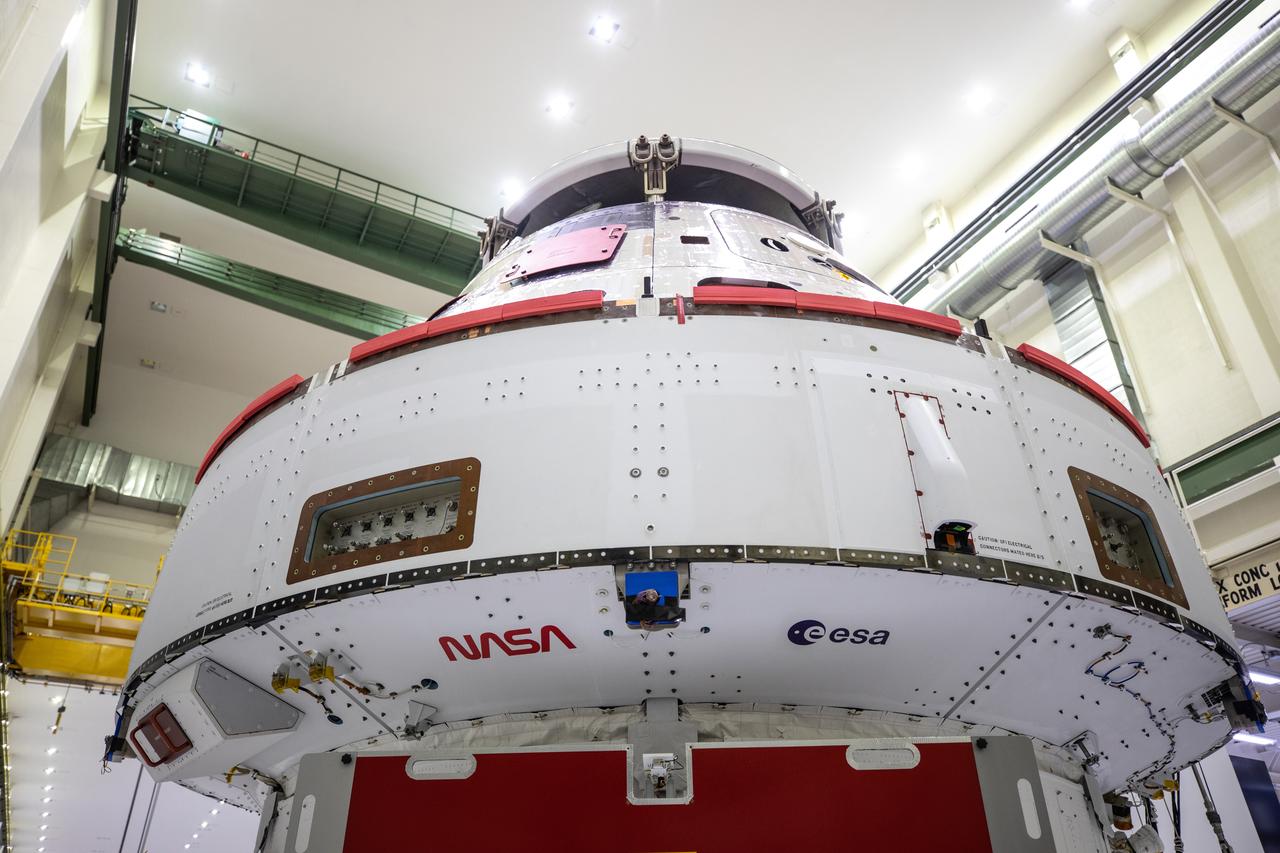
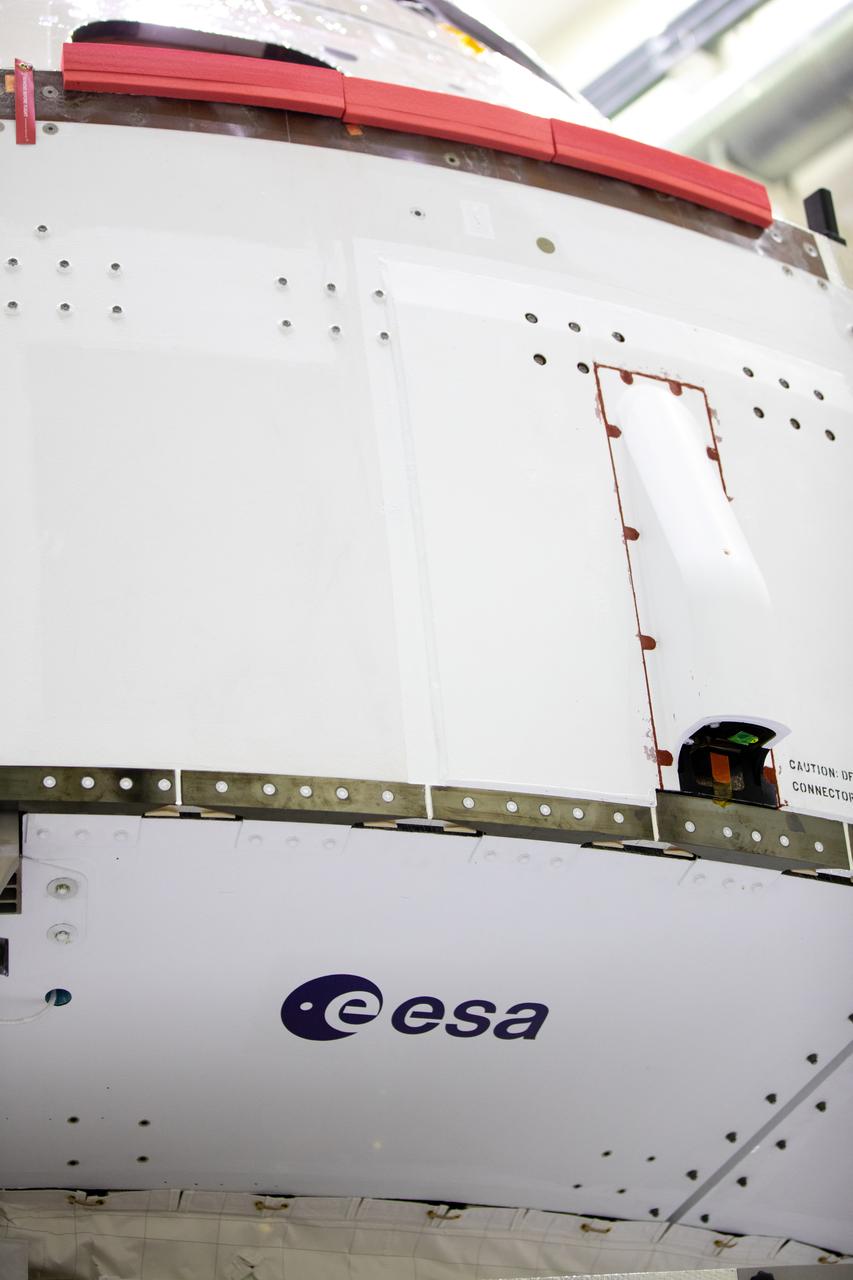
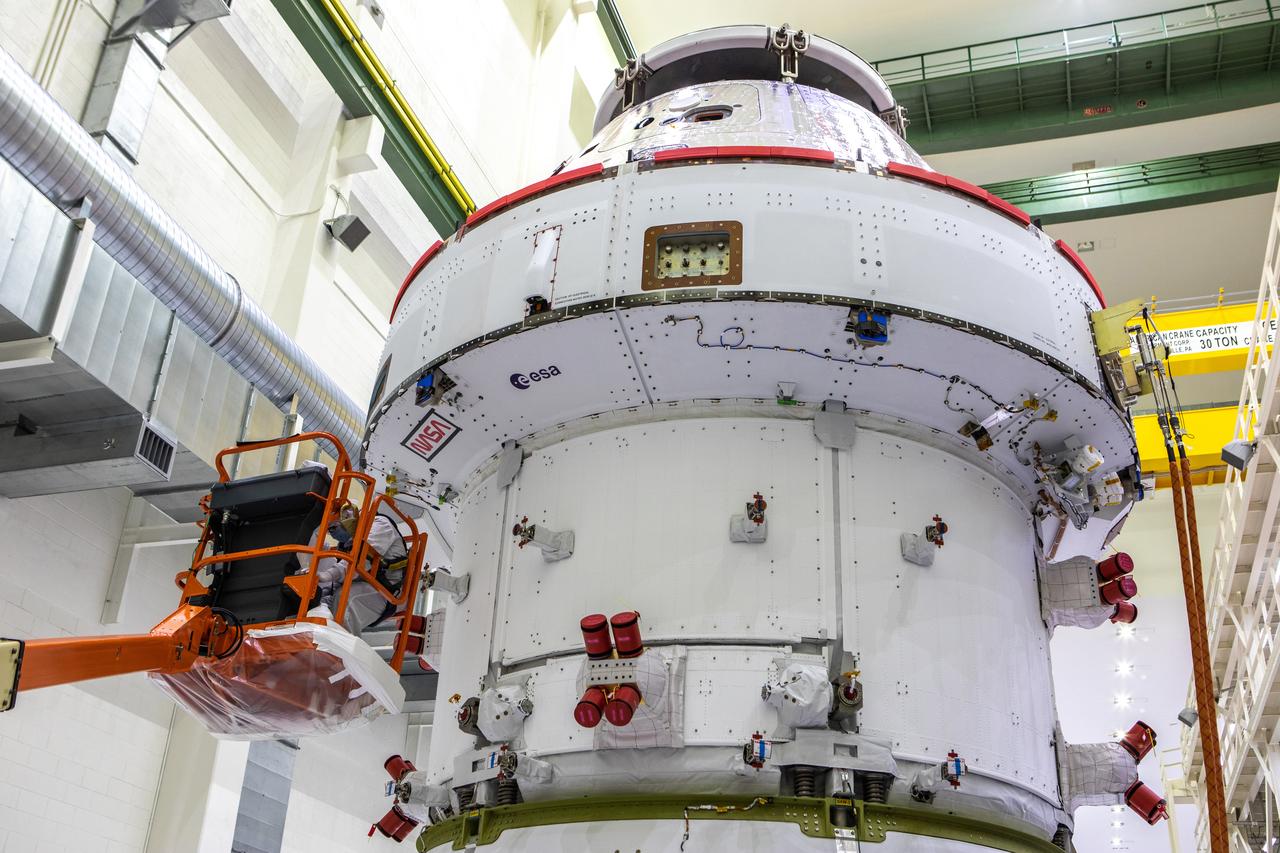
Artemis I extends NASA and ESA’s (European Space Agency) strong international partnership beyond low-Earth orbit to lunar exploration with Orion on Artemis missions, as the ESA logo joins the historic NASA “meatball” insignia on the Artemis I spacecraft adapter jettison fairing panels that protect the service module during launch. Orion is currently stationed at NASA’s Kennedy Space Center in the Multi-Payload Processing Facility, where it will undergo fueling and servicing by NASA’s Exploration Ground Systems and Jacobs Technology teams in preparation for the upcoming flight test with the Space Launch System rocket under the agency’s Artemis program.
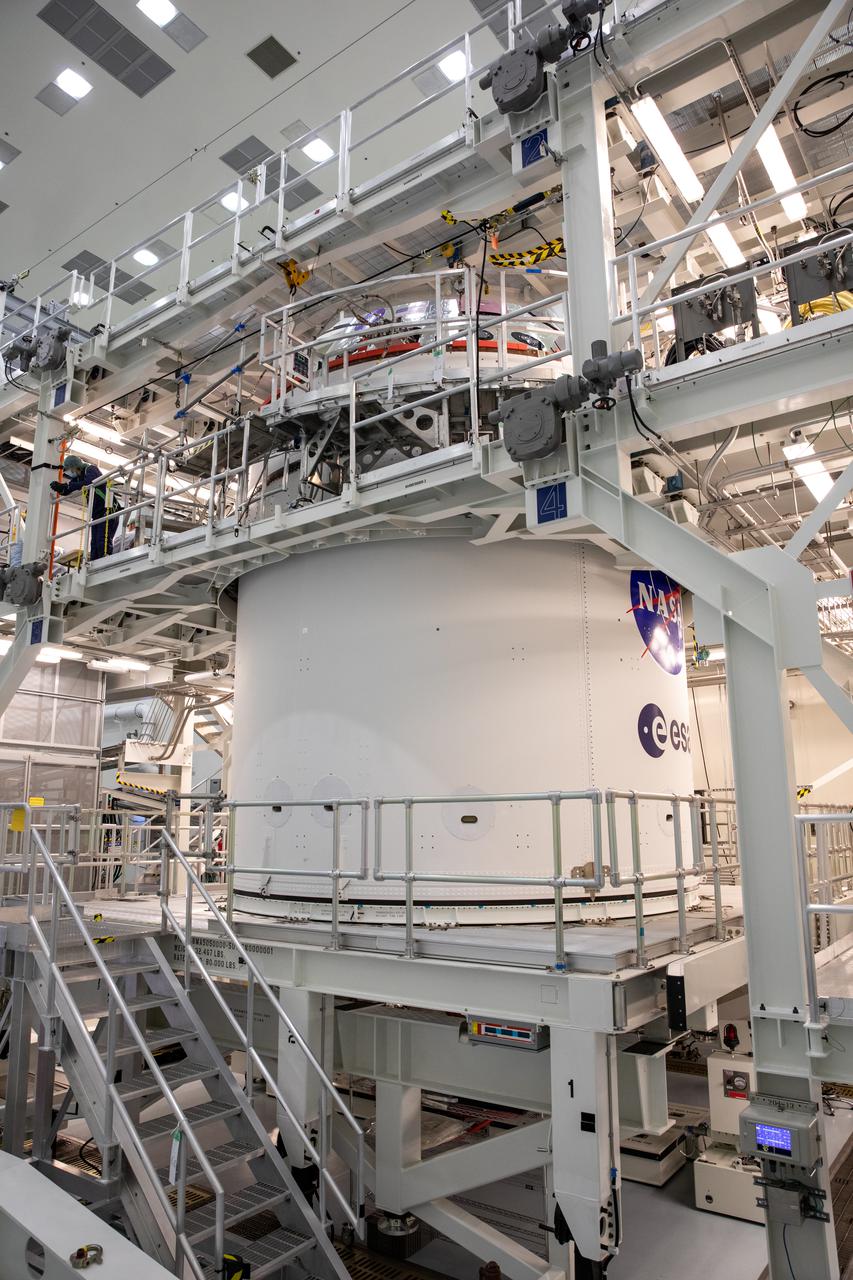
Artemis I extends NASA and ESA’s (European Space Agency) strong international partnership beyond low-Earth orbit to lunar exploration with Orion on Artemis issions, as the the ESA logo joins the historic NASA “meatball” insignia on the Artemis I spacecraft adapter jettison fairing panels that protect the service module during launch. Orion is currently stationed at NASA’s Kennedy Space Center in the Multi-Payload Processing Facility, where it will undergo fueling and servicing by NASA’s Exploration Ground Systems and Jacobs Technology teams in preparation for the upcoming flight test with the Space Launch System rocket under the agency’s Artemis program.
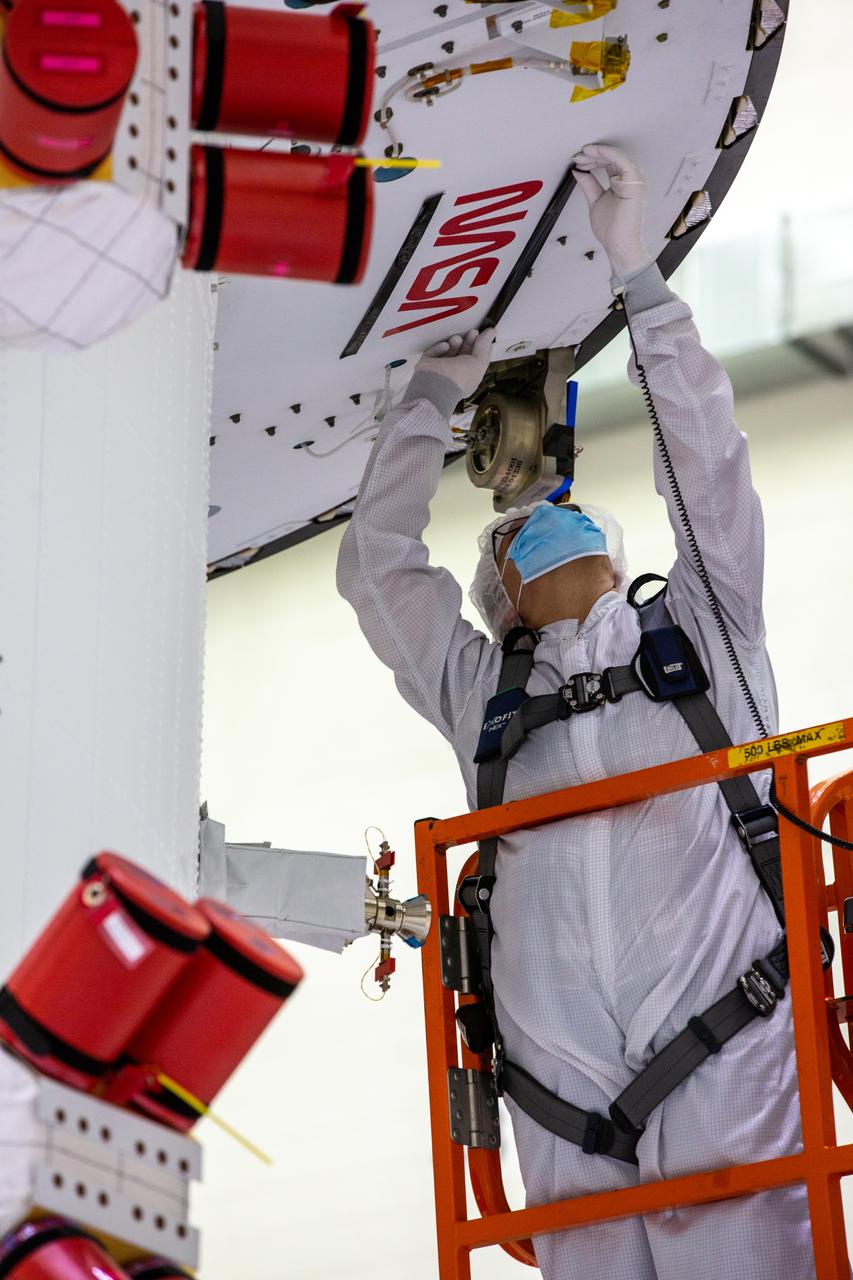
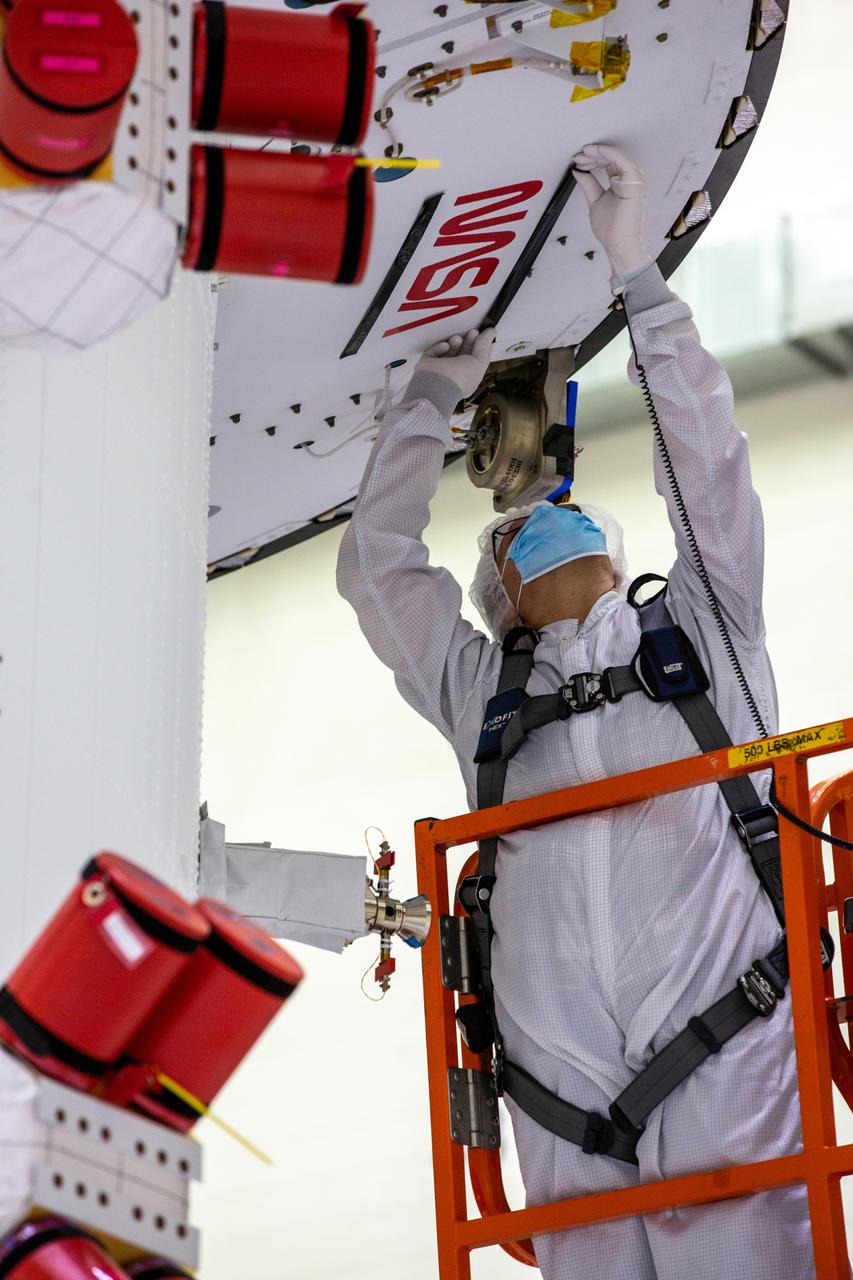
Frank Pelkey, ASRC technician, adheres removable tape around NASA’s iconic “worm” logo decal on the aft wall of Orion’s crew module adapter ahead of NASA’s Artemis I mission. The work is complete inside the Neil Armstrong Operations and Checkout Building high bay at Kennedy Space Center on Sept. 20, 2020. Originally created by the firm of Danne & Blackburn, the “worm” logo’s bold, sleek design was officially introduced in 1975 and was incorporated into many of the agency’s next-generation programs. It was retired in 1992, but has made a comeback in 2020 as the agency ushers in a new, modern era of human spaceflight. The first in a series of increasingly complex missions, Artemis I will test the Orion spacecraft and Space Launch System as an integrated system ahead of crewed flights to the Moon. Under the Artemis program, NASA will land the first woman and the next man on the Moon by 2024.

Frank Pelkey, ASRC technician, adheres NASA’s iconic “worm” logo decal on the aft wall of Orion’s crew module adapter ahead of NASA’s Artemis I mission. The work is complete inside the Neil Armstrong Operations and Checkout Building high bay at Kennedy Space Center on Sept. 20, 2020. Originally created by the firm of Danne & Blackburn, the “worm” logo’s bold, sleek design was officially introduced in 1975 and was incorporated into many of the agency’s next-generation programs. It was retired in 1992, but has made a comeback in 2020 as the agency ushers in a new, modern era of human spaceflight. The first in a series of increasingly complex missions, Artemis I will test the Orion spacecraft and Space Launch System as an integrated system ahead of crewed flights to the Moon. Under the Artemis program, NASA will land the first woman and the next man on the Moon by 2024.

Frank Pelkey, ASRC technician, works to adhere NASA’s iconic “worm” logo decal on the aft wall of Orion’s crew module adapter ahead of NASA’s Artemis I mission. The work is complete inside the Neil Armstrong Operations and Checkout Building high bay at Kennedy Space Center on Sept. 20, 2020. Originally created by the firm of Danne & Blackburn, the “worm” logo’s bold, sleek design was officially introduced in 1975 and was incorporated into many of the agency’s next-generation programs. It was retired in 1992, but has made a comeback in 2020 as the agency ushers in a new, modern era of human spaceflight. The first in a series of increasingly complex missions, Artemis I will test the Orion spacecraft and Space Launch System as an integrated system ahead of crewed flights to the Moon. Under the Artemis program, NASA will land the first woman and the next man on the Moon by 2024.
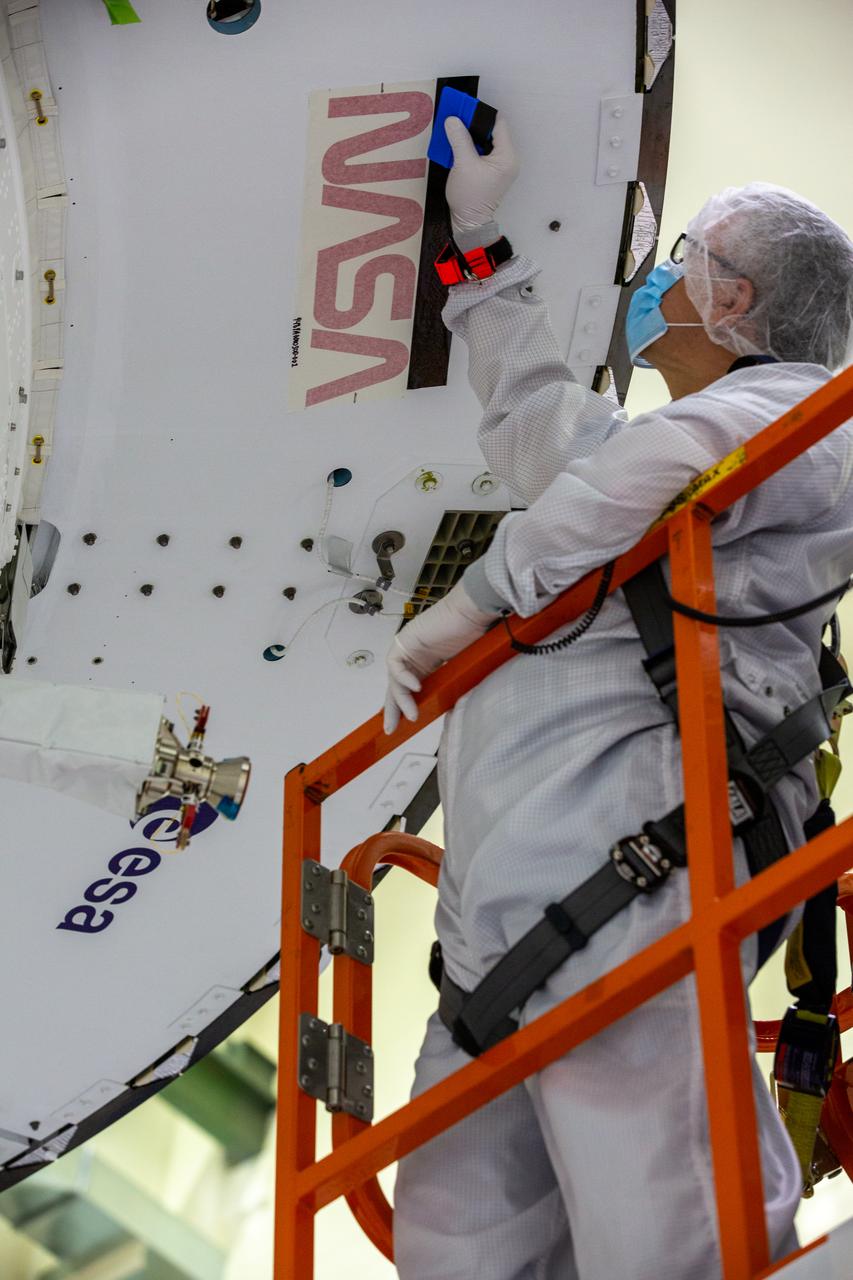
Frank Pelkey, ASRC technician, places tape around the outline of NASA’s iconic “worm” logo on the aft wall of Orion’s crew module adapter ahead of NASA’s Artemis I mission. The work is complete inside the Neil Armstrong Operations and Checkout Building high bay at Kennedy Space Center on Sept. 20, 2020. Originally created by the firm of Danne & Blackburn, the “worm” logo’s bold, sleek design was officially introduced in 1975 and was incorporated into many of the agency’s next-generation programs. It was retired in 1992, but has made a comeback in 2020 as the agency ushers in a new, modern era of human spaceflight. The first in a series of increasingly complex missions, Artemis I will test the Orion spacecraft and Space Launch System as an integrated system ahead of crewed flights to the Moon. Under the Artemis program, NASA will land the first woman and the next man on the Moon by 2024.
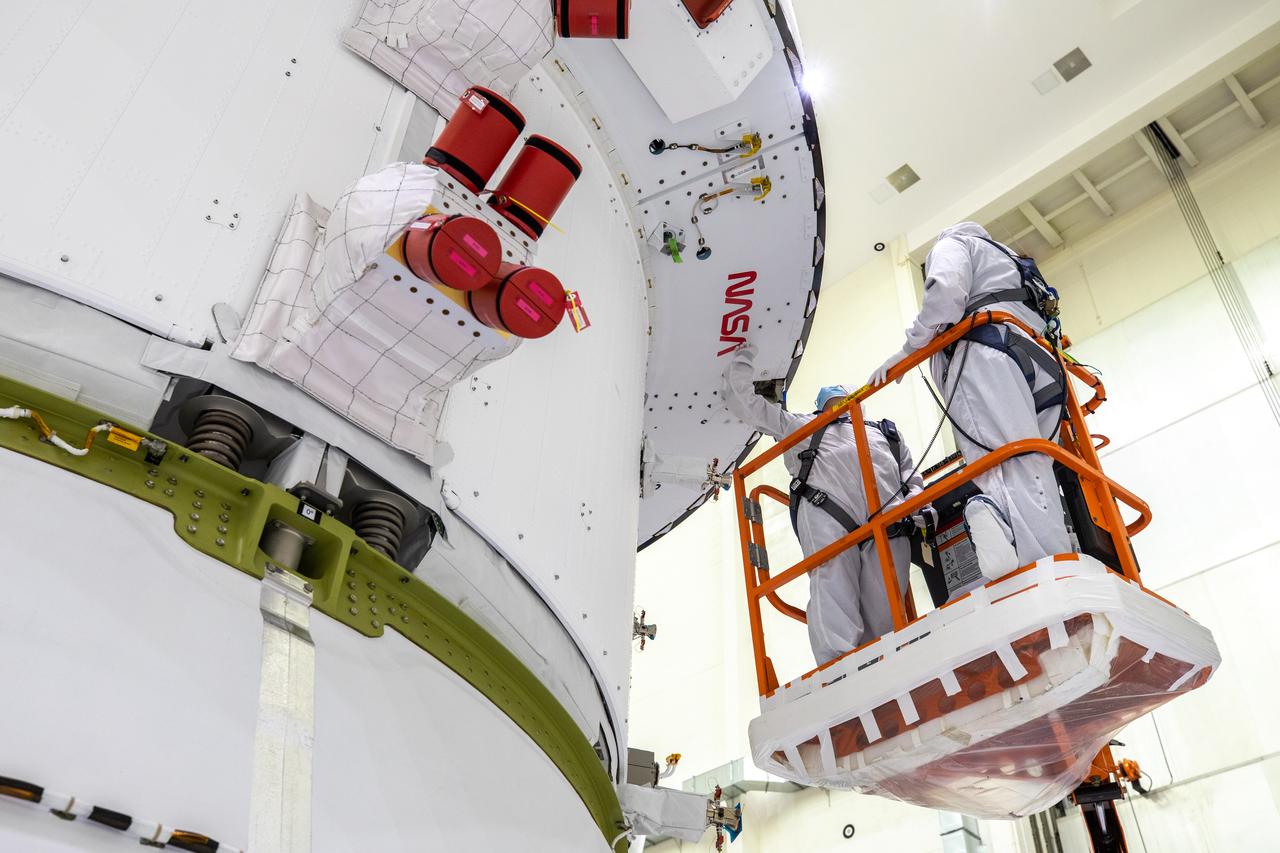
Frank Pelkey, ASRC technician, works to adhere NASA’s iconic “worm” logo decal on the aft wall of Orion’s crew module adapter ahead of NASA’s Artemis I mission. The work is complete inside the Neil Armstrong Operations and Checkout Building high bay at Kennedy Space Center on Sept. 20, 2020. Originally created by the firm of Danne & Blackburn, the “worm” logo’s bold, sleek design was officially introduced in 1975 and was incorporated into many of the agency’s next-generation programs. It was retired in 1992, but has made a comeback in 2020 as the agency ushers in a new, modern era of human spaceflight. The first in a series of increasingly complex missions, Artemis I will test the Orion spacecraft and Space Launch System as an integrated system ahead of crewed flights to the Moon. Under the Artemis program, NASA will land the first woman and the next man on the Moon by 2024.
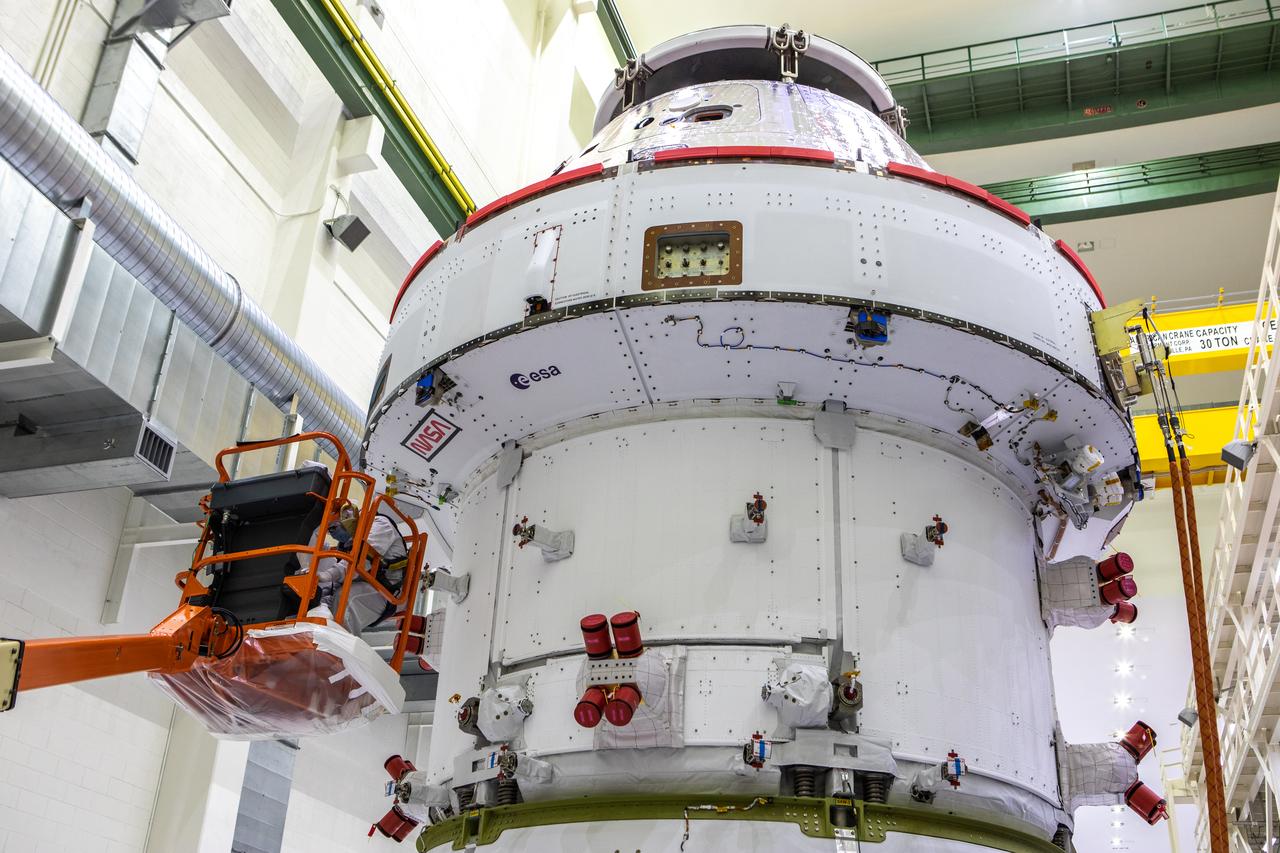
Frank Pelkey, ASRC technician, works to complete the application of NASA’s iconic “worm” logo decal on the aft wall of Orion’s crew module adapter ahead of NASA’s Artemis I mission. The work is complete inside the Neil Armstrong Operations and Checkout Building high bay at Kennedy Space Center on Sept. 20, 2020. Originally created by the firm of Danne & Blackburn, the “worm” logo’s bold, sleek design was officially introduced in 1975 and was incorporated into many of the agency’s next-generation programs. It was retired in 1992, but has made a comeback in 2020 as the agency ushers in a new, modern era of human spaceflight. The first in a series of increasingly complex missions, Artemis I will test the Orion spacecraft and Space Launch System as an integrated system ahead of crewed flights to the Moon. Under the Artemis program, NASA will land the first woman and the next man on the Moon by 2024.
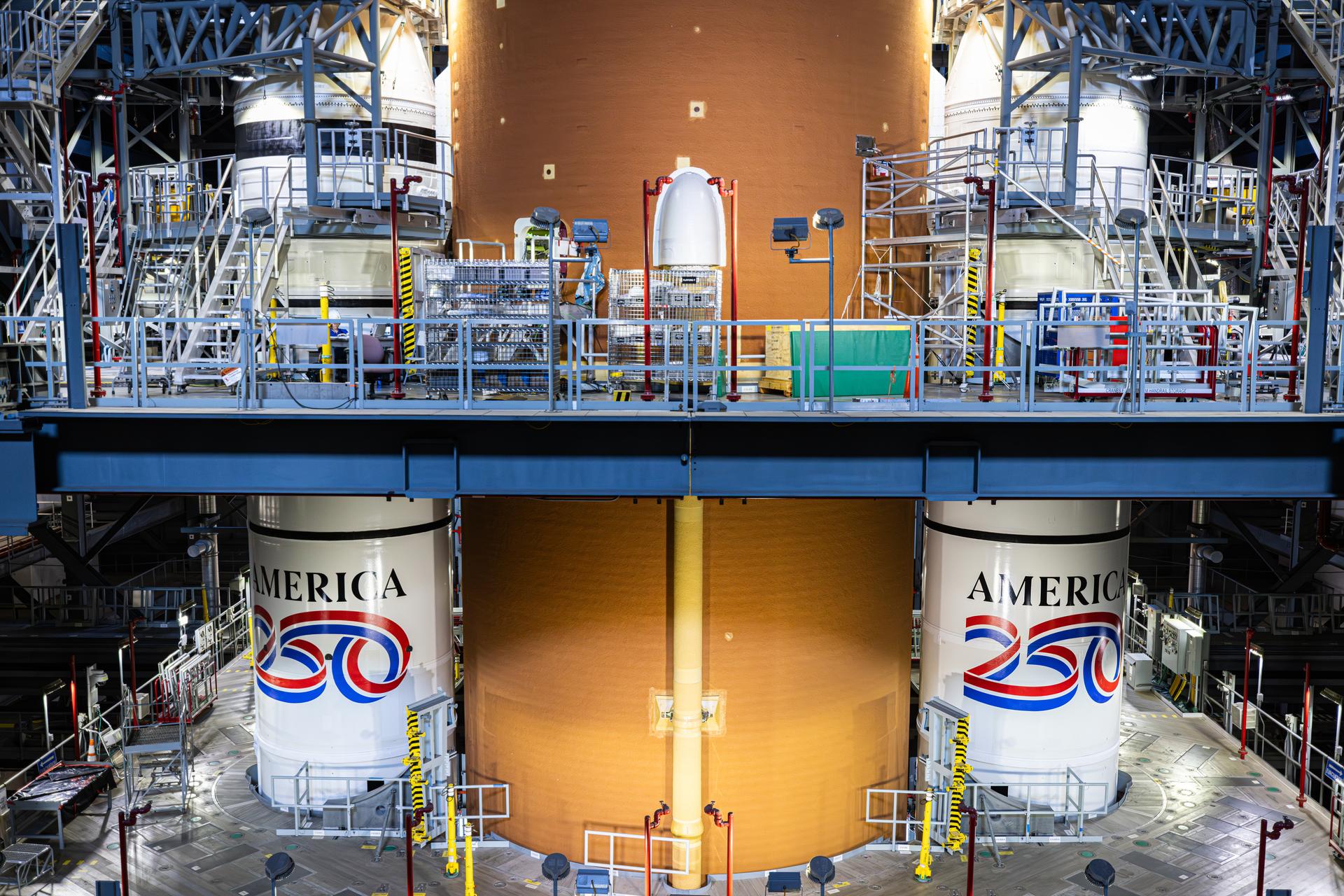
Technicians with NASA’s Exploration Ground Systems Program complete installation of the America 250 emblem on the twin SLS (Space Launch System) solid rocket boosters for the Artemis II mission inside the Vehicle Assembly Building at NASA’s Kennedy Space Center in Florida on Thursday, Dec. 4, 2025. The SLS rocket and the Orion spacecraft will carry NASA astronauts Reid Wiseman, Victor Glover, Christina Koch, and CSA (Canadian Space Agency) astronaut Jeremy Hansen on a 10-day mission around the Moon and back in early 2026 from Launch Complex 39B at NASA Kennedy. America 250 commemorates the 250th anniversary of the signing of the Declaration of Independence with NASA celebrating the “Spirit of Innovation” theme to inspire future generations.
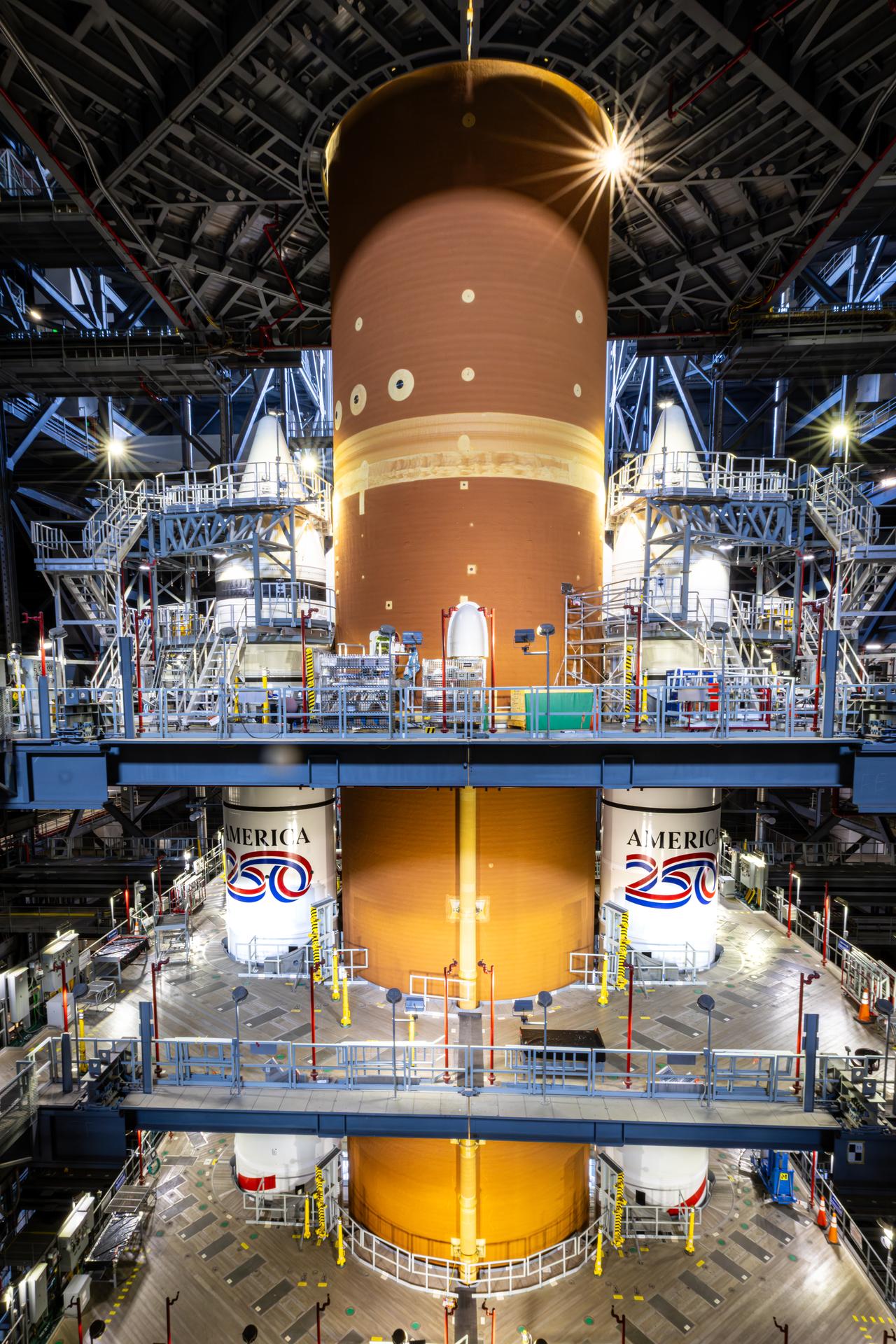
Technicians with NASA’s Exploration Ground Systems Program complete installation of the America 250 emblem on the twin SLS (Space Launch System) solid rocket boosters for the Artemis II mission inside the Vehicle Assembly Building at NASA’s Kennedy Space Center in Florida on Thursday, Dec. 4, 2025. The SLS rocket and the Orion spacecraft will carry NASA astronauts Reid Wiseman, Victor Glover, Christina Koch, and CSA (Canadian Space Agency) astronaut Jeremy Hansen on a 10-day mission around the Moon and back in early 2026 from Launch Complex 39B at NASA Kennedy. America 250 commemorates the 250th anniversary of the signing of the Declaration of Independence with NASA celebrating the “Spirit of Innovation” theme to inspire future generations.
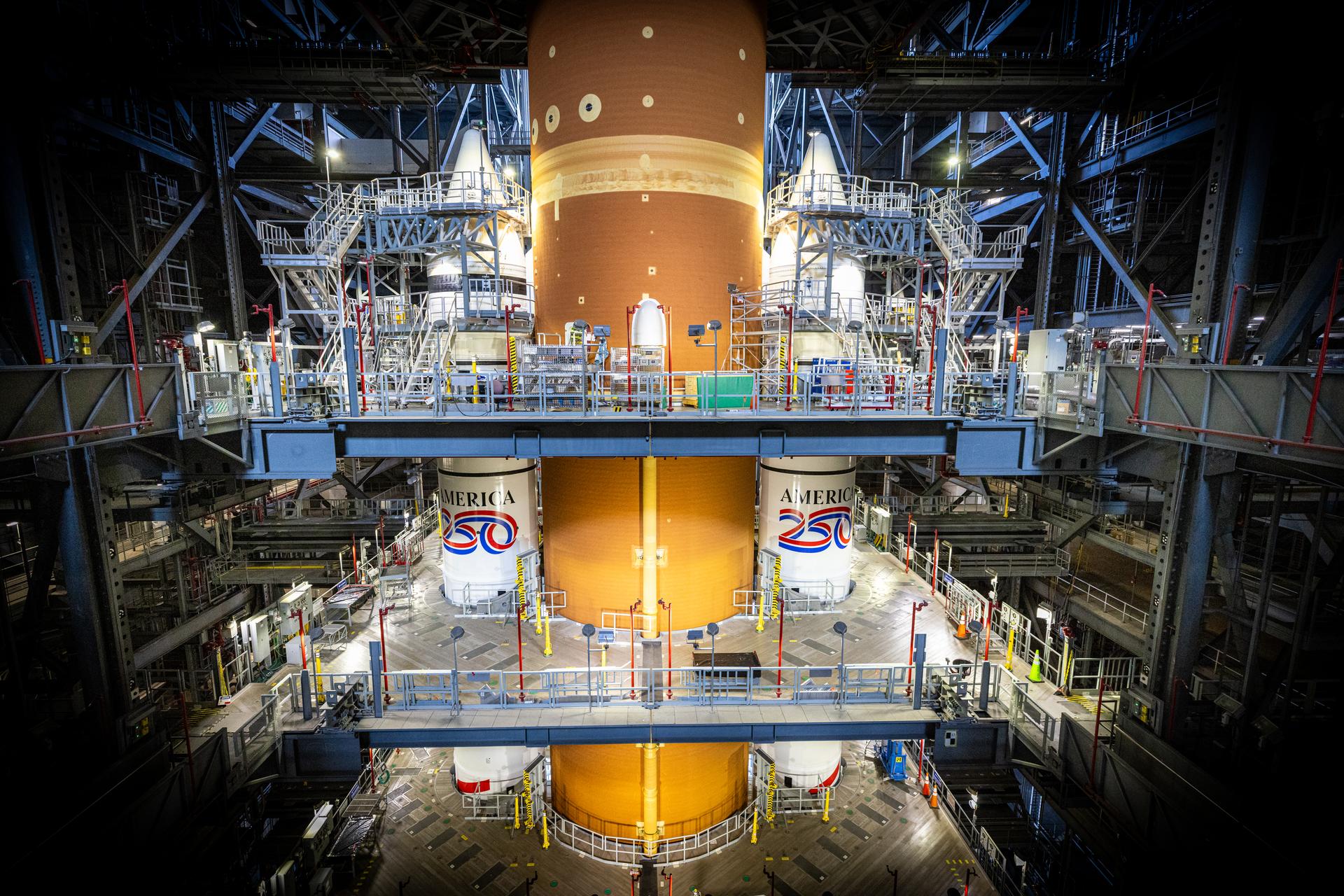
Technicians with NASA’s Exploration Ground Systems Program complete installation of the America 250 emblem on the twin SLS (Space Launch System) solid rocket boosters for the Artemis II mission inside the Vehicle Assembly Building at NASA’s Kennedy Space Center in Florida on Thursday, Dec. 4, 2025. The SLS rocket and the Orion spacecraft will carry NASA astronauts Reid Wiseman, Victor Glover, Christina Koch, and CSA (Canadian Space Agency) astronaut Jeremy Hansen on a 10-day mission around the Moon and back in early 2026 from Launch Complex 39B at NASA Kennedy. America 250 commemorates the 250th anniversary of the signing of the Declaration of Independence with NASA celebrating the “Spirit of Innovation” theme to inspire future generations.
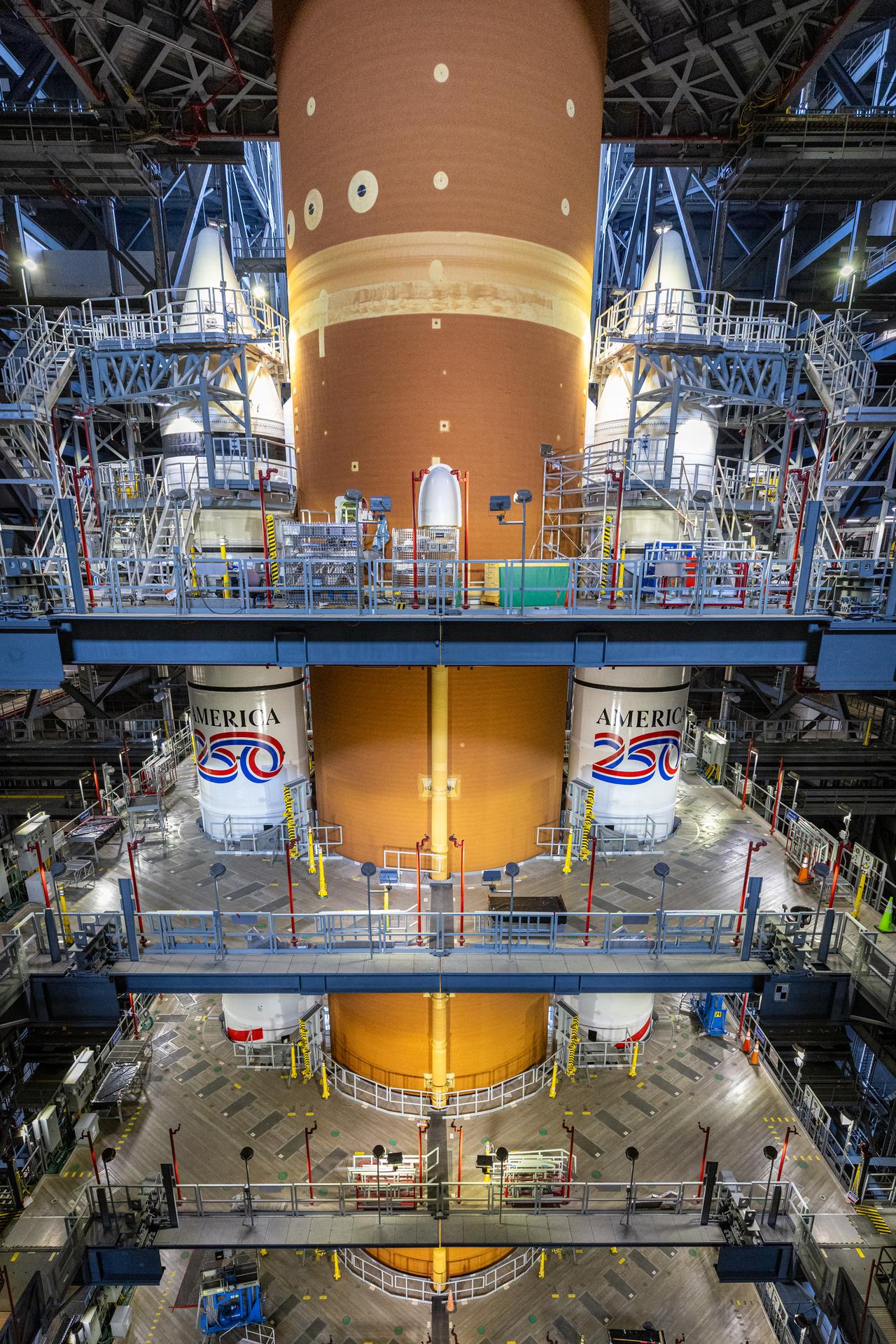
Technicians with NASA’s Exploration Ground Systems Program complete installation of the America 250 emblem on the twin SLS (Space Launch System) solid rocket boosters for the Artemis II mission inside the Vehicle Assembly Building at NASA’s Kennedy Space Center in Florida on Thursday, Dec. 4, 2025. The SLS rocket and the Orion spacecraft will carry NASA astronauts Reid Wiseman, Victor Glover, Christina Koch, and CSA (Canadian Space Agency) astronaut Jeremy Hansen on a 10-day mission around the Moon and back in early 2026 from Launch Complex 39B at NASA Kennedy. America 250 commemorates the 250th anniversary of the signing of the Declaration of Independence with NASA celebrating the “Spirit of Innovation” theme to inspire future generations.
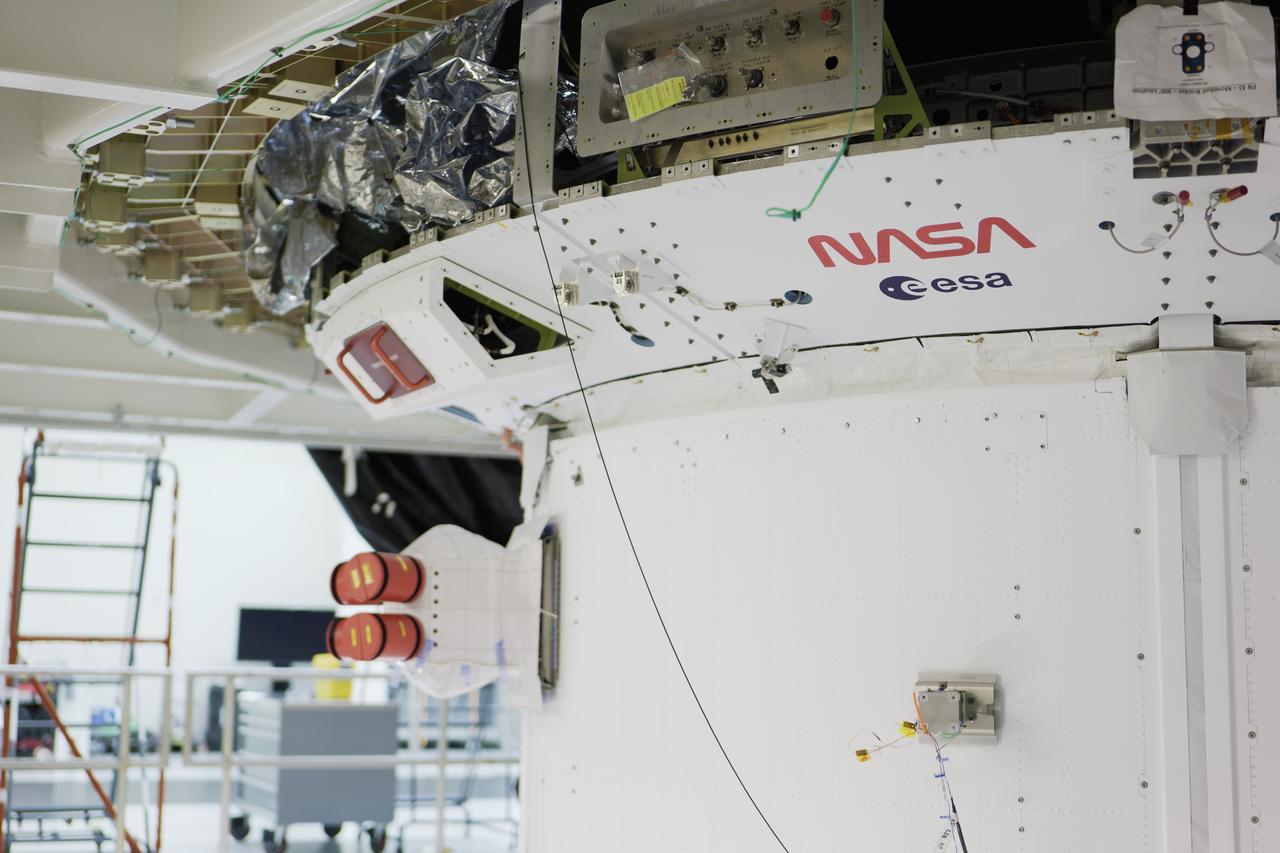
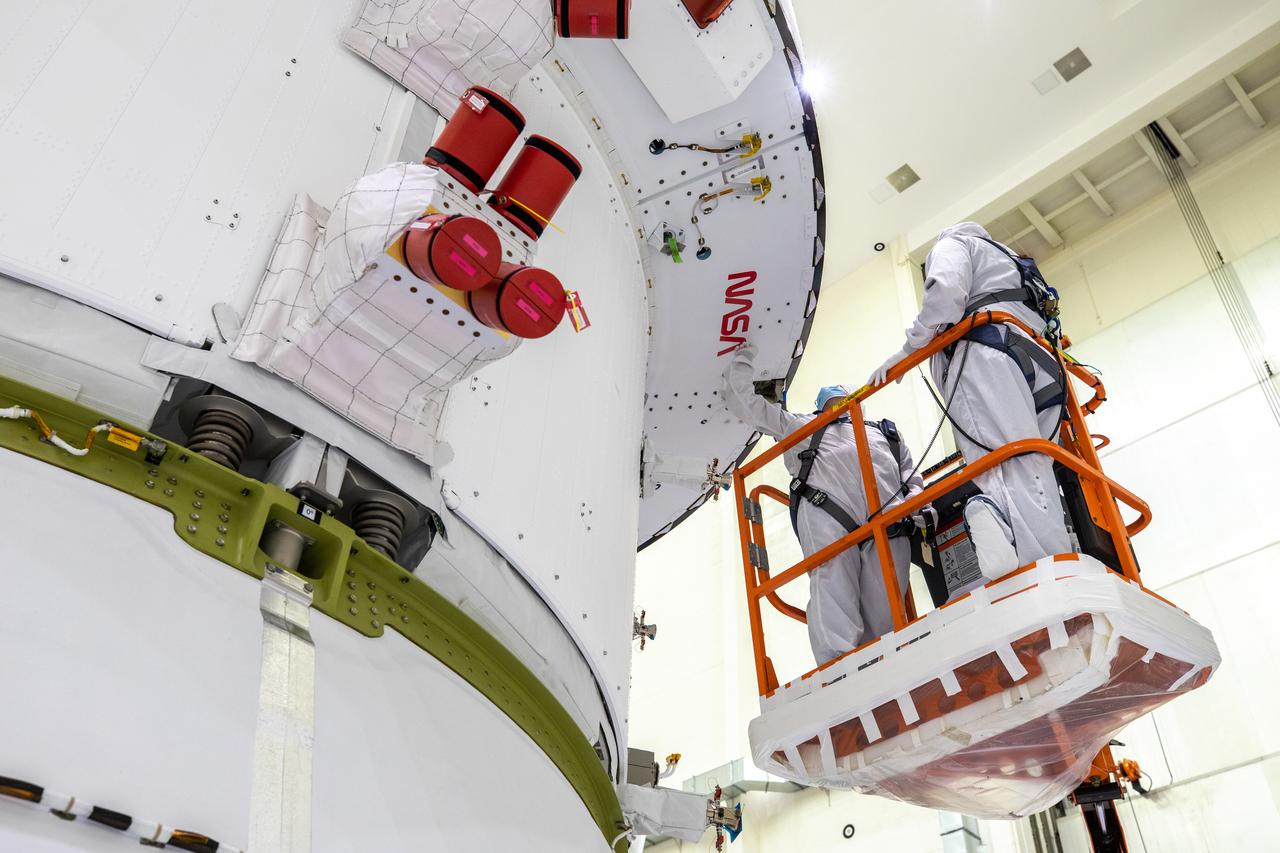
The Orion spacecraft for NASA’s Artemis II mission received its latest makeover. Teams adhered the agency’s iconic “worm” logo and ESA (European Space Agency) insignia on the spacecraft’s crew module adapter on Sunday, Jan. 28, inside the Neil Armstrong Operations and Checkout Building at NASA’s Kennedy Space Center in Florida.
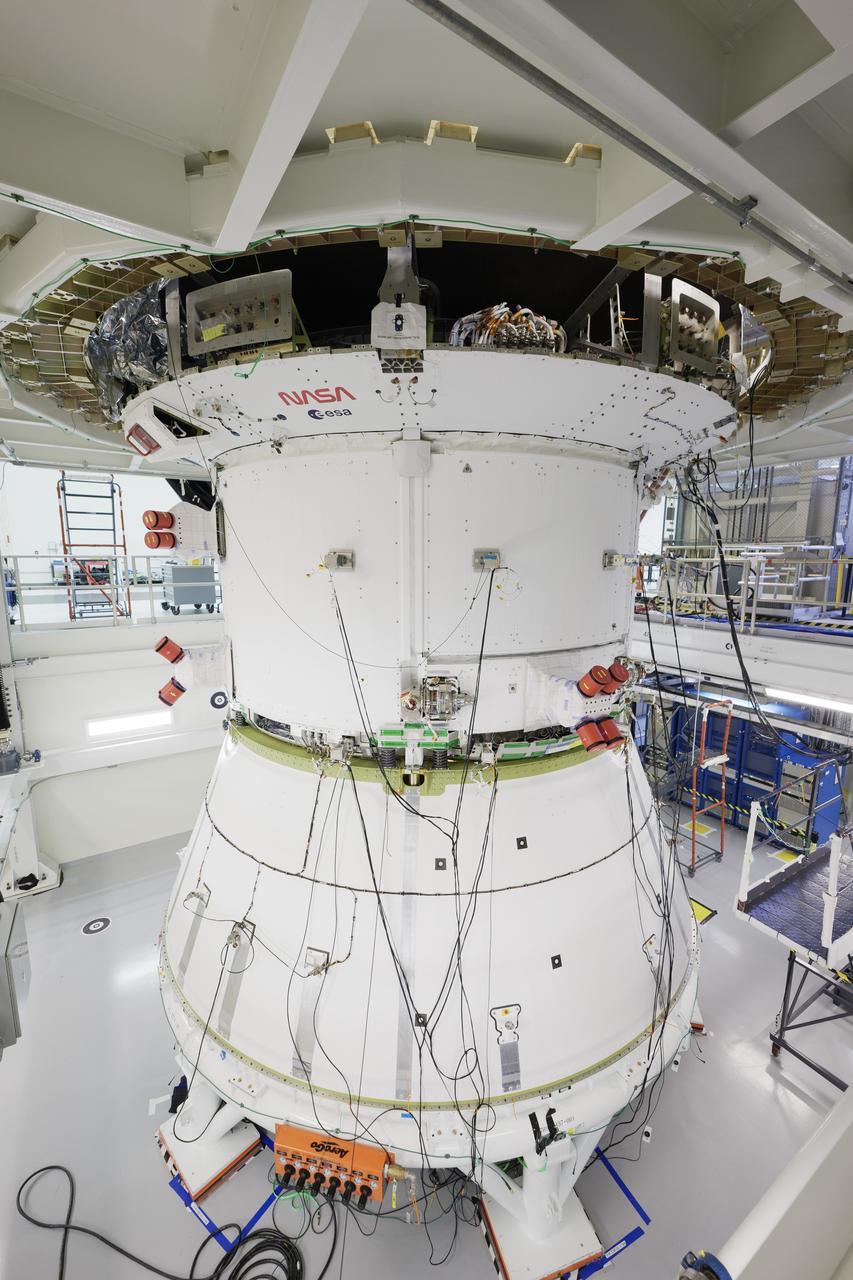
The Orion spacecraft for NASA’s Artemis II mission received its latest makeover. Teams adhered the agency’s iconic “worm” logo and ESA (European Space Agency) insignia on the spacecraft’s crew module adapter on Sunday, Jan. 28, inside the Neil Armstrong Operations and Checkout Building at NASA’s Kennedy Space Center in Florida.
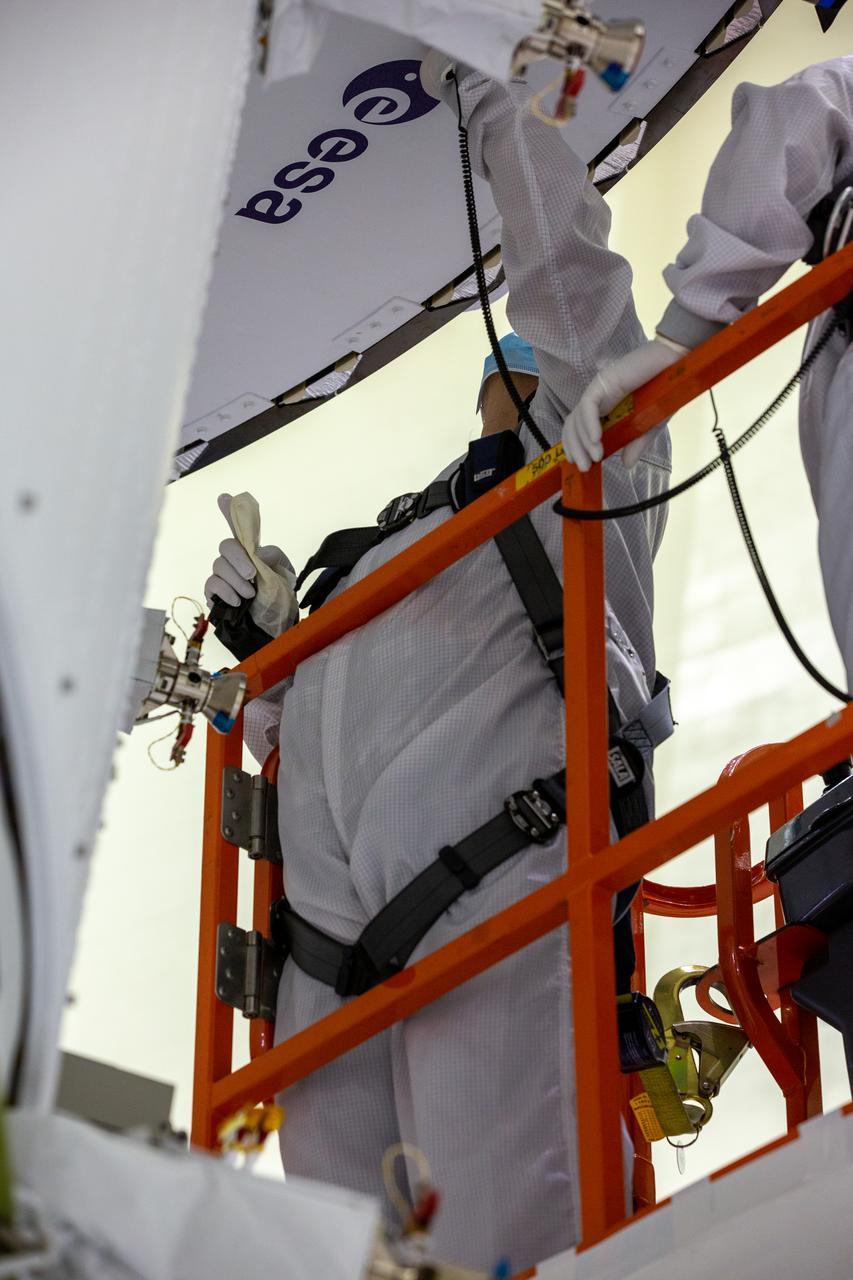
Inside the Neil Armstrong Operations and Checkout Building high bay at Kennedy Space Center, ASRC technician Frank Pelkey works to adhere the European Space Agency (ESA) logo to the aft wall of Orion’s crew module adapter on Sept. 20, 2020, ahead of NASA’s Artemis I mission. The first in a series of increasingly complex missions, Artemis I will test the Orion spacecraft and Space Launch System as an integrated system ahead of crewed flights to the Moon. Under the Artemis program, NASA will land the first woman and the next man on the Moon by 2024.
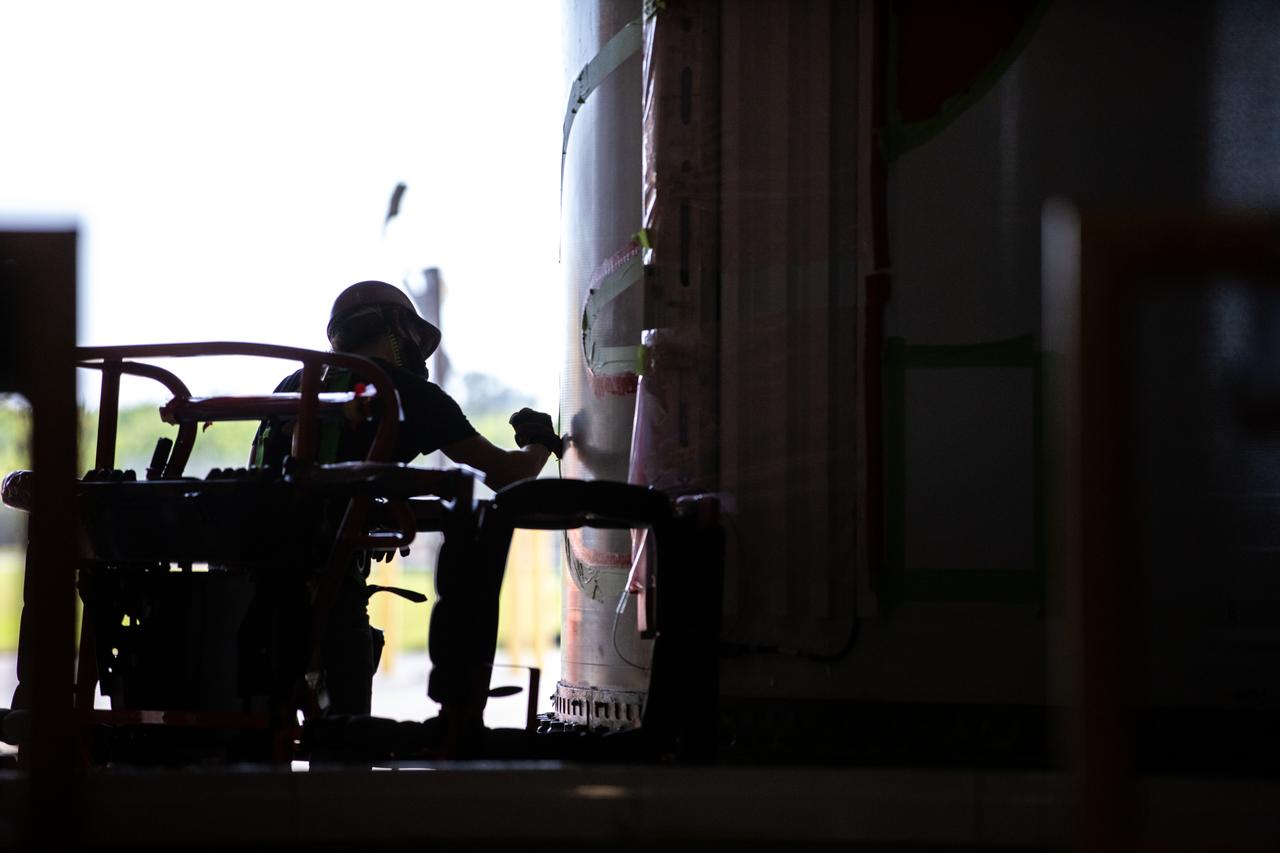
Silhouetted against the bright Florida sunlight outside, a worker with NASA’s Exploration Ground Systems (EGS) applies bright red paint to the agency’s “worm” logo taking shape on the side of an Artemis I solid rocket booster segment inside the Rotation, Processing and Surge Facility (RPSF) at Kennedy Space Center. The EGS team used a laser projector to mask off the logo with tape, then painted the first coat of the iconic design. The booster segments will help propel the Space Launch System (SLS) rocket on Artemis I, a test of the Orion spacecraft and SLS as an integrated system ahead of crewed flights to the Moon. Northrop Grumman, which built the booster segments, is covering the cost of the painting.
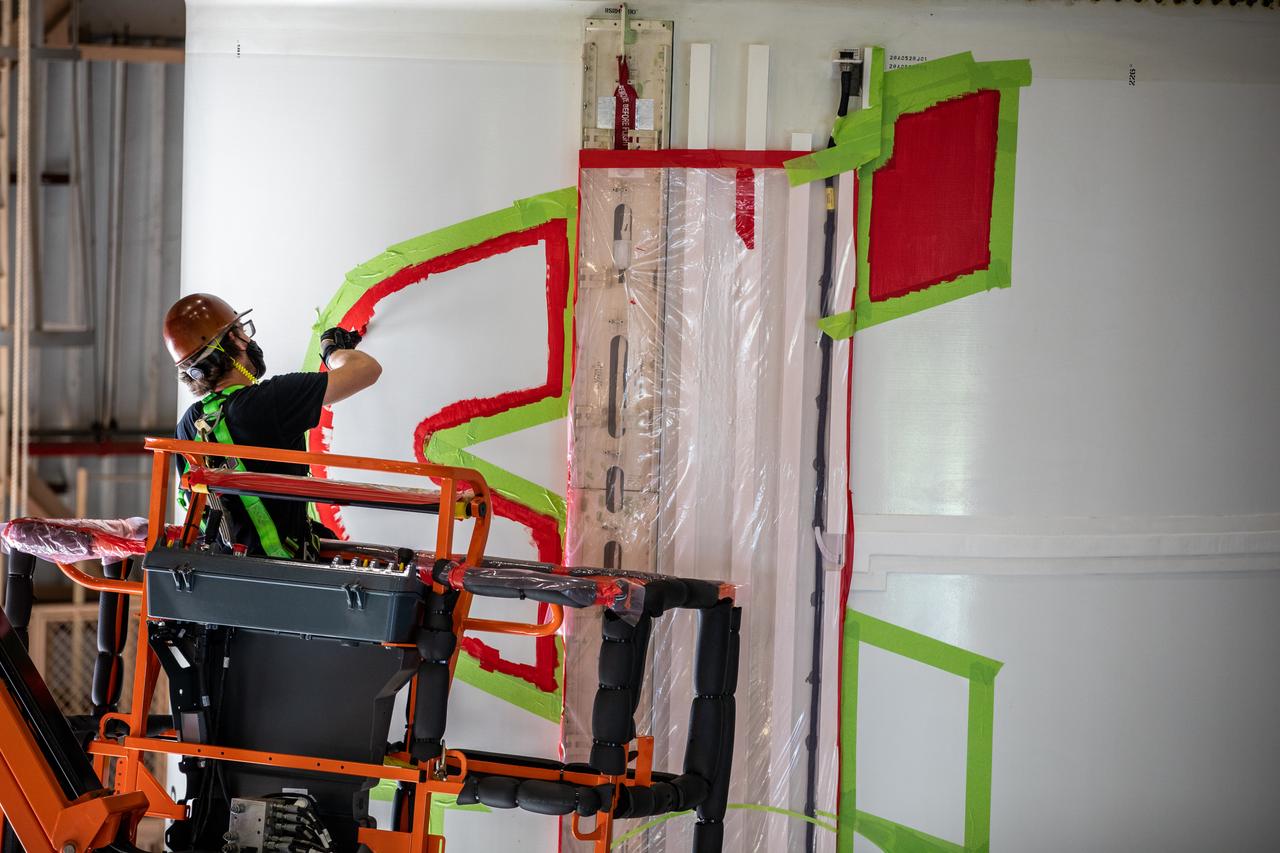
A worker with NASA’s Exploration Ground Systems (EGS) applies bright red paint to the agency’s “worm” logo taking shape on the side of an Artemis I solid rocket booster segment inside the Rotation, Processing and Surge Facility (RPSF) at Kennedy Space Center in Florida. The EGS team used a laser projector to mask off the logo with tape, then painted the first coat of the iconic design. The booster segments will help propel the Space Launch System (SLS) rocket on Artemis I, a test of the Orion spacecraft and SLS as an integrated system ahead of crewed flights to the Moon. Northrop Grumman, which built the booster segments, is covering the cost of the painting.
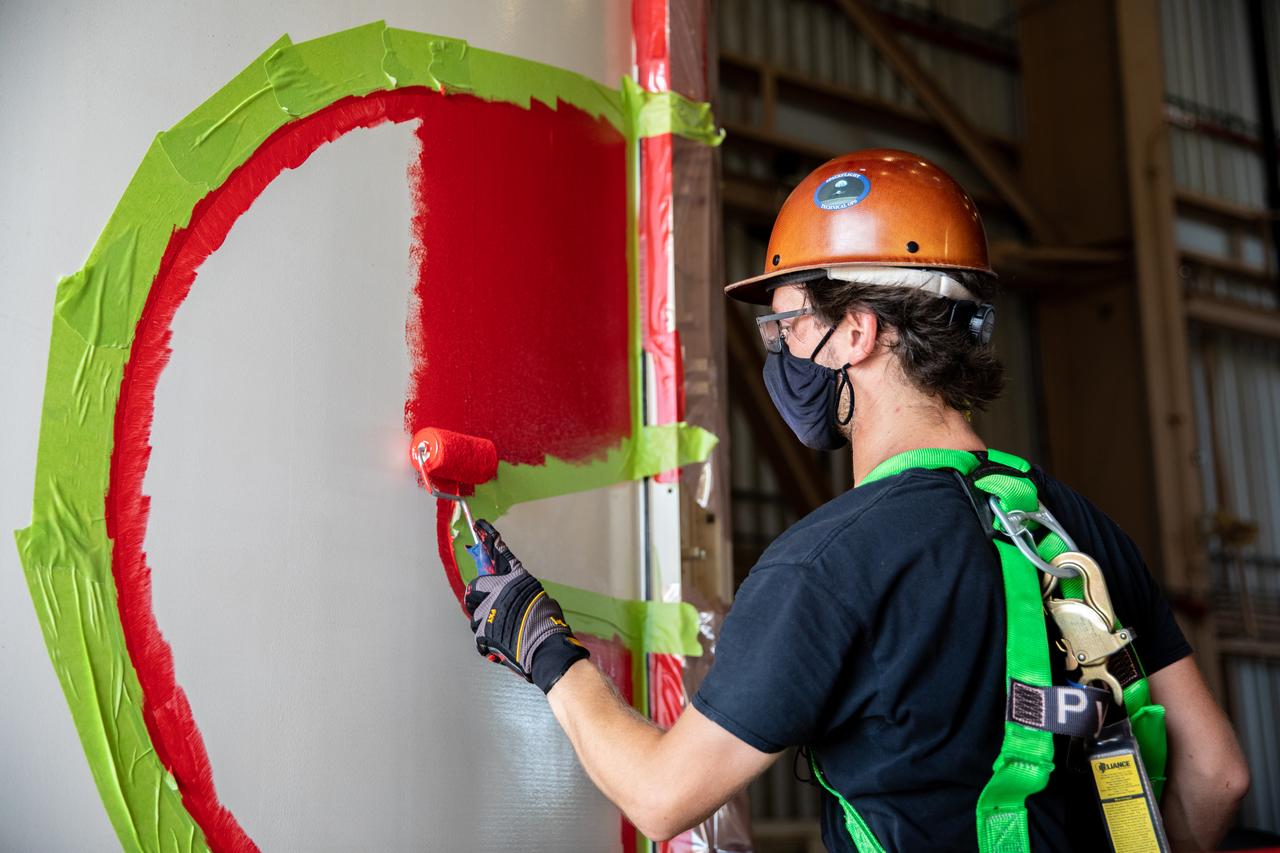
A worker with NASA’s Exploration Ground Systems (EGS) finishes the first coat of the bright red “worm” logo taking shape on the side of an Artemis I solid rocket booster segment inside the Rotation, Processing and Surge Facility (RPSF) at Kennedy Space Center in Florida. The EGS team used a laser projector to mask off the logo with tape, then painted the first coat of the iconic design. The booster segments will help propel the Space Launch System (SLS) rocket on Artemis I, a test of the Orion spacecraft and SLS as an integrated system ahead of crewed flights to the Moon. Northrop Grumman, which built the booster segments, is covering the cost of the painting.
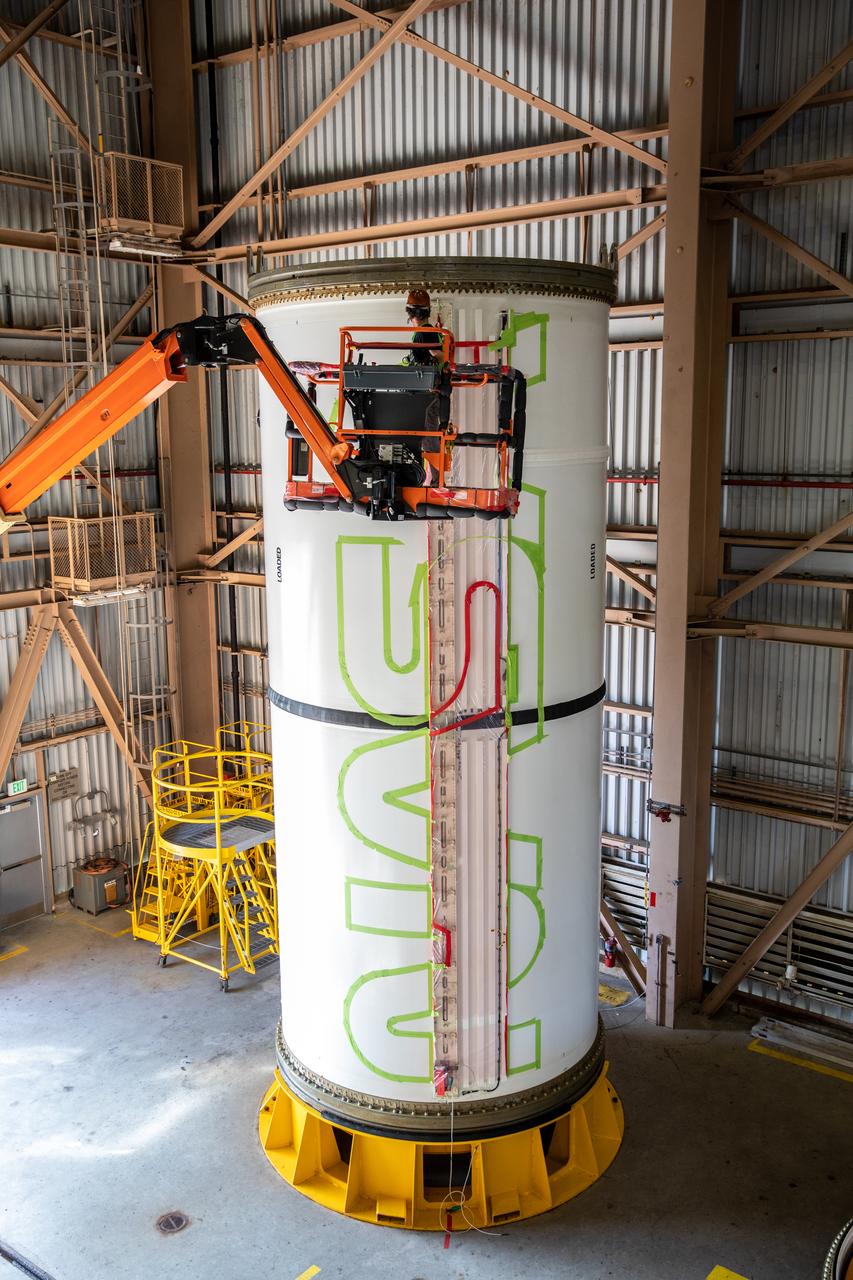
A worker with NASA’s Exploration Ground Systems (EGS) applies bright red paint to the agency’s “worm” logo taking shape on the side of an Artemis I solid rocket booster segment inside the Rotation, Processing and Surge Facility (RPSF) at Kennedy Space Center in Florida. The EGS team used a laser projector to mask off the logo with tape, then painted the first coat of the iconic design. The booster segments will help propel the Space Launch System (SLS) rocket on Artemis I, a test of the Orion spacecraft and SLS as an integrated system ahead of crewed flights to the Moon. Northrop Grumman, which built the booster segments, is covering the cost of the painting.
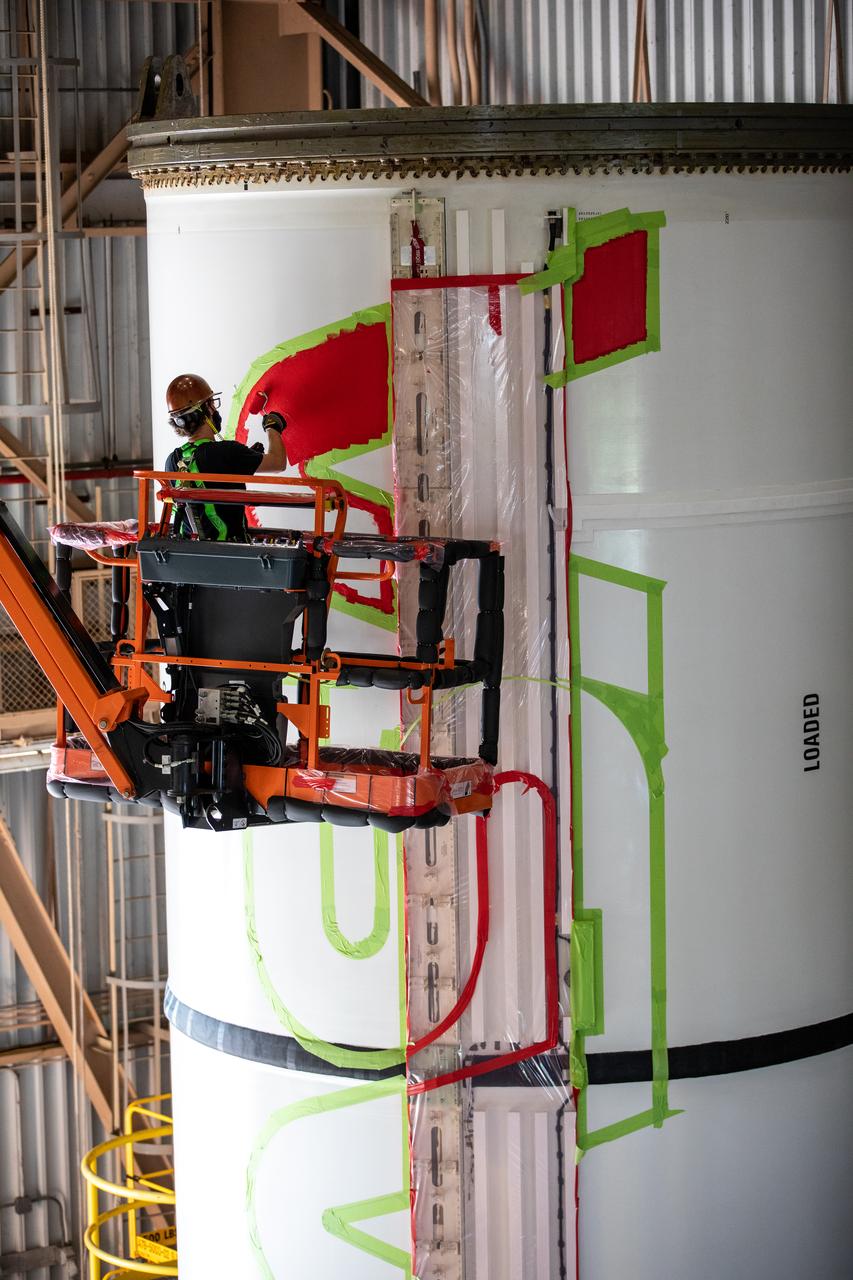
A worker with NASA’s Exploration Ground Systems (EGS) applies bright red paint to the agency’s “worm” logo taking shape on the side of an Artemis I solid rocket booster segment inside the Rotation, Processing and Surge Facility (RPSF) at Kennedy Space Center in Florida. The EGS team used a laser projector to mask off the logo with tape, then painted the first coat of the iconic design. The booster segments will help propel the Space Launch System (SLS) rocket on Artemis I, a test of the Orion spacecraft and SLS as an integrated system ahead of crewed flights to the Moon. Northrop Grumman, which built the booster segments, is covering the cost of the painting.

A worker with NASA’s Exploration Ground Systems (EGS) applies bright red paint to the agency’s “worm” logo taking shape on the side of an Artemis I solid rocket booster segment inside the Rotation, Processing and Surge Facility (RPSF) at Kennedy Space Center in Florida. The EGS team used a laser projector to mask off the logo with tape, then painted the first coat of the iconic design. The booster segments will help propel the Space Launch System (SLS) rocket on Artemis I, a test of the Orion spacecraft and SLS as an integrated system ahead of crewed flights to the Moon. Northrop Grumman, which built the booster segments, is covering the cost of the painting.
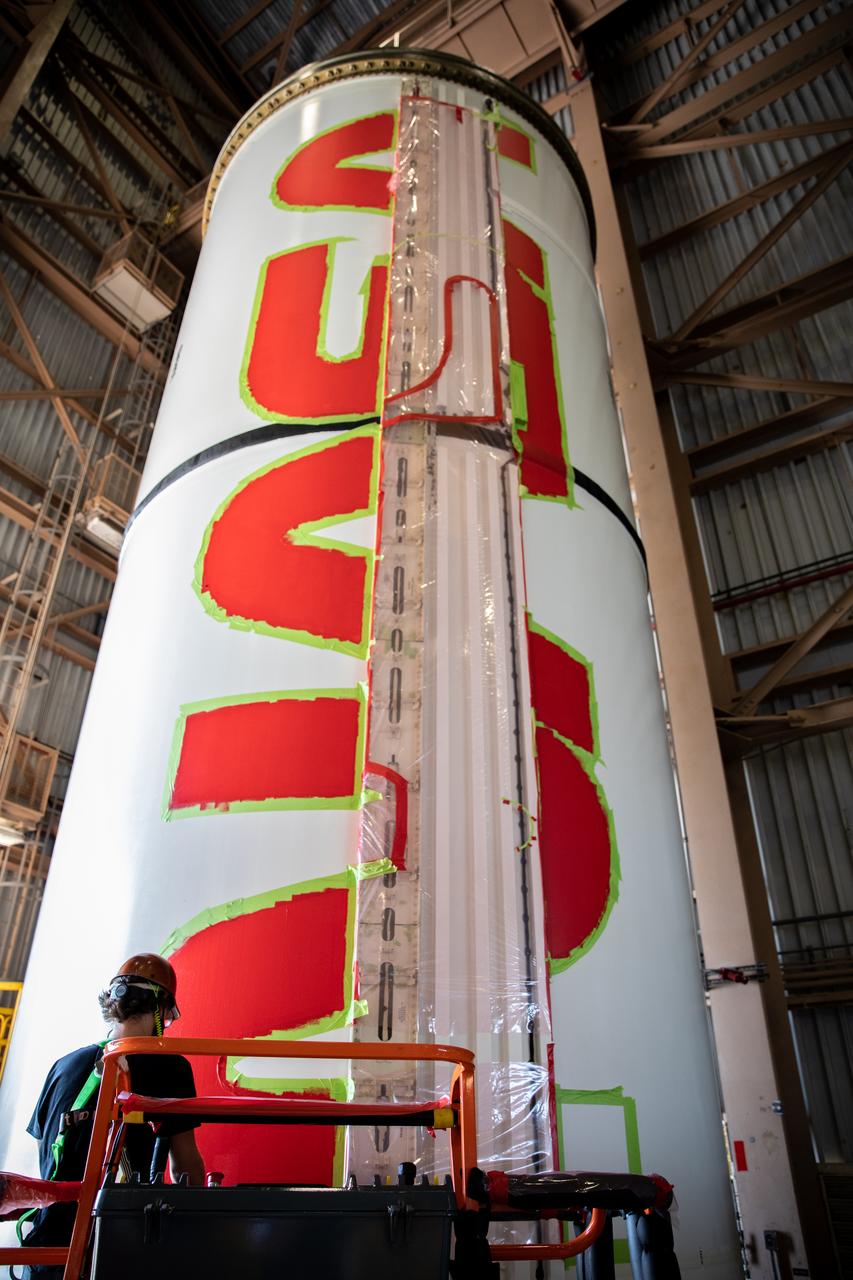
A worker with NASA’s Exploration Ground Systems (EGS) finishes the first coat of the bright red “worm” logo taking shape on the side of an Artemis I solid rocket booster segment inside the Rotation, Processing and Surge Facility (RPSF) at Kennedy Space Center in Florida. The EGS team used a laser projector to mask off the logo with tape, then painted the first coat of the iconic design. The booster segments will help propel the Space Launch System (SLS) rocket on Artemis I, a test of the Orion spacecraft and SLS as an integrated system ahead of crewed flights to the Moon. Northrop Grumman, which built the booster segments, is covering the cost of the painting.
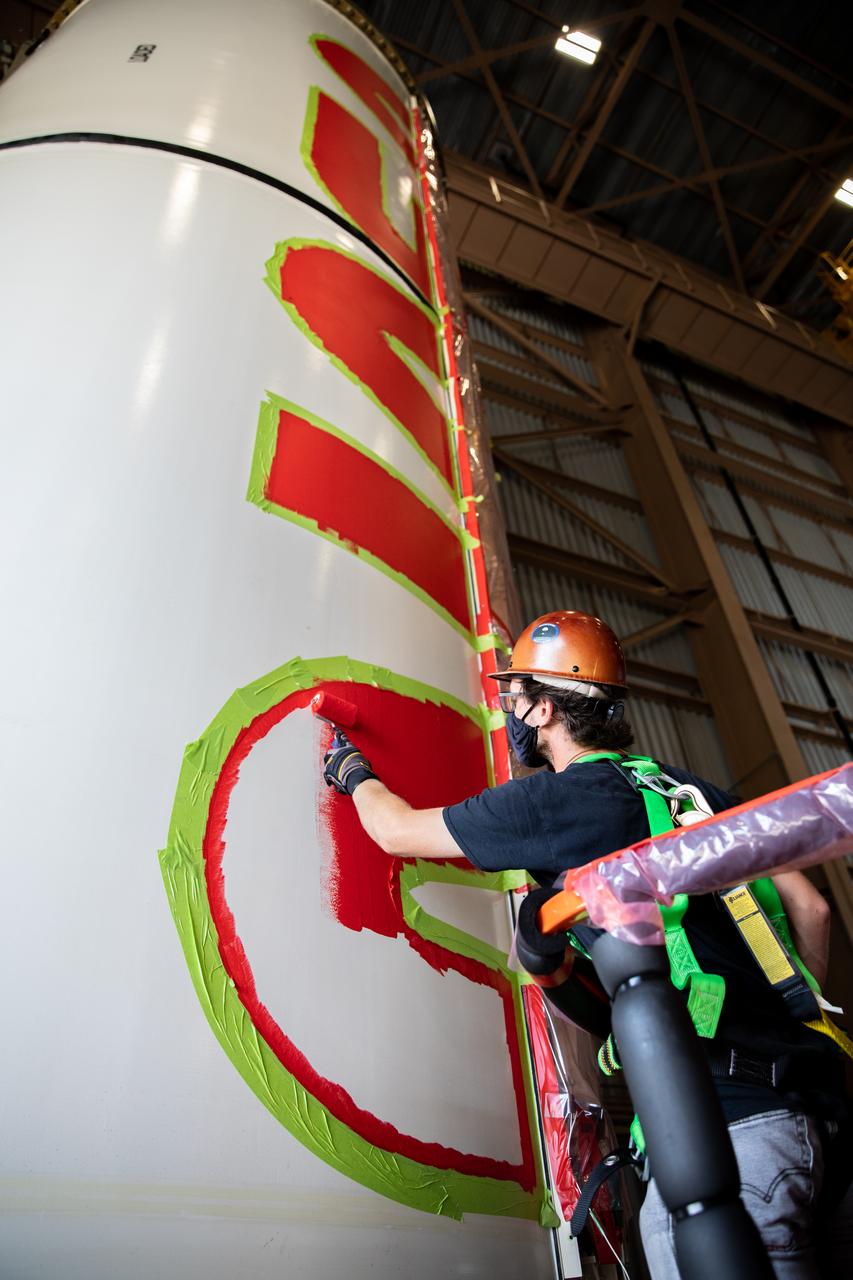
A worker with NASA’s Exploration Ground Systems (EGS) finishes the first coat of the bright red “worm” logo taking shape on the side of an Artemis I solid rocket booster segment inside the Rotation, Processing and Surge Facility (RPSF) at Kennedy Space Center in Florida. The EGS team used a laser projector to mask off the logo with tape, then painted the first coat of the iconic design. The booster segments will help propel the Space Launch System (SLS) rocket on Artemis I, a test of the Orion spacecraft and SLS as an integrated system ahead of crewed flights to the Moon. Northrop Grumman, which built the booster segments, is covering the cost of the painting.
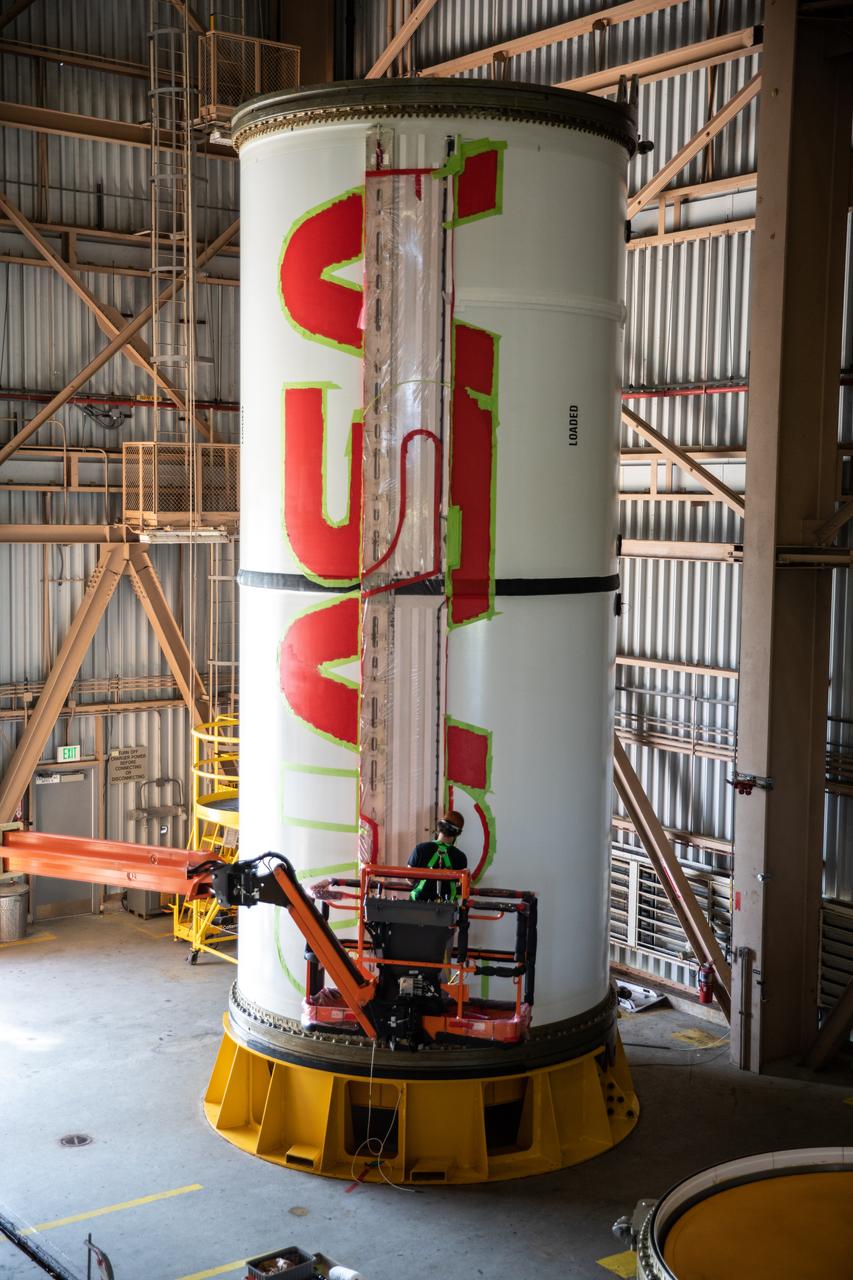
A worker with NASA’s Exploration Ground Systems (EGS) finishes the first coat of the bright red “worm” logo taking shape on the side of an Artemis I solid rocket booster segment inside the Rotation, Processing and Surge Facility (RPSF) at Kennedy Space Center in Florida. The EGS team used a laser projector to mask off the logo with tape, then painted the first coat of the iconic design. The booster segments will help propel the Space Launch System (SLS) rocket on Artemis I, a test of the Orion spacecraft and SLS as an integrated system ahead of crewed flights to the Moon. Northrop Grumman, which built the booster segments, is covering the cost of the painting.
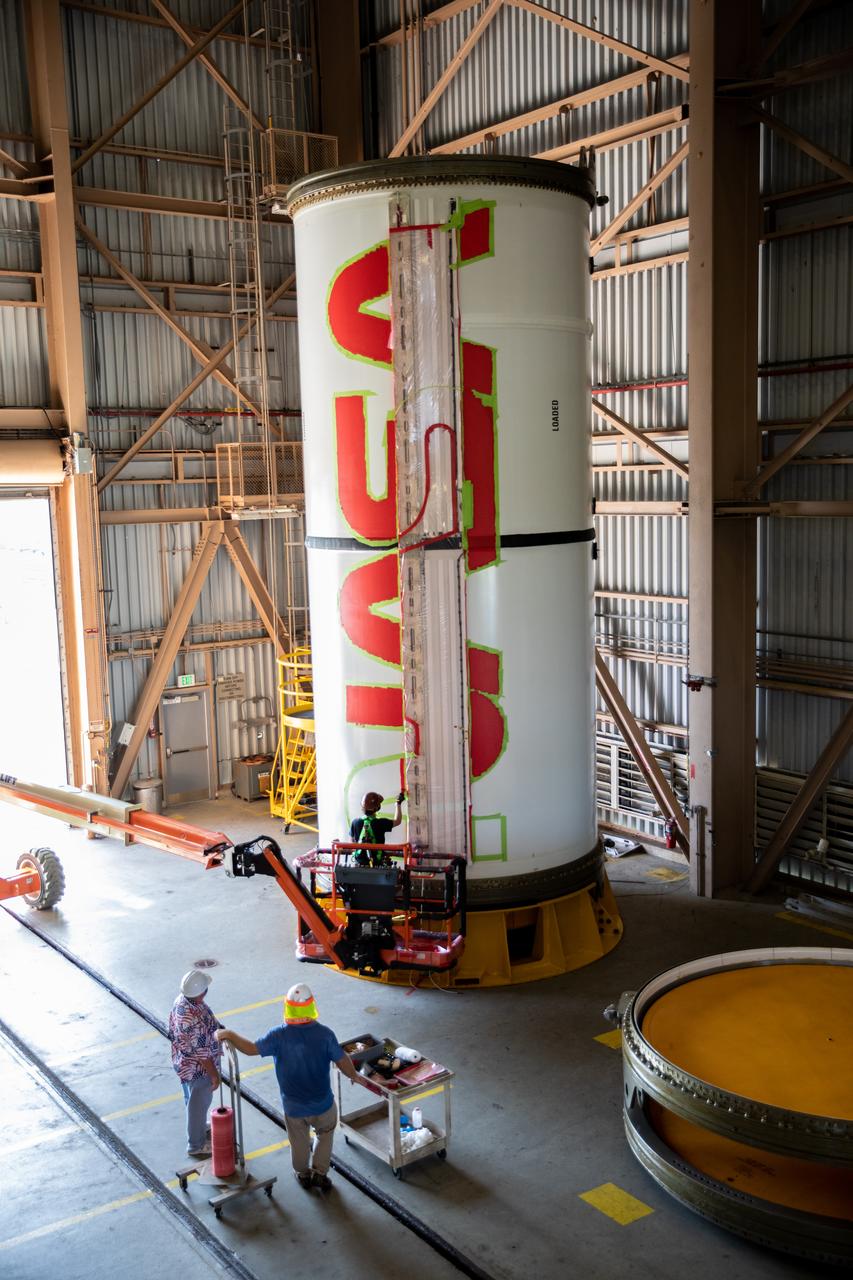
Workers with NASA’s Exploration Ground Systems (EGS) finishes the first coat of the bright red “worm” logo taking shape on the side of an Artemis I solid rocket booster segment inside the Rotation, Processing and Surge Facility (RPSF) at Kennedy Space Center in Florida. The EGS team used a laser projector to mask off the logo with tape, then painted the first coat of the iconic design. The booster segments will help propel the Space Launch System (SLS) rocket on Artemis I, a test of the Orion spacecraft and SLS as an integrated system ahead of crewed flights to the Moon. Northrop Grumman, which built the booster segments, is covering the cost of the painting.
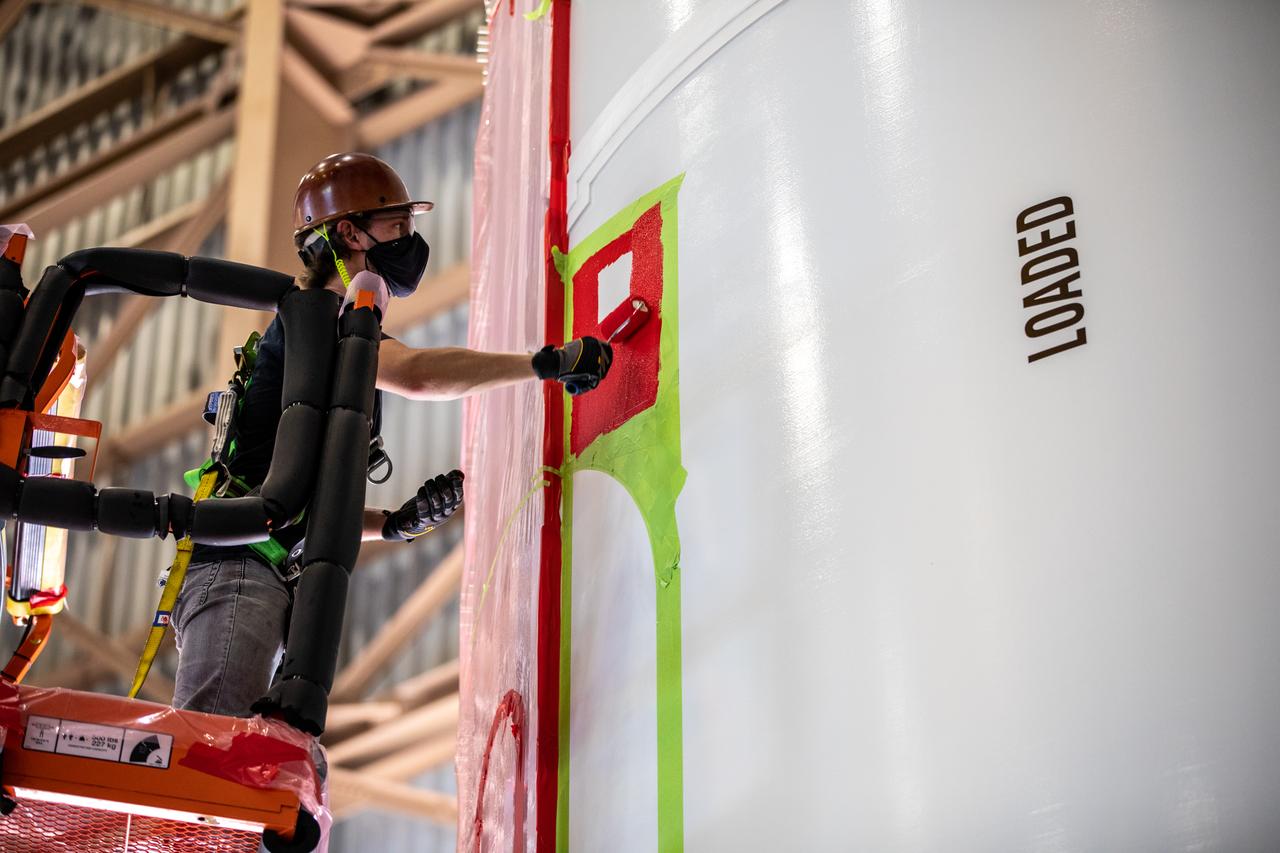
A worker with NASA’s Exploration Ground Systems (EGS) applies bright red paint to the agency’s “worm” logo taking shape on the side of an Artemis I solid rocket booster segment inside the Rotation, Processing and Surge Facility (RPSF) at Kennedy Space Center in Florida. The EGS team used a laser projector to mask off the logo with tape, then painted the first coat of the iconic design. The booster segments will help propel the Space Launch System (SLS) rocket on Artemis I, a test of the Orion spacecraft and SLS as an integrated system ahead of crewed flights to the Moon. Northrop Grumman, which built the booster segments, is covering the cost of the painting.
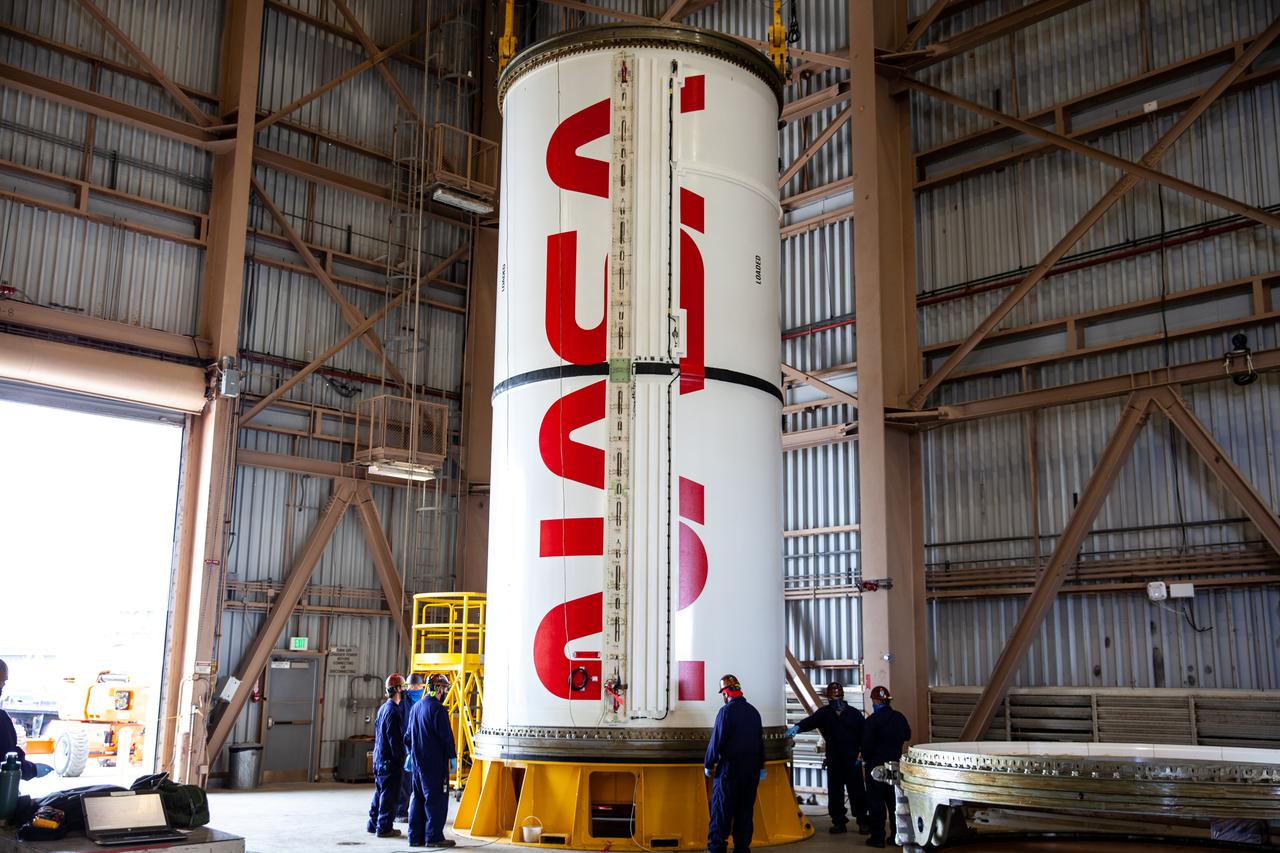
Inside the Rotation, Processing and Surge Facility at NASA’s Kennedy Space Center in Florida, Exploration Ground Systems and Jacobs TOSC workers completed painting of NASA’s iconic “worm” logo on the Artemis I Space Launch System twin solid rocket boosters on Sept. 23, 2020. Originally created by the firm of Danne & Blackburn, the iconic “worm” logo’s bold, sleek design was officially introduced in 1975 and was incorporated into many of the agency’s next-generation programs. It was retired in 1992, but has made a comeback in 2020 as the agency ushers in a new, modern era of human spaceflight. The first in a series of increasingly complex missions, Artemis I will test the Orion spacecraft and Space Launch System as an integrated system ahead of crewed flights to the Moon. Under the Artemis program, NASA will land the first woman and the next man on the Moon by 2024.
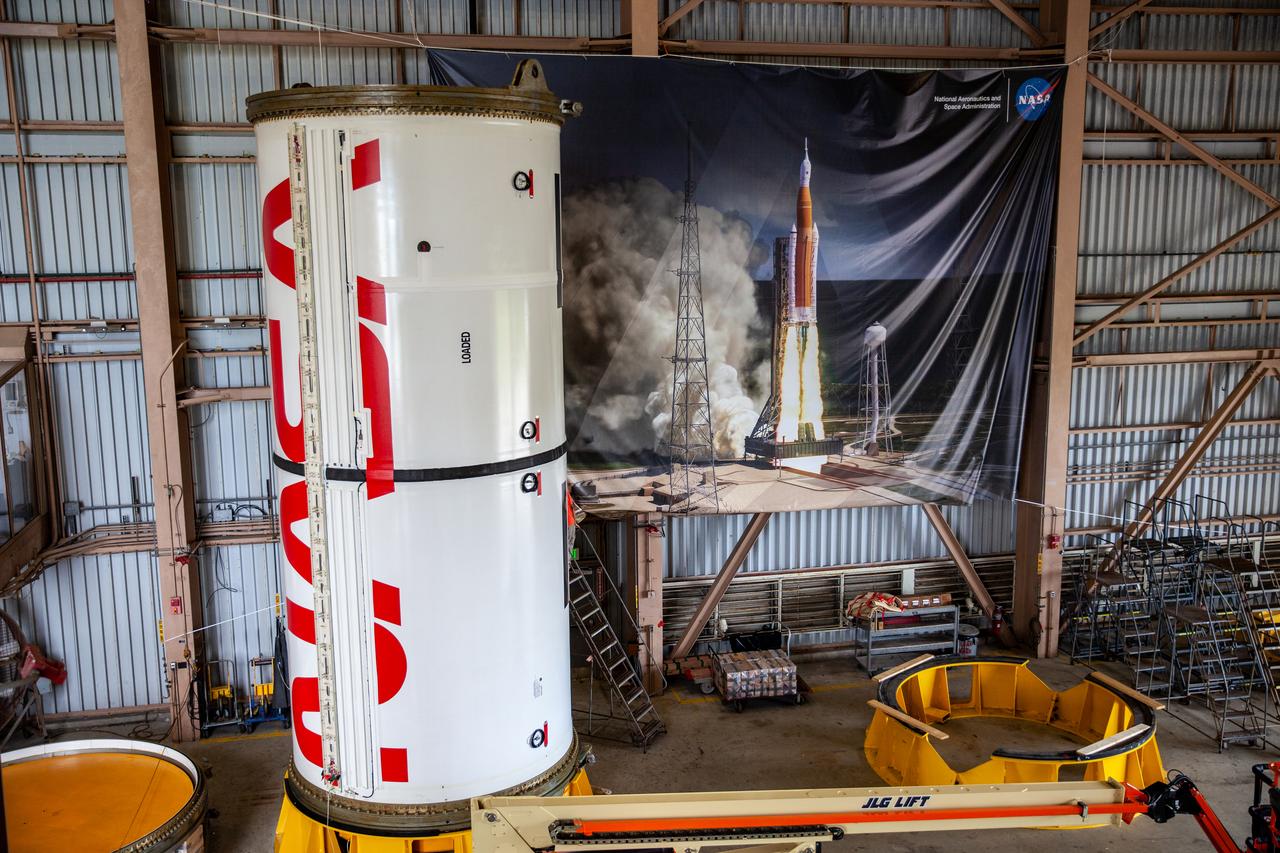
Inside the Rotation, Processing and Surge Facility at NASA’s Kennedy Space Center in Florida, Exploration Ground Systems and Jacobs TOSC workers completed painting of NASA’s iconic “worm” logo on the Artemis I Space Launch System twin solid rocket boosters on Sept. 23, 2020. Originally created by the firm of Danne & Blackburn, the iconic “worm” logo’s bold, sleek design was officially introduced in 1975 and was incorporated into many of the agency’s next-generation programs. It was retired in 1992, but has made a comeback in 2020 as the agency ushers in a new, modern era of human spaceflight. The first in a series of increasingly complex missions, Artemis I will test the Orion spacecraft and Space Launch System as an integrated system ahead of crewed flights to the Moon. Under the Artemis program, NASA will land the first woman and the next man on the Moon by 2024.
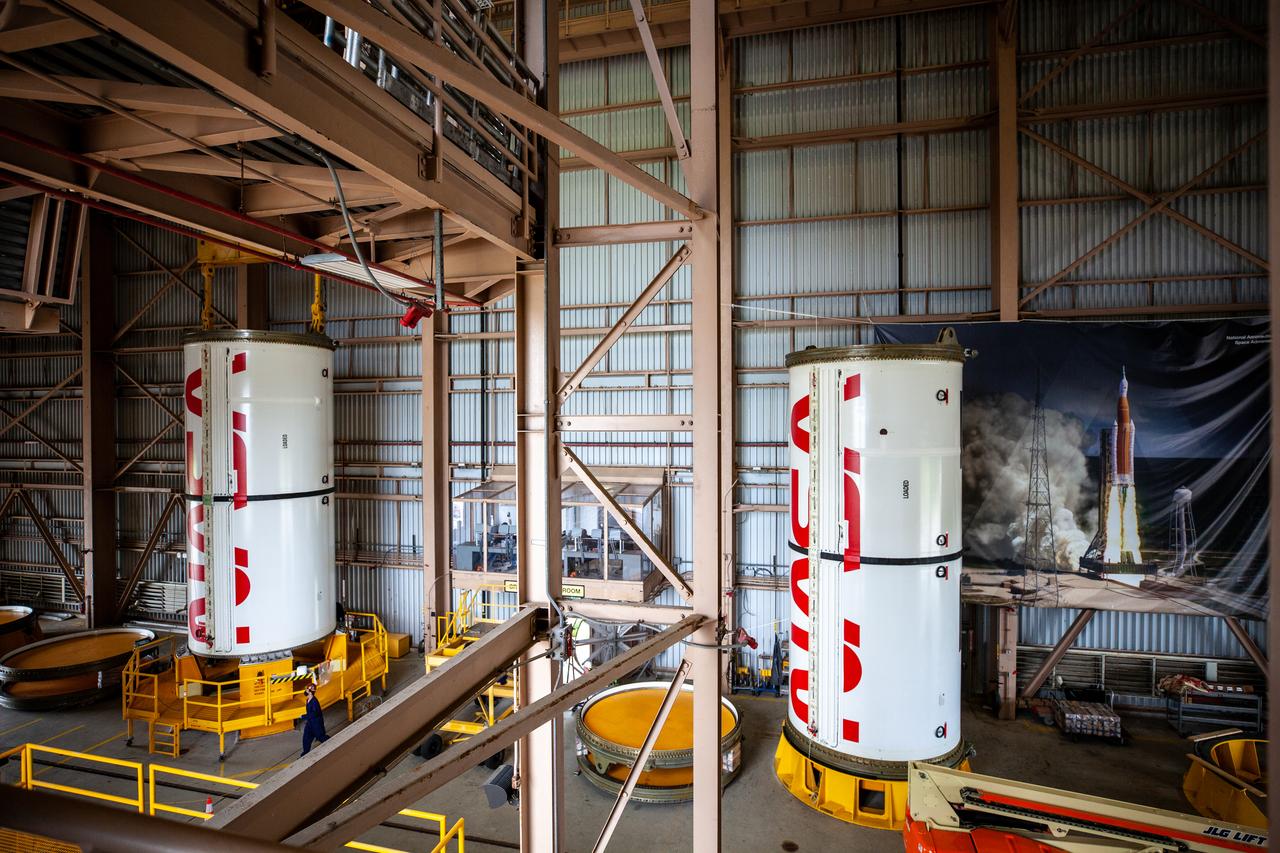
Inside the Rotation, Processing and Surge Facility at NASA’s Kennedy Space Center in Florida, Exploration Ground Systems and Jacobs TOSC workers completed painting of NASA’s iconic “worm” logo on the Artemis I Space Launch System twin solid rocket boosters on Sept. 23, 2020. Originally created by the firm of Danne & Blackburn, the iconic “worm” logo’s bold, sleek design was officially introduced in 1975 and was incorporated into many of the agency’s next-generation programs. It was retired in 1992, but has made a comeback in 2020 as the agency ushers in a new, modern era of human spaceflight. The first in a series of increasingly complex missions, Artemis I will test the Orion spacecraft and Space Launch System as an integrated system ahead of crewed flights to the Moon. Under the Artemis program, NASA will land the first woman and the next man on the Moon by 2024.
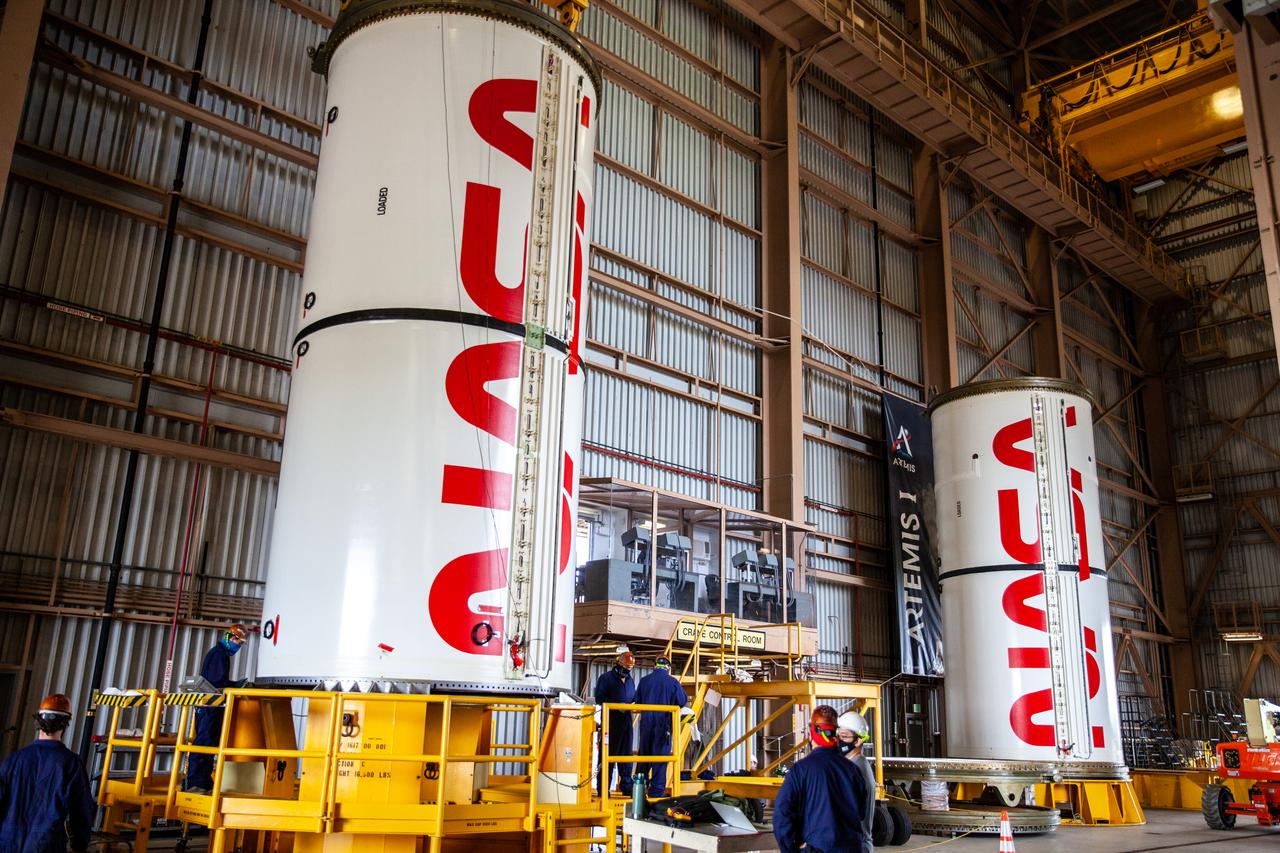
Inside the Rotation, Processing and Surge Facility at NASA’s Kennedy Space Center in Florida, Exploration Ground Systems and Jacobs TOSC workers completed painting of NASA’s iconic “worm” logo on the Artemis I Space Launch System twin solid rocket boosters on Sept. 23, 2020. Originally created by the firm of Danne & Blackburn, the iconic “worm” logo’s bold, sleek design was officially introduced in 1975 and was incorporated into many of the agency’s next-generation programs. It was retired in 1992, but has made a comeback in 2020 as the agency ushers in a new, modern era of human spaceflight. The first in a series of increasingly complex missions, Artemis I will test the Orion spacecraft and Space Launch System as an integrated system ahead of crewed flights to the Moon. Under the Artemis program, NASA will land the first woman and the next man on the Moon by 2024.
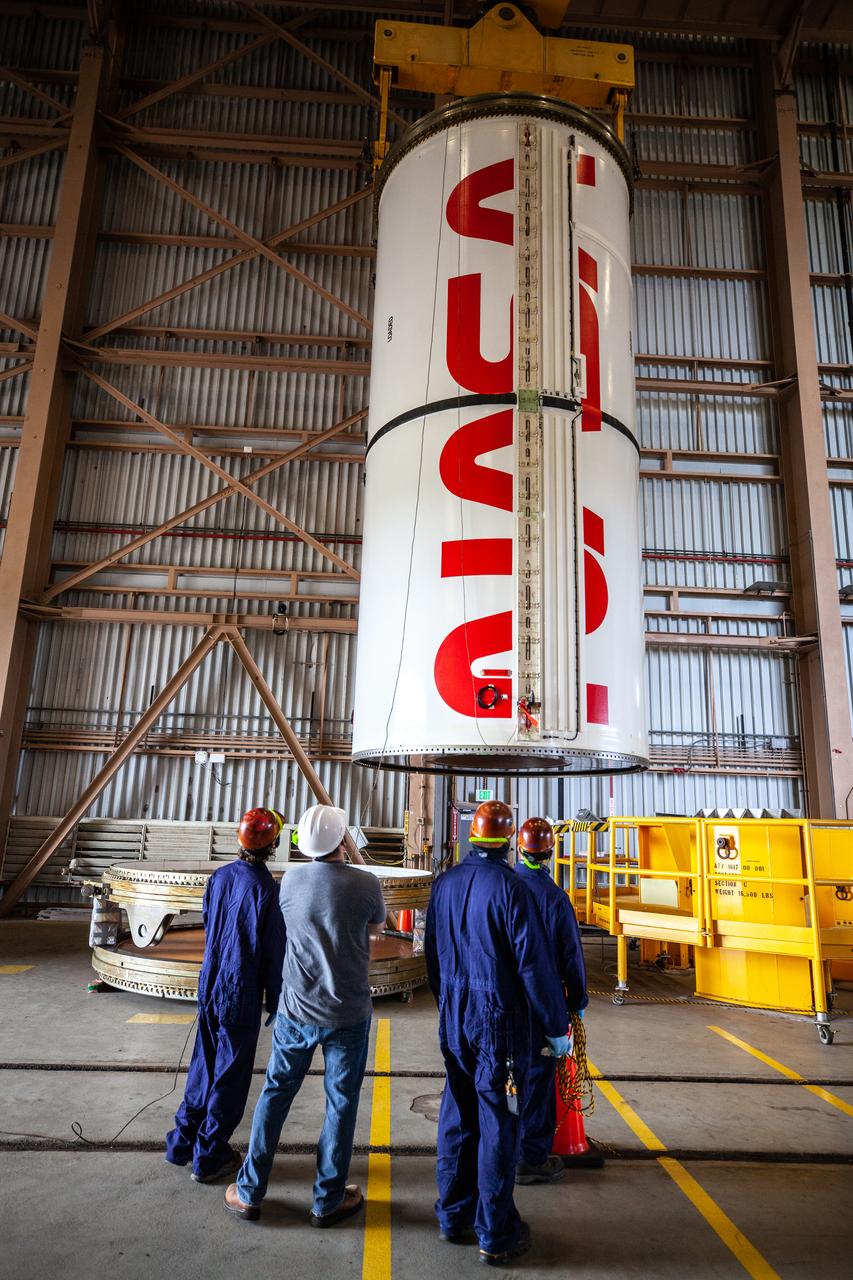
Inside the Rotation, Processing and Surge Facility at NASA’s Kennedy Space Center in Florida, Exploration Ground Systems and Jacobs TOSC workers completed painting of NASA’s iconic “worm” logo on the Artemis I Space Launch System twin solid rocket boosters on Sept. 23, 2020. Originally created by the firm of Danne & Blackburn, the iconic “worm” logo’s bold, sleek design was officially introduced in 1975 and was incorporated into many of the agency’s next-generation programs. It was retired in 1992, but has made a comeback in 2020 as the agency ushers in a new, modern era of human spaceflight. The first in a series of increasingly complex missions, Artemis I will test the Orion spacecraft and Space Launch System as an integrated system ahead of crewed flights to the Moon. Under the Artemis program, NASA will land the first woman and the next man on the Moon by 2024.
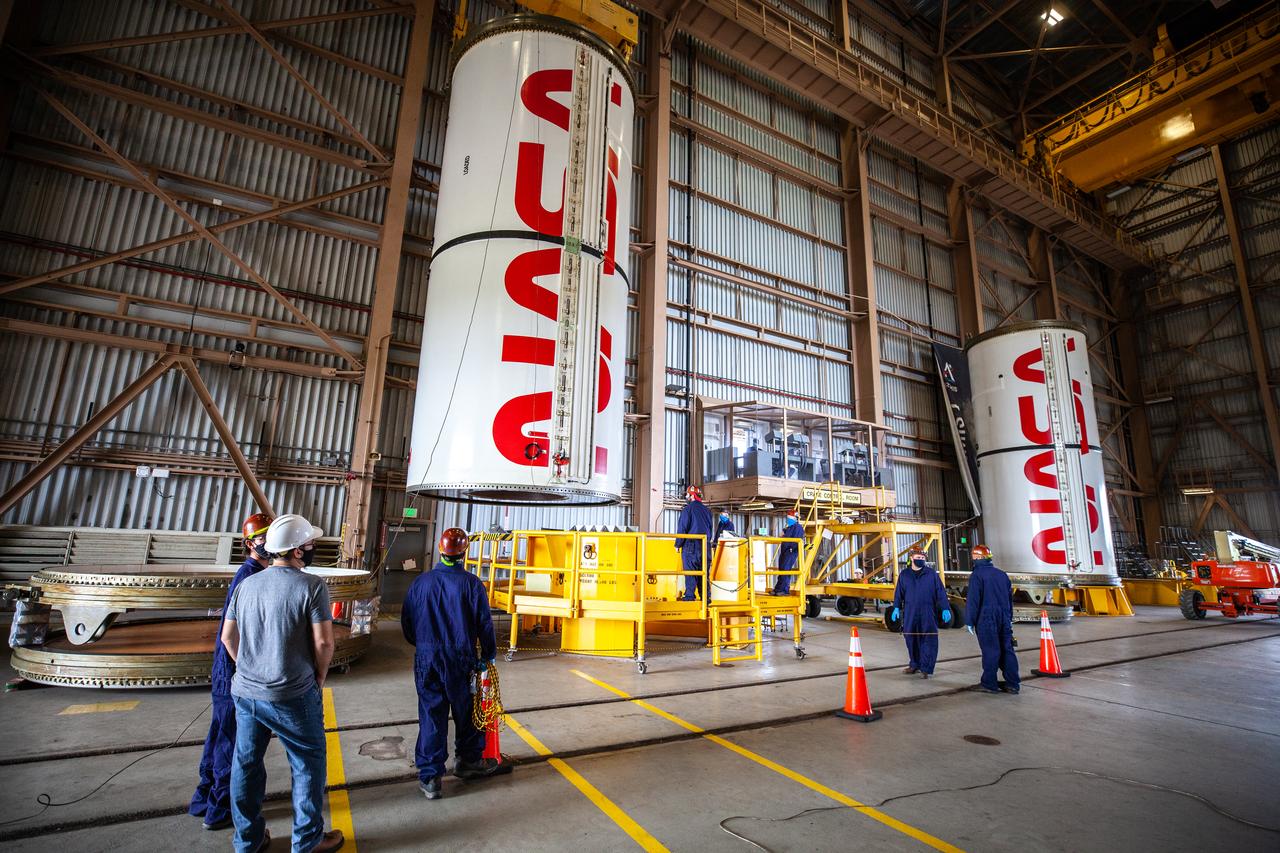
Inside the Rotation, Processing and Surge Facility at NASA’s Kennedy Space Center in Florida, Exploration Ground Systems and Jacobs TOSC workers completed painting of NASA’s iconic “worm” logo on the Artemis I Space Launch System twin solid rocket boosters on Sept. 23, 2020. Originally created by the firm of Danne & Blackburn, the iconic “worm” logo’s bold, sleek design was officially introduced in 1975 and was incorporated into many of the agency’s next-generation programs. It was retired in 1992, but has made a comeback in 2020 as the agency ushers in a new, modern era of human spaceflight. The first in a series of increasingly complex missions, Artemis I will test the Orion spacecraft and Space Launch System as an integrated system ahead of crewed flights to the Moon. Under the Artemis program, NASA will land the first woman and the next man on the Moon by 2024.
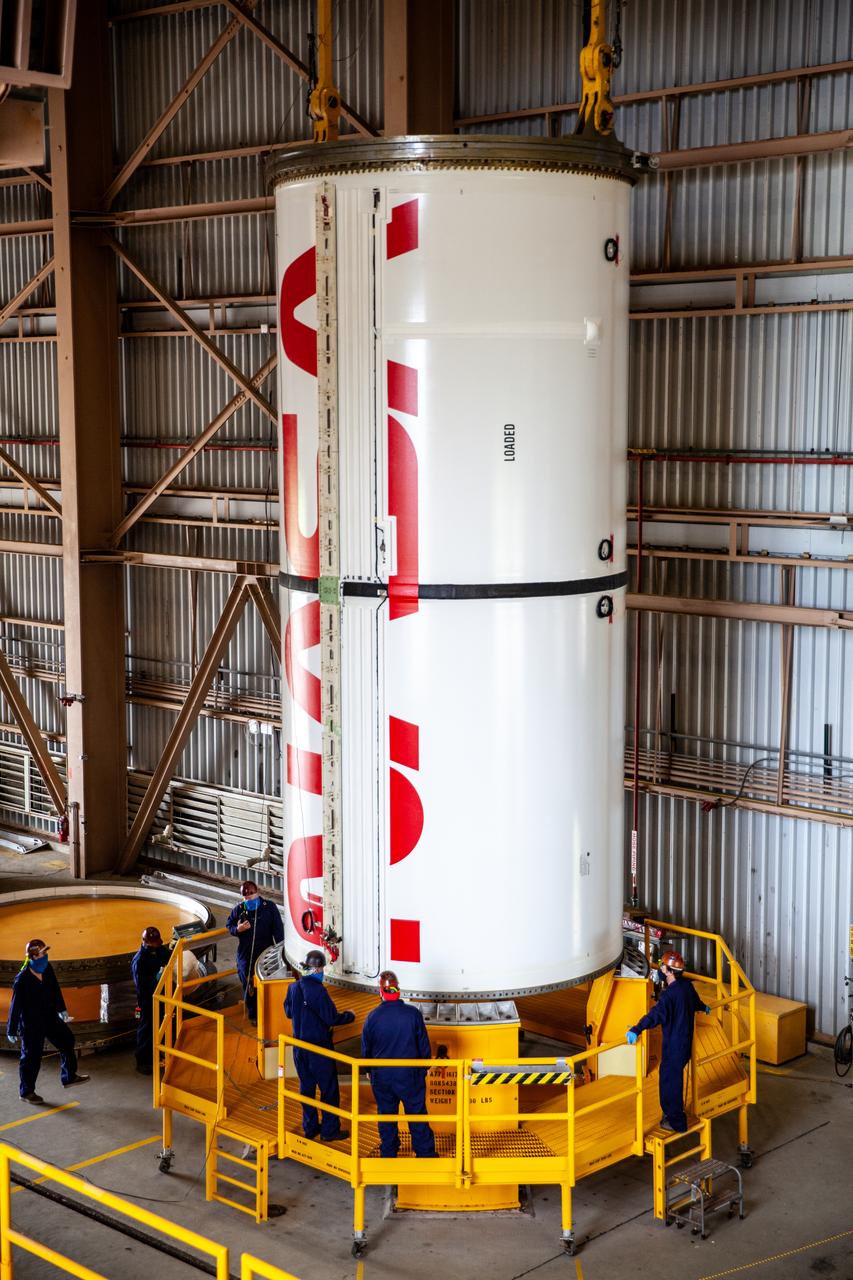
Inside the Rotation, Processing and Surge Facility at NASA’s Kennedy Space Center in Florida, Exploration Ground Systems and Jacobs TOSC workers completed painting of NASA’s iconic “worm” logo on the Artemis I Space Launch System twin solid rocket boosters on Sept. 23, 2020. Originally created by the firm of Danne & Blackburn, the iconic “worm” logo’s bold, sleek design was officially introduced in 1975 and was incorporated into many of the agency’s next-generation programs. It was retired in 1992, but has made a comeback in 2020 as the agency ushers in a new, modern era of human spaceflight. The first in a series of increasingly complex missions, Artemis I will test the Orion spacecraft and Space Launch System as an integrated system ahead of crewed flights to the Moon. Under the Artemis program, NASA will land the first woman and the next man on the Moon by 2024.
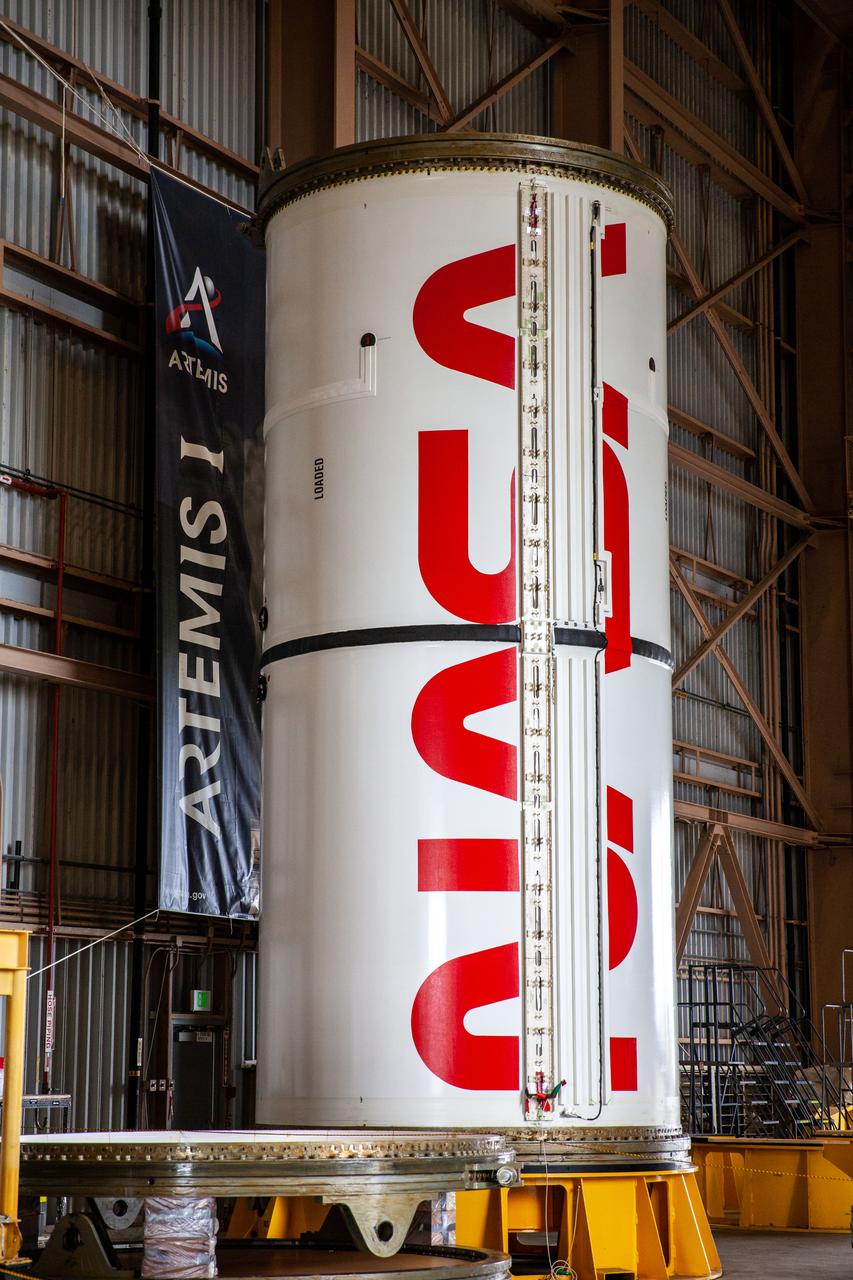
Inside the Rotation, Processing and Surge Facility at NASA’s Kennedy Space Center in Florida, Exploration Ground Systems and Jacobs TOSC workers completed painting of NASA’s iconic “worm” logo on the Artemis I Space Launch System twin solid rocket boosters on Sept. 23, 2020. Originally created by the firm of Danne & Blackburn, the iconic “worm” logo’s bold, sleek design was officially introduced in 1975 and was incorporated into many of the agency’s next-generation programs. It was retired in 1992, but has made a comeback in 2020 as the agency ushers in a new, modern era of human spaceflight. The first in a series of increasingly complex missions, Artemis I will test the Orion spacecraft and Space Launch System as an integrated system ahead of crewed flights to the Moon. Under the Artemis program, NASA will land the first woman and the next man on the Moon by 2024.
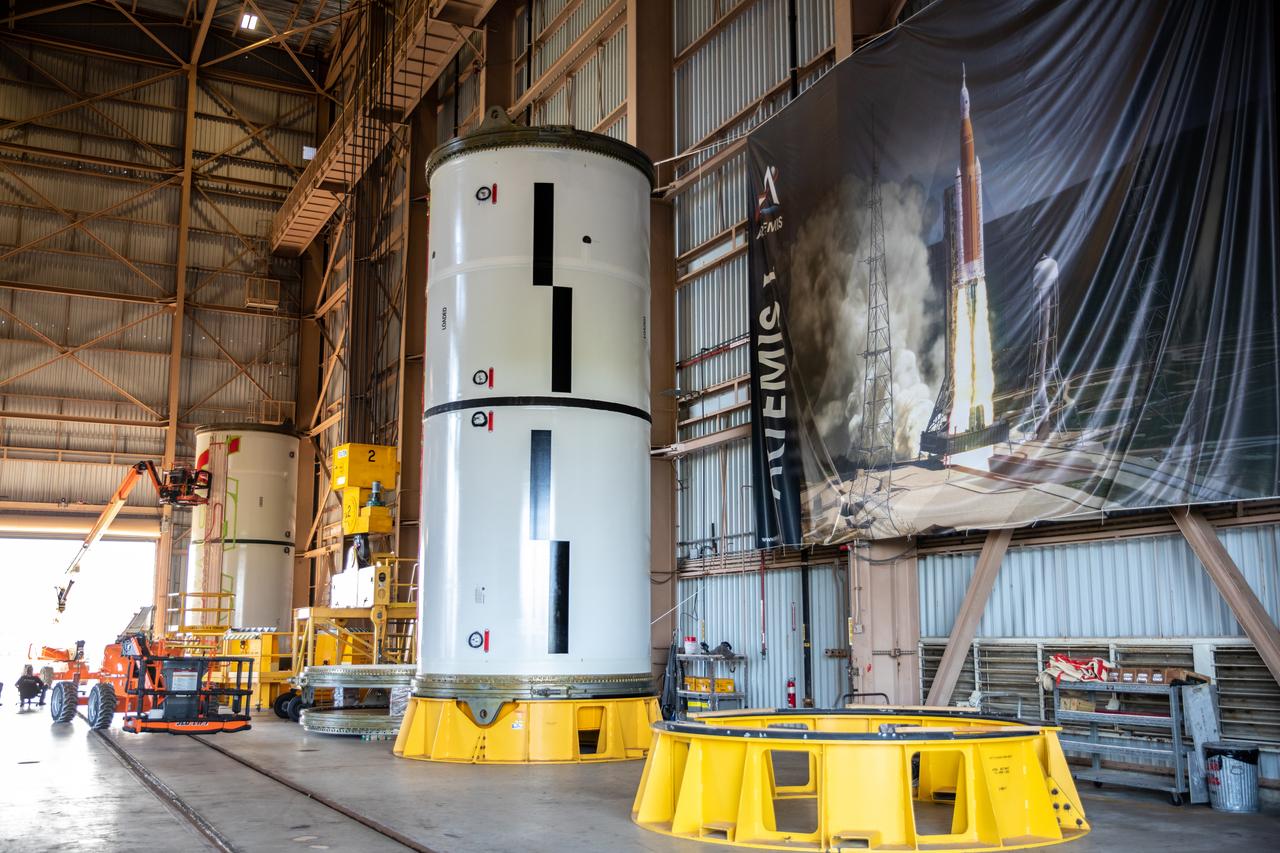
In this view inside the Rotation, Processing and Surge Facility (RPSF) at Kennedy Space Center in Florida, an Artemis I solid rocket booster center segment stands in the foreground; in the background, a worker with NASA’s Exploration Ground Systems (EGS) applies bright red paint to the agency’s “worm” logo taking shape on the side of the other center segment. The EGS team used a laser projector to mask off the logo with tape, then painted the first coat of the iconic design. The booster segments will help propel the Space Launch System (SLS) rocket on Artemis I, a test of the Orion spacecraft and SLS as an integrated system ahead of crewed flights to the Moon. Northrop Grumman, which built the booster segments, is covering the cost of the painting.
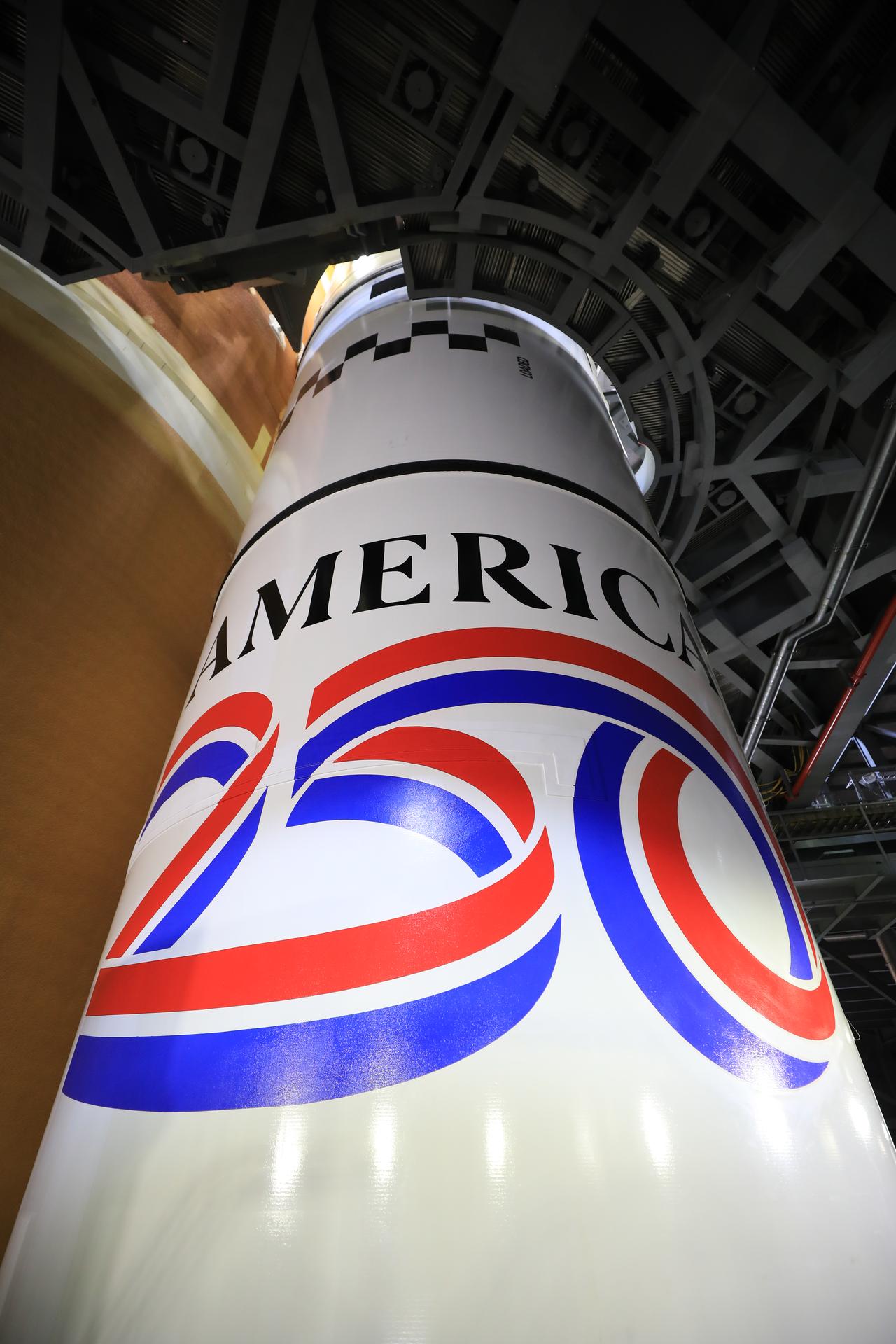
Technicians with NASA’s Exploration Ground Systems unveil on Monday, Dec. 1, 2025, the America 250 logo on the twin SLS (Space Launch System) solid rocket boosters for the Artemis II mission inside the Vehicle Assembly Building at NASA’s Kennedy Space Center in Florida. The SLS rocket and the Orion spacecraft will carry NASA astronauts Reid Wiseman, Victor Glover, Christina Koch, and CSA (Canadian Space Agency) astronaut Jeremy Hansen on a 10-day mission around the Moon and back in early 2026 from Launch Complex 39B at NASA Kennedy. America 250 commemorates the 250th anniversary of the signing of the Declaration of Independence with NASA celebrating the “Spirit of Innovation” theme to inspire future generations.
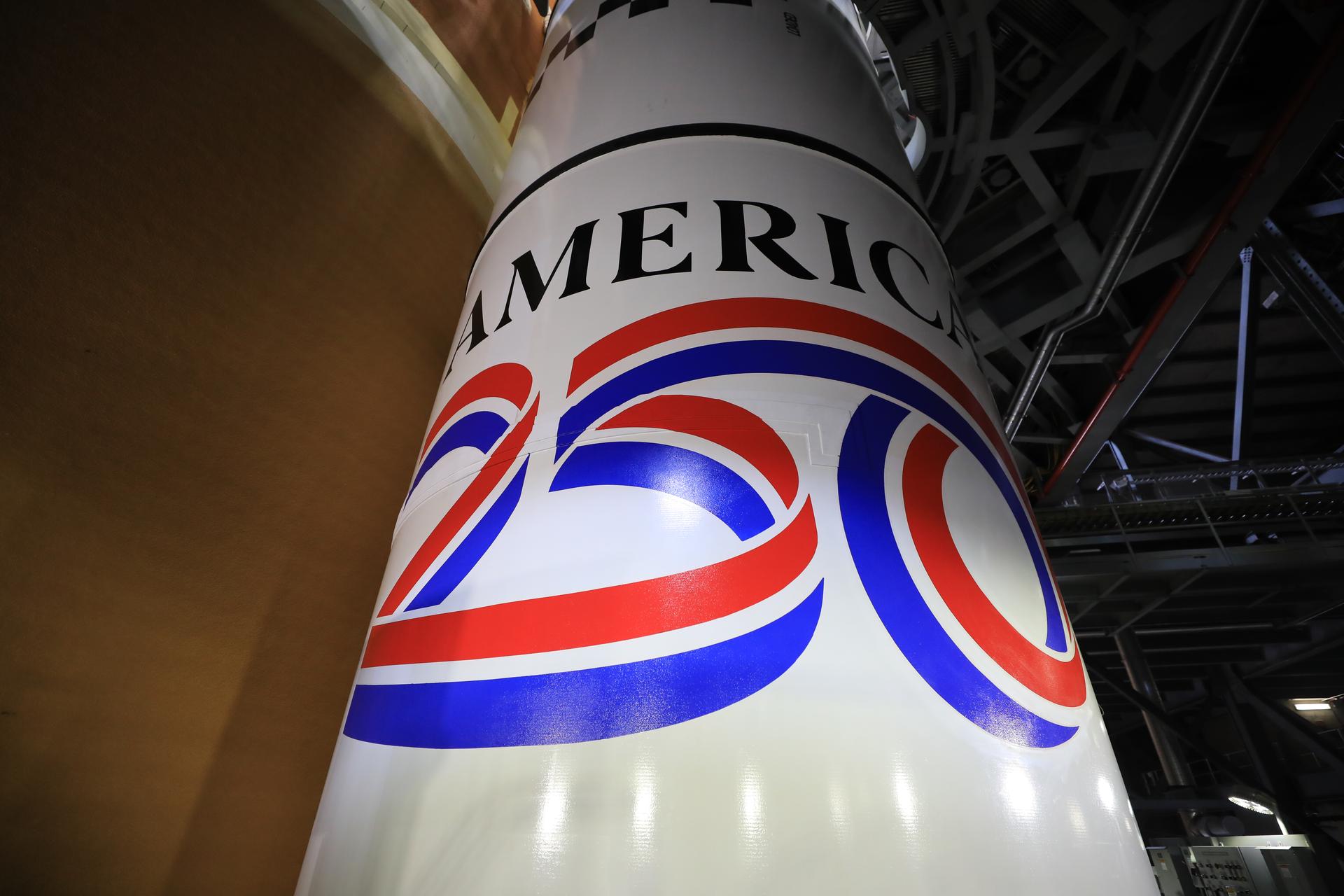
Technicians with NASA’s Exploration Ground Systems unveil on Monday, Dec. 1, 2025, the America 250 logo on the twin SLS (Space Launch System) solid rocket boosters for the Artemis II mission inside the Vehicle Assembly Building at NASA’s Kennedy Space Center in Florida. The SLS rocket and the Orion spacecraft will carry NASA astronauts Reid Wiseman, Victor Glover, Christina Koch, and CSA (Canadian Space Agency) astronaut Jeremy Hansen on a 10-day mission around the Moon and back in early 2026 from Launch Complex 39B at NASA Kennedy. America 250 commemorates the 250th anniversary of the signing of the Declaration of Independence with NASA celebrating the “Spirit of Innovation” theme to inspire future generations.
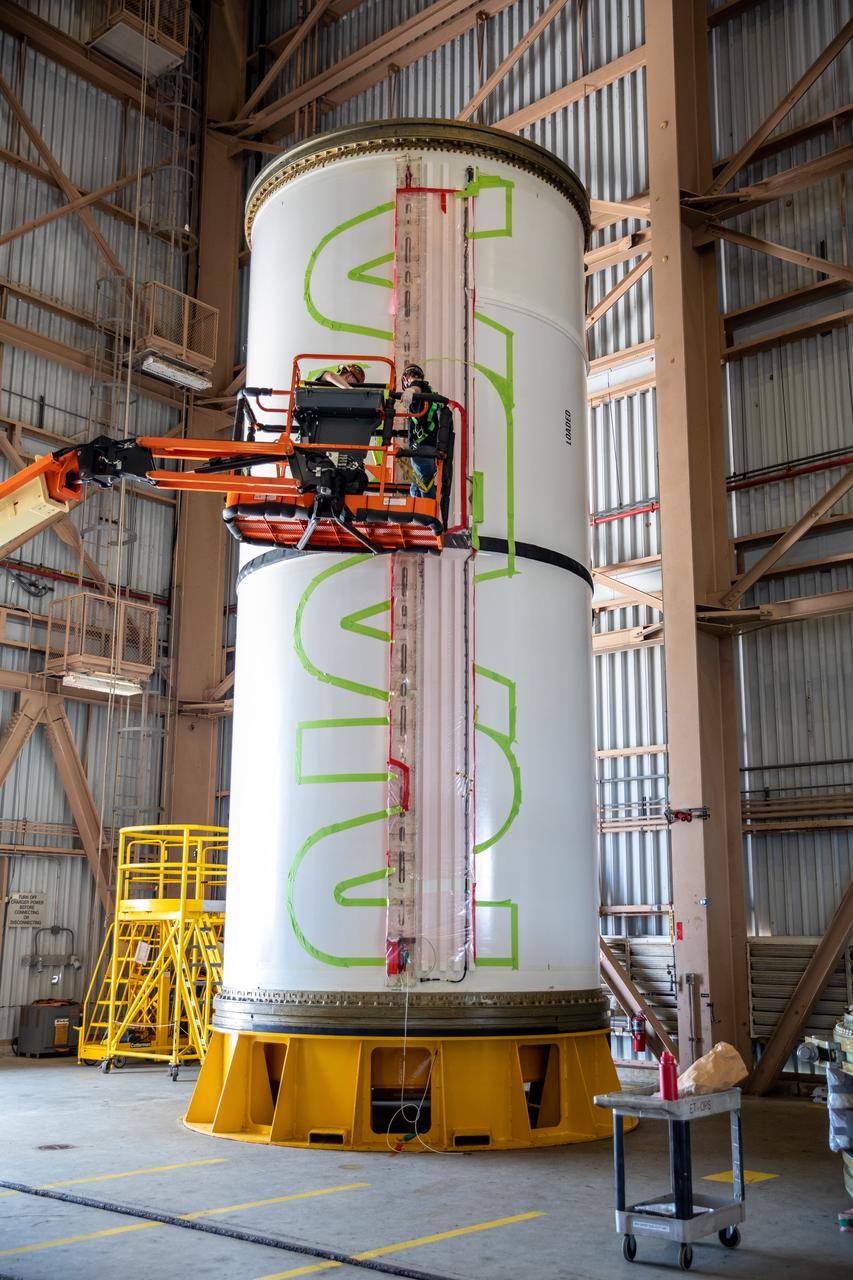
Workers with NASA’s Exploration Ground Systems (EGS) use a laser projector and green tape to mask off the shape of the agency’s “worm” logo on the side of an Artemis I solid rocket booster segment inside the Rotation, Processing and Surge Facility (RPSF) at Kennedy Space Center in Florida, Sept. 3, 2020. The booster segments will help propel the Space Launch System (SLS) rocket on Artemis I, a test of the Orion spacecraft and SLS as an integrated system ahead of crewed flights to the Moon. Northrop Grumman, which built the booster segments, is covering the cost of the painting.

Workers with NASA’s Exploration Ground Systems (EGS) use a laser projector and green tape to mask off the shape of the agency’s “worm” logo on the side of an Artemis I solid rocket booster segment inside the Rotation, Processing and Surge Facility (RPSF) at Kennedy Space Center in Florida, Sept. 3, 2020. The booster segments will help propel the Space Launch System (SLS) rocket on Artemis I, a test of the Orion spacecraft and SLS as an integrated system ahead of crewed flights to the Moon. Northrop Grumman, which built the booster segments, is covering the cost of the painting.
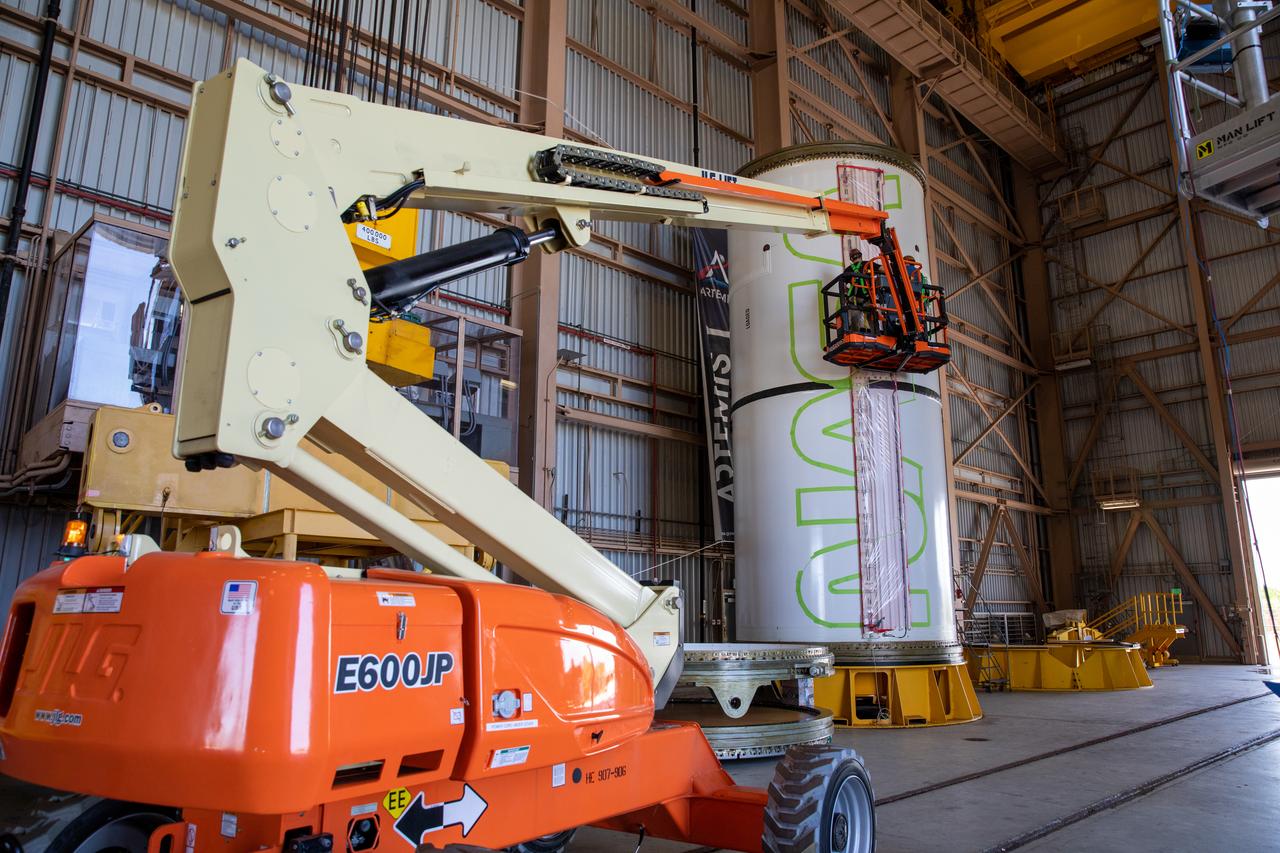
Workers with NASA’s Exploration Ground Systems (EGS) use a laser projector and green tape to mask off the shape of the agency’s “worm” logo on the side of an Artemis I solid rocket booster segment inside the Rotation, Processing and Surge Facility (RPSF) at Kennedy Space Center in Florida, Sept. 3, 2020. The booster segments will help propel the Space Launch System (SLS) rocket on Artemis I, a test of the Orion spacecraft and SLS as an integrated system ahead of crewed flights to the Moon. Northrop Grumman, which built the booster segments, is covering the cost of the painting.
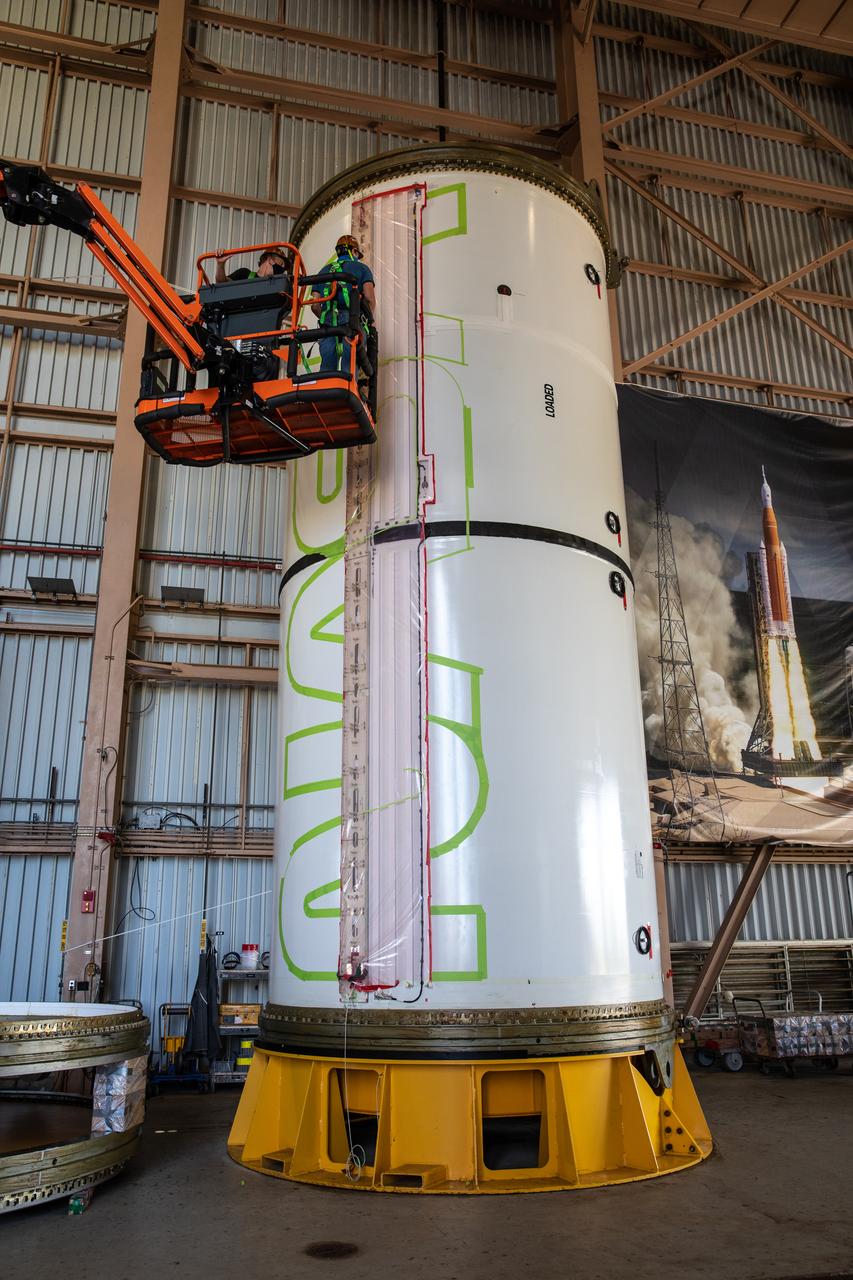
Workers with NASA’s Exploration Ground Systems (EGS) use a laser projector and green tape to mask off the shape of the agency’s “worm” logo on the side of an Artemis I solid rocket booster segment inside the Rotation, Processing and Surge Facility (RPSF) at Kennedy Space Center in Florida, Sept. 3, 2020. The booster segments will help propel the Space Launch System (SLS) rocket on Artemis I, a test of the Orion spacecraft and SLS as an integrated system ahead of crewed flights to the Moon. Northrop Grumman, which built the booster segments, is covering the cost of the painting.
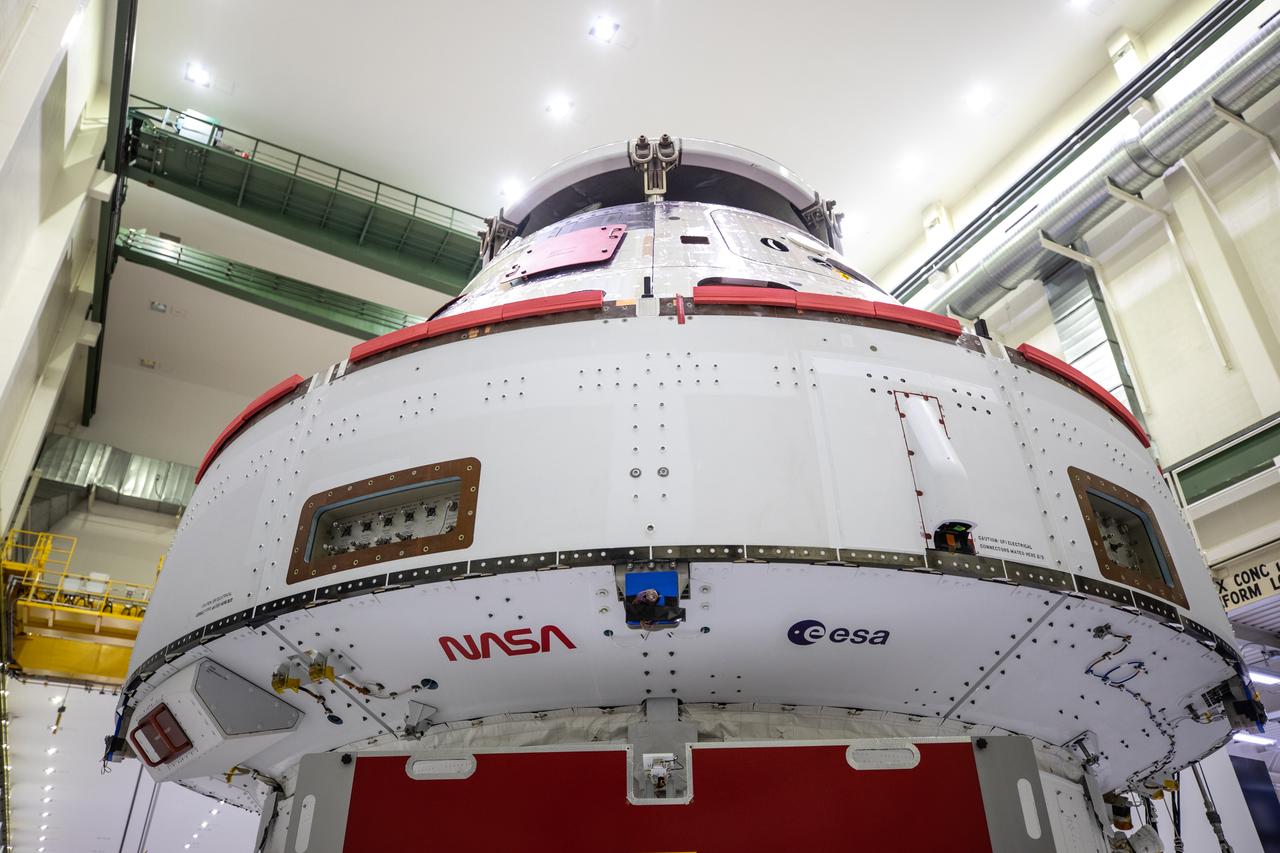
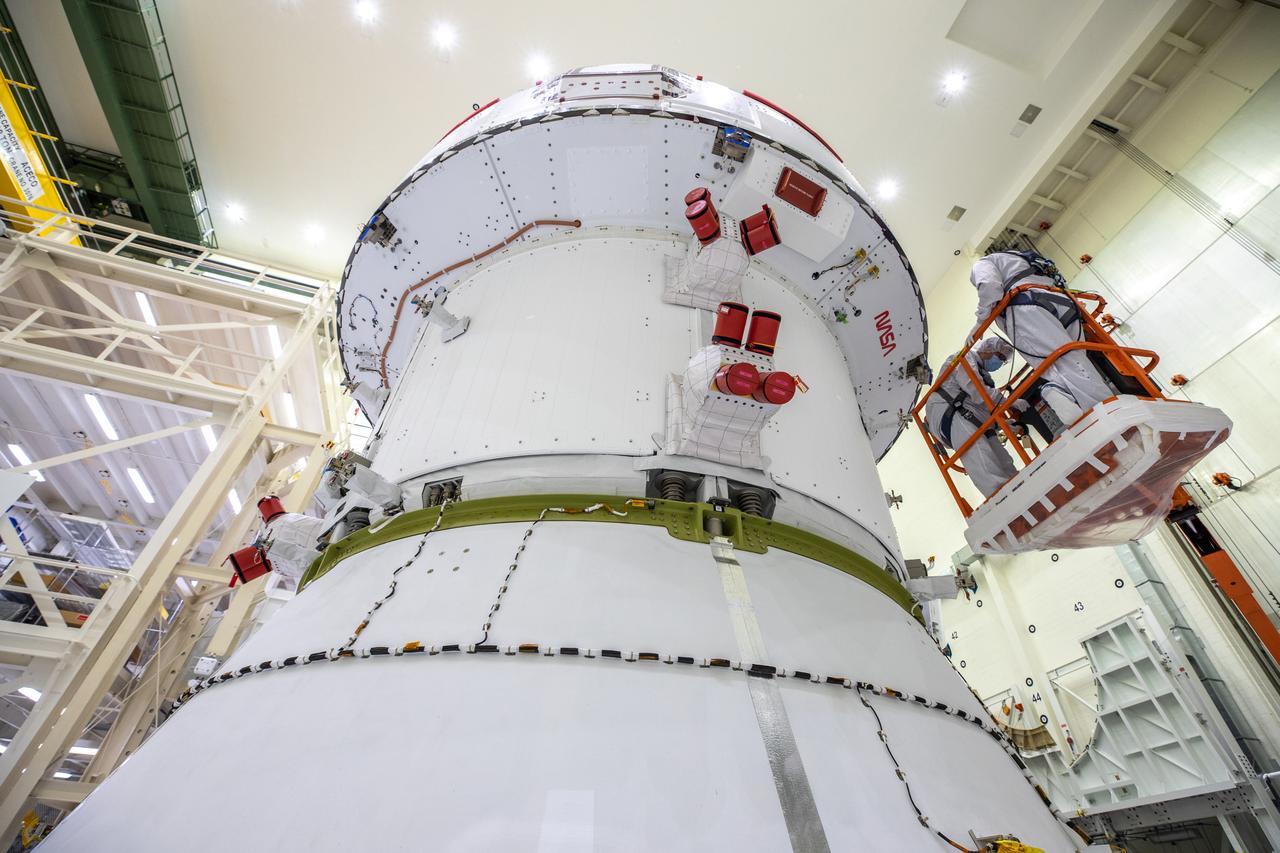
Inside the Neil Armstrong Operations and Checkout Building high bay at Kennedy Space Center, NASA’s iconic “worm” logo and European Space Agency (ESA) logo have been added to the aft wall of Orion’s crew module adapter ahead of NASA’s Artemis I mission. Originally created by the firm of Danne & Blackburn, the “worm” logo’s bold, sleek design was officially introduced in 1975 and was incorporated into many of the agency’s next-generation programs. It was retired in 1992, but has made a comeback in 2020 as the agency ushers in a new, modern era of human spaceflight. The Orion spacecraft is being prepared for installation of the solar array wings on Sept. 23, 2020. The first in a series of increasingly complex missions, Artemis I will test the Orion spacecraft and Space Launch System as an integrated system ahead of crewed flights to the Moon. Under the Artemis program, NASA will land the first woman and the next man on the Moon by 2024.
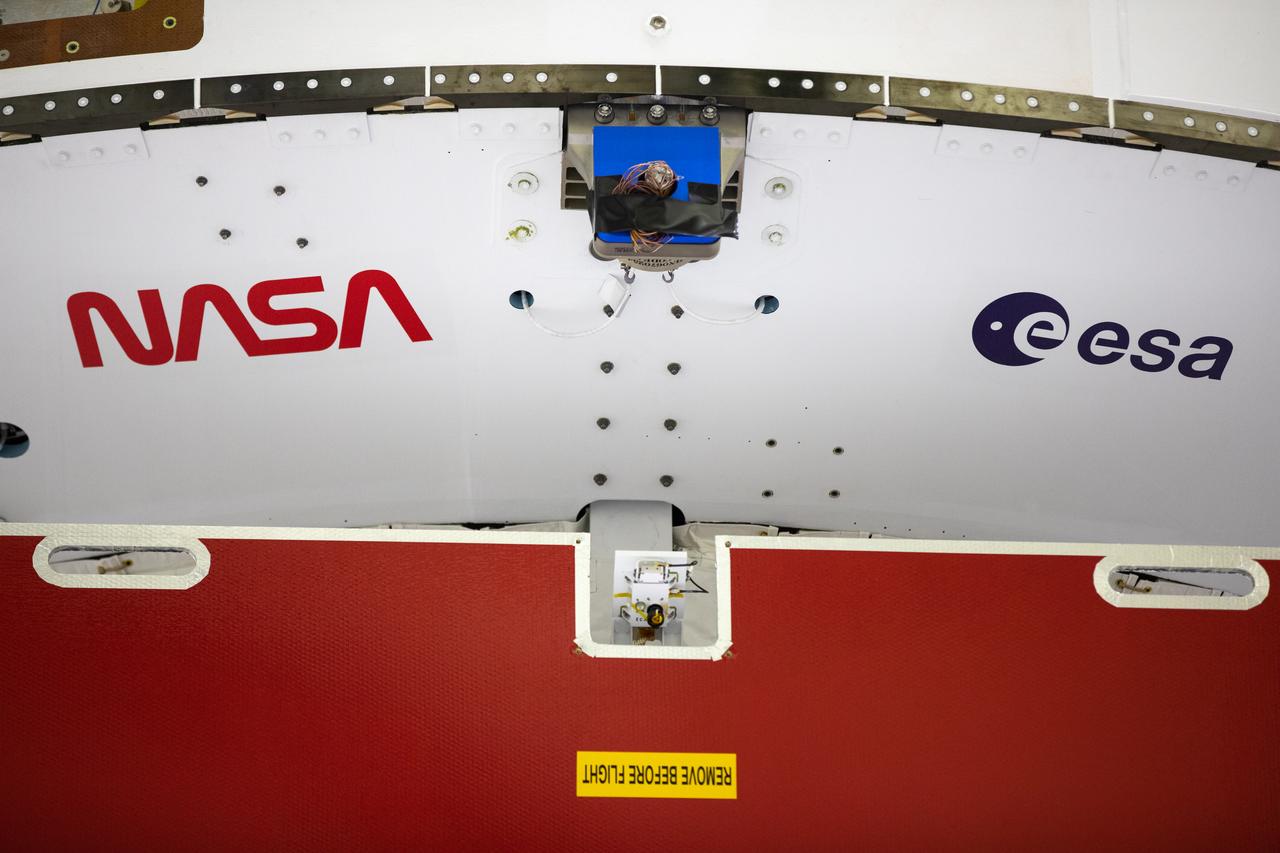
Inside the Neil Armstrong Operations and Checkout Building high bay at Kennedy Space Center, NASA’s iconic “worm” logo and European Space Agency (ESA) logo have been added to the aft wall of Orion’s crew module adapter ahead of NASA’s Artemis I mission. Originally created by the firm of Danne & Blackburn, the “worm” logo’s bold, sleek design was officially introduced in 1975 and was incorporated into many of the agency’s next-generation programs. It was retired in 1992, but has made a comeback in 2020 as the agency ushers in a new, modern era of human spaceflight. The Orion spacecraft is being prepared for installation of the solar array wings on Sept. 23, 2020. The first in a series of increasingly complex missions, Artemis I will test the Orion spacecraft and Space Launch System as an integrated system ahead of crewed flights to the Moon. Under the Artemis program, NASA will land the first woman and the next man on the Moon by 2024.
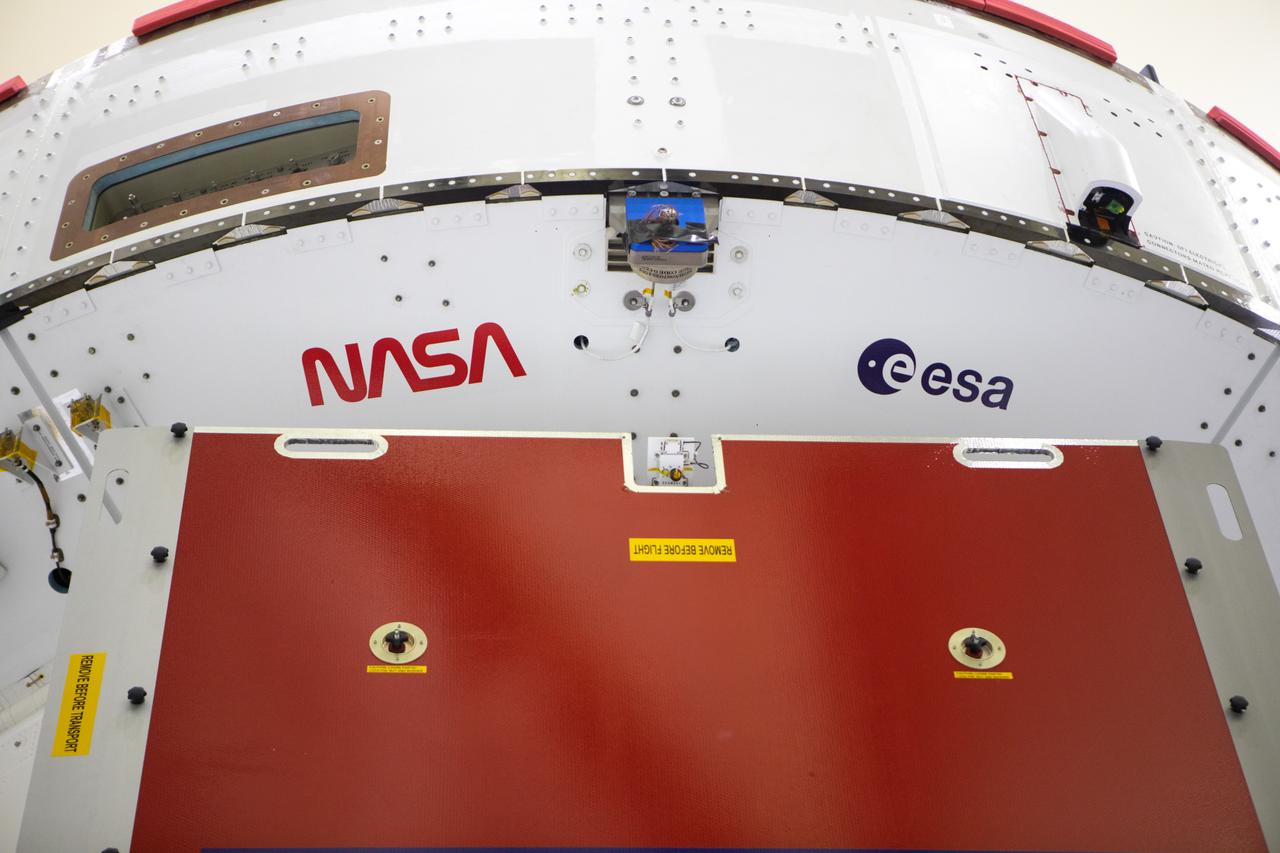
Inside the Neil Armstrong Operations and Checkout Building high bay at Kennedy Space Center, NASA’s iconic “worm” logo and European Space Agency (ESA) logo have been added to the aft wall of Orion’s crew module adapter ahead of NASA’s Artemis I mission. Originally created by the firm of Danne & Blackburn, the “worm” logo’s bold, sleek design was officially introduced in 1975 and was incorporated into many of the agency’s next-generation programs. It was retired in 1992, but has made a comeback in 2020 as the agency ushers in a new, modern era of human spaceflight. The Orion spacecraft is being prepared for installation of the solar array wings on Sept. 23, 2020. The first in a series of increasingly complex missions, Artemis I will test the Orion spacecraft and Space Launch System as an integrated system ahead of crewed flights to the Moon. Under the Artemis program, NASA will land the first woman and the next man on the Moon by 2024.

Inside the Neil Armstrong Operations and Checkout Building high bay at Kennedy Space Center, NASA’s iconic “worm” logo and European Space Agency (ESA) logo have been added to the aft wall of Orion’s crew module adapter ahead of NASA’s Artemis I mission. Originally created by the firm of Danne & Blackburn, the “worm” logo’s bold, sleek design was officially introduced in 1975 and was incorporated into many of the agency’s next-generation programs. It was retired in 1992, but has made a comeback in 2020 as the agency ushers in a new, modern era of human spaceflight. The Orion spacecraft is being prepared for installation of the solar array wings on Sept. 23, 2020. The first in a series of increasingly complex missions, Artemis I will test the Orion spacecraft and Space Launch System as an integrated system ahead of crewed flights to the Moon. Under the Artemis program, NASA will land the first woman and the next man on the Moon by 2024.
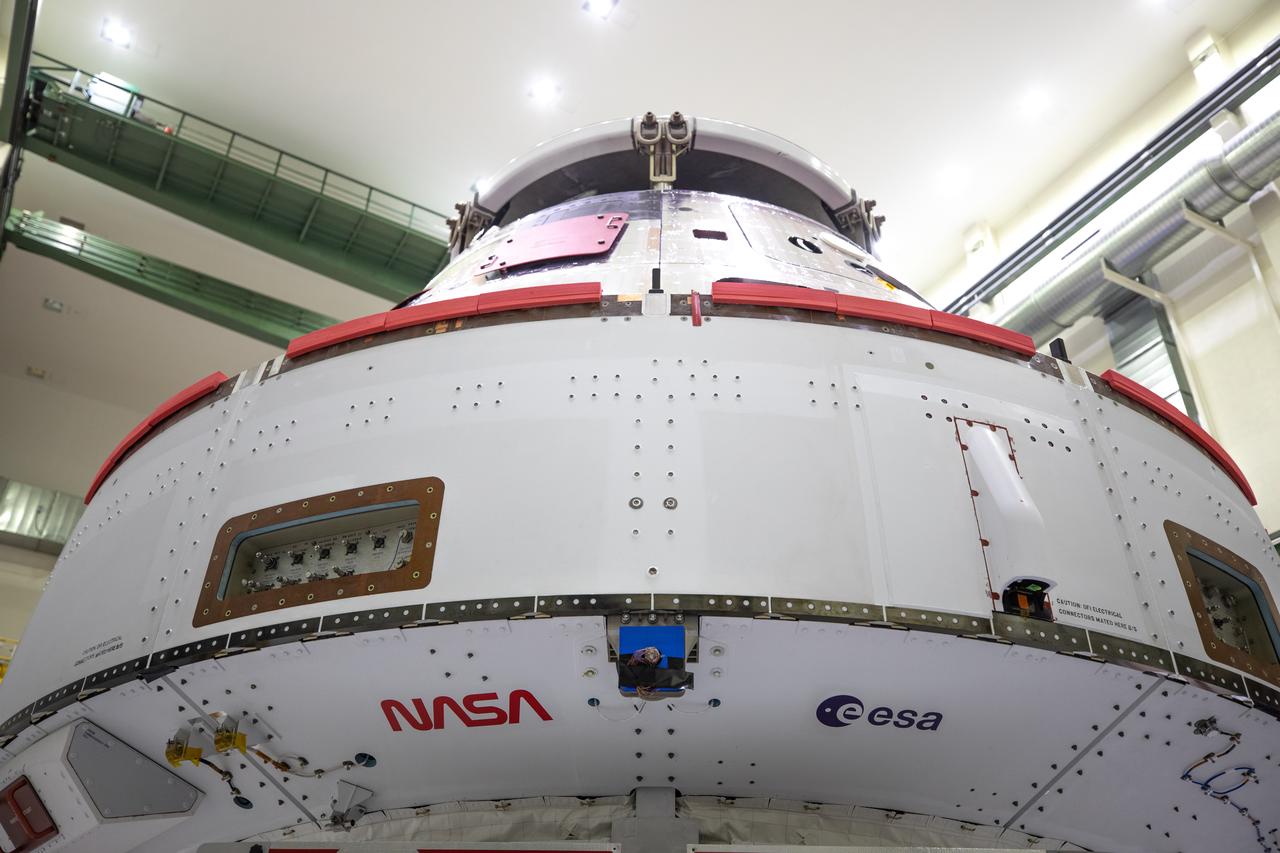
Inside the Neil Armstrong Operations and Checkout Building high bay at Kennedy Space Center, NASA’s iconic “worm” logo and European Space Agency (ESA) logo have been added to the aft wall of Orion’s crew module adapter ahead of NASA’s Artemis I mission. Originally created by the firm of Danne & Blackburn, the “worm” logo’s bold, sleek design was officially introduced in 1975 and was incorporated into many of the agency’s next-generation programs. It was retired in 1992, but has made a comeback in 2020 as the agency ushers in a new, modern era of human spaceflight. The Orion spacecraft is being prepared for installation of the solar array wings on Sept. 23, 2020. The first in a series of increasingly complex missions, Artemis I will test the Orion spacecraft and Space Launch System as an integrated system ahead of crewed flights to the Moon. Under the Artemis program, NASA will land the first woman and the next man on the Moon by 2024.
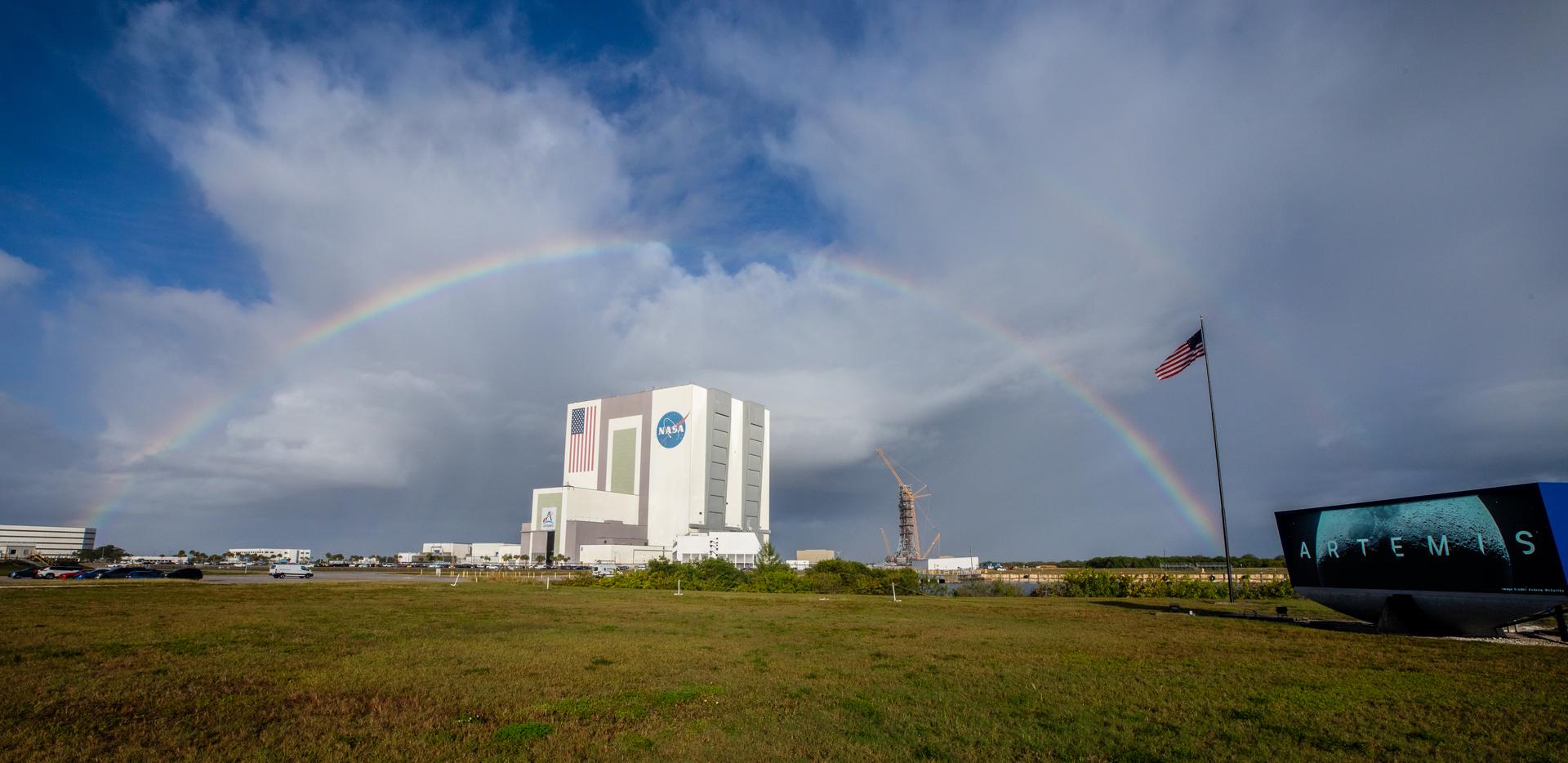
Rain showers create a rainbow over the Vehicle Assembly Building near countdown clock featuring the Artemis Moon logo at the NASA News Center at the agency’s Kennedy Space Center in Florida on Thursday, Dec. 19, 2025.
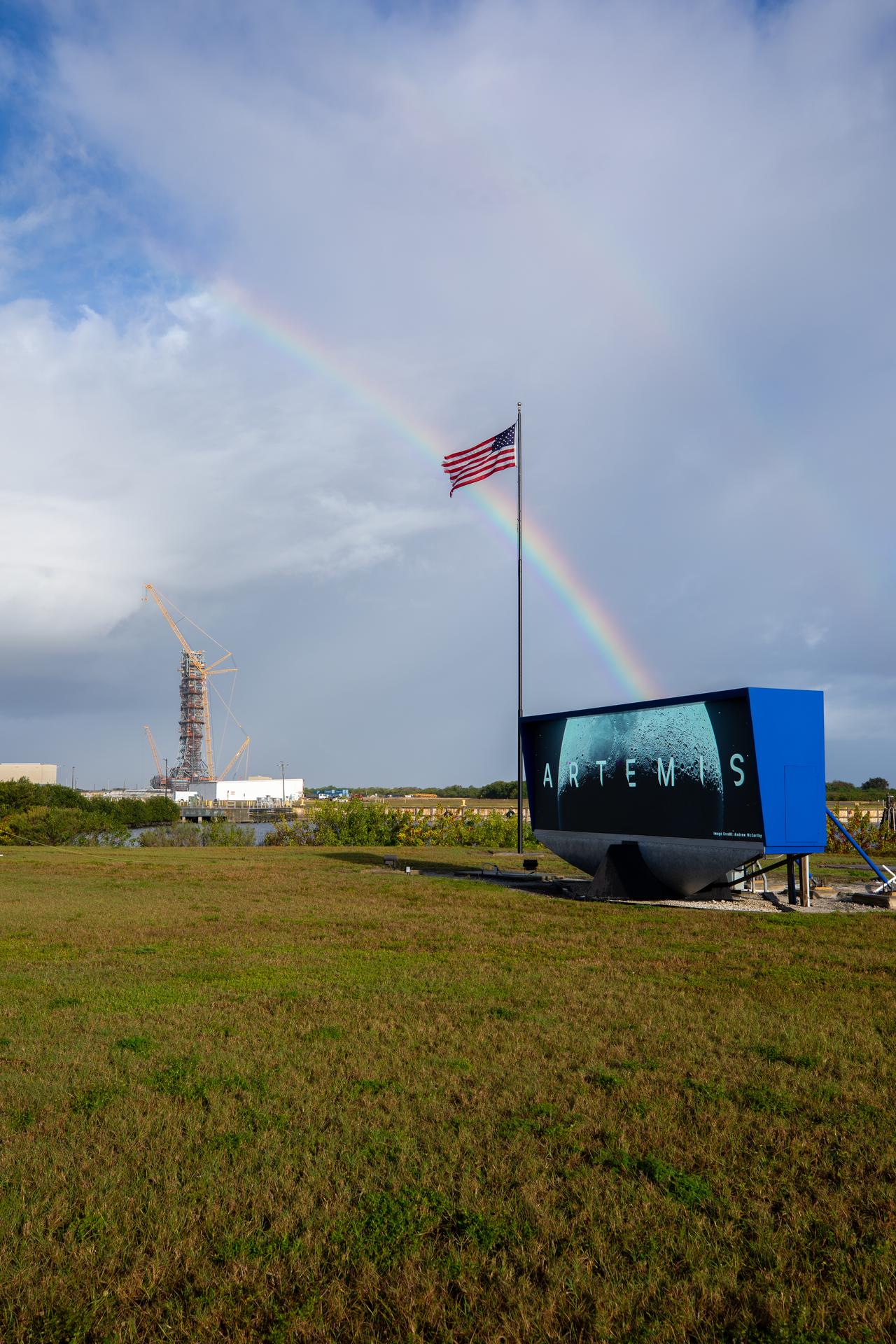
Rain showers create a rainbow near countdown clock featuring the Artemis Moon logo at the NASA News Center at the agency’s Kennedy Space Center in Florida on Thursday, Dec. 19, 2025.
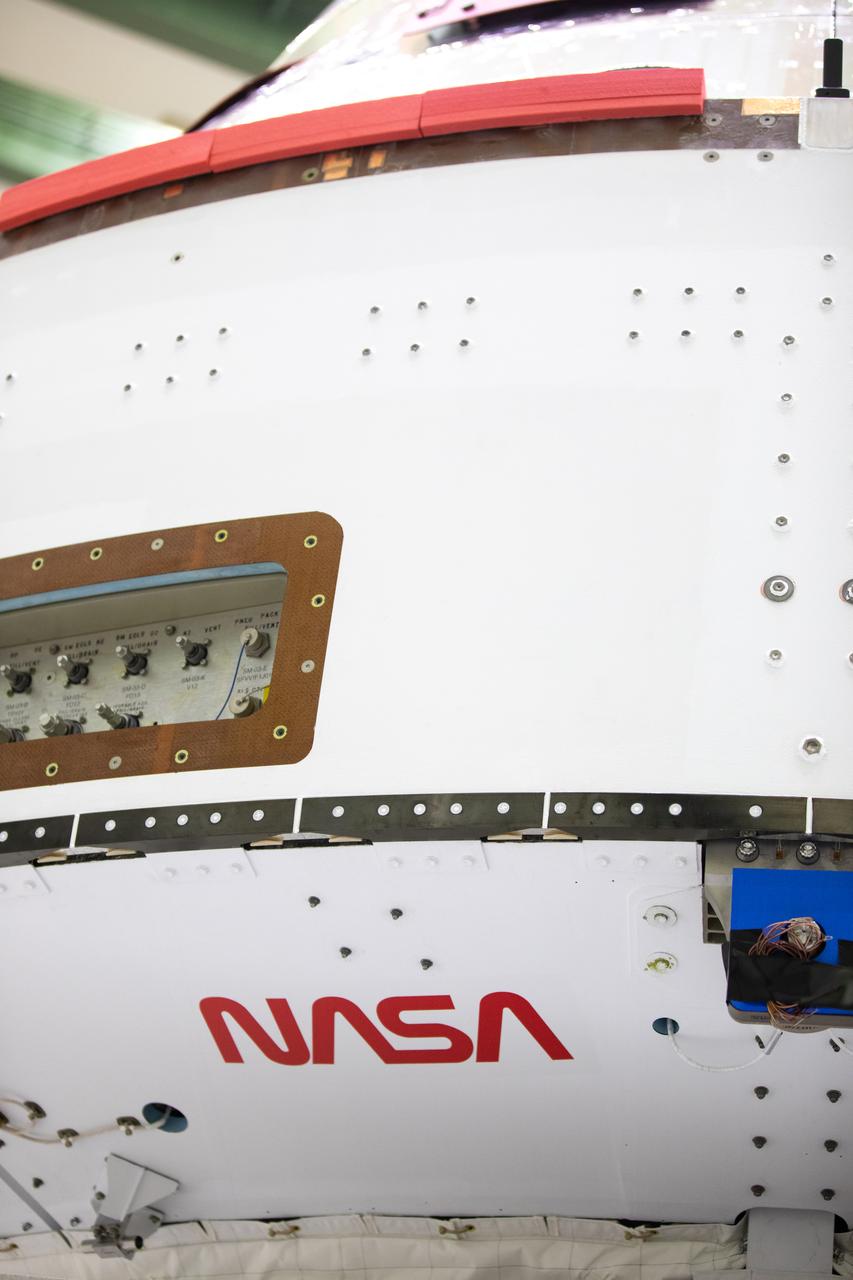
Inside the Neil Armstrong Operations and Checkout Building high bay at Kennedy Space Center, NASA’s iconic “worm” logo has been added to the aft wall of Orion’s crew module adapter ahead of NASA’s Artemis I mission. Originally created by the firm of Danne & Blackburn, the “worm” logo’s bold, sleek design was officially introduced in 1975 and was incorporated into many of the agency’s next-generation programs. It was retired in 1992, but has made a comeback in 2020 as the agency ushers in a new, modern era of human spaceflight. The Orion spacecraft is being prepared for installation of the solar array wings on Sept. 23, 2020. The first in a series of increasingly complex missions, Artemis I will test the Orion spacecraft and Space Launch System as an integrated system ahead of crewed flights to the Moon. Under the Artemis program, NASA will land the first woman and the next man on the Moon by 2024.
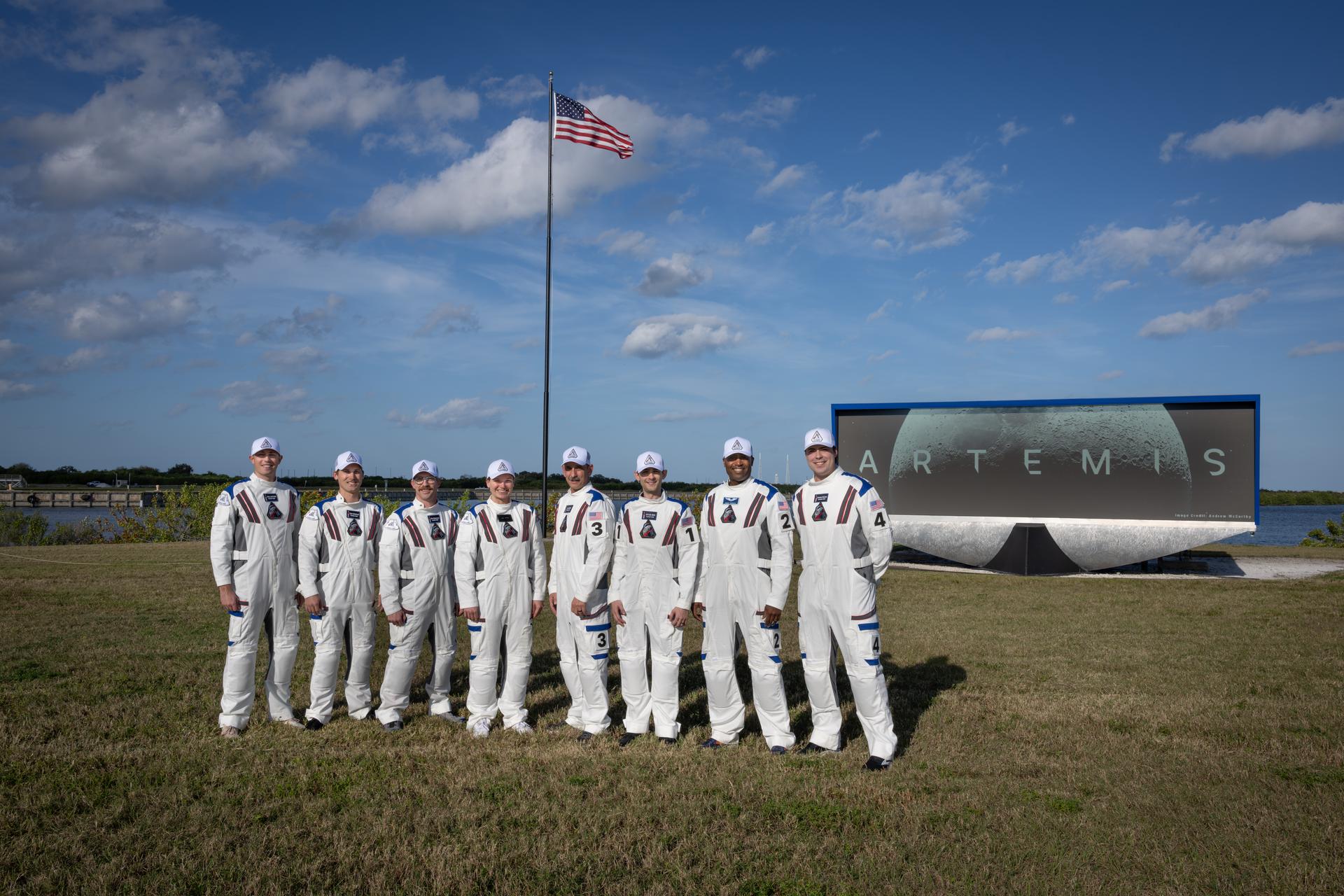
Members of the Artemis II closeout crew, from left, William Sattler; Tyler Sutherland; Michael Heinemann; Jenni Gibbons, Artemis II backup crew member; Bill Owens; Taylor Hose; Andre Douglas, Artemis II backup crew member; and Christian Warriner pose for a photo near the countdown clock featuring the Artemis Moon logo at the NASA News Center at the agency’s Kennedy Space Center in Florida on Thursday, Dec. 19, 2025. The closeout crew is responsible for safely securing the astronauts inside the Orion spacecraft on launch day and closing the hatch during launch countdown.
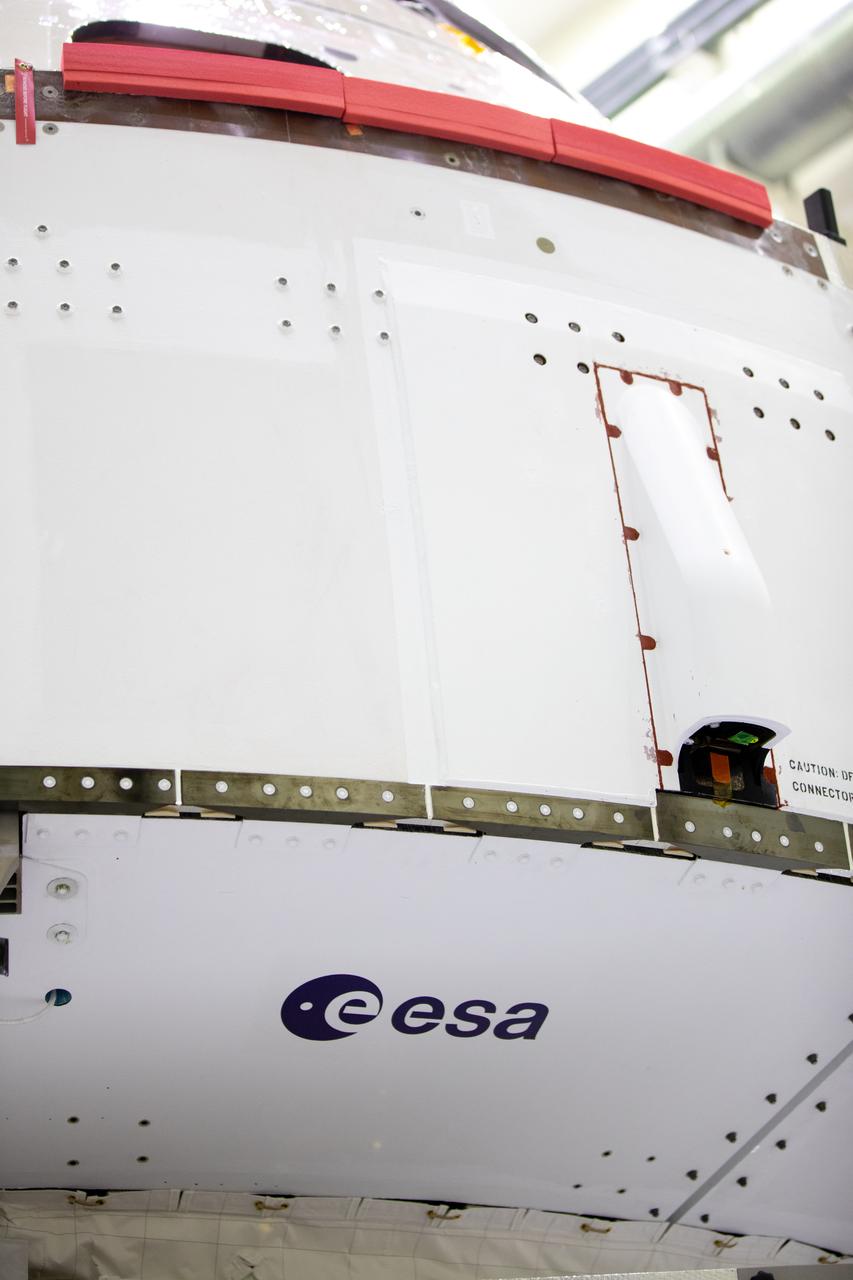
Inside the Neil Armstrong Operations and Checkout Building high bay at Kennedy Space Center, the European Space Agency (ESA) logo has been added to the aft wall of Orion’s crew module adapter ahead of NASA’s Artemis I mission. The Orion spacecraft is being prepared for installation of the solar array wings on Sept. 23, 2020. The first in a series of increasingly complex missions, Artemis I will test the Orion spacecraft and Space Launch System as an integrated system ahead of crewed flights to the Moon. Under the Artemis program, NASA will land the first woman and the next man on the Moon by 2024.
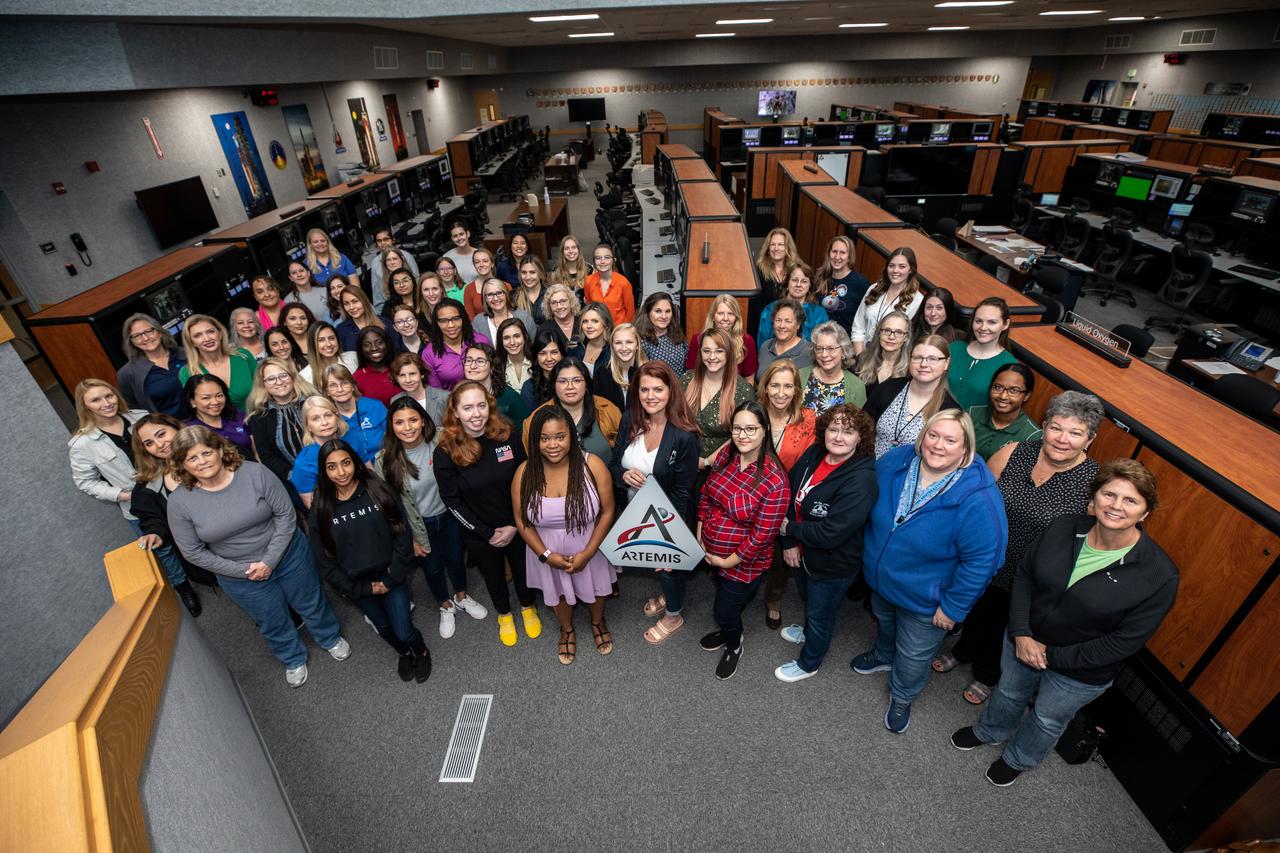
The women who comprise the Artemis launch team are photographed inside Firing Room 1 of the Launch Control Center at NASA’s Kennedy Space Center in Florida on Feb. 10, 2023. In the center, holding the Artemis mission logo, is NASA’s first female Launch Director Charlie Blackwell-Thompson. The team, which is about 30% women, launched the agency’s Artemis I mission – the first in an increasingly complex series of missions to return humans to the Moon – from Kennedy’s Launch Pad 39B on Nov. 16, 2022. The primary goal of Artemis I was to thoroughly test the Space Launch System rocket and Orion spacecraft’s integrated systems before crewed missions to the lunar surface. Under Artemis, NASA aims to land the first woman and first person of color on the Moon and establish sustainable lunar exploration in the near future.