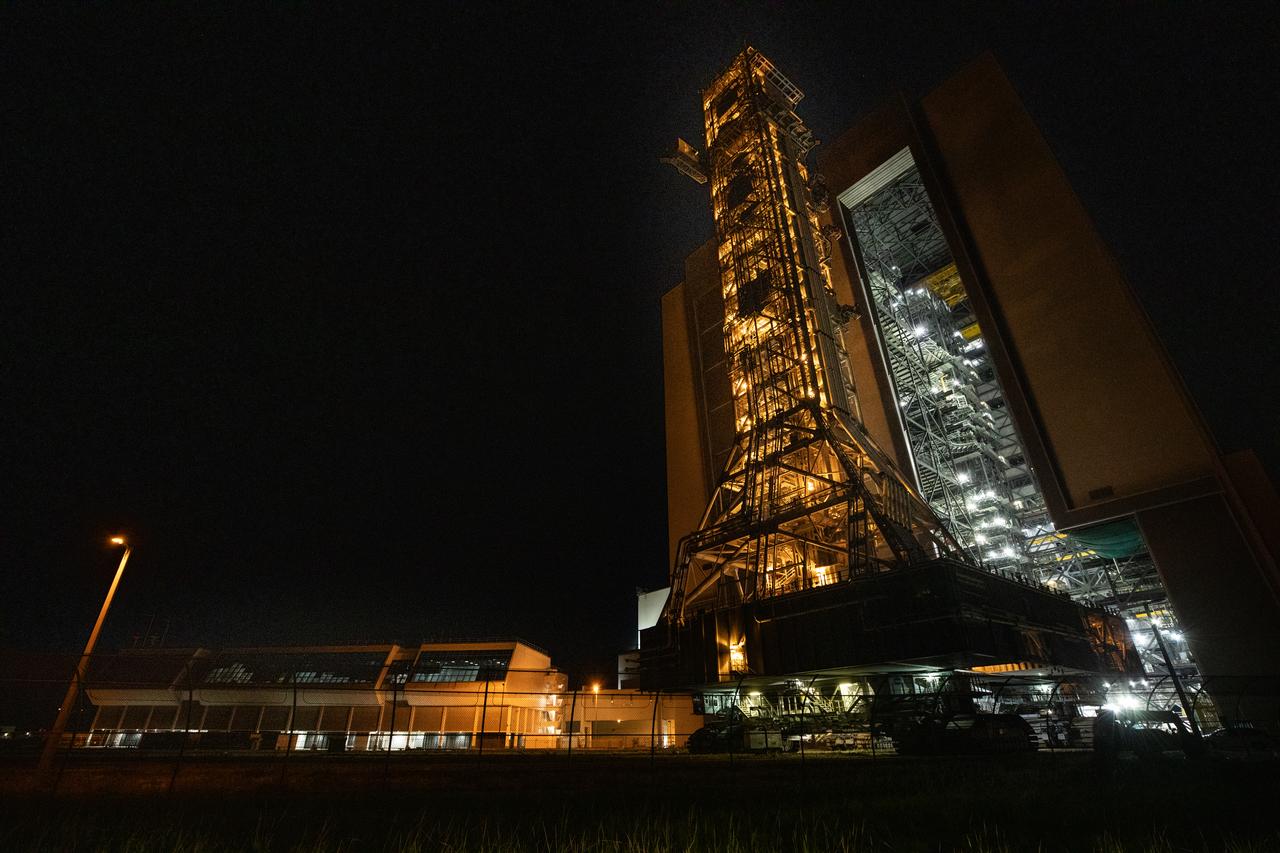
NASA’s mobile launcher 1 atop the spaceport’s crawler is transported inside the agency’s Vehicle Assembly Building at Kennedy Space Center in Florida ahead of integration of the Artemis II Moon rocket on Friday, Oct. 4, 2024. The mobile launcher has been at Launch Complex 39B since August 2023 undergoing upgrades and tests in preparation for NASA’s Artemis II mission. The mobile launcher will be used to assemble, process, and launch NASA’s SLS (Space Launch Systems) and Orion spacecraft to the Moon and beyond.
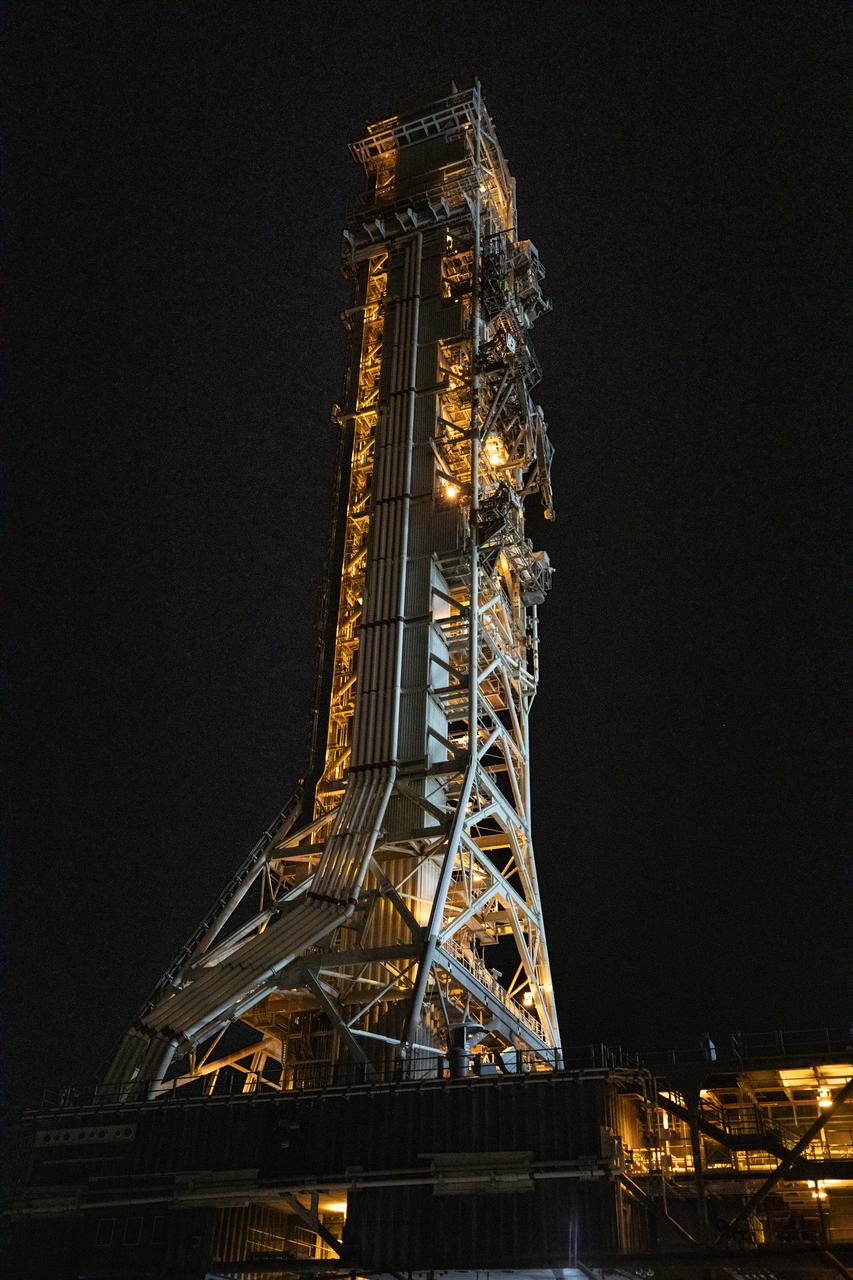
NASA’s mobile launcher 1 atop the spaceport’s crawler is transported inside the agency’s Vehicle Assembly Building at Kennedy Space Center in Florida ahead of integration of the Artemis II Moon rocket on Friday, Oct. 4, 2024. The mobile launcher has been at Launch Complex 39B since August 2023 undergoing upgrades and tests in preparation for NASA’s Artemis II mission. The mobile launcher will be used to assemble, process, and launch NASA’s SLS (Space Launch Systems) and Orion spacecraft to the Moon and beyond.
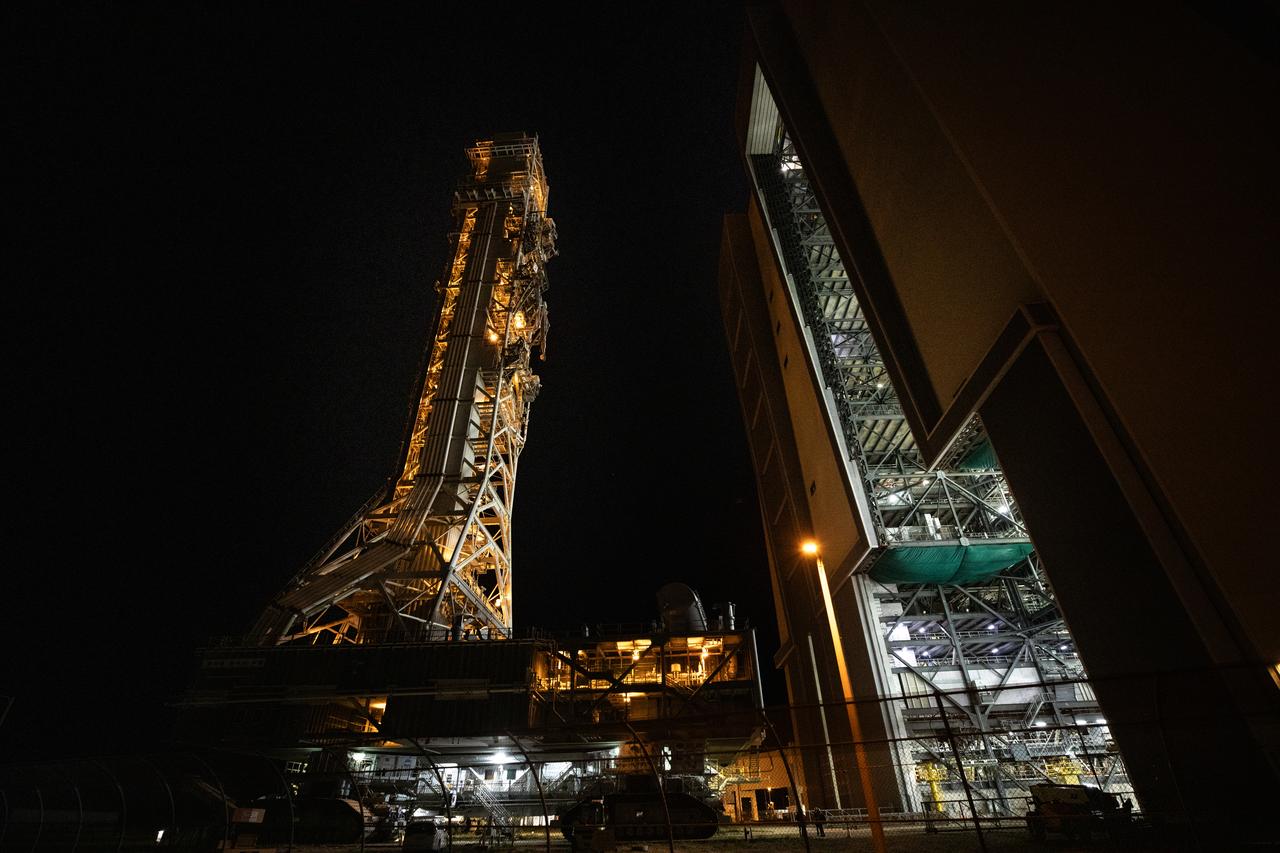
NASA’s mobile launcher 1 atop the spaceport’s crawler is transported inside the agency’s Vehicle Assembly Building at Kennedy Space Center in Florida ahead of integration of the Artemis II Moon rocket on Friday, Oct. 4, 2024. The mobile launcher has been at Launch Complex 39B since August 2023 undergoing upgrades and tests in preparation for NASA’s Artemis II mission. The mobile launcher will be used to assemble, process, and launch NASA’s SLS (Space Launch Systems) and Orion spacecraft to the Moon and beyond.
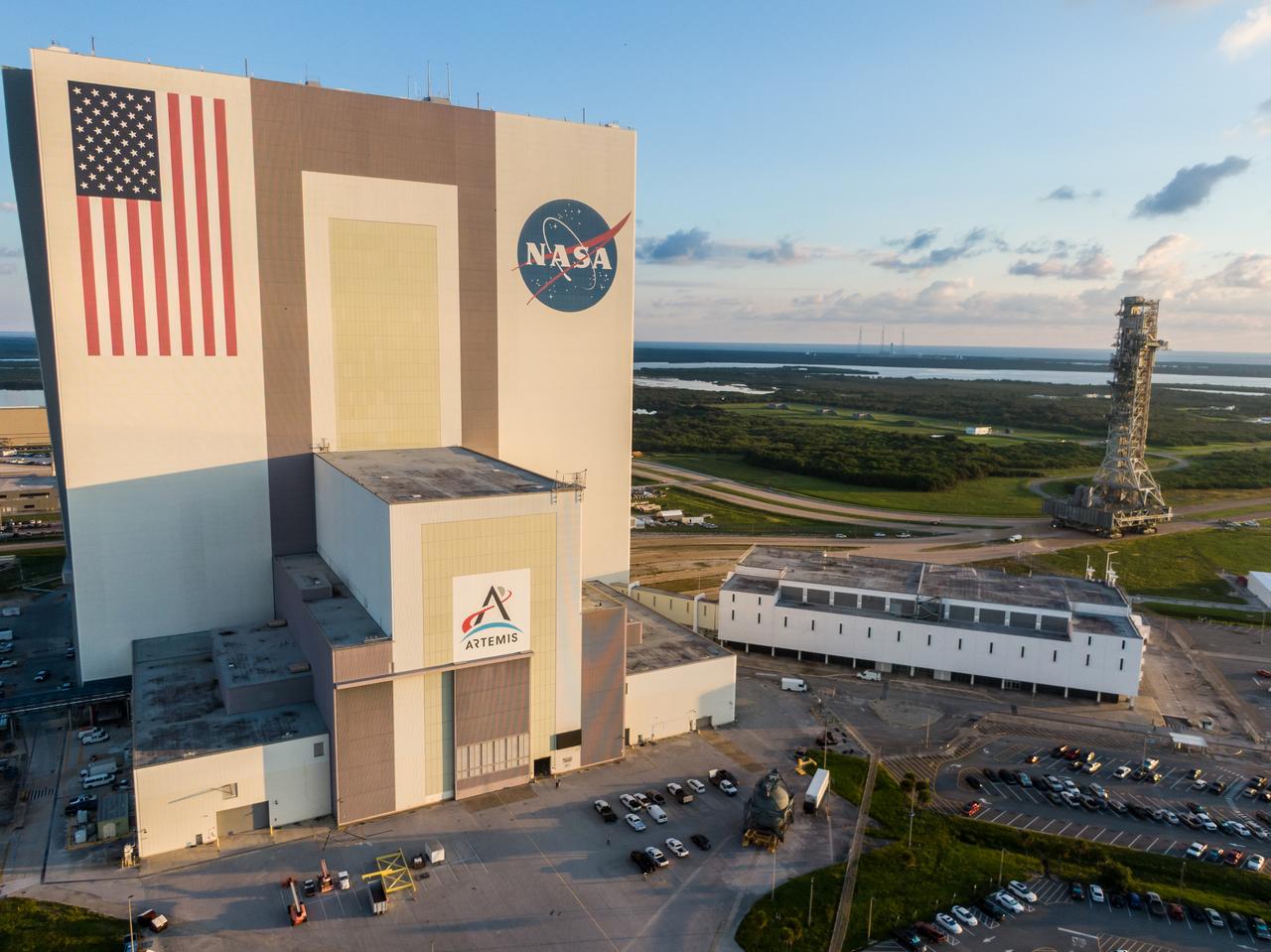
A drone camera captures NASA’s mobile launcher 1 atop the agency’s crawler-transporter 2 moving from Launch Complex 39B approaching to enter the Vehicle Assembly Building at NASA’s Kennedy Space Center in Florida on Thursday, Oct. 3, 2024. The mobile launcher has been at the launch pad since August 2023 undergoing upgrades and tests in preparation for NASA’s Artemis II mission. The mobile launcher will be used to assemble, process, and launch NASA’s SLS (Space Launch Systems) and Orion spacecraft to the Moon and beyond.
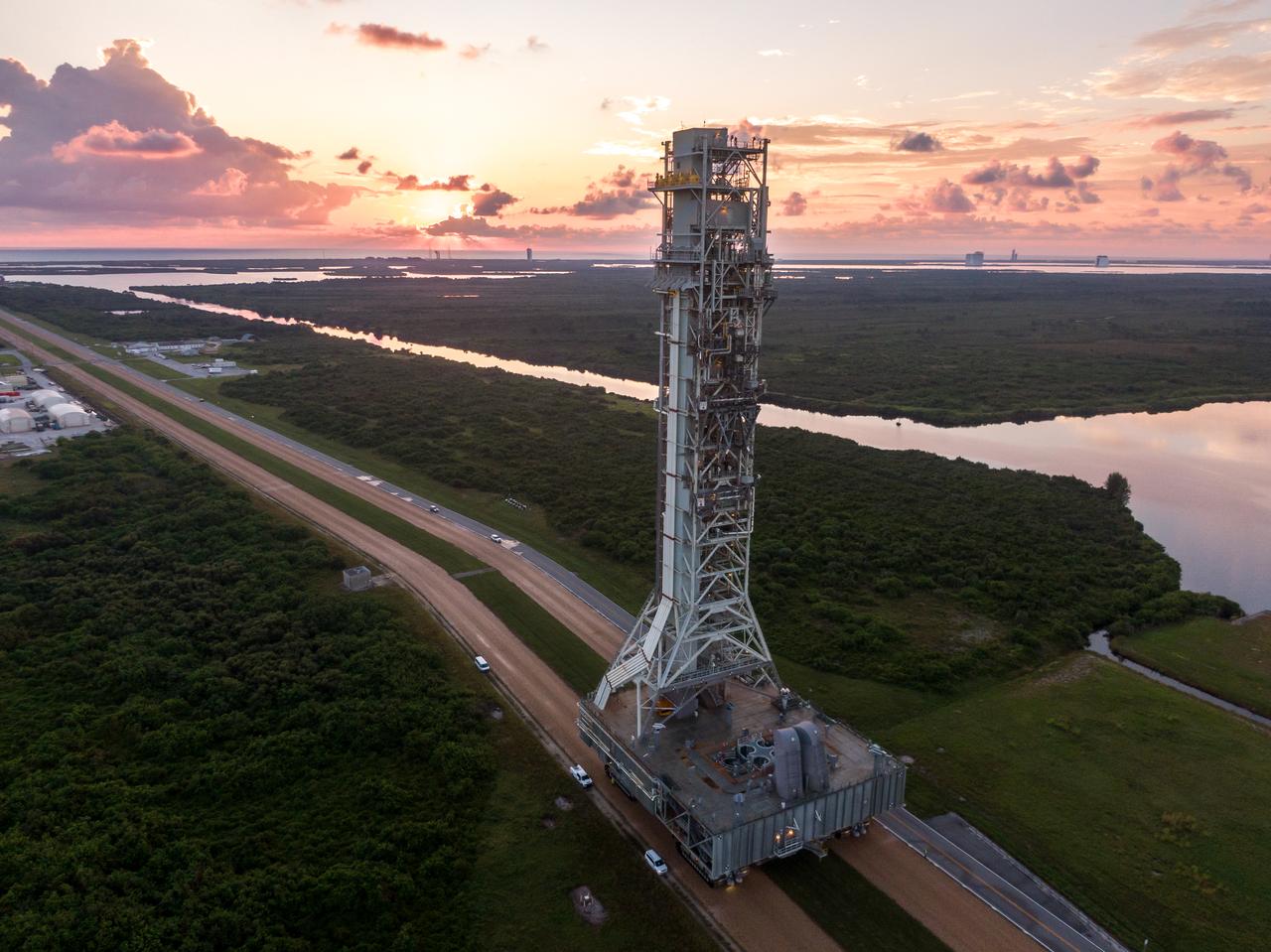
A drone camera captures NASA’s mobile launcher 1 atop the agency’s crawler-transporter 2 moving from Launch Complex 39B to the Vehicle Assembly Building at NASA’s Kennedy Space Center in Florida on Thursday, Oct. 3, 2024. The mobile launcher has been at the launch pad since August 2023 undergoing upgrades and tests in preparation for NASA’s Artemis II mission. The mobile launcher will be used to assemble, process, and launch NASA’s SLS (Space Launch Systems) and Orion spacecraft to the Moon and beyond.
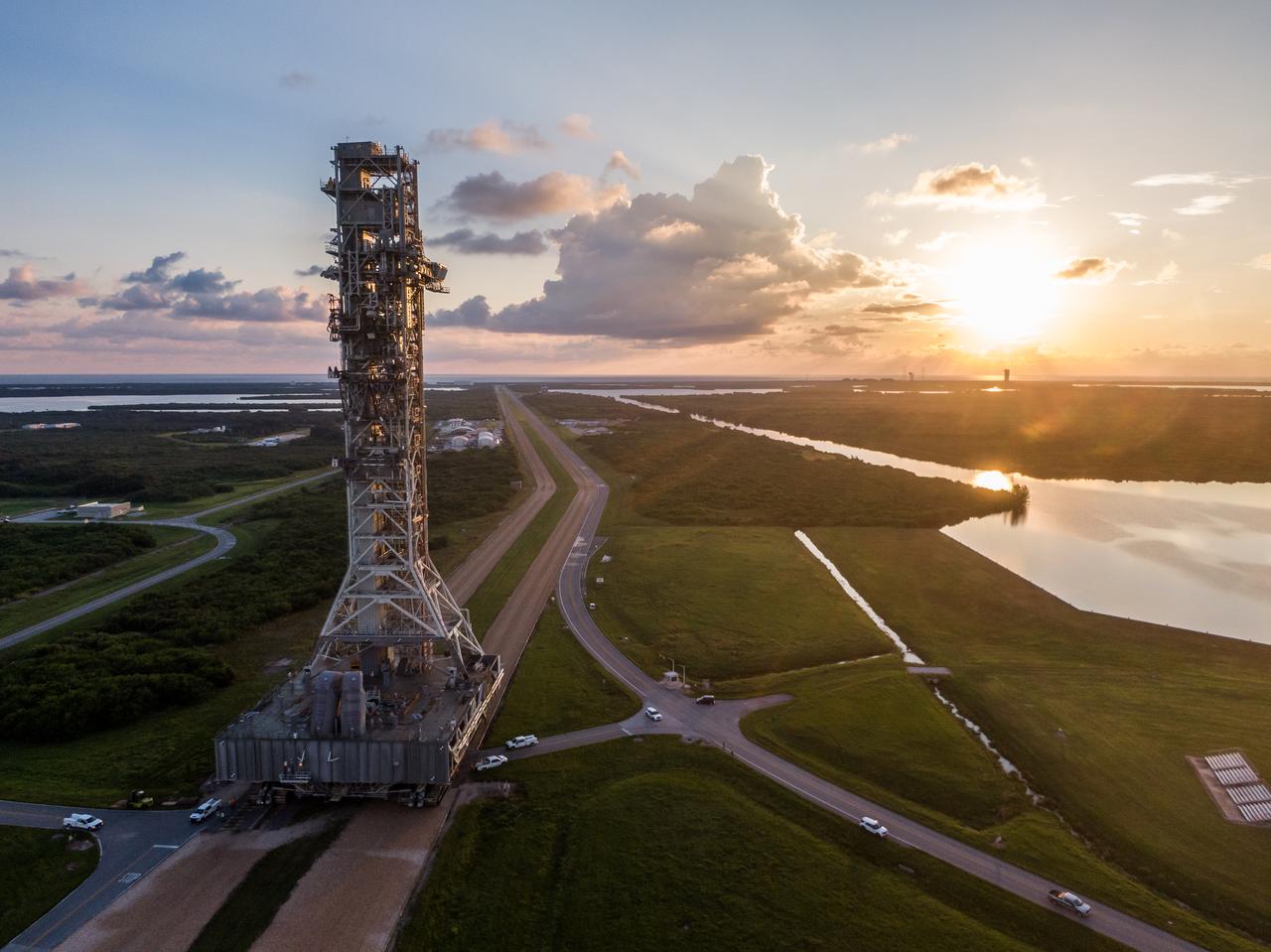
A drone camera captures NASA’s mobile launcher 1 atop the agency’s crawler-transporter 2 moving from Launch Complex 39B to the Vehicle Assembly Building at NASA’s Kennedy Space Center in Florida on Thursday, Oct. 3, 2024. The mobile launcher has been at the launch pad since August 2023 undergoing upgrades and tests in preparation for NASA’s Artemis II mission. The mobile launcher will be used to assemble, process, and launch NASA’s SLS (Space Launch Systems) and Orion spacecraft to the Moon and beyond.
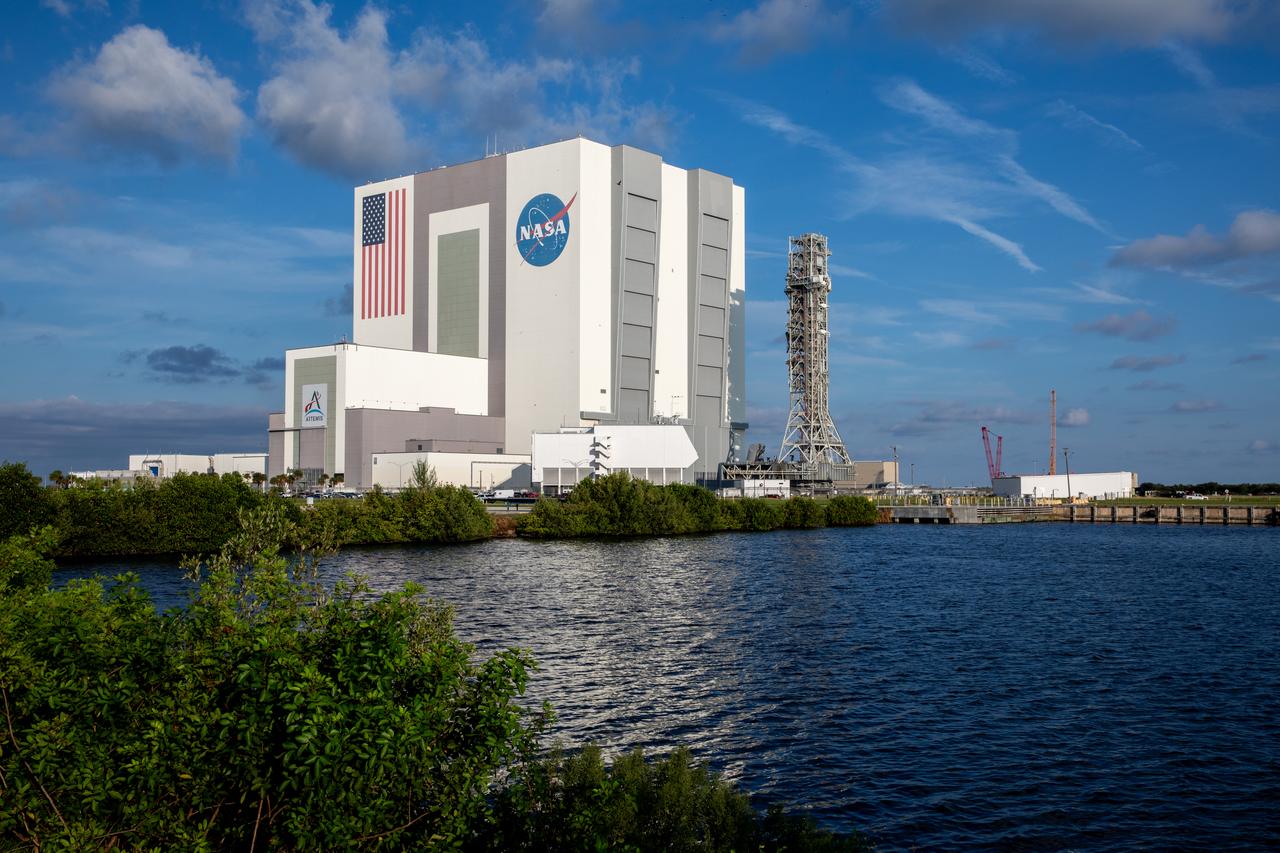
Teams with NASA’s Exploration Ground Systems Program transport the 380-foot-tall mobile launcher 1 along a 4.2-mile stretch to the iconic Vehicle Assembly Building at NASA’s Kennedy Space Center in Florida on Thursday, Oct. 3, 2024. The crawler transporter recently reached 2,500 miles traveling to the launch pad since its construction in 1965. The mobile launcher has been at Launch Complex 39B since August 2023 undergoing upgrades and tests in preparation for NASA’s Artemis II mission. The mobile launcher will be used to assemble, process, and launch NASA’s SLS (Space Launch Systems) and Orion spacecraft to the Moon and beyond.
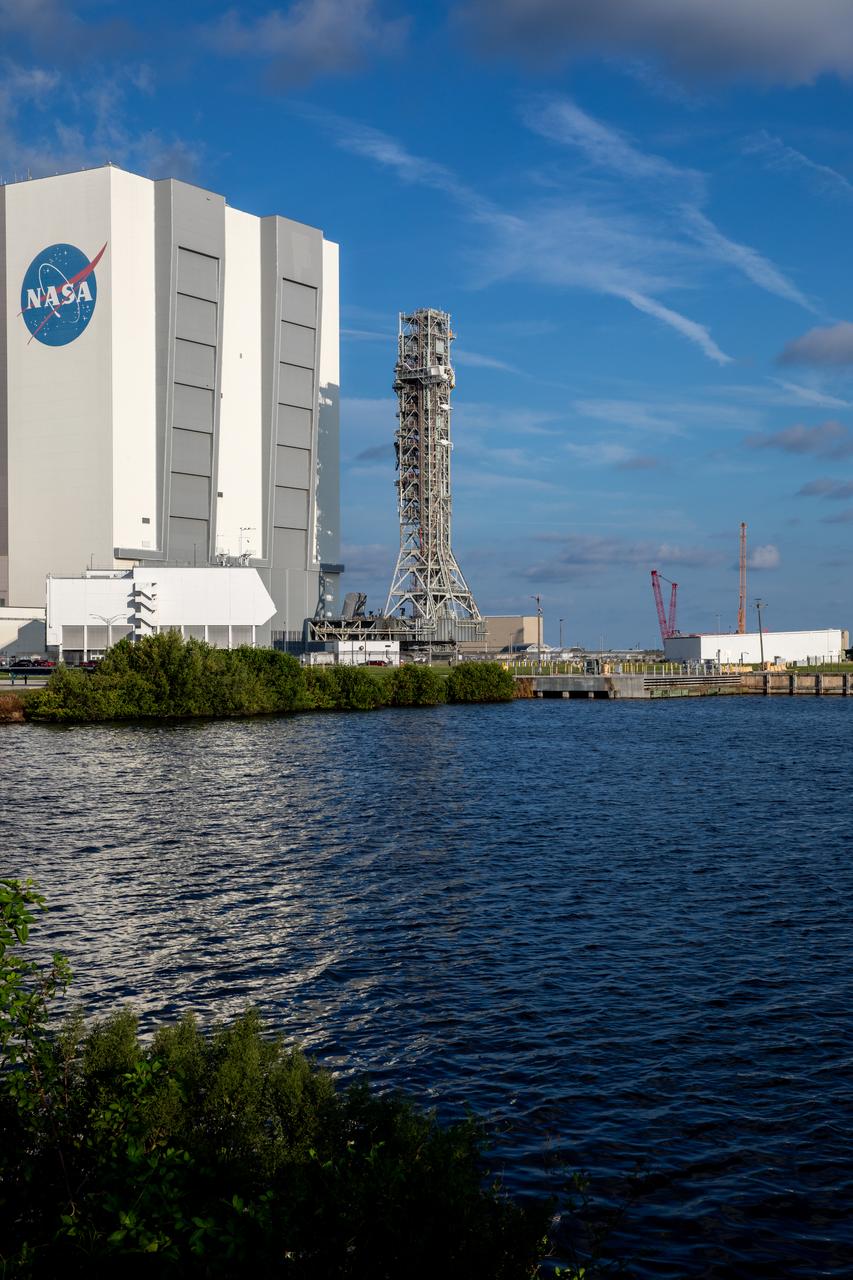
Teams with NASA’s Exploration Ground Systems Program transport the 380-foot-tall mobile launcher 1 along a 4.2-mile stretch to the iconic Vehicle Assembly Building at NASA’s Kennedy Space Center in Florida on Thursday, Oct. 3, 2024. The crawler transporter recently reached 2,500 miles traveling to the launch pad since its construction in 1965. The mobile launcher has been at Launch Complex 39B since August 2023 undergoing upgrades and tests in preparation for NASA’s Artemis II mission. The mobile launcher will be used to assemble, process, and launch NASA’s SLS (Space Launch Systems) and Orion spacecraft to the Moon and beyond.

Teams with NASA’s Exploration Ground Systems Program transport the 380-foot-tall mobile launcher 1 along a 4.2-mile stretch to the iconic Vehicle Assembly Building at NASA’s Kennedy Space Center in Florida on Thursday, Oct. 3, 2024. The crawler transporter recently reached 2,500 miles traveling to the launch pad since its construction in 1965. The mobile launcher has been at Launch Complex 39B since August 2023 undergoing upgrades and tests in preparation for NASA’s Artemis II mission. The mobile launcher will be used to assemble, process, and launch NASA’s SLS (Space Launch Systems) and Orion spacecraft to the Moon and beyond.

Teams with NASA’s Exploration Ground Systems Program transport the 380-foot-tall mobile launcher 1 along a 4.2-mile stretch to the iconic Vehicle Assembly Building at NASA’s Kennedy Space Center in Florida on Thursday, Oct. 3, 2024. The crawler transporter recently reached 2,500 miles traveling to the launch pad since its construction in 1965. The mobile launcher has been at Launch Complex 39B since August 2023 undergoing upgrades and tests in preparation for NASA’s Artemis II mission. The mobile launcher will be used to assemble, process, and launch NASA’s SLS (Space Launch Systems) and Orion spacecraft to the Moon and beyond.
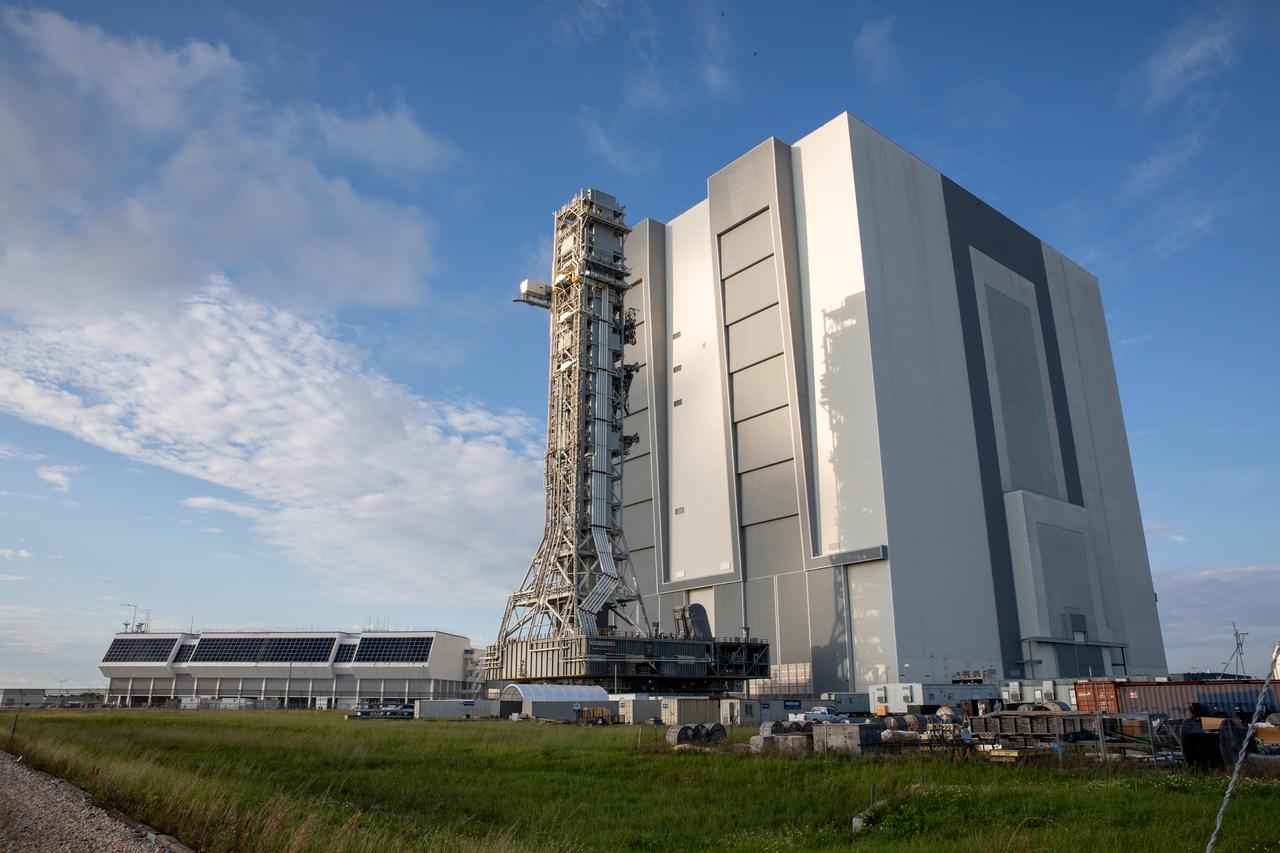
Teams with NASA’s Exploration Ground Systems Program transport the 380-foot-tall mobile launcher 1 along a 4.2-mile stretch to the iconic Vehicle Assembly Building at NASA’s Kennedy Space Center in Florida on Thursday, Oct. 3, 2024. The crawler transporter recently reached 2,500 miles traveling to the launch pad since its construction in 1965. The mobile launcher has been at Launch Complex 39B since August 2023 undergoing upgrades and tests in preparation for NASA’s Artemis II mission. The mobile launcher will be used to assemble, process, and launch NASA’s SLS (Space Launch Systems) and Orion spacecraft to the Moon and beyond.

NASA’s mobile launcher 1 atop the spaceport’s crawler is transported inside the agency’s Vehicle Assembly Building at Kennedy Space Center in Florida ahead of integration of the Artemis II Moon rocket on Friday, Oct. 4, 2024. The mobile launcher will be used to assemble, process, and launch NASA’s SLS (Space Launch Systems) and Orion spacecraft to the Moon and beyond.
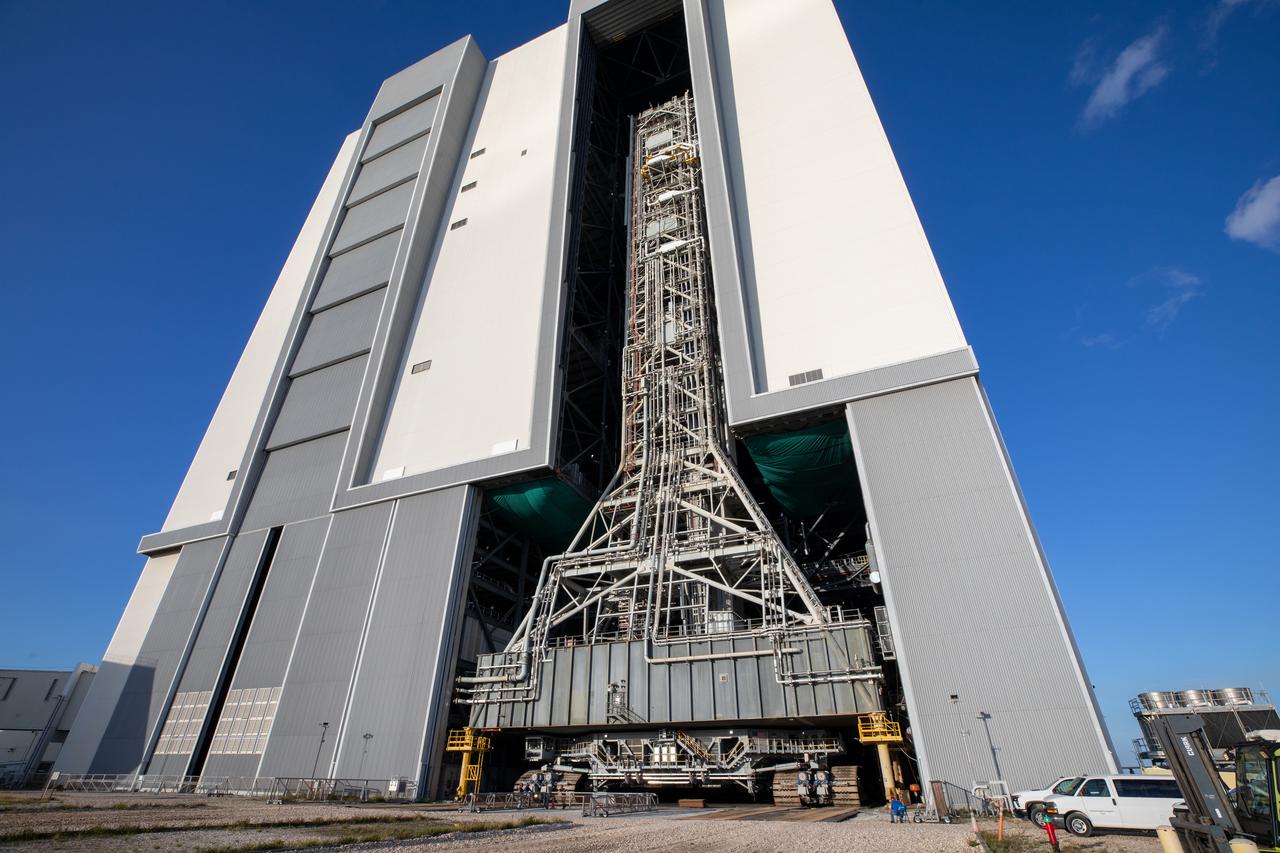
NASA’s mobile launcher 1 atop the spaceport’s crawler is transported inside the agency’s Vehicle Assembly Building at Kennedy Space Center in Florida ahead of integration of the Artemis II Moon rocket on Friday, Oct. 4, 2024. The mobile launcher will be used to assemble, process, and launch NASA’s SLS (Space Launch Systems) and Orion spacecraft to the Moon and beyond.

NASA’s mobile launcher 1 atop the spaceport’s crawler is transported inside the agency’s Vehicle Assembly Building at Kennedy Space Center in Florida ahead of integration of the Artemis II Moon rocket on Friday, Oct. 4, 2024. The mobile launcher will be used to assemble, process, and launch NASA’s SLS (Space Launch Systems) and Orion spacecraft to the Moon and beyond.
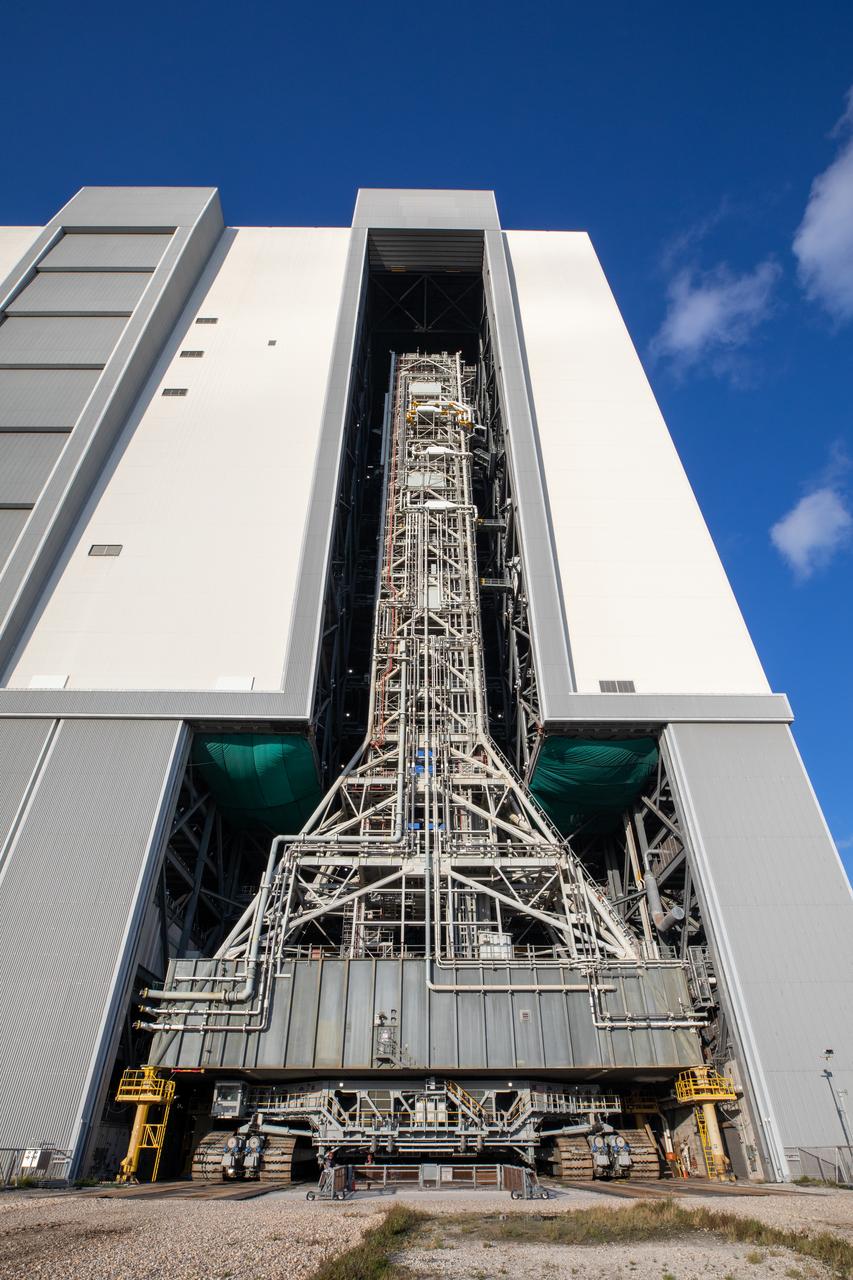
NASA’s mobile launcher 1 atop the spaceport’s crawler is transported inside the agency’s Vehicle Assembly Building at Kennedy Space Center in Florida ahead of integration of the Artemis II Moon rocket on Friday, Oct. 4, 2024. The mobile launcher will be used to assemble, process, and launch NASA’s SLS (Space Launch Systems) and Orion spacecraft to the Moon and beyond.
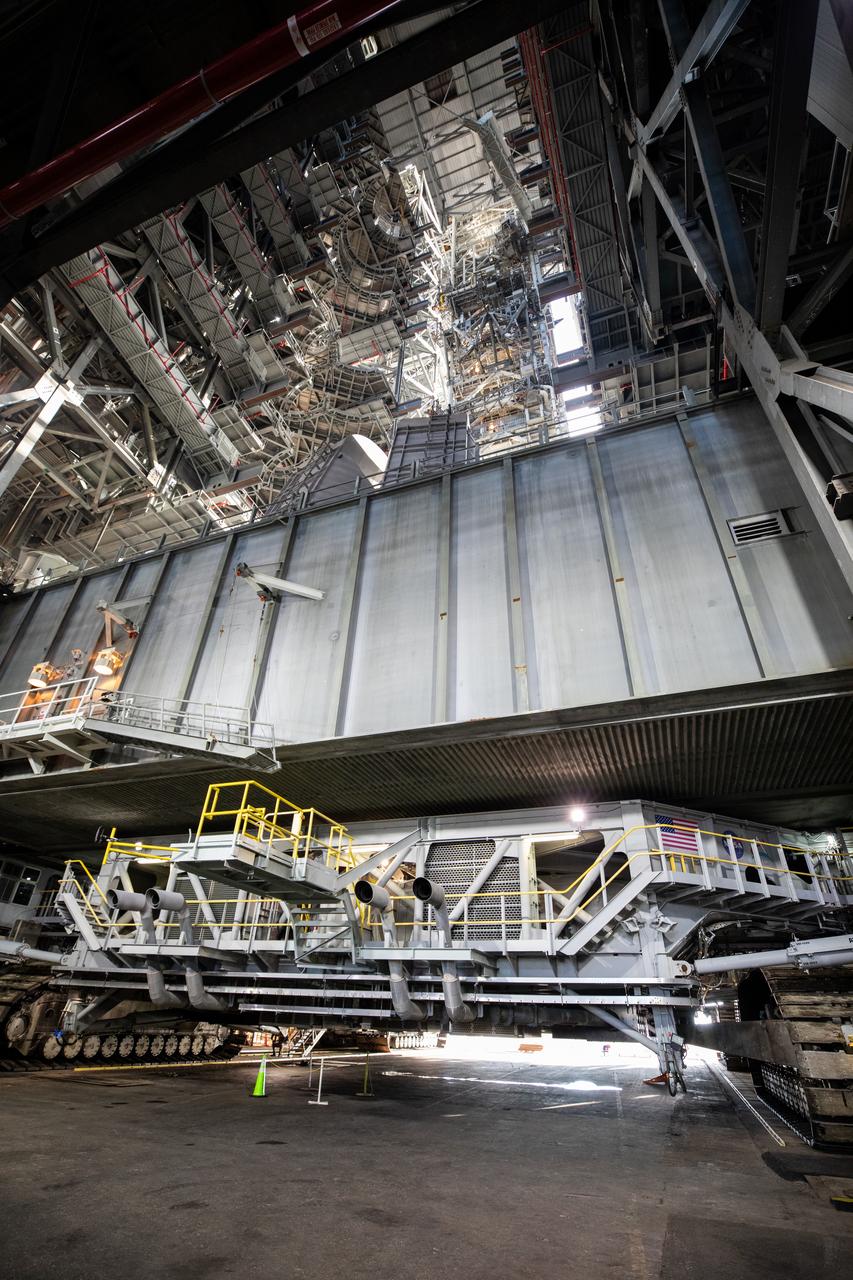
NASA’s mobile launcher 1 atop the spaceport’s crawler is transported inside the agency’s Vehicle Assembly Building at Kennedy Space Center in Florida ahead of integration of the Artemis II Moon rocket on Friday, Oct. 4, 2024. The mobile launcher will be used to assemble, process, and launch NASA’s SLS (Space Launch Systems) and Orion spacecraft to the Moon and beyond.
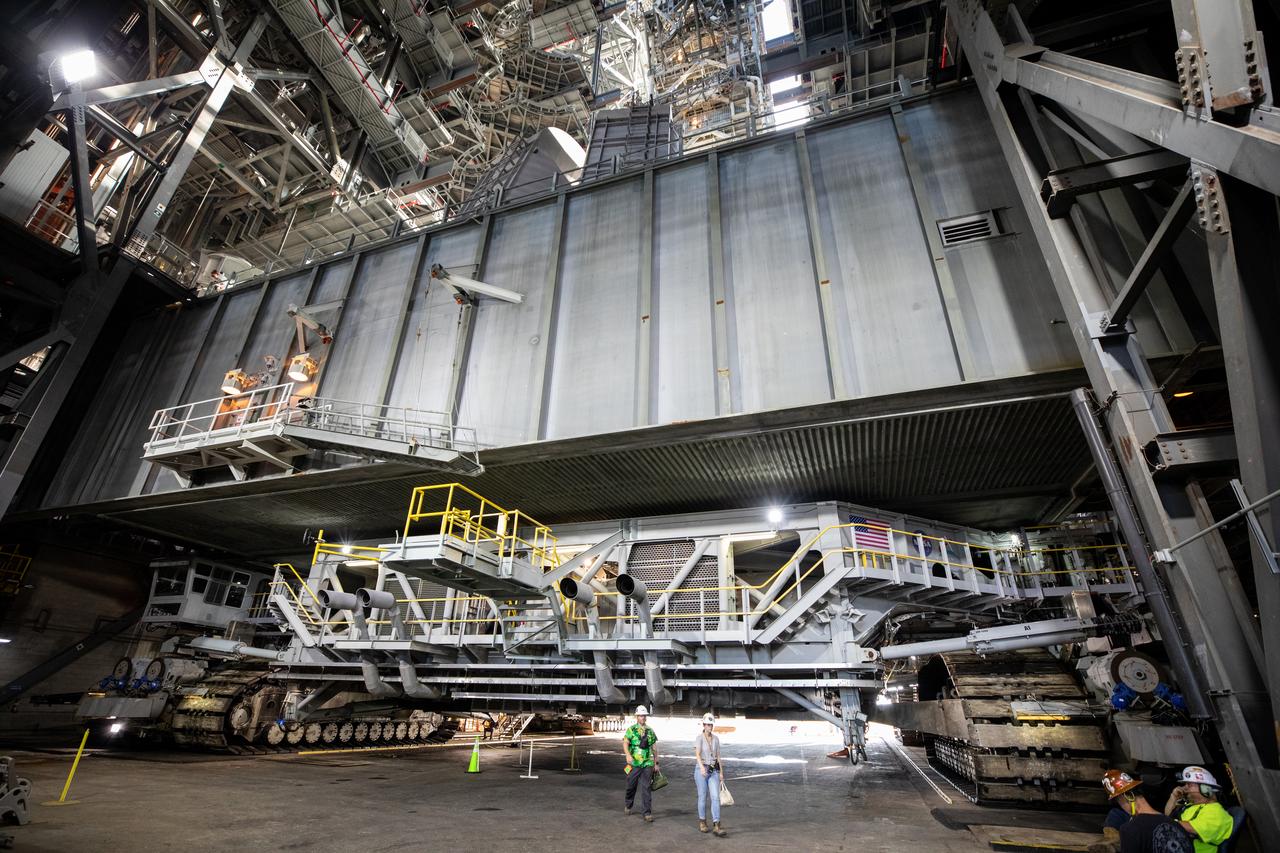
NASA’s mobile launcher 1 atop the spaceport’s crawler is transported inside the agency’s Vehicle Assembly Building at Kennedy Space Center in Florida ahead of integration of the Artemis II Moon rocket on Friday, Oct. 4, 2024. The mobile launcher will be used to assemble, process, and launch NASA’s SLS (Space Launch Systems) and Orion spacecraft to the Moon and beyond.
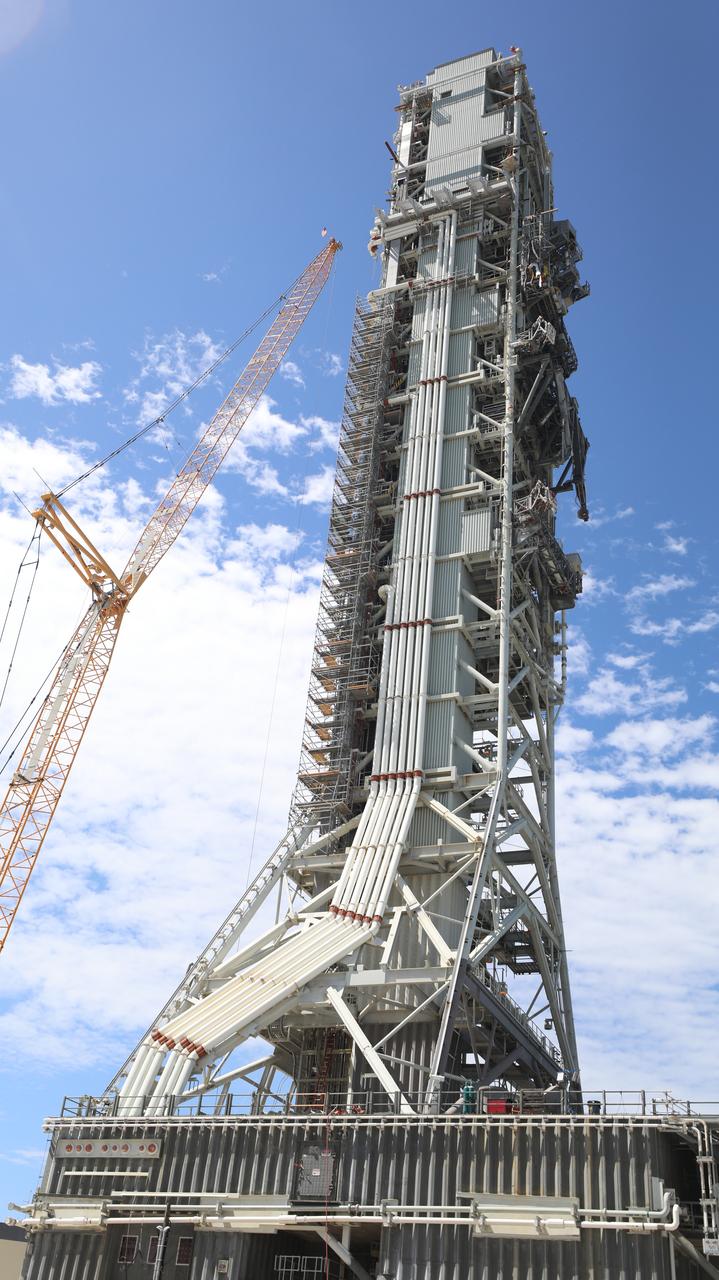
Teams with Exploration Ground Systems at NASA’s Kennedy Space Center in Florida make upgrades and repairs on mobile launcher 1 at its park site location on July 20, 2023, ahead of the first critical ground testing for Artemis II. Under Artemis, the mobile launcher will transport NASA’s Space Launch System rocket and Orion spacecraft to Kennedy’s Launch Complex 39B for liftoff. Artemis II will be the first Artemis mission flying crew aboard Orion.

Teams with Exploration Ground Systems at NASA’s Kennedy Space Center in Florida make upgrades and repairs on mobile launcher 1 at its park site location on July 20, 2023, ahead of the first critical ground testing for Artemis II. Under Artemis, the mobile launcher will transport NASA’s Space Launch System rocket and Orion spacecraft to Kennedy’s Launch Complex 39B for liftoff. Artemis II will be the first Artemis mission flying crew aboard Orion.
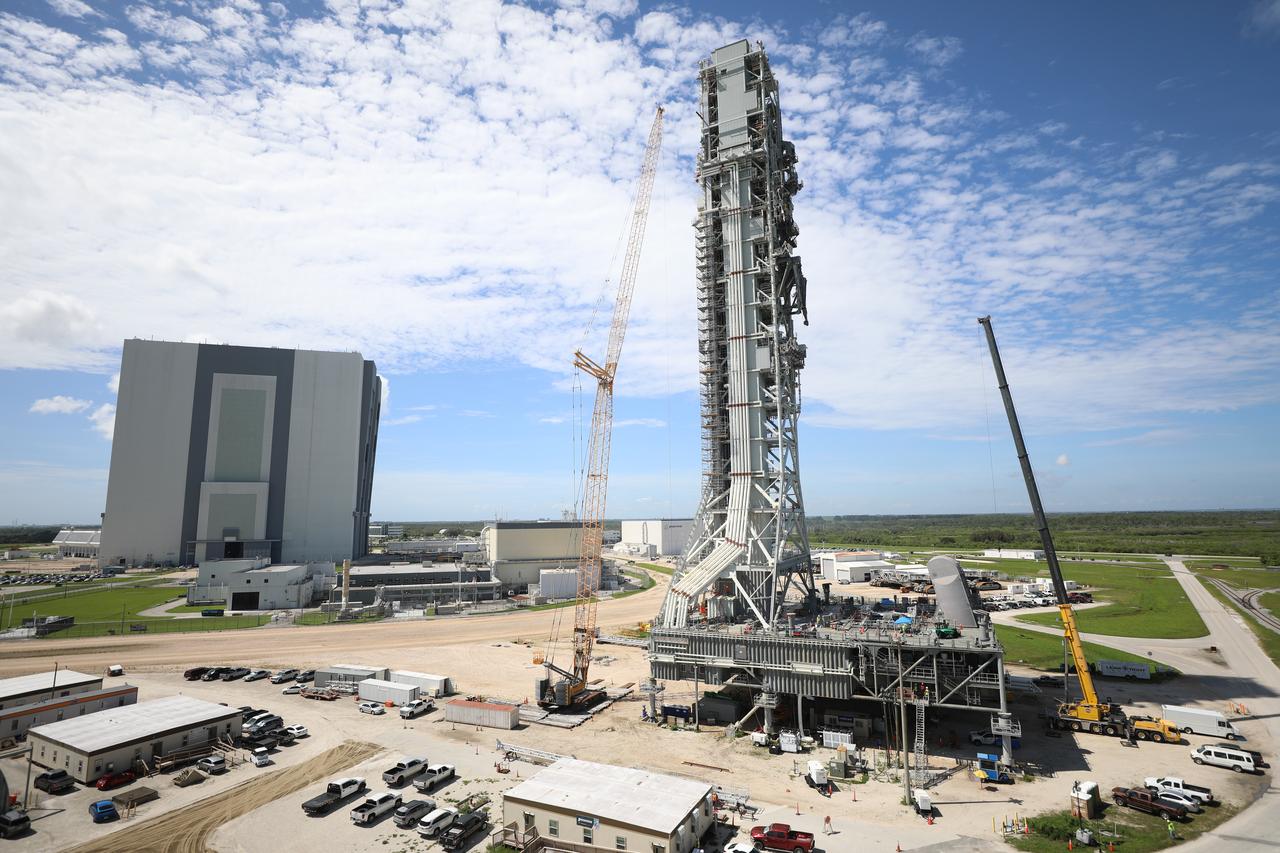
With the iconic Vehicle Assembly Building at NASA’s Kennedy Space Center in Florida nearby, teams with Exploration Ground Systems make upgrades and repairs on mobile launcher 1 at its park site location on July 20, 2023, ahead of the first critical ground testing for Artemis II. Under Artemis, the mobile launcher will transport NASA’s Space Launch System rocket and Orion spacecraft to Kennedy’s Launch Complex 39B for liftoff. Artemis II will be the first Artemis mission flying crew aboard Orion.
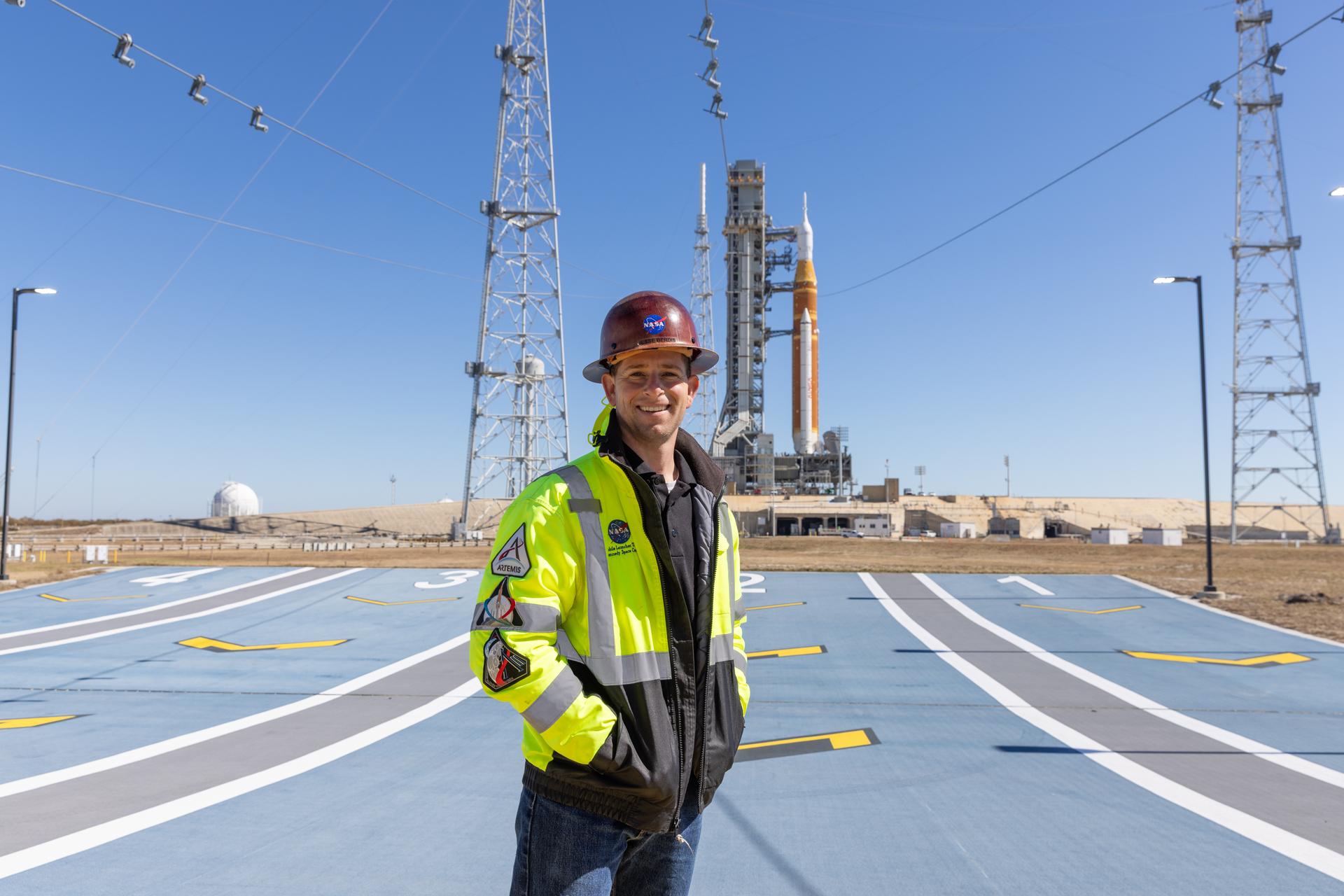
Jesse Berdis, Artemis II mobile launcher 1 deputy project manager, poses for a photo near the emergency egress system at Launch Complex 39B at NASA’s Kennedy Space Center in Florida on Friday, Feb. 6, 2026. The emergency egress system is an abort system for personnel to climb into four baskets of the mobile launcher to the base of the pad in the unlikely event of an emergency at the launch pad. Mobile launcher 1 supports the integration, testing, and checkouts of the SLS (Space Launch System) rocket and Orion spacecraft for the Artemis II mission.
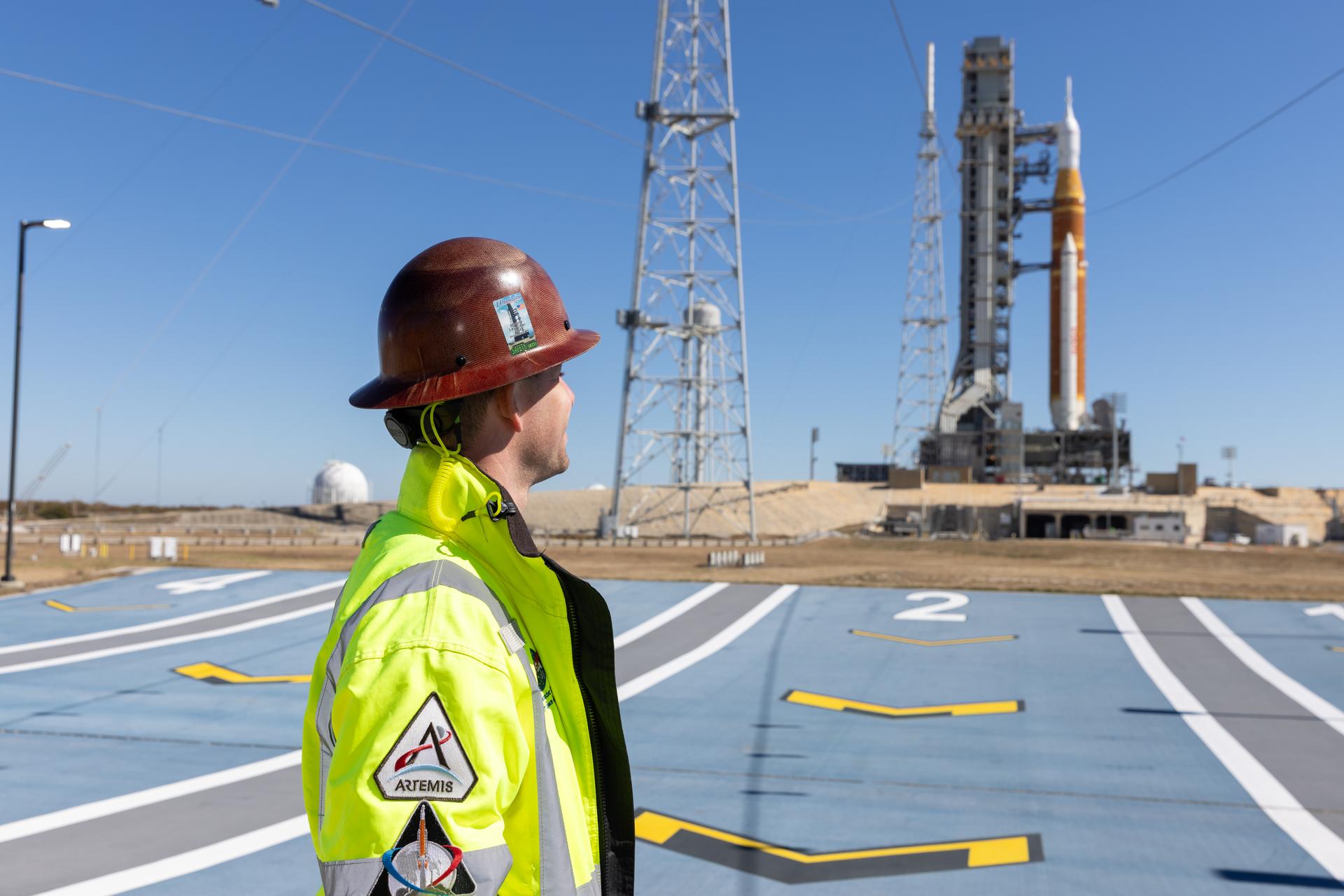
Jesse Berdis, Artemis II mobile launcher 1 deputy project manager, poses for a photo near the emergency egress system at Launch Complex 39B at NASA’s Kennedy Space Center in Florida on Friday, Feb. 6, 2026. The emergency egress system is an abort system for personnel to climb into four baskets of the mobile launcher to the base of the pad in the unlikely event of an emergency at the launch pad. Mobile launcher 1 supports the integration, testing, and checkouts of the SLS (Space Launch System) rocket and Orion spacecraft for the Artemis II mission.
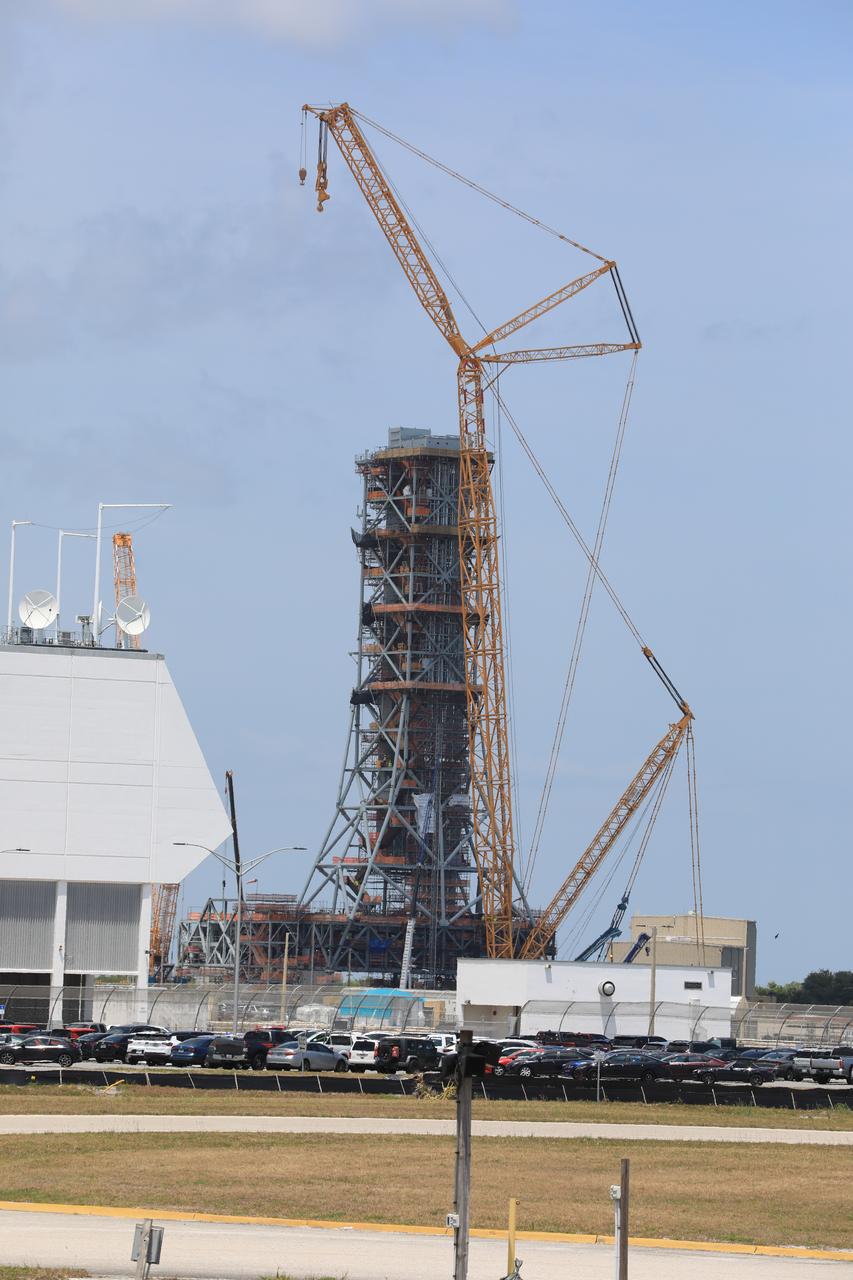
NASA’s mobile launcher 2 team, led by contractor Bechtel National Inc., integrated Module 7 onto the mobile launcher under construction near the Vehicle Assembly Building at the agency’s Kennedy Space Center in Florida on Wednesday, April 23, 2025. Each module is 40 feet tall and once complete will rise to 390 feet to provide ground support to launch for the SLS (Space Launch System) Block 1B variant rocket during launch of the Artemis IV mission.

NASA’s mobile launcher 2 team, led by contractor Bechtel National Inc., integrated Module 7 onto the mobile launcher under construction near the Vehicle Assembly Building at the agency’s Kennedy Space Center in Florida on Wednesday, April 23, 2025. Each module is 40 feet tall and once complete will rise to 390 feet to provide ground support to launch for the SLS (Space Launch System) Block 1B variant rocket during launch of the Artemis IV mission.
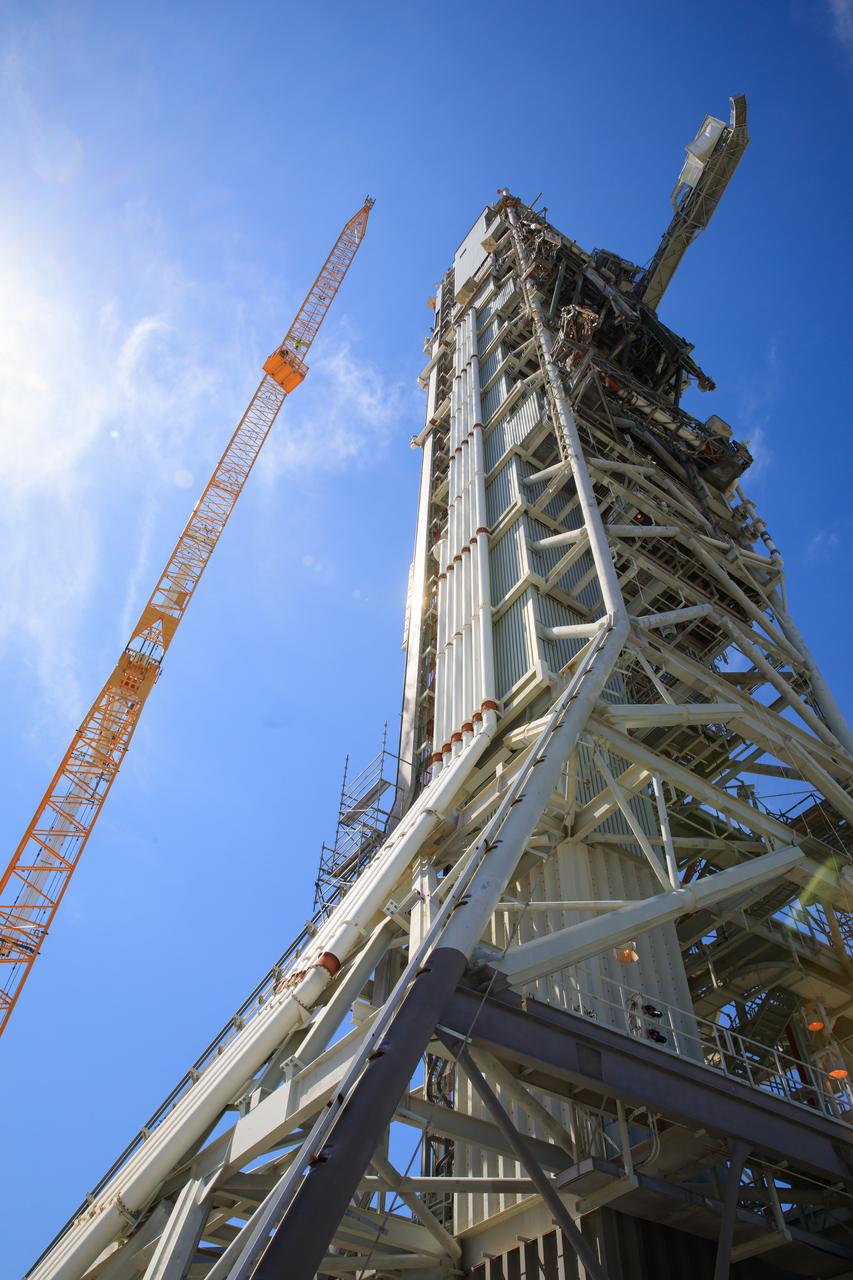
Teams with Exploration Ground Systems at NASA’s Kennedy Space Center in Florida continue to work the upgrades and repairs on mobile launcher 1 and Launch Pad 39B on June 13, 2023, ahead of the first critical ground testing for Artemis II. The crew access arm (CAA) has been extended in this view of the mobile launcher. The CAA is the entry and exit point astronauts will use for access to the Orion spacecraft. Tests will be conducted to ensure the arm and supporting mobile launcher systems are certified to support crewed missions. Artemis II will be the first Artemis mission flying crew aboard Orion.
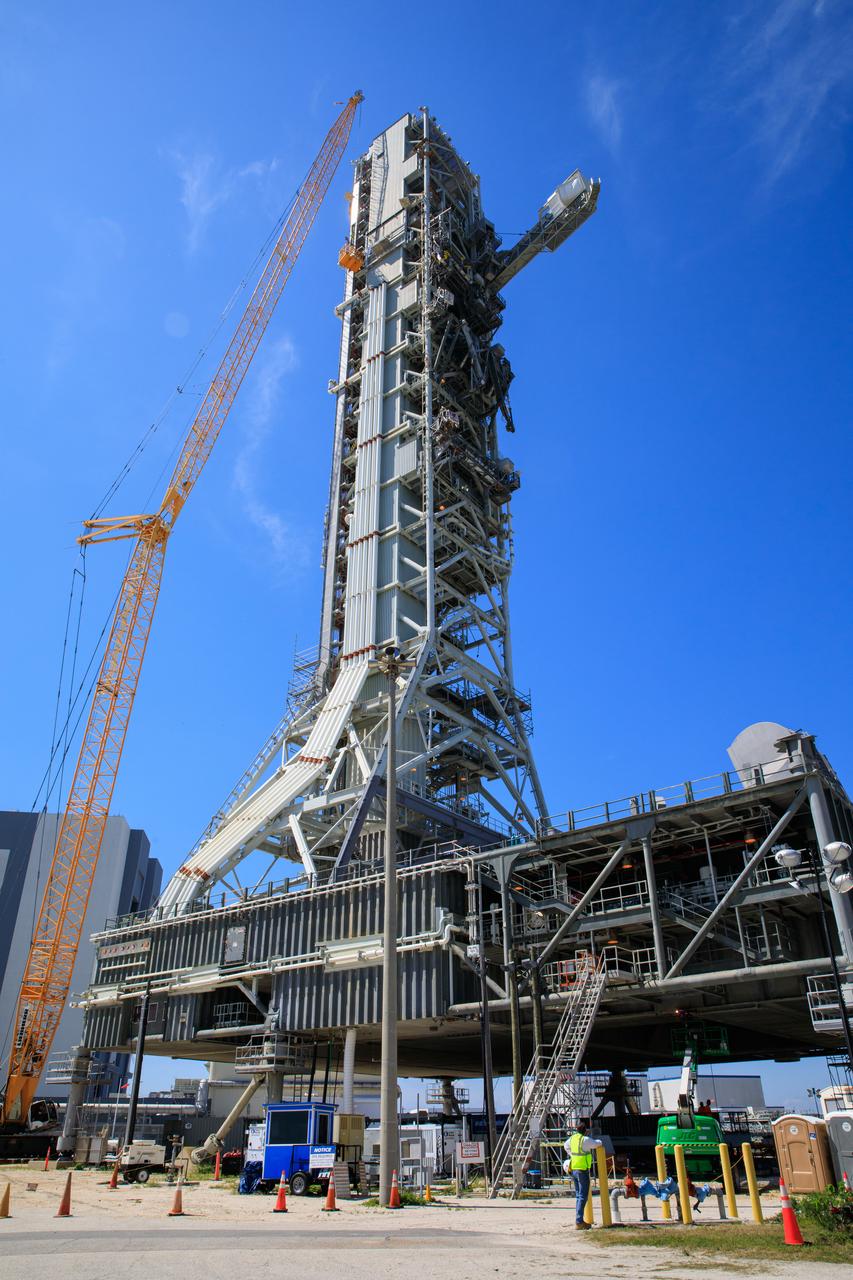
Teams with Exploration Ground Systems at NASA’s Kennedy Space Center in Florida continue to work the upgrades and repairs on mobile launcher 1 and Launch Pad 39B on June 13, 2023, ahead of the first critical ground testing for Artemis II. The crew access arm (CAA) has been extended in this view of the mobile launcher. The CAA is the entry and exit point astronauts will use for access to the Orion spacecraft. Tests will be conducted to ensure the arm and supporting mobile launcher systems are certified to support crewed missions. Artemis II will be the first Artemis mission flying crew aboard Orion.

Teams with Exploration Ground Systems at NASA’s Kennedy Space Center in Florida continue to work the upgrades and repairs on mobile launcher 1 and Launch Pad 39B on June 13, 2023, ahead of the first critical ground testing for Artemis II. New pavement markings indicate the direction of the emergency egress system terminus from Launch Complex 39B. The team has nearly completed the terminus area, where the emergency egress baskets carrying the astronauts and flight crew will arrive following their safe exit from the mobile launcher. Artemis II will be the first Artemis mission flying crew aboard Orion.
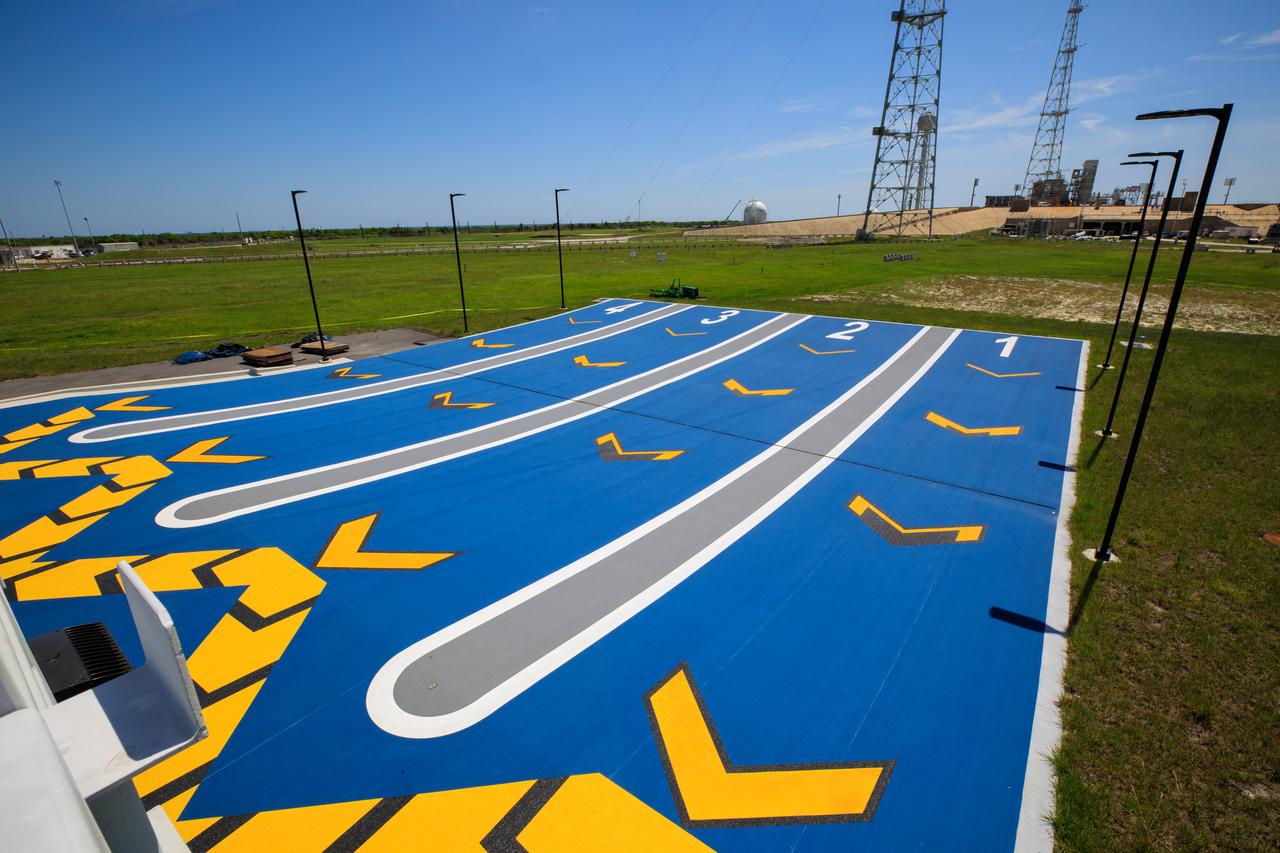
Teams with Exploration Ground Systems at NASA’s Kennedy Space Center in Florida continue to work the upgrades and repairs on mobile launcher 1 and Launch Pad 39B on June 13, 2023, ahead of the first critical ground testing for Artemis II. New pavement markings indicate the direction of the emergency egress system terminus from Launch Complex 39B. The team has nearly completed the terminus area, where the emergency egress baskets carrying the astronauts and flight crew will arrive following their safe exit from the mobile launcher. Artemis II will be the first Artemis mission flying crew aboard Orion.

Teams with Exploration Ground Systems at NASA’s Kennedy Space Center in Florida continue to work the upgrades and repairs on mobile launcher 1 and Launch Pad 39B on June 13, 2023, ahead of the first critical ground testing for Artemis II. New pavement markings indicate the direction of the emergency egress system terminus from Launch Complex 39B. The team has nearly completed the terminus area, where the emergency egress baskets carrying the astronauts and flight crew will arrive following their safe exit from the mobile launcher. Artemis II will be the first Artemis mission flying crew aboard Orion.
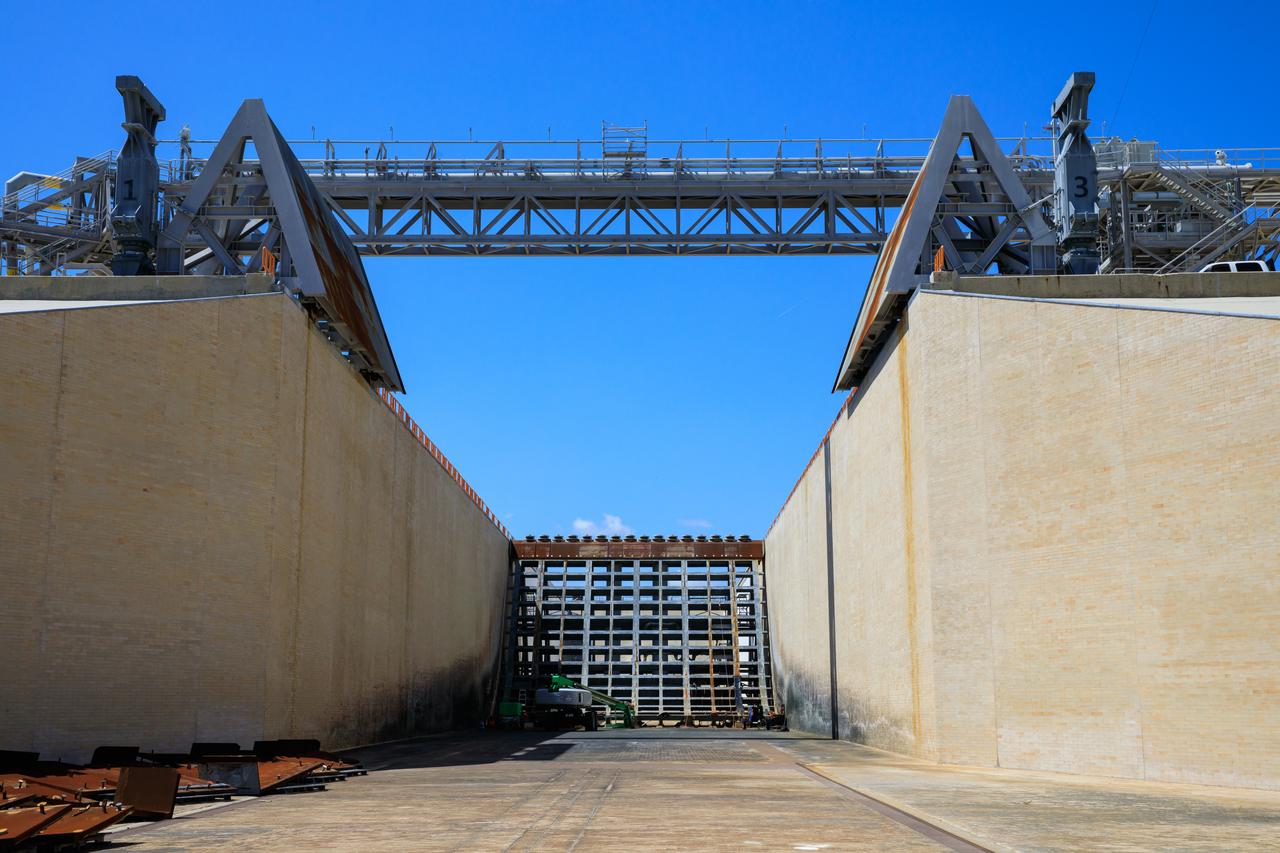
Teams with Exploration Ground Systems at NASA’s Kennedy Space Center in Florida continue to work the upgrades and repairs on mobile launcher 1 and Launch Pad 39B on June 13, 2023, ahead of the first critical ground testing for Artemis II. Teams are re-designing the panels on the flame deflector in the flame trench that withstood damage observed after launch of Artemis I. Artemis II will be the first Artemis mission flying crew aboard Orion.
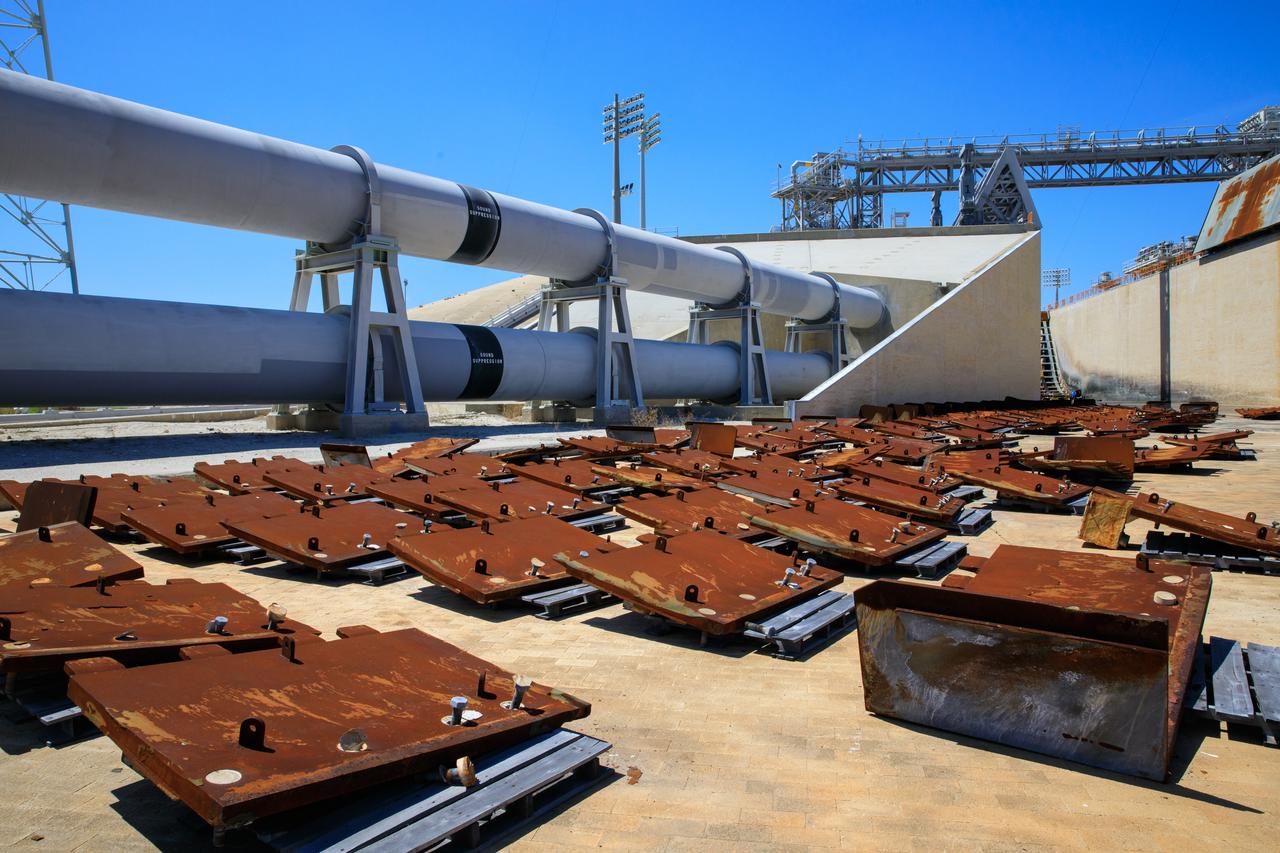
Teams with Exploration Ground Systems at NASA’s Kennedy Space Center in Florida continue to work the upgrades and repairs on mobile launcher 1 and Launch Pad 39B on June 13, 2023, ahead of the first critical ground testing for Artemis II. Teams are re-designing the panels on the flame deflector in the flame trench that withstood damage observed after launch of Artemis I. Artemis II will be the first Artemis mission flying crew aboard Orion.
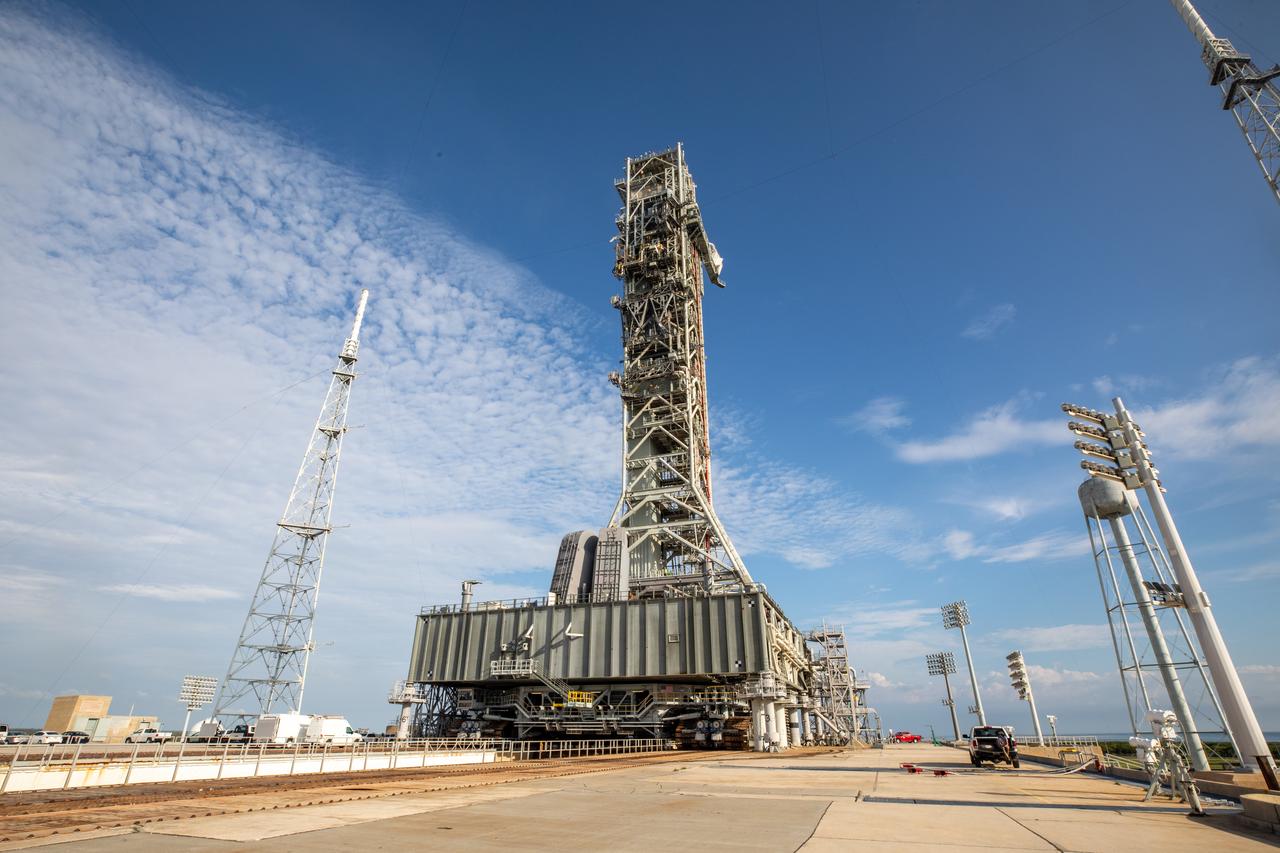
Teams with NASA’s Exploration Ground Systems Program at the agency’s Kennedy Space Center in Florida prepare to move mobile launcher 1 atop the agency’s crawler-transporter 2 from Launch Complex 39B to the Vehicle Assembly Building on Tuesday, Oct. 1, 2024. The crawler recently reached 2,500 miles traveling to the launch pad since its construction in 1965. The mobile launcher has been at the launch pad since August 2023 undergoing upgrades and tests in preparation for NASA’s Artemis II mission. The mobile launcher will be used to assemble, process, and launch NASA’s SLS (Space Launch System) and Orion spacecraft to the Moon and beyond.
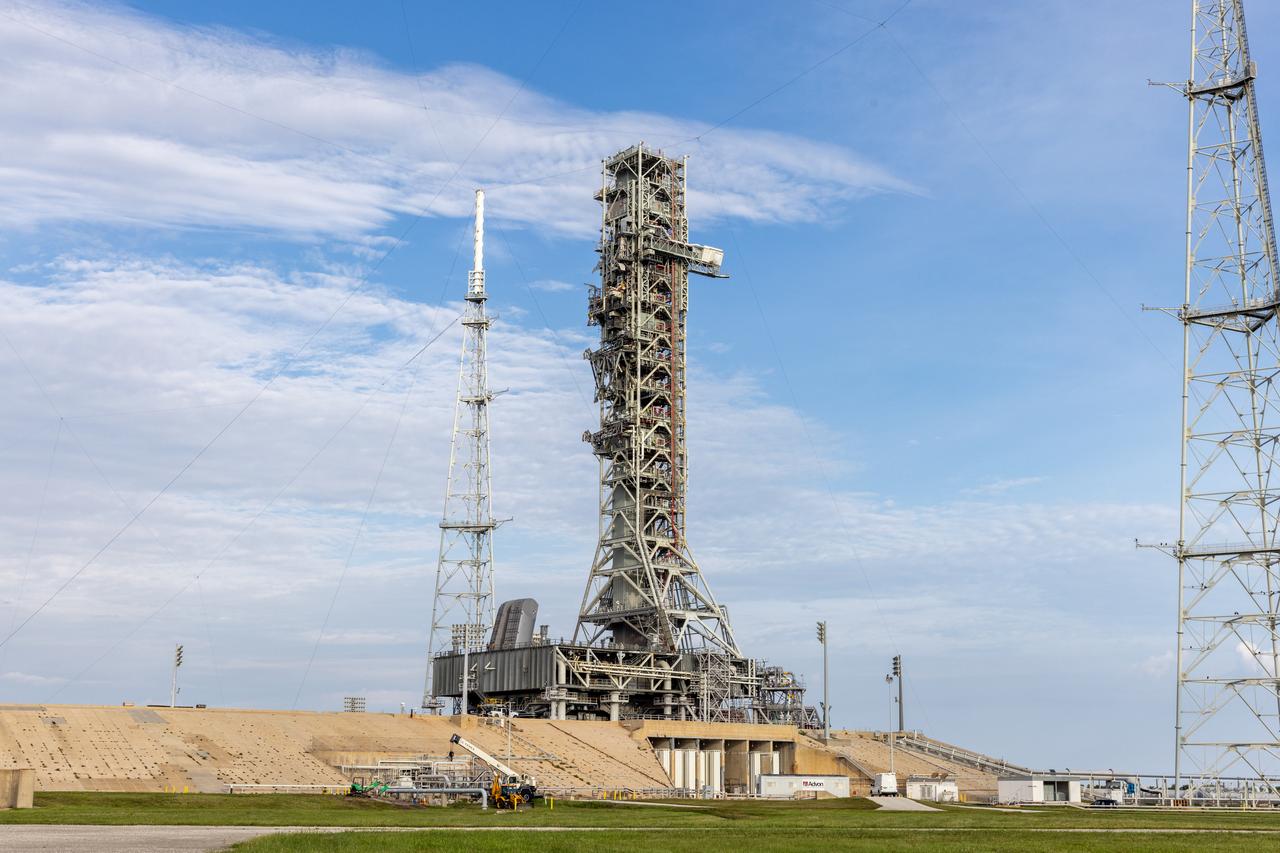
Teams with NASA’s Exploration Ground Systems Program at the agency’s Kennedy Space Center in Florida prepare to move mobile launcher 1 atop the agency’s crawler-transporter 2 from Launch Complex 39B to the Vehicle Assembly Building on Tuesday, Oct. 1, 2024. The crawler recently reached 2,500 miles traveling to the launch pad since its construction in 1965. The mobile launcher has been at the launch pad since August 2023 undergoing upgrades and tests in preparation for NASA’s Artemis II mission. The mobile launcher will be used to assemble, process, and launch NASA’s SLS (Space Launch Systems) and Orion spacecraft to the Moon and beyond.
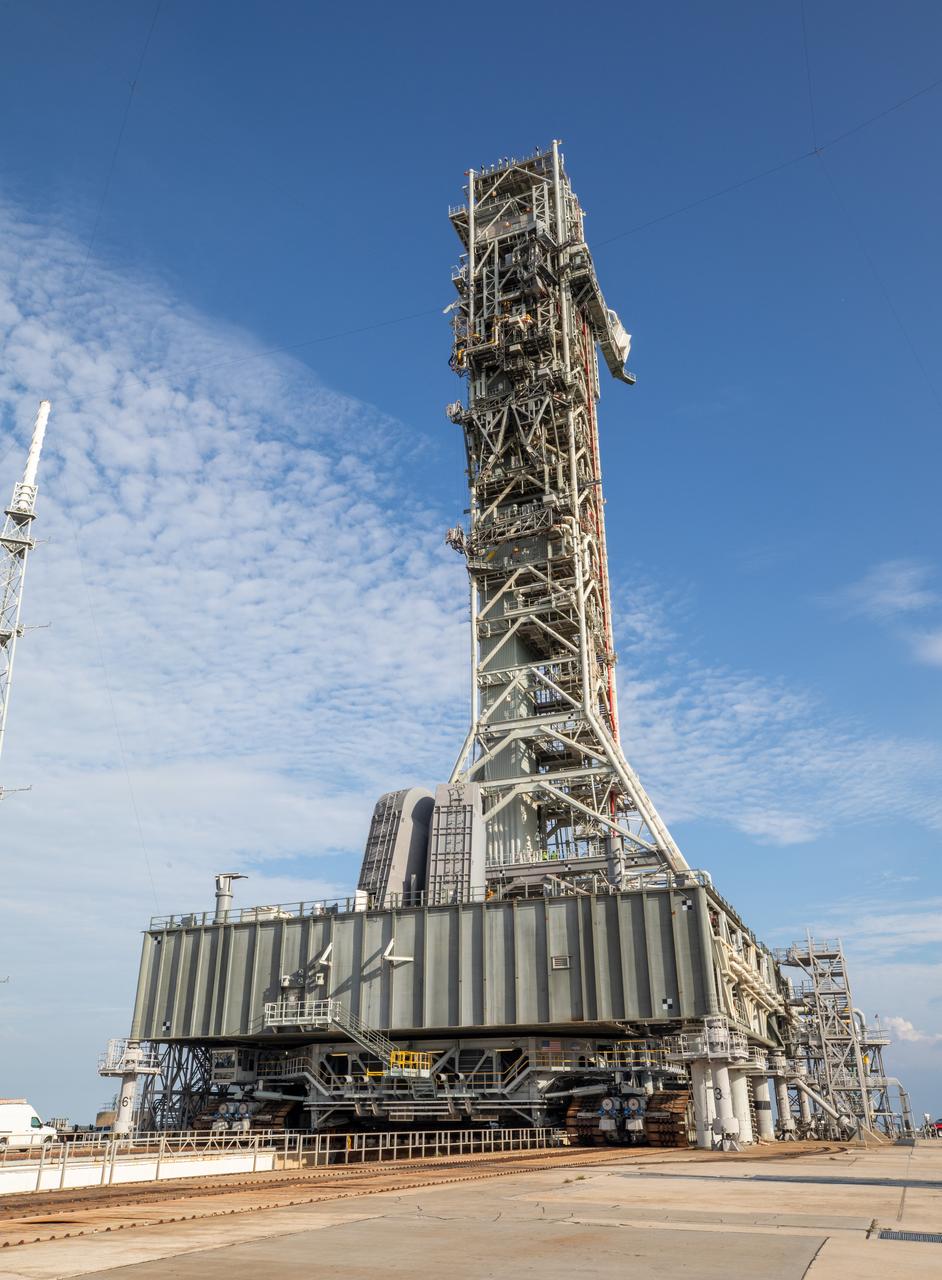
Teams with NASA’s Exploration Ground Systems Program at the agency’s Kennedy Space Center in Florida prepare to move mobile launcher 1 atop the agency’s crawler-transporter 2 from Launch Complex 39B to the Vehicle Assembly Building on Tuesday, Oct. 1, 2024. The crawler recently reached 2,500 miles traveling to the launch pad since its construction in 1965. The mobile launcher has been at the launch pad since August 2023 undergoing upgrades and tests in preparation for NASA’s Artemis II mission. The mobile launcher will be used to assemble, process, and launch NASA’s SLS (Space Launch System) and Orion spacecraft to the Moon and beyond.
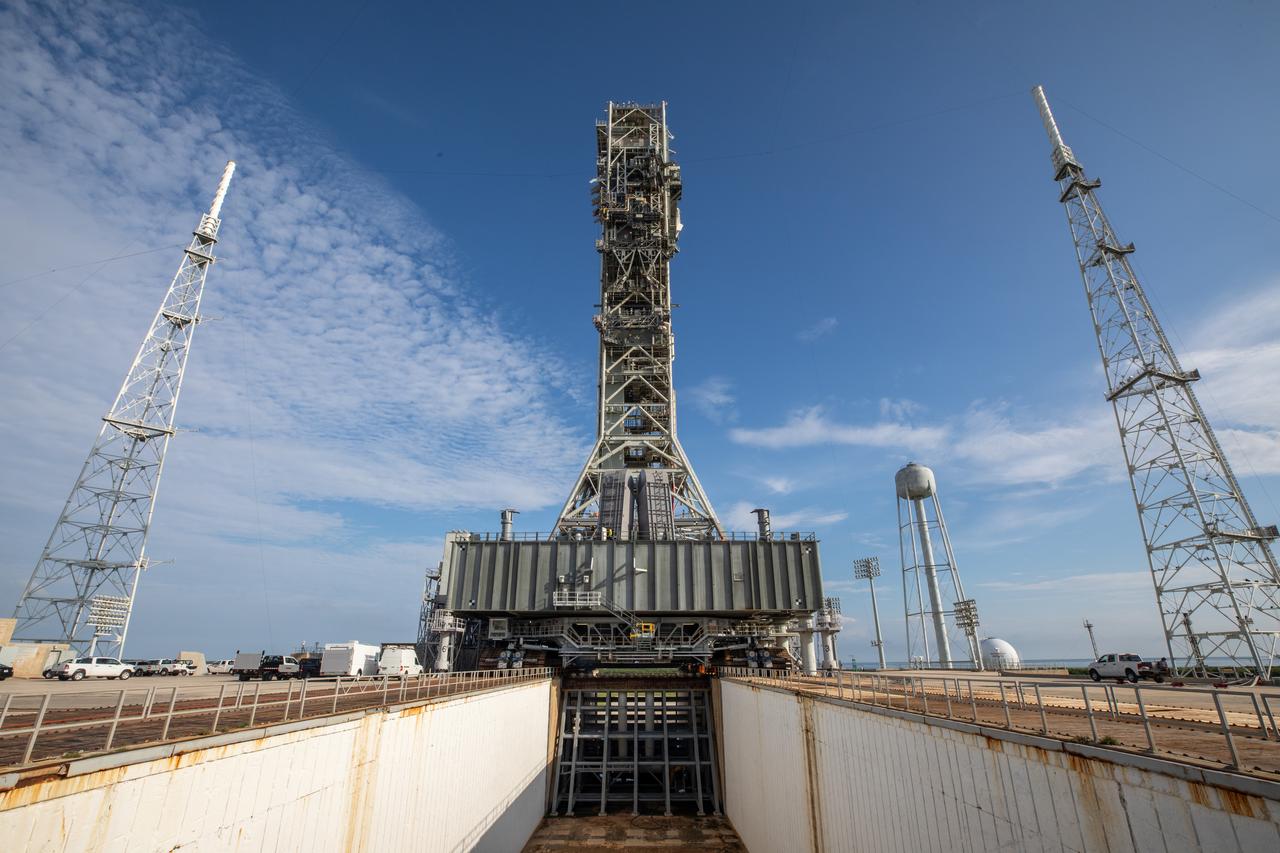
Teams with NASA’s Exploration Ground Systems Program at the agency’s Kennedy Space Center in Florida prepare to move mobile launcher 1 atop the agency’s crawler-transporter 2 from Launch Complex 39B to the Vehicle Assembly Building on Tuesday, Oct. 1, 2024. The crawler recently reached 2,500 miles traveling to the launch pad since its construction in 1965. The mobile launcher has been at the launch pad since August 2023 undergoing upgrades and tests in preparation for NASA’s Artemis II mission. The mobile launcher will be used to assemble, process, and launch NASA’s SLS (Space Launch System) and Orion spacecraft to the Moon and beyond.
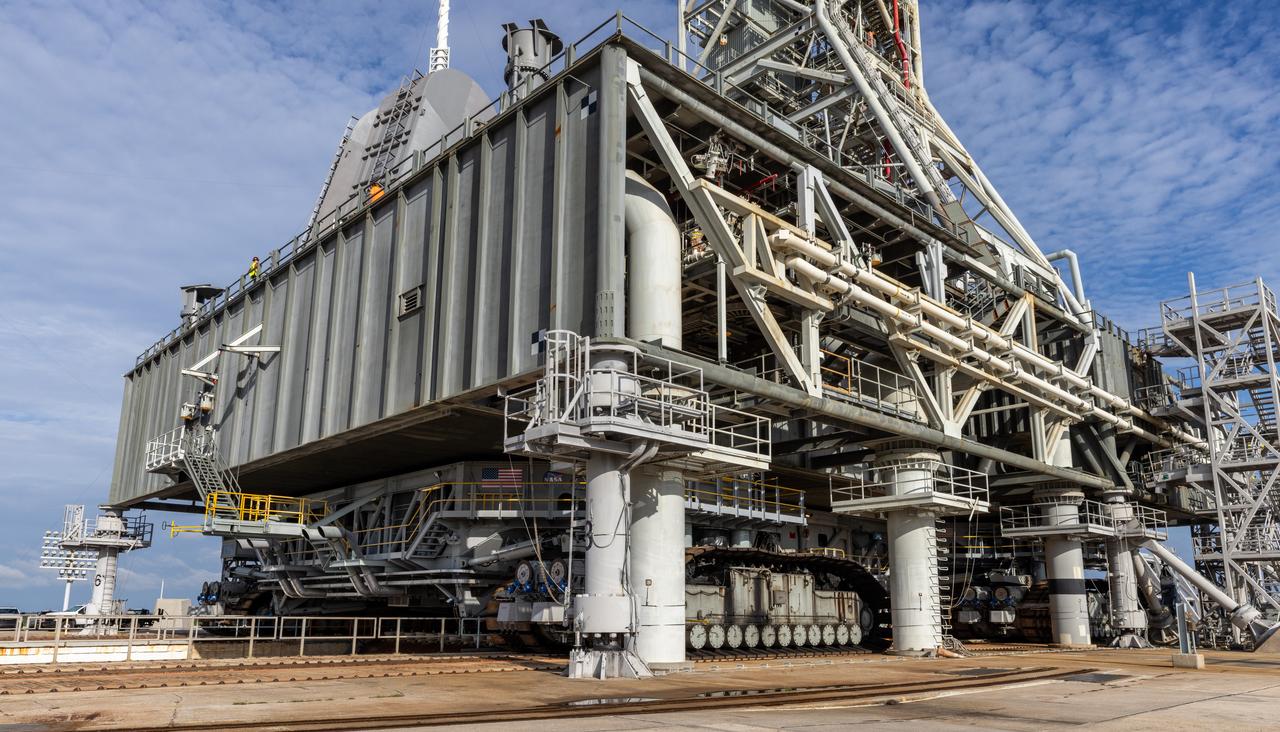
Teams with NASA’s Exploration Ground Systems Program at the agency’s Kennedy Space Center in Florida prepare to move mobile launcher 1 atop the agency’s crawler-transporter 2 from Launch Complex 39B to the Vehicle Assembly Building on Tuesday, Oct. 1, 2024. The crawler recently reached 2,500 miles traveling to the launch pad since its construction in 1965. The mobile launcher has been at the launch pad since August 2023 undergoing upgrades and tests in preparation for NASA’s Artemis II mission. The mobile launcher will be used to assemble, process, and launch NASA’s SLS (Space Launch System) and Orion spacecraft to the Moon and beyond.
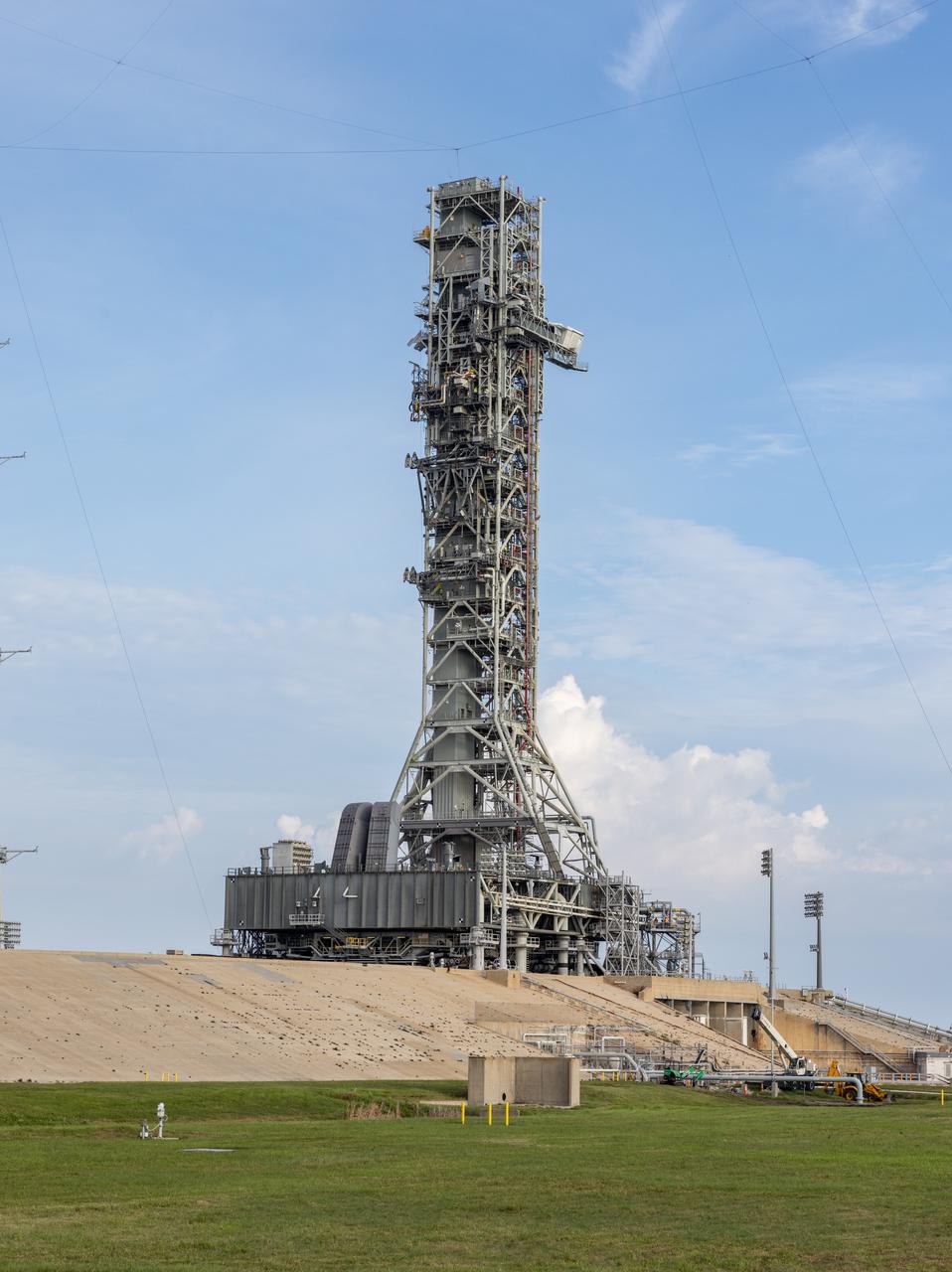
Teams with NASA’s Exploration Ground Systems Program at the agency’s Kennedy Space Center in Florida prepare to move mobile launcher 1 atop the agency’s crawler-transporter 2 from Launch Complex 39B to the Vehicle Assembly Building on Tuesday, Oct. 1, 2024. The crawler recently reached 2,500 miles traveling to the launch pad since its construction in 1965. The mobile launcher has been at the launch pad since August 2023 undergoing upgrades and tests in preparation for NASA’s Artemis II mission. The mobile launcher will be used to assemble, process, and launch NASA’s SLS (Space Launch System) and Orion spacecraft to the Moon and beyond.
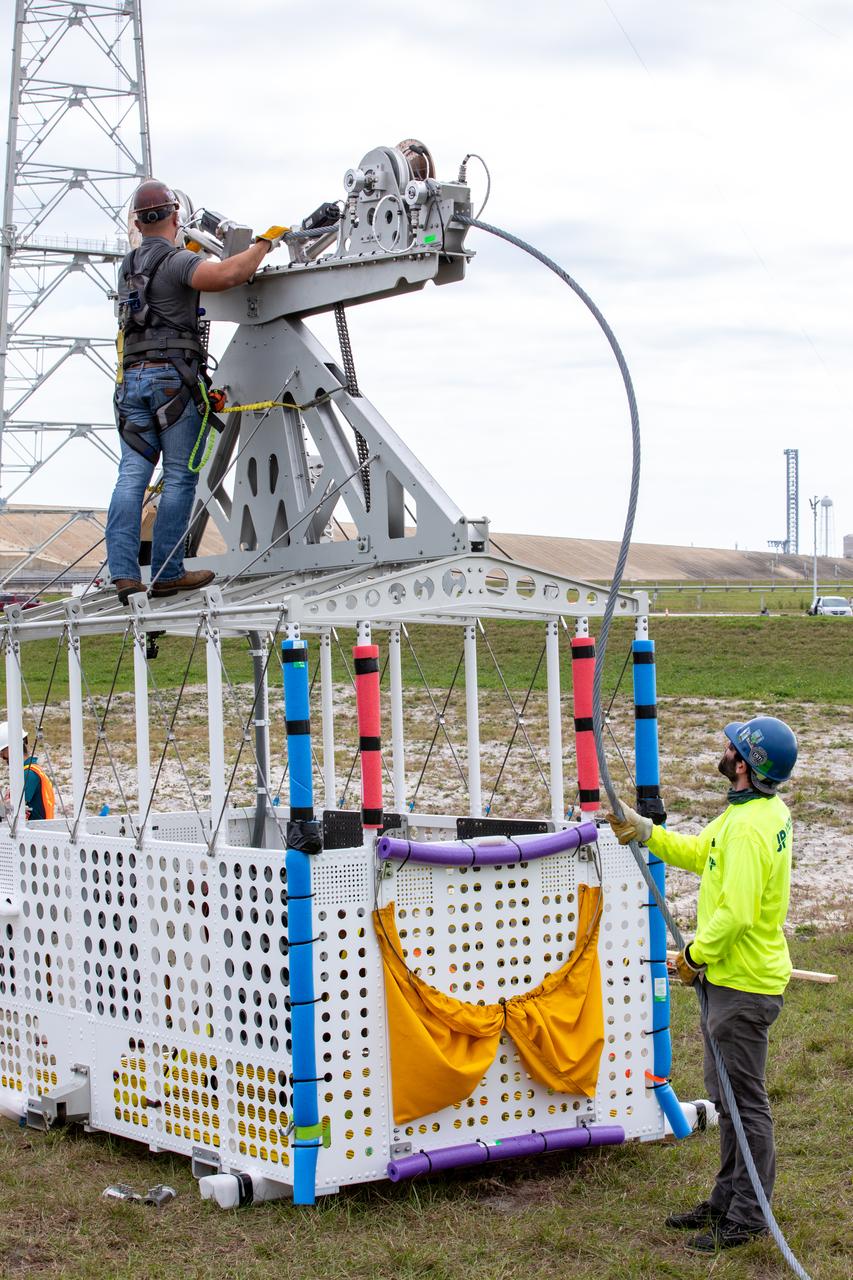
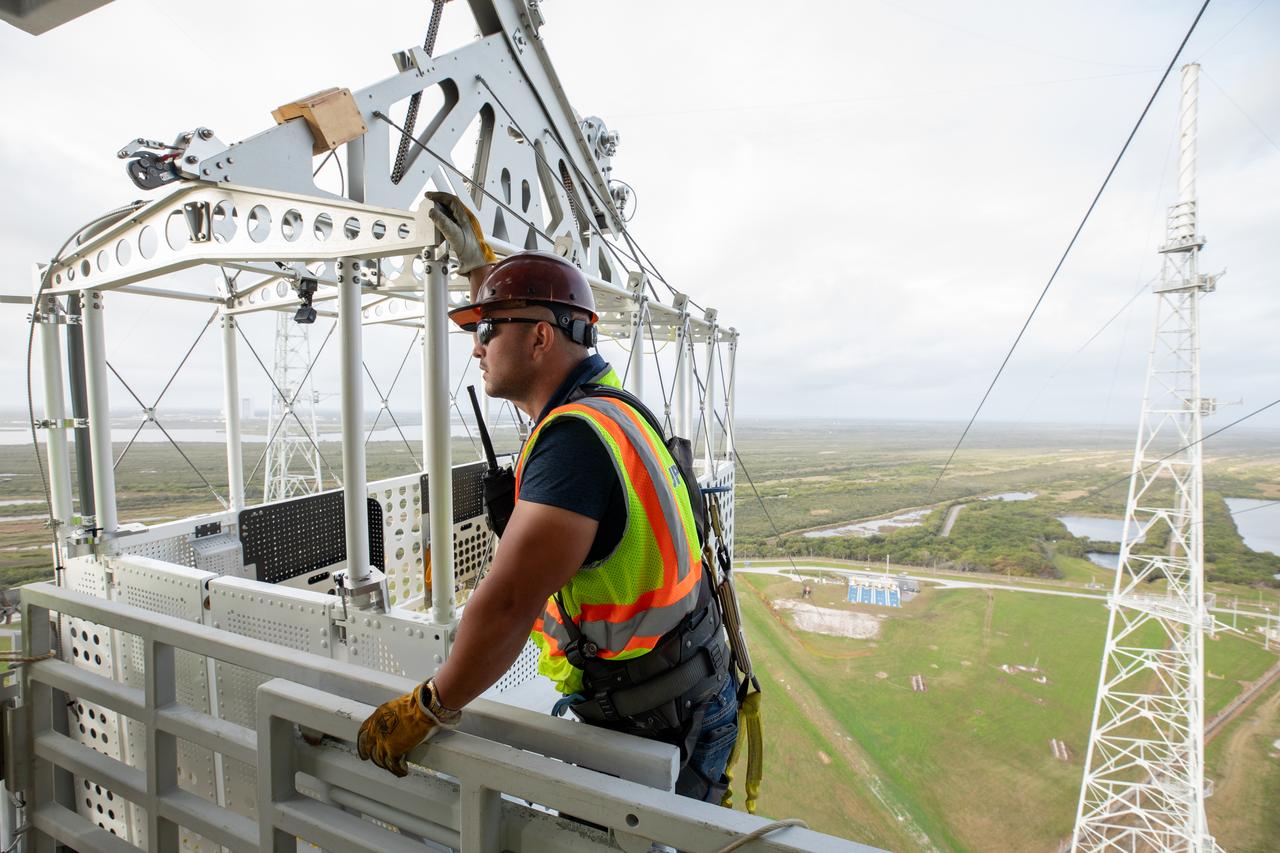
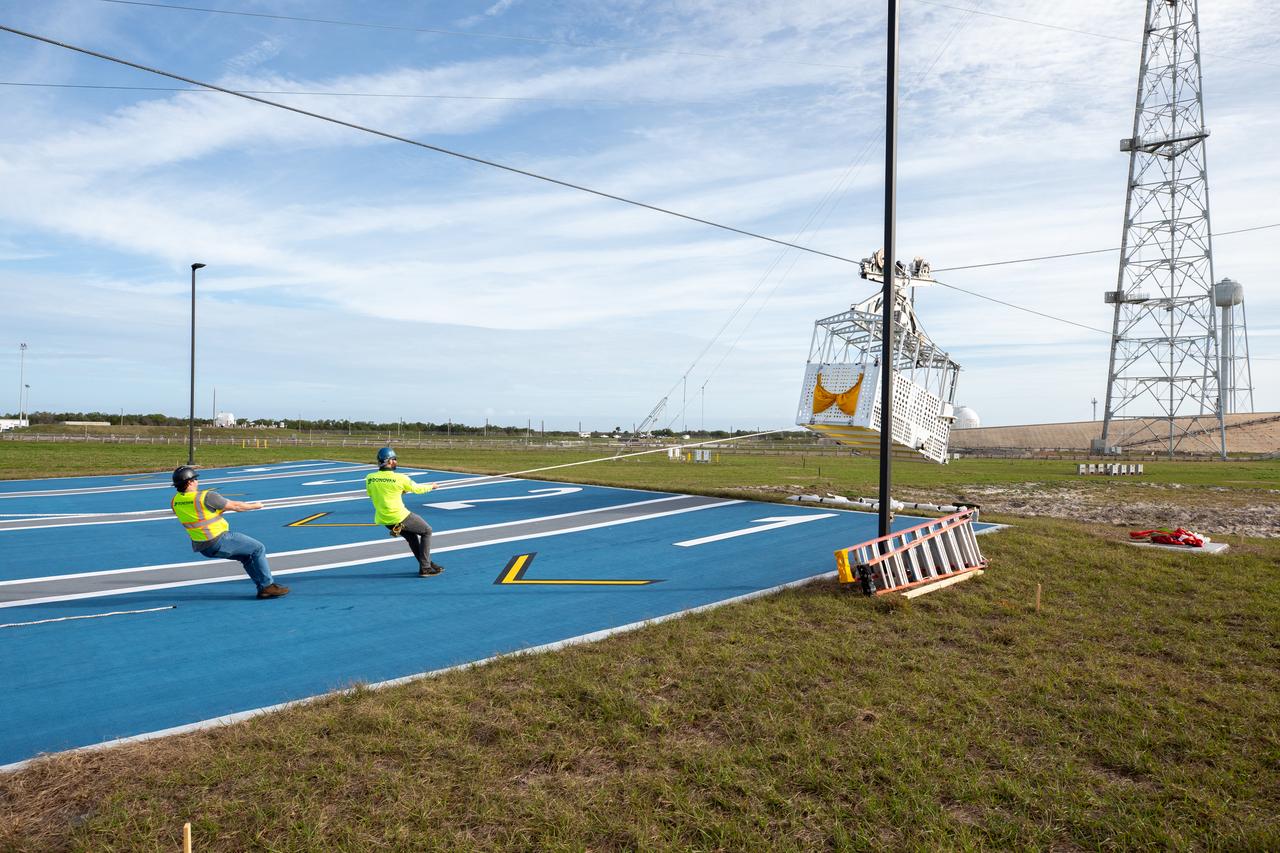
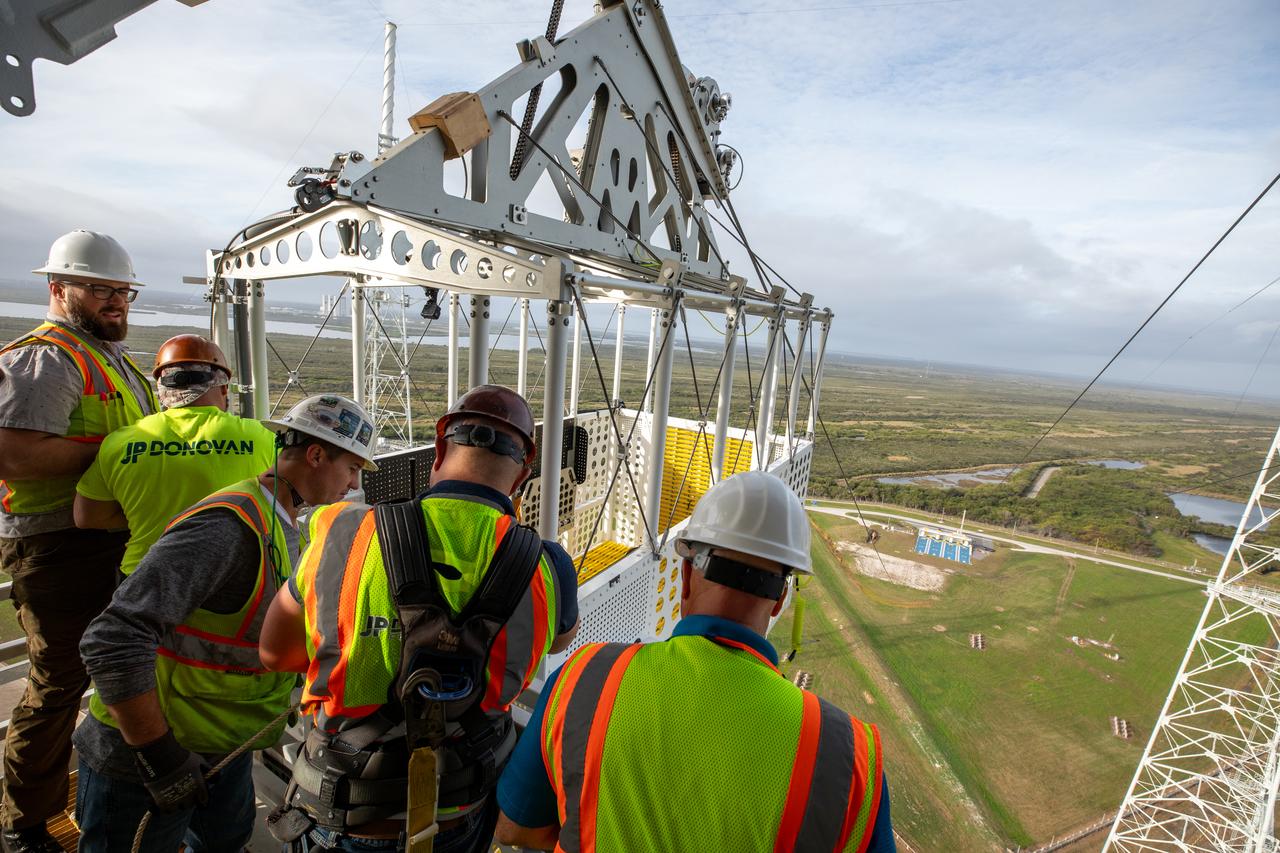
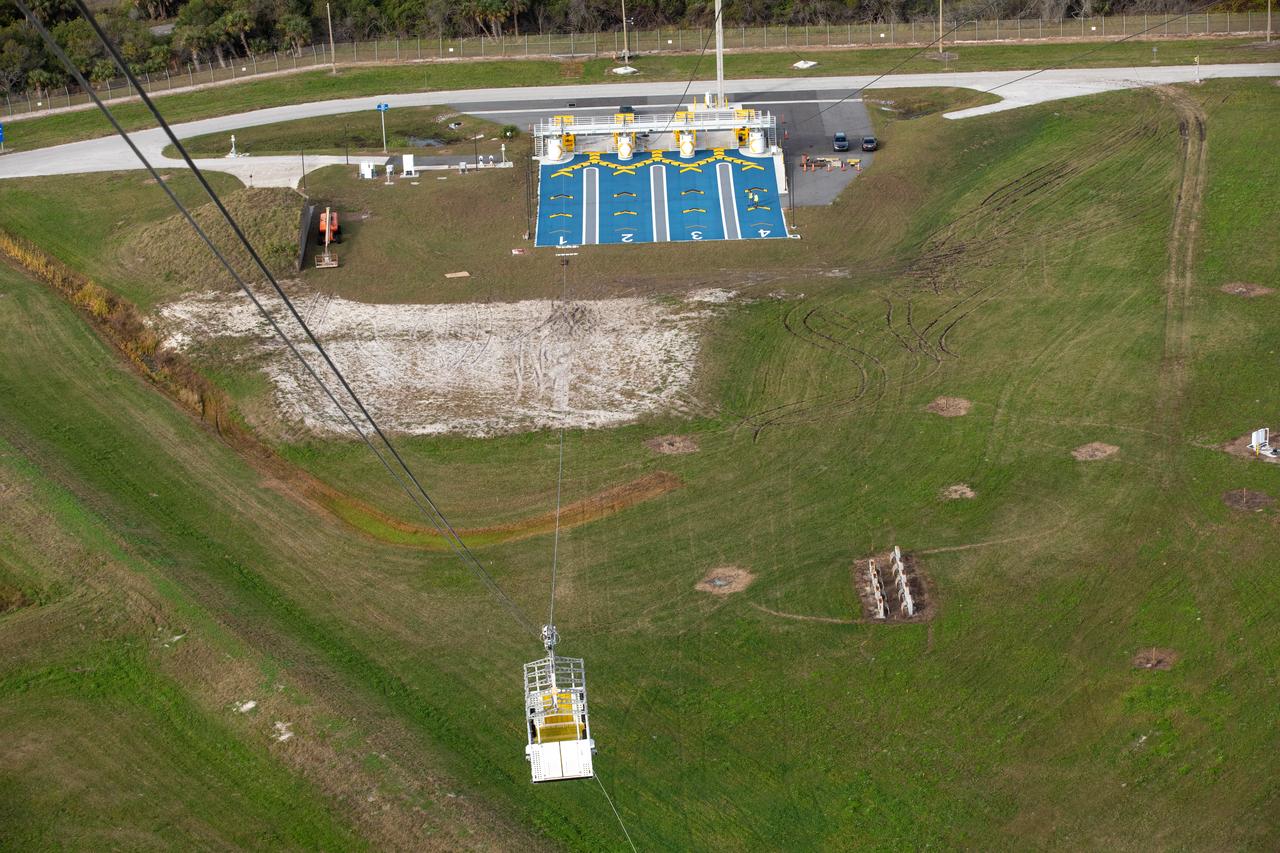
Teams with NASA’s Exploration Ground Systems Program, in preparation for the agency’s Artemis II crewed mission to the Moon, begin installation of four emergency egress baskets at Launch Complex 39B at Kennedy Space Center in Florida on Thursday, Jan. 18, 2024. The baskets, similar to gondolas on ski lifts, are used in the case of a pad abort emergency to enable astronauts and other pad personnel a way to quickly escape away from the mobile launcher to the base of the pad and where waiting emergency transport vehicles will then drive them away.
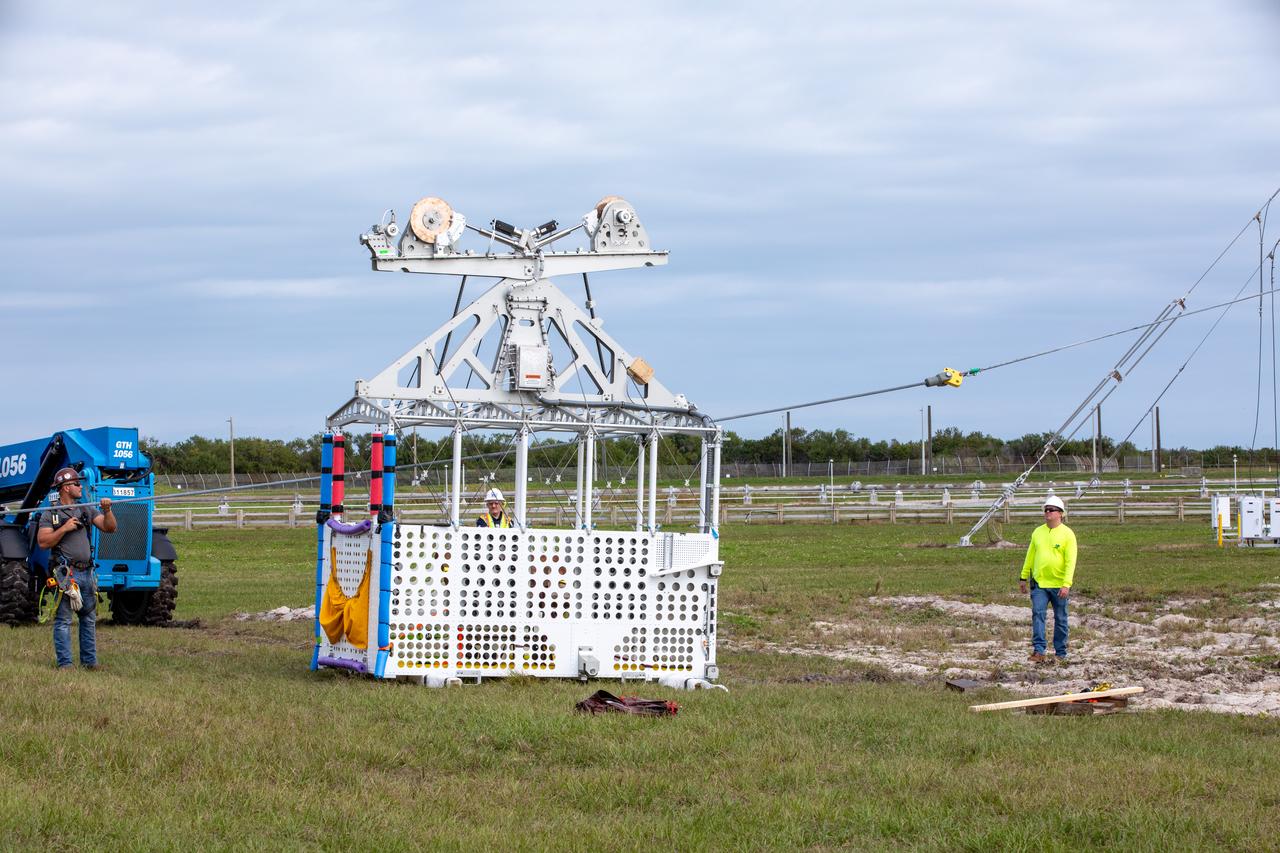
Teams with NASA’s Exploration Ground Systems Program, in preparation for the agency’s Artemis II crewed mission to the Moon, begin installation of four emergency egress baskets at Launch Complex 39B at Kennedy Space Center in Florida on Thursday, Jan. 18, 2024. The baskets, similar to gondolas on ski lifts, are used in the case of a pad abort emergency to enable astronauts and other pad personnel a way to quickly escape away from the mobile launcher to the base of the pad and where waiting emergency transport vehicles will then drive them away.
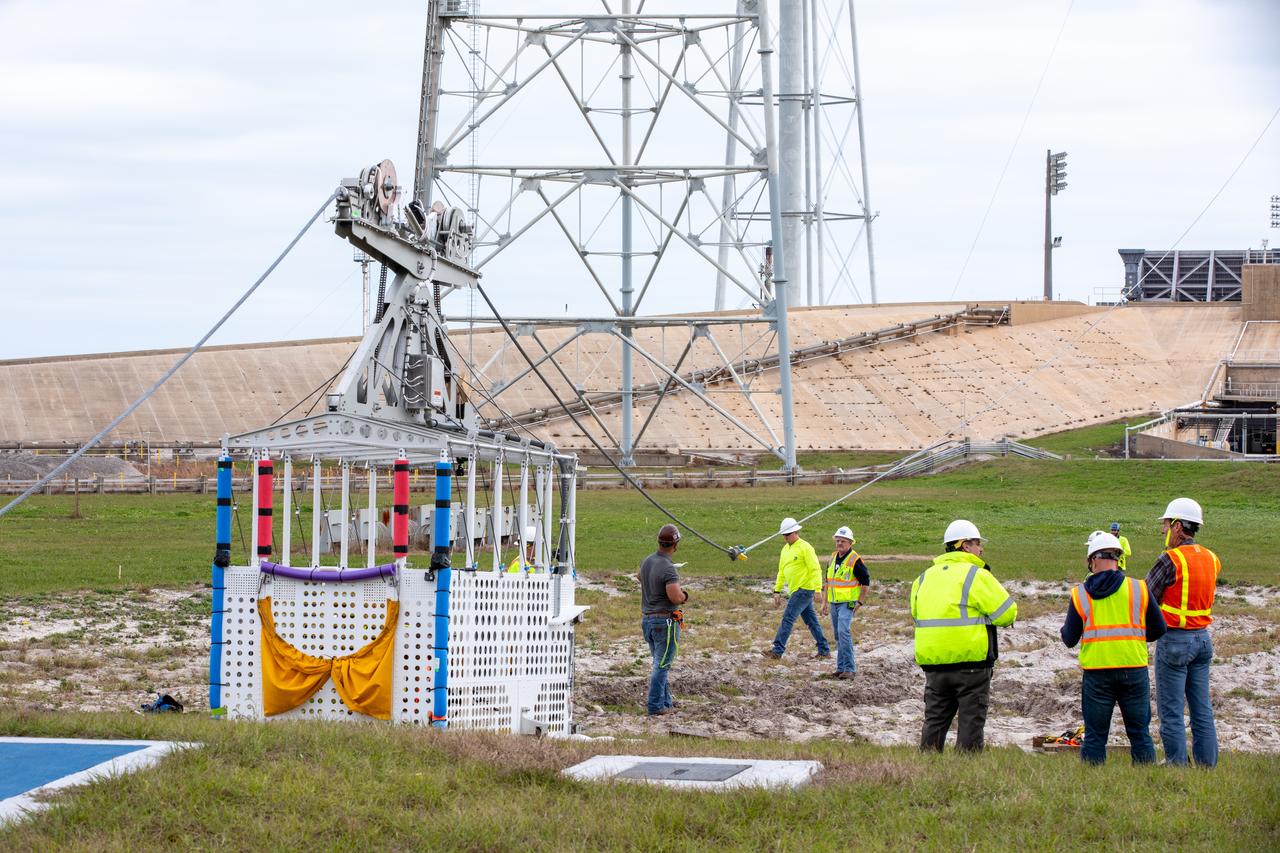
Teams with NASA’s Exploration Ground Systems Program, in preparation for the agency’s Artemis II crewed mission to the Moon, begin installation of four emergency egress baskets at Launch Complex 39B at Kennedy Space Center in Florida on Thursday, Jan. 18, 2024. The baskets, similar to gondolas on ski lifts, are used in the case of a pad abort emergency to enable astronauts and other pad personnel a way to quickly escape away from the mobile launcher to the base of the pad and where waiting emergency transport vehicles will then drive them away.
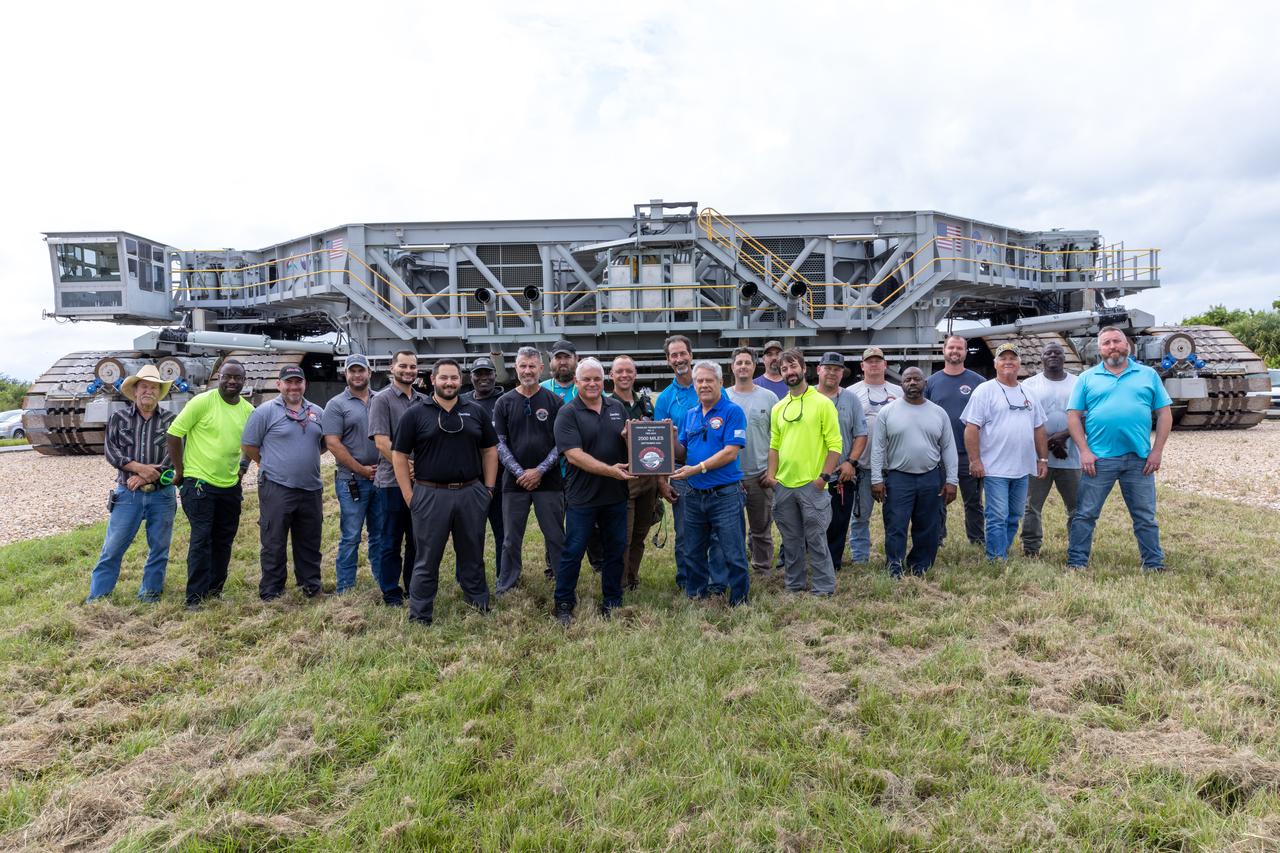
Teams with NASA’s Exploration Ground Systems at NASA’s Kennedy Space Center in Florida celebrate on Wednesday, Sept. 25, 2024, the agency’s crawler-transporter 2 reaching the milestone of 2,500 miles traveled since its construction in 1965. Crawler-transporter 2 reached the milestone while teams took it on a trip in preparation for supporting the roll of the mobile launcher from Launch Pad 39B back into the spaceport’s Vehicle Assembly Building ahead of the Artemis II launch. Built originally to transport massive Saturn V rockets during the Apollo Program, crawler-transporter 2 continued its service during the Space Shuttle Program, and currently transports the massive SLS (Space Launch System) rocket and Orion spacecraft atop the mobile launcher as part of the agency’s Artemis campaign.
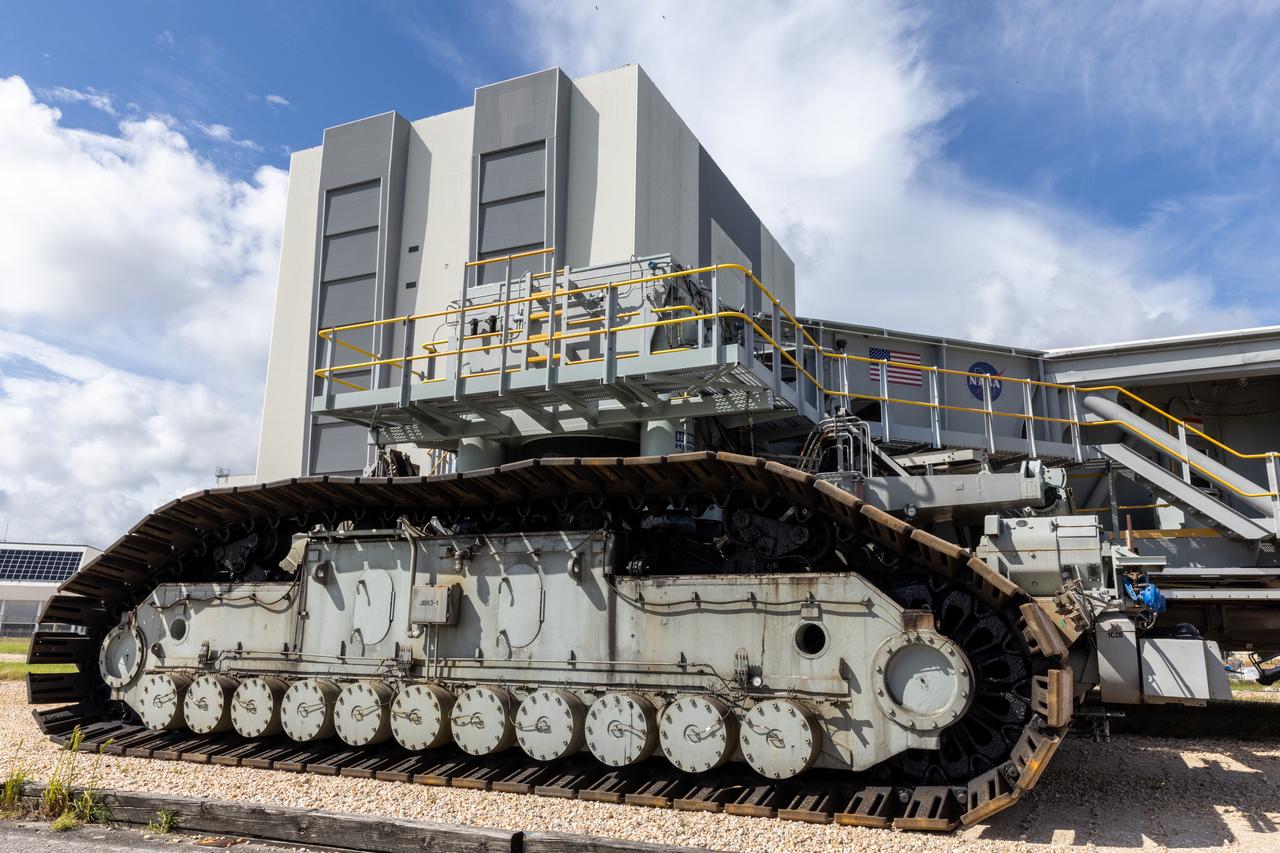
NASA’s crawler-transporter 2 moves slowly along the crawlerway towards Launch Pad 39B at the agency’s Kennedy Space Center in Florida on Wednesday, Sept. 25, 2024, after reaching the milestone of 2,500 miles traveled since its construction in 1965. Crawler-transporter 2 reached the milestone while teams with NASA’s Exploration Ground Systems took it on a trip in preparation for supporting the roll of the mobile launcher back into the spaceport’s Vehicle Assembly Building ahead of the Artemis II launch. Built originally to transport massive Saturn V rockets during the Apollo Program, crawler-transporter 2 continued its service during the Space Shuttle Program, and currently transports the massive SLS (Space Launch System) rocket and Orion spacecraft atop the mobile launcher as part of the agency’s Artemis campaign.
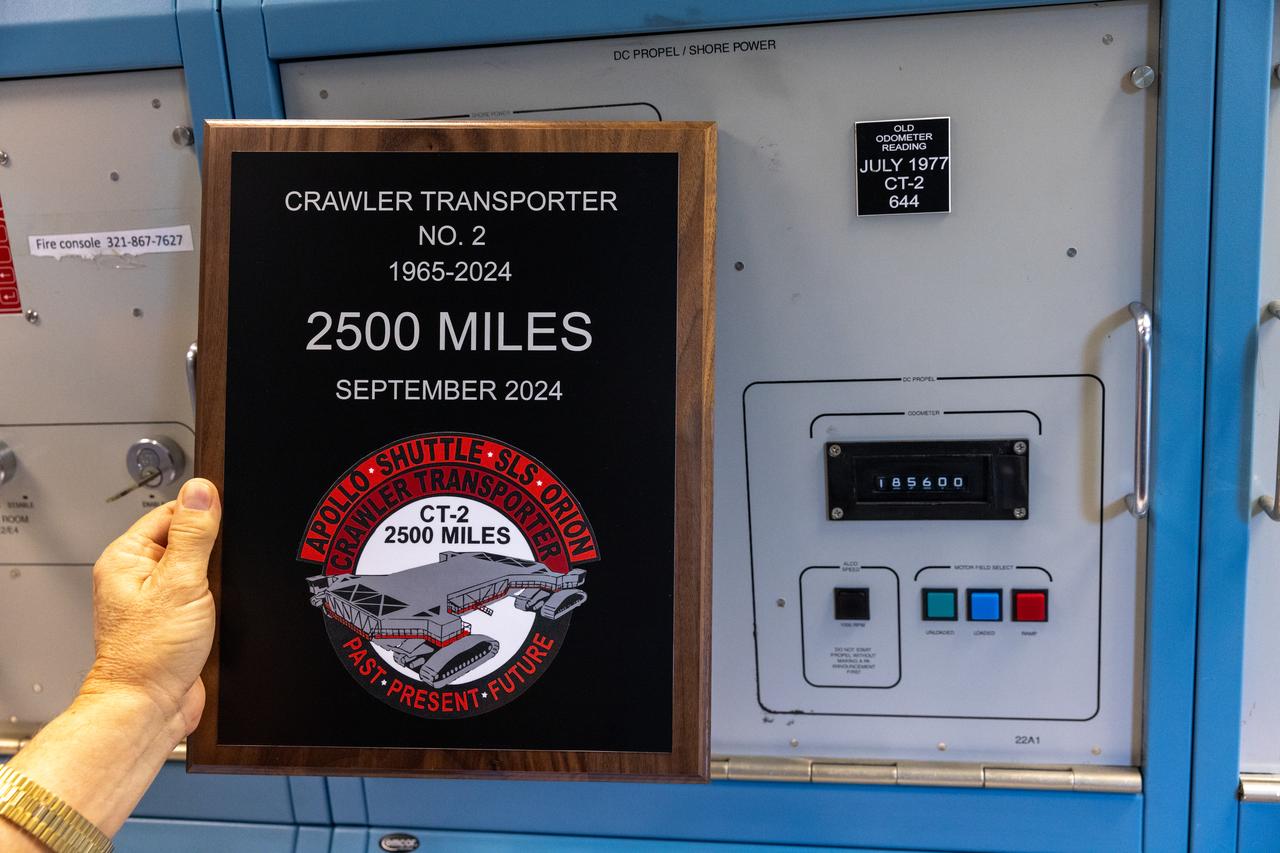
A plaque is held near the odometer of the agency’s crawler-transporter 2, on Wednesday, Sept. 25, 2024, at NASA’s Kennedy Space Center in Florida, commemorating the milestone of 2,500 miles traveled since its construction in 1965. Crawler-transporter 2 reached the milestone while teams with NASA’s Exploration Ground Systems took it on a trip in preparation for supporting the roll of the mobile launcher from Launch Pad 39B back into the spaceport’s Vehicle Assembly Building ahead of the Artemis II launch. Built originally to transport massive Saturn V rockets during the Apollo Program, crawler-transporter 2 continued its service during the Space Shuttle Program, and currently transports the massive SLS (Space Launch System) rocket and Orion spacecraft atop the mobile launcher as part of the agency’s Artemis campaign.
Teams with NASA’s Exploration Ground Systems at NASA’s Kennedy Space Center in Florida celebrate on Wednesday, Sept. 25, 2024, the agency’s crawler-transporter 2 reaching the milestone of 2,500 miles traveled since its construction in 1965. Crawler-transporter 2 reached the milestone while teams took it on a trip in preparation for supporting the roll of the mobile launcher from Launch Pad 39B back into the spaceport’s Vehicle Assembly Building ahead of the Artemis II launch. Built originally to transport massive Saturn V rockets during the Apollo Program, crawler-transporter 2 continued its service during the Space Shuttle Program, and currently transports the massive SLS (Space Launch System) rocket and Orion spacecraft atop the mobile launcher as part of the agency’s Artemis campaign.
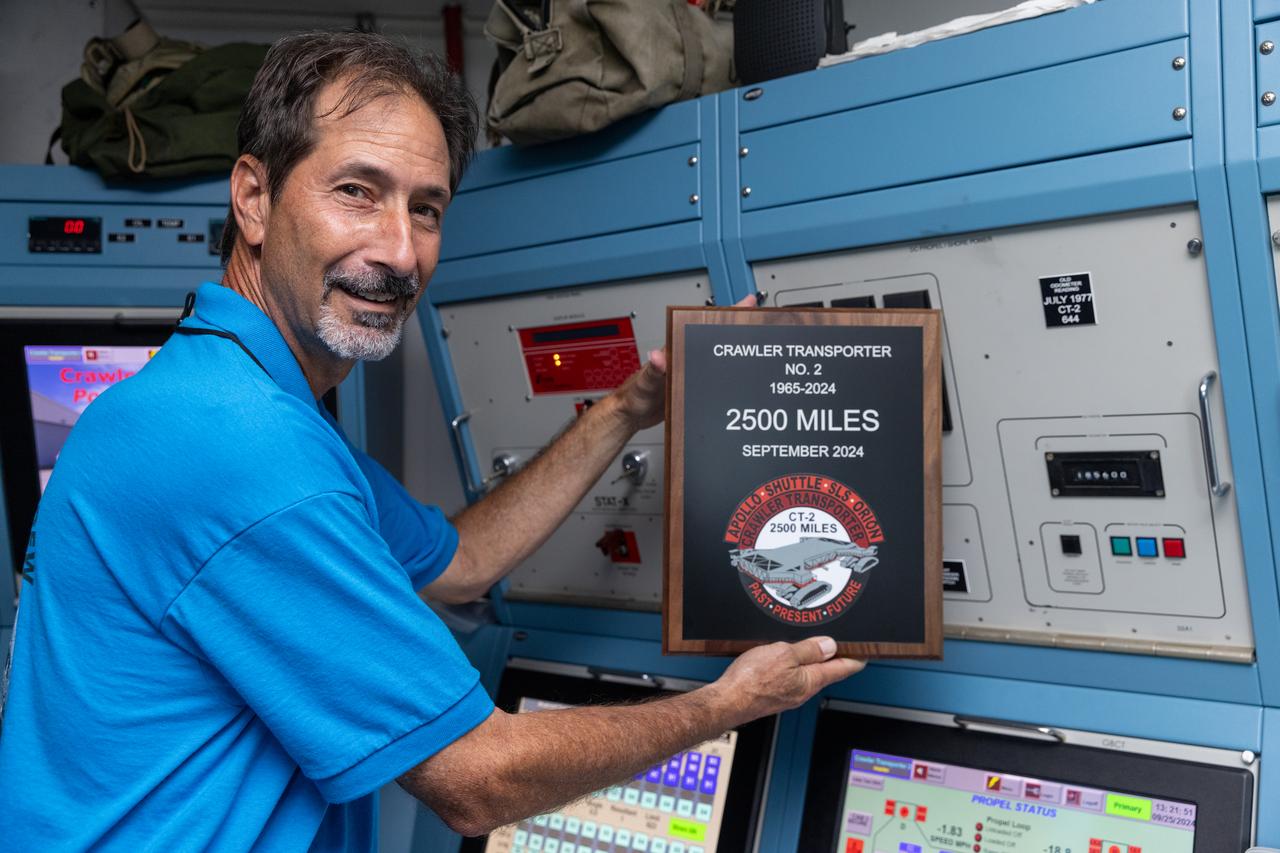
John Giles, crawler element operations manager for NASA’s Exploration Ground Systems, holds a plaque near the odometer of the agency’s crawler-transporter 2, on Wednesday, Sept. 25, 2024, at NASA’s Kennedy Space Center in Florida, commemorating the milestone of 2,500 miles traveled since its construction in 1965. Crawler-transporter 2 reached the milestone while teams took it on a trip in preparation for supporting the roll of the mobile launcher from Launch Pad 39B back into the spaceport’s Vehicle Assembly Building ahead of the Artemis II launch. Built originally to transport massive Saturn V rockets during the Apollo Program, crawler-transporter 2 continued its service during the Space Shuttle Program, and currently transports the massive SLS (Space Launch System) rocket and Orion spacecraft atop the mobile launcher as part of the agency’s Artemis campaign.
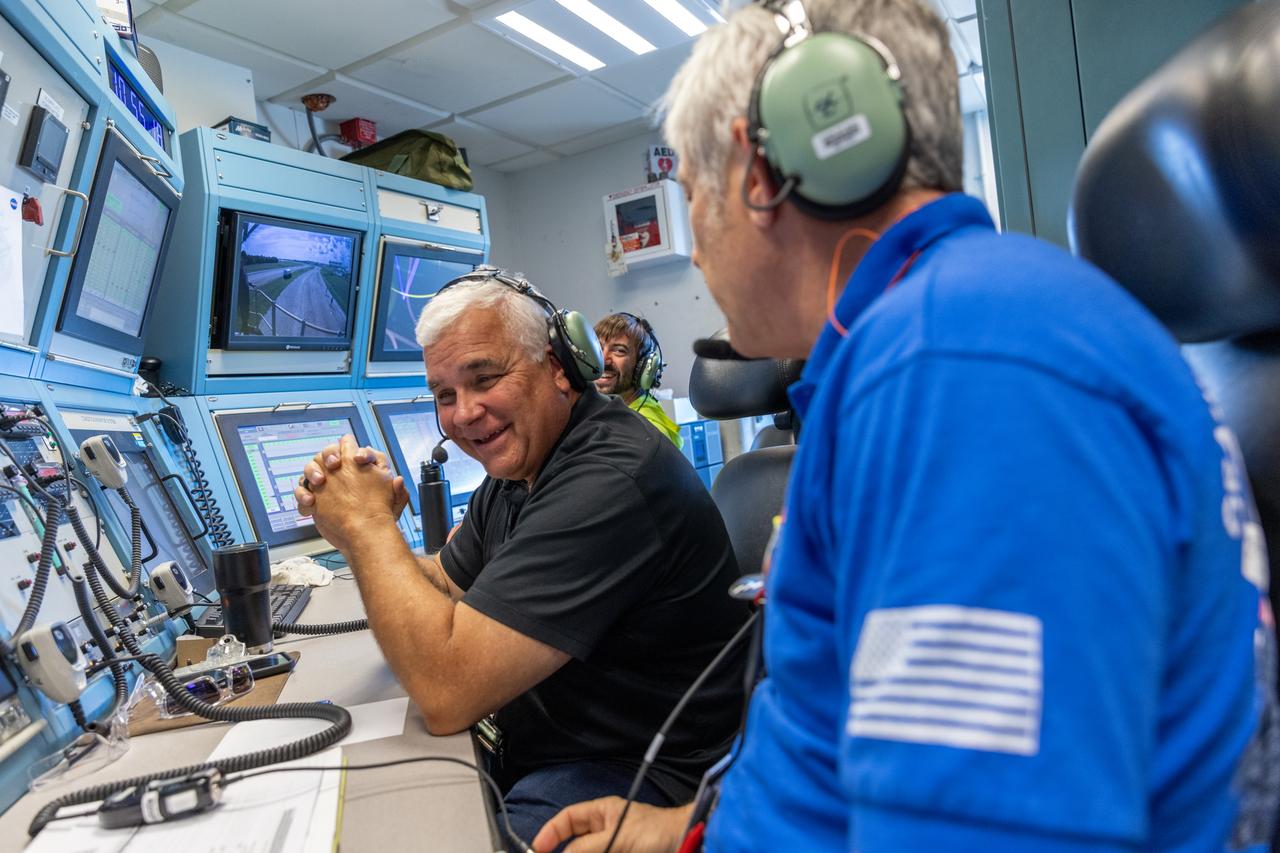
Teams with NASA’s Exploration Ground Systems at NASA’s Kennedy Space Center in Florida celebrate on Wednesday, Sept. 25, 2024, the agency’s crawler-transporter 2 reaching the milestone of 2,500 miles traveled since its construction in 1965. Crawler-transporter 2 reached the milestone while teams took it on a trip in preparation for supporting the roll of the mobile launcher from Launch Pad 39B back into the spaceport’s Vehicle Assembly Building ahead of the Artemis II launch. Built originally to transport massive Saturn V rockets during the Apollo Program, crawler-transporter 2 continued its service during the Space Shuttle Program, and currently transports the massive SLS (Space Launch System) rocket and Orion spacecraft atop the mobile launcher as part of the agency’s Artemis campaign.
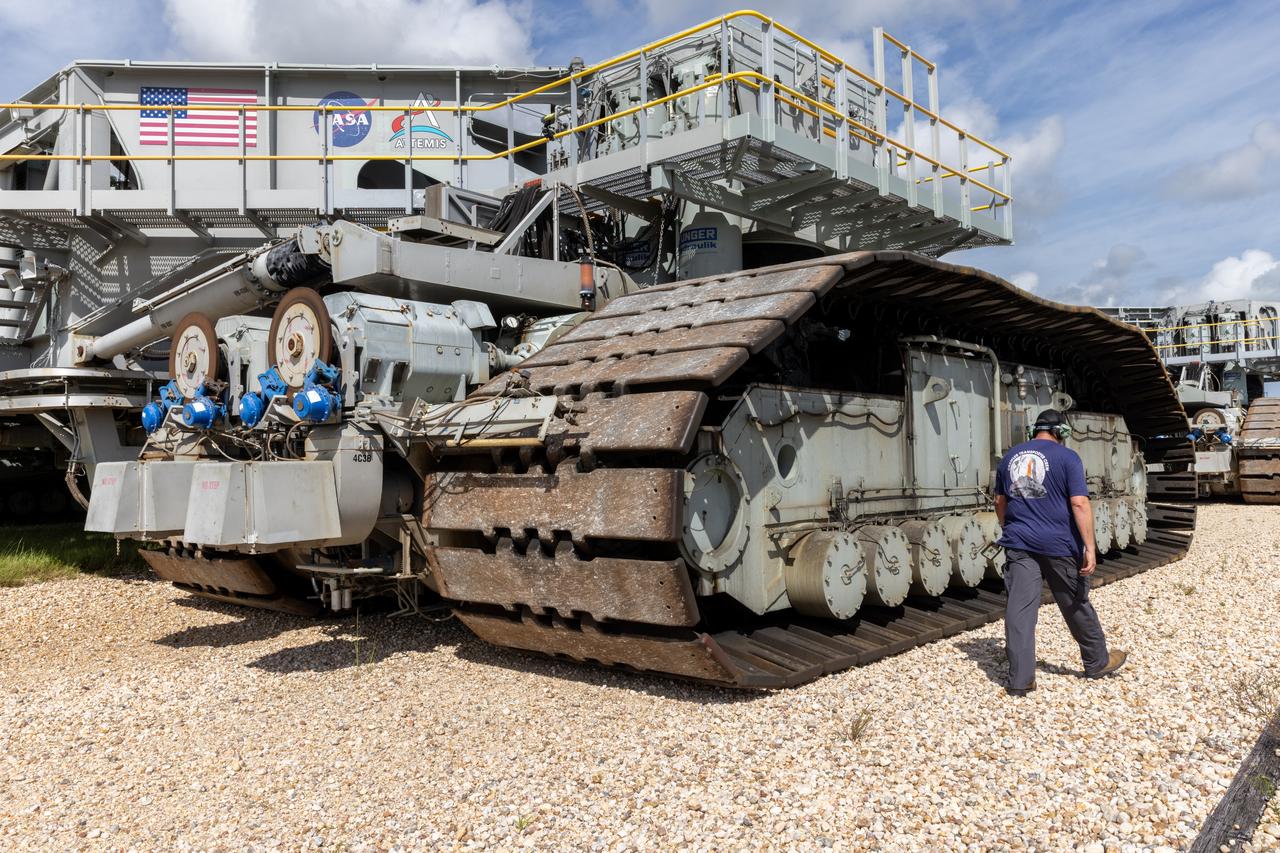
NASA’s crawler-transporter 2 moves slowly along the crawlerway towards Launch Pad 39B at the agency’s Kennedy Space Center in Florida on Wednesday, Sept. 25, 2024, after reaching the milestone of 2,500 miles traveled since its construction in 1965. Crawler-transporter 2 reached the milestone while teams with NASA’s Exploration Ground Systems took it on a trip in preparation for supporting the roll of the mobile launcher back into the spaceport’s Vehicle Assembly Building ahead of the Artemis II launch. Built originally to transport massive Saturn V rockets during the Apollo Program, crawler-transporter 2 continued its service during the Space Shuttle Program, and currently transports the massive SLS (Space Launch System) rocket and Orion spacecraft atop the mobile launcher as part of the agency’s Artemis campaign.
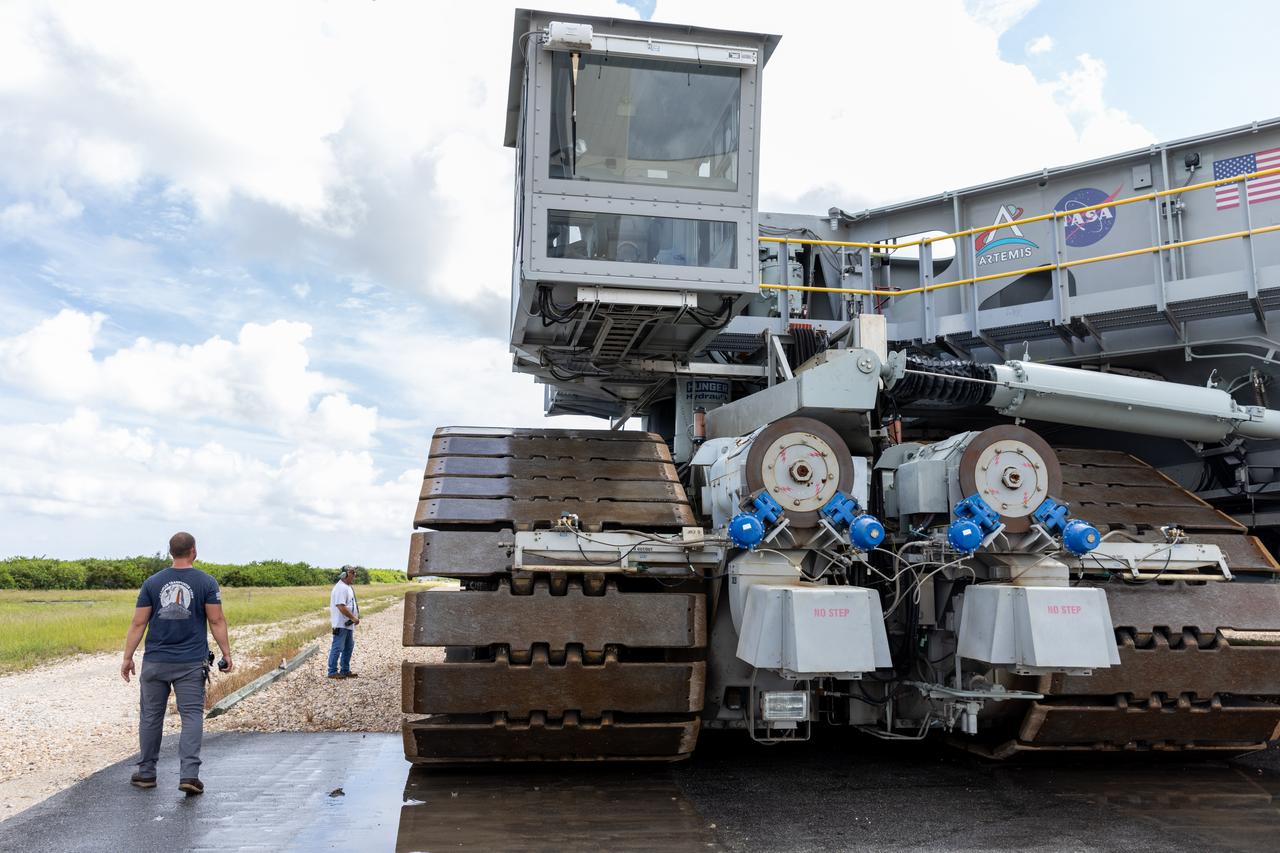
NASA’s crawler-transporter 2 moves slowly along the crawlerway towards Launch Pad 39B at the agency’s Kennedy Space Center in Florida on Wednesday, Sept. 25, 2024, after reaching the milestone of 2,500 miles traveled since its construction in 1965. Crawler-transporter 2 reached the milestone while teams with NASA’s Exploration Ground Systems took it on a trip in preparation for supporting the roll of the mobile launcher back into the spaceport’s Vehicle Assembly Building ahead of the Artemis II launch. Built originally to transport massive Saturn V rockets during the Apollo Program, crawler-transporter 2 continued its service during the Space Shuttle Program, and currently transports the massive SLS (Space Launch System) rocket and Orion spacecraft atop the mobile launcher as part of the agency’s Artemis campaign.
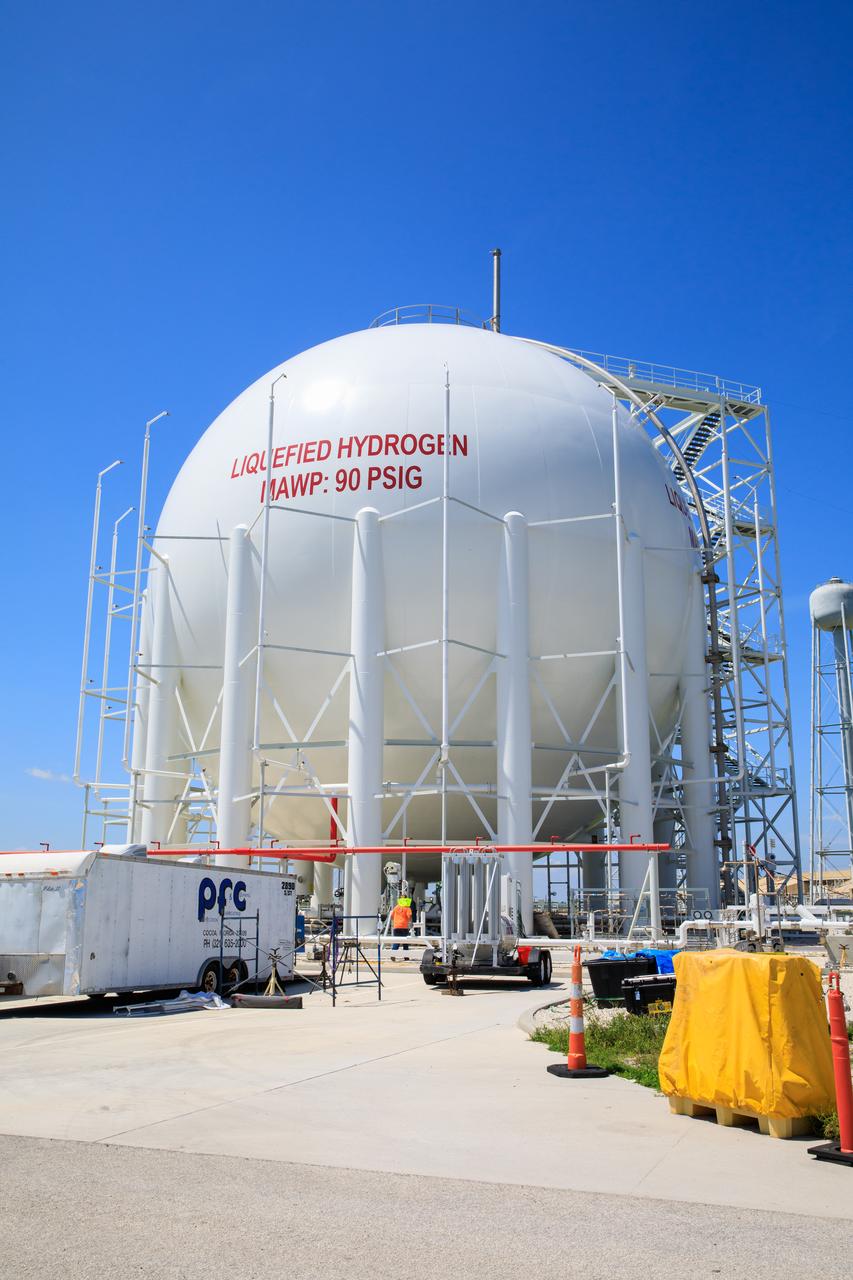
Teams with Exploration Ground Systems at NASA’s Kennedy Space Center in Florida continue to work the upgrades and repairs on mobile launcher 1 and Launch Pad 39B on June 13, 2023, ahead of the first critical ground testing for Artemis II. Construction is nearly complete on the additional 1.4-million-gallon liquid hydrogen sphere used for propellant loading. Having two liquid hydrogen spheres at the pad allows teams to minimize time between launch attempts for resupplying liquid hydrogen. When completed, workers will test the new tank as part of the verification and validation testing. Artemis II will be the first Artemis mission flying crew aboard Orion.
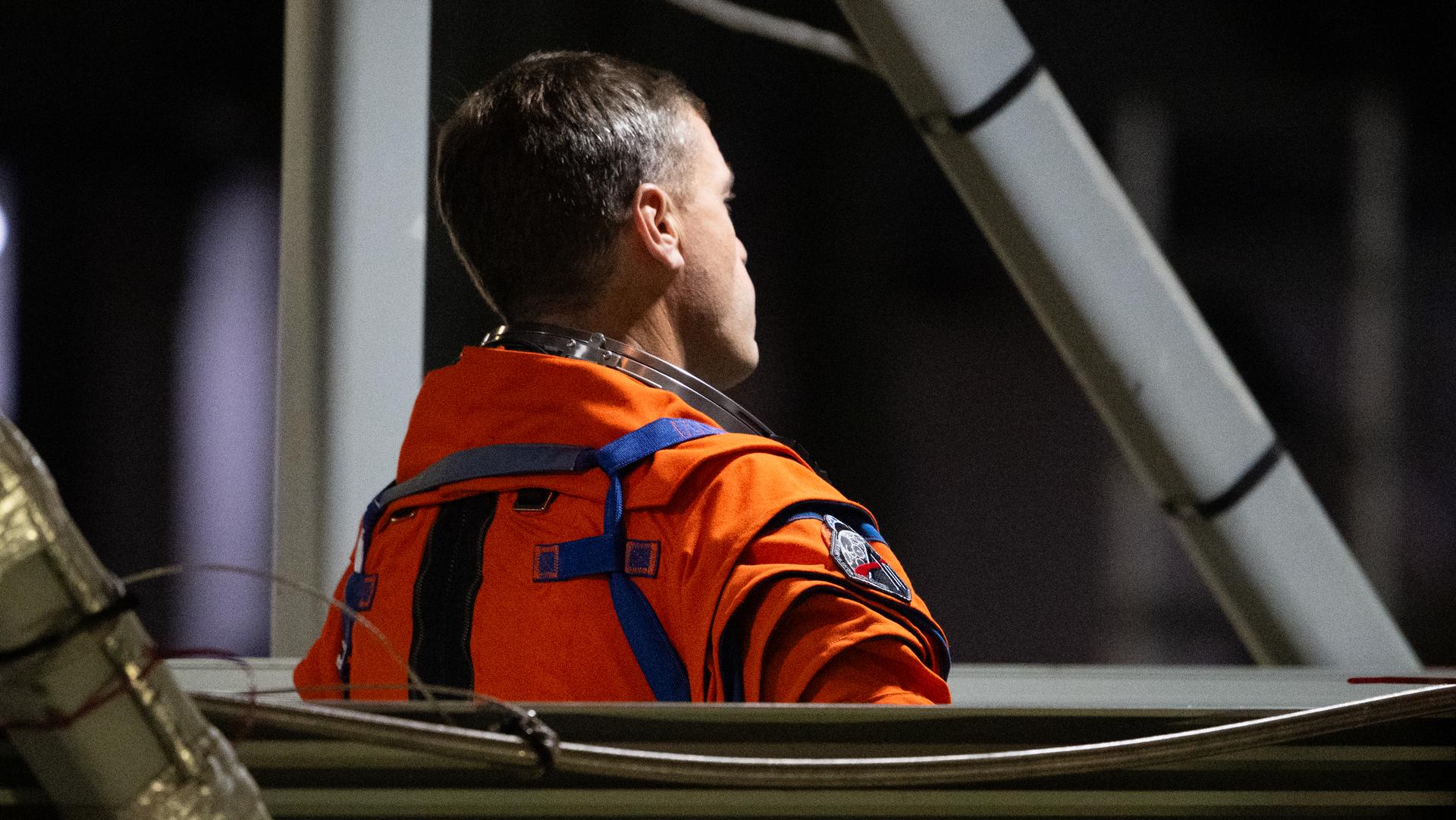
Artemis II crewmember NASA astronaut Reid Wiseman, commander; is seen on the crew access arm at the 275-foot level of the mobile launcher as he and fellow crewmates NASA astronauts Victor Glover, pilot; Christina Koch, mission specialist; and CSA (Canadian Space Agency) astronaut Jeremy Hansen, mission specialist; prepare to board their Orion spacecraft atop NASA’s Space Launch System rocket during the Artemis II countdown demonstration test, Saturday, Dec. 20, 2025, inside the Vehicle Assembly Building at NASA’s Kennedy Space Center in Florida. For this operation, the Artemis II crew and launch teams are simulating the launch day timeline including suit-up, walkout, and spacecraft ingress and egress. Through the Artemis campaign, NASA will send astronauts to explore the Moon for scientific discovery, economic benefits, and to build the foundation for the first crewed missions to Mars, for the benefit of all. Photo Credit: (NASA/Joel Kowsky)
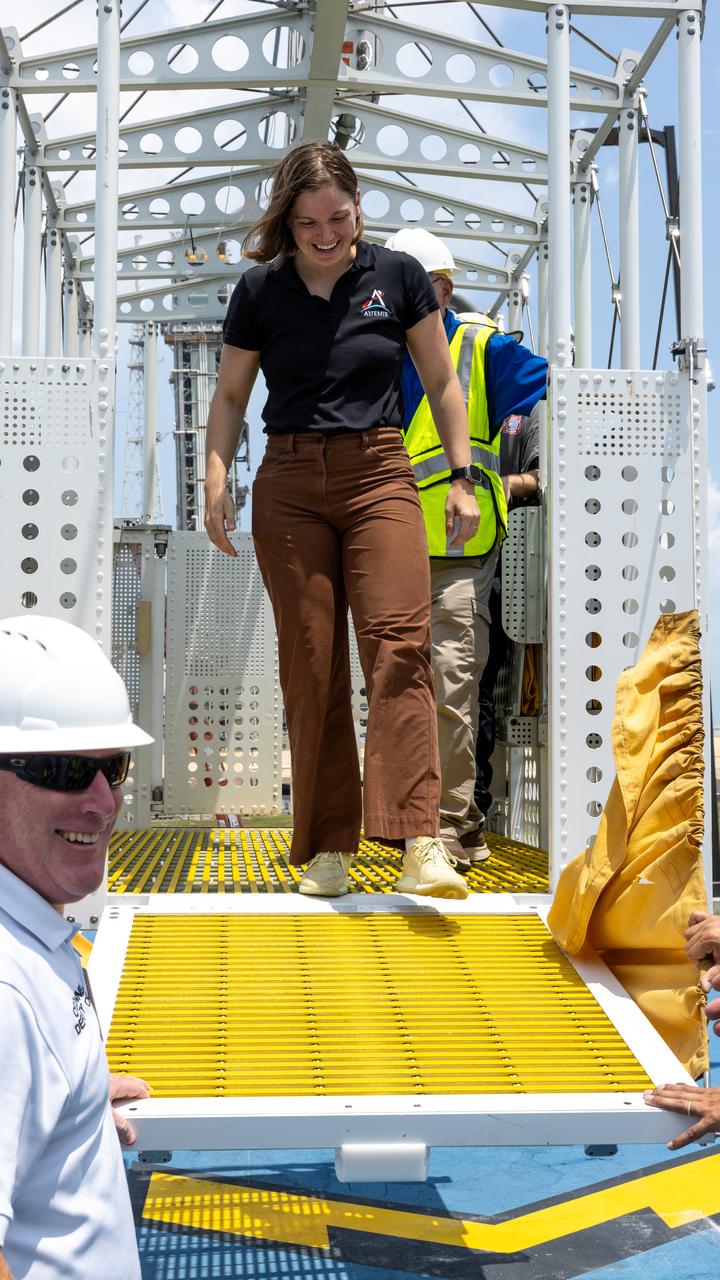
Artemis II backup crew member, CSA (Canadian Space Agency) astronaut Jenni Gibbons, participates in the Artemis II emergency egress demonstration, which is one of the integrated system verification and validation tests taking place at Launch Complex 39B at the agency’s Kennedy Space Center in Florida on Thursday, Aug. 8, 2024. The baskets, similar to gondolas on ski lifts, are used in the case of a pad abort emergency to enable astronauts and other pad personnel a way to quickly escape away from the mobile launcher to the base of the pad and where waiting emergency transport vehicles will then drive them away.
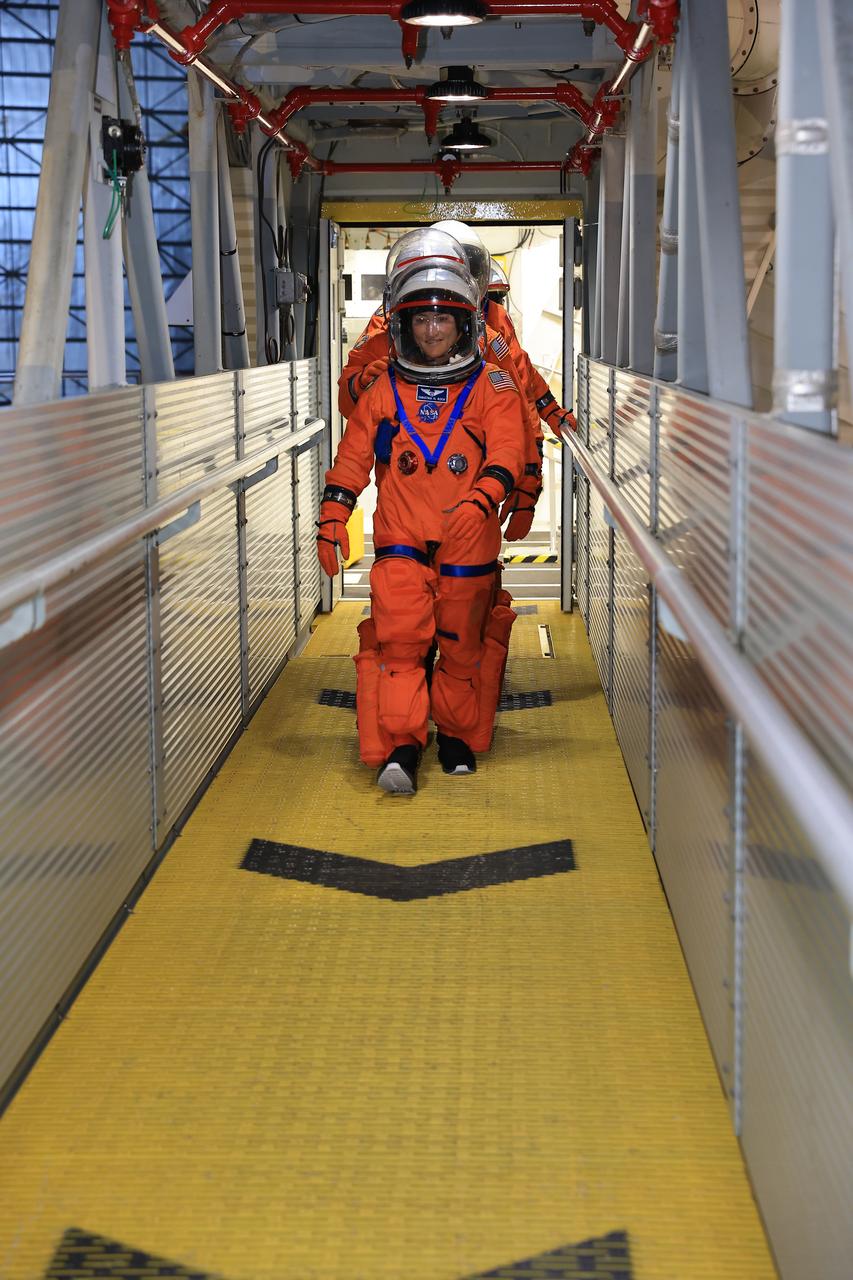
NASA astronaut Christina Koch, Artemis II mission specialist, and the remaining Artemis II crew members walk on the crew access arm of the mobile launcher in the Vehicle Assembly Building at NASA’s Kennedy Space Center in Florida on Tuesday, Aug. 12, 2025. During a two-day operation, the Artemis II team practiced night-run demonstrations of different launch day scenarios like suit-up operations, walk-out, and arriving at the launch pad for the Artemis II test flight. Through the Artemis campaign, NASA will send astronauts to explore the Moon for scientific discovery, economic benefits, and to build the foundation for the first crewed missions to Mars – for the benefit of all.
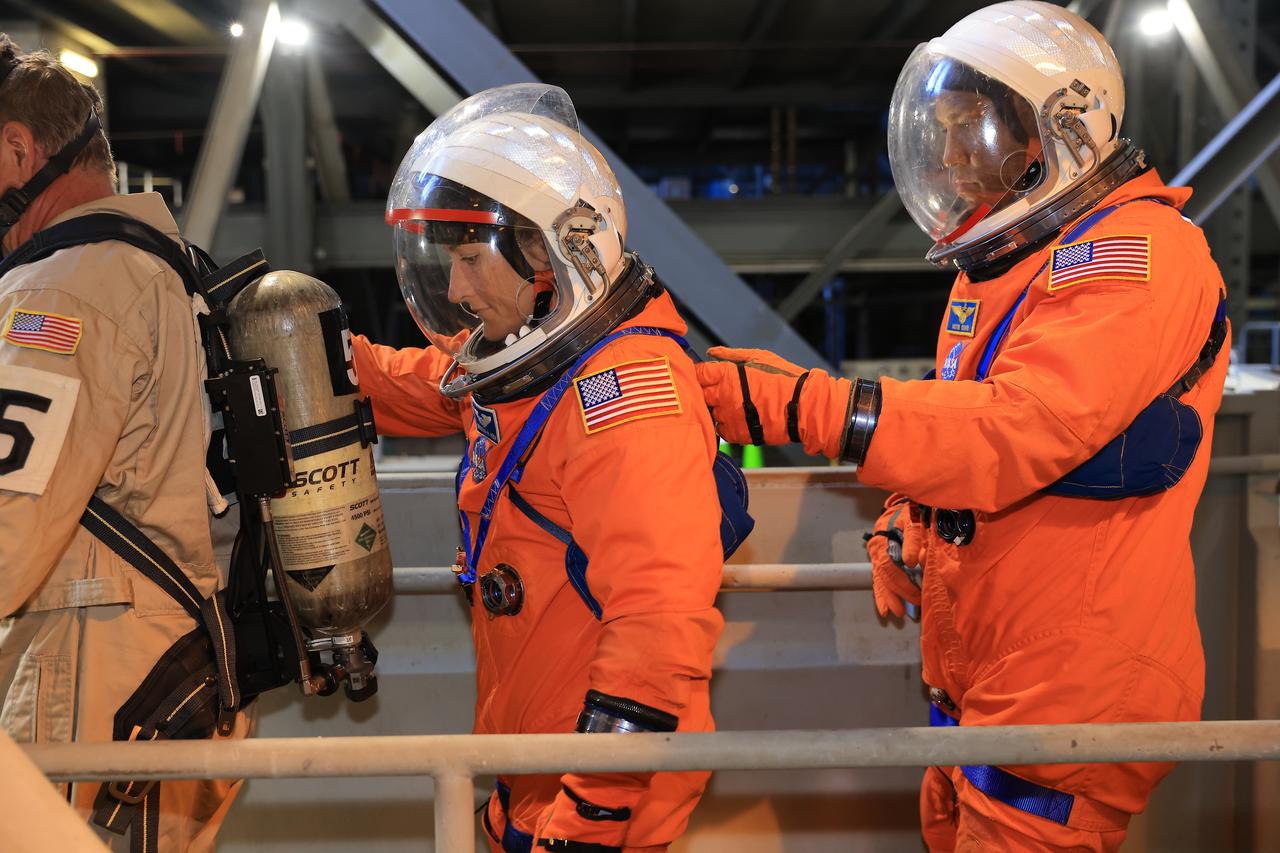
NASA astronauts Christina Koch, Artemis II mission specialist, and Victor Glover, Artemis II pilot, walk on the crew access arm of the mobile launcher in the Vehicle Assembly Building at NASA’s Kennedy Space Center in Florida on Tuesday, Aug. 12, 2025. During a two-day operation, the Artemis II team practiced night-run demonstrations of different launch day scenarios like suit-up operations, walk-out, and arriving at the launch pad for the Artemis II test flight. Through the Artemis campaign, NASA will send astronauts to explore the Moon for scientific discovery, economic benefits, and to build the foundation for the first crewed missions to Mars – for the benefit of all.

NASA astronauts Christina Koch, Artemis II mission specialist and Victor Glover, Artemis II pilot, practice walking out of an emergency egress basket at Launch Complex 39B at NASA’s Kennedy Space Center in Florida on Tuesday, Aug. 12, 2025. The baskets, similar to gondolas on ski lifts, are used in the case of an unlikely emergency during launch countdown to enable astronauts and other pad personnel to quickly escape from the mobile launcher to the base of the pad where waiting emergency transport vehicles will drive them away. During a two-day operation, the Artemis II team practiced night-run demonstrations of different launch day scenarios for the Artemis II test flight.
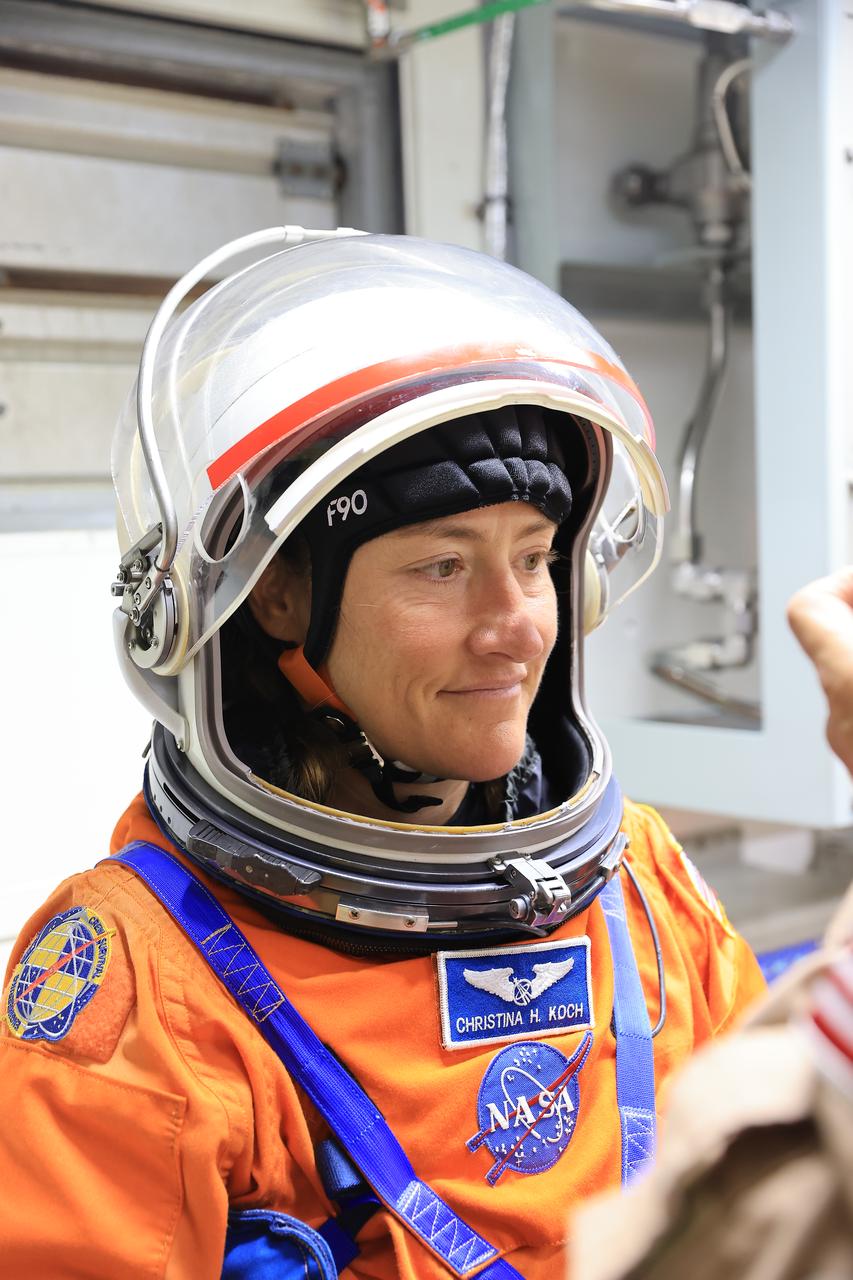
NASA astronaut Christina Koch, Artemis II mission specialist, stands in the White Room on the crew access arm of the mobile launcher in the Vehicle Assembly Building at NASA’s Kennedy Space Center in Florida on Tuesday, Aug. 12, 2025. During a two-day operation, the Artemis II team practiced night-run demonstrations of different launch day scenarios like suit-up operations, walk-out, and arriving at the launch pad for the Artemis II test flight. Through the Artemis campaign, NASA will send astronauts to explore the Moon for scientific discovery, economic benefits, and to build the foundation for the first crewed missions to Mars – for the benefit of all.

NASA astronaut Christina Koch, Artemis II mission specialist, dons her glove inside the White Room on the crew access arm of the mobile launcher in the Vehicle Assembly Building at NASA’s Kennedy Space Center in Florida on Tuesday, Aug. 12, 2025. During a two-day operation, the Artemis II team practiced night-run demonstrations of different launch day scenarios like suit-up operations, walk-out, and arriving at the launch pad for the Artemis II test flight. Through the Artemis campaign, NASA will send astronauts to explore the Moon for scientific discovery, economic benefits, and to build the foundation for the first crewed missions to Mars – for the benefit of all.
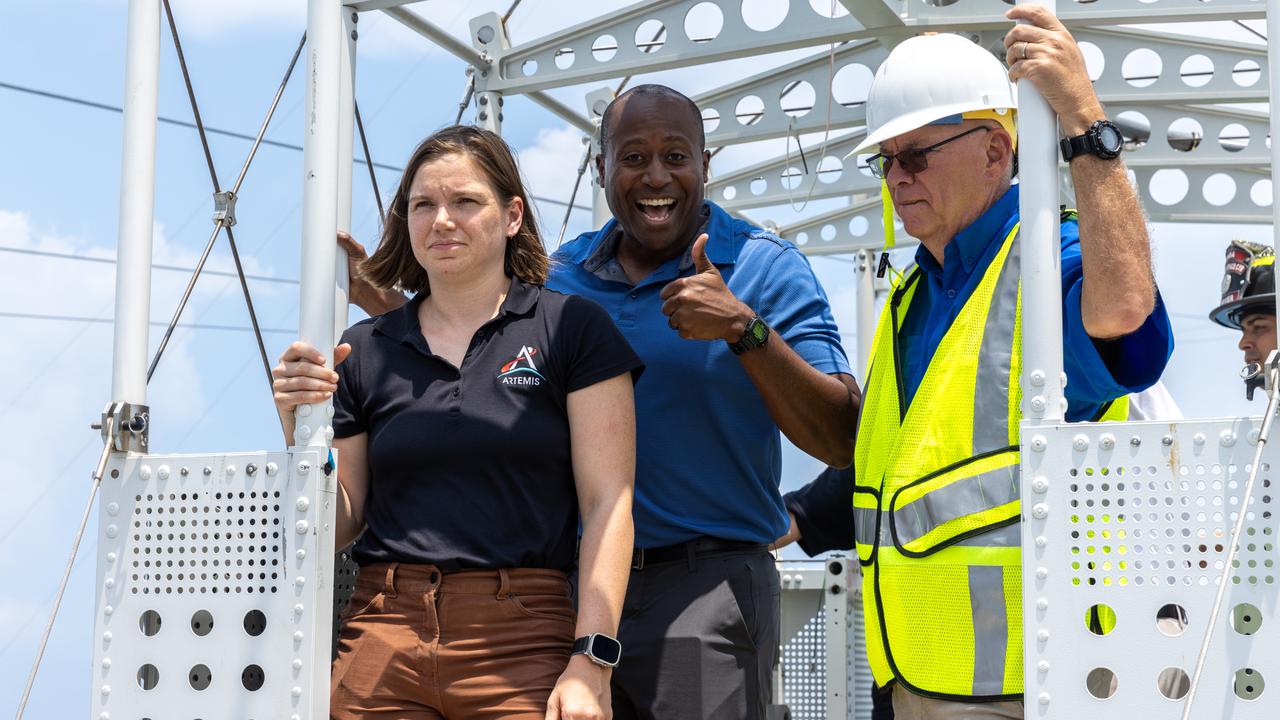
Artemis II backup crew members, CSA (Canadian Space Agency) astronaut Jenni Gibbons and NASA astronaut Andre Douglas participate in one of a series of integrated system verification and validation tests inside the emergency egress baskets at Launch Pad 39B at the agency’s Kennedy Space Center in Florida on Thursday, Aug. 8, 2024. The baskets, similar to gondolas on ski lifts, are used in the case of a pad abort emergency to enable astronauts and other pad personnel a way to quickly escape away from the mobile launcher to the base of the pad and where waiting emergency transport vehicles will then drive them away.
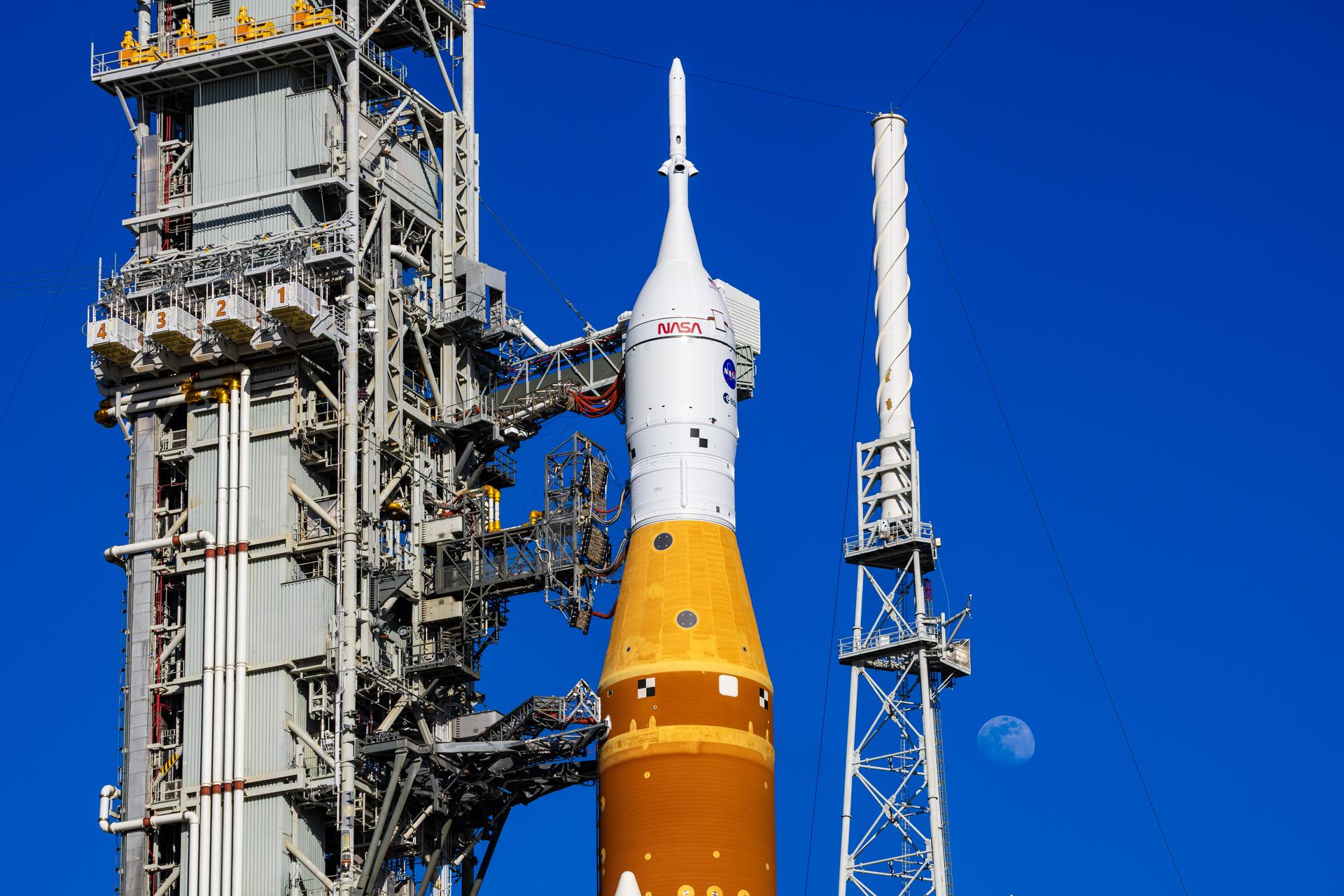
The Moon is seen behind the SLS (Space Launch System) and Orion spacecraft, atop the mobile launcher on January 28, 2026. The rocket is currently at Launch Pad 39B at NASA’s Kennedy Space Center in Florida, as teams are preparing for a wet dress rehearsal to practice timelines and procedures for the launch of Artemis II. 508 Description:The Moon is seen shining over the SLS (Space Launch System) and Orion spacecraft, atop the mobile launcher on January 29, 2026. The rocket is currently at Launch Pad 39B at NASA’s Kennedy Space Center in Florida, as teams are preparing for a wet dress rehearsal to practice timelines and procedures for the launch of Artemis II.
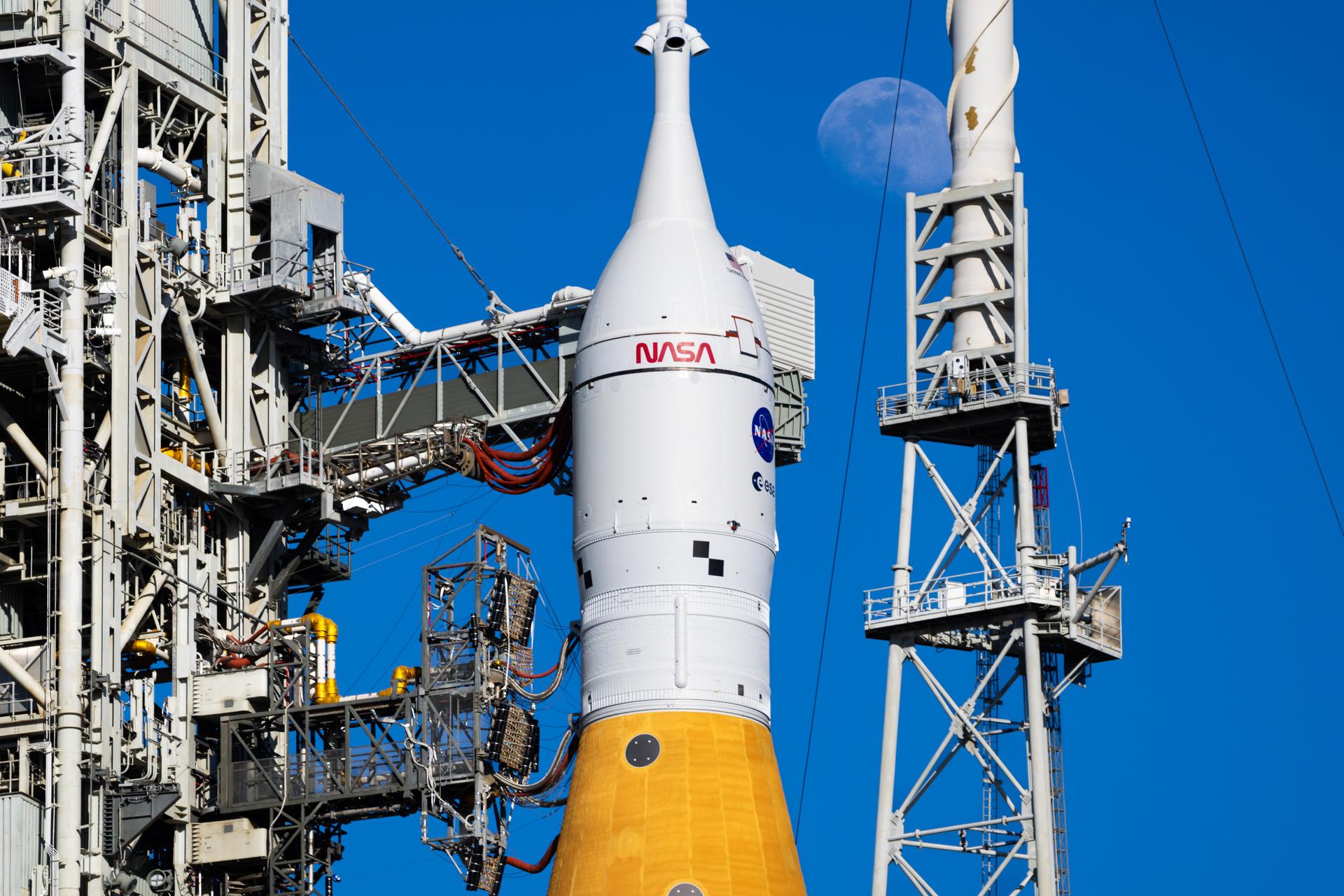
The Moon is seen shining over the SLS (Space Launch System) and Orion spacecraft, atop the mobile launcher on January 28, 2026. The rocket is currently at Launch Pad 39B at NASA’s Kennedy Space Center in Florida, as teams are preparing for a wet dress rehearsal to practice timelines and procedures for the launch of Artemis II. 508 Description:The Moon is seen shining over the SLS (Space Launch System) and Orion spacecraft, atop the mobile launcher on January 29, 2026. The rocket is currently at Launch Pad 39B at NASA’s Kennedy Space Center in Florida, as teams are preparing for a wet dress rehearsal to practice timelines and procedures for the launch of Artemis II.
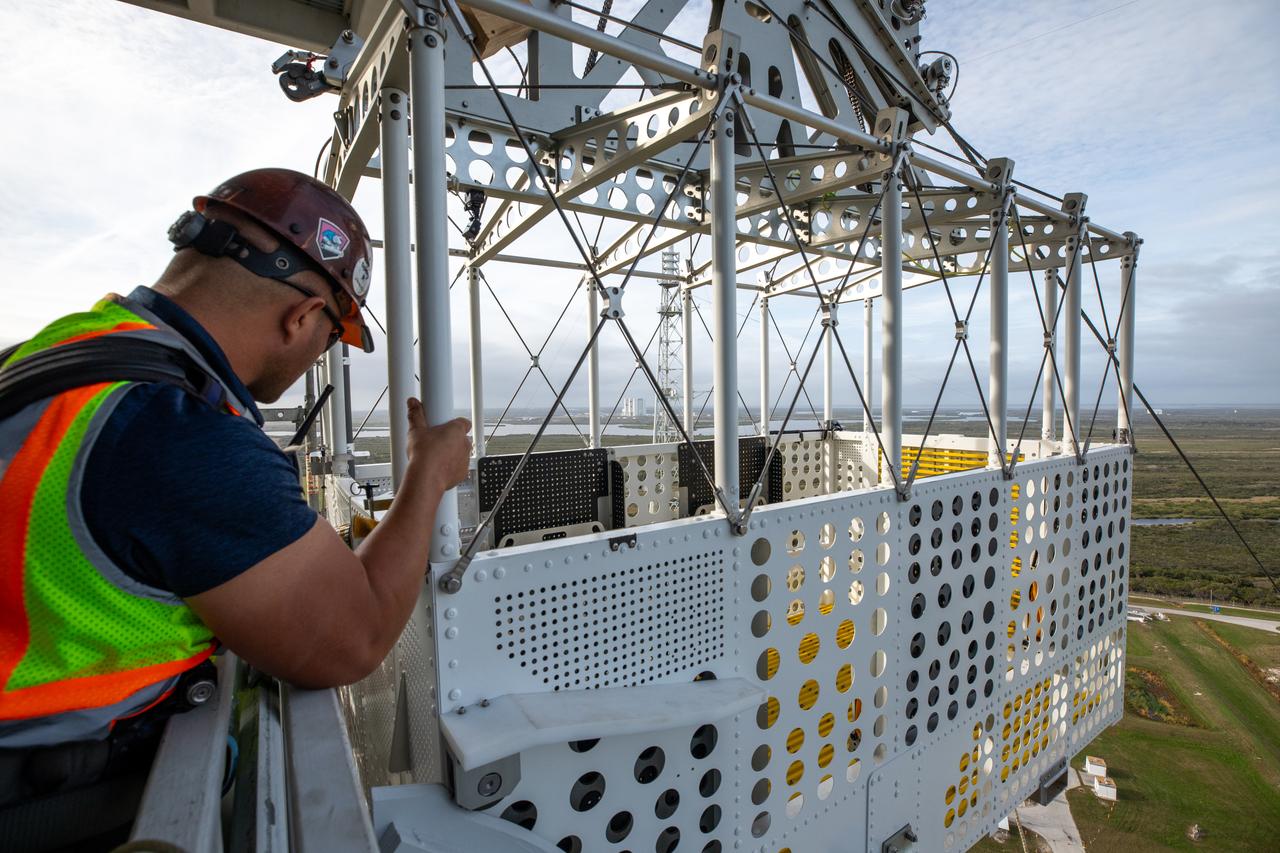
Teams with NASA’s Exploration Ground Systems Program, in preparation for the agency’s Artemis II crewed mission to the Moon, begin installing the first of four emergency egress baskets on the mobile launcher at Launch Complex 39B at the agency’s Kennedy Space Center in Florida on Wednesday, Jan. 24, 2024. The baskets, similar to gondolas on ski lifts, are used in the case of a pad abort emergency to enable astronauts and other pad personnel a way to quickly escape away from the mobile launcher to the base of the pad and where waiting emergency transport vehicles will then drive them away.
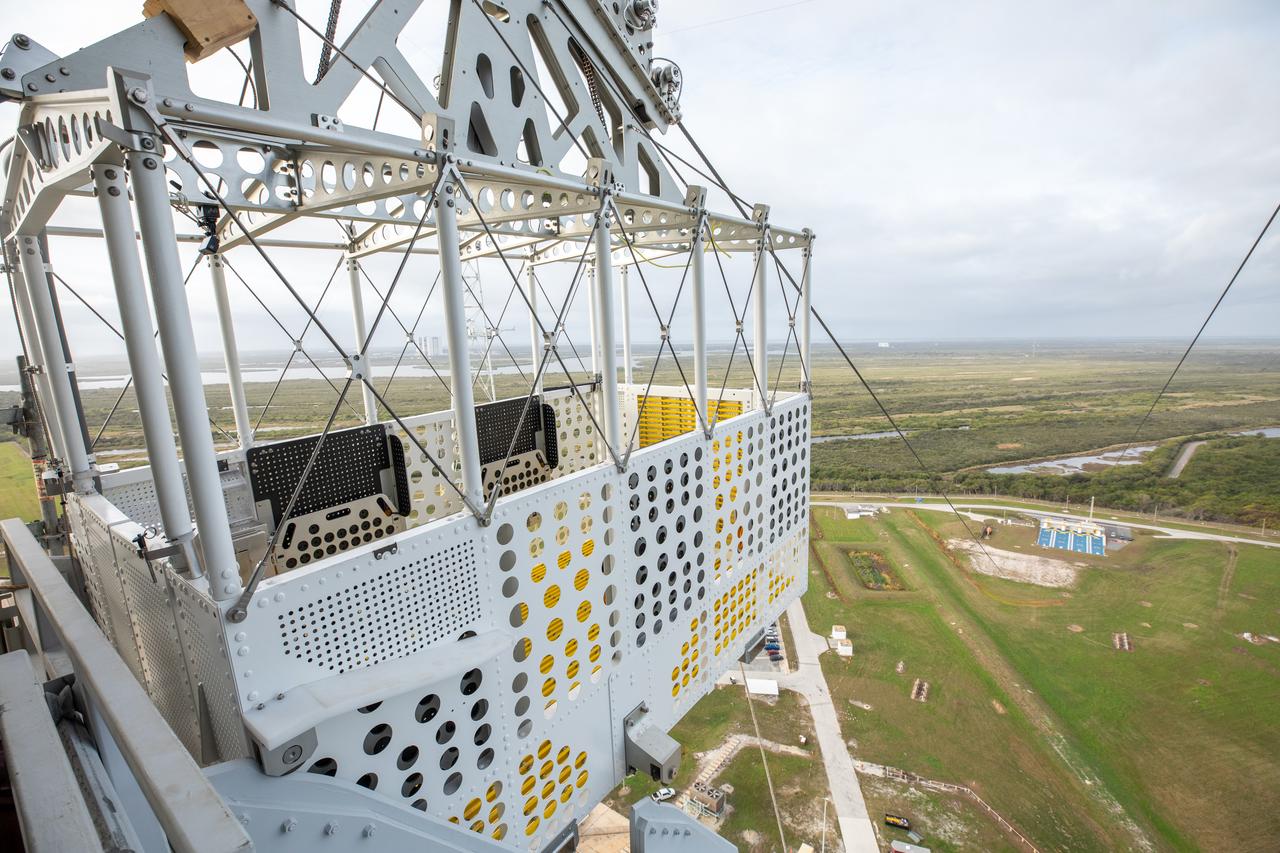
Teams with NASA’s Exploration Ground Systems Program, in preparation for the agency’s Artemis II crewed mission to the Moon, begin installing the first of four emergency egress baskets on the mobile launcher at Launch Complex 39B at the agency’s Kennedy Space Center in Florida on Wednesday, Jan. 24, 2024. The baskets, similar to gondolas on ski lifts, are used in the case of a pad abort emergency to enable astronauts and other pad personnel a way to quickly escape away from the mobile launcher to the base of the pad and where waiting emergency transport vehicles will then drive them away.
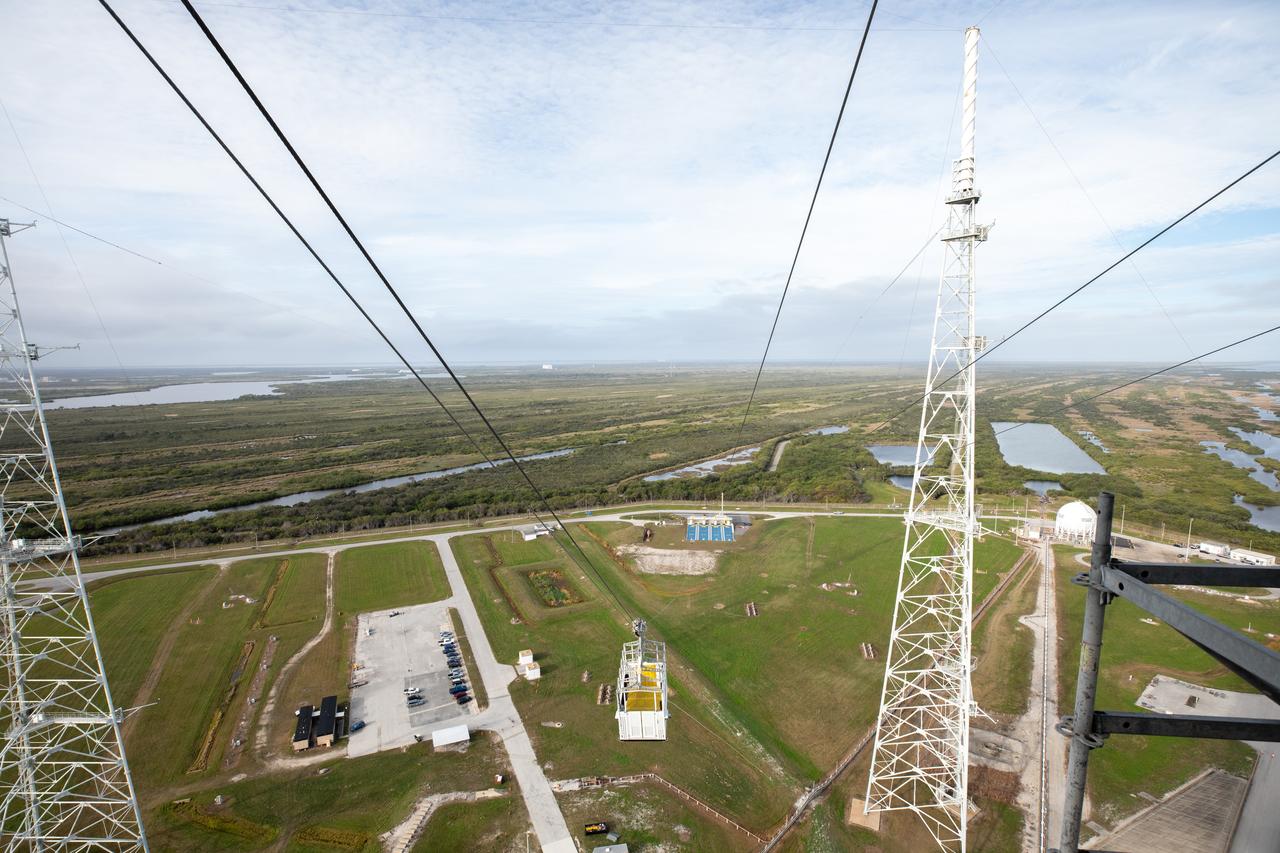
Teams with NASA’s Exploration Ground Systems Program, in preparation for the agency’s Artemis II crewed mission to the Moon, begin installing the first of four emergency egress baskets on the mobile launcher at Launch Complex 39B at the agency’s Kennedy Space Center in Florida on Wednesday, Jan. 24, 2024. The baskets, similar to gondolas on ski lifts, are used in the case of a pad abort emergency to enable astronauts and other pad personnel a way to quickly escape away from the mobile launcher to the base of the pad and where waiting emergency transport vehicles will then drive them away.
Teams with NASA’s Exploration Ground Systems Program, in preparation for the agency’s Artemis II crewed mission to the Moon, begin installing the first of four emergency egress baskets on the mobile launcher at Launch Complex 39B at the agency’s Kennedy Space Center in Florida on Wednesday, Jan. 24, 2024. The baskets, similar to gondolas on ski lifts, are used in the case of a pad abort emergency to enable astronauts and other pad personnel a way to quickly escape away from the mobile launcher to the base of the pad and where waiting emergency transport vehicles will then drive them away.
Teams with NASA’s Exploration Ground Systems Program, in preparation for the agency’s Artemis II crewed mission to the Moon, begin installing the first of four emergency egress baskets on the mobile launcher at Launch Complex 39B at the agency’s Kennedy Space Center in Florida on Wednesday, Jan. 24, 2024. The baskets, similar to gondolas on ski lifts, are used in the case of a pad abort emergency to enable astronauts and other pad personnel a way to quickly escape away from the mobile launcher to the base of the pad and where waiting emergency transport vehicles will then drive them away.
Teams with NASA’s Exploration Ground Systems Program, in preparation for the agency’s Artemis II crewed mission to the Moon, begin installing the first of four emergency egress baskets on the mobile launcher at Launch Complex 39B at the agency’s Kennedy Space Center in Florida on Wednesday, Jan. 24, 2024. The baskets, similar to gondolas on ski lifts, are used in the case of a pad abort emergency to enable astronauts and other pad personnel a way to quickly escape away from the mobile launcher to the base of the pad and where waiting emergency transport vehicles will then drive them away.

Teams with NASA’s Exploration Ground Systems Program, in preparation for the agency’s Artemis II crewed mission to the Moon, begin installing the first of four emergency egress baskets on the mobile launcher at Launch Complex 39B at the agency’s Kennedy Space Center in Florida on Wednesday, Jan. 24, 2024. The baskets, similar to gondolas on ski lifts, are used in the case of a pad abort emergency to enable astronauts and other pad personnel a way to quickly escape away from the mobile launcher to the base of the pad and where waiting emergency transport vehicles will then drive them away.
Teams with NASA’s Exploration Ground Systems Program, in preparation for the agency’s Artemis II crewed mission to the Moon, begin installing the first of four emergency egress baskets on the mobile launcher at Launch Complex 39B at the agency’s Kennedy Space Center in Florida on Wednesday, Jan. 24, 2024. The baskets, similar to gondolas on ski lifts, are used in the case of a pad abort emergency to enable astronauts and other pad personnel a way to quickly escape away from the mobile launcher to the base of the pad and where waiting emergency transport vehicles will then drive them away.
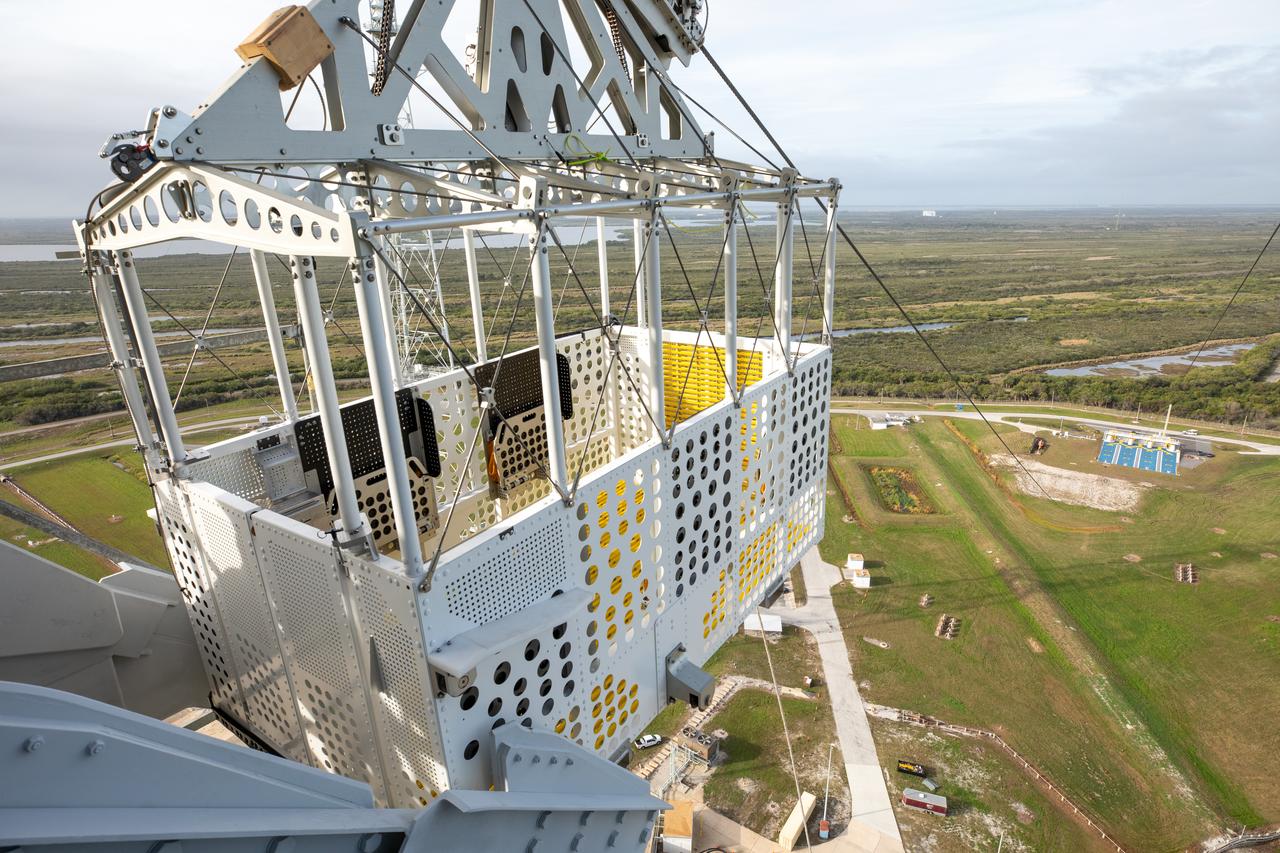
Teams with NASA’s Exploration Ground Systems Program, in preparation for the agency’s Artemis II crewed mission to the Moon, begin installing the first of four emergency egress baskets on the mobile launcher at Launch Complex 39B at the agency’s Kennedy Space Center in Florida on Wednesday, Jan. 24, 2024. The baskets, similar to gondolas on ski lifts, are used in the case of a pad abort emergency to enable astronauts and other pad personnel a way to quickly escape away from the mobile launcher to the base of the pad and where waiting emergency transport vehicles will then drive them away.
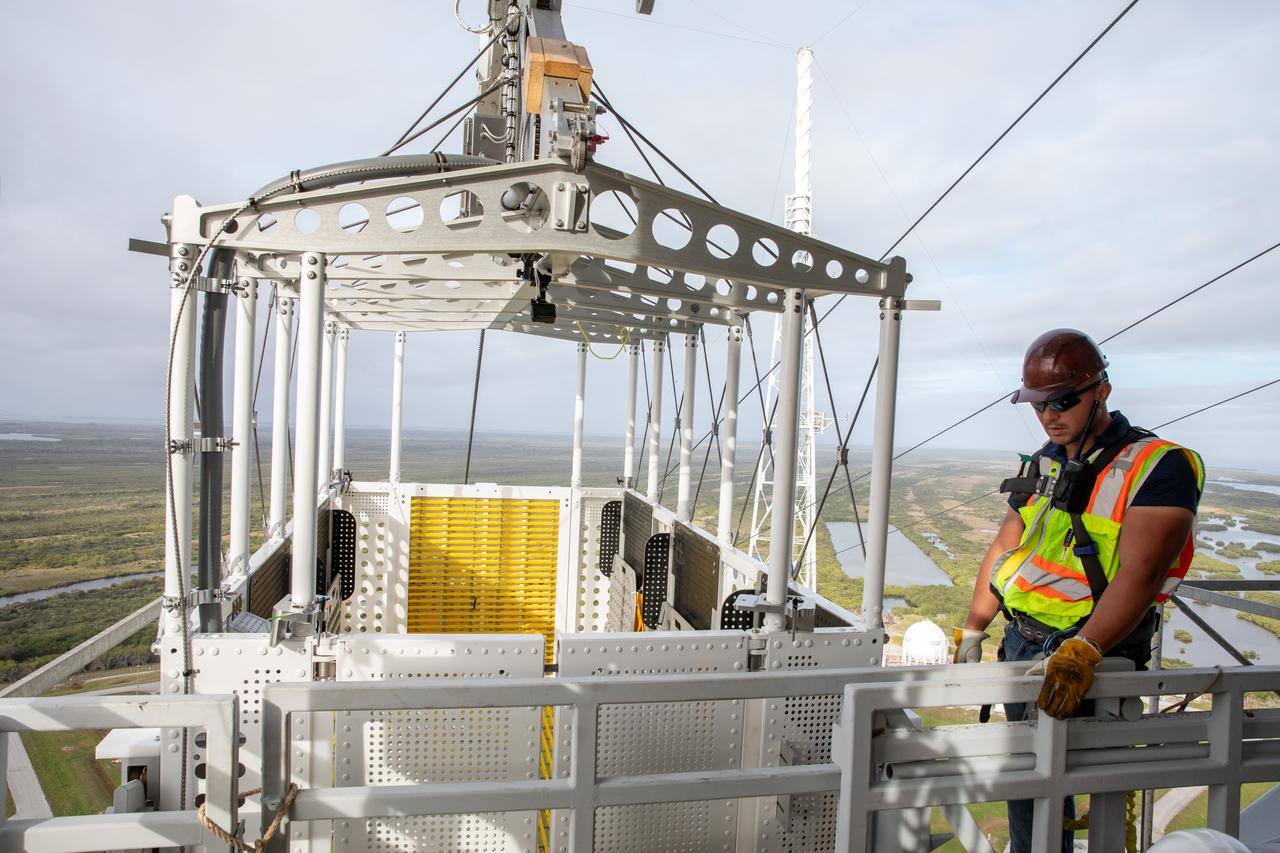
Teams with NASA’s Exploration Ground Systems Program, in preparation for the agency’s Artemis II crewed mission to the Moon, begin installing the first of four emergency egress baskets on the mobile launcher at Launch Complex 39B at the agency’s Kennedy Space Center in Florida on Wednesday, Jan. 24, 2024. The baskets, similar to gondolas on ski lifts, are used in the case of a pad abort emergency to enable astronauts and other pad personnel a way to quickly escape away from the mobile launcher to the base of the pad and where waiting emergency transport vehicles will then drive them away.
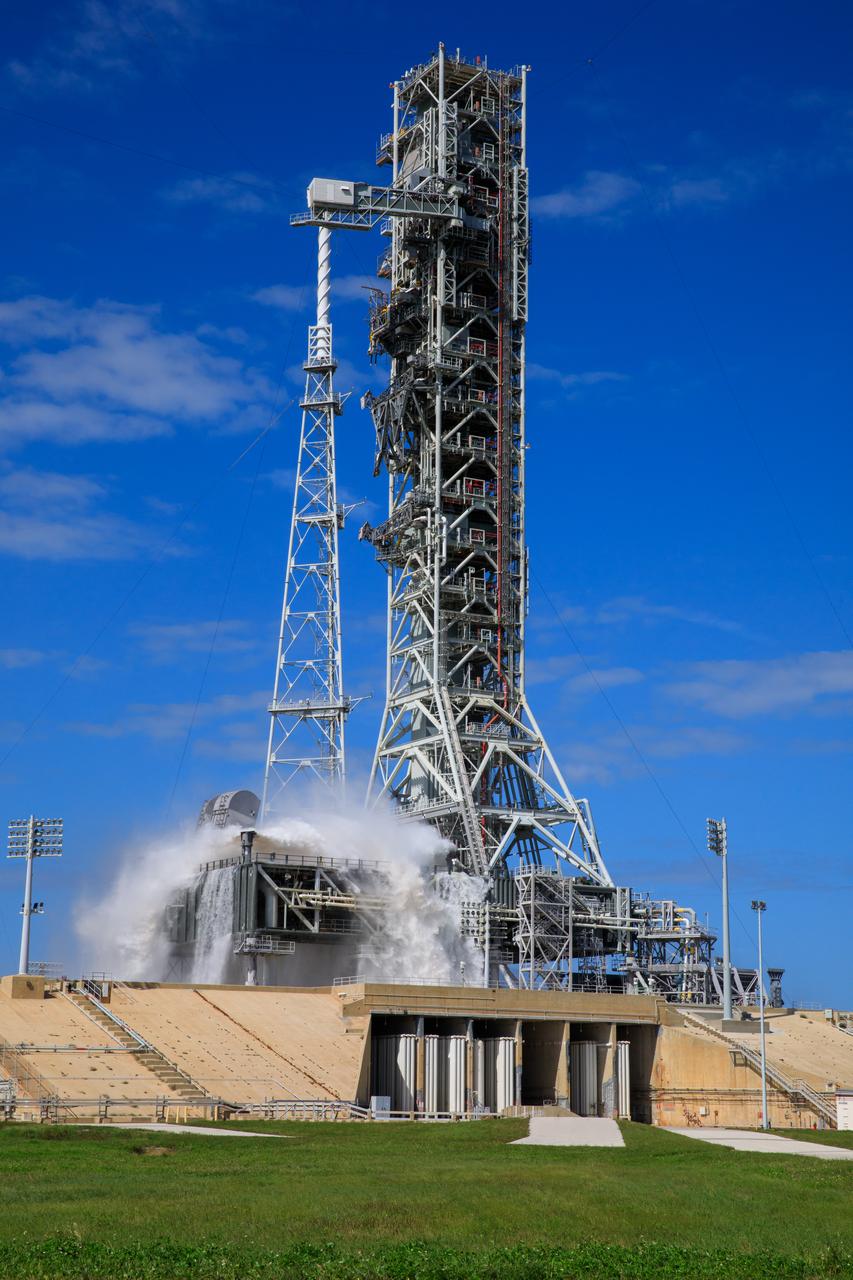
NASA’s Exploration Ground Systems conducts a water flow test with the mobile launcher at Kennedy Space Center’s Launch Complex 39B in Florida on Oct. 24, 2023. It is the third in a series of tests to verify the overpressure protection and sound suppression system is ready for launch of the Artemis II mission. During liftoff, 400,000 gallons of water will rush onto the pad to help protect NASA’s SLS (Space Launch System) rocket, Orion spacecraft, mobile launcher, and launch pad from any over pressurization and extreme sound produced during ignition and liftoff.
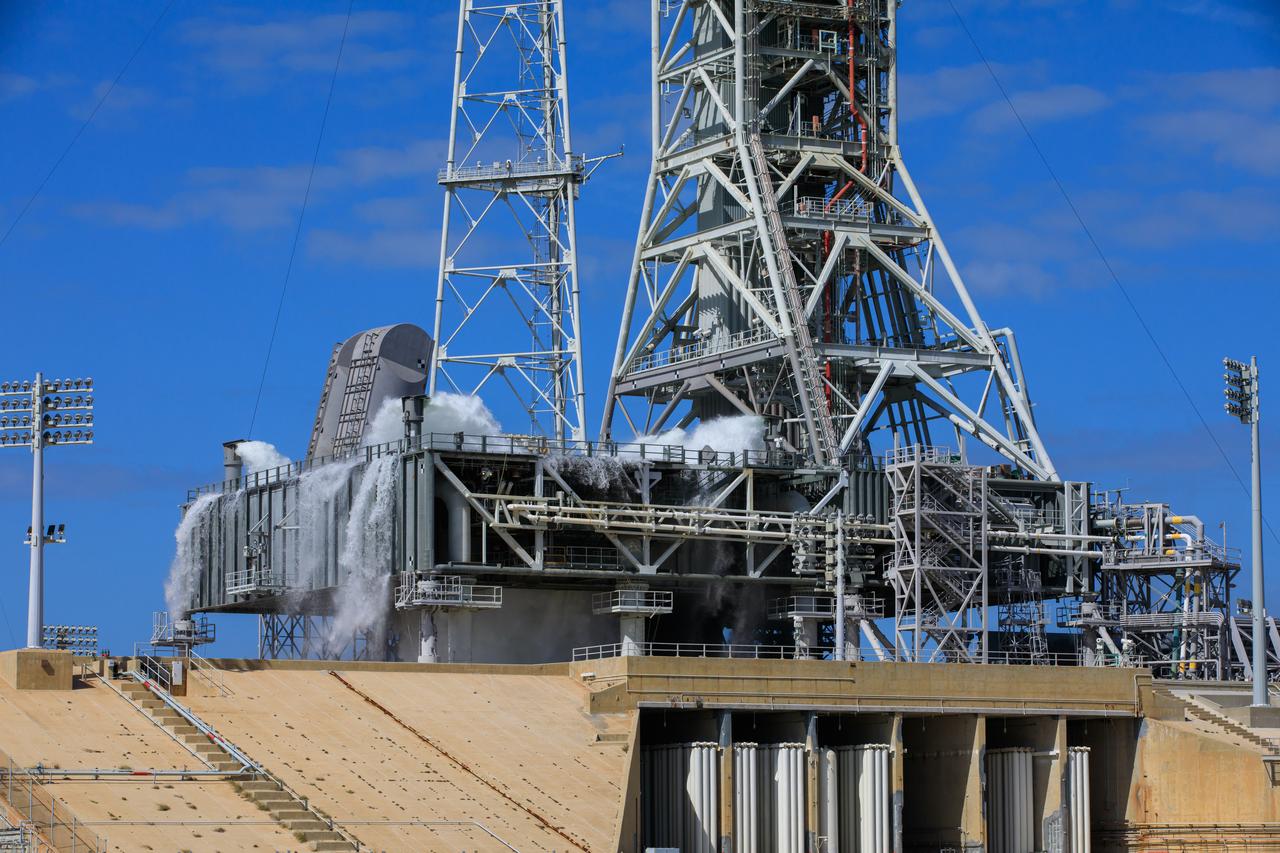
NASA’s Exploration Ground Systems conducts a water flow test with the mobile launcher at Kennedy Space Center’s Launch Complex 39B in Florida on Oct. 24, 2023. It is the third in a series of tests to verify the overpressure protection and sound suppression system is ready for launch of the Artemis II mission. During liftoff, 400,000 gallons of water will rush onto the pad to help protect NASA’s SLS (Space Launch System) rocket, Orion spacecraft, mobile launcher, and launch pad from any over pressurization and extreme sound produced during ignition and liftoff.
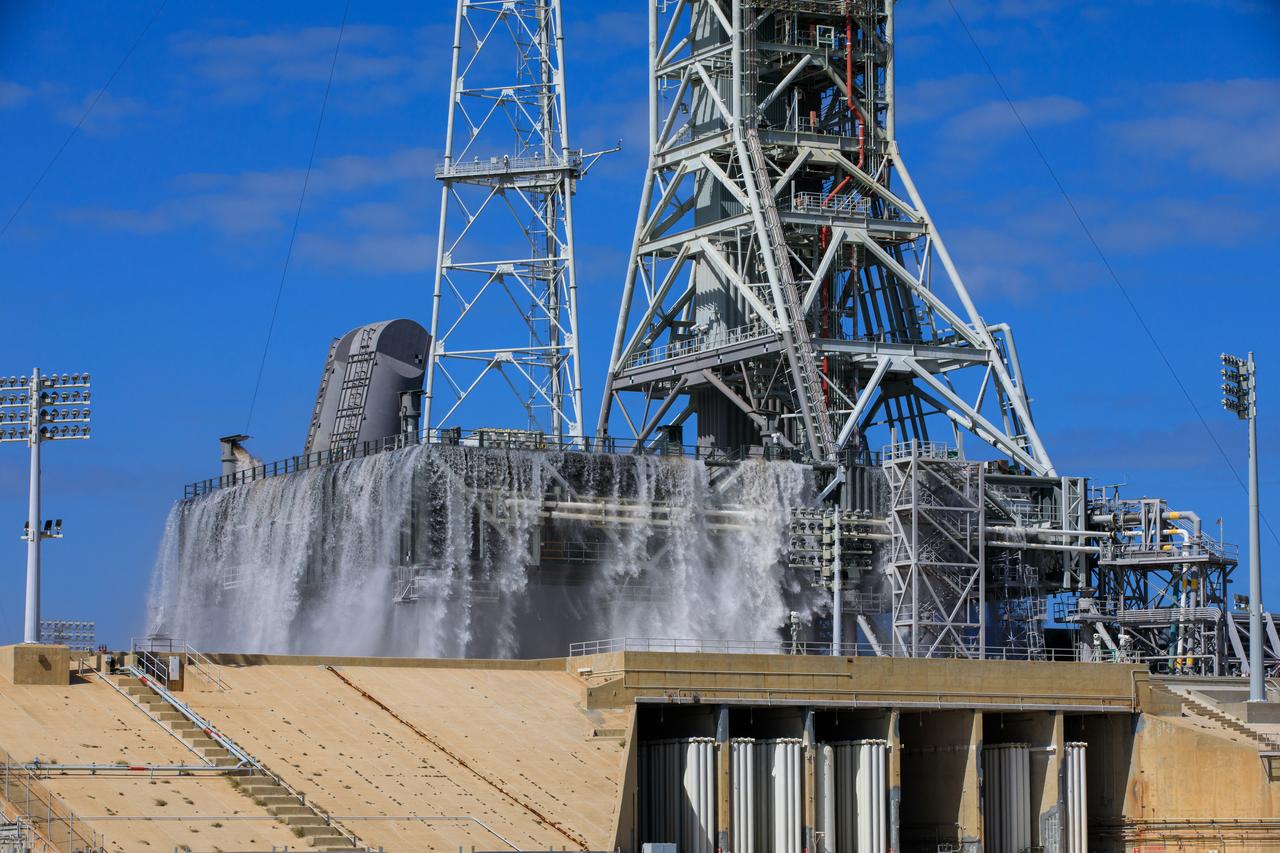
NASA’s Exploration Ground Systems conducts a water flow test with the mobile launcher at Kennedy Space Center’s Launch Complex 39B in Florida on Oct. 24, 2023. It is the third in a series of tests to verify the overpressure protection and sound suppression system is ready for launch of the Artemis II mission. During liftoff, 400,000 gallons of water will rush onto the pad to help protect NASA’s SLS (Space Launch System) rocket, Orion spacecraft, mobile launcher, and launch pad from any over pressurization and extreme sound produced during ignition and liftoff.
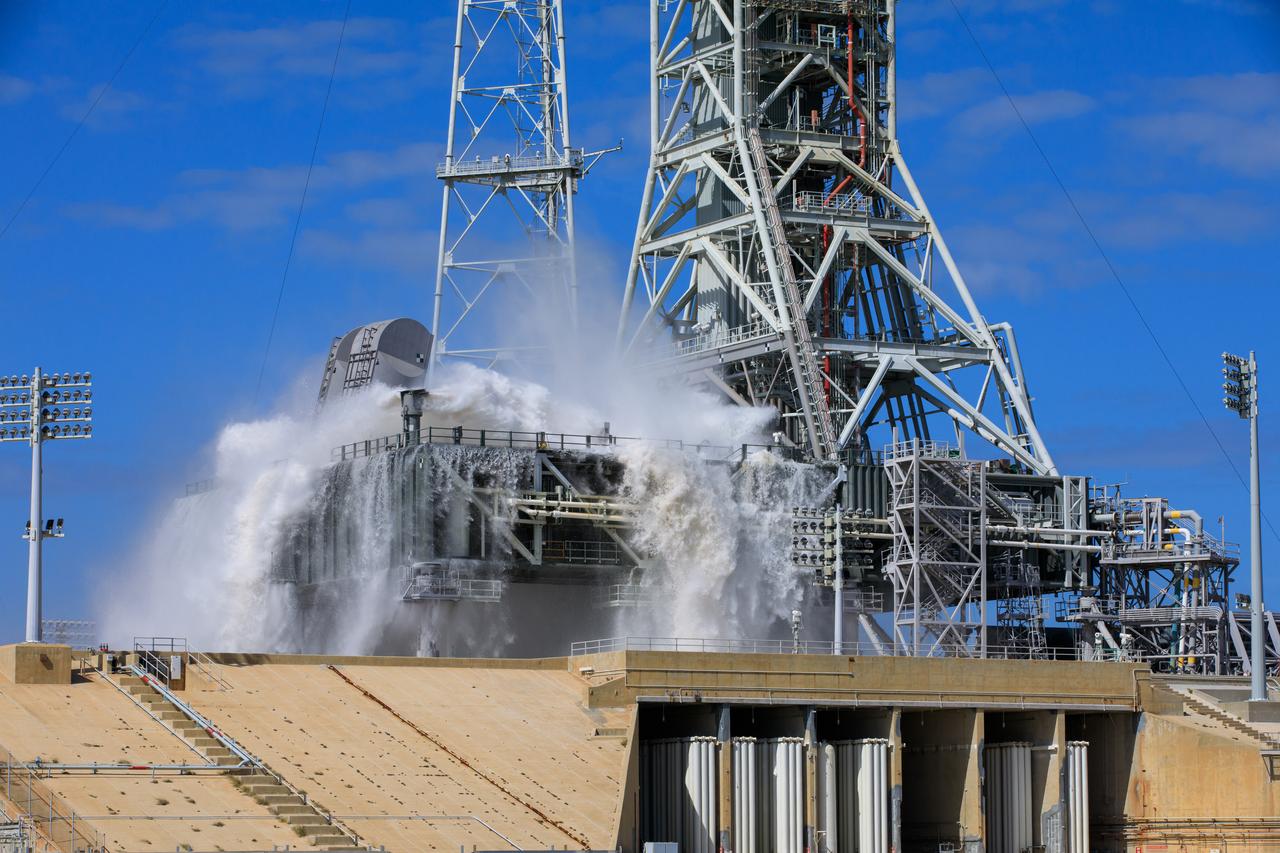
NASA’s Exploration Ground Systems conducts a water flow test with the mobile launcher at Kennedy Space Center’s Launch Complex 39B in Florida on Oct. 24, 2023. It is the third in a series of tests to verify the overpressure protection and sound suppression system is ready for launch of the Artemis II mission. During liftoff, 400,000 gallons of water will rush onto the pad to help protect NASA’s SLS (Space Launch System) rocket, Orion spacecraft, mobile launcher, and launch pad from any over pressurization and extreme sound produced during ignition and liftoff.

NASA’s Exploration Ground Systems conducts a water flow test with the mobile launcher at Kennedy Space Center’s Launch Complex 39B in Florida on Oct. 24, 2023. It is the third in a series of tests to verify the overpressure protection and sound suppression system is ready for launch of the Artemis II mission. During liftoff, 400,000 gallons of water will rush onto the pad to help protect NASA’s SLS (Space Launch System) rocket, Orion spacecraft, mobile launcher, and launch pad from any over pressurization and extreme sound produced during ignition and liftoff.
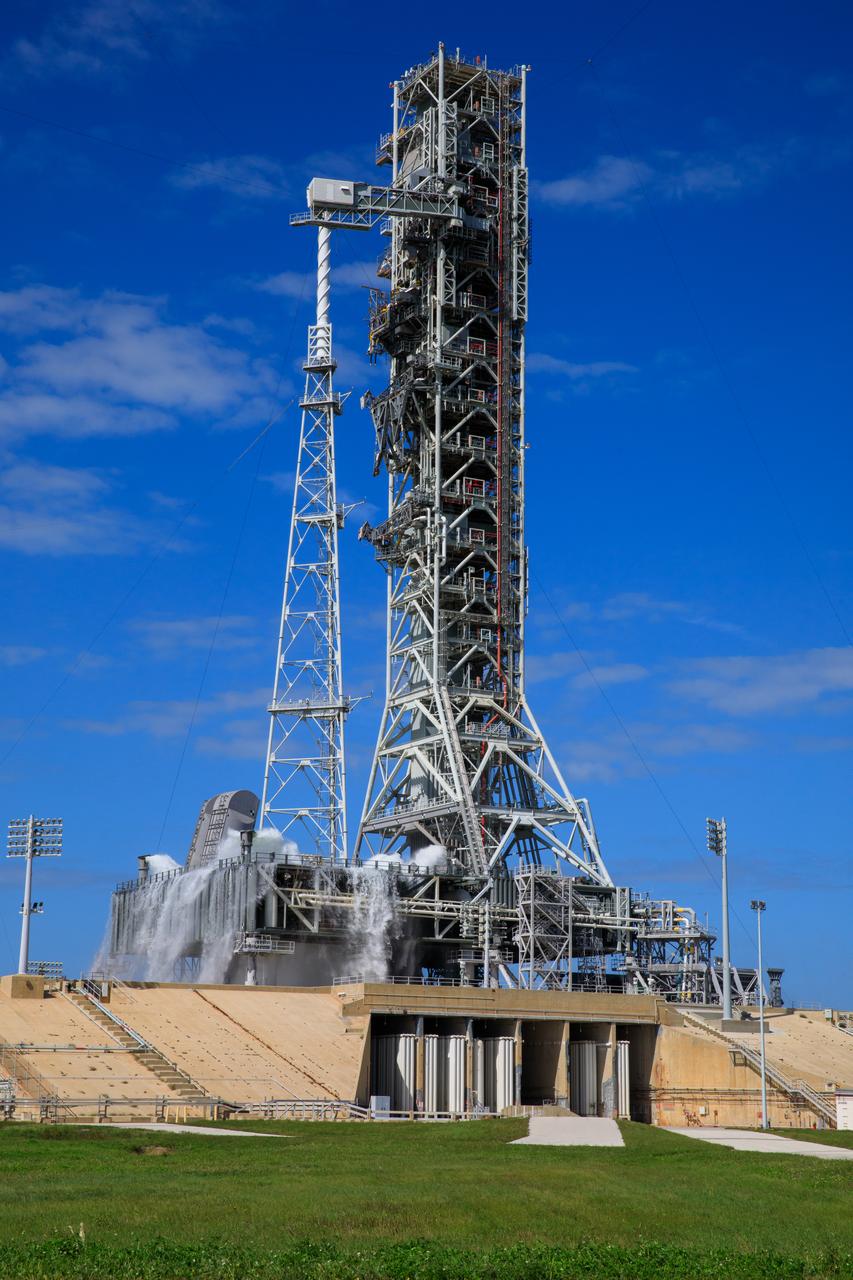
NASA’s Exploration Ground Systems conducts a water flow test with the mobile launcher at Kennedy Space Center’s Launch Complex 39B in Florida on Oct. 24, 2023. It is the third in a series of tests to verify the overpressure protection and sound suppression system is ready for launch of the Artemis II mission. During liftoff, 400,000 gallons of water will rush onto the pad to help protect NASA’s SLS (Space Launch System) rocket, Orion spacecraft, mobile launcher, and launch pad from any over pressurization and extreme sound produced during ignition and liftoff.
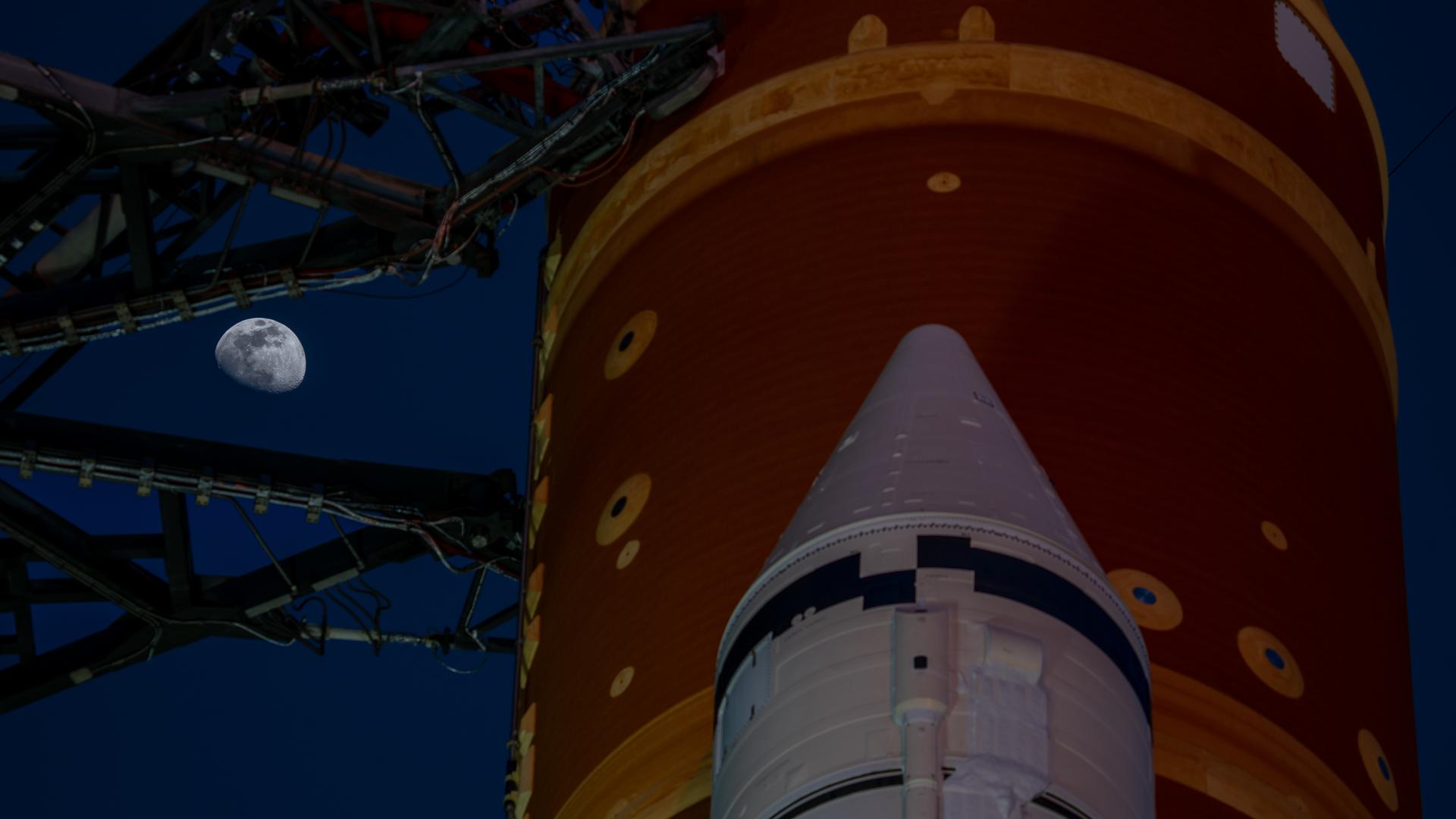
The Moon is seen shining over the SLS (Space Launch System) and Orion spacecraft, atop the mobile launcher on January 28, 2026. The rocket is currently at Launch Pad 39B at NASA’s Kennedy Space Center in Florida, as teams are preparing for a wet dress rehearsal to practice timelines and procedures for the launch of Artemis II.
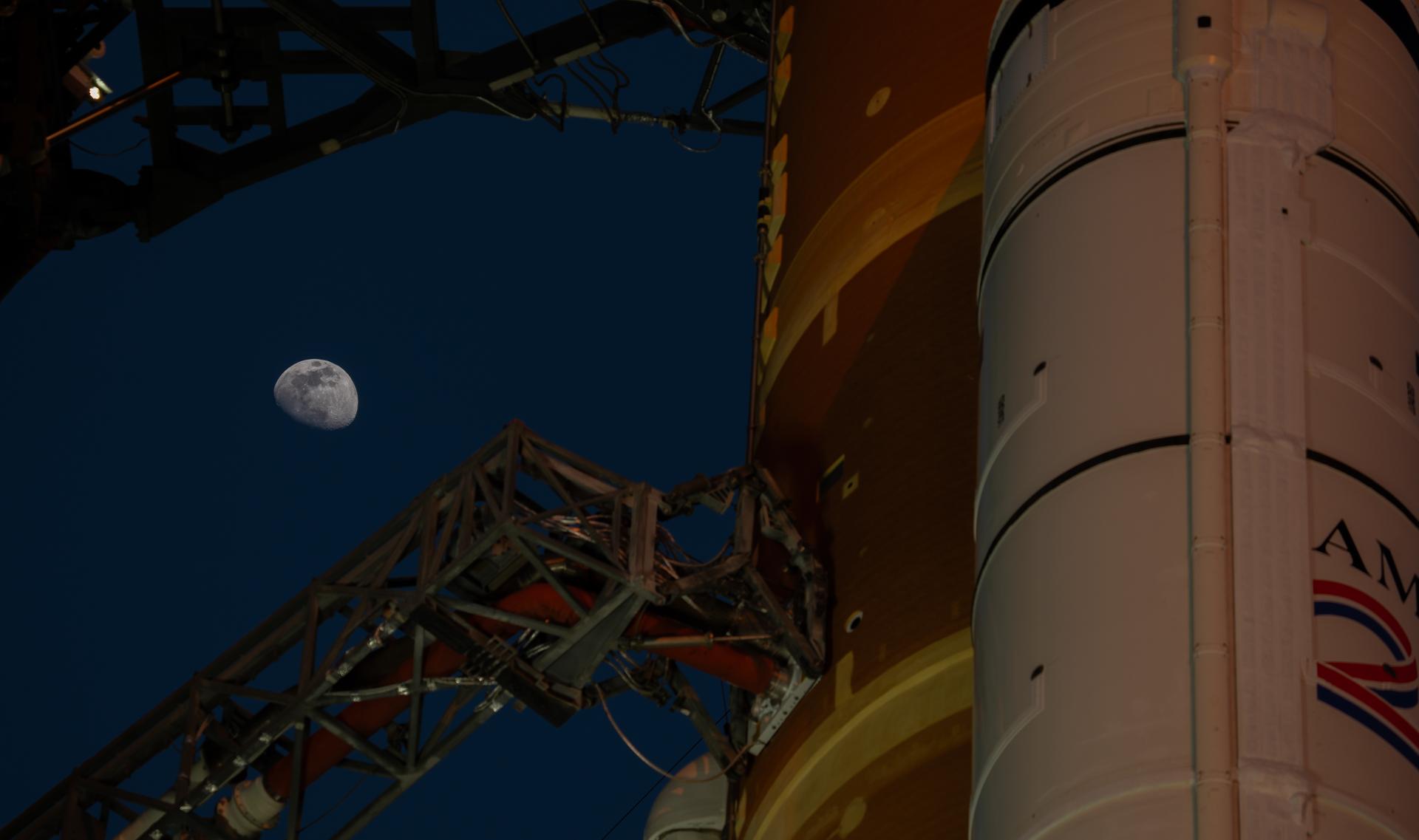
The Moon is seen shining over the SLS (Space Launch System) and Orion spacecraft, atop the mobile launcher on January 28, 2026. The rocket is currently at Launch Pad 39B at NASA’s Kennedy Space Center in Florida, as teams are preparing for a wet dress rehearsal to practice timelines and procedures for the launch of Artemis II.
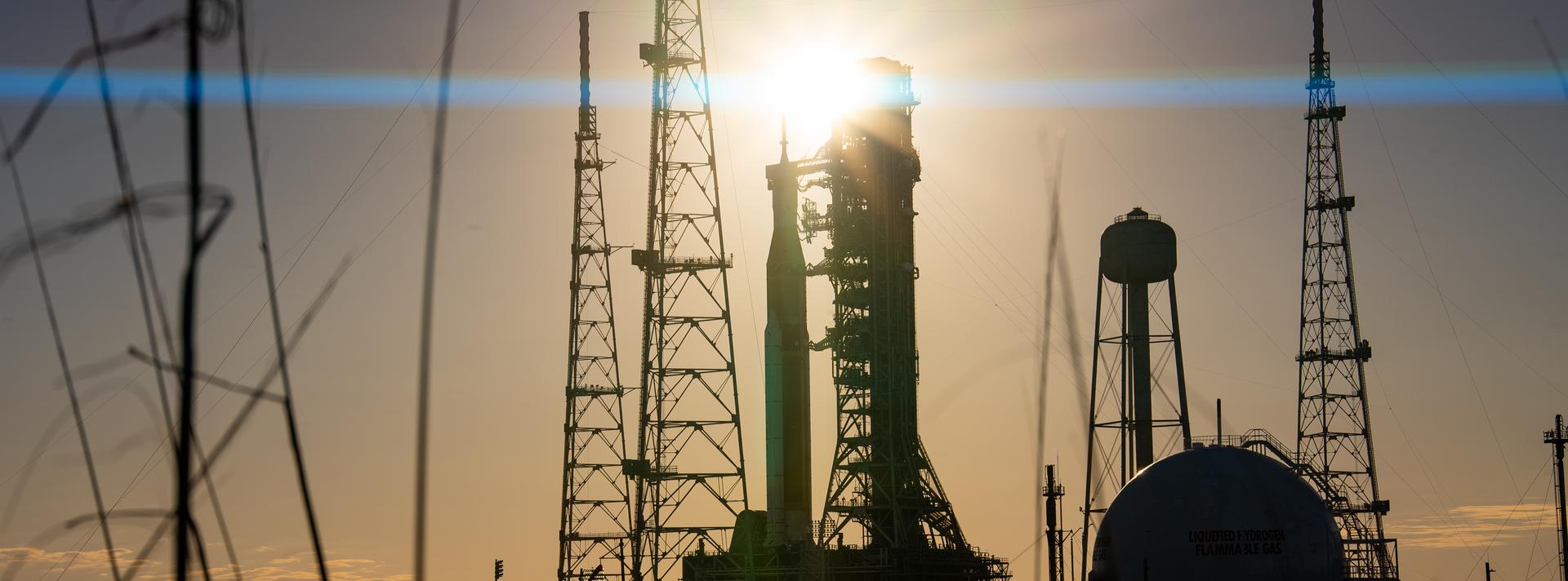
The sun is seen setting behind NASA’s SLS (Space Launch System) and Orion spacecraft, atop the mobile launcher on January 31, 2026. The rocket is currently at Launch Pad 39B at NASA’s Kennedy Space Center in Florida, as teams are preparing for a wet dress rehearsal to practice timelines and procedures for the launch of Artemis II.
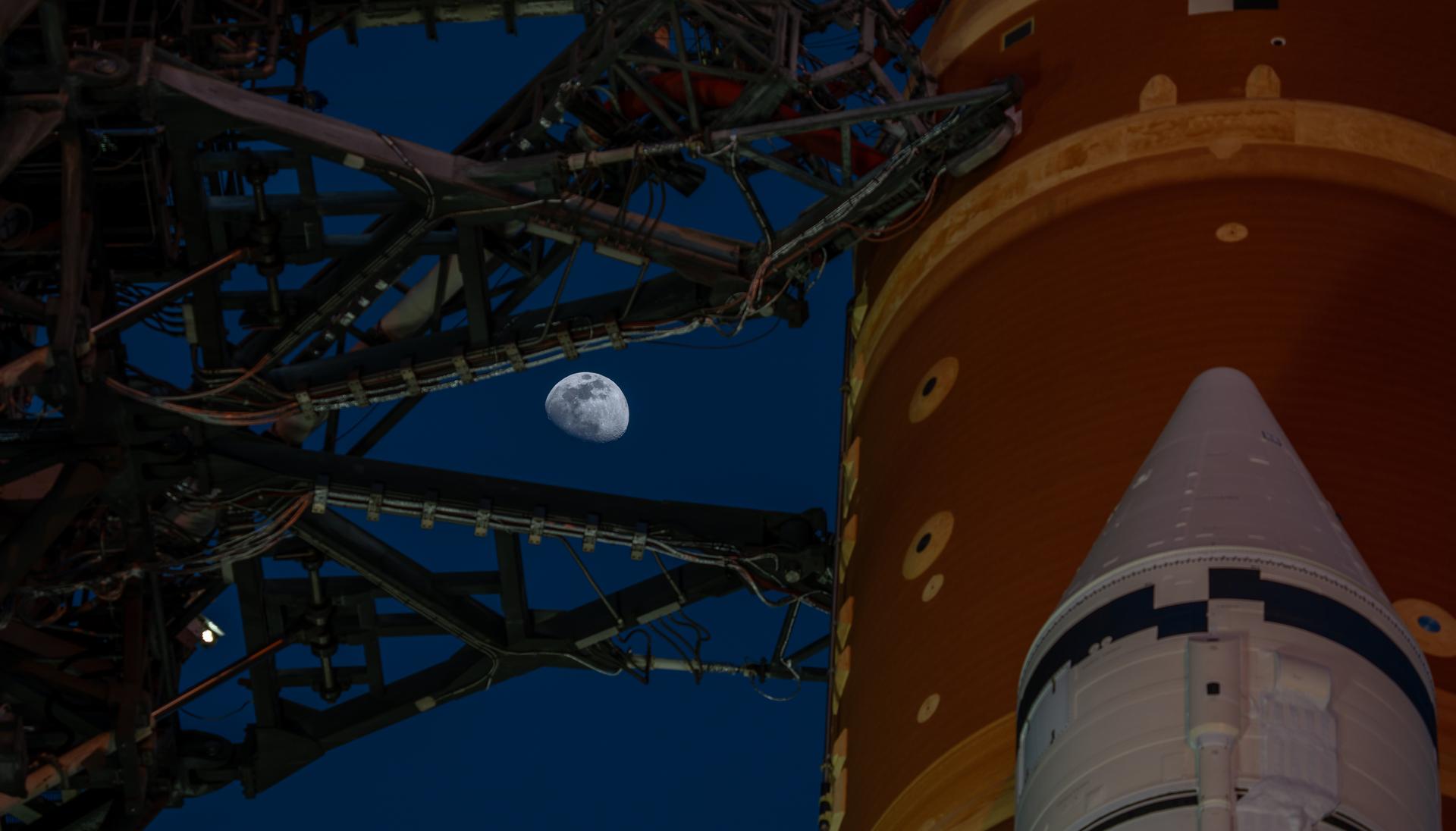
The Moon is seen shining over the SLS (Space Launch System) and Orion spacecraft, atop the mobile launcher on January 28, 2026. The rocket is currently at Launch Pad 39B at NASA’s Kennedy Space Center in Florida, as teams are preparing for a wet dress rehearsal to practice timelines and procedures for the launch of Artemis II.
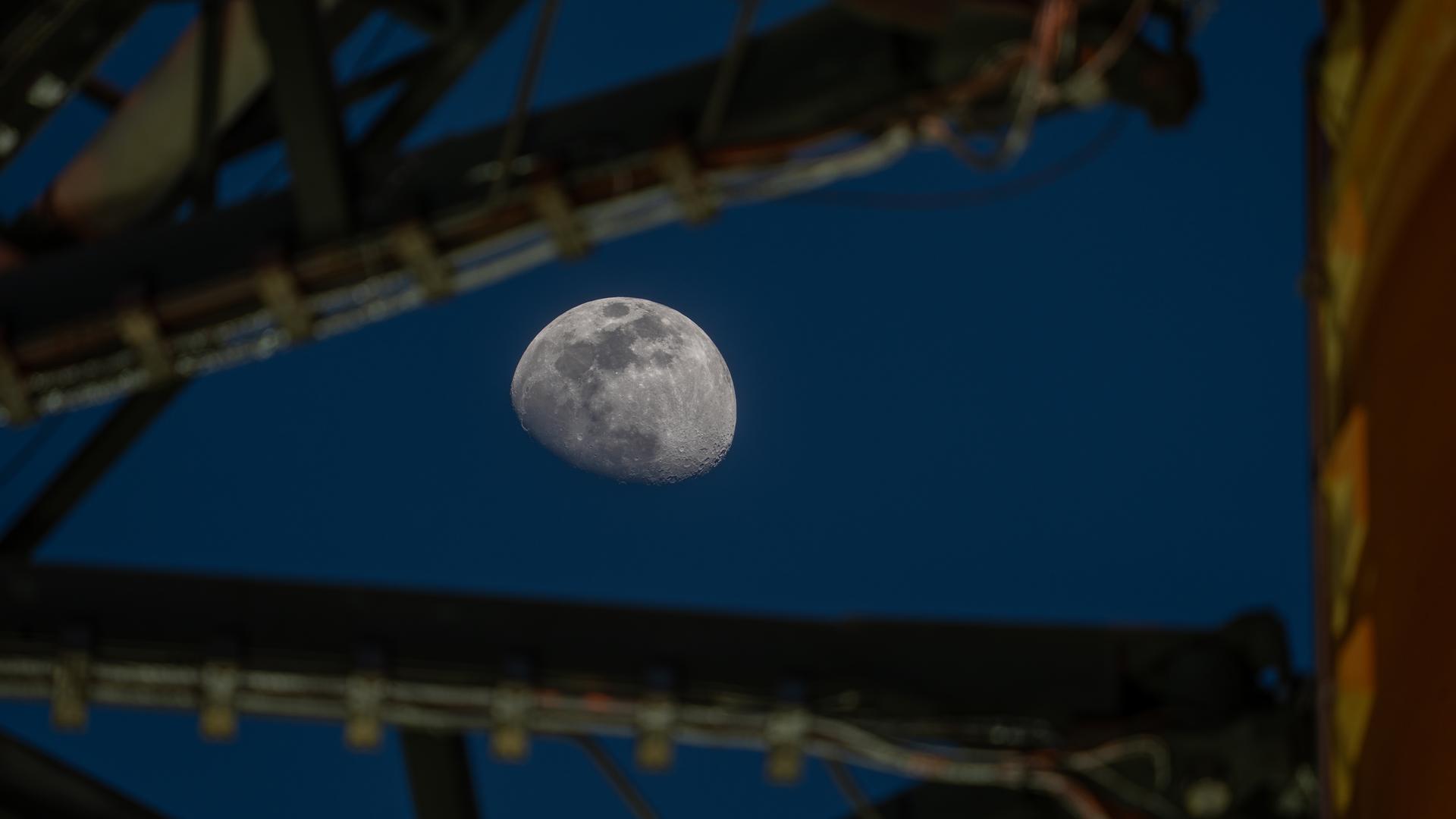
The Moon is seen shining over the SLS (Space Launch System) and Orion spacecraft, atop the mobile launcher on January 28, 2026. The rocket is currently at Launch Pad 39B at NASA’s Kennedy Space Center in Florida, as teams are preparing for a wet dress rehearsal to practice timelines and procedures for the launch of Artemis II.
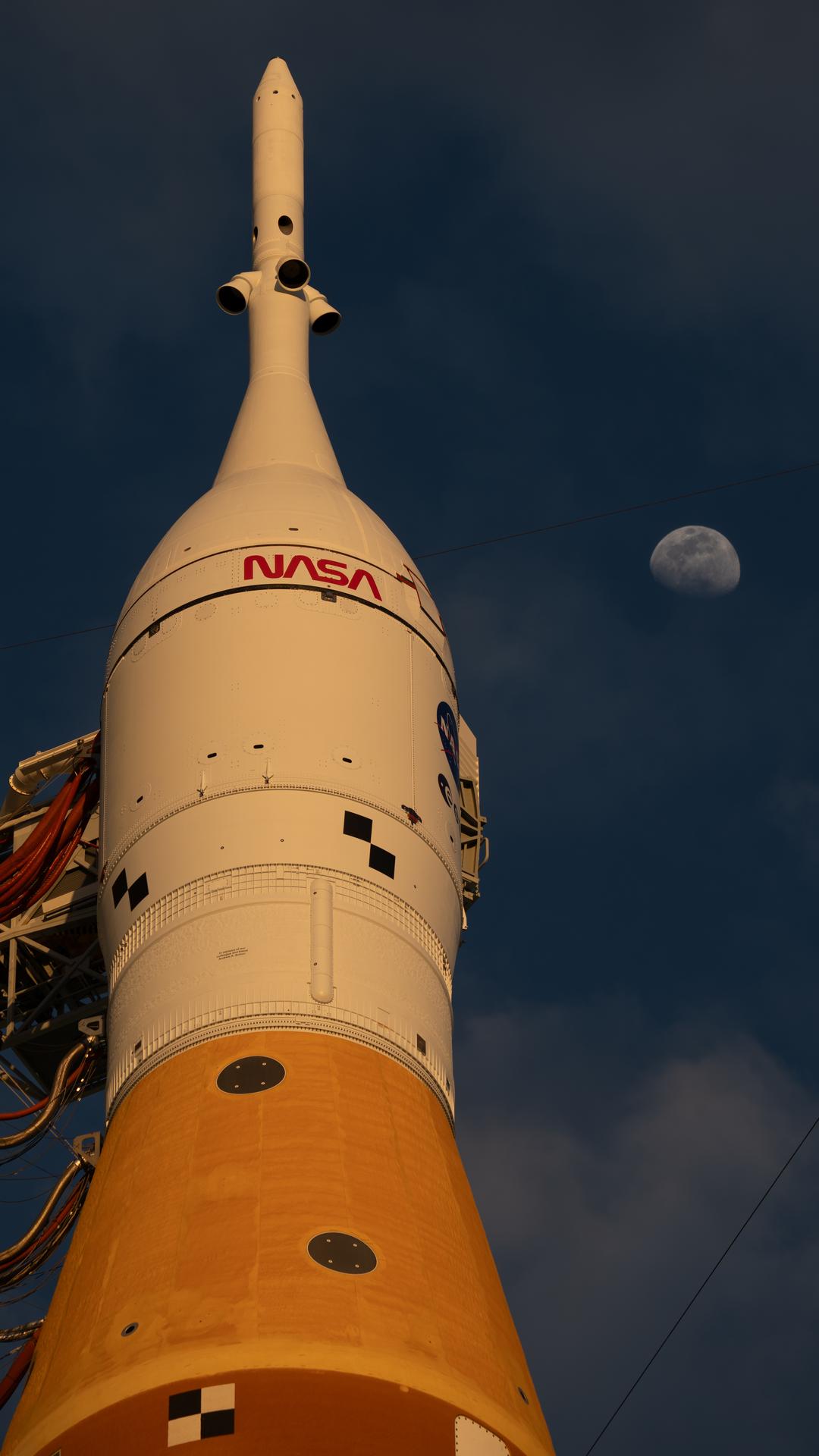
The Moon is seen shining over the SLS (Space Launch System) and Orion spacecraft, atop the mobile launcher on January 28, 2026. The rocket is currently at Launch Pad 39B at NASA’s Kennedy Space Center in Florida, as teams are preparing for a wet dress rehearsal to practice timelines and procedures for the launch of Artemis II.
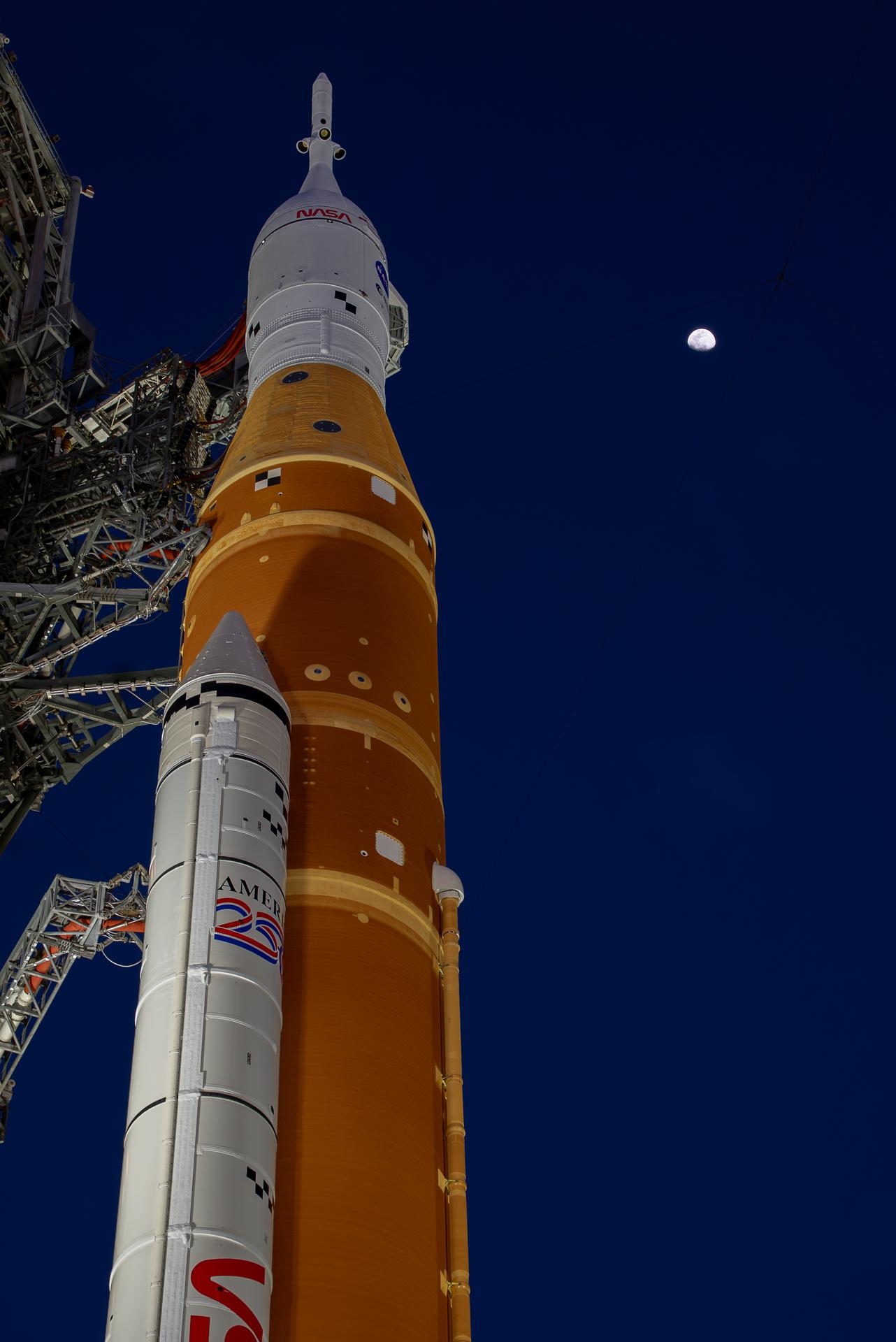
The Moon is seen shining over the SLS (Space Launch System) and Orion spacecraft, atop the mobile launcher on January 28, 2026. The rocket is currently at Launch Pad 39B at NASA’s Kennedy Space Center in Florida, as teams are preparing for a wet dress rehearsal to practice timelines and procedures for the launch of Artemis II.
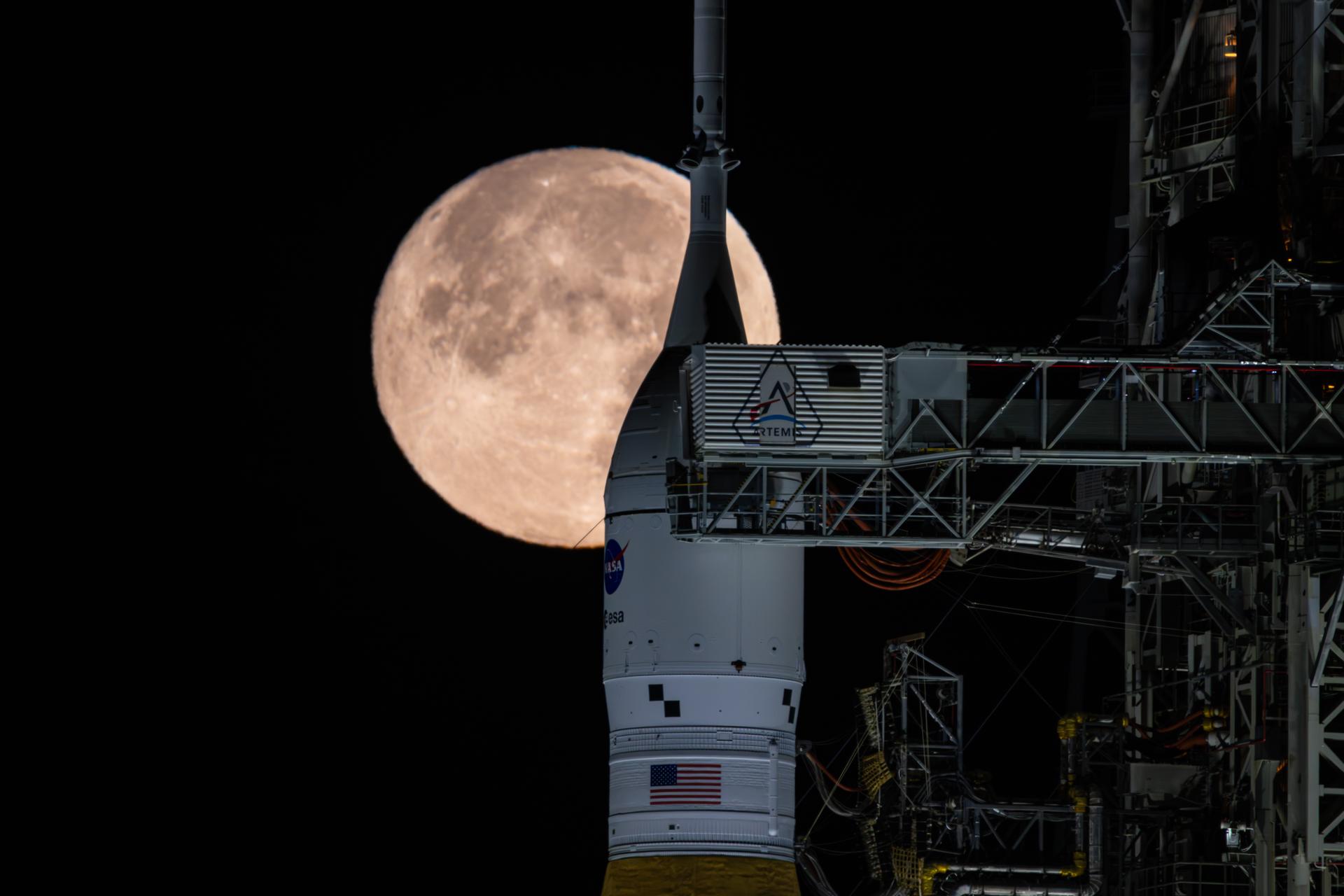
The Moon is seen shining over the SLS (Space Launch System) and Orion spacecraft, atop the mobile launcher on February 1, 2026. The rocket is currently at Launch Pad 39B at NASA’s Kennedy Space Center in Florida, as teams are preparing for a wet dress rehearsal to practice timelines and procedures for the launch of Artemis II.
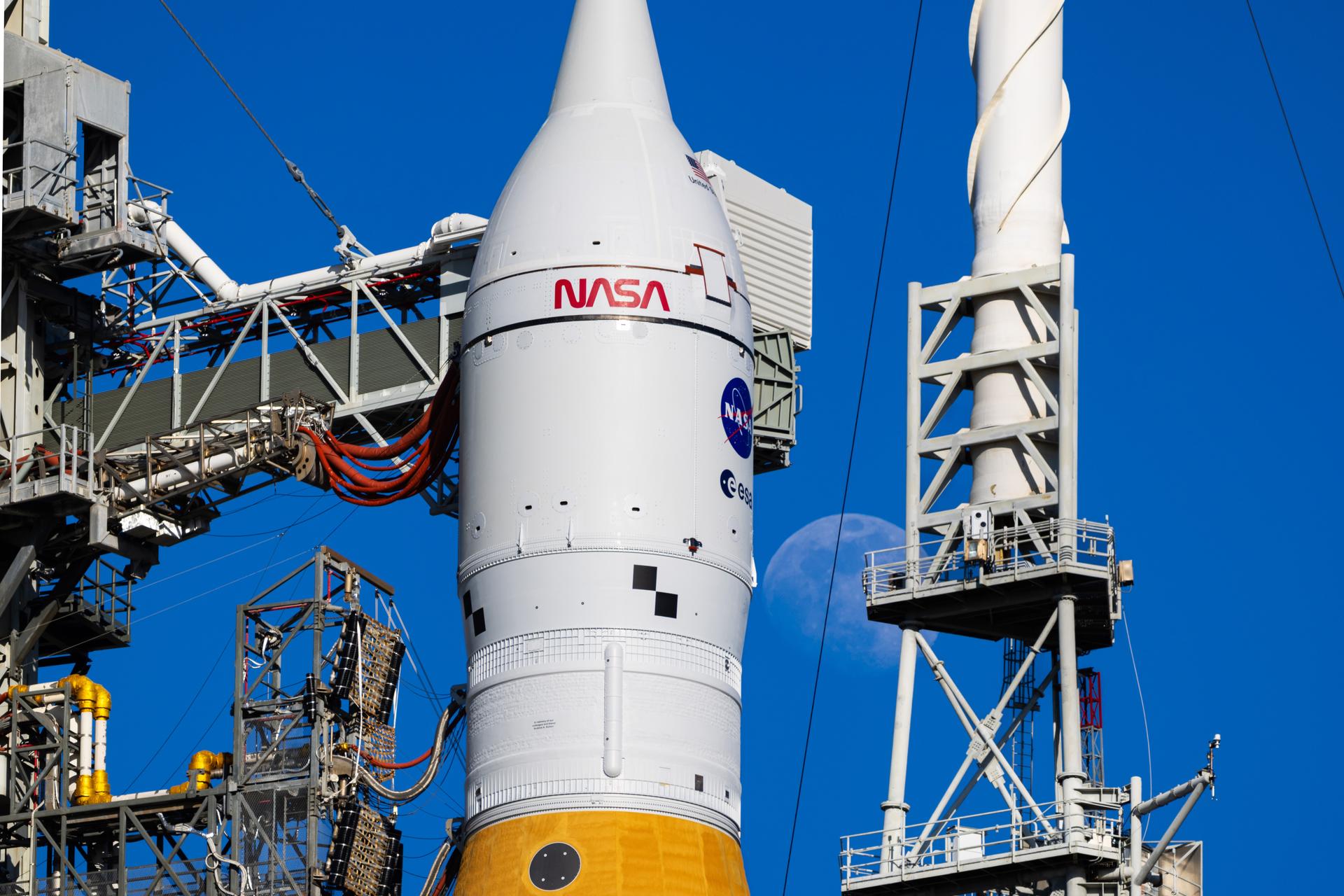
The Moon is seen shining over the SLS (Space Launch System) and Orion spacecraft, atop the mobile launcher on January 29, 2026. The rocket is currently at Launch Pad 39B at NASA’s Kennedy Space Center in Florida, as teams are preparing for a wet dress rehearsal to practice timelines and procedures for the launch of Artemis II.
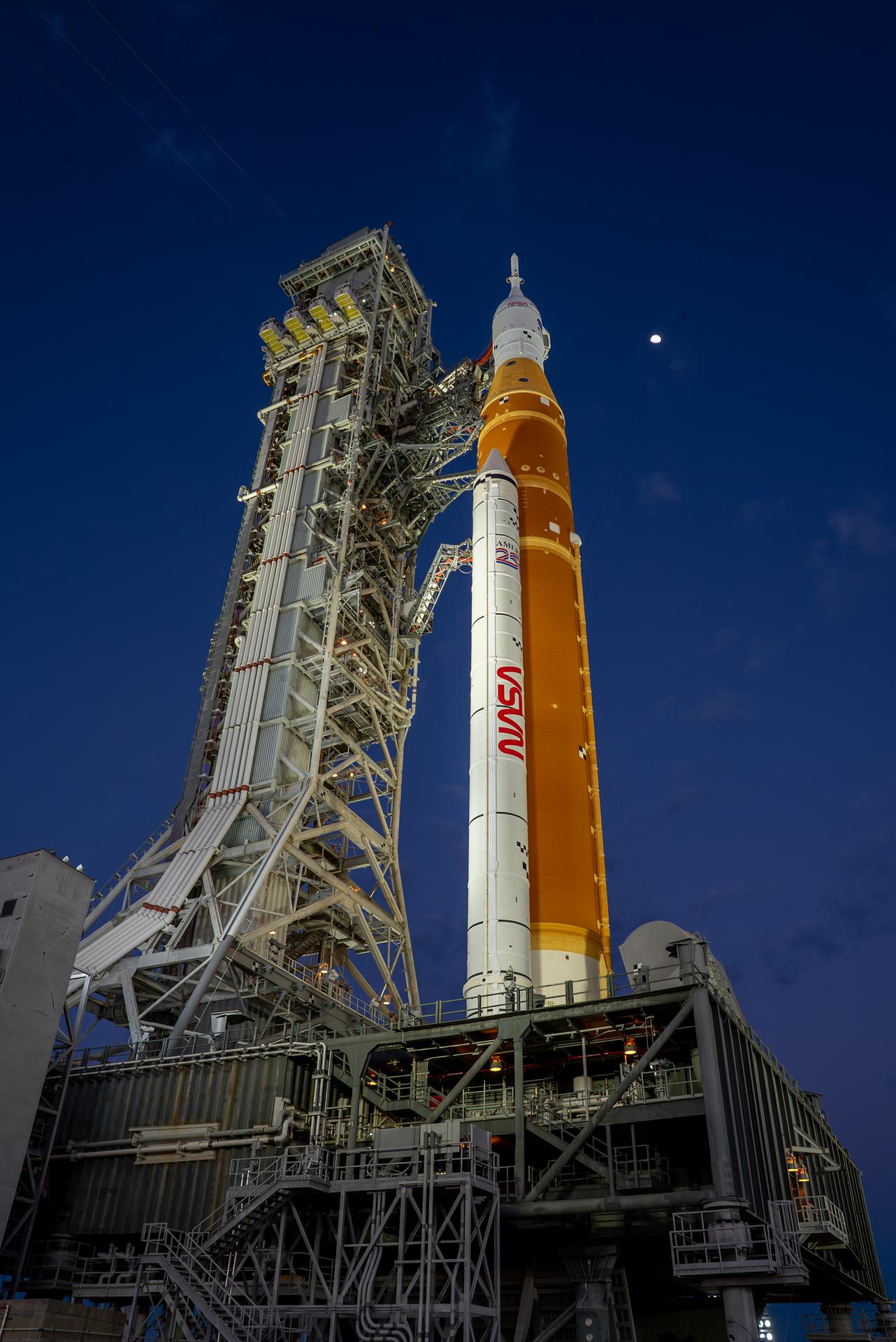
The Moon is seen shining over the SLS (Space Launch System) and Orion spacecraft, atop the mobile launcher on January 28, 2026. The rocket is currently at Launch Pad 39B at NASA’s Kennedy Space Center in Florida, as teams are preparing for a wet dress rehearsal to practice timelines and procedures for the launch of Artemis II.
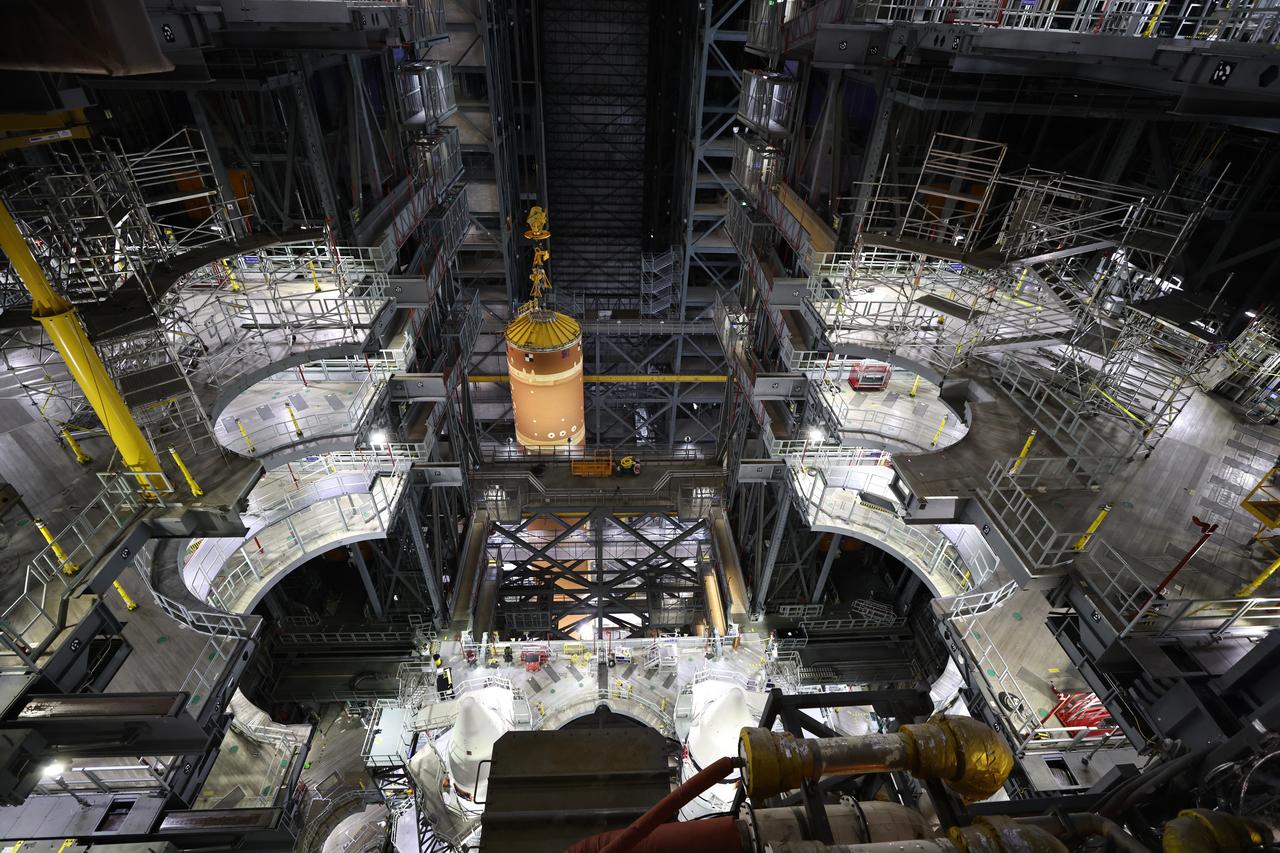
Teams with NASA’s Exploration Ground Systems and primary contractor Amentum, use a massive crane to lift to vertical the SLS (Space Launch System) Moon rocket for Artemis II on Saturday, March 22, 2025, inside the Vehicle Assembly Building at NASA’s Kennedy Space Center in Florida. The move from the facility’s transfer aisle into High Bay 3 allows technicians to integrate the 212-foot-tall core stage with the stacked solid rocket boosters onto mobile launcher 1. Artemis II is the first crewed test flight under NASA’s Artemis campaign and is another step toward missions on the lunar surface and helping the agency prepare for future human missions to Mars.
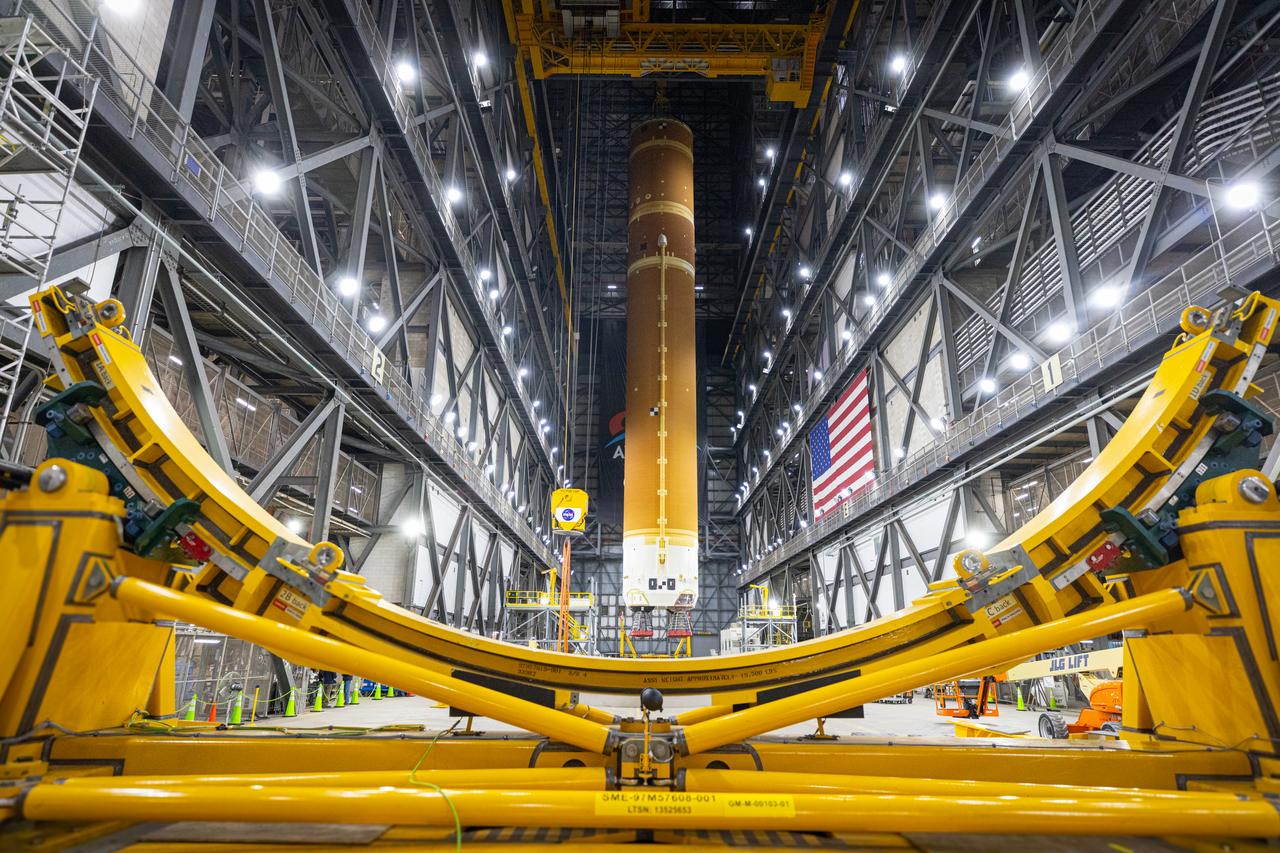
Teams with NASA’s Exploration Ground Systems and primary contractor Amentum, use a massive crane to lift to vertical the SLS (Space Launch System) Moon rocket for Artemis II on Saturday, March 22, 2025, inside the Vehicle Assembly Building at NASA’s Kennedy Space Center in Florida. The move from the facility’s transfer aisle into High Bay 3 allows technicians to integrate the 212-foot-tall core stage with the stacked solid rocket boosters onto mobile launcher 1. Artemis II is the first crewed test flight under NASA’s Artemis campaign and is another step toward missions on the lunar surface and helping the agency prepare for future human missions to Mars.
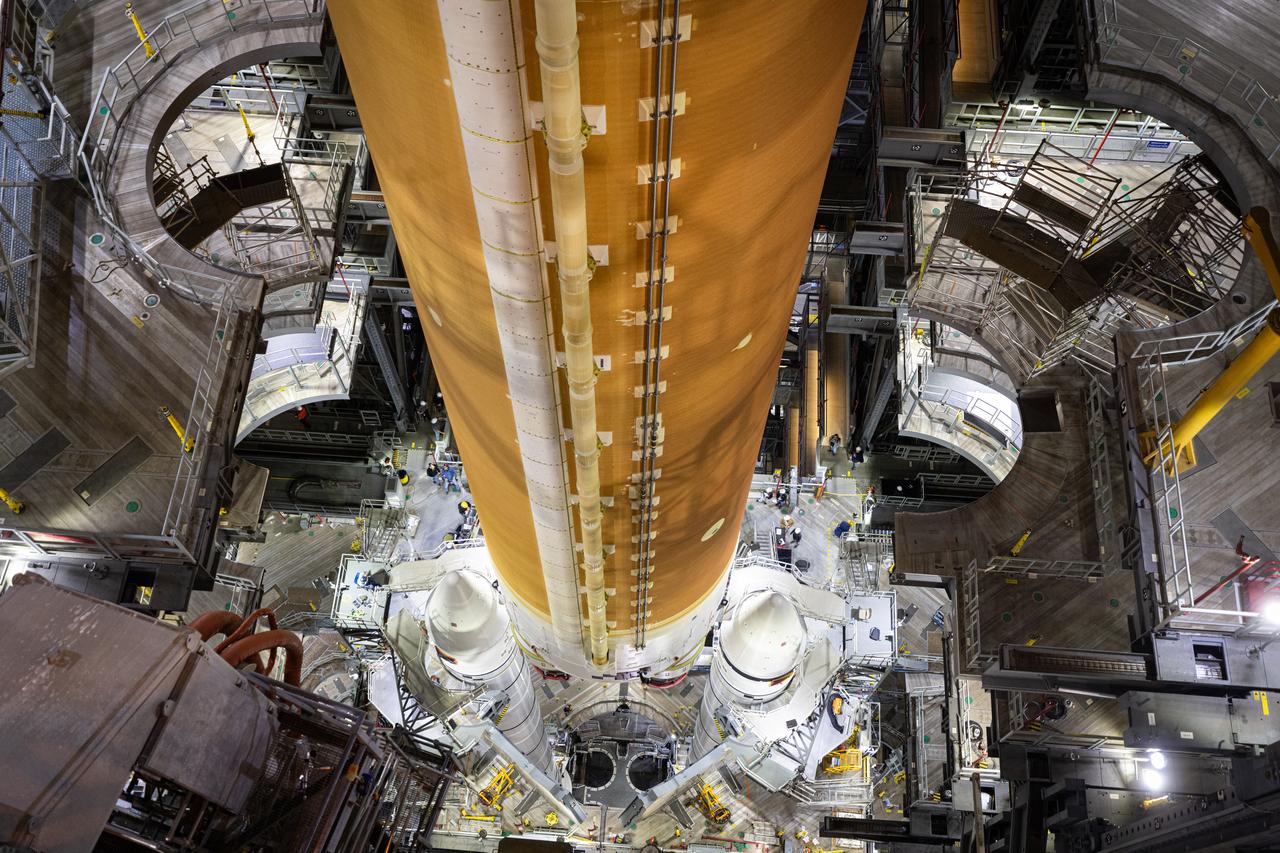
Teams with NASA’s Exploration Ground Systems and primary contractor Amentum, integrate the SLS (Space Launch System) Moon rocket with the solid rocket boosters onto mobile launcher 1 inside High Bay 3 of the Vehicle Assembly Building at NASA’s Kennedy Space Center on Sunday, March 23, 2025. Artemis II is the first crewed test flight under NASA’s Artemis campaign and is another step toward missions on the lunar surface and helping the agency prepare for future human missions to Mars.

Teams with NASA’s Exploration Ground Systems and primary contractor Amentum, integrate the SLS (Space Launch System) Moon rocket with the solid rocket boosters onto mobile launcher 1 inside High Bay 3 of the Vehicle Assembly Building at NASA’s Kennedy Space Center on Sunday, March 23, 2025. Artemis II is the first crewed test flight under NASA’s Artemis campaign and is another step toward missions on the lunar surface and helping the agency prepare for future human missions to Mars.

Teams with NASA’s Exploration Ground Systems and primary contractor Amentum, integrate the SLS (Space Launch System) Moon rocket with the solid rocket boosters onto mobile launcher 1 inside High Bay 3 of the Vehicle Assembly Building at NASA’s Kennedy Space Center on Sunday, March 23, 2025. Artemis II is the first crewed test flight under NASA’s Artemis campaign and is another step toward missions on the lunar surface and helping the agency prepare for future human missions to Mars.
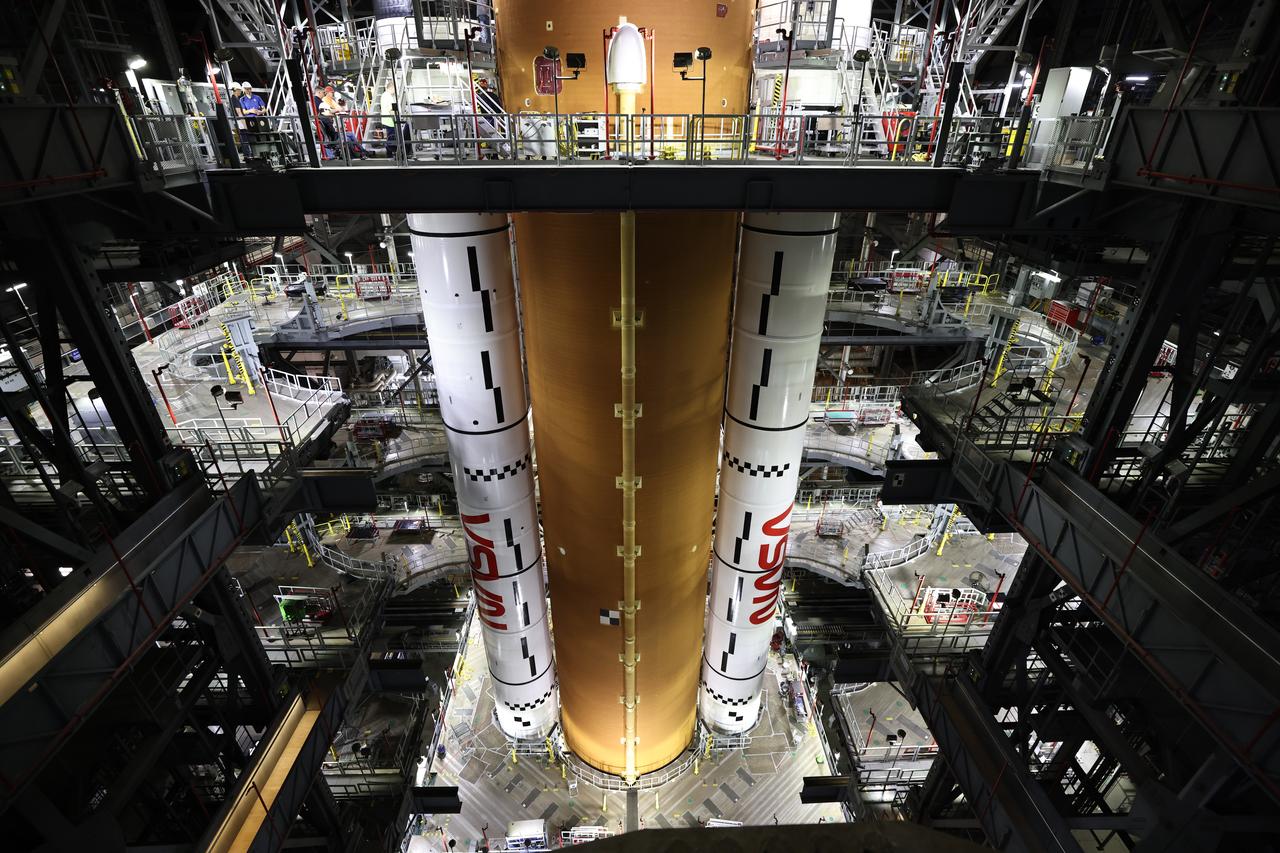
Teams with NASA’s Exploration Ground Systems and primary contractor Amentum, integrate the SLS (Space Launch System) Moon rocket with the solid rocket boosters onto mobile launcher 1 inside High Bay 3 of the Vehicle Assembly Building at NASA’s Kennedy Space Center on Sunday, March 23, 2025. Artemis II is the first crewed test flight under NASA’s Artemis campaign and is another step toward missions on the lunar surface and helping the agency prepare for future human missions to Mars.
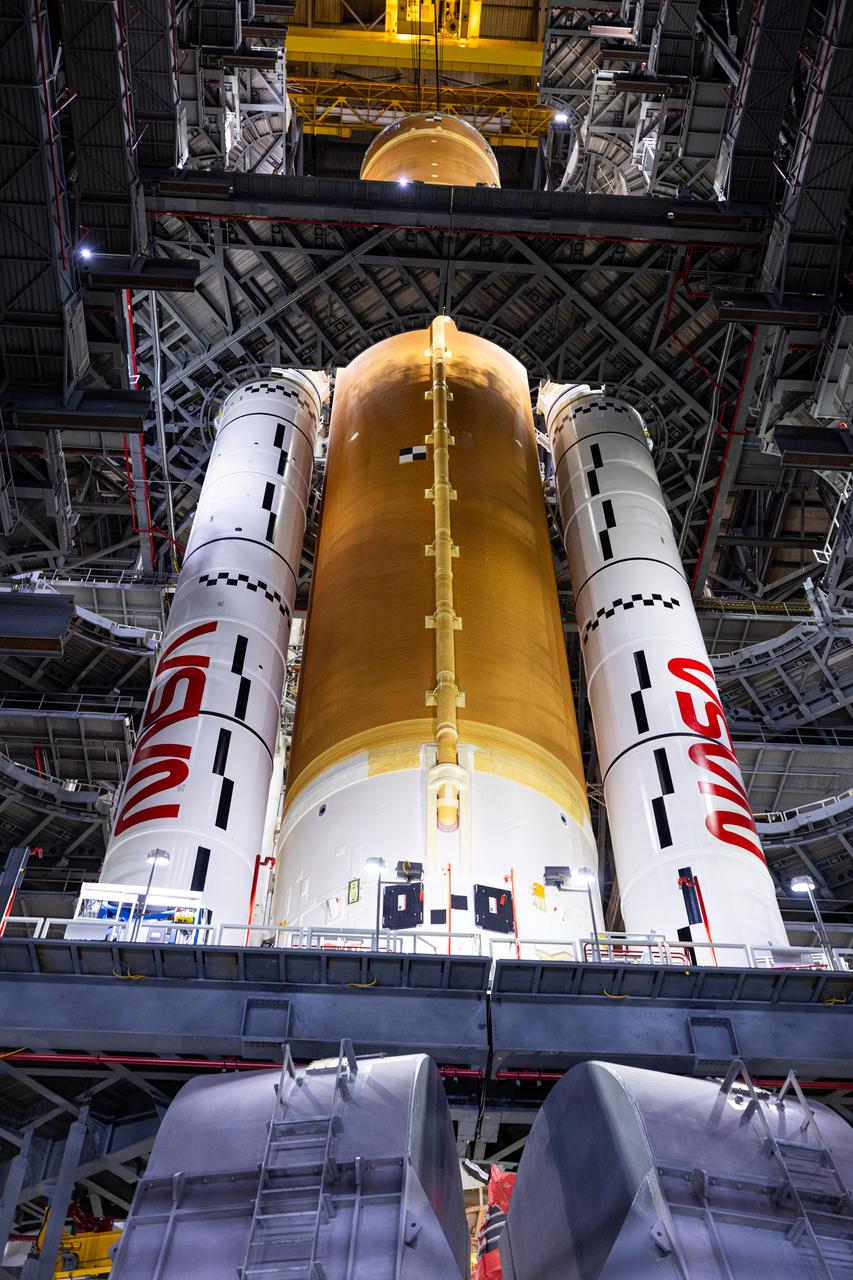
Teams with NASA’s Exploration Ground Systems and primary contractor Amentum, integrate the SLS (Space Launch System) Moon rocket with the solid rocket boosters onto mobile launcher 1 inside High Bay 3 of the Vehicle Assembly Building at NASA’s Kennedy Space Center on Sunday, March 23, 2025. Artemis II is the first crewed test flight under NASA’s Artemis campaign and is another step toward missions on the lunar surface and helping the agency prepare for future human missions to Mars.
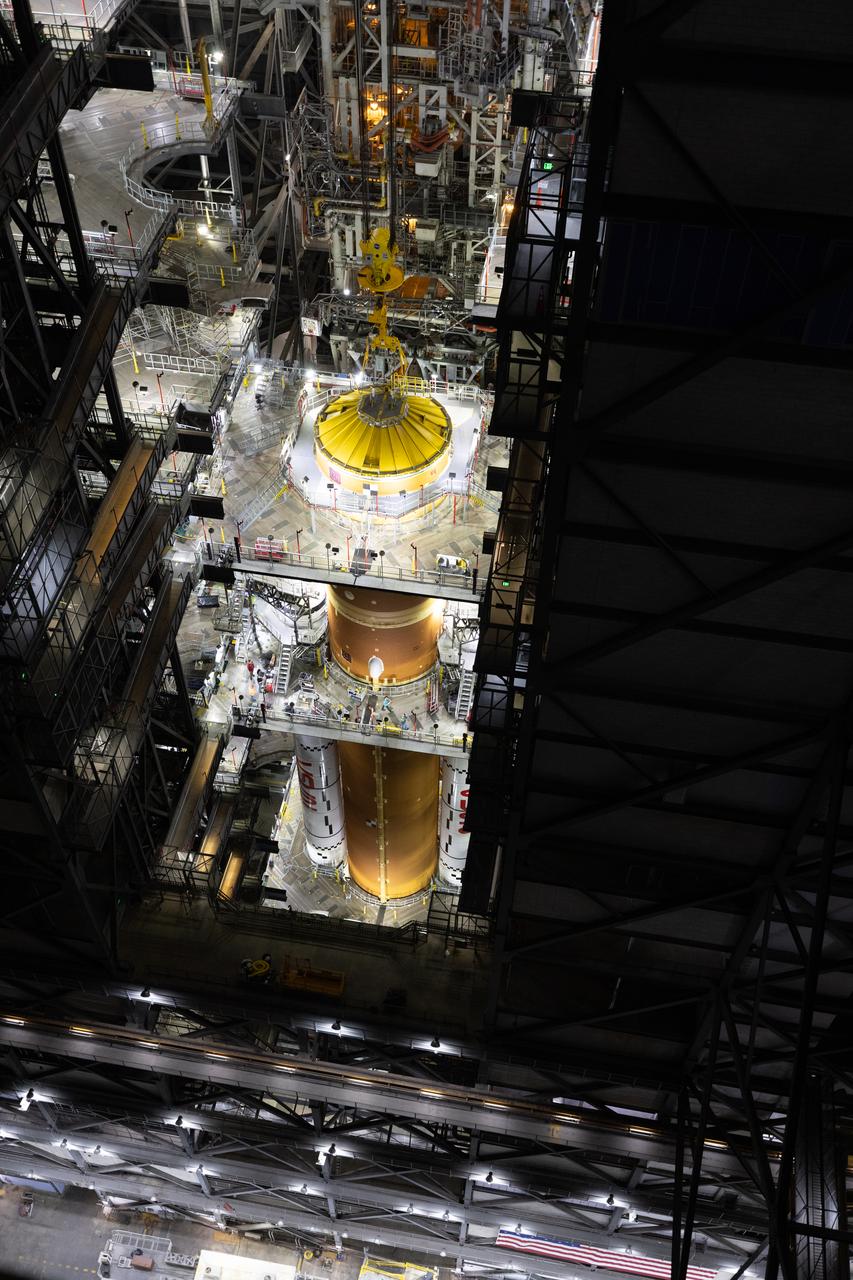
Teams with NASA’s Exploration Ground Systems and primary contractor Amentum, integrate the SLS (Space Launch System) Moon rocket with the solid rocket boosters onto mobile launcher 1 inside High Bay 3 of the Vehicle Assembly Building at NASA’s Kennedy Space Center on Sunday, March 23, 2025. Artemis II is the first crewed test flight under NASA’s Artemis campaign and is another step toward missions on the lunar surface and helping the agency prepare for future human missions to Mars.
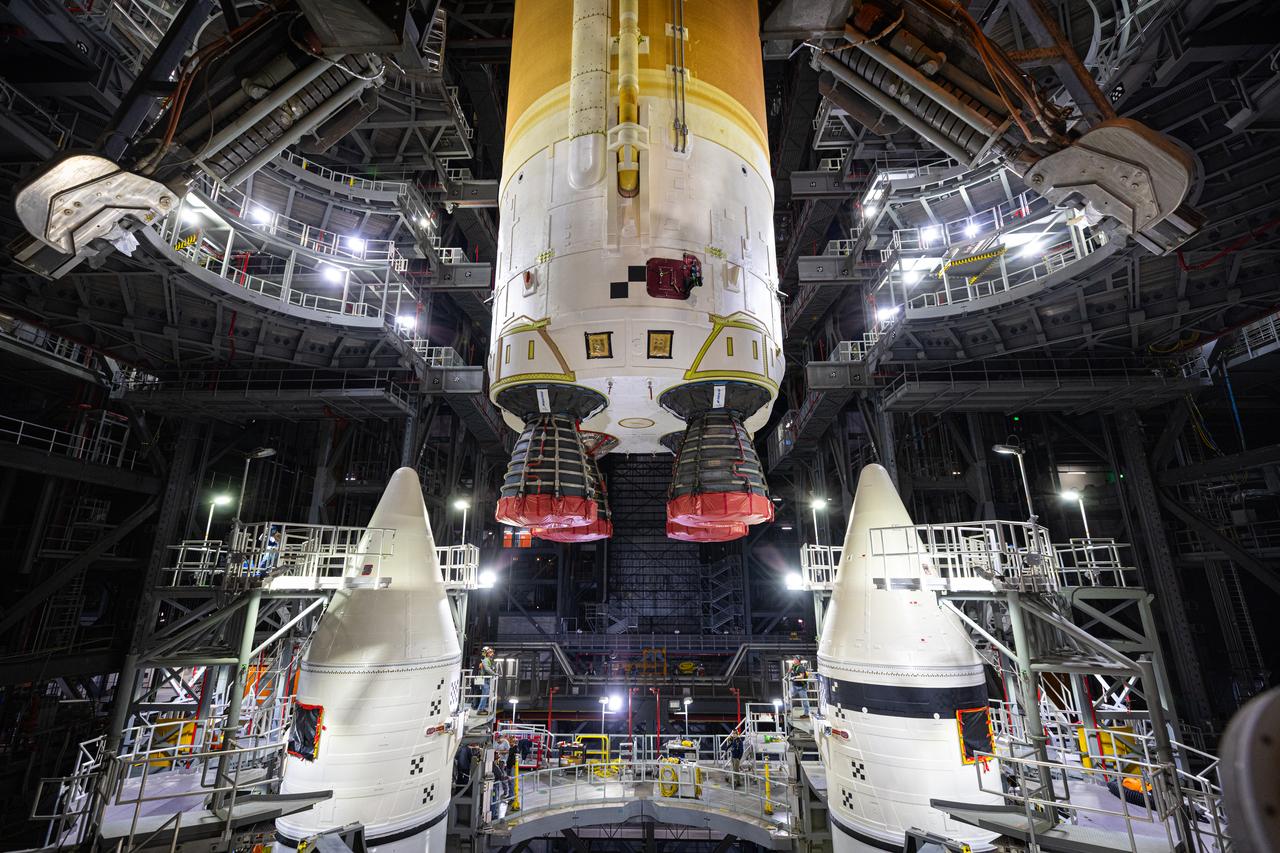
Teams with NASA’s Exploration Ground Systems and primary contractor Amentum, integrate the SLS (Space Launch System) Moon rocket with the solid rocket boosters onto mobile launcher 1 inside High Bay 3 of the Vehicle Assembly Building at NASA’s Kennedy Space Center on Sunday, March 23, 2025. Artemis II is the first crewed test flight under NASA’s Artemis campaign and is another step toward missions on the lunar surface and helping the agency prepare for future human missions to Mars.
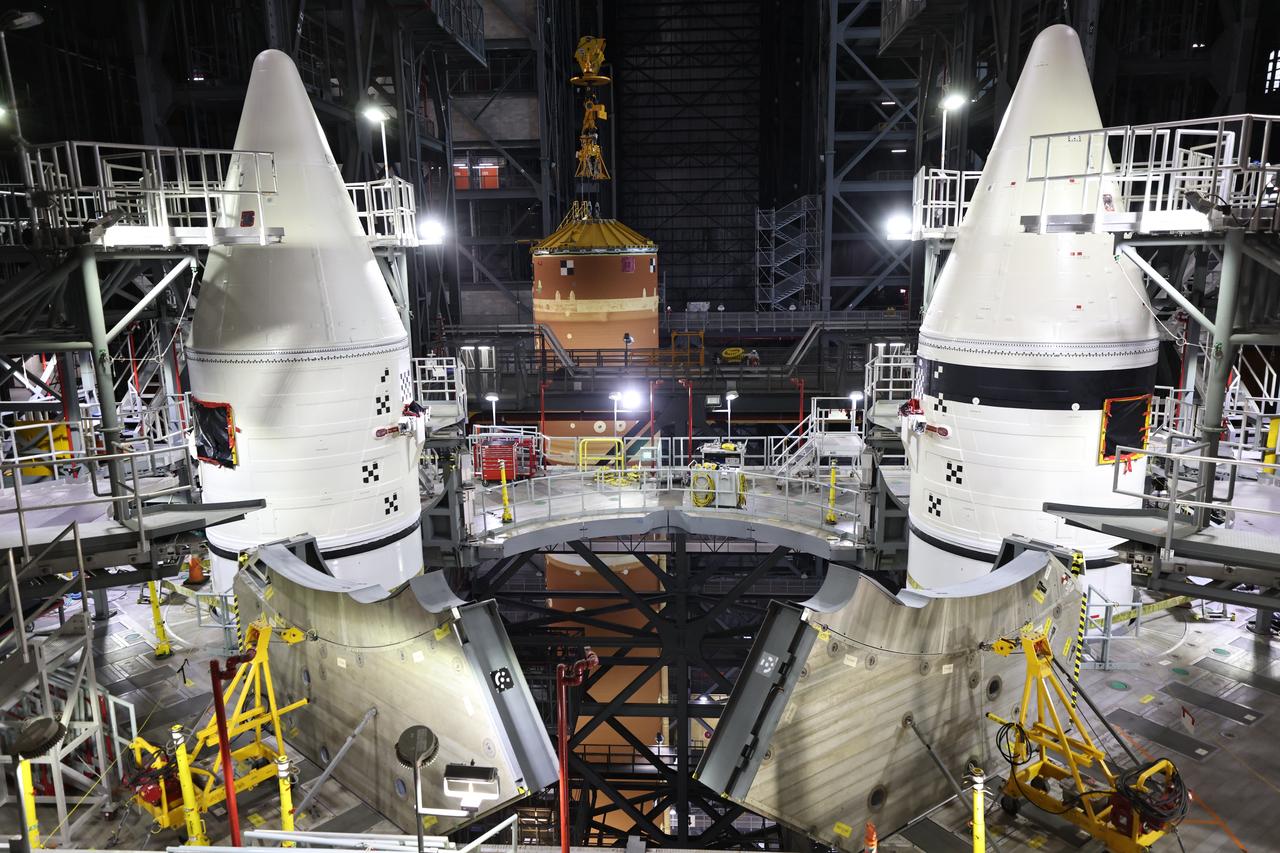
Teams with NASA’s Exploration Ground Systems and primary contractor Amentum, integrate the SLS (Space Launch System) Moon rocket with the solid rocket boosters onto mobile launcher 1 inside High Bay 3 of the Vehicle Assembly Building at NASA’s Kennedy Space Center on Sunday, March 23, 2025. Artemis II is the first crewed test flight under NASA’s Artemis campaign and is another step toward missions on the lunar surface and helping the agency prepare for future human missions to Mars.
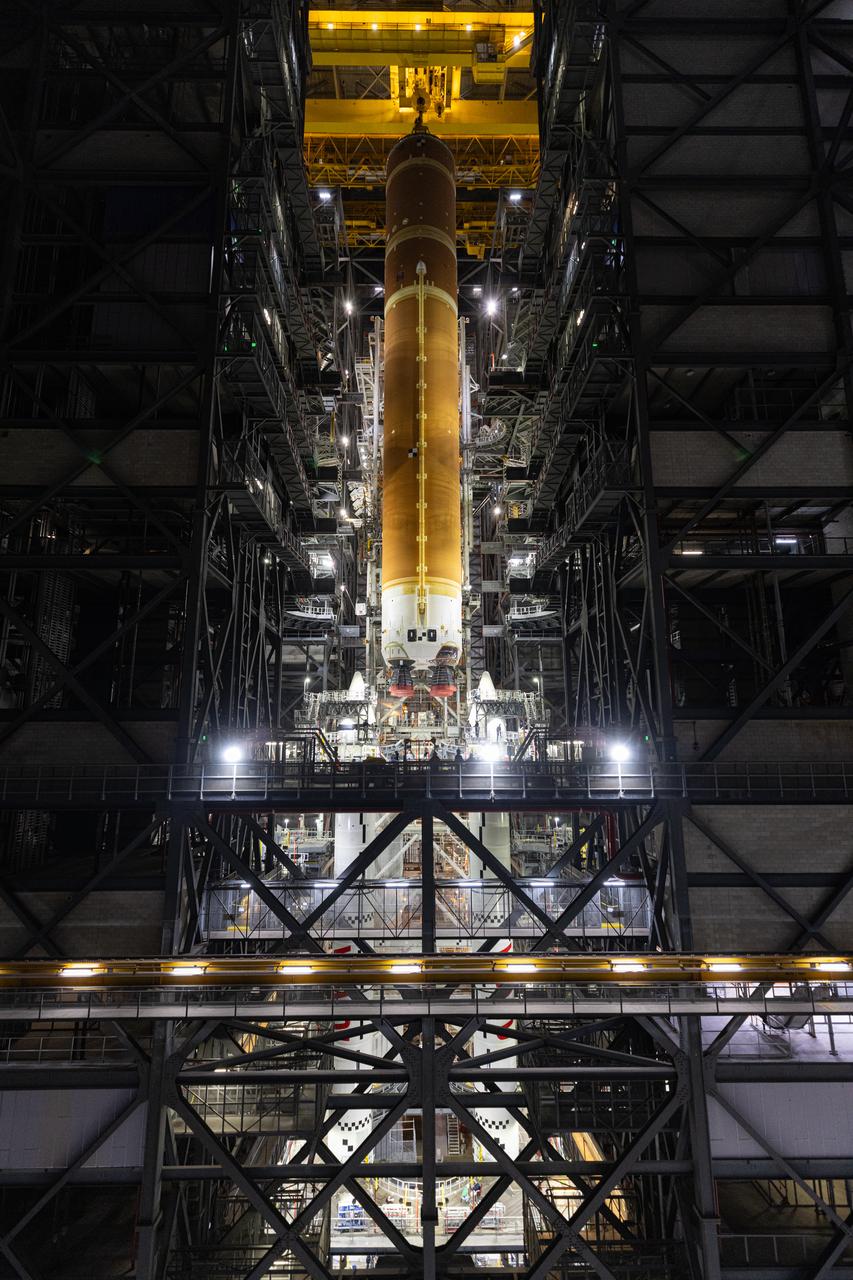
Teams with NASA’s Exploration Ground Systems and primary contractor Amentum, integrate the SLS (Space Launch System) Moon rocket with the solid rocket boosters onto mobile launcher 1 inside High Bay 3 of the Vehicle Assembly Building at NASA’s Kennedy Space Center on Sunday, March 23, 2025. Artemis II is the first crewed test flight under NASA’s Artemis campaign and is another step toward missions on the lunar surface and helping the agency prepare for future human missions to Mars.
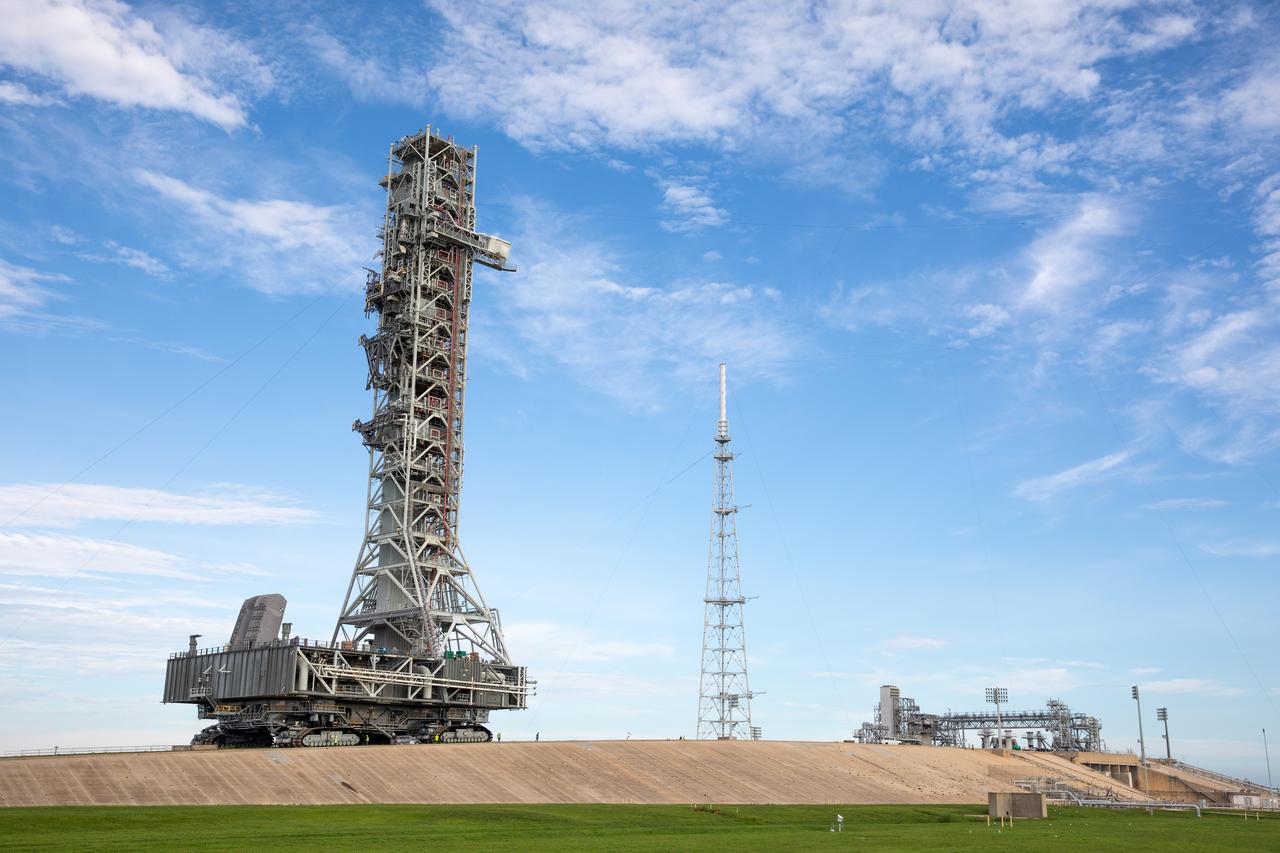
The mobile launcher, carried by the crawler-transporter 2, nears the pad at Launch Complex 39B at NASA’s Kennedy Space Center in Florida on Aug. 17, 2023. While at the pad, the mobile launcher will undergo testing for the agency’s Artemis II mission. Under Artemis, the mobile launcher will transport NASA’s Space Launch System rocket and Orion spacecraft to pad 39B for liftoff.
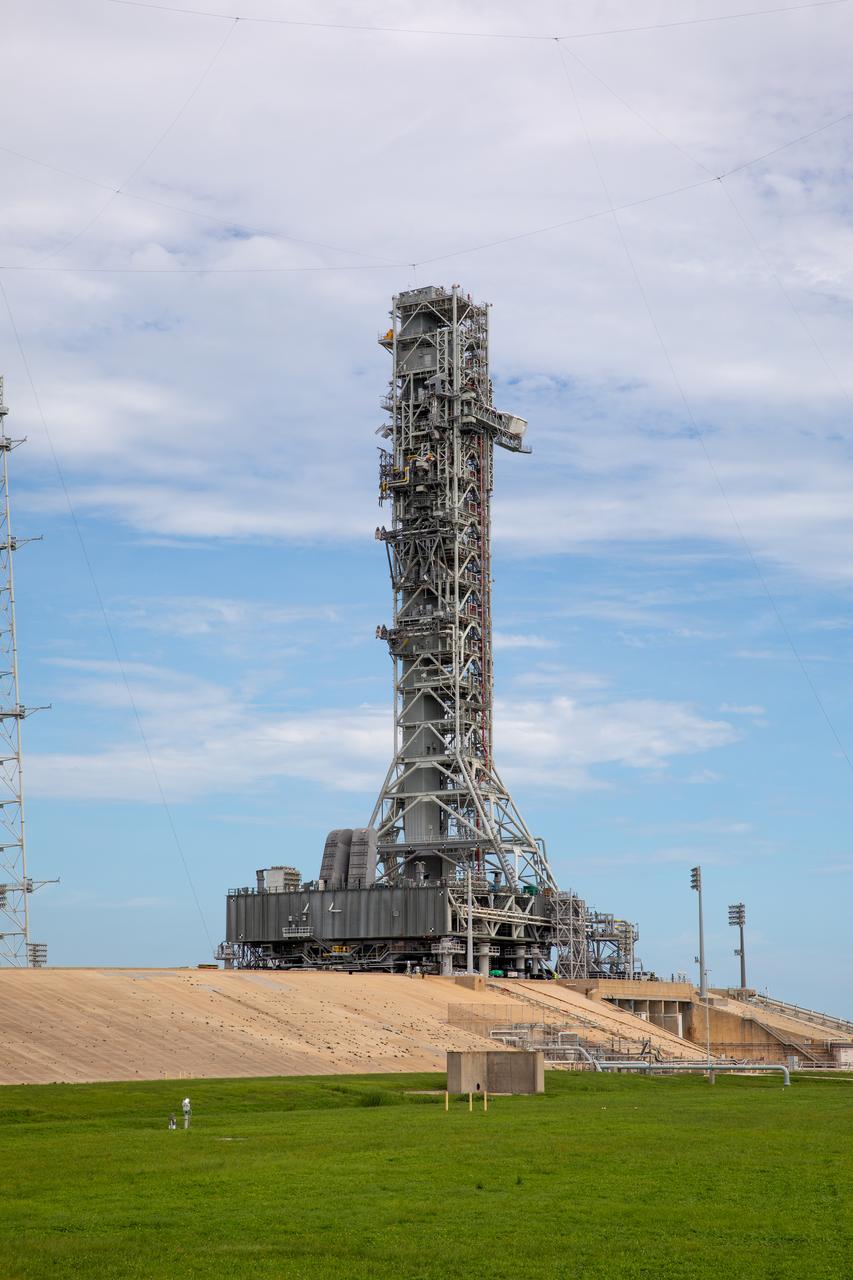
The mobile launcher, carried by the crawler-transporter 2, arrives at the pad at Launch Complex 39B at NASA’s Kennedy Space Center in Florida on Aug. 17, 2023. While at the pad, the mobile launcher will undergo testing for the agency’s Artemis II mission. Under Artemis, the mobile launcher will transport NASA’s Space Launch System rocket and Orion spacecraft to pad 39B for liftoff.
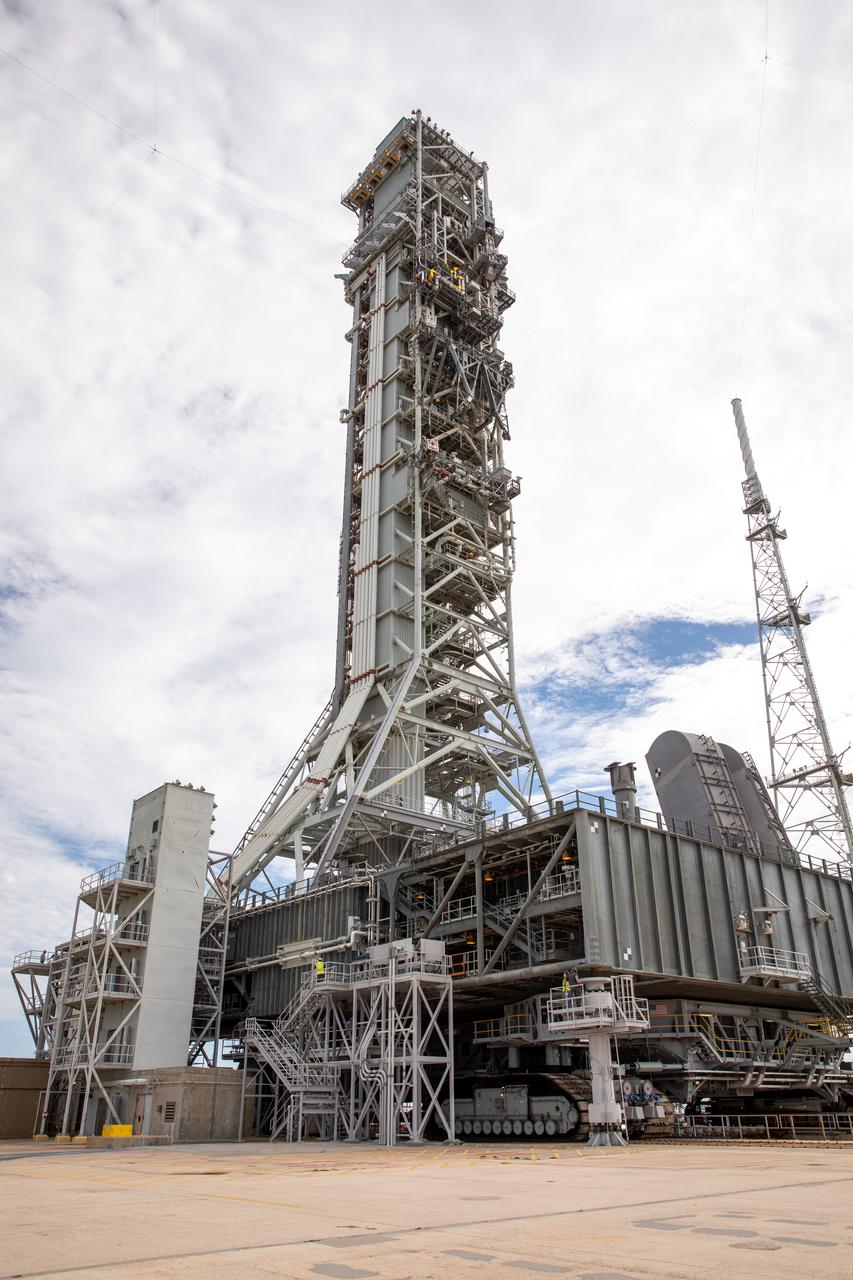
The mobile launcher is secured on the pad at Launch Complex 39B at NASA’s Kennedy Space Center in Florida on Aug. 17, 2023. It was transported to the pad by crawler-transporter 2. While at the pad, the mobile launcher will undergo testing for the agency’s Artemis II mission. Under Artemis, the mobile launcher will transport NASA’s Space Launch System rocket and Orion spacecraft to pad 39B for liftoff.
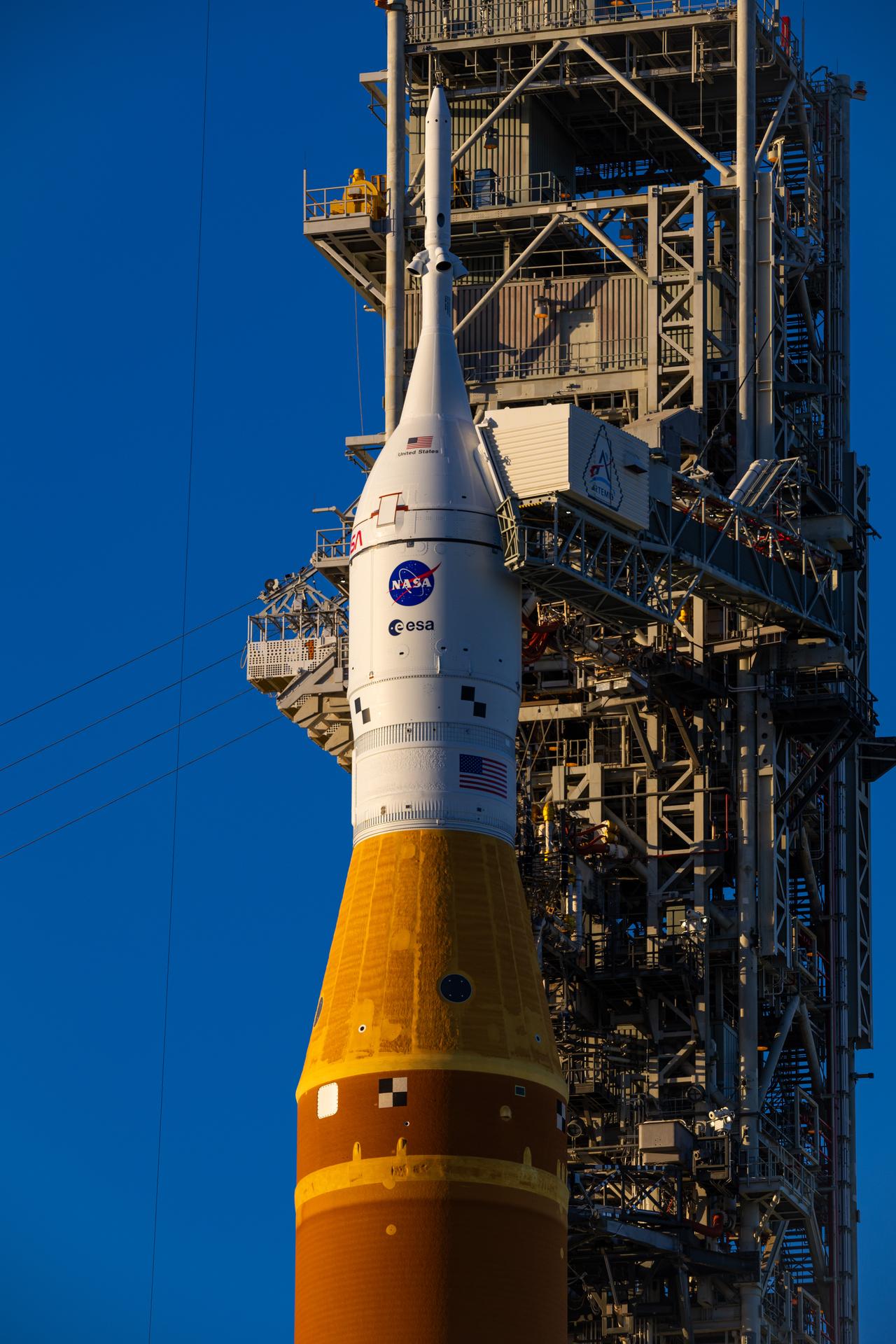
The sun setting NASA’s SLS (Space Launch System) and Orion spacecraft, atop the mobile launcher on January 31, 2026. The rocket is currently at Launch Pad 39B at NASA’s Kennedy Space Center in Florida, as teams are preparing for a wet dress rehearsal to practice timelines and procedures for the launch of Artemis II.