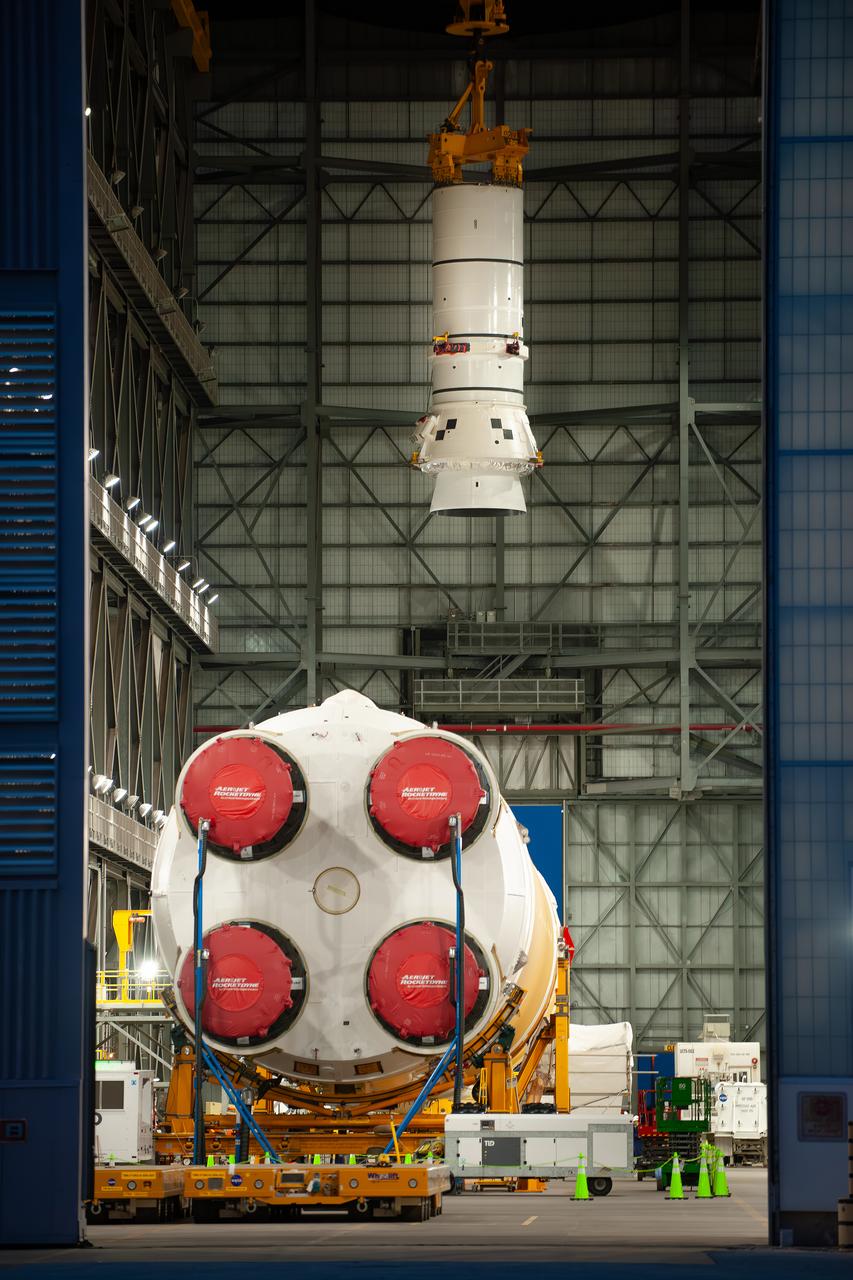
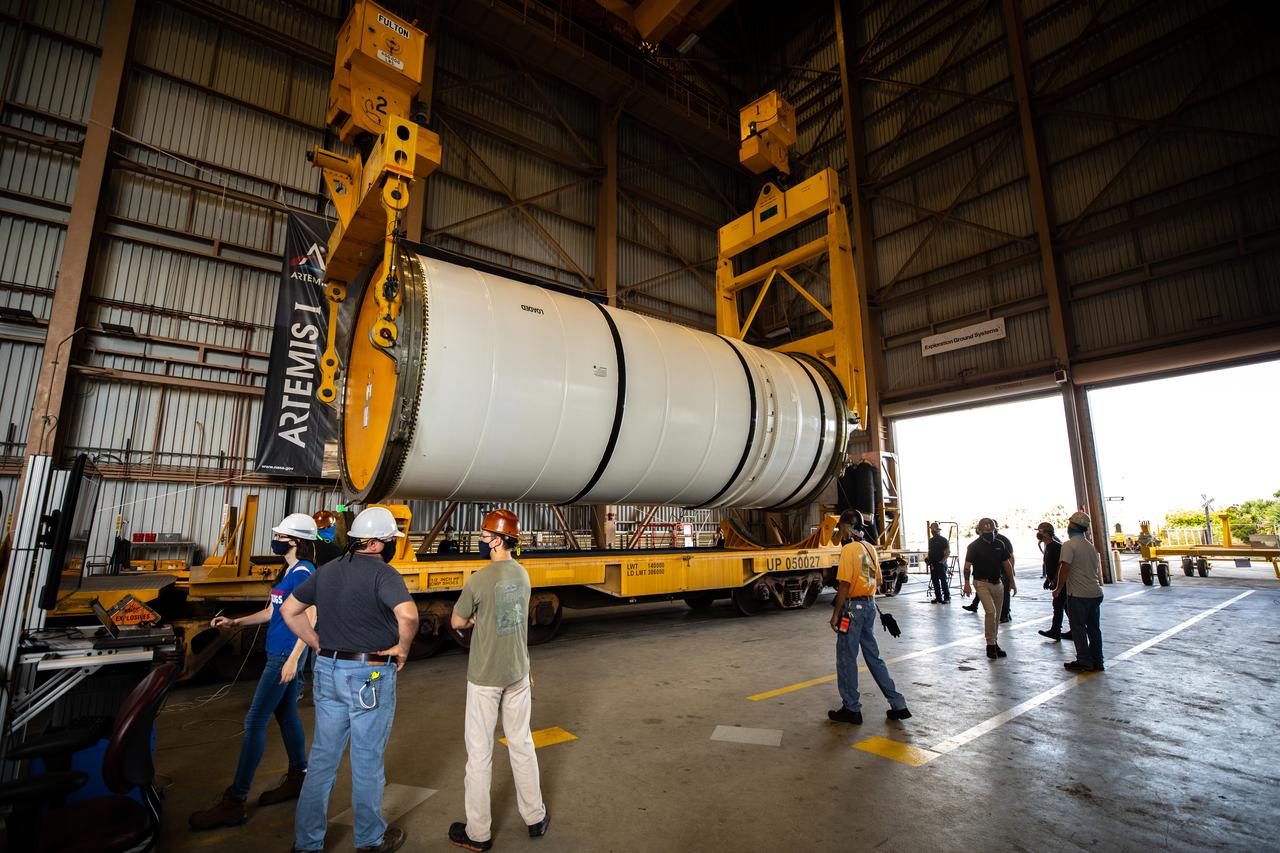
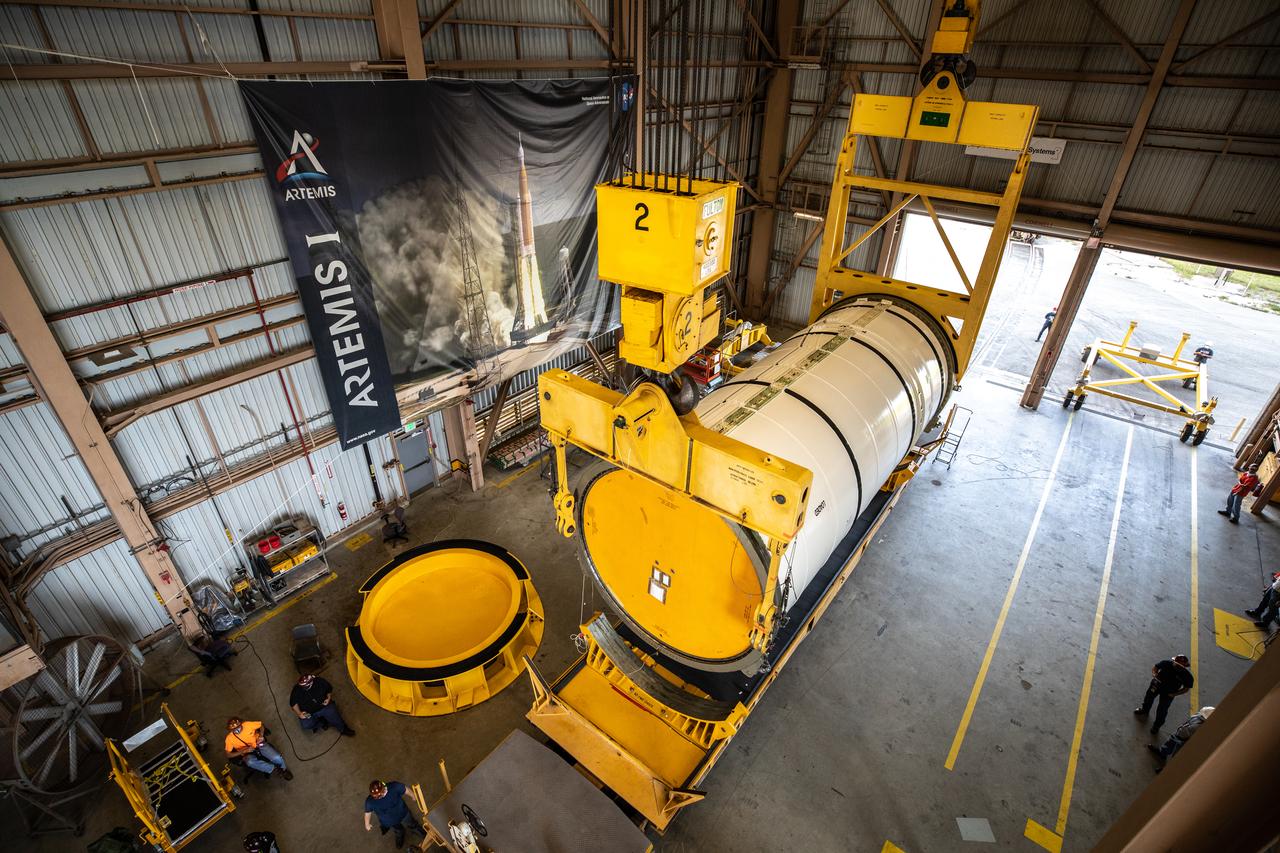
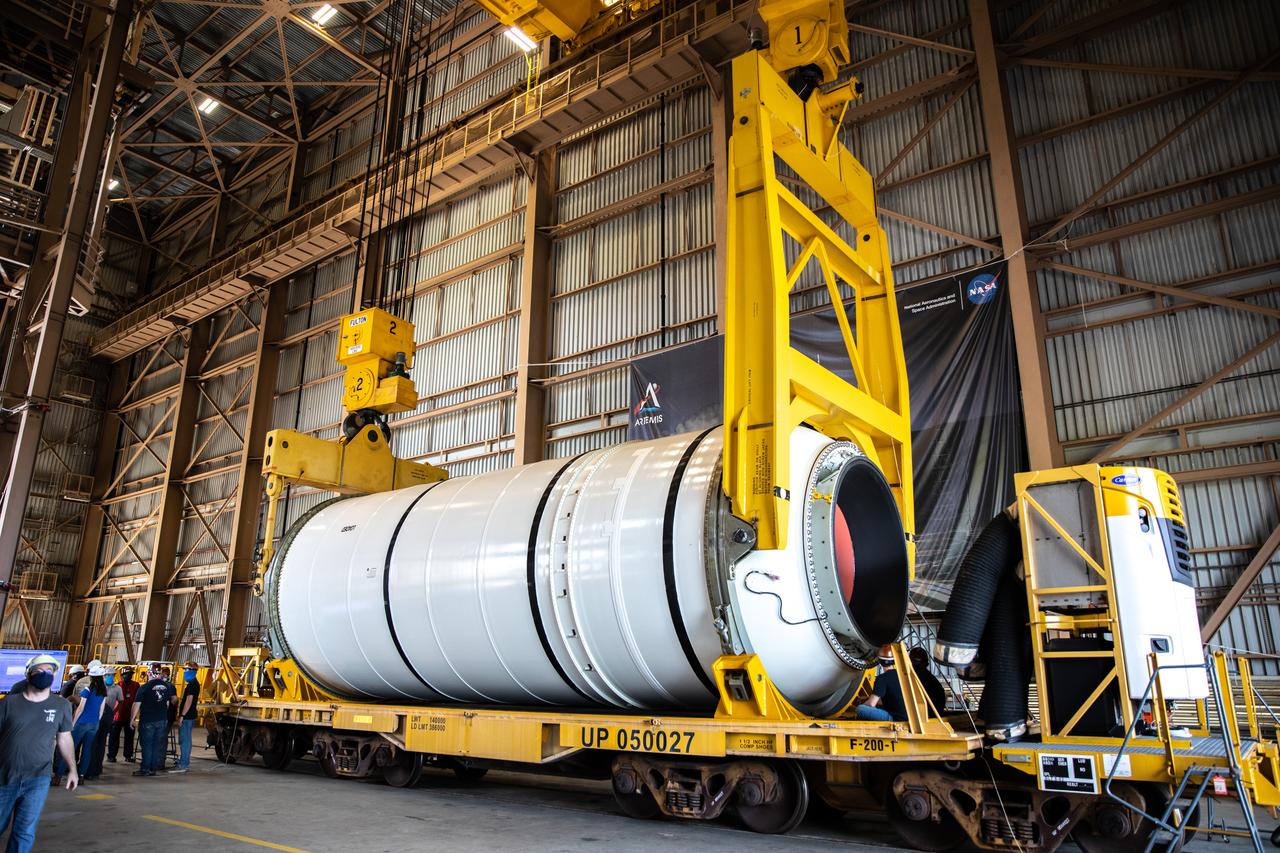
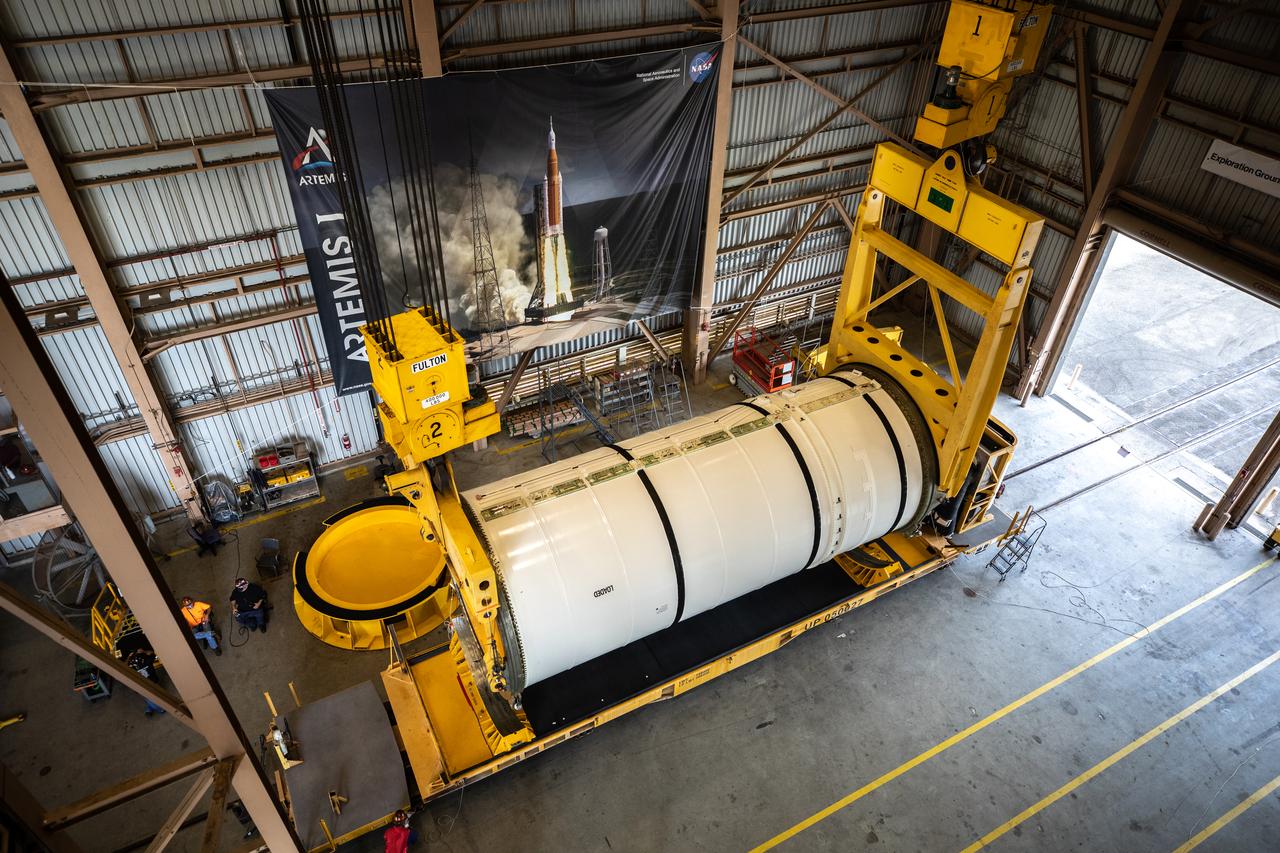
Down the transfer aisle from the Artemis II SLS (Space Launch System) core stage, an overhead crane hoists the left aft assembly, or bottom portion of the solid rocket boosters for the SLS Moon rocket inside the Vehicle Assembly Building at NASA’s Kennedy Space Center on Tuesday, Nov. 19, 2024. The crane will lift the aft assembly on top of the mobile launcher 1 followed by the right aft assembly and stack the remaining booster segments for the Artemis II mission.
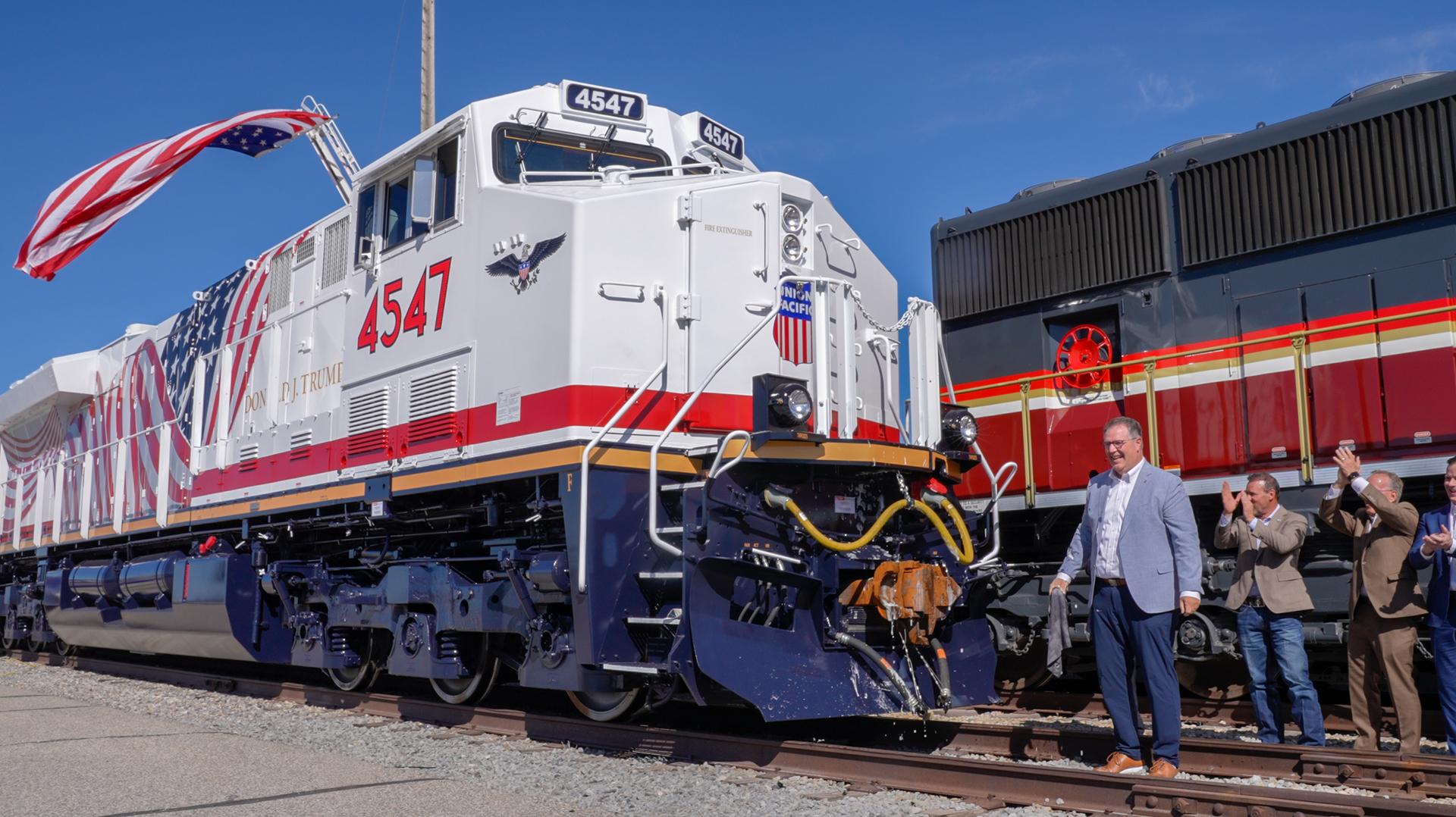
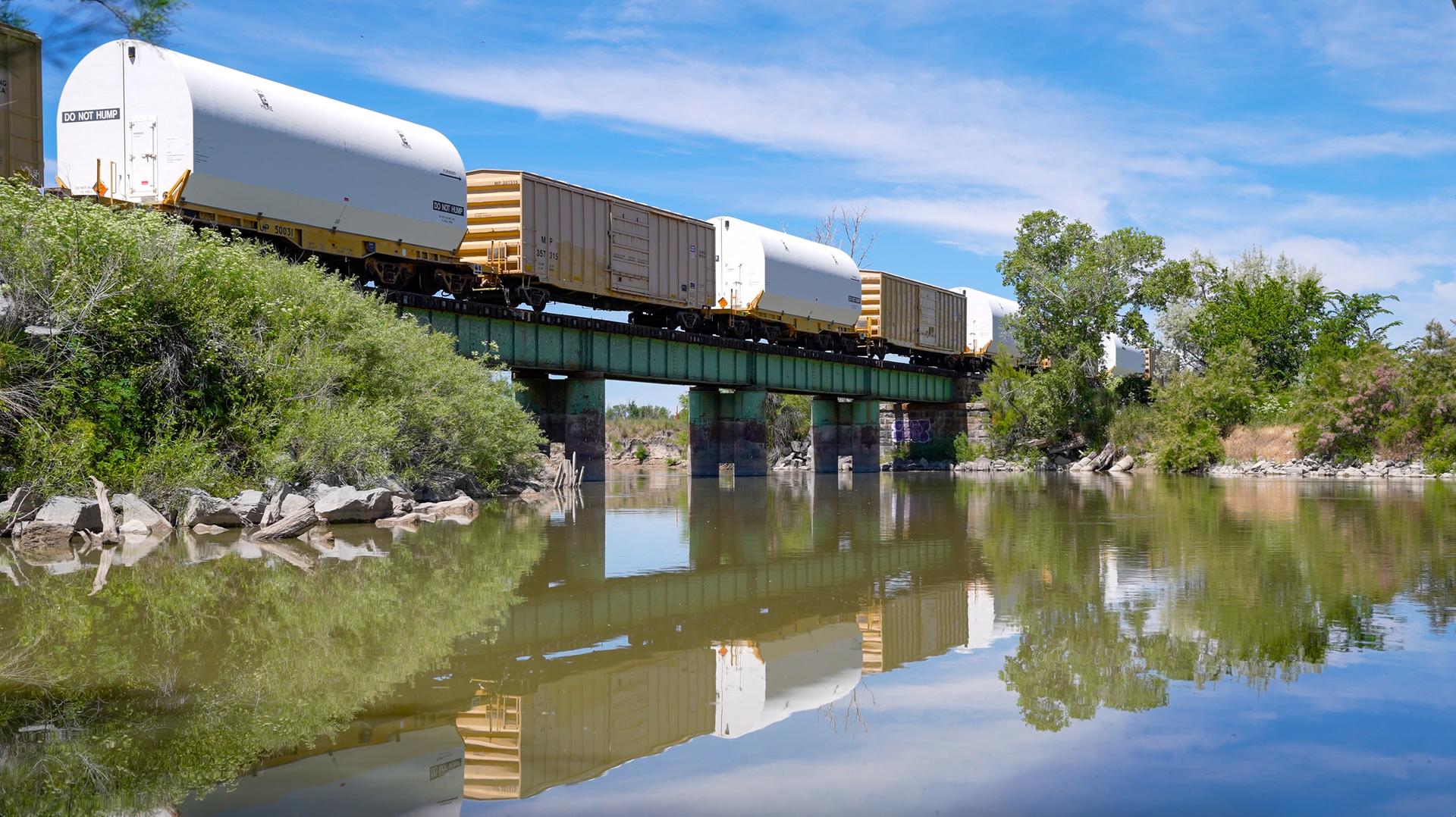
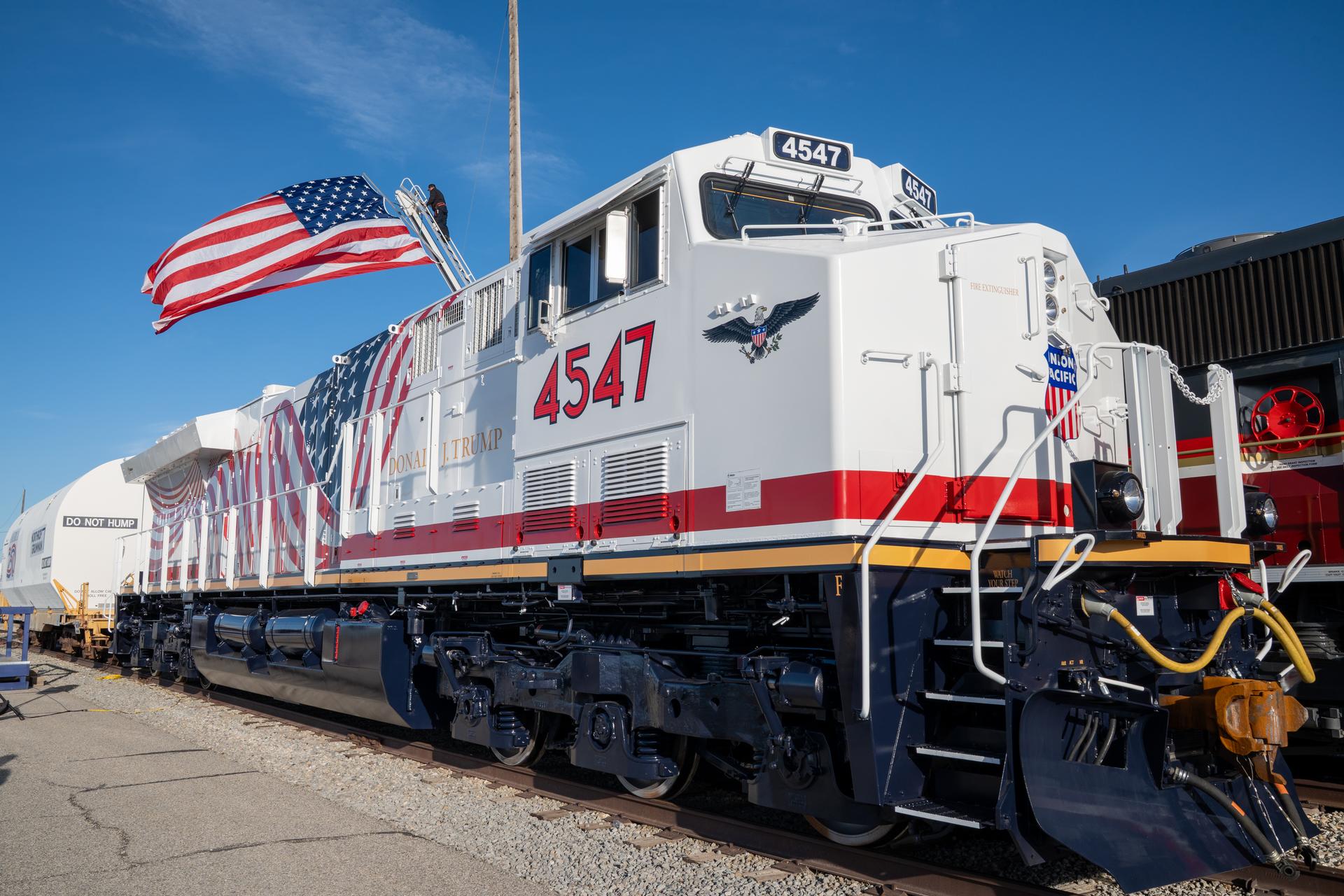
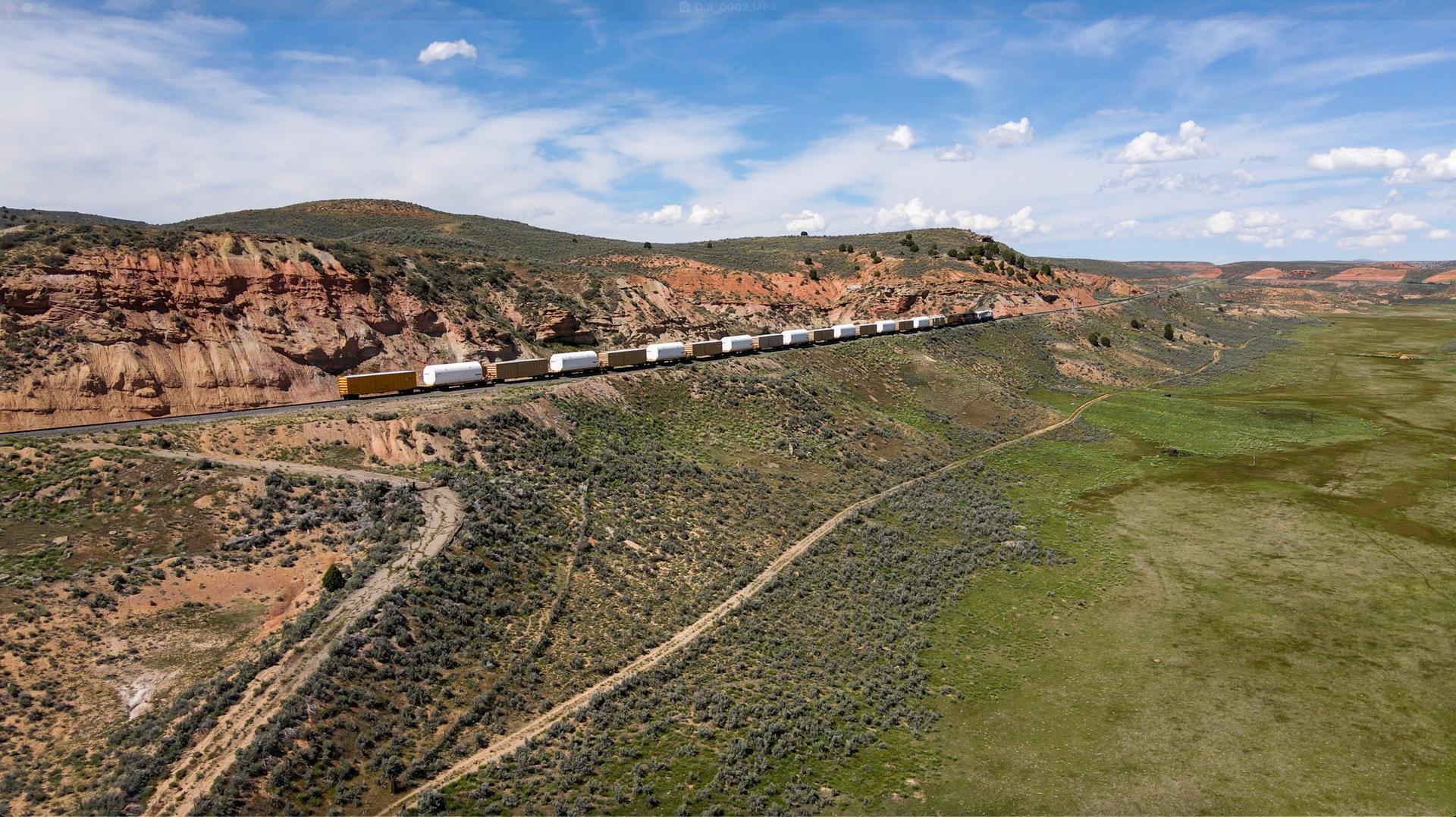
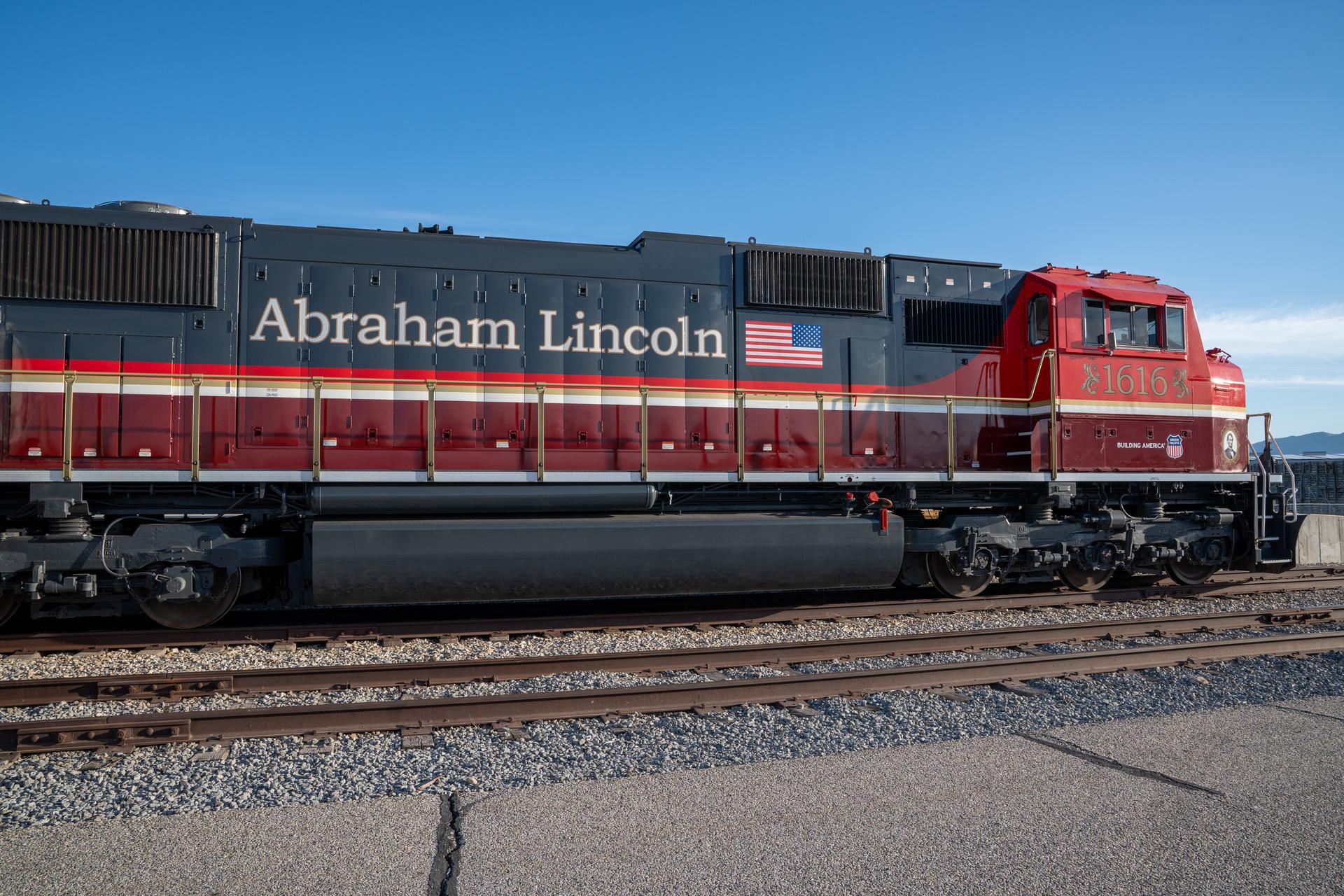
These images capture the final booster motor segments for NASA’s Artemis III mission departing Northrop Grumman’s Railyard Shipping Facility in Corinne, Utah, June 2. The eight segments will form the twin five-segment solid rocket boosters for the agency’s SLS (Space Launch System) rocket, providing more than 75% of the vehicle’s total thrust at liftoff. Due to their immense size and weight, the booster segments are transported in specialized carriers and are being hauled by Union Pacific Railroad’s newest commemorative locomotive, No. 4547. Marking its inaugural mission, the locomotive will deliver the flight hardware to NASA’s Kennedy Space Center in Florida, where stacking operations for Artemis III are set to begin later this year.
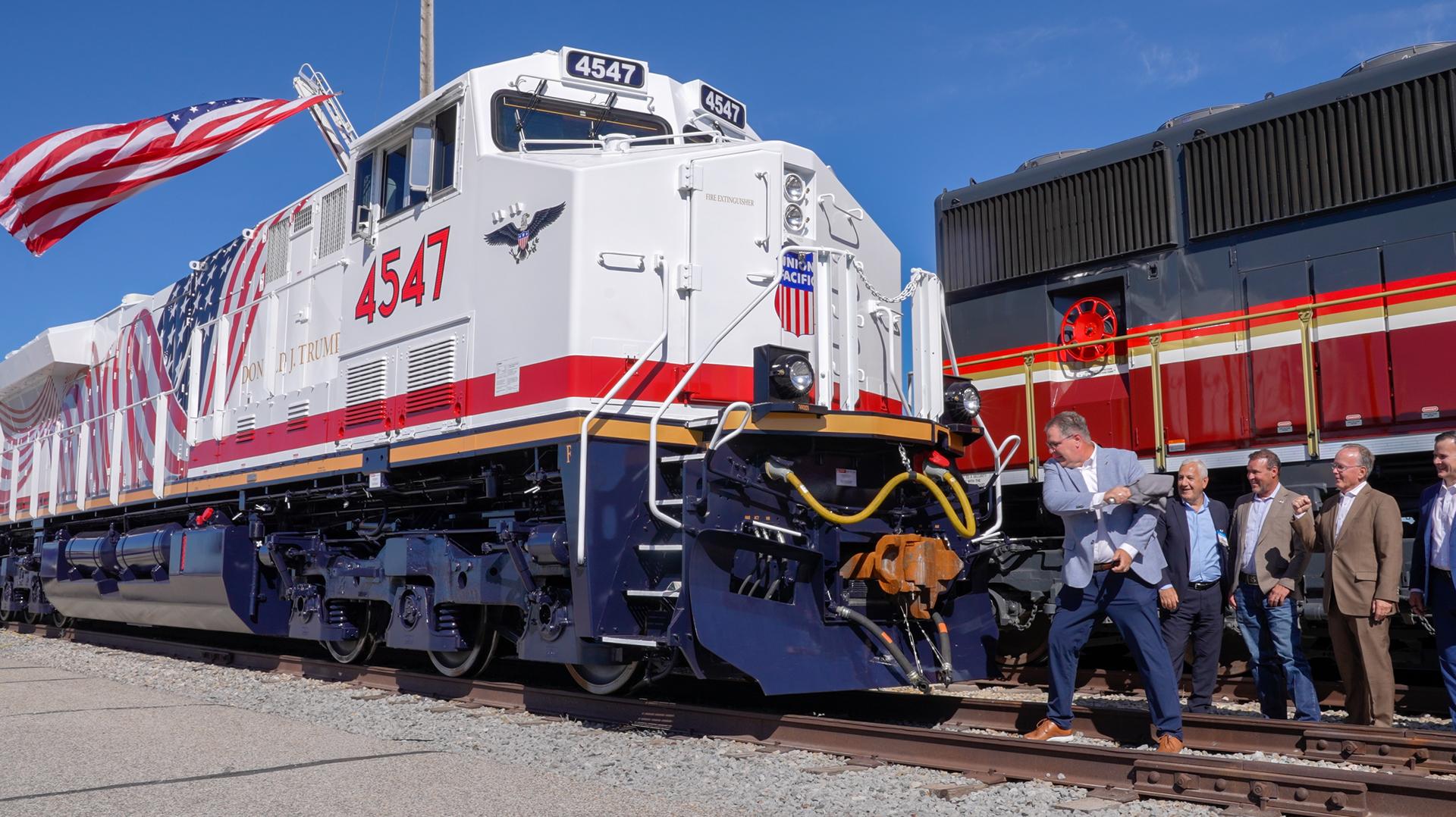
These images capture the final booster motor segments for NASA’s Artemis III mission departing Northrop Grumman’s Railyard Shipping Facility in Corinne, Utah, June 2. The eight segments will form the twin five-segment solid rocket boosters for the agency’s SLS (Space Launch System) rocket, providing more than 75% of the vehicle’s total thrust at liftoff. Due to their immense size and weight, the booster segments are transported in specialized carriers and are being hauled by Union Pacific Railroad’s newest commemorative locomotive, No. 4547. Marking its inaugural mission, the locomotive will deliver the flight hardware to NASA’s Kennedy Space Center in Florida, where stacking operations for Artemis III are set to begin later this year.
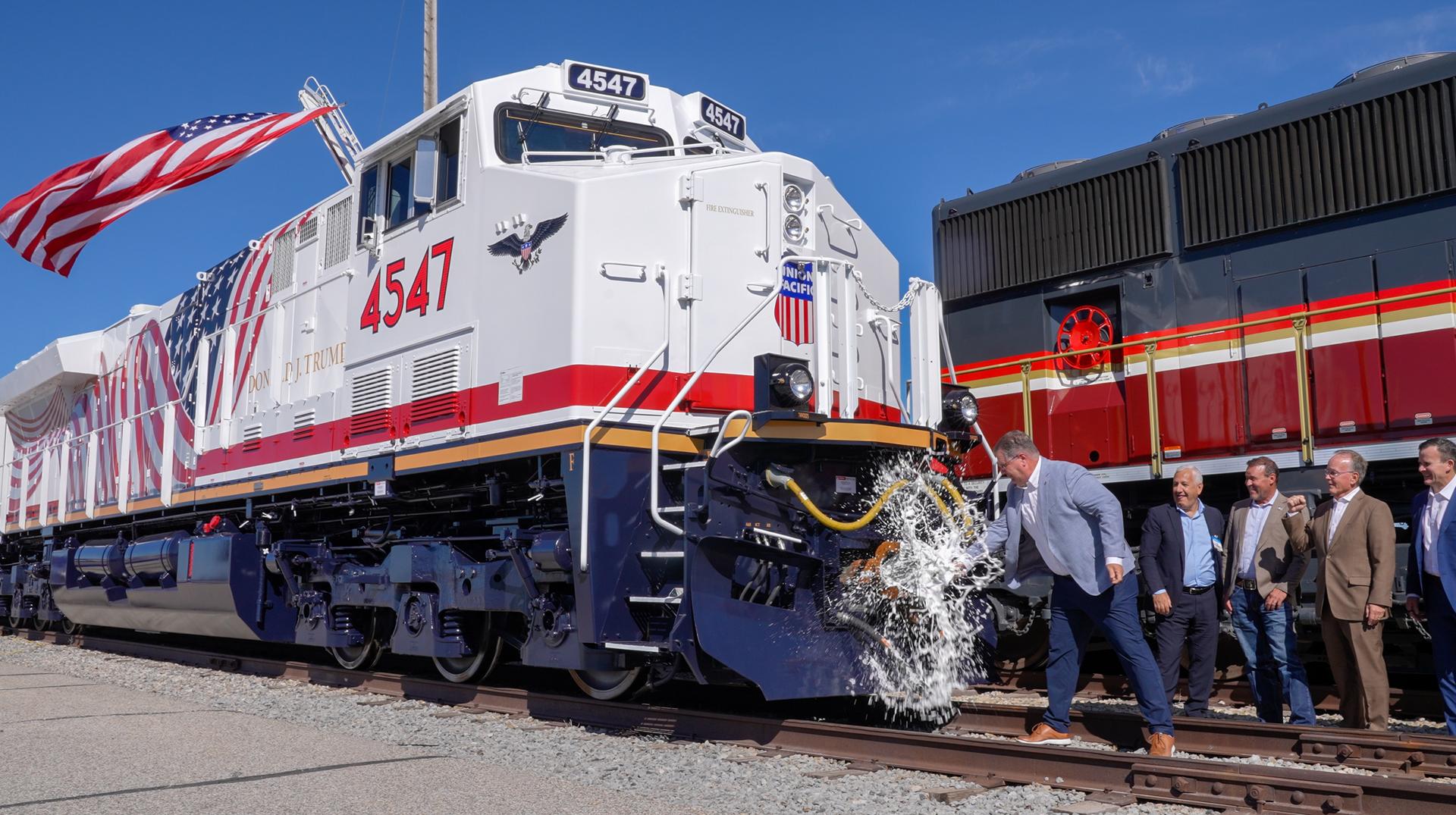
These images capture the final booster motor segments for NASA’s Artemis III mission departing Northrop Grumman’s Railyard Shipping Facility in Corinne, Utah, June 2. The eight segments will form the twin five-segment solid rocket boosters for the agency’s SLS (Space Launch System) rocket, providing more than 75% of the vehicle’s total thrust at liftoff. Due to their immense size and weight, the booster segments are transported in specialized carriers and are being hauled by Union Pacific Railroad’s newest commemorative locomotive, No. 4547. Marking its inaugural mission, the locomotive will deliver the flight hardware to NASA’s Kennedy Space Center in Florida, where stacking operations for Artemis III are set to begin later this year.
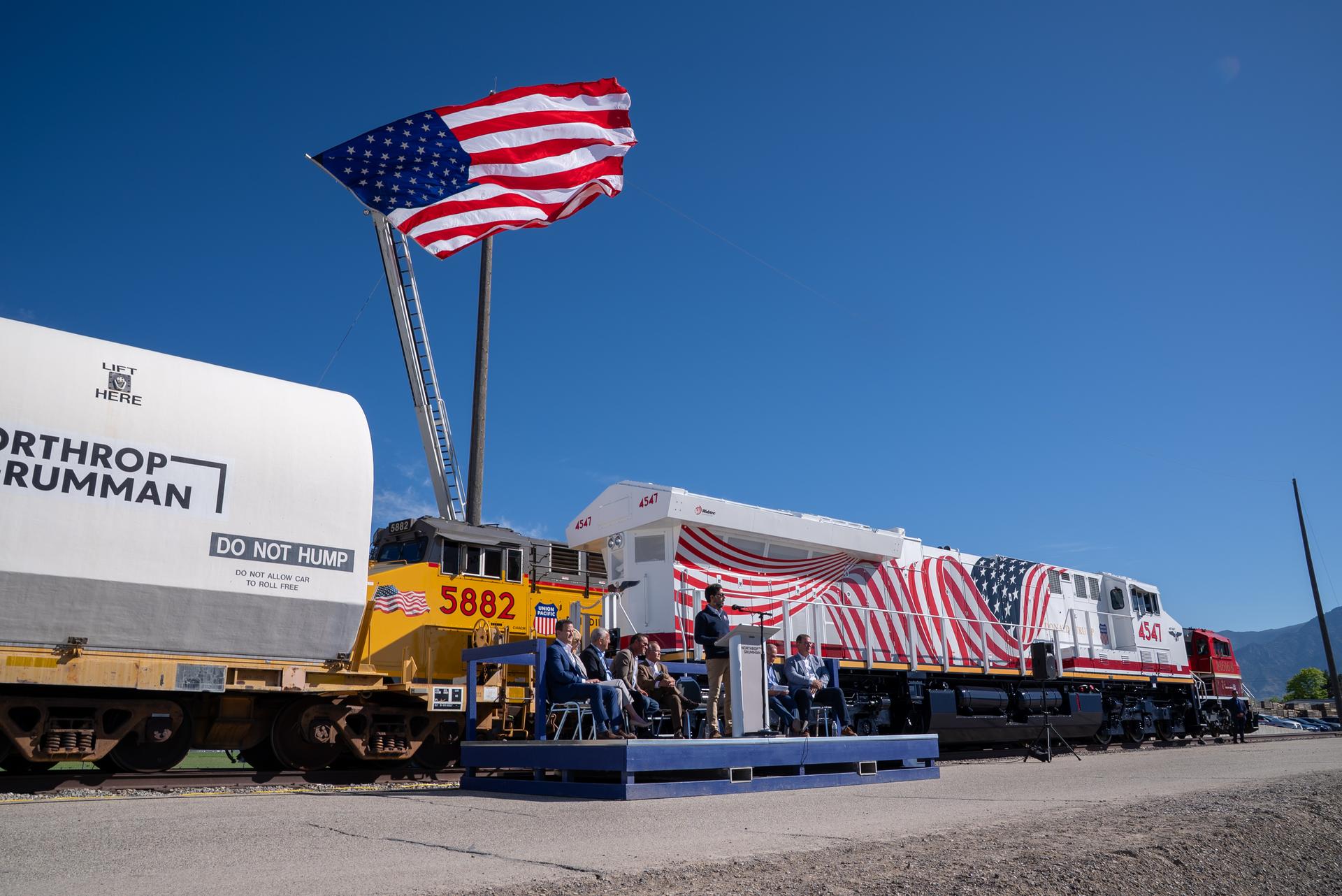
These images capture the final booster motor segments for NASA’s Artemis III mission departing Northrop Grumman’s Railyard Shipping Facility in Corinne, Utah, June 2. The eight segments will form the twin five-segment solid rocket boosters for the agency’s SLS (Space Launch System) rocket, providing more than 75% of the vehicle’s total thrust at liftoff. Due to their immense size and weight, the booster segments are transported in specialized carriers and are being hauled by Union Pacific Railroad’s newest commemorative locomotive, No. 4547. Marking its inaugural mission, the locomotive will deliver the flight hardware to NASA’s Kennedy Space Center in Florida, where stacking operations for Artemis III are set to begin later this year.
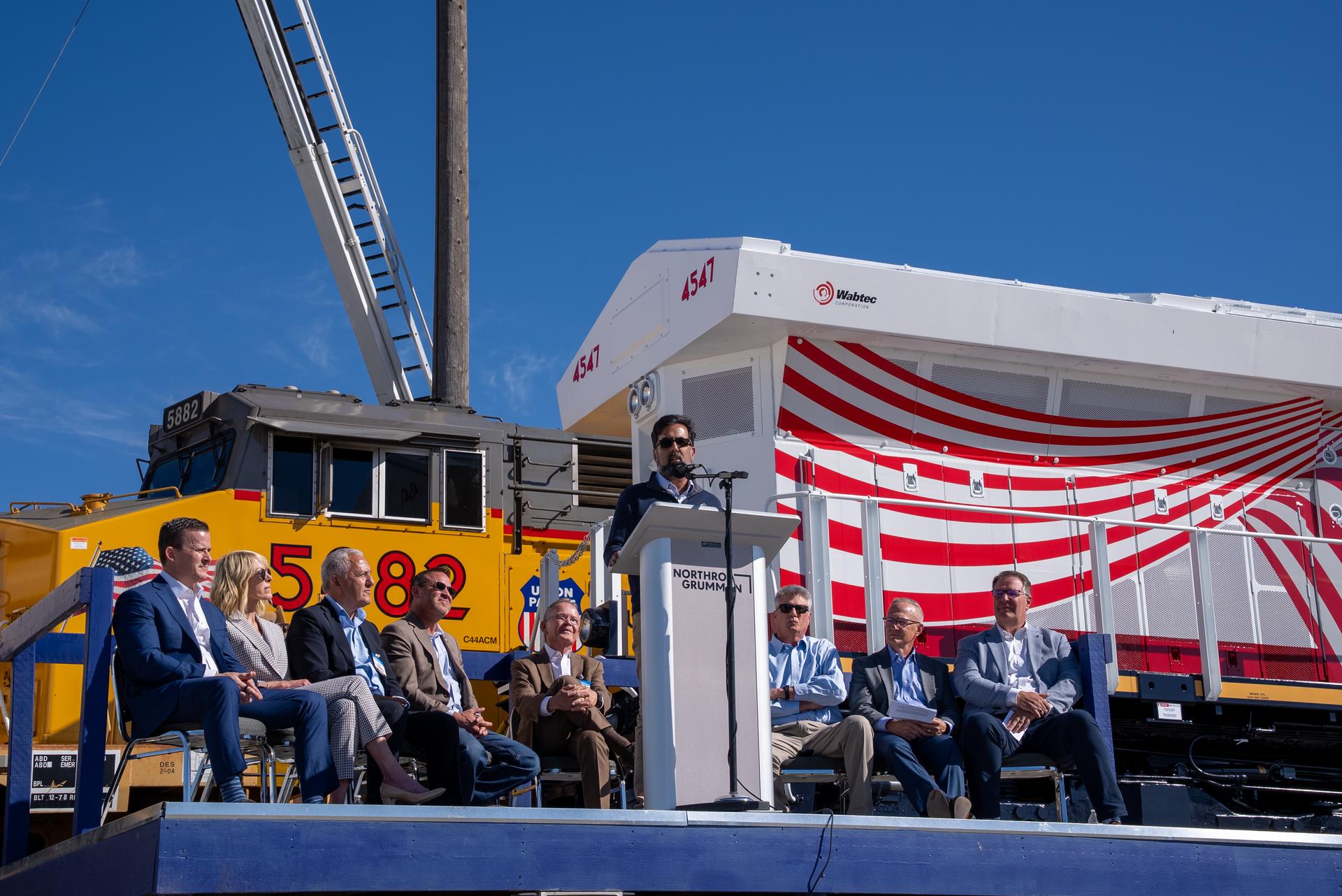
These images capture the final booster motor segments for NASA’s Artemis III mission departing Northrop Grumman’s Railyard Shipping Facility in Corinne, Utah, June 2. The eight segments will form the twin five-segment solid rocket boosters for the agency’s SLS (Space Launch System) rocket, providing more than 75% of the vehicle’s total thrust at liftoff. Due to their immense size and weight, the booster segments are transported in specialized carriers and are being hauled by Union Pacific Railroad’s newest commemorative locomotive, No. 4547. Marking its inaugural mission, the locomotive will deliver the flight hardware to NASA’s Kennedy Space Center in Florida, where stacking operations for Artemis III are set to begin later this year.

These images capture the final booster motor segments for NASA’s Artemis III mission departing Northrop Grumman’s Railyard Shipping Facility in Corinne, Utah, June 2. The eight segments will form the twin five-segment solid rocket boosters for the agency’s SLS (Space Launch System) rocket, providing more than 75% of the vehicle’s total thrust at liftoff. Due to their immense size and weight, the booster segments are transported in specialized carriers and are being hauled by Union Pacific Railroad’s newest commemorative locomotive, No. 4547. Marking its inaugural mission, the locomotive will deliver the flight hardware to NASA’s Kennedy Space Center in Florida, where stacking operations for Artemis III are set to begin later this year.
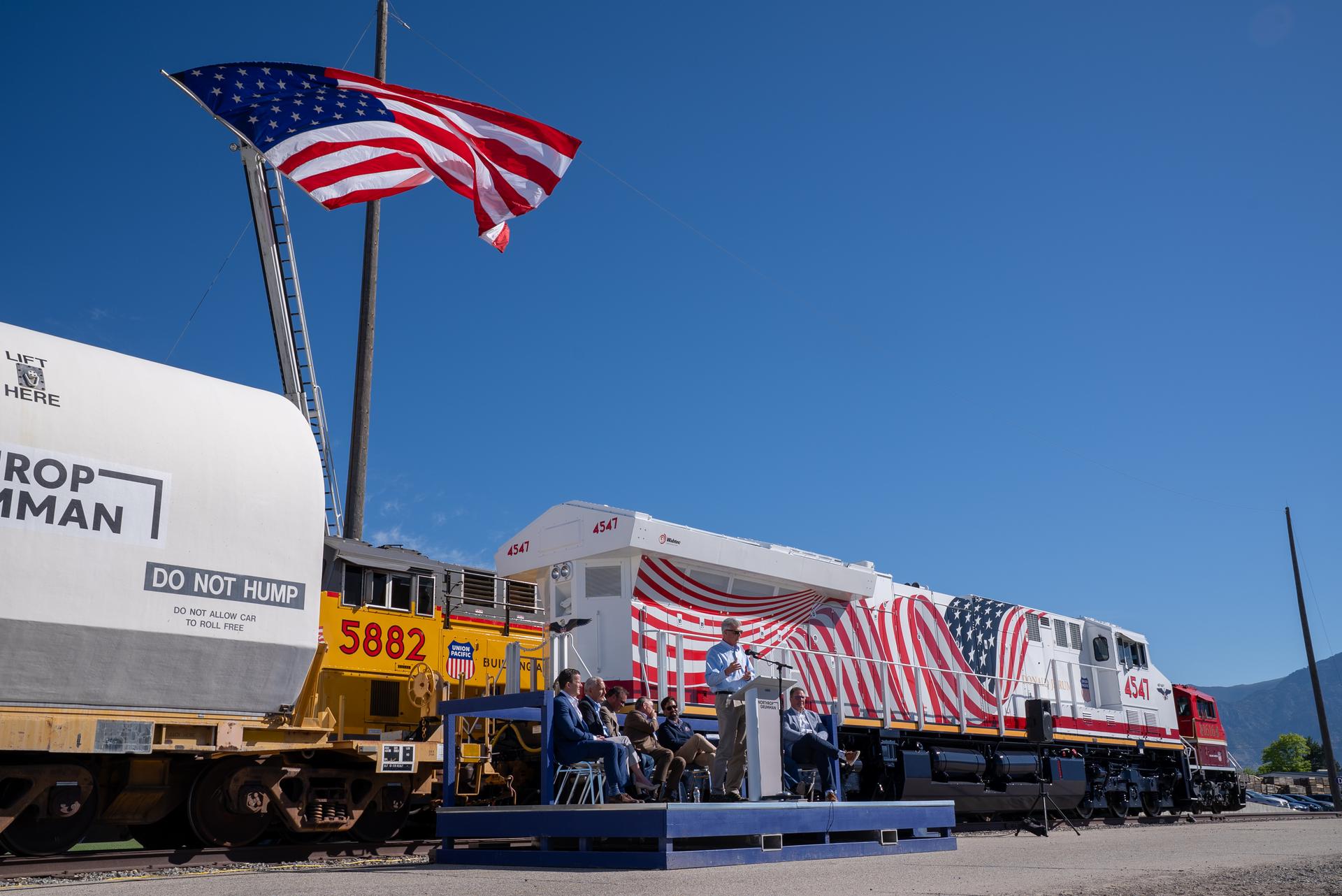
These images capture the final booster motor segments for NASA’s Artemis III mission departing Northrop Grumman’s Railyard Shipping Facility in Corinne, Utah, June 2. The eight segments will form the twin five-segment solid rocket boosters for the agency’s SLS (Space Launch System) rocket, providing more than 75% of the vehicle’s total thrust at liftoff. Due to their immense size and weight, the booster segments are transported in specialized carriers and are being hauled by Union Pacific Railroad’s newest commemorative locomotive, No. 4547. Marking its inaugural mission, the locomotive will deliver the flight hardware to NASA’s Kennedy Space Center in Florida, where stacking operations for Artemis III are set to begin later this year.
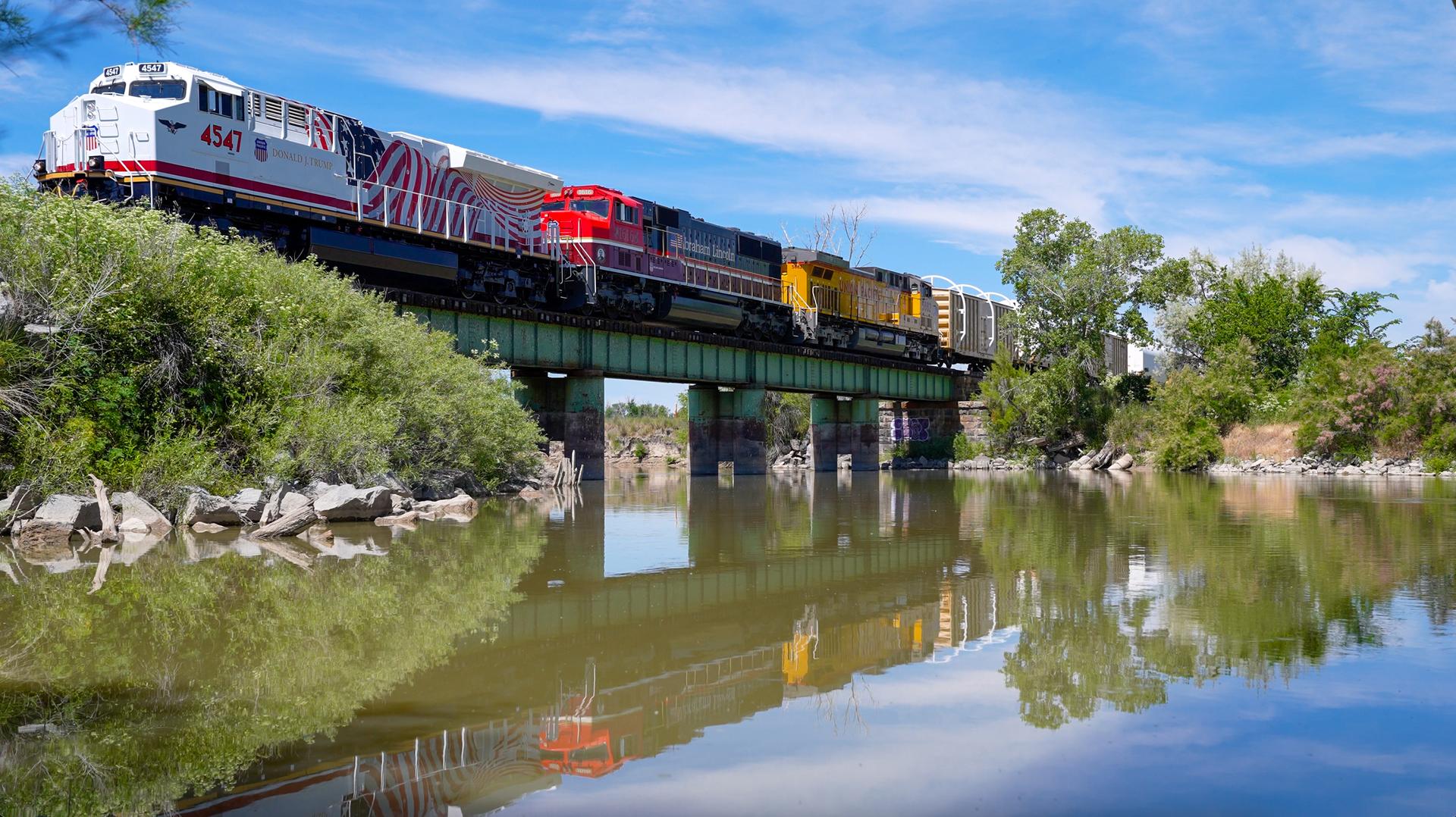
These images capture the final booster motor segments for NASA’s Artemis III mission departing Northrop Grumman’s Railyard Shipping Facility in Corinne, Utah, June 2. The eight segments will form the twin five-segment solid rocket boosters for the agency’s SLS (Space Launch System) rocket, providing more than 75% of the vehicle’s total thrust at liftoff. Due to their immense size and weight, the booster segments are transported in specialized carriers and are being hauled by Union Pacific Railroad’s newest commemorative locomotive, No. 4547. Marking its inaugural mission, the locomotive will deliver the flight hardware to NASA’s Kennedy Space Center in Florida, where stacking operations for Artemis III are set to begin later this year.
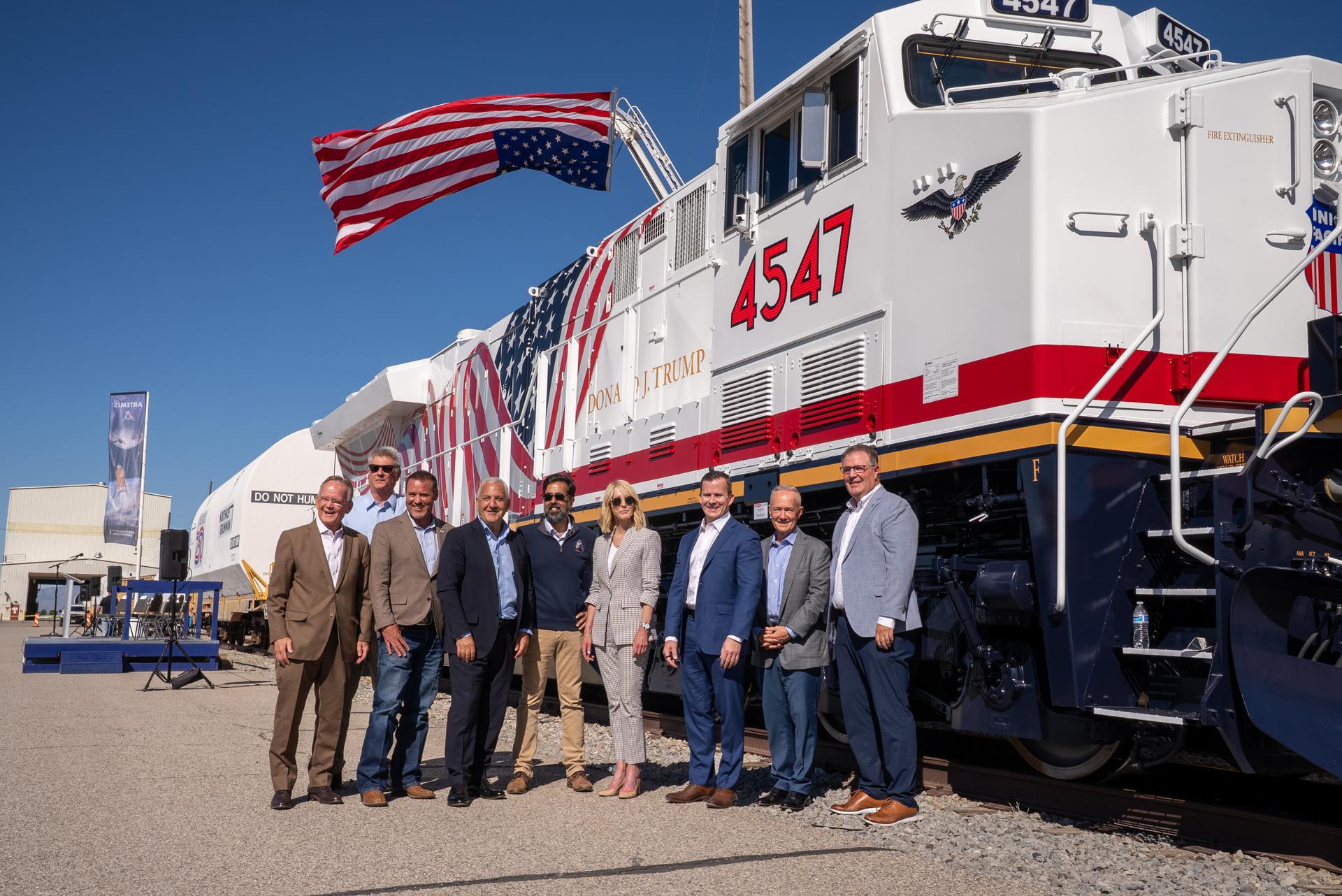
These images capture the final booster motor segments for NASA’s Artemis III mission departing Northrop Grumman’s Railyard Shipping Facility in Corinne, Utah, June 2. The eight segments will form the twin five-segment solid rocket boosters for the agency’s SLS (Space Launch System) rocket, providing more than 75% of the vehicle’s total thrust at liftoff. Due to their immense size and weight, the booster segments are transported in specialized carriers and are being hauled by Union Pacific Railroad’s newest commemorative locomotive, No. 4547. Marking its inaugural mission, the locomotive will deliver the flight hardware to NASA’s Kennedy Space Center in Florida, where stacking operations for Artemis III are set to begin later this year.
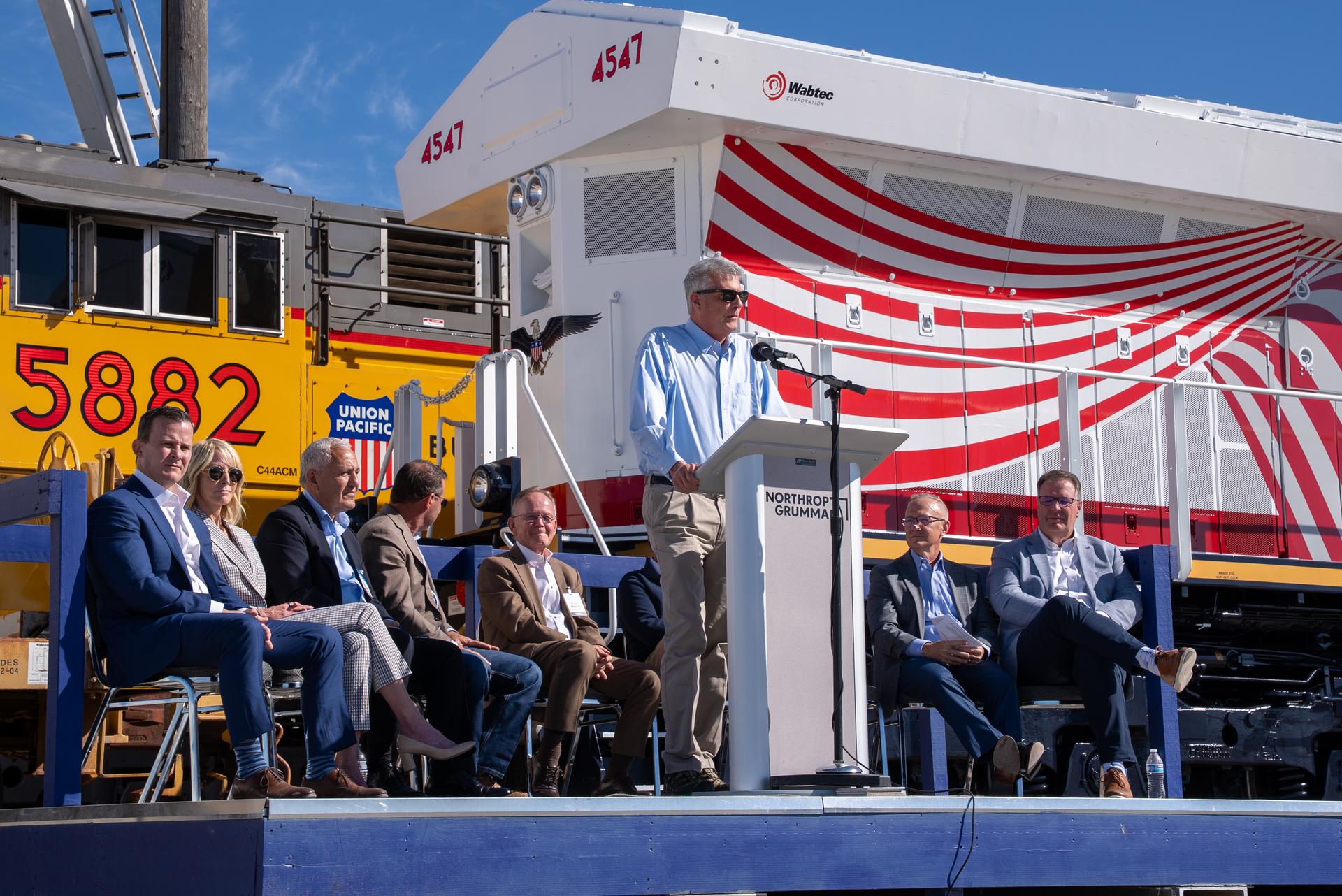
These images capture the final booster motor segments for NASA’s Artemis III mission departing Northrop Grumman’s Railyard Shipping Facility in Corinne, Utah, June 2. The eight segments will form the twin five-segment solid rocket boosters for the agency’s SLS (Space Launch System) rocket, providing more than 75% of the vehicle’s total thrust at liftoff. Due to their immense size and weight, the booster segments are transported in specialized carriers and are being hauled by Union Pacific Railroad’s newest commemorative locomotive, No. 4547. Marking its inaugural mission, the locomotive will deliver the flight hardware to NASA’s Kennedy Space Center in Florida, where stacking operations for Artemis III are set to begin later this year.
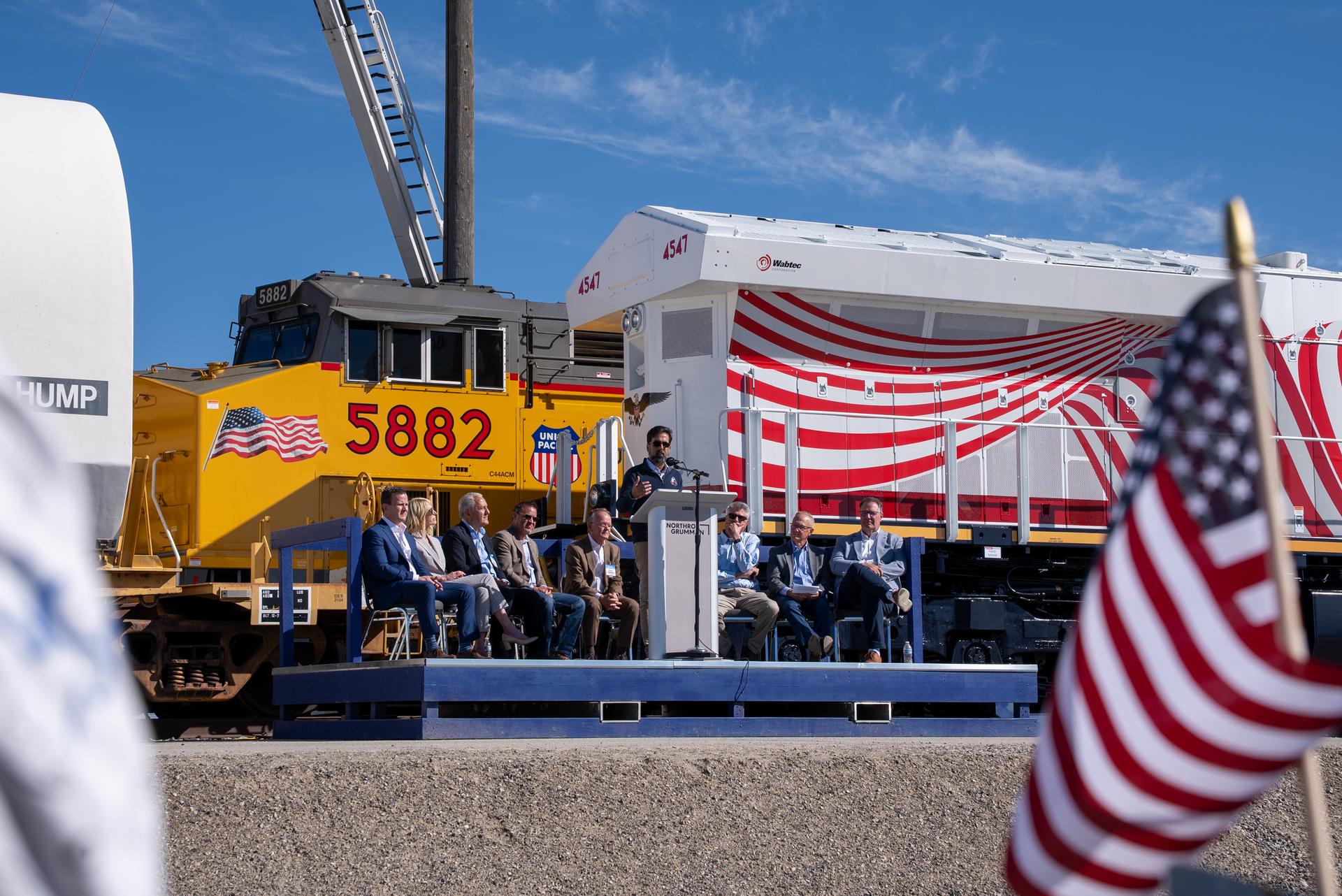
These images capture the final booster motor segments for NASA’s Artemis III mission departing Northrop Grumman’s Railyard Shipping Facility in Corinne, Utah, June 2. The eight segments will form the twin five-segment solid rocket boosters for the agency’s SLS (Space Launch System) rocket, providing more than 75% of the vehicle’s total thrust at liftoff. Due to their immense size and weight, the booster segments are transported in specialized carriers and are being hauled by Union Pacific Railroad’s newest commemorative locomotive, No. 4547. Marking its inaugural mission, the locomotive will deliver the flight hardware to NASA’s Kennedy Space Center in Florida, where stacking operations for Artemis III are set to begin later this year.
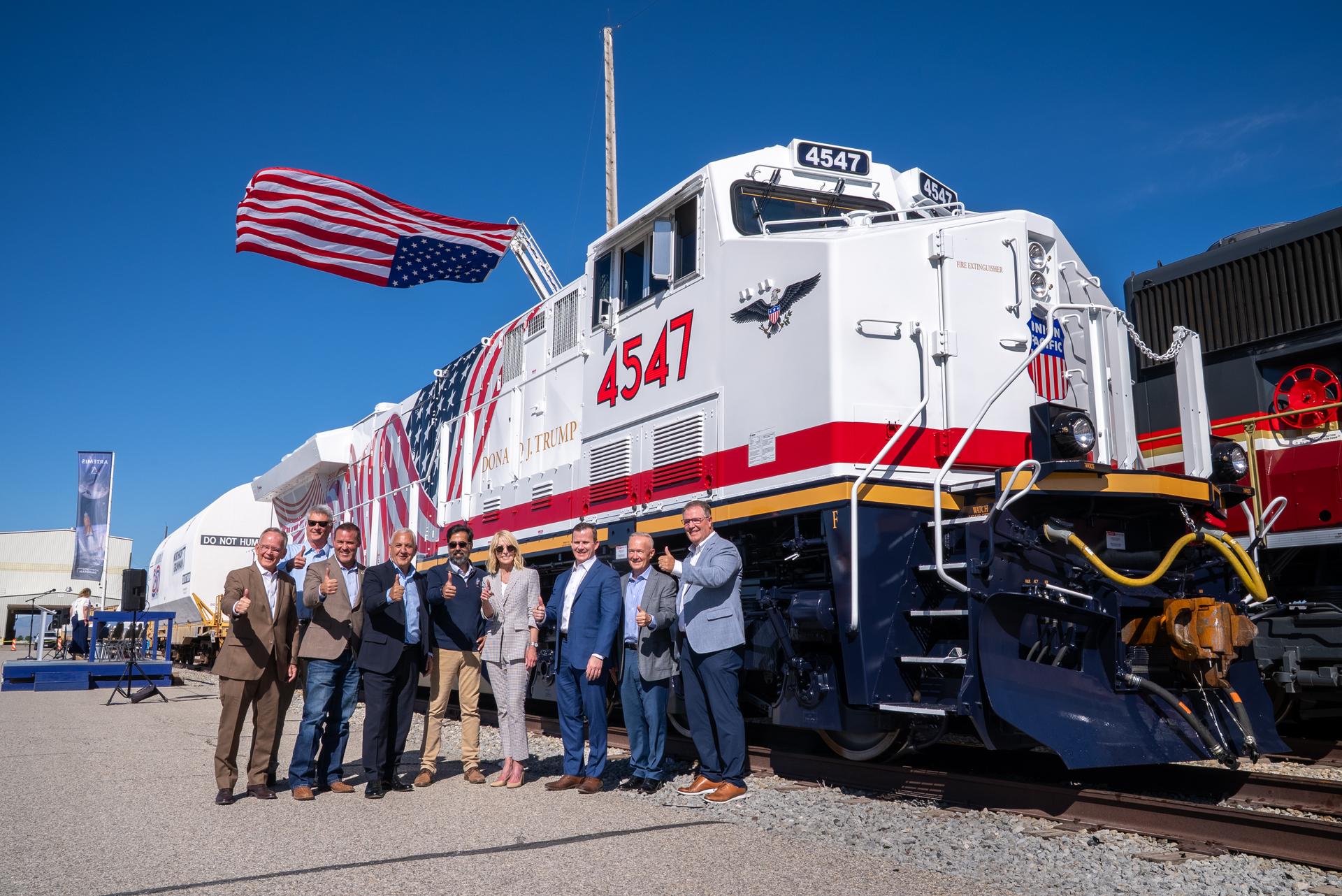
These images capture the final booster motor segments for NASA’s Artemis III mission departing Northrop Grumman’s Railyard Shipping Facility in Corinne, Utah, June 2. The eight segments will form the twin five-segment solid rocket boosters for the agency’s SLS (Space Launch System) rocket, providing more than 75% of the vehicle’s total thrust at liftoff. Due to their immense size and weight, the booster segments are transported in specialized carriers and are being hauled by Union Pacific Railroad’s newest commemorative locomotive, No. 4547. Marking its inaugural mission, the locomotive will deliver the flight hardware to NASA’s Kennedy Space Center in Florida, where stacking operations for Artemis III are set to begin later this year.
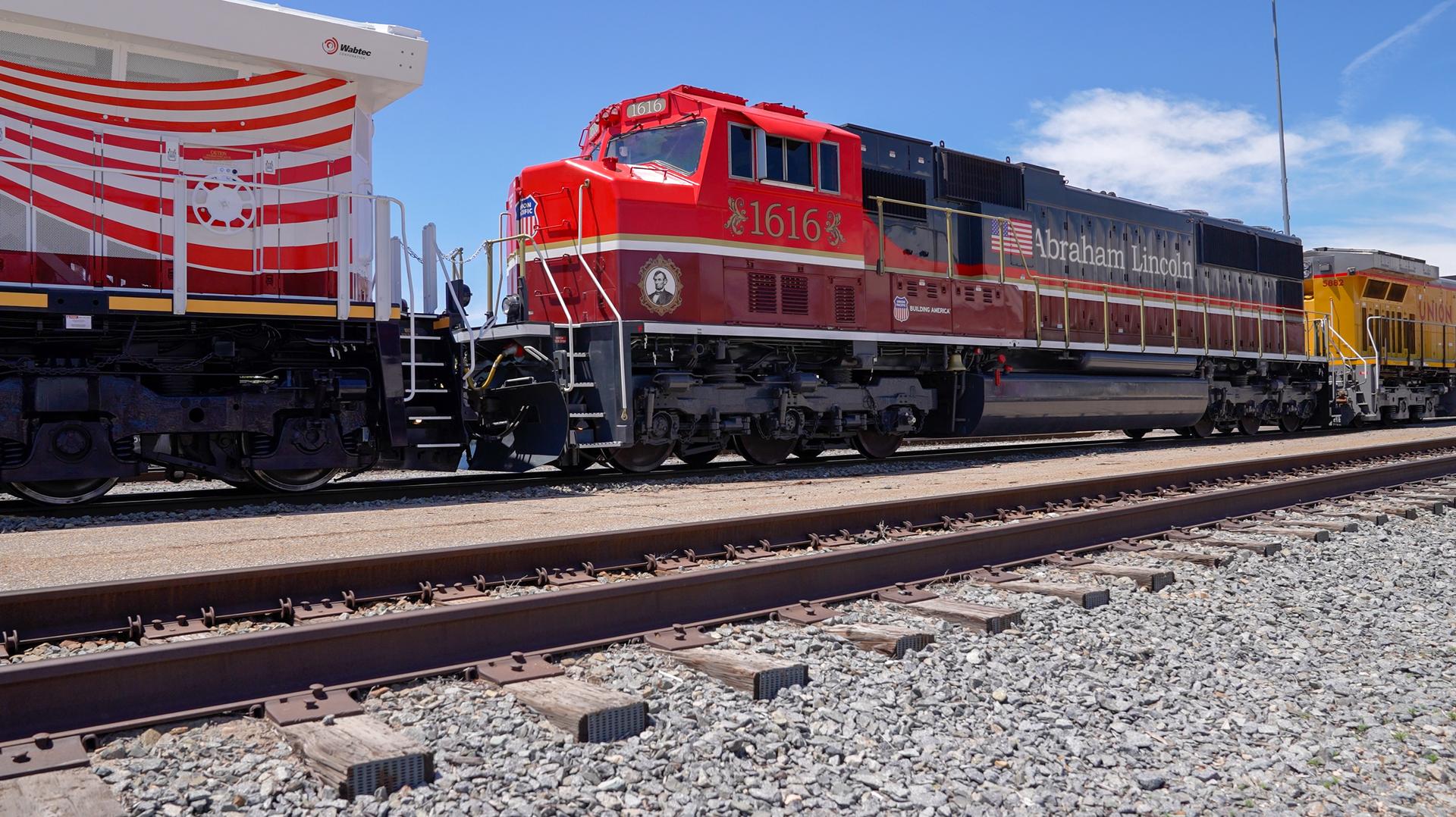
These images capture the final booster motor segments for NASA’s Artemis III mission departing Northrop Grumman’s Railyard Shipping Facility in Corinne, Utah, June 2. The eight segments will form the twin five-segment solid rocket boosters for the agency’s SLS (Space Launch System) rocket, providing more than 75% of the vehicle’s total thrust at liftoff. Due to their immense size and weight, the booster segments are transported in specialized carriers and are being hauled by Union Pacific Railroad’s newest commemorative locomotive, No. 4547. Marking its inaugural mission, the locomotive will deliver the flight hardware to NASA’s Kennedy Space Center in Florida, where stacking operations for Artemis III are set to begin later this year.
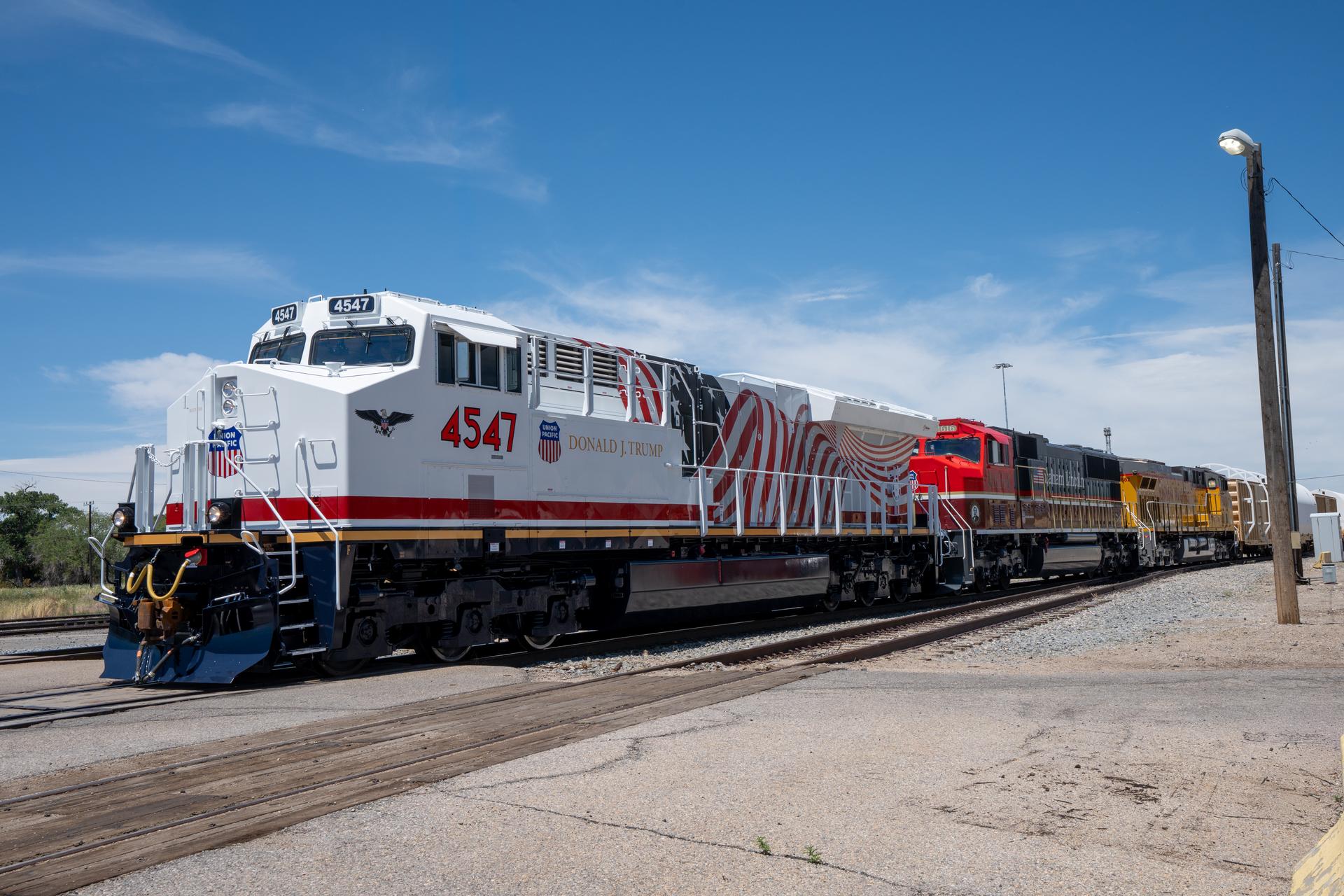
These images capture the final booster motor segments for NASA’s Artemis III mission departing Northrop Grumman’s Railyard Shipping Facility in Corinne, Utah, June 2. The eight segments will form the twin five-segment solid rocket boosters for the agency’s SLS (Space Launch System) rocket, providing more than 75% of the vehicle’s total thrust at liftoff. Due to their immense size and weight, the booster segments are transported in specialized carriers and are being hauled by Union Pacific Railroad’s newest commemorative locomotive, No. 4547. Marking its inaugural mission, the locomotive will deliver the flight hardware to NASA’s Kennedy Space Center in Florida, where stacking operations for Artemis III are set to begin later this year.
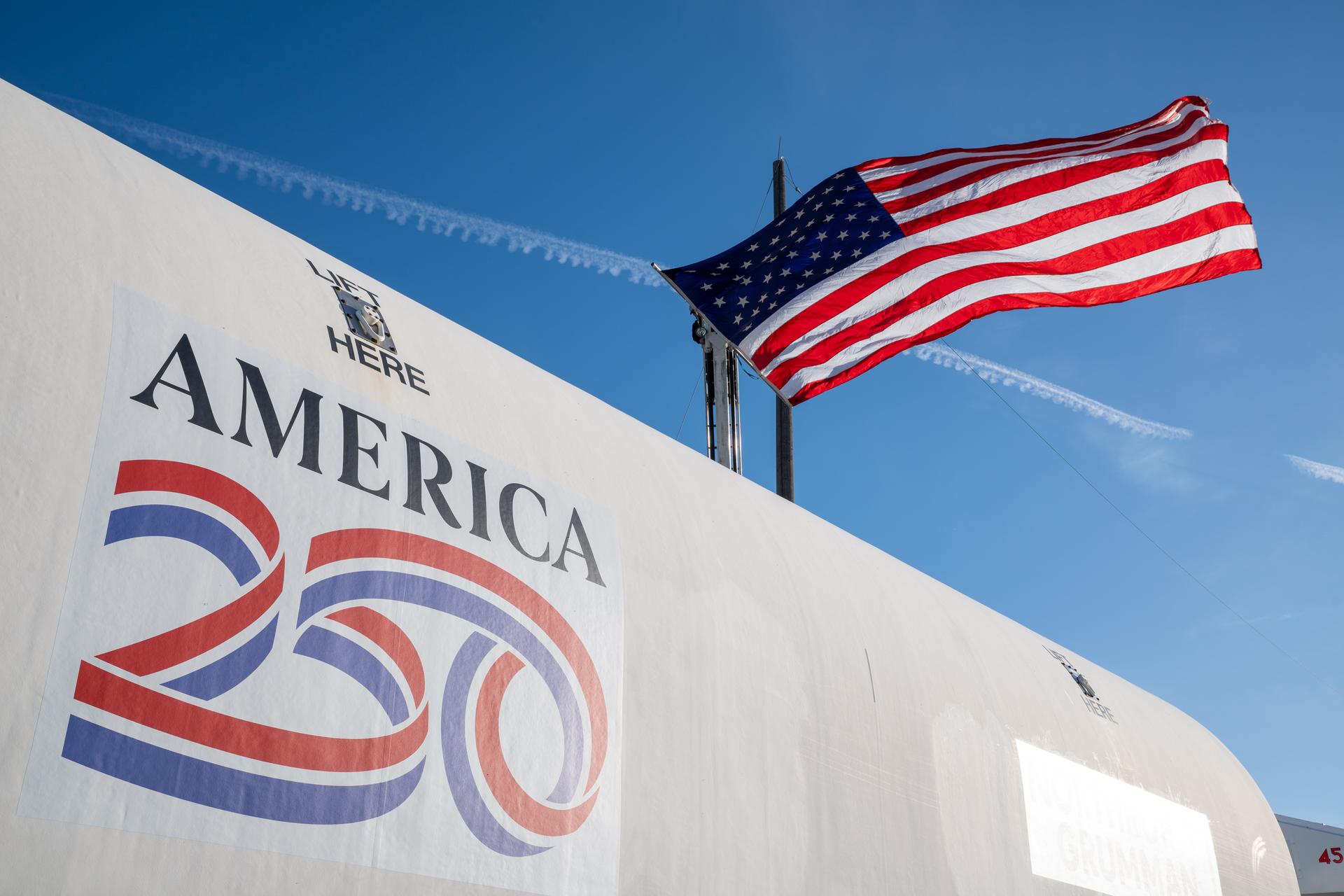
These images capture the final booster motor segments for NASA’s Artemis III mission departing Northrop Grumman’s Railyard Shipping Facility in Corinne, Utah, June 2. The eight segments will form the twin five-segment solid rocket boosters for the agency’s SLS (Space Launch System) rocket, providing more than 75% of the vehicle’s total thrust at liftoff. Due to their immense size and weight, the booster segments are transported in specialized carriers and are being hauled by Union Pacific Railroad’s newest commemorative locomotive, No. 4547. Marking its inaugural mission, the locomotive will deliver the flight hardware to NASA’s Kennedy Space Center in Florida, where stacking operations for Artemis III are set to begin later this year.
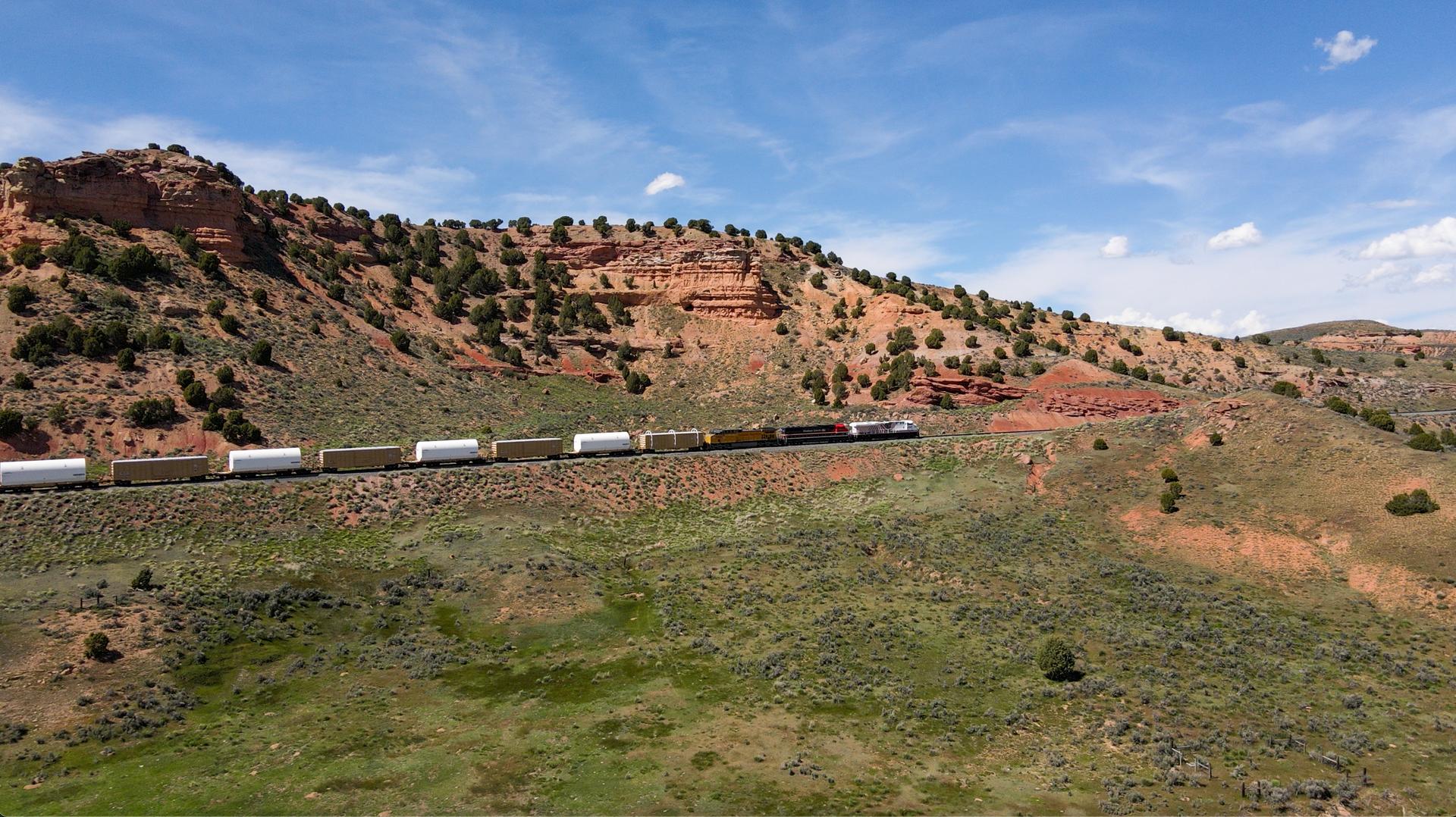
These images capture the final booster motor segments for NASA’s Artemis III mission departing Northrop Grumman’s Railyard Shipping Facility in Corinne, Utah, June 2. The eight segments will form the twin five-segment solid rocket boosters for the agency’s SLS (Space Launch System) rocket, providing more than 75% of the vehicle’s total thrust at liftoff. Due to their immense size and weight, the booster segments are transported in specialized carriers and are being hauled by Union Pacific Railroad’s newest commemorative locomotive, No. 4547. Marking its inaugural mission, the locomotive will deliver the flight hardware to NASA’s Kennedy Space Center in Florida, where stacking operations for Artemis III are set to begin later this year.
These images capture the final booster motor segments for NASA’s Artemis III mission departing Northrop Grumman’s Railyard Shipping Facility in Corinne, Utah, June 2. The eight segments will form the twin five-segment solid rocket boosters for the agency’s SLS (Space Launch System) rocket, providing more than 75% of the vehicle’s total thrust at liftoff. Due to their immense size and weight, the booster segments are transported in specialized carriers and are being hauled by Union Pacific Railroad’s newest commemorative locomotive, No. 4547. Marking its inaugural mission, the locomotive will deliver the flight hardware to NASA’s Kennedy Space Center in Florida, where stacking operations for Artemis III are set to begin later this year.
These images capture the final booster motor segments for NASA’s Artemis III mission departing Northrop Grumman’s Railyard Shipping Facility in Corinne, Utah, June 2. The eight segments will form the twin five-segment solid rocket boosters for the agency’s SLS (Space Launch System) rocket, providing more than 75% of the vehicle’s total thrust at liftoff. Due to their immense size and weight, the booster segments are transported in specialized carriers and are being hauled by Union Pacific Railroad’s newest commemorative locomotive, No. 4547. Marking its inaugural mission, the locomotive will deliver the flight hardware to NASA’s Kennedy Space Center in Florida, where stacking operations for Artemis III are set to begin later this year.
These images capture the final booster motor segments for NASA’s Artemis III mission departing Northrop Grumman’s Railyard Shipping Facility in Corinne, Utah, June 2. The eight segments will form the twin five-segment solid rocket boosters for the agency’s SLS (Space Launch System) rocket, providing more than 75% of the vehicle’s total thrust at liftoff. Due to their immense size and weight, the booster segments are transported in specialized carriers and are being hauled by Union Pacific Railroad’s newest commemorative locomotive, No. 4547. Marking its inaugural mission, the locomotive will deliver the flight hardware to NASA’s Kennedy Space Center in Florida, where stacking operations for Artemis III are set to begin later this year.
These images capture the final booster motor segments for NASA’s Artemis III mission departing Northrop Grumman’s Railyard Shipping Facility in Corinne, Utah, June 2. The eight segments will form the twin five-segment solid rocket boosters for the agency’s SLS (Space Launch System) rocket, providing more than 75% of the vehicle’s total thrust at liftoff. Due to their immense size and weight, the booster segments are transported in specialized carriers and are being hauled by Union Pacific Railroad’s newest commemorative locomotive, No. 4547. Marking its inaugural mission, the locomotive will deliver the flight hardware to NASA’s Kennedy Space Center in Florida, where stacking operations for Artemis III are set to begin later this year.
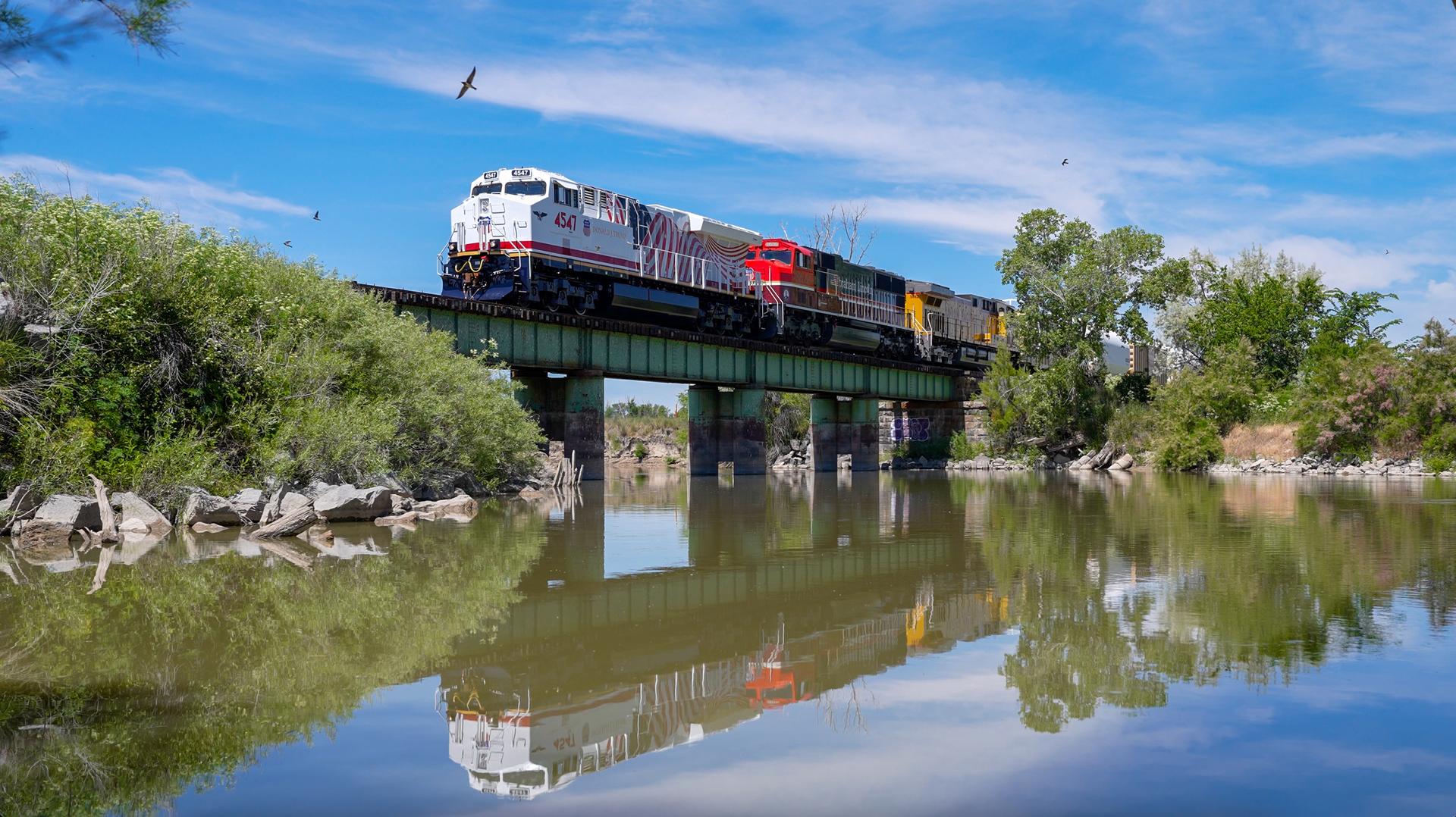
These images capture the final booster motor segments for NASA’s Artemis III mission departing Northrop Grumman’s Railyard Shipping Facility in Corinne, Utah, June 2. The eight segments will form the twin five-segment solid rocket boosters for the agency’s SLS (Space Launch System) rocket, providing more than 75% of the vehicle’s total thrust at liftoff. Due to their immense size and weight, the booster segments are transported in specialized carriers and are being hauled by Union Pacific Railroad’s newest commemorative locomotive, No. 4547. Marking its inaugural mission, the locomotive will deliver the flight hardware to NASA’s Kennedy Space Center in Florida, where stacking operations for Artemis III are set to begin later this year.
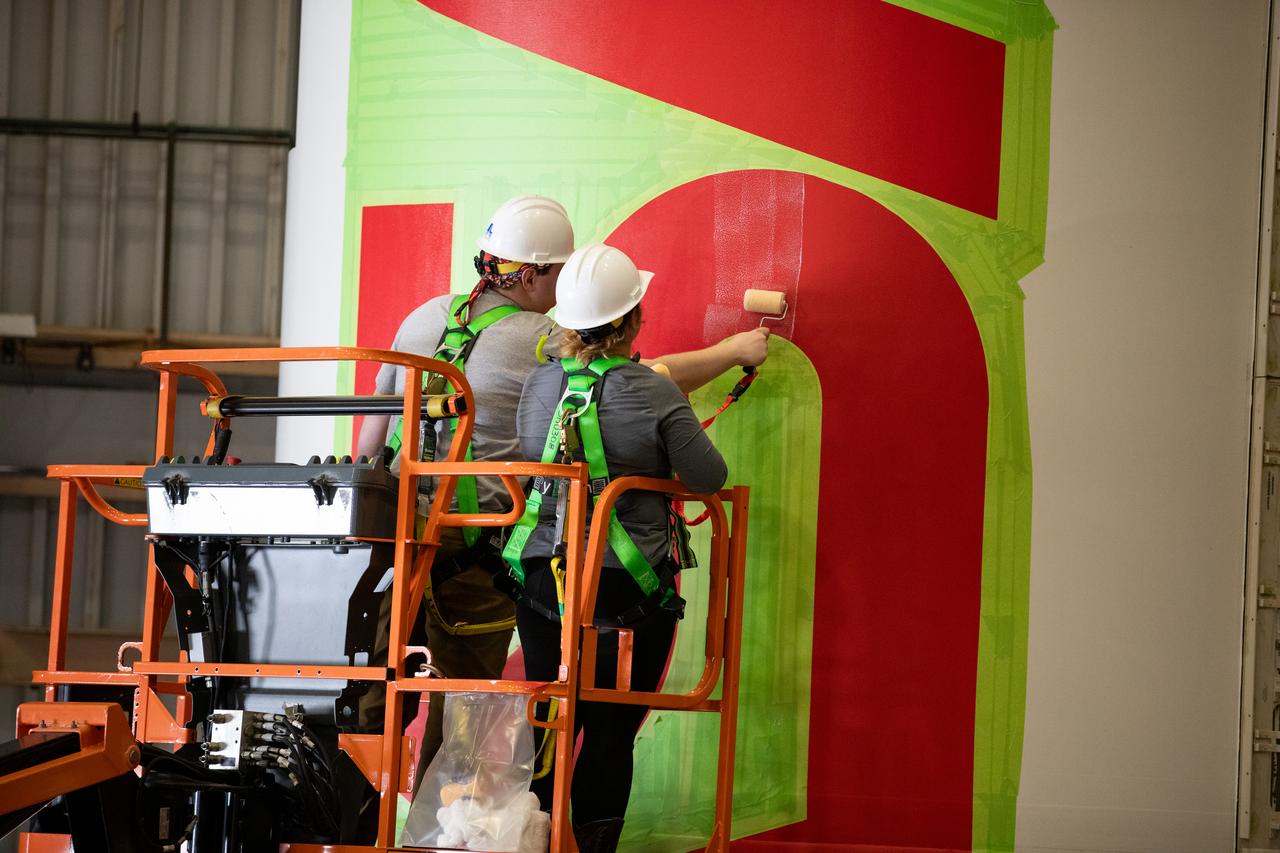
Workers with NASA’s Exploration Ground Systems (EGS) paint the bright red NASA “worm” logo on the side of an Artemis II solid rocket booster segment inside the Rotation, Processing and Surge Facility (RPSF) at Kennedy Space Center in Florida on Tuesday, Jan. 30, 2024. The EGS team used a laser projector to mask off the logo with tape, then painted the first coat of the iconic design. The booster segments will help propel the Space Launch System (SLS) rocket on the Artemis II mission to send four astronauts around the Moon as part of the agency’s effort to establish a long-term science and exploration presence at the Moon, and eventually Mars.
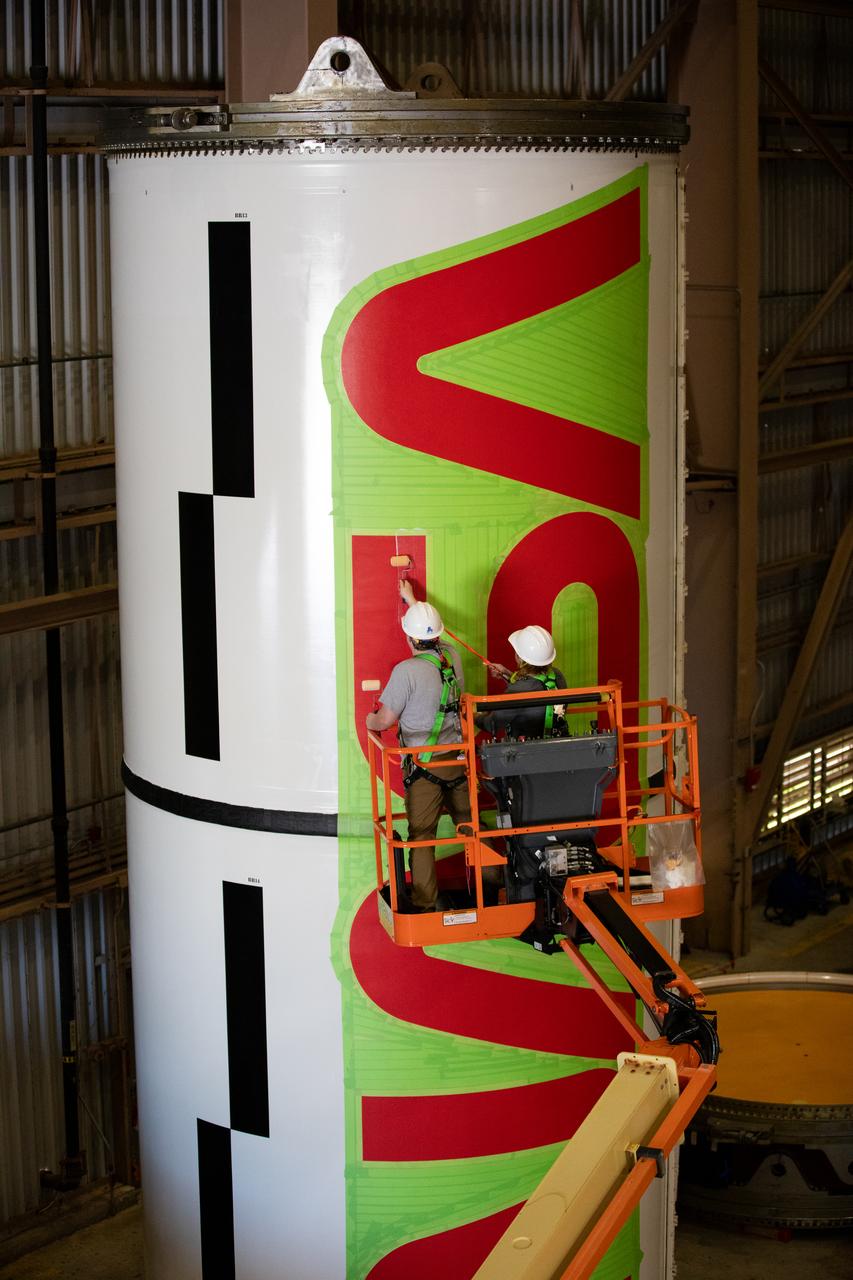
Workers with NASA’s Exploration Ground Systems (EGS) paint the bright red NASA “worm” logo on the side of an Artemis II solid rocket booster segment inside the Rotation, Processing and Surge Facility (RPSF) at Kennedy Space Center in Florida on Tuesday, Jan. 30, 2024. The EGS team used a laser projector to mask off the logo with tape, then painted the first coat of the iconic design. The booster segments will help propel the Space Launch System (SLS) rocket on the Artemis II mission to send four astronauts around the Moon as part of the agency’s effort to establish a long-term science and exploration presence at the Moon, and eventually Mars.
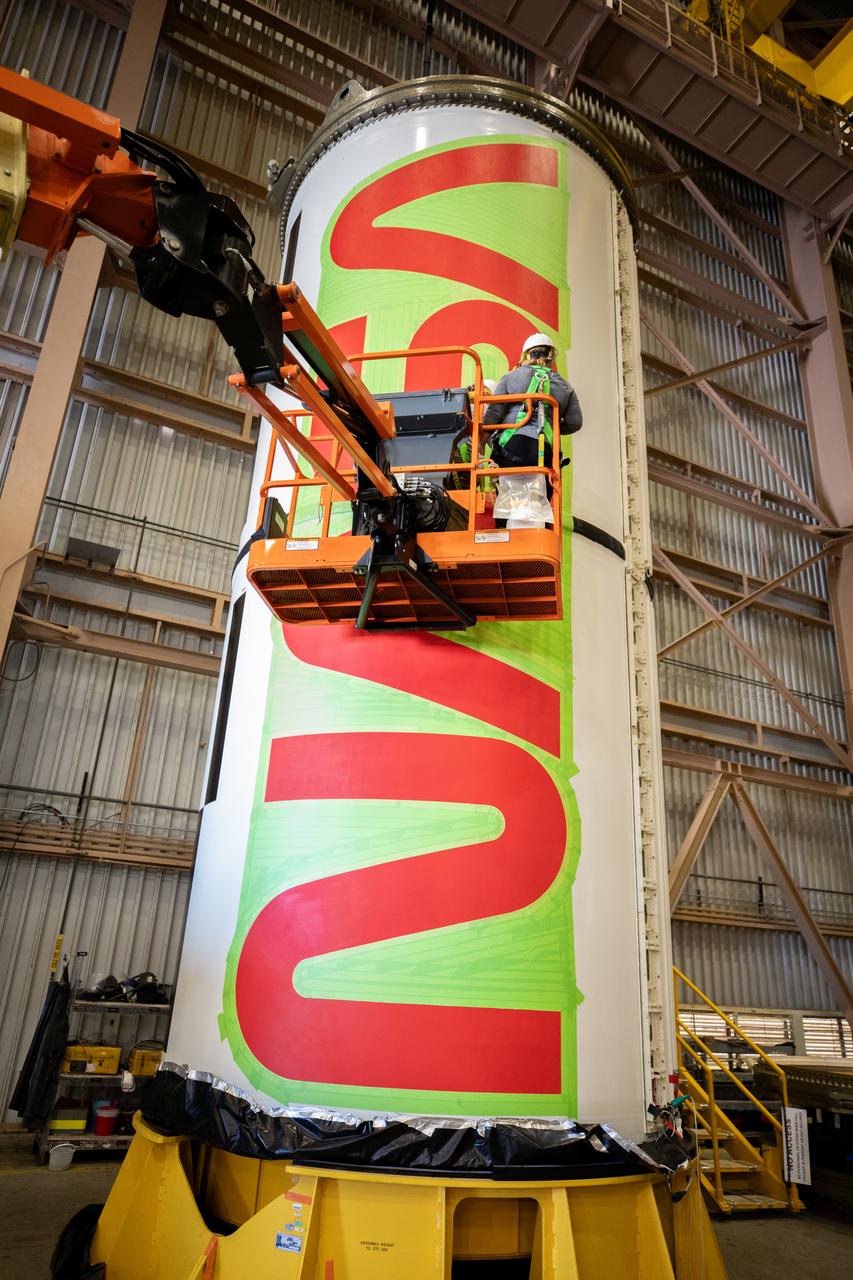
Workers with NASA’s Exploration Ground Systems (EGS) paint the bright red NASA “worm” logo on the side of an Artemis II solid rocket booster segment inside the Rotation, Processing and Surge Facility (RPSF) at Kennedy Space Center in Florida on Tuesday, Jan. 30, 2024. The EGS team used a laser projector to mask off the logo with tape, then painted the first coat of the iconic design. The booster segments will help propel the Space Launch System (SLS) rocket on the Artemis II mission to send four astronauts around the Moon as part of the agency’s effort to establish a long-term science and exploration presence at the Moon, and eventually Mars.
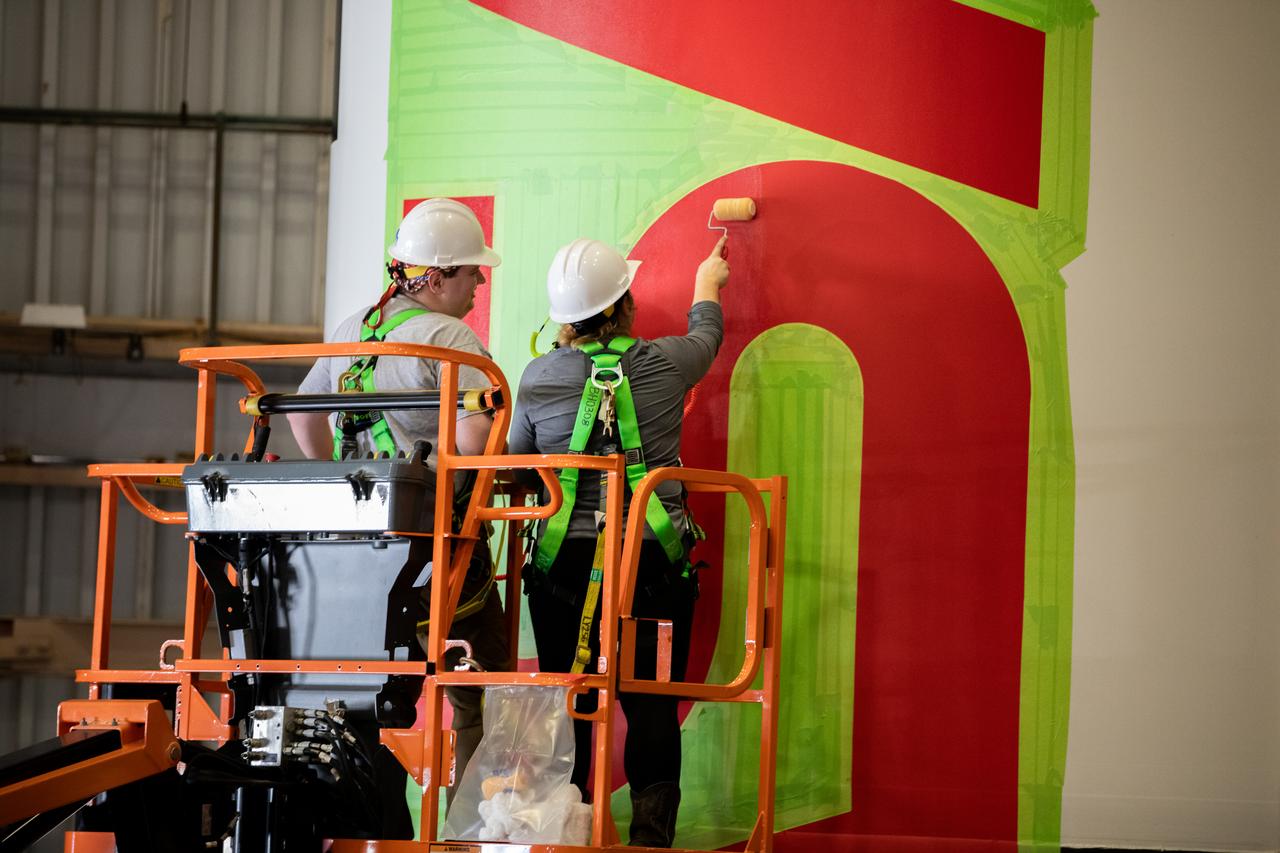
Workers with NASA’s Exploration Ground Systems (EGS) paint the bright red NASA “worm” logo on the side of an Artemis II solid rocket booster segment inside the Rotation, Processing and Surge Facility (RPSF) at Kennedy Space Center in Florida on Tuesday, Jan. 30, 2024. The EGS team used a laser projector to mask off the logo with tape, then painted the first coat of the iconic design. The booster segments will help propel the Space Launch System (SLS) rocket on the Artemis II mission to send four astronauts around the Moon as part of the agency’s effort to establish a long-term science and exploration presence at the Moon, and eventually Mars.
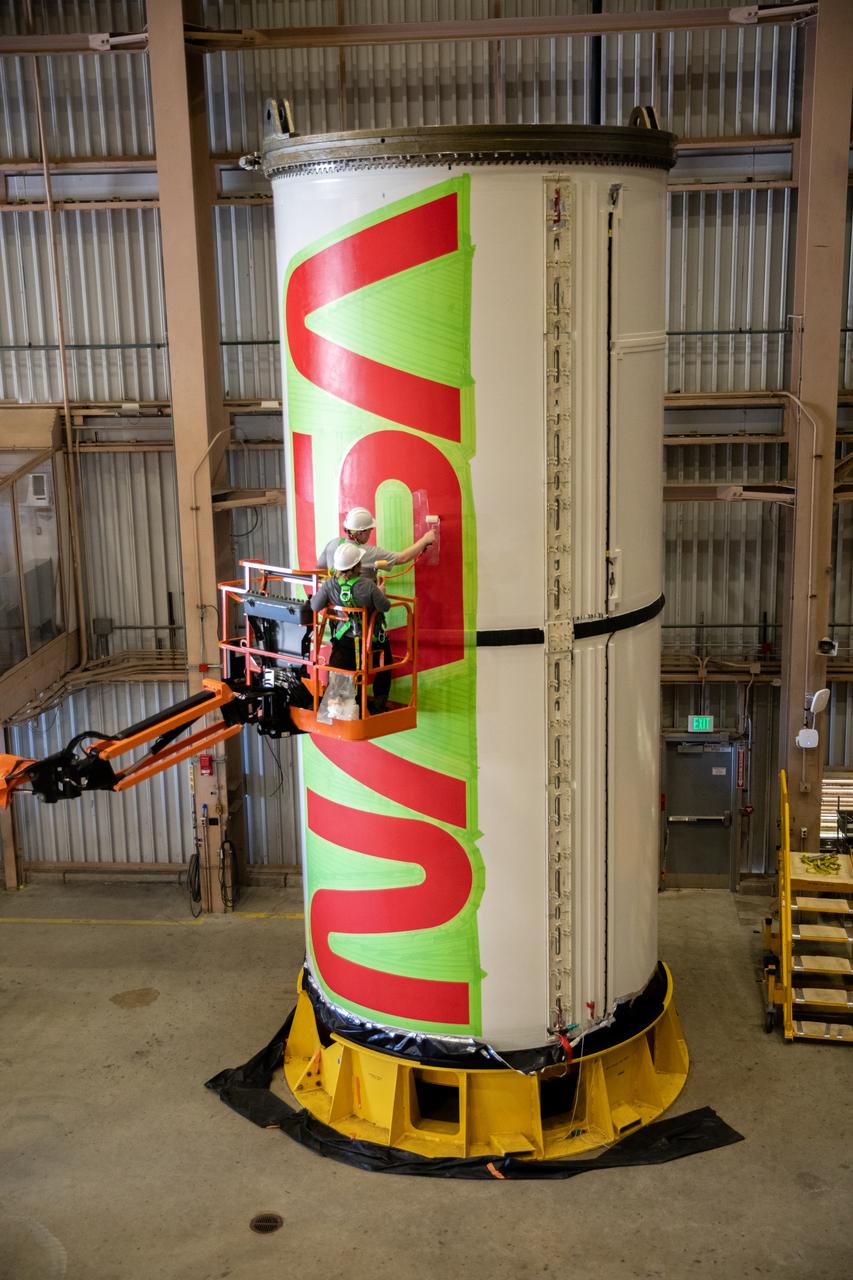
Workers with NASA’s Exploration Ground Systems (EGS) paint the bright red NASA “worm” logo on the side of an Artemis II solid rocket booster segment inside the Rotation, Processing and Surge Facility (RPSF) at Kennedy Space Center in Florida on Tuesday, Jan. 30, 2024. The EGS team used a laser projector to mask off the logo with tape, then painted the first coat of the iconic design. The booster segments will help propel the Space Launch System (SLS) rocket on the Artemis II mission to send four astronauts around the Moon as part of the agency’s effort to establish a long-term science and exploration presence at the Moon, and eventually Mars.
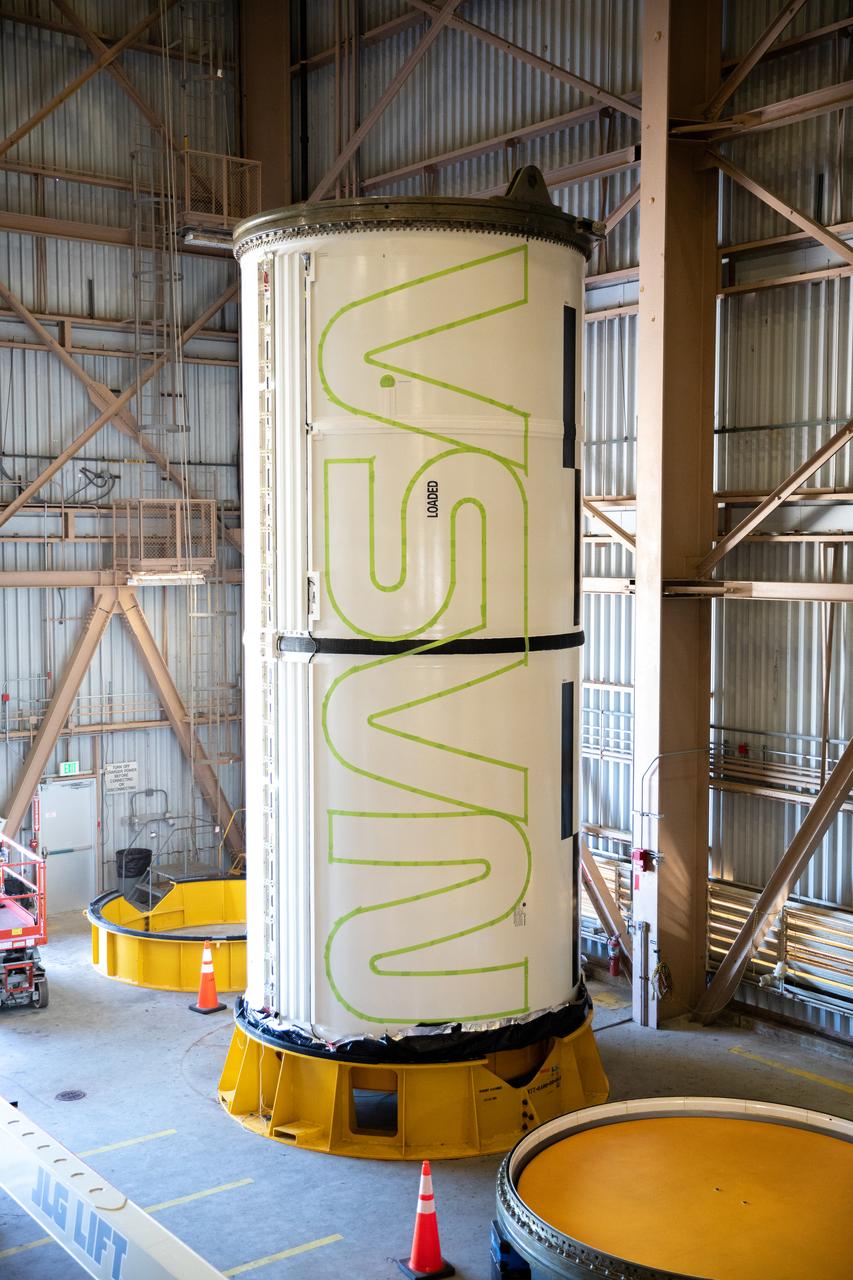
Workers with NASA’s Exploration Ground Systems (EGS) paint the bright red NASA “worm” logo on the side of an Artemis II solid rocket booster segment inside the Rotation, Processing and Surge Facility (RPSF) at Kennedy Space Center in Florida on Tuesday, Jan. 30, 2024. The EGS team used a laser projector to mask off the logo with tape, then painted the first coat of the iconic design. The booster segments will help propel the Space Launch System (SLS) rocket on the Artemis II mission to send four astronauts around the Moon as part of the agency’s effort to establish a long-term science and exploration presence at the Moon, and eventually Mars.
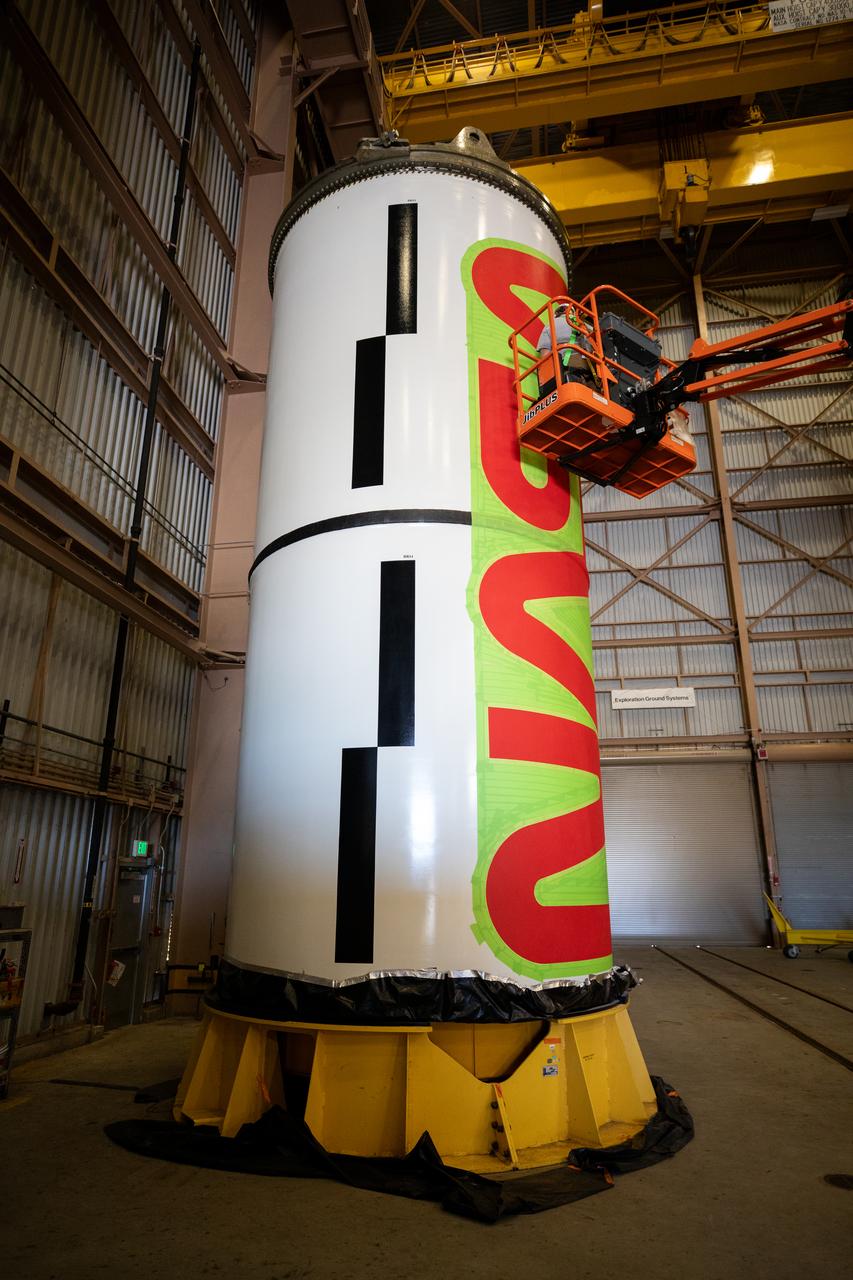
Workers with NASA’s Exploration Ground Systems (EGS) paint the bright red NASA “worm” logo on the side of an Artemis II solid rocket booster segment inside the Rotation, Processing and Surge Facility (RPSF) at Kennedy Space Center in Florida on Tuesday, Jan. 30, 2024. The EGS team used a laser projector to mask off the logo with tape, then painted the first coat of the iconic design. The booster segments will help propel the Space Launch System (SLS) rocket on the Artemis II mission to send four astronauts around the Moon as part of the agency’s effort to establish a long-term science and exploration presence at the Moon, and eventually Mars.
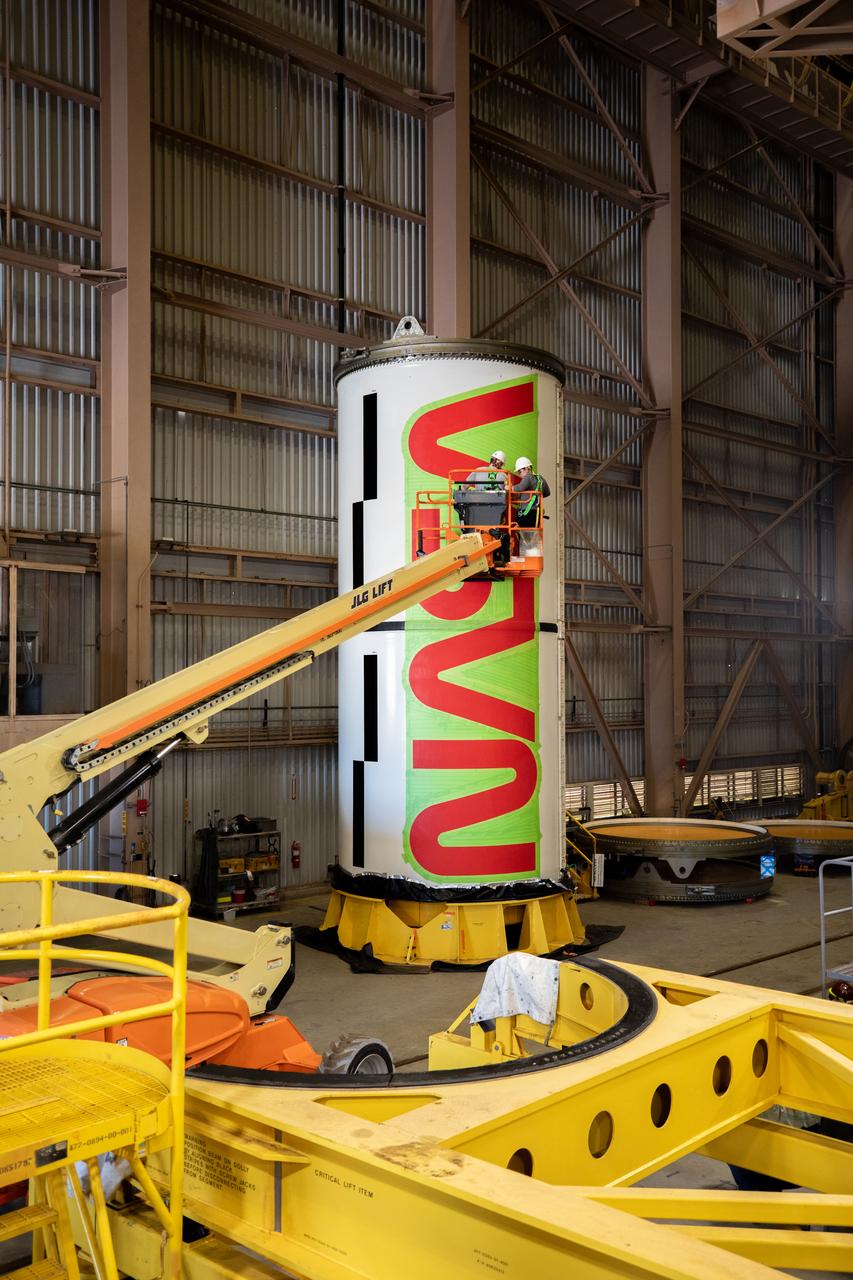
Workers with NASA’s Exploration Ground Systems (EGS) paint the bright red NASA “worm” logo on the side of an Artemis II solid rocket booster segment inside the Rotation, Processing and Surge Facility (RPSF) at Kennedy Space Center in Florida on Tuesday, Jan. 30, 2024. The EGS team used a laser projector to mask off the logo with tape, then painted the first coat of the iconic design. The booster segments will help propel the Space Launch System (SLS) rocket on the Artemis II mission to send four astronauts around the Moon as part of the agency’s effort to establish a long-term science and exploration presence at the Moon, and eventually Mars.
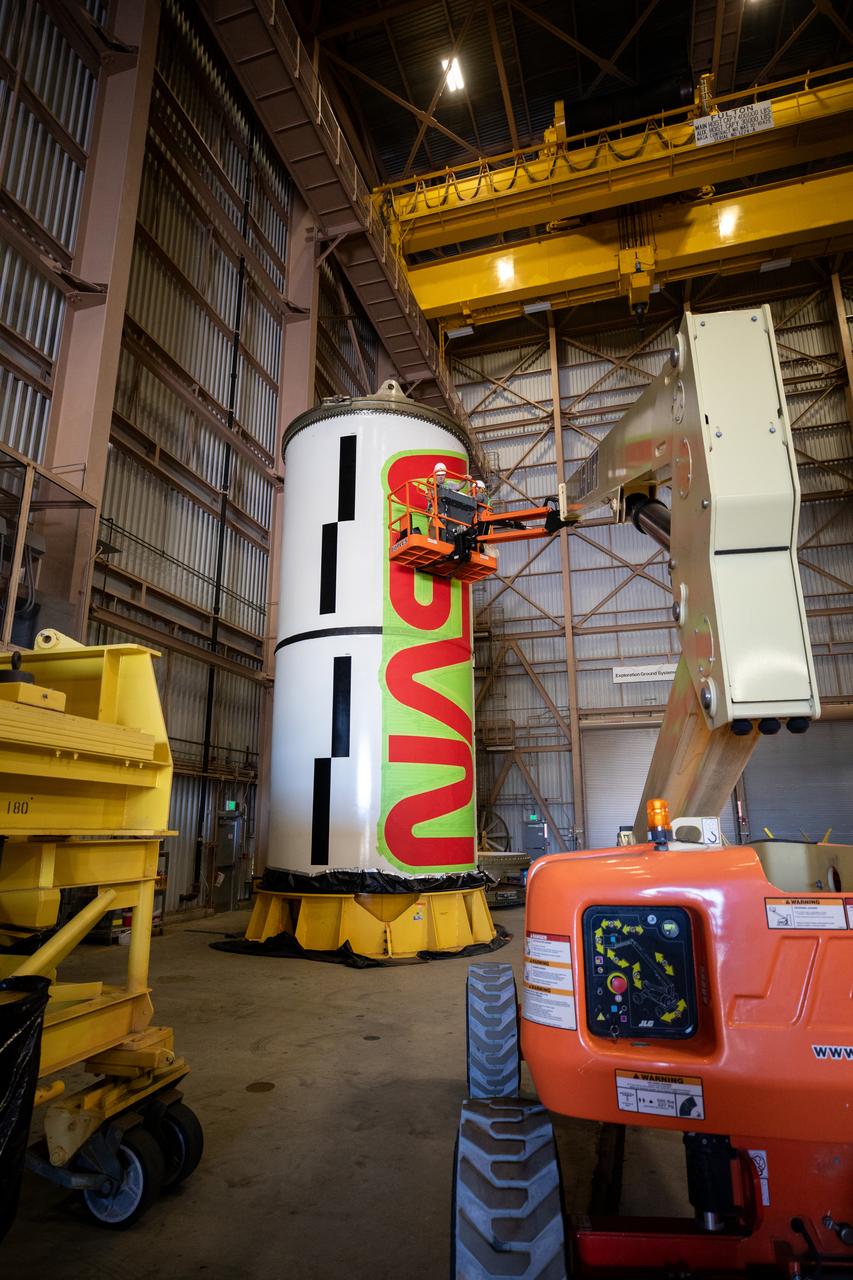
Workers with NASA’s Exploration Ground Systems (EGS) paint the bright red NASA “worm” logo on the side of an Artemis II solid rocket booster segment inside the Rotation, Processing and Surge Facility (RPSF) at Kennedy Space Center in Florida on Tuesday, Jan. 30, 2024. The EGS team used a laser projector to mask off the logo with tape, then painted the first coat of the iconic design. The booster segments will help propel the Space Launch System (SLS) rocket on the Artemis II mission to send four astronauts around the Moon as part of the agency’s effort to establish a long-term science and exploration presence at the Moon, and eventually Mars.
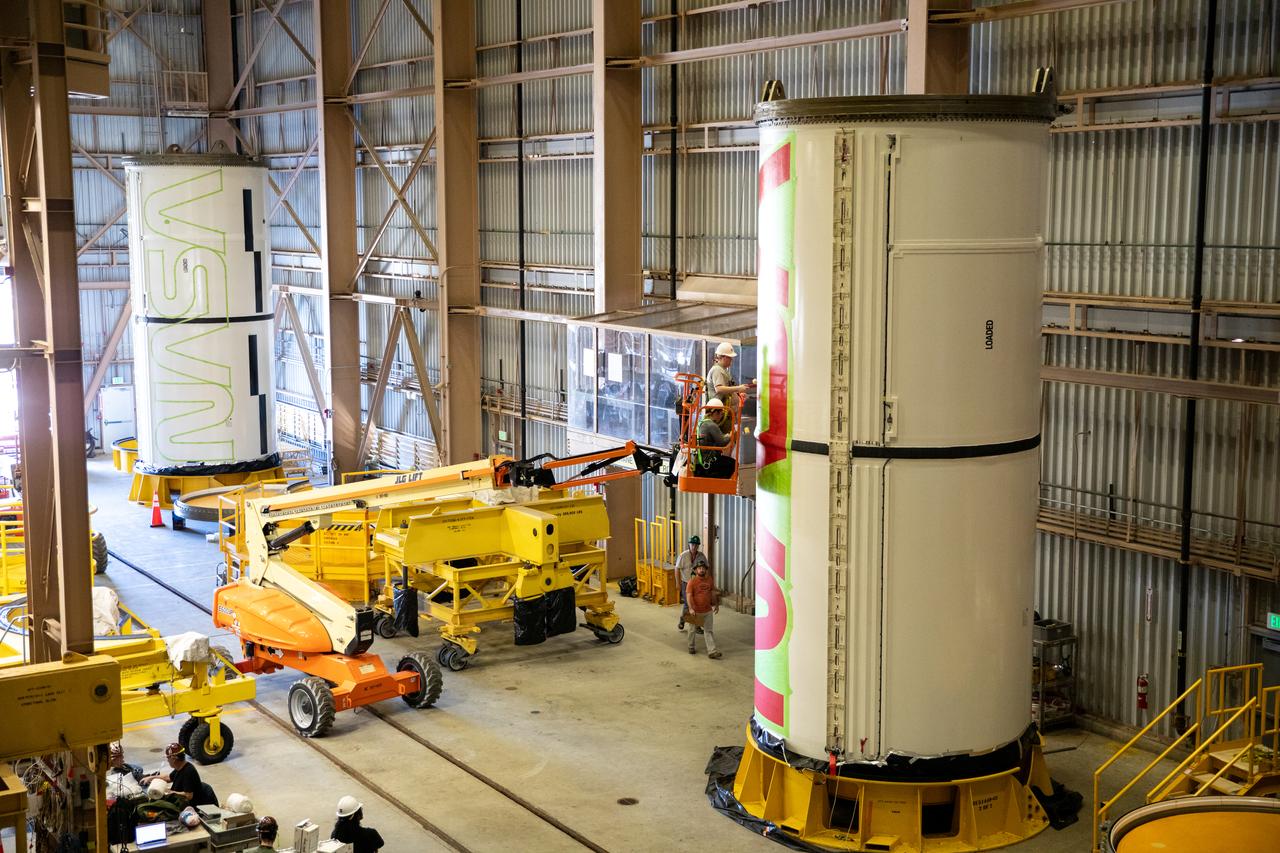
Workers with NASA’s Exploration Ground Systems (EGS) paint the bright red NASA “worm” logo on the side of an Artemis II solid rocket booster segment inside the Rotation, Processing and Surge Facility (RPSF) at Kennedy Space Center in Florida on Tuesday, Jan. 30, 2024. The EGS team used a laser projector to mask off the logo with tape, then painted the first coat of the iconic design. The booster segments will help propel the Space Launch System (SLS) rocket on the Artemis II mission to send four astronauts around the Moon as part of the agency’s effort to establish a long-term science and exploration presence at the Moon, and eventually Mars.
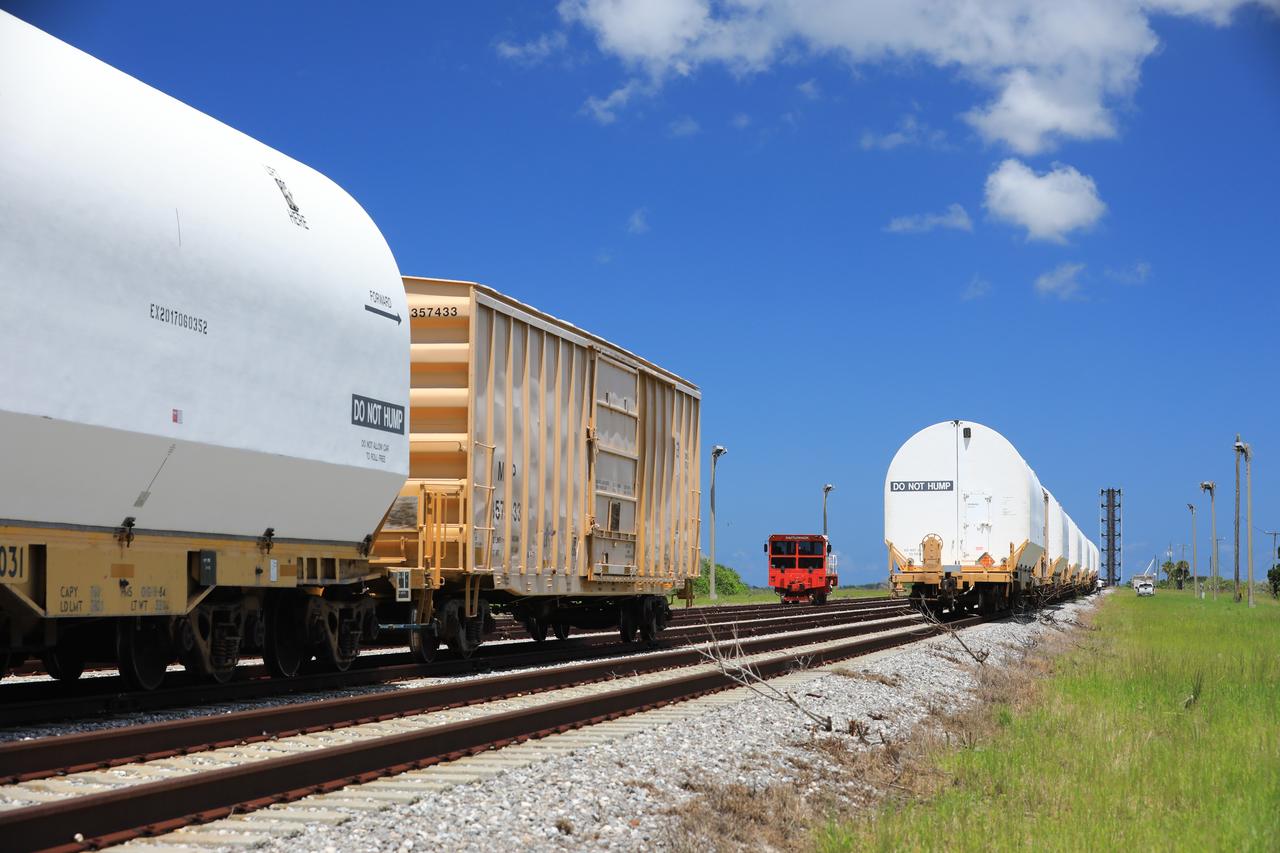
The train carrying the two solid rocket boosters that will power NASA’s Space Launch System (SLS) for Artemis missions to the Moon arrives at the Jay Jay rail yard – the connecting link between Kennedy Space Center and the Florida East Coast railway – in Titusville, Florida, on June 12, 2020. The boosters, each comprised of five motor segments, traveled from a Northrop Grumman manufacturing facility in Promontory, Utah, to Kennedy’s Rotation, Processing and Surge Facility, where teams with NASA’s Exploration Ground Systems will process the segments before moving them to the Vehicle Assembly Building for stacking on the mobile launcher. Under the Artemis program, NASA will land the first woman and the next man on the Moon by 2024. The first in a series of increasingly complex missions, Artemis I will test the Orion spacecraft and SLS as an integrated system ahead of crewed flights to the Moon.
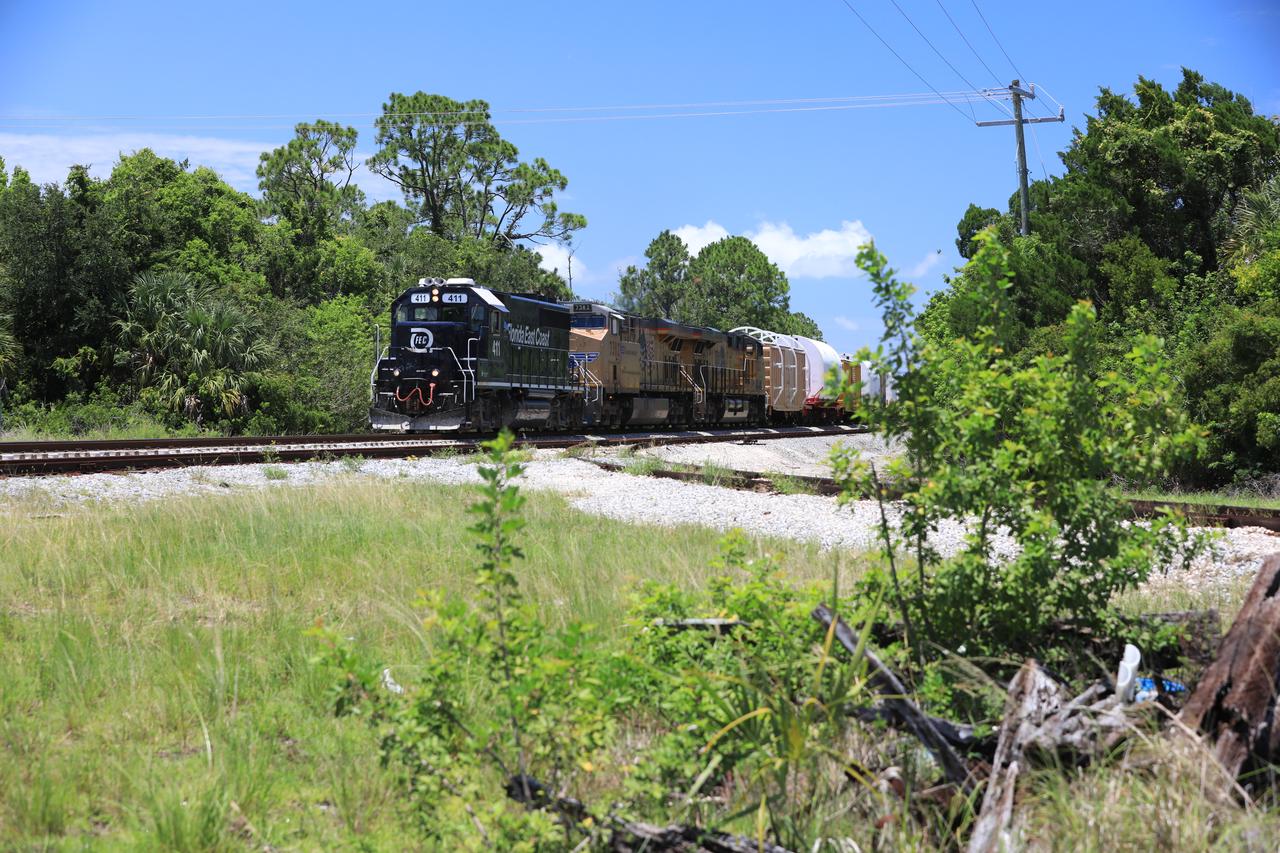
The train carrying the two solid rocket boosters that will power NASA’s Space Launch System (SLS) for Artemis missions to the Moon arrives at the Jay Jay rail yard – the connecting link between Kennedy Space Center and the Florida East Coast railway – in Titusville, Florida, on June 12, 2020. The boosters, each comprised of five motor segments, traveled from a Northrop Grumman manufacturing facility in Promontory, Utah, to Kennedy’s Rotation, Processing and Surge Facility, where teams with NASA’s Exploration Ground Systems will process the segments before moving them to the Vehicle Assembly Building for stacking on the mobile launcher. Under the Artemis program, NASA will land the first woman and the next man on the Moon by 2024. The first in a series of increasingly complex missions, Artemis I will test the Orion spacecraft and SLS as an integrated system ahead of crewed flights to the Moon.
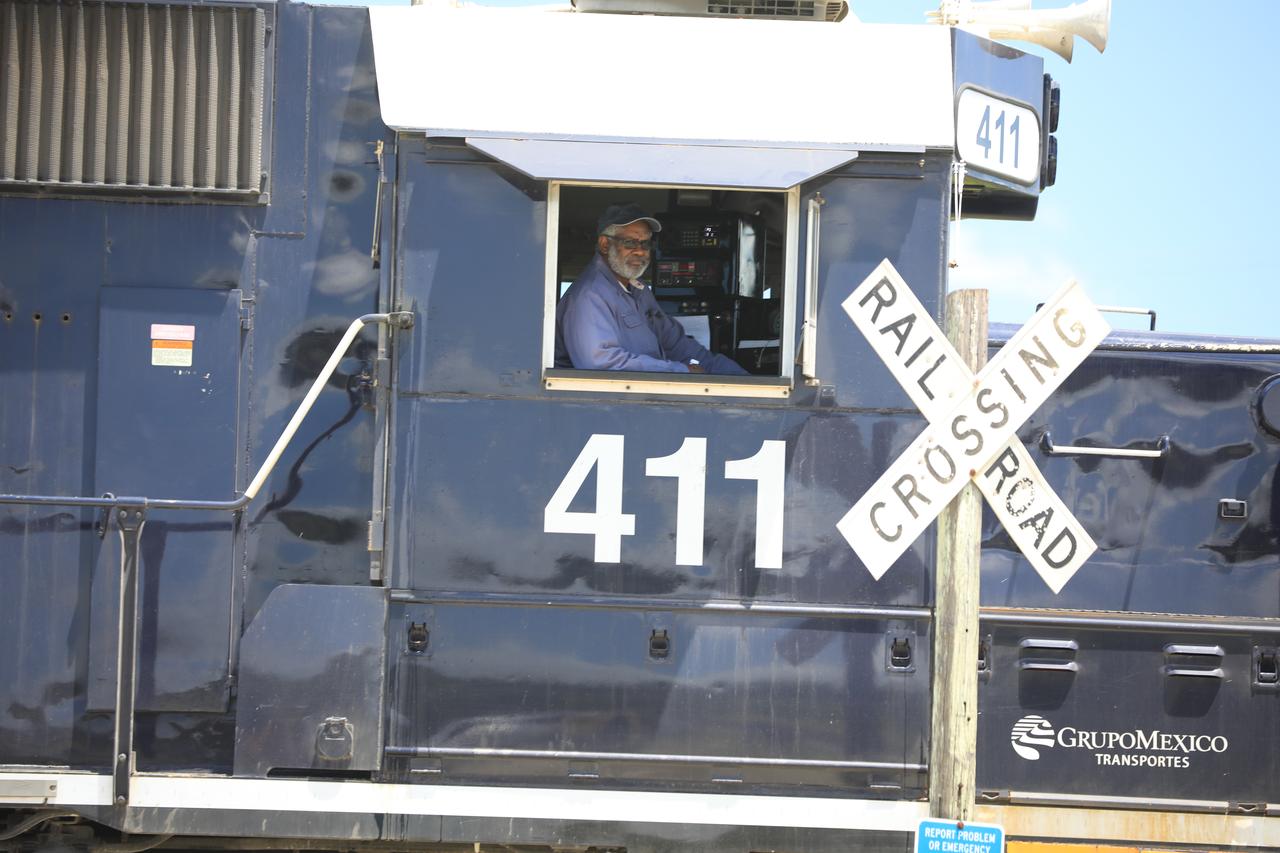
The train carrying the two solid rocket boosters that will power NASA’s Space Launch System (SLS) for Artemis missions to the Moon arrives at the Jay Jay rail yard – the connecting link between Kennedy Space Center and the Florida East Coast railway – in Titusville, Florida, on June 12, 2020. The boosters, each comprised of five motor segments, traveled from a Northrop Grumman manufacturing facility in Promontory, Utah, to Kennedy’s Rotation, Processing and Surge Facility, where teams with NASA’s Exploration Ground Systems will process the segments before moving them to the Vehicle Assembly Building for stacking on the mobile launcher. Under the Artemis program, NASA will land the first woman and the next man on the Moon by 2024. The first in a series of increasingly complex missions, Artemis I will test the Orion spacecraft and SLS as an integrated system ahead of crewed flights to the Moon.
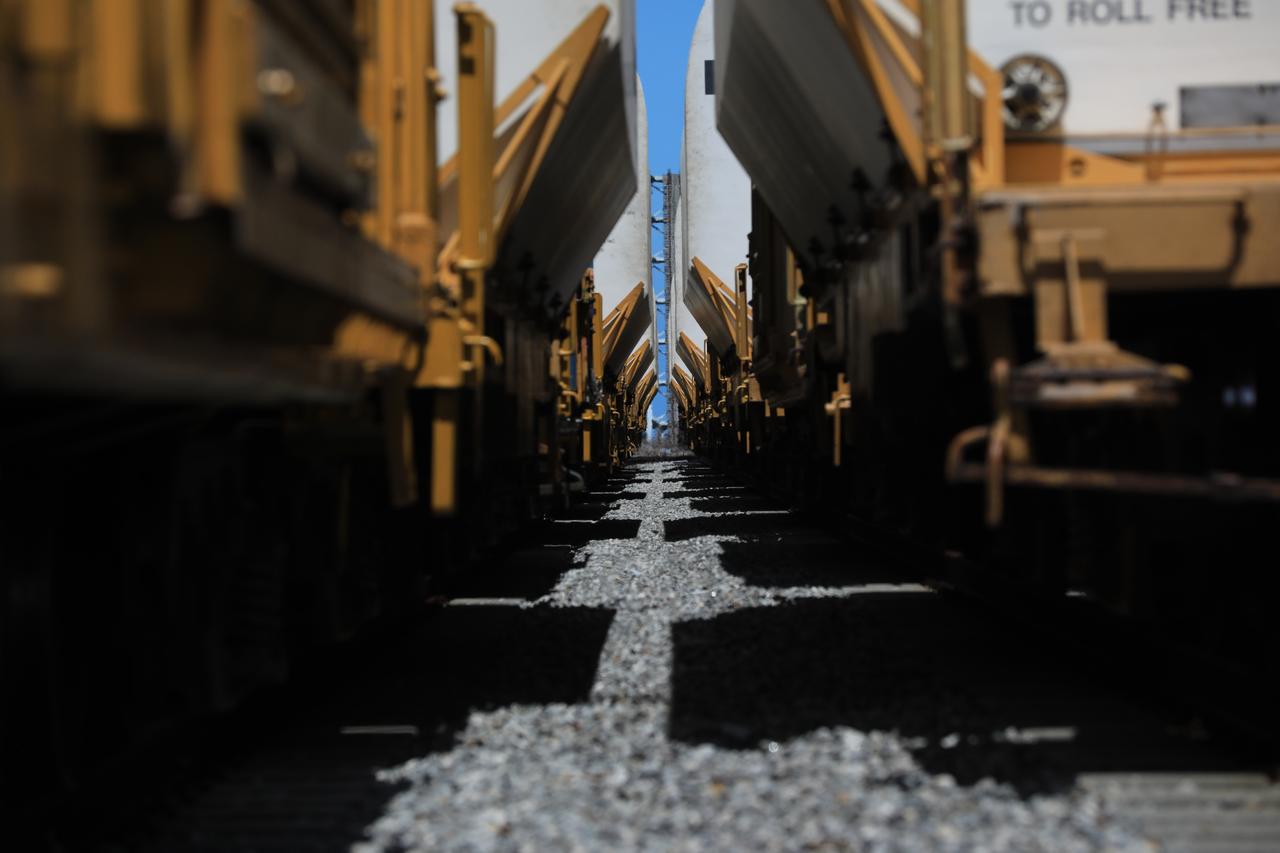
The train carrying the two solid rocket boosters that will power NASA’s Space Launch System (SLS) for Artemis missions to the Moon arrives at the Jay Jay rail yard – the connecting link between Kennedy Space Center and the Florida East Coast railway – in Titusville, Florida, on June 12, 2020. The boosters, each comprised of five motor segments, traveled from a Northrop Grumman manufacturing facility in Promontory, Utah, to Kennedy’s Rotation, Processing and Surge Facility, where teams with NASA’s Exploration Ground Systems will process the segments before moving them to the Vehicle Assembly Building for stacking on the mobile launcher. Under the Artemis program, NASA will land the first woman and the next man on the Moon by 2024. The first in a series of increasingly complex missions, Artemis I will test the Orion spacecraft and SLS as an integrated system ahead of crewed flights to the Moon.
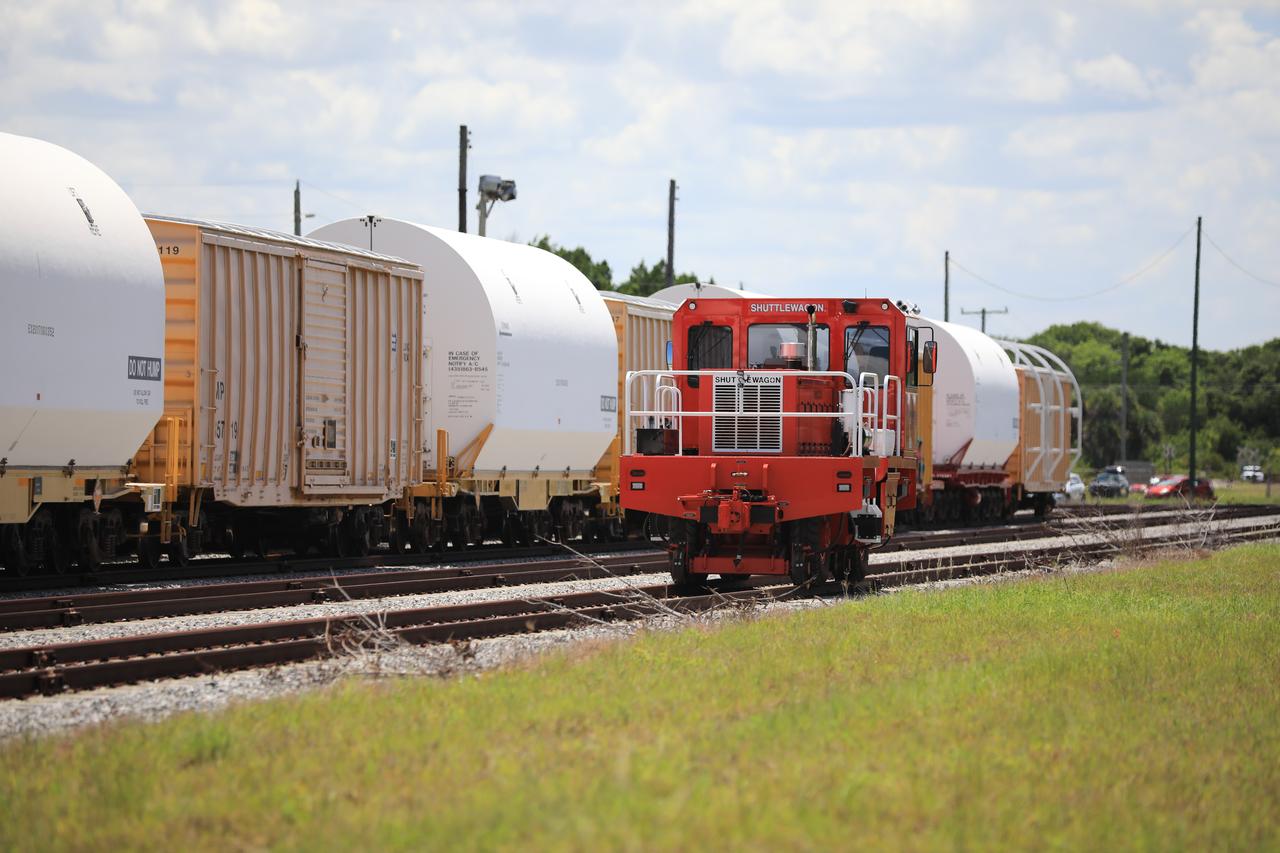
The train carrying the two solid rocket boosters that will power NASA’s Space Launch System (SLS) for Artemis missions to the Moon arrives at the Jay Jay rail yard – the connecting link between Kennedy Space Center and the Florida East Coast railway – in Titusville, Florida, on June 12, 2020. The boosters, each comprised of five motor segments, traveled from a Northrop Grumman manufacturing facility in Promontory, Utah, to Kennedy’s Rotation, Processing and Surge Facility, where teams with NASA’s Exploration Ground Systems will process the segments before moving them to the Vehicle Assembly Building for stacking on the mobile launcher. Under the Artemis program, NASA will land the first woman and the next man on the Moon by 2024. The first in a series of increasingly complex missions, Artemis I will test the Orion spacecraft and SLS as an integrated system ahead of crewed flights to the Moon.
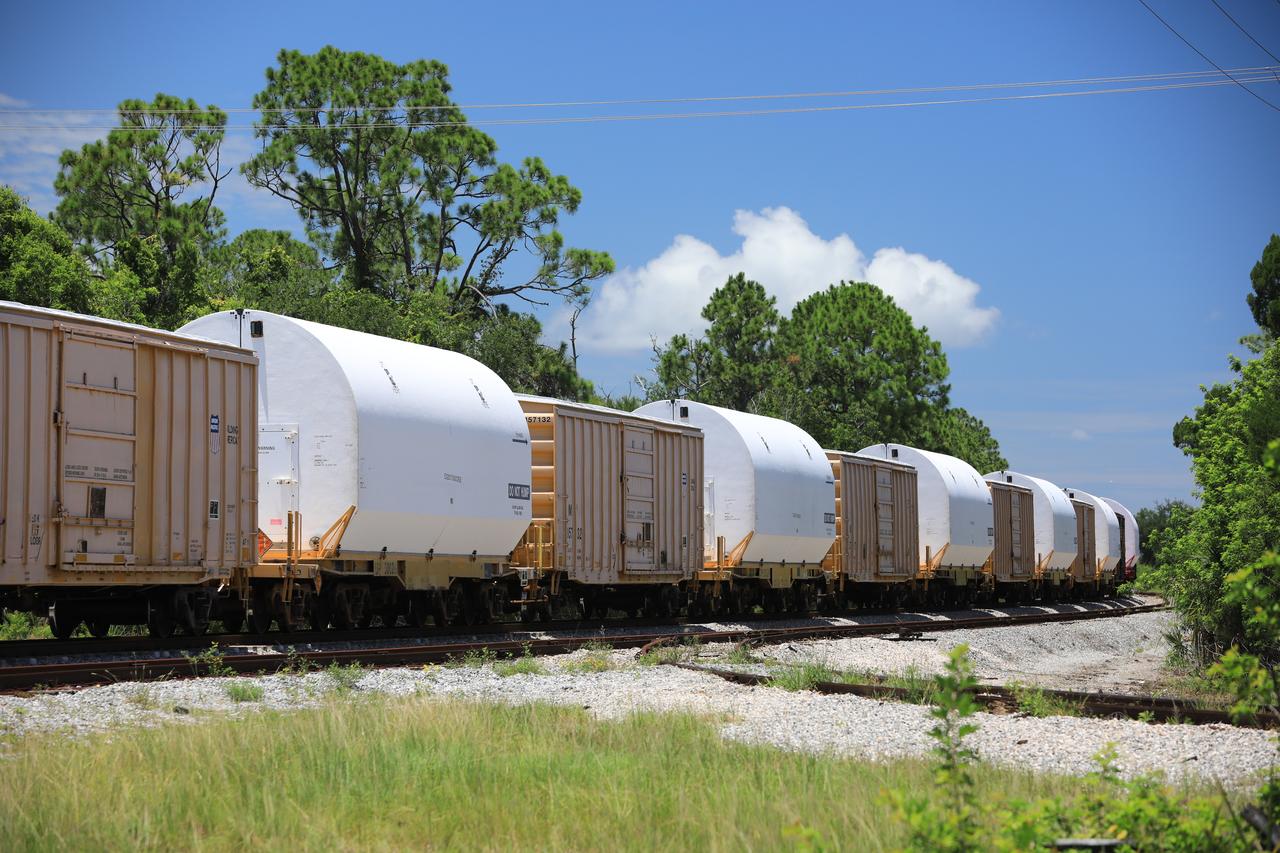
The train carrying the two solid rocket boosters that will power NASA’s Space Launch System (SLS) for Artemis missions to the Moon arrives at the Jay Jay rail yard – the connecting link between Kennedy Space Center and the Florida East Coast railway – in Titusville, Florida, on June 12, 2020. The boosters, each comprised of five motor segments, traveled from a Northrop Grumman manufacturing facility in Promontory, Utah, to Kennedy’s Rotation, Processing and Surge Facility, where teams with NASA’s Exploration Ground Systems will process the segments before moving them to the Vehicle Assembly Building for stacking on the mobile launcher. Under the Artemis program, NASA will land the first woman and the next man on the Moon by 2024. The first in a series of increasingly complex missions, Artemis I will test the Orion spacecraft and SLS as an integrated system ahead of crewed flights to the Moon.
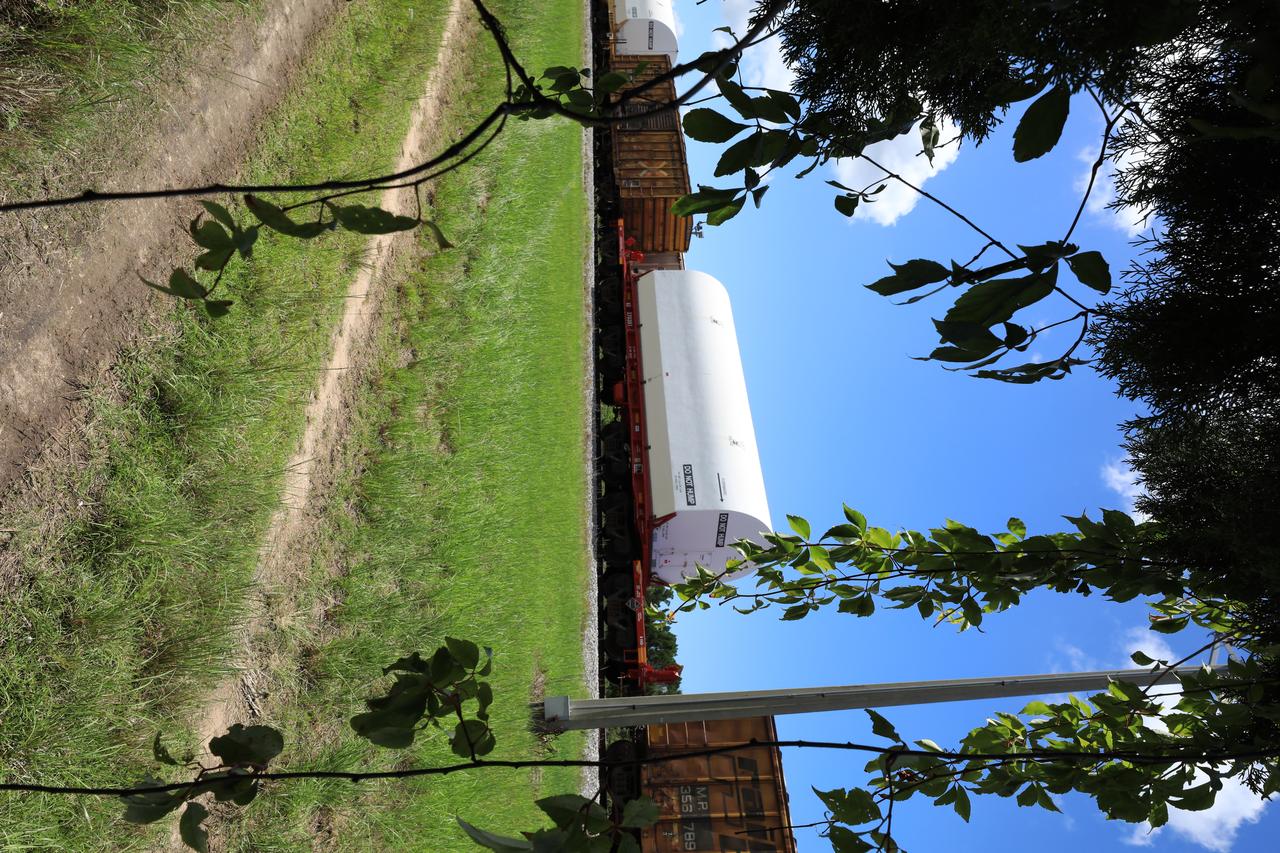
The train carrying the two solid rocket boosters that will power NASA’s Space Launch System (SLS) for Artemis missions to the Moon arrives at the Jay Jay rail yard – the connecting link between Kennedy Space Center and the Florida East Coast railway – in Titusville, Florida, on June 12, 2020. The boosters, each comprised of five motor segments, traveled from a Northrop Grumman manufacturing facility in Promontory, Utah, to Kennedy’s Rotation, Processing and Surge Facility, where teams with NASA’s Exploration Ground Systems will process the segments before moving them to the Vehicle Assembly Building for stacking on the mobile launcher. Under the Artemis program, NASA will land the first woman and the next man on the Moon by 2024. The first in a series of increasingly complex missions, Artemis I will test the Orion spacecraft and SLS as an integrated system ahead of crewed flights to the Moon.
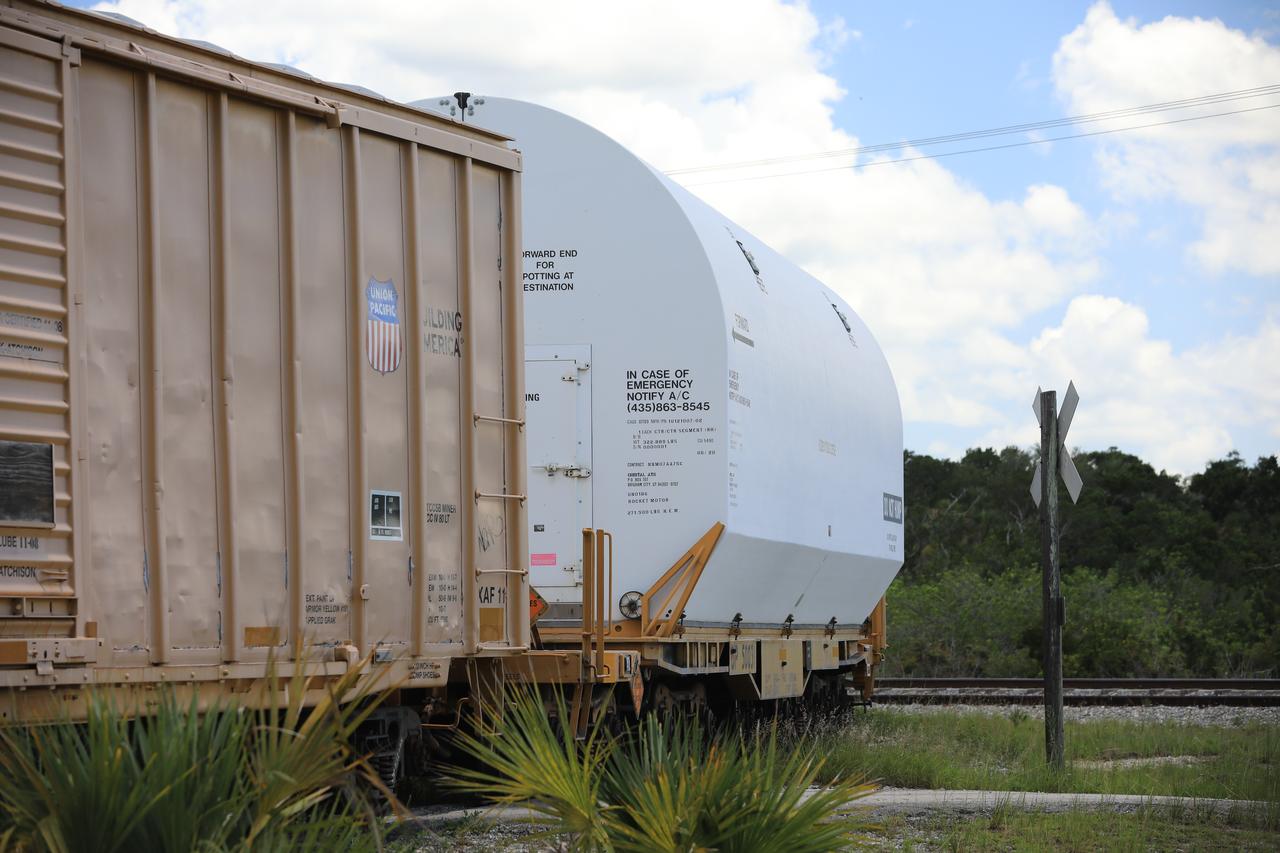
The train carrying the two solid rocket boosters that will power NASA’s Space Launch System (SLS) for Artemis missions to the Moon arrives at the Jay Jay rail yard – the connecting link between Kennedy Space Center and the Florida East Coast railway – in Titusville, Florida, on June 12, 2020. The boosters, each comprised of five motor segments, traveled from a Northrop Grumman manufacturing facility in Promontory, Utah, to Kennedy’s Rotation, Processing and Surge Facility, where teams with NASA’s Exploration Ground Systems will process the segments before moving them to the Vehicle Assembly Building for stacking on the mobile launcher. Under the Artemis program, NASA will land the first woman and the next man on the Moon by 2024. The first in a series of increasingly complex missions, Artemis I will test the Orion spacecraft and SLS as an integrated system ahead of crewed flights to the Moon.
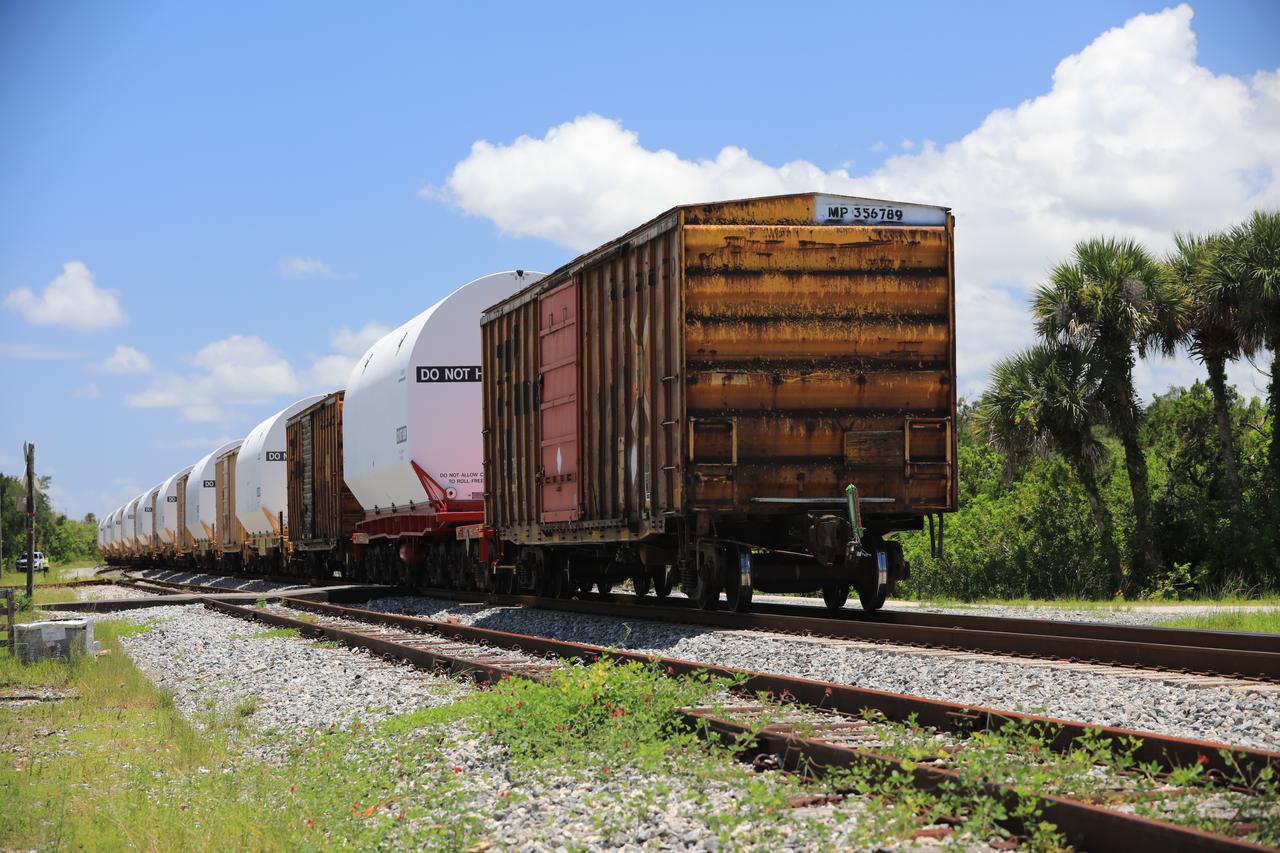
The train carrying the two solid rocket boosters that will power NASA’s Space Launch System (SLS) for Artemis missions to the Moon arrives at the Jay Jay rail yard – the connecting link between Kennedy Space Center and the Florida East Coast railway – in Titusville, Florida, on June 12, 2020. The boosters, each comprised of five motor segments, traveled from a Northrop Grumman manufacturing facility in Promontory, Utah, to Kennedy’s Rotation, Processing and Surge Facility, where teams with NASA’s Exploration Ground Systems will process the segments before moving them to the Vehicle Assembly Building for stacking on the mobile launcher. Under the Artemis program, NASA will land the first woman and the next man on the Moon by 2024. The first in a series of increasingly complex missions, Artemis I will test the Orion spacecraft and SLS as an integrated system ahead of crewed flights to the Moon.
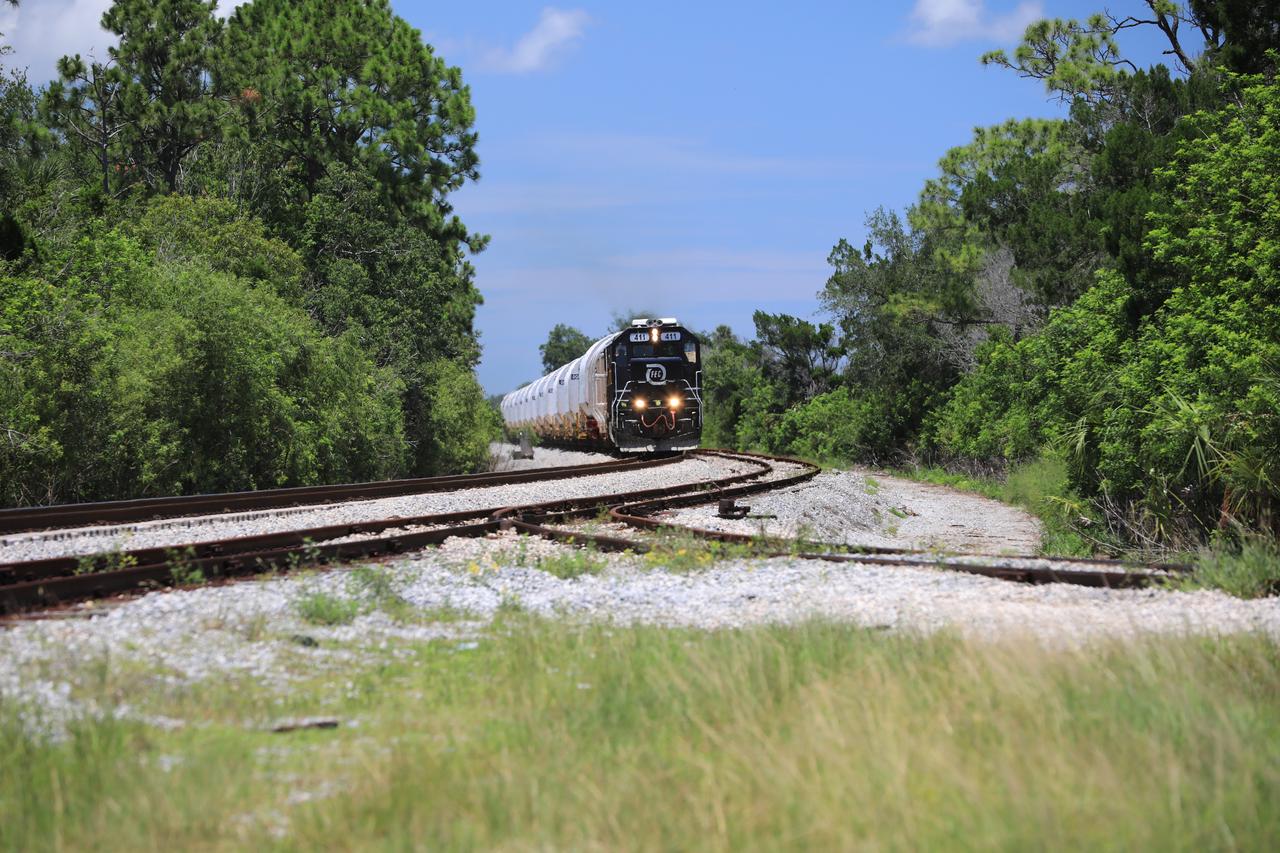
The train carrying the two solid rocket boosters that will power NASA’s Space Launch System (SLS) for Artemis missions to the Moon arrives at the Jay Jay rail yard – the connecting link between Kennedy Space Center and the Florida East Coast railway – in Titusville, Florida, on June 12, 2020. The boosters, each comprised of five motor segments, traveled from a Northrop Grumman manufacturing facility in Promontory, Utah, to Kennedy’s Rotation, Processing and Surge Facility, where teams with NASA’s Exploration Ground Systems will process the segments before moving them to the Vehicle Assembly Building for stacking on the mobile launcher. Under the Artemis program, NASA will land the first woman and the next man on the Moon by 2024. The first in a series of increasingly complex missions, Artemis I will test the Orion spacecraft and SLS as an integrated system ahead of crewed flights to the Moon.
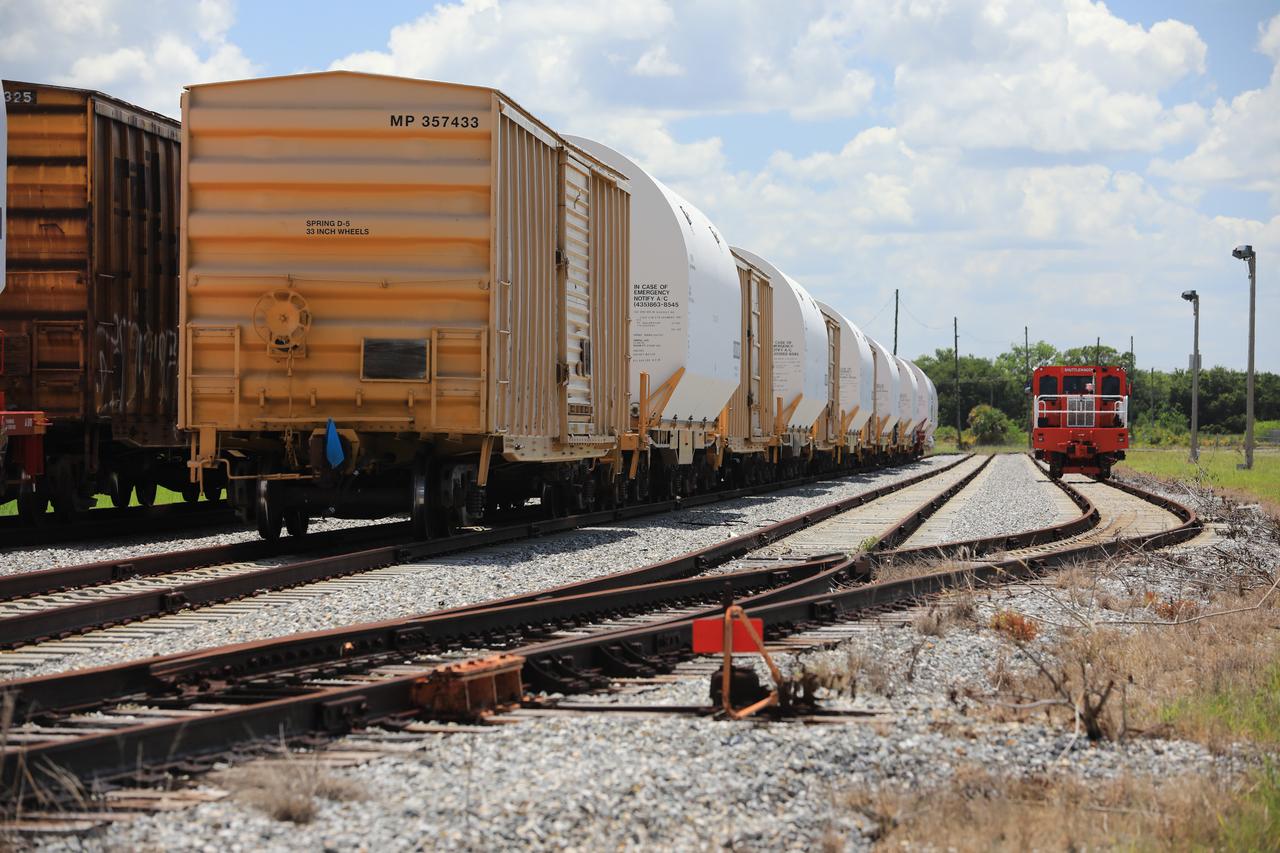
The train carrying the two solid rocket boosters that will power NASA’s Space Launch System (SLS) for Artemis missions to the Moon arrives at the Jay Jay rail yard – the connecting link between Kennedy Space Center and the Florida East Coast railway – in Titusville, Florida, on June 12, 2020. The boosters, each comprised of five motor segments, traveled from a Northrop Grumman manufacturing facility in Promontory, Utah, to Kennedy’s Rotation, Processing and Surge Facility, where teams with NASA’s Exploration Ground Systems will process the segments before moving them to the Vehicle Assembly Building for stacking on the mobile launcher. Under the Artemis program, NASA will land the first woman and the next man on the Moon by 2024. The first in a series of increasingly complex missions, Artemis I will test the Orion spacecraft and SLS as an integrated system ahead of crewed flights to the Moon.
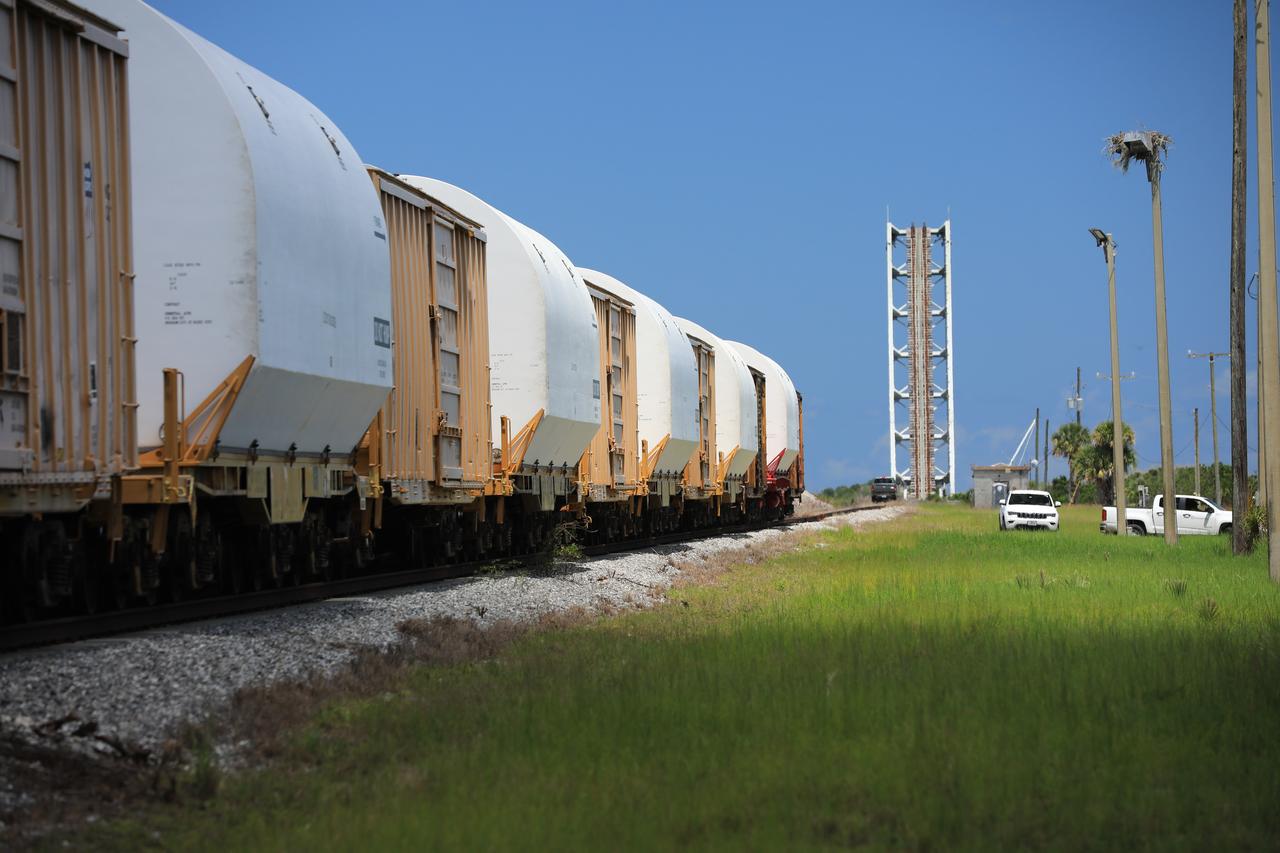
The train carrying the two solid rocket boosters that will power NASA’s Space Launch System (SLS) for Artemis missions to the Moon arrives at the Jay Jay rail yard – the connecting link between Kennedy Space Center and the Florida East Coast railway – in Titusville, Florida, on June 12, 2020. The boosters, each comprised of five motor segments, traveled from a Northrop Grumman manufacturing facility in Promontory, Utah, to Kennedy’s Rotation, Processing and Surge Facility, where teams with NASA’s Exploration Ground Systems will process the segments before moving them to the Vehicle Assembly Building for stacking on the mobile launcher. Under the Artemis program, NASA will land the first woman and the next man on the Moon by 2024. The first in a series of increasingly complex missions, Artemis I will test the Orion spacecraft and SLS as an integrated system ahead of crewed flights to the Moon.
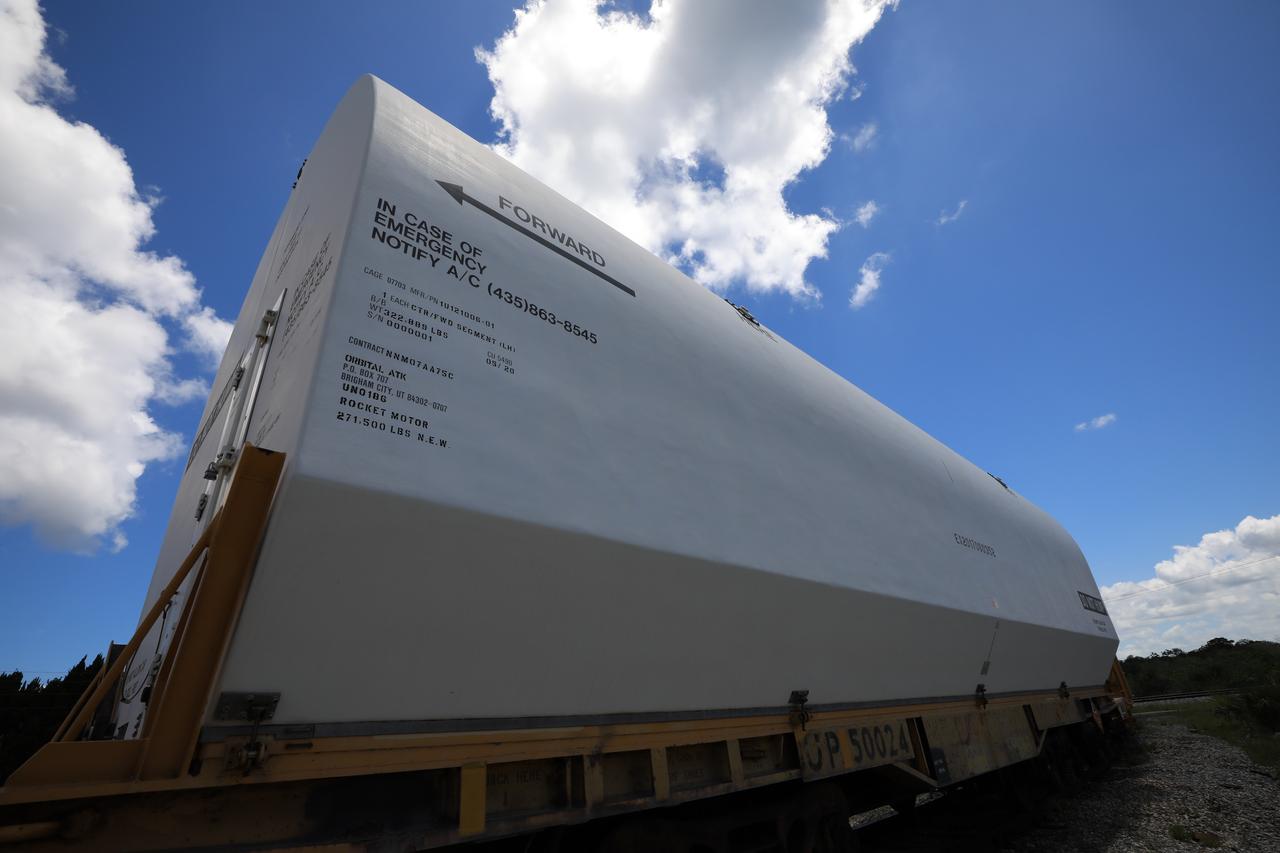
The train carrying the two solid rocket boosters that will power NASA’s Space Launch System (SLS) for Artemis missions to the Moon arrives at the Jay Jay rail yard – the connecting link between Kennedy Space Center and the Florida East Coast railway – in Titusville, Florida, on June 12, 2020. The boosters, each comprised of five motor segments, traveled from a Northrop Grumman manufacturing facility in Promontory, Utah, to Kennedy’s Rotation, Processing and Surge Facility, where teams with NASA’s Exploration Ground Systems will process the segments before moving them to the Vehicle Assembly Building for stacking on the mobile launcher. Under the Artemis program, NASA will land the first woman and the next man on the Moon by 2024. The first in a series of increasingly complex missions, Artemis I will test the Orion spacecraft and SLS as an integrated system ahead of crewed flights to the Moon.

Workers with NASA’s Exploration Ground Systems and primary contractor, Jacobs, complete the painting of the agency’s iconic “worm” logo along the side of the twin Artemis II solid rocket booster motor segments inside the Rotation, Processing and Surge Facility at Kennedy Space Center in Florida on Friday, Feb. 16, 2024. Using a laser projector, the logo was mapped out with tape by workers with Jacobs, for the spaceport, before using two coats of red paint, plus several coats of clear primer to complete the logo that stretches 25 feet long. The booster segments will help propel the SLS (Space Launch System) rocket on the Artemis II mission to send four astronauts around the Moon as part of the agency’s effort to establish a long-term science and exploration presence at the Moon, and eventually Mars.
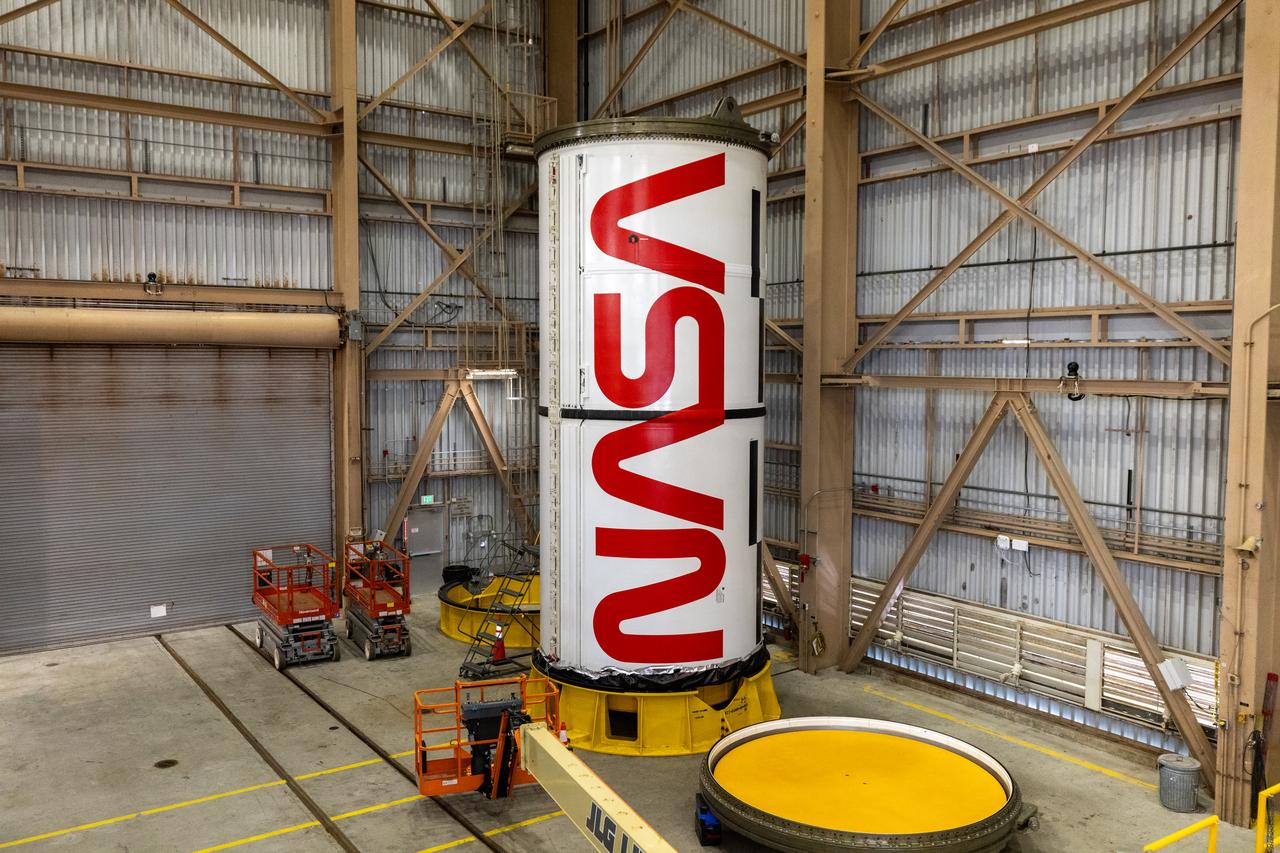
Workers with NASA’s Exploration Ground Systems and primary contractor, Jacobs, complete the painting of the agency’s iconic “worm” logo along the side of the twin Artemis II solid rocket booster motor segments inside the Rotation, Processing and Surge Facility at Kennedy Space Center in Florida on Friday, Feb. 16, 2024. Using a laser projector, the logo was mapped out with tape by workers with Jacobs, for the spaceport, before using two coats of red paint, plus several coats of clear primer to complete the logo that stretches 25 feet long. The booster segments will help propel the SLS (Space Launch System) rocket on the Artemis II mission to send four astronauts around the Moon as part of the agency’s effort to establish a long-term science and exploration presence at the Moon, and eventually Mars.
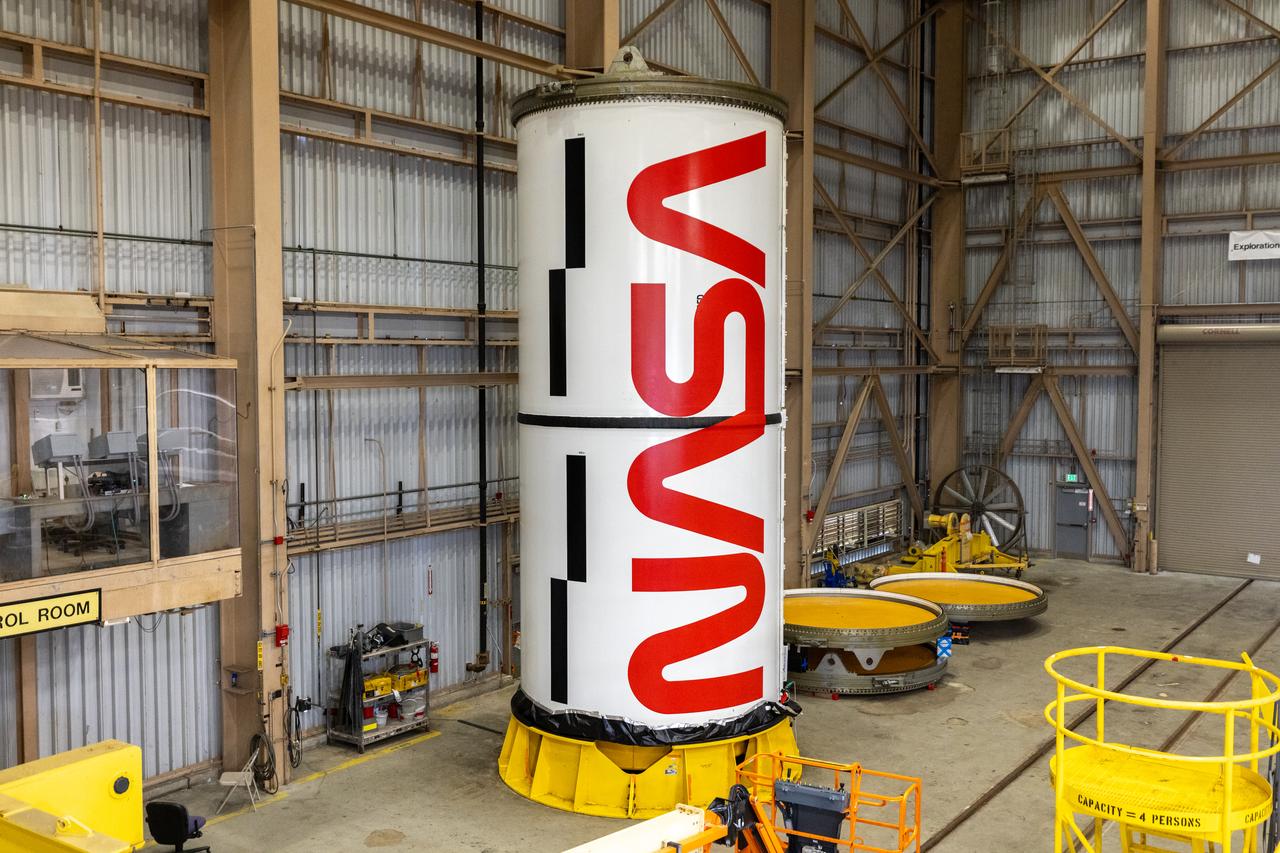
Workers with NASA’s Exploration Ground Systems and primary contractor, Jacobs, complete the painting of the agency’s iconic “worm” logo along the side of the twin Artemis II solid rocket booster motor segments inside the Rotation, Processing and Surge Facility at Kennedy Space Center in Florida on Friday, Feb. 16, 2024. Using a laser projector, the logo was mapped out with tape by workers with Jacobs, for the spaceport, before using two coats of red paint, plus several coats of clear primer to complete the logo that stretches 25 feet long. The booster segments will help propel the SLS (Space Launch System) rocket on the Artemis II mission to send four astronauts around the Moon as part of the agency’s effort to establish a long-term science and exploration presence at the Moon, and eventually Mars.
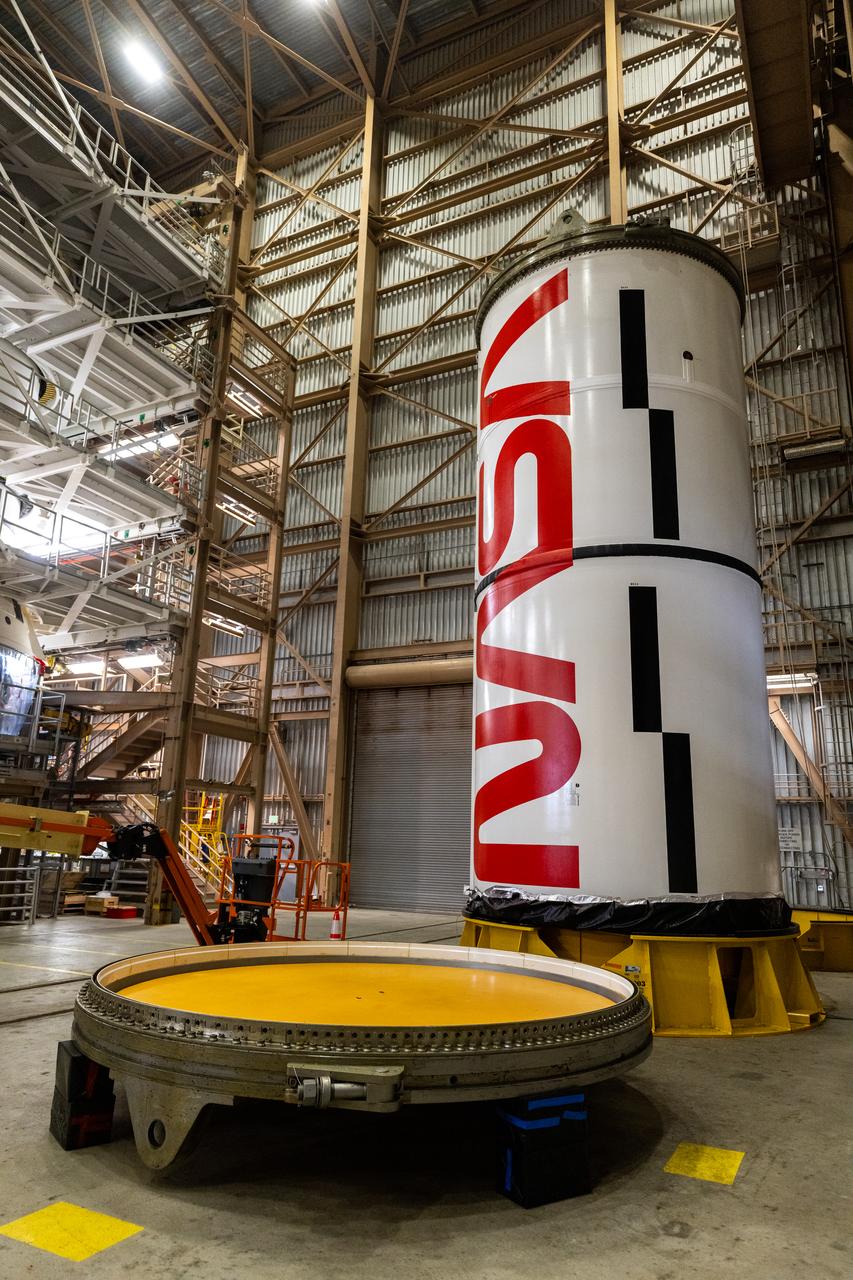
Workers with NASA’s Exploration Ground Systems and primary contractor, Jacobs, complete the painting of the agency’s iconic “worm” logo along the side of the twin Artemis II solid rocket booster motor segments inside the Rotation, Processing and Surge Facility at Kennedy Space Center in Florida on Friday, Feb. 16, 2024. Using a laser projector, the logo was mapped out with tape by workers with Jacobs, for the spaceport, before using two coats of red paint, plus several coats of clear primer to complete the logo that stretches 25 feet long. The booster segments will help propel the SLS (Space Launch System) rocket on the Artemis II mission to send four astronauts around the Moon as part of the agency’s effort to establish a long-term science and exploration presence at the Moon, and eventually Mars.
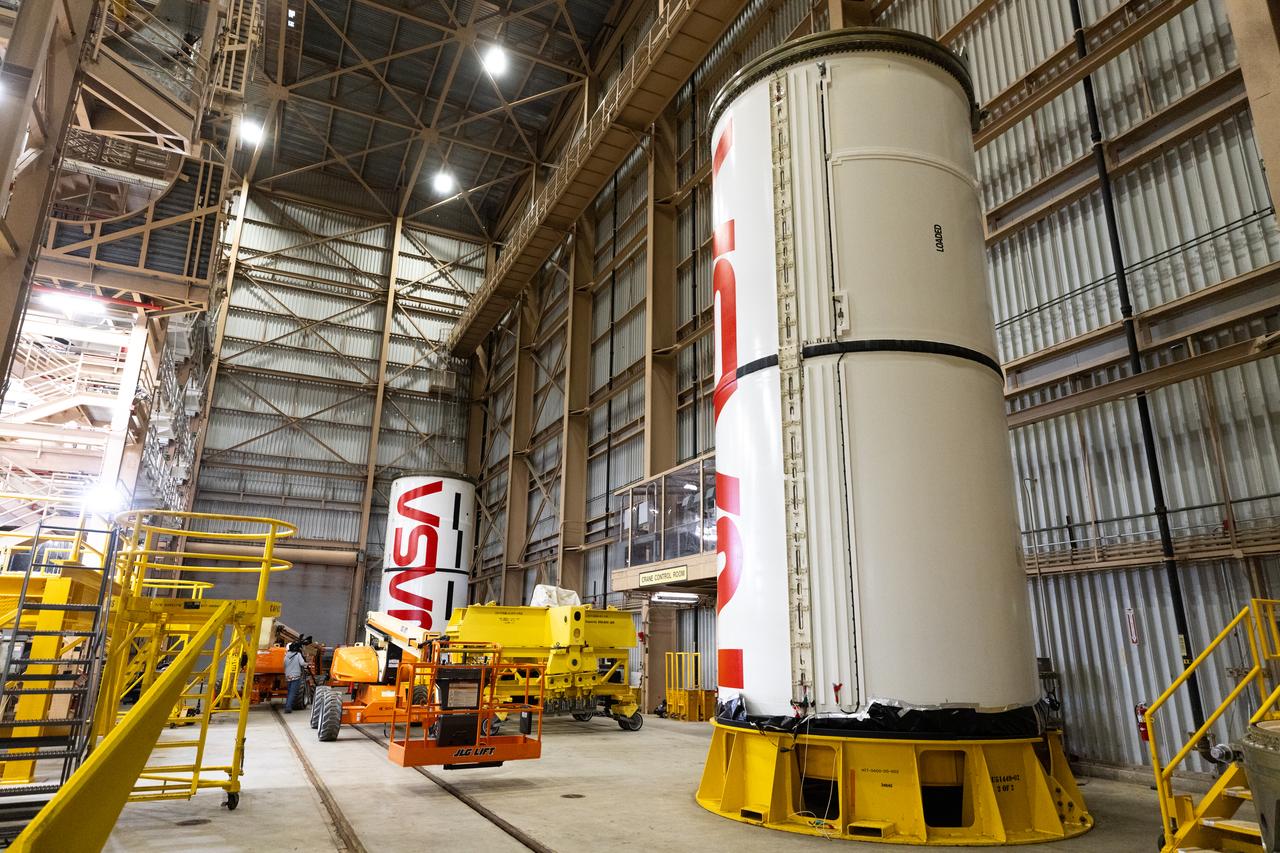
Workers with NASA’s Exploration Ground Systems and primary contractor, Jacobs, complete the painting of the agency’s iconic “worm” logo along the side of the twin Artemis II solid rocket booster motor segments inside the Rotation, Processing and Surge Facility at Kennedy Space Center in Florida on Friday, Feb. 16, 2024. Using a laser projector, the logo was mapped out with tape by workers with Jacobs, for the spaceport, before using two coats of red paint, plus several coats of clear primer to complete the logo that stretches 25 feet long. The booster segments will help propel the SLS (Space Launch System) rocket on the Artemis II mission to send four astronauts around the Moon as part of the agency’s effort to establish a long-term science and exploration presence at the Moon, and eventually Mars.
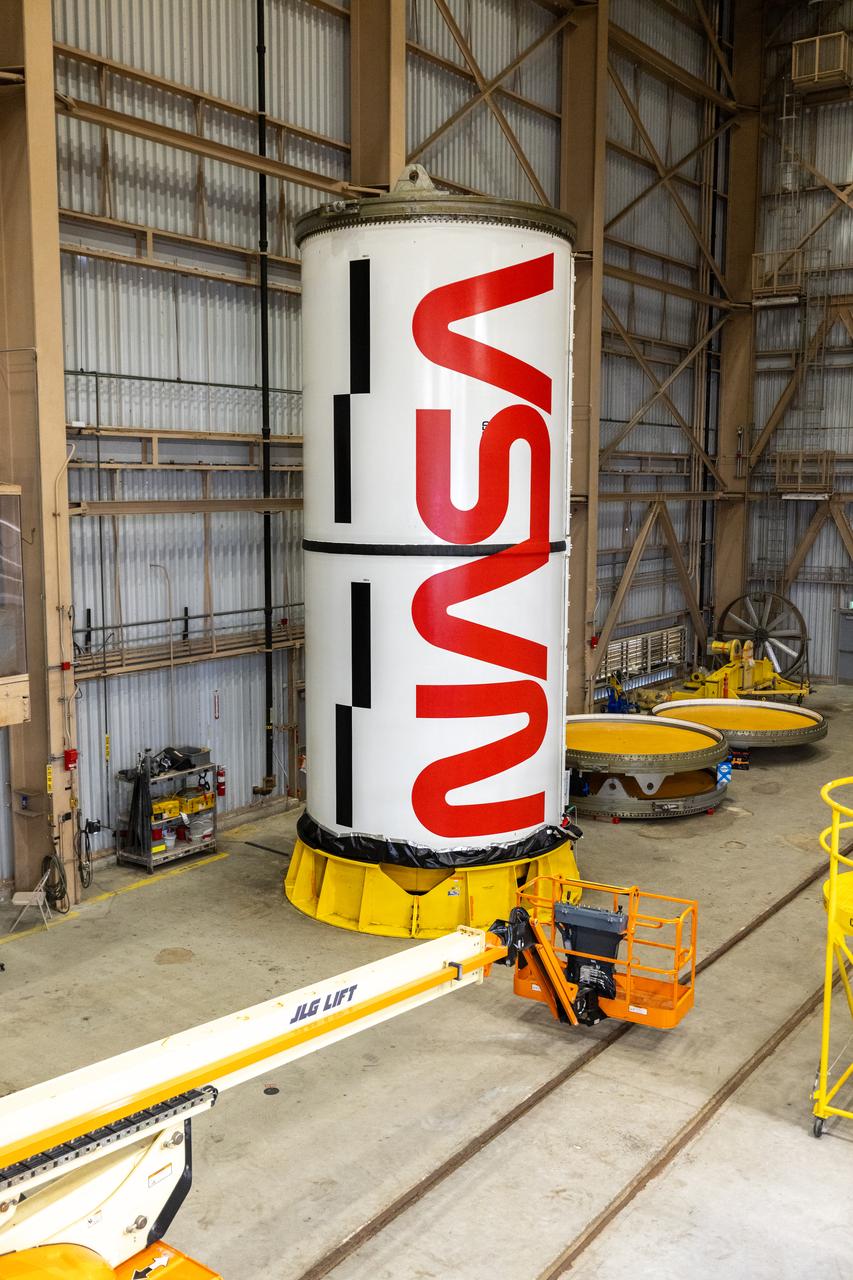
Workers with NASA’s Exploration Ground Systems and primary contractor, Jacobs, complete the painting of the agency’s iconic “worm” logo along the side of the twin Artemis II solid rocket booster motor segments inside the Rotation, Processing and Surge Facility at Kennedy Space Center in Florida on Friday, Feb. 16, 2024. Using a laser projector, the logo was mapped out with tape by workers with Jacobs, for the spaceport, before using two coats of red paint, plus several coats of clear primer to complete the logo that stretches 25 feet long. The booster segments will help propel the SLS (Space Launch System) rocket on the Artemis II mission to send four astronauts around the Moon as part of the agency’s effort to establish a long-term science and exploration presence at the Moon, and eventually Mars.
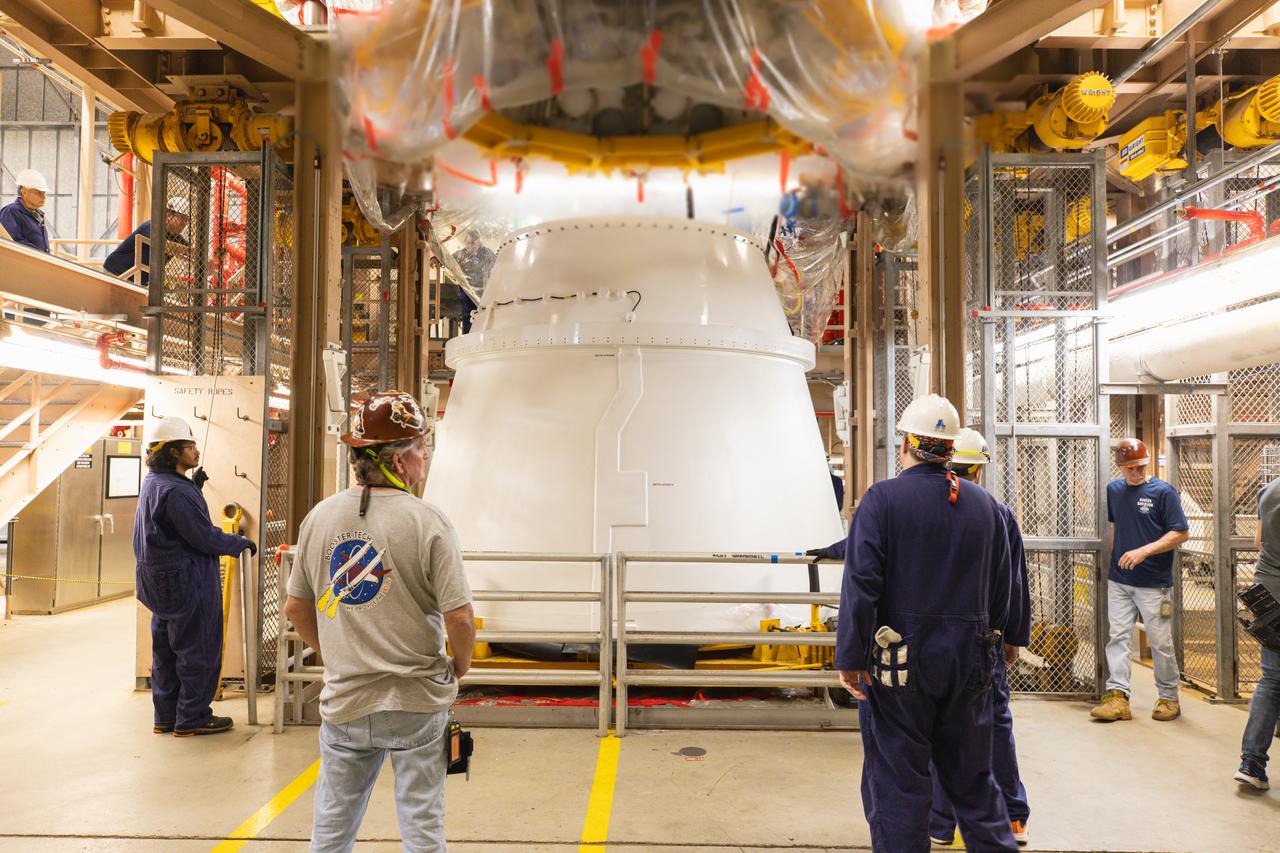
Technicians with Exploration Ground Systems perform pre-mate inspections of the Northrop Grumman-manufactured right aft exit cone of the Artemis II Space Launch Systems solid rocket boosters on Wednesday, Dec. 13, 2023, inside the Rotation, Processing and Surge Facility (RPSF) at NASA’s Kennedy Space Center in Florida. Each of the two aft exit cones will be prepared for the agency’s Artemis II flight and attach to the aft segments of the Space Launch Systems solid rocket boosters. The exit cones act like a battery pack to provide added thrust for the boosters while protecting the aft skirts from thermal environment during launch.
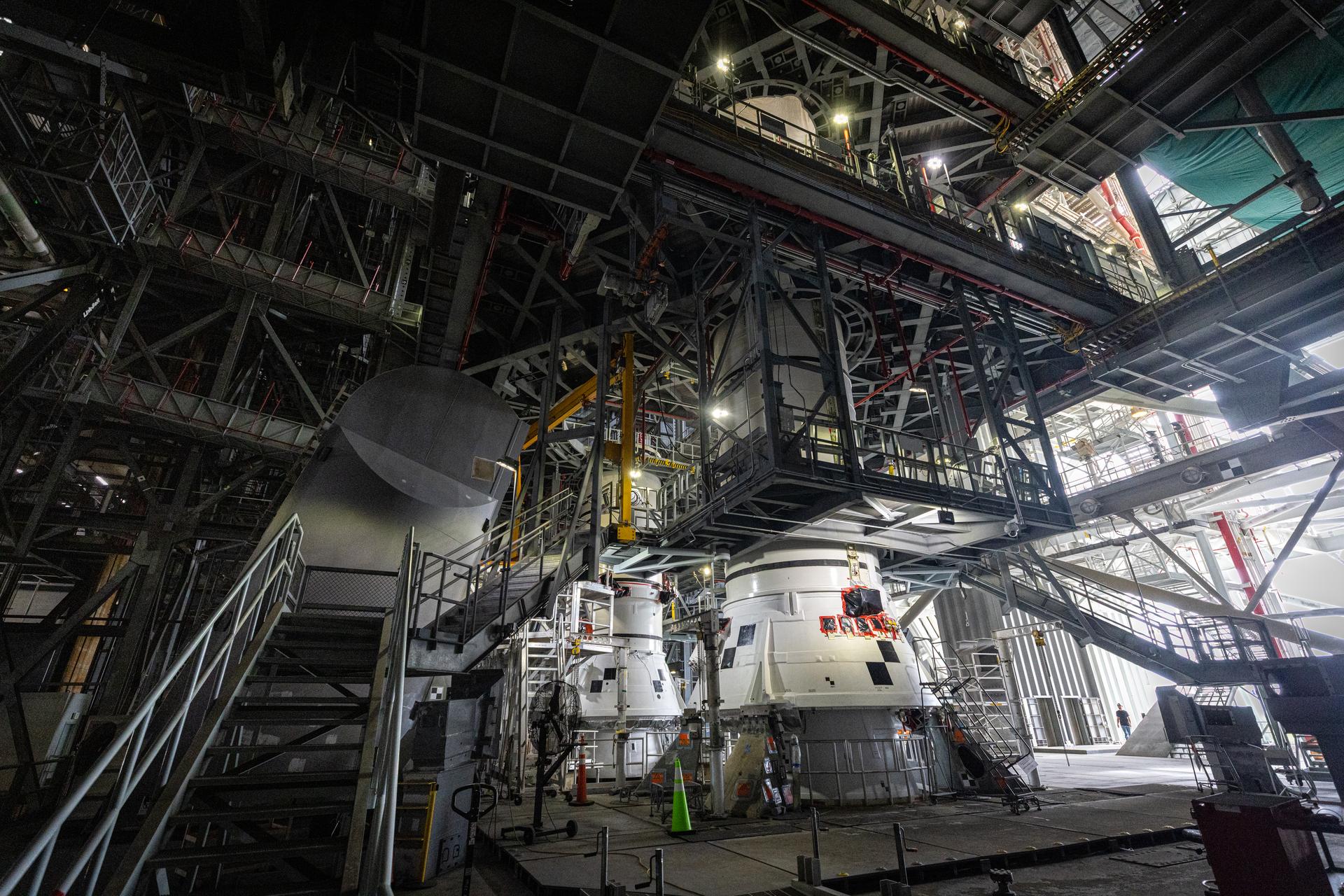
The left-hand and right-hand aft assembly solid rocket booster segments for NASA’s Artemis III SLS (Space Launch System) rocket are secured to the mobile launcher at the agency’s Vehicle Assembly Building at NASA’s Kennedy Space Center in Florida on Saturday, July 11, 2026. The twin boosters, manufactured by Northrop Grumman in Utah, will provide more than 75 percent of the SLS rocket’s total thrust at launch. The Artemis III mission will launch astronauts in the Orion spacecraft on top of the SLS rocket to test rendezvous and docking capabilities between Orion and commercial spacecraft needed to land astronauts on the Moon.
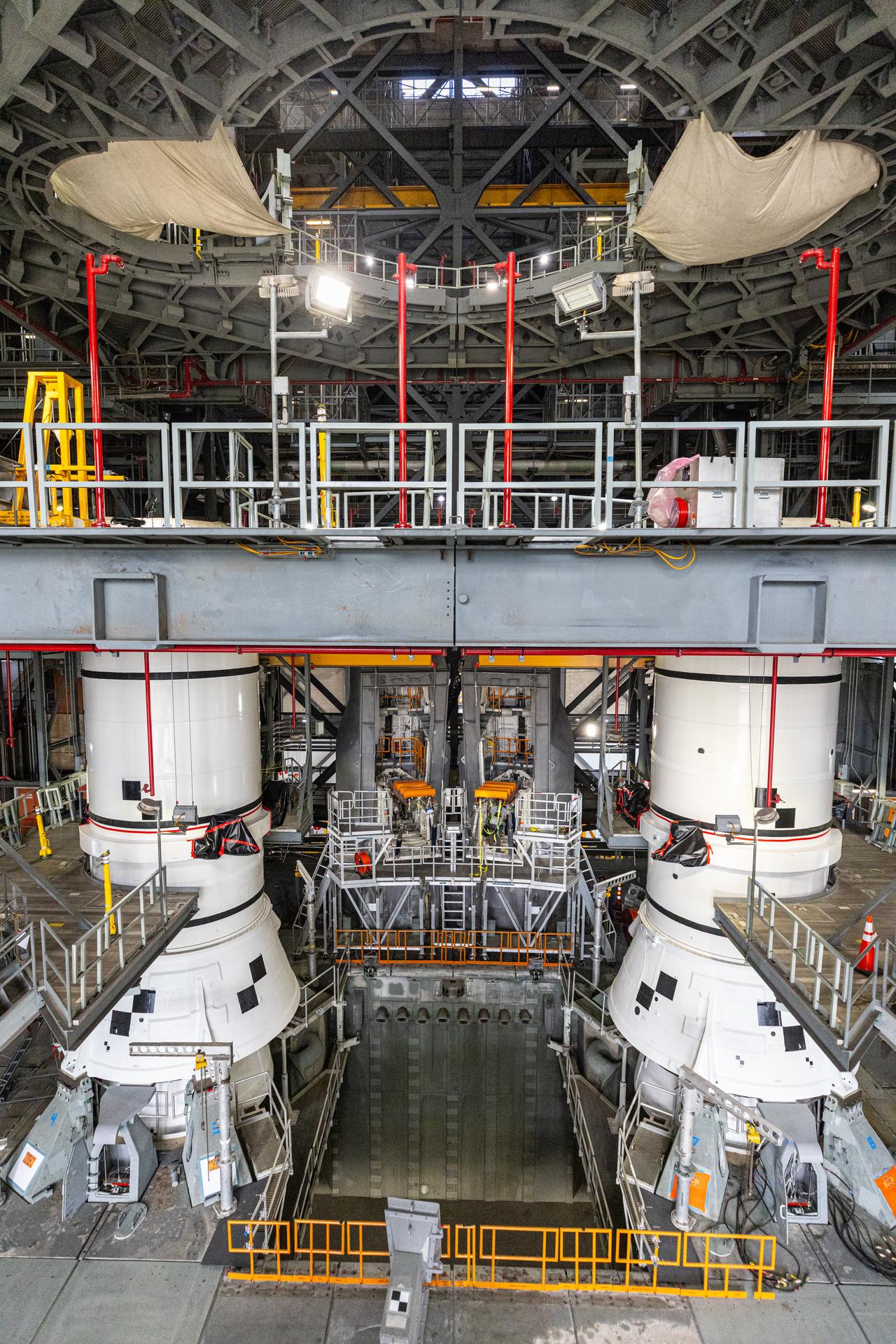
The left-hand and right-hand aft assembly solid rocket booster segments for NASA’s Artemis III SLS (Space Launch System) rocket are secured to the mobile launcher at the agency’s Vehicle Assembly Building at NASA’s Kennedy Space Center in Florida on Saturday, July 11, 2026. The twin boosters, manufactured by Northrop Grumman in Utah, will provide more than 75 percent of the SLS rocket’s total thrust at launch. The Artemis III mission will launch astronauts in the Orion spacecraft on top of the SLS rocket to test rendezvous and docking capabilities between Orion and commercial spacecraft needed to land astronauts on the Moon.
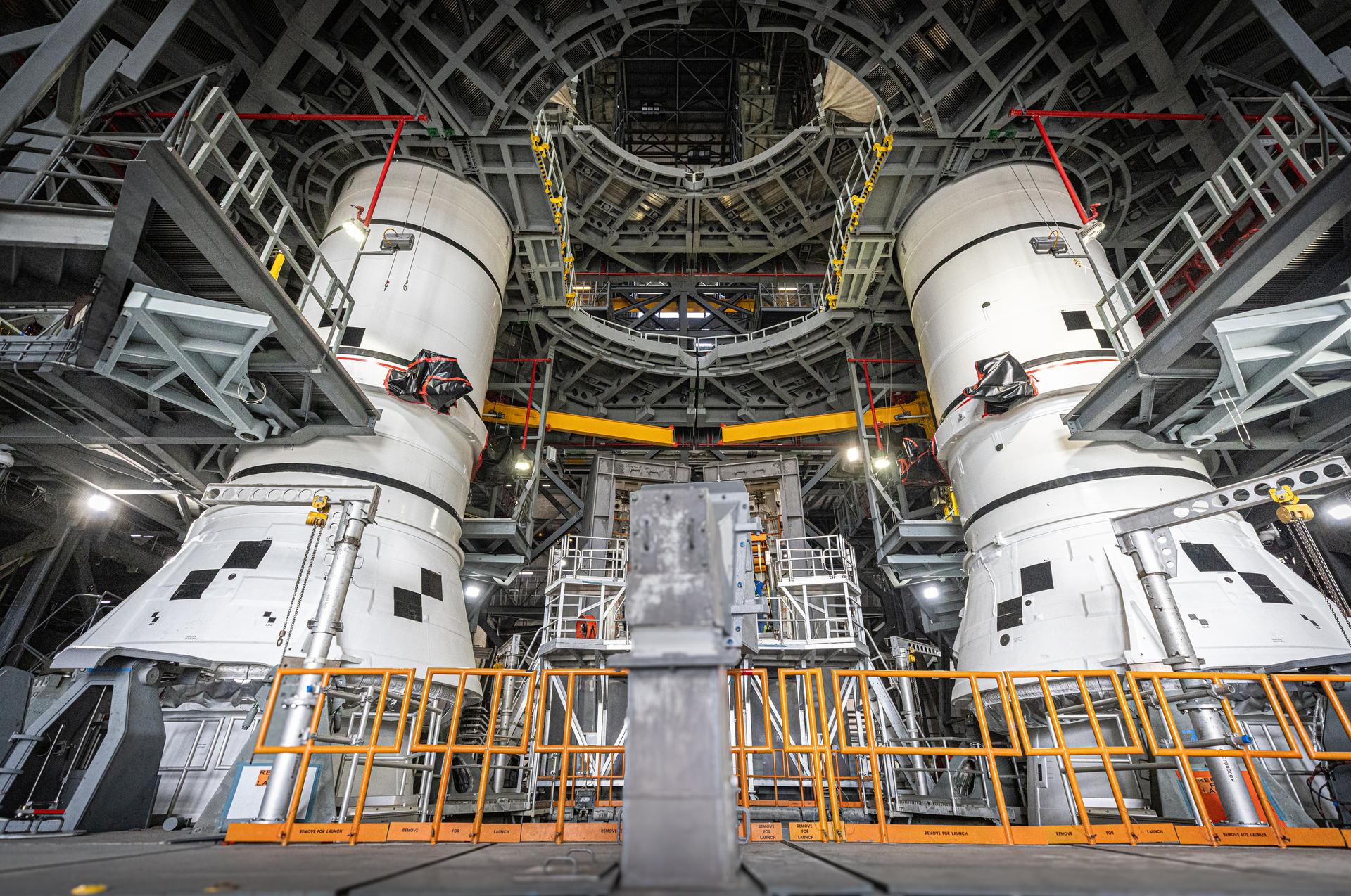
The left-hand and right-hand aft assembly solid rocket booster segments for NASA’s Artemis III SLS (Space Launch System) rocket are secured to the mobile launcher at the agency’s Vehicle Assembly Building at NASA’s Kennedy Space Center in Florida on Saturday, July 11, 2026. The twin boosters, manufactured by Northrop Grumman in Utah, will provide more than 75 percent of the SLS rocket’s total thrust at launch. The Artemis III mission will launch astronauts in the Orion spacecraft on top of the SLS rocket to test rendezvous and docking capabilities between Orion and commercial spacecraft needed to land astronauts on the Moon.
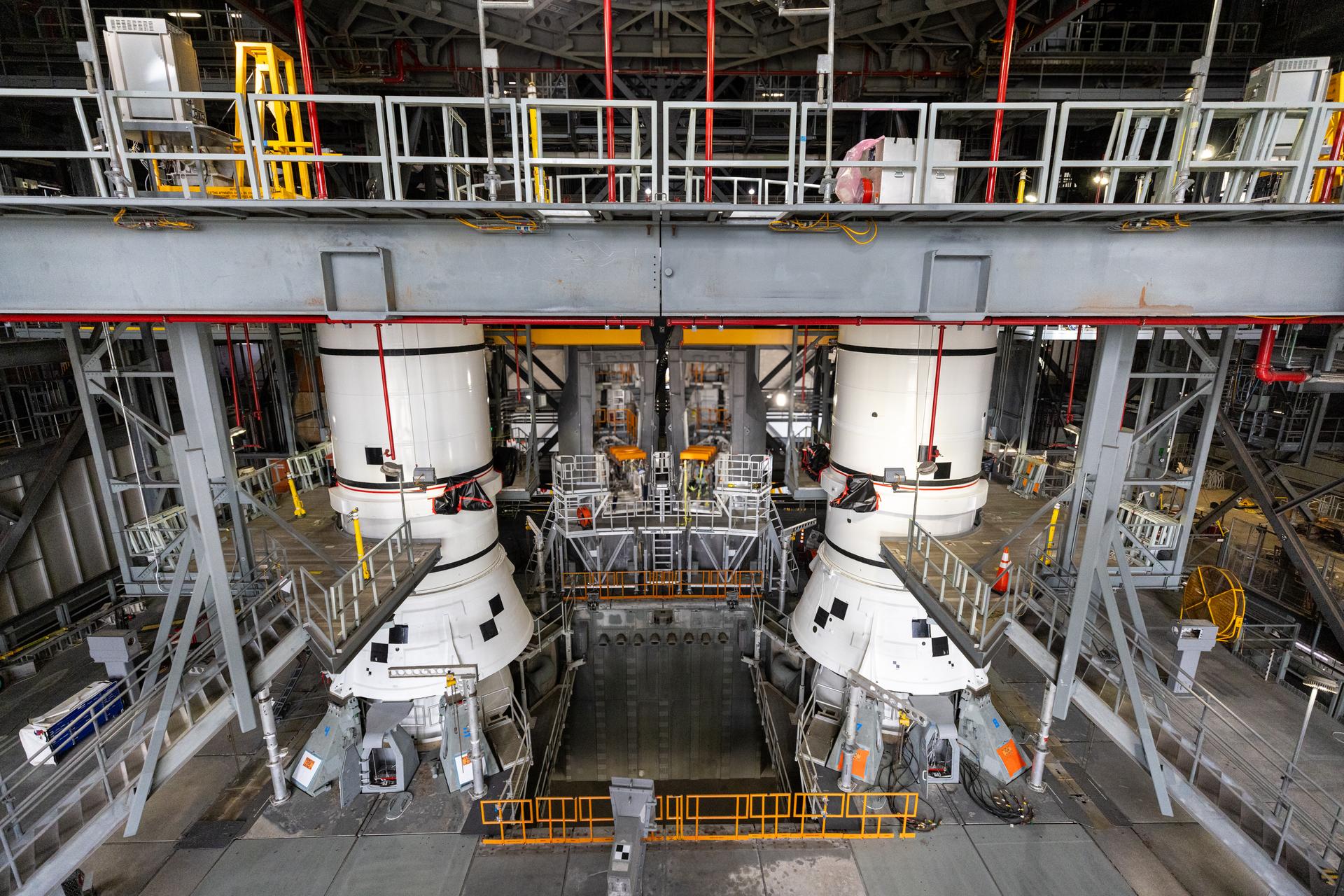
The left-hand and right-hand aft assembly solid rocket booster segments for NASA’s Artemis III SLS (Space Launch System) rocket are secured to the mobile launcher at the agency’s Vehicle Assembly Building at NASA’s Kennedy Space Center in Florida on Saturday, July 11, 2026. The twin boosters, manufactured by Northrop Grumman in Utah, will provide more than 75 percent of the SLS rocket’s total thrust at launch. The Artemis III mission will launch astronauts in the Orion spacecraft on top of the SLS rocket to test rendezvous and docking capabilities between Orion and commercial spacecraft needed to land astronauts on the Moon.
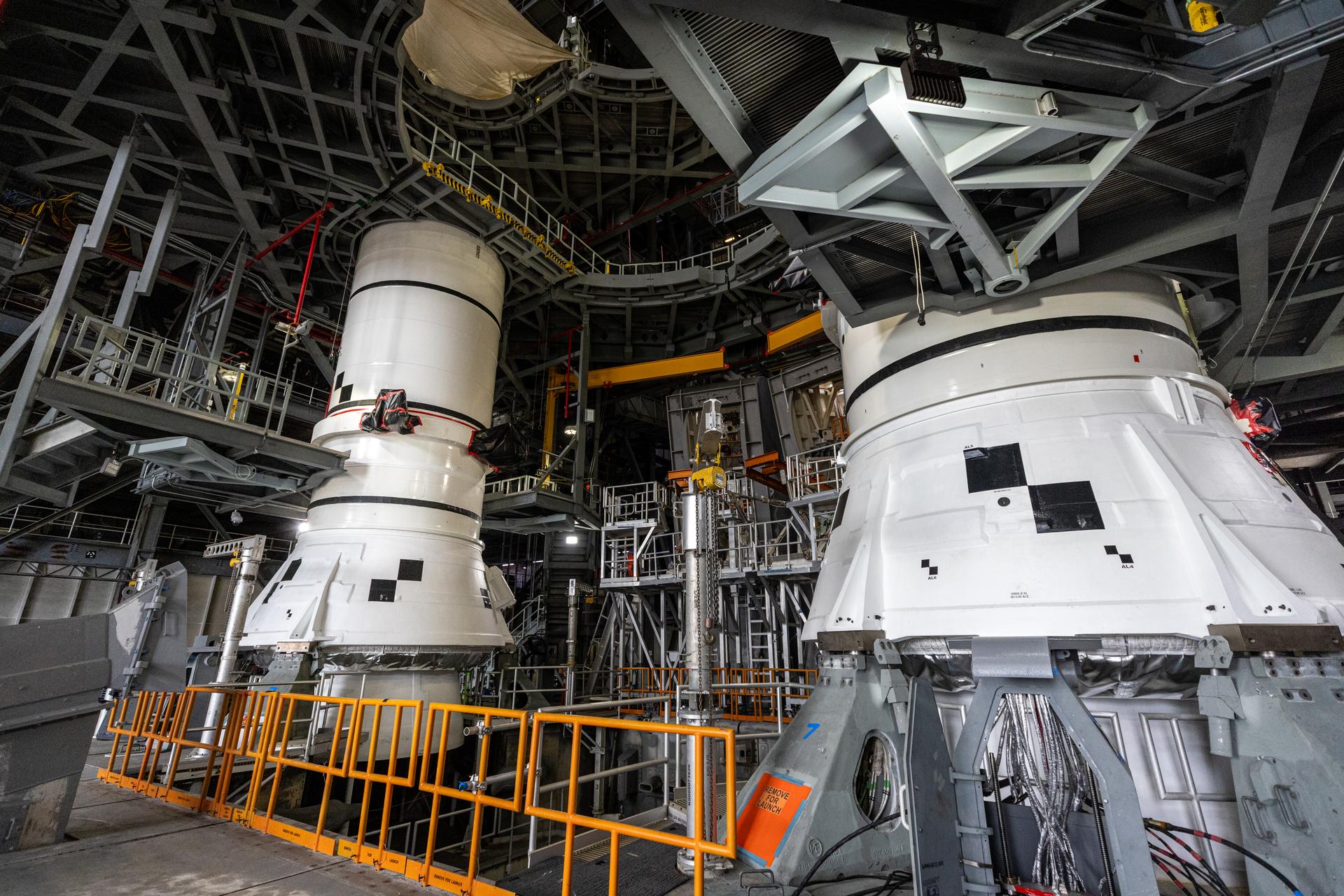
The left-hand and right-hand aft assembly solid rocket booster segments for NASA’s Artemis III SLS (Space Launch System) rocket are secured to the mobile launcher at the agency’s Vehicle Assembly Building at NASA’s Kennedy Space Center in Florida on Saturday, July 11, 2026. The twin boosters, manufactured by Northrop Grumman in Utah, will provide more than 75 percent of the SLS rocket’s total thrust at launch. The Artemis III mission will launch astronauts in the Orion spacecraft on top of the SLS rocket to test rendezvous and docking capabilities between Orion and commercial spacecraft needed to land astronauts on the Moon.
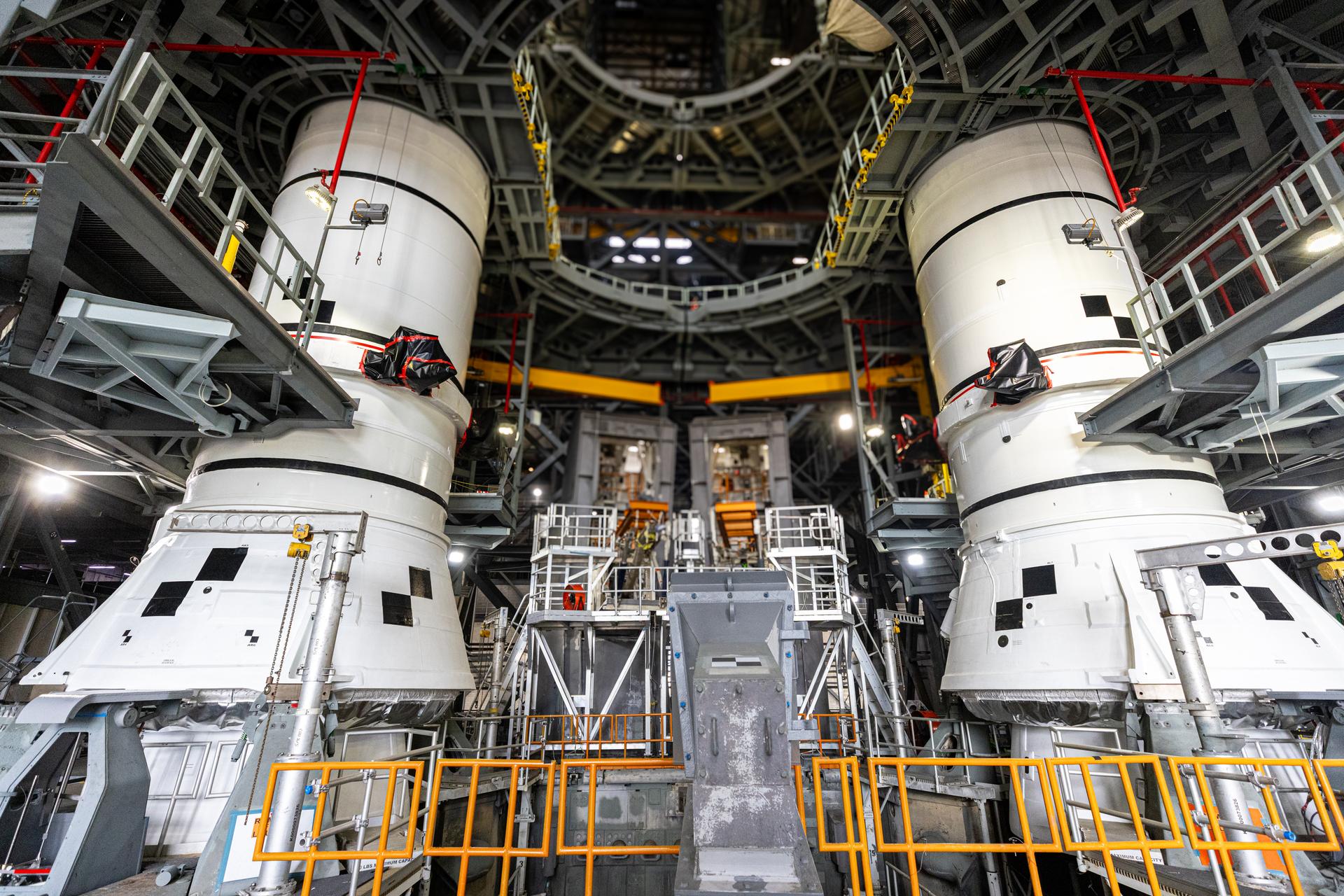
The left-hand and right-hand aft assembly solid rocket booster segments for NASA’s Artemis III SLS (Space Launch System) rocket are secured to the mobile launcher at the agency’s Vehicle Assembly Building at NASA’s Kennedy Space Center in Florida on Saturday, July 11, 2026. The twin boosters, manufactured by Northrop Grumman in Utah, will provide more than 75 percent of the SLS rocket’s total thrust at launch. The Artemis III mission will launch astronauts in the Orion spacecraft on top of the SLS rocket to test rendezvous and docking capabilities between Orion and commercial spacecraft needed to land astronauts on the Moon.
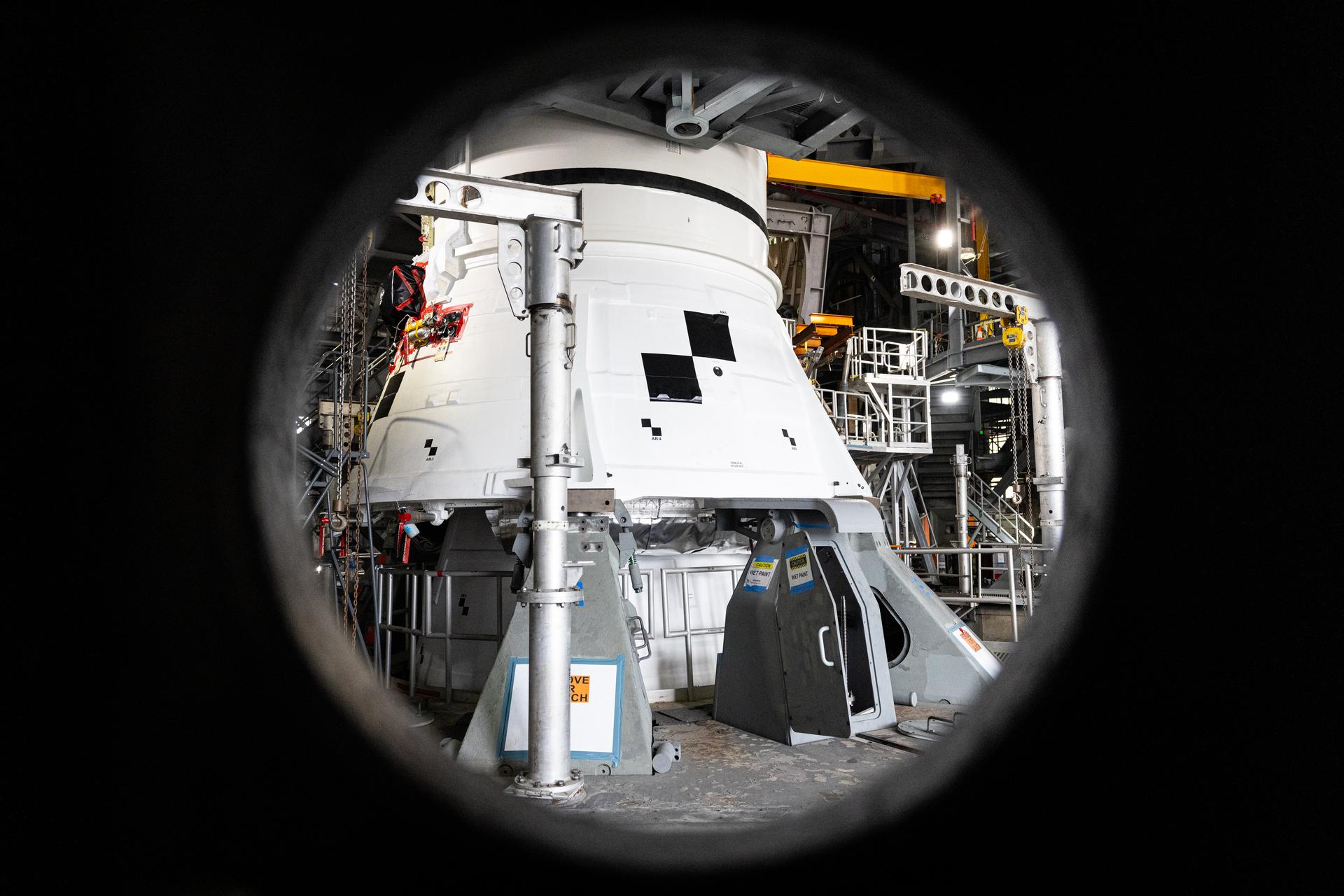
Teams with NASA’s Exploration Ground Systems Program secured the right-hand aft assembly solid rocket booster segment for the Artemis III SLS (Space Launch System) rocket to the mobile launcher at the agency’s Vehicle Assembly Building at Kennedy Space Center in Florida on Saturday, July 11, 2026. The twin boosters, manufactured by Northrop Grumman in Utah, will provide more than 75 percent of the SLS rocket’s total thrust at launch. The Artemis III mission will launch astronauts in the Orion spacecraft on top of the SLS rocket to test rendezvous and docking capabilities between Orion and commercial spacecraft needed to land astronauts on the Moon.
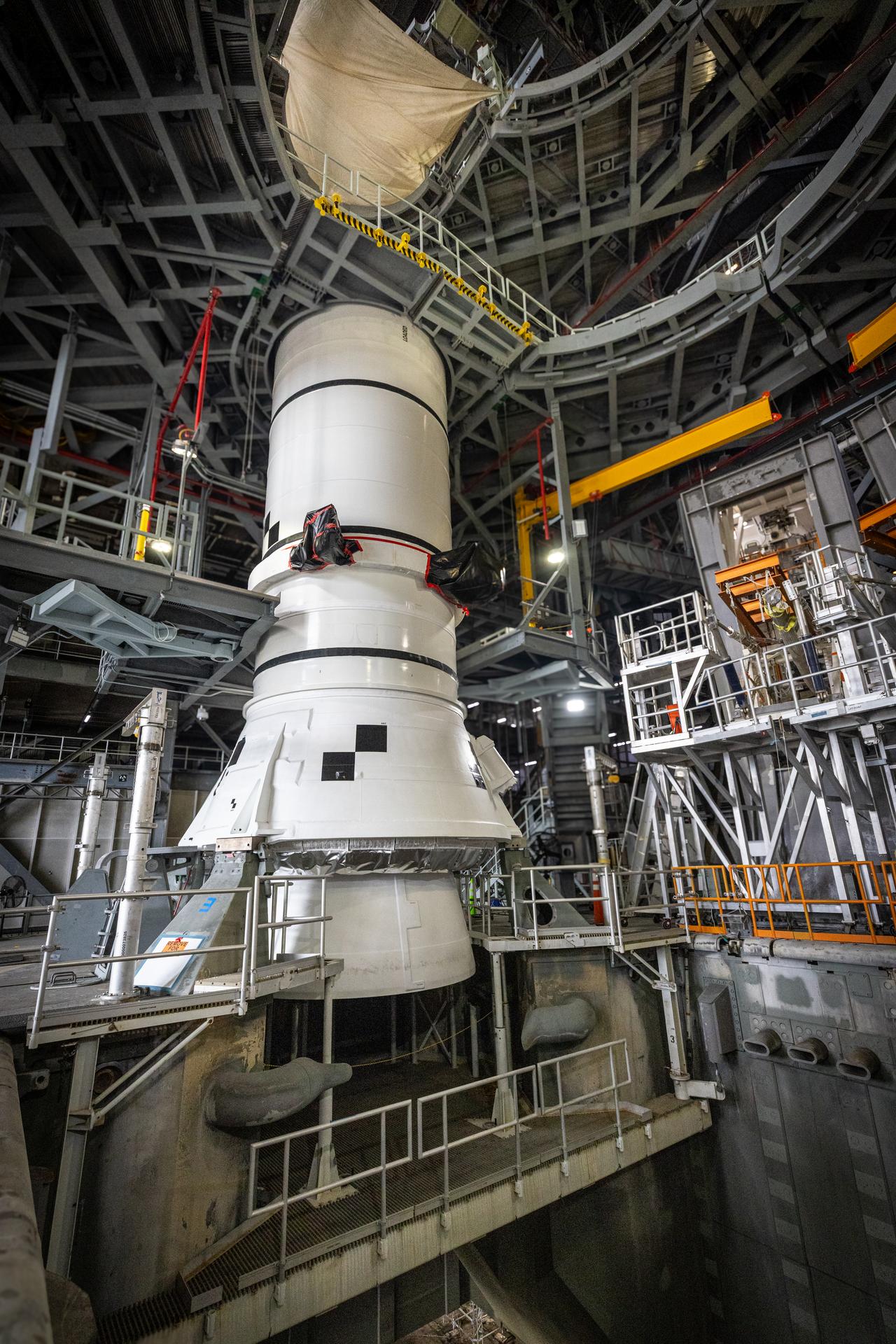
Teams with NASA’s Exploration Ground Systems Program secured the right-hand aft assembly solid rocket booster segment for the Artemis III SLS (Space Launch System) rocket to the mobile launcher at the agency’s Vehicle Assembly Building at Kennedy Space Center in Florida on Saturday, July 11, 2026. The twin boosters, manufactured by Northrop Grumman in Utah, will provide more than 75 percent of the SLS rocket’s total thrust at launch. The Artemis III mission will launch astronauts in the Orion spacecraft on top of the SLS rocket to test rendezvous and docking capabilities between Orion and commercial spacecraft needed to land astronauts on the Moon.

Technicians with Exploration Ground Systems perform inspections of the Northrop Grumman-manufactured two aft exit cones on Wednesday, Dec. 13, 2023, inside the Rotation, Processing and Surge Facility (RPSF) at NASA’s Kennedy Space Center in Florida before mating processes begin for the agency’s Artemis II mission. The aft exit cones are attached to the bottom piece of the two boosters, (seen here in these photos), which is called the aft segment, and the exit cones act like a battery pack to provide added thrust for the boosters while protecting the aft skirts from thermal environment during launch of the agency’s first crewed mission under Artemis that will test all of the Orion spacecraft systems.
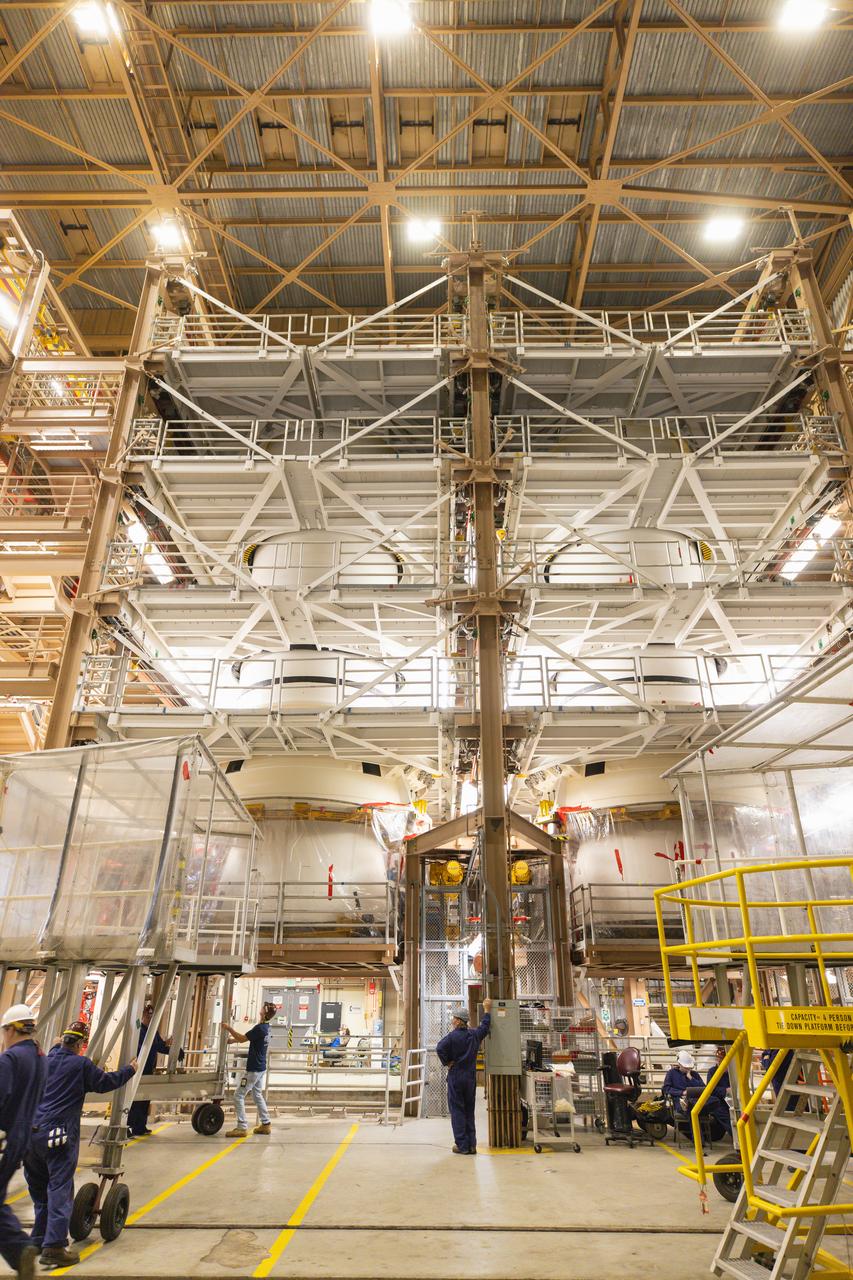
Technicians with Exploration Ground Systems perform inspections of the Northrop Grumman-manufactured two aft exit cones on Wednesday, Dec. 13, 2023, inside the Rotation, Processing and Surge Facility (RPSF) at NASA’s Kennedy Space Center in Florida before mating processes begin for the agency’s Artemis II mission. The aft exit cones are attached to the bottom piece of the two boosters, (seen here in these photos), which is called the aft segment, and the exit cones act like a battery pack to provide added thrust for the boosters while protecting the aft skirts from thermal environment during launch of the agency’s first crewed mission under Artemis that will test all of the Orion spacecraft systems.
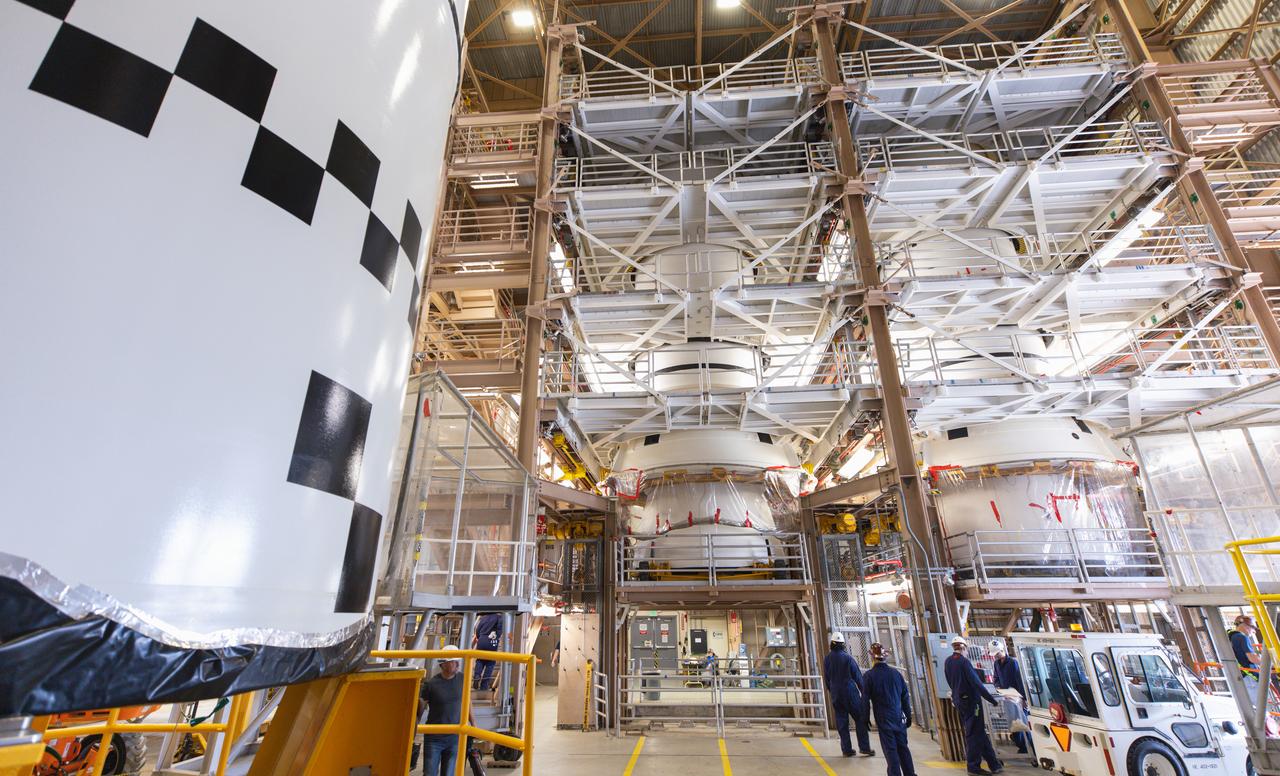
Technicians with Exploration Ground Systems perform inspections of the Northrop Grumman-manufactured two aft exit cones on Wednesday, Dec. 13, 2023, inside the Rotation, Processing and Surge Facility (RPSF) at NASA’s Kennedy Space Center in Florida before mating processes begin for the agency’s Artemis II mission. The aft exit cones are attached to the bottom piece of the two boosters, (seen here in these photos), which is called the aft segment, and the exit cones act like a battery pack to provide added thrust for the boosters while protecting the aft skirts from thermal environment during launch of the agency’s first crewed mission under Artemis that will test all of the Orion spacecraft systems.
Technicians ready two NASA Space Launch System (SLS) solid rocket boosters for mating to the rocket’s two aft skirts on June 19, 2020, inside Kennedy Space Center’s Rotation, Processing and Surge Facility. Together, the twin boosters provide more than 75 percent of the total SLS thrust at launch. Manufactured by Northrop Grumman in Promontory, Utah, the boosters arrived at Kennedy via train. The cross-country journey was an important milestone for the agency’s Artemis I launch. The first in a series of increasingly complex missions, Artemis I will test the Orion spacecraft and SLS as an integrated system prior to crewed missions to the Moon. Once the boosters are mated with the aft skirts, they will be moved to the Vehicle Assembly Building for stacking on the mobile launcher.
Technicians ready two NASA Space Launch System (SLS) solid rocket boosters for mating to the rocket’s two aft skirts on June 19, 2020, inside Kennedy Space Center’s Rotation, Processing and Surge Facility. Together, the twin boosters provide more than 75 percent of the total SLS thrust at launch. Manufactured by Northrop Grumman in Promontory, Utah, the boosters arrived at Kennedy via train. The cross-country journey was an important milestone for the agency’s Artemis I launch. The first in a series of increasingly complex missions, Artemis I will test the Orion spacecraft and SLS as an integrated system prior to crewed missions to the Moon. Once the boosters are mated with the aft skirts, they will be moved to the Vehicle Assembly Building for stacking on the mobile launcher.
Technicians ready two NASA Space Launch System (SLS) solid rocket boosters for mating to the rocket’s two aft skirts on June 19, 2020, inside Kennedy Space Center’s Rotation, Processing and Surge Facility. Together, the twin boosters provide more than 75 percent of the total SLS thrust at launch. Manufactured by Northrop Grumman in Promontory, Utah, the boosters arrived at Kennedy via train. The cross-country journey was an important milestone for the agency’s Artemis I launch. The first in a series of increasingly complex missions, Artemis I will test the Orion spacecraft and SLS as an integrated system prior to crewed missions to the Moon. Once the boosters are mated with the aft skirts, they will be moved to the Vehicle Assembly Building for stacking on the mobile launcher.
Technicians ready two NASA Space Launch System (SLS) solid rocket boosters for mating to the rocket’s two aft skirts on June 19, 2020, inside Kennedy Space Center’s Rotation, Processing and Surge Facility. Together, the twin boosters provide more than 75 percent of the total SLS thrust at launch. Manufactured by Northrop Grumman in Promontory, Utah, the boosters arrived at Kennedy via train. The cross-country journey was an important milestone for the agency’s Artemis I launch. The first in a series of increasingly complex missions, Artemis I will test the Orion spacecraft and SLS as an integrated system prior to crewed missions to the Moon. Once the boosters are mated with the aft skirts, they will be moved to the Vehicle Assembly Building for stacking on the mobile launcher.
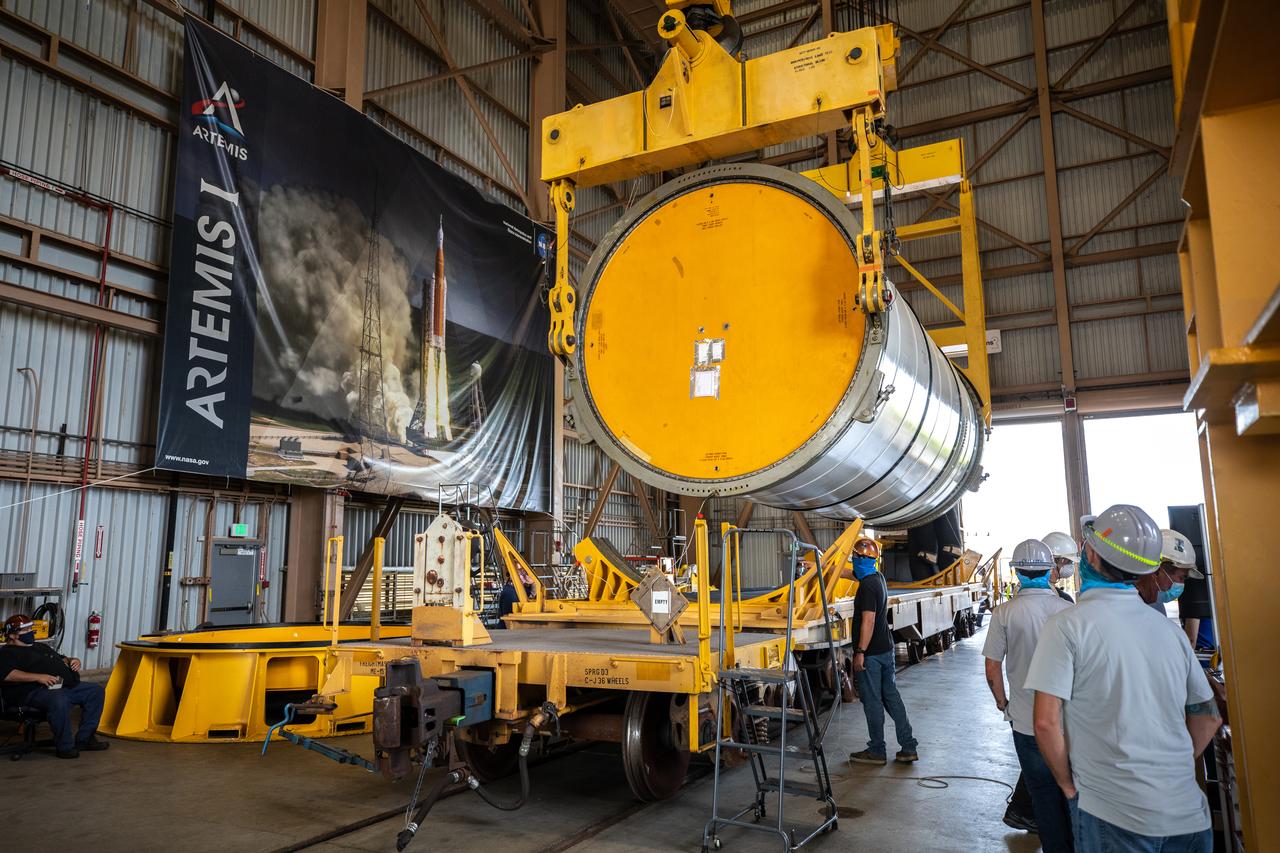
Technicians ready two NASA Space Launch System (SLS) solid rocket boosters for mating to the rocket’s two aft skirts on June 19, 2020, inside Kennedy Space Center’s Rotation, Processing and Surge Facility. Together, the twin boosters provide more than 75 percent of the total SLS thrust at launch. Manufactured by Northrop Grumman in Promontory, Utah, the boosters arrived at Kennedy via train. The cross-country journey was an important milestone for the agency’s Artemis I launch. The first in a series of increasingly complex missions, Artemis I will test the Orion spacecraft and SLS as an integrated system prior to crewed missions to the Moon. Once the boosters are mated with the aft skirts, they will be moved to the Vehicle Assembly Building for stacking on the mobile launcher.
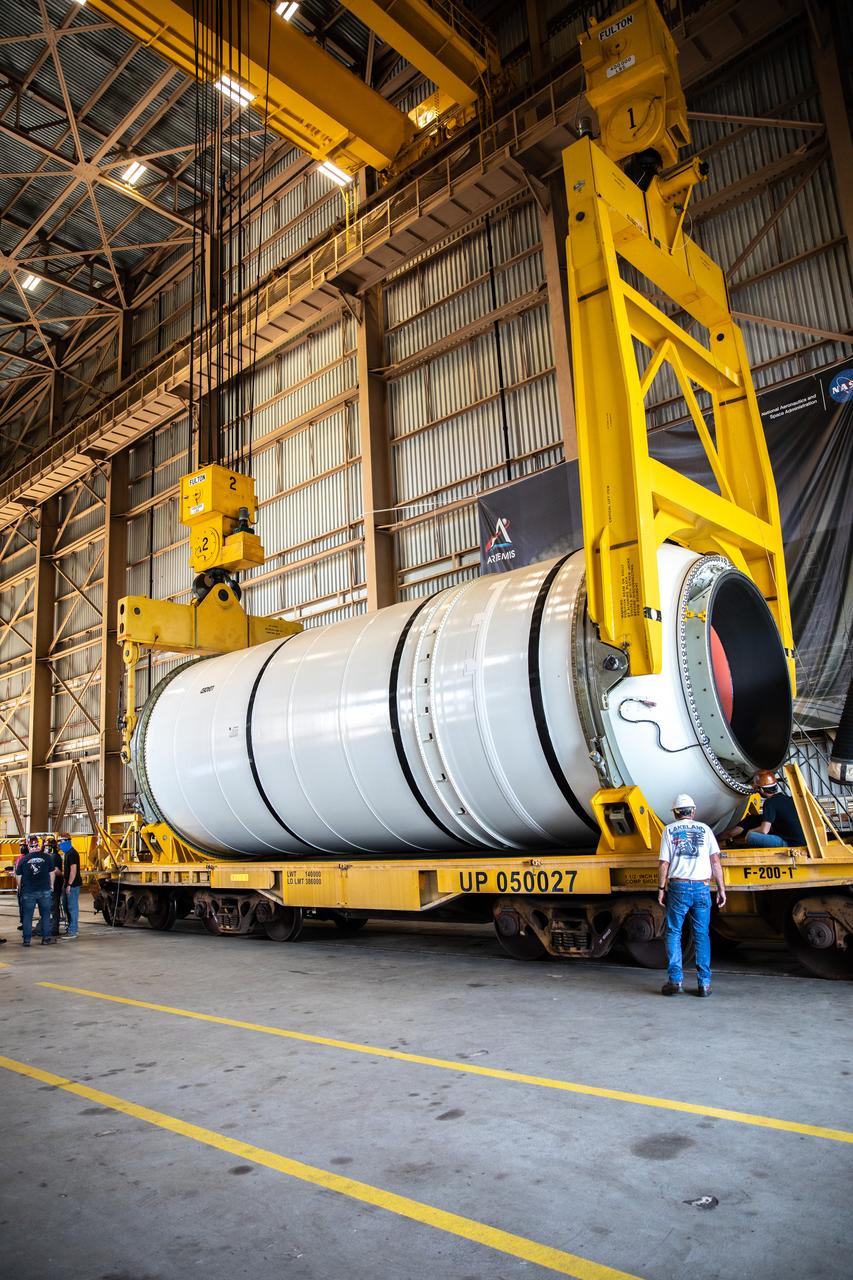
Technicians ready two NASA Space Launch System (SLS) solid rocket boosters for mating to the rocket’s two aft skirts on June 19, 2020, inside Kennedy Space Center’s Rotation, Processing and Surge Facility. Together, the twin boosters provide more than 75 percent of the total SLS thrust at launch. Manufactured by Northrop Grumman in Promontory, Utah, the boosters arrived at Kennedy via train. The cross-country journey was an important milestone for the agency’s Artemis I launch. The first in a series of increasingly complex missions, Artemis I will test the Orion spacecraft and SLS as an integrated system prior to crewed missions to the Moon. Once the boosters are mated with the aft skirts, they will be moved to the Vehicle Assembly Building for stacking on the mobile launcher.
Technicians ready two NASA Space Launch System (SLS) solid rocket boosters for mating to the rocket’s two aft skirts on June 19, 2020, inside Kennedy Space Center’s Rotation, Processing and Surge Facility. Together, the twin boosters provide more than 75 percent of the total SLS thrust at launch. Manufactured by Northrop Grumman in Promontory, Utah, the boosters arrived at Kennedy via train. The cross-country journey was an important milestone for the agency’s Artemis I launch. The first in a series of increasingly complex missions, Artemis I will test the Orion spacecraft and SLS as an integrated system prior to crewed missions to the Moon. Once the boosters are mated with the aft skirts, they will be moved to the Vehicle Assembly Building for stacking on the mobile launcher.
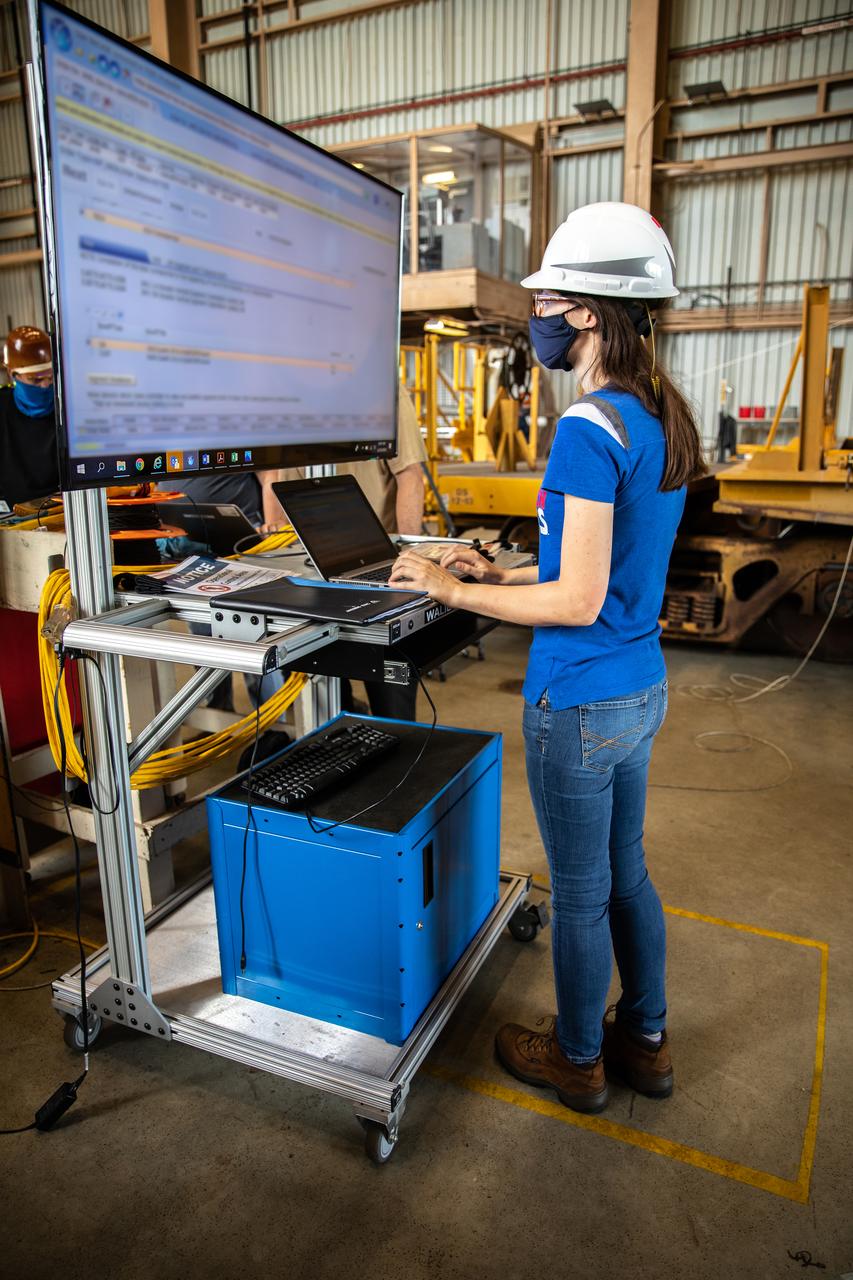
Beverly Case, a handling engineer on the Test, Operations and Support Contract at NASA’s Kennedy Space Center in Florida, readies the Space Launch System (SLS) solid rocket boosters for mating to the rocket’s two aft skirts on June 19, 2020, inside Kennedy’s Rotation, Processing and Surge Facility. Together, the twin boosters provide more than 75 percent of the total SLS thrust at launch. Manufactured by Northrop Grumman in Promontory, Utah, the boosters arrived at Kennedy via train. This cross-country journey was an important milestone for the agency’s Artemis I launch. The first in a series of increasingly complex missions, Artemis I will test the Orion spacecraft and SLS as an integrated system prior to crewed missions to the Moon. Once the boosters are mated with the aft skirts, they will be moved to the Vehicle Assembly Building for stacking on the mobile launcher.
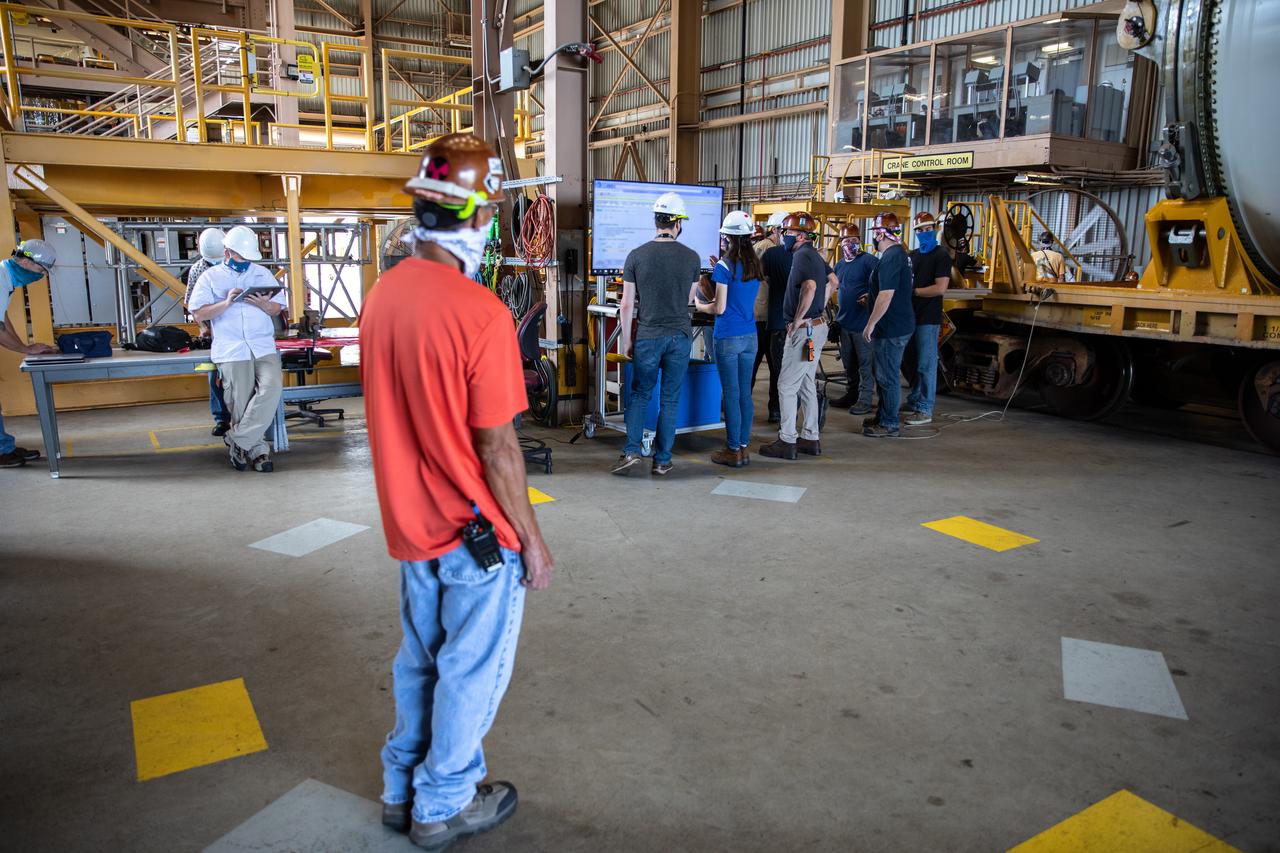
Technicians ready two NASA Space Launch System (SLS) solid rocket boosters for mating to the rocket’s two aft skirts on June 19, 2020, inside Kennedy Space Center’s Rotation, Processing and Surge Facility. Together, the twin boosters provide more than 75 percent of the total SLS thrust at launch. Manufactured by Northrop Grumman in Promontory, Utah, the boosters arrived at Kennedy via train. The cross-country journey was an important milestone for the agency’s Artemis I launch. The first in a series of increasingly complex missions, Artemis I will test the Orion spacecraft and SLS as an integrated system prior to crewed missions to the Moon. Once the boosters are mated with the aft skirts, they will be moved to the Vehicle Assembly Building for stacking on the mobile launcher.
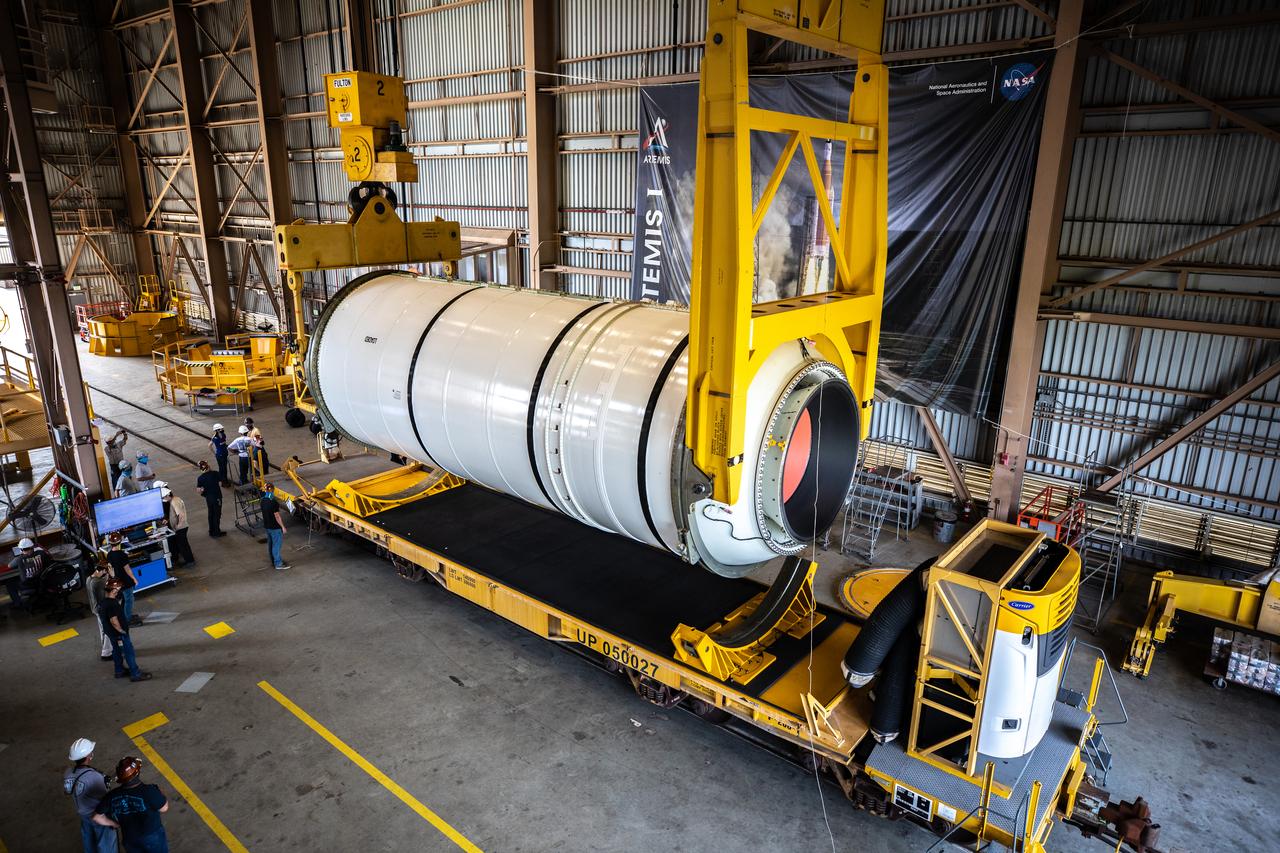
Technicians ready two NASA Space Launch System (SLS) solid rocket boosters for mating to the rocket’s two aft skirts on June 19, 2020, inside Kennedy Space Center’s Rotation, Processing and Surge Facility. Together, the twin boosters provide more than 75 percent of the total SLS thrust at launch. Manufactured by Northrop Grumman in Promontory, Utah, the boosters arrived at Kennedy via train. The cross-country journey was an important milestone for the agency’s Artemis I launch. The first in a series of increasingly complex missions, Artemis I will test the Orion spacecraft and SLS as an integrated system prior to crewed missions to the Moon. Once the boosters are mated with the aft skirts, they will be moved to the Vehicle Assembly Building for stacking on the mobile launcher.
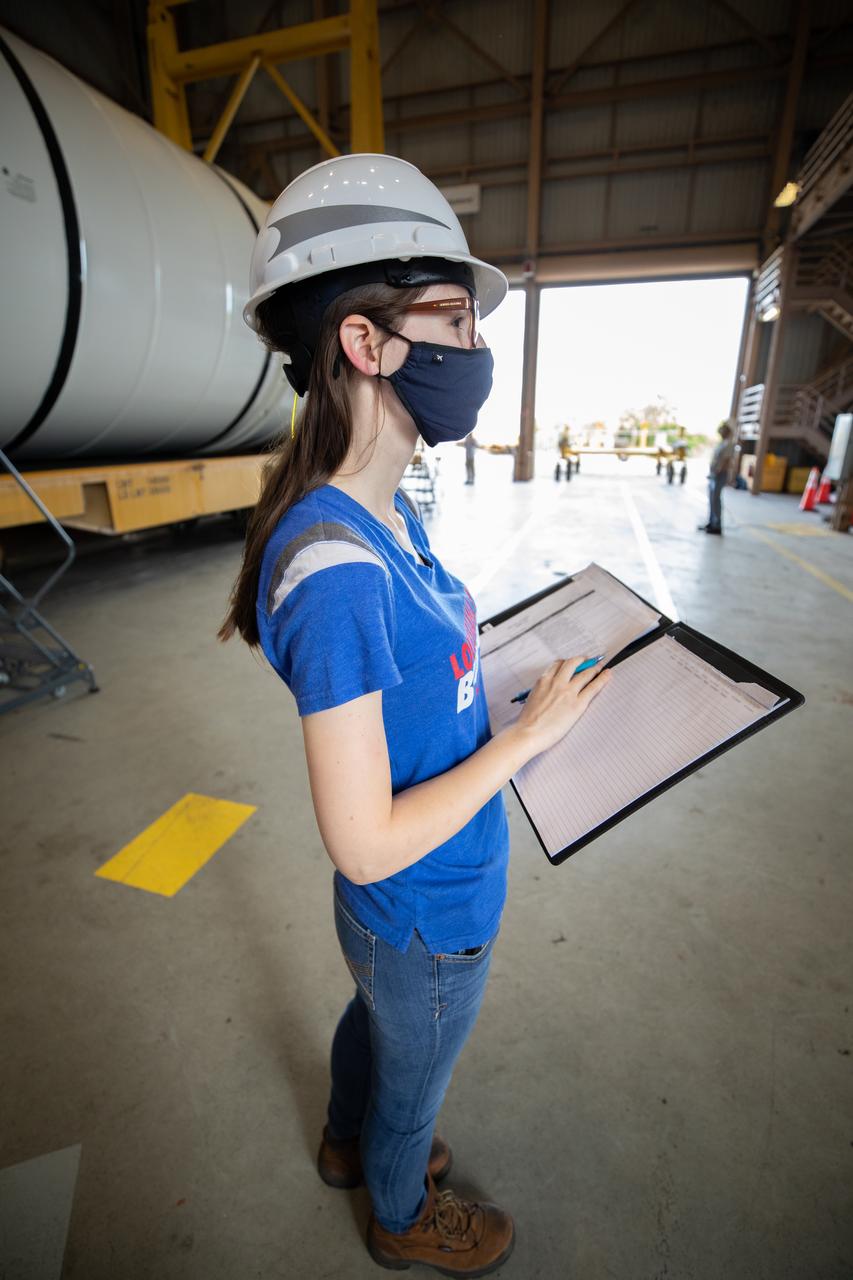
Beverly Case, a handling engineer on the Test, Operations and Support Contract at NASA’s Kennedy Space Center in Florida, readies the Space Launch System (SLS) solid rocket boosters for mating to the rocket’s two aft skirts on June 19, 2020, inside Kennedy’s Rotation, Processing and Surge Facility. Together, the twin boosters provide more than 75 percent of the total SLS thrust at launch. Manufactured by Northrop Grumman in Promontory, Utah, the boosters arrived at Kennedy via train. This cross-country journey was an important milestone for the agency’s Artemis I launch. The first in a series of increasingly complex missions, Artemis I will test the Orion spacecraft and SLS as an integrated system prior to crewed missions to the Moon. Once the boosters are mated with the aft skirts, they will be moved to the Vehicle Assembly Building for stacking on the mobile launcher.
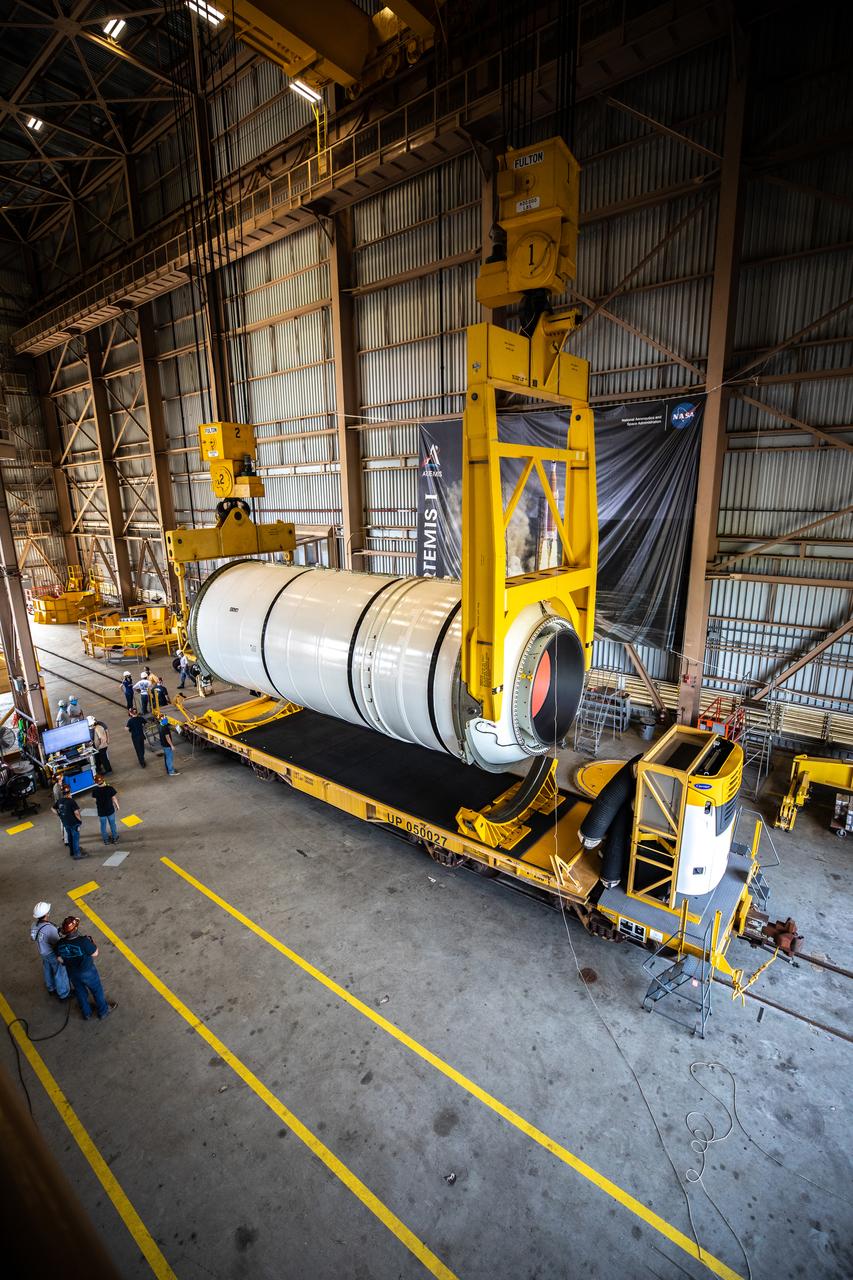
Technicians ready two NASA Space Launch System (SLS) solid rocket boosters for mating to the rocket’s two aft skirts on June 19, 2020, inside Kennedy Space Center’s Rotation, Processing and Surge Facility. Together, the twin boosters provide more than 75 percent of the total SLS thrust at launch. Manufactured by Northrop Grumman in Promontory, Utah, the boosters arrived at Kennedy via train. The cross-country journey was an important milestone for the agency’s Artemis I launch. The first in a series of increasingly complex missions, Artemis I will test the Orion spacecraft and SLS as an integrated system prior to crewed missions to the Moon. Once the boosters are mated with the aft skirts, they will be moved to the Vehicle Assembly Building for stacking on the mobile launcher.
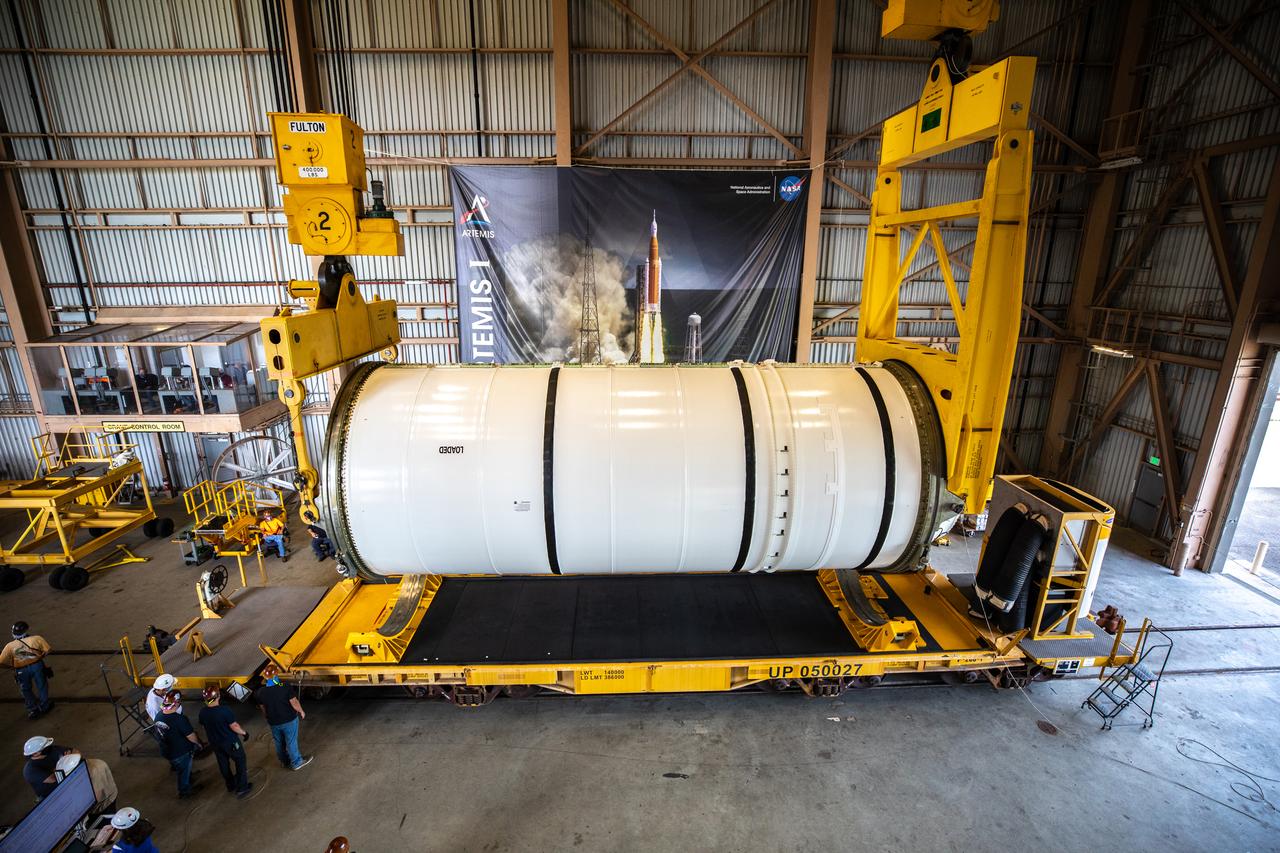
Technicians ready two NASA Space Launch System (SLS) solid rocket boosters for mating to the rocket’s two aft skirts on June 19, 2020, inside Kennedy Space Center’s Rotation, Processing and Surge Facility. Together, the twin boosters provide more than 75 percent of the total SLS thrust at launch. Manufactured by Northrop Grumman in Promontory, Utah, the boosters arrived at Kennedy via train. The cross-country journey was an important milestone for the agency’s Artemis I launch. The first in a series of increasingly complex missions, Artemis I will test the Orion spacecraft and SLS as an integrated system prior to crewed missions to the Moon. Once the boosters are mated with the aft skirts, they will be moved to the Vehicle Assembly Building for stacking on the mobile launcher.
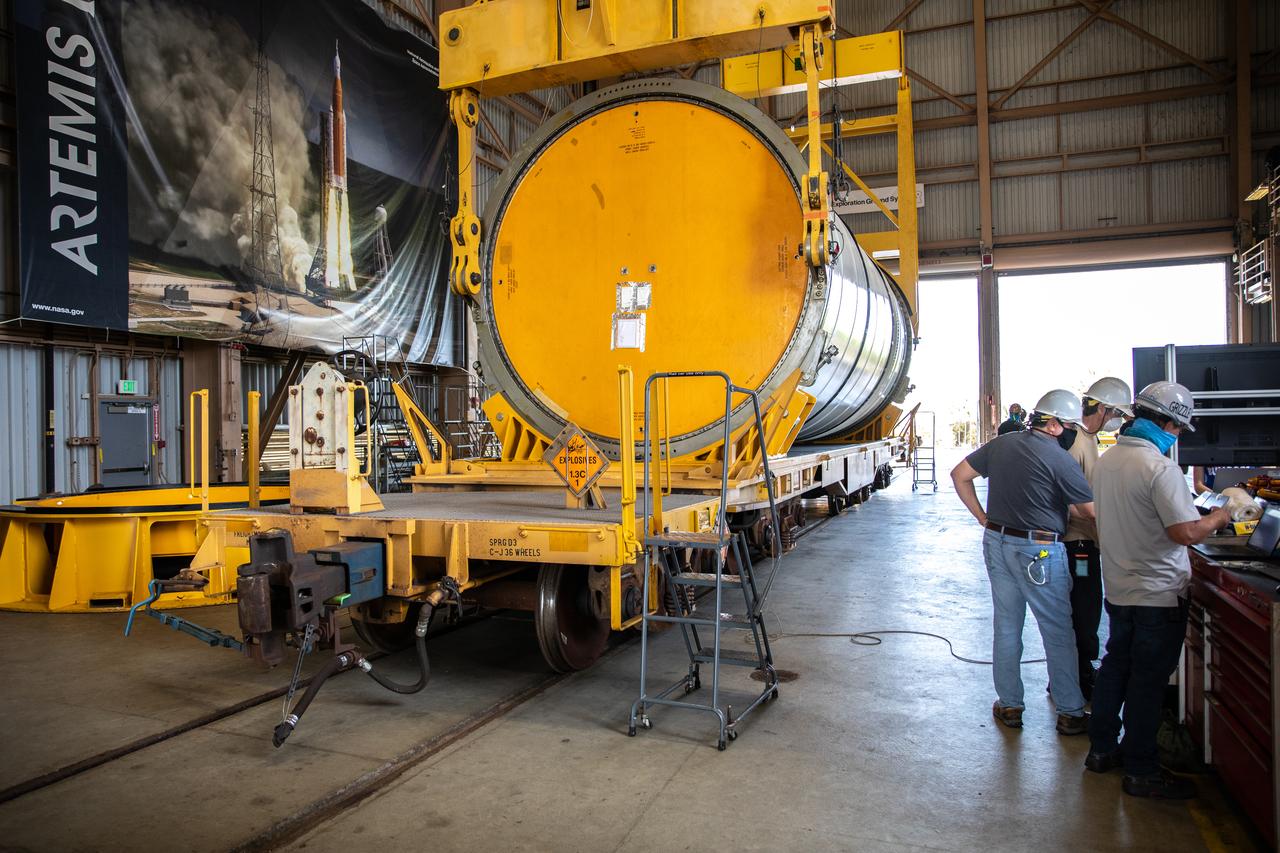
Technicians ready two NASA Space Launch System (SLS) solid rocket boosters for mating to the rocket’s two aft skirts on June 19, 2020, inside Kennedy Space Center’s Rotation, Processing and Surge Facility. Together, the twin boosters provide more than 75 percent of the total SLS thrust at launch. Manufactured by Northrop Grumman in Promontory, Utah, the boosters arrived at Kennedy via train. The cross-country journey was an important milestone for the agency’s Artemis I launch. The first in a series of increasingly complex missions, Artemis I will test the Orion spacecraft and SLS as an integrated system prior to crewed missions to the Moon. Once the boosters are mated with the aft skirts, they will be moved to the Vehicle Assembly Building for stacking on the mobile launcher.
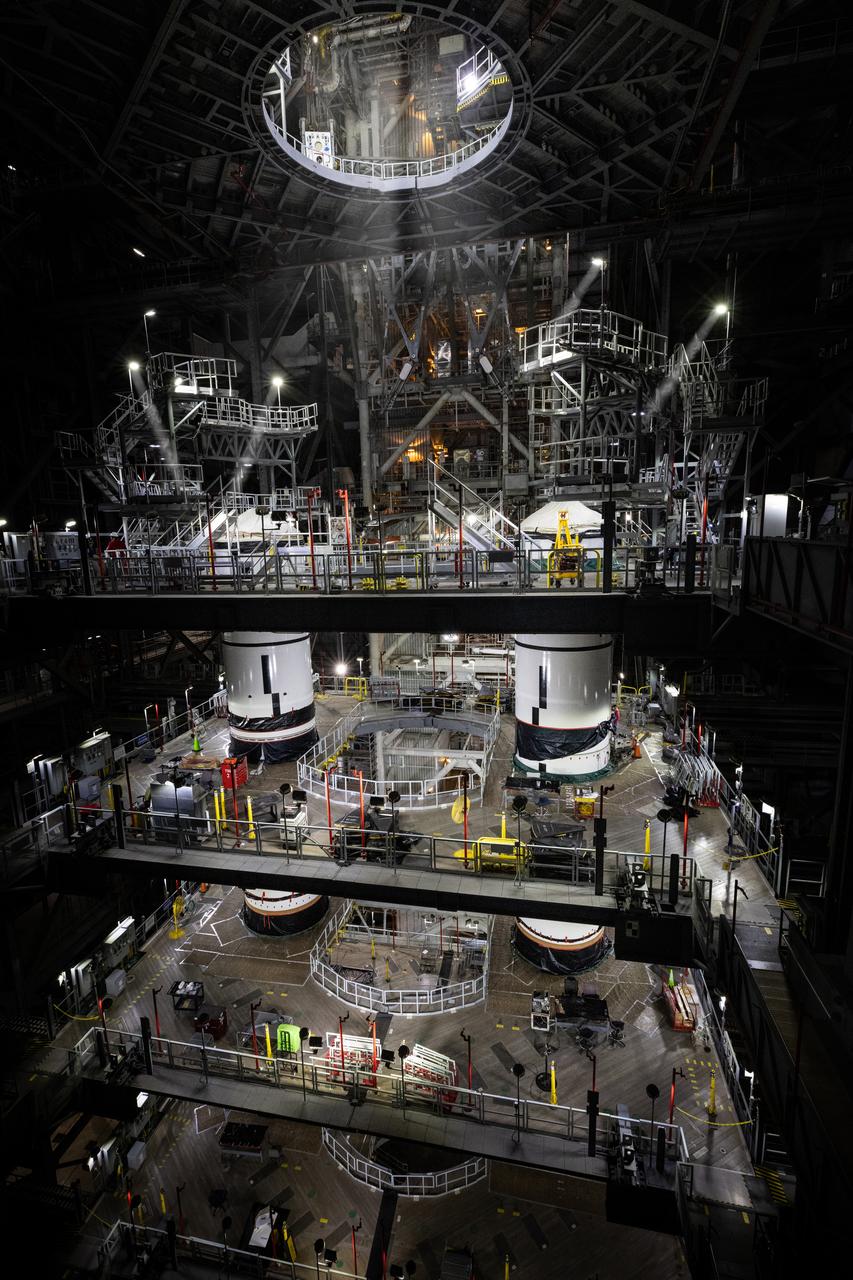
Technicians with Exploration Ground Systems integrate the right forward segment atop the center forward segment on NASA’s SLS (Space Launch System) Moon rocket booster inside the Vehicle Assembly Building’s High Bay 3 at Kennedy Space Center in Florida on Friday, Feb. 14, 2025. The twin solid boosters, five segments on each side, will help support the remaining rocket components and the Orion spacecraft during final assembly of the Artemis II Moon rocket and provide more than 75 percent of the total SLS thrust during liftoff from NASA Kennedy’s Launch Pad 39B.
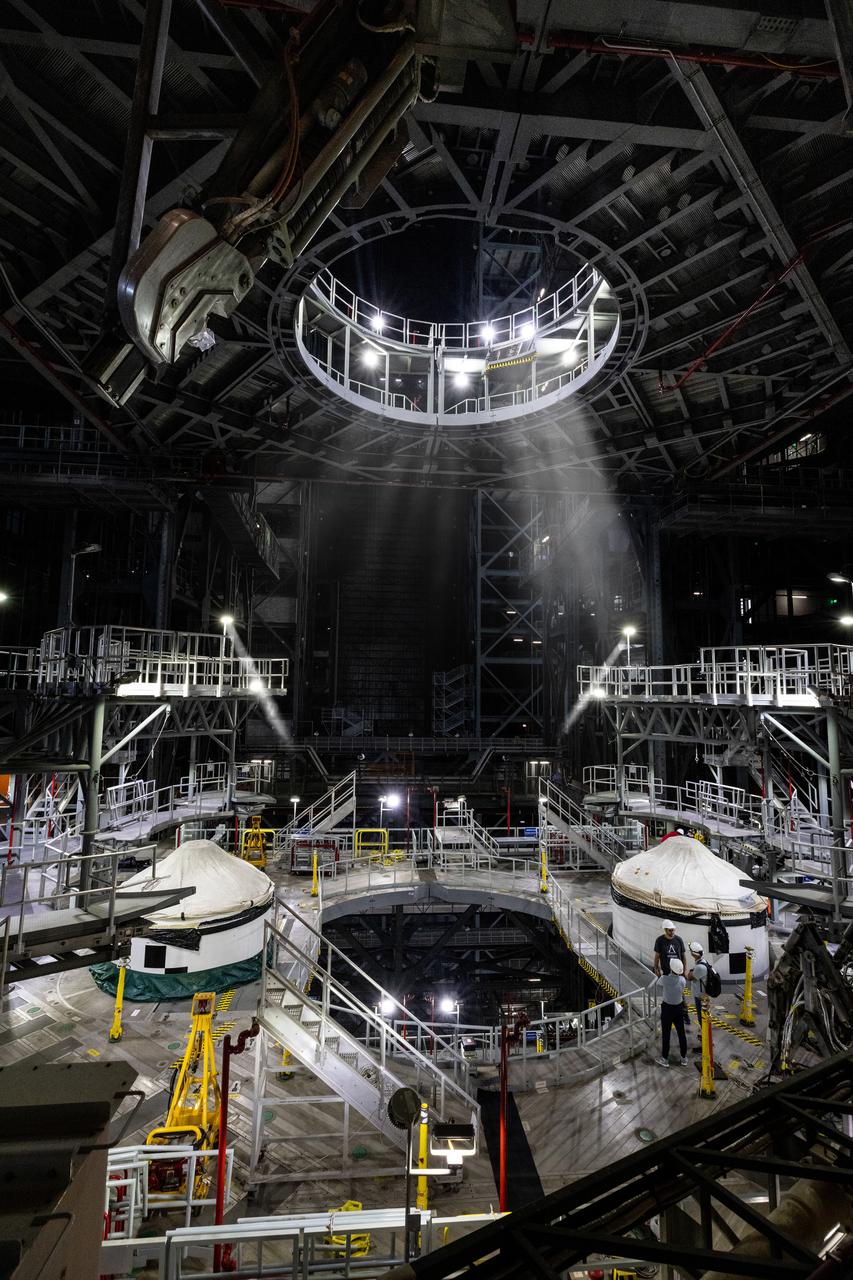
Technicians with Exploration Ground Systems integrate the right forward segment atop the center forward segment on NASA’s SLS (Space Launch System) Moon rocket booster inside the Vehicle Assembly Building’s High Bay 3 at Kennedy Space Center in Florida on Friday, Feb. 14, 2025. The twin solid boosters, five segments on each side, will help support the remaining rocket components and the Orion spacecraft during final assembly of the Artemis II Moon rocket and provide more than 75 percent of the total SLS thrust during liftoff from NASA Kennedy’s Launch Pad 39B.
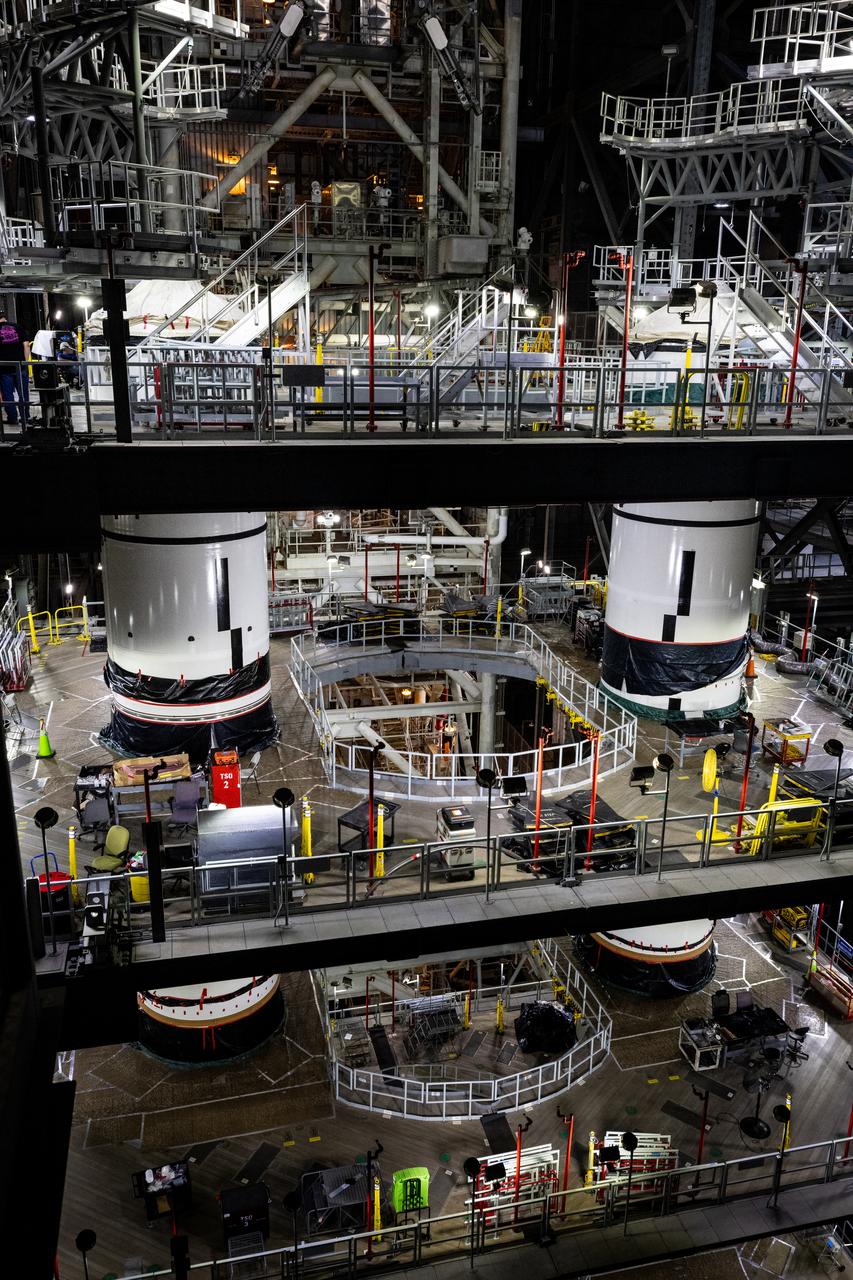
Technicians with Exploration Ground Systems integrate the right forward segment atop the center forward segment on NASA’s SLS (Space Launch System) Moon rocket booster inside the Vehicle Assembly Building’s High Bay 3 at Kennedy Space Center in Florida on Friday, Feb. 14, 2025. The twin solid boosters, five segments on each side, will help support the remaining rocket components and the Orion spacecraft during final assembly of the Artemis II Moon rocket and provide more than 75 percent of the total SLS thrust during liftoff from NASA Kennedy’s Launch Pad 39B.
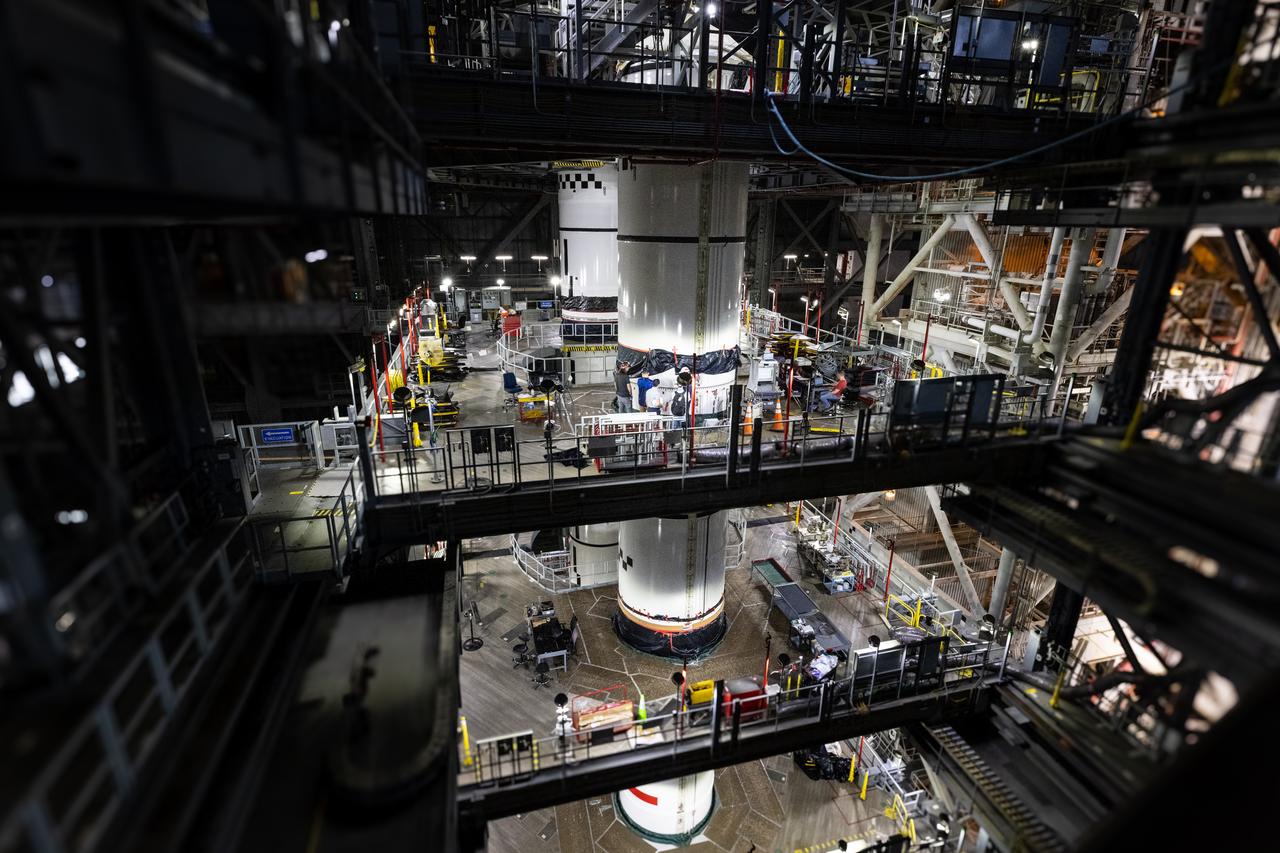
Technicians with Exploration Ground Systems integrate the right forward segment atop the center forward segment on NASA’s SLS (Space Launch System) Moon rocket booster inside the Vehicle Assembly Building’s High Bay 3 at Kennedy Space Center in Florida on Friday, Feb. 14, 2025. The twin solid boosters, five segments on each side, will help support the remaining rocket components and the Orion spacecraft during final assembly of the Artemis II Moon rocket and provide more than 75 percent of the total SLS thrust during liftoff from NASA Kennedy’s Launch Pad 39B.
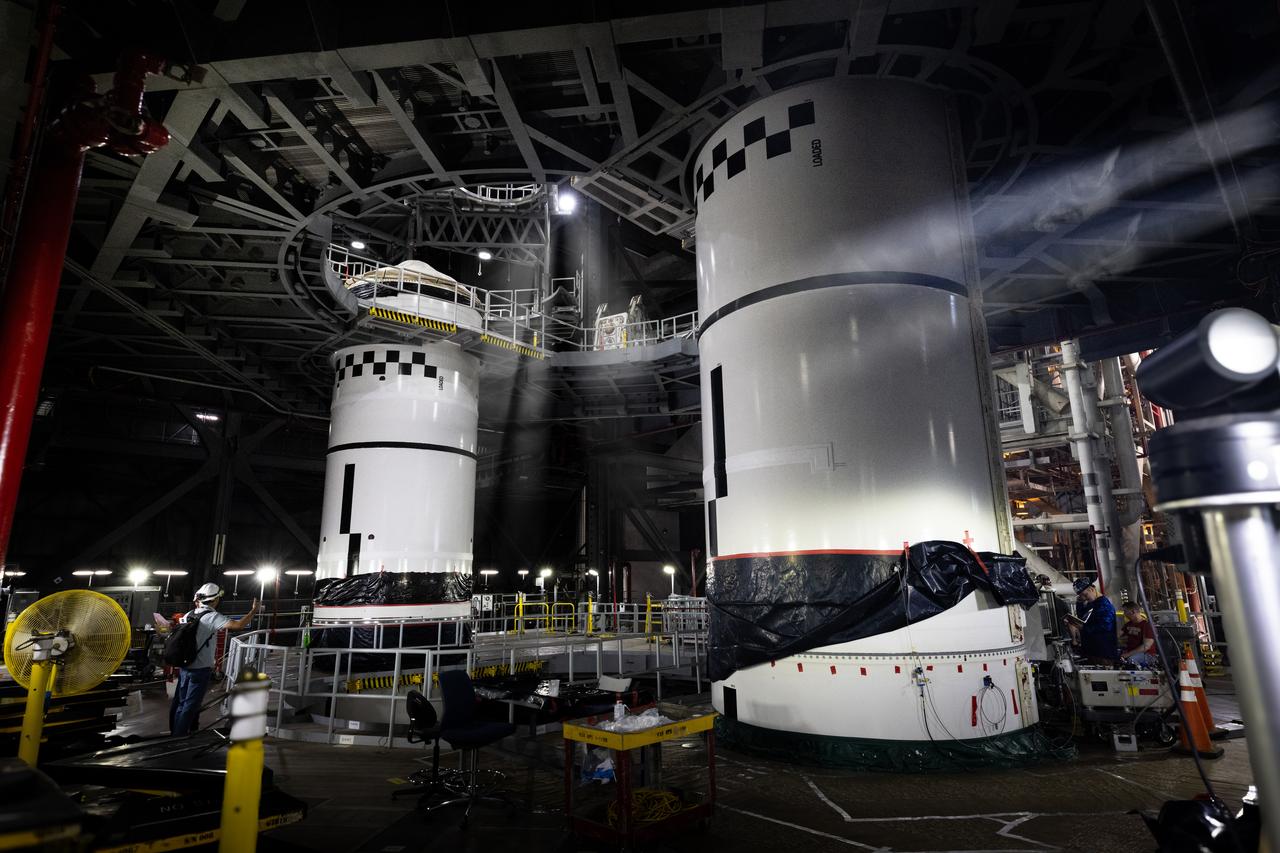
Technicians with Exploration Ground Systems integrate the right forward segment atop the center forward segment on NASA’s SLS (Space Launch System) Moon rocket booster inside the Vehicle Assembly Building’s High Bay 3 at Kennedy Space Center in Florida on Friday, Feb. 14, 2025. The twin solid boosters, five segments on each side, will help support the remaining rocket components and the Orion spacecraft during final assembly of the Artemis II Moon rocket and provide more than 75 percent of the total SLS thrust during liftoff from NASA Kennedy’s Launch Pad 39B.
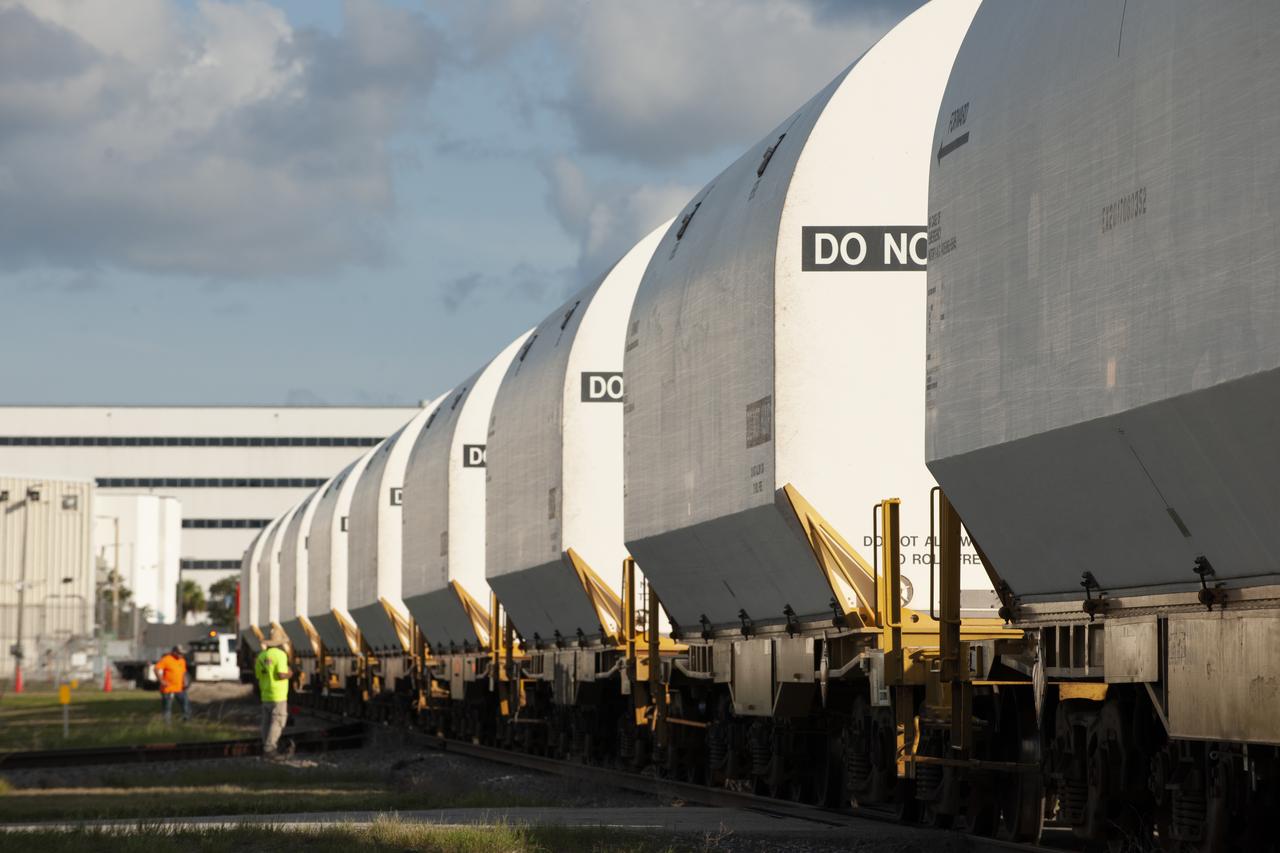
Twin rocket boosters for NASA’s Space Launch System (SLS) that will power Artemis missions to the Moon have arrived at the agency’s Kennedy Space Center in Florida. The two motor segments, each comprised of five segments, arrived at Kennedy’s Rotation, Processing and Surge Facility (RPSF) on June 15, 2020, by train from a Northrop Grumman manufacturing facility in Promontory, Utah. The booster segments will remain in the RPSF for inspection prior to processing until it’s time to move them to the Vehicle Assembly Building for stacking on the mobile launcher. This is the first piece of flight hardware to arrive at Kennedy by train for the Artemis program, but NASA’s Exploration Ground Systems (EGS) can expect to receive additional hardware soon, including the Launch Vehicle Service Adapter and the rocket’s core stage. NASA is working toward an Artemis I launch date in 2021, keeping the program moving at the best possible pace toward the earliest possible opportunity.
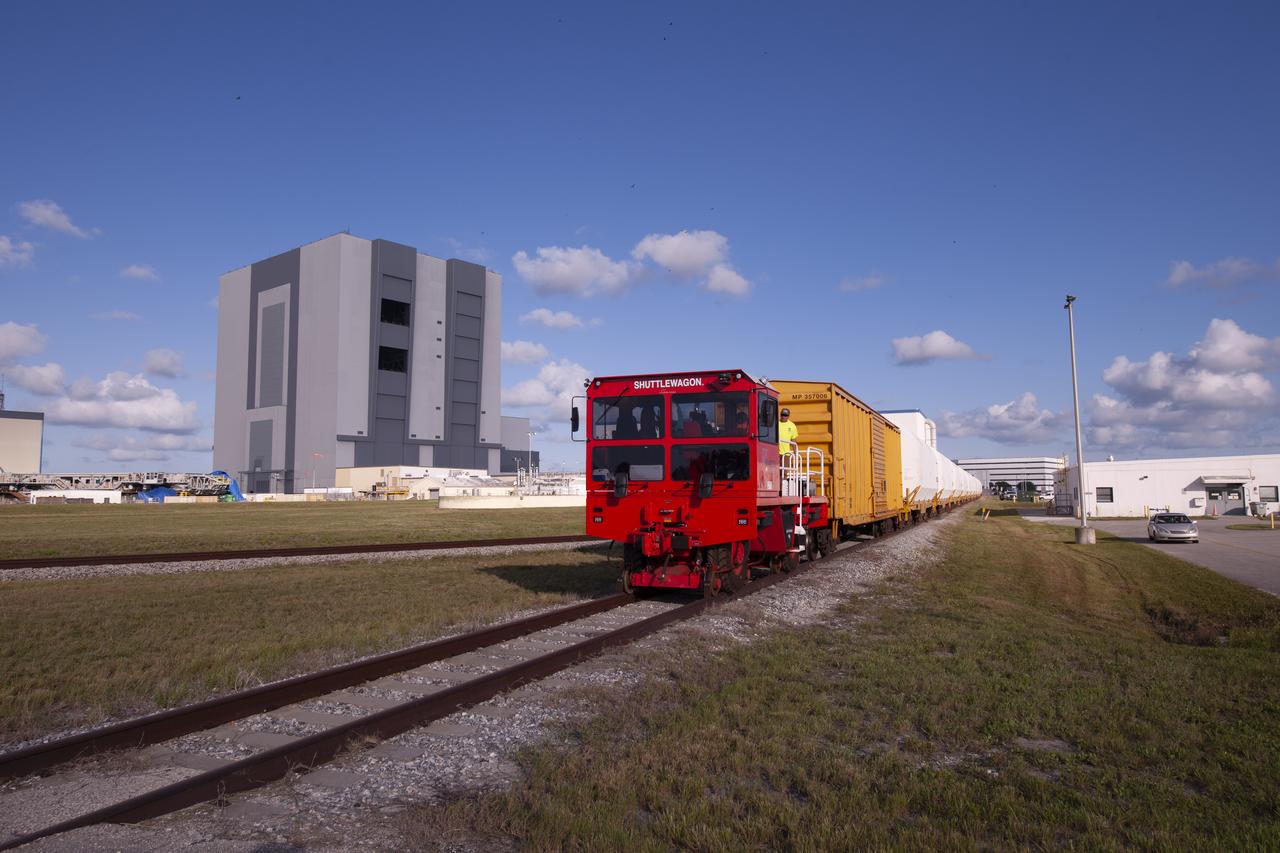
Twin rocket boosters for NASA’s Space Launch System (SLS) that will power Artemis missions to the Moon have arrived at the agency’s Kennedy Space Center in Florida. The two motor segments, each comprised of five segments, arrived at Kennedy’s Rotation, Processing and Surge Facility (RPSF) on June 15, 2020, by train from a Northrop Grumman manufacturing facility in Promontory, Utah. The booster segments will remain in the RPSF for inspection prior to processing until it’s time to move them to the Vehicle Assembly Building for stacking on the mobile launcher. This is the first piece of flight hardware to arrive at Kennedy by train for the Artemis program, but NASA’s Exploration Ground Systems (EGS) can expect to receive additional hardware soon, including the Launch Vehicle Service Adapter and the rocket’s core stage. NASA is working toward an Artemis I launch date in 2021, keeping the program moving at the best possible pace toward the earliest possible opportunity.
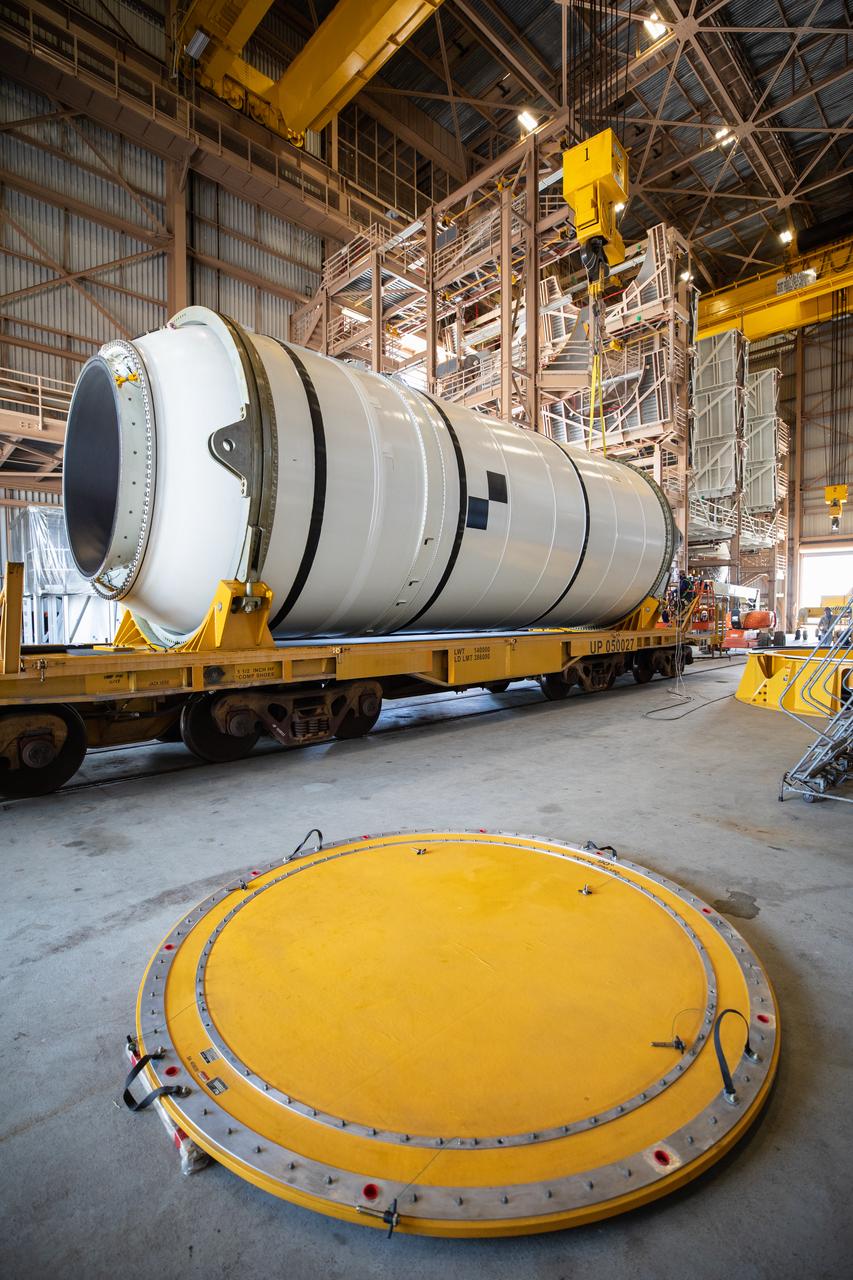
Two NASA Space Launch System (SLS) solid rocket boosters are readied for mating to the rocket’s two aft skirts on June 16, 2020, inside Kennedy Space Center’s Rotation, Processing and Surge Facility. Together, the twin boosters provide more than 75 percent of the total SLS thrust at launch. Manufactured by Northrop Grumman in Promontory, Utah, the boosters arrived at Kennedy via train. The cross-country journey was an important milestone for the agency’s Artemis I launch. The first in a series of increasingly complex missions, Artemis I will test the Orion spacecraft and SLS as an integrated system prior to crewed missions to the Moon. Once the boosters are mated with the aft skirts, they will be moved to the Vehicle Assembly Building for stacking on the mobile launcher.
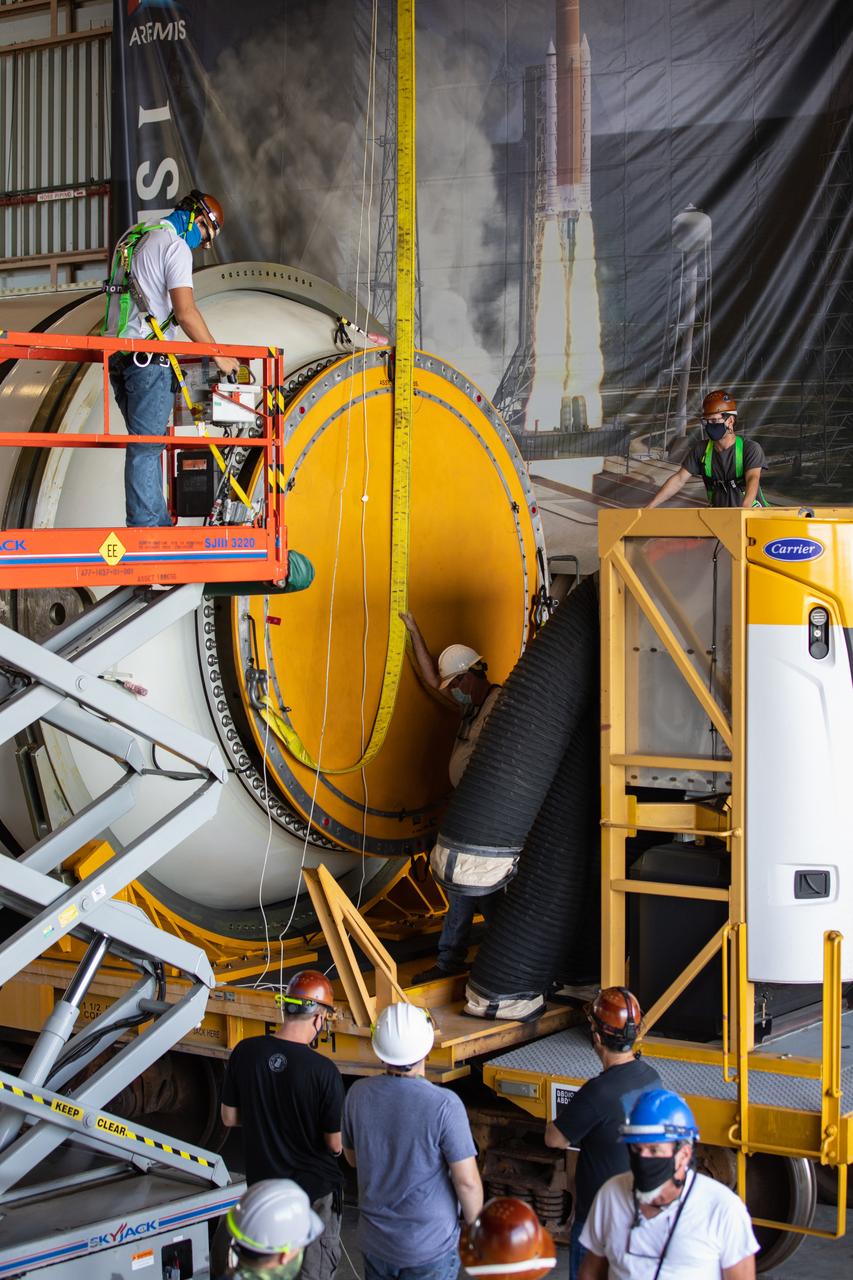
Technicians ready two NASA Space Launch System (SLS) solid rocket boosters for mating to the rocket’s two aft skirts on June 16, 2020, inside Kennedy Space Center’s Rotation, Processing and Surge Facility. Together, the twin boosters provide more than 75 percent of the total SLS thrust at launch. Manufactured by Northrop Grumman in Promontory, Utah, the boosters arrived at Kennedy via train. The cross-country journey was an important milestone for the agency’s Artemis I launch. The first in a series of increasingly complex missions, Artemis I will test the Orion spacecraft and SLS as an integrated system prior to crewed missions to the Moon. Once the boosters are mated with the aft skirts, they will be moved to the Vehicle Assembly Building for stacking on the mobile launcher.
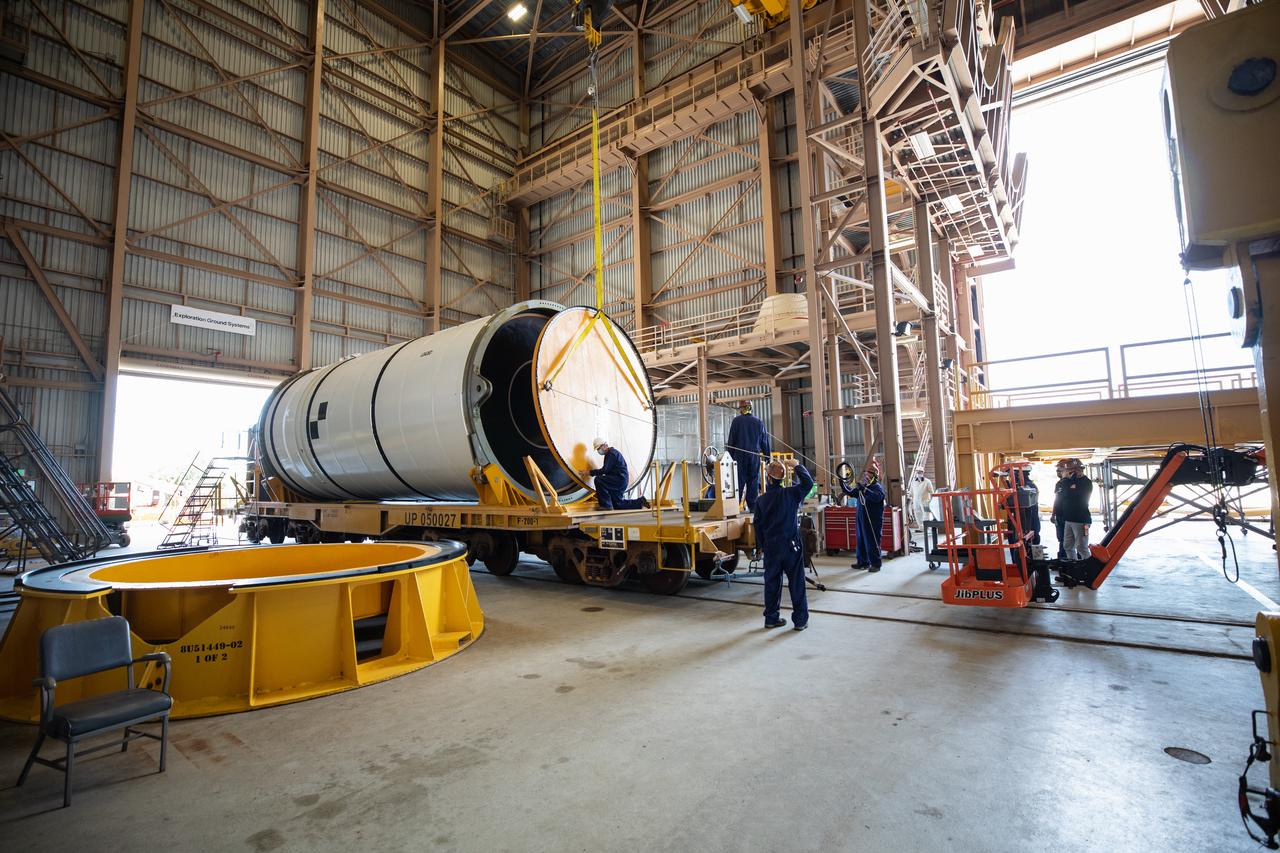
Technicians ready two NASA Space Launch System (SLS) solid rocket boosters for mating to the rocket’s two aft skirts on June 16, 2020, inside Kennedy Space Center’s Rotation, Processing and Surge Facility. Together, the twin boosters provide more than 75 percent of the total SLS thrust at launch. Manufactured by Northrop Grumman in Promontory, Utah, the boosters arrived at Kennedy via train. The cross-country journey was an important milestone for the agency’s Artemis I launch. The first in a series of increasingly complex missions, Artemis I will test the Orion spacecraft and SLS as an integrated system prior to crewed missions to the Moon. Once the boosters are mated with the aft skirts, they will be moved to the Vehicle Assembly Building for stacking on the mobile launcher.
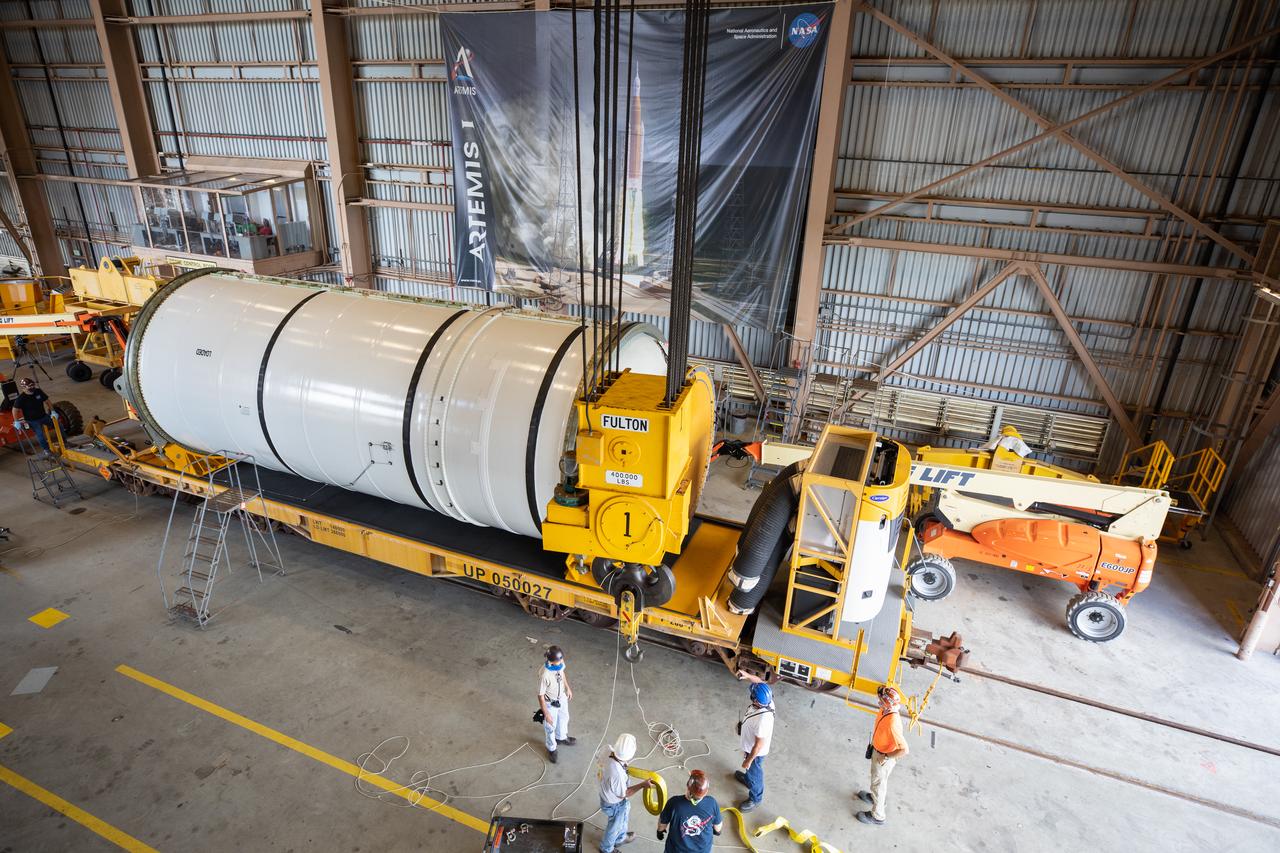
Technicians ready two NASA Space Launch System (SLS) solid rocket boosters for mating to the rocket’s two aft skirts on June 16, 2020, inside Kennedy Space Center’s Rotation, Processing and Surge Facility. Together, the twin boosters provide more than 75 percent of the total SLS thrust at launch. Manufactured by Northrop Grumman in Promontory, Utah, the boosters arrived at Kennedy via train. The cross-country journey was an important milestone for the agency’s Artemis I launch. The first in a series of increasingly complex missions, Artemis I will test the Orion spacecraft and SLS as an integrated system prior to crewed missions to the Moon. Once the boosters are mated with the aft skirts, they will be moved to the Vehicle Assembly Building for stacking on the mobile launcher.
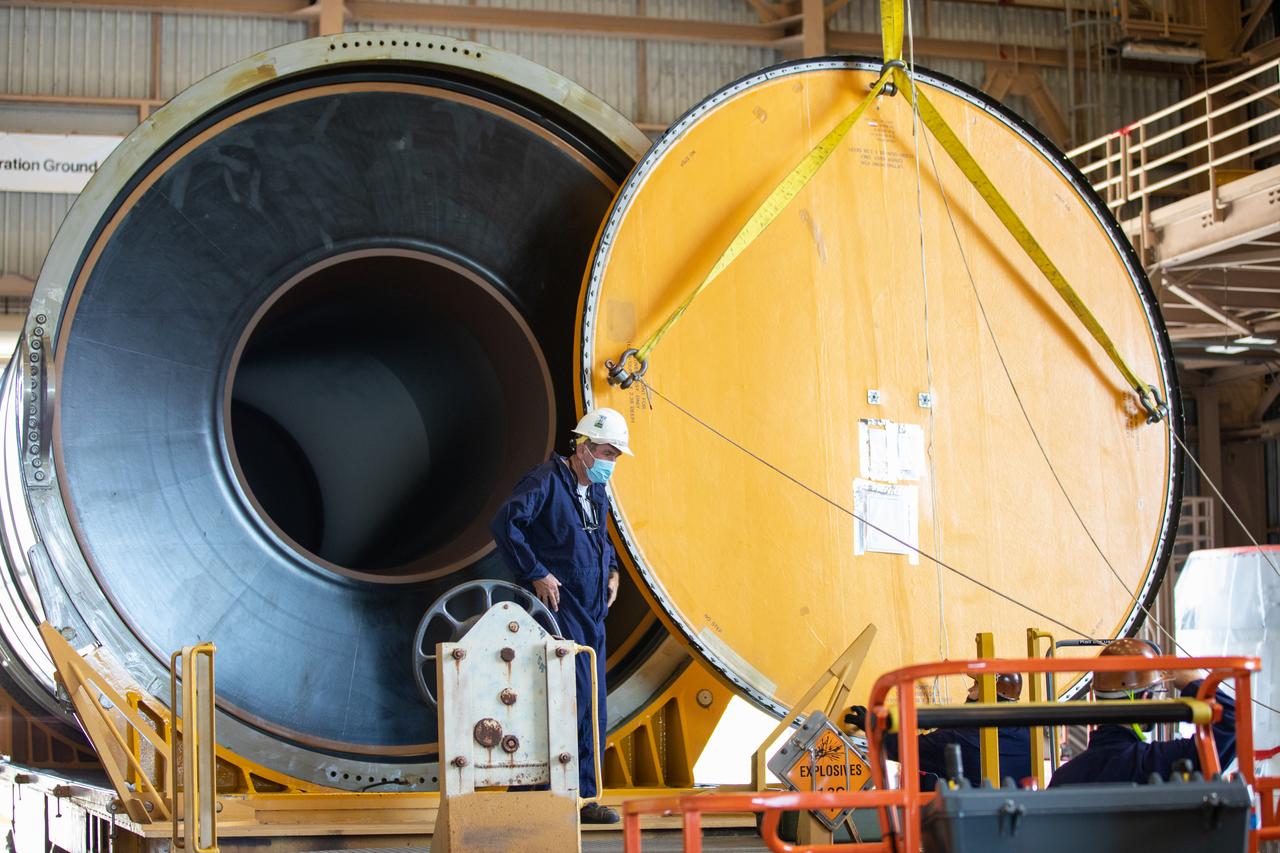
Technicians ready two NASA Space Launch System (SLS) solid rocket boosters for mating to the rocket’s two aft skirts on June 16, 2020, inside Kennedy Space Center’s Rotation, Processing and Surge Facility. Together, the twin boosters provide more than 75 percent of the total SLS thrust at launch. Manufactured by Northrop Grumman in Promontory, Utah, the boosters arrived at Kennedy via train. The cross-country journey was an important milestone for the agency’s Artemis I launch. The first in a series of increasingly complex missions, Artemis I will test the Orion spacecraft and SLS as an integrated system prior to crewed missions to the Moon. Once the boosters are mated with the aft skirts, they will be moved to the Vehicle Assembly Building for stacking on the mobile launcher.
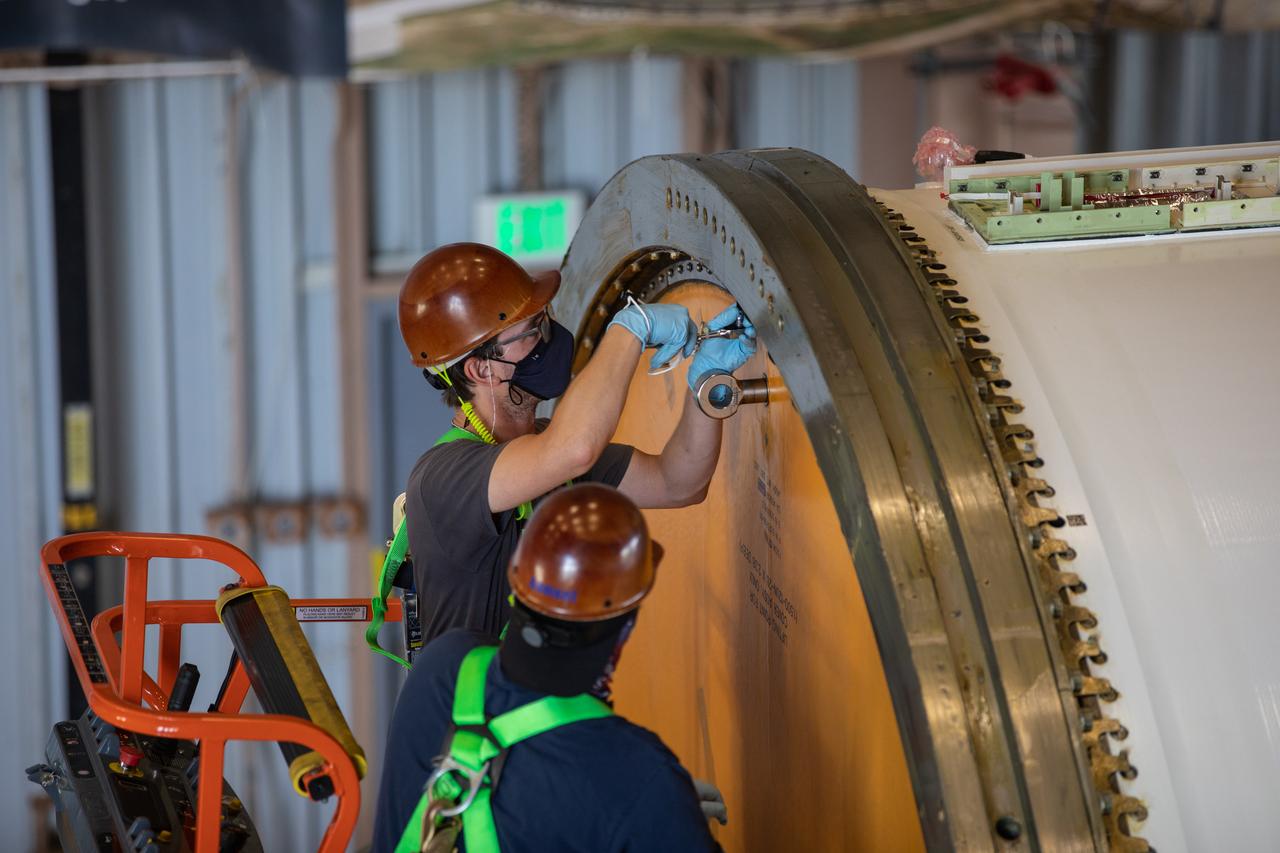
Technicians ready two NASA Space Launch System (SLS) solid rocket boosters for mating to the rocket’s two aft skirts on June 16, 2020, inside Kennedy Space Center’s Rotation, Processing and Surge Facility. Together, the twin boosters provide more than 75 percent of the total SLS thrust at launch. Manufactured by Northrop Grumman in Promontory, Utah, the boosters arrived at Kennedy via train. The cross-country journey was an important milestone for the agency’s Artemis I launch. The first in a series of increasingly complex missions, Artemis I will test the Orion spacecraft and SLS as an integrated system prior to crewed missions to the Moon. Once the boosters are mated with the aft skirts, they will be moved to the Vehicle Assembly Building for stacking on the mobile launcher.
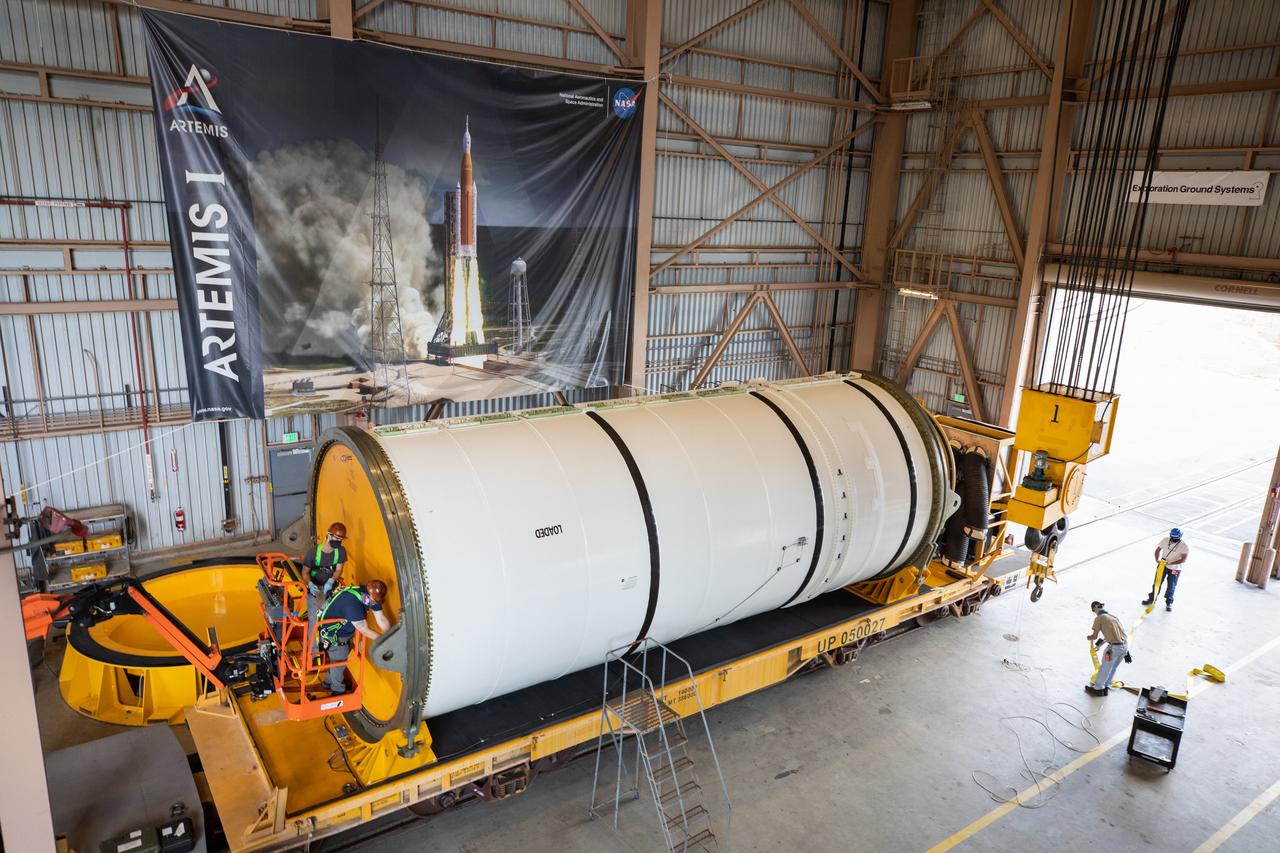
Technicians ready two NASA Space Launch System (SLS) solid rocket boosters for mating to the rocket’s two aft skirts on June 16, 2020, inside Kennedy Space Center’s Rotation, Processing and Surge Facility. Together, the twin boosters provide more than 75 percent of the total SLS thrust at launch. Manufactured by Northrop Grumman in Promontory, Utah, the boosters arrived at Kennedy via train. The cross-country journey was an important milestone for the agency’s Artemis I launch. The first in a series of increasingly complex missions, Artemis I will test the Orion spacecraft and SLS as an integrated system prior to crewed missions to the Moon. Once the boosters are mated with the aft skirts, they will be moved to the Vehicle Assembly Building for stacking on the mobile launcher.

Two NASA Space Launch System (SLS) solid rocket boosters are readied for mating to the rocket’s two aft skirts on June 16, 2020, inside Kennedy Space Center’s Rotation, Processing and Surge Facility. Together, the twin boosters provide more than 75 percent of the total SLS thrust at launch. Manufactured by Northrop Grumman in Promontory, Utah, the boosters arrived at Kennedy via train. The cross-country journey was an important milestone for the agency’s Artemis I launch. The first in a series of increasingly complex missions, Artemis I will test the Orion spacecraft and SLS as an integrated system prior to crewed missions to the Moon. Once the boosters are mated with the aft skirts, they will be moved to the Vehicle Assembly Building for stacking on the mobile launcher.
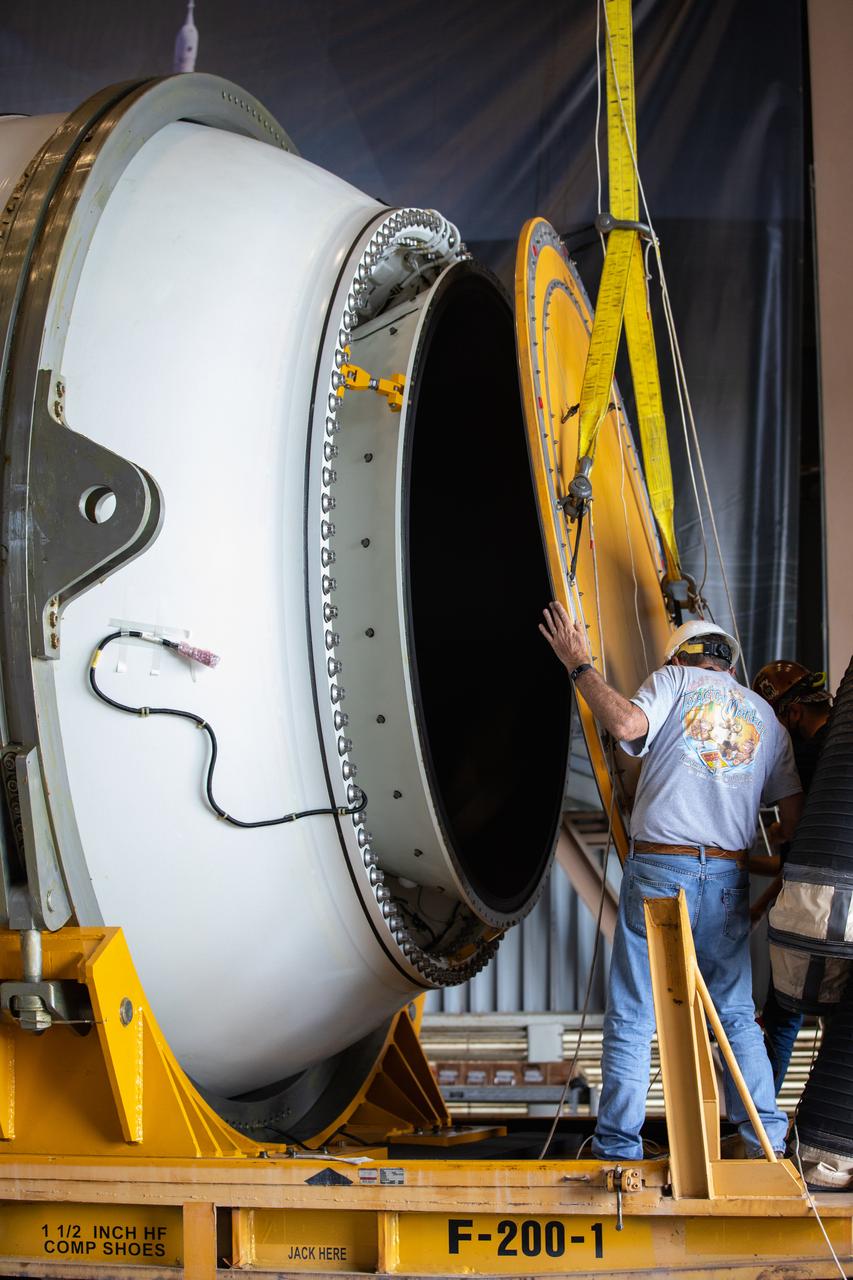
Technicians ready two NASA Space Launch System (SLS) solid rocket boosters for mating to the rocket’s two aft skirts on June 16, 2020, inside Kennedy Space Center’s Rotation, Processing and Surge Facility. Together, the twin boosters provide more than 75 percent of the total SLS thrust at launch. Manufactured by Northrop Grumman in Promontory, Utah, the boosters arrived at Kennedy via train. The cross-country journey was an important milestone for the agency’s Artemis I launch. The first in a series of increasingly complex missions, Artemis I will test the Orion spacecraft and SLS as an integrated system prior to crewed missions to the Moon. Once the boosters are mated with the aft skirts, they will be moved to the Vehicle Assembly Building for stacking on the mobile launcher.
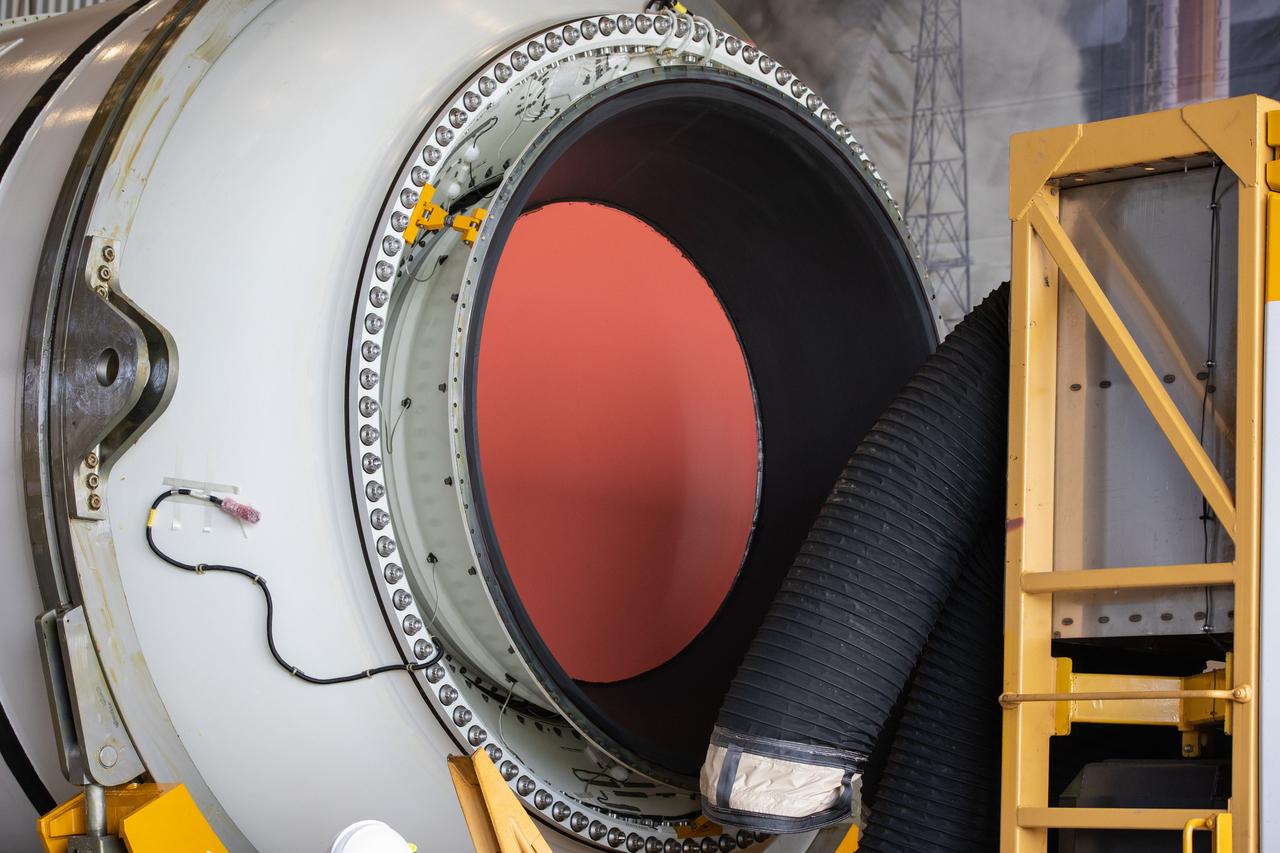
Two NASA Space Launch System (SLS) solid rocket boosters are readied for mating to the rocket’s two aft skirts on June 16, 2020, inside Kennedy Space Center’s Rotation, Processing and Surge Facility. Together, the twin boosters provide more than 75 percent of the total SLS thrust at launch. Manufactured by Northrop Grumman in Promontory, Utah, the boosters arrived at Kennedy via train. The cross-country journey was an important milestone for the agency’s Artemis I launch. The first in a series of increasingly complex missions, Artemis I will test the Orion spacecraft and SLS as an integrated system prior to crewed missions to the Moon. Once the boosters are mated with the aft skirts, they will be moved to the Vehicle Assembly Building for stacking on the mobile launcher.
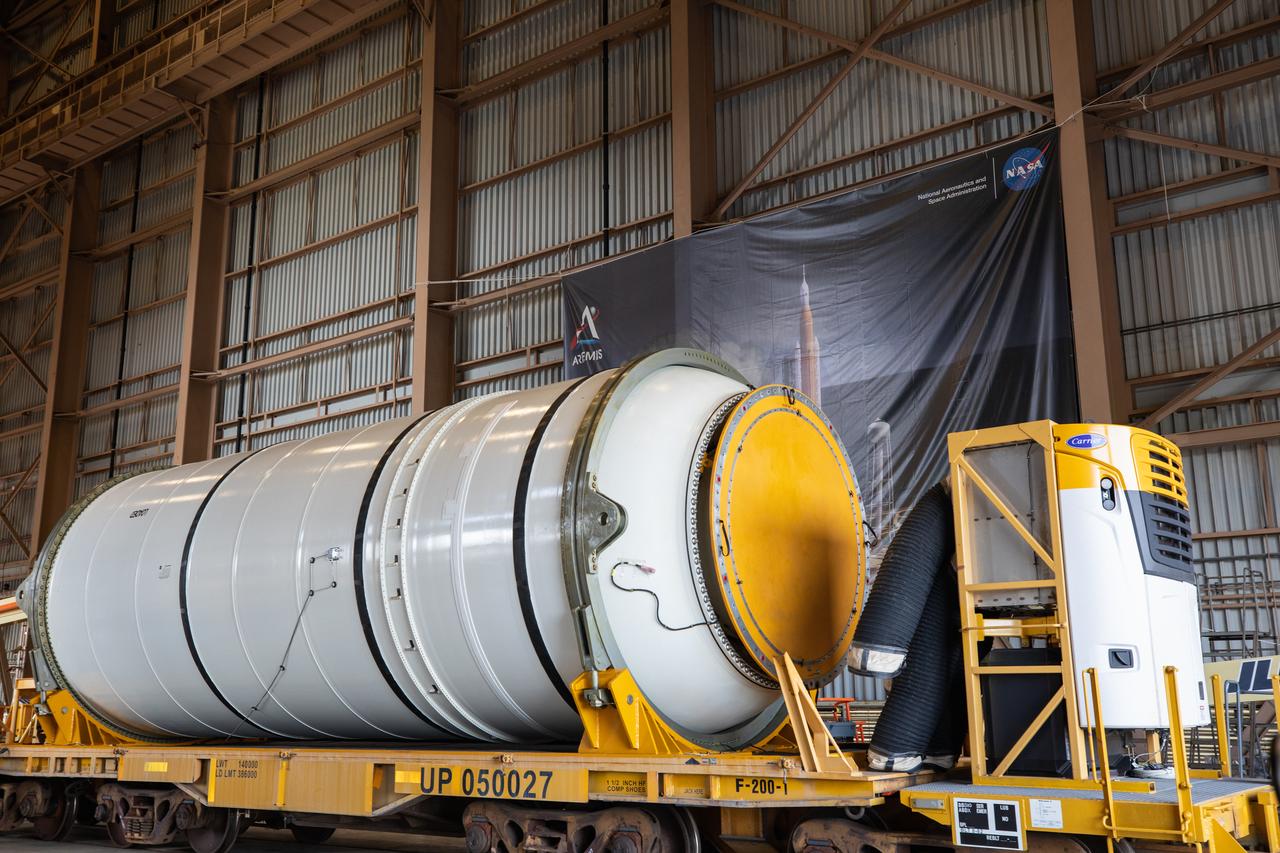
Two NASA Space Launch System (SLS) solid rocket boosters are readied for mating to the rocket’s two aft skirts on June 16, 2020, inside Kennedy Space Center’s Rotation, Processing and Surge Facility. Together, the twin boosters provide more than 75 percent of the total SLS thrust at launch. Manufactured by Northrop Grumman in Promontory, Utah, the boosters arrived at Kennedy via train. The cross-country journey was an important milestone for the agency’s Artemis I launch. The first in a series of increasingly complex missions, Artemis I will test the Orion spacecraft and SLS as an integrated system prior to crewed missions to the Moon. Once the boosters are mated with the aft skirts, they will be moved to the Vehicle Assembly Building for stacking on the mobile launcher.
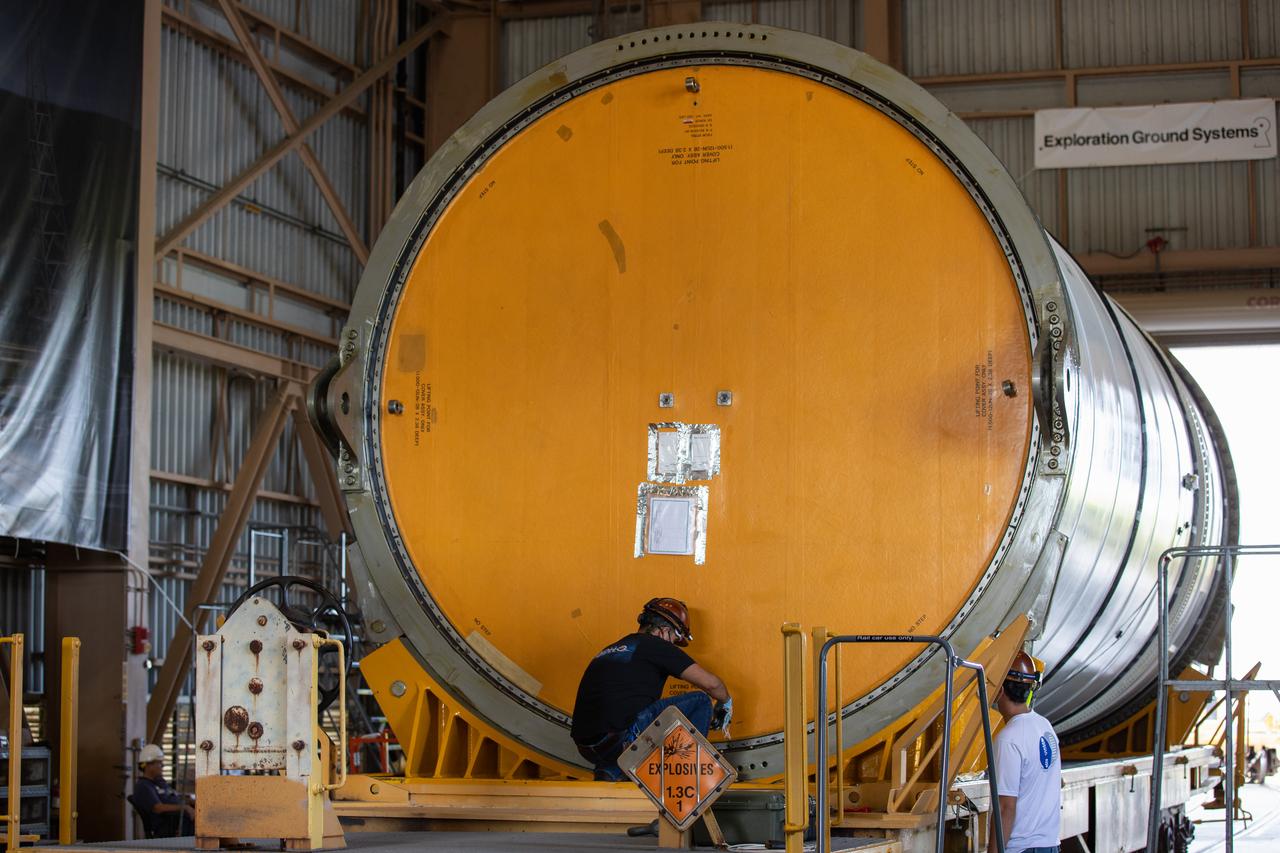
Technicians ready two NASA Space Launch System (SLS) solid rocket boosters for mating to the rocket’s two aft skirts on June 16, 2020, inside Kennedy Space Center’s Rotation, Processing and Surge Facility. Together, the twin boosters provide more than 75 percent of the total SLS thrust at launch. Manufactured by Northrop Grumman in Promontory, Utah, the boosters arrived at Kennedy via train. The cross-country journey was an important milestone for the agency’s Artemis I launch. The first in a series of increasingly complex missions, Artemis I will test the Orion spacecraft and SLS as an integrated system prior to crewed missions to the Moon. Once the boosters are mated with the aft skirts, they will be moved to the Vehicle Assembly Building for stacking on the mobile launcher.
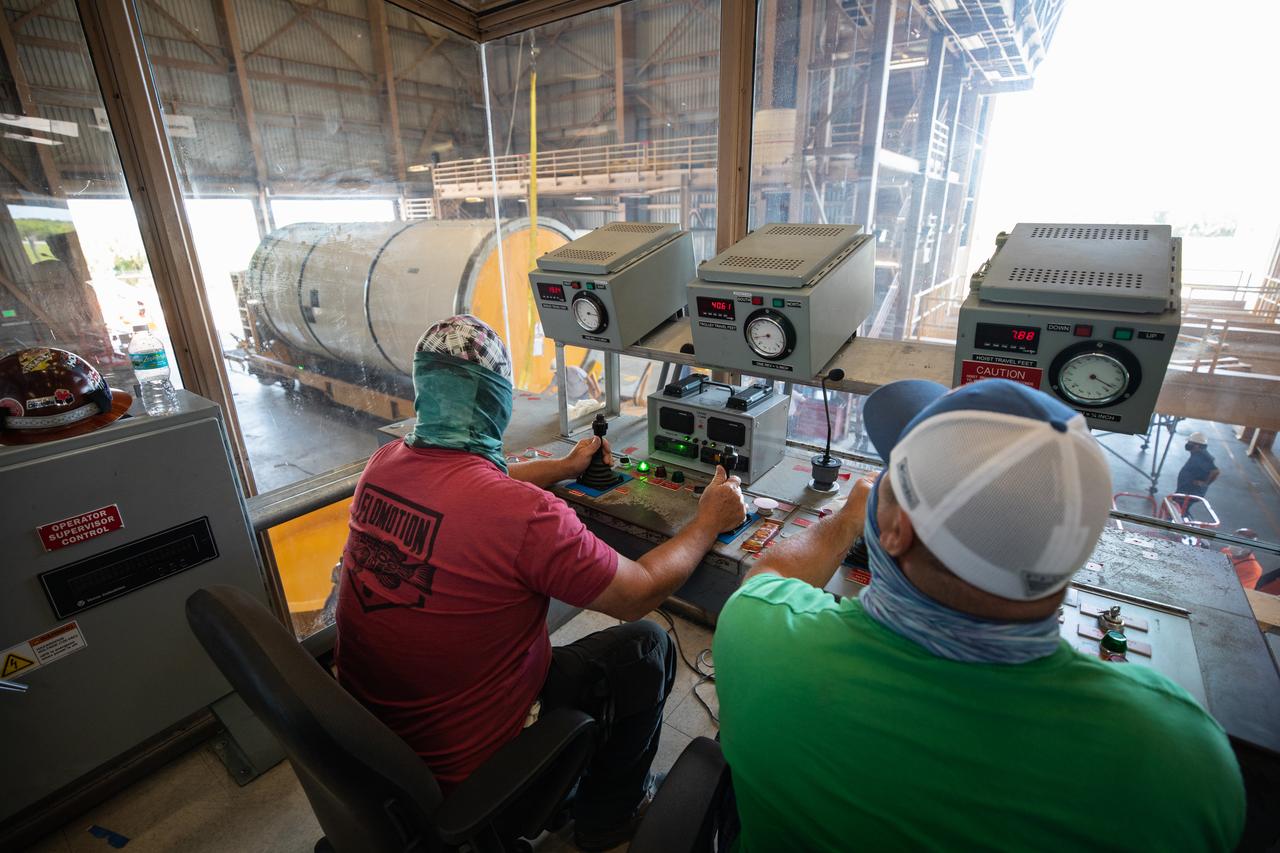
Technicians ready two NASA Space Launch System (SLS) solid rocket boosters for mating to the rocket’s two aft skirts on June 16, 2020, inside Kennedy Space Center’s Rotation, Processing and Surge Facility. Together, the twin boosters provide more than 75 percent of the total SLS thrust at launch. Manufactured by Northrop Grumman in Promontory, Utah, the boosters arrived at Kennedy via train. The cross-country journey was an important milestone for the agency’s Artemis I launch. The first in a series of increasingly complex missions, Artemis I will test the Orion spacecraft and SLS as an integrated system prior to crewed missions to the Moon. Once the boosters are mated with the aft skirts, they will be moved to the Vehicle Assembly Building for stacking on the mobile launcher.
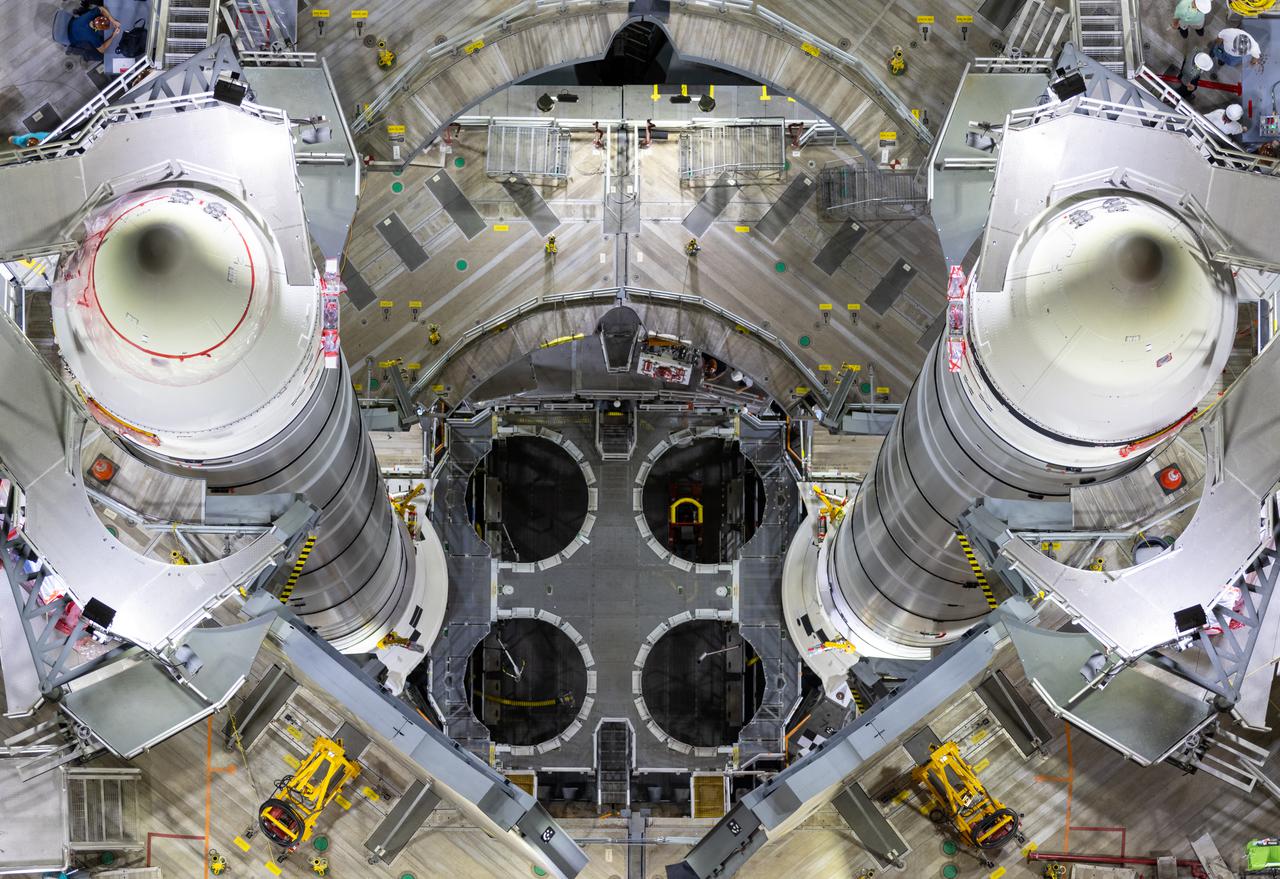
An overhead view shows the fully stacked twin solid rocket boosters for NASA’s Space Launch System (SLS) rocket on top of the mobile launcher inside High Bay 3 of the Vehicle Assembly Building (VAB) at the agency’s Kennedy Space Center in Florida on June 9, 2021. Teams with NASA’s Exploration Ground Systems and contractor Jacobs are making final preparations to integrate the boosters with the SLS core stage, which arrived at Kennedy in April 2020. Manufactured by Northrop Grumman in Utah, the twin boosters provide more than 75 percent of the total SLS thrust at launch. When integrated, the 212-foot, 188,000-pound core stage and twin boosters will provide more than 8.8 million pounds of thrust to launch Artemis I. The first in an increasingly complex series of missions, Artemis I will test SLS and the Orion spacecraft as an integrated system ahead of crewed flights in which NASA will land the first woman and person of color on the Moon.
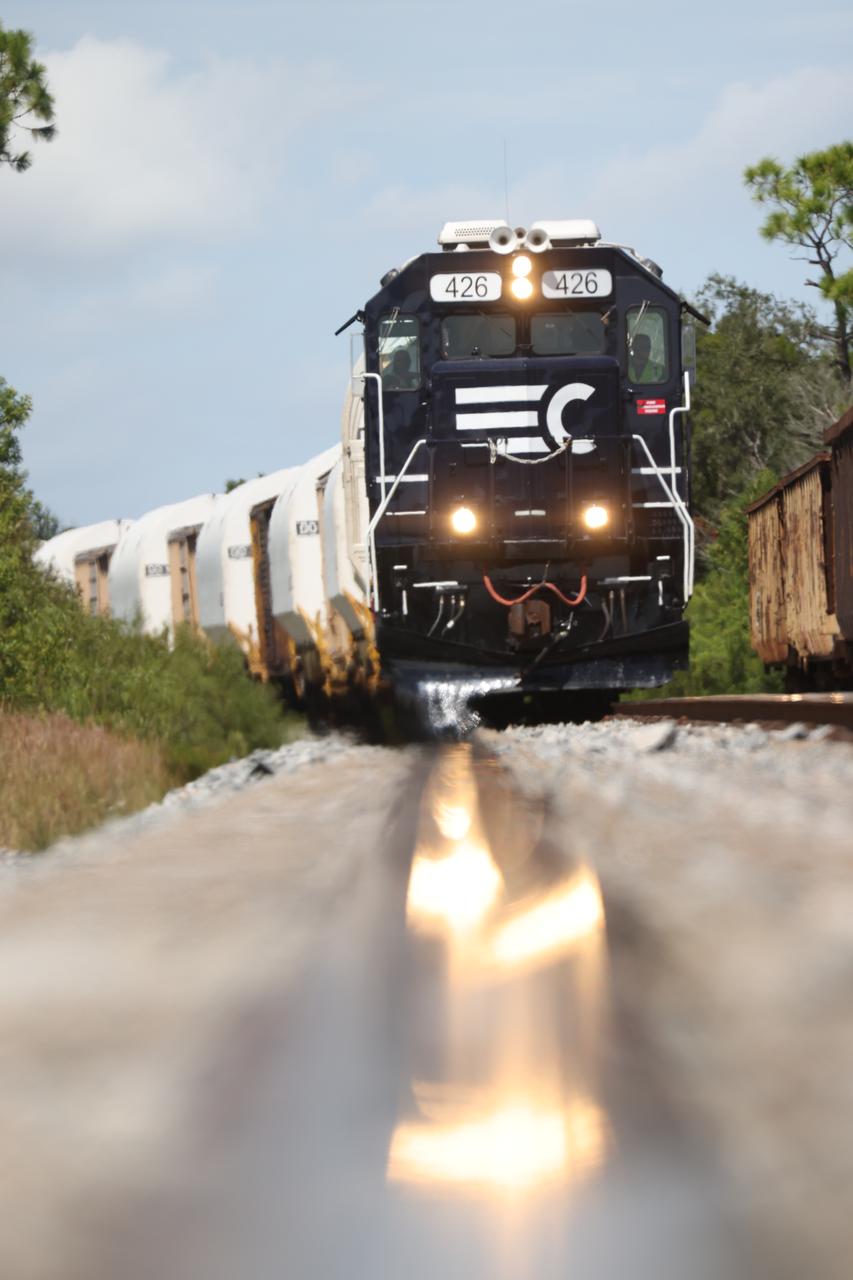
The 10 booster motor segments that will form the NASA Space Launch System rocket’s twin, five-segment solid rocket boosters for the agency’s Artemis II mission, arrive at Kennedy Space Center on Monday, Sept. 25, 2023. Due to their weight, the booster motor segments traveled by rail across eight states in specialized transporters to the Florida spaceport. Teams with NASA’s Exploration Ground Systems will process each of the segments at Kennedy in preparation for launch. Artemis II astronauts Reid Wiseman, Victor Glover, Christina Koch, and Jeremy Hansen will blast off from Kennedy, traveling around the Moon on the first crewed mission under Artemis that will test all of the Orion spacecraft’s systems.

The 10 booster motor segments that will form the NASA Space Launch System rocket’s twin, five-segment solid rocket boosters for the agency’s Artemis II mission, arrive at Kennedy Space Center on Monday, Sept. 25, 2023. Due to their weight, the booster motor segments traveled by rail across eight states in specialized transporters to the Florida spaceport. Teams with NASA’s Exploration Ground Systems will process each of the segments at Kennedy in preparation for launch. Artemis II astronauts Reid Wiseman, Victor Glover, Christina Koch, and Jeremy Hansen will blast off from Kennedy, traveling around the Moon on the first crewed mission under Artemis that will test all of the Orion spacecraft’s systems.