
Crowds of spectators watch from Jetty Park in Cape Canaveral, Florida, on July 2, 2019, as a Northrop Grumman provided booster launches from Launch Pad 46 carrying, a fully functional Launch Abort System with a test version of Orion attached for NASA’s Ascent Abort-2 (AA-2). Launch time was 7 a.m. EDT. During AA-2, the booster will send the LAS and Orion to an altitude of 31,000 feet, traveling at Mach 1.15 (more than 1,000 mph). The LAS’ three motors will work together to pull the crew module away from the booster and prepare it for splashdown in the Atlantic Ocean. The flight test will prove that the abort system can pull crew to safety in the unlikely event of an emergency during ascent.

A brilliant sunrise fills the sky before a fully functional Launch Abort System (LAS) with a test version of Orion attached, launches on NASA’s Ascent Abort-2 (AA-2) atop a Northrop Grumman provided booster on July 2, 2019, at 7 a.m. EDT, from Launch Pad 46 at Cape Canaveral Air Force Station in Florida. During AA-2, the booster will send the LAS and Orion to an altitude of 31,000 feet, traveling at Mach 1.15 (more than 1,000 mph). The LAS’ three motors will work together to pull the crew module away from the booster and prepare it for splashdown in the Atlantic Ocean. The flight test will prove that the abort system can pull crew to safety in the unlikely event of an emergency during ascent.
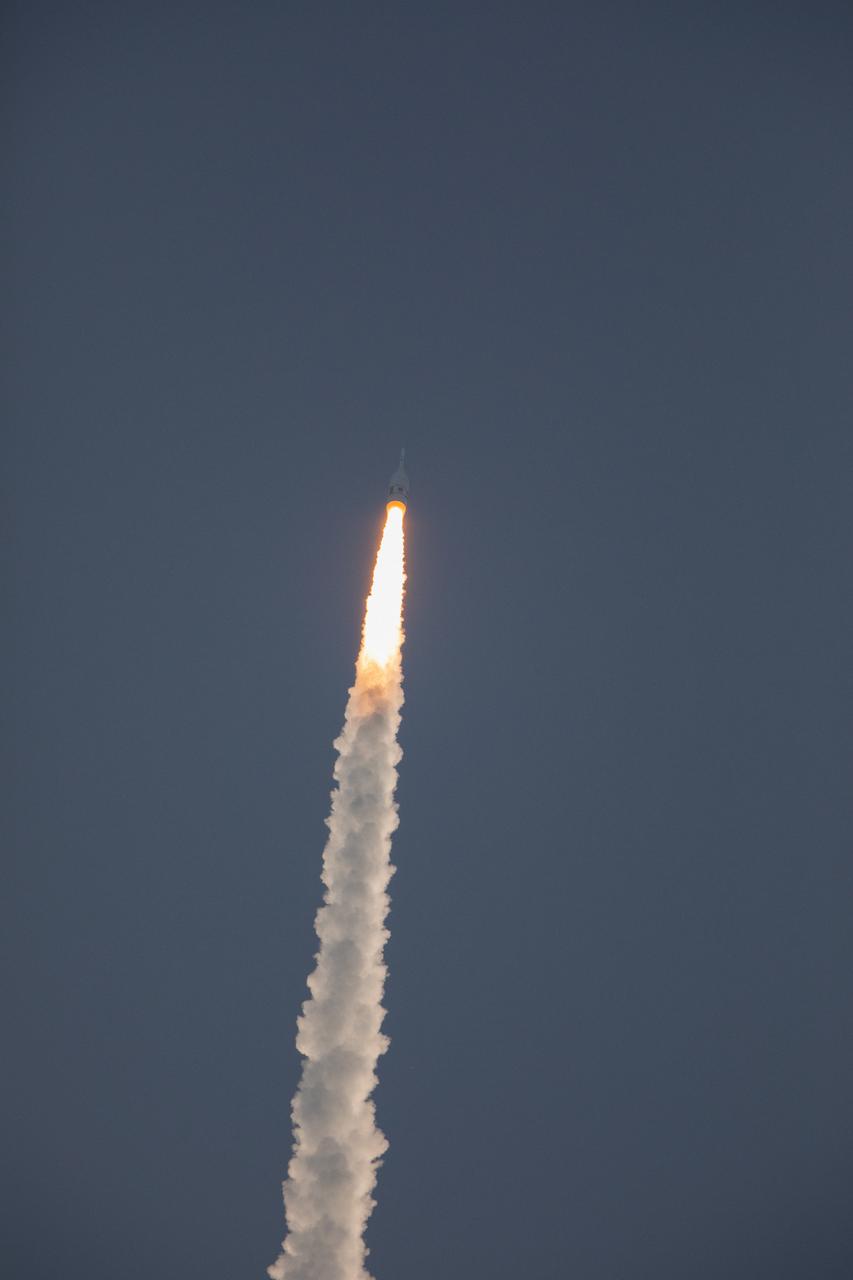
A fully functional Launch Abort System (LAS) with a test version of Orion attached, soars upward on NASA’s Ascent Abort-2 (AA-2) flight test atop a Northrop Grumman provided booster on July 2, 2019, after launching at 7 a.m. EDT, from Launch Pad 46 at Cape Canaveral Air Force Station in Florida. During AA-2, the booster will send the LAS and Orion to an altitude of 31,000 feet, traveling at Mach 1.15 (more than 1,000 mph). The LAS’ three motors will work together to pull the crew module away from the booster and prepare it for splashdown in the Atlantic Ocean. The flight test will prove that the abort system can pull crew to safety in the unlikely event of an emergency during ascent.
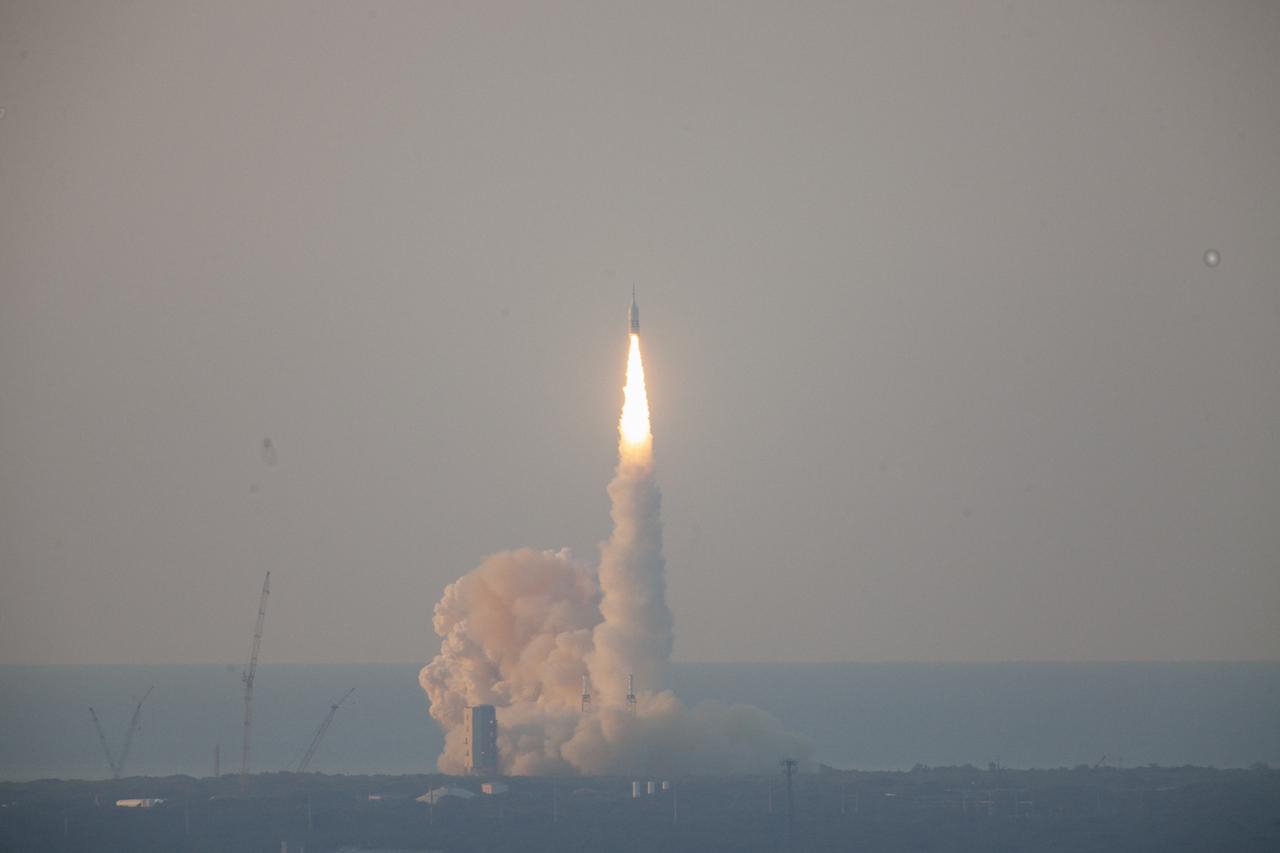
A fully functional Launch Abort System (LAS) with a test version of Orion attached, launches on NASA’s Ascent Abort-2 (AA-2) atop a Northrop Grumman provided booster on July 2, 2019, at 7 a.m. EDT, from Launch Pad 46 at Cape Canaveral Air Force Station in Florida. During AA-2, the booster will send the LAS and Orion to an altitude of 31,000 feet, traveling at Mach 1.15 (more than 1,000 mph). The LAS’ three motors will work together to pull the crew module away from the booster and prepare it for splashdown in the Atlantic Ocean. The flight test will prove that the abort system can pull crew to safety in the unlikely event of an emergency during ascent.

A brilliant sunrise fills the sky before a fully functional Launch Abort System (LAS) with a test version of Orion attached, launches on NASA’s Ascent Abort-2 (AA-2) atop a Northrop Grumman provided booster on July 2, 2019, at 7 a.m. EDT, from Launch Pad 46 at Cape Canaveral Air Force Station in Florida. During AA-2, the booster will send the LAS and Orion to an altitude of 31,000 feet, traveling at Mach 1.15 (more than 1,000 mph). The LAS’ three motors will work together to pull the crew module away from the booster and prepare it for splashdown in the Atlantic Ocean. The flight test will prove that the abort system can pull crew to safety in the unlikely event of an emergency during ascent.
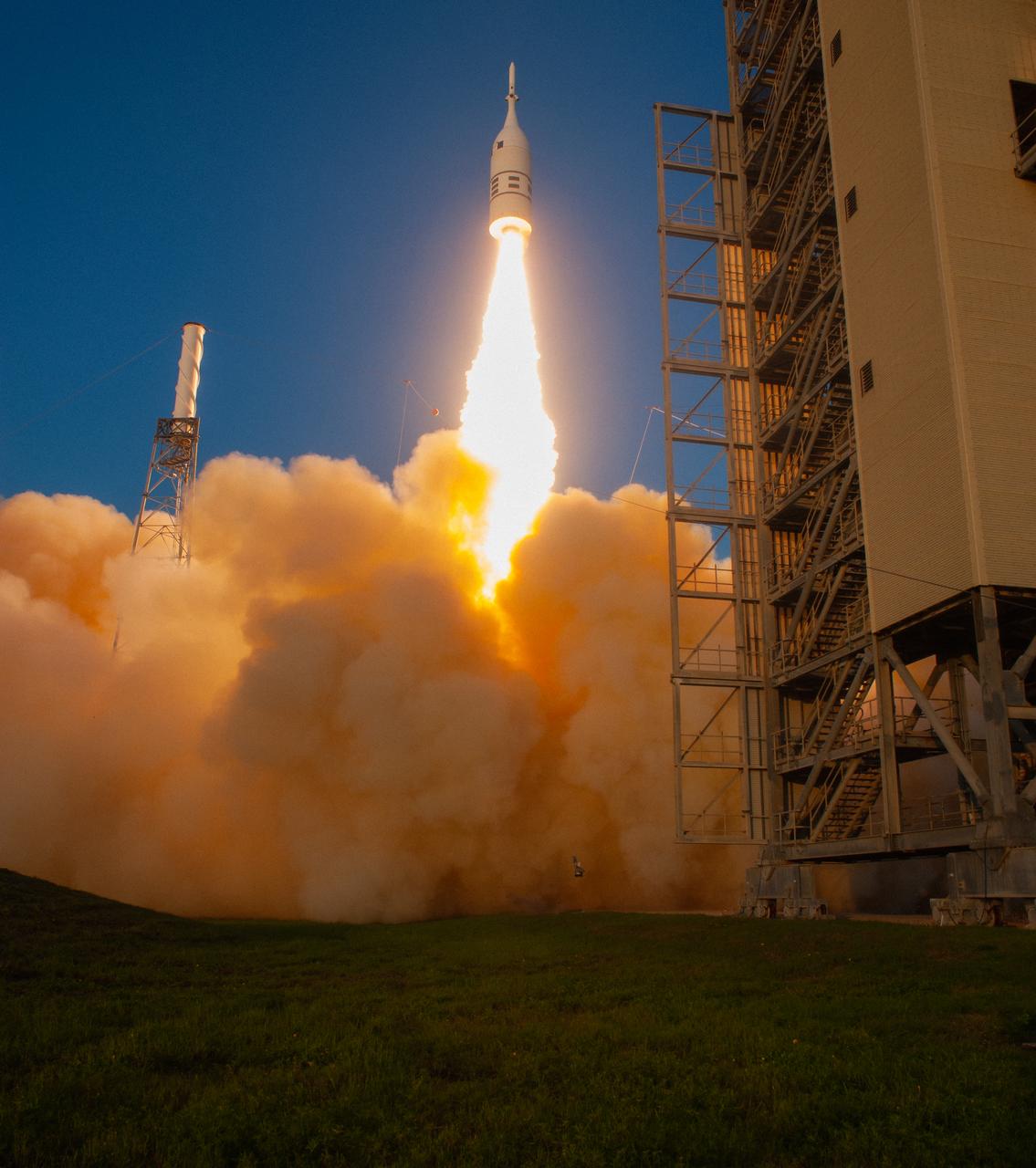
A fully functional Launch Abort System (LAS) with a test version of Orion attached, launches on NASA’s Ascent Abort-2 (AA-2) atop a Northrop Grumman provided booster on July 2, 2019, at 7 a.m. EDT, from Launch Pad 46 at Cape Canaveral Air Force Station in Florida. During AA-2, the booster will send the LAS and Orion to an altitude of 31,000 feet, traveling at Mach 1.15 (more than 1,000 mph). The LAS’ three motors will work together to pull the crew module away from the booster and prepare it for splashdown in the Atlantic Ocean. The flight test will prove that the abort system can pull crew to safety in the unlikely event of an emergency during ascent.
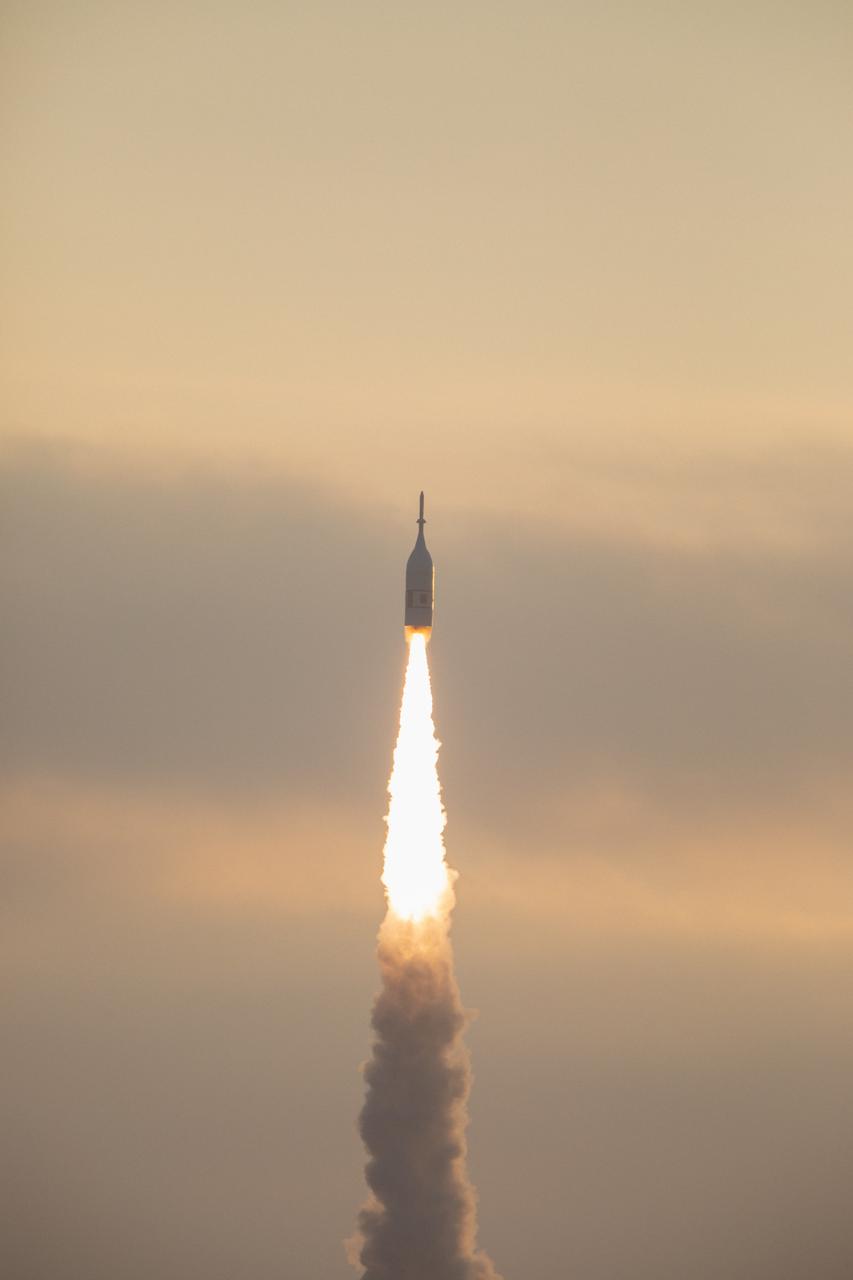
A fully functional Launch Abort System (LAS) with a test version of Orion attached, launches on NASA’s Ascent Abort-2 (AA-2) atop a Northrop Grumman provided booster on July 2, 2019, at 7 a.m. EDT, from Launch Pad 46 at Cape Canaveral Air Force Station in Florida. During AA-2, the booster will send the LAS and Orion to an altitude of 31,000 feet, traveling at Mach 1.15 (more than 1,000 mph). The LAS’ three motors will work together to pull the crew module away from the booster and prepare it for splashdown in the Atlantic Ocean. The flight test will prove that the abort system can pull crew to safety in the unlikely event of an emergency during ascent.

A fully functional Launch Abort System (LAS) with a test version of Orion attached, launches on NASA’s Ascent Abort-2 (AA-2) atop a Northrop Grumman provided booster on July 2, 2019, at 7 a.m. EDT, from Launch Pad 46 at Cape Canaveral Air Force Station in Florida. During AA-2, the booster will send the LAS and Orion to an altitude of 31,000 feet, traveling at Mach 1.15 (more than 1,000 mph). The LAS’ three motors will work together to pull the crew module away from the booster and prepare it for splashdown in the Atlantic Ocean. The flight test will prove that the abort system can pull crew to safety in the unlikely event of an emergency during ascent.
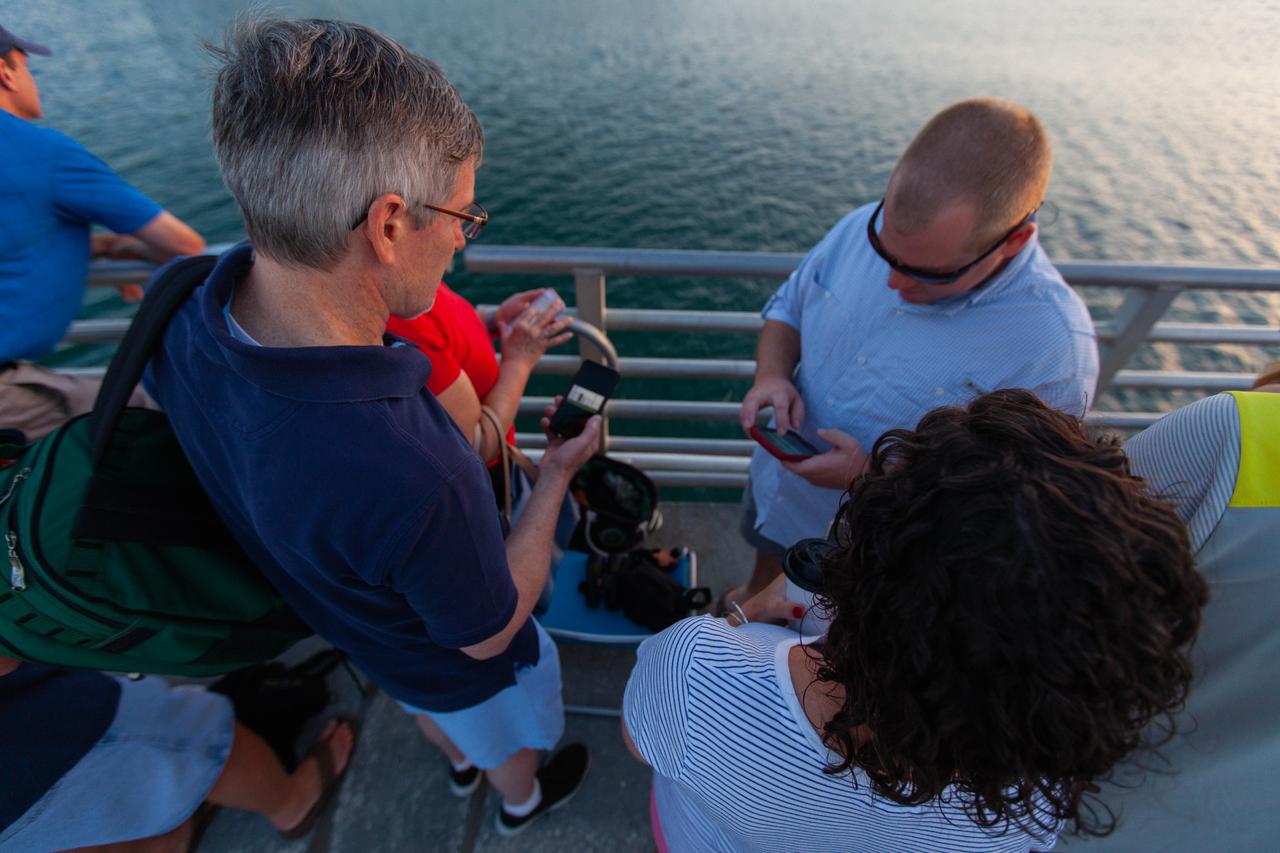
Crowds of spectators watch from Jetty Park in Cape Canaveral, Florida, on July 2, 2019, as a Northrop Grumman provided booster launches from Launch Pad 46 carrying, a fully functional Launch Abort System with a test version of Orion attached for NASA’s Ascent Abort-2 (AA-2). Launch time was 7 a.m. EDT. During AA-2, the booster will send the LAS and Orion to an altitude of 31,000 feet, traveling at Mach 1.15 (more than 1,000 mph). The LAS’ three motors will work together to pull the crew module away from the booster and prepare it for splashdown in the Atlantic Ocean. The flight test will prove that the abort system can pull crew to safety in the unlikely event of an emergency during ascent.

Crowds of spectators watch from Jetty Park in Cape Canaveral, Florida, on July 2, 2019, as a Northrop Grumman provided booster launches from Launch Pad 46 carrying, a fully functional Launch Abort System with a test version of Orion attached for NASA’s Ascent Abort-2 (AA-2). Launch time was 7 a.m. EDT. During AA-2, the booster will send the LAS and Orion to an altitude of 31,000 feet, traveling at Mach 1.15 (more than 1,000 mph). The LAS’ three motors will work together to pull the crew module away from the booster and prepare it for splashdown in the Atlantic Ocean. The flight test will prove that the abort system can pull crew to safety in the unlikely event of an emergency during ascent.
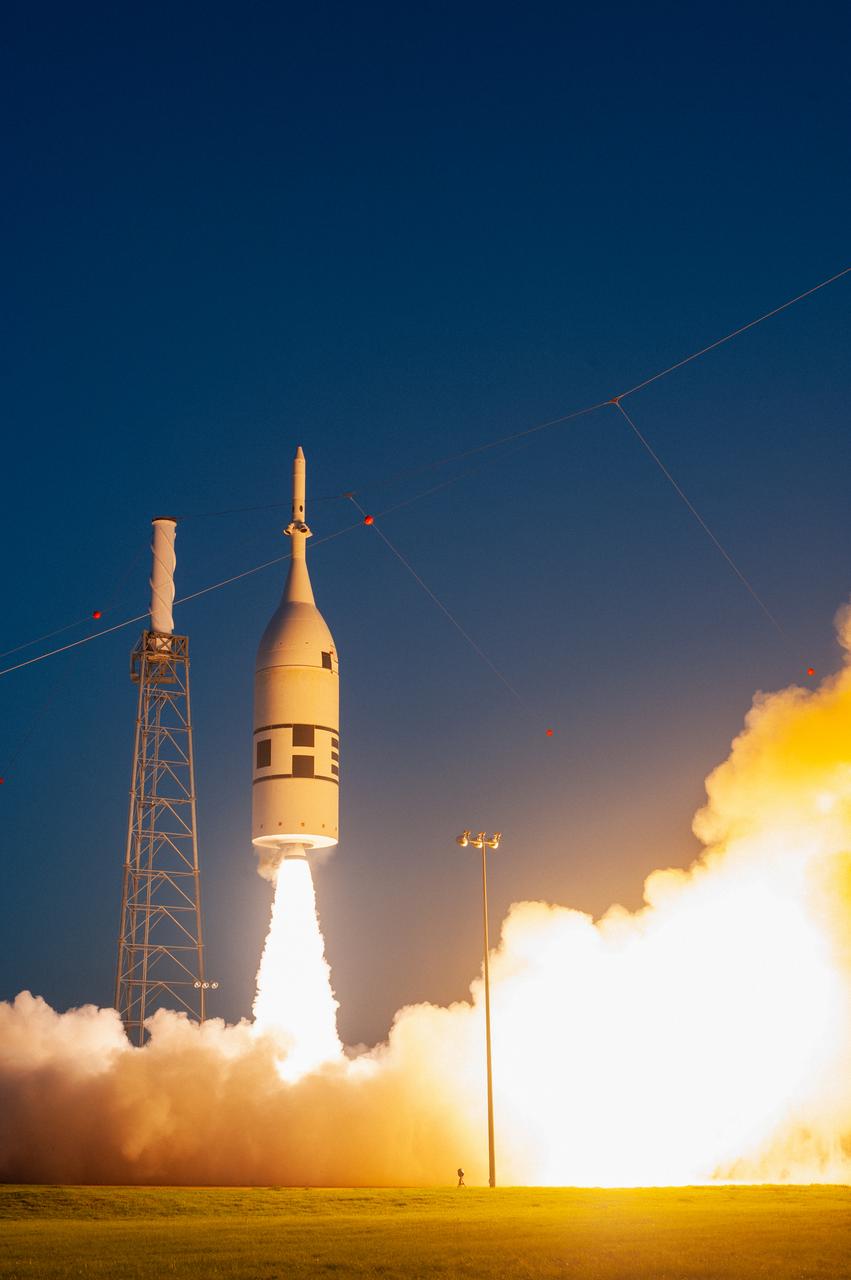
A fully functional Launch Abort System (LAS) with a test version of Orion attached, launches on NASA’s Ascent Abort-2 (AA-2) atop a Northrop Grumman provided booster on July 2, 2019, at 7 a.m. EDT, from Launch Pad 46 at Cape Canaveral Air Force Station in Florida. During AA-2, the booster will send the LAS and Orion to an altitude of 31,000 feet, traveling at Mach 1.15 (more than 1,000 mph). The LAS’ three motors will work together to pull the crew module away from the booster and prepare it for splashdown in the Atlantic Ocean. The flight test will prove that the abort system can pull crew to safety in the unlikely event of an emergency during ascent.
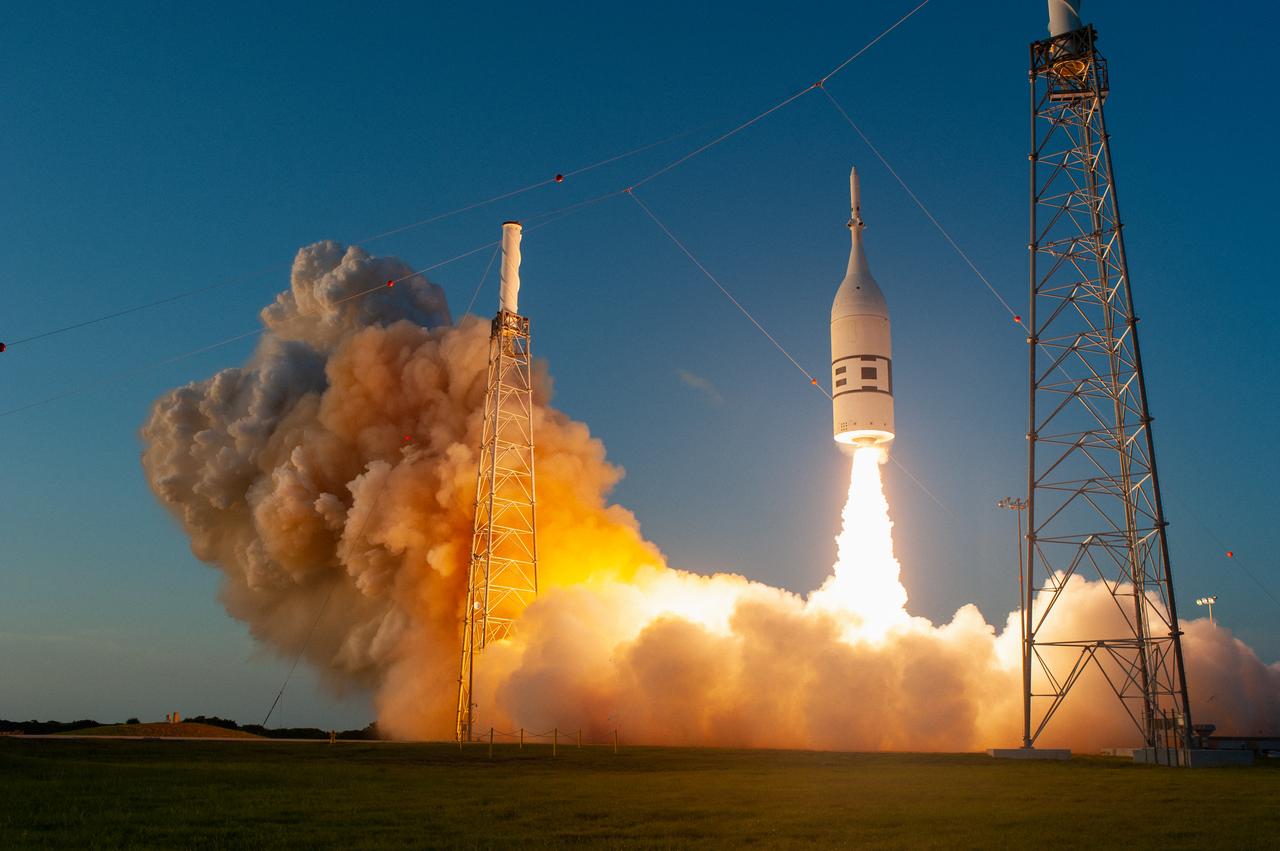
A fully functional Launch Abort System (LAS) with a test version of Orion attached, launches on NASA’s Ascent Abort-2 (AA-2) atop a Northrop Grumman provided booster on July 2, 2019, at 7 a.m. EDT, from Launch Pad 46 at Cape Canaveral Air Force Station in Florida. During AA-2, the booster will send the LAS and Orion to an altitude of 31,000 feet, traveling at Mach 1.15 (more than 1,000 mph). The LAS’ three motors will work together to pull the crew module away from the booster and prepare it for splashdown in the Atlantic Ocean. The flight test will prove that the abort system can pull crew to safety in the unlikely event of an emergency during ascent.
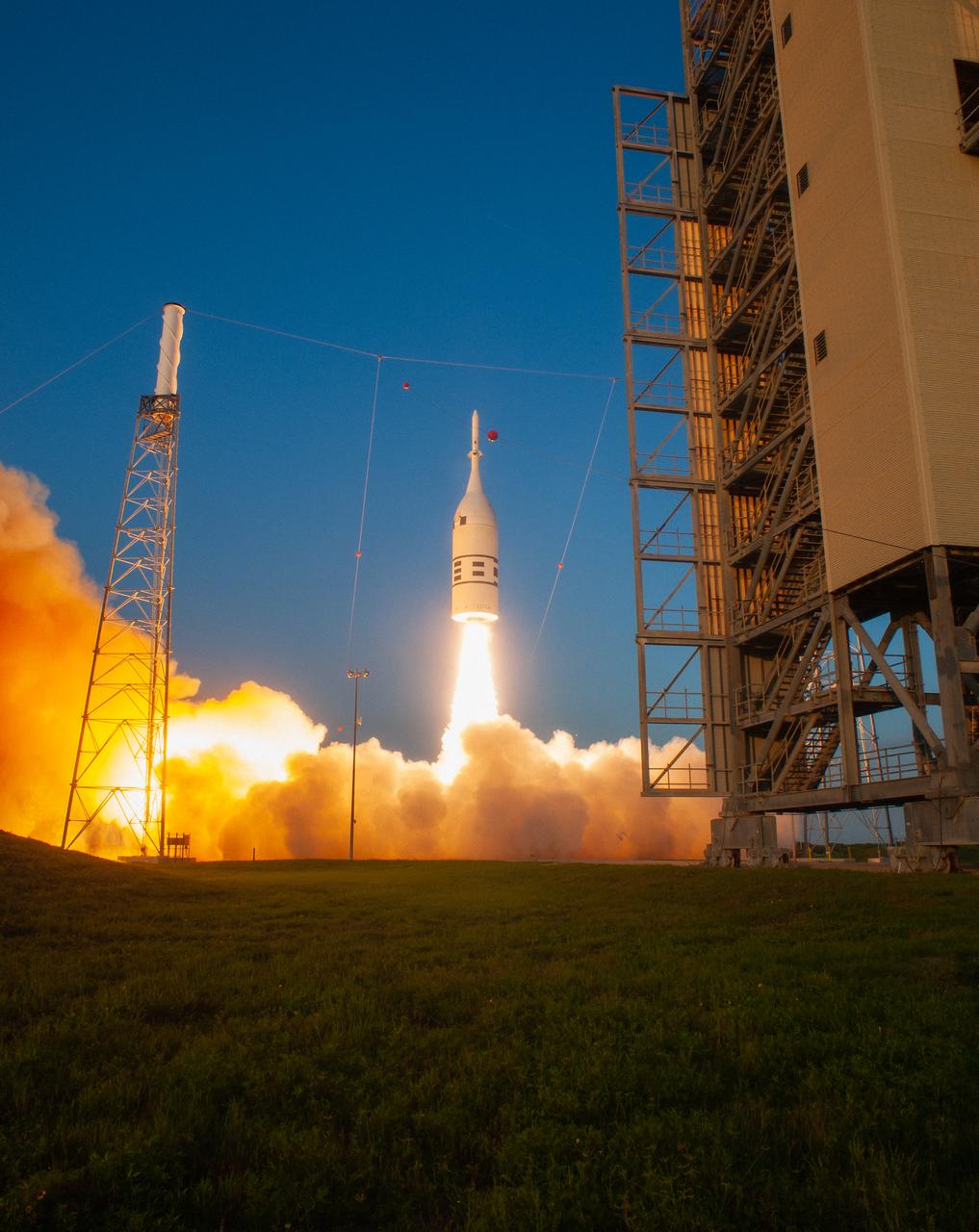
A fully functional Launch Abort System (LAS) with a test version of Orion attached, launches on NASA’s Ascent Abort-2 (AA-2) atop a Northrop Grumman provided booster on July 2, 2019, at 7 a.m. EDT, from Launch Pad 46 at Cape Canaveral Air Force Station in Florida. During AA-2, the booster will send the LAS and Orion to an altitude of 31,000 feet, traveling at Mach 1.15 (more than 1,000 mph). The LAS’ three motors will work together to pull the crew module away from the booster and prepare it for splashdown in the Atlantic Ocean. The flight test will prove that the abort system can pull crew to safety in the unlikely event of an emergency during ascent.
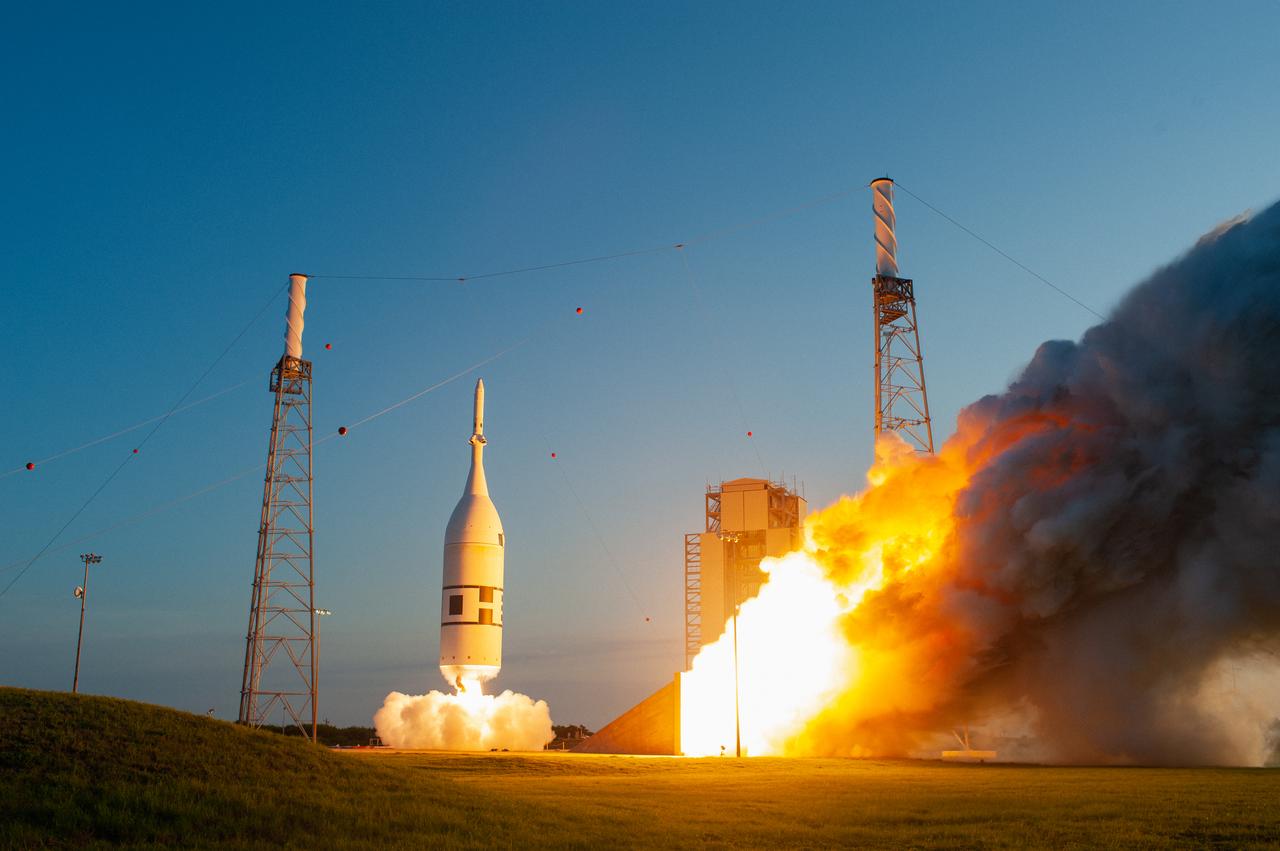
A fully functional Launch Abort System (LAS) with a test version of Orion attached, launches on NASA’s Ascent Abort-2 (AA-2) atop a Northrop Grumman provided booster on July 2, 2019, at 7 a.m. EDT, from Launch Pad 46 at Cape Canaveral Air Force Station in Florida. During AA-2, the booster will send the LAS and Orion to an altitude of 31,000 feet, traveling at Mach 1.15 (more than 1,000 mph). The LAS’ three motors will work together to pull the crew module away from the booster and prepare it for splashdown in the Atlantic Ocean. The flight test will prove that the abort system can pull crew to safety in the unlikely event of an emergency during ascent.

Crowds of spectators watch from Jetty Park in Cape Canaveral, Florida, on July 2, 2019, as a Northrop Grumman provided booster launches from Launch Pad 46 carrying, a fully functional Launch Abort System with a test version of Orion attached for NASA’s Ascent Abort-2 (AA-2). Launch time was 7 a.m. EDT. During AA-2, the booster will send the LAS and Orion to an altitude of 31,000 feet, traveling at Mach 1.15 (more than 1,000 mph). The LAS’ three motors will work together to pull the crew module away from the booster and prepare it for splashdown in the Atlantic Ocean. The flight test will prove that the abort system can pull crew to safety in the unlikely event of an emergency during ascent.
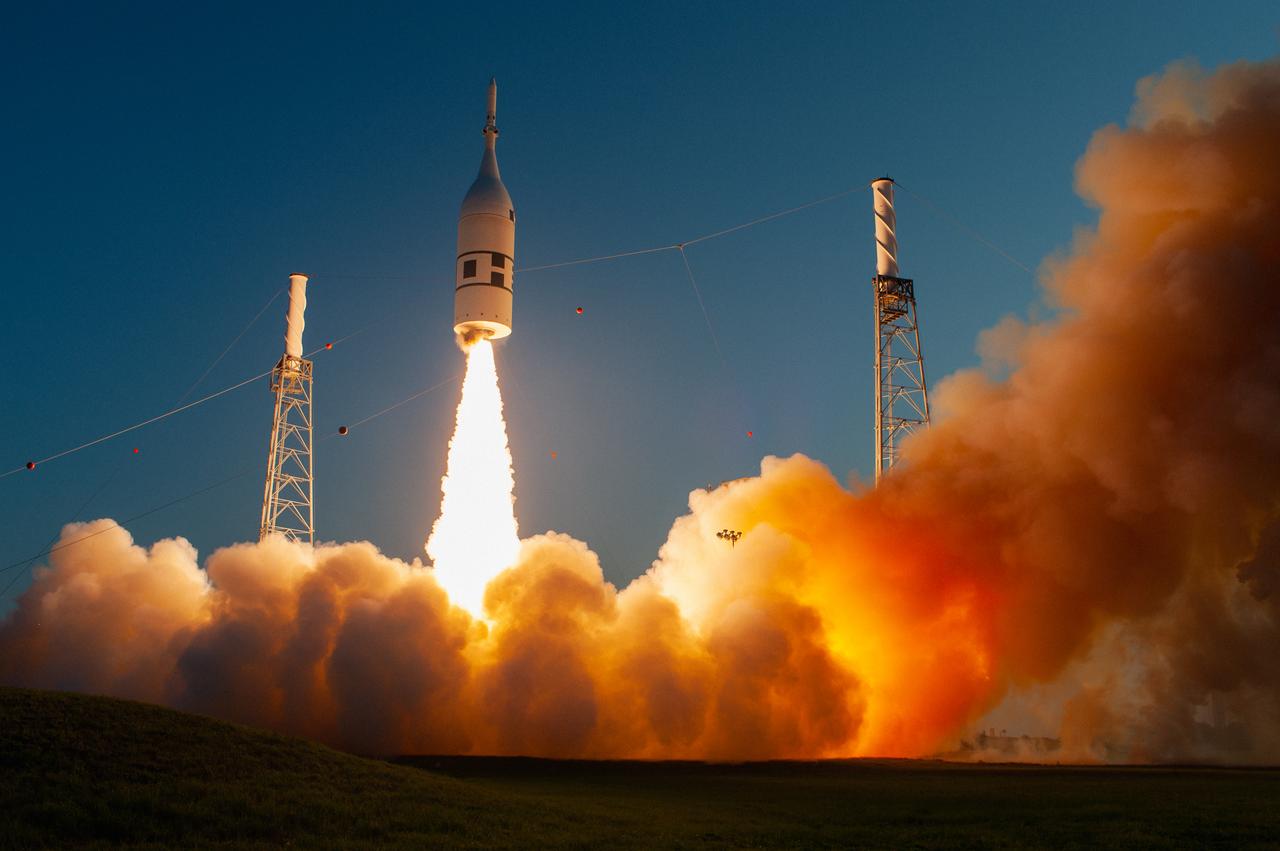
A fully functional Launch Abort System (LAS) with a test version of Orion attached, soars upward on NASA’s Ascent Abort-2 (AA-2) flight test atop a Northrop Grumman provided booster on July 2, 2019, after launching at 7 a.m. EDT, from Launch Pad 46 at Cape Canaveral Air Force Station in Florida. During AA-2, the booster will send the LAS and Orion to an altitude of 31,000 feet, traveling at Mach 1.15 (more than 1,000 mph). The LAS’ three motors will work together to pull the crew module away from the booster and prepare it for splashdown in the Atlantic Ocean. The flight test will prove that the abort system can pull crew to safety in the unlikely event of an emergency during ascent.
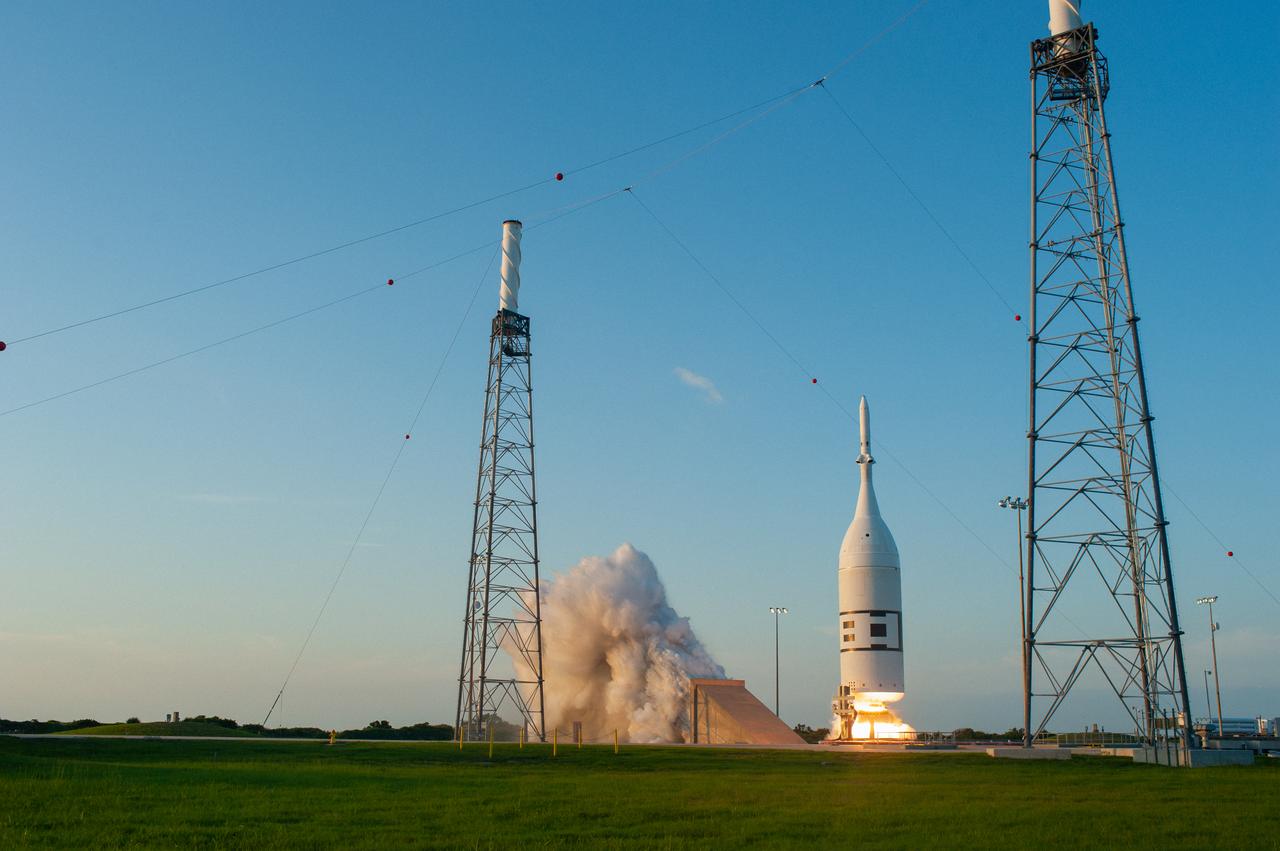
A fully functional Launch Abort System (LAS) with a test version of Orion attached, launches on NASA’s Ascent Abort-2 (AA-2) atop a Northrop Grumman provided booster on July 2, 2019, at 7 a.m. EDT, from Launch Pad 46 at Cape Canaveral Air Force Station in Florida. During AA-2, the booster will send the LAS and Orion to an altitude of 31,000 feet, traveling at Mach 1.15 (more than 1,000 mph). The LAS’ three motors will work together to pull the crew module away from the booster and prepare it for splashdown in the Atlantic Ocean. The flight test will prove that the abort system can pull crew to safety in the unlikely event of an emergency during ascent.
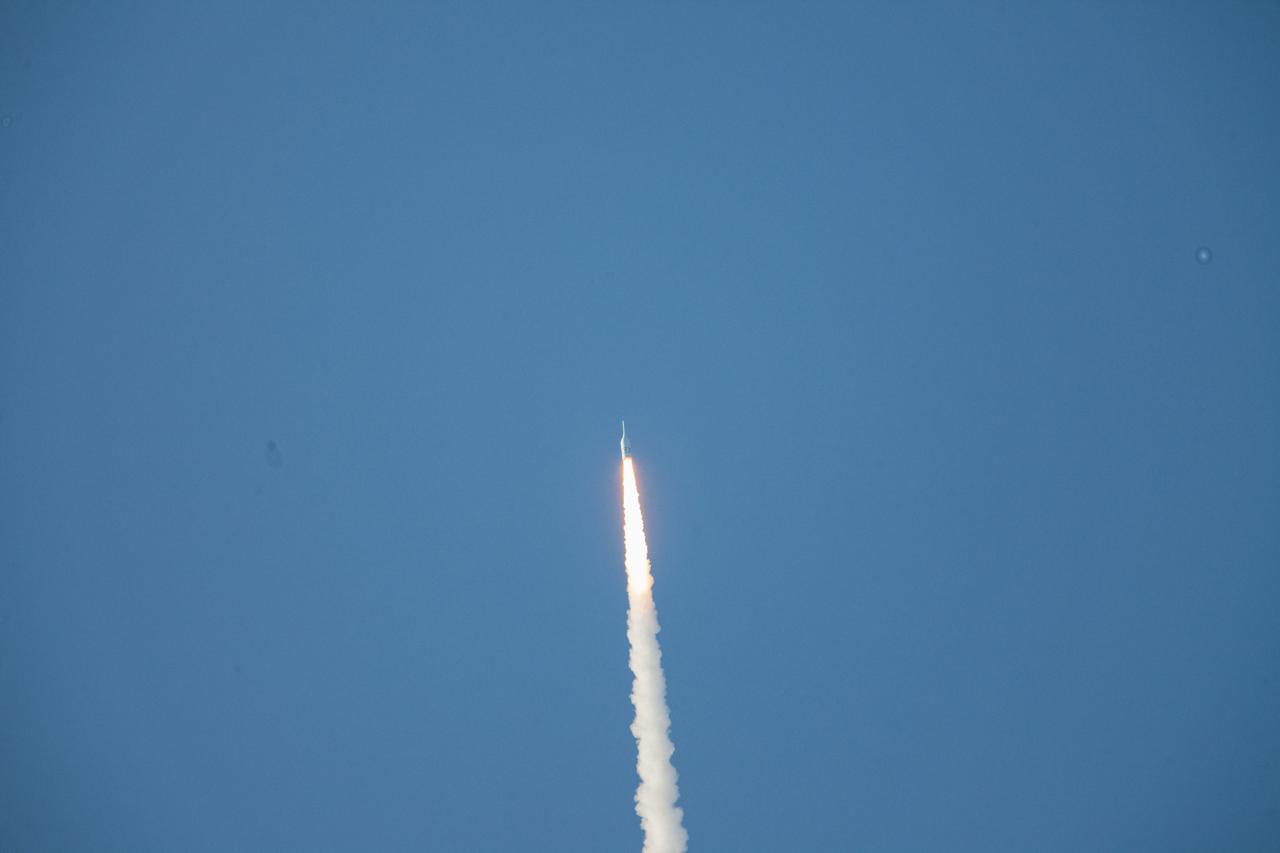
A fully functional Launch Abort System (LAS) with a test version of Orion attached, soars upward on NASA’s Ascent Abort-2 (AA-2) flight test atop a Northrop Grumman provided booster on July 2, 2019, after launching at 7 a.m. EDT, from Launch Pad 46 at Cape Canaveral Air Force Station in Florida. During AA-2, the booster will send the LAS and Orion to an altitude of 31,000 feet, traveling at Mach 1.15 (more than 1,000 mph). The LAS’ three motors will work together to pull the crew module away from the booster and prepare it for splashdown in the Atlantic Ocean. The flight test will prove that the abort system can pull crew to safety in the unlikely event of an emergency during ascent.

A fully functional Launch Abort System (LAS) with a test version of Orion attached, soars upward on NASA’s Ascent Abort-2 (AA-2) flight test atop a Northrop Grumman provided booster on July 2, 2019, after launching at 7 a.m. EDT, from Launch Pad 46 at Cape Canaveral Air Force Station in Florida. During AA-2, the booster will send the LAS and Orion to an altitude of 31,000 feet, traveling at Mach 1.15 (more than 1,000 mph). The LAS’ three motors will work together to pull the crew module away from the booster and prepare it for splashdown in the Atlantic Ocean. The flight test will prove that the abort system can pull crew to safety in the unlikely event of an emergency during ascent.

A view of Jetty Park in Cape Canaveral, Florida, on July 2, 2019, as crowds gather to watch a Northrop Grumman provided booster launch from Launch Pad 46 carrying a fully functional Launch Abort System with a test version of Orion attached for NASA’s Ascent Abort-2 (AA-2). Launch time was 7 a.m. EDT. During AA-2, the booster will send the LAS and Orion to an altitude of 31,000 feet, traveling at Mach 1.15 (more than 1,000 mph). The LAS’ three motors will work together to pull the crew module away from the booster and prepare it for splashdown in the Atlantic Ocean. The flight test will prove that the abort system can pull crew to safety in the unlikely event of an emergency during ascent.

A fully functional Launch Abort System (LAS) with a test version of Orion attached, soars upward on NASA’s Ascent Abort-2 (AA-2) flight test atop a Northrop Grumman provided booster on July 2, 2019, after launching at 7 a.m. EDT, from Launch Pad 46 at Cape Canaveral Air Force Station in Florida. During AA-2, the booster will send the LAS and Orion to an altitude of 31,000 feet, traveling at Mach 1.15 (more than 1,000 mph). The LAS’ three motors will work together to pull the crew module away from the booster and prepare it for splashdown in the Atlantic Ocean. The flight test will prove that the abort system can pull crew to safety in the unlikely event of an emergency during ascent.

A view of the sunrise at Jetty Park in Cape Canaveral, Florida, on July 2, 2019, as crowds gather to watch a Northrop Grumman provided booster launch from Launch Pad 46 carrying, a fully functional Launch Abort System with a test version of Orion attached for NASA’s Ascent Abort-2 (AA-2). Launch time was 7 a.m. EDT. During AA-2, the booster will send the LAS and Orion to an altitude of 31,000 feet, traveling at Mach 1.15 (more than 1,000 mph). The LAS’ three motors will work together to pull the crew module away from the booster and prepare it for splashdown in the Atlantic Ocean. The flight test will prove that the abort system can pull crew to safety in the unlikely event of an emergency during ascent.
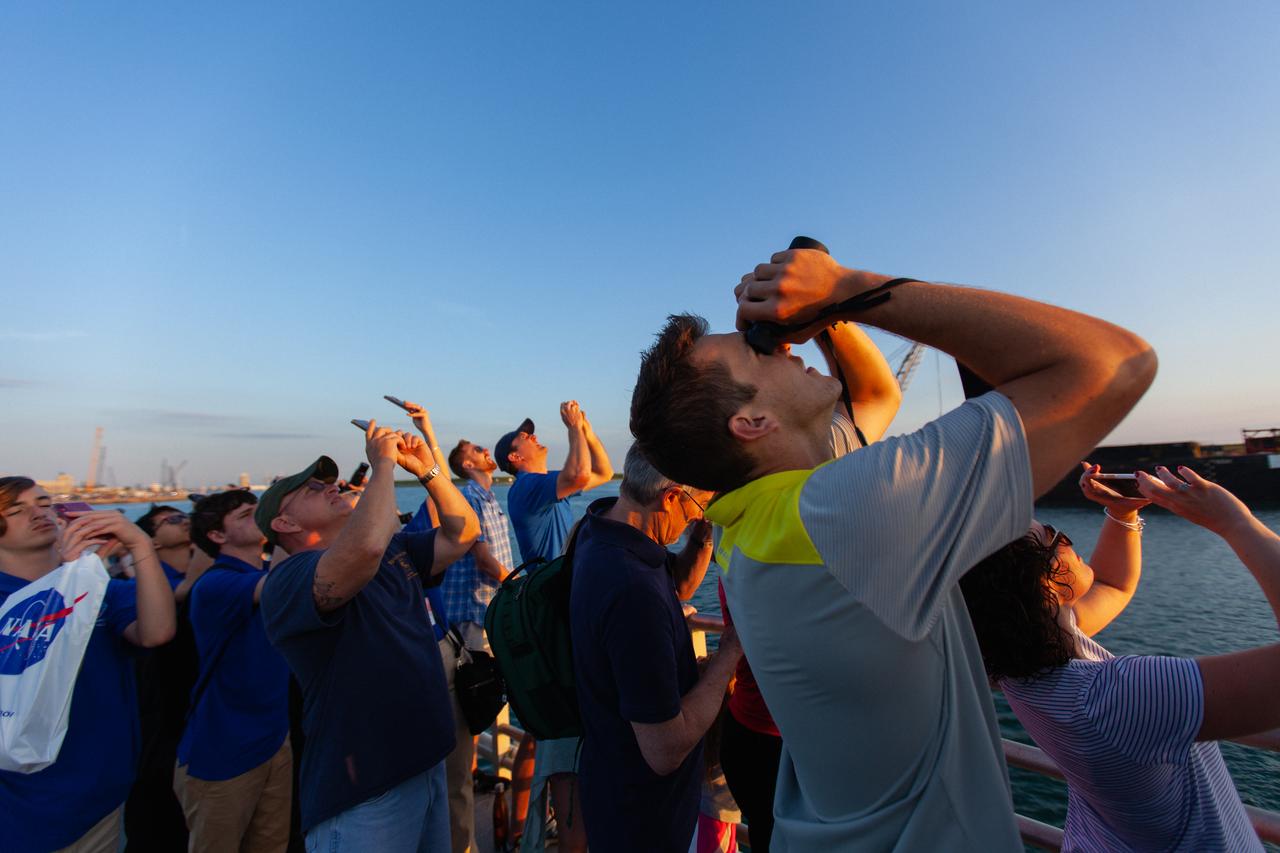
Crowds of spectators watch from Jetty Park in Cape Canaveral, Florida, on July 2, 2019, as a Northrop Grumman provided booster launches from Launch Pad 46 carrying, a fully functional Launch Abort System with a test version of Orion attached for NASA’s Ascent Abort-2 (AA-2). Launch time was 7 a.m. EDT. During AA-2, the booster will send the LAS and Orion to an altitude of 31,000 feet, traveling at Mach 1.15 (more than 1,000 mph). The LAS’ three motors will work together to pull the crew module away from the booster and prepare it for splashdown in the Atlantic Ocean. The flight test will prove that the abort system can pull crew to safety in the unlikely event of an emergency during ascent.

Crowds of spectators watch from Jetty Park in Cape Canaveral, Florida, on July 2, 2019, as a Northrop Grumman provided booster launches from Launch Pad 46 carrying, a fully functional Launch Abort System with a test version of Orion attached for NASA’s Ascent Abort-2 (AA-2). Launch time was 7 a.m. EDT. During AA-2, the booster will send the LAS and Orion to an altitude of 31,000 feet, traveling at Mach 1.15 (more than 1,000 mph). The LAS’ three motors will work together to pull the crew module away from the booster and prepare it for splashdown in the Atlantic Ocean. The flight test will prove that the abort system can pull crew to safety in the unlikely event of an emergency during ascent.
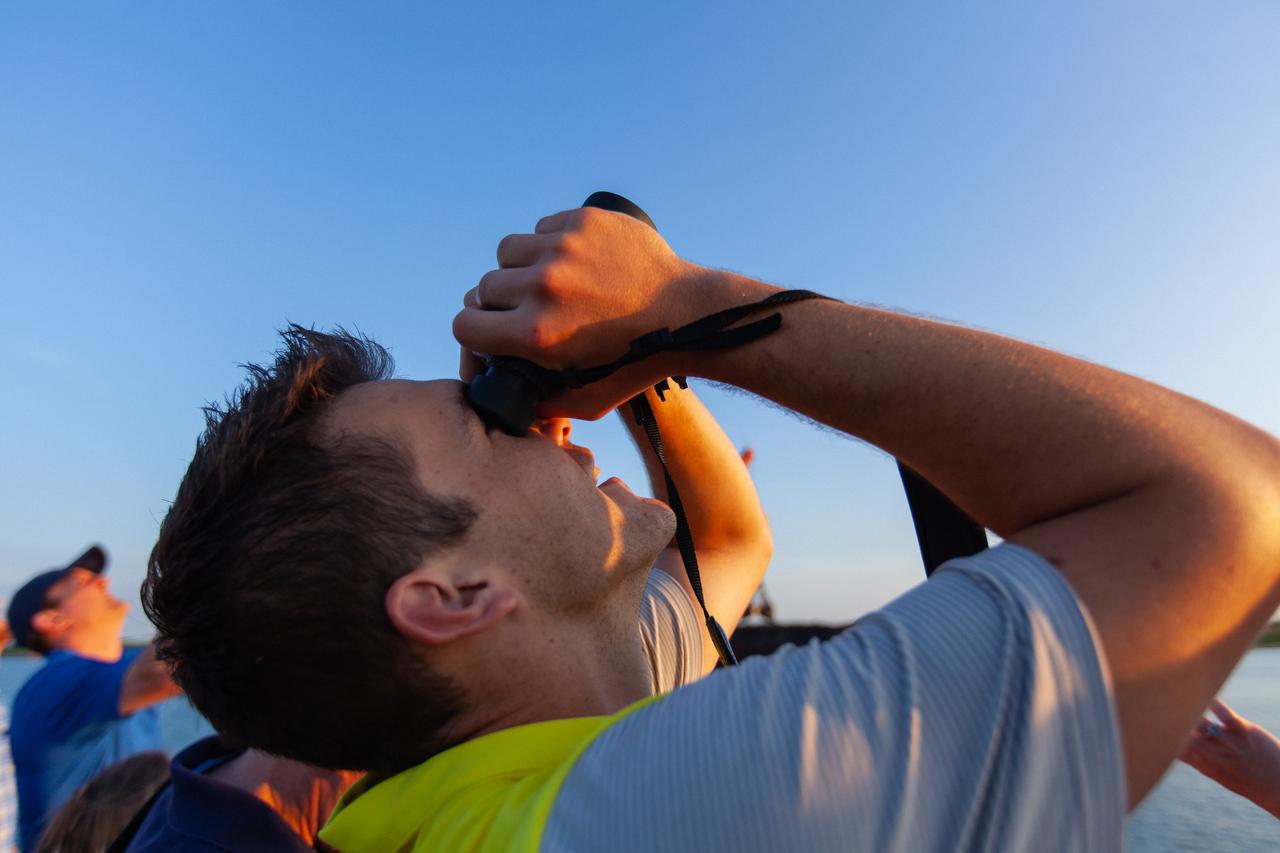
Crowds of spectators watch from Jetty Park in Cape Canaveral, Florida, on July 2, 2019, as a Northrop Grumman provided booster launches from Launch Pad 46 carrying, a fully functional Launch Abort System with a test version of Orion attached for NASA’s Ascent Abort-2 (AA-2). Launch time was 7 a.m. EDT. During AA-2, the booster will send the LAS and Orion to an altitude of 31,000 feet, traveling at Mach 1.15 (more than 1,000 mph). The LAS’ three motors will work together to pull the crew module away from the booster and prepare it for splashdown in the Atlantic Ocean. The flight test will prove that the abort system can pull crew to safety in the unlikely event of an emergency during ascent.

A brilliant sunrise fills the sky before a fully functional Launch Abort System (LAS) with a test version of Orion attached, launches on NASA’s Ascent Abort-2 (AA-2) atop a Northrop Grumman provided booster on July 2, 2019, at 7 a.m. EDT, from Launch Pad 46 at Cape Canaveral Air Force Station in Florida. During AA-2, the booster will send the LAS and Orion to an altitude of 31,000 feet, traveling at Mach 1.15 (more than 1,000 mph). The LAS’ three motors will work together to pull the crew module away from the booster and prepare it for splashdown in the Atlantic Ocean. The flight test will prove that the abort system can pull crew to safety in the unlikely event of an emergency during ascent.
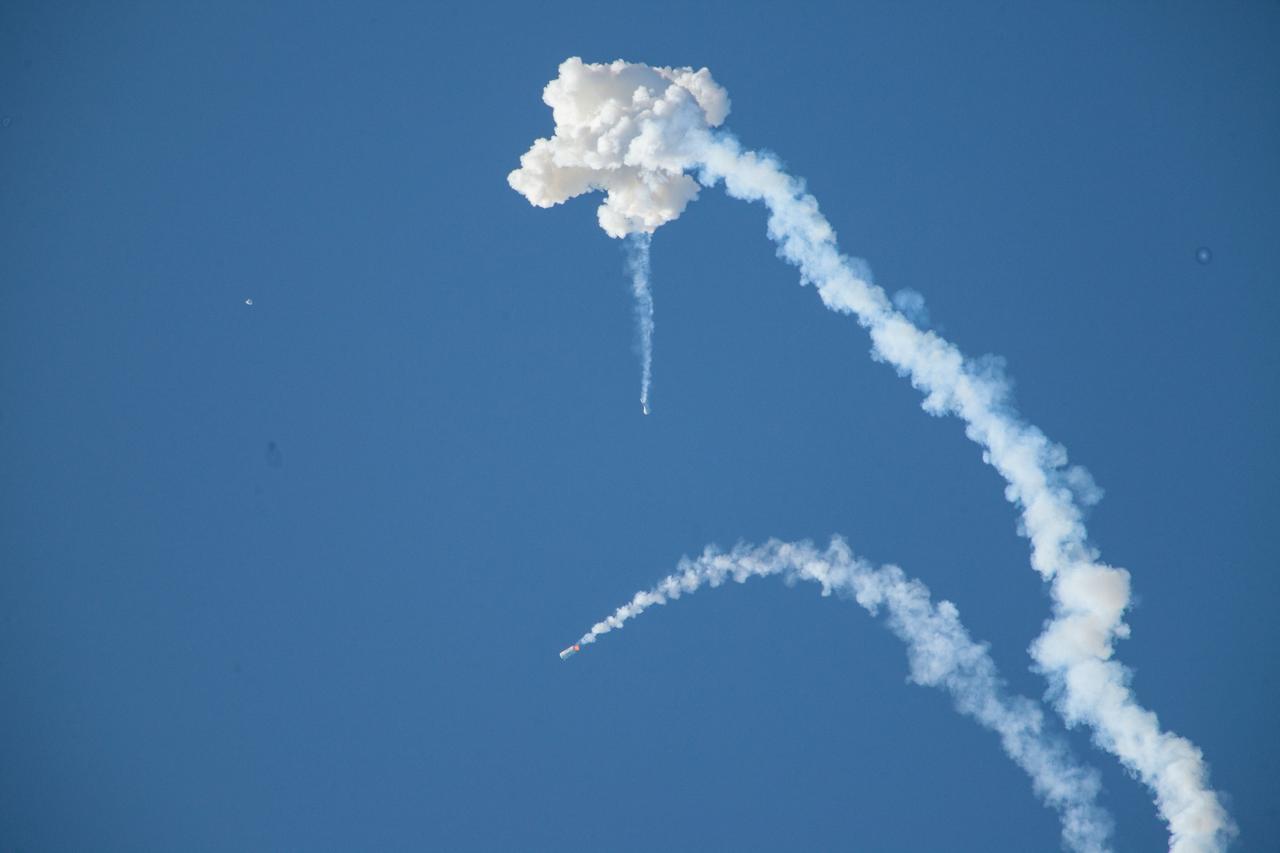
A fully functional Launch Abort System (LAS) with a test version of Orion attached, soars upward on NASA’s Ascent Abort-2 (AA-2) flight test atop a Northrop Grumman provided booster on July 2, 2019, after launching at 7 a.m. EDT, from Launch Pad 46 at Cape Canaveral Air Force Station in Florida. During AA-2, the booster will send the LAS and Orion to an altitude of 31,000 feet, traveling at Mach 1.15 (more than 1,000 mph). The LAS’ three motors will work together to pull the crew module away from the booster and prepare it for splashdown in the Atlantic Ocean. The flight test will prove that the abort system can pull crew to safety in the unlikely event of an emergency during ascent.
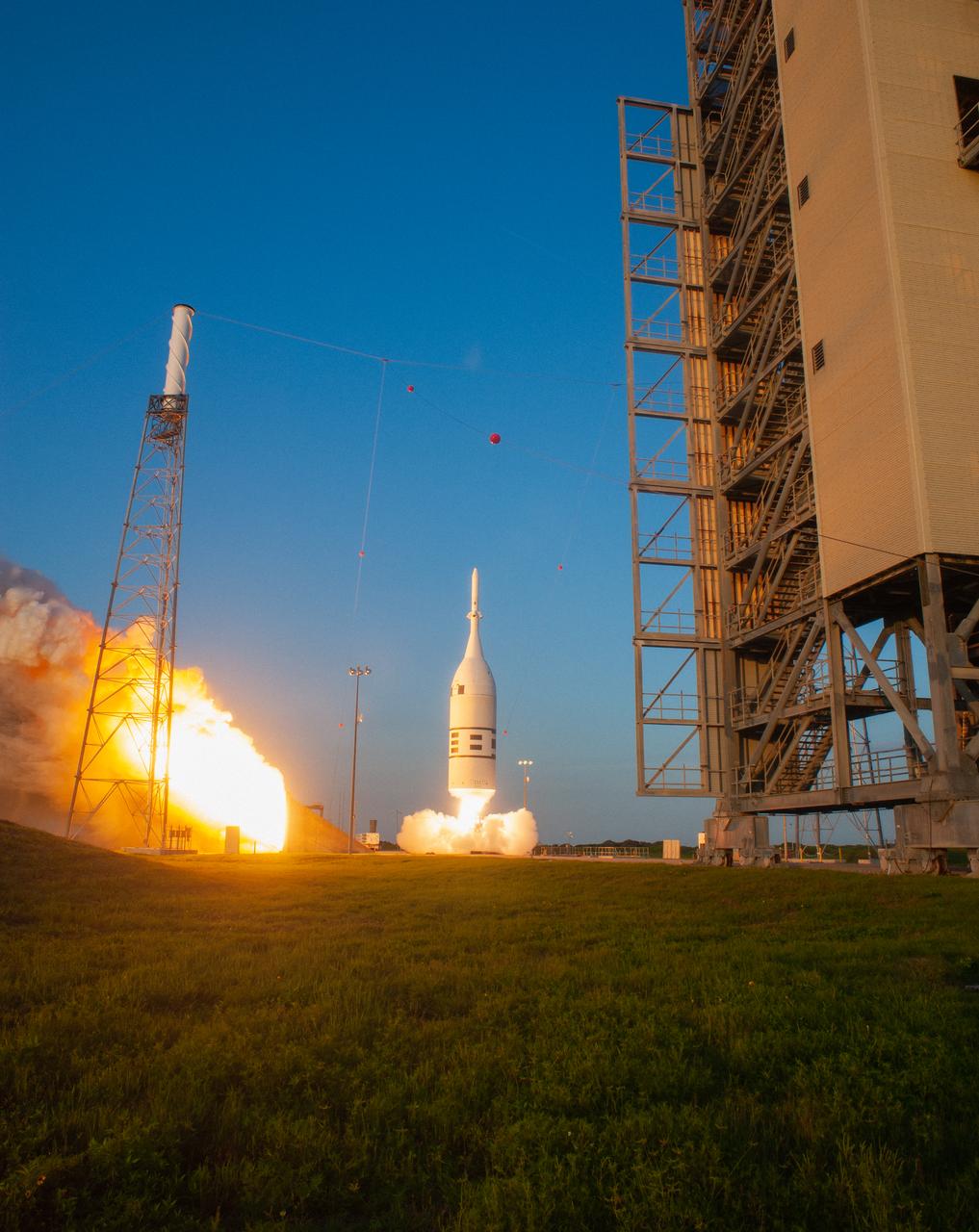
A fully functional Launch Abort System (LAS) with a test version of Orion attached, launches on NASA’s Ascent Abort-2 (AA-2) atop a Northrop Grumman provided booster on July 2, 2019, at 7 a.m. EDT, from Launch Pad 46 at Cape Canaveral Air Force Station in Florida. During AA-2, the booster will send the LAS and Orion to an altitude of 31,000 feet, traveling at Mach 1.15 (more than 1,000 mph). The LAS’ three motors will work together to pull the crew module away from the booster and prepare it for splashdown in the Atlantic Ocean. The flight test will prove that the abort system can pull crew to safety in the unlikely event of an emergency during ascent.
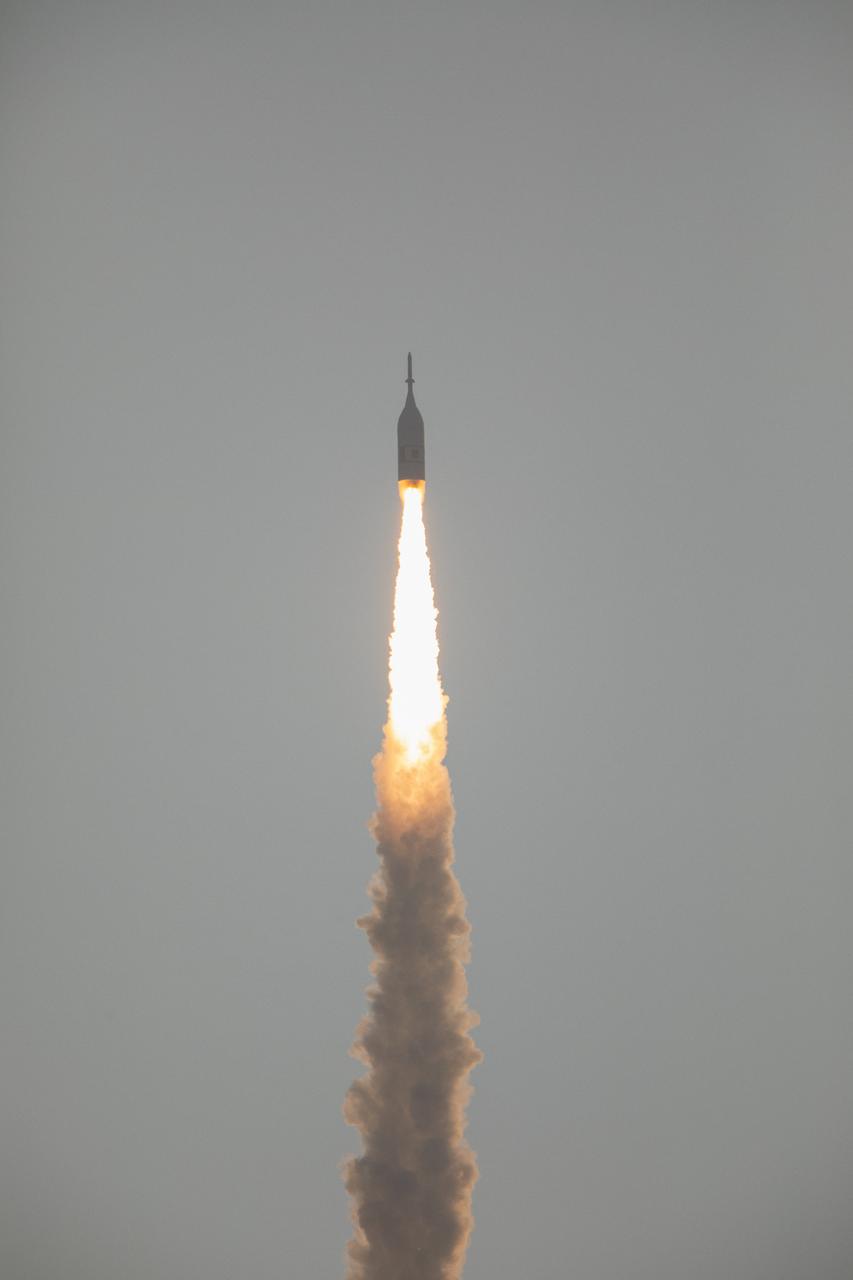
A fully functional Launch Abort System (LAS) with a test version of Orion attached, launches on NASA’s Ascent Abort-2 (AA-2) atop a Northrop Grumman provided booster on July 2, 2019, at 7 a.m. EDT, from Launch Pad 46 at Cape Canaveral Air Force Station in Florida. During AA-2, the booster will send the LAS and Orion to an altitude of 31,000 feet, traveling at Mach 1.15 (more than 1,000 mph). The LAS’ three motors will work together to pull the crew module away from the booster and prepare it for splashdown in the Atlantic Ocean. The flight test will prove that the abort system can pull crew to safety in the unlikely event of an emergency during ascent.
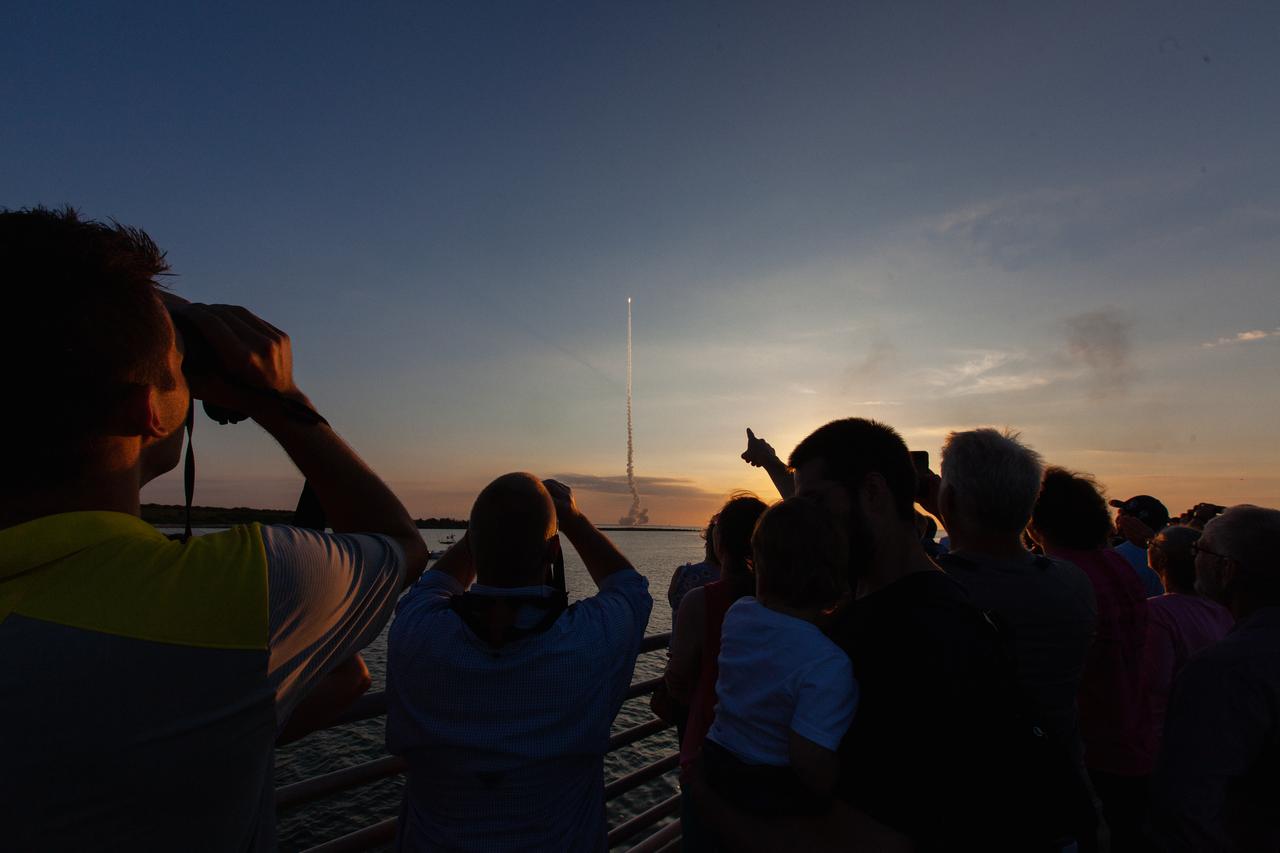
Crowds of spectators watch from Jetty Park in Cape Canaveral, Florida, on July 2, 2019, as a Northrop Grumman provided booster launches from Launch Pad 46 carrying, a fully functional Launch Abort System with a test version of Orion attached for NASA’s Ascent Abort-2 (AA-2). Launch time was 7 a.m. EDT. During AA-2, the booster will send the LAS and Orion to an altitude of 31,000 feet, traveling at Mach 1.15 (more than 1,000 mph). The LAS’ three motors will work together to pull the crew module away from the booster and prepare it for splashdown in the Atlantic Ocean. The flight test will prove that the abort system can pull crew to safety in the unlikely event of an emergency during ascent.
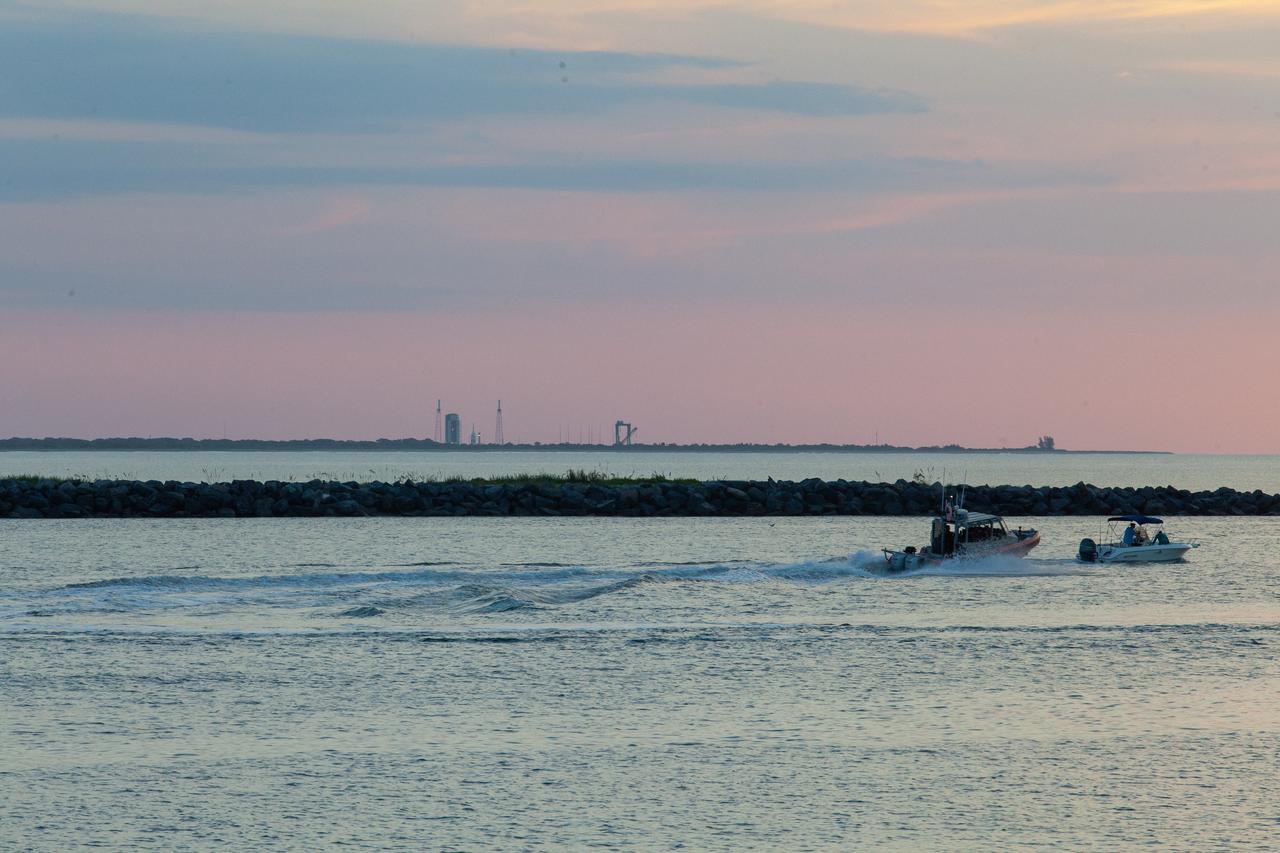
A view of Jetty Park in Cape Canaveral, Florida, during sunrise on July 2, 2019. Crowds will soon gather to watch as a Northrop Grumman provided booster launches from Launch Pad 46, carrying a fully functional Launch Abort System with a test version of Orion attached for NASA’s Ascent Abort-2 (AA-2). Launch time was 7 a.m. EDT. During AA-2, the booster will send the LAS and Orion to an altitude of 31,000 feet, traveling at Mach 1.15 (more than 1,000 mph). The LAS’ three motors will work together to pull the crew module away from the booster and prepare it for splashdown in the Atlantic Ocean. The flight test will prove that the abort system can pull crew to safety in the unlikely event of an emergency during ascent.

A brilliant sunrise fills the sky before a fully functional Launch Abort System (LAS) with a test version of Orion attached, launches on NASA’s Ascent Abort-2 (AA-2) atop a Northrop Grumman provided booster on July 2, 2019, at 7 a.m. EDT, from Launch Pad 46 at Cape Canaveral Air Force Station in Florida. During AA-2, the booster will send the LAS and Orion to an altitude of 31,000 feet, traveling at Mach 1.15 (more than 1,000 mph). The LAS’ three motors will work together to pull the crew module away from the booster and prepare it for splashdown in the Atlantic Ocean. The flight test will prove that the abort system can pull crew to safety in the unlikely event of an emergency during ascent.
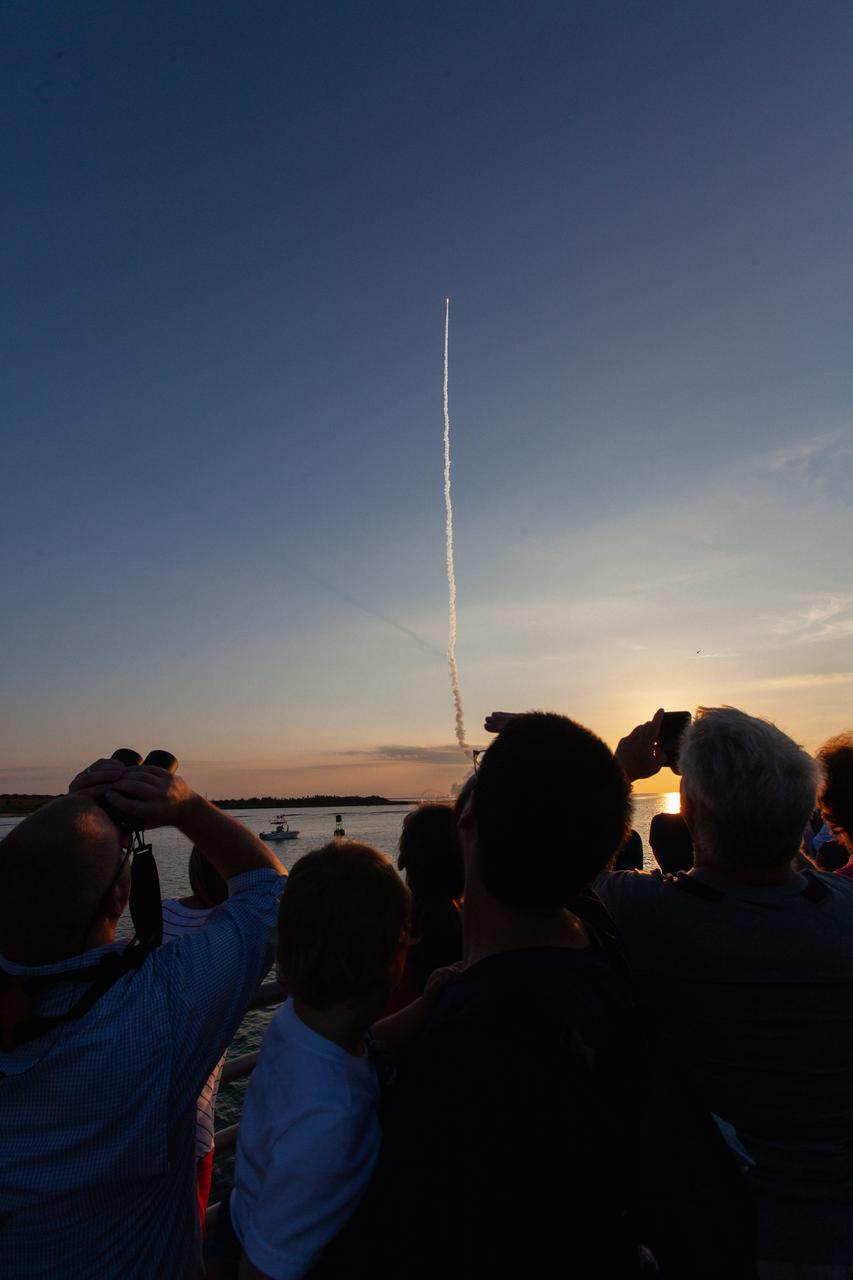
Crowds of spectators watch from Jetty Park in Cape Canaveral, Florida, on July 2, 2019, as a Northrop Grumman provided booster launches from Launch Pad 46 carrying, a fully functional Launch Abort System with a test version of Orion attached for NASA’s Ascent Abort-2 (AA-2). Launch time was 7 a.m. EDT. During AA-2, the booster will send the LAS and Orion to an altitude of 31,000 feet, traveling at Mach 1.15 (more than 1,000 mph). The LAS’ three motors will work together to pull the crew module away from the booster and prepare it for splashdown in the Atlantic Ocean. The flight test will prove that the abort system can pull crew to safety in the unlikely event of an emergency during ascent.
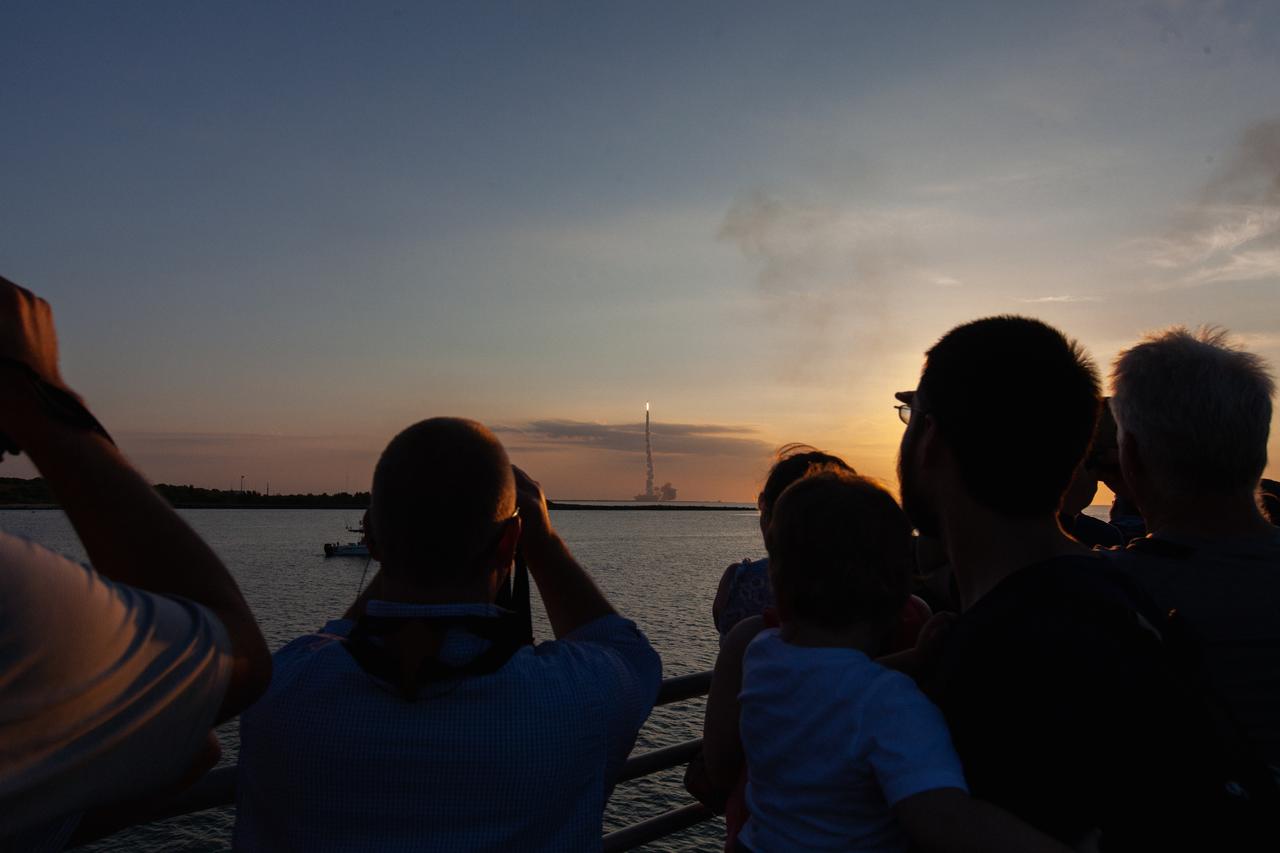
Crowds of spectators watch from Jetty Park in Cape Canaveral, Florida, on July 2, 2019, as a Northrop Grumman provided booster launches from Launch Pad 46 carrying, a fully functional Launch Abort System with a test version of Orion attached for NASA’s Ascent Abort-2 (AA-2). Launch time was 7 a.m. EDT. During AA-2, the booster will send the LAS and Orion to an altitude of 31,000 feet, traveling at Mach 1.15 (more than 1,000 mph). The LAS’ three motors will work together to pull the crew module away from the booster and prepare it for splashdown in the Atlantic Ocean. The flight test will prove that the abort system can pull crew to safety in the unlikely event of an emergency during ascent.
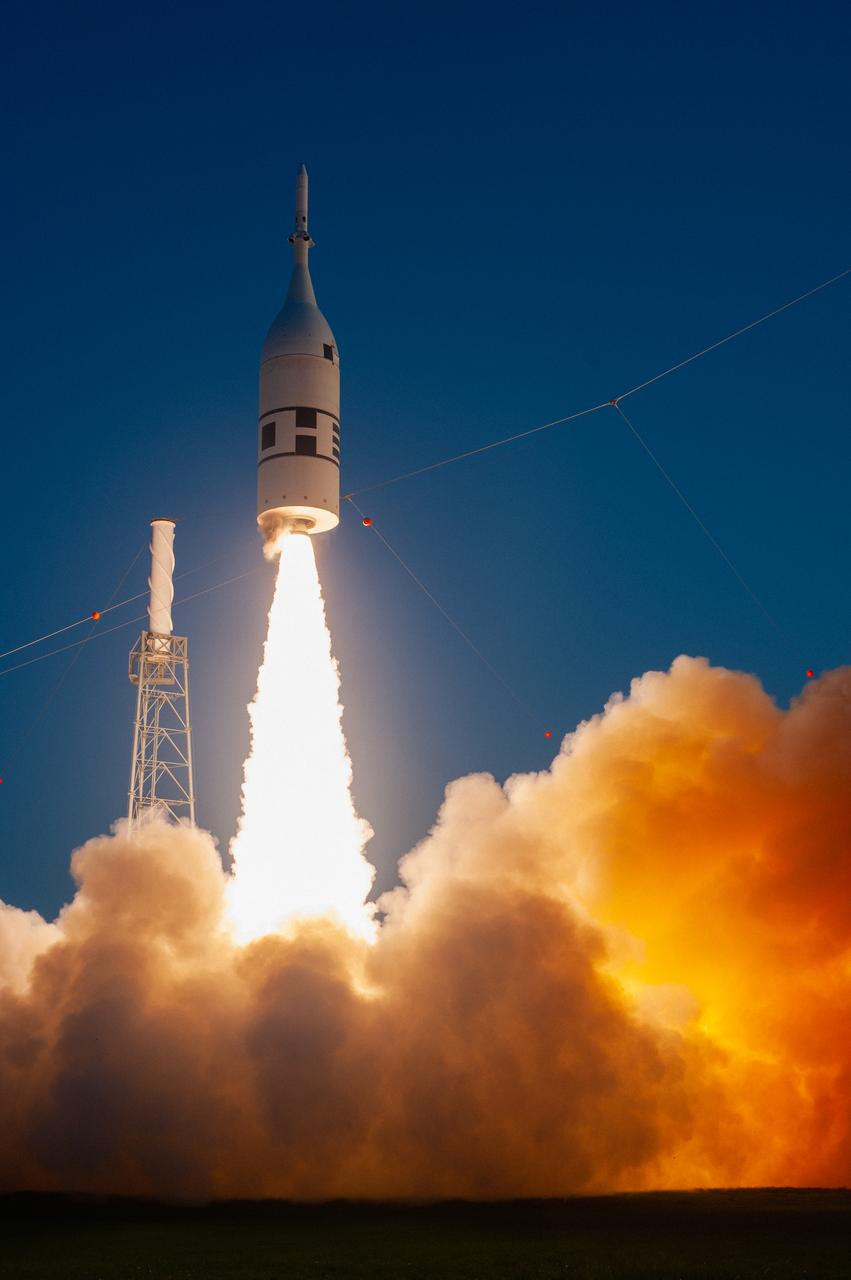
A fully functional Launch Abort System (LAS) with a test version of Orion attached, launches on NASA’s Ascent Abort-2 (AA-2) atop a Northrop Grumman provided booster on July 2, 2019, at 7 a.m. EDT, from Launch Pad 46 at Cape Canaveral Air Force Station in Florida. During AA-2, the booster will send the LAS and Orion to an altitude of 31,000 feet, traveling at Mach 1.15 (more than 1,000 mph). The LAS’ three motors will work together to pull the crew module away from the booster and prepare it for splashdown in the Atlantic Ocean. The flight test will prove that the abort system can pull crew to safety in the unlikely event of an emergency during ascent.
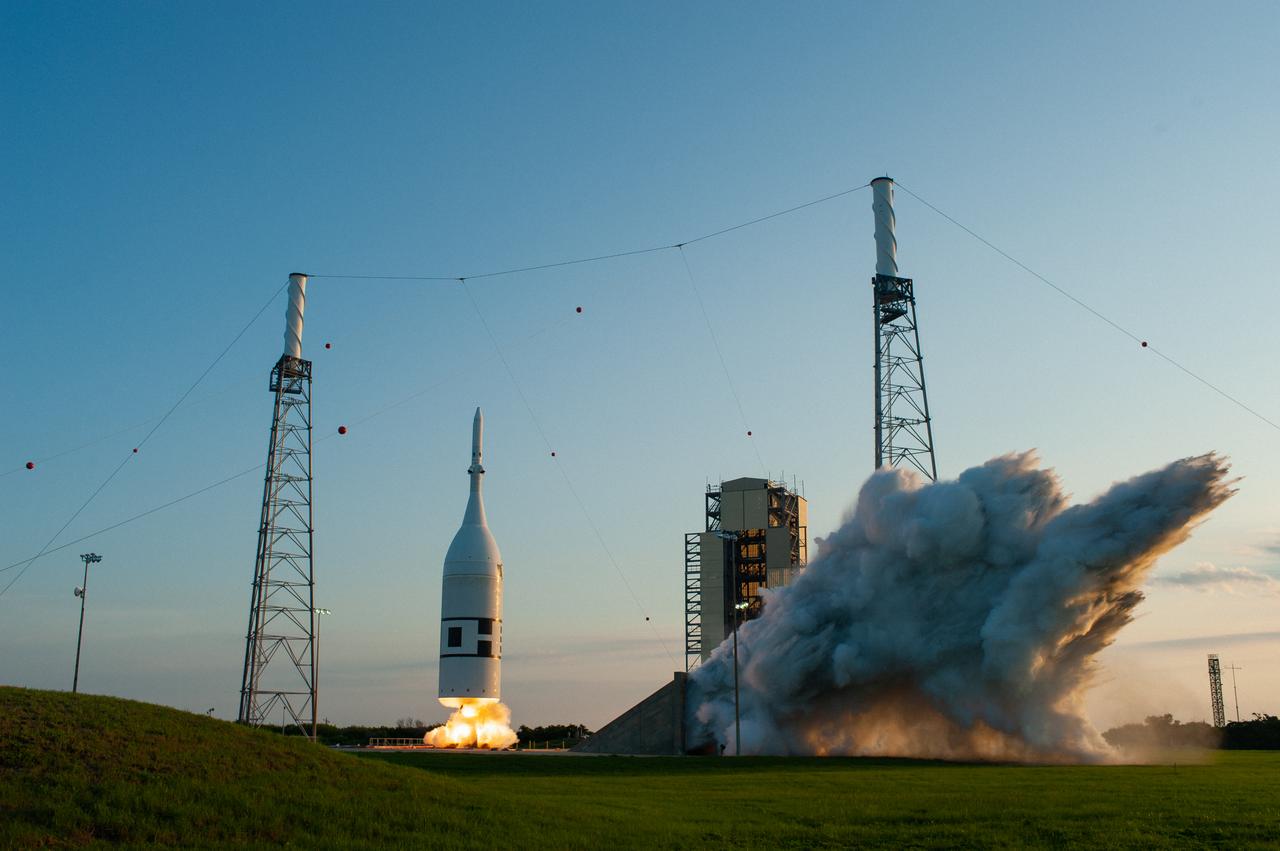
A fully functional Launch Abort System (LAS) with a test version of Orion attached, launches on NASA’s Ascent Abort-2 (AA-2) atop a Northrop Grumman provided booster on July 2, 2019, at 7 a.m. EDT, from Launch Pad 46 at Cape Canaveral Air Force Station in Florida. During AA-2, the booster will send the LAS and Orion to an altitude of 31,000 feet, traveling at Mach 1.15 (more than 1,000 mph). The LAS’ three motors will work together to pull the crew module away from the booster and prepare it for splashdown in the Atlantic Ocean. The flight test will prove that the abort system can pull crew to safety in the unlikely event of an emergency during ascent.

Crowds of spectators watch from Jetty Park in Cape Canaveral, Florida, on July 2, 2019, as a Northrop Grumman provided booster launches from Launch Pad 46 carrying, a fully functional Launch Abort System with a test version of Orion attached for NASA’s Ascent Abort-2 (AA-2). Launch time was 7 a.m. EDT. During AA-2, the booster will send the LAS and Orion to an altitude of 31,000 feet, traveling at Mach 1.15 (more than 1,000 mph). The LAS’ three motors will work together to pull the crew module away from the booster and prepare it for splashdown in the Atlantic Ocean. The flight test will prove that the abort system can pull crew to safety in the unlikely event of an emergency during ascent.
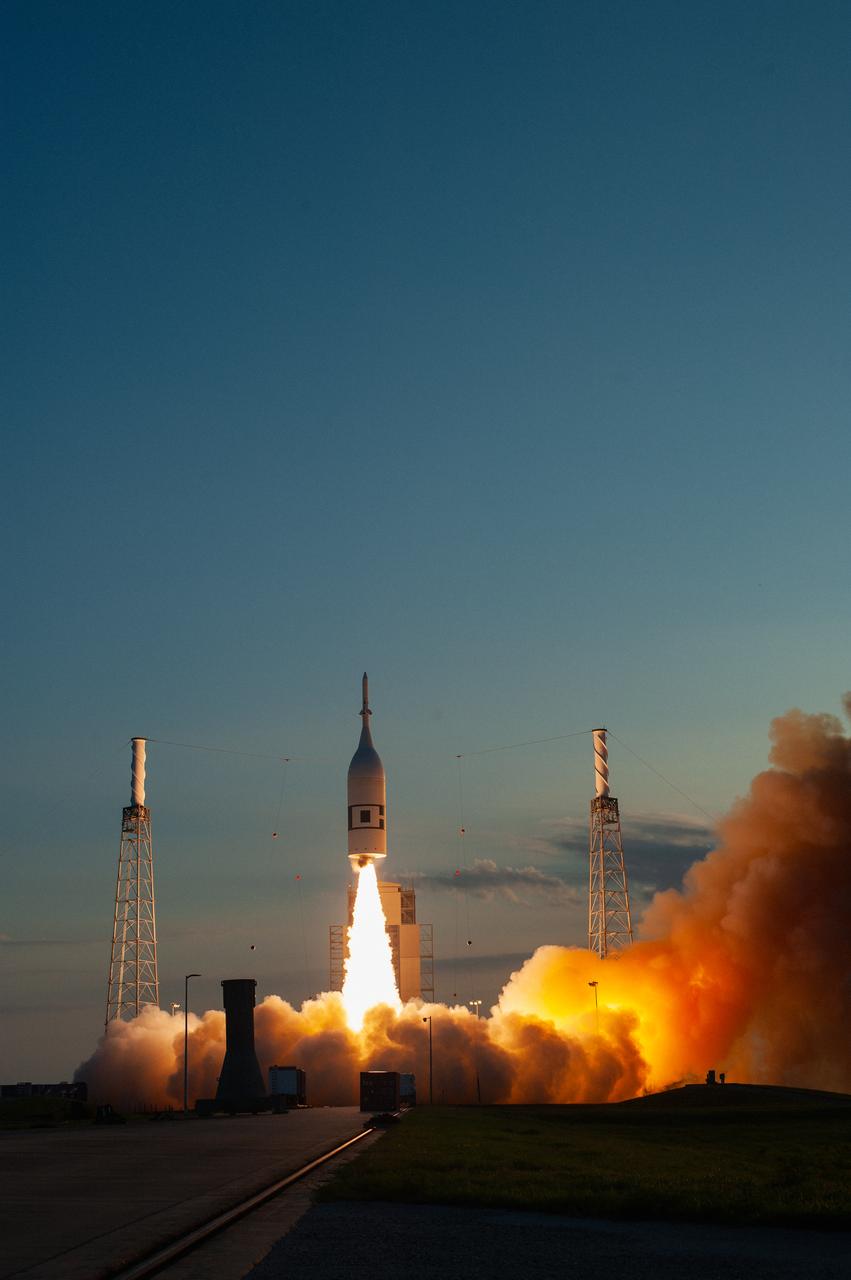
A fully functional Launch Abort System (LAS) with a test version of Orion attached, launches on NASA’s Ascent Abort-2 (AA-2) atop a Northrop Grumman provided booster on July 2, 2019, at 7 a.m. EDT, from Launch Pad 46 at Cape Canaveral Air Force Station in Florida. During AA-2, the booster will send the LAS and Orion to an altitude of 31,000 feet, traveling at Mach 1.15 (more than 1,000 mph). The LAS’ three motors will work together to pull the crew module away from the booster and prepare it for splashdown in the Atlantic Ocean. The flight test will prove that the abort system can pull crew to safety in the unlikely event of an emergency during ascent.

Crowds of spectators watch from Jetty Park in Cape Canaveral, Florida, on July 2, 2019, as a Northrop Grumman provided booster launches from Launch Pad 46 carrying, a fully functional Launch Abort System with a test version of Orion attached for NASA’s Ascent Abort-2 (AA-2). Launch time was 7 a.m. EDT. During AA-2, the booster will send the LAS and Orion to an altitude of 31,000 feet, traveling at Mach 1.15 (more than 1,000 mph). The LAS’ three motors will work together to pull the crew module away from the booster and prepare it for splashdown in the Atlantic Ocean. The flight test will prove that the abort system can pull crew to safety in the unlikely event of an emergency during ascent.
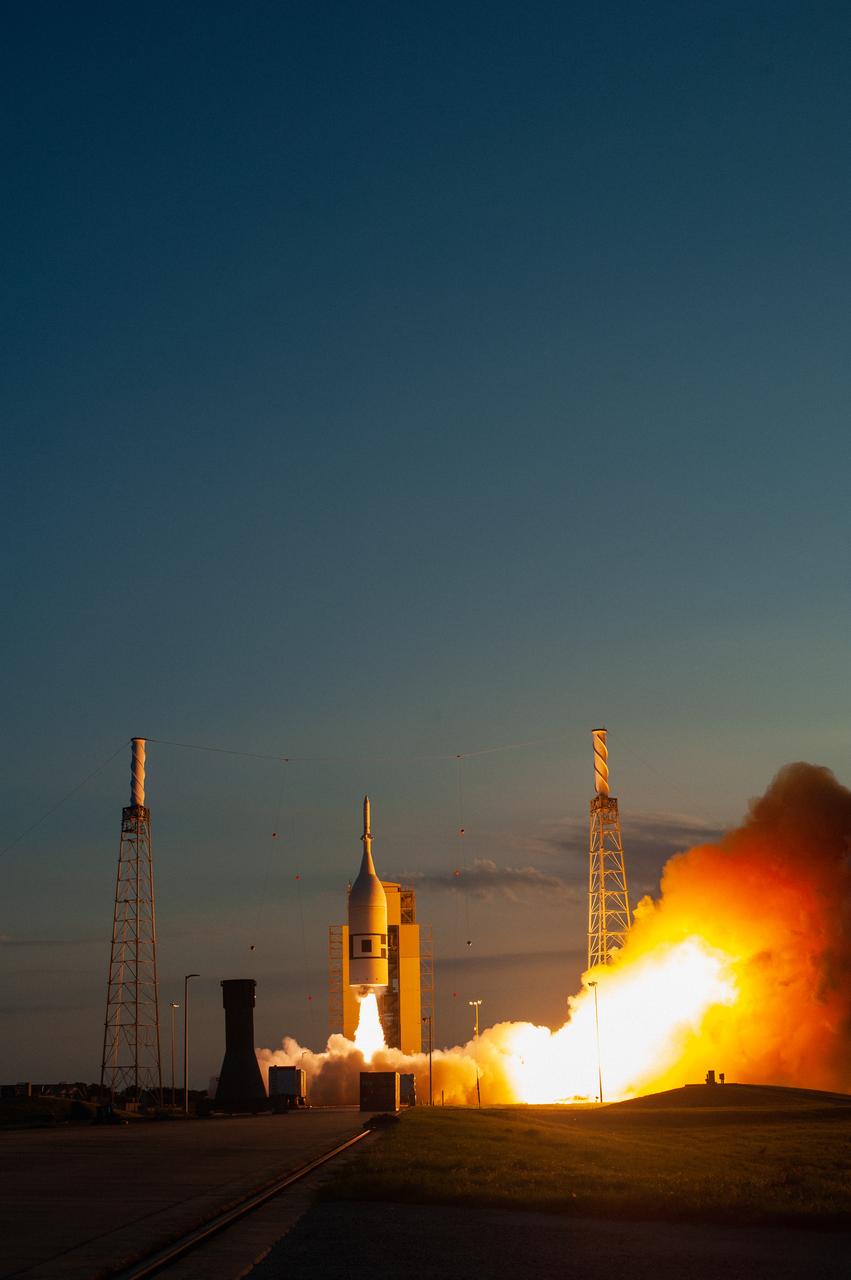
A fully functional Launch Abort System (LAS) with a test version of Orion attached, launches on NASA’s Ascent Abort-2 (AA-2) atop a Northrop Grumman provided booster on July 2, 2019, at 7 a.m. EDT, from Launch Pad 46 at Cape Canaveral Air Force Station in Florida. During AA-2, the booster will send the LAS and Orion to an altitude of 31,000 feet, traveling at Mach 1.15 (more than 1,000 mph). The LAS’ three motors will work together to pull the crew module away from the booster and prepare it for splashdown in the Atlantic Ocean. The flight test will prove that the abort system can pull crew to safety in the unlikely event of an emergency during ascent.
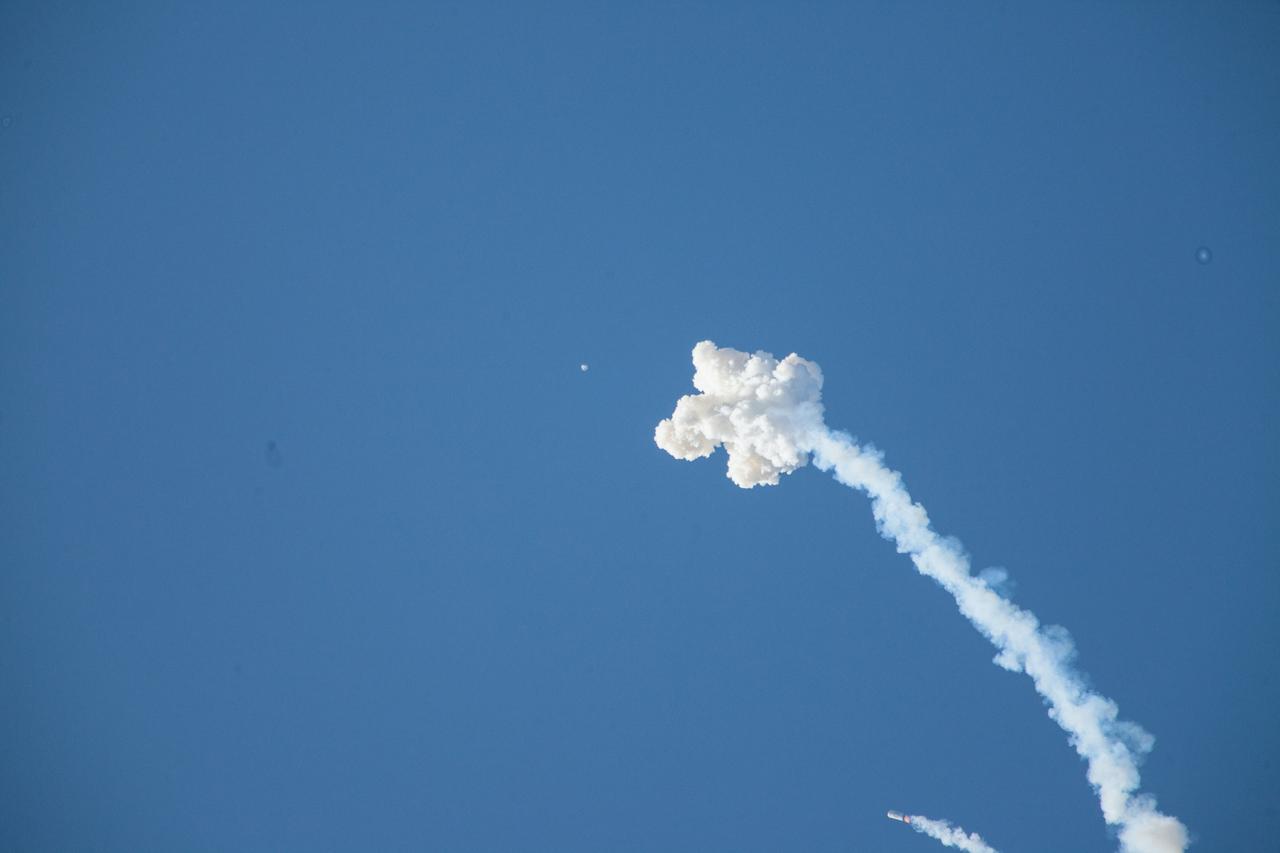
A fully functional Launch Abort System (LAS) with a test version of Orion attached, soars upward on NASA’s Ascent Abort-2 (AA-2) flight test atop a Northrop Grumman provided booster on July 2, 2019, after launching at 7 a.m. EDT, from Launch Pad 46 at Cape Canaveral Air Force Station in Florida. During AA-2, the booster will send the LAS and Orion to an altitude of 31,000 feet, traveling at Mach 1.15 (more than 1,000 mph). The LAS’ three motors will work together to pull the crew module away from the booster and prepare it for splashdown in the Atlantic Ocean. The flight test will prove that the abort system can pull crew to safety in the unlikely event of an emergency during ascent.
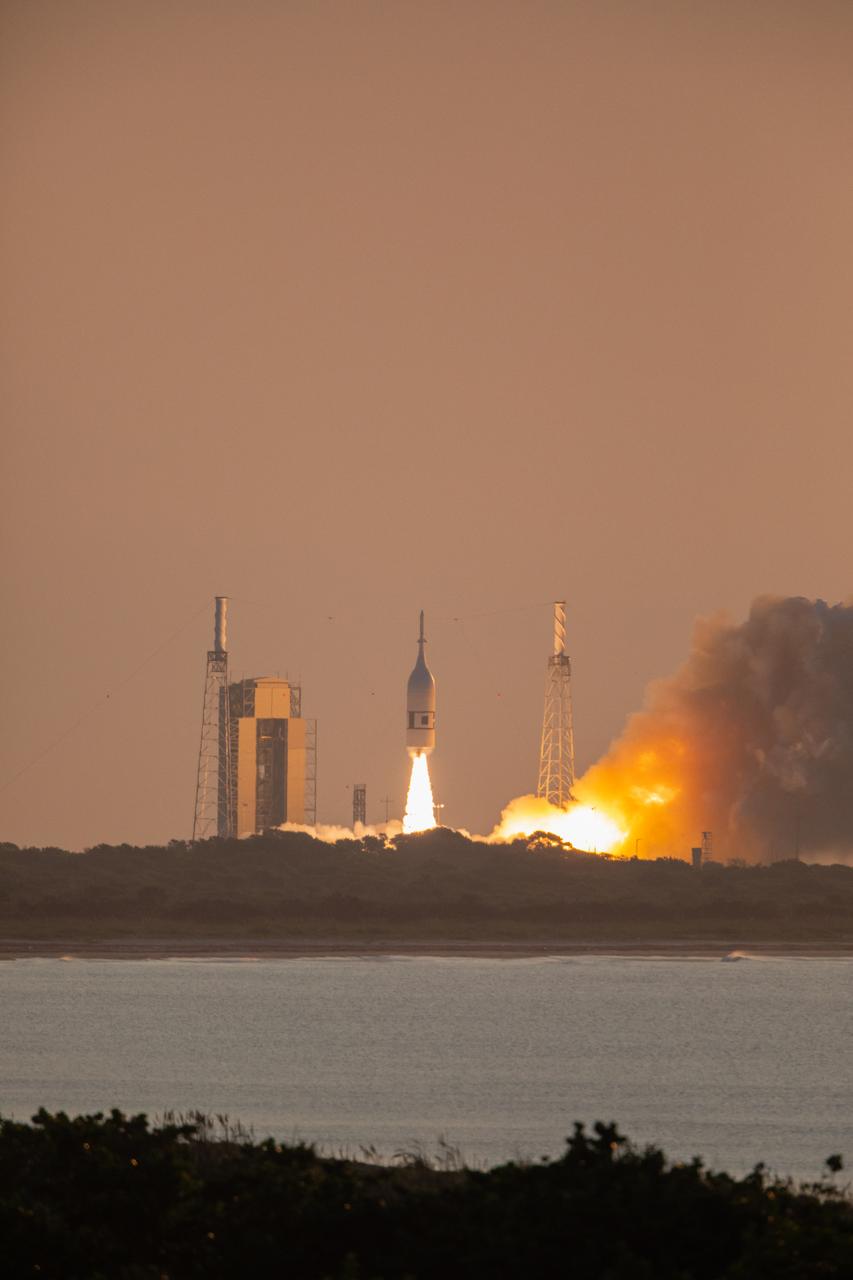
A fully functional Launch Abort System (LAS) with a test version of Orion attached, launches on NASA’s Ascent Abort-2 (AA-2) atop a Northrop Grumman provided booster on July 2, 2019, at 7 a.m. EDT, from Launch Pad 46 at Cape Canaveral Air Force Station in Florida. During AA-2, the booster will send the LAS and Orion to an altitude of 31,000 feet, traveling at Mach 1.15 (more than 1,000 mph). The LAS’ three motors will work together to pull the crew module away from the booster and prepare it for splashdown in the Atlantic Ocean. The flight test will prove that the abort system can pull crew to safety in the unlikely event of an emergency during ascent.

Crowds of spectators watch from Jetty Park in Cape Canaveral, Florida, on July 2, 2019, as a Northrop Grumman provided booster launches from Launch Pad 46 carrying, a fully functional Launch Abort System with a test version of Orion attached for NASA’s Ascent Abort-2 (AA-2). Launch time was 7 a.m. EDT. During AA-2, the booster will send the LAS and Orion to an altitude of 31,000 feet, traveling at Mach 1.15 (more than 1,000 mph). The LAS’ three motors will work together to pull the crew module away from the booster and prepare it for splashdown in the Atlantic Ocean. The flight test will prove that the abort system can pull crew to safety in the unlikely event of an emergency during ascent.
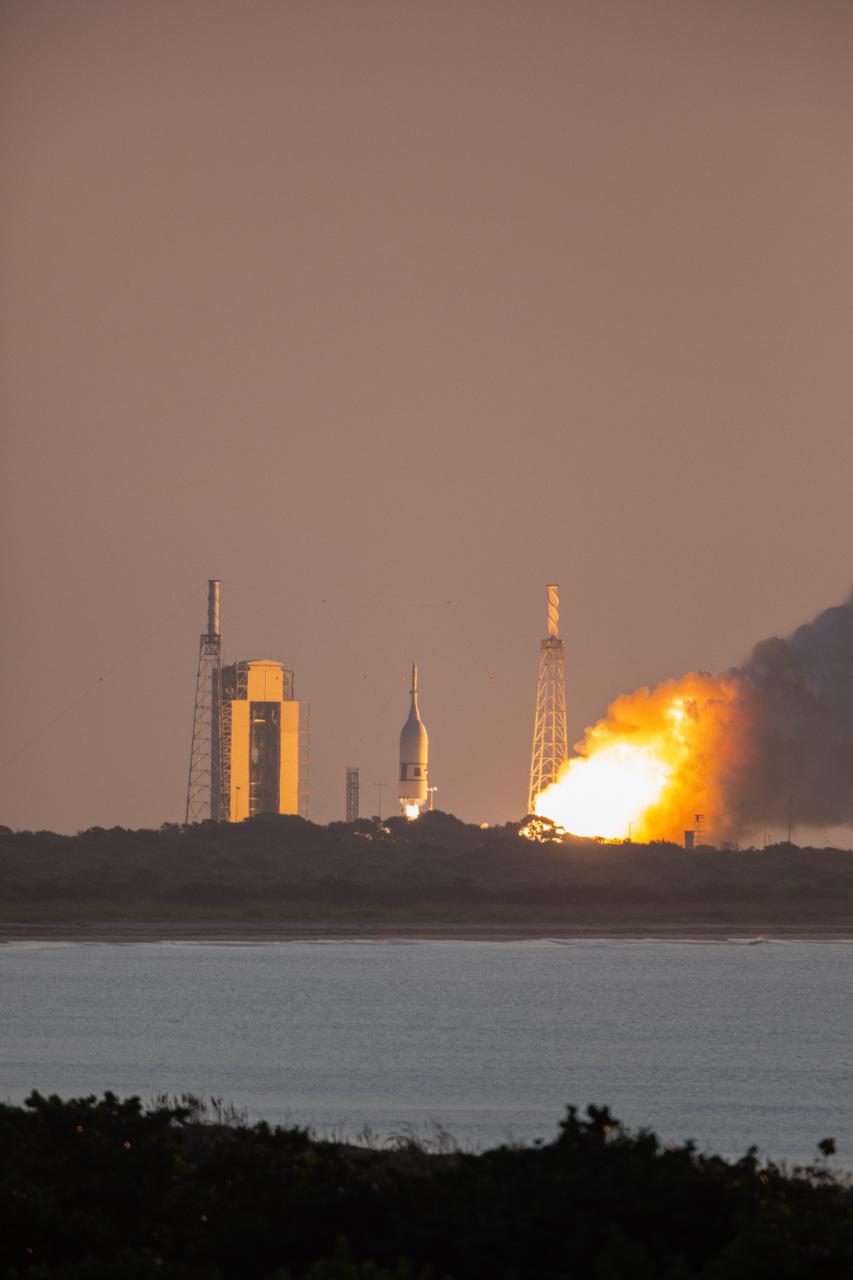
A fully functional Launch Abort System (LAS) with a test version of Orion attached, launches on NASA’s Ascent Abort-2 (AA-2) atop a Northrop Grumman provided booster on July 2, 2019, at 7 a.m. EDT, from Launch Pad 46 at Cape Canaveral Air Force Station in Florida. During AA-2, the booster will send the LAS and Orion to an altitude of 31,000 feet, traveling at Mach 1.15 (more than 1,000 mph). The LAS’ three motors will work together to pull the crew module away from the booster and prepare it for splashdown in the Atlantic Ocean. The flight test will prove that the abort system can pull crew to safety in the unlikely event of an emergency during ascent.
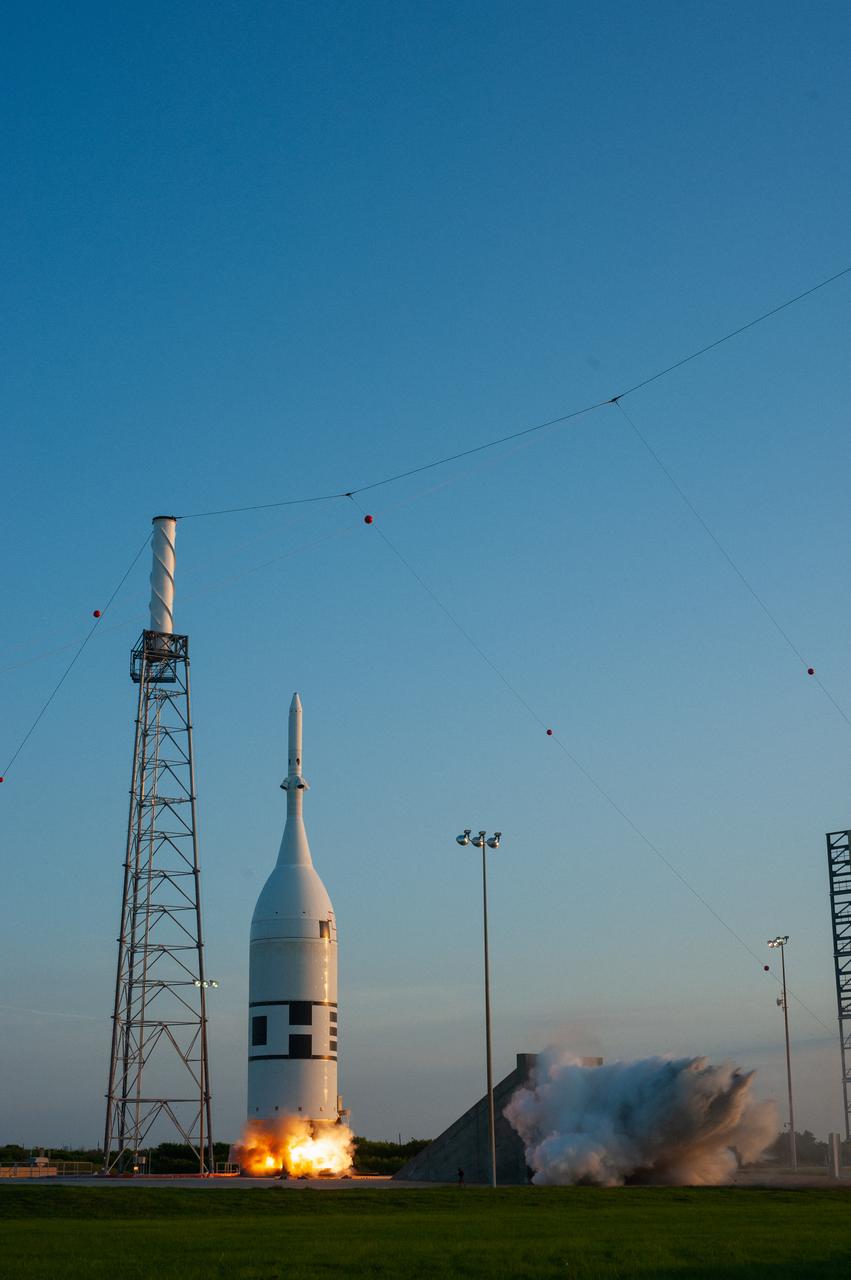
A fully functional Launch Abort System (LAS) with a test version of Orion attached, launches on NASA’s Ascent Abort-2 (AA-2) atop a Northrop Grumman provided booster on July 2, 2019, at 7 a.m. EDT, from Launch Pad 46 at Cape Canaveral Air Force Station in Florida. During AA-2, the booster will send the LAS and Orion to an altitude of 31,000 feet, traveling at Mach 1.15 (more than 1,000 mph). The LAS’ three motors will work together to pull the crew module away from the booster and prepare it for splashdown in the Atlantic Ocean. The flight test will prove that the abort system can pull crew to safety in the unlikely event of an emergency during ascent.
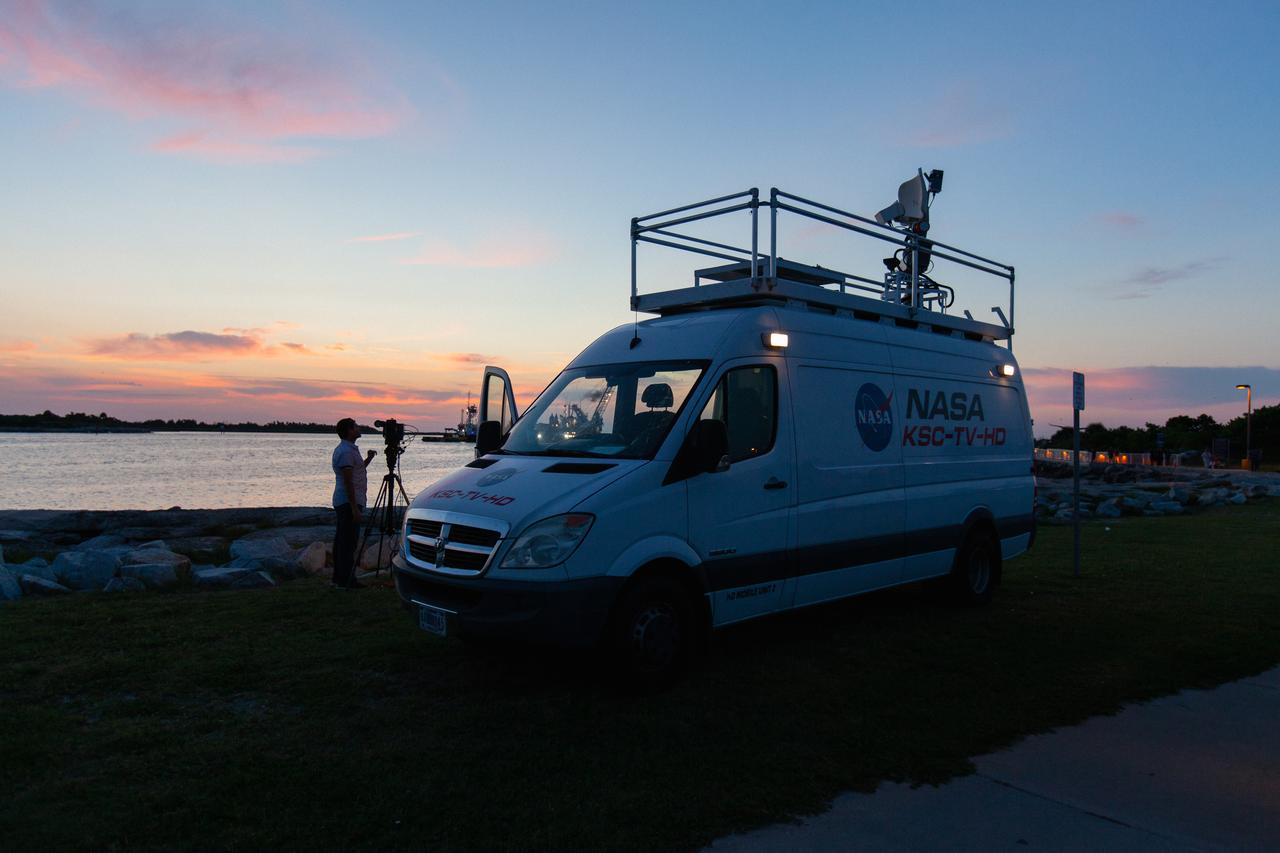
Crowds of spectators watch from Jetty Park in Cape Canaveral, Florida, on July 2, 2019, as a Northrop Grumman provided booster launches from Launch Pad 46 carrying, a fully functional Launch Abort System with a test version of Orion attached for NASA’s Ascent Abort-2 (AA-2). Launch time was 7 a.m. EDT. During AA-2, the booster will send the LAS and Orion to an altitude of 31,000 feet, traveling at Mach 1.15 (more than 1,000 mph). The LAS’ three motors will work together to pull the crew module away from the booster and prepare it for splashdown in the Atlantic Ocean. The flight test will prove that the abort system can pull crew to safety in the unlikely event of an emergency during ascent.
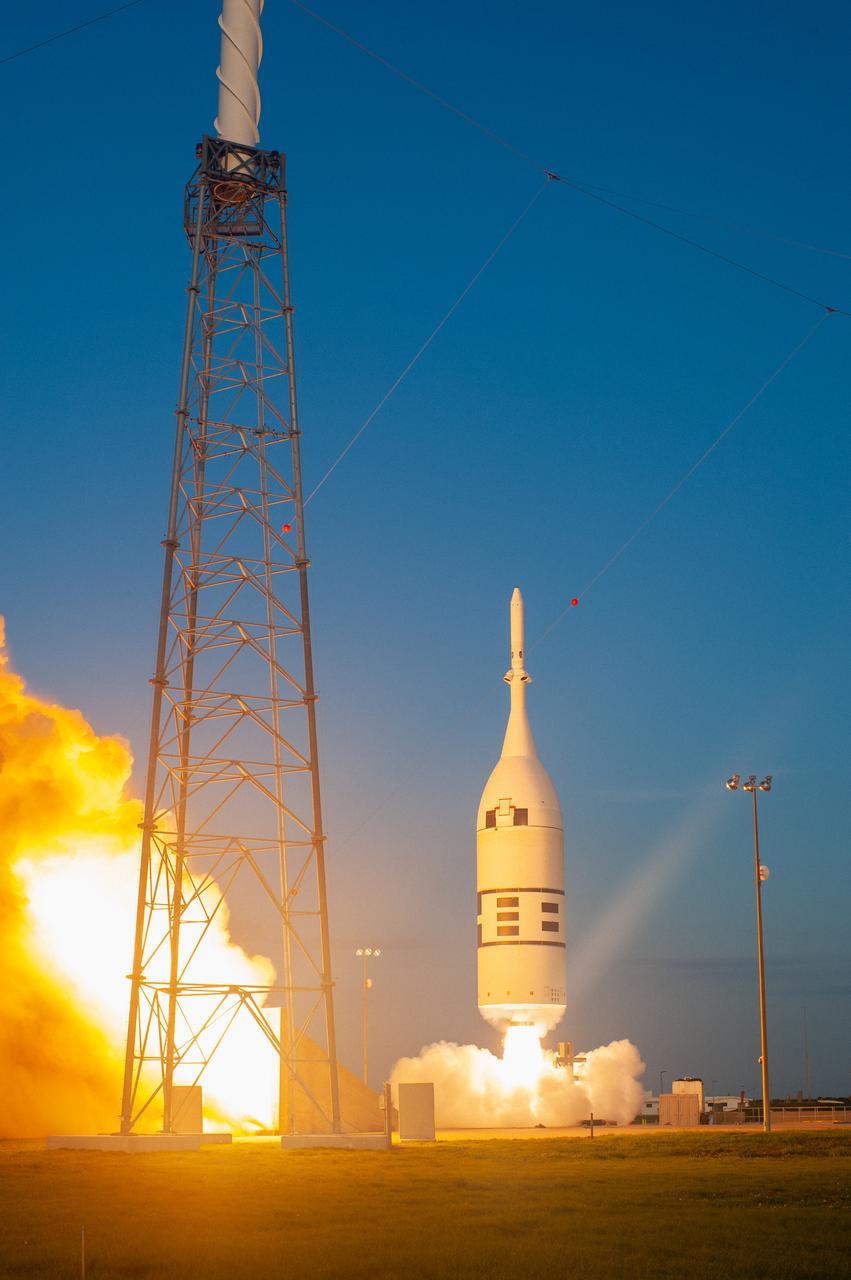
A fully functional Launch Abort System (LAS) with a test version of Orion attached, launches on NASA’s Ascent Abort-2 (AA-2) atop a Northrop Grumman provided booster on July 2, 2019, at 7 a.m. EDT, from Launch Pad 46 at Cape Canaveral Air Force Station in Florida. During AA-2, the booster will send the LAS and Orion to an altitude of 31,000 feet, traveling at Mach 1.15 (more than 1,000 mph). The LAS’ three motors will work together to pull the crew module away from the booster and prepare it for splashdown in the Atlantic Ocean. The flight test will prove that the abort system can pull crew to safety in the unlikely event of an emergency during ascent.
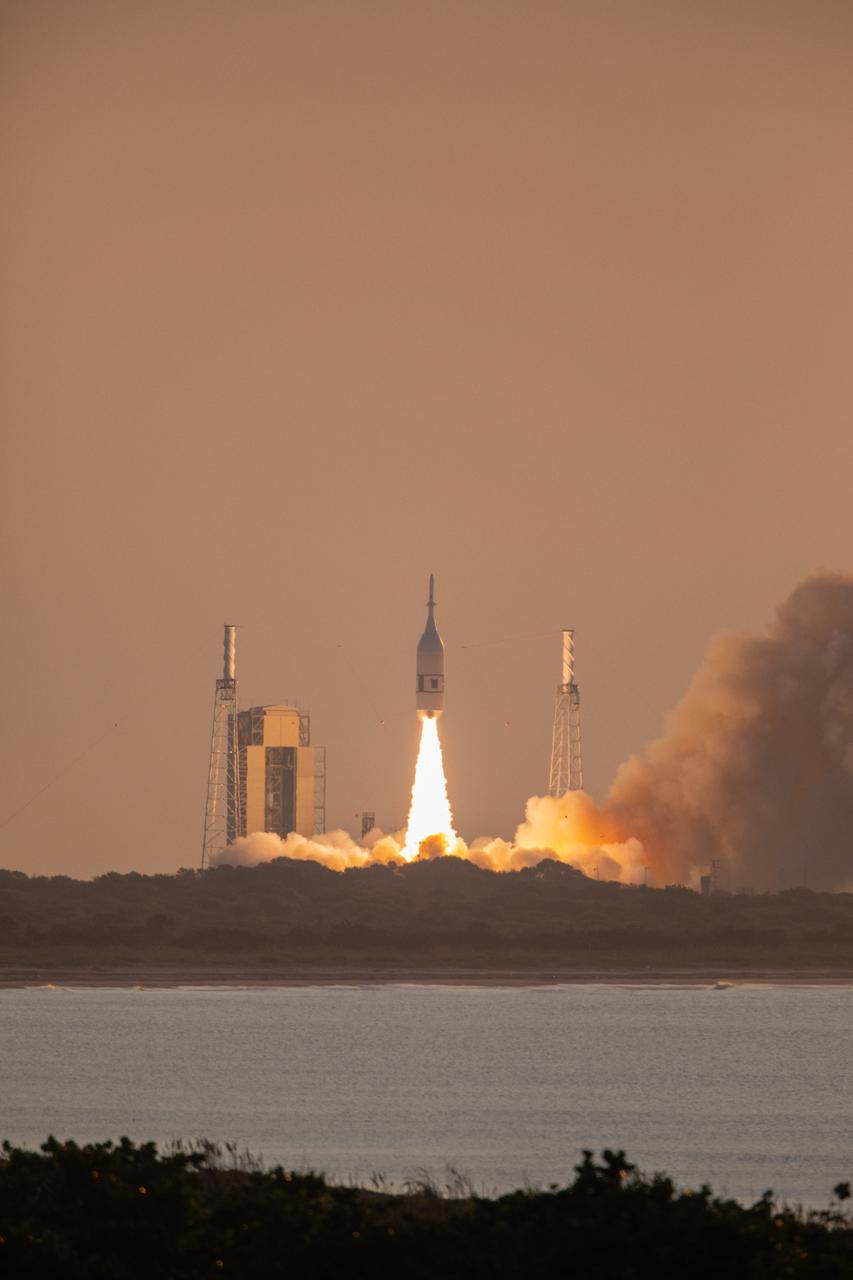
A fully functional Launch Abort System (LAS) with a test version of Orion attached, launches on NASA’s Ascent Abort-2 (AA-2) atop a Northrop Grumman provided booster on July 2, 2019, at 7 a.m. EDT, from Launch Pad 46 at Cape Canaveral Air Force Station in Florida. During AA-2, the booster will send the LAS and Orion to an altitude of 31,000 feet, traveling at Mach 1.15 (more than 1,000 mph). The LAS’ three motors will work together to pull the crew module away from the booster and prepare it for splashdown in the Atlantic Ocean. The flight test will prove that the abort system can pull crew to safety in the unlikely event of an emergency during ascent.
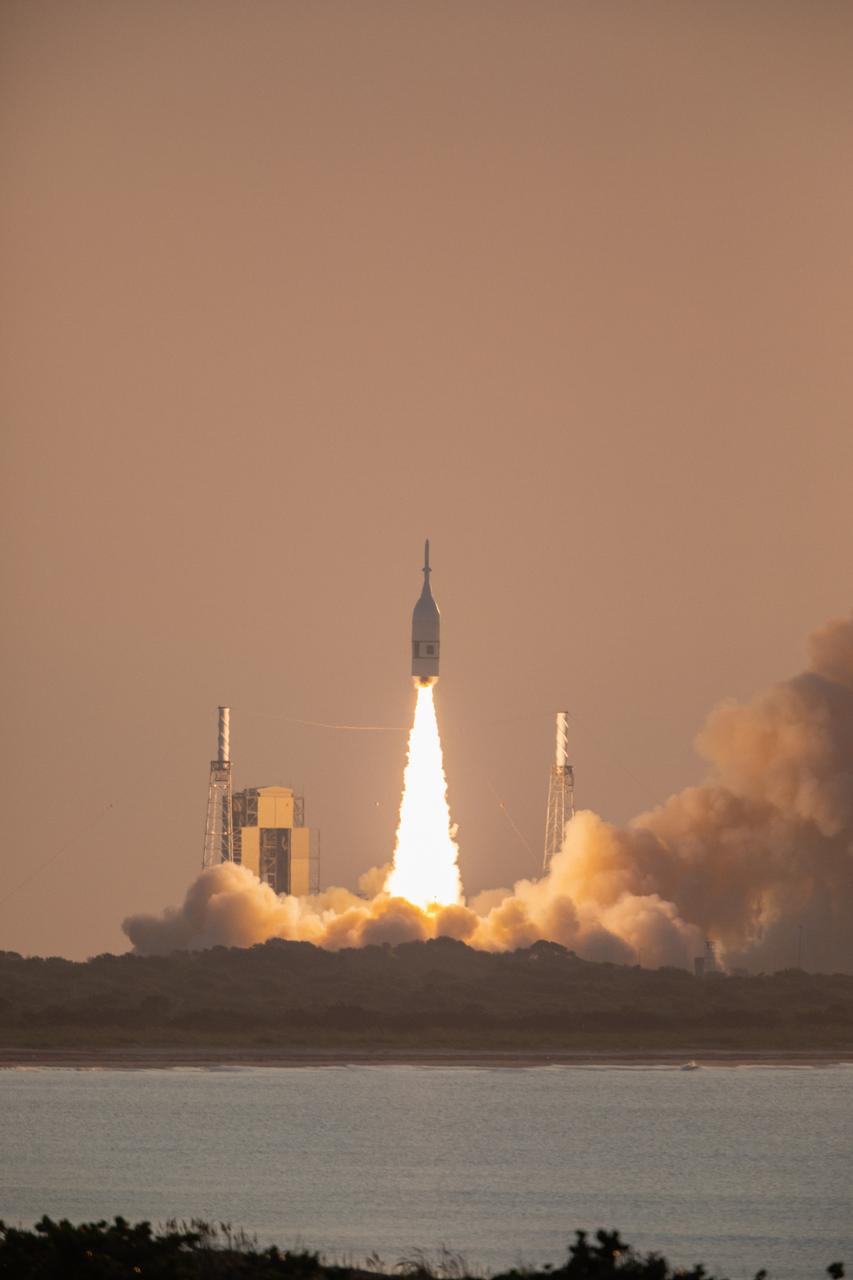
A fully functional Launch Abort System (LAS) with a test version of Orion attached, launches on NASA’s Ascent Abort-2 (AA-2) atop a Northrop Grumman provided booster on July 2, 2019, at 7 a.m. EDT, from Launch Pad 46 at Cape Canaveral Air Force Station in Florida. During AA-2, the booster will send the LAS and Orion to an altitude of 31,000 feet, traveling at Mach 1.15 (more than 1,000 mph). The LAS’ three motors will work together to pull the crew module away from the booster and prepare it for splashdown in the Atlantic Ocean. The flight test will prove that the abort system can pull crew to safety in the unlikely event of an emergency during ascent.
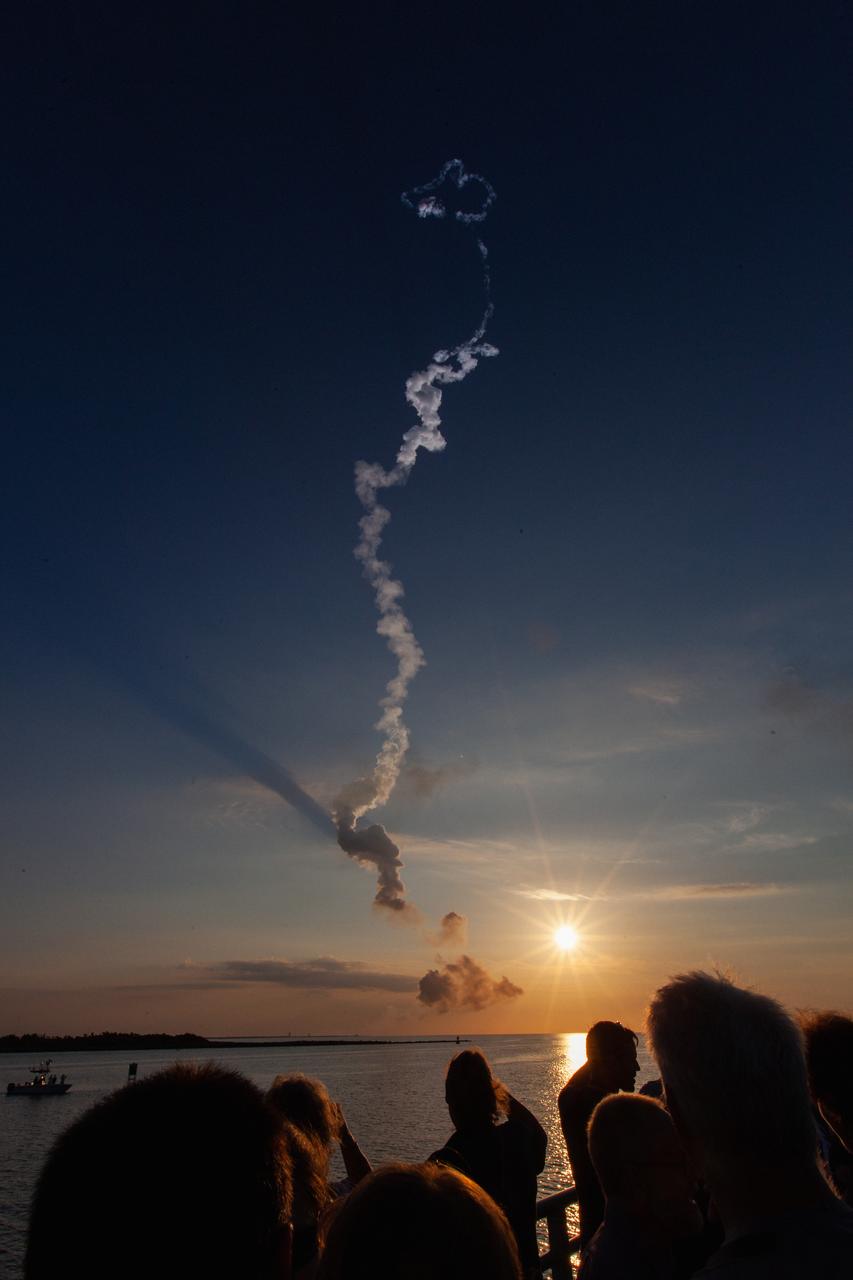
Crowds of spectators watch from Jetty Park in Cape Canaveral, Florida, on July 2, 2019, as a Northrop Grumman provided booster launches from Launch Pad 46 carrying, a fully functional Launch Abort System with a test version of Orion attached for NASA’s Ascent Abort-2 (AA-2). Launch time was 7 a.m. EDT. During AA-2, the booster will send the LAS and Orion to an altitude of 31,000 feet, traveling at Mach 1.15 (more than 1,000 mph). The LAS’ three motors will work together to pull the crew module away from the booster and prepare it for splashdown in the Atlantic Ocean. The flight test will prove that the abort system can pull crew to safety in the unlikely event of an emergency during ascent.

A fully functional Launch Abort System (LAS) with a test version of Orion attached, launches on NASA’s Ascent Abort-2 (AA-2) atop a Northrop Grumman provided booster on July 2, 2019, at 7 a.m. EDT, from Launch Pad 46 at Cape Canaveral Air Force Station in Florida. During AA-2, the booster will send the LAS and Orion to an altitude of 31,000 feet, traveling at Mach 1.15 (more than 1,000 mph). The LAS’ three motors will work together to pull the crew module away from the booster and prepare it for splashdown in the Atlantic Ocean. The flight test will prove that the abort system can pull crew to safety in the unlikely event of an emergency during ascent.
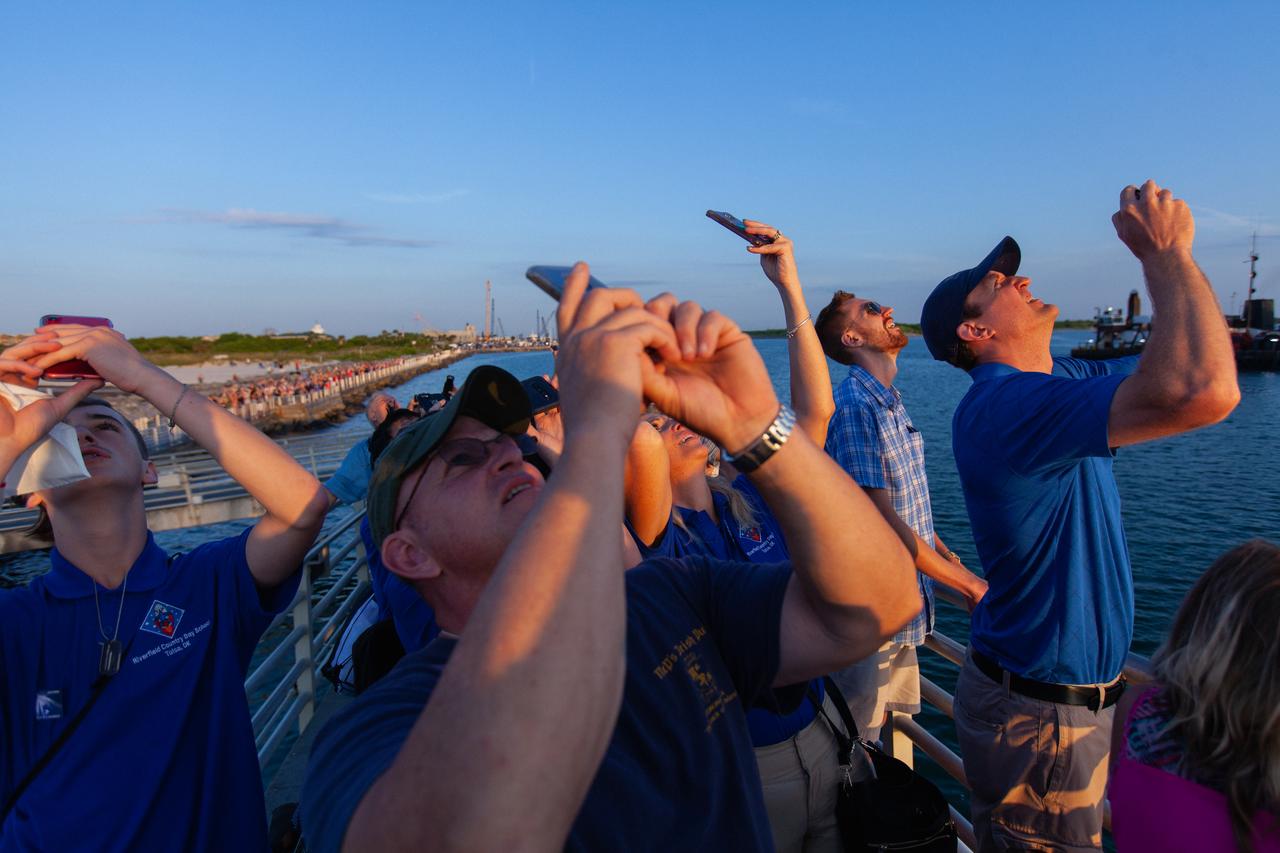
Crowds of spectators watch from Jetty Park in Cape Canaveral, Florida, on July 2, 2019, as a Northrop Grumman provided booster launches from Launch Pad 46 carrying, a fully functional Launch Abort System with a test version of Orion attached for NASA’s Ascent Abort-2 (AA-2). Launch time was 7 a.m. EDT. During AA-2, the booster will send the LAS and Orion to an altitude of 31,000 feet, traveling at Mach 1.15 (more than 1,000 mph). The LAS’ three motors will work together to pull the crew module away from the booster and prepare it for splashdown in the Atlantic Ocean. The flight test will prove that the abort system can pull crew to safety in the unlikely event of an emergency during ascent.
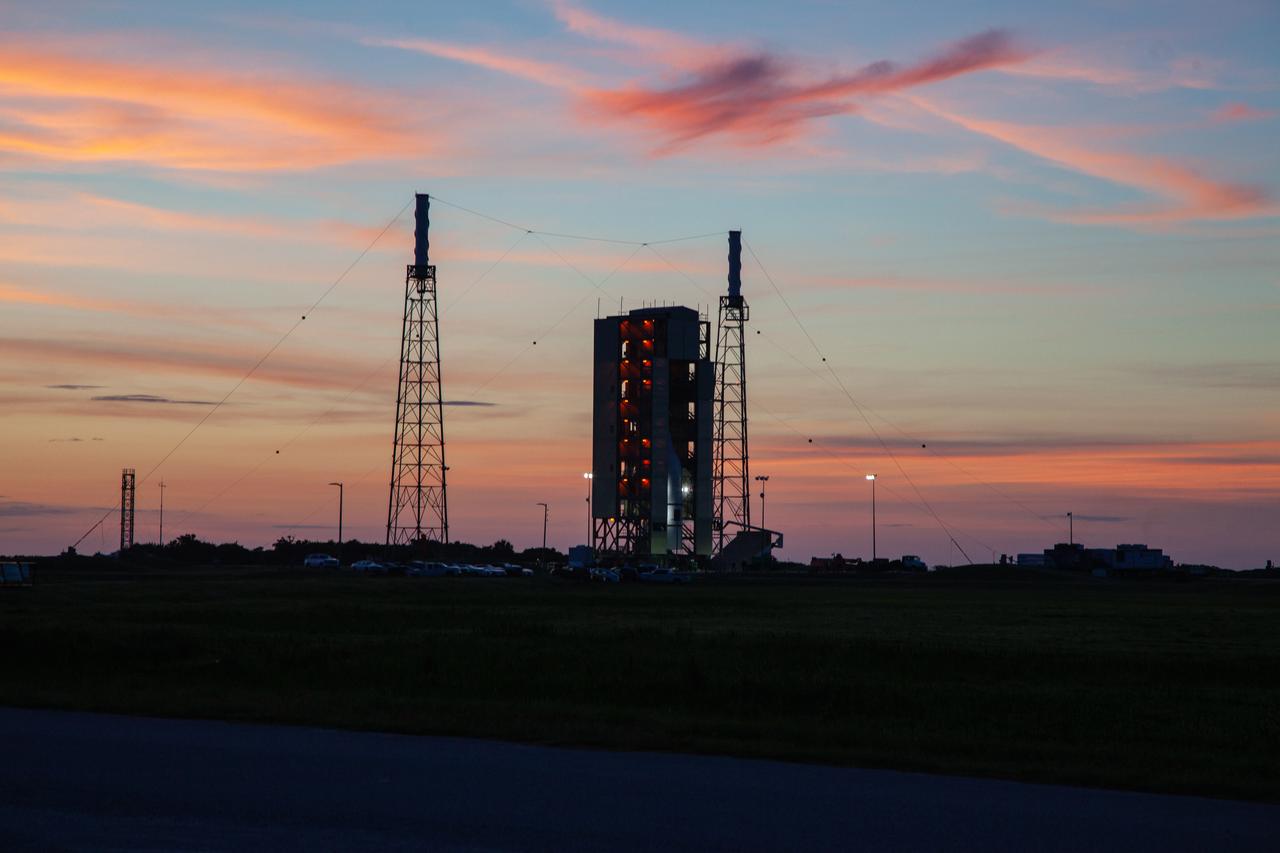
A sunrise view of Launch Complex 46 at Cape Canaveral Air Force Station in Florida on July 1, 2019. A fully functional Launch Abort System (LAS) mated to a test version of the Orion spacecraft are on a Northrop Grumman provided booster on the pad for launch on NASA’s Ascent Abort-2 (AA-2) flight test on July 2, 2019. The vertical integration facility surrounding the test vehicle will begin to roll back from the pad. During AA-2, the booster will send the LAS and Orion to an altitude of 31,000 feet, traveling at more than 1,000 mph. The LAS’ three motors will work together to pull the crew module away from the booster and prepare it for splashdown in the Atlantic Ocean. The flight test will prove that the abort system can pull crew to safety in the unlikely event of an emergency during ascent.
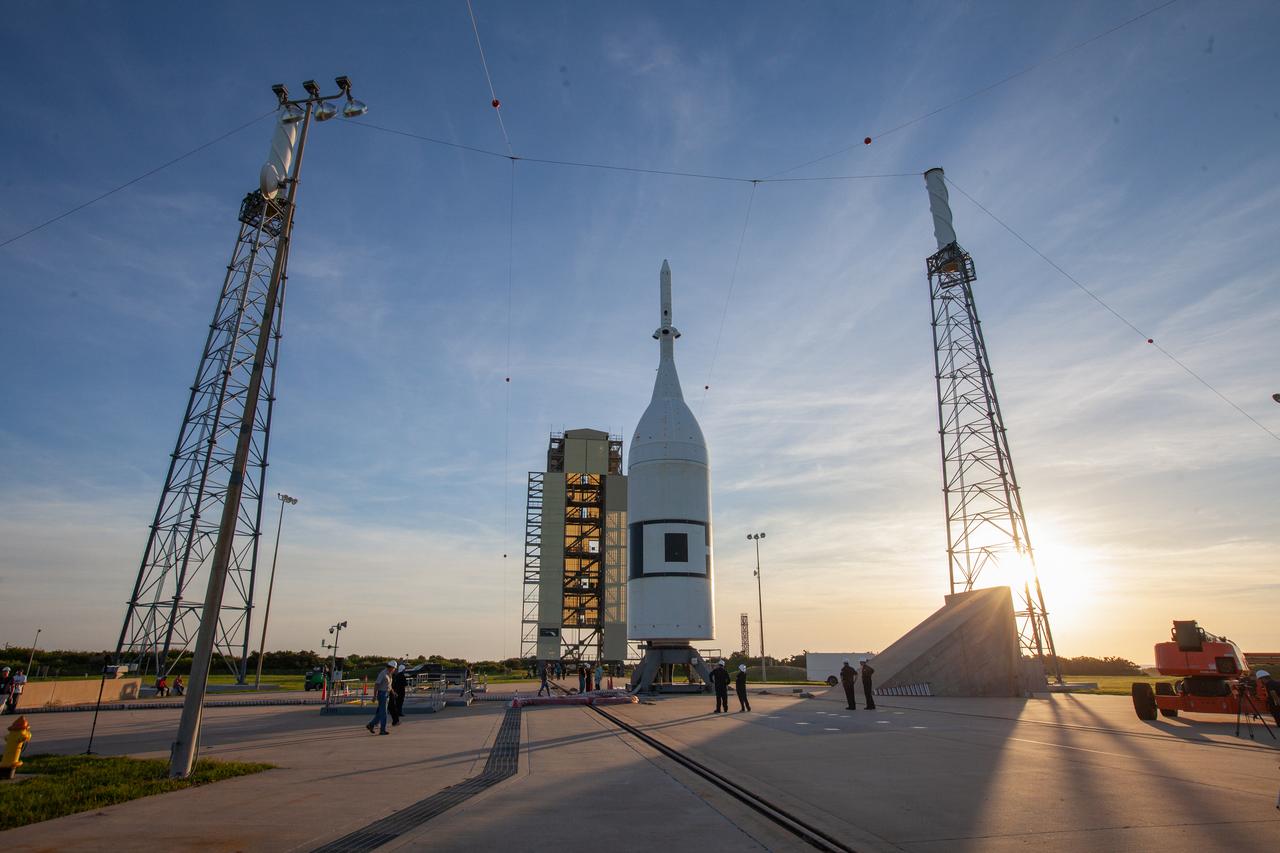
The Ascent Abort-2 test vehicle is secured on the pad at Launch Complex 46 at Cape Canaveral Air Force Station in Florida after rollback of the vertical integration facility on July 1, 2019. A fully functional Launch Abort System (LAS) mated to a test version of the Orion spacecraft are on a Northrop Grumman provided booster on the pad for launch on NASA’s AA-2 flight test on July 2, 2019. During AA-2, the booster will send the LAS and Orion to an altitude of 31,000 feet, traveling at more than 1,000 mph. The LAS’ three motors will work together to pull the crew module away from the booster and prepare it for splashdown in the Atlantic Ocean. The flight test will prove that the abort system can pull crew to safety in the unlikely event of an emergency during ascent.
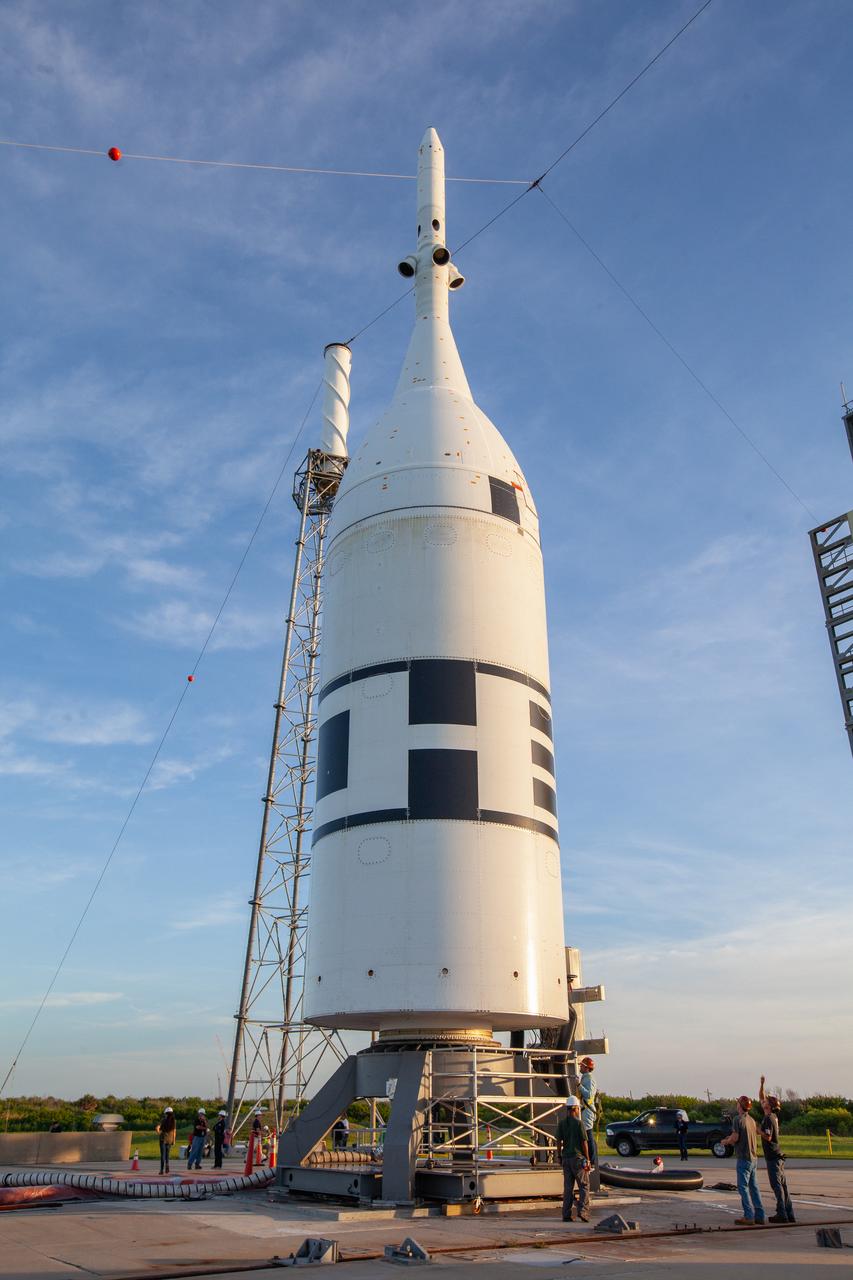
The Ascent Abort-2 test vehicle is secured on the pad at Launch Complex 46 at Cape Canaveral Air Force Station in Florida after rollback of the vertical integration facility on July 1, 2019. A fully functional Launch Abort System (LAS) mated to a test version of the Orion spacecraft are on a Northrop Grumman provided booster on the pad for launch on NASA’s AA-2 flight test on July 2, 2019. During AA-2, the booster will send the LAS and Orion to an altitude of 31,000 feet, traveling at more than 1,000 mph. The LAS’ three motors will work together to pull the crew module away from the booster and prepare it for splashdown in the Atlantic Ocean. The flight test will prove that the abort system can pull crew to safety in the unlikely event of an emergency during ascent.
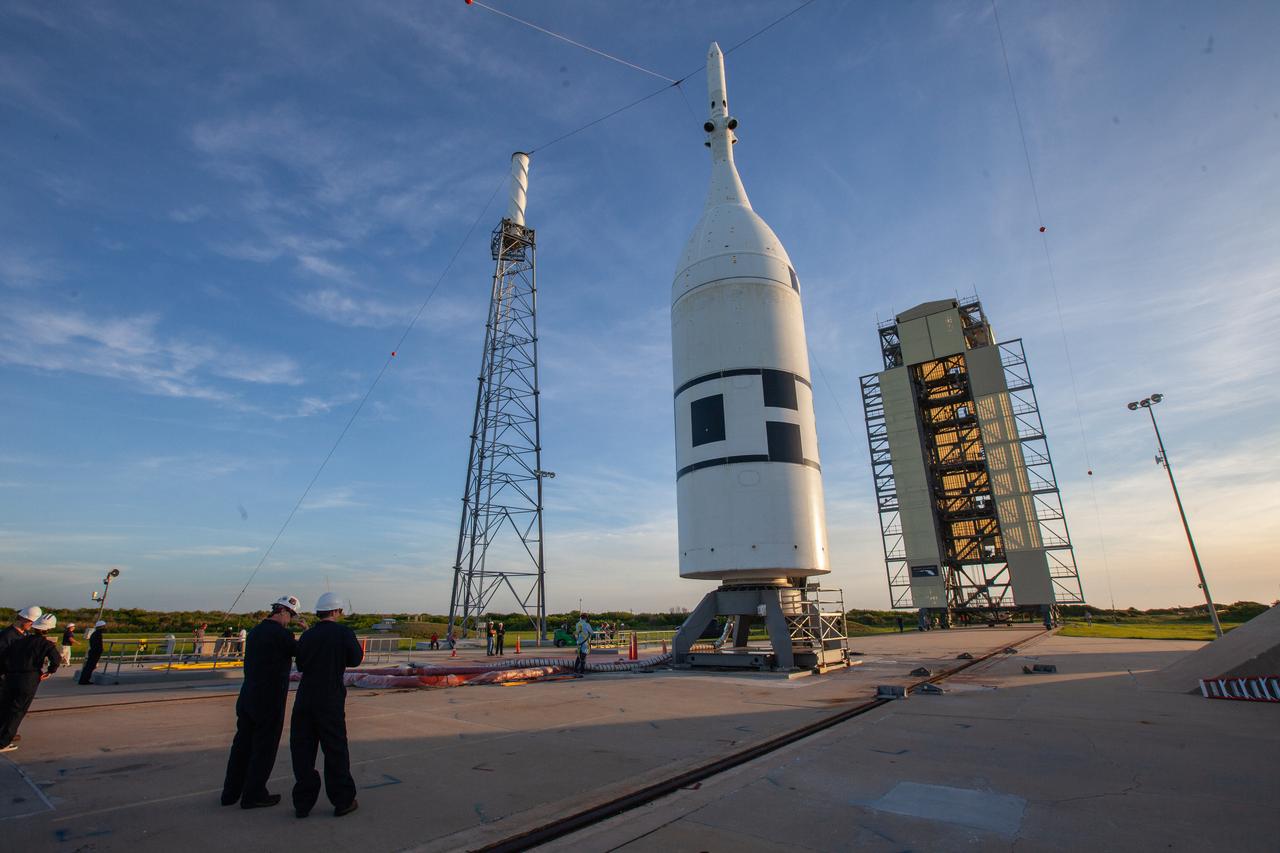
The Ascent Abort-2 test vehicle is secured on the pad at Launch Complex 46 at Cape Canaveral Air Force Station in Florida after rollback of the vertical integration facility on July 1, 2019. A fully functional Launch Abort System (LAS) mated to a test version of the Orion spacecraft are on a Northrop Grumman provided booster on the pad for launch on NASA’s AA-2 flight test on July 2, 2019. During AA-2, the booster will send the LAS and Orion to an altitude of 31,000 feet, traveling at more than 1,000 mph. The LAS’ three motors will work together to pull the crew module away from the booster and prepare it for splashdown in the Atlantic Ocean. The flight test will prove that the abort system can pull crew to safety in the unlikely event of an emergency during ascent.
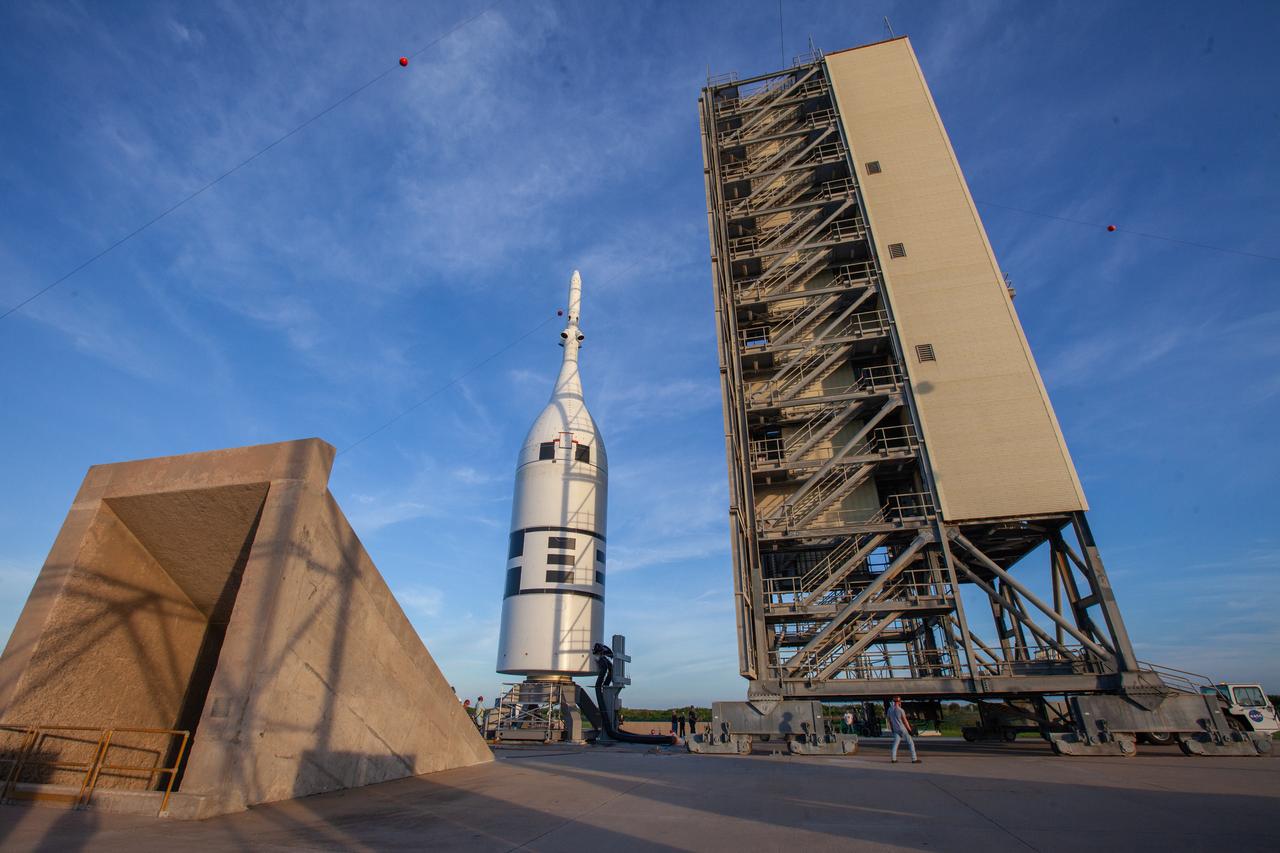
At Launch Complex 46 at Cape Canaveral Air Force Station in Florida, the vertical integration facility rolls back from the Ascent Abort-2 test vehicle on July 1, 2019. A fully functional Launch Abort System (LAS) mated to a test version of the Orion spacecraft are on a Northrop Grumman provided booster on the pad for launch on NASA’s AA-2 flight test on July 2, 2019. During AA-2, the booster will send the LAS and Orion to an altitude of 31,000 feet, traveling at more than 1,000 mph. The LAS’ three motors will work together to pull the crew module away from the booster and prepare it for splashdown in the Atlantic Ocean. The flight test will prove that the abort system can pull crew to safety in the unlikely event of an emergency during ascent.
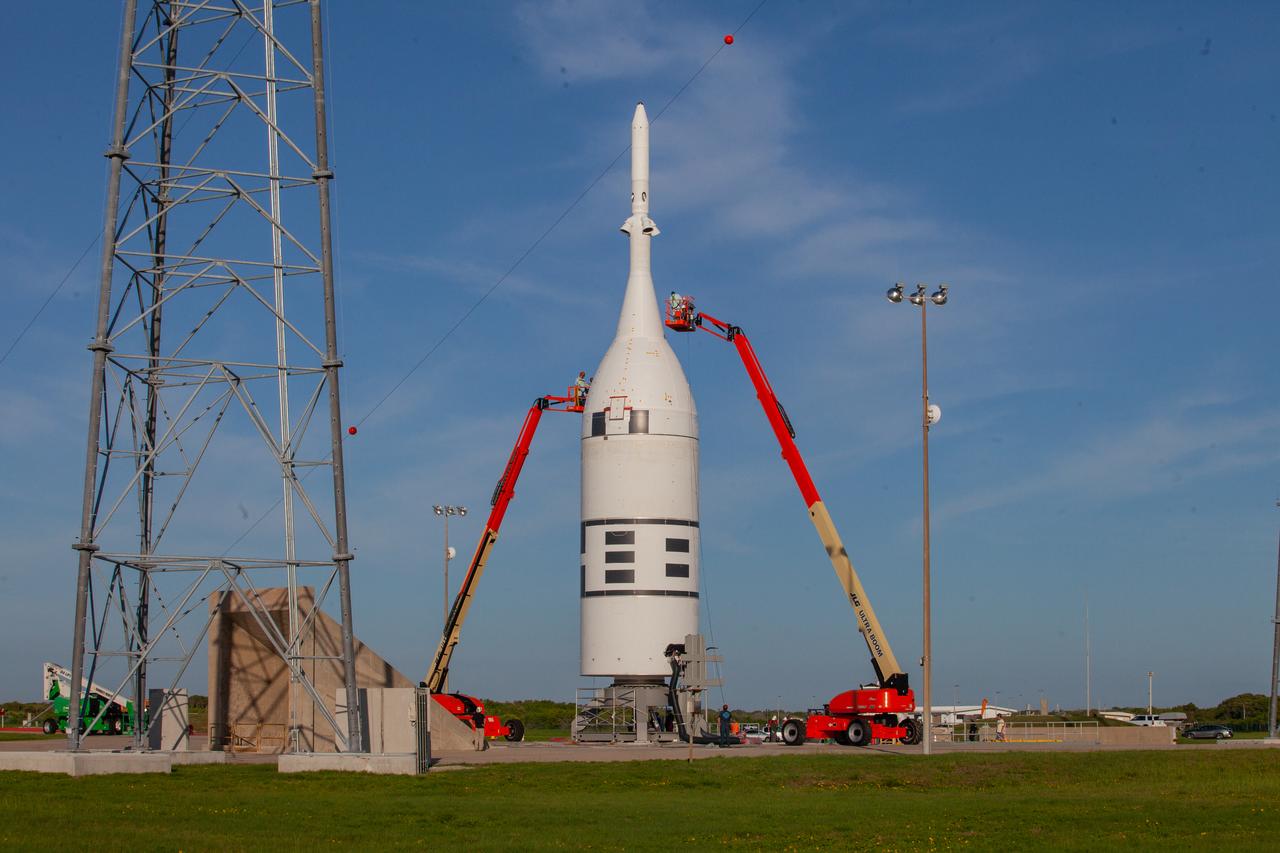
On July 1, 2019, workers prepare the Ascent Abort-2 (AA-2) test vehicle for launch at Launch Complex 46 at Cape Canaveral Air Force Station in Florida after rollback of the integration facility. A fully functional Launch Abort System (LAS) mated to a test version of the Orion spacecraft are on a Northrop Grumman provided booster on the pad for launch on NASA’s AA-2 flight test on July 2, 2019. During AA-2, the booster will send the LAS and Orion to an altitude of 31,000 feet, traveling at more than 1,000 mph. The LAS’ three motors will work together to pull the crew module away from the booster and prepare it for splashdown in the Atlantic Ocean. The flight test will prove that the abort system can pull crew to safety in the unlikely event of an emergency during ascent.
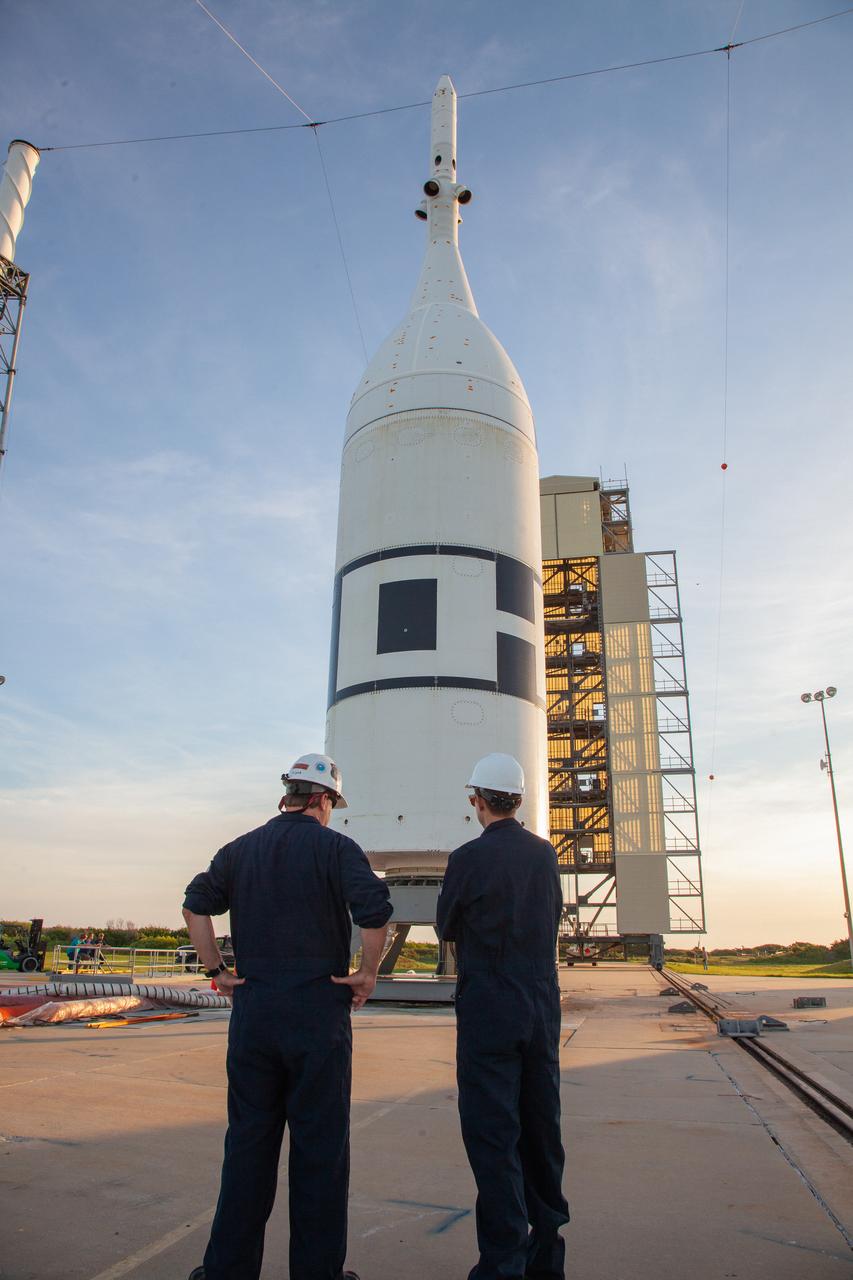
The Ascent Abort-2 test vehicle is secured on the pad at Launch Complex 46 at Cape Canaveral Air Force Station in Florida after rollback of the vertical integration facility on July 1, 2019. A fully functional Launch Abort System (LAS) mated to a test version of the Orion spacecraft are on a Northrop Grumman provided booster on the pad for launch on NASA’s AA-2 flight test on July 2, 2019. During AA-2, the booster will send the LAS and Orion to an altitude of 31,000 feet, traveling at more than 1,000 mph. The LAS’ three motors will work together to pull the crew module away from the booster and prepare it for splashdown in the Atlantic Ocean. The flight test will prove that the abort system can pull crew to safety in the unlikely event of an emergency during ascent.
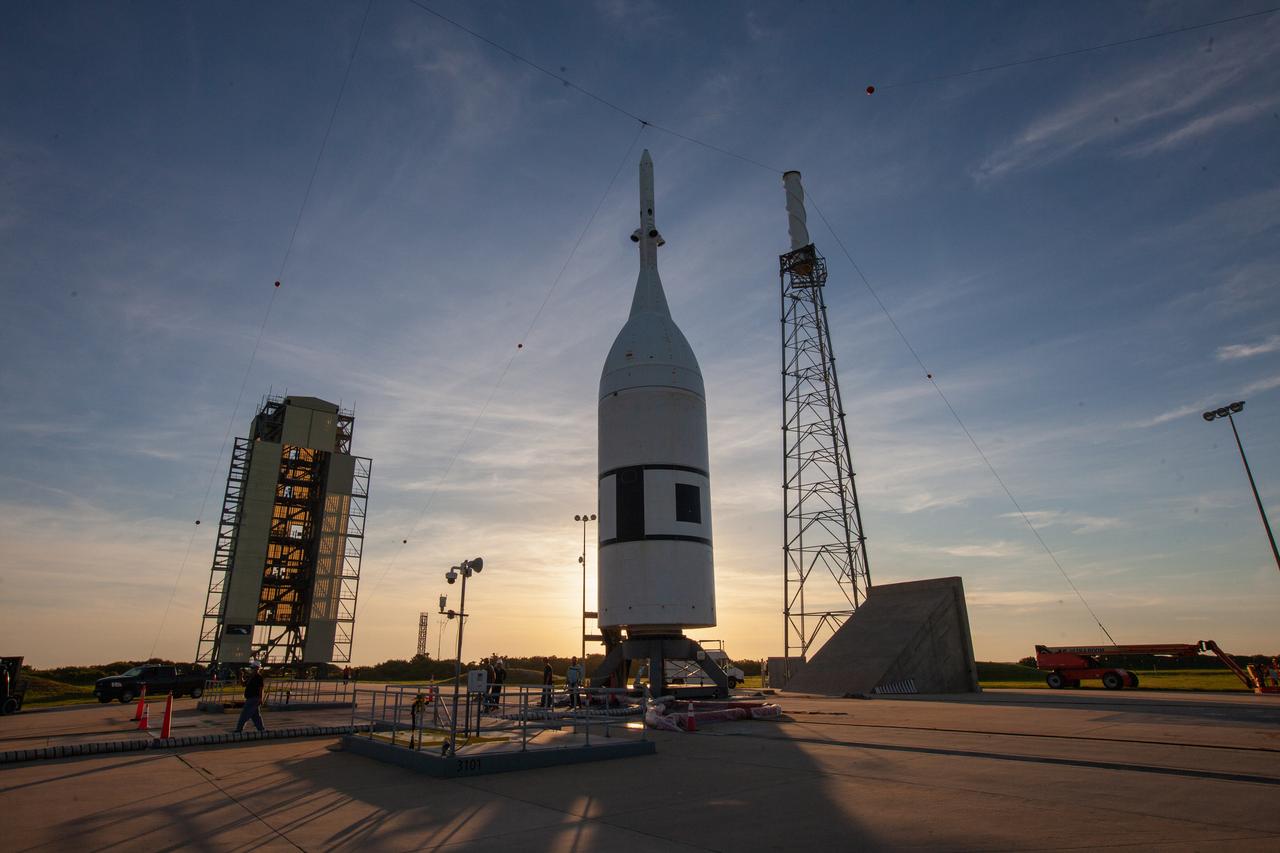
The Ascent Abort-2 test vehicle is secured on the pad at Launch Complex 46 at Cape Canaveral Air Force Station in Florida after rollback of the vertical integration facility on July 1, 2019. A fully functional Launch Abort System (LAS) mated to a test version of the Orion spacecraft are on a Northrop Grumman provided booster on the pad for launch on NASA’s AA-2 flight test on July 2, 2019. During AA-2, the booster will send the LAS and Orion to an altitude of 31,000 feet, traveling at more than 1,000 mph. The LAS’ three motors will work together to pull the crew module away from the booster and prepare it for splashdown in the Atlantic Ocean. The flight test will prove that the abort system can pull crew to safety in the unlikely event of an emergency during ascent.
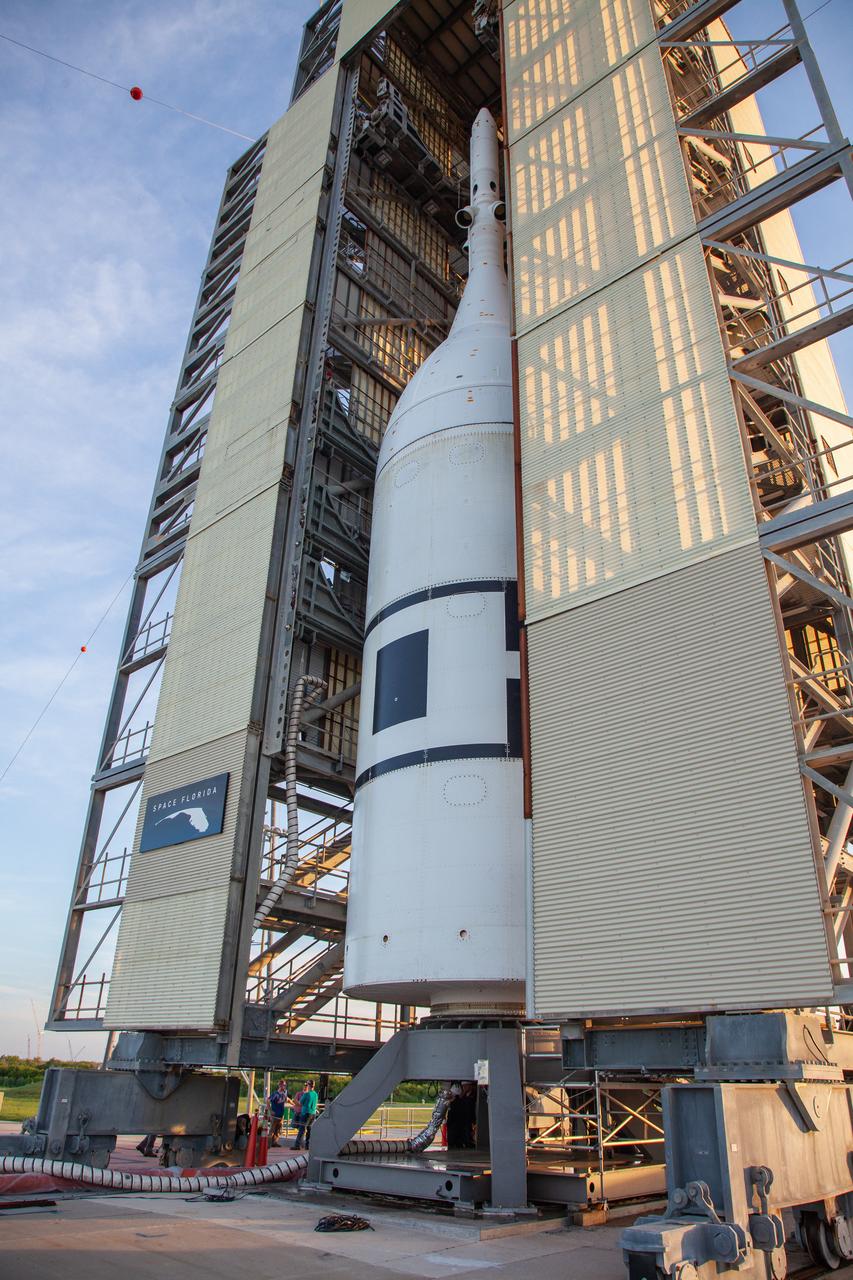
In the early morning on July 1, 2019, the vertical integration facility surrounding the Ascent Abort-2 (AA-2) test vehicle begins to rollback at Launch Pad 46 at Cape Canaveral Air Force Station in Florida. A fully functional Launch Abort System (LAS) mated to a test version of the Orion spacecraft are on a Northrop Grumman provided booster on the pad for launch on NASA’s AA-2 flight test on July 2, 2019. During AA-2, the booster will send the LAS and Orion to an altitude of 31,000 feet, traveling at more than 1,000 mph. The LAS’ three motors will work together to pull the crew module away from the booster and prepare it for splashdown in the Atlantic Ocean. The flight test will prove that the abort system can pull crew to safety in the unlikely event of an emergency during ascent.
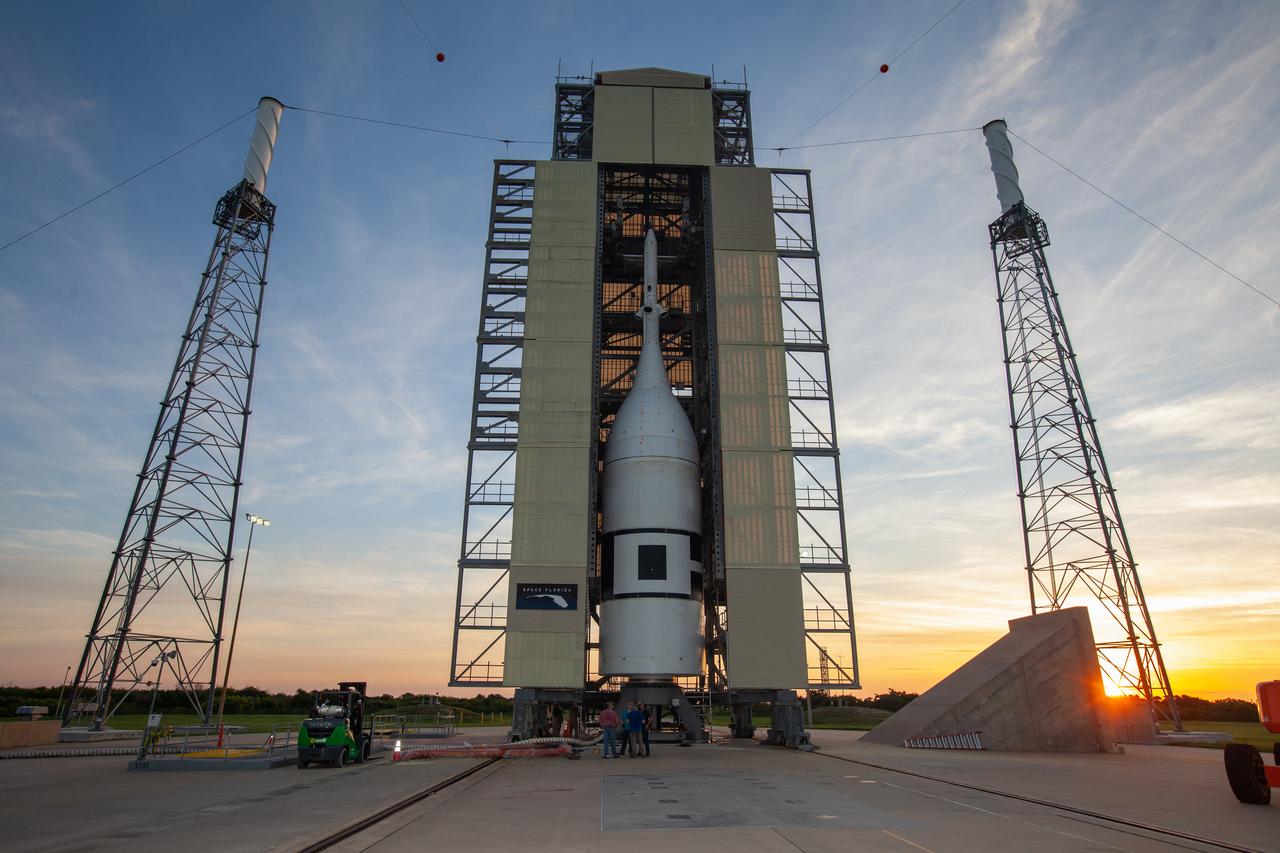
In the early morning on July 1, 2019, the vertical integration facility surrounding the Ascent Abort-2 (AA-2) test vehicle begins to rollback at Launch Pad 46 at Cape Canaveral Air Force Station in Florida. A fully functional Launch Abort System (LAS) mated to a test version of the Orion spacecraft are on a Northrop Grumman provided booster on the pad for launch on NASA’s AA-2 flight test on July 2, 2019. During AA-2, the booster will send the LAS and Orion to an altitude of 31,000 feet, traveling at more than 1,000 mph. The LAS’ three motors will work together to pull the crew module away from the booster and prepare it for splashdown in the Atlantic Ocean. The flight test will prove that the abort system can pull crew to safety in the unlikely event of an emergency during ascent.
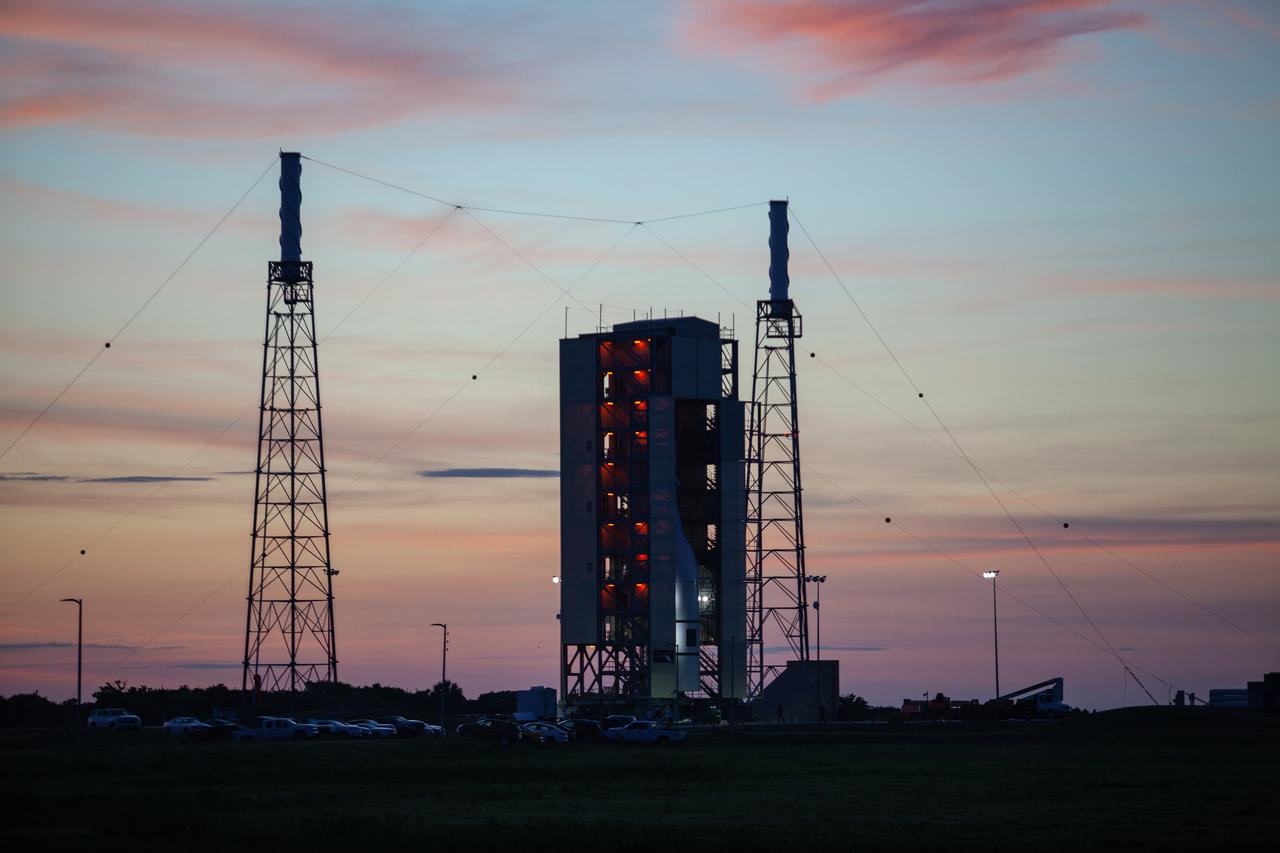
A sunrise view of Launch Complex 46 at Cape Canaveral Air Force Station in Florida on July 1, 2019. A fully functional Launch Abort System (LAS) mated to a test version of the Orion spacecraft are on a Northrop Grumman provided booster on the pad for launch on NASA’s Ascent Abort-2 (AA-2) flight test on July 2, 2019. The vertical integration facility surrounding the test vehicle begins to roll back from the pad. During AA-2, the booster will send the LAS and Orion to an altitude of 31,000 feet, traveling at more than 1,000 mph. The LAS’ three motors will work together to pull the crew module away from the booster and prepare it for splashdown in the Atlantic Ocean. The flight test will prove that the abort system can pull crew to safety in the unlikely event of an emergency during ascent.
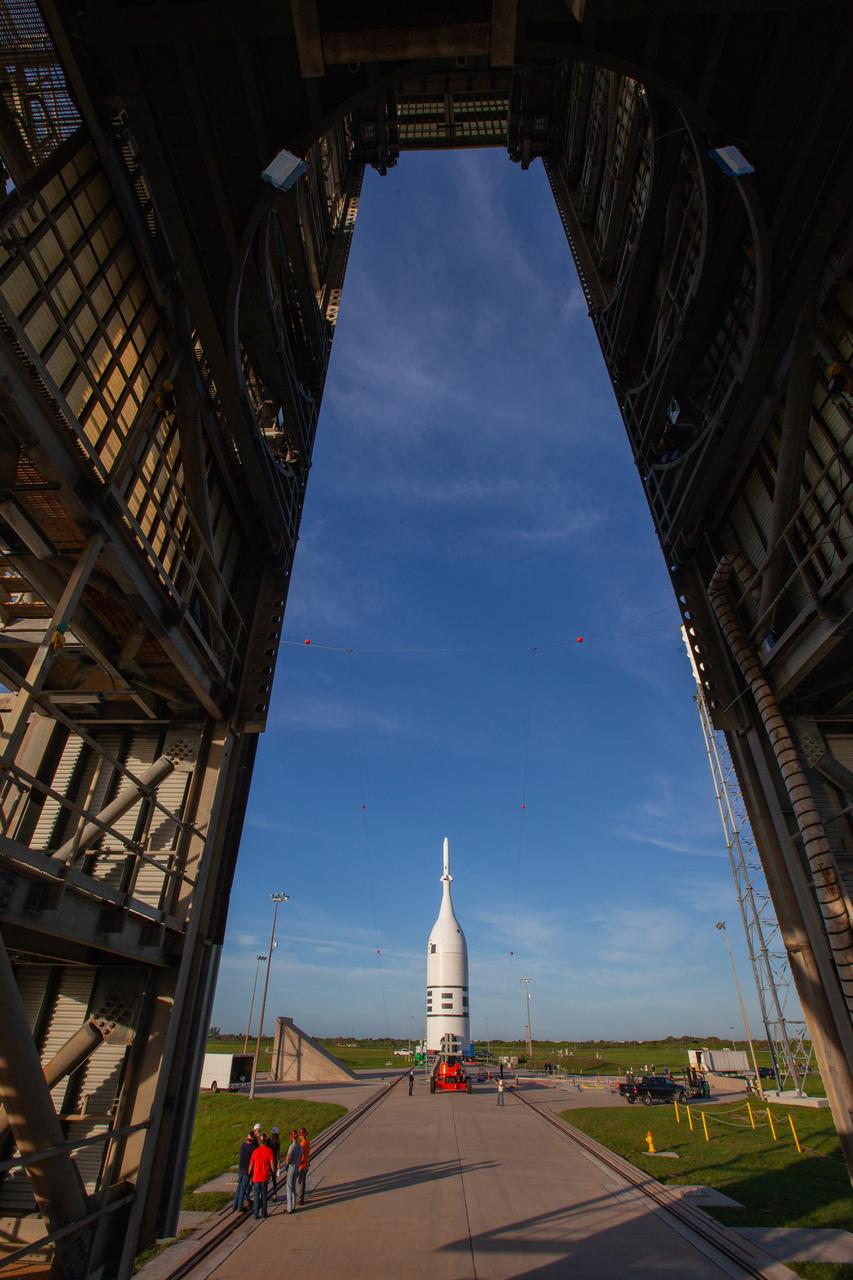
A view of the Ascent Abort-2 (AA-2) test vehicle from inside the vertical integration facility at Launch Complex 46 at Cape Canaveral Air Force Station in Florida after rollback of the integration facility on July 1, 2019. A fully functional Launch Abort System (LAS) mated to a test version of the Orion spacecraft are on a Northrop Grumman provided booster on the pad for launch on NASA’s AA-2 flight test on July 2, 2019. During AA-2, the booster will send the LAS and Orion to an altitude of 31,000 feet, traveling at more than 1,000 mph. The LAS’ three motors will work together to pull the crew module away from the booster and prepare it for splashdown in the Atlantic Ocean. The flight test will prove that the abort system can pull crew to safety in the unlikely event of an emergency during ascent.
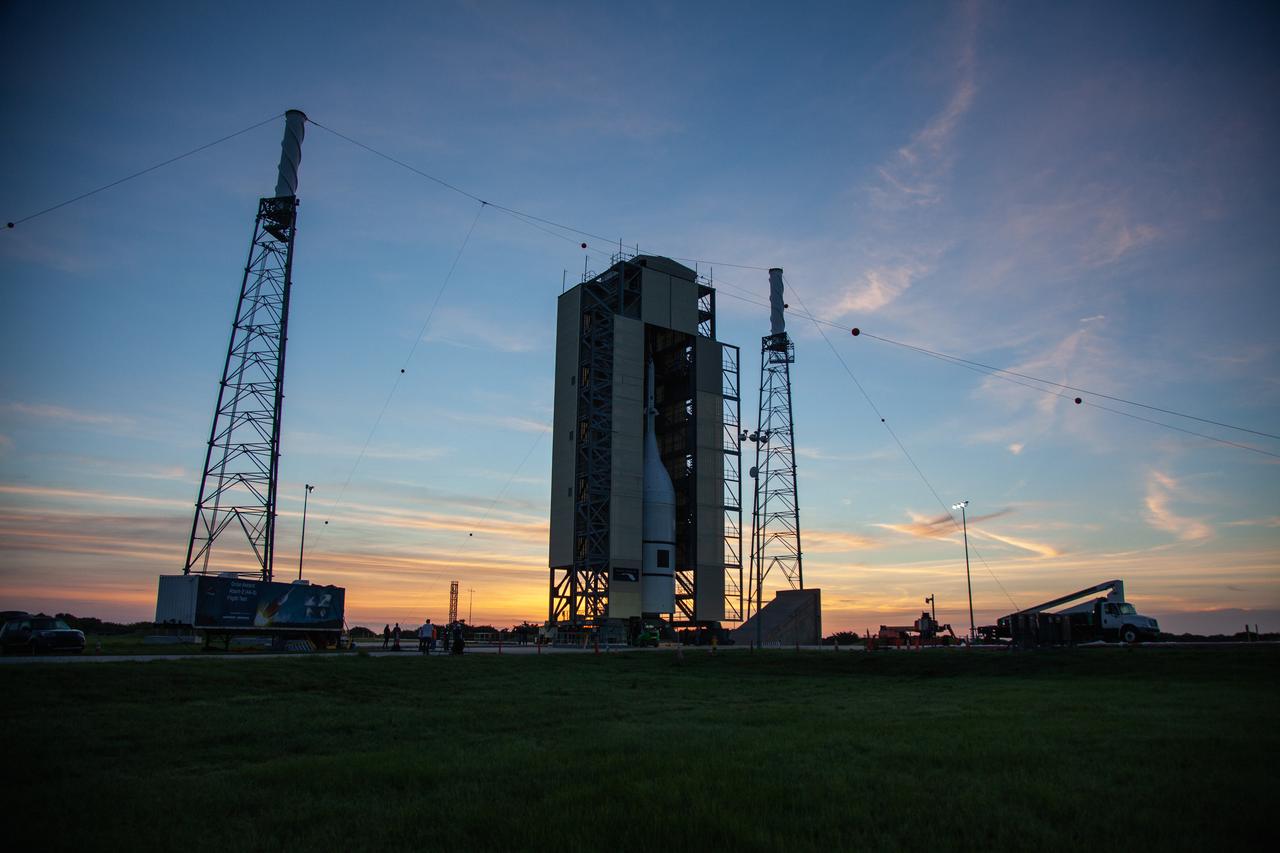
In the early morning on July 1, 2019, the vertical integration facility surrounding the Ascent Abort-2 (AA-2) test vehicle begins to rollback at Launch Pad 46 at Cape Canaveral Air Force Station in Florida. A fully functional Launch Abort System (LAS) mated to a test version of the Orion spacecraft are on a Northrop Grumman provided booster on the pad for launch on NASA’s AA-2 flight test on July 2, 2019. During AA-2, the booster will send the LAS and Orion to an altitude of 31,000 feet, traveling at more than 1,000 mph. The LAS’ three motors will work together to pull the crew module away from the booster and prepare it for splashdown in the Atlantic Ocean. The flight test will prove that the abort system can pull crew to safety in the unlikely event of an emergency during ascent.
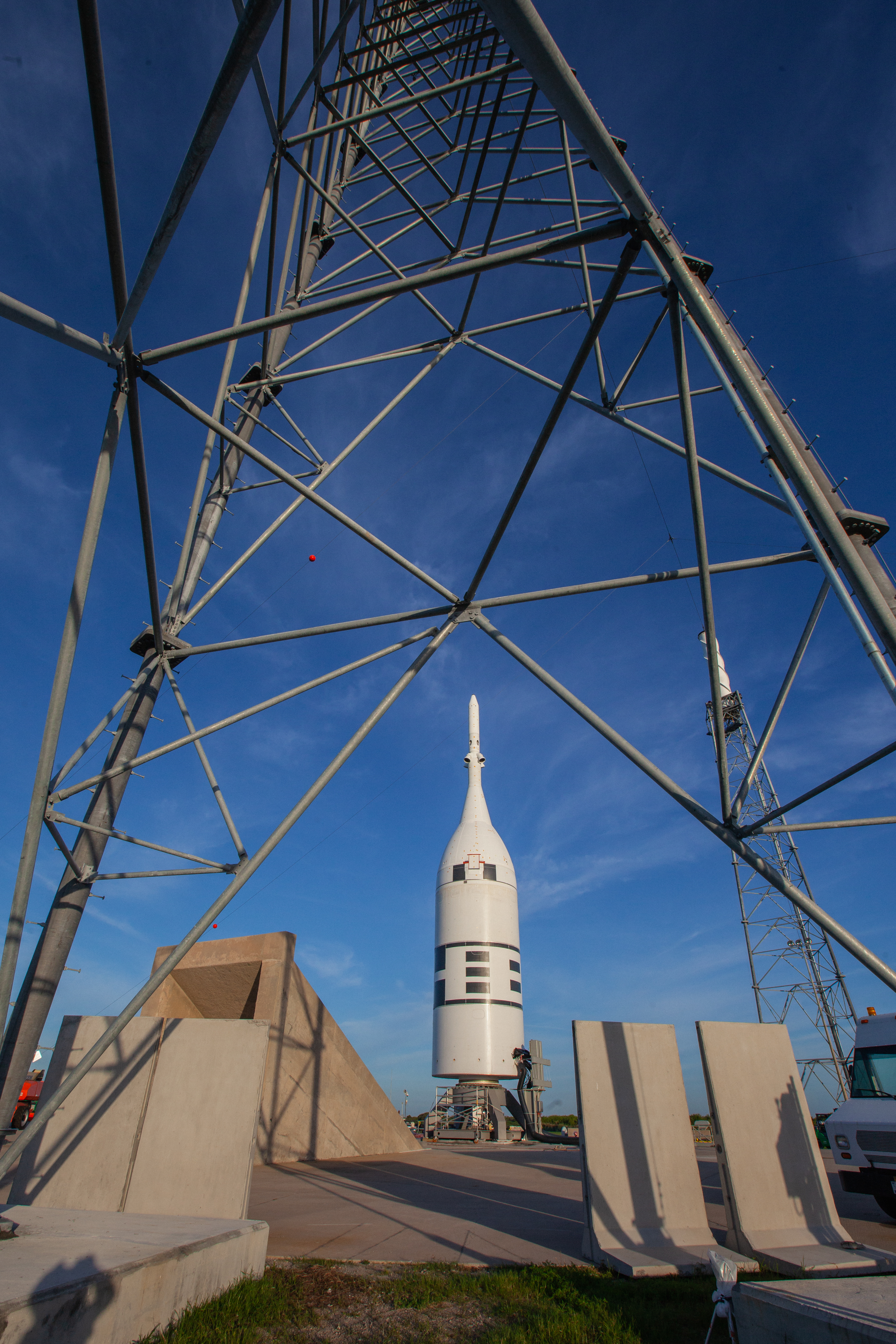
With a view of a lightning tower in the foreground, the Ascent Abort-2 test vehicle is in view on the pad at Launch Complex 46 at Cape Canaveral Air Force Station in Florida after rollback of the vertical integration facility on July 1, 2019. A fully functional Launch Abort System (LAS) mated to a test version of the Orion spacecraft are on a Northrop Grumman provided booster on the pad for launch on NASA’s AA-2 flight test on July 2, 2019. During AA-2, the booster will send the LAS and Orion to an altitude of 31,000 feet, traveling at more than 1,000 mph. The LAS’ three motors will work together to pull the crew module away from the booster and prepare it for splashdown in the Atlantic Ocean. The flight test will prove that the abort system can pull crew to safety in the unlikely event of an emergency during ascent.
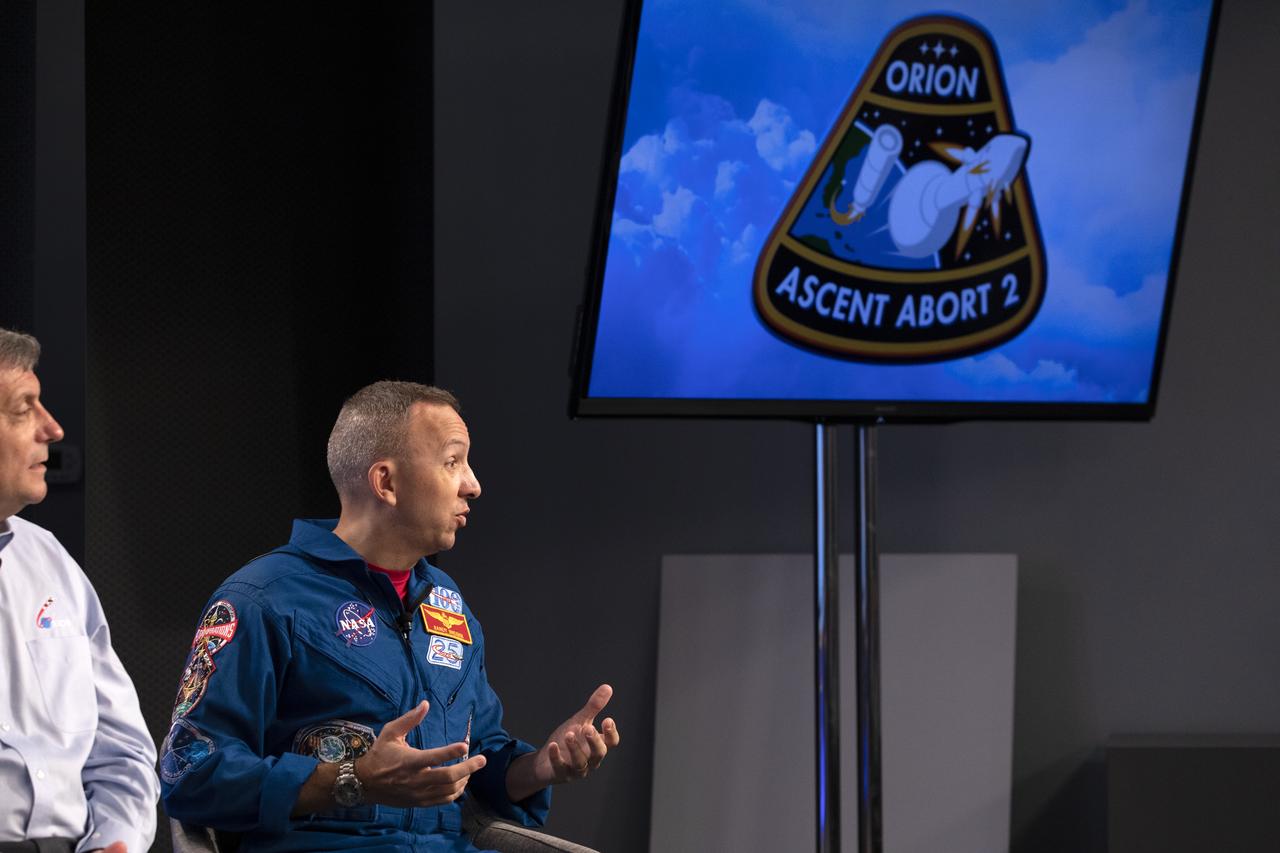
From left, Mark Kirasich, Orion Program manager; and Randy Bresnik, NASA astronaut, participate in a prelaunch news conference for NASA’s Ascent Abort-2 (AA-2) flight test at the agency’s Kennedy Space Center in Florida on July 1, 2019. For AA-2, a test version of the Orion spacecraft attached to a fully functional Launch Abort System (LAS) will launch atop a Northrop Grumman provided booster on July 2, 2019, from Launch Pad 46 at Cape Canaveral Air Force Station in Florida. During AA-2, the booster will send the LAS and Orion to an altitude of 31,000 feet, traveling at more than 1,000 mph. The LAS’ three motors will work together to pull the crew module away from the booster and prepare it for splashdown in the Atlantic Ocean. The flight test will prove that the abort system can pull crew to safety in the unlikely event of an emergency during ascent.

Jenny Devolites, AA-2 Crew Module manager, participates in a prelaunch news conference for NASA’s Ascent Abort-2 (AA-2) flight test at the agency’s Kennedy Space Center in Florida on July 1, 2019. For AA-2, a test version of the Orion spacecraft attached to a fully functional Launch Abort System (LAS) will launch atop a Northrop Grumman provided booster on July 2, 2019, from Launch Pad 46 at Cape Canaveral Air Force Station in Florida. During AA-2, the booster will send the LAS and Orion to an altitude of 31,000 feet, traveling at more than 1,000 mph. The LAS’ three motors will work together to pull the crew module away from the booster and prepare it for splashdown in the Atlantic Ocean. The flight test will prove that the abort system can pull crew to safety in the unlikely event of an emergency during ascent.

Randy Bresnik, NASA astronaut, participates in a prelaunch news conference for NASA’s Ascent Abort-2 (AA-2) flight test at the agency’s Kennedy Space Center in Florida on July 1, 2019. For AA-2, a test version of the Orion spacecraft attached to a fully functional Launch Abort System (LAS) will launch atop a Northrop Grumman provided booster on July 2, 2019, from Launch Pad 46 at Cape Canaveral Air Force Station in Florida. During AA-2, the booster will send the LAS and Orion to an altitude of 31,000 feet, traveling at more than 1,000 mph. The LAS’ three motors will work together to pull the crew module away from the booster and prepare it for splashdown in the Atlantic Ocean. The flight test will prove that the abort system can pull crew to safety in the unlikely event of an emergency during ascent.

Mark Kirasich, Orion Program manager, participates in a prelaunch news conference for NASA’s Ascent Abort-2 (AA-2) flight test at the agency’s Kennedy Space Center in Florida on July 1, 2019. For AA-2, a test version of the Orion spacecraft attached to a fully functional Launch Abort System (LAS) will launch atop a Northrop Grumman provided booster on July 2, 2019, from Launch Pad 46 at Cape Canaveral Air Force Station in Florida. During AA-2, the booster will send the LAS and Orion to an altitude of 31,000 feet, traveling at more than 1,000 mph. The LAS’ three motors will work together to pull the crew module away from the booster and prepare it for splashdown in the Atlantic Ocean. The flight test will prove that the abort system can pull crew to safety in the unlikely event of an emergency during ascent.

Randy Bresnik, NASA astronaut, answers a question from a member of the news media during a prelaunch news conference for NASA’s Ascent Abort-2 (AA-2) flight test at the agency’s Kennedy Space Center in Florida on July 1, 2019. For AA-2, a test version of the Orion spacecraft attached to a fully functional Launch Abort System (LAS) will launch atop a Northrop Grumman provided booster on July 2, 2019, from Launch Pad 46 at Cape Canaveral Air Force Station in Florida. During AA-2, the booster will send the LAS and Orion to an altitude of 31,000 feet, traveling at more than 1,000 mph. The LAS’ three motors will work together to pull the crew module away from the booster and prepare it for splashdown in the Atlantic Ocean. The flight test will prove that the abort system can pull crew to safety in the unlikely event of an emergency during ascent.

NASA Administrator Jim Bridenstine, left, listens as Orion AA-2 Crew Module Manager Dr. Jon Olansen discusses the Orion test crew capsule that will be used for the Ascent Abort-2 (AA-2) test, Thursday, Aug. 2, 2018 at NASA’s Johnson Space Center in Houston, Texas. Photo Credit: (NASA/Bill Ingalls)

NASA Administrator Jim Bridenstine, seated left, and NASA Johnson Space Center Director Mark Geyer, seated right participate in a media roundtable in front of the Orion test crew capsule for the Ascent Abort-2 (AA-2) test, Thursday, Aug. 2, 2018 at NASA’s Johnson Space Center in Houston, Texas. Photo Credit: (NASA/Bill Ingalls)
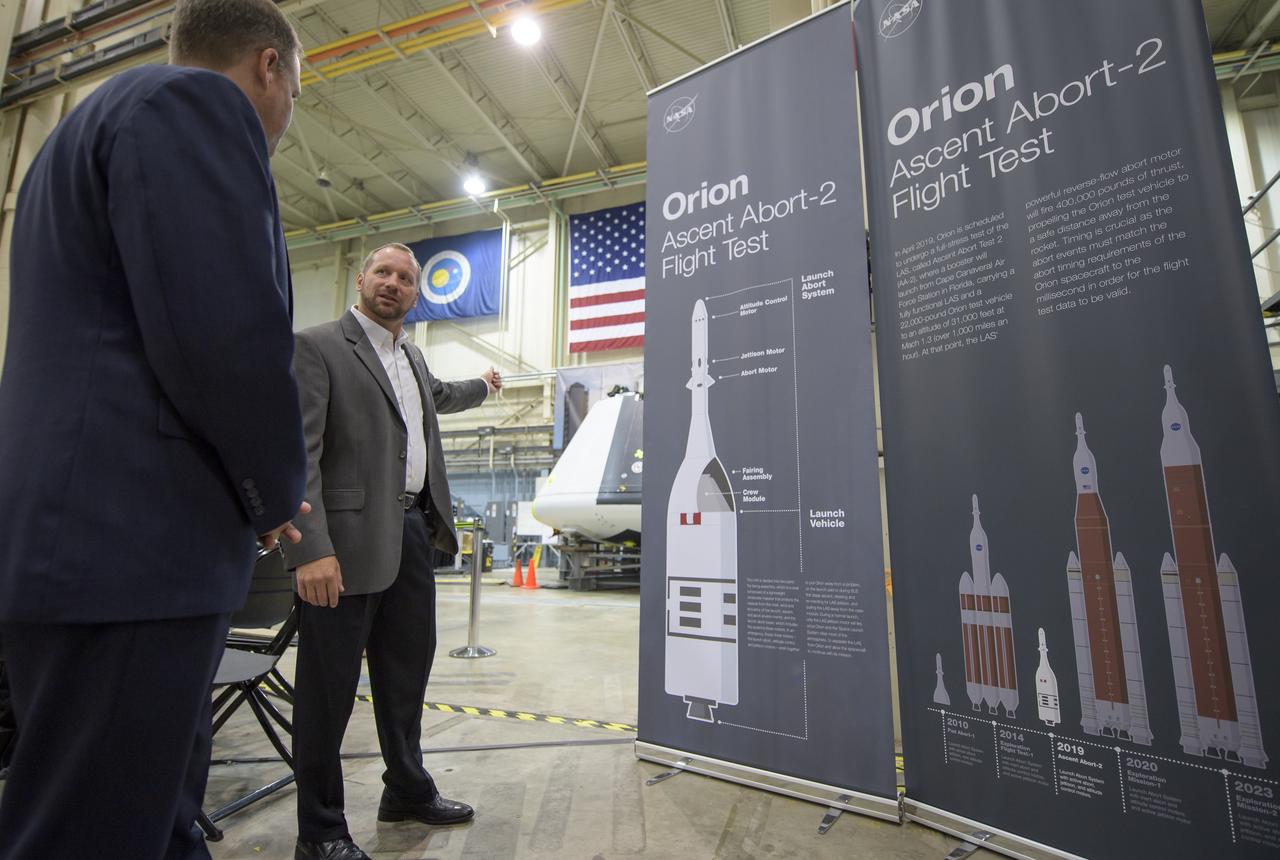
NASA Orion AA-2 Crew Module Manager Dr. Jon Olansen, right, talks to NASA Administrator Jim Bridenstine outside of the Orion test crew capsule that will be used for the Ascent Abort-2 (AA-2) test, Thursday, Aug. 2, 2018 at NASA’s Johnson Space Center in Houston, Texas. Photo Credit: (NASA/Bill Ingalls)

NASA Administrator Jim Bridenstine, left, listens as Orion AA-2 Crew Module Manager Dr. Jon Olansen discusses the Orion test crew capsule that will be used for the Ascent Abort-2 (AA-2) test, Thursday, Aug. 2, 2018 at NASA’s Johnson Space Center in Houston, Texas. Photo Credit: (NASA/Bill Ingalls)
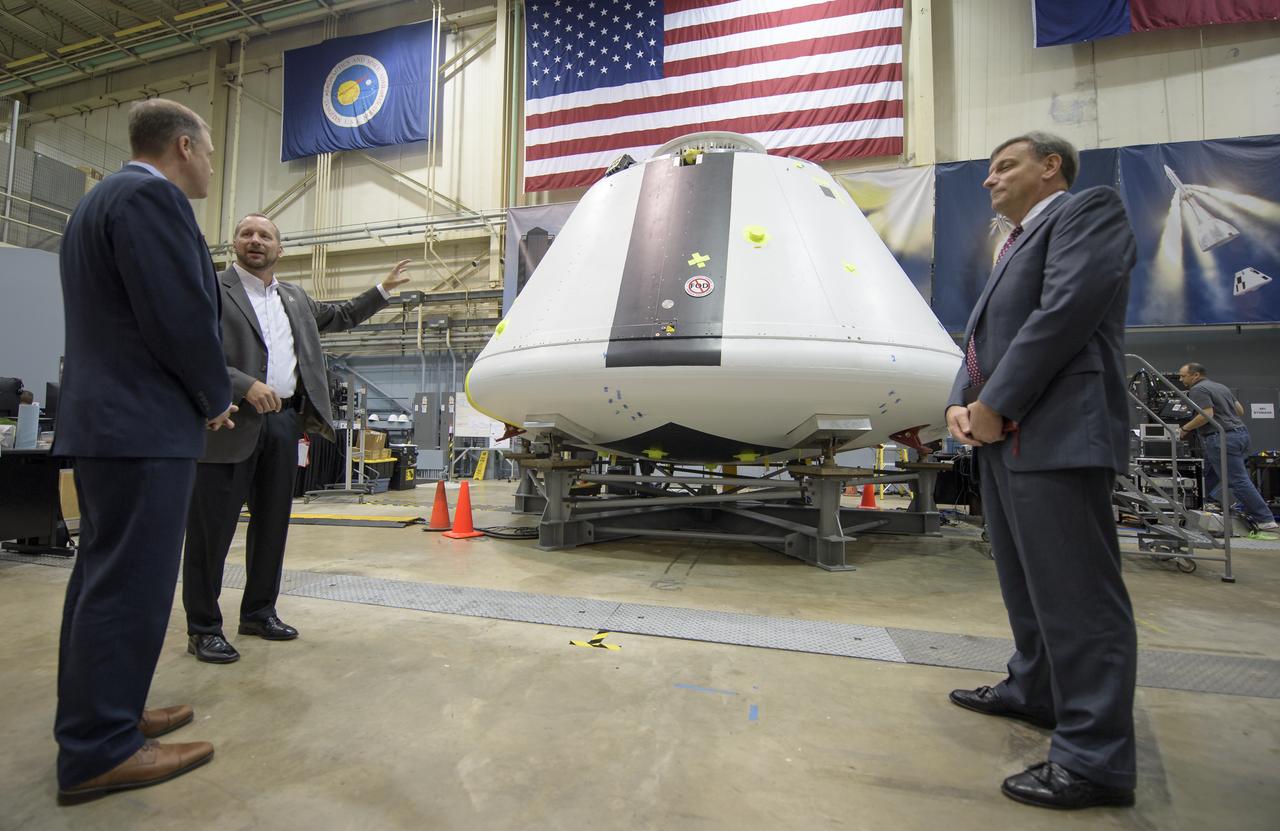
NASA Administrator Jim Bridenstine, left, is shown the Orion test crew capsule that will be used for the Ascent Abort-2 (AA-2) test by Orion AA-2 Crew Module Manager Dr. Jon Olansen, 2nd from left, as Orion Program Manager Mark Kirasich, right, looks on, Thursday, Aug. 2, 2018 at NASA’s Johnson Space Center in Houston, Texas. Photo Credit: (NASA/Bill Ingalls)
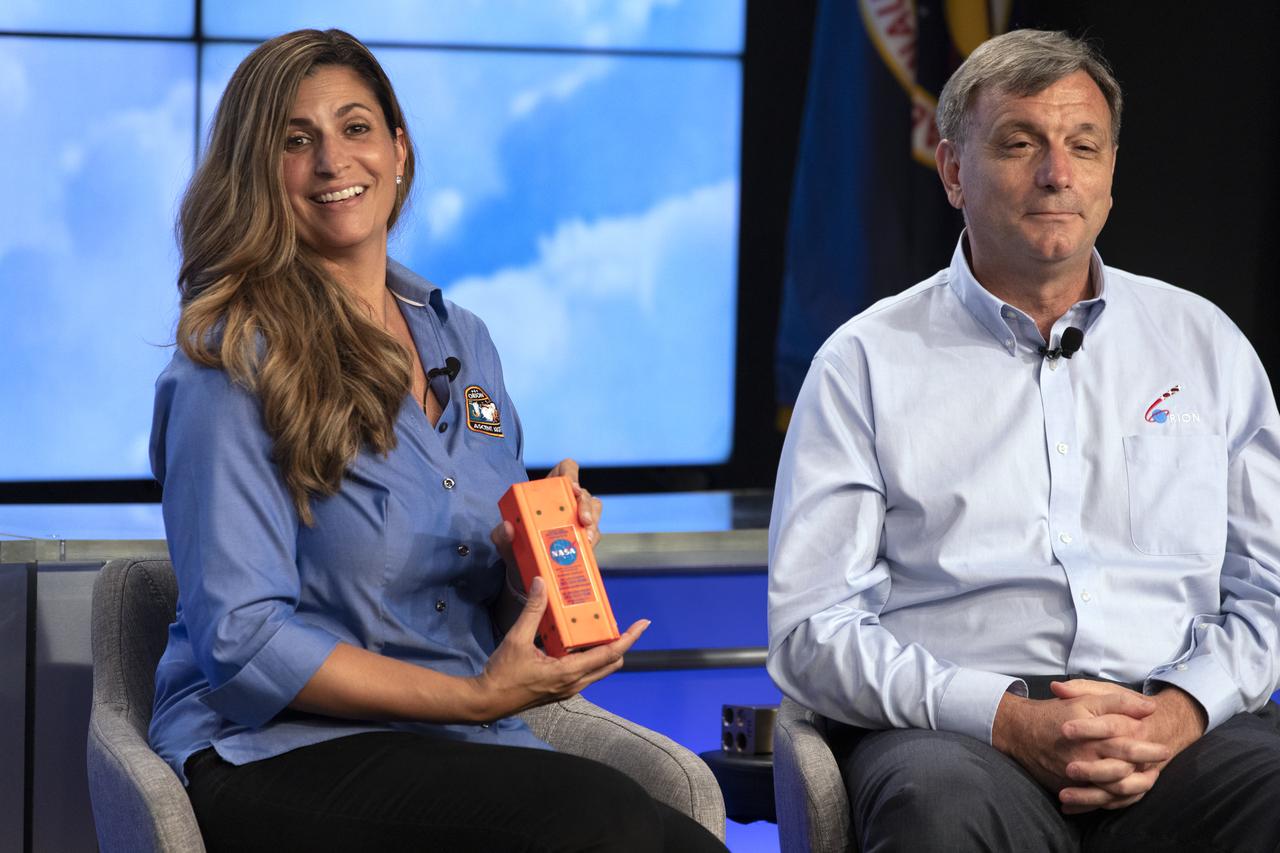
From left, Jenny Devolites, AA-2 Crew Module manager; and Mark Kirasich, Orion Program manager, participate in a prelaunch news conference for NASA’s Ascent Abort-2 (AA-2) flight test at the agency’s Kennedy Space Center in Florida on July 1, 2019. Devolites displays an example of a data recorder attached to the LAS that will be retrieved after the abort test. For AA-2, a test version of the Orion spacecraft attached to a fully functional Launch Abort System (LAS) will launch atop a Northrop Grumman provided booster on July 2, 2019, from Launch Pad 46 at Cape Canaveral Air Force Station in Florida. During AA-2, the booster will send the LAS and Orion to an altitude of 31,000 feet, traveling at more than 1,000 mph. The LAS’ three motors will work together to pull the crew module away from the booster and prepare it for splashdown in the Atlantic Ocean. The flight test will prove that the abort system can pull crew to safety in the unlikely event of an emergency during ascent.
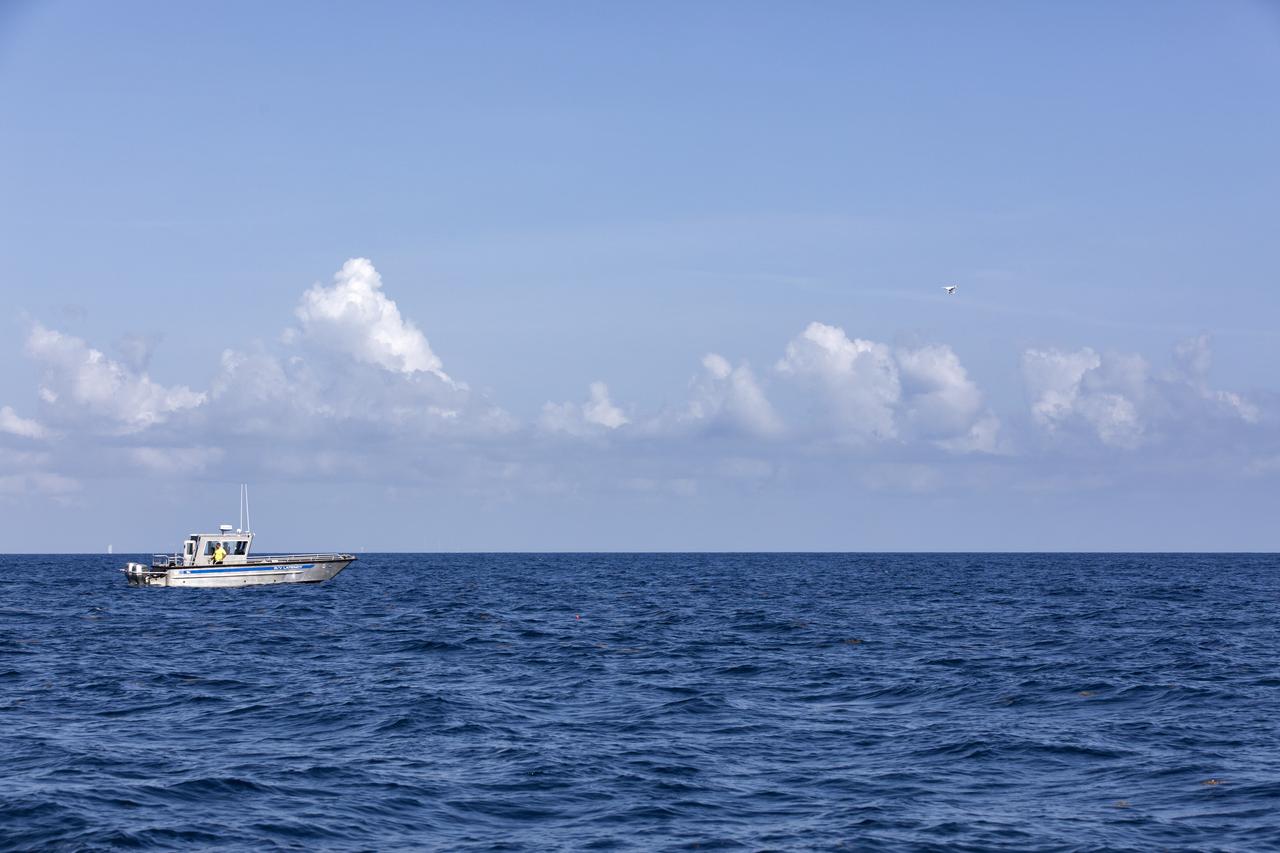
Members of the Ascent Abort-2 (AA-2) Flight Test team perform a drop test of data recording devices about 10 miles off the coast of NASA’s Kennedy Space Center in Florida on Wednesday, Aug. 8, 2018. These devices, called Ejectable Data Recorders (EDRs), were tossed out of a helicopter hovering 5,000 feet over the Atlantic Ocean and retrieved by recovery boats. The AA-2 Flight Test team is evaluating how the systems in the devices react to elements encountered from the sky to the ocean. In April 2019, the EDRs will eject from the Orion test article during a scheduled test of the spacecraft’s Launch Abort System (LAS).
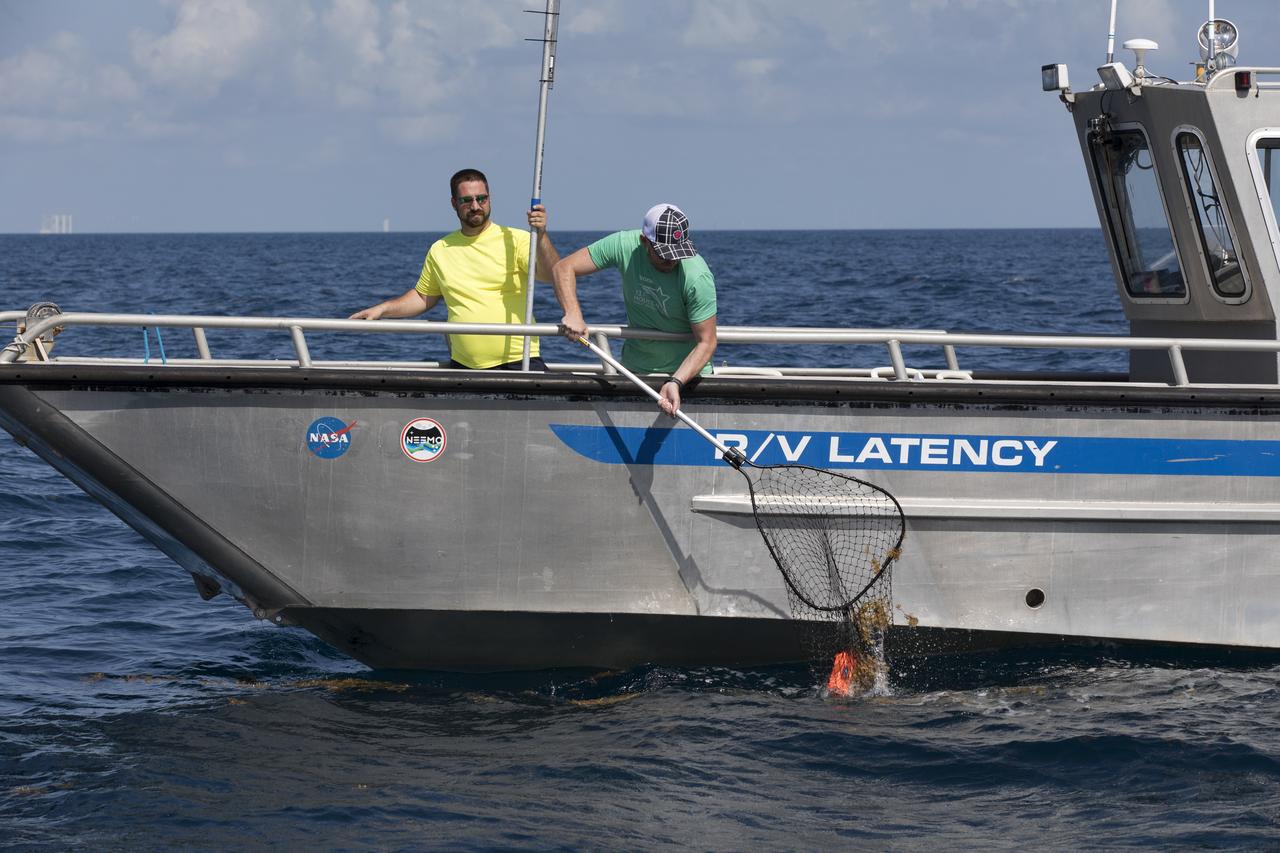
Members of the Ascent Abort-2 (AA-2) Flight Test team perform a drop test of data recording devices about 10 miles off the coast of NASA’s Kennedy Space Center in Florida on Wednesday, Aug. 8, 2018. These devices, called Ejectable Data Recorders (EDRs), were tossed out of a helicopter hovering 5,000 feet over the Atlantic Ocean and retrieved by recovery boats. The AA-2 Flight Test team is evaluating how the systems in the devices react to elements encountered from the sky to the ocean. In April 2019, the EDRs will eject from the Orion test article during a scheduled test of the spacecraft’s Launch Abort System (LAS).

Members of the Ascent Abort-2 (AA-2) Flight Test team perform a drop test of data recording devices about 10 miles off the coast of NASA’s Kennedy Space Center in Florida on Wednesday, Aug. 8, 2018. These devices, called Ejectable Data Recorders (EDRs), were tossed out of a helicopter hovering 5,000 feet over the Atlantic Ocean and retrieved by recovery boats. The AA-2 Flight Test team is evaluating how the systems in the devices react to elements encountered from the sky to the ocean. In April 2019, the EDRs will eject from the Orion test article during a scheduled test of the spacecraft’s Launch Abort System (LAS).
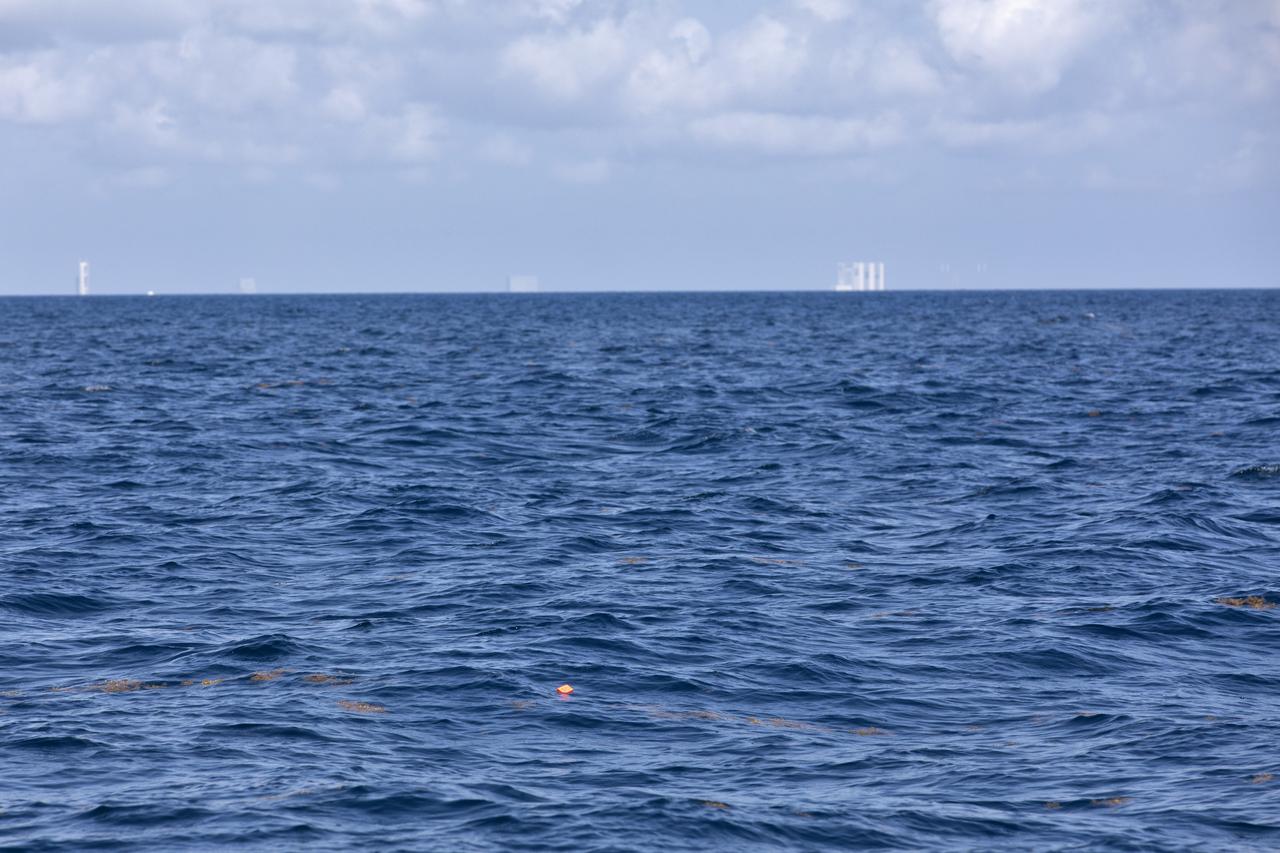
Members of the Ascent Abort-2 (AA-2) Flight Test team perform a drop test of data recording devices about 10 miles off the coast of NASA’s Kennedy Space Center in Florida on Wednesday, Aug. 8, 2018. These devices, called Ejectable Data Recorders (EDRs), were tossed out of a helicopter hovering 5,000 feet over the Atlantic Ocean and retrieved by recovery boats. The AA-2 Flight Test team is evaluating how the systems in the devices react to elements encountered from the sky to the ocean. In April 2019, the EDRs will eject from the Orion test article during a scheduled test of the spacecraft’s Launch Abort System (LAS).
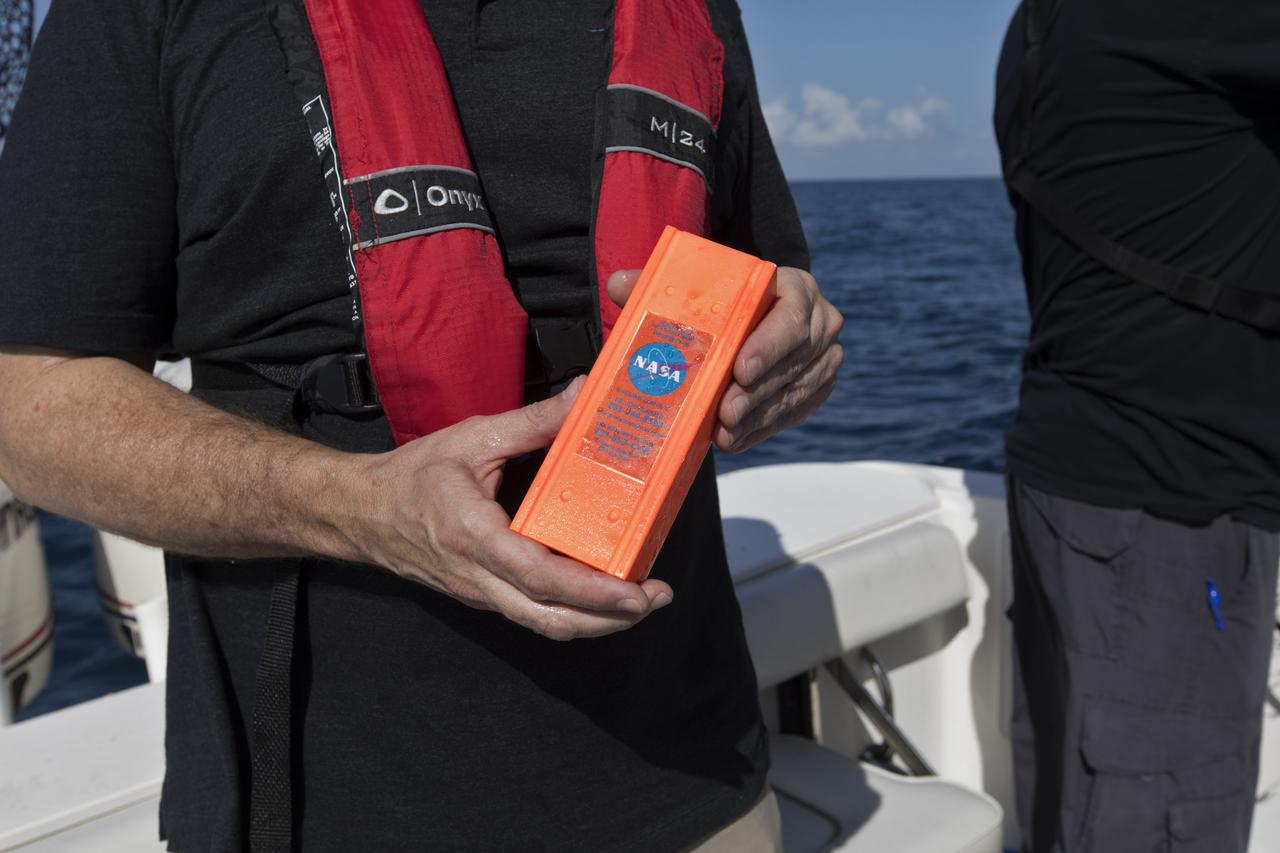
Members of the Ascent Abort-2 (AA-2) Flight Test team perform a drop test of data recording devices about 10 miles off the coast of NASA’s Kennedy Space Center in Florida on Wednesday, Aug. 8, 2018. These devices, called Ejectable Data Recorders (EDRs), were tossed out of a helicopter hovering 5,000 feet over the Atlantic Ocean and retrieved by recovery boats. The AA-2 Flight Test team is evaluating how the systems in the devices react to elements encountered from the sky to the ocean. In April 2019, the EDRs will eject from the Orion test article during a scheduled test of the spacecraft’s Launch Abort System (LAS).
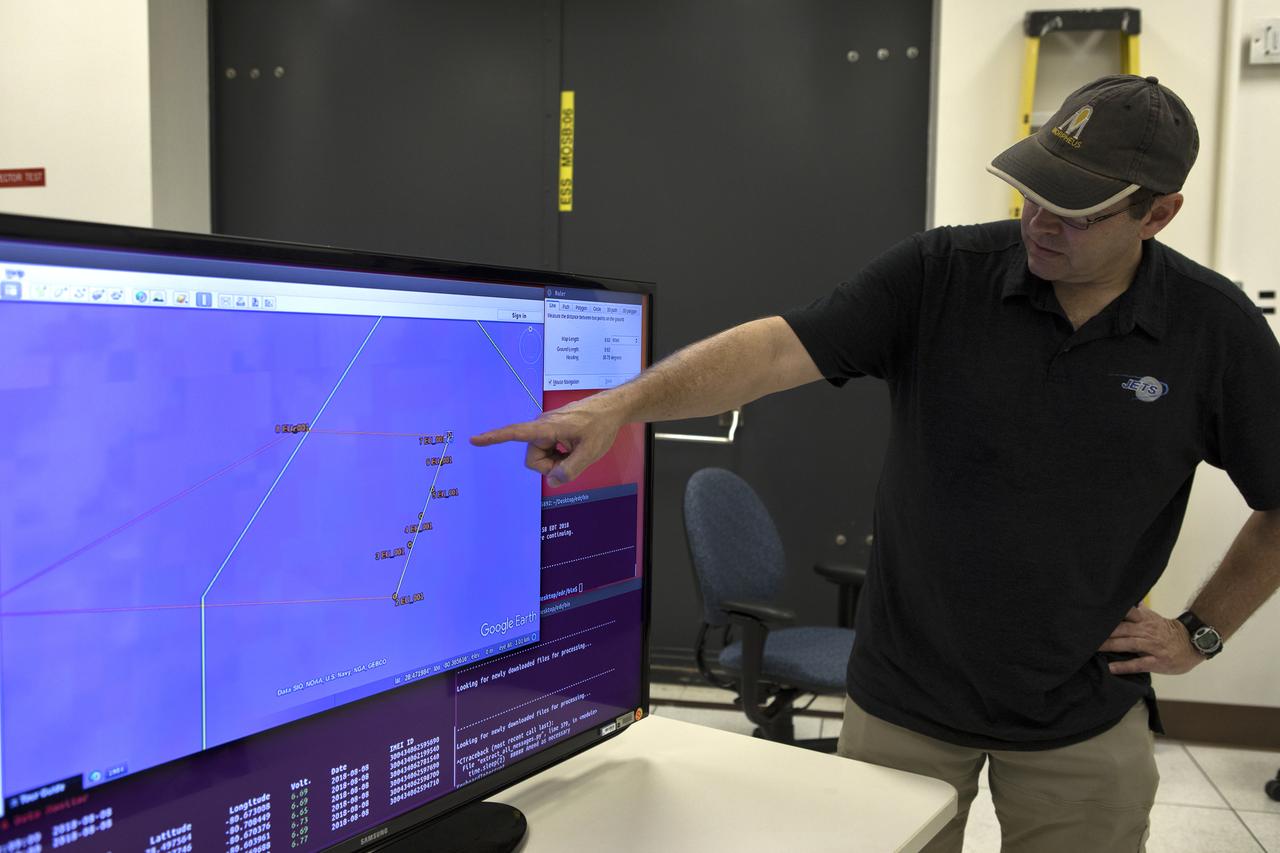
Members of the Ascent Abort-2 (AA-2) Flight Test team perform a drop test of data recording devices about 10 miles off the coast of NASA’s Kennedy Space Center in Florida on Wednesday, Aug. 8, 2018. These devices, called Ejectable Data Recorders (EDRs), were tossed out of a helicopter hovering 5,000 feet over the Atlantic Ocean and retrieved by recovery boats. The AA-2 Flight Test team is evaluating how the systems in the devices react to elements encountered from the sky to the ocean. In April 2019, the EDRs will eject from the Orion test article during a scheduled test of the spacecraft’s Launch Abort System (LAS).
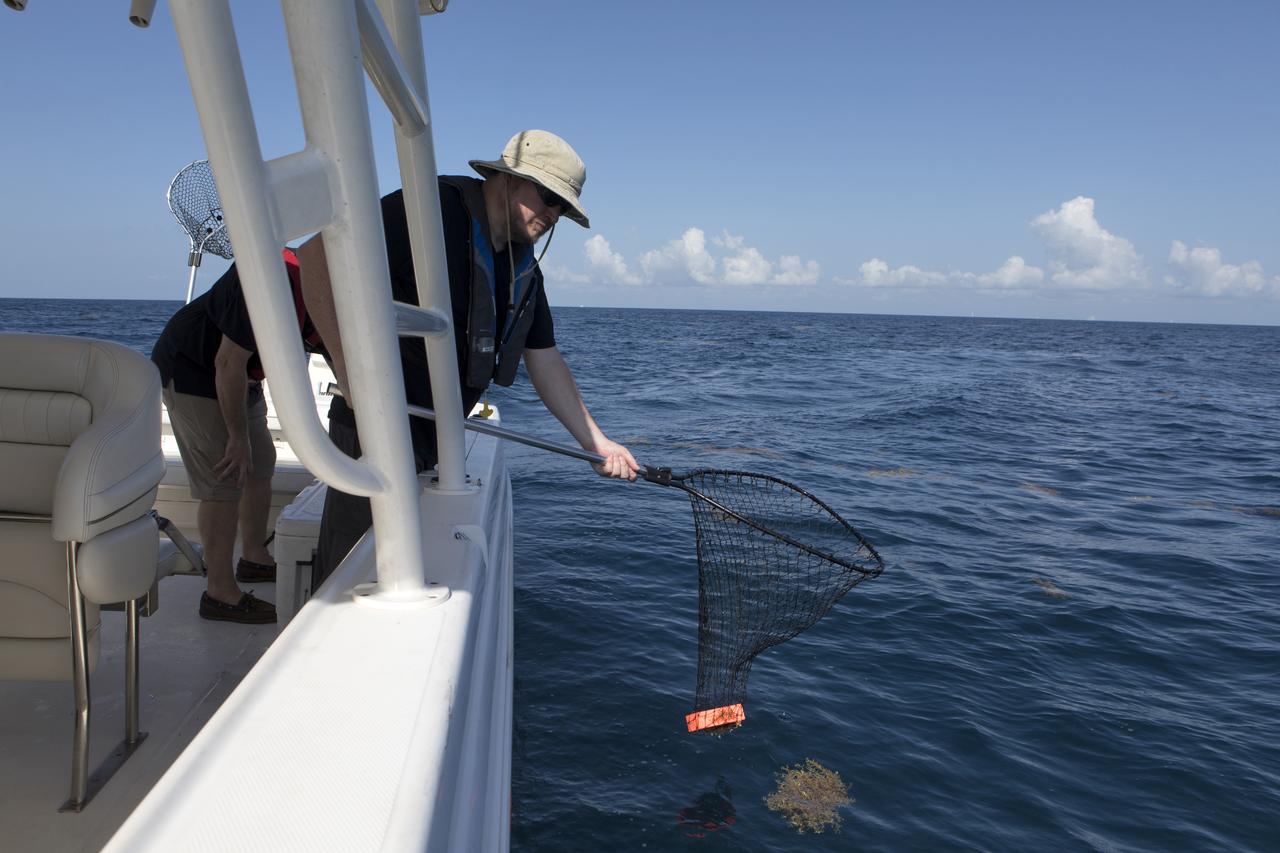
Members of the Ascent Abort-2 (AA-2) Flight Test team perform a drop test of data recording devices about 10 miles off the coast of NASA’s Kennedy Space Center in Florida on Wednesday, Aug. 8, 2018. These devices, called Ejectable Data Recorders (EDRs), were tossed out of a helicopter hovering 5,000 feet over the Atlantic Ocean and retrieved by recovery boats. The AA-2 Flight Test team is evaluating how the systems in the devices react to elements encountered from the sky to the ocean. In April 2019, the EDRs will eject from the Orion test article during a scheduled test of the spacecraft’s Launch Abort System (LAS).
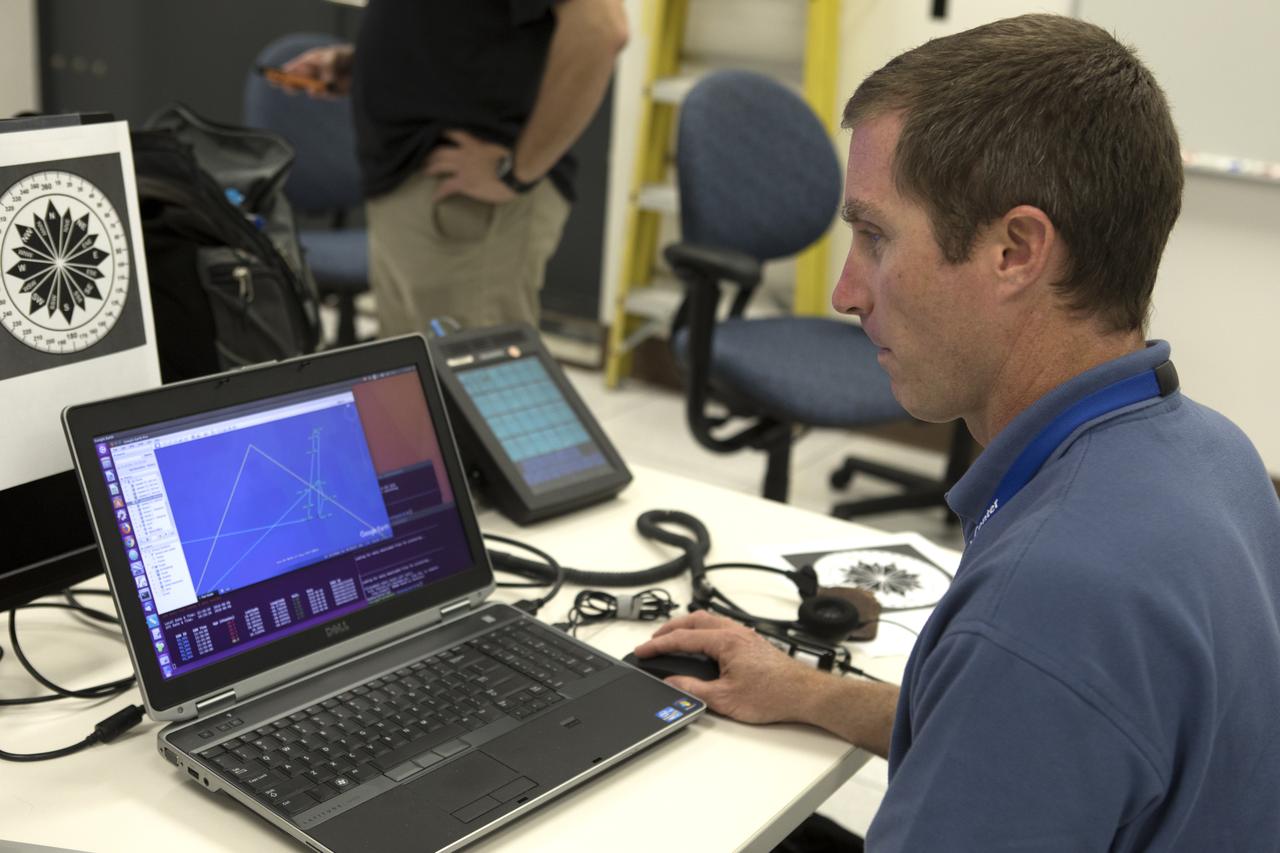
Members of the Ascent Abort-2 (AA-2) Flight Test team perform a drop test of data recording devices about 10 miles off the coast of NASA’s Kennedy Space Center in Florida on Wednesday, Aug. 8, 2018. These devices, called Ejectable Data Recorders (EDRs), were tossed out of a helicopter hovering 5,000 feet over the Atlantic Ocean and retrieved by recovery boats. The AA-2 Flight Test team is evaluating how the systems in the devices react to elements encountered from the sky to the ocean. In April 2019, the EDRs will eject from the Orion test article during a scheduled test of the spacecraft’s Launch Abort System (LAS).
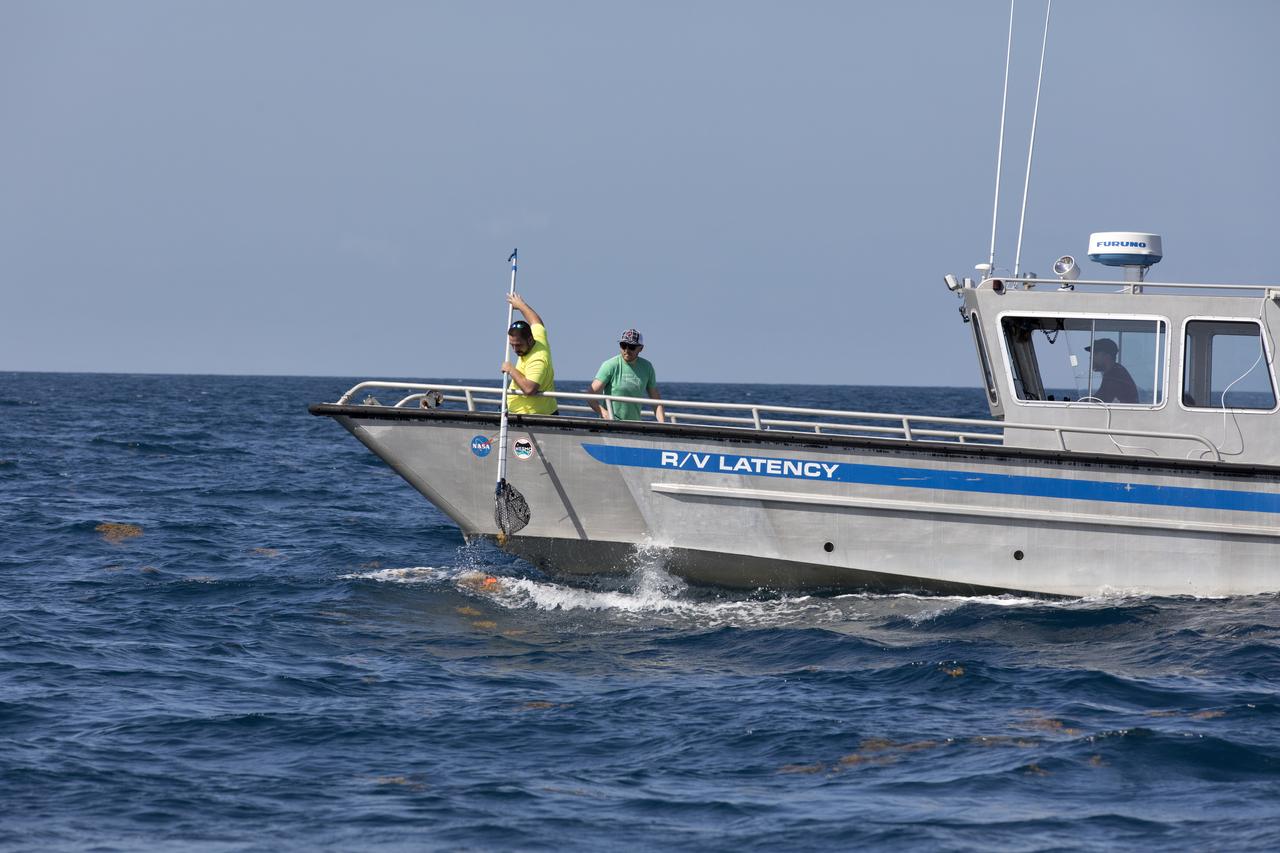
Members of the Ascent Abort-2 (AA-2) Flight Test team perform a drop test of data recording devices about 10 miles off the coast of NASA’s Kennedy Space Center in Florida on Wednesday, Aug. 8, 2018. These devices, called Ejectable Data Recorders (EDRs), were tossed out of a helicopter hovering 5,000 feet over the Atlantic Ocean and retrieved by recovery boats. The AA-2 Flight Test team is evaluating how the systems in the devices react to elements encountered from the sky to the ocean. In April 2019, the EDRs will eject from the Orion test article during a scheduled test of the spacecraft’s Launch Abort System (LAS).

Members of the Ascent Abort-2 (AA-2) Flight Test team perform a drop test of data recording devices about 10 miles off the coast of NASA’s Kennedy Space Center in Florida on Wednesday, Aug. 8, 2018. These devices, called Ejectable Data Recorders (EDRs), were tossed out of a helicopter hovering 5,000 feet over the Atlantic Ocean and retrieved by recovery boats. The AA-2 Flight Test team is evaluating how the systems in the devices react to elements encountered from the sky to the ocean. In April 2019, the EDRs will eject from the Orion test article during a scheduled test of the spacecraft’s Launch Abort System (LAS).
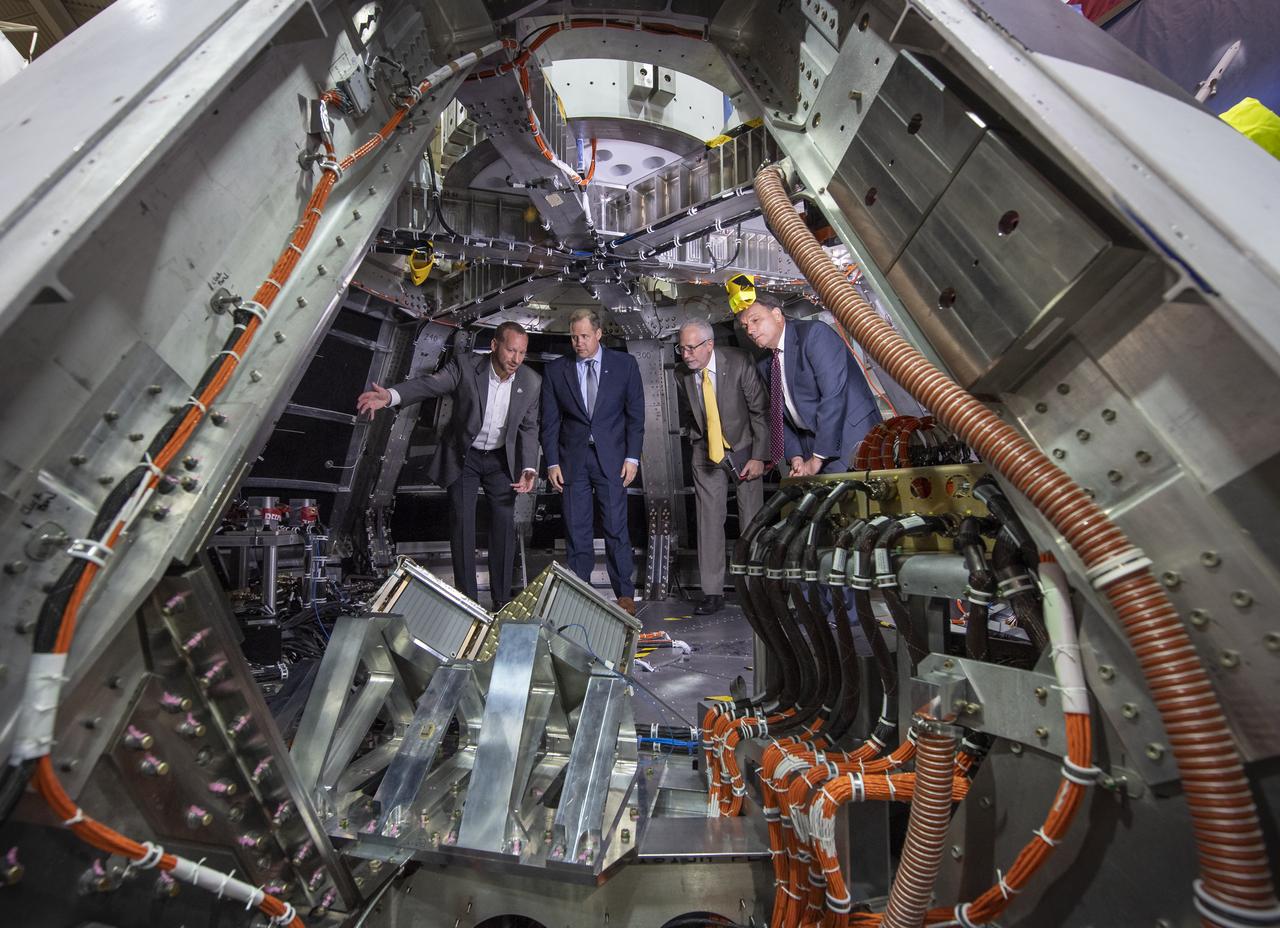
NASA Orion AA-2 Crew Module Manager Dr. Jon Olansen, left, NASA Administrator Jim Bridenstine, NASA Johnson Space Center Director Mark Geyer, and Orion Program Manager Mark Kirasich, right, are seen inside the Orion test crew capsule for the Ascent Abort-2 (AA-2) test, Thursday, Aug. 2, 2018 at NASA’s Johnson Space Center in Houston, Texas. Photo Credit: (NASA/Bill Ingalls)
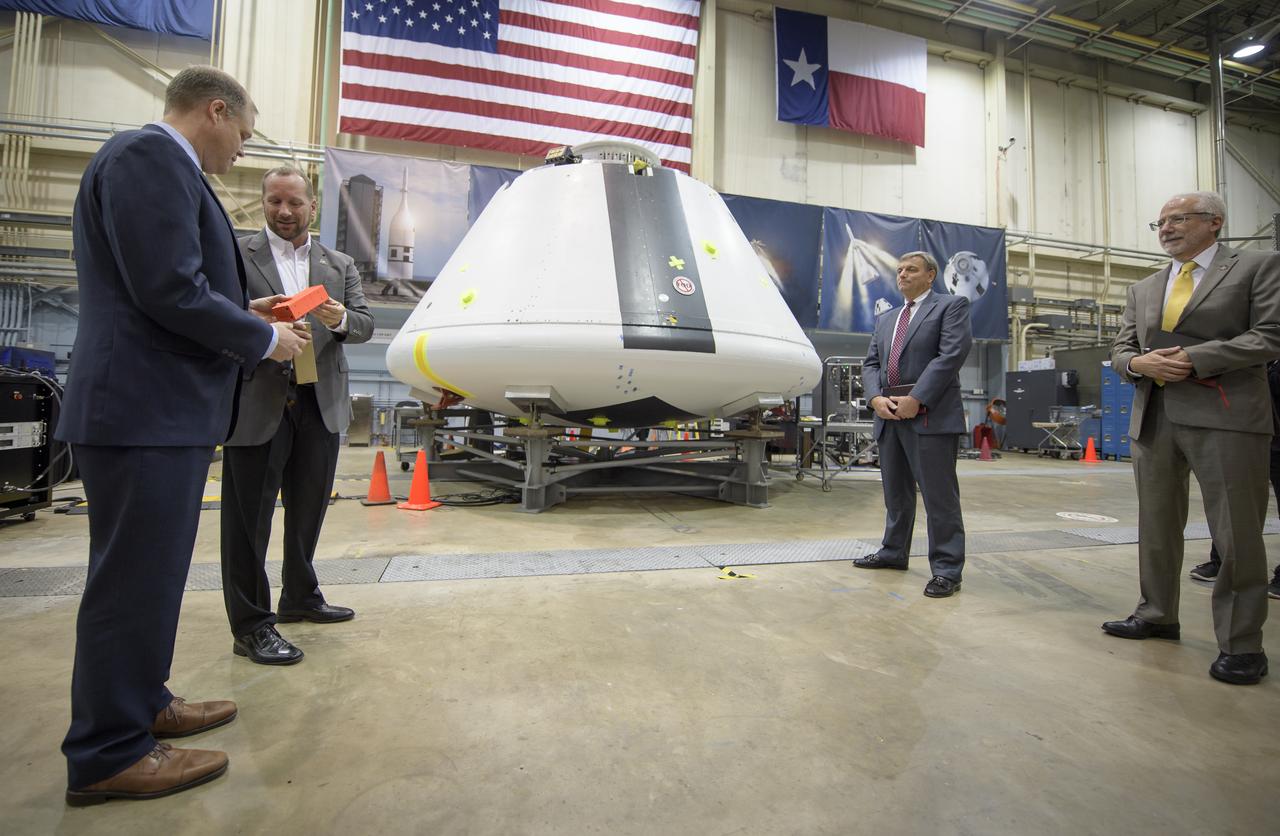
NASA Administrator Jim Bridenstine, left, is shown the Orion test crew capsule that will be used for the Ascent Abort-2 (AA-2) test by Orion AA-2 Crew Module Manager Dr. Jon Olansen, 2nd from left, with Orion Program Manager Mark Kirasich, and NASA Johnson Space Center Director Mark Geyer, right, Thursday, Aug. 2, 2018 at NASA’s Johnson Space Center in Houston, Texas. Photo Credit: (NASA/Bill Ingalls)
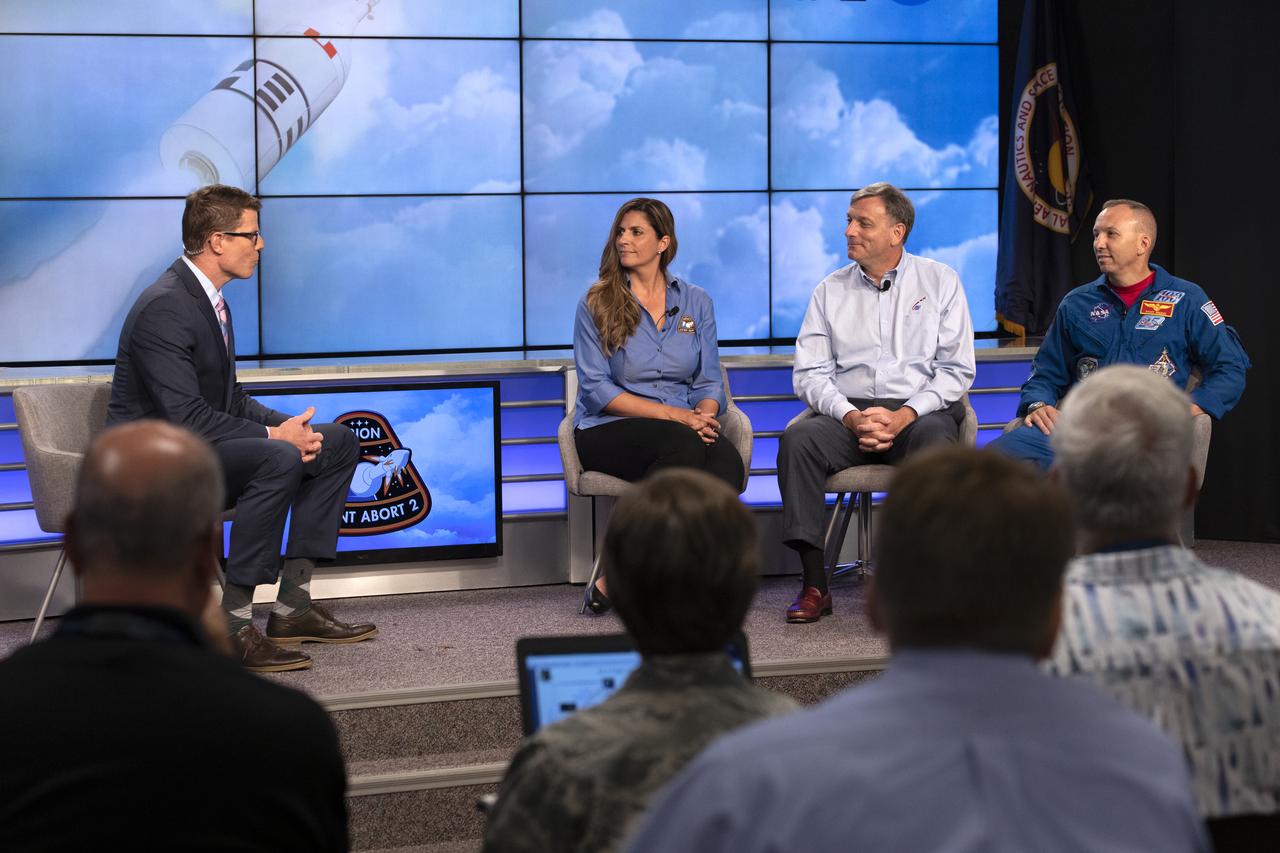
From left, Derrol Nail, NASA Communications, moderates a prelaunch news conference on July 1, 2019, for the agency’s Ascent Abort-2 (AA-2) flight test, with Jenny Devolites, AA-2 Crew Module manager; Mark Kirasich, Orion Program manager; and Randy Bresnik, NASA astronaut, at Kennedy Space Center in Florida. For AA-2, a test version of the Orion spacecraft attached to a fully functional Launch Abort System (LAS) will launch atop a Northrop Grumman provided booster on July 2, 2019, from Launch Pad 46 at Cape Canaveral Air Force Station in Florida. During AA-2, the booster will send the LAS and Orion to an altitude of 31,000 feet, traveling at more than 1,000 mph. The LAS’ three motors will work together to pull the crew module away from the booster and prepare it for splashdown in the Atlantic Ocean. The flight test will prove that the abort system can pull crew to safety in the unlikely event of an emergency during ascent.

From left, Jenny Devolites, AA-2 Crew Module manager; Mark Kirasich, Orion Program manager; and Randy Bresnik, NASA astronaut, participate in a prelaunch news conference for NASA’s Ascent Abort-2 (AA-2) flight test at the agency’s Kennedy Space Center in Florida on July 1, 2019. For AA-2, a test version of the Orion spacecraft attached to a fully functional Launch Abort System (LAS) will launch atop a Northrop Grumman provided booster on July 2, 2019, from Launch Pad 46 at Cape Canaveral Air Force Station in Florida. During AA-2, the booster will send the LAS and Orion to an altitude of 31,000 feet, traveling at more than 1,000 mph. The LAS’ three motors will work together to pull the crew module away from the booster and prepare it for splashdown in the Atlantic Ocean. The flight test will prove that the abort system can pull crew to safety in the unlikely event of an emergency during ascent.

From left, Jenny Devolites, AA-2 Crew Module manager; Mark Kirasich, Orion Program manager; and Randy Bresnik, NASA astronaut, participate in a prelaunch news conference for NASA’s Ascent Abort-2 (AA-2) flight test at the agency’s Kennedy Space Center in Florida on July 1, 2019. For AA-2, a test version of the Orion spacecraft attached to a fully functional Launch Abort System (LAS) will launch atop a Northrop Grumman provided booster on July 2, 2019, from Launch Pad 46 at Cape Canaveral Air Force Station in Florida. During AA-2, the booster will send the LAS and Orion to an altitude of 31,000 feet, traveling at more than 1,000 mph. The LAS’ three motors will work together to pull the crew module away from the booster and prepare it for splashdown in the Atlantic Ocean. The flight test will prove that the abort system can pull crew to safety in the unlikely event of an emergency during ascent.
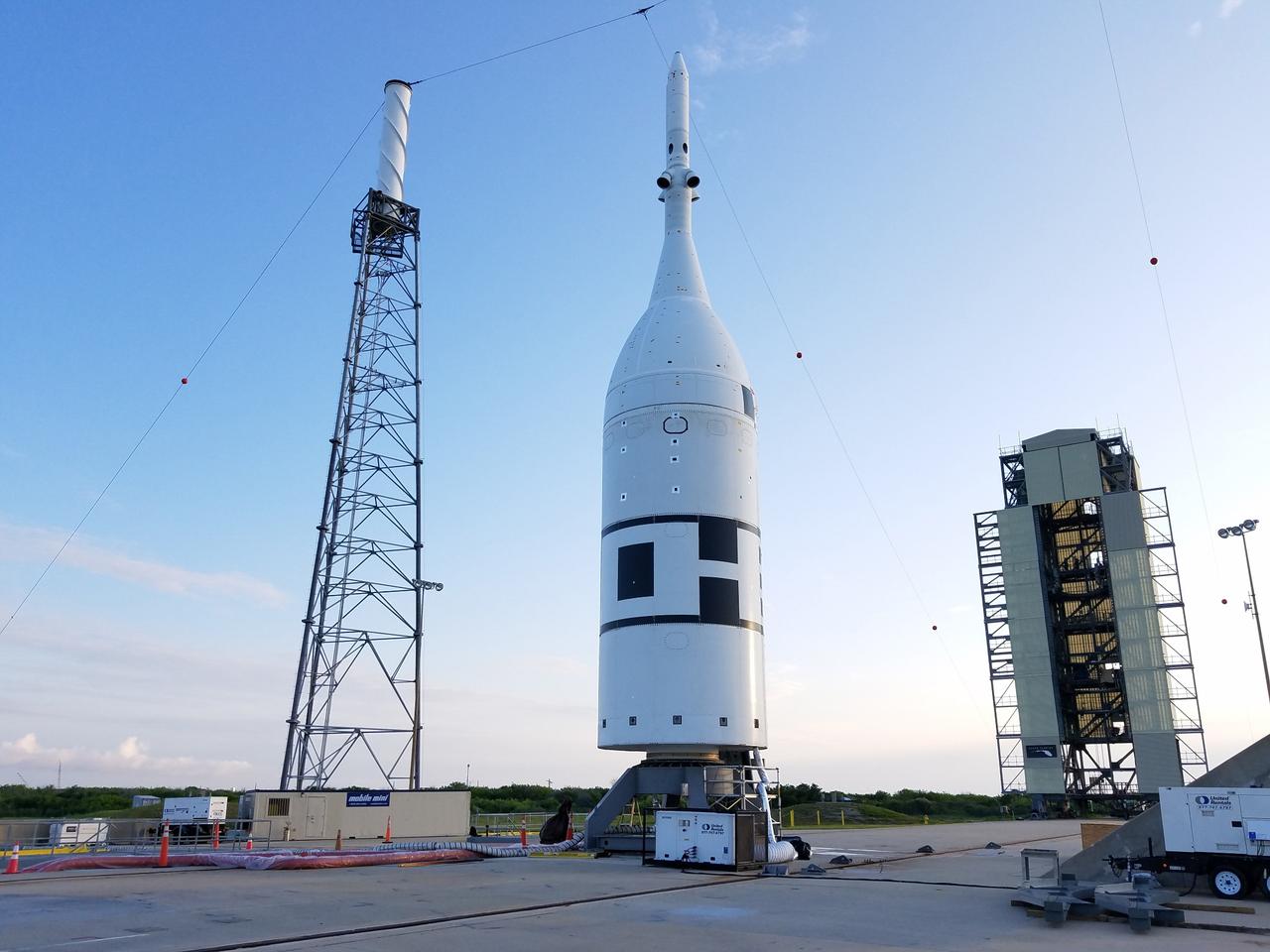
The Orion Ascent Abort-2 test booster and launch abort system on the launch pad at Cape Canaveral Air Force Station in Florida on June 27, 2019.
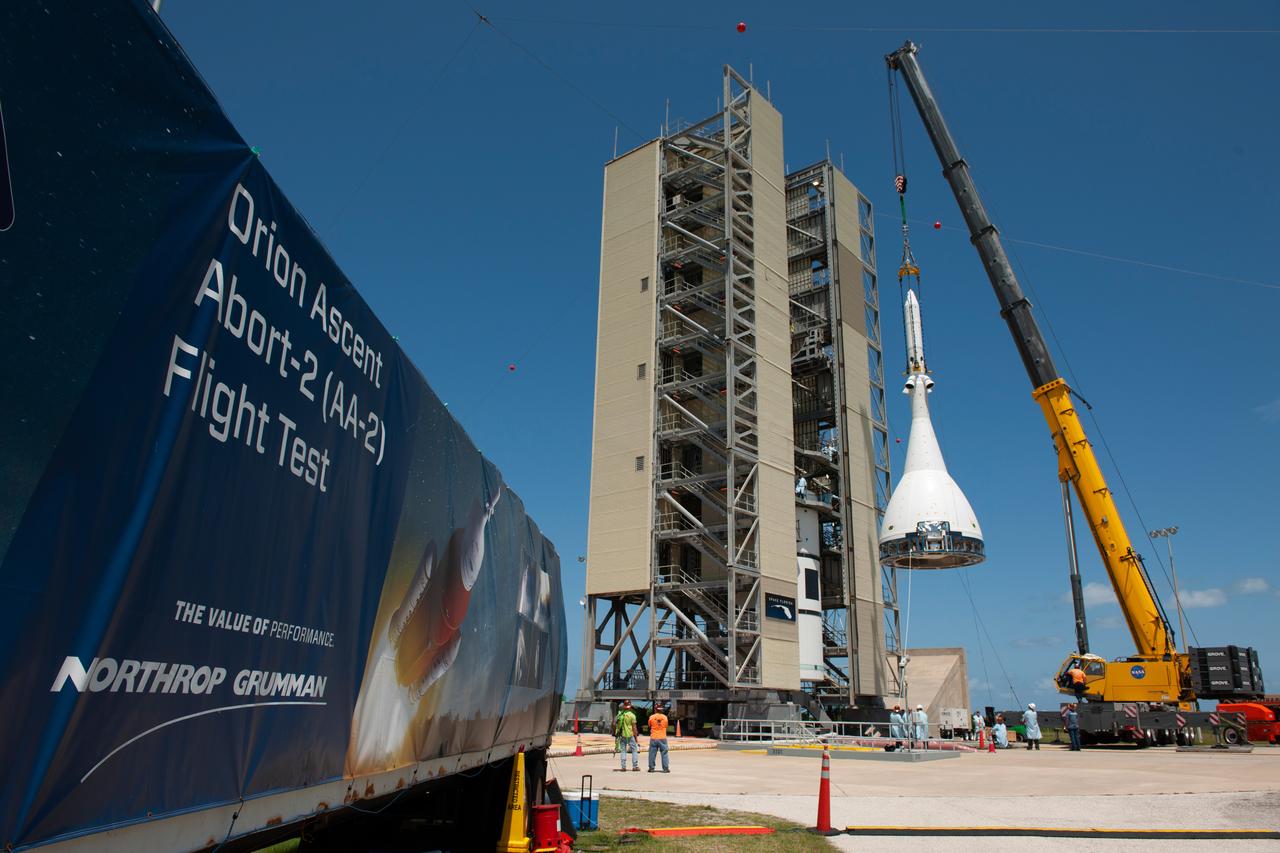
The Orion Ascent Abort-2 (AA-2) vehicle arrives at the launch pad for stacking with the abort test booster on May 23, 2019.
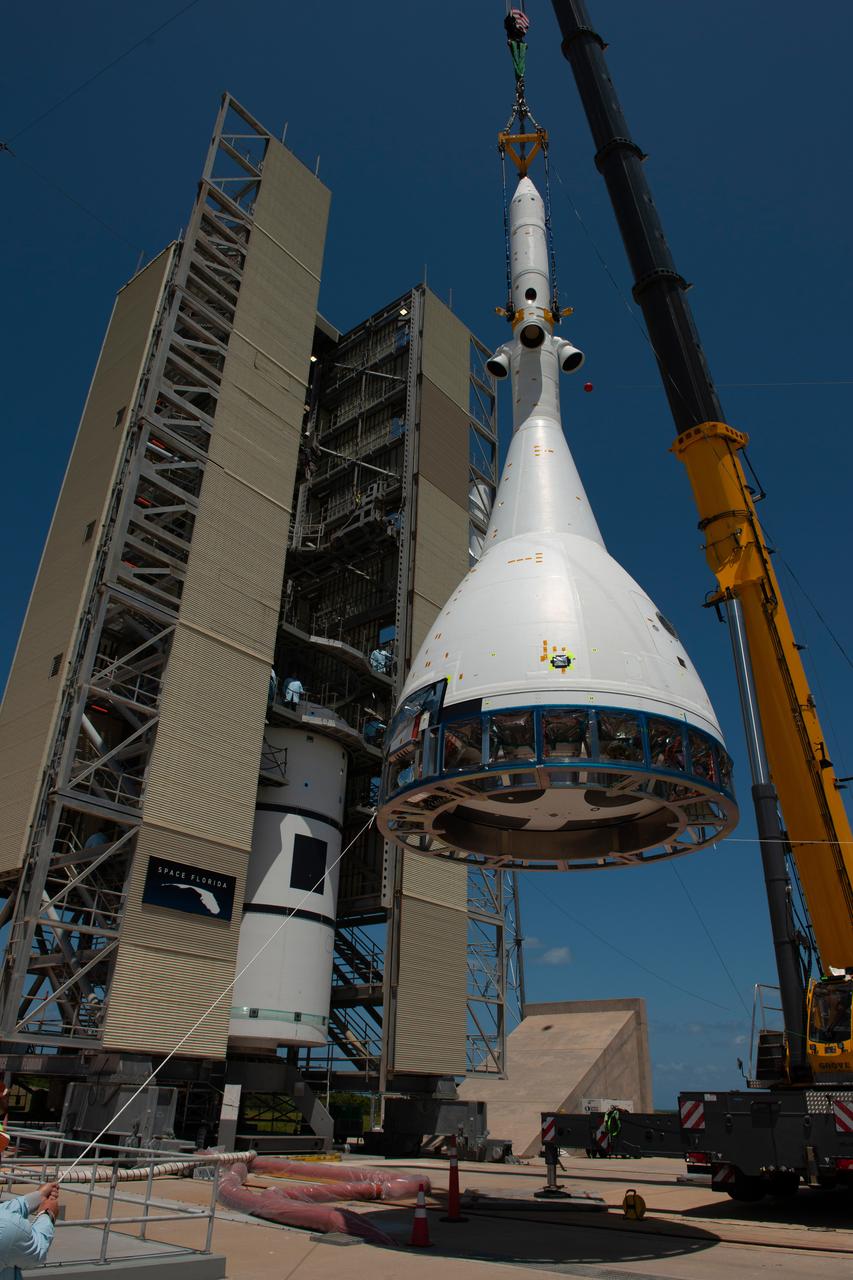
The Orion Ascent Abort-2 (AA-2) vehicle arrives at the launch pad for stacking with the abort test booster on May 23, 2019.
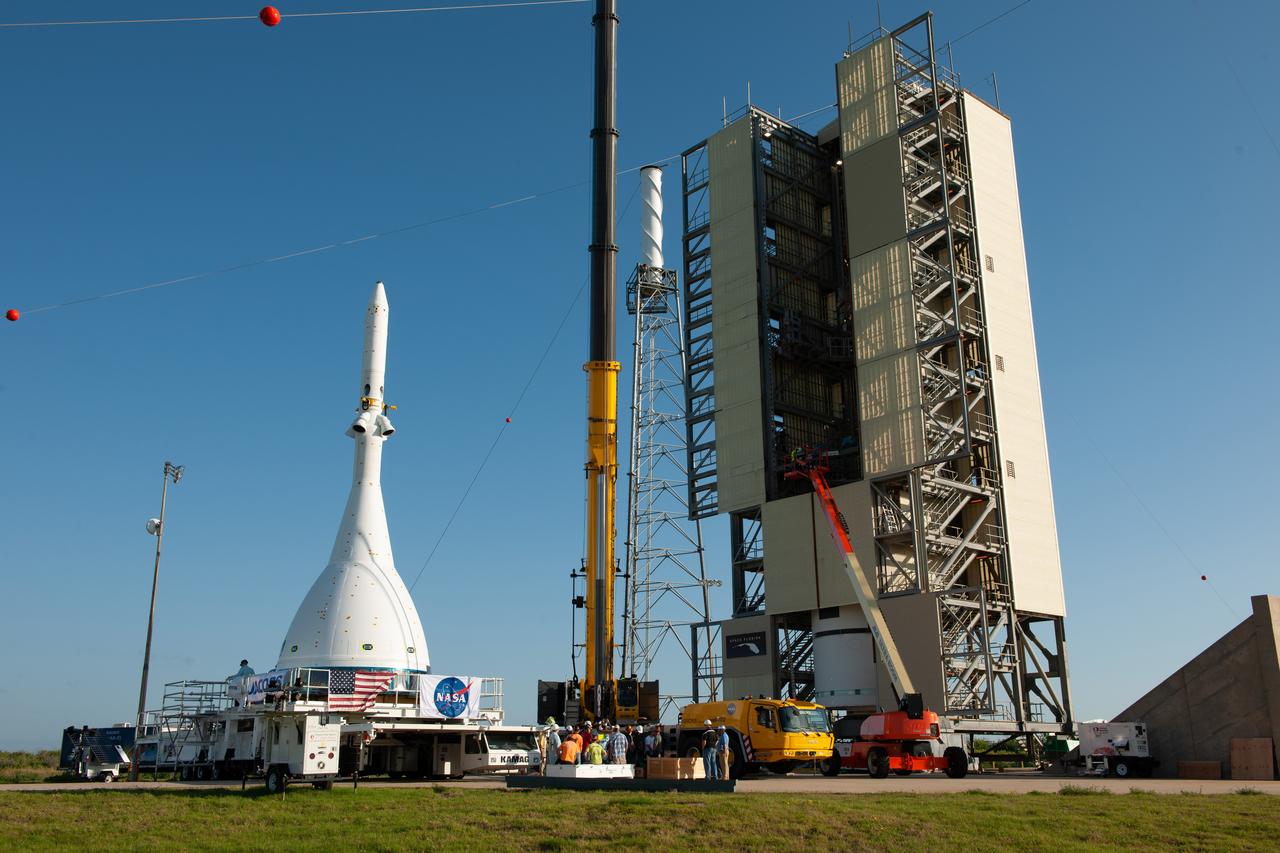
The Orion Ascent Abort-2 (AA-2) vehicle arrives at the launch pad for stacking with the abort test booster on May 23, 2019.
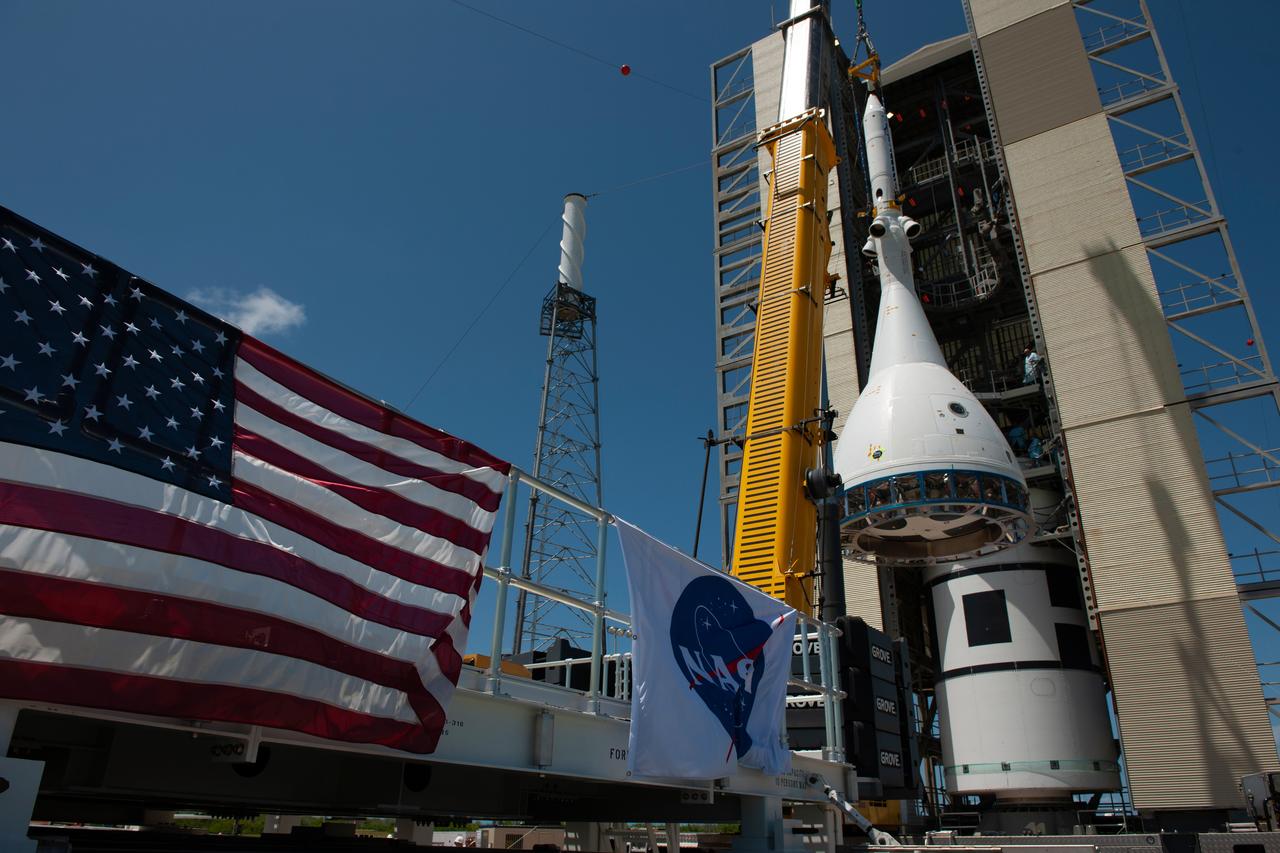
The Orion Ascent Abort-2 (AA-2) vehicle arrives at the launch pad for stacking with the abort test booster on May 23, 2019.
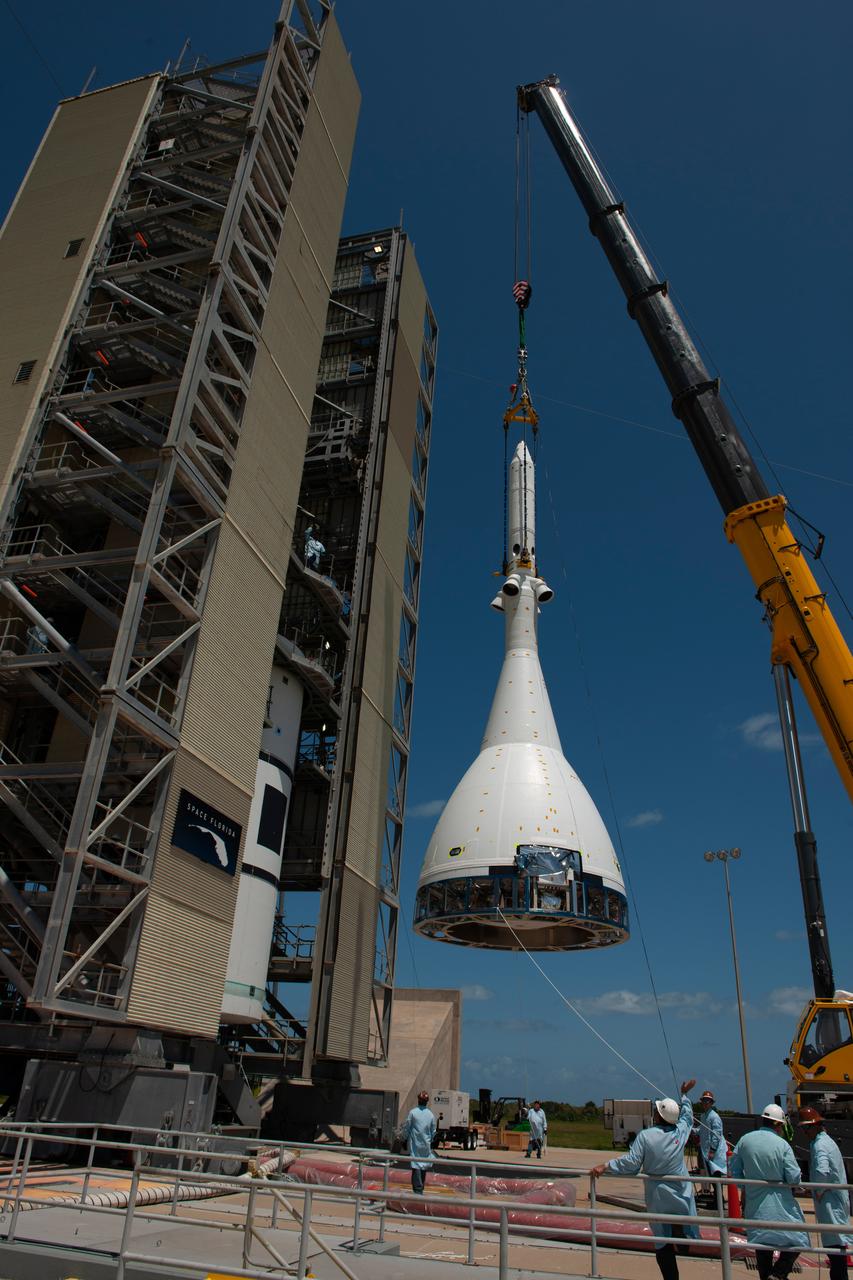
The Orion Ascent Abort-2 (AA-2) vehicle arrives at the launch pad for stacking with the abort test booster on May 23, 2019.
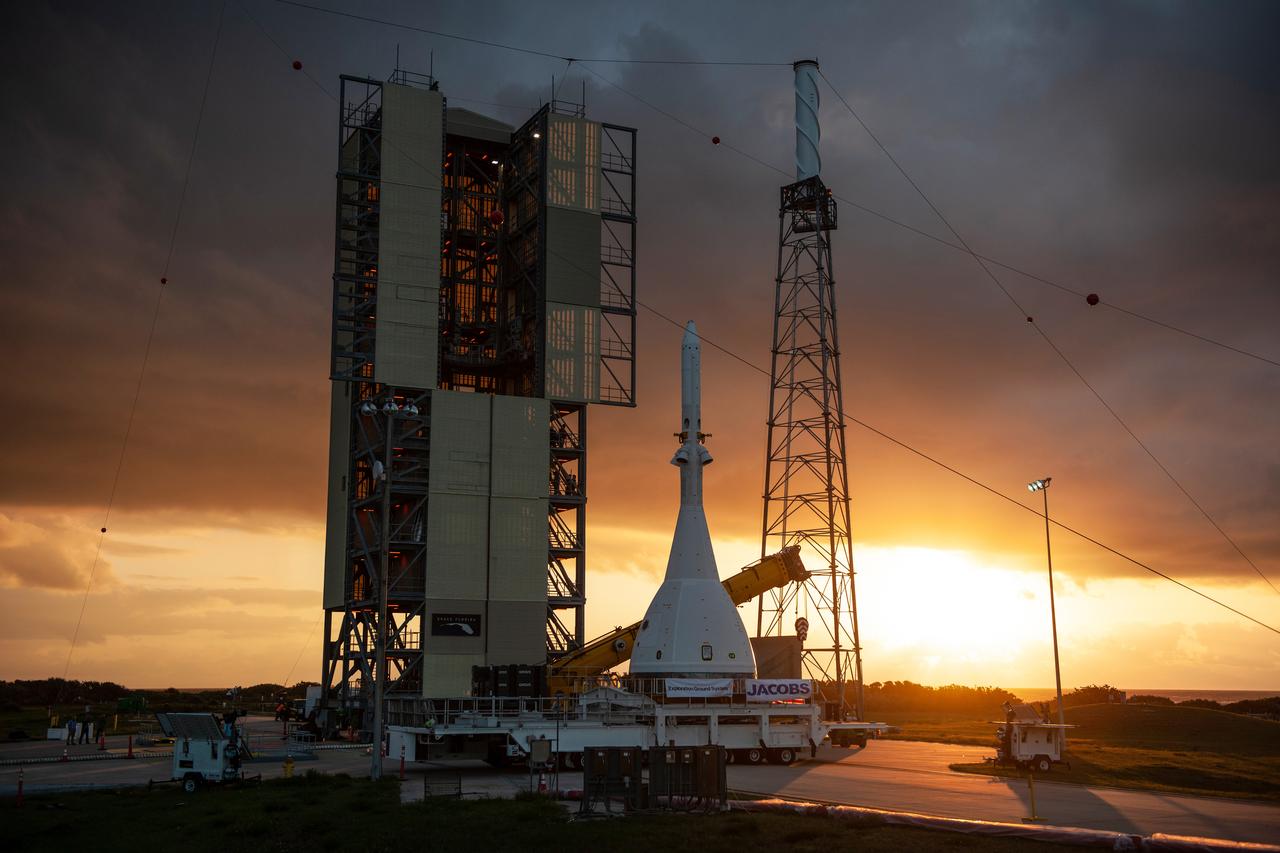
The Orion Ascent Abort-2 (AA-2) vehicle arrives at the launch pad for stacking with the abort test booster on May 23, 2019.
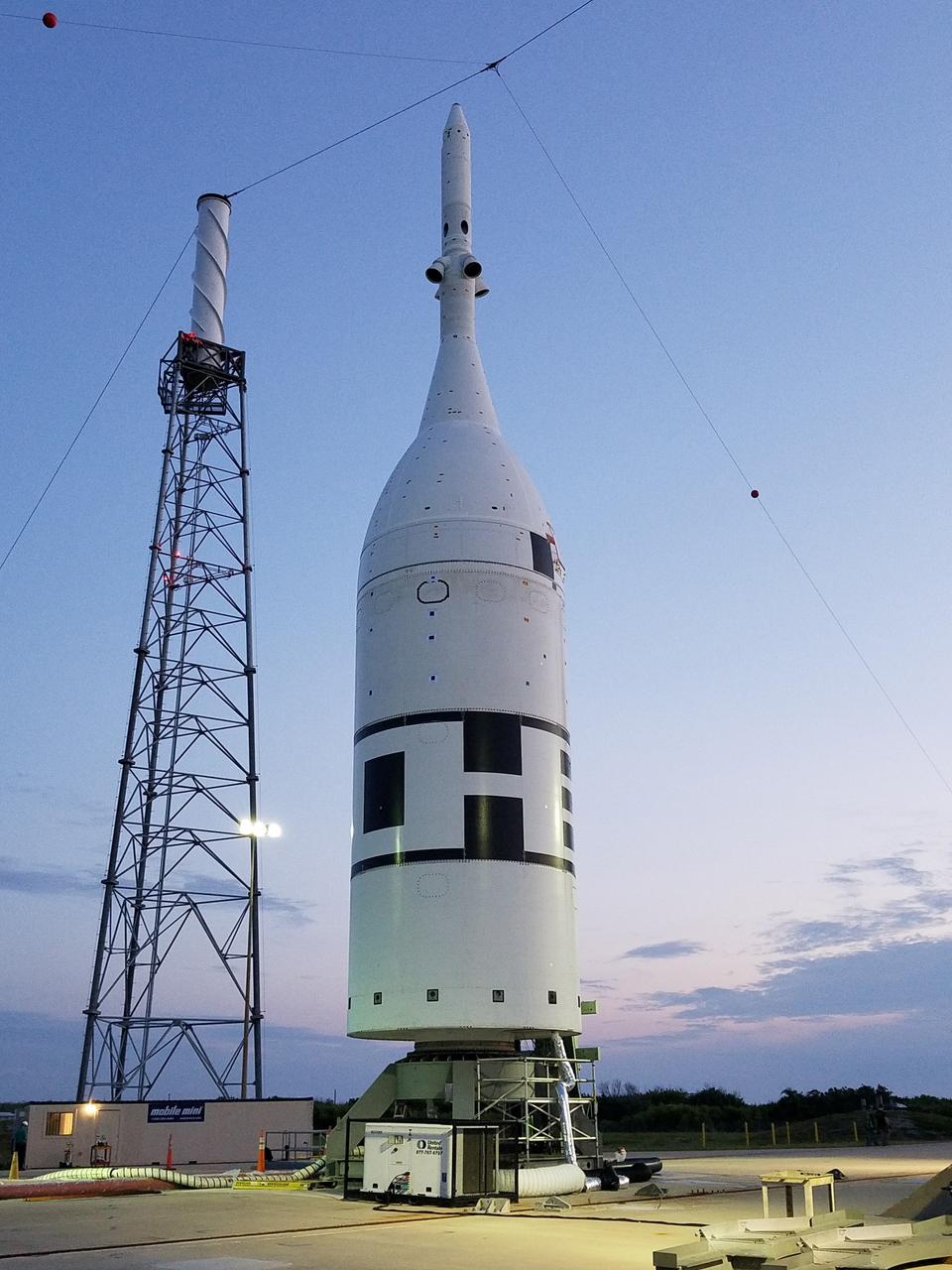
The Orion Ascent Abort-2 test booster and launch abort system on the launch pad at Cape Canaveral Air Force Station in Florida on June 27, 2019.