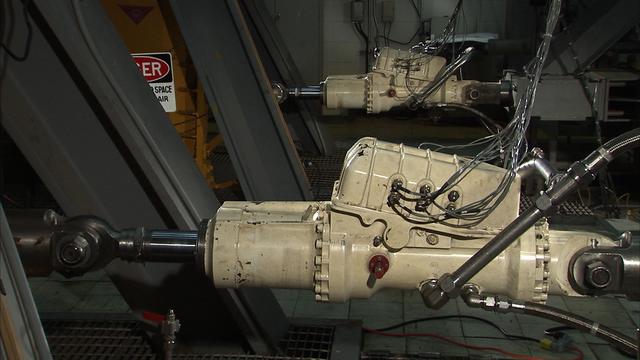
Testing of the Ascent Thrust Vector Control System in support of the Ares 1-X program at the Marshall Space Flight Center in Huntsville, Alabama. This image is extracted from a high definition video file and is the highest resolution available

The Artemis I aft skirts for NASA's Space Launch System (SLS) rocket’s twin solid rocket boosters are transported to the Rotation Processing and Surge Facility (RPSF) at the agency’s Kennedy Space Center in Florida on June 10, 2020. The aft skirts were refurbished by Northrop Grumman. They house the thrust vector control system, which controls 70 percent of the steering during initial ascent of the SLS rocket. The segments will remain in the RPSF until ready for stacking with the forward and aft parts of the boosters on the mobile launcher in High Bay 3 of the Vehicle Assembly Building. Through the Artemis Program, NASA is working to land the first woman and next man on the Moon by 2024.
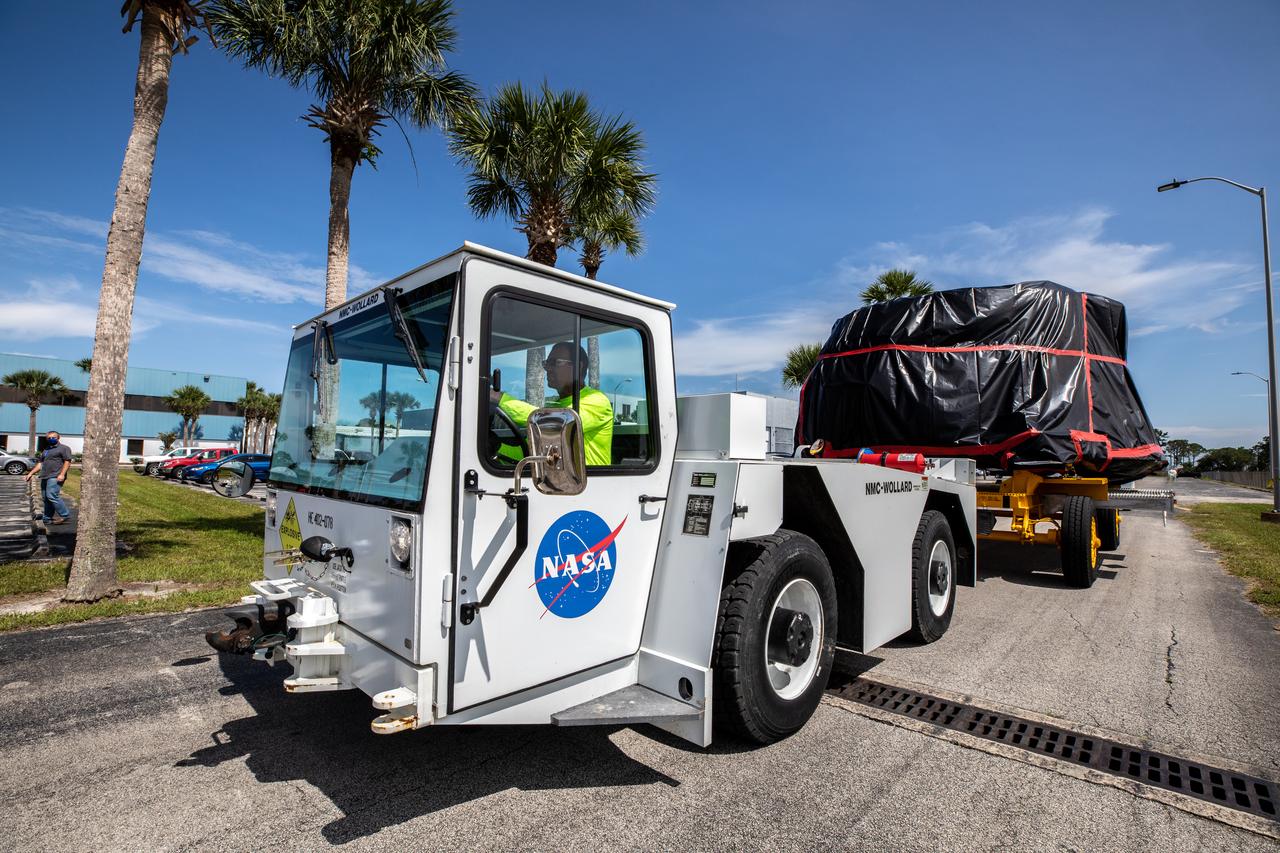
The Artemis I aft skirts for NASA's Space Launch System (SLS) rocket’s twin solid rocket boosters are transported to the Rotation Processing and Surge Facility (RPSF) at the agency’s Kennedy Space Center in Florida on June 10, 2020. The aft skirts were refurbished by Northrop Grumman. They house the thrust vector control system, which controls 70 percent of the steering during initial ascent of the SLS rocket. The segments will remain in the RPSF until ready for stacking with the forward and aft parts of the boosters on the mobile launcher in High Bay 3 of the Vehicle Assembly Building. Through the Artemis Program, NASA is working to land the first woman and next man on the Moon by 2024.
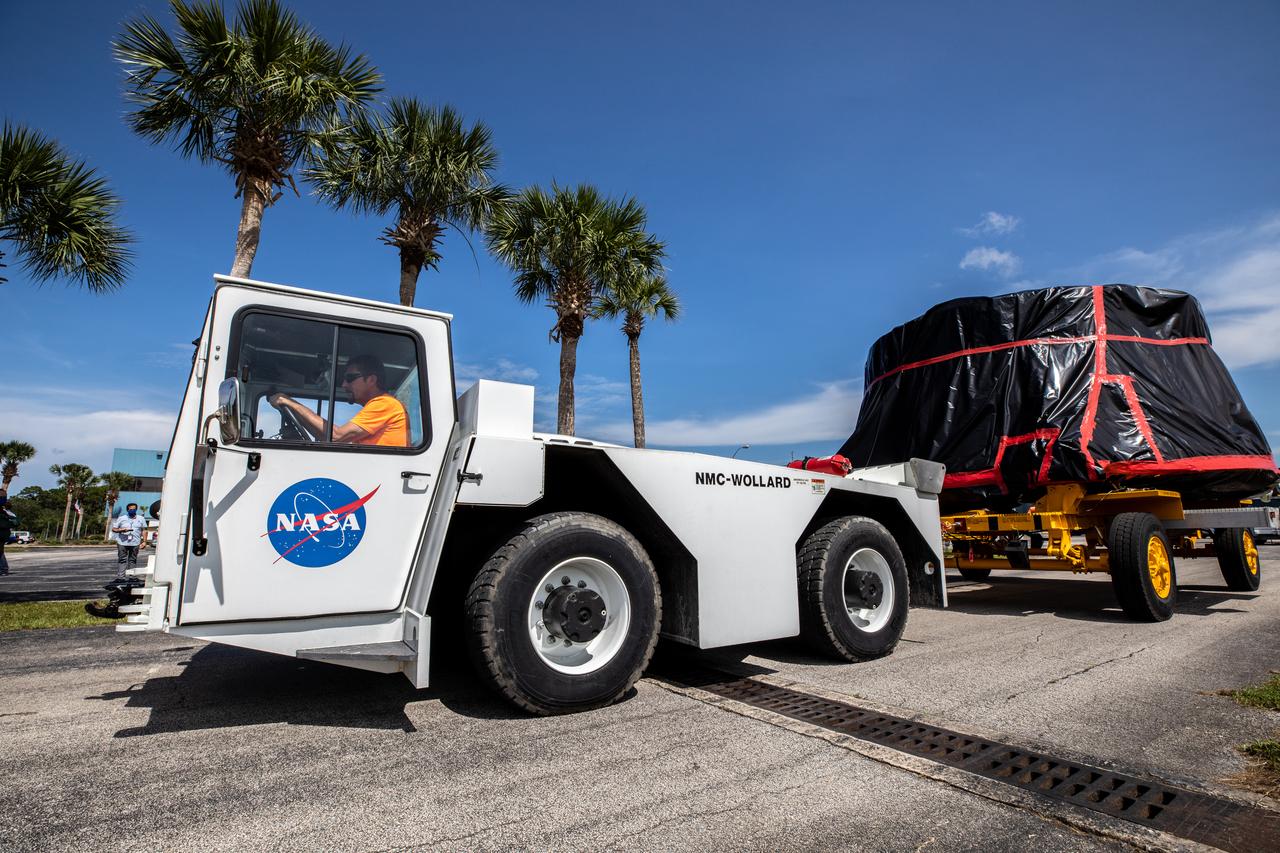
The Artemis I aft skirts for NASA's Space Launch System (SLS) rocket’s twin solid rocket boosters are transported to the Rotation Processing and Surge Facility (RPSF) at the agency’s Kennedy Space Center in Florida on June 10, 2020. The aft skirts were refurbished by Northrop Grumman. They house the thrust vector control system, which controls 70 percent of the steering during initial ascent of the SLS rocket. The segments will remain in the RPSF until ready for stacking with the forward and aft parts of the boosters on the mobile launcher in High Bay 3 of the Vehicle Assembly Building. Through the Artemis Program, NASA is working to land the first woman and next man on the Moon by 2024.
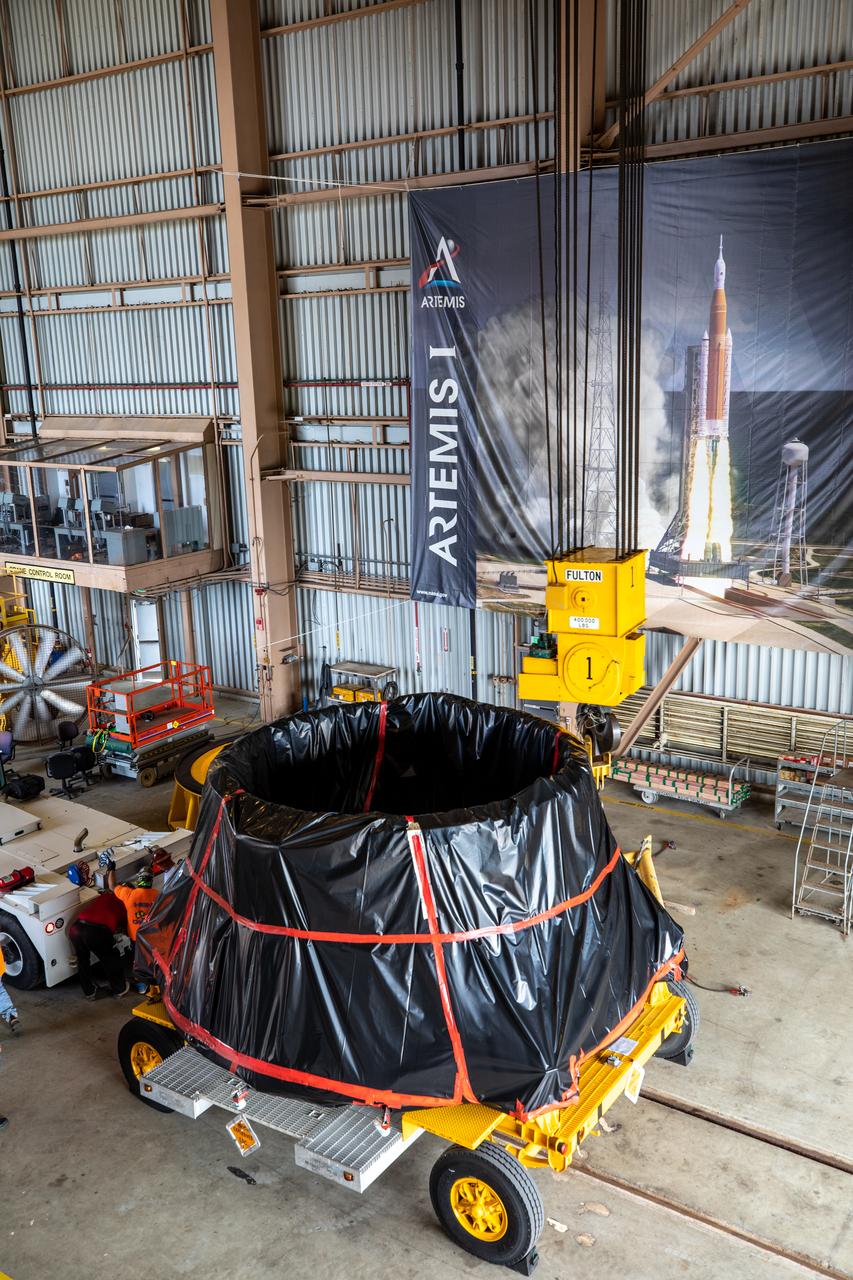
The first of two Artemis I aft skirts for NASA's Space Launch System (SLS) rocket’s twin solid rocket boosters is moved into the Rotation Processing and Surge Facility (RPSF) at the agency’s Kennedy Space Center in Florida on June 10, 2020. The aft skirts were refurbished by Northrop Grumman. They house the thrust vector control system, which controls 70 percent of the steering during initial ascent of the SLS rocket. The segments will remain in the RPSF until ready for stacking with the forward and aft parts of the boosters on the mobile launcher in High Bay 3 of the Vehicle Assembly Building. Through the Artemis Program, NASA is working to land the first woman and next man on the Moon by 2024.
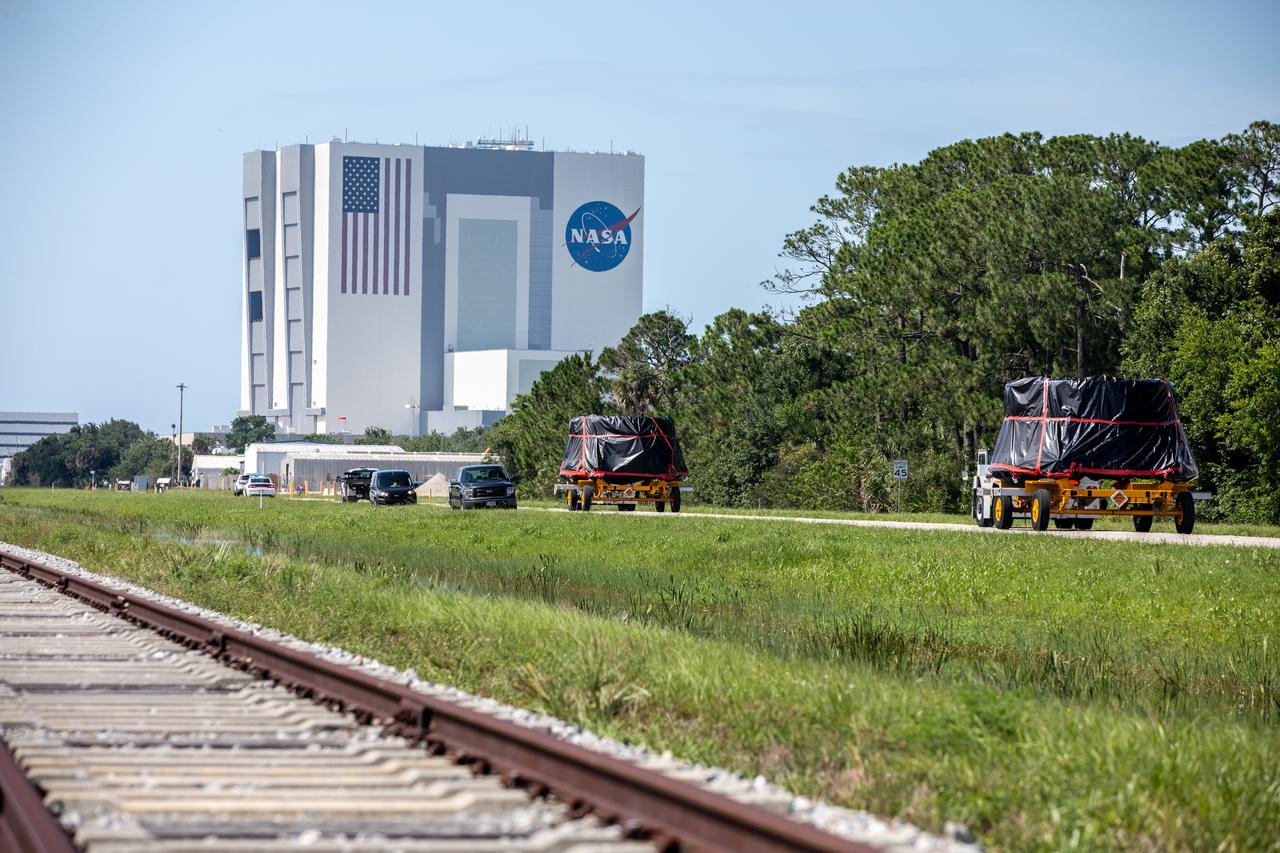
The Artemis I aft skirts for NASA’s Space Launch System (SLS) rocket’s twin solid rocket boosters are moved along the road to the Rotation, Processing and Surge Facility (RPSF) at the agency’s Kennedy Space Center in Florida on June 10, 2020. The aft skirts were refurbished by Northrop Grumman. They house the thrust vector control system, which controls 70 percent of the steering during initial ascent of the SLS rocket. The aft skirts will remain in the RPSF until ready for stacking with the forward and aft parts of the boosters on the mobile launcher in High Bay 3 of the Vehicle Assembly Building. Through the Artemis Program, NASA is working to land the first woman and next man on the Moon by 2024.
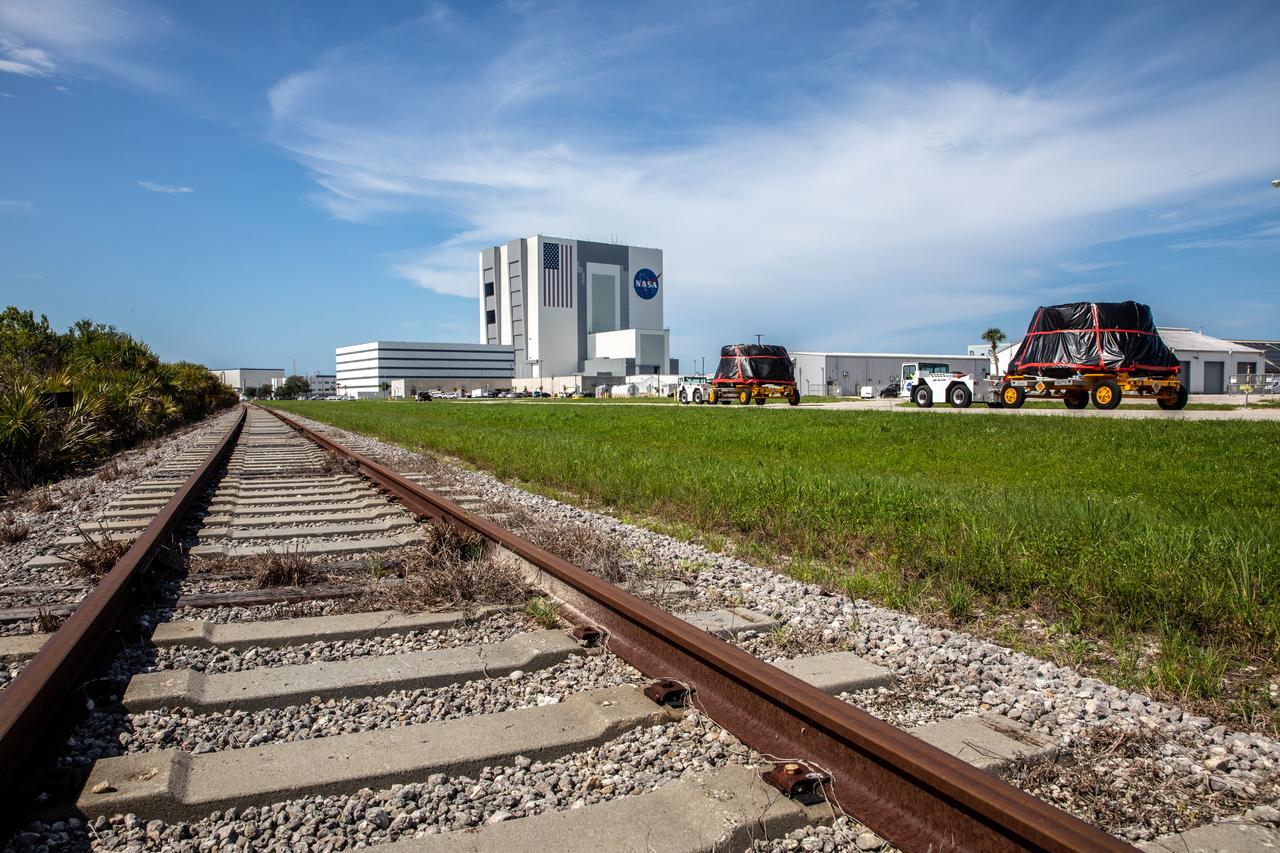
The Artemis I aft skirts for NASA’s Space Launch System (SLS) rocket’s twin solid rocket boosters are moved along the road to the Rotation, Processing and Surge Facility (RPSF) at the agency’s Kennedy Space Center in Florida on June 10, 2020. The aft skirts were refurbished by Northrop Grumman. They house the thrust vector control system, which controls 70 percent of the steering during initial ascent of the SLS rocket. The aft skirts will remain in the RPSF until ready for stacking with the forward and aft parts of the boosters on the mobile launcher in High Bay 3 of the Vehicle Assembly Building. Through the Artemis Program, NASA is working to land the first woman and next man on the Moon by 2024.
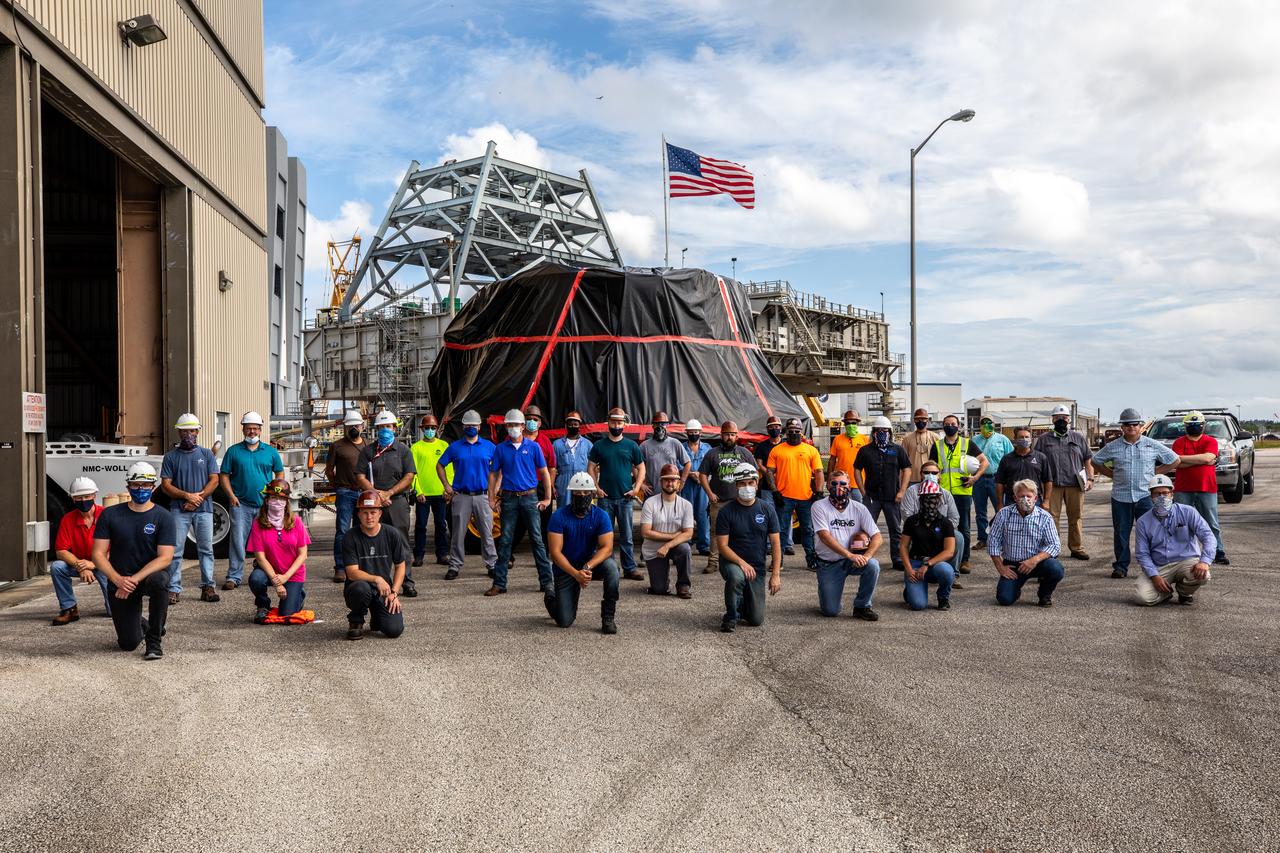
Exploration Ground Systems workers gather in front of the Rotation, Processing and Surge Facility (RPSF) at NASA’s Kennedy Space Center in Florida on June 10, 2020, to mark the arrival of the Artemis I aft skirts for the agency's Space Launch System (SLS) rocket’s twin solid rocket boosters. The aft skirts were moved from the Booster Fabrication Facility. The aft skirts were refurbished by Northrop Grumman. They house the thrust vector control system, which controls 70 percent of the steering during initial ascent of the SLS rocket. The segments will remain in the RPSF until ready for stacking with the forward and aft parts of the boosters on the mobile launcher in High Bay 3 of the Vehicle Assembly Building. Through the Artemis Program, NASA is working to land the first woman and next man on the Moon by 2024.

One of two Artemis II aft skirts for NASA’s Space Launch System (SLS) rocket’s twin solid rocket boosters crosses railroad tracks on its way from the Booster Fabrication Facility to the Rotation Processing and Surge Facility (RPSF) at the agency’s Kennedy Space Center in Florida on Monday, Sept. 25, 2023. The aft skirts were refurbished by Northrop Grumman and house the thrust vector control system, which controls 70 percent of the steering during initial ascent of the SLS rocket. The segments will remain in the RPSF until ready for stacking with the forward and aft parts of the boosters on the mobile launcher in High Bay 3 of the Vehicle Assembly Building. Artemis II astronauts Reid Wiseman, Victor Glover, Christina Koch, and Jeremy Hansen will launch from Kennedy, traveling around the Moon on the first crewed mission under Artemis that will test all of the Orion spacecraft’s systems.
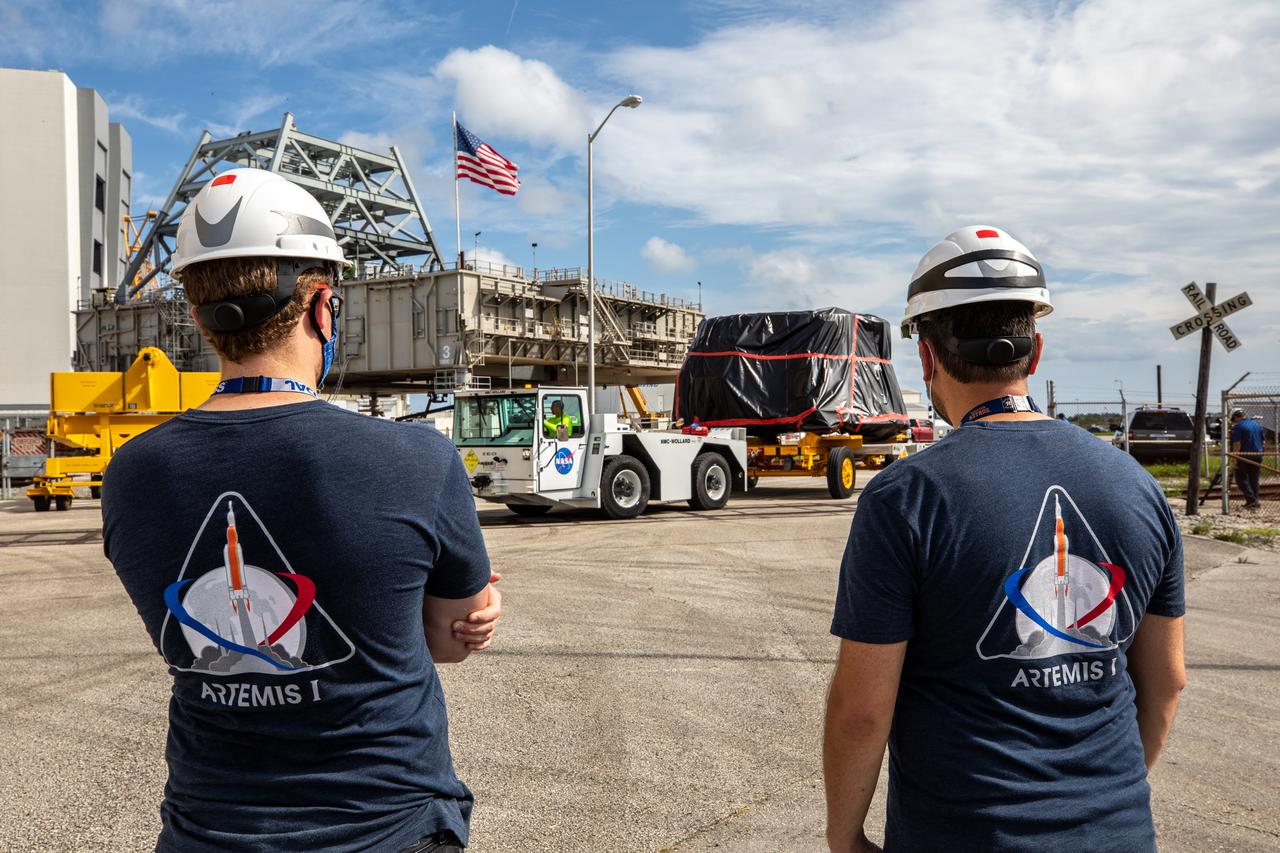
Exploration Ground Systems workers watch as the first of two Artemis I aft skirts for NASA’s Space Launch System (SLS) rocket’s twin solid rocket boosters crosses a railroad track on its way to the Rotation, Processing and Surge Facility (RPSF) at the agency’s Kennedy Space Center in Florida on June 10, 2020. They were transported from the Booster Fabrication Facility. The aft skirts were refurbished by Northrop Grumman. They house the thrust vector control system, which controls 70 percent of the steering during initial ascent of the SLS rocket. The segments will remain in the RPSF until ready for stacking with the forward and aft parts of the boosters on the mobile launcher in High Bay 3 of the Vehicle Assembly Building. Through the Artemis Program, NASA is working to land the first woman and next man on the Moon by 2024.
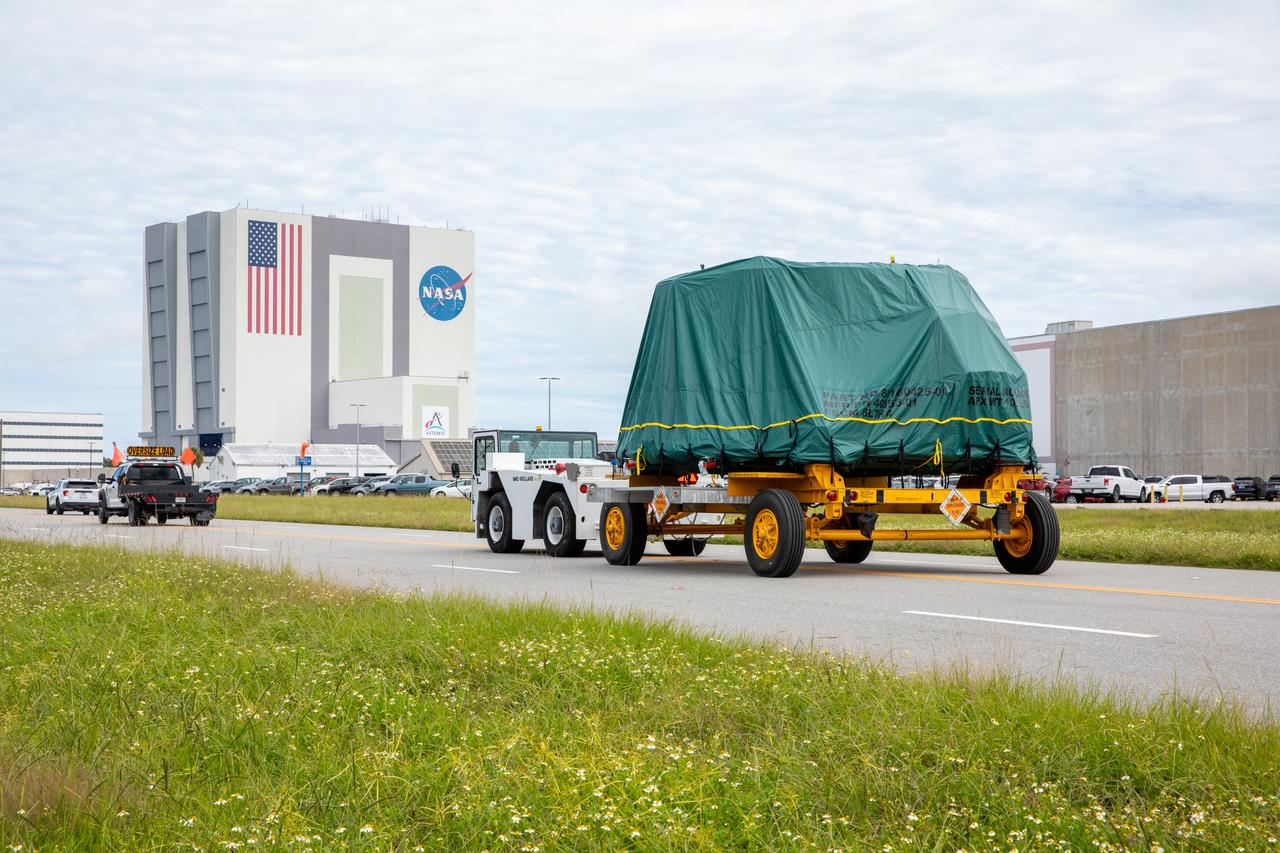
One of two Artemis II aft skirts for NASA's Space Launch System (SLS) rocket’s twin solid rocket boosters is transported from the Booster Fabrication Facility to the Rotation Processing and Surge Facility (RPSF) at the agency’s Kennedy Space Center in Florida on Monday, Sept. 25, 2023. The aft skirts were refurbished by Northrop Grumman and house the thrust vector control system, which controls 70 percent of the steering during initial ascent of the SLS rocket. The segments will remain in the RPSF until ready for stacking with the forward and aft parts of the boosters on the mobile launcher in High Bay 3 of the Vehicle Assembly Building. Artemis II astronauts Reid Wiseman, Victor Glover, Christina Koch, and Jeremy Hansen will launch from Kennedy, traveling around the Moon on the first crewed mission under Artemis that will test all of the Orion spacecraft’s systems.
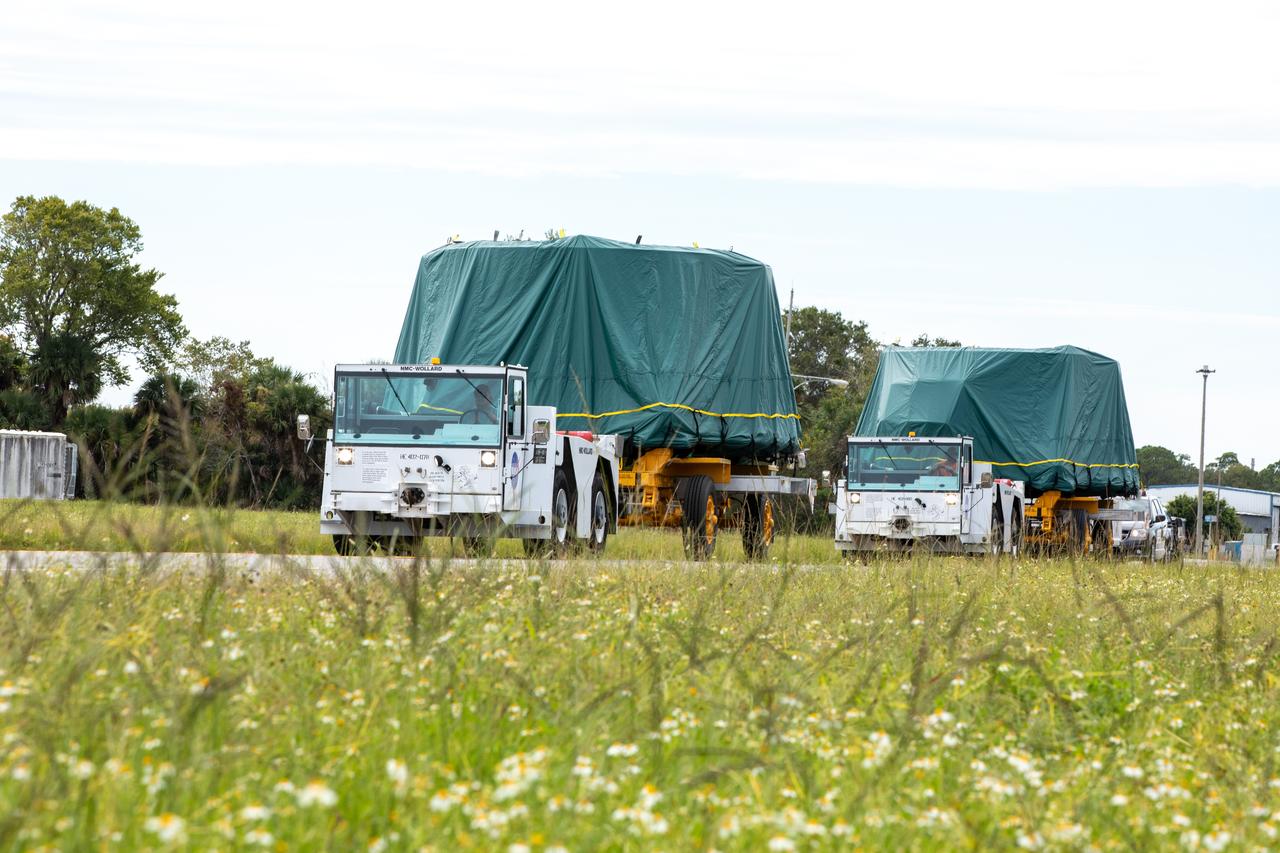
The Artemis II aft skirts for NASA's Space Launch System (SLS) rocket’s twin solid rocket boosters are transported from the Booster Fabrication Facility to the Rotation Processing and Surge Facility (RPSF) at the agency’s Kennedy Space Center in Florida on Monday, Sept. 25, 2023. The aft skirts were refurbished by Northrop Grumman and house the thrust vector control system, which controls 70 percent of the steering during initial ascent of the SLS rocket. The segments will remain in the RPSF until ready for stacking with the forward and aft parts of the boosters on the mobile launcher in High Bay 3 of the Vehicle Assembly Building. Artemis II astronauts Reid Wiseman, Victor Glover, Christina Koch, and Jeremy Hansen will launch from Kennedy, traveling around the Moon on the first crewed mission under Artemis that will test all of the Orion spacecraft’s systems.

Inside the Booster Fabrication Facility at NASA's Kennedy Space Center in Florida, the Artemis I aft skirts for the agency's Space Launch System (SLS) rocket’s twin solid rocket boosters are being readied for their move to the Rotation, Processing and Surge Facility (RPSF) on June 9, 2020. In view at left is the left aft skirt assembly. Behind it to the right is the right aft skirt assembly. Also in view at far right, are the Artemis I forward assemblies, with the left assembly in front and the right assembly behind it. The aft skirts were refurbished by Northrop Grumman. They house the thrust vector control system, which controls 70 percent of the steering during initial ascent of the SLS rocket. The segments will remain in the RPSF until ready for stacking with the forward and aft parts of the boosters on the mobile launcher in High Bay 3 of the Vehicle Assembly Building. Through the Artemis Program, NASA is working to land the first woman and next man on the Moon by 2024.
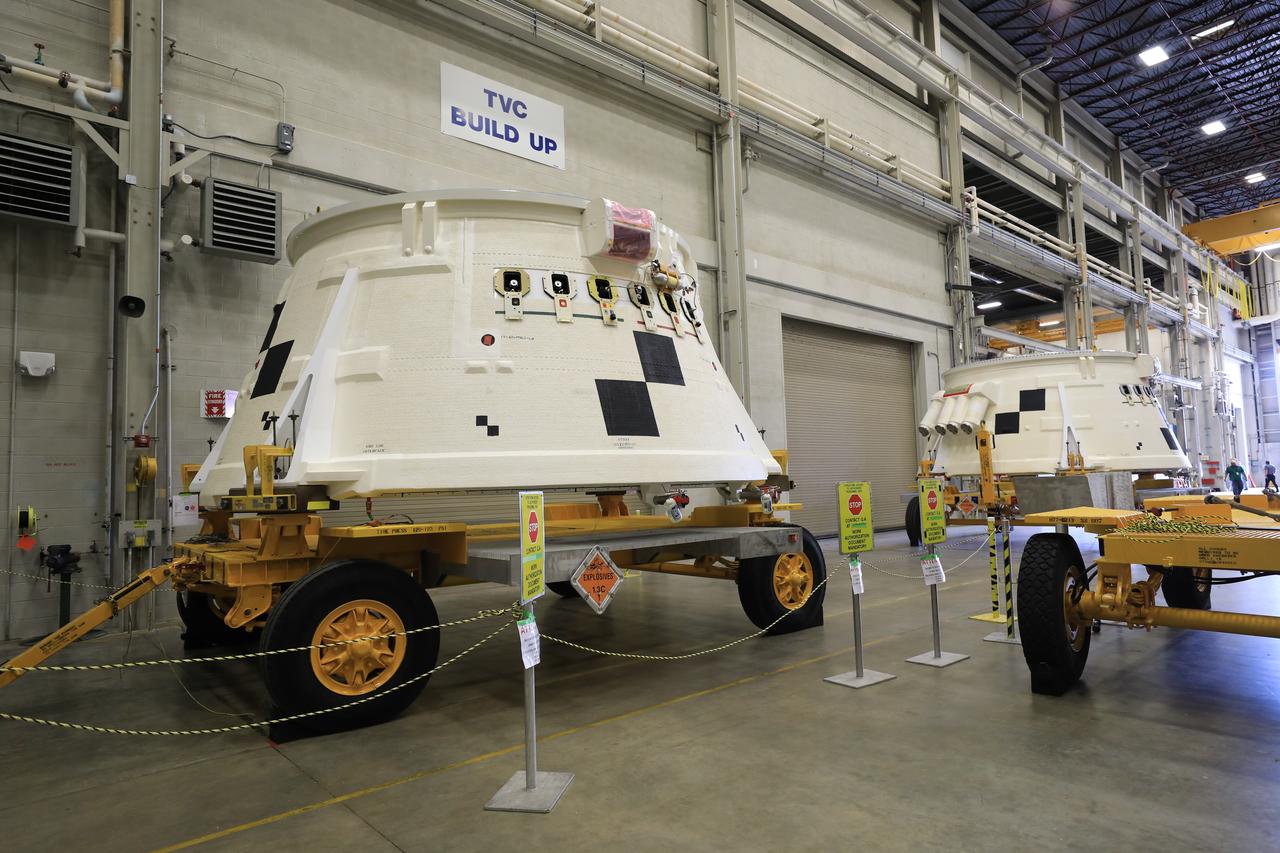
Inside the Booster Fabrication Facility at NASA's Kennedy Space Center in Florida, the Artemis I aft skirts for the agency's Space Launch System (SLS) rocket’s twin solid rocket boosters are being readied for their move to the Rotation, Processing and Surge Facility (RPSF) on June 9, 2020. In view at left is the left aft skirt assembly, and at far right is the right aft skirt assembly. The aft skirts were refurbished by Northrop Grumman. They house the thrust vector control system, which controls 70 percent of the steering during initial ascent of the SLS rocket. The segments will remain in the RPSF until ready for stacking with the forward and aft parts of the boosters on the mobile launcher in High Bay 3 of the Vehicle Assembly Building. Through the Artemis Program, NASA is working to land the first woman and next man on the Moon by 2024.
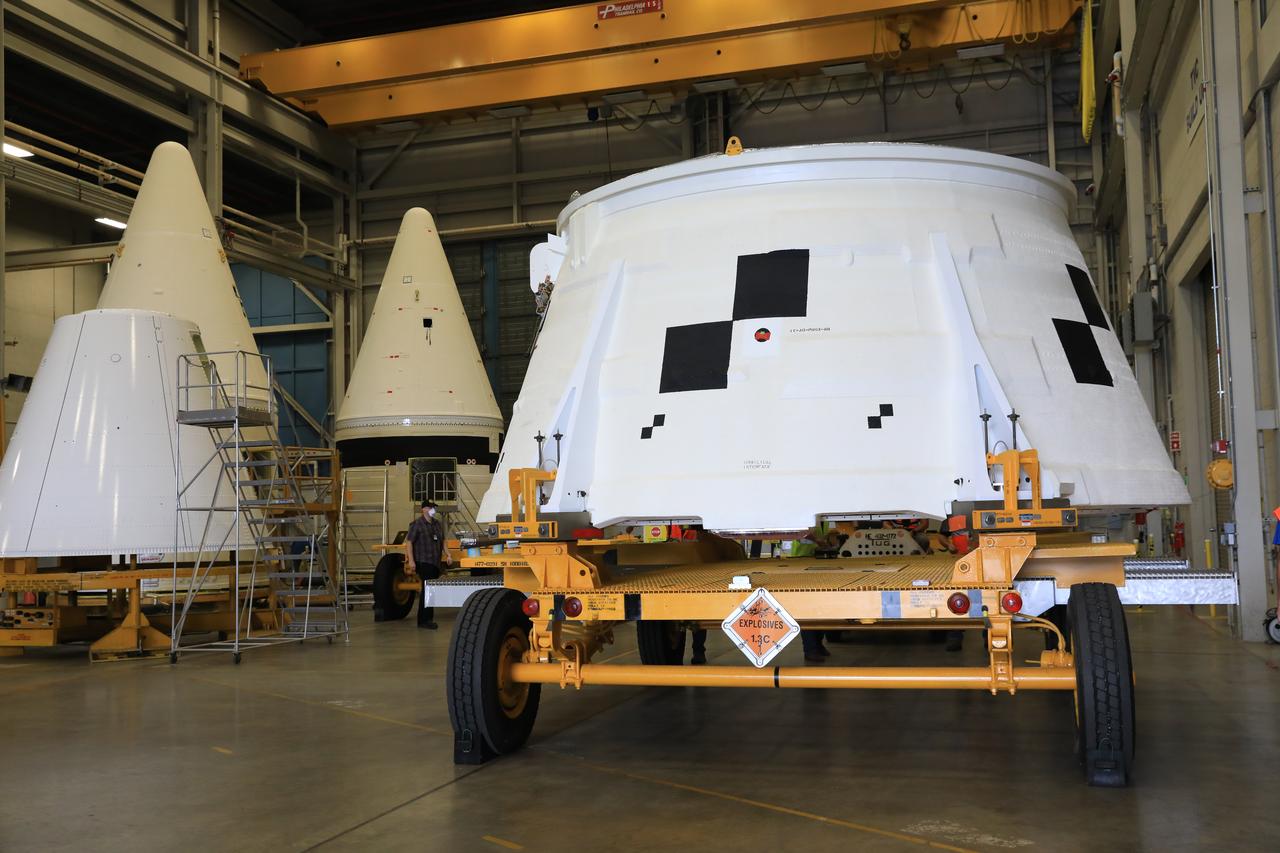
Inside the Booster Fabrication Facility at NASA's Kennedy Space Center in Florida, the Artemis I aft skirts for the agency's Space Launch System (SLS) rocket’s twin solid rocket boosters are moved out of their test cells and are being readied for their move to the Rotation, Processing and Surge Facility (RPSF) on June 9, 2020. In view at right is the right aft skirt. In view at left are the two Artemis I forward assemblies. The aft skirts were refurbished by Northrop Grumman. They house the thrust vector control system, which controls 70 percent of the steering during initial ascent of the SLS rocket. The segments will remain in the RPSF until ready for stacking with the forward and aft parts of the boosters on the mobile launcher in High Bay 3 of the Vehicle Assembly Building. Through the Artemis Program, NASA is working to land the first woman and next man on the Moon by 2024.
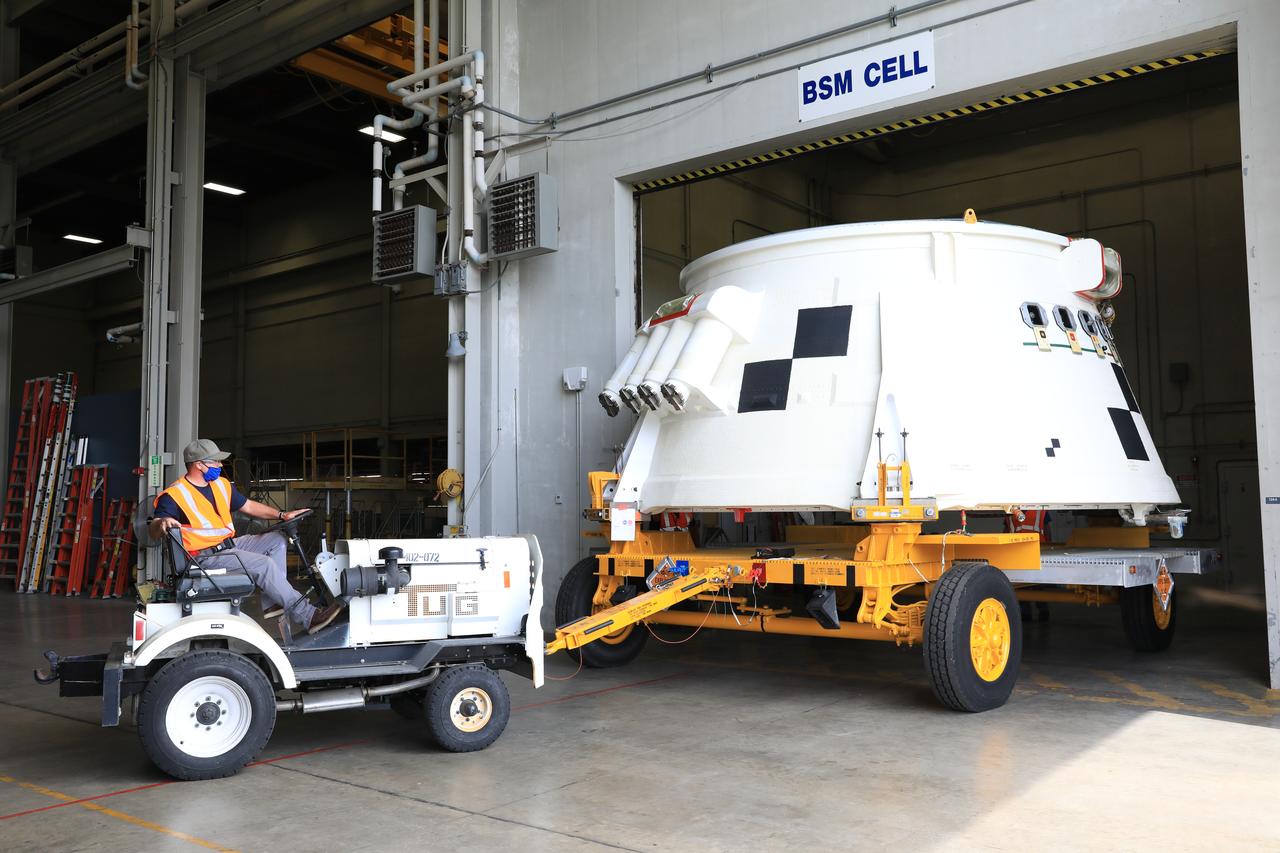
Inside the Booster Fabrication Facility at NASA's Kennedy Space Center in Florida, the Artemis I aft skirts for the agency's Space Launch System (SLS) rocket’s twin solid rocket boosters are being readied for their move to the Rotation, Processing and Surge Facility (RPSF) on June 9, 2020. In view, the left aft skirt assembly is attached to a move vehicle and moved out of a test cell. The aft skirts were refurbished by Northrop Grumman. They house the thrust vector control system, which controls 70 percent of the steering during initial ascent of the SLS rocket. The segments will remain in the RPSF until ready for stacking with the forward and aft parts of the boosters on the mobile launcher in High Bay 3 of the Vehicle Assembly Building. Through the Artemis Program, NASA is working to land the first woman and next man on the Moon by 2024.
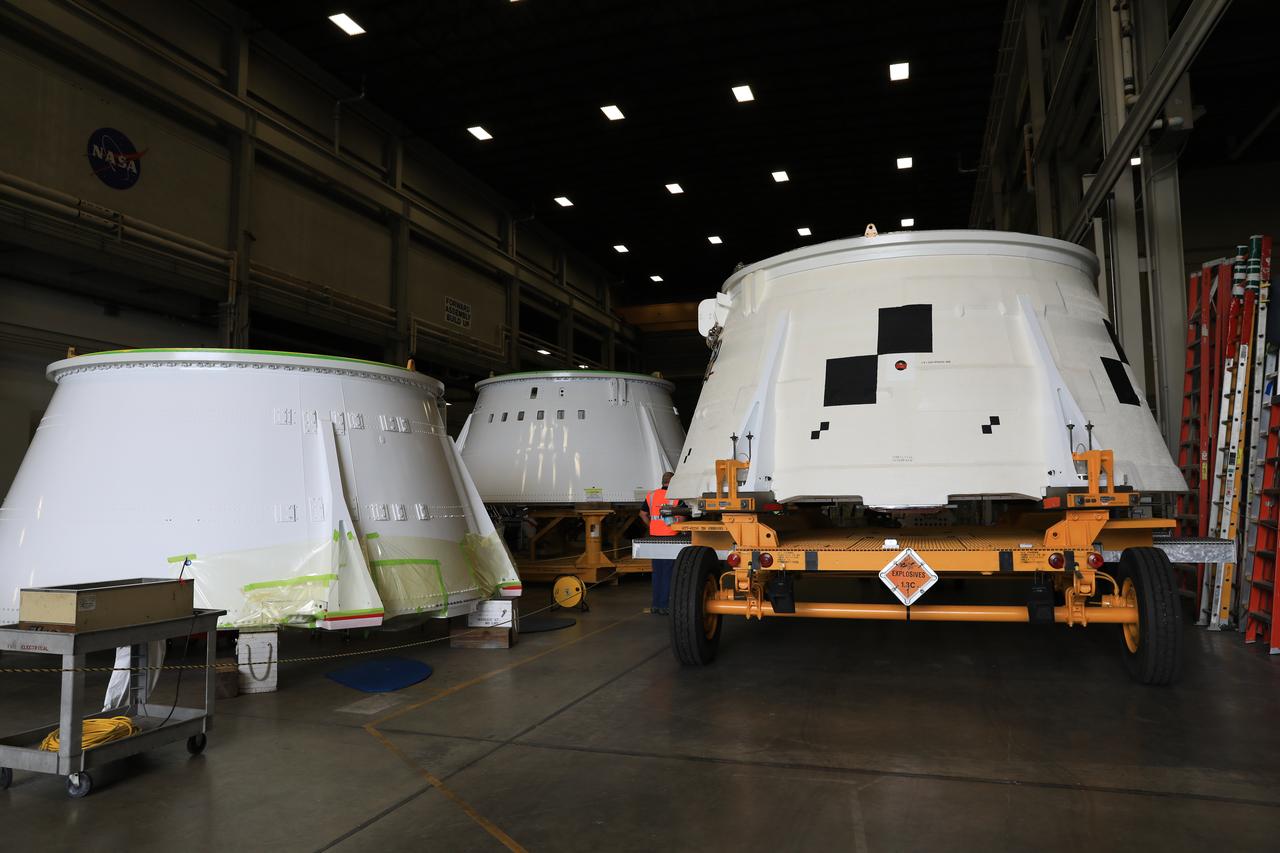
Inside the Booster Fabrication Facility at NASA's Kennedy Space Center in Florida, the Artemis I aft skirts for the agency's Space Launch System (SLS) rocket’s twin solid rocket boosters are being readied for their move to the Rotation, Processing and Surge Facility (RPSF) on June 9, 2020. In view, the left aft skirt assembly is attached to a move vehicle and moved out of a test cell. The Artemis II aft skirt structures are in view at left. The aft skirts were refurbished by Northrop Grumman. They house the thrust vector control system, which controls 70 percent of the steering during initial ascent of the SLS rocket. The segments will remain in the RPSF until ready for stacking with the forward and aft parts of the boosters on the mobile launcher in High Bay 3 of the Vehicle Assembly Building. Through the Artemis Program, NASA is working to land the first woman and next man on the Moon by 2024.
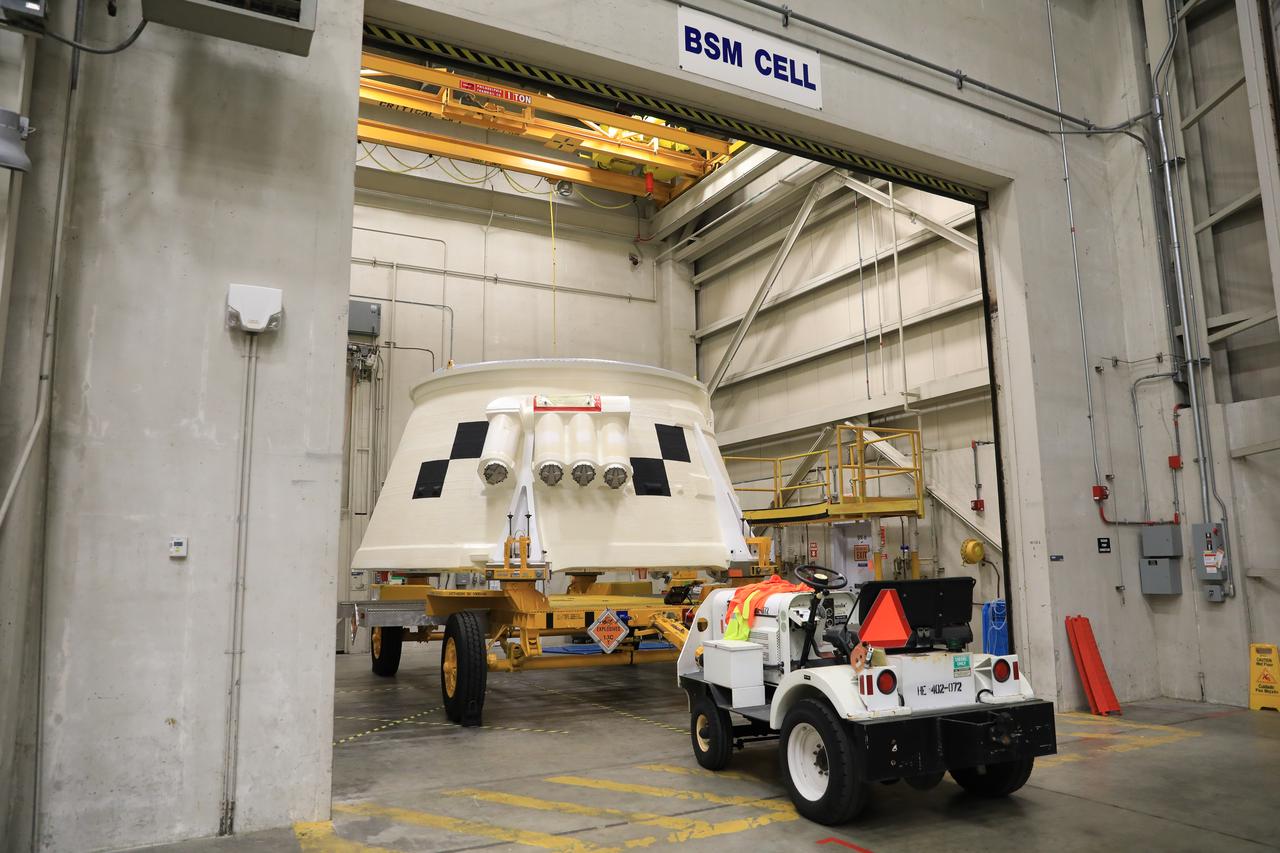
Inside the Booster Fabrication Facility at NASA's Kennedy Space Center in Florida, the Artemis I aft skirts for the agency's Space Launch System (SLS) rocket’s twin solid rocket boosters are being readied for their move to the Rotation, Processing and Surge Facility (RPSF) on June 9, 2020. In view, the left aft skirt assembly is attached to a move vehicle in a test cell. The aft skirts were refurbished by Northrop Grumman. They house the thrust vector control system, which controls 70 percent of the steering during initial ascent of the SLS rocket. The segments will remain in the RPSF until ready for stacking with the forward and aft parts of the boosters on the mobile launcher in High Bay 3 of the Vehicle Assembly Building. Through the Artemis Program, NASA is working to land the first woman and next man on the Moon by 2024.
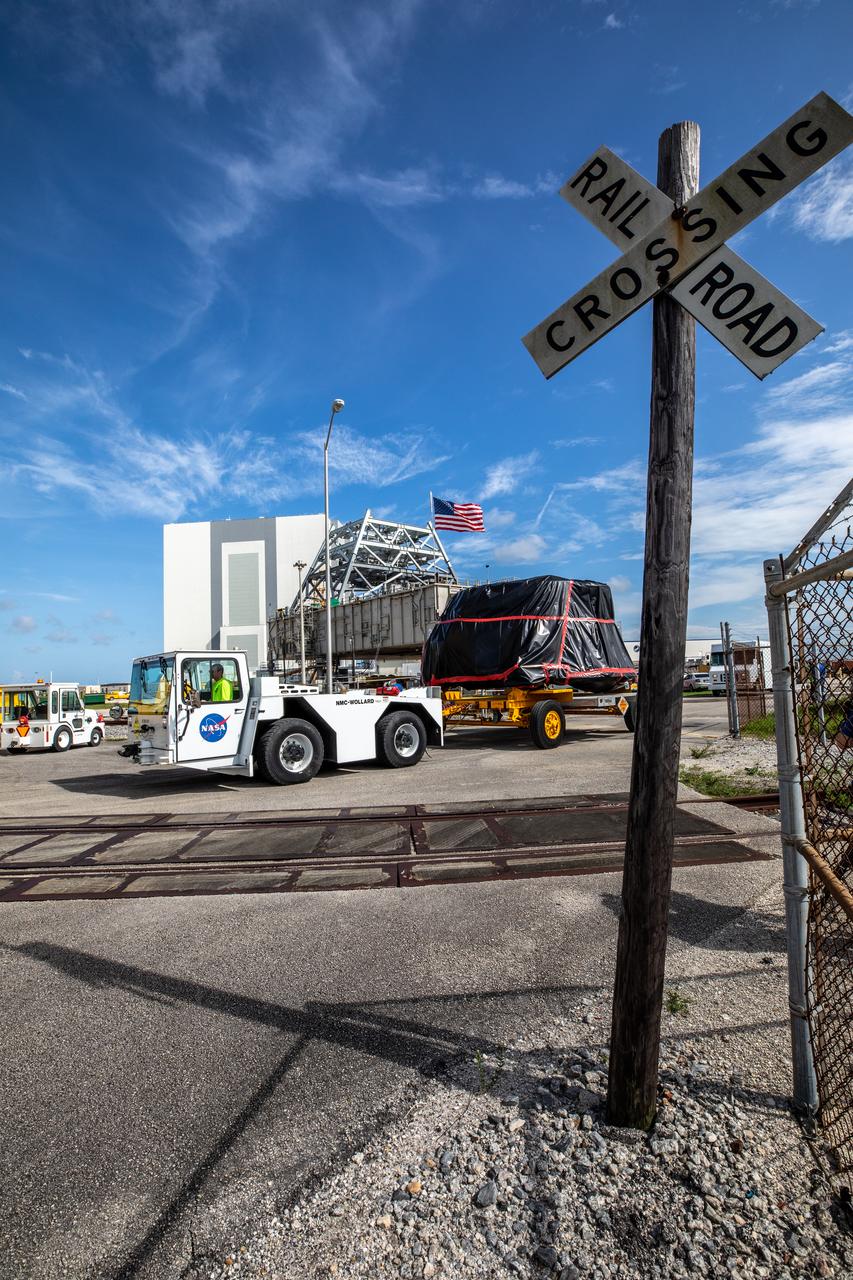
One of two Artemis I aft skirts for NASA’s Space Launch System (SLS) rocket’s twin solid rocket boosters crosses a railroad track on its way to the Rotation, Processing and Surge Facility (RPSF) at the agency’s Kennedy Space Center in Florida on June 10, 2020. They were transported from the Booster Fabrication Facility. The aft skirts were refurbished by Northrop Grumman. They house the thrust vector control system, which controls 70 percent of the steering during initial ascent of the SLS rocket. The segments will remain in the RPSF until ready for stacking with the forward and aft parts of the boosters on the mobile launcher in High Bay 3 of the Vehicle Assembly Building. Through the Artemis Program, NASA is working to land the first woman and next man on the Moon by 2024.
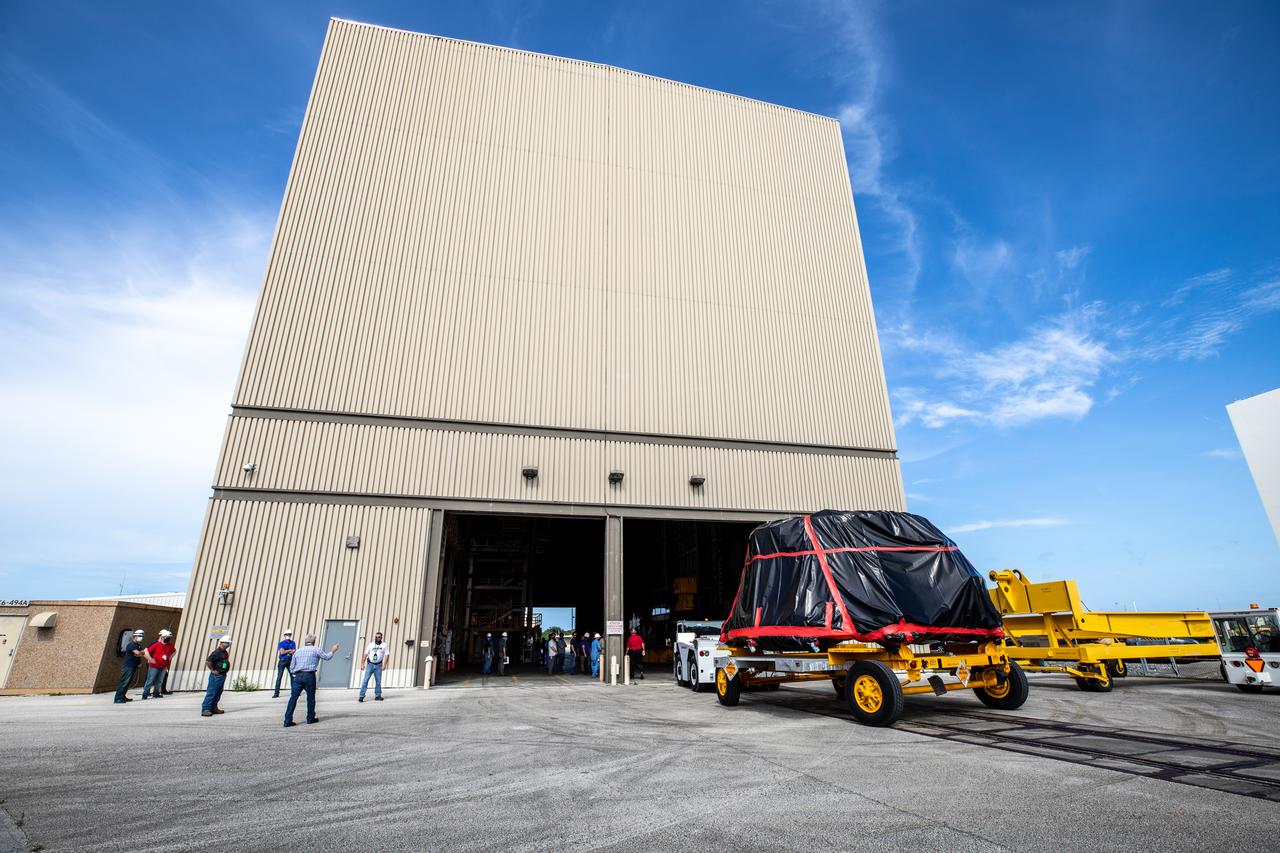
The first of two Artemis I aft skirts for NASA’s Space Launch System (SLS) rocket’s twin solid rocket boosters arrives at the Rotation, Processing and Surge Facility (RPSF) at the agency’s Kennedy Space Center in Florida on June 10, 2020. They were transported from the Booster Fabrication Facility. The aft skirts were refurbished by Northrop Grumman. They house the thrust vector control system, which controls 70 percent of the steering during initial ascent of the SLS rocket. The segments will remain in the RPSF until ready for stacking with the forward and aft parts of the boosters on the mobile launcher in High Bay 3 of the Vehicle Assembly Building. Through the Artemis Program, NASA is working to land the first woman and next man on the Moon by 2024.
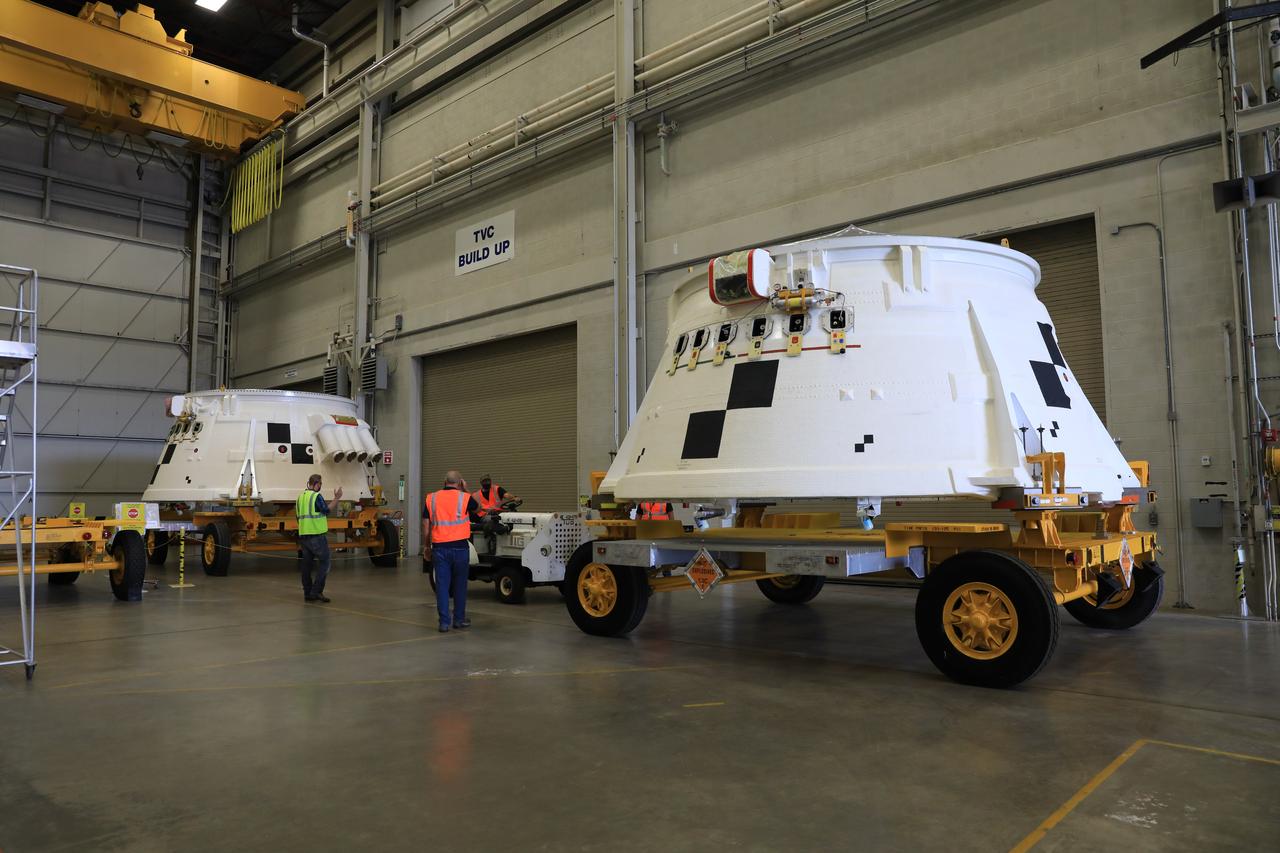
Inside the Booster Fabrication Facility at NASA's Kennedy Space Center in Florida, the Artemis I aft skirts for the agency's Space Launch System (SLS) rocket’s twin solid rocket boosters are moved out of their test cells and are being readied for their move to the Rotation, Processing and Surge Facility (RPSF) on June 9, 2020. The aft skirts were refurbished by Northrop Grumman. They house the thrust vector control system, which controls 70 percent of the steering during initial ascent of the SLS rocket. The segments will remain in the RPSF until ready for stacking with the forward and aft parts of the boosters on the mobile launcher in High Bay 3 of the Vehicle Assembly Building. Through the Artemis Program, NASA is working to land the first woman and next man on the Moon by 2024.
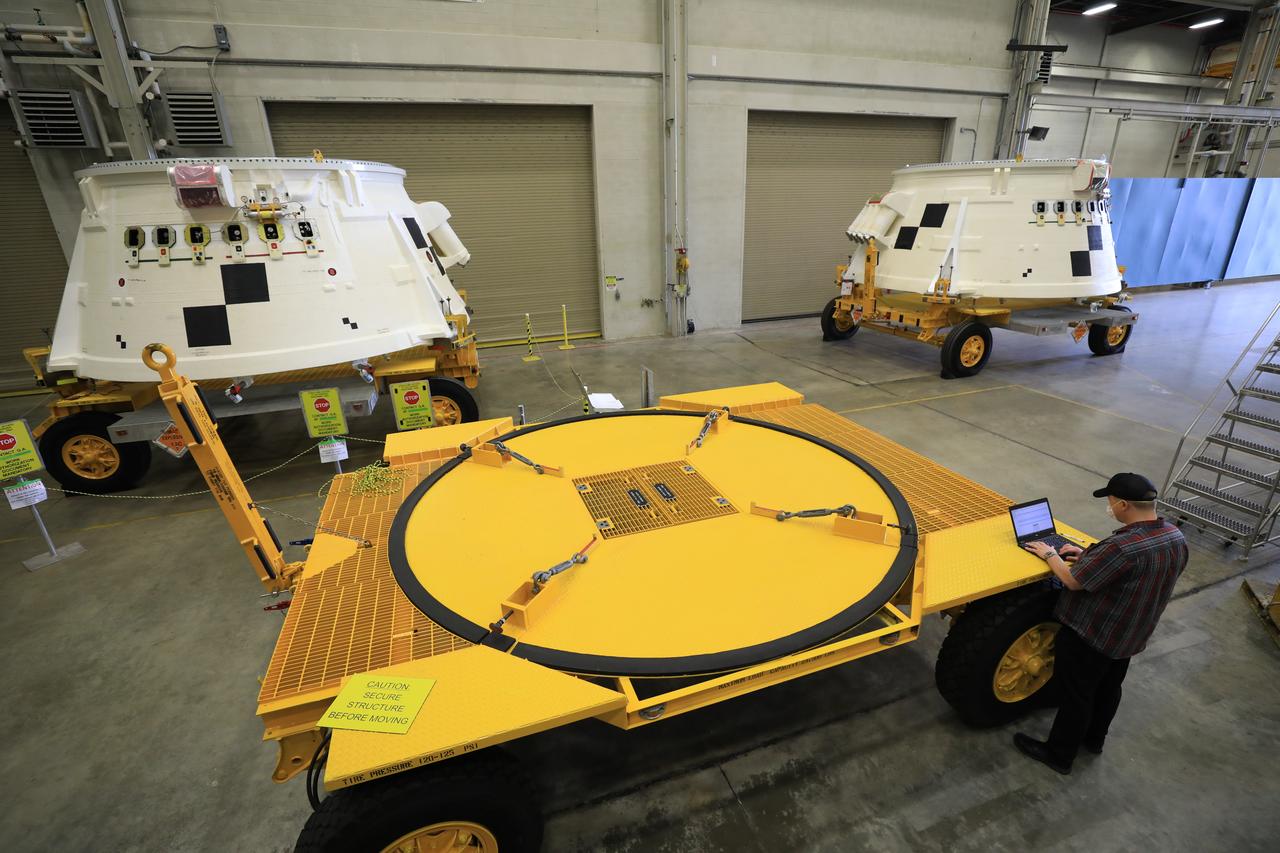
Inside the Booster Fabrication Facility at NASA's Kennedy Space Center in Florida, the Artemis I aft skirts for the agency's Space Launch System (SLS) rocket’s twin solid rocket boosters are being readied for their move to the Rotation, Processing and Surge Facility (RPSF) on June 9, 2020. In view at left is the left aft skirt assembly, and at right is the right aft skirt assembly. The aft skirts were refurbished by Northrop Grumman. They house the thrust vector control system, which controls 70 percent of the steering during initial ascent of the SLS rocket. The segments will remain in the RPSF until ready for stacking with the forward and aft parts of the boosters on the mobile launcher in High Bay 3 of the Vehicle Assembly Building. Through the Artemis Program, NASA is working to land the first woman and next man on the Moon by 2024.

The Artemis I aft skirts for the NASA’s Space Launch System (SLS) rocket’s twin solid rocket boosters are moved along the road to the Rotation, Processing and Surge Facility (RPSF) at NASA’s Kennedy Space Center in Florida on June 10, 2020. In the background is the iconic Vehicle Assembly Building (VAB). The aft skirts were refurbished by Northrop Grumman. They house the thrust vector control system, which controls 70 percent of the steering during initial ascent of the SLS rocket. The aft skirts will remain in the RPSF until ready for stacking with the forward and aft parts of the boosters on the mobile launcher in High Bay 3 of the VAB. Through the Artemis Program, NASA is working to land the first woman and next man on the Moon by 2024.
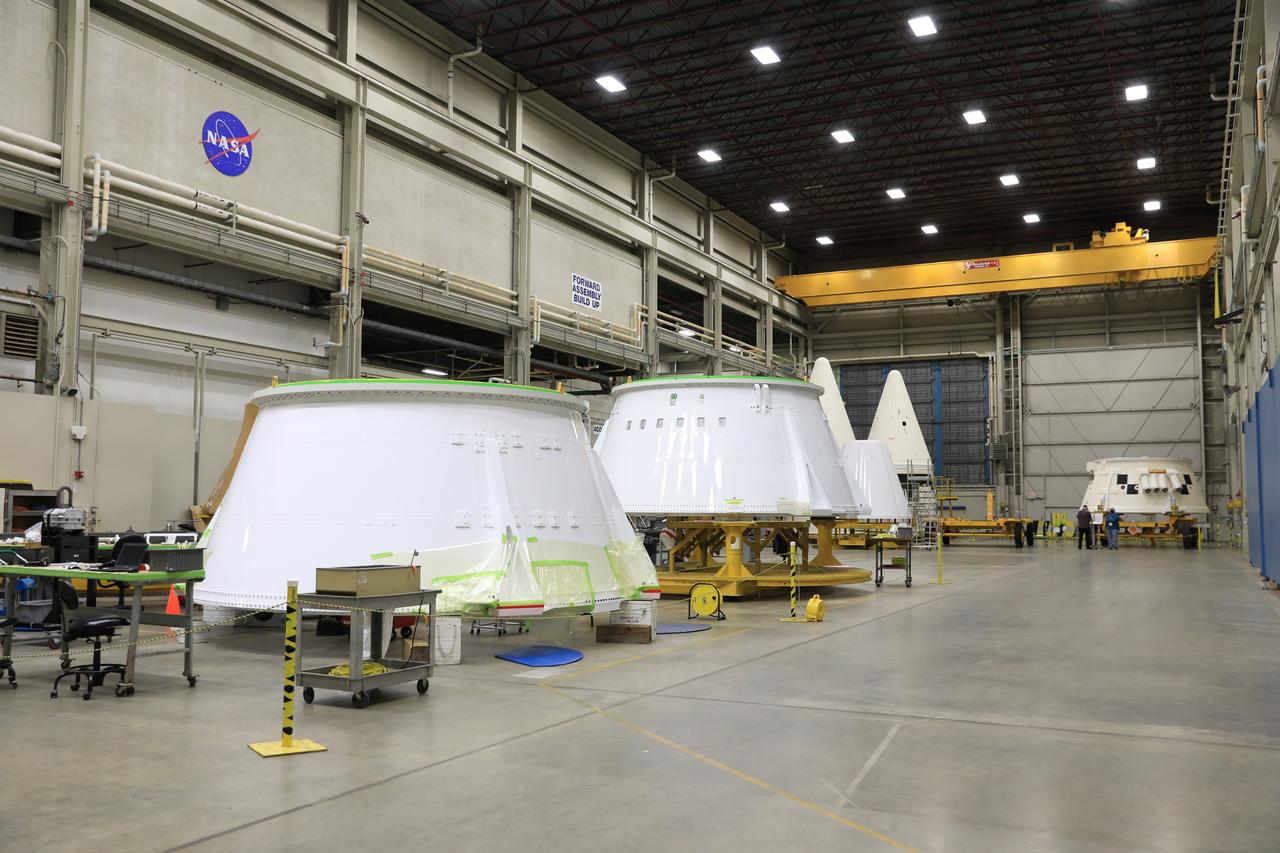
Inside the Booster Fabrication Facility (BFF) at NASA's Kennedy Space Center in Florida, the Artemis II aft skirt structures for the agency's Space Launch System (SLS) rocket’s twin solid rocket boosters are in view at left. Behind them are the two Artemis I forward assemblies. At far right, in the distance, is the right aft skirt assembly. In the BFF, the two aft skirt assemblies are being readied for their move to the Rotation, Processing and Surge Facility (RPSF) on June 9, 2020. The aft skirts were refurbished by Northrop Grumman. They house the thrust vector control system, which controls 70 percent of the steering during initial ascent of the SLS rocket. The segments will remain in the RPSF until ready for stacking with the forward and aft parts of the boosters on the mobile launcher in High Bay 3 of the Vehicle Assembly Building. Through the Artemis Program, NASA is working to land the first woman and next man on the Moon by 2024.
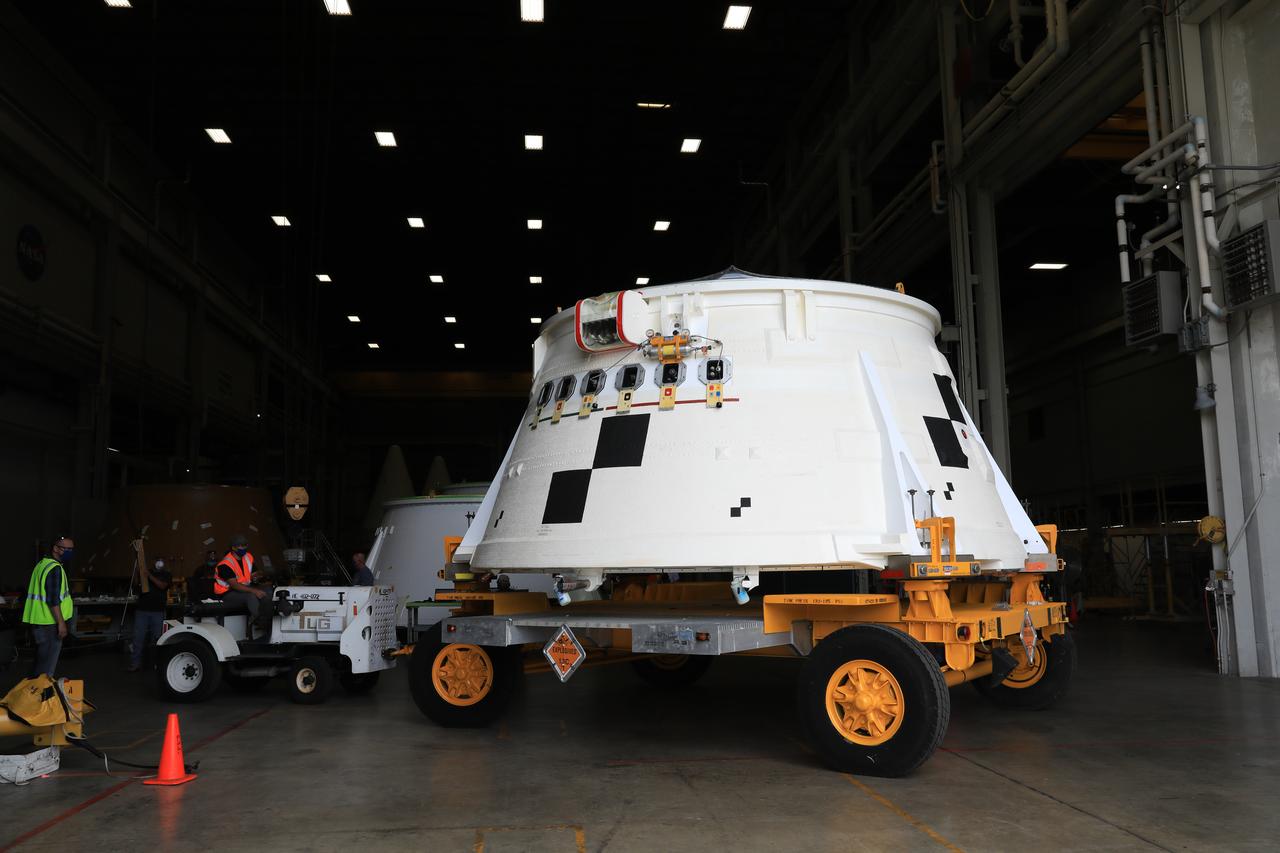
Inside the Booster Fabrication Facility at NASA's Kennedy Space Center in Florida, the Artemis I aft skirts for the agency's Space Launch System (SLS) rocket’s twin solid rocket boosters are being readied for their move to the Rotation, Processing and Surge Facility (RPSF) on June 9, 2020. In view, the left aft skirt assembly is attached to a move vehicle and moved out of a test cell. The aft skirts were refurbished by Northrop Grumman. They house the thrust vector control system, which controls 70 percent of the steering during initial ascent of the SLS rocket. The segments will remain in the RPSF until ready for stacking with the forward and aft parts of the boosters on the mobile launcher in High Bay 3 of the Vehicle Assembly Building. Through the Artemis Program, NASA is working to land the first woman and next man on the Moon by 2024.