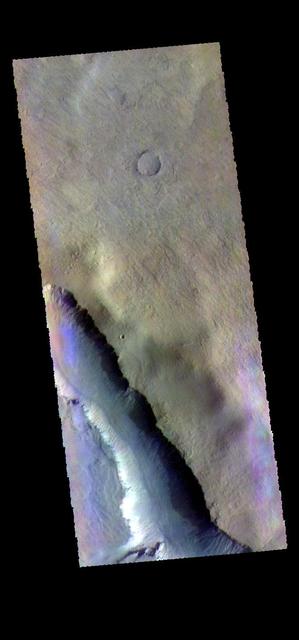
The THEMIS camera contains 5 filters. The data from different filters can be combined in multiple ways to create a false color image. hese false color images may reveal subtle variations of the surface not easily identified in a single band image. This image from NASA 2001 Mars Odyssey spacecraft shows part of Asimov Crater. simov Crater is unique in that the crater floor has been completely filled with material to approximately the crater rim and then a series depressions have occurred near the crater rim. Orbit Number: 58181 Latitude: -46.4874 Longitude: 5.55839 Instrument: VIS Captured: 2015-01-25 08:32 https://photojournal.jpl.nasa.gov/catalog/PIA21543
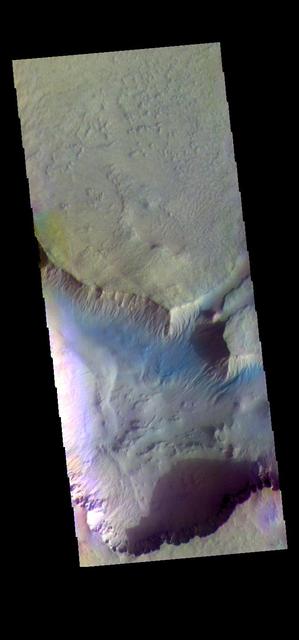
The THEMIS camera contains 5 filters. The data from different filters can be combined in multiple ways to create a false color image. These false color images may reveal subtle variations of the surface not easily identified in a single band image. This image from NASA 2001 Mars Odyssey spacecraft shows more of Asimov Crater. Orbit Number: 58206 Latitude: -47.4085 Longitude: 4.59969 Instrument: VIS Captured: 2015-01-27 09:56 https://photojournal.jpl.nasa.gov/catalog/PIA21544
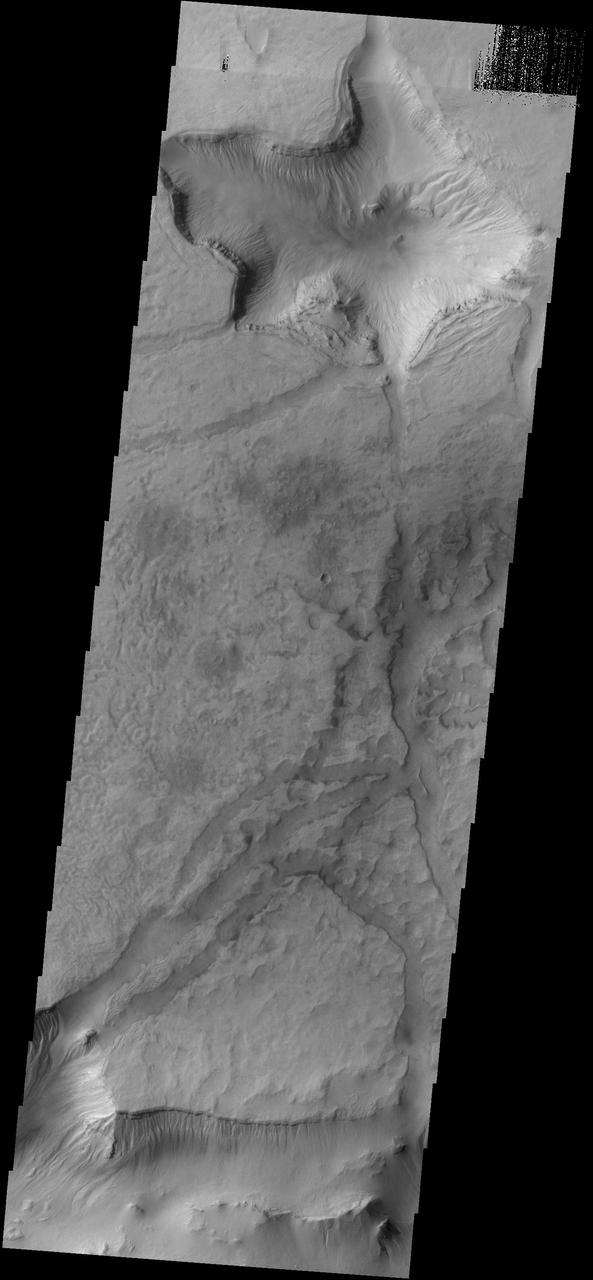
This image from NASA 2001 Mars Odyssey spacecraft shows some of the depressions in the material that fills Asimov Crater.
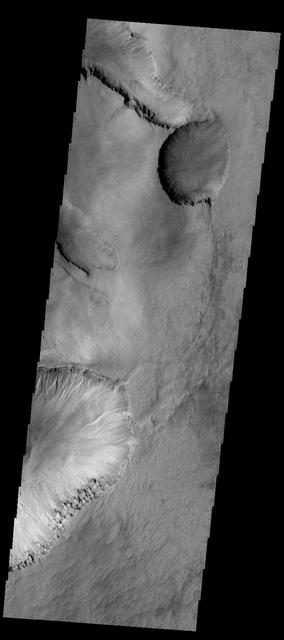
The depressions in this image captured by NASA 2001 Mars Odyssey spacecraft are located in the material that fills Asimov Crater.
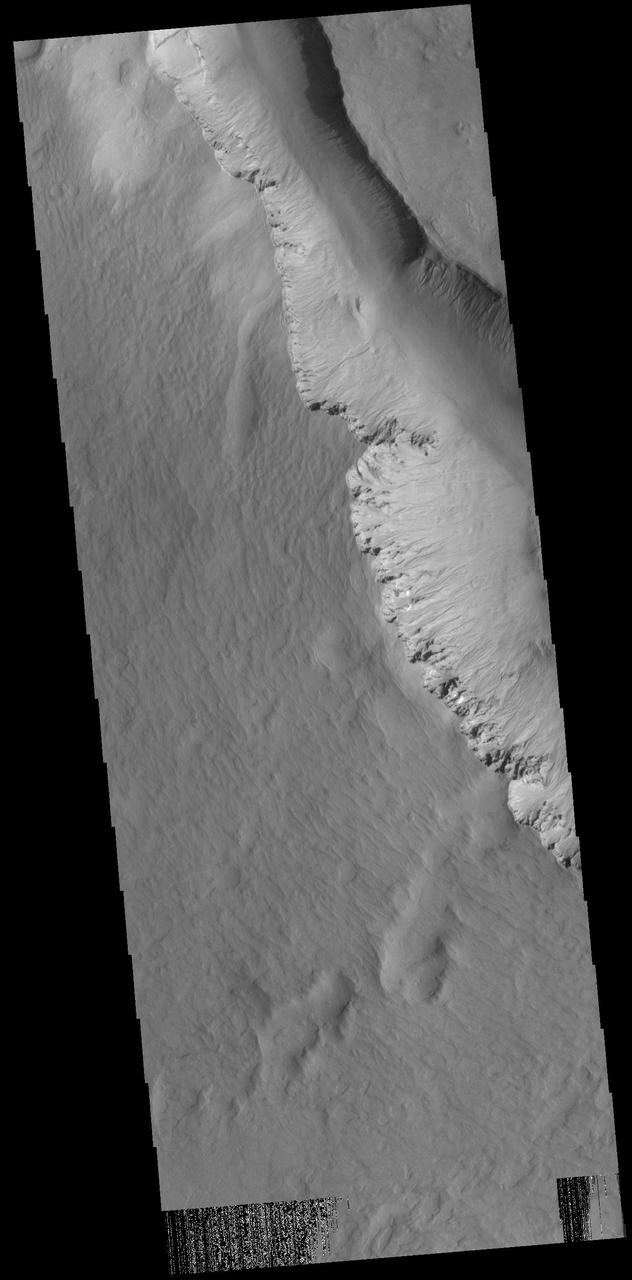
Located in Noachis Terra, Asimov Crater has an unusual crater floor morphology. At some point after the crater formed, the interior was filled by materials that reached almost to the top of the crater rim. At some later point, deep depressions formed along the inner crater rim. Channels dissect both sides of these depressions. The mechanism of both the filling of the crater and the formation of the depressions is not known. Two other nearby craters also have filled floors and interior depressions. This VIS image shows the southwestern section of the interior depression. Orbit Number: 74834 Latitude: -47.6066 Longitude: 4.28931 Instrument: VIS Captured: 2018-10-28 02:12 https://photojournal.jpl.nasa.gov/catalog/PIA22889
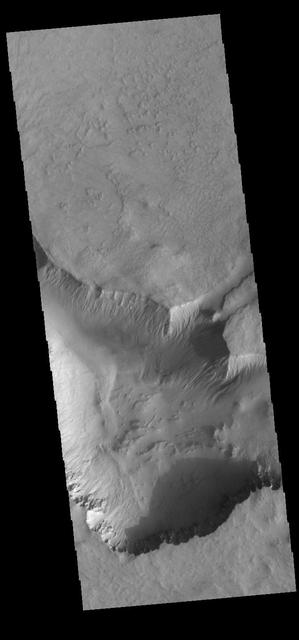
This image from NASA 2001 Mars Odyssey spacecraft shows Asimov Crater is unique in that the crater floor has been completely filled with material to approximately the crater rim and then a series depressions have occurred near the crater rim. Orbit Number: 58206 Latitude: -47.5272 Longitude: 4.62262 Instrument: VIS Captured: 2015-01-27 09:56 http://photojournal.jpl.nasa.gov/catalog/PIA19258
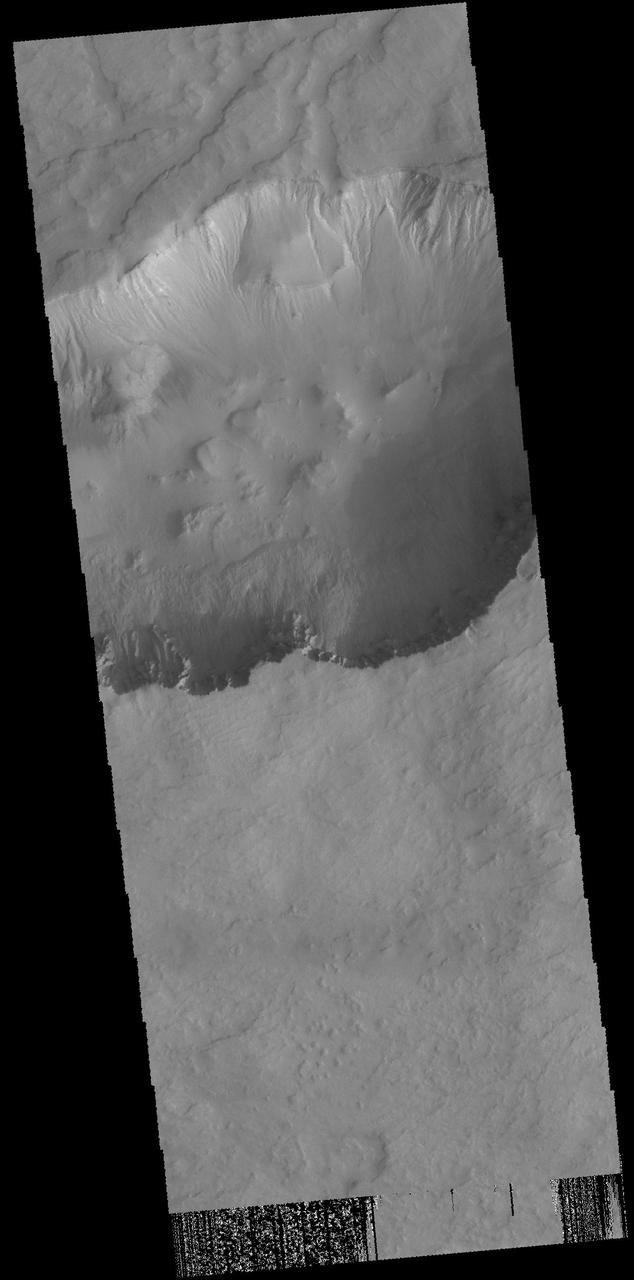
Numerous gullies are visible in this image captured by NASA 2001 Mars Odyssey spacecraft of Asimov Crater. Orbit Number: 57869 Latitude: -47.6632 Longitude: 5.48151 Instrument: VIS Captured: 2014-12-30 15:59 http://photojournal.jpl.nasa.gov/catalog/PIA19197

This image, acquired by NASA Mars Reconnaissance Orbiter, in southern winter over part of Asimov Crater, shows the crater appears to have been completely filled by a thick sequence of materials, perhaps including sediments and lava flows.
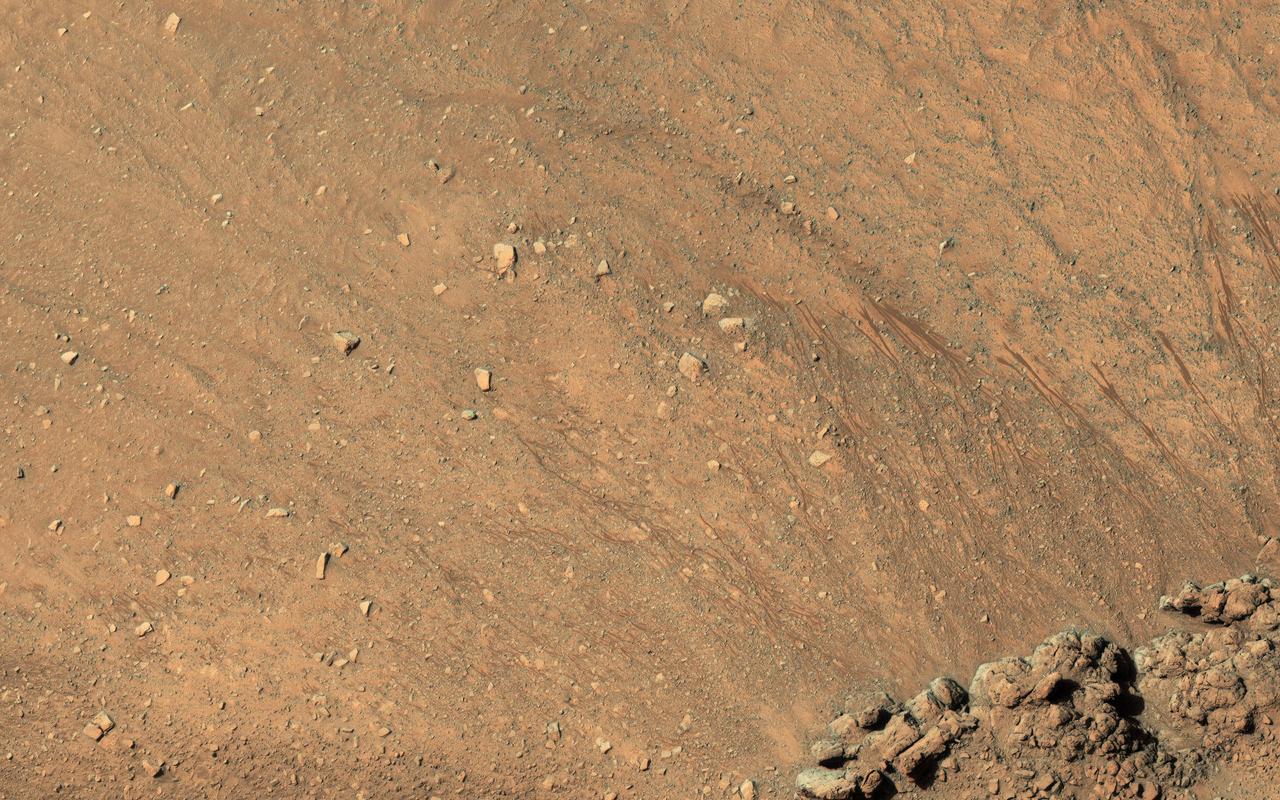
Asimov is an 84-kilometer diameter crater located in the southern ancient highlands of Mars. It is distinguished from other craters in this region in that it contains both a ring-depression just within the crater rim and a pit near the center. Gullies have formed along slopes both in the ring-depression and within the central pit. A closeup shows gullies and recurring slope lineae (RSL) along the eastern slope of the pit. These features continue to form seasonally in this region and the HiRISE team monitors this and other sites to look for changes. Another closeup shows new RSL forming during the summer just after the recent global dust storm. How these features form is still under investigation. Additional changes documented here and at other locations as a result of the dust storm may provide some insight into their formation. https://photojournal.jpl.nasa.gov/catalog/PIA22898
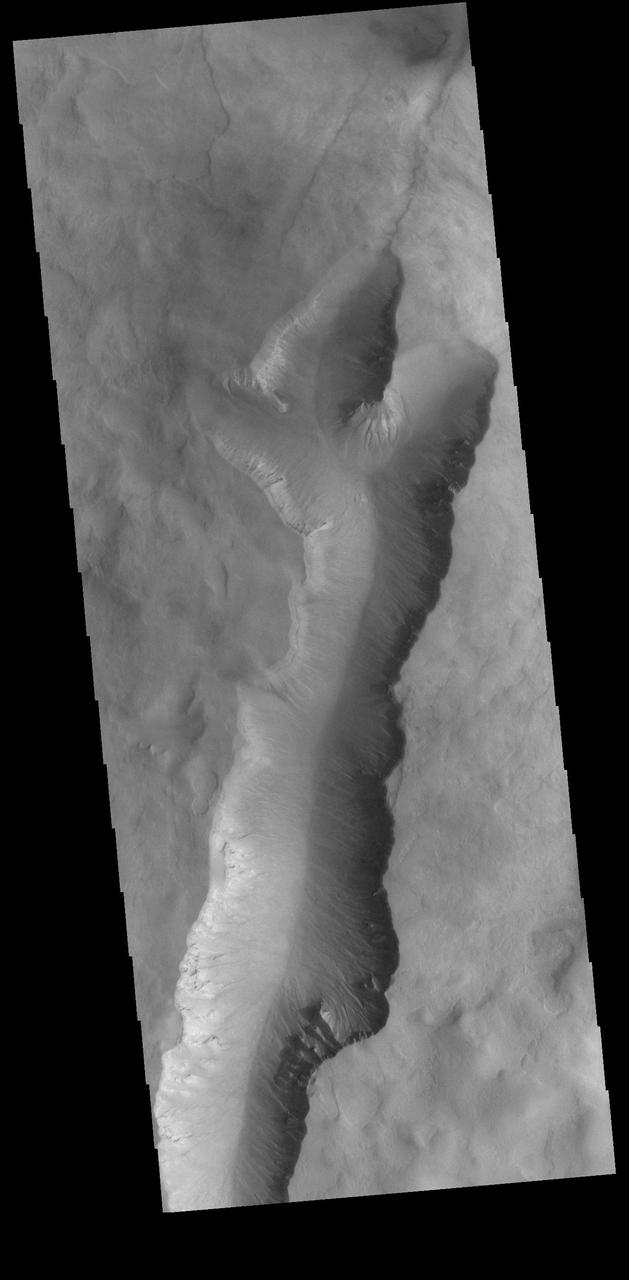
This VIS image shows a large linear depression in the center of an unnamed crater in Noachis Terra. This crater and the nearby Maunder and Asimov craters share this odd morphology. The crater floors have been filled to the rim and then depressions have occurred in that fill material. In the case of Maunder and Asimov, the depressions occur along the inner rim of each crater. In this crater, the depression is located in the middle of the crater fill. Orbit Number: 74360 Latitude: -50.0031 Longitude: 3.76045 Instrument: VIS Captured: 2018-09-19 01:11 https://photojournal.jpl.nasa.gov/catalog/PIA22801
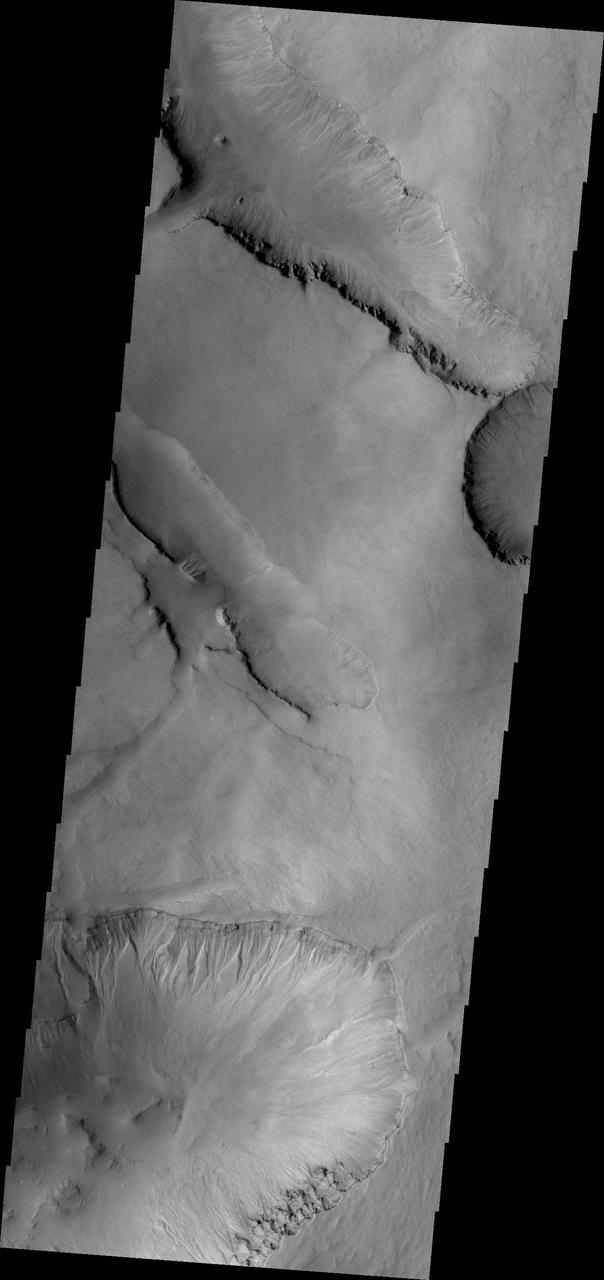
This image captured by NASA 2001 Mars Odyssey spacecraft shows gullies on the northern face of one of the large depressions that mark the inner rim of Asimov Crater.
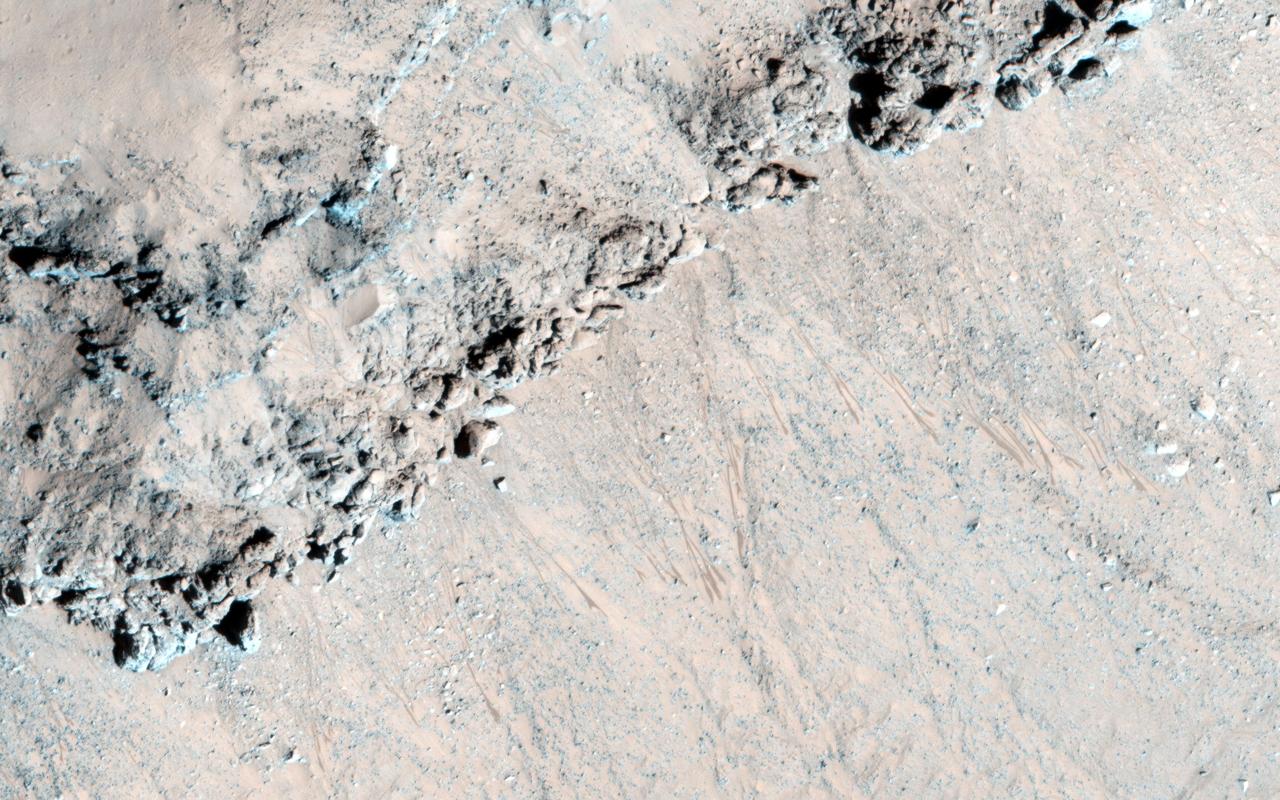
Seasonal flows called recurring slope lineae RSL grow down warm slopes in the summer, fade when they become inactive, then re-form the following year when the slopes warm up again from the Sun. This observation is from NASA Mars Reconnaissance Orbiter