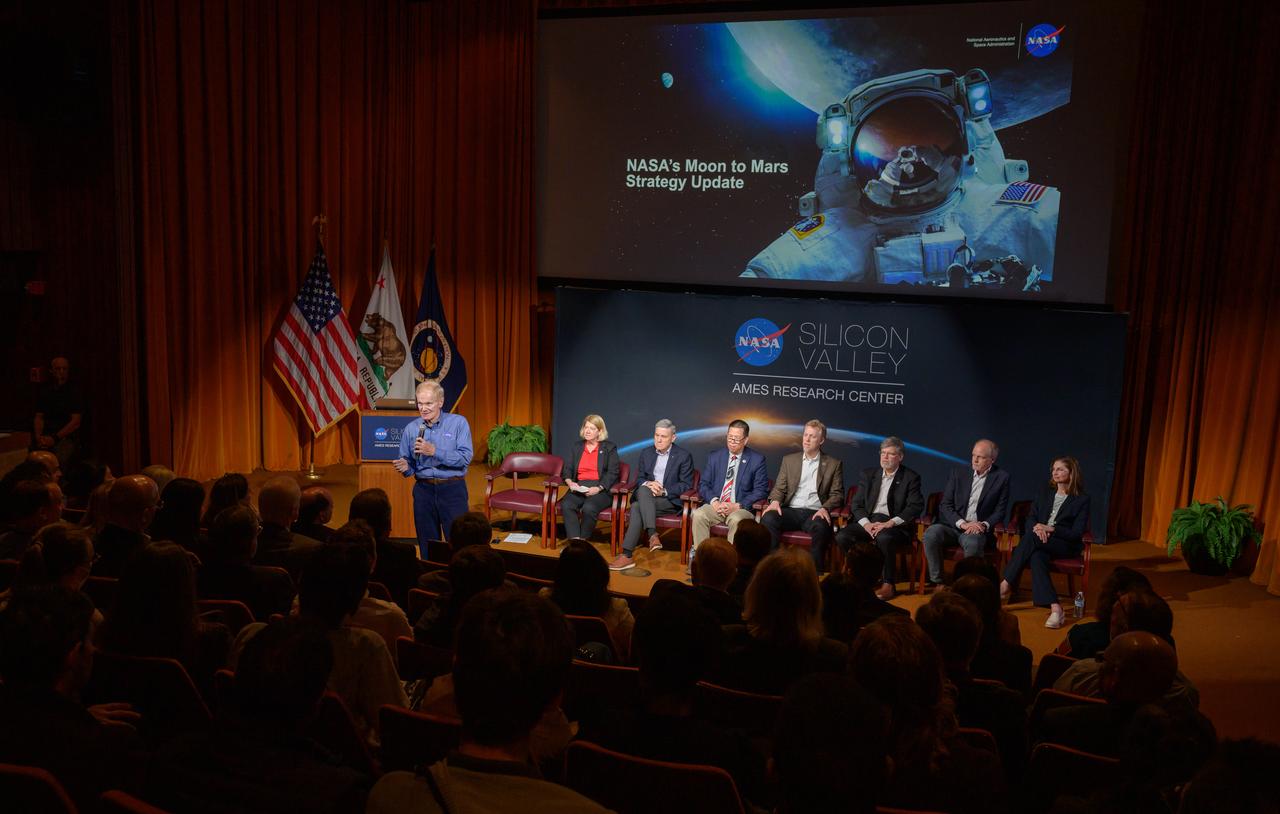
NASA Administrator Bill Nelson, front, talks to the workforce at NASA’s Ames Research Center in California’s Silicon Valley during the “Moon to Mars” town hall in the N201 Syvertson Auditorium. Behind him, left to right, are Deputy Administrator Pam Melroy, Associate Administrator Bob Cabana, AmesCenter Director Eugene Tu, Director of Space Architectures Kurt “Spuds” Vogel, Deputy Associate Administrator for Exploration in the Science Mission Directorate Joel Kearns, Deputy Associate Administrator for Programs in the Space Technology Mission Directorate Walt Engelund, and Deputy Associate Administrator for Exploration Systems Development Cathy Koerner.
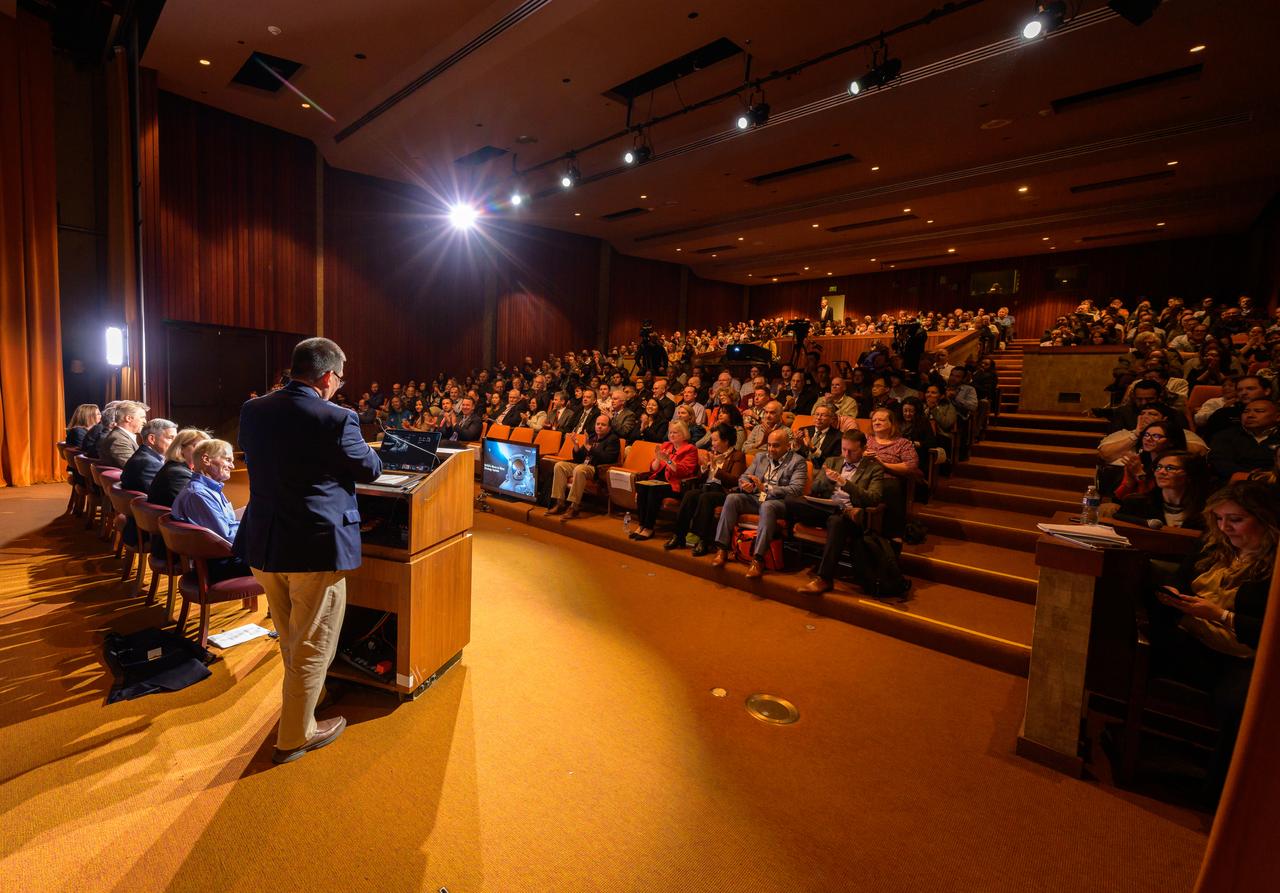
Eugene Tu, center director at NASA’s Ames Research Center in California’s Silicon Valley, offers his opening remarks to the Ames workforce during the “Moon to Mars” town hall in the N201 Syvertson Auditorium. Town hall panel, seated right to left, are NASA Administrator Bill Nelson, Deputy Administrator Pam Melroy, Associate Administrator Bob Cabana, Director of Space Architectures Kurt “Spuds” Vogel, Deputy Associate Administrator for Exploration in the Science Mission Directorate Joel Kearns, Deputy Associate Administrator for Programs in the Space Technology Mission Directorate Walt Engelund, and Deputy Associate Administrator for Exploration Systems Development Cathy Koerner.
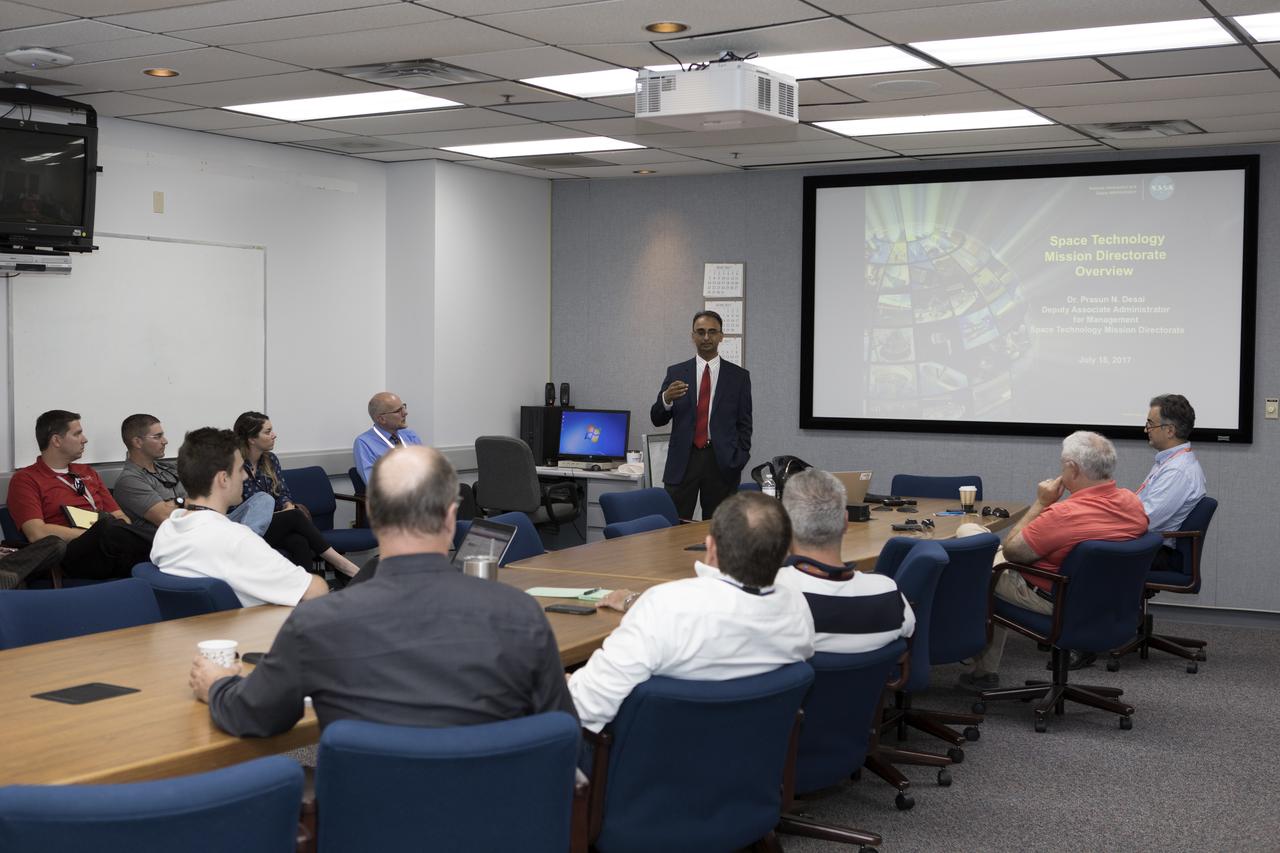
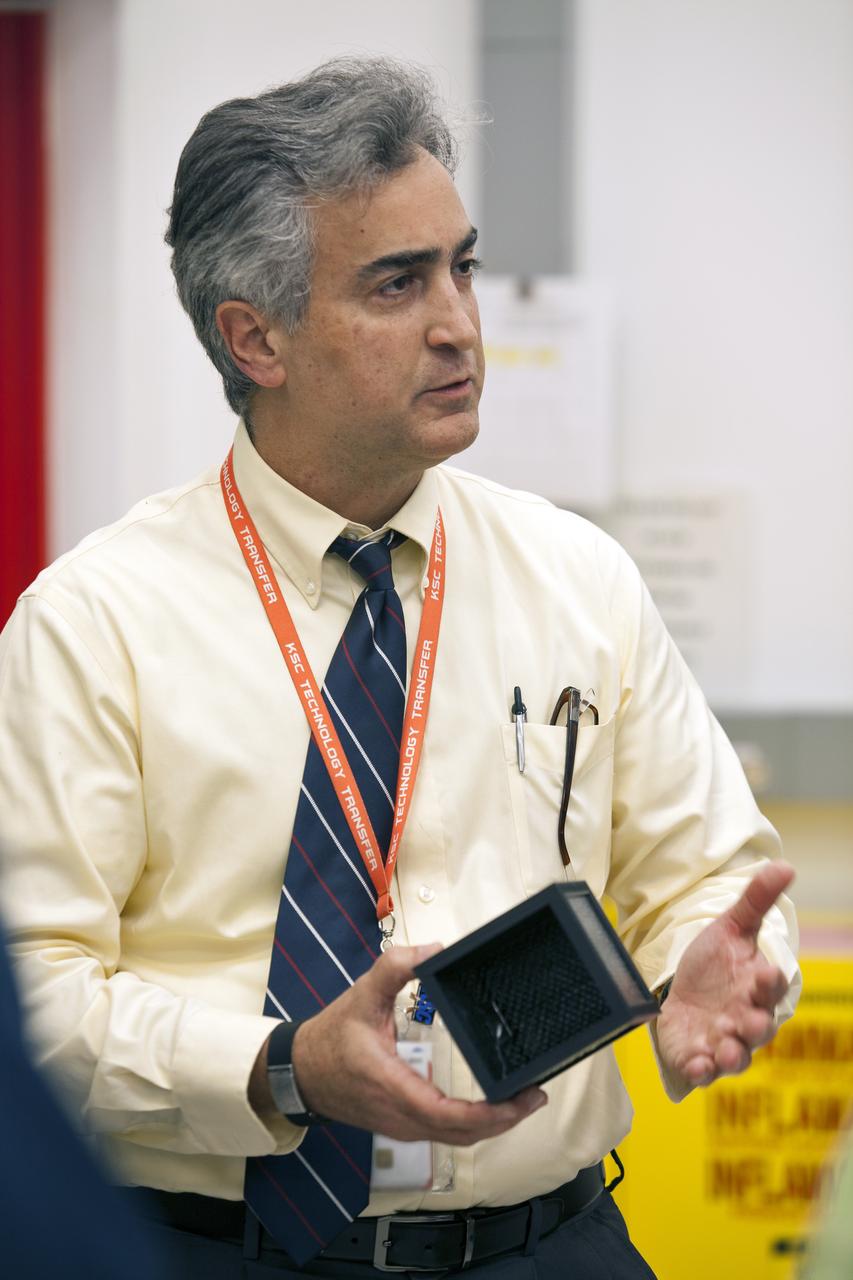
Prasun Desai, deputy associate administrator for Management in NASA's Space Technology Mission Directorate, speaks to Exploration Research and Technology managers in the Space Station Processing Facility at the Kennedy Space Center in Florida.
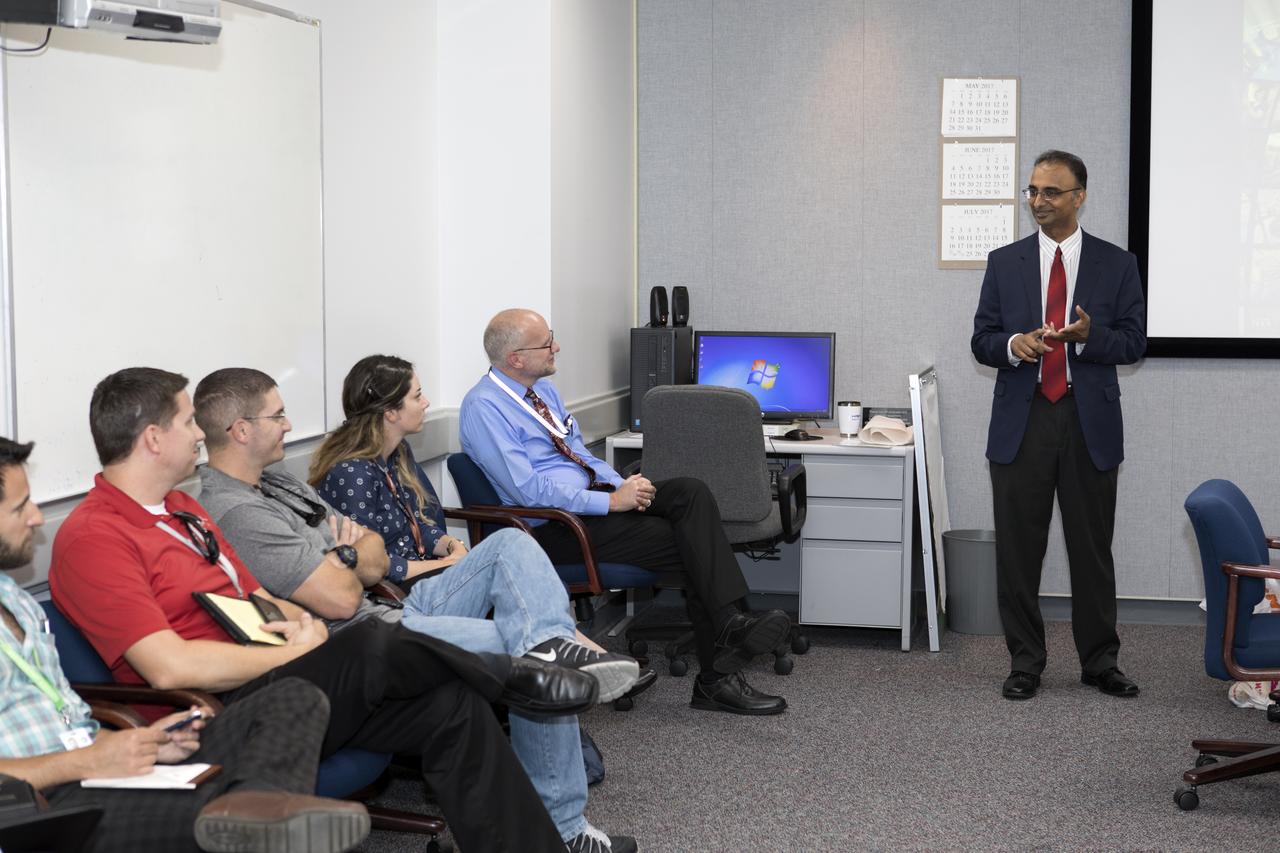
Prasun Desai, deputy associate administrator for Management in NASA's Space Technology Mission Directorate, speaks to Exploration Research and Technology managers in the Space Station Processing Facility at the Kennedy Space Center in Florida.
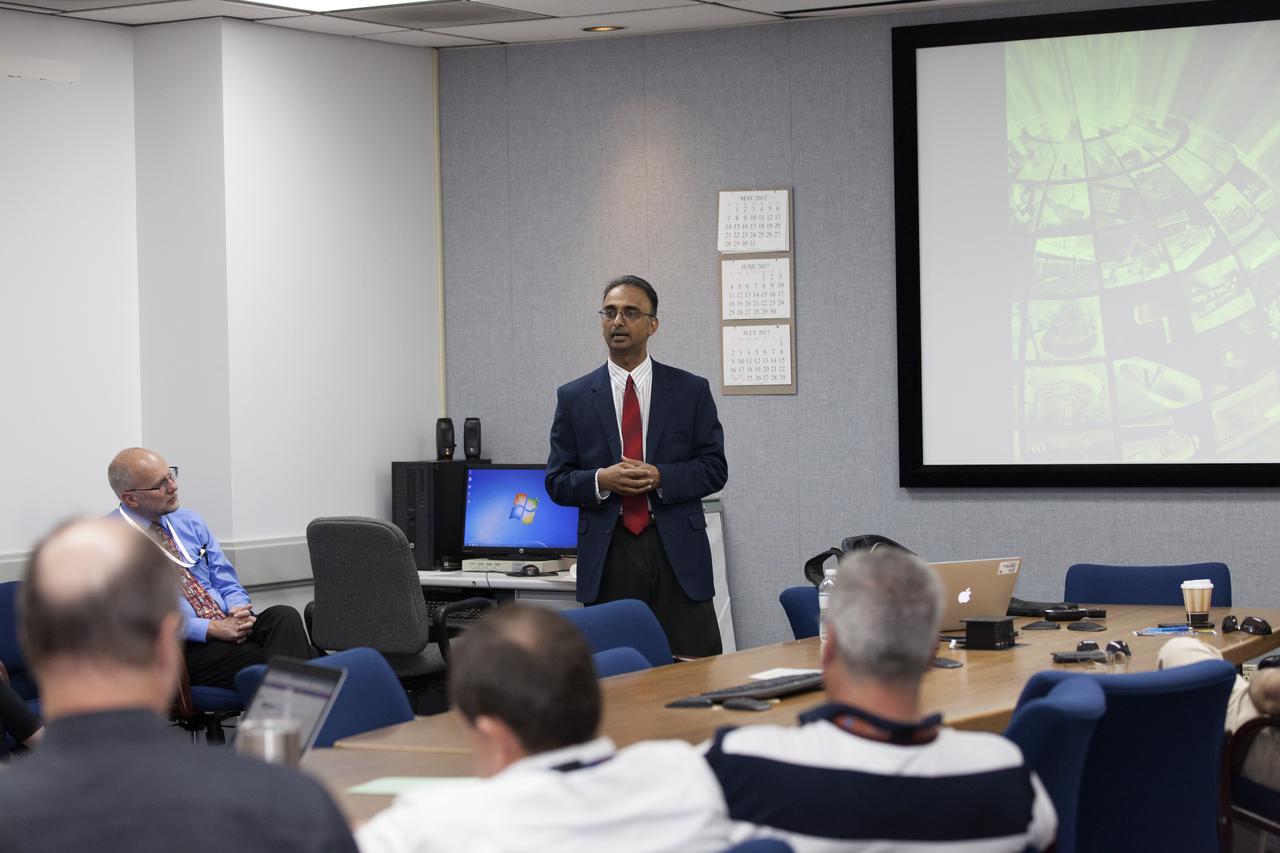
Prasun Desai, deputy associate administrator for Management in NASA's Space Technology Mission Directorate, speaks to Exploration Research and Technology managers in the Space Station Processing Facility at the Kennedy Space Center in Florida.
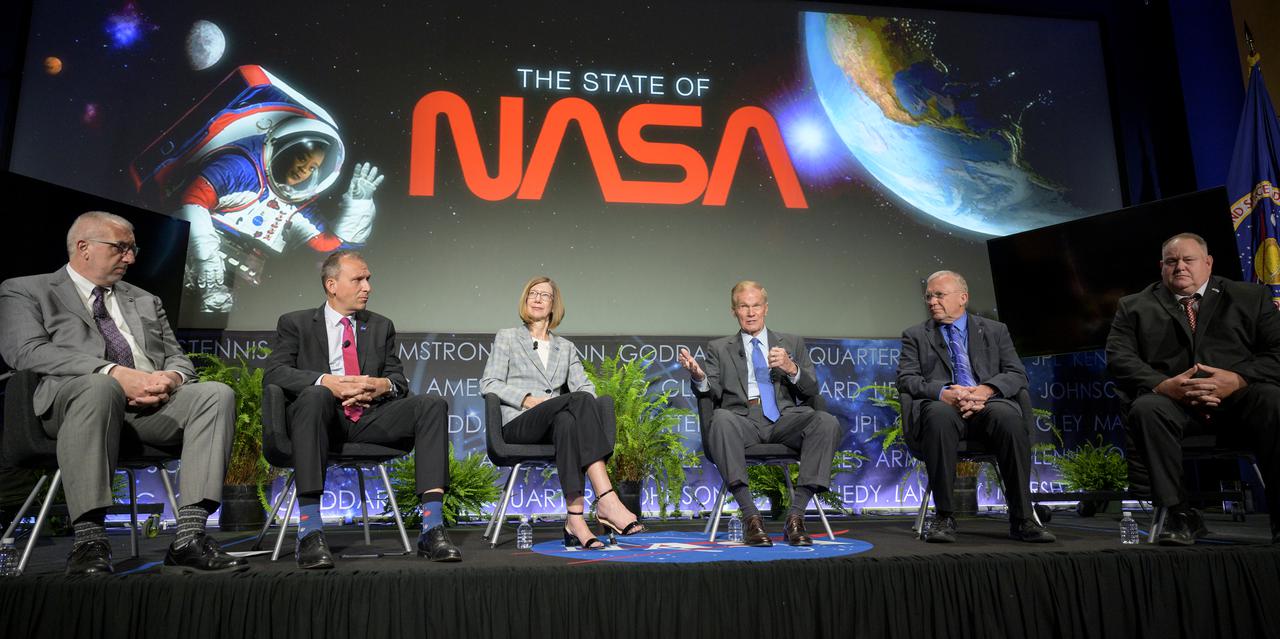
NASA Associate Administrator for Aeronautics Research Mission Directorate Bob Pearce, left, NASA Associate Administrator for Science Thomas Zurbuchen, NASA Associate Administrator for Human Exploration and Operations Kathy Lueders, NASA Administrator Bill Nelson, NASA Associate Administrator for the Space Technology Mission Directorate Jim Reuter, and NASA Associate Administrator for the Mission Support Directorate Bob Gibbs, right, participate in a media gaggle, Wednesday, June 2, 2021, at NASA Headquarters Mary W. Jackson Building in Washington. Nelson, and other NASA leadership, answered reporters questions following a State of NASA event where Nelson remarked on his long history with NASA, and among other topics, discussed the agency’s plans for future Earth-focused missions to address climate change and a robotic and human return to the Moon through the Artemis program, as well as announcing two new planetary science missions to Venus – VERITAS and DAVINCI+. Photo Credit: (NASA/Bill Ingalls)
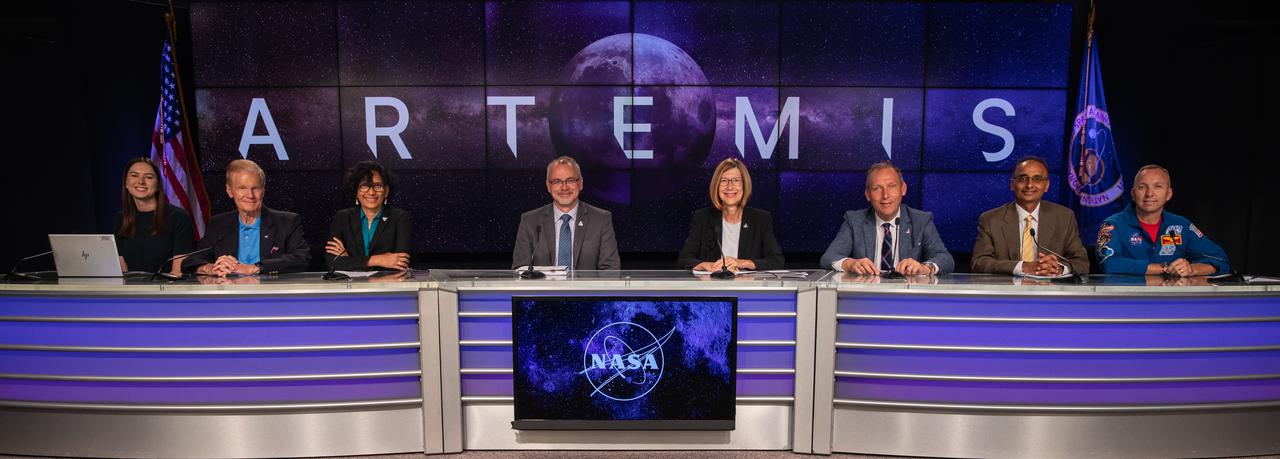
NASA holds a prelaunch media briefing on the agency’s Moon to Mars exploration plans on Aug. 27, 2022, at the agency’s Kennedy Space Center in Florida, as the clock counts down to the launch of Artemis I scheduled for Aug. 29, at 8:33 a.m. EDT from Kennedy’s Launch Complex 39B. From left, are Jackie McGuinness, NASA press secretary; Bill Nelson, NASA administrator; Bhavya Lal, NASA associate administrator for technology, policy and strategy; Jim Free, NASA associate administrator, Exploration Systems Development Mission Directorate; Kathy Lueders, NASA associate administrator, Space Operations Mission Directorate; Thomas Zurbuchen, NASA associate administrator, Science Mission Directorate; Prasun Desai, NASA deputy associate administrator, Space Technology Mission Directorate; and Randy Bresnik, NASA astronaut. The first in a series of increasingly complex missions, Artemis I will provide a foundation for human deep space exploration and demonstrate our commitment and capability to extend human presence to the Moon and beyond. The primary goal of Artemis I is to thoroughly test the integrated systems before crewed missions by operating the spacecraft in a deep space environment, testing Orion’s heat shield, and recovering the crew module after reentry, descent, and splashdown.
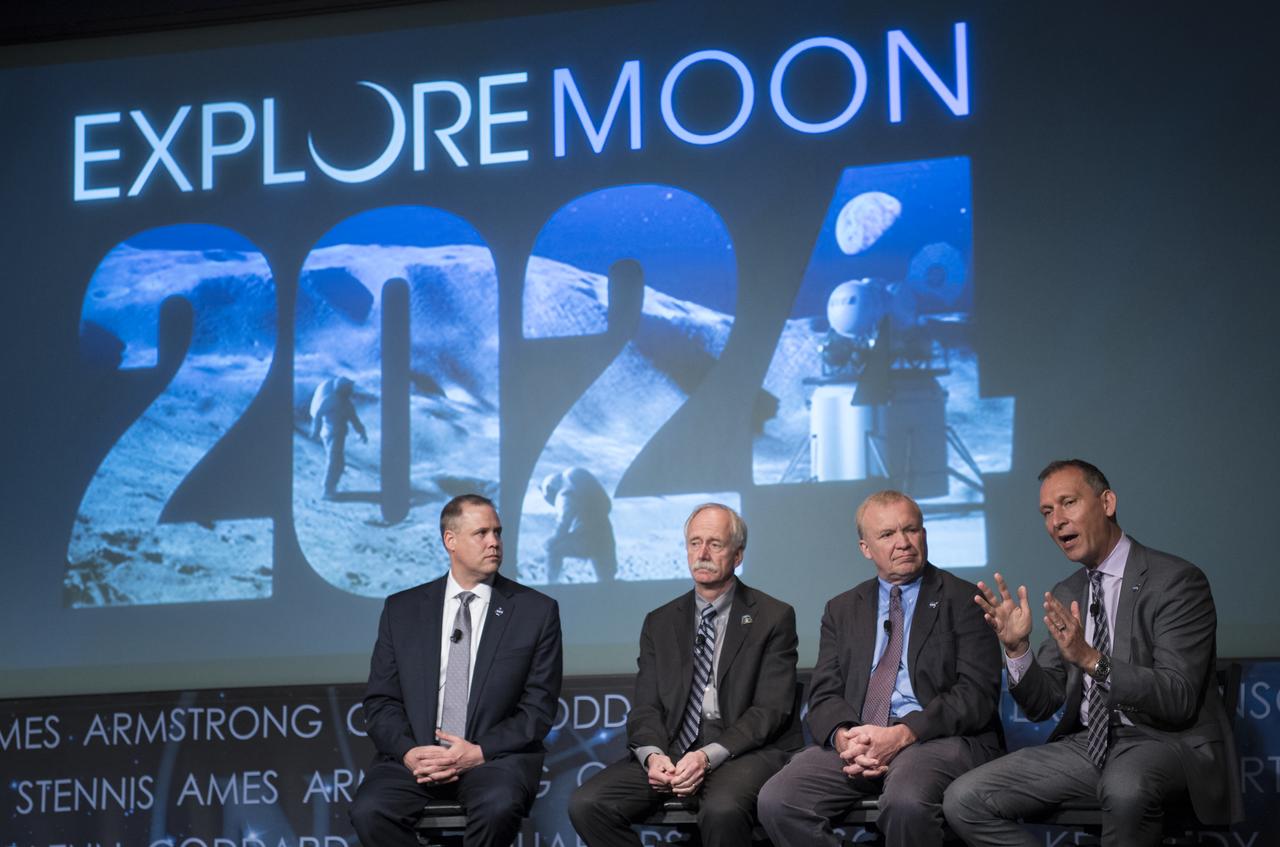
NASA Administrator Jim Bridenstine, left, NASA Associate Administrator for Human Exploration and Operations William Gerstenmaier, second from left, acting Associate Administrator for NASA's Space Technology Mission Directorate, second from right, acting Associate Administrator for NASA's Science Mission Directorate Thomas Zurbuchen, right, are seen during a NASA town hall on the amendment to the fiscal year 2020 budget request that supports the agency’s plan to land astronauts on the Moon by 2024, Tuesday, May 14, 2019 at NASA Headquarters in Washington, DC. Photo Credit: (NASA/Joel Kowsky)
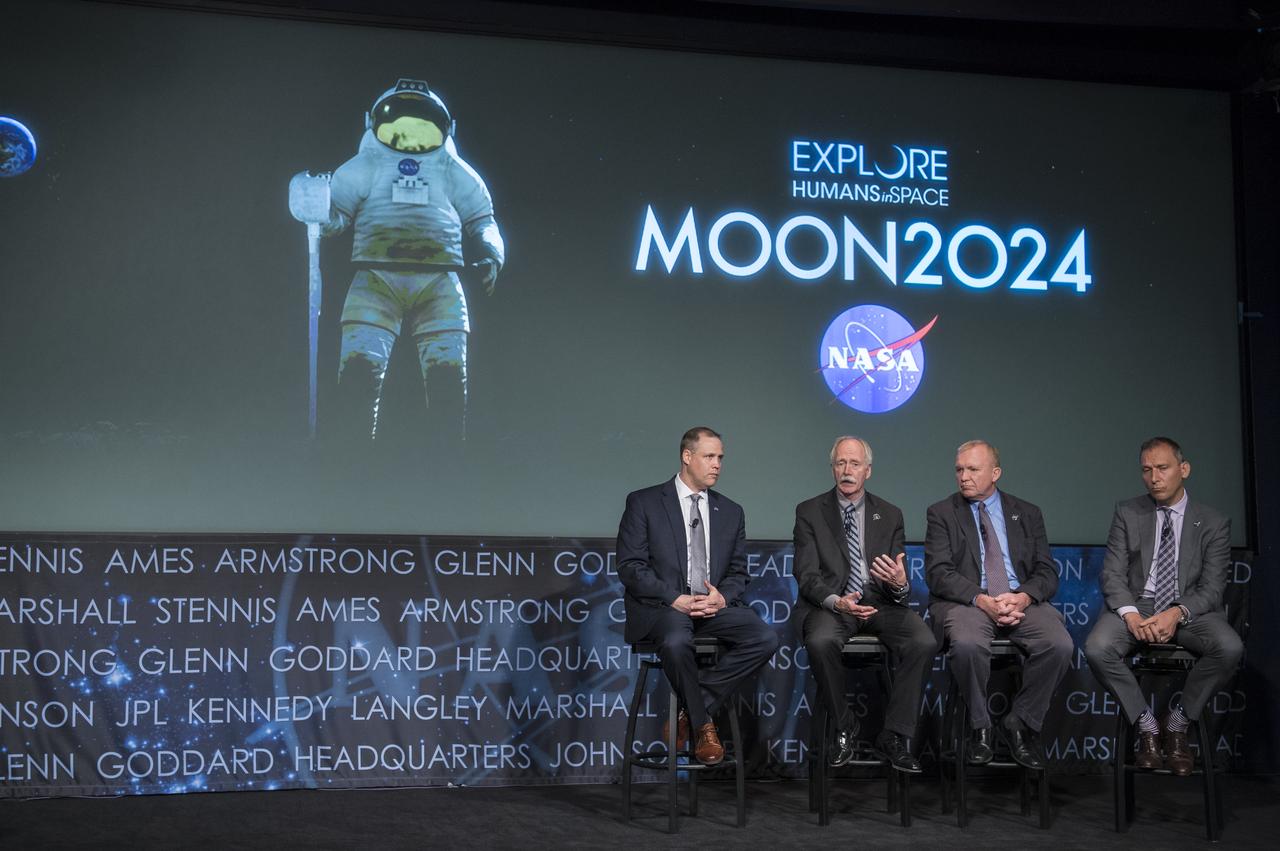
NASA Administrator Jim Bridenstine, left, NASA Associate Administrator for Human Exploration and Operations William Gerstenmaier, second from left, acting Associate Administrator for NASA's Space Technology Mission Directorate, second from right, acting Associate Administrator for NASA's Science Mission Directorate Thomas Zurbuchen, right, are seen during a NASA town hall on the amendment to the fiscal year 2020 budget request that supports the agency’s plan to land astronauts on the Moon by 2024, Tuesday, May 14, 2019 at NASA Headquarters in Washington, DC. Photo Credit: (NASA/Joel Kowsky)
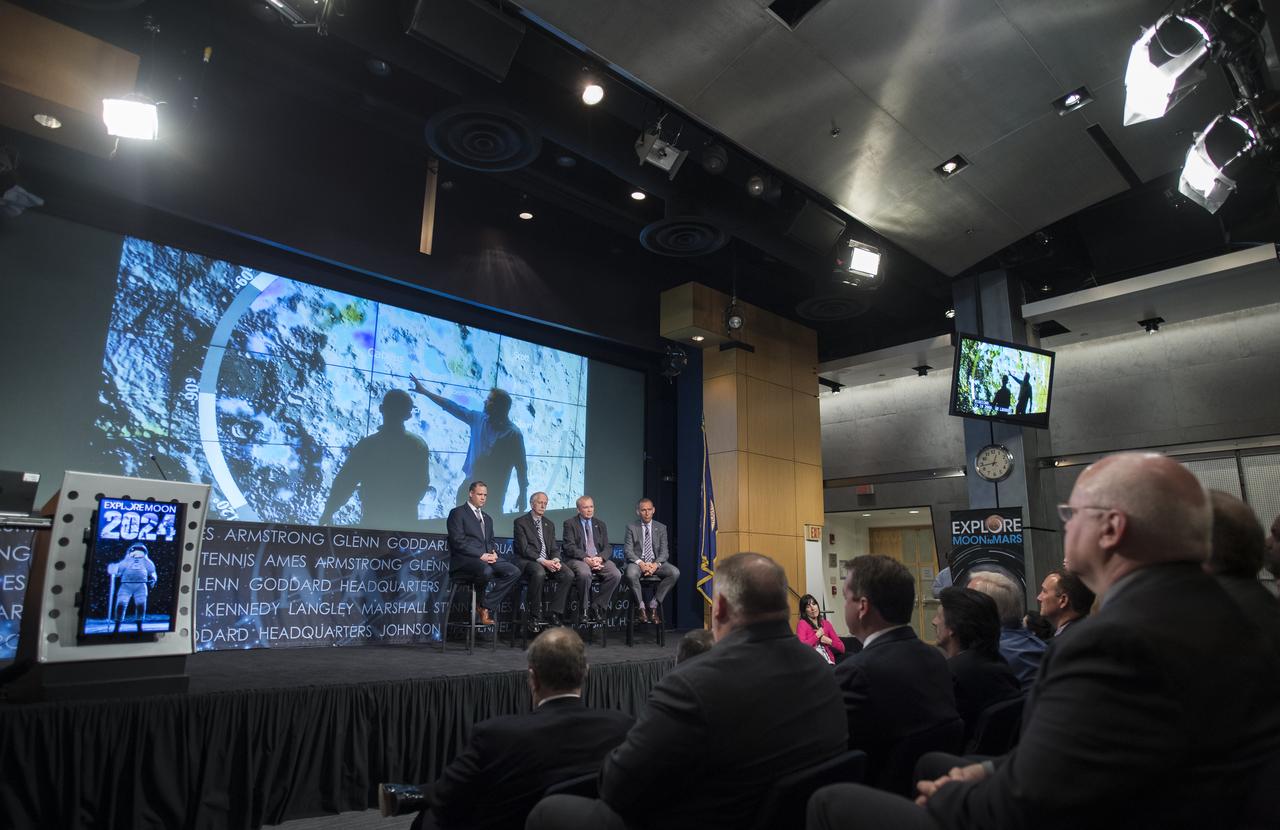
NASA Administrator Jim Bridenstine, left, NASA Associate Administrator for Human Exploration and Operations William Gerstenmaier, second from left, acting Associate Administrator for NASA's Space Technology Mission Directorate, second from right, acting Associate Administrator for NASA's Science Mission Directorate Thomas Zurbuchen, right, are seen during a NASA town hall on the amendment to the fiscal year 2020 budget request that supports the agency’s plan to land astronauts on the Moon by 2024, Tuesday, May 14, 2019 at NASA Headquarters in Washington, DC. Photo Credit: (NASA/Joel Kowsky)
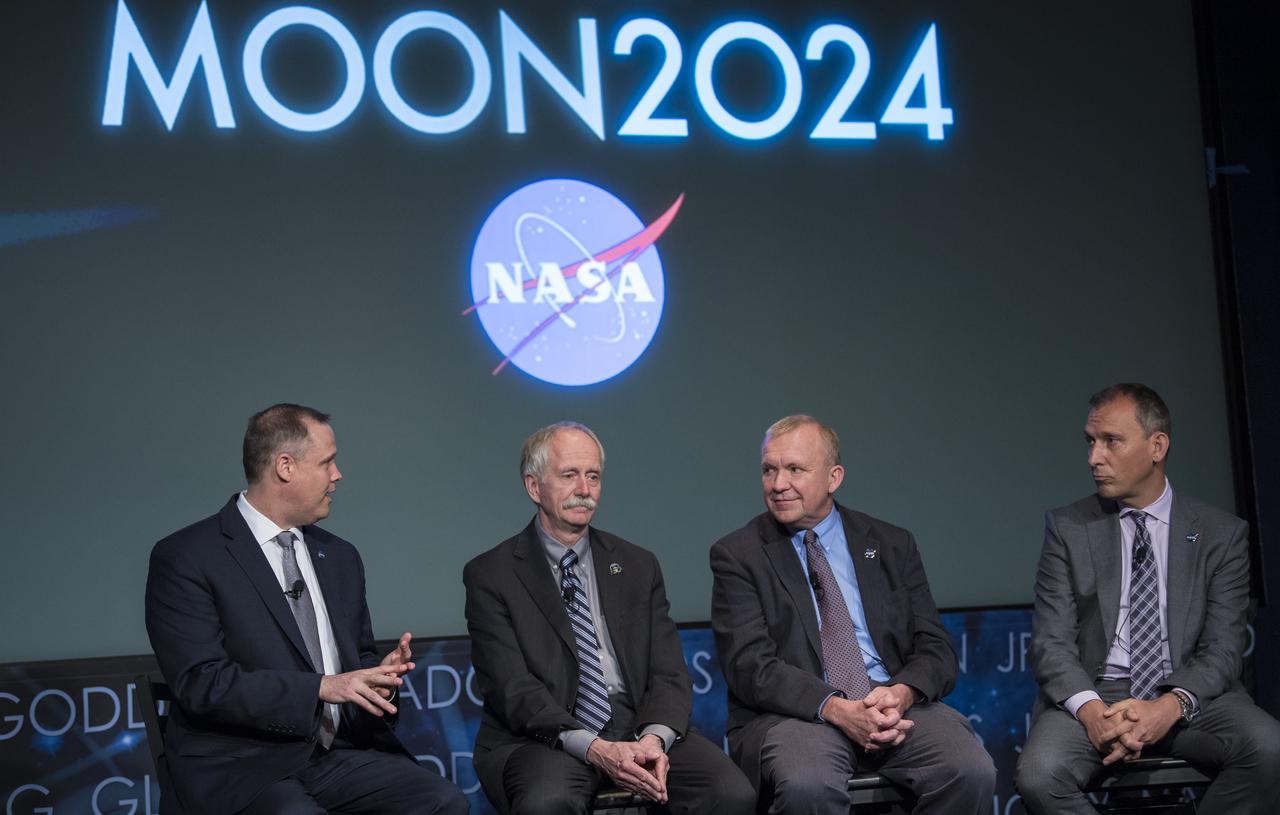
NASA Administrator Jim Bridenstine, left, NASA Associate Administrator for Human Exploration and Operations William Gerstenmaier, second from left, acting Associate Administrator for NASA's Space Technology Mission Directorate, second from right, acting Associate Administrator for NASA's Science Mission Directorate Thomas Zurbuchen, right, are seen during a NASA town hall on the amendment to the fiscal year 2020 budget request that supports the agency’s plan to land astronauts on the Moon by 2024, Tuesday, May 14, 2019 at NASA Headquarters in Washington, DC. Photo Credit: (NASA/Joel Kowsky)
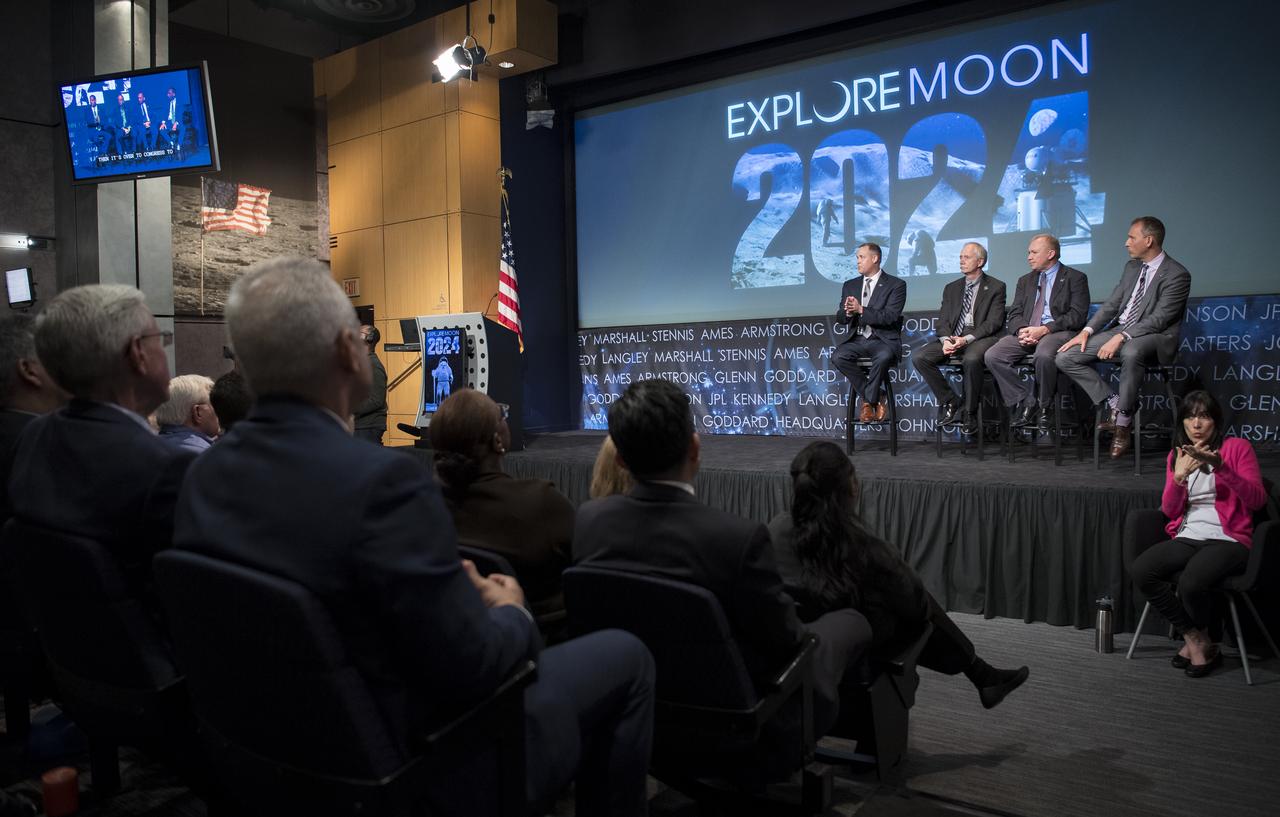
NASA Administrator Jim Bridenstine, left, NASA Associate Administrator for Human Exploration and Operations William Gerstenmaier, second from left, acting Associate Administrator for NASA's Space Technology Mission Directorate, second from right, acting Associate Administrator for NASA's Science Mission Directorate Thomas Zurbuchen, right, are seen as they answer questions during a NASA town hall on the amendment to the fiscal year 2020 budget request that supports the agency’s plan to land astronauts on the Moon by 2024, Tuesday, May 14, 2019 at NASA Headquarters in Washington, DC. Photo Credit: (NASA/Joel Kowsky)
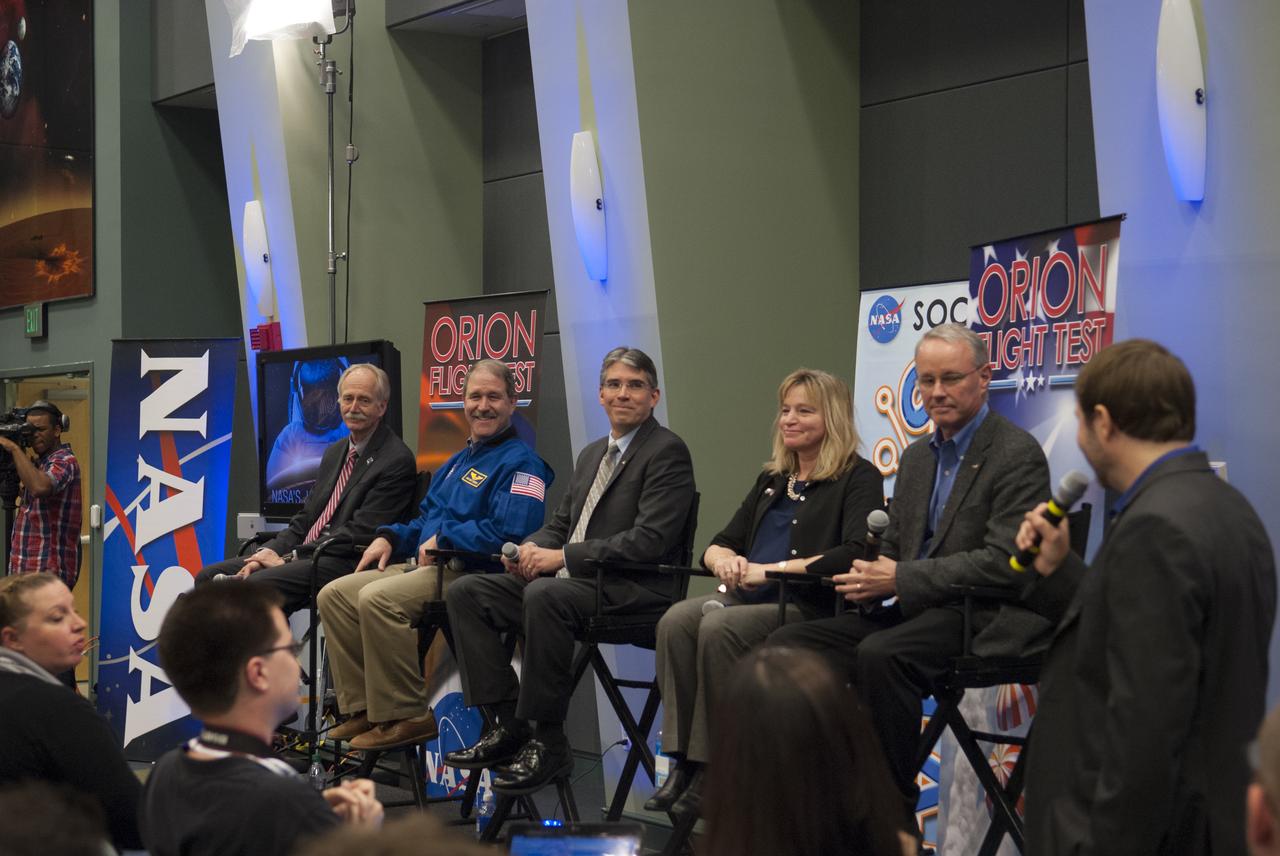
At NASA's Kennedy Space Center in Florida, NASA leaders spoke to social media participants as the Orion spacecraft and its Delta IV Heavy rocket were being prepared for launch. Speakers included, from the left, NASA Associate Administrator Human Exploration and Operations Bill Gerstenmaier, Associate Administrator for the agency's Science Mission Directorate John Grunsfeld, Associate Administrator for the Space Technology Directorate Michael Gazaria, NASA Chief Scientist Ellen Stofan, and Chief Technologist David Miller. Moderator for the panel session was John Yembrick, with the microphone on the far right, who is NASA's social media lead at the agency's Headquarters in Washington.
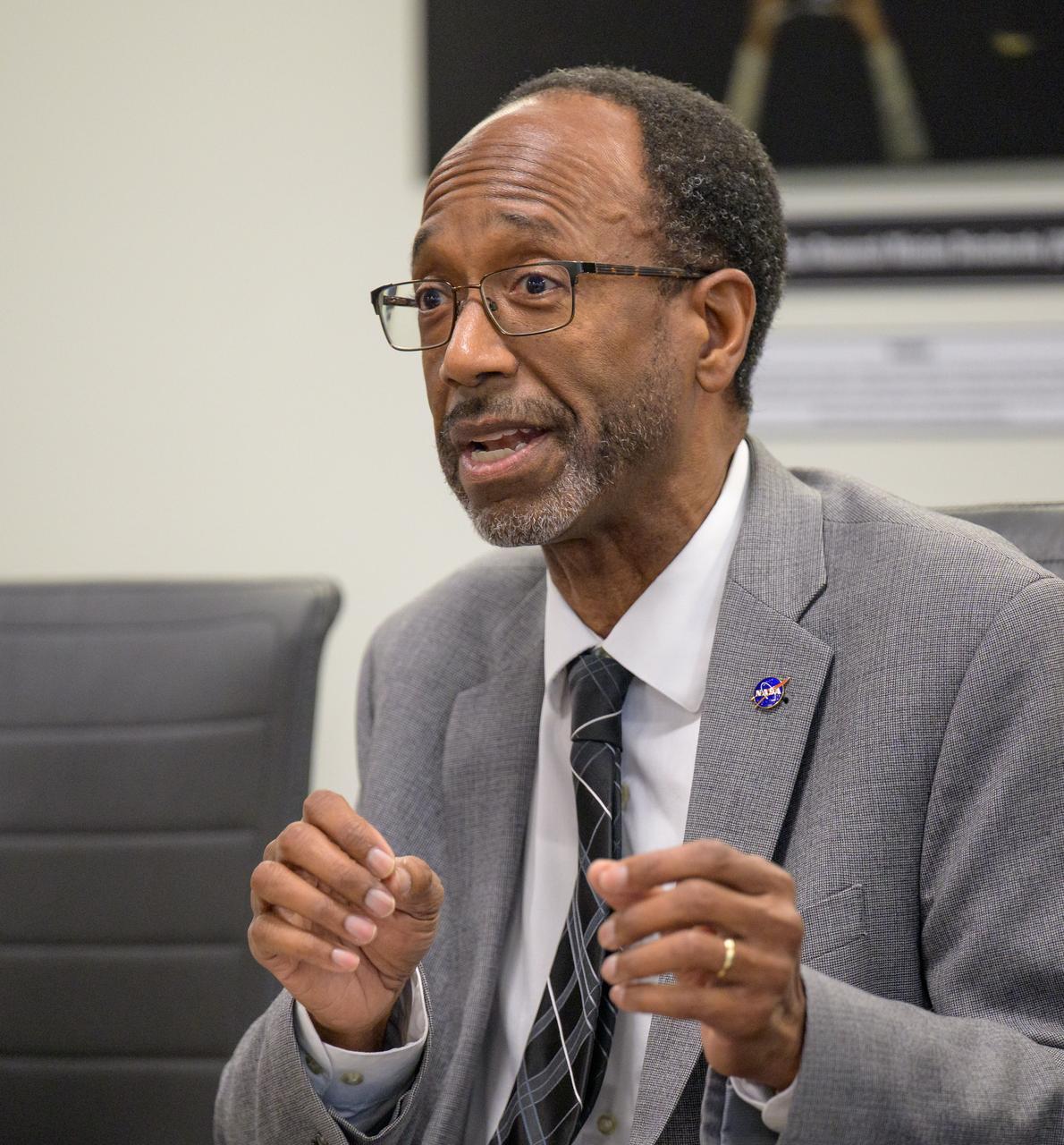
Associate Administrator for NASA's Space Technology Mission Directorate Clayton Turner speaks with acting NASA Administrator Sean Duffy, Friday, July 18, 2025, at the Mary W. Jackson NASA Headquarters Building in Washington. Photo Credit: (NASA/Bill Ingalls)
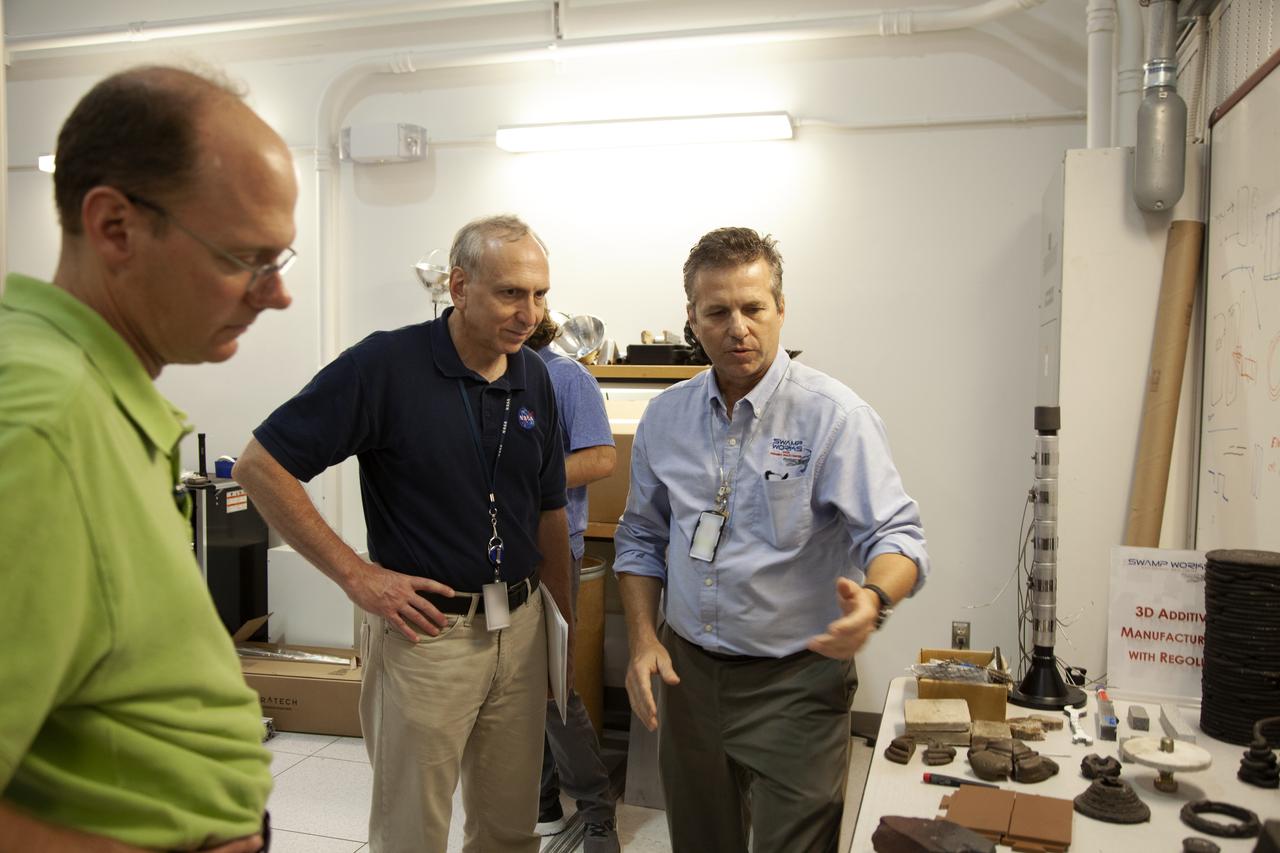
Steve Jurczyk, Acting Administrator of STMD, Visits Swamp Works at NASA's Kennedy Space Center
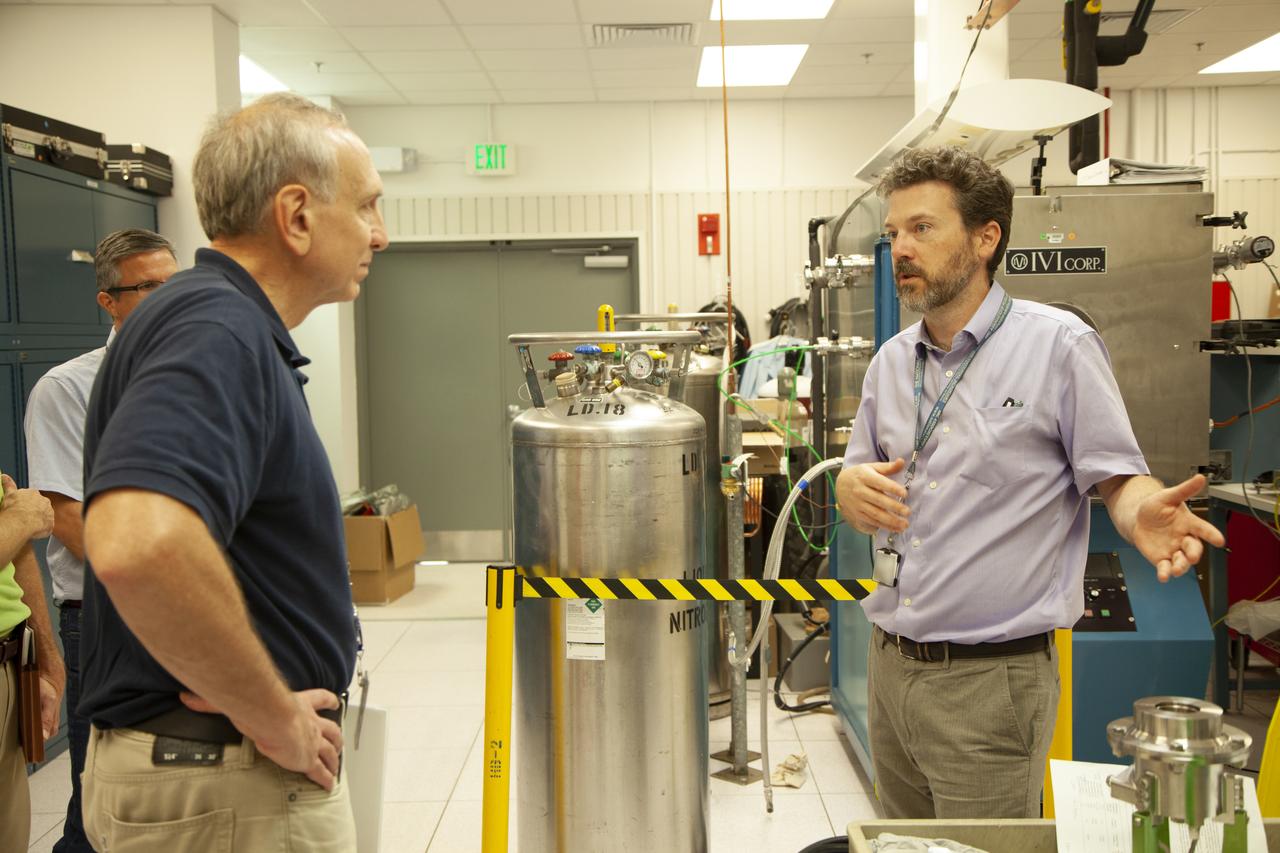
Steve Jurczyk, Acting Administrator of STMD, Visits Swamp Works at NASA's Kennedy Space Center
Steve Jurczyk, Acting Administrator of STMD, Visits Swamp Works at NASA's Kennedy Space Center
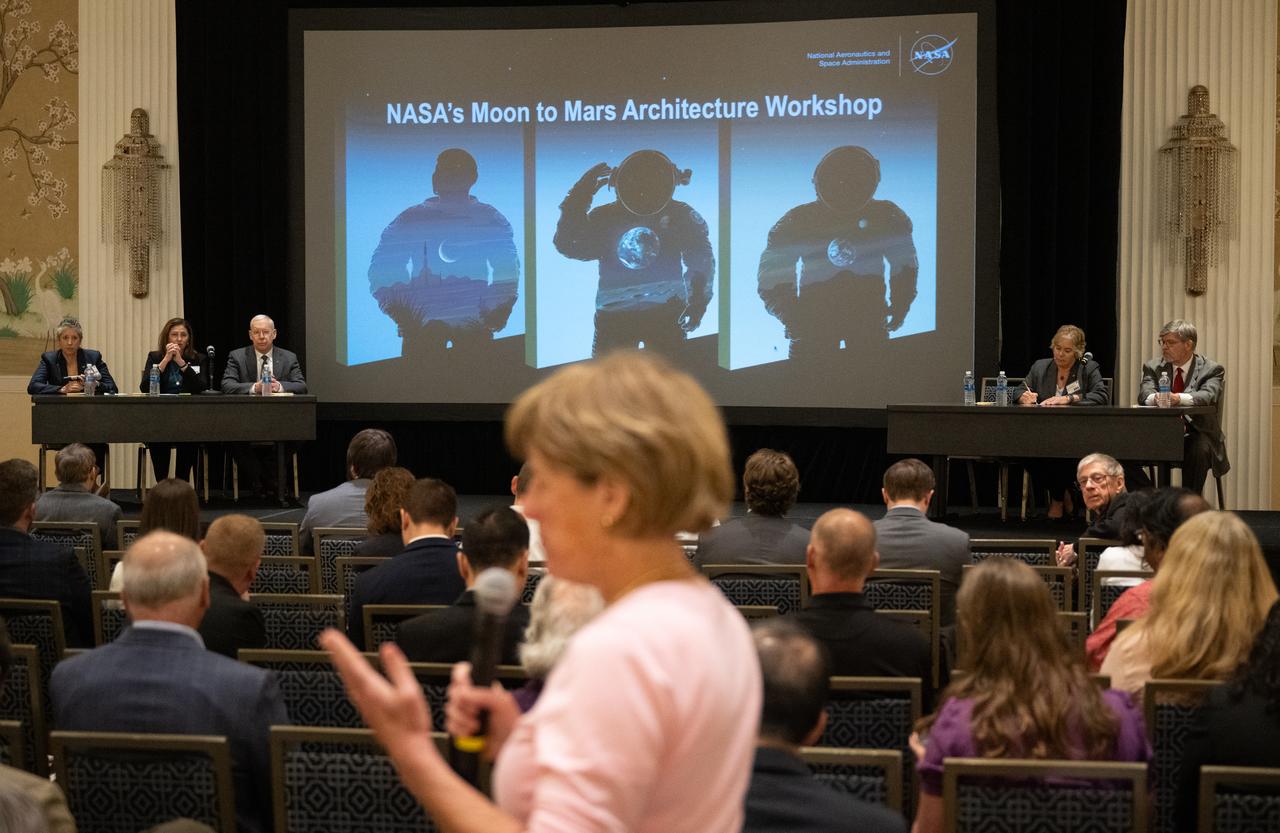
Nujoud Merancy, architecture lead for NASA's Exploration Systems Development Mission Directorate, Catherine Koerner, deputy associate administrator for NASA's Exploration Systems Development Mission Directorate, Patrick Forrester, special advisor in NASA's Space Operations Mission Directorate, Michelle Munk, chief architect for NASA’s Space Technology Mission Directorate, and Joel Kearns, deputy associate administrator for Exploration in NASA's Science Mission Directorate, listen to a question during NASA’s Moon to Mars Architecture Workshop, Tuesday, June 27, 2023, at the Gaylord National Resort and Convention Center in National Harbor, Md. Following the release of the 2022 Architecture Concept Review, NASA is conducting the workshop to engage the broader space community and collect feedback from U.S. industry and academia to inform the Moon to Mars mission architecture and operational delivery. Photo Credit: (NASA/Joel Kowsky)
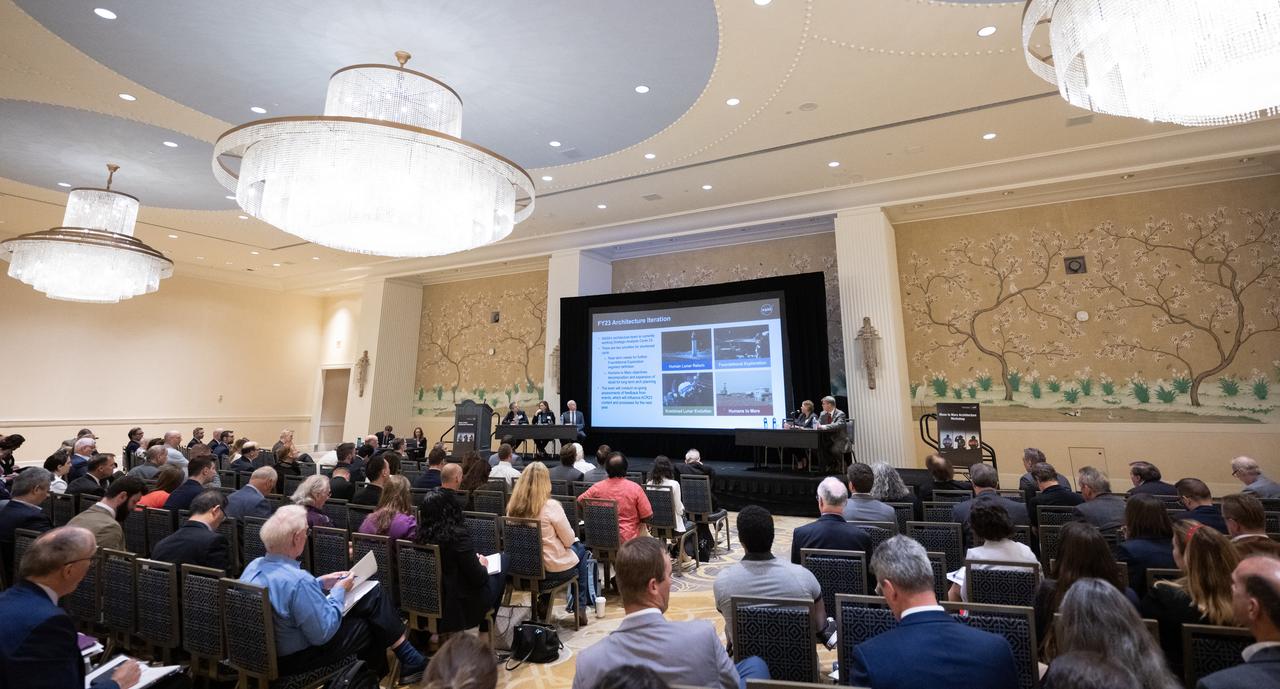
Nujoud Merancy, architecture lead for NASA's Exploration Systems Development Mission Directorate, Catherine Koerner, deputy associate administrator for NASA's Exploration Systems Development Mission Directorate, Patrick Forrester, special advisor in NASA's Space Operations Mission Directorate, Michelle Munk, chief architect for NASA’s Space Technology Mission Directorate, and Joel Kearns, deputy associate administrator for Exploration in NASA's Science Mission Directorate, are seen on stage during NASA’s Moon to Mars Architecture Workshop, Tuesday, June 27, 2023, at the Gaylord National Resort and Convention Center in National Harbor, Md. Following the release of the 2022 Architecture Concept Review, NASA is conducting the workshop to engage the broader space community and collect feedback from U.S. industry and academia to inform the Moon to Mars mission architecture and operational delivery. Photo Credit: (NASA/Joel Kowsky)
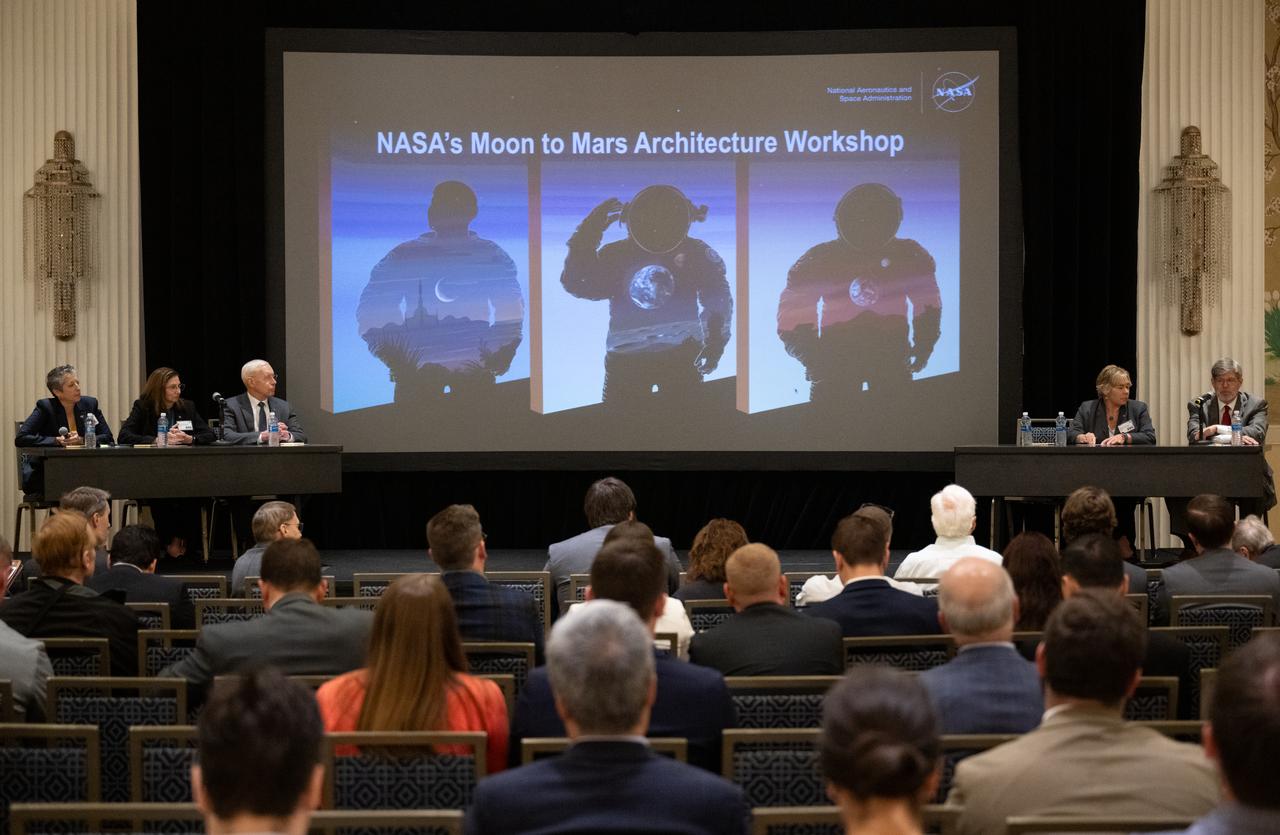
Nujoud Merancy, architecture lead for NASA's Exploration Systems Development Mission Directorate, Catherine Koerner, deputy associate administrator for NASA's Exploration Systems Development Mission Directorate, Patrick Forrester, special advisor in NASA's Space Operations Mission Directorate, Michelle Munk, chief architect for NASA’s Space Technology Mission Directorate, and Joel Kearns, deputy associate administrator for Exploration in NASA's Science Mission Directorate, are seen on stage during NASA’s Moon to Mars Architecture Workshop, Tuesday, June 27, 2023, at the Gaylord National Resort and Convention Center in National Harbor, Md. Following the release of the 2022 Architecture Concept Review, NASA is conducting the workshop to engage the broader space community and collect feedback from U.S. industry and academia to inform the Moon to Mars mission architecture and operational delivery. Photo Credit: (NASA/Joel Kowsky)
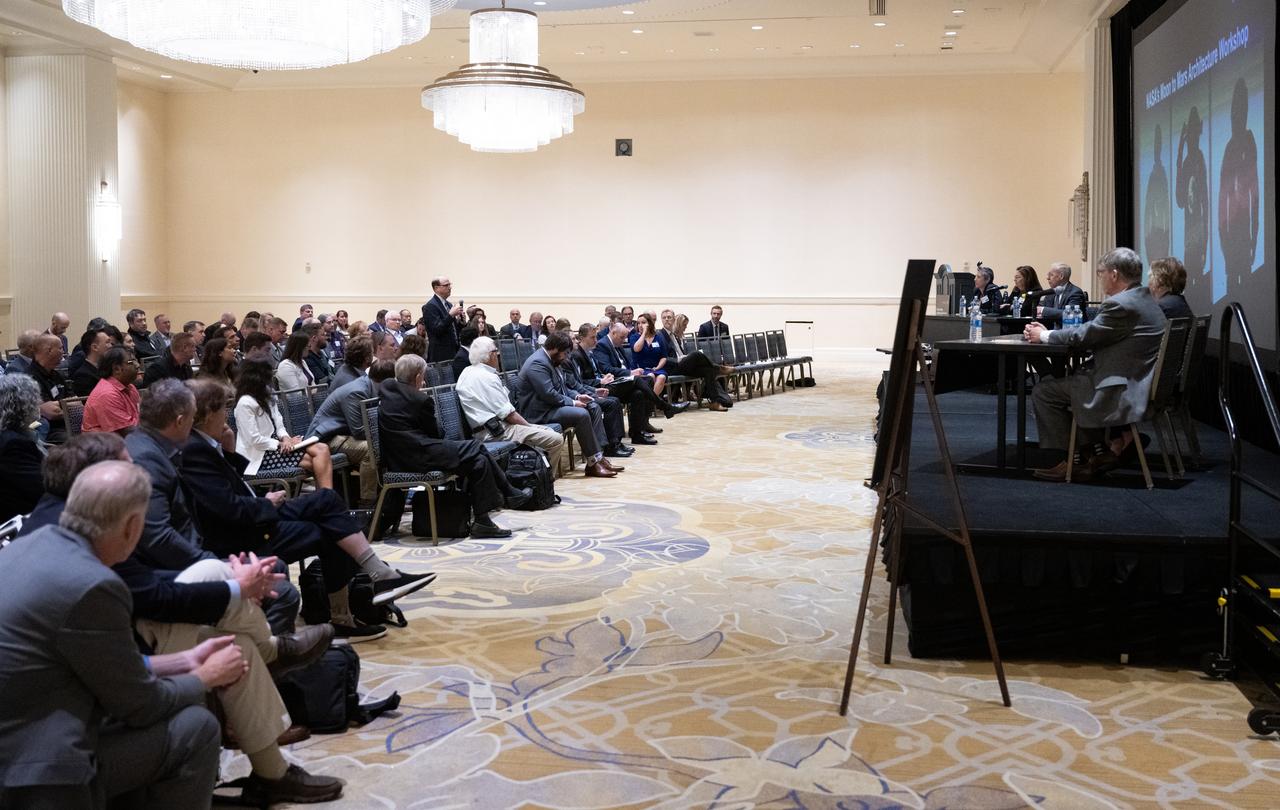
Nujoud Merancy, architecture lead for NASA's Exploration Systems Development Mission Directorate, Catherine Koerner, deputy associate administrator for NASA's Exploration Systems Development Mission Directorate, Patrick Forrester, special advisor in NASA's Space Operations Mission Directorate, Michelle Munk, chief architect for NASA’s Space Technology Mission Directorate, and Joel Kearns, deputy associate administrator for Exploration in NASA's Science Mission Directorate, listen to a question during NASA’s Moon to Mars Architecture Workshop, Tuesday, June 27, 2023, at the Gaylord National Resort and Convention Center in National Harbor, Md. Following the release of the 2022 Architecture Concept Review, NASA is conducting the workshop to engage the broader space community and collect feedback from U.S. industry and academia to inform the Moon to Mars mission architecture and operational delivery. Photo Credit: (NASA/Joel Kowsky)
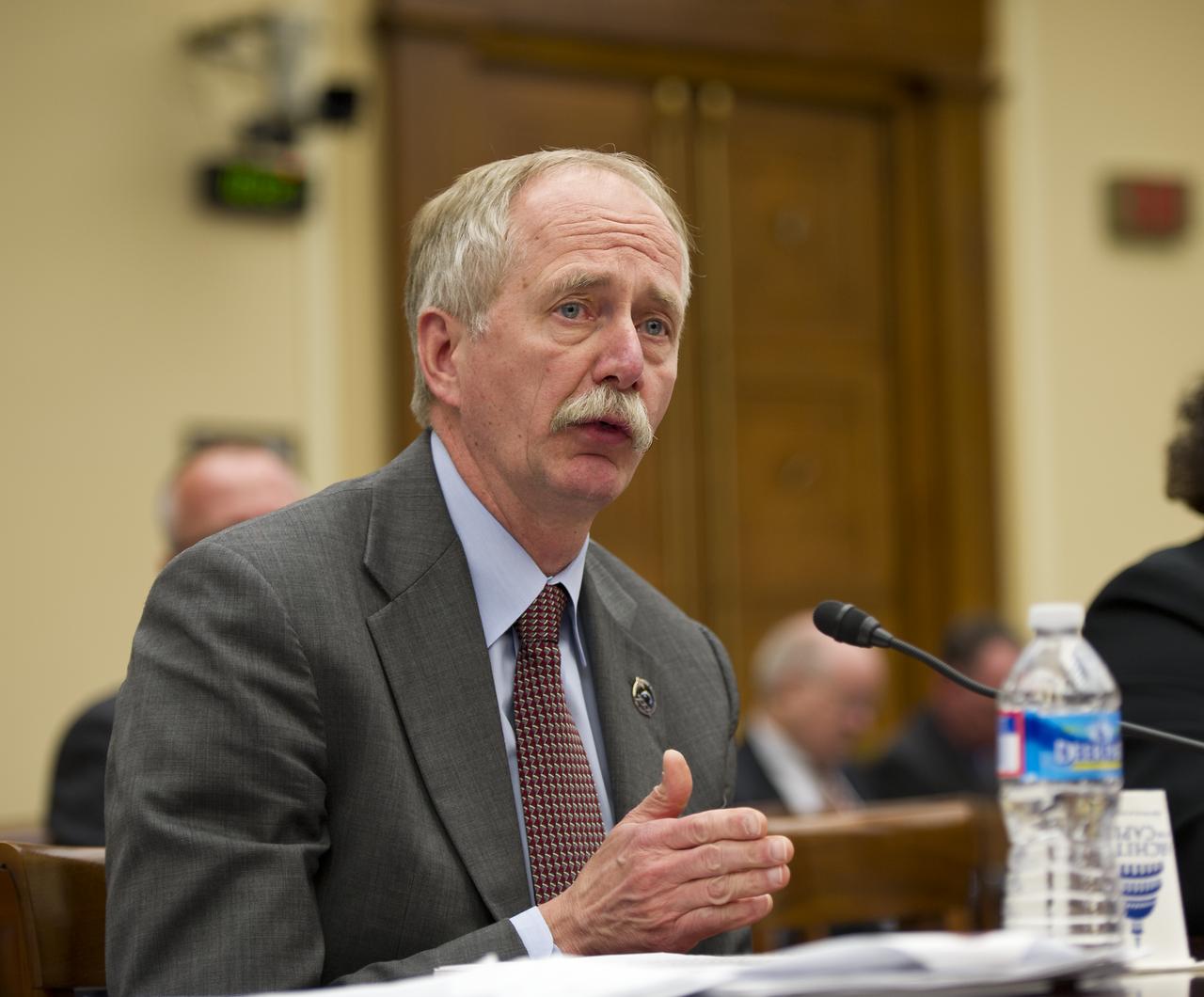
William Gerstenmaier, Associate Administrator, Human Exploration and Operations Mission Directorate, NASA Headquarters, testifies during a hearing before the House Committee on Science, Space, and Technology regarding access to and sustainability of the International Space Station, Wednesday, March 28, 2012 at the Rayburn House Office Building in Washington. Photo Credit: (NASA/Carla Cioffi)
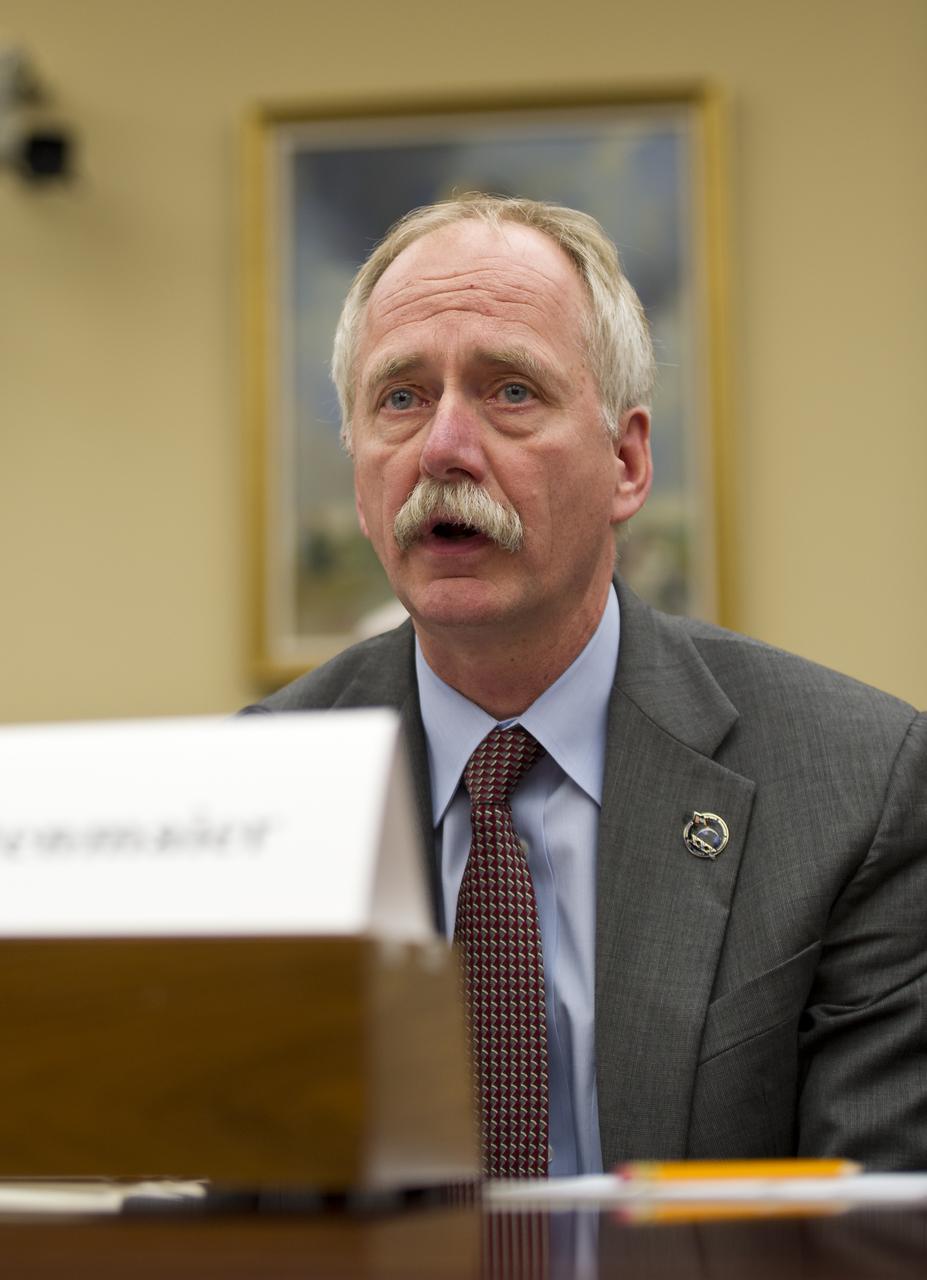
William Gerstenmaier, Associate Administrator, Human Exploration and Operations Mission Directorate, NASA Headquarters, testifies during a hearing before the House Committee on Science, Space, and Technology regarding access to and sustainability of the International Space Station, Wednesday, March 28, 2012 at the Rayburn House Office Building in Washington. Photo Credit: (NASA/Carla Cioffi)
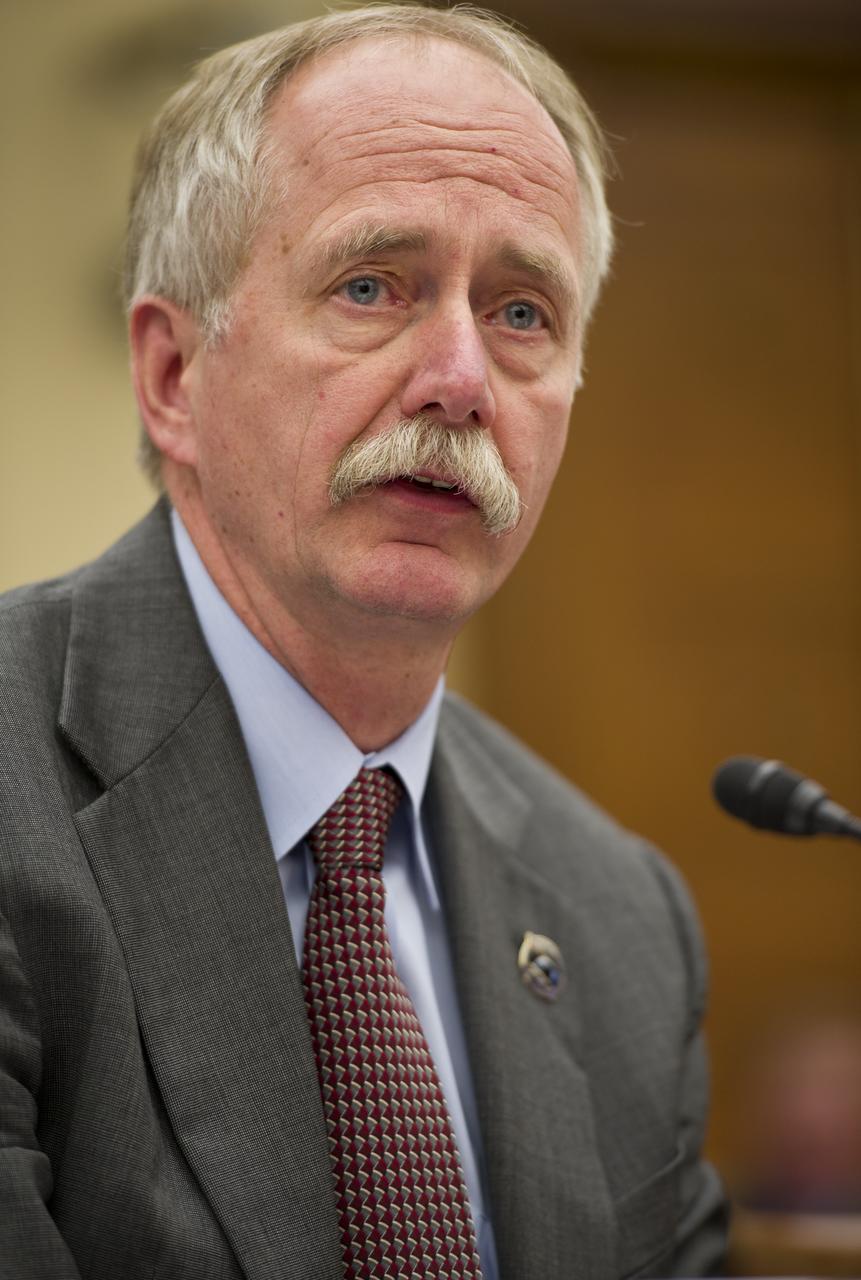
William Gerstenmaier, Associate Administrator, Human Exploration and Operations Mission Directorate, NASA Headquarters, testifies during a hearing before the House Committee on Science, Space, and Technology regarding access to and sustainability of the International Space Station, Wednesday, March 28, 2012 at the Rayburn House Office Building in Washington. Photo Credit: (NASA/Carla Cioffi)
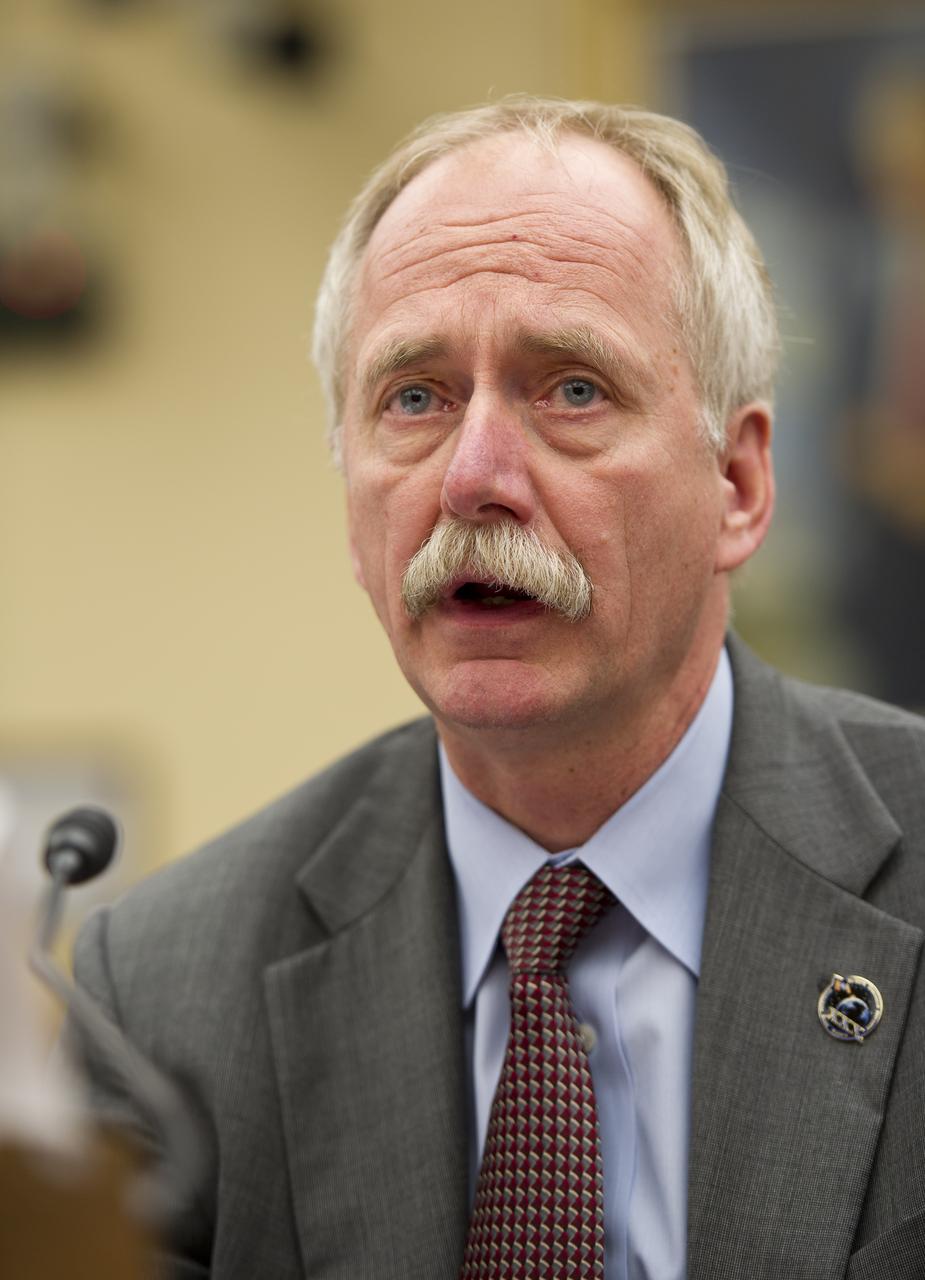
William Gerstenmaier, Associate Administrator, Human Exploration and Operations Mission Directorate, NASA Headquarters, testifies during a hearing before the House Committee on Science, Space, and Technology regarding access to and sustainability of the International Space Station, Wednesday, March 28, 2012 at the Rayburn House Office Building in Washington. Photo Credit: (NASA/Carla Cioffi)
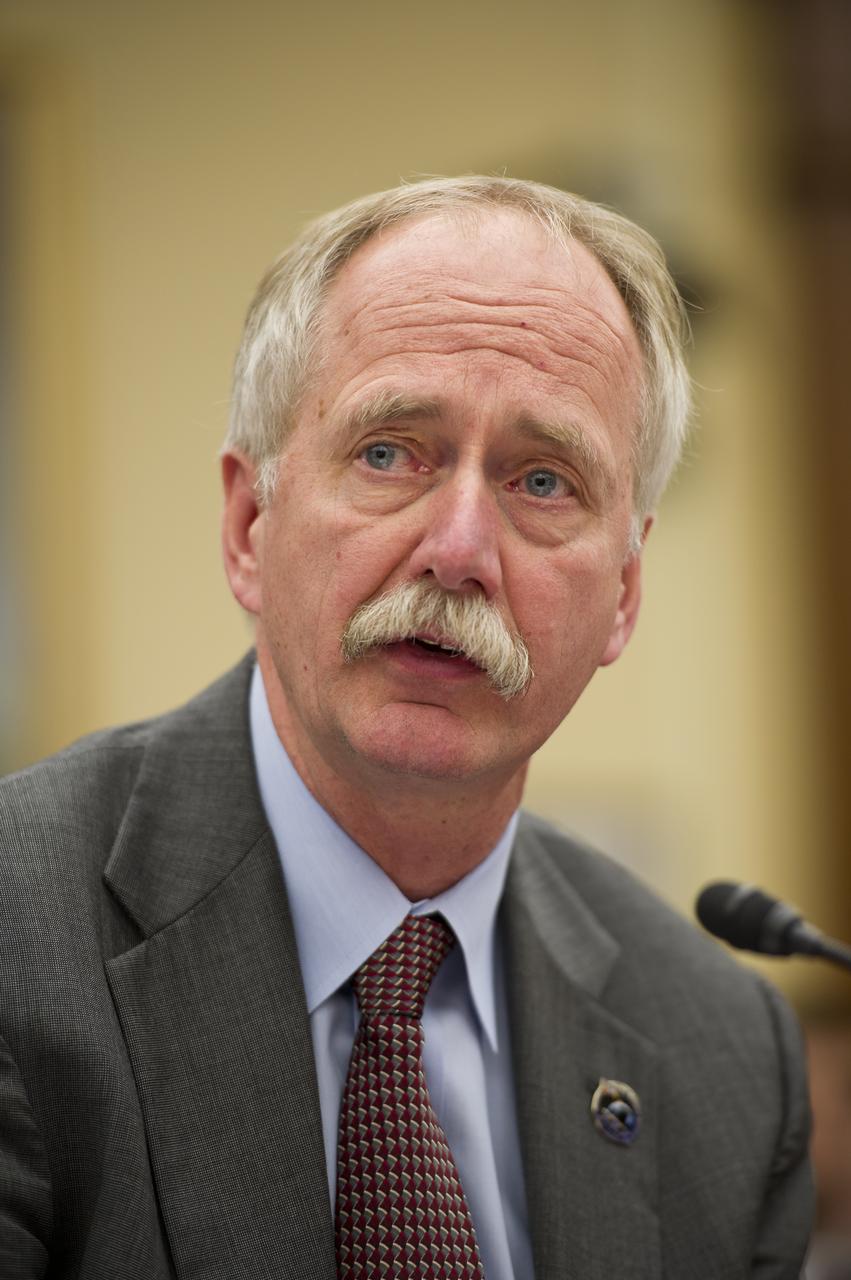
William Gerstenmaier, Associate Administrator, Human Exploration and Operations Mission Directorate, NASA Headquarters, testifies during a hearing before the House Committee on Science, Space, and Technology regarding access to and sustainability of the International Space Station, Wednesday, March 28, 2012 at the Rayburn House Office Building in Washington. Photo Credit: (NASA/Carla Cioffi)
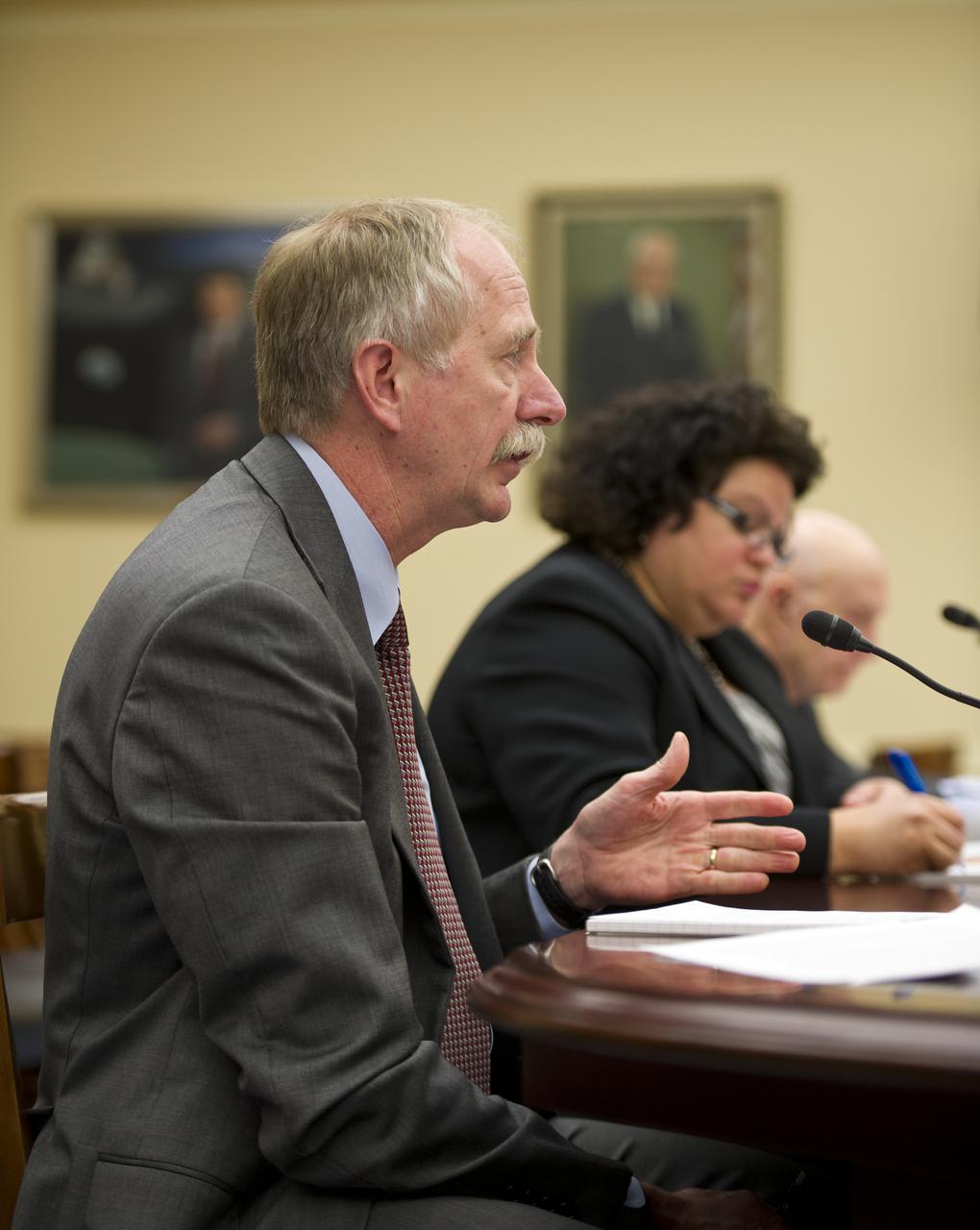
William Gerstenmaier, Associate Administrator, Human Exploration and Operations Mission Directorate, NASA Headquarters, testifies during a hearing before the House Committee on Science, Space, and Technology regarding access to and sustainability of the International Space Station, Wednesday, March 28, 2012 at the Rayburn House Office Building in Washington. Photo Credit: (NASA/Carla Cioffi)
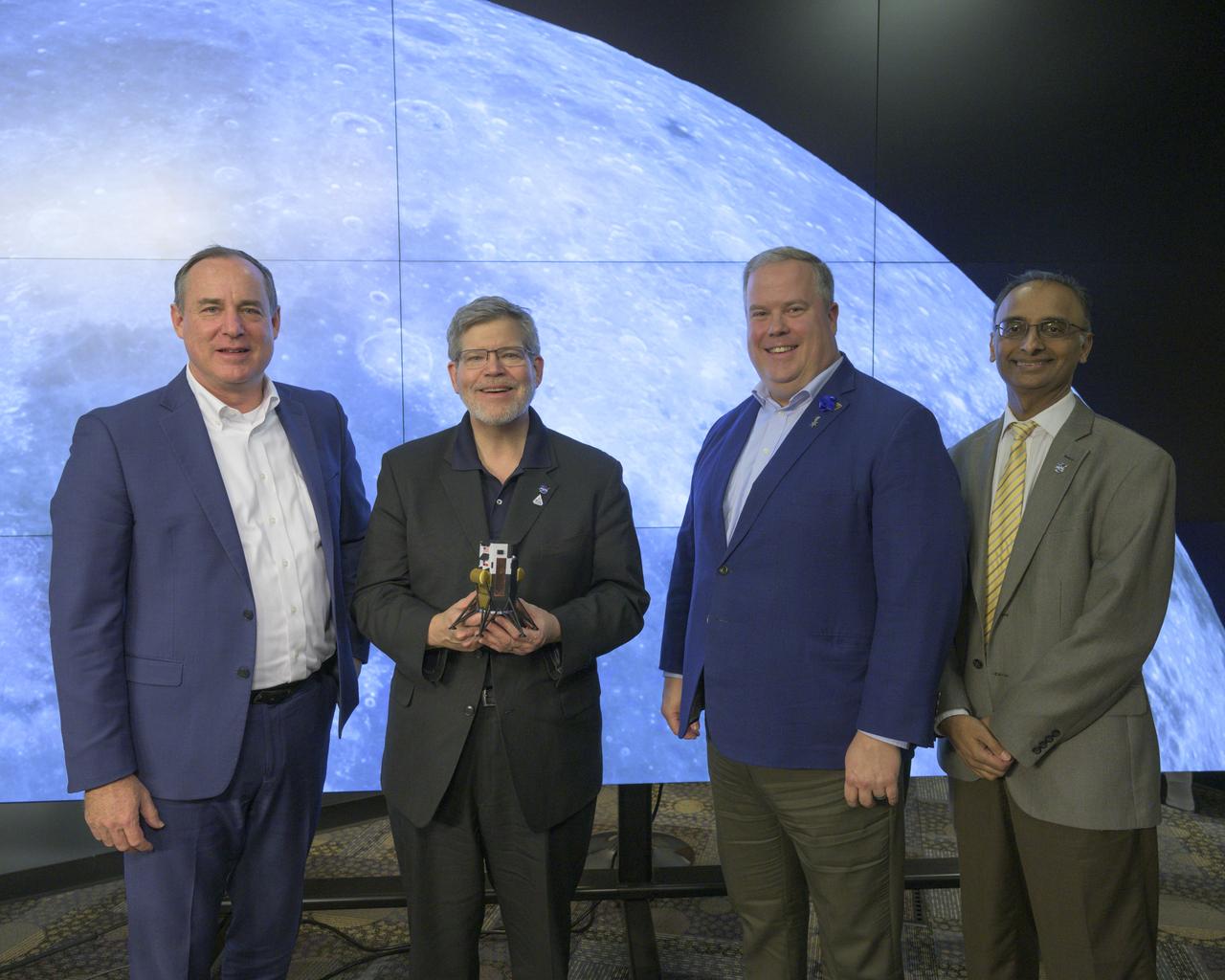
For the first time in more than 50 years, new NASA science instruments and technology demonstrations are operating on the Moon following the first successful delivery of the agency’s CLPS (Commercial Lunar Payload Services) initiative. Experts from NASA and Intuitive Machines hosted a news conference Feb. 23, 2024, at NASA’s Johnson Space Center in Houston to discuss the soft landing of the company’s Nova-C lander, called Odysseus. Participants in the briefing included (L-R): Steve Altemus, chief executive officer and co-founder, Intuitive Machines; Joel Kearns, deputy associate administrator for Exploration, Science Mission Directorate, NASA Headquarters in Washington; Tim Crain, chief technology officer and co-founder, Intuitive Machines; and Prasun Desai, deputy associate administrator, Space Technology Mission Directorate at NASA Headquarters. Photo Credit: NASA/Robert Markowitz
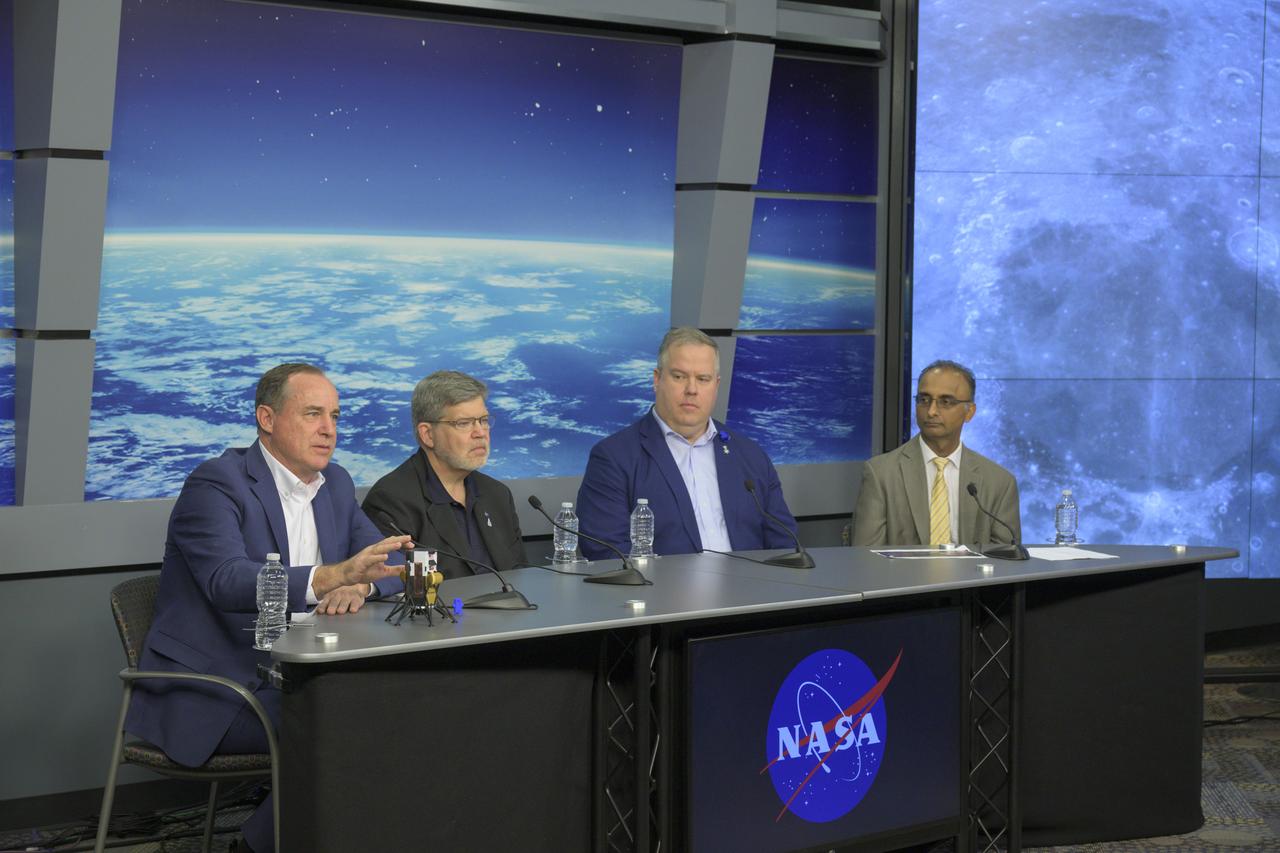
For the first time in more than 50 years, new NASA science instruments and technology demonstrations are operating on the Moon following the first successful delivery of the agency’s CLPS (Commercial Lunar Payload Services) initiative. Experts from NASA and Intuitive Machines hosted a news conference Feb. 23, 2024, at NASA’s Johnson Space Center in Houston to discuss the soft landing of the company’s Nova-C lander, called Odysseus. Participants in the briefing included (L-R): Steve Altemus, chief executive officer and co-founder, Intuitive Machines; Joel Kearns, deputy associate administrator for Exploration, Science Mission Directorate, NASA Headquarters in Washington; Tim Crain, chief technology officer and co-founder, Intuitive Machines; and Prasun Desai, deputy associate administrator, Space Technology Mission Directorate at NASA Headquarters. Photo Credit: NASA/Robert Markowitz
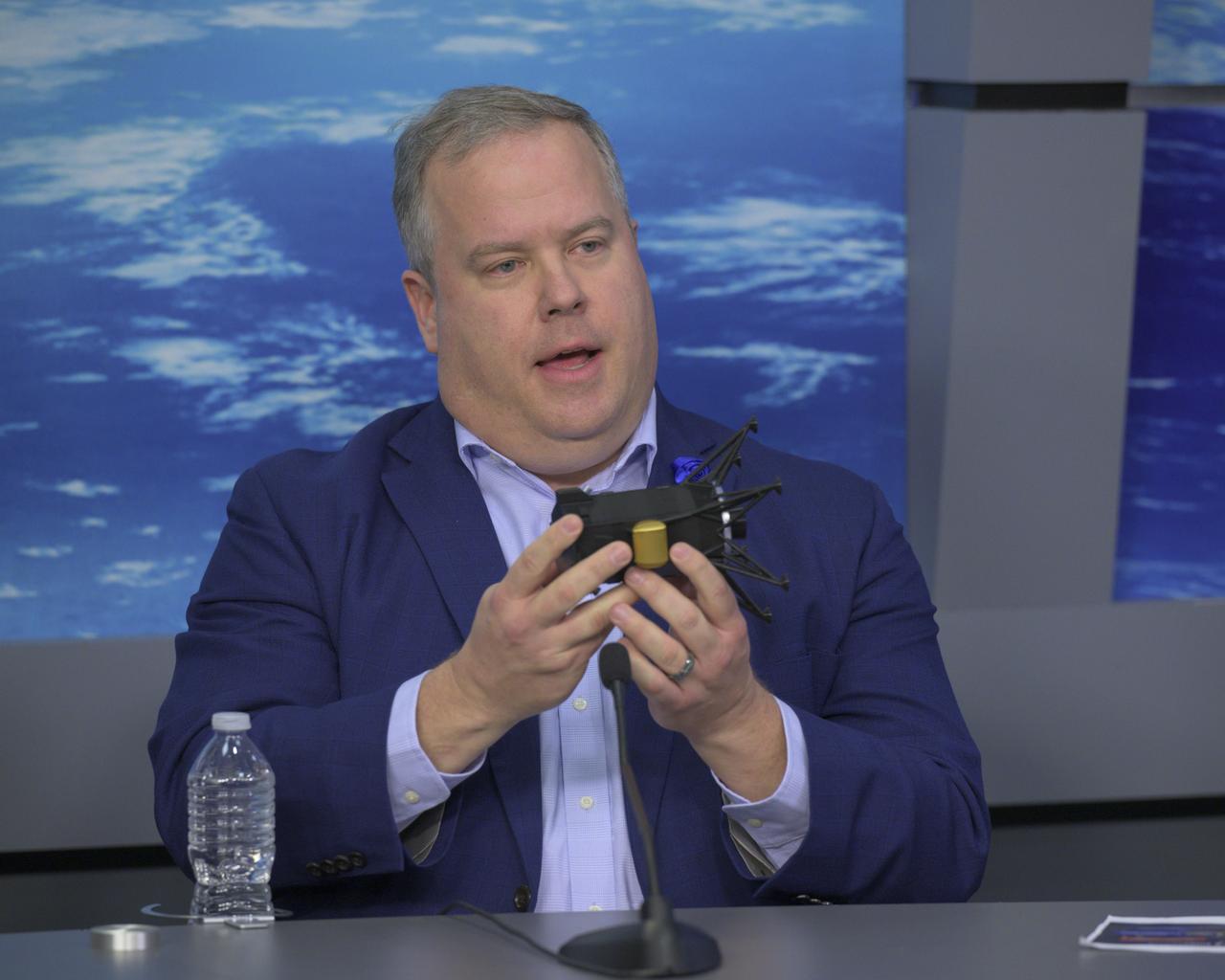
For the first time in more than 50 years, new NASA science instruments and technology demonstrations are operating on the Moon following the first successful delivery of the agency’s CLPS (Commercial Lunar Payload Services) initiative. Experts from NASA and Intuitive Machines hosted a news conference Feb. 23, 2024, at NASA’s Johnson Space Center in Houston to discuss the soft landing of the company’s Nova-C lander, called Odysseus. Participants in the briefing included (L-R): Steve Altemus, chief executive officer and co-founder, Intuitive Machines; Joel Kearns, deputy associate administrator for Exploration, Science Mission Directorate, NASA Headquarters in Washington; Tim Crain, chief technology officer and co-founder, Intuitive Machines; and Prasun Desai, deputy associate administrator, Space Technology Mission Directorate at NASA Headquarters. Photo Credit: NASA/Robert Markowitz
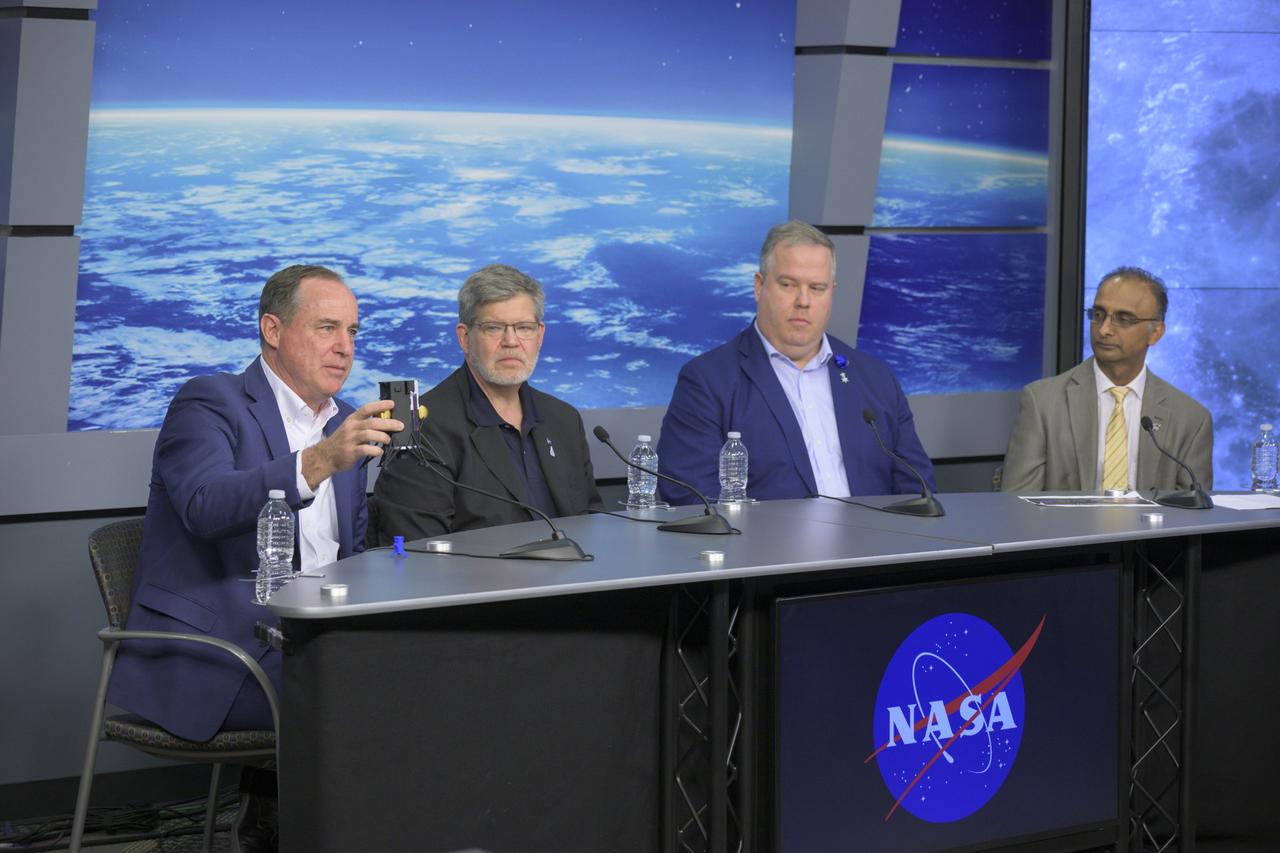
For the first time in more than 50 years, new NASA science instruments and technology demonstrations are operating on the Moon following the first successful delivery of the agency’s CLPS (Commercial Lunar Payload Services) initiative. Experts from NASA and Intuitive Machines hosted a news conference Feb. 23, 2024, at NASA’s Johnson Space Center in Houston to discuss the soft landing of the company’s Nova-C lander, called Odysseus. Participants in the briefing included (L-R): Steve Altemus, chief executive officer and co-founder, Intuitive Machines; Joel Kearns, deputy associate administrator for Exploration, Science Mission Directorate, NASA Headquarters in Washington; Tim Crain, chief technology officer and co-founder, Intuitive Machines; and Prasun Desai, deputy associate administrator, Space Technology Mission Directorate at NASA Headquarters. Photo Credit: NASA/Robert Markowitz
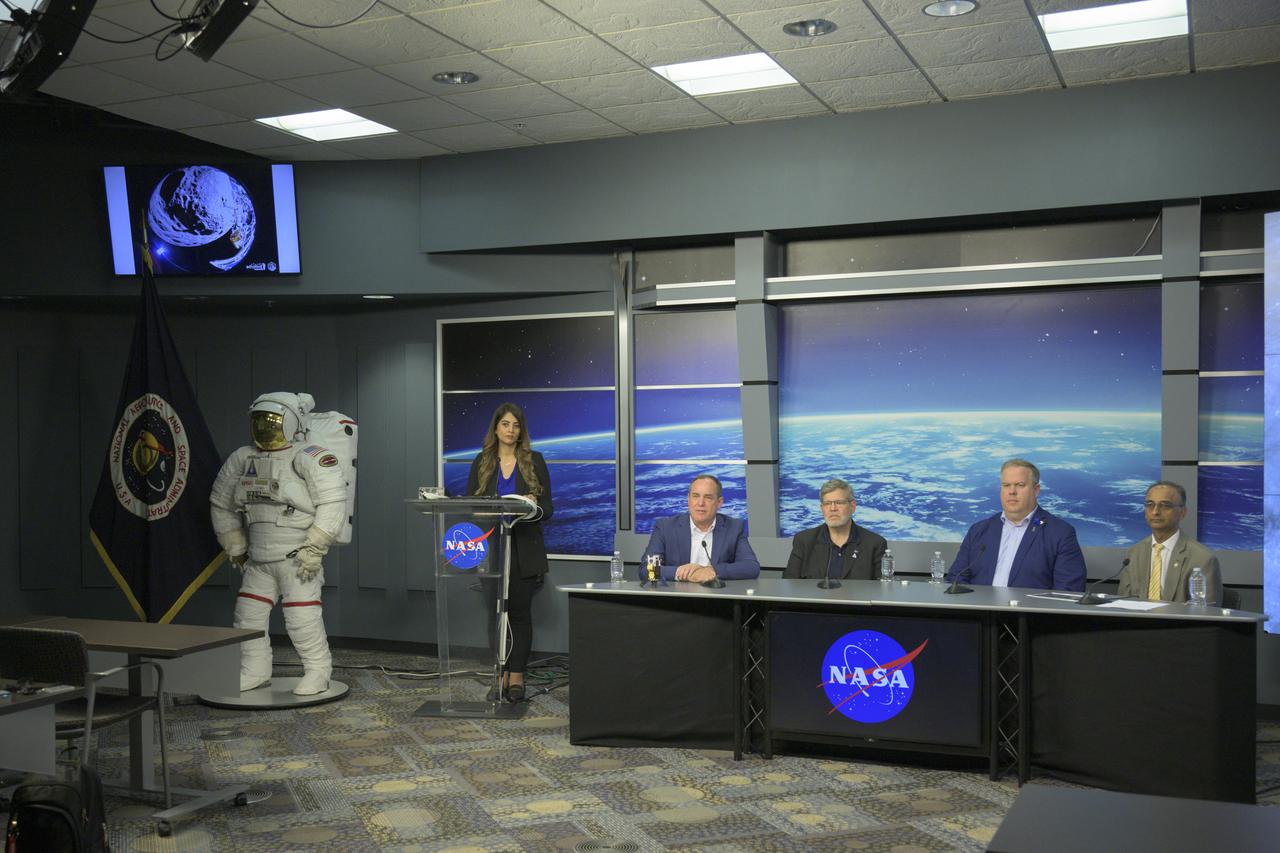
For the first time in more than 50 years, new NASA science instruments and technology demonstrations are operating on the Moon following the first successful delivery of the agency’s CLPS (Commercial Lunar Payload Services) initiative. Experts from NASA and Intuitive Machines hosted a news conference Feb. 23, 2024, at NASA’s Johnson Space Center in Houston to discuss the soft landing of the company’s Nova-C lander, called Odysseus. Participants in the briefing included (L-R): Steve Altemus, chief executive officer and co-founder, Intuitive Machines; Joel Kearns, deputy associate administrator for Exploration, Science Mission Directorate, NASA Headquarters in Washington; Tim Crain, chief technology officer and co-founder, Intuitive Machines; and Prasun Desai, deputy associate administrator, Space Technology Mission Directorate at NASA Headquarters. Photo Credit: NASA/Robert Markowitz
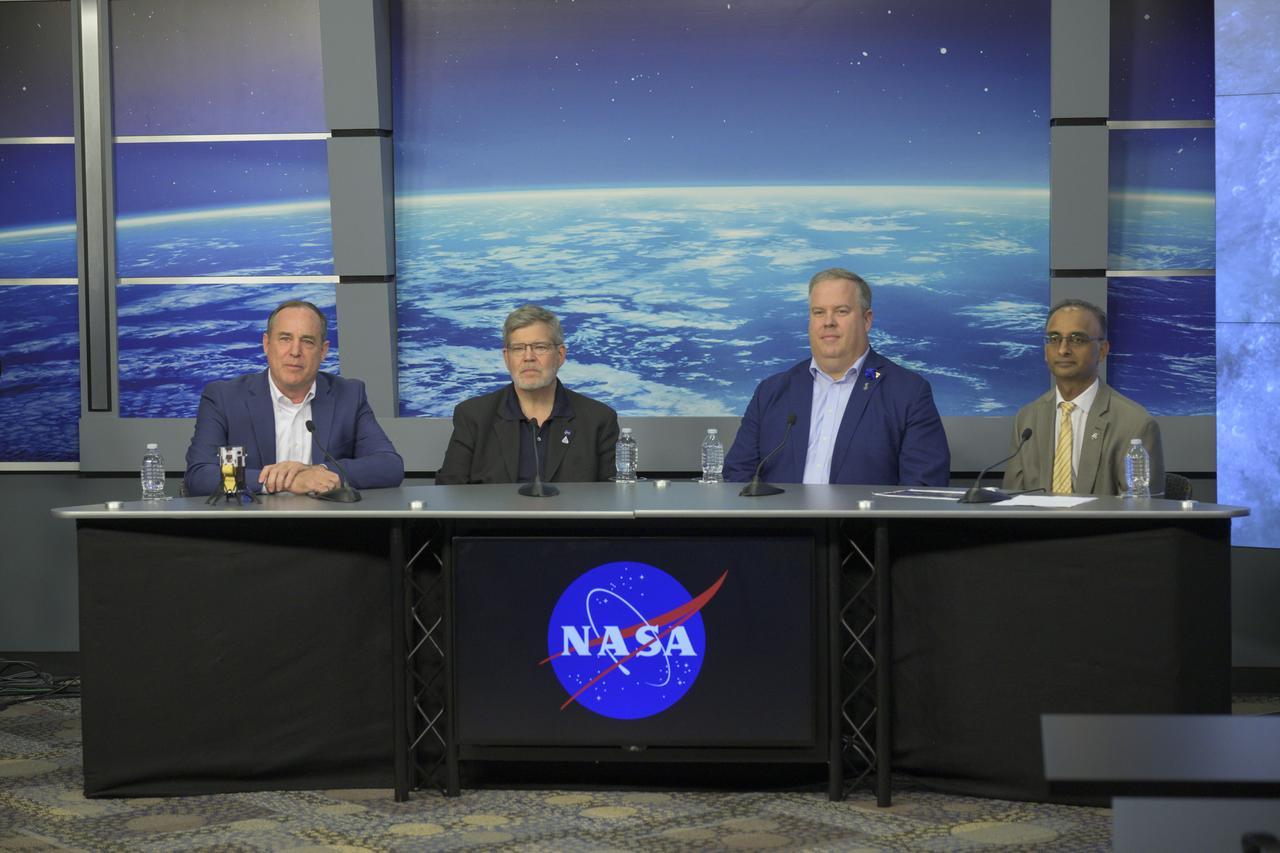
For the first time in more than 50 years, new NASA science instruments and technology demonstrations are operating on the Moon following the first successful delivery of the agency’s CLPS (Commercial Lunar Payload Services) initiative. Experts from NASA and Intuitive Machines hosted a news conference Feb. 23, 2024, at NASA’s Johnson Space Center in Houston to discuss the soft landing of the company’s Nova-C lander, called Odysseus. Participants in the briefing included (left to right): Steve Altemus, chief executive officer and co-founder, Intuitive Machines; Joel Kearns, deputy associate administrator for Exploration, Science Mission Directorate, NASA Headquarters in Washington; Tim Crain, chief technology officer and co-founder, Intuitive Machines; and Prasun Desai, deputy associate administrator, Space Technology Mission Directorate at NASA Headquarters.
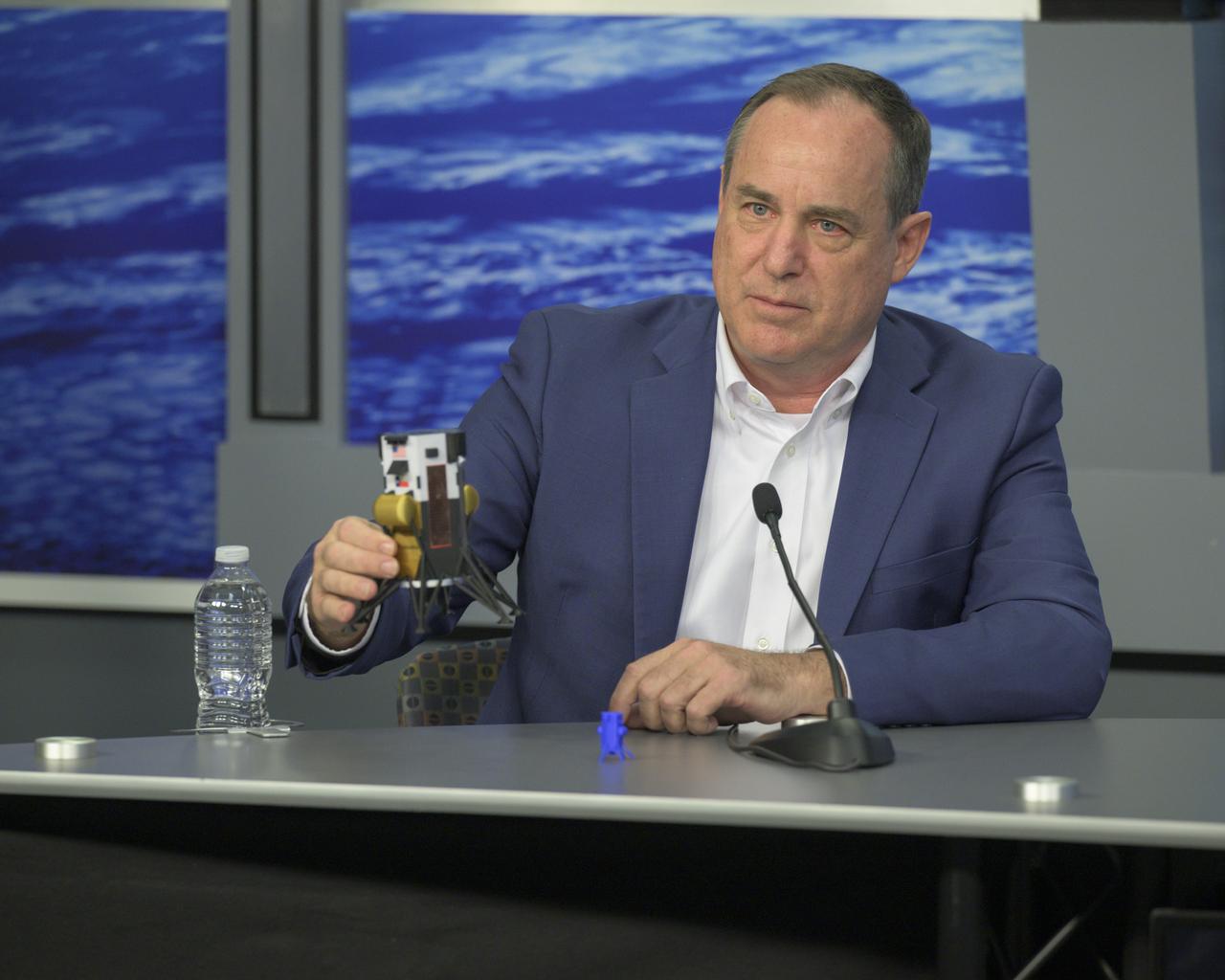
For the first time in more than 50 years, new NASA science instruments and technology demonstrations are operating on the Moon following the first successful delivery of the agency’s CLPS (Commercial Lunar Payload Services) initiative. Experts from NASA and Intuitive Machines hosted a news conference Feb. 23, 2024, at NASA’s Johnson Space Center in Houston to discuss the soft landing of the company’s Nova-C lander, called Odysseus. Participants in the briefing included (L-R): Steve Altemus, chief executive officer and co-founder, Intuitive Machines; Joel Kearns, deputy associate administrator for Exploration, Science Mission Directorate, NASA Headquarters in Washington; Tim Crain, chief technology officer and co-founder, Intuitive Machines; and Prasun Desai, deputy associate administrator, Space Technology Mission Directorate at NASA Headquarters. Photo Credit: NASA/Robert Markowitz
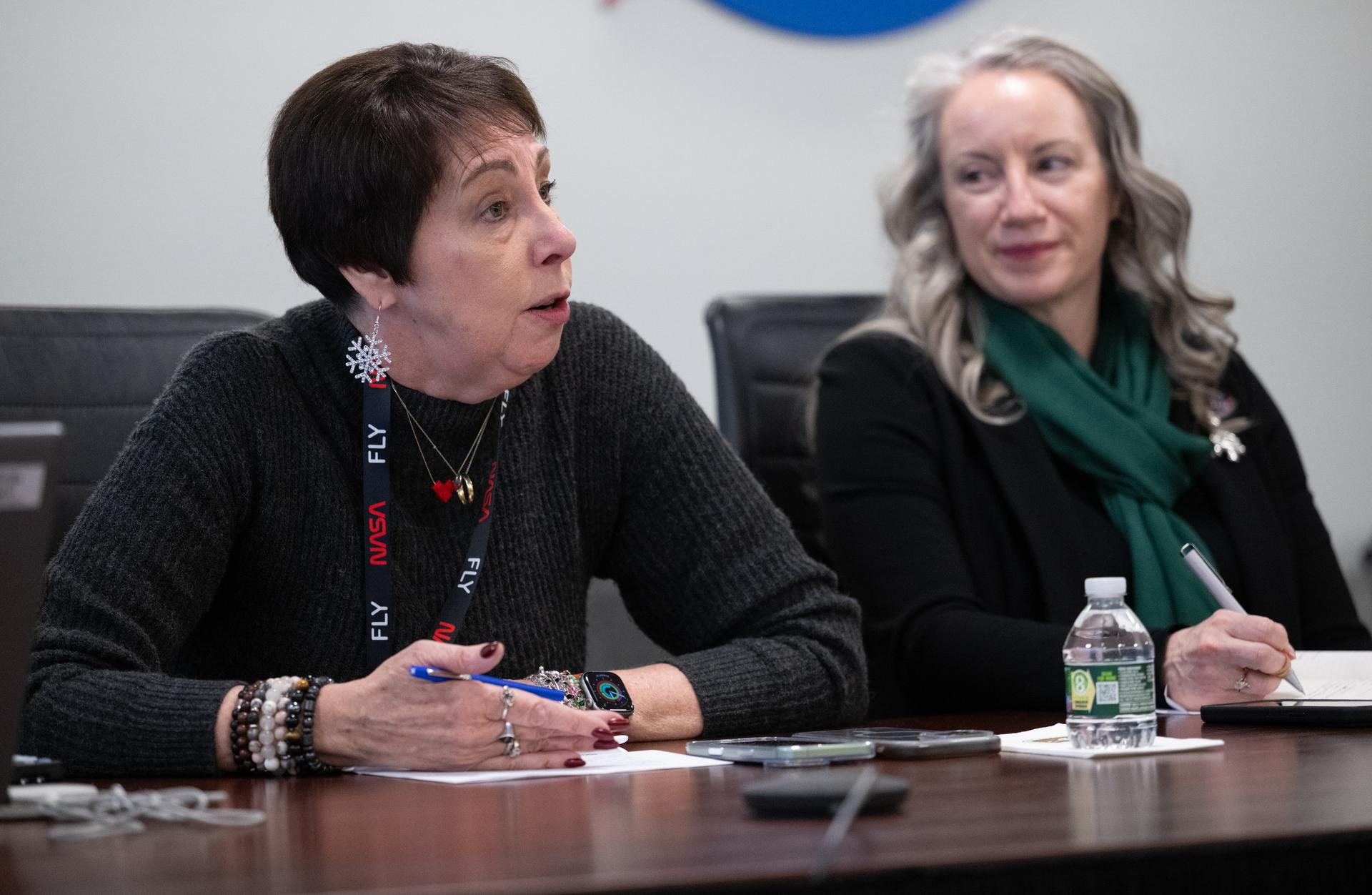
Nicola Fox, associate administrator for NASA’s Science Mission Directorate, is seen during a meeting with German Minister for Research, Technology, and Space Dorothee Bär, Tuesday, Dec. 9, 2025, at the Mary W. Jackson NASA Headquarters building in Washington. Photo Credit: (NASA/Joel Kowsky)
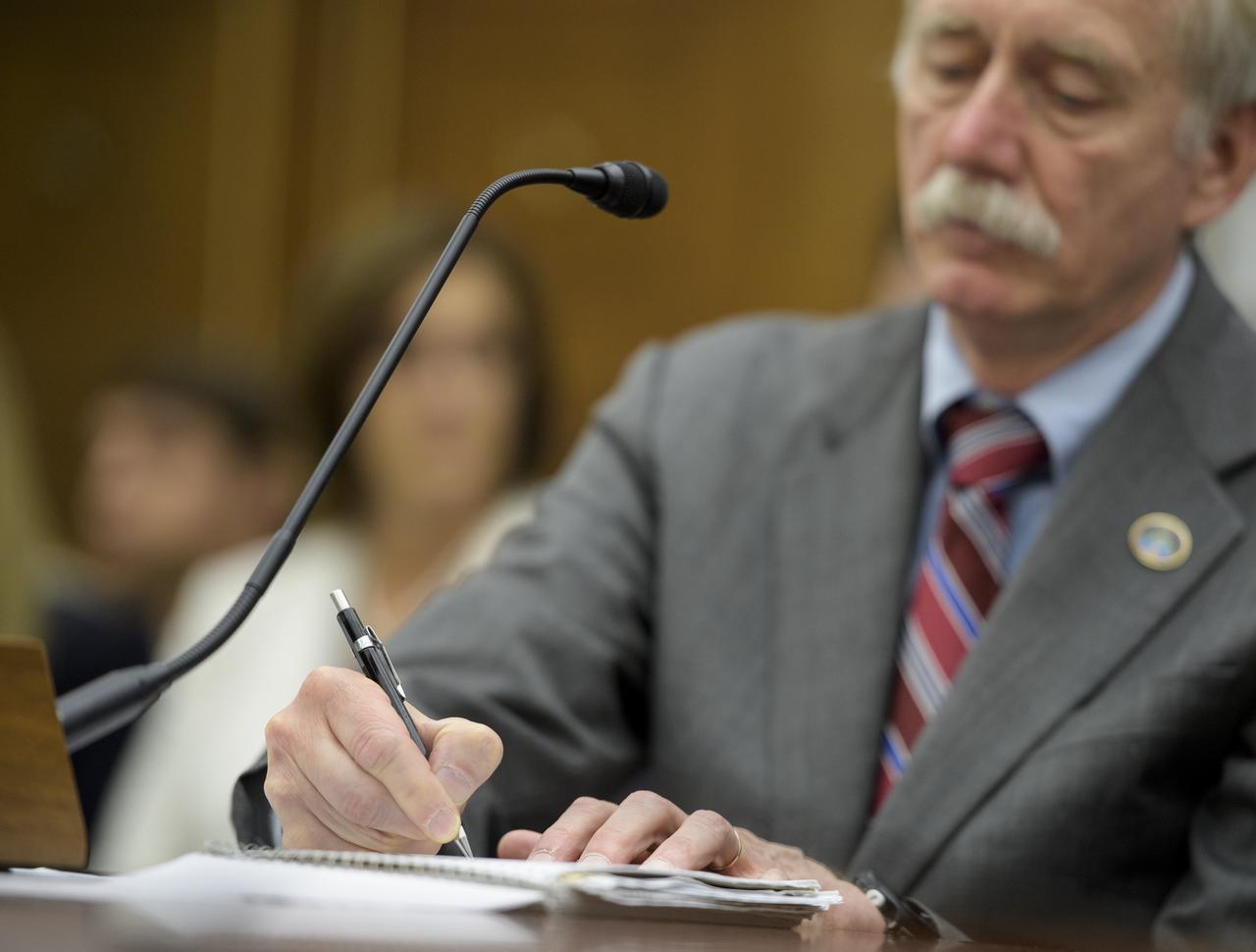
NASA Associate Administrator for the Human Exploration and Operations Mission Directorate William Gerstenmaier testifies during a House Committee on Science, Space, and Technology hearing titled "America's Human Presence in Low-Earth Orbit" on Thursday, May 17, 2018 in the Rayburn House Office Building in Washington. Photo Credit: (NASA/Joel Kowsky)
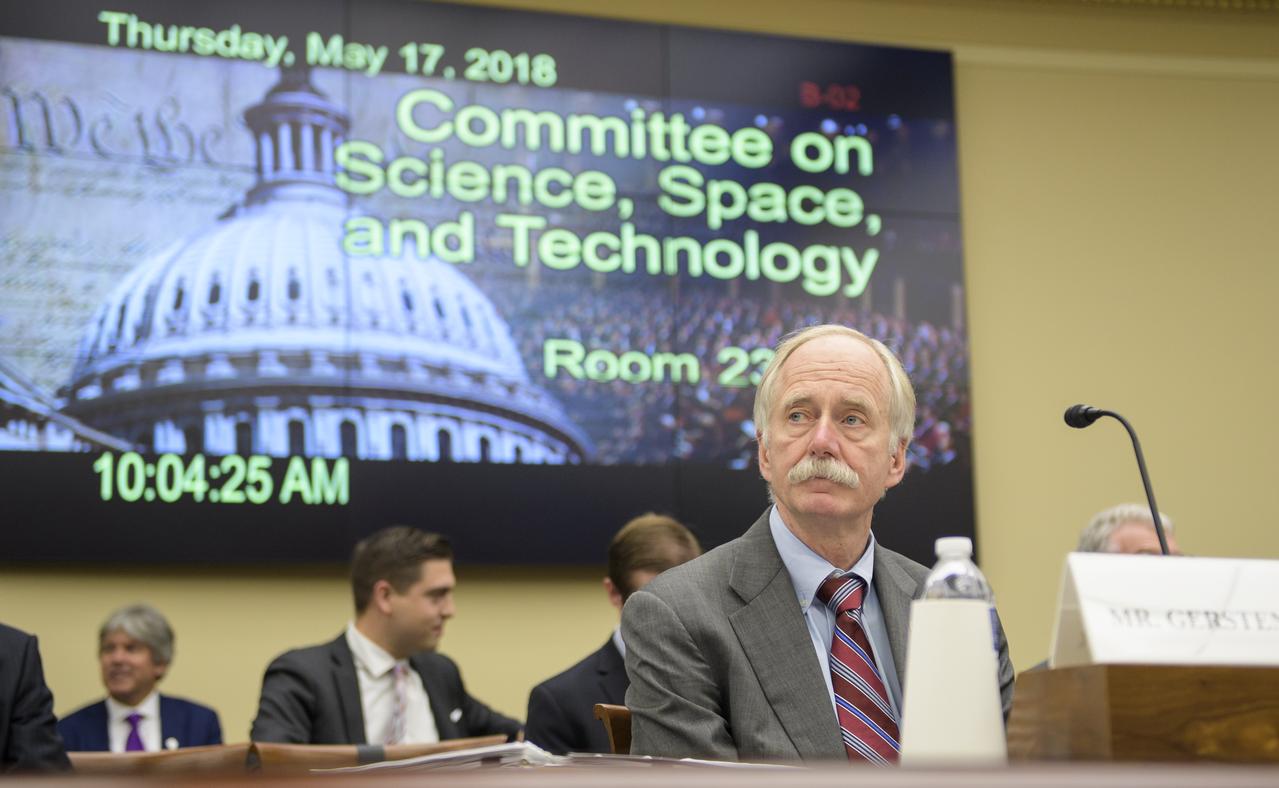
NASA Associate Administrator for the Human Exploration and Operations Mission Directorate William Gerstenmaier is seen prior to the start of a House Committee on Science, Space, and Technology Hearing titles "America's Human Presence in Low-Earth Orbit" on Thursday, May 17, 2018 in the Rayburn House Office Building in Washington. Photo Credit: (NASA/Joel Kowsky)
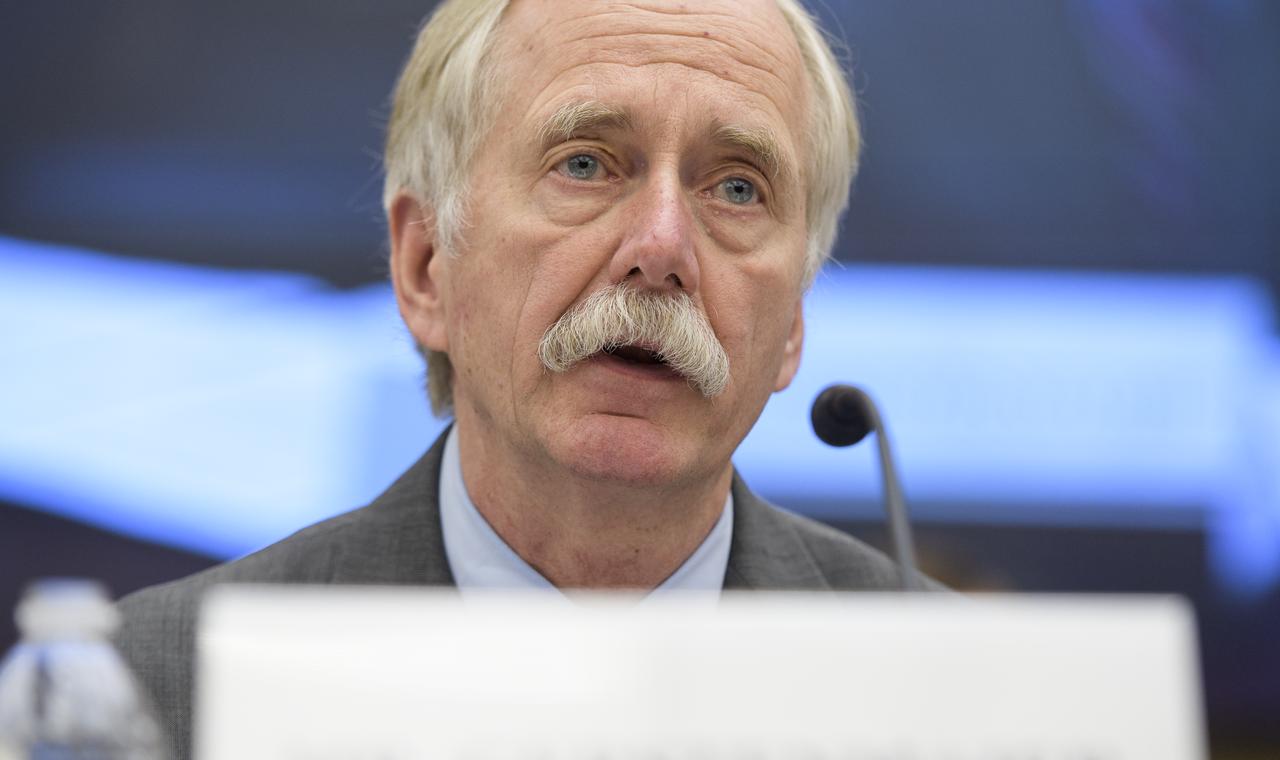
NASA Associate Administrator for the Human Exploration and Operations Mission Directorate William Gerstenmaier testifies during a House Committee on Science, Space, and Technology hearing titled "America's Human Presence in Low-Earth Orbit" on Thursday, May 17, 2018 in the Rayburn House Office Building in Washington. Photo Credit: (NASA/Joel Kowsky)
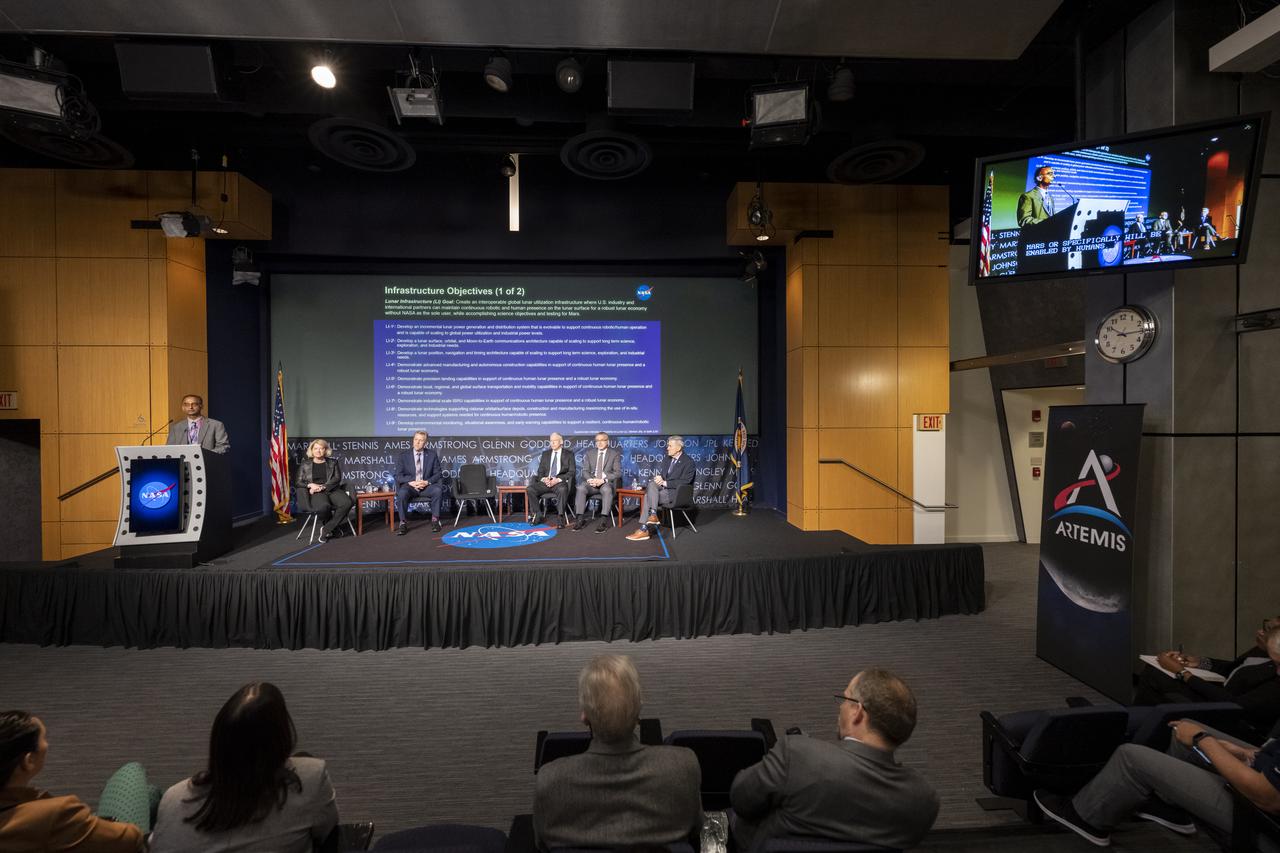
Deputy Associate Administrator for Space Technology Mission Directorate Prasun Desai delivers remarks during a Moon to Mars Town Hall, Thursday, May 18, 2023, at the Mary W. Jackson NASA Headquarters building in Washington. Photo Credit: (NASA/Keegan Barber)
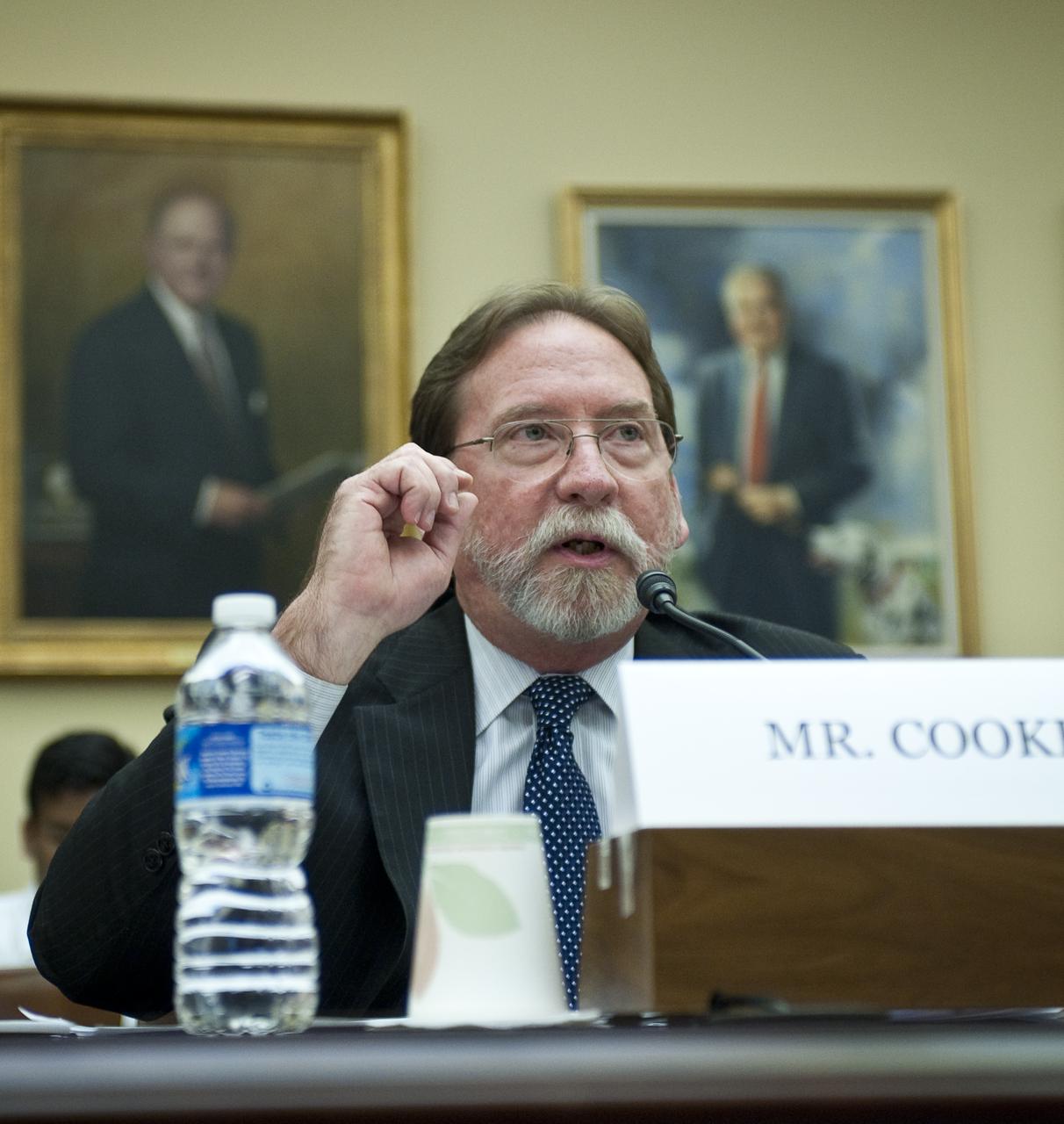
Douglas R. Cooke, NASA's Associate Administrator for Exploration Systems Mission Directorate (ESMD), appears before the U.S. House of Representatives' Committee on Science and Technology, Subcommittee on Space and Aeronautics to discuss proposed changes to NASA's exploration program on Wednesday, March 24, 2010, on Capitol Hill in Washington. Photo Credit: (NASA/Carla Cioffi)
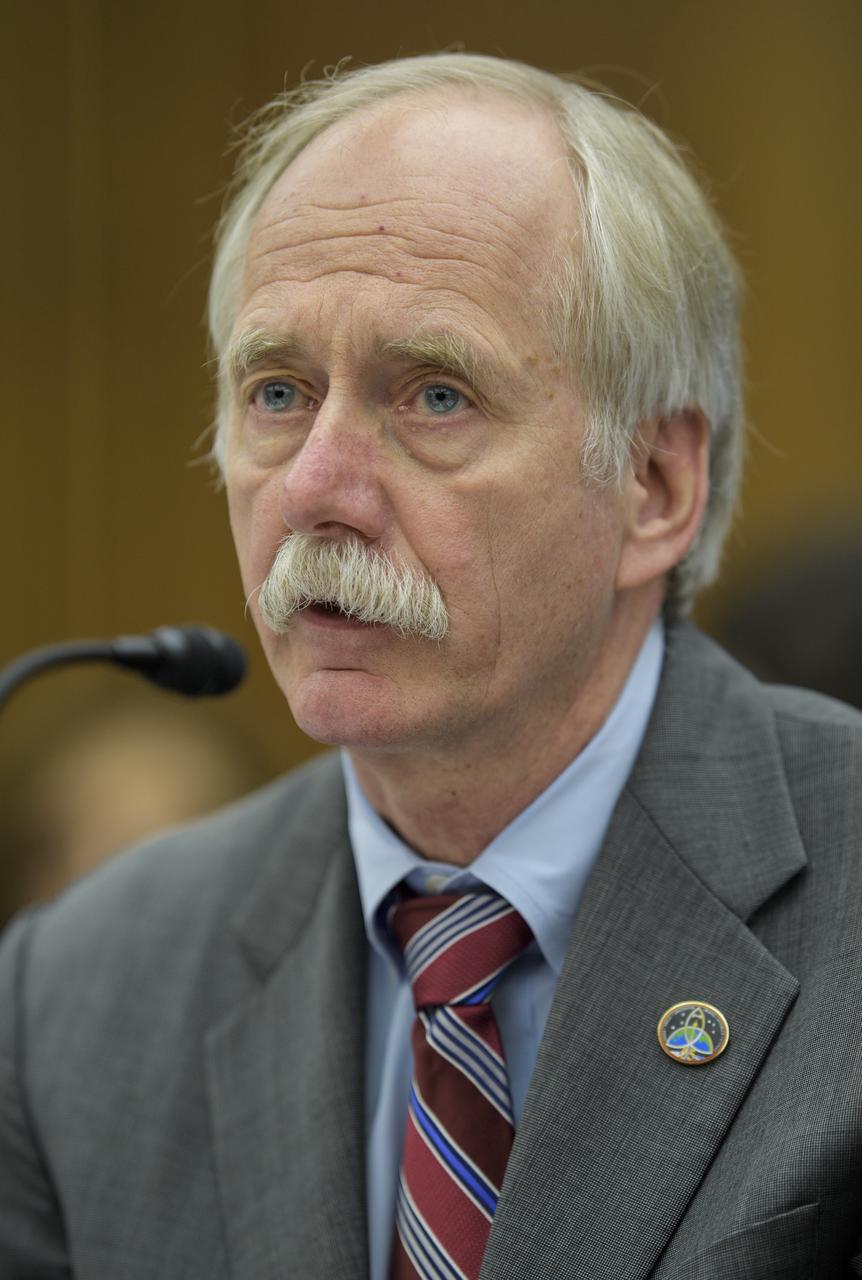
NASA Associate Administrator for the Human Exploration and Operations Mission Directorate William Gerstenmaier testifies during a House Committee on Science, Space, and Technology hearing titled "America's Human Presence in Low-Earth Orbit" on Thursday, May 17, 2018 in the Rayburn House Office Building in Washington. Photo Credit: (NASA/Joel Kowsky)
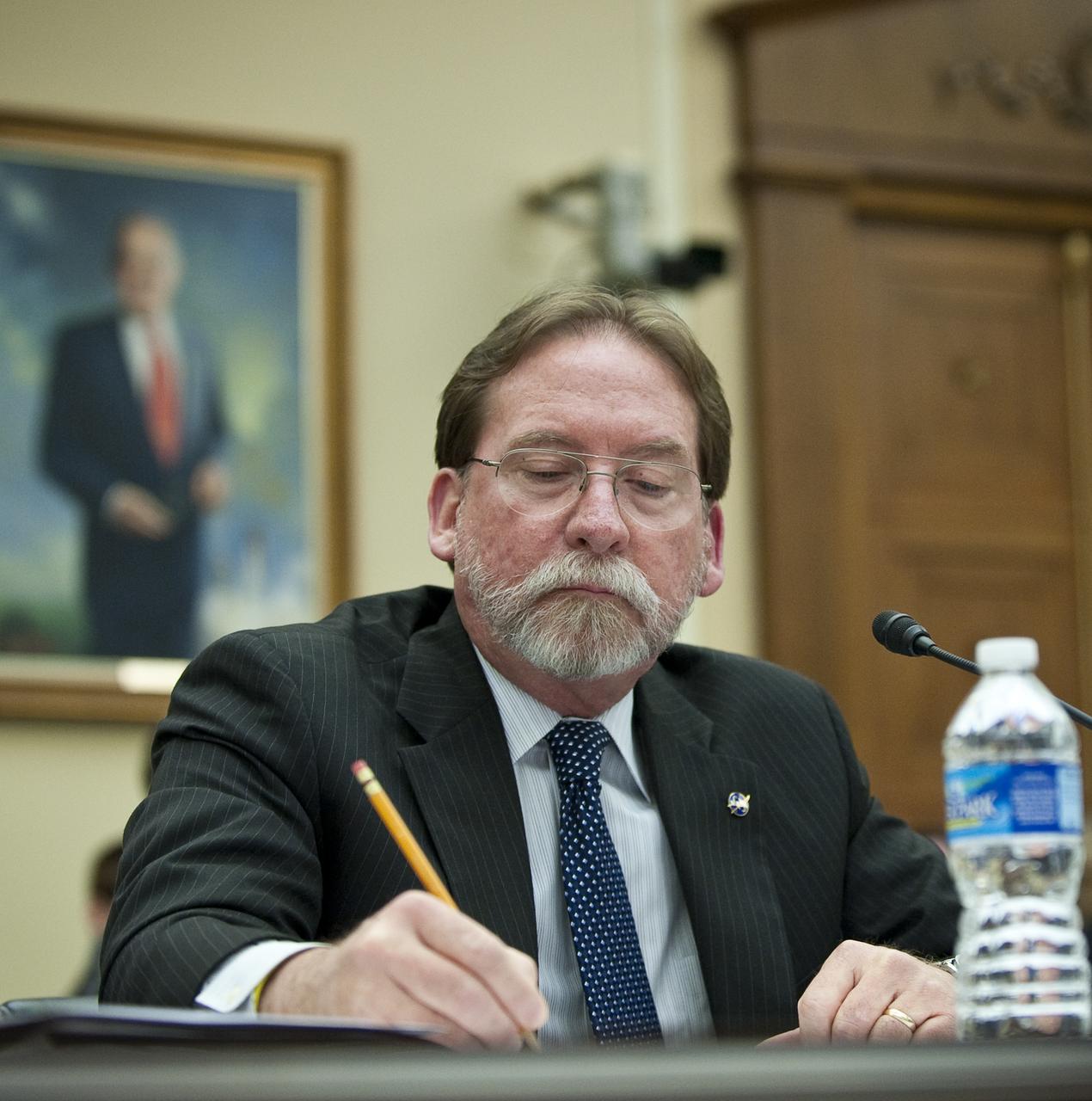
Douglas R. Cooke, NASA's Associate Administrator for Exploration Systems Mission Directorate (ESMD), appears before the U.S. House of Representatives' Committee on Science and Technology, Subcommittee on Space and Aeronautics to discuss proposed changes to NASA's exploration program on Wednesday, March 24, 2010, on Capitol Hill in Washington. Photo Credit: (NASA/Carla Cioffi)
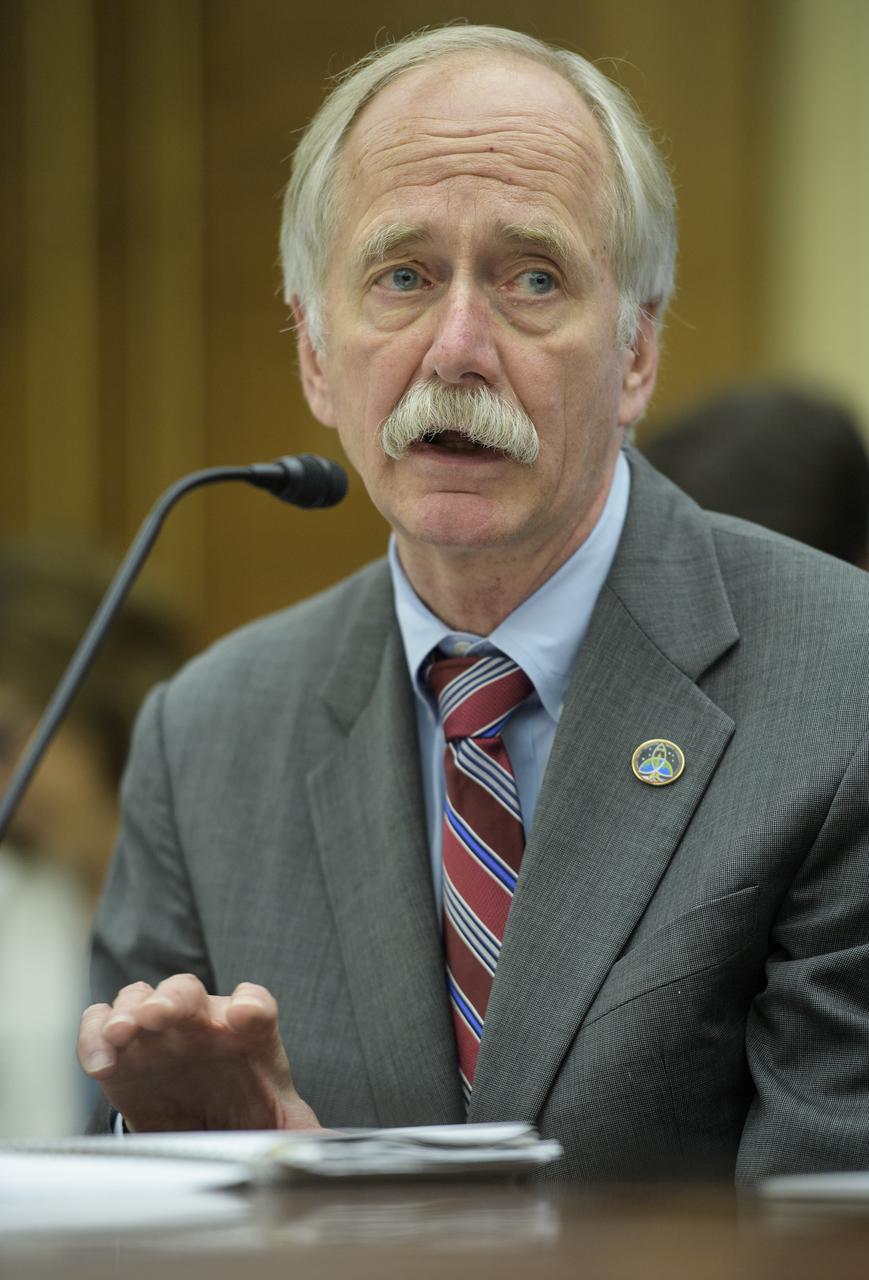
NASA Associate Administrator for the Human Exploration and Operations Mission Directorate William Gerstenmaier testifies during a House Committee on Science, Space, and Technology hearing titled "America's Human Presence in Low-Earth Orbit" on Thursday, May 17, 2018 in the Rayburn House Office Building in Washington. Photo Credit: (NASA/Joel Kowsky)
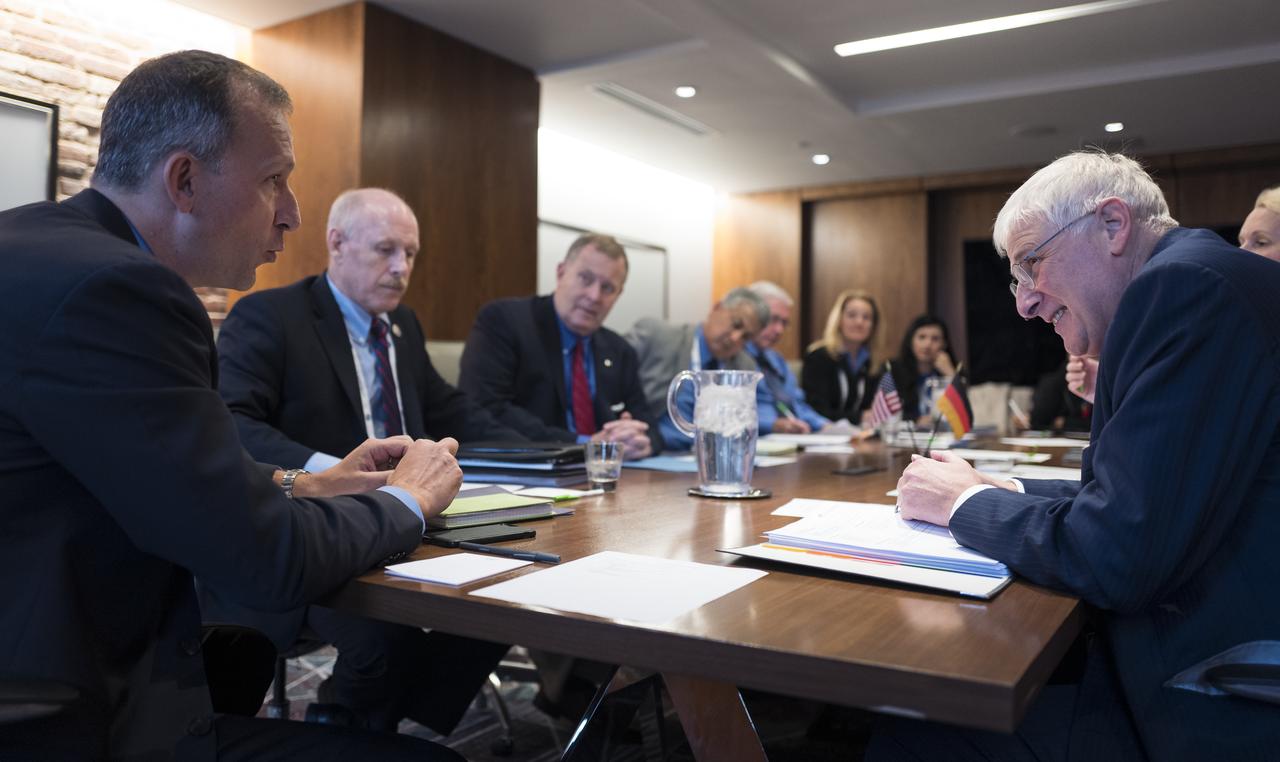
Thomas Zurbuchen, Associate Administrator of NASA's Science Mission Directorate, left, speaks with Hansjörg Dittus, Executive Board Member for Space Research and Technology at the German Aerospace Center (DLR) during a meeting at the 70th International Astronautical Congress, Wednesday, Oct. 23, 2019 in Washington. Photo Credit: (NASA/Joel Kowsky)
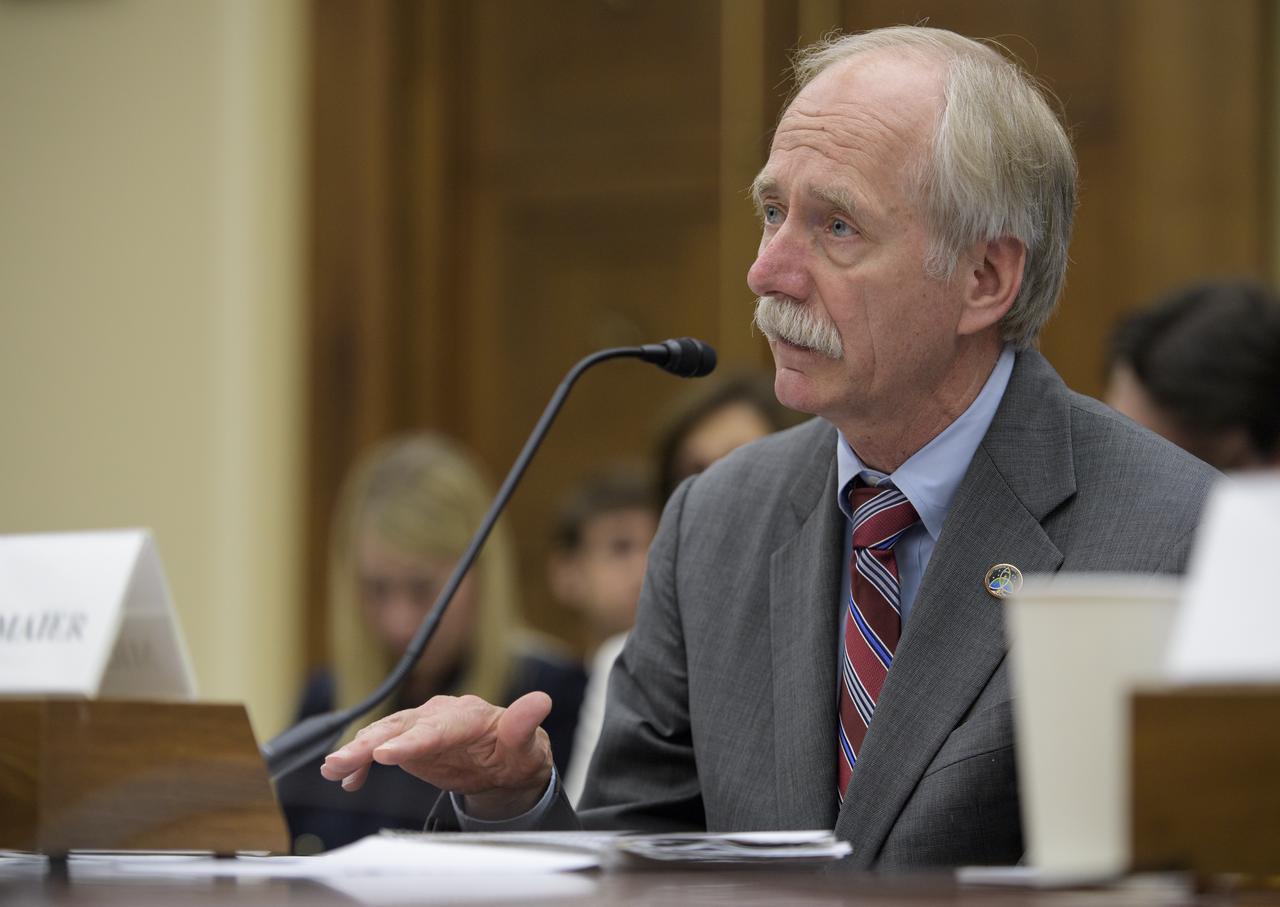
NASA Associate Administrator for the Human Exploration and Operations Mission Directorate William Gerstenmaier testifies during a House Committee on Science, Space, and Technology hearing titled "America's Human Presence in Low-Earth Orbit" on Thursday, May 17, 2018 in the Rayburn House Office Building in Washington. Photo Credit: (NASA/Joel Kowsky)
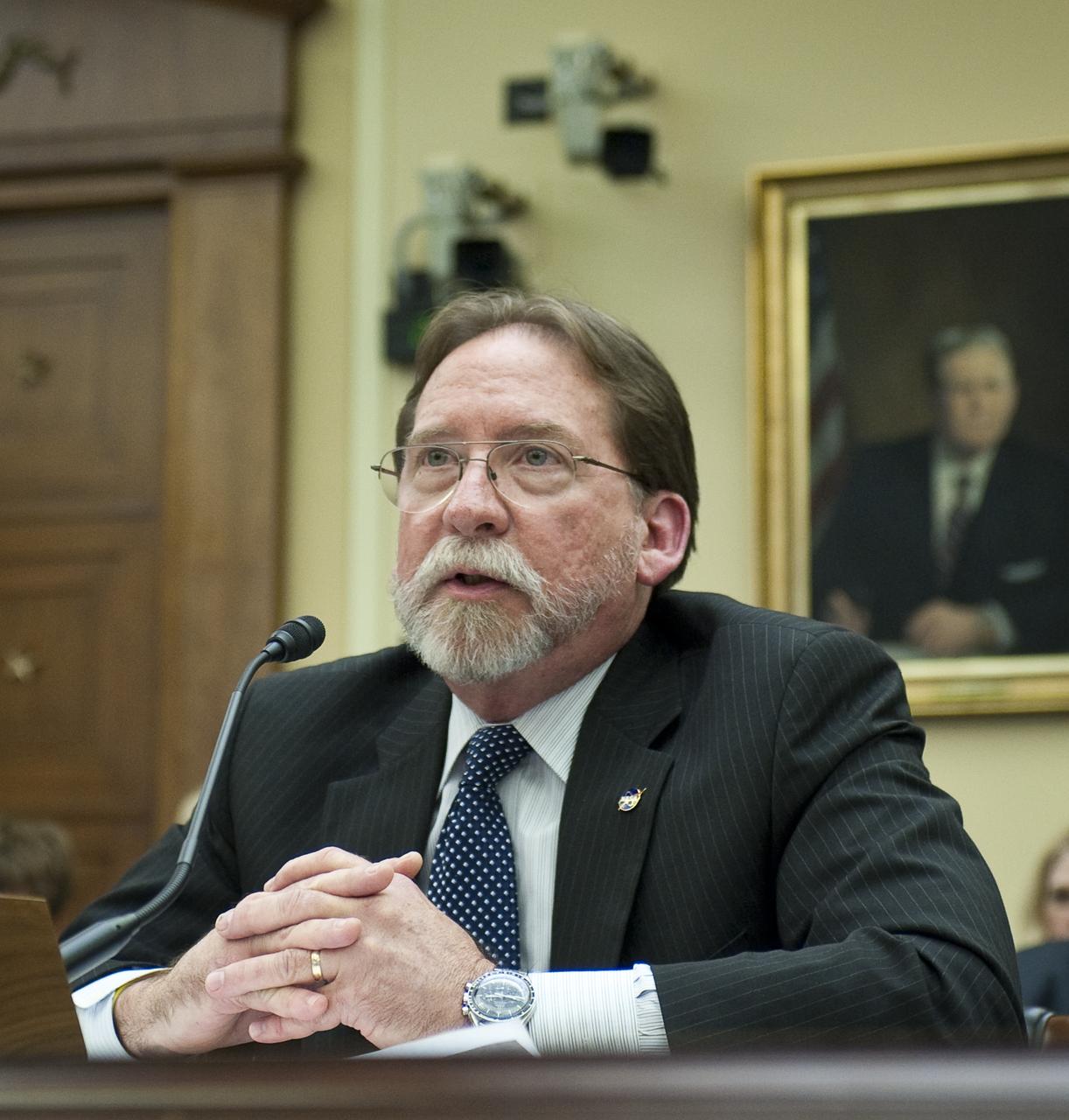
Douglas R. Cooke, NASA's Associate Administrator for Exploration Systems Mission Directorate (ESMD), appears before the U.S. House of Representatives' Committee on Science and Technology, Subcommittee on Space and Aeronautics to discuss proposed changes to NASA's exploration program on Wednesday, March 24, 2010, on Capitol Hill in Washington. Photo Credit: (NASA/Carla Cioffi)
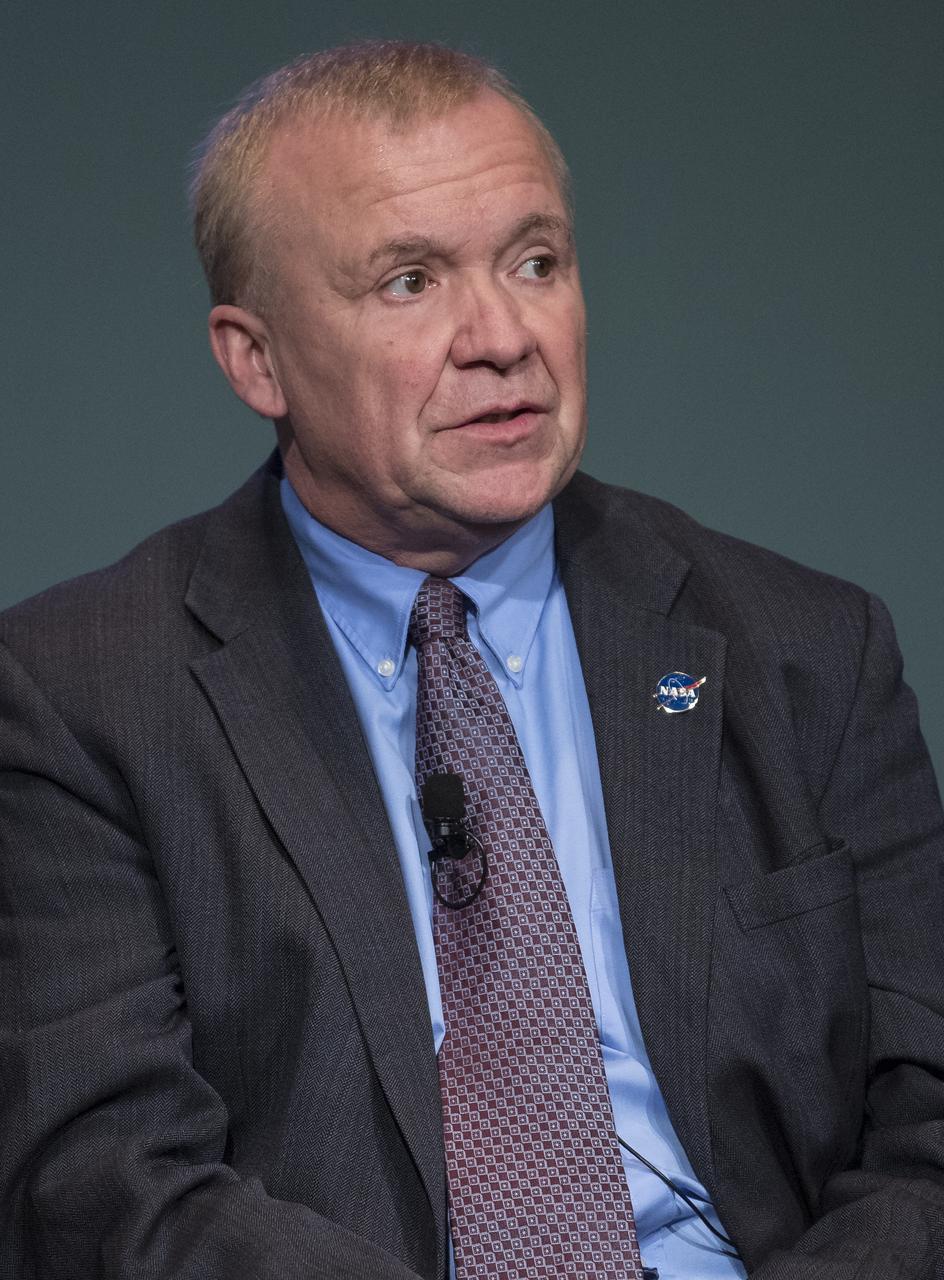
Acting Associate Administrator for NASA's Space Technology Mission Directorate is seen during a NASA town hall on the amendment to the fiscal year 2020 budget request that supports the agency’s plan to land astronauts on the Moon by 2024, Tuesday, May 14, 2019 at NASA Headquarters in Washington, DC. Photo Credit: (NASA/Joel Kowsky)
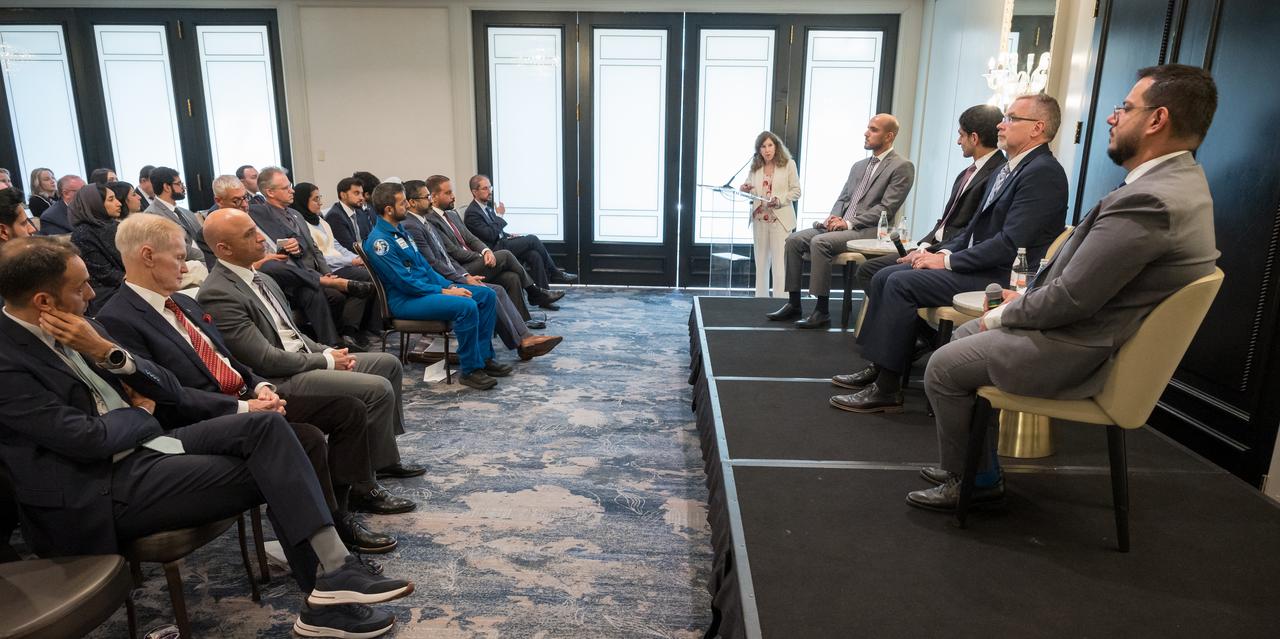
NASA associate administrator for International and Interagency Relations Karen Feldstein, moderates a panel discussion with, Senior Director of the Space Engineering Department, MBRSC, Amer Al Sayegh, left, UAE Assistant Minister of Foreign Affairs and International Cooperation for Advanced Science and Technology, Omran Sharaf, NASA Associate Administrator Jim Free, and Director of Space Missions Department, UAESA, Mohsen Al Awadhi, right, during an event celebrating UAE-US collaboration in space, Friday, March 8, 2024, at the Four Seasons Hotel in Washington. Photo Credit: (NASA/Bill Ingalls)
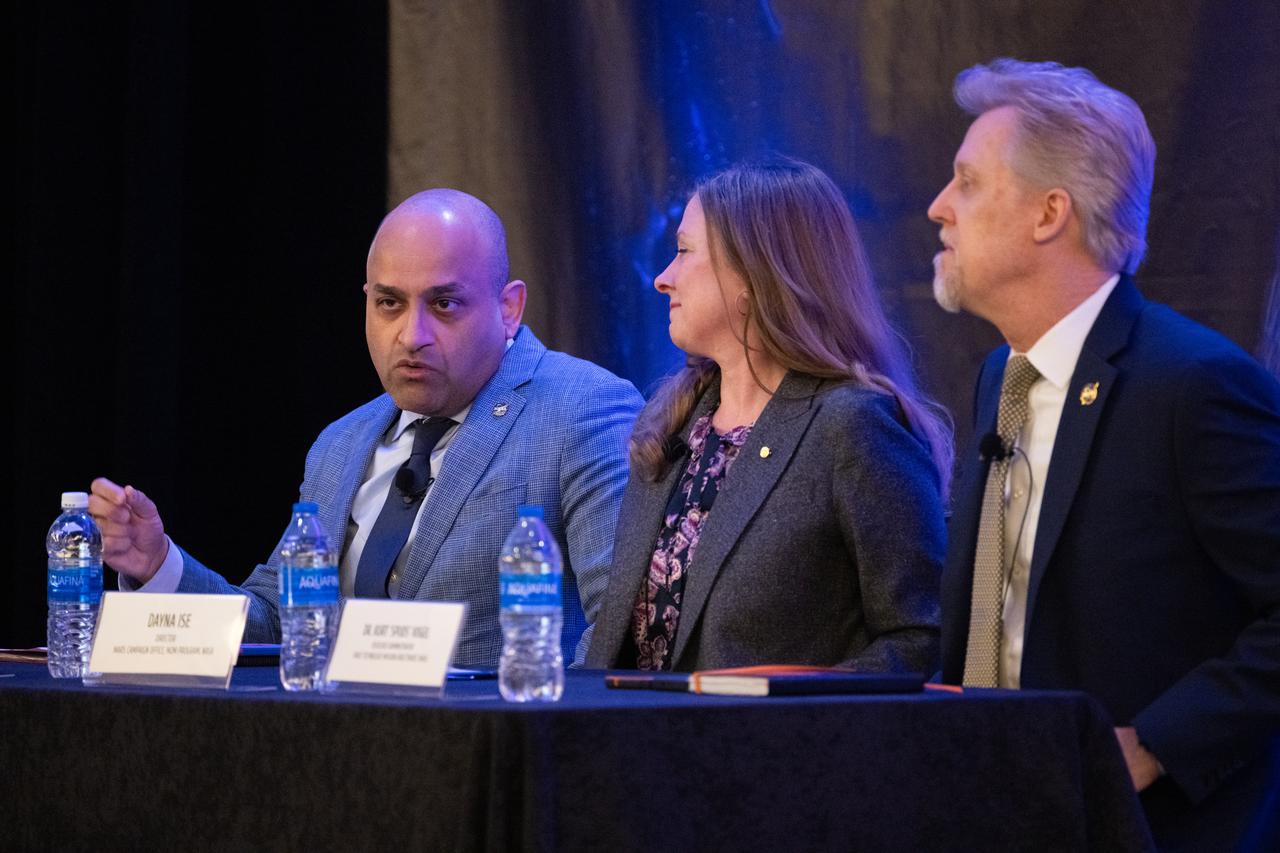
A.C. Charania, NASA’s Chief Technologist, left, moderates a panel on technology infusion with Dayna Ise, director of the Mars Campaign Office in NASA’s Moon to Mars Program, center, and Kurt “Spuds” Vogel, associate administrator of NASA’s Space Technology Mission Directorate, right, during the 2024 Artemis Suppliers Conference, Tuesday, Feb. 27, 2024, at the Grand Hyatt Hotel in Washington. Photo Credit: (NASA/Joel Kowsky)
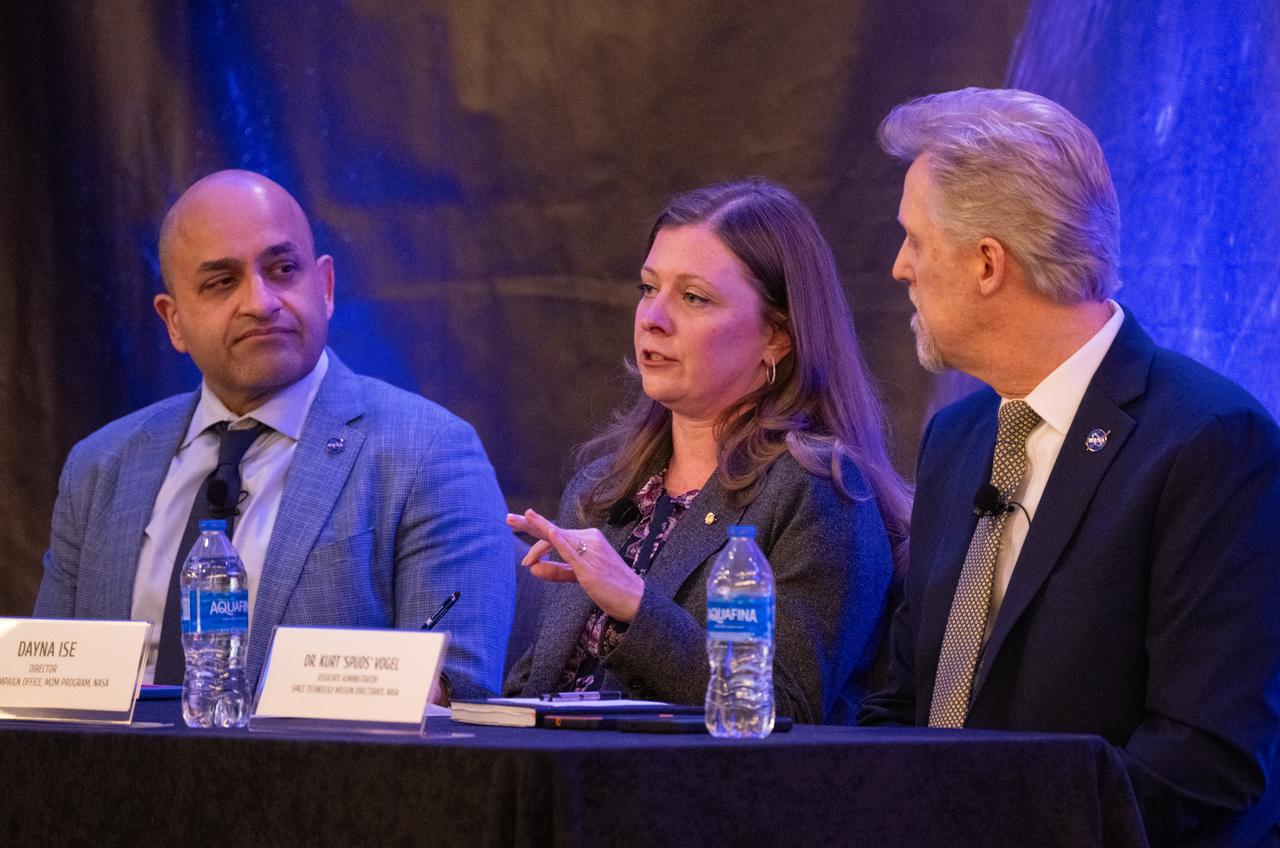
Dayna Ise, director of the Mars Campaign Office in NASA’s Moon to Mars Program, center, and Kurt “Spuds” Vogel, associate administrator of NASA’s Space Technology Mission Directorate, right, are seen during a panel discussion on technology infusion moderated by A.C. Charania, NASA’s Chief Technologist, left, at the 2024 Artemis Suppliers Conference, Tuesday, Feb. 27, 2024, at the Grand Hyatt Hotel in Washington. Photo Credit: (NASA/Joel Kowsky)
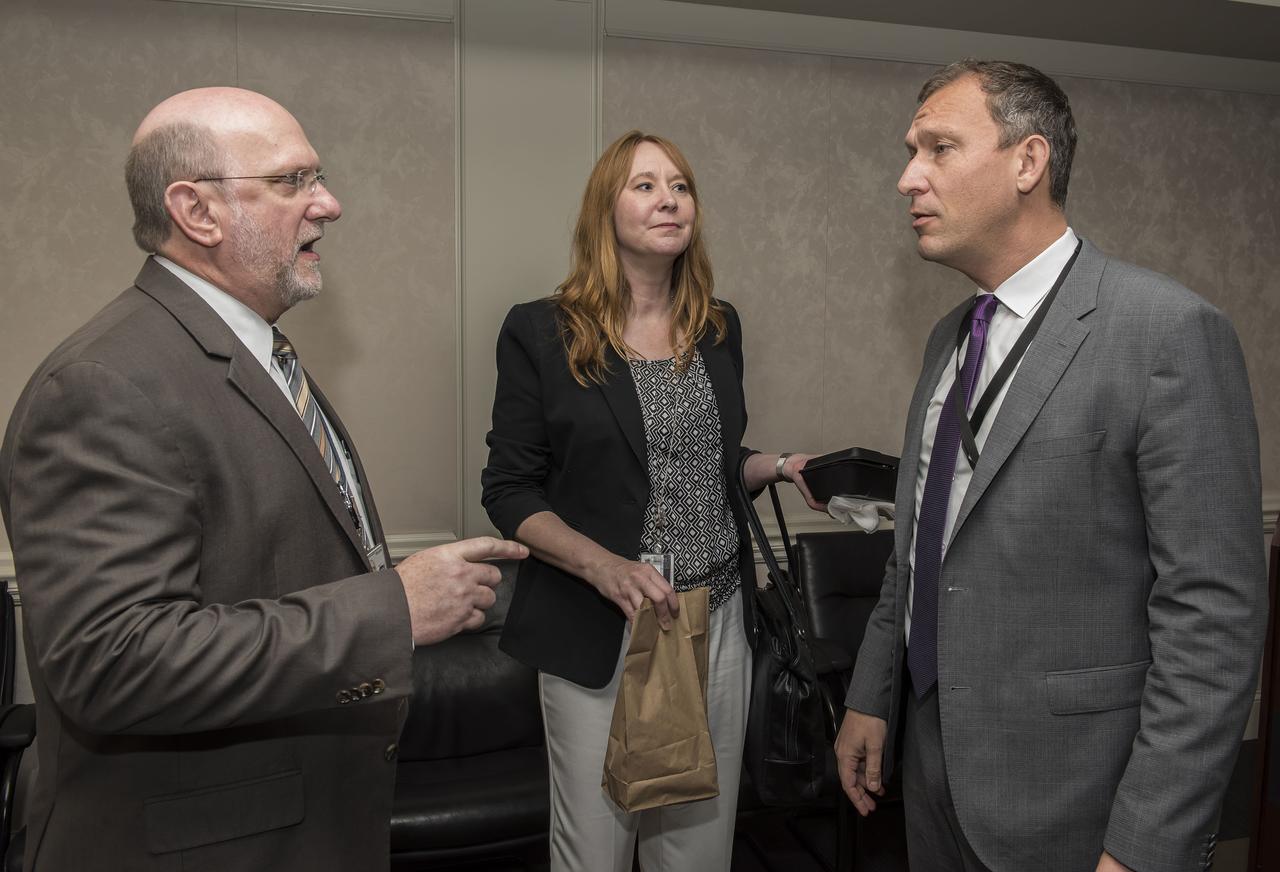
THOMAS ZURBUCHEN, RIGHT, NASA ASSOCIATE ADMINISTRATOR FOR THE SCIENCE MISSION DIRECTORATE, SPEAKS WITH DENNON CLARDY, LEFT, DEPUTY MANAGER OF THE SCIENCE & TECHNOLOGY OFFICE AT NASA’S MARSHALL SPACE FLIGHT CENTER IN HUNTSVILLE, ALABAMA, AND SHAWN MCINERY, AFTER HIS KEYNOTE ADDRESS AT THE MARCH 21 LUNCHEON MEETING OF THE MARSHALL ASSOCIATION. ZURBUCHEN, WHO ASSUMED HIS NEW ROLE IN OCTOBER 2016, ALSO TOURED KEY MARSHALL MANUFACTURING AND TEST FACILITIES. THE MARSHALL ASSOCIATION IS THE CENTER’S PROFESSIONAL, EMPLOYEE SERVICE ORGANIZATION.
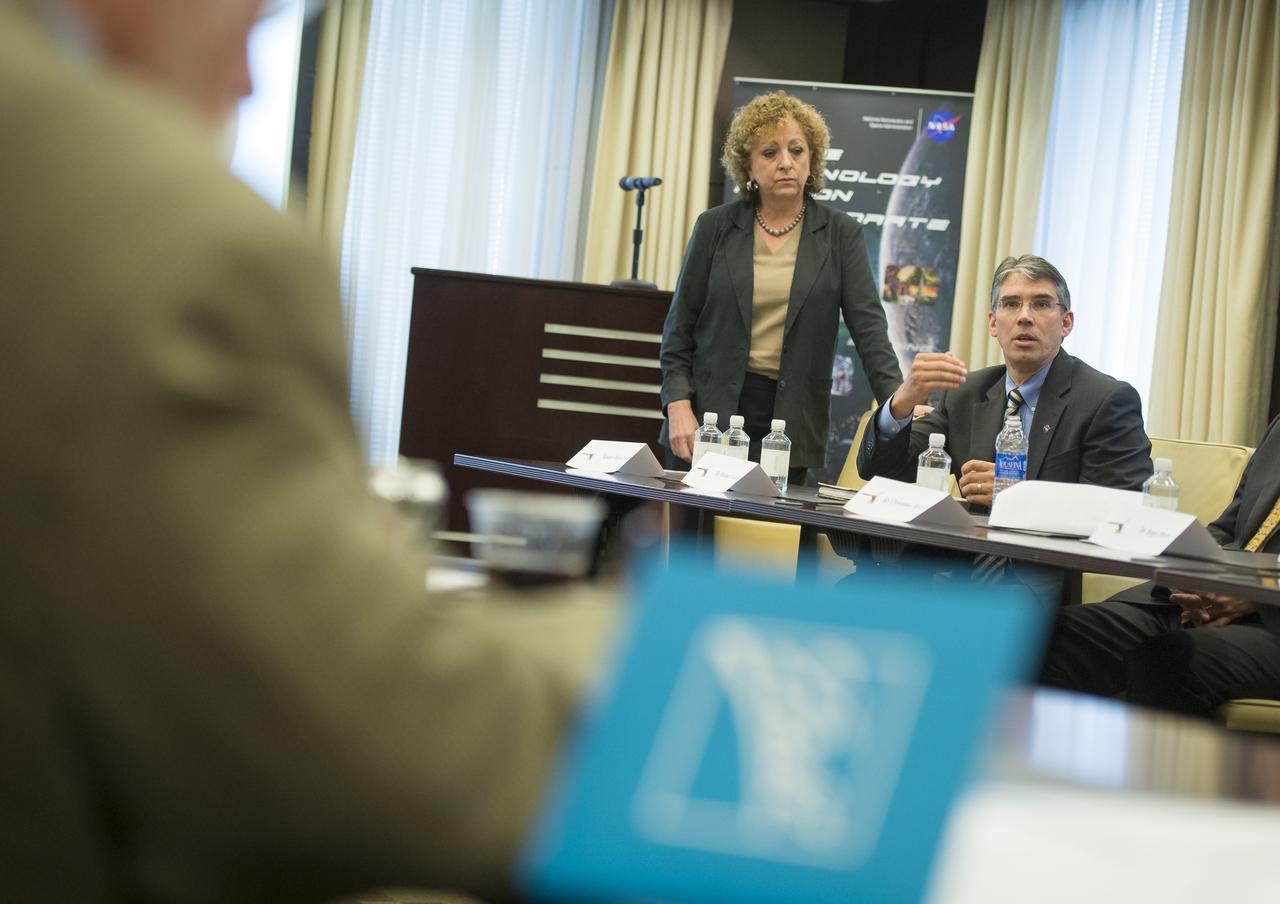
Dr. Michael Gazarik, Associate Administrator, NASA Space Technology Mission Directorate, answers a reporter's question at a Green Propellant Infusion Mission press conference at the Reserve Officers Association, Tuesday, July 9, 2013 in Washington. The NASA GPIM program, led by Ball Aerospace in conjunction with Aerojet Rocketdyne, is demonstrating a high-performance "green" fuel in space. The propellant used on this mission offers nearly 50 percent better performance when compared to traditional hydrazine. Photo Credit: (NASA/Carla Cioffi)
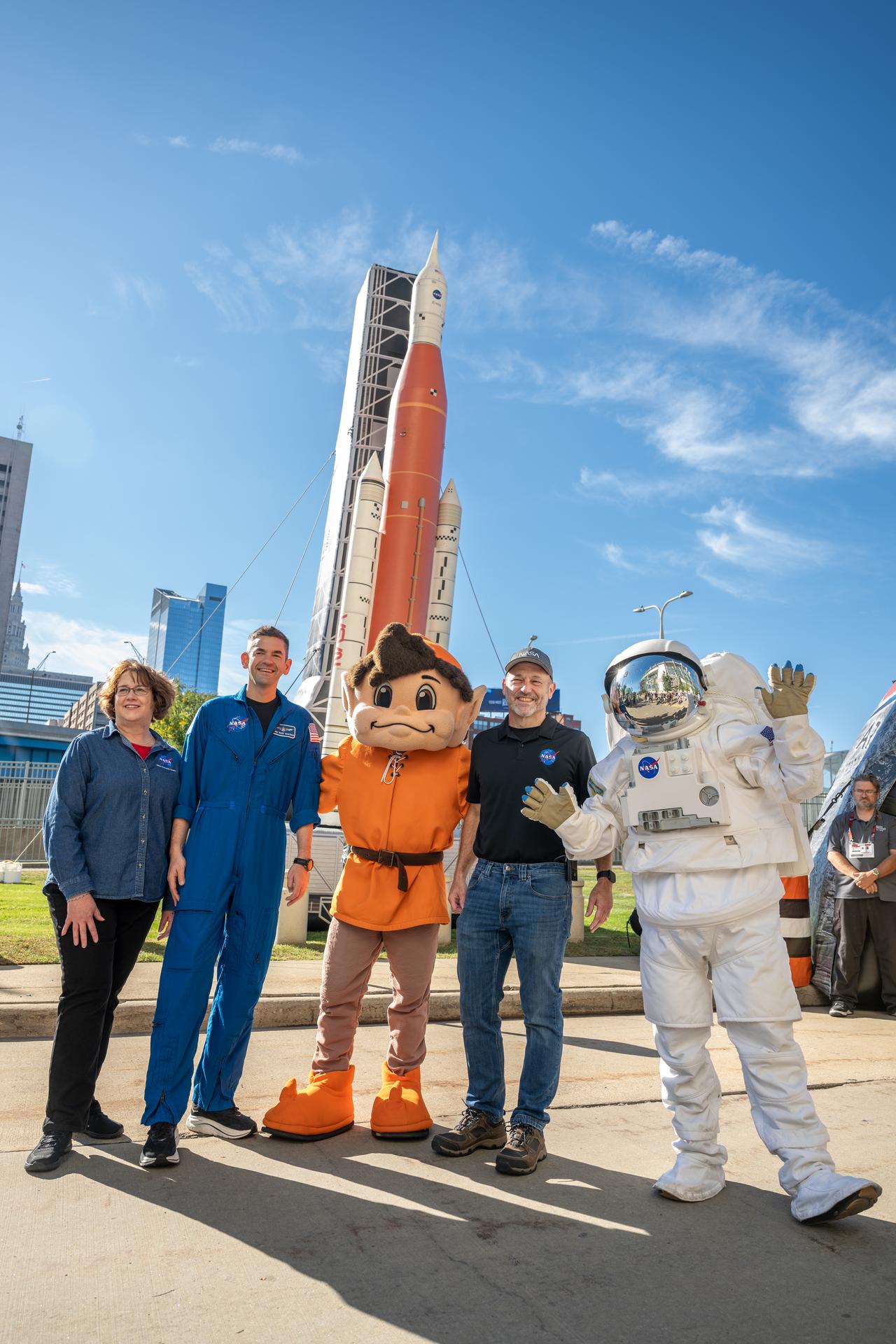
GRC Center Director Dawn Schaible, NASA Administrator Jared Isaacman and Associate Administrator, Research and Technology Mission Directorate Dr. James Kenyon, pose with Cleveland Browns’ mascot, Brownie the Elf, and Eva the Astronaut at an NFL game between the Cleveland Browns and the Carolina Panthers at Huntington Bank Field, Sunday, September 27th, 2026, in Cleveland, Ohio. NASA’s engagement at NFL games is part of the agency’s Inspiration Tour, aimed at strengthening connections between NASA and its partners and showcasing innovation in air and space in the lead up to the MAX POWER aerospace technology expo and airshow at the agency’s Kennedy Space Center in early November. Photo Credit: (NASA/Jordan Cochran)

Amber Jacobson, press secretary to NASA’s Deputy Administrator, left, moderates a discussion of key takeaways with Sandra Connelly, deputy associate administrator for NASA’s Science Mission Directorate, second from left, Lori Glaze, acting deputy associate administrator for NASA’s Exploration Systems Development Mission Directorate, Robyn Gatens, director of the International Space Station at NASA Headquarters, and Carrie Olsen, manager of the Next Gen STEM project for NASA’s Office of STEM Engagement, at the conclusion of NASA’s LEO Microgravity Strategy Industry and Academia Workshop, Friday, Sept. 13, 2024, at Convene in Washington. NASA’s LEO Microgravity Strategy effort aims to develop and document an objectives-based approach toward the next generation of human presence in low Earth orbit to advance microgravity science, technology, and exploration. Photo Credit: (NASA/Joel Kowsky)
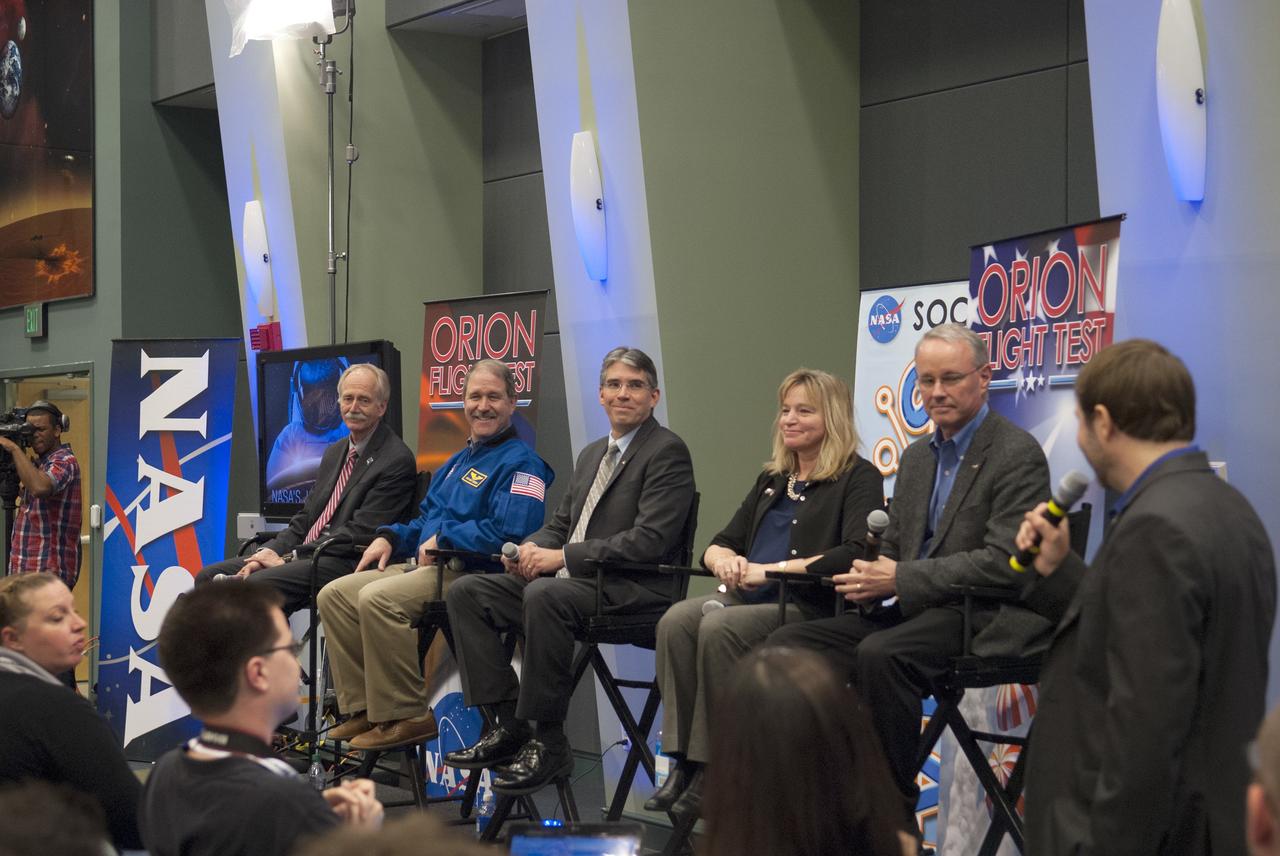
CAPE CANAVERAL, Fla. – At NASA's Kennedy Space Center in Florida, NASA leaders spoke to social media participants as the Orion spacecraft and its Delta IV Heavy rocket were being prepared for launch. Speakers included, from the left, NASA Associate Administrator Human Exploration and Operations Bill Gerstenmaier, Associate Administrator for the agency's Science Mission Directorate John Grunsfeld, Associate Administrator for the Space Technology Directorate Michael Gazaria, NASA Chief Scientist Ellen Stofan, and Chief Technologist David Miller. Moderator for the panel session was John Yembrick, with the microphone on the far right, who is NASA's social media lead at the agency's Headquarters in Washington. For more information, visit www.nasa.gov/orion Photo credit: NASA/Jim Grossman
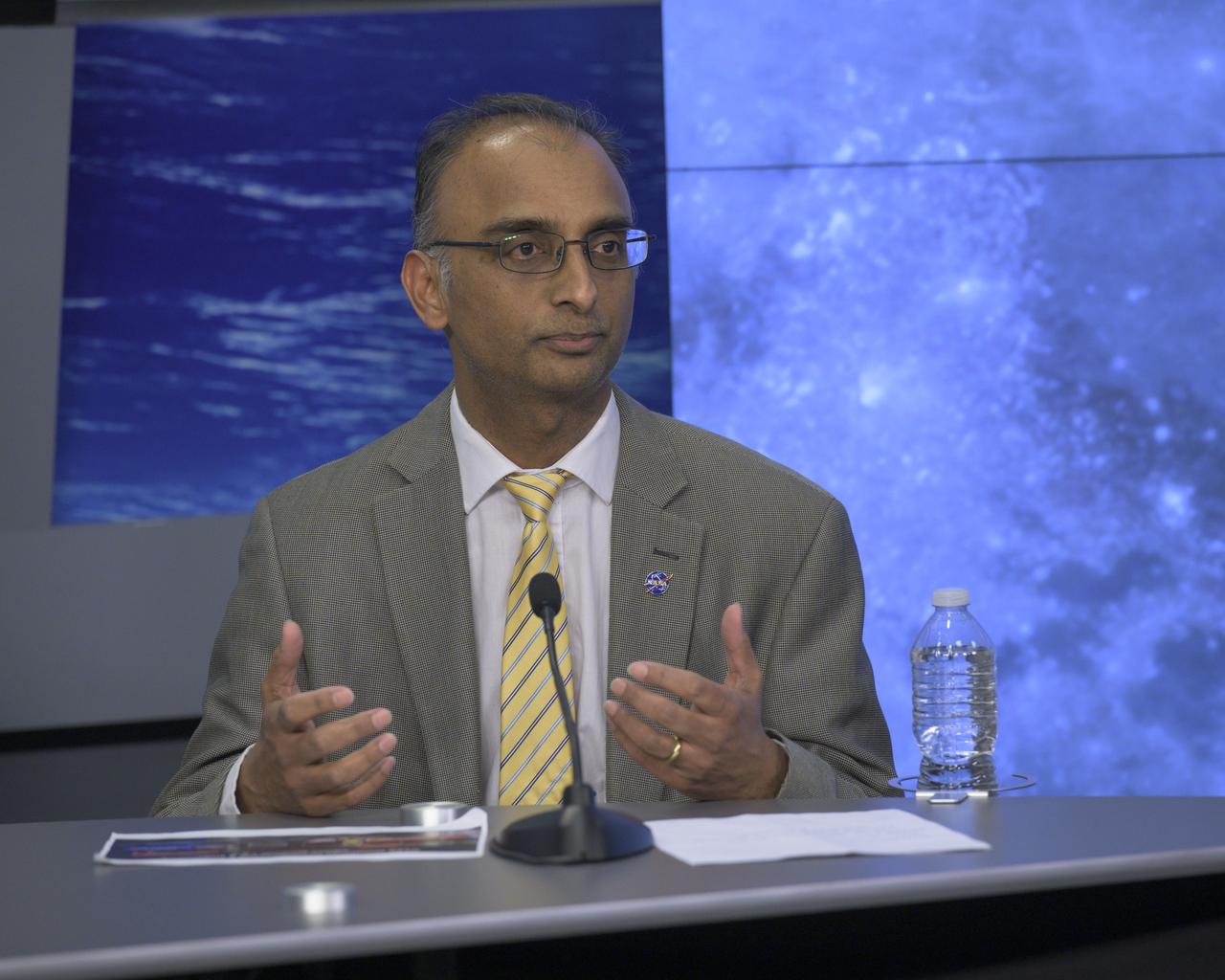
Prasun Desai, deputy associate administrator, Space Technology Mission Directorate at NASA Headquarters, participates in a news conference Feb. 23, 2024, at the agency’s Johnson Space Center in Houston. Desai was on hand to discuss the NASA science and technology aboard the Intuitive Machine’s Nova-C lander, called Odysseus, and its successful soft landing on the Moon Feb. 22, 2024. The mission is the first landing under NASA’s CLPS (Commercial Lunar Payload Services) initiative, and the first American lunar landing in more than 50 years.
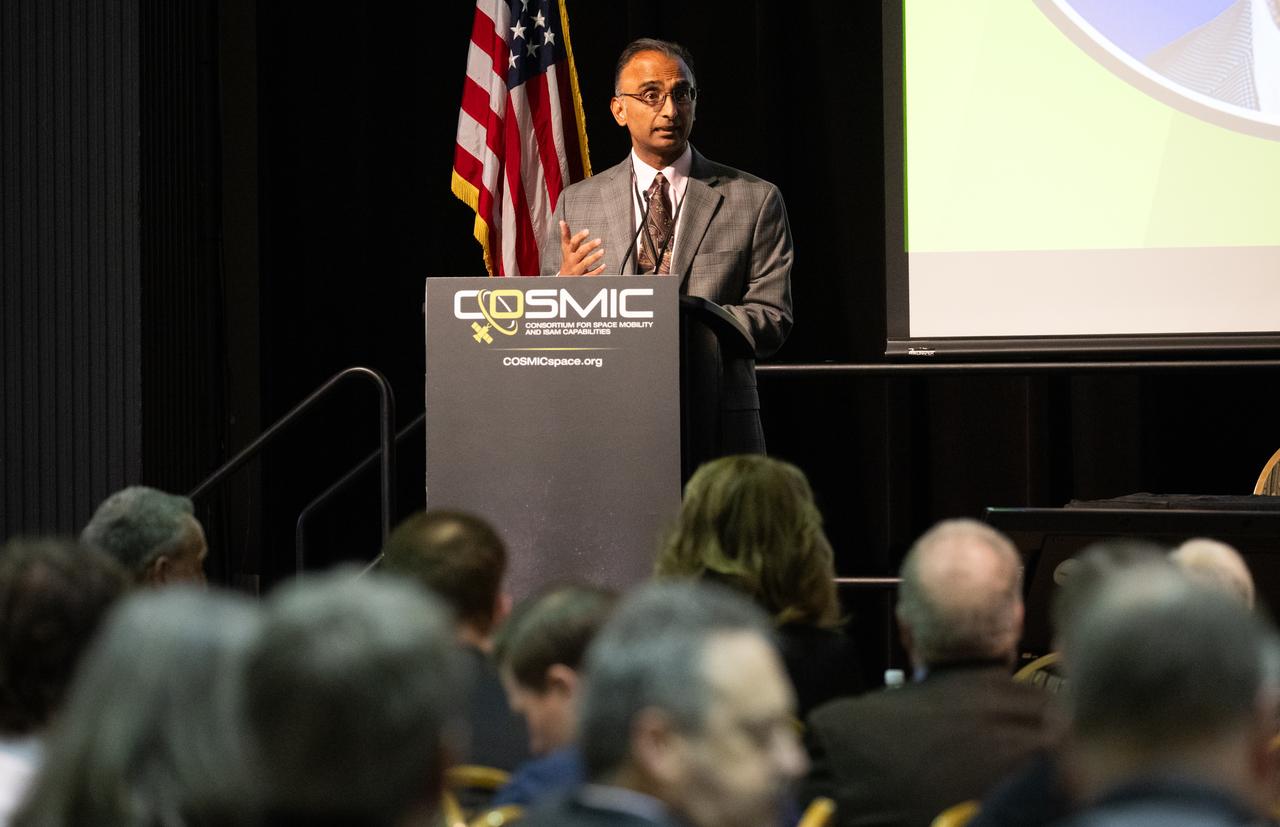
Prasun Desai, acting associate administrator for NASA's Space Technology Mission Directorate, delivers opening remarks at the Consortium for Space Mobility and ISAM Capabilities (COSMIC) workshop, Tuesday, Nov. 7, 2023, at the University of Maryland in College Park, Md. NASA’s Space Technology Mission Directorate formulated and funds COSMIC, aiming to create a nationwide aerospace community alliance that provides global leadership in space mobility and in-space servicing, assembly, and manufacturing (ISAM) for use in Earth orbit, lunar orbit, deep space, and on planetary surfaces. Photo Credit: (NASA/Joel Kowsky)
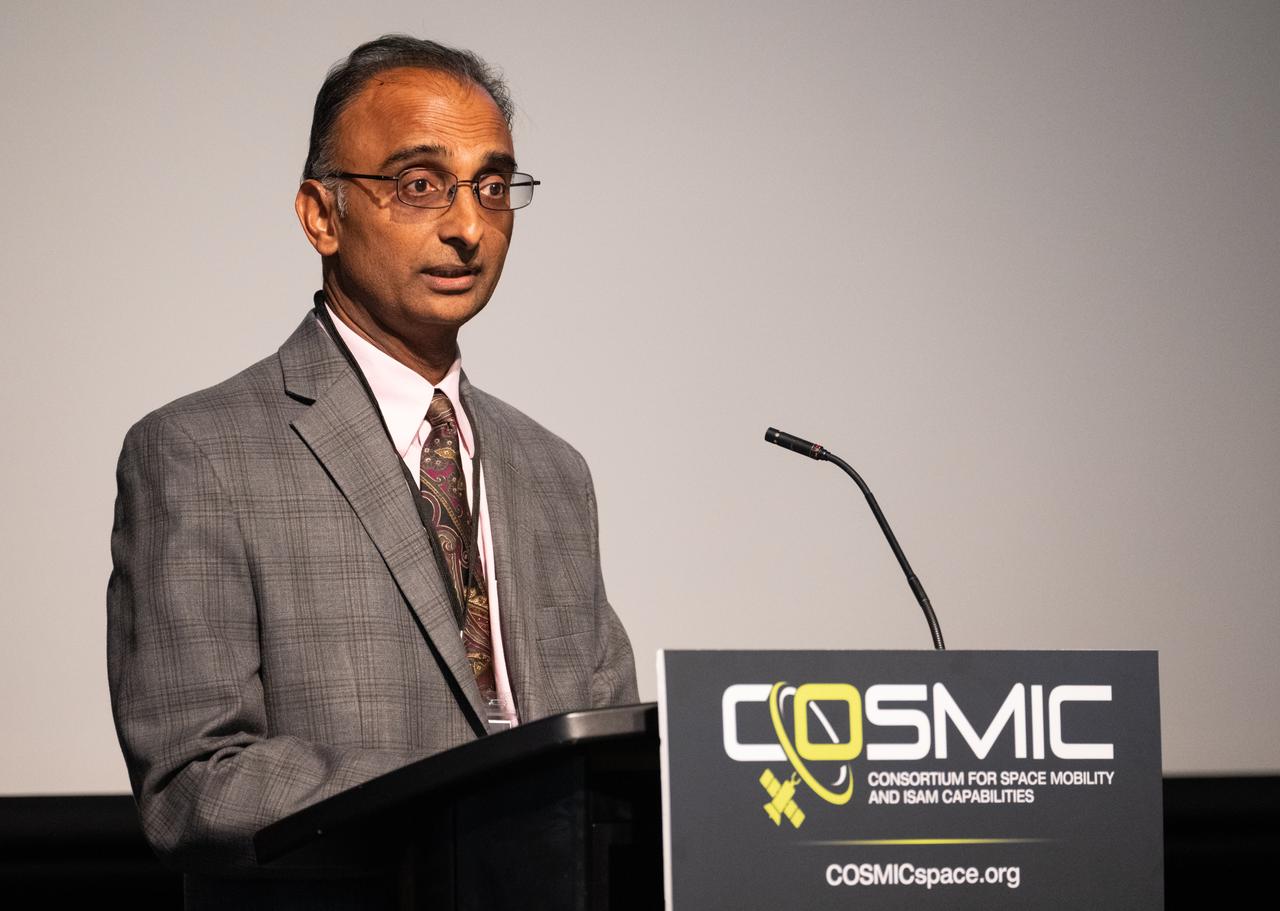
Prasun Desai, acting associate administrator for NASA's Space Technology Mission Directorate, delivers opening remarks at the Consortium for Space Mobility and ISAM Capabilities (COSMIC) workshop, Tuesday, Nov. 7, 2023, at the University of Maryland in College Park, Md. NASA’s Space Technology Mission Directorate formulated and funds COSMIC, aiming to create a nationwide aerospace community alliance that provides global leadership in space mobility and in-space servicing, assembly, and manufacturing (ISAM) for use in Earth orbit, lunar orbit, deep space, and on planetary surfaces. Photo Credit: (NASA/Joel Kowsky)
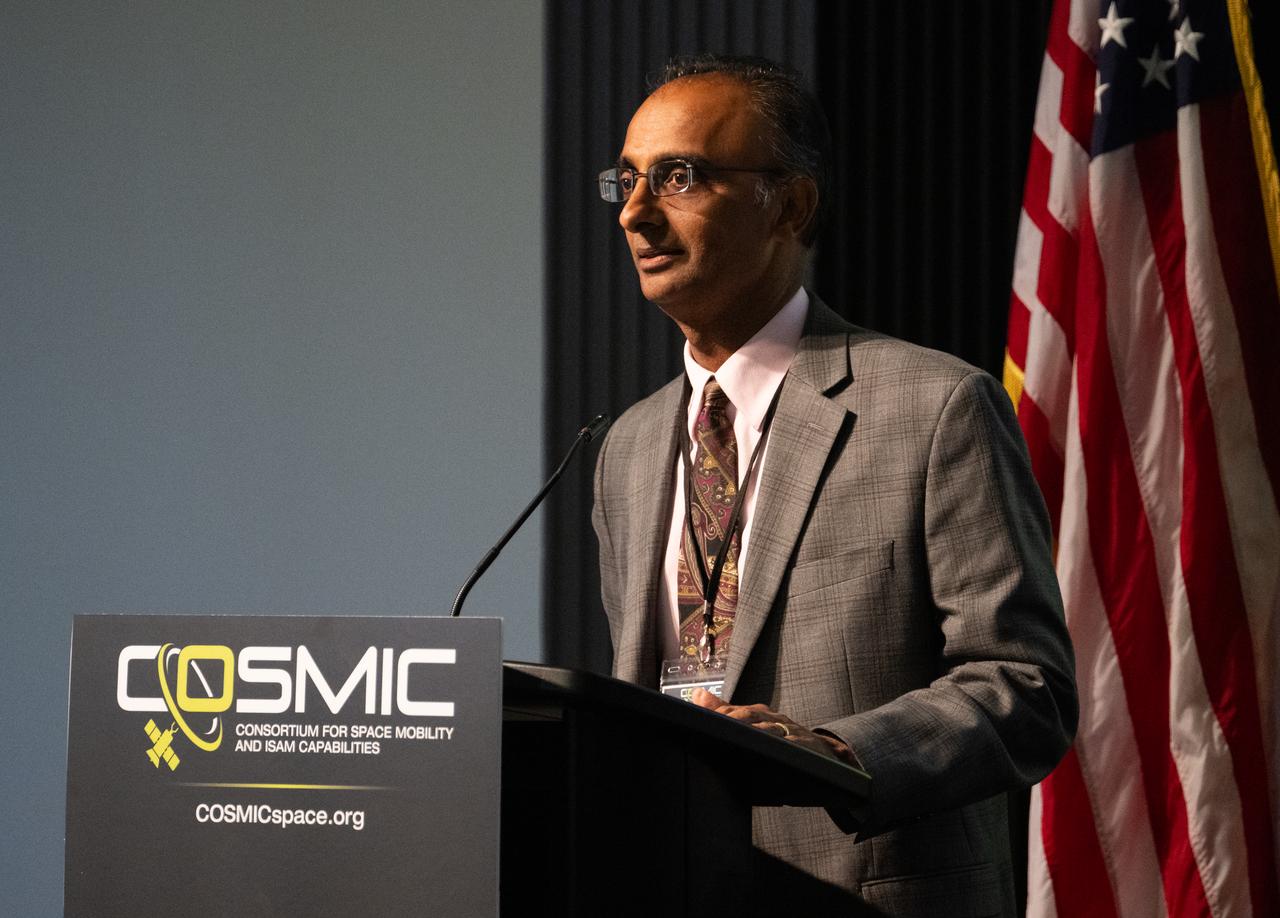
Prasun Desai, acting associate administrator for NASA's Space Technology Mission Directorate, delivers opening remarks at the Consortium for Space Mobility and ISAM Capabilities (COSMIC) workshop, Tuesday, Nov. 7, 2023, at the University of Maryland in College Park, Md. NASA’s Space Technology Mission Directorate formulated and funds COSMIC, aiming to create a nationwide aerospace community alliance that provides global leadership in space mobility and in-space servicing, assembly, and manufacturing (ISAM) for use in Earth orbit, lunar orbit, deep space, and on planetary surfaces. Photo Credit: (NASA/Joel Kowsky)
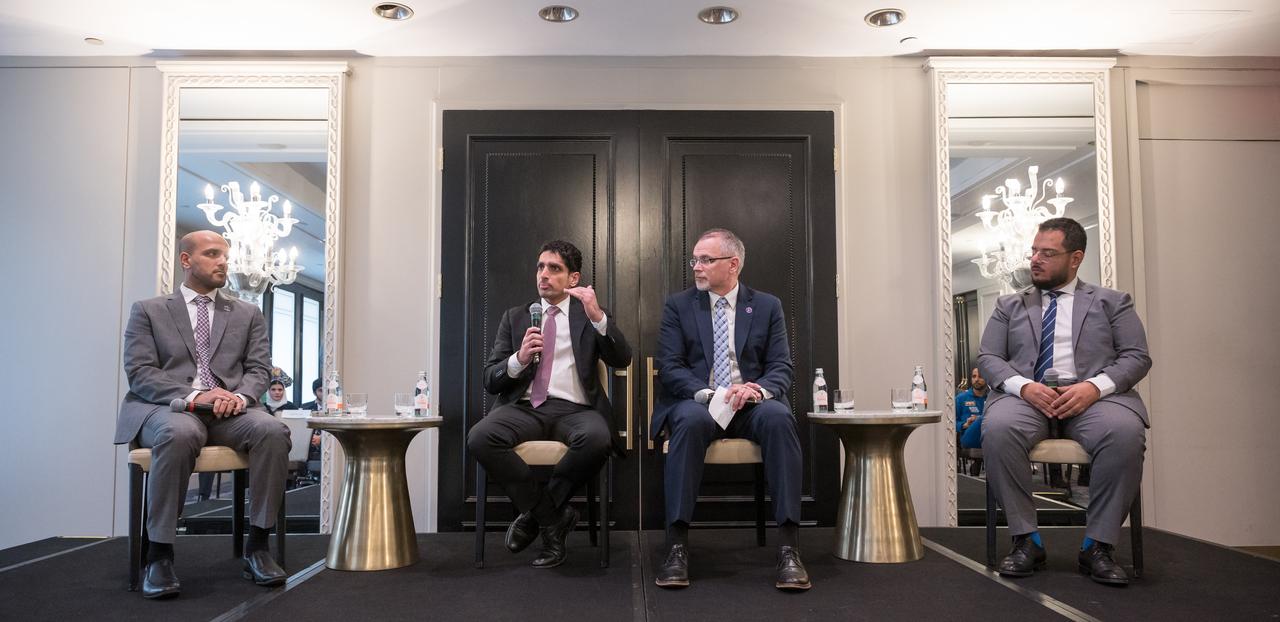
Senior Director of the Space Engineering Department, MBRSC, Amer Al Sayegh, left, UAE Assistant Minister of Foreign Affairs and International Cooperation for Advanced Science and Technology, Omran Sharaf, NASA Associate Administrator Jim Free, and Director of Space Missions Department, UAESA, Mohsen Al Awadhi, right, participate in a panel discussion during an event celebrating UAE-US collaboration in space, Friday, March 8, 2024, at the Four Seasons Hotel in Washington. Photo Credit: (NASA/Bill Ingalls)
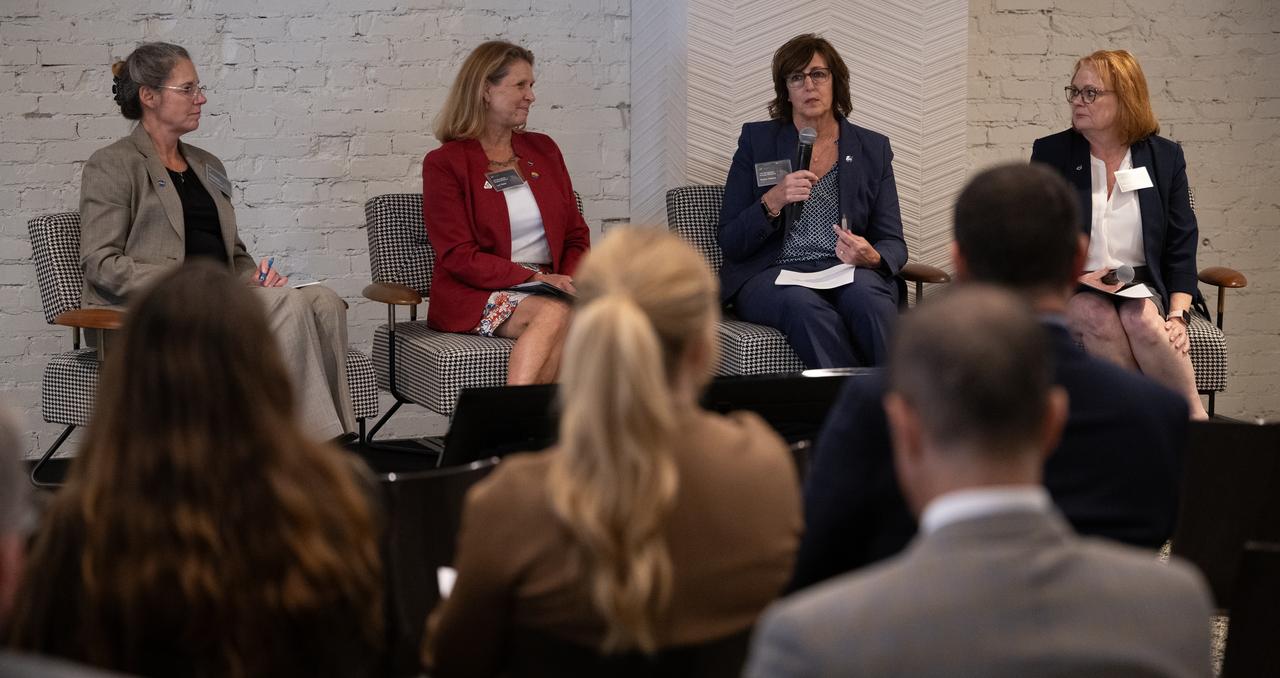
Sandra Connelly, deputy associate administrator for NASA’s Science Mission Directorate, left, Lori Glaze, acting deputy associate administrator for NASA’s Exploration Systems Development Mission Directorate, Robyn Gatens, director of the International Space Station at NASA Headquarters, and Carrie Olsen, manager of the Next Gen STEM project for NASA’s Office of STEM Engagement, discuss key takeaways at the conclusion of NASA’s LEO Microgravity Strategy Industry and Academia Workshop, Friday, Sept. 13, 2024, at Convene in Washington. NASA’s LEO Microgravity Strategy effort aims to develop and document an objectives-based approach toward the next generation of human presence in low Earth orbit to advance microgravity science, technology, and exploration. Photo Credit: (NASA/Joel Kowsky)
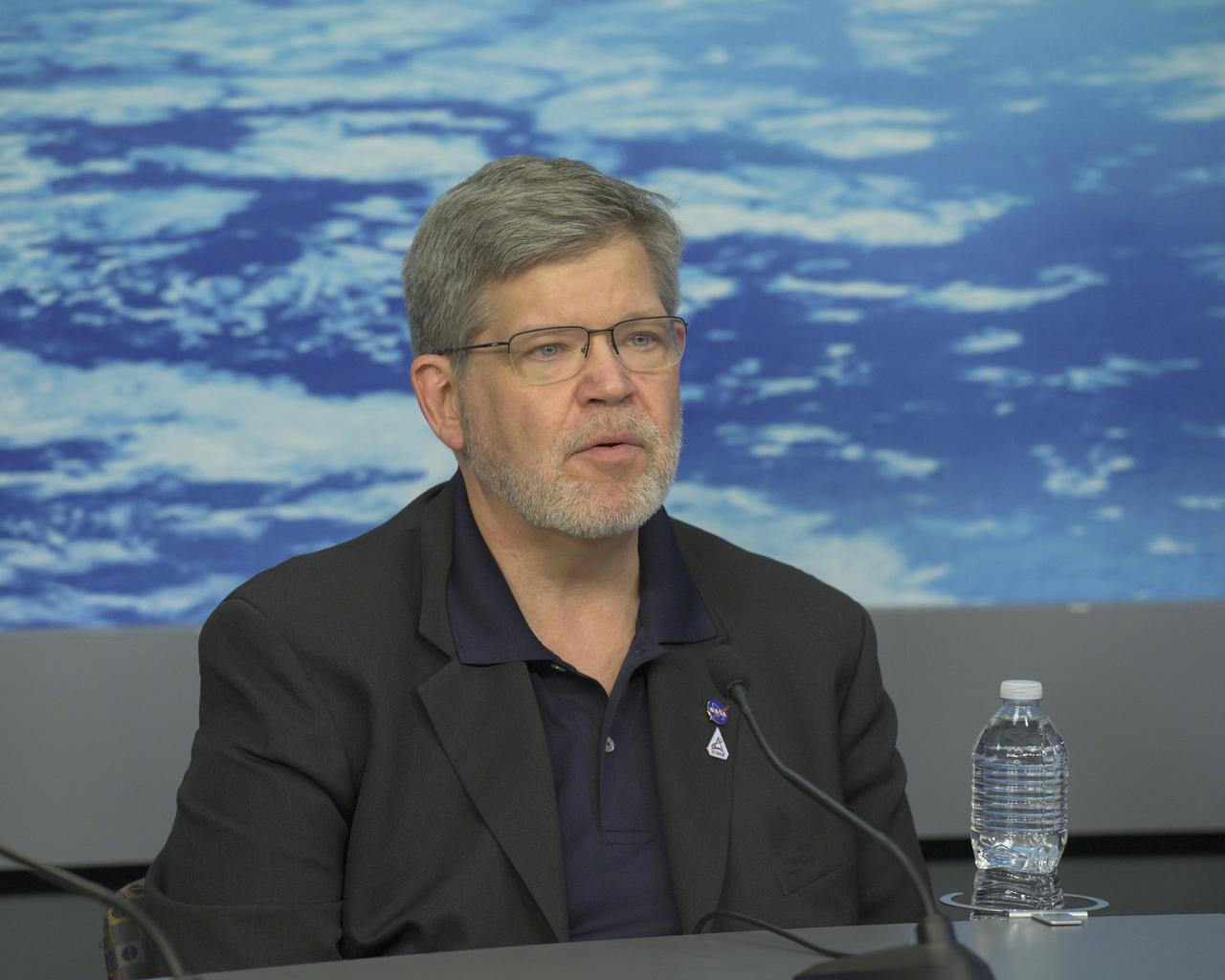
Joel Kearns, deputy associate administrator for Exploration, Science Mission Directorate, NASA Headquarters, participates in a news conference Feb. 23, 2024, at the agency’s Johnson Space Center in Houston. Kearns was on hand to discuss the NASA science and technology aboard Intuitive Machines’ Nova-C lander, called Odysseus, and its successful soft landing on the Moon Feb. 22, 2024. The mission is the first landing under NASA’s CLPS (Commercial Lunar Payload Services) initiative, and the first American lunar landing in more than 50 years.
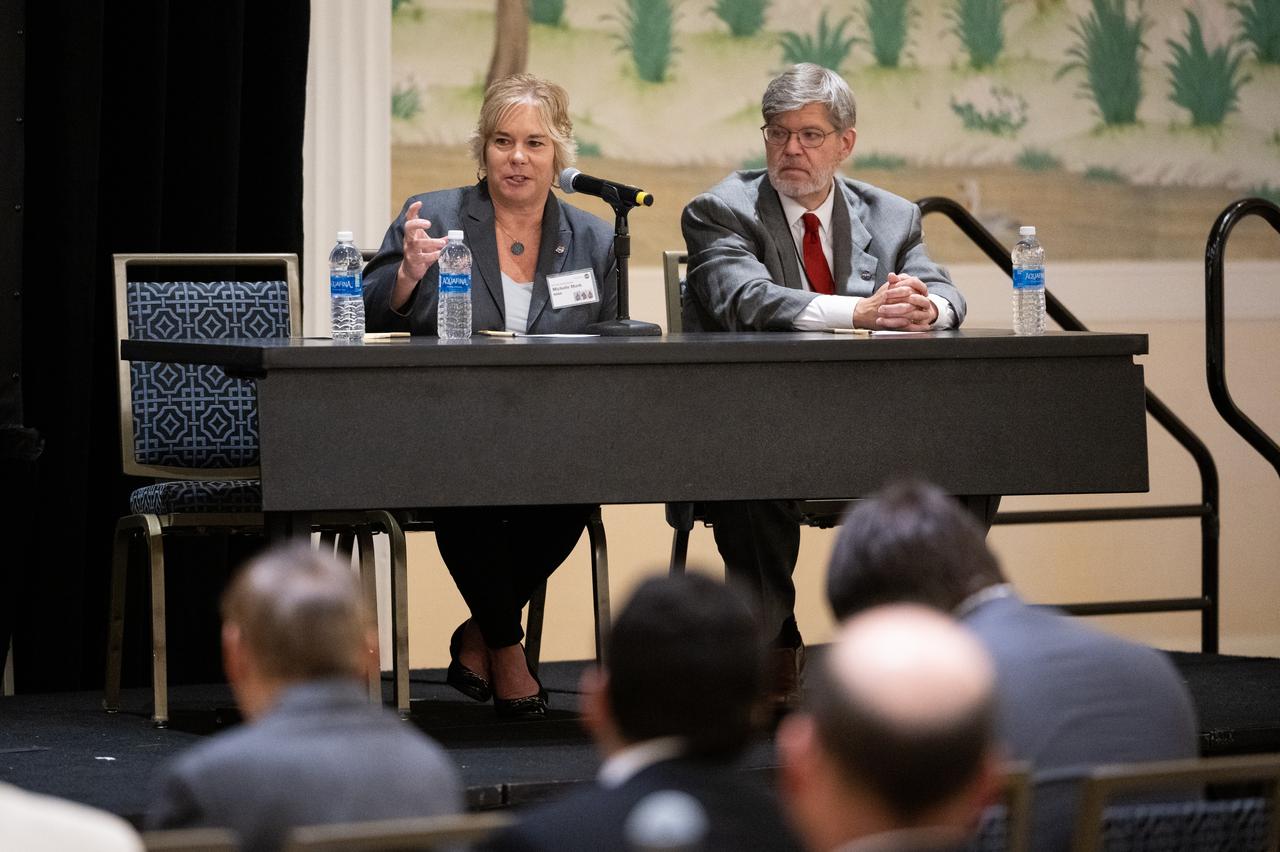
Michelle Munk, chief architect for NASA’s Space Technology Mission Directorate, left, answers a question alongside Joel Kearns, deputy associate administrator for Exploration in NASA's Science Mission Directorate, during NASA’s Moon to Mars Architecture Workshop, Tuesday, June 27, 2023, at the Gaylord National Resort and Convention Center in National Harbor, Md. Following the release of the 2022 Architecture Concept Review, NASA is conducting the workshop to engage the broader space community and collect feedback from U.S. industry and academia to inform the Moon to Mars mission architecture and operational delivery. Photo Credit: (NASA/Joel Kowsky)
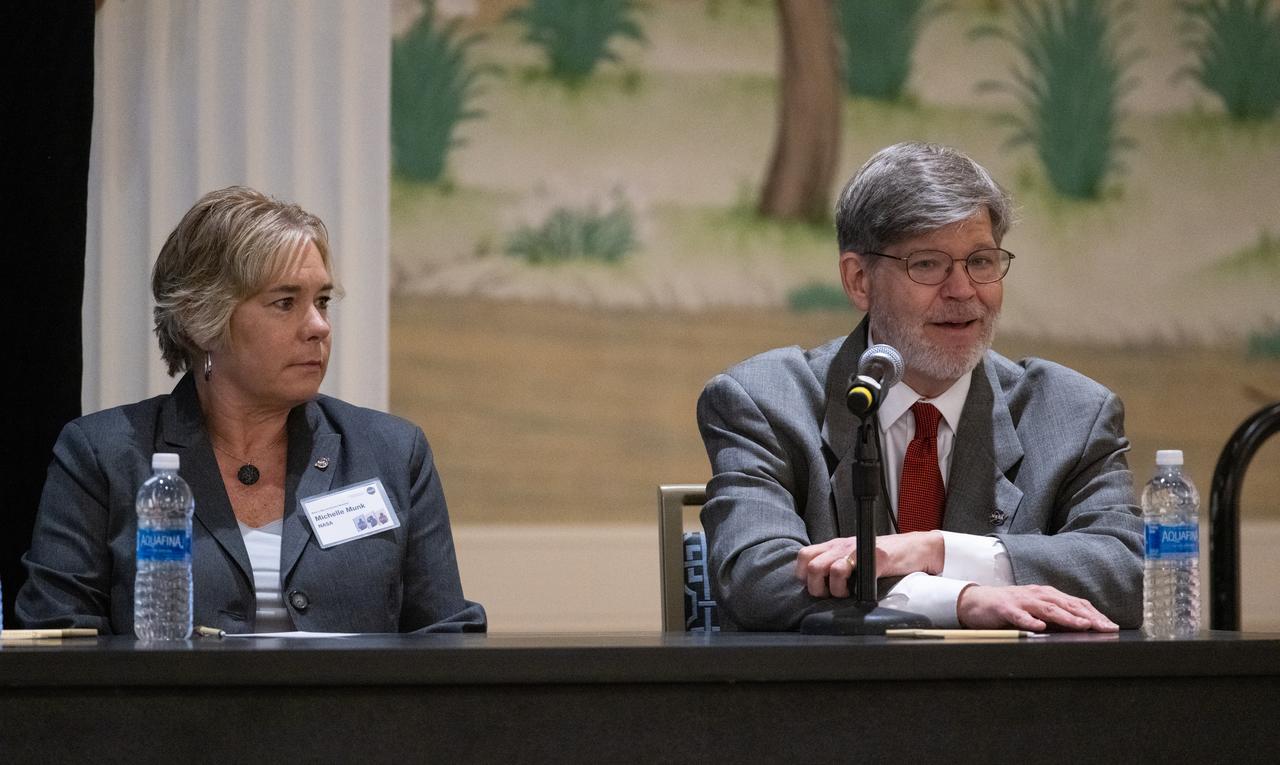
Michelle Munk, chief architect for NASA’s Space Technology Mission Directorate, left, and Joel Kearns, deputy associate administrator for Exploration in NASA's Science Mission Directorate, are seen during NASA’s Moon to Mars Architecture Workshop, Tuesday, June 27, 2023, at the Gaylord National Resort and Convention Center in National Harbor, Md. Following the release of the 2022 Architecture Concept Review, NASA is conducting the workshop to engage the broader space community and collect feedback from U.S. industry and academia to inform the Moon to Mars mission architecture and operational delivery. Photo Credit: (NASA/Joel Kowsky)
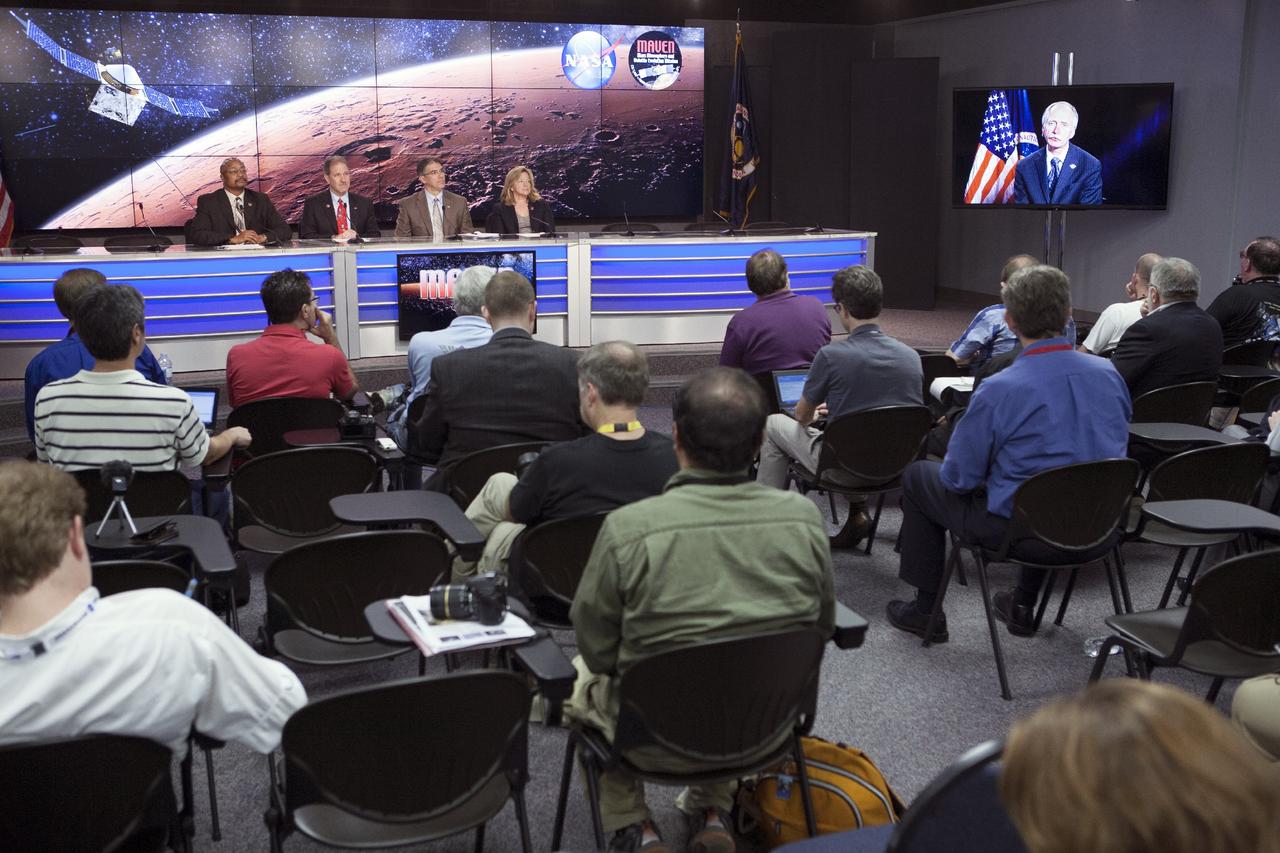
CAPE CANAVERAL, Fla. – During a news conference at NASA's Kennedy Space Center in Florida, officials outlined the agency’s plans for future human spaceflight, including an expedition to Mars. Participating in the briefing, from the left are, Dwayne Brown, NASA Public Affairs, John Grunsfeld, NASA associate administrator for the Science Mission Directorate, Michael Gazarik, associate administrator for the Space Technology Mission Directorate and Ellen Stofan, NASA chief scientist. William Gerstenmaier, associate administrator for Human Exploration and Operations participated via television from NASA Headquarters. The briefing took place the day prior to launch of the Mars Atmosphere and Volatile EvolutioN, or MAVEN, mission. MAVEN is being prepared for its scheduled launch on Nov 18, 2013 from Cape Canaveral Air Force Station, Fla. atop a United Launch Alliance Atlas V rocket. Positioned in an orbit above the Red Planet, MAVEN will study the upper atmosphere of Mars in unprecedented detail. For information on the MAVEN mission, visit: http://www.nasa.gov/mission_pages/maven/main/index.html. For more on NASA Human Spaceflight, visit: http://www.spaceflight.nasa.gov/home/index.html. For information on the international Space Station, visit: http://www.nasa.gov/mission_pages/station/main/index.html Photo credit: NASA/Kim Shiflett
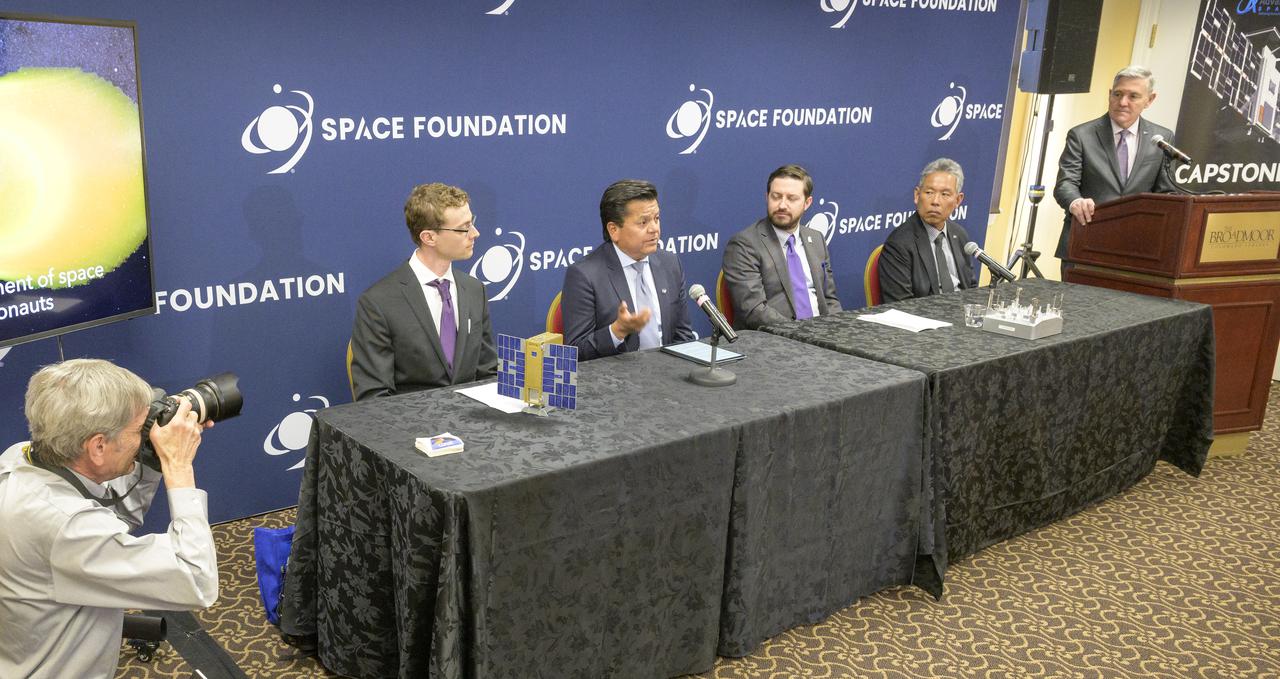
NASA Associate Administrator Bob Cabana, right, moderates a news conference, “Small Satellites, Big Missions: Pathfinding CubeSats Exploring the Moon and Beyond,” during the 37th Space Symposium, Wednesday, April 6, 2022, in Colorado Springs, Colorado. The panel included, from left: Joe Shoer, Lockheed Martin; Andres Martinez, program executive for small spacecraft in NASA’s Exploration Systems Development Mission Directorate; Bradley Cheetham (CEO) Advanced Space; and Elwood Agasid, deputy program manager for Small Spacecraft Technology at Ames Research Center and Space Technology Hall of Fame inductee. Photo Credit: (NASA/Bill Ingalls)
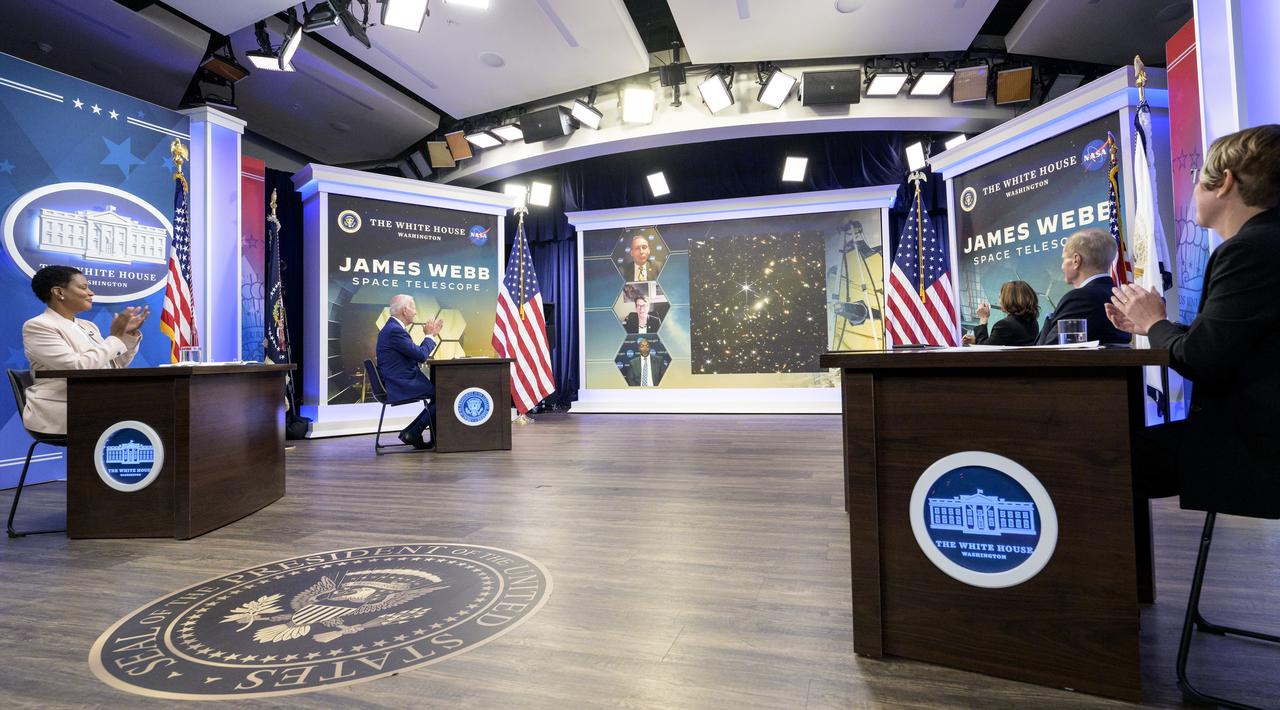
U.S. President Joe Biden and Vice President Kamala Harris preview the first full-color image from NASA’s James Webb Space Telescope, the highest-resolution image of the infrared universe in history, Monday, July 11, 2022, in the South Court Auditorium in the Eisenhower Executive Office Building on the White House complex in Washington. Joining the President and Vice President was Director of the White House Office of Science and Technology Policy (OSTP) Alondra Nelson, left, NASA Administrator Bill Nelson, and NASA James Webb Space Telescope Operations Project Scientist Jane Rigby, right, as well as on screen are NASA Associate Administrator for the Science Mission Directorate Thomas Zurbuchen, top, Deputy Director of the Space Telescope Science Institute (STScI) Nancy Levenson, and NASA James Webb Space Telescope Program Director Greg Robinson, bottom. Photo Credit: (NASA/Bill Ingalls)
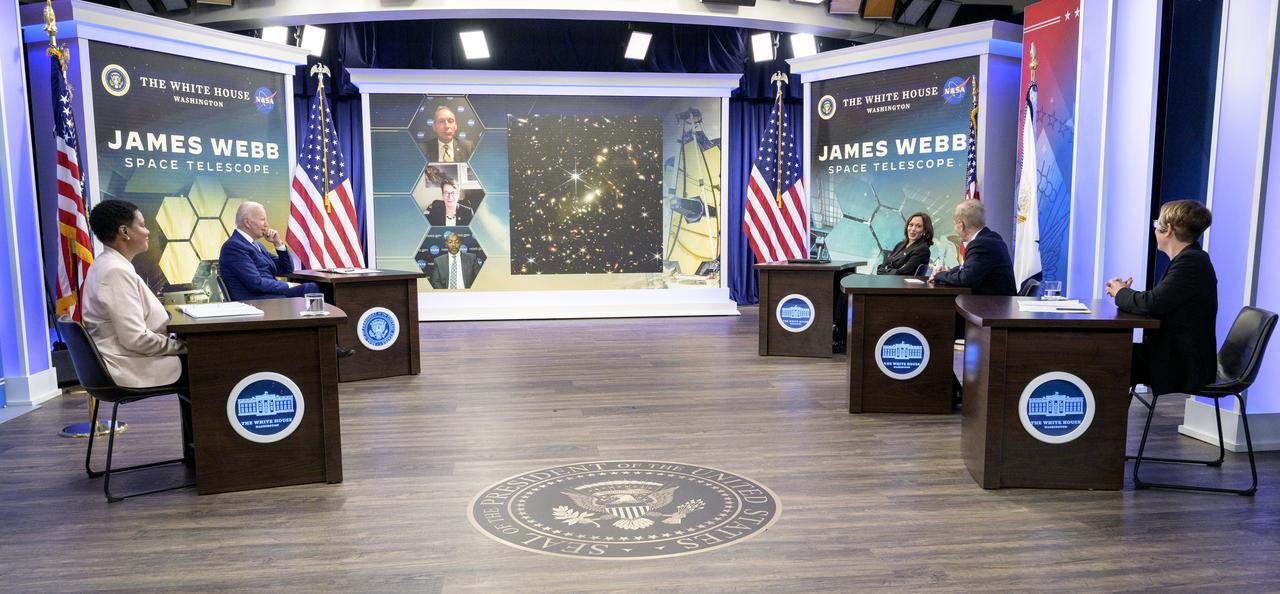
U.S. President Joe Biden and Vice President Kamala Harris preview the first full-color image from NASA’s James Webb Space Telescope, the highest-resolution image of the infrared universe in history, Monday, July 11, 2022, in the South Court Auditorium in the Eisenhower Executive Office Building on the White House complex in Washington. Joining the President and Vice President was Director of the White House Office of Science and Technology Policy (OSTP) Alondra Nelson, left, NASA Administrator Bill Nelson, and NASA James Webb Space Telescope Operations Project Scientist Jane Rigby, right, as well as on screen are NASA Associate Administrator for the Science Mission Directorate Thomas Zurbuchen, top, Deputy Director of the Space Telescope Science Institute (STScI) Nancy Levenson, and NASA James Webb Space Telescope Program Director Greg Robinson, bottom. Photo Credit: (NASA/Bill Ingalls)
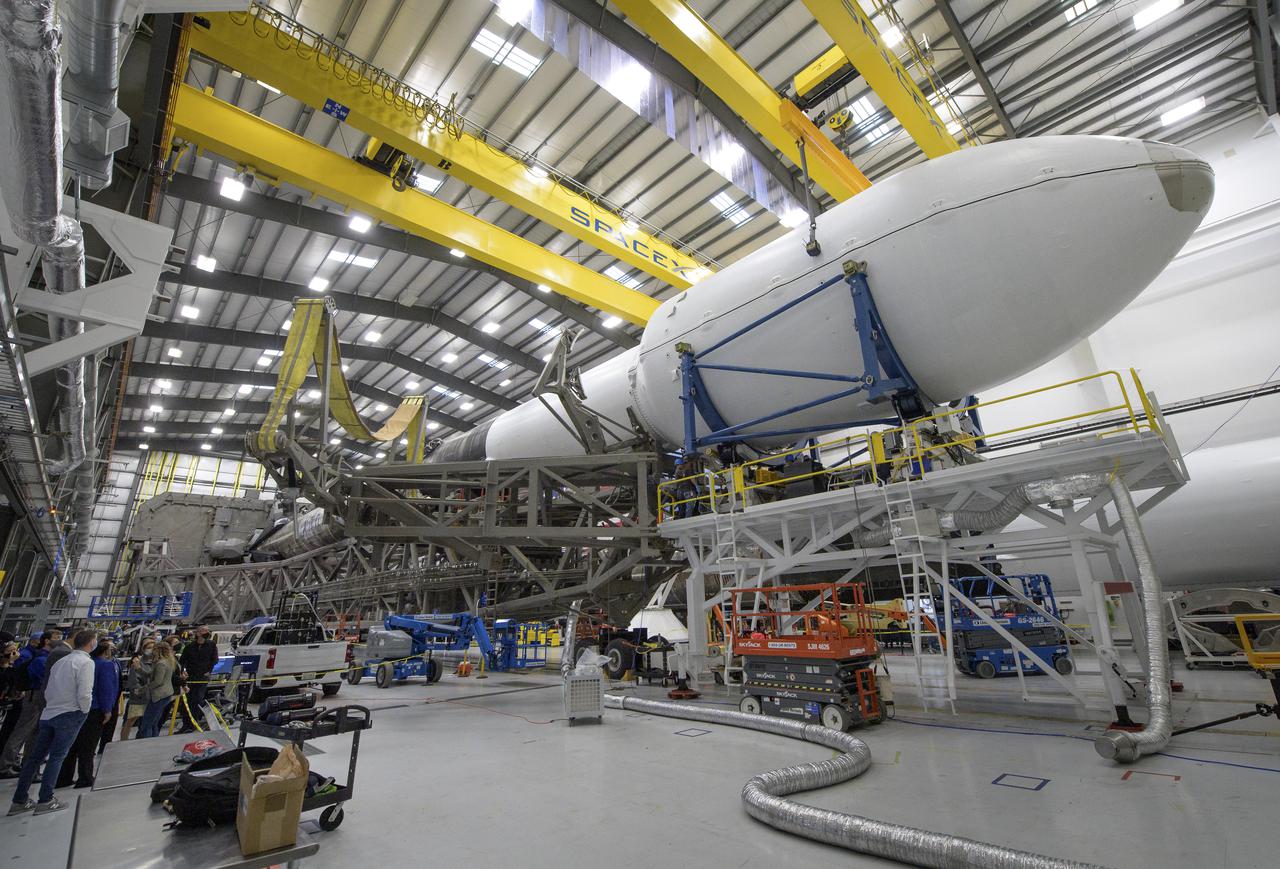
The Falcon 9 rocket and DART spacecraft readied for launch are seen as NASA Associate Administrator for the Science Mission Directorate Thomas Zurbuchen, and other NASA leadership get a tour from Julianna Scheiman, director for civil satellite missions, SpaceX, Monday, Nov. 22, 2021, at the SpaceX hanger, Vandenberg Space Force Base in California. DART is the world’s first full-scale planetary defense test, demonstrating one method of asteroid deflection technology. The mission was built and is managed by the Johns Hopkins APL for NASA’s Planetary Defense Coordination Office. Photo Credit: (NASA/Bill Ingalls)
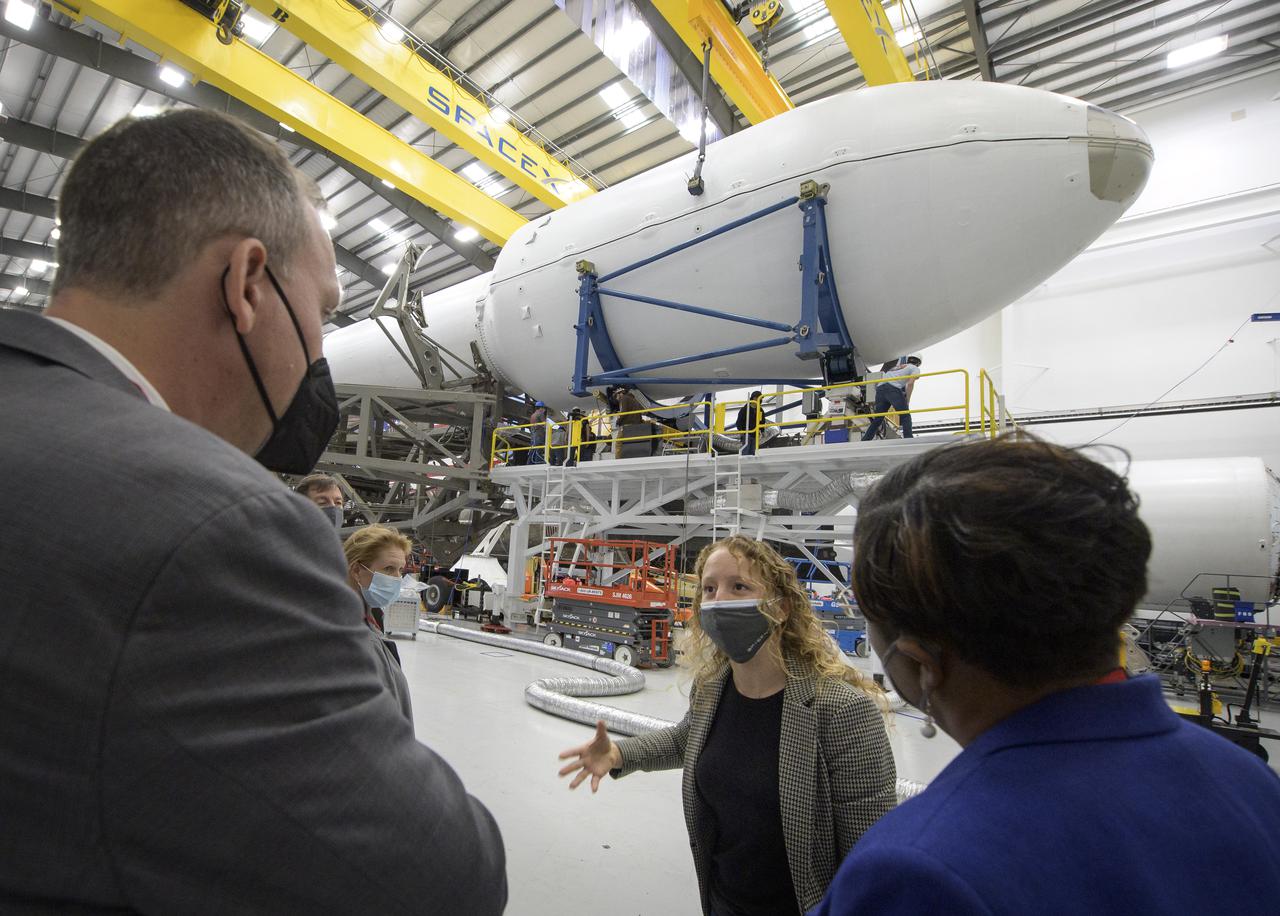
NASA Associate Administrator for the Science Mission Directorate Thomas Zurbuchen, left, and other NASA leadership listen as Julianna Scheiman, director for civil satellite missions at SpaceX, center, gives a tour of the hanger where the Falcon 9 rocket and DART spacecraft are being readied for launch, Monday, Nov. 22, 2021, at Vandenberg Space Force Base in California. DART is the world’s first full-scale planetary defense test, demonstrating one method of asteroid deflection technology. The mission was built and is managed by Johns Hopkins APL for NASA’s Planetary Defense Coordination Office. Photo Credit: (NASA/Bill Ingalls)
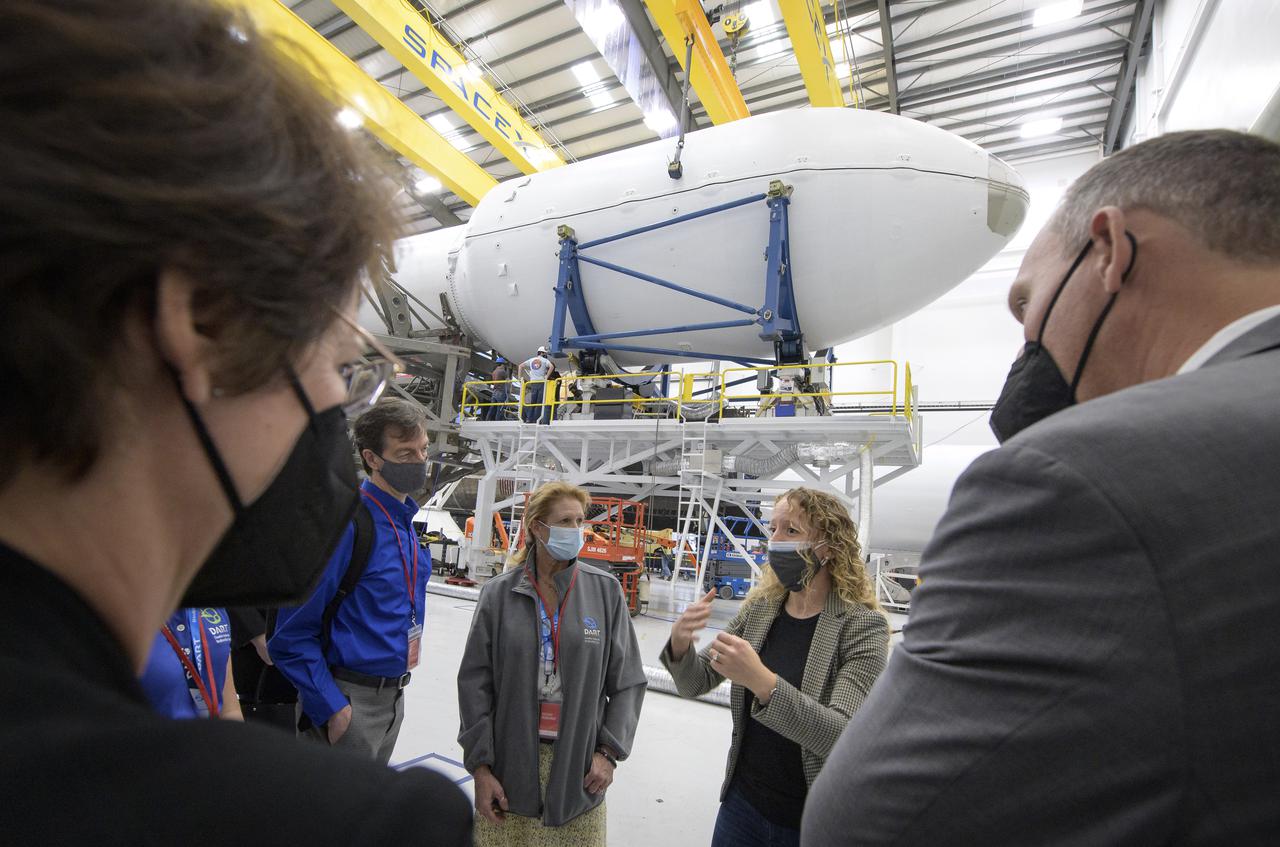
NASA Associate Administrator for the Science Mission Directorate Thomas Zurbuchen, right, and other NASA leadership listen as Julianna Scheiman, director for civil satellite missions, SpaceX, center, gives a tour of the hanger where the Falcon 9 rocket and DART spacecraft are being readied for launch, Monday, Nov. 22, 2021, at Vandenberg Space Force Base in California. DART is the world’s first full-scale planetary defense test, demonstrating one method of asteroid deflection technology. The mission was built and is managed by the Johns Hopkins APL for NASA’s Planetary Defense Coordination Office. Photo Credit: (NASA/Bill Ingalls)
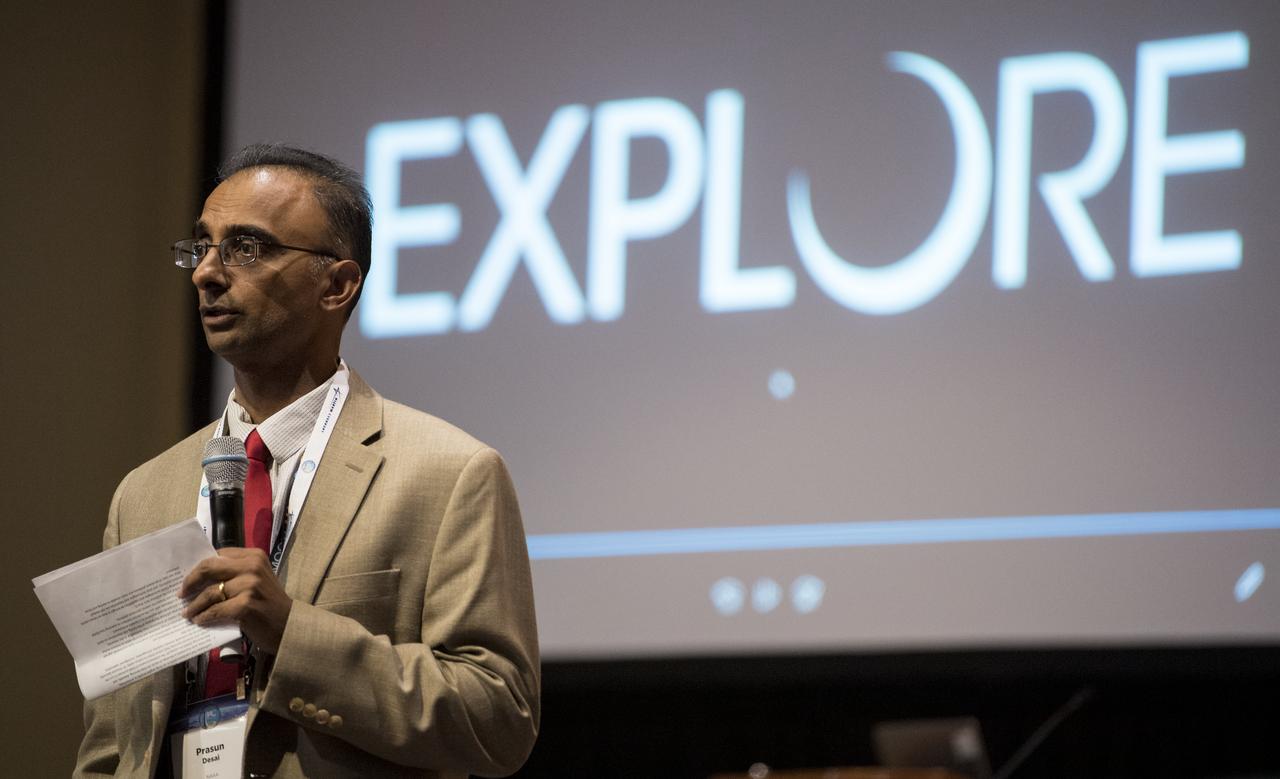
Prasun Desai, Deputy Associate Administrator for Management in NASA’s Space Technology Mission Directorate speaks during a special session titled ”The Immortal Spaceship: A Discussion on the Use Cases and Value of Persistent Platforms” at the 70th International Astronautical Congress, Thursday, Oct. 24, 2019, at the Walter E. Washington Convention Center in Washington. Photo Credit: (NASA/Joel Kowsky)
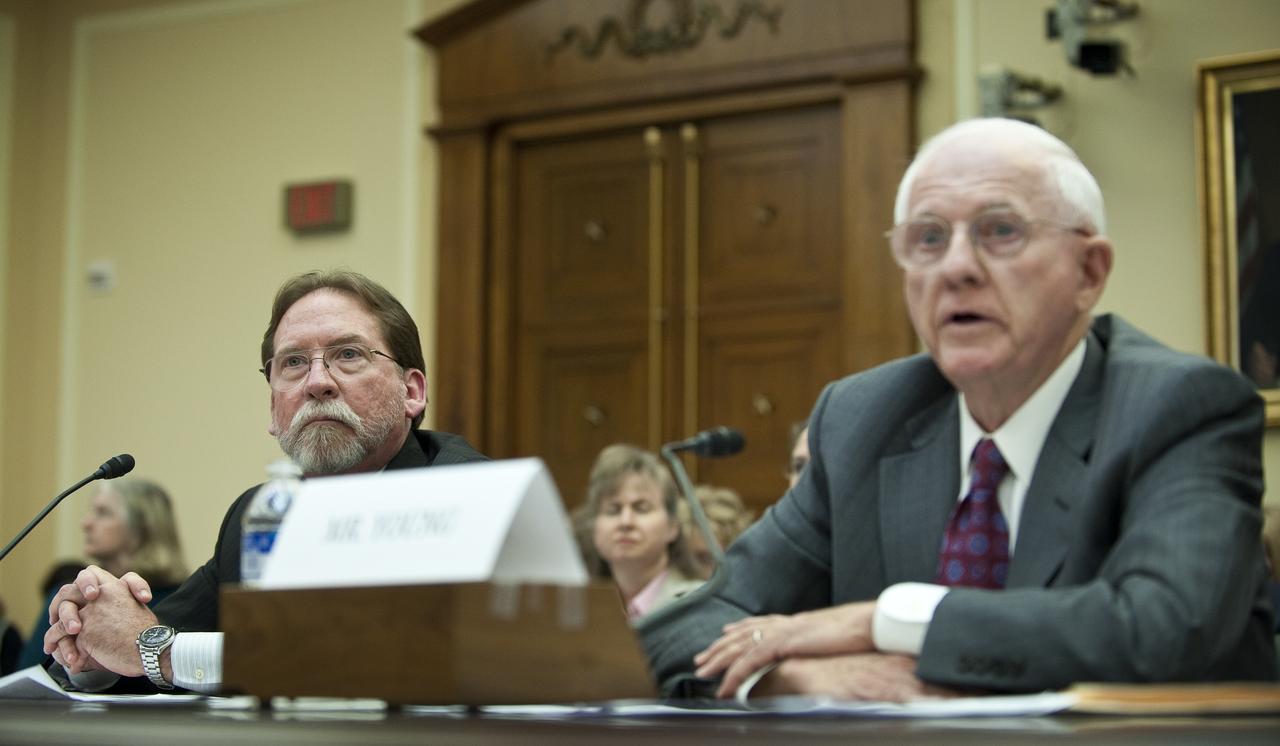
Douglas R. Cooke, left, NASA's Associate Administrator for Exploration Systems Mission Directorate (ESMD) and A. Thomas Young, retired Executive Vice President, Lockheed Martin appear before the U.S. House of Representatives' Committee on Science and Technology, Subcommittee on Space and Aeronautics to discuss proposed changes to NASA's exploration program on Wednesday, March 24, 2010, on Capitol Hill in Washington. Photo Credit: (NASA/Carla Cioffi)
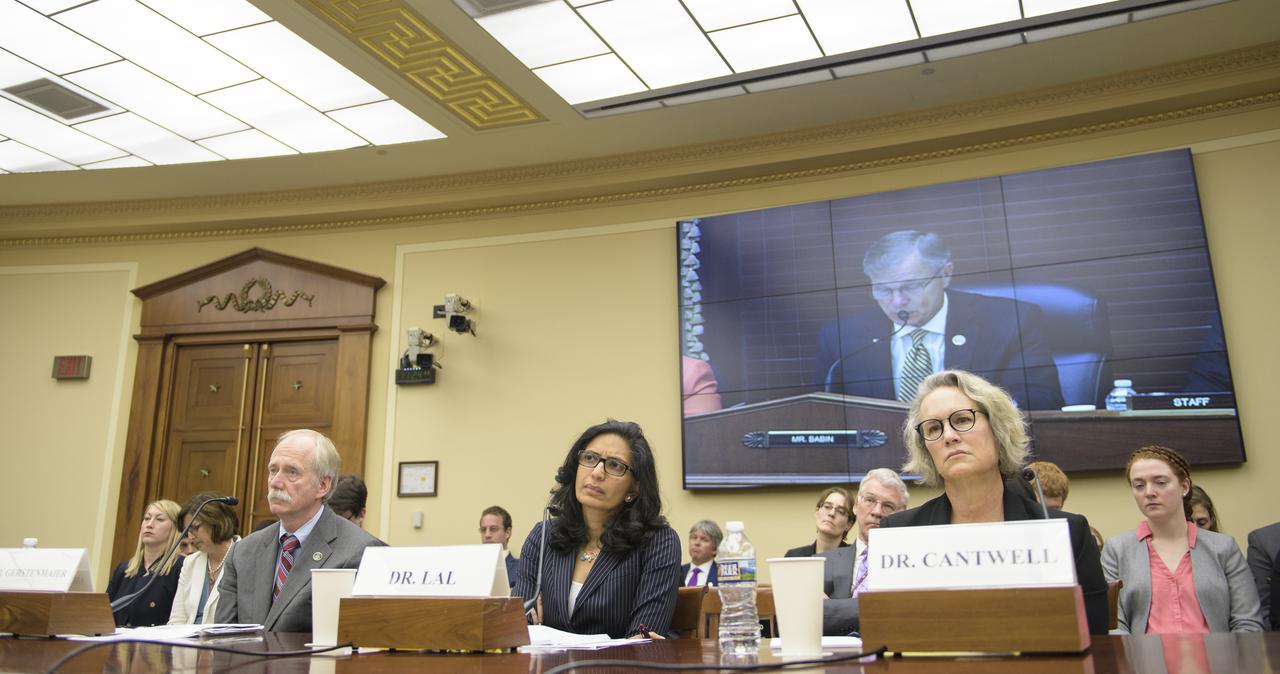
NASA Associate Administrator for the Human Exploration and Operations Mission Directorate William Gerstenmaier, left, Dr. Bhavya Lal, a researcher at the Institute for Defense Analysis's Science and Technology Policy Institute, center, and Dr. Elizabeth Cantwell, chief executive officer at the Arizona State University Research Enterprise, right, listen as Rep. Brian Babin, R-Texas, is seen on screen as he delivers an opening statement during a House Committee on Science, Space, and Technology hearing titled "America's Human Presence in Low-Earth Orbit" on Thursday, May 17, 2018 in the Rayburn House Office Building in Washington. Photo Credit: (NASA/Joel Kowsky)
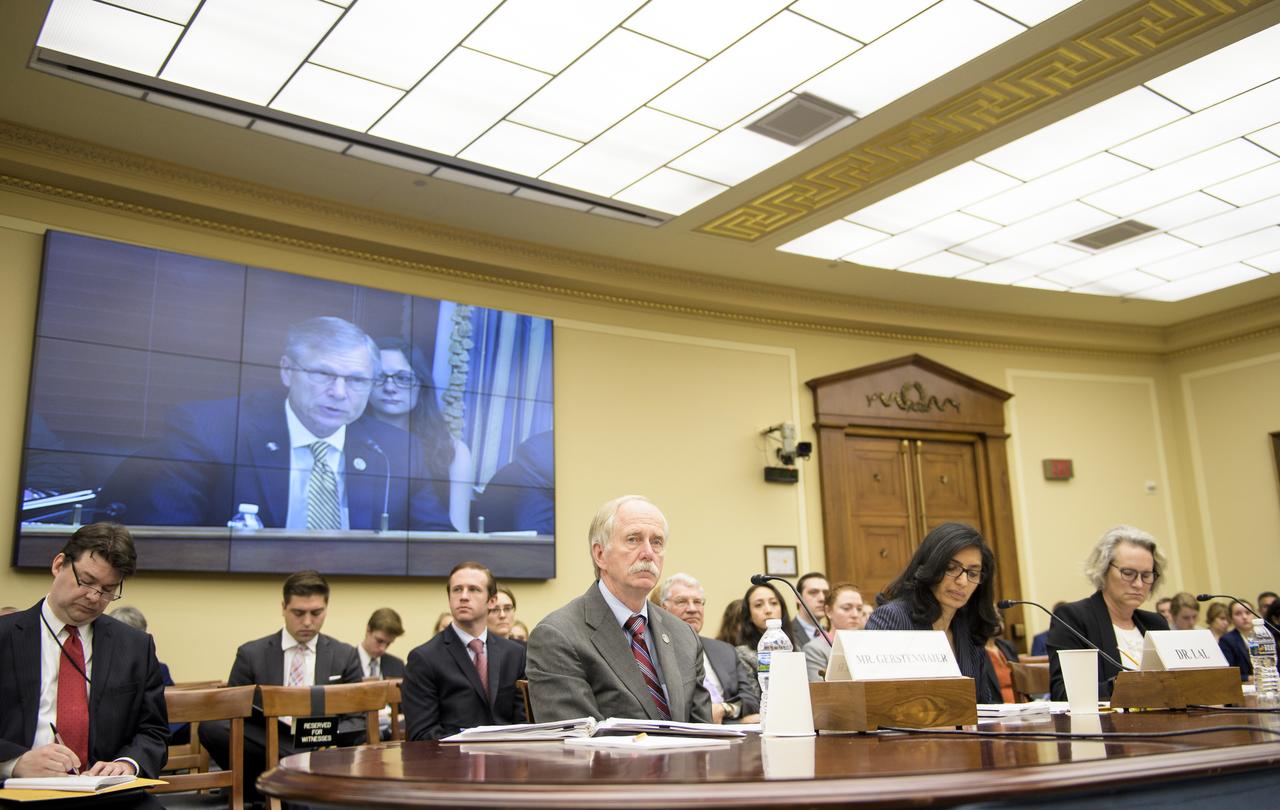
NASA Associate Administrator for the Human Exploration and Operations Mission Directorate William Gerstenmaier, left, Dr. Bhavya Lal, a researcher at the Institute for Defense Analysis's Science and Technology Policy Institute, center, and Dr. Elizabeth Cantwell, chief executive officer at the Arizona State University Research Enterprise, right, listen as Rep. Brian Babin, R-Texas, is seen on screen as he delivers an opening statement during a House Committee on Science, Space, and Technology hearing titled "America's Human Presence in Low-Earth Orbit" on Thursday, May 17, 2018 in the Rayburn House Office Building in Washington. Photo Credit: (NASA/Joel Kowsky)
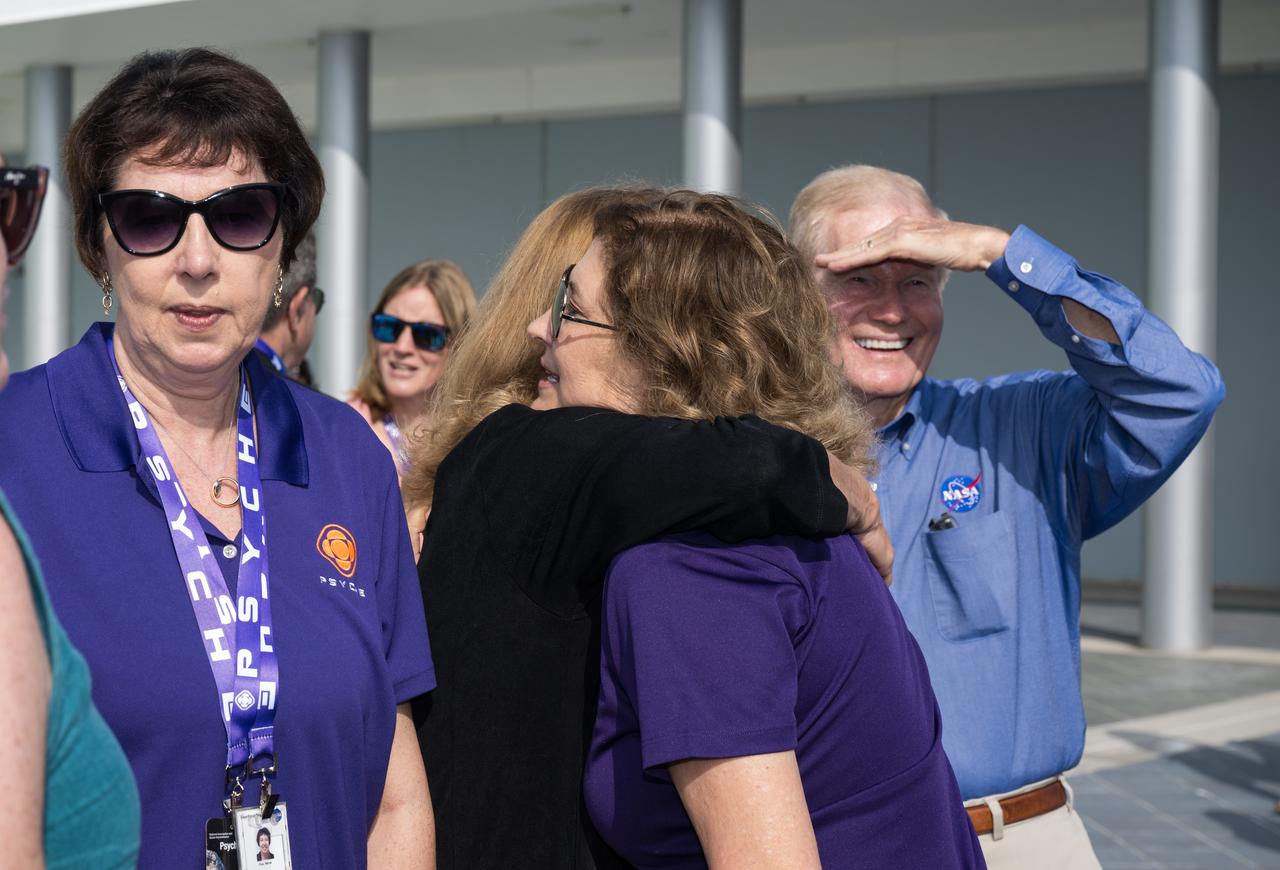
NASA Headquarters Planetary Science Division director Lori Glaze, left, hugs Jet Propulsion Laboratory director Laurie Leshin as NASA Administrator Bill Nelson, right, and Associate Administrator, NASA’s Science Mission Directorate, Nicola Fox watch for the return of the boosters after the launch of a SpaceX Falcon Heavy rocket with the Psyche spacecraft onboard from Launch Complex 39A, Friday, Oct. 13, 2023, at NASA’s Kennedy Space Center in Florida. NASA’s Psyche spacecraft will travel to a metal-rich asteroid by the same name orbiting the Sun between Mars and Jupiter to study it’s composition. The spacecraft also carries the agency's Deep Space Optical Communications technology demonstration, which will test laser communications beyond the Moon. Photo Credit: (NASA/Aubrey Gemignani)
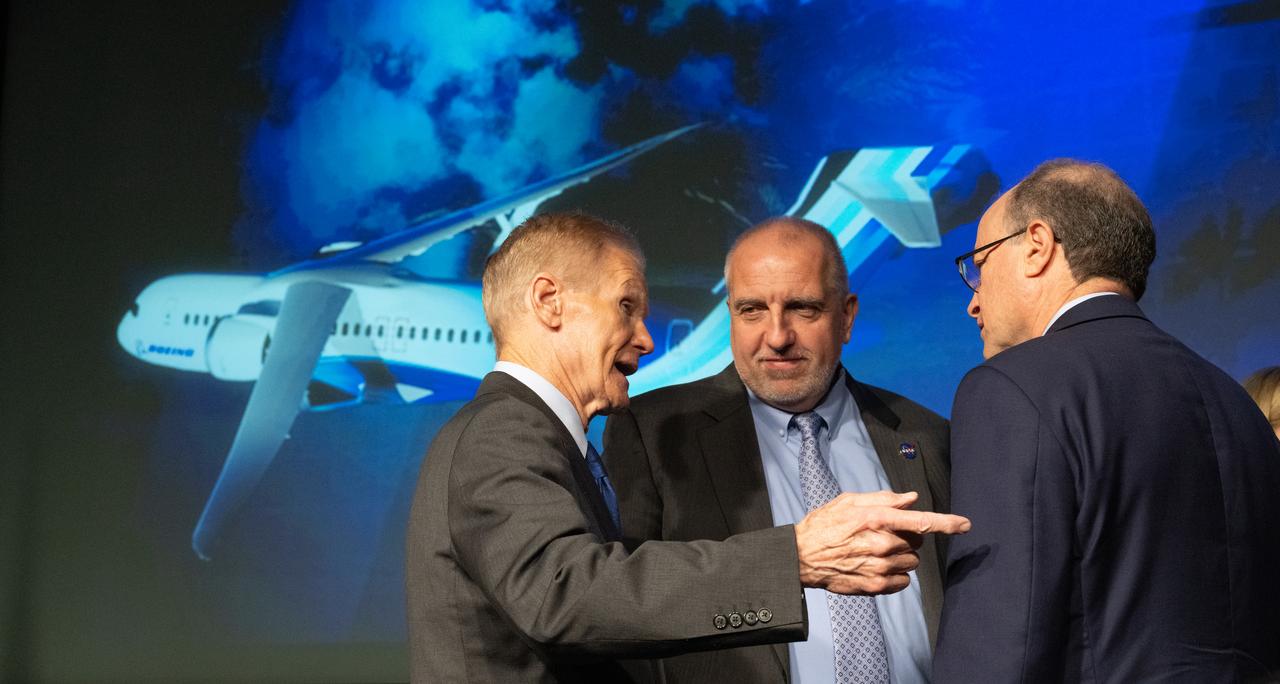
NASA Administrator Bill Nelson, left, Bob Pearce, associate administrator for NASA's Aeronautics Research Mission Directorate, center, and Todd Citron, chief technology officer, The Boeing Company, right, are seen following a news conference on NASA’s Sustainable Flight Demonstrator project, Wednesday, Jan. 18, 2023, at the Mary W. Jackson NASA Headquarters building in Washington, DC. Through a Funded Space Act Agreement, The Boeing company and its industry team will collaborate with NASA to develop and flight-test a full-scale Transonic Truss-Braced Wing demonstrator aircraft. Photo Credit: (NASA/Joel Kowsky)
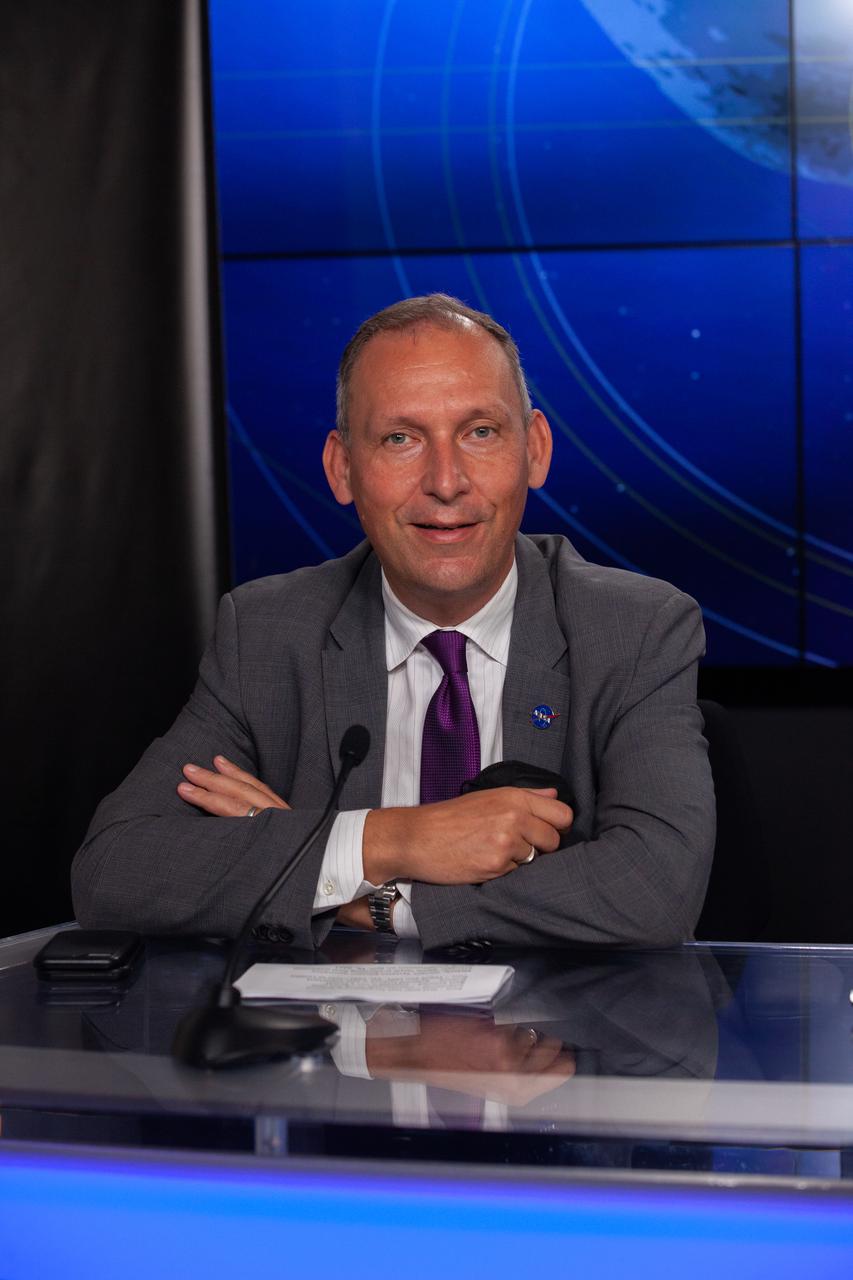
Thomas Zurbuchen, associate administrator for NASA’s Science Mission Directorate, participates in a prelaunch news conference for the agency’s Double Asteroid Redirection Test (DART) mission at Vandenberg Space Force Base in California on Nov. 22, 2021. DART is the first mission to test technologies for preventing an impact of Earth by a hazardous asteroid. The mission is scheduled to launch no earlier than 1:21 a.m. EST Wednesday, Nov. 24 (10:21 p.m. PST Tuesday, Nov. 23), aboard a SpaceX Falcon 9 rocket from Vandenberg. NASA's Launch Services Program based at Kennedy Space Center in Florida, America's multi-user spaceport, is managing the launch.
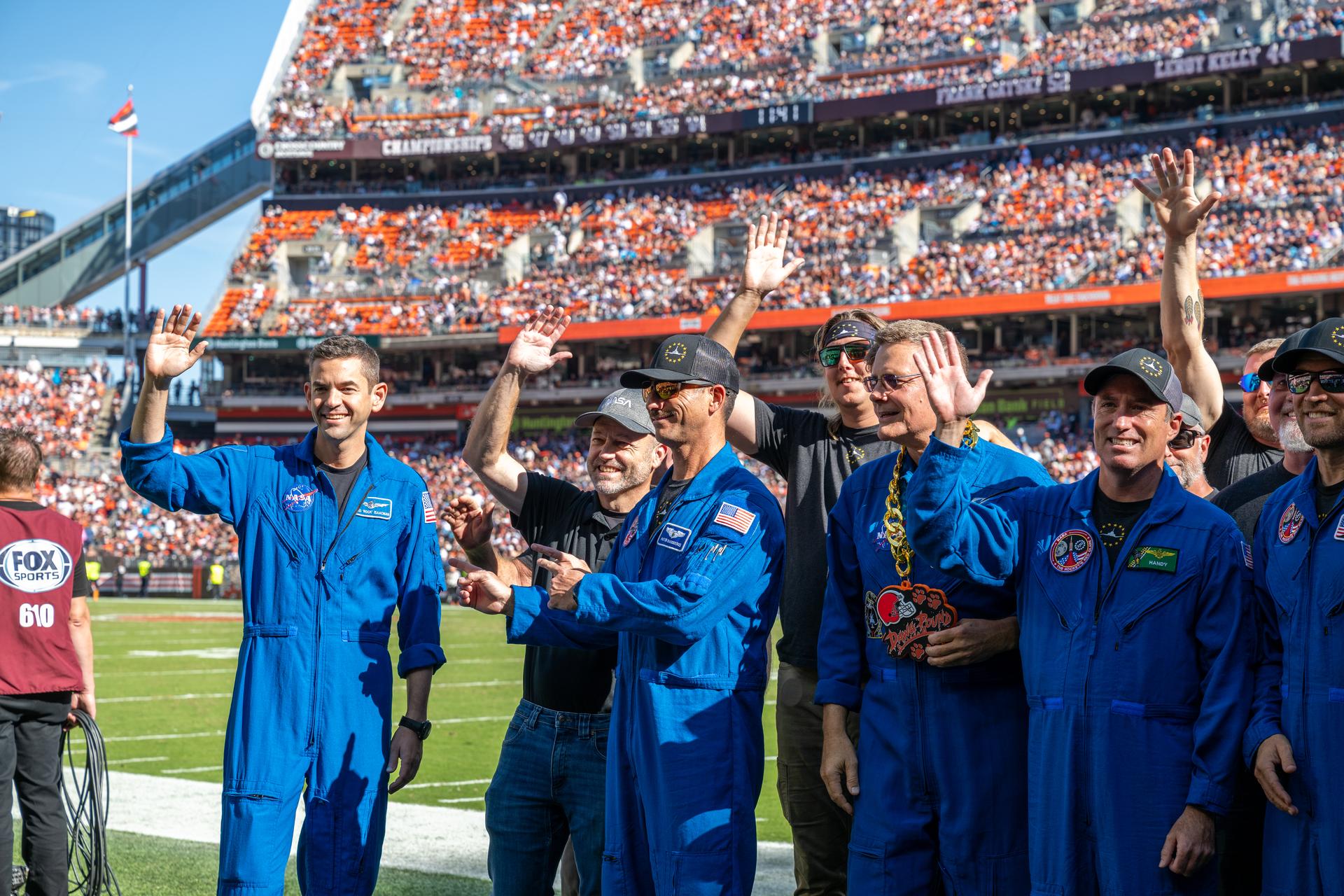
NASA Administrator Jared Isaacman and his Freedom 250 F-5 team (Jerry "Jive" Kerby, Doug "Tut" Demko and other members) along with NASA Astronaut Douglas Wheelock and Associate Administrator, Research and Technology Mission Directorate Dr. James Kenyon wave to fans on the field at an NFL game between the Cleveland Browns and the Carolina Panthers at Huntington Bank Field, Sunday, September 27th, 2026, in Cleveland, Ohio. NASA’s engagement at NFL games is part of the agency’s Inspiration Tour, aimed at strengthening connections between NASA and its partners and showcasing innovation in air and space in the lead up to the MAX POWER aerospace technology expo and airshow at the agency’s Kennedy Space Center in early November. Photo Credit: (NASA/Jordan Cochran)
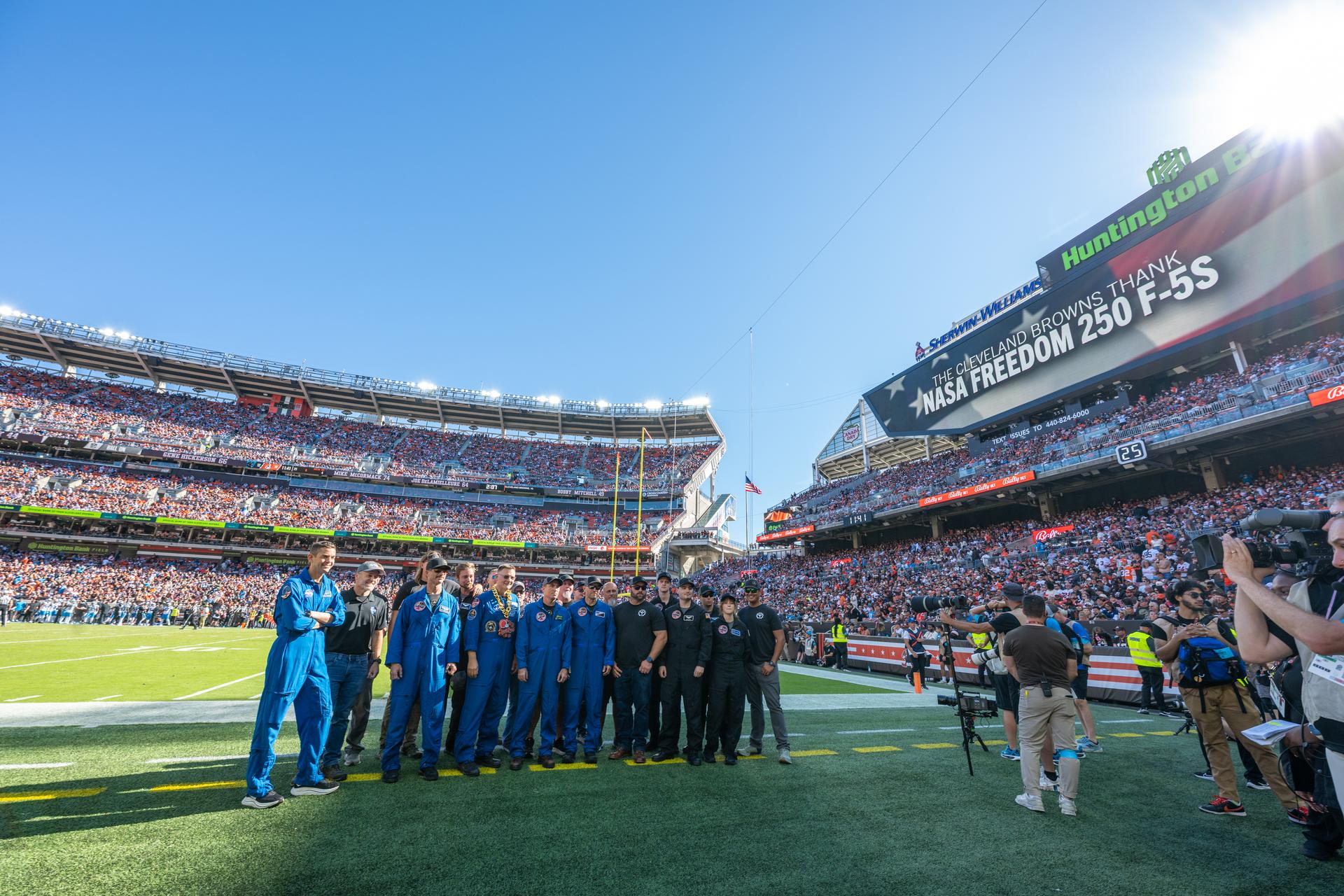
NASA Administrator Jared Isaacman and his Freedom 250 F-5 team (Jerry "Jive" Kerby, Doug "Tut" Demko and other members) along with NASA Astronaut Douglas Wheelock and Associate Administrator, Research and Technology Mission Directorate Dr. James Kenyon wave to fans on the field at an NFL game between the Cleveland Browns and the Carolina Panthers at Huntington Bank Field, Sunday, September 27th, 2026, in Cleveland, Ohio. NASA’s engagement at NFL games is part of the agency’s Inspiration Tour, aimed at strengthening connections between NASA and its partners and showcasing innovation in air and space in the lead up to the MAX POWER aerospace technology expo and airshow at the agency’s Kennedy Space Center in early November. Photo Credit: (NASA/Jordan Cochran)
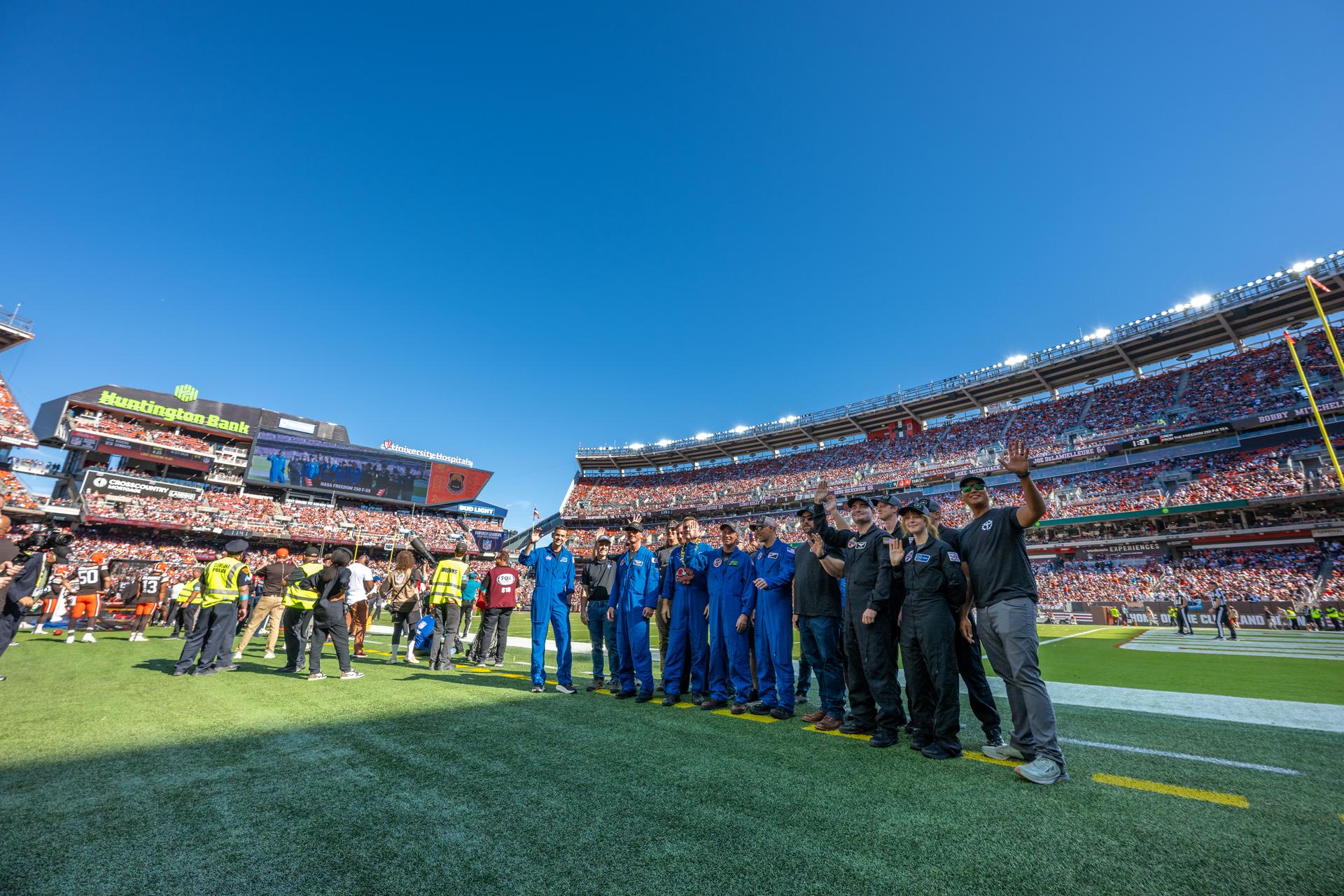
NASA Administrator Jared Isaacman and his Freedom 250 F-5 team (Jerry "Jive" Kerby, Doug "Tut" Demko and other members) along with NASA Astronaut Douglas Wheelock and Associate Administrator, Research and Technology Mission Directorate Dr. James Kenyon wave to fans on the field at an NFL game between the Cleveland Browns and the Carolina Panthers at Huntington Bank Field, Sunday, September 27th, 2026, in Cleveland, Ohio. NASA’s engagement at NFL games is part of the agency’s Inspiration Tour, aimed at strengthening connections between NASA and its partners and showcasing innovation in air and space in the lead up to the MAX POWER aerospace technology expo and airshow at the agency’s Kennedy Space Center in early November. Photo Credit: (NASA/Jordan Cochran)
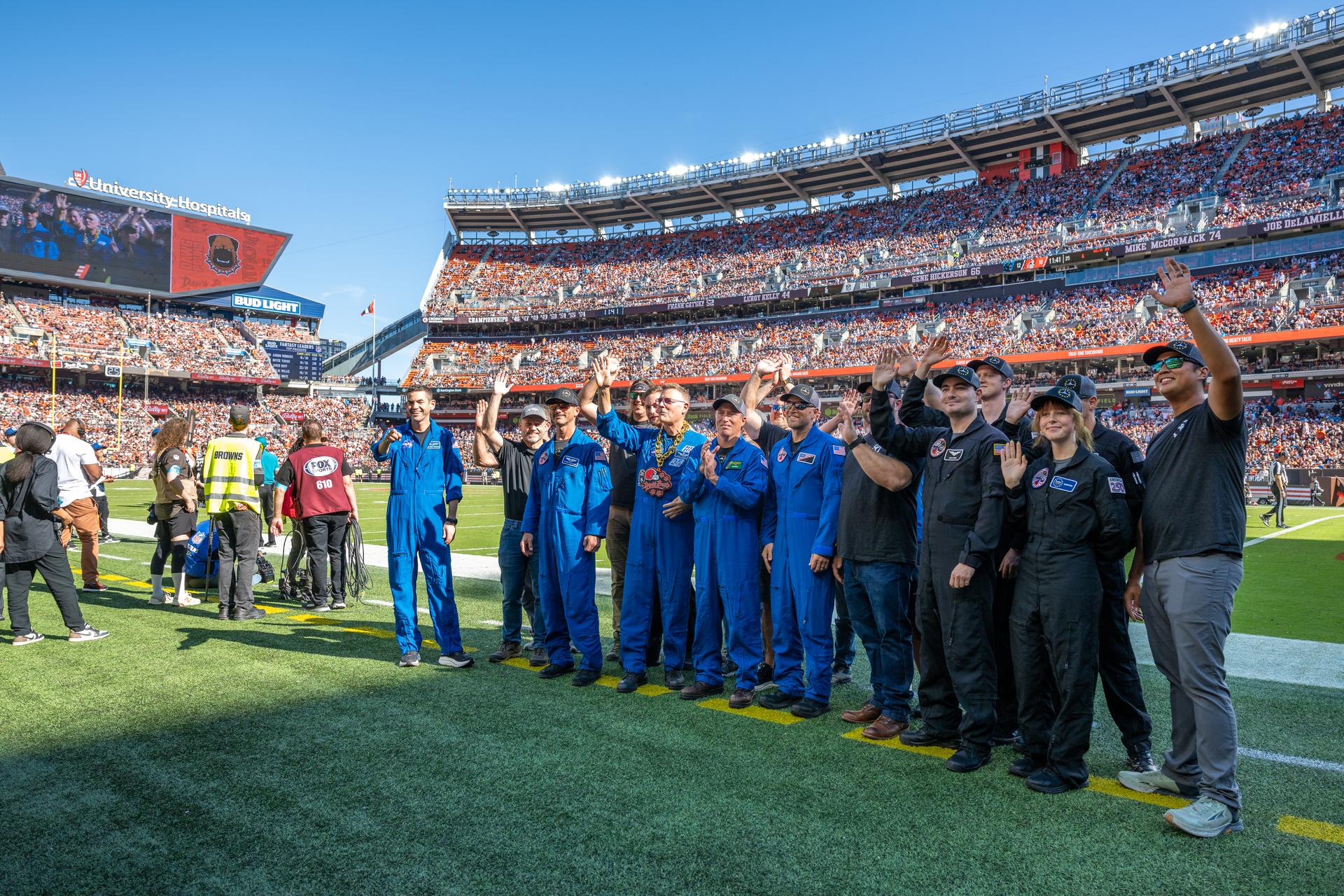
NASA Administrator Jared Isaacman and his Freedom 250 F-5 team (Jerry "Jive" Kerby, Doug "Tut" Demko and other members) along with NASA Astronaut Douglas Wheelock and Associate Administrator, Research and Technology Mission Directorate Dr. James Kenyon wave to fans on the field at an NFL game between the Cleveland Browns and the Carolina Panthers at Huntington Bank Field, Sunday, September 27th, 2026, in Cleveland, Ohio. NASA’s engagement at NFL games is part of the agency’s Inspiration Tour, aimed at strengthening connections between NASA and its partners and showcasing innovation in air and space in the lead up to the MAX POWER aerospace technology expo and airshow at the agency’s Kennedy Space Center in early November. Photo Credit: (NASA/Jordan Cochran)
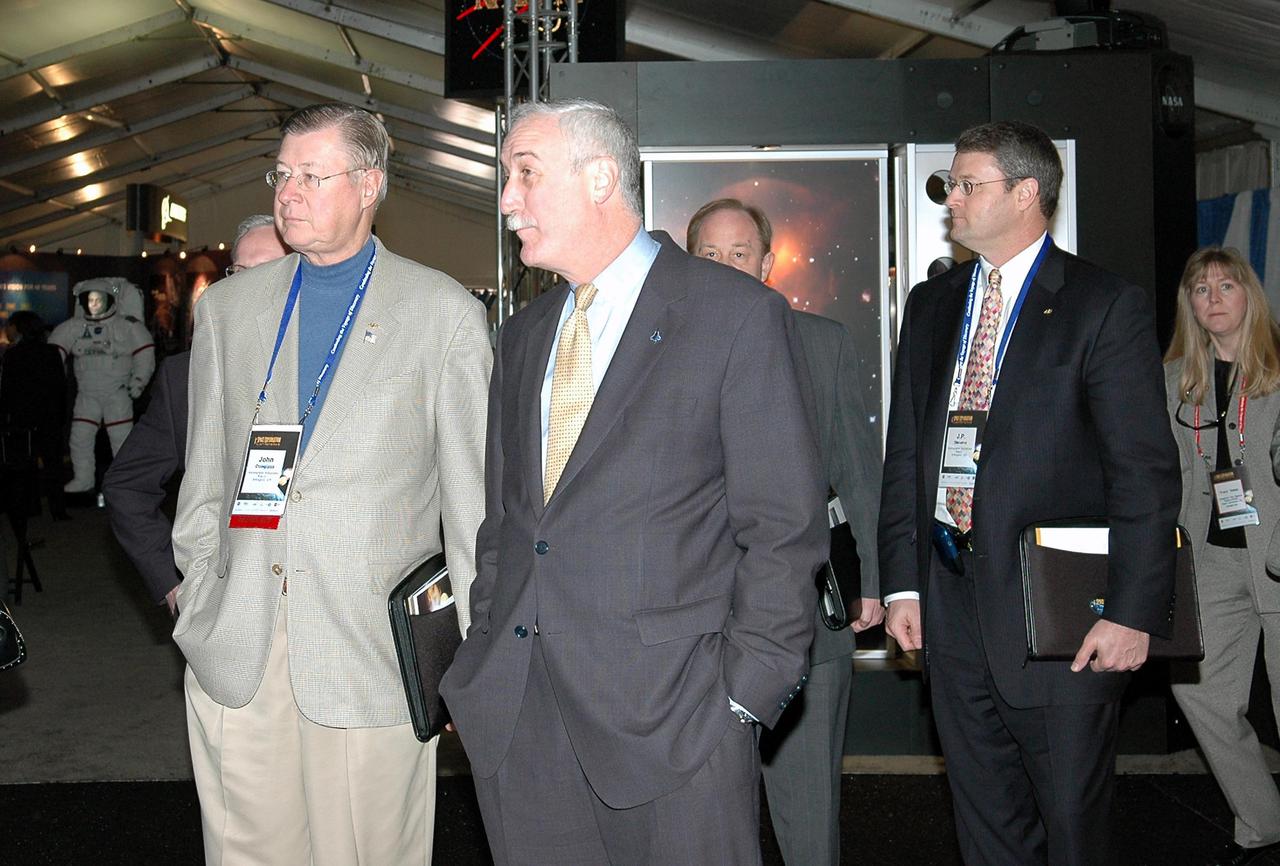
KENNEDY SPACE CENTER, FLA. - NASA Administrator Sean O’Keefe (center) talks to John Douglass, with the Aerospace Industries Association, at the “1st Space Exploration Conference: Continuing the Voyage of Discovery,” being held at Disney’s Contemporary Resort in Orlando. O’Keefe is the keynote speaker kicking off the conference. Douglass is one of the panelists. Topics being presented focus on new missions, technologies and infrastructure needed to turn the vision for space exploration into reality. Other keynote speakers at the three-day conference are Congressman Dave Weldon, film director James Cameron and NASA’s senior Mars scientist James Garvin. The conference has drawn attendees from around the world.
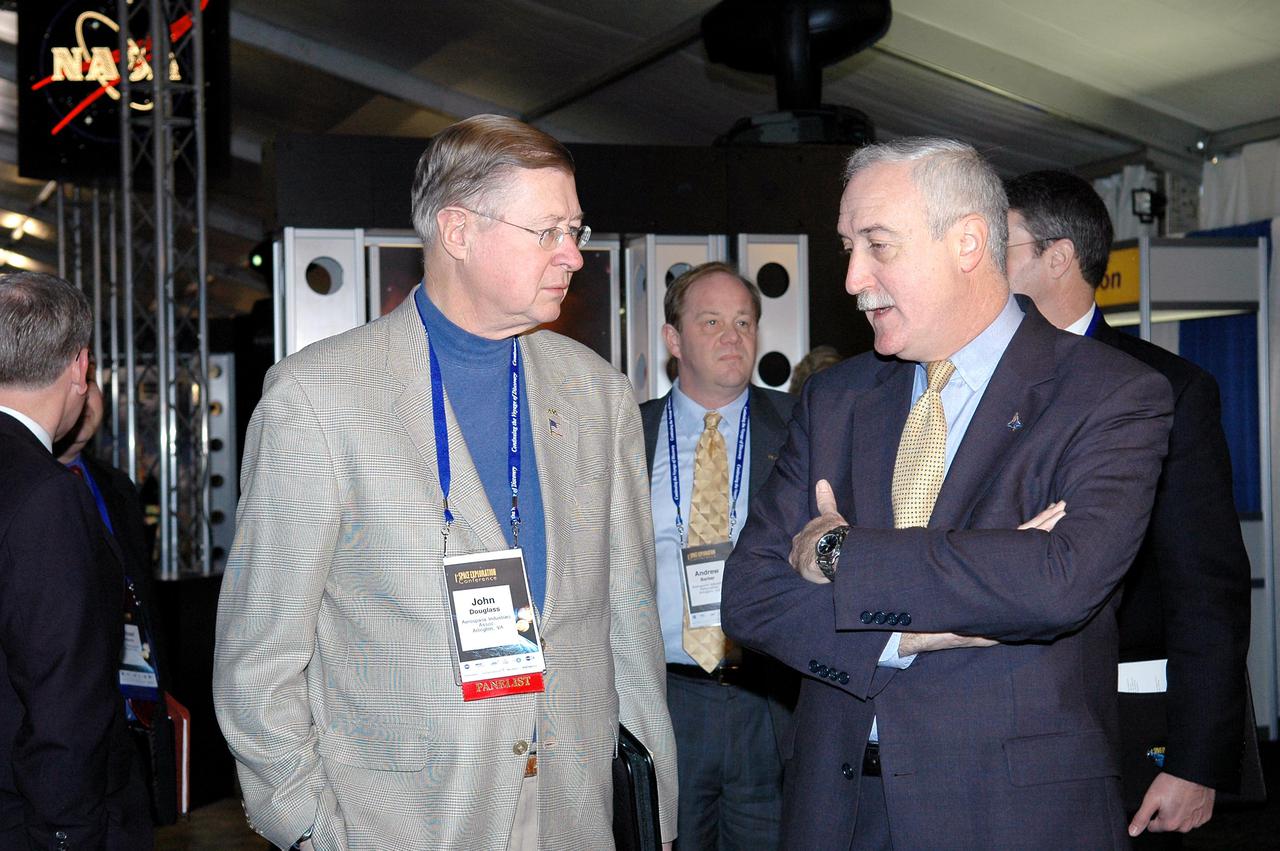
KENNEDY SPACE CENTER, FLA. - NASA Administrator Sean O’Keefe (center) talks to John Douglass, with the Aerospace Industries Association, at the “1st Space Exploration Conference: Continuing the Voyage of Discovery,” being held at Disney’s Contemporary Resort in Orlando. O’Keefe is the keynote speaker kicking off the conference. Douglass is one of the panelists. Topics being presented focus on new missions, technologies and infrastructure needed to turn the vision for space exploration into reality. Other keynote speakers at the three-day conference include Congressman Dave Weldon, film director James Cameron and NASA’s senior Mars scientist James Garvin. The conference has drawn attendees from around the world.
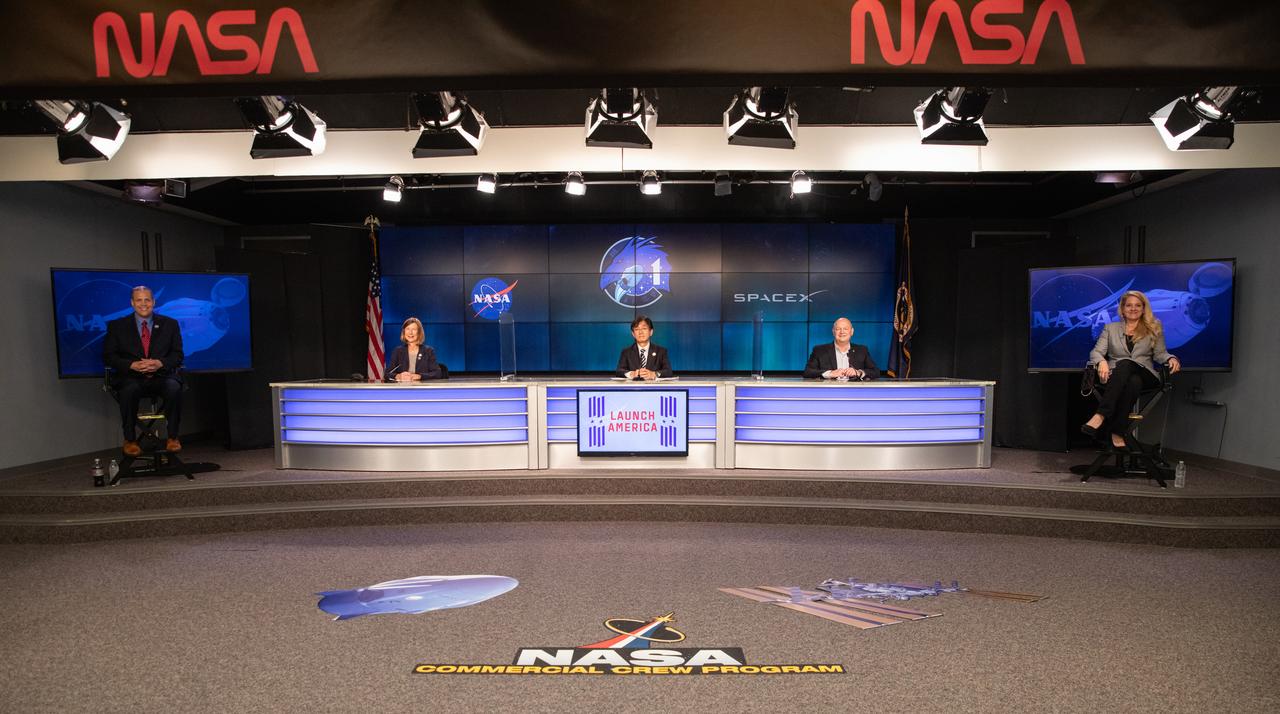
A postlaunch news conference for NASA’s SpaceX Crew-1 mission is held at Kennedy Space Center in Florida on Nov. 15, 2020. Liftoff time on a SpaceX Falcon 9 rocket was at 7:27 p.m. EST. From left are NASA Administrator Jim Bridenstine; Kathy Lueders, associate administrator for human exploration and operations, NASA Headquarters; Hiroshi Sasaki, vice president and director general, JAXA’s Human Spaceflight Technology Directorate; Steve Dickson, administrator, Federal Aviation Administration; and Gwynne Shotwell, president and chief operating officer, SpaceX. The Crew Dragon is carrying NASA astronauts Michael Hopkins, spacecraft commander; Victor Glover, pilot; Shannon Walker, mission specialist; and Japan Aerospace Exploration Agency astronaut Soichi Noguchi, mission specialist, to the international Space Station. Crew-1 is the first regular crew mission of a U.S. commercial spacecraft with astronauts to the space station as part of NASA’s Commercial Crew Program. The Crew Dragon will dock with the station and the crew will remain on the orbiting laboratory for a six-month science mission.
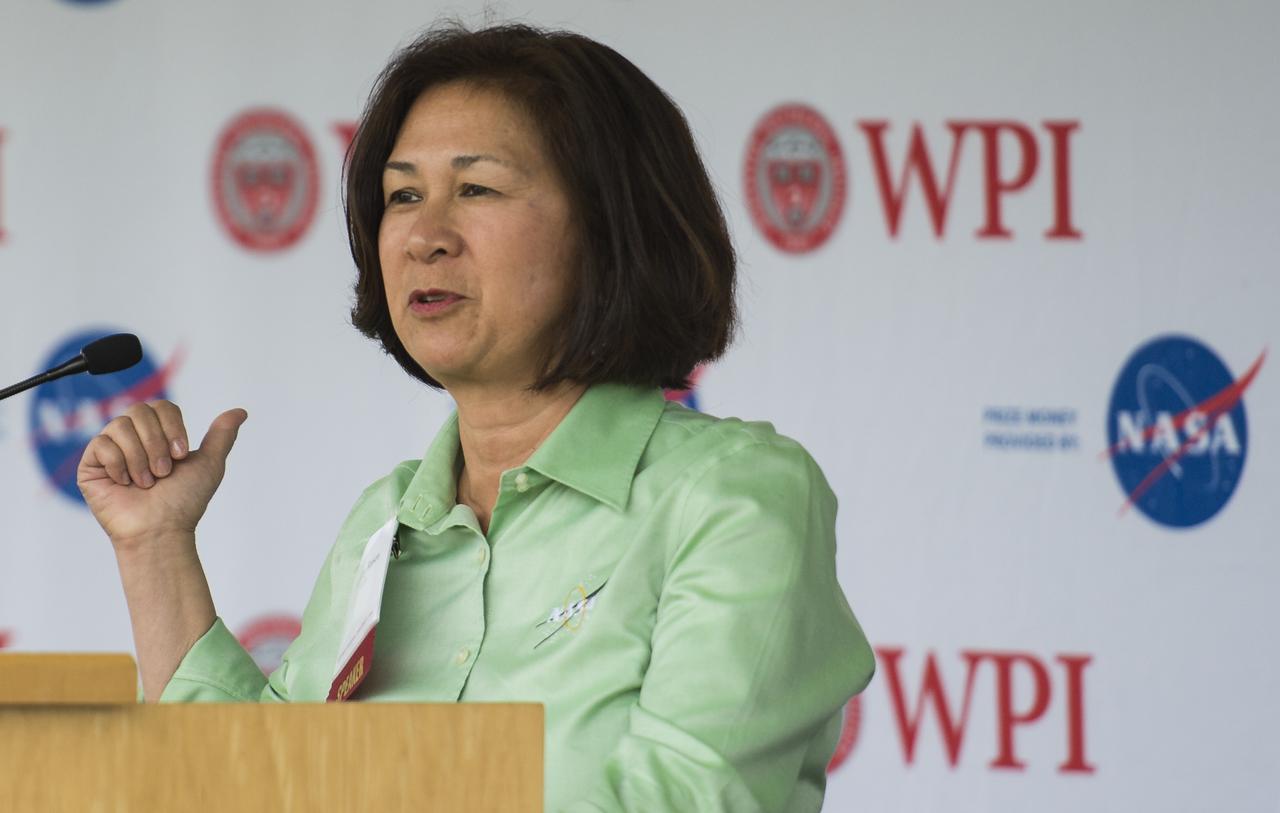
Dorothy Rasco, NASA Deputy Associate Administrator for the Space Technology Mission Directorate, speaks at the TouchTomorrow Festival, held in conjunction with the 2014 NASA Centennial Challenges Sample Return Robot Challenge, Saturday, June 14, 2014, at the Worcester Polytechnic Institute (WPI) in Worcester, Mass. Eighteen teams are competing for a $1.5 million NASA prize purse. Teams will be required to demonstrate autonomous robots that can locate and collect samples from a wide and varied terrain, operating without human control. The objective of this NASA-WPI Centennial Challenge is to encourage innovations in autonomous navigation and robotics technologies. Innovations stemming from the challenge may improve NASA's capability to explore a variety of destinations in space, as well as enhance the nation's robotic technology for use in industries and applications on Earth. Photo Credit: (NASA/Joel Kowsky)
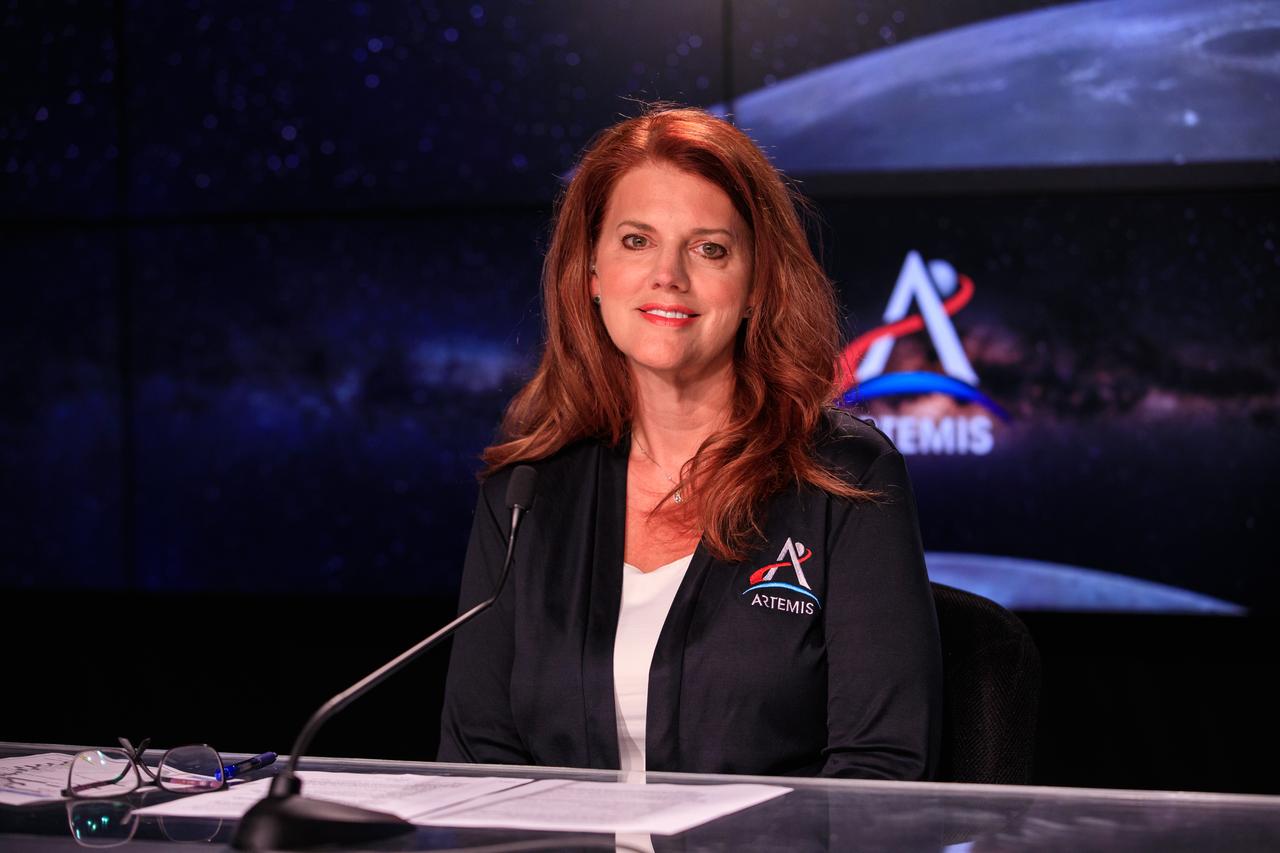
Launch Director Charlie Blackwell-Thompson participates in an Artemis I mission overview briefing inside the Press Site auditorium at NASA’s Kennedy Space Center in Florida on Aug. 3, 2022. Also participating in the briefing from various locations were NASA Administrator Bill Nelson; Associate Administrator for Technology, Policy, and Strategy Bhavya Lal; Mission Manager Mike Sarafin; Space Launch System (SLS) Program Manager John Honeycutt; and Orion Program Manager Howard Hu. The first in an increasingly complex series of missions, Artemis I will test the SLS rocket and Orion spacecraft as an integrated system prior to crewed flights to the Moon. Through Artemis, NASA will land the first woman and first person of color on the lunar surface, paving the way for long-term lunar presence and serving as a steppingstone before venturing to Mars.
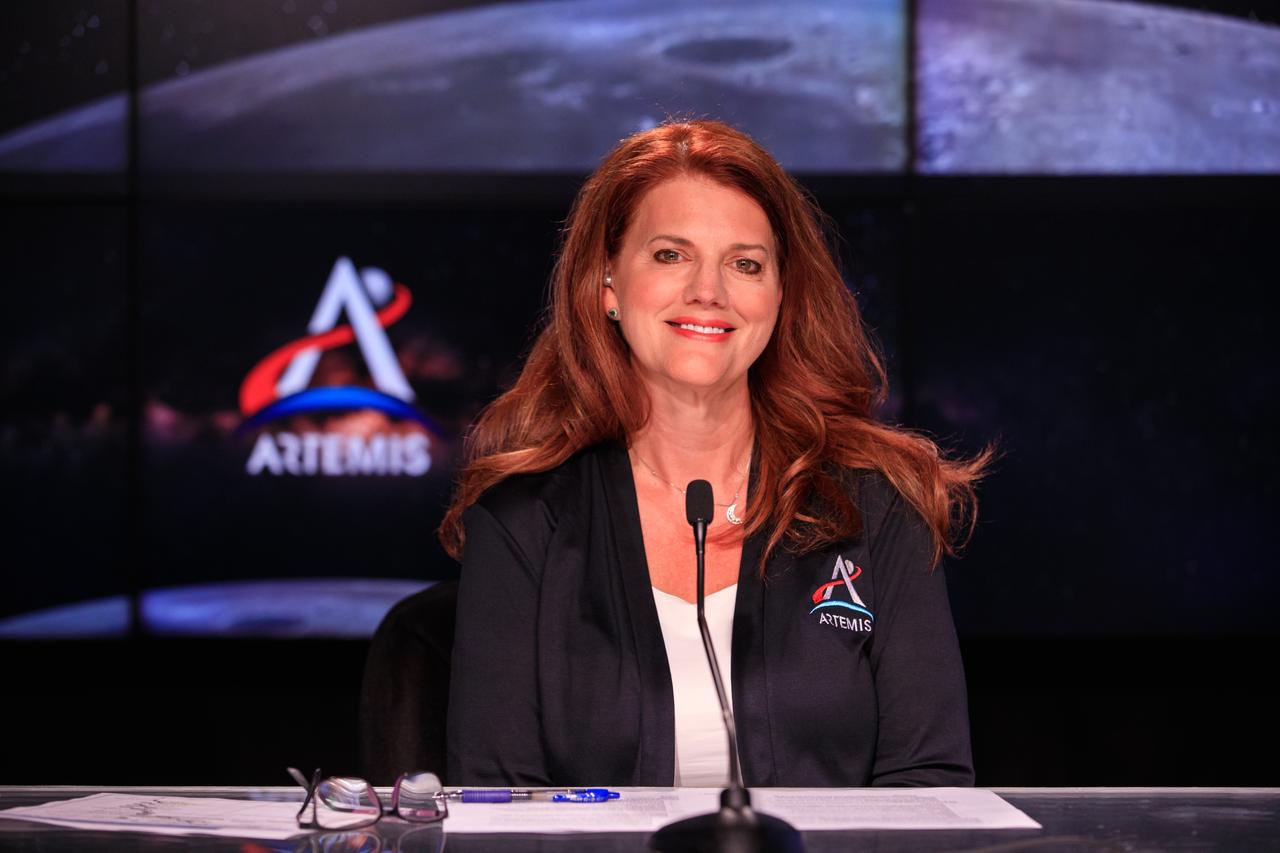
Launch Director Charlie Blackwell-Thompson participates in an Artemis I mission overview briefing inside the Press Site auditorium at NASA’s Kennedy Space Center in Florida on Aug. 3, 2022. Also participating in the briefing from various locations were NASA Administrator Bill Nelson; Associate Administrator for Technology, Policy, and Strategy Bhavya Lal; Mission Manager Mike Sarafin; Space Launch System (SLS) Program Manager John Honeycutt; and Orion Program Manager Howard Hu. The first in an increasingly complex series of missions, Artemis I will test the SLS rocket and Orion spacecraft as an integrated system prior to crewed flights to the Moon. Through Artemis, NASA will land the first woman and first person of color on the lunar surface, paving the way for long-term lunar presence and serving as a steppingstone before venturing to Mars.
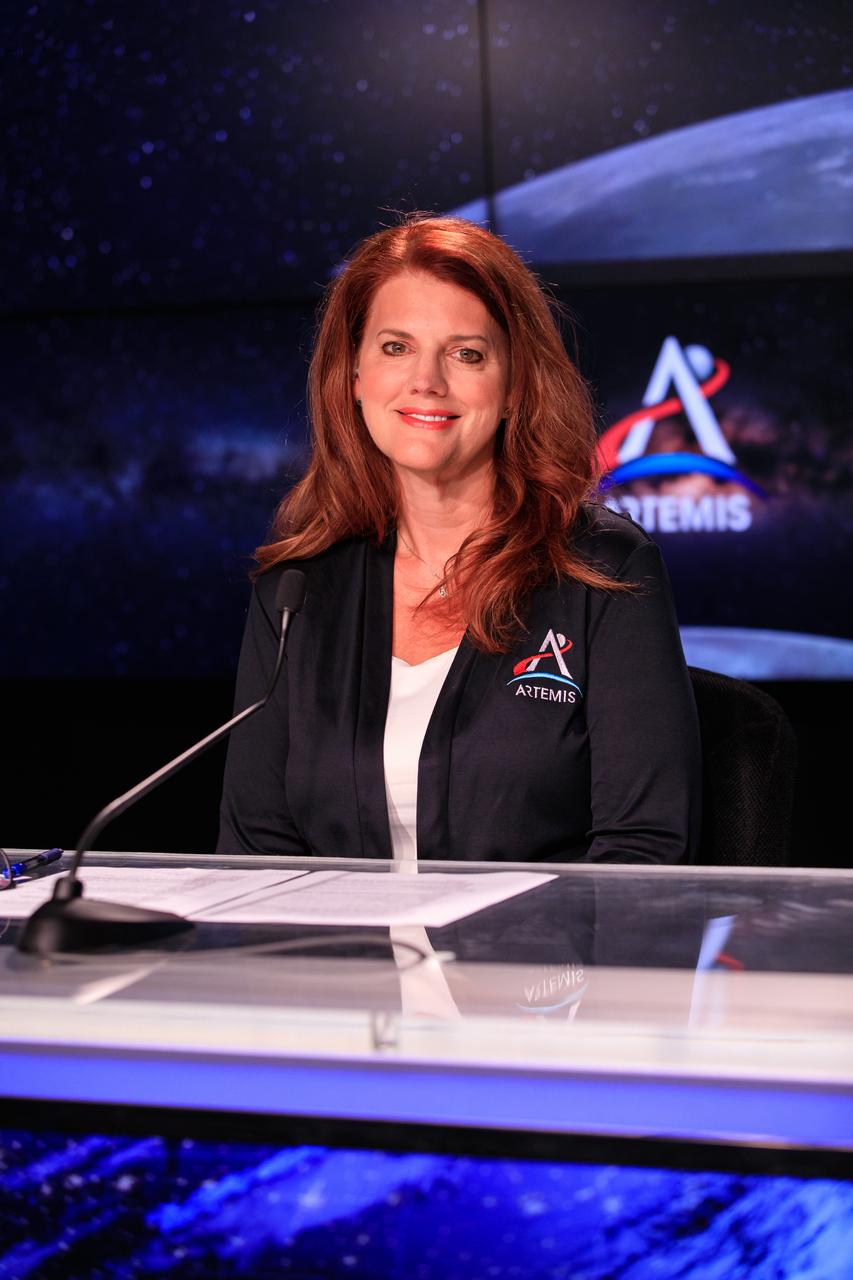
Launch Director Charlie Blackwell-Thompson participates in an Artemis I mission overview briefing inside the Press Site auditorium at NASA’s Kennedy Space Center in Florida on Aug. 3, 2022. Also participating in the briefing from various locations were NASA Administrator Bill Nelson; Associate Administrator for Technology, Policy, and Strategy Bhavya Lal; Mission Manager Mike Sarafin; Space Launch System (SLS) Program Manager John Honeycutt; and Orion Program Manager Howard Hu. The first in an increasingly complex series of missions, Artemis I will test the SLS rocket and Orion spacecraft as an integrated system prior to crewed flights to the Moon. Through Artemis, NASA will land the first woman and first person of color on the lunar surface, paving the way for long-term lunar presence and serving as a steppingstone before venturing to Mars.

NASA held a prelaunch news conference for the National Oceanic and Atmospheric Administration’s (NOAA) Joint Polar Satellite System-2 (JPSS-2) and the agency’s Low-Earth Orbit Flight Test of an Inflatable Decelerator (LOFTID) technology demonstration at Vandenberg Space Force Base in California on Oct. 28, 2022. Participants from left are: Megan Cruz, NASA Communications; John Gagosian, director, NASA’s Joint Agency Satellite Division; Omar Baez, launch director, NASA’s Launch Services Program; Gary Wentz, vice president, Government and Commercial Programs, ULA; Irene Parker, deputy assistant administrator, NOAA Systems, National Environmental Satellite, Data, and Services; Tim Walsh, director, NOAA’s JPSS Program Office, NOAA; Jim Reuter, associate administrator for NASA’s Space Technology Mission Directorate; Capt. Zack Zounes, launch weather officer, U.S. Space Force. JPSS-2 is the third satellite in the polar satellite series and is expected to capture data to improve weather forecasts, helping scientists predict and prepare for extreme weather events and climate change. JPSS-2 is scheduled to launch at 2:25 a.m. PDT Tuesday, Nov. 1, on a United Launch Alliance (ULA) Atlas V 401 rocket from Space Launch Complex 3 at Vandenberg Space Force Base in California. Launching with JPSS-2 is NASA’s LOFTID technology demonstration. After JPSS-2 safely reaches orbit, LOFTID will follow a re-entry trajectory from low-Earth orbit to demonstrate the inflatable heat shield’s ability to slow down and survive re-entry. LOFTID is a partnership with ULA and is dedicated to the memory of Bernard Kutter, one of the company’s engineers who played a key role in developing the technology. LOFTID will demonstrate how the inflatable aeroshell, or heat shield, can slow down and survive re-entry in conditions relevant to many potential applications, whether landing humans on Mars, new missions to Venus and Titan, or returning heavier payloads and samples from low-Earth or
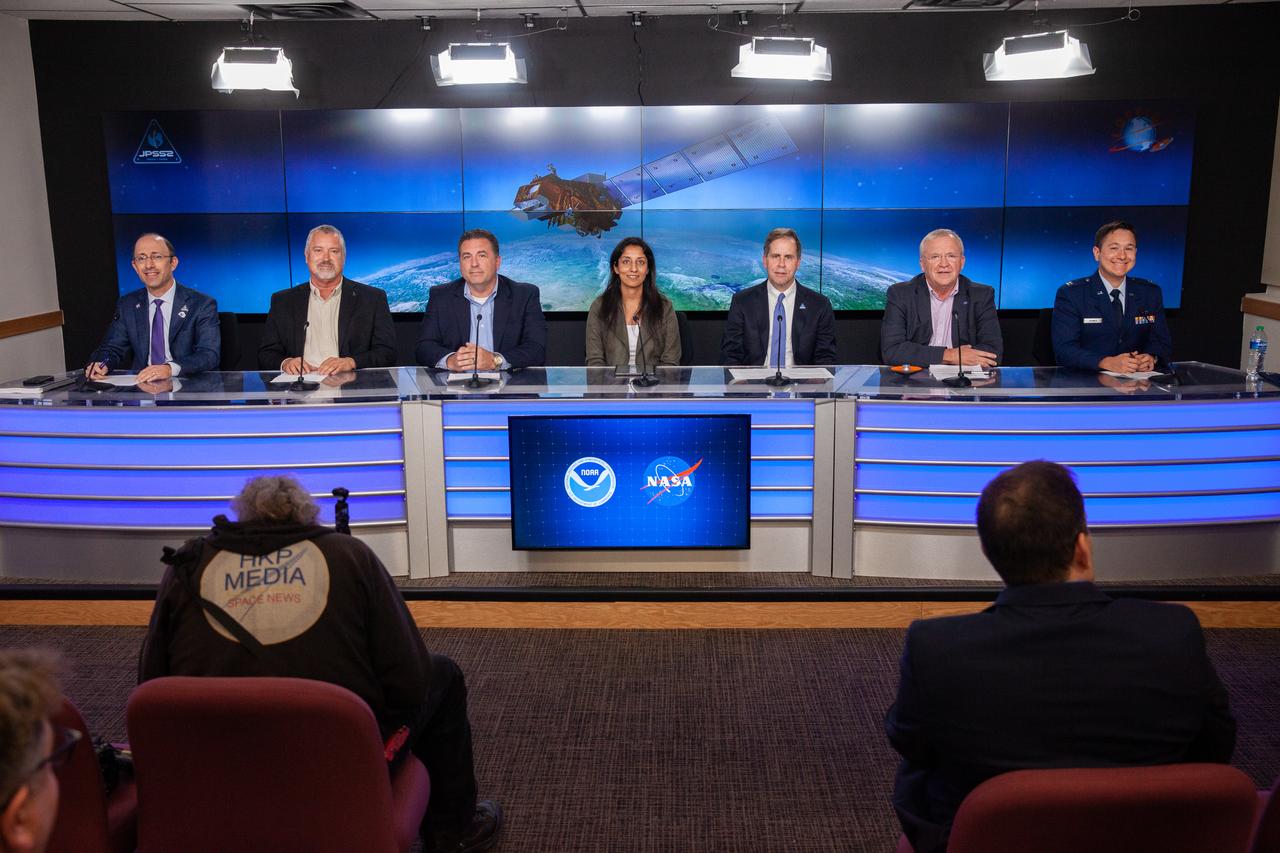
NASA held a prelaunch news conference for the National Oceanic and Atmospheric Administration’s (NOAA) Joint Polar Satellite System-2 (JPSS-2) and the agency’s Low-Earth Orbit Flight Test of an Inflatable Decelerator (LOFTID) technology demonstration at Vandenberg Space Force Base in California on Oct. 28, 2022. Participants from left are: John Gagosian, director, NASA’s Joint Agency Satellite Division; Omar Baez, launch director, NASA’s Launch Services Program; Gary Wentz, vice president, Government and Commercial Programs, ULA; Irene Parker, deputy assistant administrator, NOAA Systems, National Environmental Satellite, Data, and Services; Tim Walsh, director, NOAA’s JPSS Program Office, NOAA; Jim Reuter, associate administrator for NASA’s Space Technology Mission Directorate; Capt. Zack Zounes, launch weather officer, U.S. Space Force. JPSS-2 is the third satellite in the polar satellite series and is expected to capture data to improve weather forecasts, helping scientists predict and prepare for extreme weather events and climate change. JPSS-2 is scheduled to launch at 2:25 a.m. PDT Tuesday, Nov. 1, on a United Launch Alliance (ULA) Atlas V 401 rocket from Space Launch Complex 3 at Vandenberg Space Force Base in California. Launching with JPSS-2 is NASA’s LOFTID technology demonstration. After JPSS-2 safely reaches orbit, LOFTID will follow a re-entry trajectory from low-Earth orbit to demonstrate the inflatable heat shield’s ability to slow down and survive re-entry. LOFTID is a partnership with ULA and is dedicated to the memory of Bernard Kutter, one of the company’s engineers who played a key role in developing the technology. LOFTID will demonstrate how the inflatable aeroshell, or heat shield, can slow down and survive re-entry in conditions relevant to many potential applications, whether landing humans on Mars, new missions to Venus and Titan, or returning heavier payloads and samples from low-Earth orbit.
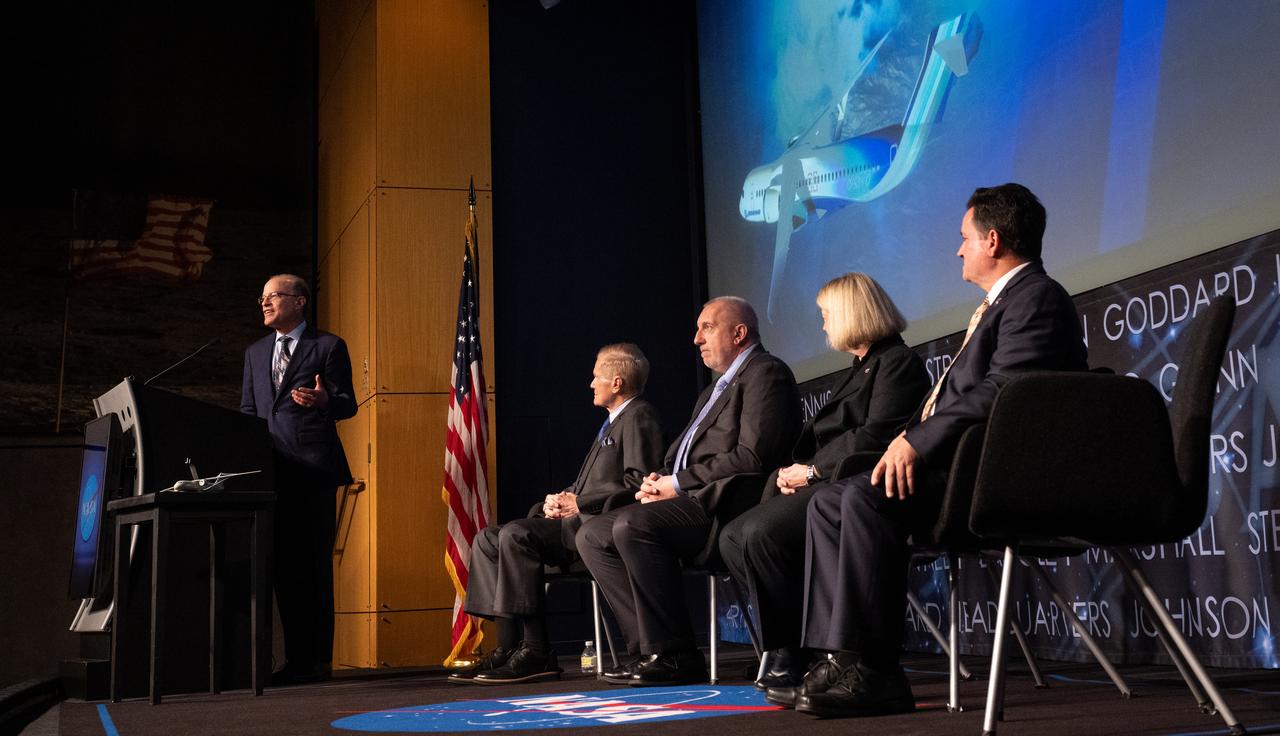
Todd Citron, chief technology officer, The Boeing Company, left, delivers remarks during a news conference on NASA’s Sustainable Flight Demonstrator project as NASA Administrator Bill Nelson, second from left, Bob Pearce, associate administrator for NASA's Aeronautics Research Mission Directorate, NASA Deputy Administrator Pam Melroy, and Brent Cobleigh, program manager for the Sustainable Flight Demonstrator at NASA's Armstrong Flight Research Center, look on, Wednesday, Jan. 18, 2023, at the Mary W. Jackson NASA Headquarters building in Washington, DC. Through a Funded Space Act Agreement, The Boeing company and its industry team will collaborate with NASA to develop and flight-test a full-scale Transonic Truss-Braced Wing demonstrator aircraft. Photo Credit: (NASA/Joel Kowsky)
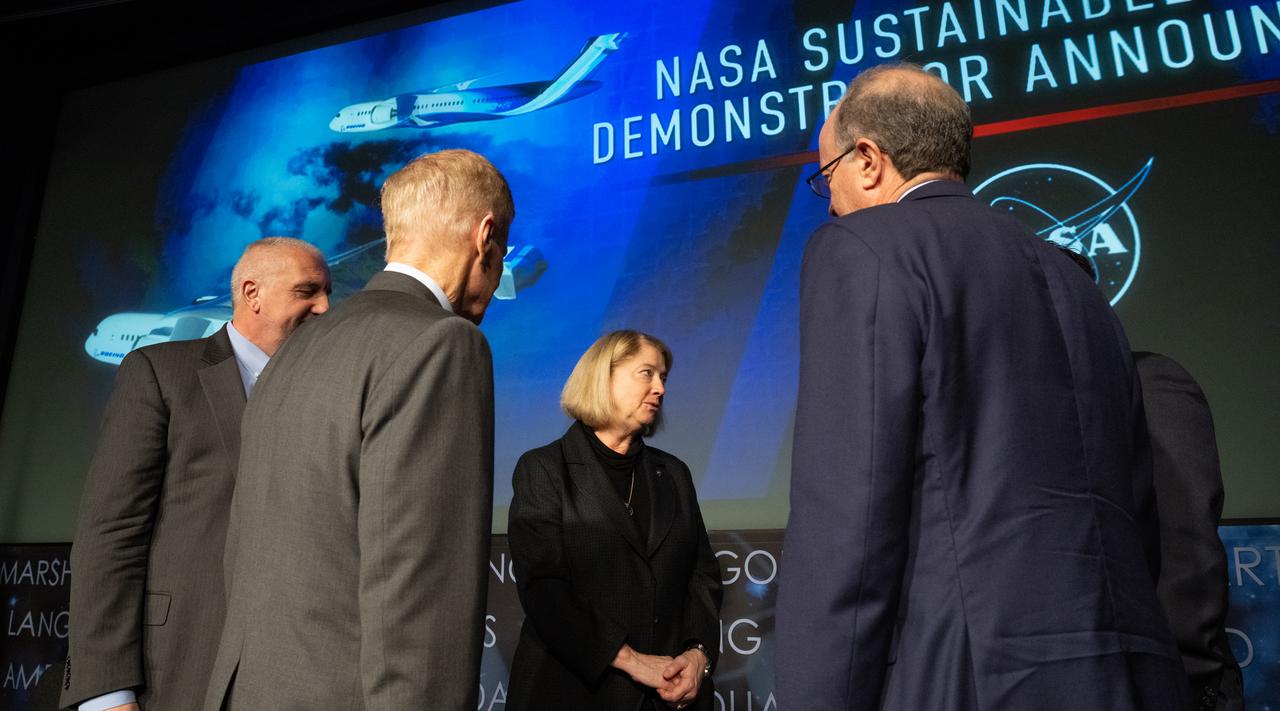
NASA Deputy Administrator Pam Melroy, center, is seen with Bob Pearce, associate administrator for NASA's Aeronautics Research Mission Directorate, NASA Administrator Bill Nelson, Todd Citron, chief technology officer, The Boeing Company, and Brent Cobleigh, program manager for the Sustainable Flight Demonstrator at NASA's Armstrong Flight Research Center, following a news conference on NASA’s Sustainable Flight Demonstrator project, Wednesday, Jan. 18, 2023, at the Mary W. Jackson NASA Headquarters building in Washington, DC. Through a Funded Space Act Agreement, The Boeing company and its industry team will collaborate with NASA to develop and flight-test a full-scale Transonic Truss-Braced Wing demonstrator aircraft. Photo Credit: (NASA/Joel Kowsky)
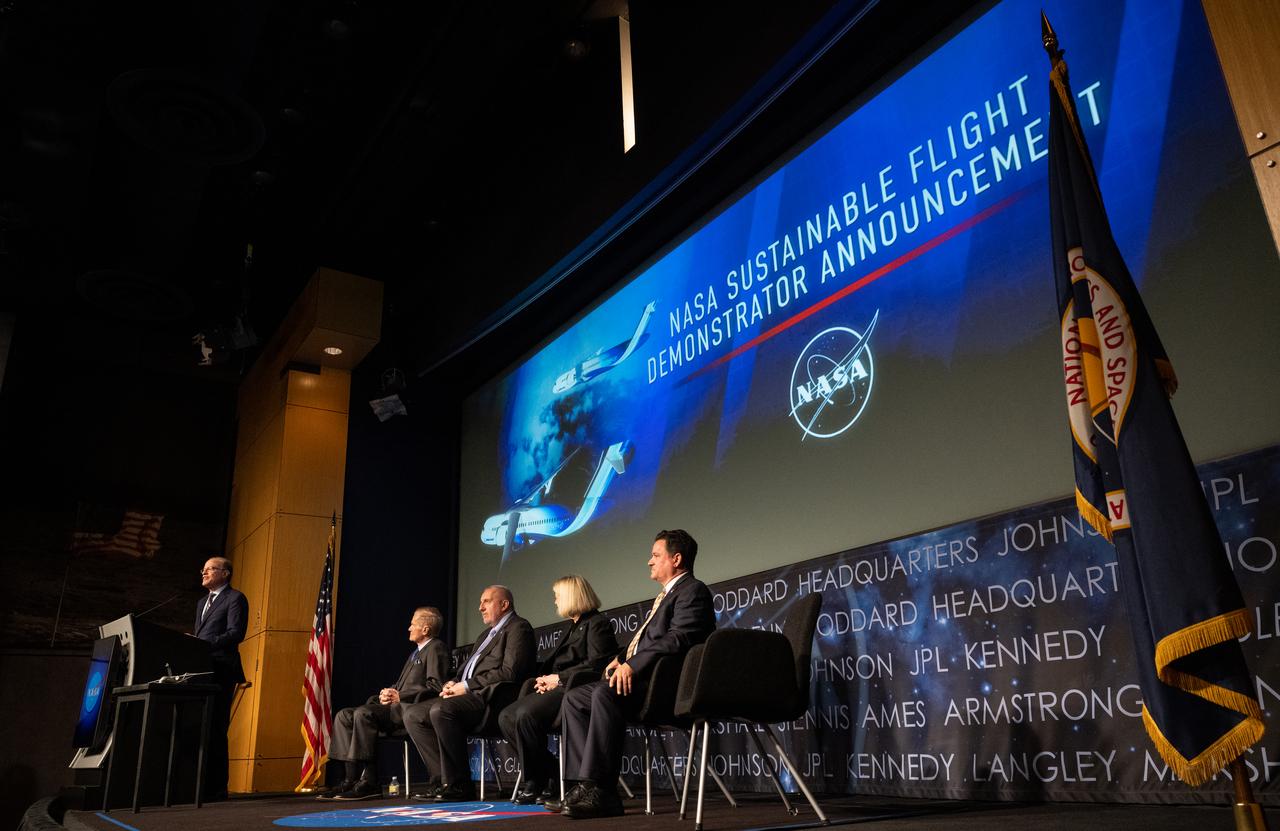
Todd Citron, chief technology officer, The Boeing Company, left, delivers remarks during a news conference on NASA’s Sustainable Flight Demonstrator project as NASA Administrator Bill Nelson, second from left, Bob Pearce, associate administrator for NASA's Aeronautics Research Mission Directorate, NASA Deputy Administrator Pam Melroy, and Brent Cobleigh, program manager for the Sustainable Flight Demonstrator at NASA's Armstrong Flight Research Center, look on, Wednesday, Jan. 18, 2023, at the Mary W. Jackson NASA Headquarters building in Washington, DC. Through a Funded Space Act Agreement, The Boeing company and its industry team will collaborate with NASA to develop and flight-test a full-scale Transonic Truss-Braced Wing demonstrator aircraft. Photo Credit: (NASA/Joel Kowsky)
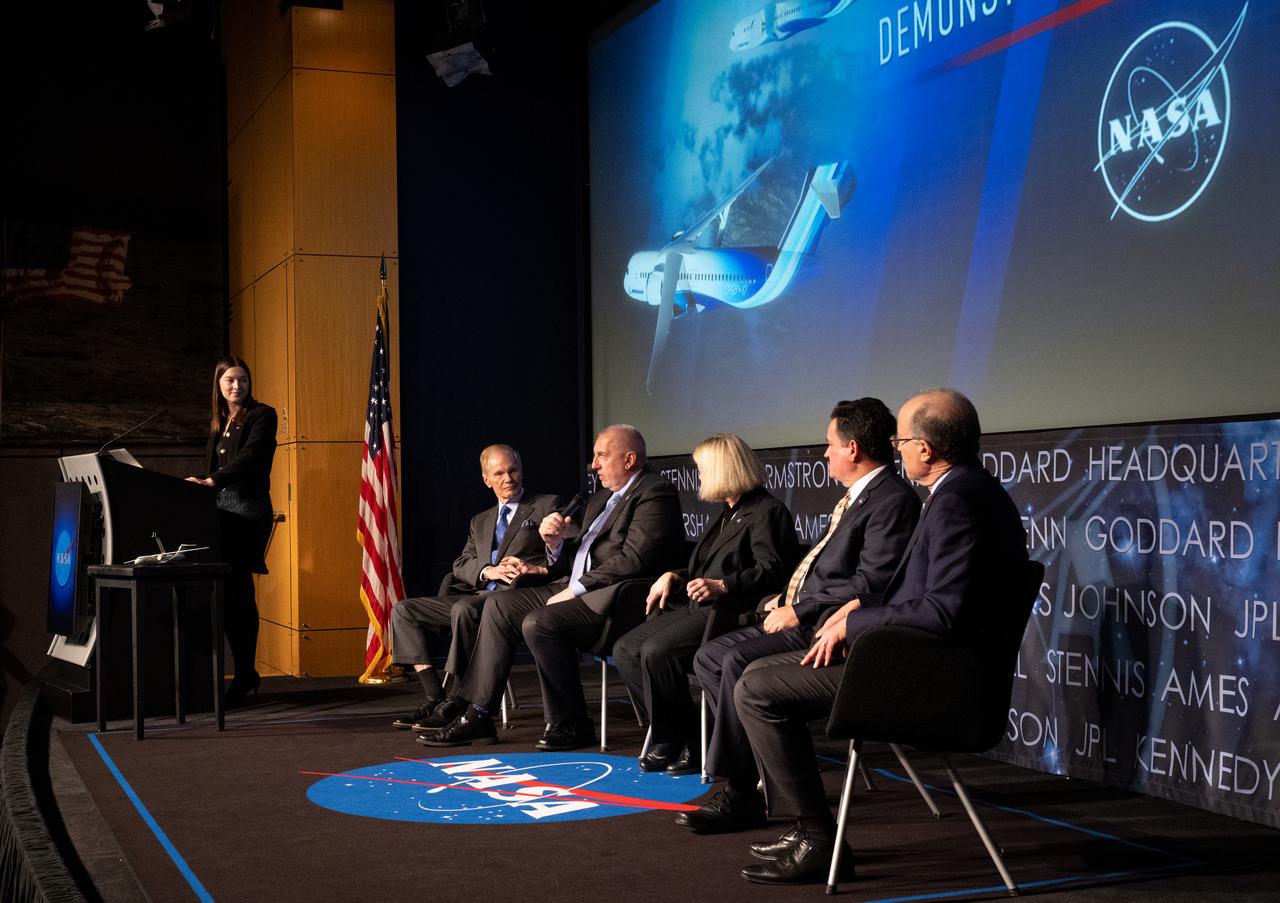
Jackie McGuinness, NASA’s Press Secretary, left, NASA Administrator Bill Nelson, Bob Pearce, associate administrator for NASA's Aeronautics Research Mission Directorate, NASA Deputy Administrator Pam Melroy, Brent Cobleigh, program manager for the Sustainable Flight Demonstrator at NASA's Armstrong Flight Research Center, and Todd Citron, chief technology officer, The Boeing Company, are seen as they take questions from members of the media during a news conference on NASA’s Sustainable Flight Demonstrator project, Wednesday, Jan. 18, 2023, at the Mary W. Jackson NASA Headquarters building in Washington, DC. Through a Funded Space Act Agreement, The Boeing company and its industry team will collaborate with NASA to develop and flight-test a full-scale Transonic Truss-Braced Wing demonstrator aircraft. Photo Credit: (NASA/Joel Kowsky)
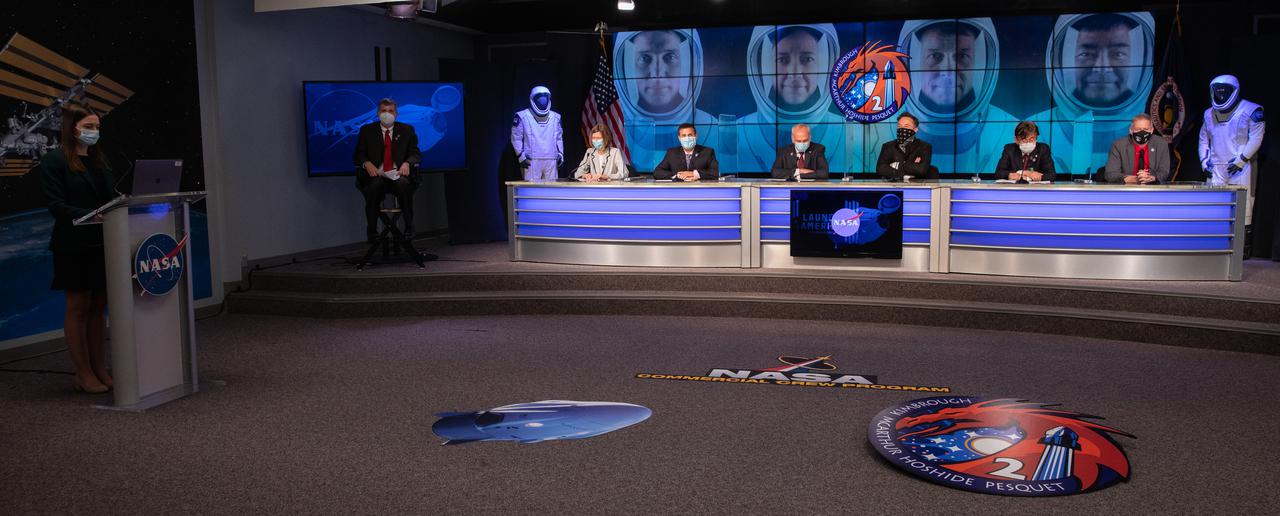
A postlaunch news conference for NASA’s SpaceX Crew-2 mission is held at Kennedy Space Center in Florida on April 23, 2021. From left, participants are: moderator Jackie McGuinness, NASA press secretary; Steve Stich, manager, Commercial Crew Program, NASA’s Kennedy Space Center; Kathy Lueders, associate administrator, Human Exploration and Operations Mission Directorate, NASA Headquarters; Joel Montalbano, manager, International Space Station Program; Steve Jurczyk, acting administrator, NASA; Elon Musk, CEO and lead designer, SpaceX; Hiroshi Sasaki, vice president and director general, JAXA’s Human Spaceflight Technology Directorate; and Frank de Winne, manager, International Space Station Program, ESA. Liftoff time on a SpaceX Falcon 9 rocket was at 5:49 a.m. EDT. Crew Dragon Endeavour is carrying NASA astronaut Shane Kimbrough, spacecraft commander; NASA astronaut Megan McArthur, pilot; ESA astronaut Thomas Pesquet, mission specialist; and JAXA astronaut Akihiko Hoshide, mission specialist, to the international Space Station.
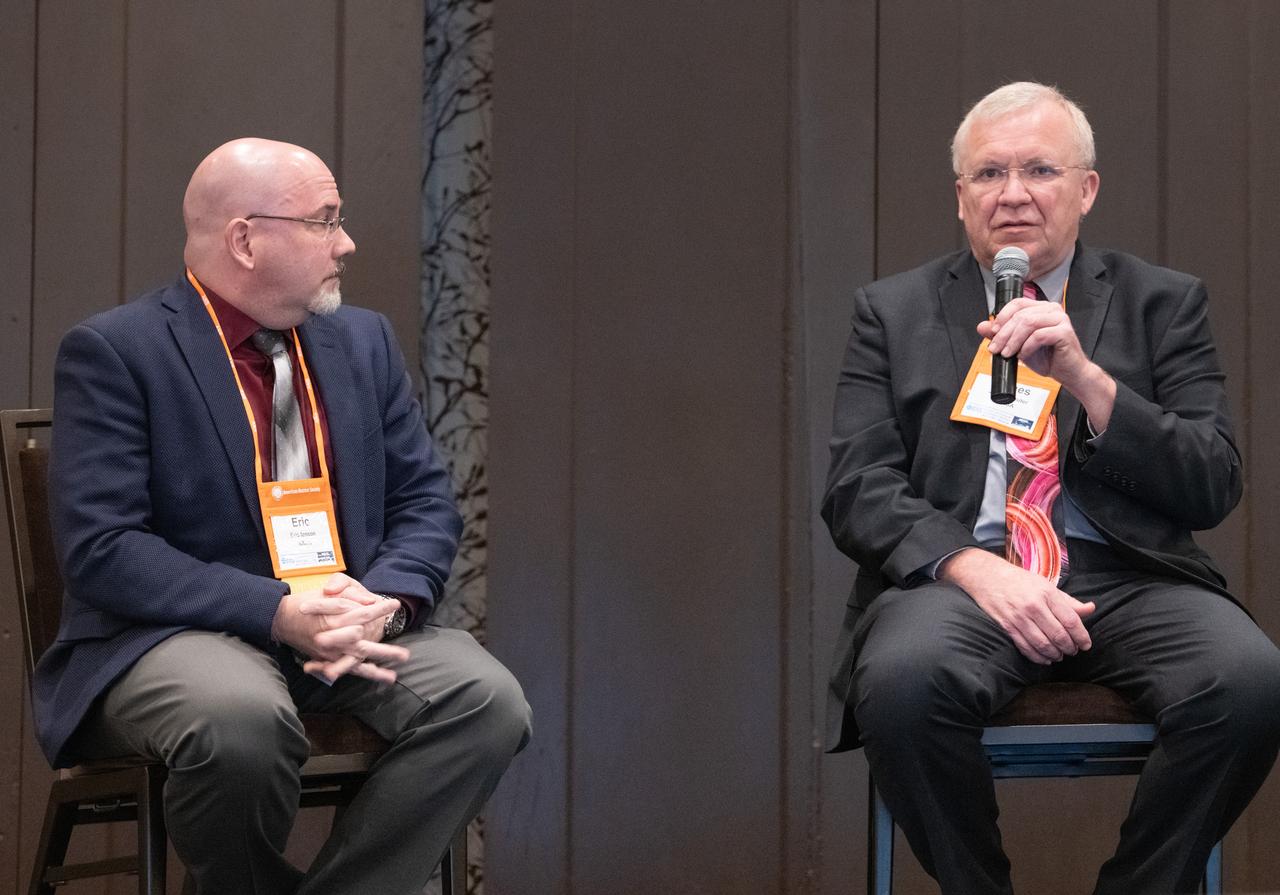
Nuclear Emerging Technologies for Space, NETS 2022 Conference
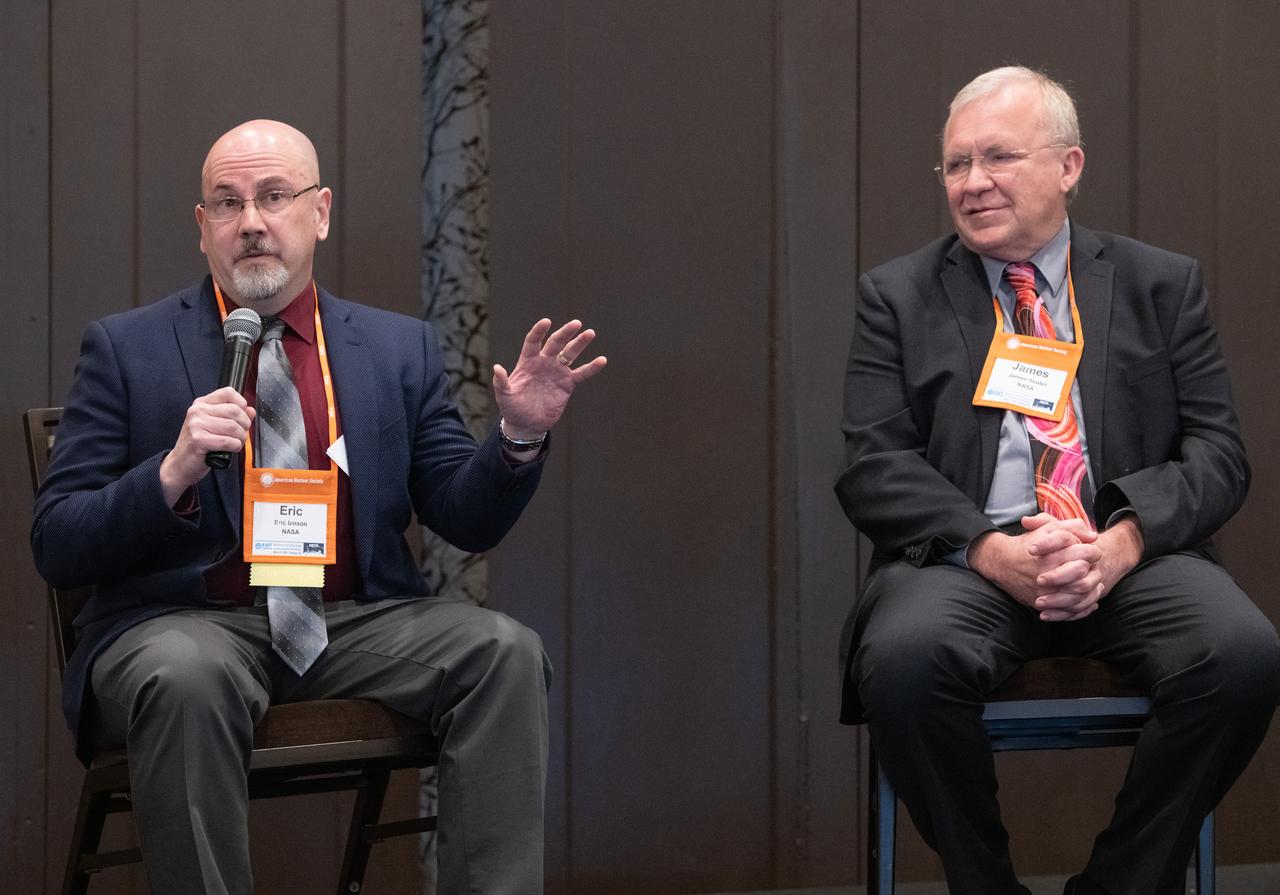
Nuclear Emerging Technologies for Space, NETS 2022 Conference
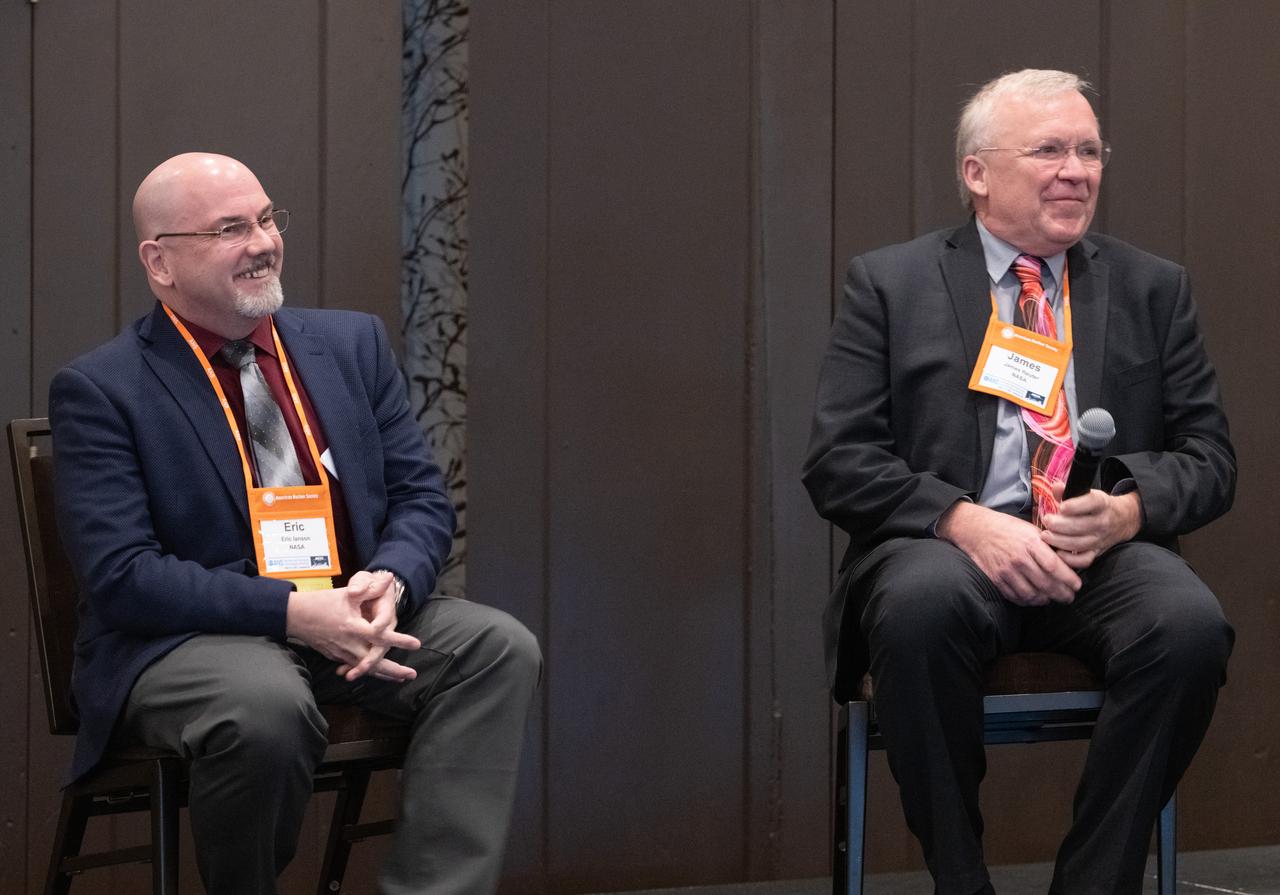
Nuclear Emerging Technologies for Space, NETS 2022 Conference
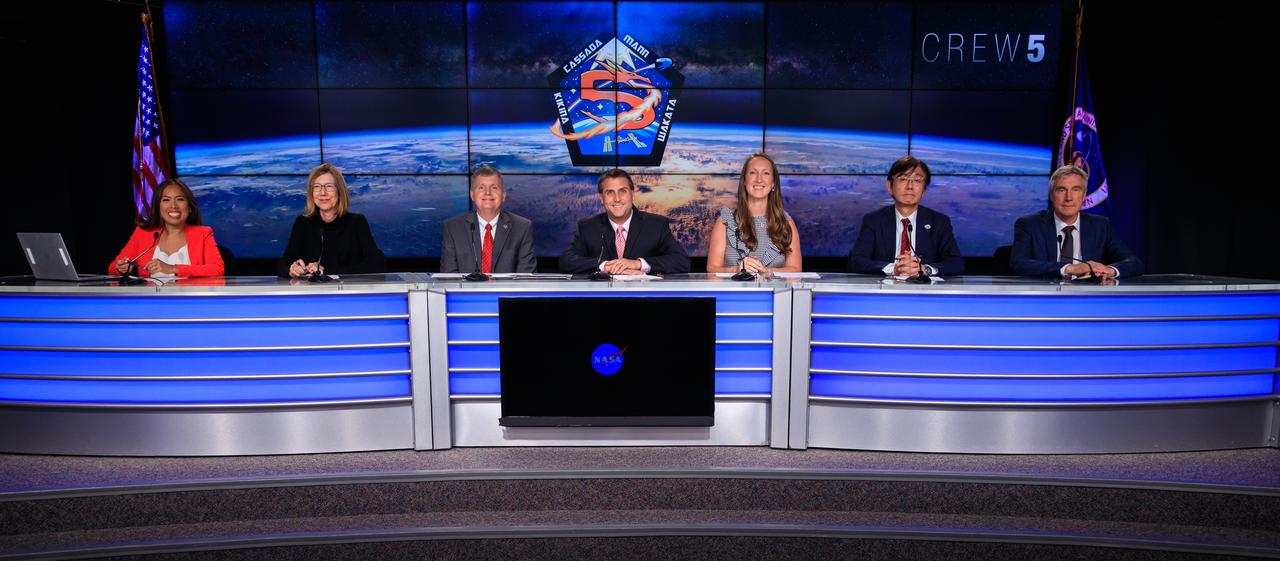
A postlaunch news conference for NASA’s SpaceX Crew-5 mission is held inside the News Auditorium at the agency’s Kennedy Space Center in Florida on Oct. 5, 2022. Participants are, from left: Megan Cruz, moderator, NASA Communications; Kathy Lueders, associate administrator, Human Exploration and Operations Mission Directorate, NASA Headquarters; Steve Stich, manager, Commercial Crew Program, Kennedy; Joel Montalbano, manager, International Space Station, Johnson Space Center; Sarah Walker, director, Dragon Mission Management, SpaceX; Hiroshi Sasaki, vice president and director general, JAXA’s (Japan Aerospace Exploration Agency) Human Spaceflight Technology Directorate; and Sergei Krikalev, executive director, Human Space Flight Programs, Roscosmos. SpaceX’s Dragon Endurance is carrying NASA astronauts Nicole Mann, commander; Josh Cassada, pilot; and Mission Specialists Koichi Wakata, of JAXA (Japan Aerospace Exploration Agency), and Roscosmos cosmonaut Anna Kikina to the International Space Station for a science expedition mission as part of NASA’s Commercial Crew Program. SpaceX’s Falcon 9 rocket lifted off at noon EDT from Kennedy’s Launch Complex 39A.