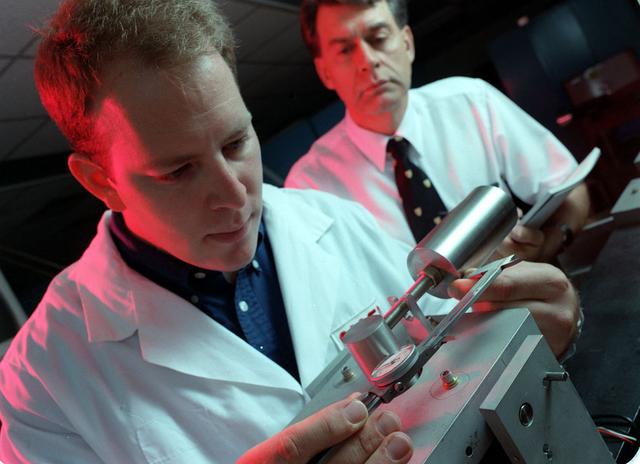
Marshall researchers, in the Astrionics lab, study rotating unbalanced mass devices. These require less power, and are lighter than current devices used for scanning images, a slice at a time. They have a wide range of space-based applications.
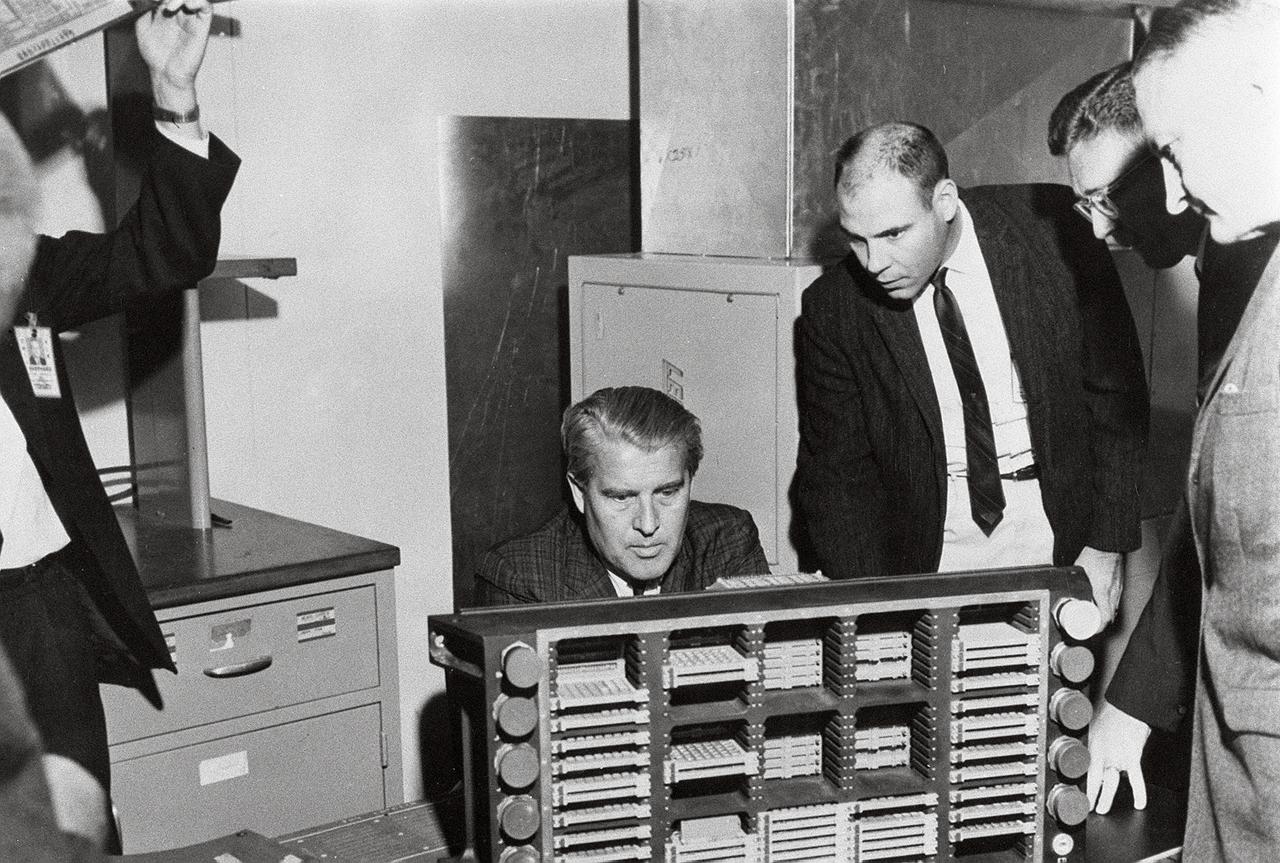
This photograph is dated March 10, 1966, and shows Dr. von Braun (seated) examining a Saturn computer in the Astrionics Laboratory at the Marshall Space Flight Center. Standing left to right are J.B. White, Brooks Moore, and Herman K. Weidner.
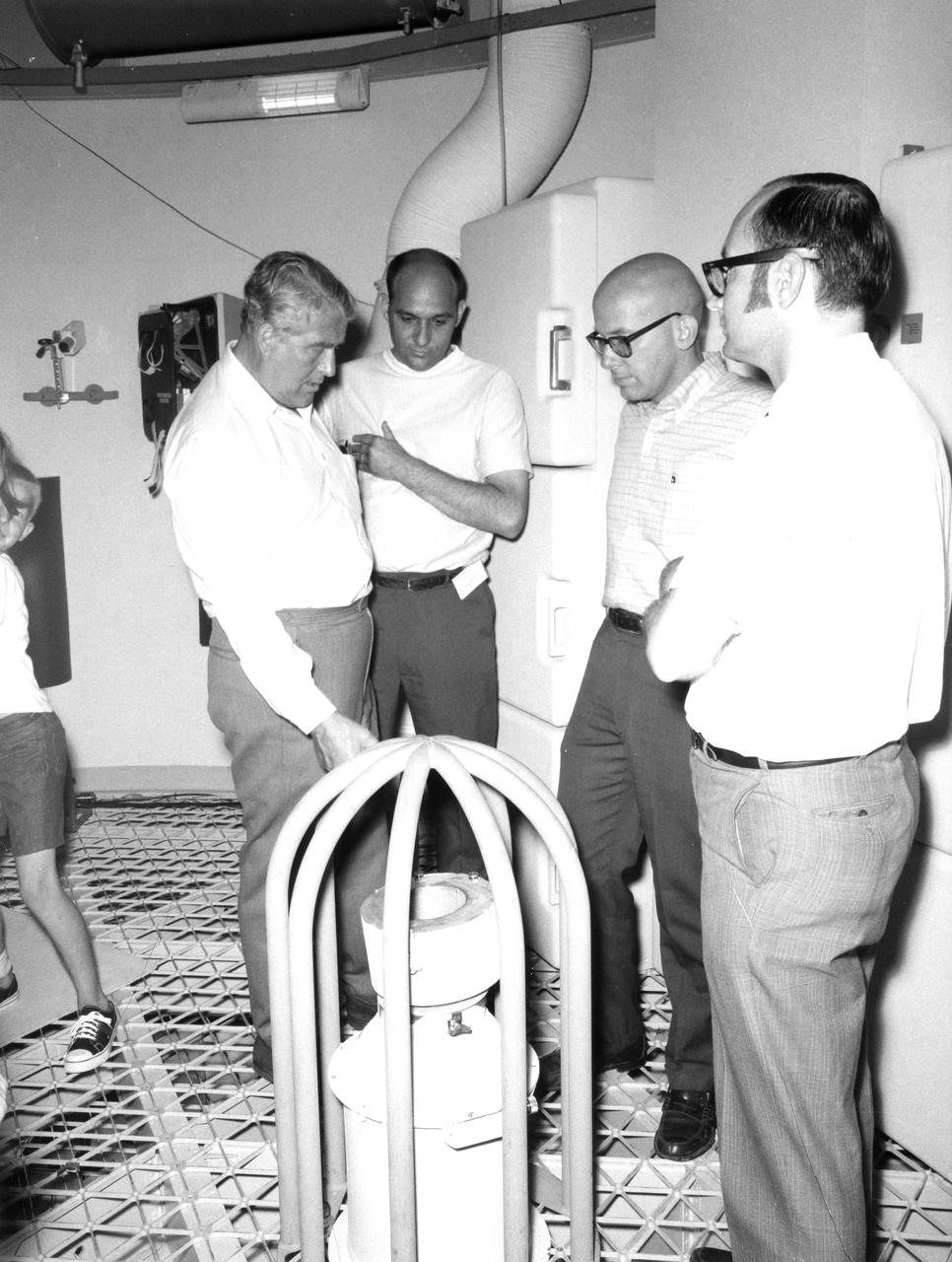
This photograph was taken after Dr. von Braun moved from his post as Director of the Marshall Space Flight Center (MSFC) to Deputy Associate Administrator for Planning at NASA Headquarters. On June 27, 1970, he visited the MSFC again during the center’s 10th anniversary to look at a mockup of the spacecraft that would later be known as Skylab. In this photo, he is examining an experiment in the mockup. With von Braun are (left to right): James R. Thompson, Richard T. Heckman, and Jack Stokes of the Center’s Astrionics Laboratory.
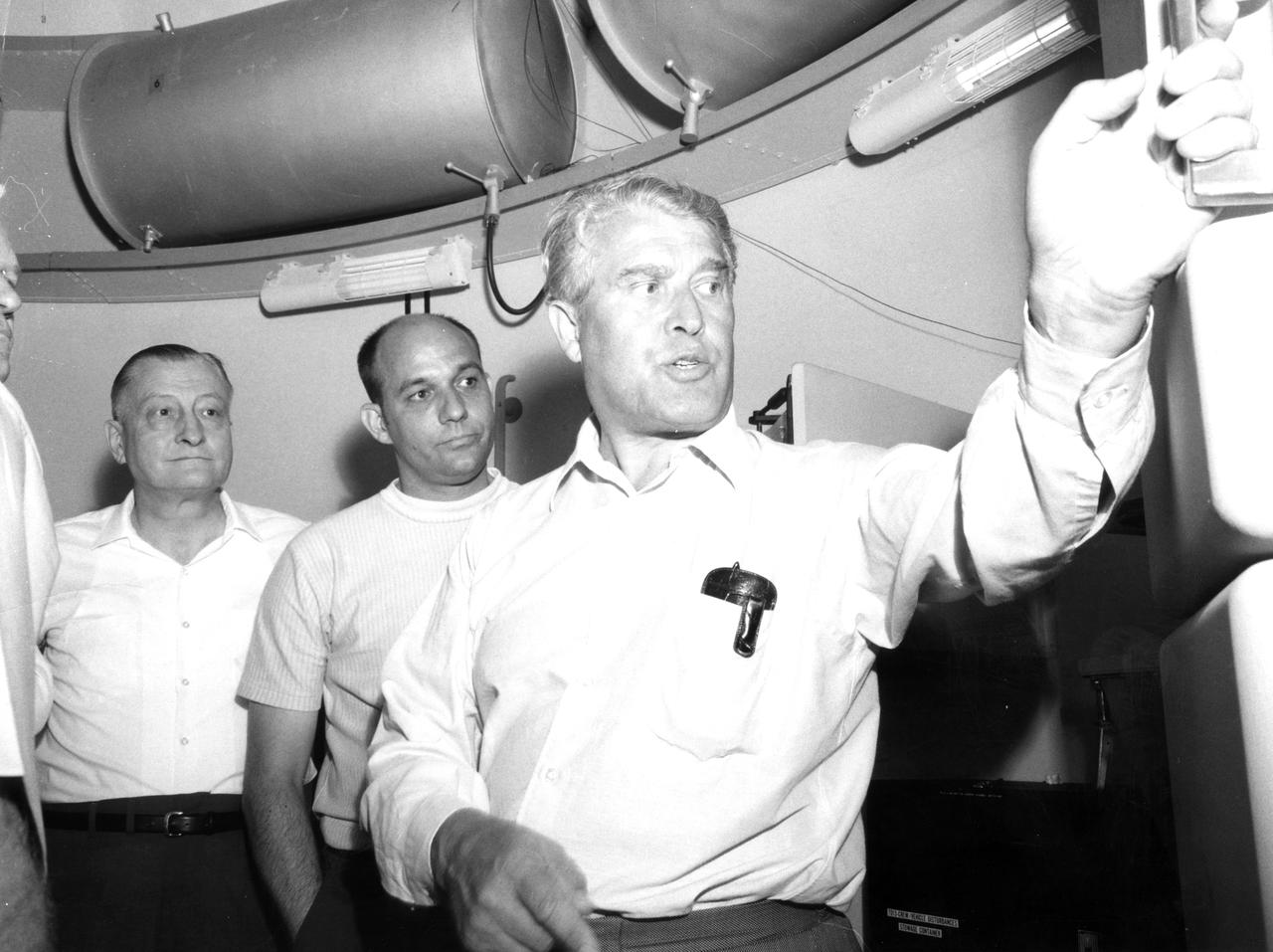
This photograph was taken after Dr. von Braun moved from his post as Director of the Marshall Space Flight Center (MSFC) to Deputy Associate Administrator for Planning at NASA Headquarters. On June 27, 1970, he visited the MSFC again during the center’s 10th anniversary to look at a mockup of the spacecraft that would later be known as Skylab. With von Braun are (left to right): Herman K. Weidner, director of Science and Engineering at MSFC, and James R. Thompson of the center’s Astrionics Laboratory.
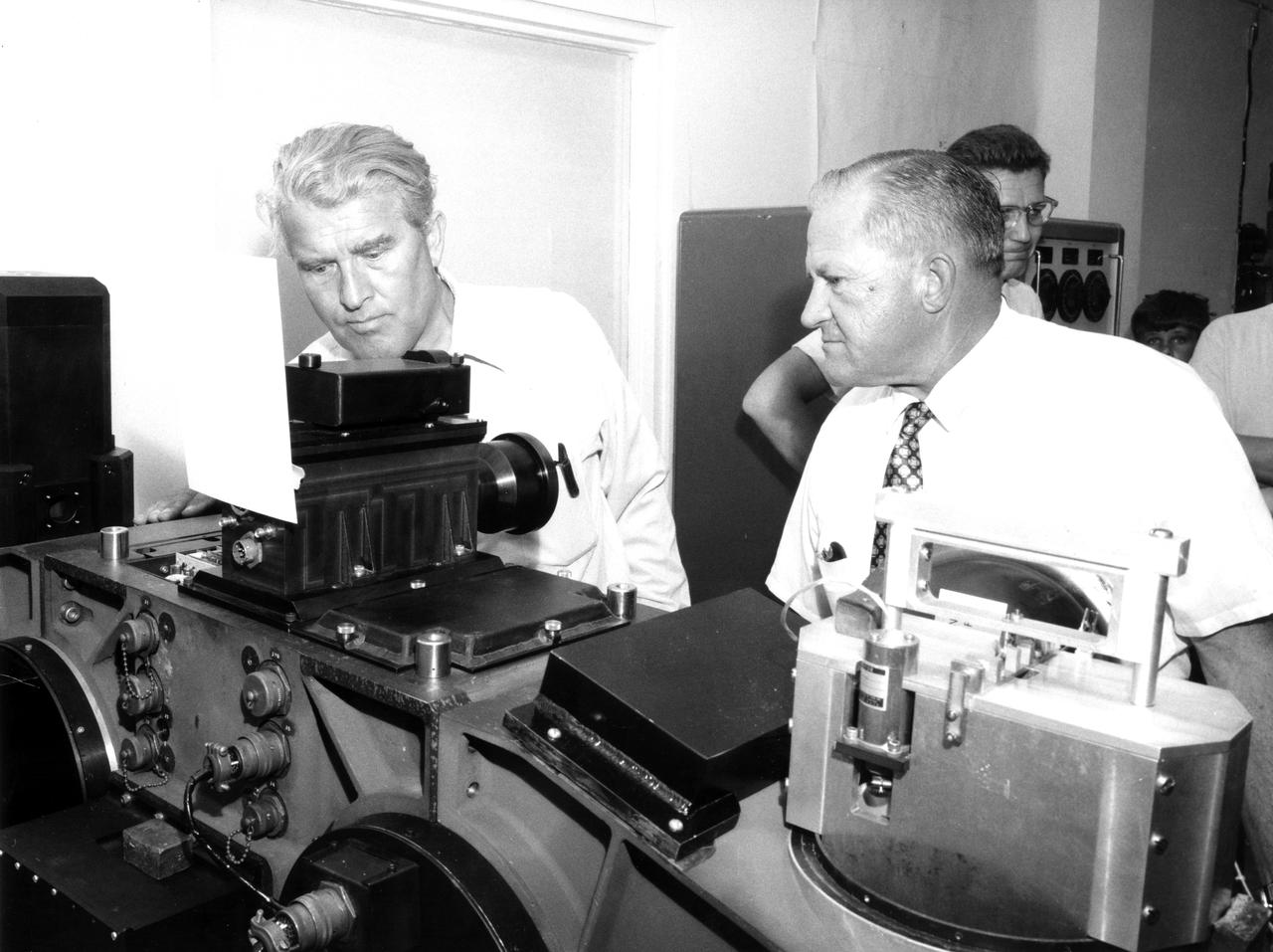
This photograph was taken after Dr. von Braun moved from his post as Director of the Marshall Space Flight Center (MSFC) to Deputy Associate Administrator for Planning at NASA Headquarters. On June 27, 1970, he visited the MSFC again during the center’s 10th anniversary to look at a mockup of the spacecraft that would later be known as Skylab. In this photograph, von Braun (left) and Fred W. Kelley examine an ST-100 stellar instrument platform in MSFC’s Astrionics Lab.
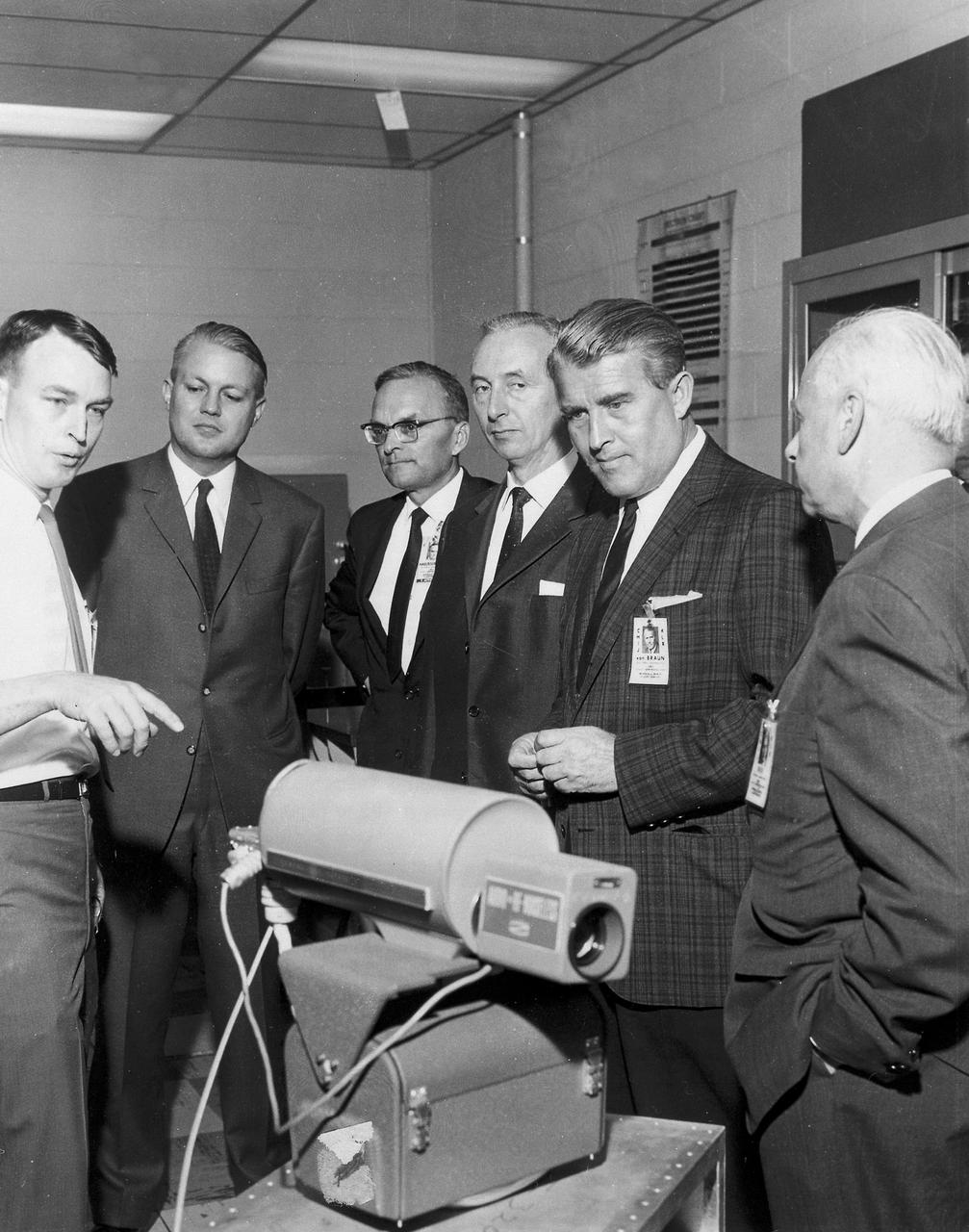
Dr. Joseph Randall, a laser expert at Marshall Space Flight Center (MSFC), explains one of the projects he is working on to a group composed of Federal Republic of Germany and MSFC officials. From left are: Dr. Randall; Minister for Scientific Research of Federal Republic of Germany, Dr. Gerhard Stolenberg; Director of MSFC Astrionics Lab, Dr. Walter Haeusserman; Head of Space Research Federal Republic of Germany, Max Mayer; MSFC Director Dr. von Braun; MSFC Deputy Director Dr. Elberhard Rees.
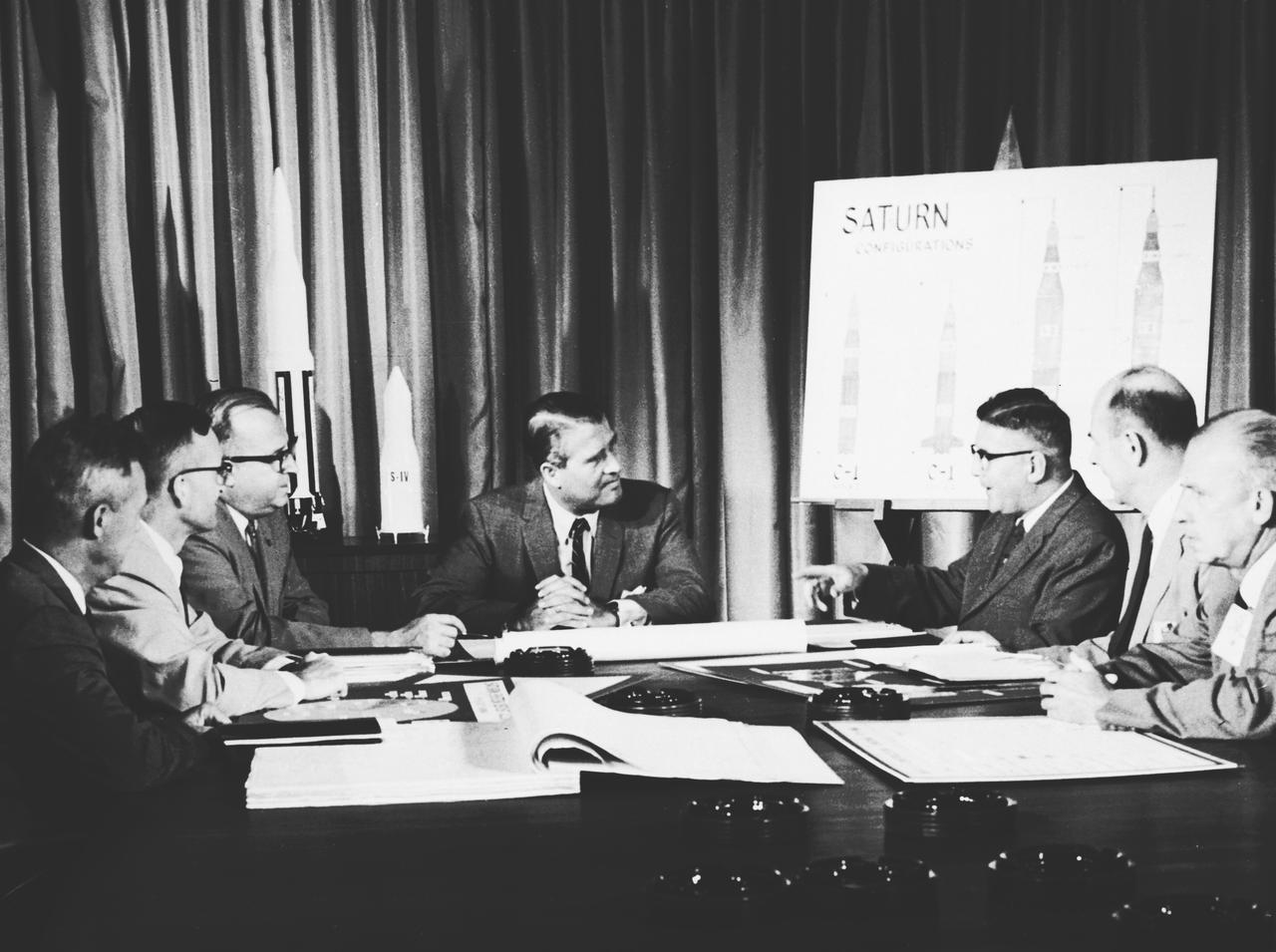
Dr. von Braun is shown in this photograph, which was probably taken in the early 1960s, with members of his management team. Pictured from left to right are, Werner Kuers, Director of the Manufacturing Engineering Division; Dr. Walter Haeussermarn, Director of the Astrionics Division; Dr. William Mrazek, Propulsion and Vehicle Engineering Division; Dr. von Braun; Dieter Grau, Director of the Quality Assurance Division; Dr. Oswald Lange, Director of the Saturn Systems Office; and Erich Neubert , Associate Deputy Director for Research and Development.
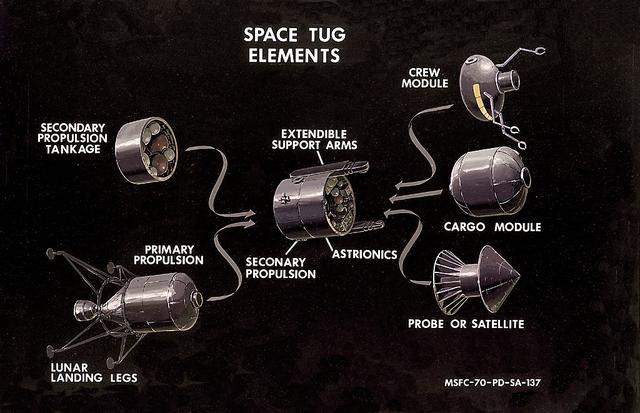
Managed by Marshall Space Flight Center, the Space Tug concept was intended to be a reusable multipurpose space vehicle designed to transport payloads to different orbital inclinations. Utilizing mission-specific combinations of its three primary modules (crew, propulsion, and cargo) and a variety of supplementary kits, the Space Tug would have been capable of numerous space applications. This 1970 illustration depicts the primary modules of the Space Tug system along with some of the supplementary kits: lunar landing legs, extendable support arms, astrionics, and the satellite probe. The Space Tug program was cancelled and did not become a reality.