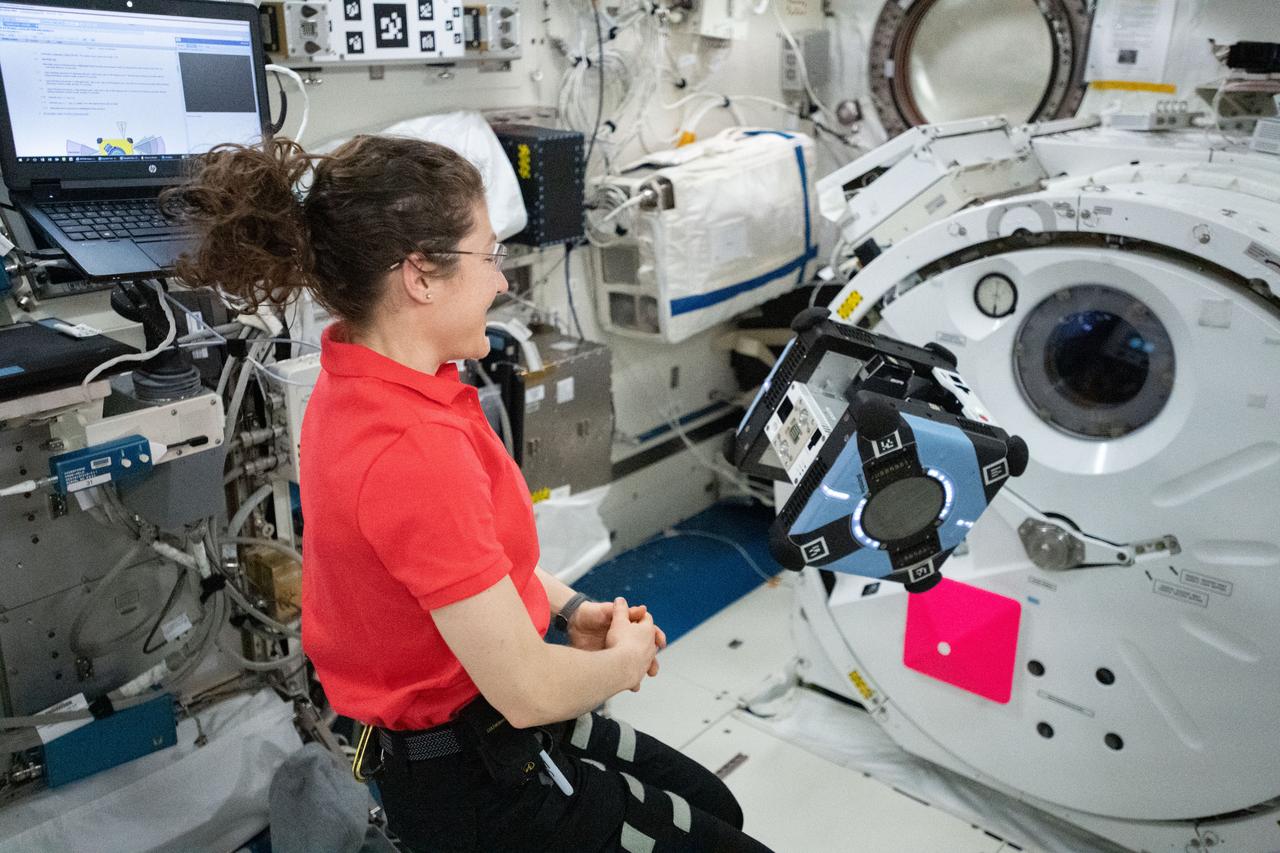
iss060e007162 (July 12, 2020) --- NASA astronaut and Expedition 60 Flight Engineer Christina Koch tests the mobility of the free-flying Astrobee robotic assistant inside the Kibo laboratory module. Astrobee consists of three self-contained, free flying robots and a docking station inside the International Space Station.
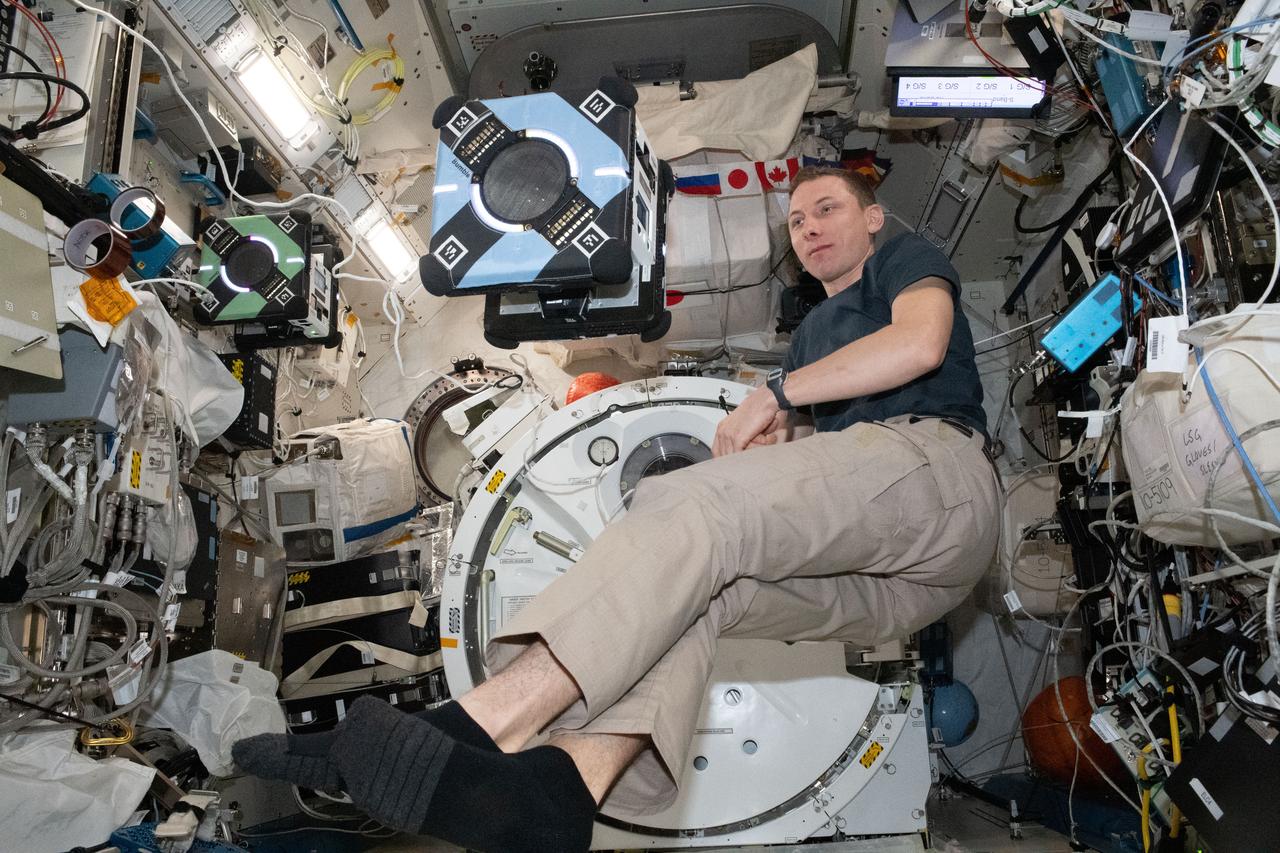
iss069e008378 (May 2, 2023) --- NASA astronaut and Expedition 69 Flight Engineer Woody Hoburg tests one of the space station’s Astrobee robots for Zero Robotics, a student competition to write software to control the free-flying robots. The program promotes teamwork and awareness of space career opportunities and students learn about artificial intelligence, systems engineering, and human-robot collaboration.
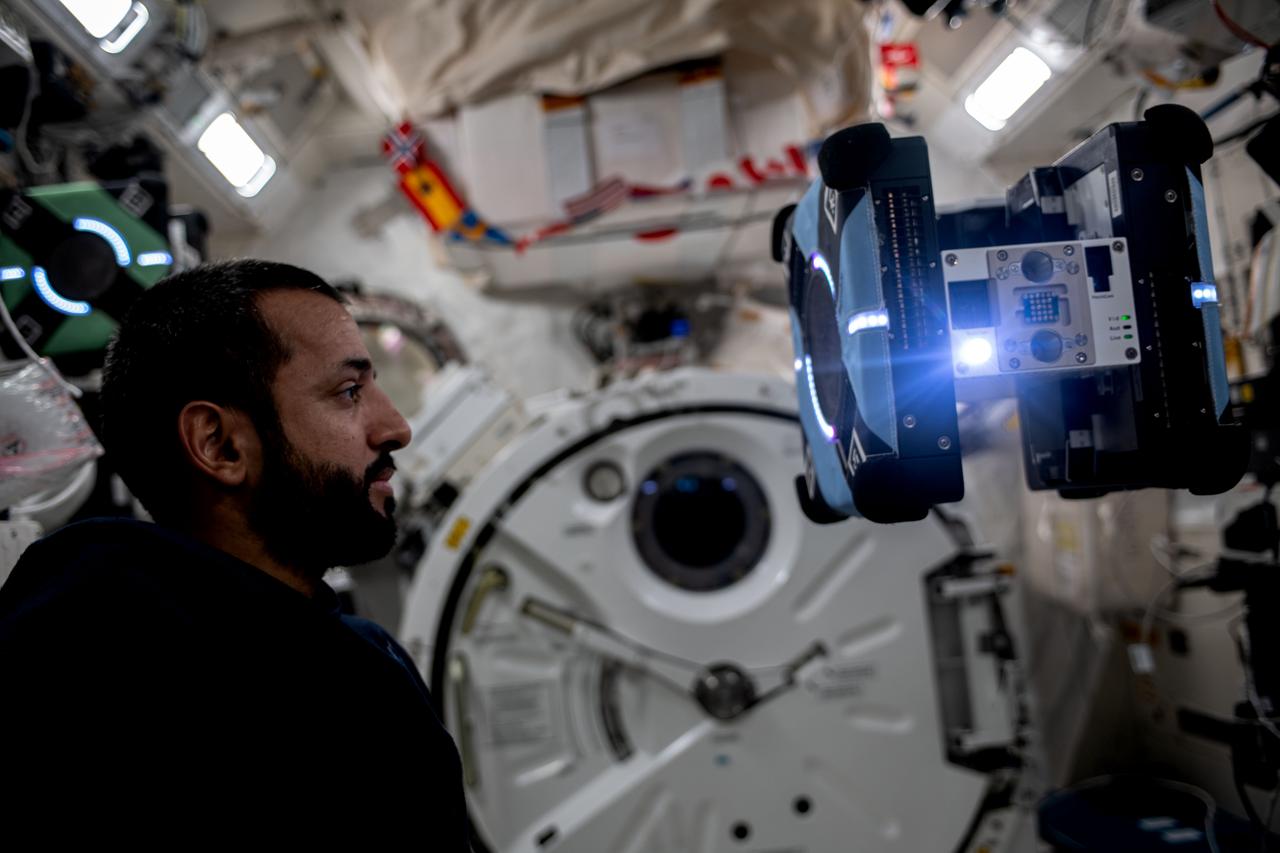
iss069e010815 (May 16, 2023) --- UAE (United Arab Emirates) astronaut and Expedition 69 Flight Engineer Sultan Alneyadi observes a free-flying Astrobee robotic assistant during the testing of its operations for an upcoming student competition to control the robotic devices.
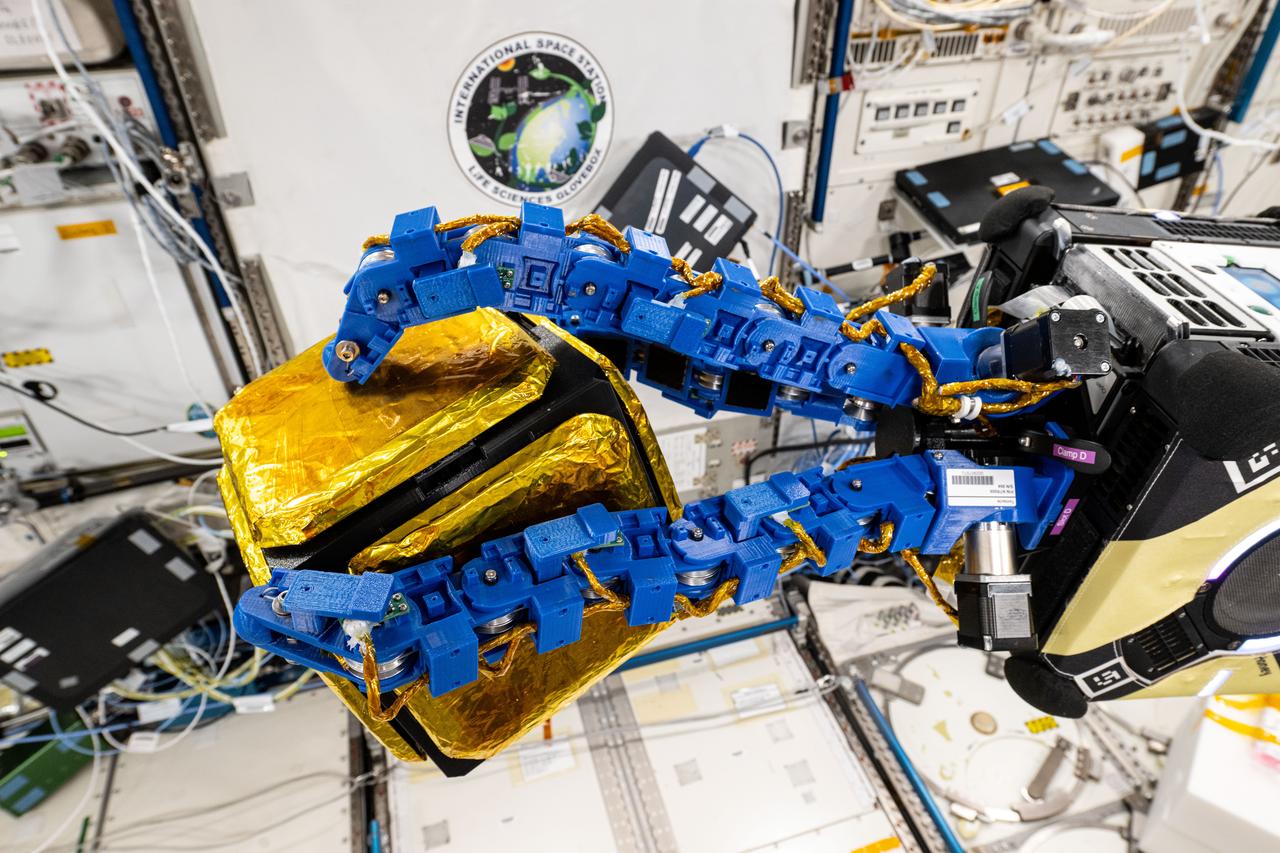
iss072e593717 (Feb. 4, 2025) --- The blue tentacle-like arms containing gecko-like adhesive pads, attached to an Astrobee robotic free-flyer, reach out and grapple a "capture cube" inside the International Space Station's Kibo laboratory module. The experimental grippers, outfitted on the toaster-sized Astrobee, demonstrated autonomous detection and capture techniques that may be used to remove space debris and service satellites in low Earth orbit.

iss072e593598 (Feb. 4, 2025) --- NASA astronaut and Expedition 72 Commander Suni Williams monitors an Astrobee robotic free-flyer outfitted with tentacle-like arms containing gecko-like adhesive pads preparing to grapple a "capture cube." The toaster sized Astrobee, with the experimental grippers attached, demonstrated autonomous detection and capture techniques that may be used to remove space debris and service satellites in low Earth orbit.
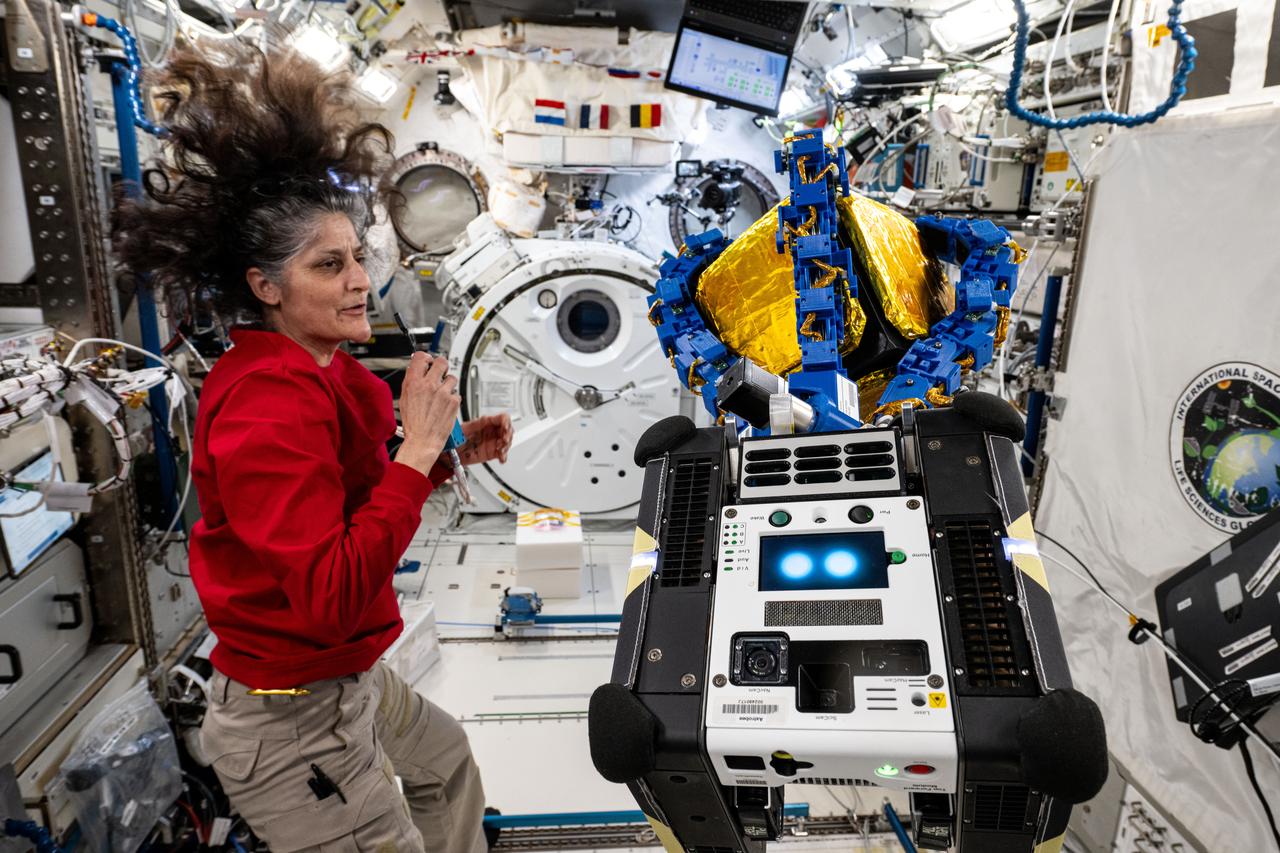
iss072e593606 (Feb. 4, 2025) --- NASA astronaut and Expedition 72 Commander Suni Williams monitors an Astrobee robotic free-flyer outfitted with tentacle-like arms containing gecko-like adhesive pads as it grapples a "capture cube." The toaster sized Astrobee, with the experimental grippers attached, demonstrated autonomous detection and capture techniques that may be used to remove space debris and service satellites in low Earth orbit.
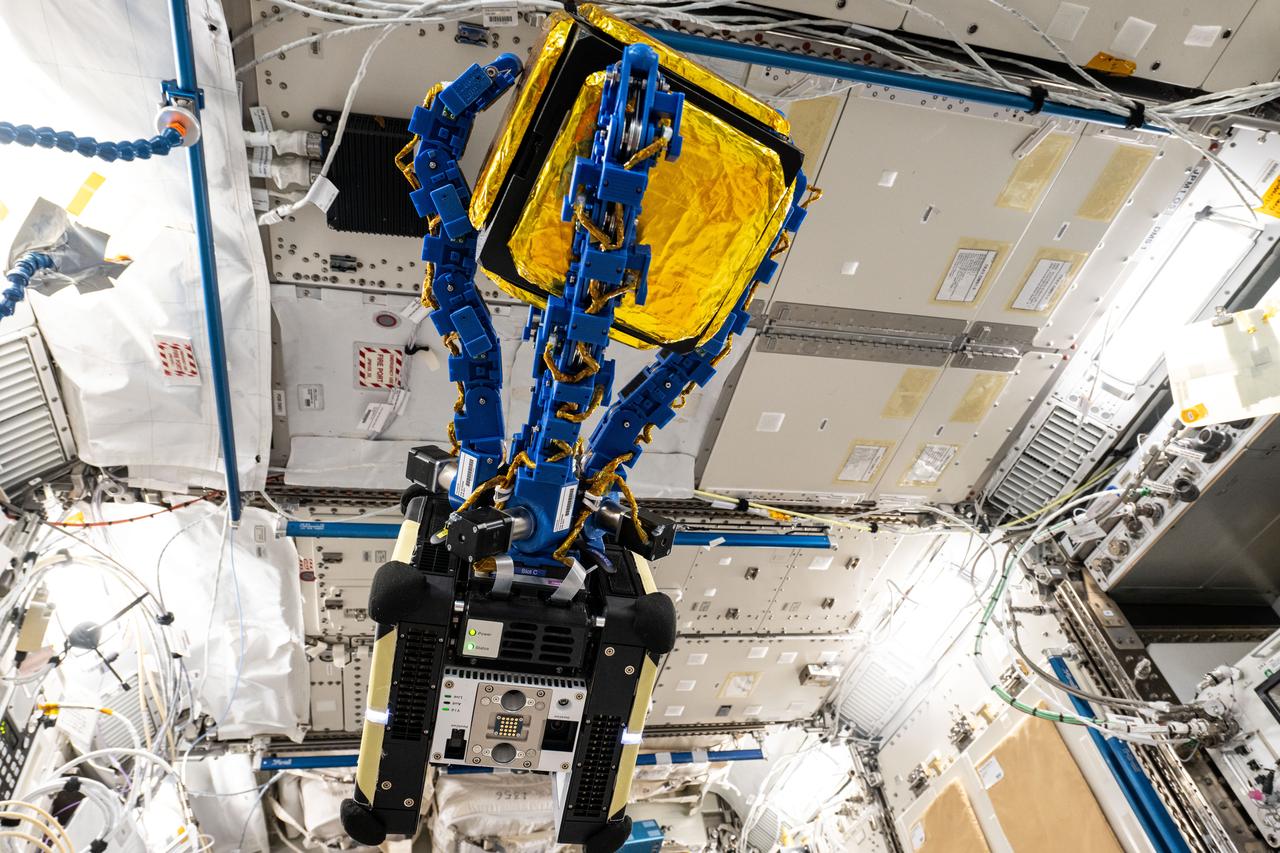
iss072e593734 (Feb. 4, 2025) --- The blue tentacle-like arms containing gecko-like adhesive pads, attached to an Astrobee robotic free-flyer, reach out and grapple a "capture cube" inside the International Space Station's Kibo laboratory module. The experimental grippers, outfitted on the toaster-sized Astrobee, demonstrated autonomous detection and capture techniques that may be used to remove space debris and service satellites in low Earth orbit.
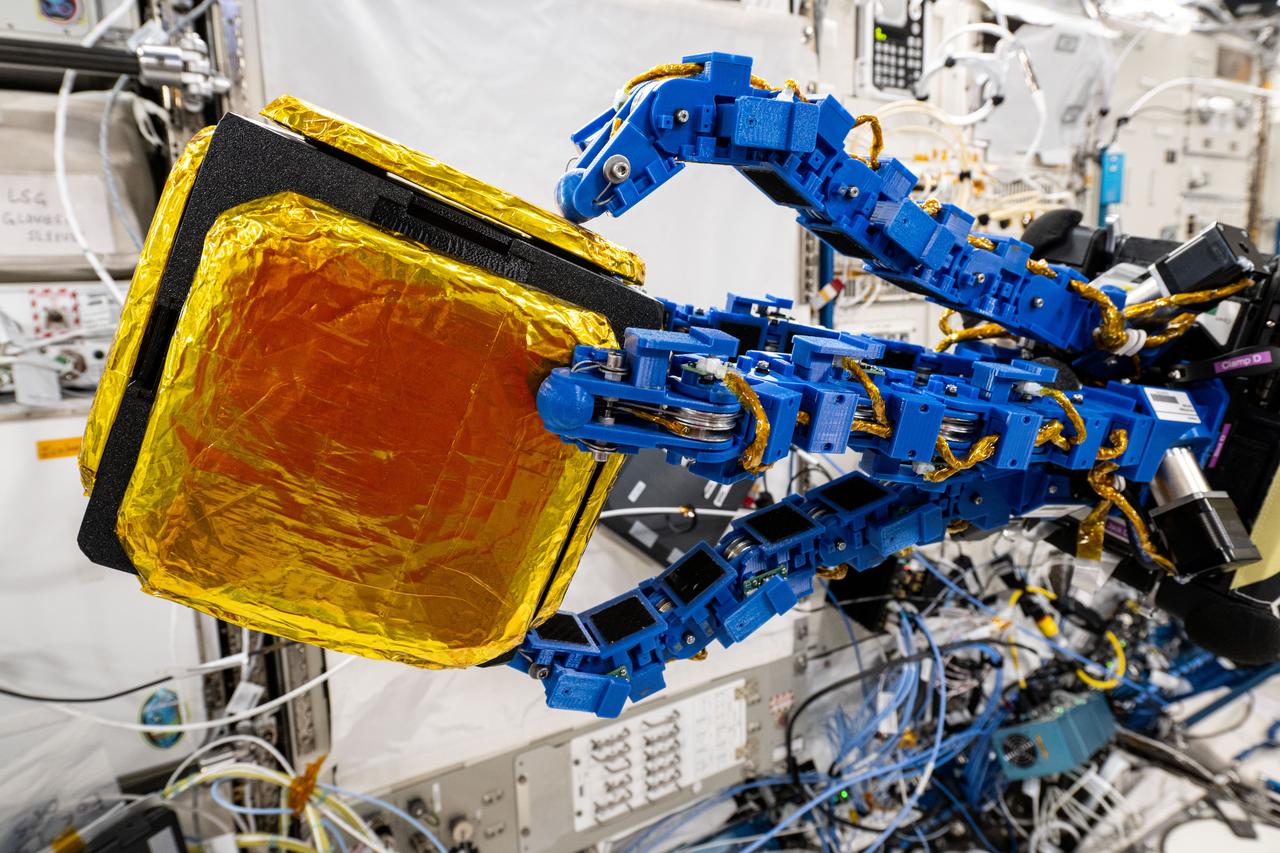
iss072e593737 (Feb. 4, 2025) --- The blue tentacle-like arms containing gecko-like adhesive pads, attached to an Astrobee robotic free-flyer, reach out and grapple a "capture cube" inside the International Space Station's Kibo laboratory module. The experimental grippers, outfitted on the toaster-sized Astrobee, demonstrated autonomous detection and capture techniques that may be used to remove space debris and service satellites in low Earth orbit.
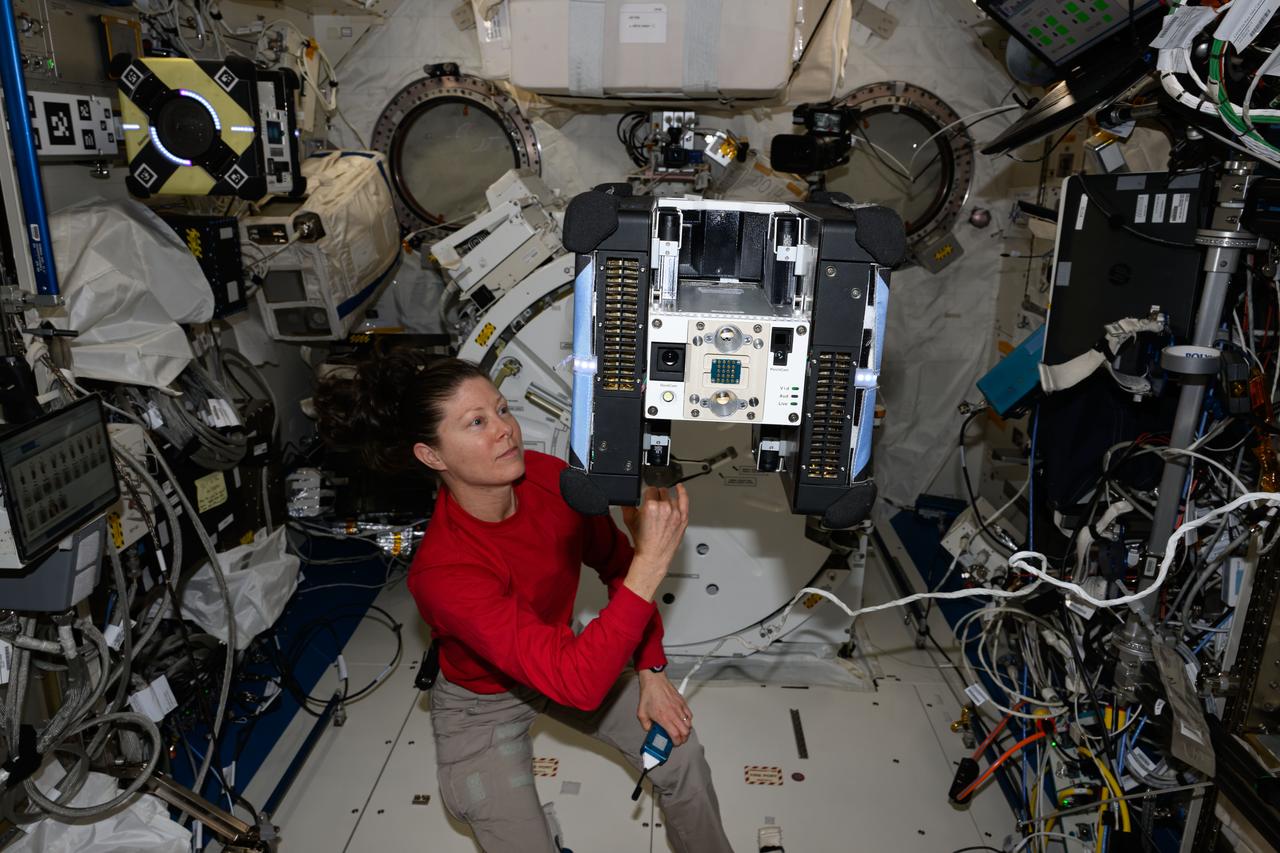
iss071e046270 (May 1, 2024) -- NASA astronaut and Expedition 71 Flight Engineer Tracy C. Dyson performs a Zero Robotics tech demonstration with Astrobee. Zero Robotics allows students on Earth to write software to control one of three free-flying Astrobee robots aboard the International Space Station. As part of an ongoing educational activity, students can then observe the performance of the robot without directly interacting with it.
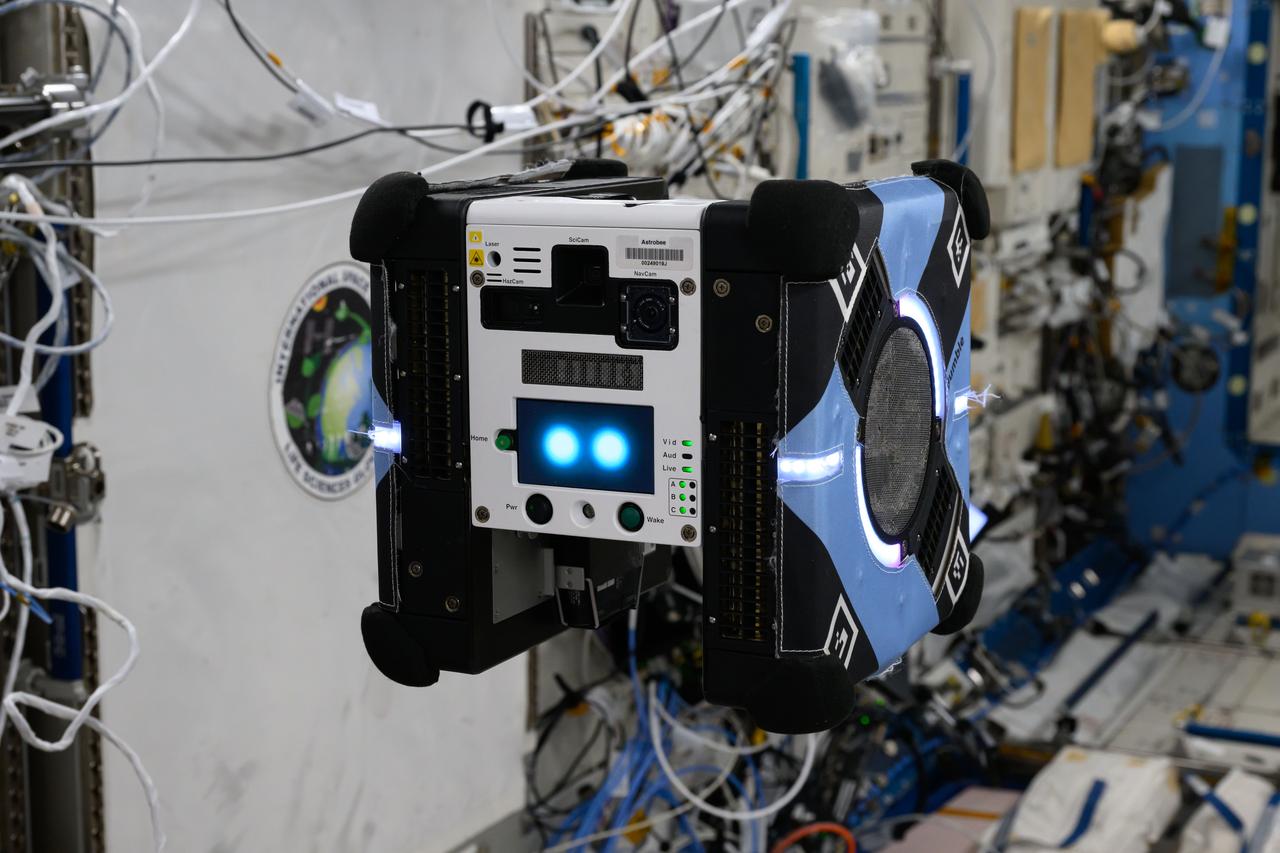
iss071e046284 (May 1, 2024) -- One of the International Space Station's free-flying robots, Astrobee, was pictured by NASA astronaut and Expedition 71 Flight Engineer Tracy C. Dyson during a Zero Robotics tech demonstration. Zero Robotics allows students on Earth to write software to control the robots and observe their performance inside the orbiting laboratory.
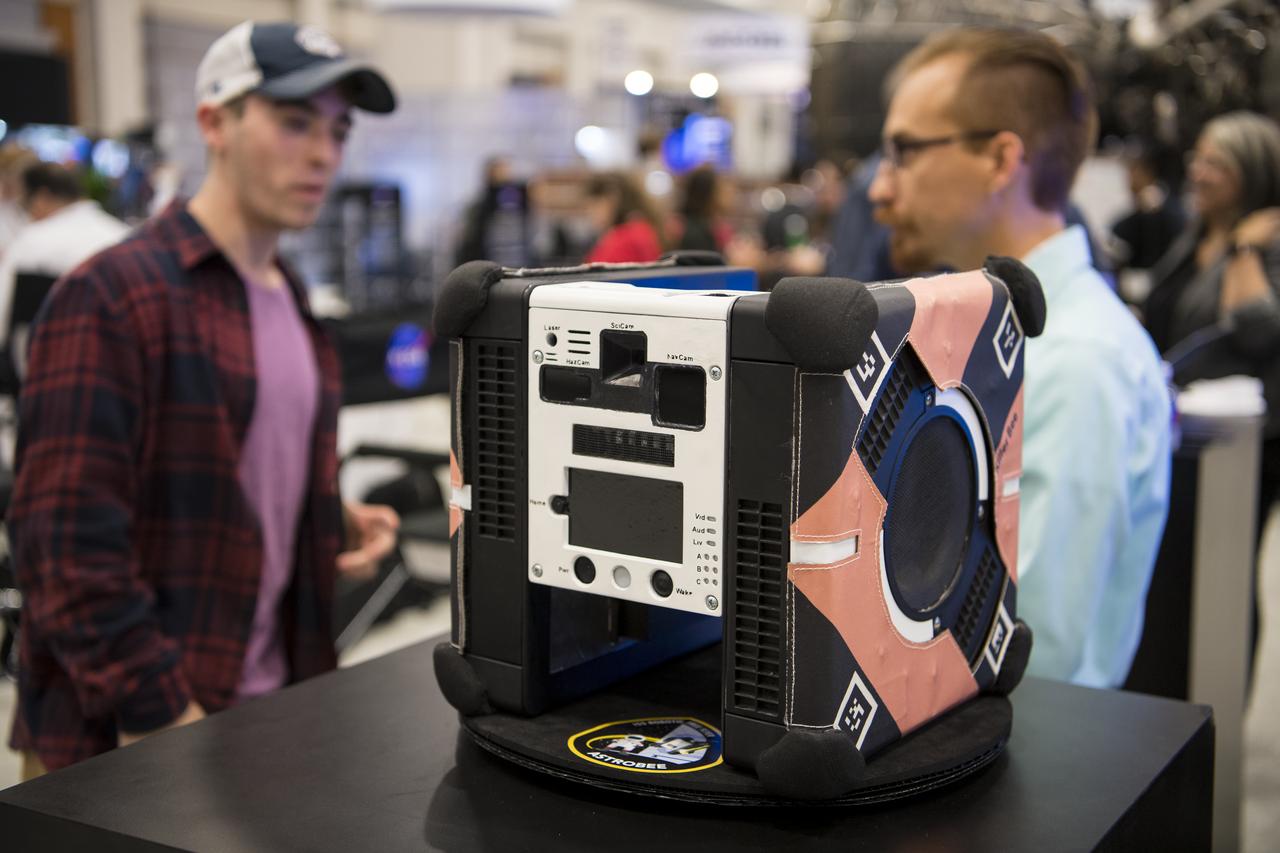
A model of the Astrobee robot is seen at the NASA exhibit during the 70th International Astronautical Congress, Friday, Oct. 25, 2019, at the Walter E. Washington Convention Center in Washington. Photo credit: (NASA/Aubrey Gemignani)
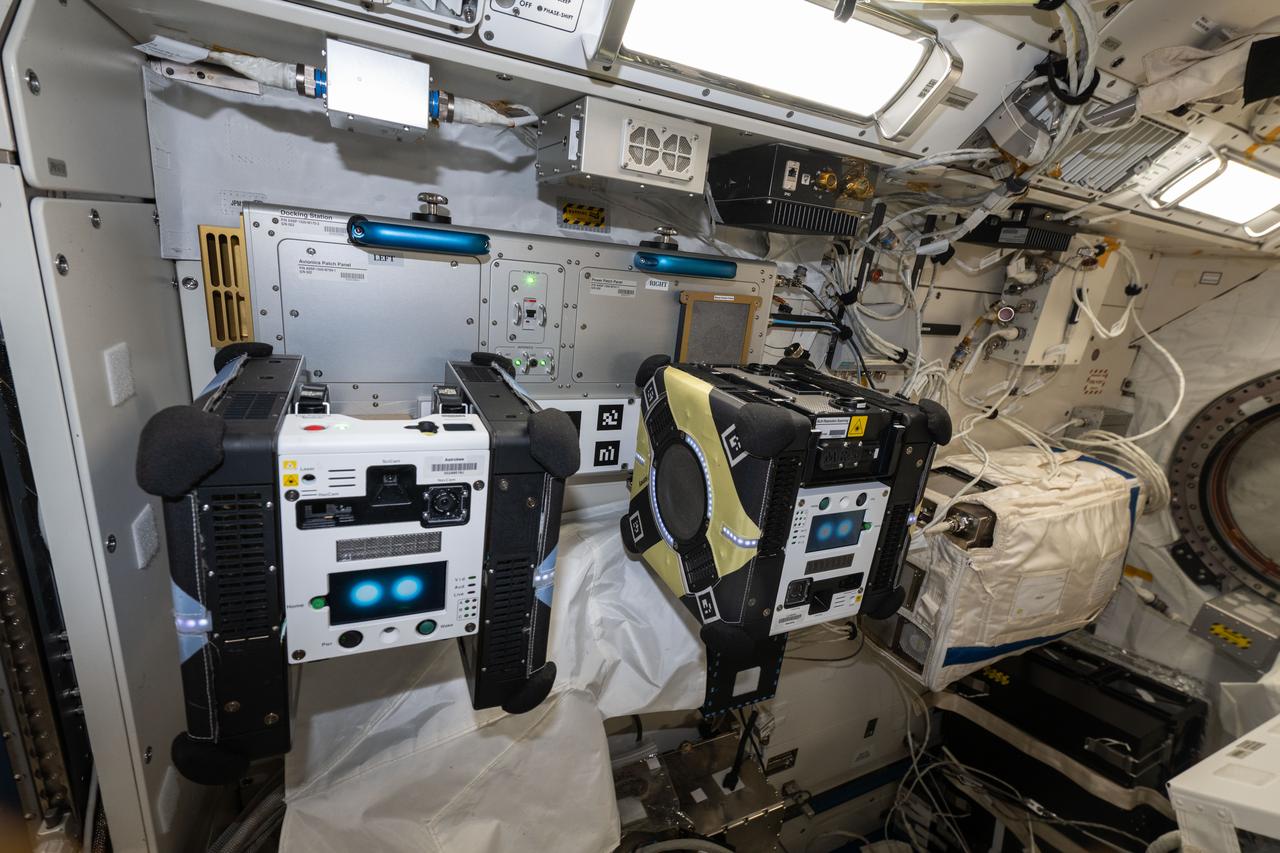
iss073e0098590 (May 26, 2025) --- A pair of Astrobee robotic free-flyers are pictured docked to ports inside the International Space Station's Kibo laboratory module. The cube-shaped, toaster-sized robots are being tested for their ability to autonomously navigate aboard the orbital outpost and conduct routine maintenance and monitoring duties enabling the crew to focus on science and engineering duties.
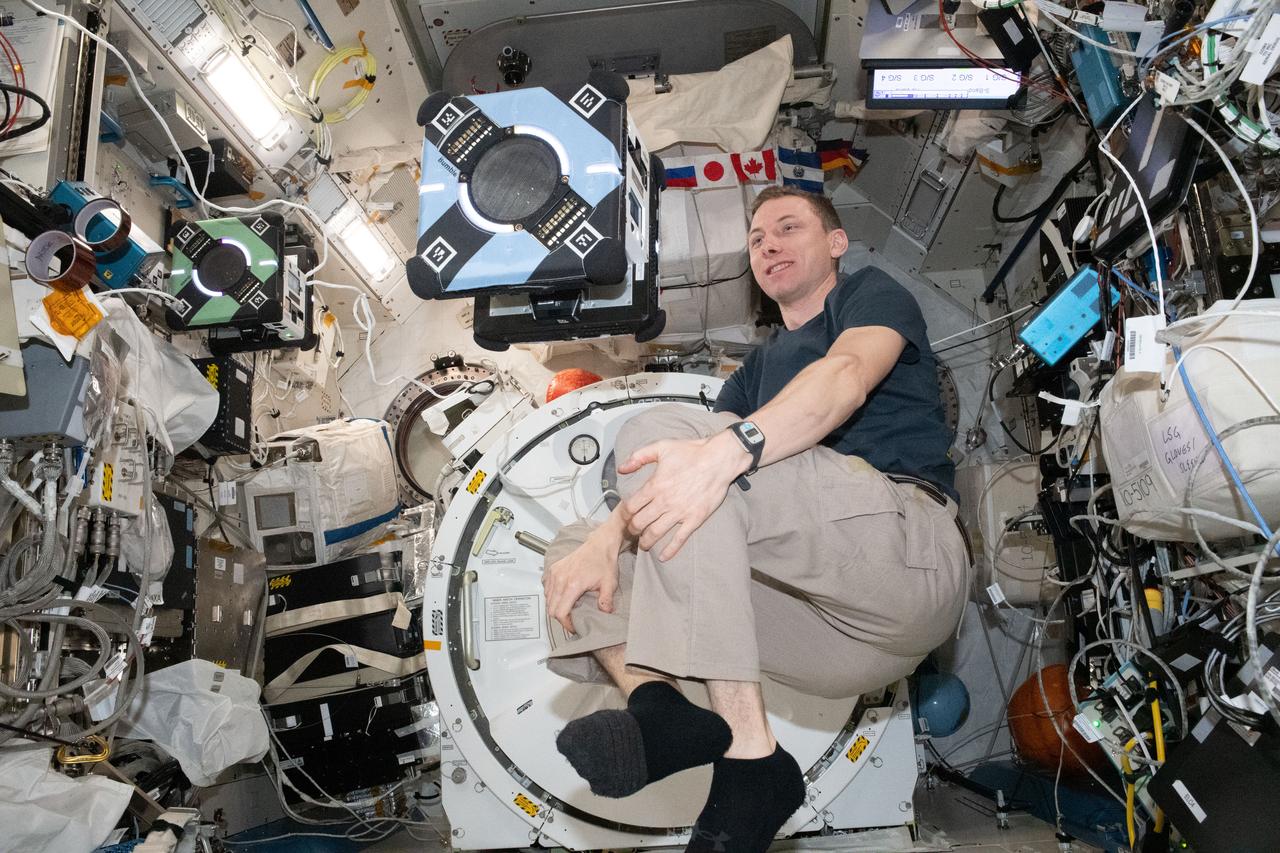
iss069e008375 (May 2, 2023) --- NASA astronaut and Expedition 69 Flight Engineer Woody Hoburg monitors an Astrobee robotic free-flyer in the Kibo laboratory module testing its operations in conjunction with mission controllers. The robotics work is being done to demonstrate ways to control the free-flyers using student-written code that recognizes multiple gestures.
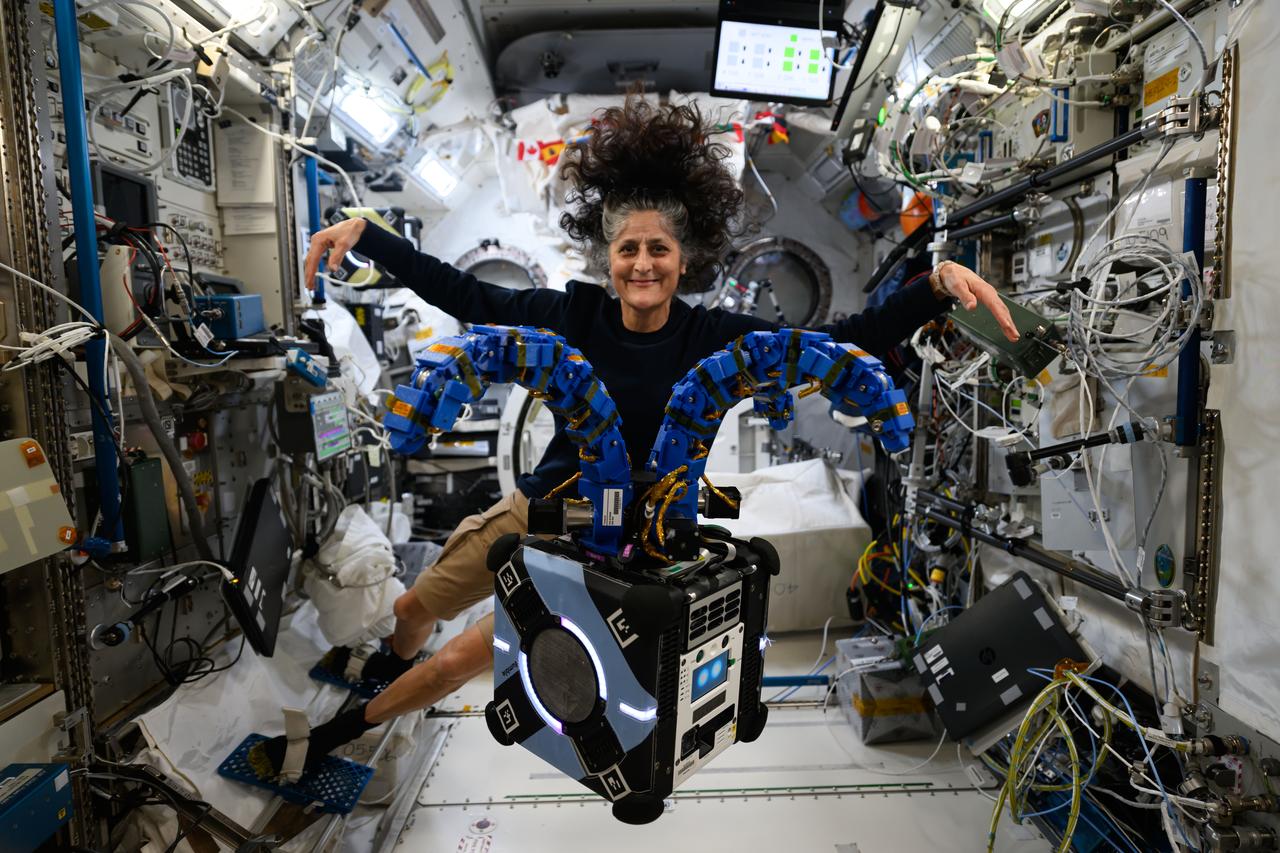
iss072e189028 (Nov. 15, 2024) --- NASA astronaut and Expedition 72 Commander Suni Williams checks out the Astrobee robotic free-flyer in the Kibo laboratory module outfitted with tentacle-like arms containing gecko-like adhesive pads to demonstrate satellite capture techniques. Development of this robotic technology may increase the life span of satellites and enable the removal of space debris.

iss072e747124 (March 18, 2025) --- NASA astronaut and Expedition 72 Flight Engineer Nichole Ayers works inside the International Space Station's Kibo laboratory module loading software onto an Astrobee robotic free-flyer. The software is part of a technology investigation demonstrating an adaptor for docking and close approach sensing to connect both active and passive objects in space. Results may enable applications such as satellite servicing, orbital refueling, spacecraft repair and upgrade, and in-orbit manufacturing.

iss073e0098595 (May 27, 2025) --- NASA astronaut and Expedition 73 Flight Engineer Anne McClain shows off a pair of Astrobee robotic free-flyers inside the International Space Station's Kibo laboratory. Ground controllers were monitoring the cube-shaped, toaster-sized devices as they autonomously performed docking maneuvers using multi-resolution scanning units installed earlier by McClain.
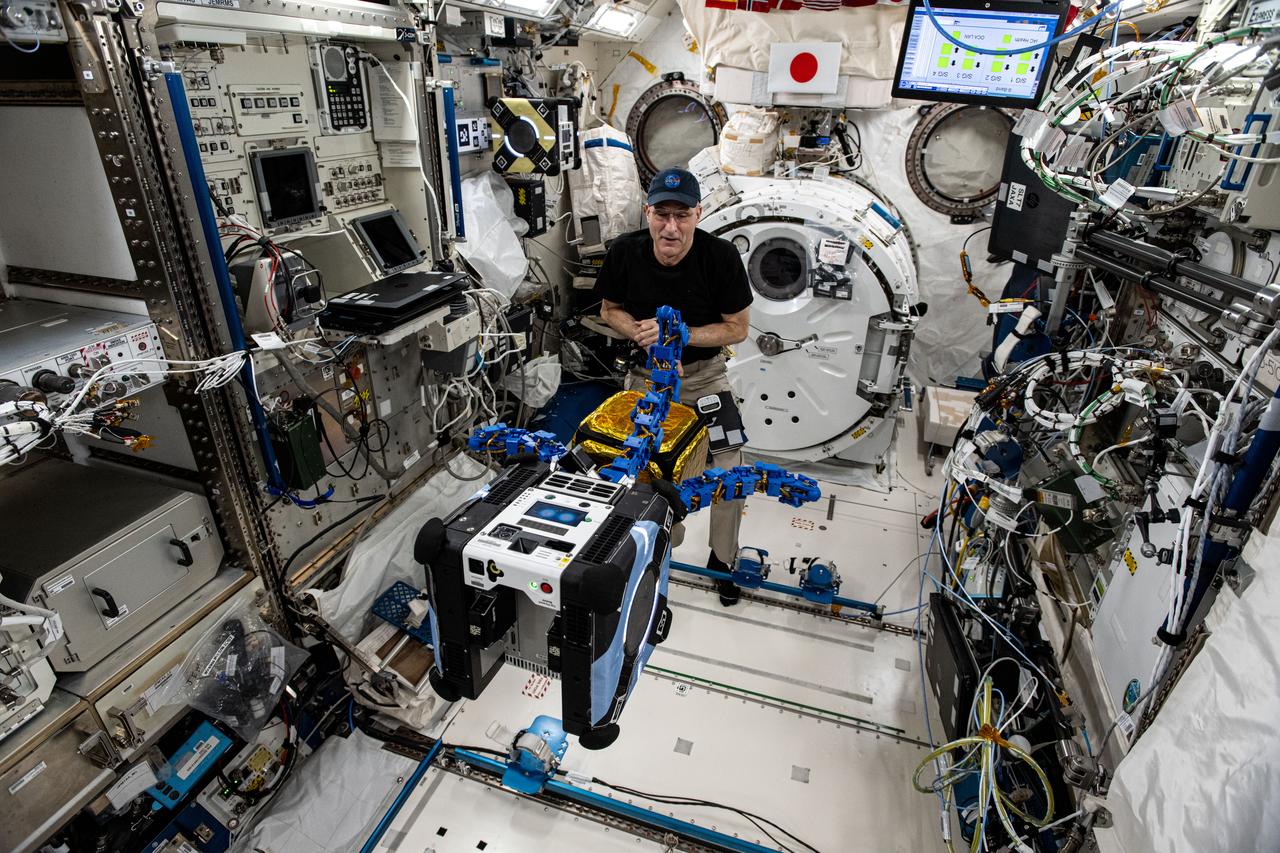
iss072e921201 (April 4, 2025) --- NASA astronaut and Expedition 72 Flight Engineer Don Pettit watches as an Astrobee robotic free-flyer outfitted with tentacle-like grippers grapples a "capture cube" inside the International Space Station's Kibo laboratory module.
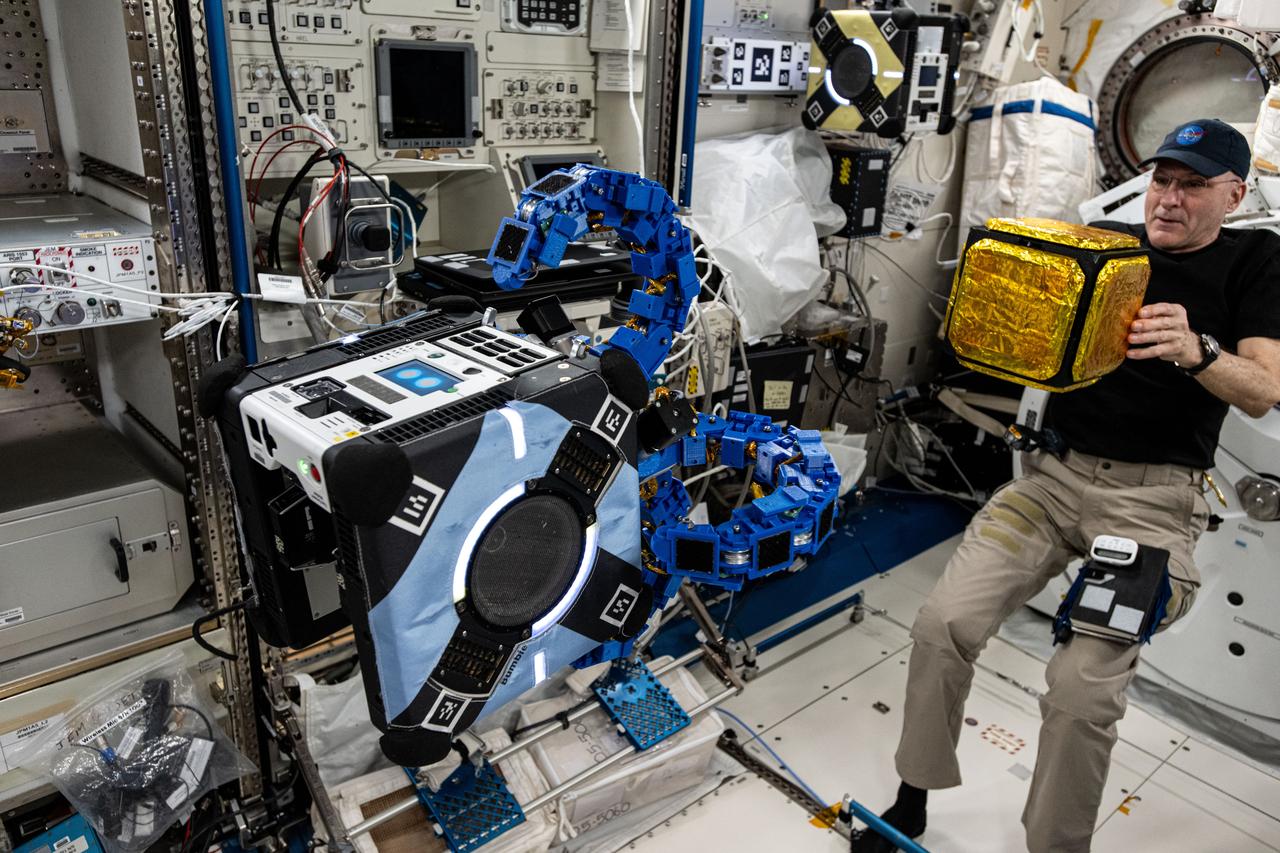
iss072e921211 (April 4, 2025) --- NASA astronaut and Expedition 72 Flight Engineer Don Pettit prepares to deploy a "capture cube" as an Astrobee robotic free-flyer outfitted with tentacle-like grippers prepares to grapple the object inside the International Space Station's Kibo laboratory module.
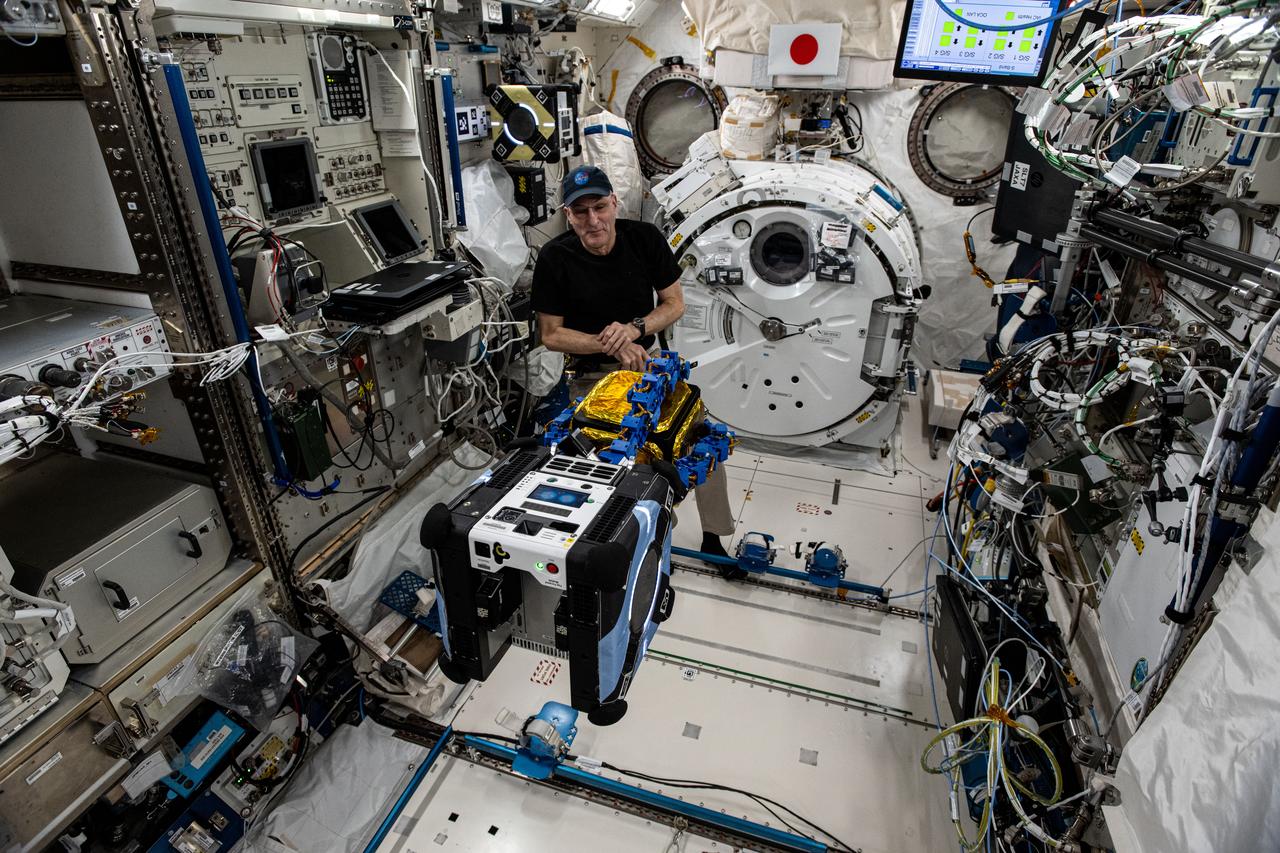
iss072e921202 (April 4, 2025) --- NASA astronaut and Expedition 72 Flight Engineer Don Pettit watches as an Astrobee robotic free-flyer outfitted with tentacle-like grippers grapples a "capture cube" inside the International Space Station's Kibo laboratory module.
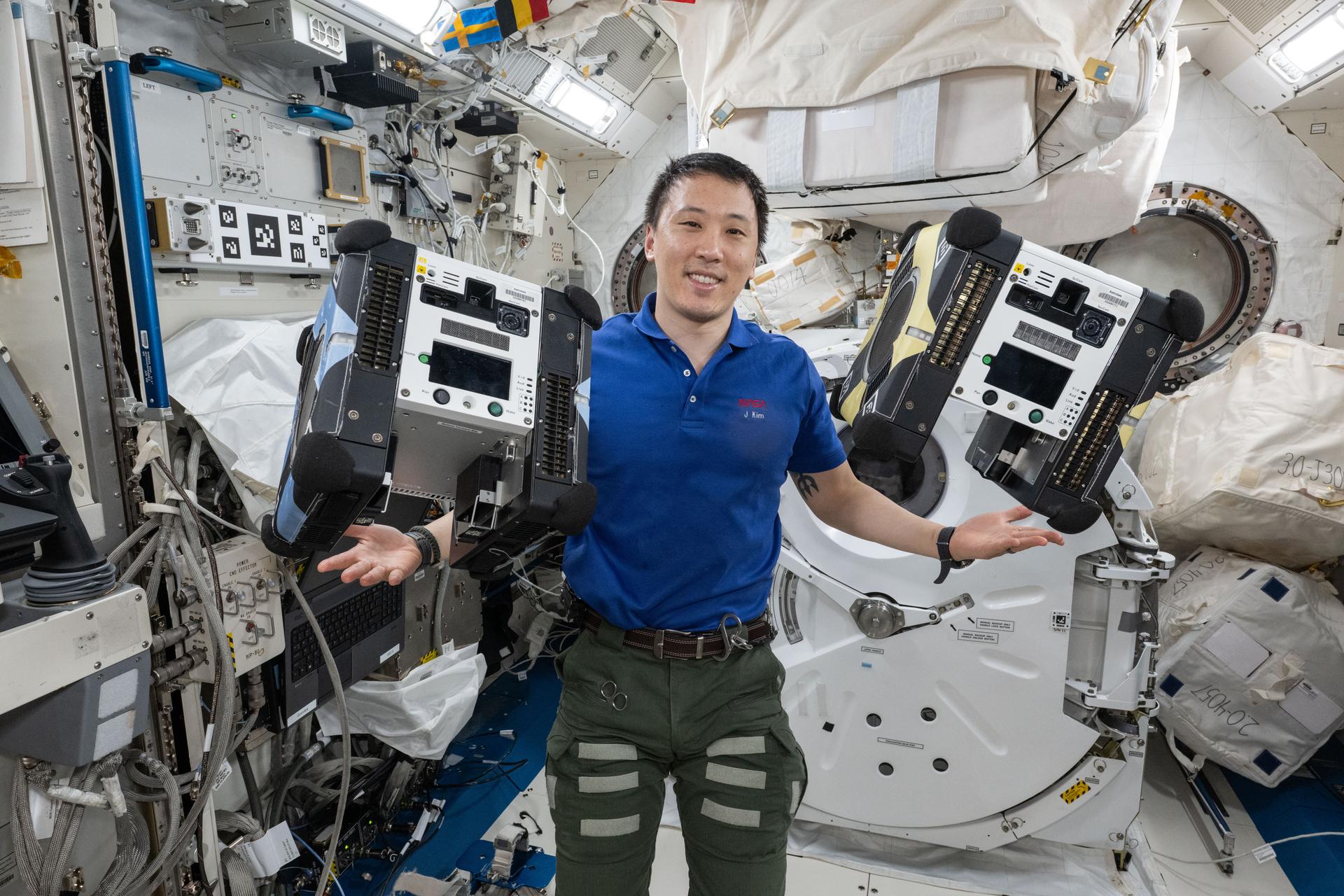
iss073e1232174 (Dec. 2, 2025) --- NASA astronaut and Expedition 73 Flight Engineer Jonny Kim displays a pair of Astrobee free-flying robotic assistants inside the International Space Station's Kibo laboratory module. The toaster-sized, cube-shaped devices are powered by fans and vision-based navigation to demonstrate their ability to assist astronauts with routine chores and provide remote monitoring capabilities for mission controllers on Earth.
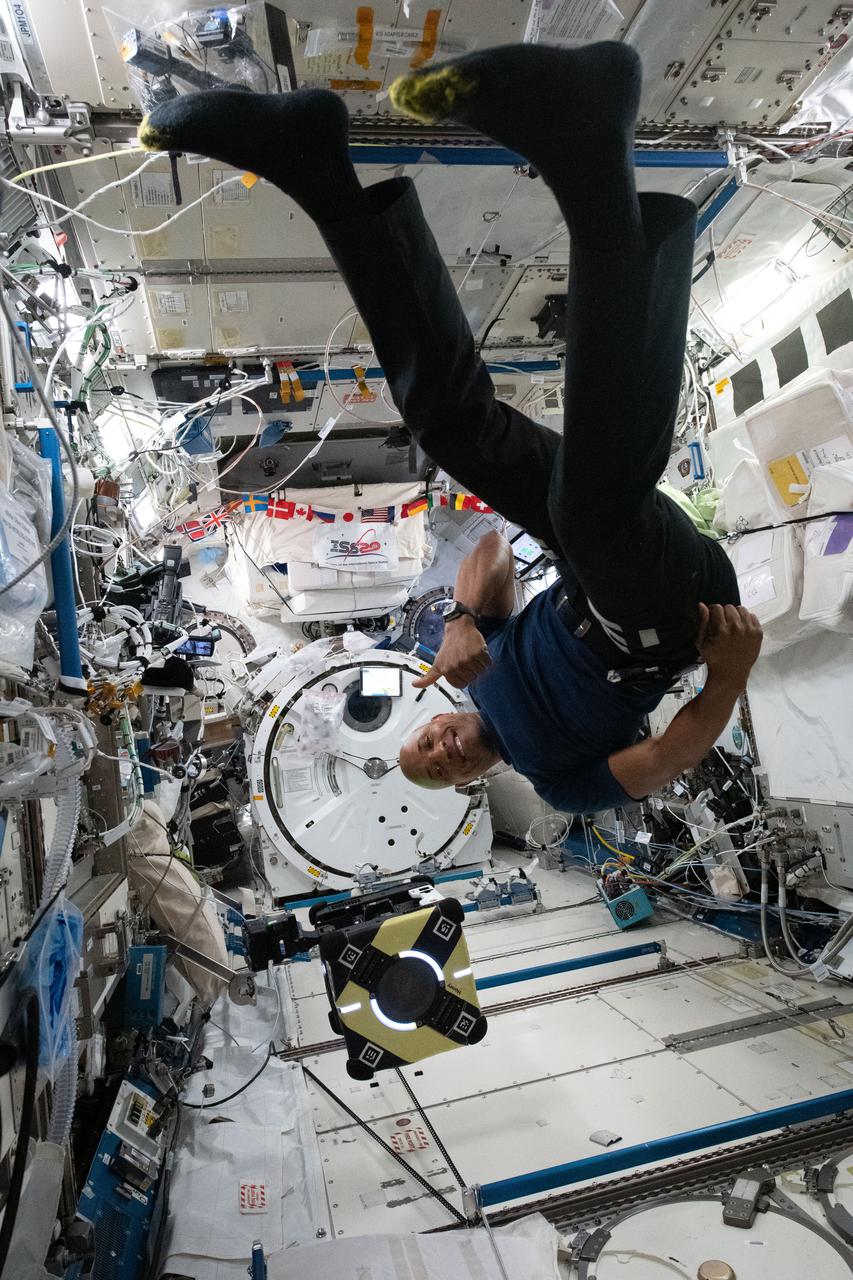
NASA astronaut and Expedition 64 Flight Engineer Victor Glover works with the Astrobee robot aboard the space station to test an adhesive for robotic grasping and manipulating as part of the Astrobee/Gecko-2 experiment. Assistive Free-Flyers with Gecko-Inspired Adhesive Appendages for Automated Logistics in Space uses the Astrobee robot aboard the space station to test an adhesive for robotic grasping and manipulating.
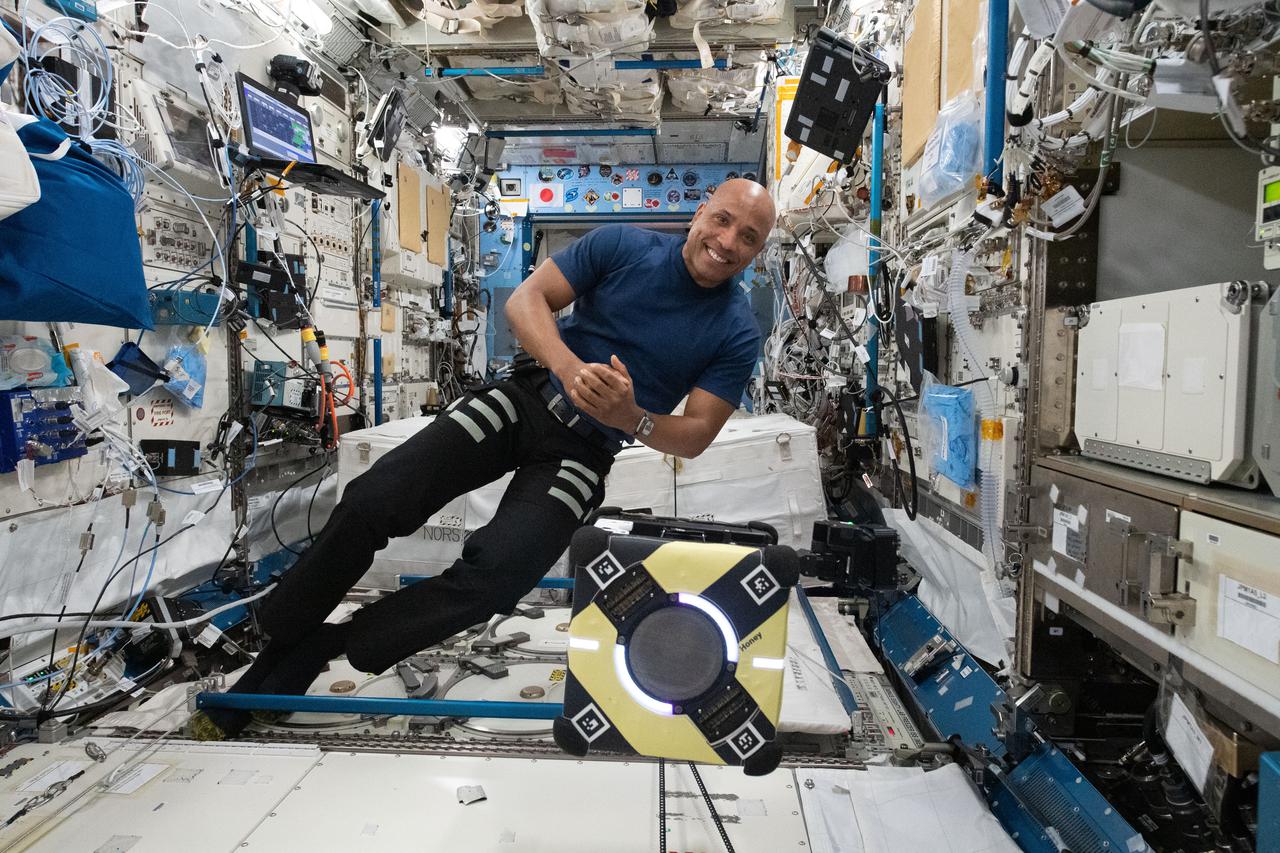
NASA astronaut and Expedition 64 Flight Engineer Victor Glover works with the Astrobee robot aboard the space station to test an adhesive for robotic grasping and manipulating as part of the Astrobee/Gecko-2 experiment. Assistive Free-Flyers with Gecko-Inspired Adhesive Appendages for Automated Logistics in Space uses the Astrobee robot aboard the space station to test an adhesive for robotic grasping and manipulating.
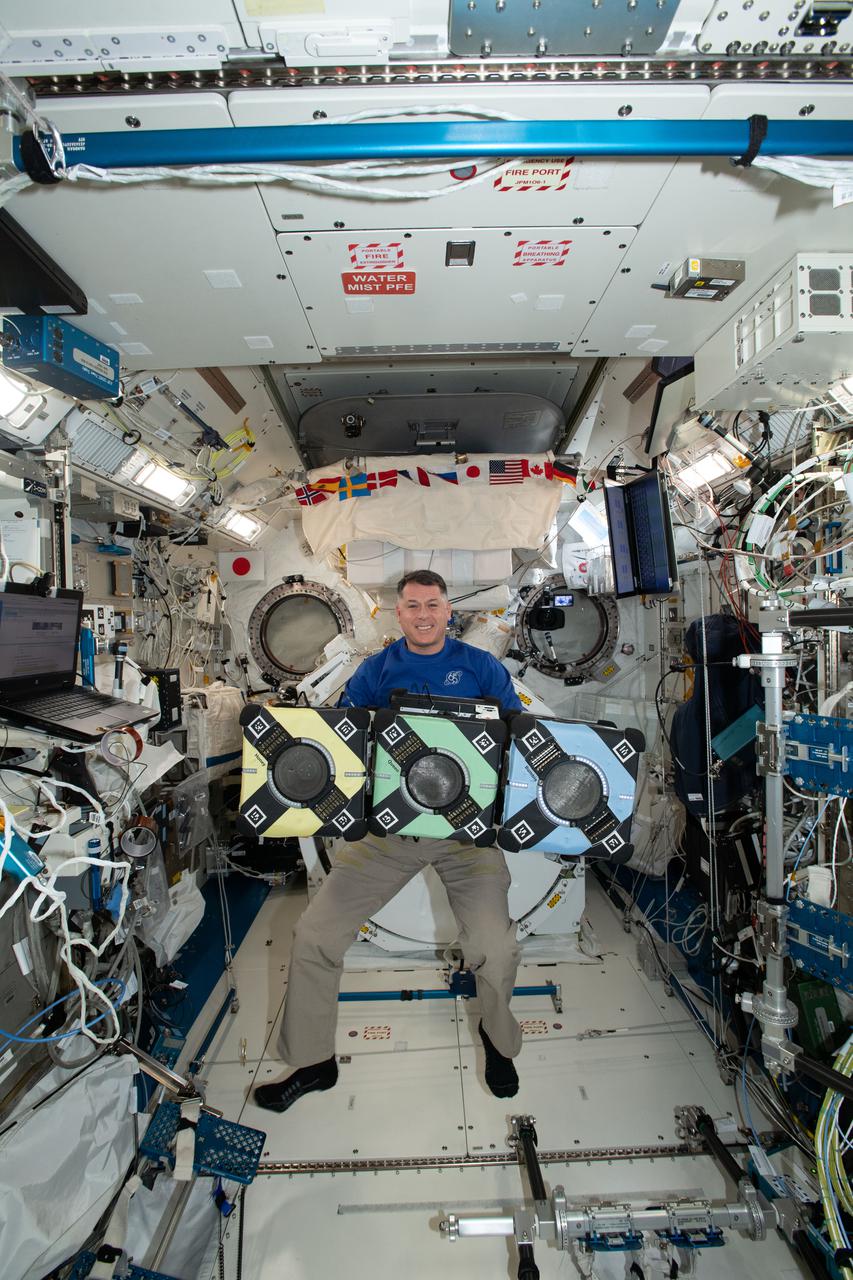
iss065e389375 (9/20/2021) --- NASA astronaut Shane Kimbrough poses with the Astrobee robotic free-flyers in support of the Kibo Robot Programming Challenge (Robo-Pro Challenge). The Kibo-RPC, allows students to create programs to control Astrobee, a free-flying robot aboard the International Space Station (ISS).
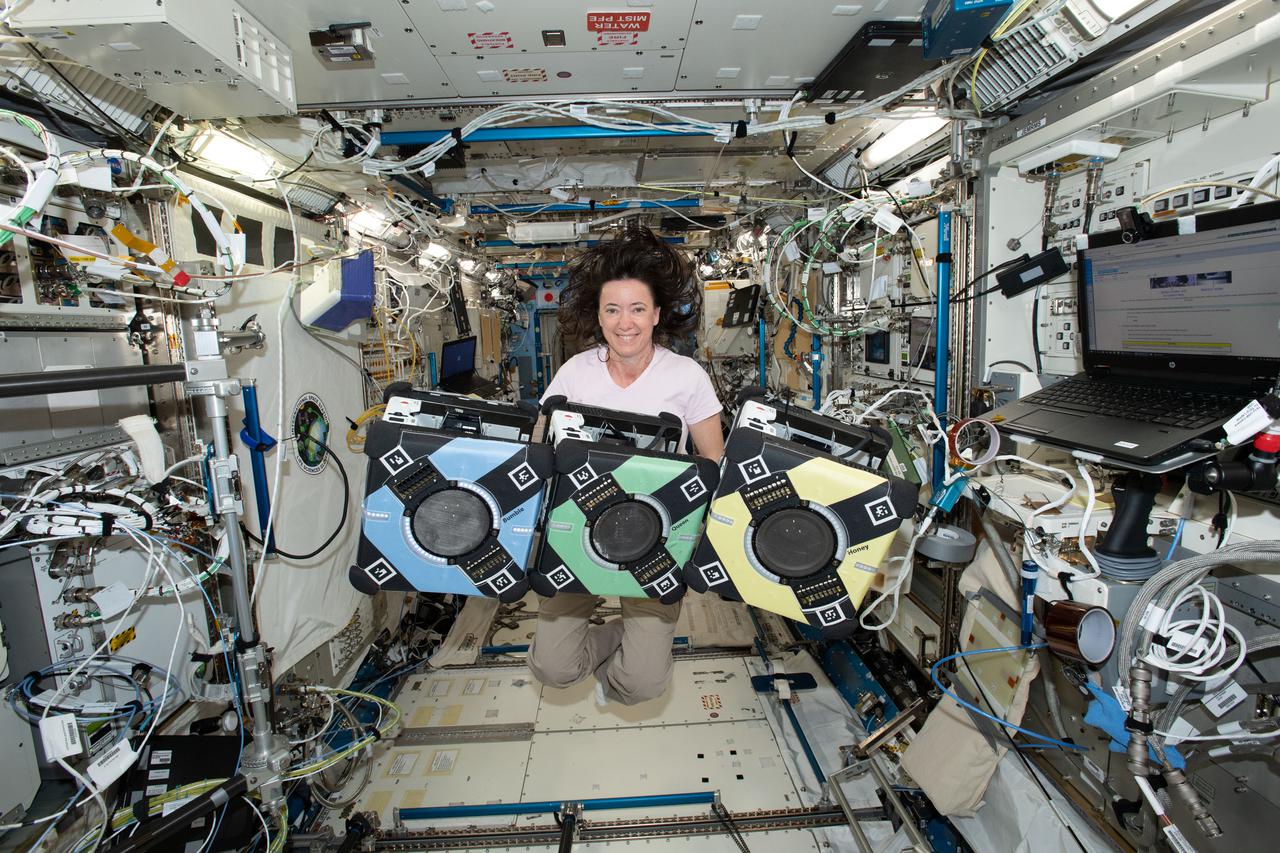
NASA astronaut Megan McArthur poses with the Astrobee robotic free-flyers in support of the Kibo Robot Programming Challenge (Robo-Pro Challenge). The Kibo-RPC, allows students to create programs to control Astrobee, a free-flying robot aboard the International Space Station (ISS).
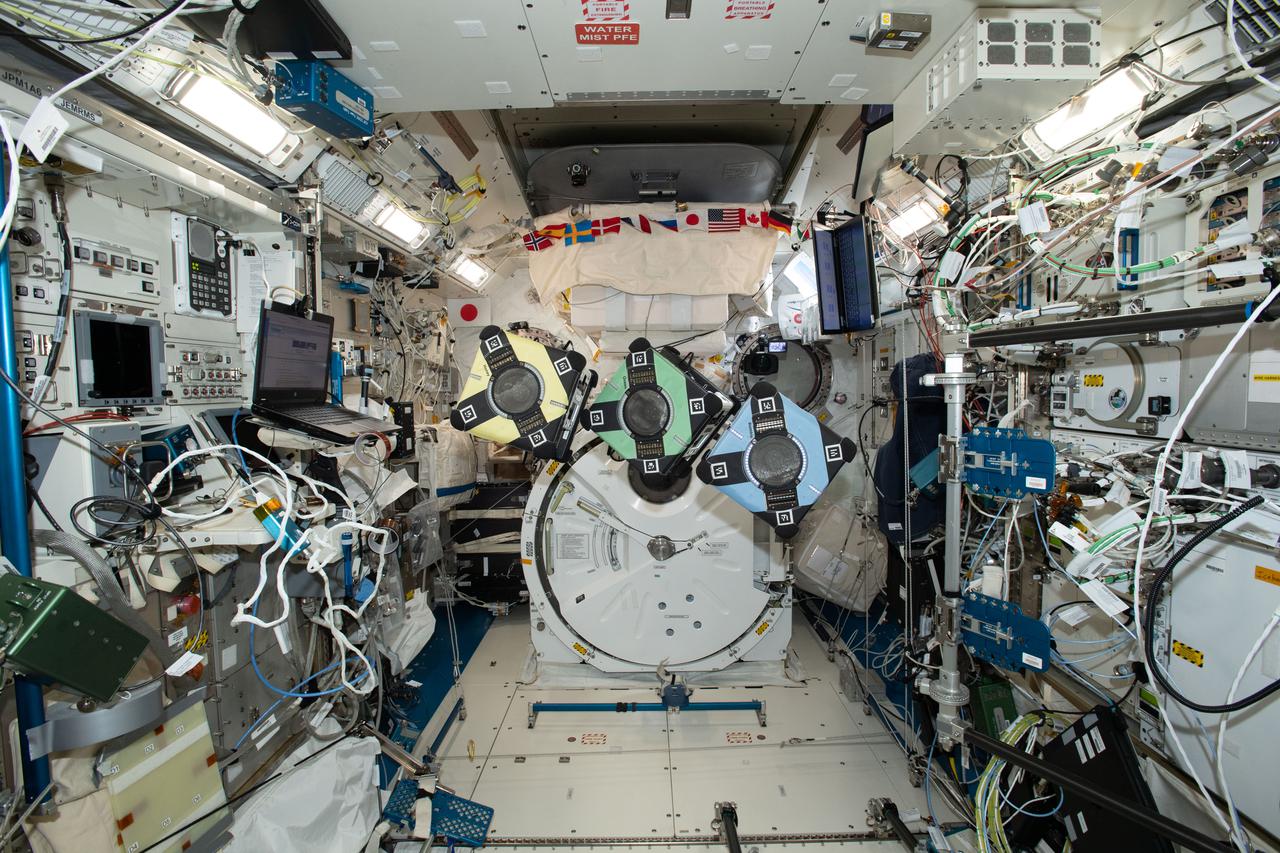
iss065e389379 (9/20/2021) --- A view of the Astrobee robotic free-flyers in support of the Kibo Robot Programming Challenge (Robo-Pro Challenge). The Kibo-RPC, allows students to create programs to control Astrobee, a free-flying robot aboard the International Space Station (ISS).
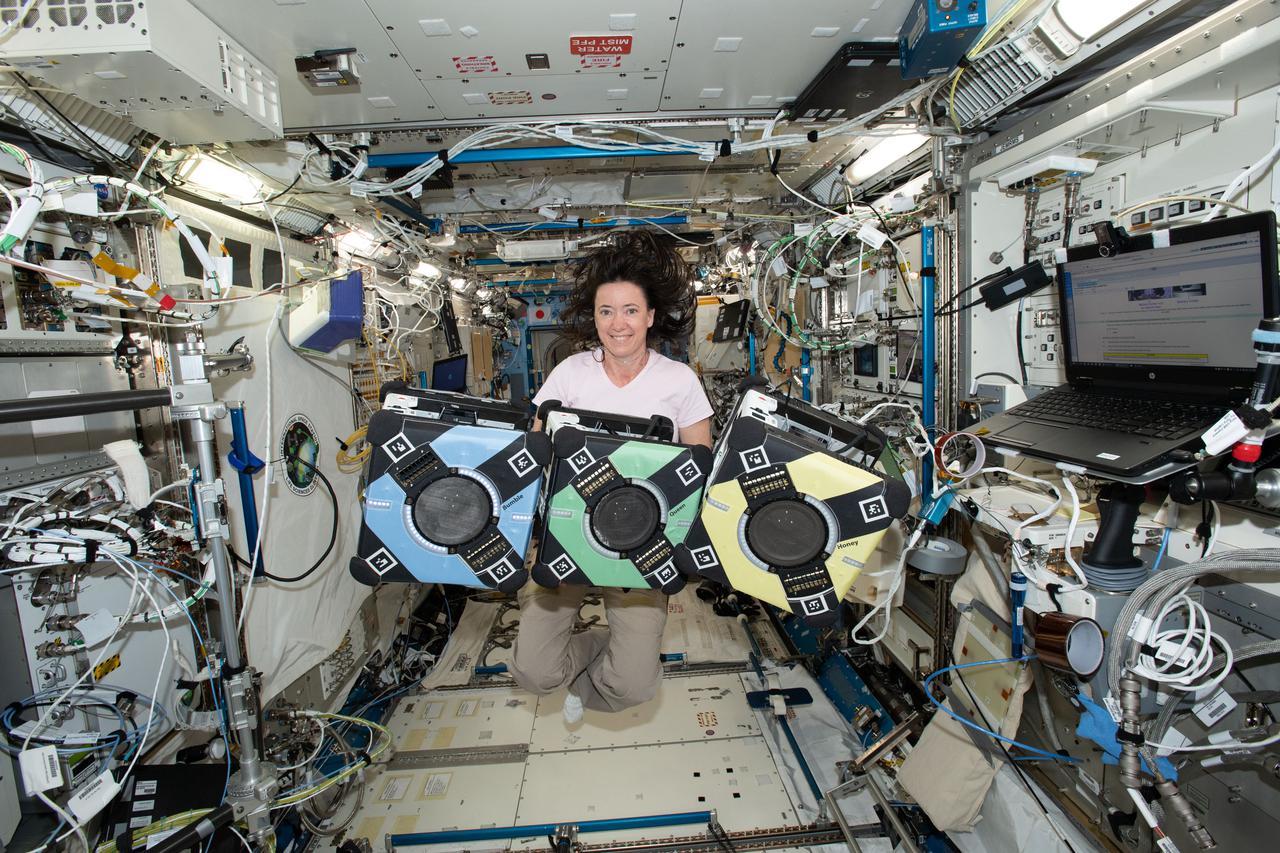
iss065e389383 (9/20/2021) --- NASA astronaut Megan McArthur poses with the Astrobee robotic free-flyers in support of the Kibo Robot Programming Challenge (Robo-Pro Challenge). The Kibo-RPC, allows students to create programs to control Astrobee, a free-flying robot aboard the International Space Station (ISS).

iss059e072286 (May 23, 2020) --- Expedition 59 Flight Engineer David Saint-Jacques of the Canadian Space Agency prepares the free-flying Astrobee robotic assistant for a mobility test inside the Kibo laboratory module. Astrobee consists of three self-contained, free flying robots and a docking station inside the International Space Station.
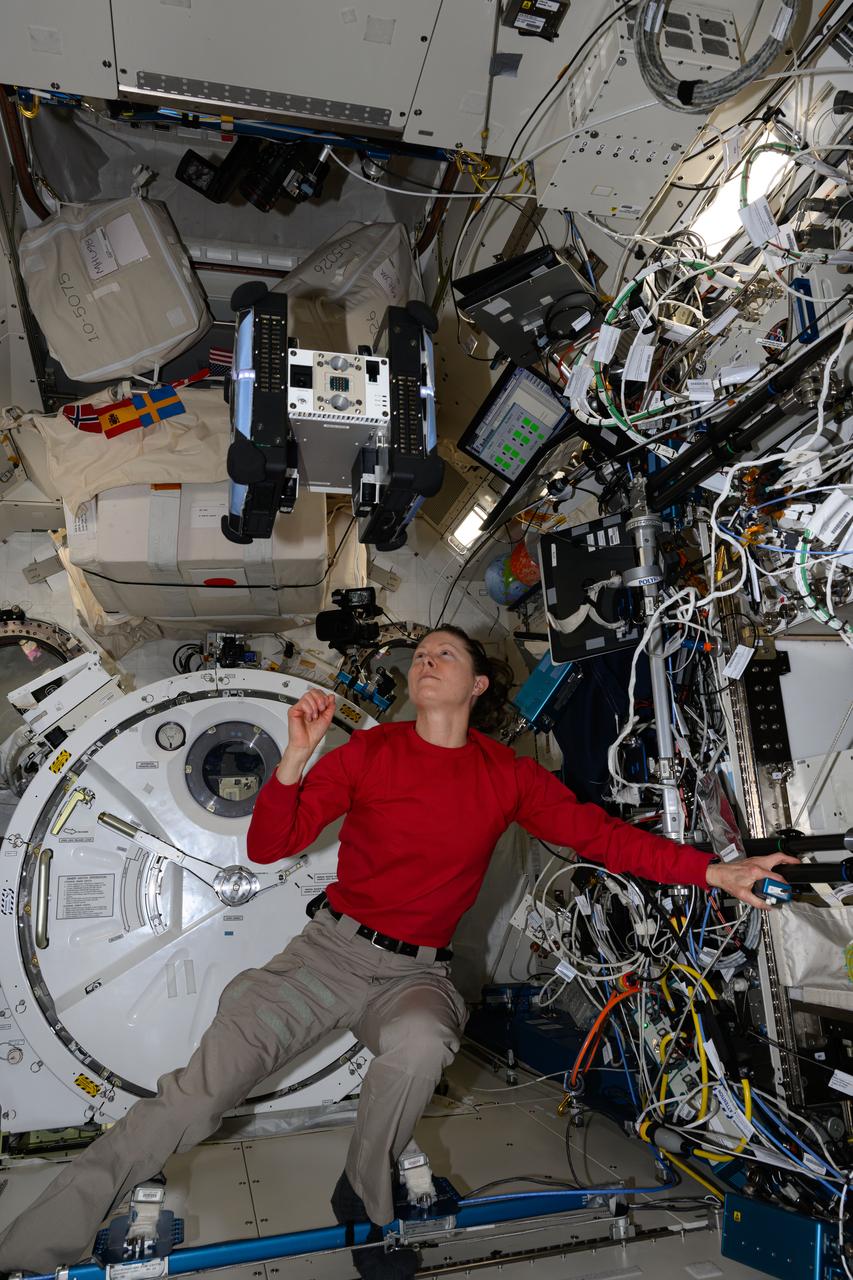
iss071e046261 (May 1, 2024) --- NASA astronaut and Expedition 71 Flight Engineer Tracy C. Dyson monitors a free-flying Astrobee robotic assistant inside the International Space Station's Kibo laboratory module. The Astrobee was being tested ahead of the Astrobee-Zero Robotics competition for students on Earth to write software that controls the cube-shaped, toaster-sized device on the orbital lab.
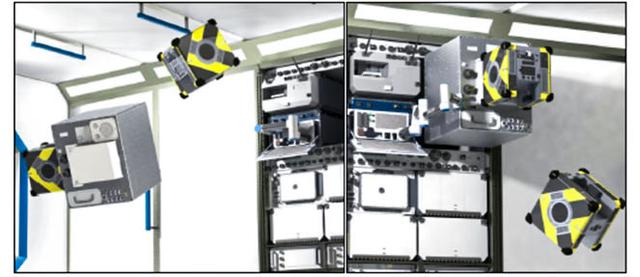
jsc2021e058908 (11/17/2021) --- A graphic of an Astrobee taking an EXPRESS Rack double locker payload, determining its mass and adjusting its Guidance and Navigation Control (GNC) to perform an installation maneuver with the help of another Astrobee and a robotic arm. Astrobee Mass Property Learner and Collaboration Algorithms (Astroporter) demonstrates software for estimating the mass properties of payloads attached to Astrobee and algorithms for making adjustments as needed. Image courtesy of Tethers Unlimited.
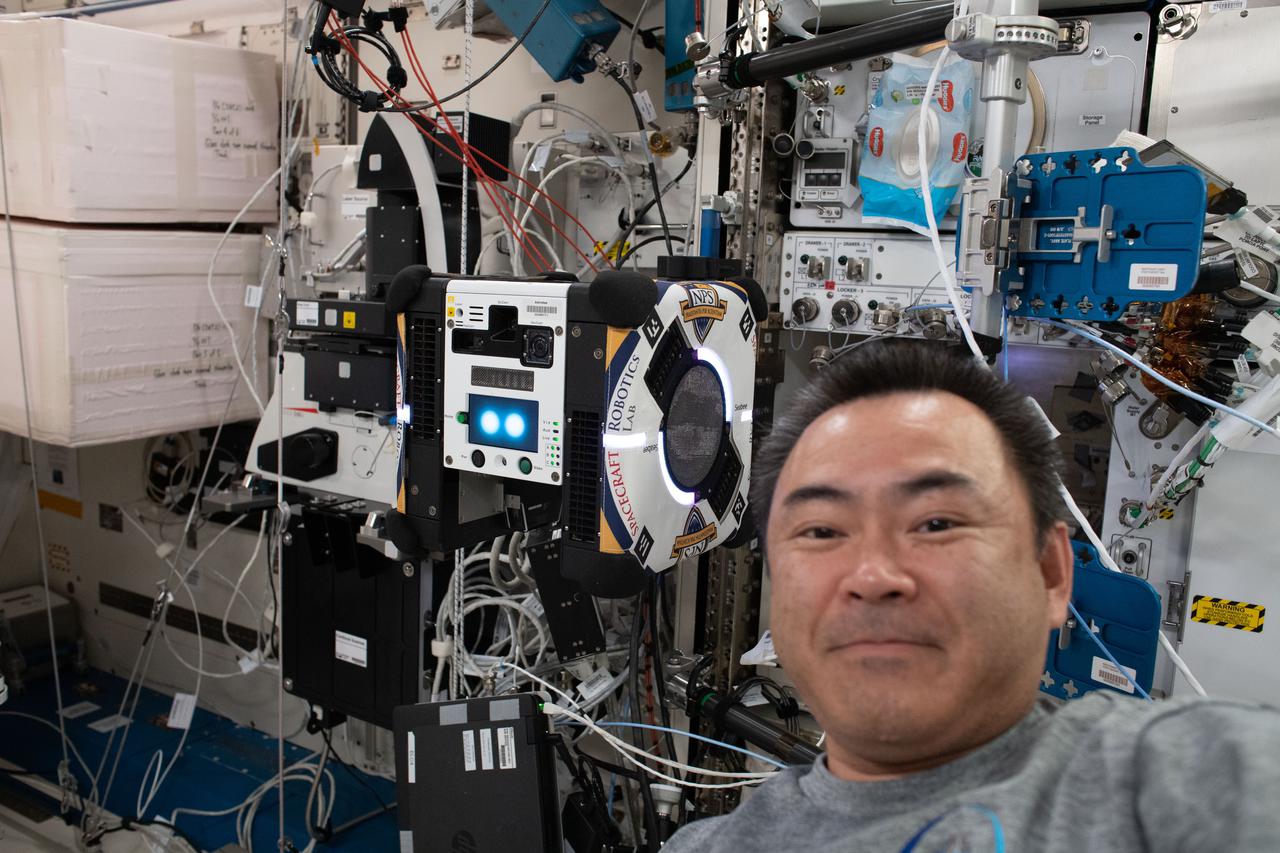
iss065e167804 (July 27, 2021) --- Expedition 65 Commander Akihiko Hoshide of the Japan Aerospace Exploration Agency (JAXA) poses for a portrait with an Astrobee robotic assistant behind him. The Astrobee is being tested for its ability to assist astronauts with routine chores and give ground controllers additional eyes and ears on the space station.

iss065e299319 (Aug. 19, 2021) --- NASA astronaut and Expedition 65 Flight Engineer Megan McArthur sets up an Astrobee robotic free-flyer inside the International Space Station's Kibo laboratory module. The Astrobee was testing autonomous microgravity motion planning and control for on-orbit assembly and coordinated motion.

jsc2024e016240 (3/20/2023) --- The multi-resolution scanning payload prototype housed within an Astrobee robot at NASA’s Ames Research Center (with front cover removed). The Multi-Resolution Scanning payload will be mated to the Astrobee free-flying robot, which will undertake a small flight and use the multi-resolution scanner (MRS) to create 3D maps of the interior of the International Space Station. Image courtesy of CSIRO.
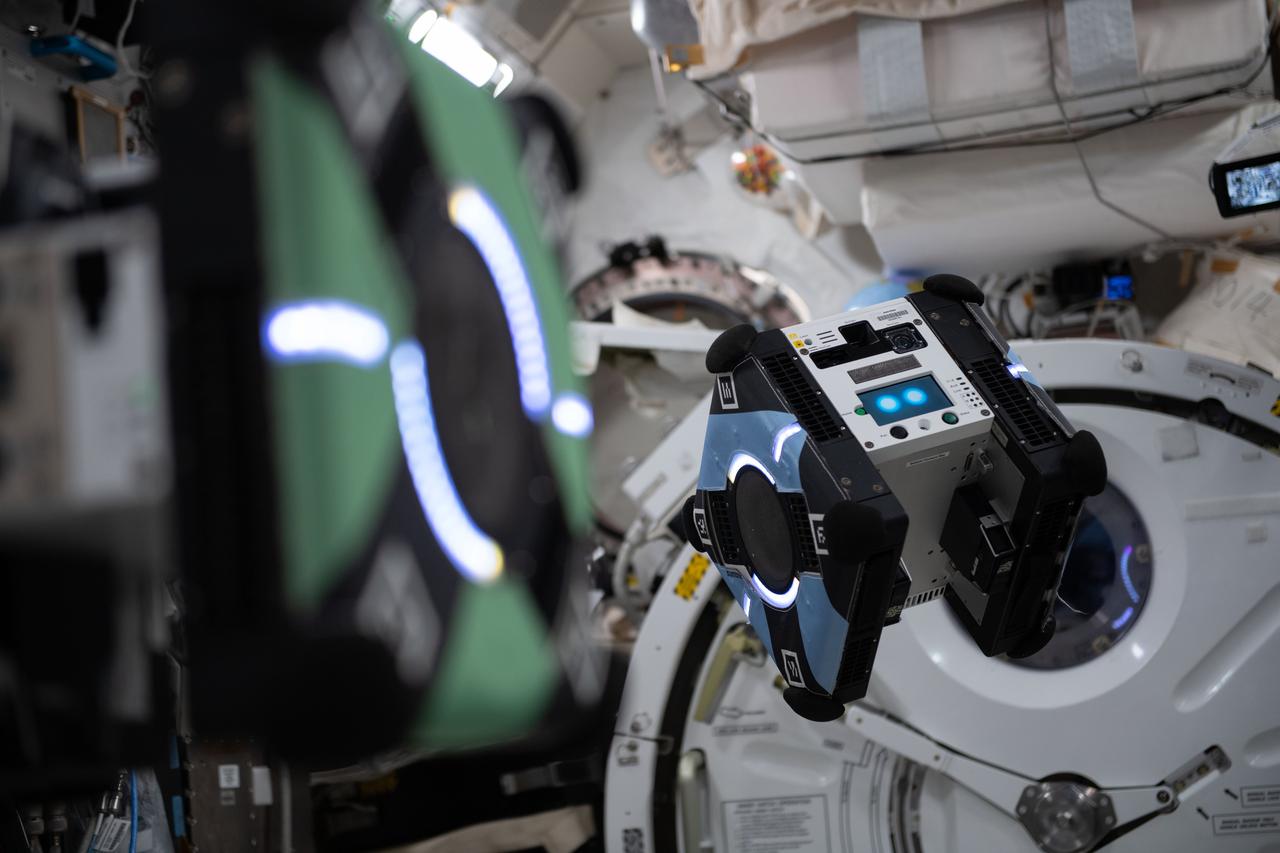
iss066e134729 (Feb. 2, 2022) --- A view of an Astrobee ROAM Operations Session 2 in the JEM during Expedition 66. ROAM demonstrates processes for a robotic craft to rendezvous with debris in space. Space debris includes satellites that could be repaired or taken out of orbit, but many of these objects are tumbling, making rendezvous and docking challenging. ROAM uses the space station’s Astrobee robots to observe and understand how targets tumble and uses this information to plan ways to safely reach them.
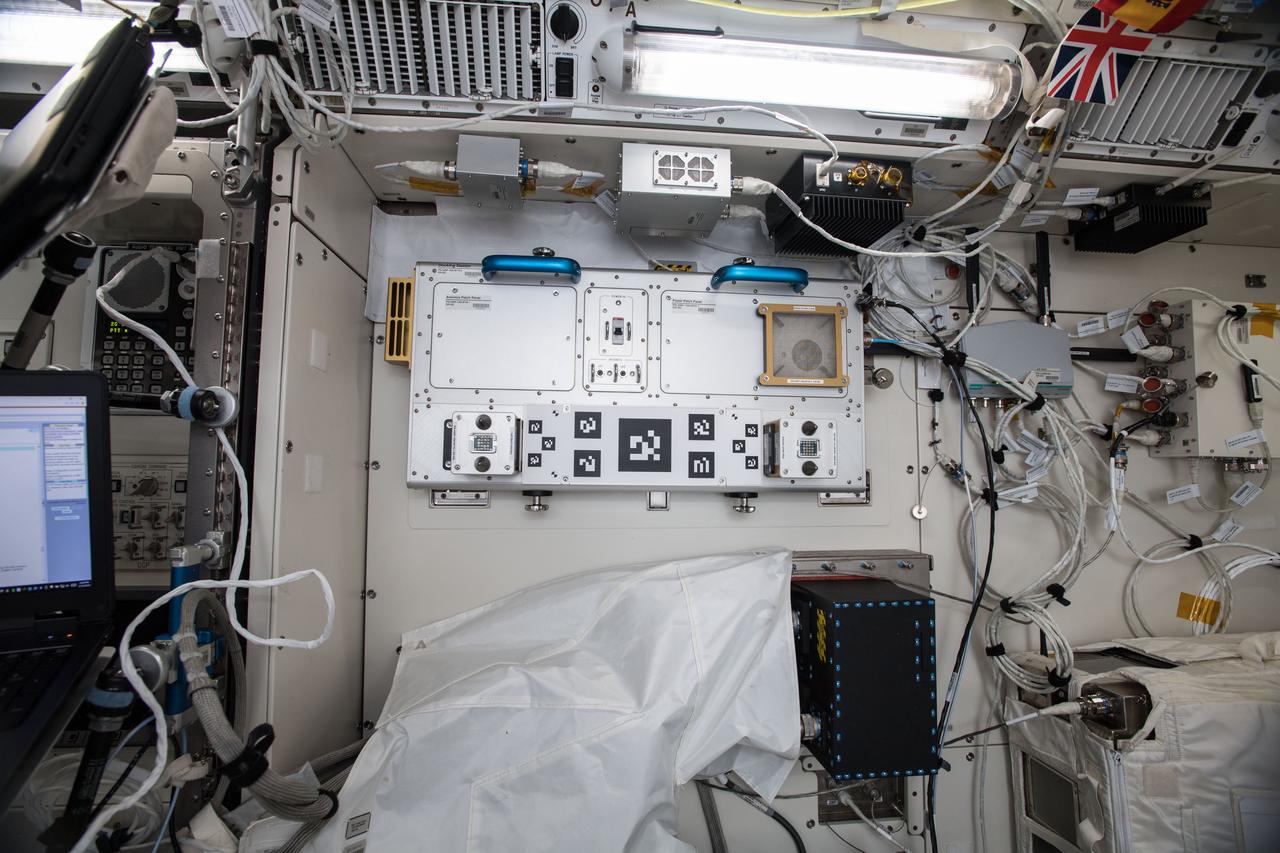
iss058e013773 (2/15/2019) --- A view of the Astrobee docking station onboard the International Space Station (ISS). Astrobee consists of three self-contained, free flying robots and a docking station for use inside the ISS. It is an autonomous free flyer powered by fans and operates in the entire U.S. Operating Segment (USOS) using vision-based navigation. The autonomous robots are operated remotely from the ground.
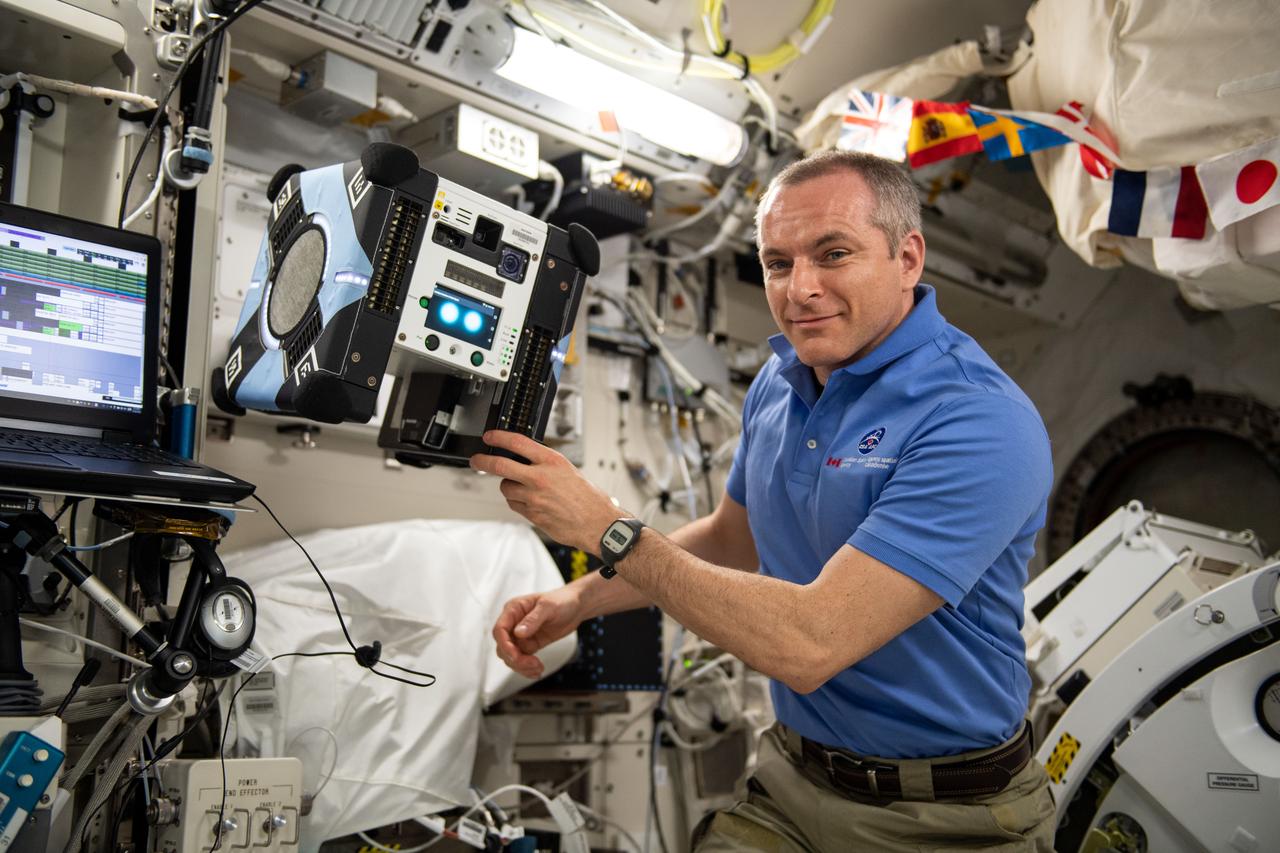
iss059e072518 (5/23/2019) --- Canadian Space Agency (CSA) astronaut David Saint-Jacques is photographed working with the free-flying Astrobee cube named Bumble and the docking station onboard the International Space Station (ISS). Astrobee consists of three self-contained, free flying robots and a docking station for use inside the ISS. It is an autonomous free flyer powered by fans and operates in the entire U.S. Operating Segment (USOS) using vision-based navigation. The autonomous robots are operated remotely from the ground.
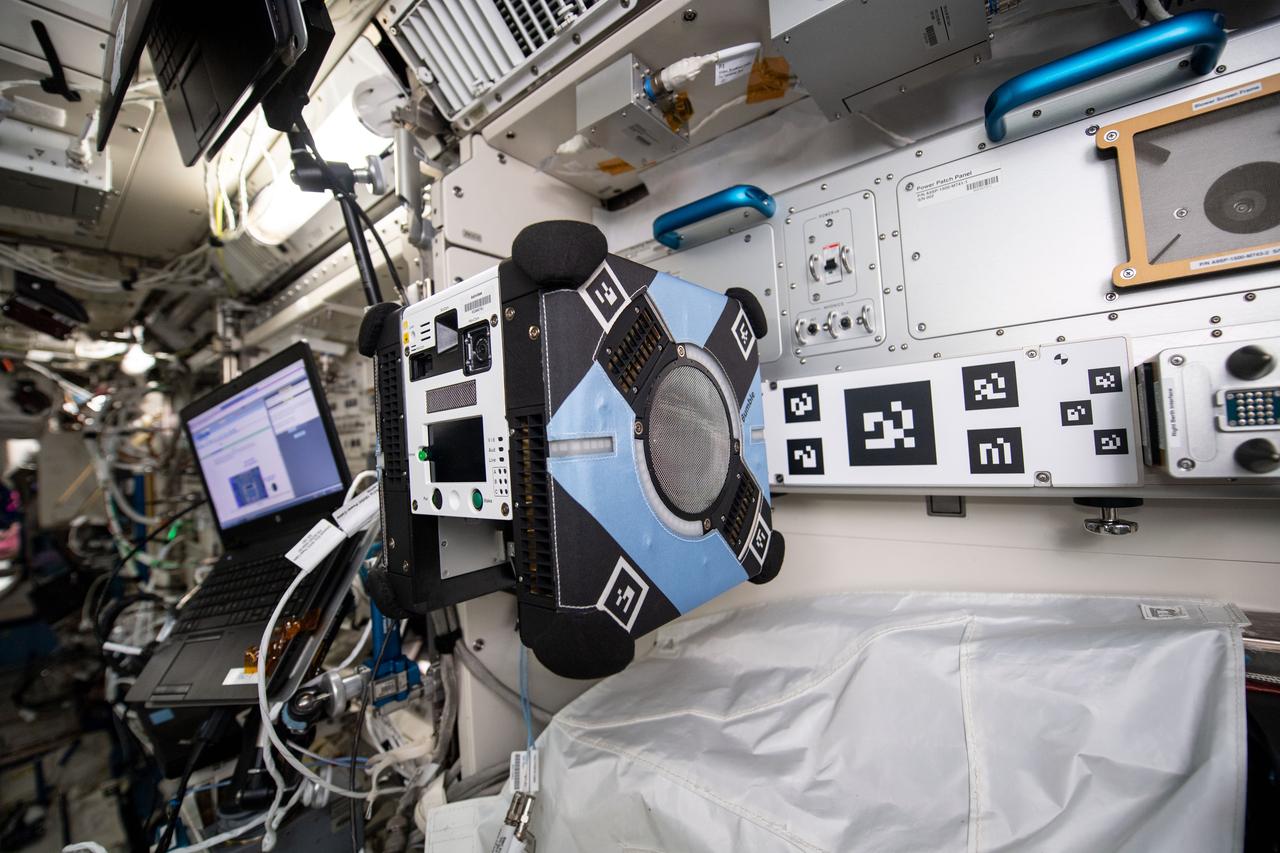
iss059e038119 (4/30/2019) --- A view of the free-flying Astrobee cube named Bumble and the docking station onboard the International Space Station (ISS). Astrobee consists of three self-contained, free flying robots and a docking station for use inside the ISS. It is an autonomous free flyer powered by fans and operates in the entire U.S. Operating Segment (USOS) using vision-based navigation. The autonomous robots are operated remotely from the ground.
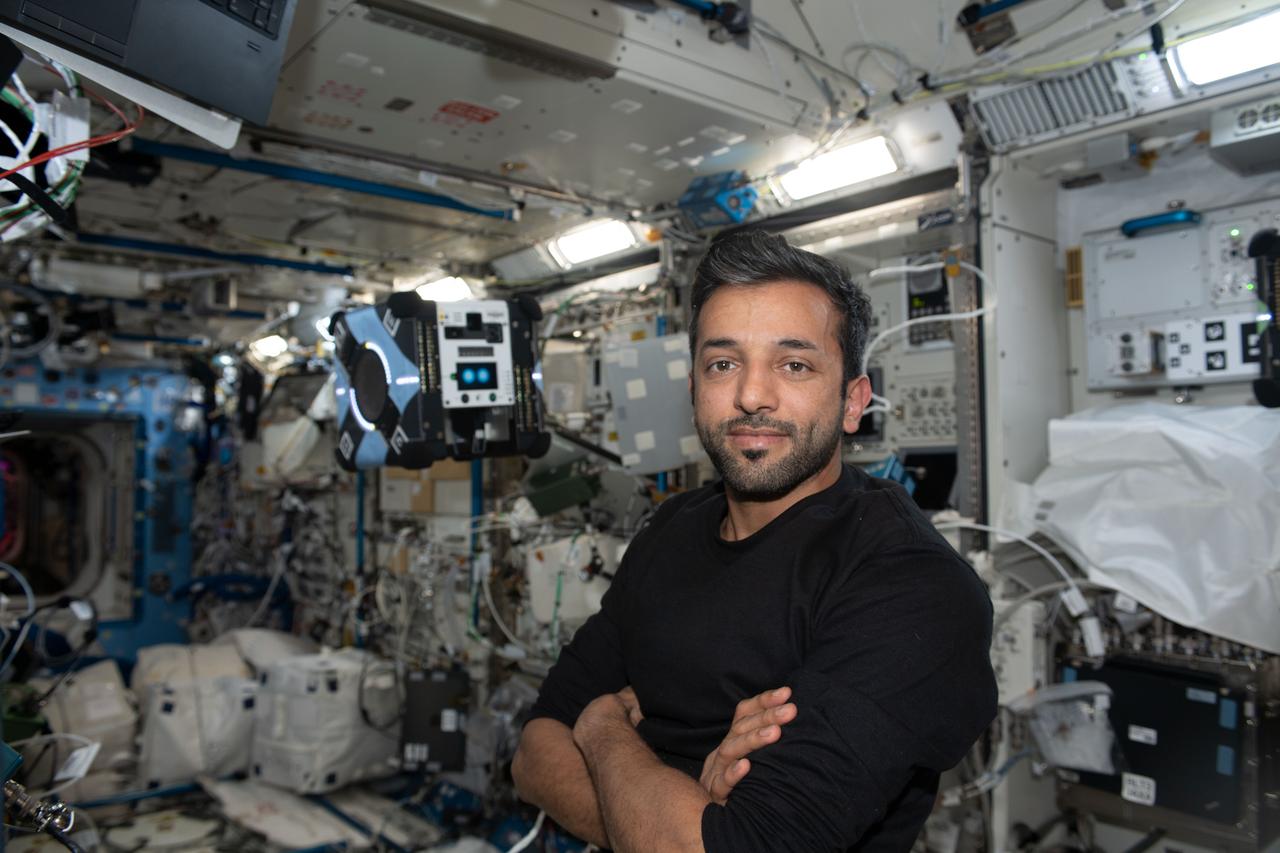
iss068e076362 (March 24, 2023) --- UAE (United Arab Emirates) astronaut and Expedition 68 Flight Engineer Sultan Alneyadi poses with a free-flying AstroBee robotic helper inside the International Space Station's Kibo laboratory module. The AstroBee is a cube-shaped, toaster-sized robotic device that is being tested for its ability to assist astronauts with routine chores, and give ground controllers additional eyes and ears on the space station.

iss063e004089 (April 30, 2020) --- NASA astronaut and Expedition 63 Commander Chris Cassidy sets up an Astrobee robotic assistant, one of a trio of cube-shaped, free-flying robots, for a test of its mobility and vision system inside the Kibo laboratory module. Astrobee could perform routine lab chores giving astronauts more time to conduct critical space research.
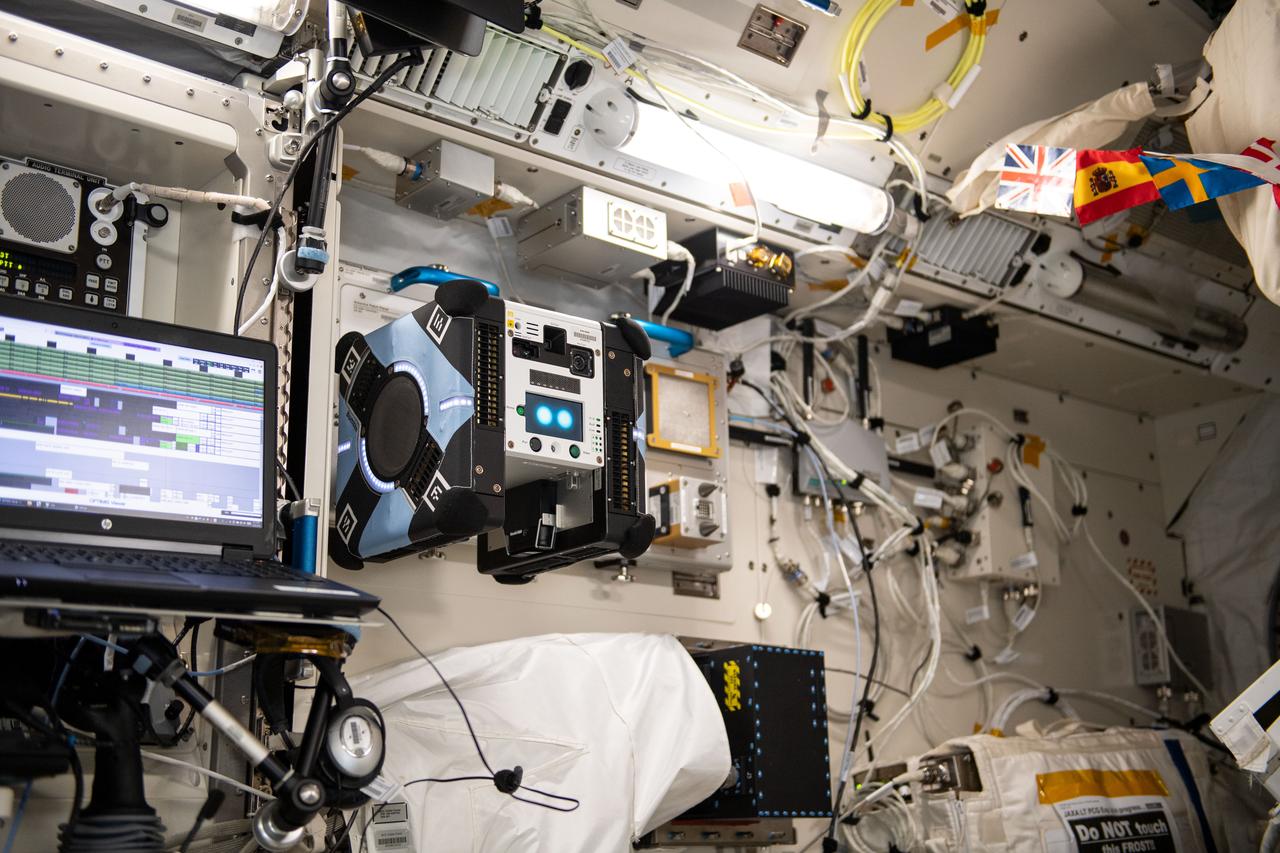
iss059e072476 (5/23/2019) --- A view of the free-flying Astrobee cube named Bumble and the docking station onboard the International Space Station (ISS). Astrobee consists of three self-contained, free flying robots and a docking station for use inside the ISS. It is an autonomous free flyer powered by fans and operates in the entire U.S. Operating Segment (USOS) using vision-based navigation. The autonomous robots are operated remotely from the ground.

Crew-1 stayed productive with the help of robotic assistants. Next to Walker are two of the three cube-shaped Astrobee robots currently aboard the station. Ongoing research continues to investigate how these free-flying autonomous robots can assist astronauts with routine tasks and provide ground support teams with crew monitoring data.

iss070e022889 (Nov. 9, 2023) --- Two Astrobee free-flying robotic assistants are pictured during an experiment demonstrating how the toaster-sized robotic devices can use a small robotic arm and grasp handrails to maneuver throughout the space station.
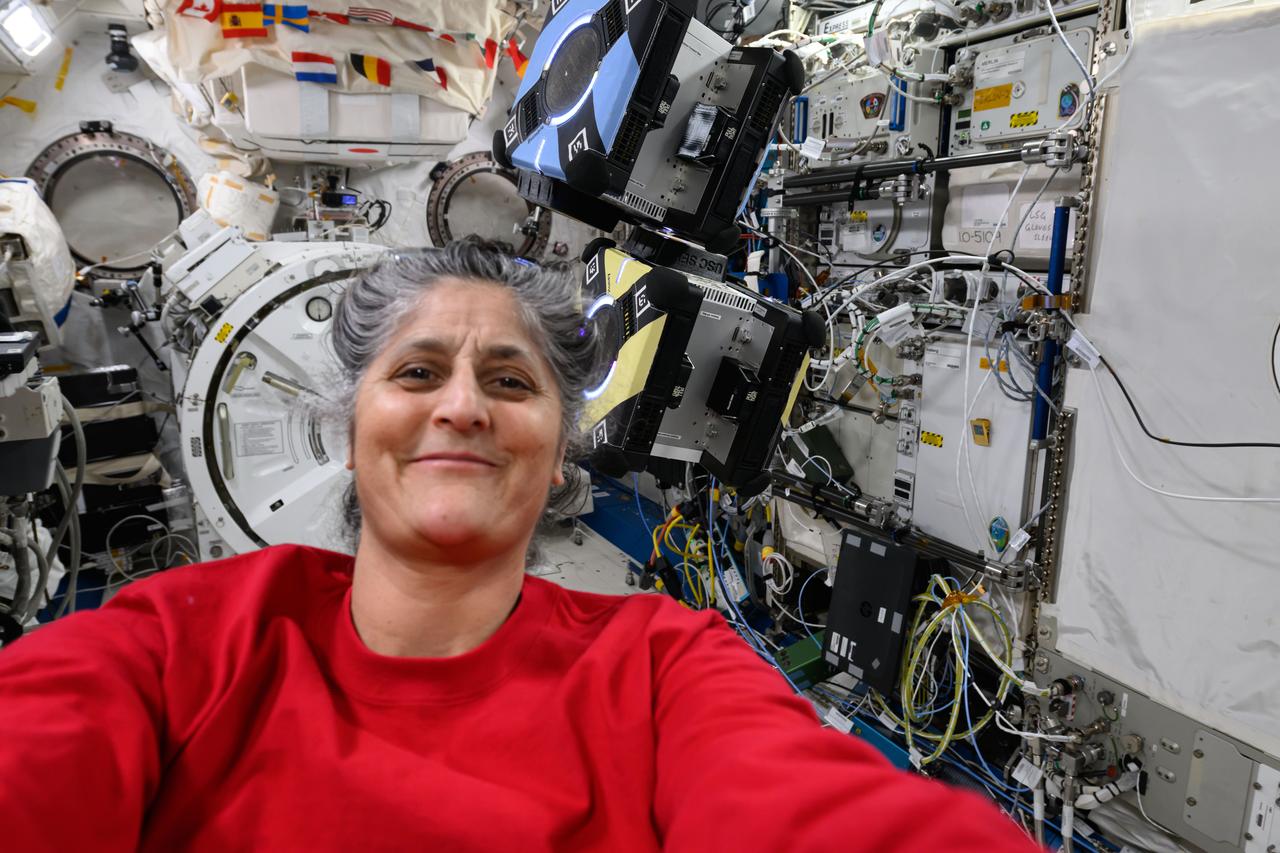
iss072e423916 (Jan. 3, 2024) --- NASA astronaut and Expedition 72 Commander Suni Williams takes a selfie portrait with a pair of Astrobee robotic free-flyers behind her inside the International Space Station's Kibo laboratory module.
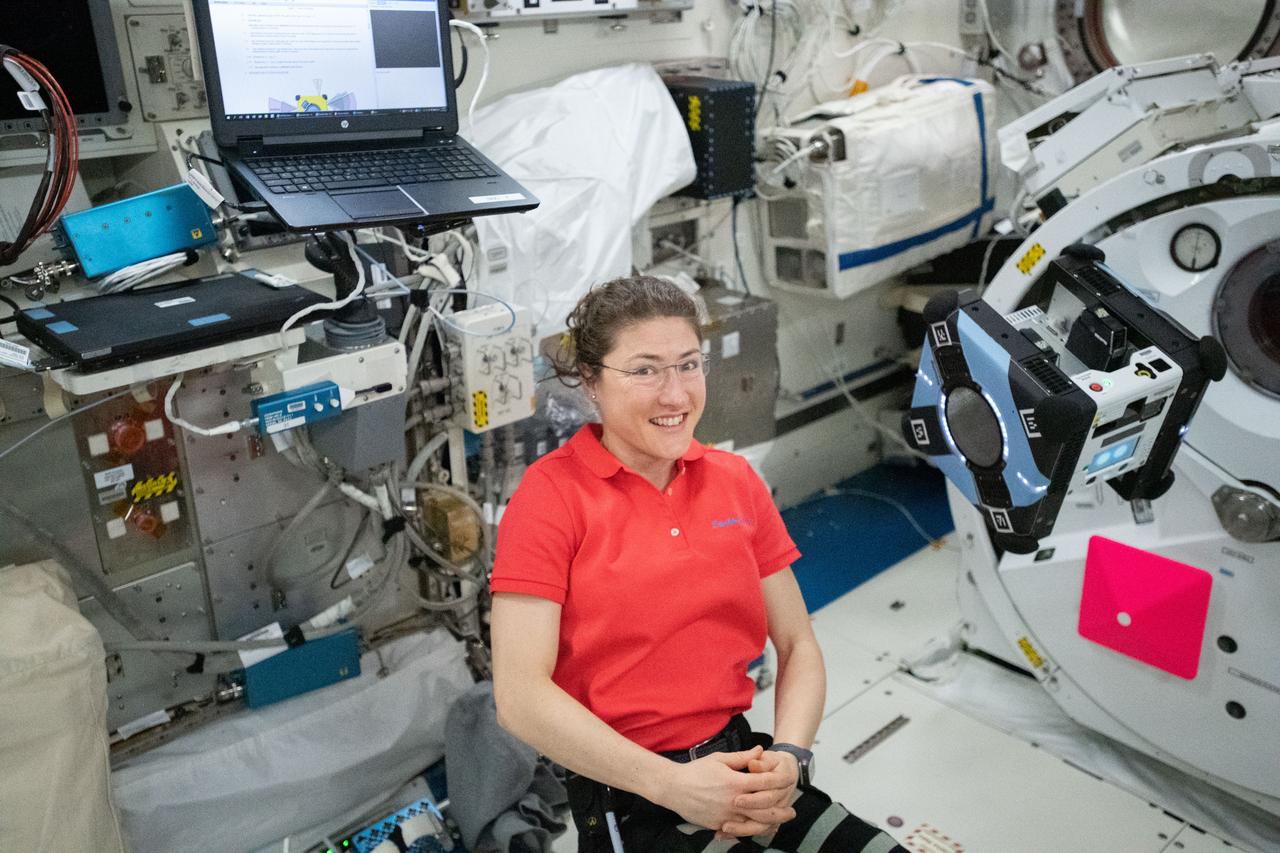
iss060e007161 (July 12, 2019) --- Expedition 60 Flight Engineer Christina Koch of NASA works inside Japan's Kibo laboratory module monitoring a mobility test of the free-flying Astrobee robotic assistant.
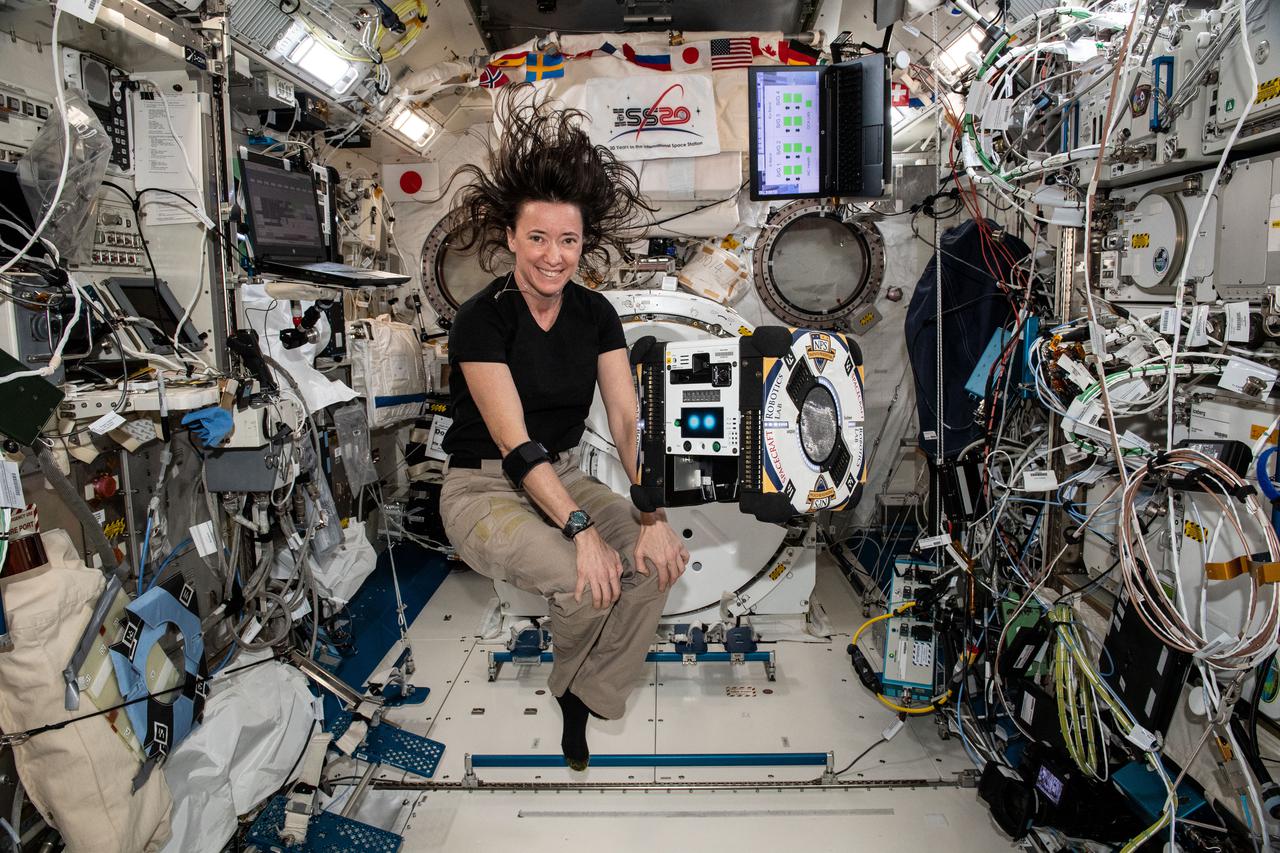
iss065e444043 (Oct. 8, 2021) --- NASA astronaut and Expedition 65 Flight Engineer Megan McArthur poses with an AstroBee robotic free-flying assistant inside the International Space Station's Kibo laboratory module.
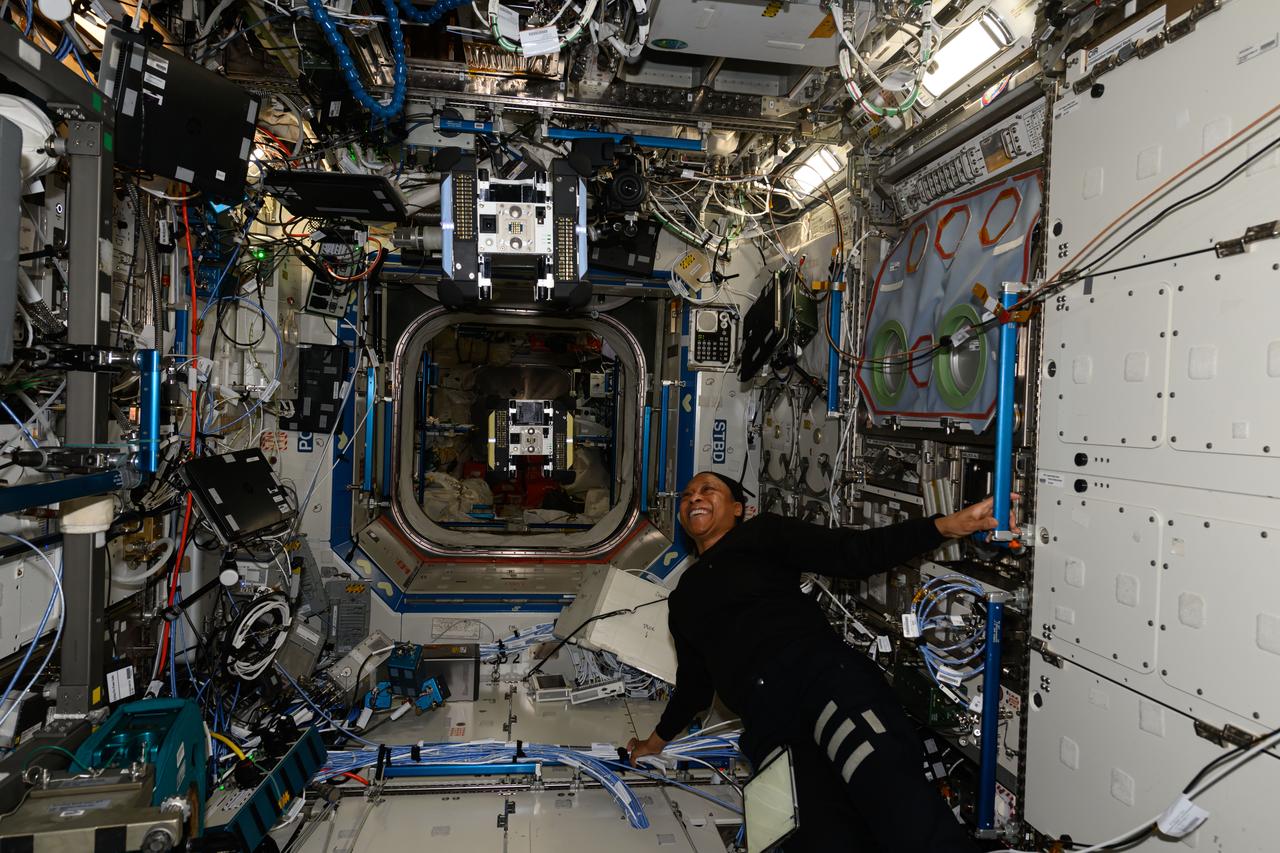
iss071e154431 (May 31, 2024) --- Expedition 71 Flight Engineer and NASA astronaut Jeanette Epps observes an Astrobee robotic free flyer during an operations test inside the International Space Station's Kibo laboratory module.
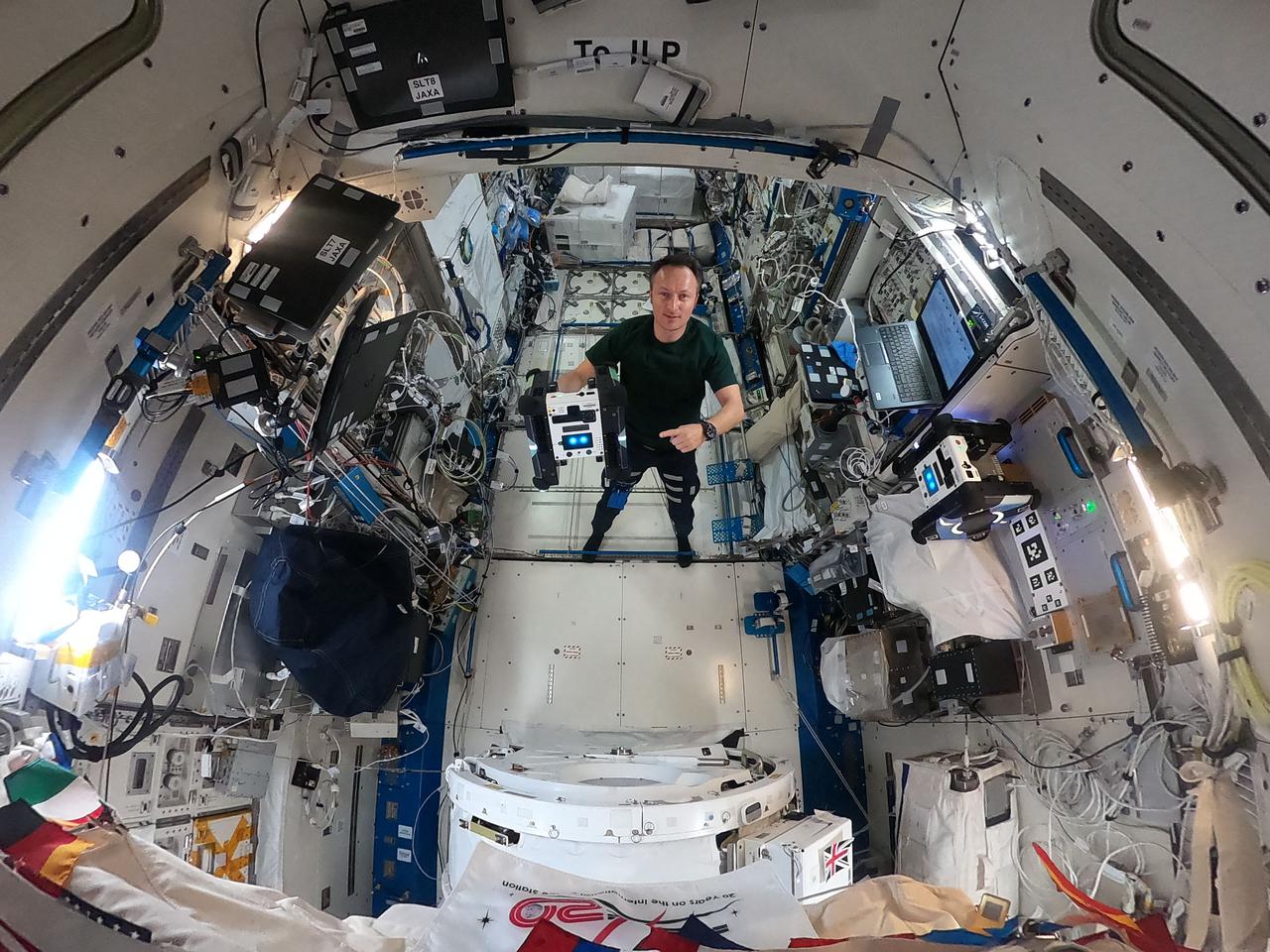
iss066e087003 (Dec. 4, 2021) --- ESA (European Space Agency) astronaut and Expedition 66 Flight Engineer Matthias Maurer is pictured inside the Kibo laboratory module setting up an Astrobee robotic free-flyer for the ReSWARM experiment. The robotics demonstration tests autonomous microgravity motion planning and control for on-orbit assembly and coordinated motion.
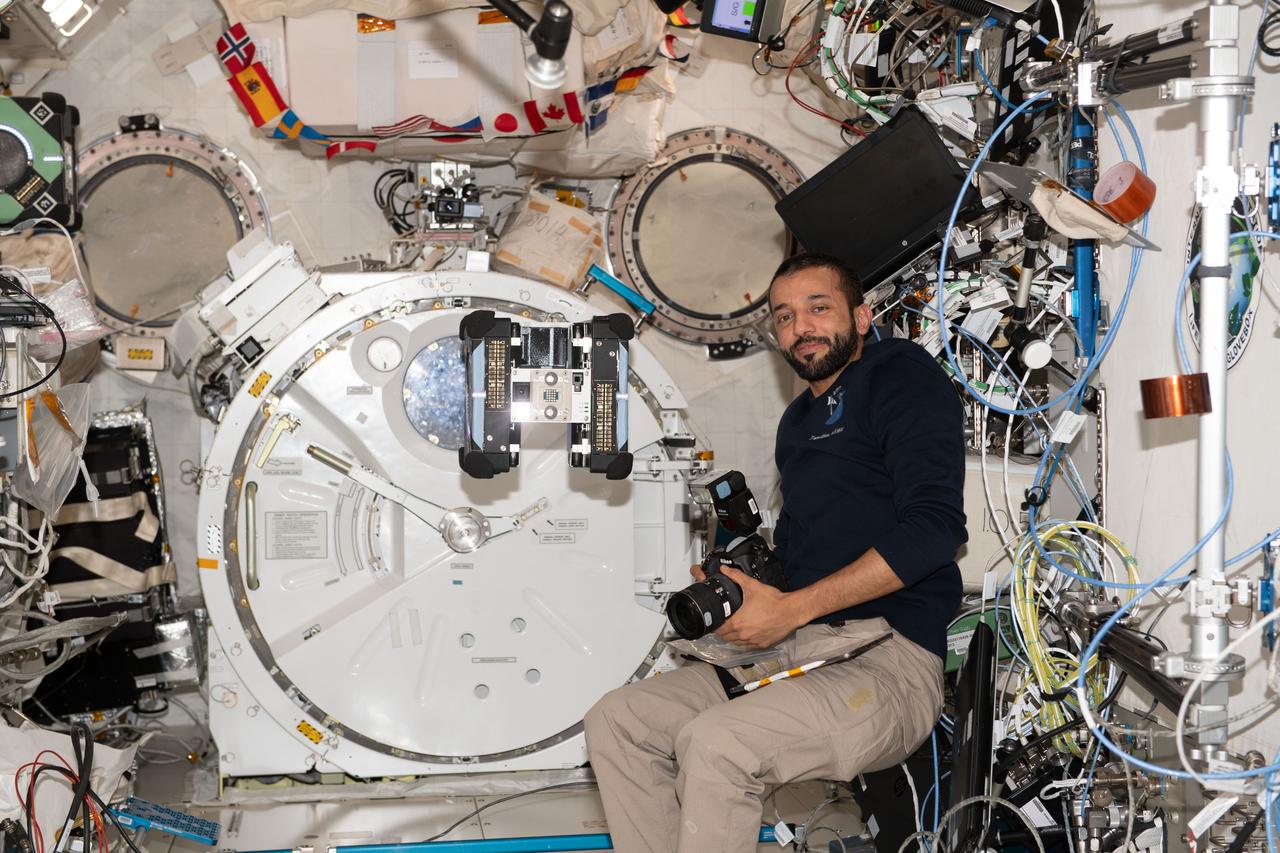
iss069e011345 (May 16, 2023) --- UAE (United Arab Emirates) astronaut and Expedition 69 Flight Engineer Sultan Alneyadi observes a free-flying Astrobee robotic assistant during the testing of its operations for an upcoming student competition to control the robotic devices.

iss065e012810 (May 3, 2021) --- NASA astronaut and Expedition 65 Flight Engineer Shane Kimbrough is pictured inside the Kibo laboratory module with the Astrobee free-flying robotic assistants. Kimbrough was monitoring the cube-shaped robotic free-flyers as they were testing automated rendezvous techniques.
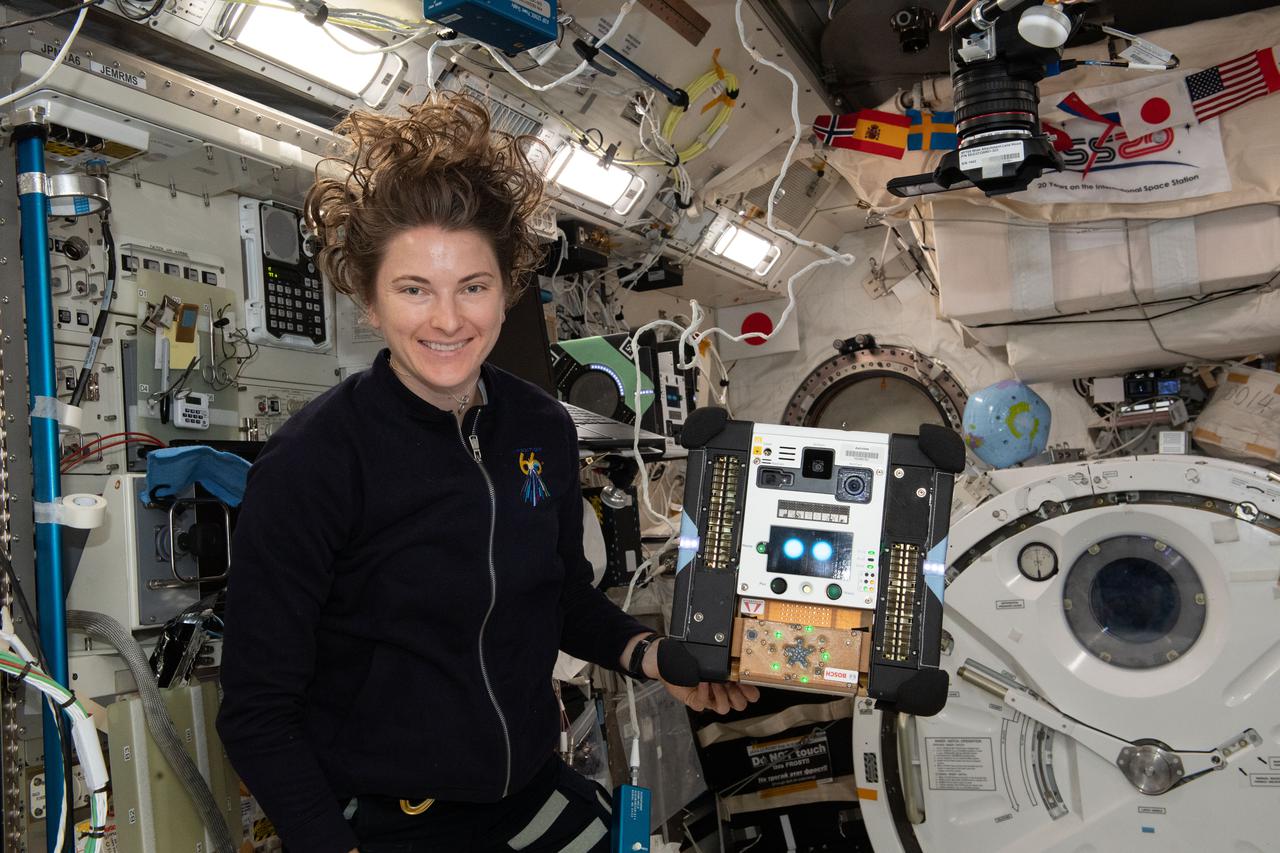
iss066e103488 (Jan. 3, 2022) --- NASA astronaut and Expedition 66 Flight Engineer Kayla Barron sets up an AstroBee robotic free flyer with an experimental audio sensor for the SoundSee Mission experiment. The robotics study uses acoustic technology to detect anomalies and possibly identify early indications of space hardware failure.
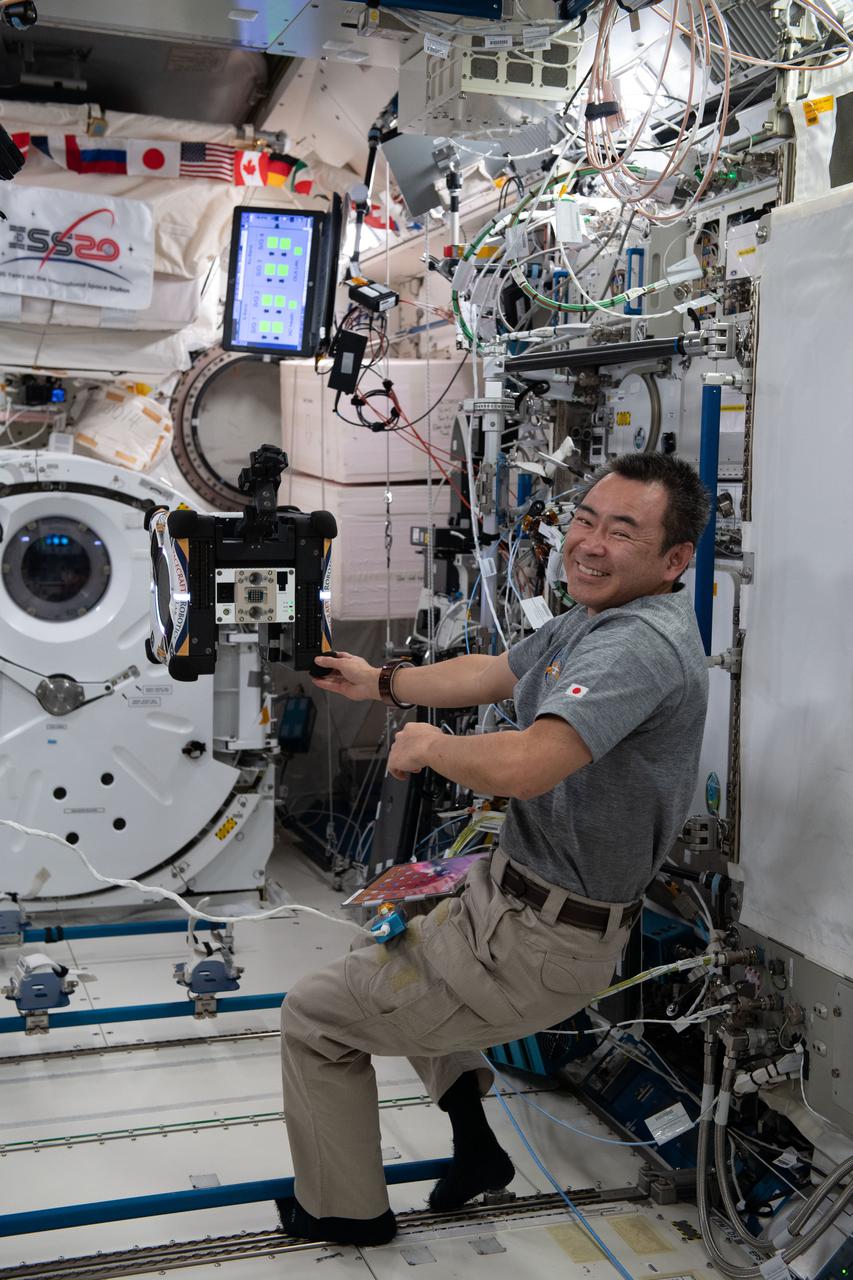
iss065e167830 (July 16, 2021) --- Expedition 65 Commander Akihiko Hoshide of the Japan Aerospace Exploration Agency (JAXA) configures the Astrobee robotic free-flyer to demonstrate complex maneuvers in the orbital lab while using less propulsion. The Astrobatics robotic mobility study has implications for future space missions and technologies on Earth.
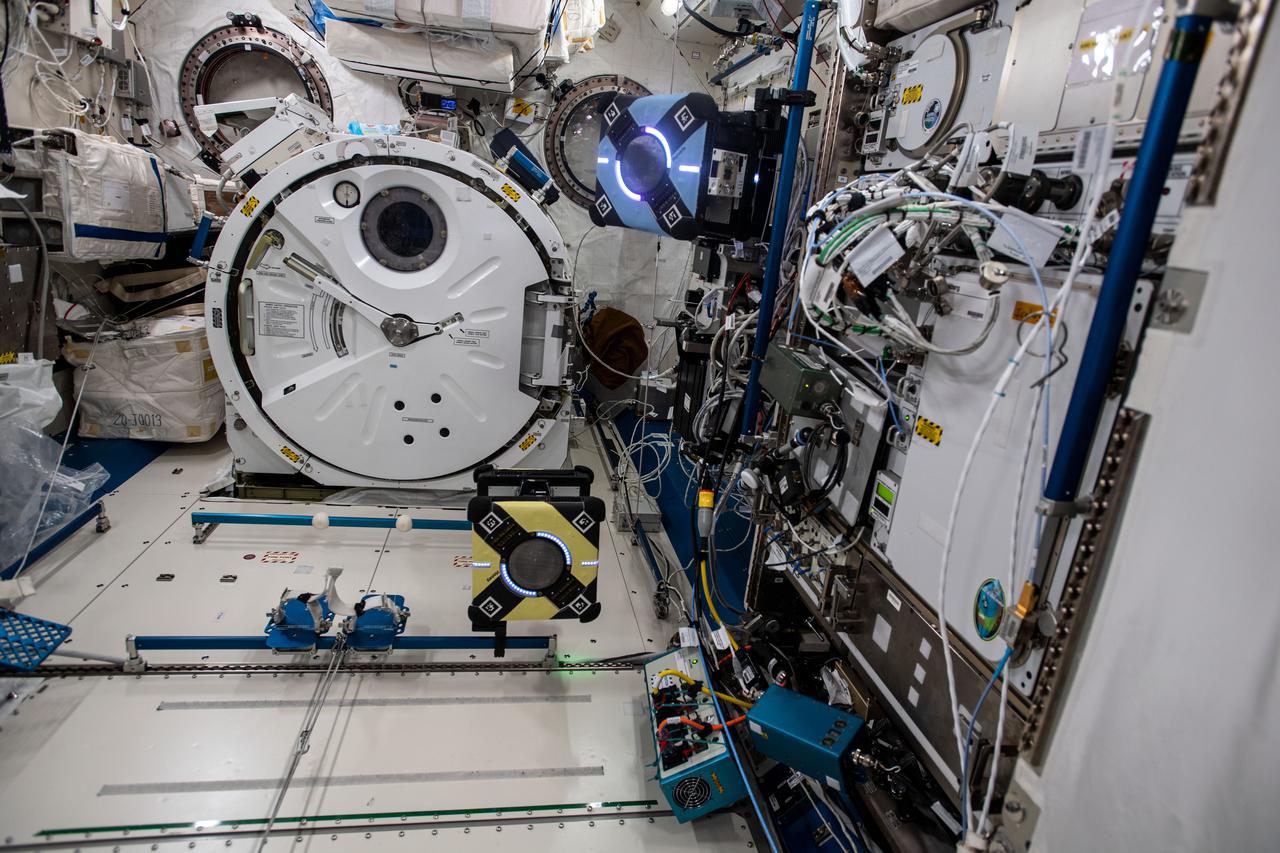
iss064e029291 (Feb. 4, 2021) --- A pair of Astrobee experimental robotic assistants are pictured flying around inside the Japanese Kibo laboratory module. The cube-shaped, toaster-sized robots were being tested for their ability to autonomously navigate and maneuver inside the International Space Station.
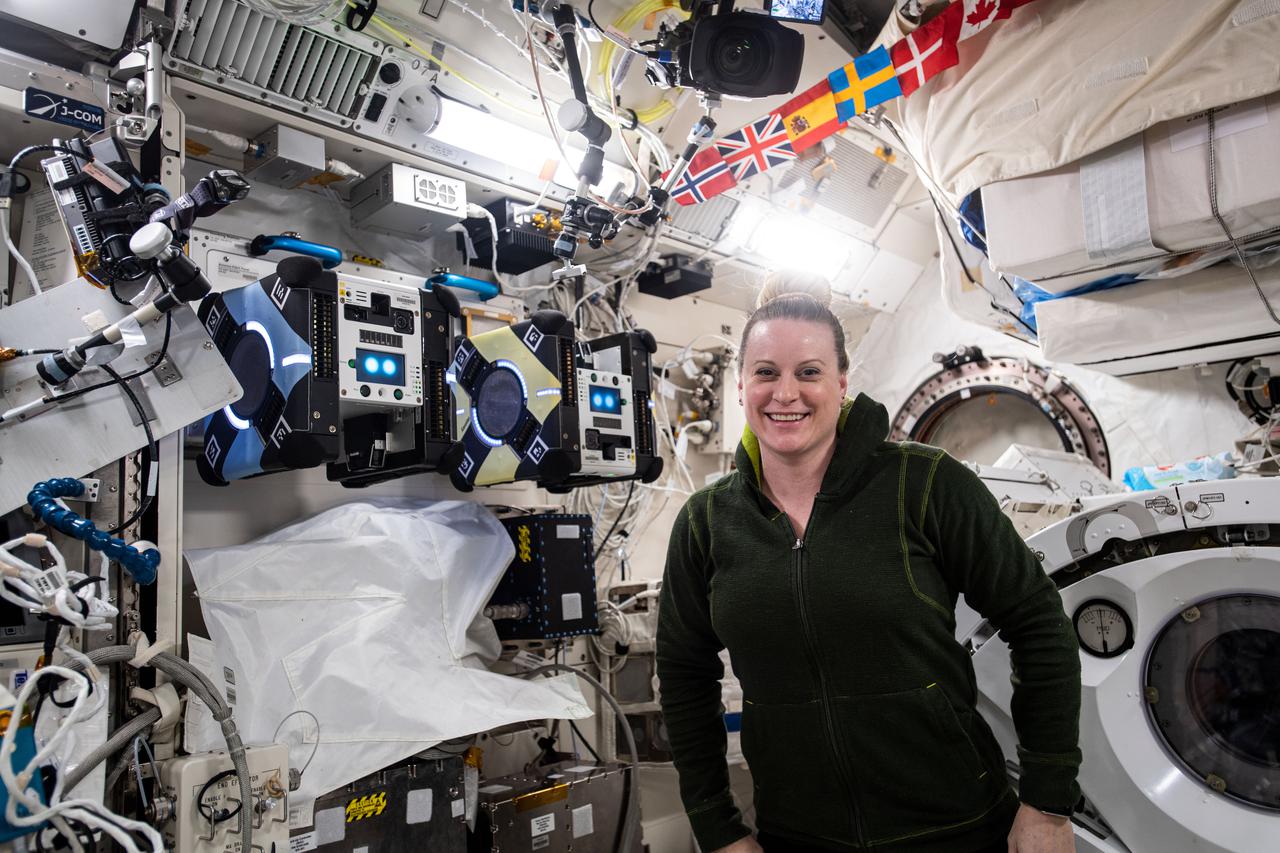
iss064e029280 (Feb. 4, 2021) --- NASA astronaut and Expedition 64 Flight Engineer Kate Rubins poses with a pair of AstroBee robotic assistants inside the Japanese Kibo laboratory module. The cube-shaped, toaster-sized robots are being tested for their ability to autonomously navigate and maneuver inside the orbiting lab.
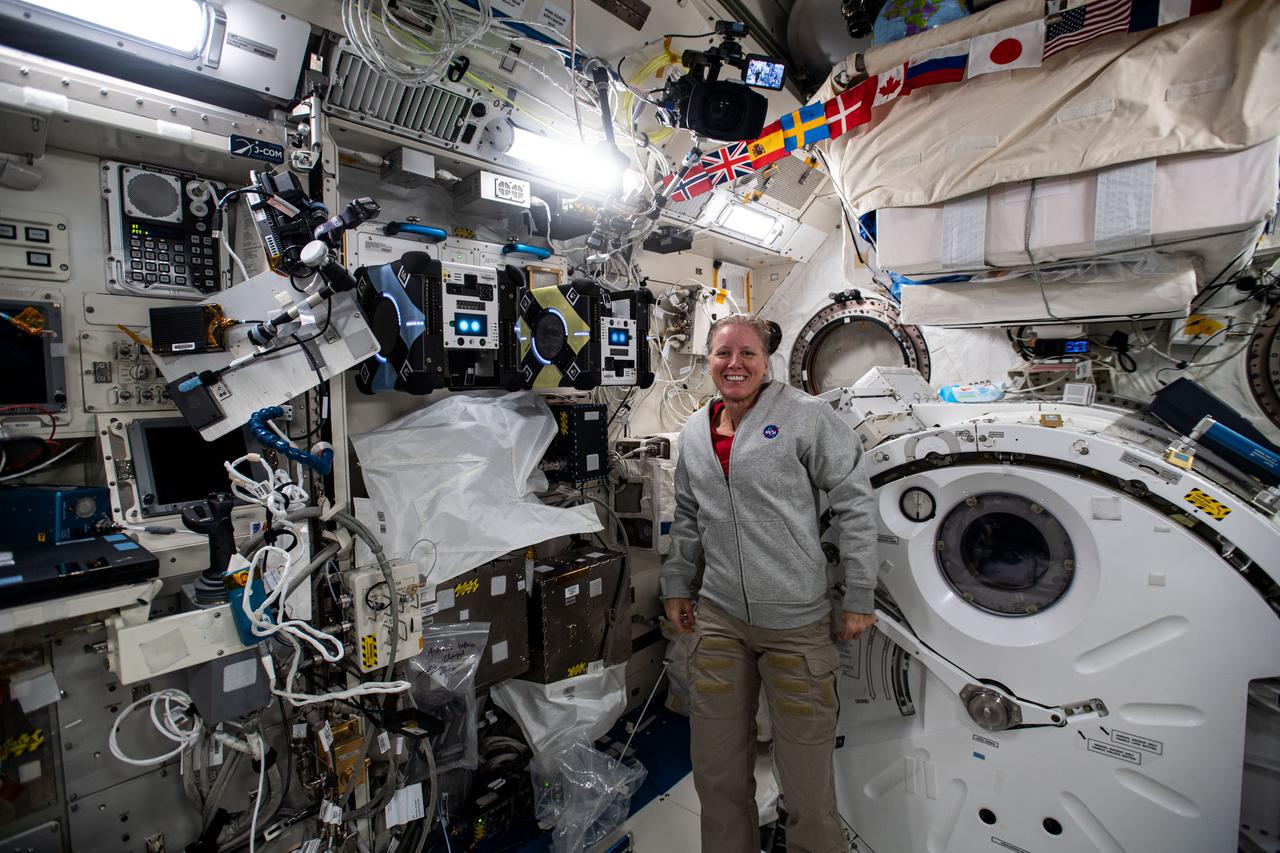
iss064e029277 (Feb. 4, 2021) --- NASA astronaut and Expedition 64 Flight Engineer Shannon Walker poses with a pair of Astrobee robotic assistants docked to their ports inside the Japanese Kibo laboratory module. The cube-shaped, toaster-sized robots are being tested for their ability to autonomously navigate and maneuver inside the orbiting lab.
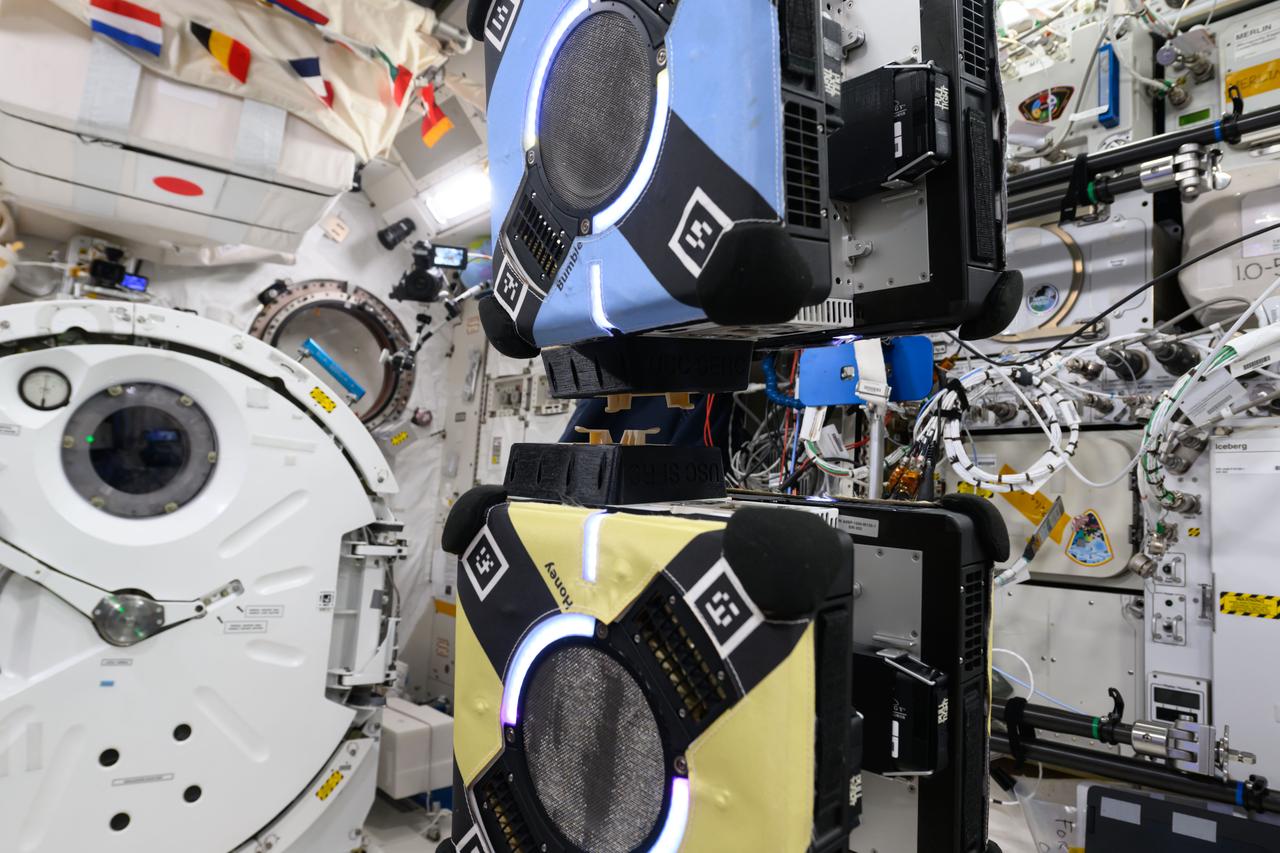
iss072e423864 (1/3/2025) — A view of the CLINGERS Cubesats attached to Astrobee aboard the International Space Station (ISS). Flight Tech Demo of Docking/Undocking Cubesats Inside ISS (CLINGERS) uses the International Space Station’s Astrobee robots to demonstrate an adaptor for docking and close approach sensing to connect both active and passive objects in space. These are critical functions to enable applications such as satellite servicing, orbital refueling, spacecraft repair and upgrade, and in-orbit manufacturing.
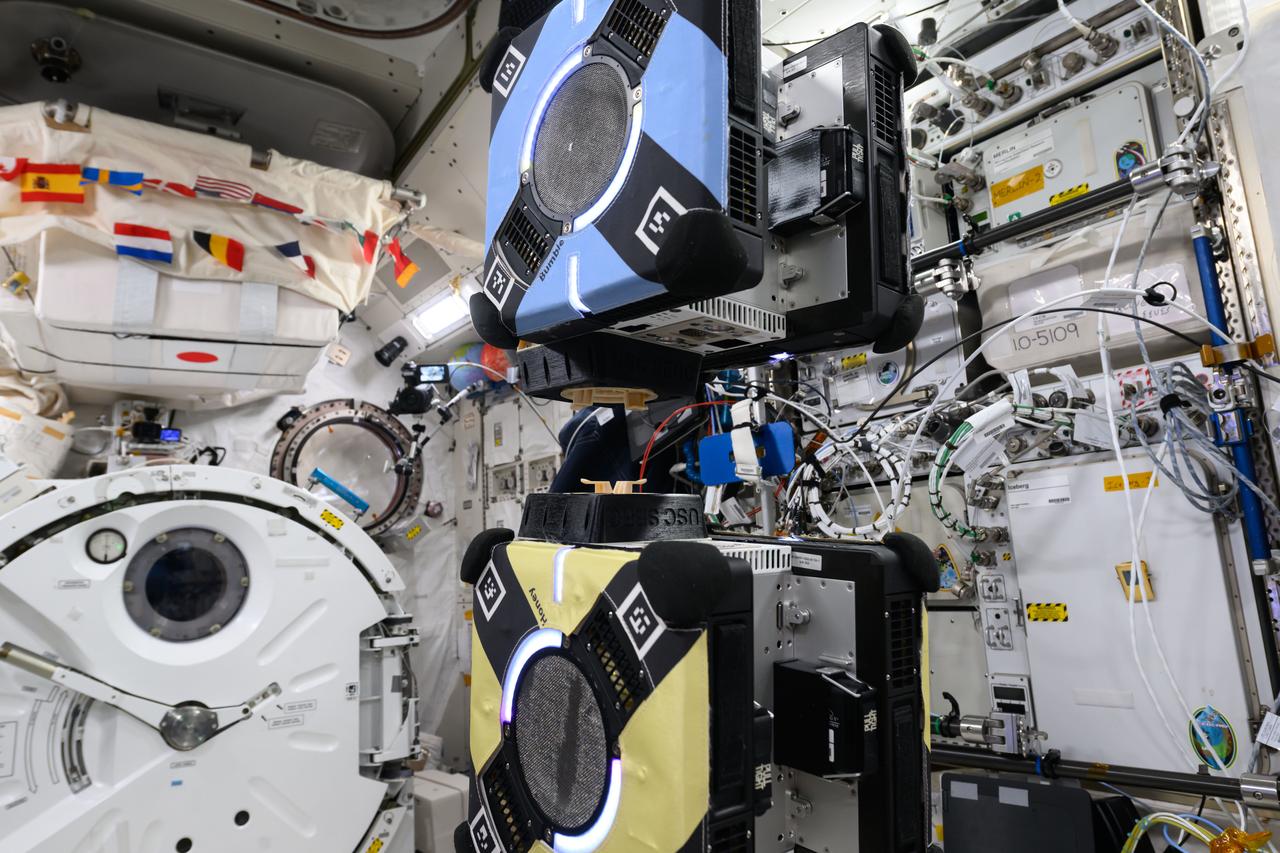
iss072e423875 (1/3/2025) — A view of the CLINGERS Cubesats attached to Astrobee aboard the International Space Station (ISS). Flight Tech Demo of Docking/Undocking Cubesats Inside ISS (CLINGERS) uses the International Space Station’s Astrobee robots to demonstrate an adaptor for docking and close approach sensing to connect both active and passive objects in space. These are critical functions to enable applications such as satellite servicing, orbital refueling, spacecraft repair and upgrade, and in-orbit manufacturing.

iss070e123850 (March 20, 2024) --- Expedition 70 Flight Engineer and NASA astronaut Mike Barratt shows off an Astrobee robotic free-flyer that will be controlled by student-written code in a competition to inspire the next generation of scientists, engineers, and explorers.
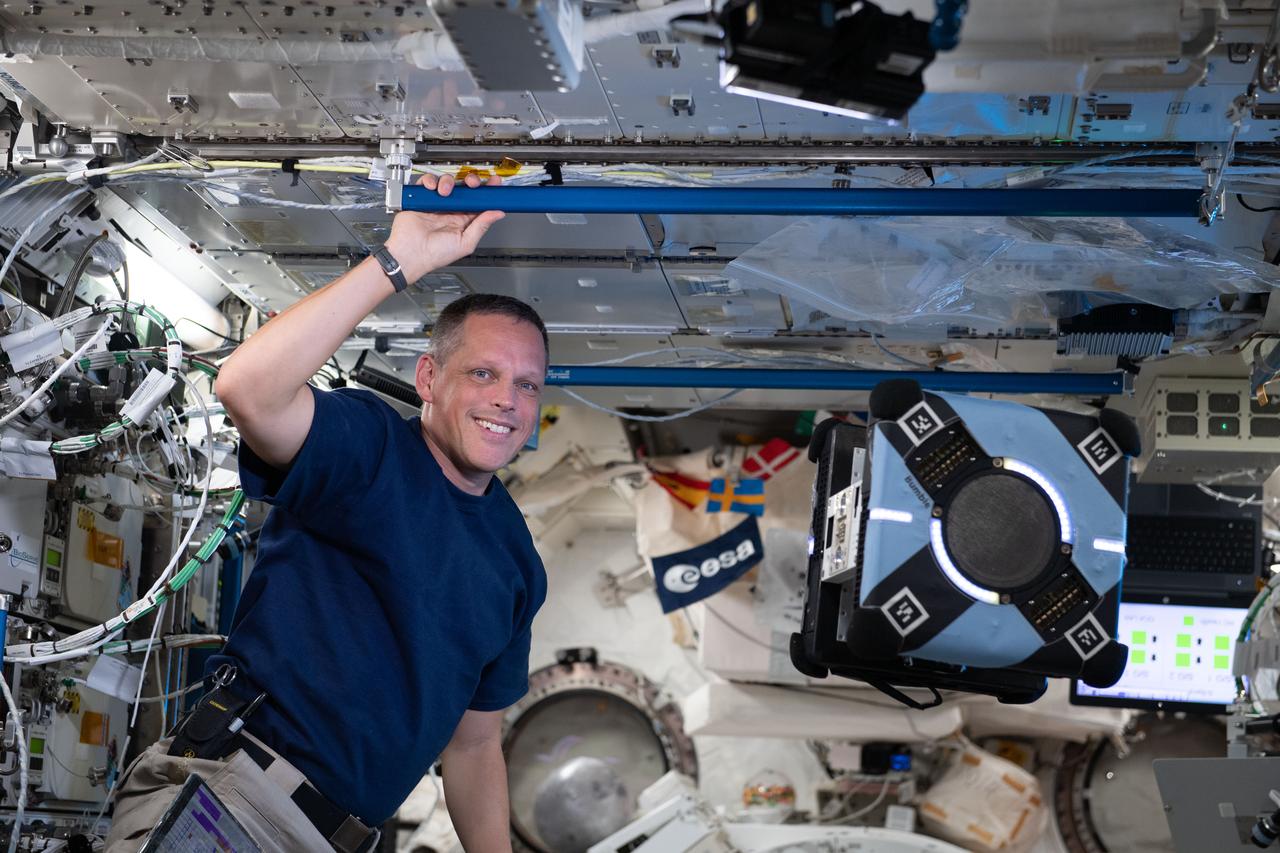
iss067e149715 (June 24, 2022) --- NASA astronaut and Expedition 67 Flight Engineer Bob Hines monitors an Astrobee robotic free-flyer as it tests its ability to autonomously navigate and maneuver inside the Kibo laboratory module using smartphone technology
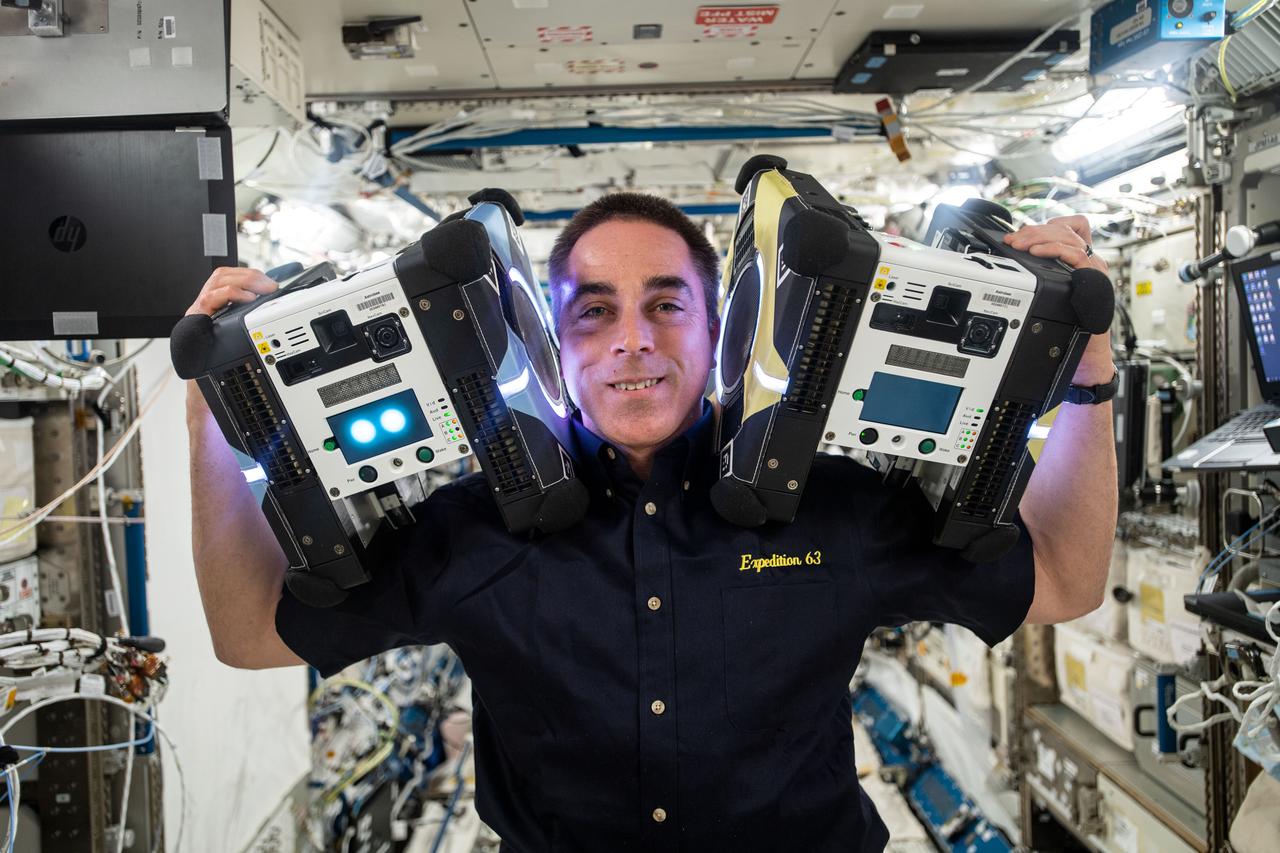
iss063e084515 (Sept. 4, 2020) --- NASA astronaut and Expedition 63 Commander Chris Cassidy poses with two Astrobee robotic assistants during visual and navigation tests inside the Kibo laboratory module from JAXA (Japan Aerospace Exploration Agency).

iss065e454762 (Oct. 8, 2021) --- NASA astronaut and Expedition 65 Flight Engineer Megan McArthur photographs an Astrobee robotic free-flyer as it tests its maneuvering abilities using a perching arm for the Astrobatics technology demonstration inside the International Space Station's Kibo laboratory module.
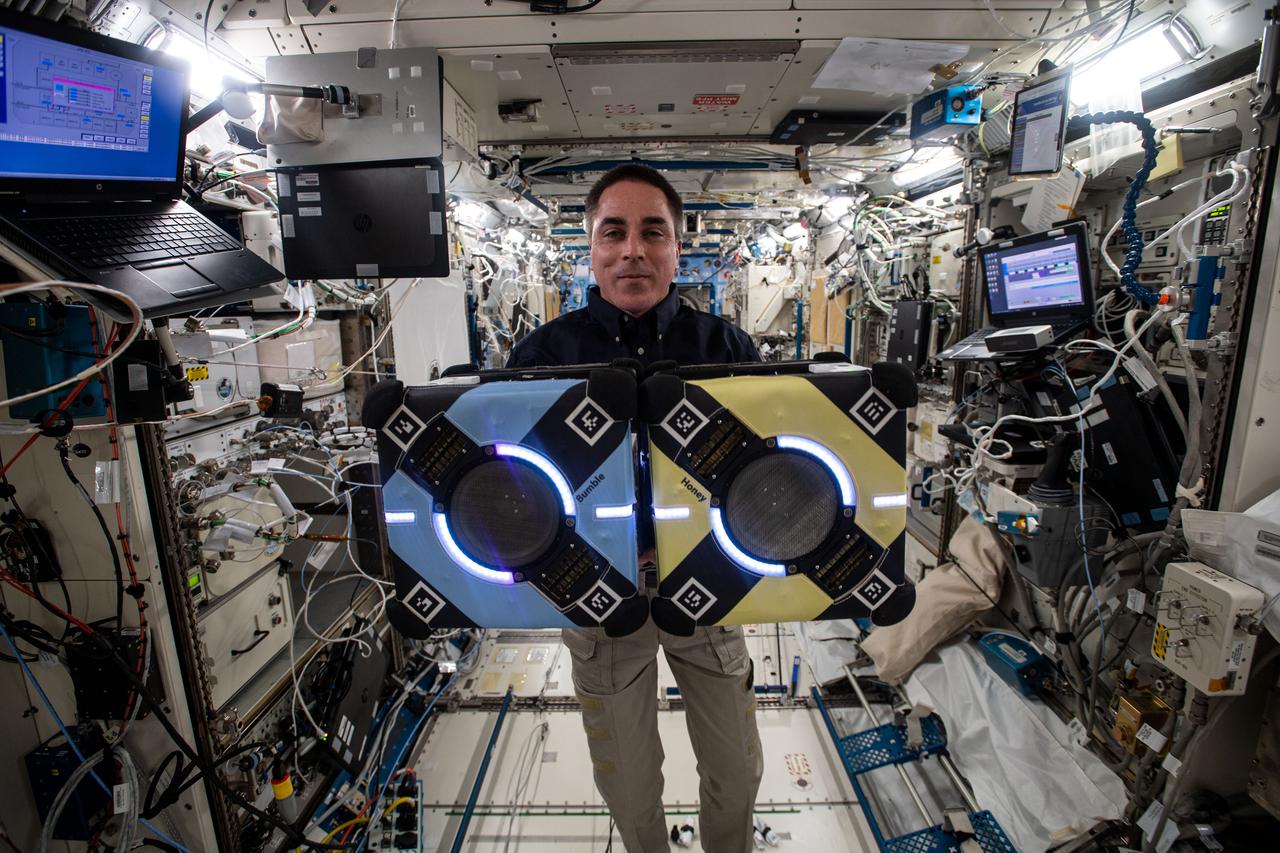
iss063e084529 (Sept. 4, 2020) --- NASA astronaut and Expedition 63 Commander Chris Cassidy poses with two Astrobee robotic assistants during visual and navigation tests inside the Kibo laboratory module from JAXA (Japan Aerospace Exploration Agency).

iss059e038095 (April 30, 2019) --- NASA astronaut Anne McClain works inside the Japanese Kibo laboratory module checking out the new Astrobee hardware. The cube-shaped, free-flying robotic assistant could save the crew time performing routine maintenance duties and providing additional lab monitoring capabilities.
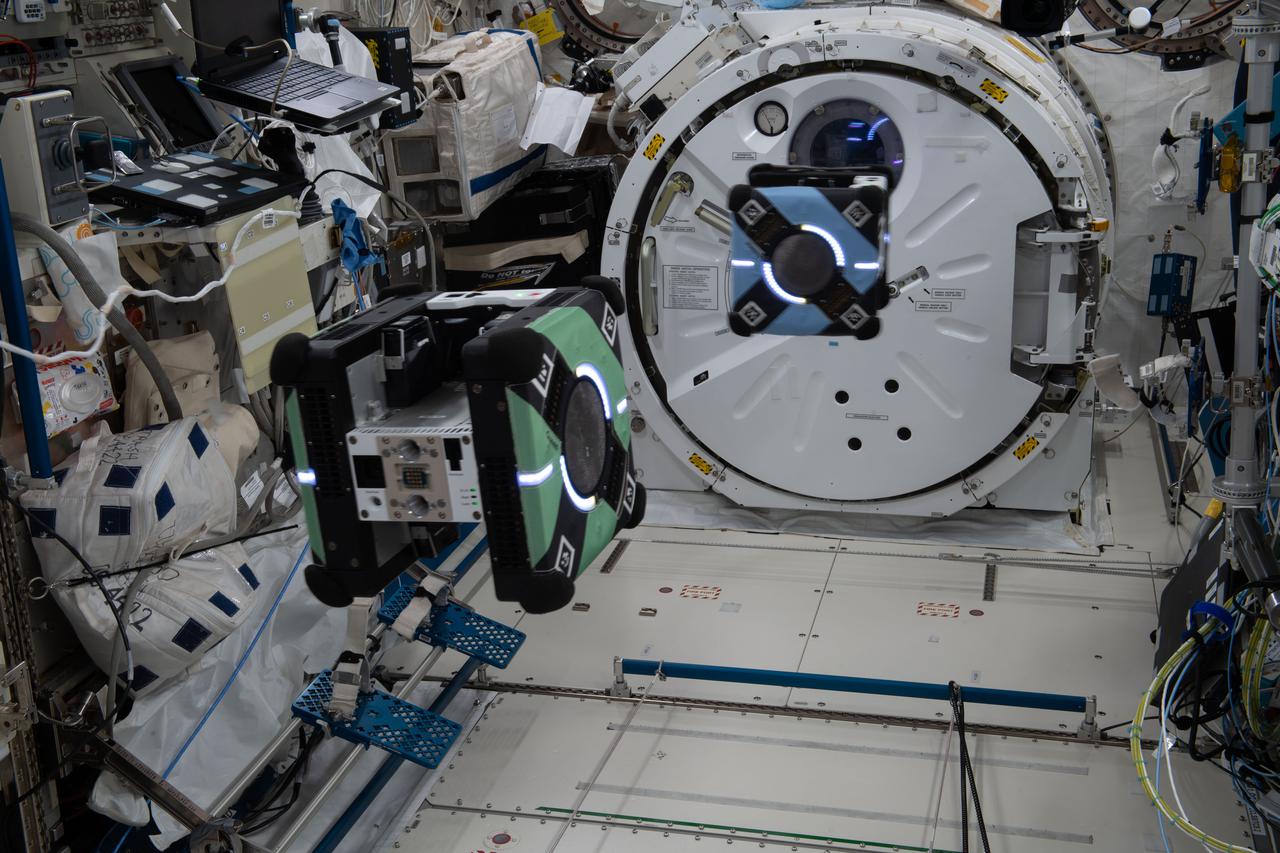
iss066e134584 (Feb. 2, 2022) --- A pair of free-flying Astrobee robotic assistants test automated rendezvous maneuvers using an algorithm for the ROAM, or Relative Operations for Autonomous Maneuvers, technology demonstration inside the International Space Station's Kibo laboratory module.
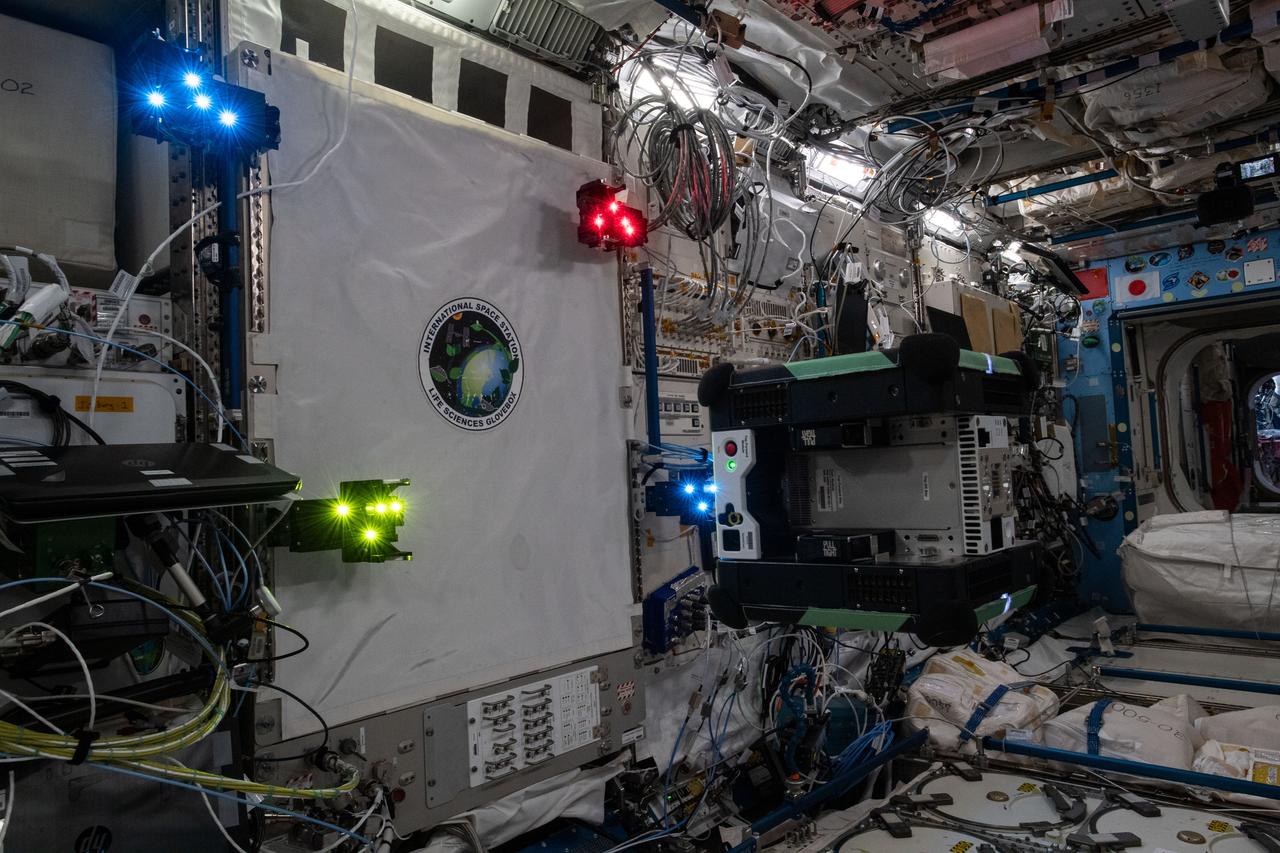
Documentation of a free-flying Astrobee robot (Queen), equipped with an LED Target for the Smartphone Video Guidance Sensor (SVGS) experiment, during SVGS science 3 session. Four SVGS LED Targets are attached to the Life Sciences Glovebox (LSG) rack, JPM1F5 in the Kibo Japanese Experiment Module (JEM).
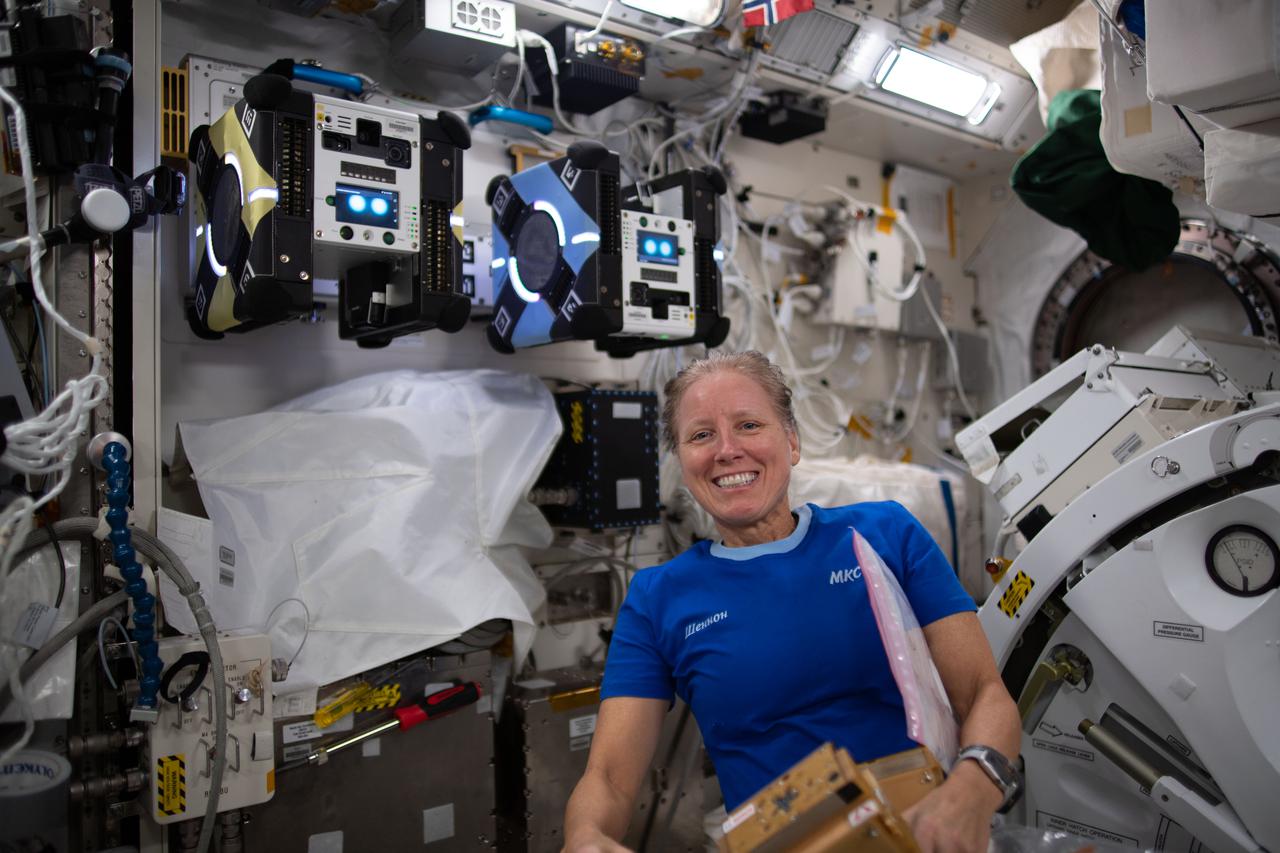
iss064e023424 (Jan. 18, 2021) --- NASA astronaut and Expedition 64 Flight Engineer Shannon Walker poses with a pair of free-flying, cube-shaped robots that are part of the Astrobee study that is investigating their ability navigate autonomously and assist astronauts with routine chores aboard the International Space Station.
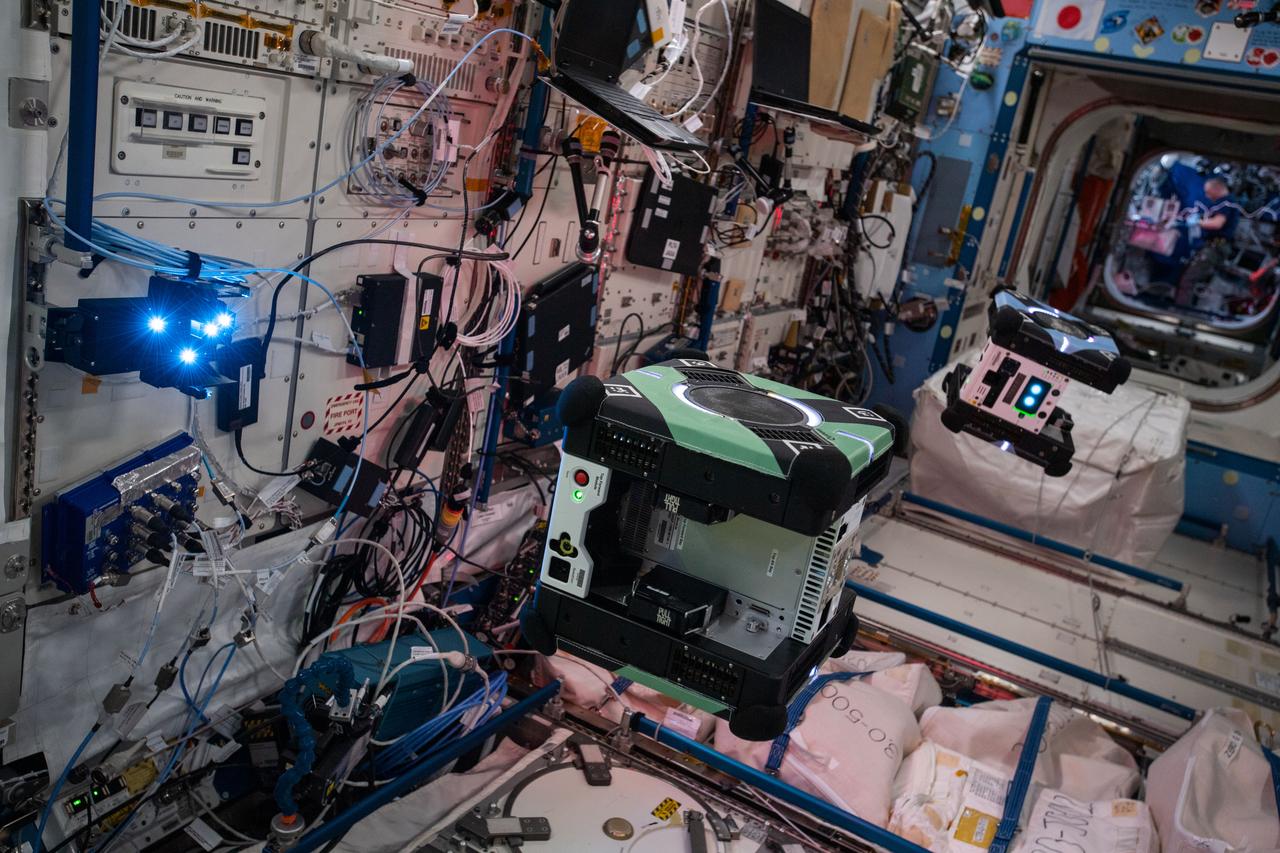
Documentation of two free-flying Astrobee robots (Queen and Bumble), equipped with LED Targets for the Smartphone Video Guidance Sensor (SVGS) experiment, during SVGS science 3 session. An SVGS LED Target is attached to the Life Sciences Glovebox (LSG) rack, JPM1F5 in the Kibo Japanese Experiment Module (JEM).
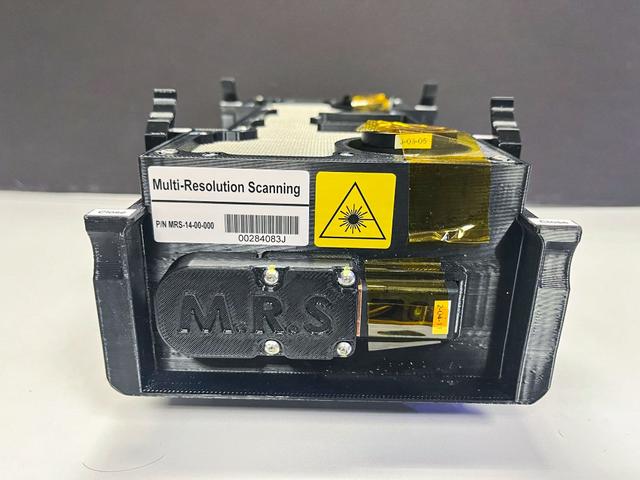
jsc2024e016239 (12/6/2023) --- The multi-resolution scanner (MRS) ready for testing and certification at NASA’s Ames Research Center. The Multi-Resolution Scanning payload will be mated to the Astrobee free-flying robot, which will undertake a small flight and use MRS to create 3D maps of the interior of the International Space Station. Image courtesy of CSIRO.

iss065e162209 (July 7, 2021) --- NASA astronaut and Expedition 65 Flight Engineer Megan McArthur observes the Astrobee robotic free-flyer inside the Kibo laboratory module. Part of the SoundSee Mission science experiment, the toaster-sized robotic assistant demonstrated its ability to “listen” to station components to help detect anomalies in spacecraft systems that may need servicing.

jsc2024e016244 (11/27/2023) --- The final Multi-Resolution Scanning payload docked with an Astrobee robot at NASA’s Ames Research Center. The Multi-Resolution Scanning payload uses multiple different sensor types to generate high-resolution 3D data and more accurate trajectory data to understand how the robot moves around in 3D space. Such systems could support future Gateway and Lunar surface missions by providing automated defect detection, automated and remote maintenance, autonomous vehicle operations, and surface scanning using rovers.
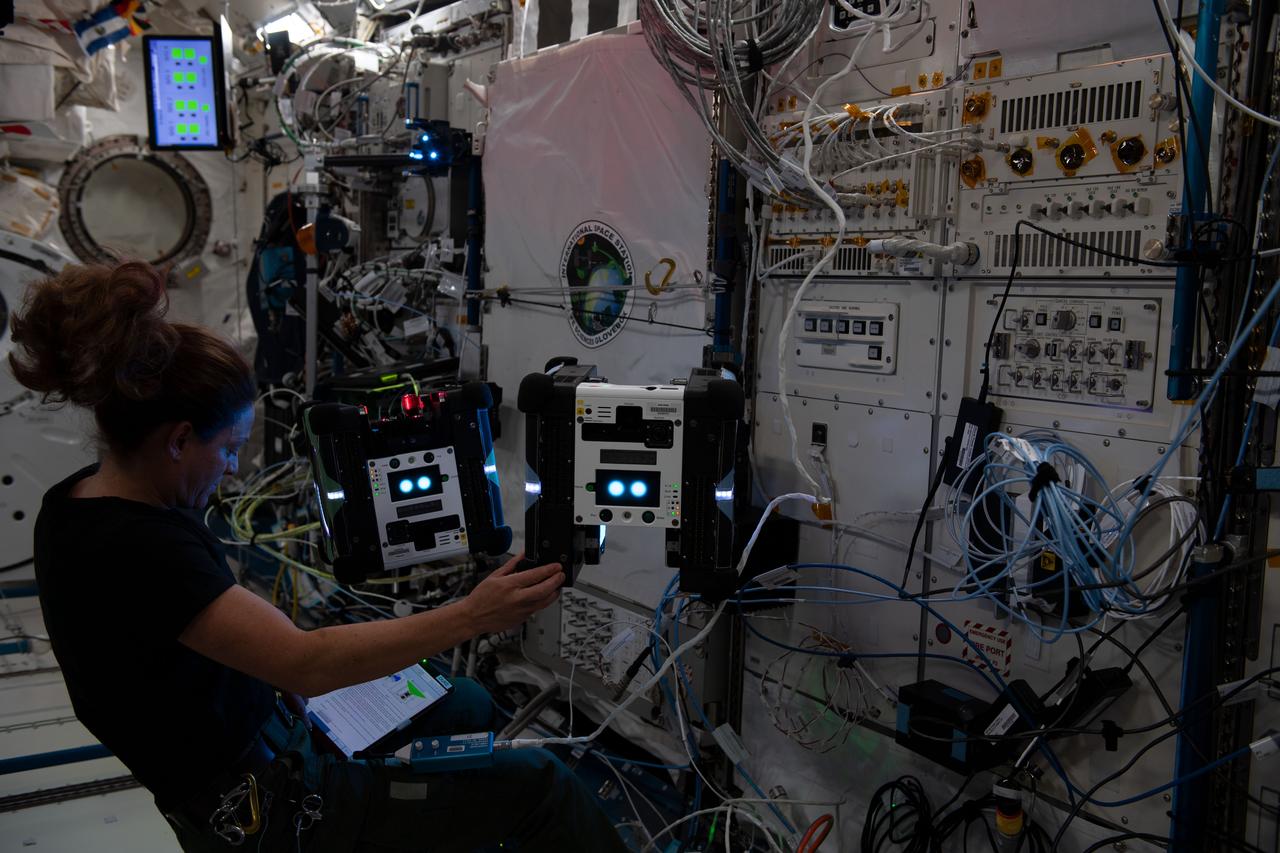
iss068e020703 (Nov. 7, 2022) --- NASA astronaut and Expedition 68 Flight Engineer Nicole Mann works with a pair of free-flying, cube-shaped Astrobee robotic helpers inside the Kibo laboratory module. The toaster-sized, autonomous robots were demonstrating the use of a photogrammetric vision-based technology for guidance, navigation, and control as part of the Smartphone Vision Guidance Sensor experiment.
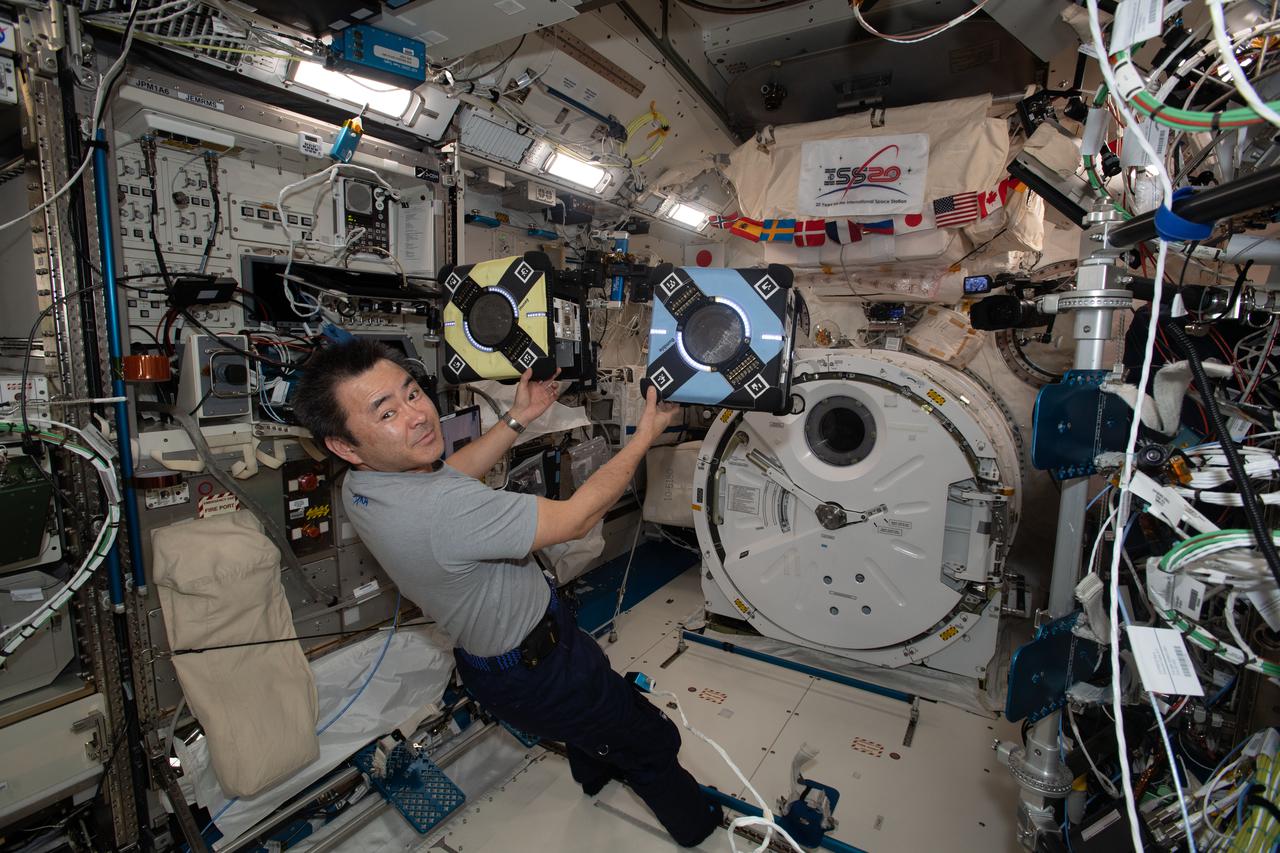
iss065e319330 (Aug. 26, 2021) --- Expedition 65 Commander Akihiko Hoshide of the Japan Aerospace Exploration Agency checks out a pair of Astrobee robotic free-flyers. The toaster-sized robotic assistants are being tested for their ability to autonomously conduct routine orbital chores, monitor station activities and coordinate maneuvers for future satellite repair techniques.
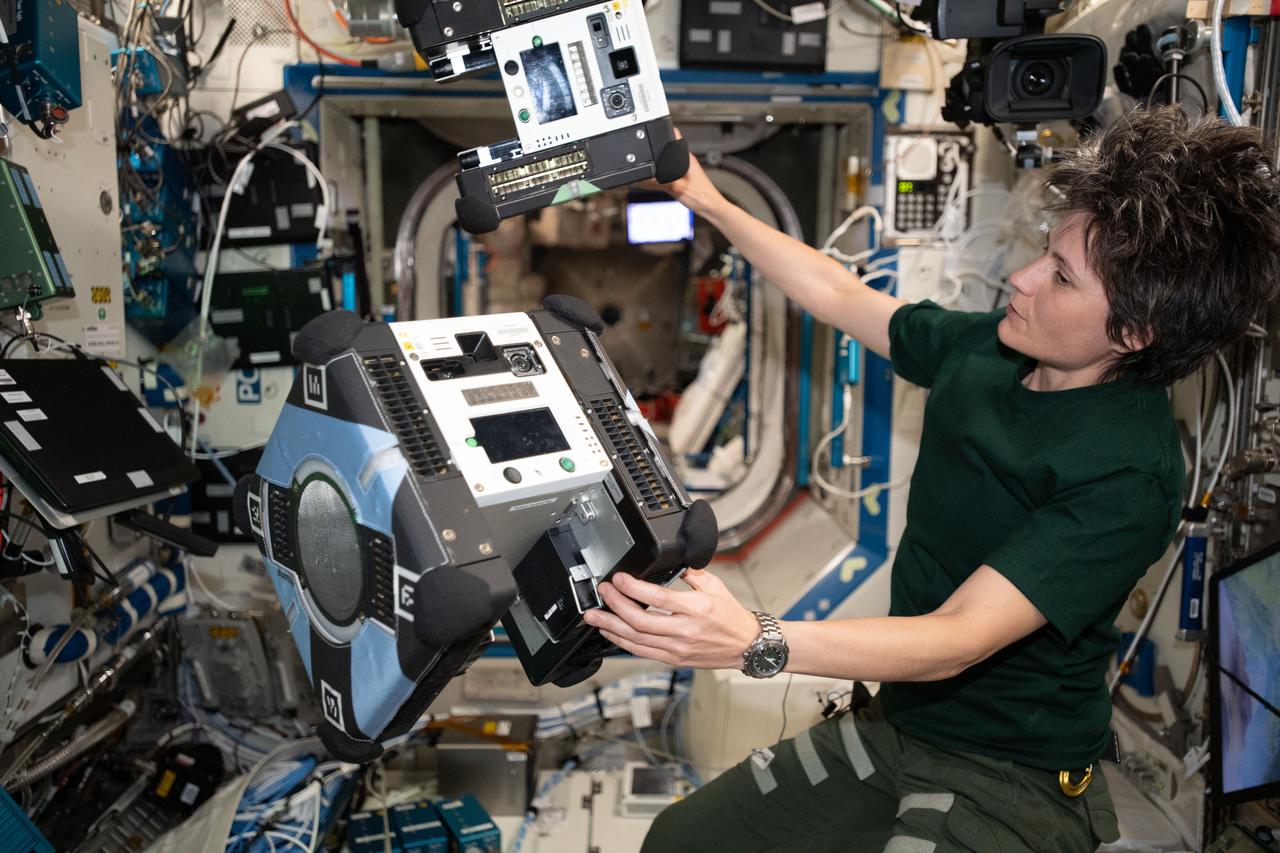
iss067e059514 (May 18, 2022) --- ESA (European Space Agency) astronaut and Expedition 67 Flight Engineer Samantha Cristoforetti monitors a pair of Astrobee robotic free-flyers performing autonomous maneuvers inside the International Space Station. The cube-shaped, toaster-sized robots are designed to help scientists and engineers develop and test technologies for use in microgravity to assist astronauts with routine chores, and give ground controllers additional eyes and ears on the space station.
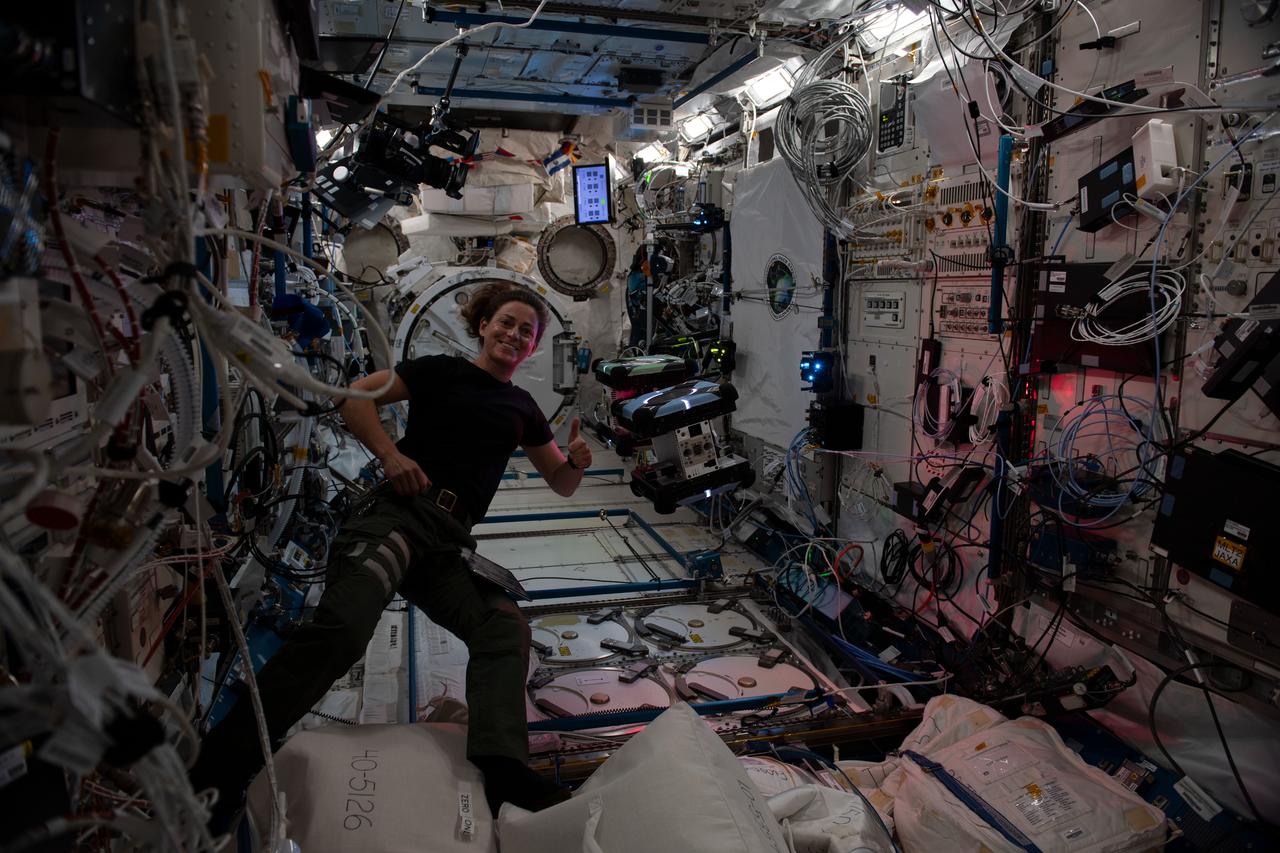
iss068e020734 (Nov. 7, 2022) --- NASA astronaut and Expedition 68 Flight Engineer Nicole Mann poses with a pair of free-flying, cube-shaped Astrobee robotic helpers inside the Kibo laboratory module. The toaster-sized, autonomous robots were demonstrating the use of a photogrammetric vision-based technology for guidance, navigation, and control as part of the Smartphone Vision Guidance Sensor experiment.
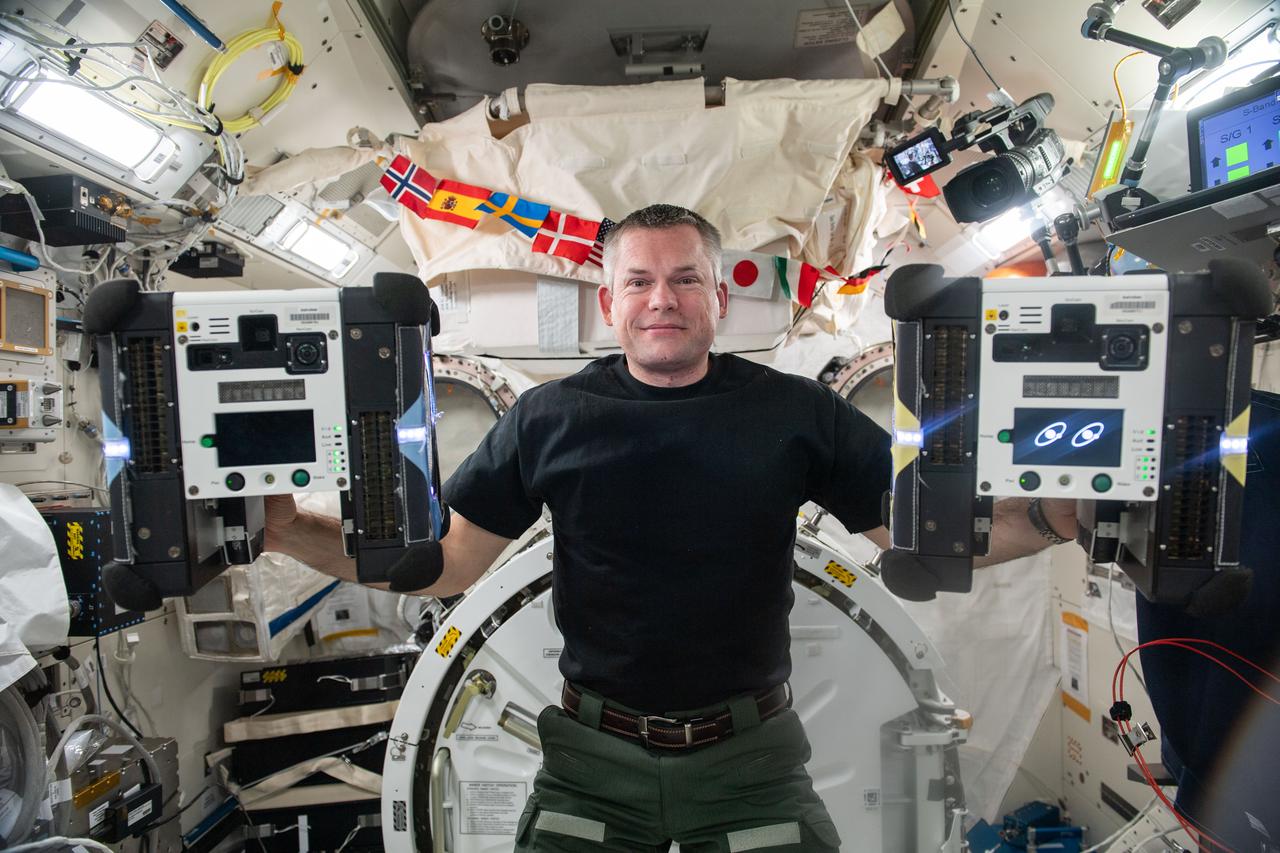
iss070e088587 (Feb. 8, 2024) --- ESA (European Space Agency) astronaut and Expedition 70 Commander Andreas Mogensen shows off a pair of cube-shaped Astrobee robotic free flyers inside the International Space Station's Kibo laboratory module. The autonomous robots are powered by fans and vision-based navigation and are demonstrating their ability to assist astronauts with routine chores and provide remote monitoring abilities for mission controllers on the ground.
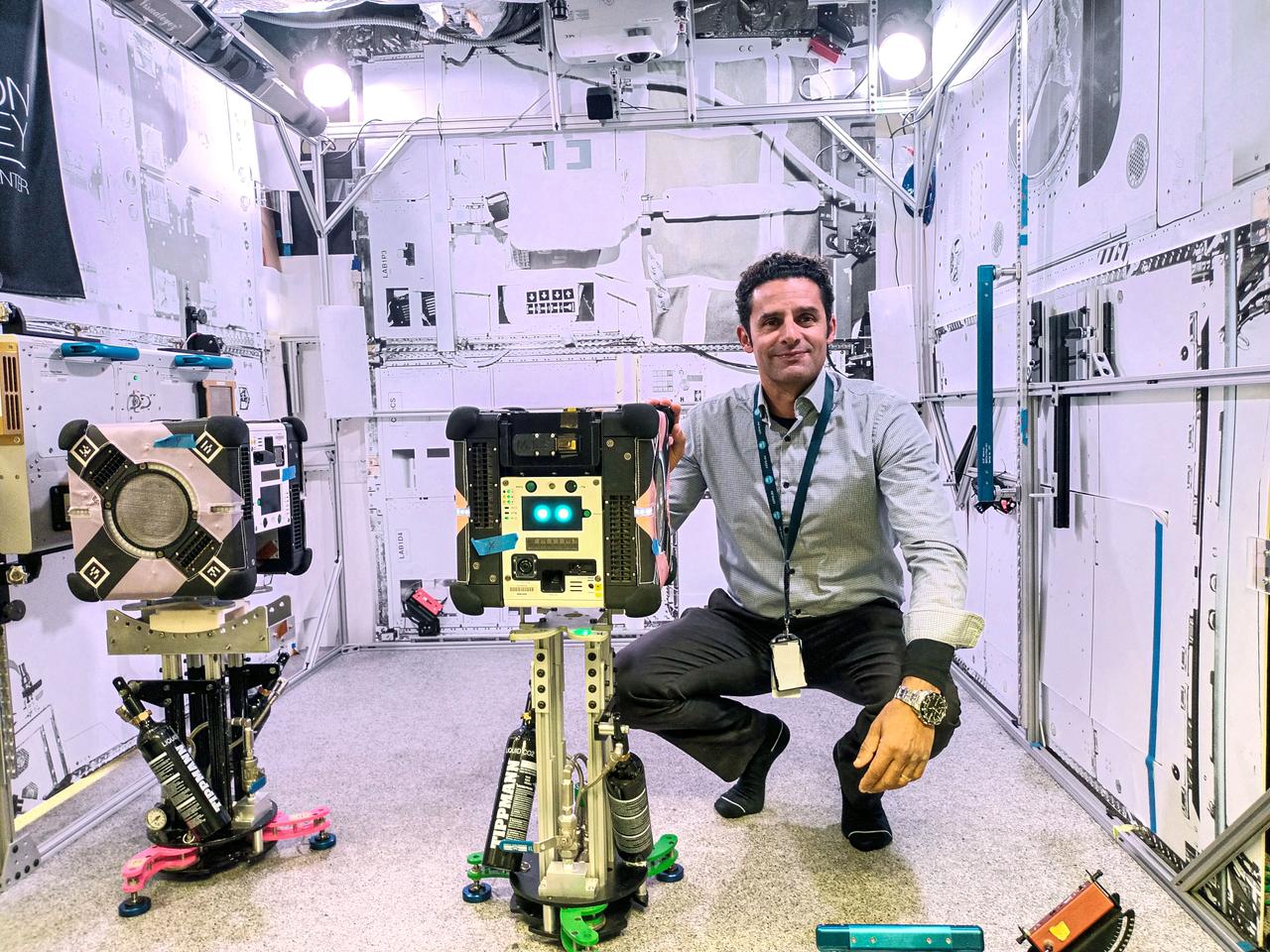
jsc2024e016241 (11/17/2023) --- CSIRO Project Lead Dr. Marc Elmouttie with the Multi-Resolution Scanning payload, housed.within an Astrobee robot. The Multi-Resolution Scanning payload uses multiple different sensor types to generate high-resolution 3D data and more accurate trajectory data to understand how the robot moves around in 3D space. Image courtesy of CSIRO.
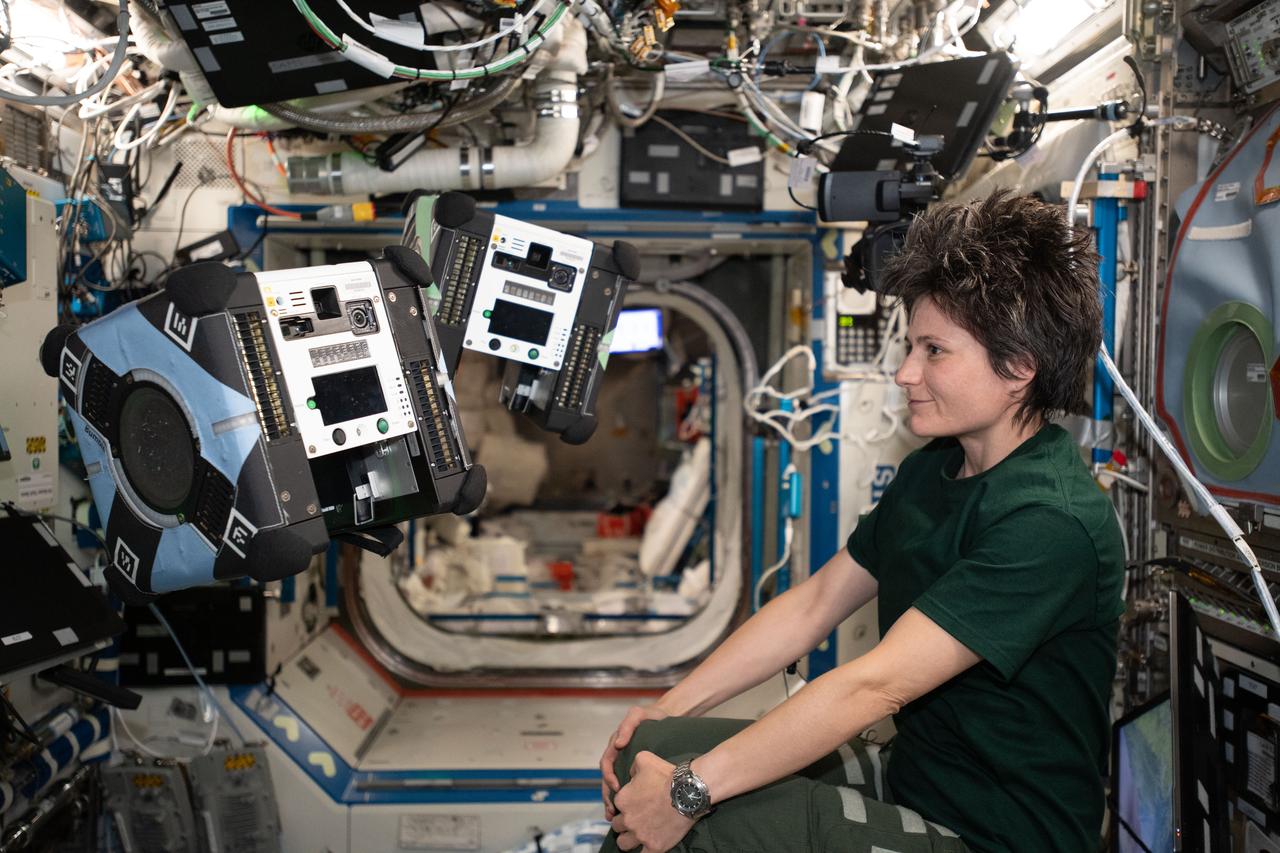
iss067e059518 (May 18, 2022) --- ESA (European Space Agency) astronaut and Expedition 67 Flight Engineer Samantha Cristoforetti monitors a pair of Astrobee robotic free-flyers performing autonomous maneuvers inside the International Space Station. The cube-shaped, toaster-sized robots are designed to help scientists and engineers develop and test technologies for use in microgravity to assist astronauts with routine chores, and give ground controllers additional eyes and ears on the space station.

iss072e423785 (1/3/2025) — A view of the CLINGERS Cubesat connection mechanism aboard the International Space Station (ISS). Flight Tech Demo of Docking/Undocking Cubesats Inside ISS (CLINGERS) uses the International Space Station’s Astrobee robots to demonstrate an adaptor for docking and close approach sensing to connect both active and passive objects in space. These are critical functions to enable applications such as satellite servicing, orbital refueling, spacecraft repair and upgrade, and in-orbit manufacturing.
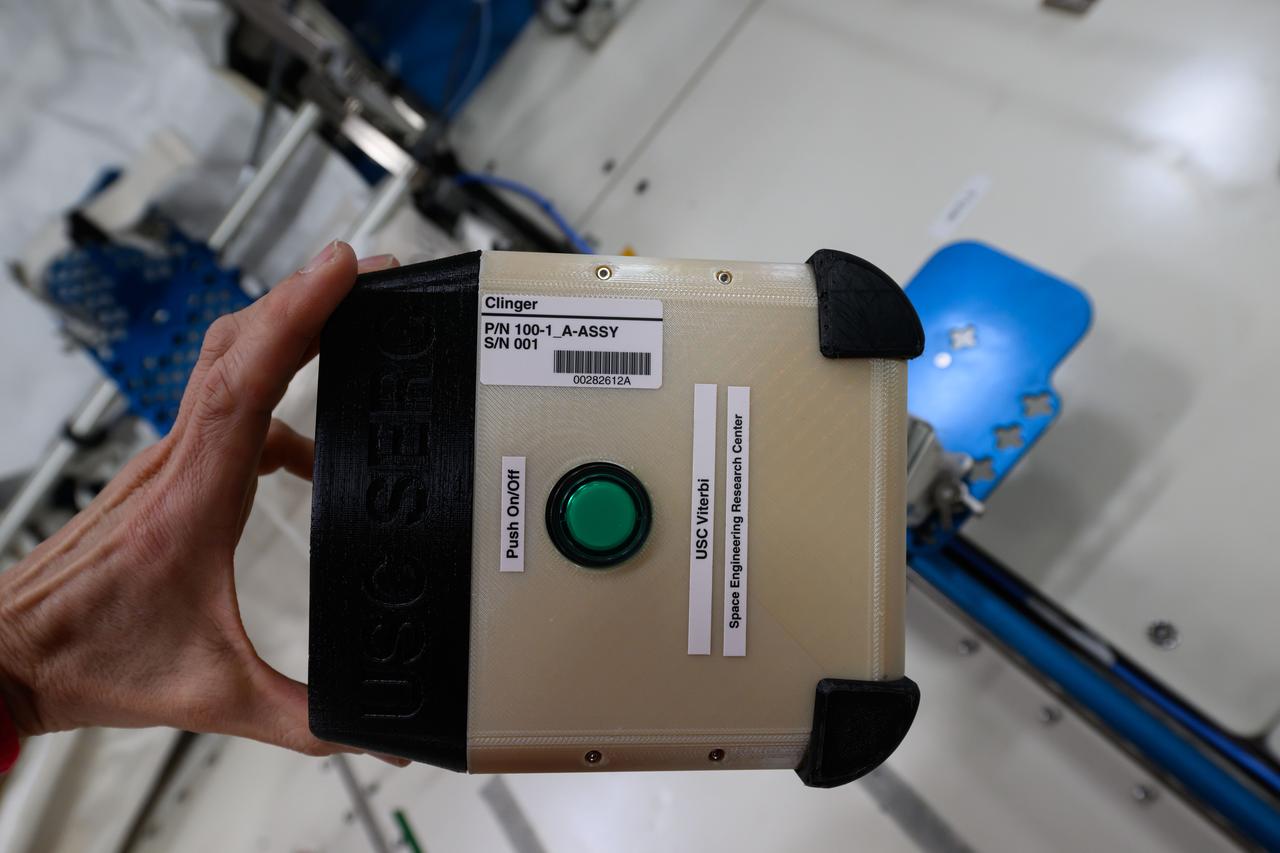
iss072e423784 (1/3/2025) — A view of the CLINGERS Cubesat aboard the International Space Station (ISS). Flight Tech Demo of Docking/Undocking Cubesats Inside ISS (CLINGERS) uses the International Space Station’s Astrobee robots to demonstrate an adaptor for docking and close approach sensing to connect both active and passive objects in space. These are critical functions to enable applications such as satellite servicing, orbital refueling, spacecraft repair and upgrade, and in-orbit manufacturing.
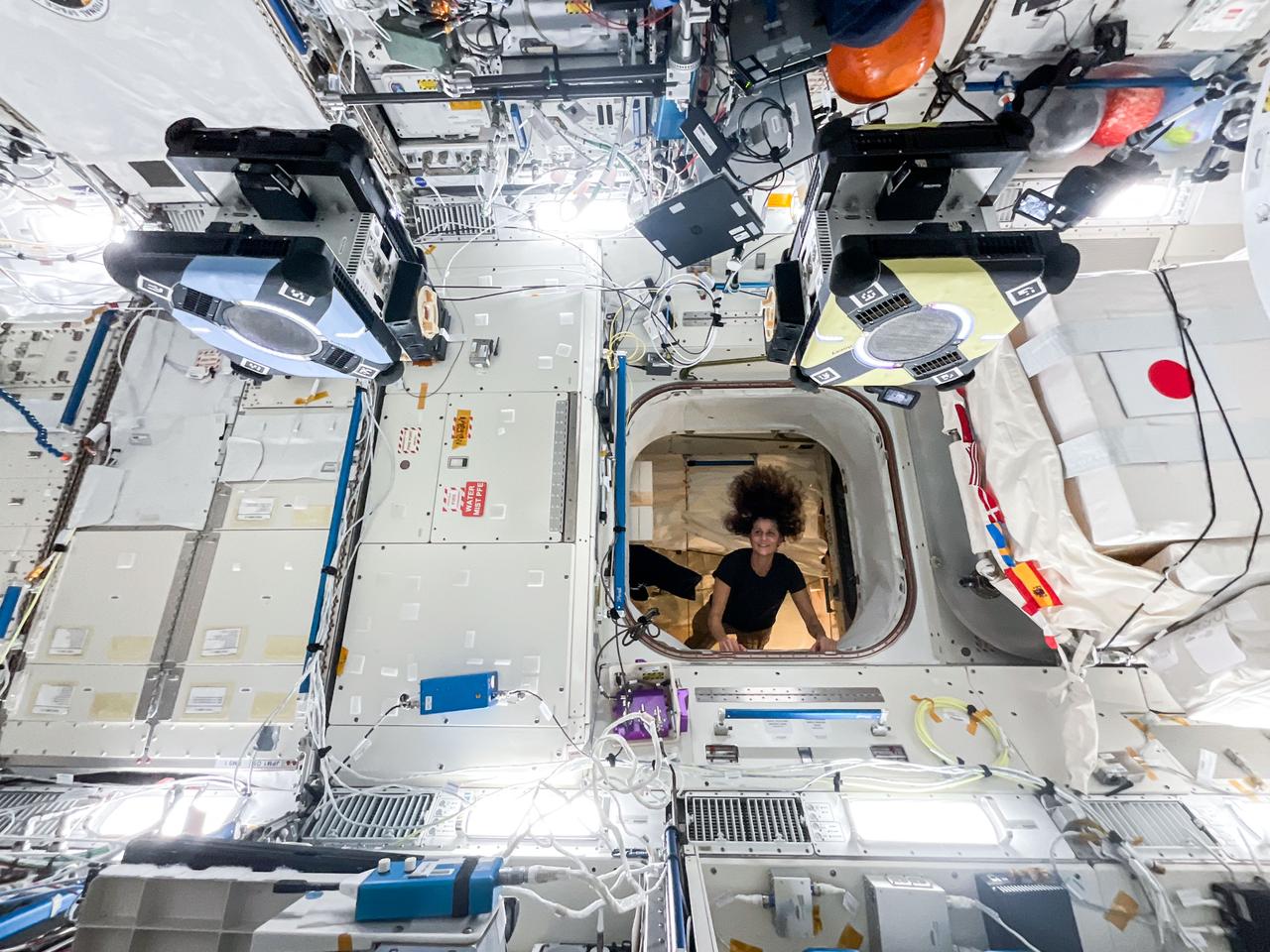
iss071e464315 (Aug. 12, 2024) --- NASA astronaut and Boeing's Crew Flight Test Pilot Suni Williams observes a pair of Astrobee robotic free-flying assistants demonstrating autonomous docking maneuvers inside the International Space Station's Kibo laboratory module. Williams was inside Kibo's logistics module which serves as a storage area that houses materials for experiments, maintenance tools, and crew supplies.
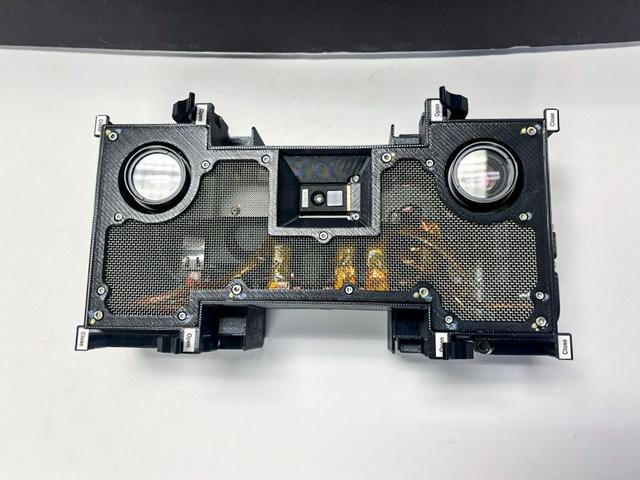
jsc2024e016243 (2/14/2024) --- Close-up view of the final Multi-Resolution Scanning payload with its stereo vision cameras at left and right. The Multi-Resolution Scanning payload uses multiple different sensor types to generate high-resolution 3D data and more accurate trajectory data to understand how the Astrobee robot moves around in 3D space.
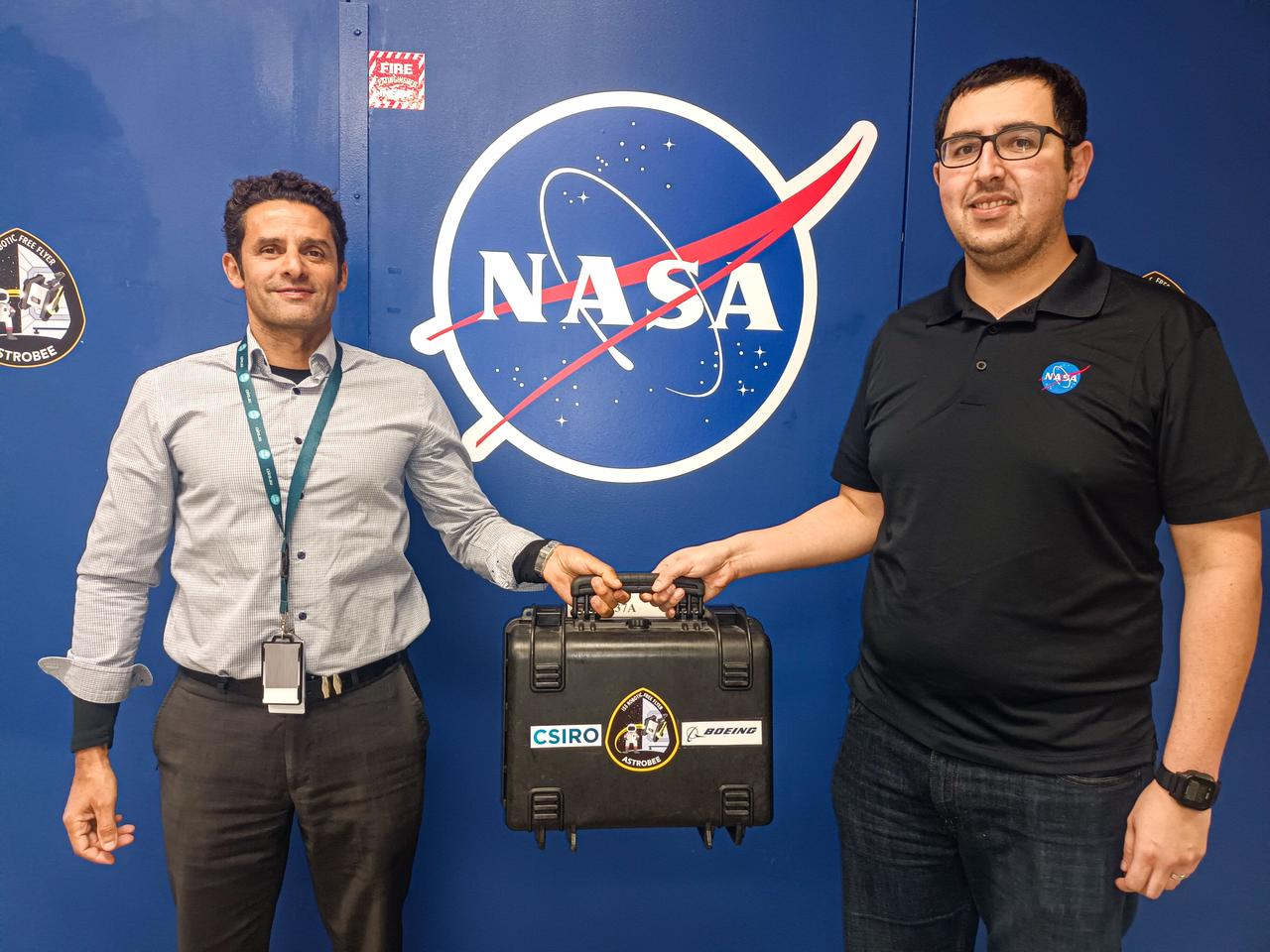
jsc2024e016242 (11/17/2023) --- CSIRO Project Lead Dr. Marc Elmouttie hands over the flight-ready Multi-Resolution Scanning payload to Jose Cortez from NASA’s Ames Research Center ahead of its final testing. The Multi-Resolution Scanning payload will be mated to the Astrobee free-flying robot, which will undertake a small flight and use the multi-resolution scanner (MRS) to create 3D maps of the interior of the International Space Station. Image courtesy of CSIRO.

iss071e464314 (Aug. 12, 2024) --- NASA astronaut and Expedition 71 Flight Engineer Jeanette Epps monitors a pair of Astrobee robotic free-flying assistants as they demonstrate autonomous docking maneuvers inside the International Space Station's Kibo laboratory module. The cube-shaped, toaster-sized devices were operating with a connecting interface system, called CLINGERS with an embedded navigation sensor, that may benefit construction in space.
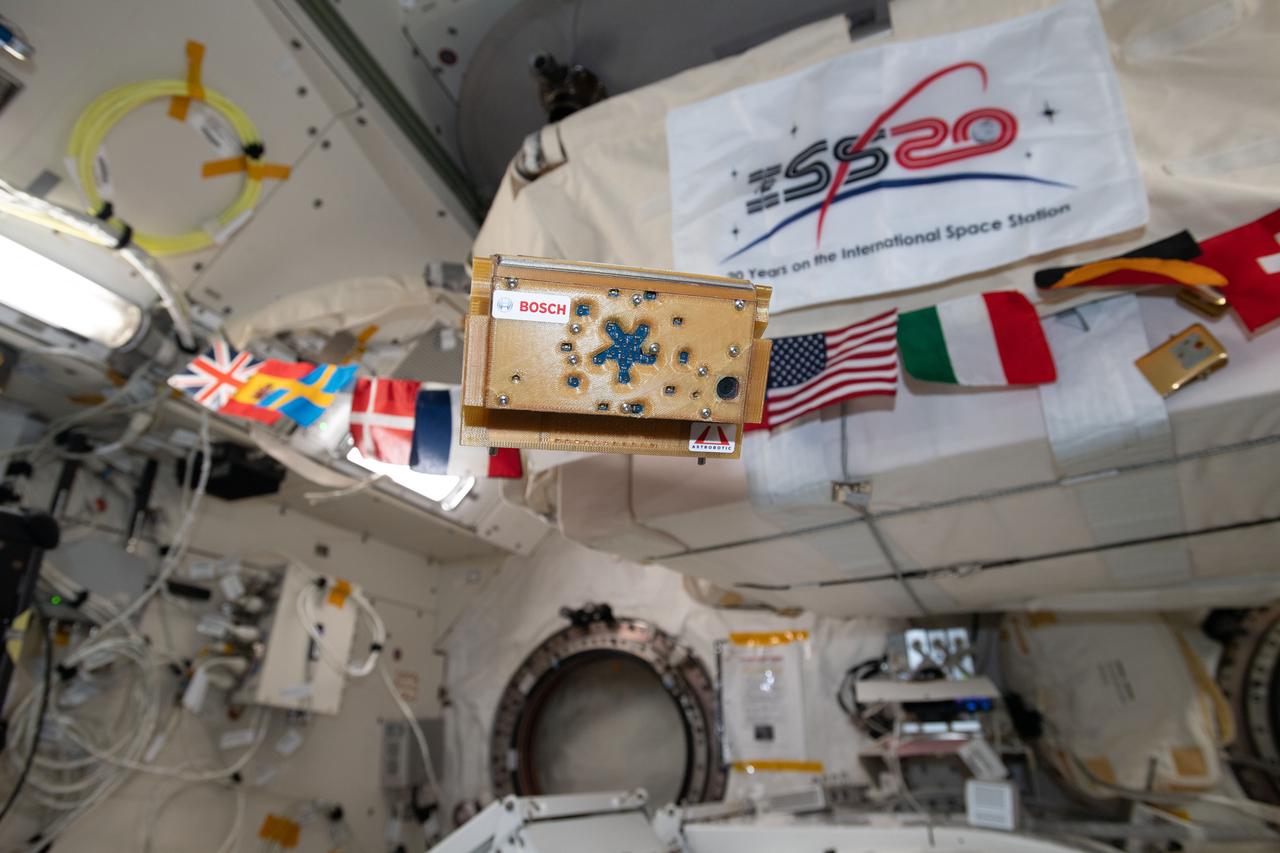
iss061e100877 (12/30/2019) --- A view of the SoundSee Mission sensors in the Japanese Experiment Module (JEM), aboard the International Space Station (ISS). The Investigation of Deep Audio Analytics on the International Space Station (SoundSee Mission) tests monitoring of the acoustic environment using an audio sensor on Astrobee, a mobile robotic platform aboard the space station. Monitoring sound can provide early indication of equipment failure. Autonomous audio monitoring may improve crew health and safety by keeping equipment in good working order while also reducing crew workload aboard the space station and other spacecraft.
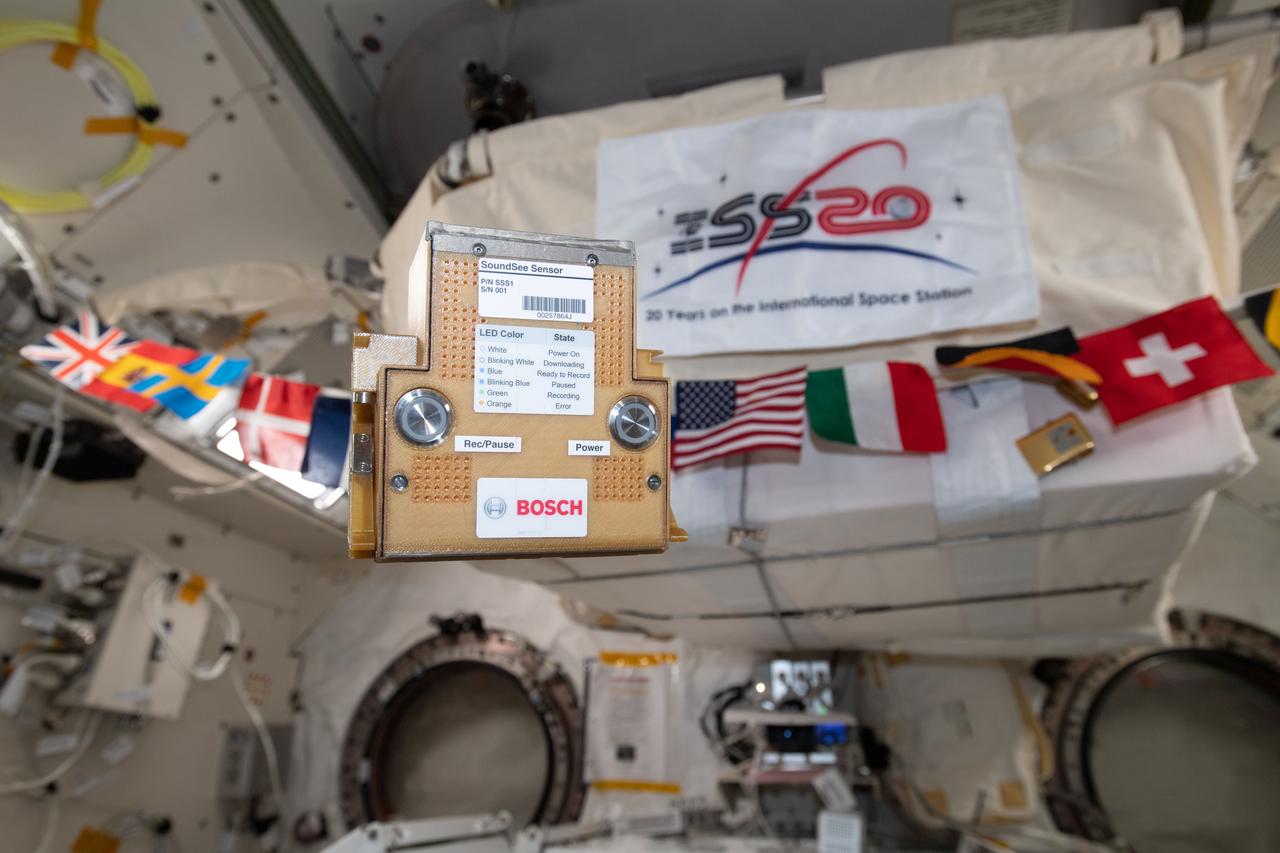
iss061e100876 (12/30/2019) --- A view of the SoundSee Mission sensors in the Japanese Experiment Module (JEM), aboard the International Space Station (ISS). The Investigation of Deep Audio Analytics on the International Space Station (SoundSee Mission) tests monitoring of the acoustic environment using an audio sensor on Astrobee, a mobile robotic platform aboard the space station. Monitoring sound can provide early indication of equipment failure. Autonomous audio monitoring may improve crew health and safety by keeping equipment in good working order while also reducing crew workload aboard the space station and other spacecraft.
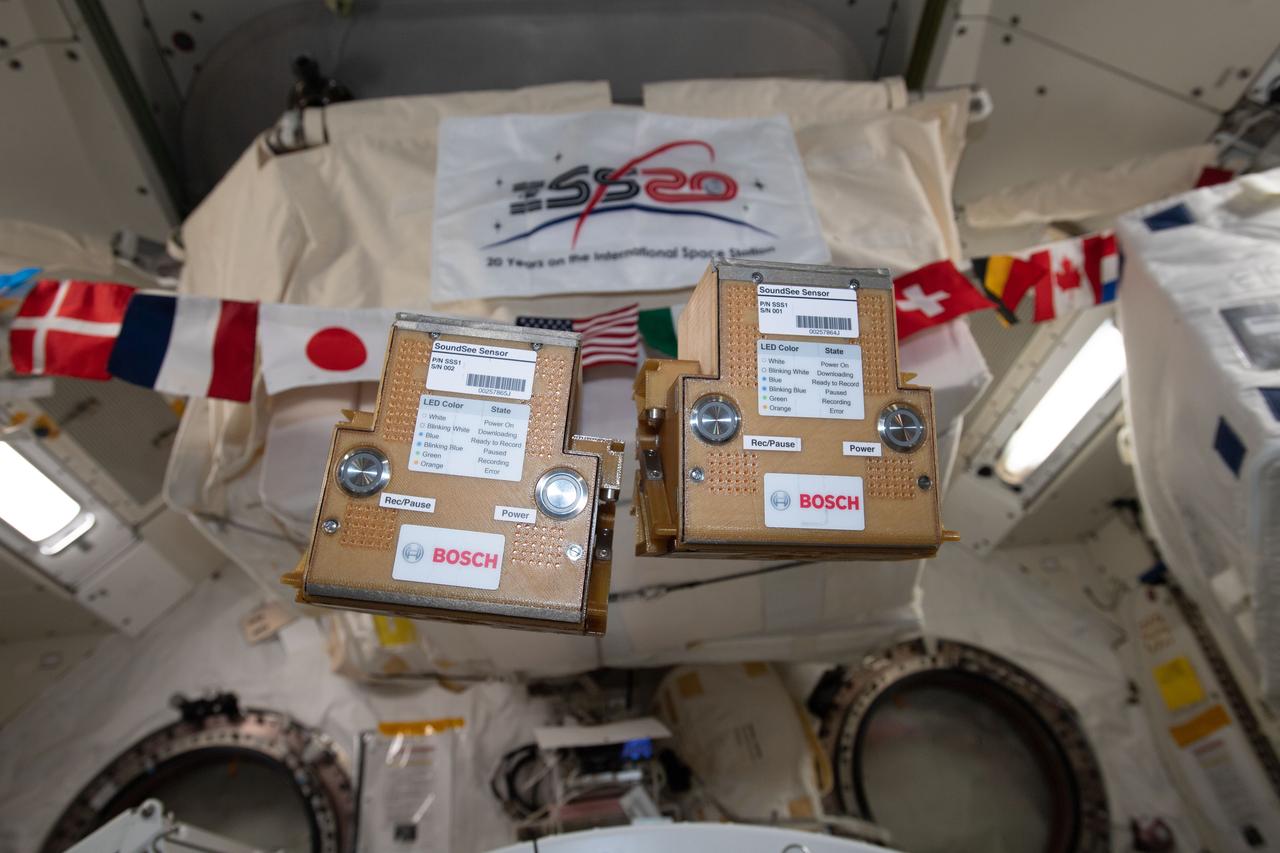
iss061e100889 (12/30/2019) --- A view of the SoundSee Mission sensors in the Japanese Experiment Module (JEM), aboard the International Space Station (ISS). The Investigation of Deep Audio Analytics on the International Space Station (SoundSee Mission) tests monitoring of the acoustic environment using an audio sensor on Astrobee, a mobile robotic platform aboard the space station. Monitoring sound can provide early indication of equipment failure. Autonomous audio monitoring may improve crew health and safety by keeping equipment in good working order while also reducing crew workload aboard the space station and other spacecraft.
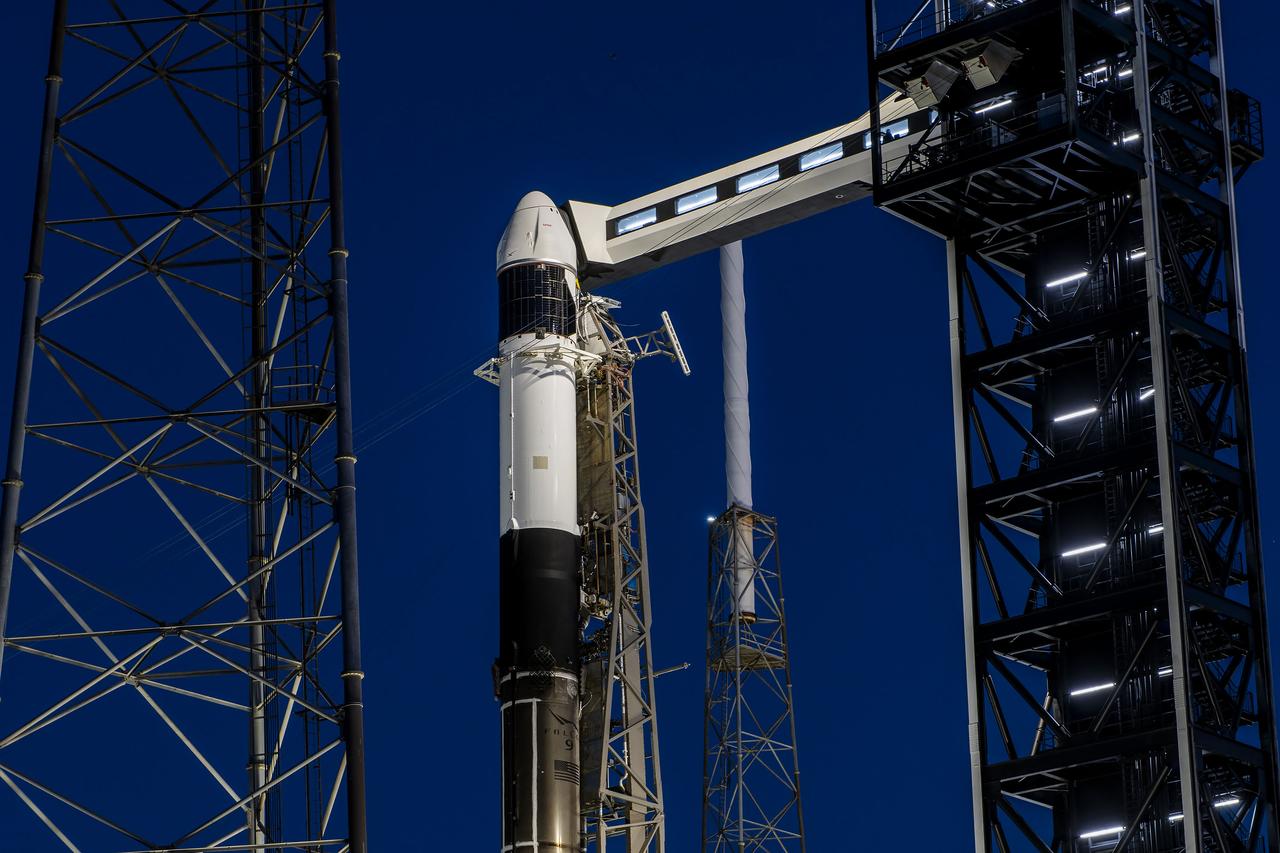
A SpaceX Falcon 9 rocket, with the company’s Dragon spacecraft atop, stands in a vertical position at Space Launch Complex 40 at Cape Canaveral Space Force Station in Florida on Tuesday, March 19, 2024, in preparation for the 30th commercial resupply services launch to the International Space Station. NASA and partner research flying aboard the mission includes a look at plant metabolism in space and a set of new sensors for free-flying Astrobee robots to provide 3D mapping capabilities. Other studies include a fluid physics study that could benefit solar cell technology and a university project from CSA (Canadian Space Agency) that will monitor sea ice and ocean conditions. Liftoff is scheduled for 4:55 p.m. EDT on Thursday, March 21, 2024.
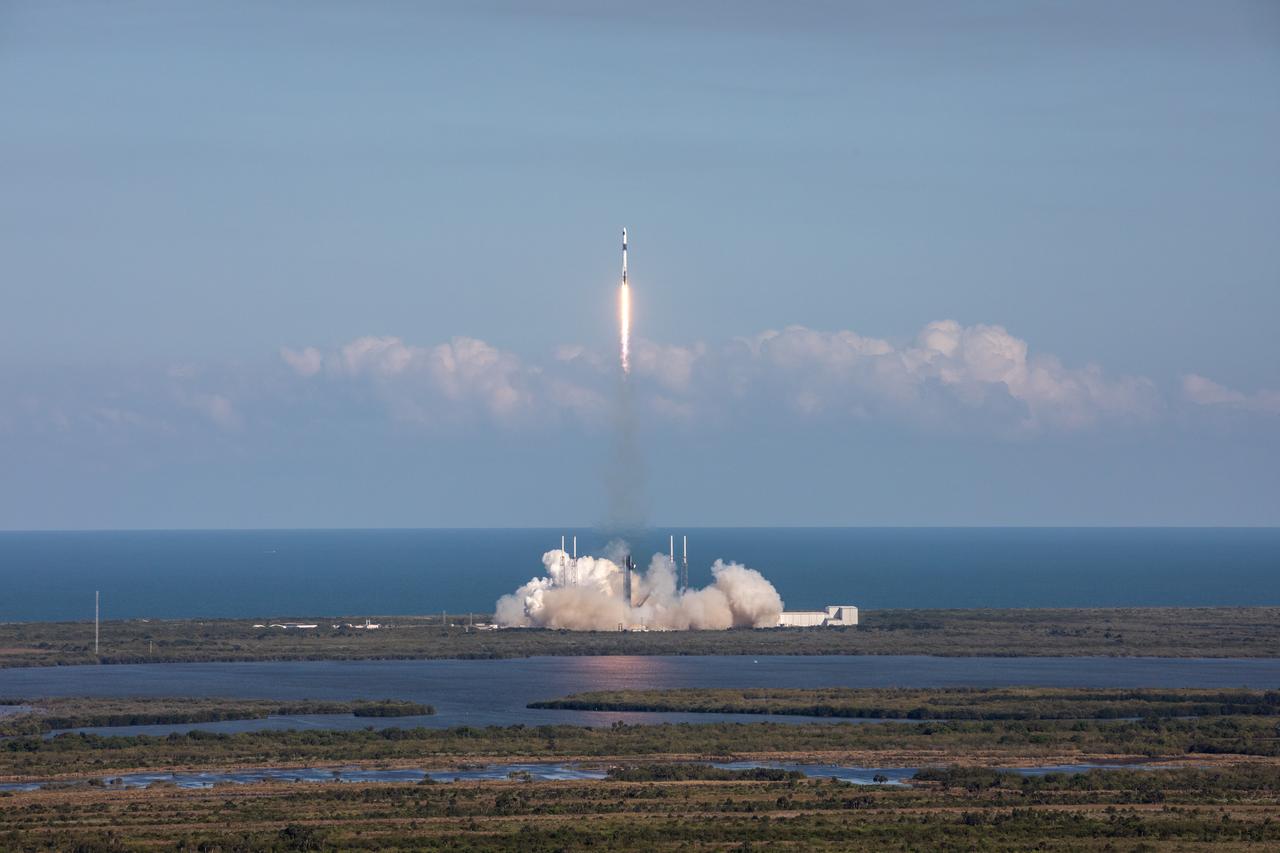
A SpaceX Falcon 9 rocket soars upward after its liftoff from Space Launch Complex 40 at Cape Canaveral Space Force Station in Florida at 4:55 p.m. EDT on Thursday, March 21, on the company’s 30th Commercial Resupply Services mission for the agency to the International Space Station. Dragon will deliver more than 6,200 pounds of cargo, including a variety of NASA and partner research including a look at plant metabolism in space and a set of new sensors for free-flying Astrobee robots to provide 3D mapping capabilities. Other studies include a fluid physics study that could benefit solar cell technology and a university project from CSA (Canadian Space Agency) that will monitor sea ice and ocean conditions. The spacecraft is expected to spend about a month attached to the orbiting outpost before it returns to Earth with research and return cargo, splashing down off the coast of Florida.
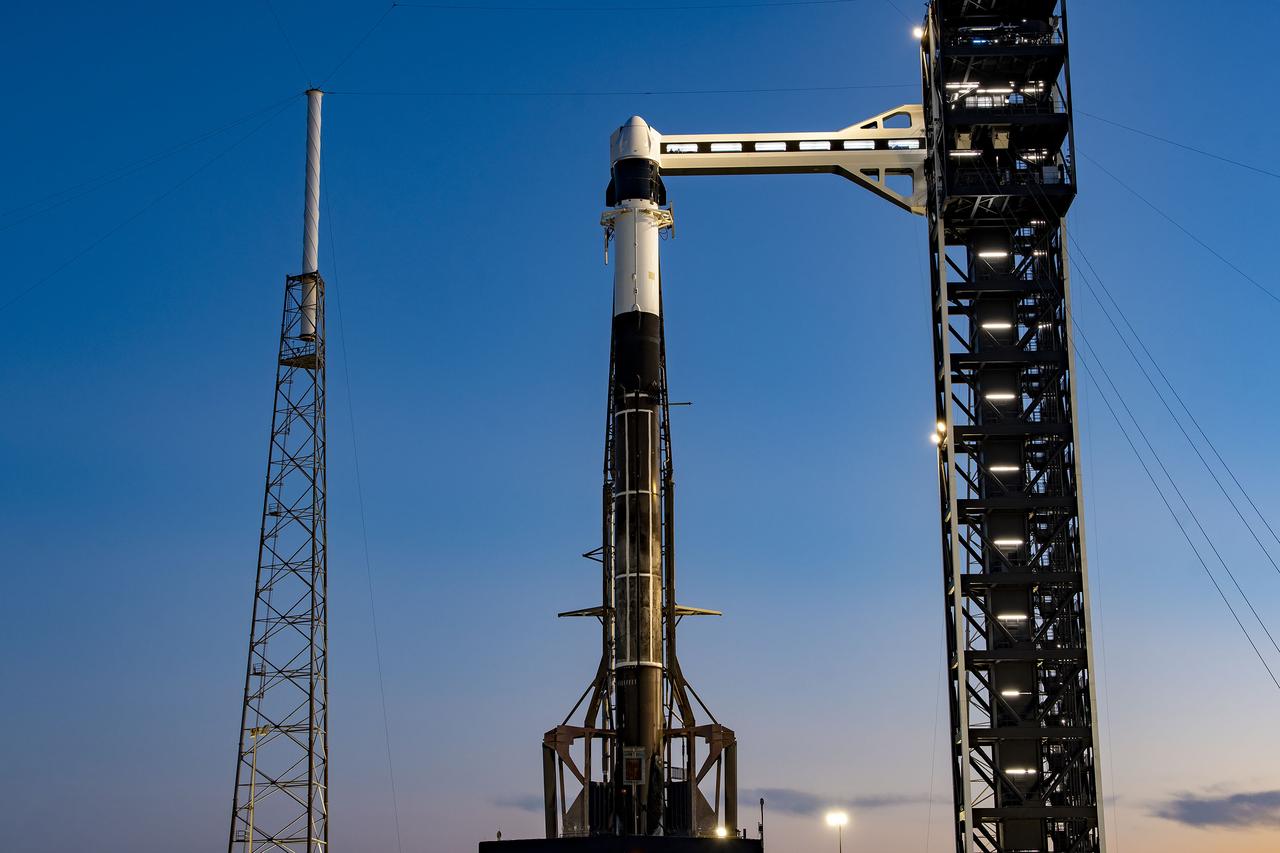
A SpaceX Falcon 9 rocket, with the company’s Dragon spacecraft atop, stands in a vertical position at Space Launch Complex 40 at Cape Canaveral Space Force Station in Florida on Tuesday, March 19, 2024, in preparation for the 30th commercial resupply services launch to the International Space Station. NASA and partner research flying aboard the mission includes a look at plant metabolism in space and a set of new sensors for free-flying Astrobee robots to provide 3D mapping capabilities. Other studies include a fluid physics study that could benefit solar cell technology and a university project from CSA (Canadian Space Agency) that will monitor sea ice and ocean conditions. Liftoff is scheduled for 4:55 p.m. EDT on Thursday, March 21, 2024.

A SpaceX Falcon 9 rocket soars upward after its liftoff from Space Launch Complex 40 at Cape Canaveral Space Force Station in Florida at 4:55 p.m. EDT on Thursday, March 21, on the company’s 30th Commercial Resupply Services mission for the agency to the International Space Station. Dragon will deliver more than 6,200 pounds of cargo, including a variety of NASA and partner research including a look at plant metabolism in space and a set of new sensors for free-flying Astrobee robots to provide 3D mapping capabilities. Other studies include a fluid physics study that could benefit solar cell technology and a university project from CSA (Canadian Space Agency) that will monitor sea ice and ocean conditions. The spacecraft is expected to spend about a month attached to the orbiting outpost before it returns to Earth with research and return cargo, splashing down off the coast of Florida.
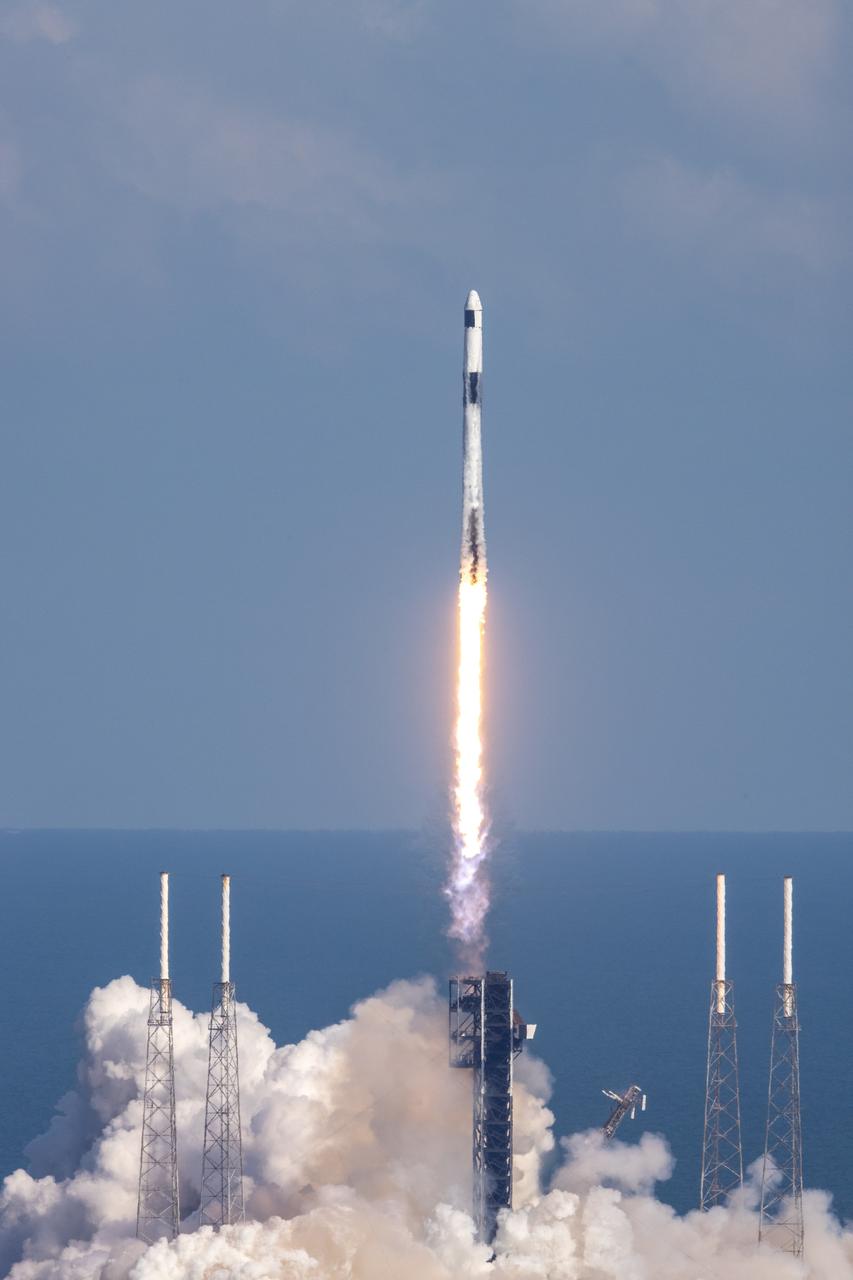
A SpaceX Falcon 9 rocket soars upward after its liftoff from Space Launch Complex 40 at Cape Canaveral Space Force Station in Florida at 4:55 p.m. EDT on Thursday, March 21, on the company’s 30th Commercial Resupply Services mission for the agency to the International Space Station. Dragon will deliver more than 6,200 pounds of cargo, including a variety of NASA and partner research including a look at plant metabolism in space and a set of new sensors for free-flying Astrobee robots to provide 3D mapping capabilities. Other studies include a fluid physics study that could benefit solar cell technology and a university project from CSA (Canadian Space Agency) that will monitor sea ice and ocean conditions. The spacecraft is expected to spend about a month attached to the orbiting outpost before it returns to Earth with research and return cargo, splashing down off the coast of Florida.
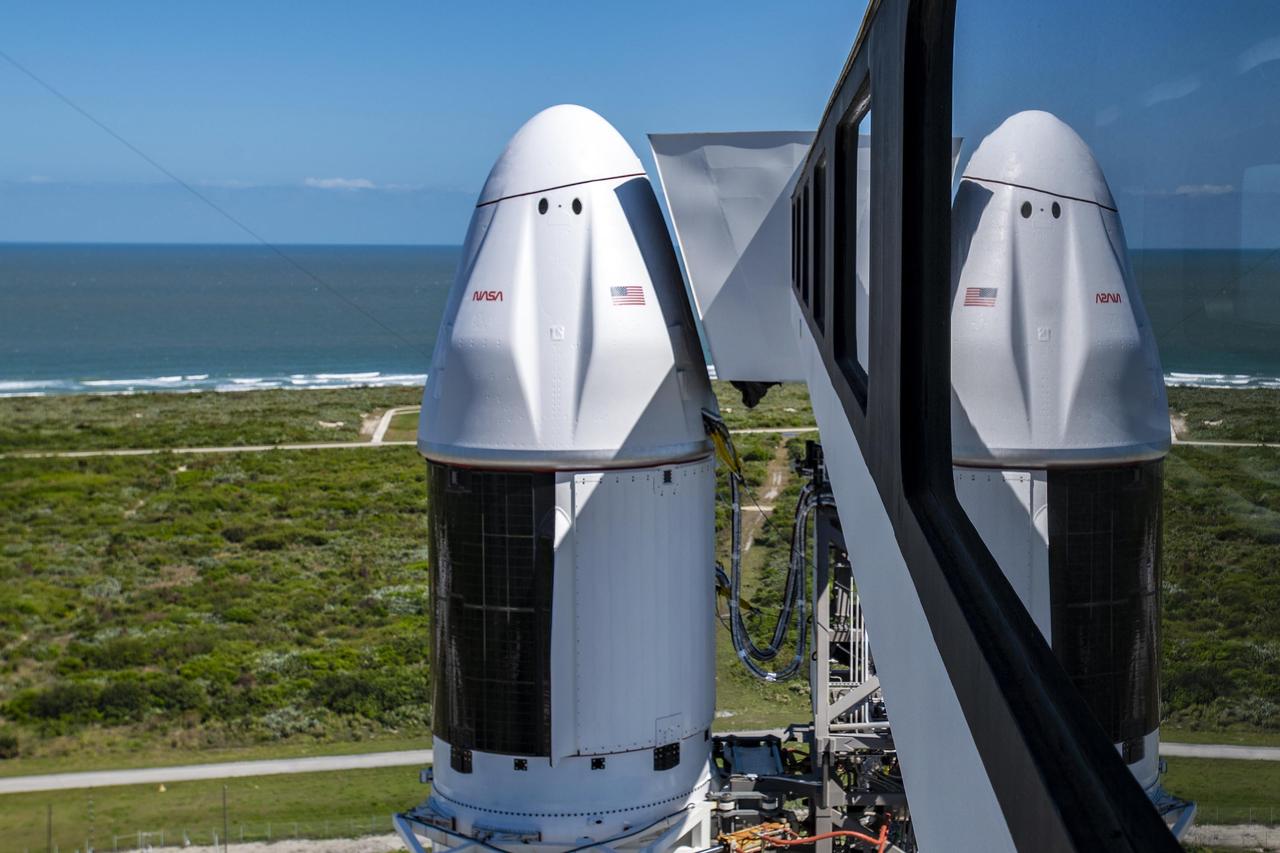
Seen here is an up-close view of the SpaceX Dragon spacecraft atop the company’s Falcon 9 rocket after being raised to a vertical position at Space Launch Complex 40 at Cape Canaveral Space Force Station in Florida on Tuesday, March 19, 2024, in preparation for the 30th commercial resupply services launch to the International Space Station. NASA and partner research flying aboard the mission includes a look at plant metabolism in space and a set of new sensors for free-flying Astrobee robots to provide 3D mapping capabilities. Other studies include a fluid physics study that could benefit solar cell technology and a university project from CSA (Canadian Space Agency) that will monitor sea ice and ocean conditions. Liftoff is scheduled for 4:55 p.m. EDT on Thursday, March 21, 2024.
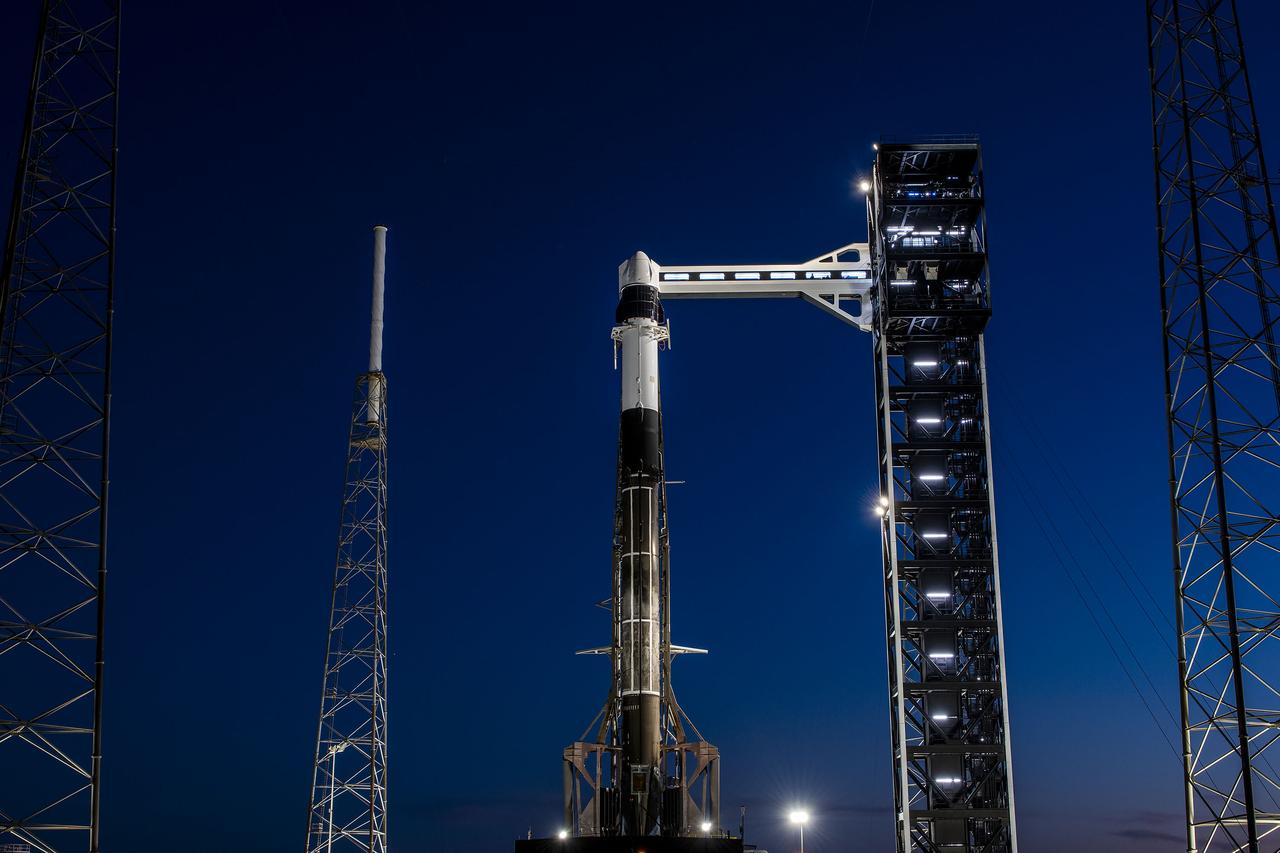
A SpaceX Falcon 9 rocket, with the company’s Dragon spacecraft atop, stands in a vertical position at Space Launch Complex 40 at Cape Canaveral Space Force Station in Florida on Tuesday, March 19, 2024, in preparation for the 30th commercial resupply services launch to the International Space Station. NASA and partner research flying aboard the mission includes a look at plant metabolism in space and a set of new sensors for free-flying Astrobee robots to provide 3D mapping capabilities. Other studies include a fluid physics study that could benefit solar cell technology and a university project from CSA (Canadian Space Agency) that will monitor sea ice and ocean conditions. Liftoff is scheduled for 4:55 p.m. EDT on Thursday, March 21, 2024.
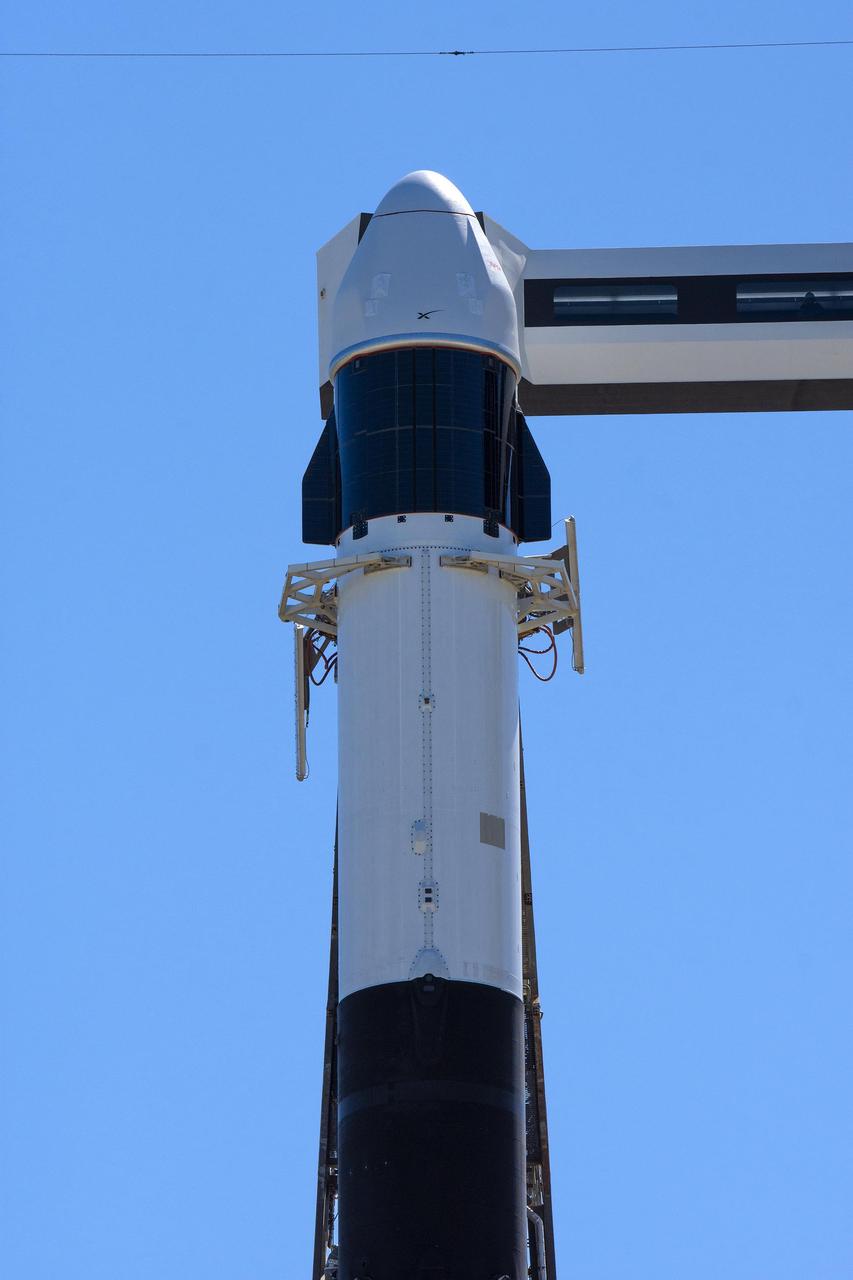
Seen here is an up-close view of the SpaceX Dragon spacecraft atop the company’s Falcon 9 rocket after being raised to a vertical position at Space Launch Complex 40 at Cape Canaveral Space Force Station in Florida on Tuesday, March 19, 2024, in preparation for the 30th commercial resupply services launch to the International Space Station. NASA and partner research flying aboard the mission includes a look at plant metabolism in space and a set of new sensors for free-flying Astrobee robots to provide 3D mapping capabilities. Other studies include a fluid physics study that could benefit solar cell technology and a university project from CSA (Canadian Space Agency) that will monitor sea ice and ocean conditions. Liftoff is scheduled for 4:55 p.m. EDT on Thursday, March 21, 2024.
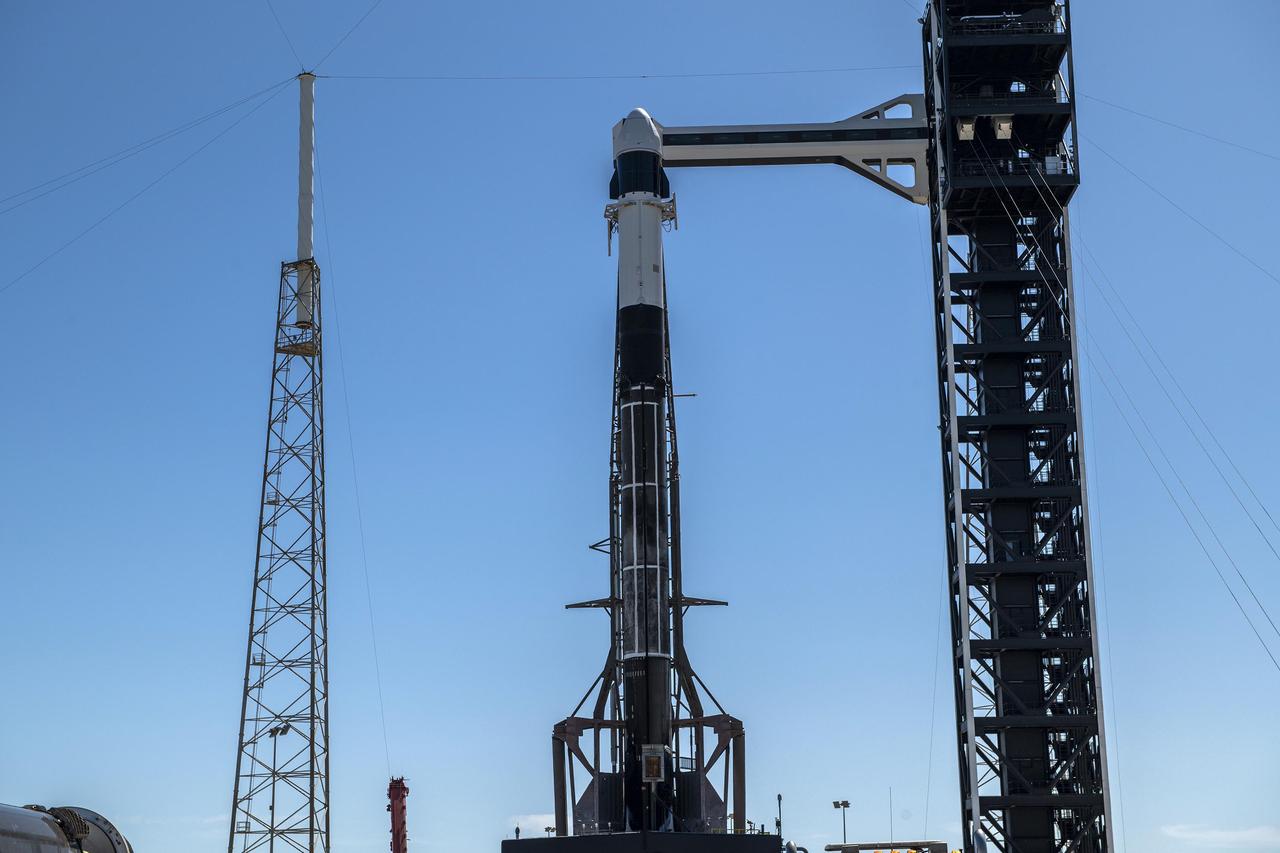
A SpaceX Falcon 9 rocket, with the company’s Dragon spacecraft atop, stands in a vertical position at Space Launch Complex 40 at Cape Canaveral Space Force Station in Florida on Tuesday, March 19, 2024, in preparation for the 30th commercial resupply services launch to the International Space Station. NASA and partner research flying aboard the mission includes a look at plant metabolism in space and a set of new sensors for free-flying Astrobee robots to provide 3D mapping capabilities. Other studies include a fluid physics study that could benefit solar cell technology and a university project from CSA (Canadian Space Agency) that will monitor sea ice and ocean conditions. Liftoff is scheduled for 4:55 p.m. EDT on Thursday, March 21, 2024.
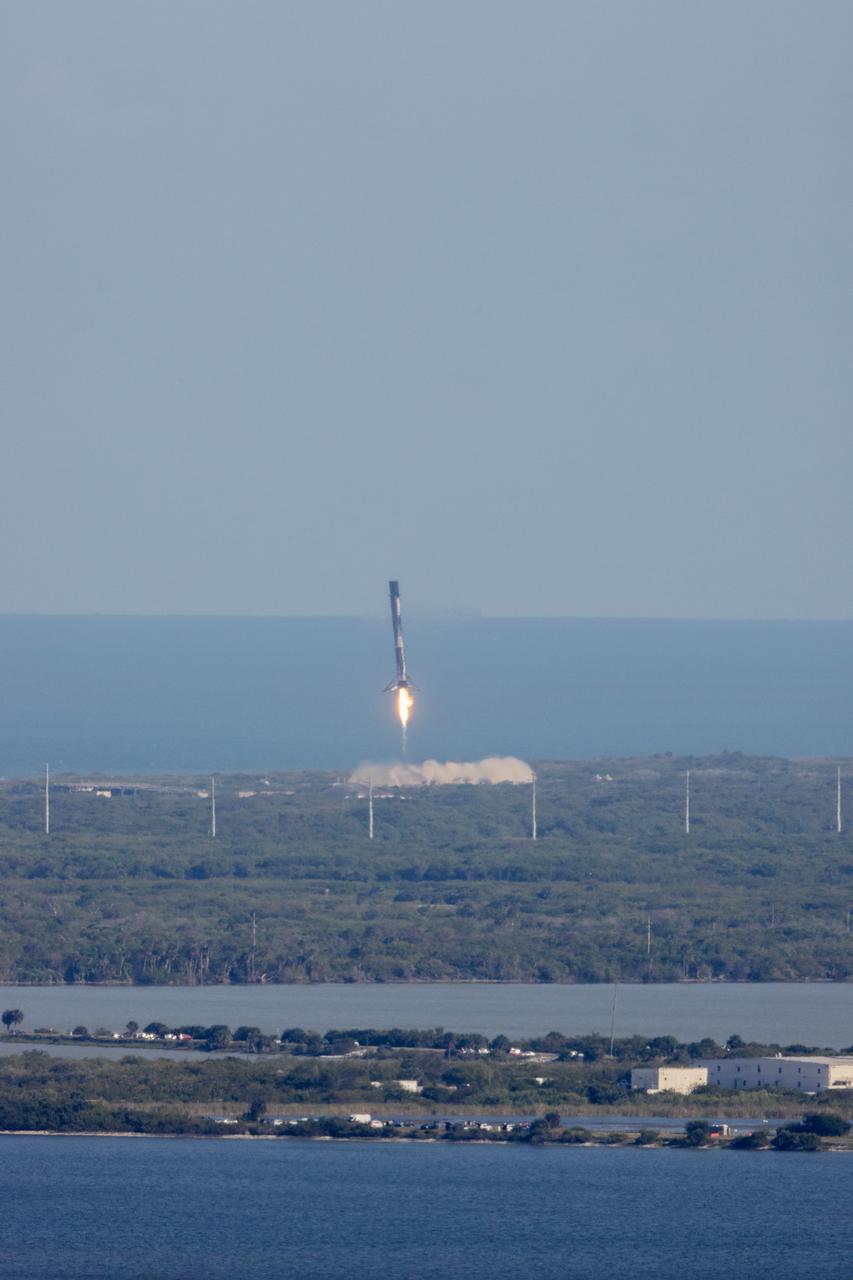
After boosting a SpaceX Dragon spacecraft on its way to the International Space Station for the company’s 30th Commercial Resupply Services mission for NASA, the first stage of the Falcon 9 rocket returns to Landing Zone 1 at Cape Canaveral Space Force Station (CCSFS) in Florida on Thursday, March 21, 2024. Dragon will deliver more than 6,200 pounds of cargo, including a variety of NASA and partner research including a look at plant metabolism in space and a set of new sensors for free-flying Astrobee robots to provide 3D mapping capabilities. Other studies include a fluid physics study that could benefit solar cell technology and a university project from CSA (Canadian Space Agency) that will monitor sea ice and ocean conditions. The spacecraft is expected to spend about a month attached to the orbiting outpost before it returns to Earth with research and return cargo, splashing down off the coast of Florida. Liftoff occurred at 4:55 p.m. EDT from Space Launch Complex 40 at CCSFS.