
Felisa Wolfe-Simon, a lead researcher and NASA astrobiology research fellow, speaks during a press conference, Thursday, Dec. 2, 2010, at NASA Headquarters in Washington. NASA-funded astrobiology research has changed the fundamental knowledge about what comprises all known life on Earth. Researchers conducting tests in the harsh environment of Mono Lake in California have discovered the first known microorganism on Earth able to thrive and reproduce using the toxic chemical arsenic. Photo Credit: (NASA/Paul E. Alers)

Felisa Wolfe-Simon, director, Astrobiology Program, NASA Headquarters, speaks during a press conference, Thursday, Dec. 2, 2010, at NASA Headquarters in Washington. NASA-funded astrobiology research has changed the fundamental knowledge about what comprises all known life on Earth. Researchers conducting tests in the harsh environment of Mono Lake in California have discovered the first known microorganism on Earth able to thrive and reproduce using the toxic chemical arsenic. Photo Credit: (NASA/Paul E. Alers)

Steven Benner, a distinguished fellow at the Foundation for Applied Molecular Evolution, right, speaks during a press conference as Mary Voytek, director of the Astrobiology Program at NASA looks on, Thursday, Dec. 2, 2010, at NASA Headquarters in Washington. NASA-funded astrobiology research has changed the fundamental knowledge about what comprises all known life on Earth. Researchers conducting tests in the harsh environment of Mono Lake in California have discovered the first known microorganism on Earth able to thrive and reproduce using the toxic chemical arsenic. Photo Credit: (NASA/Paul E. Alers)

Felisa Wolfe-Simon, a lead researcher and NASA astrobiology research fellow, speaks during a press conference, as Mary Voytek, Steven Benner and Pamela Conrad look on, Thursday, Dec. 2, 2010, at NASA Headquarters in Washington. NASA-funded astrobiology research has changed the fundamental knowledge about what comprises all known life on Earth. Researchers conducting tests in the harsh environment of Mono Lake in California have discovered the first known microorganism on Earth able to thrive and reproduce using the toxic chemical arsenic. Photo Credit: (NASA/Paul E. Alers)

Pamela Conrad, an astrobiologist from Goddard Space Flight Center, speaks during a press conference, Thursday, Dec. 2, 2010, at NASA Headquarters in Washington. NASA-funded astrobiology research has changed the fundamental knowledge about what comprises all known life on Earth. Researchers conducting tests in the harsh environment of Mono Lake in California have discovered the first known microorganism on Earth able to thrive and reproduce using the toxic chemical arsenic. Photo Credit: (NASA/Paul E. Alers)

Steven Benner, a distinguished fellow at the Foundation for Applied Molecular Evolution, speaks during a press conference, Thursday, Dec. 2, 2010, at NASA Headquarters in Washington. NASA-funded astrobiology research has changed the fundamental knowledge about what comprises all known life on Earth. Researchers conducting tests in the harsh environment of Mono Lake in California have discovered the first known microorganism on Earth able to thrive and reproduce using the toxic chemical arsenic. Photo Credit: (NASA/Paul E. Alers)

James Lovelock, Honorary Visiting Fellow of Green Templeton College, University of Oxford speaks during the "Seeking Signs of Life" Symposium, celebrating 50 Years of Exobiology and Astrobiology at NASA, Thursday, Oct. 14, 2010, at the Lockheed Martin Global Vision Center in Arlington, Va. NASA has been researching life in the universe since 1959, asking three fundamental questions: "How does life begin and evolve?"‚ "Is there life beyond Earth and, if so, how can we detect it?" and "What is the future of life on Earth and in the universe?" Photo Credit: (NASA/Bill Ingalls)

Lynn Margulis, Distinguished University Professor in the Department of Geosciences at the University of Massachusetts-Amherst speaks during the "Seeking Signs of Life" Symposium, celebrating 50 Years of Exobiology and Astrobiology at NASA, Thursday, Oct. 14, 2010, at the Lockheed Martin Global Vision Center in Arlington, Va. NASA has been researching life in the universe since 1959, asking three fundamental questions: "How does life begin and evolve?"‚ "Is there life beyond Earth and, if so, how can we detect it?" and "What is the future of life on Earth and in the universe?" Photo Credit: (NASA/Bill Ingalls)

Lynn Margulis, Distinguished University Professor in the Department of Geosciences at the University of Massachusetts-Amherst speaks during the "Seeking Signs of Life" Symposium, celebrating 50 Years of Exobiology and Astrobiology at NASA, Thursday, Oct. 14, 2010, at the Lockheed Martin Global Vision Center in Arlington, Va. NASA has been researching life in the universe since 1959, asking three fundamental questions: "How does life begin and evolve?"‚ "Is there life beyond Earth and, if so, how can we detect it?" and "What is the future of life on Earth and in the universe?" Photo Credit: (NASA/Bill Ingalls)

James L. Green, Director for Planetary Science in NASA's Science Mission Directorate, helps kick off the "Seeking Signs of Life" Symposium, celebrating 50 Years of Exobiology and Astrobiology at NASA, Thursday, Oct. 14, 2010, at the Lockheed Martin Global Vision Center in Arlington, Va. NASA has been researching life in the universe since 1959, asking three fundamental questions: "How does life begin and evolve?"‚ "Is there life beyond Earth and, if so, how can we detect it?" and "What is the future of life on Earth and in the universe?" Photo Credit: (NASA/Bill Ingalls)

James Lovelock, Honorary Visiting Fellow of Green Templeton College, University of Oxford speaks during the "Seeking Signs of Life" Symposium, celebrating 50 Years of Exobiology and Astrobiology at NASA, Thursday, Oct. 14, 2010, at the Lockheed Martin Global Vision Center in Arlington, Va. NASA has been researching life in the universe since 1959, asking three fundamental questions: "How does life begin and evolve?"‚ "Is there life beyond Earth and, if so, how can we detect it?" and "What is the future of life on Earth and in the universe?" Photo Credit: (NASA/Bill Ingalls)
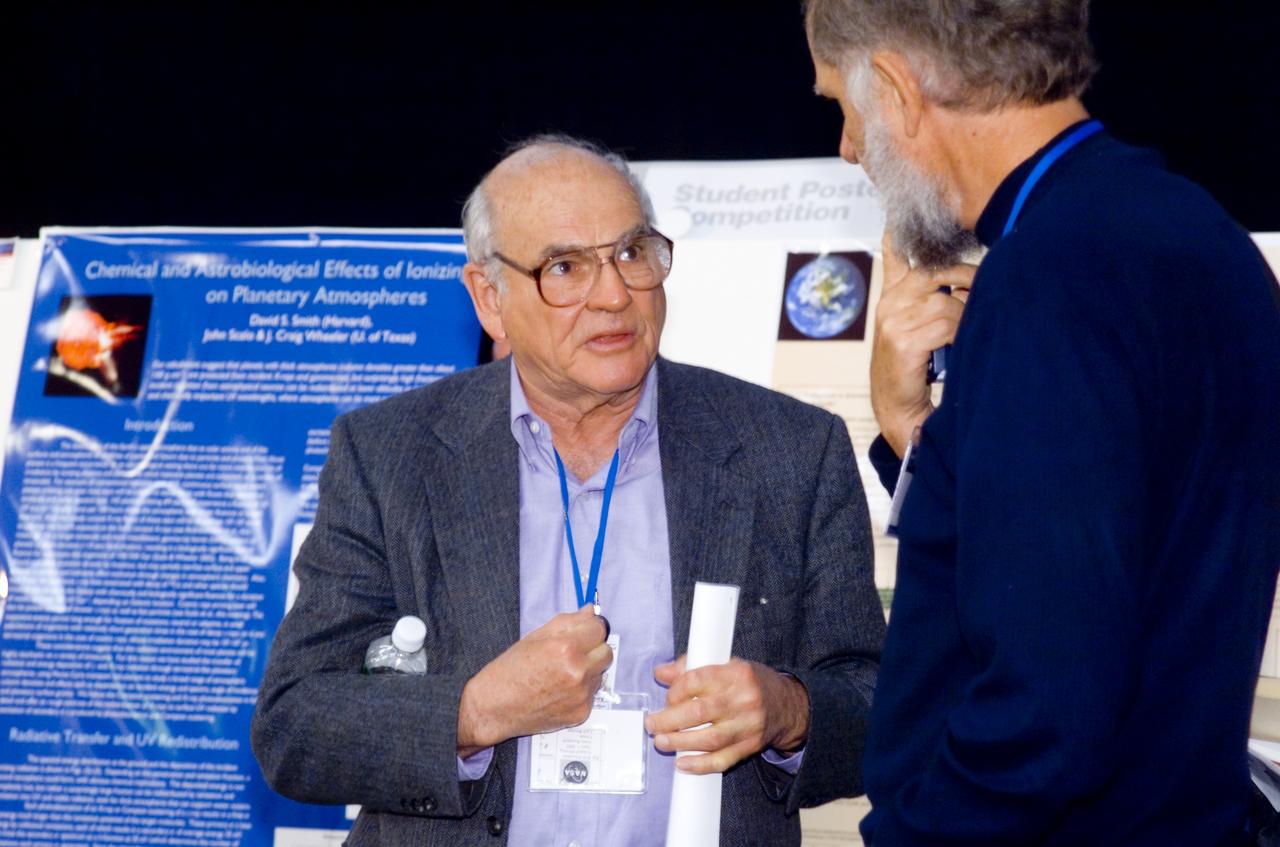
Astrobiology Conference
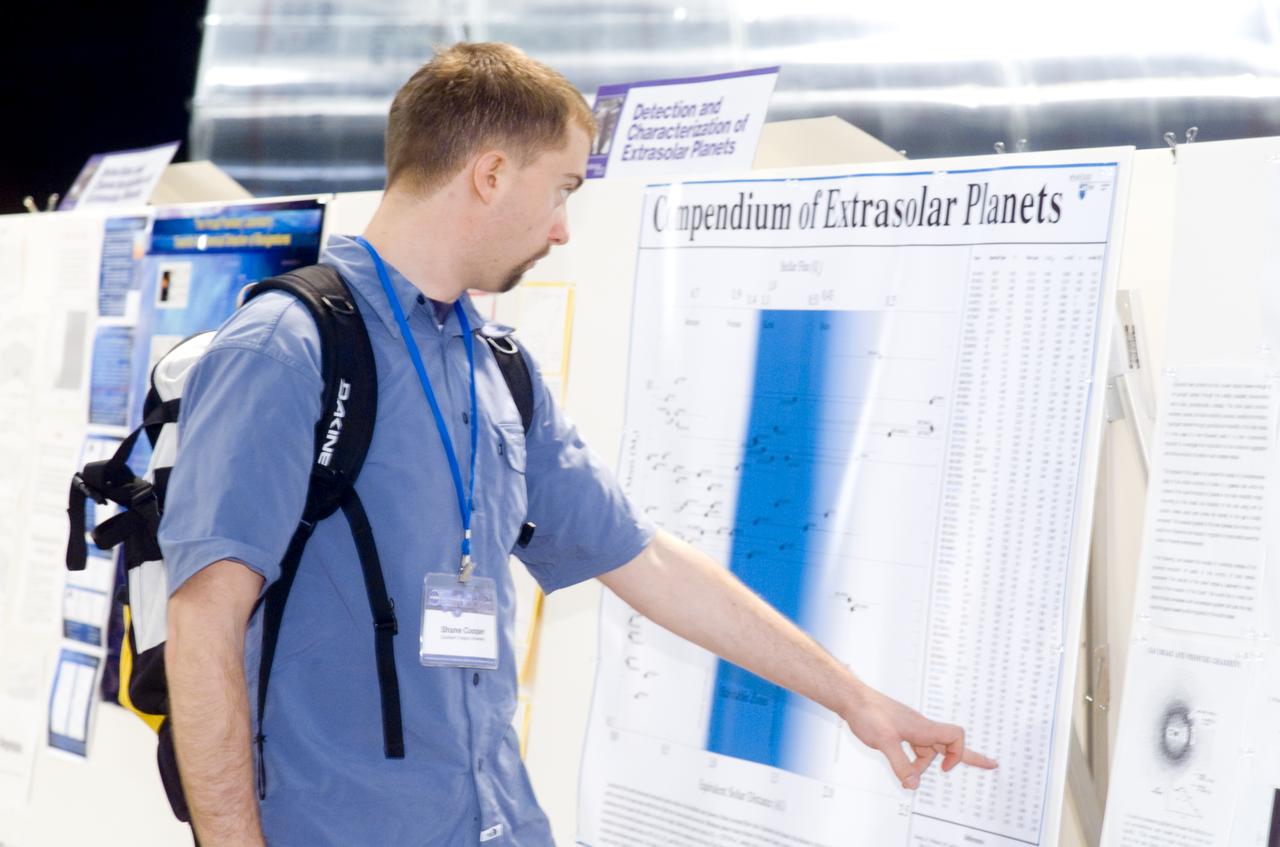
Astrobiology Conference 2002
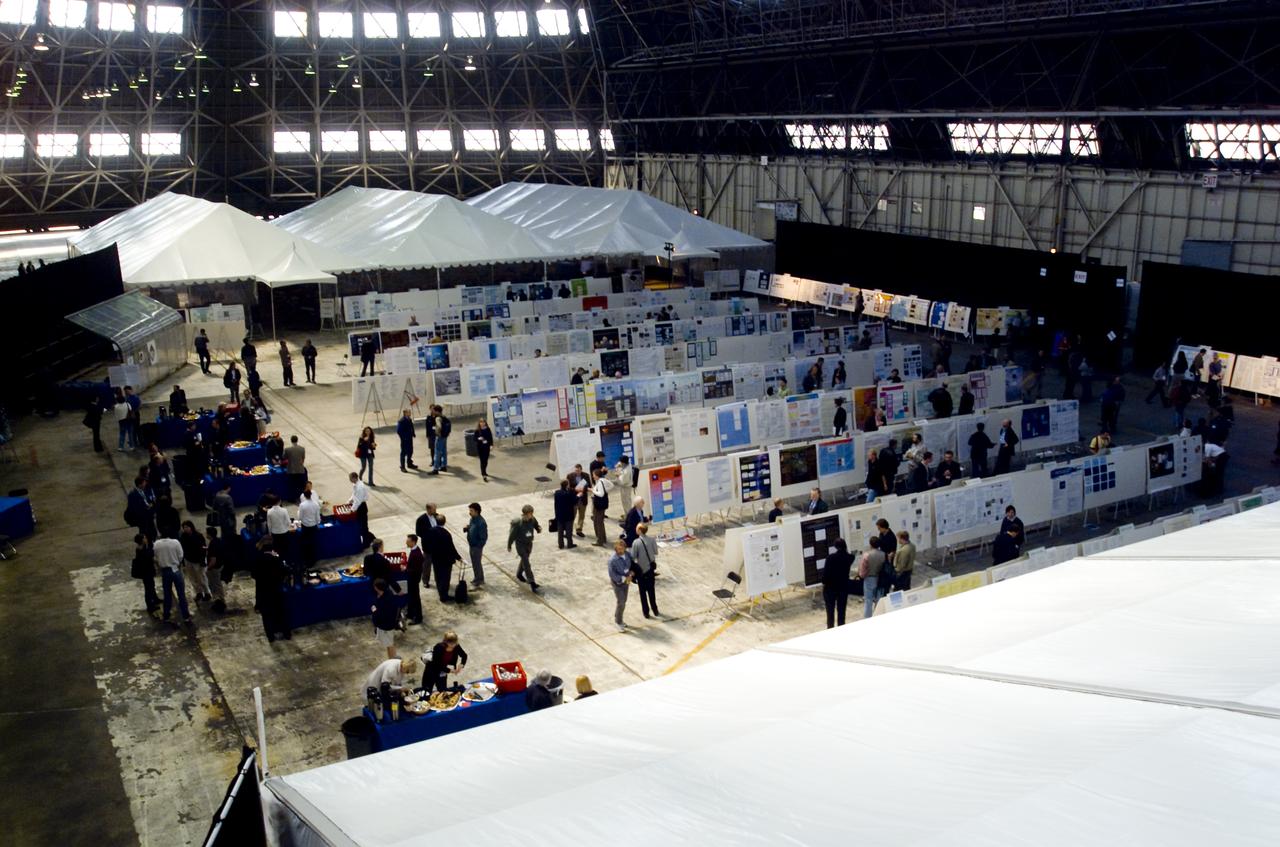
Astrobiology Conference 2002
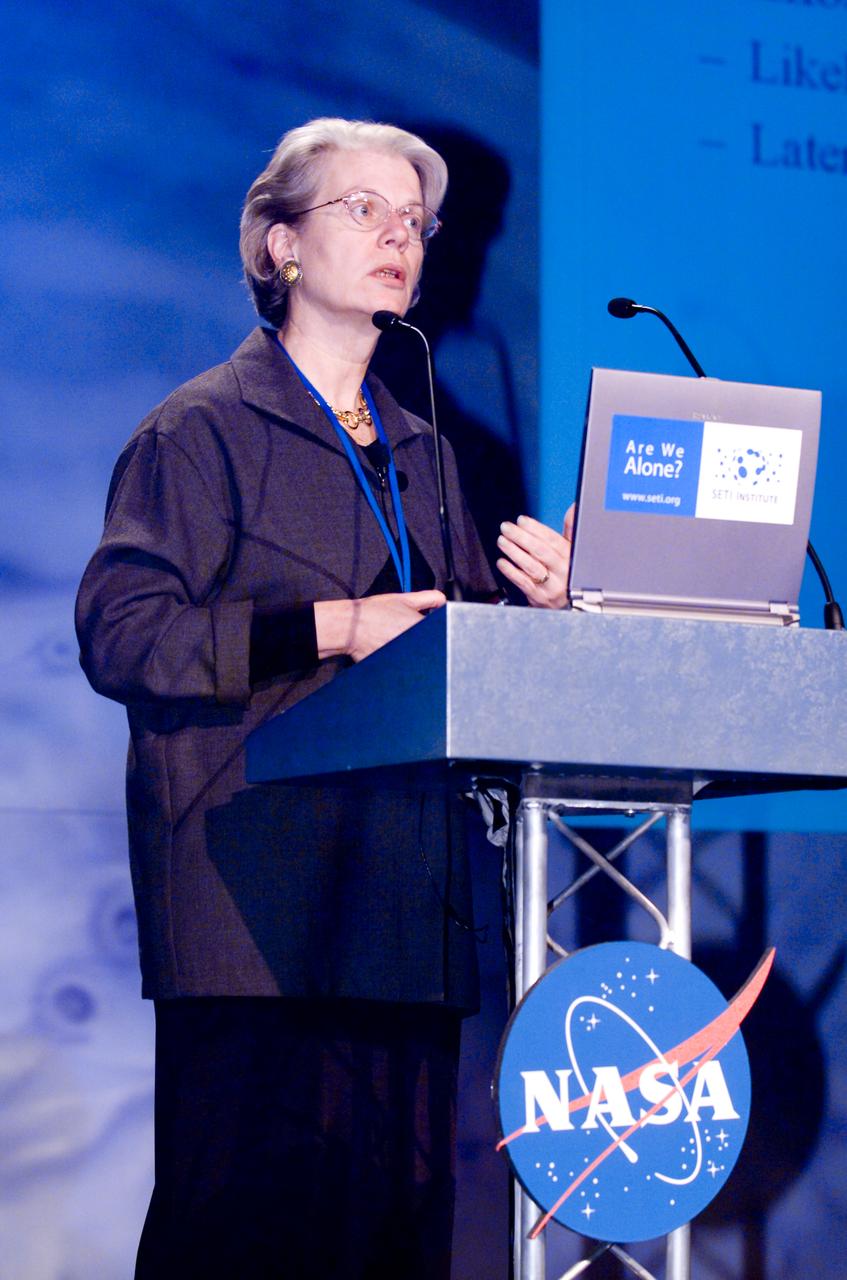
Astrobiology Conference 2002

Astrobiology Conference 2002

Astrobiology Conference 2002

Astrobiology Conference 2002

Astrobiology Institute 1st conference

Astrobiology Conference 2002
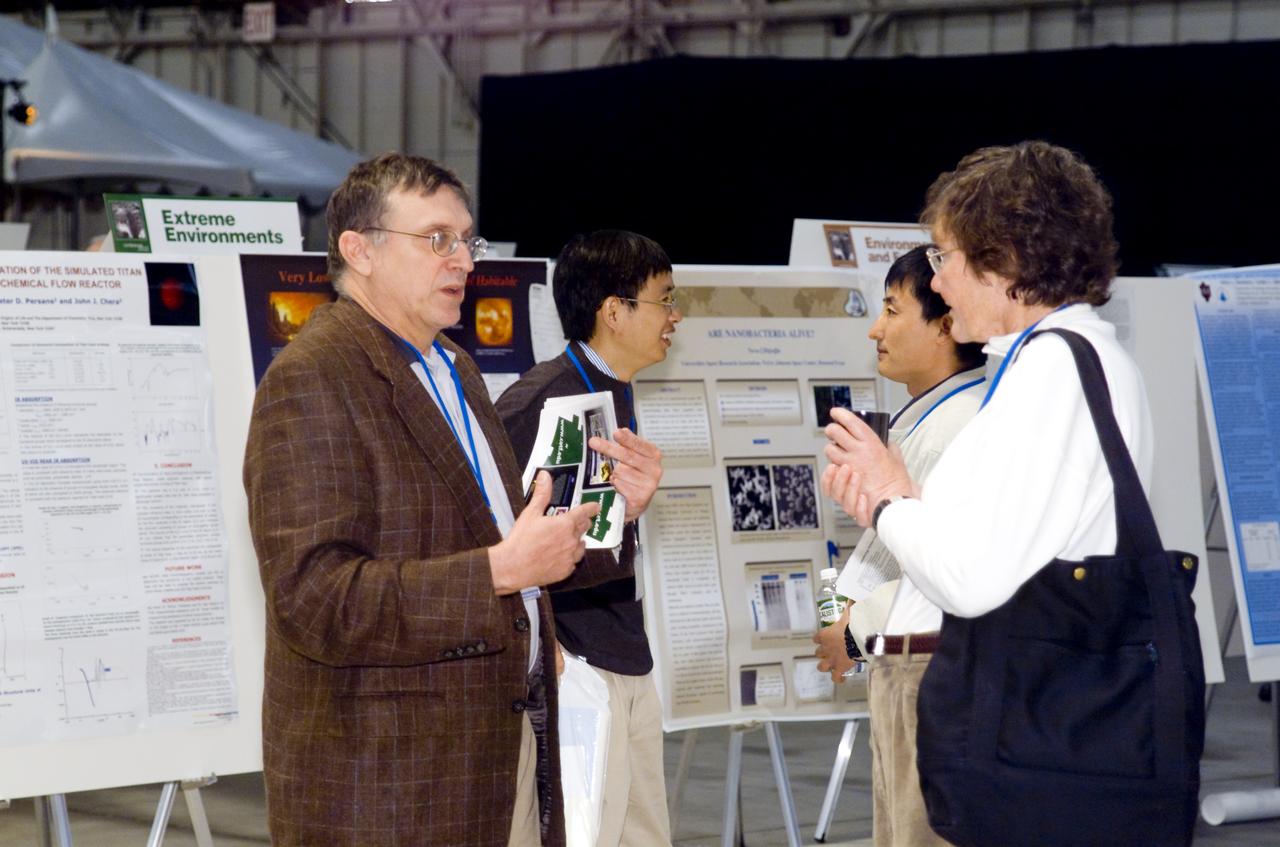
Astrobiology Conference 2002
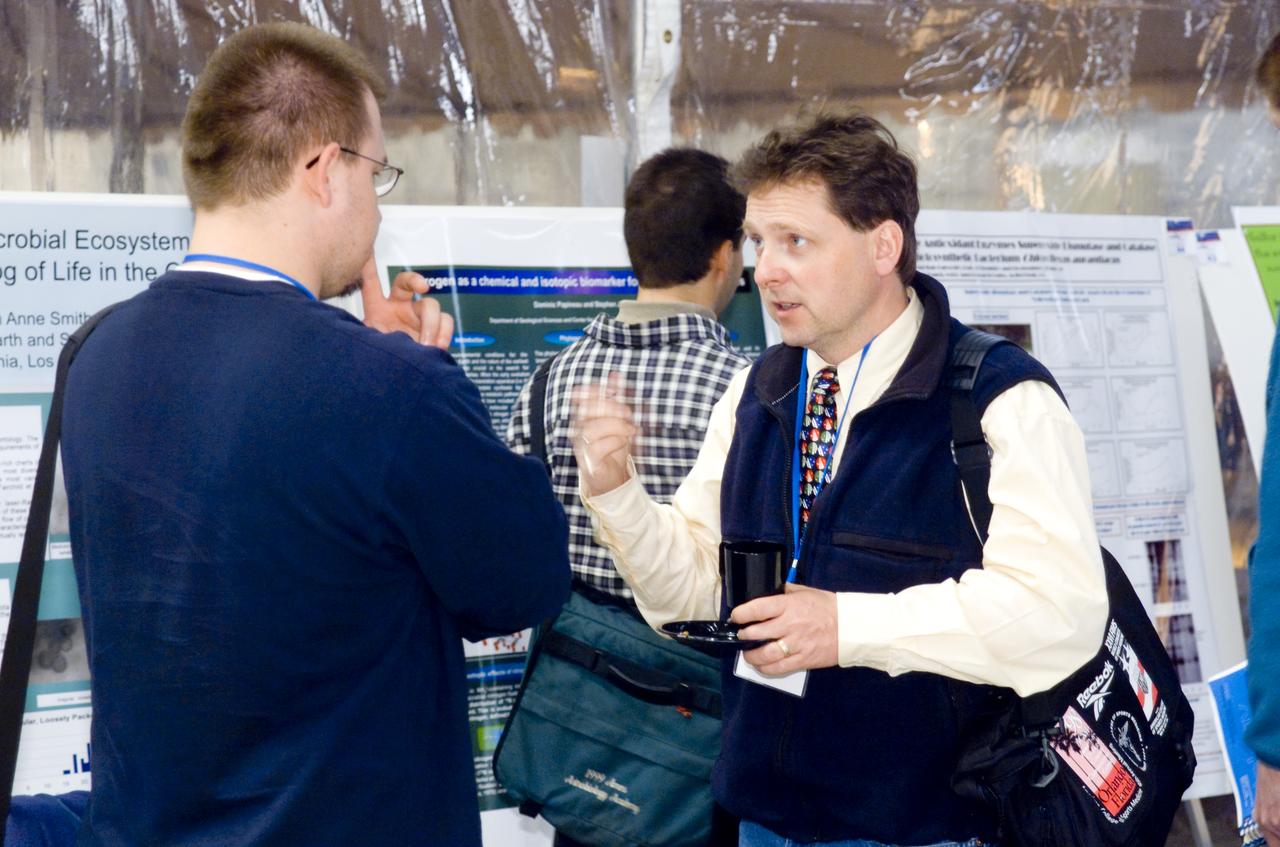
Astrobiology Conference 2002

Astrobiology Conference 2002

Astrobiology Conference 2002
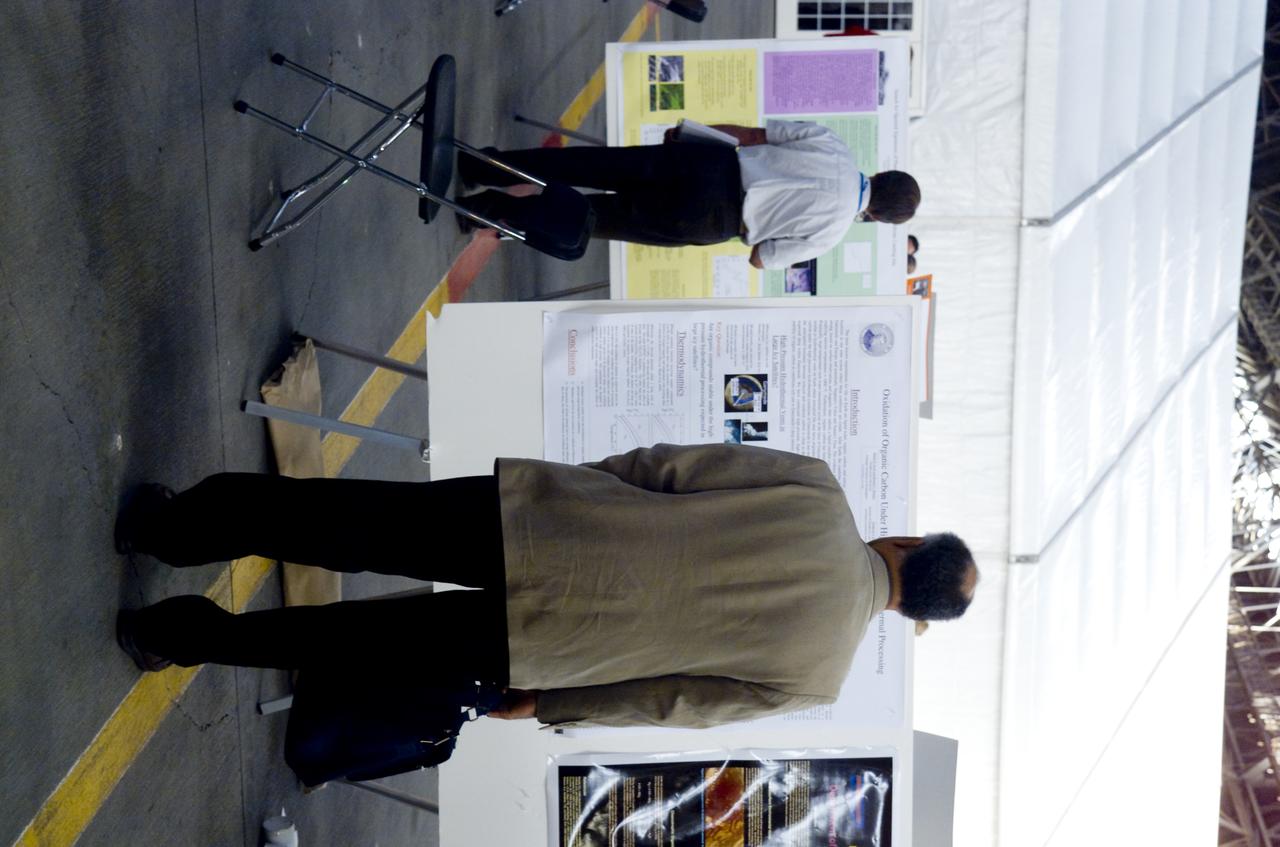
Astrobiology Conference 2002

Astrobiology Conference 2002

Astrobiology Conference 2002
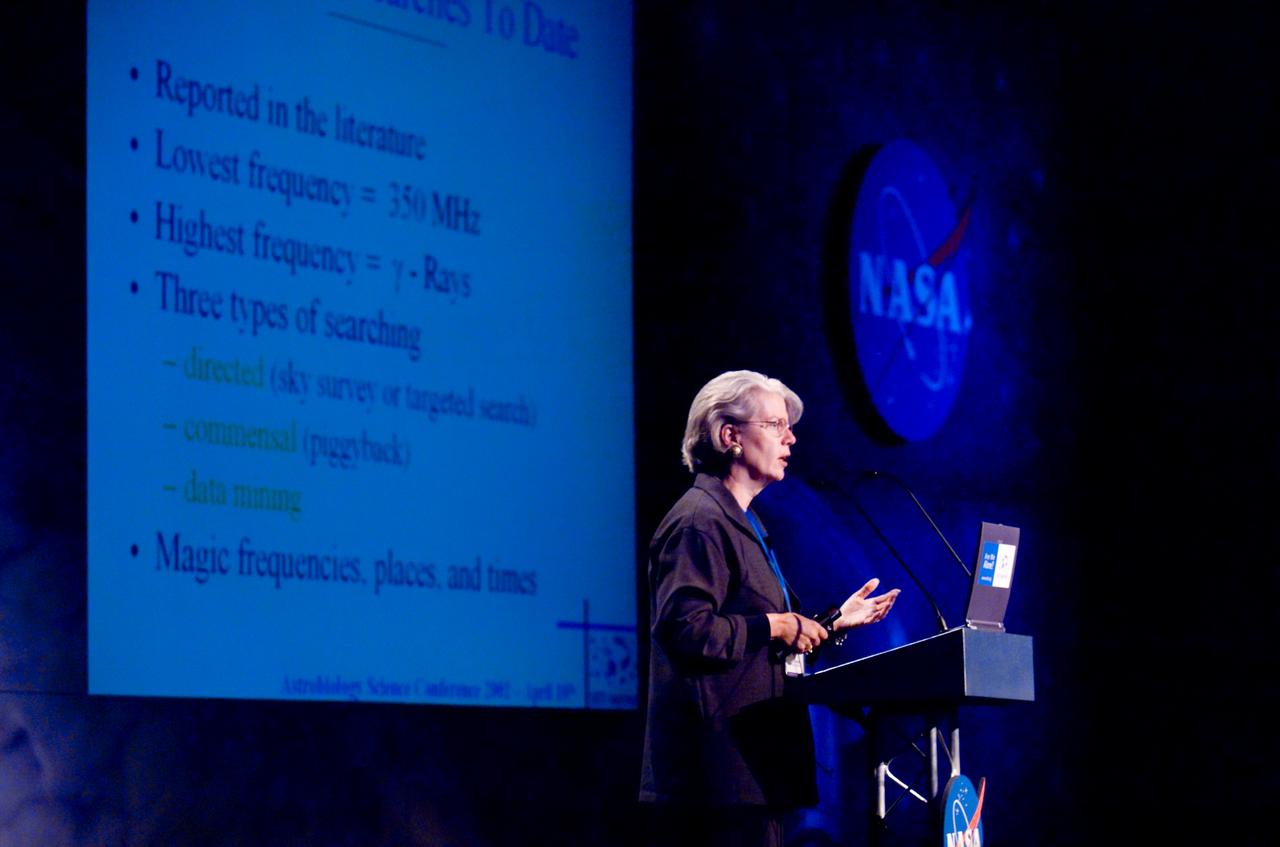
Astrobiology Conference 2002
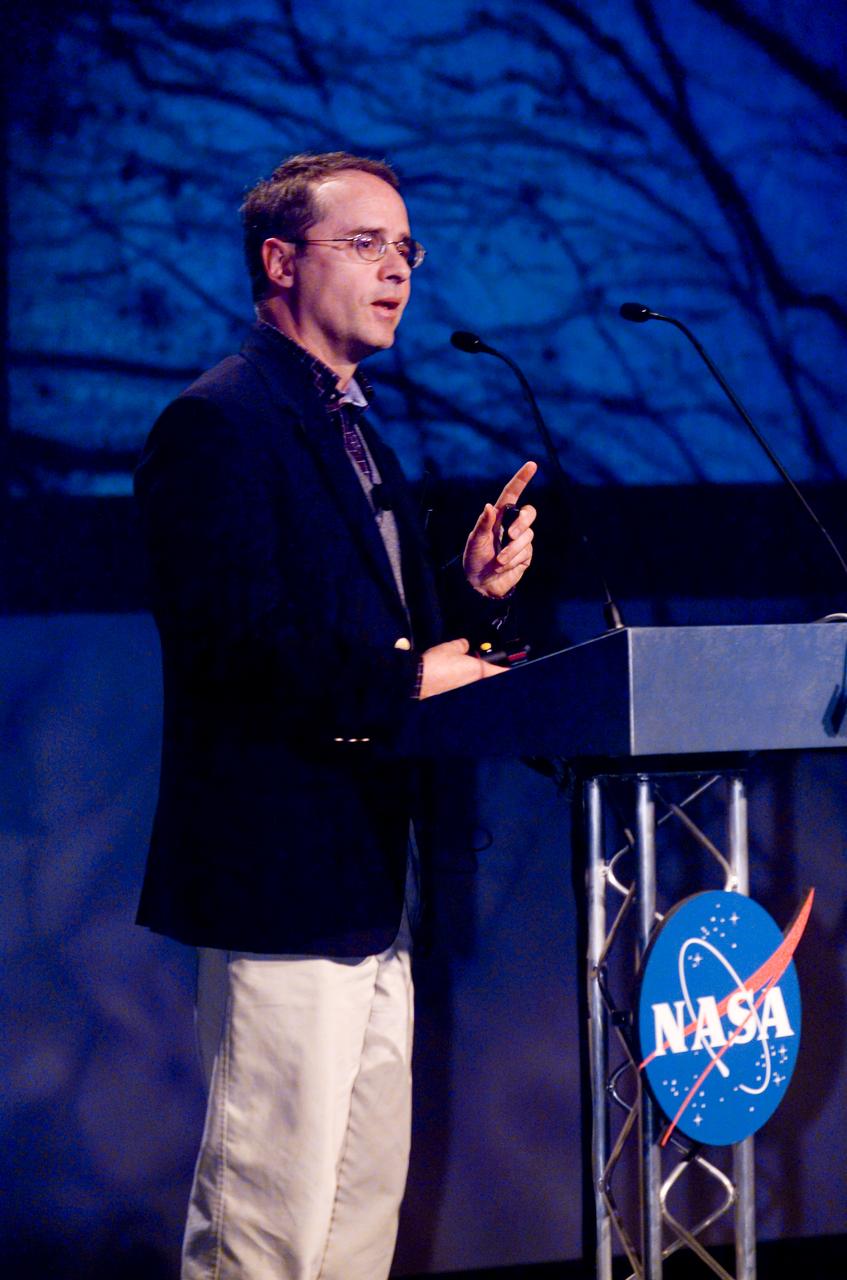
Astrobiology Conference 2002

Astrobiology Conference 2002

Astrobiology Conference 2002
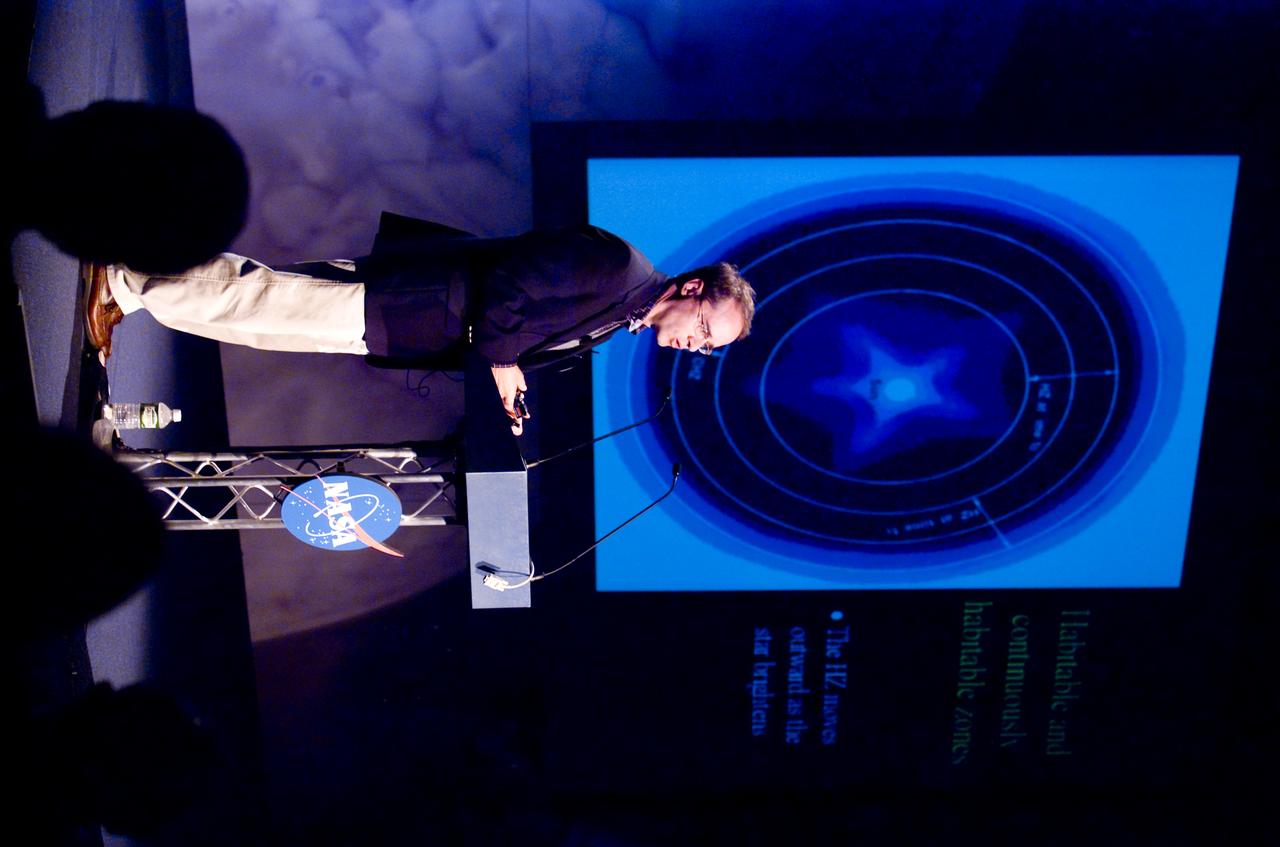
Astrobiology Conference 2002
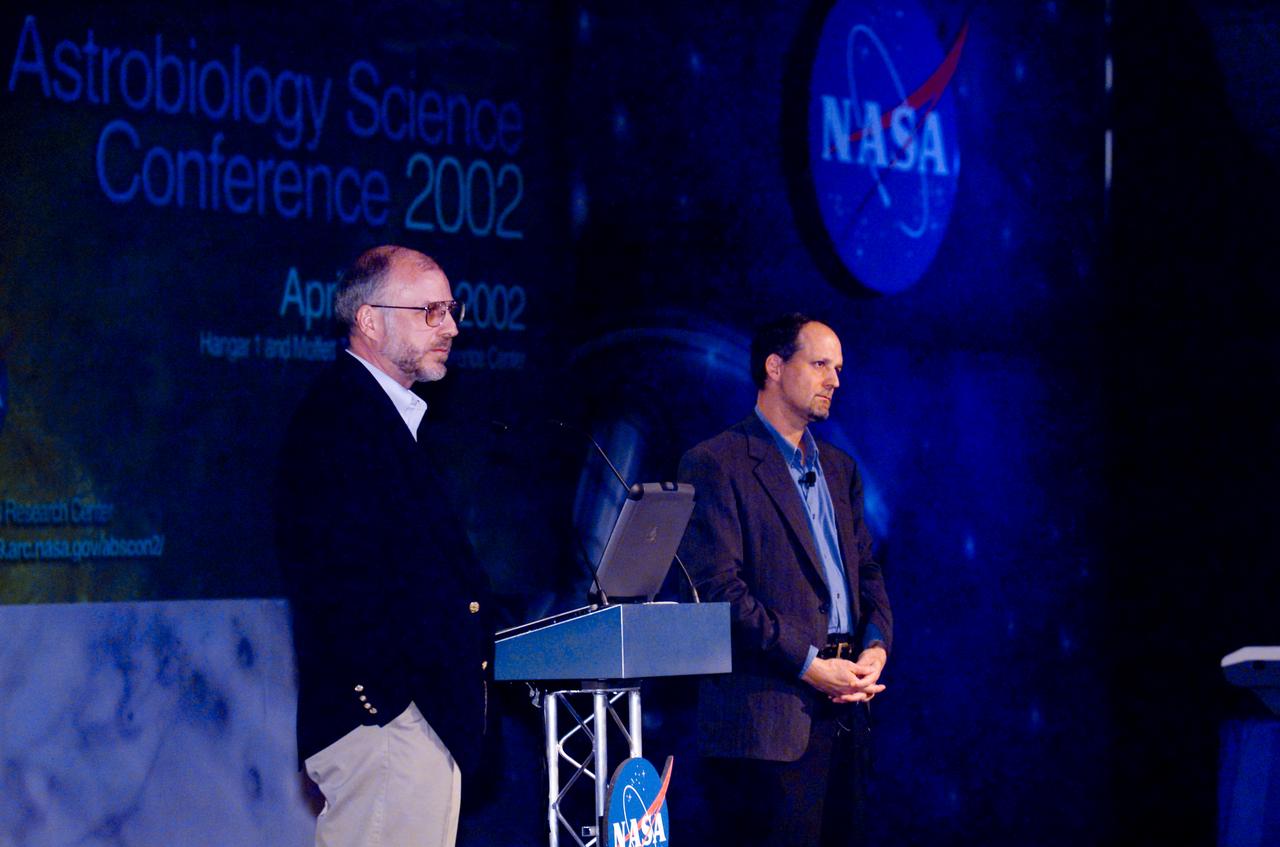
Astrobiology Conference 2002
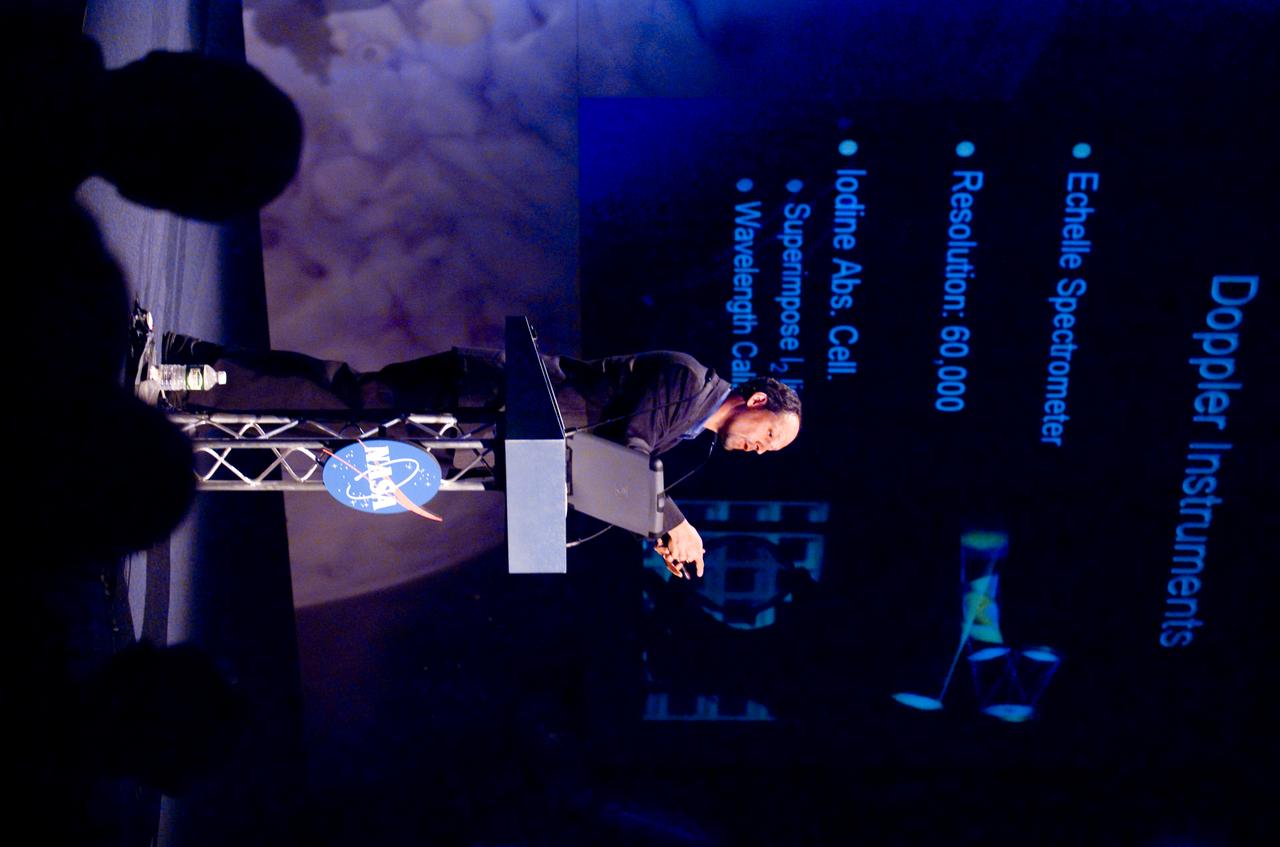
Astrobiology Conference 2002

Astrobiology Institute 1st conference

Astrobiology Conference 2002

Astrobiology Conference 2002
Astrobiology Conference 2002

Astrobiology Conference 2002

Astrobiology Conference 2002

Astrobiology Conference 2002
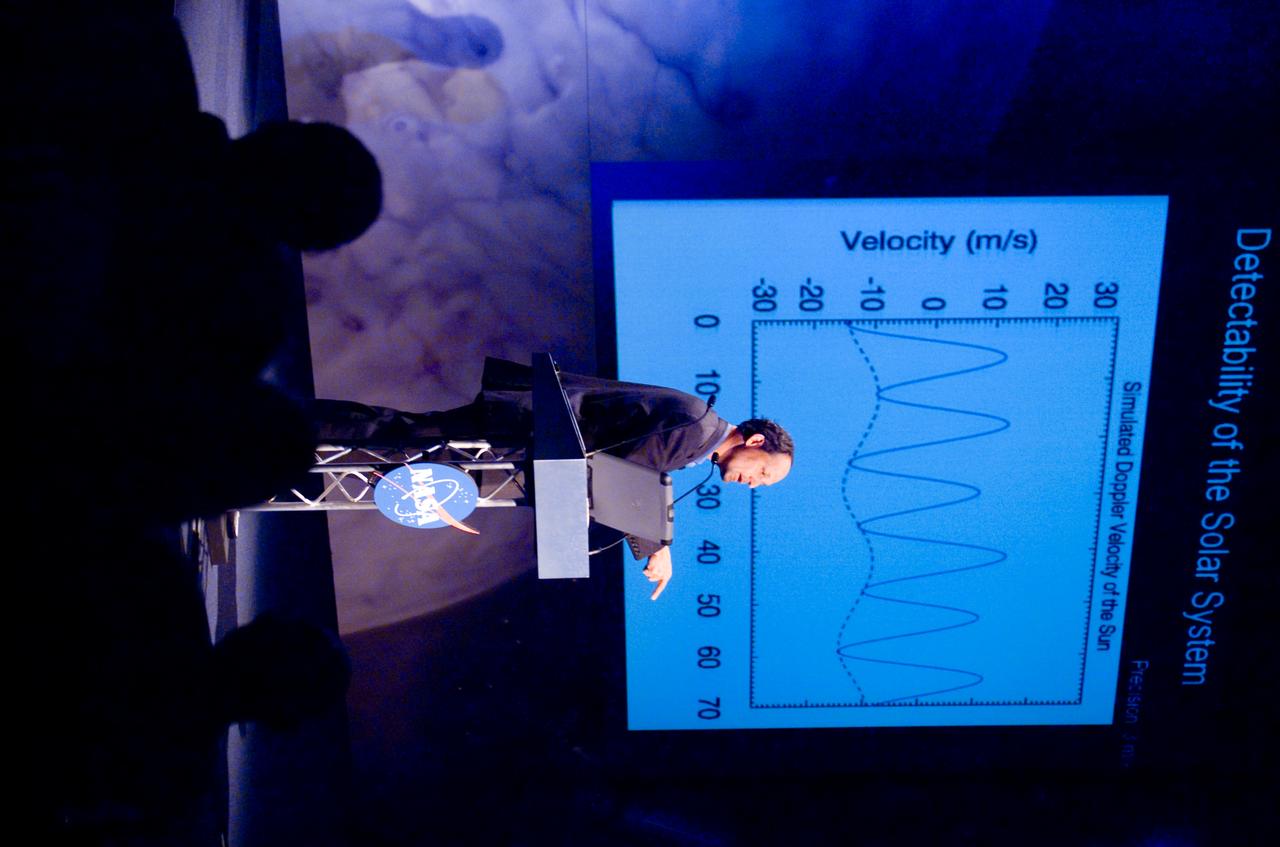
Astrobiology Conference 2002
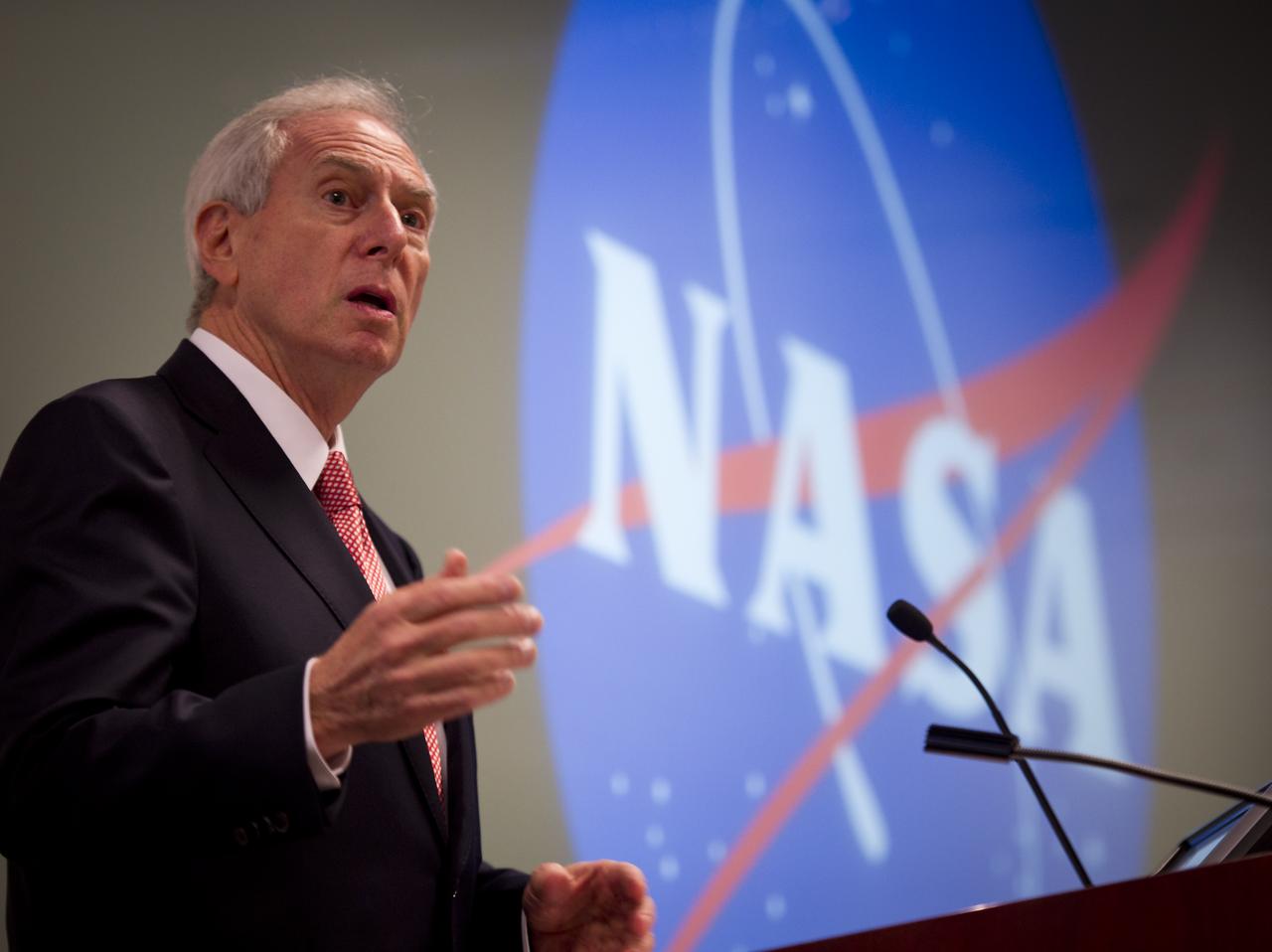
Dan Goldin, NASA's longest serving Administrator from 1992-2001 speaks during the "Seeking Signs of Life" Symposium, celebrating 50 Years of Exobiology and Astrobiology at NASA, Thursday, Oct. 14, 2010, at the Lockheed Martin Global Vision Center in Arlington, Va. NASA has been researching life in the universe since 1959, asking three fundamental questions: ‚"How does life begin and evolve?"‚ "Is there life beyond Earth and, if so, how can we detect it?‚" and "What is the future of life on Earth and in the universe?" Photo Credit: (NASA/Bill Ingalls)
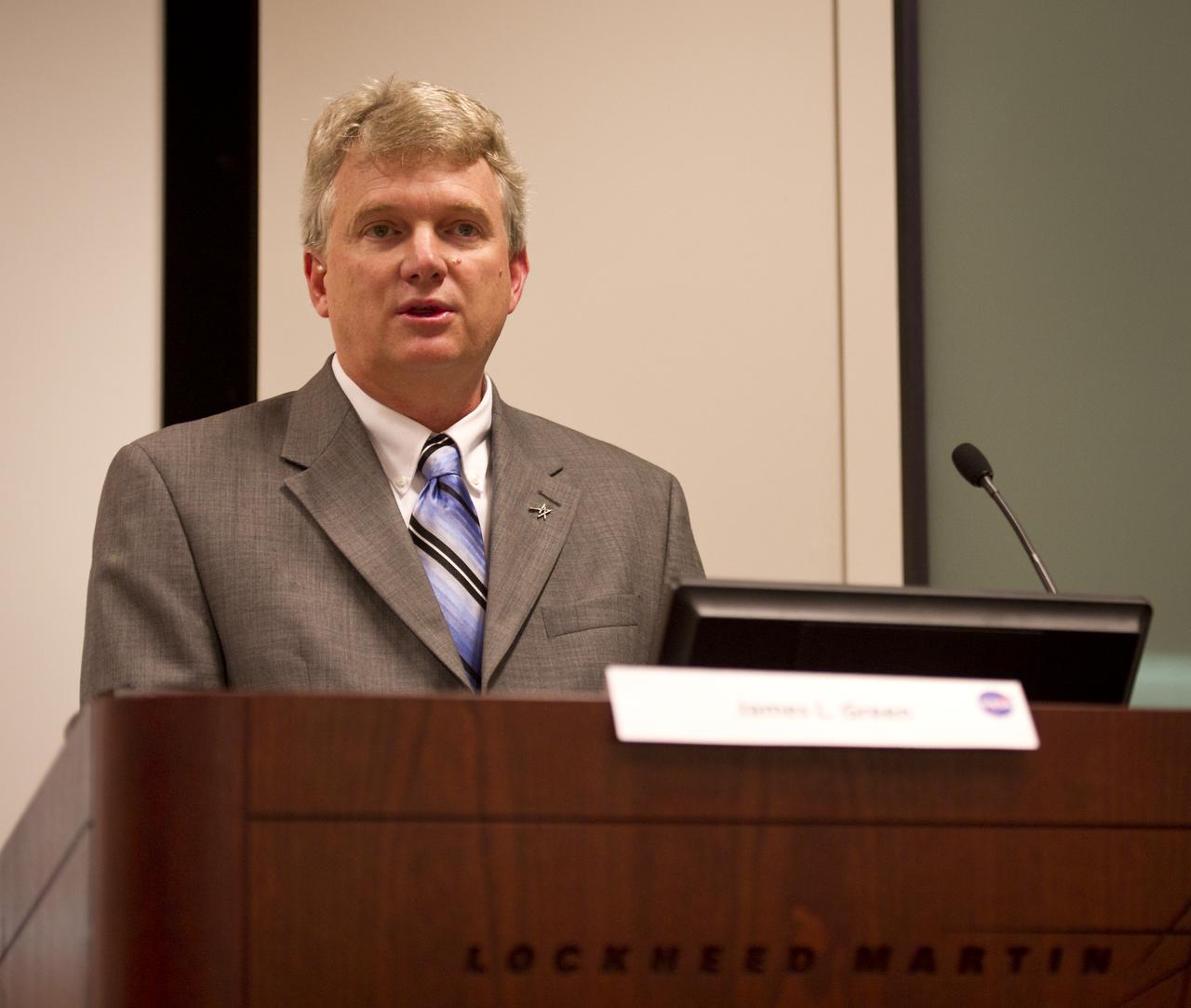
Stephen Price from Lockheed Martin Space Systems Company kicks off the ‚Äö√Ñ√∫Seeking Signs of Life‚Äö√Ñ√π Symposium, celebrating 50 Years of Exobiology and Astrobiology at NASA, Thursday, Oct. 14, 2010, at the Lockheed Martin Global Vision Center in Arlington, Va. NASA has been researching life in the universe since 1959, asking three fundamental questions: "How does life begin and evolve?"‚ "Is there life beyond Earth and, if so, how can we detect it?" and "What is the future of life on Earth and in the universe?" Photo Credit: (NASA/Bill Ingalls)
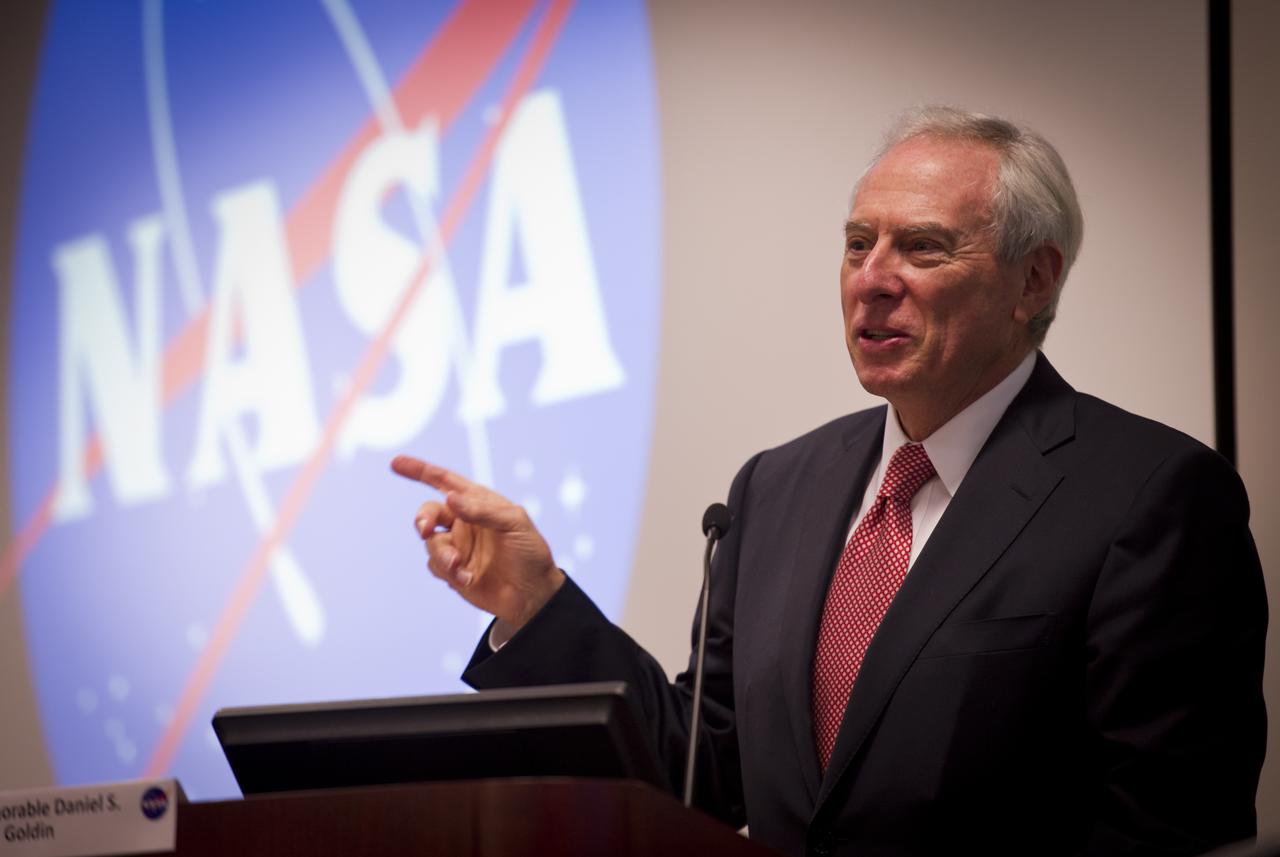
Dan Goldin, NASA's longest serving Administrator from 1992-2001 speaks during the "Seeking Signs of Life" Symposium, celebrating 50 Years of Exobiology and Astrobiology at NASA, Thursday, Oct. 14, 2010, at the Lockheed Martin Global Vision Center in Arlington, Va. NASA has been researching life in the universe since 1959, asking three fundamental questions: ‚"How does life begin and evolve?"‚ "Is there life beyond Earth and, if so, how can we detect it?‚" and "What is the future of life on Earth and in the universe?" Photo Credit: (NASA/Bill Ingalls)
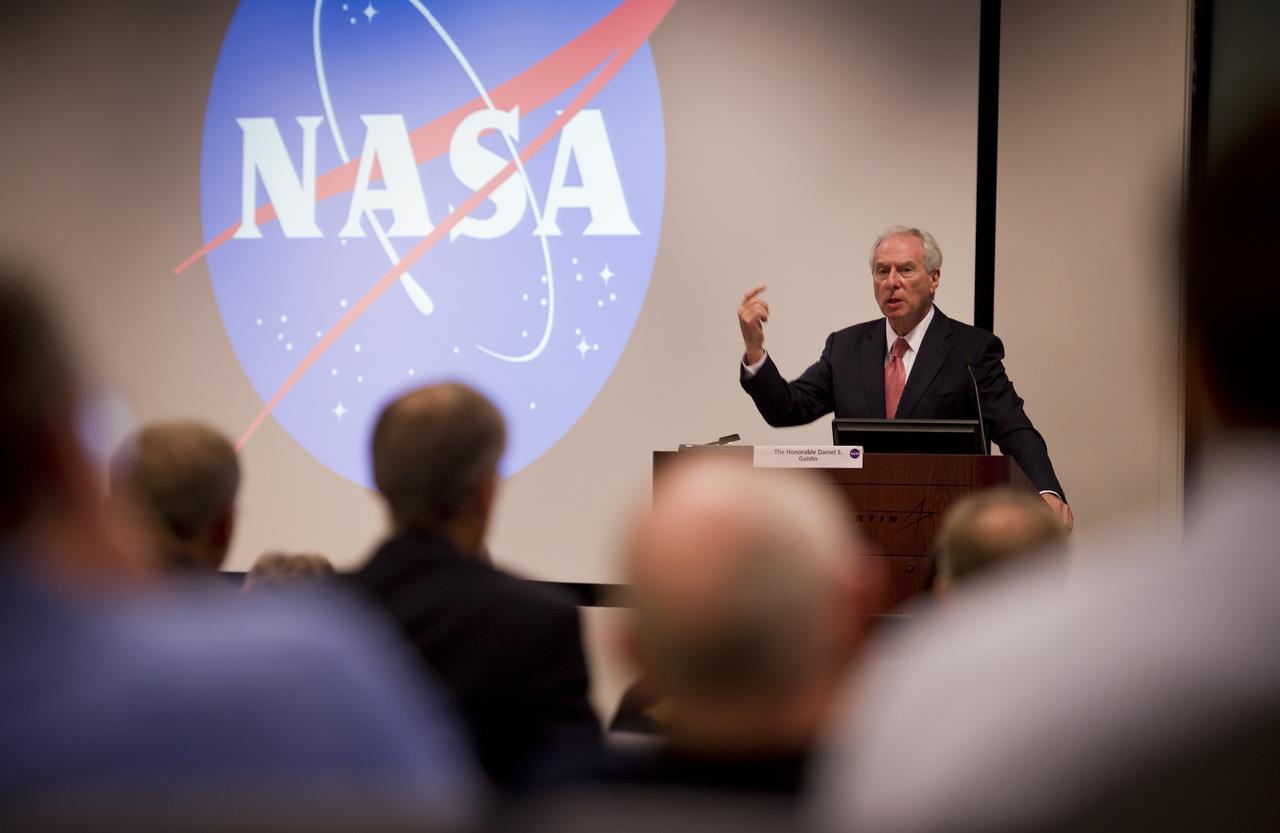
Dan Goldin, NASA's longest serving Administrator from 1992-2001 speaks during the "Seeking Signs of Life" Symposium, celebrating 50 Years of Exobiology and Astrobiology at NASA, Thursday, Oct. 14, 2010, at the Lockheed Martin Global Vision Center in Arlington, Va. NASA has been researching life in the universe since 1959, asking three fundamental questions: ‚"How does life begin and evolve?"‚ "Is there life beyond Earth and, if so, how can we detect it?‚" and "What is the future of life on Earth and in the universe?" Photo Credit: (NASA/Bill Ingalls)
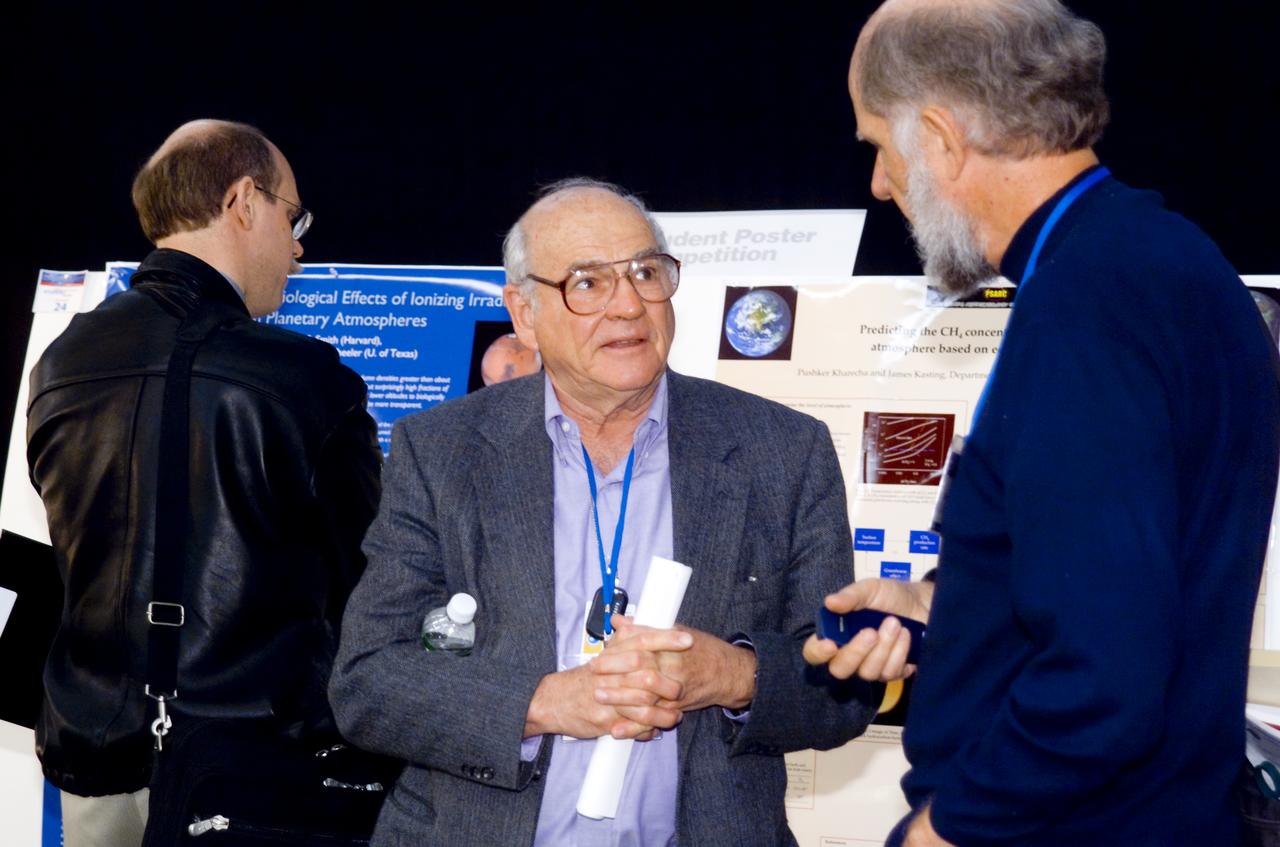
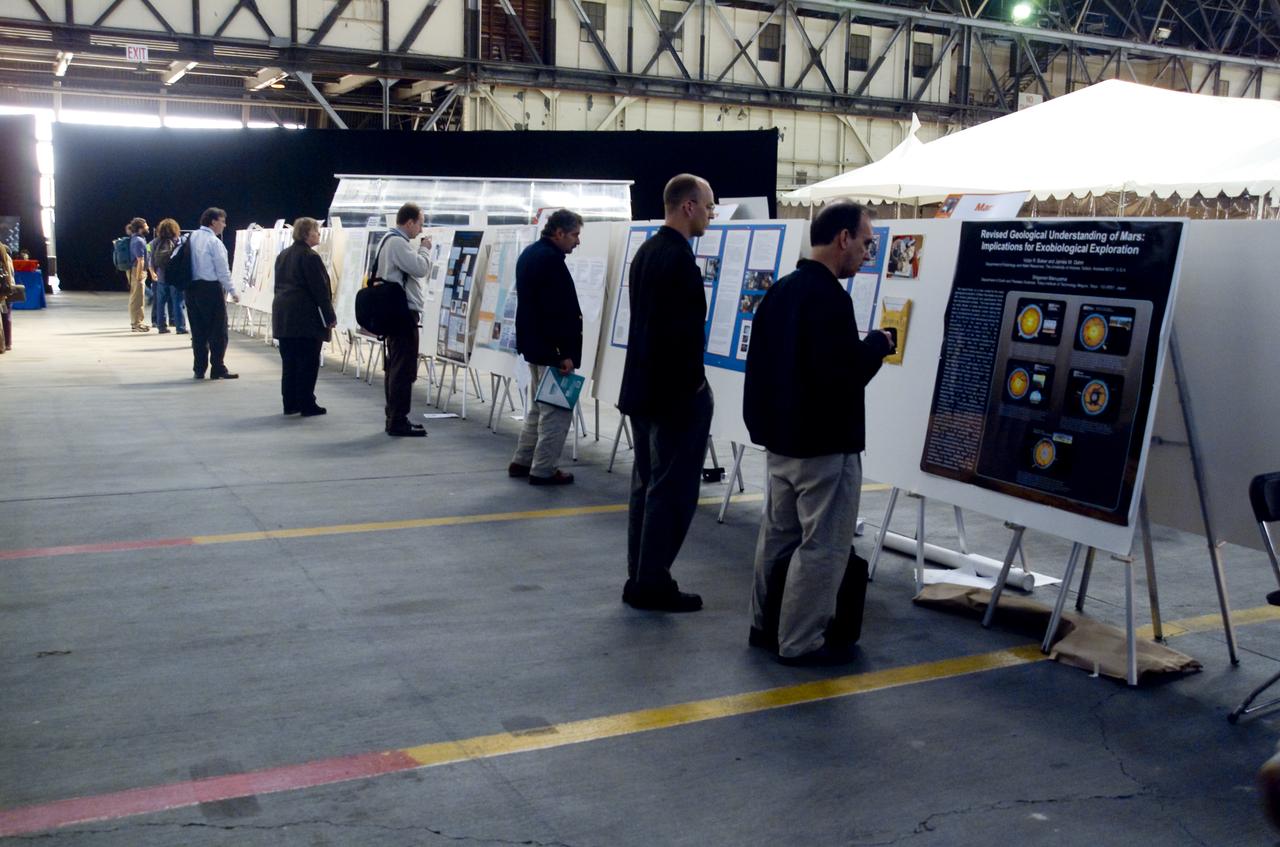
Ames holds NAI Astrobiology Conference 2002: NAI Director Dr Baruch Blumberg chat with attendee during poster session.
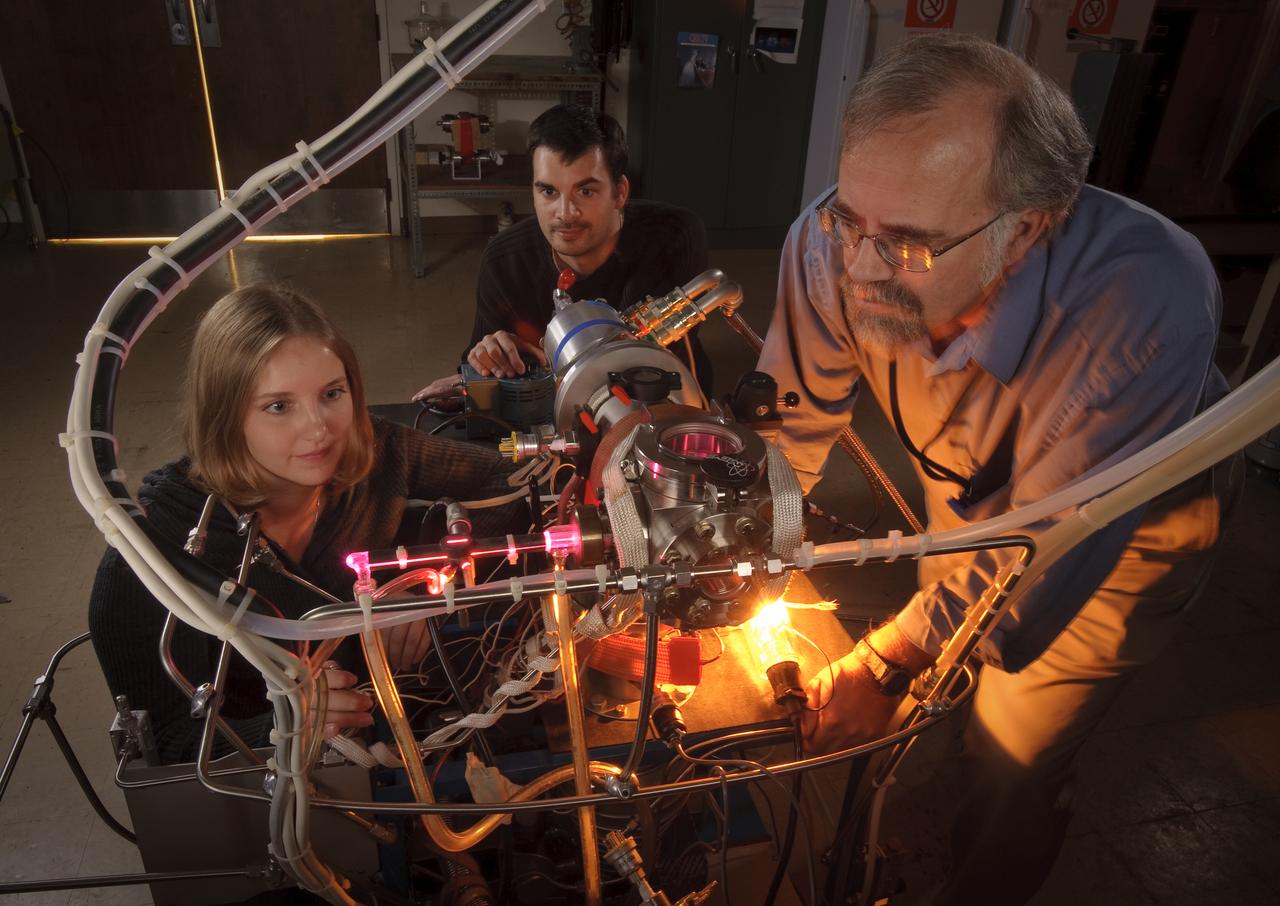
Stefanie Milam, Michel Nueva and Scott Sandford, in the Ames Astrochemistry Lab, N-245 for feature article on their uracil research. NASA Scientists studying the origin of life have reproduced uracil, a key component of our hereditary material in the laboratory.
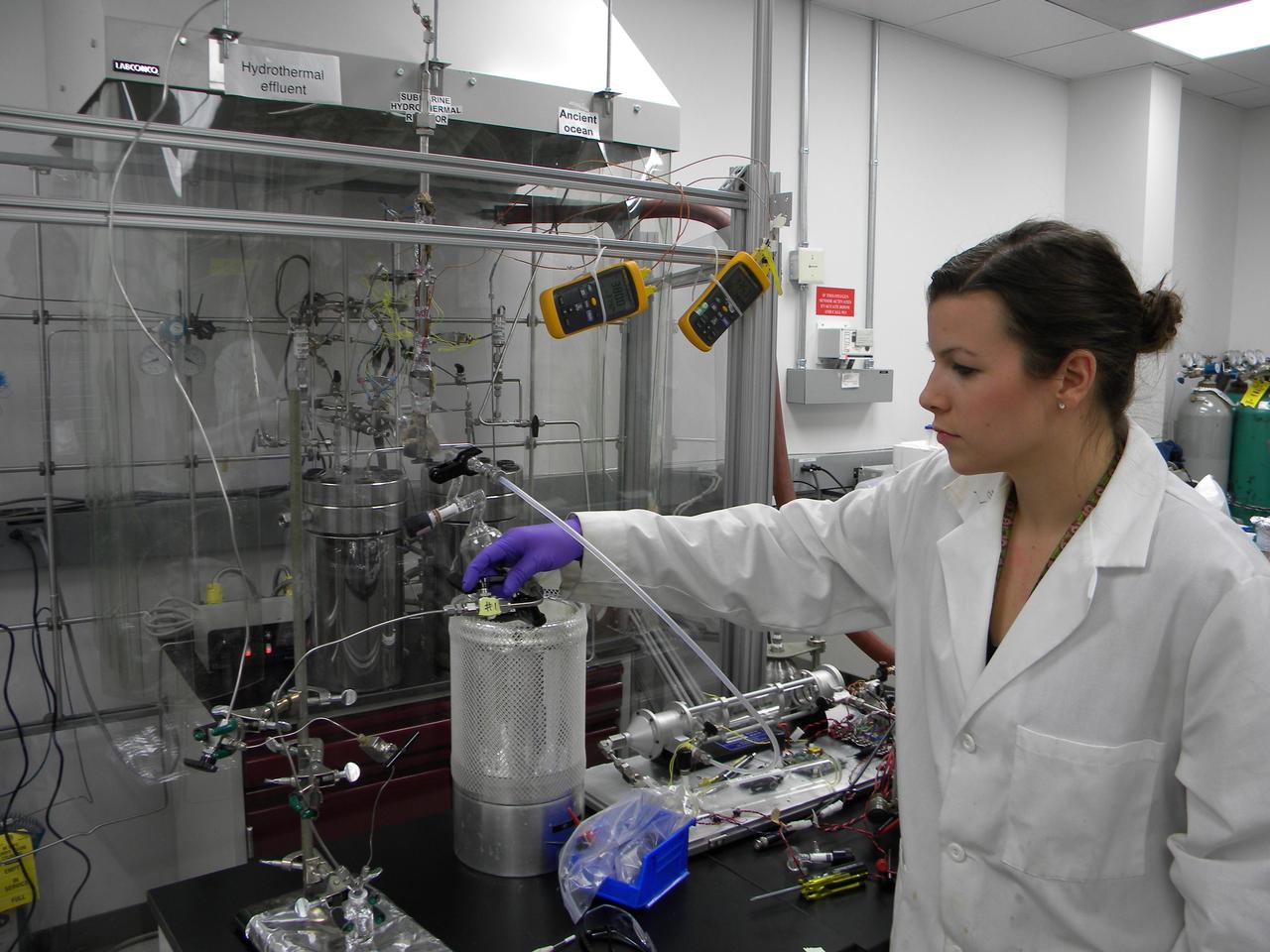
A team of scientists at NASA Jet Propulsion Laboratory is testing whether organic molecules can be brewed in a simulated ocean vent. Pictured here is Lauren White, a member of the NASA Astrobiology Icy Worlds team.
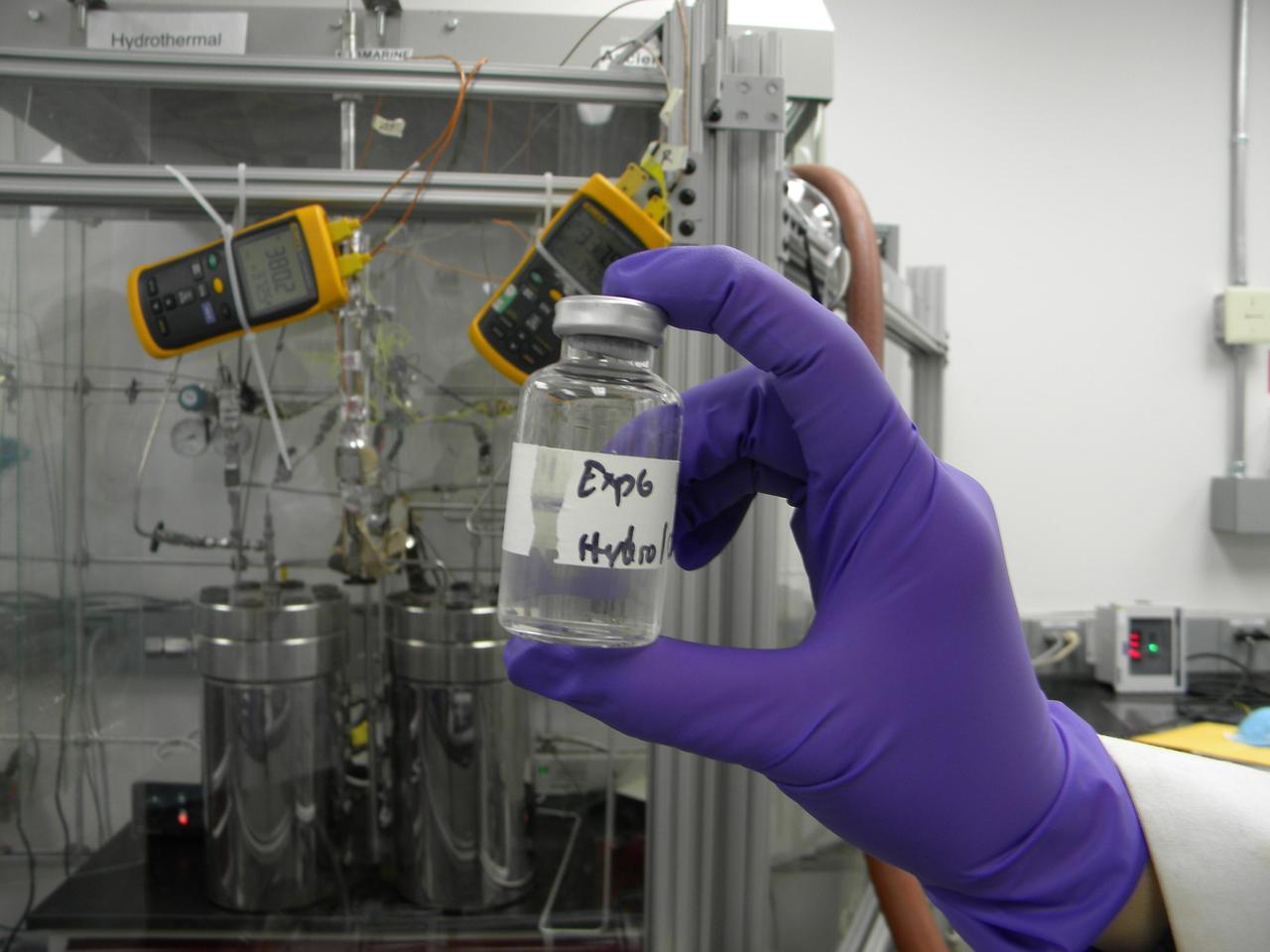
The NASA Astrobiology Icy Worlds team at NASA Jet Propulsion Laboratory are collecting samples from a simulated ocean vent to see if they can detect organic molecules being brewed.
/nasa-goddard-astrobio (4)~medium.jpg)
/nasa-goddard-astrobio (3)~medium.jpg)
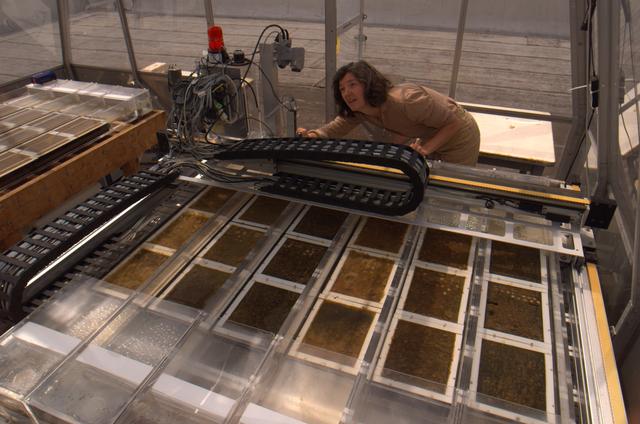
MICROBIAL MATS; N-239 GREENHOUSE WITH LEE BEBOUT AND MARY HOGAN (PLANT - ORGANISMS) for ASTROBIOLOGY MAGAZINE ARTICLE
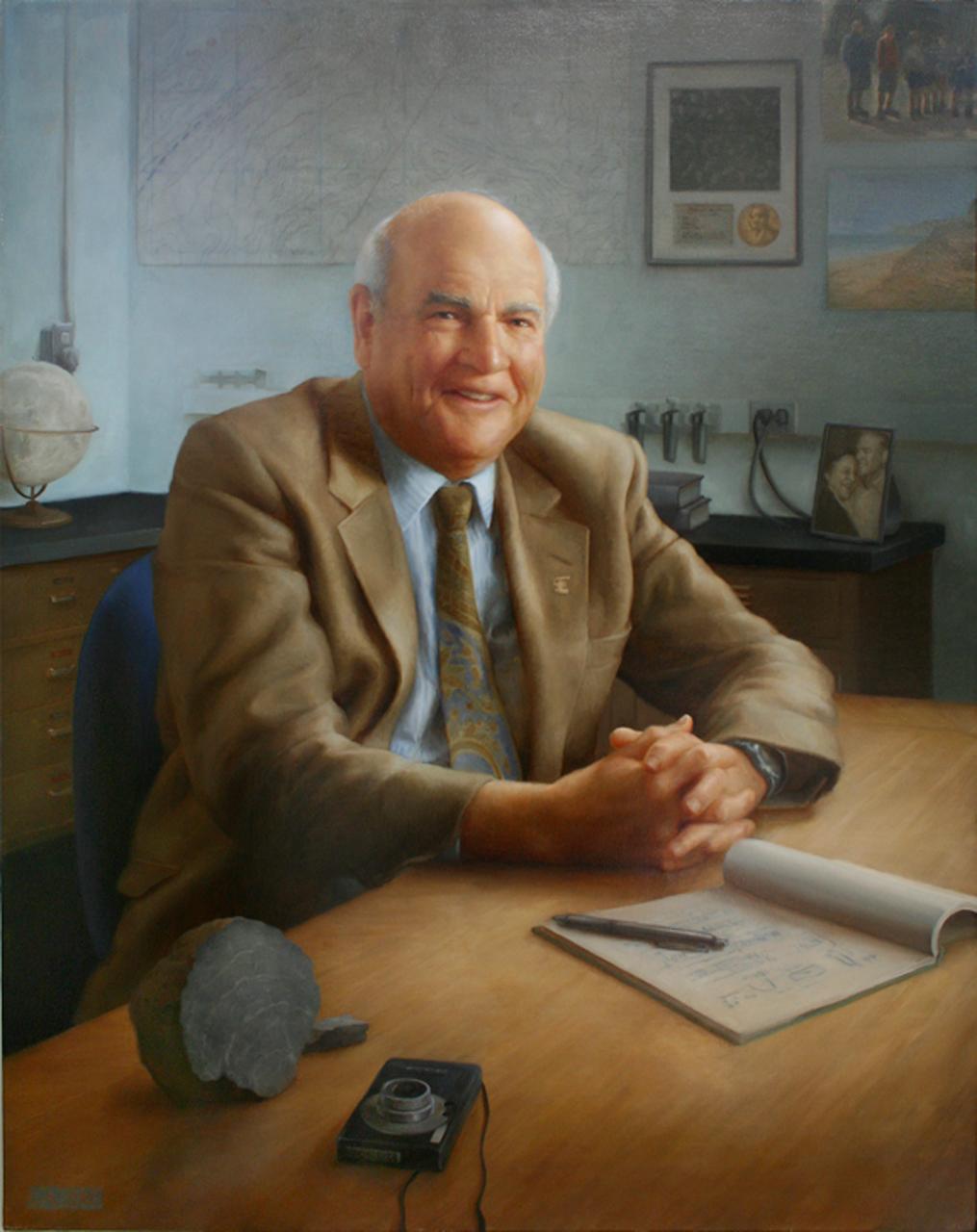
oil protrait of Dr. Baruch Blumberg, Director of Ames Astrobiology by artist Elizabeth Zanzinger
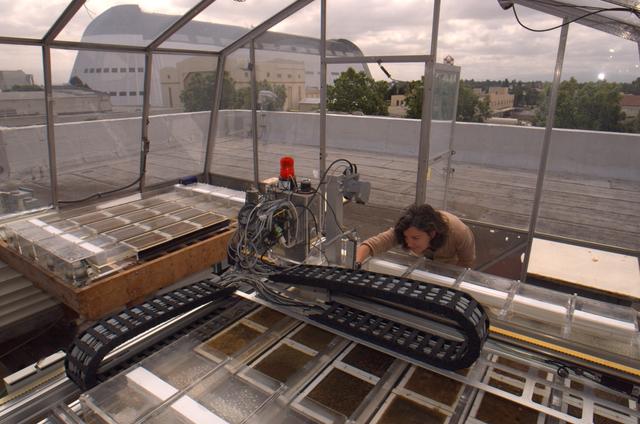
MICROBIAL MATS; N-239 GREENHOUSE WITH LEE BEBOUT AND MARY HOGAN (PLANT - ORGANISMS) for ASTROBIOLOGY MAGAZINE ARTICLE
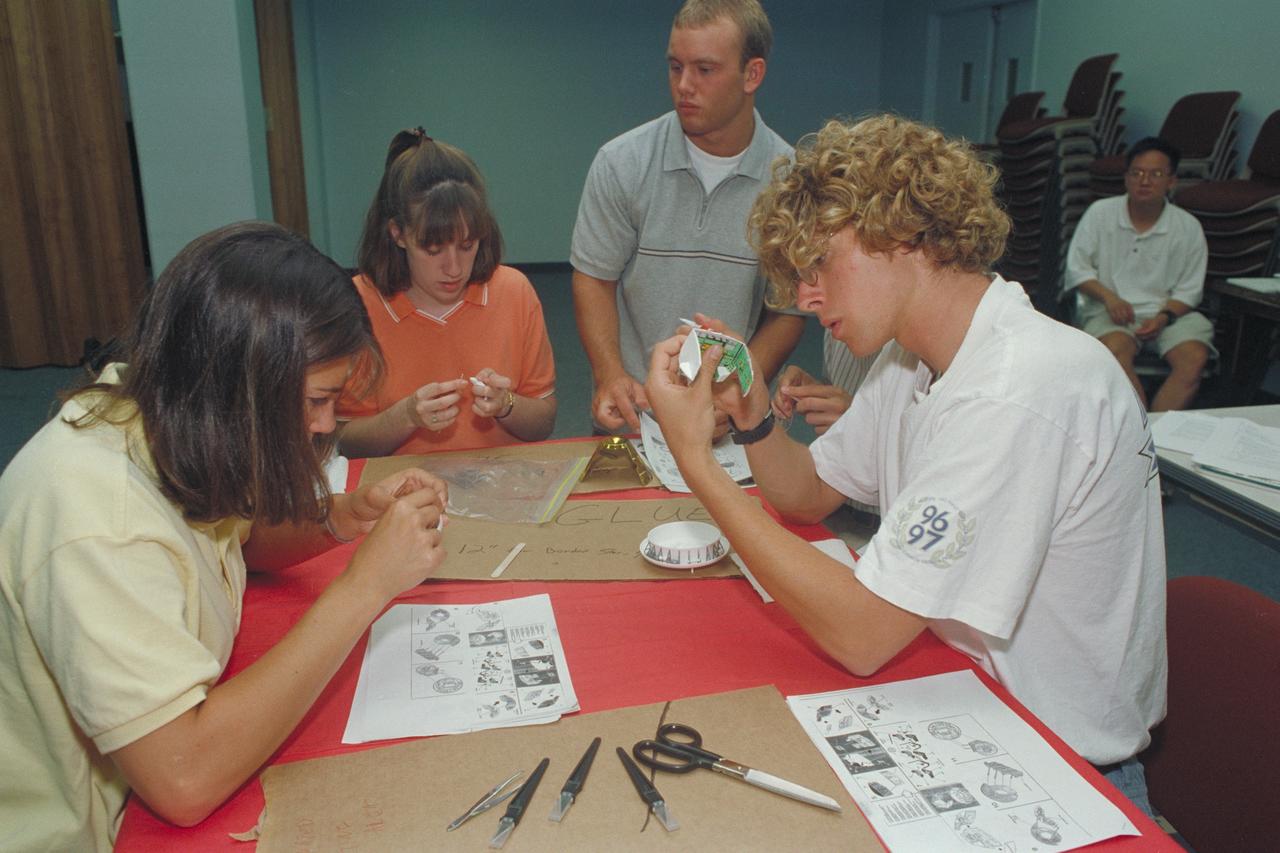
Ames First Astrobiology Academy as part of the summer NASA Academy call NASA project simulation
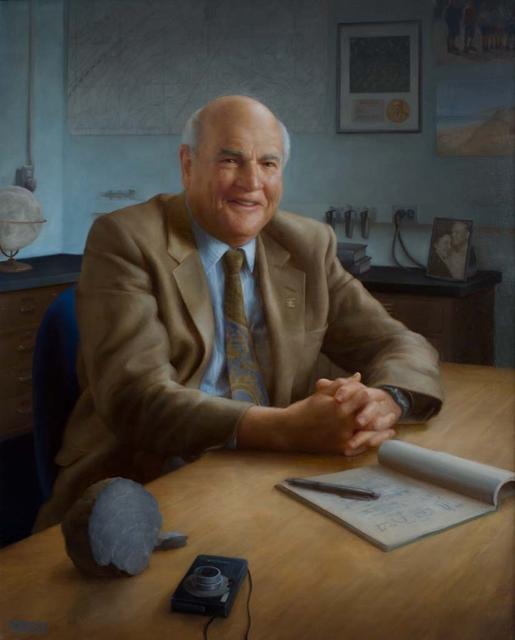
oil protrait of Dr. Baruch Blumberg, Director of Ames Astrobiology by artist Elizabeth Zanzinger
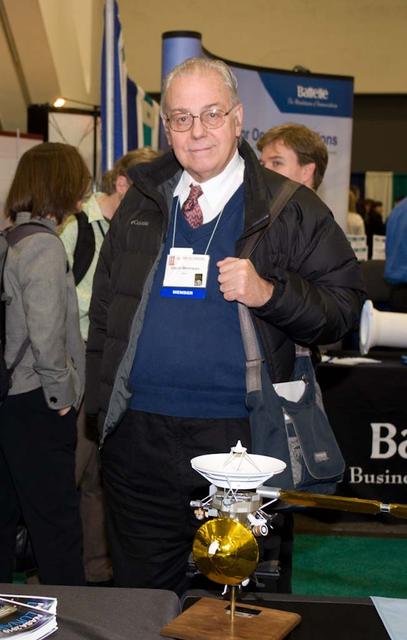
2009 American Geophysical Union (AGU) conference in San Francisco, California. Dr David Morrison, Director Lunar Science Institute and Senior Scientist, NASA Astrobiology.

jsc2024e006079 (1/18/2024) --- Tanpopo is a Japanese astrobiological space exposure experiment on ISS. There are 7 small cells containing microorganisms, mosses, and organic compounds to be determined their stabilities and alterations. (Tanpopo-6 Team)
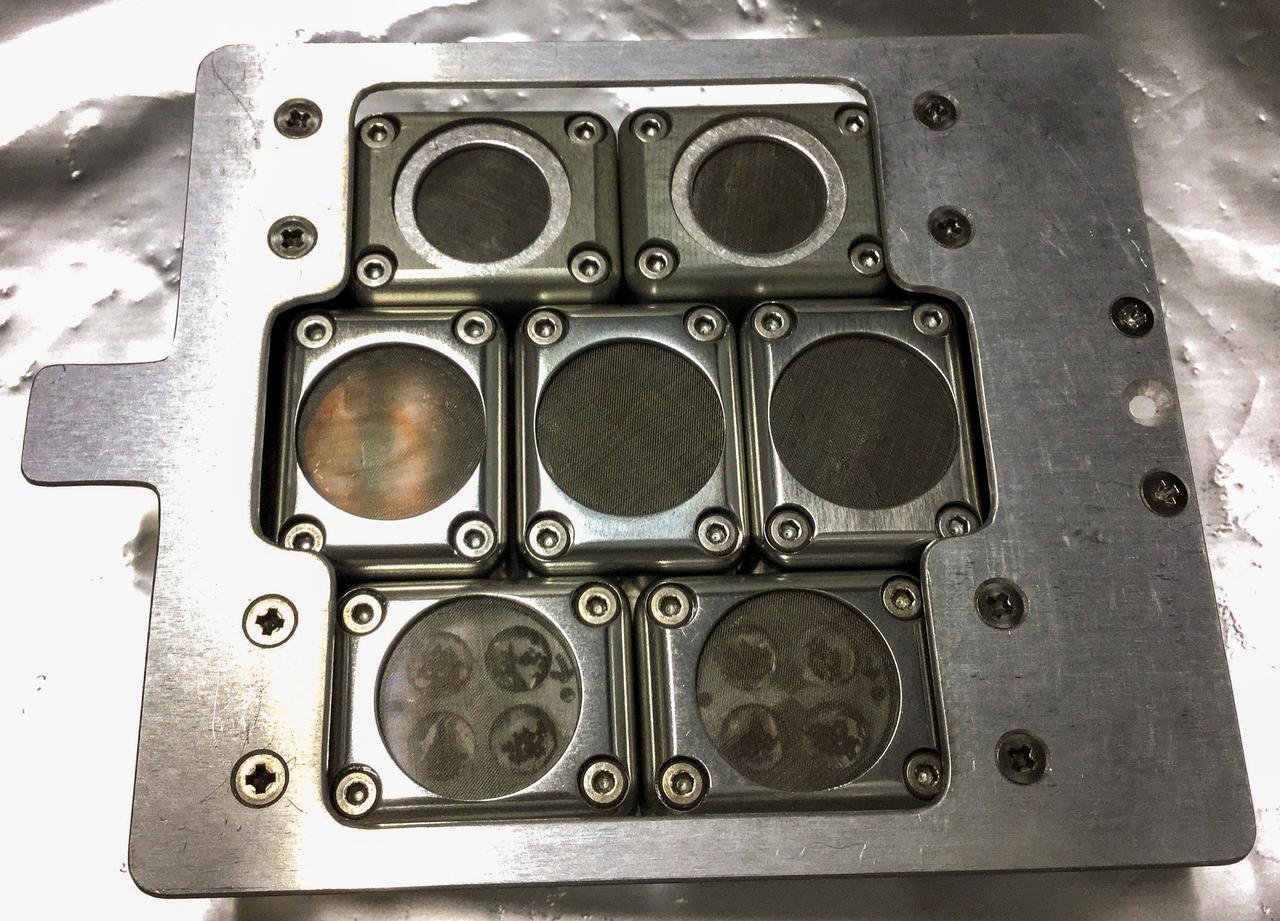
jsc2022e068259 (2/4/2022) --- Tanpopo is a Japanese astrobiological space exposure experiment on ISS. There are 7 small cells containing microorganisms, mosses, and organic compounds which will study their stability and alterations. Photo courtesy of the Tanpopo-5 Team.
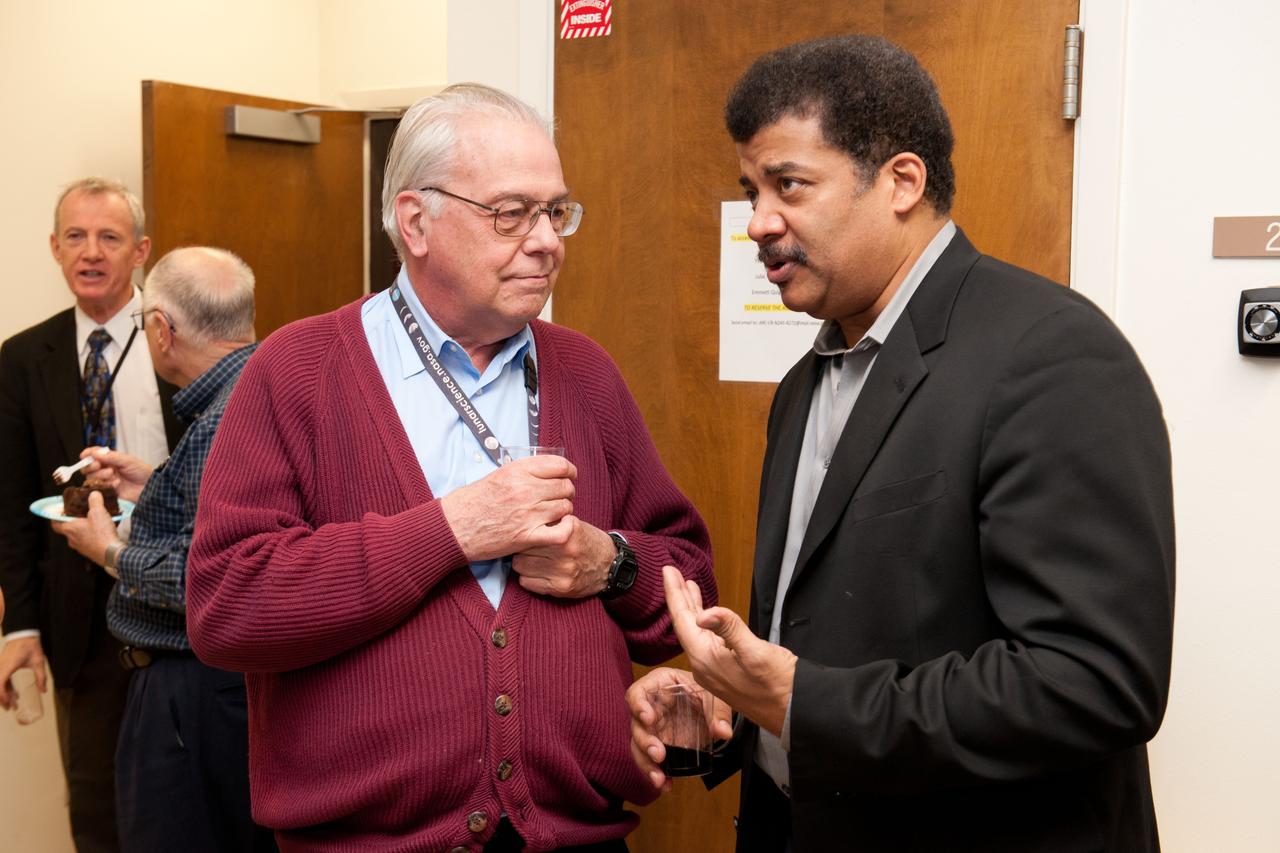
Neil DeGrasse Tyson, Astrophysicist with Hayden Planetarium, the American Museum of Natural History, visits the Ames Kepler Science Team during the 1000 days since Launch Review. at reception speaking with Dr. David Morrison, Ames Serior Scientist, NASA Astrobiology, on right.
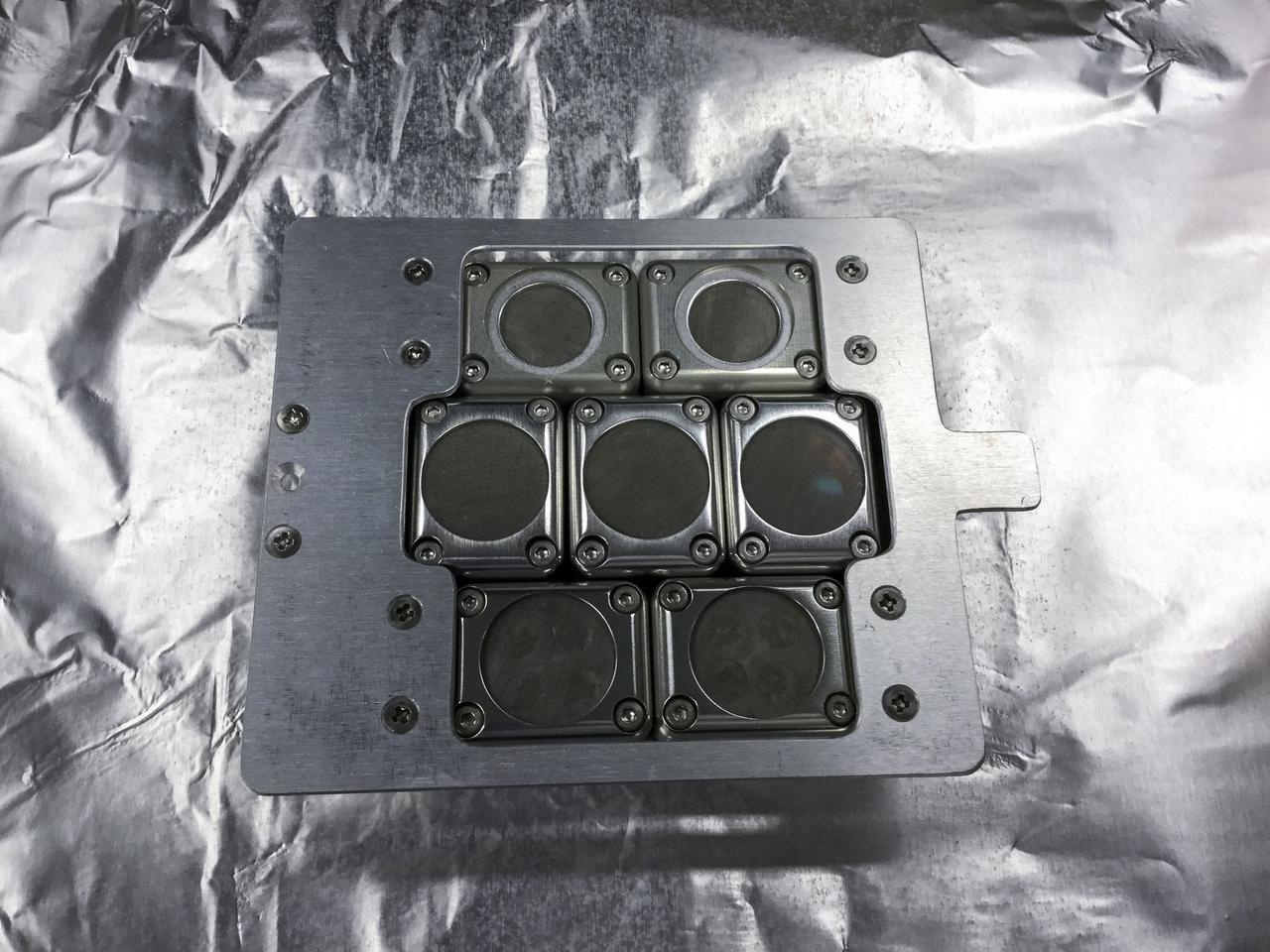
jsc2021e066967 (9/2/2021) --- A preflight view of the Tanpopo-4 hardware. Tanpopo is a Japanese astrobiological space exposure experiment on ISS. There are 7 small cells containing microorganisms, mosses and organic compounds to be determined their stabilitites and alterations (Tanpopo-4).
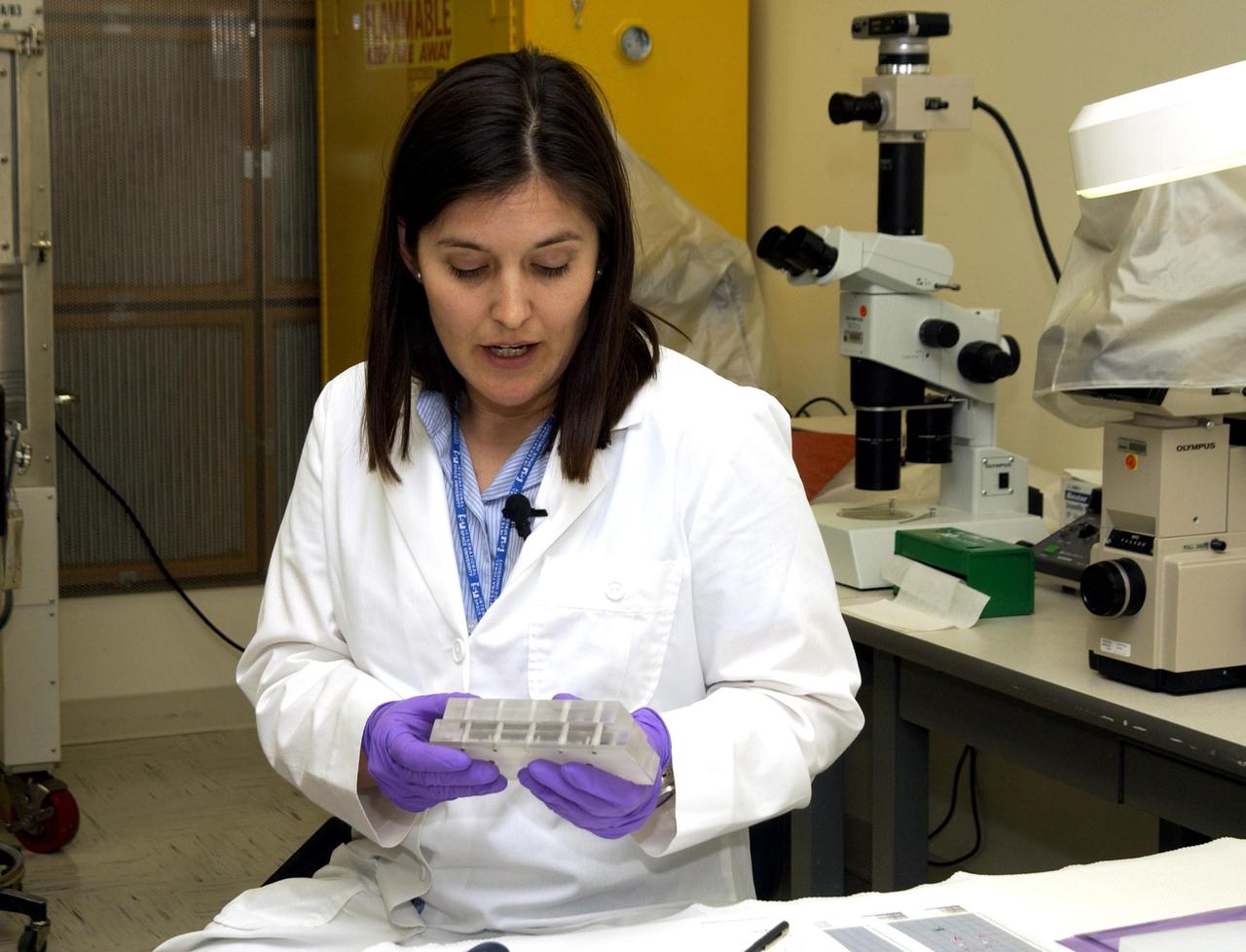
KENNEDY SPACE CENTER, FLA. - Valerie Cassanto holds a piece of the Commercial ITA Biomedical Experiments payload that was carried on mission STS-107 and recently recovered. She is the daughter of John Cassanto of ITA, who is part of a recovery team transferring experiments to alternate containers. One of the experiments was the Growth of Bacterial Biofilm on Surfaces during Spaceflight (GOBBSS), a Planetary Society-sponsored astrobiology experiment developed by the Israeli Aerospace Medical Institute and the Johnson Space Center Astrobiology Center, with joint participation of an Israeli and a Palestinian student. The recovery team also includes Eran Schenker of the Israeli Aerospace Medical Institute; David Warmflash of JSC, and Louis Friedman, executive director of the Planetary Society. The GOBBSS material will be sent to JSC where the science team will analyze the samples, studying the effects of spaceflight on bacterial growth.
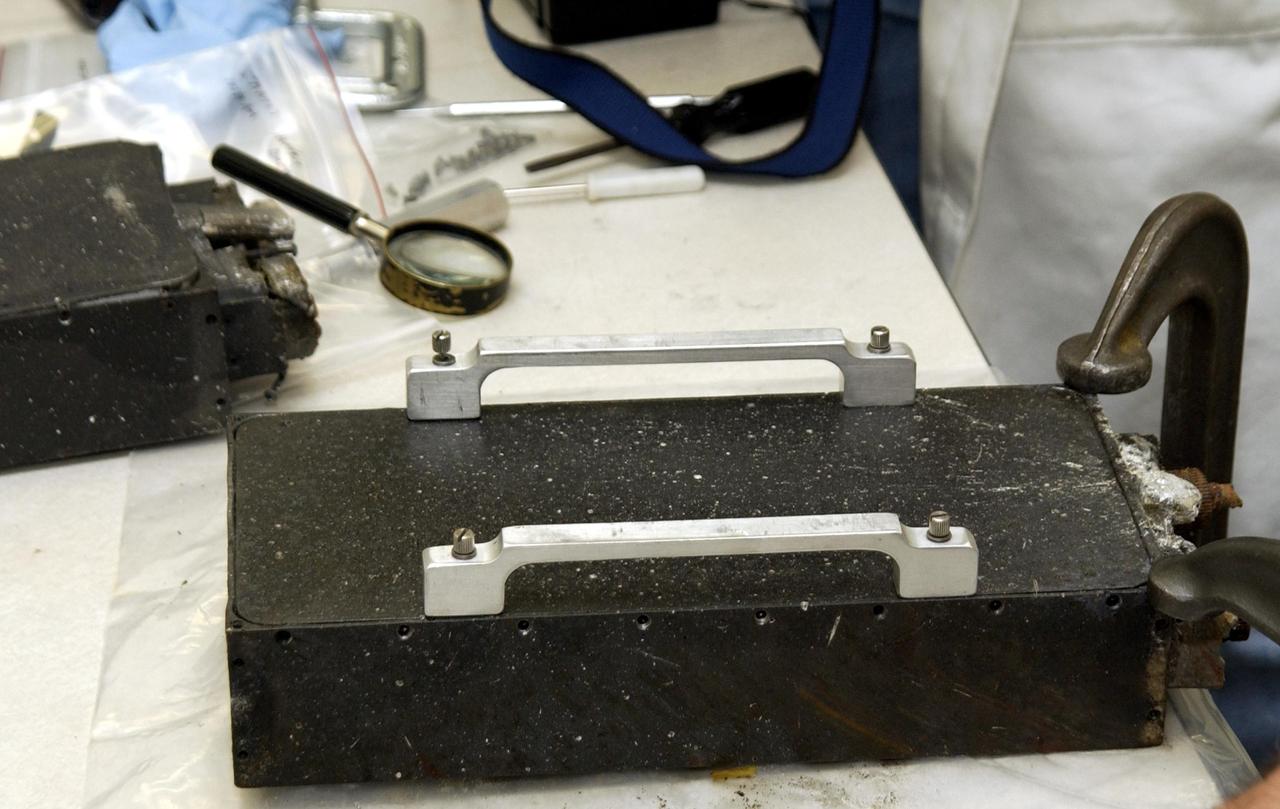
KENNEDY SPACE CENTER, FLA. - The Commercial ITA Biomedical Experiments payload retrieved from debris of Columbia is being dismantled at KSC. Inside are several experiments carried on mission STS-107 that will be removed and transferred to alternate containers. One experiment, the Growth of Bacterial Biofilm on Surfaces during Spaceflight (GOBBSS), was a Planetary Society-sponsored astrobiology experiment developed by the Israeli Aerospace Medical Institute and the Johnson Space Center Astrobiology Center, with joint participation of an Israeli and a Palestinian student. The recovery team includes Eran Schenker of the Israeli Aerospace Medical Institute; David Warmflash of JSC, John Cassanto of ITA, and Louis Friedman, executive director of the Planetary Society. The GOBBSS material will be sent to JSC where the science team will analyze the samples, studying the effects of spaceflight on bacterial growth.
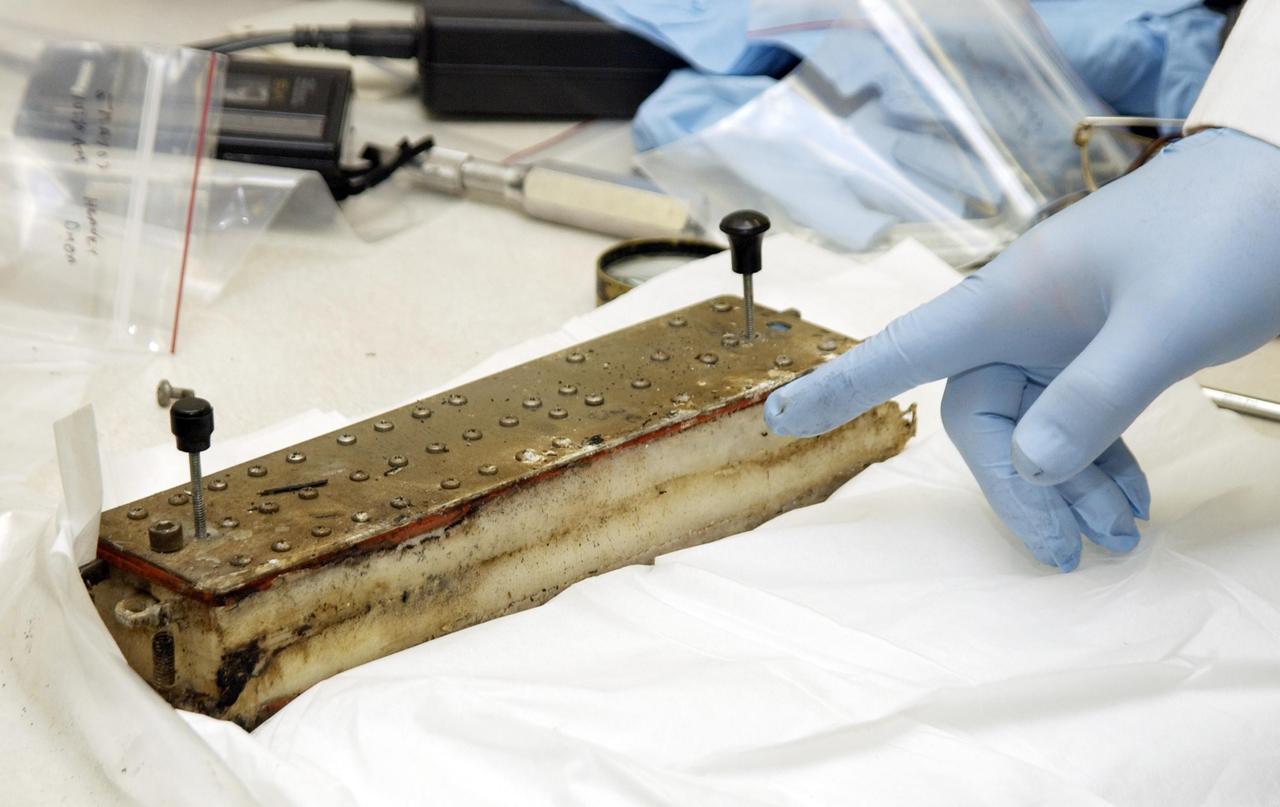
KENNEDY SPACE CENTER, FLA. - John Cassanto of ITA points to an area of the Growth of Bacterial Biofilm on Surfaces during Spaceflight (GOBBSS) experiment that was carried on mission STS-107 as part of the Commercial ITA Biomedical Experiments payload. He is part of a recovery team transferring experiments to alternate containers. GOBBSS was a Planetary Society-sponsored astrobiology experiment developed by the Israeli Aerospace Medical Institute and the Johnson Space Center Astrobiology Center, with joint participation of an Israeli and a Palestinian student. The recovery team also includes Eran Schenker of the Israeli Aerospace Medical Institute; David Warmflash of JSC, and Louis Friedman, executive director of the Planetary Society. The GOBBSS material will be sent to JSC where the science team will analyze the samples, studying the effects of spaceflight on bacterial growth.
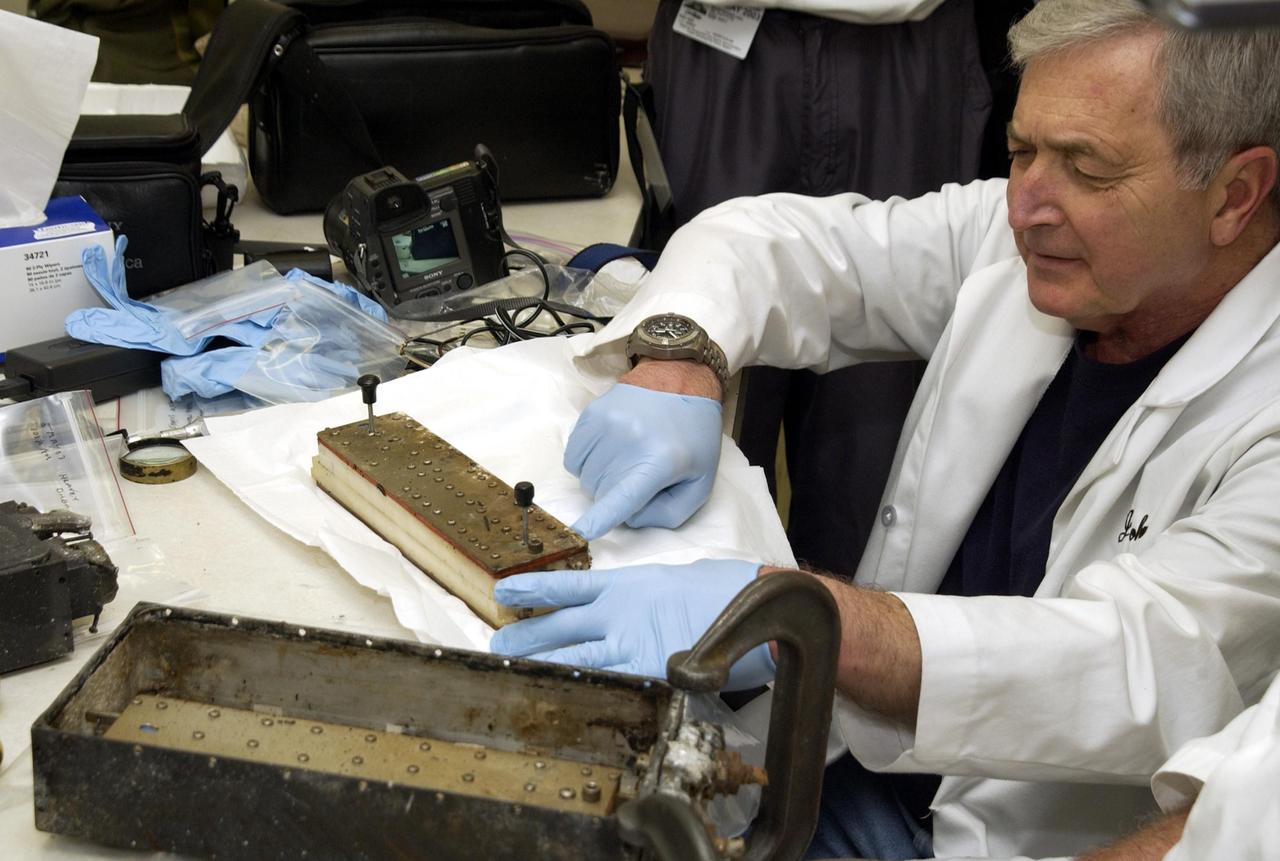
KENNEDY SPACE CENTER, FLA. - John Cassanto of ITA moves part of the Growth of Bacterial Biofilm on Surfaces during Spaceflight (GOBBSS) experiment that was carried on mission STS-107 as part of the Commercial ITA Biomedical Experiments payload. He is part of a recovery team transferring experiments to alternate containers. GOBBSS was a Planetary Society-sponsored astrobiology experiment developed by the Israeli Aerospace Medical Institute and the Johnson Space Center Astrobiology Center, with joint participation of an Israeli and a Palestinian student. The recovery team also includes Eran Schenker of the Israeli Aerospace Medical Institute; David Warmflash of JSC, and Louis Friedman, executive director of the Planetary Society. The GOBBSS material will be sent to JSC where the science team will analyze the samples, studying the effects of spaceflight on bacterial growth.
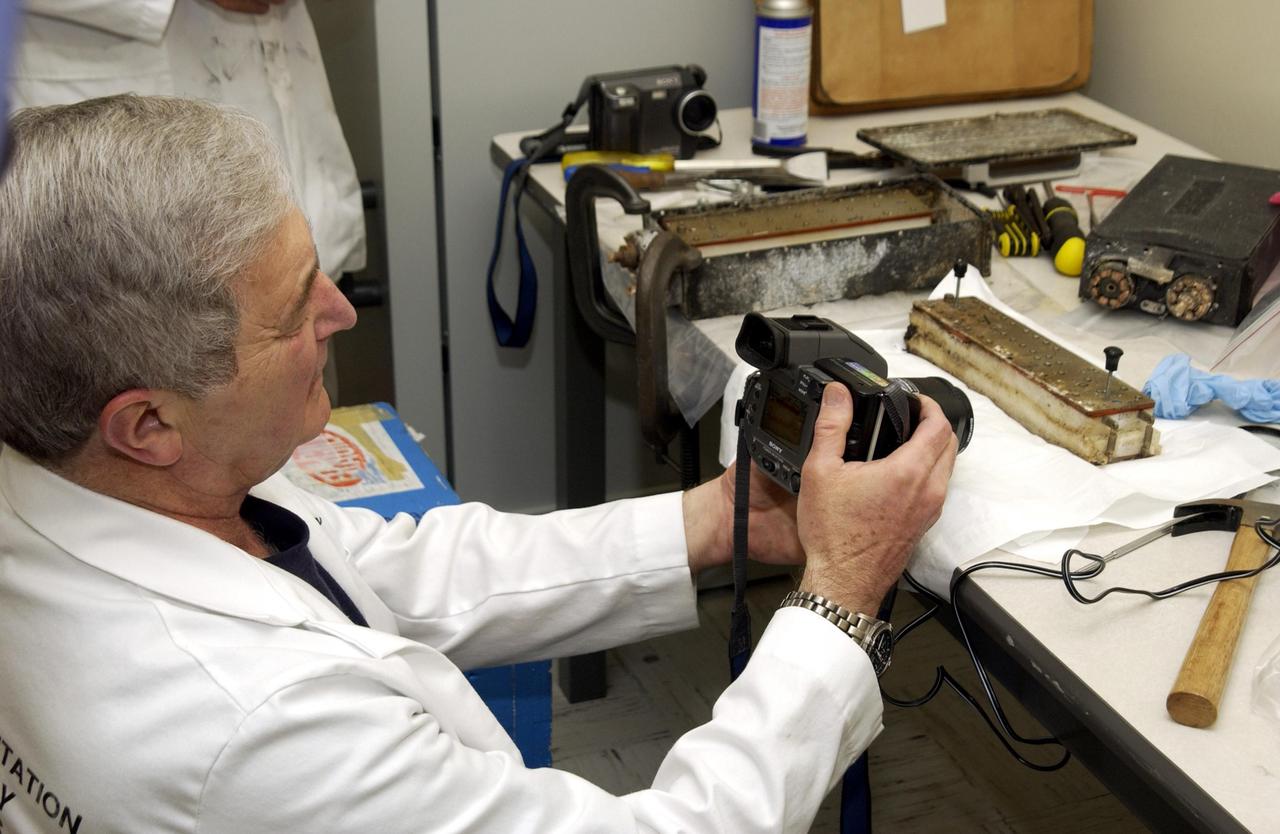
KENNEDY SPACE CENTER, FLA. - John Cassanto of ITA takes photos of the Growth of Bacterial Biofilm on Surfaces during Spaceflight (GOBBSS) experiment that was carried on mission STS-107 as part of the Commercial ITA Biomedical Experiments payload. He is part of a recovery team transferring experiments to alternate containers. GOBBSS was a Planetary Society-sponsored astrobiology experiment developed by the Israeli Aerospace Medical Institute and the Johnson Space Center Astrobiology Center, with joint participation of an Israeli and a Palestinian student. The recovery team also includes Eran Schenker of the Israeli Aerospace Medical Institute; David Warmflash of JSC, and Louis Friedman, executive director of the Planetary Society. The GOBBSS material will be sent to JSC where the science team will analyze the samples, studying the effects of spaceflight on bacterial growth.

Director of human and robotic exploration, ESA’s European Space Research and Technology Centre (ESTEC), Netherlands, David Parker, , screen left, and Director of NASA’s astrobiology program, Mary Voytek, give remarks via remote during a NASA Perseverance rover press briefing about the search for ancient life at Mars and about samples to be brought back to Earth on a future mission, Wednesday, Feb. 17, 2021, at NASA's Jet Propulsion Laboratory in Pasadena, California. The Perseverance Mars rover is due to land on Mars Thursday, Feb. 18, 2021. A key objective for Perseverance’s mission on Mars is astrobiology, including the search for signs of ancient microbial life. The rover will characterize the planet’s geology and past climate, pave the way for human exploration of the Red Planet, and be the first mission to collect and cache Martian rock and regolith. Photo Credit: (NASA/Bill Ingalls)
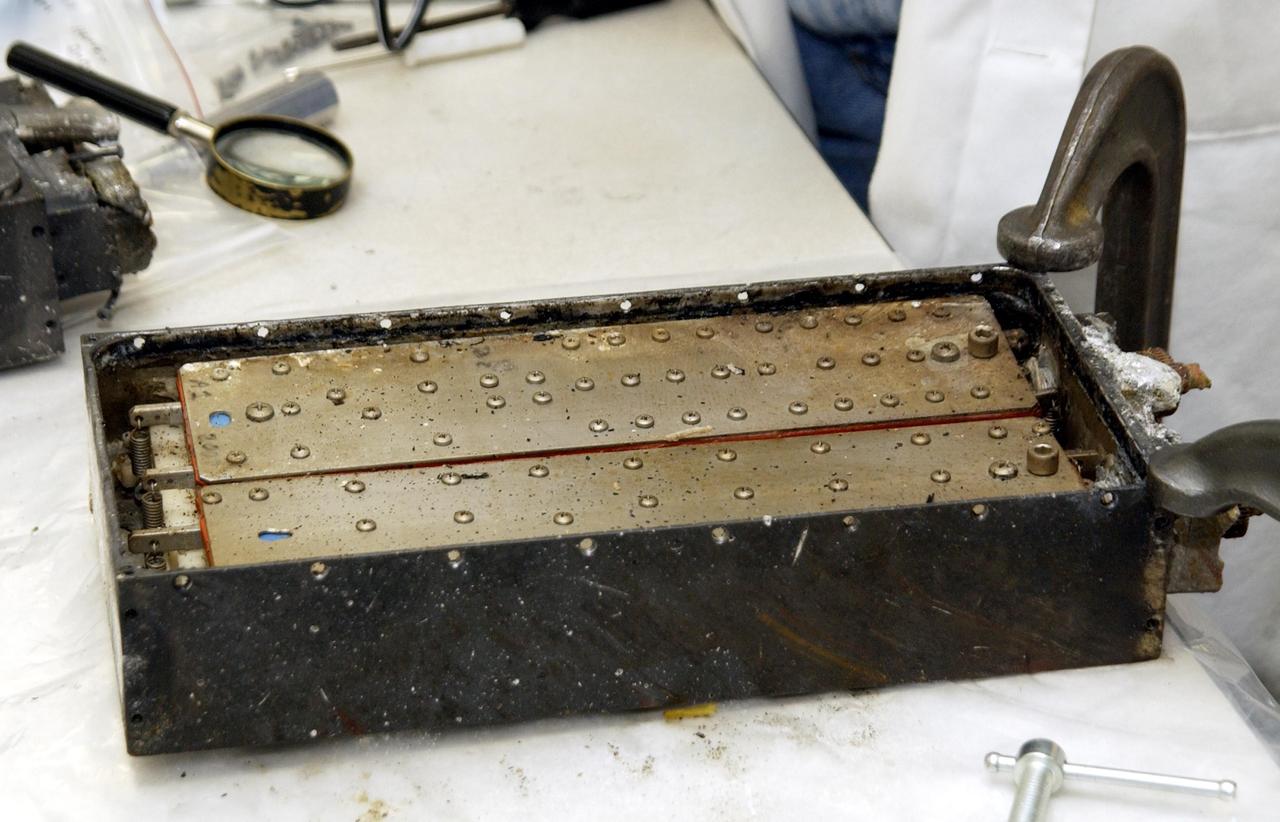
KENNEDY SPACE CENTER, FLA. - The Commercial ITA Biomedical Experiments payload retrieved from debris of Columbia is being dismantled at KSC. Inside are several experiments carried on mission STS-107 that will be removed and transferred to alternate containers. One experiment, the Growth of Bacterial Biofilm on Surfaces during Spaceflight (GOBBSS), was a Planetary Society-sponsored astrobiology experiment developed by the Israeli Aerospace Medical Institute and the Johnson Space Center Astrobiology Center, with joint participation of an Israeli and a Palestinian student. The recovery team includes Eran Schenker of the Israeli Aerospace Medical Institute; David Warmflash of JSC, John Cassanto of ITA, and Louis Friedman, executive director of the Planetary Society. The GOBBSS material will be sent to JSC where the science team will analyze the samples, studying the effects of spaceflight on bacterial growth.
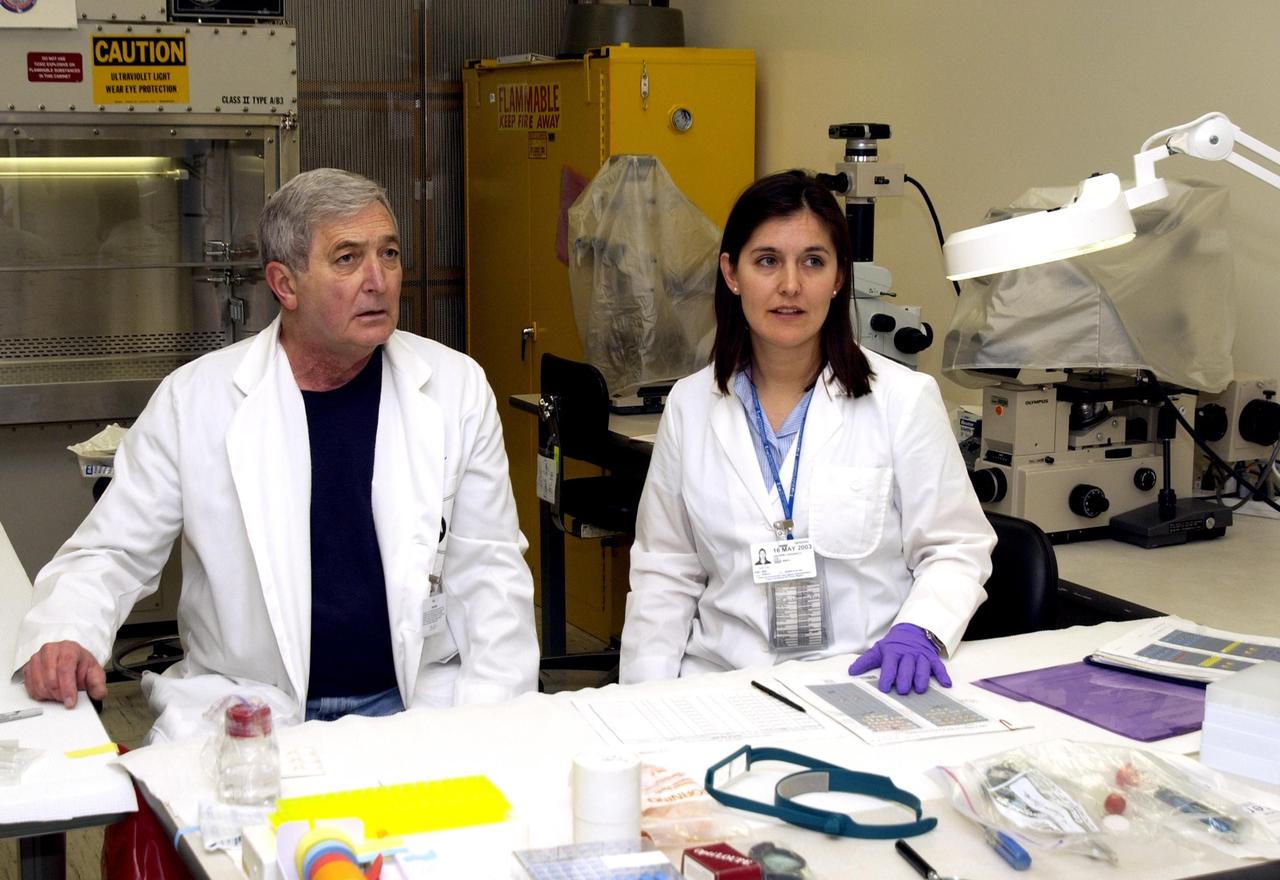
KENNEDY SPACE CENTER, FLA. - John Cassanto of ITA and his daughter Valerie stand next to the table holding the Growth of Bacterial Biofilm on Surfaces during Spaceflight (GOBBSS) experiment that was carried on mission STS-107 as part of the Commercial ITA Biomedical Experiments payload. He is part of a recovery team transferring experiments to alternate containers. GOBBSS was a Planetary Society-sponsored astrobiology experiment developed by the Israeli Aerospace Medical Institute and the Johnson Space Center Astrobiology Center, with joint participation of an Israeli and a Palestinian student. The recovery team also includes Eran Schenker of the Israeli Aerospace Medical Institute; David Warmflash of JSC, and Louis Friedman, executive director of the Planetary Society. The GOBBSS material will be sent to JSC where the science team will analyze the samples, studying the effects of spaceflight on bacterial growth.
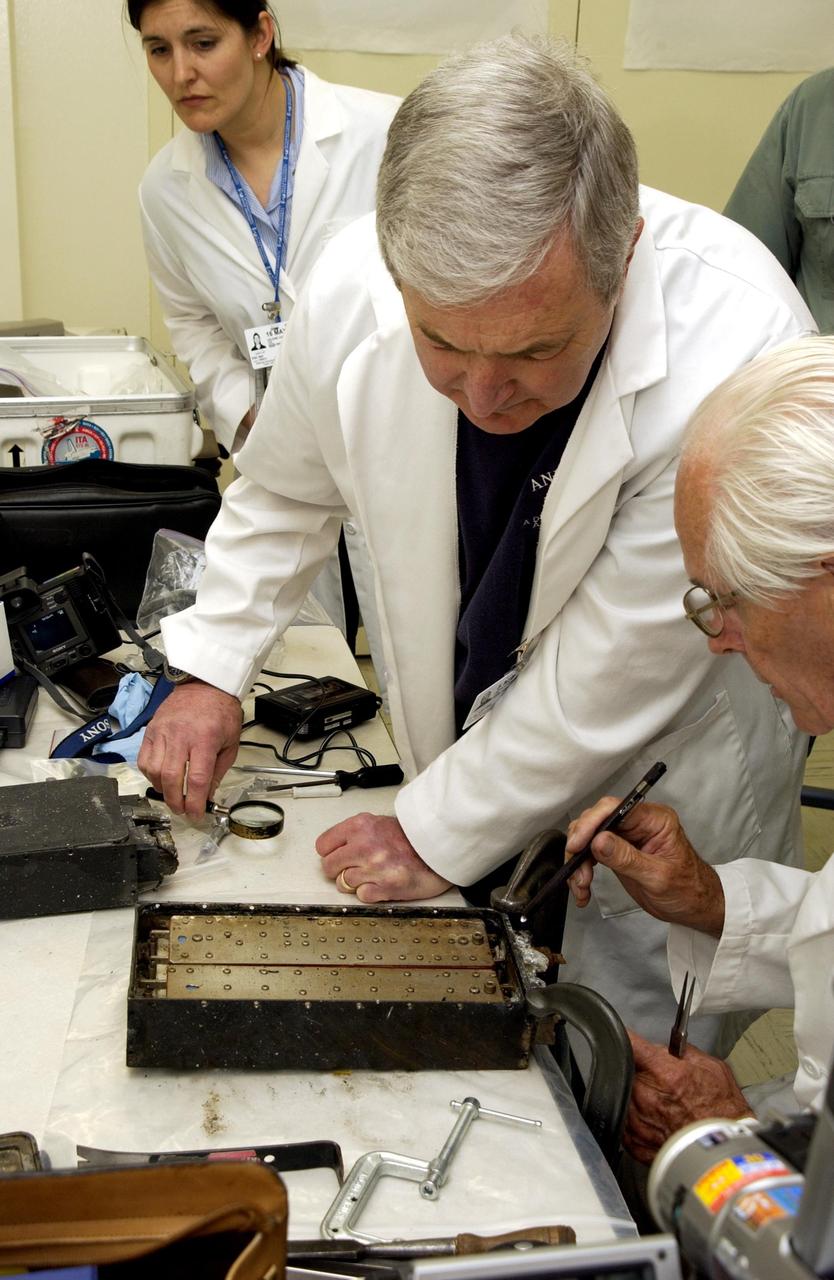
KENNEDY SPACE CENTER, FLA. - John Cassanto of ITA looks at the Growth of Bacterial Biofilm on Surfaces during Spaceflight (GOBBSS) experiment that was carried on mission STS-107 as part of the Commercial ITA Biomedical Experiments payload. He is part of a recovery team transferring experiments to alternate containers. GOBBSS was a Planetary Society-sponsored astrobiology experiment developed by the Israeli Aerospace Medical Institute and the Johnson Space Center Astrobiology Center, with joint participation of an Israeli and a Palestinian student. The recovery team also includes Eran Schenker of the Israeli Aerospace Medical Institute; David Warmflash of JSC, and Louis Friedman, executive director of the Planetary Society. The GOBBSS material will be sent to JSC where the science team will analyze the samples, studying the effects of spaceflight on bacterial growth.

Director of human and robotic exploration, ESA’s European Space Research and Technology Centre (ESTEC), Netherlands, David Parker, , screen left, and Director of NASA’s astrobiology program, Mary Voytek, give remarks via remote during a NASA Perseverance rover press briefing about the search for ancient life at Mars and about samples to be brought back to Earth on a future mission, Wednesday, Feb. 17, 2021, at NASA's Jet Propulsion Laboratory in Pasadena, California. The Perseverance Mars rover is due to land on Mars Thursday, Feb. 18, 2021. A key objective for Perseverance’s mission on Mars is astrobiology, including the search for signs of ancient microbial life. The rover will characterize the planet’s geology and past climate, pave the way for human exploration of the Red Planet, and be the first mission to collect and cache Martian rock and regolith. Photo Credit: (NASA/Bill Ingalls)

KENNEDY SPACE CENTER, FLA. - A member of the recovery team examines with a magnifier the Growth of Bacterial Biofilm on Surfaces during Spaceflight (GOBBSS) experiment that was carried on mission STS-107 as part of the Commercial ITA Biomedical Experiments payload. He is part of a recovery team transferring experiments to alternate containers. GOBBSS was a Planetary Society-sponsored astrobiology experiment developed by the Israeli Aerospace Medical Institute and the Johnson Space Center Astrobiology Center, with joint participation of an Israeli and a Palestinian student. The recovery team includes Eran Schenker of the Israeli Aerospace Medical Institute; David Warmflash of JSC and Louis Friedman, executive director of the Planetary Society. The GOBBSS material will be sent to JSC where the science team will analyze the samples, studying the effects of spaceflight on bacterial growth.

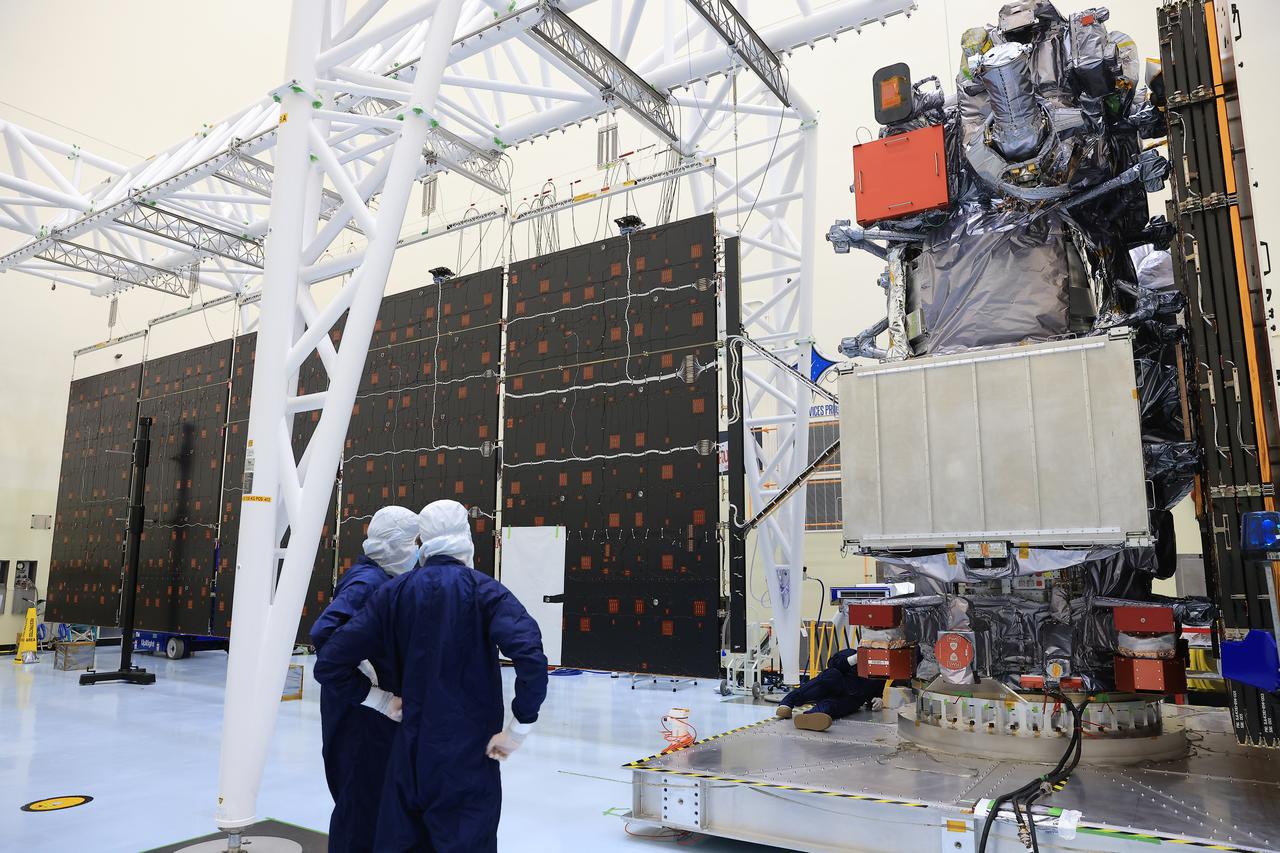
Technicians test and extend one of the two “wings” comprising the solar arrays for NASA’s Europa Clipper spacecraft on Friday, Aug. 23, 2024, at the Payload Hazardous Servicing Facility at the agency’s Kennedy Space Center in Florida. Each array measures about 46.5 feet (14.2 meters) long and about 13.5 feet (4.1 meters) high. The spacecraft needs the massive solar arrays to power to Jupiter’s icy moon Europa to help scientists better understand the astrobiological potential for habitable worlds beyond our planet.
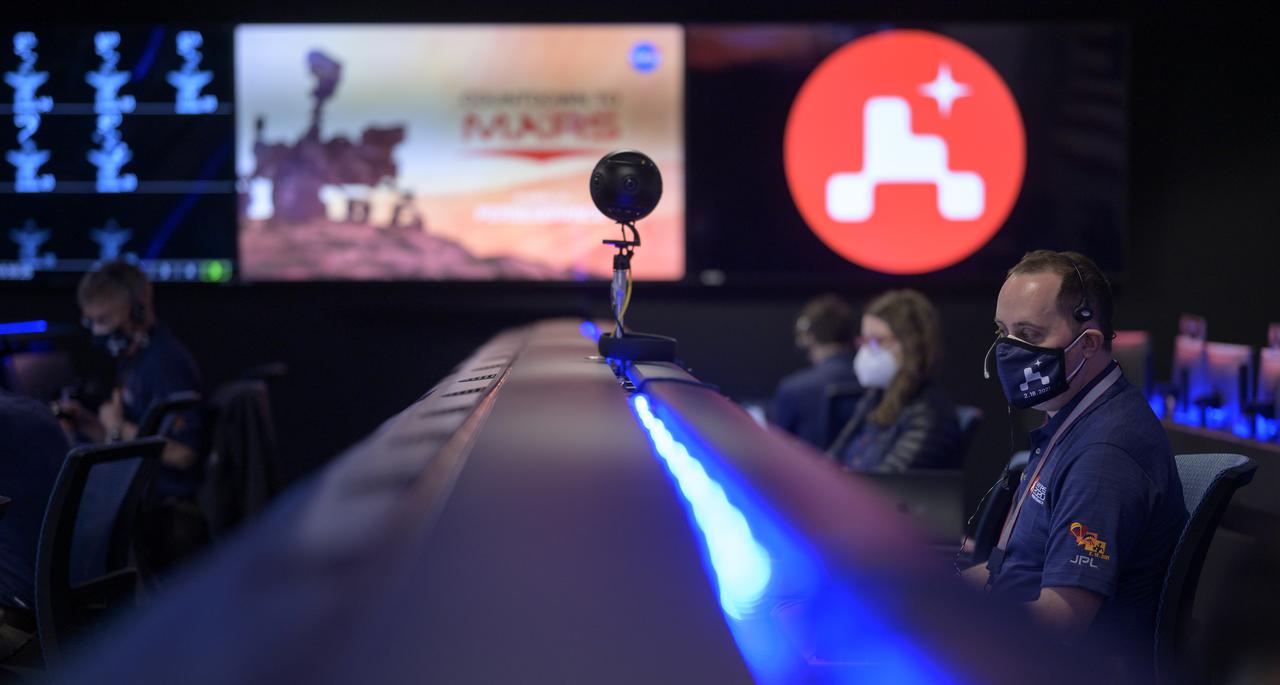
Members of NASA’s Perseverance Mars rover team study data on monitors in mission control, Thursday, Feb. 18, 2021, at NASA's Jet Propulsion Laboratory in Pasadena, California. A key objective for Perseverance’s mission on Mars is astrobiology, including the search for signs of ancient microbial life. The rover will characterize the planet’s geology and past climate, pave the way for human exploration of the Red Planet, and be the first mission to collect and cache Martian rock and regolith. Photo Credit: (NASA/Bill Ingalls)

The Empire State Building is illuminated in red to celebrate this Thursday's scheduled landing on Mars of NASA's Perseverance rover, Tuesday, Feb. 16, 2021 in New York City. A key objective for Perseverance’s mission on Mars is astrobiology, including the search for signs of ancient microbial life. The rover will characterize the planet’s geology and past climate, pave the way for human exploration of the Red Planet, and be the first mission to collect and cache Martian rock and regolith. Photo Credit: (NASA/Emma Howells)
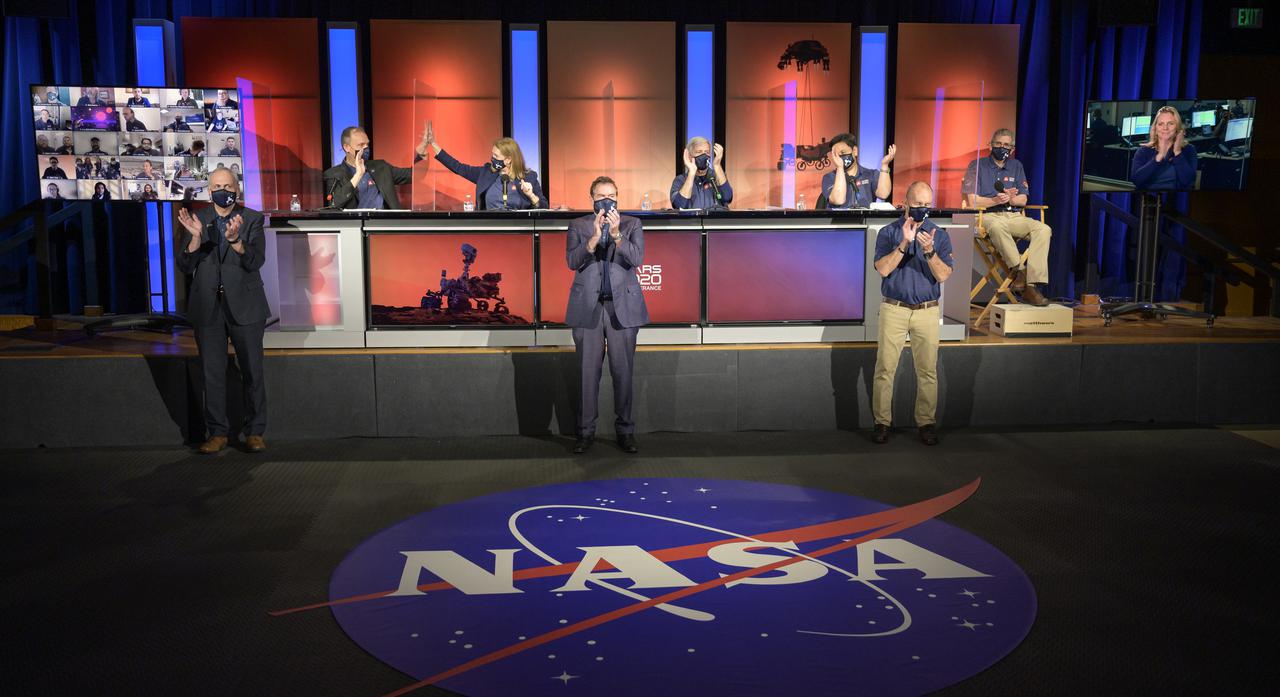
NASA Perseverance rover mission management and scientist celebrate a successful landing on Mars at the start of a post-landing update, Thursday, Feb. 18, 2021, at NASA's Jet Propulsion Laboratory in Pasadena, California. A key objective for Perseverance’s mission on Mars is astrobiology, including the search for signs of ancient microbial life. The rover will characterize the planet’s geology and past climate, pave the way for human exploration of the Red Planet, and be the first mission to collect and cache Martian rock and regolith. Photo Credit: (NASA/Bill Ingalls)
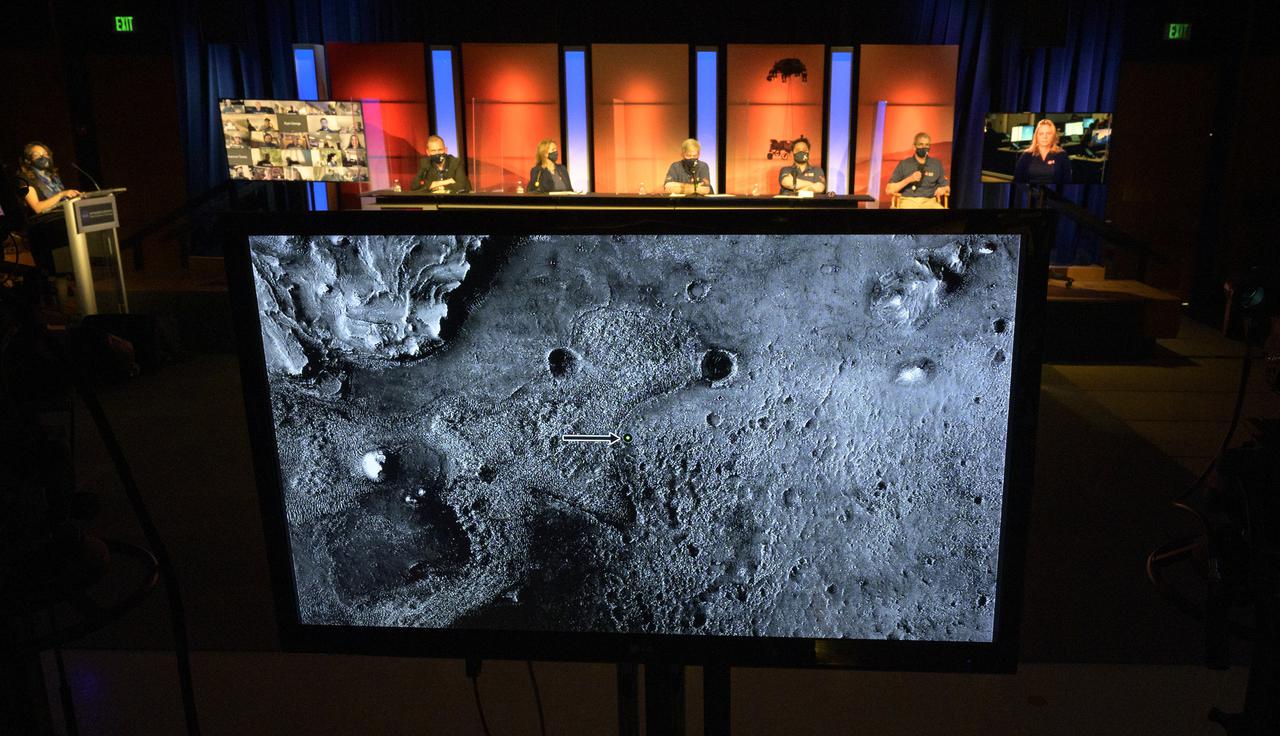
An image showing where Perseverance Mars rover landed is shown during a NASA Perseverance rover mission post-landing update, Thursday, Feb. 18, 2021, at NASA's Jet Propulsion Laboratory in Pasadena, California. A key objective for Perseverance’s mission on Mars is astrobiology, including the search for signs of ancient microbial life. The rover will characterize the planet’s geology and past climate, pave the way for human exploration of the Red Planet, and be the first mission to collect and cache Martian rock and regolith. Photo Credit: (NASA/Bill Ingalls)

A Mars 2020 message is seen on the video board of the Nasdaq MarketSite after NASA's Perseverance rover landed on the surface of Mars, Thursday, Feb. 18, 2021 in New York City. A key objective for Perseverance’s mission on Mars is astrobiology, including the search for signs of ancient microbial life. The rover will characterize the planet’s geology and past climate, pave the way for human exploration of the Red Planet, and be the first mission to collect and cache Martian rock and regolith. Photo Credit: (NASA/Emma Howells)
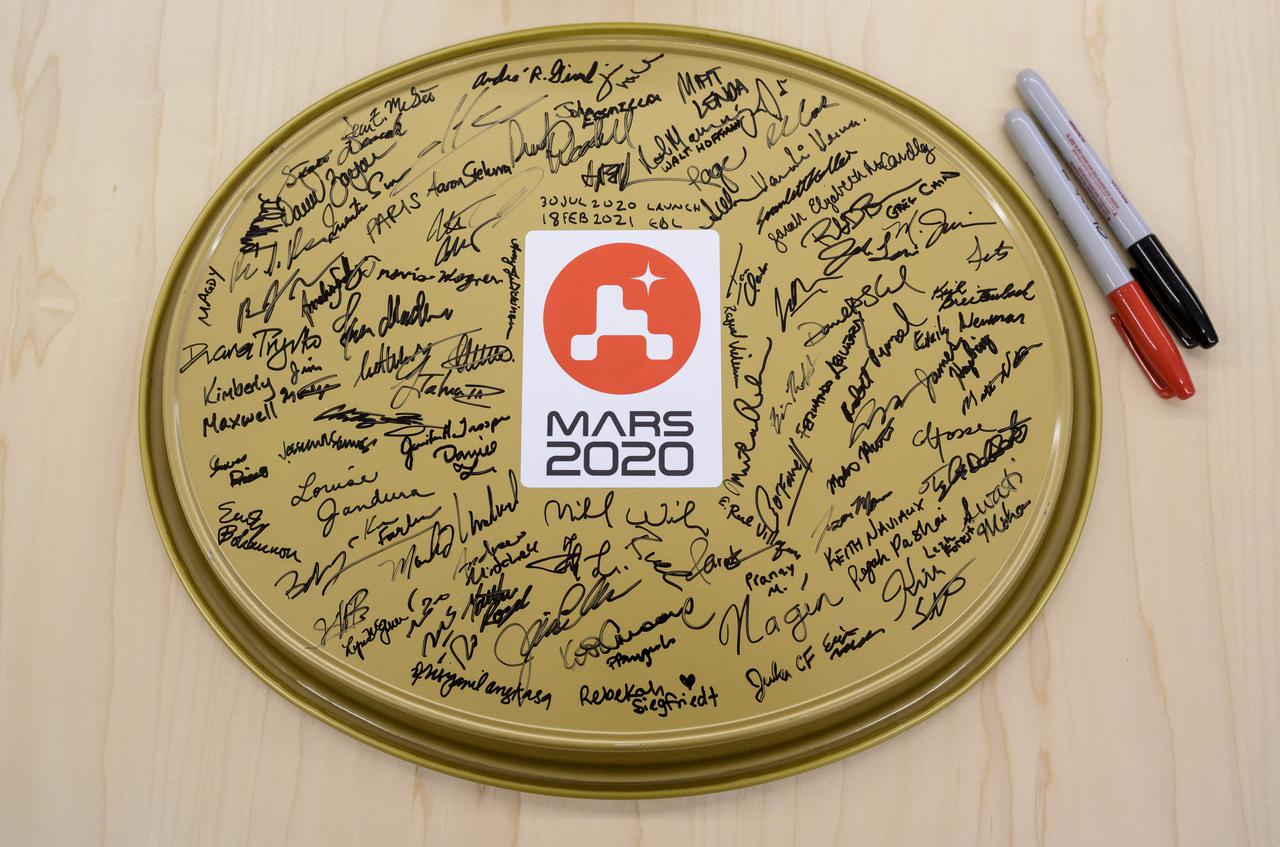
A serving tray with signatures from the NASA Perseverance Mars rover team is seen in mission control, Thursday, Feb. 18, 2021, at NASA's Jet Propulsion Laboratory in Pasadena, California. A key objective for Perseverance’s mission on Mars is astrobiology, including the search for signs of ancient microbial life. The rover will characterize the planet’s geology and past climate, pave the way for human exploration of the Red Planet, and be the first mission to collect and cache Martian rock and regolith. Photo Credit: (NASA/Bill Ingalls)
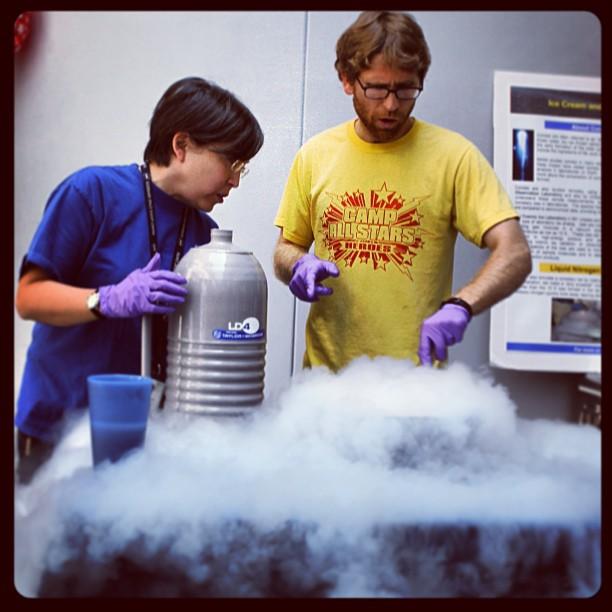
Pictured above, Goddard's astrobiology lab makes cookies and cream ice cream using liquid nitrogen at the Science Jamboree. The NASA Goddard Science Jamboree took place on July 16, 2013. The event allowed the different departments at Goddard a chance to showcase their research and projects to other employees and summer interns. #nasa #nasagoddard #icecream Credit: NASA/Goddard Sawyer Rosenstein
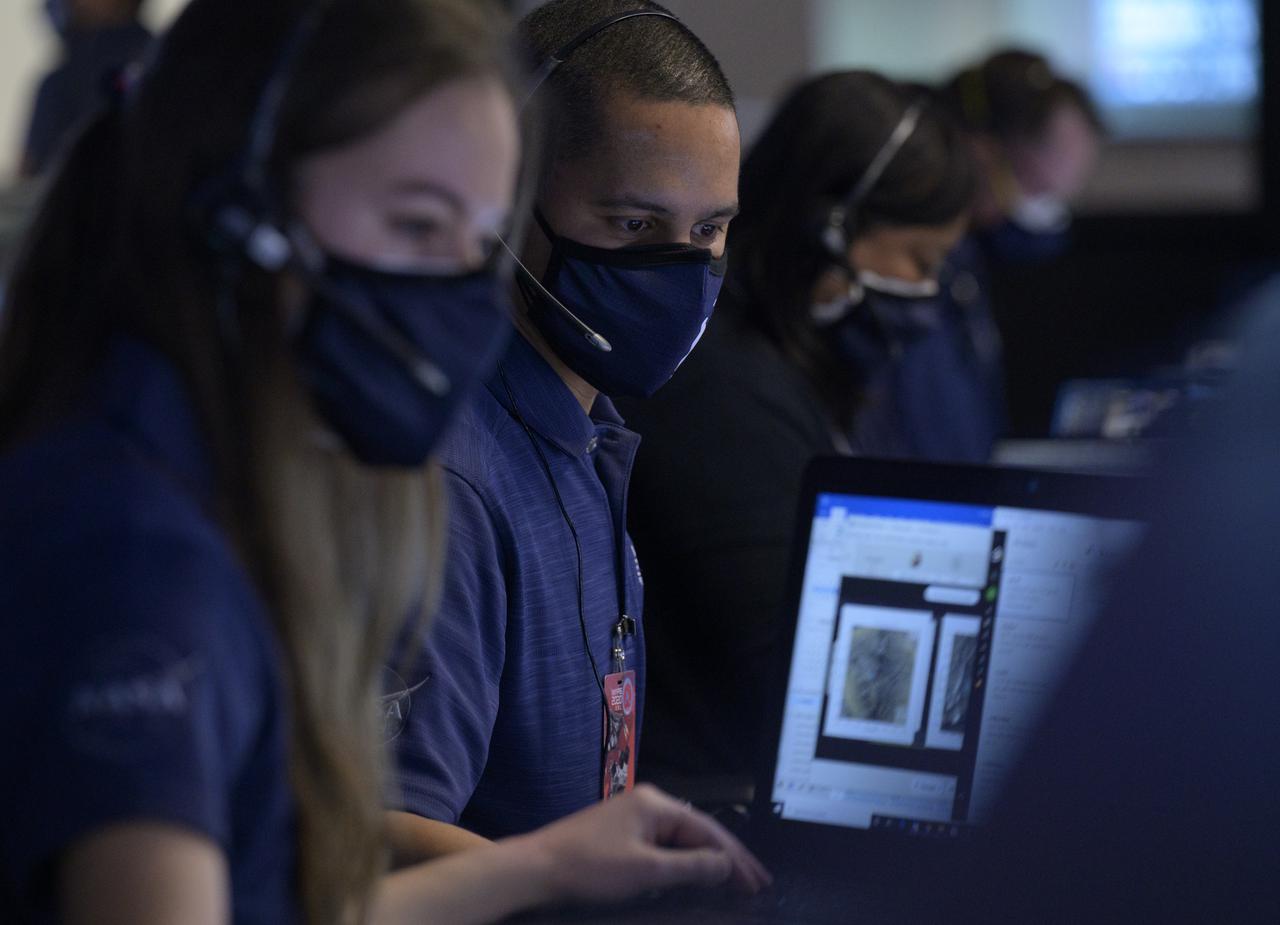
Members of NASA’s Perseverance Mars rover team study data on monitors in mission control, Thursday, Feb. 18, 2021, at NASA's Jet Propulsion Laboratory in Pasadena, California. A key objective for Perseverance’s mission on Mars is astrobiology, including the search for signs of ancient microbial life. The rover will characterize the planet’s geology and past climate, pave the way for human exploration of the Red Planet, and be the first mission to collect and cache Martian rock and regolith. Photo Credit: (NASA/Bill Ingalls)
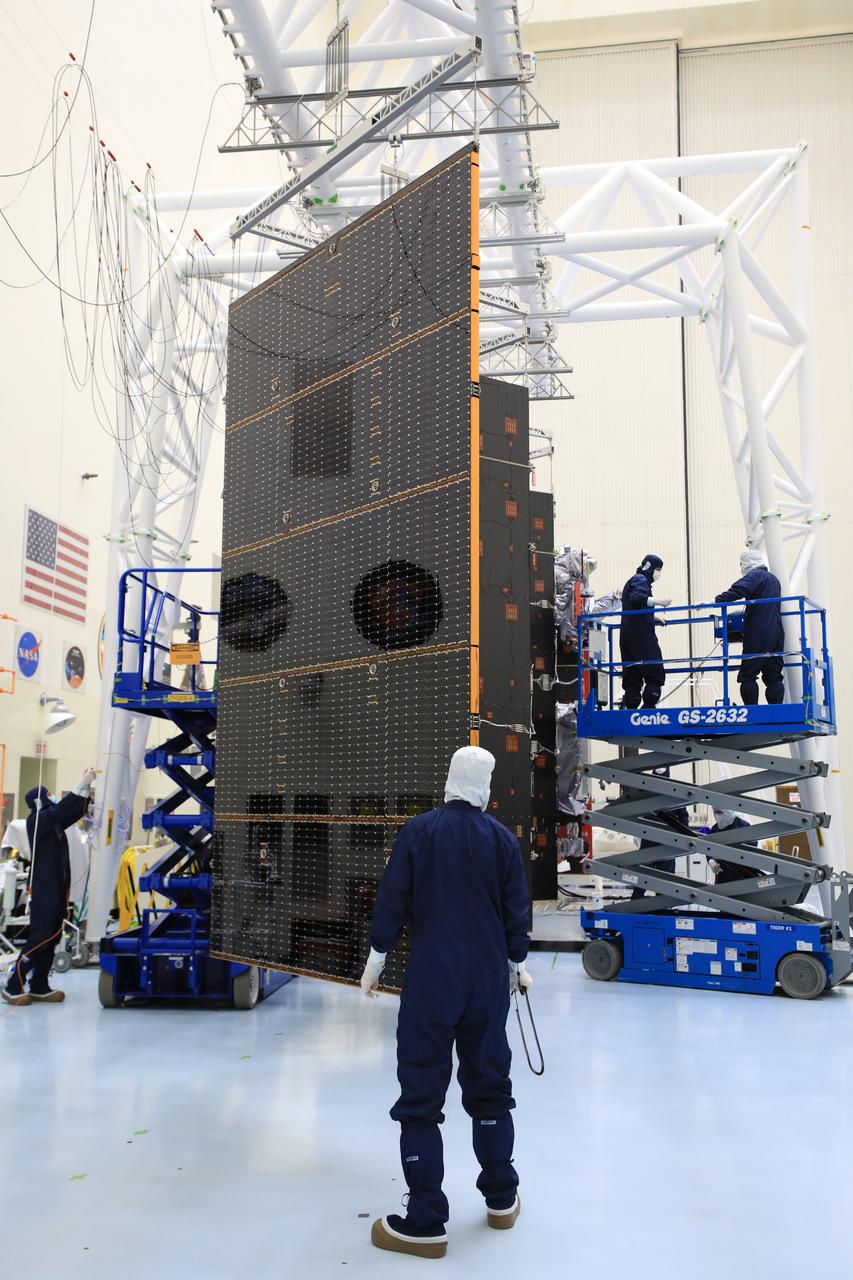
Technicians test and extend one of the two “wings” comprising the solar arrays for NASA’s Europa Clipper spacecraft on Friday, Aug. 23, 2024, at the Payload Hazardous Servicing Facility at the agency’s Kennedy Space Center in Florida. Each array measures about 46.5 feet (14.2 meters) long and about 13.5 feet (4.1 meters) high. The spacecraft needs the massive solar arrays to power to Jupiter’s icy moon Europa to help scientists better understand the astrobiological potential for habitable worlds beyond our planet.

The Empire State Building is illuminated in red to celebrate this Thursday's scheduled landing on Mars of NASA's Perseverance rover, Tuesday, Feb. 16, 2021 in New York City. A key objective for Perseverance’s mission on Mars is astrobiology, including the search for signs of ancient microbial life. The rover will characterize the planet’s geology and past climate, pave the way for human exploration of the Red Planet, and be the first mission to collect and cache Martian rock and regolith. Photo Credit: (NASA/Emma Howells)

A NASA Mars Rover Landing banner is seen on the One Times Square video board as NASA's Perseverance rover begins its descent towards the surface of Mars, Thursday, Feb. 18, 2021 in New York City. A key objective for Perseverance’s mission on Mars is astrobiology, including the search for signs of ancient microbial life. The rover will characterize the planet’s geology and past climate, pave the way for human exploration of the Red Planet, and be the first mission to collect and cache Martian rock and regolith. Photo Credit: (NASA/Emma Howells)

Monitors show the status of NASA's Deep Space Network ahead of the Perseverance Mars rover landing, Thursday, Feb. 18, 2021, at NASA's Jet Propulsion Laboratory in Pasadena, California. A key objective for Perseverance’s mission on Mars is astrobiology, including the search for signs of ancient microbial life. The rover will characterize the planet’s geology and past climate, pave the way for human exploration of the Red Planet, and be the first mission to collect and cache Martian rock and regolith. Photo Credit: (NASA/Bill Ingalls)

The Empire State Building is illuminated in red to celebrate this Thursday's scheduled landing on Mars of NASA's Perseverance rover, Tuesday, Feb. 16, 2021 in New York City. A key objective for Perseverance’s mission on Mars is astrobiology, including the search for signs of ancient microbial life. The rover will characterize the planet’s geology and past climate, pave the way for human exploration of the Red Planet, and be the first mission to collect and cache Martian rock and regolith. Photo Credit: (NASA/Emma Howells)
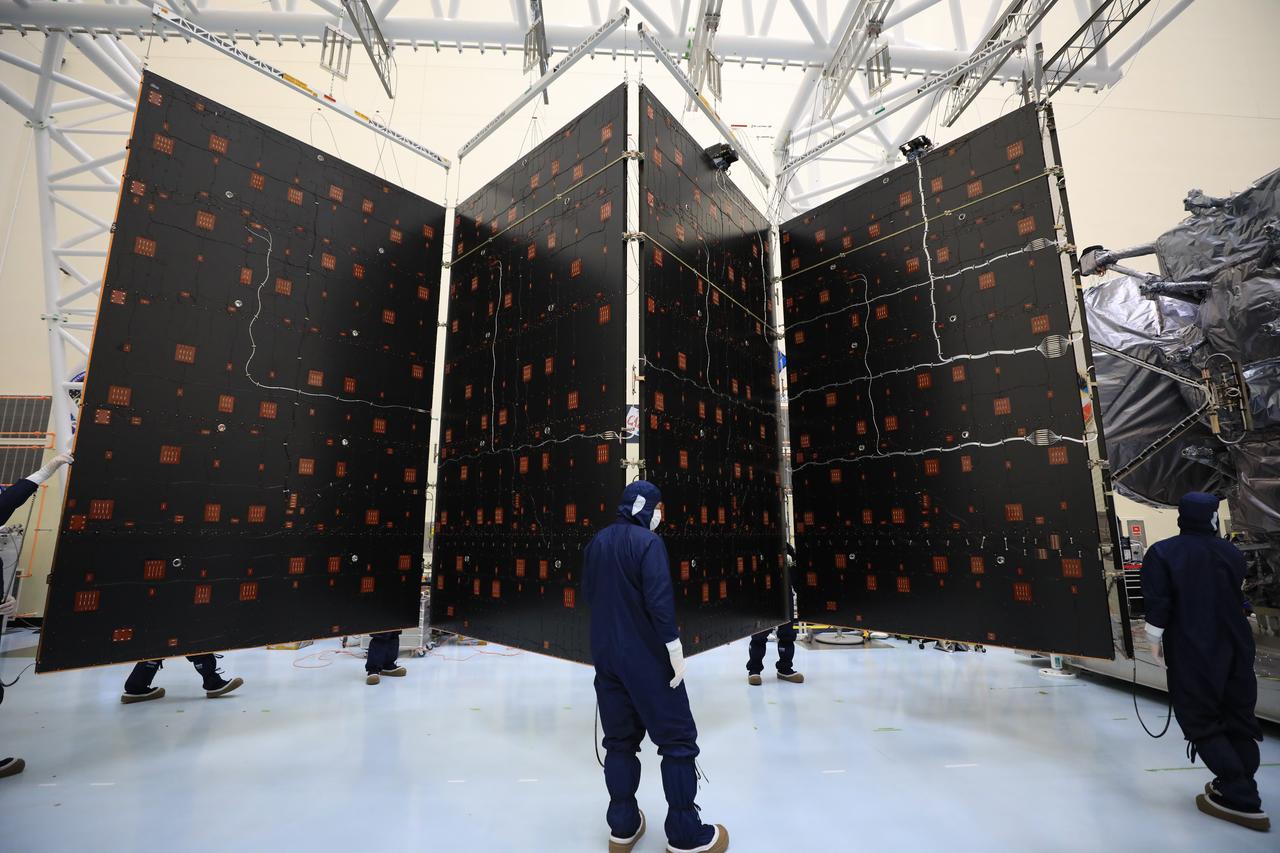
Technicians test and extend one of the two “wings” comprising the solar arrays for NASA’s Europa Clipper spacecraft on Friday, Aug. 23, 2024, at the Payload Hazardous Servicing Facility at the agency’s Kennedy Space Center in Florida. Each array measures about 46.5 feet (14.2 meters) long and about 13.5 feet (4.1 meters) high. The spacecraft needs the massive solar arrays to power to Jupiter’s icy moon Europa to help scientists better understand the astrobiological potential for habitable worlds beyond our planet.

Members of NASA’s Perseverance Mars rover team study data on monitors in mission control, Thursday, Feb. 18, 2021, at NASA's Jet Propulsion Laboratory in Pasadena, California. A key objective for Perseverance’s mission on Mars is astrobiology, including the search for signs of ancient microbial life. The rover will characterize the planet’s geology and past climate, pave the way for human exploration of the Red Planet, and be the first mission to collect and cache Martian rock and regolith. Photo Credit: (NASA/Bill Ingalls)

Members of NASA’s Perseverance rover team react in mission control after receiving confirmation the spacecraft successfully touched down on Mars, Thursday, Feb. 18, 2021, at NASA's Jet Propulsion Laboratory in Pasadena, California. A key objective for Perseverance’s mission on Mars is astrobiology, including the search for signs of ancient microbial life. The rover will characterize the planet’s geology and past climate, pave the way for human exploration of the Red Planet, and be the first mission to collect and cache Martian rock and regolith. Photo Credit: (NASA/Bill Ingalls)
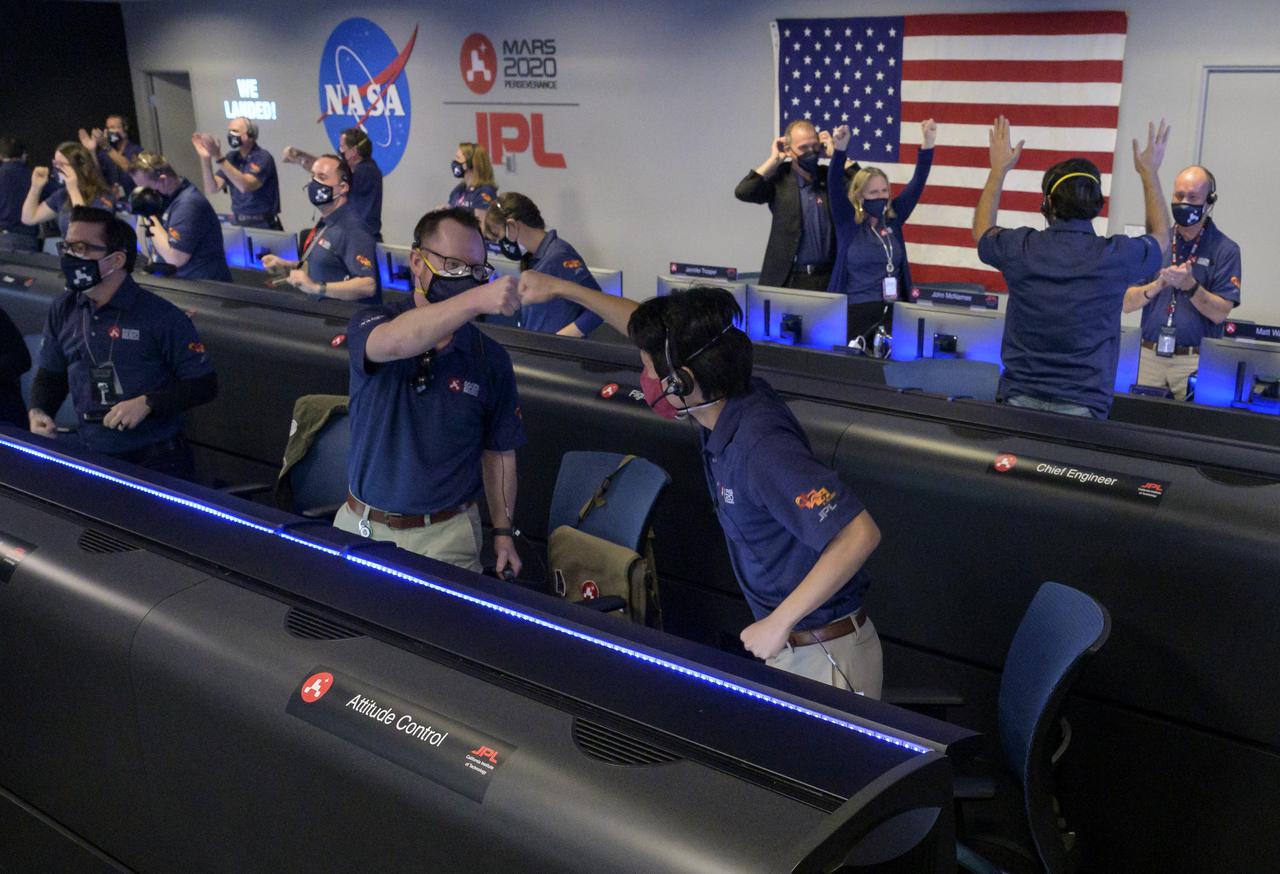
Members of NASA’s Perseverance rover team react in mission control after receiving confirmation the spacecraft successfully touched down on Mars, Thursday, Feb. 18, 2021, at NASA's Jet Propulsion Laboratory in Pasadena, California. A key objective for Perseverance’s mission on Mars is astrobiology, including the search for signs of ancient microbial life. The rover will characterize the planet’s geology and past climate, pave the way for human exploration of the Red Planet, and be the first mission to collect and cache Martian rock and regolith. Photo Credit: (NASA/Bill Ingalls)

Perseverance entry, descent, and landing phase lead Allen Chen, gives remarks during a NASA Perseverance rover mission post-landing update, Thursday, Feb. 18, 2021, at NASA's Jet Propulsion Laboratory in Pasadena, California. A key objective for Perseverance’s mission on Mars is astrobiology, including the search for signs of ancient microbial life. The rover will characterize the planet’s geology and past climate, pave the way for human exploration of the Red Planet, and be the first mission to collect and cache Martian rock and regolith. Photo Credit: (NASA/Bill Ingalls)

A NASA Mars Rover Landing banner is seen on the Morgan Stanley video board as NASA's Perseverance rover begins its descent towards the surface of Mars, Thursday, Feb. 18, 2021 in New York City. A key objective for Perseverance’s mission on Mars is astrobiology, including the search for signs of ancient microbial life. The rover will characterize the planet’s geology and past climate, pave the way for human exploration of the Red Planet, and be the first mission to collect and cache Martian rock and regolith. Photo Credit: (NASA/Emma Howells)
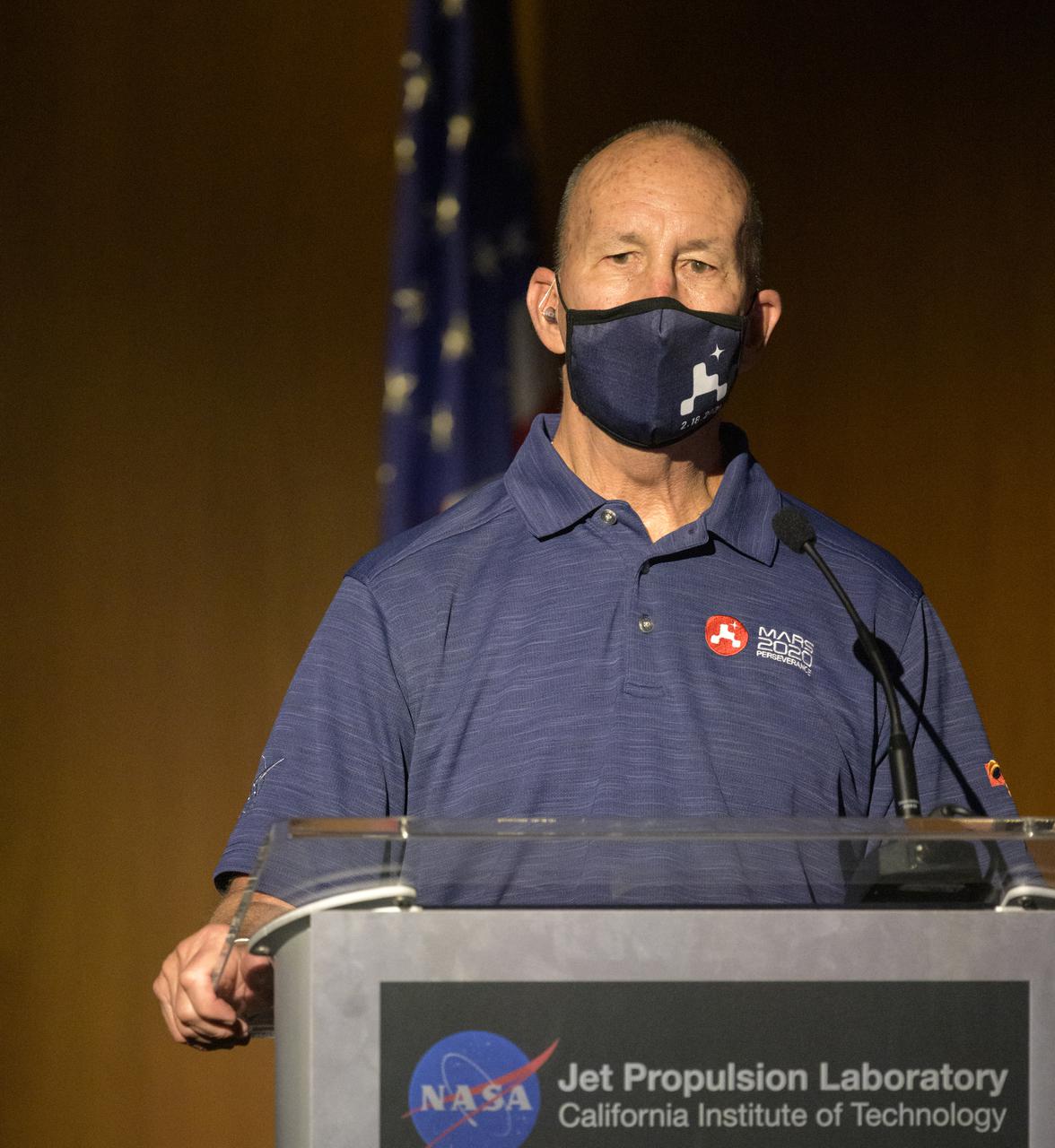
Perseverance project manager John McNamee gives remarks during a NASA Perseverance rover mission post-landing update, Thursday, Feb. 18, 2021, at NASA's Jet Propulsion Laboratory in Pasadena, California. A key objective for Perseverance’s mission on Mars is astrobiology, including the search for signs of ancient microbial life. The rover will characterize the planet’s geology and past climate, pave the way for human exploration of the Red Planet, and be the first mission to collect and cache Martian rock and regolith. Photo Credit: (NASA/Bill Ingalls)

The Empire State Building is illuminated in red to celebrate this Thursday's scheduled landing on Mars of NASA's Perseverance rover, Tuesday, Feb. 16, 2021 in New York City. A key objective for Perseverance’s mission on Mars is astrobiology, including the search for signs of ancient microbial life. The rover will characterize the planet’s geology and past climate, pave the way for human exploration of the Red Planet, and be the first mission to collect and cache Martian rock and regolith. Photo Credit: (NASA/Emma Howells)

NASA’s Perseverance Mars rover mission commentator and guidance, navigation, and controls operations Lead Swati Mohan studies data in mission control, Thursday, Feb. 18, 2021, at NASA's Jet Propulsion Laboratory in Pasadena, California. A key objective for Perseverance’s mission on Mars is astrobiology, including the search for signs of ancient microbial life. The rover will characterize the planet’s geology and past climate, pave the way for human exploration of the Red Planet, and be the first mission to collect and cache Martian rock and regolith. Photo Credit: (NASA/Bill Ingalls)

Associate Administrator of NASA's Science Mission Directorate, Thomas Zurbuchen, gives remarks during a NASA Perseverance rover mission post-landing update, Thursday, Feb. 18, 2021, at NASA's Jet Propulsion Laboratory in Pasadena, California. A key objective for Perseverance’s mission on Mars is astrobiology, including the search for signs of ancient microbial life. The rover will characterize the planet’s geology and past climate, pave the way for human exploration of the Red Planet, and be the first mission to collect and cache Martian rock and regolith. Photo Credit: (NASA/Bill Ingalls)

The Empire State Building is illuminated in red to celebrate this Thursday's scheduled landing on Mars of NASA's Perseverance rover, Tuesday, Feb. 16, 2021 in New York City. A key objective for Perseverance’s mission on Mars is astrobiology, including the search for signs of ancient microbial life. The rover will characterize the planet’s geology and past climate, pave the way for human exploration of the Red Planet, and be the first mission to collect and cache Martian rock and regolith. Photo Credit: (NASA/Emma Howells)

Members of NASA’s Perseverance rover team react in mission control after receiving confirmation the spacecraft successfully touched down on Mars, Thursday, Feb. 18, 2021, at NASA's Jet Propulsion Laboratory in Pasadena, California. A key objective for Perseverance’s mission on Mars is astrobiology, including the search for signs of ancient microbial life. The rover will characterize the planet’s geology and past climate, pave the way for human exploration of the Red Planet, and be the first mission to collect and cache Martian rock and regolith. Photo Credit: (NASA/Bill Ingalls)